

Muslim Quarter
Halal Food Guide: Xi'an Muslim Quarter — Huifang Snacks and Local Eats
Articles • ali2007fr posted the article • 0 comments • 252 views • 2026-05-19 23:57
Reposted from the web
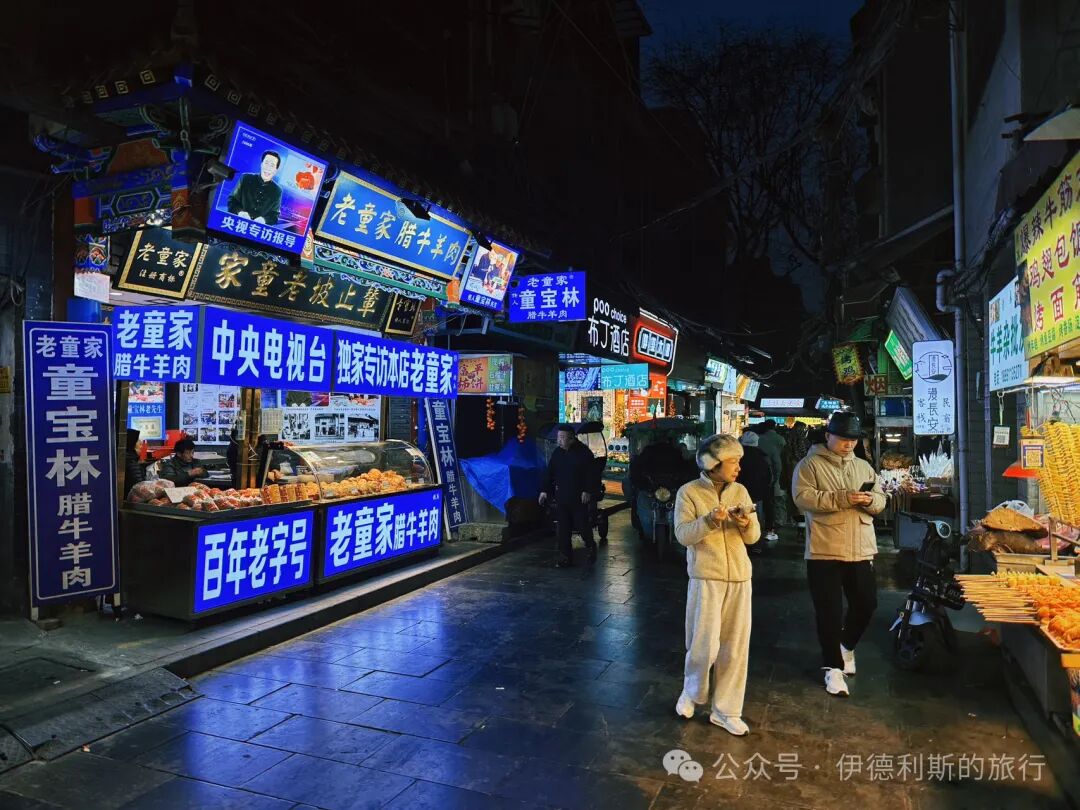
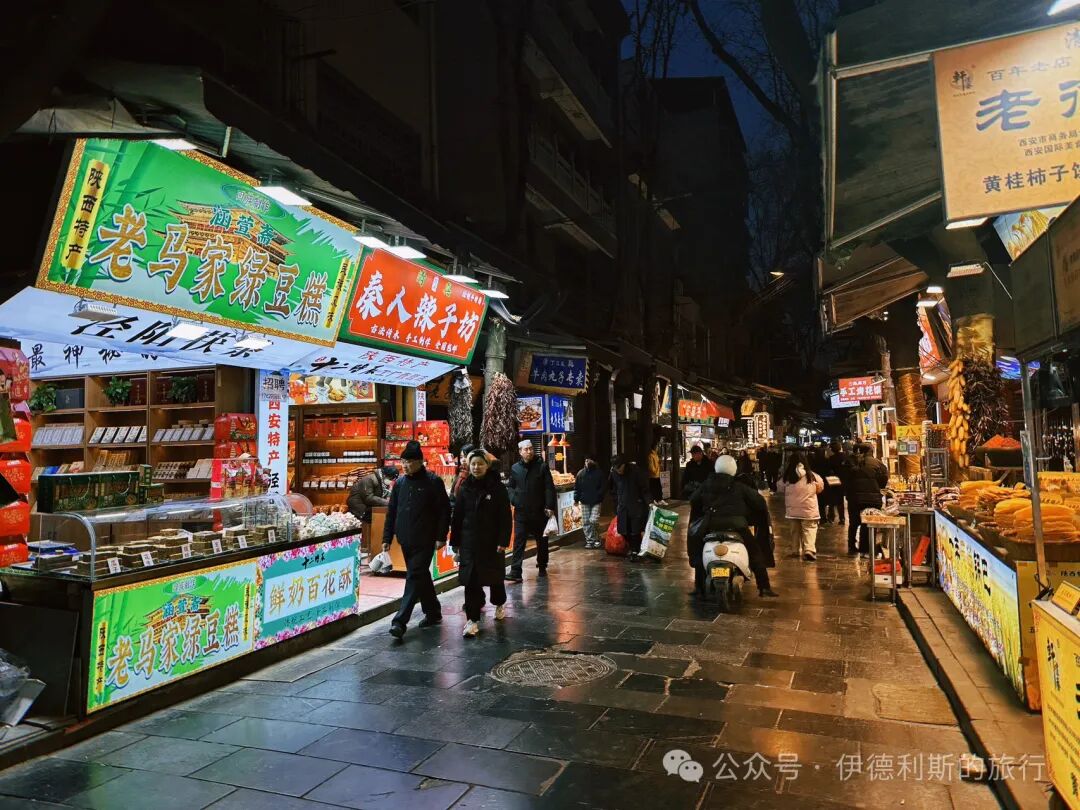
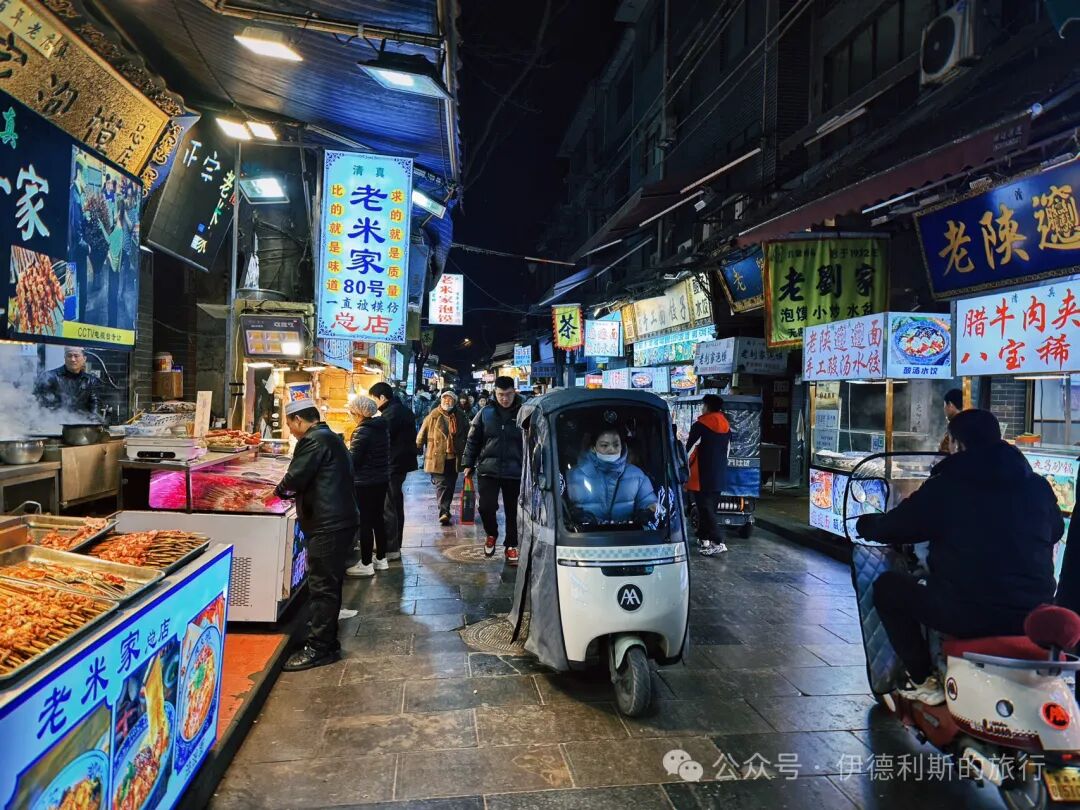
Summary: Xi'an Muslim Quarter, known locally as Huifang, is one of the best-known places in China for halal snacks and Hui Muslim food culture. This article keeps the original shop notes, dishes, street details, and photos while presenting the food walk in everyday English.
Old Liu's Pita Bread Soup Shop (Lao Liujia Paomo Guan)
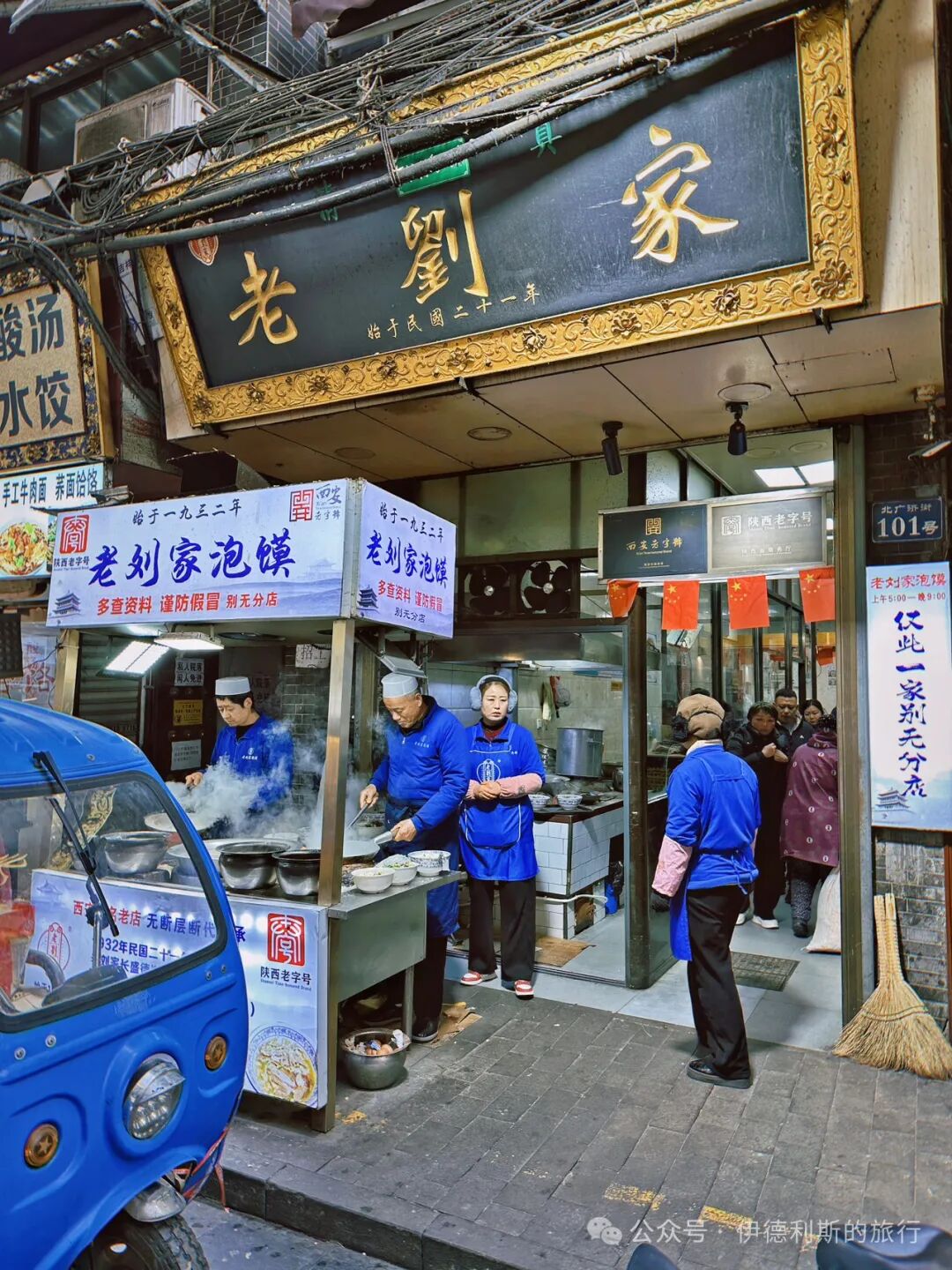
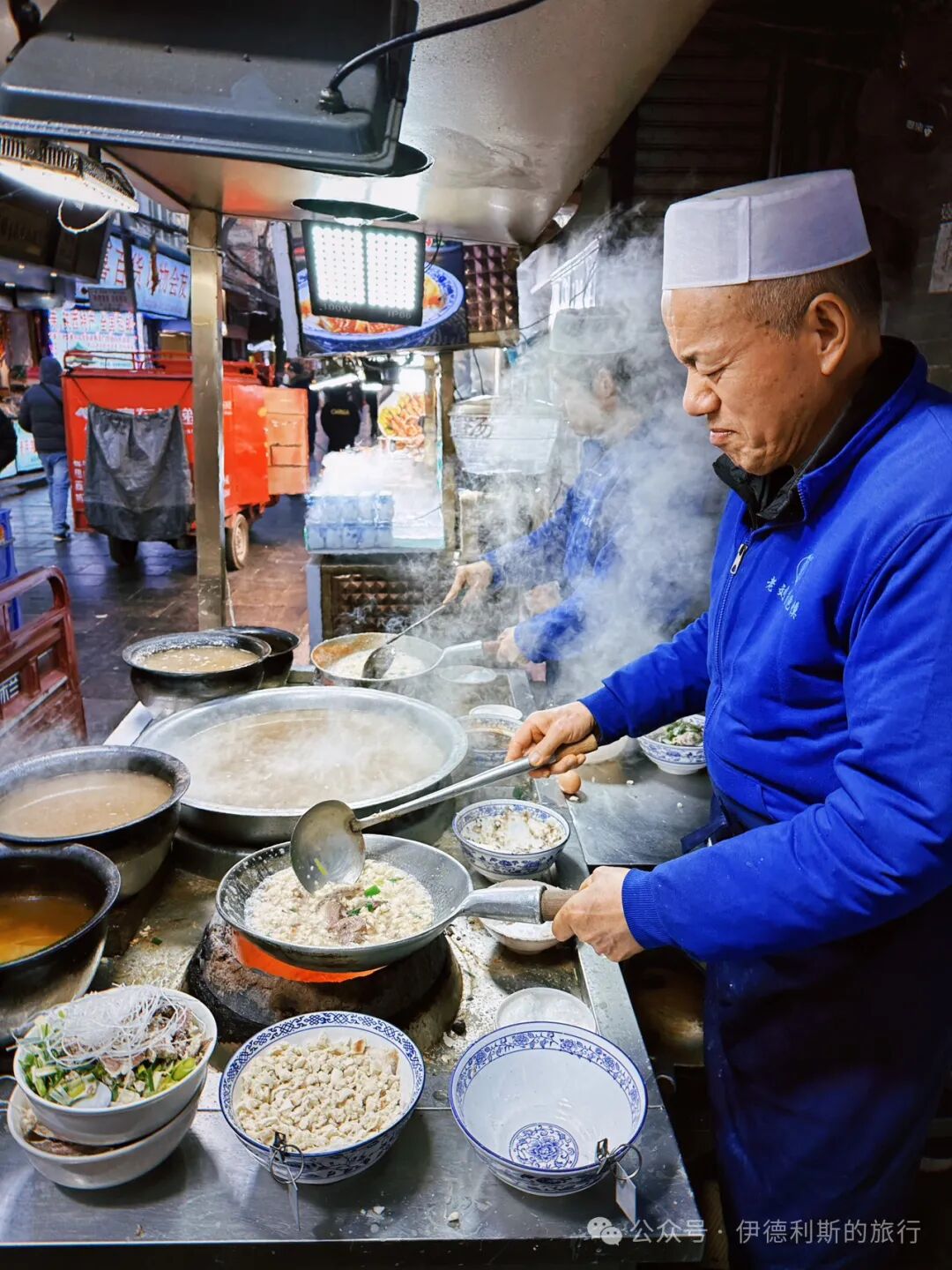
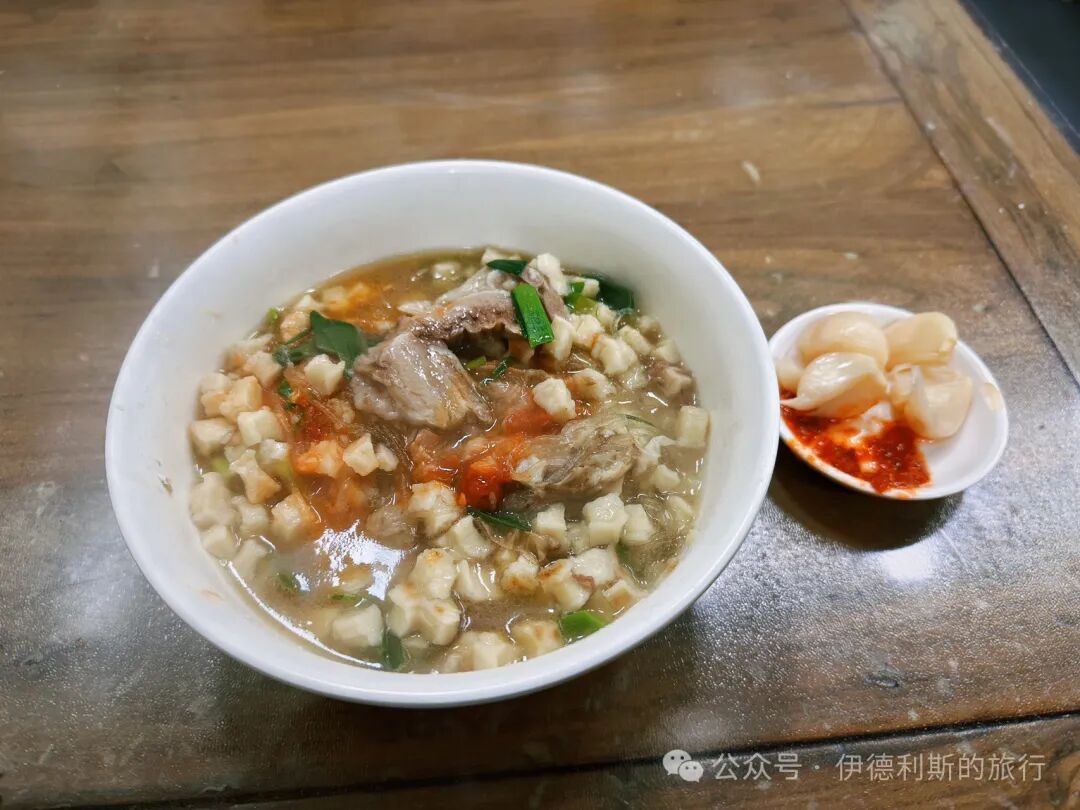
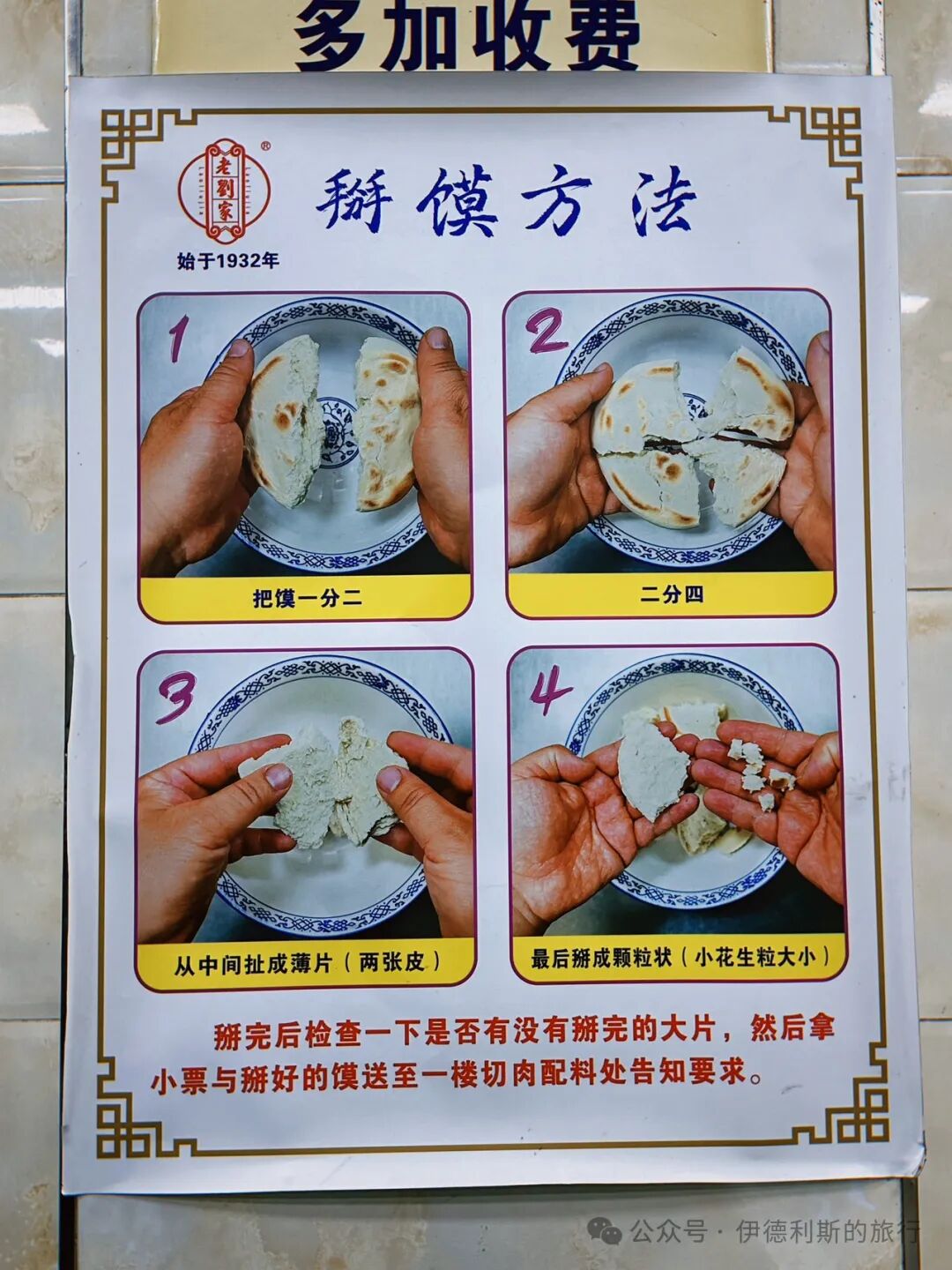
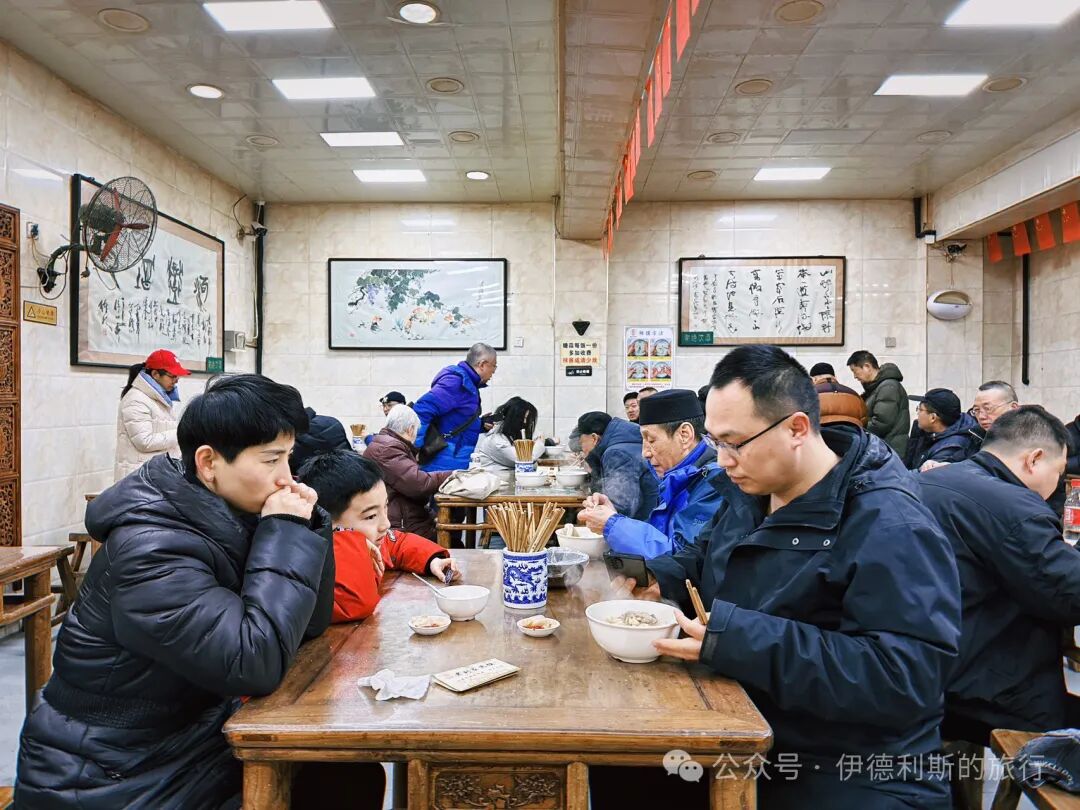
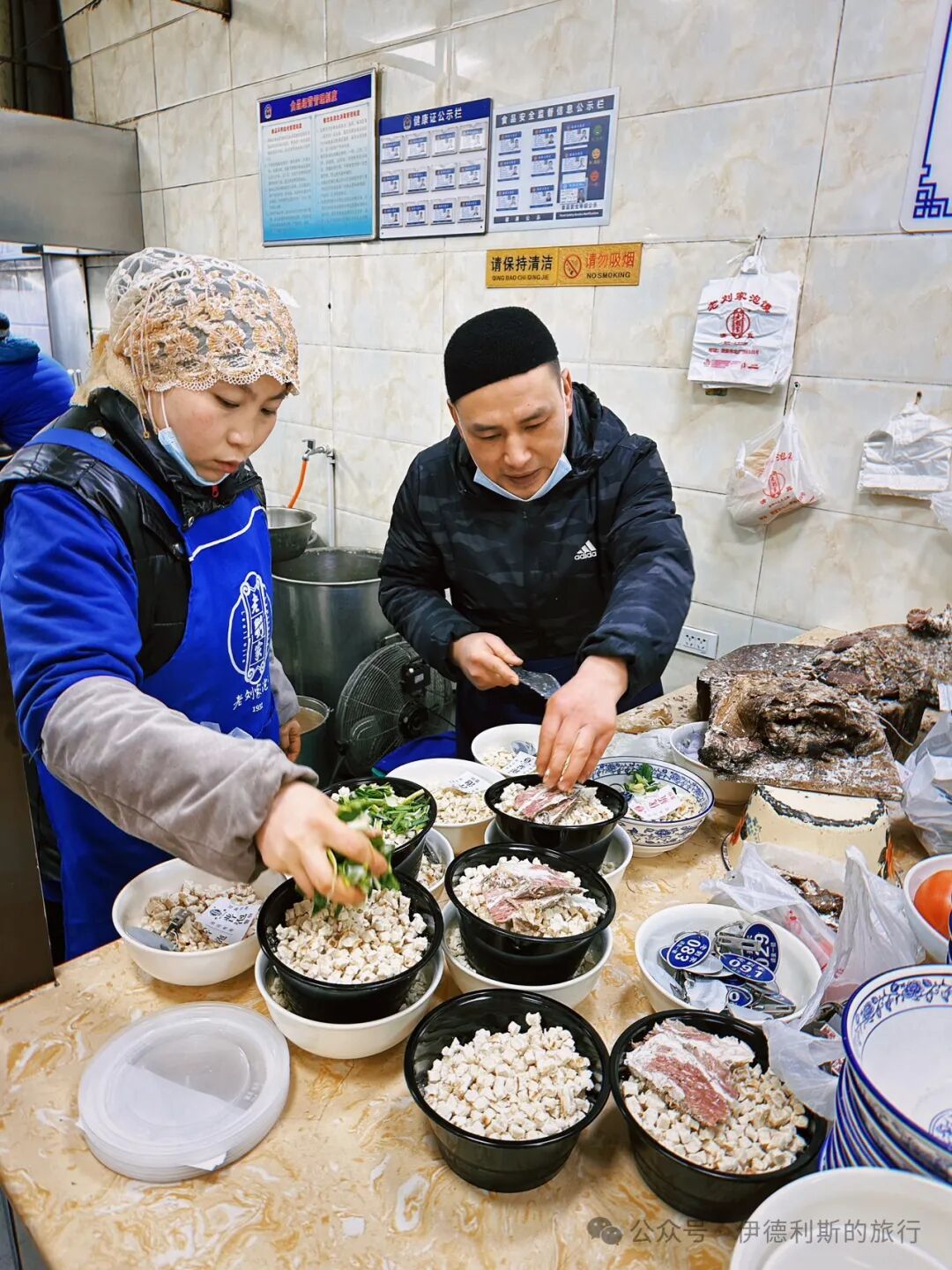
Old Liu's is right at the entrance of the small mosque on North Guangji Street. Come here in the morning for some pita bread soup (paomo). It is very popular and always crowded.
Old Liu's Paomo opened in 1932 at the northwest corner of the intersection of West Street and Qiaozikou in Xi'an. Its original name was Halal Old Liu's Changshengde Beef and Mutton Pita Bread Soup Shop. During the Republic of China era, West Street was full of merchants and rows of shops. Many people hosted guests at Old Liu's. After the public-private partnership in 1956, Old Liu's Paomo joined the Xi'an Catering Company and moved to Xiguan Main Street. It became one of the eight major beef and mutton pita bread soup shops in Xi'an at that time. In 1985, after the reform and opening up, the third-generation owner of Old Liu's searched for a new location and reopened on North Guangji Street. It has been there for 40 years now.
Tianshui Fermented Vegetable Jelly (Tianshui Jiangshui Yuyu)
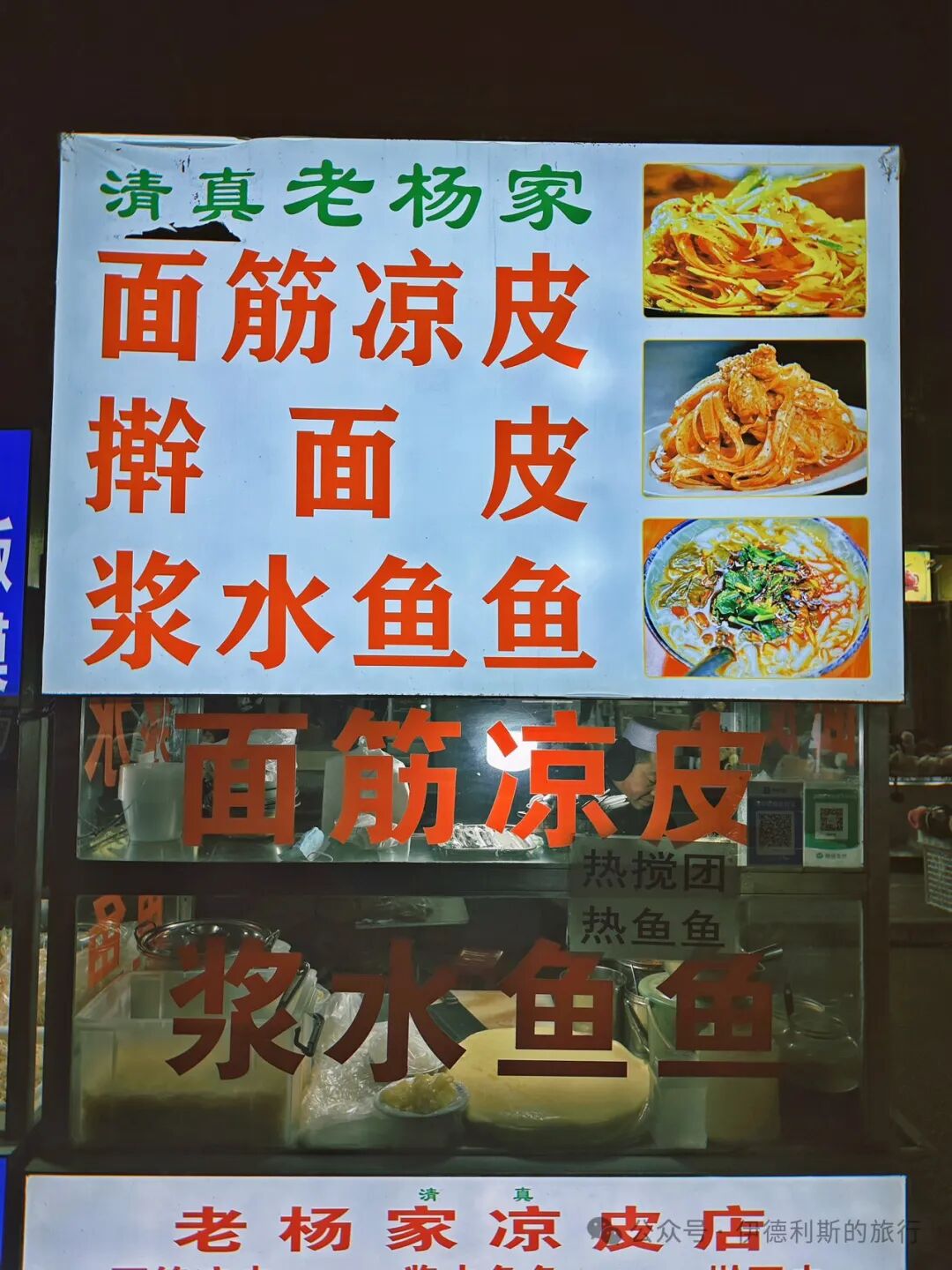
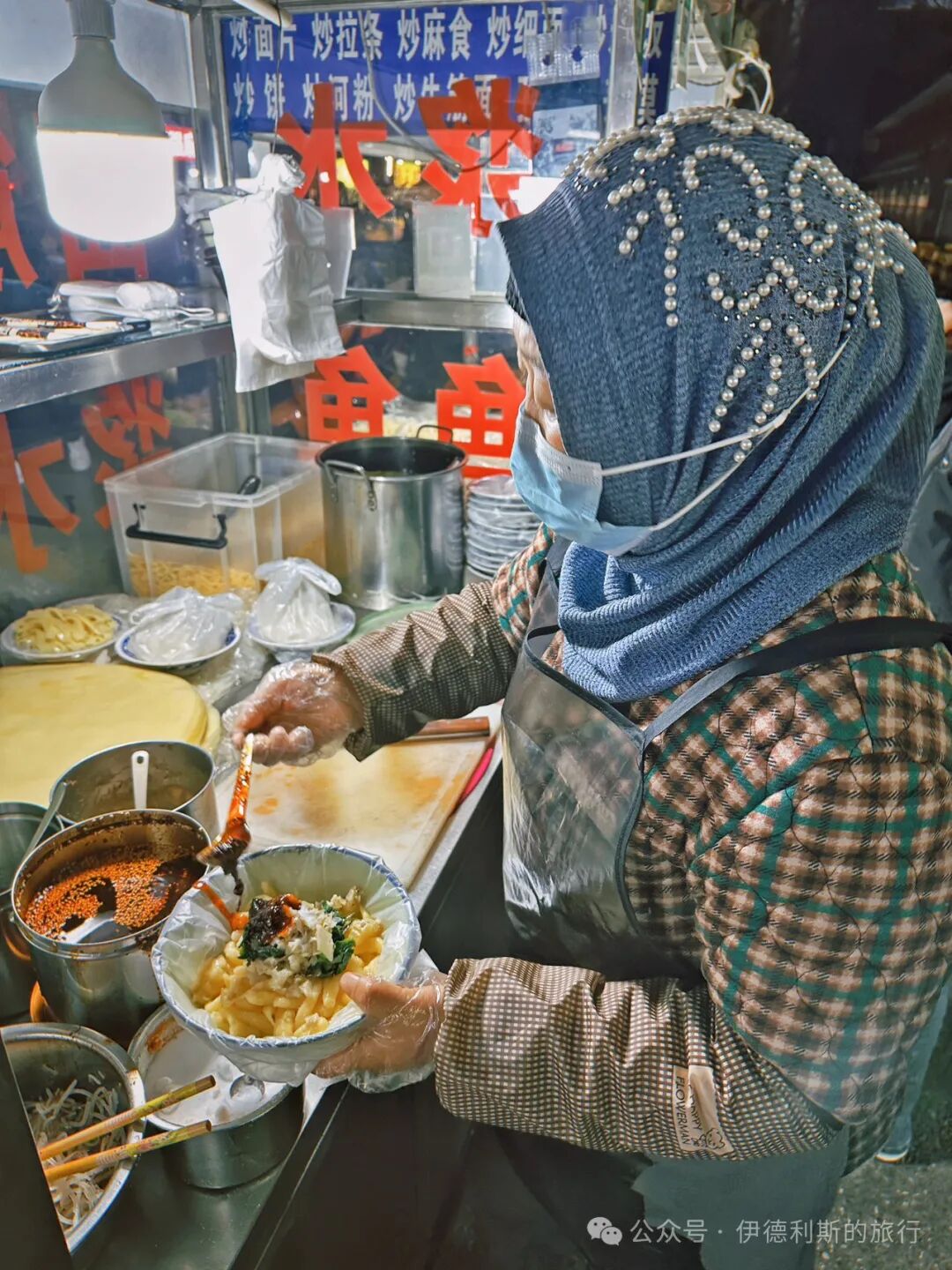
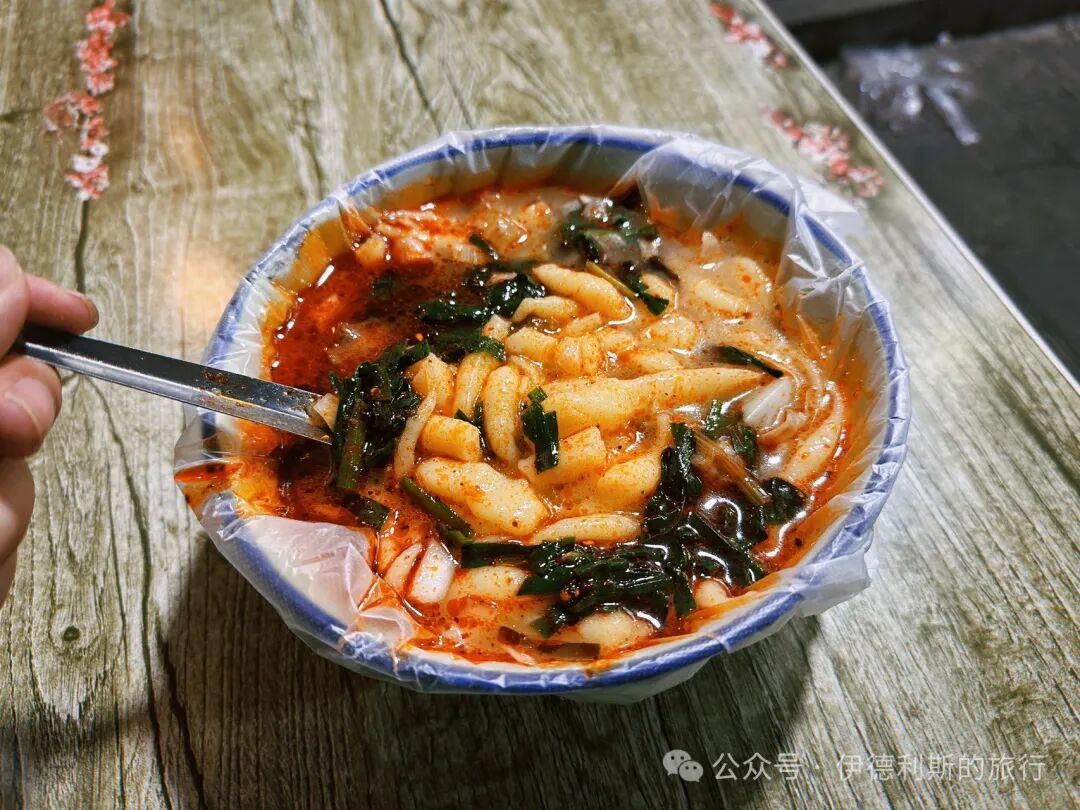
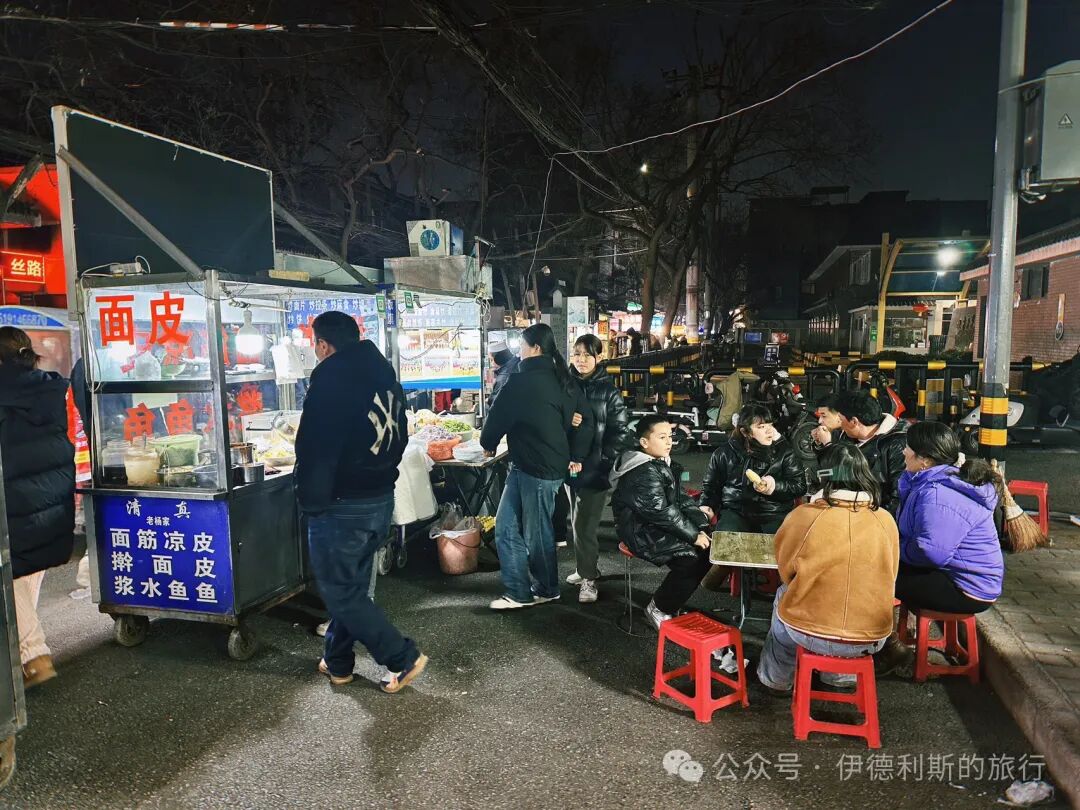
While walking around the Muslim Quarter at night, I bought some Tianshui fermented vegetable jelly (jiangshui yuyu) on Miaohou Street. It was very authentic. I fell in love with this fermented vegetable jelly in Tianshui a couple of days ago, and now I am eating it again in Xi'an. The taste of the fermented vegetable broth (jiangshui) mixed with pickled chives and chili oil is so appetizing.
Qinghai Yogurt
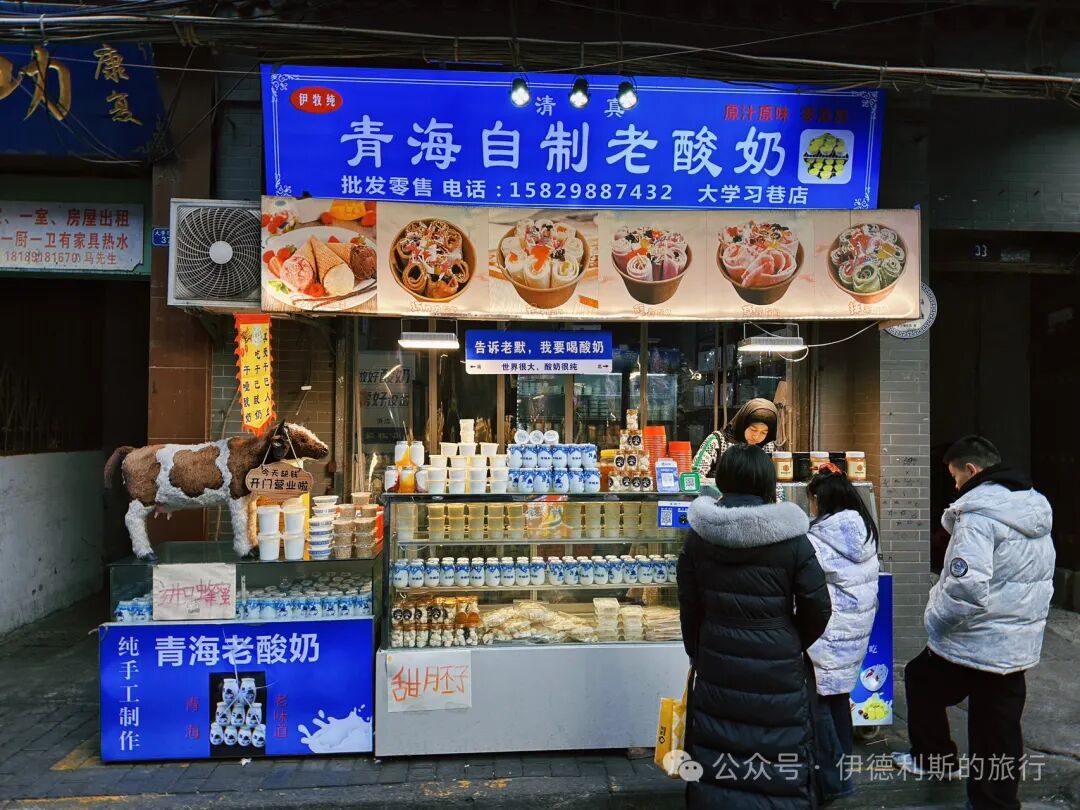
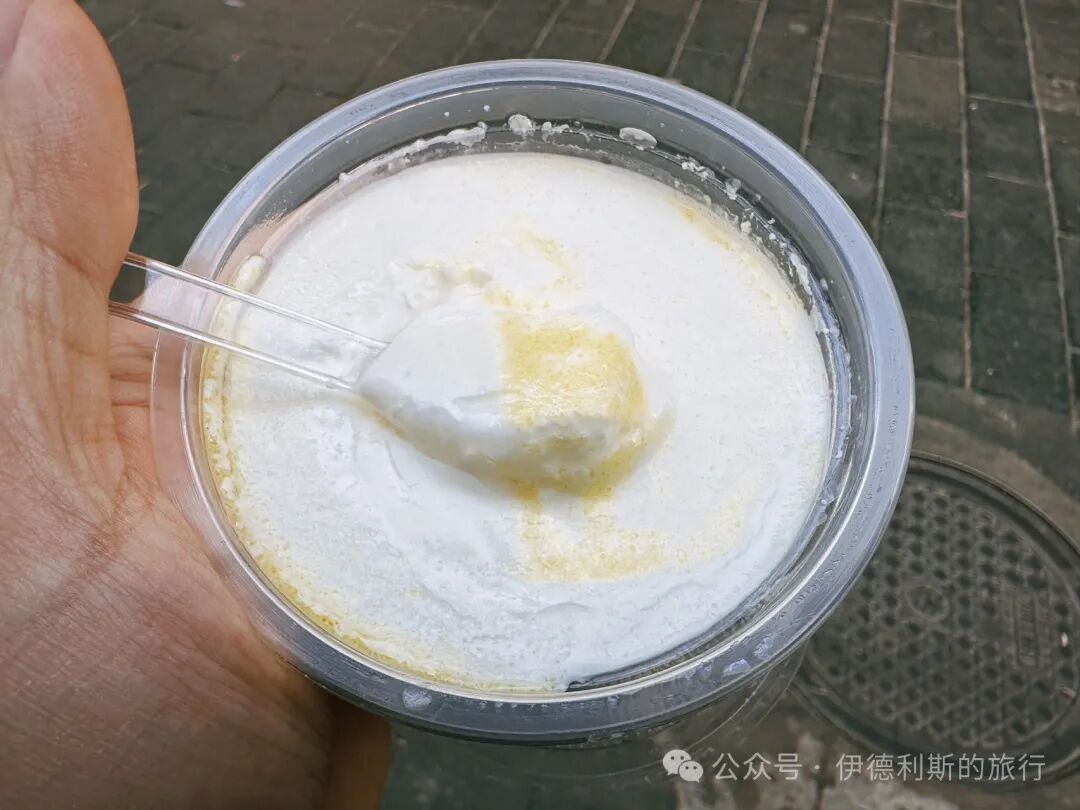
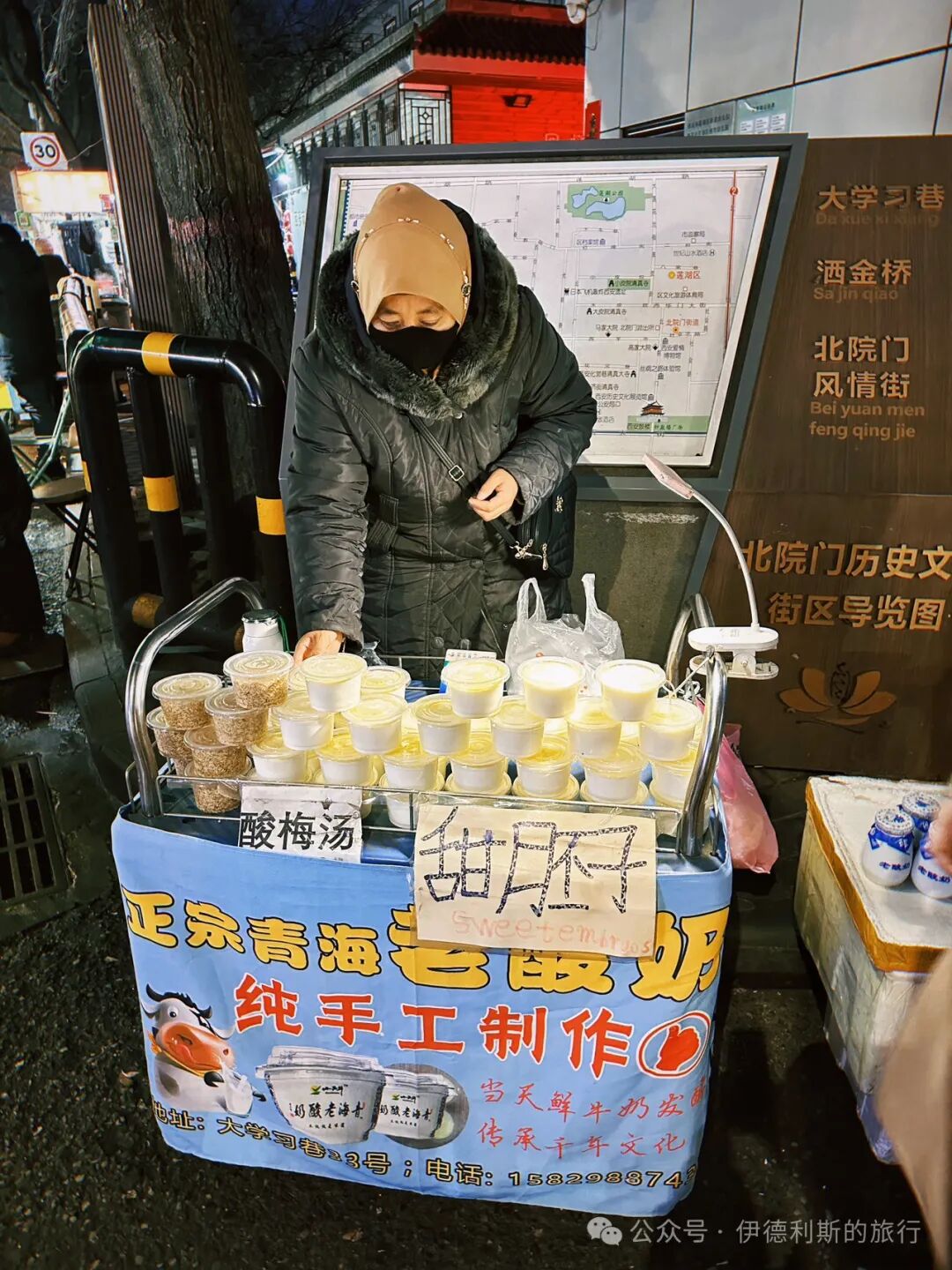
The Qinghai yogurt sold on the streets of the Muslim Quarter is quite authentic. It has that fizzy sensation from the lactic acid bacteria when you take a sip. It is rich in both milk flavor and fermentation taste. I hope Beijing can have this quality too!
Ma Family Old Six Beef Soup (Majia Laoliu Shuipen Yangrou)
In the morning, I had beef soup (shuipen niurou) at Ma Family Old Six on Dalianhuachi Street. They open at 6:00 AM and are close to the Beidajie subway station, which is great for those catching an early ride. I personally think this soup is perfect for a winter morning. A big bowl of meat broth is very comforting.
Fangshang Xibao Burger
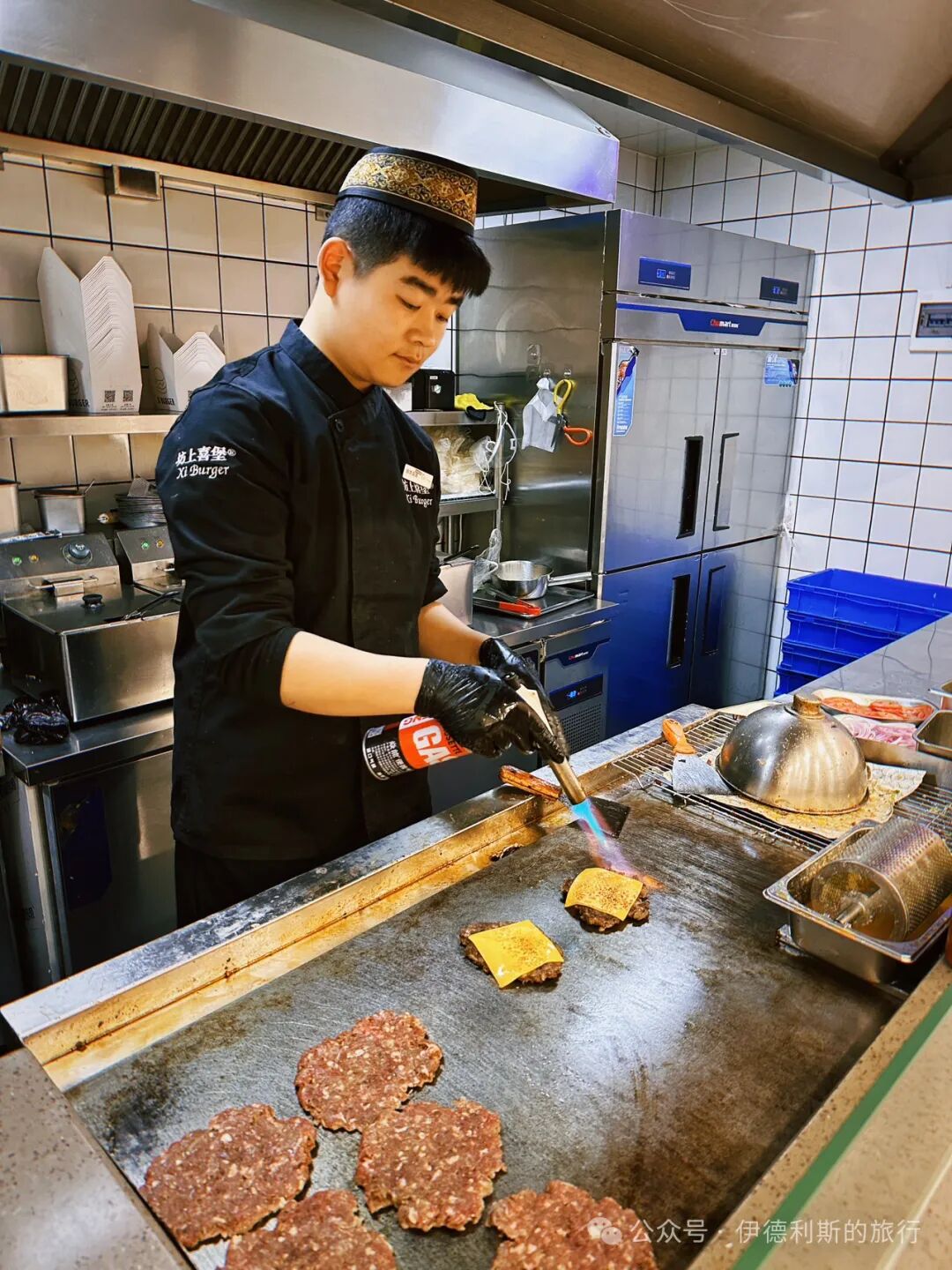
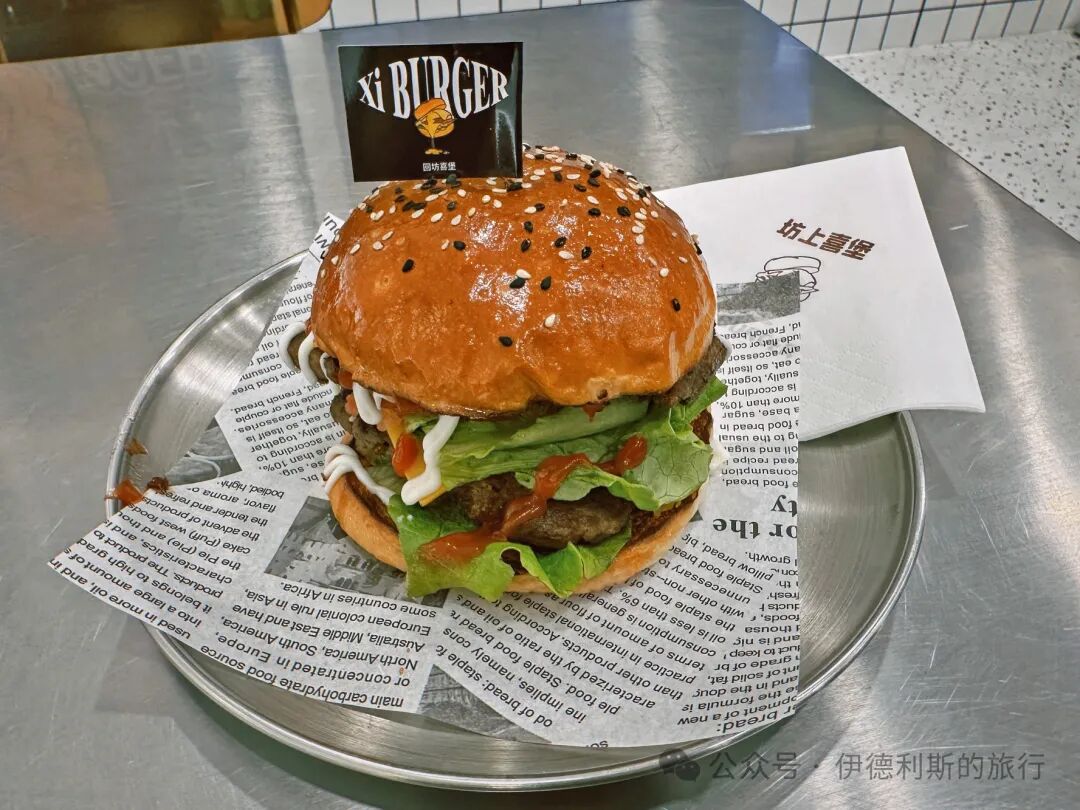
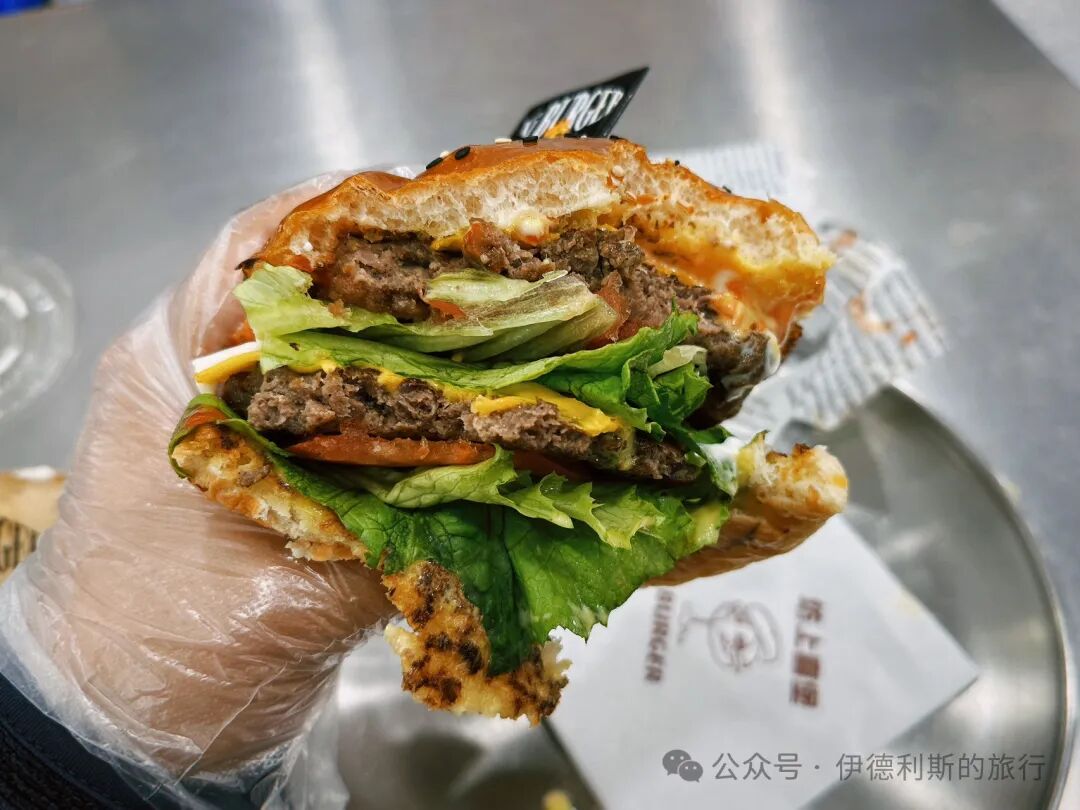
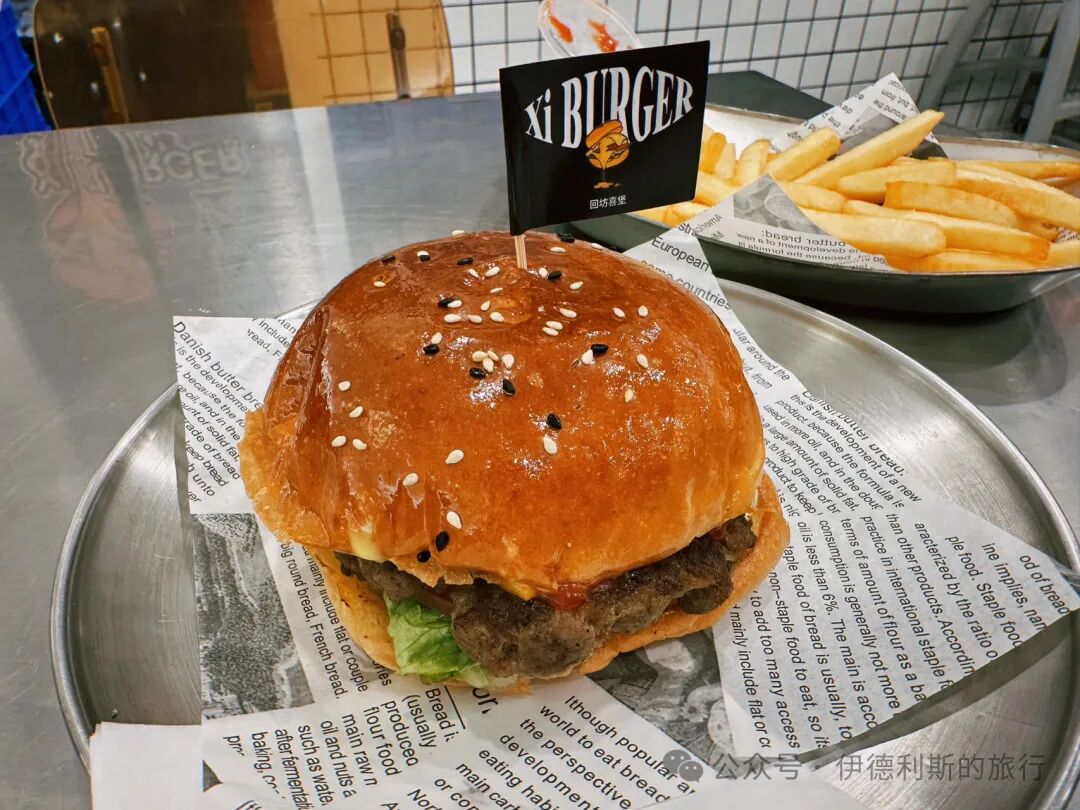
On this trip to Xi'an, I grew to love an American-style burger shop called Fangshang Xibao. They have two locations on Daxuexi Alley and Maixian Street, and they stay open until 11:00 PM. I walked by twice at night and couldn't help but go in. I even met some foreign friends (dosti) who really like this place.
The first time, I ordered the signature beef burger. Later, I wanted more, so I ordered the double beef burger. First, they have an open kitchen where you can watch them cook. The quality of their buns and beef is really high. You can tell the beef is good quality just by eating it. Most importantly, their buns are delicious! At a certain old burger chain in Xi'an, they once served me a cold bun, which ruined the taste. I had no motivation to go back there. Their prices are also very reasonable. A solid beef burger like this would cost quite a bit in Beijing, but here it only costs ten or twenty yuan. I think it is a great deal.
Old An's Pastries
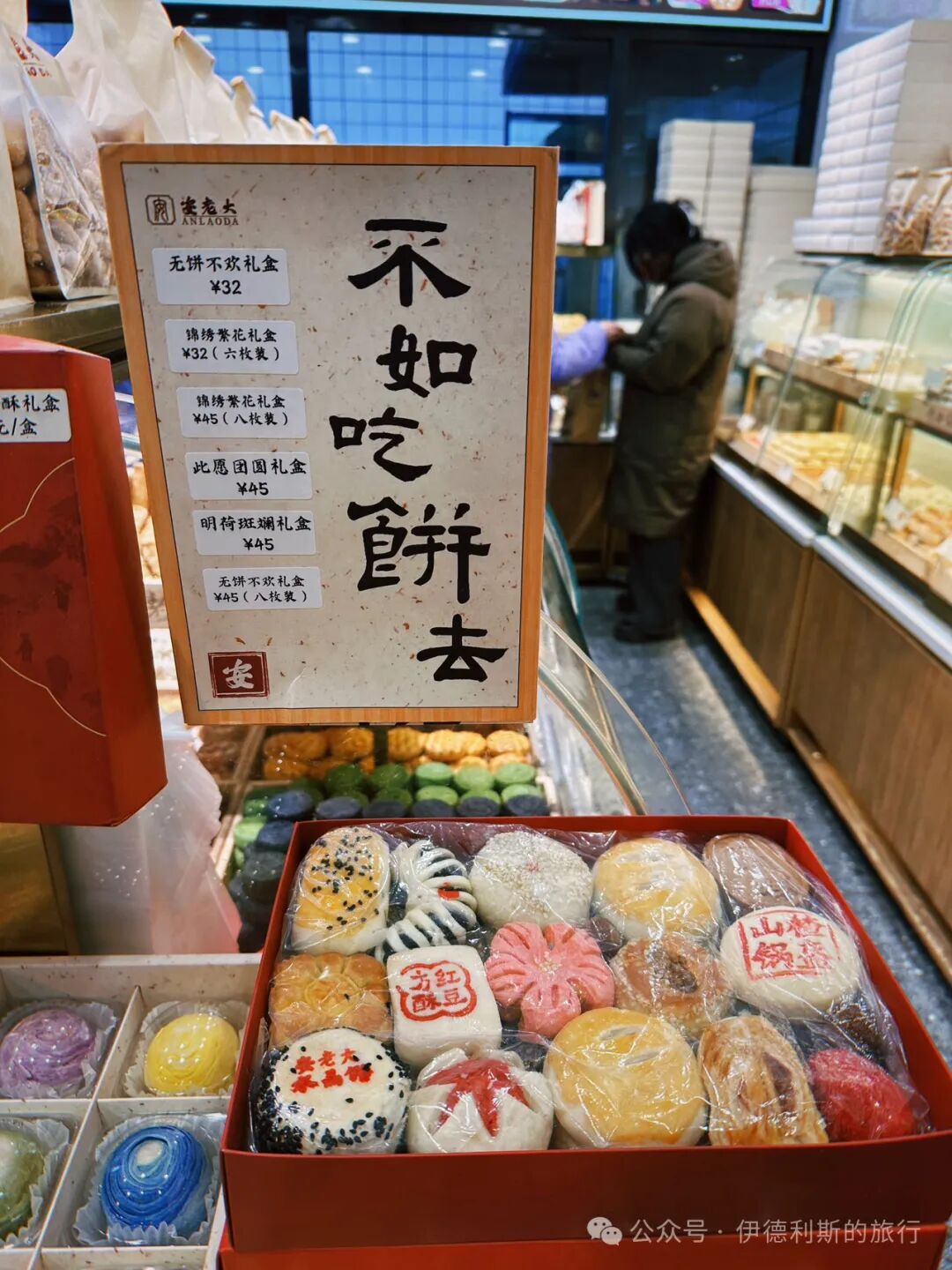
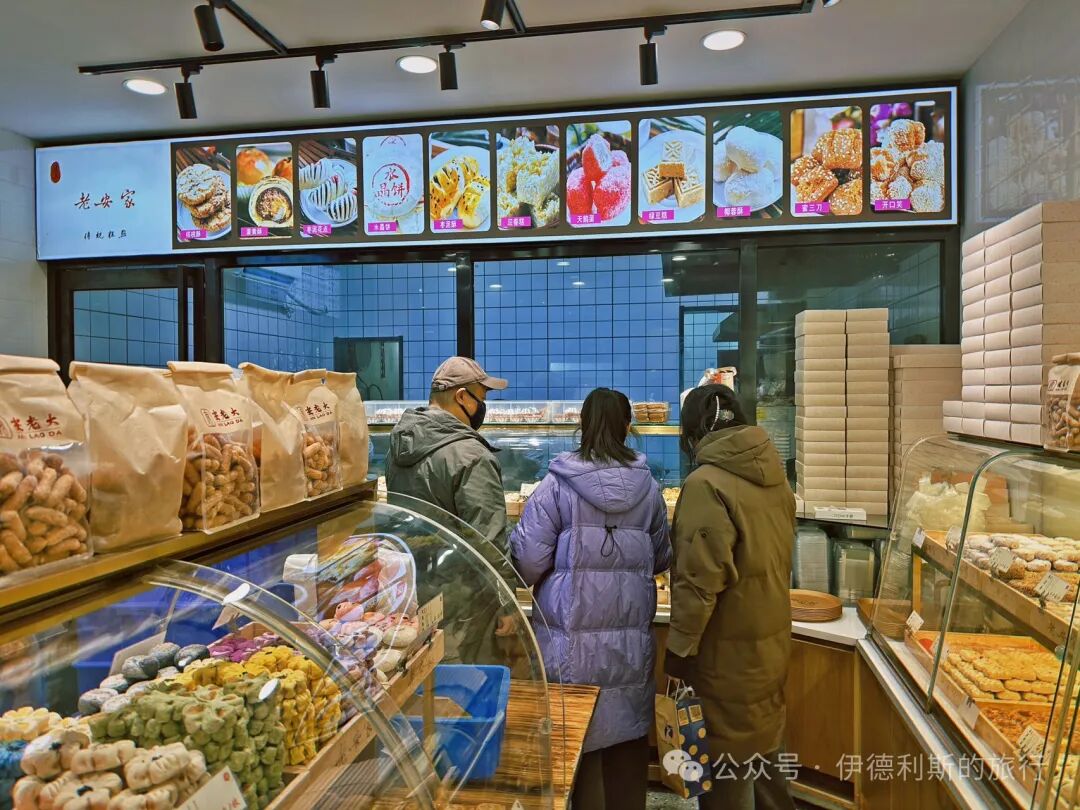
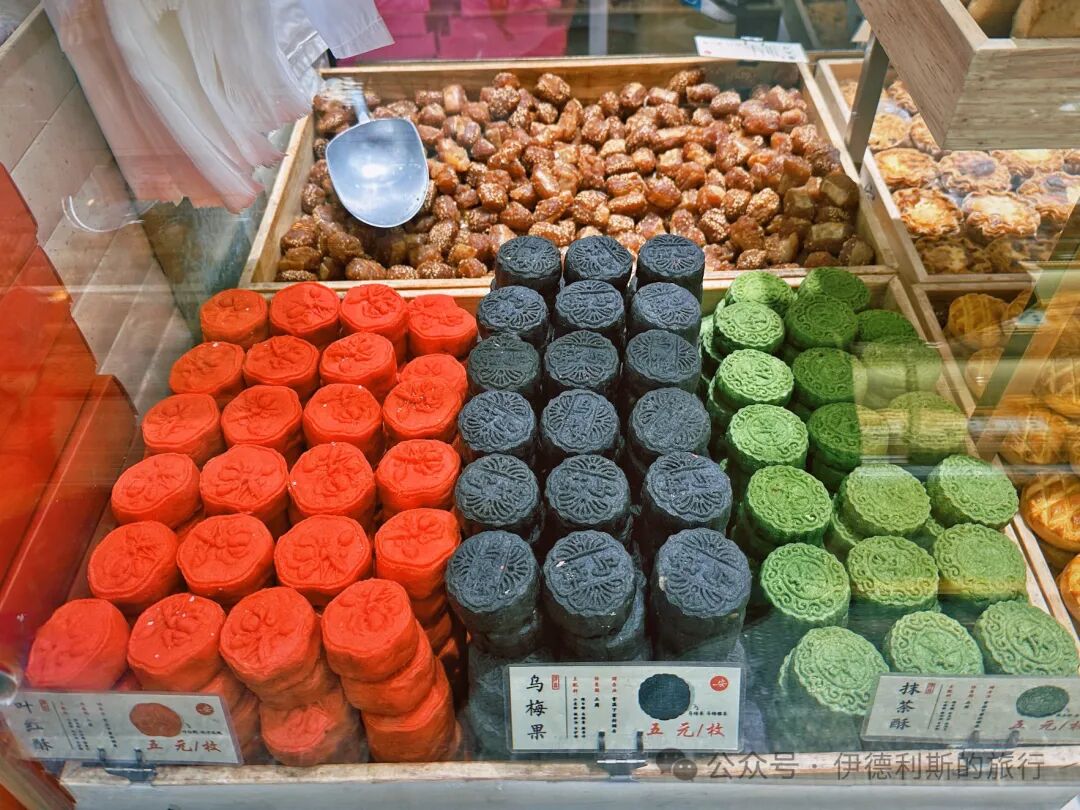
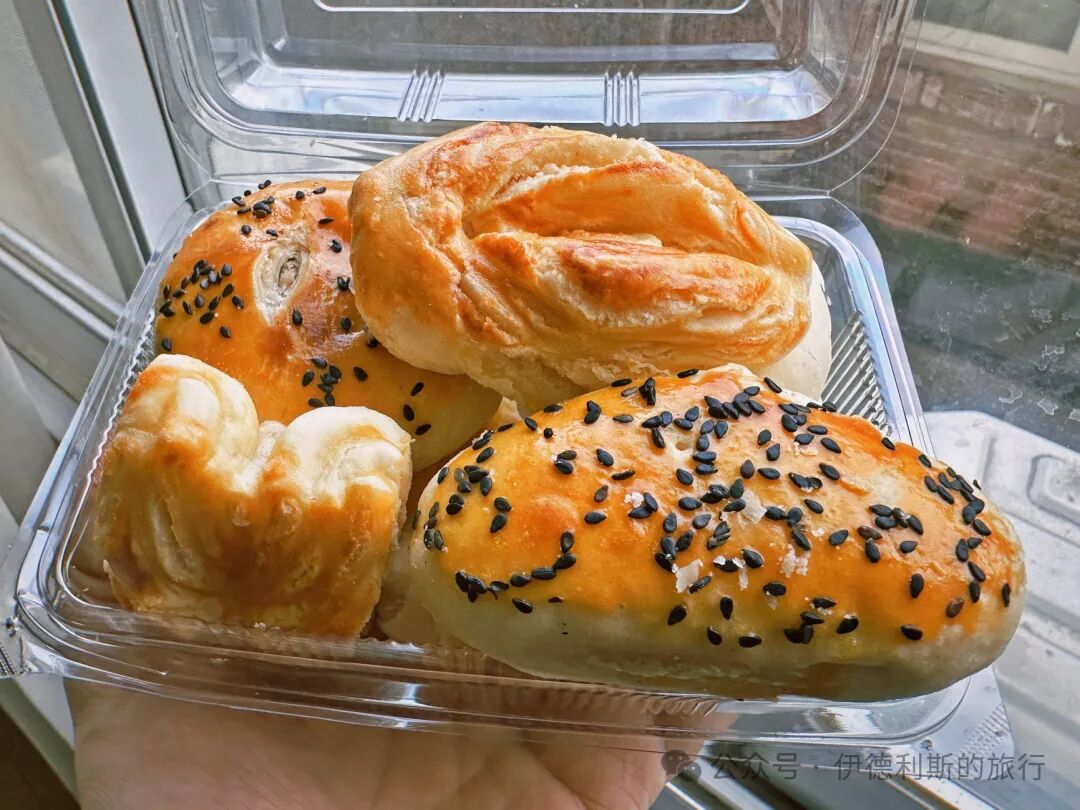
Old An's Pastry Shop on North Guangji Street sells both traditional and modern pastries. You can buy them individually or in gift boxes. The salt and pepper pastry (jiaoyansu) and scallion oil pastry (congyousu) are delicious. They go well with tea and are great snacks for train rides.
Hanzhong hot rice noodles (re mipi)
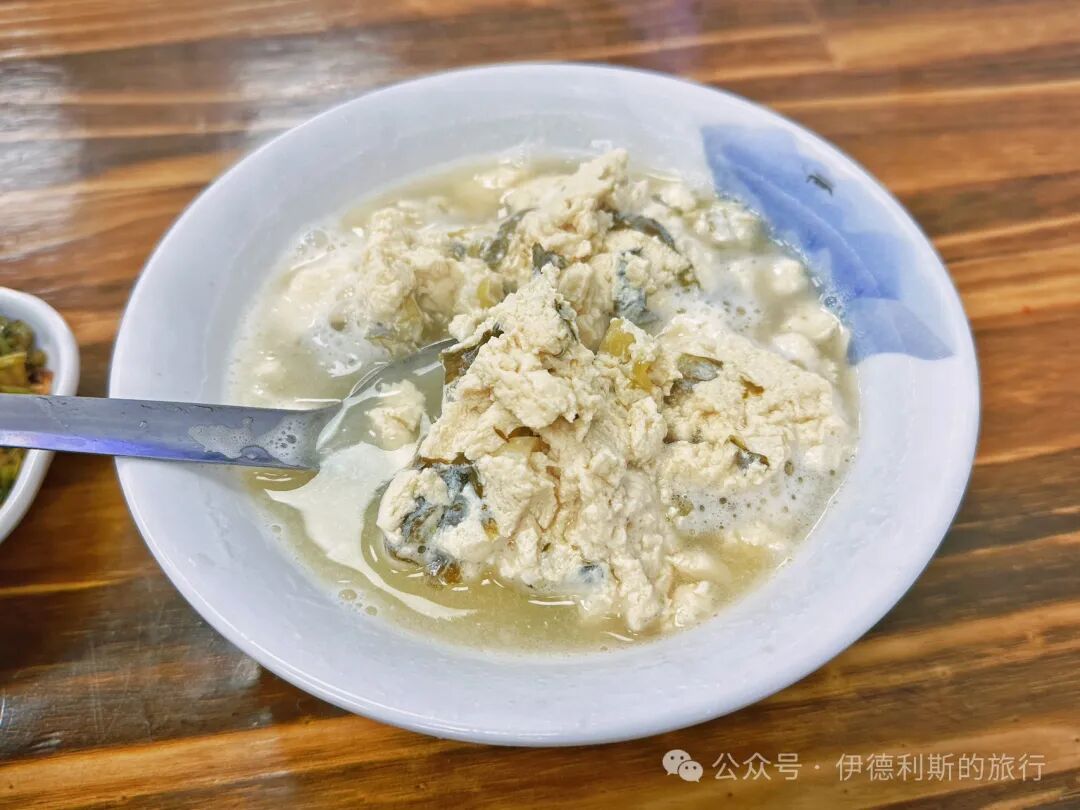
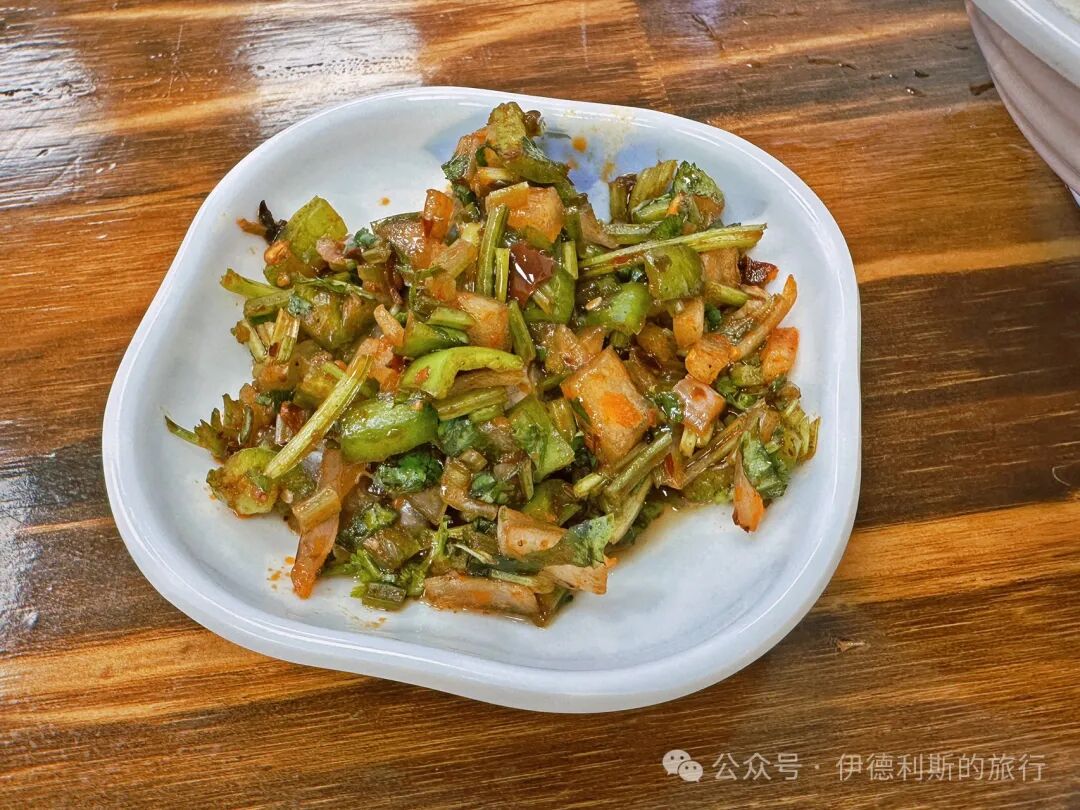
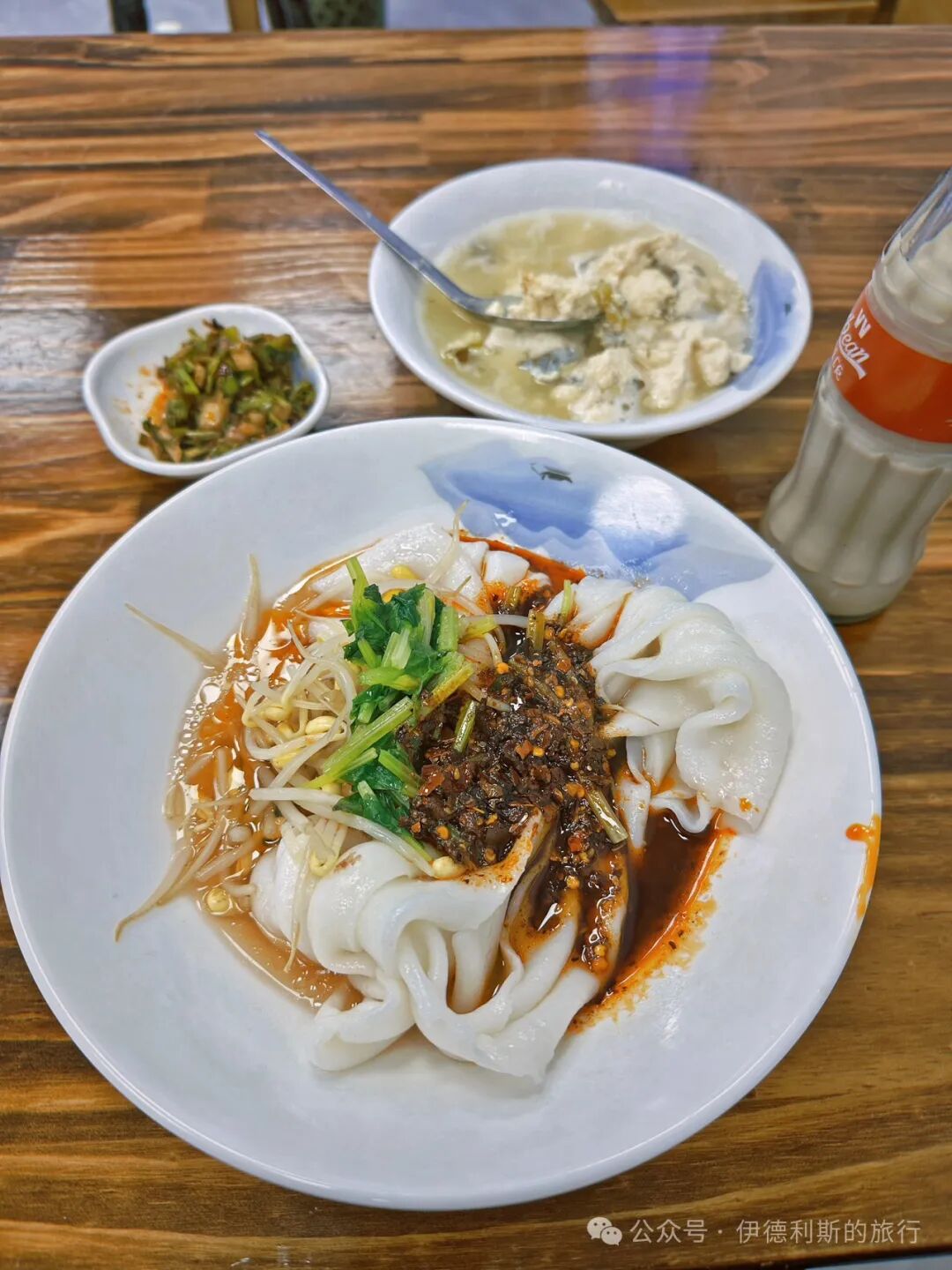
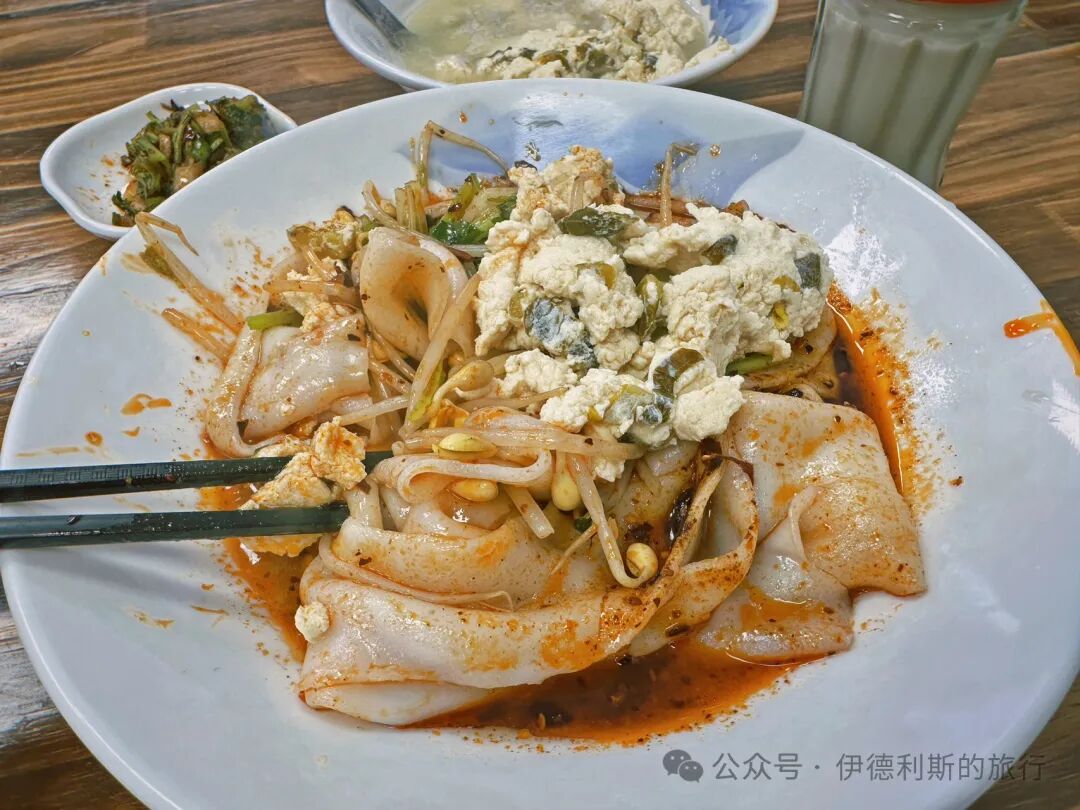
There are many snack shops on Maixian Street. This time, I tried the Hanzhong hot rice noodles shop at the east entrance of Xiaopiyuan. I ordered the Hanzhong hot rice noodles with a side of Hanzhong-style vegetable tofu (cai doufu). Hot rice noodles are made by grinding rice into a slurry and steaming it into thin sheets. When eating, they are mixed with bean sprouts, celery, and other vegetables. The most important parts are the chili oil and the seasoned sauce. I really love Shaanxi-style chili oil (youpo lazi). It is very fragrant and makes you want to eat more. People in Hanzhong like to eat hot rice noodles with vegetable tofu. Vegetable tofu is made using fermented sour water. It has a fermented taste. If you like sour water noodles (jiangshui mian), you will probably like vegetable tofu too. Vegetable tofu is quite light on its own, and it is very appetizing when served with green chili side dishes.
Zhigan Sour Soup Dumpling Shop
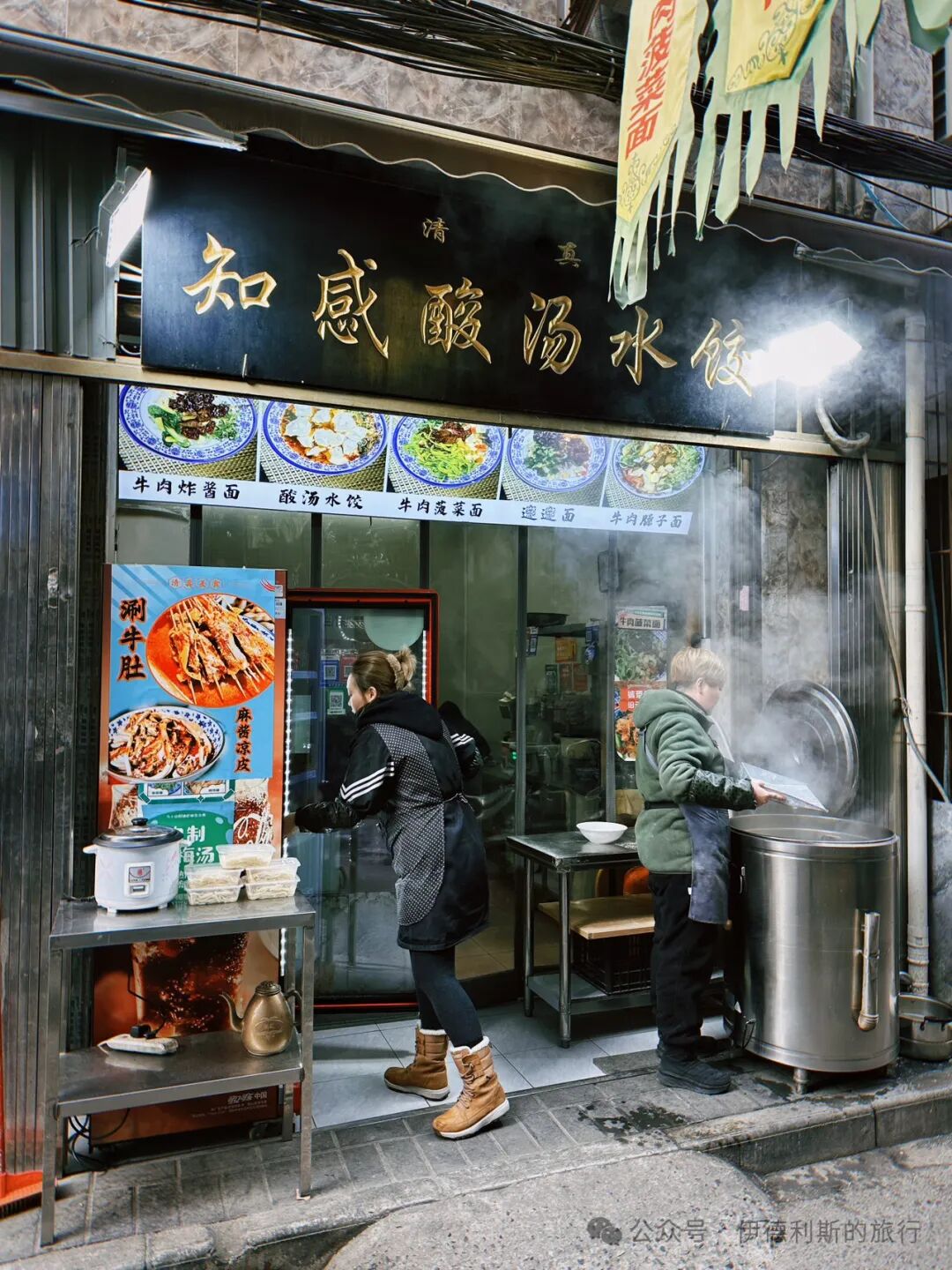
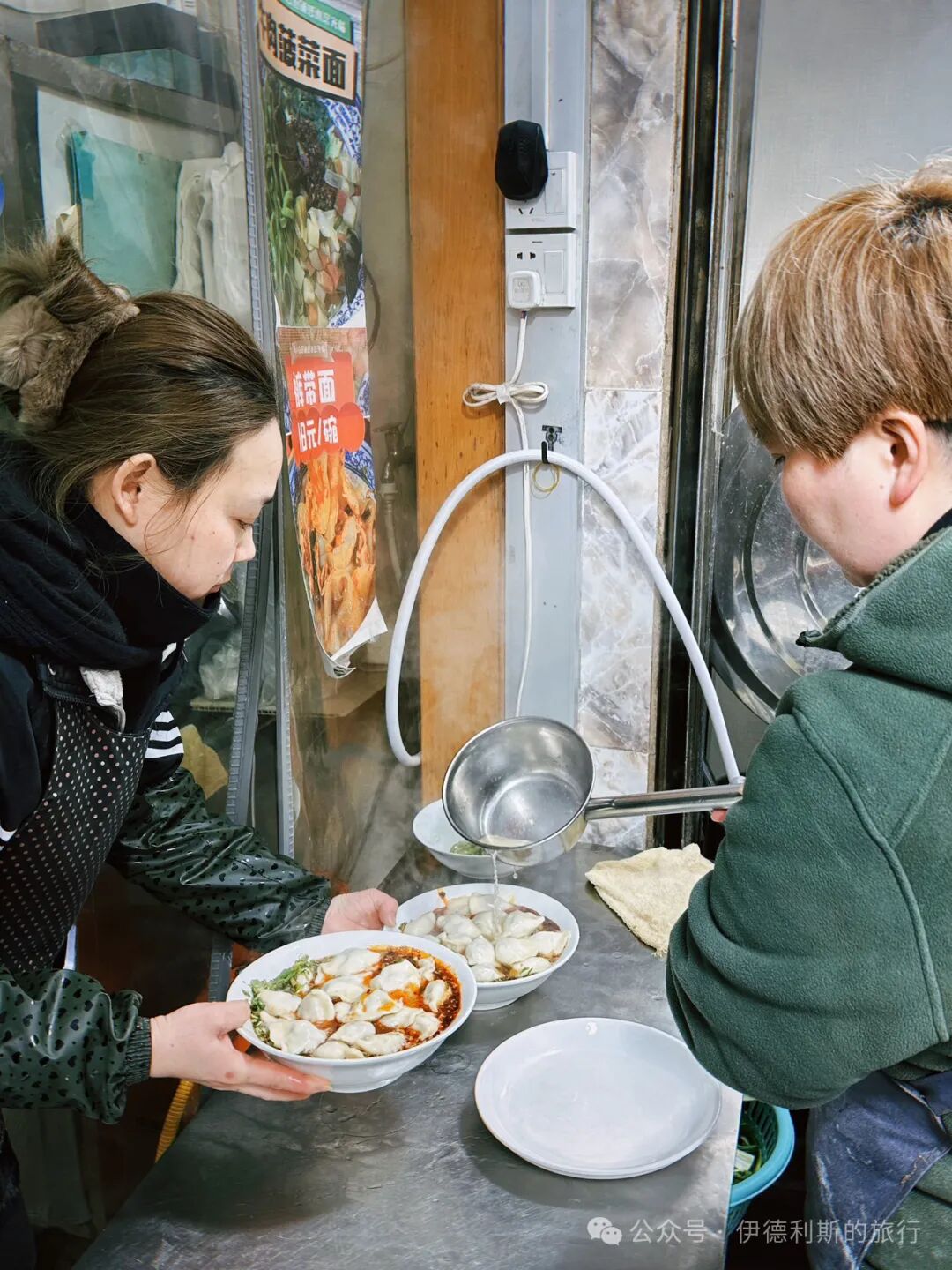
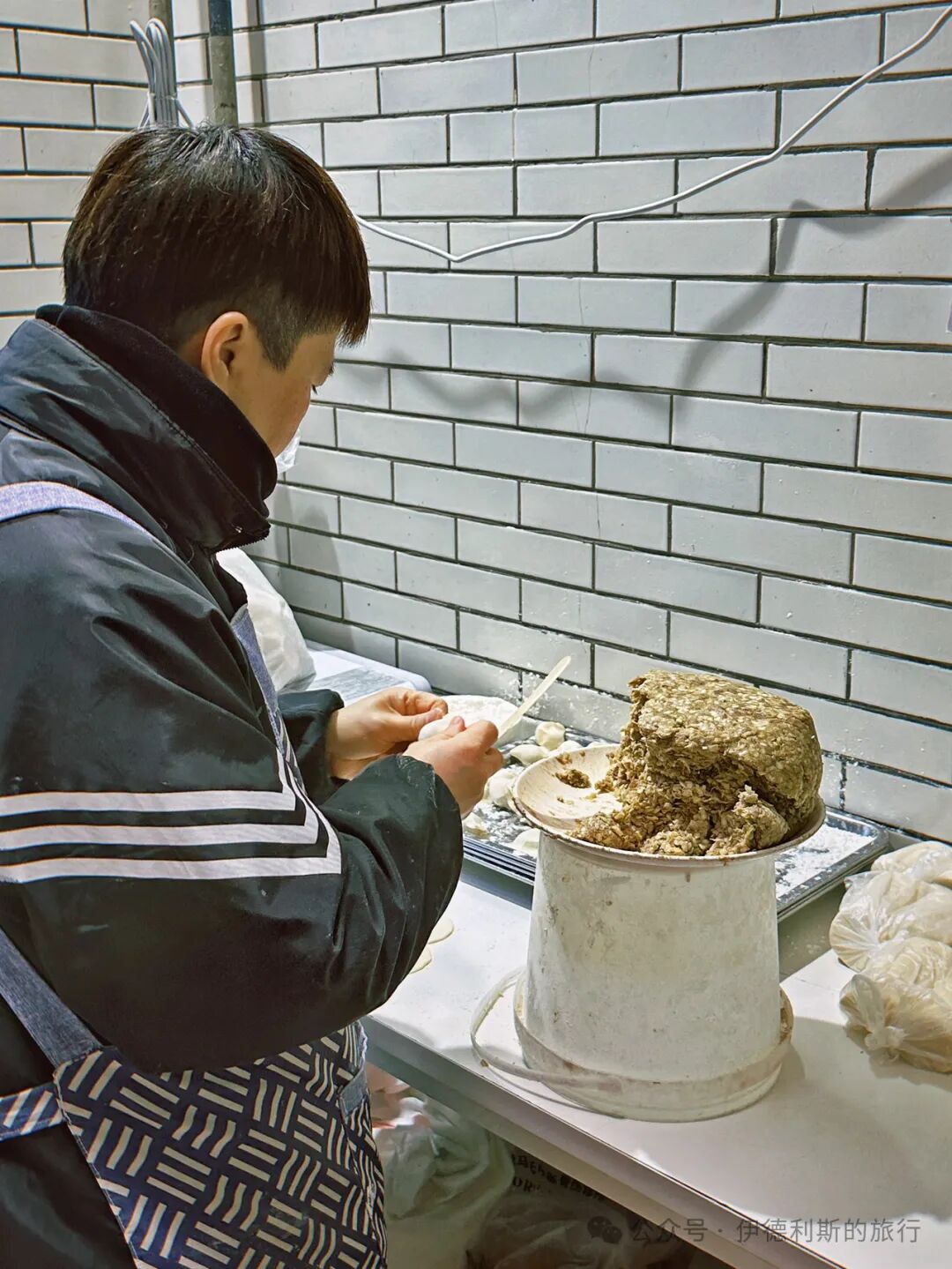
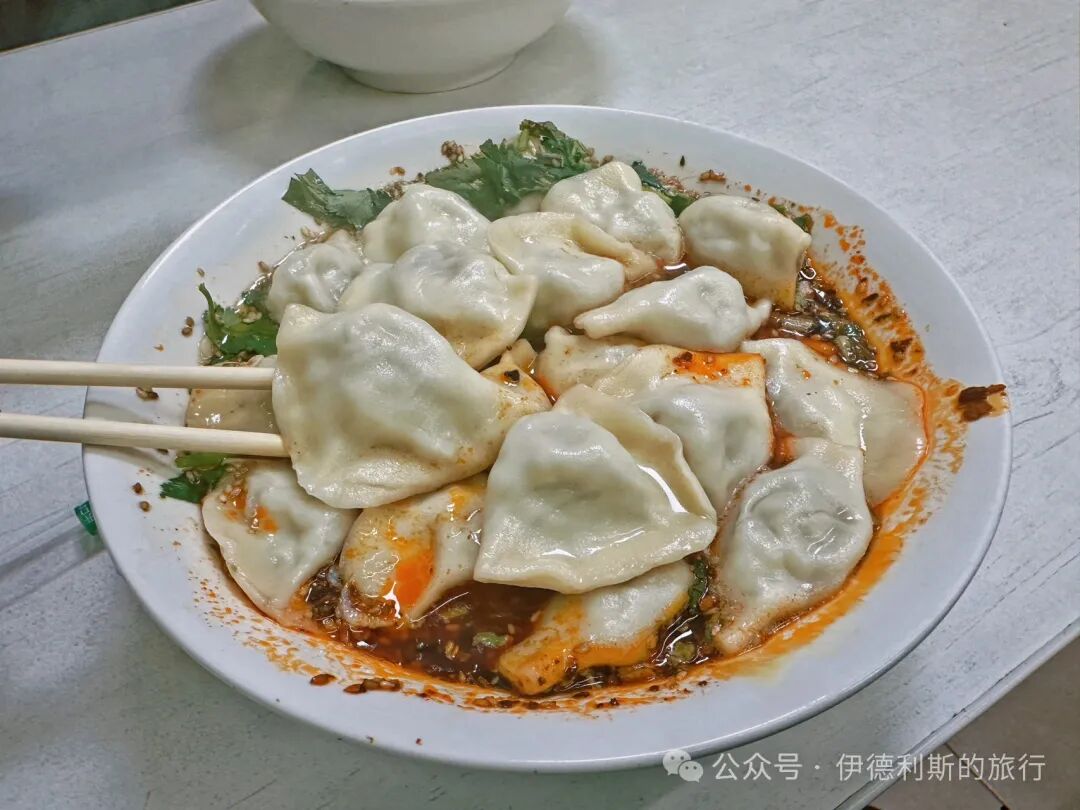
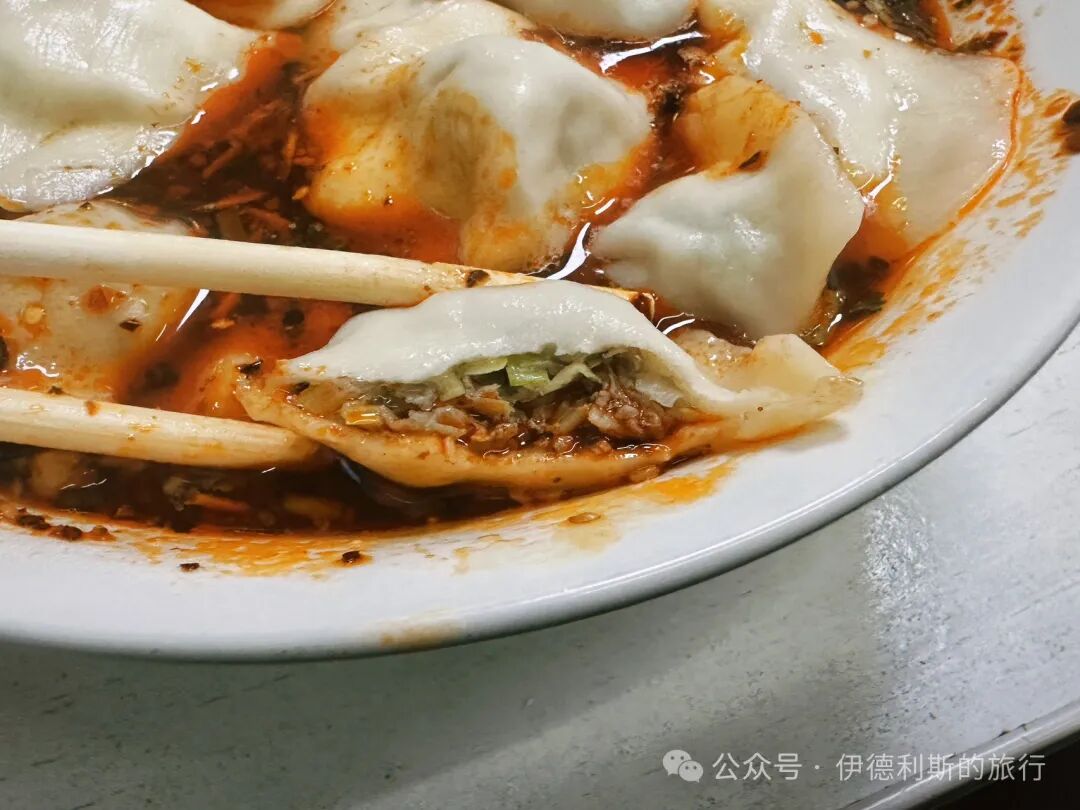
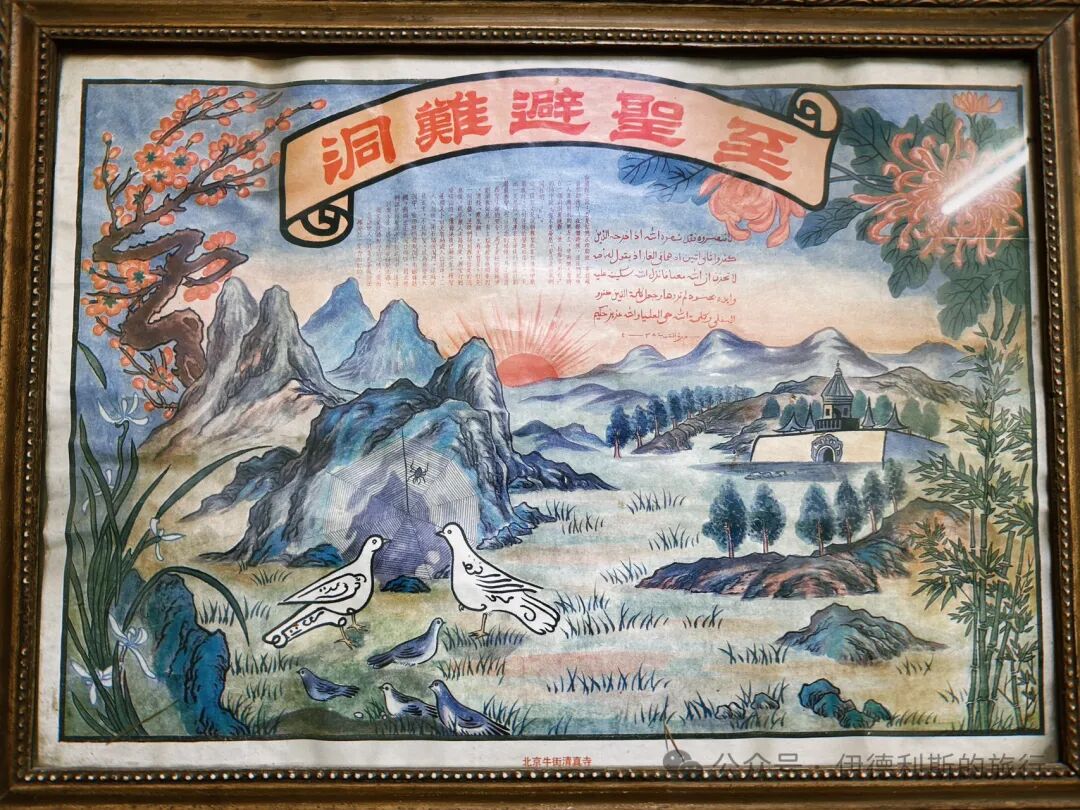
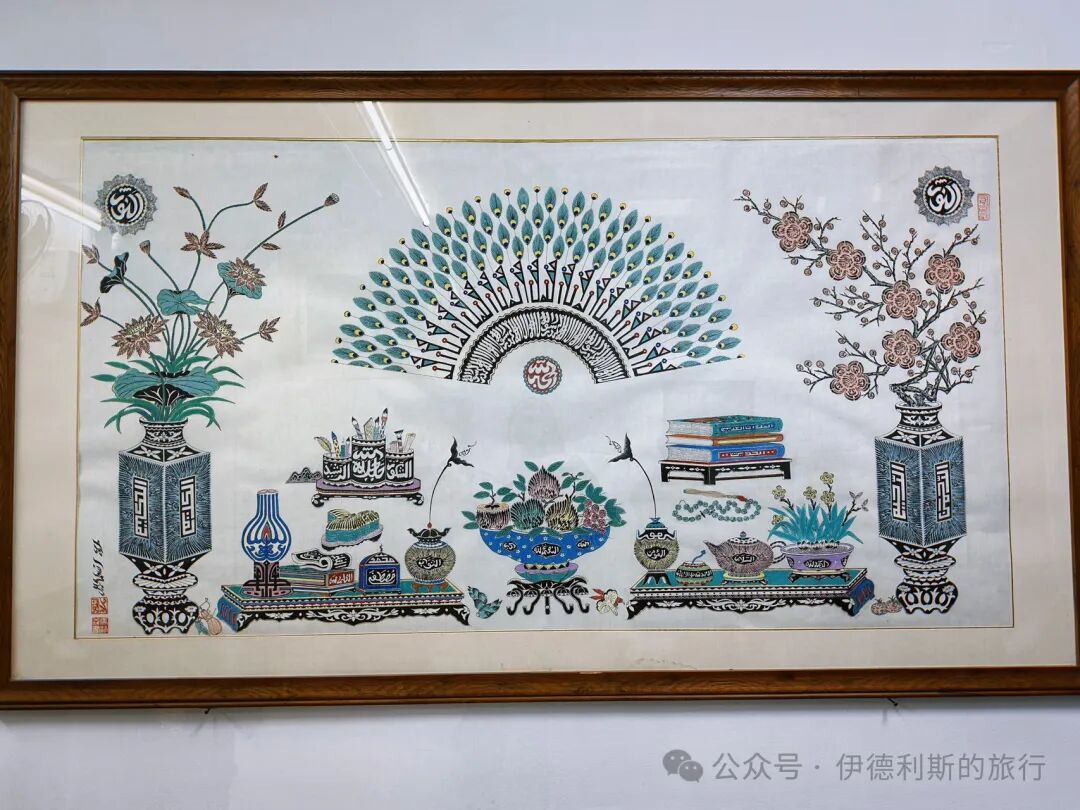
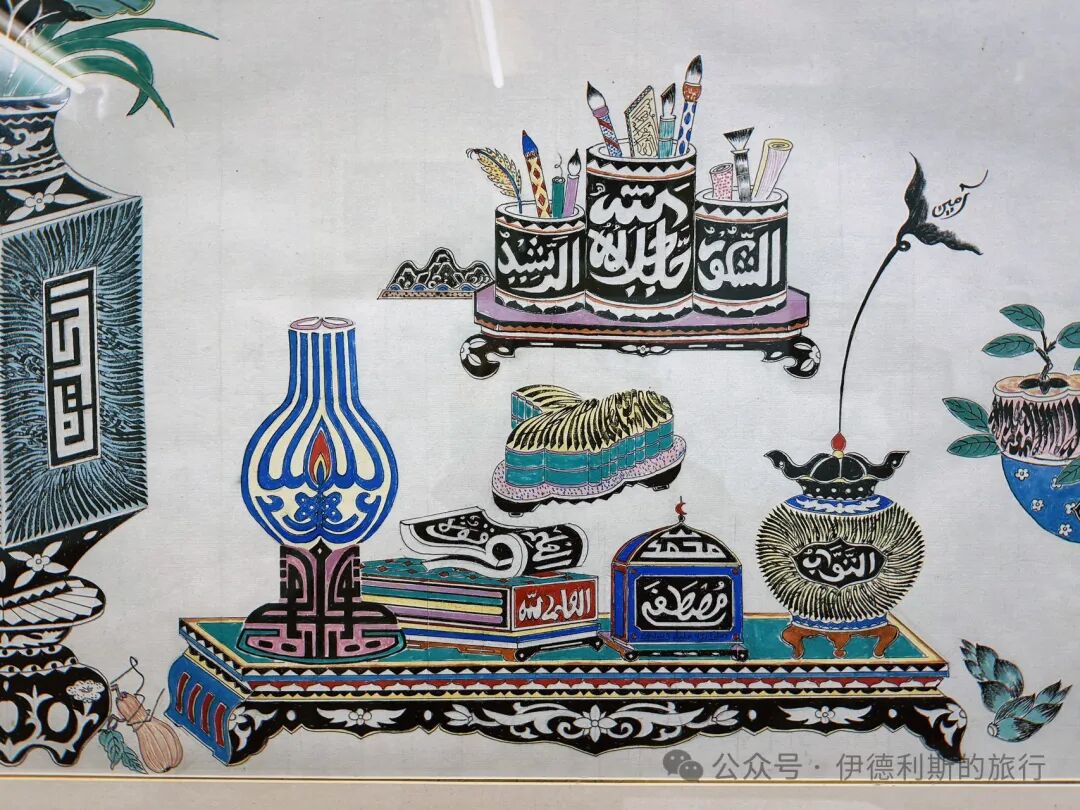
I was invited by a friend (dosti) to visit Imam Ma at the Xiaopiyuan Mosque. Afterward, I ate the local Hui Muslim specialty, beef and yellow chive sour soup dumplings, at the Zhigan Sour Soup Dumpling Shop across from the mosque. The yellow chive filling really adds a great flavor. I happened to run into the young owner of Jiasan Steamed Buns while he was eating dumplings there, and he even paid for my meal. The two landladies of the shop are both students of Imam Ma from Xiaopiyuan. You can tell from the shop's name that they are very religious. The calligraphy art in the shop is also very special. The piece from Niujie titled 'The Cave Where the Greatest Sage Took Refuge' feels very historic.
Old Ma's Beef Sauce Noodles
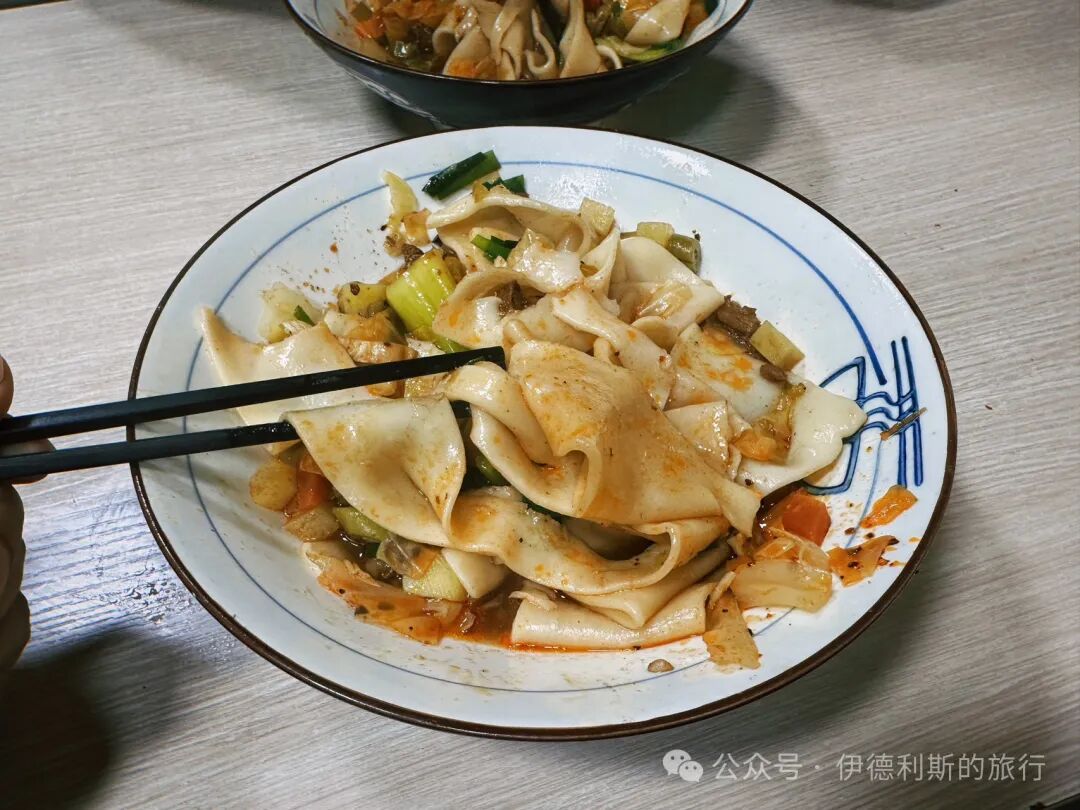
I had a bowl of belt noodles (kudai mian) at Old Ma's at the west entrance of Huajue Lane. The shop is very popular with local friends (dosti), but strangely, it is not listed on maps or review sites. A bowl of belt noodles with meat sauce, vegetable sauce, chives, and chili oil is sour, spicy, and appetizing. I slurped it all up in a few bites. Eating noodles in Xi'an is truly satisfying.
Jiasan Steamed Buns Beiyuanmen Main Store
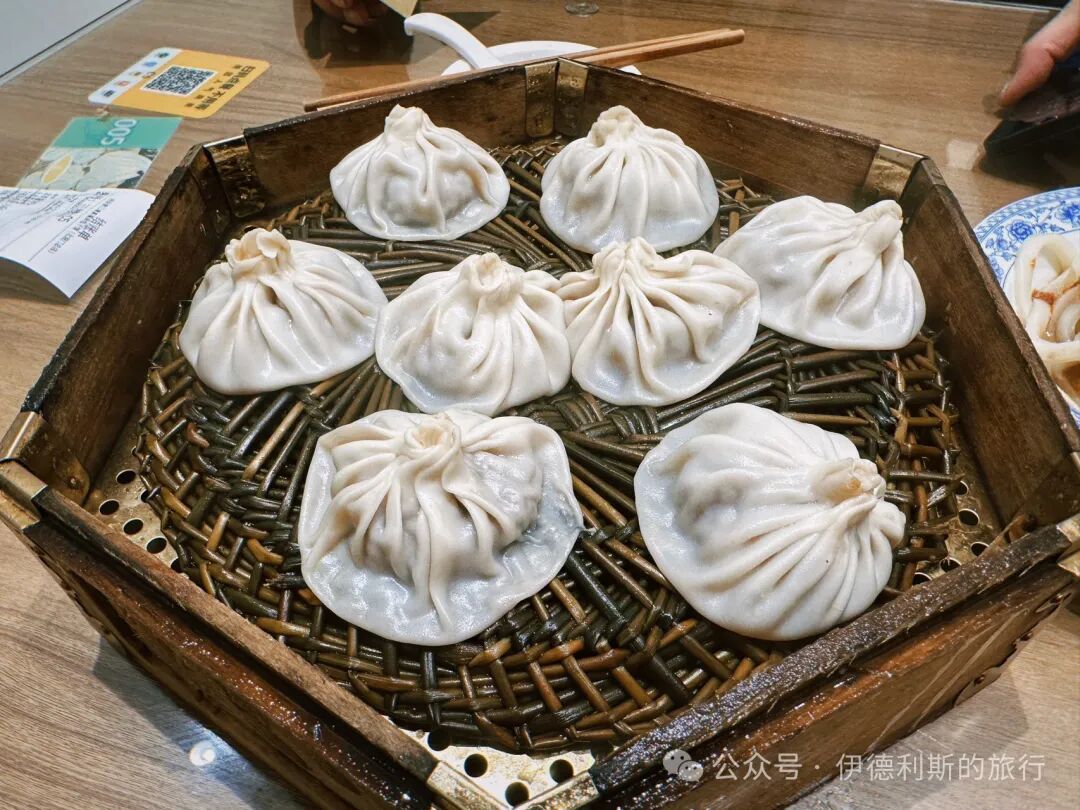
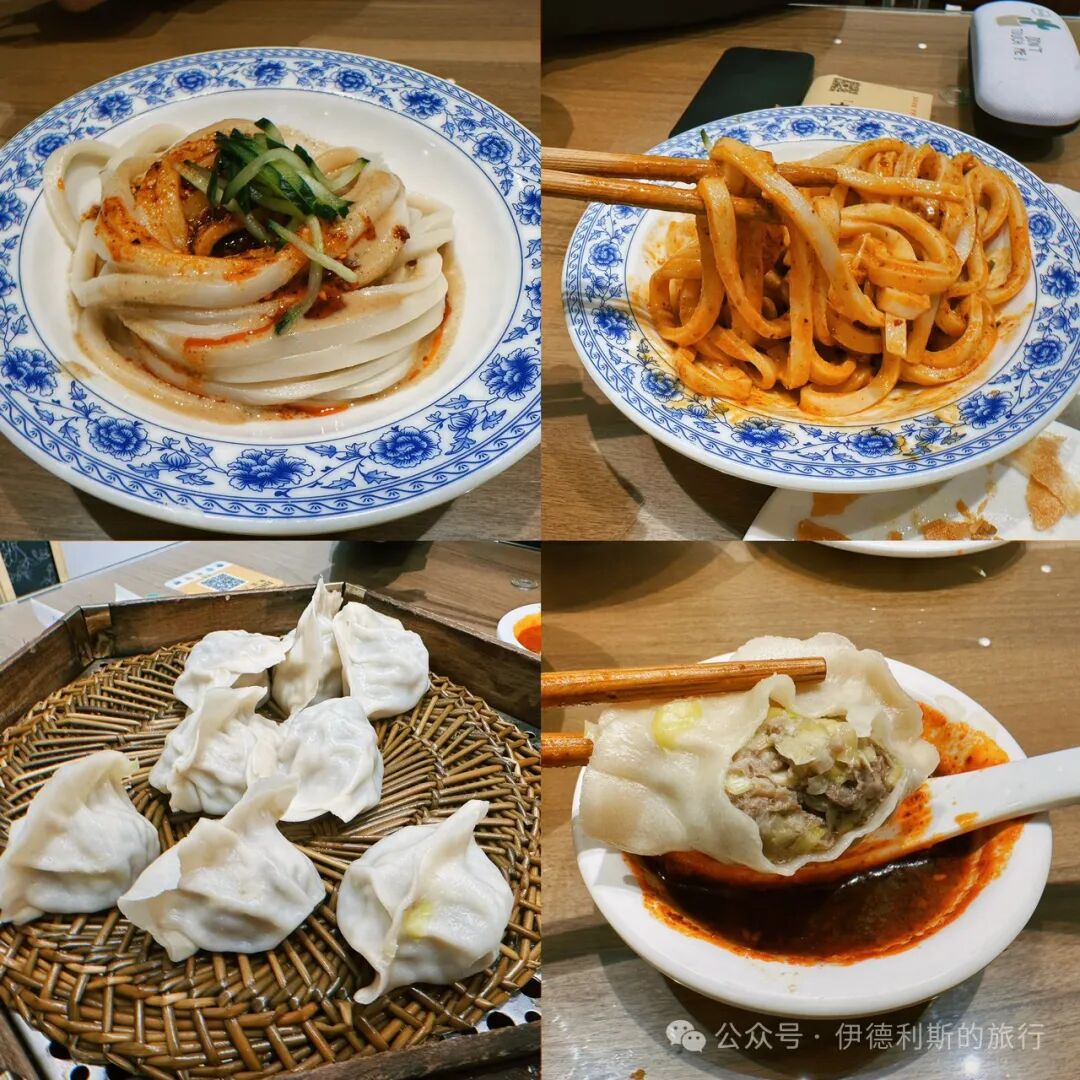
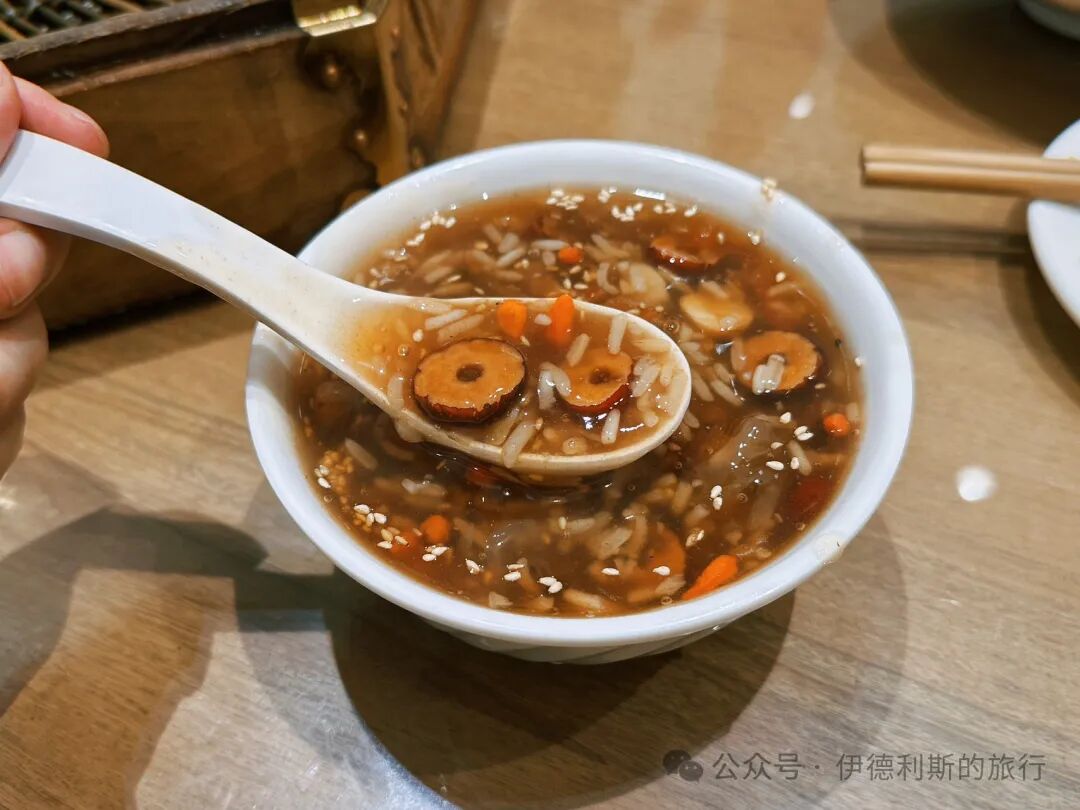
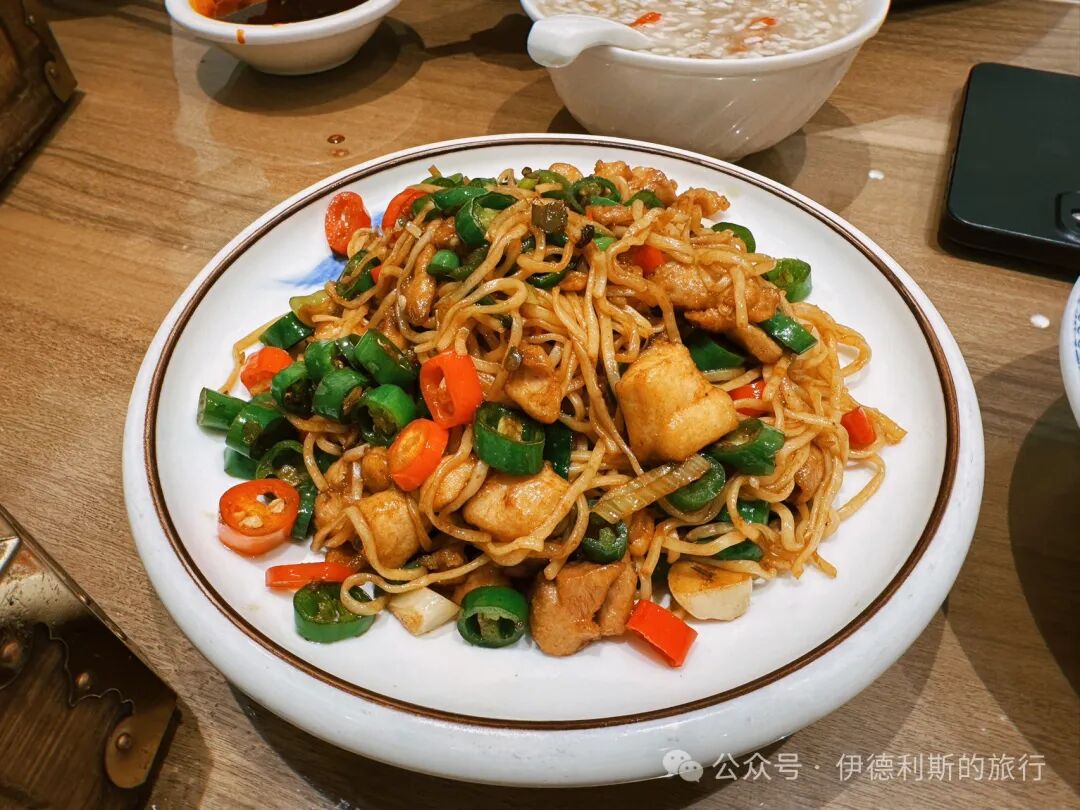
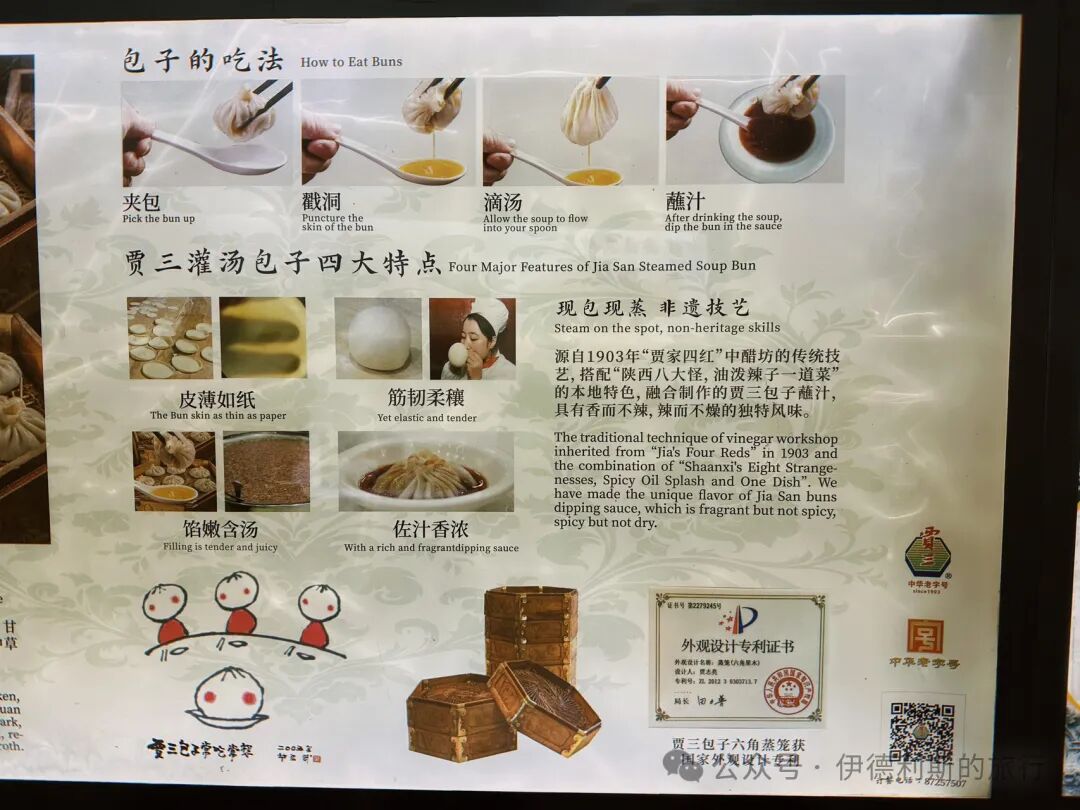
I often go to the Jiasan shop near Baiyun Temple in Beijing, but this time in Xi'an, I finally visited their Beiyuanmen main store. We ordered lamb soup-filled buns (guantang bao), beef soup-filled buns, beef steamed dumplings, chicken noodles with two types of chili, sesame paste cold noodles (liangpi), eight-treasure porridge, and eight-treasure fermented rice (laozao). The shop is located in the busiest tourist area of Beiyuanmen, and business is booming. I think the taste of their soup-filled buns is about the same as the Beijing branch. When eating them, poke a hole first, let the soup drip out to drink, and then dip the bun in vinegar and chili oil. Their cold skin noodles (liangpi) and eight-treasure porridge (babaozhou) are also quite good. It was my first time eating chicken mixed noodles (ji laomian); the taste was slightly spicy but very appetizing.
According to their family genealogy, the Jia family moved from Shuiximen in Nanjing to Xi'an during the Tianqi era of the Ming Dynasty. In 1884 (the tenth year of the Guangxu reign), they opened a steamed bun shop (mozhuang). In 1903 (the twenty-ninth year of the Guangxu reign), they opened a steamed bun shop, a grain store, a vinegar workshop, and a bathhouse at Majia Shizi. These were known as the 'Jia Family Four Reds,' and they began selling steamed buns (baozi) at that time.
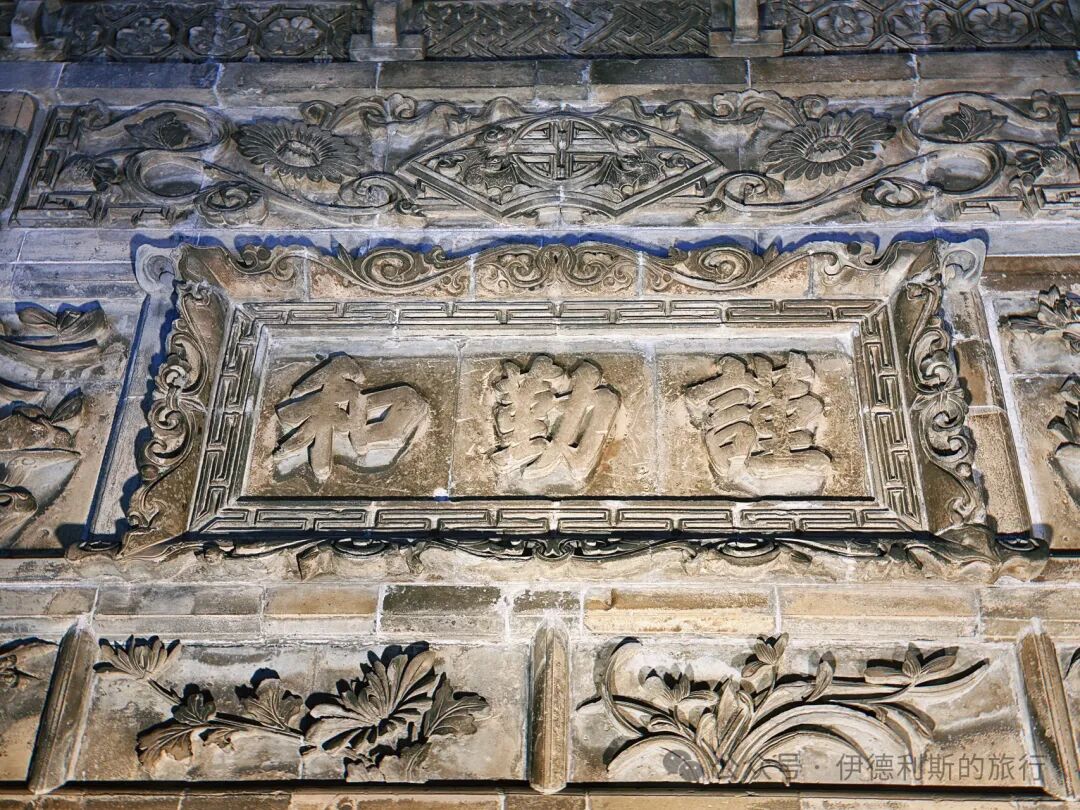
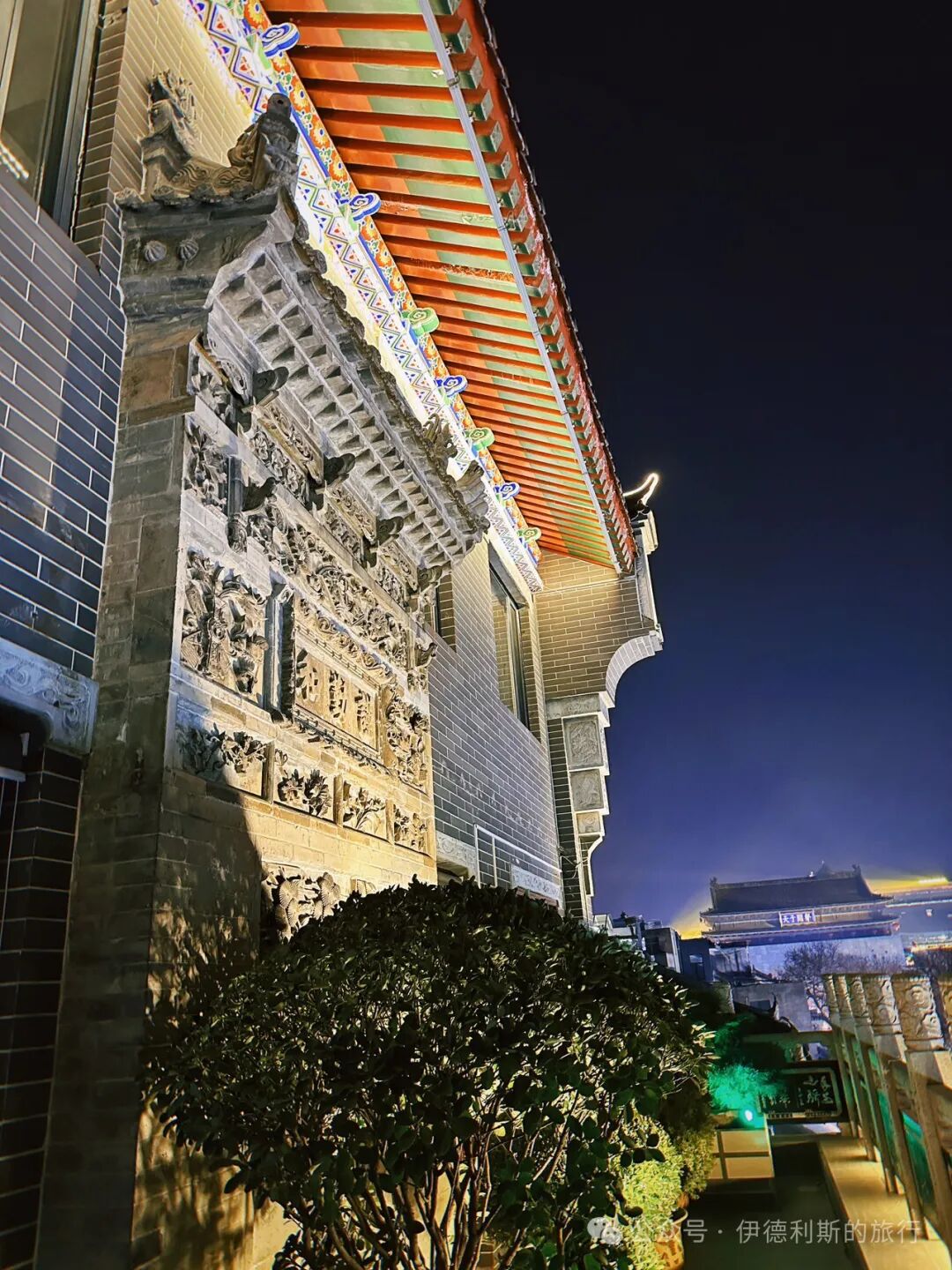
During the Republic of China era, the Jia family opened businesses like Jixintang and Jinqinhe. The store still keeps the brick-carved doorway of 'Jinqinhe' today. In the 1940s, Jia San's mother, Liu Min, settled in Xi'an, and she married into the Jia family in the 1950s. Liu Min was from Qidong, Jiangsu. She brought the southern technique of making soup-filled buns (guantangbao) to the Jia family. By adding northern beef bone marrow 'rich broth' (gaotang), she made the bun fillings tender and the soup delicious. After the 1980s, Liu Min's son, Jia San, improved the soup-filled buns and developed a fruitwood steamer that received a national patent. This type of steamer allows for rapid steaming over high heat, which locks in the aroma of the buns and keeps them piping hot.
Old Bai's Tongshengyong
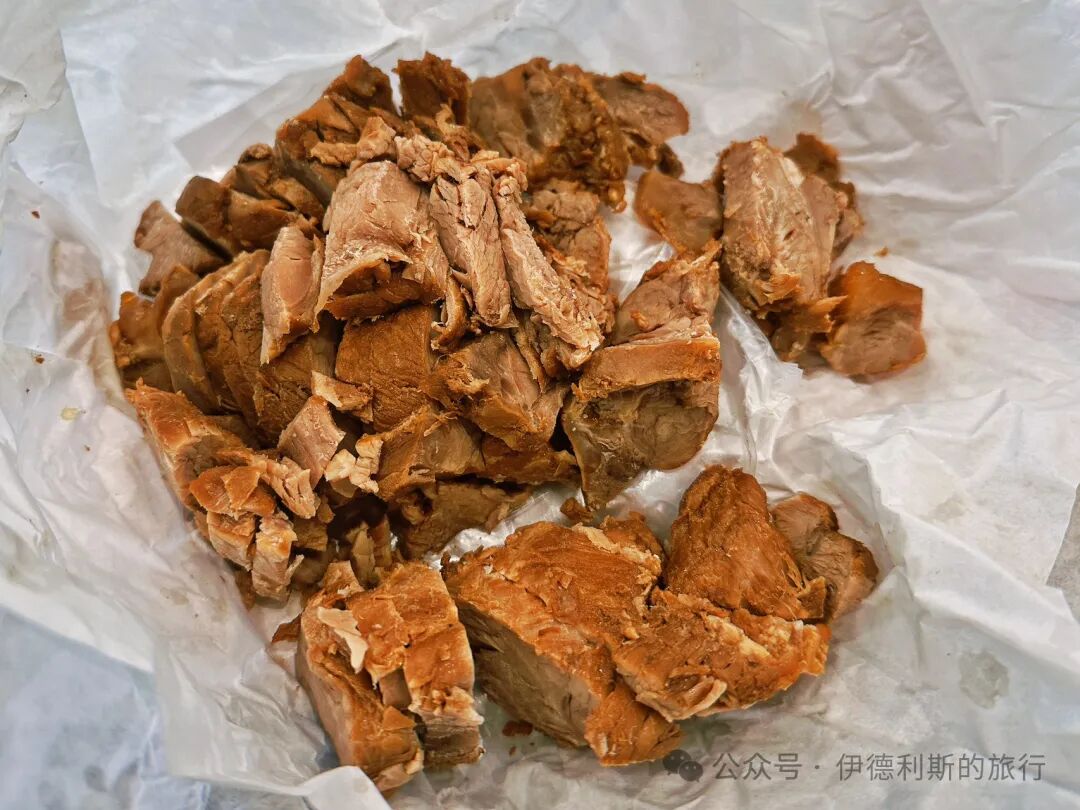
Before leaving, a friend (dosti) fed me a spiced beef sandwich (jiang niurou jiamo) from Old Bai's on North Guangji Street. I personally think it suits the taste of Beijingers better than cured beef (la niurou). The founder of Old Bai's, Haji Bai Yuting, moved from Huajue Lane to North Guangji Street in the early 1980s. He first opened a beef and mutton shop, then later opened Old Bai's mutton soup (shuipen yangrou). As his business flourished, Haji Bai bought a house across from the mosque on North Guangji Street and revived the name 'Tongshengyong,' which was the name of his old shop at Gulou Shizi. With Haji Bai's encouragement, North Guangji Street gradually became lively, and shops like 'Old Liu's,' 'Old Tong's,' and 'Old An's' opened one after another. At the same time, Haji Bai cared for the community (ummah). He frequently held religious gatherings (nietie), helped the poor, and treated his neighbors with kindness, earning him deep respect from everyone. view all
Summary: Xi'an Muslim Quarter, known locally as Huifang, is one of the best-known places in China for halal snacks and Hui Muslim food culture. This article keeps the original shop notes, dishes, street details, and photos while presenting the food walk in everyday English.
Old Liu's Pita Bread Soup Shop (Lao Liujia Paomo Guan)
Old Liu's is right at the entrance of the small mosque on North Guangji Street. Come here in the morning for some pita bread soup (paomo). It is very popular and always crowded.
Old Liu's Paomo opened in 1932 at the northwest corner of the intersection of West Street and Qiaozikou in Xi'an. Its original name was Halal Old Liu's Changshengde Beef and Mutton Pita Bread Soup Shop. During the Republic of China era, West Street was full of merchants and rows of shops. Many people hosted guests at Old Liu's. After the public-private partnership in 1956, Old Liu's Paomo joined the Xi'an Catering Company and moved to Xiguan Main Street. It became one of the eight major beef and mutton pita bread soup shops in Xi'an at that time. In 1985, after the reform and opening up, the third-generation owner of Old Liu's searched for a new location and reopened on North Guangji Street. It has been there for 40 years now.
Tianshui Fermented Vegetable Jelly (Tianshui Jiangshui Yuyu)
While walking around the Muslim Quarter at night, I bought some Tianshui fermented vegetable jelly (jiangshui yuyu) on Miaohou Street. It was very authentic. I fell in love with this fermented vegetable jelly in Tianshui a couple of days ago, and now I am eating it again in Xi'an. The taste of the fermented vegetable broth (jiangshui) mixed with pickled chives and chili oil is so appetizing.
Qinghai Yogurt
The Qinghai yogurt sold on the streets of the Muslim Quarter is quite authentic. It has that fizzy sensation from the lactic acid bacteria when you take a sip. It is rich in both milk flavor and fermentation taste. I hope Beijing can have this quality too!
Ma Family Old Six Beef Soup (Majia Laoliu Shuipen Yangrou)
In the morning, I had beef soup (shuipen niurou) at Ma Family Old Six on Dalianhuachi Street. They open at 6:00 AM and are close to the Beidajie subway station, which is great for those catching an early ride. I personally think this soup is perfect for a winter morning. A big bowl of meat broth is very comforting.
Fangshang Xibao Burger
On this trip to Xi'an, I grew to love an American-style burger shop called Fangshang Xibao. They have two locations on Daxuexi Alley and Maixian Street, and they stay open until 11:00 PM. I walked by twice at night and couldn't help but go in. I even met some foreign friends (dosti) who really like this place.
The first time, I ordered the signature beef burger. Later, I wanted more, so I ordered the double beef burger. First, they have an open kitchen where you can watch them cook. The quality of their buns and beef is really high. You can tell the beef is good quality just by eating it. Most importantly, their buns are delicious! At a certain old burger chain in Xi'an, they once served me a cold bun, which ruined the taste. I had no motivation to go back there. Their prices are also very reasonable. A solid beef burger like this would cost quite a bit in Beijing, but here it only costs ten or twenty yuan. I think it is a great deal.
Old An's Pastries
Old An's Pastry Shop on North Guangji Street sells both traditional and modern pastries. You can buy them individually or in gift boxes. The salt and pepper pastry (jiaoyansu) and scallion oil pastry (congyousu) are delicious. They go well with tea and are great snacks for train rides.
Hanzhong hot rice noodles (re mipi)
There are many snack shops on Maixian Street. This time, I tried the Hanzhong hot rice noodles shop at the east entrance of Xiaopiyuan. I ordered the Hanzhong hot rice noodles with a side of Hanzhong-style vegetable tofu (cai doufu). Hot rice noodles are made by grinding rice into a slurry and steaming it into thin sheets. When eating, they are mixed with bean sprouts, celery, and other vegetables. The most important parts are the chili oil and the seasoned sauce. I really love Shaanxi-style chili oil (youpo lazi). It is very fragrant and makes you want to eat more. People in Hanzhong like to eat hot rice noodles with vegetable tofu. Vegetable tofu is made using fermented sour water. It has a fermented taste. If you like sour water noodles (jiangshui mian), you will probably like vegetable tofu too. Vegetable tofu is quite light on its own, and it is very appetizing when served with green chili side dishes.
Zhigan Sour Soup Dumpling Shop
I was invited by a friend (dosti) to visit Imam Ma at the Xiaopiyuan Mosque. Afterward, I ate the local Hui Muslim specialty, beef and yellow chive sour soup dumplings, at the Zhigan Sour Soup Dumpling Shop across from the mosque. The yellow chive filling really adds a great flavor. I happened to run into the young owner of Jiasan Steamed Buns while he was eating dumplings there, and he even paid for my meal. The two landladies of the shop are both students of Imam Ma from Xiaopiyuan. You can tell from the shop's name that they are very religious. The calligraphy art in the shop is also very special. The piece from Niujie titled 'The Cave Where the Greatest Sage Took Refuge' feels very historic.
Old Ma's Beef Sauce Noodles
I had a bowl of belt noodles (kudai mian) at Old Ma's at the west entrance of Huajue Lane. The shop is very popular with local friends (dosti), but strangely, it is not listed on maps or review sites. A bowl of belt noodles with meat sauce, vegetable sauce, chives, and chili oil is sour, spicy, and appetizing. I slurped it all up in a few bites. Eating noodles in Xi'an is truly satisfying.
Jiasan Steamed Buns Beiyuanmen Main Store
I often go to the Jiasan shop near Baiyun Temple in Beijing, but this time in Xi'an, I finally visited their Beiyuanmen main store. We ordered lamb soup-filled buns (guantang bao), beef soup-filled buns, beef steamed dumplings, chicken noodles with two types of chili, sesame paste cold noodles (liangpi), eight-treasure porridge, and eight-treasure fermented rice (laozao). The shop is located in the busiest tourist area of Beiyuanmen, and business is booming. I think the taste of their soup-filled buns is about the same as the Beijing branch. When eating them, poke a hole first, let the soup drip out to drink, and then dip the bun in vinegar and chili oil. Their cold skin noodles (liangpi) and eight-treasure porridge (babaozhou) are also quite good. It was my first time eating chicken mixed noodles (ji laomian); the taste was slightly spicy but very appetizing.
According to their family genealogy, the Jia family moved from Shuiximen in Nanjing to Xi'an during the Tianqi era of the Ming Dynasty. In 1884 (the tenth year of the Guangxu reign), they opened a steamed bun shop (mozhuang). In 1903 (the twenty-ninth year of the Guangxu reign), they opened a steamed bun shop, a grain store, a vinegar workshop, and a bathhouse at Majia Shizi. These were known as the 'Jia Family Four Reds,' and they began selling steamed buns (baozi) at that time.
During the Republic of China era, the Jia family opened businesses like Jixintang and Jinqinhe. The store still keeps the brick-carved doorway of 'Jinqinhe' today. In the 1940s, Jia San's mother, Liu Min, settled in Xi'an, and she married into the Jia family in the 1950s. Liu Min was from Qidong, Jiangsu. She brought the southern technique of making soup-filled buns (guantangbao) to the Jia family. By adding northern beef bone marrow 'rich broth' (gaotang), she made the bun fillings tender and the soup delicious. After the 1980s, Liu Min's son, Jia San, improved the soup-filled buns and developed a fruitwood steamer that received a national patent. This type of steamer allows for rapid steaming over high heat, which locks in the aroma of the buns and keeps them piping hot.
Old Bai's Tongshengyong
Before leaving, a friend (dosti) fed me a spiced beef sandwich (jiang niurou jiamo) from Old Bai's on North Guangji Street. I personally think it suits the taste of Beijingers better than cured beef (la niurou). The founder of Old Bai's, Haji Bai Yuting, moved from Huajue Lane to North Guangji Street in the early 1980s. He first opened a beef and mutton shop, then later opened Old Bai's mutton soup (shuipen yangrou). As his business flourished, Haji Bai bought a house across from the mosque on North Guangji Street and revived the name 'Tongshengyong,' which was the name of his old shop at Gulou Shizi. With Haji Bai's encouragement, North Guangji Street gradually became lively, and shops like 'Old Liu's,' 'Old Tong's,' and 'Old An's' opened one after another. At the same time, Haji Bai cared for the community (ummah). He frequently held religious gatherings (nietie), helped the poor, and treated his neighbors with kindness, earning him deep respect from everyone. view all
Reposted from the web
Summary: Xi'an Muslim Quarter, known locally as Huifang, is one of the best-known places in China for halal snacks and Hui Muslim food culture. This article keeps the original shop notes, dishes, street details, and photos while presenting the food walk in everyday English.
Old Liu's Pita Bread Soup Shop (Lao Liujia Paomo Guan)
Old Liu's is right at the entrance of the small mosque on North Guangji Street. Come here in the morning for some pita bread soup (paomo). It is very popular and always crowded.
Old Liu's Paomo opened in 1932 at the northwest corner of the intersection of West Street and Qiaozikou in Xi'an. Its original name was Halal Old Liu's Changshengde Beef and Mutton Pita Bread Soup Shop. During the Republic of China era, West Street was full of merchants and rows of shops. Many people hosted guests at Old Liu's. After the public-private partnership in 1956, Old Liu's Paomo joined the Xi'an Catering Company and moved to Xiguan Main Street. It became one of the eight major beef and mutton pita bread soup shops in Xi'an at that time. In 1985, after the reform and opening up, the third-generation owner of Old Liu's searched for a new location and reopened on North Guangji Street. It has been there for 40 years now.
Tianshui Fermented Vegetable Jelly (Tianshui Jiangshui Yuyu)
While walking around the Muslim Quarter at night, I bought some Tianshui fermented vegetable jelly (jiangshui yuyu) on Miaohou Street. It was very authentic. I fell in love with this fermented vegetable jelly in Tianshui a couple of days ago, and now I am eating it again in Xi'an. The taste of the fermented vegetable broth (jiangshui) mixed with pickled chives and chili oil is so appetizing.
Qinghai Yogurt
The Qinghai yogurt sold on the streets of the Muslim Quarter is quite authentic. It has that fizzy sensation from the lactic acid bacteria when you take a sip. It is rich in both milk flavor and fermentation taste. I hope Beijing can have this quality too!
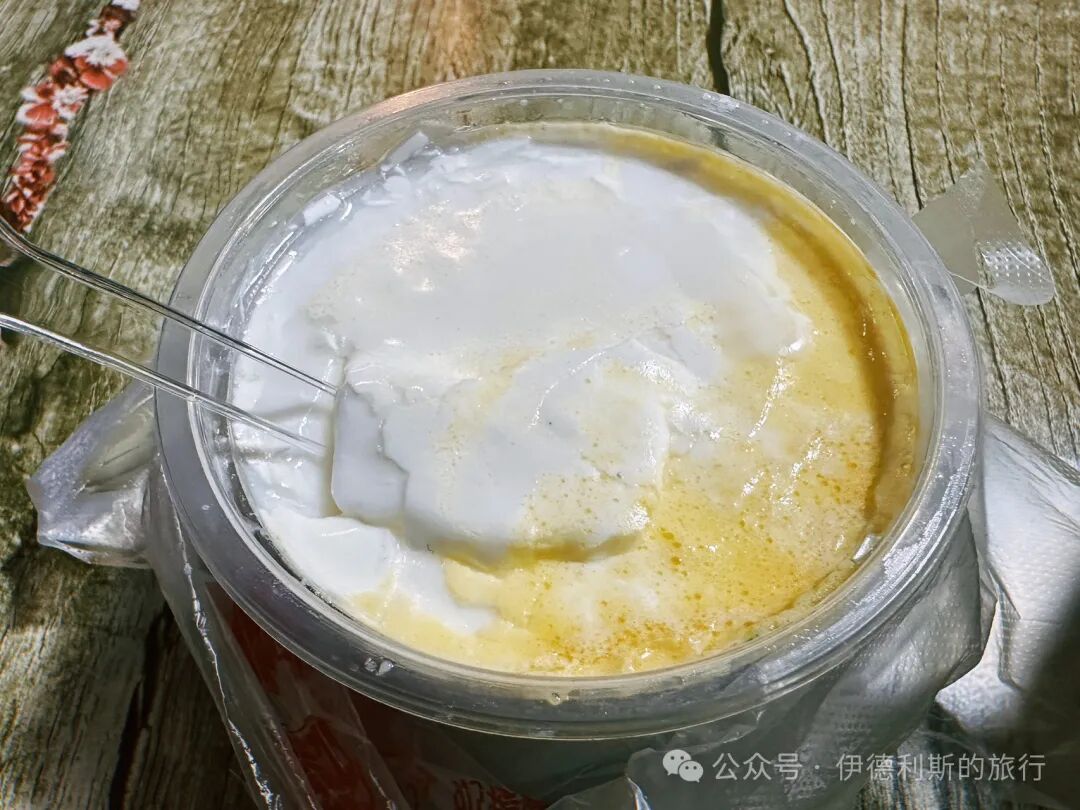
Ma Family Old Six Beef Soup (Majia Laoliu Shuipen Yangrou)
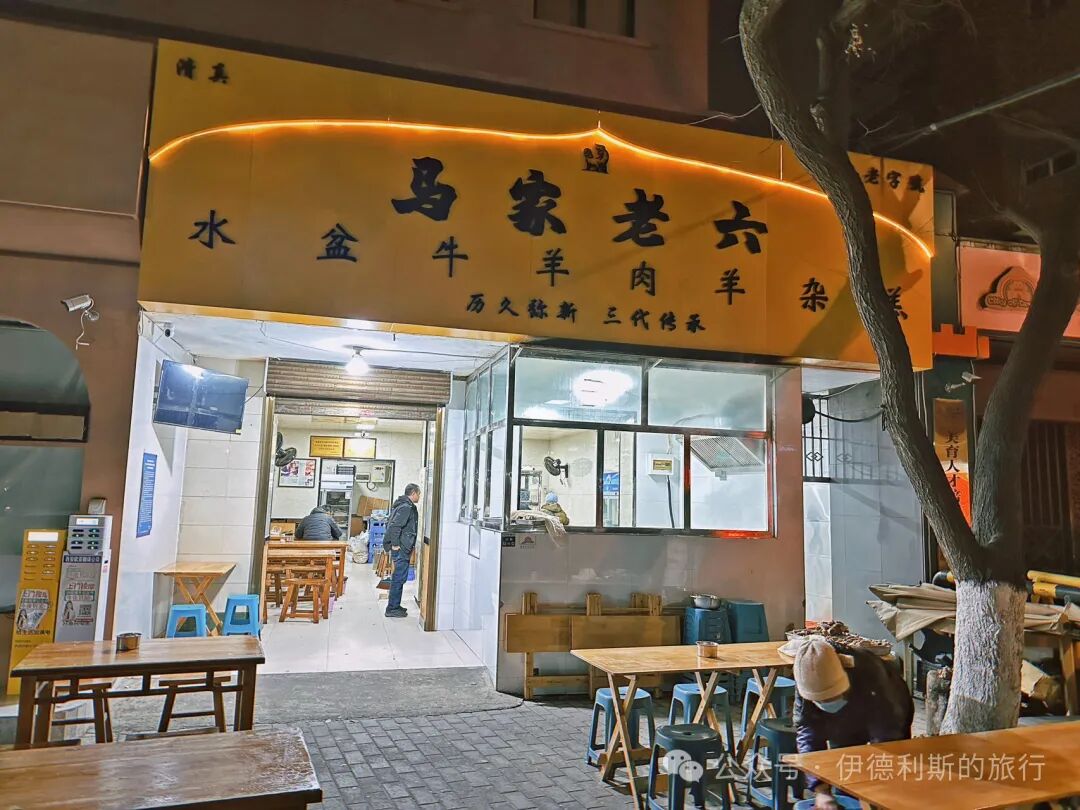
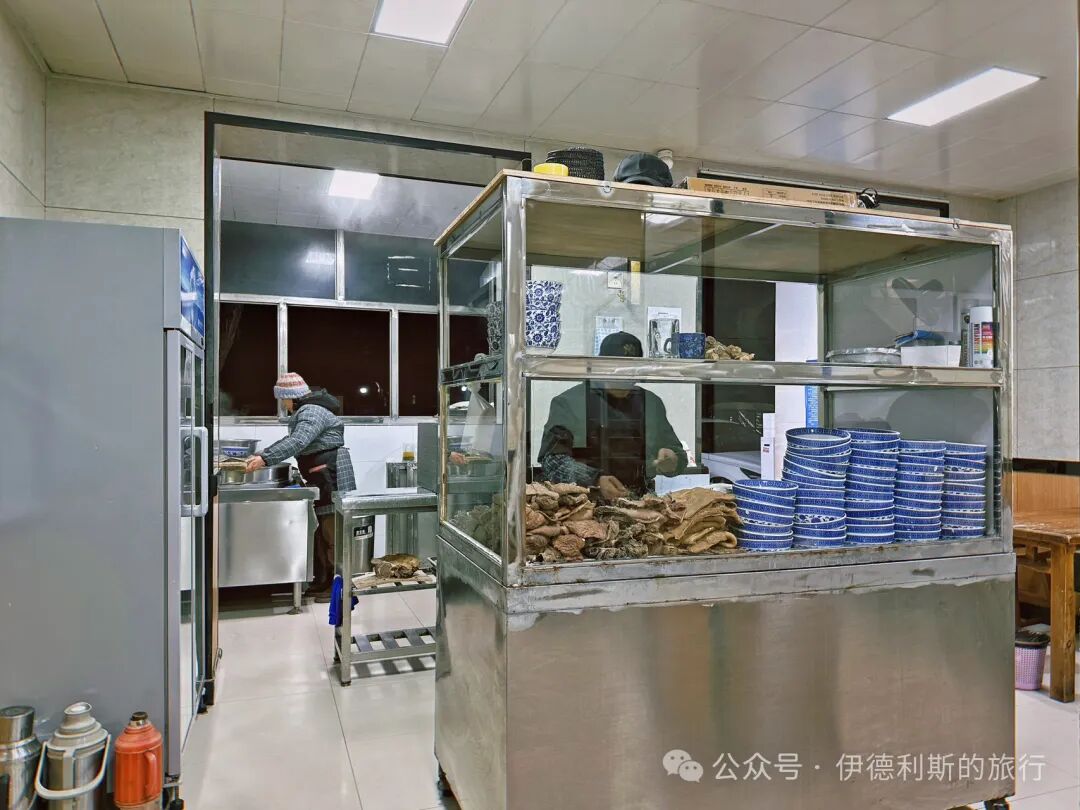
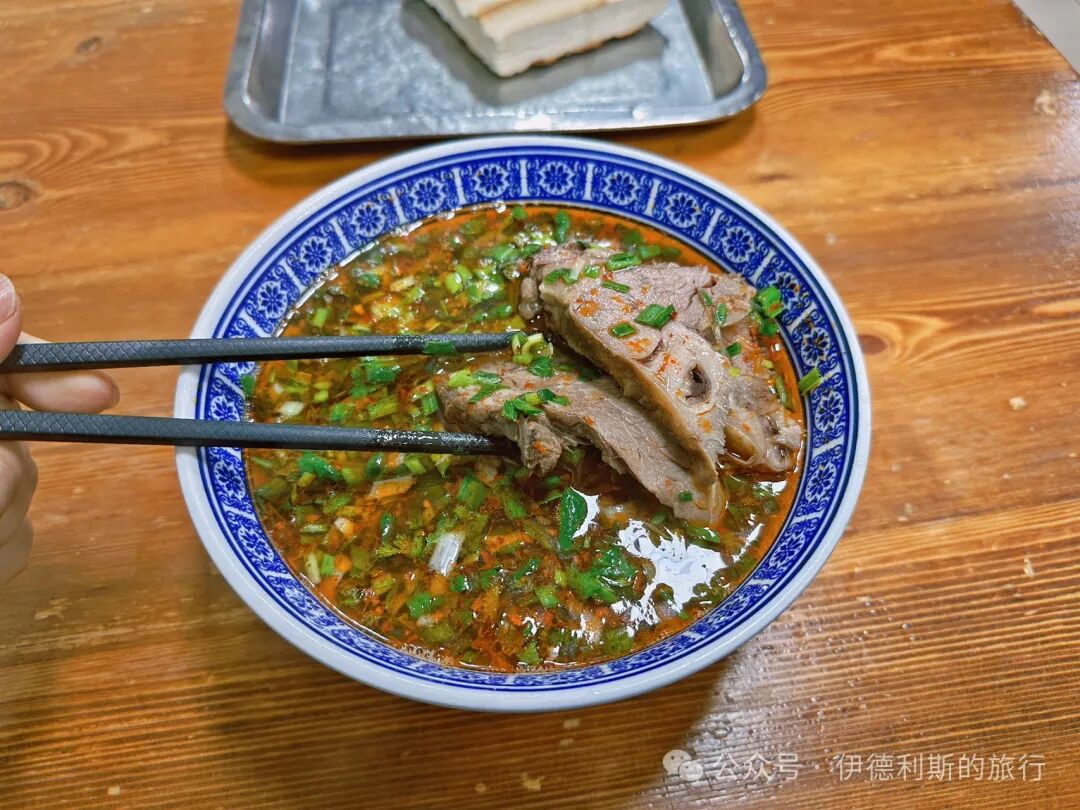
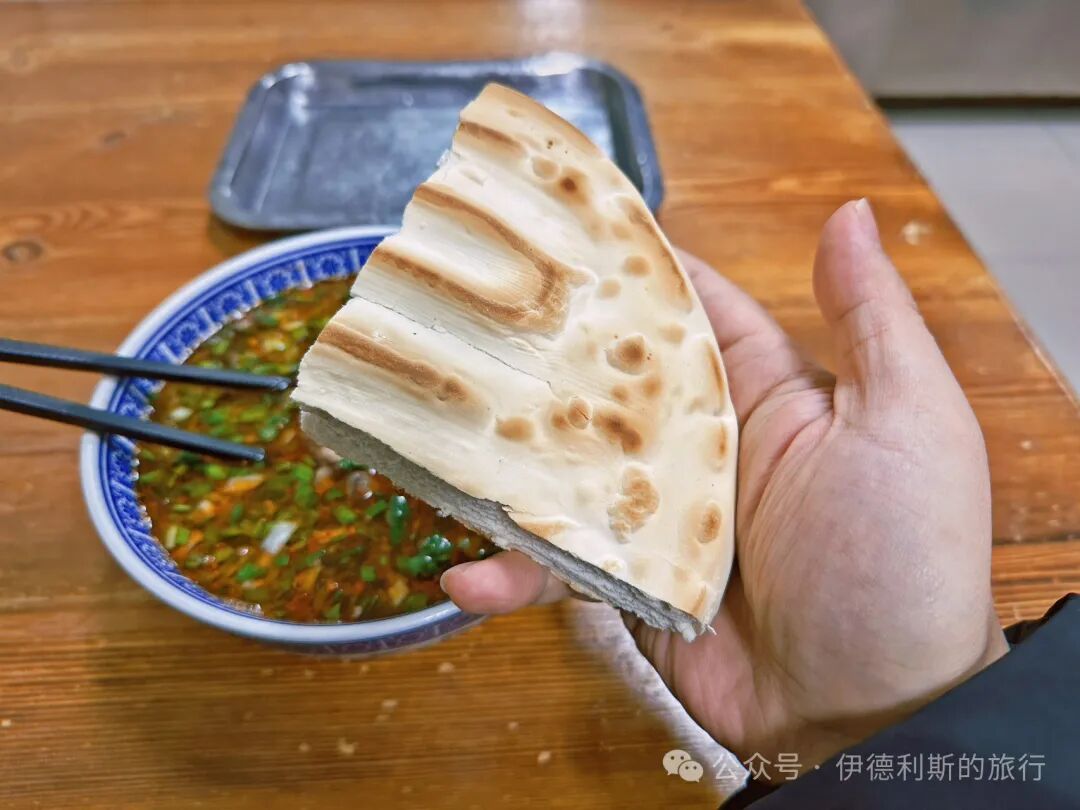
In the morning, I had beef soup (shuipen niurou) at Ma Family Old Six on Dalianhuachi Street. They open at 6:00 AM and are close to the Beidajie subway station, which is great for those catching an early ride. I personally think this soup is perfect for a winter morning. A big bowl of meat broth is very comforting.
Fangshang Xibao Burger
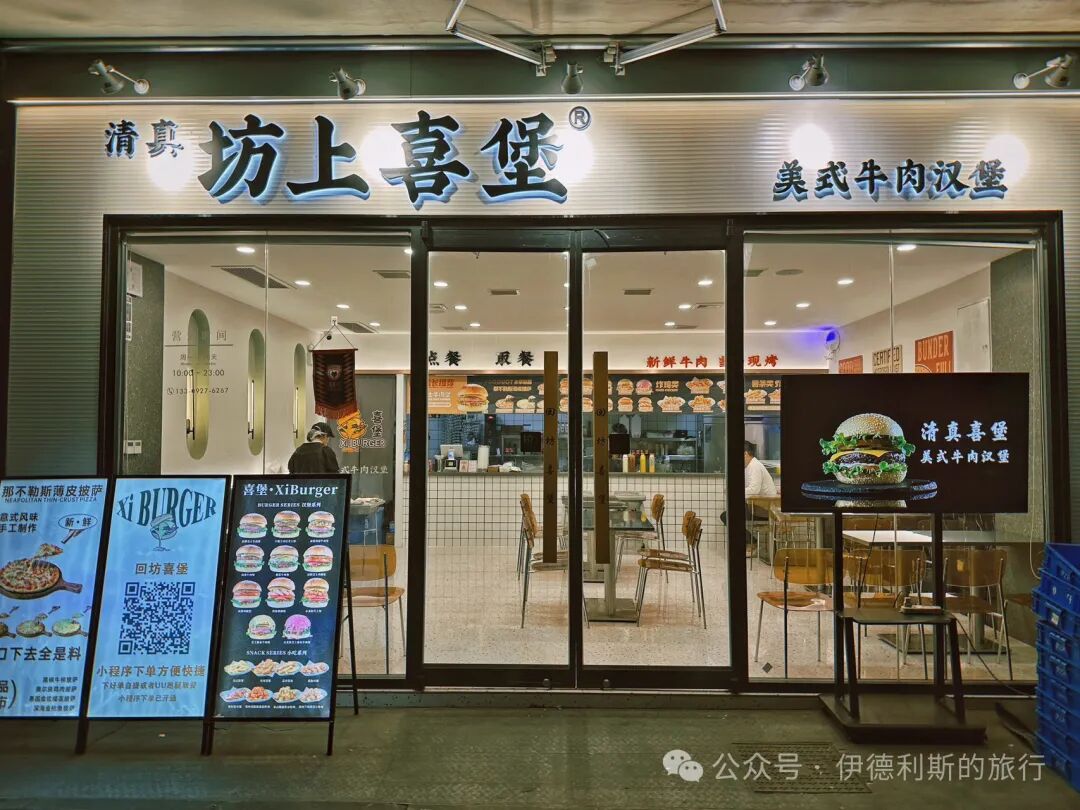
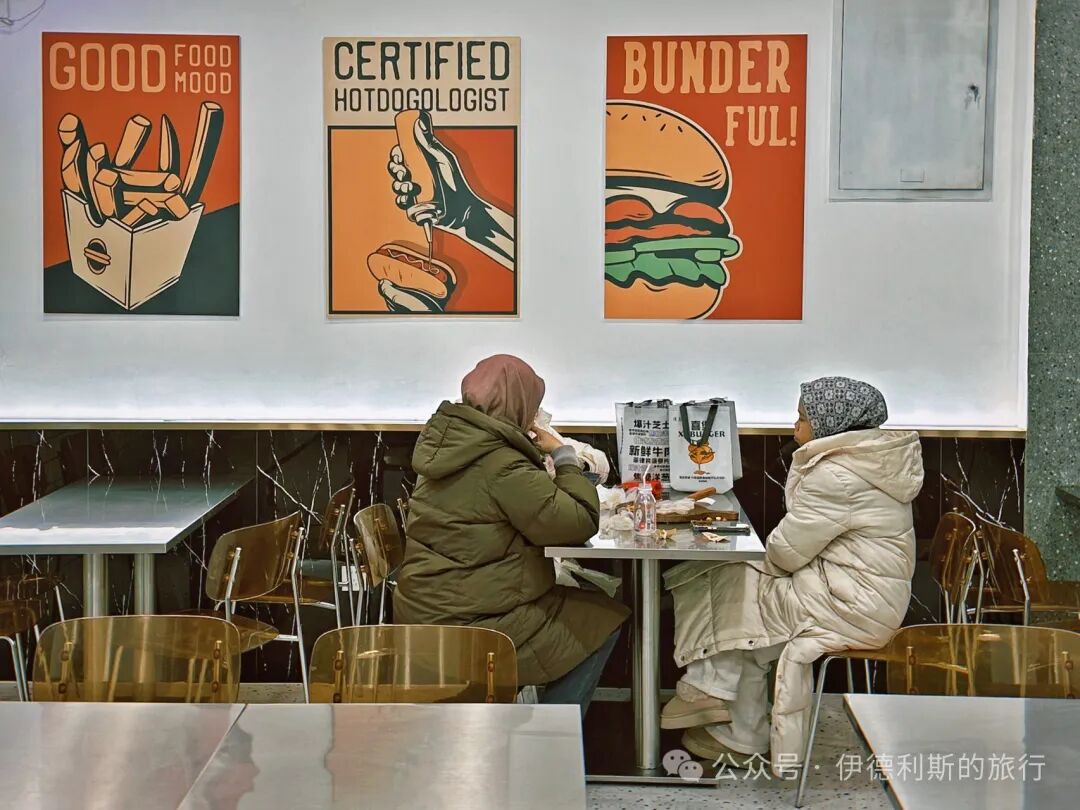
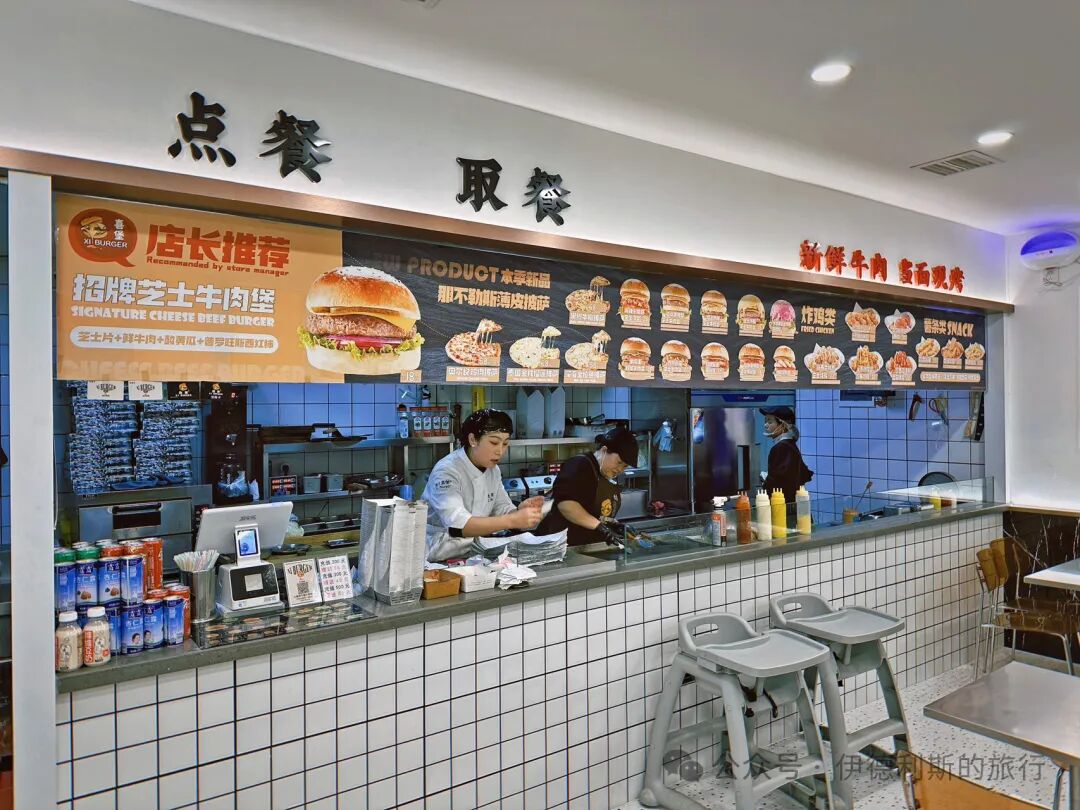
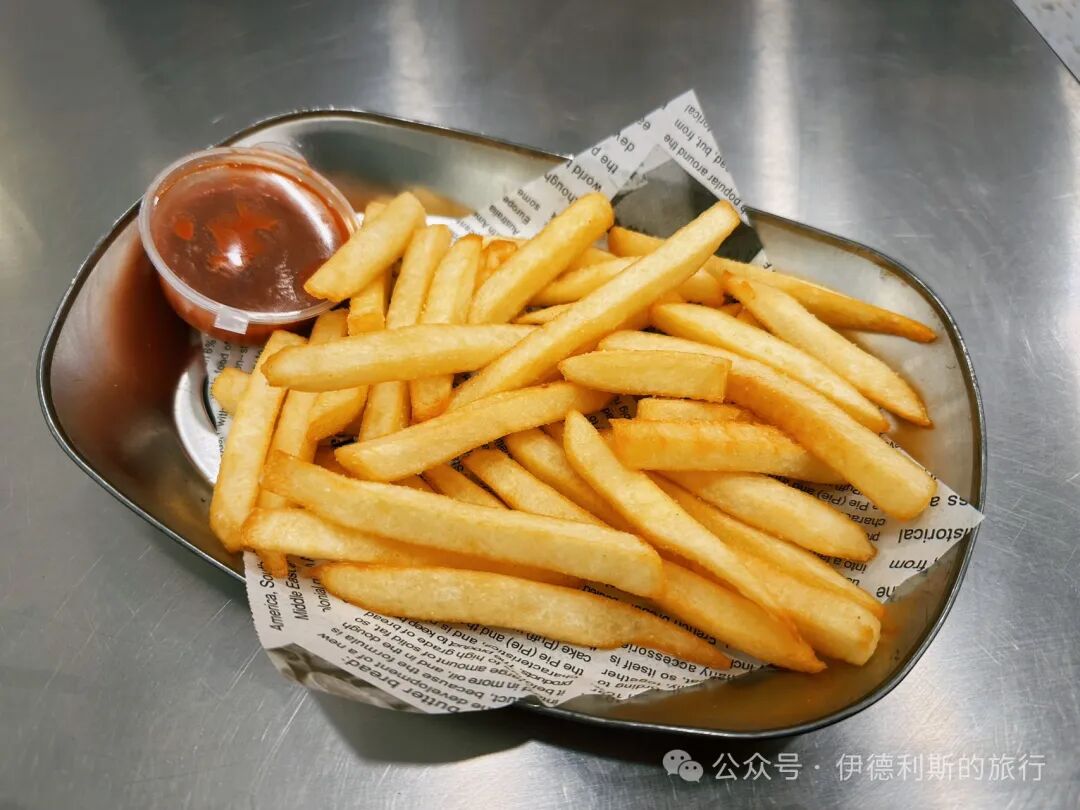
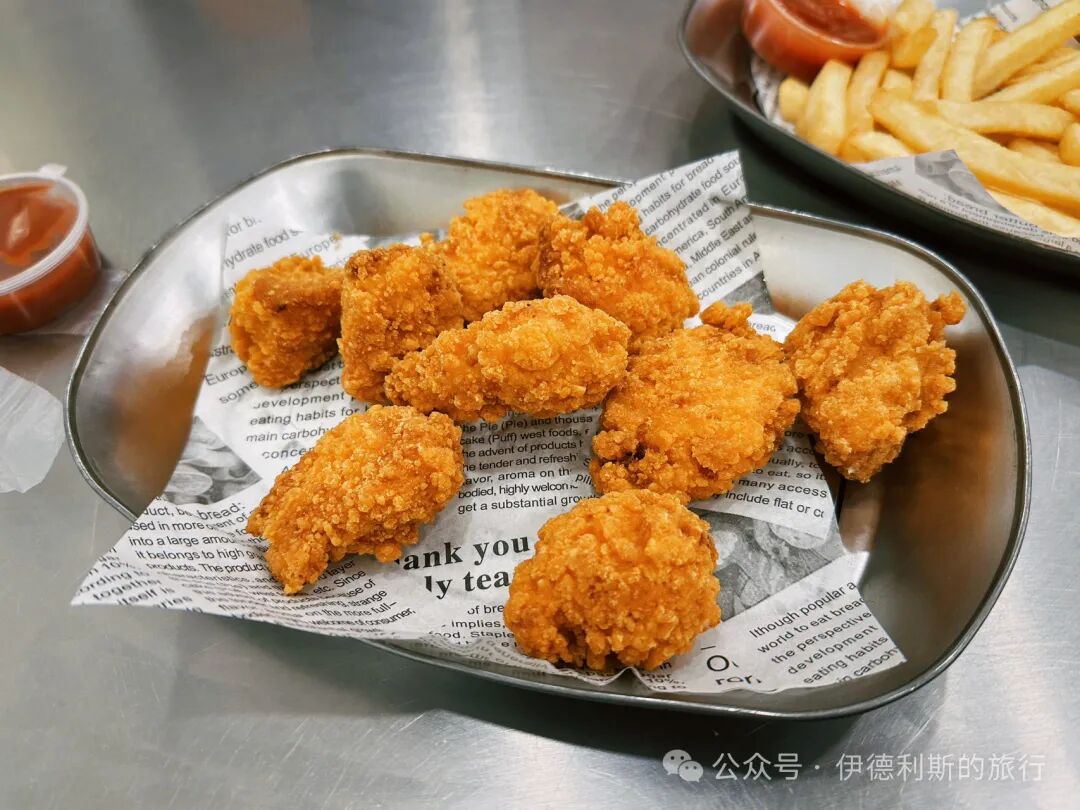
On this trip to Xi'an, I grew to love an American-style burger shop called Fangshang Xibao. They have two locations on Daxuexi Alley and Maixian Street, and they stay open until 11:00 PM. I walked by twice at night and couldn't help but go in. I even met some foreign friends (dosti) who really like this place.
The first time, I ordered the signature beef burger. Later, I wanted more, so I ordered the double beef burger. First, they have an open kitchen where you can watch them cook. The quality of their buns and beef is really high. You can tell the beef is good quality just by eating it. Most importantly, their buns are delicious! At a certain old burger chain in Xi'an, they once served me a cold bun, which ruined the taste. I had no motivation to go back there. Their prices are also very reasonable. A solid beef burger like this would cost quite a bit in Beijing, but here it only costs ten or twenty yuan. I think it is a great deal.
Old An's Pastries
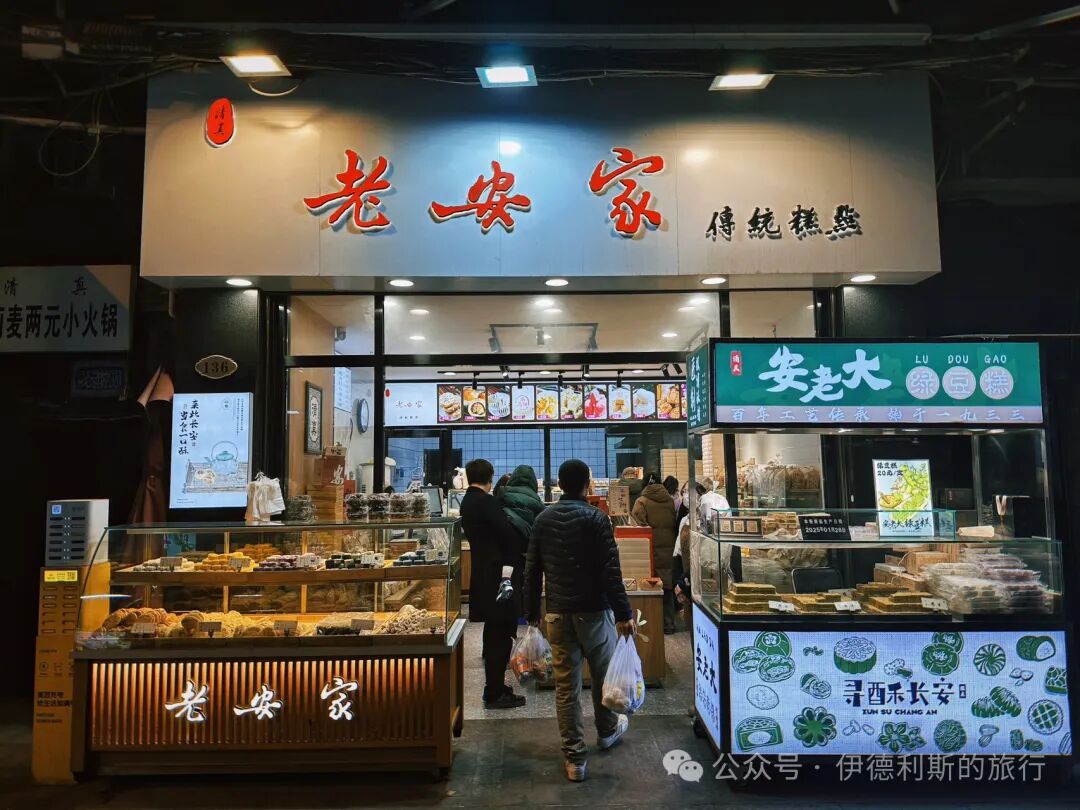
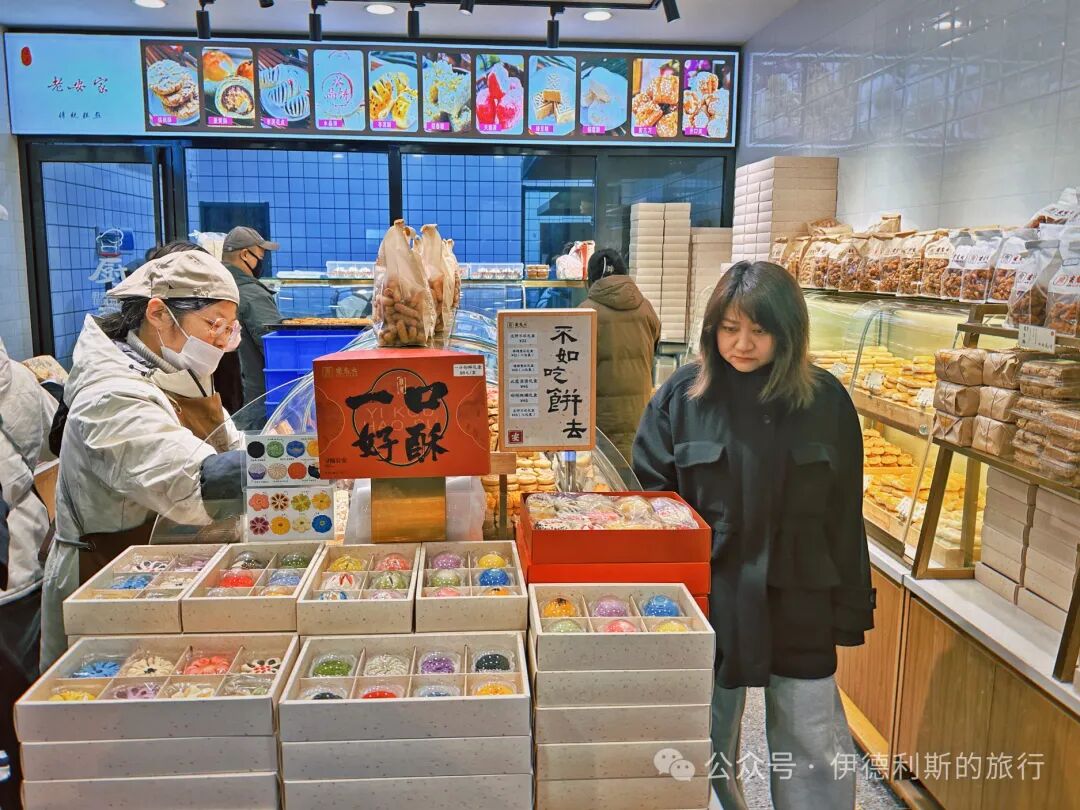
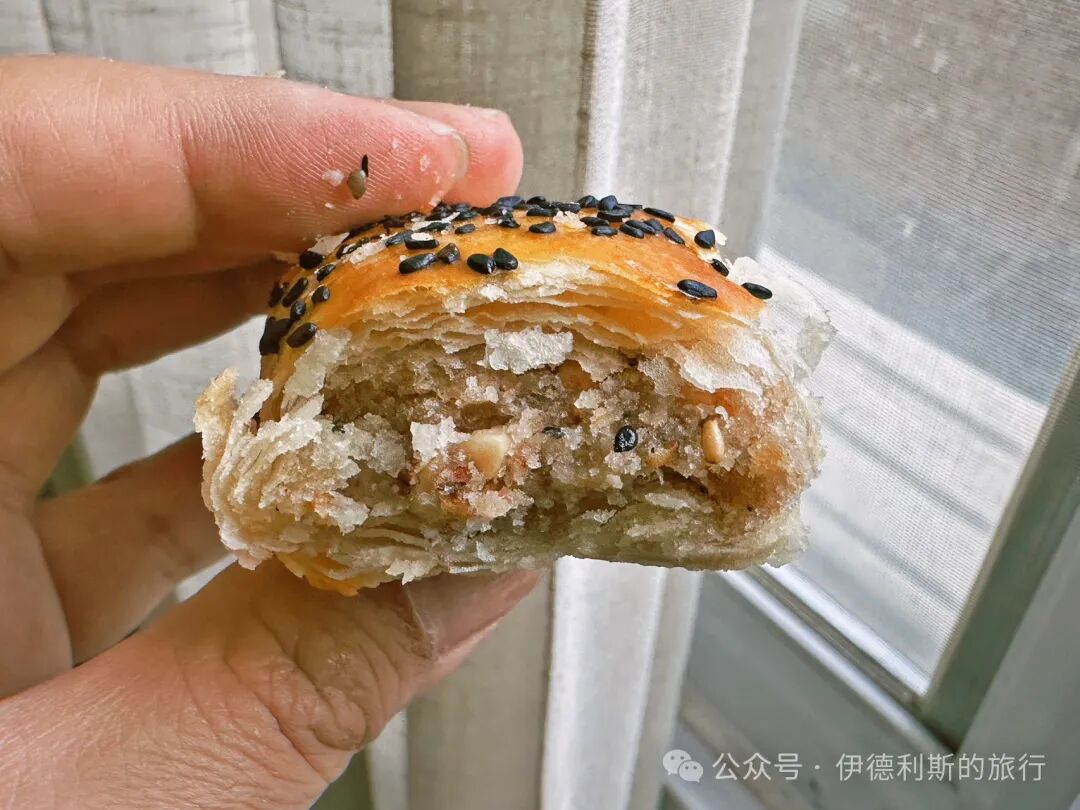
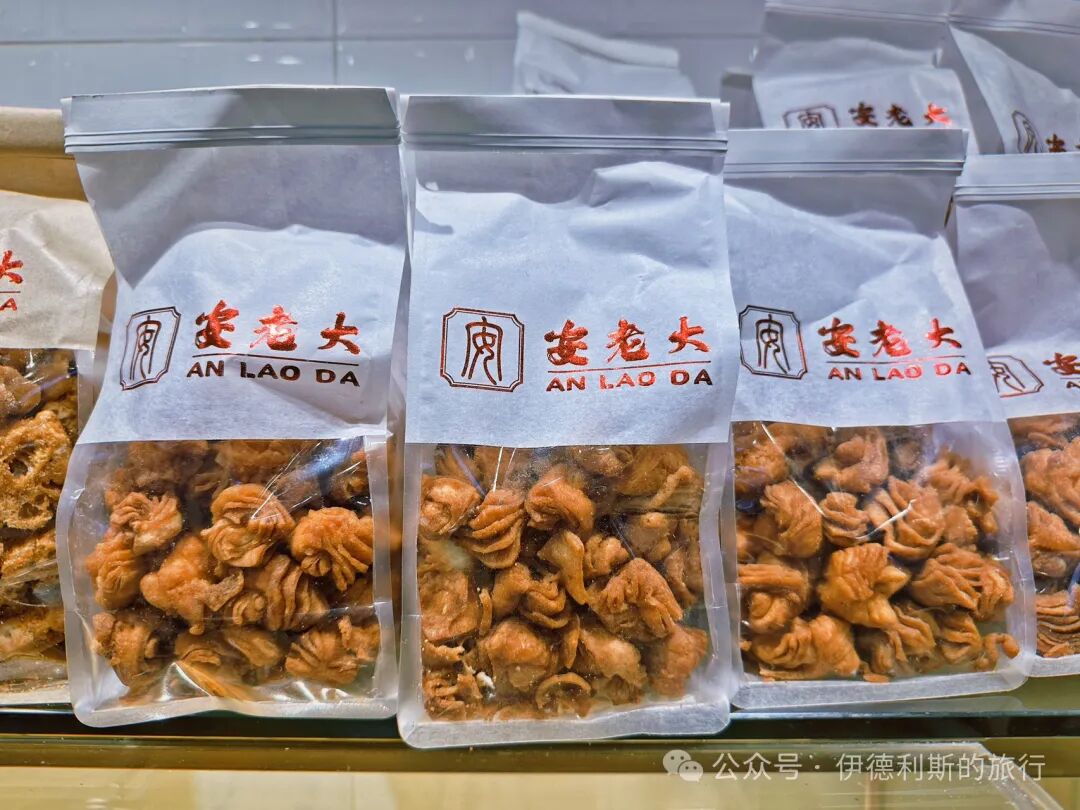
Old An's Pastry Shop on North Guangji Street sells both traditional and modern pastries. You can buy them individually or in gift boxes. The salt and pepper pastry (jiaoyansu) and scallion oil pastry (congyousu) are delicious. They go well with tea and are great snacks for train rides.
Hanzhong hot rice noodles (re mipi)
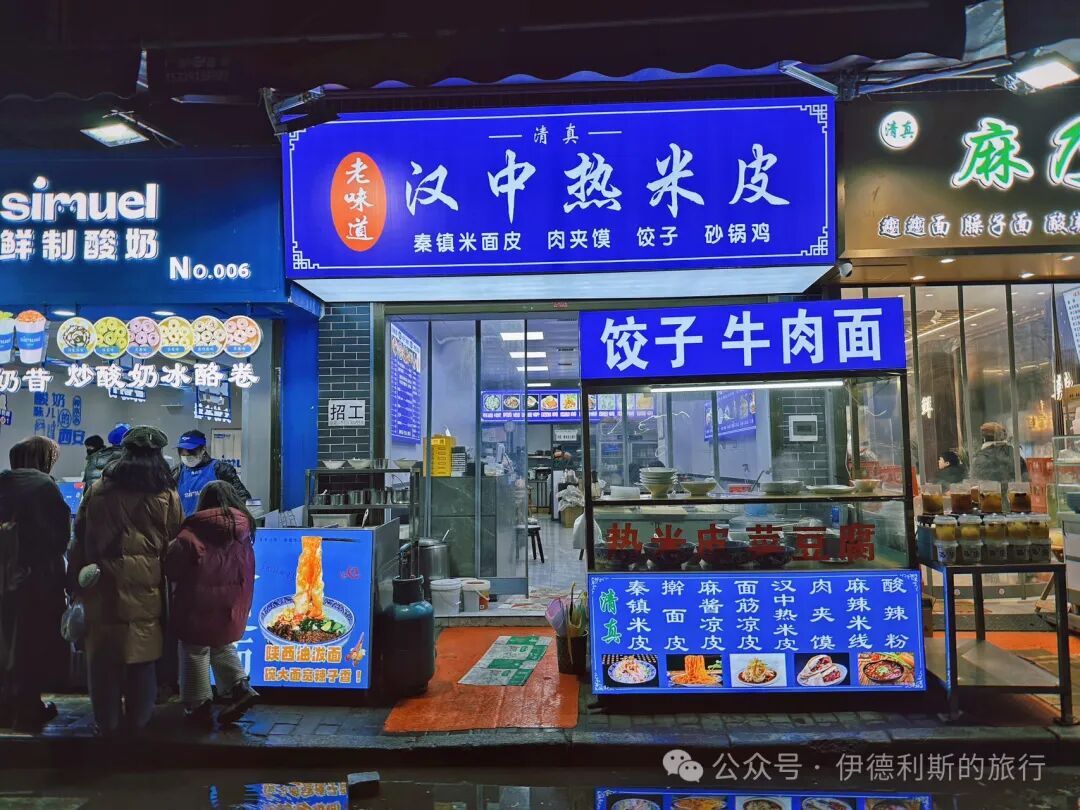
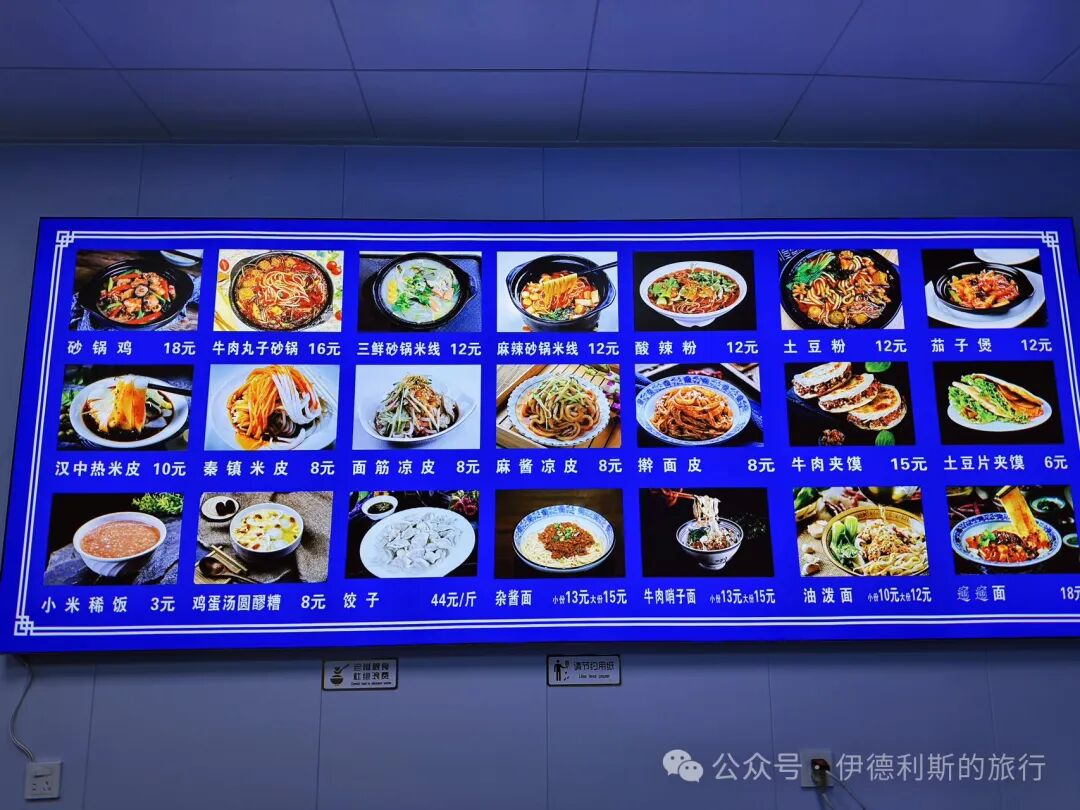
There are many snack shops on Maixian Street. This time, I tried the Hanzhong hot rice noodles shop at the east entrance of Xiaopiyuan. I ordered the Hanzhong hot rice noodles with a side of Hanzhong-style vegetable tofu (cai doufu). Hot rice noodles are made by grinding rice into a slurry and steaming it into thin sheets. When eating, they are mixed with bean sprouts, celery, and other vegetables. The most important parts are the chili oil and the seasoned sauce. I really love Shaanxi-style chili oil (youpo lazi). It is very fragrant and makes you want to eat more. People in Hanzhong like to eat hot rice noodles with vegetable tofu. Vegetable tofu is made using fermented sour water. It has a fermented taste. If you like sour water noodles (jiangshui mian), you will probably like vegetable tofu too. Vegetable tofu is quite light on its own, and it is very appetizing when served with green chili side dishes.
Zhigan Sour Soup Dumpling Shop
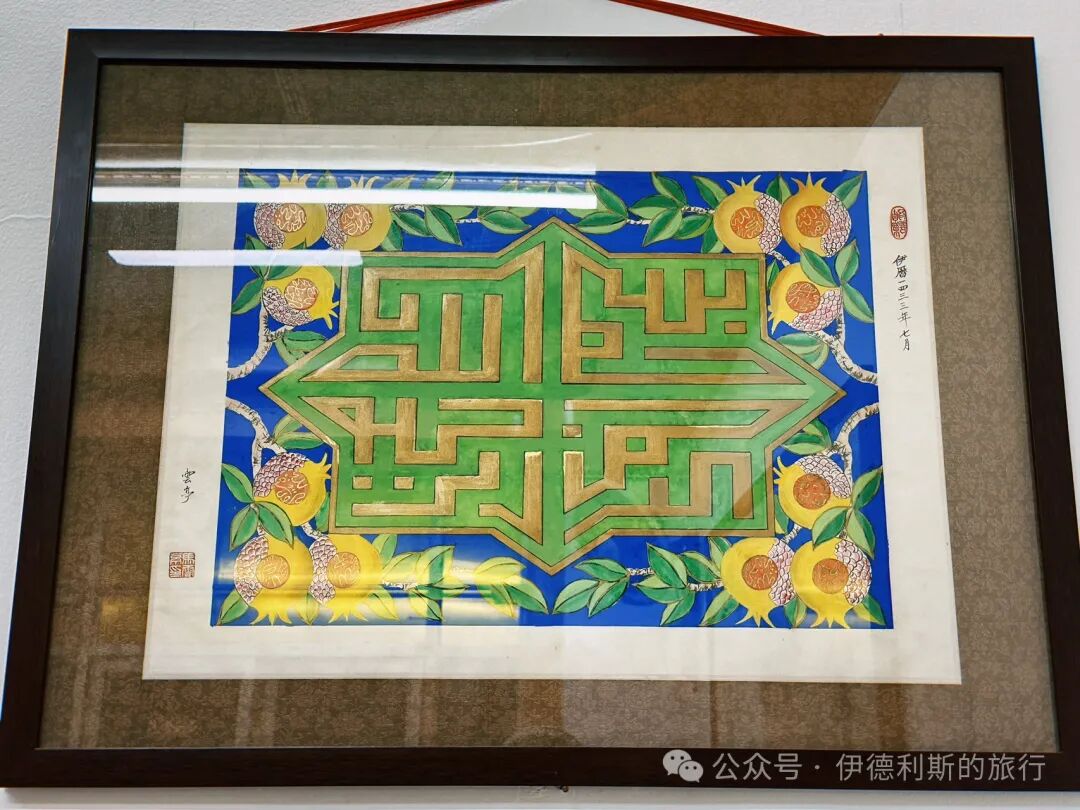
I was invited by a friend (dosti) to visit Imam Ma at the Xiaopiyuan Mosque. Afterward, I ate the local Hui Muslim specialty, beef and yellow chive sour soup dumplings, at the Zhigan Sour Soup Dumpling Shop across from the mosque. The yellow chive filling really adds a great flavor. I happened to run into the young owner of Jiasan Steamed Buns while he was eating dumplings there, and he even paid for my meal. The two landladies of the shop are both students of Imam Ma from Xiaopiyuan. You can tell from the shop's name that they are very religious. The calligraphy art in the shop is also very special. The piece from Niujie titled 'The Cave Where the Greatest Sage Took Refuge' feels very historic.
Old Ma's Beef Sauce Noodles
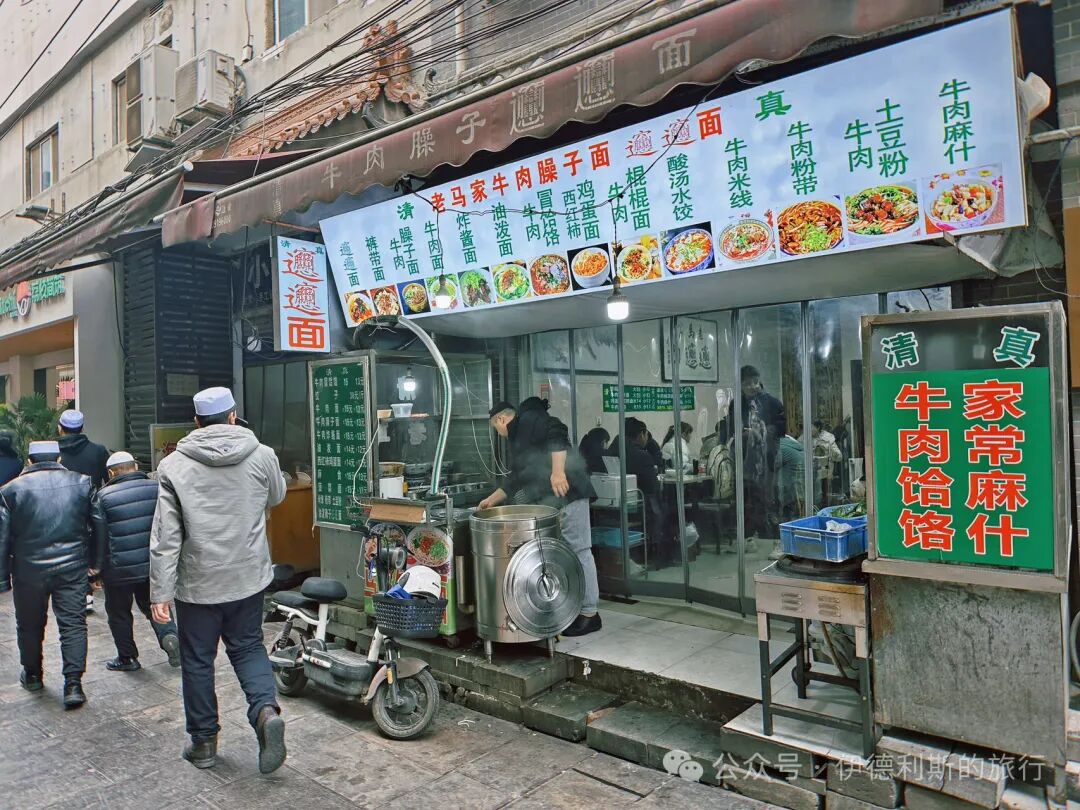
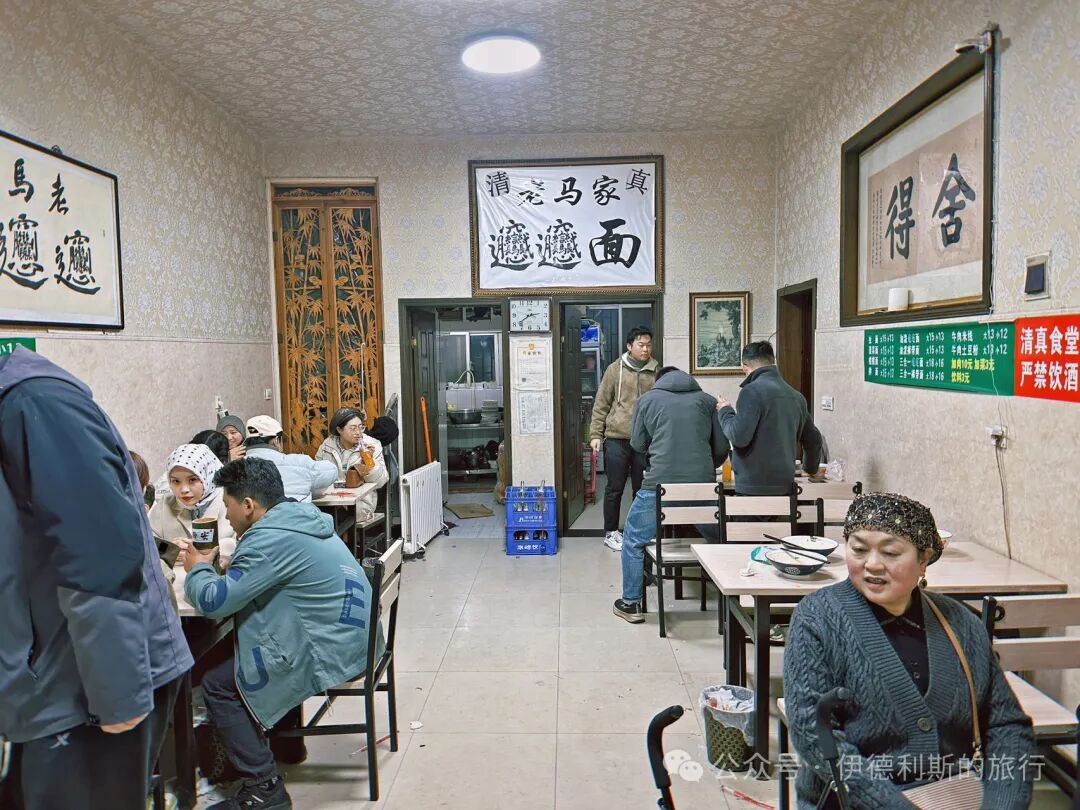
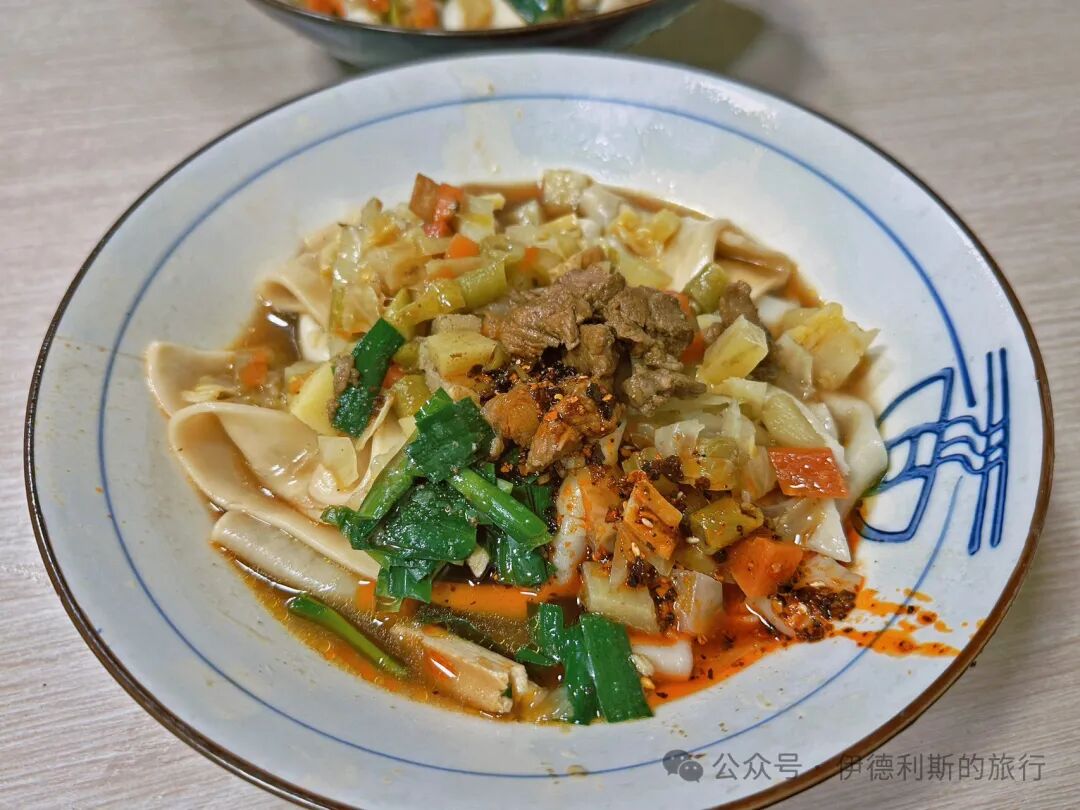
I had a bowl of belt noodles (kudai mian) at Old Ma's at the west entrance of Huajue Lane. The shop is very popular with local friends (dosti), but strangely, it is not listed on maps or review sites. A bowl of belt noodles with meat sauce, vegetable sauce, chives, and chili oil is sour, spicy, and appetizing. I slurped it all up in a few bites. Eating noodles in Xi'an is truly satisfying.
Jiasan Steamed Buns Beiyuanmen Main Store
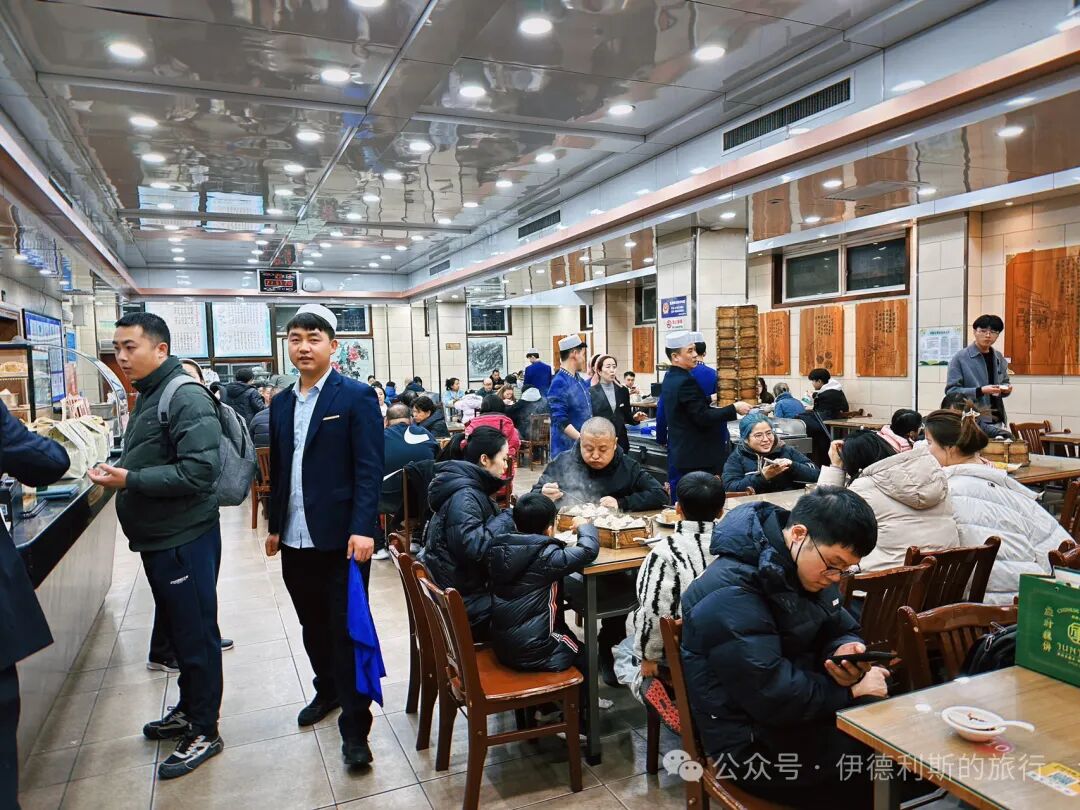
I often go to the Jiasan shop near Baiyun Temple in Beijing, but this time in Xi'an, I finally visited their Beiyuanmen main store. We ordered lamb soup-filled buns (guantang bao), beef soup-filled buns, beef steamed dumplings, chicken noodles with two types of chili, sesame paste cold noodles (liangpi), eight-treasure porridge, and eight-treasure fermented rice (laozao). The shop is located in the busiest tourist area of Beiyuanmen, and business is booming. I think the taste of their soup-filled buns is about the same as the Beijing branch. When eating them, poke a hole first, let the soup drip out to drink, and then dip the bun in vinegar and chili oil. Their cold skin noodles (liangpi) and eight-treasure porridge (babaozhou) are also quite good. It was my first time eating chicken mixed noodles (ji laomian); the taste was slightly spicy but very appetizing.
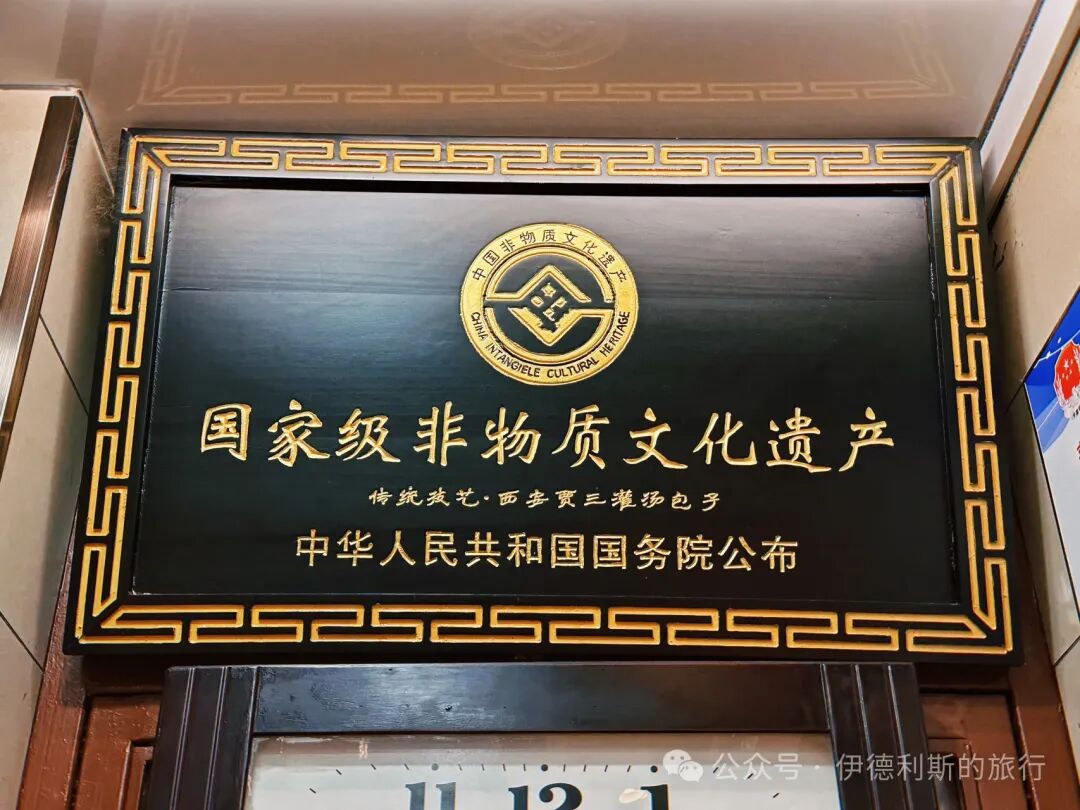
According to their family genealogy, the Jia family moved from Shuiximen in Nanjing to Xi'an during the Tianqi era of the Ming Dynasty. In 1884 (the tenth year of the Guangxu reign), they opened a steamed bun shop (mozhuang). In 1903 (the twenty-ninth year of the Guangxu reign), they opened a steamed bun shop, a grain store, a vinegar workshop, and a bathhouse at Majia Shizi. These were known as the 'Jia Family Four Reds,' and they began selling steamed buns (baozi) at that time.
During the Republic of China era, the Jia family opened businesses like Jixintang and Jinqinhe. The store still keeps the brick-carved doorway of 'Jinqinhe' today. In the 1940s, Jia San's mother, Liu Min, settled in Xi'an, and she married into the Jia family in the 1950s. Liu Min was from Qidong, Jiangsu. She brought the southern technique of making soup-filled buns (guantangbao) to the Jia family. By adding northern beef bone marrow 'rich broth' (gaotang), she made the bun fillings tender and the soup delicious. After the 1980s, Liu Min's son, Jia San, improved the soup-filled buns and developed a fruitwood steamer that received a national patent. This type of steamer allows for rapid steaming over high heat, which locks in the aroma of the buns and keeps them piping hot.
Old Bai's Tongshengyong
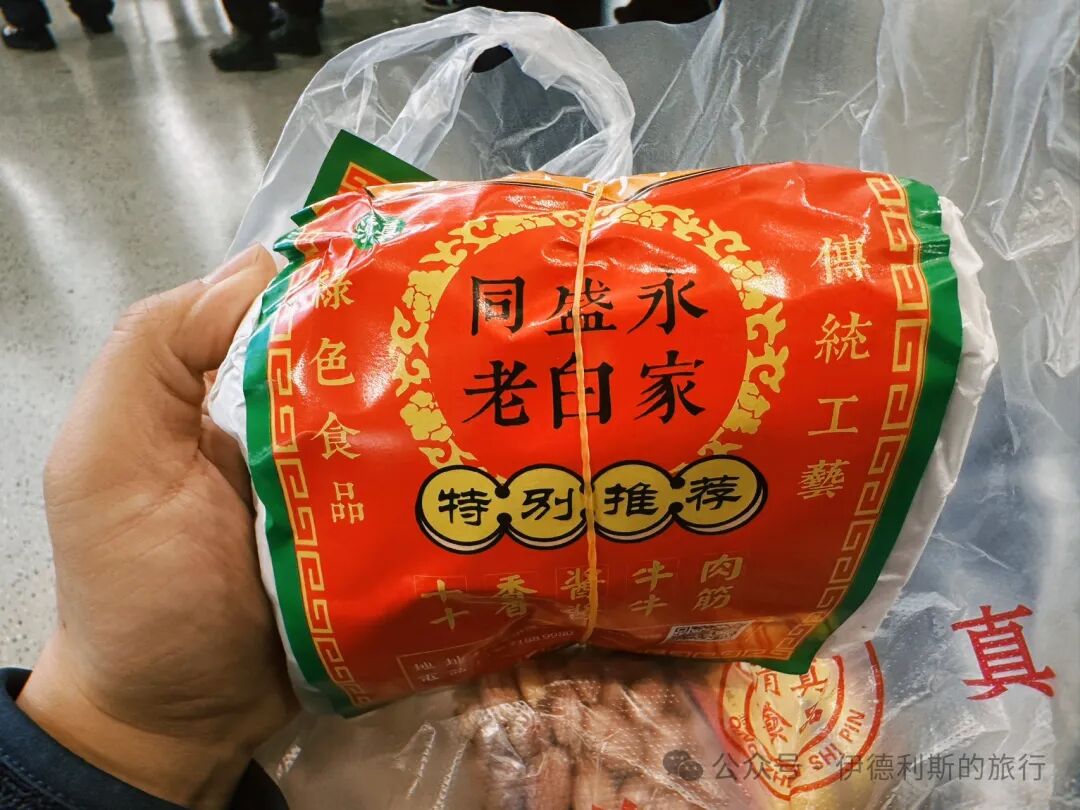
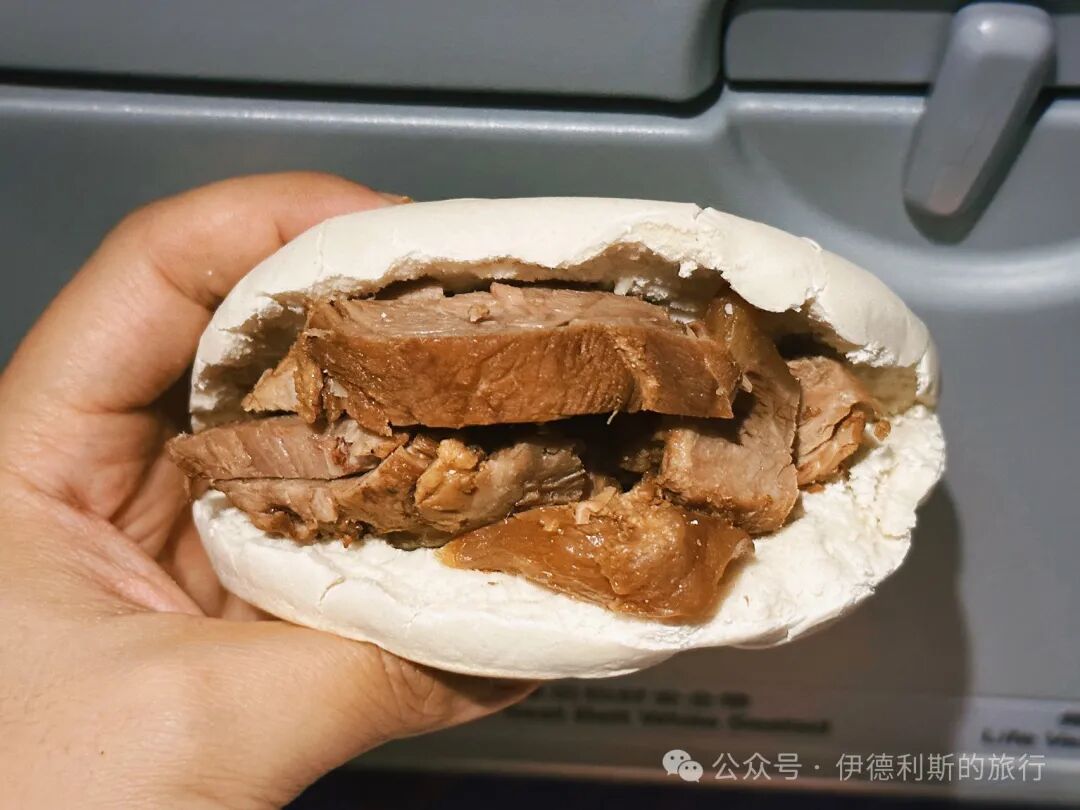
Before leaving, a friend (dosti) fed me a spiced beef sandwich (jiang niurou jiamo) from Old Bai's on North Guangji Street. I personally think it suits the taste of Beijingers better than cured beef (la niurou). The founder of Old Bai's, Haji Bai Yuting, moved from Huajue Lane to North Guangji Street in the early 1980s. He first opened a beef and mutton shop, then later opened Old Bai's mutton soup (shuipen yangrou). As his business flourished, Haji Bai bought a house across from the mosque on North Guangji Street and revived the name 'Tongshengyong,' which was the name of his old shop at Gulou Shizi. With Haji Bai's encouragement, North Guangji Street gradually became lively, and shops like 'Old Liu's,' 'Old Tong's,' and 'Old An's' opened one after another. At the same time, Haji Bai cared for the community (ummah). He frequently held religious gatherings (nietie), helped the poor, and treated his neighbors with kindness, earning him deep respect from everyone.
Summary: Xi'an Muslim Quarter, known locally as Huifang, is one of the best-known places in China for halal snacks and Hui Muslim food culture. This article keeps the original shop notes, dishes, street details, and photos while presenting the food walk in everyday English.
Old Liu's Pita Bread Soup Shop (Lao Liujia Paomo Guan)
Old Liu's is right at the entrance of the small mosque on North Guangji Street. Come here in the morning for some pita bread soup (paomo). It is very popular and always crowded.
Old Liu's Paomo opened in 1932 at the northwest corner of the intersection of West Street and Qiaozikou in Xi'an. Its original name was Halal Old Liu's Changshengde Beef and Mutton Pita Bread Soup Shop. During the Republic of China era, West Street was full of merchants and rows of shops. Many people hosted guests at Old Liu's. After the public-private partnership in 1956, Old Liu's Paomo joined the Xi'an Catering Company and moved to Xiguan Main Street. It became one of the eight major beef and mutton pita bread soup shops in Xi'an at that time. In 1985, after the reform and opening up, the third-generation owner of Old Liu's searched for a new location and reopened on North Guangji Street. It has been there for 40 years now.
Tianshui Fermented Vegetable Jelly (Tianshui Jiangshui Yuyu)
While walking around the Muslim Quarter at night, I bought some Tianshui fermented vegetable jelly (jiangshui yuyu) on Miaohou Street. It was very authentic. I fell in love with this fermented vegetable jelly in Tianshui a couple of days ago, and now I am eating it again in Xi'an. The taste of the fermented vegetable broth (jiangshui) mixed with pickled chives and chili oil is so appetizing.
Qinghai Yogurt
The Qinghai yogurt sold on the streets of the Muslim Quarter is quite authentic. It has that fizzy sensation from the lactic acid bacteria when you take a sip. It is rich in both milk flavor and fermentation taste. I hope Beijing can have this quality too!
Ma Family Old Six Beef Soup (Majia Laoliu Shuipen Yangrou)
In the morning, I had beef soup (shuipen niurou) at Ma Family Old Six on Dalianhuachi Street. They open at 6:00 AM and are close to the Beidajie subway station, which is great for those catching an early ride. I personally think this soup is perfect for a winter morning. A big bowl of meat broth is very comforting.
Fangshang Xibao Burger
On this trip to Xi'an, I grew to love an American-style burger shop called Fangshang Xibao. They have two locations on Daxuexi Alley and Maixian Street, and they stay open until 11:00 PM. I walked by twice at night and couldn't help but go in. I even met some foreign friends (dosti) who really like this place.
The first time, I ordered the signature beef burger. Later, I wanted more, so I ordered the double beef burger. First, they have an open kitchen where you can watch them cook. The quality of their buns and beef is really high. You can tell the beef is good quality just by eating it. Most importantly, their buns are delicious! At a certain old burger chain in Xi'an, they once served me a cold bun, which ruined the taste. I had no motivation to go back there. Their prices are also very reasonable. A solid beef burger like this would cost quite a bit in Beijing, but here it only costs ten or twenty yuan. I think it is a great deal.
Old An's Pastries
Old An's Pastry Shop on North Guangji Street sells both traditional and modern pastries. You can buy them individually or in gift boxes. The salt and pepper pastry (jiaoyansu) and scallion oil pastry (congyousu) are delicious. They go well with tea and are great snacks for train rides.
Hanzhong hot rice noodles (re mipi)
There are many snack shops on Maixian Street. This time, I tried the Hanzhong hot rice noodles shop at the east entrance of Xiaopiyuan. I ordered the Hanzhong hot rice noodles with a side of Hanzhong-style vegetable tofu (cai doufu). Hot rice noodles are made by grinding rice into a slurry and steaming it into thin sheets. When eating, they are mixed with bean sprouts, celery, and other vegetables. The most important parts are the chili oil and the seasoned sauce. I really love Shaanxi-style chili oil (youpo lazi). It is very fragrant and makes you want to eat more. People in Hanzhong like to eat hot rice noodles with vegetable tofu. Vegetable tofu is made using fermented sour water. It has a fermented taste. If you like sour water noodles (jiangshui mian), you will probably like vegetable tofu too. Vegetable tofu is quite light on its own, and it is very appetizing when served with green chili side dishes.
Zhigan Sour Soup Dumpling Shop
I was invited by a friend (dosti) to visit Imam Ma at the Xiaopiyuan Mosque. Afterward, I ate the local Hui Muslim specialty, beef and yellow chive sour soup dumplings, at the Zhigan Sour Soup Dumpling Shop across from the mosque. The yellow chive filling really adds a great flavor. I happened to run into the young owner of Jiasan Steamed Buns while he was eating dumplings there, and he even paid for my meal. The two landladies of the shop are both students of Imam Ma from Xiaopiyuan. You can tell from the shop's name that they are very religious. The calligraphy art in the shop is also very special. The piece from Niujie titled 'The Cave Where the Greatest Sage Took Refuge' feels very historic.
Old Ma's Beef Sauce Noodles
I had a bowl of belt noodles (kudai mian) at Old Ma's at the west entrance of Huajue Lane. The shop is very popular with local friends (dosti), but strangely, it is not listed on maps or review sites. A bowl of belt noodles with meat sauce, vegetable sauce, chives, and chili oil is sour, spicy, and appetizing. I slurped it all up in a few bites. Eating noodles in Xi'an is truly satisfying.
Jiasan Steamed Buns Beiyuanmen Main Store
I often go to the Jiasan shop near Baiyun Temple in Beijing, but this time in Xi'an, I finally visited their Beiyuanmen main store. We ordered lamb soup-filled buns (guantang bao), beef soup-filled buns, beef steamed dumplings, chicken noodles with two types of chili, sesame paste cold noodles (liangpi), eight-treasure porridge, and eight-treasure fermented rice (laozao). The shop is located in the busiest tourist area of Beiyuanmen, and business is booming. I think the taste of their soup-filled buns is about the same as the Beijing branch. When eating them, poke a hole first, let the soup drip out to drink, and then dip the bun in vinegar and chili oil. Their cold skin noodles (liangpi) and eight-treasure porridge (babaozhou) are also quite good. It was my first time eating chicken mixed noodles (ji laomian); the taste was slightly spicy but very appetizing.
According to their family genealogy, the Jia family moved from Shuiximen in Nanjing to Xi'an during the Tianqi era of the Ming Dynasty. In 1884 (the tenth year of the Guangxu reign), they opened a steamed bun shop (mozhuang). In 1903 (the twenty-ninth year of the Guangxu reign), they opened a steamed bun shop, a grain store, a vinegar workshop, and a bathhouse at Majia Shizi. These were known as the 'Jia Family Four Reds,' and they began selling steamed buns (baozi) at that time.
During the Republic of China era, the Jia family opened businesses like Jixintang and Jinqinhe. The store still keeps the brick-carved doorway of 'Jinqinhe' today. In the 1940s, Jia San's mother, Liu Min, settled in Xi'an, and she married into the Jia family in the 1950s. Liu Min was from Qidong, Jiangsu. She brought the southern technique of making soup-filled buns (guantangbao) to the Jia family. By adding northern beef bone marrow 'rich broth' (gaotang), she made the bun fillings tender and the soup delicious. After the 1980s, Liu Min's son, Jia San, improved the soup-filled buns and developed a fruitwood steamer that received a national patent. This type of steamer allows for rapid steaming over high heat, which locks in the aroma of the buns and keeps them piping hot.
Old Bai's Tongshengyong
Before leaving, a friend (dosti) fed me a spiced beef sandwich (jiang niurou jiamo) from Old Bai's on North Guangji Street. I personally think it suits the taste of Beijingers better than cured beef (la niurou). The founder of Old Bai's, Haji Bai Yuting, moved from Huajue Lane to North Guangji Street in the early 1980s. He first opened a beef and mutton shop, then later opened Old Bai's mutton soup (shuipen yangrou). As his business flourished, Haji Bai bought a house across from the mosque on North Guangji Street and revived the name 'Tongshengyong,' which was the name of his old shop at Gulou Shizi. With Haji Bai's encouragement, North Guangji Street gradually became lively, and shops like 'Old Liu's,' 'Old Tong's,' and 'Old An's' opened one after another. At the same time, Haji Bai cared for the community (ummah). He frequently held religious gatherings (nietie), helped the poor, and treated his neighbors with kindness, earning him deep respect from everyone.
Halal Food Guide: Xi'an Muslim Quarter — Huifang Snacks and Local Eats
Articles • ali2007fr posted the article • 0 comments • 252 views • 2026-05-19 23:57
Reposted from the web
Summary: Xi'an Muslim Quarter, known locally as Huifang, is one of the best-known places in China for halal snacks and Hui Muslim food culture. This article keeps the original shop notes, dishes, street details, and photos while presenting the food walk in everyday English.
Old Liu's Pita Bread Soup Shop (Lao Liujia Paomo Guan)
Old Liu's is right at the entrance of the small mosque on North Guangji Street. Come here in the morning for some pita bread soup (paomo). It is very popular and always crowded.
Old Liu's Paomo opened in 1932 at the northwest corner of the intersection of West Street and Qiaozikou in Xi'an. Its original name was Halal Old Liu's Changshengde Beef and Mutton Pita Bread Soup Shop. During the Republic of China era, West Street was full of merchants and rows of shops. Many people hosted guests at Old Liu's. After the public-private partnership in 1956, Old Liu's Paomo joined the Xi'an Catering Company and moved to Xiguan Main Street. It became one of the eight major beef and mutton pita bread soup shops in Xi'an at that time. In 1985, after the reform and opening up, the third-generation owner of Old Liu's searched for a new location and reopened on North Guangji Street. It has been there for 40 years now.
Tianshui Fermented Vegetable Jelly (Tianshui Jiangshui Yuyu)
While walking around the Muslim Quarter at night, I bought some Tianshui fermented vegetable jelly (jiangshui yuyu) on Miaohou Street. It was very authentic. I fell in love with this fermented vegetable jelly in Tianshui a couple of days ago, and now I am eating it again in Xi'an. The taste of the fermented vegetable broth (jiangshui) mixed with pickled chives and chili oil is so appetizing.
Qinghai Yogurt
The Qinghai yogurt sold on the streets of the Muslim Quarter is quite authentic. It has that fizzy sensation from the lactic acid bacteria when you take a sip. It is rich in both milk flavor and fermentation taste. I hope Beijing can have this quality too!
Ma Family Old Six Beef Soup (Majia Laoliu Shuipen Yangrou)
In the morning, I had beef soup (shuipen niurou) at Ma Family Old Six on Dalianhuachi Street. They open at 6:00 AM and are close to the Beidajie subway station, which is great for those catching an early ride. I personally think this soup is perfect for a winter morning. A big bowl of meat broth is very comforting.
Fangshang Xibao Burger
On this trip to Xi'an, I grew to love an American-style burger shop called Fangshang Xibao. They have two locations on Daxuexi Alley and Maixian Street, and they stay open until 11:00 PM. I walked by twice at night and couldn't help but go in. I even met some foreign friends (dosti) who really like this place.
The first time, I ordered the signature beef burger. Later, I wanted more, so I ordered the double beef burger. First, they have an open kitchen where you can watch them cook. The quality of their buns and beef is really high. You can tell the beef is good quality just by eating it. Most importantly, their buns are delicious! At a certain old burger chain in Xi'an, they once served me a cold bun, which ruined the taste. I had no motivation to go back there. Their prices are also very reasonable. A solid beef burger like this would cost quite a bit in Beijing, but here it only costs ten or twenty yuan. I think it is a great deal.
Old An's Pastries
Old An's Pastry Shop on North Guangji Street sells both traditional and modern pastries. You can buy them individually or in gift boxes. The salt and pepper pastry (jiaoyansu) and scallion oil pastry (congyousu) are delicious. They go well with tea and are great snacks for train rides.
Hanzhong hot rice noodles (re mipi)
There are many snack shops on Maixian Street. This time, I tried the Hanzhong hot rice noodles shop at the east entrance of Xiaopiyuan. I ordered the Hanzhong hot rice noodles with a side of Hanzhong-style vegetable tofu (cai doufu). Hot rice noodles are made by grinding rice into a slurry and steaming it into thin sheets. When eating, they are mixed with bean sprouts, celery, and other vegetables. The most important parts are the chili oil and the seasoned sauce. I really love Shaanxi-style chili oil (youpo lazi). It is very fragrant and makes you want to eat more. People in Hanzhong like to eat hot rice noodles with vegetable tofu. Vegetable tofu is made using fermented sour water. It has a fermented taste. If you like sour water noodles (jiangshui mian), you will probably like vegetable tofu too. Vegetable tofu is quite light on its own, and it is very appetizing when served with green chili side dishes.
Zhigan Sour Soup Dumpling Shop
I was invited by a friend (dosti) to visit Imam Ma at the Xiaopiyuan Mosque. Afterward, I ate the local Hui Muslim specialty, beef and yellow chive sour soup dumplings, at the Zhigan Sour Soup Dumpling Shop across from the mosque. The yellow chive filling really adds a great flavor. I happened to run into the young owner of Jiasan Steamed Buns while he was eating dumplings there, and he even paid for my meal. The two landladies of the shop are both students of Imam Ma from Xiaopiyuan. You can tell from the shop's name that they are very religious. The calligraphy art in the shop is also very special. The piece from Niujie titled 'The Cave Where the Greatest Sage Took Refuge' feels very historic.
Old Ma's Beef Sauce Noodles
I had a bowl of belt noodles (kudai mian) at Old Ma's at the west entrance of Huajue Lane. The shop is very popular with local friends (dosti), but strangely, it is not listed on maps or review sites. A bowl of belt noodles with meat sauce, vegetable sauce, chives, and chili oil is sour, spicy, and appetizing. I slurped it all up in a few bites. Eating noodles in Xi'an is truly satisfying.
Jiasan Steamed Buns Beiyuanmen Main Store
I often go to the Jiasan shop near Baiyun Temple in Beijing, but this time in Xi'an, I finally visited their Beiyuanmen main store. We ordered lamb soup-filled buns (guantang bao), beef soup-filled buns, beef steamed dumplings, chicken noodles with two types of chili, sesame paste cold noodles (liangpi), eight-treasure porridge, and eight-treasure fermented rice (laozao). The shop is located in the busiest tourist area of Beiyuanmen, and business is booming. I think the taste of their soup-filled buns is about the same as the Beijing branch. When eating them, poke a hole first, let the soup drip out to drink, and then dip the bun in vinegar and chili oil. Their cold skin noodles (liangpi) and eight-treasure porridge (babaozhou) are also quite good. It was my first time eating chicken mixed noodles (ji laomian); the taste was slightly spicy but very appetizing.
According to their family genealogy, the Jia family moved from Shuiximen in Nanjing to Xi'an during the Tianqi era of the Ming Dynasty. In 1884 (the tenth year of the Guangxu reign), they opened a steamed bun shop (mozhuang). In 1903 (the twenty-ninth year of the Guangxu reign), they opened a steamed bun shop, a grain store, a vinegar workshop, and a bathhouse at Majia Shizi. These were known as the 'Jia Family Four Reds,' and they began selling steamed buns (baozi) at that time.
During the Republic of China era, the Jia family opened businesses like Jixintang and Jinqinhe. The store still keeps the brick-carved doorway of 'Jinqinhe' today. In the 1940s, Jia San's mother, Liu Min, settled in Xi'an, and she married into the Jia family in the 1950s. Liu Min was from Qidong, Jiangsu. She brought the southern technique of making soup-filled buns (guantangbao) to the Jia family. By adding northern beef bone marrow 'rich broth' (gaotang), she made the bun fillings tender and the soup delicious. After the 1980s, Liu Min's son, Jia San, improved the soup-filled buns and developed a fruitwood steamer that received a national patent. This type of steamer allows for rapid steaming over high heat, which locks in the aroma of the buns and keeps them piping hot.
Old Bai's Tongshengyong
Before leaving, a friend (dosti) fed me a spiced beef sandwich (jiang niurou jiamo) from Old Bai's on North Guangji Street. I personally think it suits the taste of Beijingers better than cured beef (la niurou). The founder of Old Bai's, Haji Bai Yuting, moved from Huajue Lane to North Guangji Street in the early 1980s. He first opened a beef and mutton shop, then later opened Old Bai's mutton soup (shuipen yangrou). As his business flourished, Haji Bai bought a house across from the mosque on North Guangji Street and revived the name 'Tongshengyong,' which was the name of his old shop at Gulou Shizi. With Haji Bai's encouragement, North Guangji Street gradually became lively, and shops like 'Old Liu's,' 'Old Tong's,' and 'Old An's' opened one after another. At the same time, Haji Bai cared for the community (ummah). He frequently held religious gatherings (nietie), helped the poor, and treated his neighbors with kindness, earning him deep respect from everyone. view all
Summary: Xi'an Muslim Quarter, known locally as Huifang, is one of the best-known places in China for halal snacks and Hui Muslim food culture. This article keeps the original shop notes, dishes, street details, and photos while presenting the food walk in everyday English.
Old Liu's Pita Bread Soup Shop (Lao Liujia Paomo Guan)
Old Liu's is right at the entrance of the small mosque on North Guangji Street. Come here in the morning for some pita bread soup (paomo). It is very popular and always crowded.
Old Liu's Paomo opened in 1932 at the northwest corner of the intersection of West Street and Qiaozikou in Xi'an. Its original name was Halal Old Liu's Changshengde Beef and Mutton Pita Bread Soup Shop. During the Republic of China era, West Street was full of merchants and rows of shops. Many people hosted guests at Old Liu's. After the public-private partnership in 1956, Old Liu's Paomo joined the Xi'an Catering Company and moved to Xiguan Main Street. It became one of the eight major beef and mutton pita bread soup shops in Xi'an at that time. In 1985, after the reform and opening up, the third-generation owner of Old Liu's searched for a new location and reopened on North Guangji Street. It has been there for 40 years now.
Tianshui Fermented Vegetable Jelly (Tianshui Jiangshui Yuyu)
While walking around the Muslim Quarter at night, I bought some Tianshui fermented vegetable jelly (jiangshui yuyu) on Miaohou Street. It was very authentic. I fell in love with this fermented vegetable jelly in Tianshui a couple of days ago, and now I am eating it again in Xi'an. The taste of the fermented vegetable broth (jiangshui) mixed with pickled chives and chili oil is so appetizing.
Qinghai Yogurt
The Qinghai yogurt sold on the streets of the Muslim Quarter is quite authentic. It has that fizzy sensation from the lactic acid bacteria when you take a sip. It is rich in both milk flavor and fermentation taste. I hope Beijing can have this quality too!
Ma Family Old Six Beef Soup (Majia Laoliu Shuipen Yangrou)
In the morning, I had beef soup (shuipen niurou) at Ma Family Old Six on Dalianhuachi Street. They open at 6:00 AM and are close to the Beidajie subway station, which is great for those catching an early ride. I personally think this soup is perfect for a winter morning. A big bowl of meat broth is very comforting.
Fangshang Xibao Burger
On this trip to Xi'an, I grew to love an American-style burger shop called Fangshang Xibao. They have two locations on Daxuexi Alley and Maixian Street, and they stay open until 11:00 PM. I walked by twice at night and couldn't help but go in. I even met some foreign friends (dosti) who really like this place.
The first time, I ordered the signature beef burger. Later, I wanted more, so I ordered the double beef burger. First, they have an open kitchen where you can watch them cook. The quality of their buns and beef is really high. You can tell the beef is good quality just by eating it. Most importantly, their buns are delicious! At a certain old burger chain in Xi'an, they once served me a cold bun, which ruined the taste. I had no motivation to go back there. Their prices are also very reasonable. A solid beef burger like this would cost quite a bit in Beijing, but here it only costs ten or twenty yuan. I think it is a great deal.
Old An's Pastries
Old An's Pastry Shop on North Guangji Street sells both traditional and modern pastries. You can buy them individually or in gift boxes. The salt and pepper pastry (jiaoyansu) and scallion oil pastry (congyousu) are delicious. They go well with tea and are great snacks for train rides.
Hanzhong hot rice noodles (re mipi)
There are many snack shops on Maixian Street. This time, I tried the Hanzhong hot rice noodles shop at the east entrance of Xiaopiyuan. I ordered the Hanzhong hot rice noodles with a side of Hanzhong-style vegetable tofu (cai doufu). Hot rice noodles are made by grinding rice into a slurry and steaming it into thin sheets. When eating, they are mixed with bean sprouts, celery, and other vegetables. The most important parts are the chili oil and the seasoned sauce. I really love Shaanxi-style chili oil (youpo lazi). It is very fragrant and makes you want to eat more. People in Hanzhong like to eat hot rice noodles with vegetable tofu. Vegetable tofu is made using fermented sour water. It has a fermented taste. If you like sour water noodles (jiangshui mian), you will probably like vegetable tofu too. Vegetable tofu is quite light on its own, and it is very appetizing when served with green chili side dishes.
Zhigan Sour Soup Dumpling Shop
I was invited by a friend (dosti) to visit Imam Ma at the Xiaopiyuan Mosque. Afterward, I ate the local Hui Muslim specialty, beef and yellow chive sour soup dumplings, at the Zhigan Sour Soup Dumpling Shop across from the mosque. The yellow chive filling really adds a great flavor. I happened to run into the young owner of Jiasan Steamed Buns while he was eating dumplings there, and he even paid for my meal. The two landladies of the shop are both students of Imam Ma from Xiaopiyuan. You can tell from the shop's name that they are very religious. The calligraphy art in the shop is also very special. The piece from Niujie titled 'The Cave Where the Greatest Sage Took Refuge' feels very historic.
Old Ma's Beef Sauce Noodles
I had a bowl of belt noodles (kudai mian) at Old Ma's at the west entrance of Huajue Lane. The shop is very popular with local friends (dosti), but strangely, it is not listed on maps or review sites. A bowl of belt noodles with meat sauce, vegetable sauce, chives, and chili oil is sour, spicy, and appetizing. I slurped it all up in a few bites. Eating noodles in Xi'an is truly satisfying.
Jiasan Steamed Buns Beiyuanmen Main Store
I often go to the Jiasan shop near Baiyun Temple in Beijing, but this time in Xi'an, I finally visited their Beiyuanmen main store. We ordered lamb soup-filled buns (guantang bao), beef soup-filled buns, beef steamed dumplings, chicken noodles with two types of chili, sesame paste cold noodles (liangpi), eight-treasure porridge, and eight-treasure fermented rice (laozao). The shop is located in the busiest tourist area of Beiyuanmen, and business is booming. I think the taste of their soup-filled buns is about the same as the Beijing branch. When eating them, poke a hole first, let the soup drip out to drink, and then dip the bun in vinegar and chili oil. Their cold skin noodles (liangpi) and eight-treasure porridge (babaozhou) are also quite good. It was my first time eating chicken mixed noodles (ji laomian); the taste was slightly spicy but very appetizing.
According to their family genealogy, the Jia family moved from Shuiximen in Nanjing to Xi'an during the Tianqi era of the Ming Dynasty. In 1884 (the tenth year of the Guangxu reign), they opened a steamed bun shop (mozhuang). In 1903 (the twenty-ninth year of the Guangxu reign), they opened a steamed bun shop, a grain store, a vinegar workshop, and a bathhouse at Majia Shizi. These were known as the 'Jia Family Four Reds,' and they began selling steamed buns (baozi) at that time.
During the Republic of China era, the Jia family opened businesses like Jixintang and Jinqinhe. The store still keeps the brick-carved doorway of 'Jinqinhe' today. In the 1940s, Jia San's mother, Liu Min, settled in Xi'an, and she married into the Jia family in the 1950s. Liu Min was from Qidong, Jiangsu. She brought the southern technique of making soup-filled buns (guantangbao) to the Jia family. By adding northern beef bone marrow 'rich broth' (gaotang), she made the bun fillings tender and the soup delicious. After the 1980s, Liu Min's son, Jia San, improved the soup-filled buns and developed a fruitwood steamer that received a national patent. This type of steamer allows for rapid steaming over high heat, which locks in the aroma of the buns and keeps them piping hot.
Old Bai's Tongshengyong
Before leaving, a friend (dosti) fed me a spiced beef sandwich (jiang niurou jiamo) from Old Bai's on North Guangji Street. I personally think it suits the taste of Beijingers better than cured beef (la niurou). The founder of Old Bai's, Haji Bai Yuting, moved from Huajue Lane to North Guangji Street in the early 1980s. He first opened a beef and mutton shop, then later opened Old Bai's mutton soup (shuipen yangrou). As his business flourished, Haji Bai bought a house across from the mosque on North Guangji Street and revived the name 'Tongshengyong,' which was the name of his old shop at Gulou Shizi. With Haji Bai's encouragement, North Guangji Street gradually became lively, and shops like 'Old Liu's,' 'Old Tong's,' and 'Old An's' opened one after another. At the same time, Haji Bai cared for the community (ummah). He frequently held religious gatherings (nietie), helped the poor, and treated his neighbors with kindness, earning him deep respect from everyone. view all
Reposted from the web
Summary: Xi'an Muslim Quarter, known locally as Huifang, is one of the best-known places in China for halal snacks and Hui Muslim food culture. This article keeps the original shop notes, dishes, street details, and photos while presenting the food walk in everyday English.
Old Liu's Pita Bread Soup Shop (Lao Liujia Paomo Guan)
Old Liu's is right at the entrance of the small mosque on North Guangji Street. Come here in the morning for some pita bread soup (paomo). It is very popular and always crowded.
Old Liu's Paomo opened in 1932 at the northwest corner of the intersection of West Street and Qiaozikou in Xi'an. Its original name was Halal Old Liu's Changshengde Beef and Mutton Pita Bread Soup Shop. During the Republic of China era, West Street was full of merchants and rows of shops. Many people hosted guests at Old Liu's. After the public-private partnership in 1956, Old Liu's Paomo joined the Xi'an Catering Company and moved to Xiguan Main Street. It became one of the eight major beef and mutton pita bread soup shops in Xi'an at that time. In 1985, after the reform and opening up, the third-generation owner of Old Liu's searched for a new location and reopened on North Guangji Street. It has been there for 40 years now.
Tianshui Fermented Vegetable Jelly (Tianshui Jiangshui Yuyu)
While walking around the Muslim Quarter at night, I bought some Tianshui fermented vegetable jelly (jiangshui yuyu) on Miaohou Street. It was very authentic. I fell in love with this fermented vegetable jelly in Tianshui a couple of days ago, and now I am eating it again in Xi'an. The taste of the fermented vegetable broth (jiangshui) mixed with pickled chives and chili oil is so appetizing.
Qinghai Yogurt
The Qinghai yogurt sold on the streets of the Muslim Quarter is quite authentic. It has that fizzy sensation from the lactic acid bacteria when you take a sip. It is rich in both milk flavor and fermentation taste. I hope Beijing can have this quality too!
Ma Family Old Six Beef Soup (Majia Laoliu Shuipen Yangrou)
In the morning, I had beef soup (shuipen niurou) at Ma Family Old Six on Dalianhuachi Street. They open at 6:00 AM and are close to the Beidajie subway station, which is great for those catching an early ride. I personally think this soup is perfect for a winter morning. A big bowl of meat broth is very comforting.
Fangshang Xibao Burger
On this trip to Xi'an, I grew to love an American-style burger shop called Fangshang Xibao. They have two locations on Daxuexi Alley and Maixian Street, and they stay open until 11:00 PM. I walked by twice at night and couldn't help but go in. I even met some foreign friends (dosti) who really like this place.
The first time, I ordered the signature beef burger. Later, I wanted more, so I ordered the double beef burger. First, they have an open kitchen where you can watch them cook. The quality of their buns and beef is really high. You can tell the beef is good quality just by eating it. Most importantly, their buns are delicious! At a certain old burger chain in Xi'an, they once served me a cold bun, which ruined the taste. I had no motivation to go back there. Their prices are also very reasonable. A solid beef burger like this would cost quite a bit in Beijing, but here it only costs ten or twenty yuan. I think it is a great deal.
Old An's Pastries
Old An's Pastry Shop on North Guangji Street sells both traditional and modern pastries. You can buy them individually or in gift boxes. The salt and pepper pastry (jiaoyansu) and scallion oil pastry (congyousu) are delicious. They go well with tea and are great snacks for train rides.
Hanzhong hot rice noodles (re mipi)
There are many snack shops on Maixian Street. This time, I tried the Hanzhong hot rice noodles shop at the east entrance of Xiaopiyuan. I ordered the Hanzhong hot rice noodles with a side of Hanzhong-style vegetable tofu (cai doufu). Hot rice noodles are made by grinding rice into a slurry and steaming it into thin sheets. When eating, they are mixed with bean sprouts, celery, and other vegetables. The most important parts are the chili oil and the seasoned sauce. I really love Shaanxi-style chili oil (youpo lazi). It is very fragrant and makes you want to eat more. People in Hanzhong like to eat hot rice noodles with vegetable tofu. Vegetable tofu is made using fermented sour water. It has a fermented taste. If you like sour water noodles (jiangshui mian), you will probably like vegetable tofu too. Vegetable tofu is quite light on its own, and it is very appetizing when served with green chili side dishes.
Zhigan Sour Soup Dumpling Shop
I was invited by a friend (dosti) to visit Imam Ma at the Xiaopiyuan Mosque. Afterward, I ate the local Hui Muslim specialty, beef and yellow chive sour soup dumplings, at the Zhigan Sour Soup Dumpling Shop across from the mosque. The yellow chive filling really adds a great flavor. I happened to run into the young owner of Jiasan Steamed Buns while he was eating dumplings there, and he even paid for my meal. The two landladies of the shop are both students of Imam Ma from Xiaopiyuan. You can tell from the shop's name that they are very religious. The calligraphy art in the shop is also very special. The piece from Niujie titled 'The Cave Where the Greatest Sage Took Refuge' feels very historic.
Old Ma's Beef Sauce Noodles
I had a bowl of belt noodles (kudai mian) at Old Ma's at the west entrance of Huajue Lane. The shop is very popular with local friends (dosti), but strangely, it is not listed on maps or review sites. A bowl of belt noodles with meat sauce, vegetable sauce, chives, and chili oil is sour, spicy, and appetizing. I slurped it all up in a few bites. Eating noodles in Xi'an is truly satisfying.
Jiasan Steamed Buns Beiyuanmen Main Store
I often go to the Jiasan shop near Baiyun Temple in Beijing, but this time in Xi'an, I finally visited their Beiyuanmen main store. We ordered lamb soup-filled buns (guantang bao), beef soup-filled buns, beef steamed dumplings, chicken noodles with two types of chili, sesame paste cold noodles (liangpi), eight-treasure porridge, and eight-treasure fermented rice (laozao). The shop is located in the busiest tourist area of Beiyuanmen, and business is booming. I think the taste of their soup-filled buns is about the same as the Beijing branch. When eating them, poke a hole first, let the soup drip out to drink, and then dip the bun in vinegar and chili oil. Their cold skin noodles (liangpi) and eight-treasure porridge (babaozhou) are also quite good. It was my first time eating chicken mixed noodles (ji laomian); the taste was slightly spicy but very appetizing.
According to their family genealogy, the Jia family moved from Shuiximen in Nanjing to Xi'an during the Tianqi era of the Ming Dynasty. In 1884 (the tenth year of the Guangxu reign), they opened a steamed bun shop (mozhuang). In 1903 (the twenty-ninth year of the Guangxu reign), they opened a steamed bun shop, a grain store, a vinegar workshop, and a bathhouse at Majia Shizi. These were known as the 'Jia Family Four Reds,' and they began selling steamed buns (baozi) at that time.
During the Republic of China era, the Jia family opened businesses like Jixintang and Jinqinhe. The store still keeps the brick-carved doorway of 'Jinqinhe' today. In the 1940s, Jia San's mother, Liu Min, settled in Xi'an, and she married into the Jia family in the 1950s. Liu Min was from Qidong, Jiangsu. She brought the southern technique of making soup-filled buns (guantangbao) to the Jia family. By adding northern beef bone marrow 'rich broth' (gaotang), she made the bun fillings tender and the soup delicious. After the 1980s, Liu Min's son, Jia San, improved the soup-filled buns and developed a fruitwood steamer that received a national patent. This type of steamer allows for rapid steaming over high heat, which locks in the aroma of the buns and keeps them piping hot.
Old Bai's Tongshengyong
Before leaving, a friend (dosti) fed me a spiced beef sandwich (jiang niurou jiamo) from Old Bai's on North Guangji Street. I personally think it suits the taste of Beijingers better than cured beef (la niurou). The founder of Old Bai's, Haji Bai Yuting, moved from Huajue Lane to North Guangji Street in the early 1980s. He first opened a beef and mutton shop, then later opened Old Bai's mutton soup (shuipen yangrou). As his business flourished, Haji Bai bought a house across from the mosque on North Guangji Street and revived the name 'Tongshengyong,' which was the name of his old shop at Gulou Shizi. With Haji Bai's encouragement, North Guangji Street gradually became lively, and shops like 'Old Liu's,' 'Old Tong's,' and 'Old An's' opened one after another. At the same time, Haji Bai cared for the community (ummah). He frequently held religious gatherings (nietie), helped the poor, and treated his neighbors with kindness, earning him deep respect from everyone.
Summary: Xi'an Muslim Quarter, known locally as Huifang, is one of the best-known places in China for halal snacks and Hui Muslim food culture. This article keeps the original shop notes, dishes, street details, and photos while presenting the food walk in everyday English.
Old Liu's Pita Bread Soup Shop (Lao Liujia Paomo Guan)
Old Liu's is right at the entrance of the small mosque on North Guangji Street. Come here in the morning for some pita bread soup (paomo). It is very popular and always crowded.
Old Liu's Paomo opened in 1932 at the northwest corner of the intersection of West Street and Qiaozikou in Xi'an. Its original name was Halal Old Liu's Changshengde Beef and Mutton Pita Bread Soup Shop. During the Republic of China era, West Street was full of merchants and rows of shops. Many people hosted guests at Old Liu's. After the public-private partnership in 1956, Old Liu's Paomo joined the Xi'an Catering Company and moved to Xiguan Main Street. It became one of the eight major beef and mutton pita bread soup shops in Xi'an at that time. In 1985, after the reform and opening up, the third-generation owner of Old Liu's searched for a new location and reopened on North Guangji Street. It has been there for 40 years now.
Tianshui Fermented Vegetable Jelly (Tianshui Jiangshui Yuyu)
While walking around the Muslim Quarter at night, I bought some Tianshui fermented vegetable jelly (jiangshui yuyu) on Miaohou Street. It was very authentic. I fell in love with this fermented vegetable jelly in Tianshui a couple of days ago, and now I am eating it again in Xi'an. The taste of the fermented vegetable broth (jiangshui) mixed with pickled chives and chili oil is so appetizing.
Qinghai Yogurt
The Qinghai yogurt sold on the streets of the Muslim Quarter is quite authentic. It has that fizzy sensation from the lactic acid bacteria when you take a sip. It is rich in both milk flavor and fermentation taste. I hope Beijing can have this quality too!
Ma Family Old Six Beef Soup (Majia Laoliu Shuipen Yangrou)
In the morning, I had beef soup (shuipen niurou) at Ma Family Old Six on Dalianhuachi Street. They open at 6:00 AM and are close to the Beidajie subway station, which is great for those catching an early ride. I personally think this soup is perfect for a winter morning. A big bowl of meat broth is very comforting.
Fangshang Xibao Burger
On this trip to Xi'an, I grew to love an American-style burger shop called Fangshang Xibao. They have two locations on Daxuexi Alley and Maixian Street, and they stay open until 11:00 PM. I walked by twice at night and couldn't help but go in. I even met some foreign friends (dosti) who really like this place.
The first time, I ordered the signature beef burger. Later, I wanted more, so I ordered the double beef burger. First, they have an open kitchen where you can watch them cook. The quality of their buns and beef is really high. You can tell the beef is good quality just by eating it. Most importantly, their buns are delicious! At a certain old burger chain in Xi'an, they once served me a cold bun, which ruined the taste. I had no motivation to go back there. Their prices are also very reasonable. A solid beef burger like this would cost quite a bit in Beijing, but here it only costs ten or twenty yuan. I think it is a great deal.
Old An's Pastries
Old An's Pastry Shop on North Guangji Street sells both traditional and modern pastries. You can buy them individually or in gift boxes. The salt and pepper pastry (jiaoyansu) and scallion oil pastry (congyousu) are delicious. They go well with tea and are great snacks for train rides.
Hanzhong hot rice noodles (re mipi)
There are many snack shops on Maixian Street. This time, I tried the Hanzhong hot rice noodles shop at the east entrance of Xiaopiyuan. I ordered the Hanzhong hot rice noodles with a side of Hanzhong-style vegetable tofu (cai doufu). Hot rice noodles are made by grinding rice into a slurry and steaming it into thin sheets. When eating, they are mixed with bean sprouts, celery, and other vegetables. The most important parts are the chili oil and the seasoned sauce. I really love Shaanxi-style chili oil (youpo lazi). It is very fragrant and makes you want to eat more. People in Hanzhong like to eat hot rice noodles with vegetable tofu. Vegetable tofu is made using fermented sour water. It has a fermented taste. If you like sour water noodles (jiangshui mian), you will probably like vegetable tofu too. Vegetable tofu is quite light on its own, and it is very appetizing when served with green chili side dishes.
Zhigan Sour Soup Dumpling Shop
I was invited by a friend (dosti) to visit Imam Ma at the Xiaopiyuan Mosque. Afterward, I ate the local Hui Muslim specialty, beef and yellow chive sour soup dumplings, at the Zhigan Sour Soup Dumpling Shop across from the mosque. The yellow chive filling really adds a great flavor. I happened to run into the young owner of Jiasan Steamed Buns while he was eating dumplings there, and he even paid for my meal. The two landladies of the shop are both students of Imam Ma from Xiaopiyuan. You can tell from the shop's name that they are very religious. The calligraphy art in the shop is also very special. The piece from Niujie titled 'The Cave Where the Greatest Sage Took Refuge' feels very historic.
Old Ma's Beef Sauce Noodles
I had a bowl of belt noodles (kudai mian) at Old Ma's at the west entrance of Huajue Lane. The shop is very popular with local friends (dosti), but strangely, it is not listed on maps or review sites. A bowl of belt noodles with meat sauce, vegetable sauce, chives, and chili oil is sour, spicy, and appetizing. I slurped it all up in a few bites. Eating noodles in Xi'an is truly satisfying.
Jiasan Steamed Buns Beiyuanmen Main Store
I often go to the Jiasan shop near Baiyun Temple in Beijing, but this time in Xi'an, I finally visited their Beiyuanmen main store. We ordered lamb soup-filled buns (guantang bao), beef soup-filled buns, beef steamed dumplings, chicken noodles with two types of chili, sesame paste cold noodles (liangpi), eight-treasure porridge, and eight-treasure fermented rice (laozao). The shop is located in the busiest tourist area of Beiyuanmen, and business is booming. I think the taste of their soup-filled buns is about the same as the Beijing branch. When eating them, poke a hole first, let the soup drip out to drink, and then dip the bun in vinegar and chili oil. Their cold skin noodles (liangpi) and eight-treasure porridge (babaozhou) are also quite good. It was my first time eating chicken mixed noodles (ji laomian); the taste was slightly spicy but very appetizing.
According to their family genealogy, the Jia family moved from Shuiximen in Nanjing to Xi'an during the Tianqi era of the Ming Dynasty. In 1884 (the tenth year of the Guangxu reign), they opened a steamed bun shop (mozhuang). In 1903 (the twenty-ninth year of the Guangxu reign), they opened a steamed bun shop, a grain store, a vinegar workshop, and a bathhouse at Majia Shizi. These were known as the 'Jia Family Four Reds,' and they began selling steamed buns (baozi) at that time.
During the Republic of China era, the Jia family opened businesses like Jixintang and Jinqinhe. The store still keeps the brick-carved doorway of 'Jinqinhe' today. In the 1940s, Jia San's mother, Liu Min, settled in Xi'an, and she married into the Jia family in the 1950s. Liu Min was from Qidong, Jiangsu. She brought the southern technique of making soup-filled buns (guantangbao) to the Jia family. By adding northern beef bone marrow 'rich broth' (gaotang), she made the bun fillings tender and the soup delicious. After the 1980s, Liu Min's son, Jia San, improved the soup-filled buns and developed a fruitwood steamer that received a national patent. This type of steamer allows for rapid steaming over high heat, which locks in the aroma of the buns and keeps them piping hot.
Old Bai's Tongshengyong
Before leaving, a friend (dosti) fed me a spiced beef sandwich (jiang niurou jiamo) from Old Bai's on North Guangji Street. I personally think it suits the taste of Beijingers better than cured beef (la niurou). The founder of Old Bai's, Haji Bai Yuting, moved from Huajue Lane to North Guangji Street in the early 1980s. He first opened a beef and mutton shop, then later opened Old Bai's mutton soup (shuipen yangrou). As his business flourished, Haji Bai bought a house across from the mosque on North Guangji Street and revived the name 'Tongshengyong,' which was the name of his old shop at Gulou Shizi. With Haji Bai's encouragement, North Guangji Street gradually became lively, and shops like 'Old Liu's,' 'Old Tong's,' and 'Old An's' opened one after another. At the same time, Haji Bai cared for the community (ummah). He frequently held religious gatherings (nietie), helped the poor, and treated his neighbors with kindness, earning him deep respect from everyone.