

Muslim Cuisine
Best Halal Food in Beijing: Authentic Niujie Alley Eats, Gansu Cuisine, and Hidden Muslim Gems
Articles • Hasan09 posted the article • 0 comments • 11 views • 9 hours ago
[Internet Repost]
Check out 44 real-deal photos from the 63rd installment of our Beijing Halal food guide. We're covering Shengbaozhai Niujie Alley Noodle House, the Northwestern flavors at Moyan Dunhuang Lou, signature shouzhua fan (hand-grabbed rice), and Uncle Wu's Tianjin-style home-cooked halal meals, taking you on a tour of the most authentic halal eats tucked away in Beijing's hidden alleys.
1. Shengbaozhai Niujie Alley Noodle House
2. Moyan Dunhuang Lou
3. Kaorou Liu (Liu's Barbecue)
4. Zhua Ge Fan Fan (Grab That Rice)
5. Uncle Wu's Tianjin Halal Diner
6. Jian Bing Tian Xia (The World of Crepes)
7. Anji Small Kitchen
8. Xiehe Classic Beef Noodles
9. Shengbaozhai Niujie Alley Noodle House
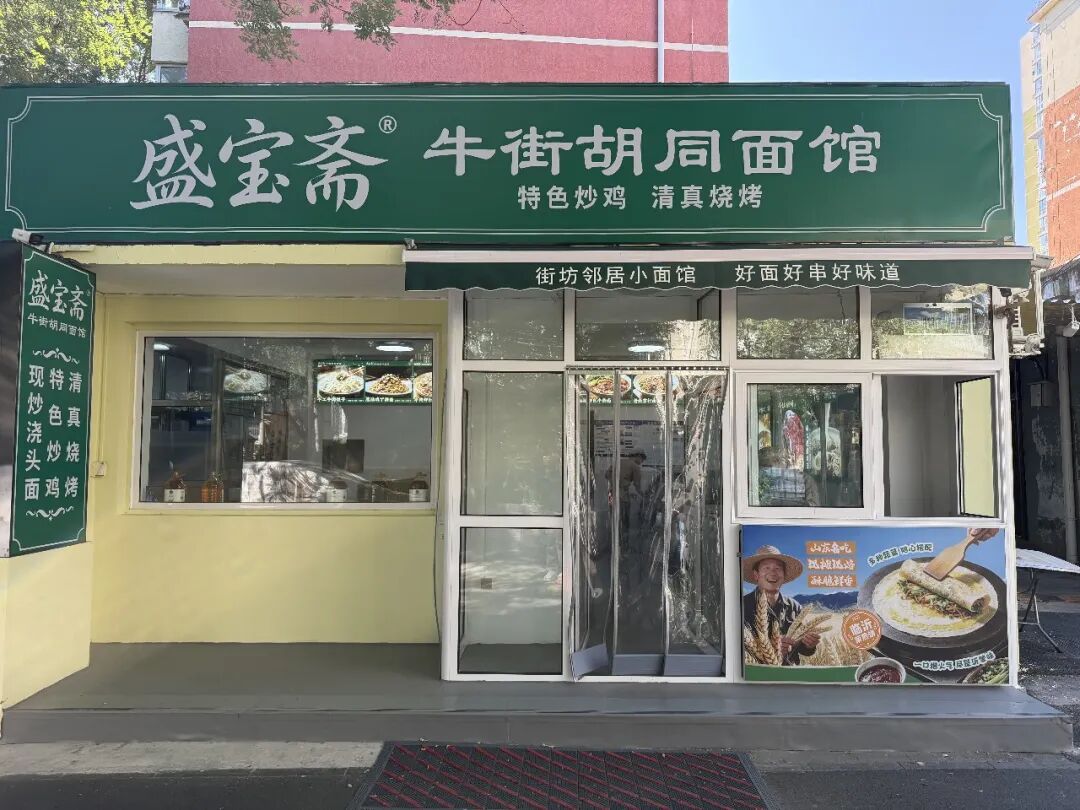
When you see the signature stir-fried chicken, you know it's run by folks from Shandong. This spot is located in Chunfeng Alley in Niujie; it's only been open for two weeks and specializes in various hand-pulled noodles with savory toppings.
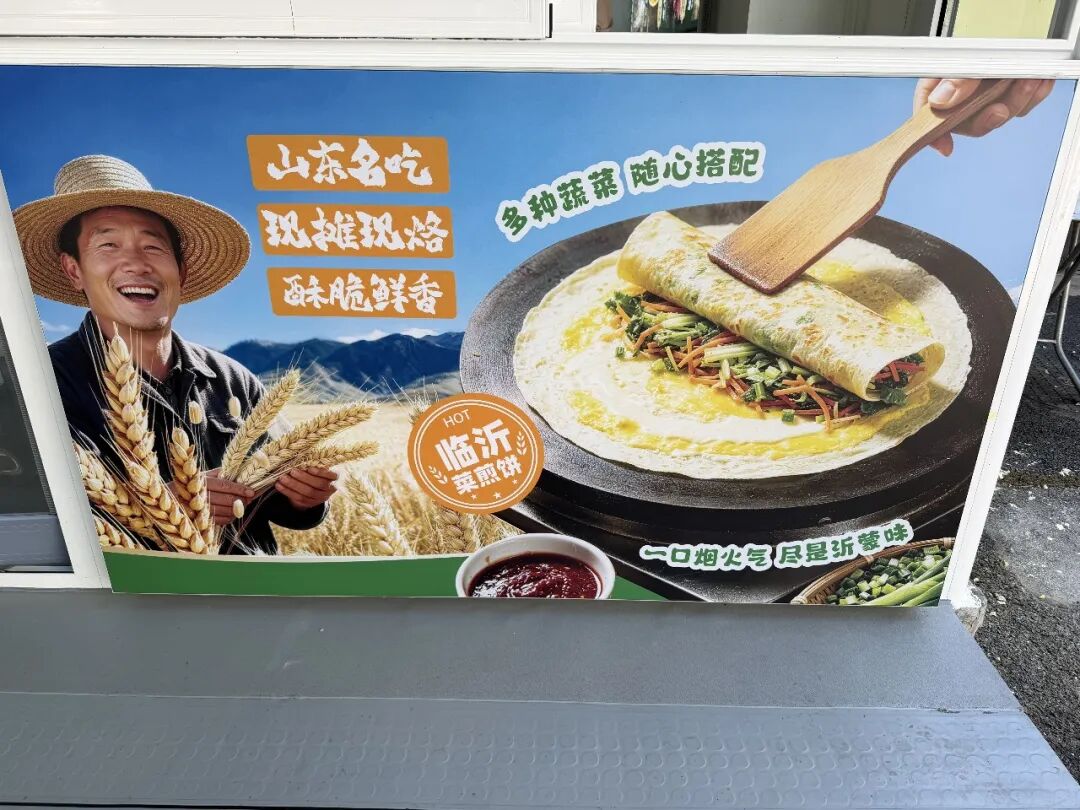
A major highlight here is the Linyi caijianbing (savory vegetable crepe). I've shared two other Tengzhou-style crepe spots before, and while the Linyi version is similar, I feel like this place gives you a better deal.
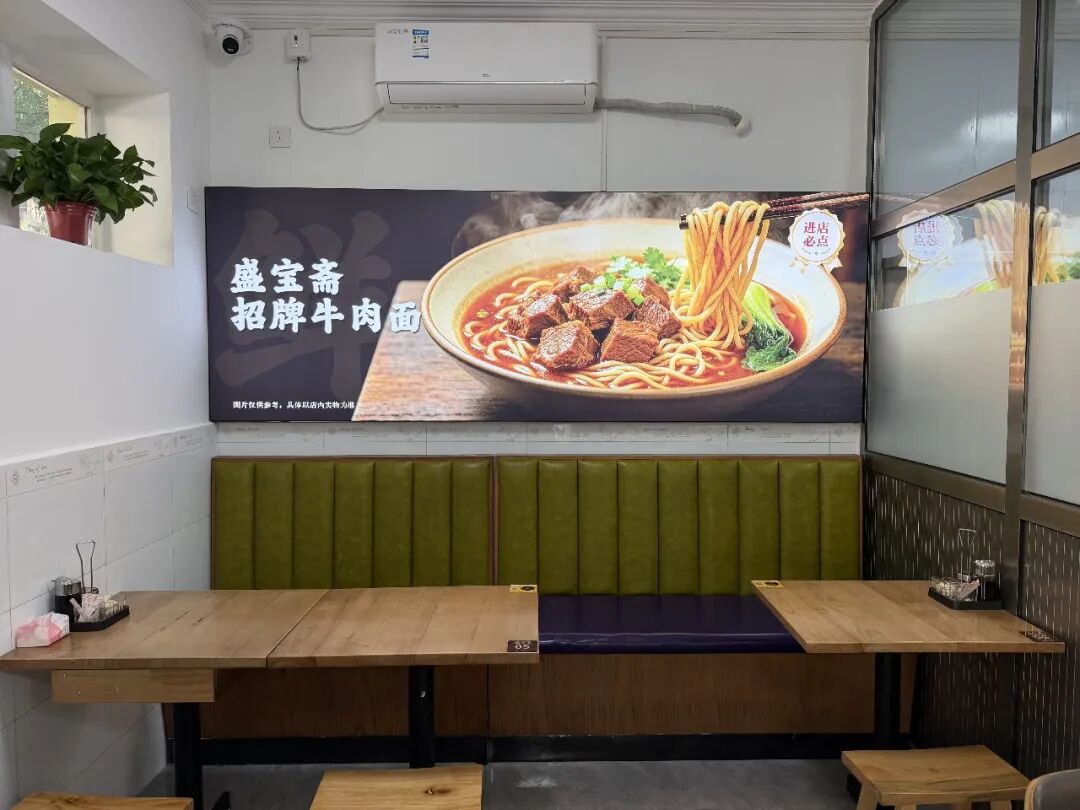
These noodle bowls topped with big chunks of beef are exactly what Beijingers traditionally expect from a beef noodle soup. It's locally called jiaotang niuroumian (beef noodle soup with ladle-poured broth), and the Shandong influence makes total sense.
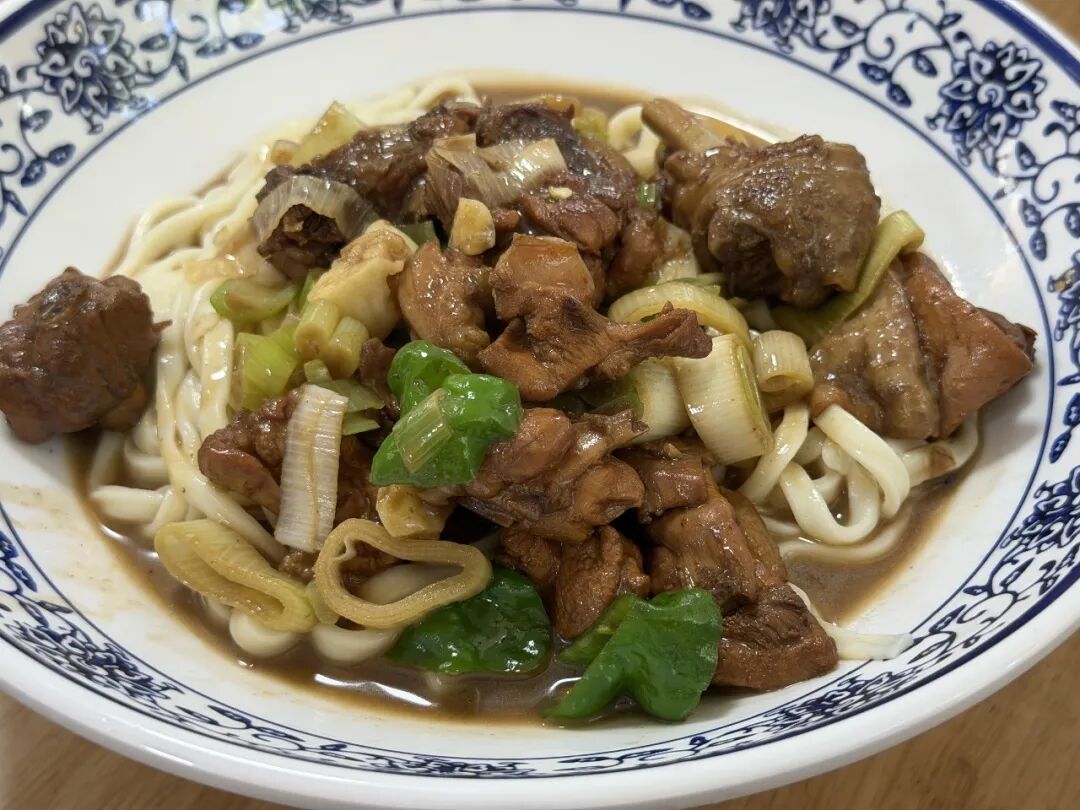
The priciest item is the stir-fried chicken noodle bowl. The noodles are hand-pulled and have a great, chewy texture, but the topping had a bit of a gamey smell. Also, the green peppers were super spicy—and that was me specifically asking for no peppers! If you can't handle the heat, don't try to be a hero.
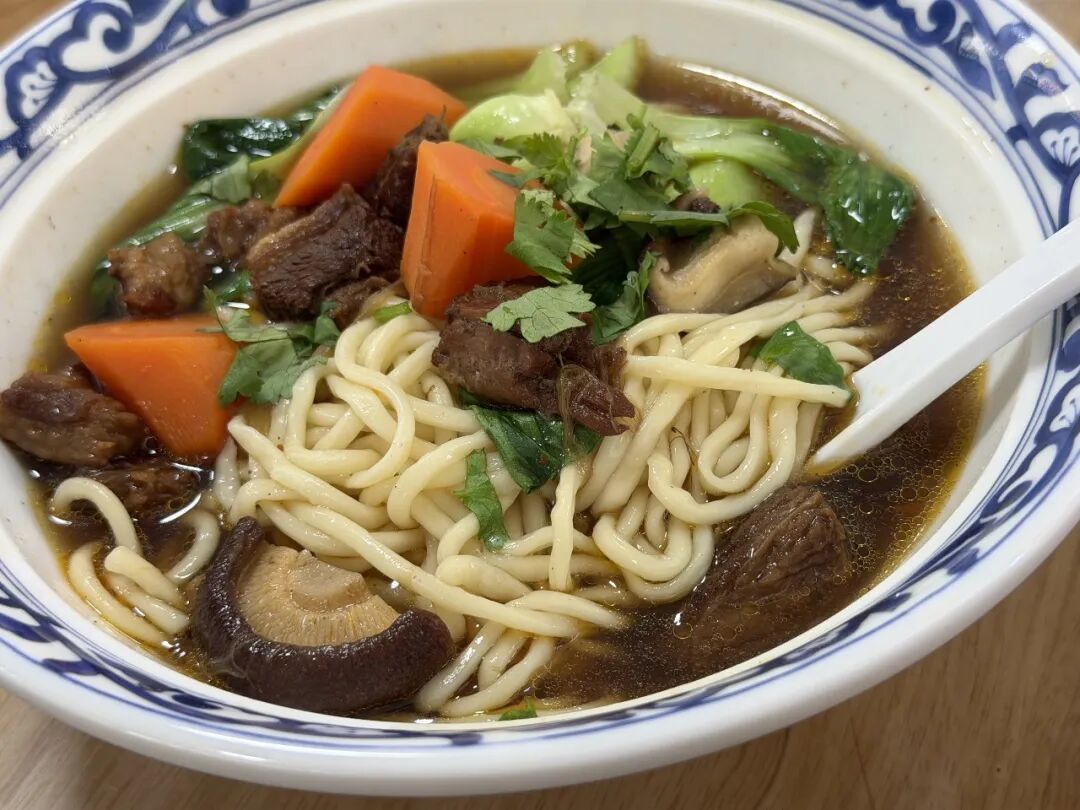
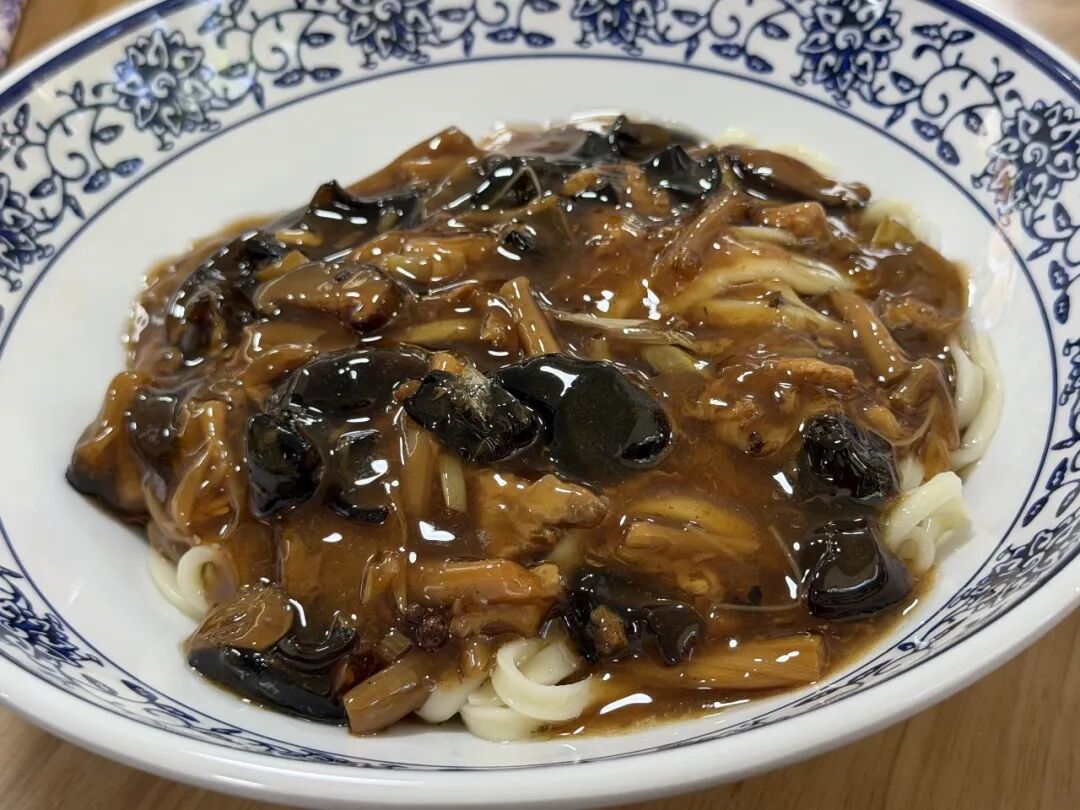
The zhajiangmian (soybean paste noodles) and beef noodle soup are classic, homestyle flavors, and the portions are massive—someone with a small appetite definitely won't finish a bowl.
I originally planned on putting away two bowls of noodles, but I ended up struggling to finish even one.
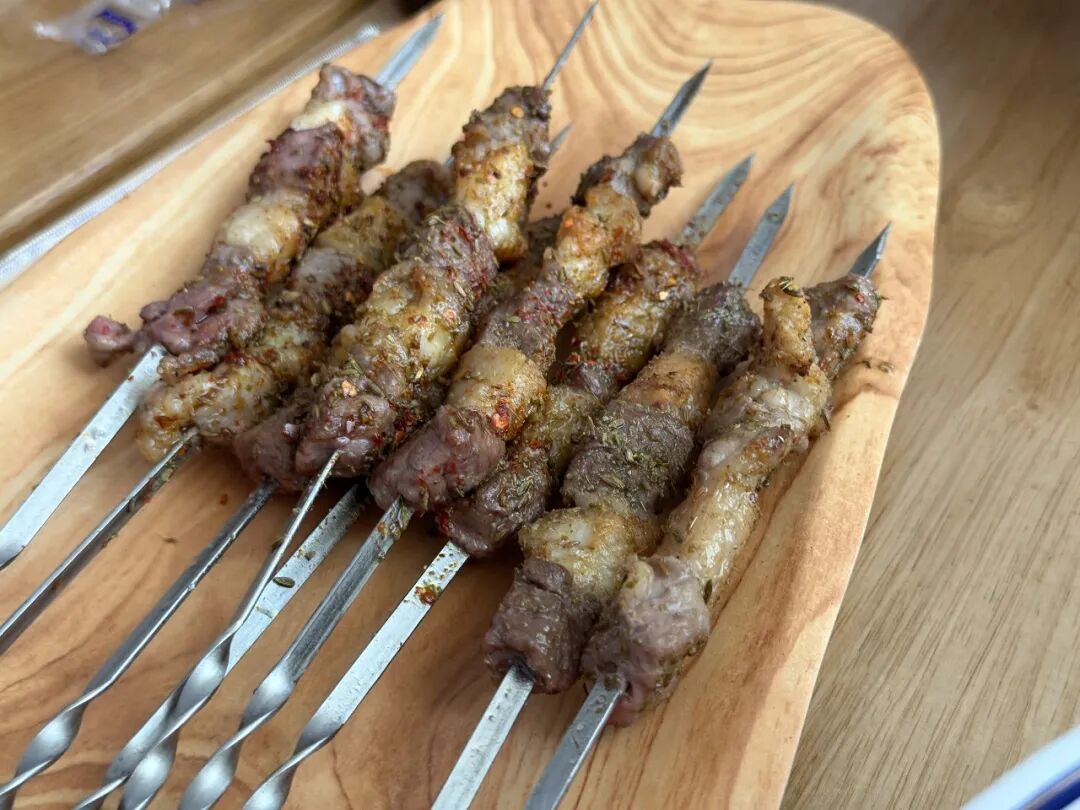
The lamb skewers were just okay—nothing to write home about—but the Linyi caijianbing really made my day.
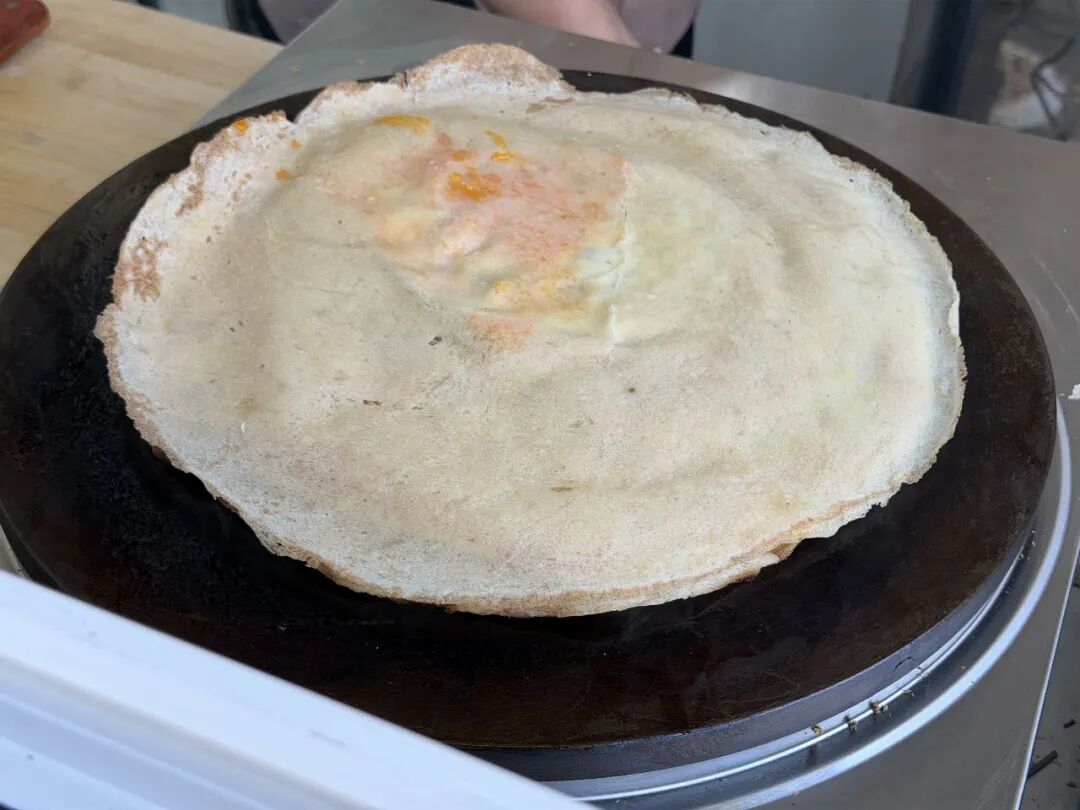
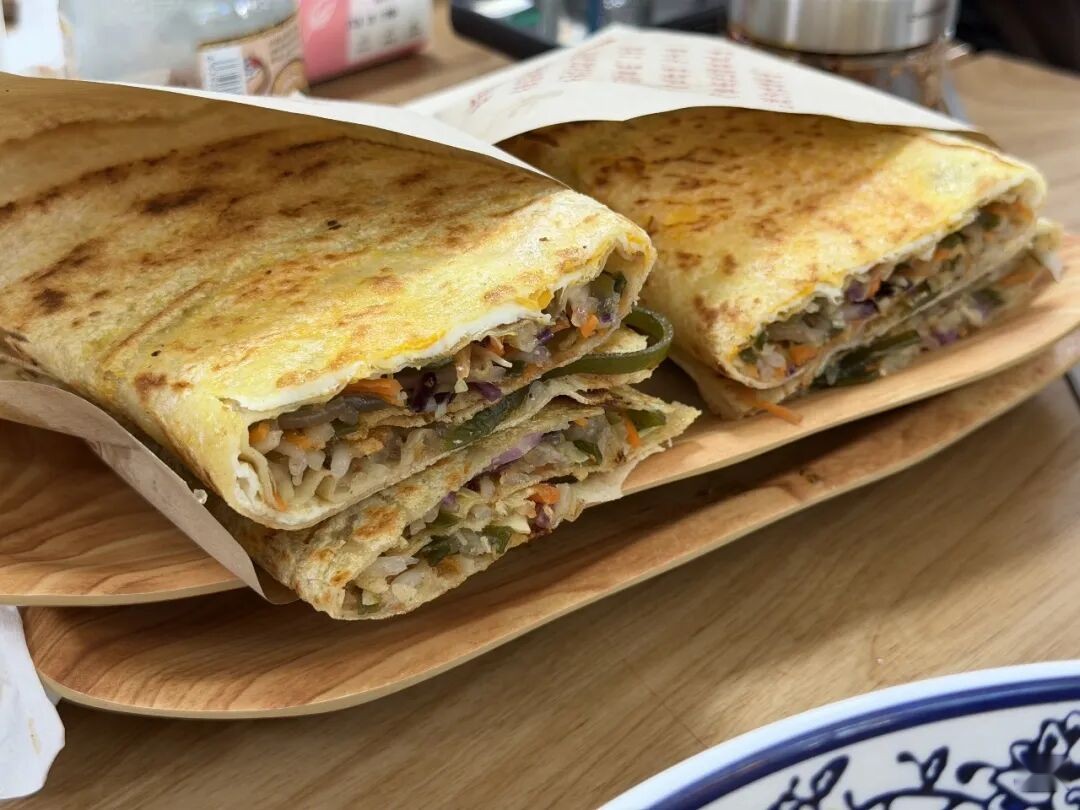
This crepe is made by pressing two thin layers of dough together with a mix of veggies inside. You can also add egg or sausage, but I prefer the veggie-only version. Once assembled, they press it flat with a wooden board and slice it into four pieces.
The outer layer is crispy, making the whole thing really refreshing, nutritious, and healthy.
2. Moyan Dunhuang Lou
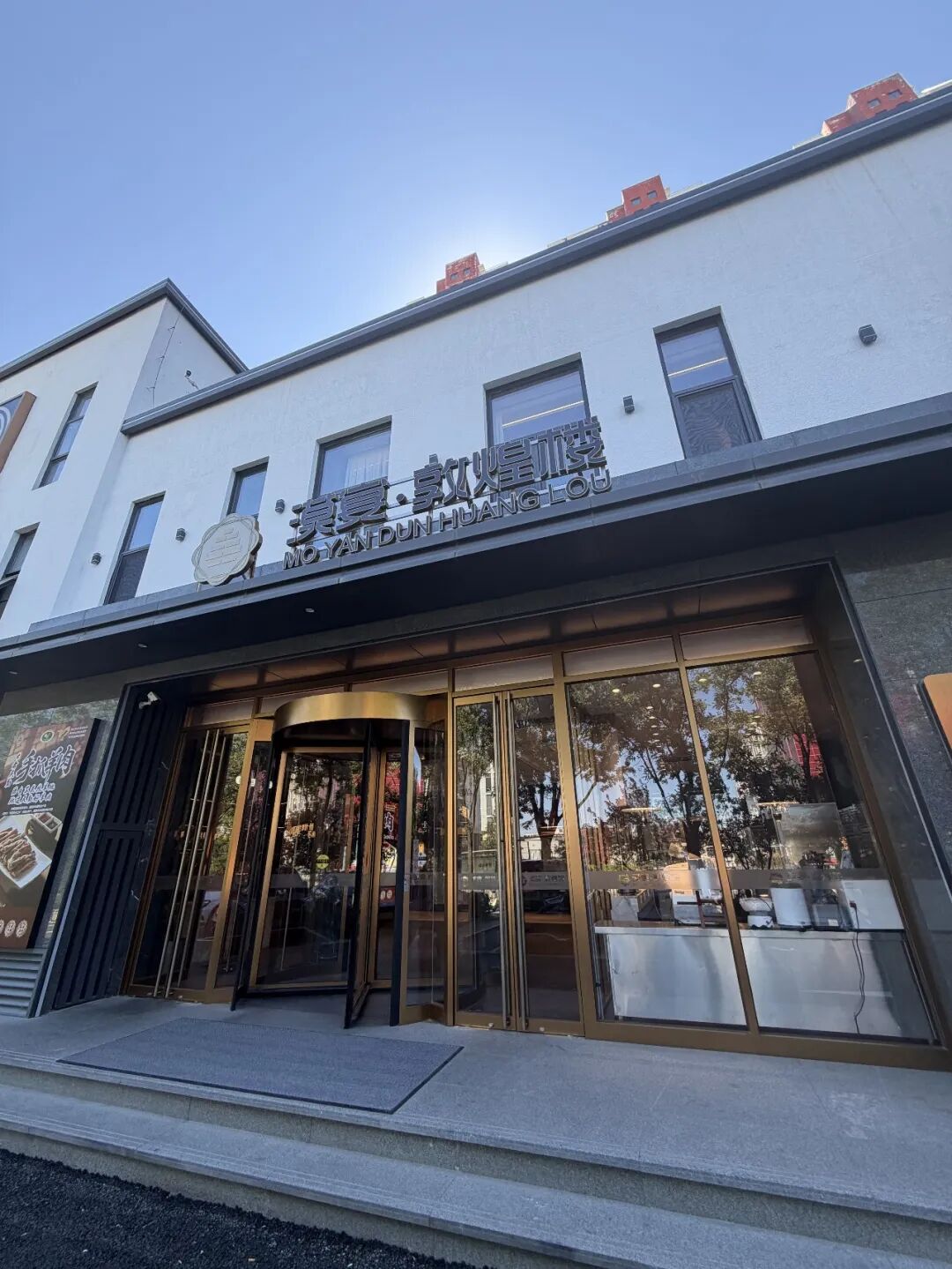
This is a new, more business-casual Gansu-style halal restaurant in Yizhuang. It’s huge and has free parking right out front. Rumor has it they used to specialize in beef noodles, but they’ve moved that fast-food side of the business to the shop next door.
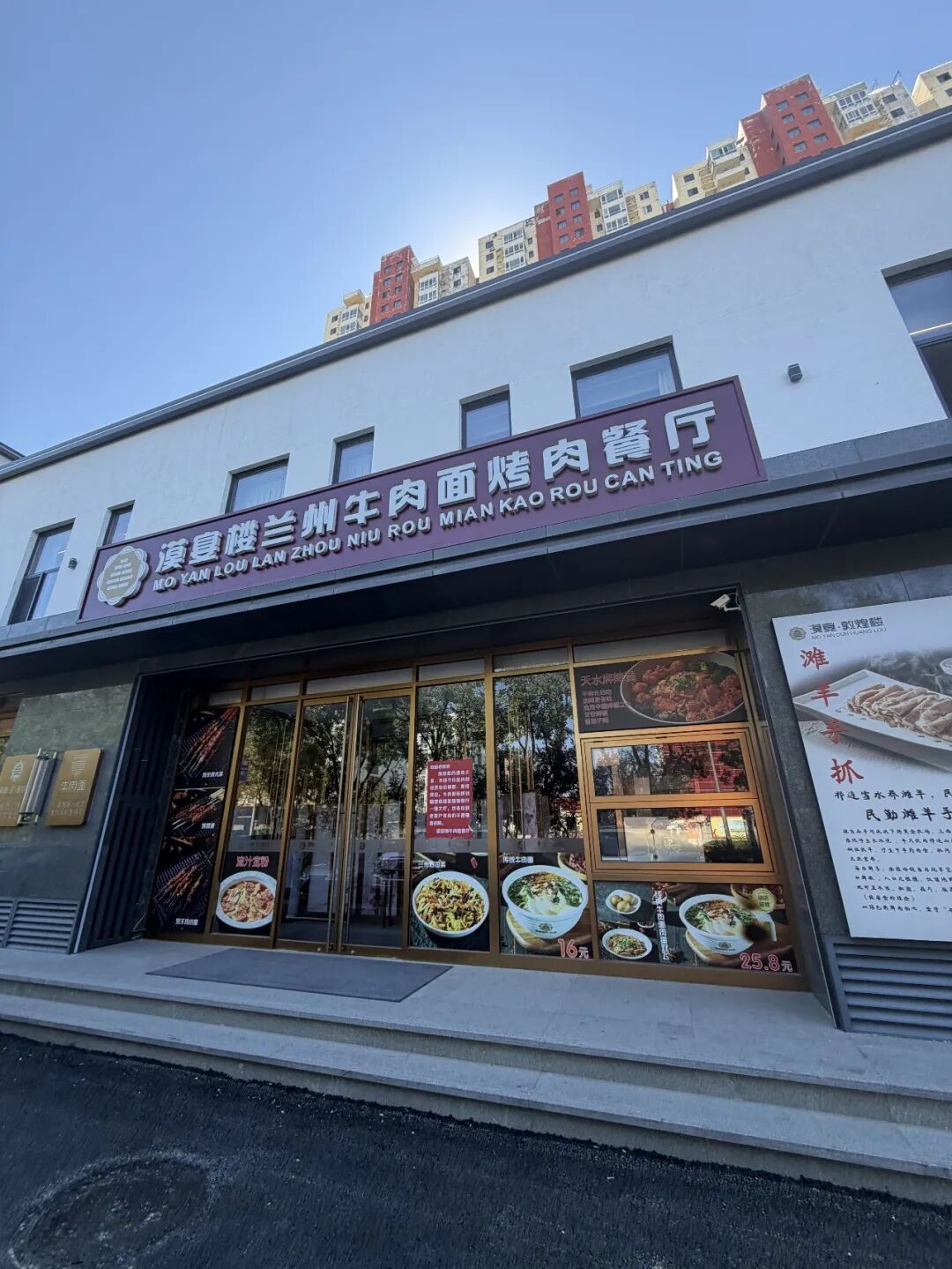
So, if you think the main dining menu is a bit pricey, you can just head to the beef noodle shop right next door.
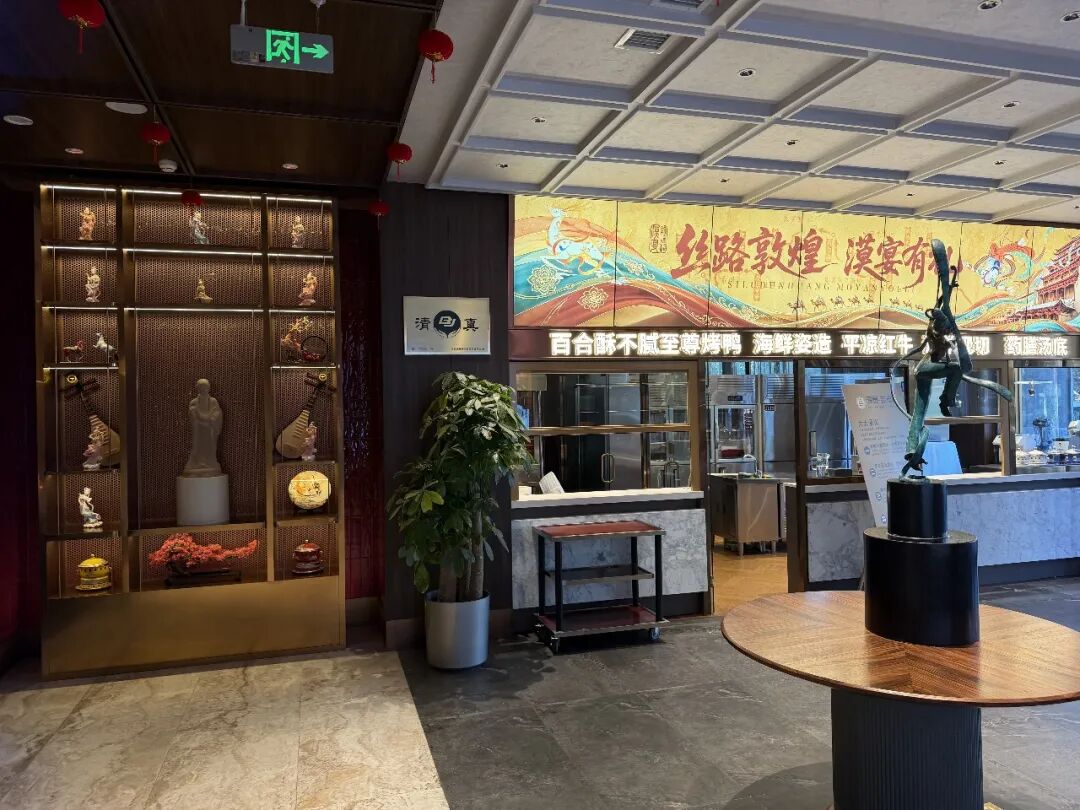
They have greeters at the door and the service is decent, though it feels like they’re a bit short-staffed; the food comes out slow and it’s often hard to track down a server in the dining hall.
If you check in on social media while at the restaurant, you get free huidouzi (red pea soup) or tianpeizi (fermented sweet oat porridge), both of which are classic Gansu-style desserts.
They sell a variety of seafood like fish, shrimp, and crab, plus sashimi, so it’s not exactly cheap. Since I brought my son, we stuck to what he likes—the burrito-style roll with sanzi (deep-fried dough twists) and braised beef is perfect for kids.
Since my kid's been super into green beans lately, I ordered a non-spicy version with mushrooms, and he totally chowed down on it.
Saoxiang mian (Northwest-style braised noodles) is a total classic from Northwest China, and they actually make it really well here with nice, chewy noodles.
3. Kaorou Liu (Liu's Iron Griddle BBQ)
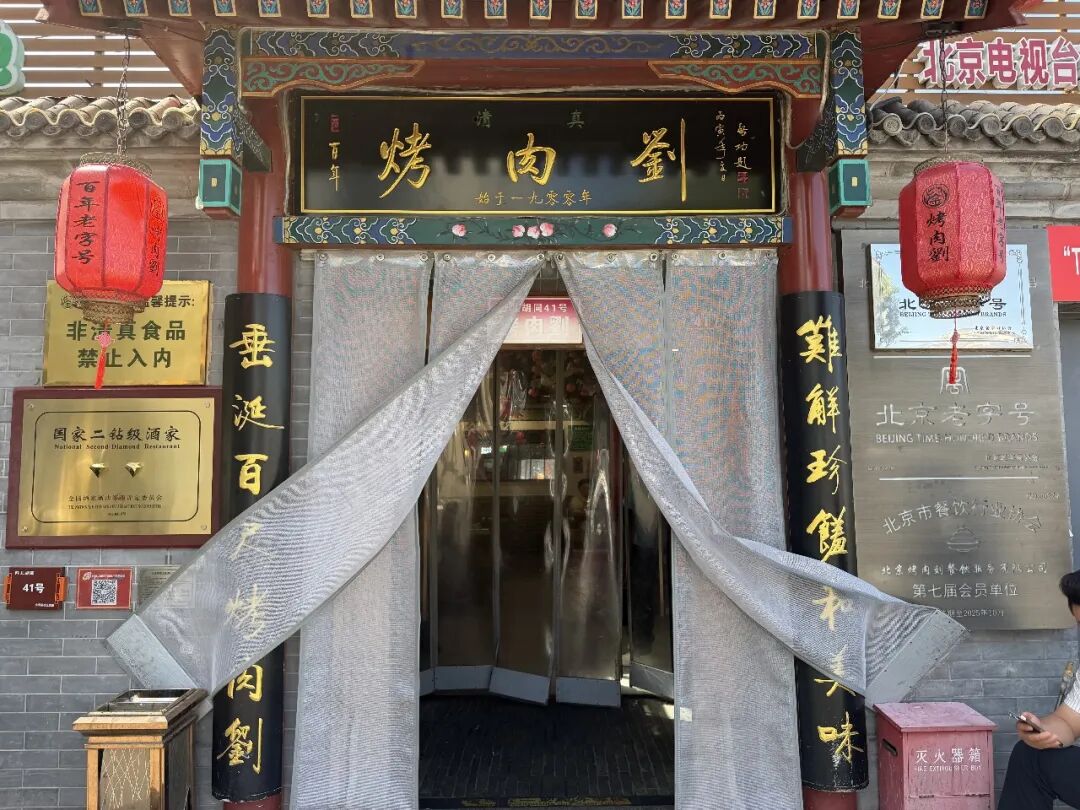
Kaorou Liu has been around for almost twenty years. It originally started over in Hufangqiao, where I used to grab a bite back in high school. Later on, another spot called Liuji Kaorou opened right across the street. That Liuji isn't affiliated with Kaorou Liu at all, it's not certified halal, and I've never been. Whenever we talk about getting barbecue in Hufangqiao, we always mean this specific Kaorou Liu.
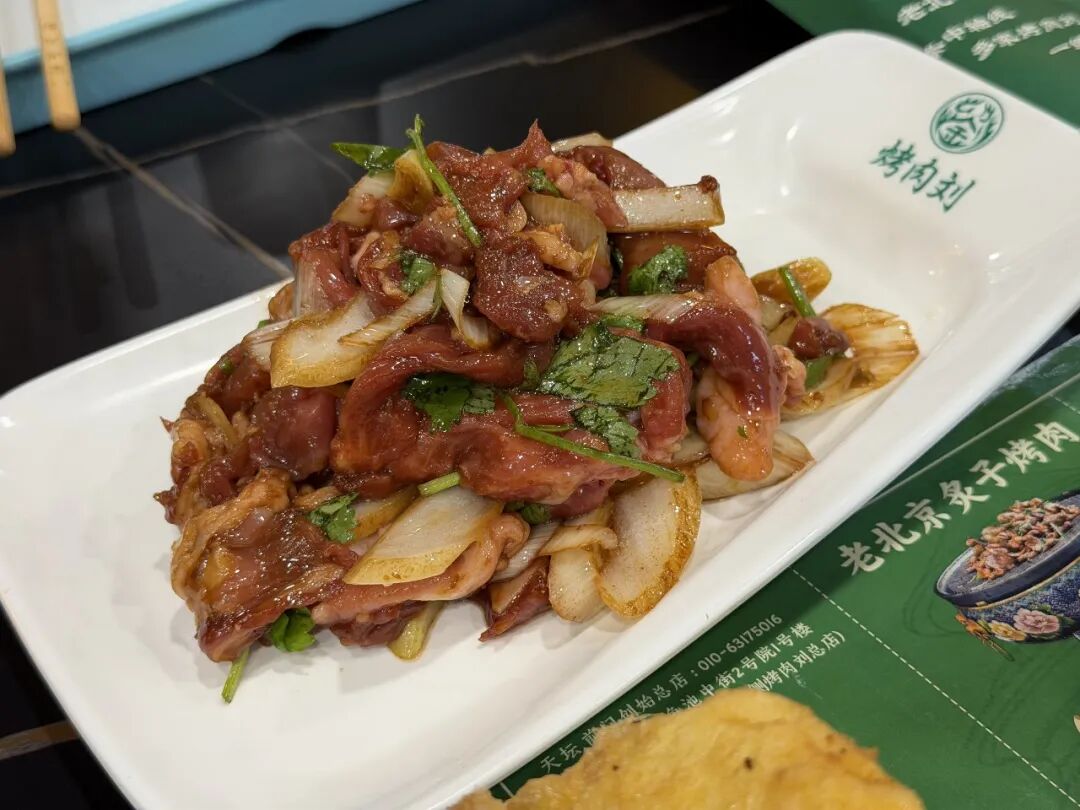
Kaorou Liu has opened a bunch of branches now. The biggest difference between this old Beijing-style zhizi kaorou (iron griddle barbecue) and Qiqihaer barbecue from Northeast China is that zhizi kaorou meat is pre-marinated, so the flavors are a bit heavier.
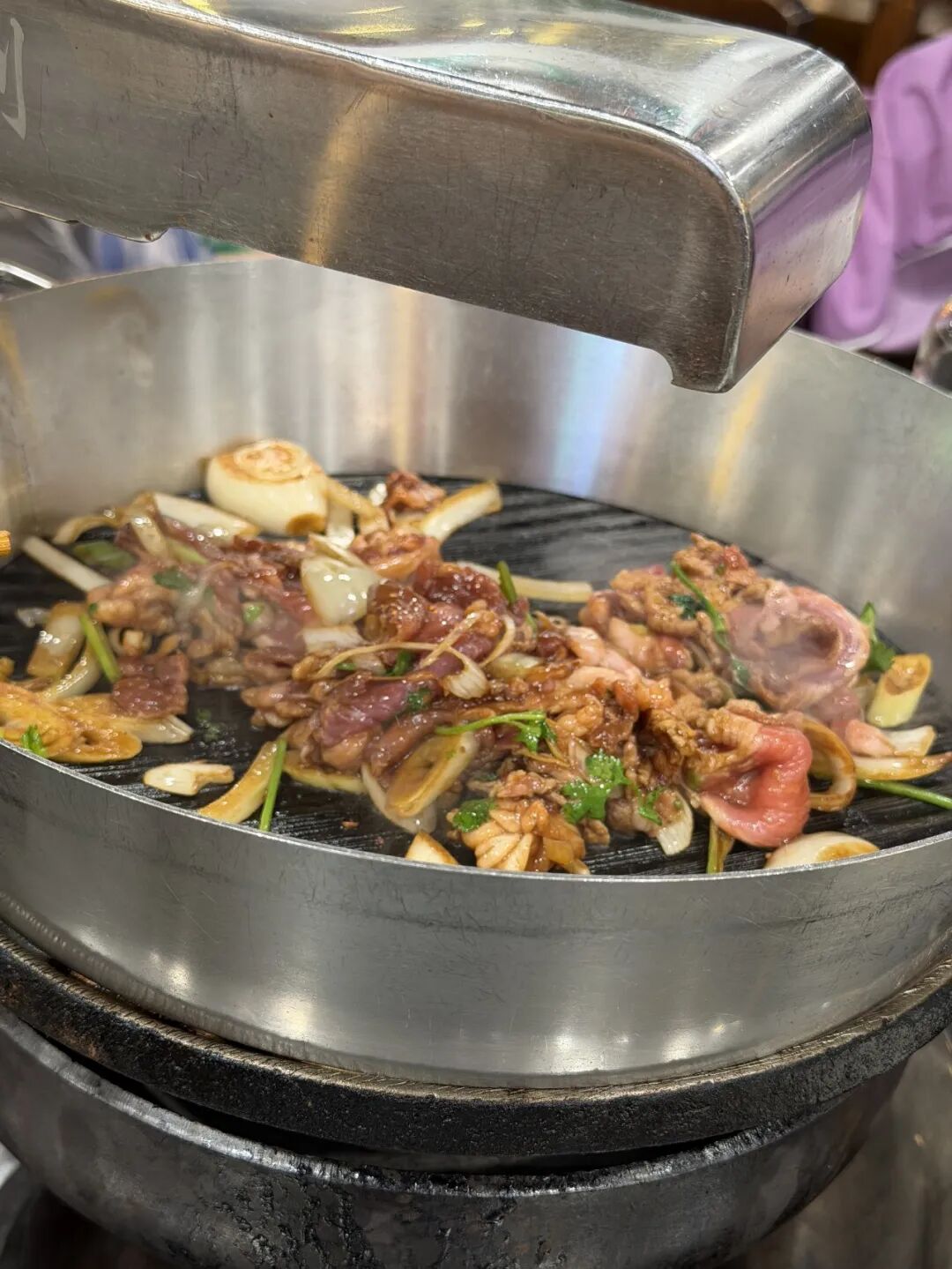
Our family is pretty big on BBQ, but these days we're way more into that Northeast-style big Qiqihaer BBQ because you can really taste the natural, fresh flavor of the meat.
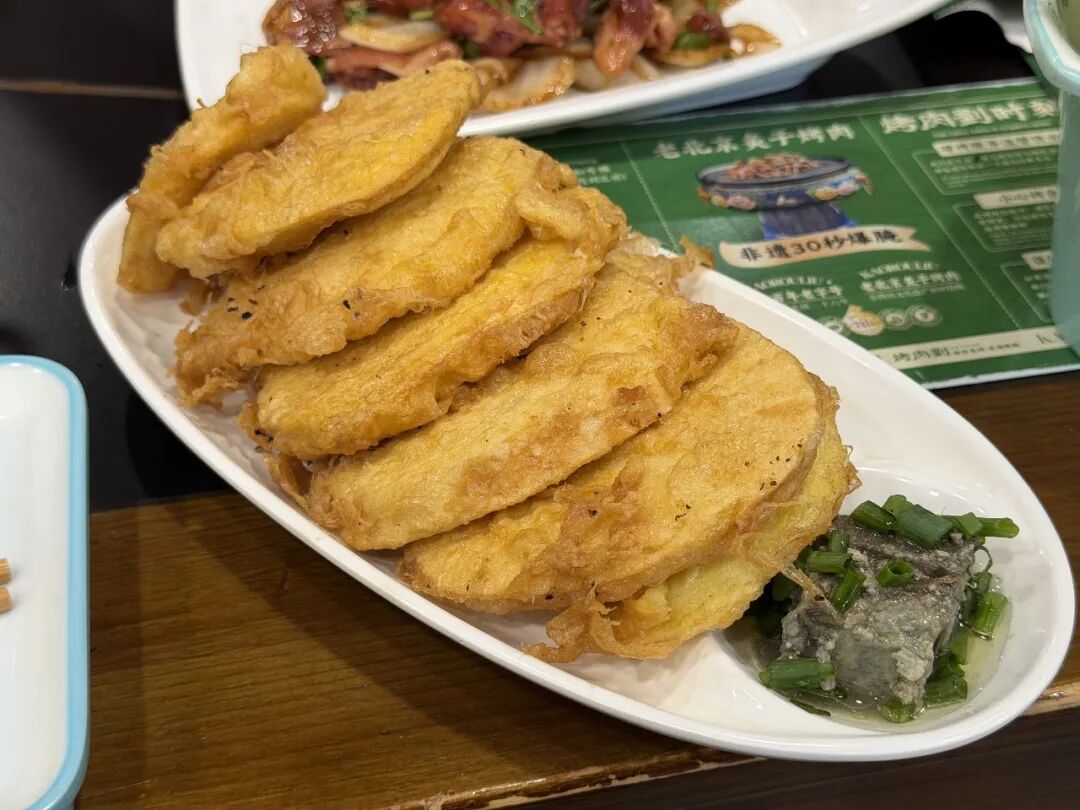
They've got fried mantou (steamed buns) smeared with chou (stinky tofu). Stinky tofu smells funky but tastes super savory. The older I get, the lighter I like my food, so I pretty much skip this kind of stuff now.
4. Zhuo Ge Fan Fan
This is just a casual Hui Muslim spot for a quick bite of Xinjiang zhua fan (hand-grabbed rice) while running errands. I originally only planned to order some rice for my kid, but we accidentally ended up trying a few extra dishes because we were pleasantly surprised by how good it was.
This place only serves zhua fan, no banmian (hand-pulled noodles), but they do have huangmian (yellow noodles).
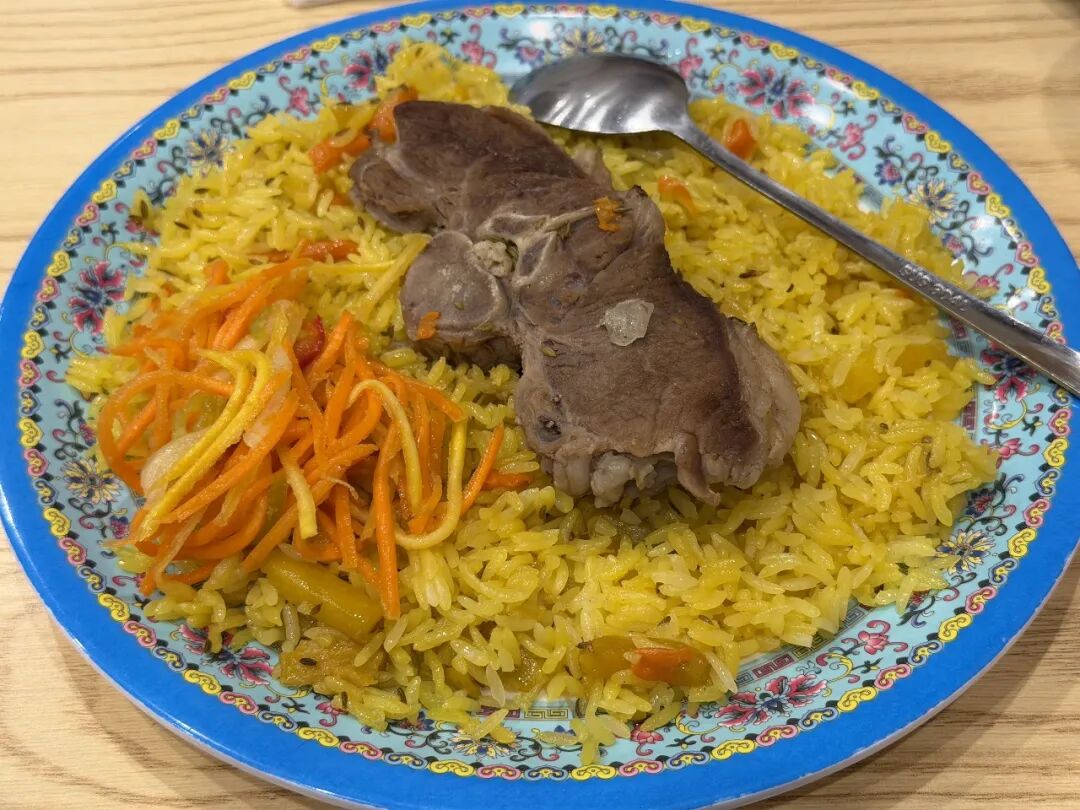
Both the shredded meat zhua fan and the lamb chop zhua fan are super tasty. Even though the portions are kind of small, you can get free refills on the rice.
For the huangmian, you can choose between cold-dressed or hot-gravy styles. That said, the noodles are probably store-bought and pre-made, so they lack that springy texture. You're honestly better off just sticking to the zhua fan here.
The skewers are totally fire—Uyghur folks seriously have a natural talent for making amazing BBQ. But their kavas (traditional fermented honey drink) is way too sweet and lacks carbonation, tasting pretty much like sugary water.
5. Wushu Tianjin Halal Eatery
This is a newly opened Tianjin-style halal spot in Wangsiying. Over the past couple of years, Beijing has suddenly had a few Tianjin halal restaurants pop up. Honestly, I'm not usually into traditional Tianjin flavors because I find them way too oily and salty, plus the portions at Tianjin places are massive and always end up going to waste.
To be fair, their food is actually decent—not overly salty, just huge portions. Aside from classic Tianjin dishes, they've also added a dish of haichang laofan (sea cucumber rice to the menu).
Bawei doufu (eight-treasure tofu) is one of my personal favorites. It's packed with all kinds of ingredients, and a single plate is big enough for four people.
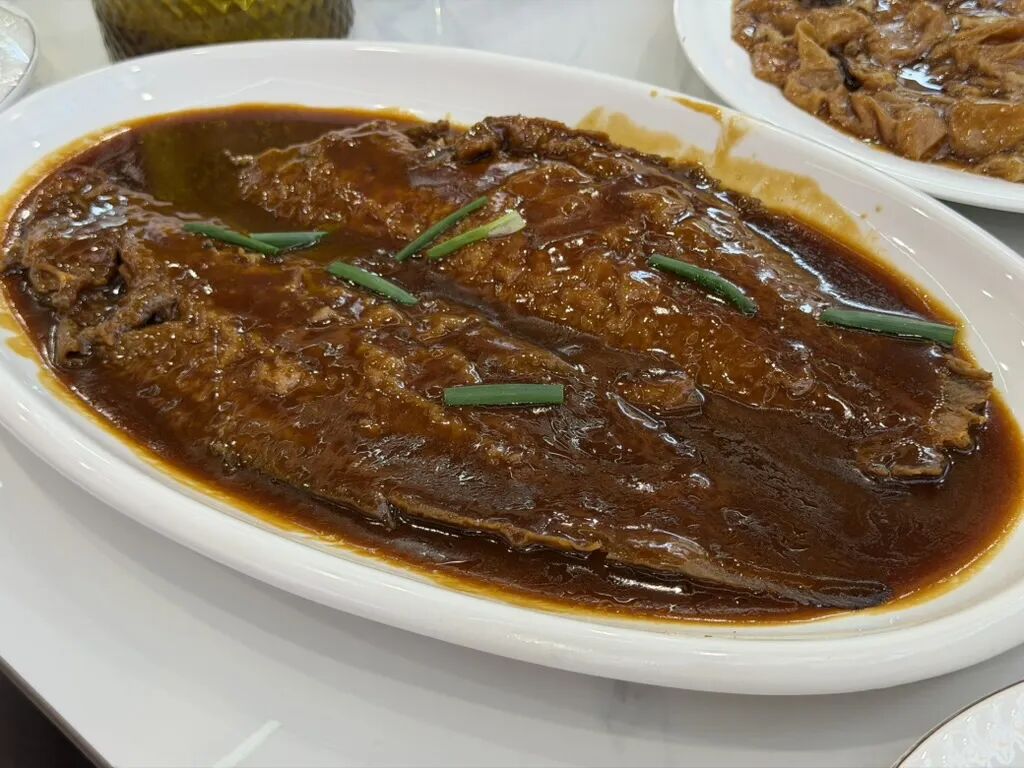
The du mianjin (braised wheat gluten) and damu yu (dab Sole fish) were not good. The gluten was okay, but the fish was seriously bad. It was just a fixed part of the set meal so I couldn't swap it out, even though I really wanted to change it for the haichang laofan.
This spot is pretty convenient since there's parking right in the courtyard. The prices are cheap, and the per-person cost stays under a hundred bucks.
6. Jianbing Tianxia
A new jianbing (savory Chinese crepe) stall just popped up right next to the Northwest lamian (hand-pulled noodles) spot in Yazhiqiao. Jianbing Tianxia is a chain brand, but this particular location is the only halal one.
They've got a few types of jianbing, plus you can get kaolengmian (grilled cold noodles) and shouzhuabing (scallion pancakes).
That said, I think their jianbing is the best choice. The grilled cold noodles are just so-so, and for the jianbing, I definitely recommend the beef sauce flavor.
7. Anji Xiaochu
This is a halal Japanese restaurant opened in Shunyi. The owner is a Hui Muslim from Haidian, and the menu mainly features classic Japanese dishes like sushi and unagi don (eel rice), alongside some Beijing-style home-cooked favorites.
The interior design is super minimal, the vibe is really comfy, and the service is warm and attentive.
Their signature eel rice and beef gyudon (beef bowl) are both legit; the eel rice has a nice sweet touch to it.
It’s not every day I make the trip out here, so I stuck with their Japanese menu, but my friends have tried their Beijing-style dishes and said those are great too.
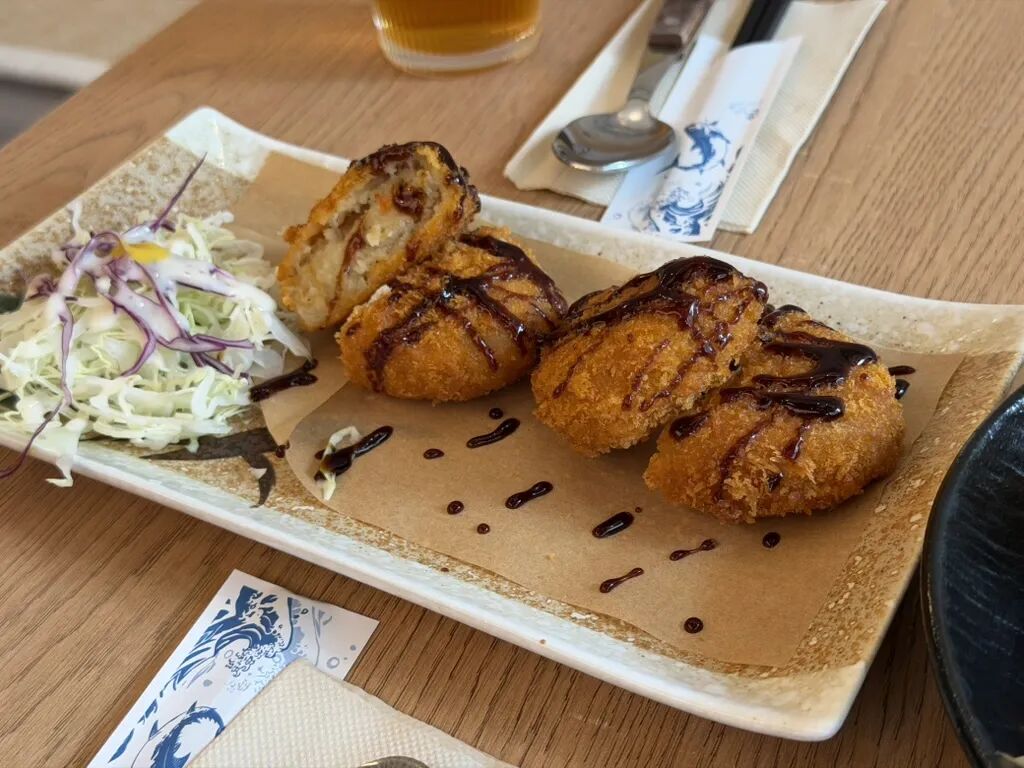
The takoyaki (octopus balls) and potato croquettes are also tasty—definitely a spot to bring the kids. Aside from this place, the only other Halal Japanese spot left in Beijing is Niushi Yakiniku (Japanese-style grilled meat), so enjoy it while it’s still around.
8. Sheikh Classic Beef Noodles
Sheikh Beef Noodles recently opened two new spots at the same time in Sanlitun and Beiqijia. It’s a Lanzhou-based noodle brand that already has shops back home, and the Beiqijia location is their flagship store. I went to the Sanlitun branch.
After some friends from Lanzhou checked it out, they agreed the taste is pretty much spot on with what you get back in Lanzhou. It’s great to have a few authentic Lanzhou beef noodle spots here in Beijing.
I’ve tried it myself and honestly, it’s delicious—the broth, the beef, and the chili oil are all totally authentic. view all
[Internet Repost]
Check out 44 real-deal photos from the 63rd installment of our Beijing Halal food guide. We're covering Shengbaozhai Niujie Alley Noodle House, the Northwestern flavors at Moyan Dunhuang Lou, signature shouzhua fan (hand-grabbed rice), and Uncle Wu's Tianjin-style home-cooked halal meals, taking you on a tour of the most authentic halal eats tucked away in Beijing's hidden alleys.
1. Shengbaozhai Niujie Alley Noodle House
2. Moyan Dunhuang Lou
3. Kaorou Liu (Liu's Barbecue)
4. Zhua Ge Fan Fan (Grab That Rice)
5. Uncle Wu's Tianjin Halal Diner
6. Jian Bing Tian Xia (The World of Crepes)
7. Anji Small Kitchen
8. Xiehe Classic Beef Noodles
9. Shengbaozhai Niujie Alley Noodle House
When you see the signature stir-fried chicken, you know it's run by folks from Shandong. This spot is located in Chunfeng Alley in Niujie; it's only been open for two weeks and specializes in various hand-pulled noodles with savory toppings.
A major highlight here is the Linyi caijianbing (savory vegetable crepe). I've shared two other Tengzhou-style crepe spots before, and while the Linyi version is similar, I feel like this place gives you a better deal.
These noodle bowls topped with big chunks of beef are exactly what Beijingers traditionally expect from a beef noodle soup. It's locally called jiaotang niuroumian (beef noodle soup with ladle-poured broth), and the Shandong influence makes total sense.
The priciest item is the stir-fried chicken noodle bowl. The noodles are hand-pulled and have a great, chewy texture, but the topping had a bit of a gamey smell. Also, the green peppers were super spicy—and that was me specifically asking for no peppers! If you can't handle the heat, don't try to be a hero.
The zhajiangmian (soybean paste noodles) and beef noodle soup are classic, homestyle flavors, and the portions are massive—someone with a small appetite definitely won't finish a bowl.
I originally planned on putting away two bowls of noodles, but I ended up struggling to finish even one.
The lamb skewers were just okay—nothing to write home about—but the Linyi caijianbing really made my day.
This crepe is made by pressing two thin layers of dough together with a mix of veggies inside. You can also add egg or sausage, but I prefer the veggie-only version. Once assembled, they press it flat with a wooden board and slice it into four pieces.
The outer layer is crispy, making the whole thing really refreshing, nutritious, and healthy.
2. Moyan Dunhuang Lou
This is a new, more business-casual Gansu-style halal restaurant in Yizhuang. It’s huge and has free parking right out front. Rumor has it they used to specialize in beef noodles, but they’ve moved that fast-food side of the business to the shop next door.
So, if you think the main dining menu is a bit pricey, you can just head to the beef noodle shop right next door.
They have greeters at the door and the service is decent, though it feels like they’re a bit short-staffed; the food comes out slow and it’s often hard to track down a server in the dining hall.
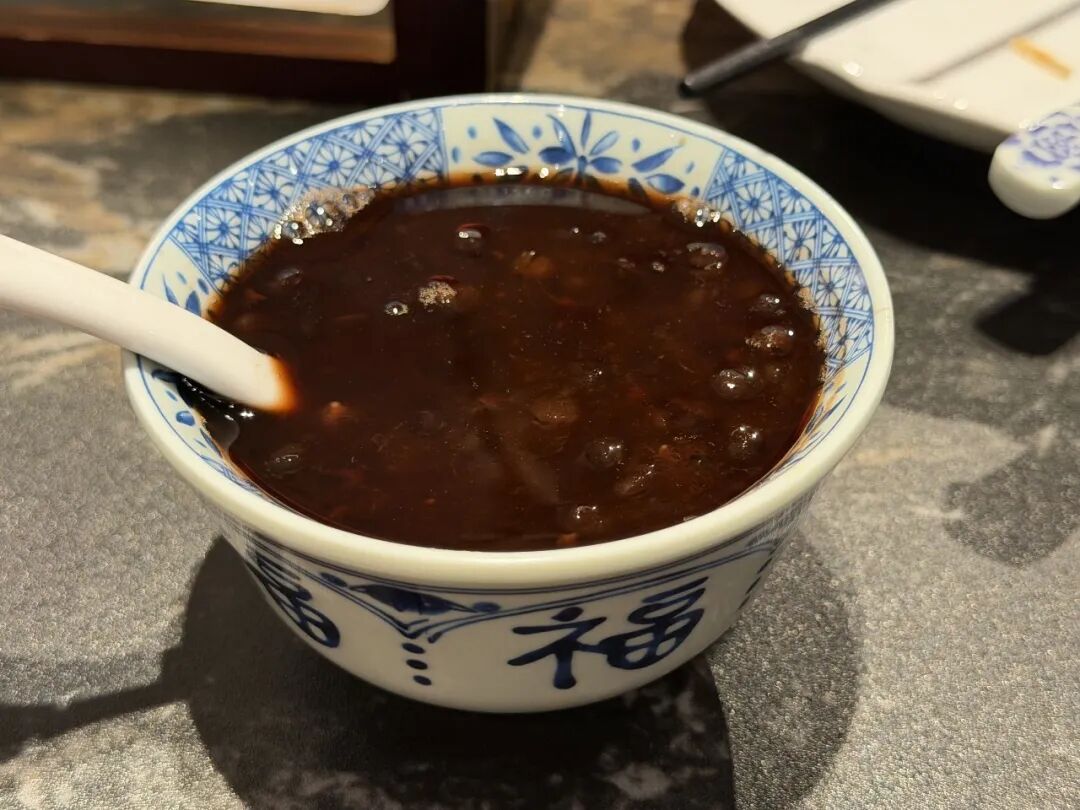
If you check in on social media while at the restaurant, you get free huidouzi (red pea soup) or tianpeizi (fermented sweet oat porridge), both of which are classic Gansu-style desserts.
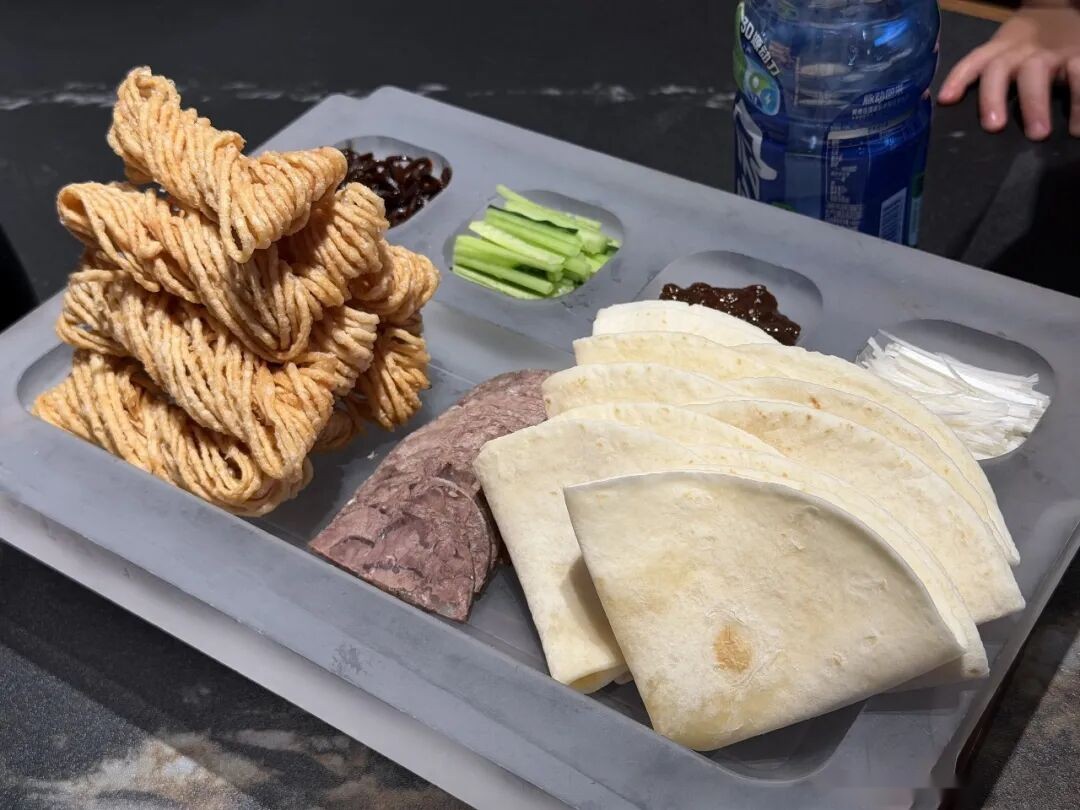
They sell a variety of seafood like fish, shrimp, and crab, plus sashimi, so it’s not exactly cheap. Since I brought my son, we stuck to what he likes—the burrito-style roll with sanzi (deep-fried dough twists) and braised beef is perfect for kids.
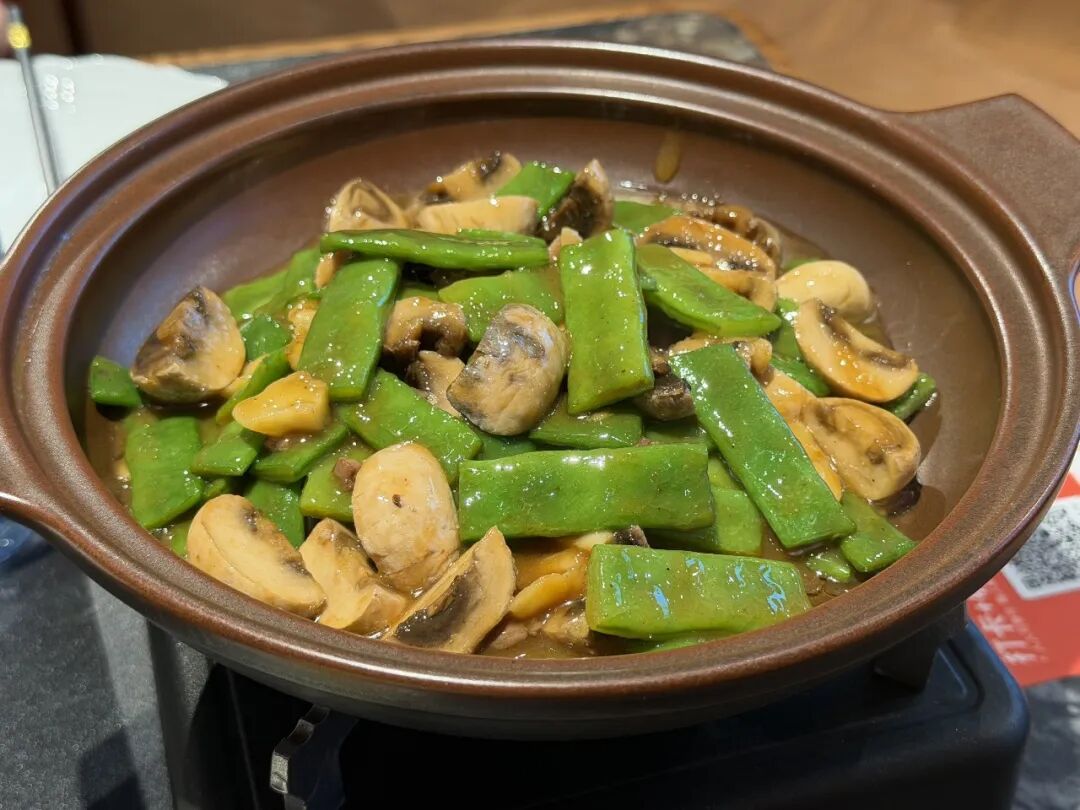
Since my kid's been super into green beans lately, I ordered a non-spicy version with mushrooms, and he totally chowed down on it.
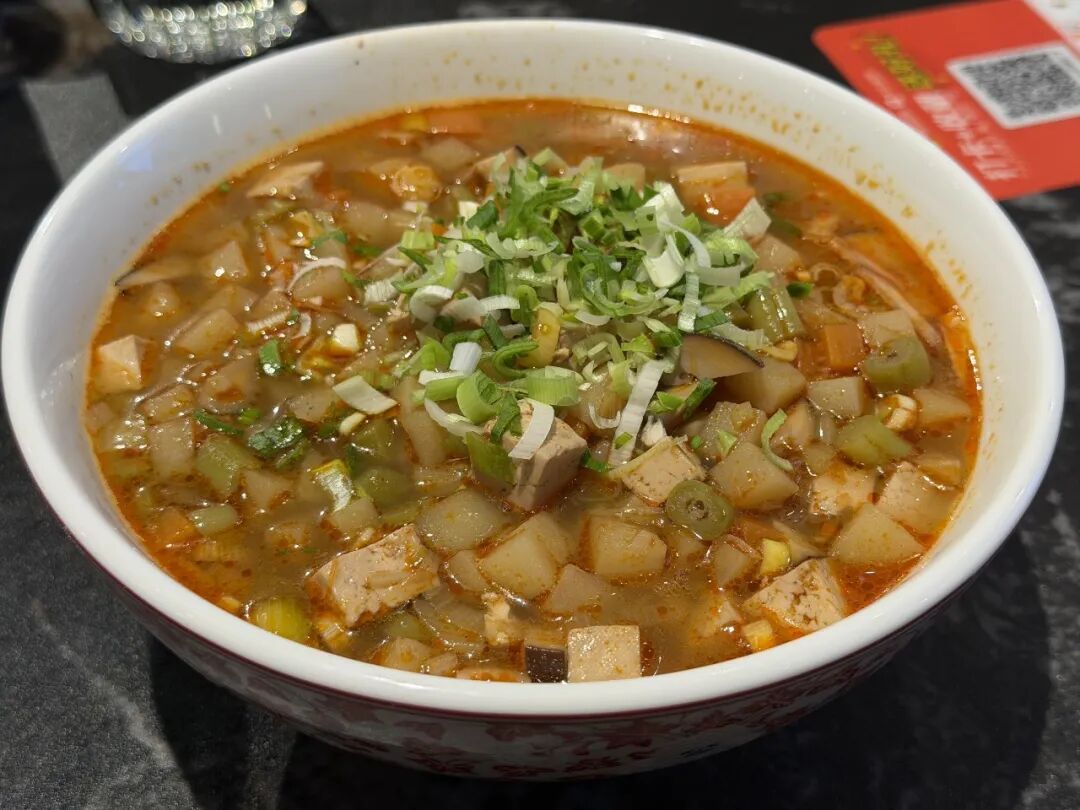
Saoxiang mian (Northwest-style braised noodles) is a total classic from Northwest China, and they actually make it really well here with nice, chewy noodles.
3. Kaorou Liu (Liu's Iron Griddle BBQ)
Kaorou Liu has been around for almost twenty years. It originally started over in Hufangqiao, where I used to grab a bite back in high school. Later on, another spot called Liuji Kaorou opened right across the street. That Liuji isn't affiliated with Kaorou Liu at all, it's not certified halal, and I've never been. Whenever we talk about getting barbecue in Hufangqiao, we always mean this specific Kaorou Liu.
Kaorou Liu has opened a bunch of branches now. The biggest difference between this old Beijing-style zhizi kaorou (iron griddle barbecue) and Qiqihaer barbecue from Northeast China is that zhizi kaorou meat is pre-marinated, so the flavors are a bit heavier.
Our family is pretty big on BBQ, but these days we're way more into that Northeast-style big Qiqihaer BBQ because you can really taste the natural, fresh flavor of the meat.
They've got fried mantou (steamed buns) smeared with chou (stinky tofu). Stinky tofu smells funky but tastes super savory. The older I get, the lighter I like my food, so I pretty much skip this kind of stuff now.
4. Zhuo Ge Fan Fan
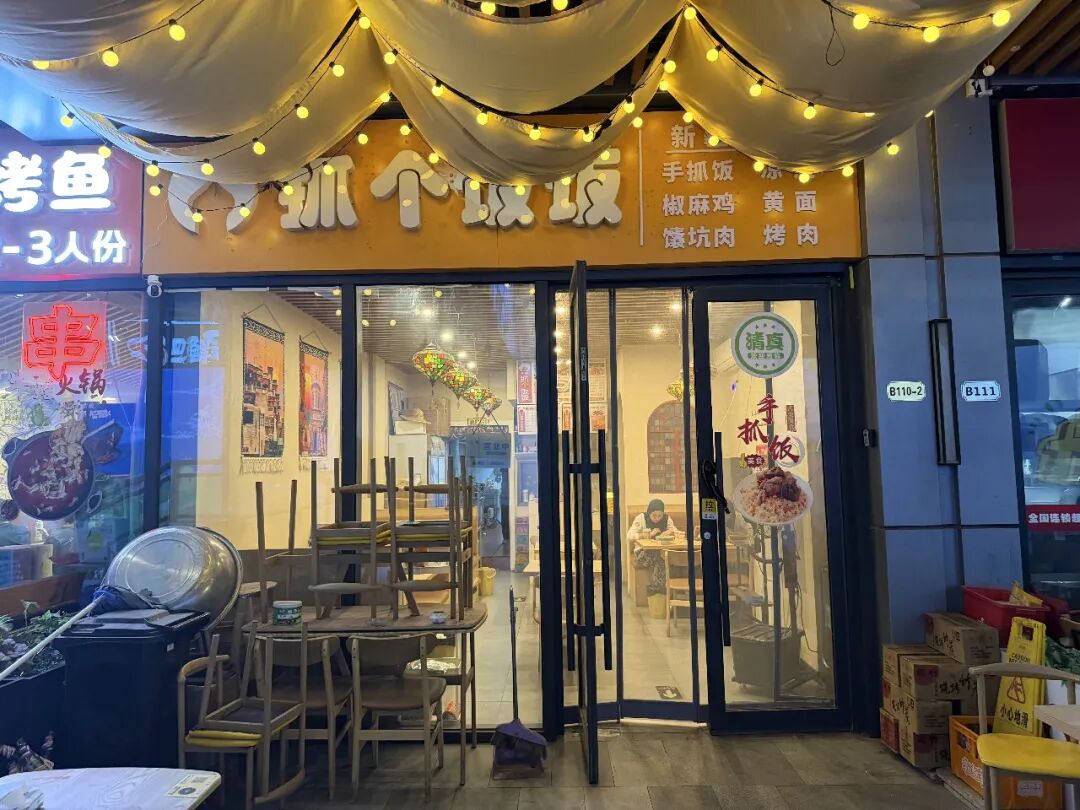
This is just a casual Hui Muslim spot for a quick bite of Xinjiang zhua fan (hand-grabbed rice) while running errands. I originally only planned to order some rice for my kid, but we accidentally ended up trying a few extra dishes because we were pleasantly surprised by how good it was.
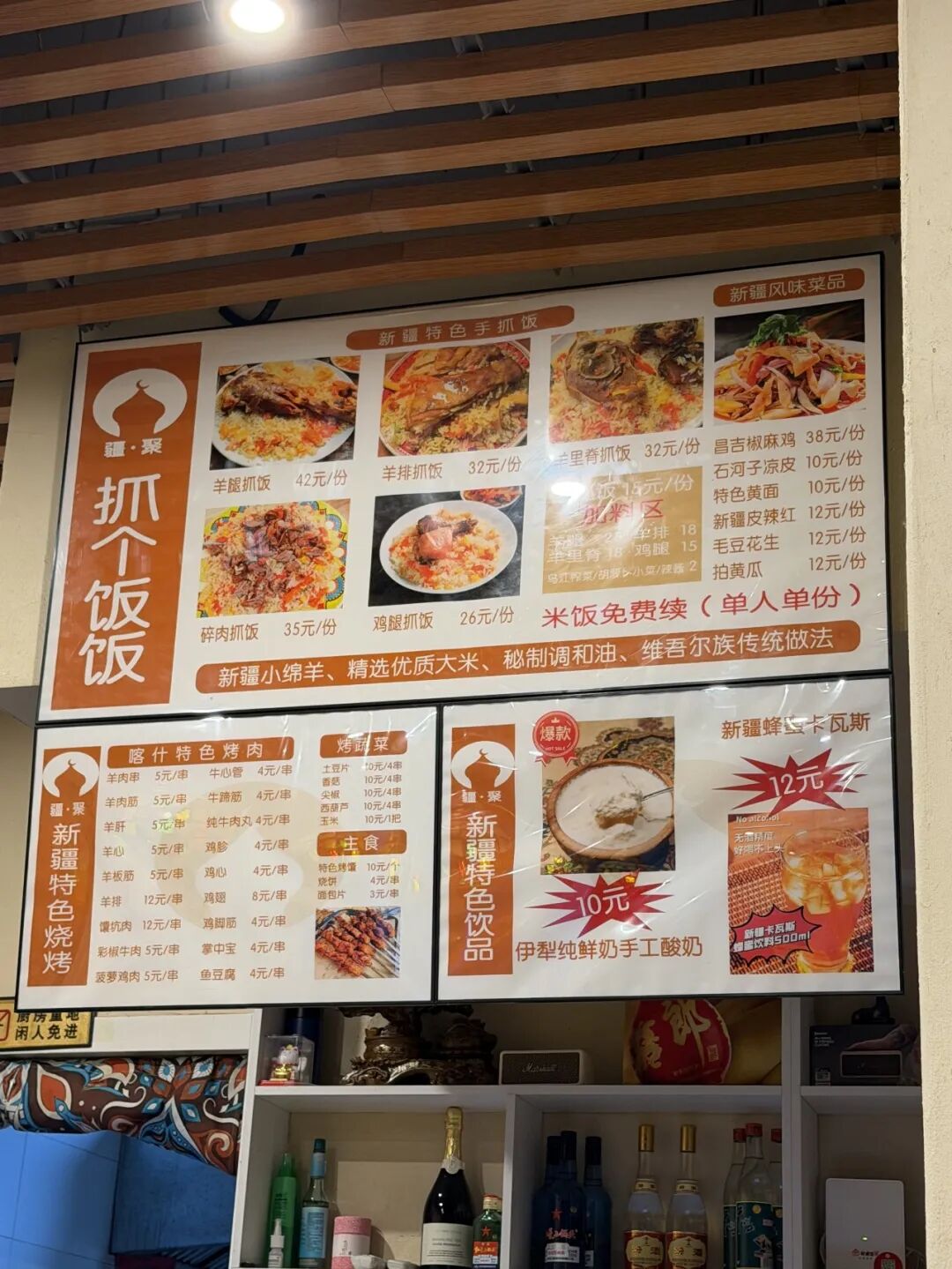
This place only serves zhua fan, no banmian (hand-pulled noodles), but they do have huangmian (yellow noodles).
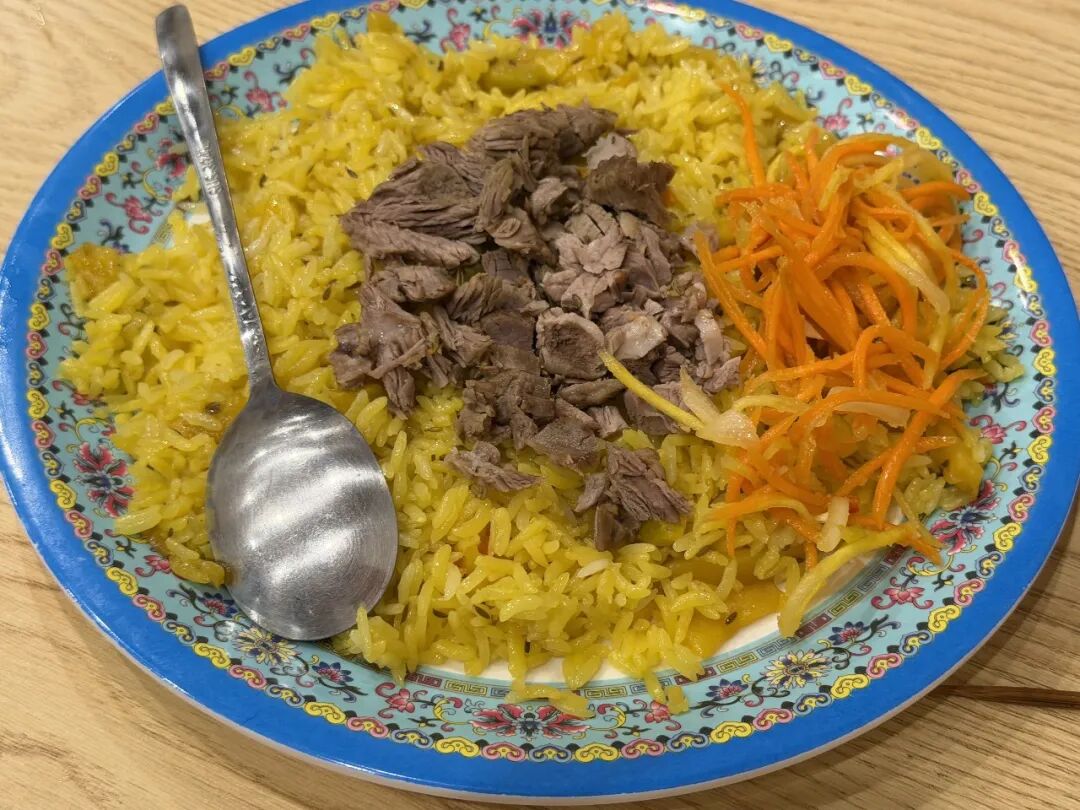
Both the shredded meat zhua fan and the lamb chop zhua fan are super tasty. Even though the portions are kind of small, you can get free refills on the rice.
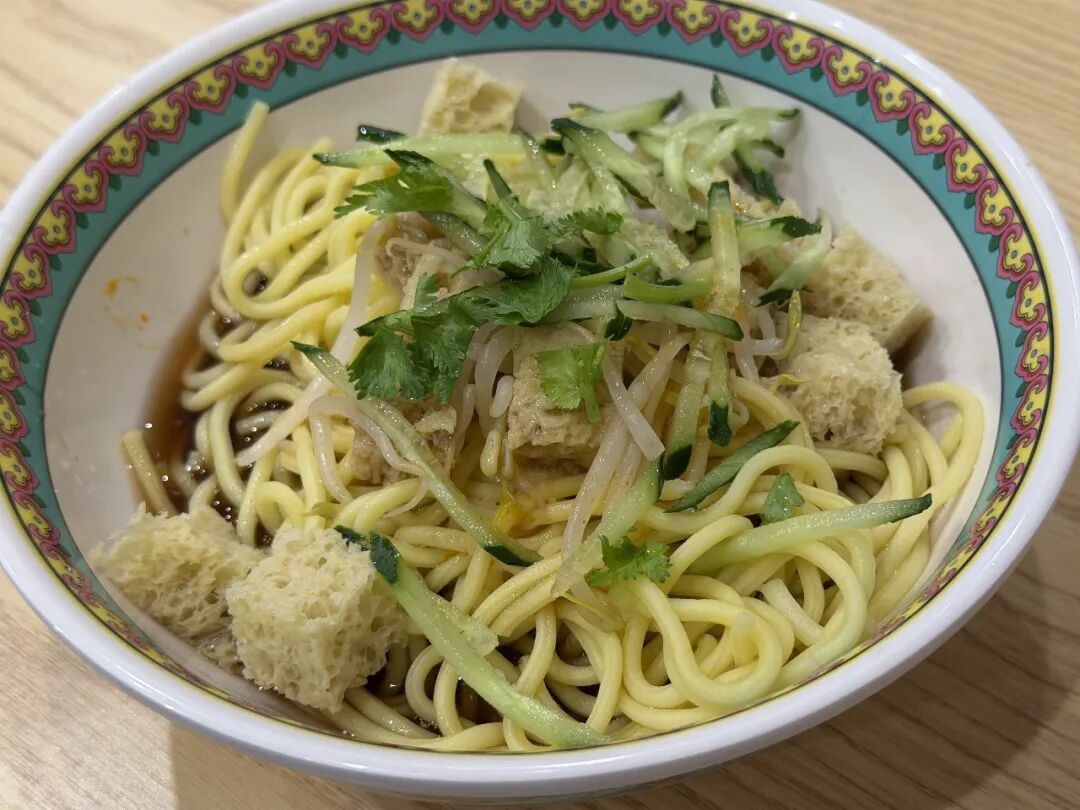
For the huangmian, you can choose between cold-dressed or hot-gravy styles. That said, the noodles are probably store-bought and pre-made, so they lack that springy texture. You're honestly better off just sticking to the zhua fan here.
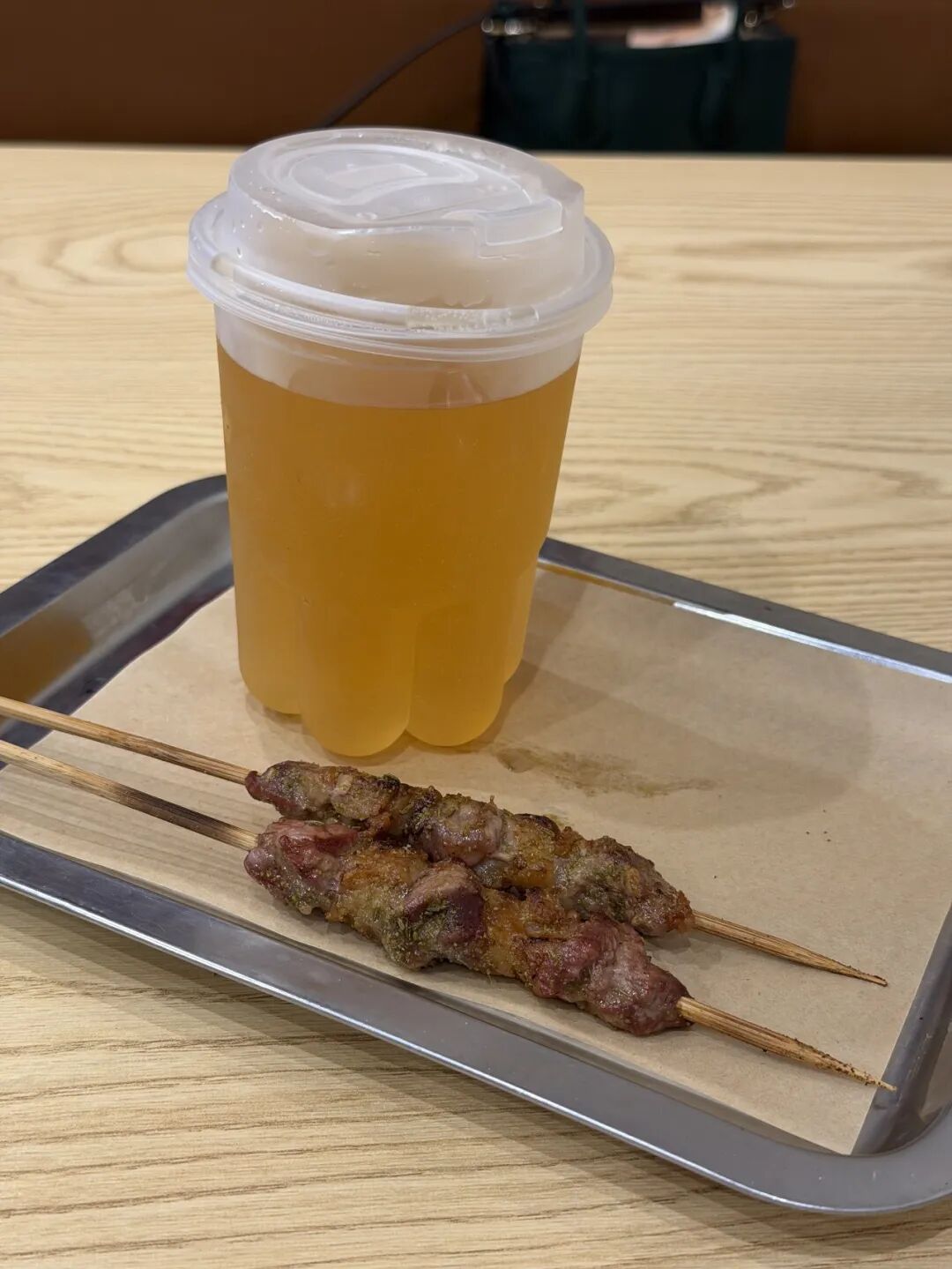
The skewers are totally fire—Uyghur folks seriously have a natural talent for making amazing BBQ. But their kavas (traditional fermented honey drink) is way too sweet and lacks carbonation, tasting pretty much like sugary water.
5. Wushu Tianjin Halal Eatery
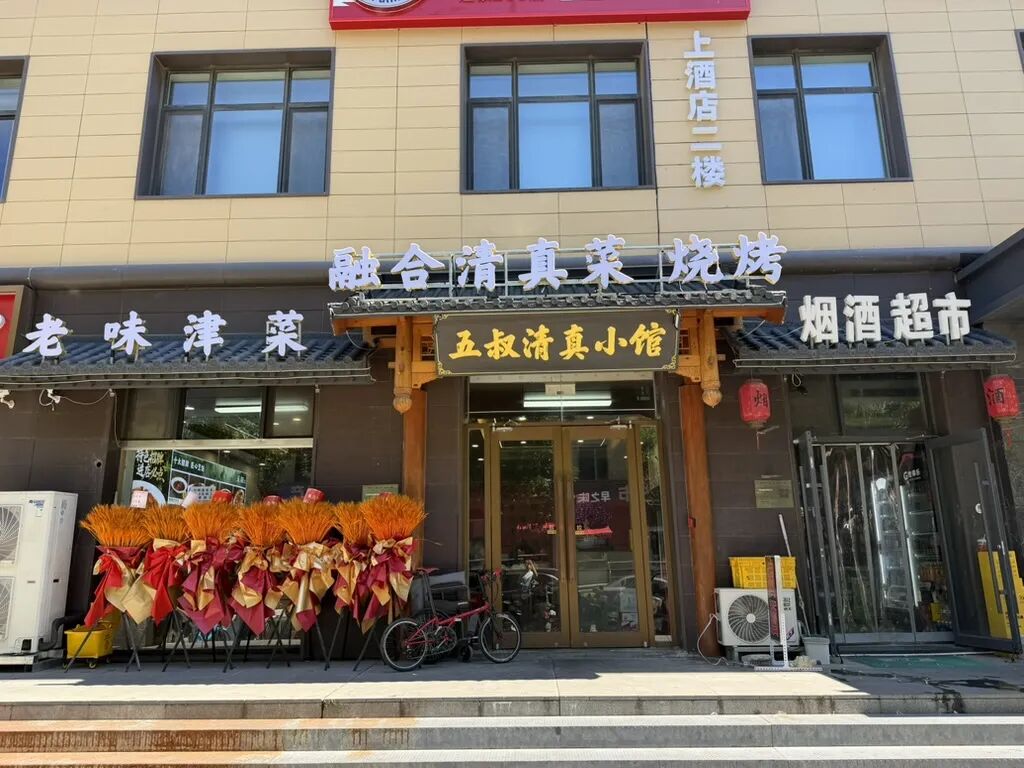
This is a newly opened Tianjin-style halal spot in Wangsiying. Over the past couple of years, Beijing has suddenly had a few Tianjin halal restaurants pop up. Honestly, I'm not usually into traditional Tianjin flavors because I find them way too oily and salty, plus the portions at Tianjin places are massive and always end up going to waste.
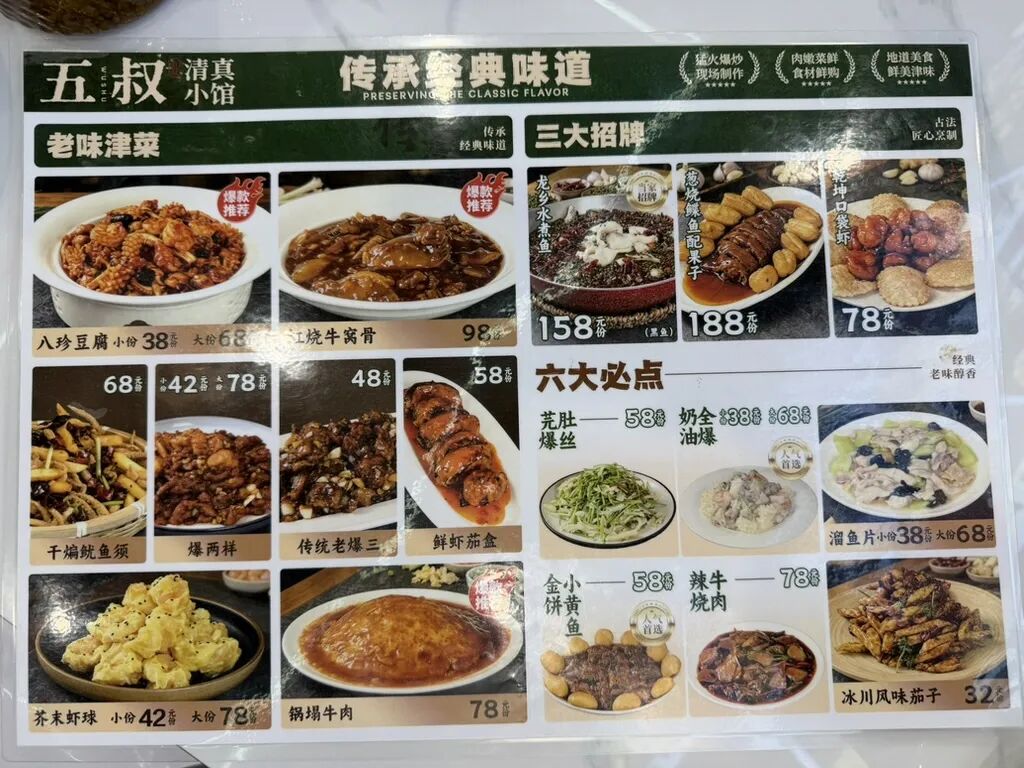
To be fair, their food is actually decent—not overly salty, just huge portions. Aside from classic Tianjin dishes, they've also added a dish of haichang laofan (sea cucumber rice to the menu).
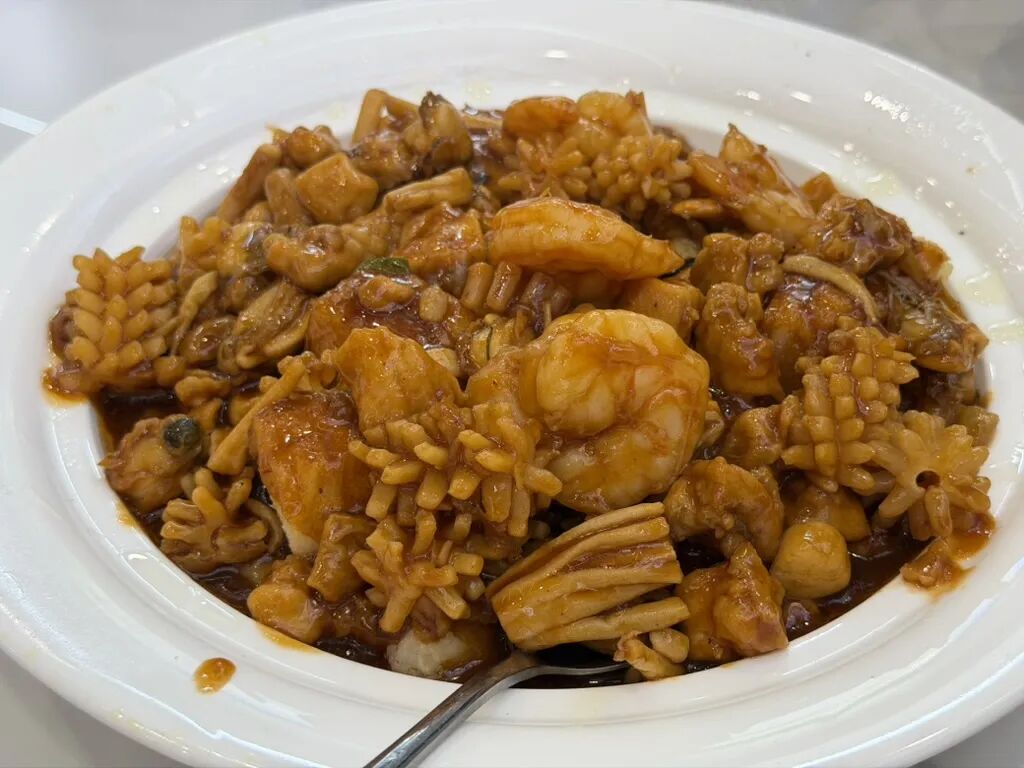
Bawei doufu (eight-treasure tofu) is one of my personal favorites. It's packed with all kinds of ingredients, and a single plate is big enough for four people.
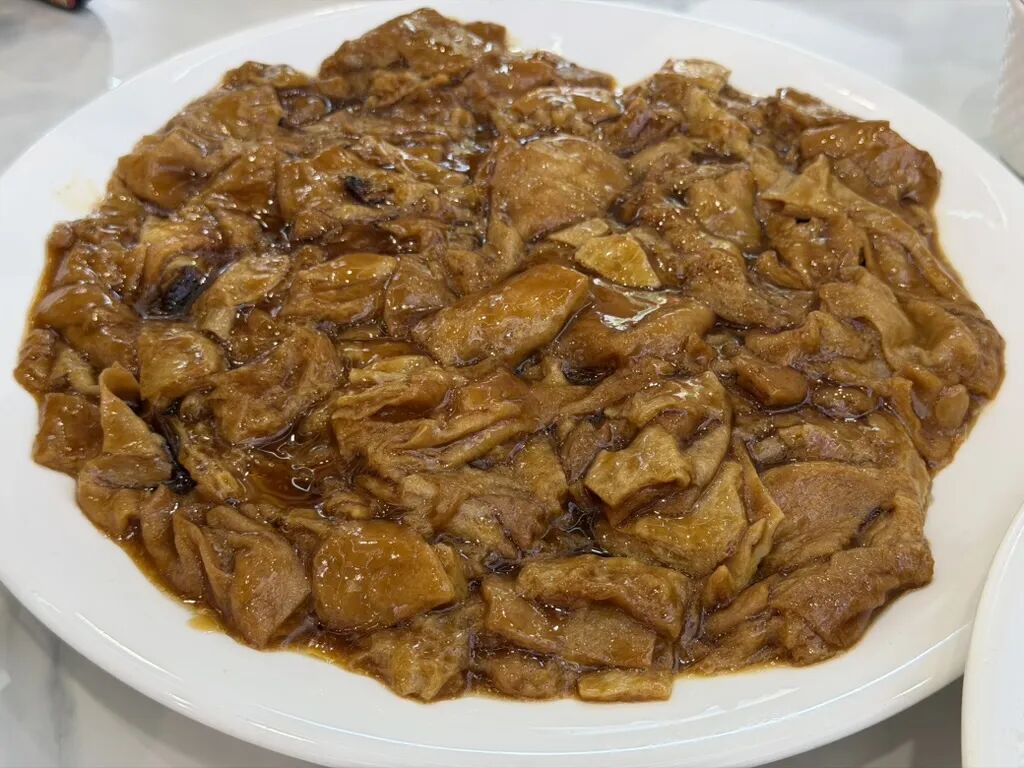
The du mianjin (braised wheat gluten) and damu yu (dab Sole fish) were not good. The gluten was okay, but the fish was seriously bad. It was just a fixed part of the set meal so I couldn't swap it out, even though I really wanted to change it for the haichang laofan.
This spot is pretty convenient since there's parking right in the courtyard. The prices are cheap, and the per-person cost stays under a hundred bucks.
6. Jianbing Tianxia
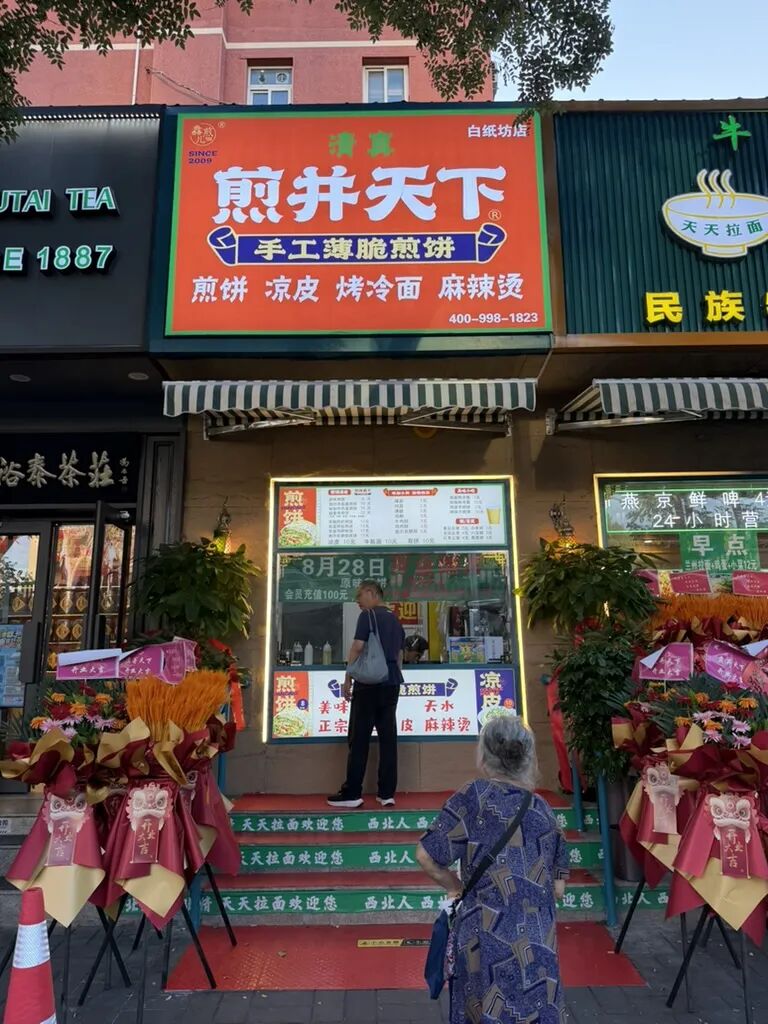
A new jianbing (savory Chinese crepe) stall just popped up right next to the Northwest lamian (hand-pulled noodles) spot in Yazhiqiao. Jianbing Tianxia is a chain brand, but this particular location is the only halal one.
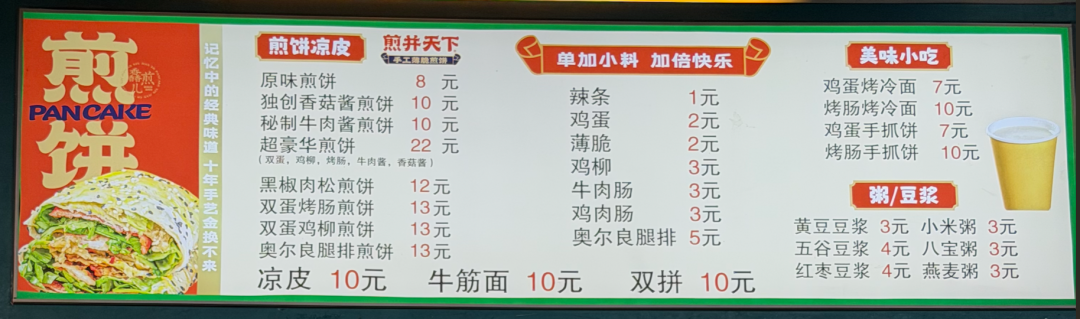
They've got a few types of jianbing, plus you can get kaolengmian (grilled cold noodles) and shouzhuabing (scallion pancakes).
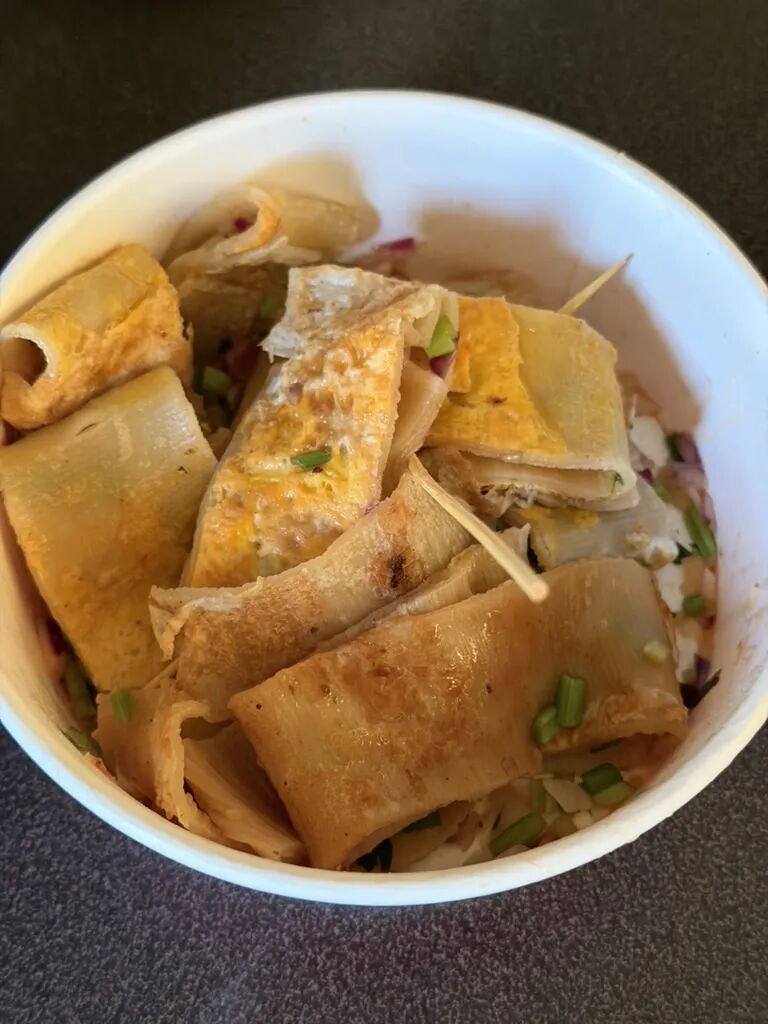
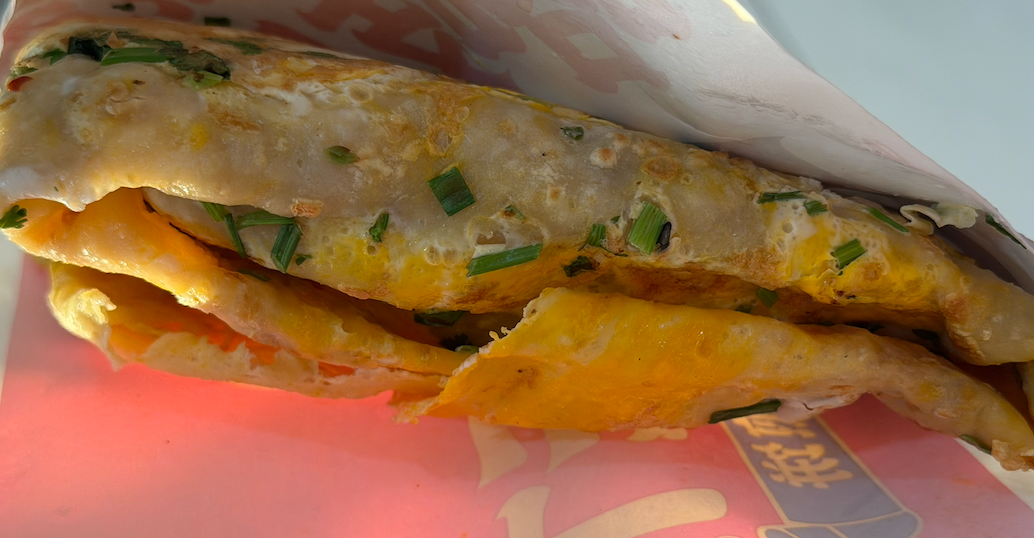
That said, I think their jianbing is the best choice. The grilled cold noodles are just so-so, and for the jianbing, I definitely recommend the beef sauce flavor.
7. Anji Xiaochu
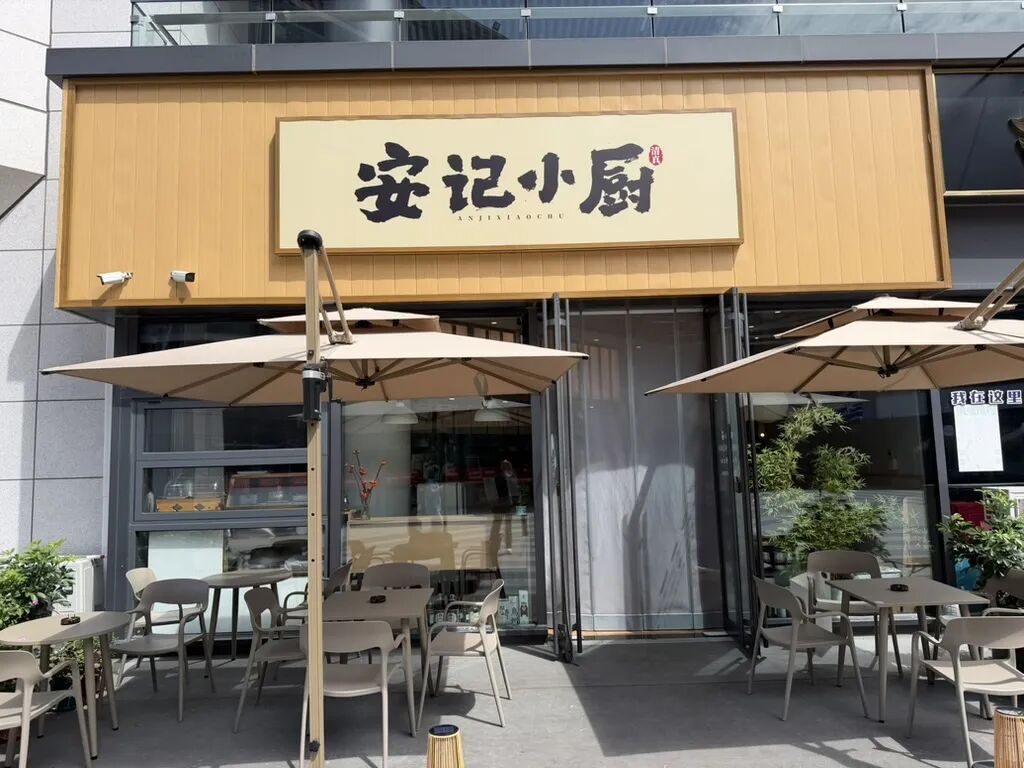
This is a halal Japanese restaurant opened in Shunyi. The owner is a Hui Muslim from Haidian, and the menu mainly features classic Japanese dishes like sushi and unagi don (eel rice), alongside some Beijing-style home-cooked favorites.
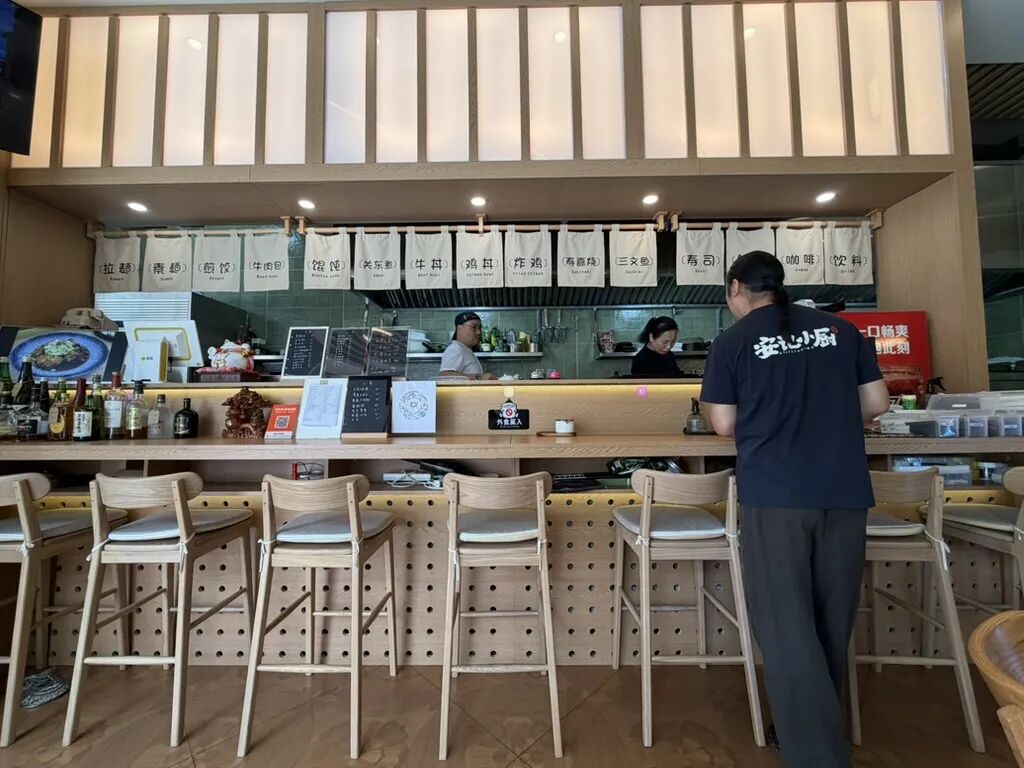
The interior design is super minimal, the vibe is really comfy, and the service is warm and attentive.
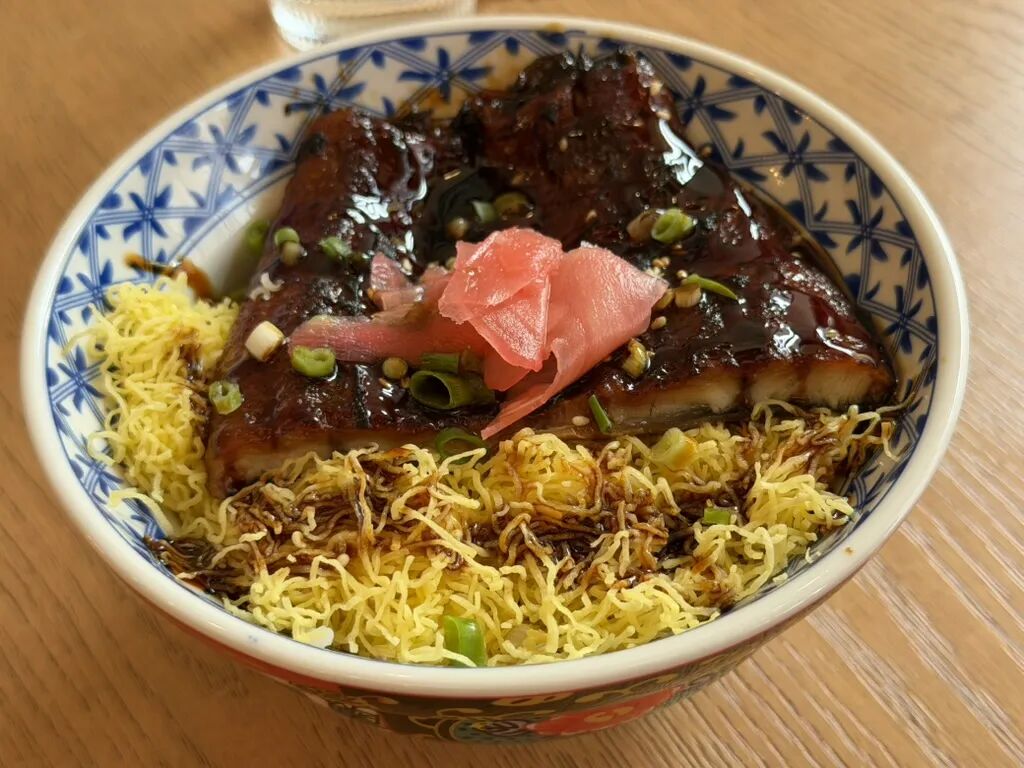
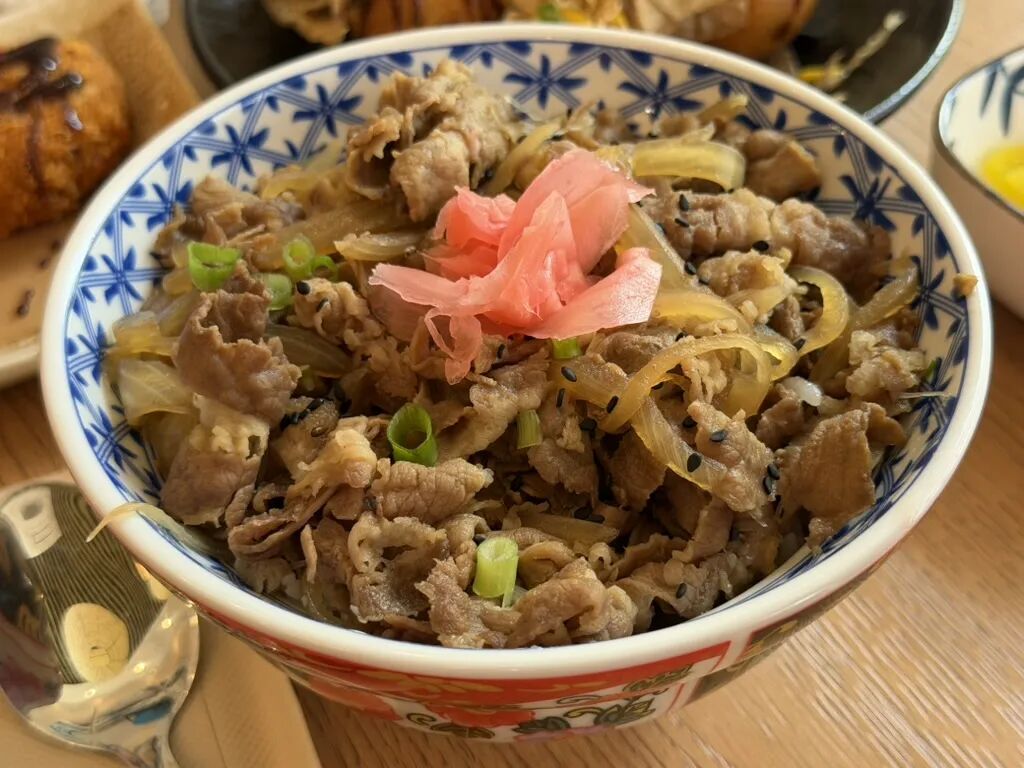
Their signature eel rice and beef gyudon (beef bowl) are both legit; the eel rice has a nice sweet touch to it.
It’s not every day I make the trip out here, so I stuck with their Japanese menu, but my friends have tried their Beijing-style dishes and said those are great too.
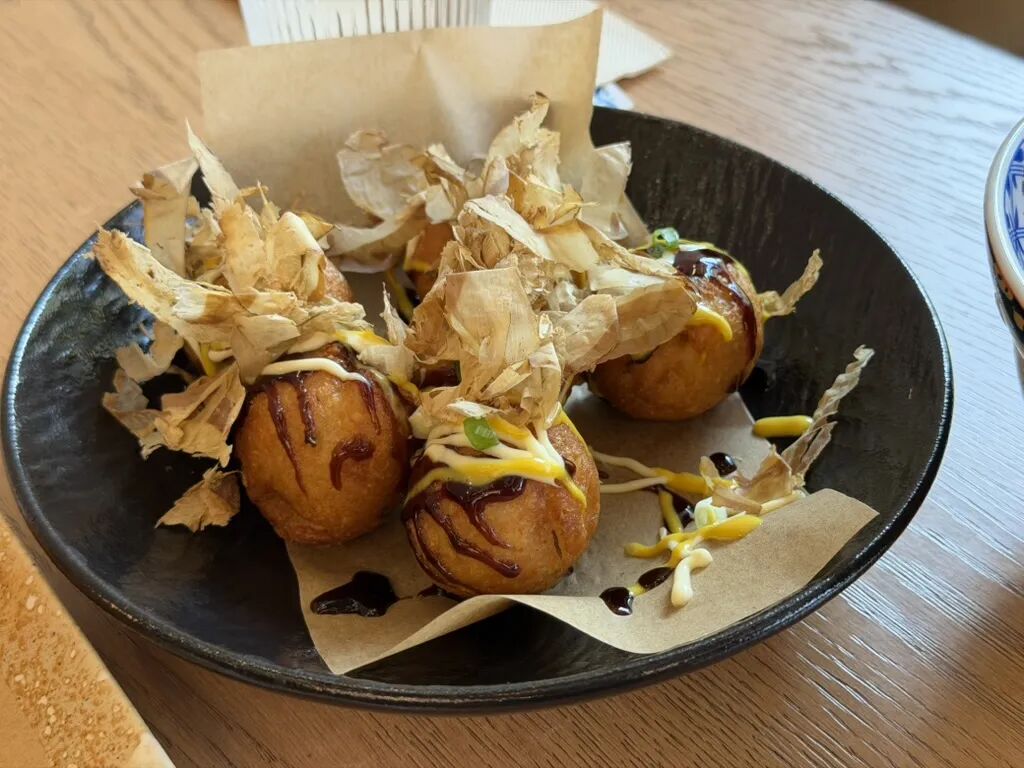
The takoyaki (octopus balls) and potato croquettes are also tasty—definitely a spot to bring the kids. Aside from this place, the only other Halal Japanese spot left in Beijing is Niushi Yakiniku (Japanese-style grilled meat), so enjoy it while it’s still around.
8. Sheikh Classic Beef Noodles
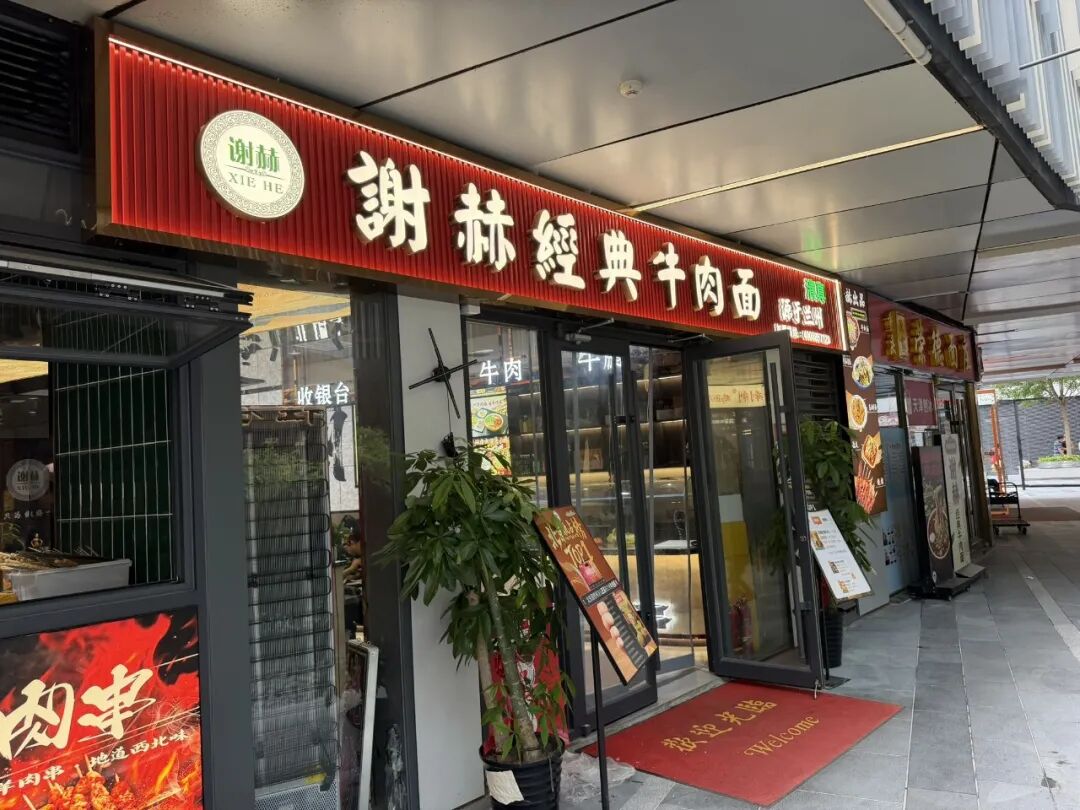
Sheikh Beef Noodles recently opened two new spots at the same time in Sanlitun and Beiqijia. It’s a Lanzhou-based noodle brand that already has shops back home, and the Beiqijia location is their flagship store. I went to the Sanlitun branch.
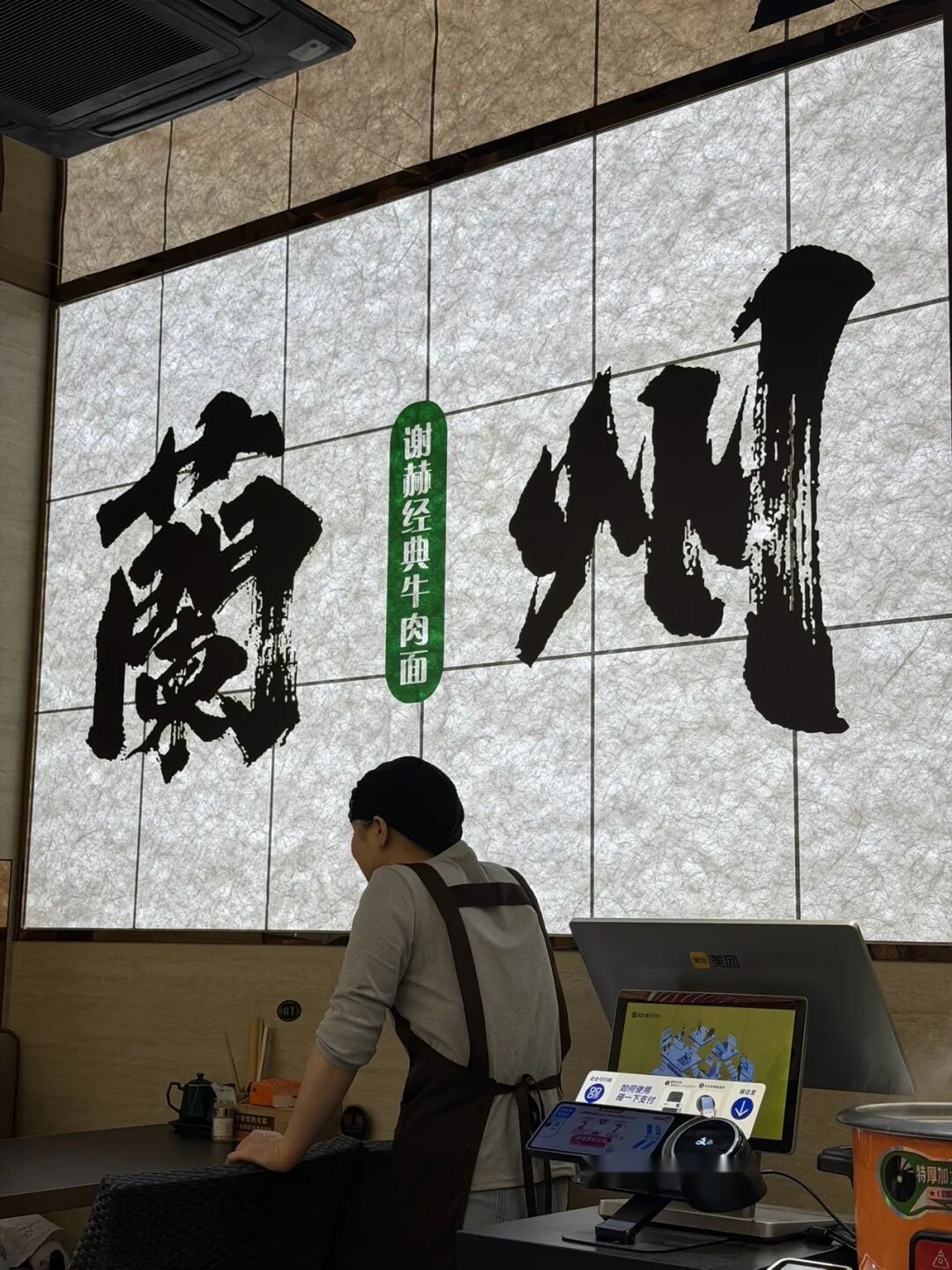
After some friends from Lanzhou checked it out, they agreed the taste is pretty much spot on with what you get back in Lanzhou. It’s great to have a few authentic Lanzhou beef noodle spots here in Beijing.
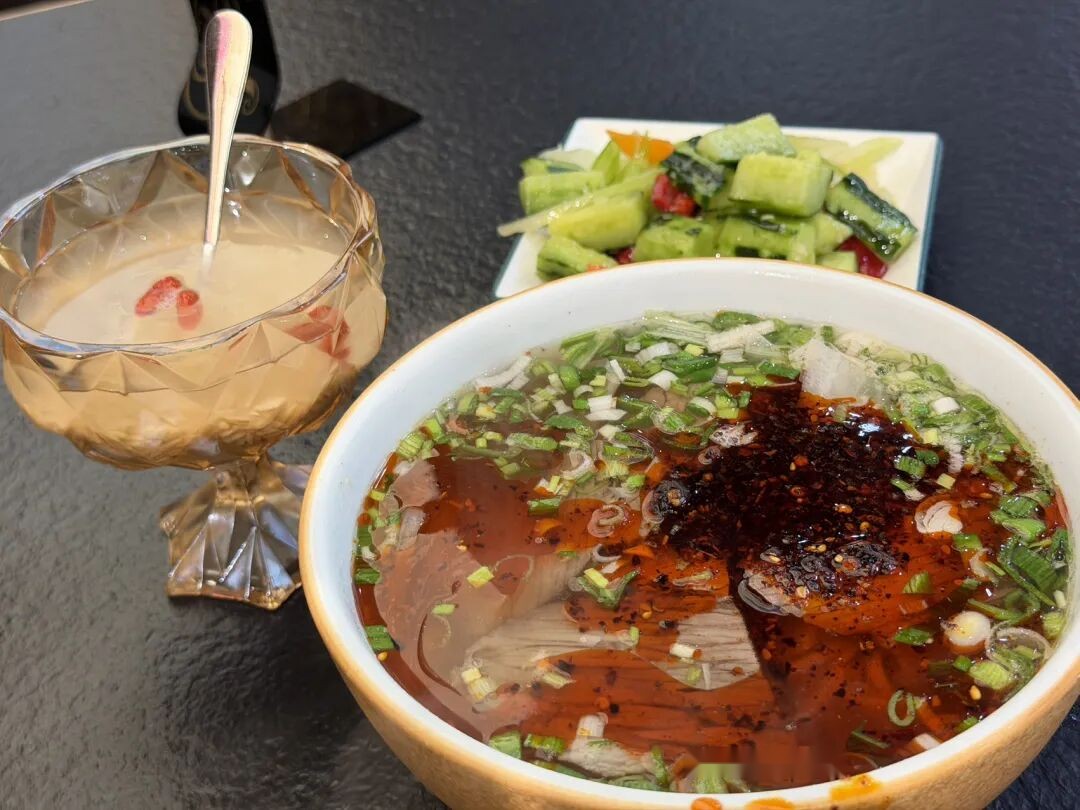
I’ve tried it myself and honestly, it’s delicious—the broth, the beef, and the chili oil are all totally authentic.
Check out 44 real-deal photos from the 63rd installment of our Beijing Halal food guide. We're covering Shengbaozhai Niujie Alley Noodle House, the Northwestern flavors at Moyan Dunhuang Lou, signature shouzhua fan (hand-grabbed rice), and Uncle Wu's Tianjin-style home-cooked halal meals, taking you on a tour of the most authentic halal eats tucked away in Beijing's hidden alleys.
1. Shengbaozhai Niujie Alley Noodle House
2. Moyan Dunhuang Lou
3. Kaorou Liu (Liu's Barbecue)
4. Zhua Ge Fan Fan (Grab That Rice)
5. Uncle Wu's Tianjin Halal Diner
6. Jian Bing Tian Xia (The World of Crepes)
7. Anji Small Kitchen
8. Xiehe Classic Beef Noodles
9. Shengbaozhai Niujie Alley Noodle House
When you see the signature stir-fried chicken, you know it's run by folks from Shandong. This spot is located in Chunfeng Alley in Niujie; it's only been open for two weeks and specializes in various hand-pulled noodles with savory toppings.
A major highlight here is the Linyi caijianbing (savory vegetable crepe). I've shared two other Tengzhou-style crepe spots before, and while the Linyi version is similar, I feel like this place gives you a better deal.
These noodle bowls topped with big chunks of beef are exactly what Beijingers traditionally expect from a beef noodle soup. It's locally called jiaotang niuroumian (beef noodle soup with ladle-poured broth), and the Shandong influence makes total sense.
The priciest item is the stir-fried chicken noodle bowl. The noodles are hand-pulled and have a great, chewy texture, but the topping had a bit of a gamey smell. Also, the green peppers were super spicy—and that was me specifically asking for no peppers! If you can't handle the heat, don't try to be a hero.
The zhajiangmian (soybean paste noodles) and beef noodle soup are classic, homestyle flavors, and the portions are massive—someone with a small appetite definitely won't finish a bowl.
I originally planned on putting away two bowls of noodles, but I ended up struggling to finish even one.
The lamb skewers were just okay—nothing to write home about—but the Linyi caijianbing really made my day.
This crepe is made by pressing two thin layers of dough together with a mix of veggies inside. You can also add egg or sausage, but I prefer the veggie-only version. Once assembled, they press it flat with a wooden board and slice it into four pieces.
The outer layer is crispy, making the whole thing really refreshing, nutritious, and healthy.
2. Moyan Dunhuang Lou
This is a new, more business-casual Gansu-style halal restaurant in Yizhuang. It’s huge and has free parking right out front. Rumor has it they used to specialize in beef noodles, but they’ve moved that fast-food side of the business to the shop next door.
So, if you think the main dining menu is a bit pricey, you can just head to the beef noodle shop right next door.
They have greeters at the door and the service is decent, though it feels like they’re a bit short-staffed; the food comes out slow and it’s often hard to track down a server in the dining hall.
If you check in on social media while at the restaurant, you get free huidouzi (red pea soup) or tianpeizi (fermented sweet oat porridge), both of which are classic Gansu-style desserts.
They sell a variety of seafood like fish, shrimp, and crab, plus sashimi, so it’s not exactly cheap. Since I brought my son, we stuck to what he likes—the burrito-style roll with sanzi (deep-fried dough twists) and braised beef is perfect for kids.
Since my kid's been super into green beans lately, I ordered a non-spicy version with mushrooms, and he totally chowed down on it.
Saoxiang mian (Northwest-style braised noodles) is a total classic from Northwest China, and they actually make it really well here with nice, chewy noodles.
3. Kaorou Liu (Liu's Iron Griddle BBQ)
Kaorou Liu has been around for almost twenty years. It originally started over in Hufangqiao, where I used to grab a bite back in high school. Later on, another spot called Liuji Kaorou opened right across the street. That Liuji isn't affiliated with Kaorou Liu at all, it's not certified halal, and I've never been. Whenever we talk about getting barbecue in Hufangqiao, we always mean this specific Kaorou Liu.
Kaorou Liu has opened a bunch of branches now. The biggest difference between this old Beijing-style zhizi kaorou (iron griddle barbecue) and Qiqihaer barbecue from Northeast China is that zhizi kaorou meat is pre-marinated, so the flavors are a bit heavier.
Our family is pretty big on BBQ, but these days we're way more into that Northeast-style big Qiqihaer BBQ because you can really taste the natural, fresh flavor of the meat.
They've got fried mantou (steamed buns) smeared with chou (stinky tofu). Stinky tofu smells funky but tastes super savory. The older I get, the lighter I like my food, so I pretty much skip this kind of stuff now.
4. Zhuo Ge Fan Fan
This is just a casual Hui Muslim spot for a quick bite of Xinjiang zhua fan (hand-grabbed rice) while running errands. I originally only planned to order some rice for my kid, but we accidentally ended up trying a few extra dishes because we were pleasantly surprised by how good it was.
This place only serves zhua fan, no banmian (hand-pulled noodles), but they do have huangmian (yellow noodles).
Both the shredded meat zhua fan and the lamb chop zhua fan are super tasty. Even though the portions are kind of small, you can get free refills on the rice.
For the huangmian, you can choose between cold-dressed or hot-gravy styles. That said, the noodles are probably store-bought and pre-made, so they lack that springy texture. You're honestly better off just sticking to the zhua fan here.
The skewers are totally fire—Uyghur folks seriously have a natural talent for making amazing BBQ. But their kavas (traditional fermented honey drink) is way too sweet and lacks carbonation, tasting pretty much like sugary water.
5. Wushu Tianjin Halal Eatery
This is a newly opened Tianjin-style halal spot in Wangsiying. Over the past couple of years, Beijing has suddenly had a few Tianjin halal restaurants pop up. Honestly, I'm not usually into traditional Tianjin flavors because I find them way too oily and salty, plus the portions at Tianjin places are massive and always end up going to waste.
To be fair, their food is actually decent—not overly salty, just huge portions. Aside from classic Tianjin dishes, they've also added a dish of haichang laofan (sea cucumber rice to the menu).
Bawei doufu (eight-treasure tofu) is one of my personal favorites. It's packed with all kinds of ingredients, and a single plate is big enough for four people.
The du mianjin (braised wheat gluten) and damu yu (dab Sole fish) were not good. The gluten was okay, but the fish was seriously bad. It was just a fixed part of the set meal so I couldn't swap it out, even though I really wanted to change it for the haichang laofan.
This spot is pretty convenient since there's parking right in the courtyard. The prices are cheap, and the per-person cost stays under a hundred bucks.
6. Jianbing Tianxia
A new jianbing (savory Chinese crepe) stall just popped up right next to the Northwest lamian (hand-pulled noodles) spot in Yazhiqiao. Jianbing Tianxia is a chain brand, but this particular location is the only halal one.
They've got a few types of jianbing, plus you can get kaolengmian (grilled cold noodles) and shouzhuabing (scallion pancakes).
That said, I think their jianbing is the best choice. The grilled cold noodles are just so-so, and for the jianbing, I definitely recommend the beef sauce flavor.
7. Anji Xiaochu
This is a halal Japanese restaurant opened in Shunyi. The owner is a Hui Muslim from Haidian, and the menu mainly features classic Japanese dishes like sushi and unagi don (eel rice), alongside some Beijing-style home-cooked favorites.
The interior design is super minimal, the vibe is really comfy, and the service is warm and attentive.
Their signature eel rice and beef gyudon (beef bowl) are both legit; the eel rice has a nice sweet touch to it.
It’s not every day I make the trip out here, so I stuck with their Japanese menu, but my friends have tried their Beijing-style dishes and said those are great too.
The takoyaki (octopus balls) and potato croquettes are also tasty—definitely a spot to bring the kids. Aside from this place, the only other Halal Japanese spot left in Beijing is Niushi Yakiniku (Japanese-style grilled meat), so enjoy it while it’s still around.
8. Sheikh Classic Beef Noodles
Sheikh Beef Noodles recently opened two new spots at the same time in Sanlitun and Beiqijia. It’s a Lanzhou-based noodle brand that already has shops back home, and the Beiqijia location is their flagship store. I went to the Sanlitun branch.
After some friends from Lanzhou checked it out, they agreed the taste is pretty much spot on with what you get back in Lanzhou. It’s great to have a few authentic Lanzhou beef noodle spots here in Beijing.
I’ve tried it myself and honestly, it’s delicious—the broth, the beef, and the chili oil are all totally authentic.
Best Halal Food in Beijing: Authentic Niujie Alley Eats, Gansu Cuisine, and Hidden Muslim Gems
Articles • Hasan09 posted the article • 0 comments • 11 views • 9 hours ago
[Internet Repost]
Check out 44 real-deal photos from the 63rd installment of our Beijing Halal food guide. We're covering Shengbaozhai Niujie Alley Noodle House, the Northwestern flavors at Moyan Dunhuang Lou, signature shouzhua fan (hand-grabbed rice), and Uncle Wu's Tianjin-style home-cooked halal meals, taking you on a tour of the most authentic halal eats tucked away in Beijing's hidden alleys.
1. Shengbaozhai Niujie Alley Noodle House
2. Moyan Dunhuang Lou
3. Kaorou Liu (Liu's Barbecue)
4. Zhua Ge Fan Fan (Grab That Rice)
5. Uncle Wu's Tianjin Halal Diner
6. Jian Bing Tian Xia (The World of Crepes)
7. Anji Small Kitchen
8. Xiehe Classic Beef Noodles
9. Shengbaozhai Niujie Alley Noodle House
When you see the signature stir-fried chicken, you know it's run by folks from Shandong. This spot is located in Chunfeng Alley in Niujie; it's only been open for two weeks and specializes in various hand-pulled noodles with savory toppings.
A major highlight here is the Linyi caijianbing (savory vegetable crepe). I've shared two other Tengzhou-style crepe spots before, and while the Linyi version is similar, I feel like this place gives you a better deal.
These noodle bowls topped with big chunks of beef are exactly what Beijingers traditionally expect from a beef noodle soup. It's locally called jiaotang niuroumian (beef noodle soup with ladle-poured broth), and the Shandong influence makes total sense.
The priciest item is the stir-fried chicken noodle bowl. The noodles are hand-pulled and have a great, chewy texture, but the topping had a bit of a gamey smell. Also, the green peppers were super spicy—and that was me specifically asking for no peppers! If you can't handle the heat, don't try to be a hero.
The zhajiangmian (soybean paste noodles) and beef noodle soup are classic, homestyle flavors, and the portions are massive—someone with a small appetite definitely won't finish a bowl.
I originally planned on putting away two bowls of noodles, but I ended up struggling to finish even one.
The lamb skewers were just okay—nothing to write home about—but the Linyi caijianbing really made my day.
This crepe is made by pressing two thin layers of dough together with a mix of veggies inside. You can also add egg or sausage, but I prefer the veggie-only version. Once assembled, they press it flat with a wooden board and slice it into four pieces.
The outer layer is crispy, making the whole thing really refreshing, nutritious, and healthy.
2. Moyan Dunhuang Lou
This is a new, more business-casual Gansu-style halal restaurant in Yizhuang. It’s huge and has free parking right out front. Rumor has it they used to specialize in beef noodles, but they’ve moved that fast-food side of the business to the shop next door.
So, if you think the main dining menu is a bit pricey, you can just head to the beef noodle shop right next door.
They have greeters at the door and the service is decent, though it feels like they’re a bit short-staffed; the food comes out slow and it’s often hard to track down a server in the dining hall.
If you check in on social media while at the restaurant, you get free huidouzi (red pea soup) or tianpeizi (fermented sweet oat porridge), both of which are classic Gansu-style desserts.
They sell a variety of seafood like fish, shrimp, and crab, plus sashimi, so it’s not exactly cheap. Since I brought my son, we stuck to what he likes—the burrito-style roll with sanzi (deep-fried dough twists) and braised beef is perfect for kids.
Since my kid's been super into green beans lately, I ordered a non-spicy version with mushrooms, and he totally chowed down on it.
Saoxiang mian (Northwest-style braised noodles) is a total classic from Northwest China, and they actually make it really well here with nice, chewy noodles.
3. Kaorou Liu (Liu's Iron Griddle BBQ)
Kaorou Liu has been around for almost twenty years. It originally started over in Hufangqiao, where I used to grab a bite back in high school. Later on, another spot called Liuji Kaorou opened right across the street. That Liuji isn't affiliated with Kaorou Liu at all, it's not certified halal, and I've never been. Whenever we talk about getting barbecue in Hufangqiao, we always mean this specific Kaorou Liu.
Kaorou Liu has opened a bunch of branches now. The biggest difference between this old Beijing-style zhizi kaorou (iron griddle barbecue) and Qiqihaer barbecue from Northeast China is that zhizi kaorou meat is pre-marinated, so the flavors are a bit heavier.
Our family is pretty big on BBQ, but these days we're way more into that Northeast-style big Qiqihaer BBQ because you can really taste the natural, fresh flavor of the meat.
They've got fried mantou (steamed buns) smeared with chou (stinky tofu). Stinky tofu smells funky but tastes super savory. The older I get, the lighter I like my food, so I pretty much skip this kind of stuff now.
4. Zhuo Ge Fan Fan
This is just a casual Hui Muslim spot for a quick bite of Xinjiang zhua fan (hand-grabbed rice) while running errands. I originally only planned to order some rice for my kid, but we accidentally ended up trying a few extra dishes because we were pleasantly surprised by how good it was.
This place only serves zhua fan, no banmian (hand-pulled noodles), but they do have huangmian (yellow noodles).
Both the shredded meat zhua fan and the lamb chop zhua fan are super tasty. Even though the portions are kind of small, you can get free refills on the rice.
For the huangmian, you can choose between cold-dressed or hot-gravy styles. That said, the noodles are probably store-bought and pre-made, so they lack that springy texture. You're honestly better off just sticking to the zhua fan here.
The skewers are totally fire—Uyghur folks seriously have a natural talent for making amazing BBQ. But their kavas (traditional fermented honey drink) is way too sweet and lacks carbonation, tasting pretty much like sugary water.
5. Wushu Tianjin Halal Eatery
This is a newly opened Tianjin-style halal spot in Wangsiying. Over the past couple of years, Beijing has suddenly had a few Tianjin halal restaurants pop up. Honestly, I'm not usually into traditional Tianjin flavors because I find them way too oily and salty, plus the portions at Tianjin places are massive and always end up going to waste.
To be fair, their food is actually decent—not overly salty, just huge portions. Aside from classic Tianjin dishes, they've also added a dish of haichang laofan (sea cucumber rice to the menu).
Bawei doufu (eight-treasure tofu) is one of my personal favorites. It's packed with all kinds of ingredients, and a single plate is big enough for four people.
The du mianjin (braised wheat gluten) and damu yu (dab Sole fish) were not good. The gluten was okay, but the fish was seriously bad. It was just a fixed part of the set meal so I couldn't swap it out, even though I really wanted to change it for the haichang laofan.
This spot is pretty convenient since there's parking right in the courtyard. The prices are cheap, and the per-person cost stays under a hundred bucks.
6. Jianbing Tianxia
A new jianbing (savory Chinese crepe) stall just popped up right next to the Northwest lamian (hand-pulled noodles) spot in Yazhiqiao. Jianbing Tianxia is a chain brand, but this particular location is the only halal one.
They've got a few types of jianbing, plus you can get kaolengmian (grilled cold noodles) and shouzhuabing (scallion pancakes).
That said, I think their jianbing is the best choice. The grilled cold noodles are just so-so, and for the jianbing, I definitely recommend the beef sauce flavor.
7. Anji Xiaochu
This is a halal Japanese restaurant opened in Shunyi. The owner is a Hui Muslim from Haidian, and the menu mainly features classic Japanese dishes like sushi and unagi don (eel rice), alongside some Beijing-style home-cooked favorites.
The interior design is super minimal, the vibe is really comfy, and the service is warm and attentive.
Their signature eel rice and beef gyudon (beef bowl) are both legit; the eel rice has a nice sweet touch to it.
It’s not every day I make the trip out here, so I stuck with their Japanese menu, but my friends have tried their Beijing-style dishes and said those are great too.
The takoyaki (octopus balls) and potato croquettes are also tasty—definitely a spot to bring the kids. Aside from this place, the only other Halal Japanese spot left in Beijing is Niushi Yakiniku (Japanese-style grilled meat), so enjoy it while it’s still around.
8. Sheikh Classic Beef Noodles
Sheikh Beef Noodles recently opened two new spots at the same time in Sanlitun and Beiqijia. It’s a Lanzhou-based noodle brand that already has shops back home, and the Beiqijia location is their flagship store. I went to the Sanlitun branch.
After some friends from Lanzhou checked it out, they agreed the taste is pretty much spot on with what you get back in Lanzhou. It’s great to have a few authentic Lanzhou beef noodle spots here in Beijing.
I’ve tried it myself and honestly, it’s delicious—the broth, the beef, and the chili oil are all totally authentic. view all
Check out 44 real-deal photos from the 63rd installment of our Beijing Halal food guide. We're covering Shengbaozhai Niujie Alley Noodle House, the Northwestern flavors at Moyan Dunhuang Lou, signature shouzhua fan (hand-grabbed rice), and Uncle Wu's Tianjin-style home-cooked halal meals, taking you on a tour of the most authentic halal eats tucked away in Beijing's hidden alleys.
1. Shengbaozhai Niujie Alley Noodle House
2. Moyan Dunhuang Lou
3. Kaorou Liu (Liu's Barbecue)
4. Zhua Ge Fan Fan (Grab That Rice)
5. Uncle Wu's Tianjin Halal Diner
6. Jian Bing Tian Xia (The World of Crepes)
7. Anji Small Kitchen
8. Xiehe Classic Beef Noodles
9. Shengbaozhai Niujie Alley Noodle House
When you see the signature stir-fried chicken, you know it's run by folks from Shandong. This spot is located in Chunfeng Alley in Niujie; it's only been open for two weeks and specializes in various hand-pulled noodles with savory toppings.
A major highlight here is the Linyi caijianbing (savory vegetable crepe). I've shared two other Tengzhou-style crepe spots before, and while the Linyi version is similar, I feel like this place gives you a better deal.
These noodle bowls topped with big chunks of beef are exactly what Beijingers traditionally expect from a beef noodle soup. It's locally called jiaotang niuroumian (beef noodle soup with ladle-poured broth), and the Shandong influence makes total sense.
The priciest item is the stir-fried chicken noodle bowl. The noodles are hand-pulled and have a great, chewy texture, but the topping had a bit of a gamey smell. Also, the green peppers were super spicy—and that was me specifically asking for no peppers! If you can't handle the heat, don't try to be a hero.
The zhajiangmian (soybean paste noodles) and beef noodle soup are classic, homestyle flavors, and the portions are massive—someone with a small appetite definitely won't finish a bowl.
I originally planned on putting away two bowls of noodles, but I ended up struggling to finish even one.
The lamb skewers were just okay—nothing to write home about—but the Linyi caijianbing really made my day.
This crepe is made by pressing two thin layers of dough together with a mix of veggies inside. You can also add egg or sausage, but I prefer the veggie-only version. Once assembled, they press it flat with a wooden board and slice it into four pieces.
The outer layer is crispy, making the whole thing really refreshing, nutritious, and healthy.
2. Moyan Dunhuang Lou
This is a new, more business-casual Gansu-style halal restaurant in Yizhuang. It’s huge and has free parking right out front. Rumor has it they used to specialize in beef noodles, but they’ve moved that fast-food side of the business to the shop next door.
So, if you think the main dining menu is a bit pricey, you can just head to the beef noodle shop right next door.
They have greeters at the door and the service is decent, though it feels like they’re a bit short-staffed; the food comes out slow and it’s often hard to track down a server in the dining hall.
If you check in on social media while at the restaurant, you get free huidouzi (red pea soup) or tianpeizi (fermented sweet oat porridge), both of which are classic Gansu-style desserts.
They sell a variety of seafood like fish, shrimp, and crab, plus sashimi, so it’s not exactly cheap. Since I brought my son, we stuck to what he likes—the burrito-style roll with sanzi (deep-fried dough twists) and braised beef is perfect for kids.
Since my kid's been super into green beans lately, I ordered a non-spicy version with mushrooms, and he totally chowed down on it.
Saoxiang mian (Northwest-style braised noodles) is a total classic from Northwest China, and they actually make it really well here with nice, chewy noodles.
3. Kaorou Liu (Liu's Iron Griddle BBQ)
Kaorou Liu has been around for almost twenty years. It originally started over in Hufangqiao, where I used to grab a bite back in high school. Later on, another spot called Liuji Kaorou opened right across the street. That Liuji isn't affiliated with Kaorou Liu at all, it's not certified halal, and I've never been. Whenever we talk about getting barbecue in Hufangqiao, we always mean this specific Kaorou Liu.
Kaorou Liu has opened a bunch of branches now. The biggest difference between this old Beijing-style zhizi kaorou (iron griddle barbecue) and Qiqihaer barbecue from Northeast China is that zhizi kaorou meat is pre-marinated, so the flavors are a bit heavier.
Our family is pretty big on BBQ, but these days we're way more into that Northeast-style big Qiqihaer BBQ because you can really taste the natural, fresh flavor of the meat.
They've got fried mantou (steamed buns) smeared with chou (stinky tofu). Stinky tofu smells funky but tastes super savory. The older I get, the lighter I like my food, so I pretty much skip this kind of stuff now.
4. Zhuo Ge Fan Fan
This is just a casual Hui Muslim spot for a quick bite of Xinjiang zhua fan (hand-grabbed rice) while running errands. I originally only planned to order some rice for my kid, but we accidentally ended up trying a few extra dishes because we were pleasantly surprised by how good it was.
This place only serves zhua fan, no banmian (hand-pulled noodles), but they do have huangmian (yellow noodles).
Both the shredded meat zhua fan and the lamb chop zhua fan are super tasty. Even though the portions are kind of small, you can get free refills on the rice.
For the huangmian, you can choose between cold-dressed or hot-gravy styles. That said, the noodles are probably store-bought and pre-made, so they lack that springy texture. You're honestly better off just sticking to the zhua fan here.
The skewers are totally fire—Uyghur folks seriously have a natural talent for making amazing BBQ. But their kavas (traditional fermented honey drink) is way too sweet and lacks carbonation, tasting pretty much like sugary water.
5. Wushu Tianjin Halal Eatery
This is a newly opened Tianjin-style halal spot in Wangsiying. Over the past couple of years, Beijing has suddenly had a few Tianjin halal restaurants pop up. Honestly, I'm not usually into traditional Tianjin flavors because I find them way too oily and salty, plus the portions at Tianjin places are massive and always end up going to waste.
To be fair, their food is actually decent—not overly salty, just huge portions. Aside from classic Tianjin dishes, they've also added a dish of haichang laofan (sea cucumber rice to the menu).
Bawei doufu (eight-treasure tofu) is one of my personal favorites. It's packed with all kinds of ingredients, and a single plate is big enough for four people.
The du mianjin (braised wheat gluten) and damu yu (dab Sole fish) were not good. The gluten was okay, but the fish was seriously bad. It was just a fixed part of the set meal so I couldn't swap it out, even though I really wanted to change it for the haichang laofan.
This spot is pretty convenient since there's parking right in the courtyard. The prices are cheap, and the per-person cost stays under a hundred bucks.
6. Jianbing Tianxia
A new jianbing (savory Chinese crepe) stall just popped up right next to the Northwest lamian (hand-pulled noodles) spot in Yazhiqiao. Jianbing Tianxia is a chain brand, but this particular location is the only halal one.
They've got a few types of jianbing, plus you can get kaolengmian (grilled cold noodles) and shouzhuabing (scallion pancakes).
That said, I think their jianbing is the best choice. The grilled cold noodles are just so-so, and for the jianbing, I definitely recommend the beef sauce flavor.
7. Anji Xiaochu
This is a halal Japanese restaurant opened in Shunyi. The owner is a Hui Muslim from Haidian, and the menu mainly features classic Japanese dishes like sushi and unagi don (eel rice), alongside some Beijing-style home-cooked favorites.
The interior design is super minimal, the vibe is really comfy, and the service is warm and attentive.
Their signature eel rice and beef gyudon (beef bowl) are both legit; the eel rice has a nice sweet touch to it.
It’s not every day I make the trip out here, so I stuck with their Japanese menu, but my friends have tried their Beijing-style dishes and said those are great too.
The takoyaki (octopus balls) and potato croquettes are also tasty—definitely a spot to bring the kids. Aside from this place, the only other Halal Japanese spot left in Beijing is Niushi Yakiniku (Japanese-style grilled meat), so enjoy it while it’s still around.
8. Sheikh Classic Beef Noodles
Sheikh Beef Noodles recently opened two new spots at the same time in Sanlitun and Beiqijia. It’s a Lanzhou-based noodle brand that already has shops back home, and the Beiqijia location is their flagship store. I went to the Sanlitun branch.
After some friends from Lanzhou checked it out, they agreed the taste is pretty much spot on with what you get back in Lanzhou. It’s great to have a few authentic Lanzhou beef noodle spots here in Beijing.
I’ve tried it myself and honestly, it’s delicious—the broth, the beef, and the chili oil are all totally authentic. view all
[Internet Repost]
Check out 44 real-deal photos from the 63rd installment of our Beijing Halal food guide. We're covering Shengbaozhai Niujie Alley Noodle House, the Northwestern flavors at Moyan Dunhuang Lou, signature shouzhua fan (hand-grabbed rice), and Uncle Wu's Tianjin-style home-cooked halal meals, taking you on a tour of the most authentic halal eats tucked away in Beijing's hidden alleys.
1. Shengbaozhai Niujie Alley Noodle House
2. Moyan Dunhuang Lou
3. Kaorou Liu (Liu's Barbecue)
4. Zhua Ge Fan Fan (Grab That Rice)
5. Uncle Wu's Tianjin Halal Diner
6. Jian Bing Tian Xia (The World of Crepes)
7. Anji Small Kitchen
8. Xiehe Classic Beef Noodles
9. Shengbaozhai Niujie Alley Noodle House
When you see the signature stir-fried chicken, you know it's run by folks from Shandong. This spot is located in Chunfeng Alley in Niujie; it's only been open for two weeks and specializes in various hand-pulled noodles with savory toppings.
A major highlight here is the Linyi caijianbing (savory vegetable crepe). I've shared two other Tengzhou-style crepe spots before, and while the Linyi version is similar, I feel like this place gives you a better deal.
These noodle bowls topped with big chunks of beef are exactly what Beijingers traditionally expect from a beef noodle soup. It's locally called jiaotang niuroumian (beef noodle soup with ladle-poured broth), and the Shandong influence makes total sense.
The priciest item is the stir-fried chicken noodle bowl. The noodles are hand-pulled and have a great, chewy texture, but the topping had a bit of a gamey smell. Also, the green peppers were super spicy—and that was me specifically asking for no peppers! If you can't handle the heat, don't try to be a hero.
The zhajiangmian (soybean paste noodles) and beef noodle soup are classic, homestyle flavors, and the portions are massive—someone with a small appetite definitely won't finish a bowl.
I originally planned on putting away two bowls of noodles, but I ended up struggling to finish even one.
The lamb skewers were just okay—nothing to write home about—but the Linyi caijianbing really made my day.
This crepe is made by pressing two thin layers of dough together with a mix of veggies inside. You can also add egg or sausage, but I prefer the veggie-only version. Once assembled, they press it flat with a wooden board and slice it into four pieces.
The outer layer is crispy, making the whole thing really refreshing, nutritious, and healthy.
2. Moyan Dunhuang Lou
This is a new, more business-casual Gansu-style halal restaurant in Yizhuang. It’s huge and has free parking right out front. Rumor has it they used to specialize in beef noodles, but they’ve moved that fast-food side of the business to the shop next door.
So, if you think the main dining menu is a bit pricey, you can just head to the beef noodle shop right next door.
They have greeters at the door and the service is decent, though it feels like they’re a bit short-staffed; the food comes out slow and it’s often hard to track down a server in the dining hall.
If you check in on social media while at the restaurant, you get free huidouzi (red pea soup) or tianpeizi (fermented sweet oat porridge), both of which are classic Gansu-style desserts.
They sell a variety of seafood like fish, shrimp, and crab, plus sashimi, so it’s not exactly cheap. Since I brought my son, we stuck to what he likes—the burrito-style roll with sanzi (deep-fried dough twists) and braised beef is perfect for kids.
Since my kid's been super into green beans lately, I ordered a non-spicy version with mushrooms, and he totally chowed down on it.
Saoxiang mian (Northwest-style braised noodles) is a total classic from Northwest China, and they actually make it really well here with nice, chewy noodles.
3. Kaorou Liu (Liu's Iron Griddle BBQ)
Kaorou Liu has been around for almost twenty years. It originally started over in Hufangqiao, where I used to grab a bite back in high school. Later on, another spot called Liuji Kaorou opened right across the street. That Liuji isn't affiliated with Kaorou Liu at all, it's not certified halal, and I've never been. Whenever we talk about getting barbecue in Hufangqiao, we always mean this specific Kaorou Liu.
Kaorou Liu has opened a bunch of branches now. The biggest difference between this old Beijing-style zhizi kaorou (iron griddle barbecue) and Qiqihaer barbecue from Northeast China is that zhizi kaorou meat is pre-marinated, so the flavors are a bit heavier.
Our family is pretty big on BBQ, but these days we're way more into that Northeast-style big Qiqihaer BBQ because you can really taste the natural, fresh flavor of the meat.
They've got fried mantou (steamed buns) smeared with chou (stinky tofu). Stinky tofu smells funky but tastes super savory. The older I get, the lighter I like my food, so I pretty much skip this kind of stuff now.
4. Zhuo Ge Fan Fan
This is just a casual Hui Muslim spot for a quick bite of Xinjiang zhua fan (hand-grabbed rice) while running errands. I originally only planned to order some rice for my kid, but we accidentally ended up trying a few extra dishes because we were pleasantly surprised by how good it was.
This place only serves zhua fan, no banmian (hand-pulled noodles), but they do have huangmian (yellow noodles).
Both the shredded meat zhua fan and the lamb chop zhua fan are super tasty. Even though the portions are kind of small, you can get free refills on the rice.
For the huangmian, you can choose between cold-dressed or hot-gravy styles. That said, the noodles are probably store-bought and pre-made, so they lack that springy texture. You're honestly better off just sticking to the zhua fan here.
The skewers are totally fire—Uyghur folks seriously have a natural talent for making amazing BBQ. But their kavas (traditional fermented honey drink) is way too sweet and lacks carbonation, tasting pretty much like sugary water.
5. Wushu Tianjin Halal Eatery
This is a newly opened Tianjin-style halal spot in Wangsiying. Over the past couple of years, Beijing has suddenly had a few Tianjin halal restaurants pop up. Honestly, I'm not usually into traditional Tianjin flavors because I find them way too oily and salty, plus the portions at Tianjin places are massive and always end up going to waste.
To be fair, their food is actually decent—not overly salty, just huge portions. Aside from classic Tianjin dishes, they've also added a dish of haichang laofan (sea cucumber rice to the menu).
Bawei doufu (eight-treasure tofu) is one of my personal favorites. It's packed with all kinds of ingredients, and a single plate is big enough for four people.
The du mianjin (braised wheat gluten) and damu yu (dab Sole fish) were not good. The gluten was okay, but the fish was seriously bad. It was just a fixed part of the set meal so I couldn't swap it out, even though I really wanted to change it for the haichang laofan.
This spot is pretty convenient since there's parking right in the courtyard. The prices are cheap, and the per-person cost stays under a hundred bucks.
6. Jianbing Tianxia
A new jianbing (savory Chinese crepe) stall just popped up right next to the Northwest lamian (hand-pulled noodles) spot in Yazhiqiao. Jianbing Tianxia is a chain brand, but this particular location is the only halal one.
They've got a few types of jianbing, plus you can get kaolengmian (grilled cold noodles) and shouzhuabing (scallion pancakes).
That said, I think their jianbing is the best choice. The grilled cold noodles are just so-so, and for the jianbing, I definitely recommend the beef sauce flavor.
7. Anji Xiaochu
This is a halal Japanese restaurant opened in Shunyi. The owner is a Hui Muslim from Haidian, and the menu mainly features classic Japanese dishes like sushi and unagi don (eel rice), alongside some Beijing-style home-cooked favorites.
The interior design is super minimal, the vibe is really comfy, and the service is warm and attentive.
Their signature eel rice and beef gyudon (beef bowl) are both legit; the eel rice has a nice sweet touch to it.
It’s not every day I make the trip out here, so I stuck with their Japanese menu, but my friends have tried their Beijing-style dishes and said those are great too.
The takoyaki (octopus balls) and potato croquettes are also tasty—definitely a spot to bring the kids. Aside from this place, the only other Halal Japanese spot left in Beijing is Niushi Yakiniku (Japanese-style grilled meat), so enjoy it while it’s still around.
8. Sheikh Classic Beef Noodles
Sheikh Beef Noodles recently opened two new spots at the same time in Sanlitun and Beiqijia. It’s a Lanzhou-based noodle brand that already has shops back home, and the Beiqijia location is their flagship store. I went to the Sanlitun branch.
After some friends from Lanzhou checked it out, they agreed the taste is pretty much spot on with what you get back in Lanzhou. It’s great to have a few authentic Lanzhou beef noodle spots here in Beijing.
I’ve tried it myself and honestly, it’s delicious—the broth, the beef, and the chili oil are all totally authentic.