

Muslim Culture
Halal Travel Guide: Beijing Book Fair - UAE, Saudi, Malaysia and Iran Books
Articles • ali2007fr posted the article • 0 comments • 207 views • 2026-05-20 08:47
Summary: The 2025 Beijing International Book Fair included displays and books from the UAE, Saudi Arabia, Malaysia, Iran, Oman, and other Muslim-majority countries. This account keeps the original book titles, booth notes, cultural details, and photographs.
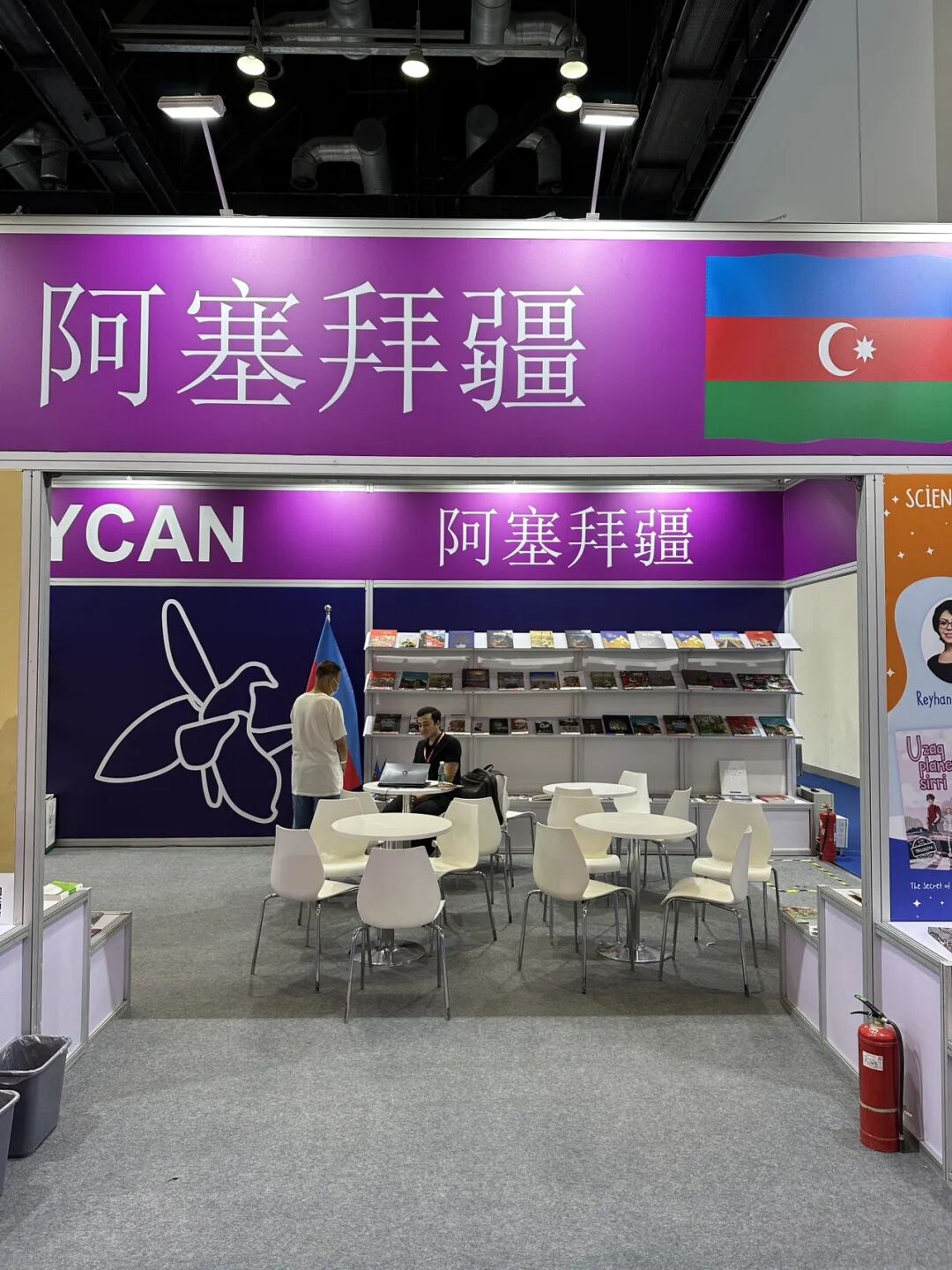
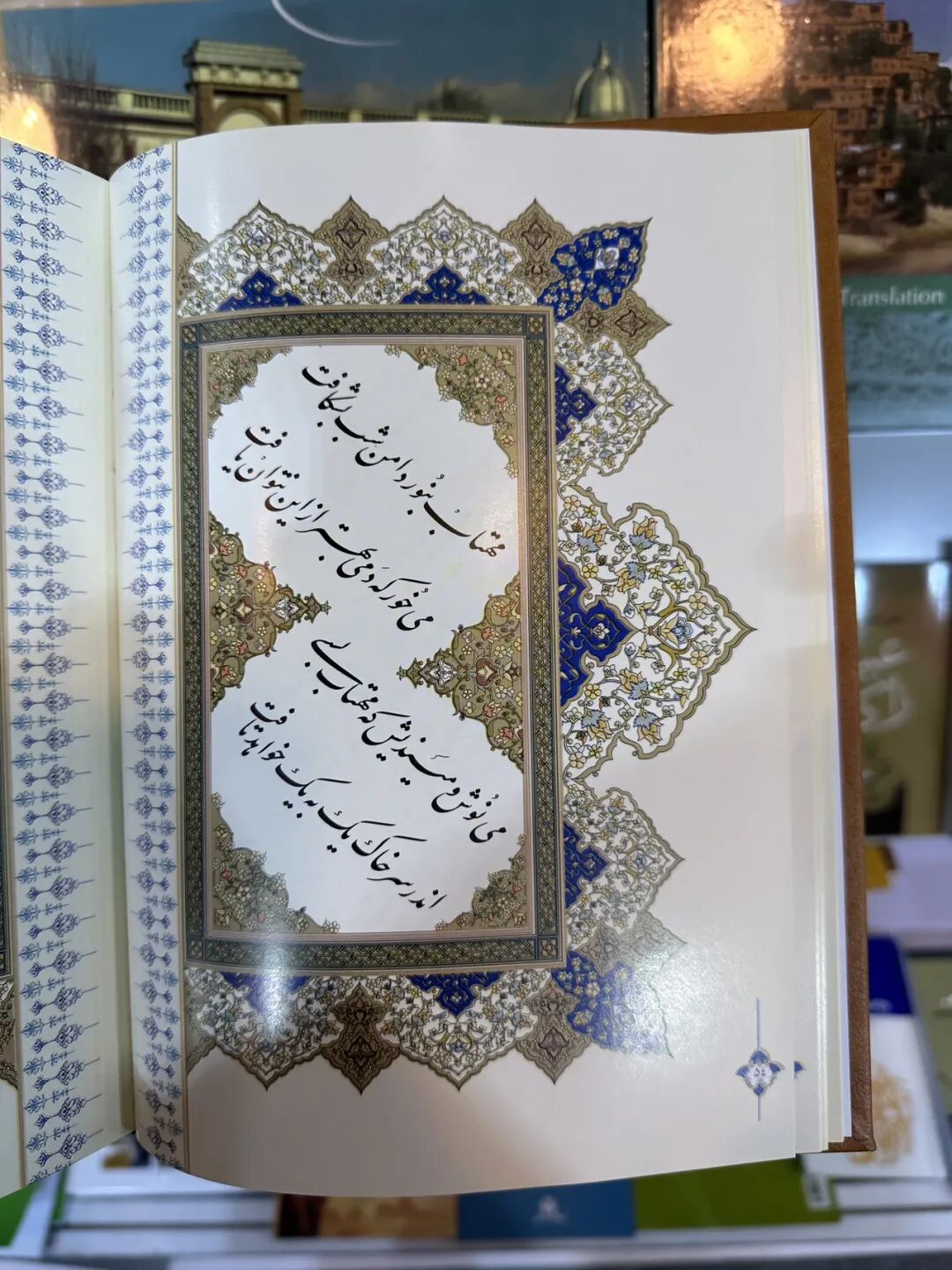
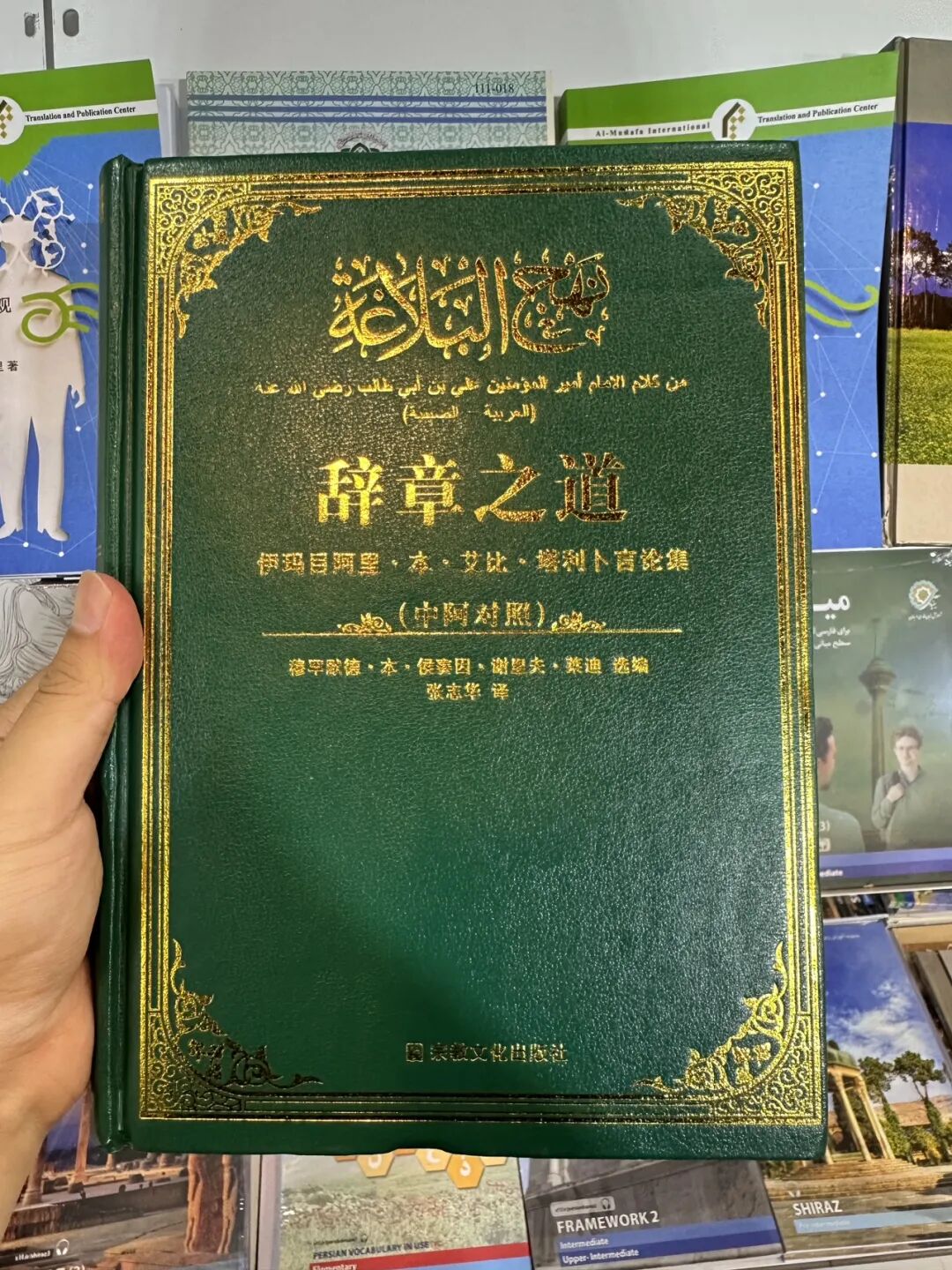
I went to the Beijing International Book Fair today. The first floor has pavilions for the UAE, Malaysia, Saudi Arabia, and Azerbaijan. At the UAE pavilion, you can drink Arabic coffee and eat special desserts. Kids can play coloring games, and there are free booklets about Islamic culture.
At the Malaysia pavilion, you can get your name written in Arabic calligraphy and have a cartoon portrait drawn.
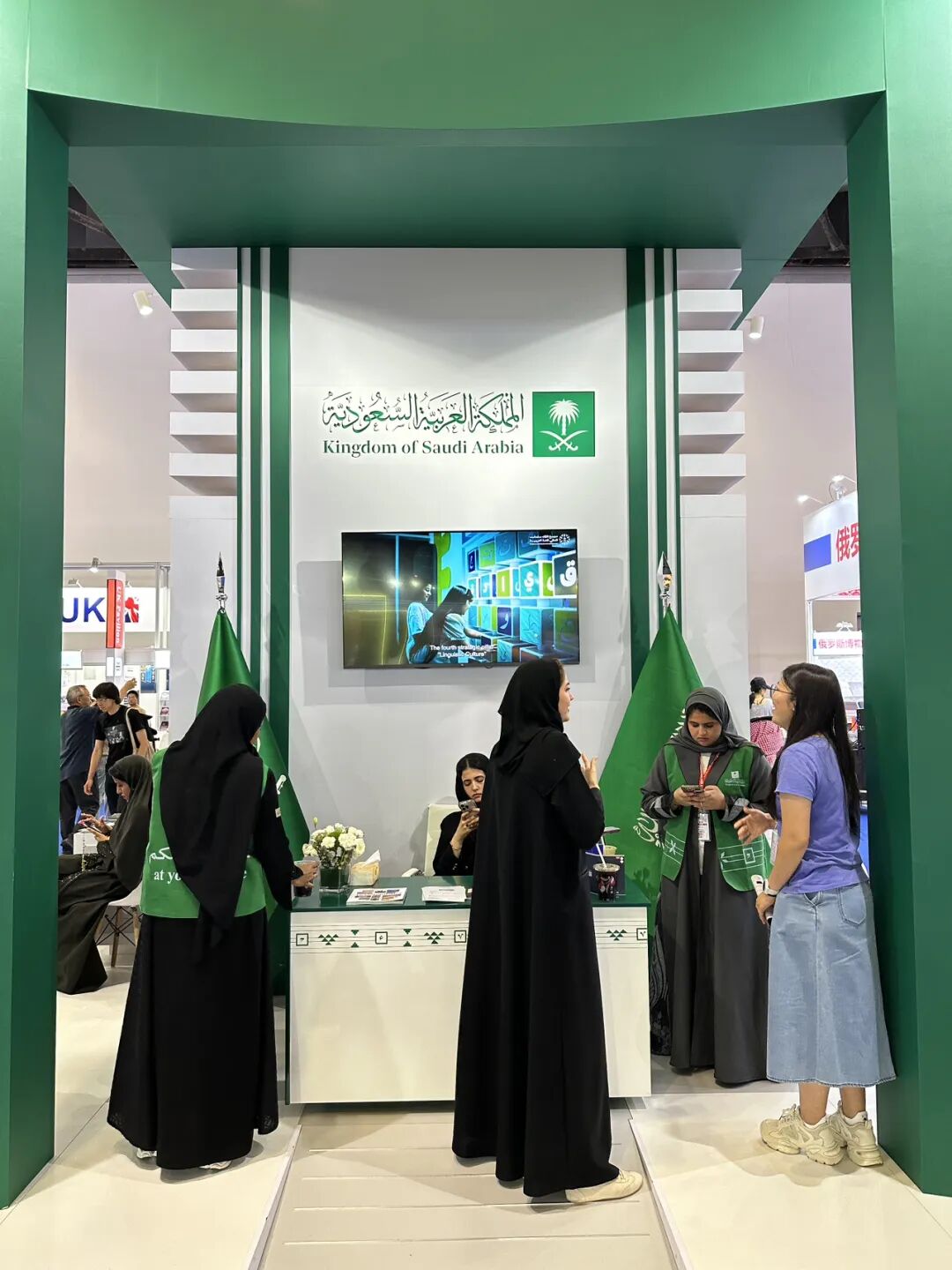
The Saudi Arabia pavilion has some children's picture books and books introducing their culture.
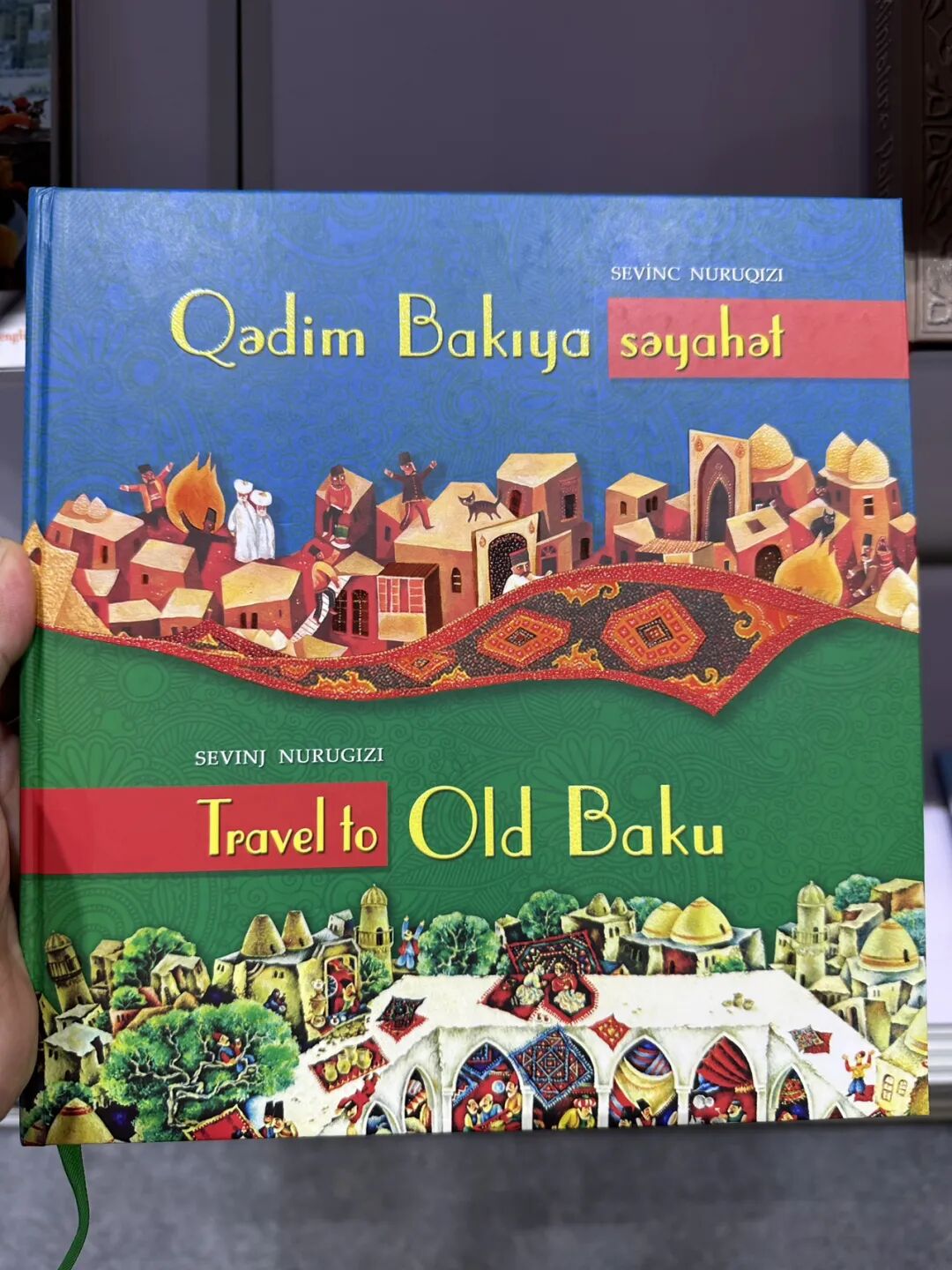
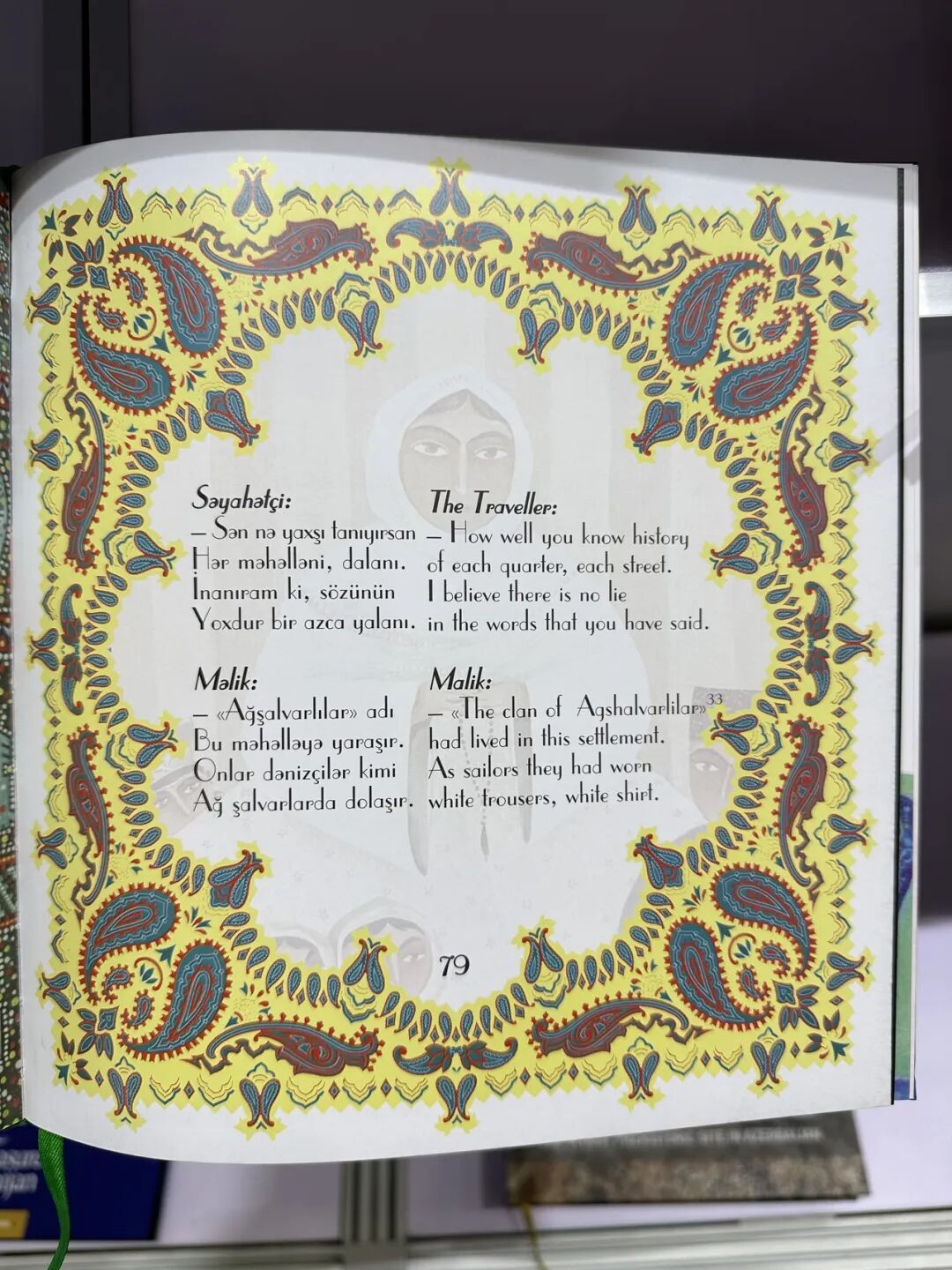
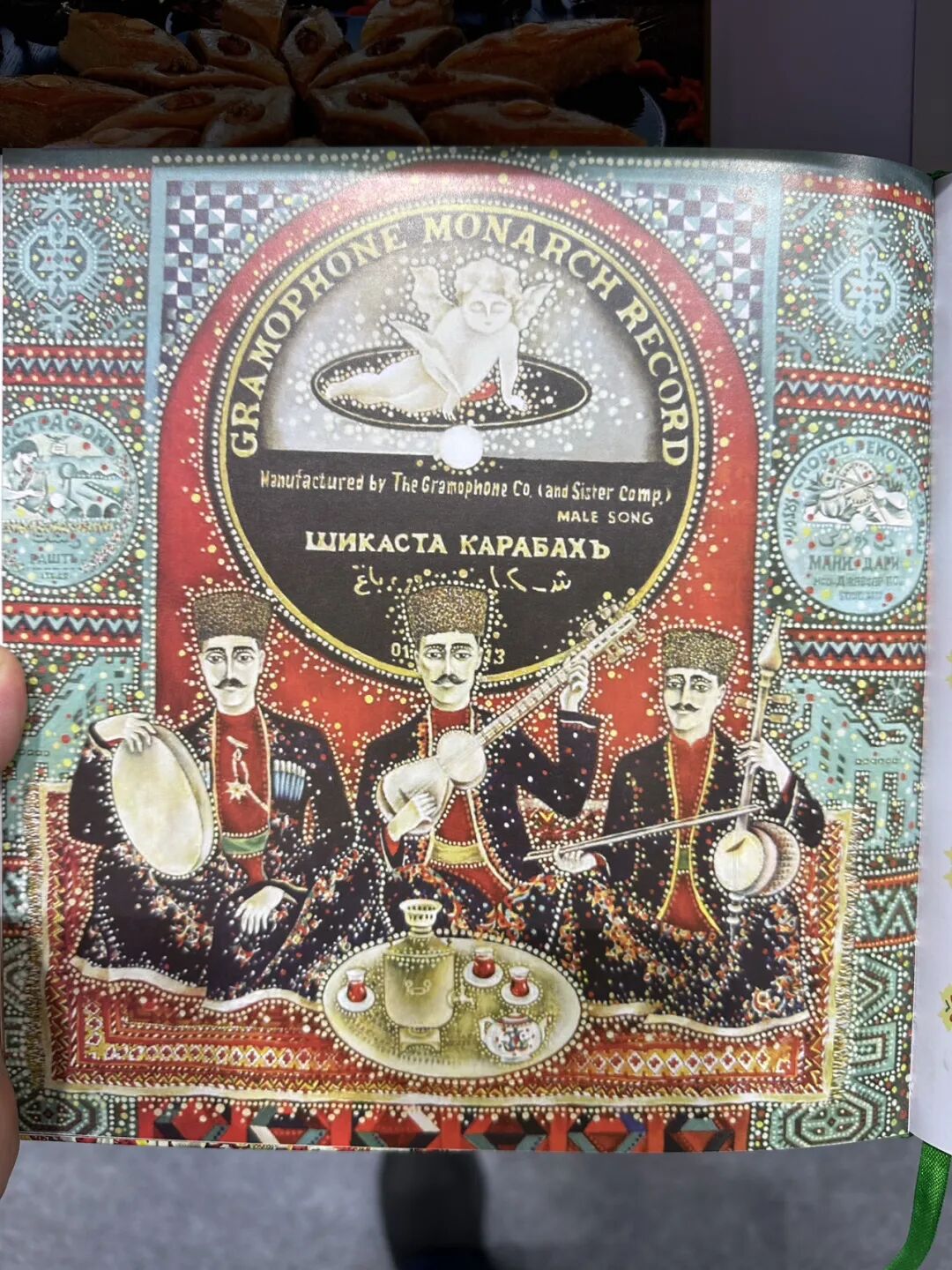
The Azerbaijan pavilion also has some nice photo books.
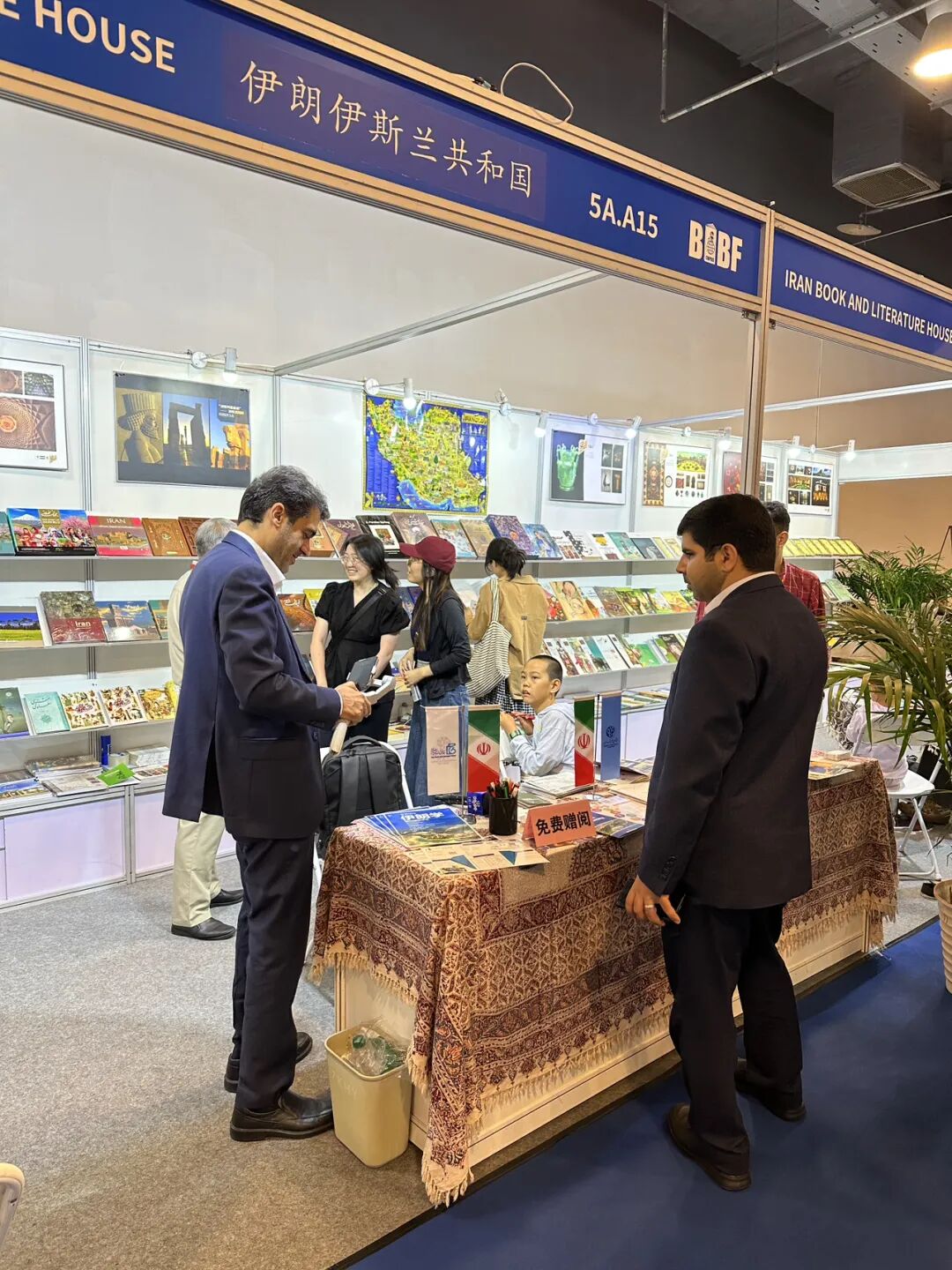
The basement level has the Iran, Oman, and Morocco pavilions, which are relatively small. It is my first time seeing an Oman pavilion, and you can pick up some brochures introducing Oman.
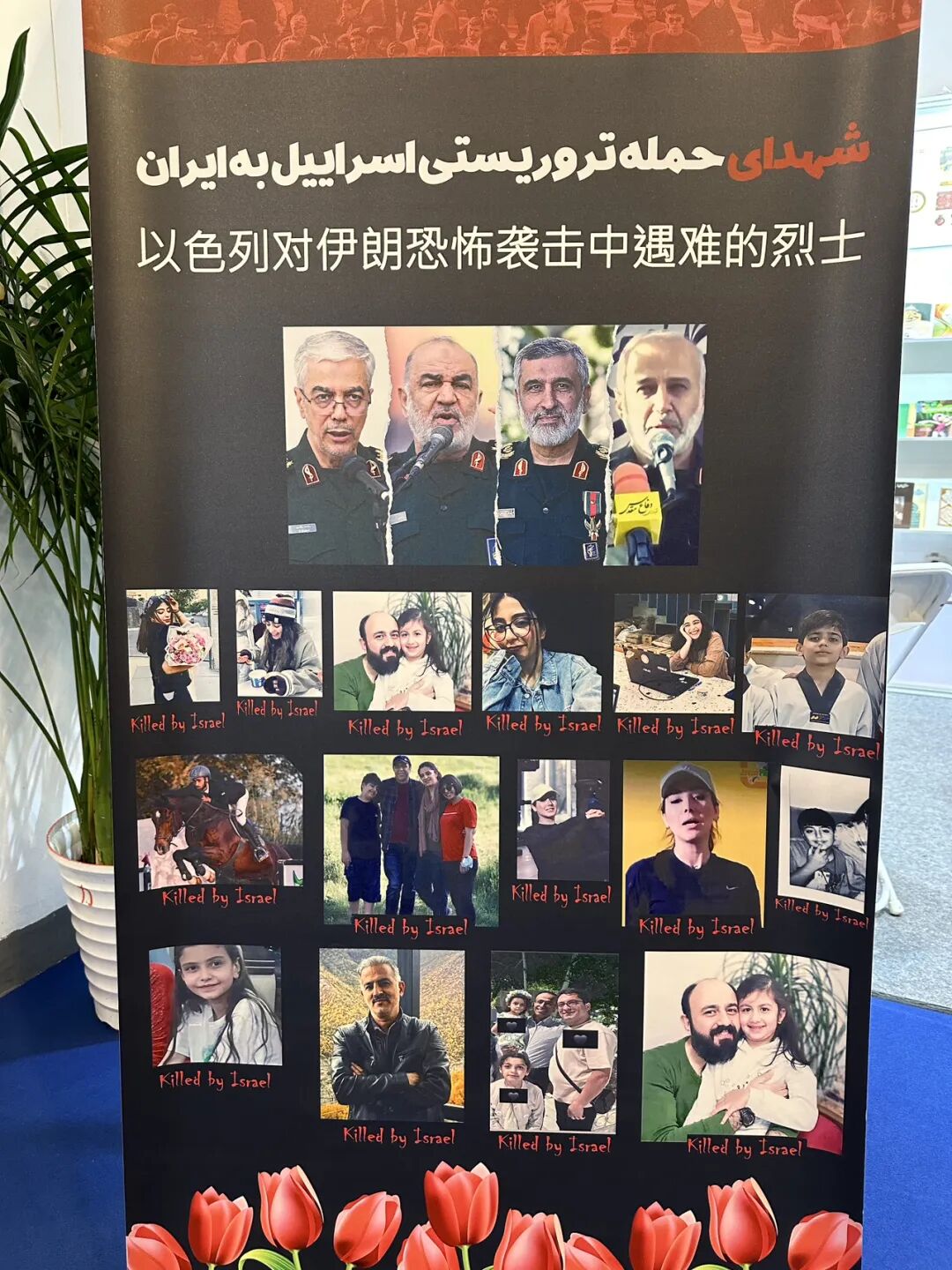
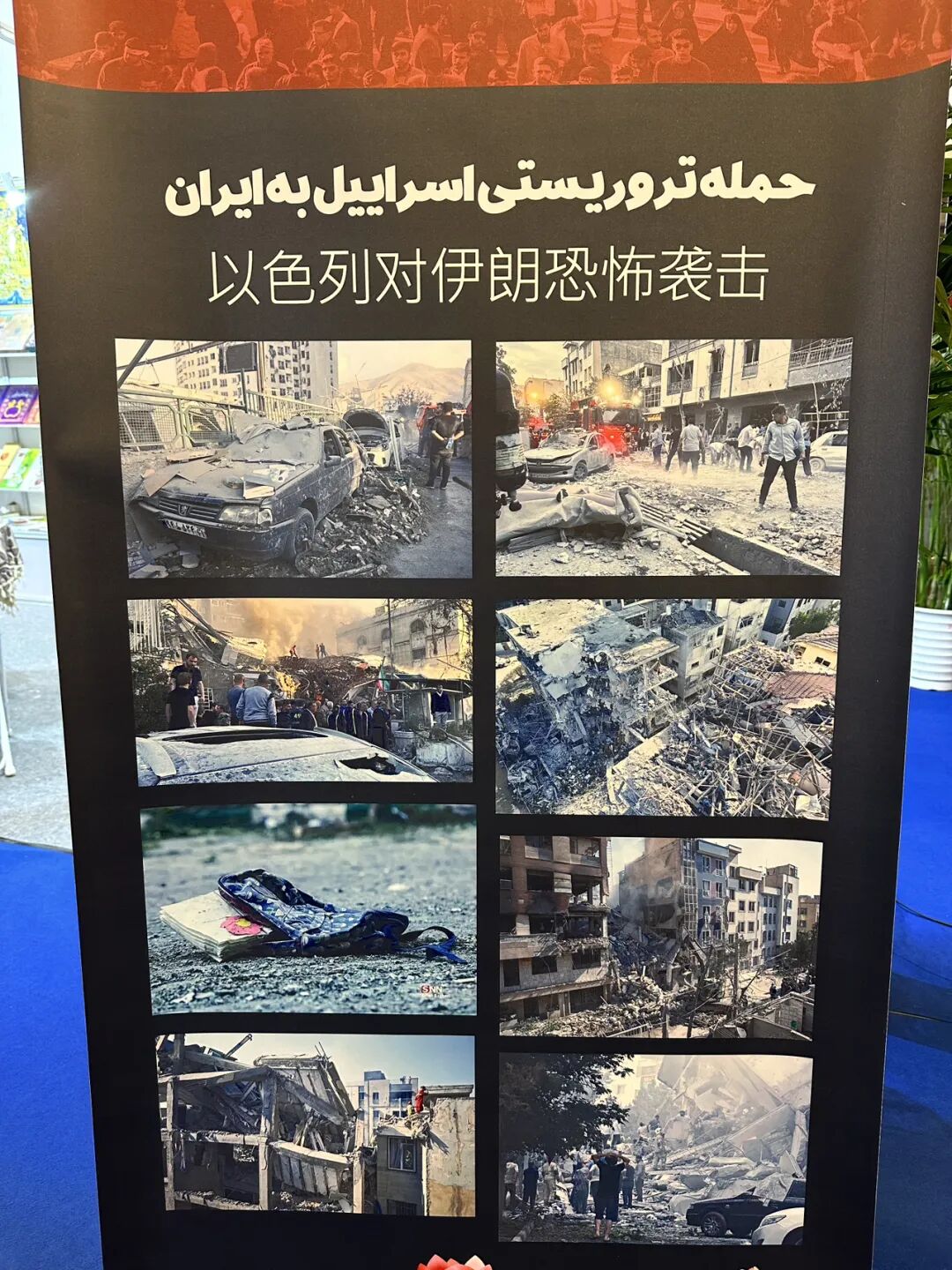
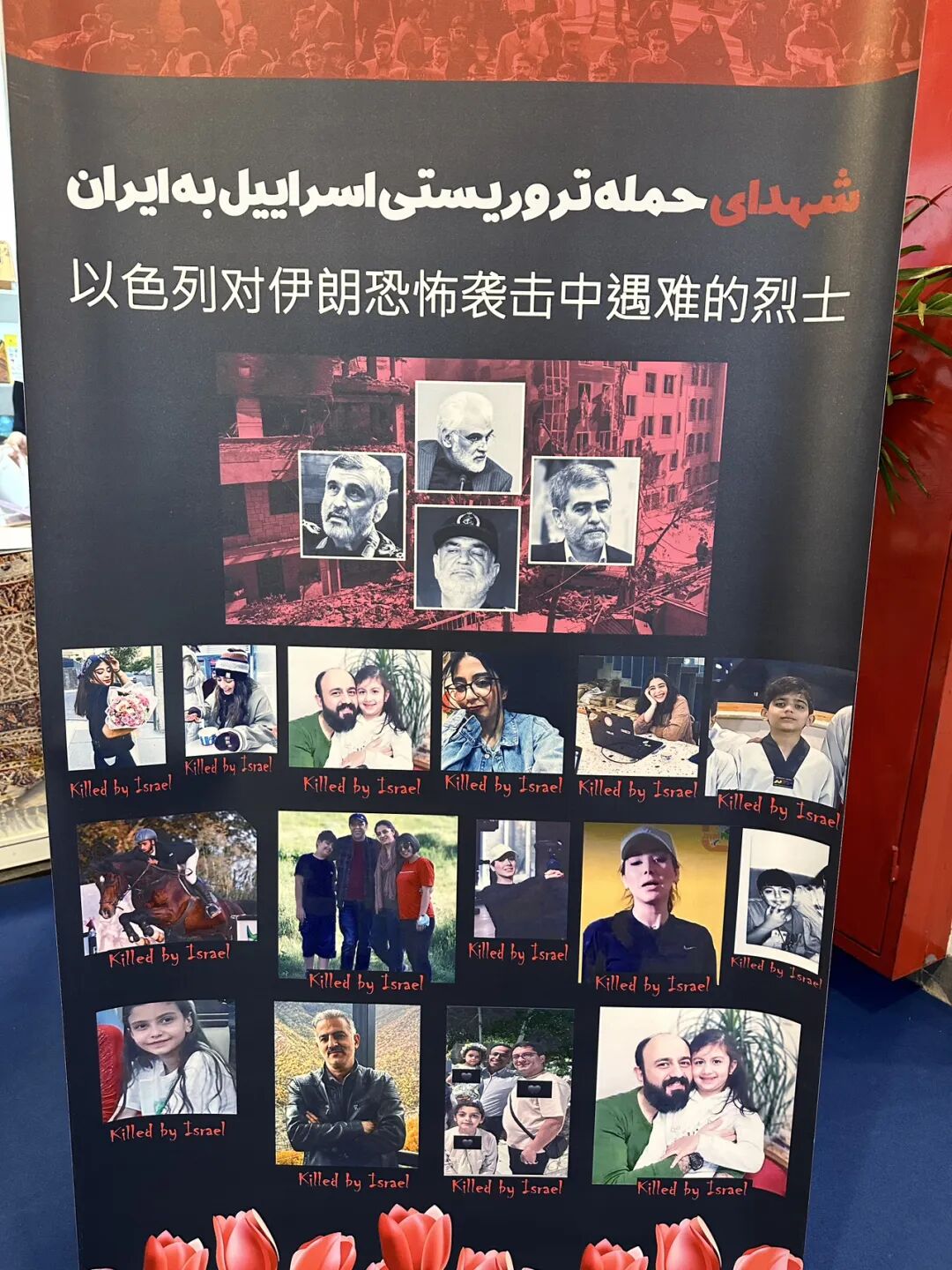
At the Iran pavilion, I paid my respects to all the Iranian martyrs killed by Israel. view all
Summary: The 2025 Beijing International Book Fair included displays and books from the UAE, Saudi Arabia, Malaysia, Iran, Oman, and other Muslim-majority countries. This account keeps the original book titles, booth notes, cultural details, and photographs.
I went to the Beijing International Book Fair today. The first floor has pavilions for the UAE, Malaysia, Saudi Arabia, and Azerbaijan. At the UAE pavilion, you can drink Arabic coffee and eat special desserts. Kids can play coloring games, and there are free booklets about Islamic culture.
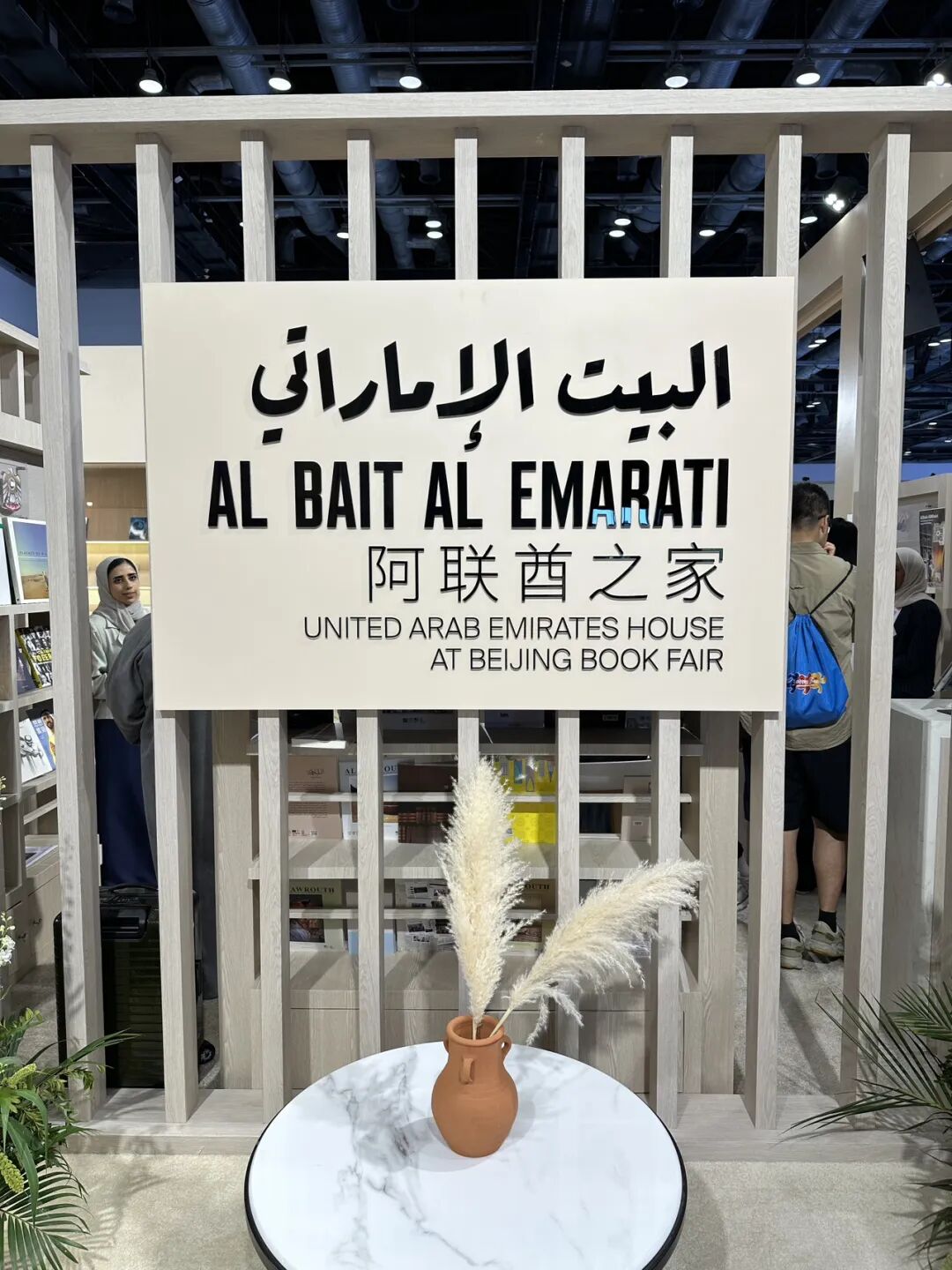
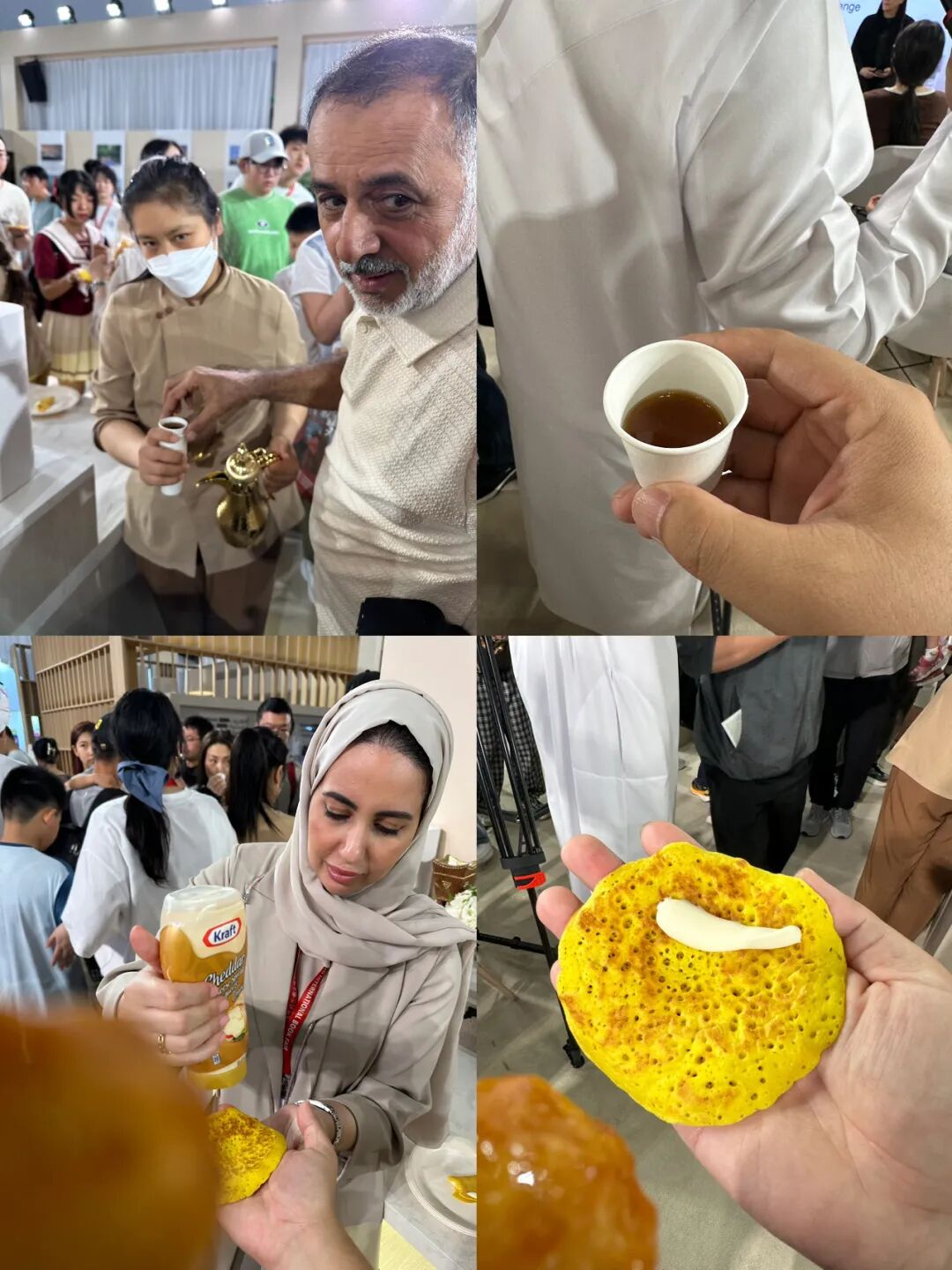
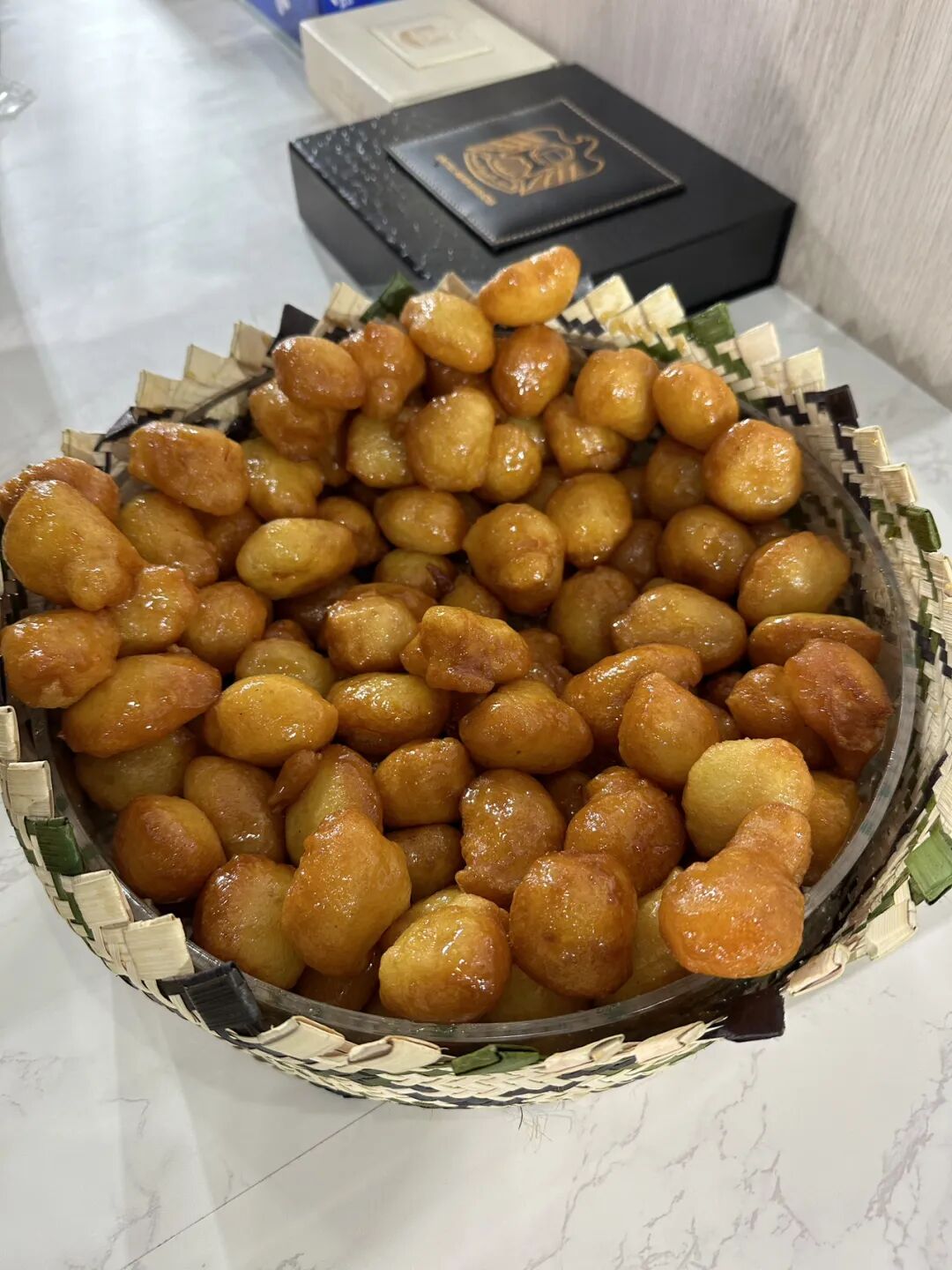
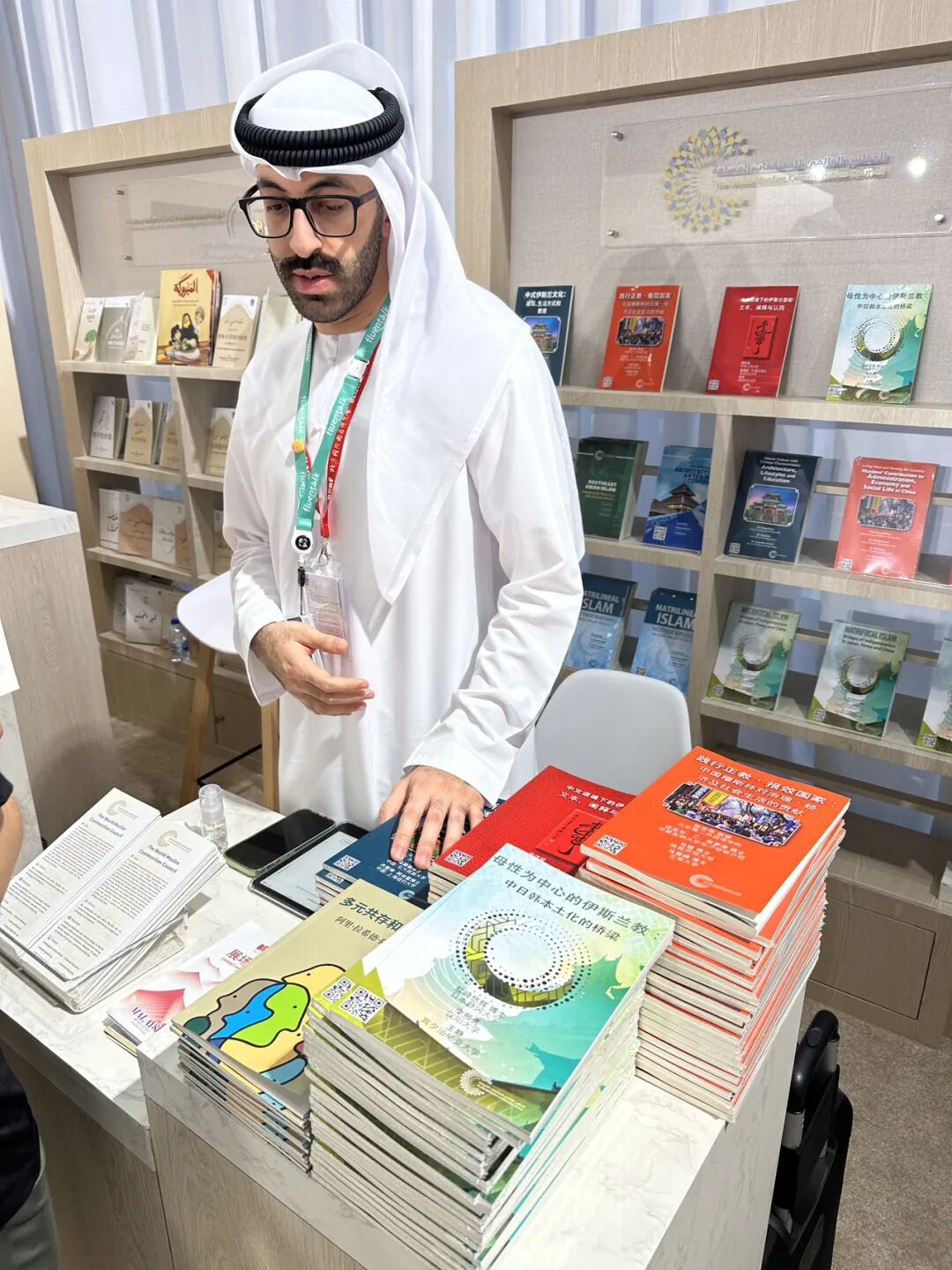
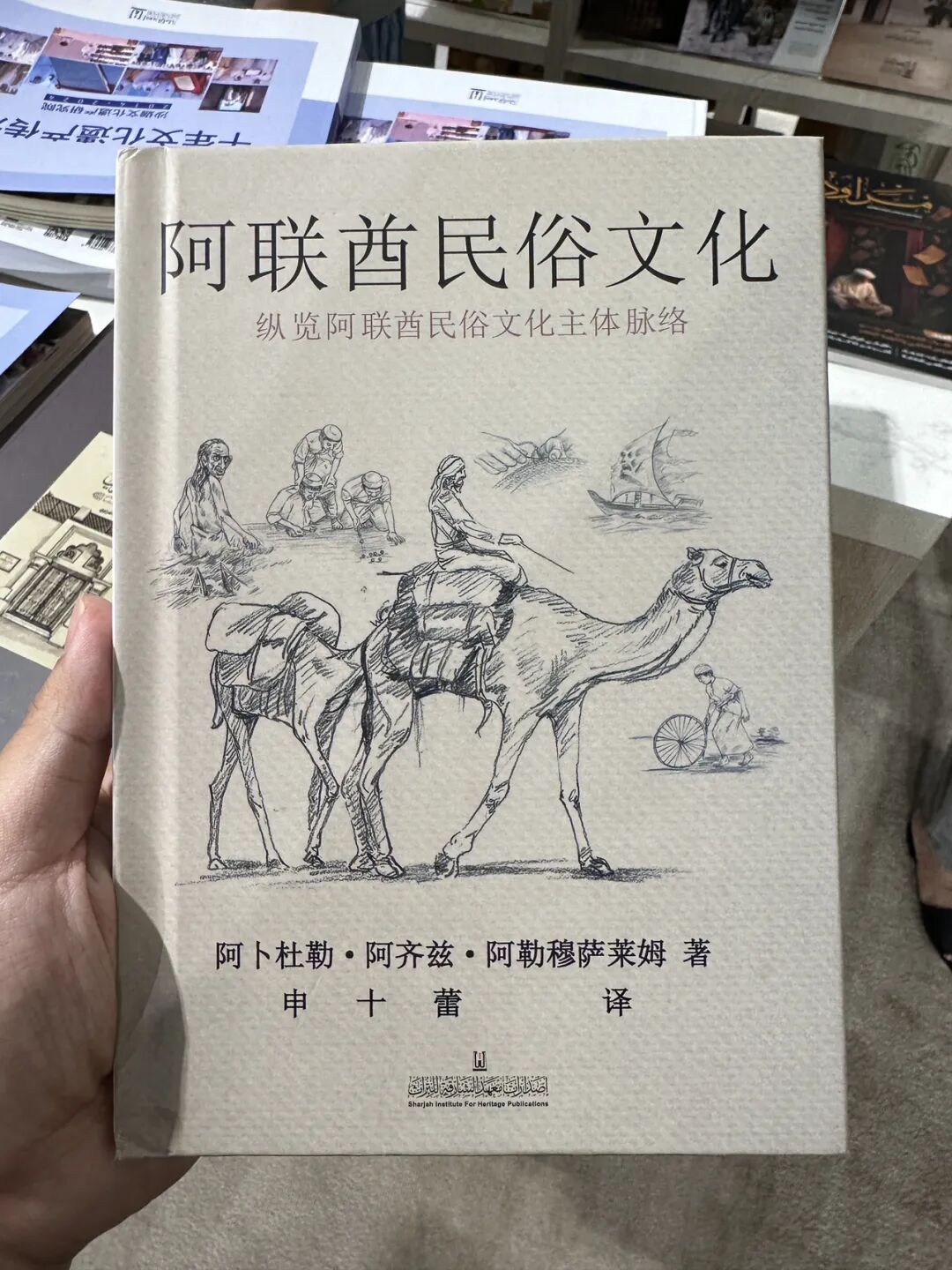
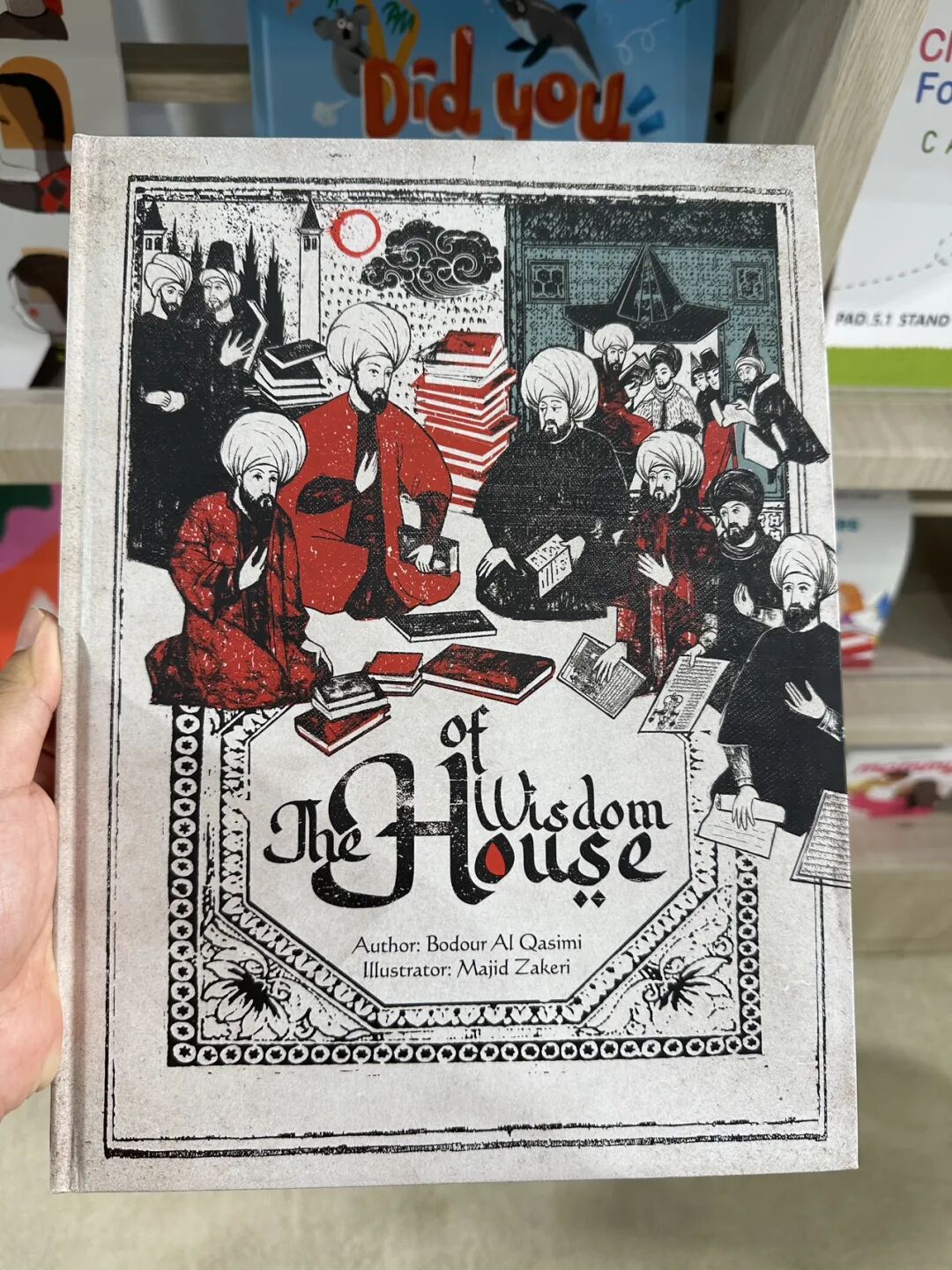
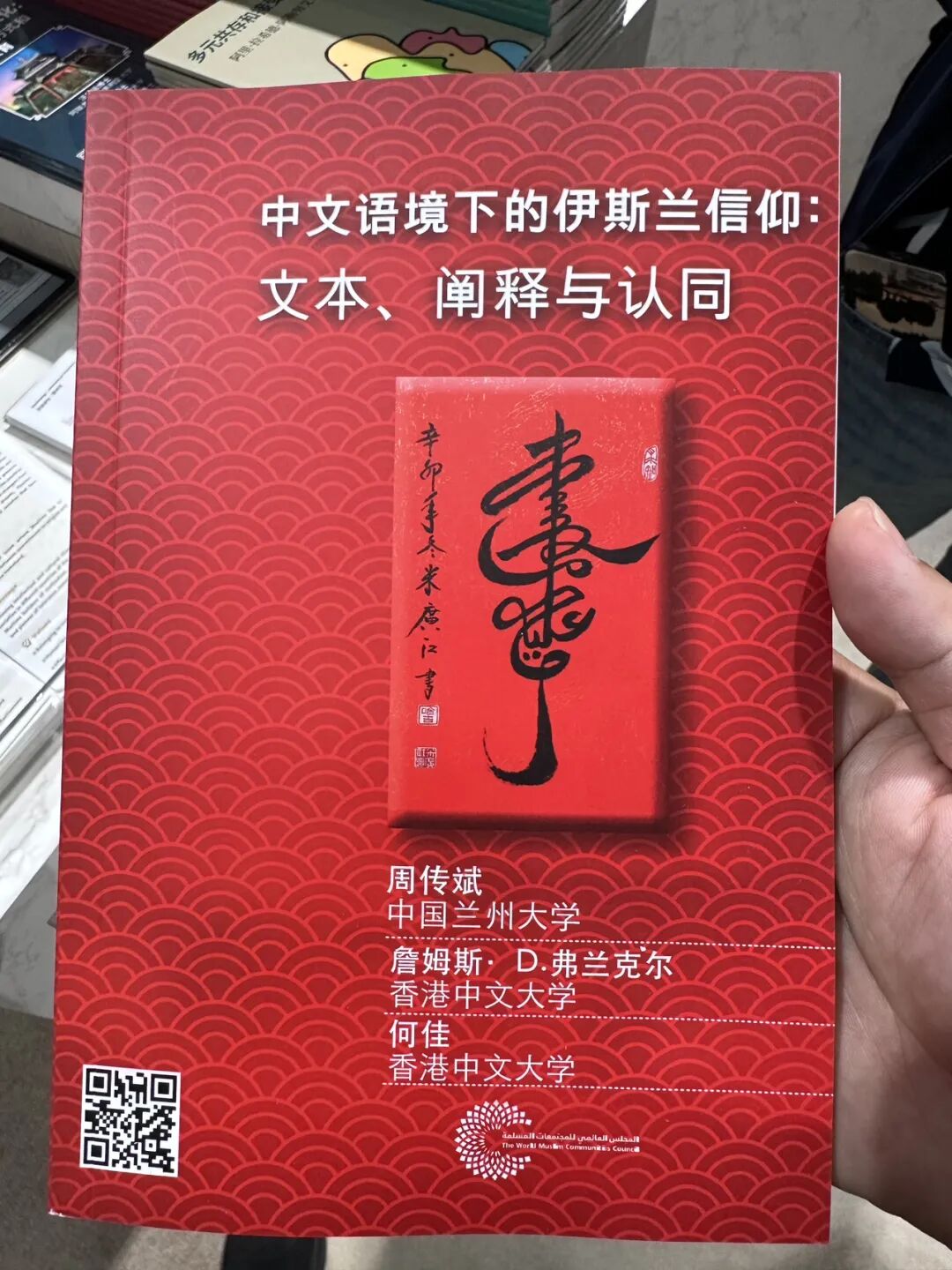
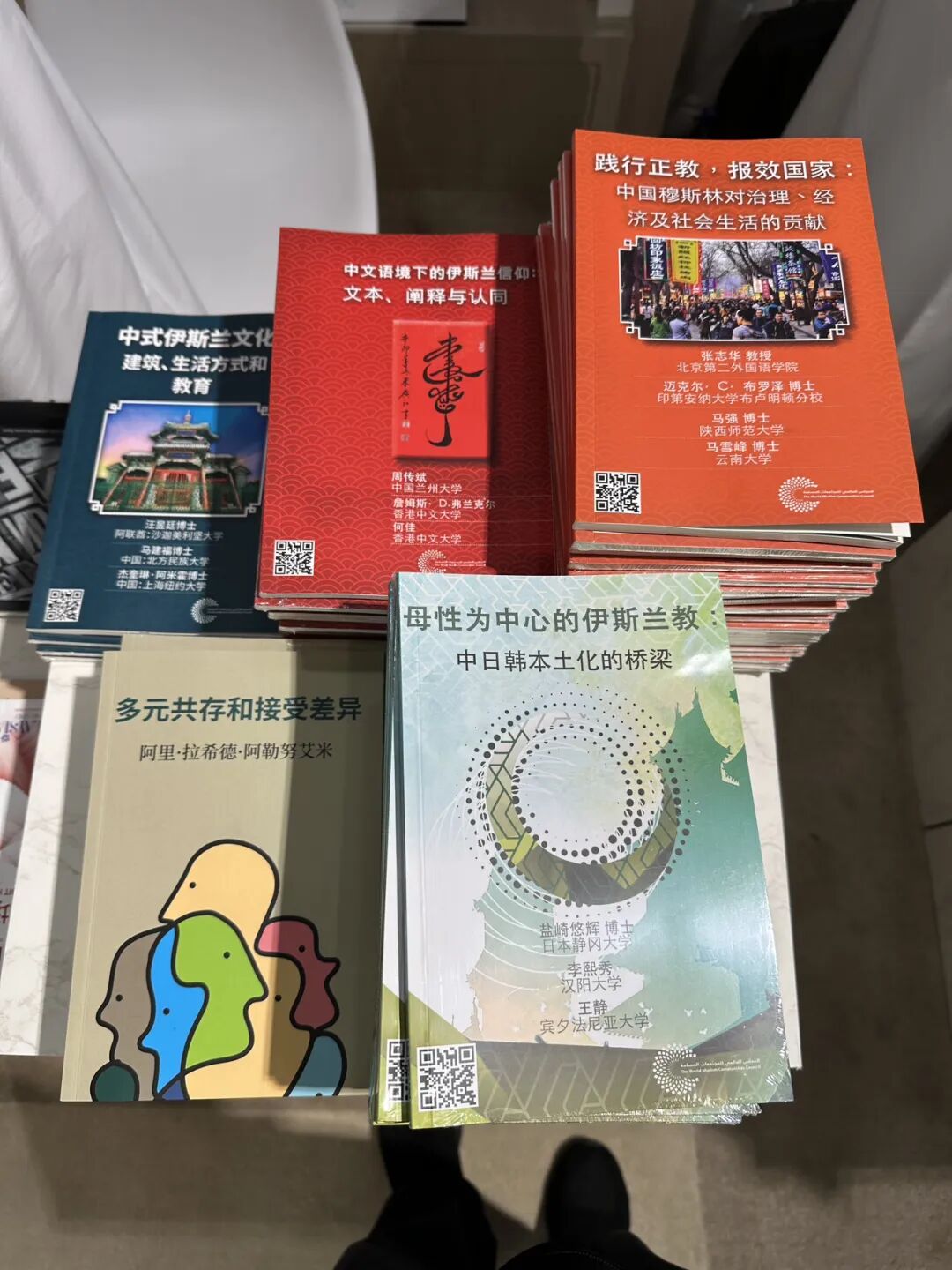
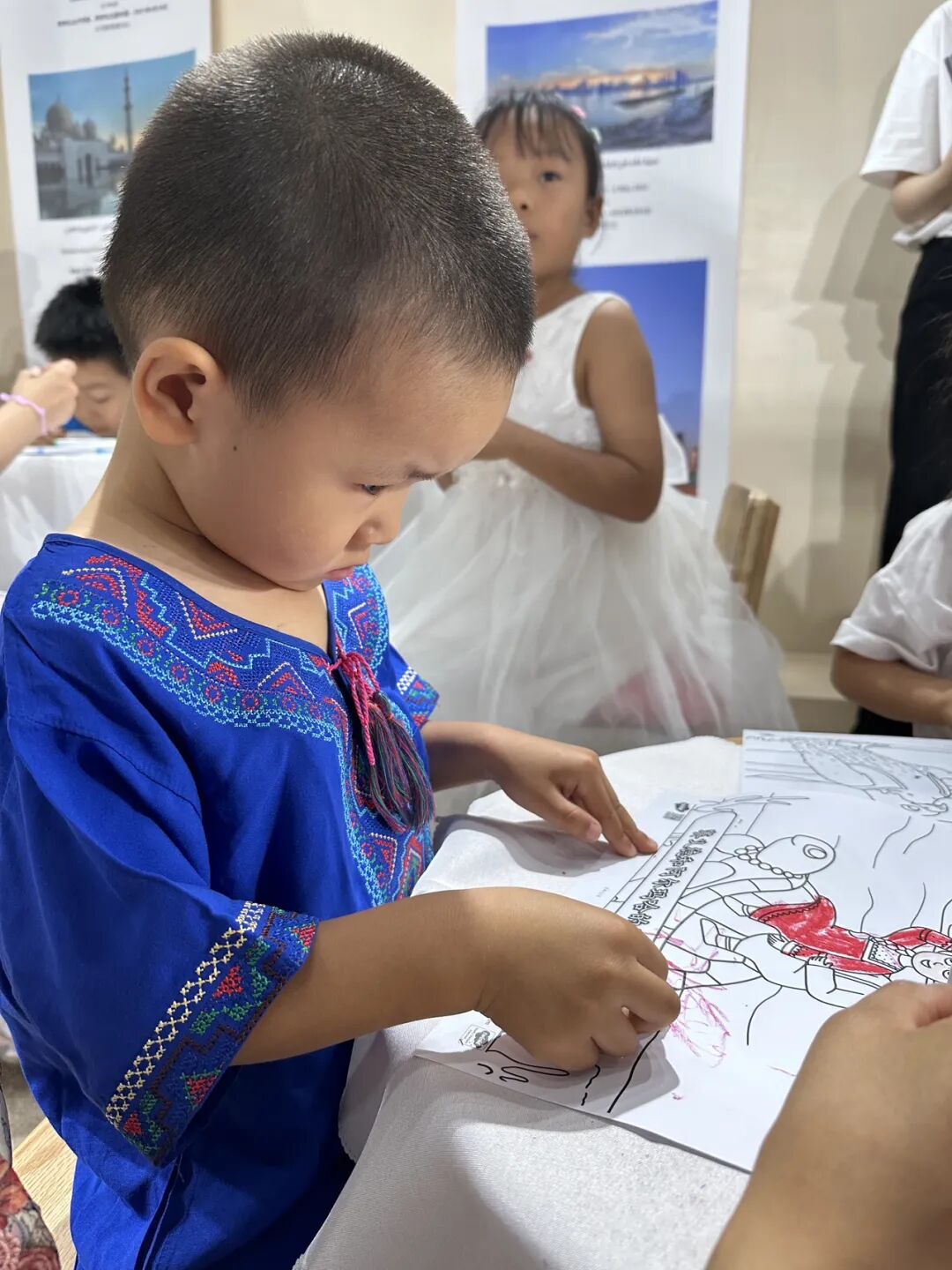
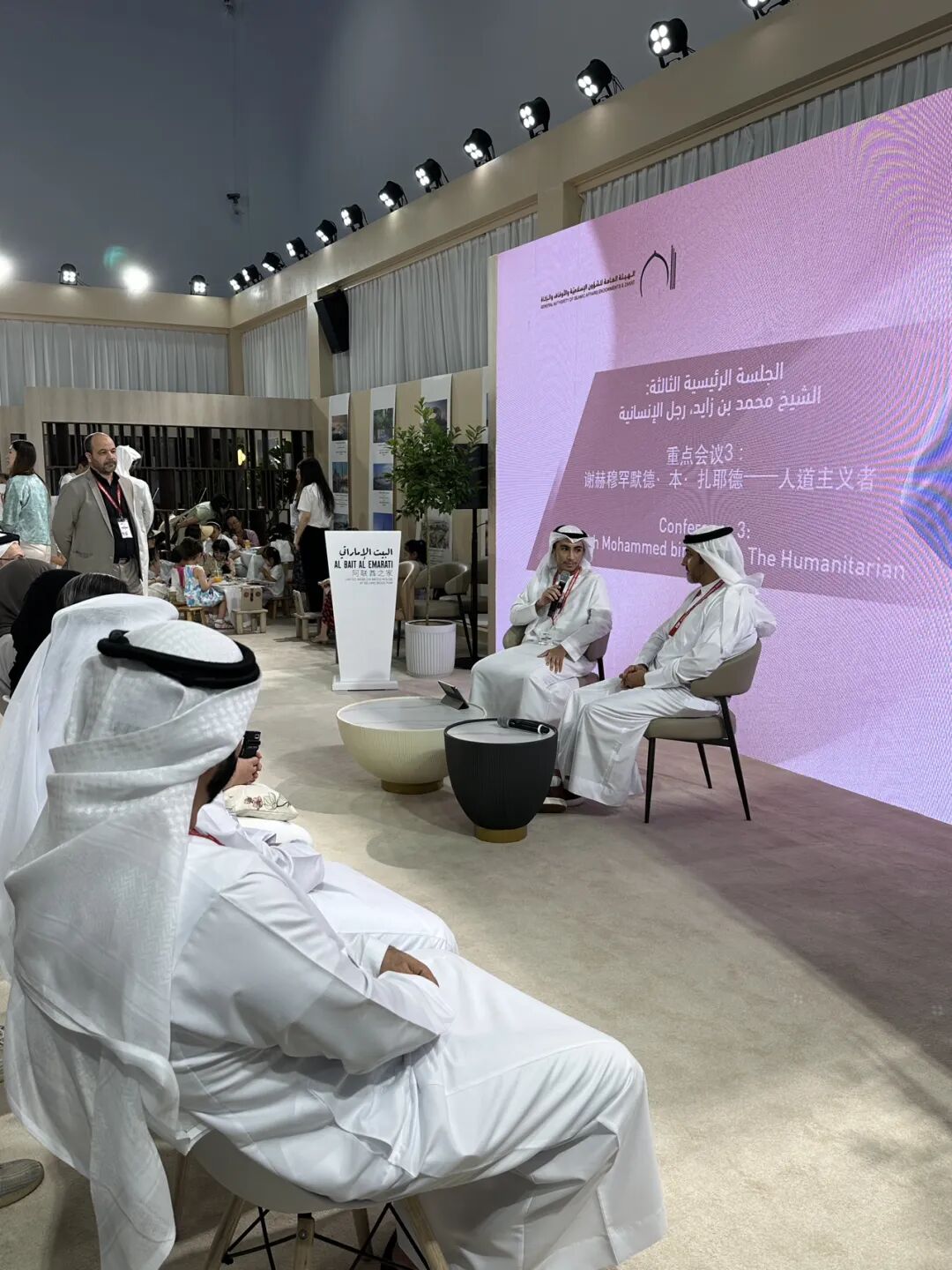
At the Malaysia pavilion, you can get your name written in Arabic calligraphy and have a cartoon portrait drawn.
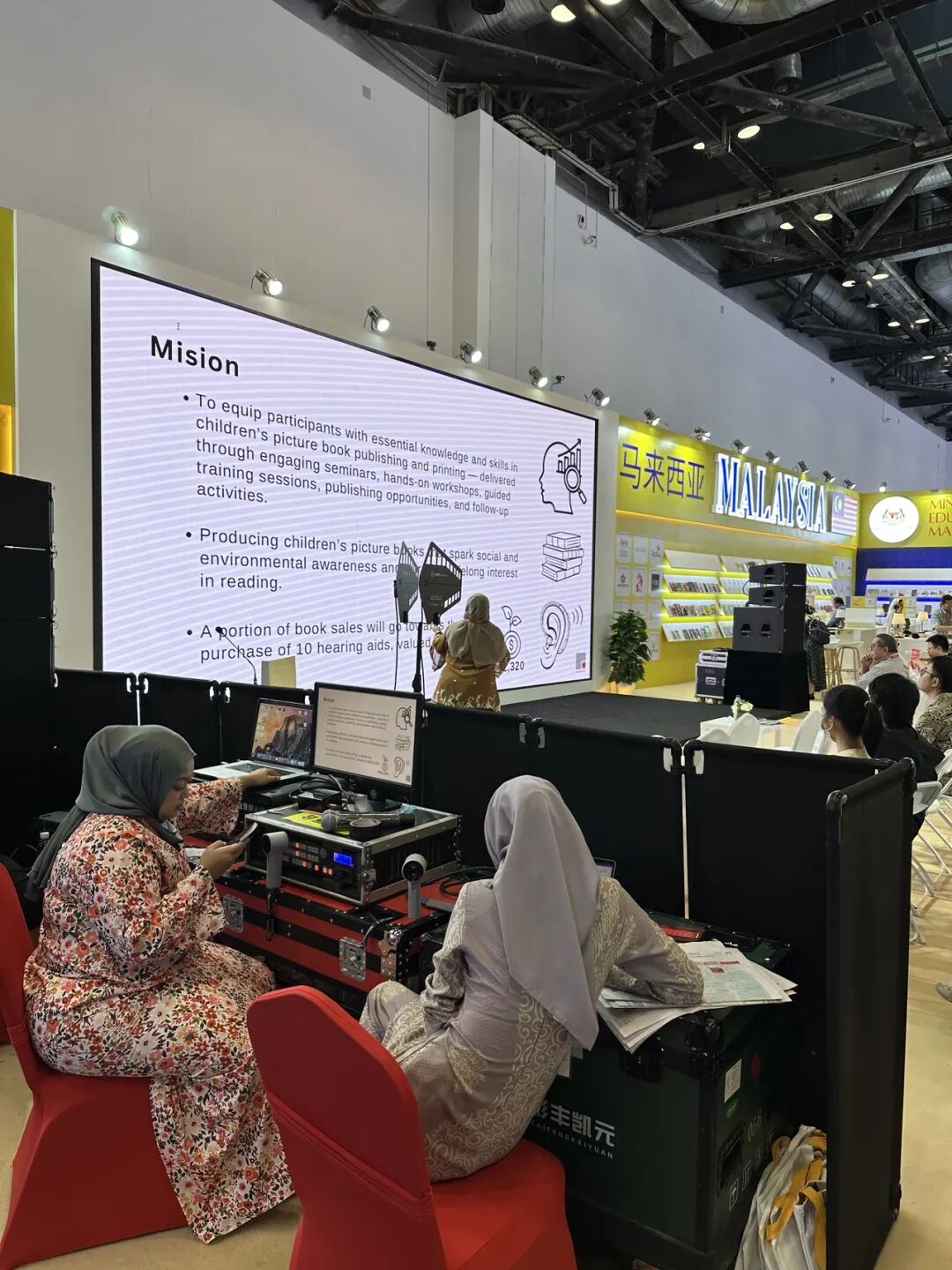
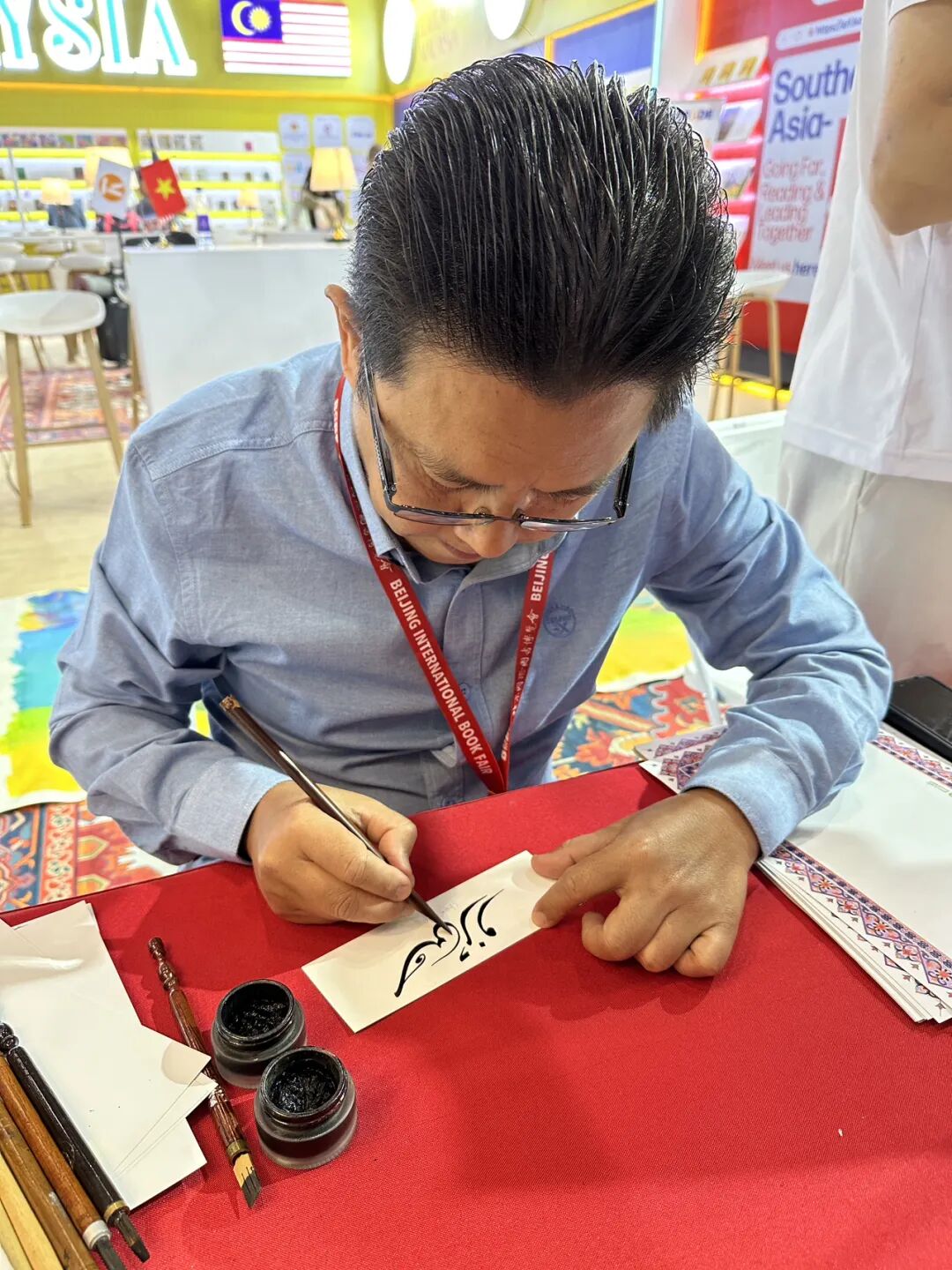
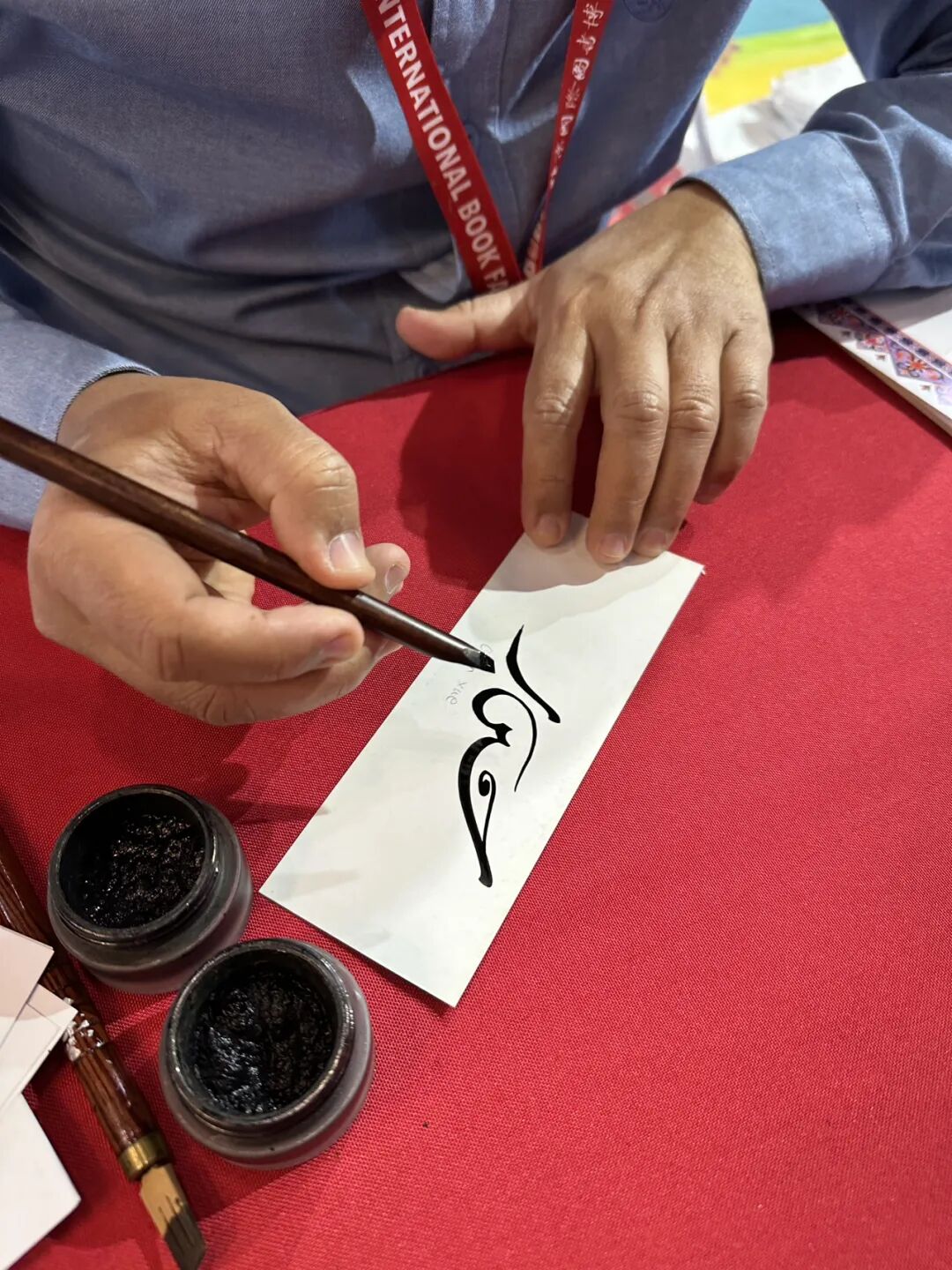
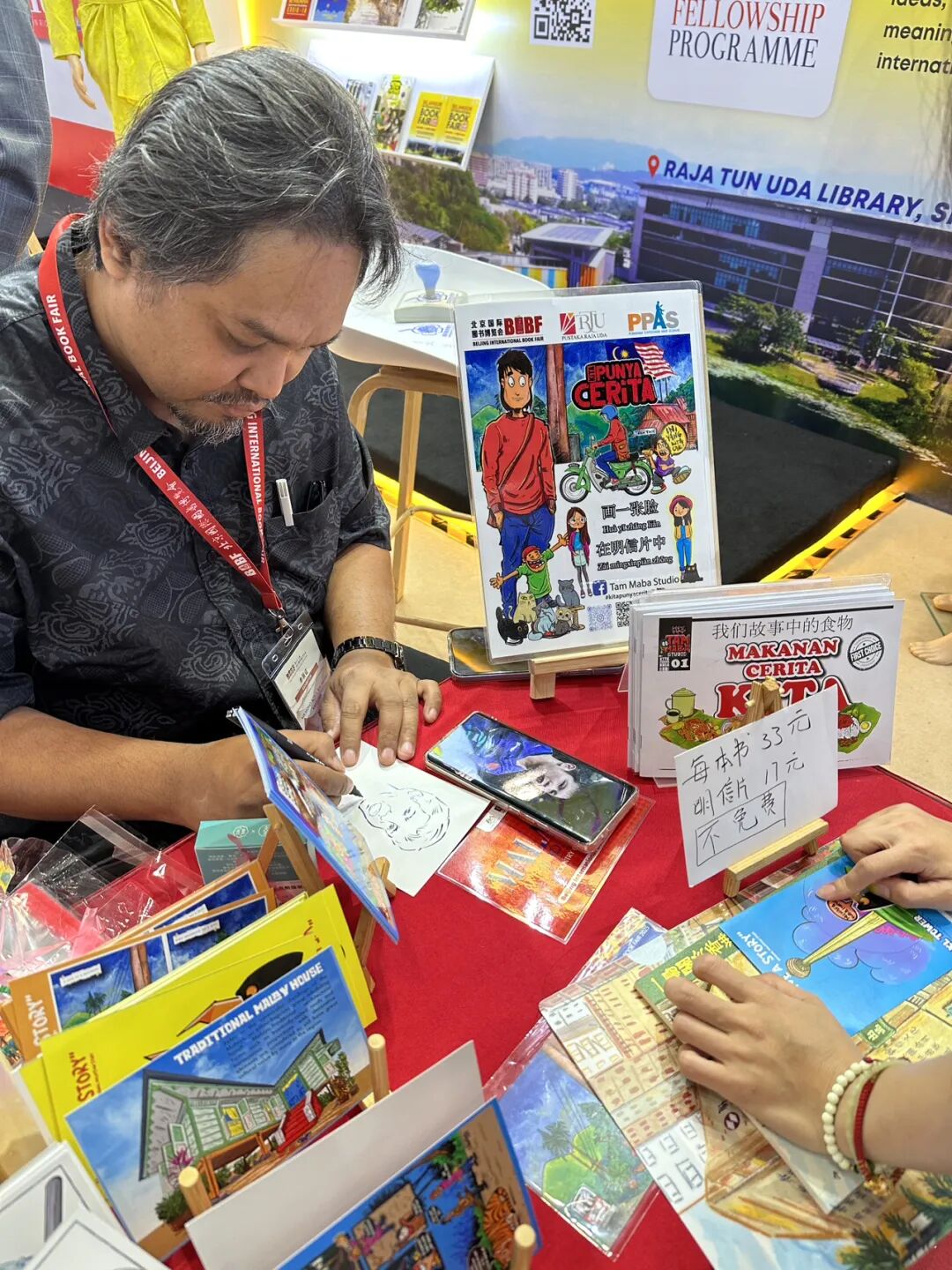
The Saudi Arabia pavilion has some children's picture books and books introducing their culture.
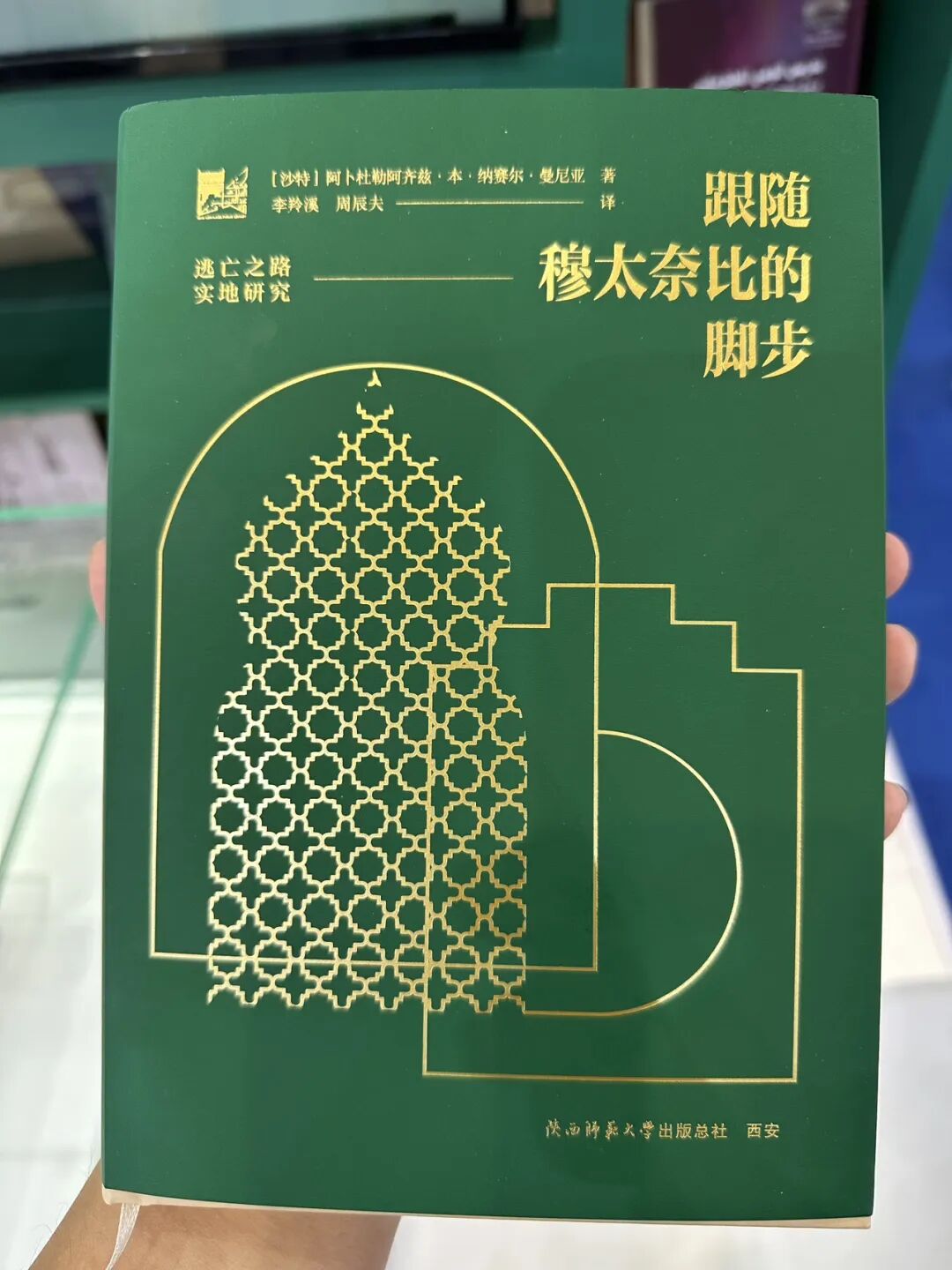
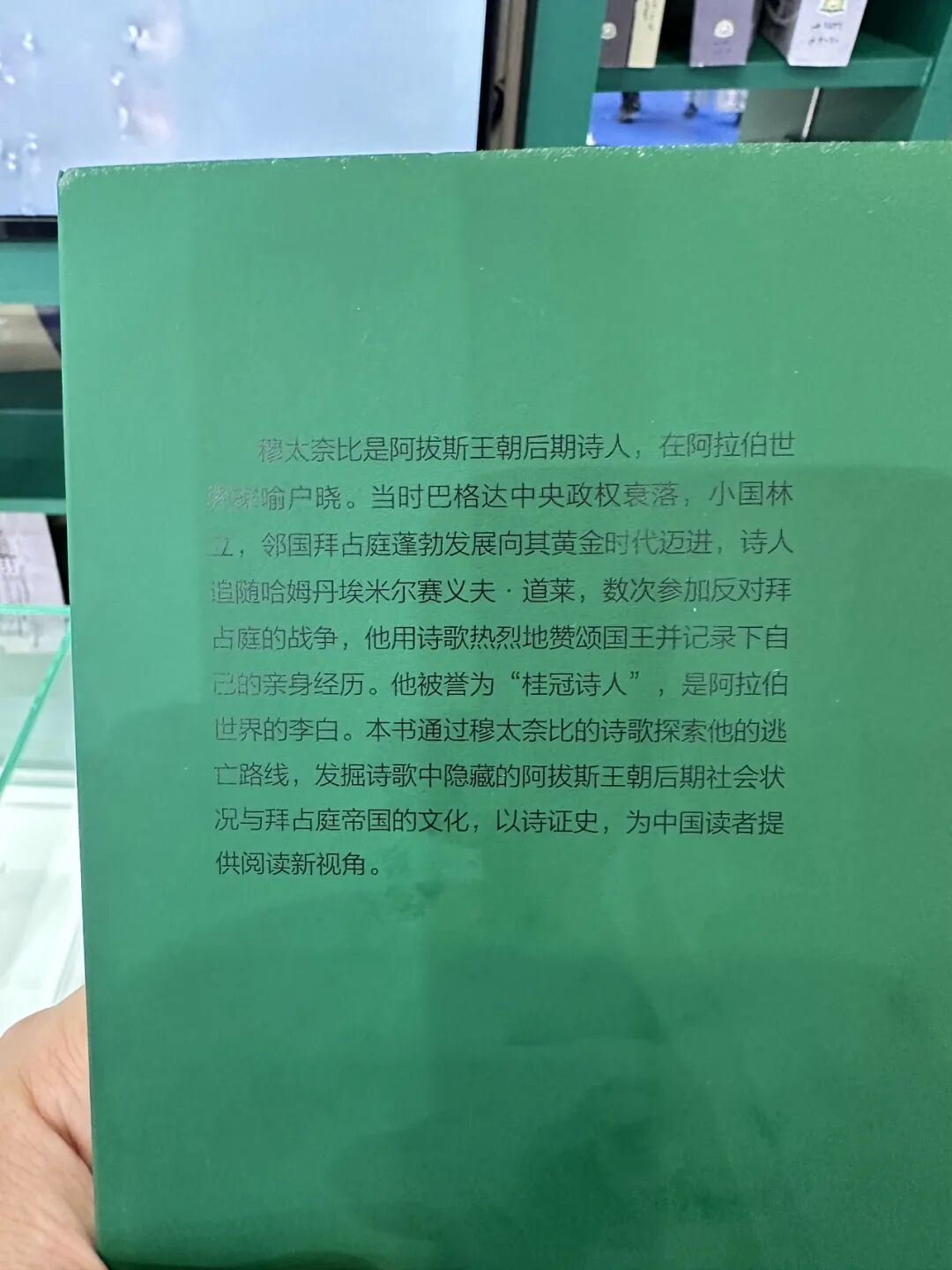
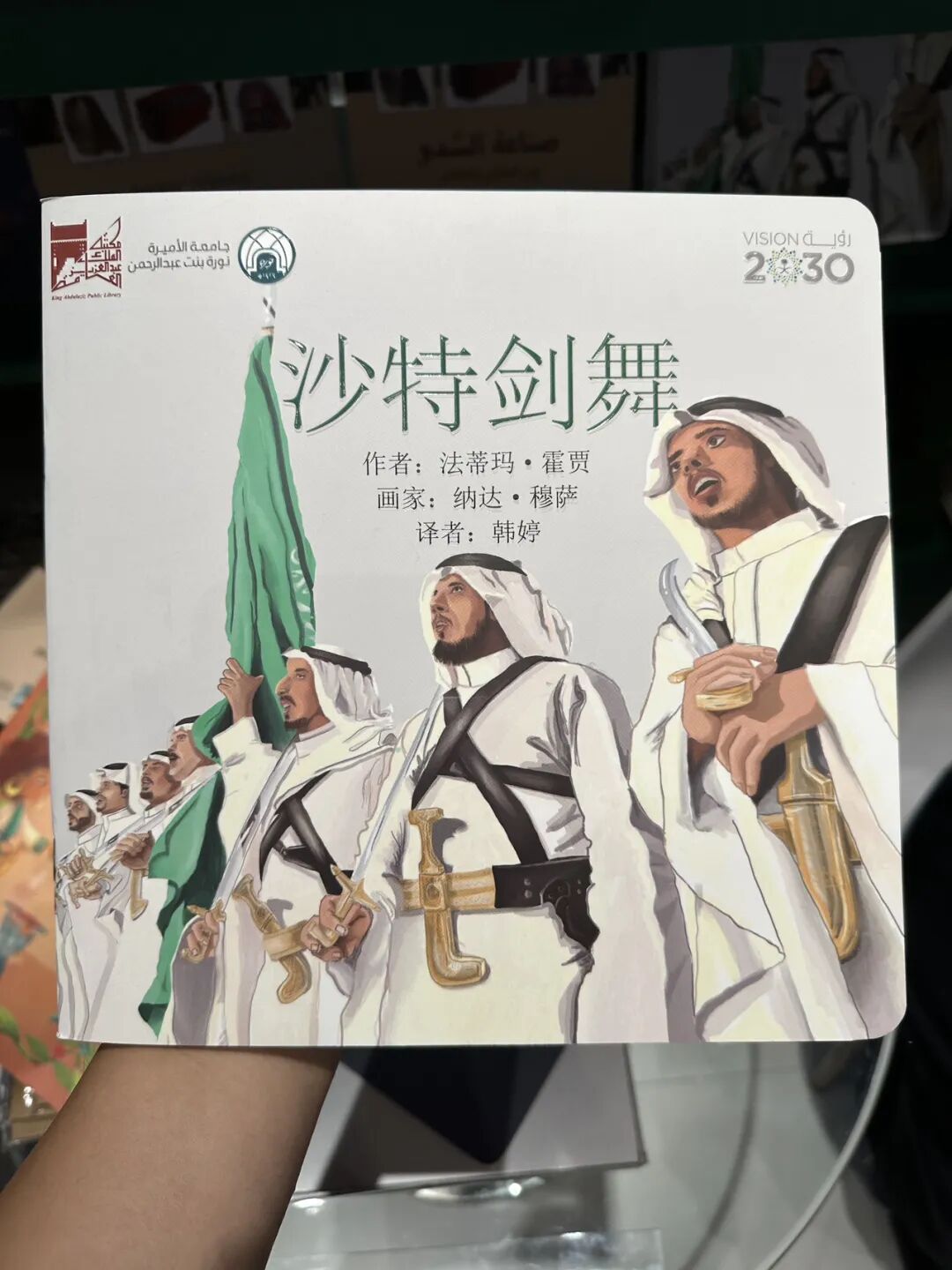
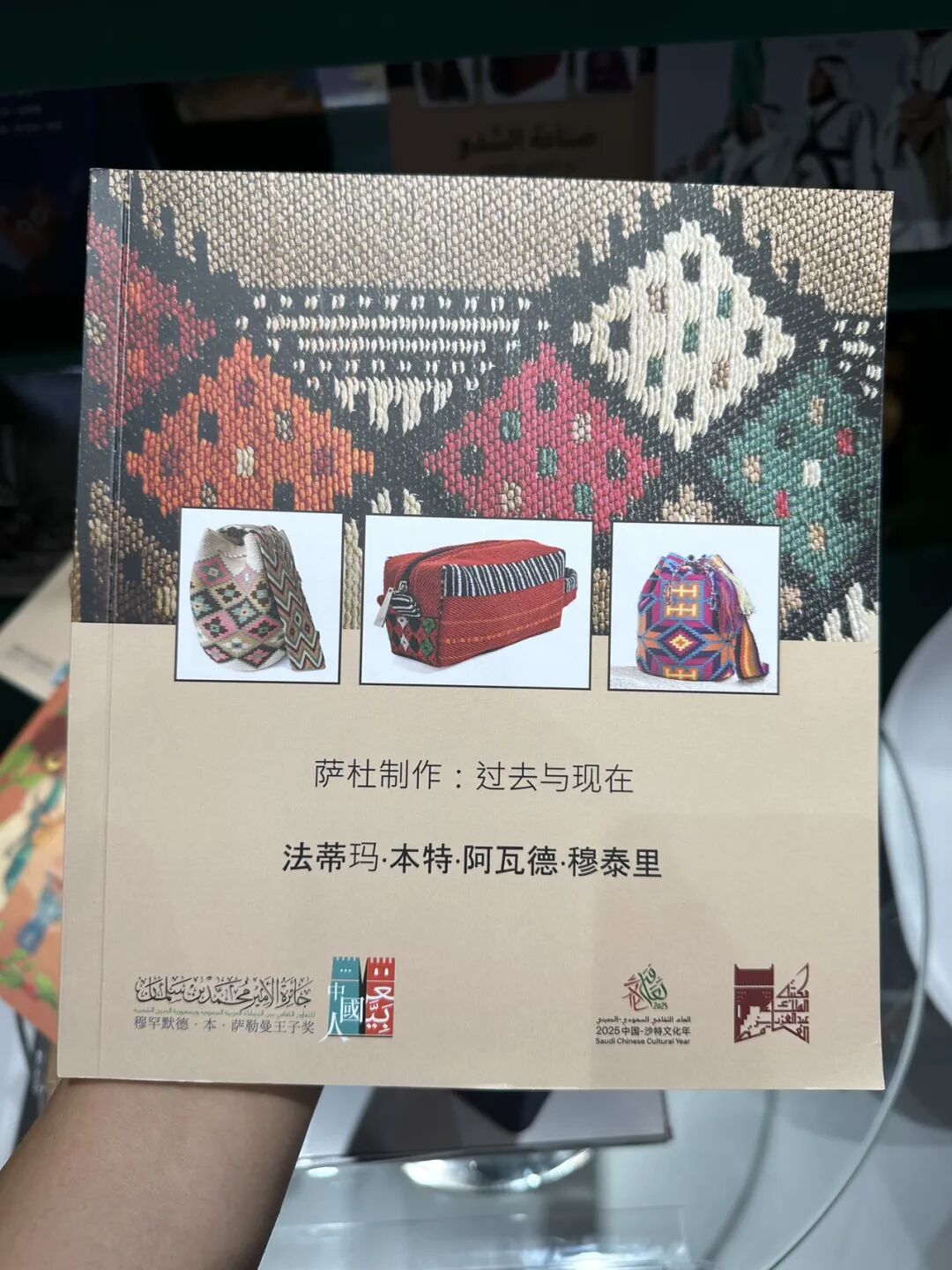
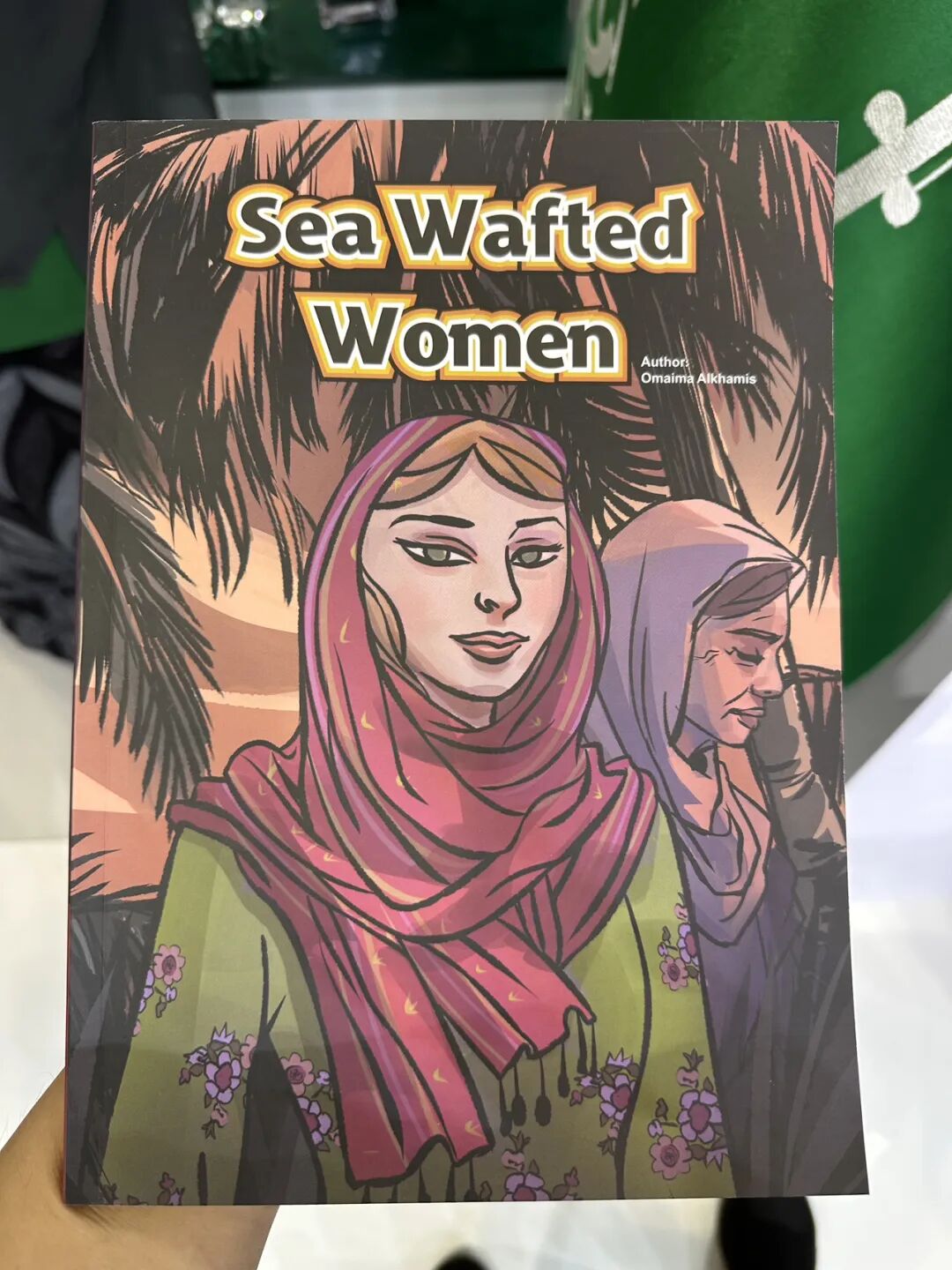
The Azerbaijan pavilion also has some nice photo books.
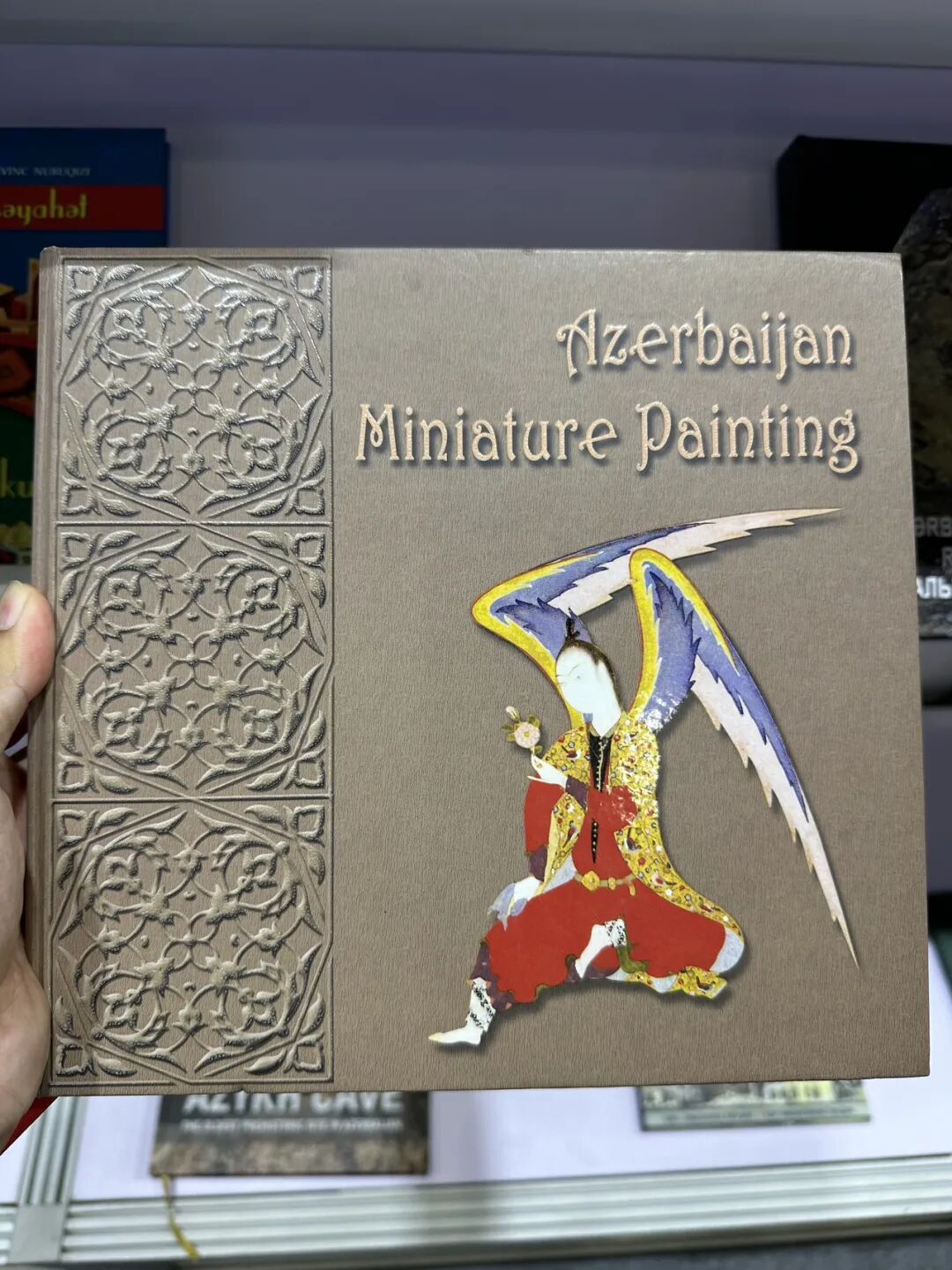
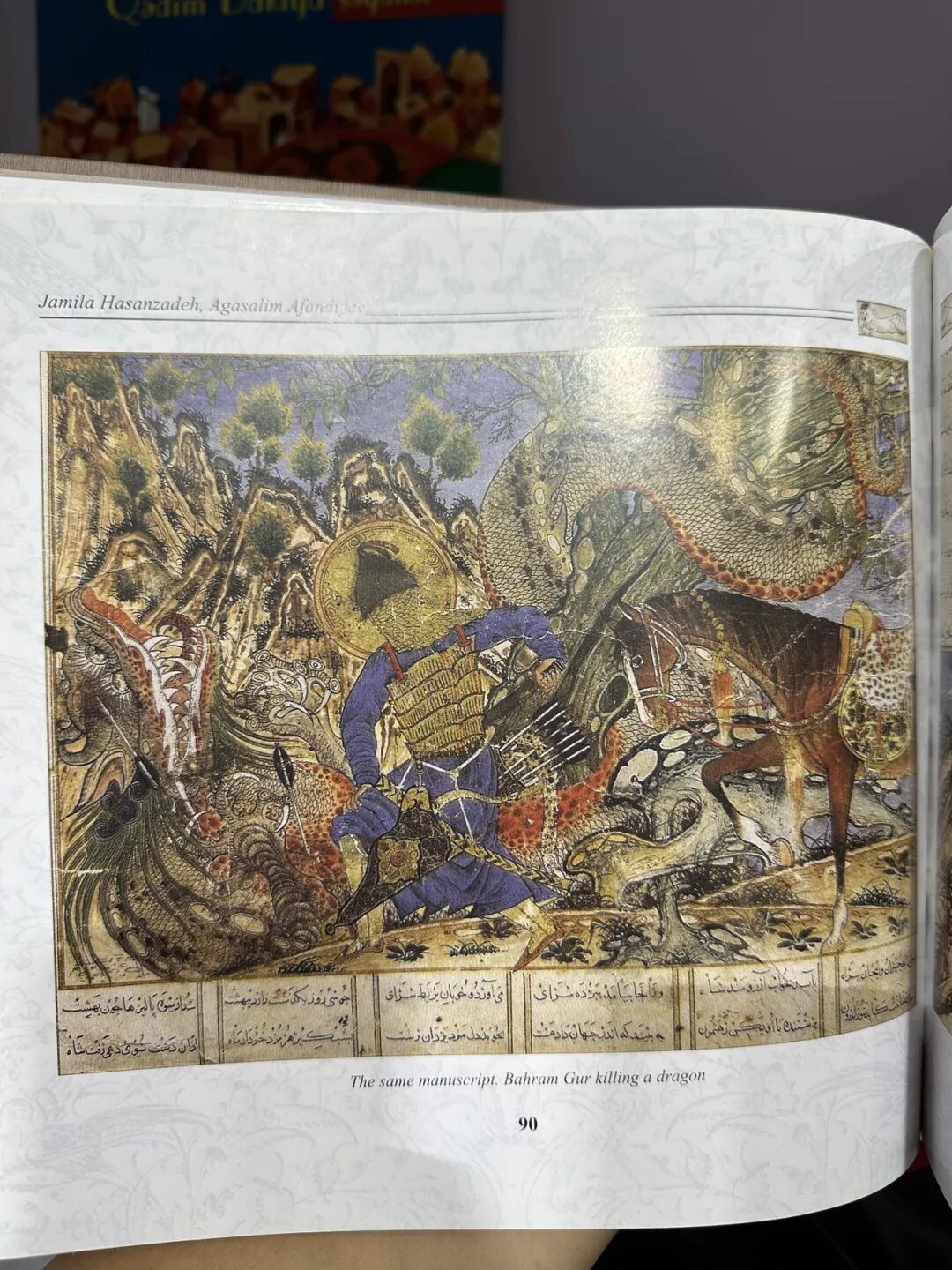
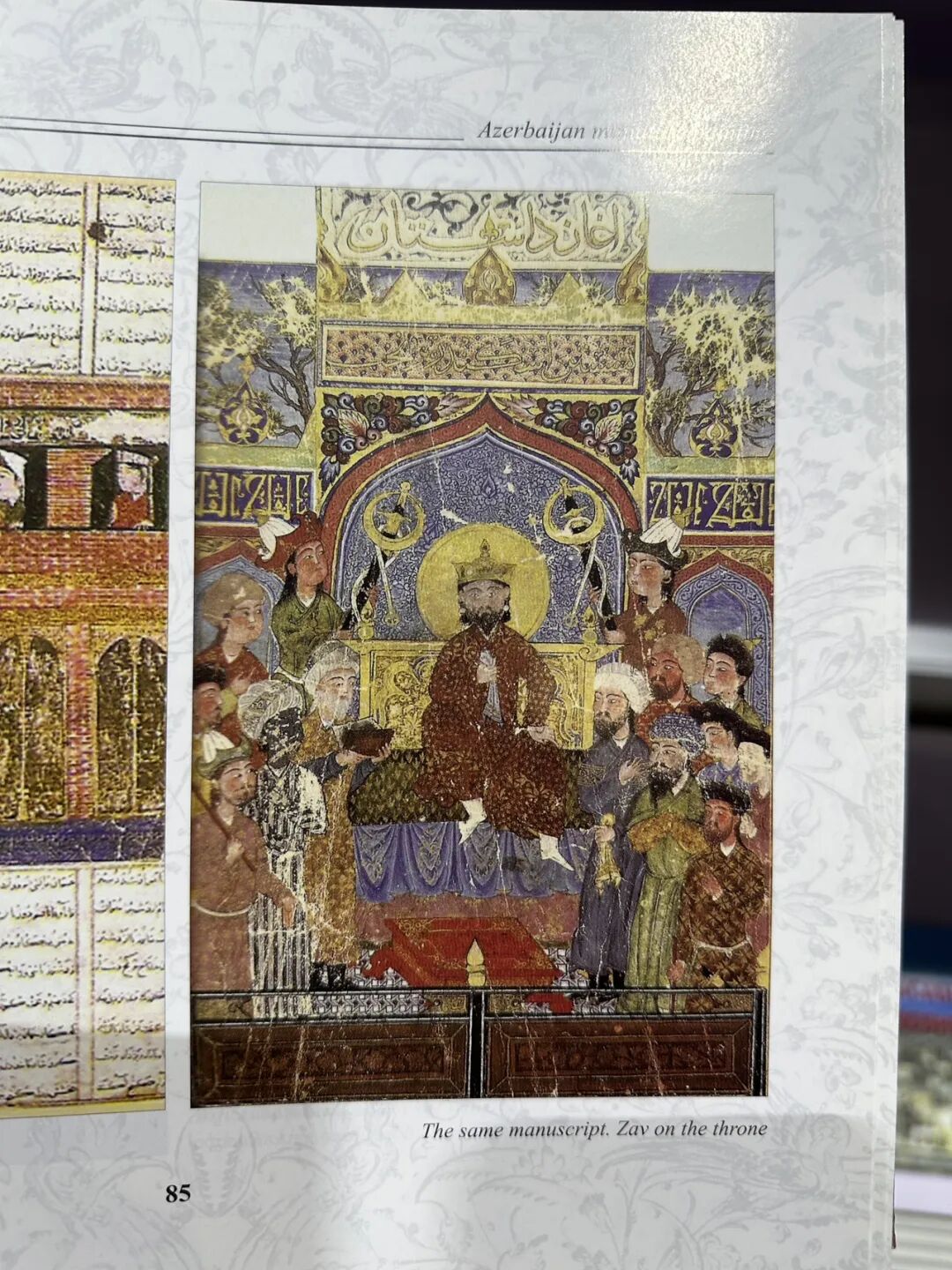
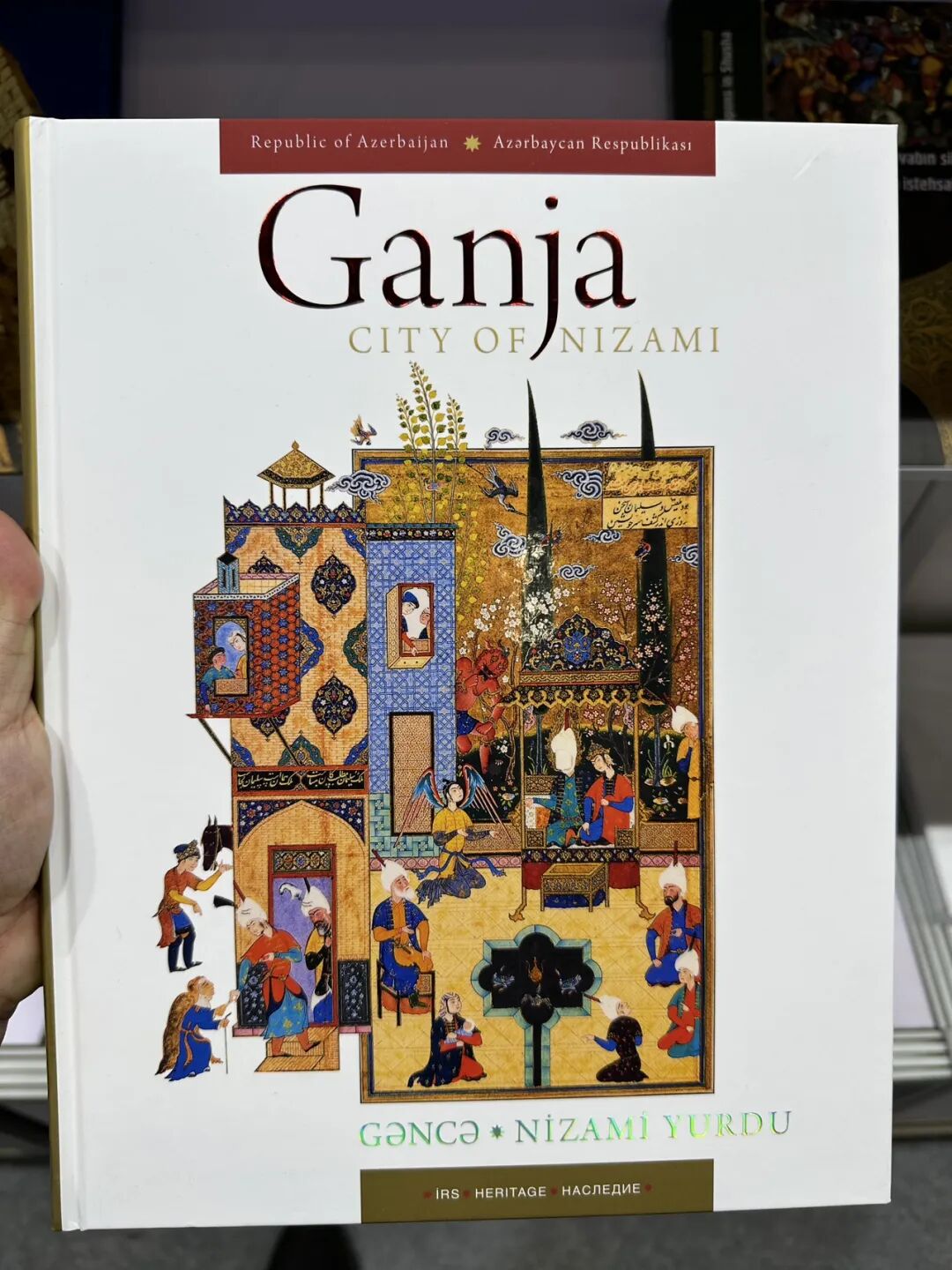
The basement level has the Iran, Oman, and Morocco pavilions, which are relatively small. It is my first time seeing an Oman pavilion, and you can pick up some brochures introducing Oman.
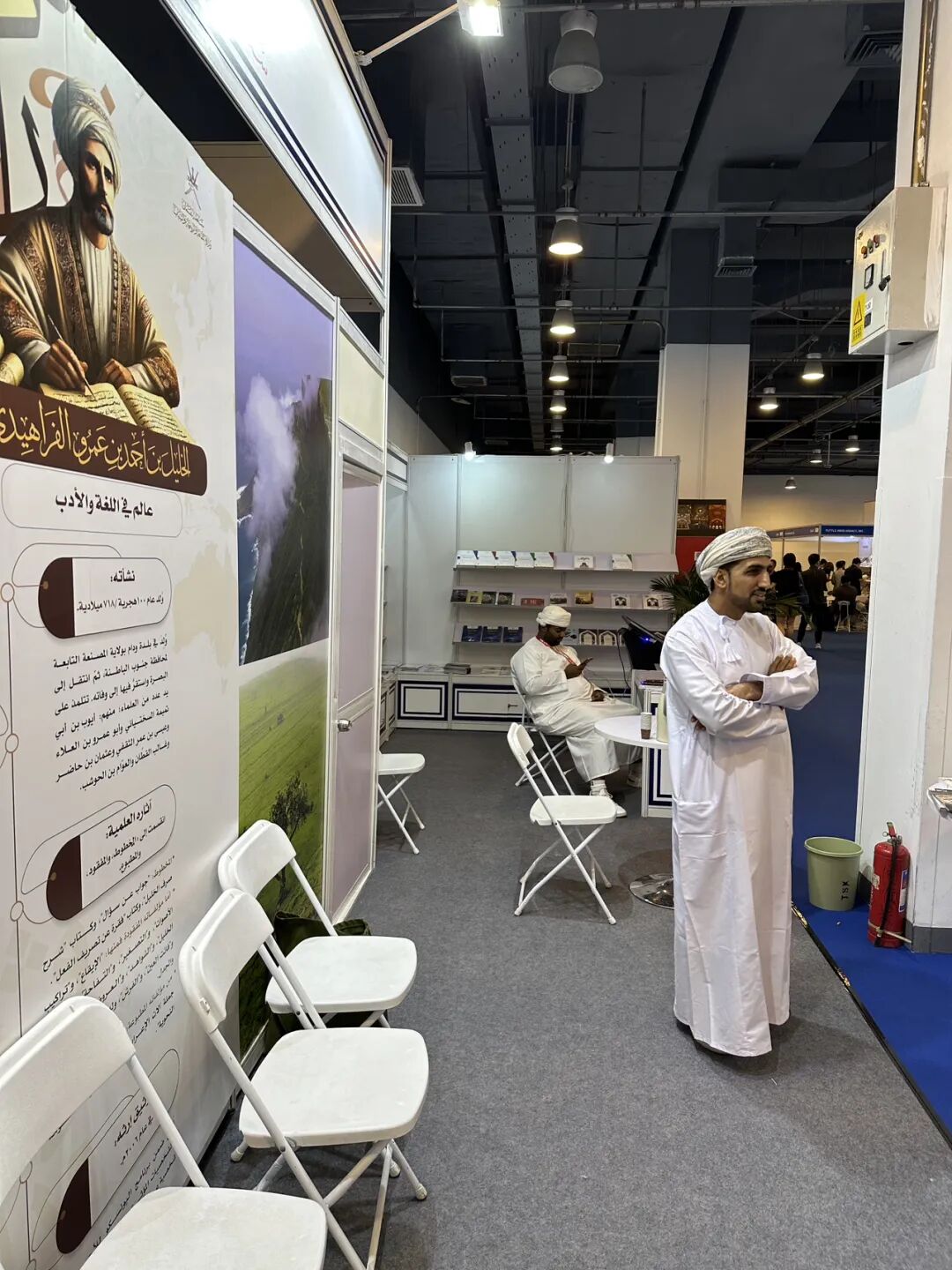
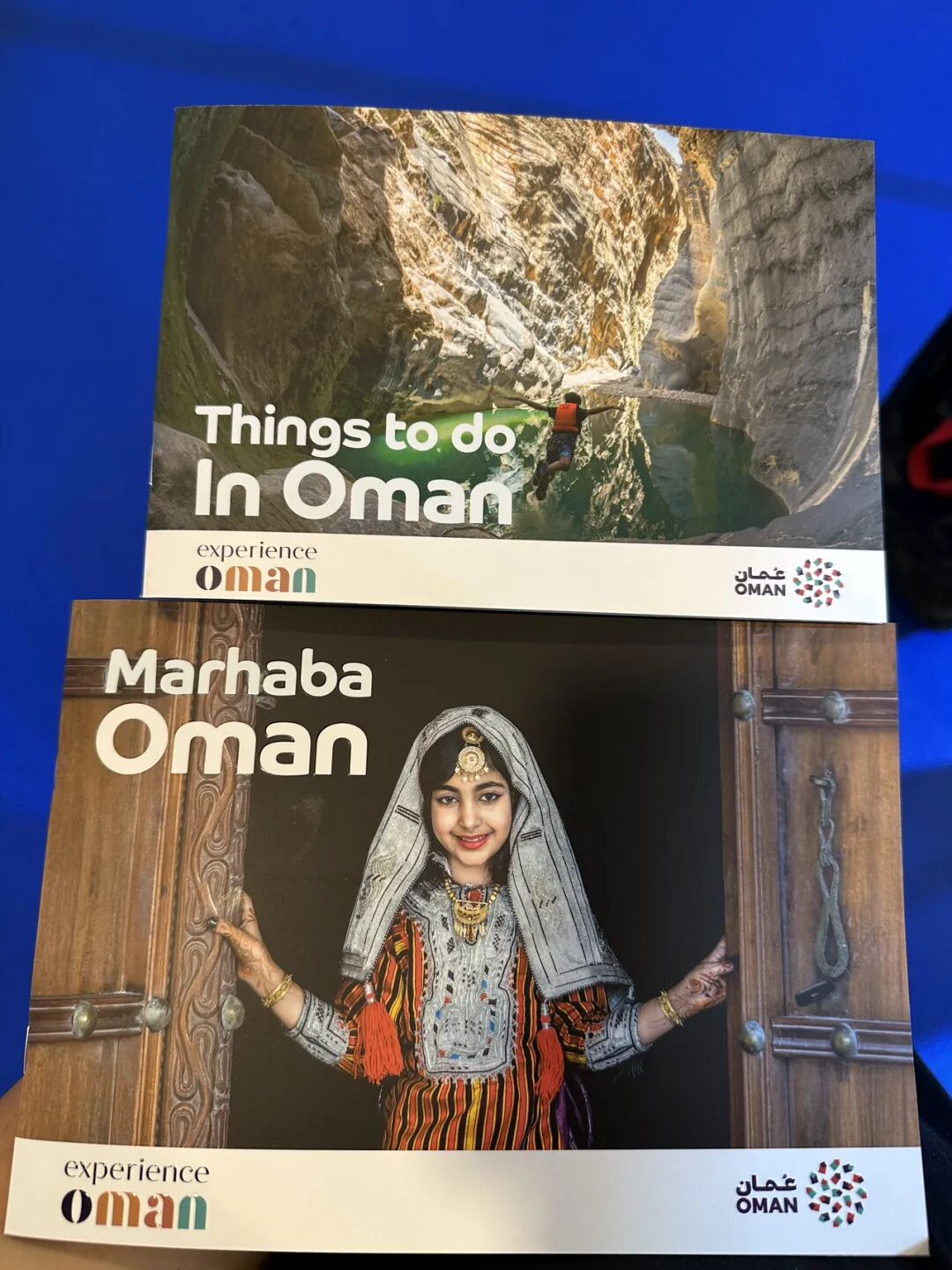
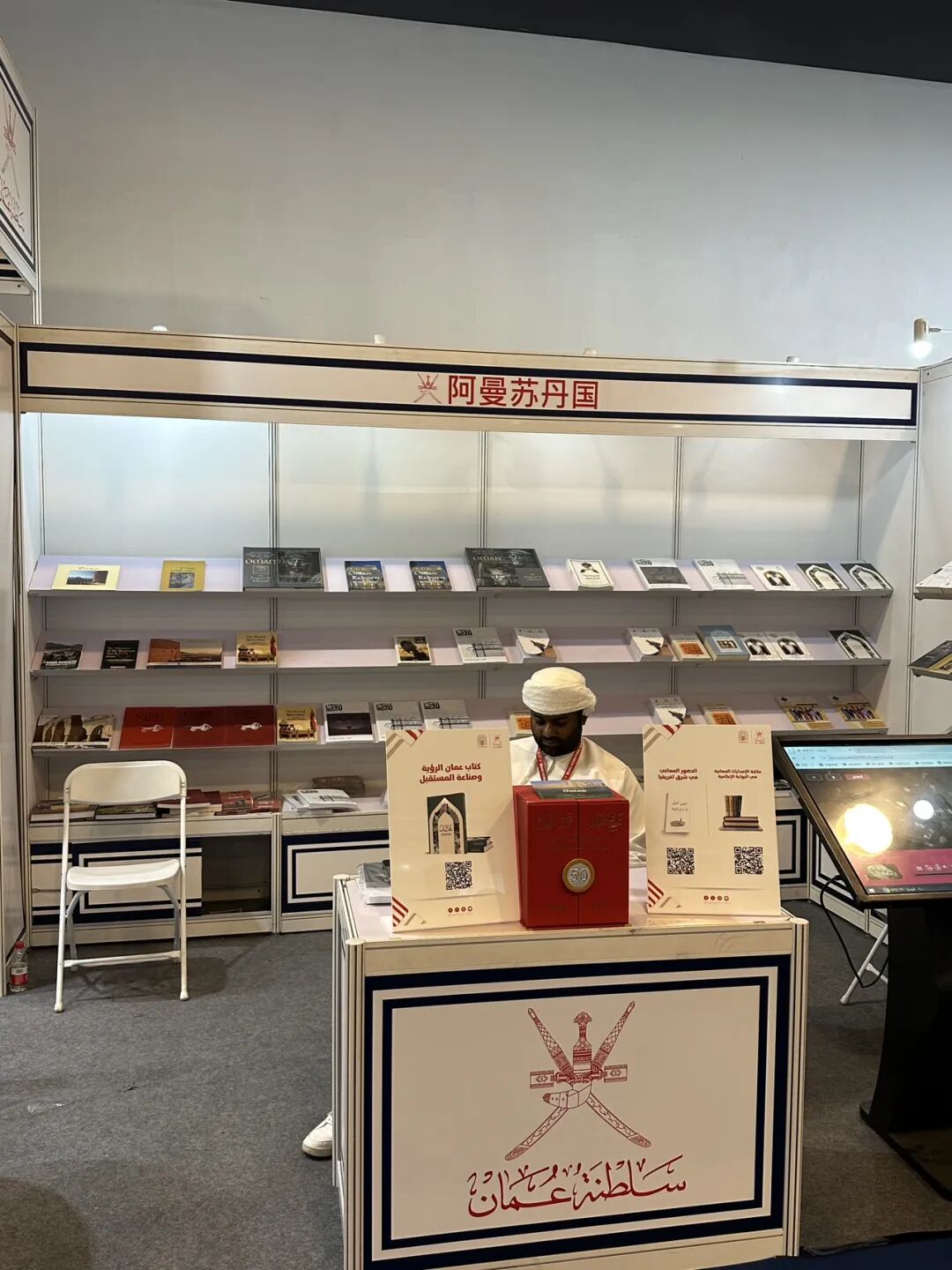
At the Iran pavilion, I paid my respects to all the Iranian martyrs killed by Israel.
Halal Travel Guide: Brunei Part 1 — Visa-Free Culture, Mosques and Local History
Articles • ali2007fr posted the article • 0 comments • 171 views • 2026-05-20 00:57
Summary: Brunei offers visa-free travel for Chinese visitors and a compact route through mosques, museums, royal history, and Malay culture. This first part keeps the original itinerary, photos, place names, and travel details in a clear English article.
The Brunei Darussalam Immigration Department announced that starting March 8, 2025, Chinese citizens holding ordinary passports valid for at least 6 months can enter Brunei visa-free for up to 14 days. Brunei has officially become a visa-free country!
I happened to take my family to Brunei in December 2024 and visited quite a few places. In my opinion, Brunei can be described as a "rural version of Singapore and a high-cost Malaysia." If you have already visited Singapore and Malaysia, this place is still worth a look.
First, Brunei has its own ride-hailing app called Dart. You can link a VISA card or pay with cash, and the cars arrive quite quickly. Note that after leaving the airport, the ride-hailing pickup point is in the parking lot on the right. Walk from the main airport entrance toward the mosque on the right, then follow the canopy to the end to find it.
My first impression of downtown Brunei is that everyone drives everywhere, and there are basically no pedestrians on the streets. It feels like the whole city was designed for cars, and there are very few crosswalks. The city density is very low with lots of greenery, making it feel like a garden city for cars.
Below, I will share some places in Brunei that we think are worth visiting and eating at.
Eat halal Nanyang-style Chinese food.
Yingzhun Hao.
Just like in Singapore and Malaysia, many Chinese people from Hainan and Fujian in Brunei apply for halal certification, hire Muslim staff, and serve halal Chinese food with Nanyang characteristics. We ate at several of these places this time, and they are all worth recommending.
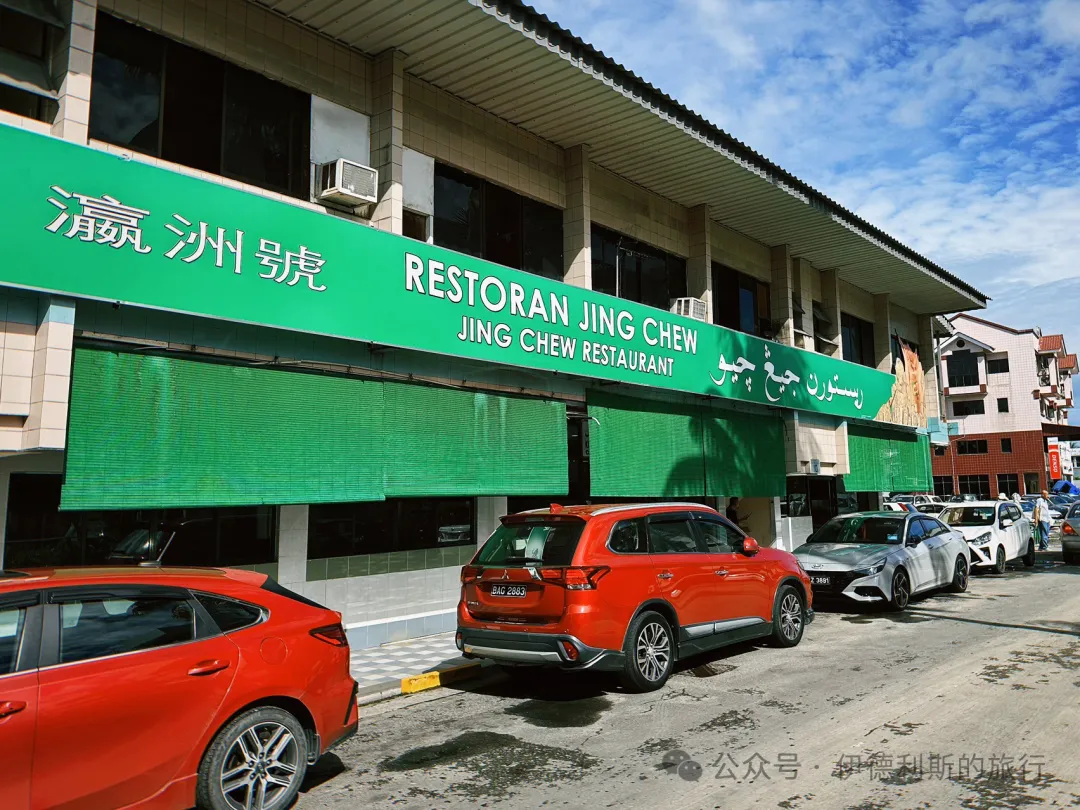
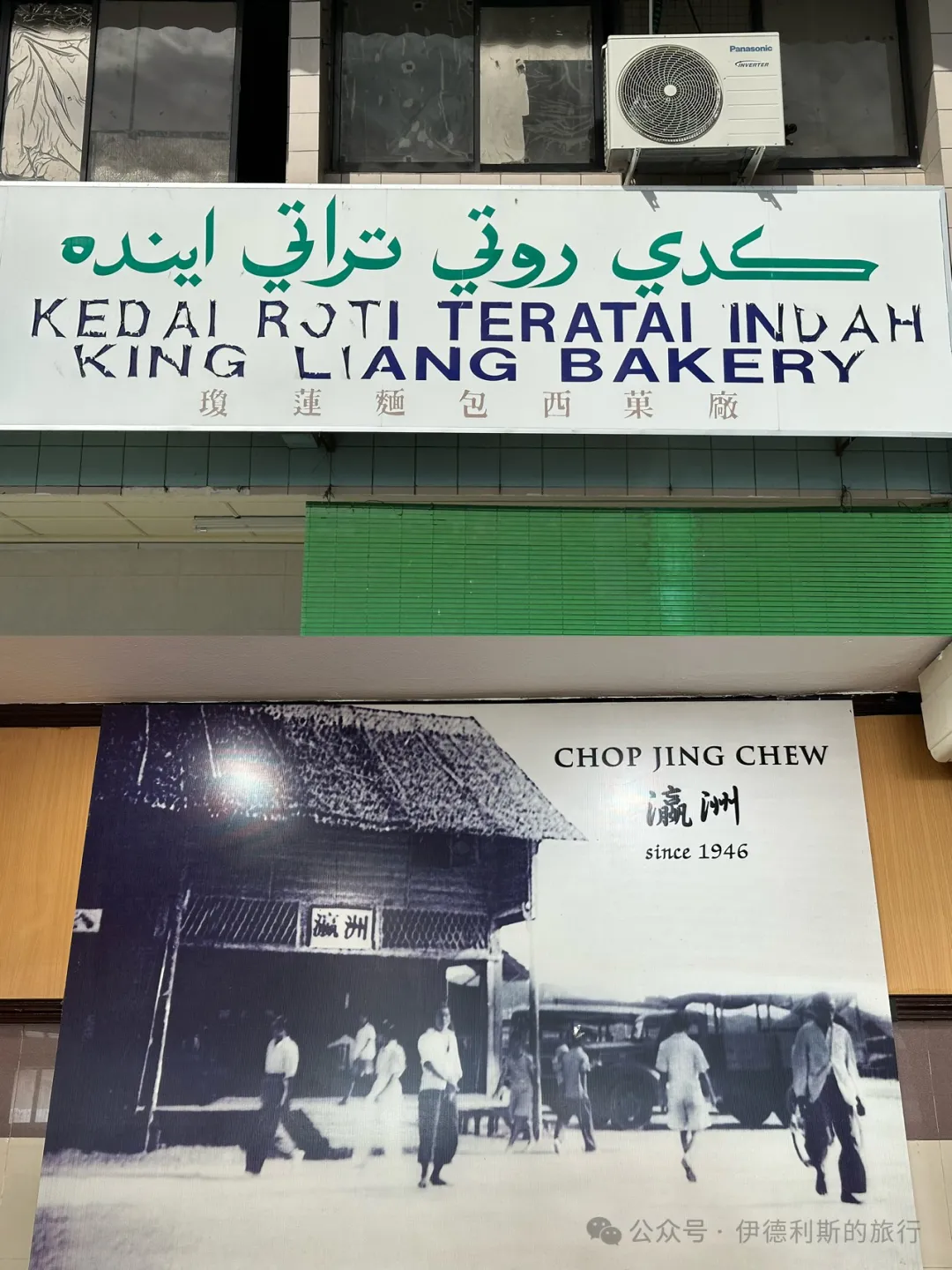
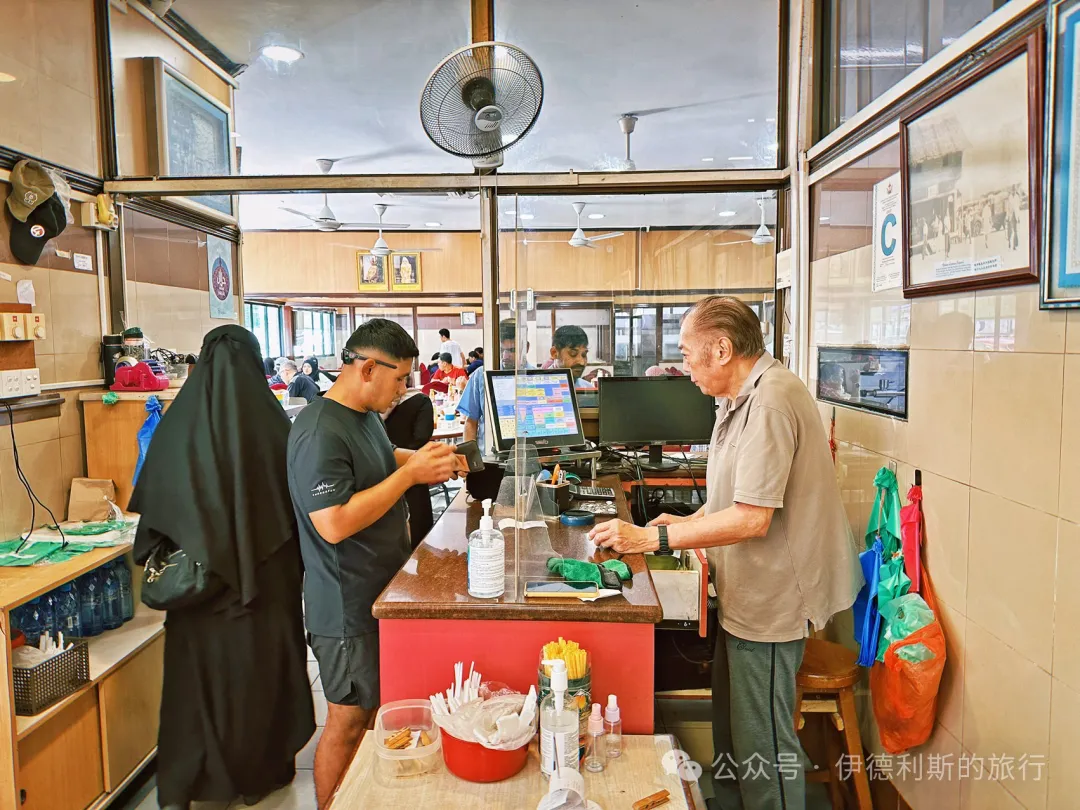
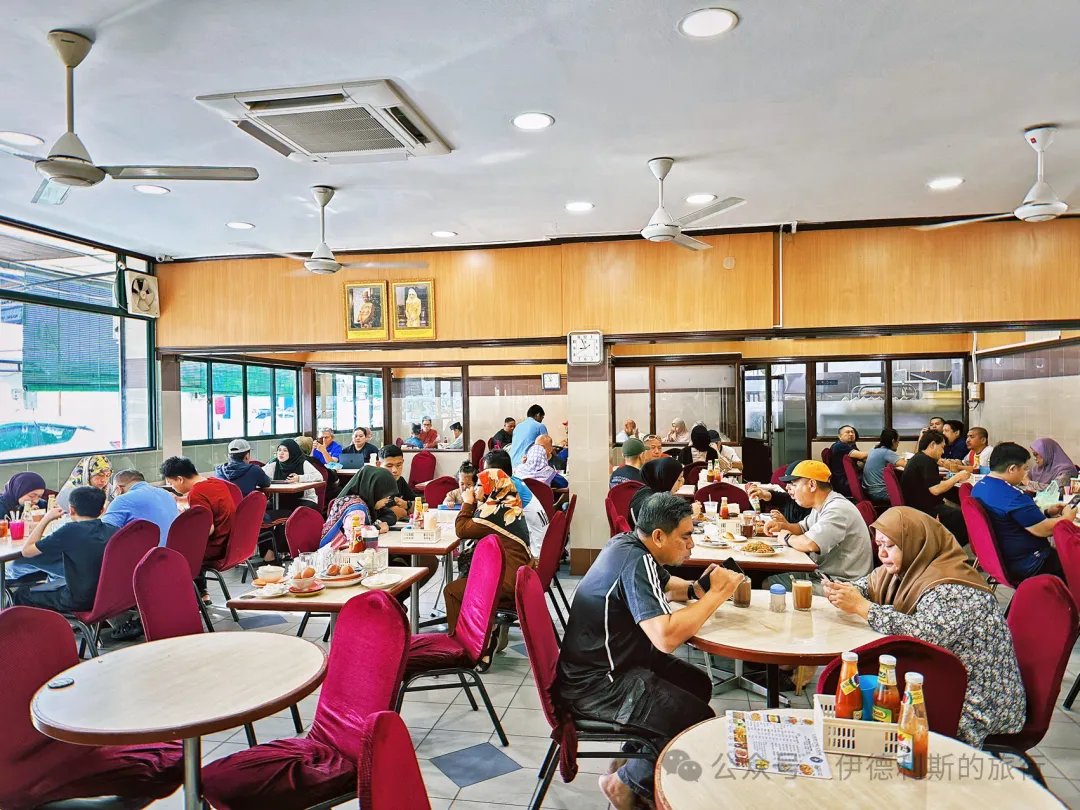
The most famous Hainanese teahouse in Brunei is Yingzhun Hao. They have Brunei halal certification and are favored by people of all ethnic groups. The founder of Yingzhun Hao, Han Qiongyuan, was from Wenchang, Hainan. In 1939, during the Japanese invasion of China, 17-year-old Han Qiongyuan traveled to Southeast Asia and arrived in Brunei to work as a handyman at his uncle's coffee shop. In 1946, Han Qiongyuan officially opened Yingzhun Teahouse, mainly selling coffee, bread, and other food, and became widely known for his "longevity bread (roti kuning)." Later, as the teahouse business grew, Han Qiongyuan also expanded into real estate and presided over the construction of the Brunei Hainan Building. After 1993, Han Qiongyuan returned to his hometown every year to visit relatives and invested heavily there, being awarded the title of "Patriotic Hainanese" by Hainan Province three times.
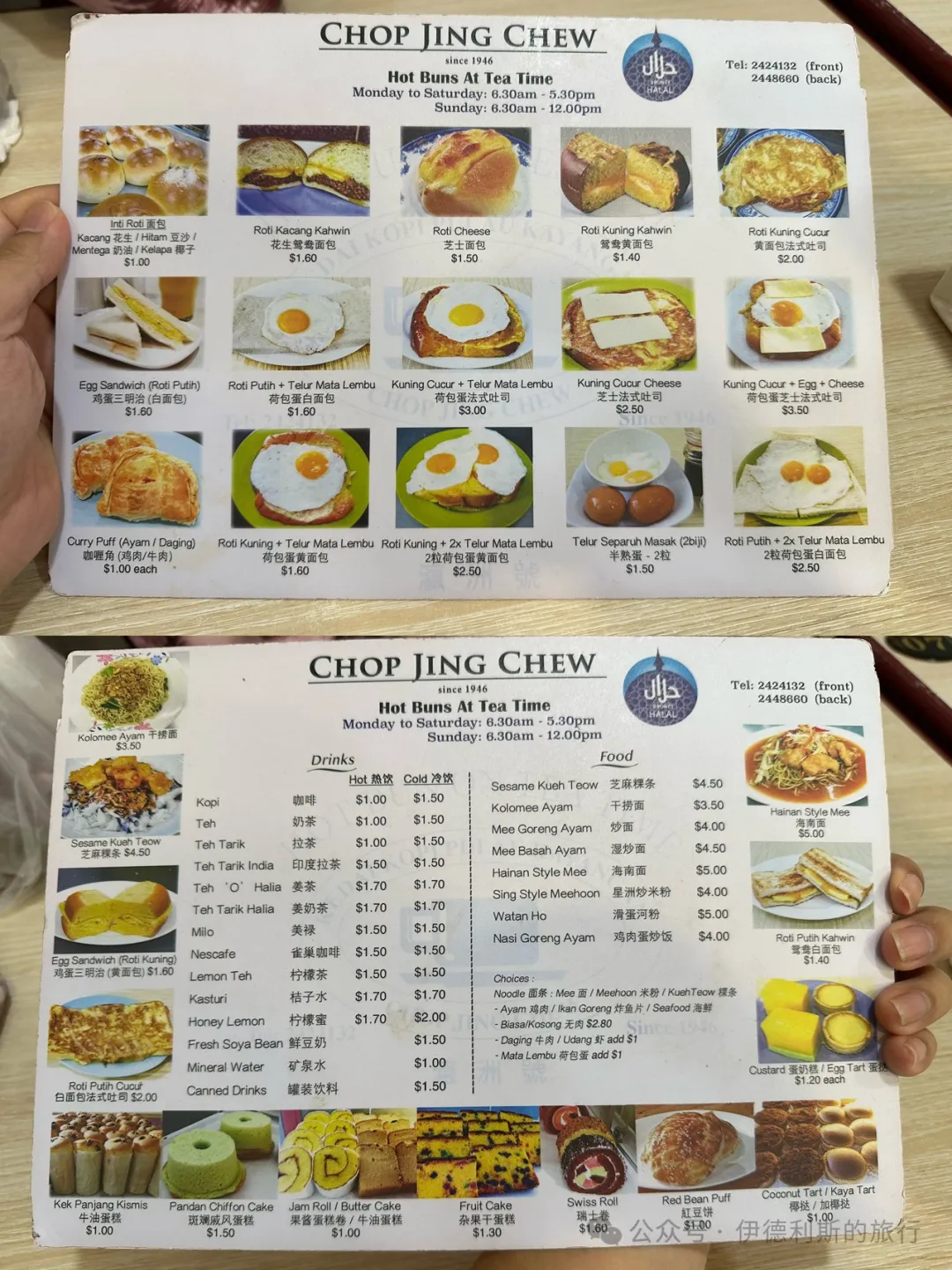
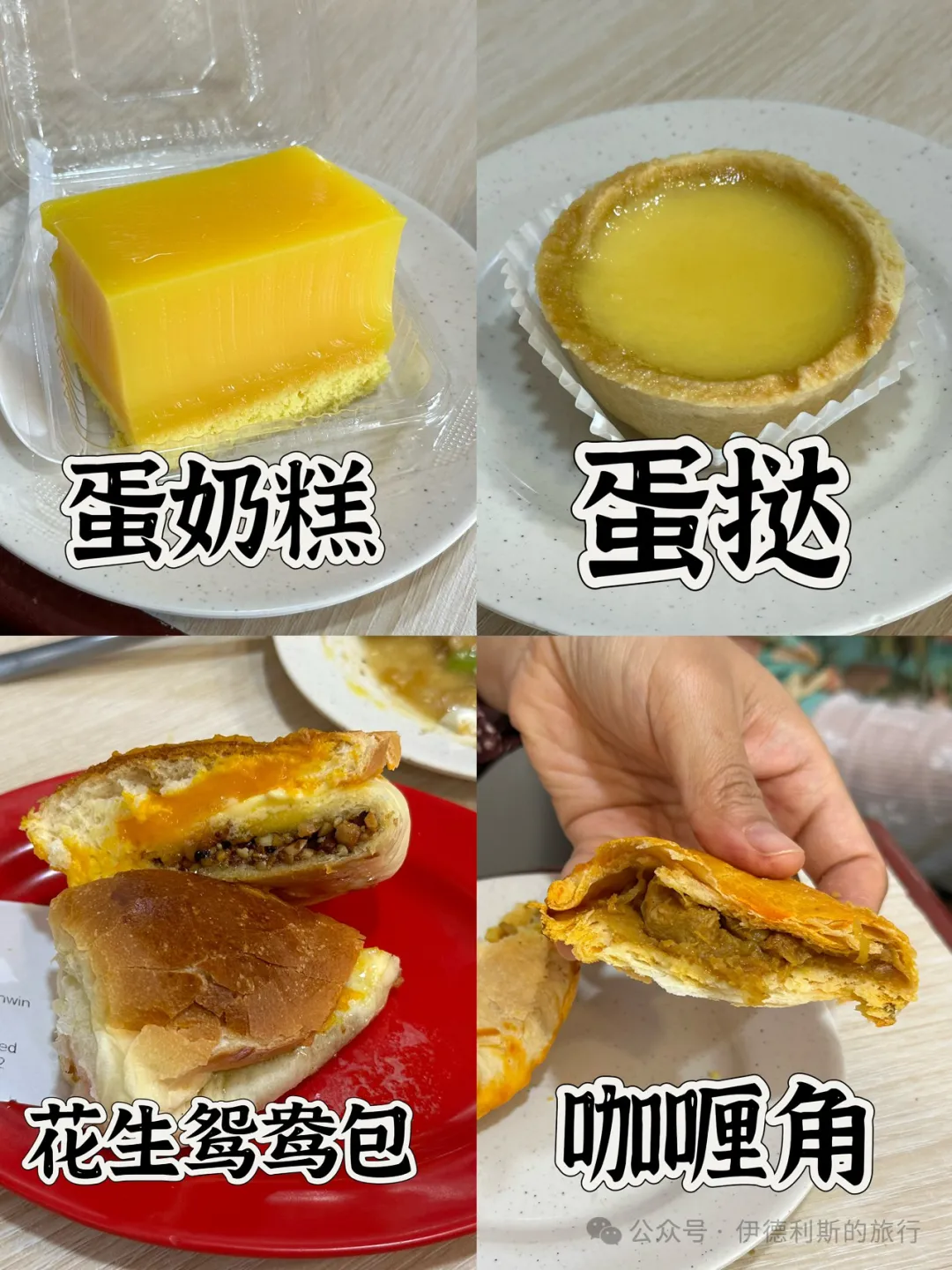
Their shop has a very rich variety of bread. The most classic sandwich breads come in four flavors: peanut, red bean paste, butter, and coconut. There are also peanut yuanyang bread, cheese bread, yuanyang yellow bread, and French toast. You can add a fried egg and cheese, or order a soft-boiled egg on the side. Cakes include custard cake, egg tarts, coconut tarts, red bean cakes, butter cakes, pandan cakes, and more. Western-style breads and pastries were learned by Hainanese people working as kitchen helpers for British families when they traveled south to Southeast Asia in the 19th century. Today, they are a classic part of Nanyang Hainanese restaurants.
Besides breads and pastries, they also serve various noodles, including sesame flat rice noodles (zhima guotiao), dry-tossed noodles, fried noodles, Hainanese noodles, fried rice vermicelli, and egg gravy flat rice noodles (huadan hefen). These are all very well-suited to Chinese tastes. We ordered egg gravy flat rice noodles, sesame flat rice noodles, egg tarts, egg custard cakes, yellow bread with fried eggs, chicken curry puffs, peanut and kaya butter bread (yuanyang mianbao), ginger milk tea, and lemon tea for a full East-meets-West experience. The peanut and kaya butter bread is filled with coconut jam (kaya), butter, and crushed peanuts, giving it a very rich texture. The sesame flat rice noodles have a sweet, salty, and spicy flavor. Served with fried tofu and fried fish chunks, they are a major specialty of the restaurant.
Babu's Kitchen
There are many Chinese shops in the old town of Bandar Seri Begawan, which is also a great place to eat at halal Hainanese restaurants. We chose Babu's Kitchen. It was very busy at lunch with Chinese, Malay, and Indian customers, which is a classic scene at a Hainanese restaurant. Since they didn't have a Chinese menu, we asked the owner to recommend the Assam fish fillets, salted egg fried mushrooms, beef noodles (yee mee), and bean curd skin with tofu and chicken. Like in Malaysia, the Chinese in Brunei speak very standard Mandarin. Overall, the food was very good. The Chinese dishes were infused with Malay flavors, but they were still very easy for Chinese people to enjoy.
Meiguang Tea House
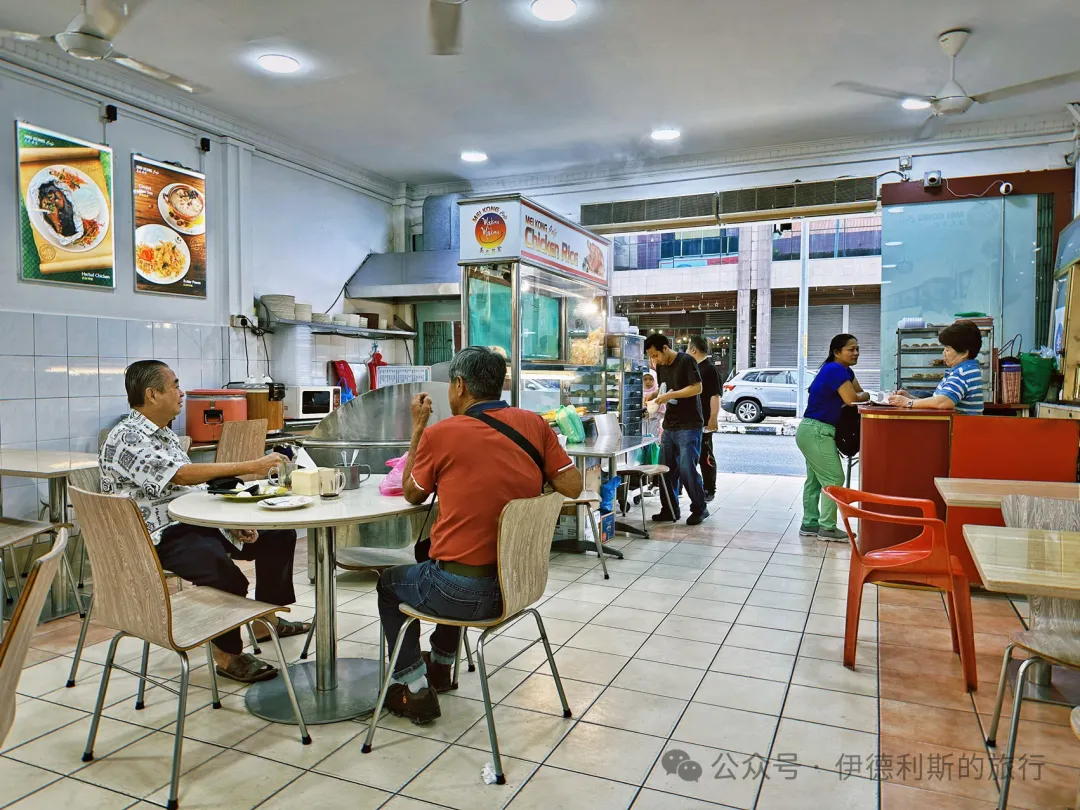
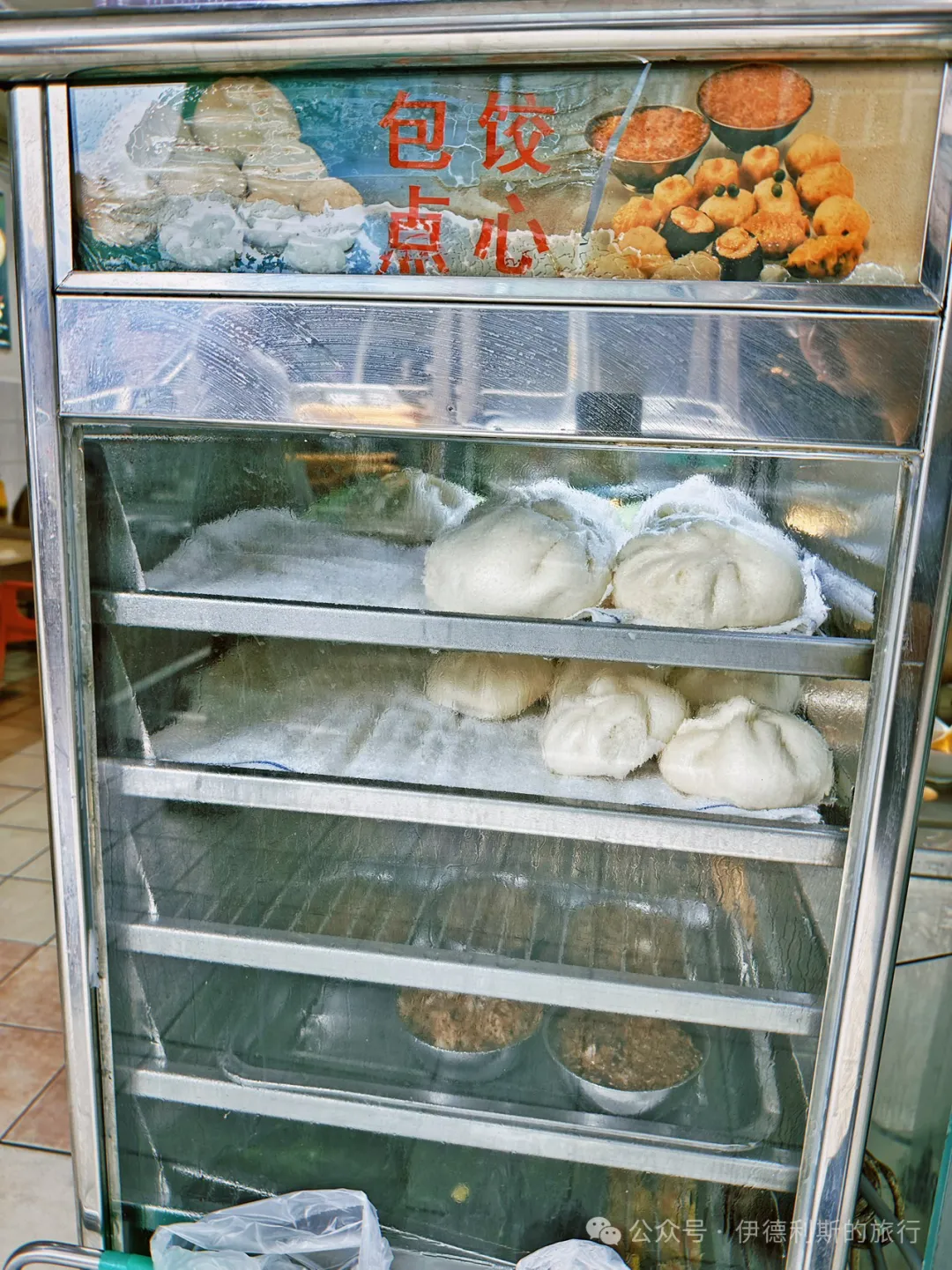
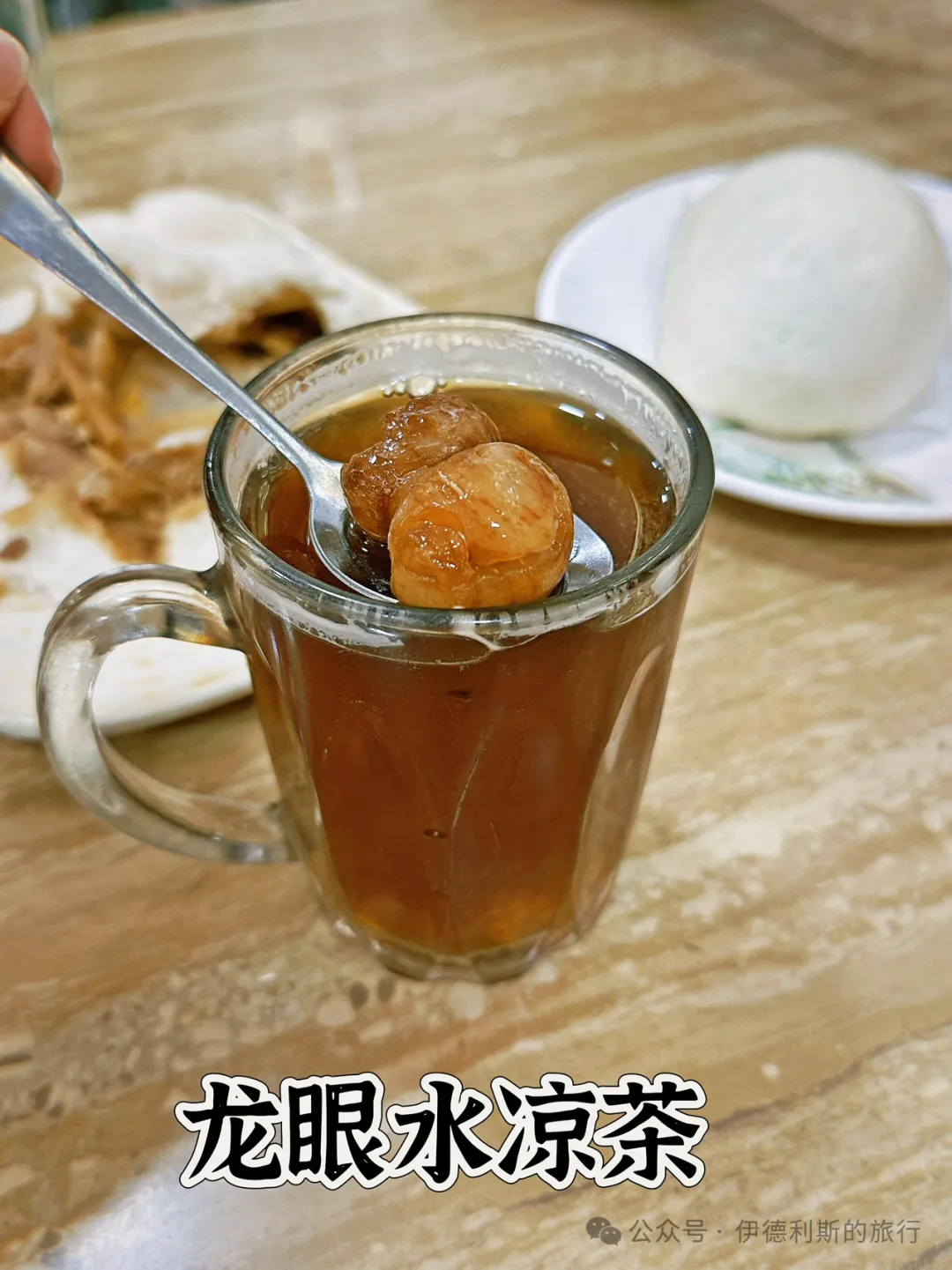
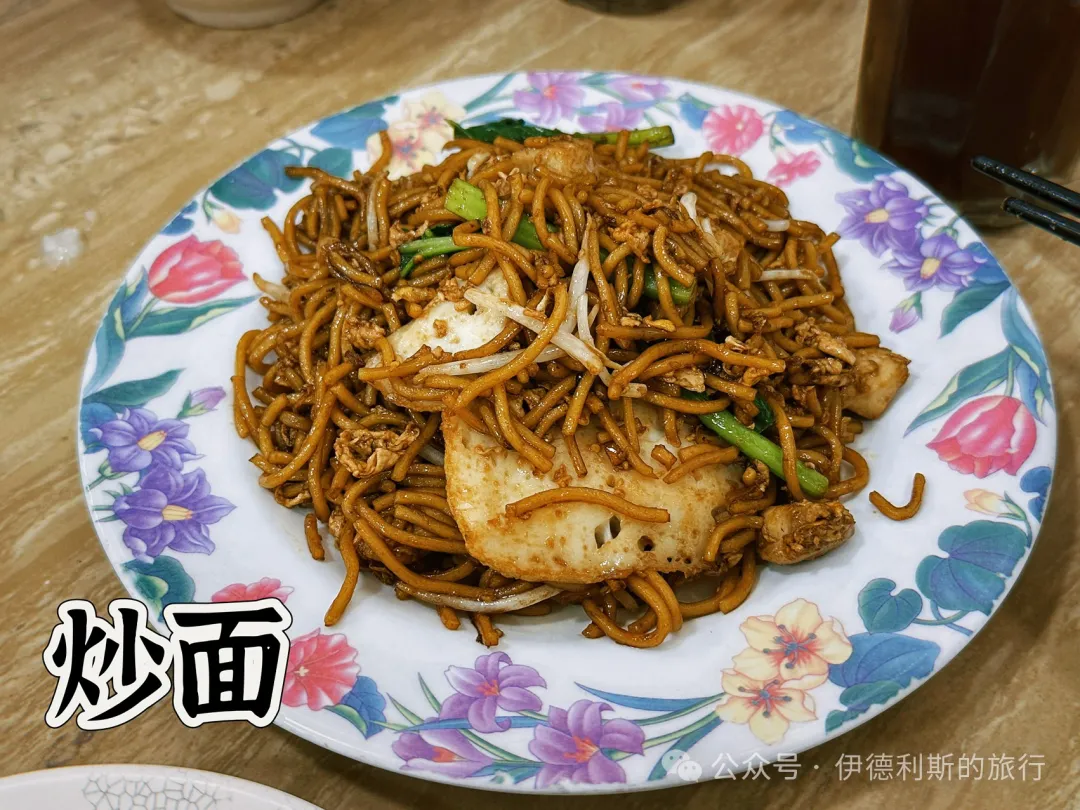
We had a Hainanese breakfast at Meiguang Tea House in the old town of Bandar Seri Begawan. The owner is Hainanese, his wife is from Xiamen, and the staff are all Indonesian. Because they mainly cater to the nearby office buildings, it is usually quite busy. It is relatively quiet on weekends, and there are fewer steamed dim sum options than usual. We ordered chicken and radish buns, red bean buns, beef porridge with small fried dough sticks (youtiao), longan herbal tea, fried noodles, and steamed dumplings (shaomai). Next time, if any friends (dost) are around on a weekday, we can try their other specialties like Fuzhou 'wealth-attracting' rice noodle soup, dry-tossed silver needle noodles (laoshufen), and chicken intestine noodles.
Shixianle
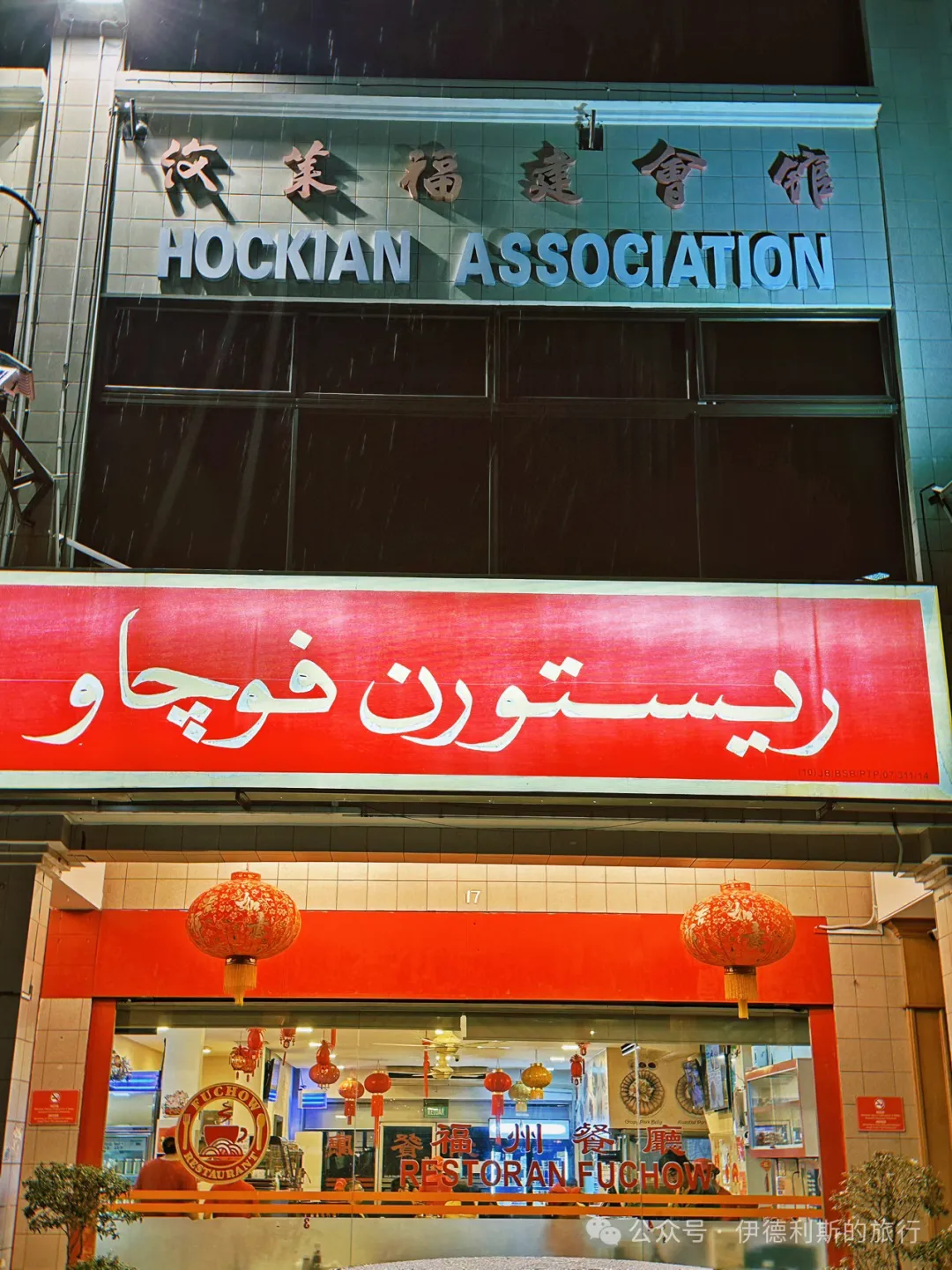
Near the Fujian Association is a restaurant called Shiraz Seafood Restaurant. The name sounds like an Iranian place, but it is actually a Chinese restaurant called Shixianle. It specializes in dim sum and various Nanyang Chinese snacks. The menu is very extensive, and it is halal-certified in Brunei. After we went in, a table of Malays and a table of South Asians arrived, which shows how much different ethnic groups love halal Chinese food.
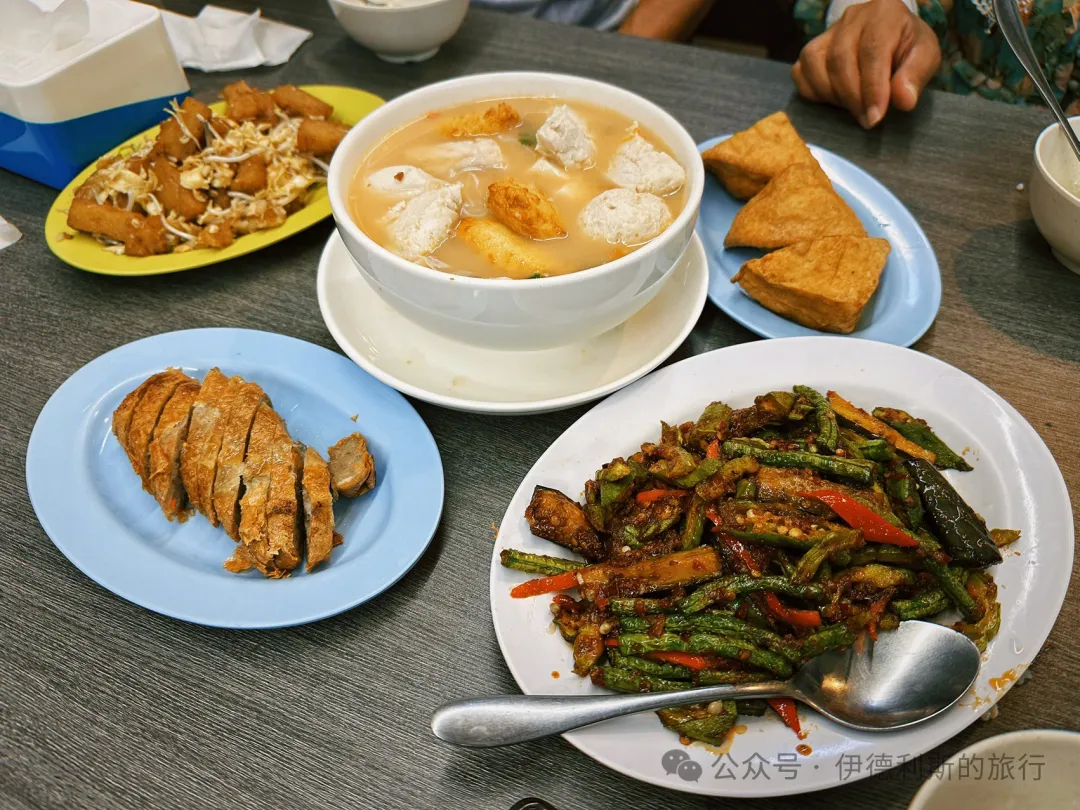
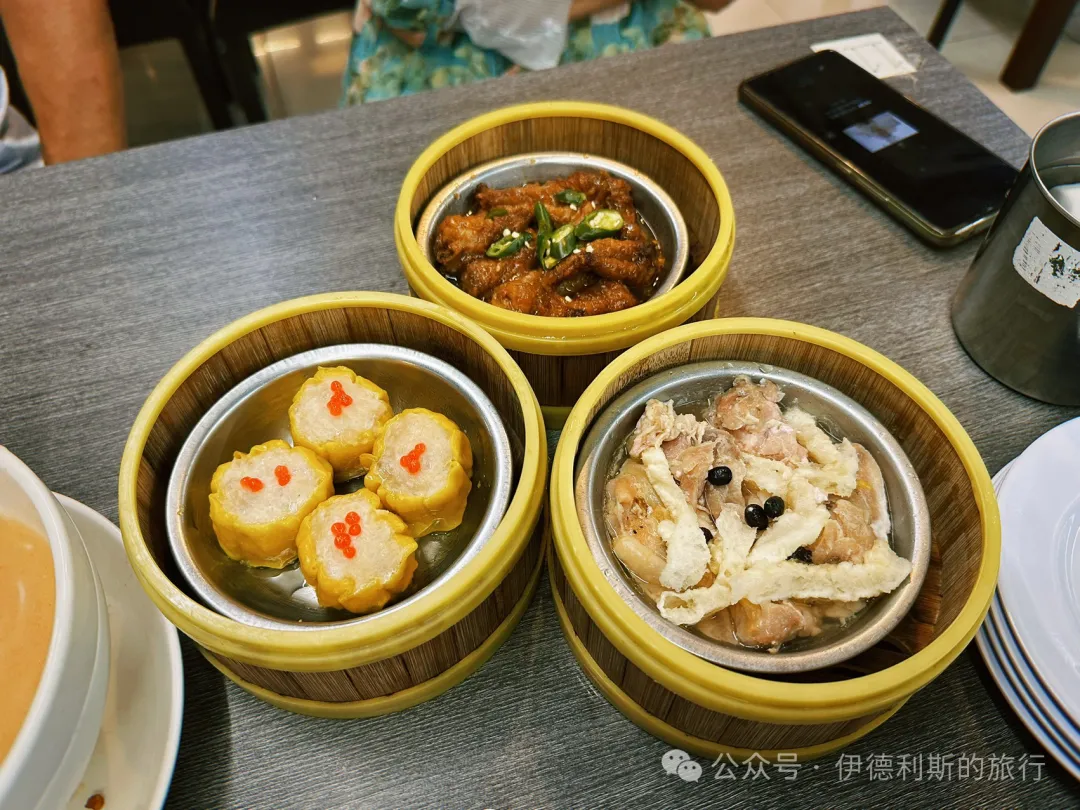
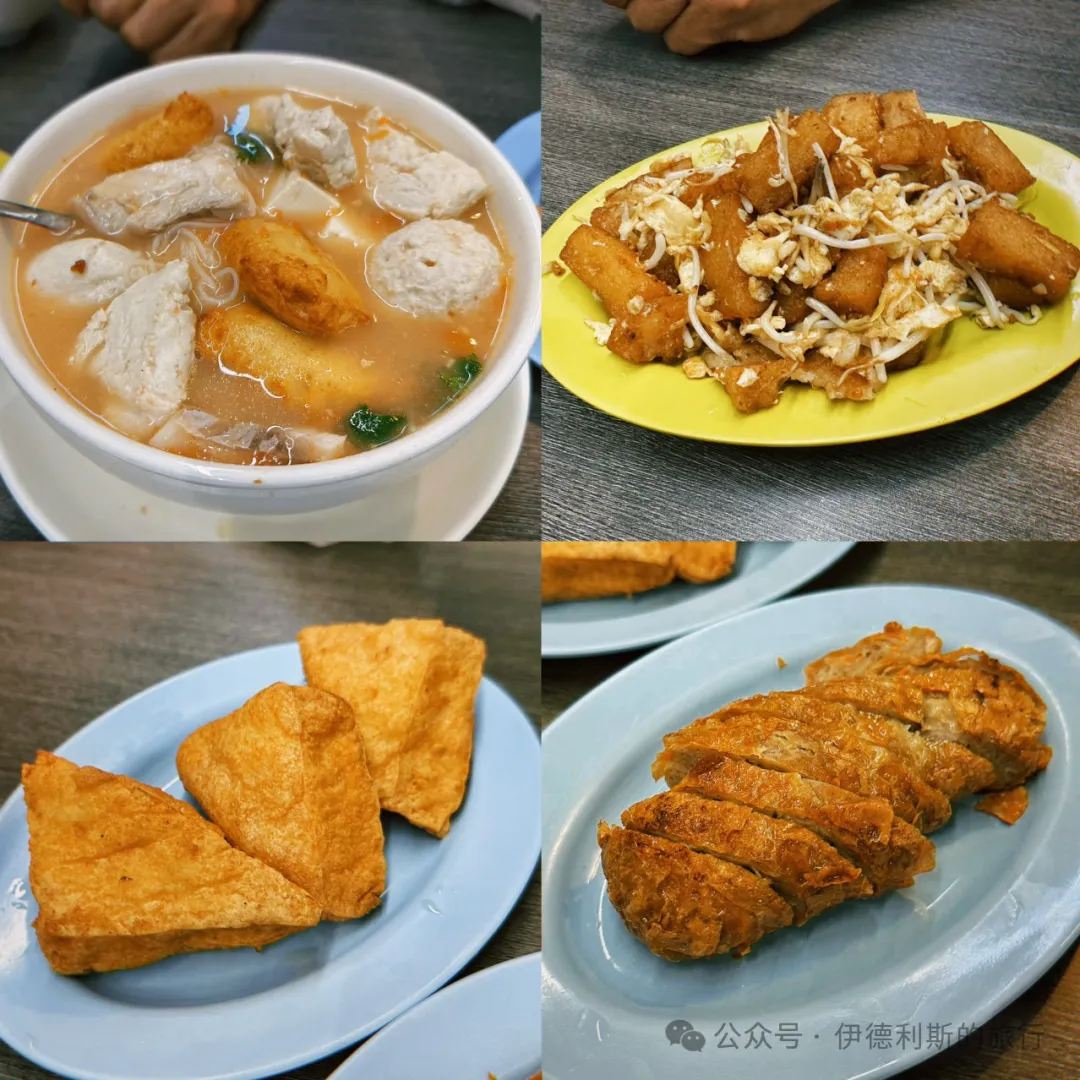
We ordered Cantonese steamed dumplings (siu mai), chicken feet, fish maw with chicken, five-spice meat rolls (ngo hiang), fried stuffed tofu (yong tofu), fried radish cake, longan herbal tea, chicken porridge, seafood soup (a mix of fish fillets, fish balls, etc.), and dry-fried green beans. We really enjoyed our fill of Nanyang Chinese snacks in Brunei.
Ngo hiang is short for 'five-spice marinated meat,' a snack that originated in the Minnan region of Fujian. In the past, life was hard, so people would season leftover meat and vegetables with five-spice powder, wrap them in bean curd skin, and deep-fry them. Later, as Chinese people traveled south, it spread to Indonesia, Malaysia, the Philippines, Brunei, Singapore, and Thailand.
Stuffed tofu (yong tofu) is a traditional Hakka dish. In the Hakka dialect, the word niang means to stuff with filling. Legend says that after the Hakka people moved south from the Central Plains, they wanted to eat dumplings but had no wheat. They used tofu instead of flour and invented stuffed tofu (niang doufu). Later, stuffed tofu followed the Hakka people as they traveled south to Indonesia, Malaysia, Singapore, Brunei, Vietnam, and Thailand.
In Brunei, the Fujian Association and the Taiwan Overseas Compatriot Association share the same building. Nearby, there are non-halal restaurants, which are rare in Brunei, and they all have red non-halal signs at their entrances.
Hua Ho Department Store
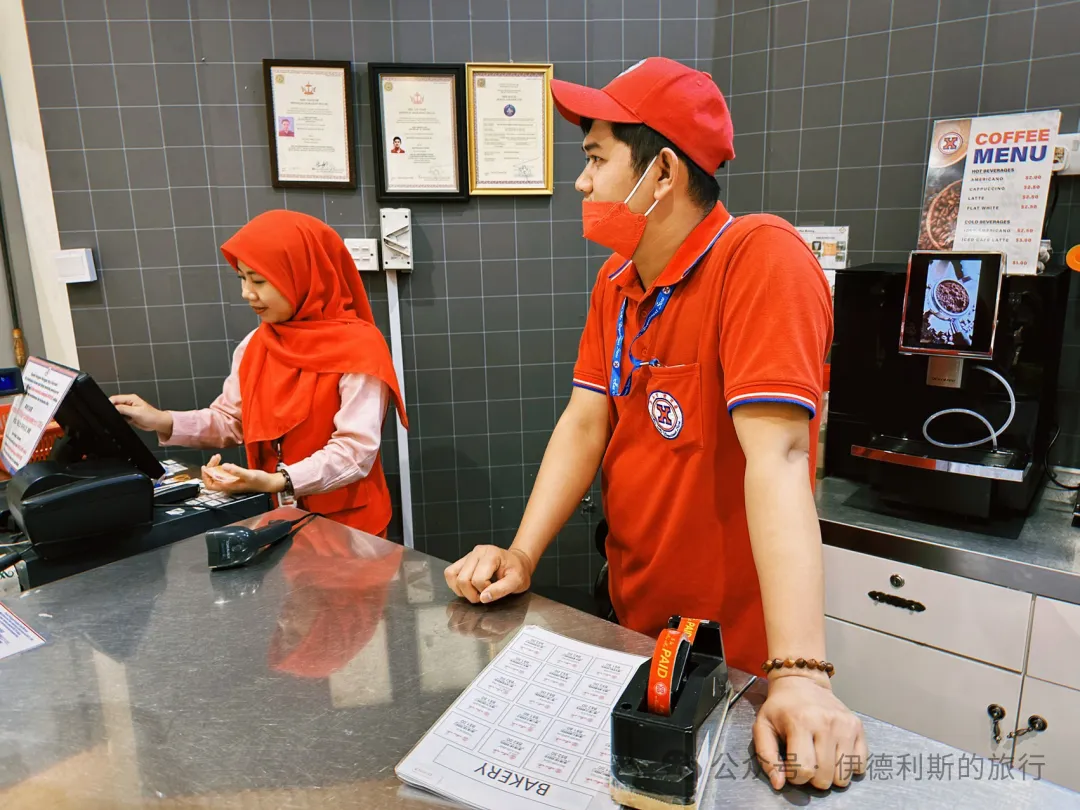
Hua Ho Department Store is a famous halal supermarket owned by Chinese merchants in Brunei, and it has many branches across the country. We went to the Kiulap branch. Inside, one side features various traditional Brunei Malay snacks. We bought a traditional snack from Sabah and Brunei called Kuih Cincin Tempatan, which is fried using red coconut, rice flour, and palm sugar. The other side is the supermarket area, where you can buy various halal foods with Cantonese, Fujian, Chaoshan, and Taiwanese characteristics.
The founder of Hua Ho Department Store, Lau Gek Poh (Liu Jinguo), was born in 1920 to a farming family in Lieyu, Kinmen, Fujian. In 1938, he traveled south to seek his fortune, first going to Singapore and then to Brunei to join his eldest sister. In 1947, Lau Gek Poh bought a piece of land in Manggis, on the northern outskirts of Brunei. He built a vegetable garden and hired workers to raise chickens and ducks, officially establishing Hua Ho Department Store. After the 1950s, as agricultural prices fell, Lau Gek Poh eventually went bankrupt and closed his shop in 1958. Afterward, he began selling vegetables at the market and selling fabric door-to-door. He did not reopen his shop until 1961. In 1966, he built a small two-story building, and the shop was opened on the first floor. Later, he gradually expanded the scale of his business, eventually making Hua Ho the largest department store in Brunei.
In 2004, the Sultan of Brunei awarded Lau Gek Poh the title of Pehin Kapitan Cina Kornia Diraja, making him one of the few Chinese nobles in Brunei. Lieyu, also known as Little Kinmen, is located between Kinmen and Xiamen. People from Lieyu began traveling south to Brunei in the 19th century. Initially, they worked mainly as shipping laborers, dock workers, fishermen, and street vendors. Later, they gradually accumulated capital and turned to business, occupying an important position in Brunei's business world. Many have received the titles of Pehin Kapitan and Pehin.
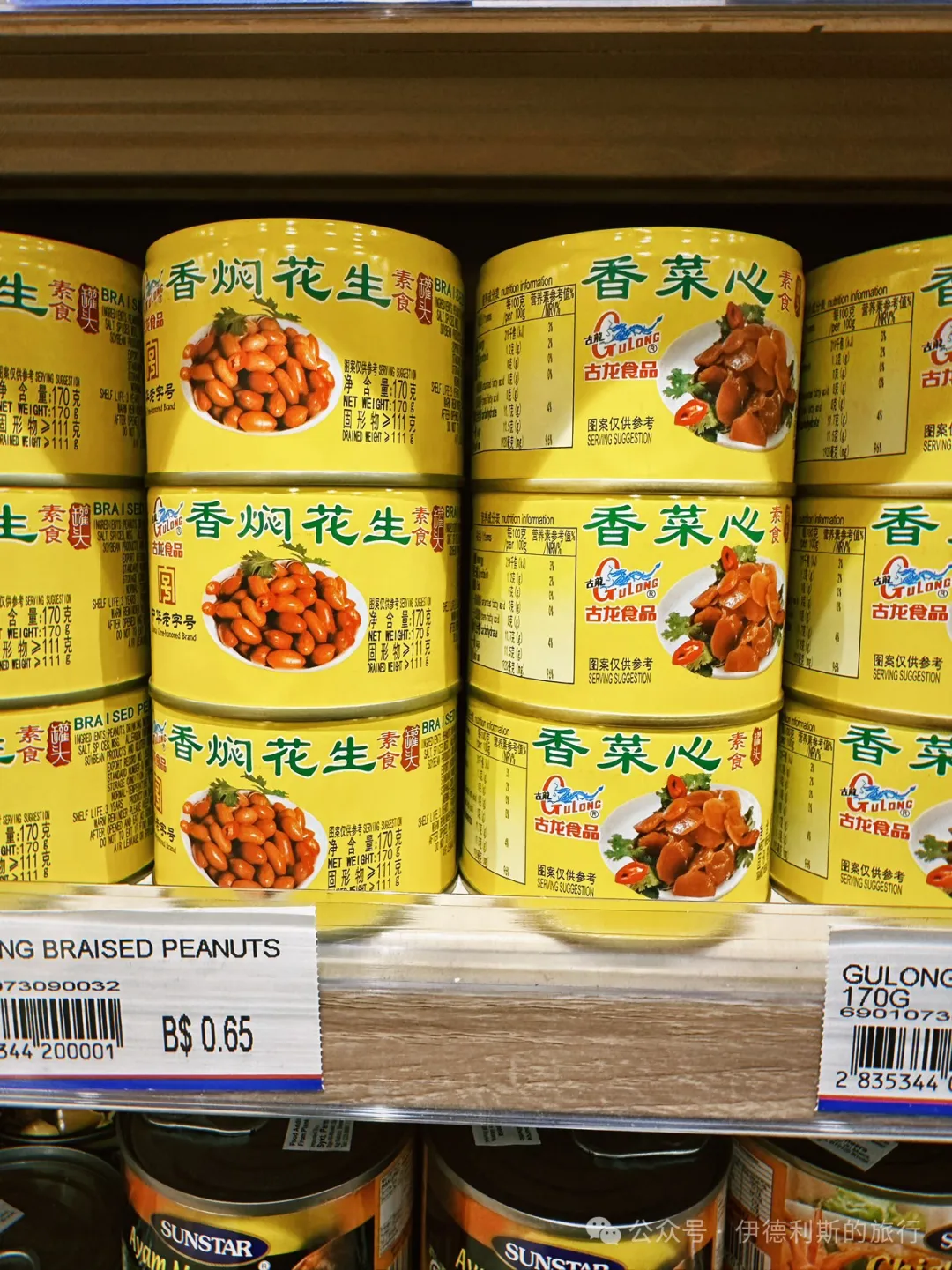
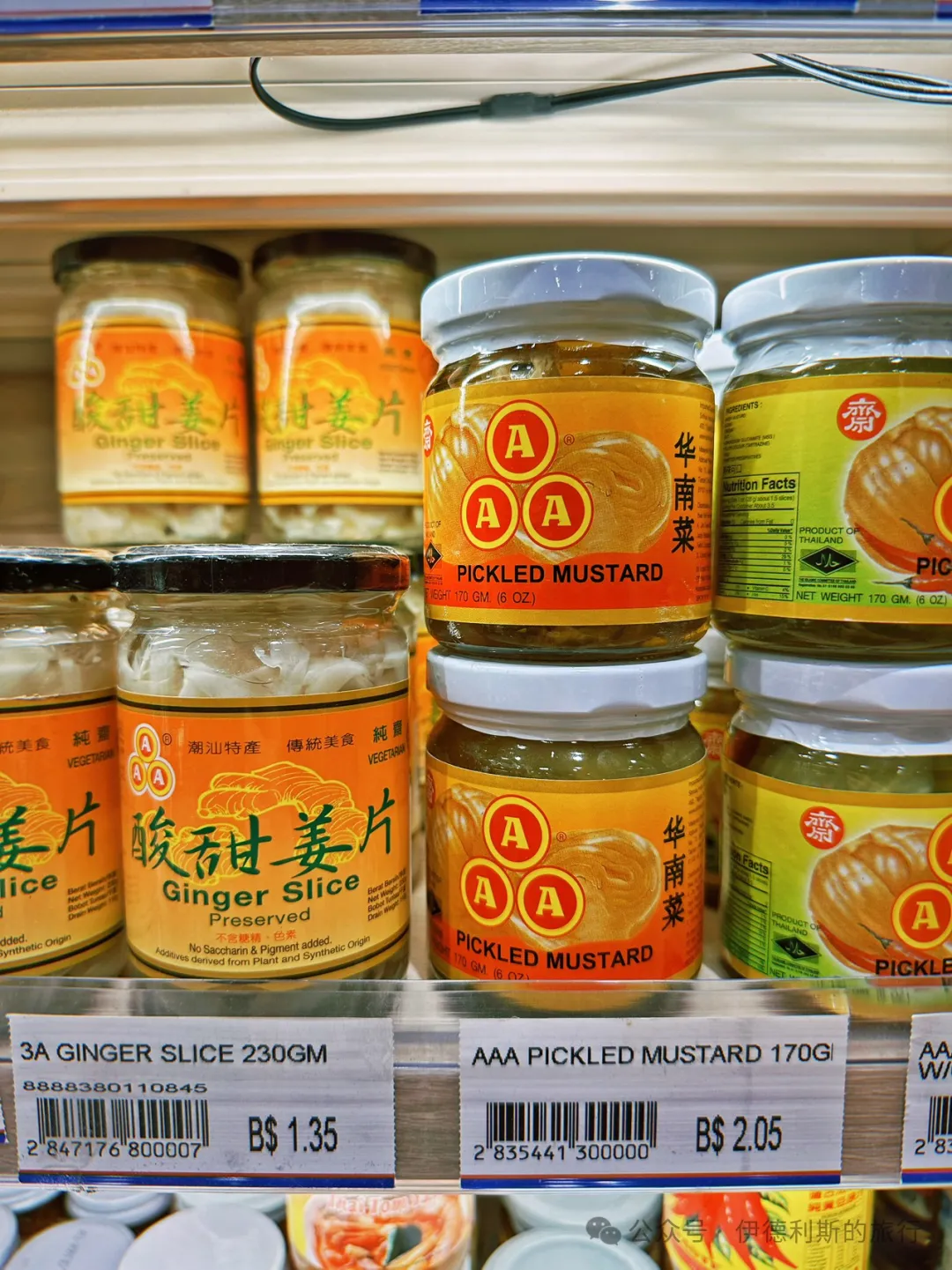
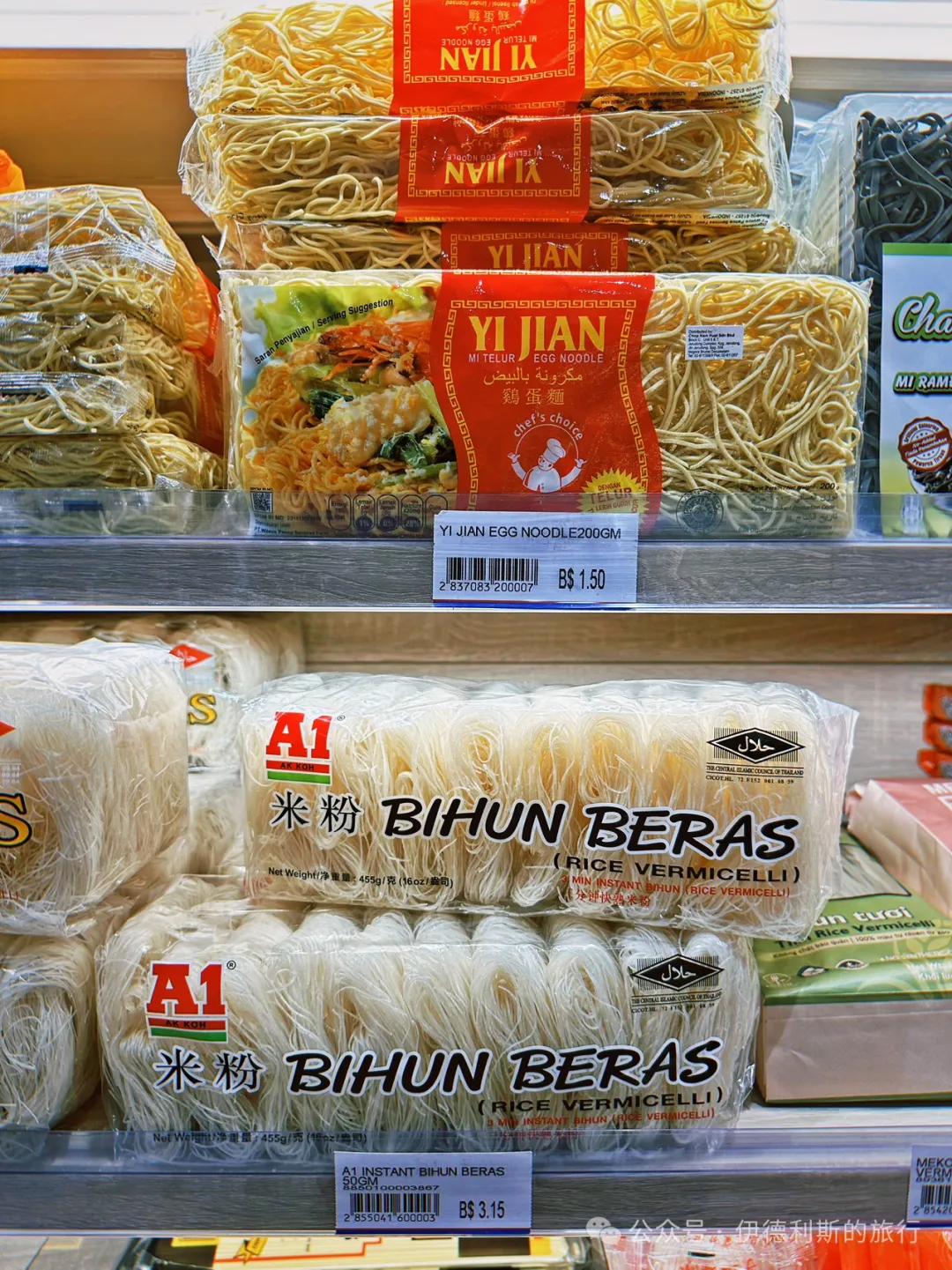
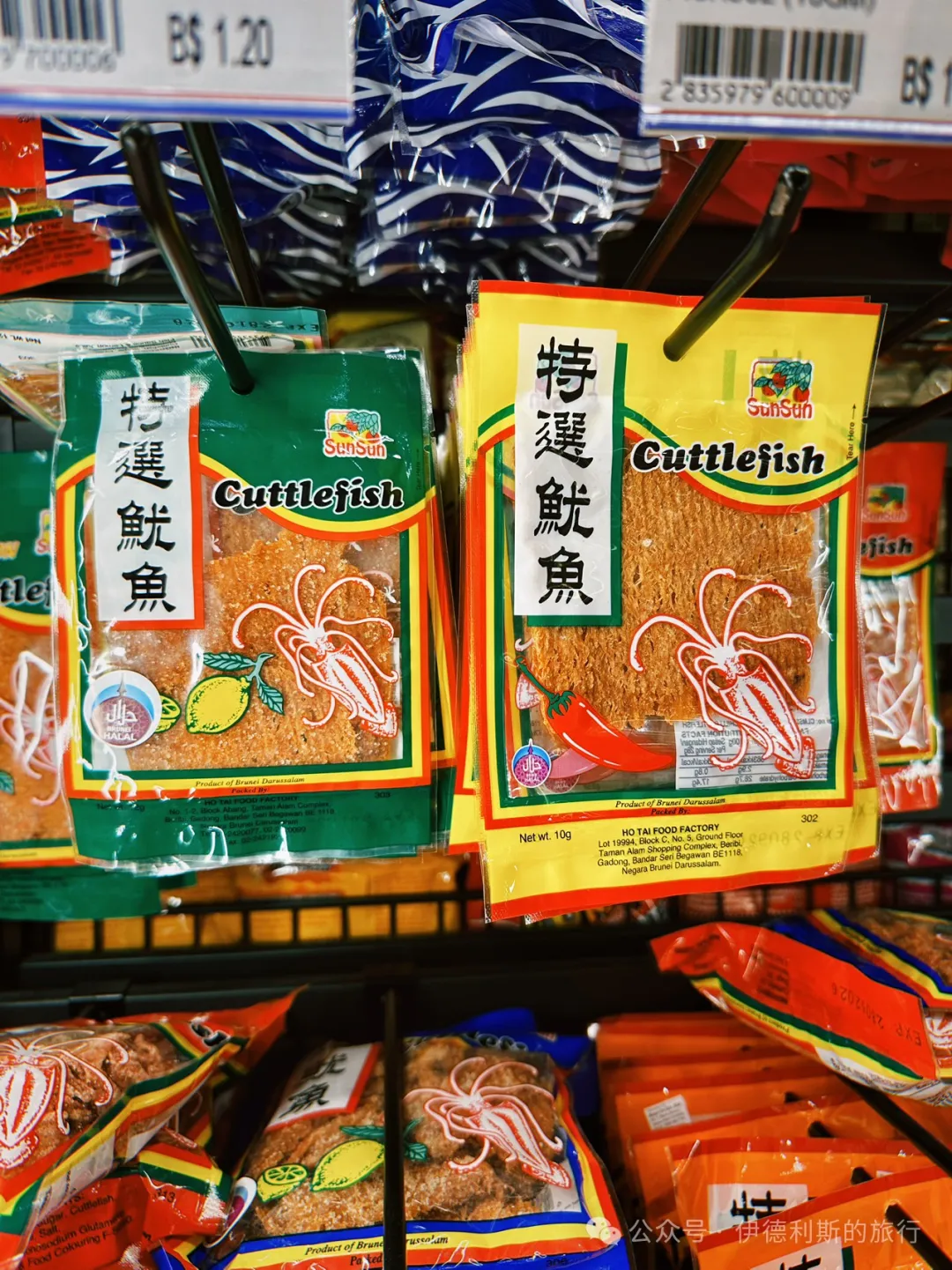
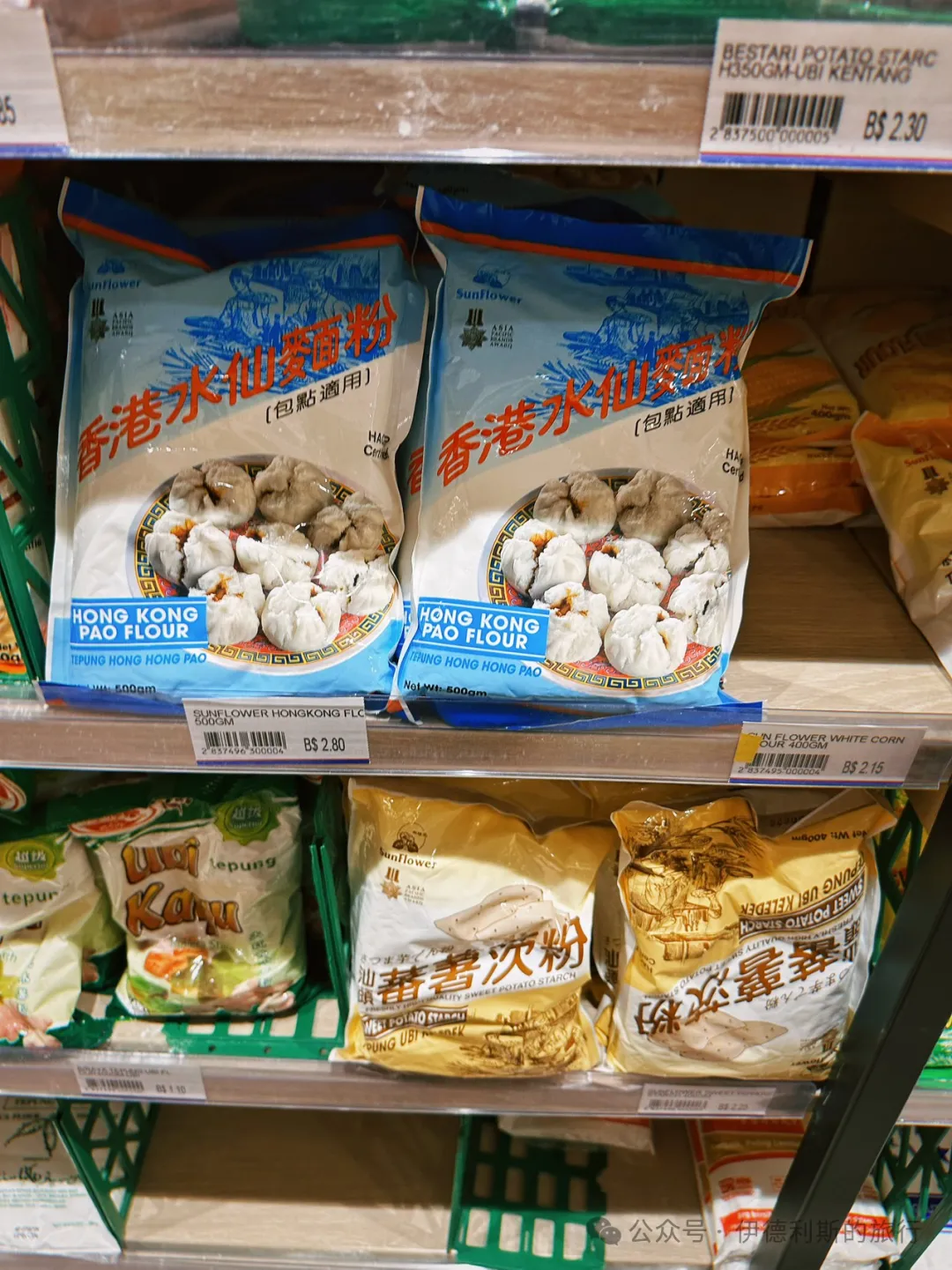
Some products at Hua Ho Department Store: coconut jelly powder, cold bean curd powder, Hong Kong narcissus flour, Shantou sweet potato starch, fragrant braised peanuts, fragrant vegetable hearts, belacan chili, Chaoshan specialty sweet and sour ginger slices, South China vegetables, spicy fermented bean curd with sesame oil, rice noodles, shredded codfish, and selected squid.
Traditional Malay Market: Gadong Night Market
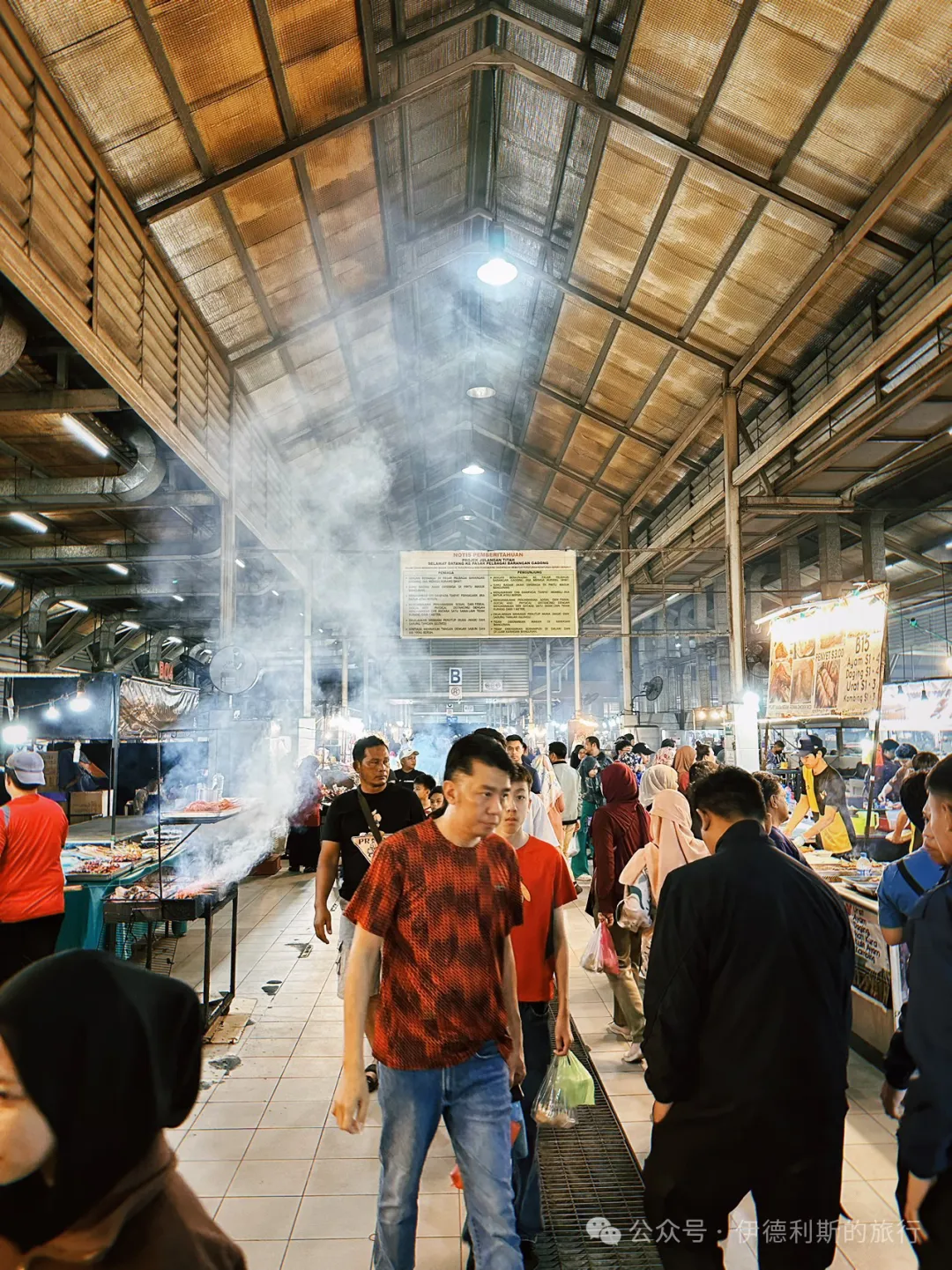
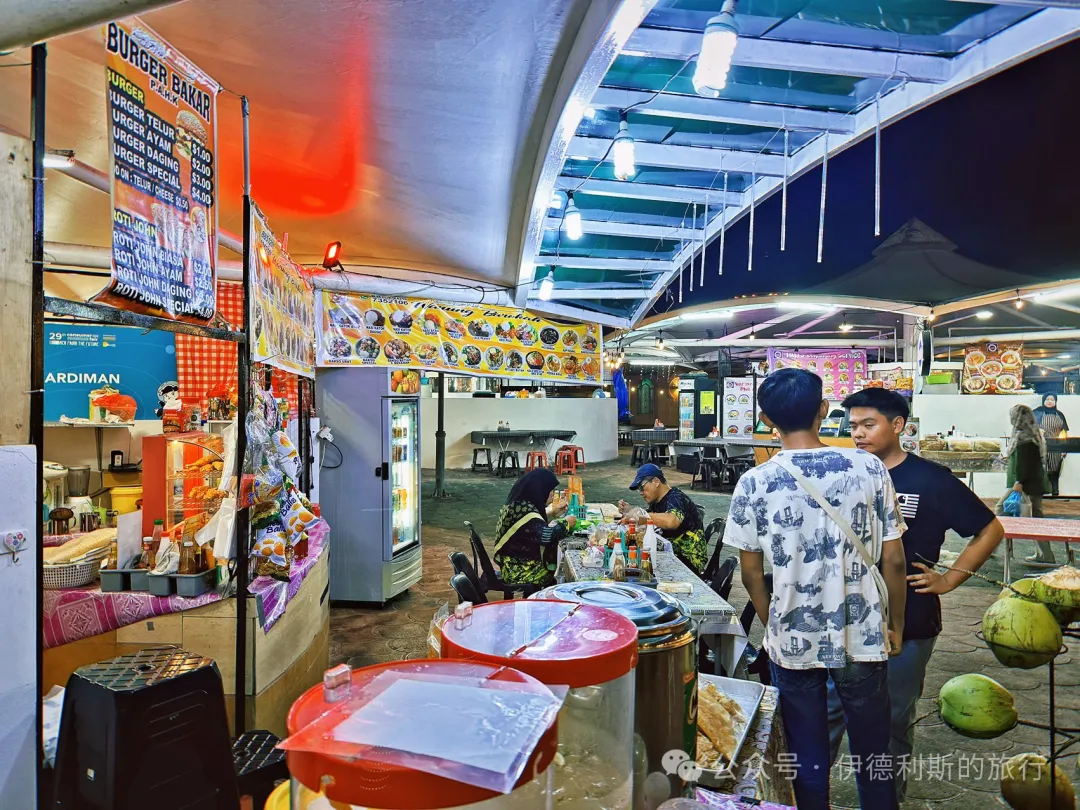
Gadong Night Market is very famous, but it is actually not very big. There are very few tourists in Brunei, so the night market is mostly filled with locals.
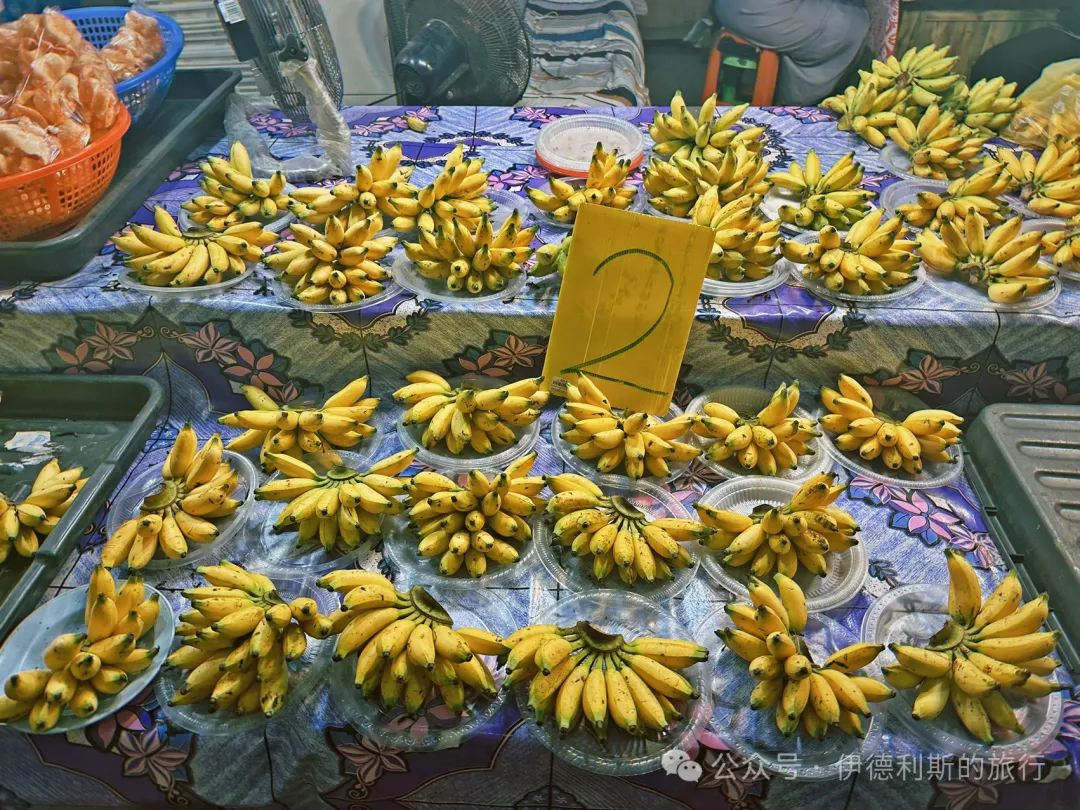
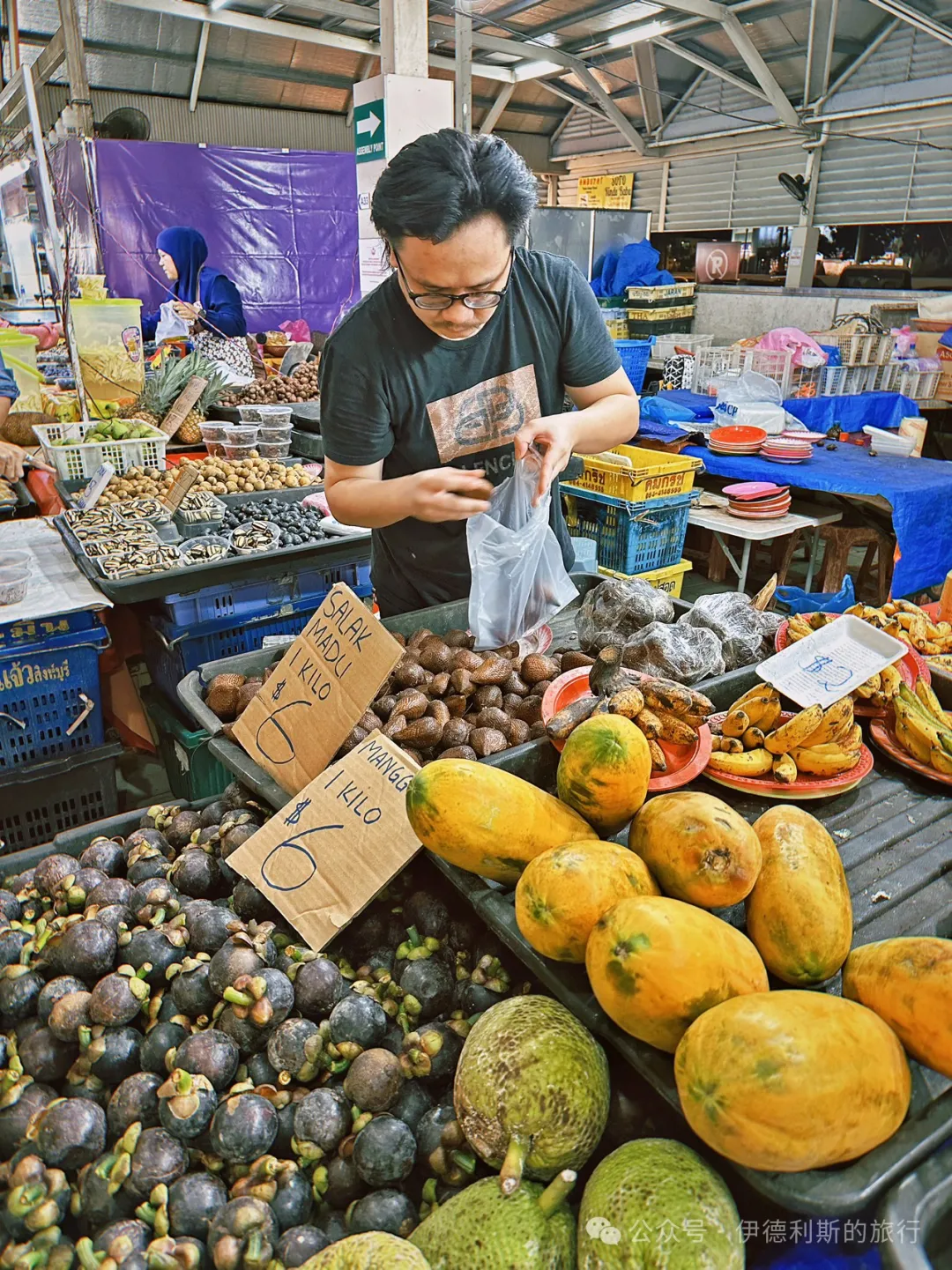
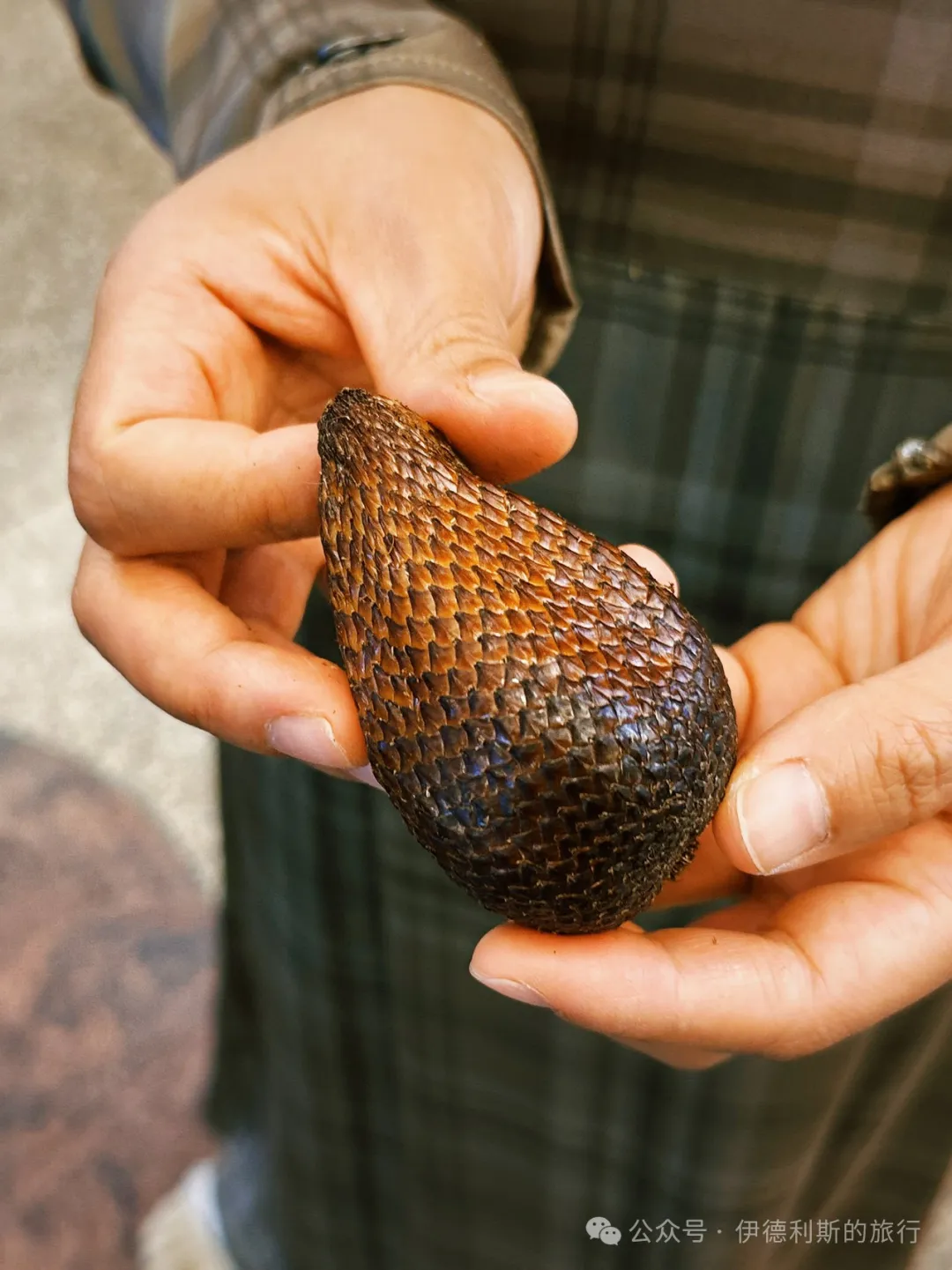
We first bought shredded squid and fish paste with chili sauce. This little snack is quite delicious. Then we bought mangosteen and snake fruit. It was my first time eating snake fruit, and the taste was quite good.
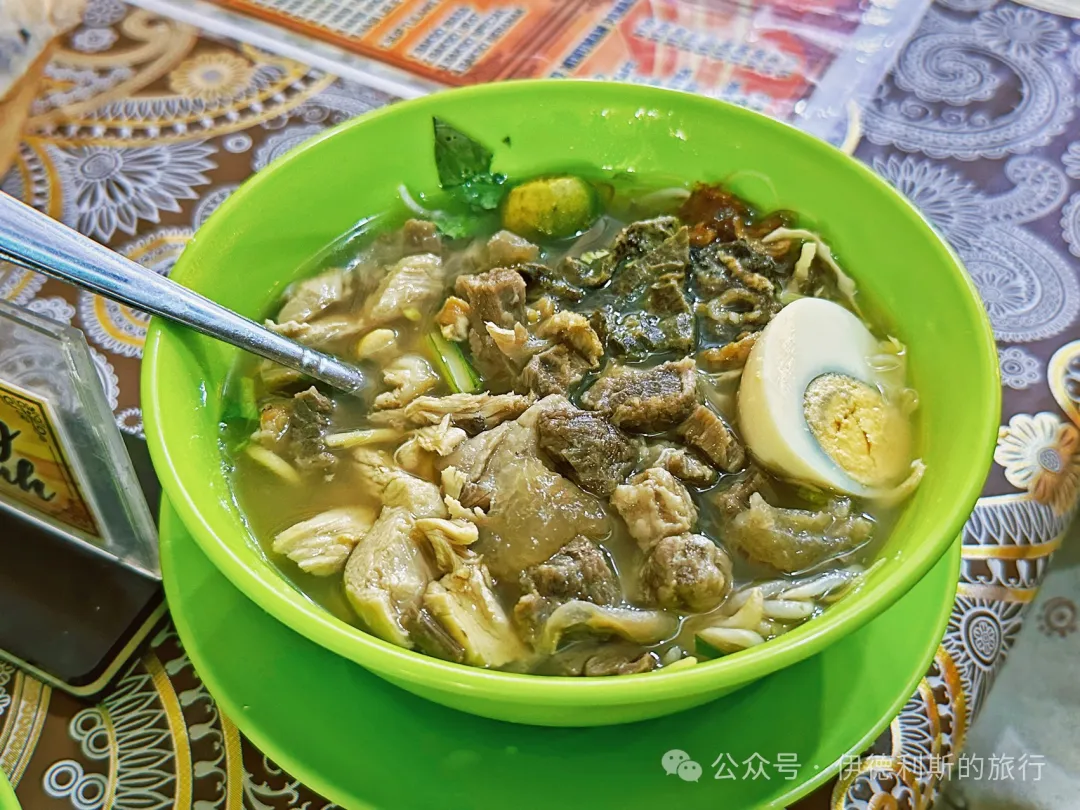
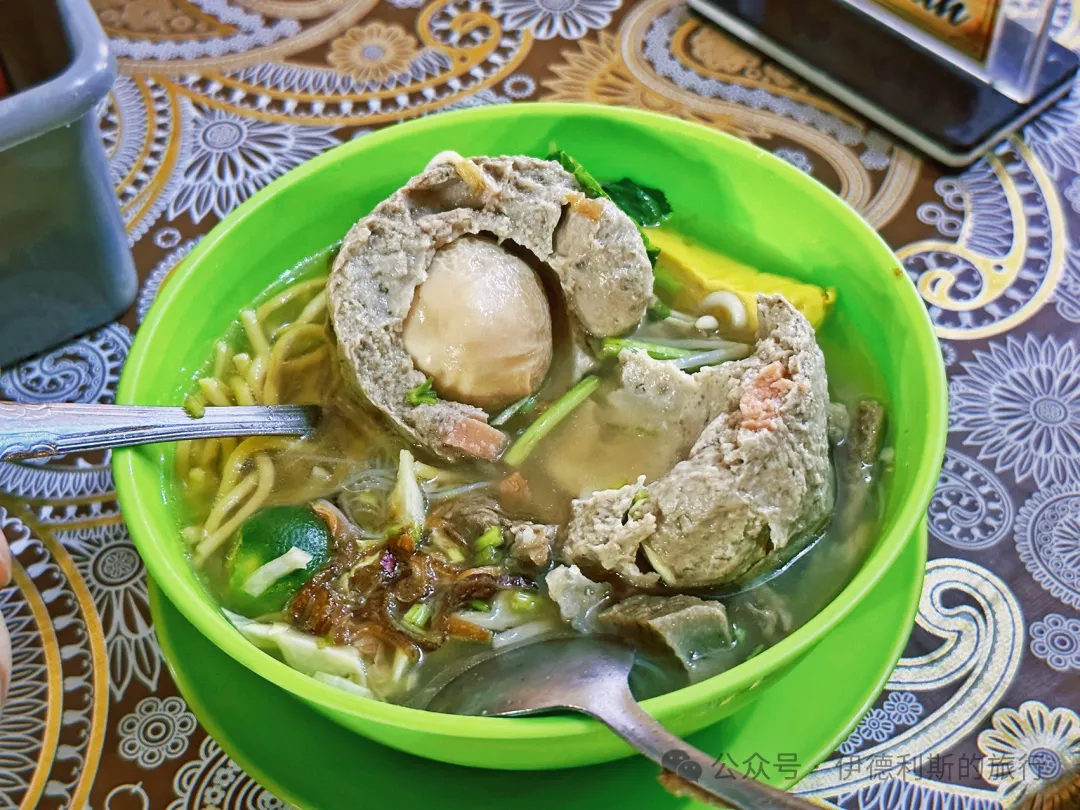
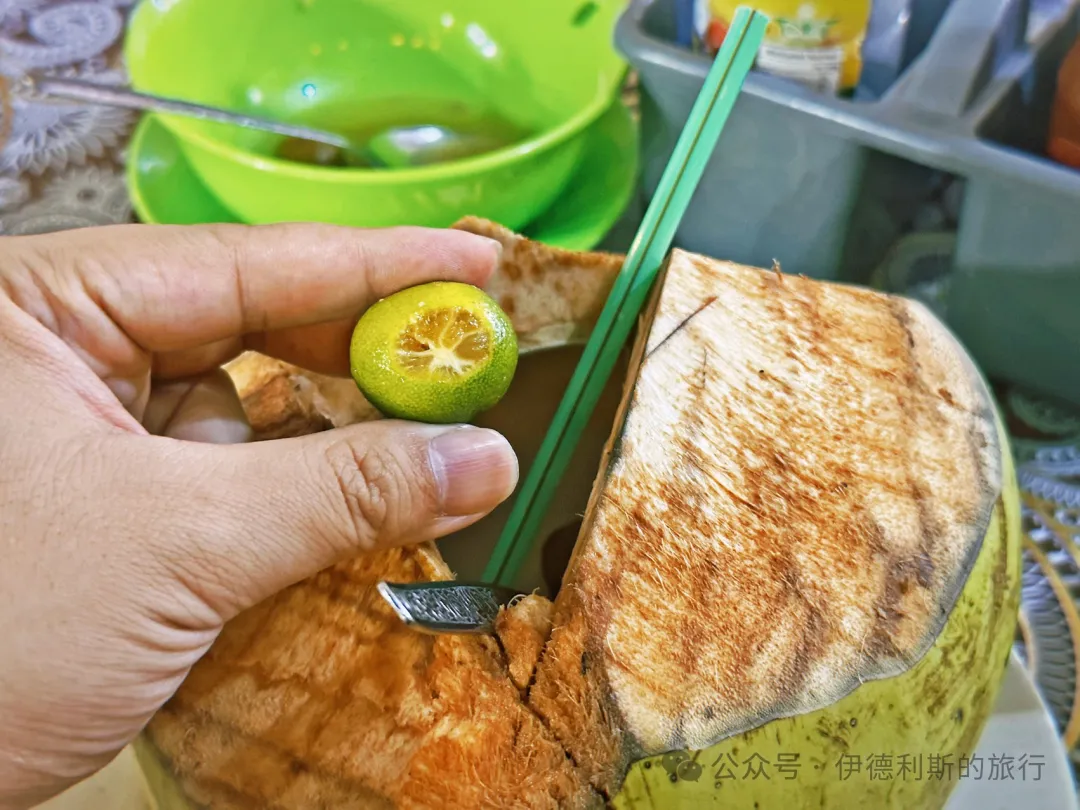
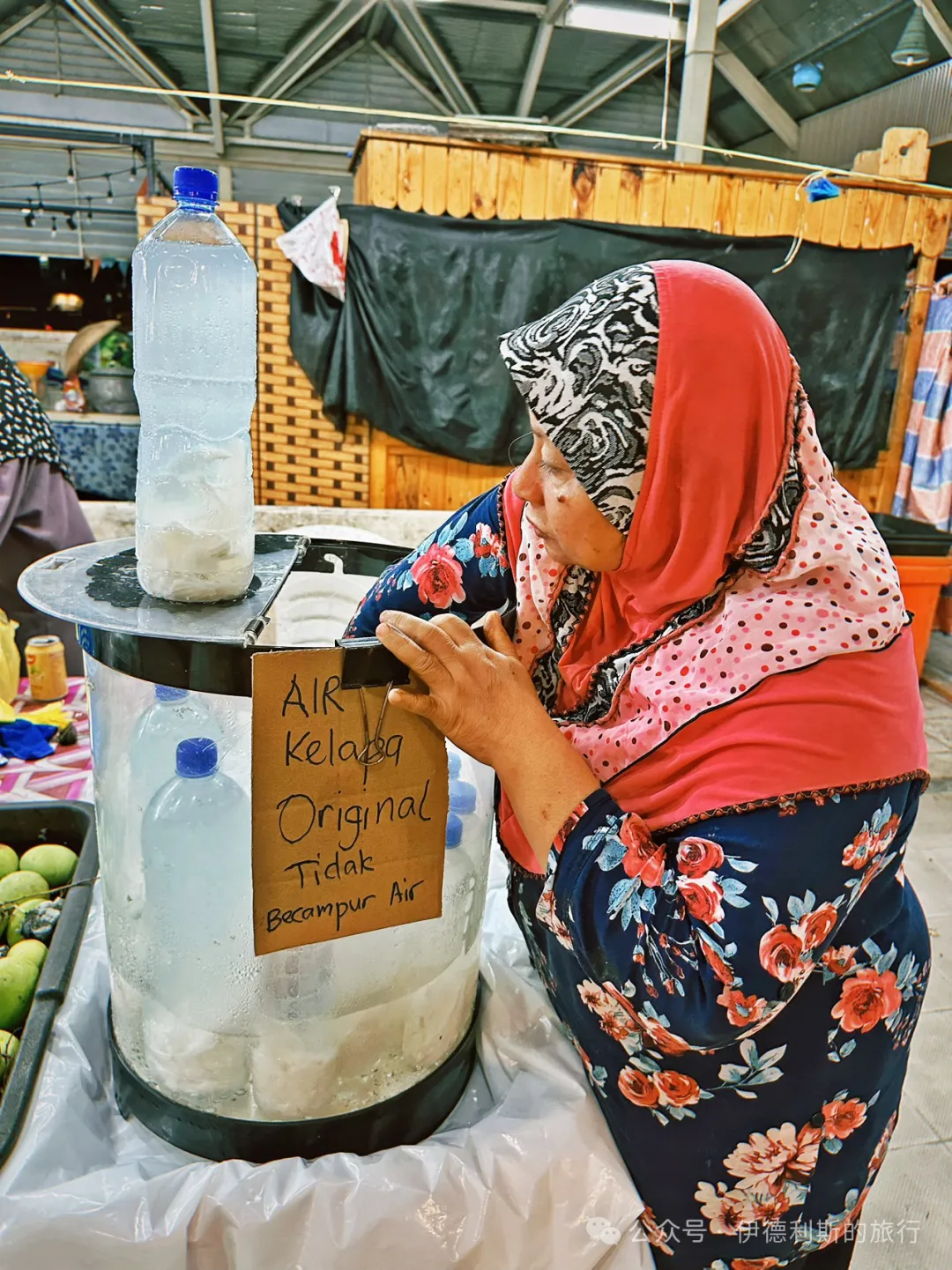
We ate noodle soup at a small snack shop at the entrance. We ordered Bakso beranak (large beef balls stuffed with smaller beef balls) and Soto Daging (beef noodle soup). The eating habits here are almost the same as in Indonesia. I really enjoy the beef noodle soup here, especially on a rainy day when a bowl feels very comforting. I also ordered a coconut. The local coconuts are large. Even though the husk is thick, there is still plenty of juice inside, and it comes served with a lime wedge to squeeze in.
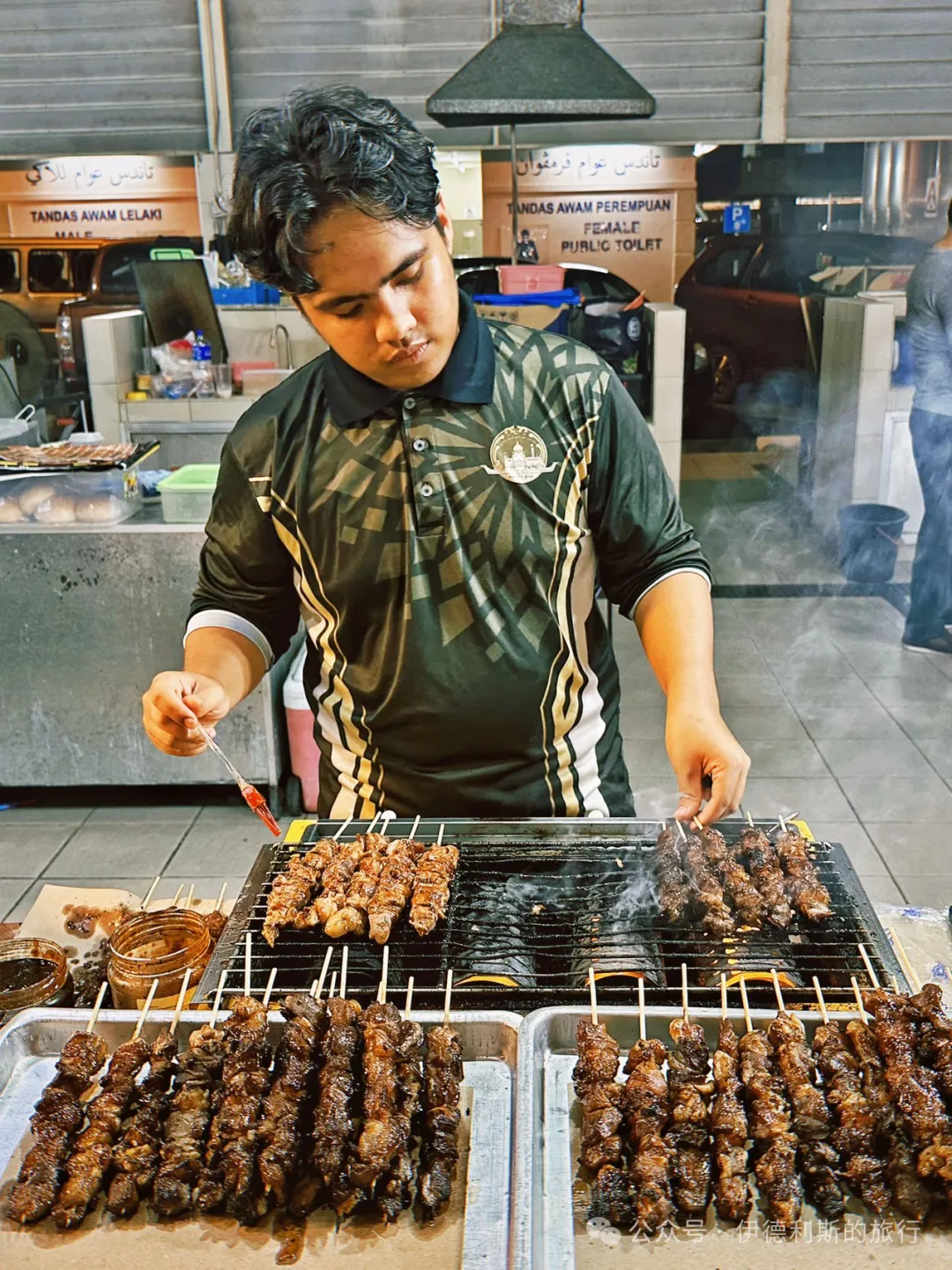
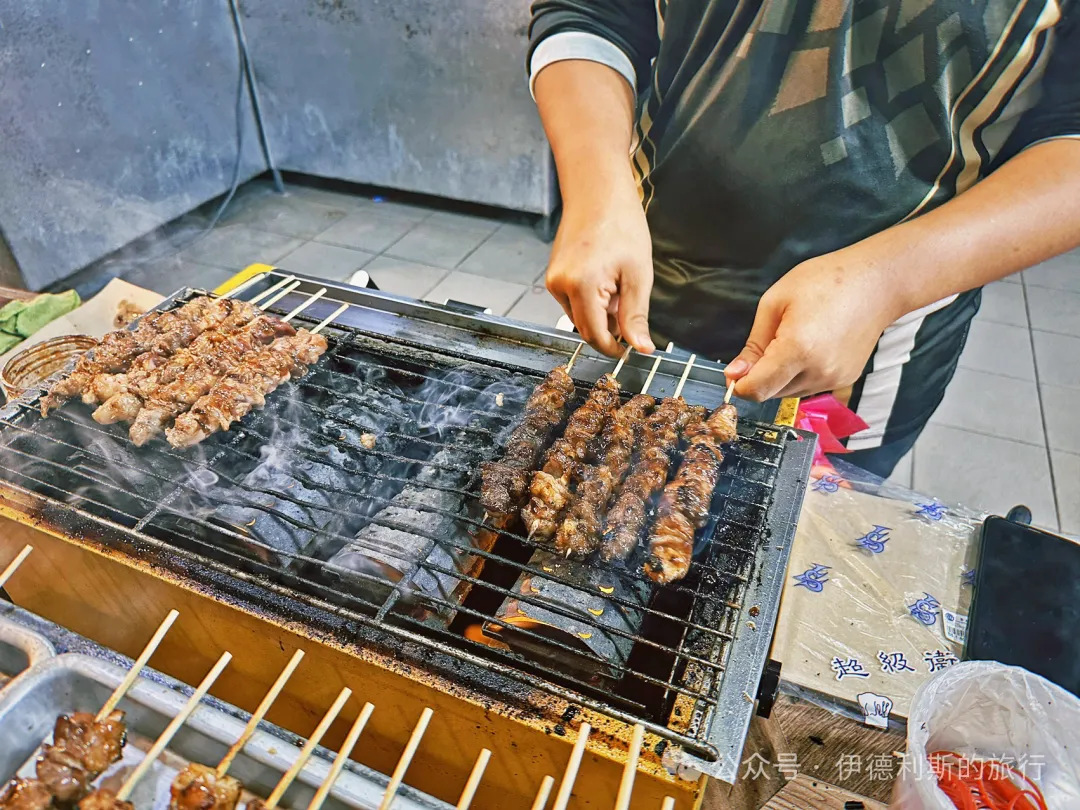
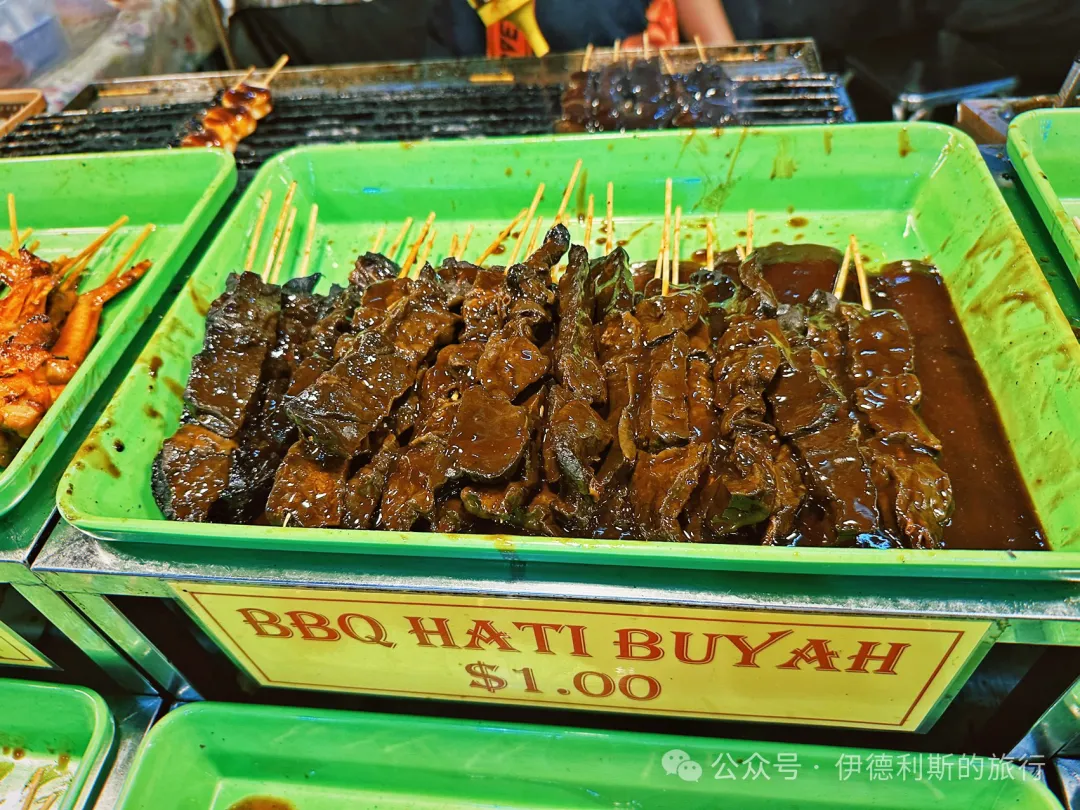
I had satay skewers at the Gadong Night Market, specifically the liver and chicken hearts, which were sweet and grilled a bit firm.
A wide variety of Brunei-style buffet.
If you want to try authentic local food in Brunei, I recommend the buffet at the Brunei Arts and Handicraft Training Centre. You can find it on the map by searching for Tarindak D'Seni.
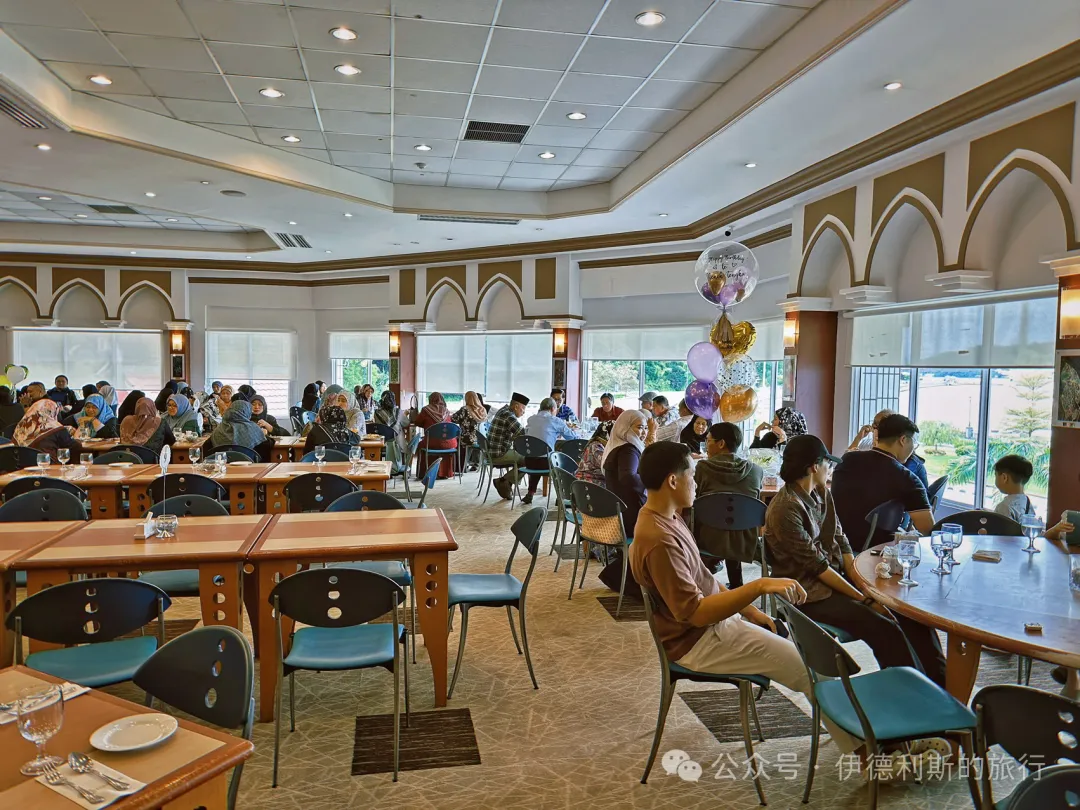
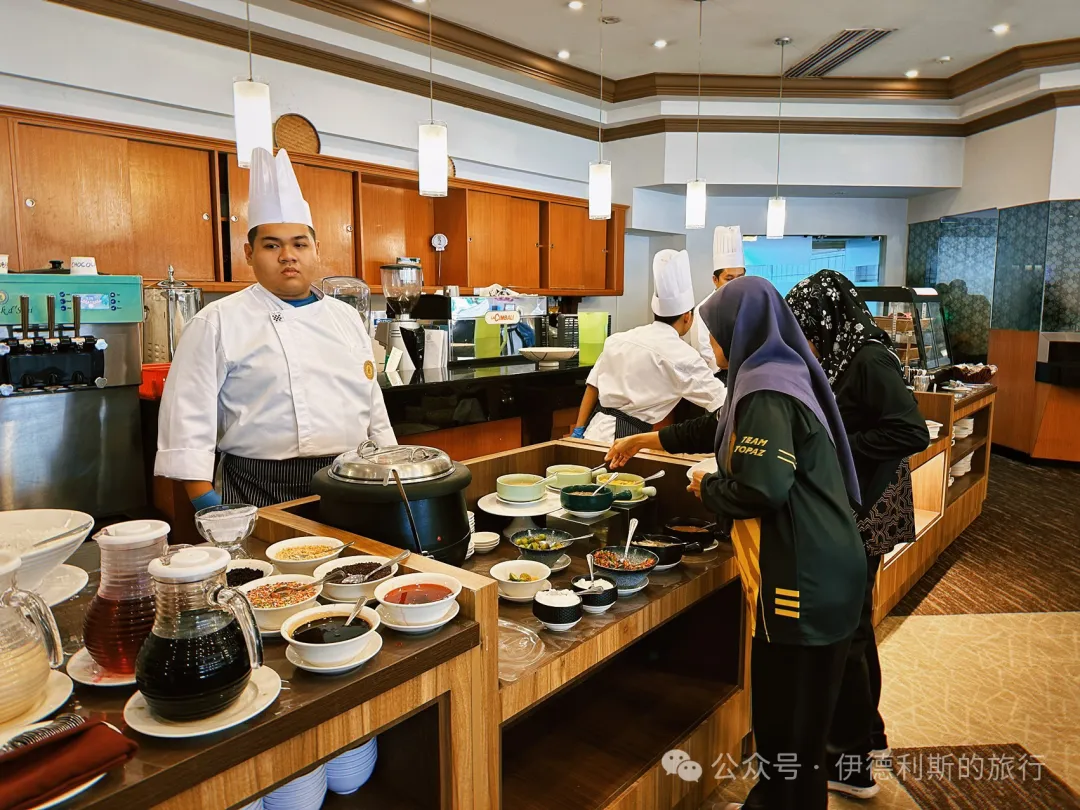
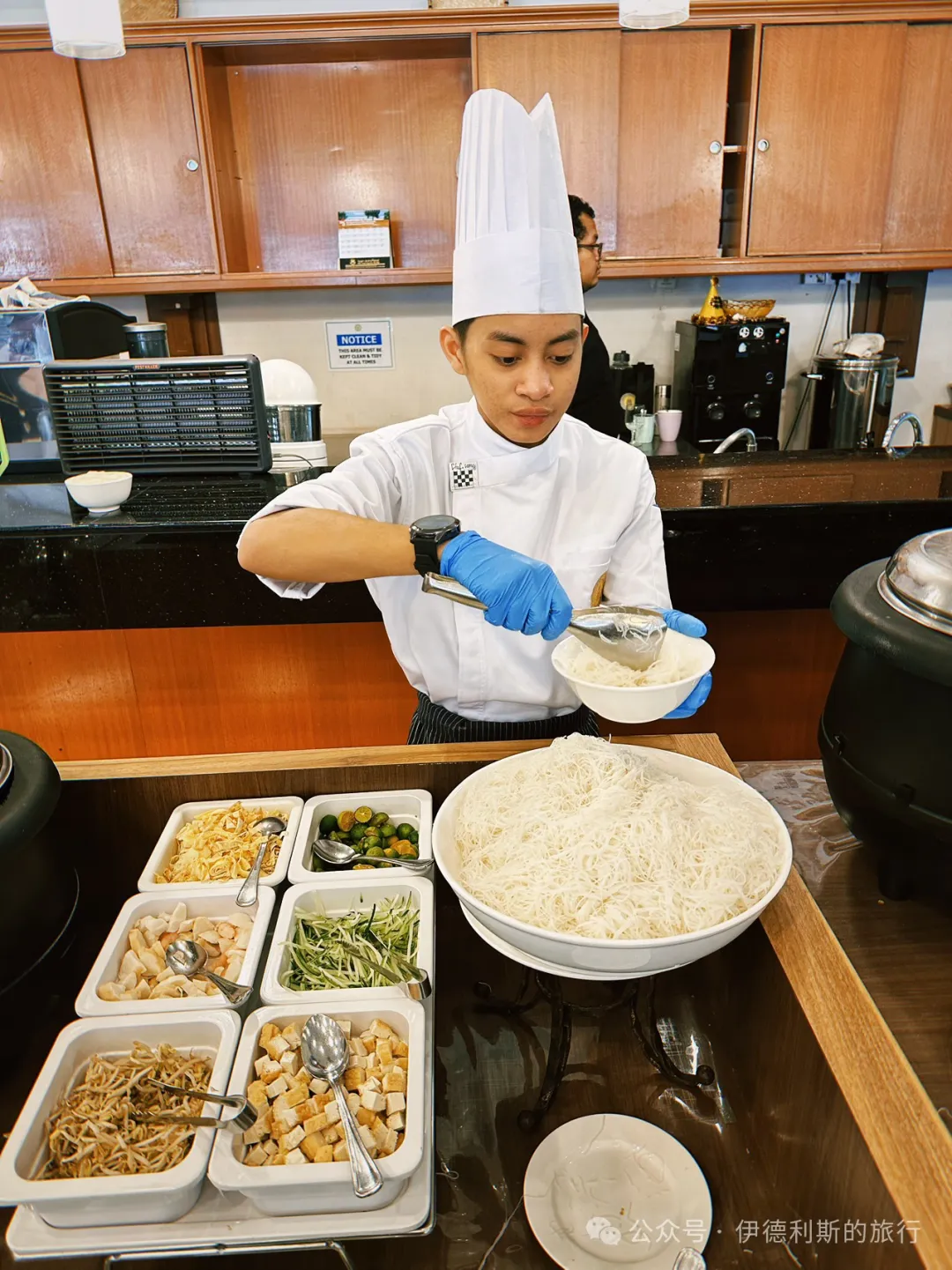
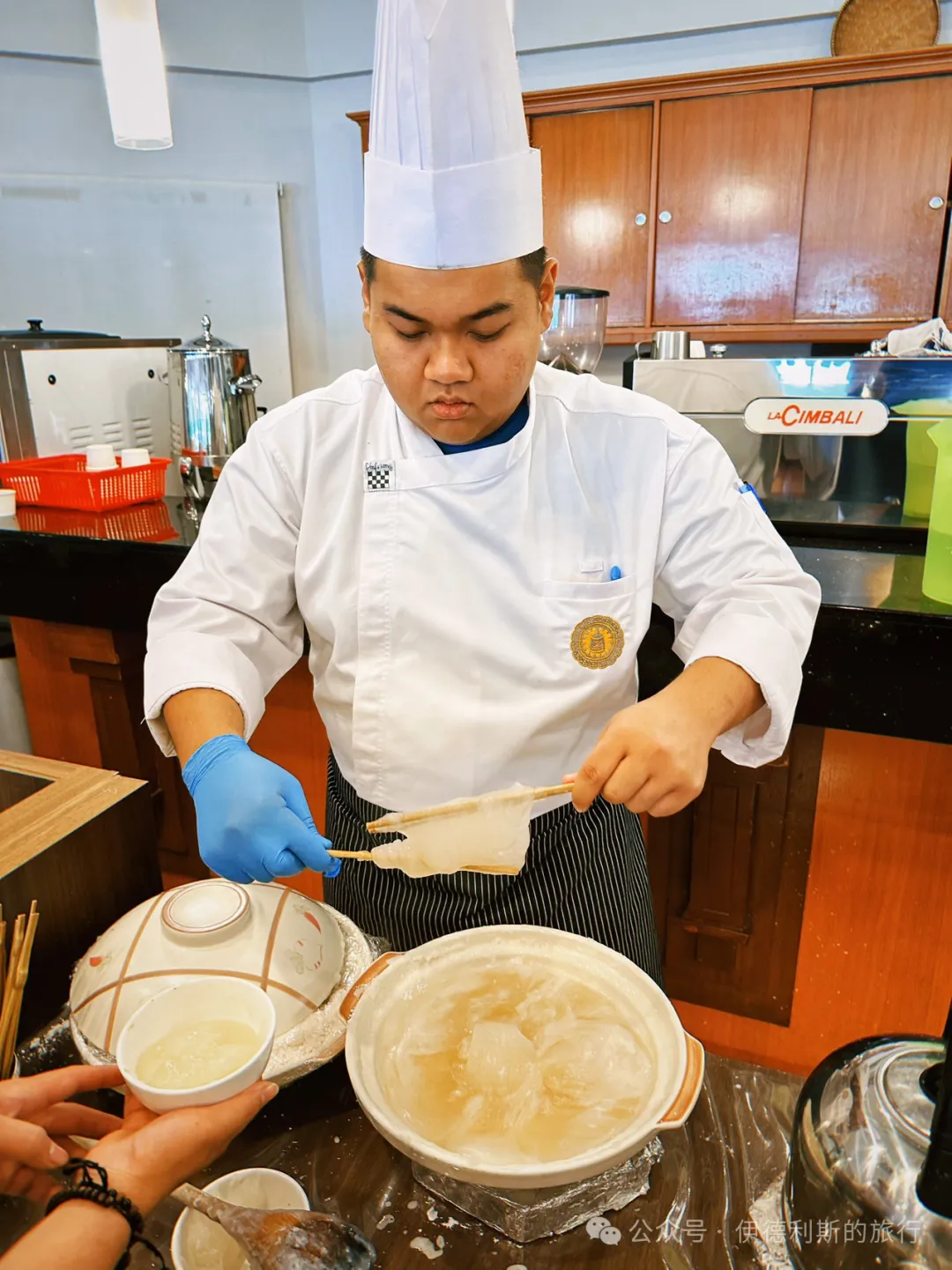
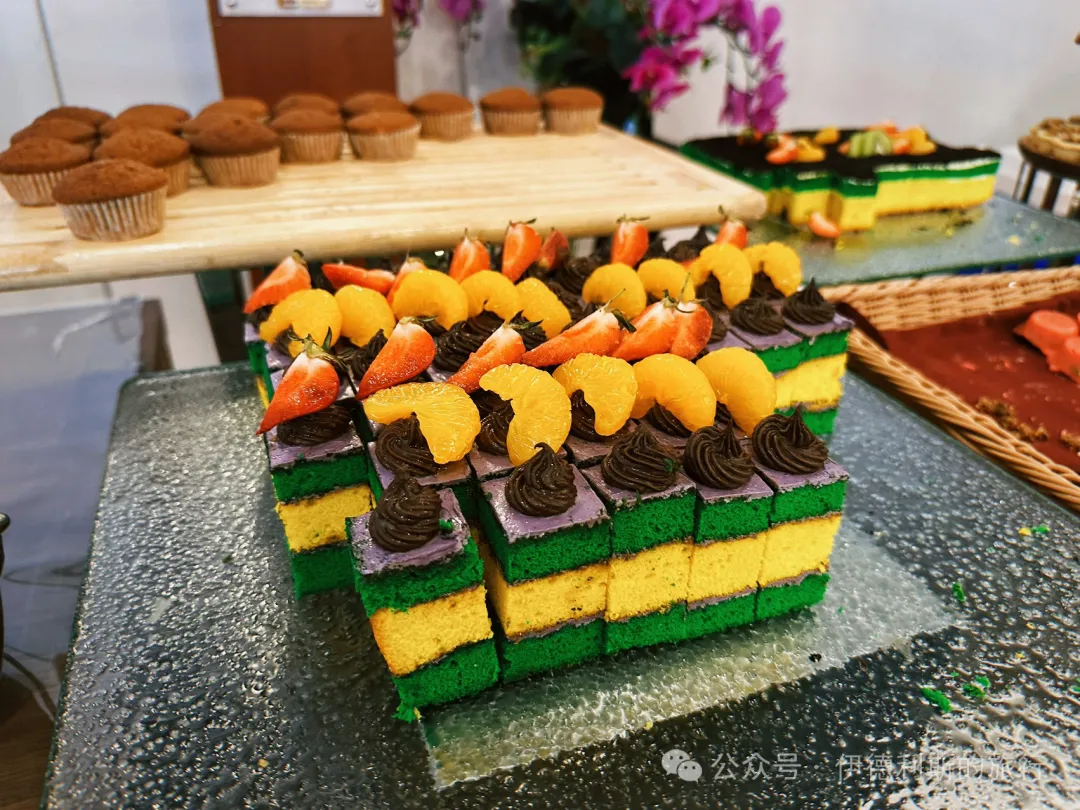
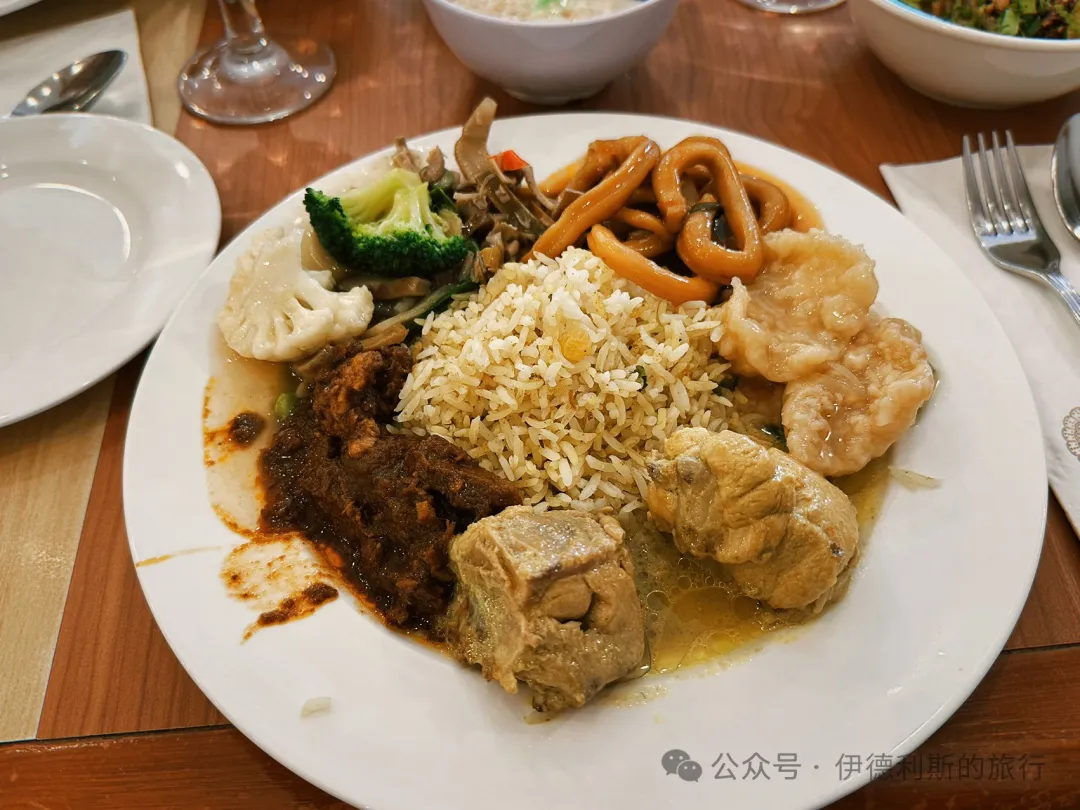
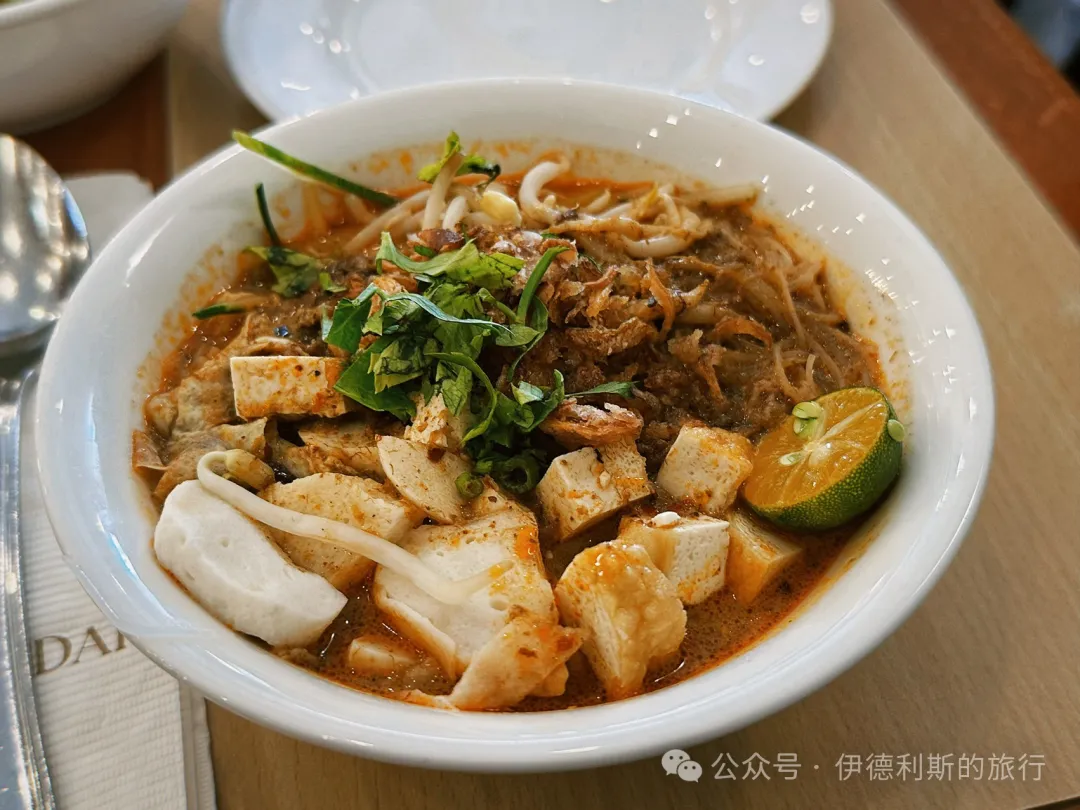
We went for lunch from 11:30 to 14:30, which cost 91 RMB per person, and there is a discount for seniors over 60. The environment is lovely, with the Brunei River right outside the window. The food selection is rich. You can eat various sticky rice pandan Malay cakes (kuih), Sarawak laksa noodles with coconut milk, and even make your own shaved ice dessert (cendol).
They serve Brunei's national dish, sago starch paste (ambuyat), which is made by mixing sago palm starch with hot water to create a thick paste, eaten by dipping it into a sauce.
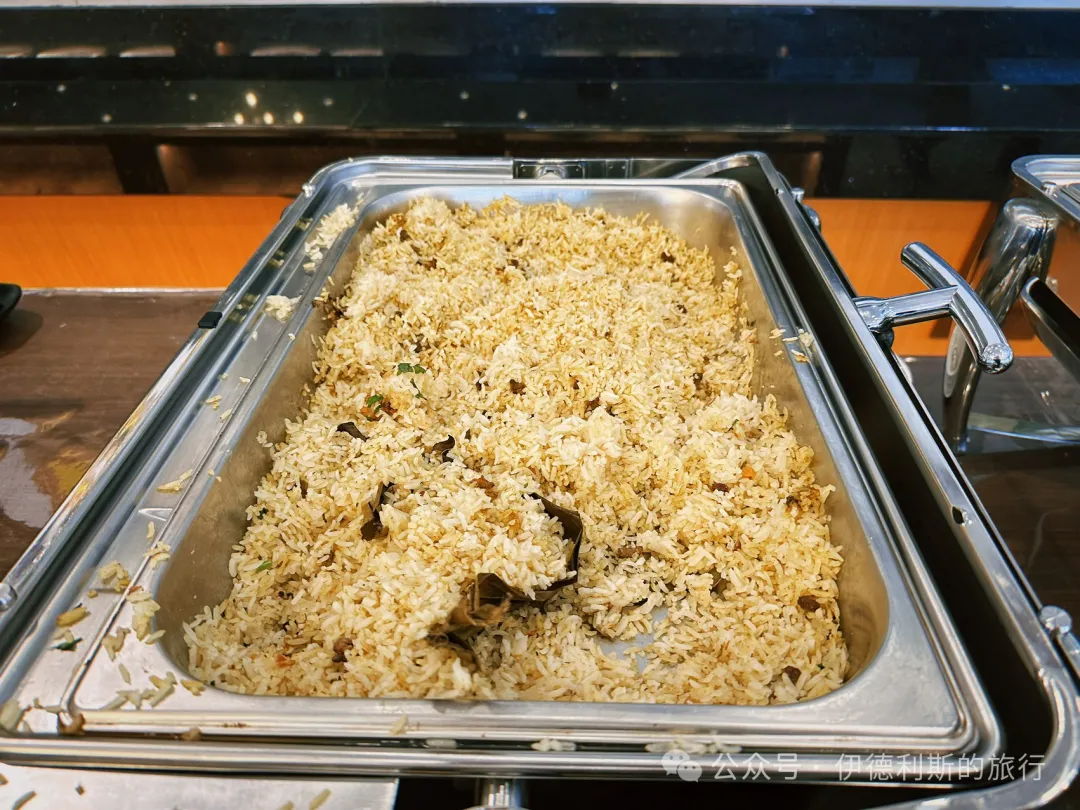
Nasi kebuli is rice cooked with goat broth, goat milk, and ghee. It was brought to the Malay Archipelago by Hadhrami people from Yemen and is especially popular in the Arab communities of Java.
Black beef (daging hitam) is a beef rendang made with a sweet soy sauce containing plenty of palm sugar and rock sugar, a specialty of the Sarawak region.
Chicken cooked in coconut milk (opor ayam) is chicken simmered in coconut milk with various spices.
Two national mosques.
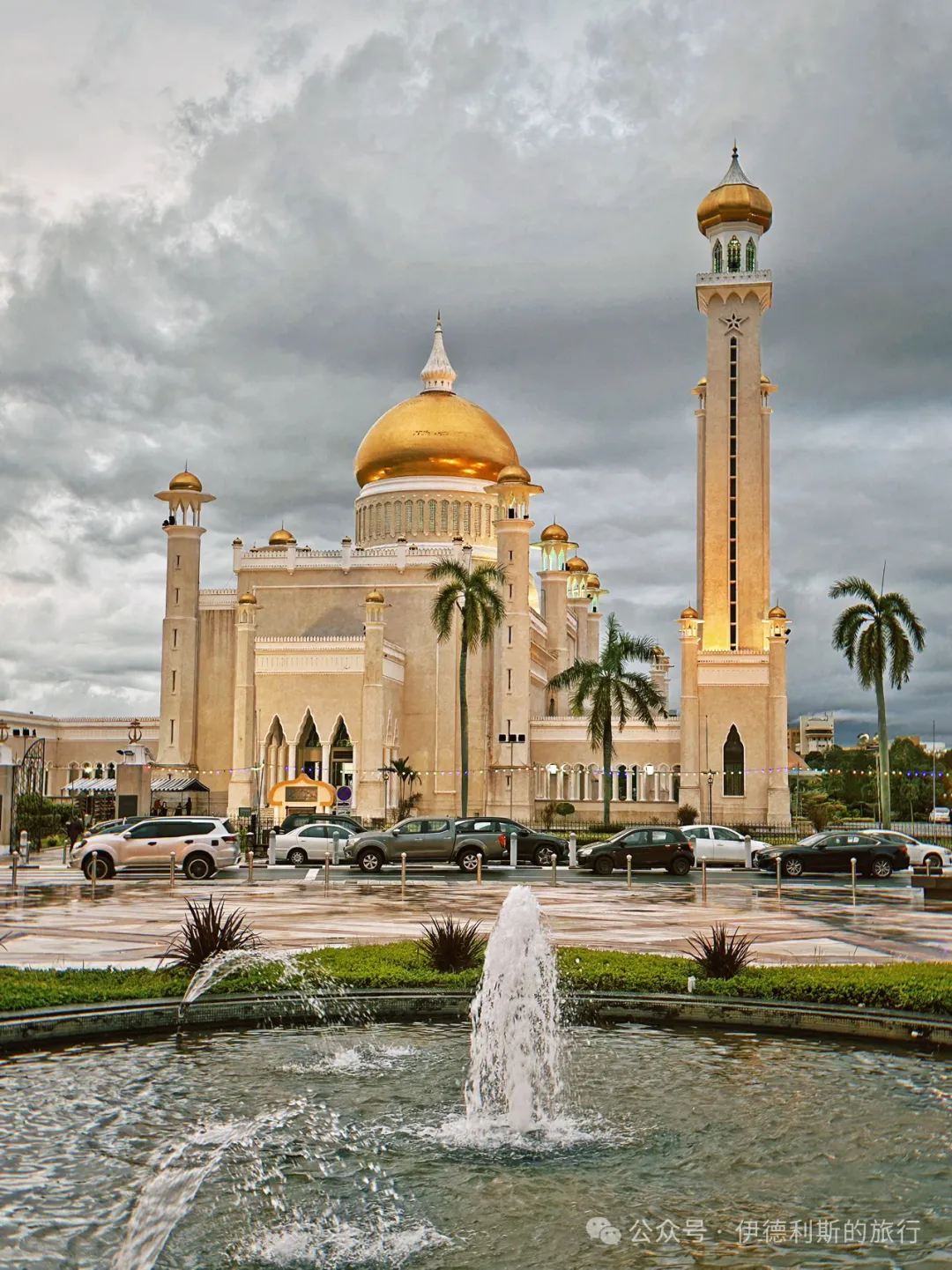
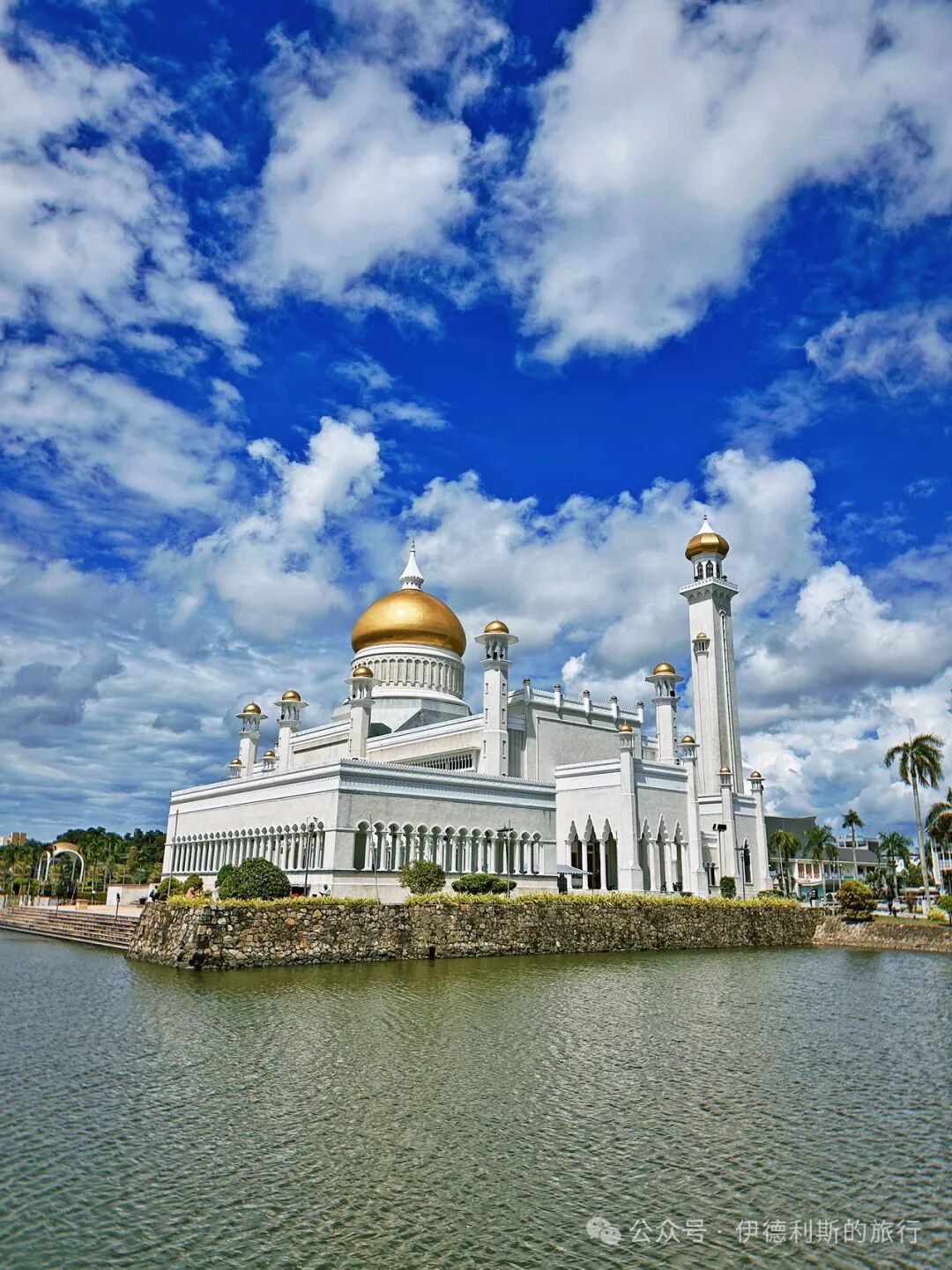
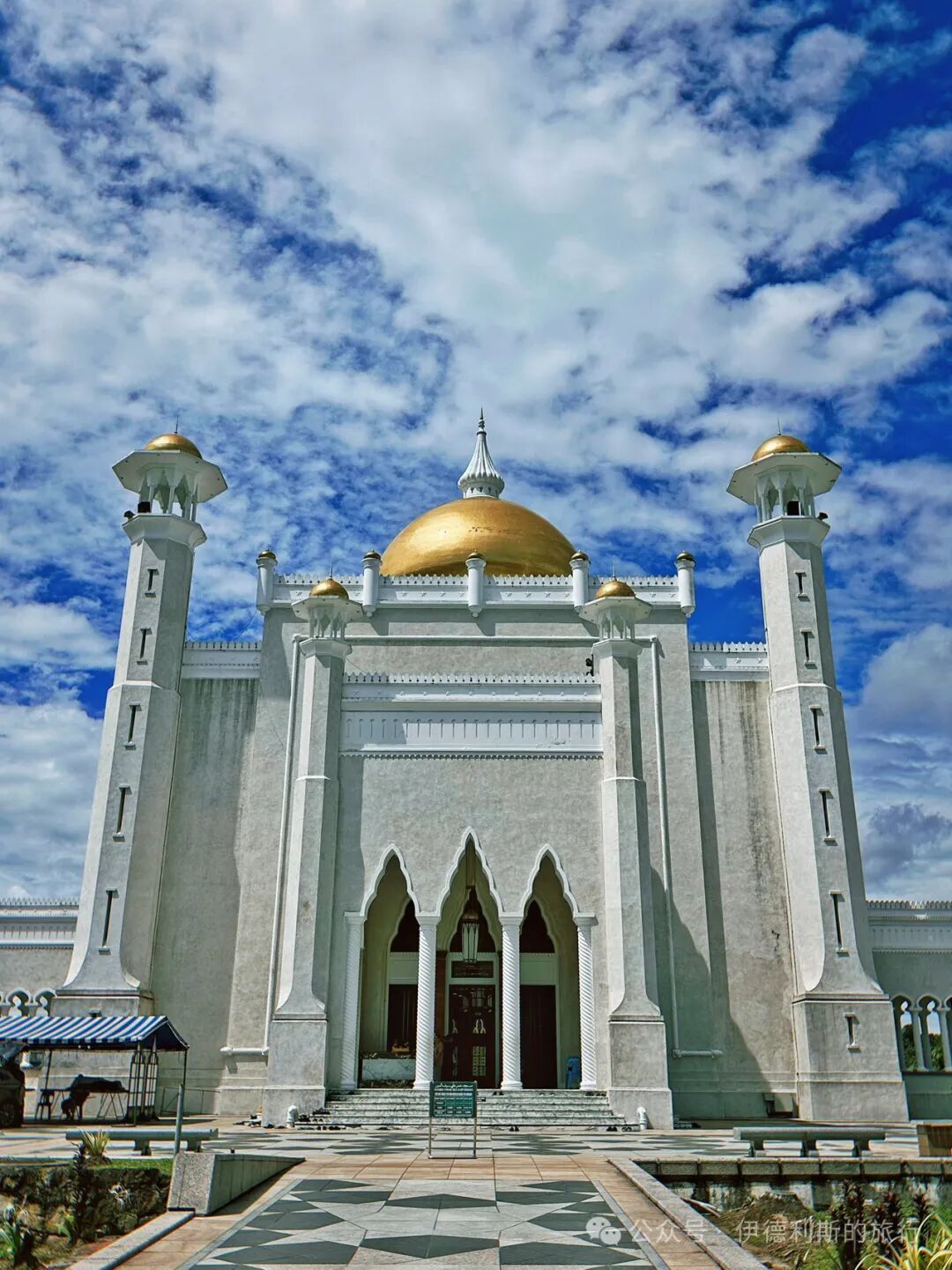
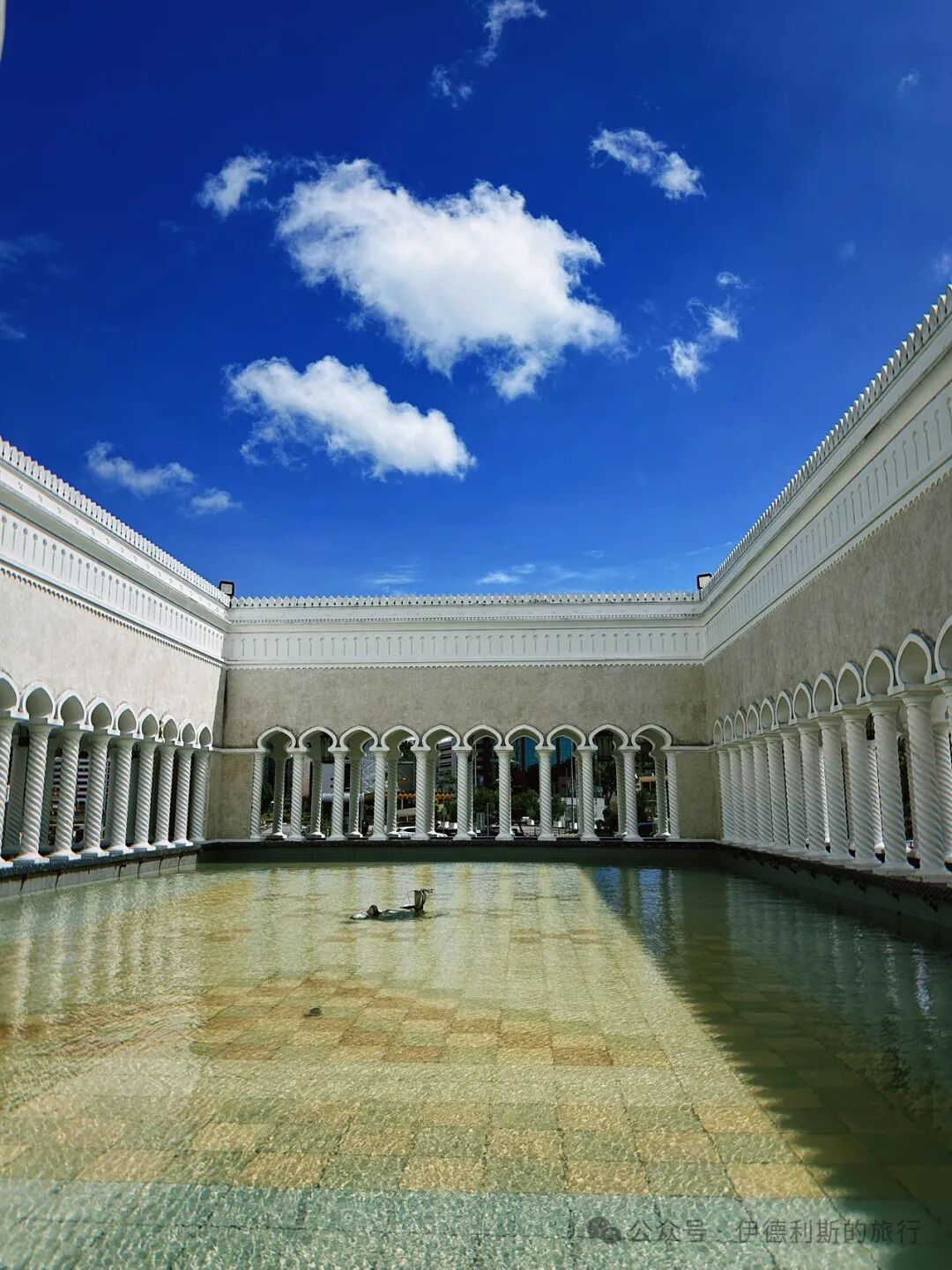
Brunei has two national mosques, each built by a different Sultan, and both are worth visiting. The Omar Ali Saifuddien Mosque, also known as the 'water mosque,' was built between 1954 and 1958 by the former Sultan of Brunei, Omar Ali Saifuddien III (who reigned from 1950 to 1967), and is named after him. The main hall features a Mughal-revival style golden dome. The interior uses Italian marble, Shanghai granite, British chandeliers, and Venetian mosaic glass, making it Brunei's most important landmark after its completion.
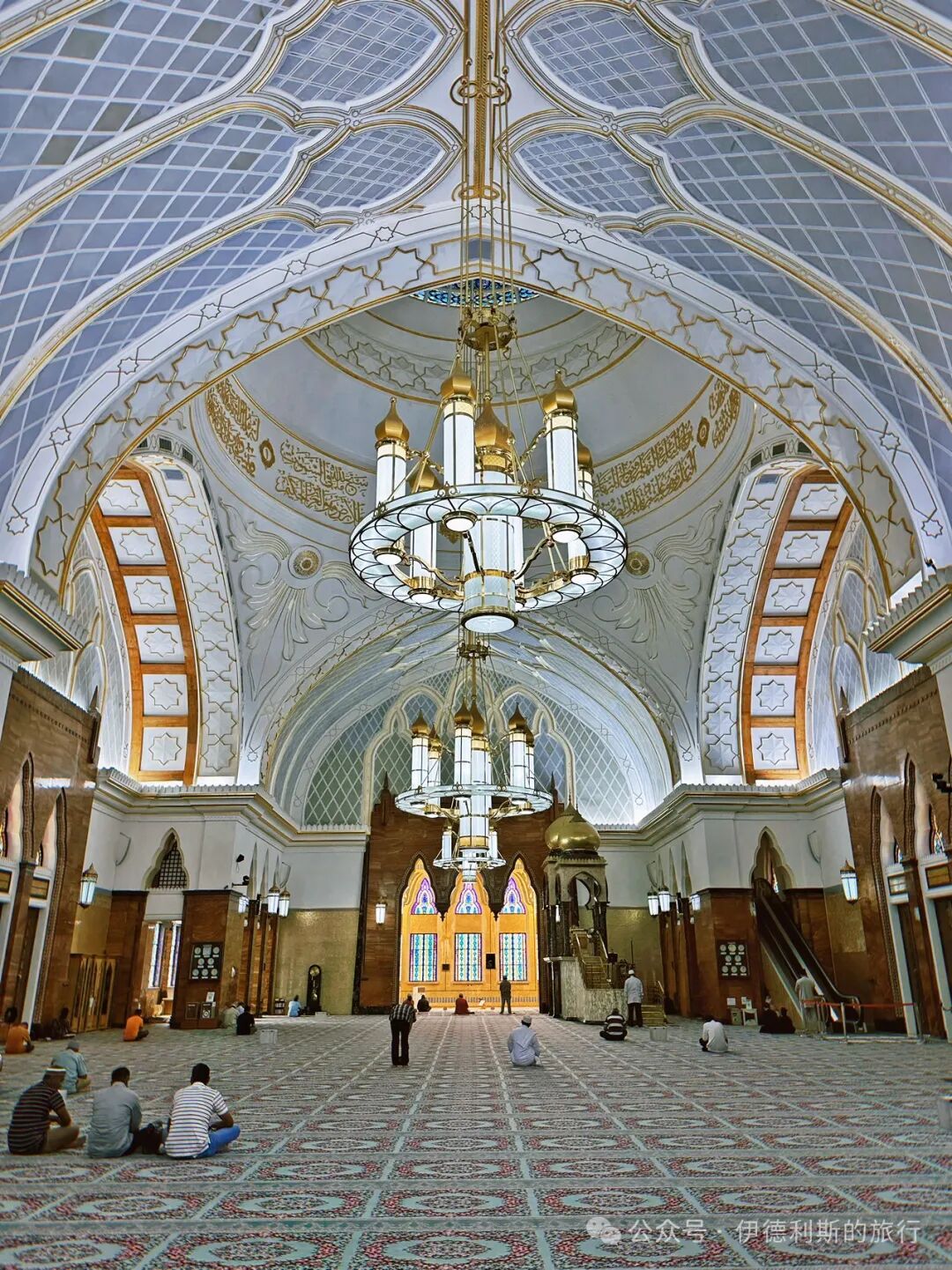
We happened to visit during Friday prayers (Jumu'ah). Brunei requires all malls and restaurants to close between 12:00 and 14:00, so the mosque was very crowded during the prayer, with the entire hall full, which was quite spectacular.
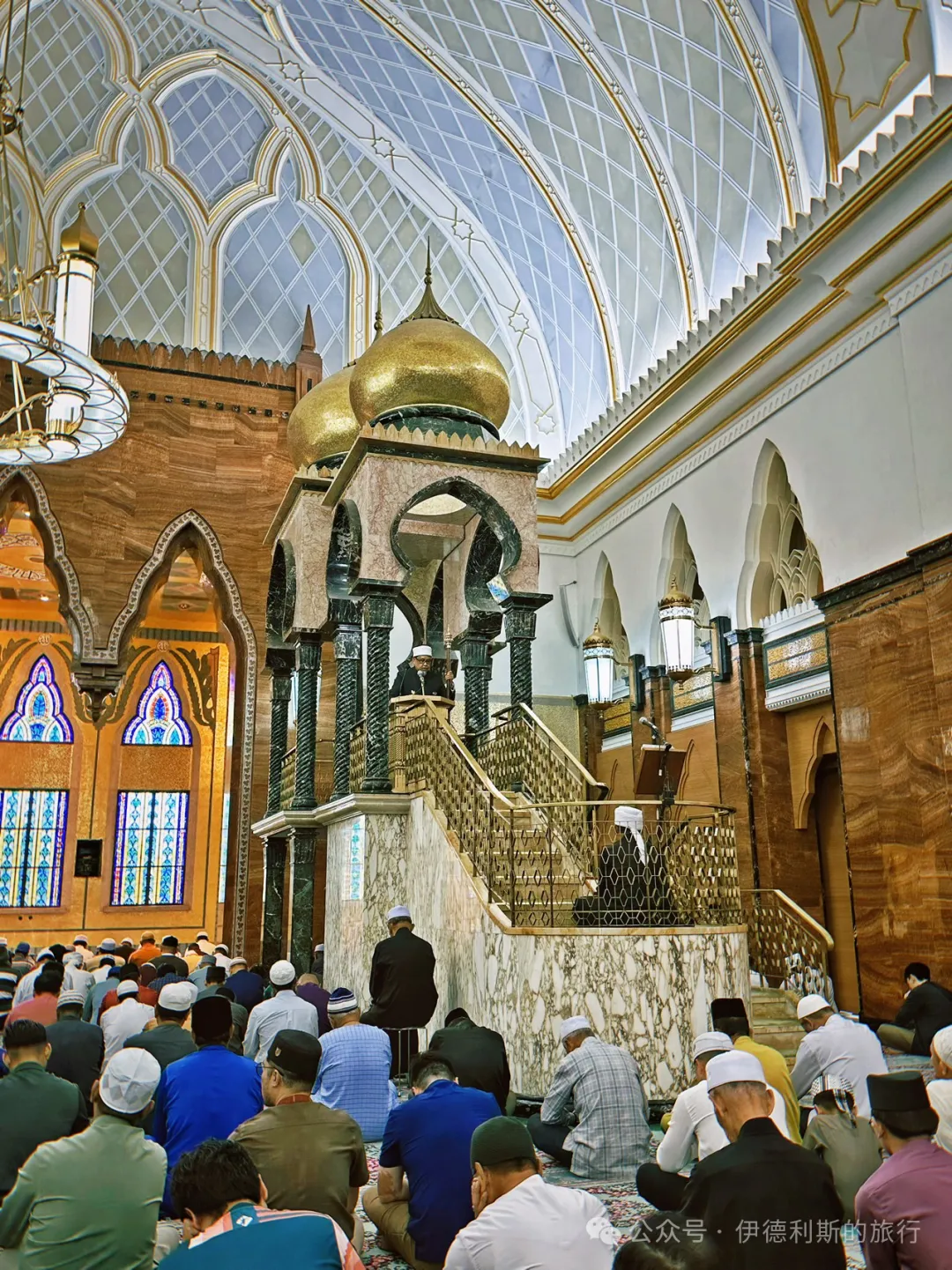
The pulpit (minbar) in the water mosque has two levels. The first level is where the muezzin calls the adhan, and the second level is where the imam delivers the khutbah. Next to the minbar, there is an escalator leading to the second-floor prayer area reserved for the royal family.
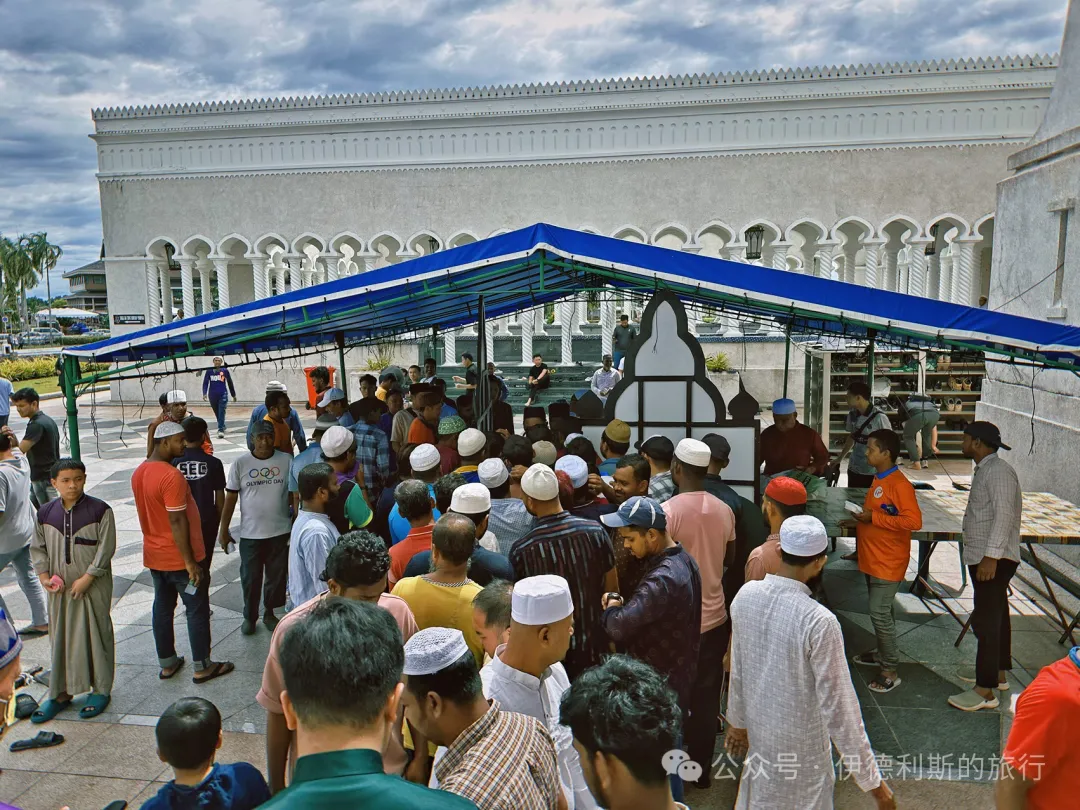
After Friday prayers, boxed meals were being handed out, mostly to South Asian laborers.
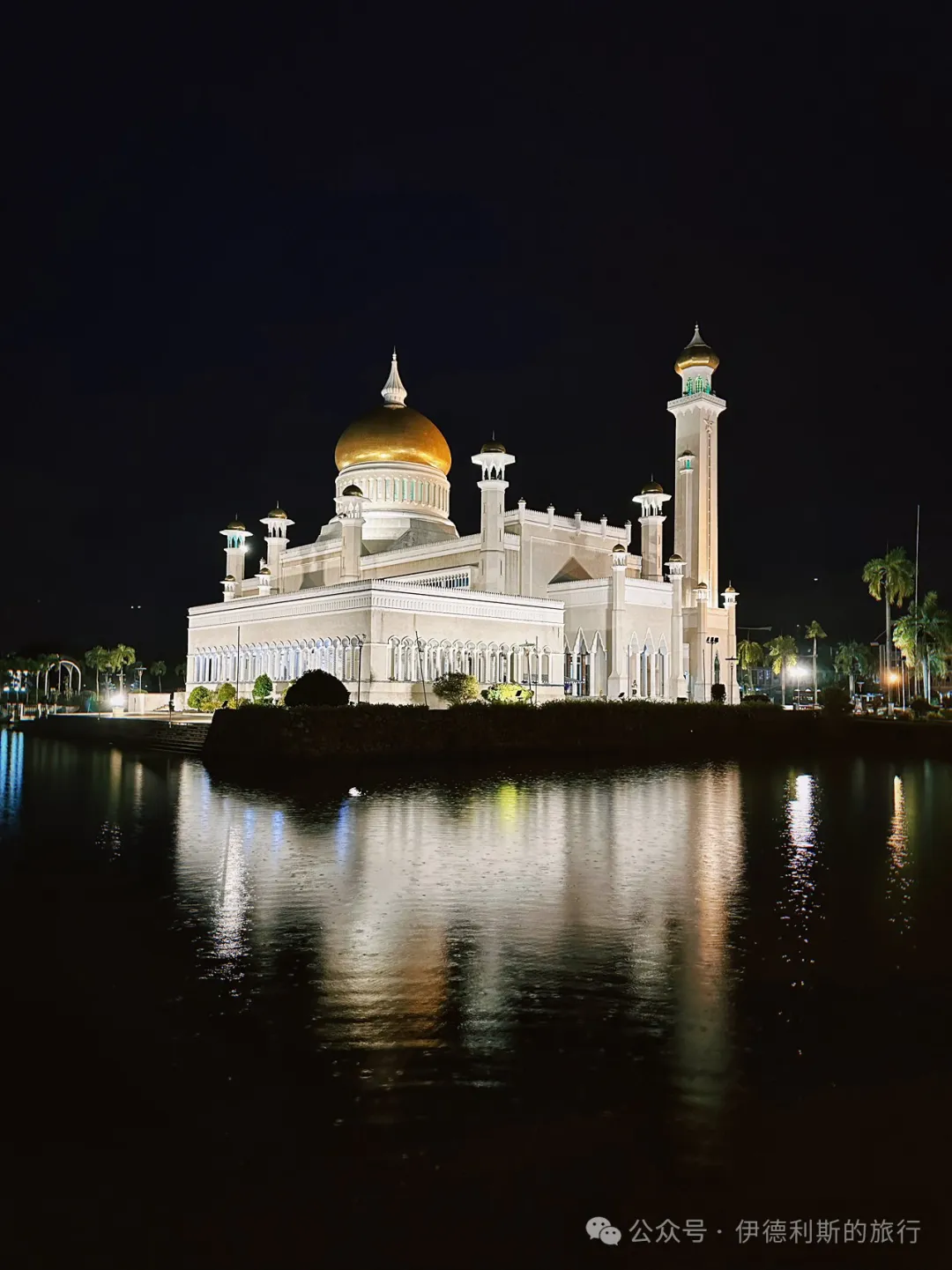
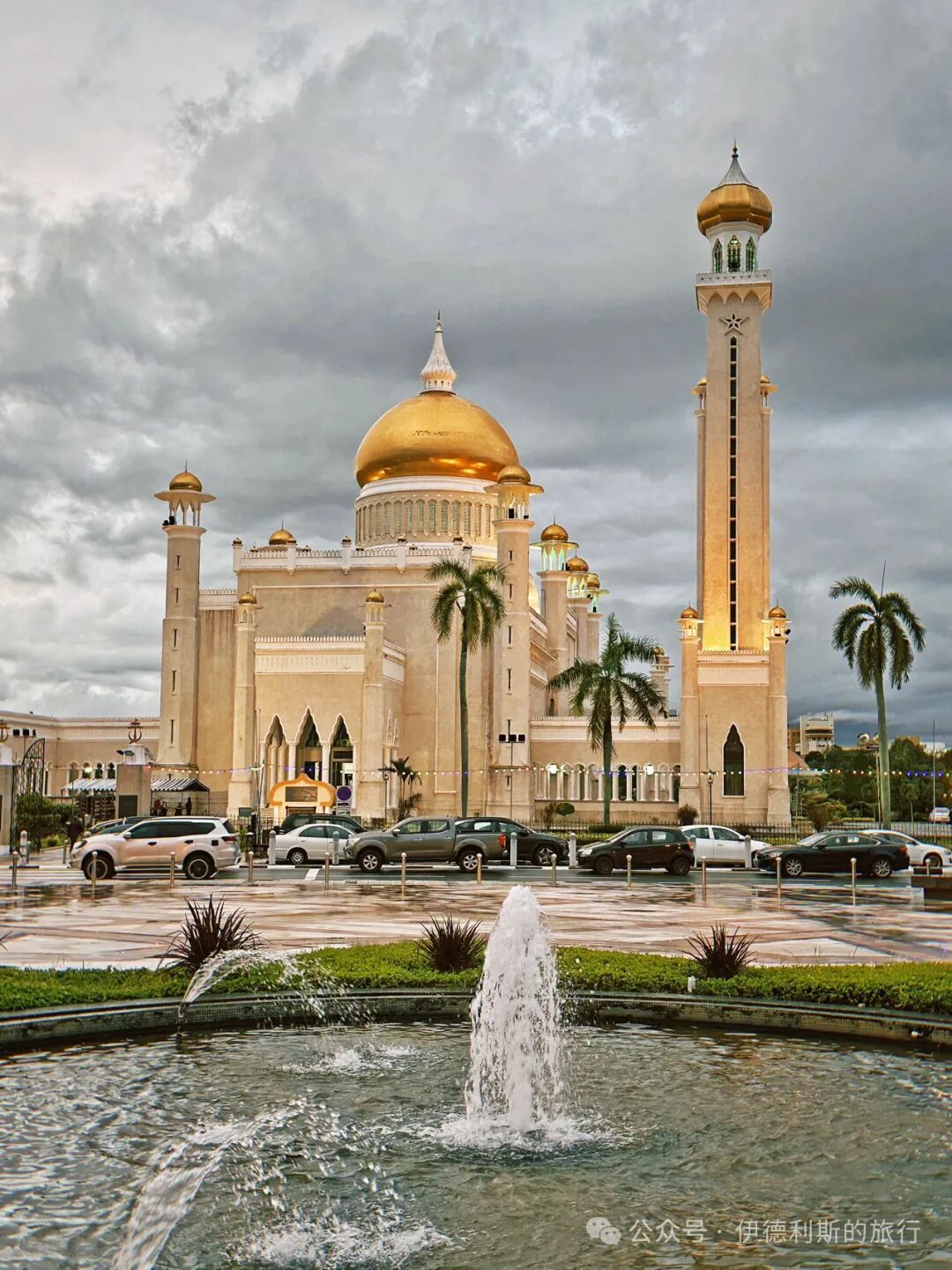
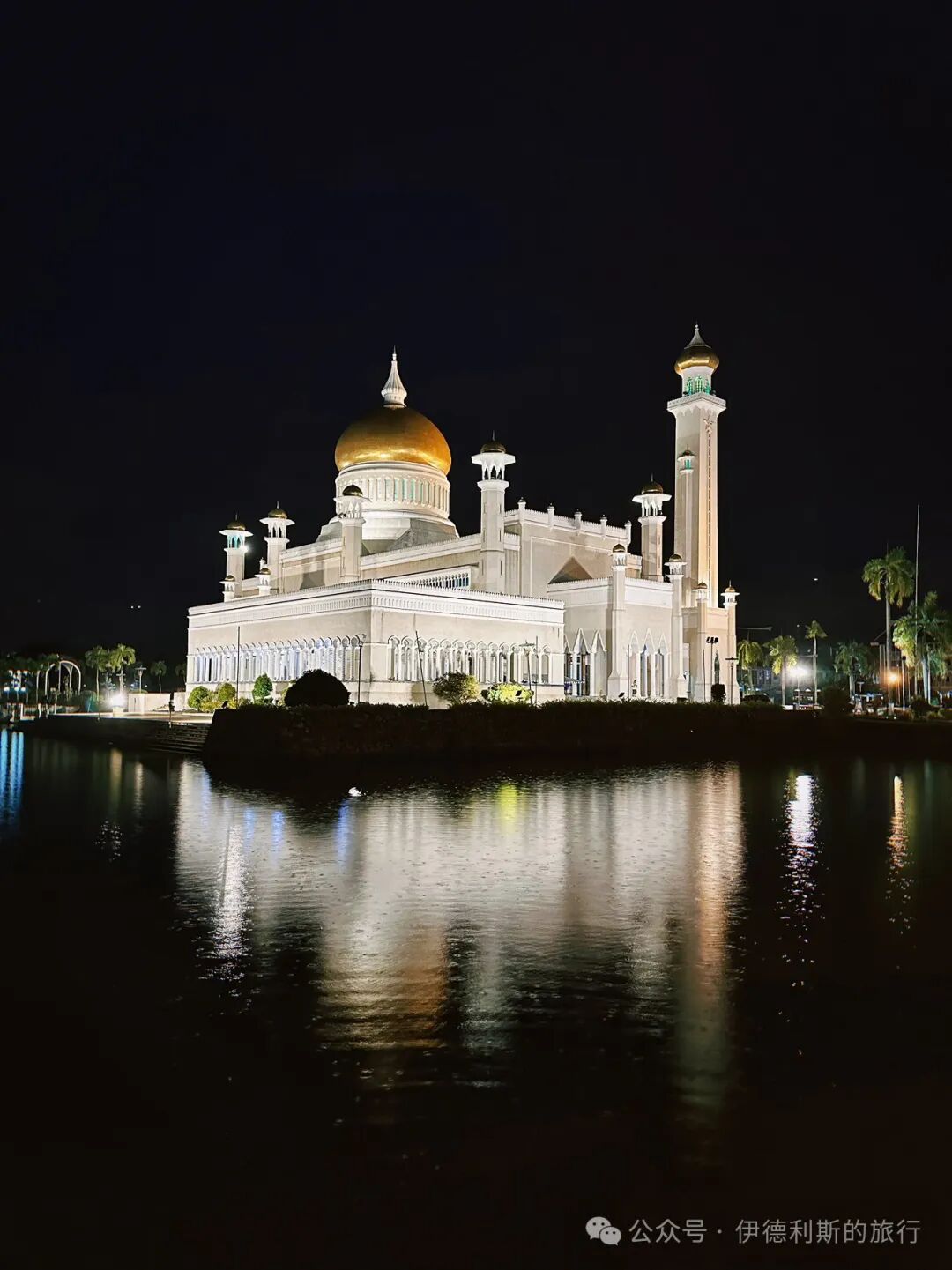
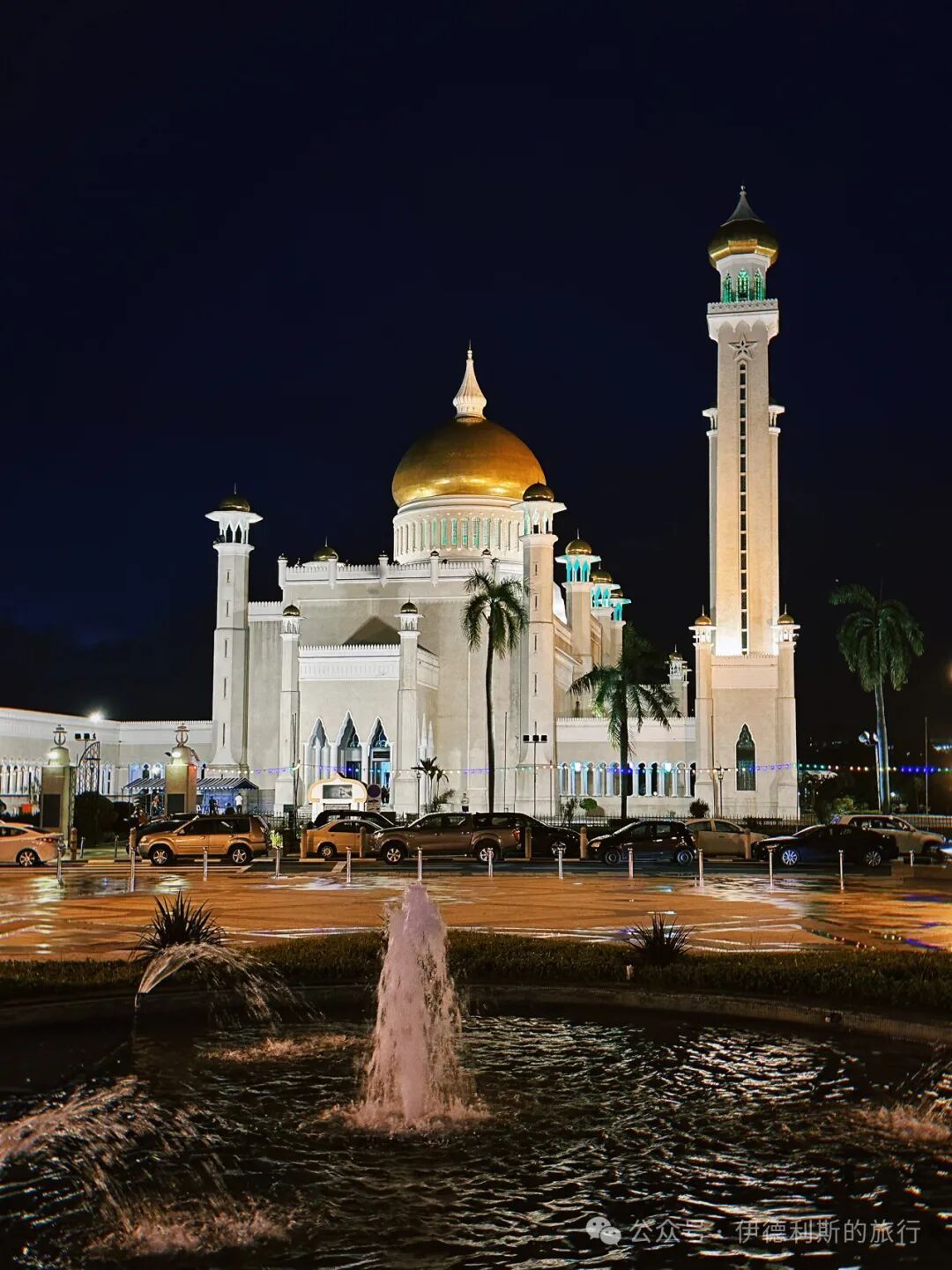
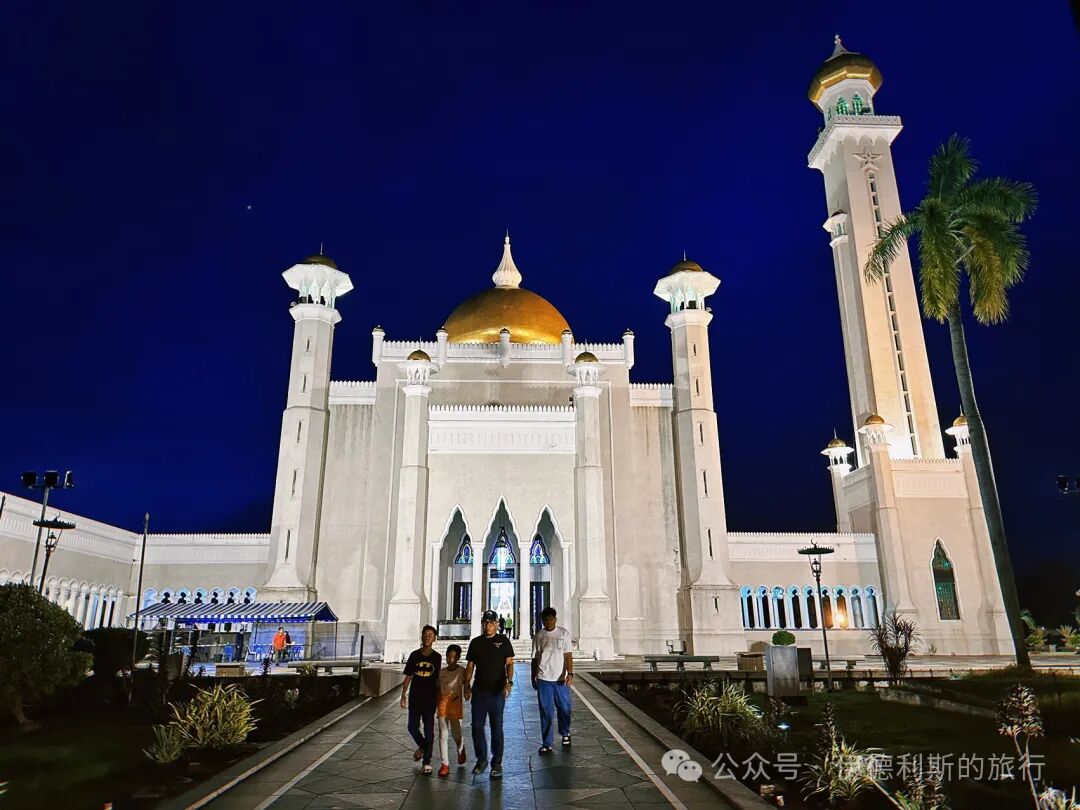
The water mosque during the sunset and dusk hours. Both of Brunei's national mosques look better at night than during the day.
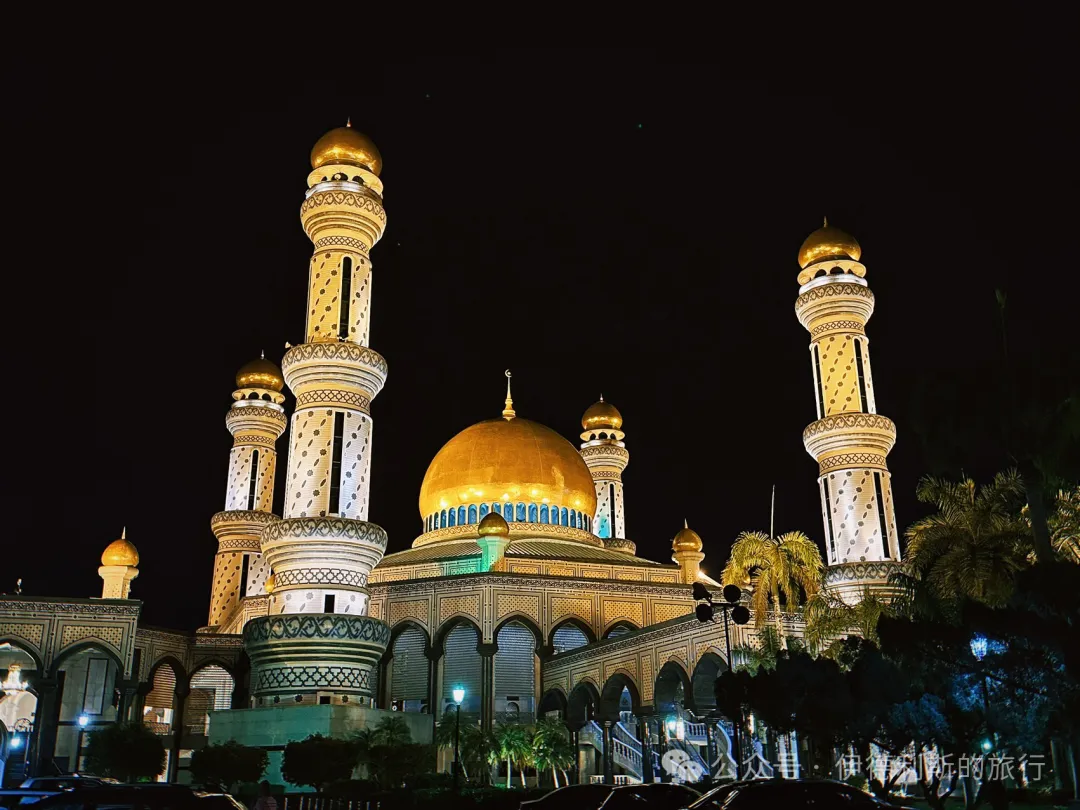
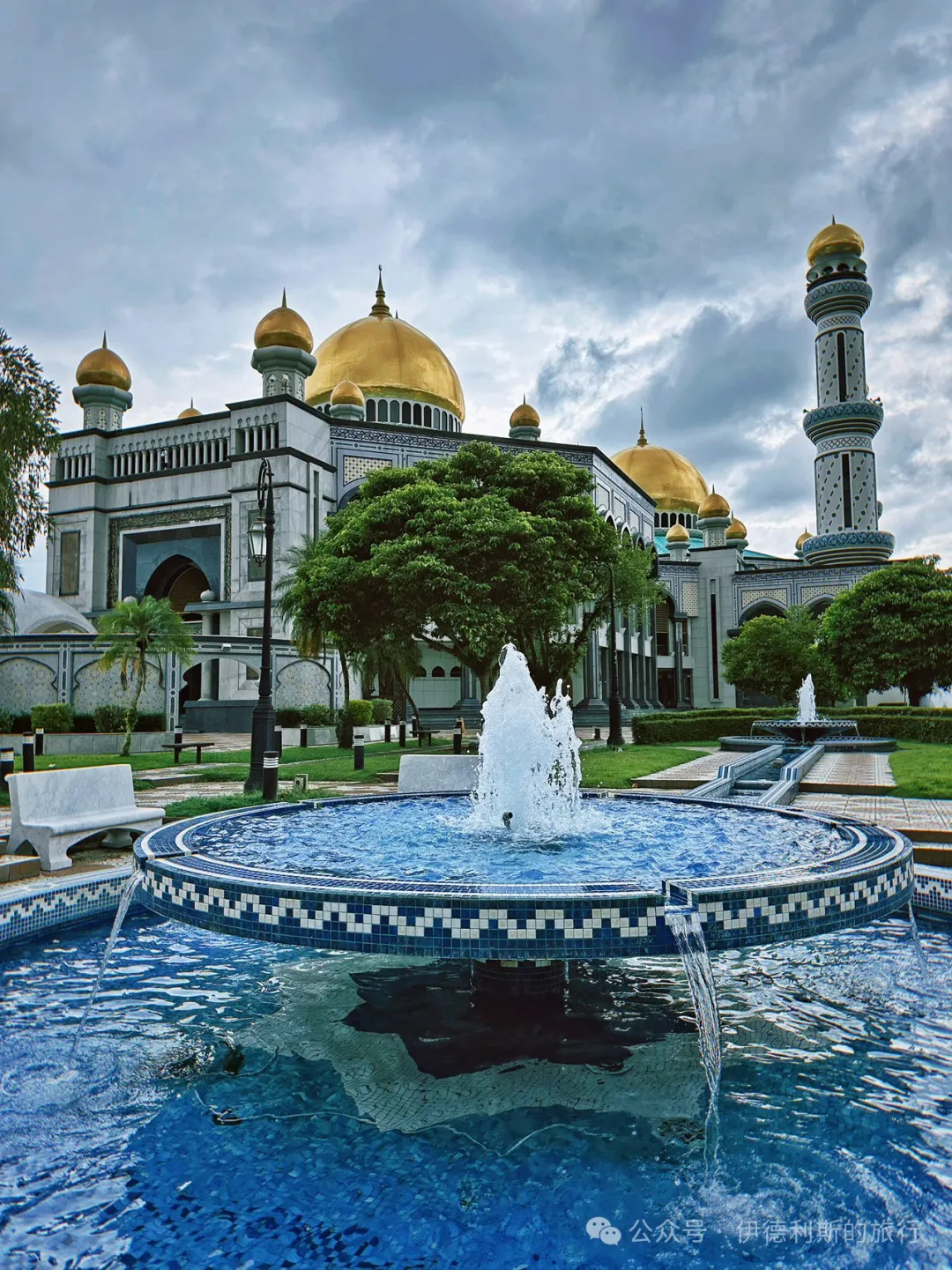
The full name of the Brunei Friday Mosque is Jame' Asr Hassanil Bolkiah Mosque. It is one of Brunei's two national mosques and also the largest mosque in the country. The Jame' Asr Hassanil Bolkiah Mosque was built by Sultan Hassanal Bolkiah of Brunei to celebrate his 25th anniversary on the throne and officially opened in 1994. The mosque's 29 golden domes commemorate the 29th Sultan of Brunei. Five fountains symbolize the five daily namaz and the five pillars of Islam. The mihrab is decorated with gold-plated tiles, and the interior is very luxurious, featuring Persian carpets, Italian marble, and Philippine hardwood.
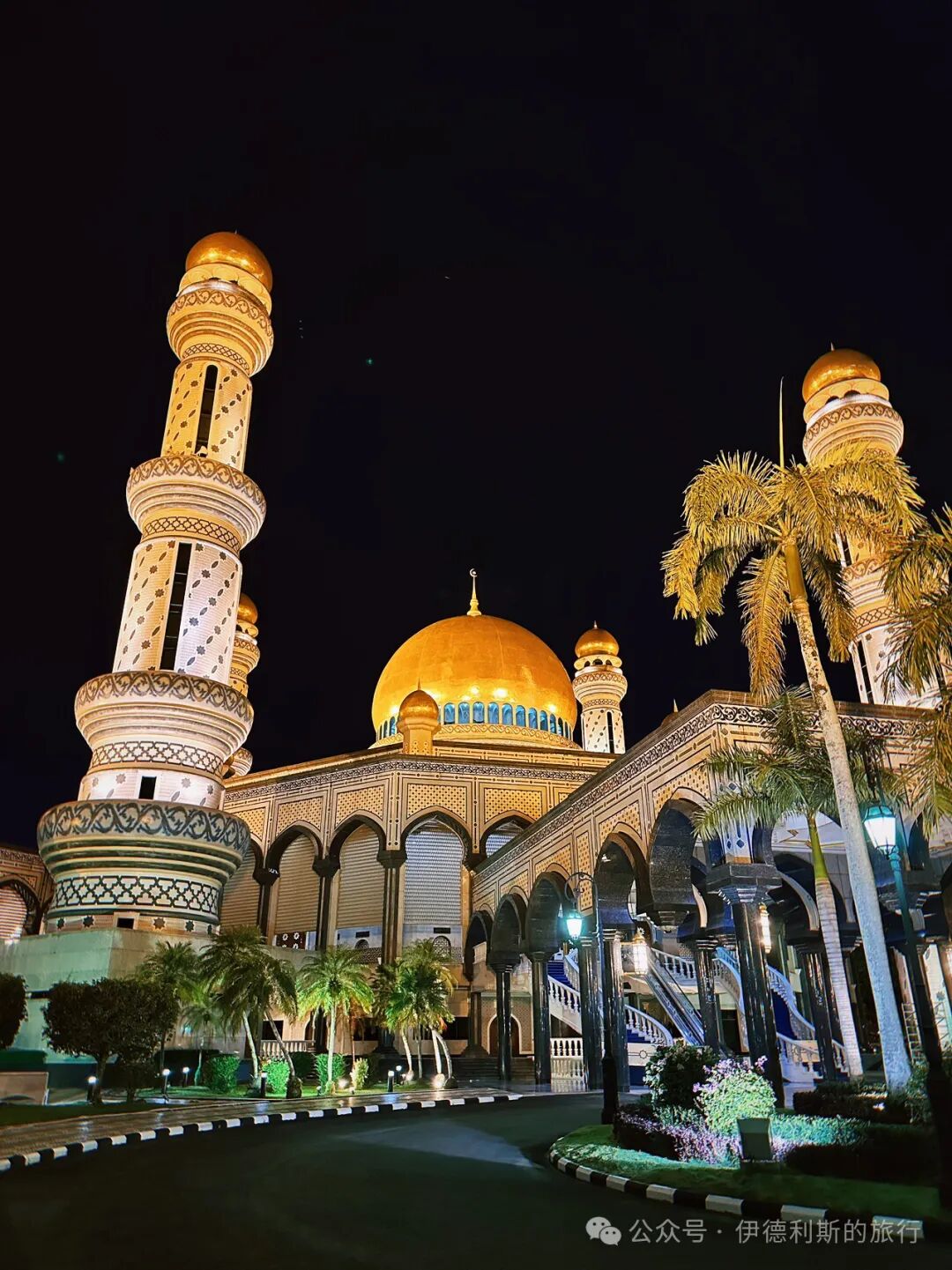
The night view of the Brunei mosque is more beautiful than the day. For friends (dosti) who want to take photos, I recommend coming during the times for maghrib and isha.
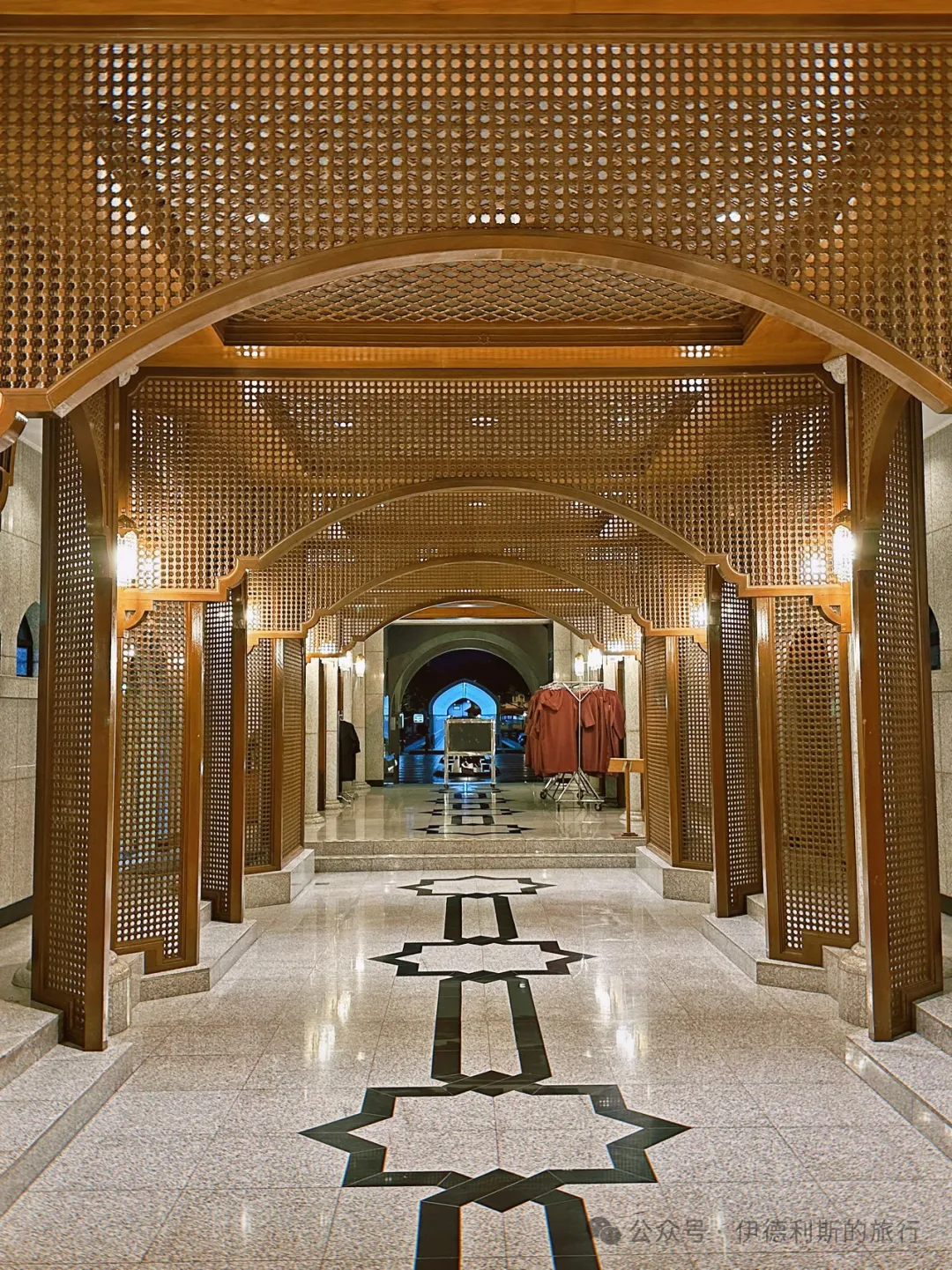
The Jame' Asr Hassanil Bolkiah Mosque during the day. The main prayer hall connects to a women's prayer hall via a corridor. This is a very rare independent women's hall in Southeast Asia, and it is quite large. Below the women's hall is the wudu area. It is the only one I have ever visited that uses sensor-activated faucets.
The ancient city in the mountains of Brunei.
Take a taxi from the city to the Kota Batu Archaeological Park, the ruins of the Brunei Sultanate palace hidden in the tropical rainforest. This is Brunei's most important archaeological site.
Kota Batu is believed to have been the capital of the Brunei Sultanate from the 14th to the 17th century. It was once an important trading port in Southeast Asia and a central city in northern Borneo. A civil war in the Brunei Sultanate between 1660 and 1673 led to the abandonment of Kota Batu, and the Sultan moved the palace to the water village of Kampong Ayer on the upper Brunei River.
Kota Batu means stone castle, and it is one of the few stone architectural ruins in Brunei. British naturalist and Sarawak Museum curator Tom Harrisson began archaeological excavations at Kota Batu in 1952-53. He discovered many Chinese coins from the Tang, Song, and Ming dynasties, as well as Arabic coins, glassware, ironware, bronze, wooden tools, stone carvings, and ceramics from Siam, the Indochina Peninsula, and the Song and Ming dynasties of China.
During excavations in 1986-87, a square stone building measuring 25.8 by 25.4 meters was found, along with 36 stone column bases, tombstone remains, and Ming dynasty porcelain shards. It is believed the building dates back to the 15th century. Because the column bases are divided into three levels, it is thought the building had a three-tiered pyramid roof structure similar to traditional Malacca mosques. Although early Brunei Sultanate palace buildings were made of wood and left few traces, the coins and pottery found at Kota Batu suggest the Sultan's palace was likely near this site.
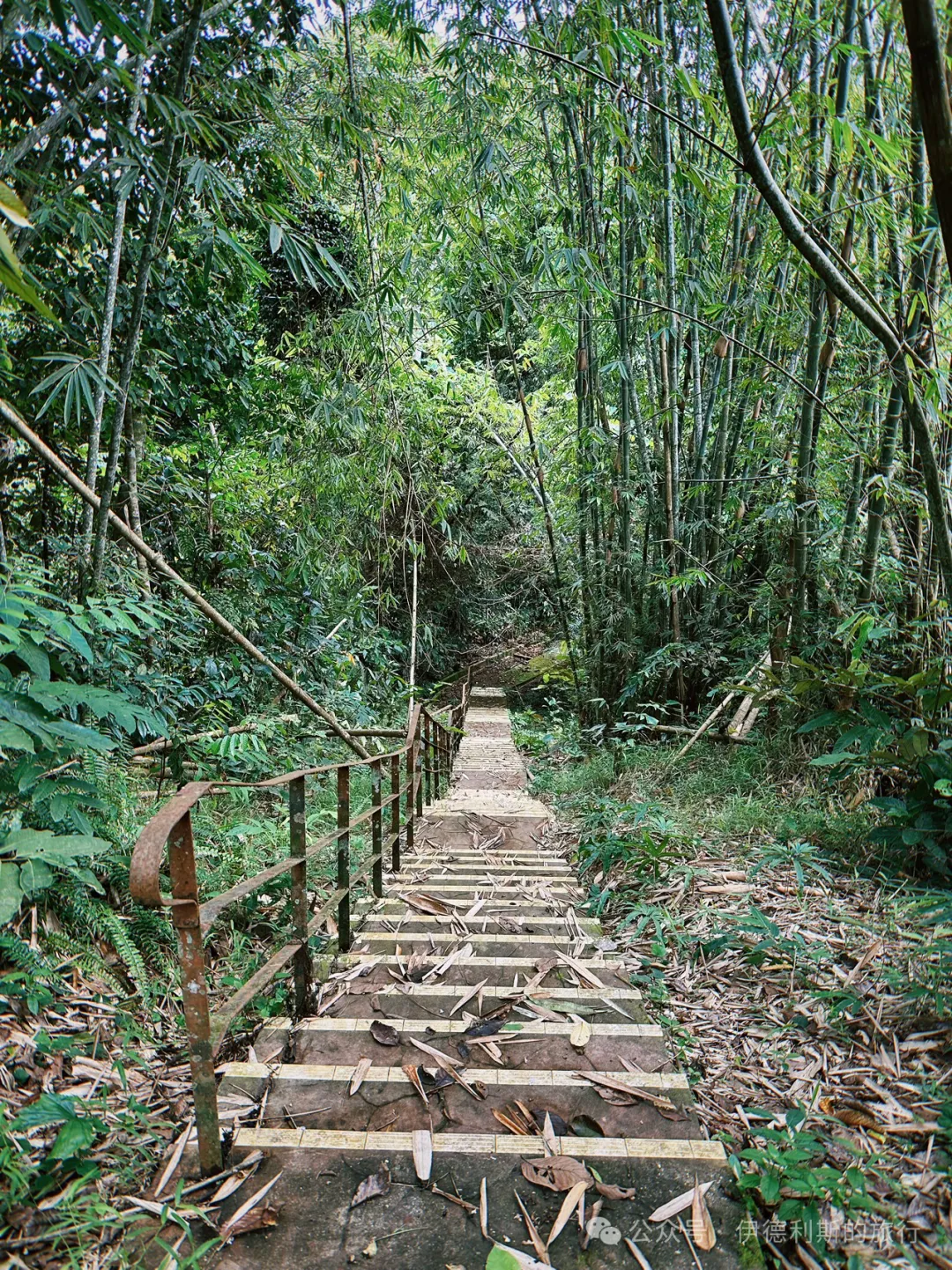
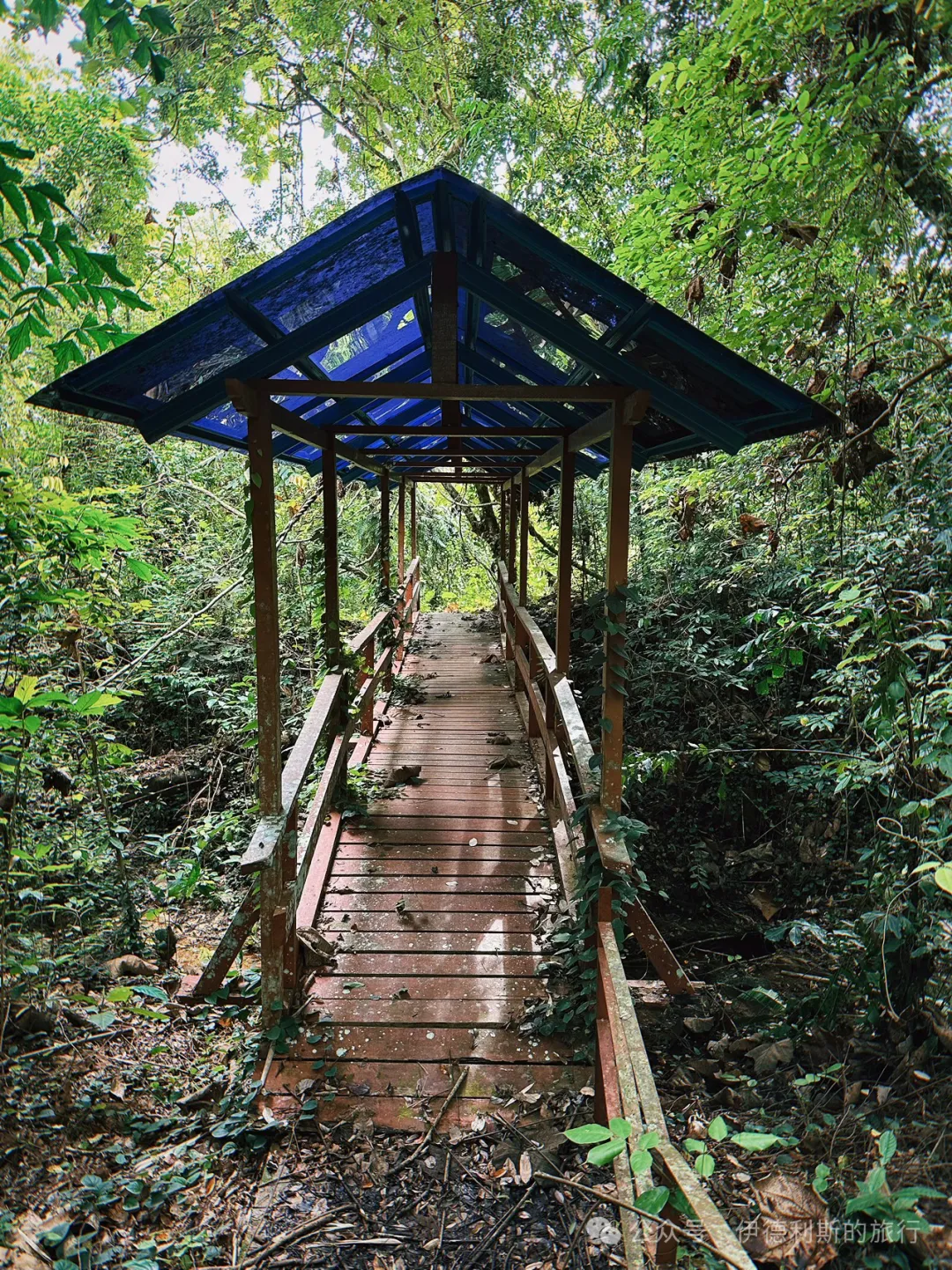
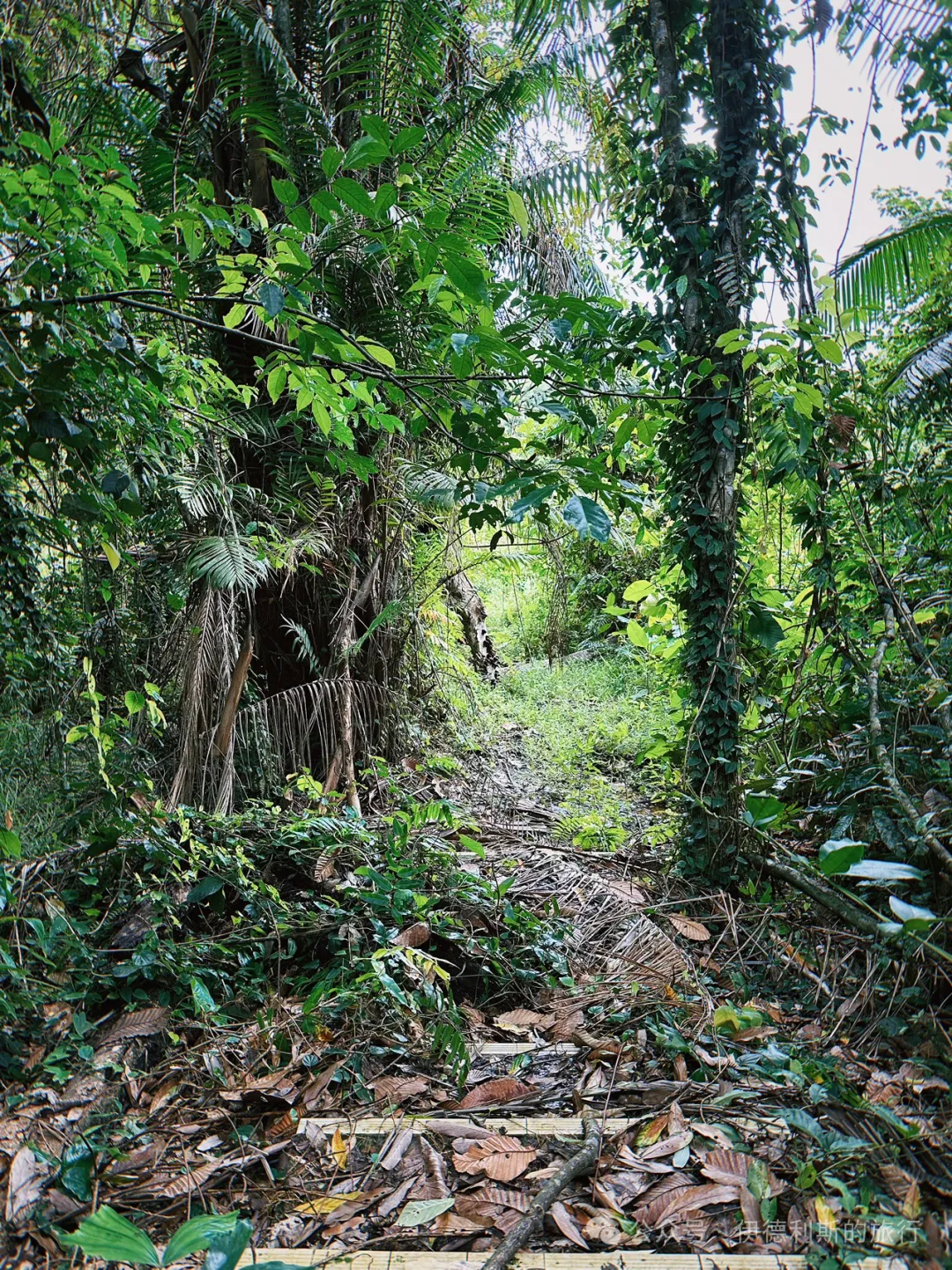
The paths in Kota Batu Archaeological Park feel like a primitive forest. There were no other tourists, and the mountain trails were often covered by fallen leaves and hard to see. It is hard to imagine that this was once the capital of Brunei.
The tomb of the third Sultan of Brunei.
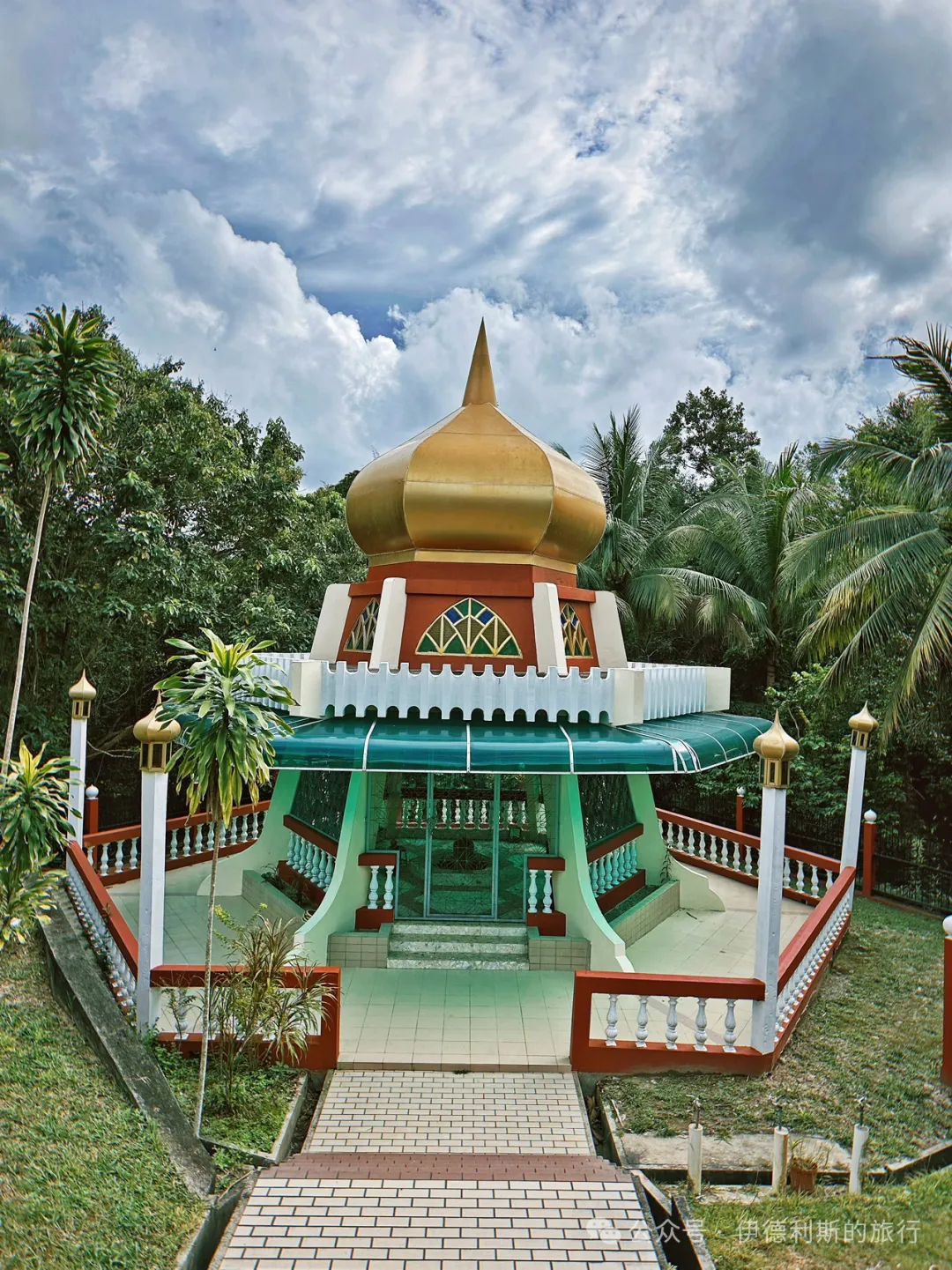
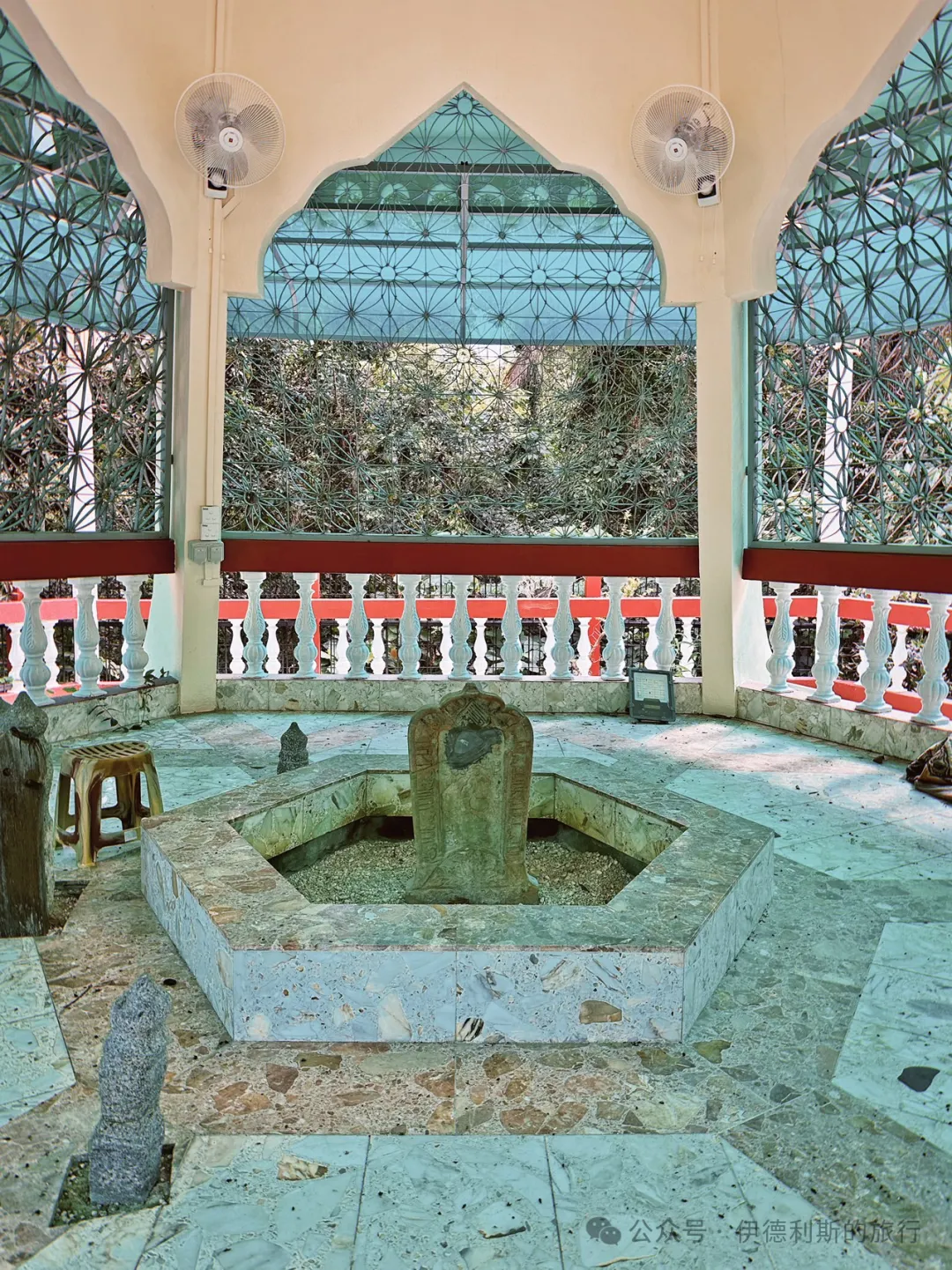
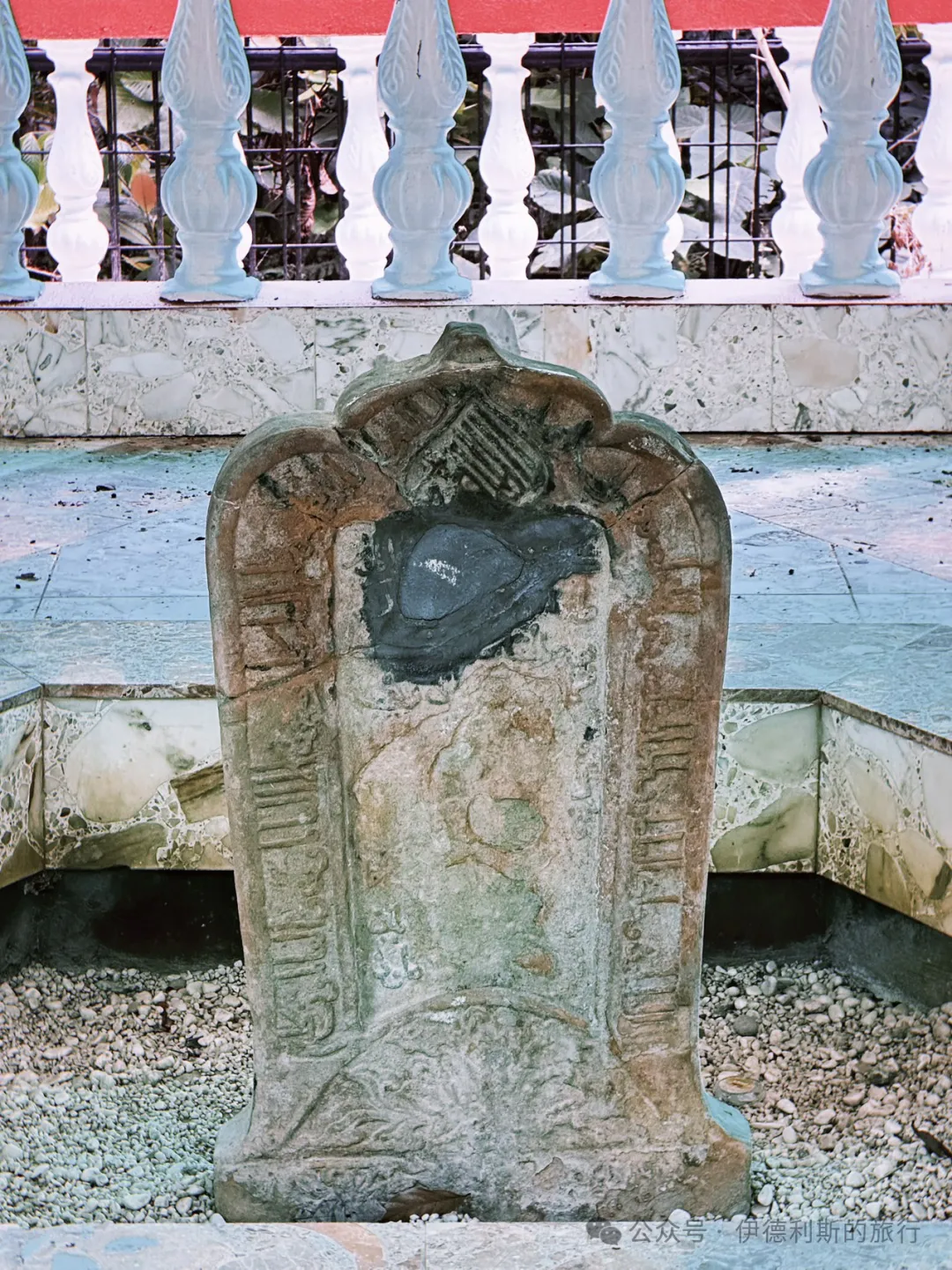
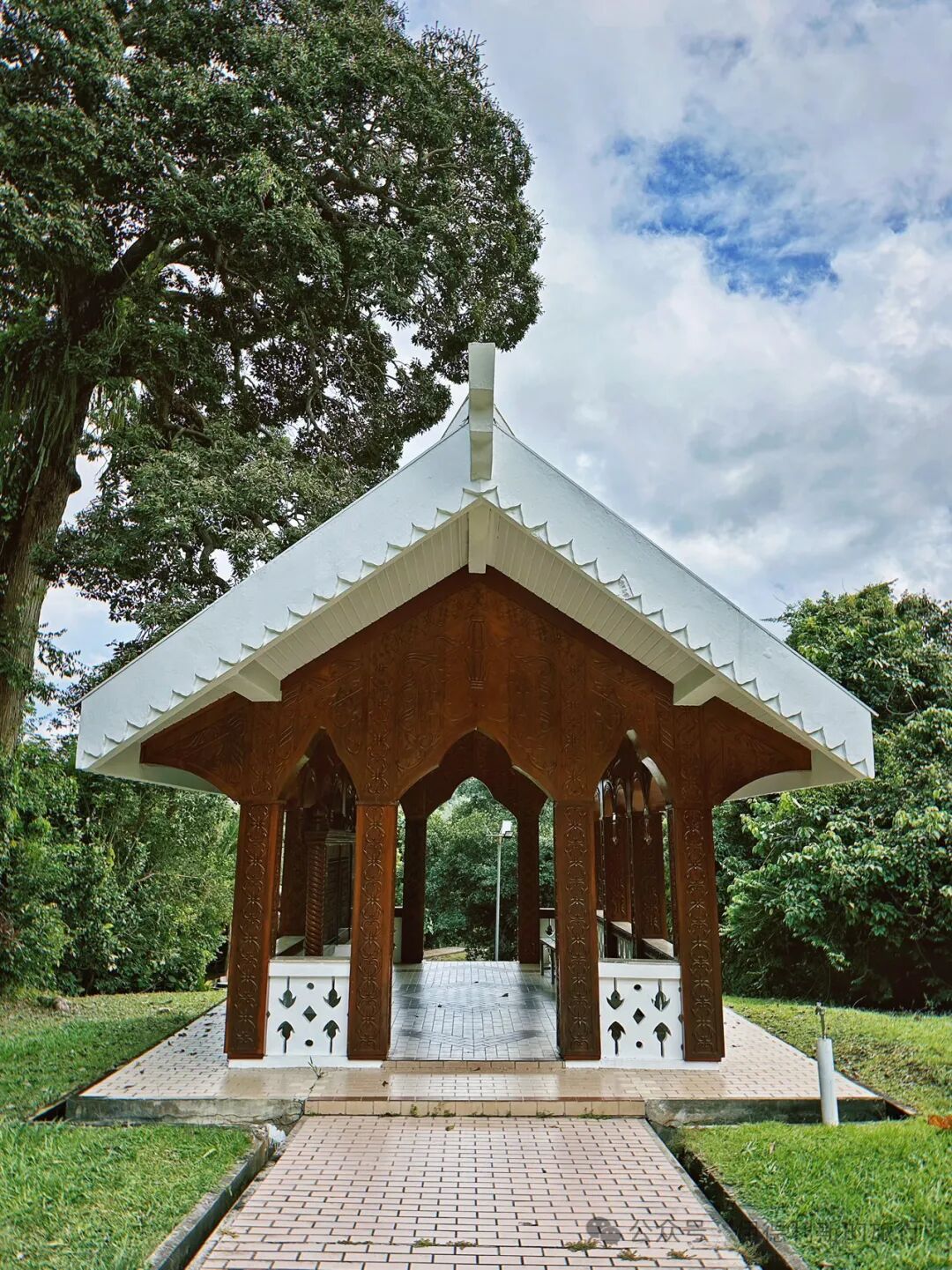
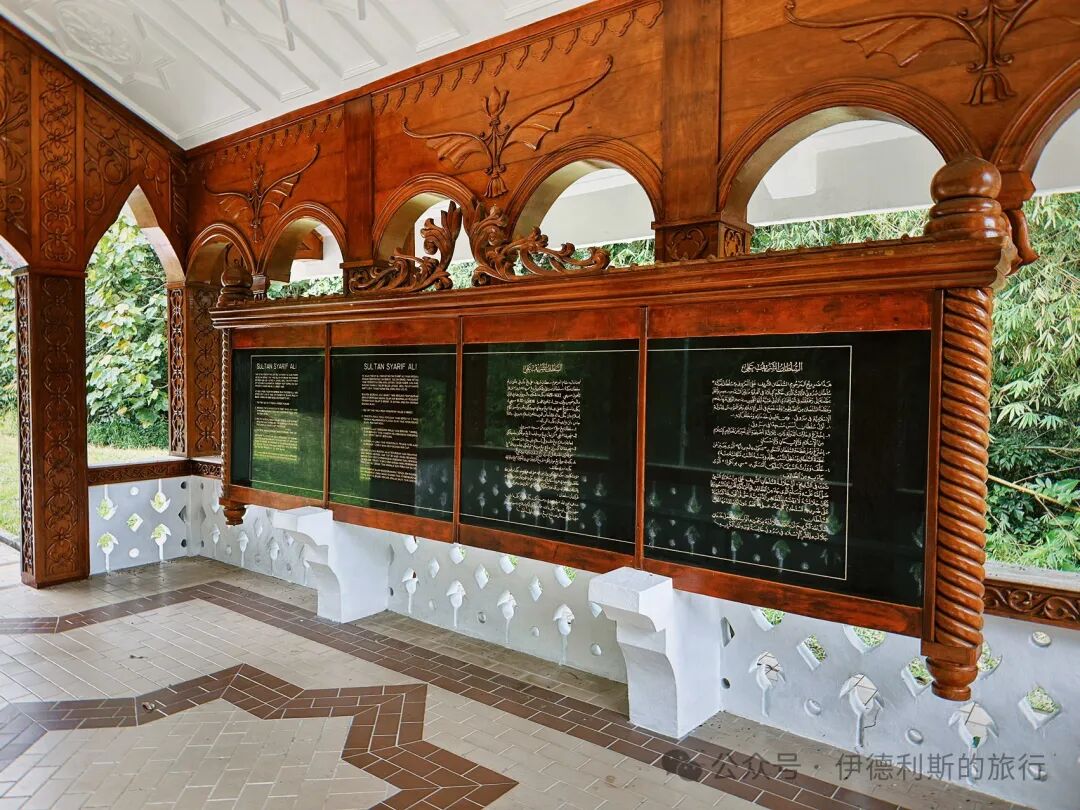
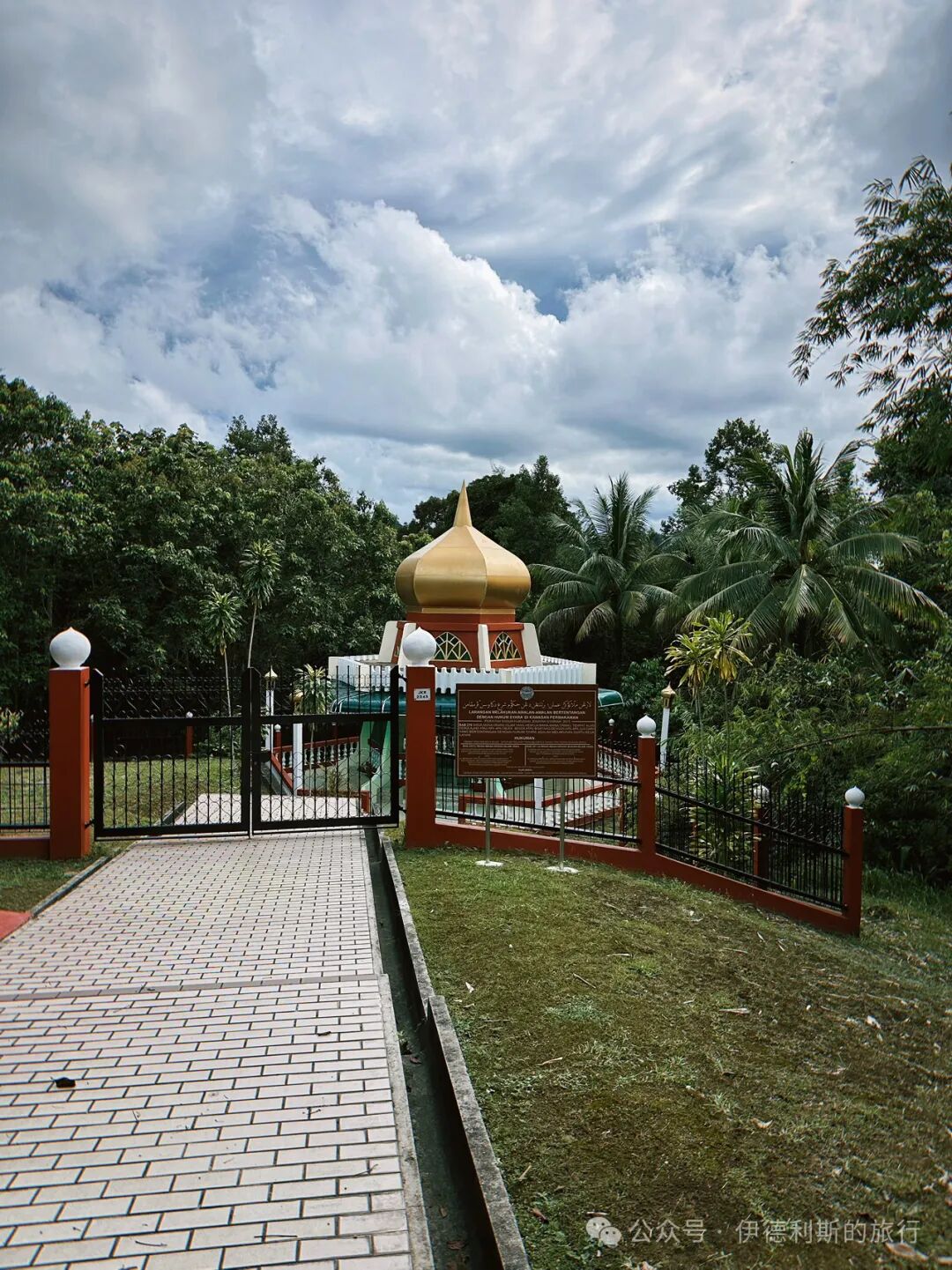
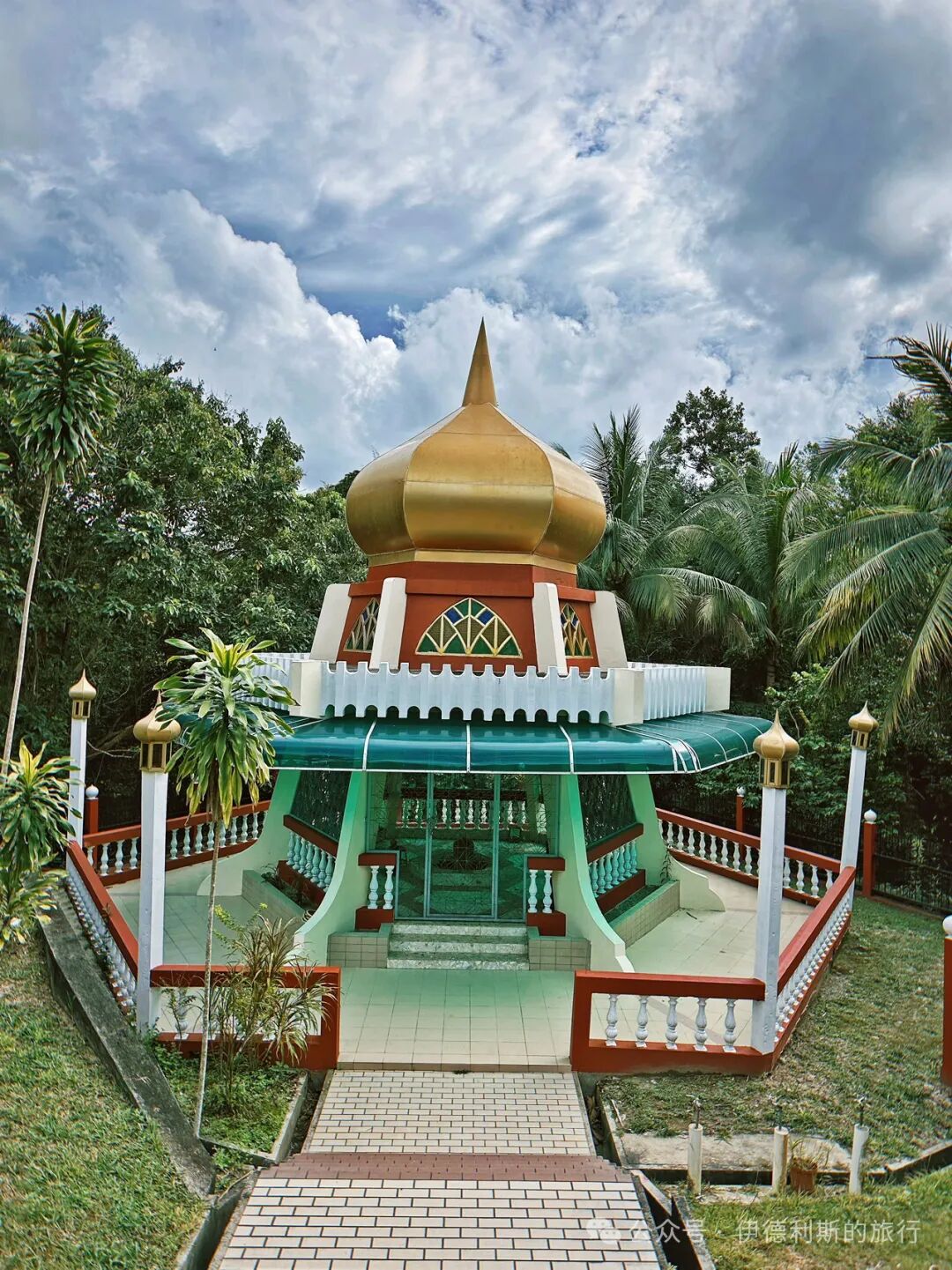
The Kota Batu Archaeological Park contains the tomb of the third Sultan of Brunei, Sharif Ali.
Sultan Sharif Ali (reigned 1425-1432) was originally a preacher from the ancient Saudi city of Taif and a descendant of Hasan ibn Ali, the grandson of the Prophet Muhammad. He arrived in Brunei to preach in 1395 and was respected by the Sultan and the people. He married the daughter of Sultan Ahmad around 1400 and inherited the throne after the old Sultan died in 1425, which is how the Brunei Sultanate gained its lineage from the Prophet's family.
Sultan Sharif Ali worked to spread Islamic law while keeping local customs that did not go against it. During his reign, Brunei officially changed from a Hindu-Buddhist cultural area into a part of Islamic civilization. He built the first mosque in Brunei, designed the national flag, and established the title of Brunei as the Nation of Peace (Darussalam). It is believed that he may have also built the stone wall fortress in Kota Batu. view all
Summary: Brunei offers visa-free travel for Chinese visitors and a compact route through mosques, museums, royal history, and Malay culture. This first part keeps the original itinerary, photos, place names, and travel details in a clear English article.
The Brunei Darussalam Immigration Department announced that starting March 8, 2025, Chinese citizens holding ordinary passports valid for at least 6 months can enter Brunei visa-free for up to 14 days. Brunei has officially become a visa-free country!
I happened to take my family to Brunei in December 2024 and visited quite a few places. In my opinion, Brunei can be described as a "rural version of Singapore and a high-cost Malaysia." If you have already visited Singapore and Malaysia, this place is still worth a look.
First, Brunei has its own ride-hailing app called Dart. You can link a VISA card or pay with cash, and the cars arrive quite quickly. Note that after leaving the airport, the ride-hailing pickup point is in the parking lot on the right. Walk from the main airport entrance toward the mosque on the right, then follow the canopy to the end to find it.
My first impression of downtown Brunei is that everyone drives everywhere, and there are basically no pedestrians on the streets. It feels like the whole city was designed for cars, and there are very few crosswalks. The city density is very low with lots of greenery, making it feel like a garden city for cars.
Below, I will share some places in Brunei that we think are worth visiting and eating at.
Eat halal Nanyang-style Chinese food.
Yingzhun Hao.
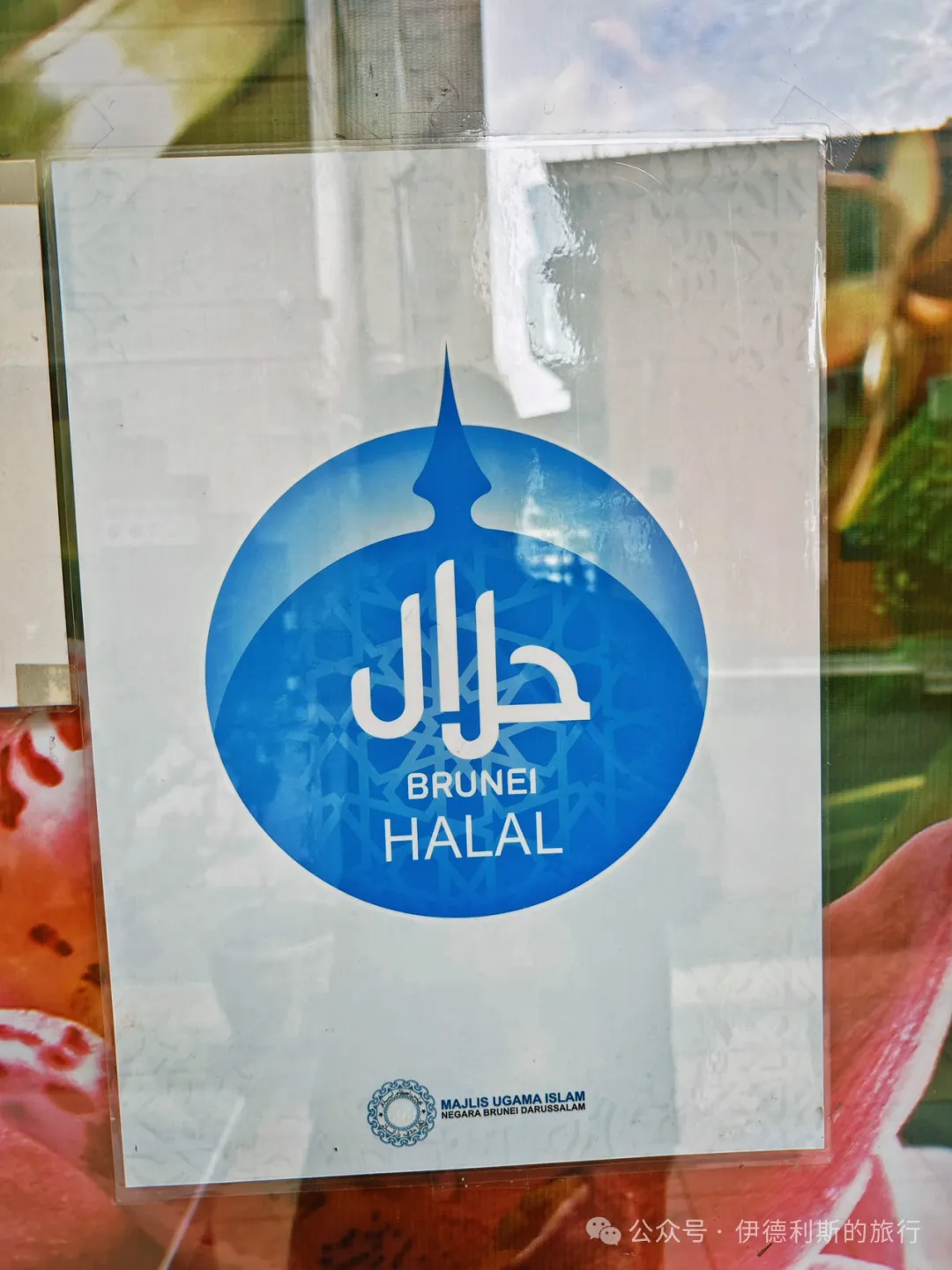
Just like in Singapore and Malaysia, many Chinese people from Hainan and Fujian in Brunei apply for halal certification, hire Muslim staff, and serve halal Chinese food with Nanyang characteristics. We ate at several of these places this time, and they are all worth recommending.
The most famous Hainanese teahouse in Brunei is Yingzhun Hao. They have Brunei halal certification and are favored by people of all ethnic groups. The founder of Yingzhun Hao, Han Qiongyuan, was from Wenchang, Hainan. In 1939, during the Japanese invasion of China, 17-year-old Han Qiongyuan traveled to Southeast Asia and arrived in Brunei to work as a handyman at his uncle's coffee shop. In 1946, Han Qiongyuan officially opened Yingzhun Teahouse, mainly selling coffee, bread, and other food, and became widely known for his "longevity bread (roti kuning)." Later, as the teahouse business grew, Han Qiongyuan also expanded into real estate and presided over the construction of the Brunei Hainan Building. After 1993, Han Qiongyuan returned to his hometown every year to visit relatives and invested heavily there, being awarded the title of "Patriotic Hainanese" by Hainan Province three times.
Their shop has a very rich variety of bread. The most classic sandwich breads come in four flavors: peanut, red bean paste, butter, and coconut. There are also peanut yuanyang bread, cheese bread, yuanyang yellow bread, and French toast. You can add a fried egg and cheese, or order a soft-boiled egg on the side. Cakes include custard cake, egg tarts, coconut tarts, red bean cakes, butter cakes, pandan cakes, and more. Western-style breads and pastries were learned by Hainanese people working as kitchen helpers for British families when they traveled south to Southeast Asia in the 19th century. Today, they are a classic part of Nanyang Hainanese restaurants.
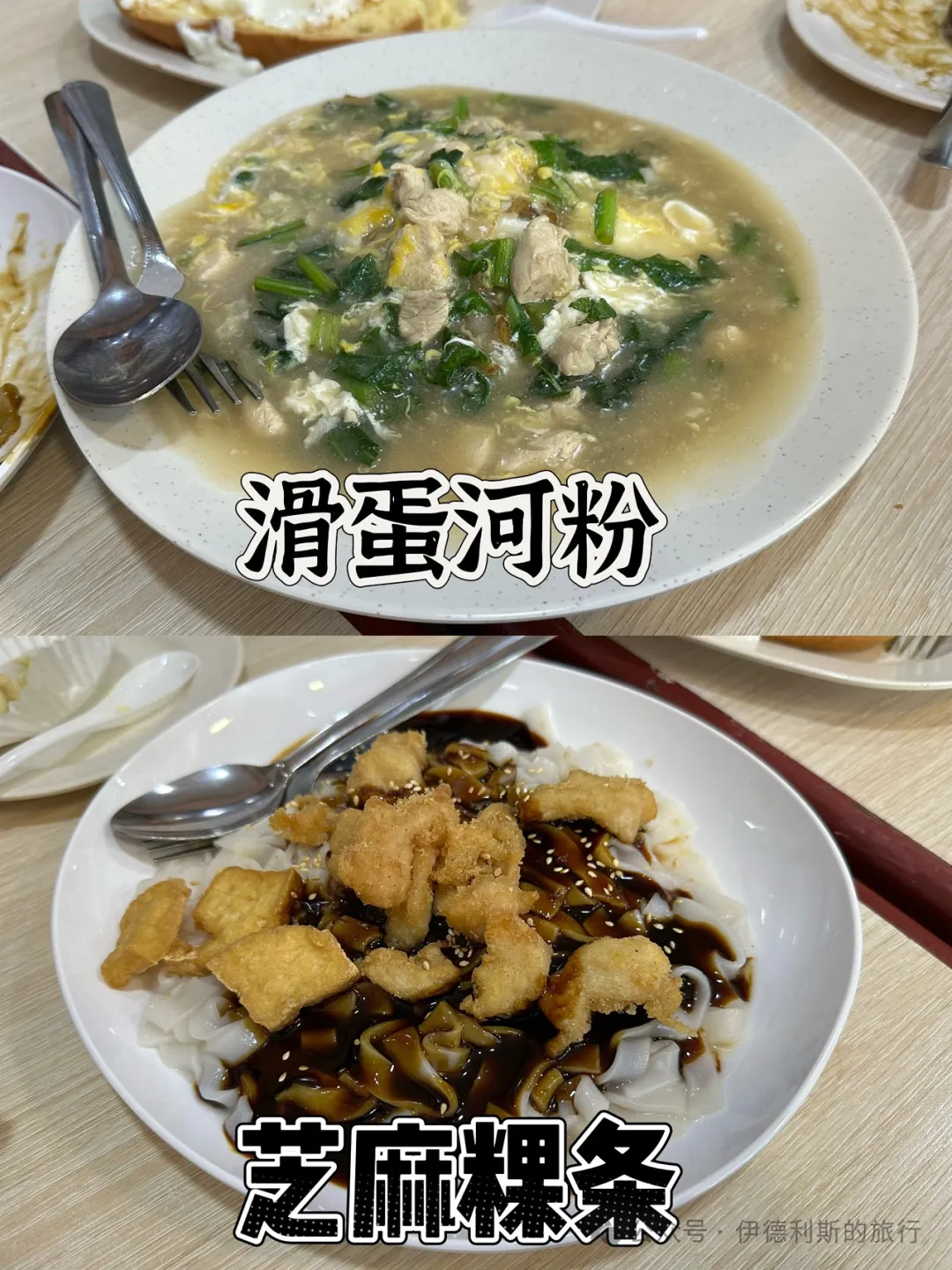
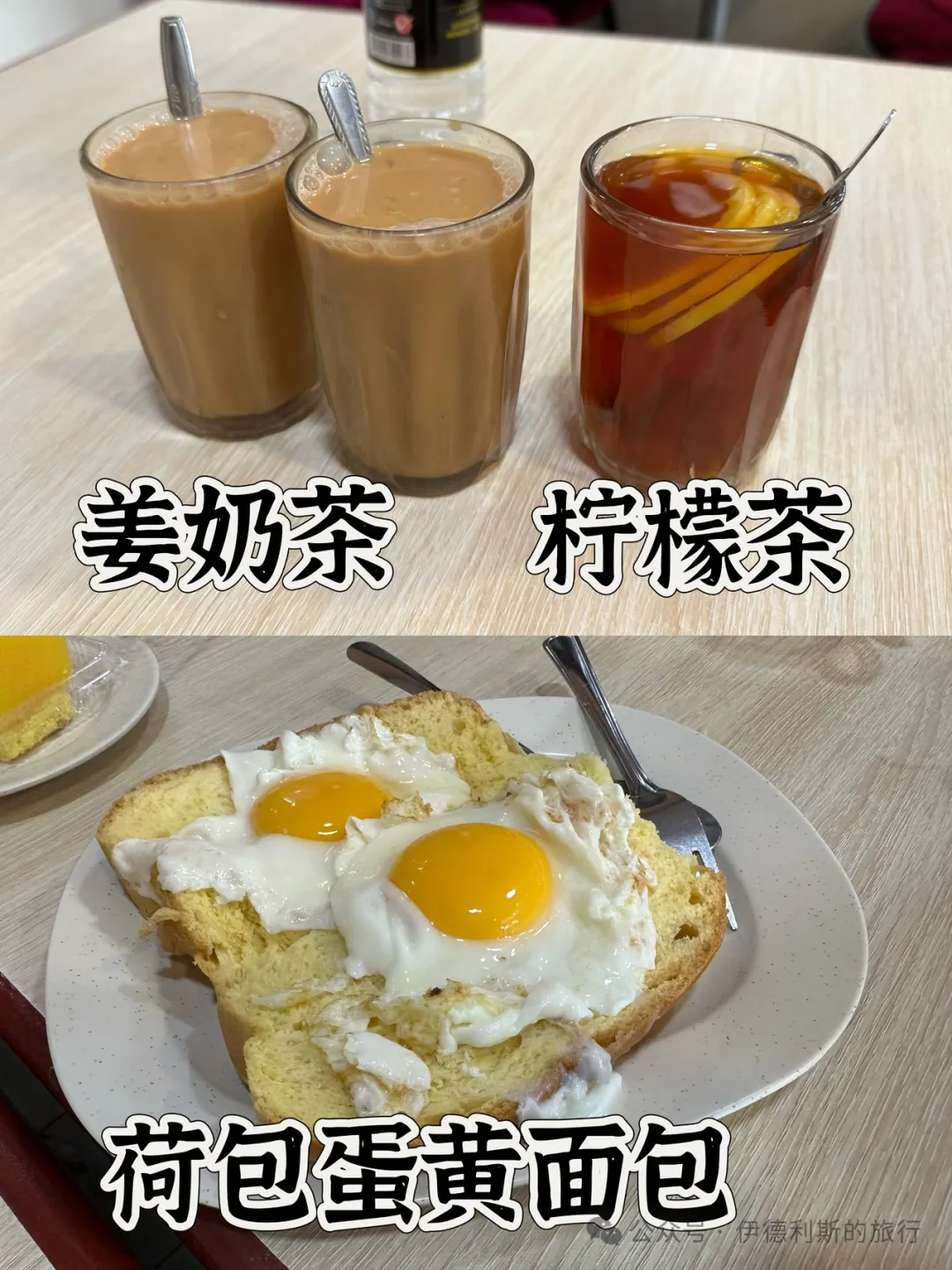
Besides breads and pastries, they also serve various noodles, including sesame flat rice noodles (zhima guotiao), dry-tossed noodles, fried noodles, Hainanese noodles, fried rice vermicelli, and egg gravy flat rice noodles (huadan hefen). These are all very well-suited to Chinese tastes. We ordered egg gravy flat rice noodles, sesame flat rice noodles, egg tarts, egg custard cakes, yellow bread with fried eggs, chicken curry puffs, peanut and kaya butter bread (yuanyang mianbao), ginger milk tea, and lemon tea for a full East-meets-West experience. The peanut and kaya butter bread is filled with coconut jam (kaya), butter, and crushed peanuts, giving it a very rich texture. The sesame flat rice noodles have a sweet, salty, and spicy flavor. Served with fried tofu and fried fish chunks, they are a major specialty of the restaurant.
Babu's Kitchen
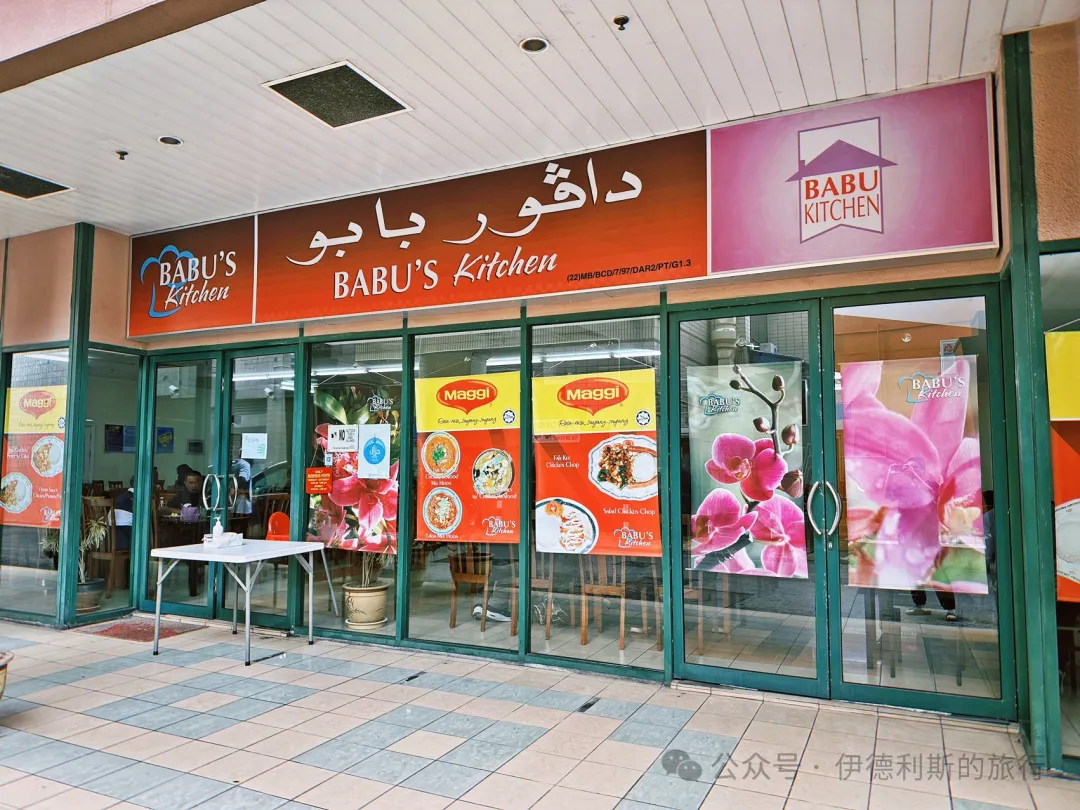
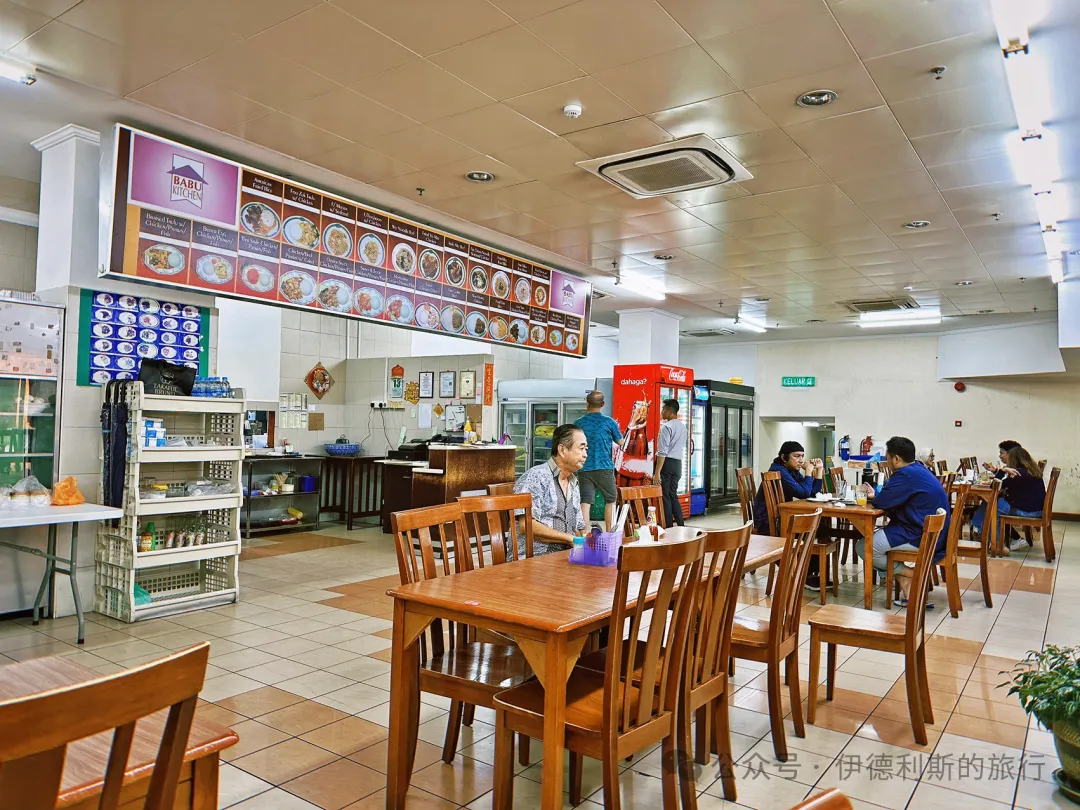
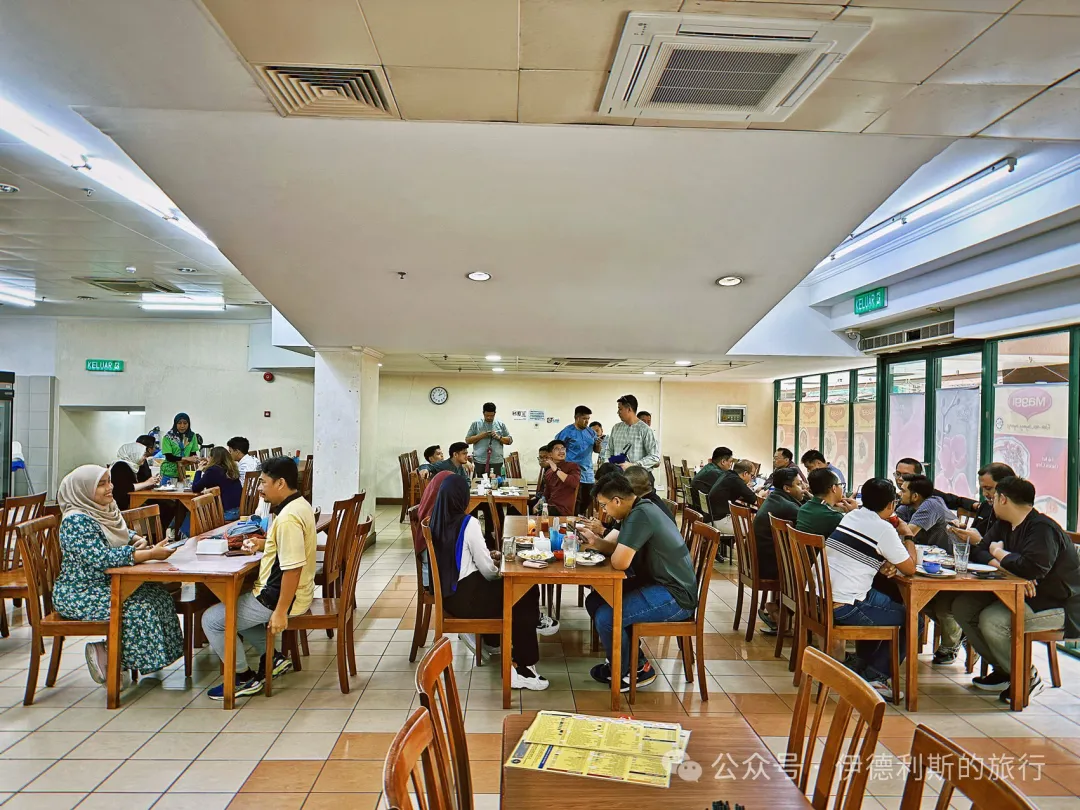
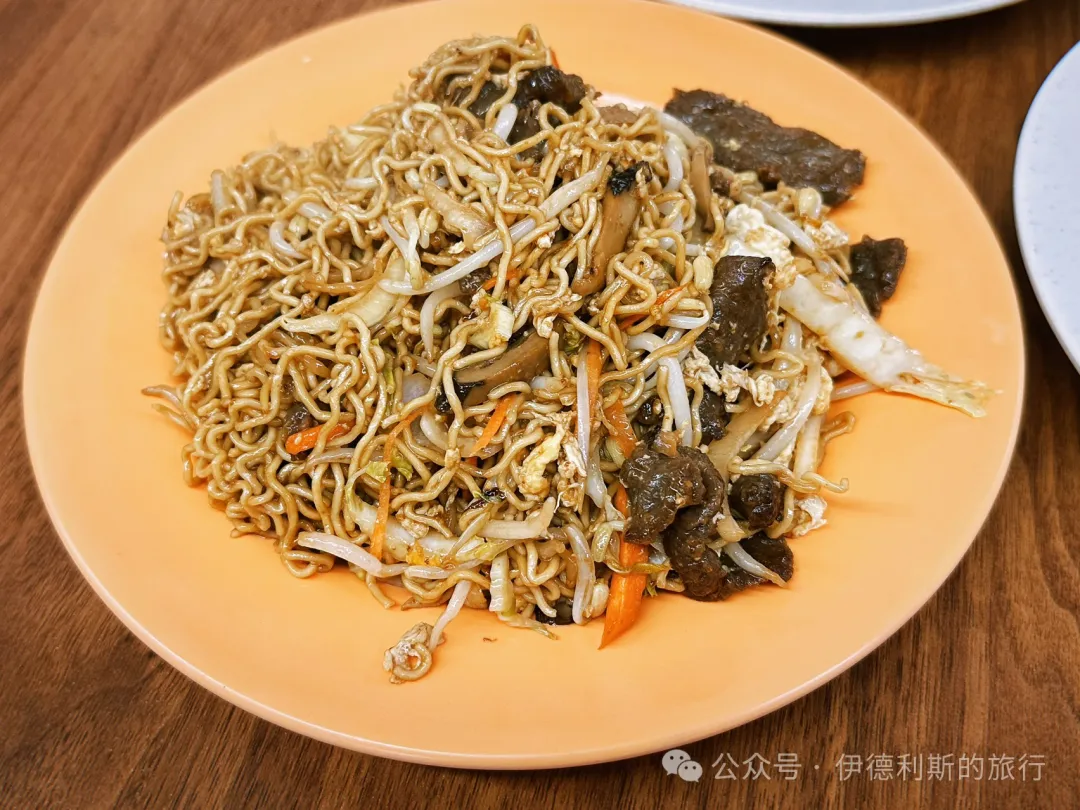
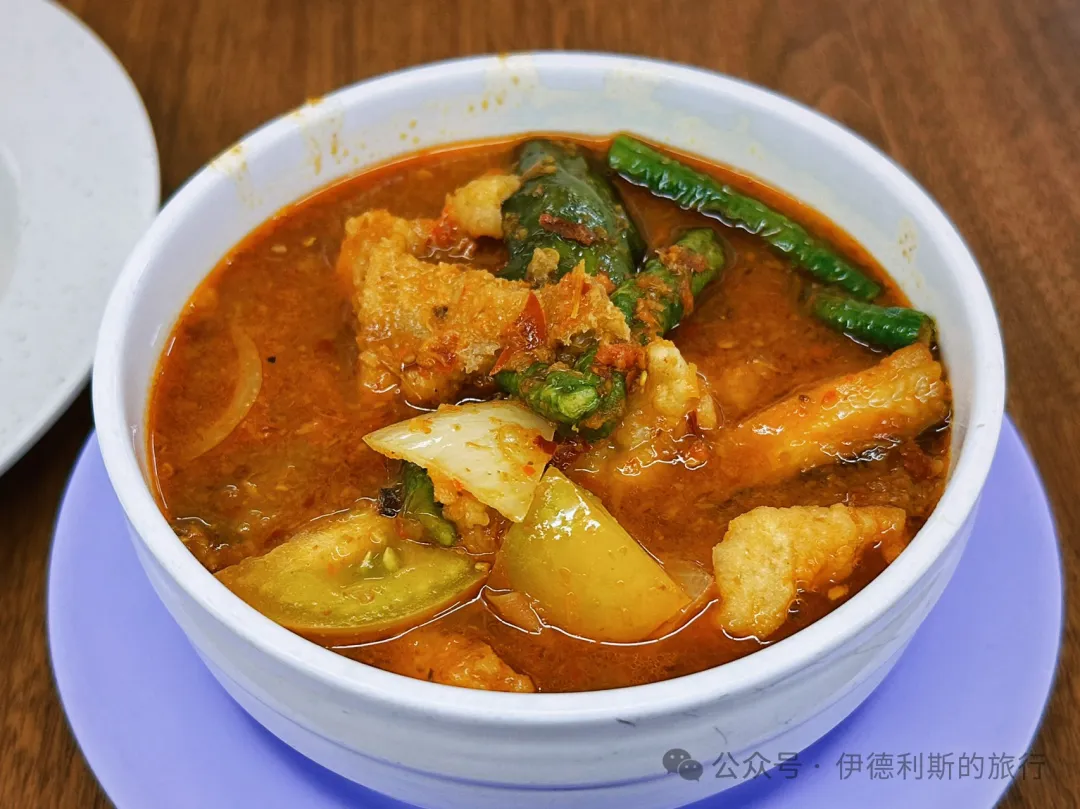
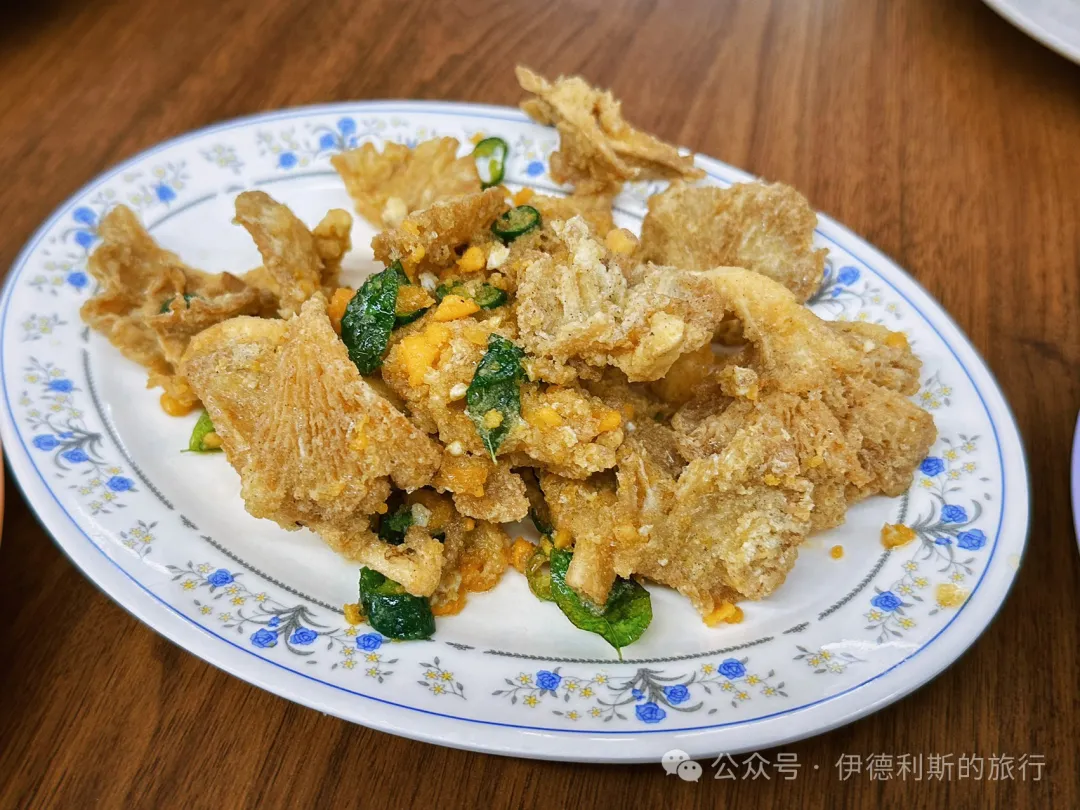
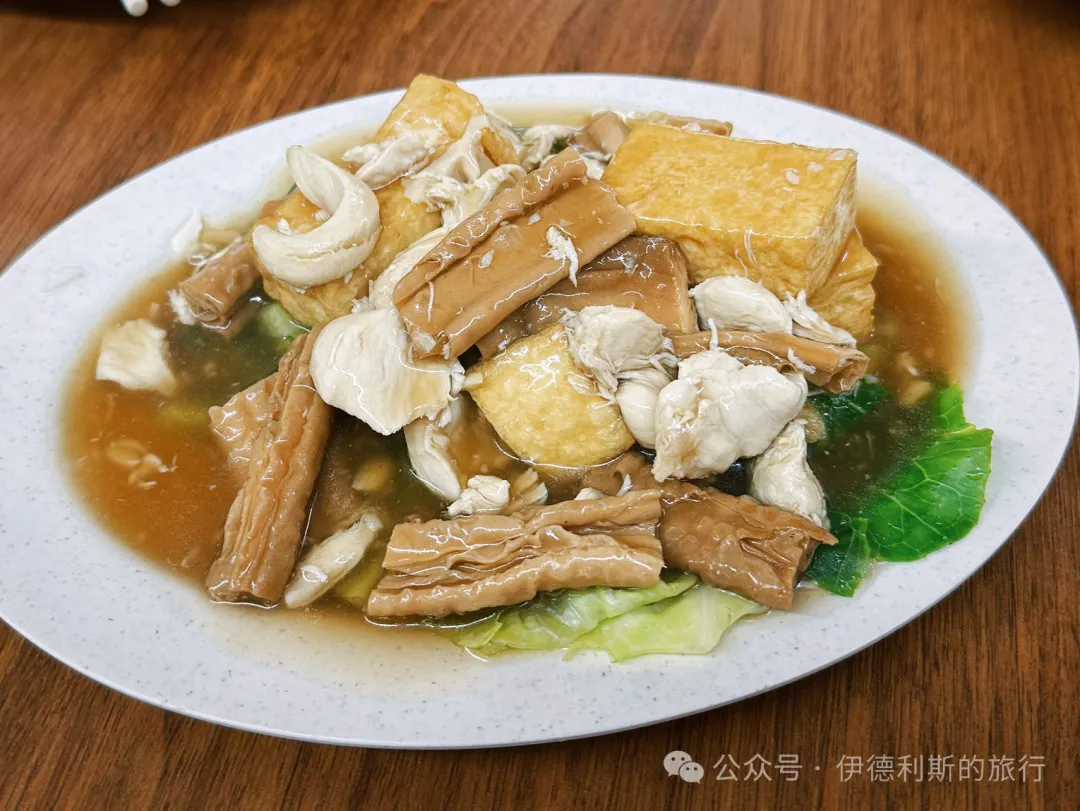
There are many Chinese shops in the old town of Bandar Seri Begawan, which is also a great place to eat at halal Hainanese restaurants. We chose Babu's Kitchen. It was very busy at lunch with Chinese, Malay, and Indian customers, which is a classic scene at a Hainanese restaurant. Since they didn't have a Chinese menu, we asked the owner to recommend the Assam fish fillets, salted egg fried mushrooms, beef noodles (yee mee), and bean curd skin with tofu and chicken. Like in Malaysia, the Chinese in Brunei speak very standard Mandarin. Overall, the food was very good. The Chinese dishes were infused with Malay flavors, but they were still very easy for Chinese people to enjoy.
Meiguang Tea House
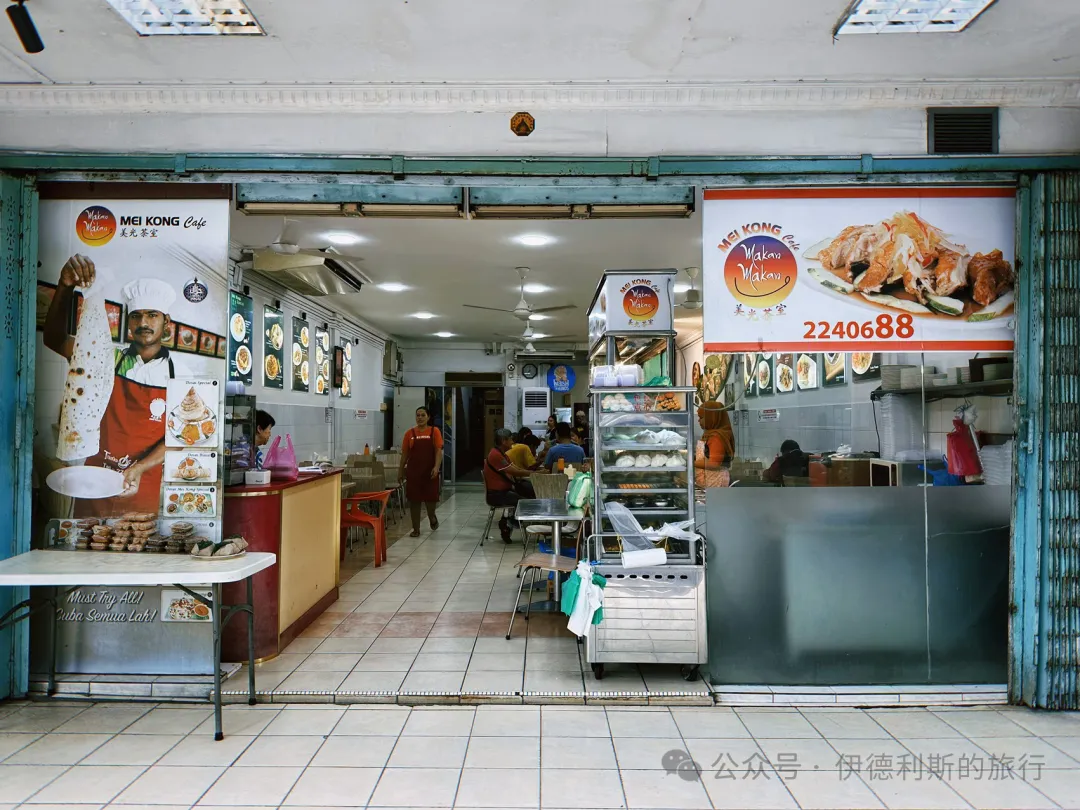
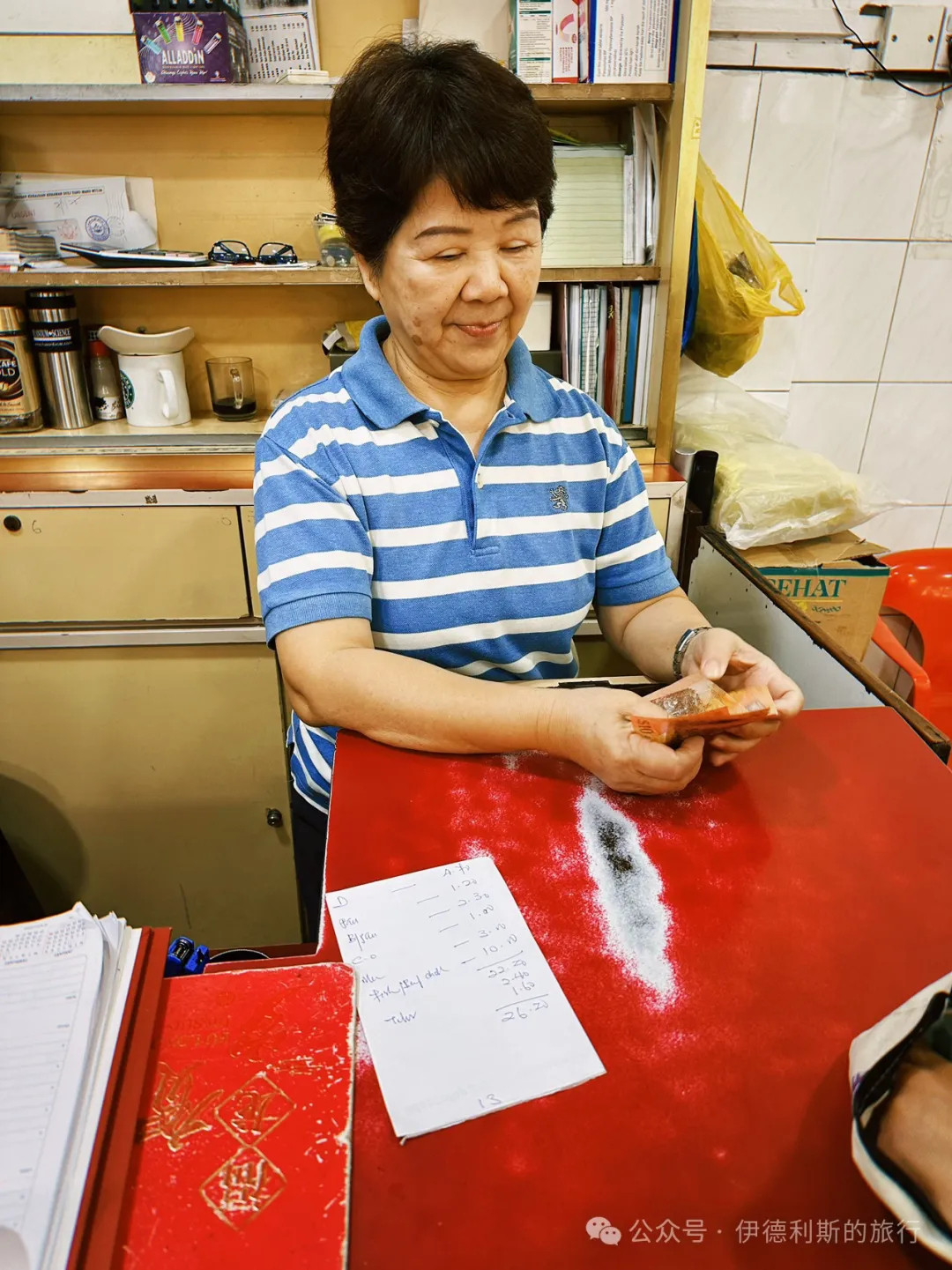
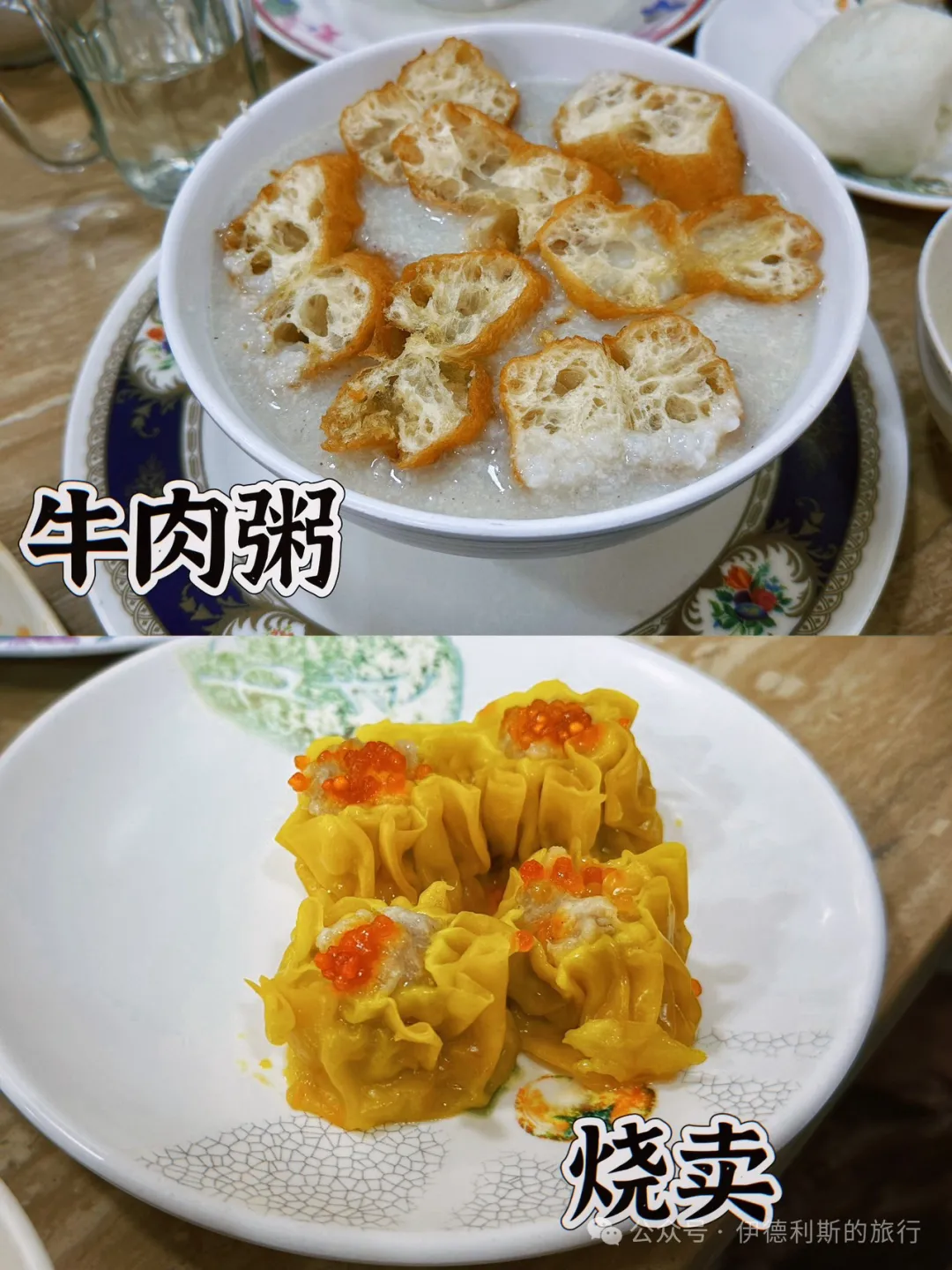
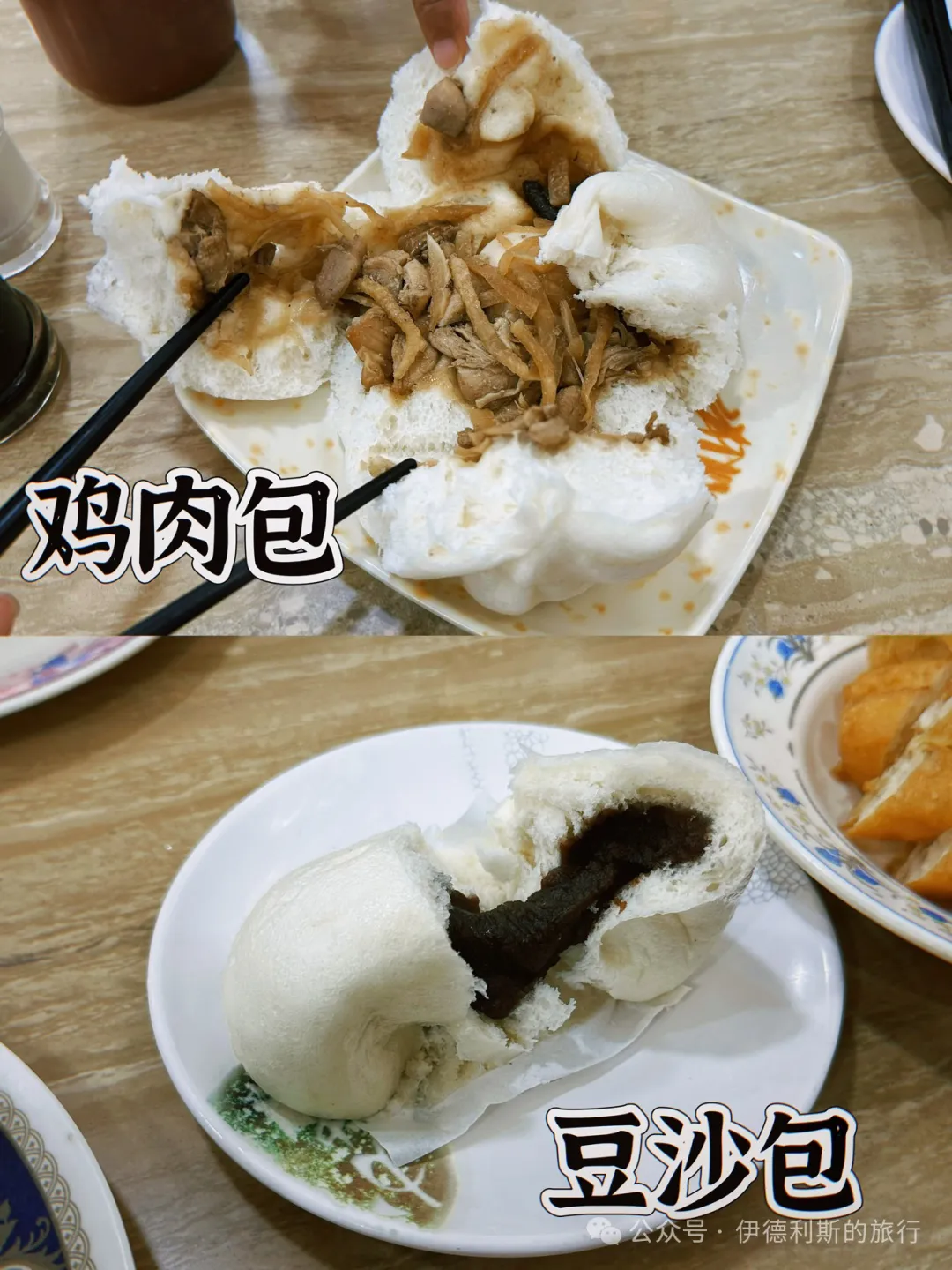
We had a Hainanese breakfast at Meiguang Tea House in the old town of Bandar Seri Begawan. The owner is Hainanese, his wife is from Xiamen, and the staff are all Indonesian. Because they mainly cater to the nearby office buildings, it is usually quite busy. It is relatively quiet on weekends, and there are fewer steamed dim sum options than usual. We ordered chicken and radish buns, red bean buns, beef porridge with small fried dough sticks (youtiao), longan herbal tea, fried noodles, and steamed dumplings (shaomai). Next time, if any friends (dost) are around on a weekday, we can try their other specialties like Fuzhou 'wealth-attracting' rice noodle soup, dry-tossed silver needle noodles (laoshufen), and chicken intestine noodles.
Shixianle
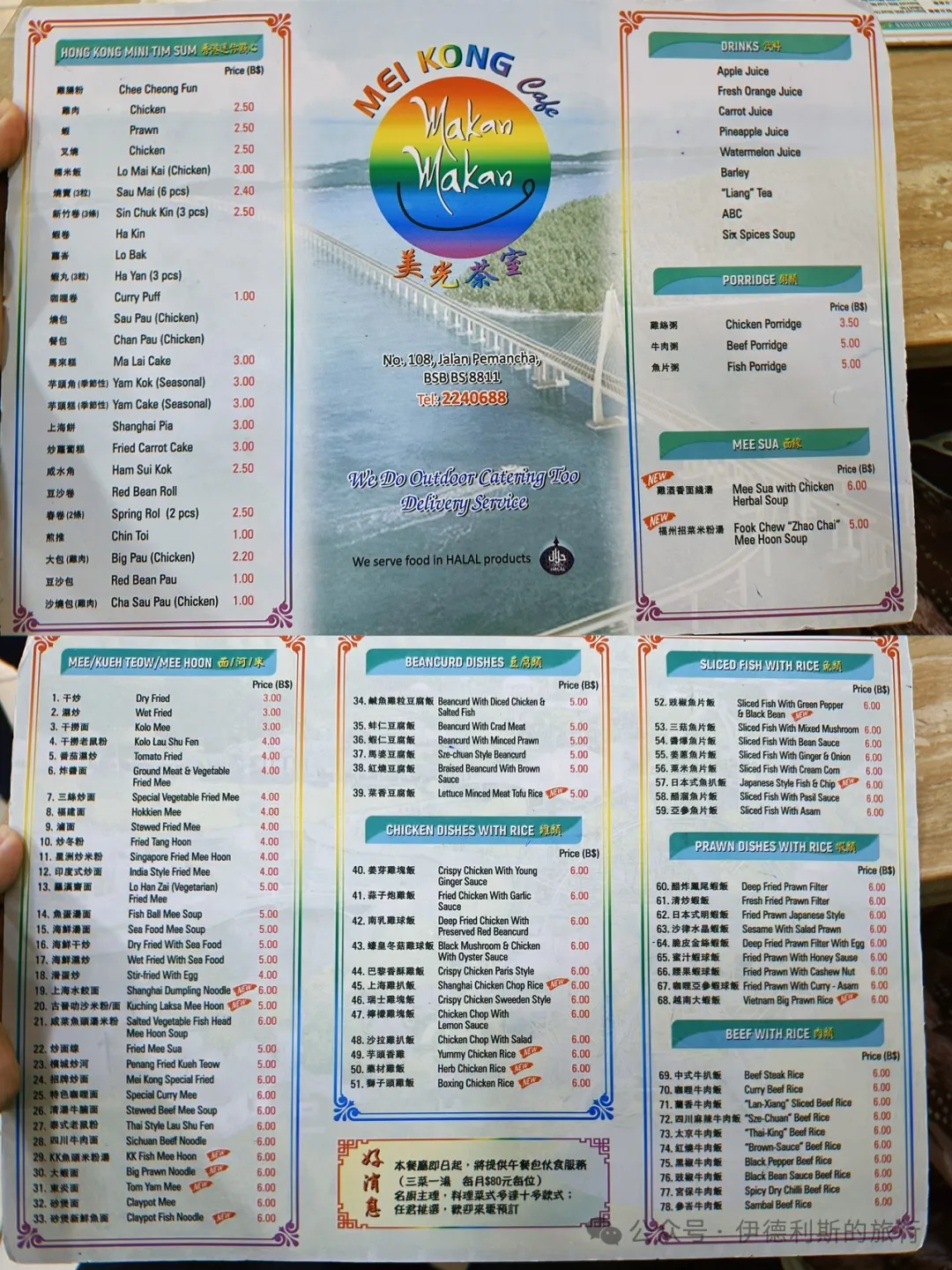
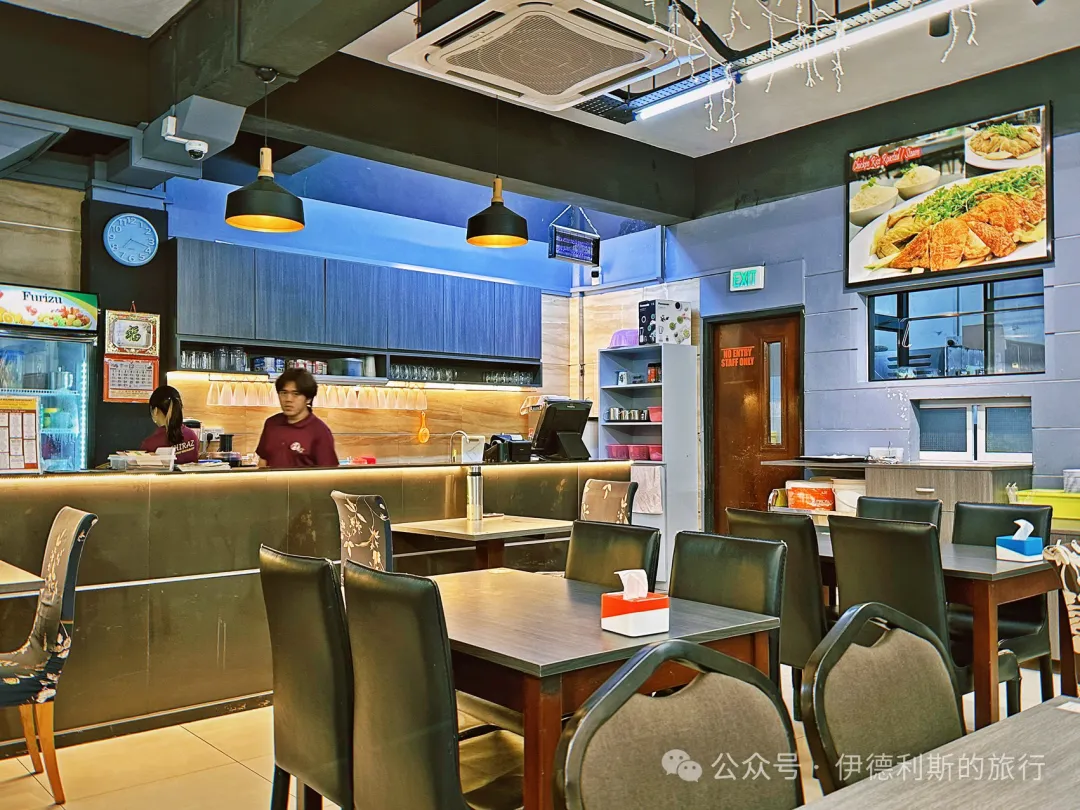
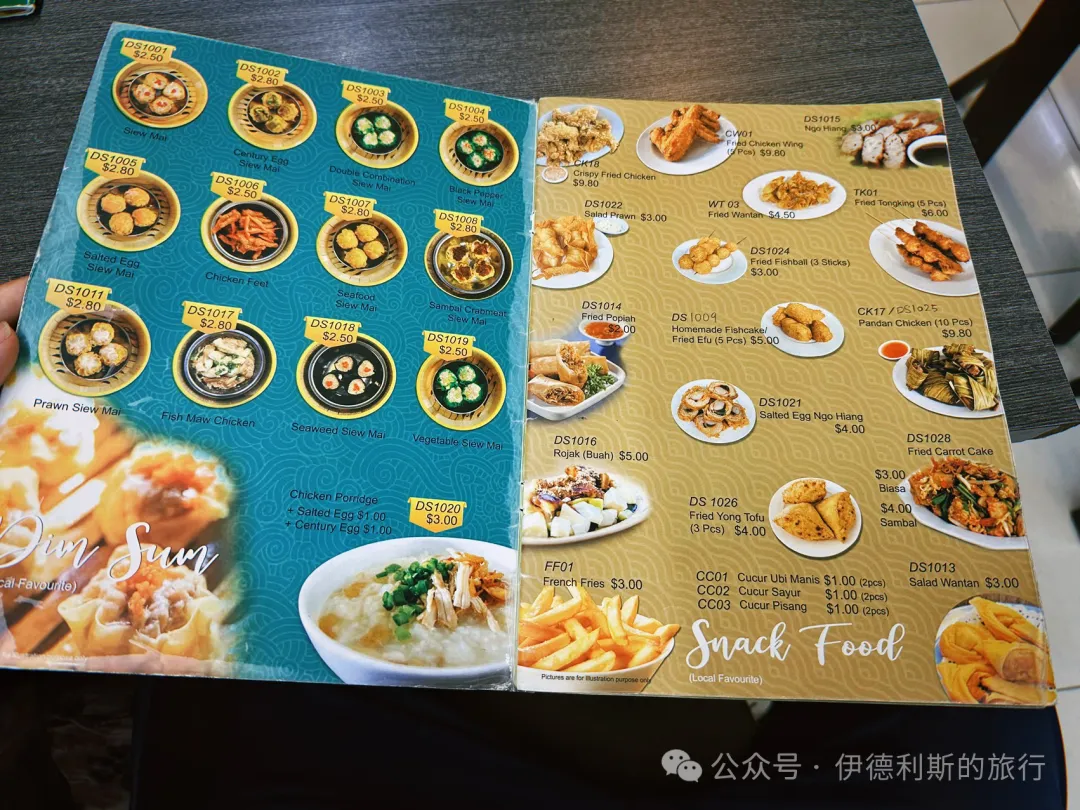
Near the Fujian Association is a restaurant called Shiraz Seafood Restaurant. The name sounds like an Iranian place, but it is actually a Chinese restaurant called Shixianle. It specializes in dim sum and various Nanyang Chinese snacks. The menu is very extensive, and it is halal-certified in Brunei. After we went in, a table of Malays and a table of South Asians arrived, which shows how much different ethnic groups love halal Chinese food.
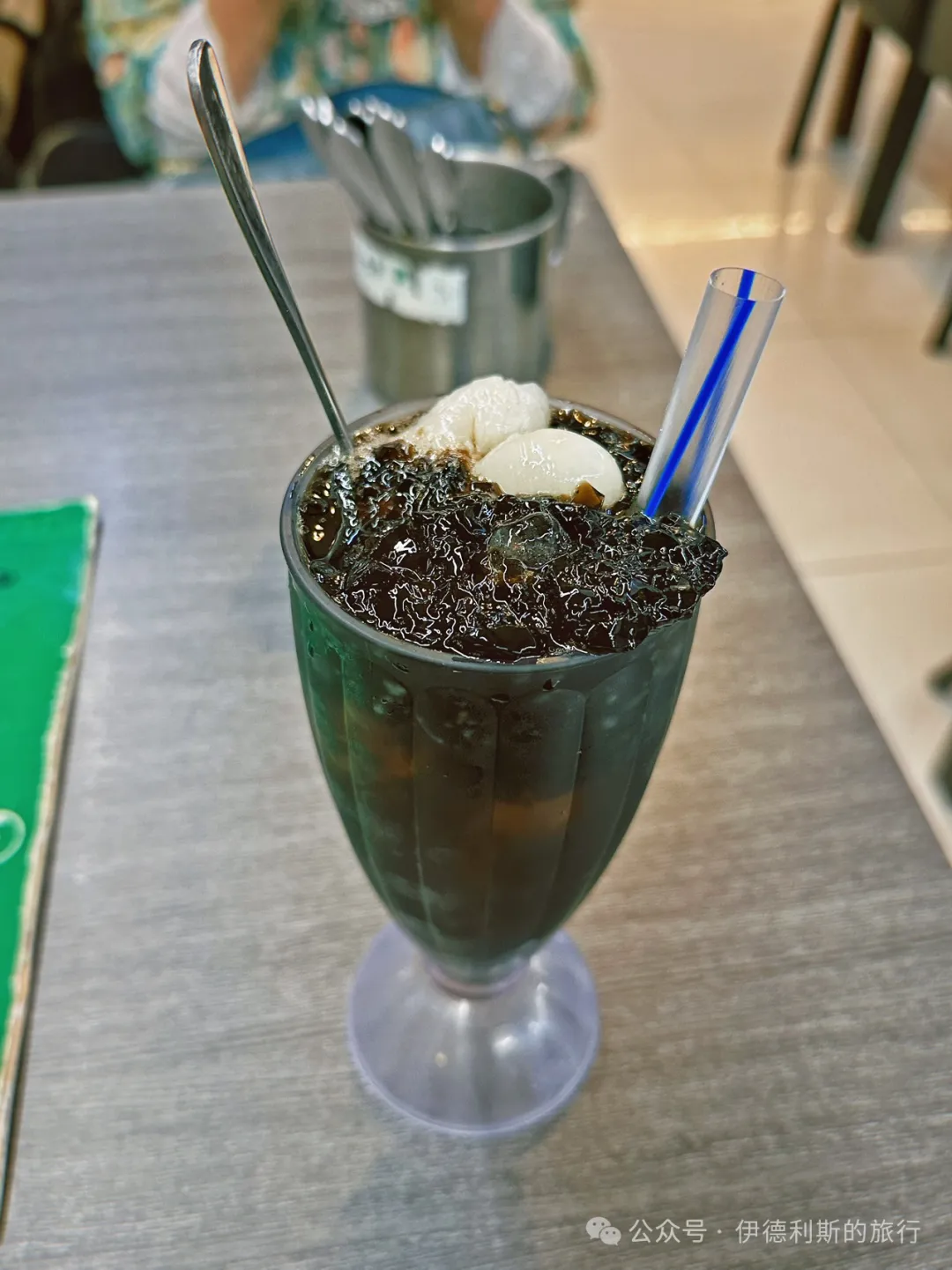
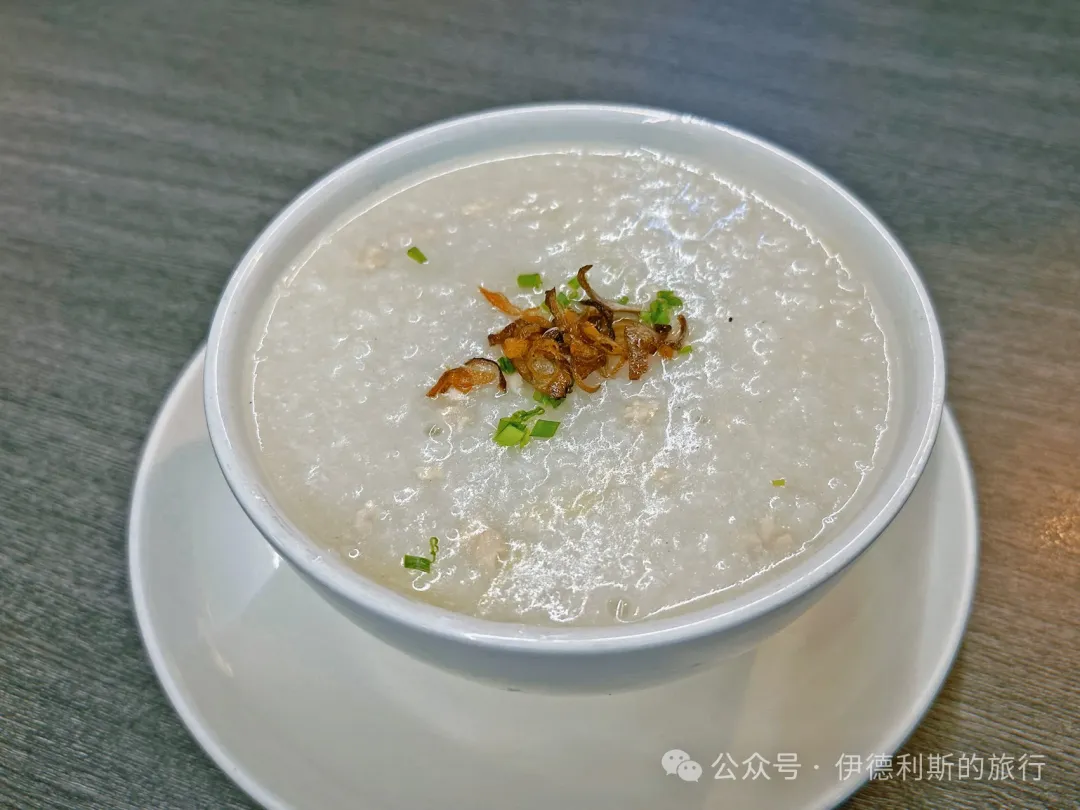
We ordered Cantonese steamed dumplings (siu mai), chicken feet, fish maw with chicken, five-spice meat rolls (ngo hiang), fried stuffed tofu (yong tofu), fried radish cake, longan herbal tea, chicken porridge, seafood soup (a mix of fish fillets, fish balls, etc.), and dry-fried green beans. We really enjoyed our fill of Nanyang Chinese snacks in Brunei.
Ngo hiang is short for 'five-spice marinated meat,' a snack that originated in the Minnan region of Fujian. In the past, life was hard, so people would season leftover meat and vegetables with five-spice powder, wrap them in bean curd skin, and deep-fry them. Later, as Chinese people traveled south, it spread to Indonesia, Malaysia, the Philippines, Brunei, Singapore, and Thailand.
Stuffed tofu (yong tofu) is a traditional Hakka dish. In the Hakka dialect, the word niang means to stuff with filling. Legend says that after the Hakka people moved south from the Central Plains, they wanted to eat dumplings but had no wheat. They used tofu instead of flour and invented stuffed tofu (niang doufu). Later, stuffed tofu followed the Hakka people as they traveled south to Indonesia, Malaysia, Singapore, Brunei, Vietnam, and Thailand.
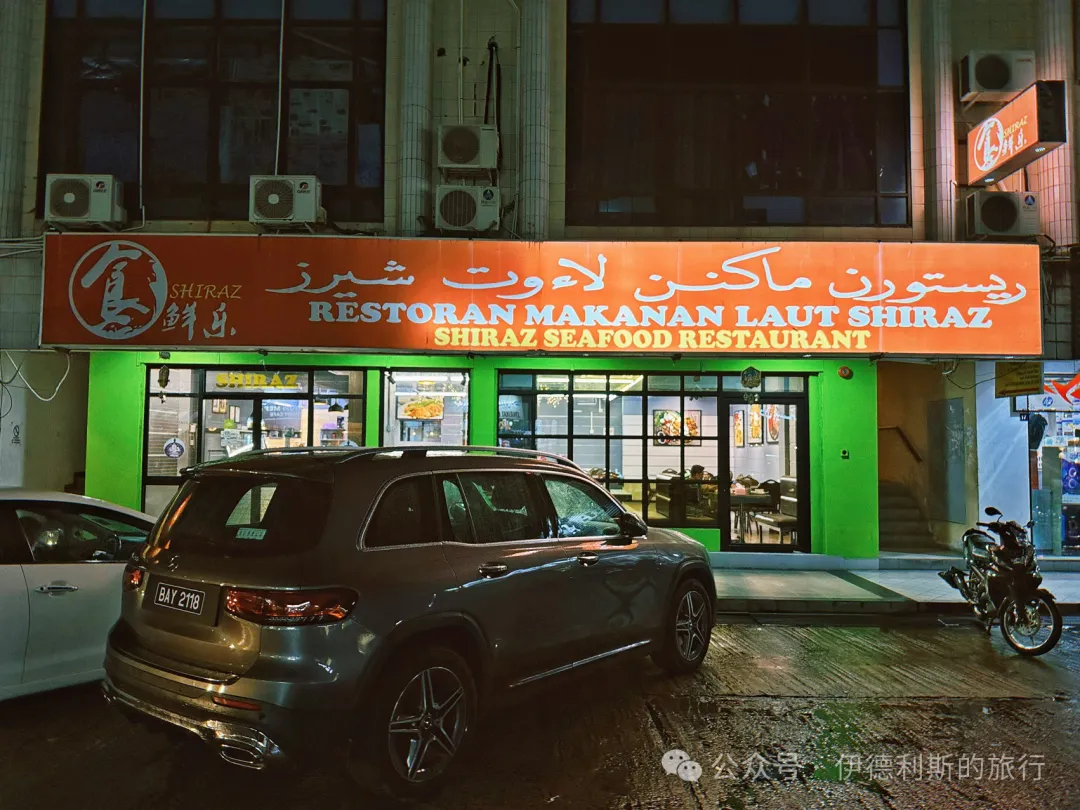
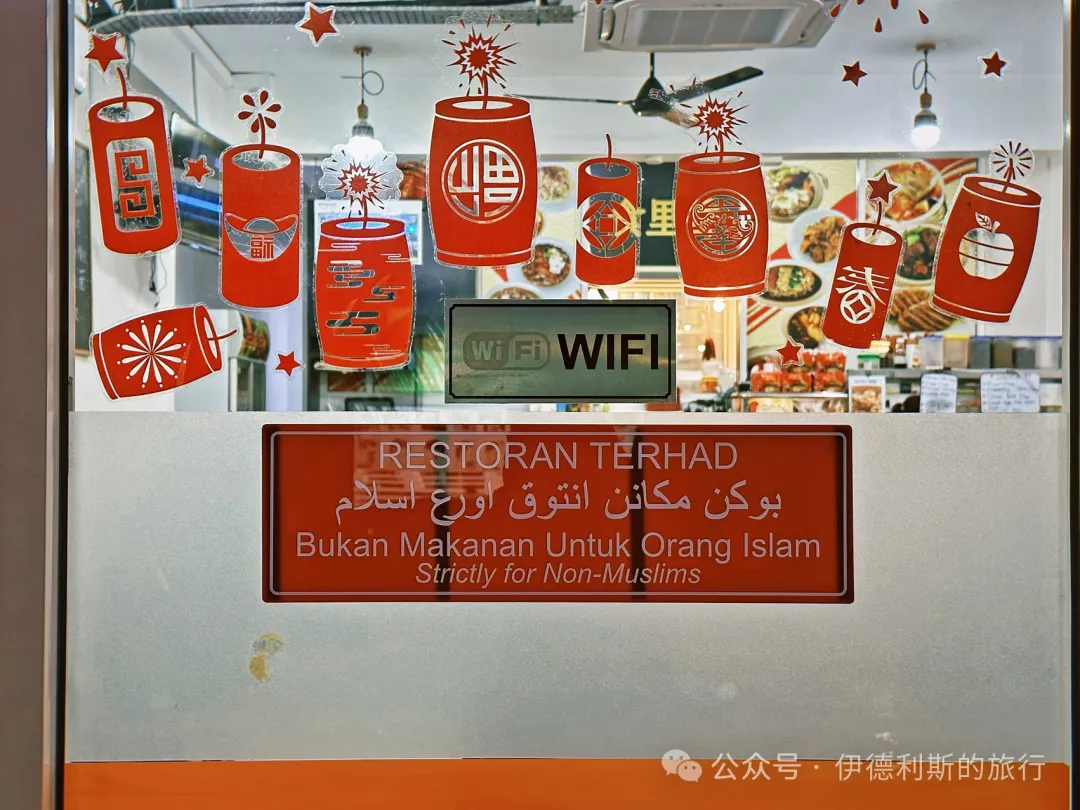
In Brunei, the Fujian Association and the Taiwan Overseas Compatriot Association share the same building. Nearby, there are non-halal restaurants, which are rare in Brunei, and they all have red non-halal signs at their entrances.
Hua Ho Department Store
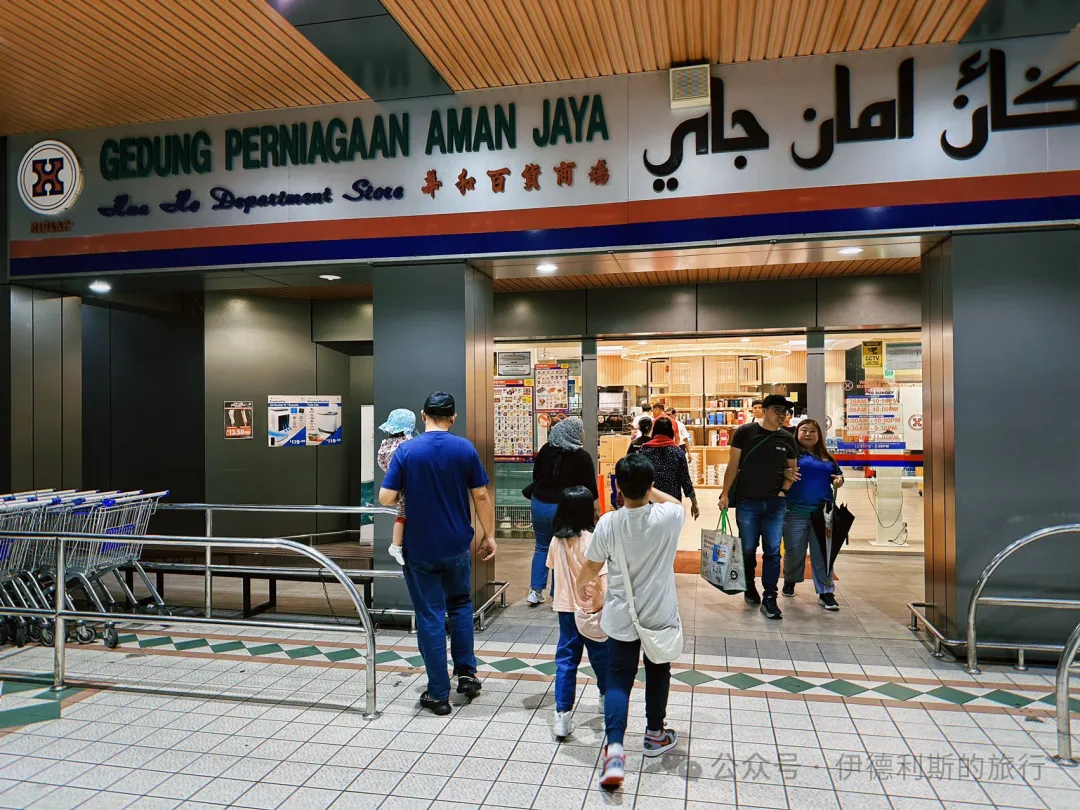
Hua Ho Department Store is a famous halal supermarket owned by Chinese merchants in Brunei, and it has many branches across the country. We went to the Kiulap branch. Inside, one side features various traditional Brunei Malay snacks. We bought a traditional snack from Sabah and Brunei called Kuih Cincin Tempatan, which is fried using red coconut, rice flour, and palm sugar. The other side is the supermarket area, where you can buy various halal foods with Cantonese, Fujian, Chaoshan, and Taiwanese characteristics.
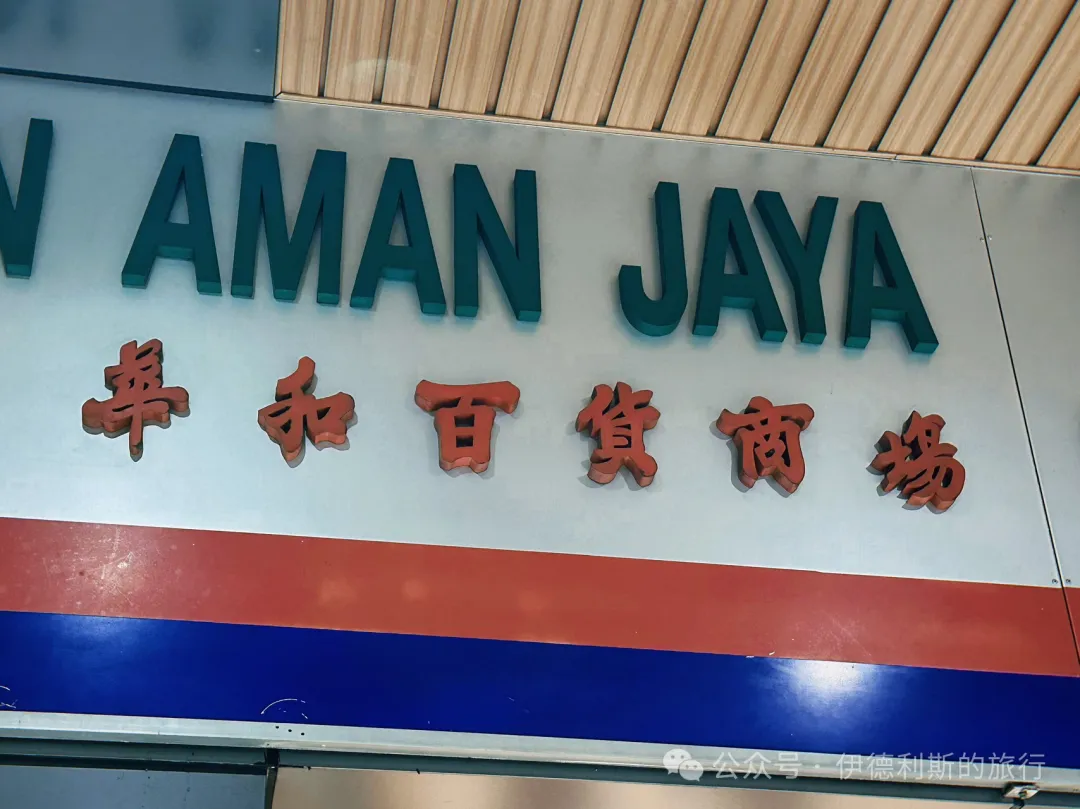
The founder of Hua Ho Department Store, Lau Gek Poh (Liu Jinguo), was born in 1920 to a farming family in Lieyu, Kinmen, Fujian. In 1938, he traveled south to seek his fortune, first going to Singapore and then to Brunei to join his eldest sister. In 1947, Lau Gek Poh bought a piece of land in Manggis, on the northern outskirts of Brunei. He built a vegetable garden and hired workers to raise chickens and ducks, officially establishing Hua Ho Department Store. After the 1950s, as agricultural prices fell, Lau Gek Poh eventually went bankrupt and closed his shop in 1958. Afterward, he began selling vegetables at the market and selling fabric door-to-door. He did not reopen his shop until 1961. In 1966, he built a small two-story building, and the shop was opened on the first floor. Later, he gradually expanded the scale of his business, eventually making Hua Ho the largest department store in Brunei.
In 2004, the Sultan of Brunei awarded Lau Gek Poh the title of Pehin Kapitan Cina Kornia Diraja, making him one of the few Chinese nobles in Brunei. Lieyu, also known as Little Kinmen, is located between Kinmen and Xiamen. People from Lieyu began traveling south to Brunei in the 19th century. Initially, they worked mainly as shipping laborers, dock workers, fishermen, and street vendors. Later, they gradually accumulated capital and turned to business, occupying an important position in Brunei's business world. Many have received the titles of Pehin Kapitan and Pehin.
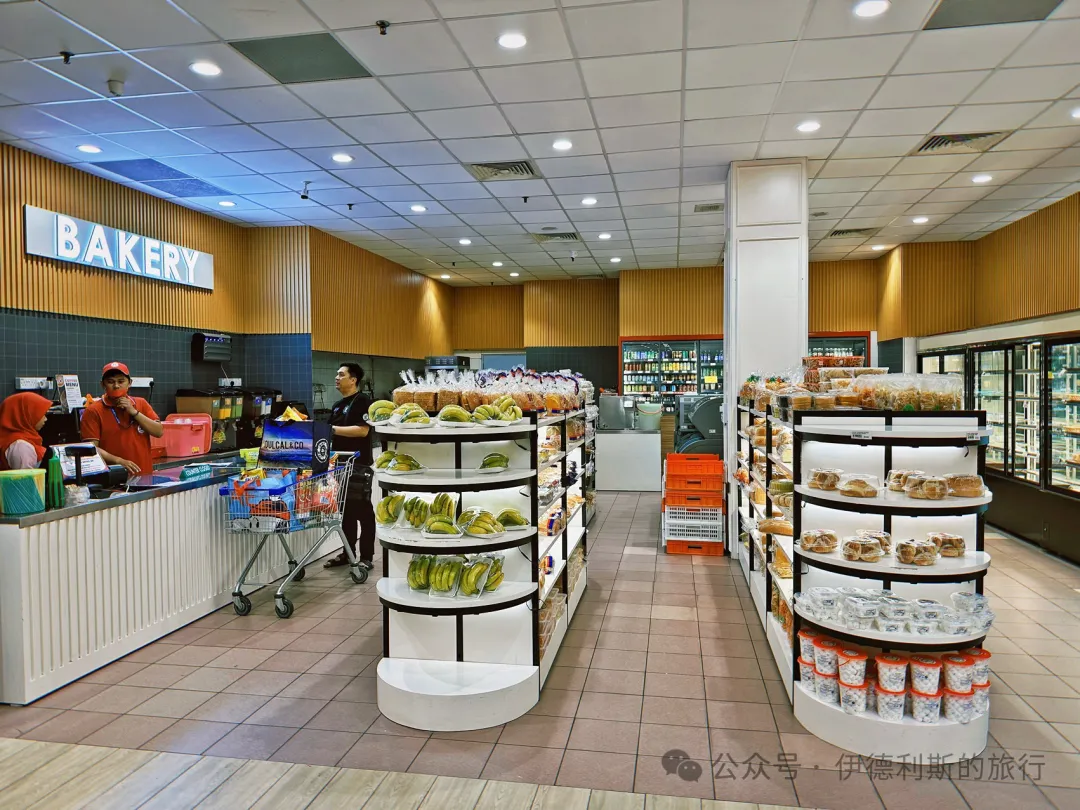
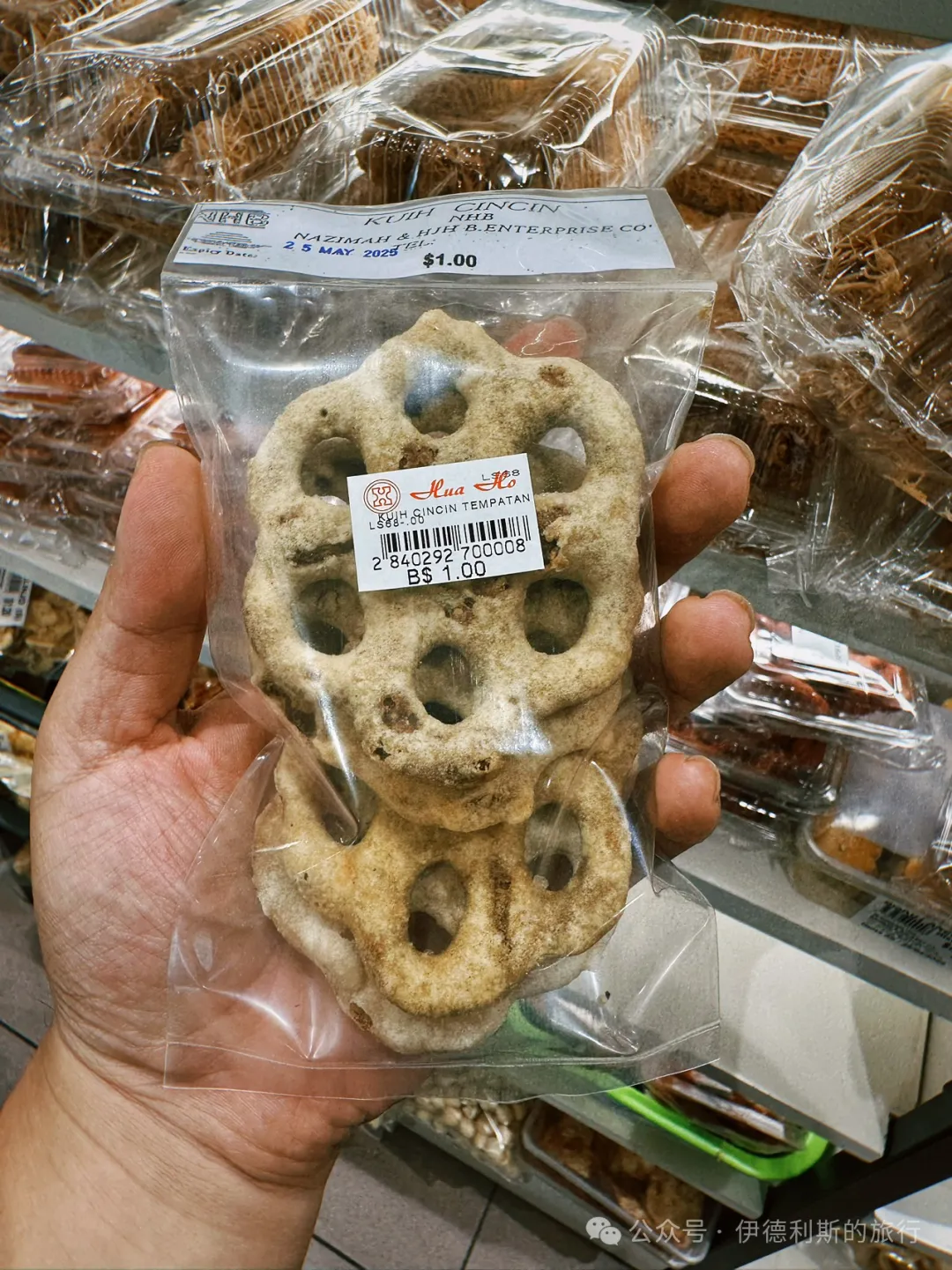
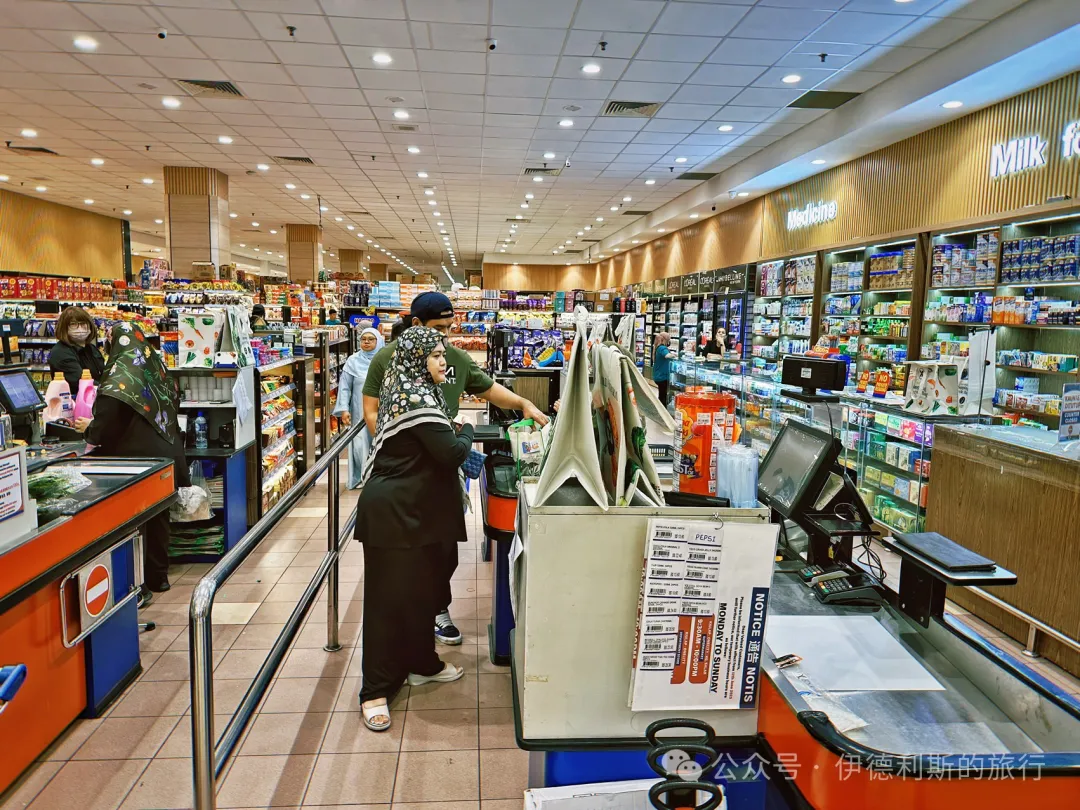
Some products at Hua Ho Department Store: coconut jelly powder, cold bean curd powder, Hong Kong narcissus flour, Shantou sweet potato starch, fragrant braised peanuts, fragrant vegetable hearts, belacan chili, Chaoshan specialty sweet and sour ginger slices, South China vegetables, spicy fermented bean curd with sesame oil, rice noodles, shredded codfish, and selected squid.
Traditional Malay Market: Gadong Night Market
Gadong Night Market is very famous, but it is actually not very big. There are very few tourists in Brunei, so the night market is mostly filled with locals.
We first bought shredded squid and fish paste with chili sauce. This little snack is quite delicious. Then we bought mangosteen and snake fruit. It was my first time eating snake fruit, and the taste was quite good.
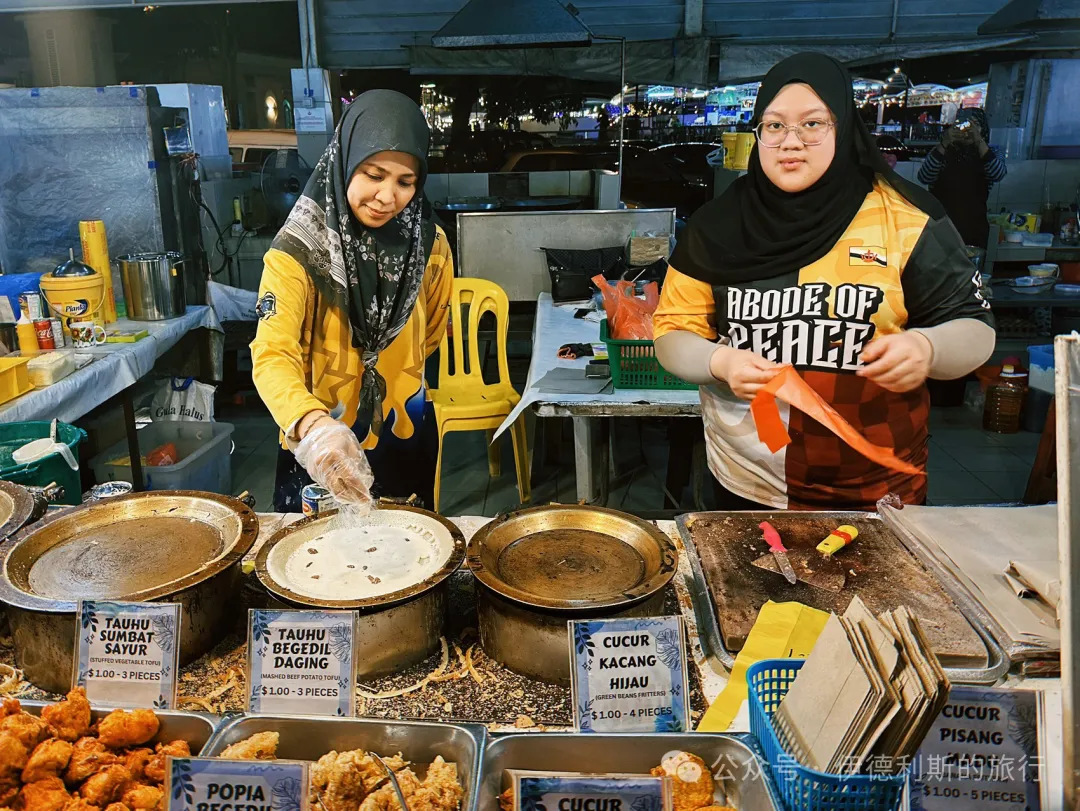
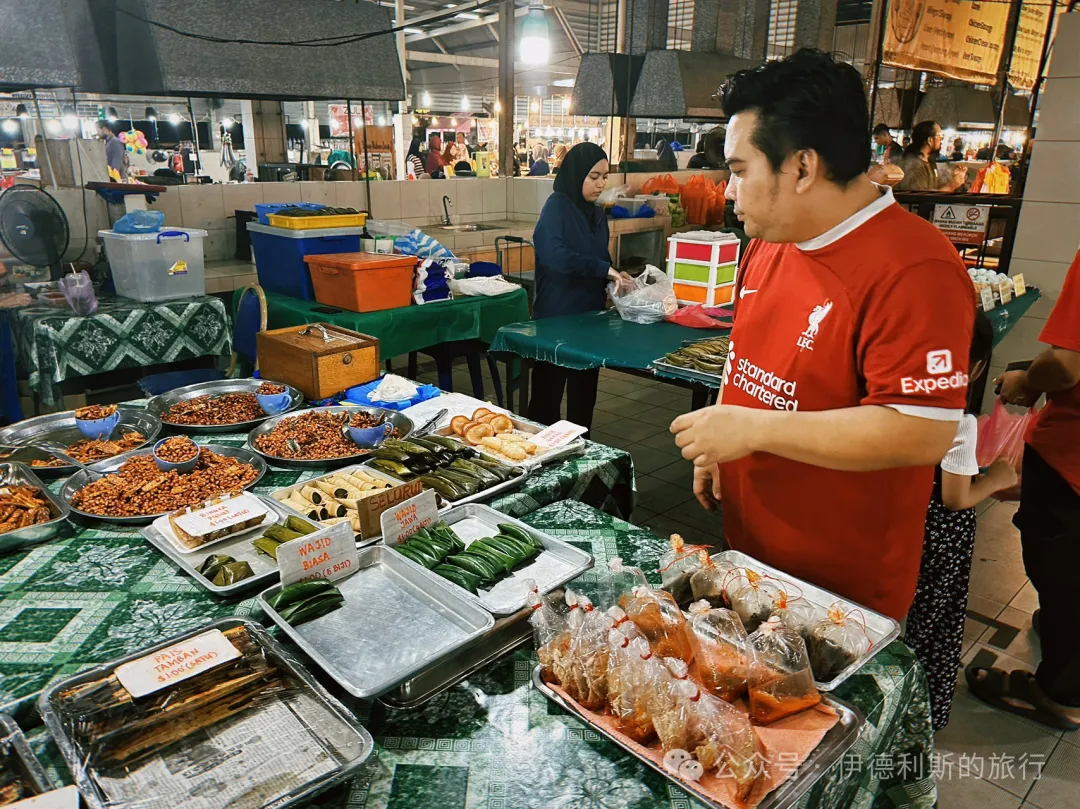
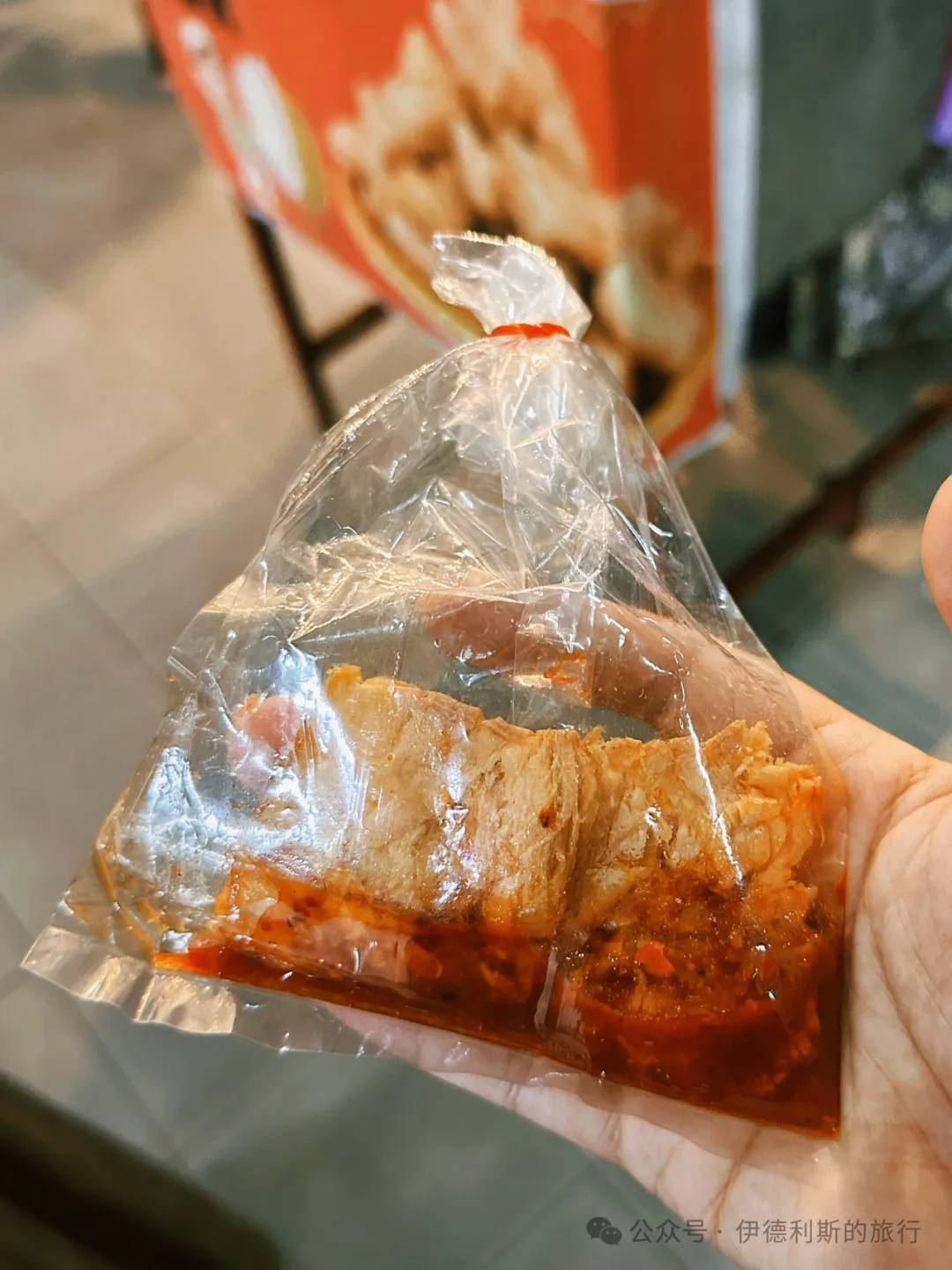
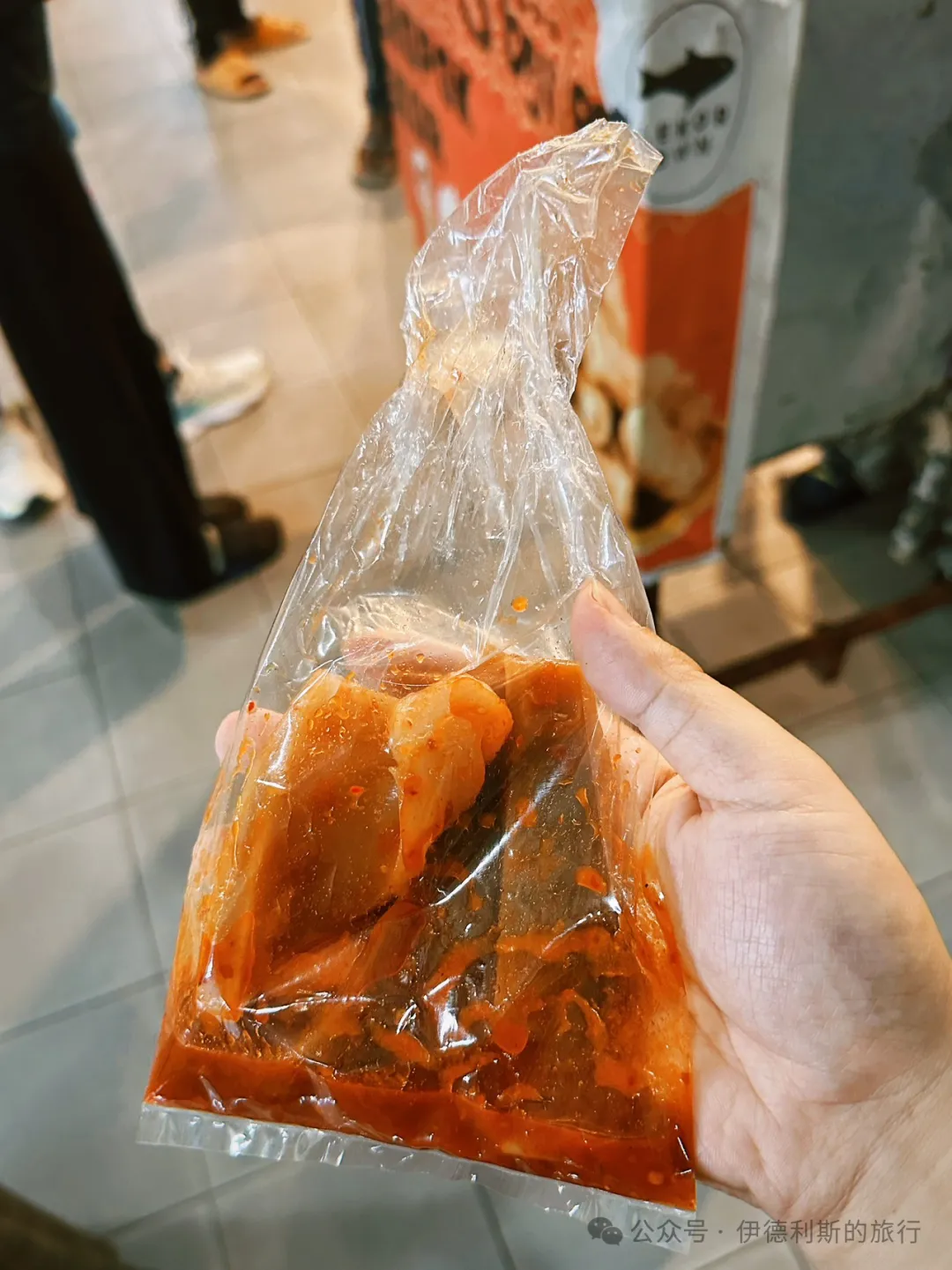
We ate noodle soup at a small snack shop at the entrance. We ordered Bakso beranak (large beef balls stuffed with smaller beef balls) and Soto Daging (beef noodle soup). The eating habits here are almost the same as in Indonesia. I really enjoy the beef noodle soup here, especially on a rainy day when a bowl feels very comforting. I also ordered a coconut. The local coconuts are large. Even though the husk is thick, there is still plenty of juice inside, and it comes served with a lime wedge to squeeze in.
I had satay skewers at the Gadong Night Market, specifically the liver and chicken hearts, which were sweet and grilled a bit firm.
A wide variety of Brunei-style buffet.
If you want to try authentic local food in Brunei, I recommend the buffet at the Brunei Arts and Handicraft Training Centre. You can find it on the map by searching for Tarindak D'Seni.
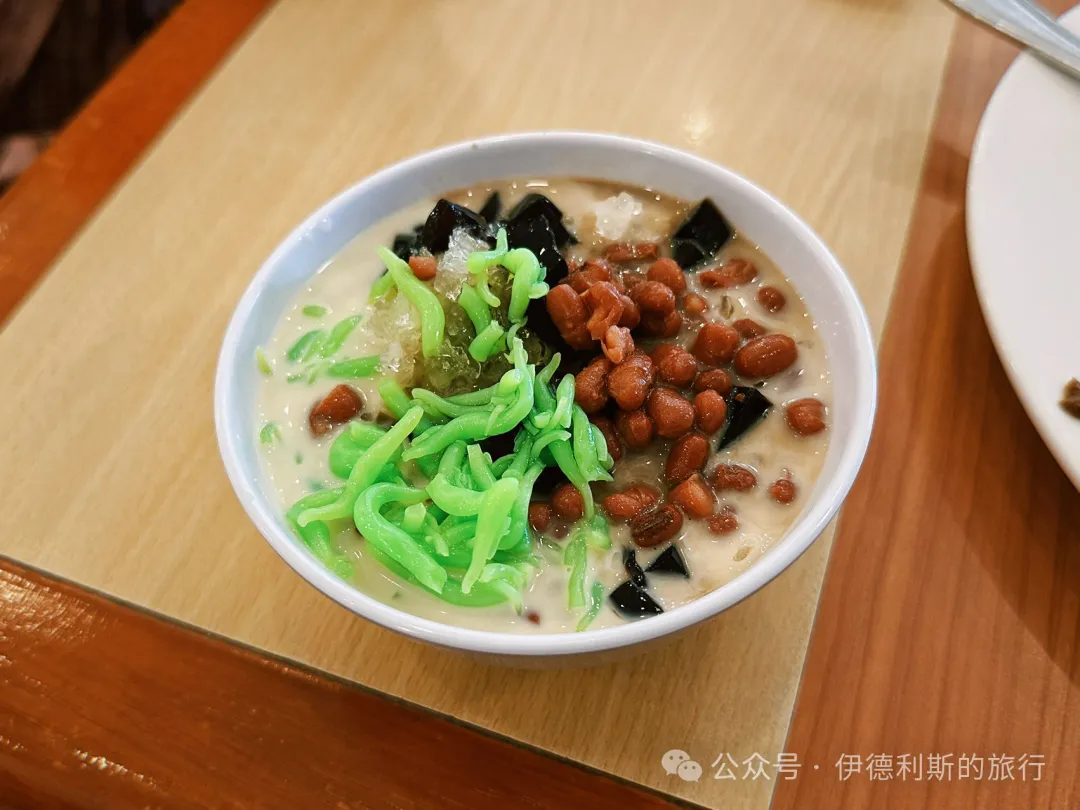
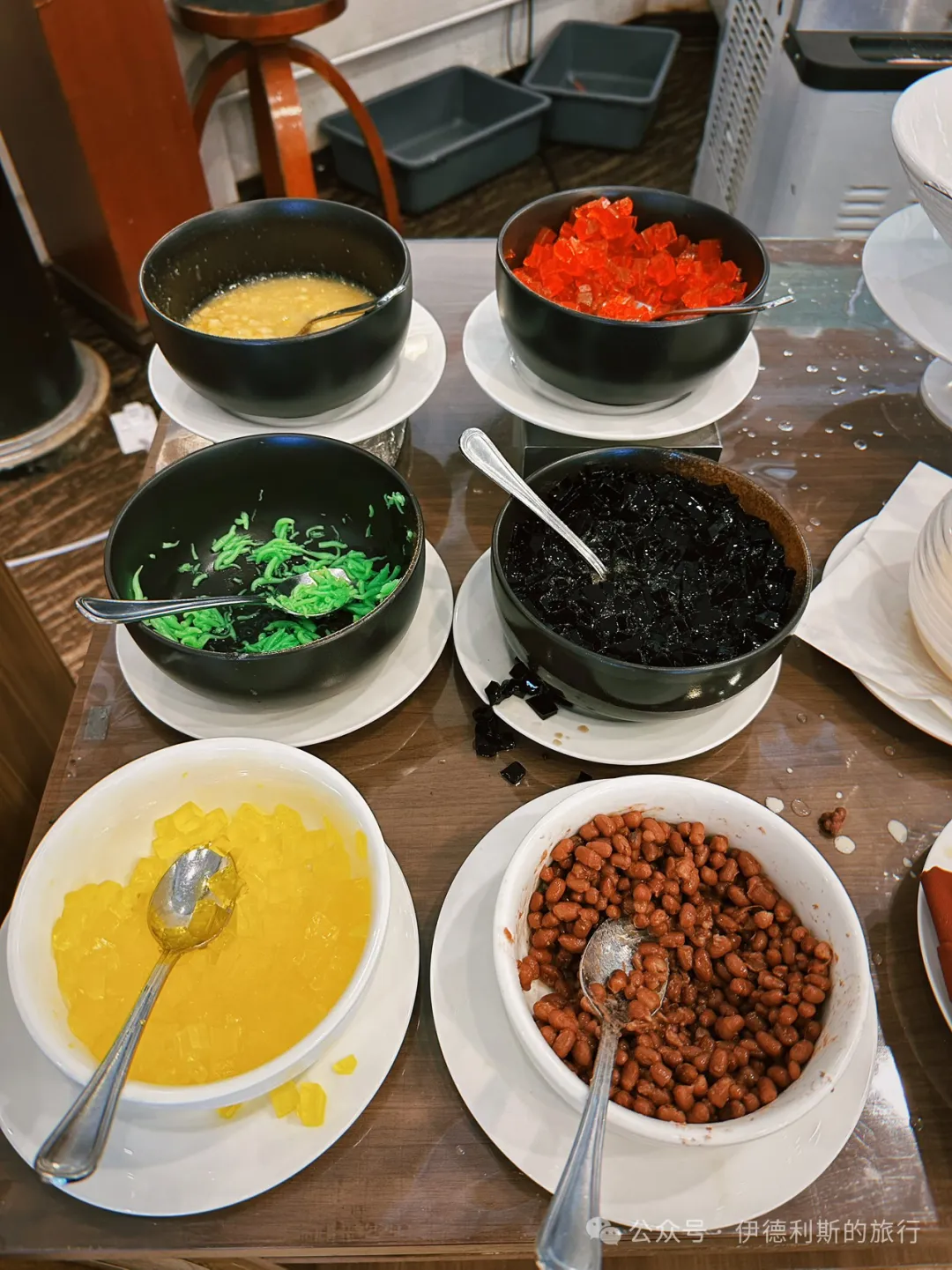
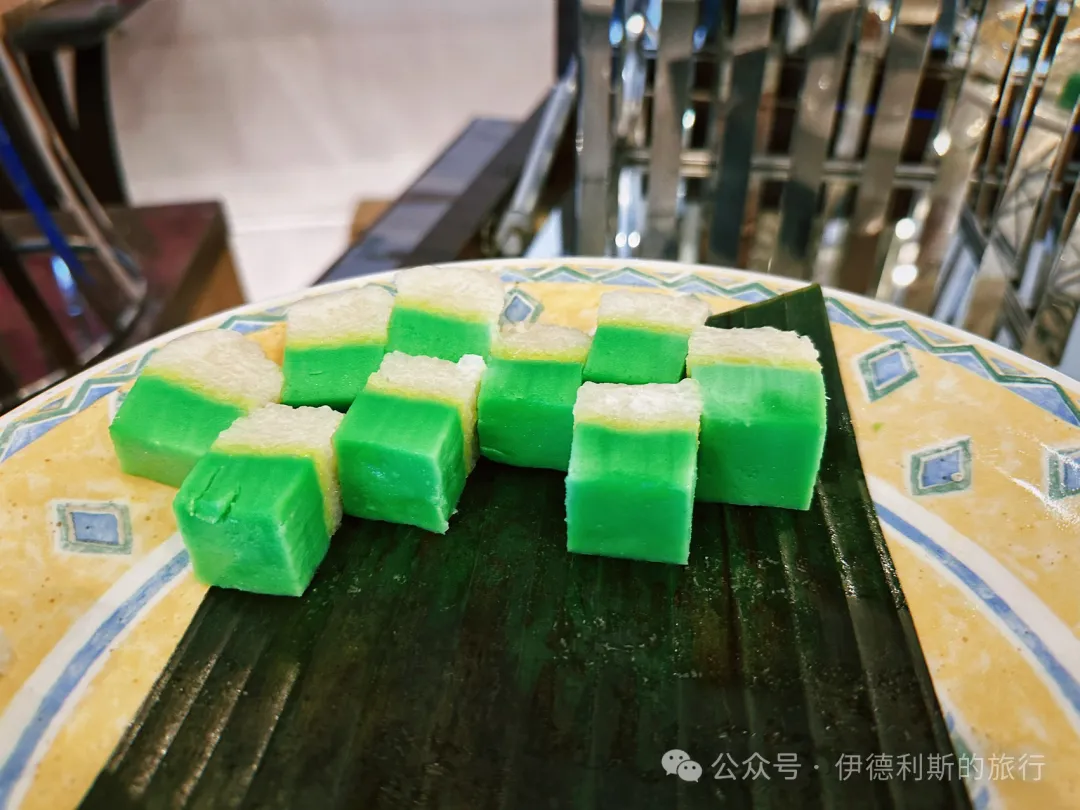
We went for lunch from 11:30 to 14:30, which cost 91 RMB per person, and there is a discount for seniors over 60. The environment is lovely, with the Brunei River right outside the window. The food selection is rich. You can eat various sticky rice pandan Malay cakes (kuih), Sarawak laksa noodles with coconut milk, and even make your own shaved ice dessert (cendol).
They serve Brunei's national dish, sago starch paste (ambuyat), which is made by mixing sago palm starch with hot water to create a thick paste, eaten by dipping it into a sauce.
Nasi kebuli is rice cooked with goat broth, goat milk, and ghee. It was brought to the Malay Archipelago by Hadhrami people from Yemen and is especially popular in the Arab communities of Java.
Black beef (daging hitam) is a beef rendang made with a sweet soy sauce containing plenty of palm sugar and rock sugar, a specialty of the Sarawak region.
Chicken cooked in coconut milk (opor ayam) is chicken simmered in coconut milk with various spices.
Two national mosques.
Brunei has two national mosques, each built by a different Sultan, and both are worth visiting. The Omar Ali Saifuddien Mosque, also known as the 'water mosque,' was built between 1954 and 1958 by the former Sultan of Brunei, Omar Ali Saifuddien III (who reigned from 1950 to 1967), and is named after him. The main hall features a Mughal-revival style golden dome. The interior uses Italian marble, Shanghai granite, British chandeliers, and Venetian mosaic glass, making it Brunei's most important landmark after its completion.
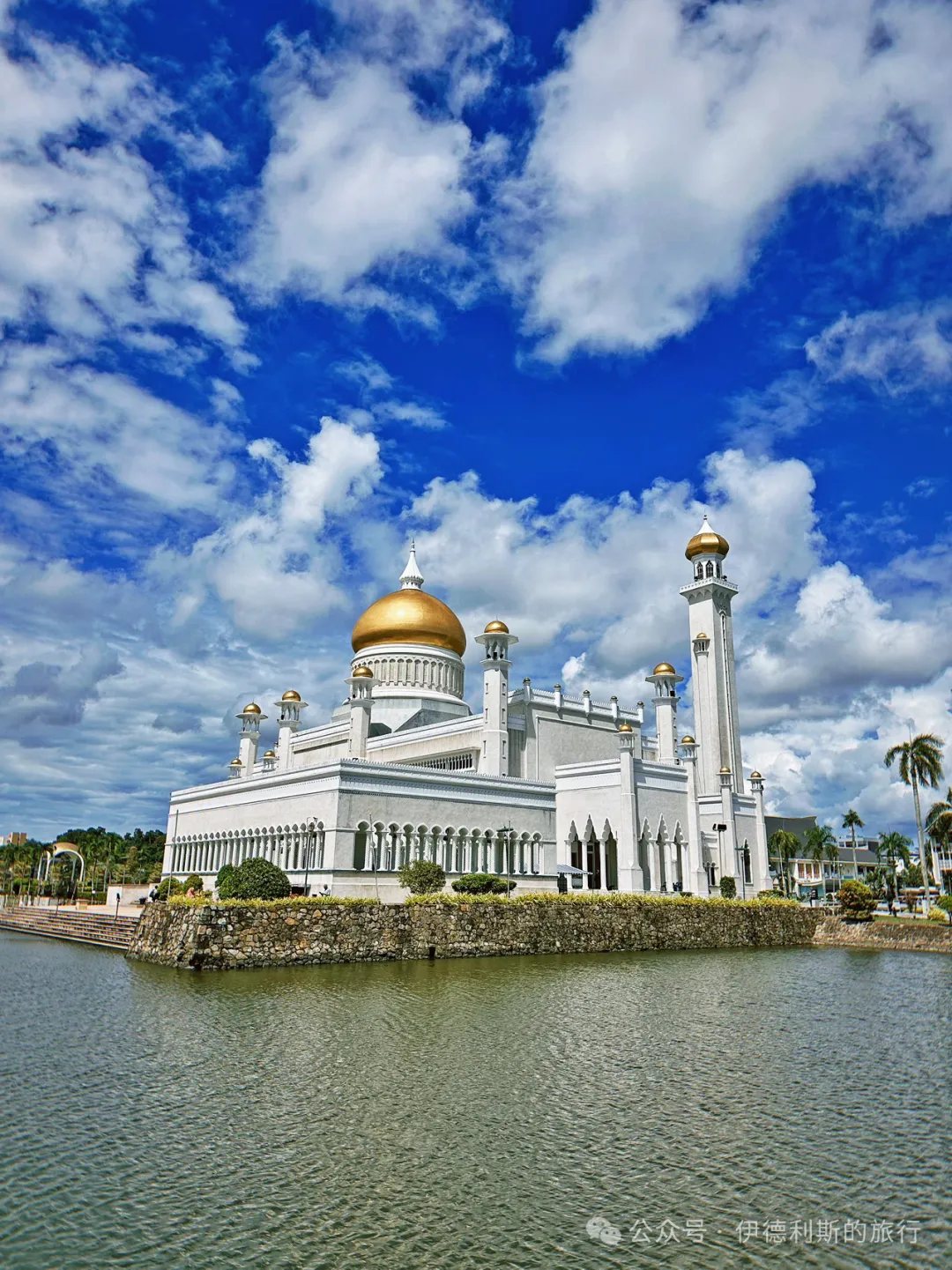
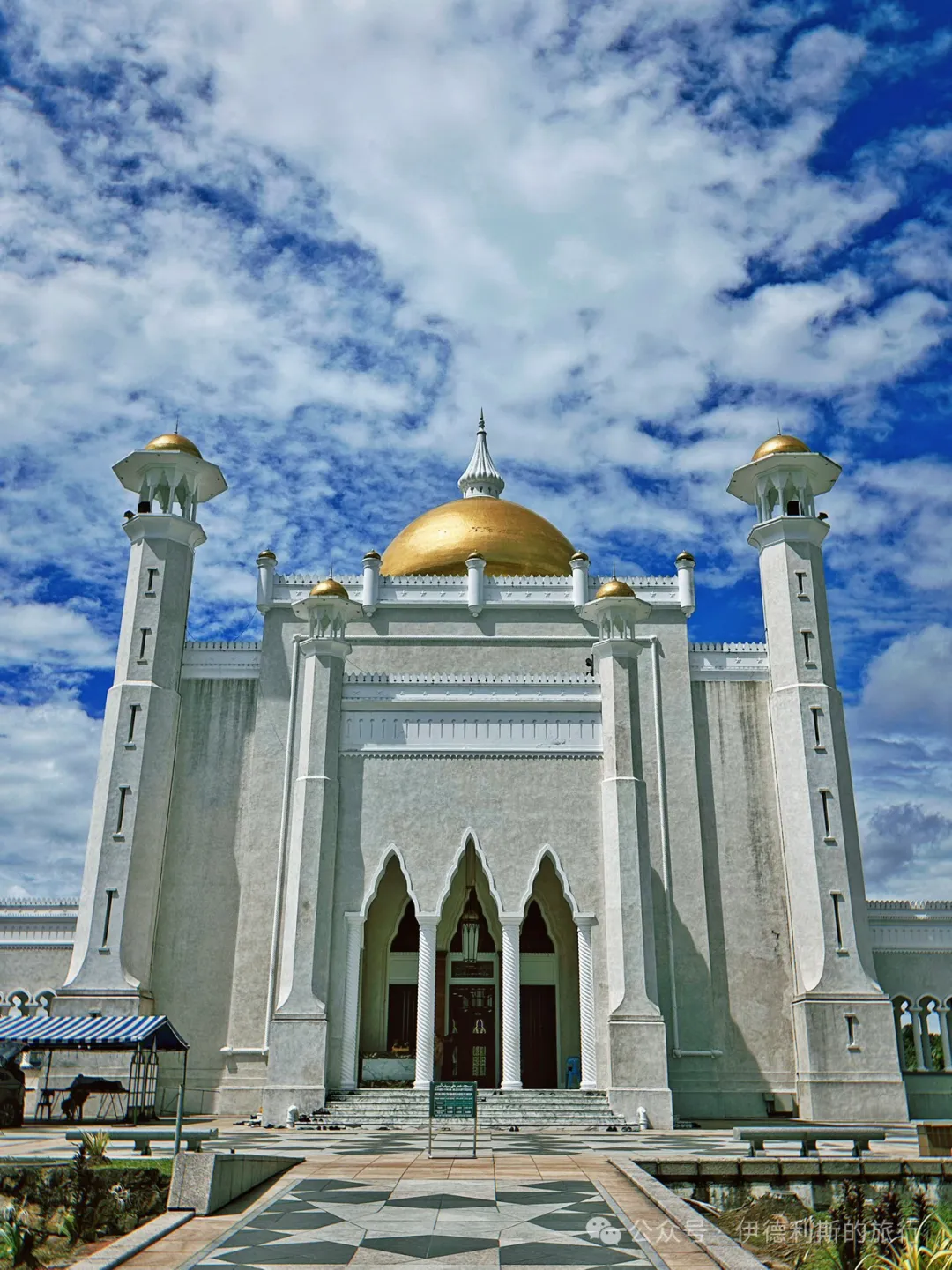
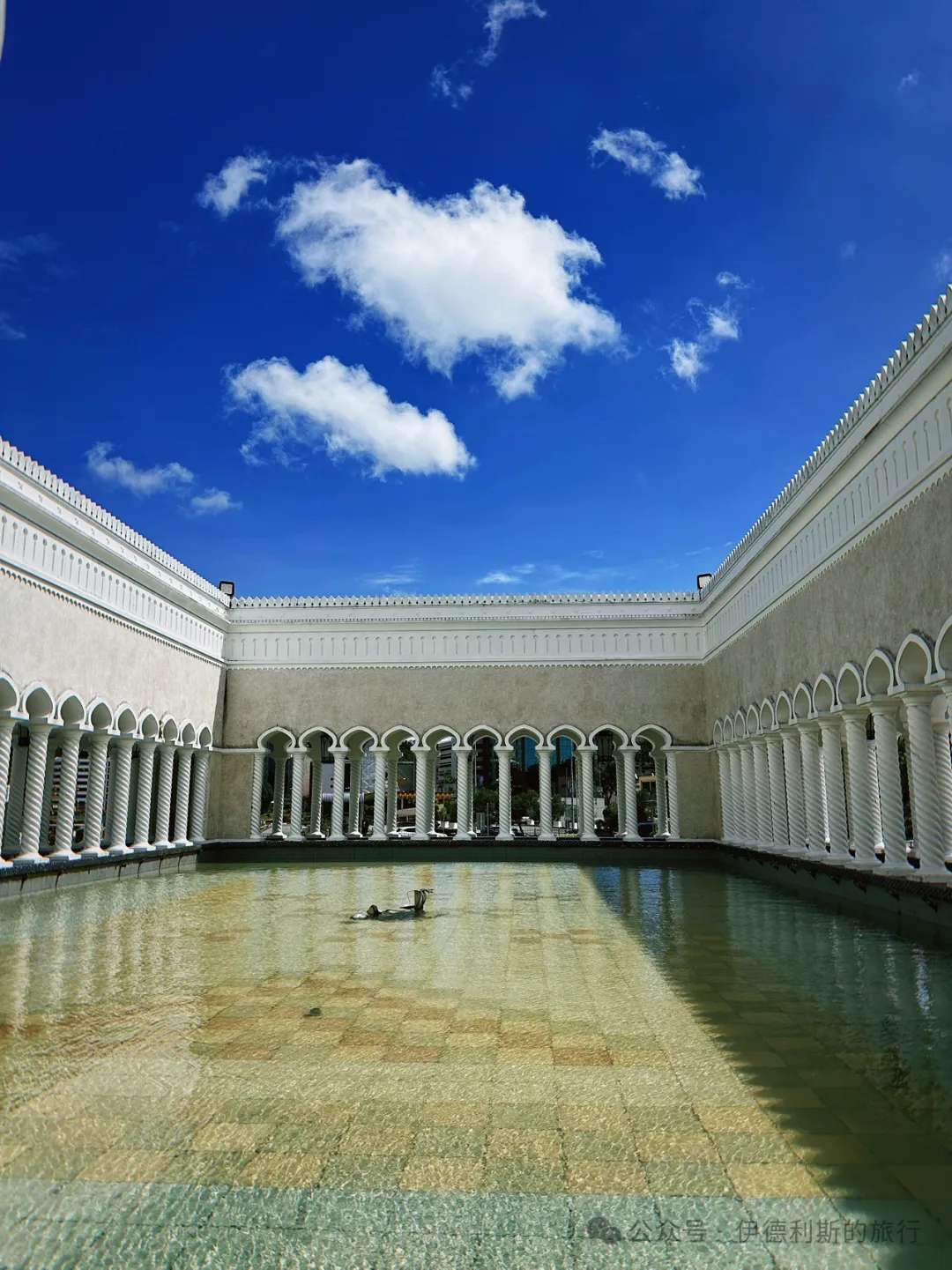
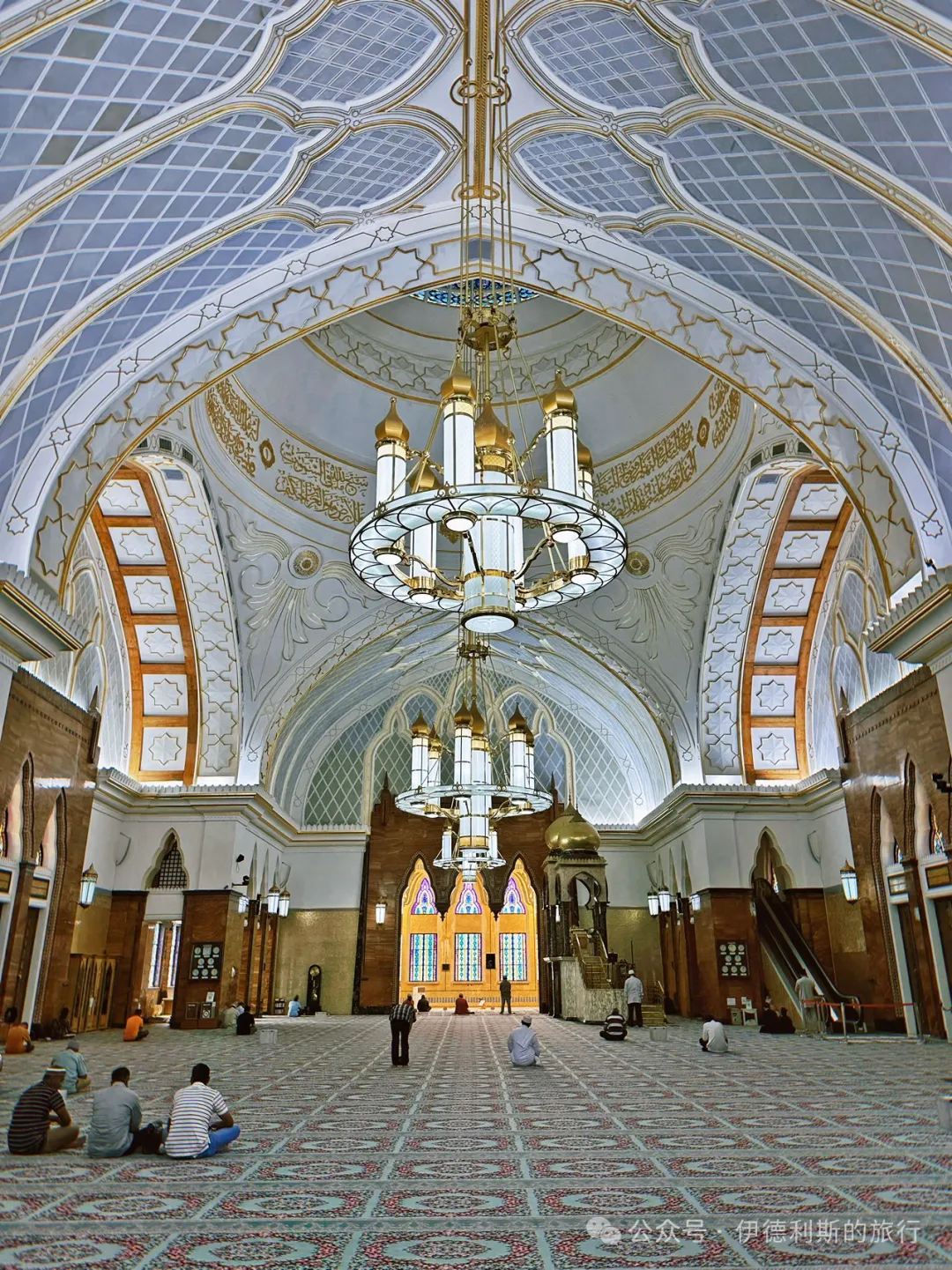
We happened to visit during Friday prayers (Jumu'ah). Brunei requires all malls and restaurants to close between 12:00 and 14:00, so the mosque was very crowded during the prayer, with the entire hall full, which was quite spectacular.
The pulpit (minbar) in the water mosque has two levels. The first level is where the muezzin calls the adhan, and the second level is where the imam delivers the khutbah. Next to the minbar, there is an escalator leading to the second-floor prayer area reserved for the royal family.
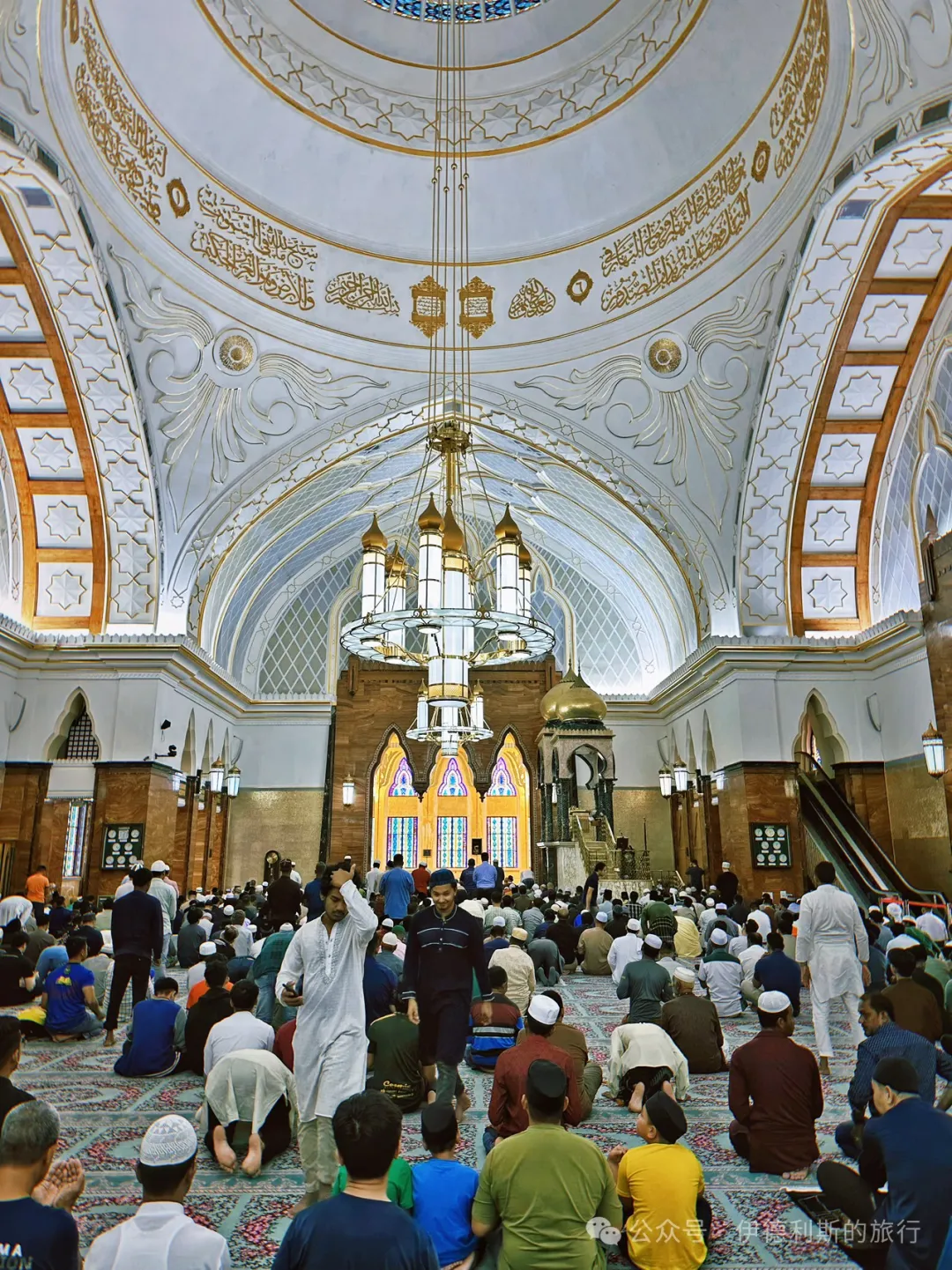
After Friday prayers, boxed meals were being handed out, mostly to South Asian laborers.
The water mosque during the sunset and dusk hours. Both of Brunei's national mosques look better at night than during the day.
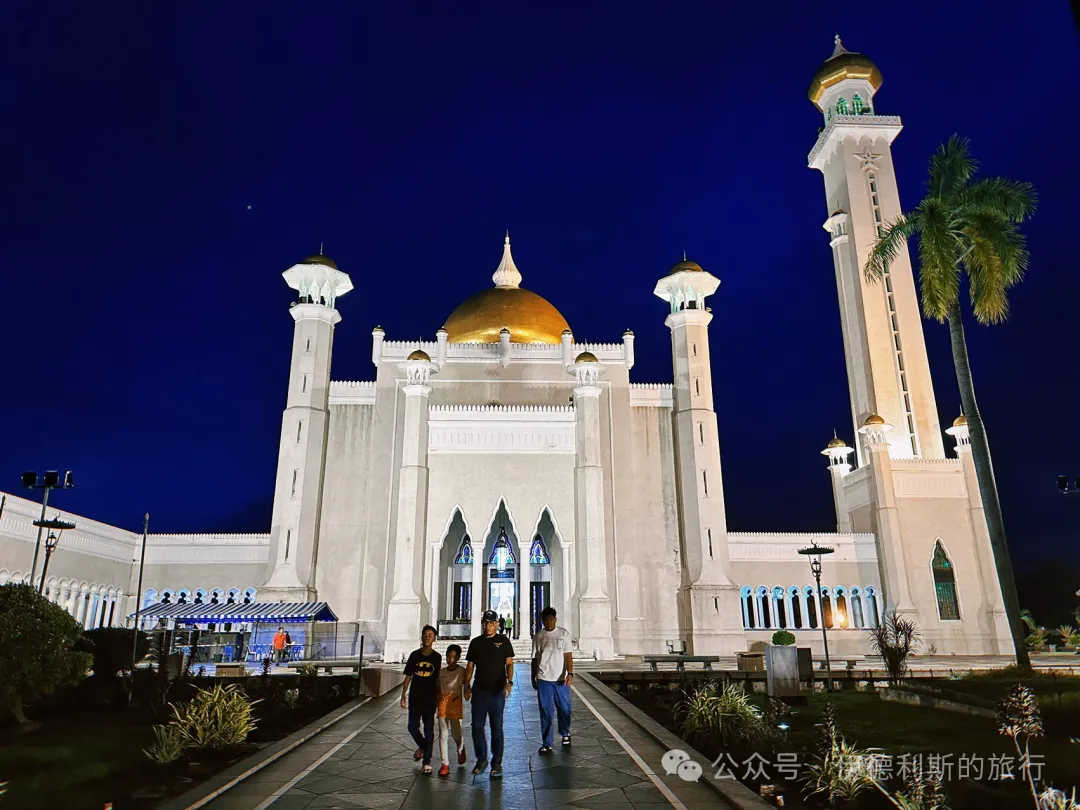
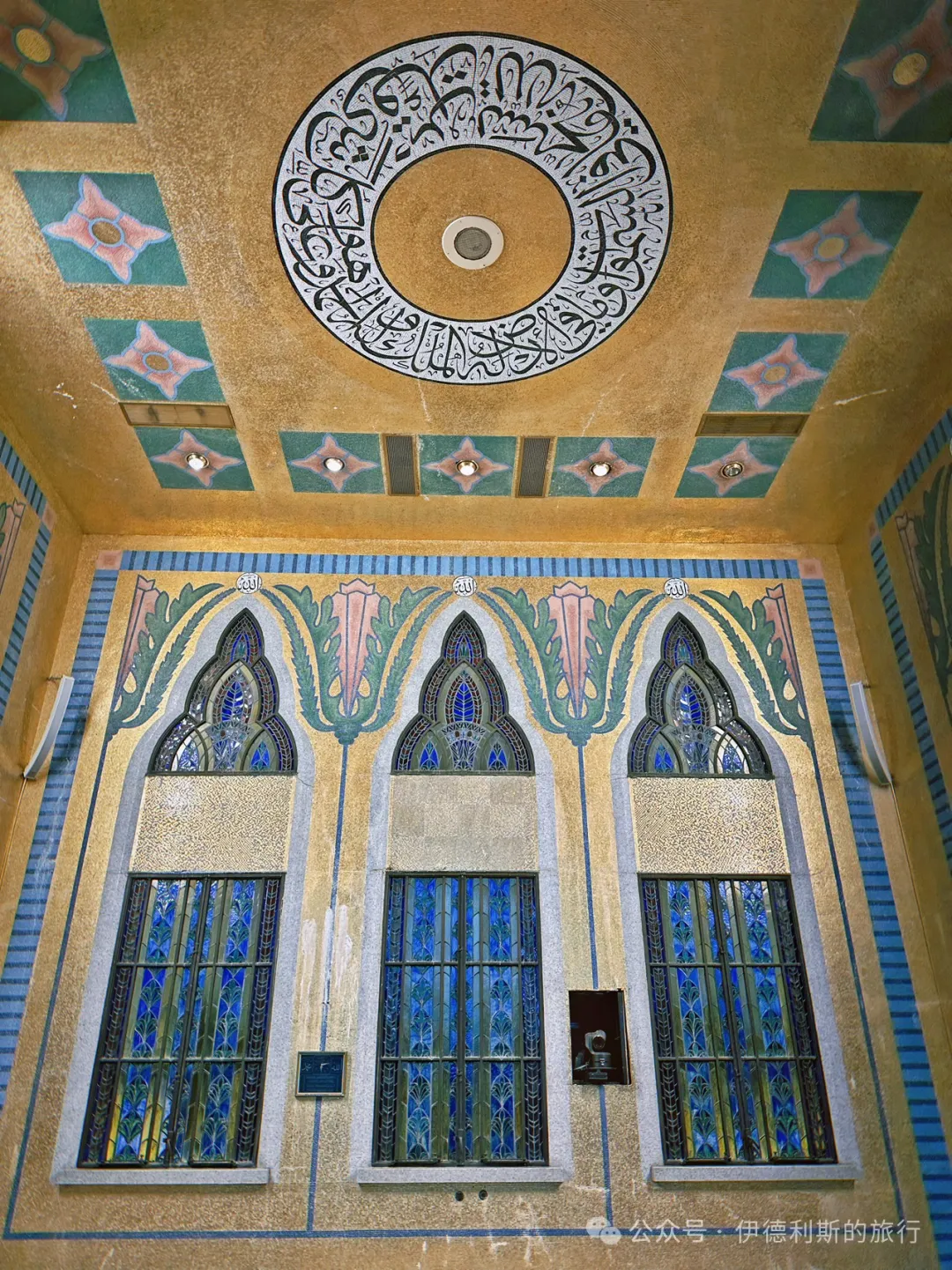
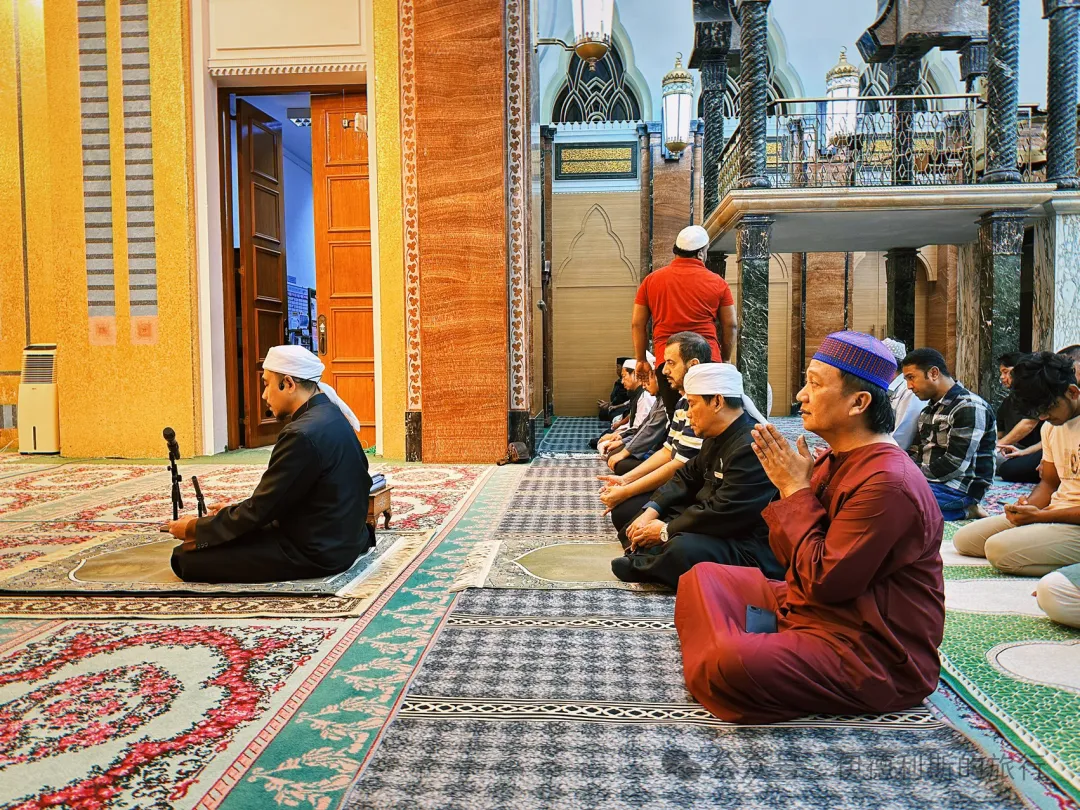
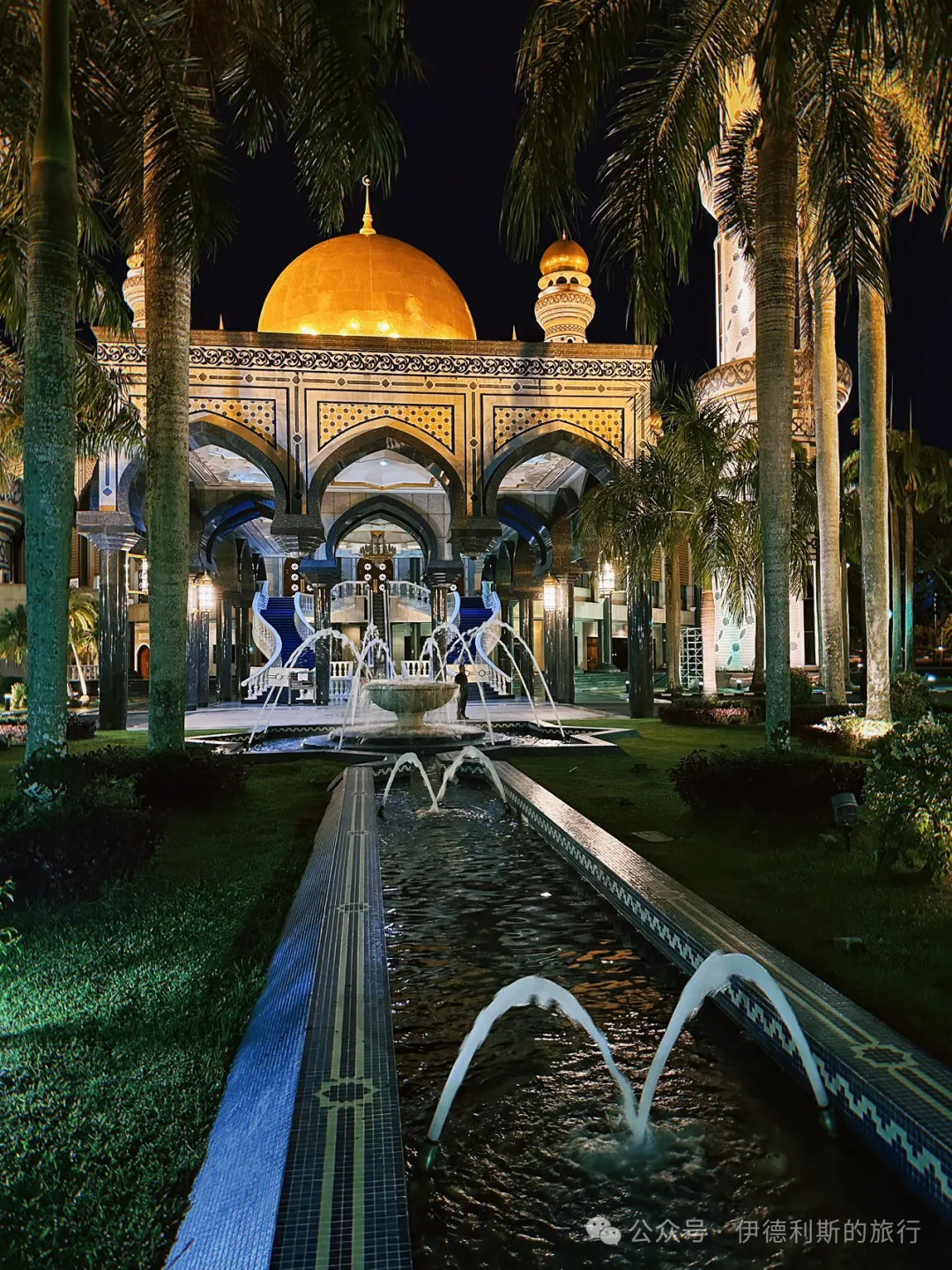
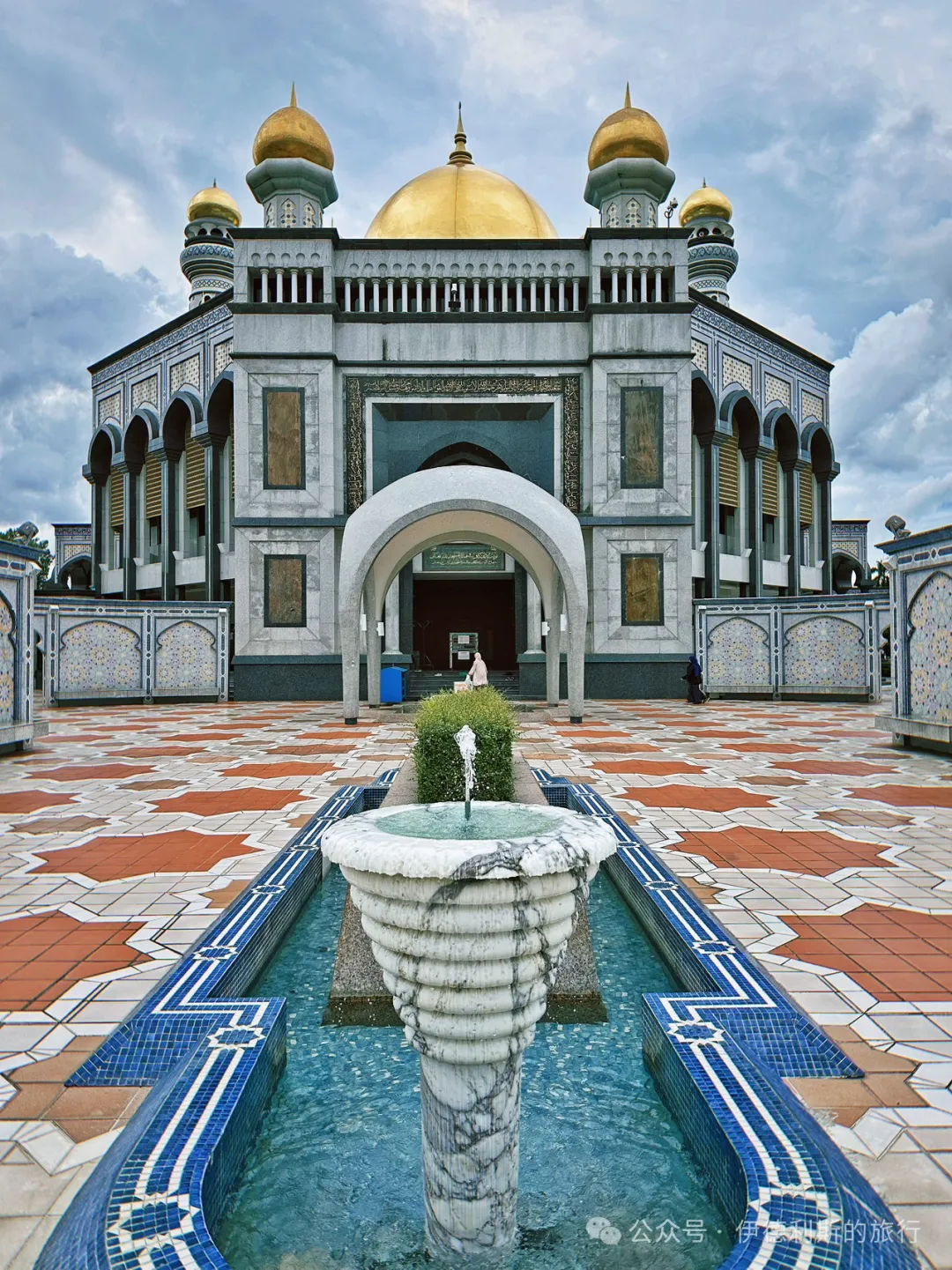
The full name of the Brunei Friday Mosque is Jame' Asr Hassanil Bolkiah Mosque. It is one of Brunei's two national mosques and also the largest mosque in the country. The Jame' Asr Hassanil Bolkiah Mosque was built by Sultan Hassanal Bolkiah of Brunei to celebrate his 25th anniversary on the throne and officially opened in 1994. The mosque's 29 golden domes commemorate the 29th Sultan of Brunei. Five fountains symbolize the five daily namaz and the five pillars of Islam. The mihrab is decorated with gold-plated tiles, and the interior is very luxurious, featuring Persian carpets, Italian marble, and Philippine hardwood.
The night view of the Brunei mosque is more beautiful than the day. For friends (dosti) who want to take photos, I recommend coming during the times for maghrib and isha.
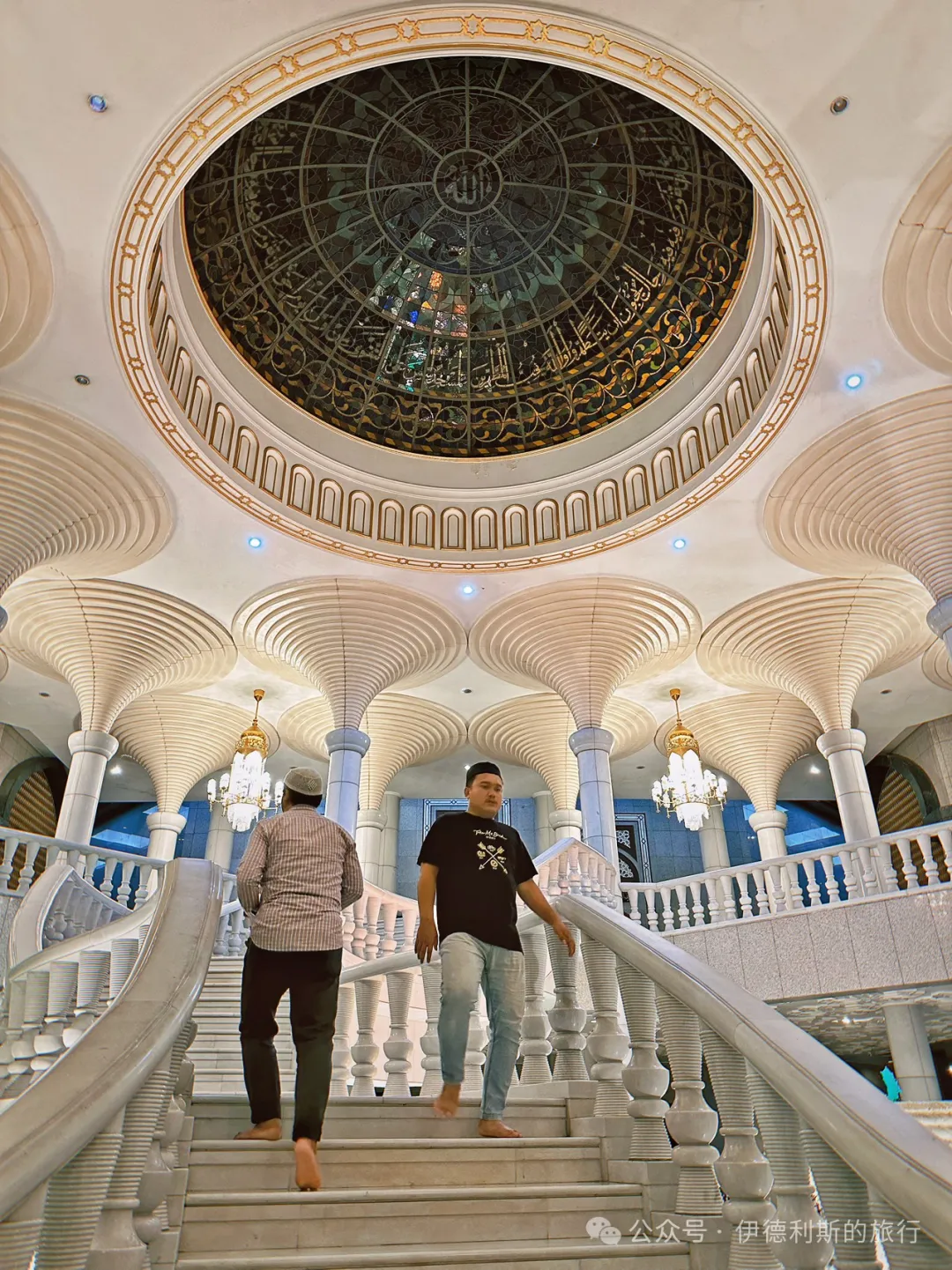
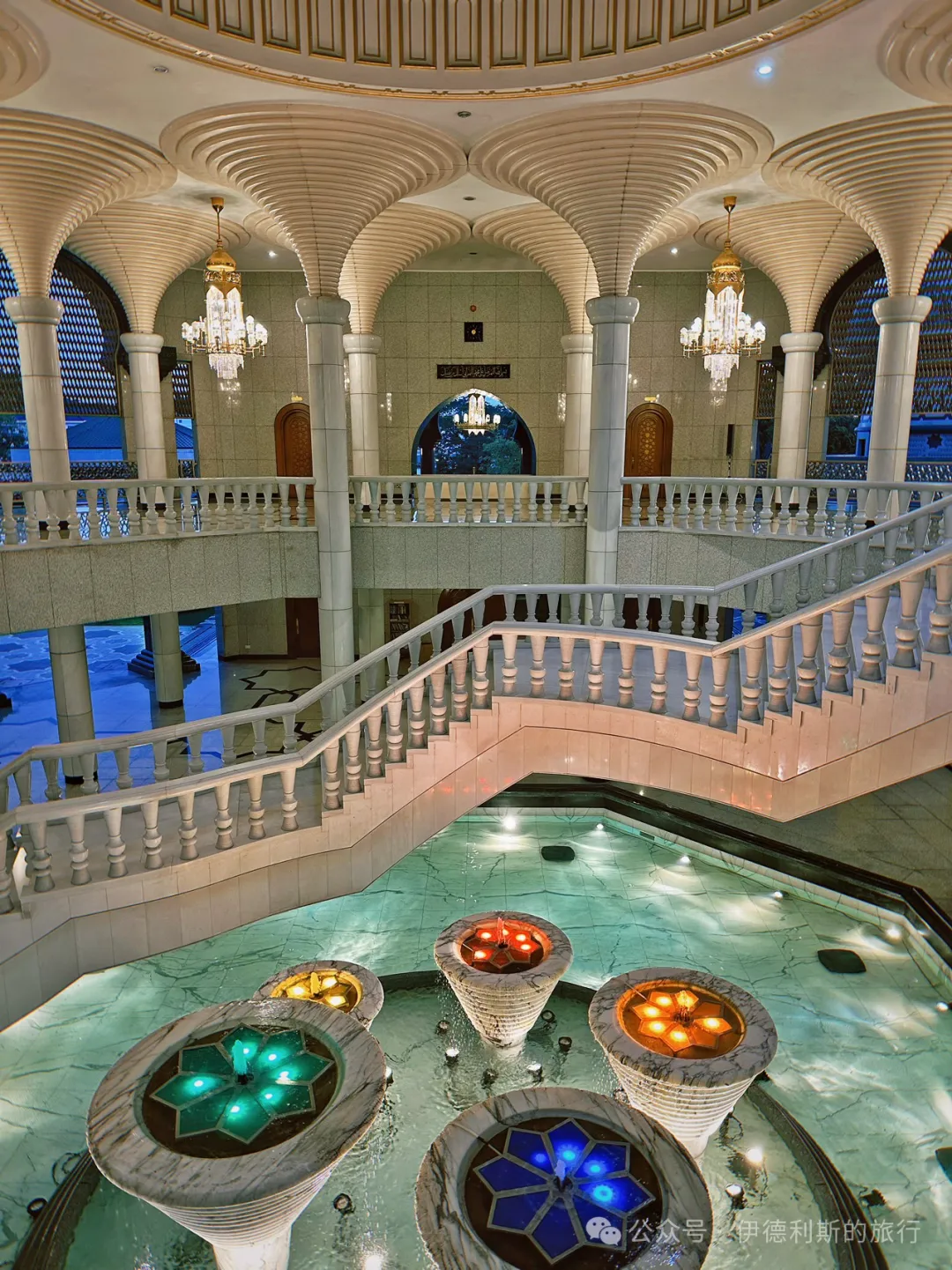
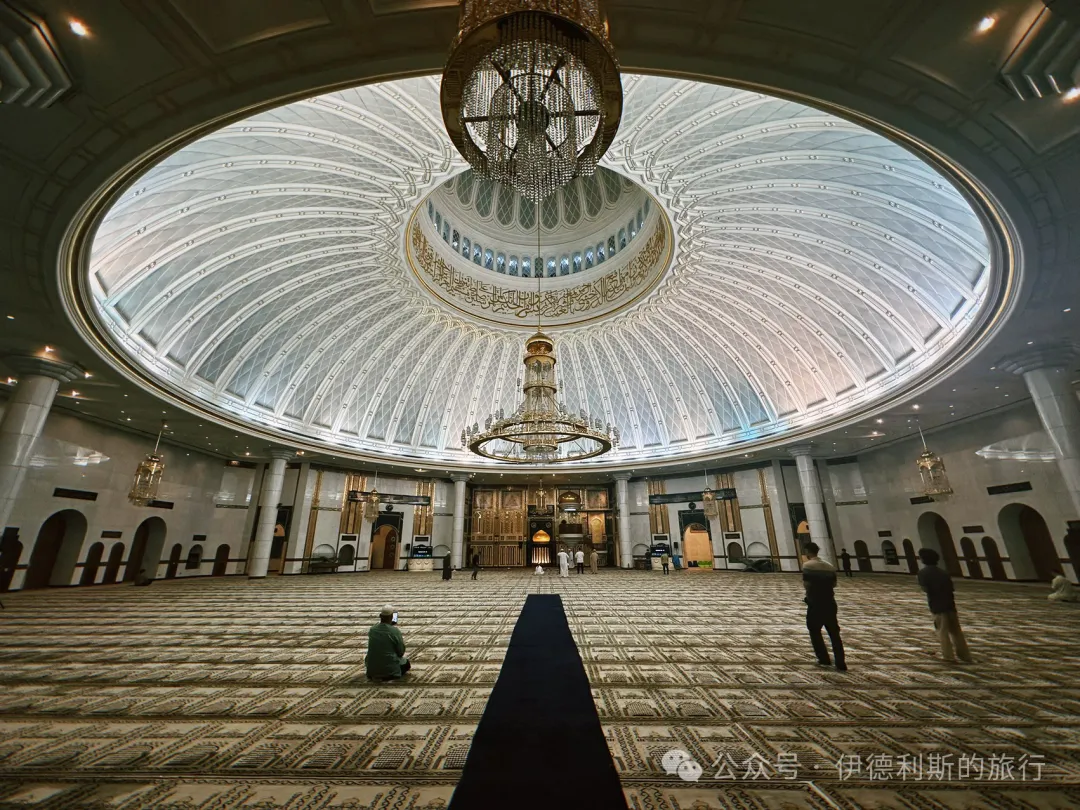
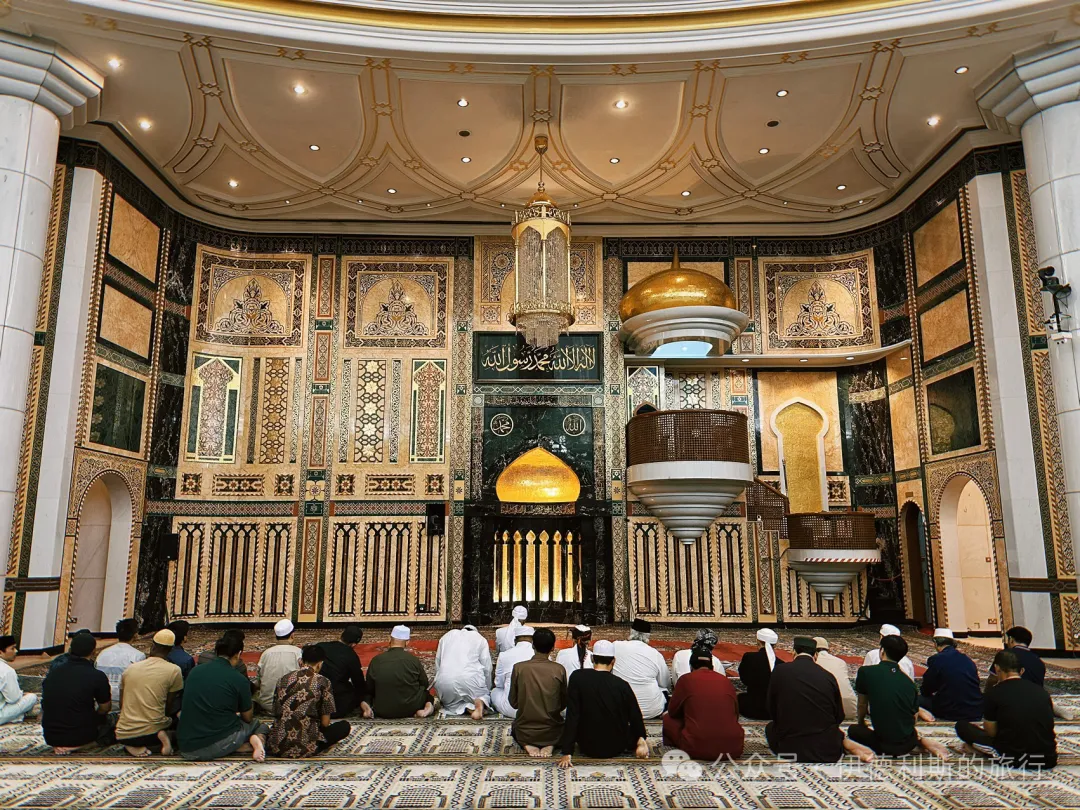
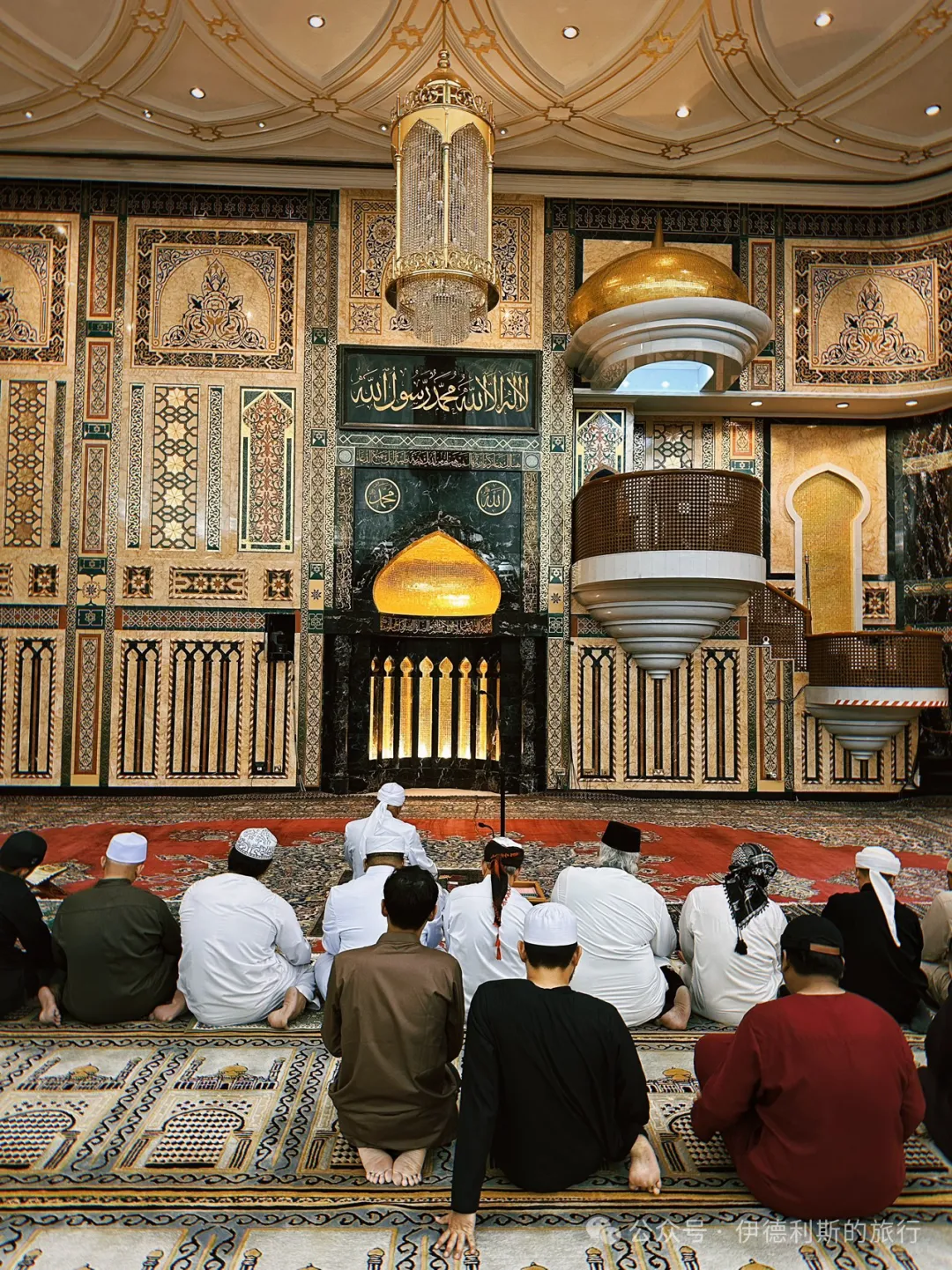
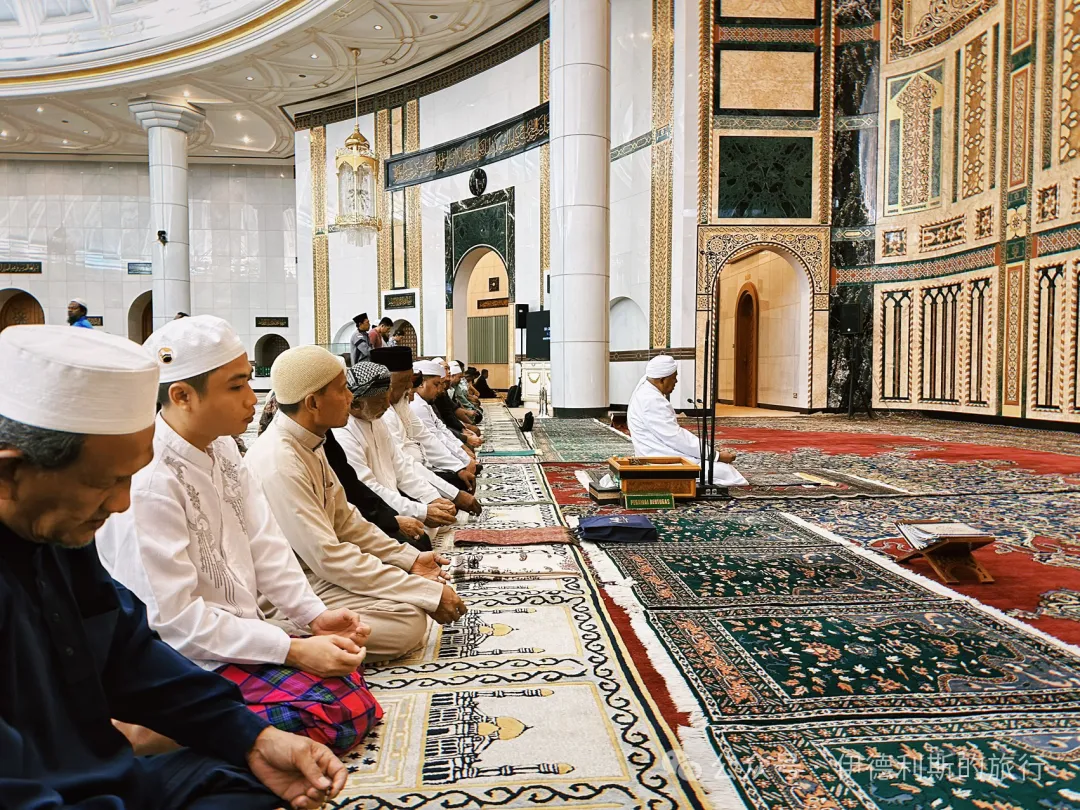
The Jame' Asr Hassanil Bolkiah Mosque during the day. The main prayer hall connects to a women's prayer hall via a corridor. This is a very rare independent women's hall in Southeast Asia, and it is quite large. Below the women's hall is the wudu area. It is the only one I have ever visited that uses sensor-activated faucets.
The ancient city in the mountains of Brunei.
Take a taxi from the city to the Kota Batu Archaeological Park, the ruins of the Brunei Sultanate palace hidden in the tropical rainforest. This is Brunei's most important archaeological site.
Kota Batu is believed to have been the capital of the Brunei Sultanate from the 14th to the 17th century. It was once an important trading port in Southeast Asia and a central city in northern Borneo. A civil war in the Brunei Sultanate between 1660 and 1673 led to the abandonment of Kota Batu, and the Sultan moved the palace to the water village of Kampong Ayer on the upper Brunei River.
Kota Batu means stone castle, and it is one of the few stone architectural ruins in Brunei. British naturalist and Sarawak Museum curator Tom Harrisson began archaeological excavations at Kota Batu in 1952-53. He discovered many Chinese coins from the Tang, Song, and Ming dynasties, as well as Arabic coins, glassware, ironware, bronze, wooden tools, stone carvings, and ceramics from Siam, the Indochina Peninsula, and the Song and Ming dynasties of China.
During excavations in 1986-87, a square stone building measuring 25.8 by 25.4 meters was found, along with 36 stone column bases, tombstone remains, and Ming dynasty porcelain shards. It is believed the building dates back to the 15th century. Because the column bases are divided into three levels, it is thought the building had a three-tiered pyramid roof structure similar to traditional Malacca mosques. Although early Brunei Sultanate palace buildings were made of wood and left few traces, the coins and pottery found at Kota Batu suggest the Sultan's palace was likely near this site.
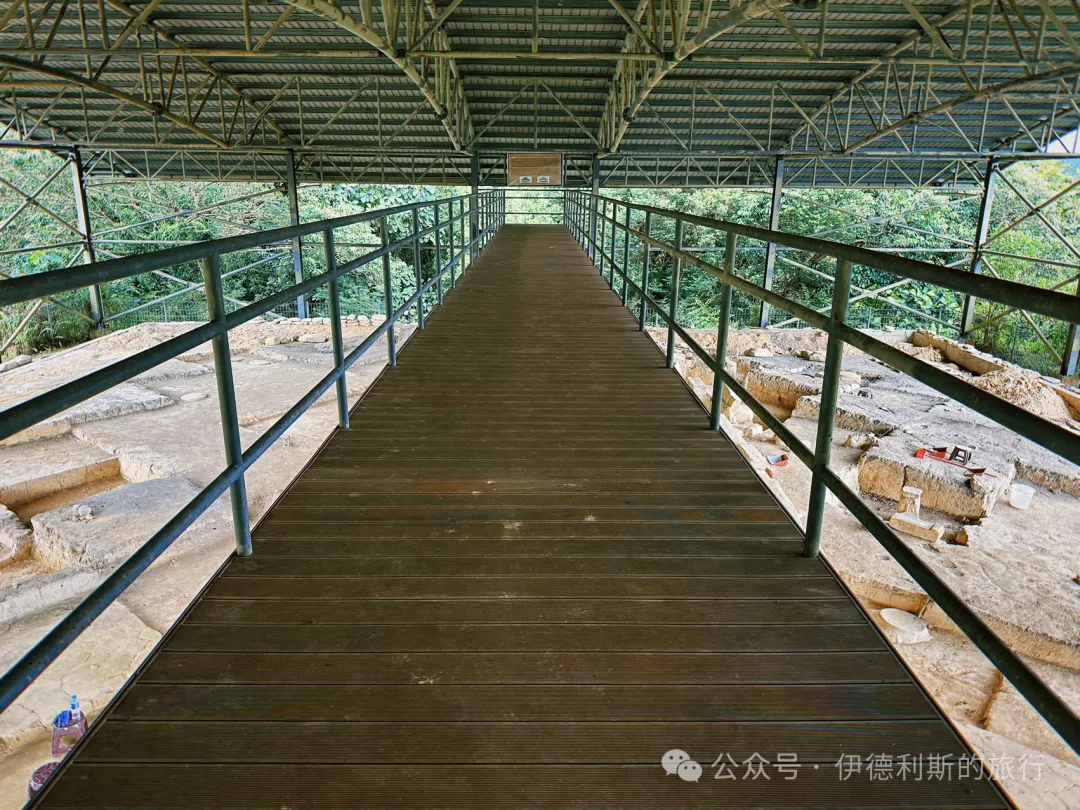
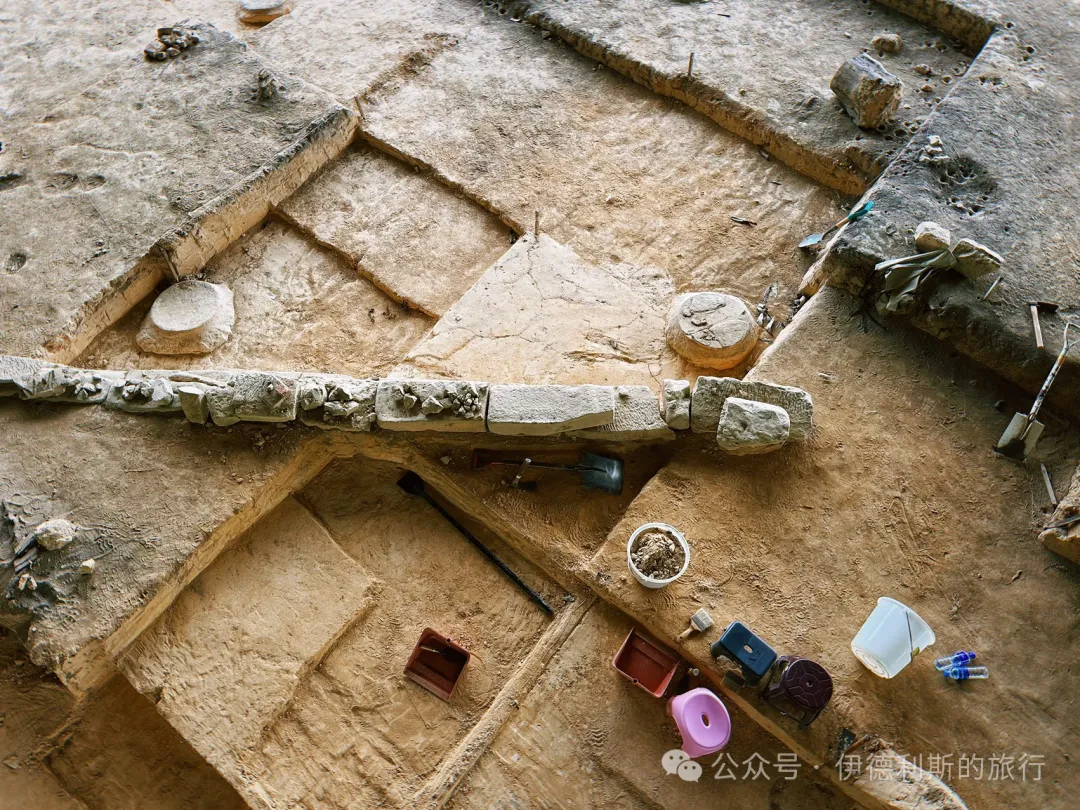
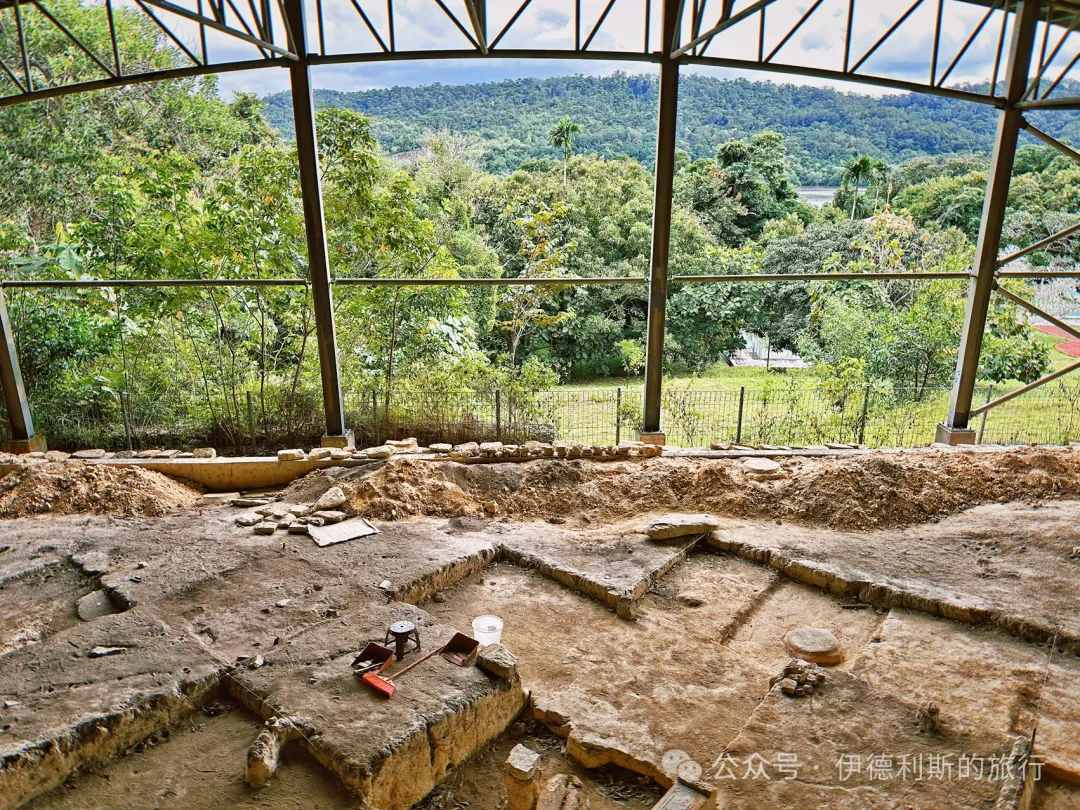
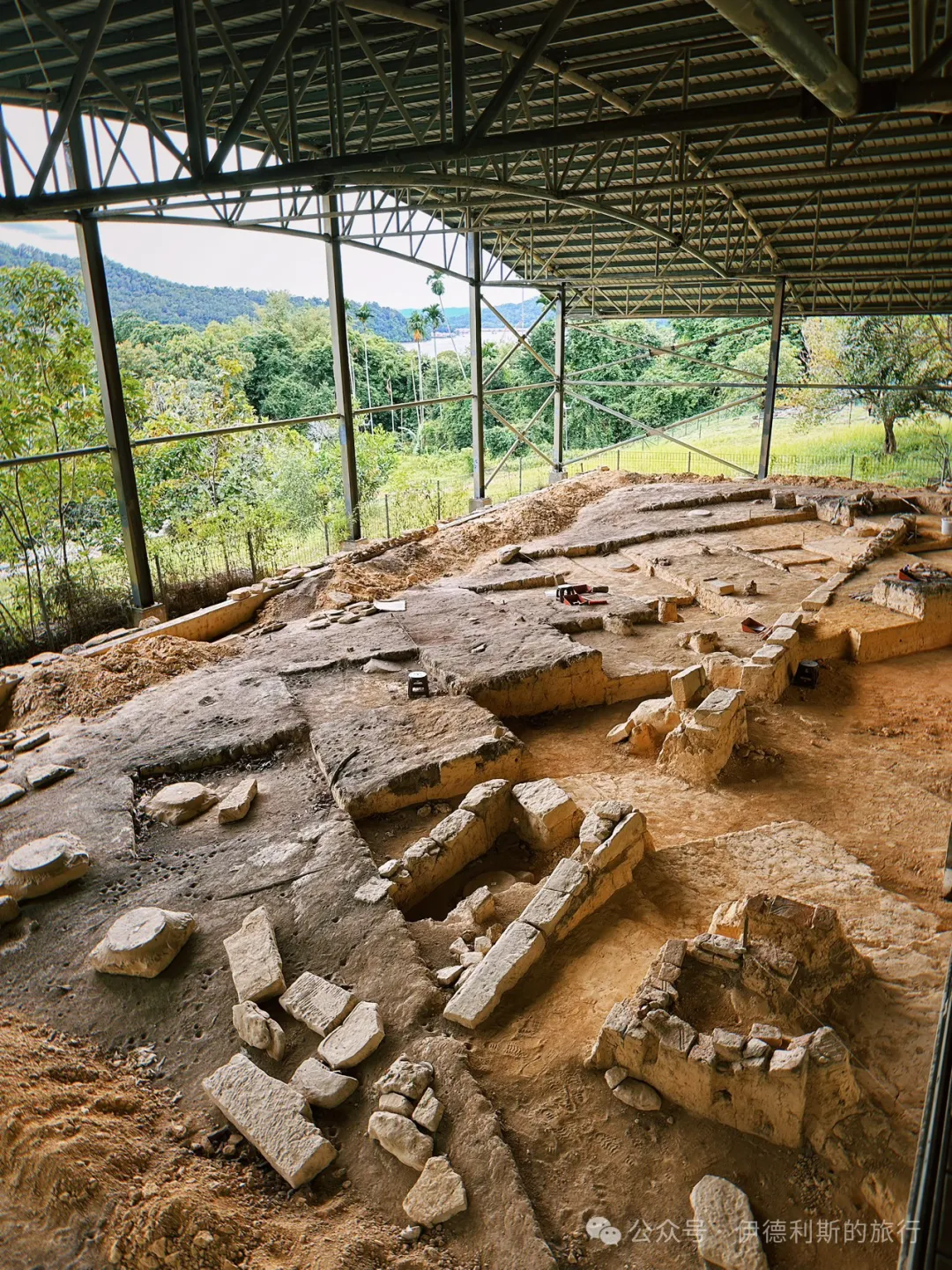
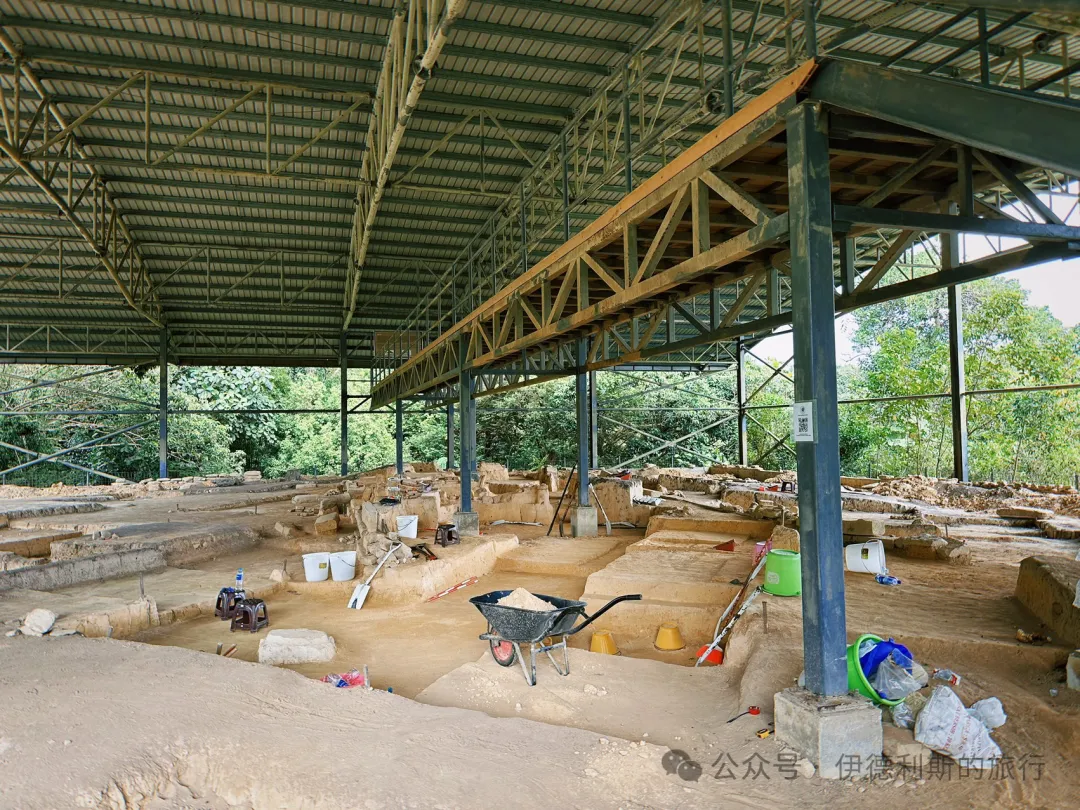
The paths in Kota Batu Archaeological Park feel like a primitive forest. There were no other tourists, and the mountain trails were often covered by fallen leaves and hard to see. It is hard to imagine that this was once the capital of Brunei.
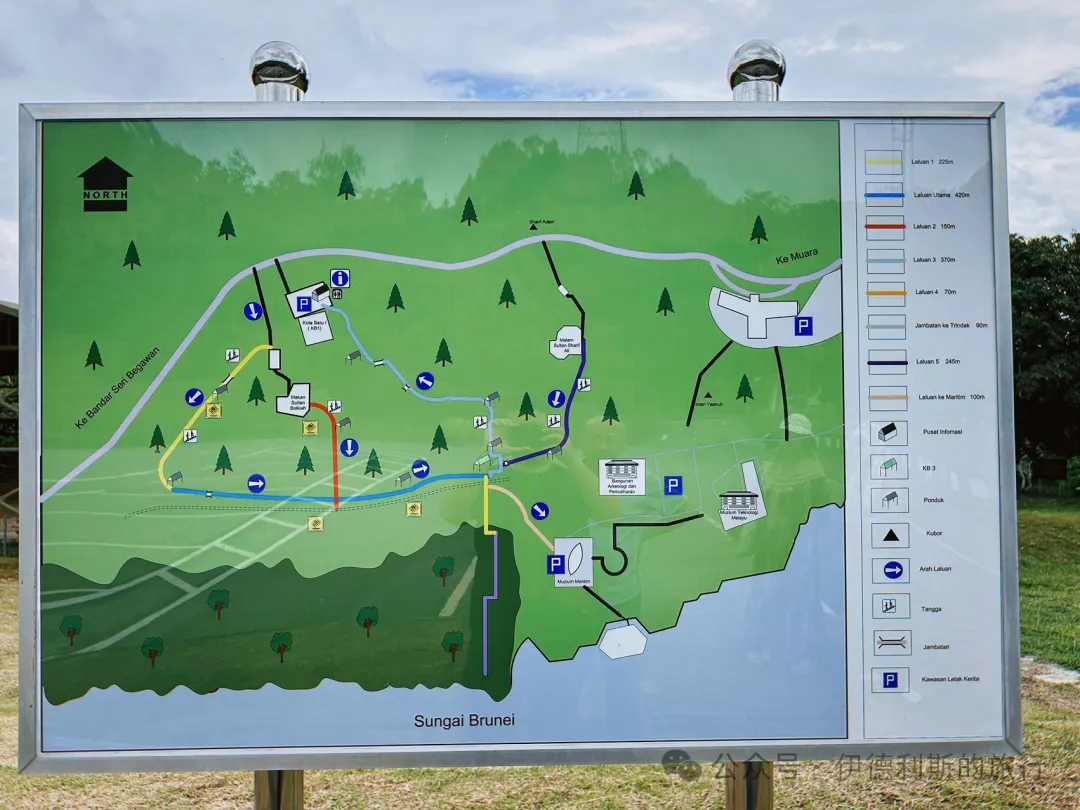
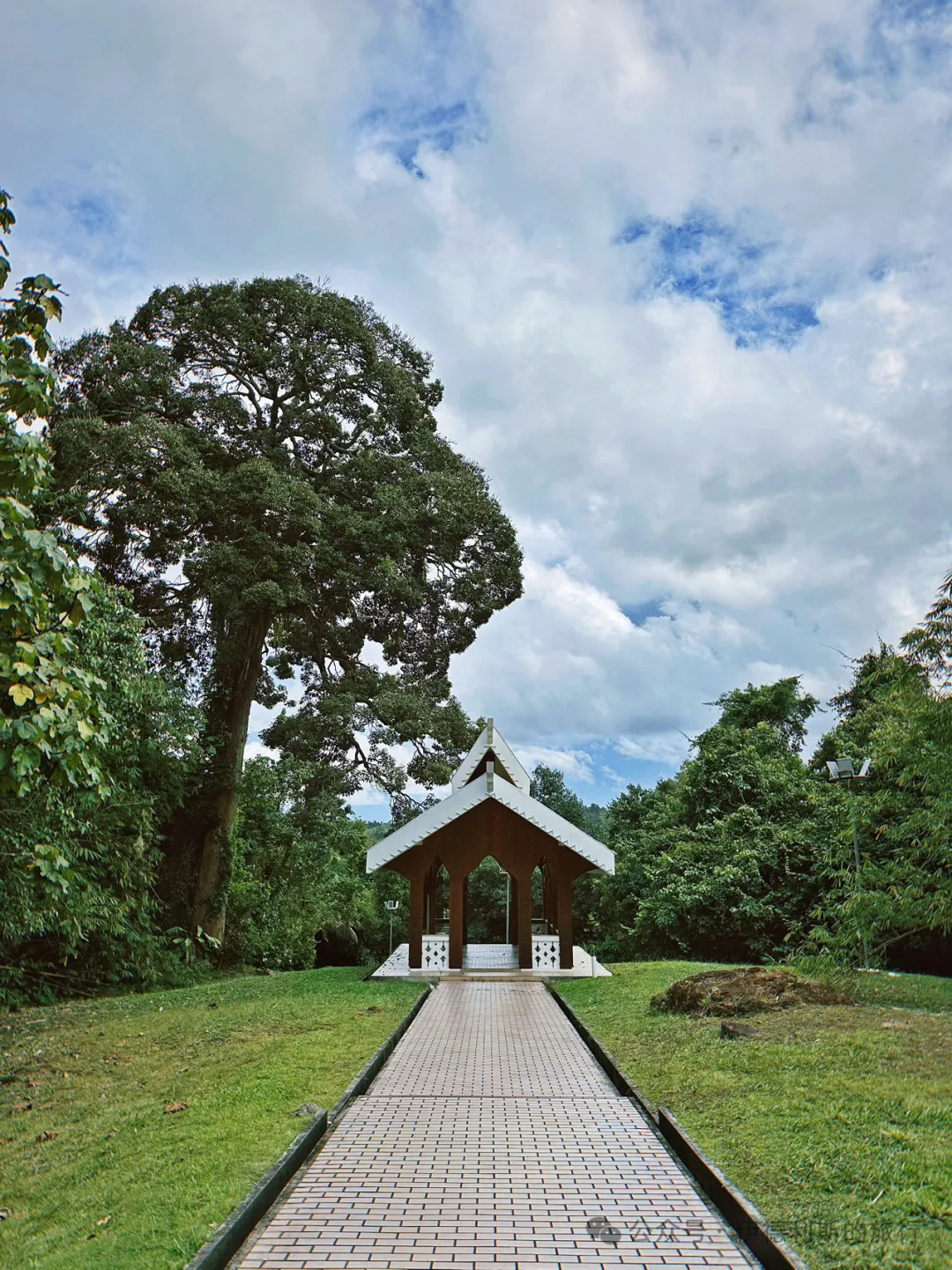
The tomb of the third Sultan of Brunei.
The Kota Batu Archaeological Park contains the tomb of the third Sultan of Brunei, Sharif Ali.
Sultan Sharif Ali (reigned 1425-1432) was originally a preacher from the ancient Saudi city of Taif and a descendant of Hasan ibn Ali, the grandson of the Prophet Muhammad. He arrived in Brunei to preach in 1395 and was respected by the Sultan and the people. He married the daughter of Sultan Ahmad around 1400 and inherited the throne after the old Sultan died in 1425, which is how the Brunei Sultanate gained its lineage from the Prophet's family.
Sultan Sharif Ali worked to spread Islamic law while keeping local customs that did not go against it. During his reign, Brunei officially changed from a Hindu-Buddhist cultural area into a part of Islamic civilization. He built the first mosque in Brunei, designed the national flag, and established the title of Brunei as the Nation of Peace (Darussalam). It is believed that he may have also built the stone wall fortress in Kota Batu.
Halal Travel Guide: Brunei Part 2 — Visa-Free Culture, Mosques and Local History
Articles • ali2007fr posted the article • 0 comments • 156 views • 2026-05-20 00:57
Summary: This second part of the Brunei visa-free cultural trip continues through sites connected with Malay history, Muslim life, and local heritage. The English version keeps the original place names, photo order, and historical notes from the source article.
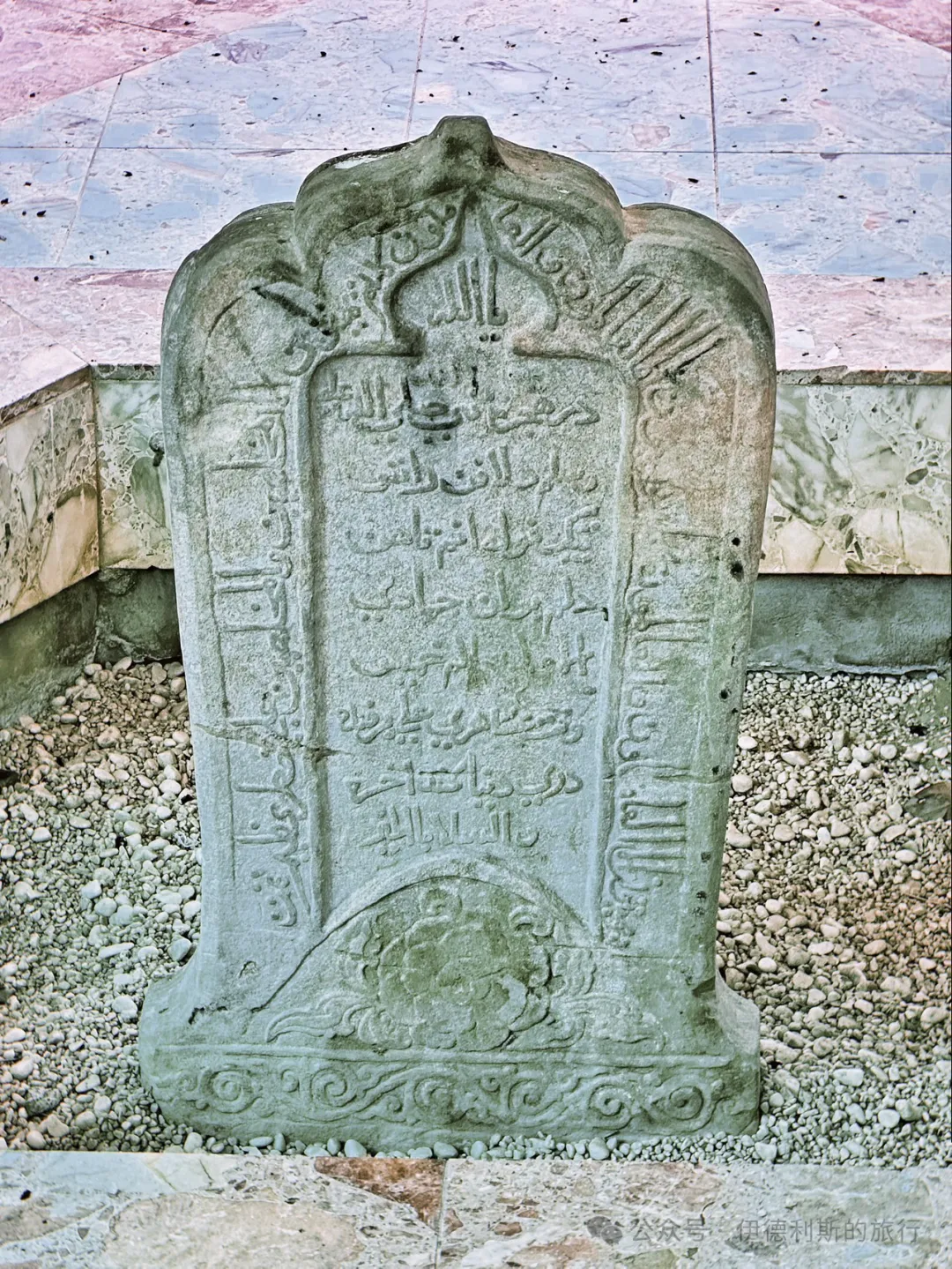
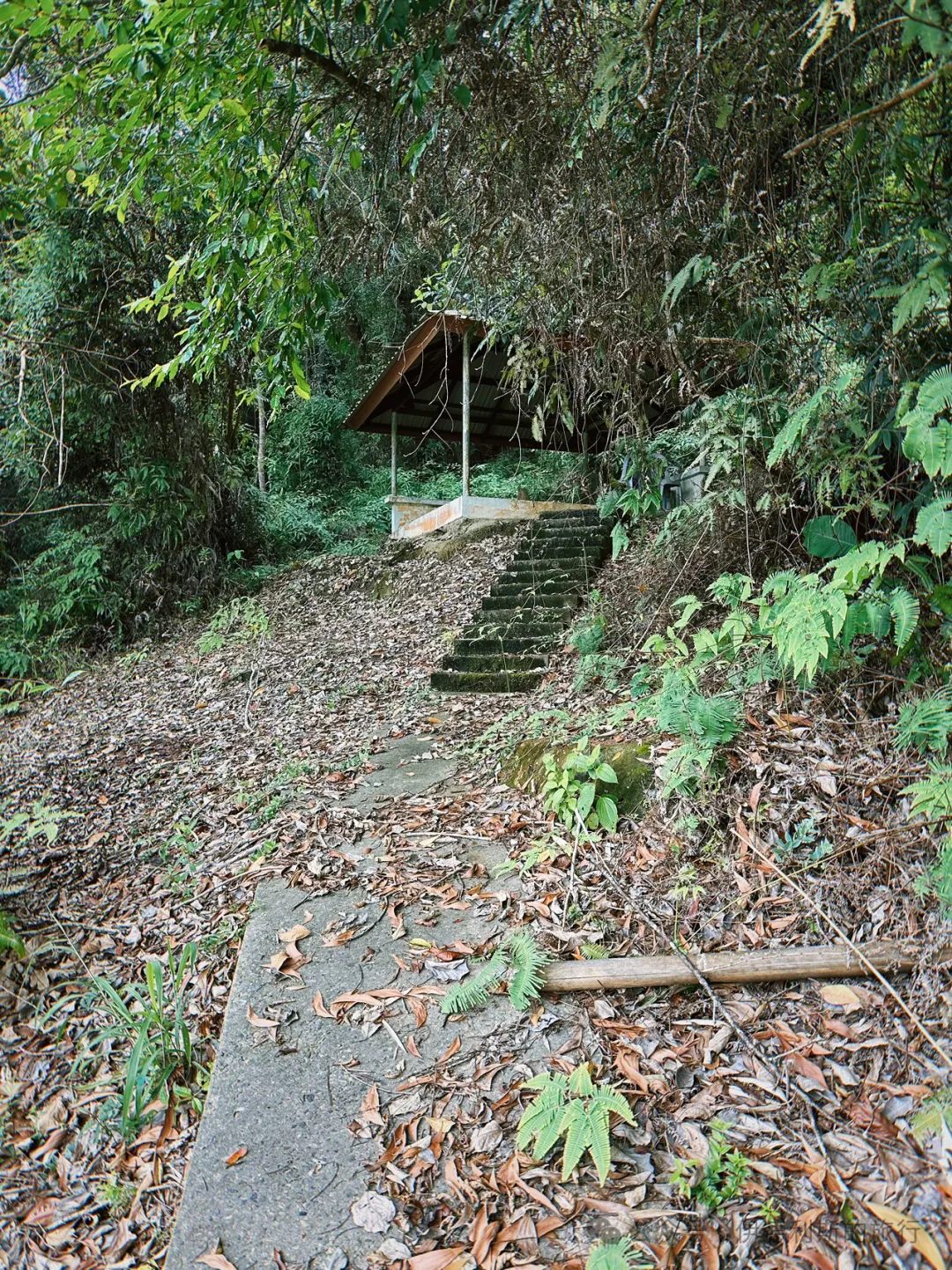
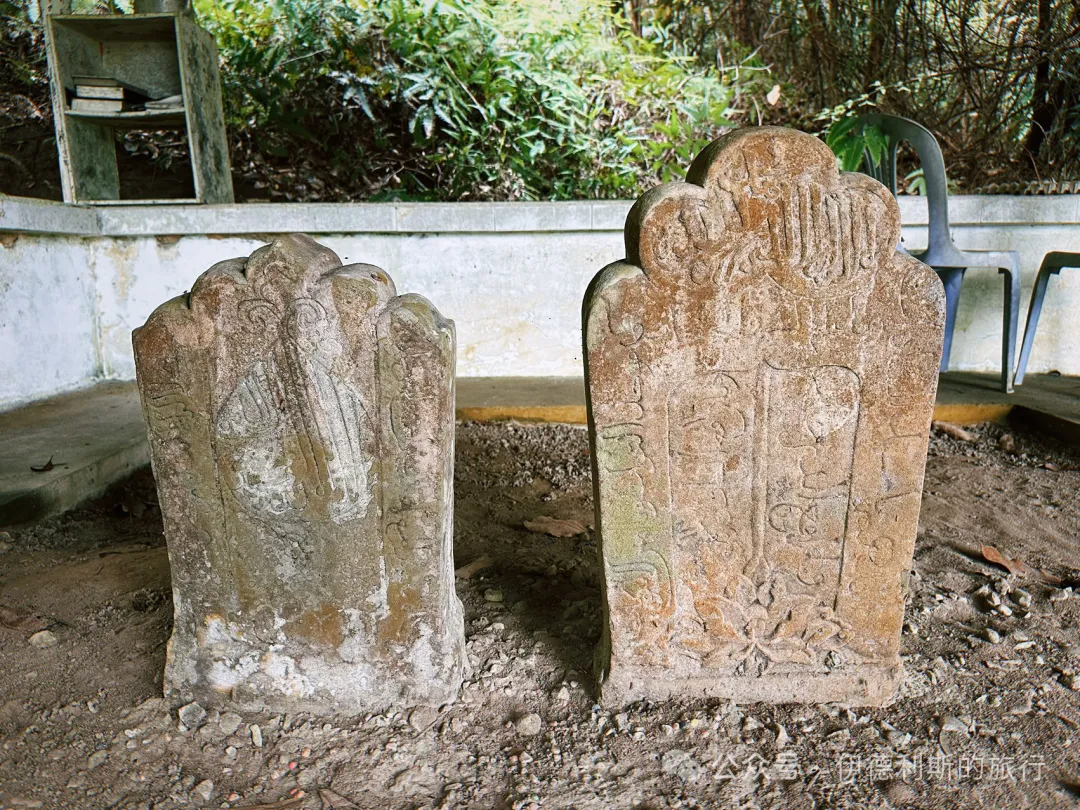
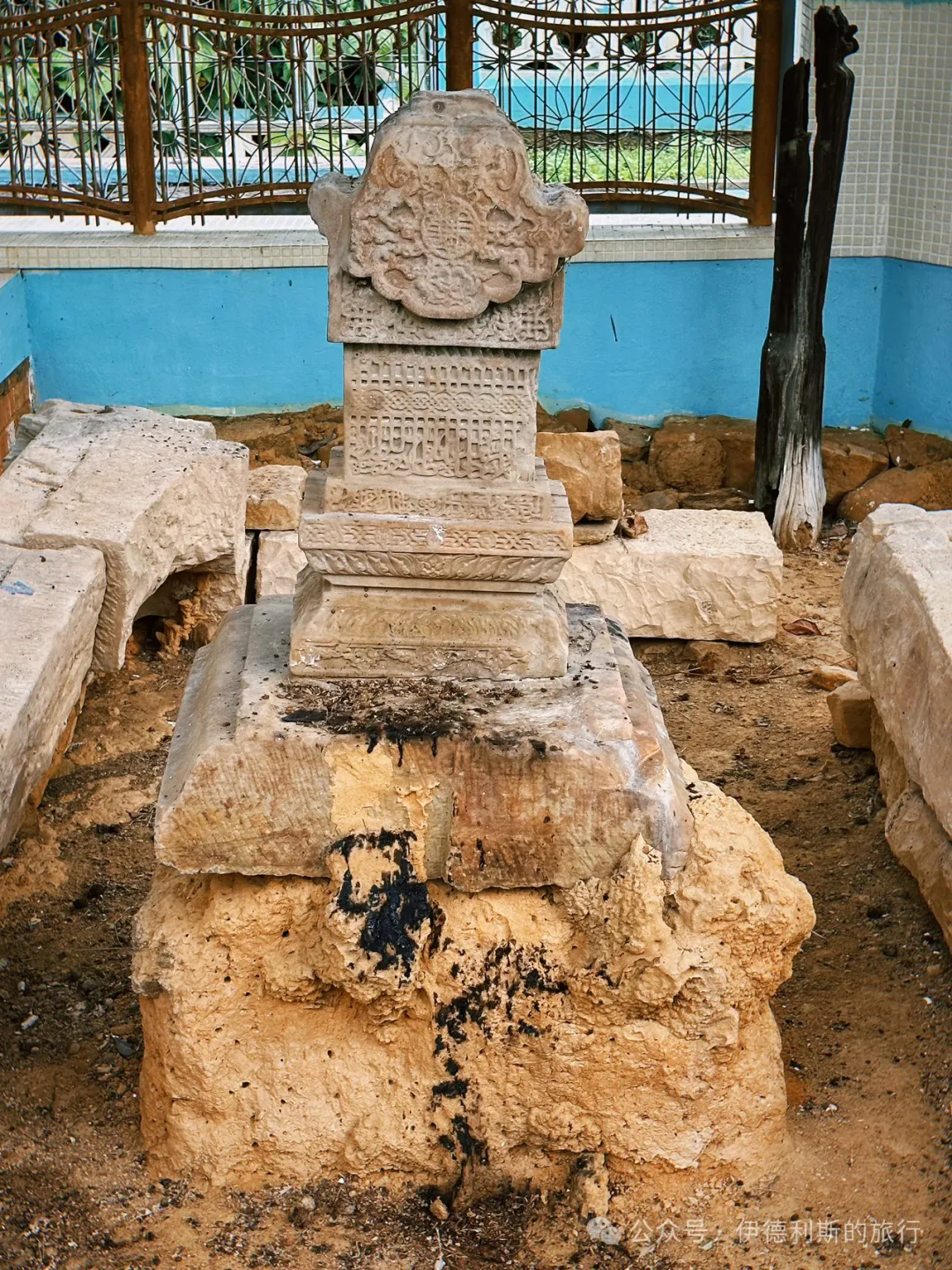
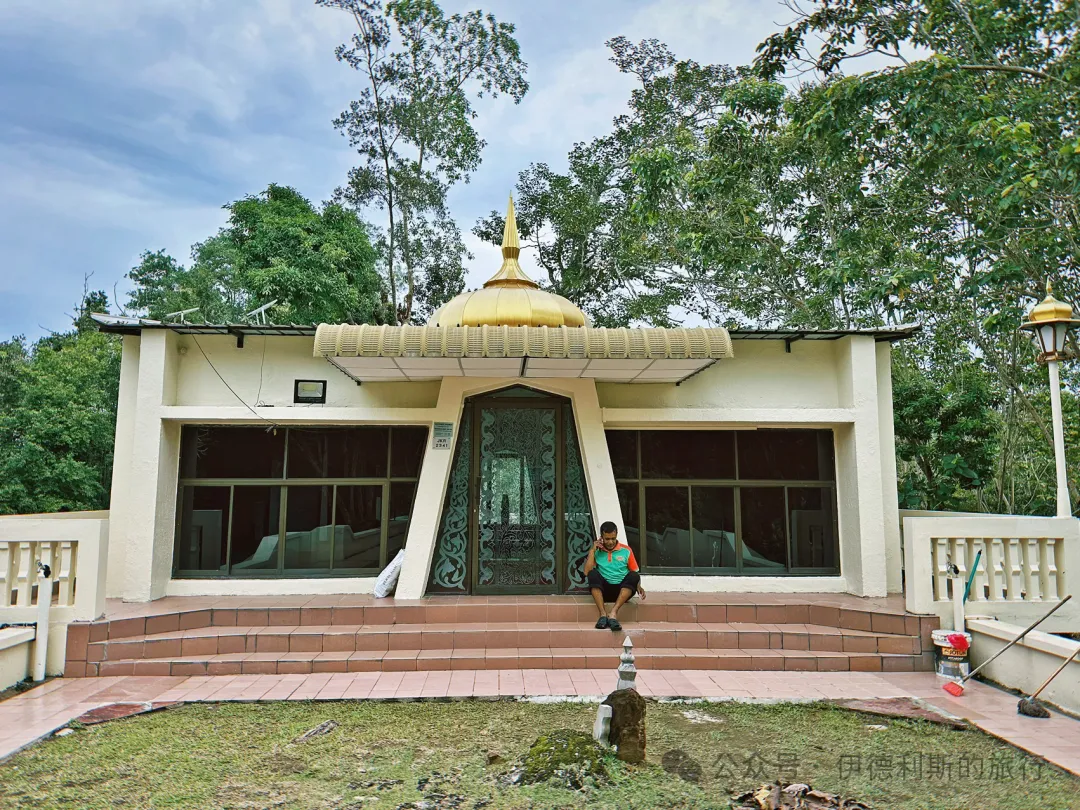
North of the tomb of Sultan Sharif Ali is the grave of Sharif Adam, another pioneer who came to Brunei with the Sultan to spread the faith. Together, they spread the influence of the faith from Brunei to the Sulu Archipelago and Mindanao in the southern Philippines. According to the tombstone, Sharif Adam passed away in 1454.
Tomb of the Fifth Sultan of Brunei
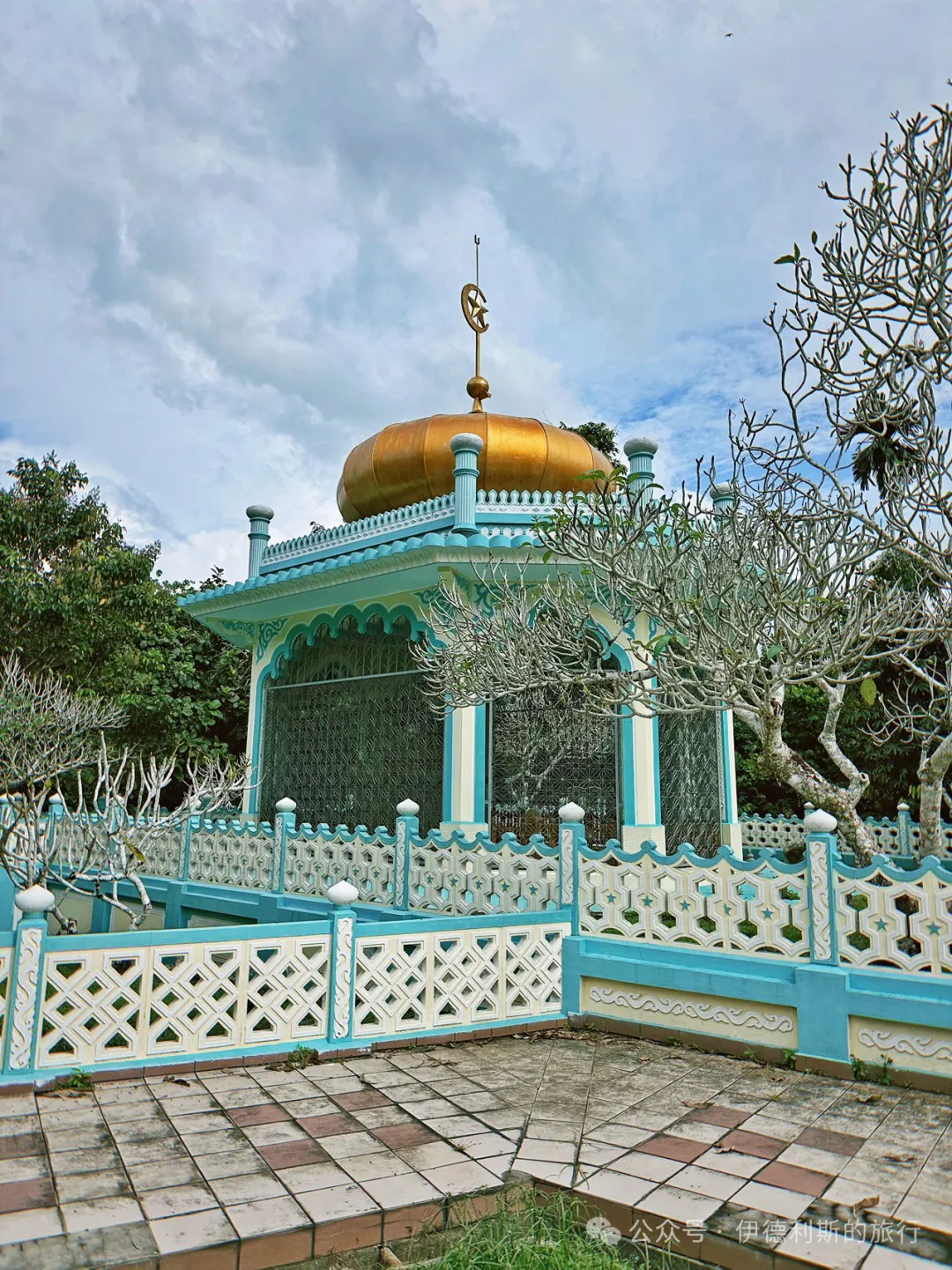
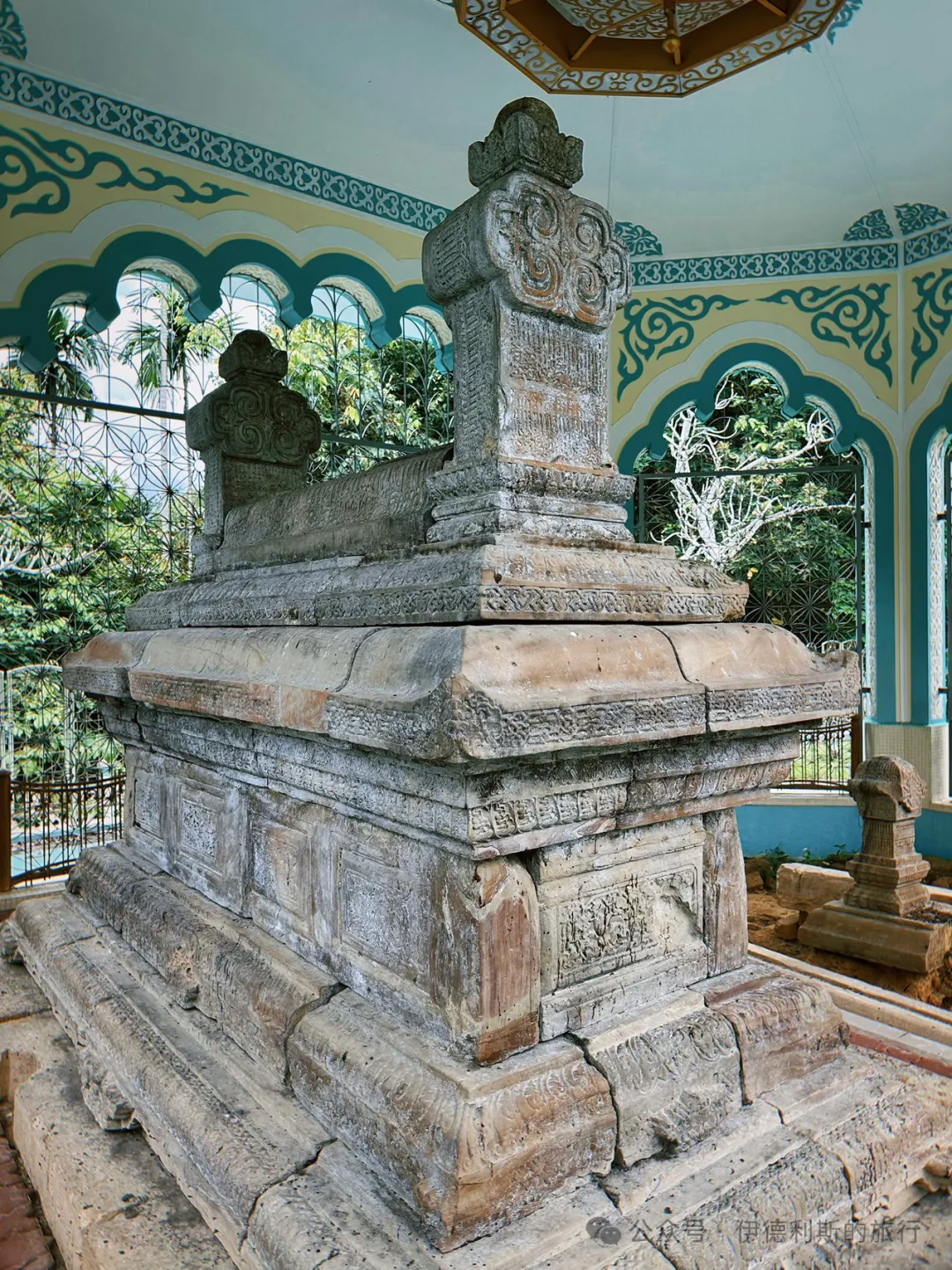
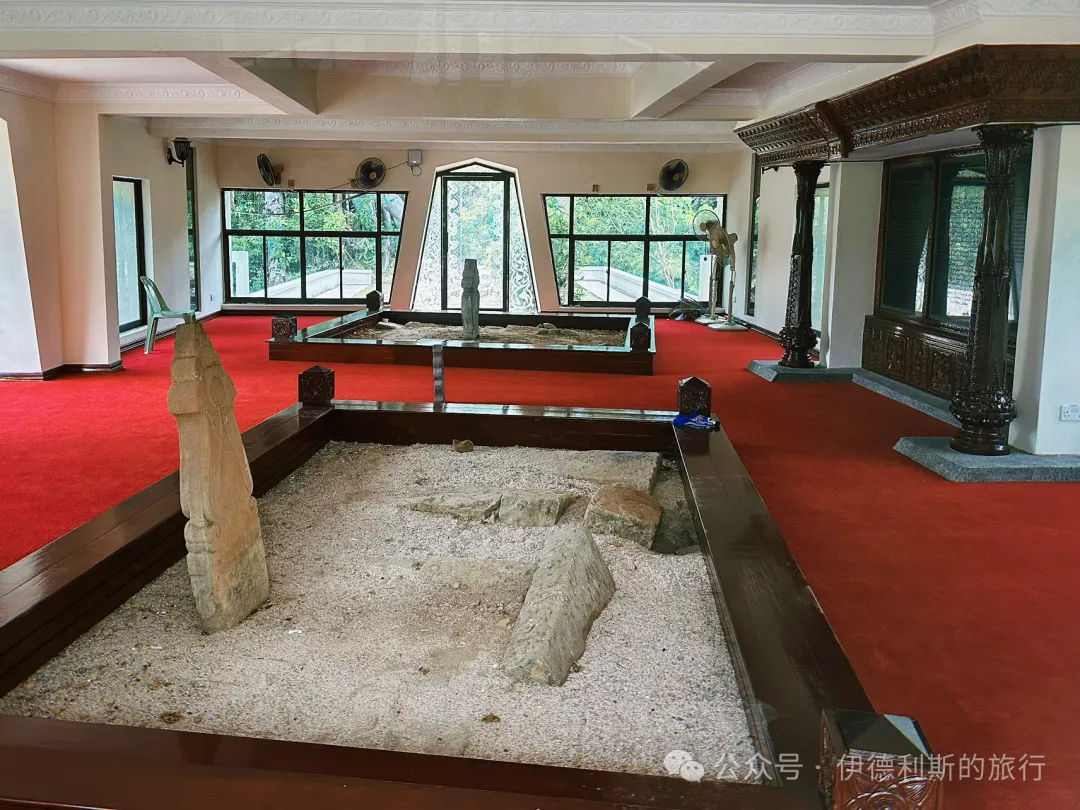
South of the Kota Batu site No. 1 is the tomb of Bolkiah, the fifth Sultan of Brunei, who reigned from 1485 to 1524. His reign is known as the golden age of Brunei history, when the Sultanate held power over Borneo and the southern Philippines.
When Magellan's fleet arrived in Brunei in 1521, they witnessed the power of Brunei under Sultan Bolkiah. When they reached the palace, they were shocked by his wealth. A hall reached by wide steps was packed with courtiers in elegant clothing. Through the corridor was a slightly raised room decorated with luxurious silk and brocade curtains, bathed in natural light from wide windows. Three hundred of the Sultan's warriors stood guard there with drawn daggers. A little further on was a smaller but equally beautiful room, where the muscular forty-year-old monarch chewed betel nut on a large mat with his young son beside him.
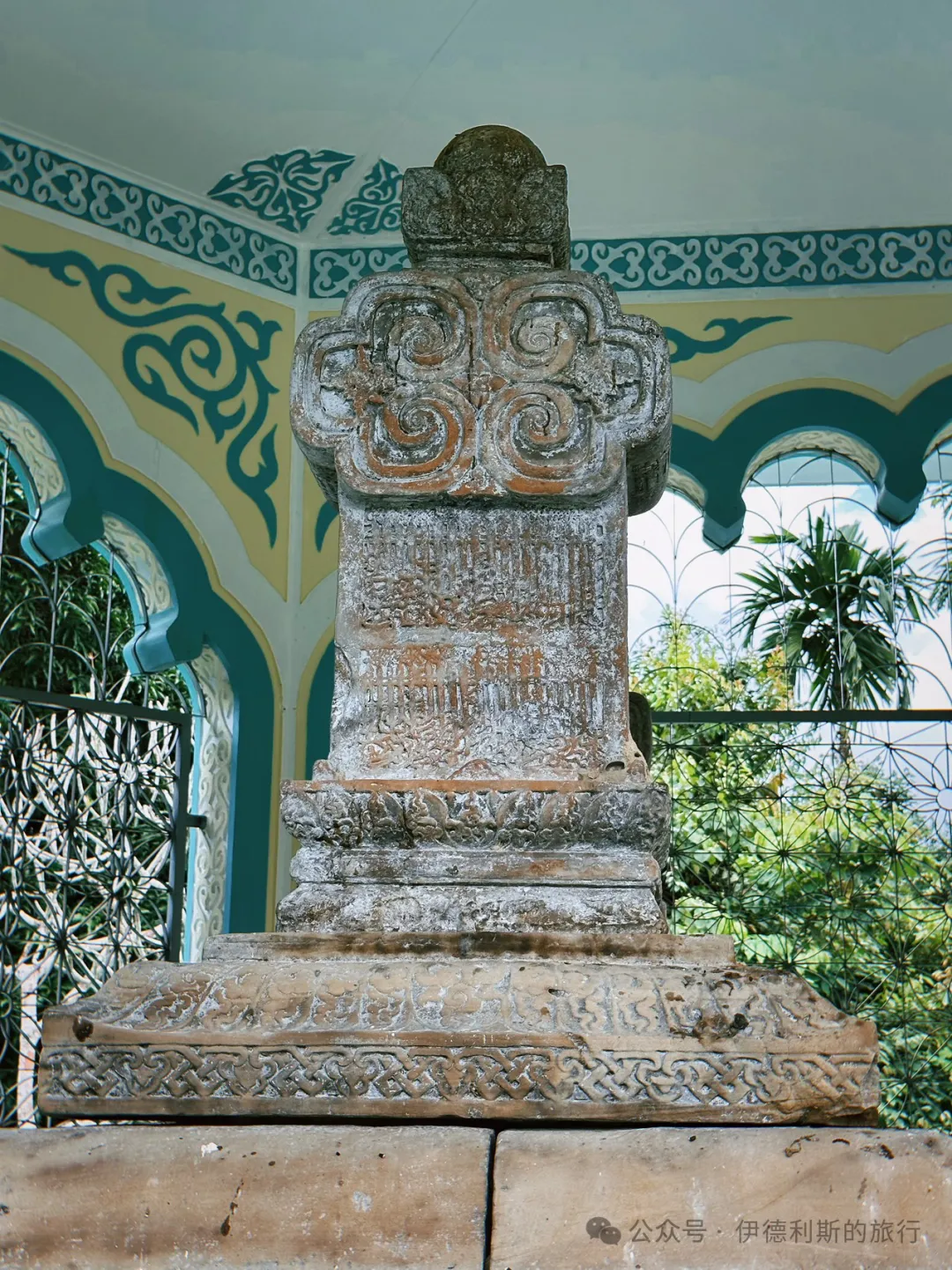
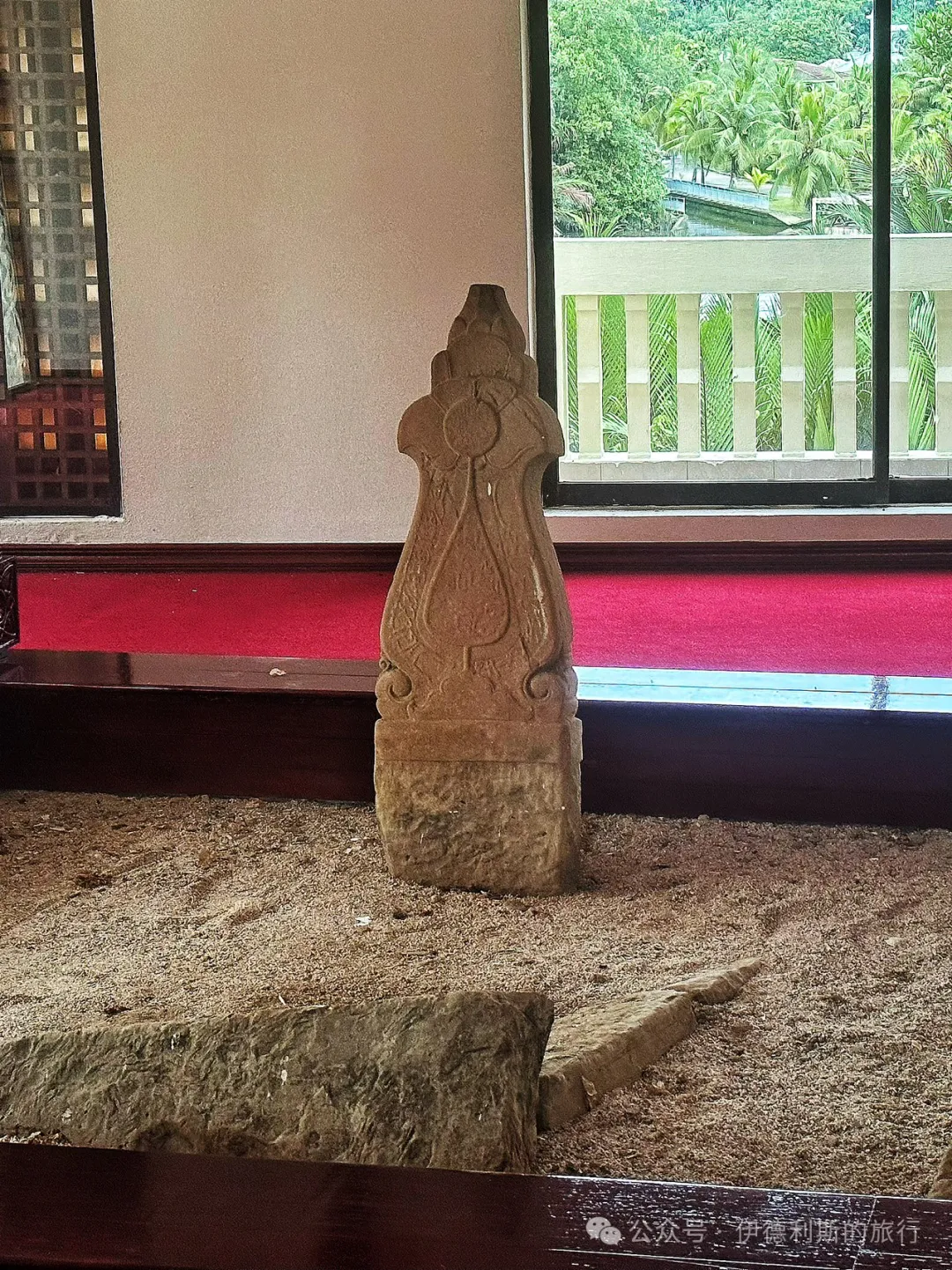
Sultan Bolkiah's tomb is tall, majestic, and finely carved. The tombstone has eight layers, but only the bottom layer is original. One of the upper stones commemorates Sultan Muhammad Ali, and another commemorates Sultan Abdul Mubin, likely made in the late 17th century. The middle slab records that Sultan Bolkiah died on July 17, 1524, and was likely carved in modern times.
Water Village (Kampung Ayer)
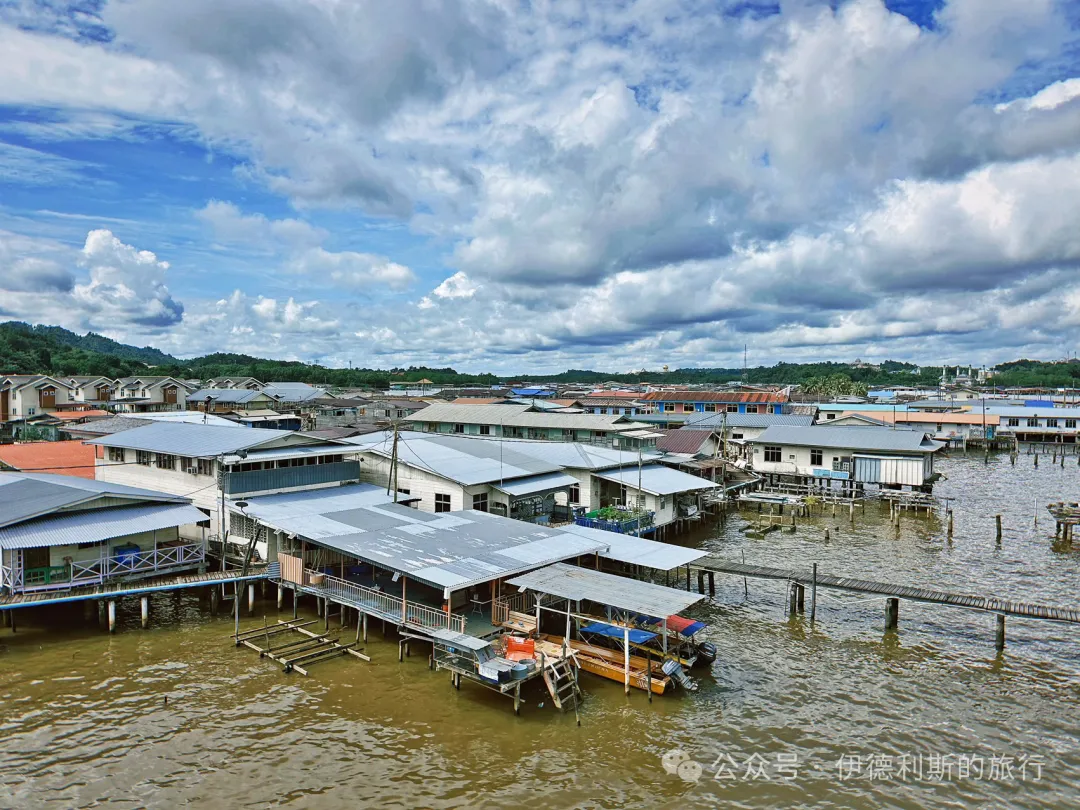
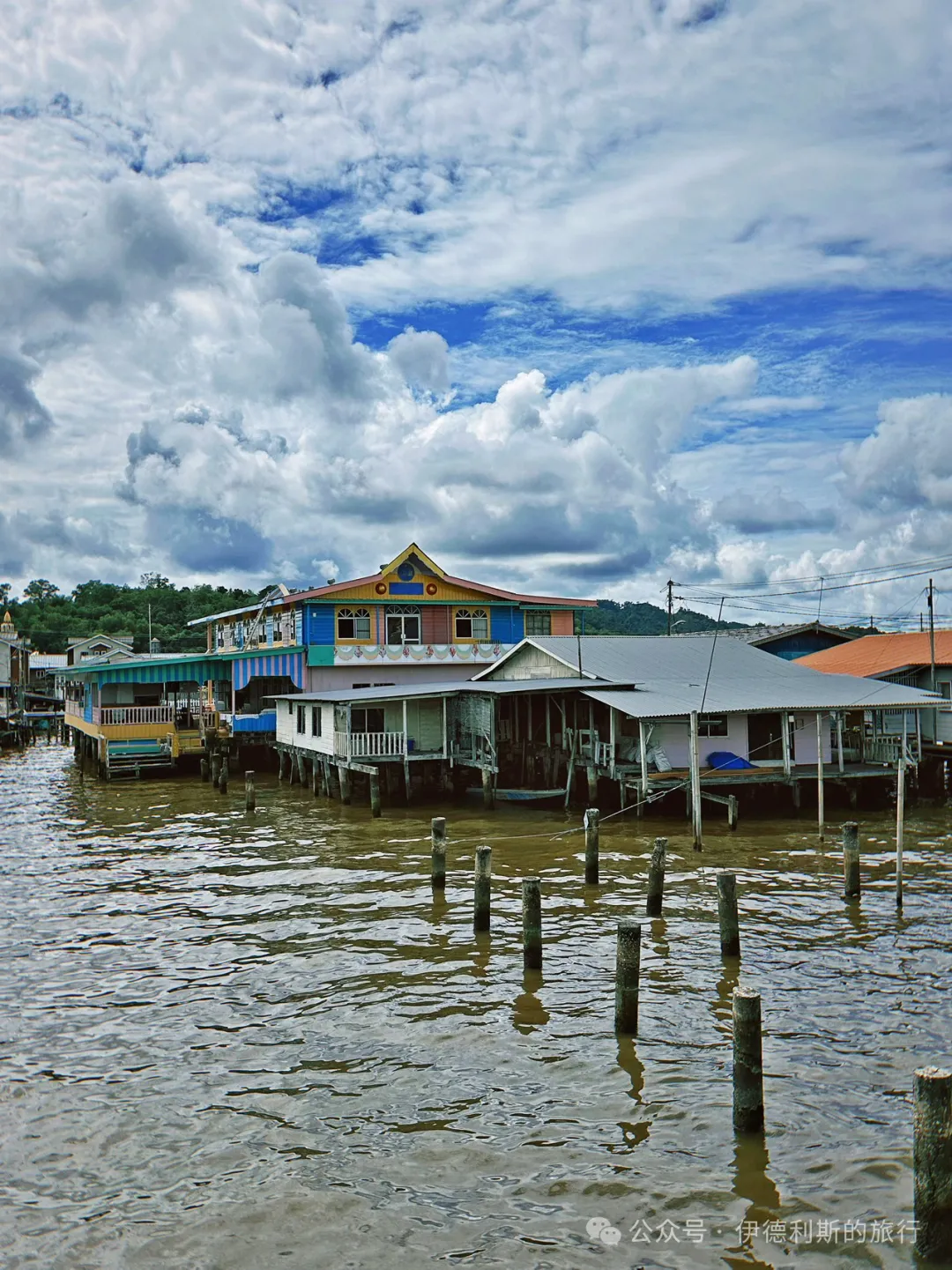
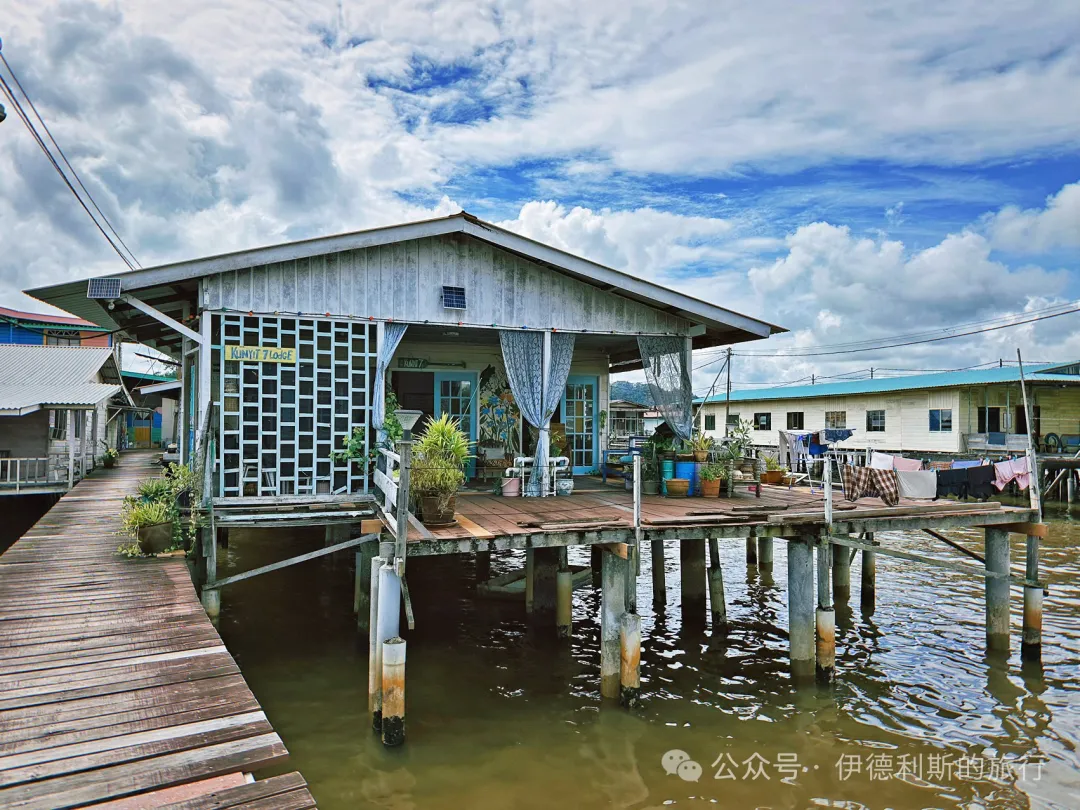
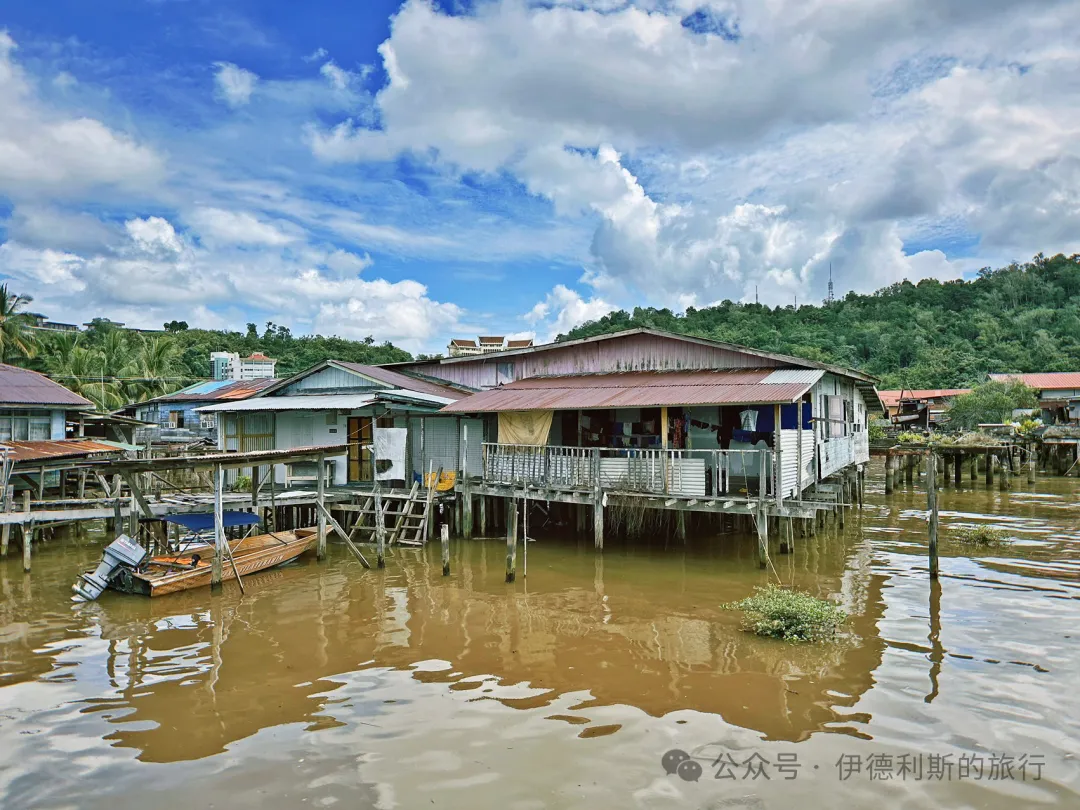
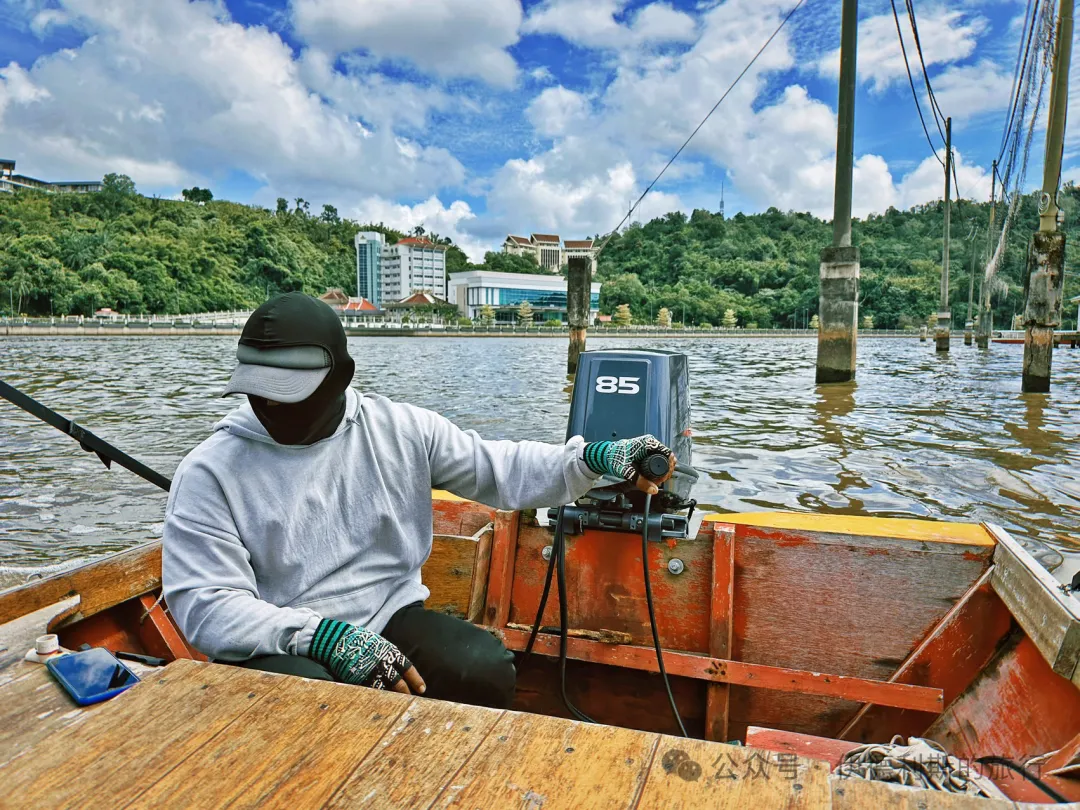
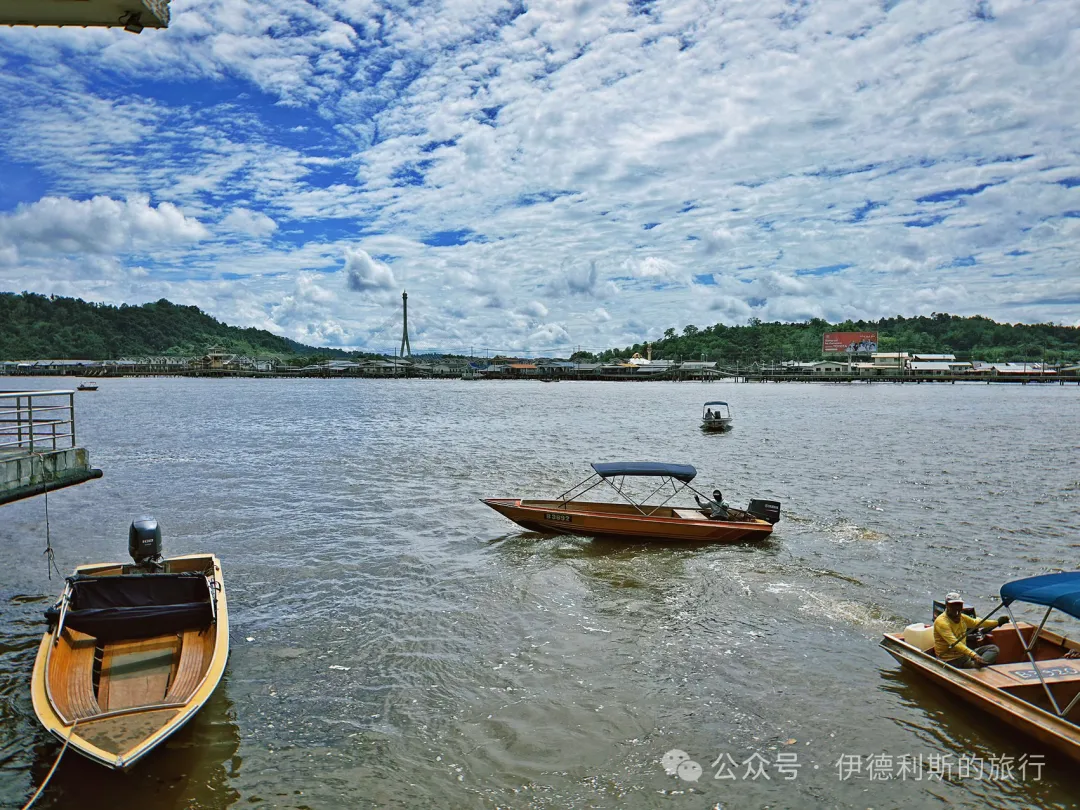
We took a speedboat from the pier by the Brunei River and reached the Water Village (Kampung Ayer) on the other side for 1 Brunei dollar each. We first visited the Kampung Ayer Cultural and Tourism Gallery, which has information about the water village, and a lookout tower next to it for a panoramic view.
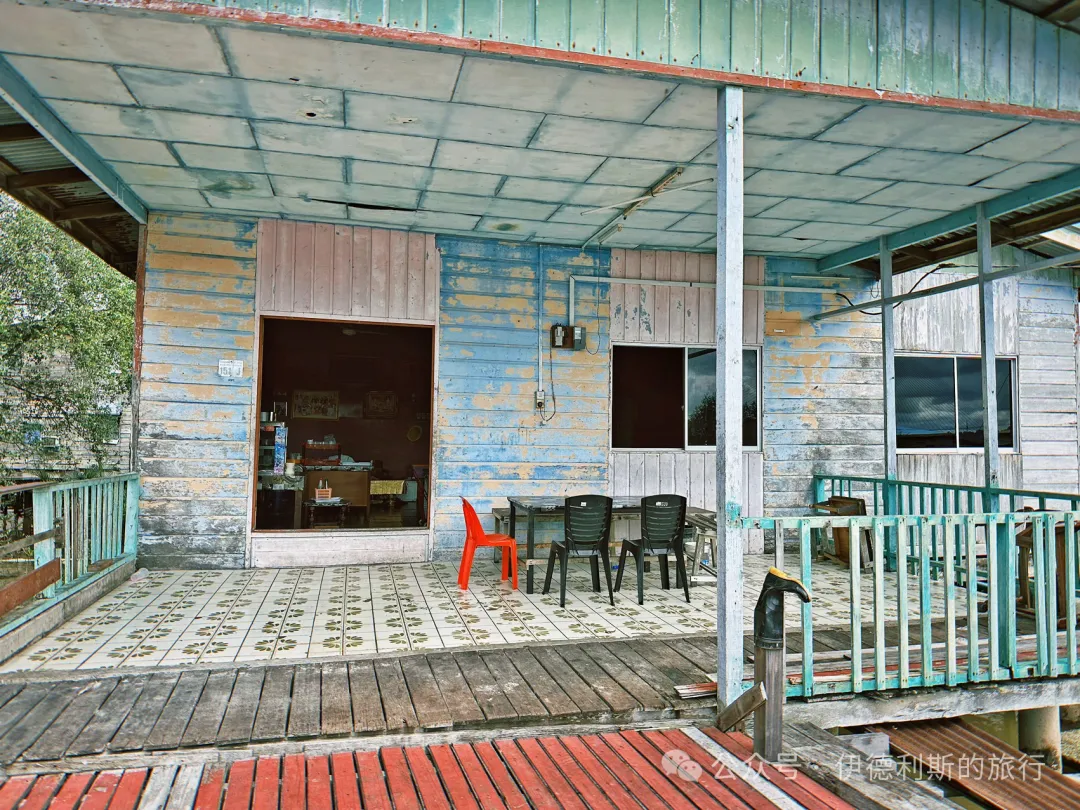
Kampung Ayer is the Malay term for water village. It was once the main port of the Brunei Sultanate and served as its trade center from the 15th to the 17th century. After the Brunei Civil War in the 18th century, Kota Batu was abandoned, and the water village became the capital of the Sultanate. In 1521, Italian explorer Antonio Pigafetta arrived in Brunei with Magellan's fleet and called Kampung Ayer the Venice of the East. The water village was once huge and included the Sultan's palace, but it gradually declined under British invasion in the 19th century. After the 20th century, Brunei began encouraging residents to move to land, but many people still choose to stay.
The two traditional wooden mosques on stilts in the Water Village are a major highlight of Brunei. The walls and pillars are made of wood, but the air conditioning inside is so strong that you cannot feel the humidity from the water. In recent years, Brunei has built several large concrete mosques along the banks of the Water Village, and the traditional wooden mosques are becoming fewer.
The Water Village has its own scenery, small restaurants, and convenience stores, though it is usually quite quiet.
Tomb of the 16th Sultan of Brunei
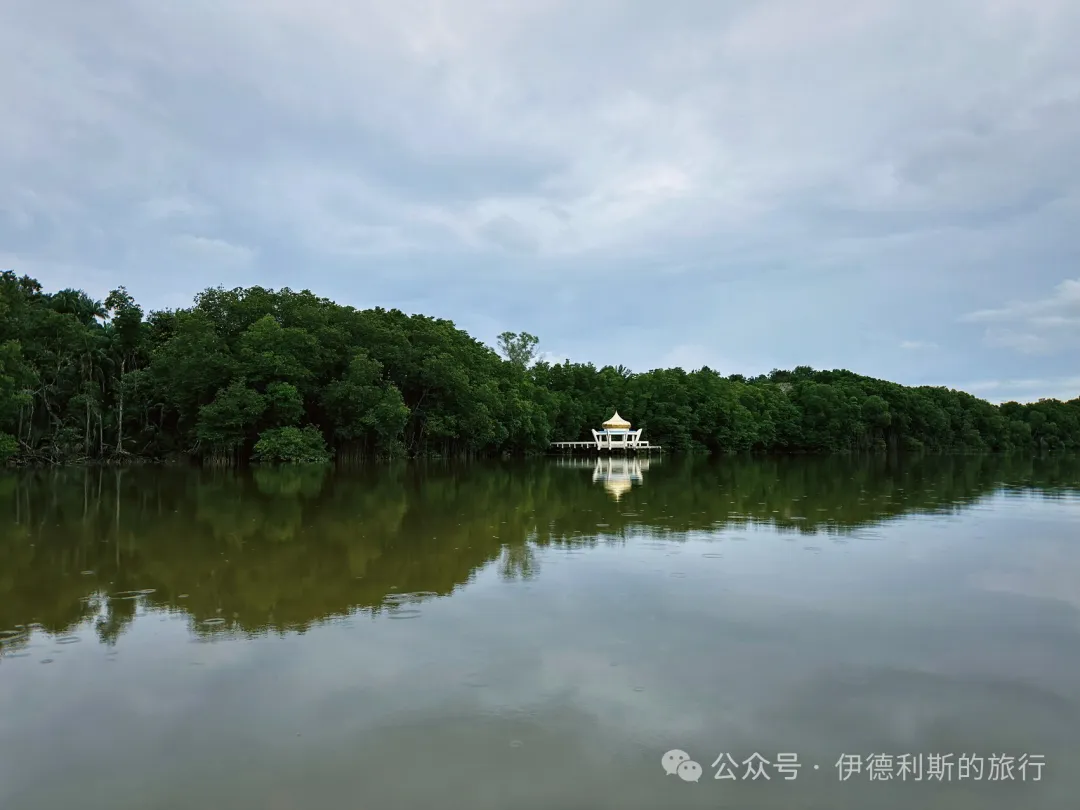
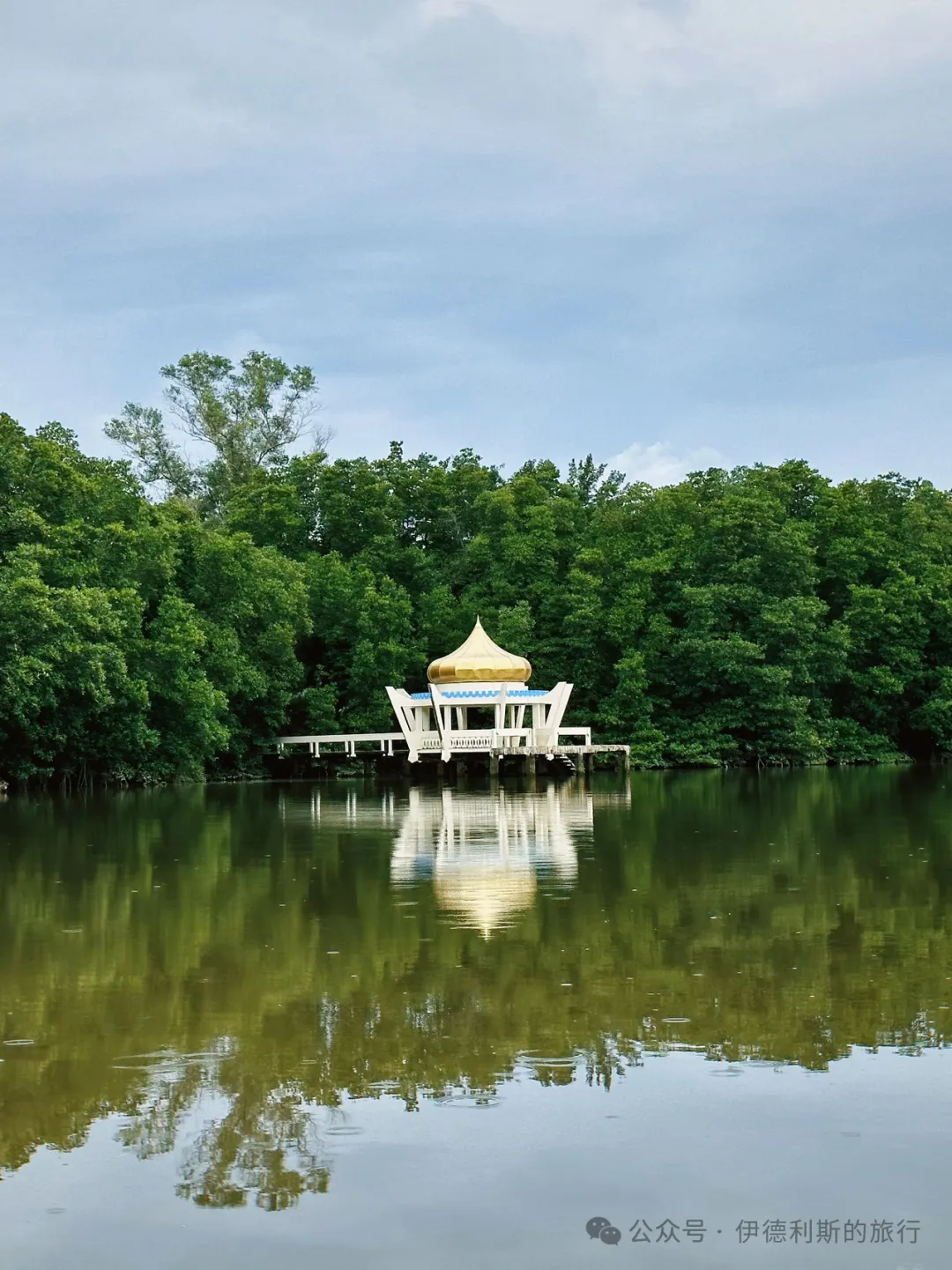
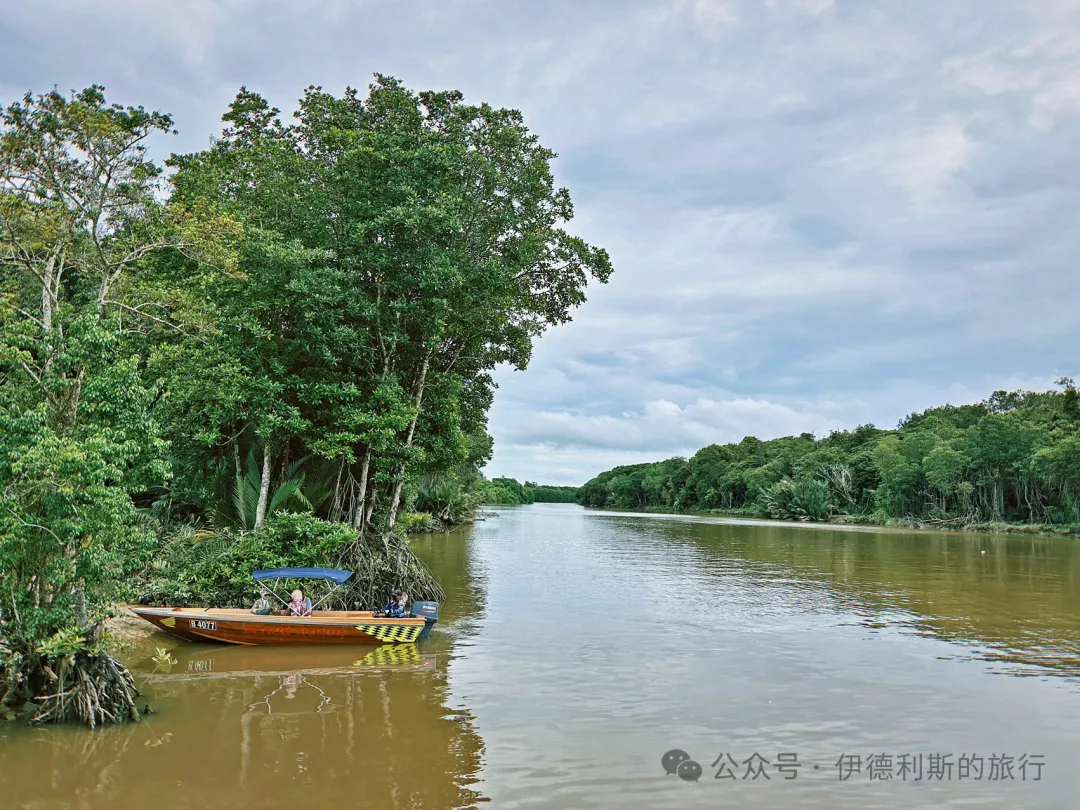
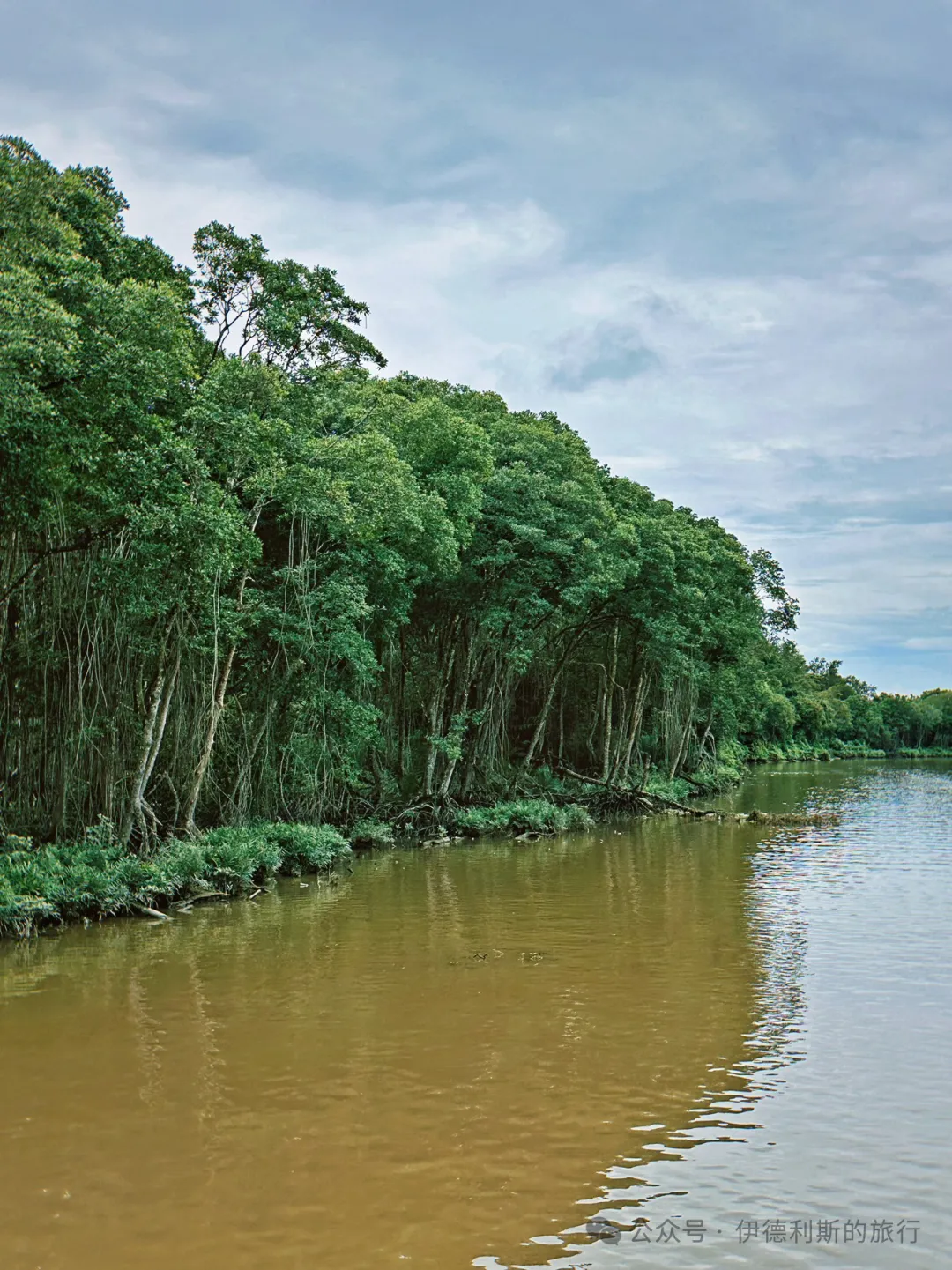
Take a speedboat west from the Brunei River to reach Luba Island, hidden by mangroves, where the tomb of the 16th Sultan of Brunei, Hussin Kamaluddin (reigned 1710-30, 1737-40), is located. Sultan Hussin Kamaluddin survived the Brunei civil war as a child, and he was pious, studious, and hardworking. Under his rule, Brunei was prosperous and had plenty of food. Legend says the Sultan liked to fish with locals along the upper banks of the Brunei River, especially near his tomb on Luba Island.
Old Town of Brunei Town
Until the early 20th century, the capital of Brunei was the Kampong Ayer water village along the Brunei River, until British Resident Malcolm MacArthur began guiding residents to settle on land in 1906. In 1910, Chinese immigrants were the first to build shops on the north bank of the Brunei River, and Brunei Town began to take shape. In 1922, the reigning Sultan Muhammad Jamalul Alam II decided to move the palace inland to Brunei Town, a move that encouraged many Water Village residents to accept relocation, leading to rapid urban development.
In 1945, Brunei Town was almost leveled by Allied bombing, followed by large-scale reconstruction in the 1950s and 1960s. After 1963, economic growth from oil and gas led to a rapid increase in Chinese immigrants to Brunei Town, who opened many shops. In 1970, Brunei Town was officially renamed Bandar Seri Begawan.
On the east side of the old town is the Sungai Kianggeh River, where Kampong Ayer residents can boat directly to the Kianggeh market to buy various farm produce. This is also one of the relocation points for Water Village residents after they come ashore.
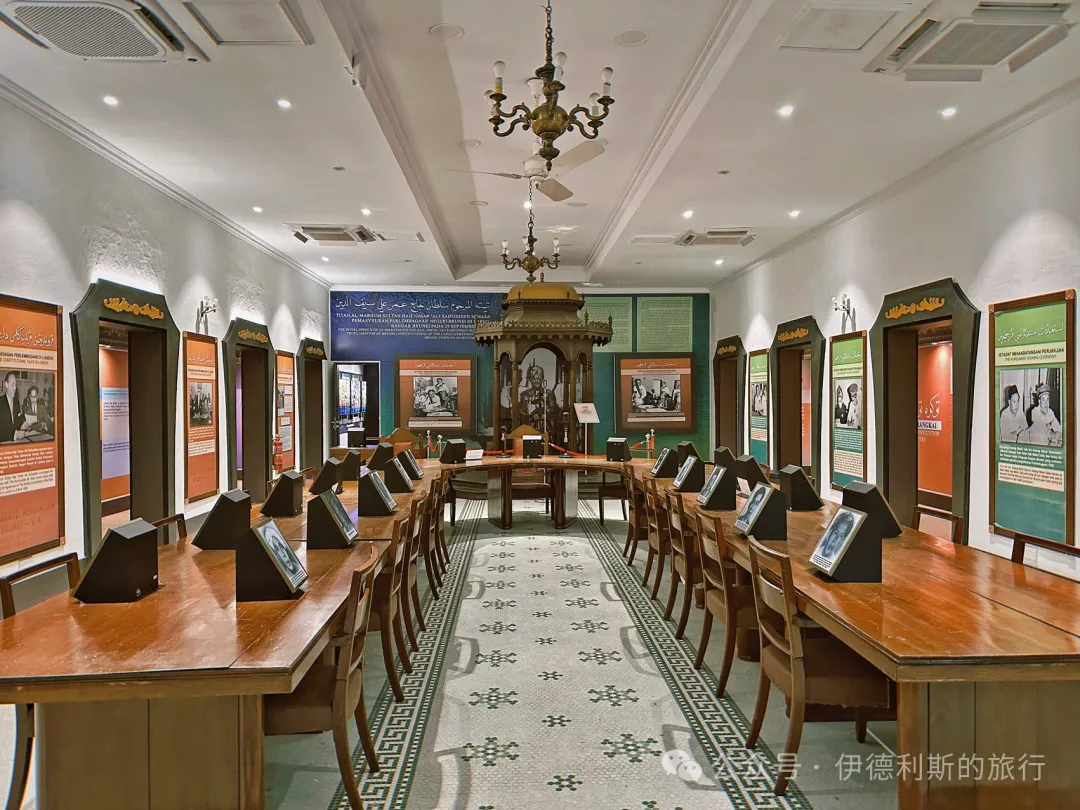
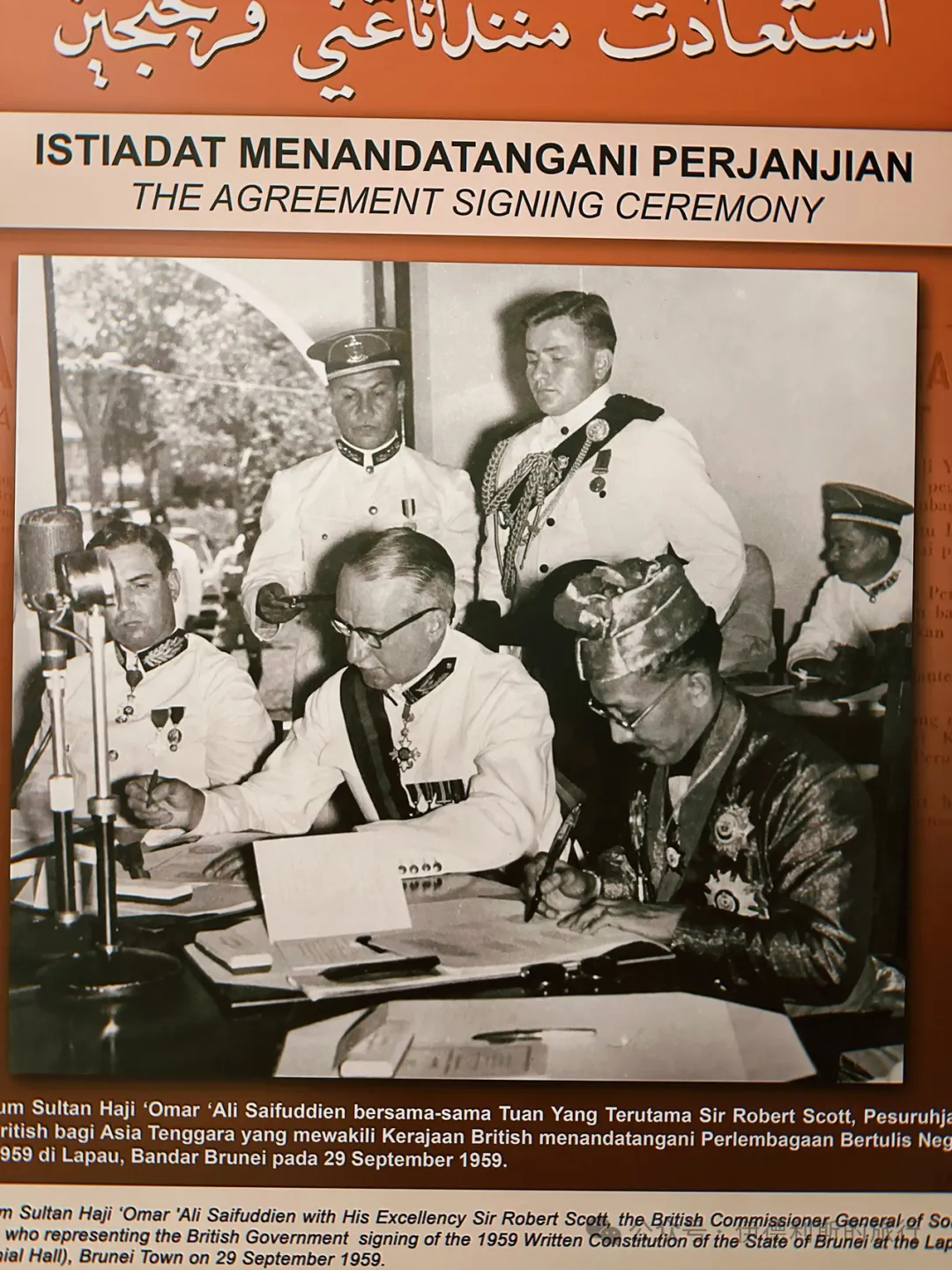
The old Royal Ceremonial Hall (Lapau Lama) in the old town, built in 1950, now displays the scene of the 1959 Brunei Constitution signing, including the original chandeliers, tables, chairs, and the microphone used by the Sultan. Lapau Lama is the oldest concrete building in the old town, with an interior that blends pragmatism and minimalism.
Next to the old Royal Ceremonial Hall is the Royal Regalia Museum, which houses two royal chariots: one used for the Sultan's coronation in 1968 and Queen Elizabeth II's visit in 1972, and another used for the Sultan's 25th anniversary of his coronation in 1992.
Tasek Lama Recreational Park in Brunei
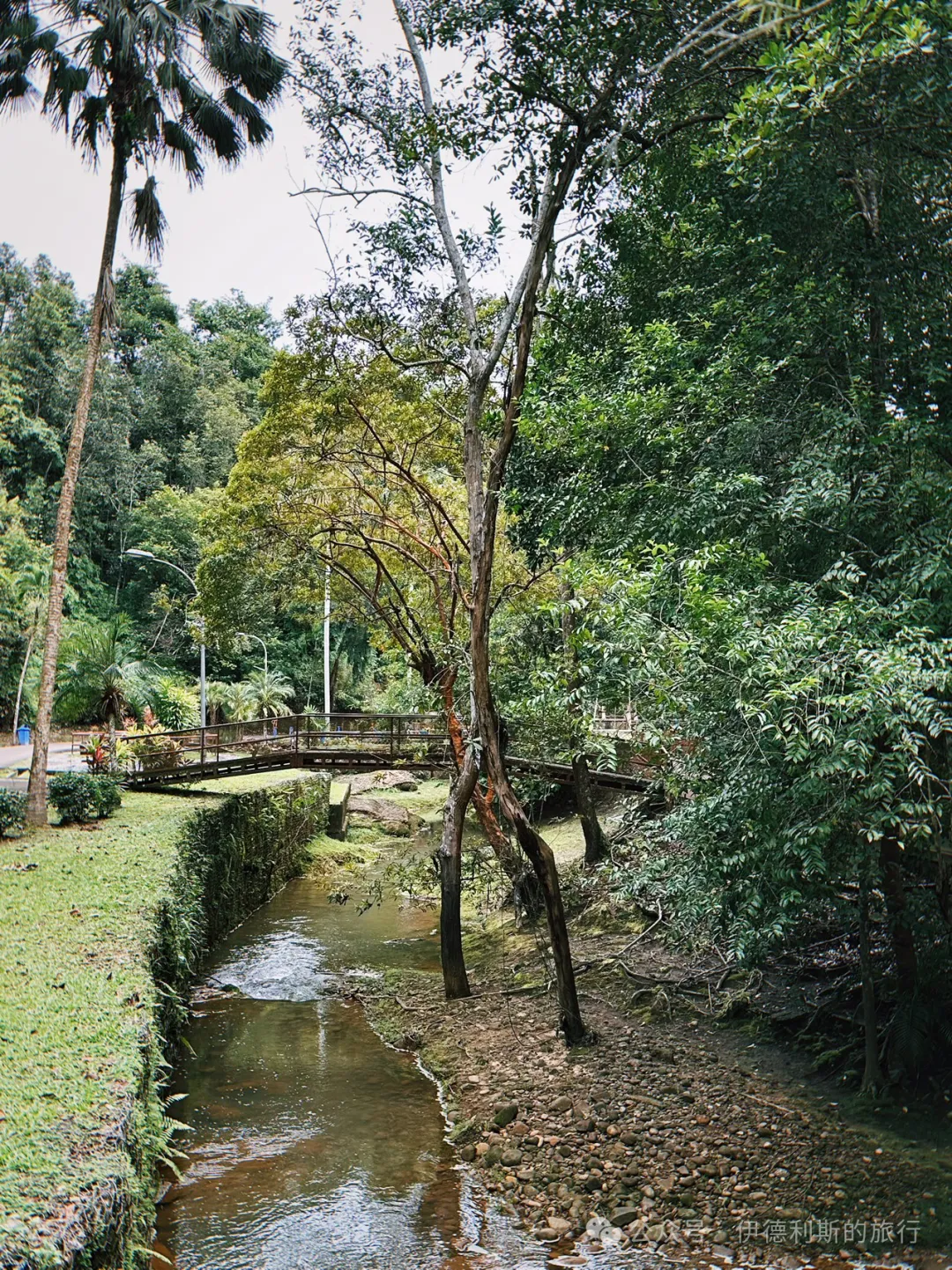
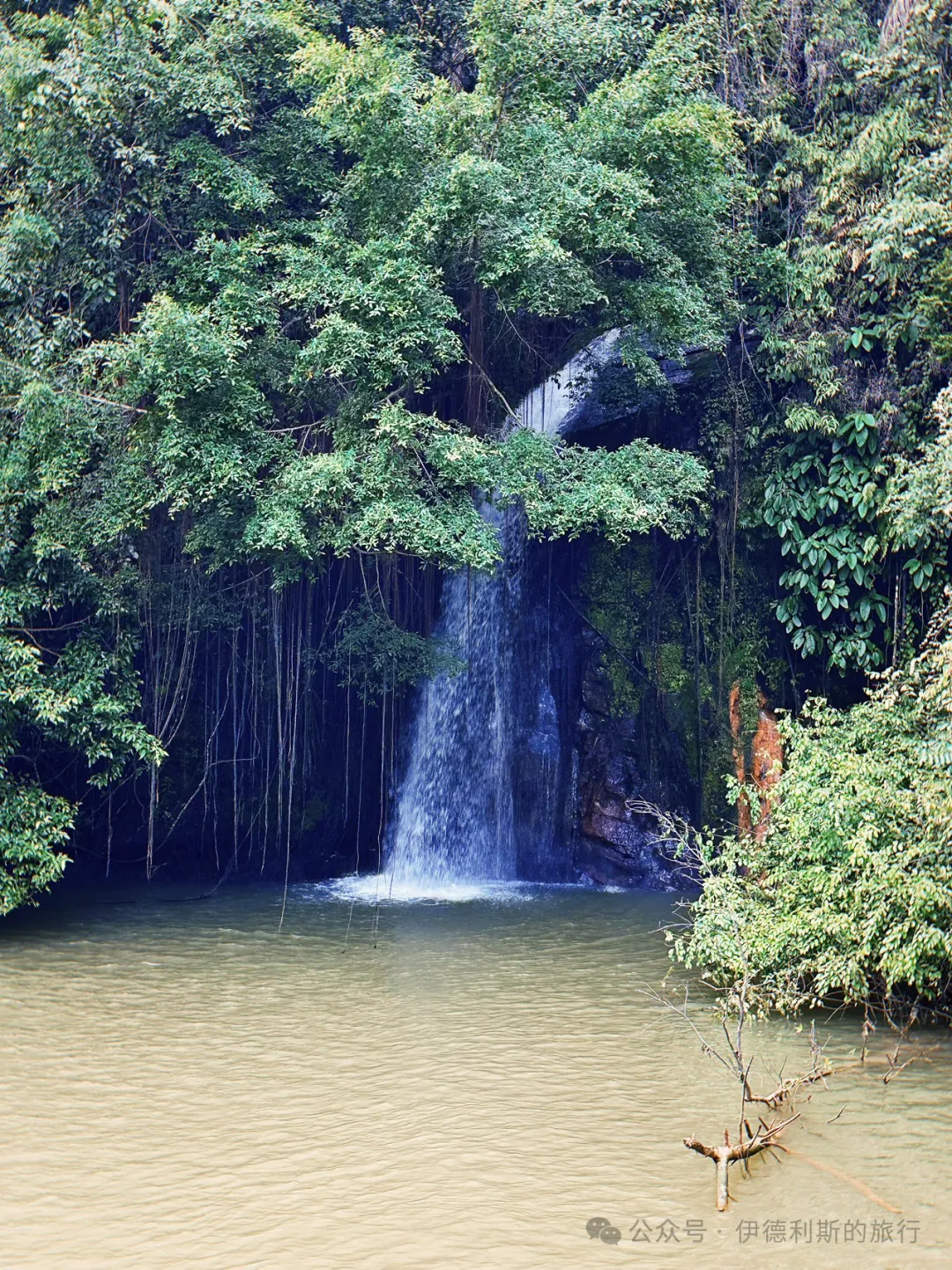
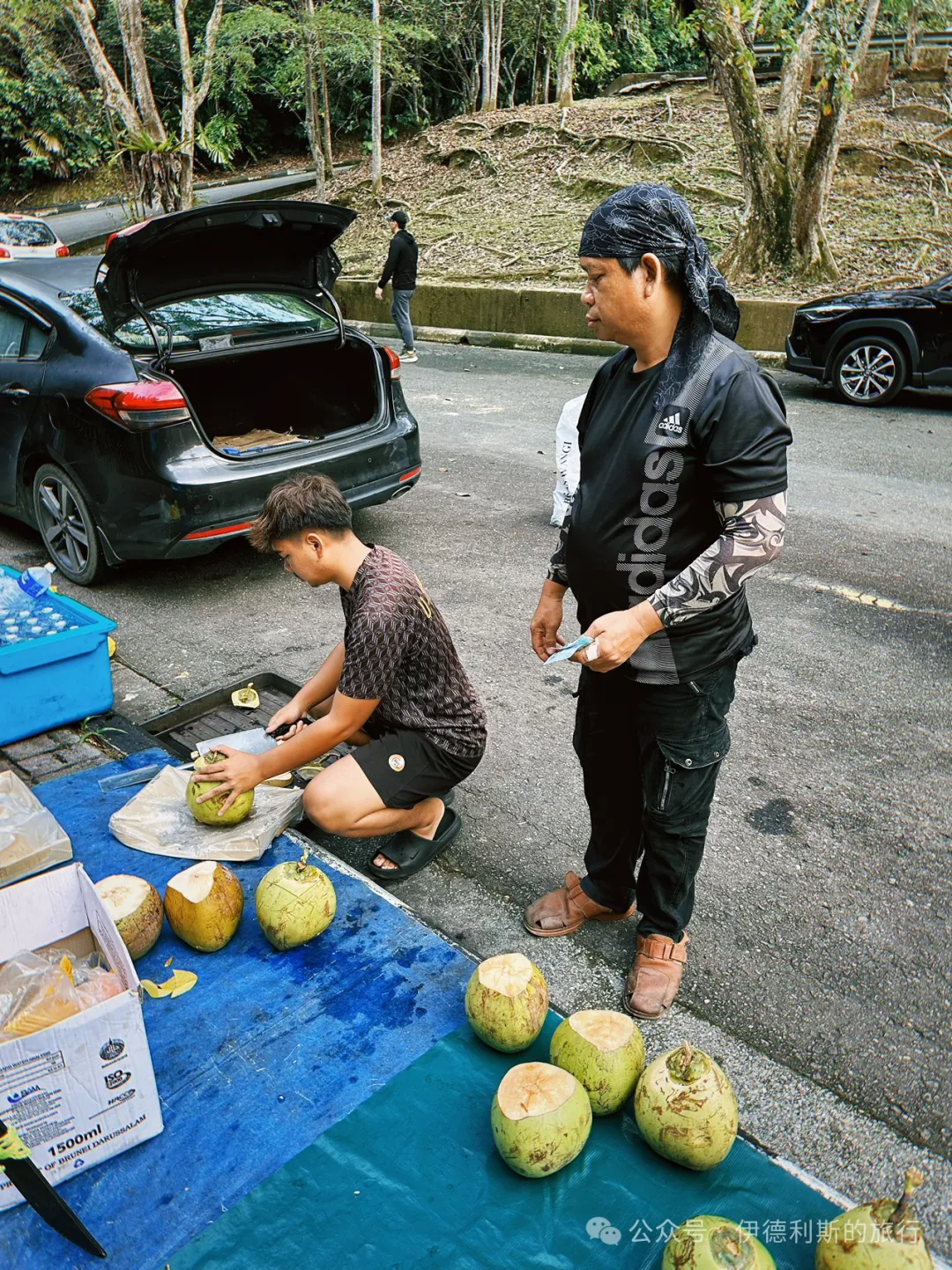
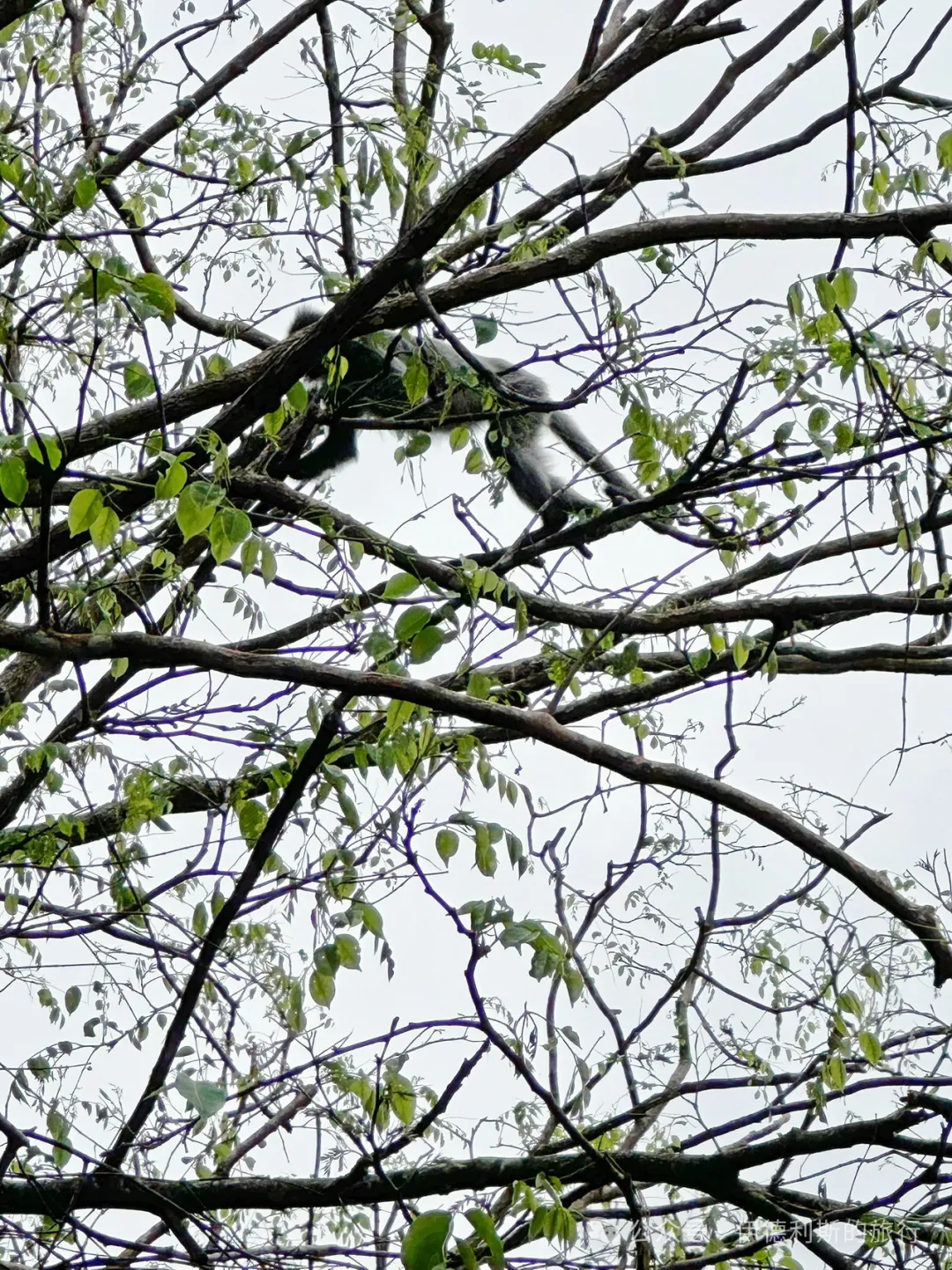
Strolling through Tasek Lama Recreational Park in Brunei, a primeval forest in the city center, is very relaxing by the waterfall. The mountains are full of birds and monkeys, and pitcher plants can be seen everywhere along the road. People in Brunei love jogging in the park, and after finishing, you can buy big, juicy coconuts at the entrance to drink.
Take a speedboat to see proboscis monkeys.
At the Royal Brunei Wharf, you can see many speedboats looking for tourists to take on tours of the water village and to see proboscis monkeys. We asked the price and it was 10 Brunei dollars (53 RMB) per person for a one-hour boat ride, which felt like a pretty good deal.
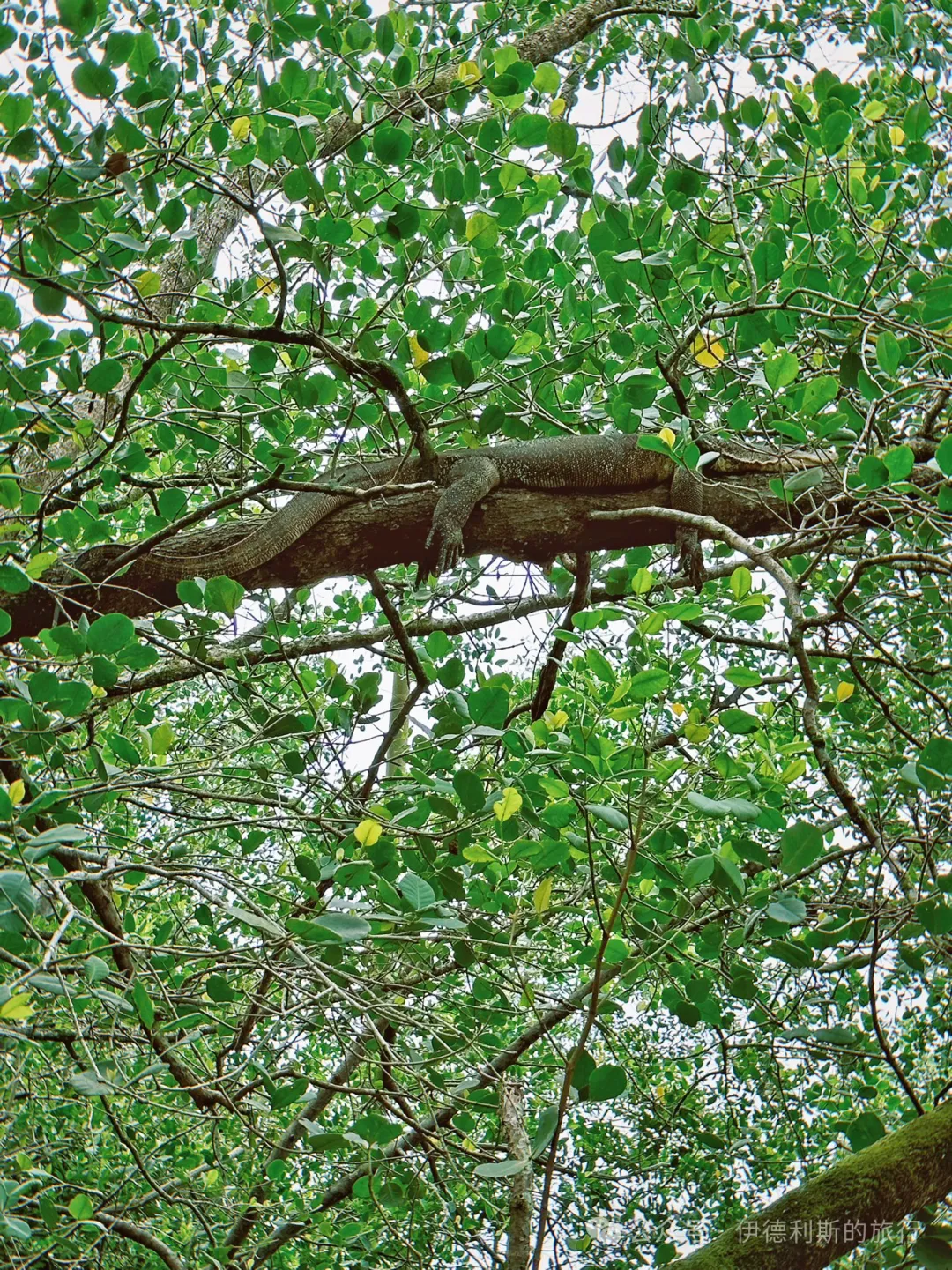
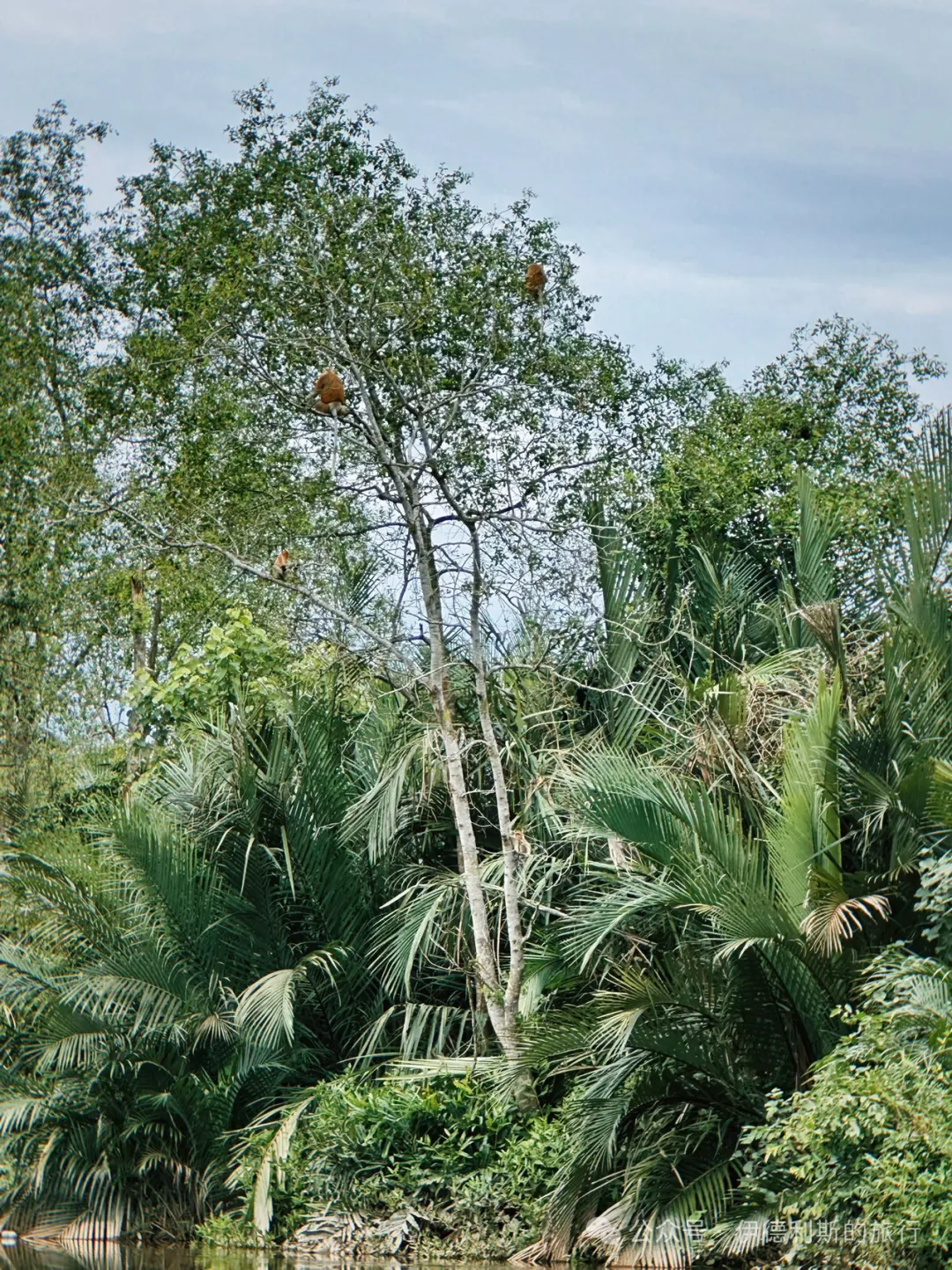
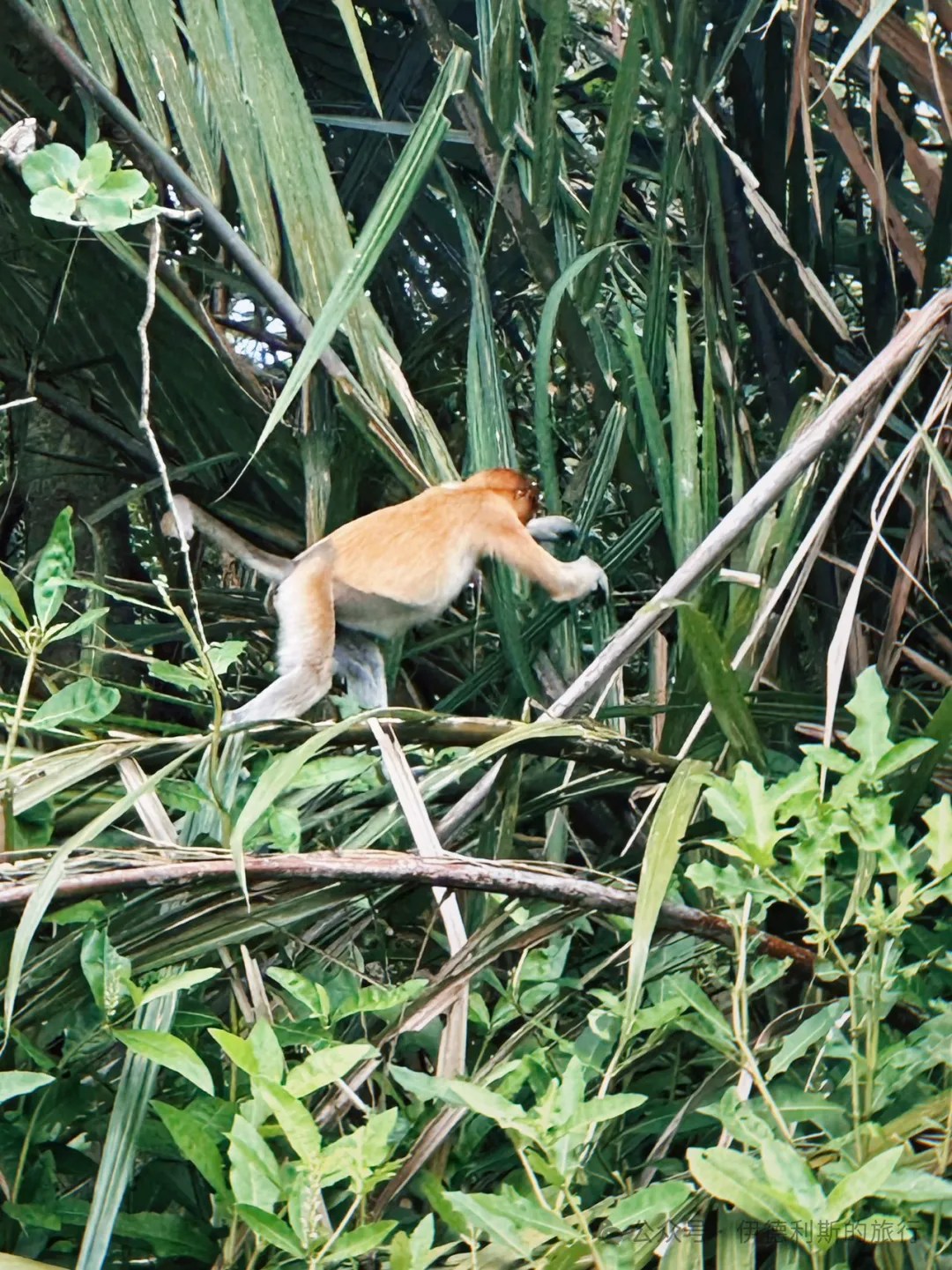
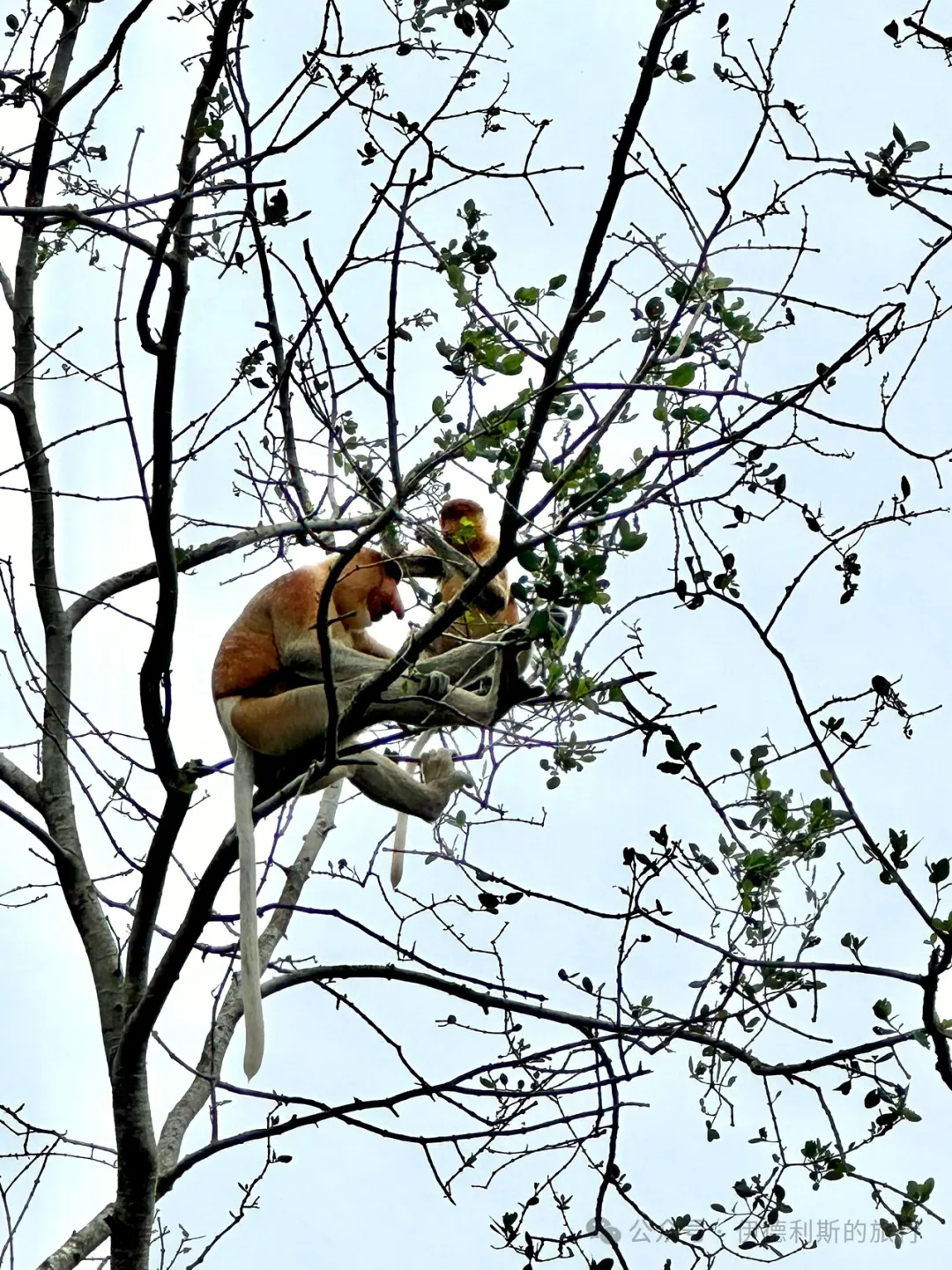
After boarding, we first toured the water village, where you can see a water fire station, a water school, and a water mosque. We also spotted a huge monitor lizard among the mangroves. Then we went to see the proboscis monkeys. We traveled 10 kilometers west along the Brunei River to Luba Island in the middle of the river. The island holds the tomb of the 16th Sultan of Brunei, Hussain Kamaluddin. This is also the best place to watch proboscis monkeys, and we saw a family of them eating leaves by the edge of the mangroves. view all
Summary: This second part of the Brunei visa-free cultural trip continues through sites connected with Malay history, Muslim life, and local heritage. The English version keeps the original place names, photo order, and historical notes from the source article.
North of the tomb of Sultan Sharif Ali is the grave of Sharif Adam, another pioneer who came to Brunei with the Sultan to spread the faith. Together, they spread the influence of the faith from Brunei to the Sulu Archipelago and Mindanao in the southern Philippines. According to the tombstone, Sharif Adam passed away in 1454.
Tomb of the Fifth Sultan of Brunei
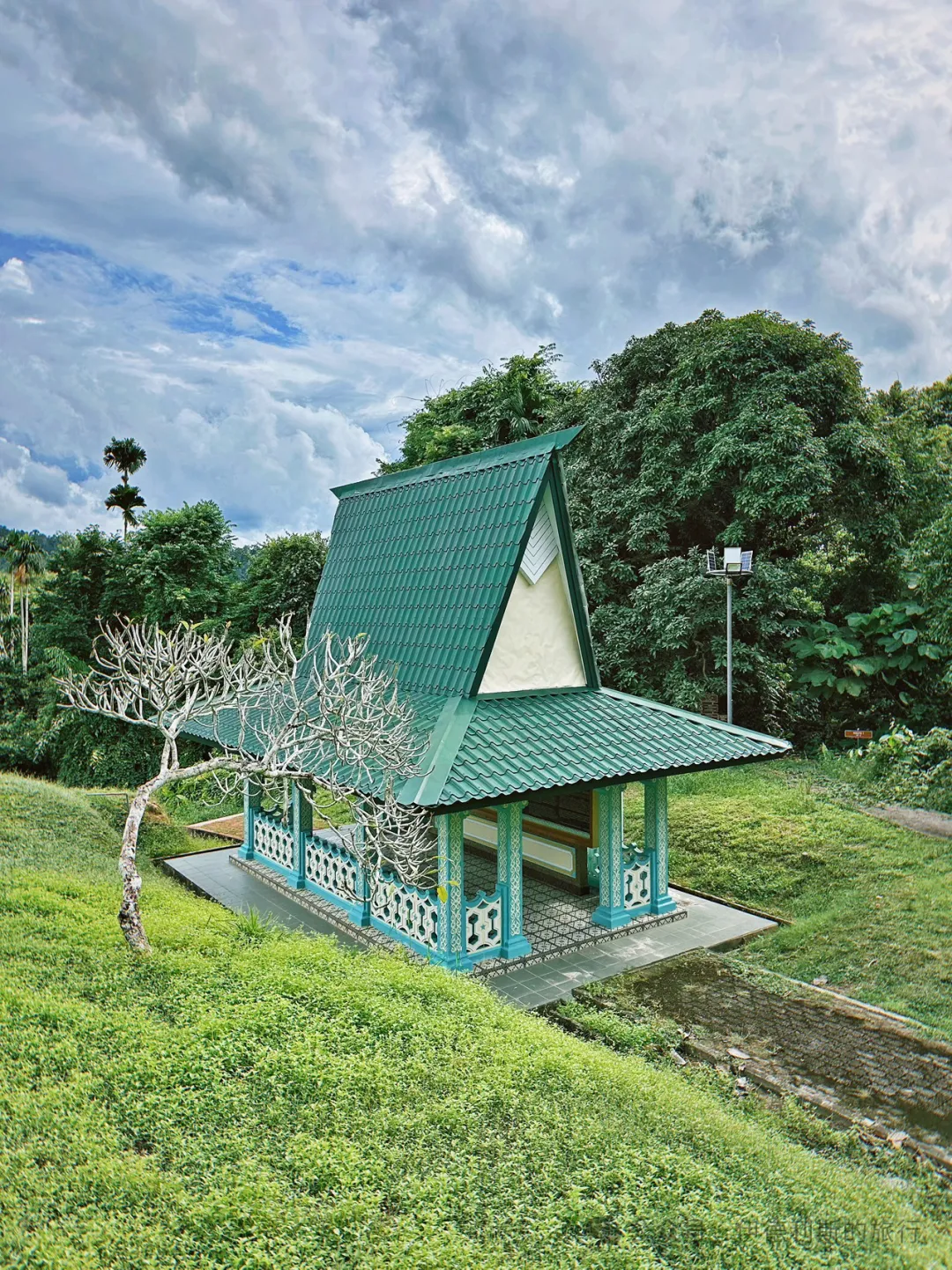
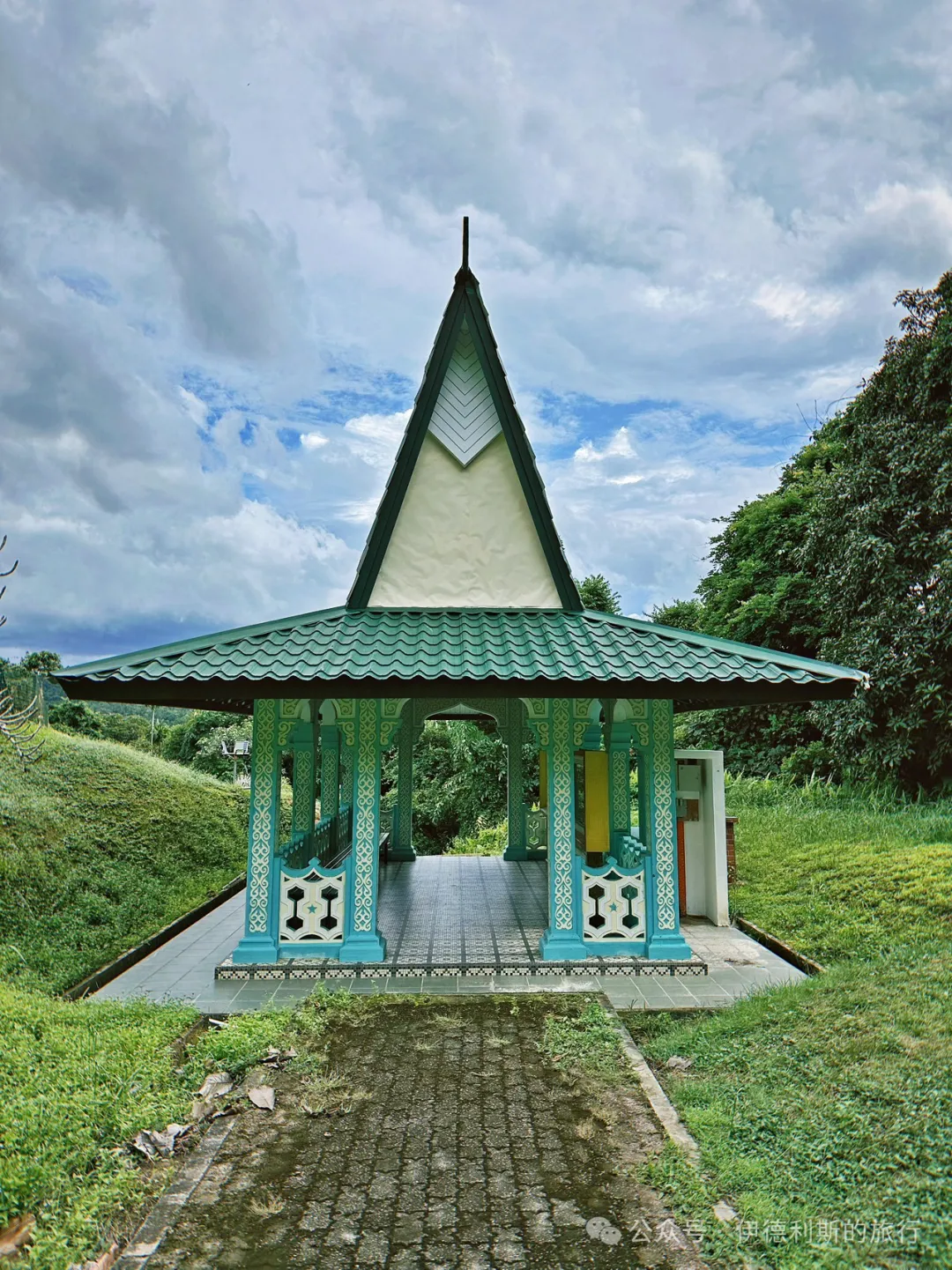
South of the Kota Batu site No. 1 is the tomb of Bolkiah, the fifth Sultan of Brunei, who reigned from 1485 to 1524. His reign is known as the golden age of Brunei history, when the Sultanate held power over Borneo and the southern Philippines.
When Magellan's fleet arrived in Brunei in 1521, they witnessed the power of Brunei under Sultan Bolkiah. When they reached the palace, they were shocked by his wealth. A hall reached by wide steps was packed with courtiers in elegant clothing. Through the corridor was a slightly raised room decorated with luxurious silk and brocade curtains, bathed in natural light from wide windows. Three hundred of the Sultan's warriors stood guard there with drawn daggers. A little further on was a smaller but equally beautiful room, where the muscular forty-year-old monarch chewed betel nut on a large mat with his young son beside him.
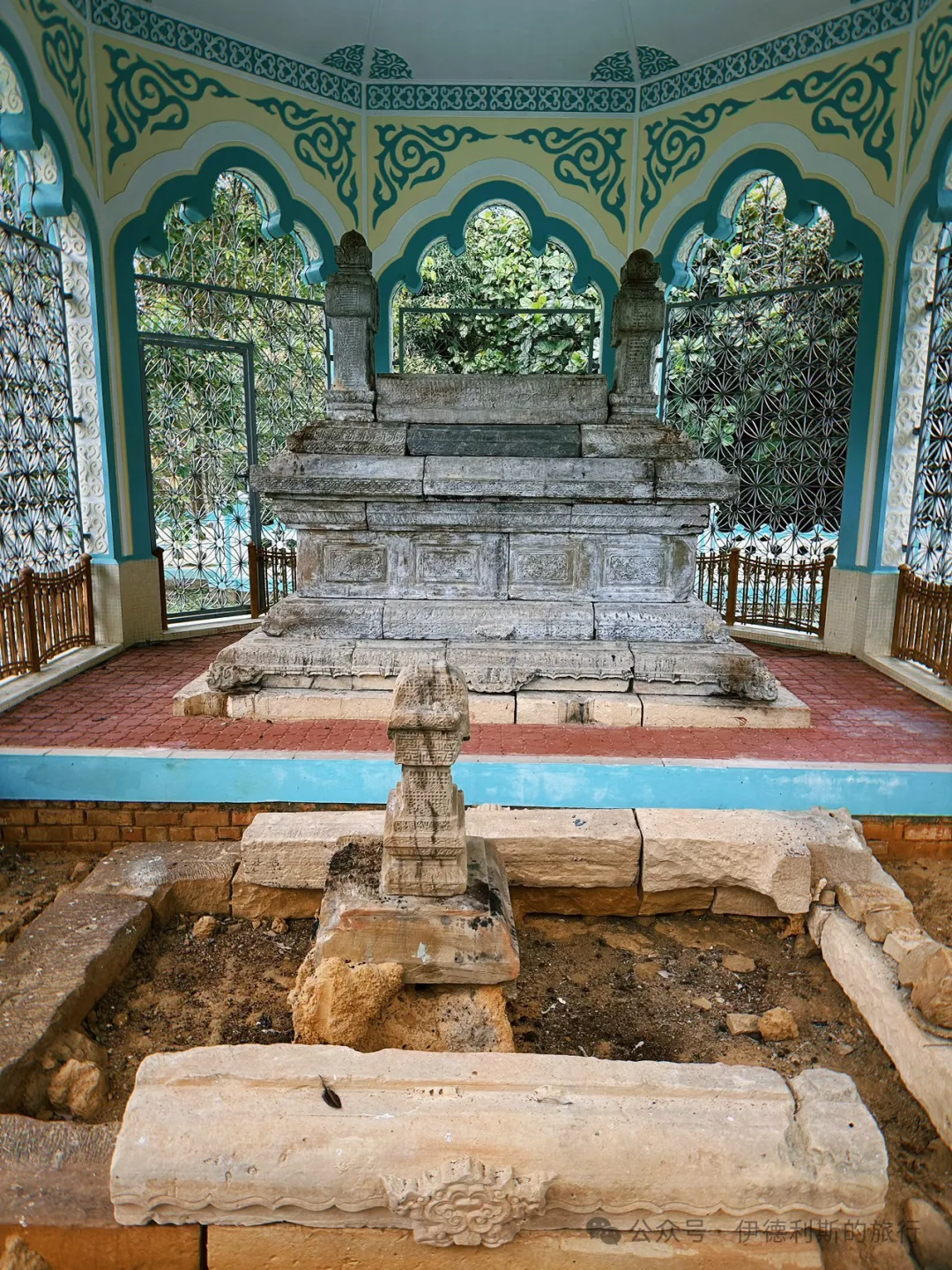
Sultan Bolkiah's tomb is tall, majestic, and finely carved. The tombstone has eight layers, but only the bottom layer is original. One of the upper stones commemorates Sultan Muhammad Ali, and another commemorates Sultan Abdul Mubin, likely made in the late 17th century. The middle slab records that Sultan Bolkiah died on July 17, 1524, and was likely carved in modern times.
Water Village (Kampung Ayer)
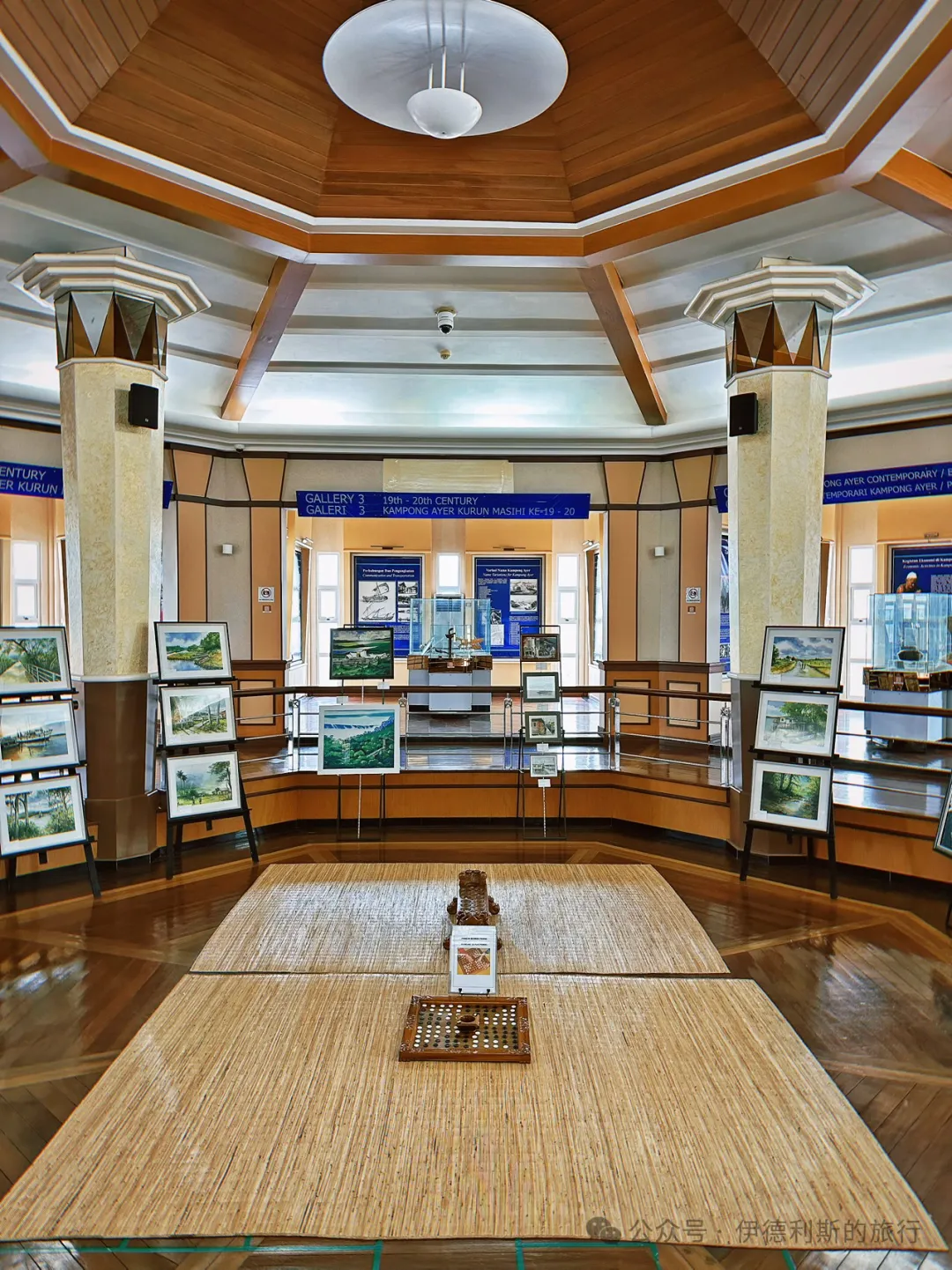
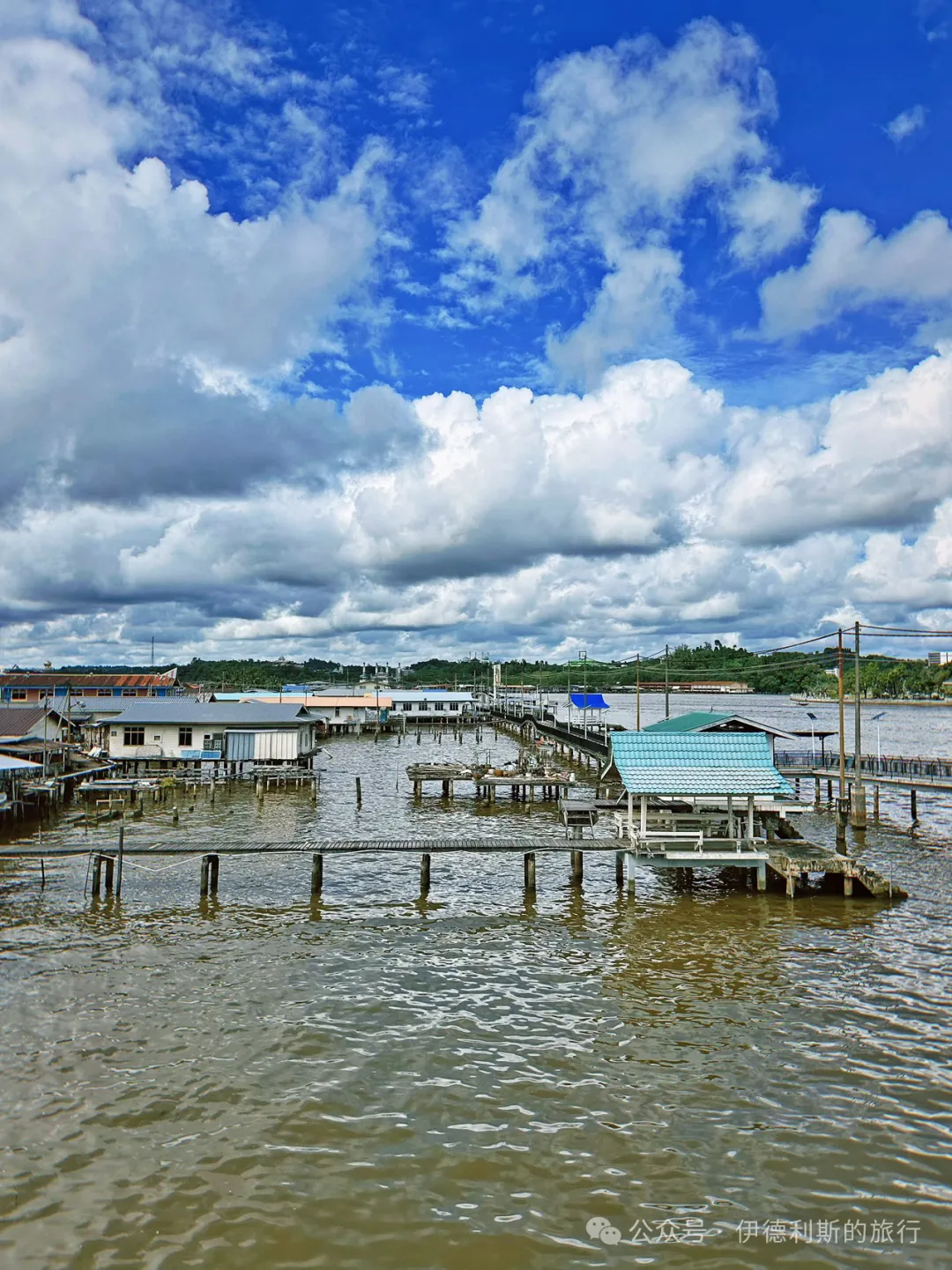
We took a speedboat from the pier by the Brunei River and reached the Water Village (Kampung Ayer) on the other side for 1 Brunei dollar each. We first visited the Kampung Ayer Cultural and Tourism Gallery, which has information about the water village, and a lookout tower next to it for a panoramic view.
Kampung Ayer is the Malay term for water village. It was once the main port of the Brunei Sultanate and served as its trade center from the 15th to the 17th century. After the Brunei Civil War in the 18th century, Kota Batu was abandoned, and the water village became the capital of the Sultanate. In 1521, Italian explorer Antonio Pigafetta arrived in Brunei with Magellan's fleet and called Kampung Ayer the Venice of the East. The water village was once huge and included the Sultan's palace, but it gradually declined under British invasion in the 19th century. After the 20th century, Brunei began encouraging residents to move to land, but many people still choose to stay.
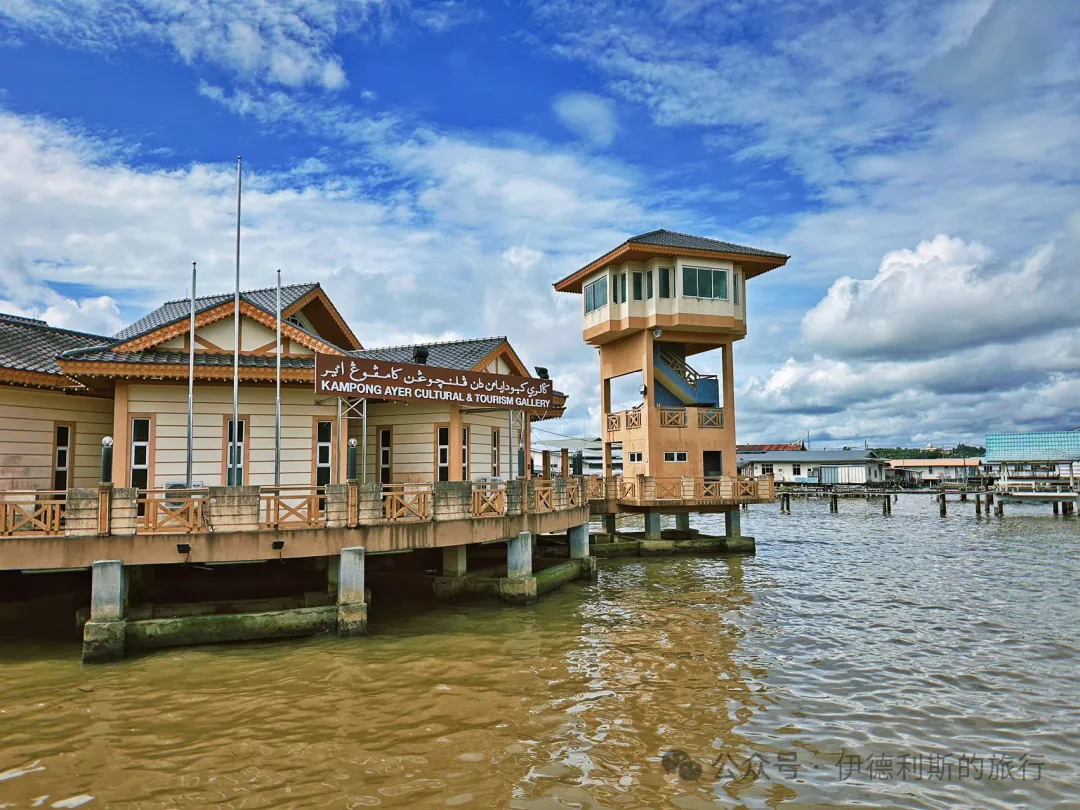
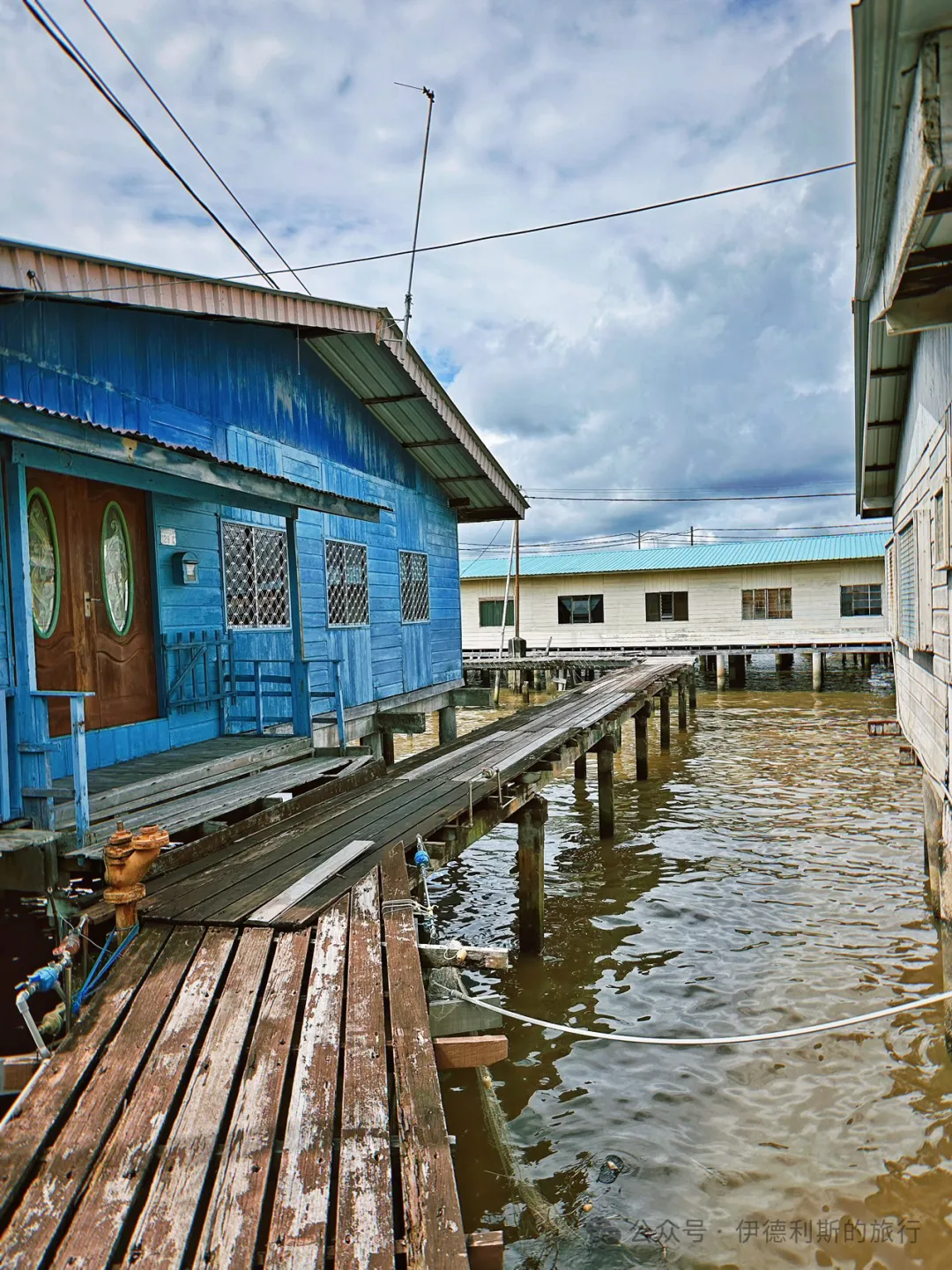
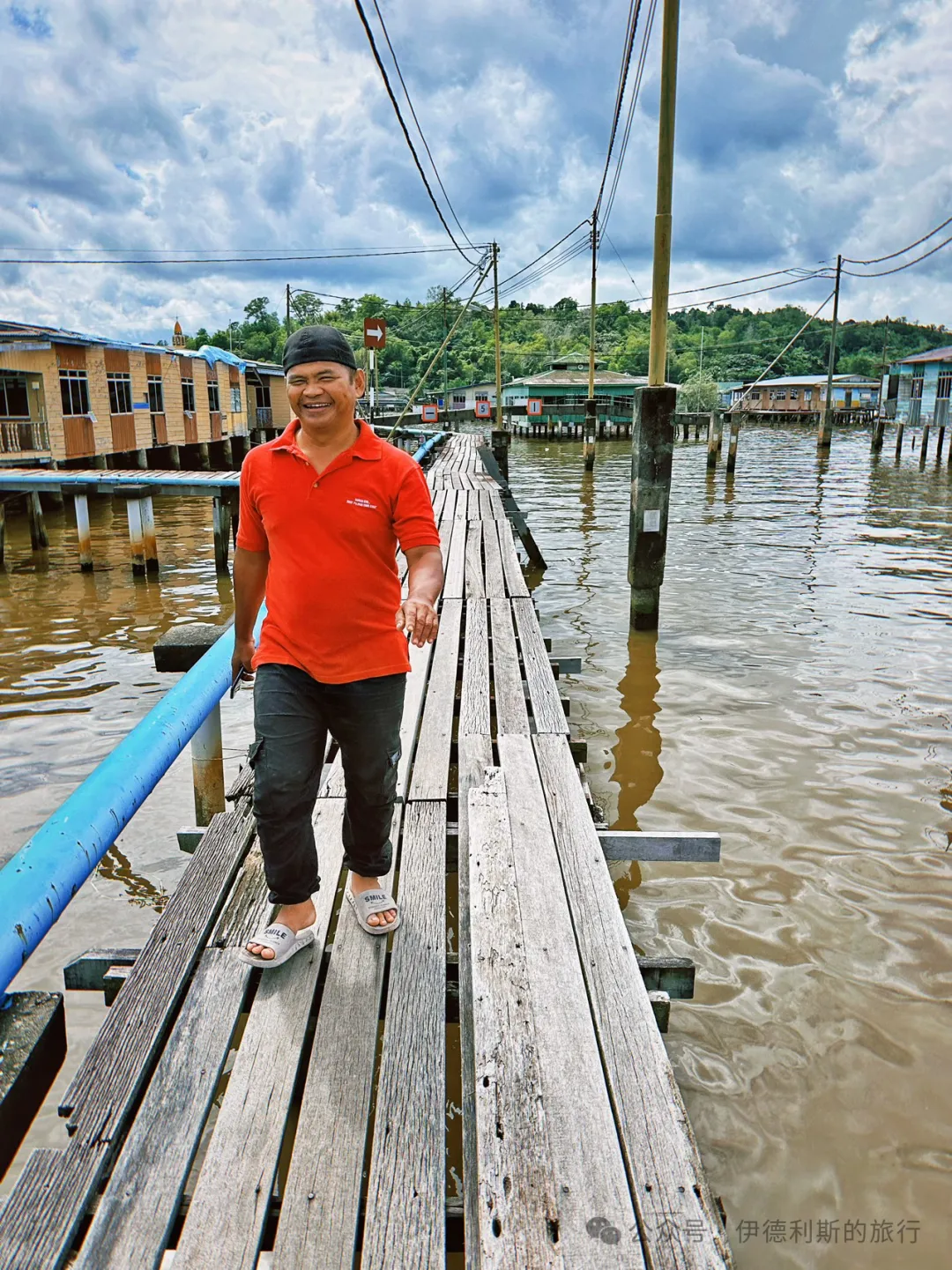
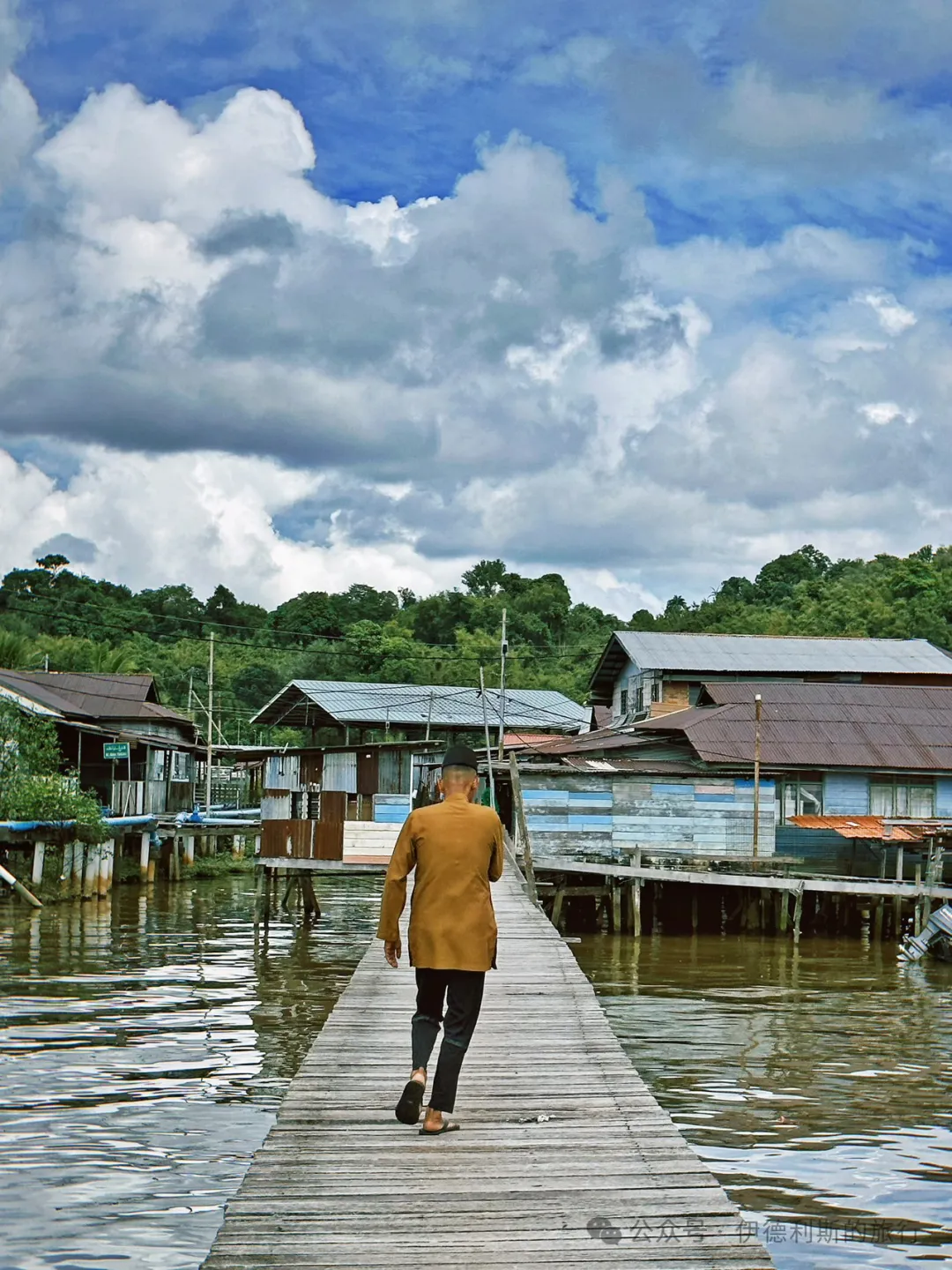
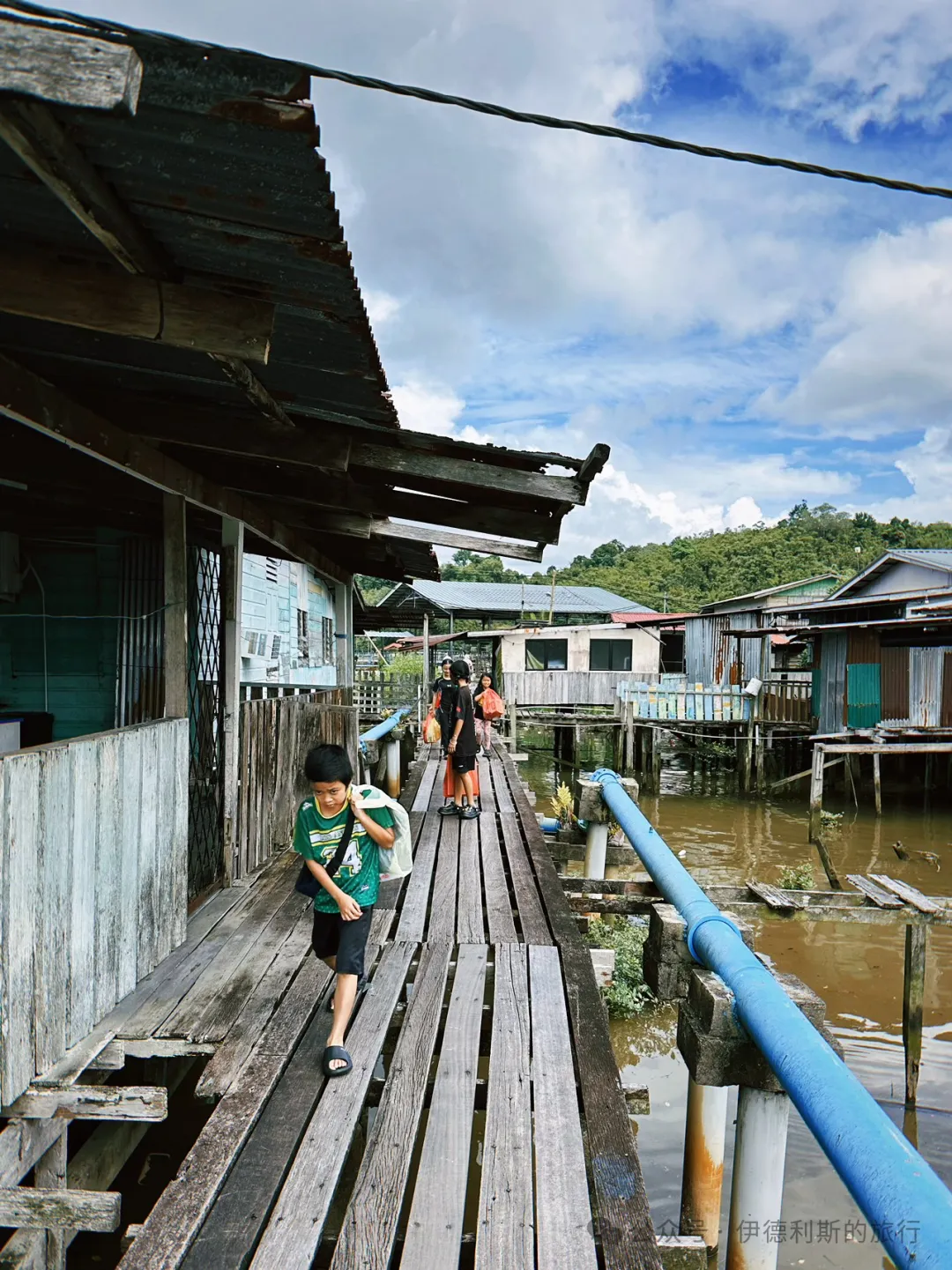
The two traditional wooden mosques on stilts in the Water Village are a major highlight of Brunei. The walls and pillars are made of wood, but the air conditioning inside is so strong that you cannot feel the humidity from the water. In recent years, Brunei has built several large concrete mosques along the banks of the Water Village, and the traditional wooden mosques are becoming fewer.
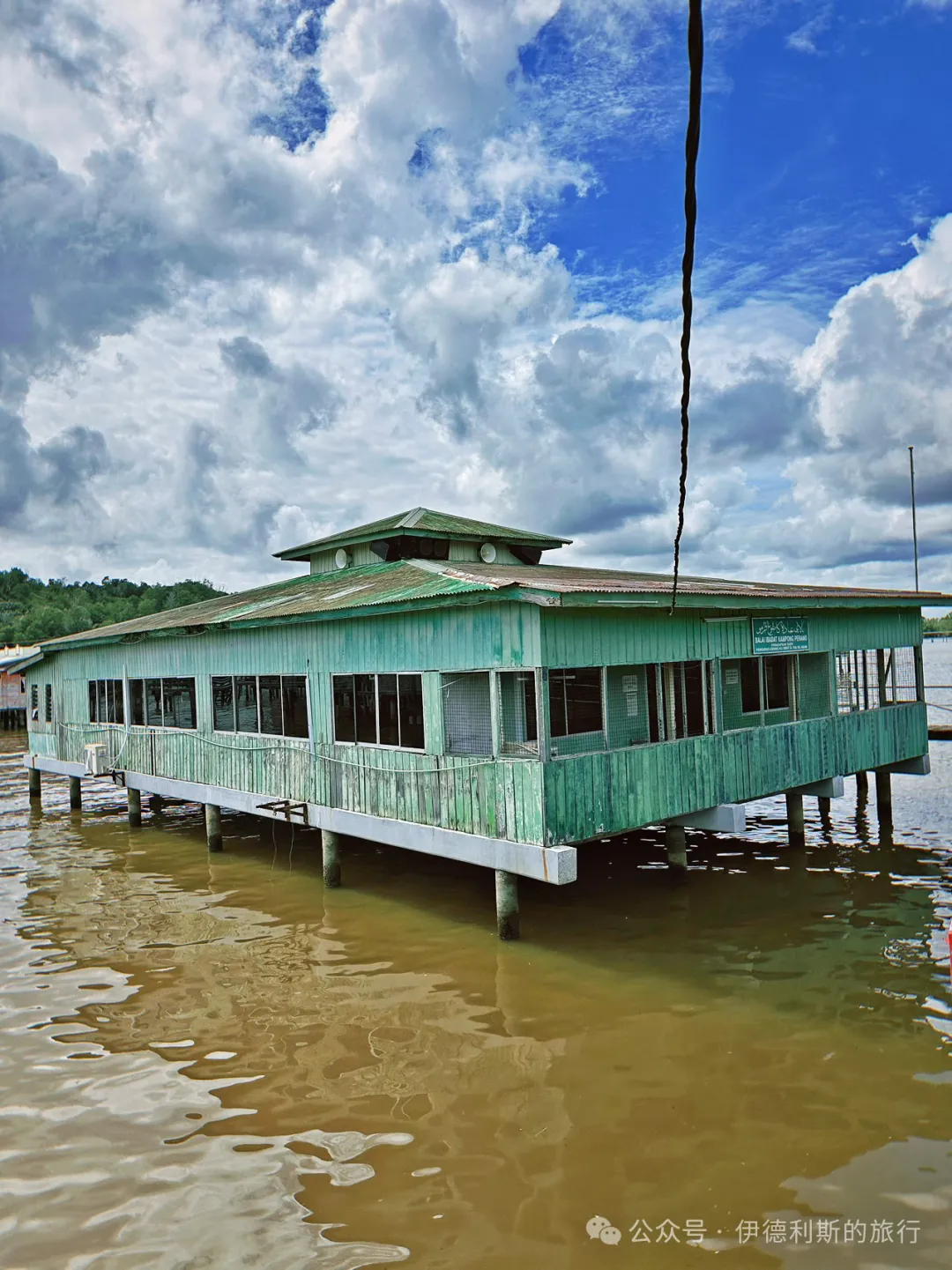
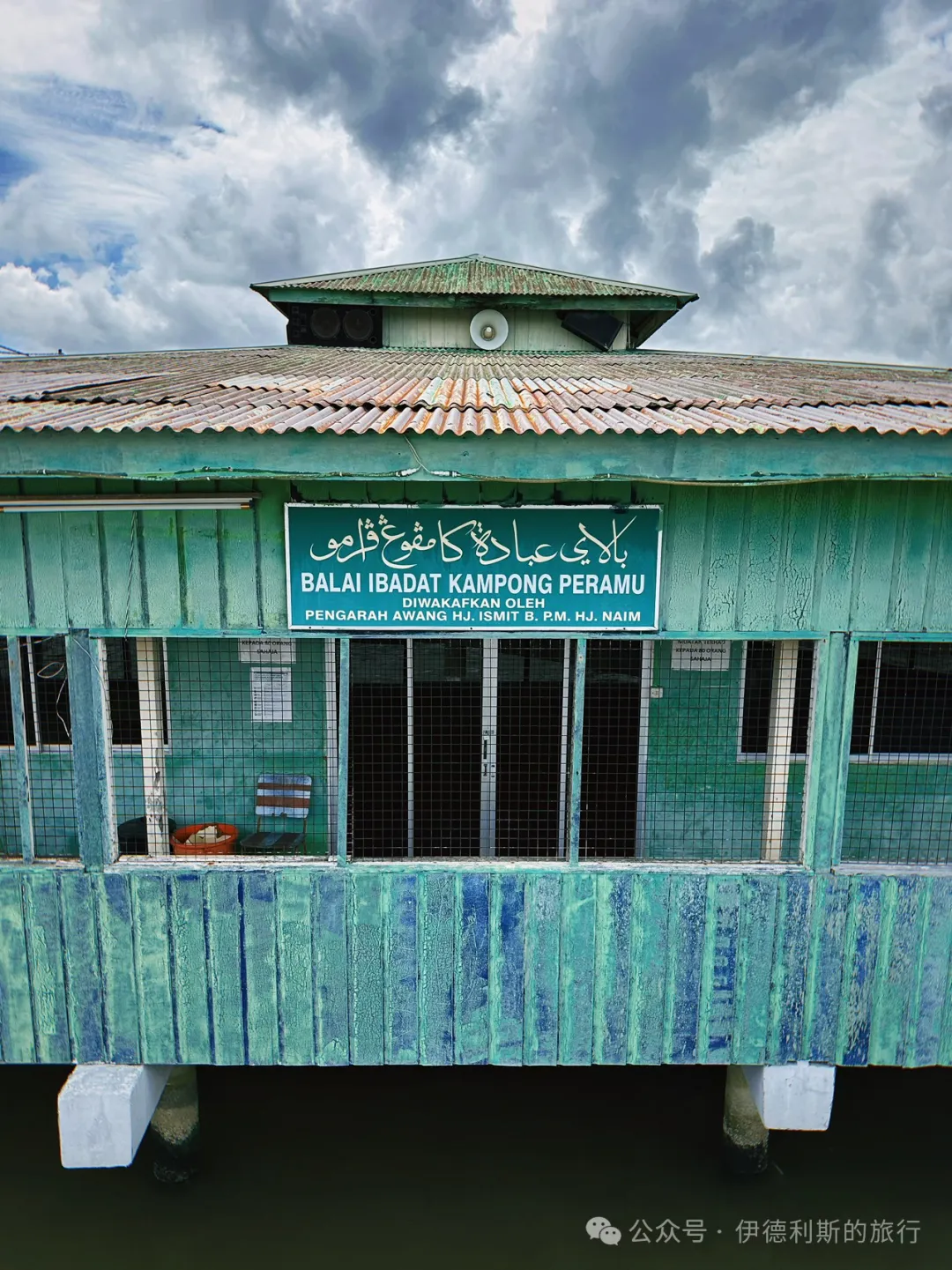
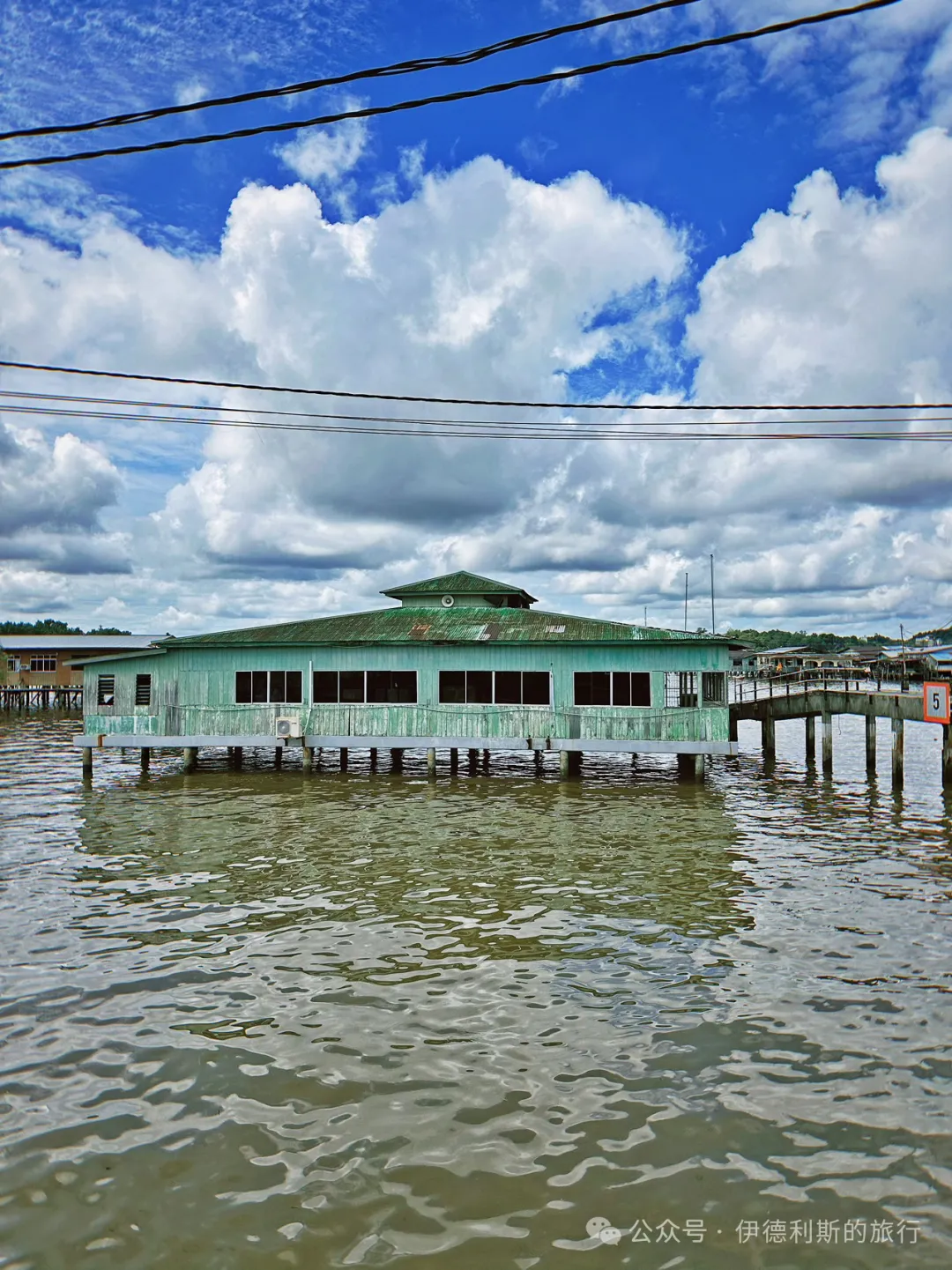
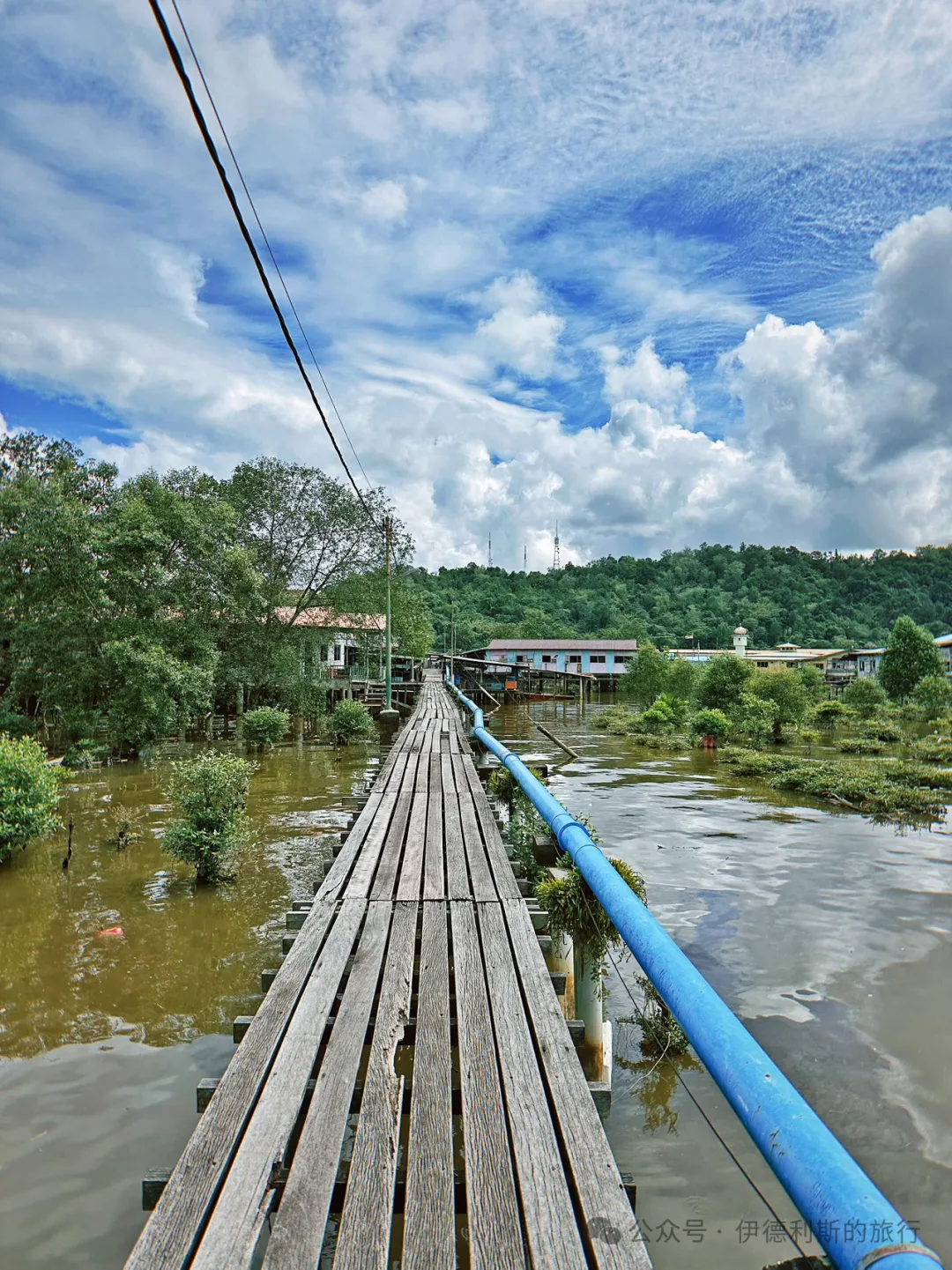
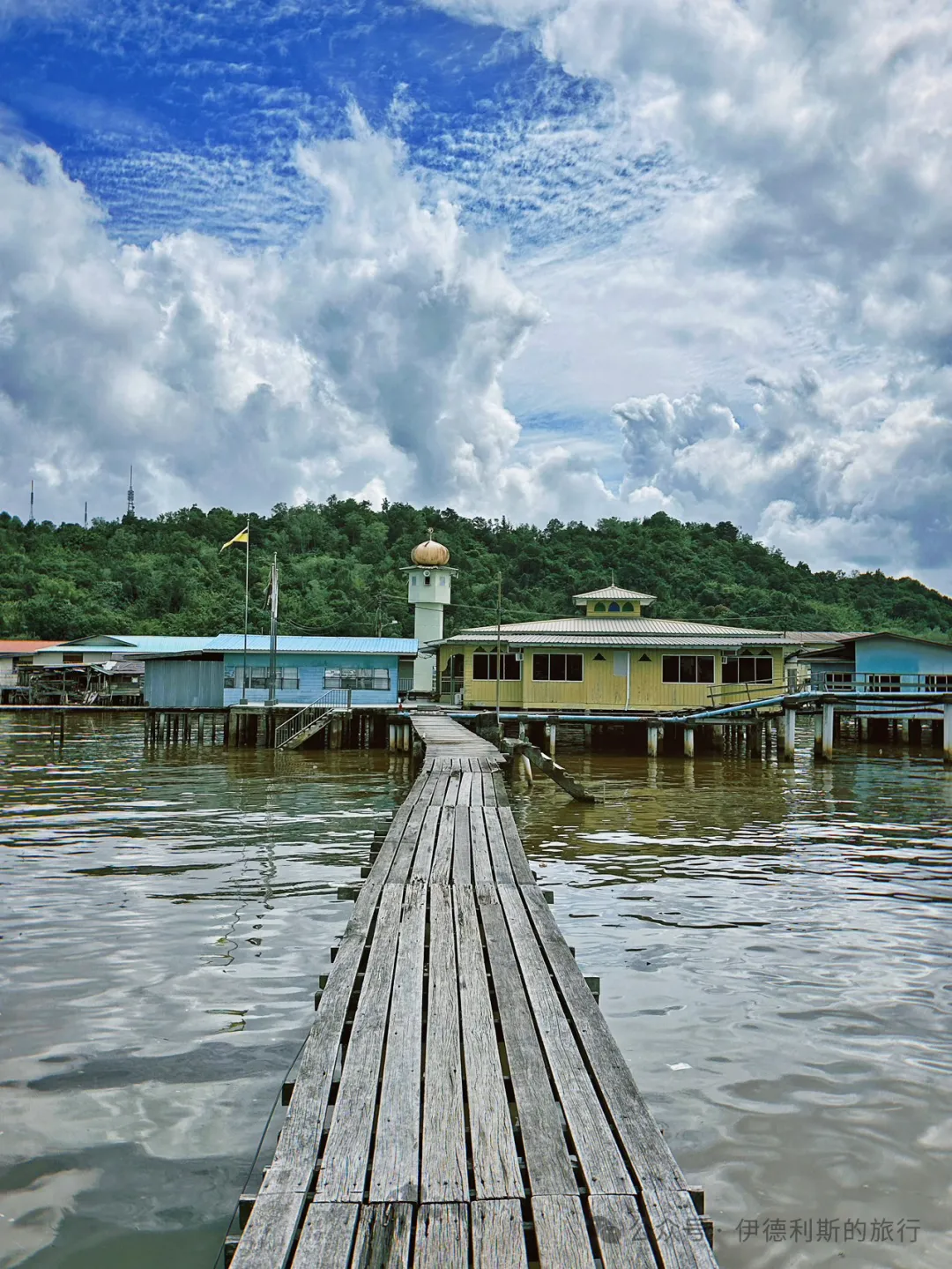
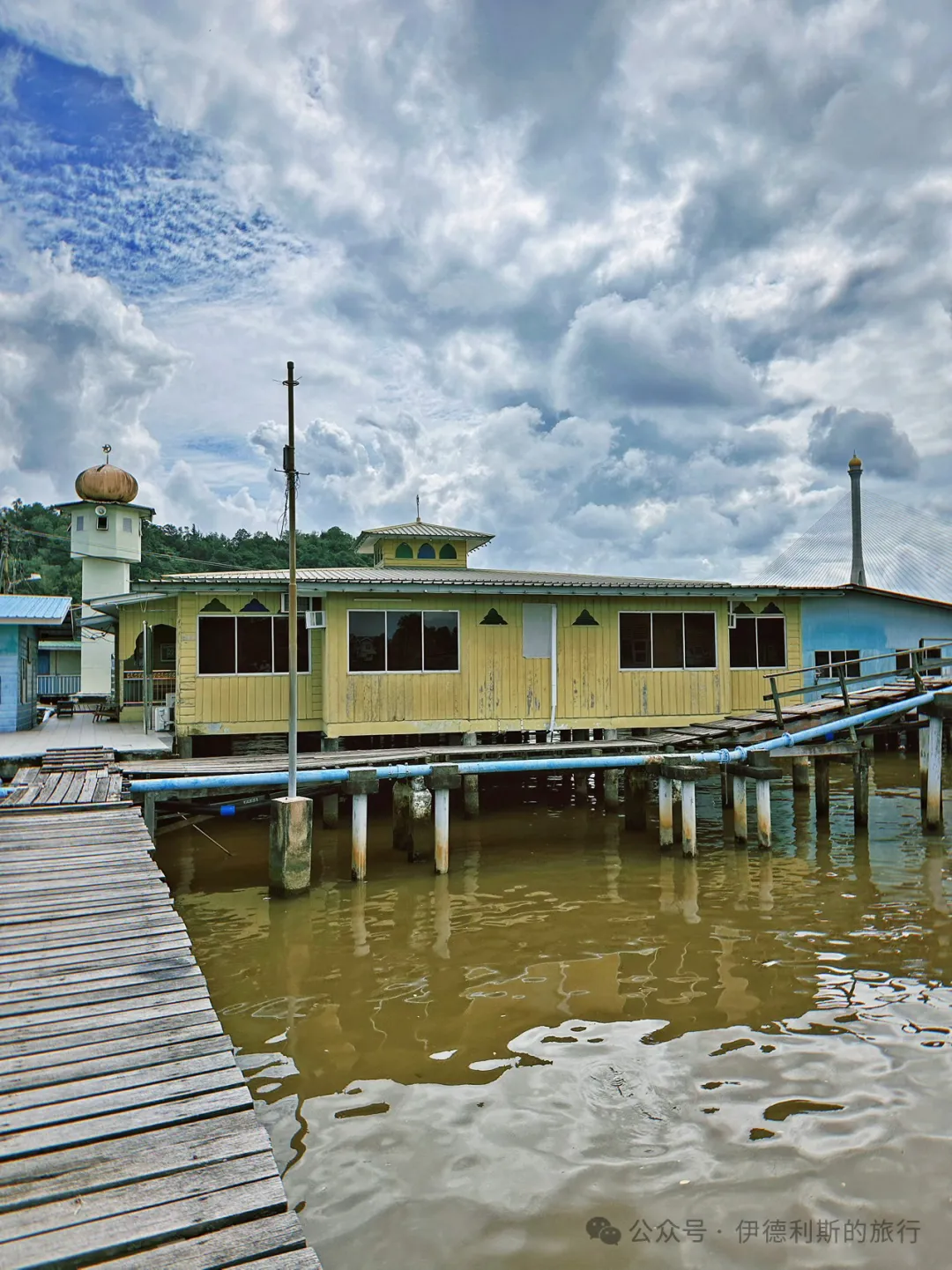
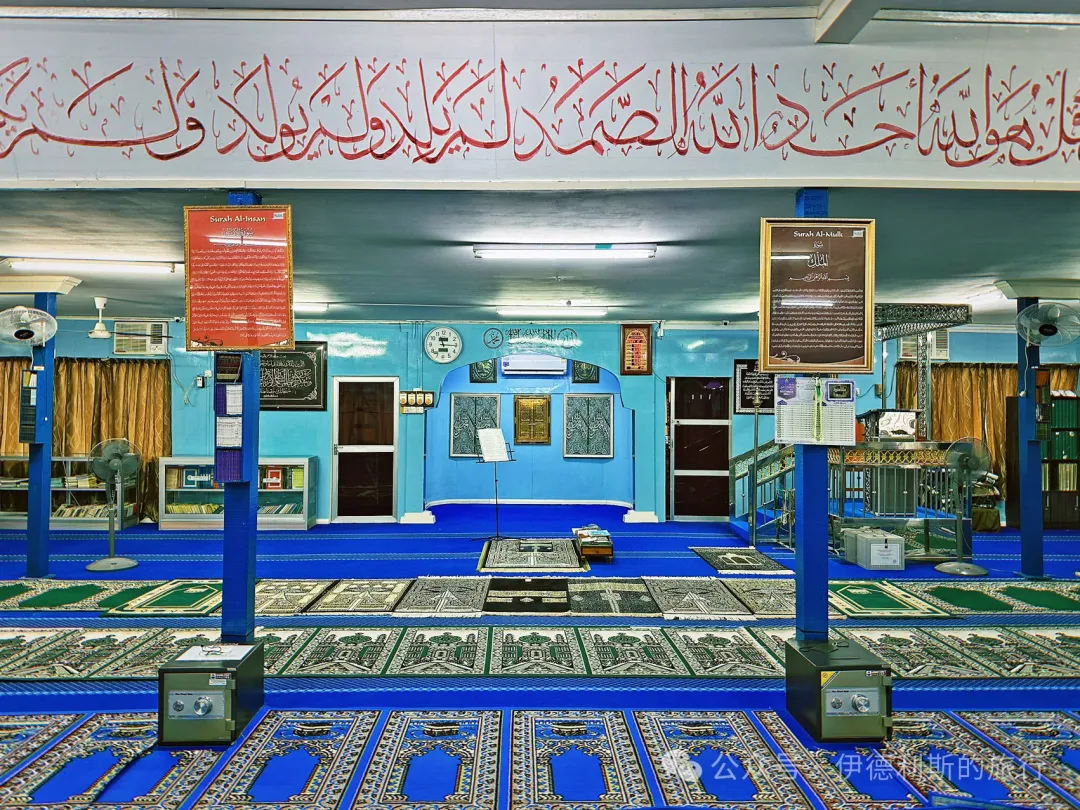
The Water Village has its own scenery, small restaurants, and convenience stores, though it is usually quite quiet.
Tomb of the 16th Sultan of Brunei
Take a speedboat west from the Brunei River to reach Luba Island, hidden by mangroves, where the tomb of the 16th Sultan of Brunei, Hussin Kamaluddin (reigned 1710-30, 1737-40), is located. Sultan Hussin Kamaluddin survived the Brunei civil war as a child, and he was pious, studious, and hardworking. Under his rule, Brunei was prosperous and had plenty of food. Legend says the Sultan liked to fish with locals along the upper banks of the Brunei River, especially near his tomb on Luba Island.
Old Town of Brunei Town
Until the early 20th century, the capital of Brunei was the Kampong Ayer water village along the Brunei River, until British Resident Malcolm MacArthur began guiding residents to settle on land in 1906. In 1910, Chinese immigrants were the first to build shops on the north bank of the Brunei River, and Brunei Town began to take shape. In 1922, the reigning Sultan Muhammad Jamalul Alam II decided to move the palace inland to Brunei Town, a move that encouraged many Water Village residents to accept relocation, leading to rapid urban development.
In 1945, Brunei Town was almost leveled by Allied bombing, followed by large-scale reconstruction in the 1950s and 1960s. After 1963, economic growth from oil and gas led to a rapid increase in Chinese immigrants to Brunei Town, who opened many shops. In 1970, Brunei Town was officially renamed Bandar Seri Begawan.
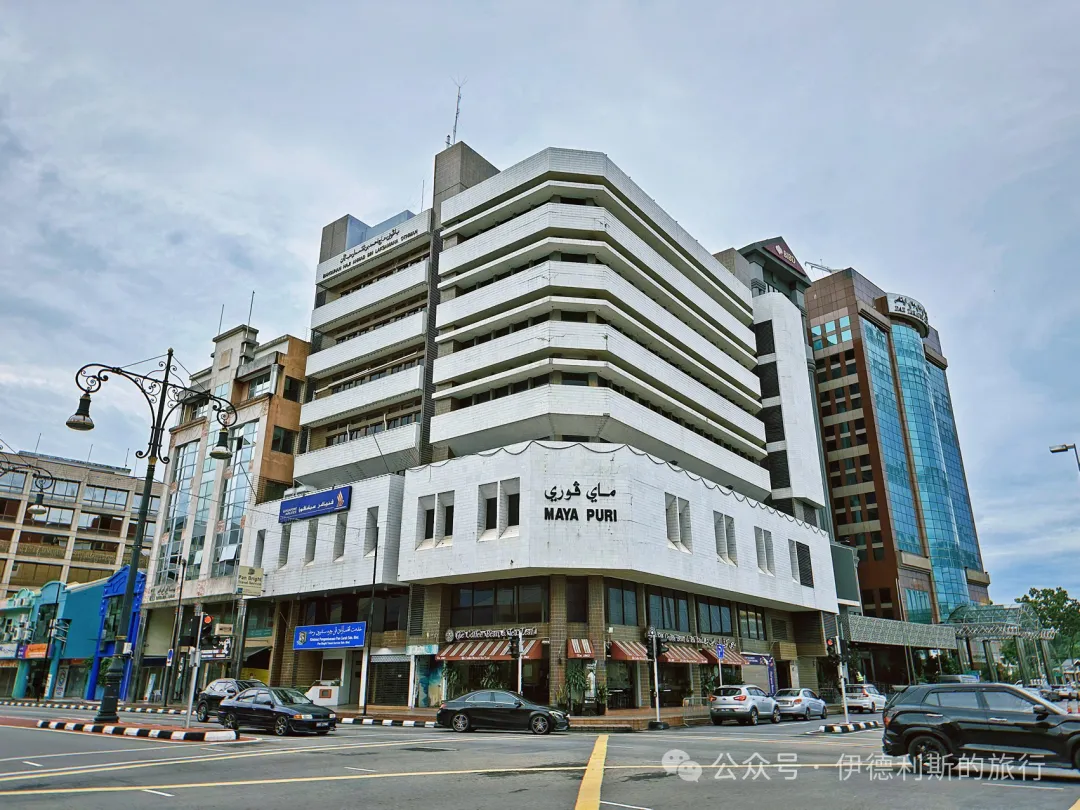
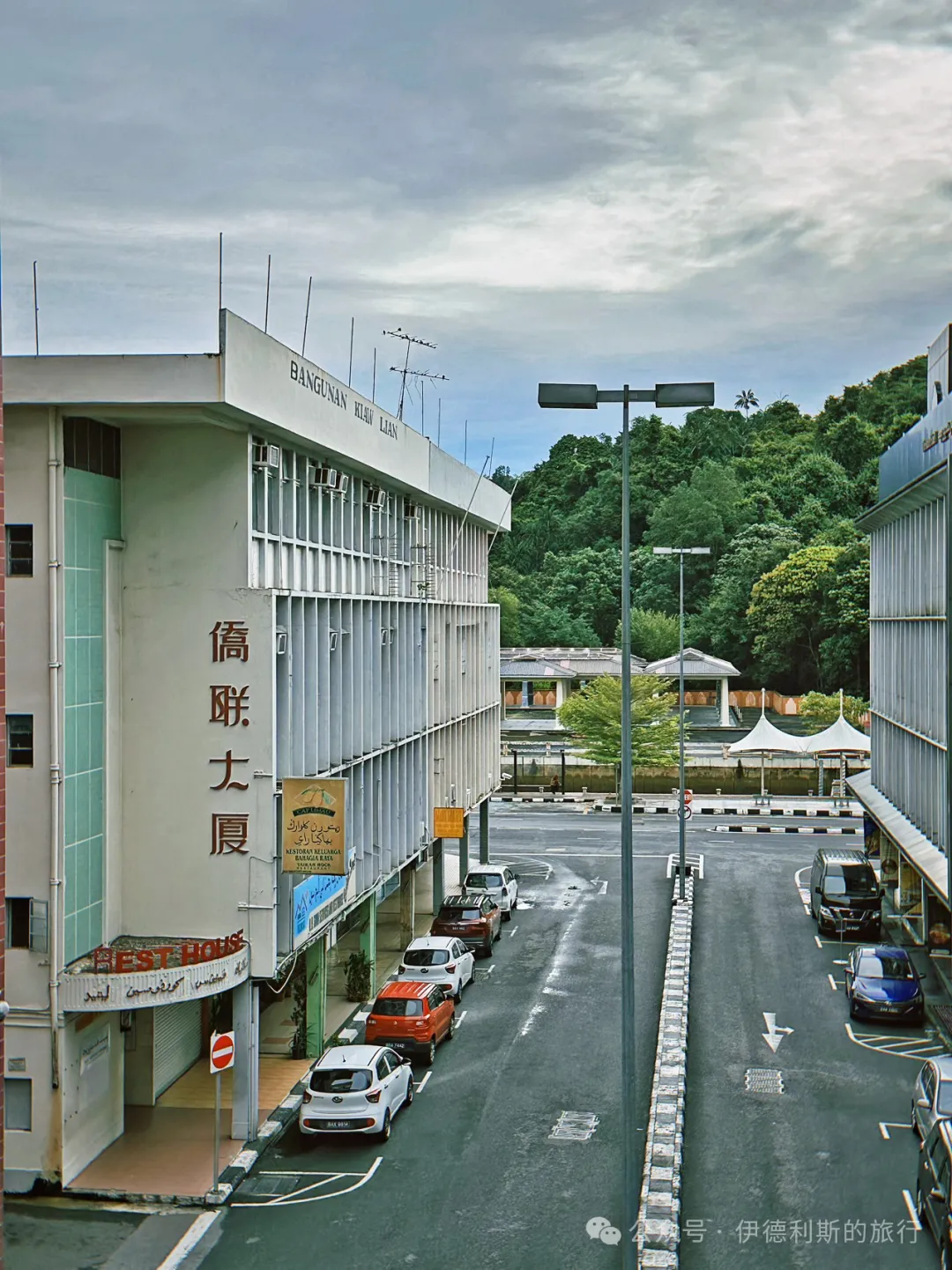
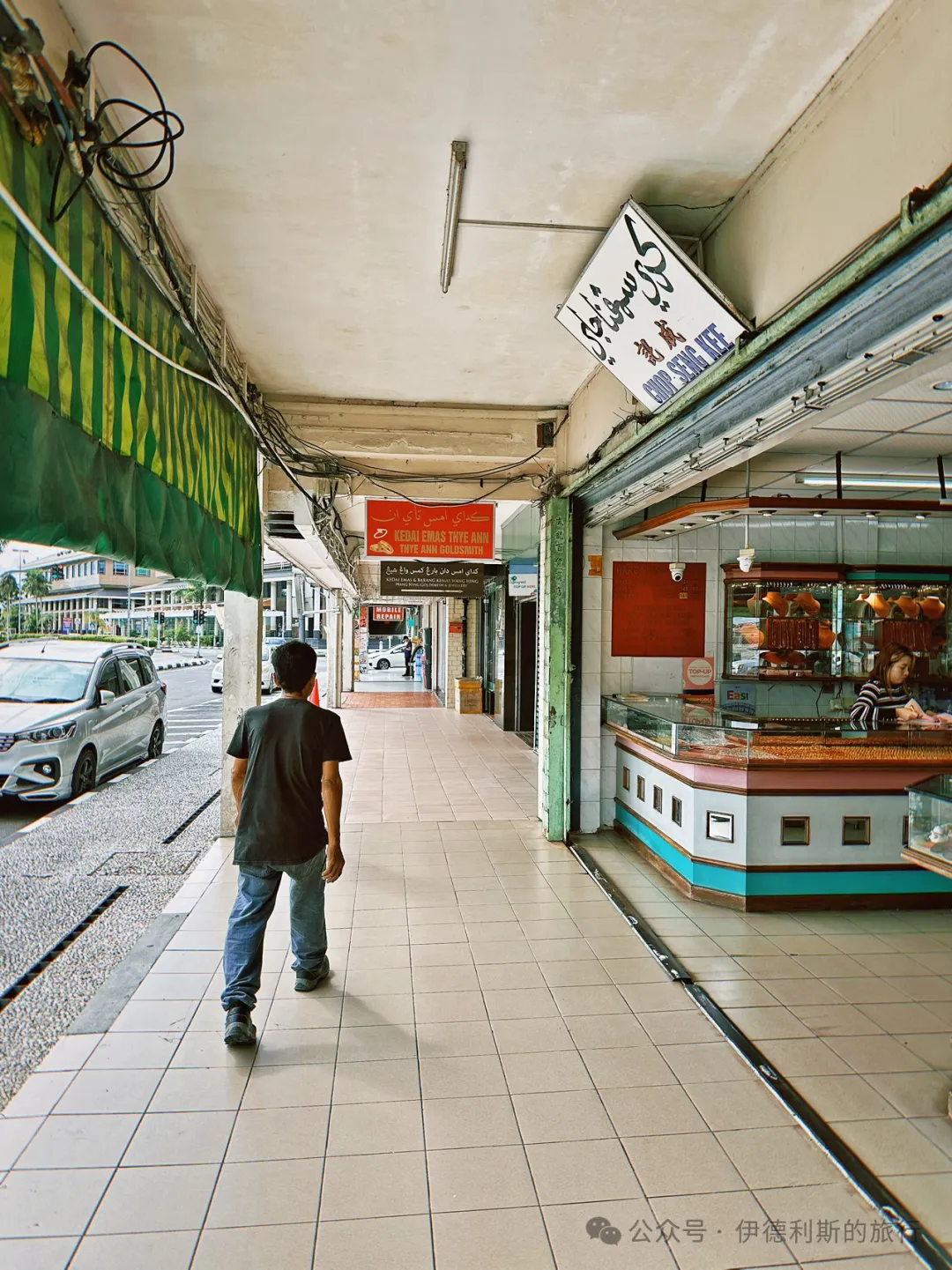
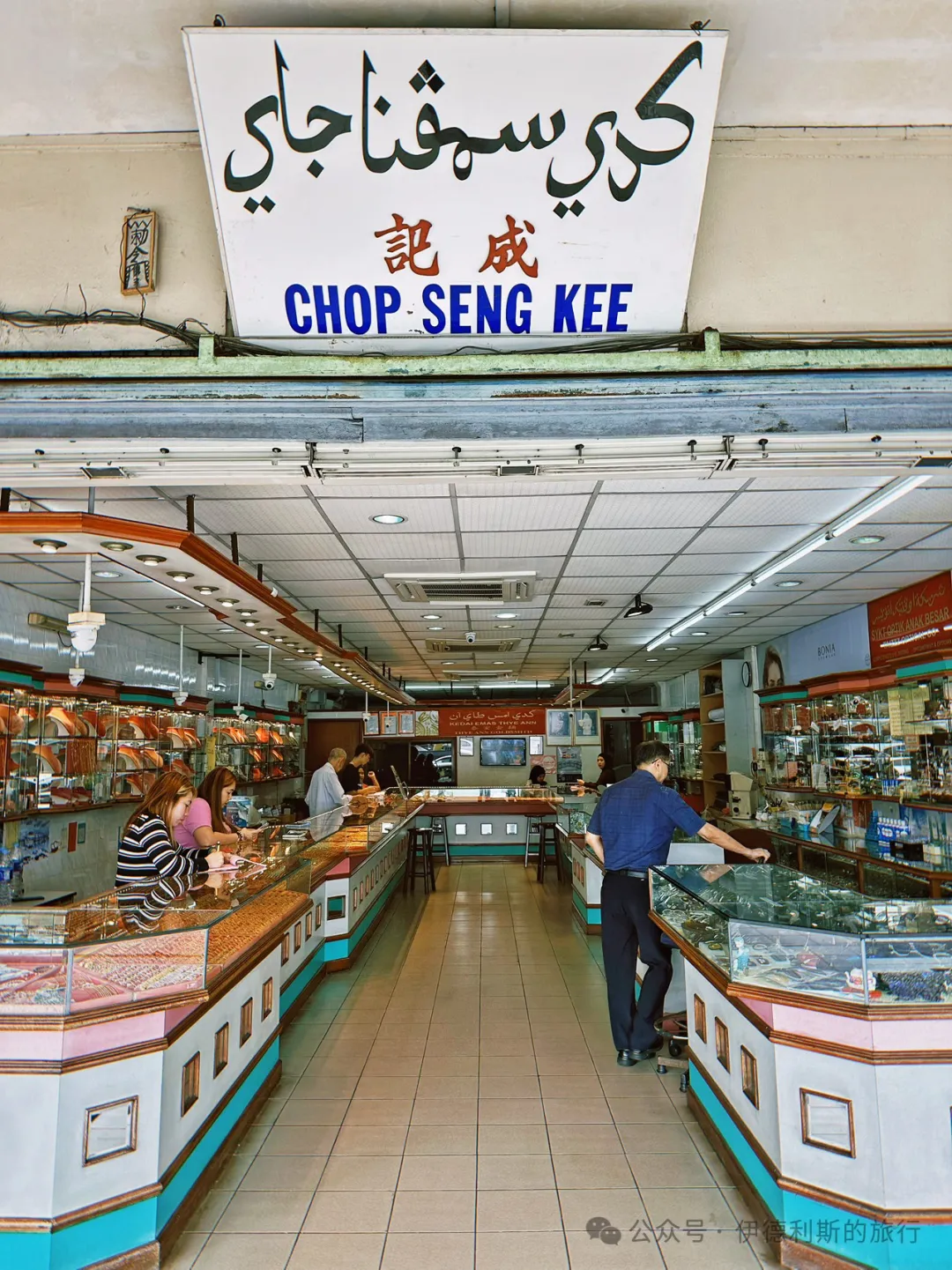
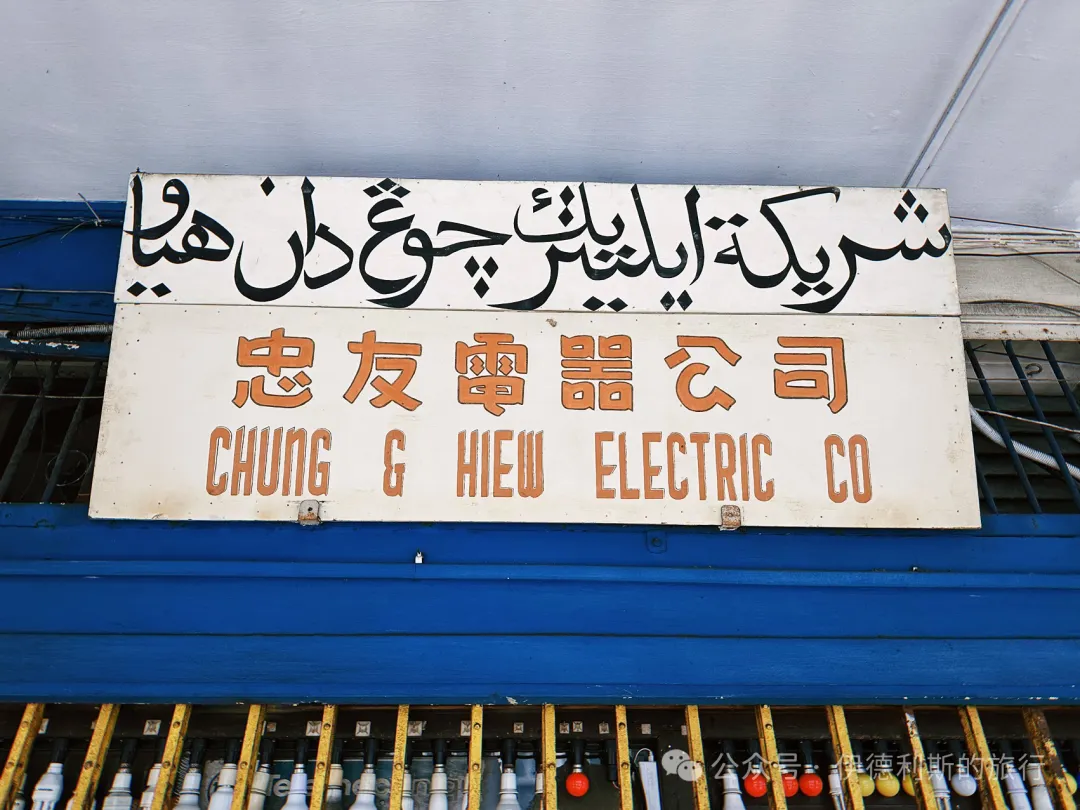
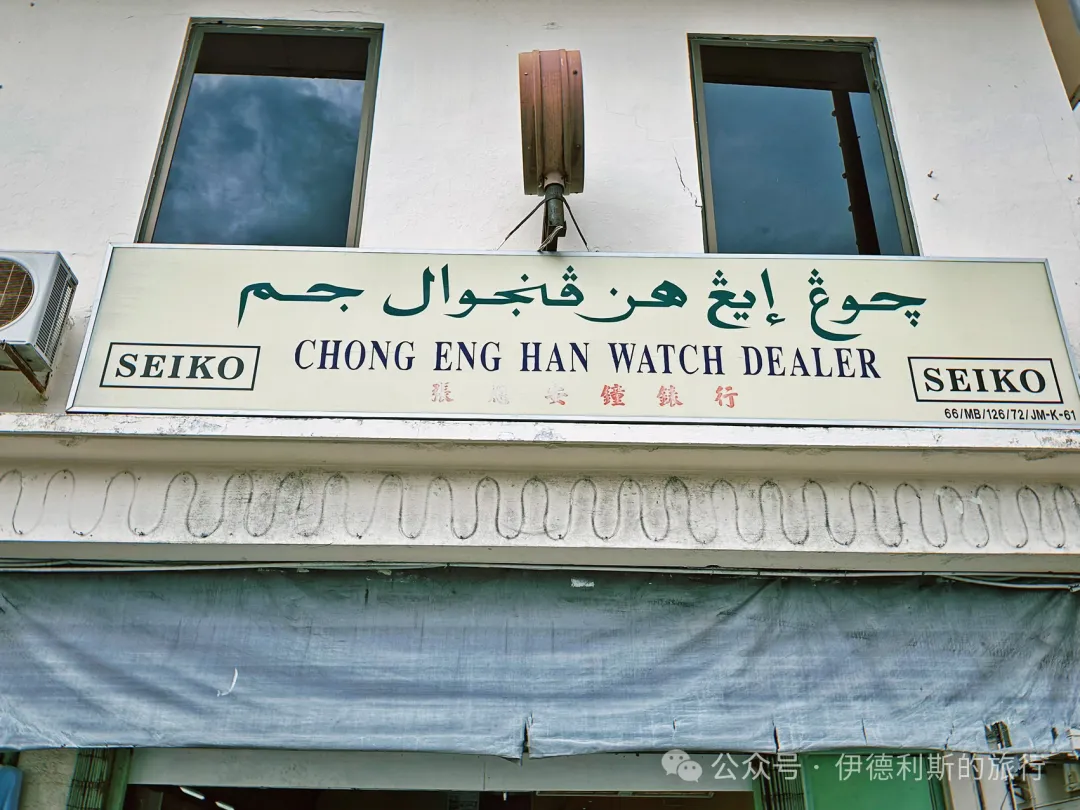
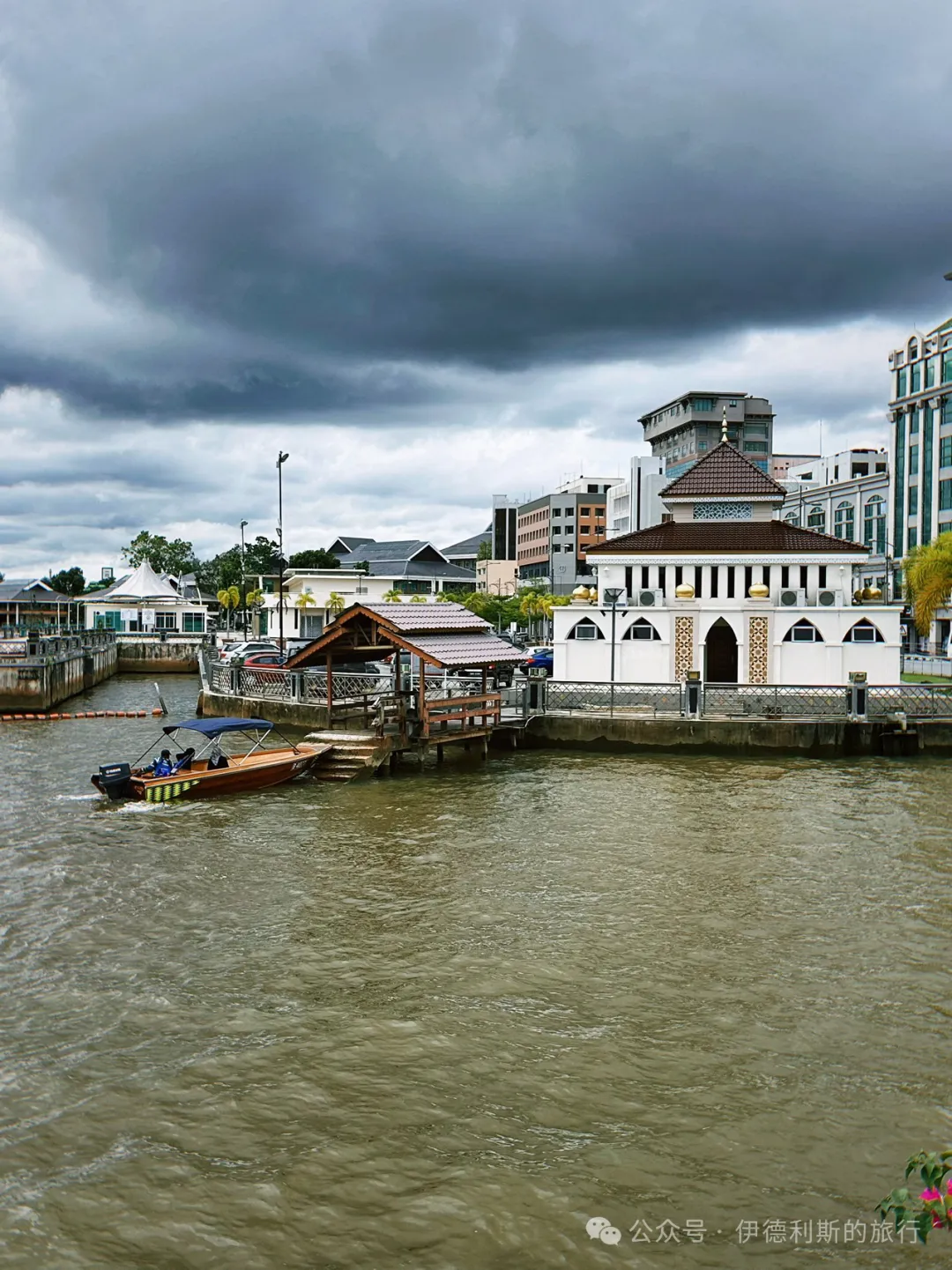
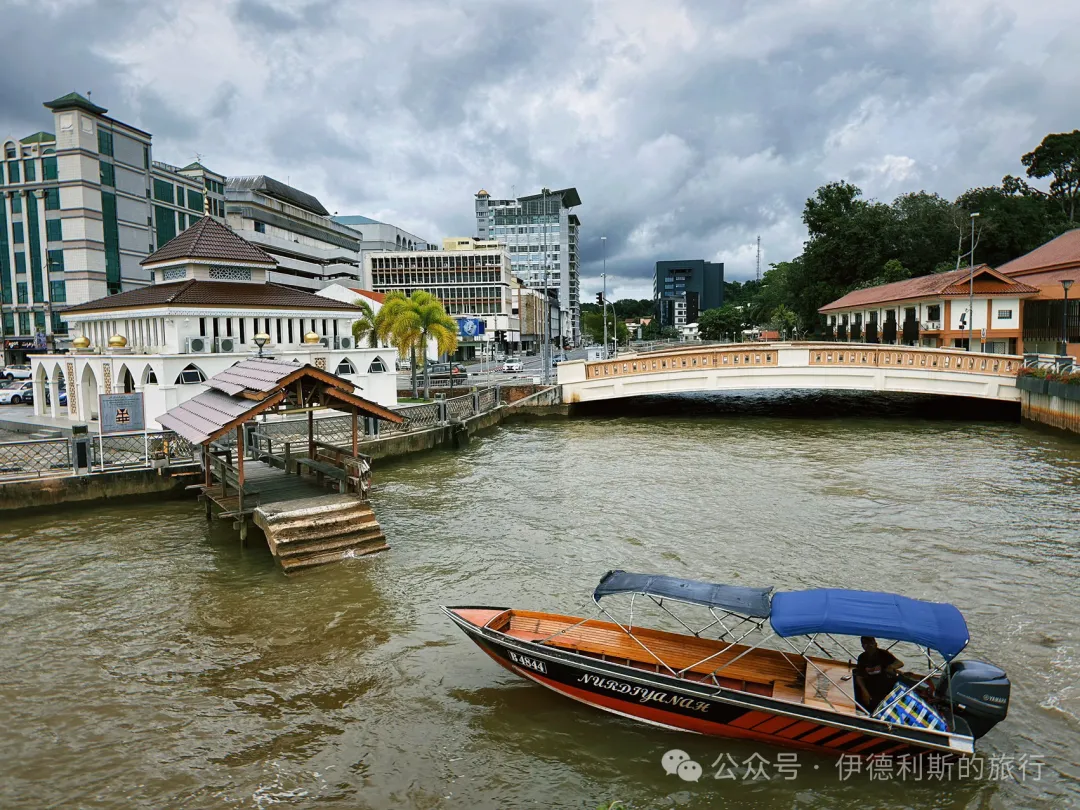
On the east side of the old town is the Sungai Kianggeh River, where Kampong Ayer residents can boat directly to the Kianggeh market to buy various farm produce. This is also one of the relocation points for Water Village residents after they come ashore.
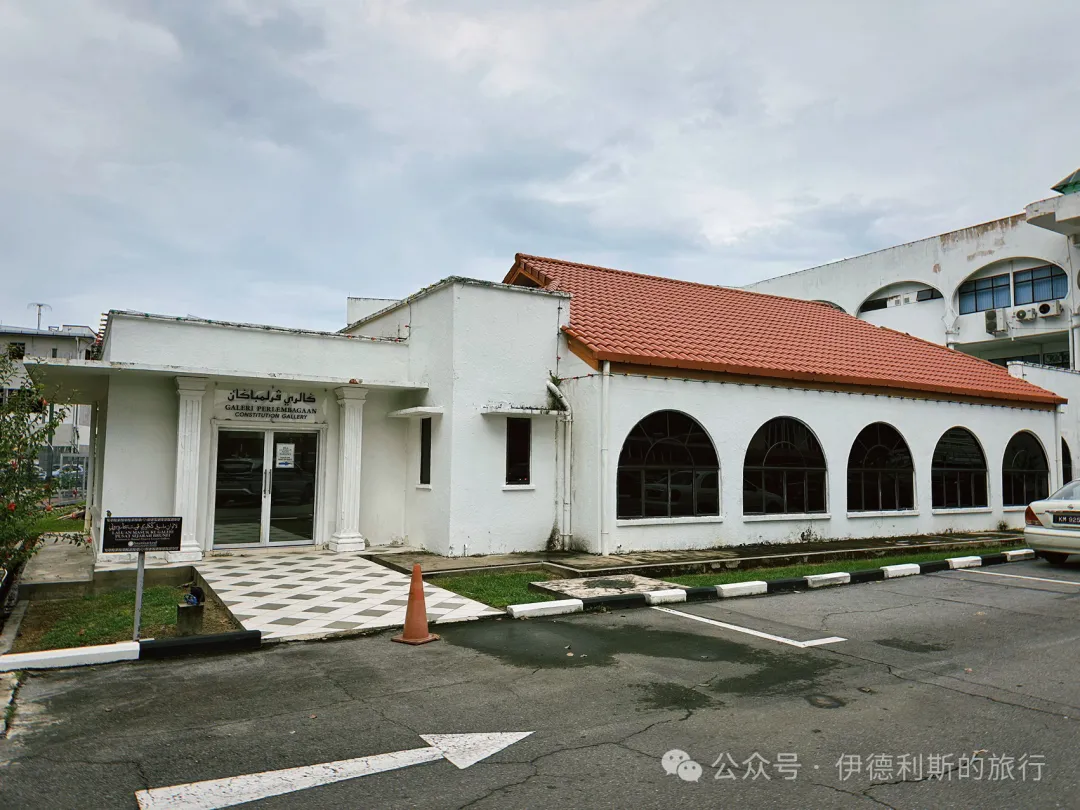
The old Royal Ceremonial Hall (Lapau Lama) in the old town, built in 1950, now displays the scene of the 1959 Brunei Constitution signing, including the original chandeliers, tables, chairs, and the microphone used by the Sultan. Lapau Lama is the oldest concrete building in the old town, with an interior that blends pragmatism and minimalism.
Next to the old Royal Ceremonial Hall is the Royal Regalia Museum, which houses two royal chariots: one used for the Sultan's coronation in 1968 and Queen Elizabeth II's visit in 1972, and another used for the Sultan's 25th anniversary of his coronation in 1992.
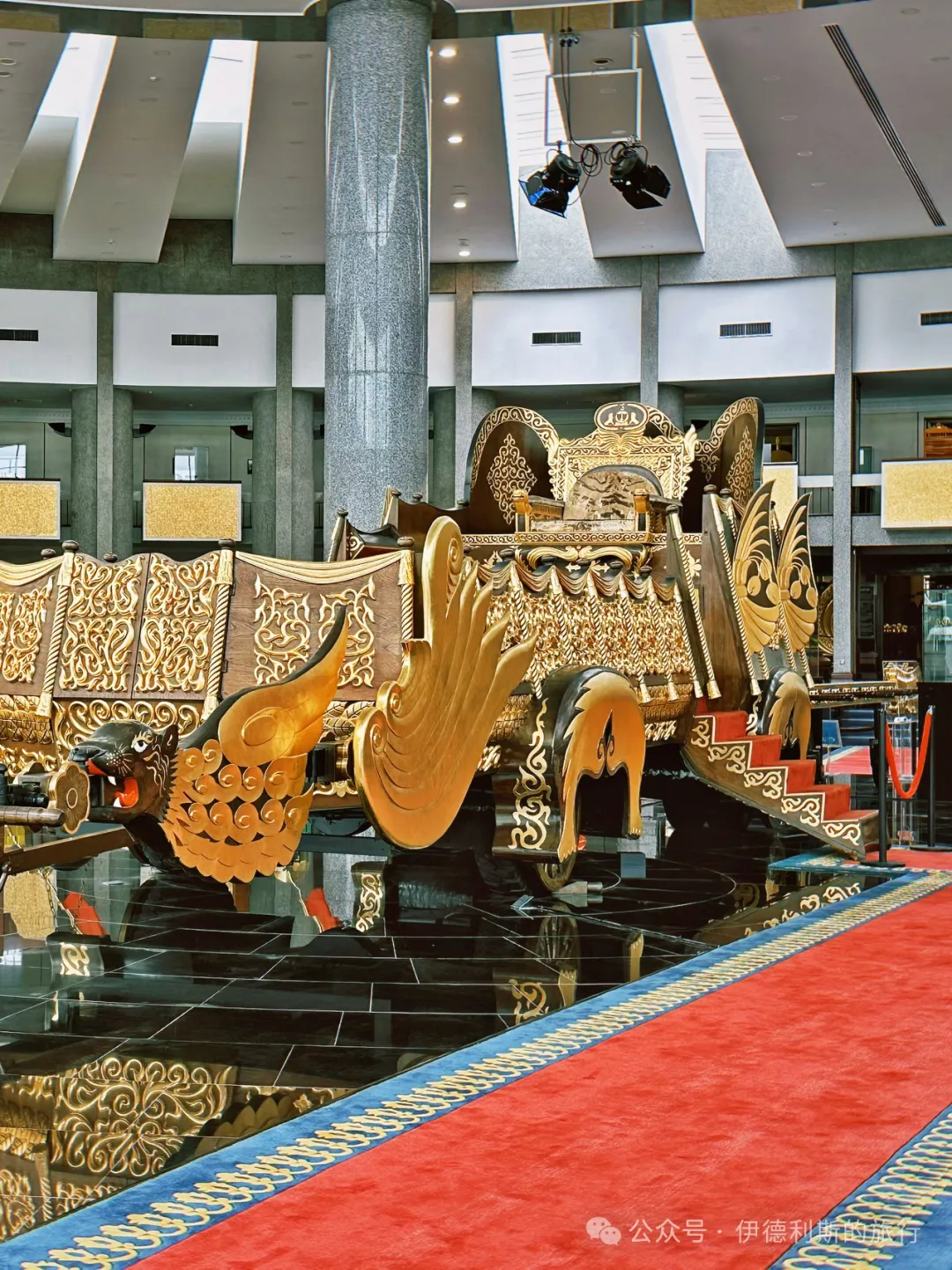
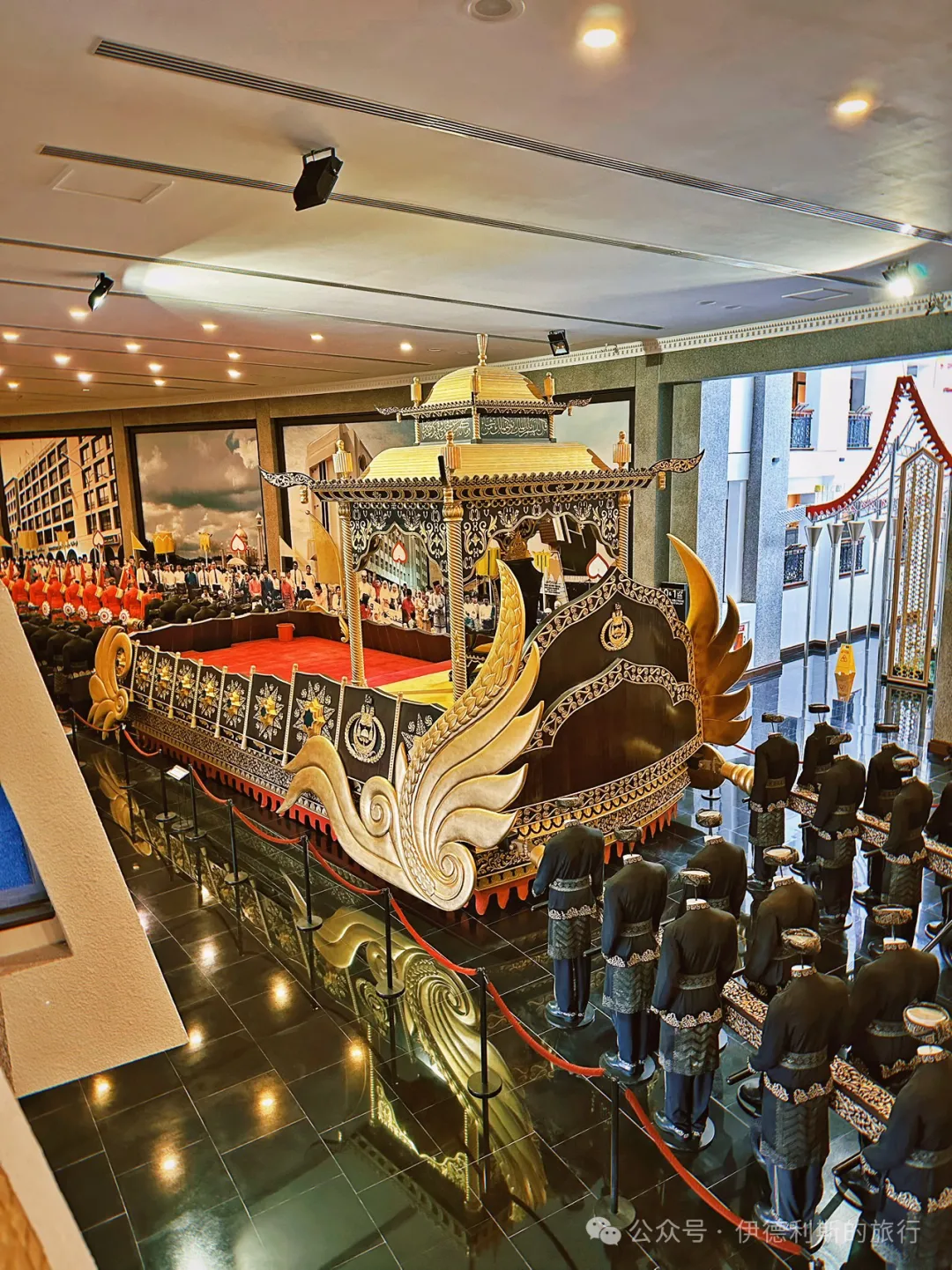
Tasek Lama Recreational Park in Brunei
Strolling through Tasek Lama Recreational Park in Brunei, a primeval forest in the city center, is very relaxing by the waterfall. The mountains are full of birds and monkeys, and pitcher plants can be seen everywhere along the road. People in Brunei love jogging in the park, and after finishing, you can buy big, juicy coconuts at the entrance to drink.
Take a speedboat to see proboscis monkeys.
At the Royal Brunei Wharf, you can see many speedboats looking for tourists to take on tours of the water village and to see proboscis monkeys. We asked the price and it was 10 Brunei dollars (53 RMB) per person for a one-hour boat ride, which felt like a pretty good deal.
After boarding, we first toured the water village, where you can see a water fire station, a water school, and a water mosque. We also spotted a huge monitor lizard among the mangroves. Then we went to see the proboscis monkeys. We traveled 10 kilometers west along the Brunei River to Luba Island in the middle of the river. The island holds the tomb of the 16th Sultan of Brunei, Hussain Kamaluddin. This is also the best place to watch proboscis monkeys, and we saw a family of them eating leaves by the edge of the mangroves.
Halal Travel Guide: Brunei Part 1 — Mountain Castles, Malay History & Muslim Culture
Articles • ali2007fr posted the article • 0 comments • 229 views • 2026-05-19 23:57
Summary: This first part of the Brunei journey follows historic sites from hilltop fortifications to places tied to Malay royal and Muslim culture. The English version preserves the original route, images, place names, and historical notes from the Chinese source.
Entering Brunei
I took a Royal Brunei Airlines flight from Kuching in the afternoon and arrived in Bandar Seri Begawan, Brunei's capital and only city, in just over an hour. After getting off the plane, follow the crowd to the immigration counters where you will see a row specifically for visa-on-arrival. Staff members will check in advance if you are holding a Chinese passport. When entering, just show your prepared flight itinerary and accommodation booking. You do not need to print the electronic arrival card or health declaration if you have filled them out online. Then, pay the visa fee with a VISA card to complete the entry process.
After clearing immigration, I exchanged some Malaysian Ringgit for Brunei Dollars and installed the SIM card I had bought in advance. I had already installed Dart, Brunei's local ride-hailing app, on my phone. It supports both VISA card and cash payments, and it is quite fast at getting a car. Note that the pickup point for ride-hailing cars is in the side parking lot. Walk from the airport entrance toward the direction of the airport mosque, then follow the canopy until you reach the end to find it.
We stayed at the J Hotel for our first night. The hotel environment is nice, and it is not far from the Gadong Night Market and the Jame' Asr Hassanil Bolkiah Mosque. After checking into the hotel, we walked over to the Jame' Asr Hassanil Bolkiah Mosque.
My first impression of downtown Brunei is that everyone drives everywhere; there are basically no pedestrians on the streets. It feels like the whole city was designed for cars, and there are very few crosswalks. The city has low density and lots of greenery, making it feel like a garden city for cars. Our hotel was only about 300 meters away from the mosque as the crow flies, but it took 15 minutes to walk there. This is because you have to walk along the road for a long time before finding a place to cross, and then you must walk through a parking lot over 200 meters long inside the mosque grounds to reach the main prayer hall.
Brunei's two national mosques
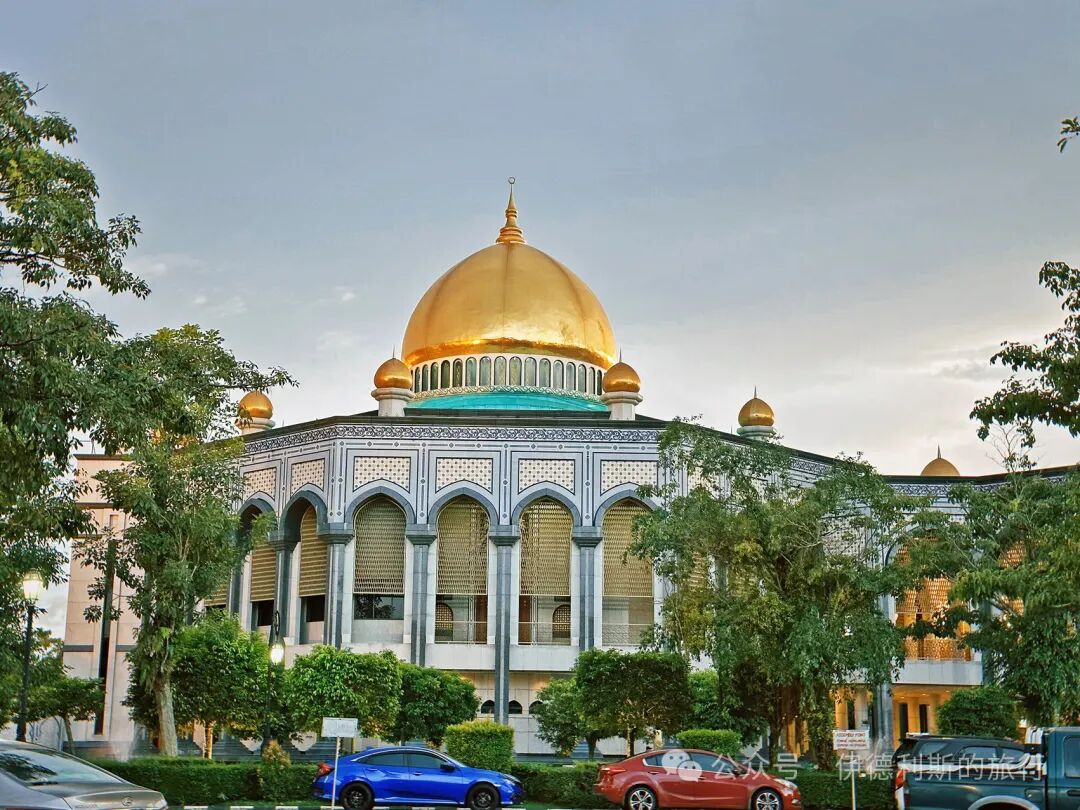
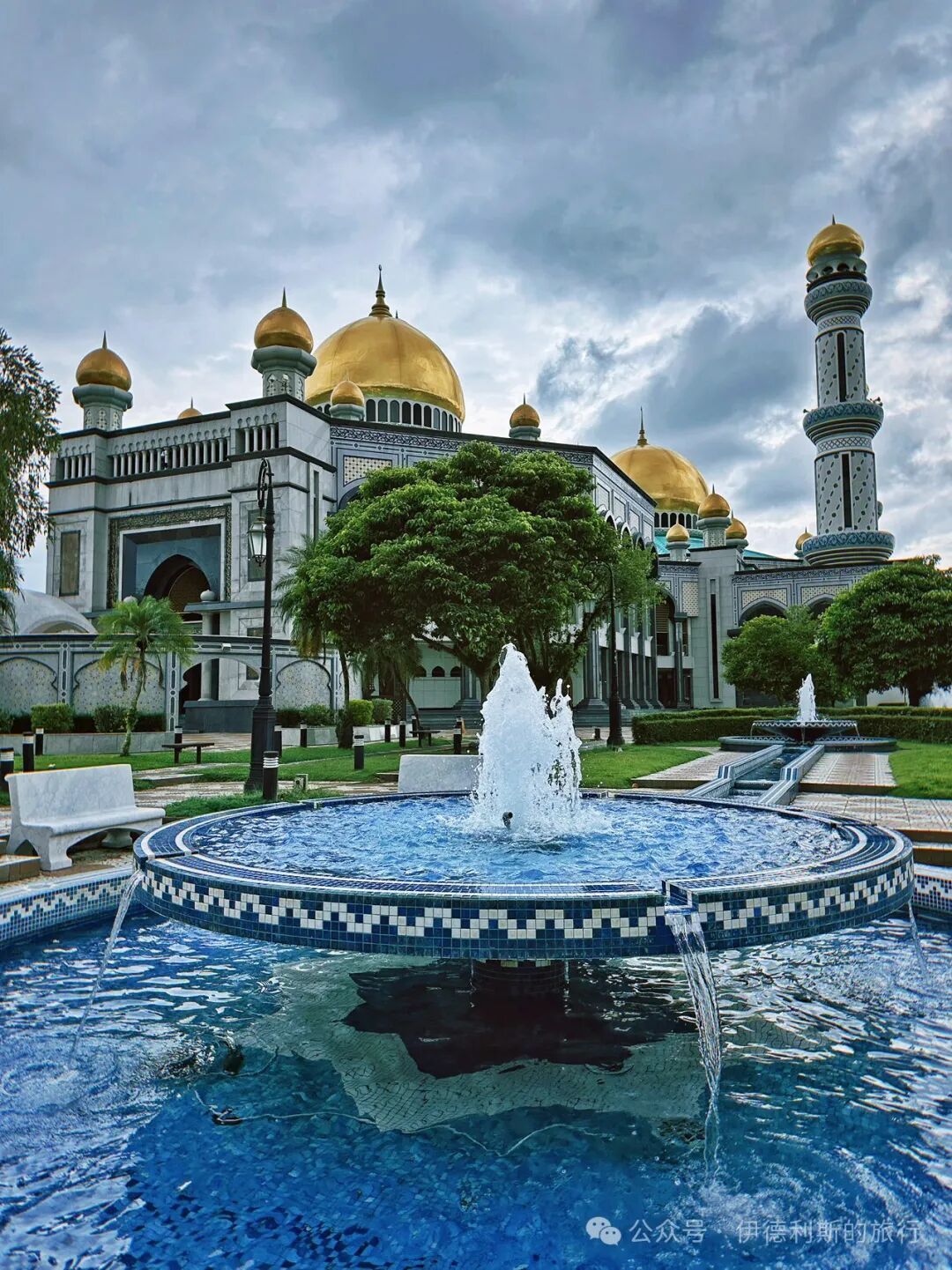
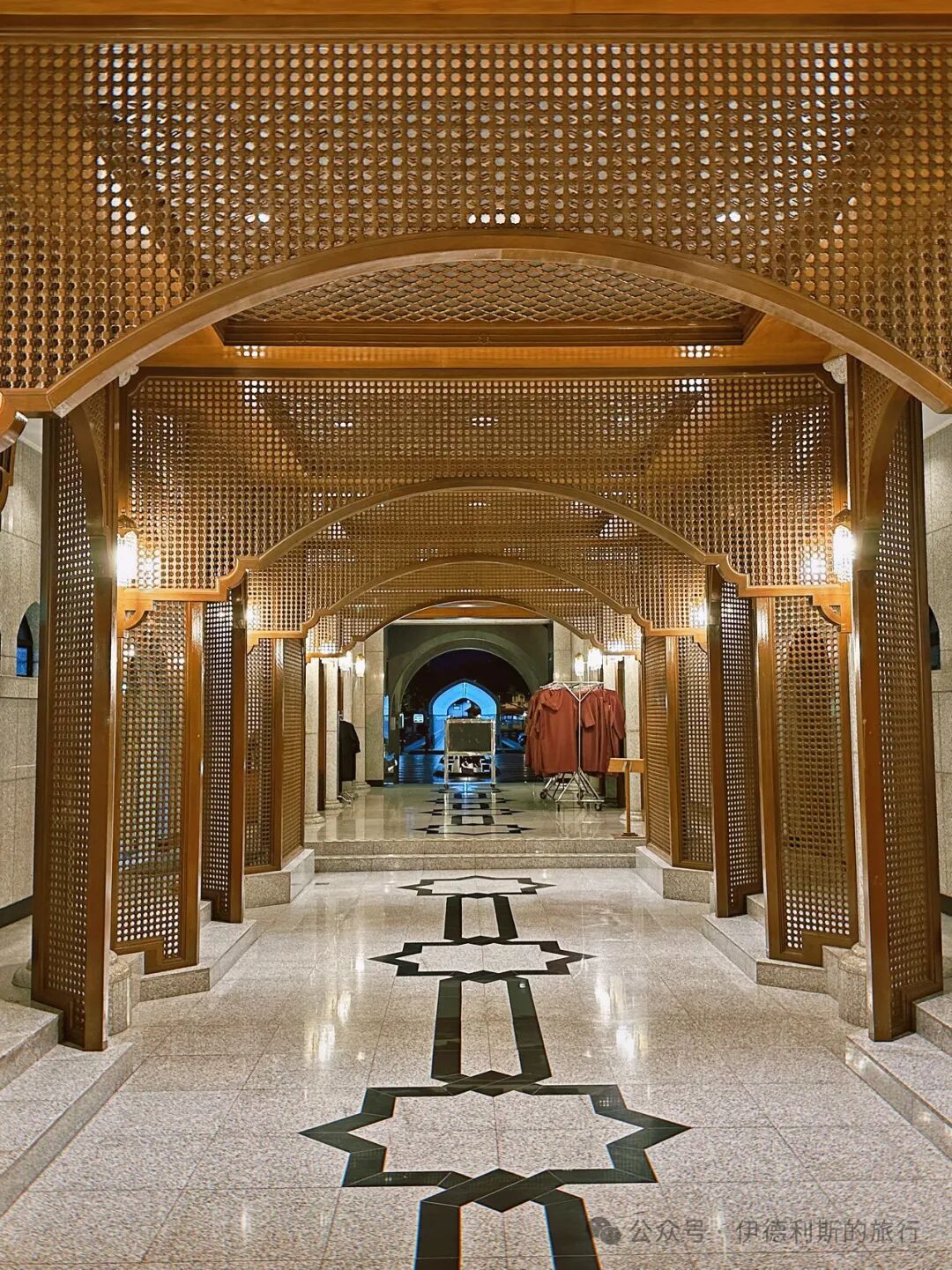
The Jame' Asr Hassanil Bolkiah Mosque is one of Brunei's two national mosques and the largest mosque in the country. The mosque was built by Sultan Hassanal Bolkiah to celebrate his 25th anniversary on the throne and officially opened in 1994. The 29 golden domes of the mosque commemorate the 29th Sultan of Brunei. The five fountains symbolize the five daily prayers and the five pillars of Islam. The mihrab (prayer niche) is decorated with gold-plated tiles. The interior is very magnificent, featuring Persian carpets, Italian marble, and Philippine hardwood.
The night view of the Brunei mosque is more beautiful than during the day. For those who want to take photos, I recommend coming during the times for prayer.
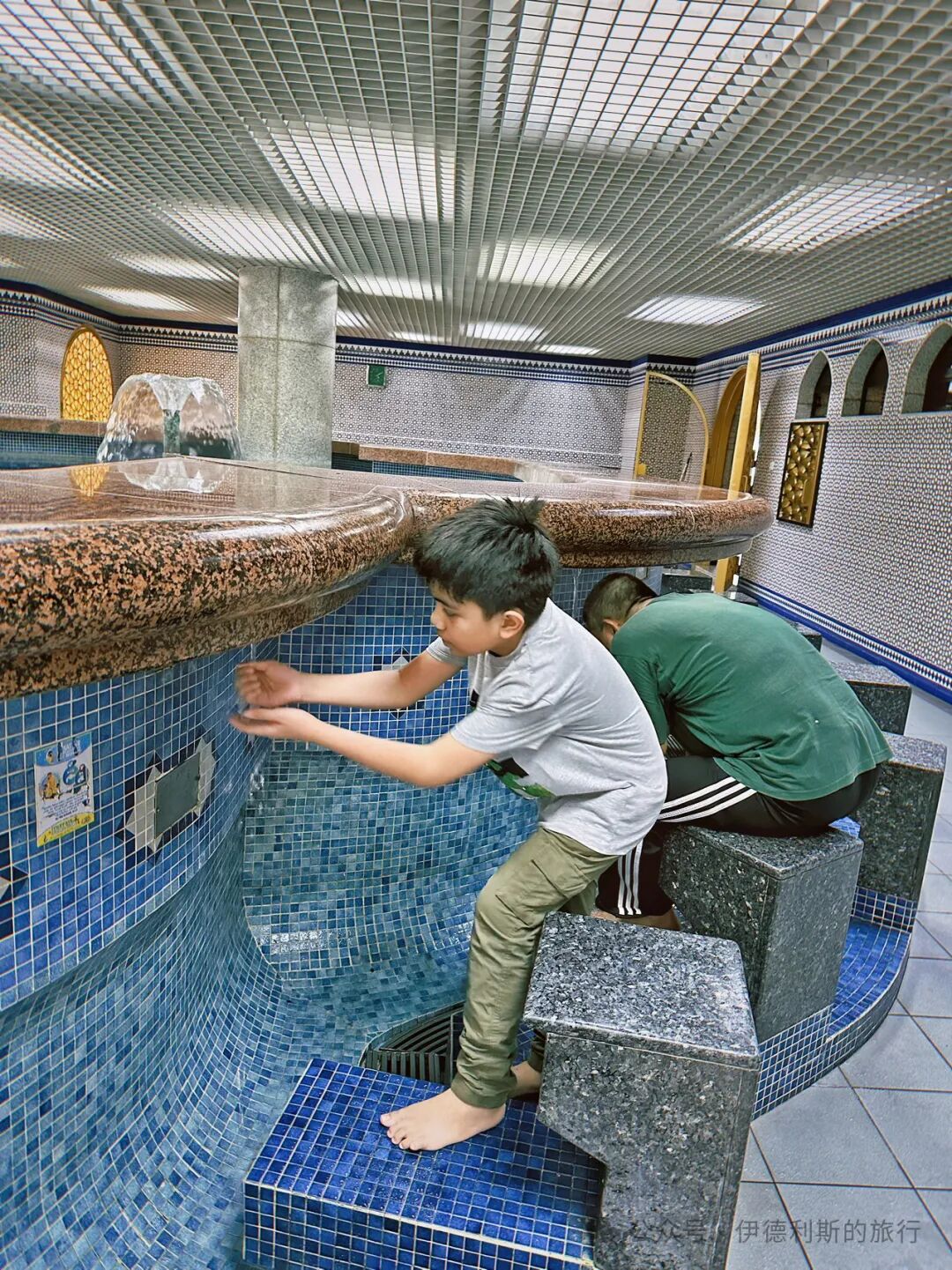
The Jame' Asr Hassanil Bolkiah Mosque during the day. The main prayer hall is connected to the women's prayer hall by a corridor. This is a rare example of an independent women's prayer hall in Southeast Asia, and it is very large. Below the women's prayer hall is the ablution area (shuifang), and it is the only one I have ever visited that uses motion-sensor faucets.
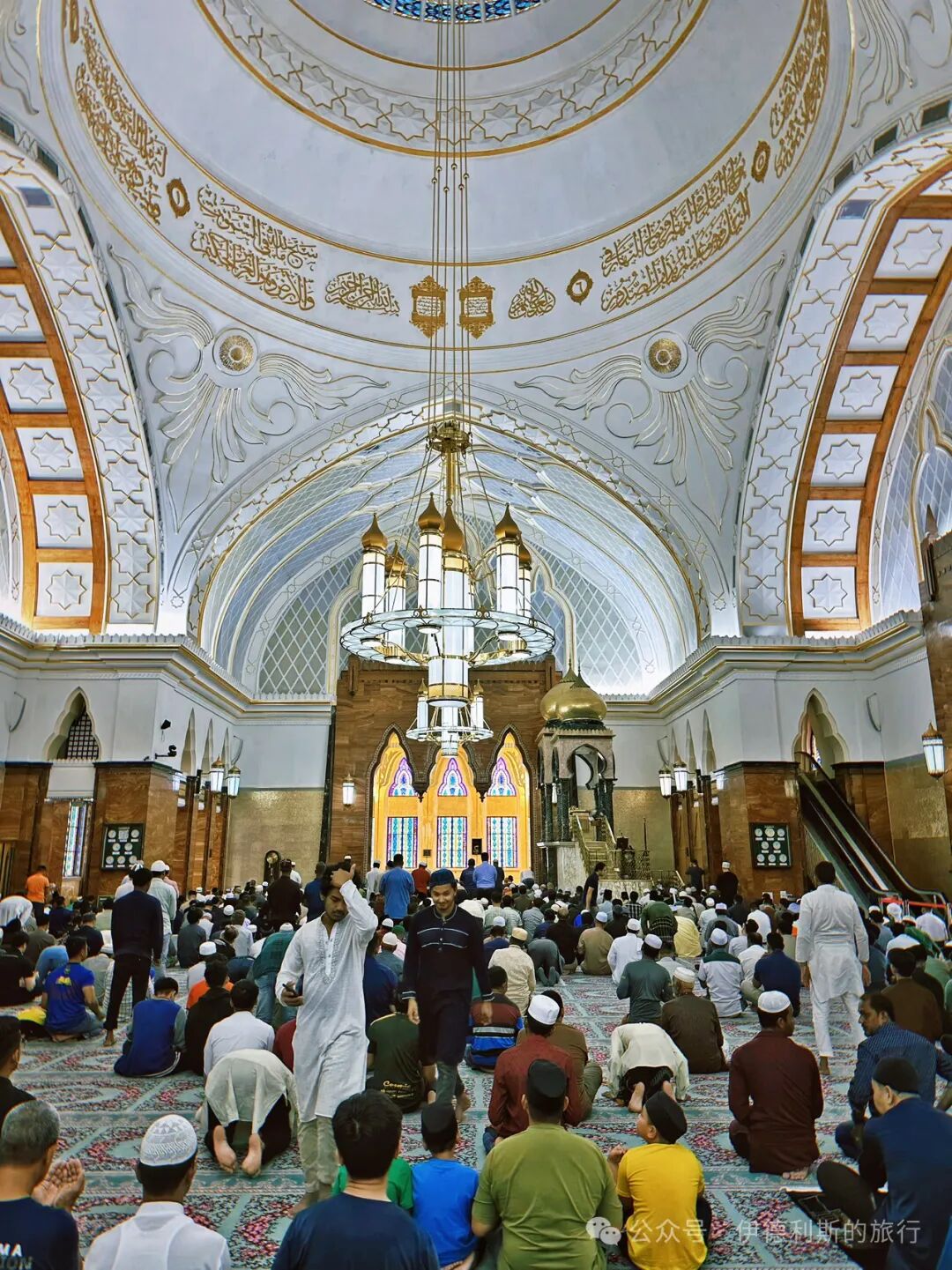
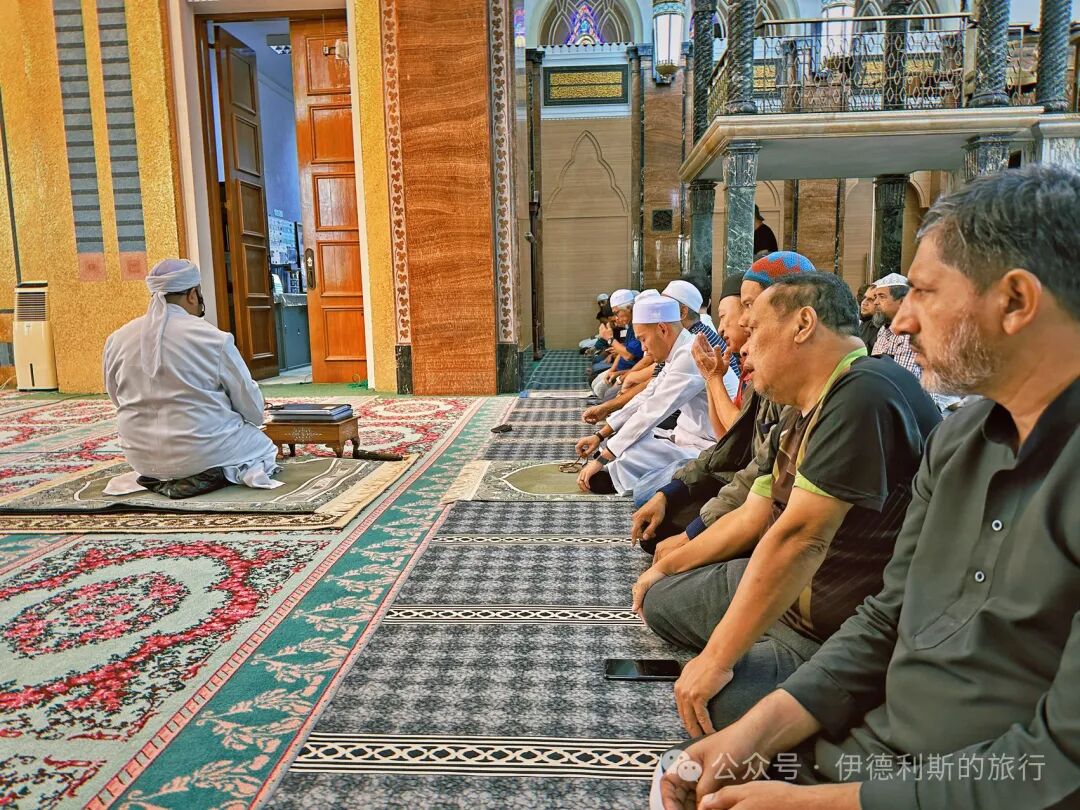
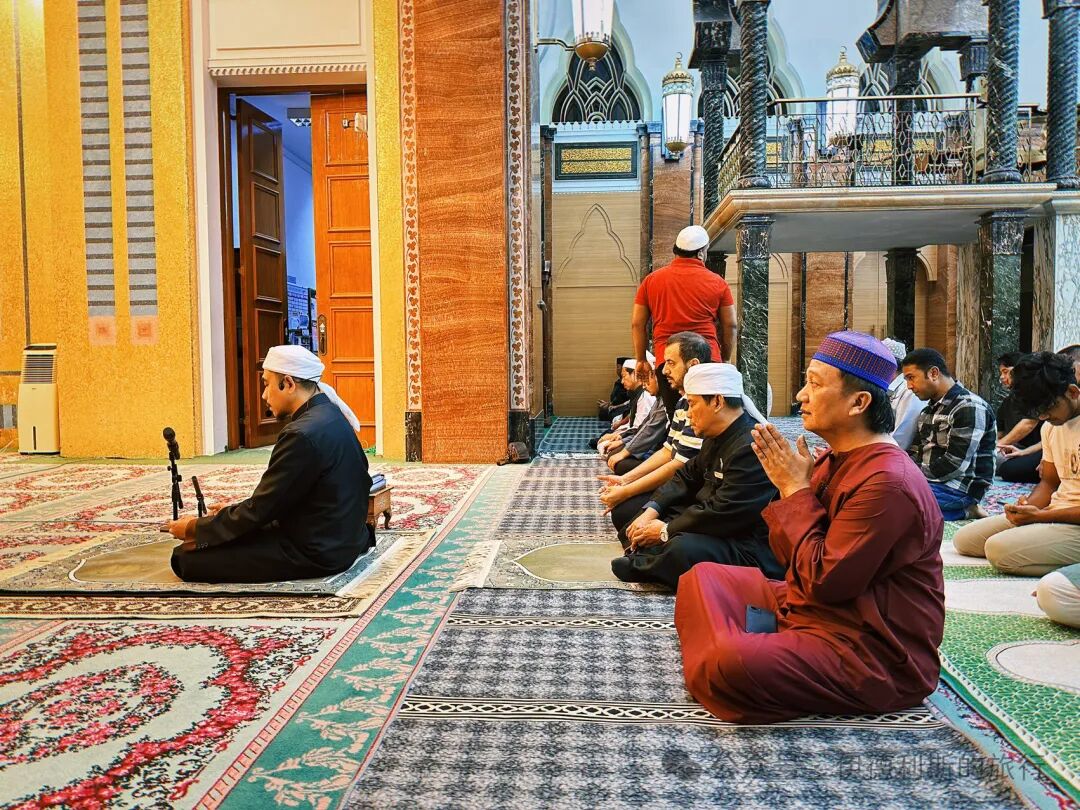
For Friday prayers (Jumu'ah), we went to Brunei's other national mosque, the Sultan Omar Ali Saifuddien Mosque, which is also known as the 'Water Mosque'. Brunei requires all malls and restaurants to close between 12:00 PM and 2:00 PM, so the mosque was packed during Jumu'ah, with the entire main hall full, which was a spectacular sight.
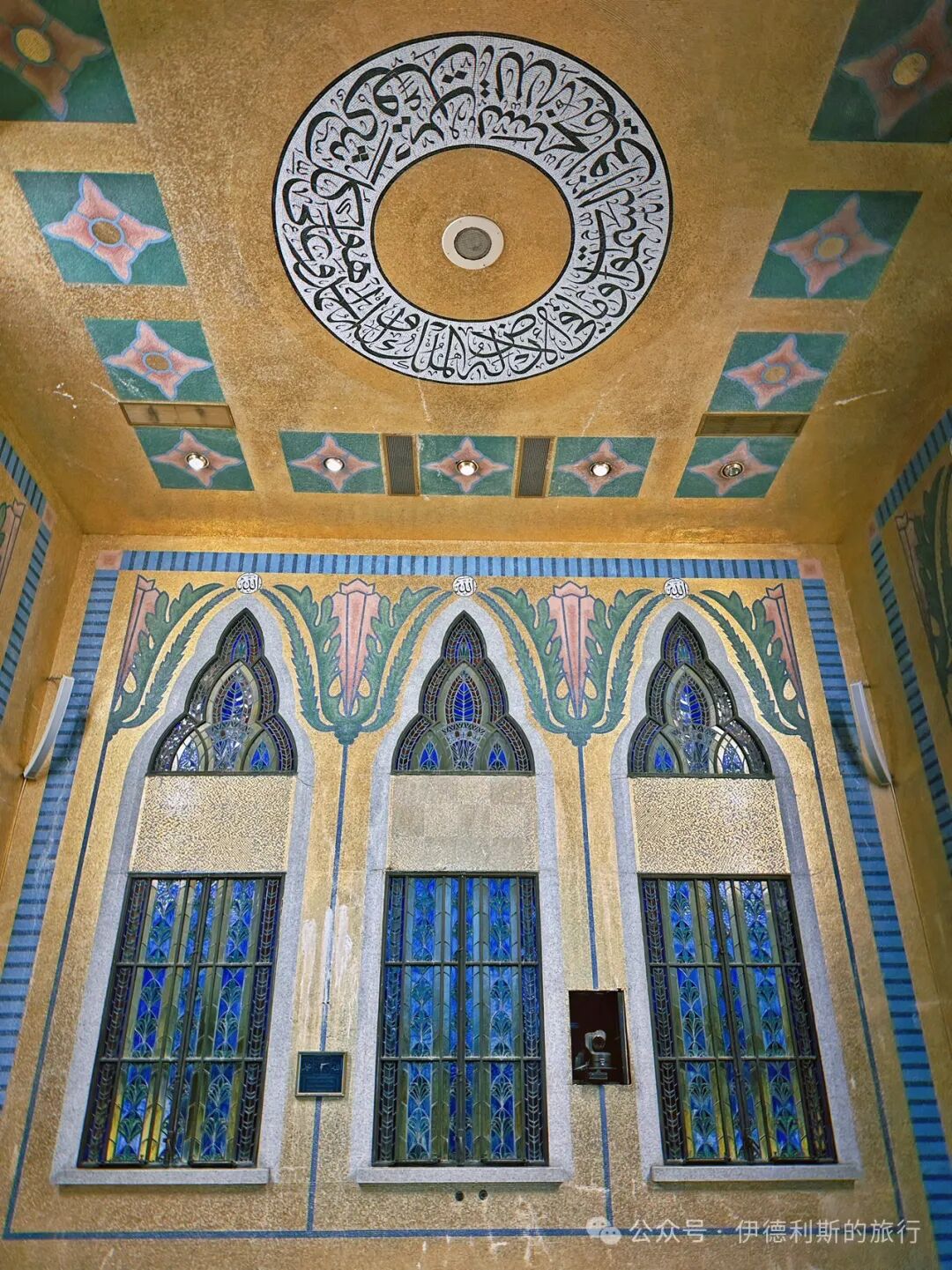
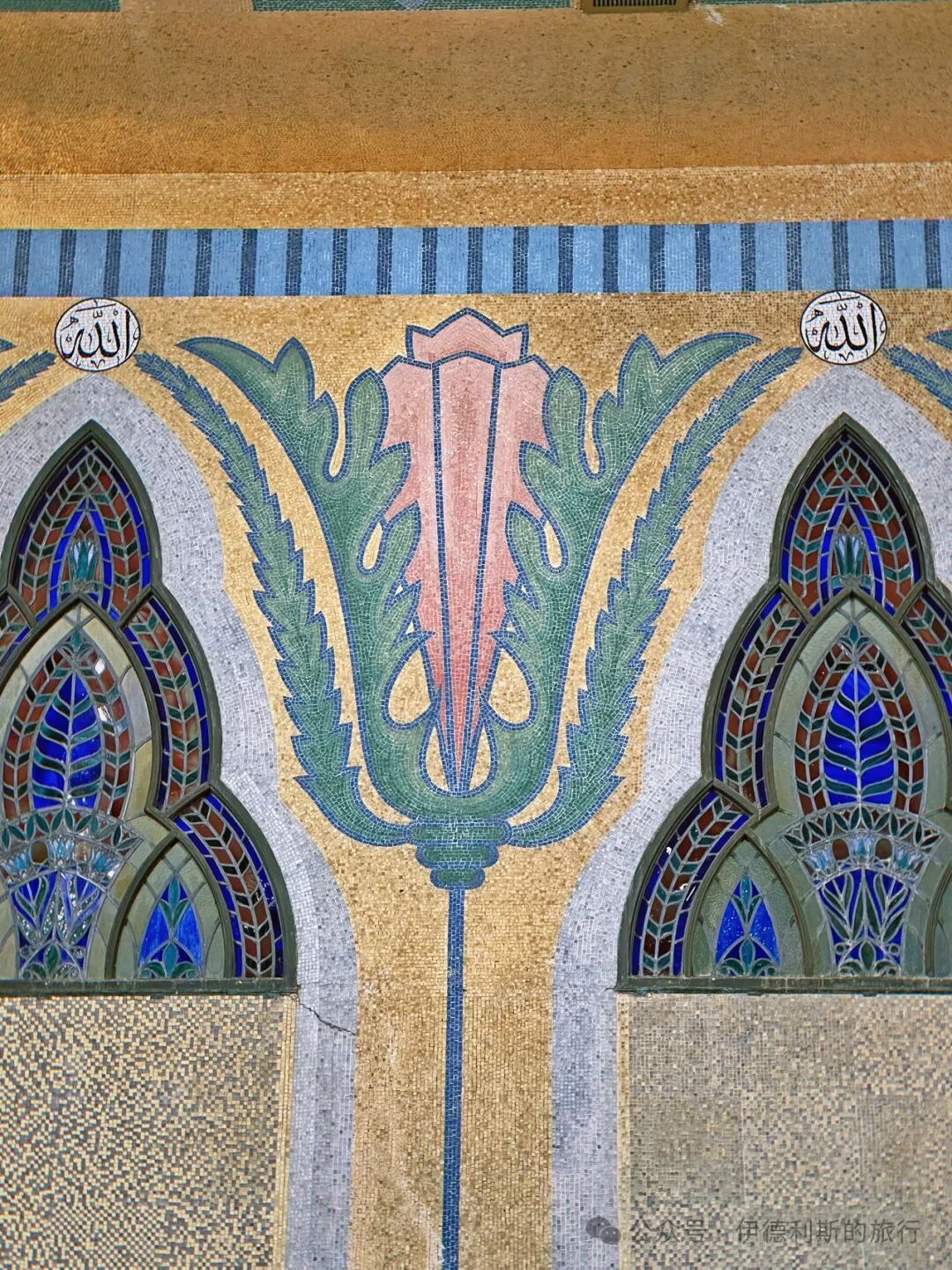
The Water Mosque was built between 1954 and 1958 by the former Sultan of Brunei, Omar Ali Saifuddien III (who reigned from 1950 to 1967), and it is named after him. The main hall features a golden dome in the Mughal Revival style, and the interior uses Italian marble, Shanghai granite, British chandeliers, and Venetian mosaic glass, making it Brunei's most important landmark since its completion.
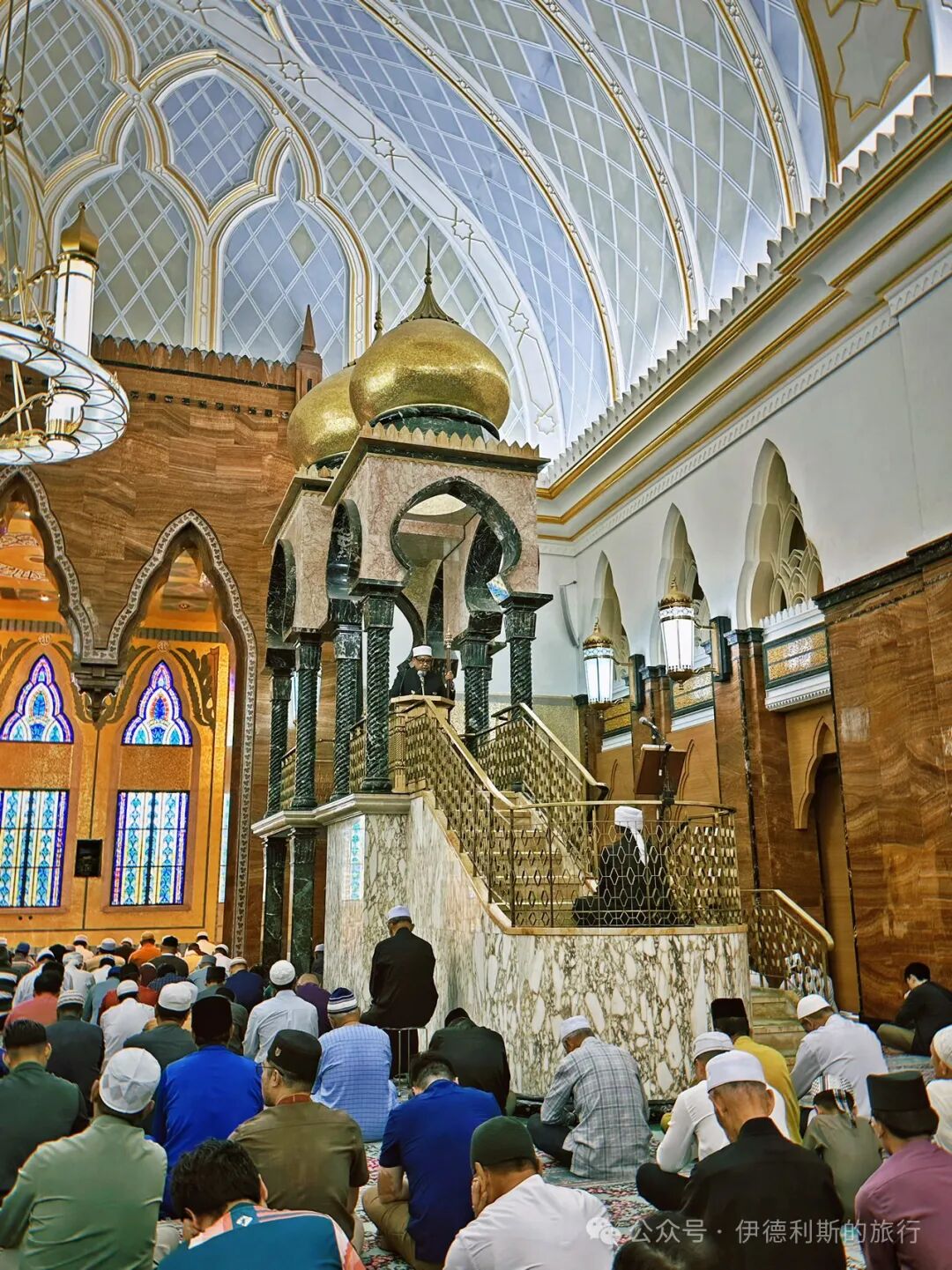
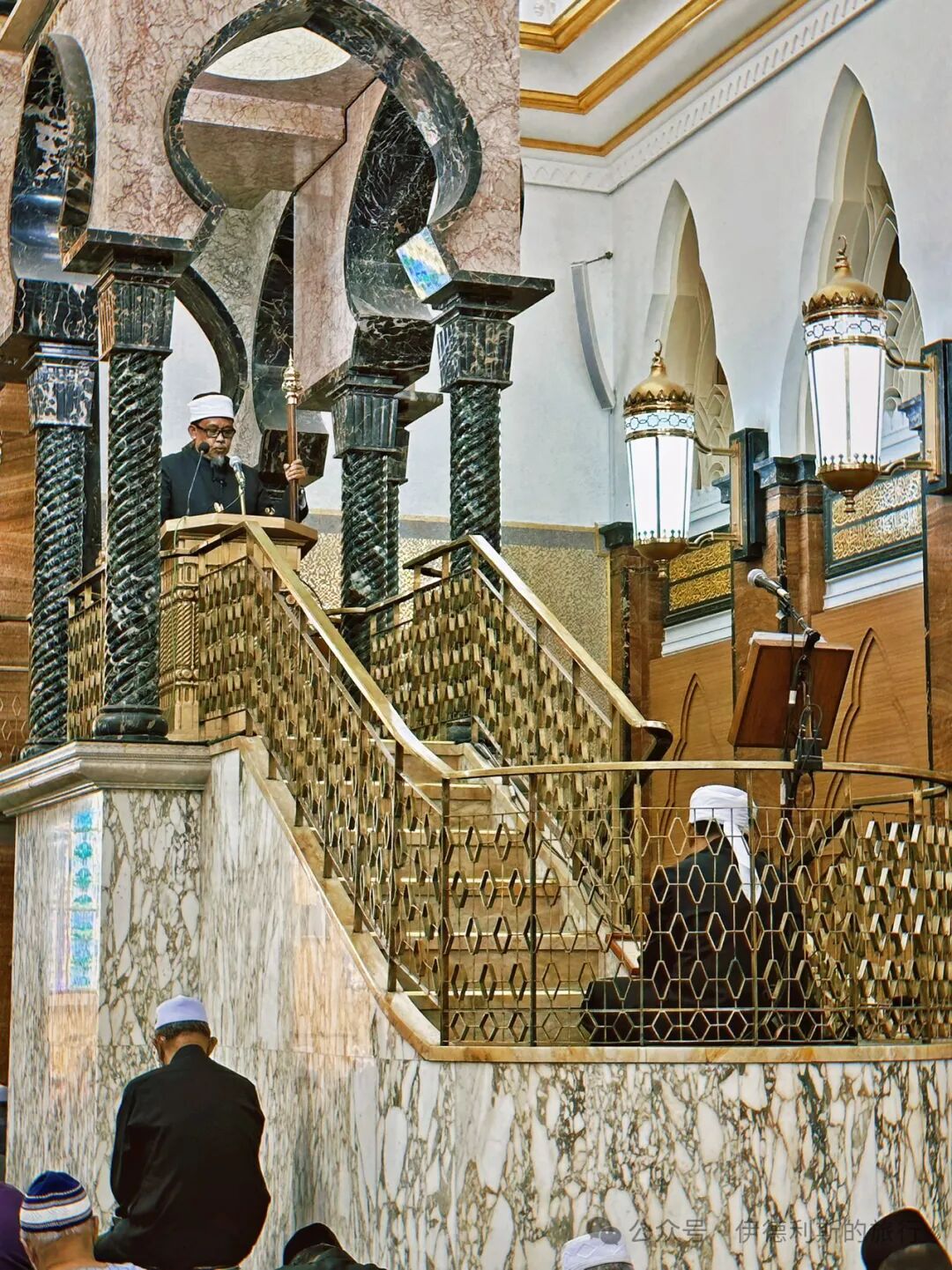
The minbar (pulpit) at the Water Mosque has two levels; the first is where the muezzin calls the adhan (bangke), and the second is where the imam delivers the khutbah (hutubai). Next to the minbar, there is a staircase leading to the second-floor prayer area reserved for the royal family.
After Jumu'ah, they were handing out boxed meals, mostly to South Asian laborers, and I also went over to get a bottle of water.
The Water Mosque during the times of the morning prayer (shamu) and the afternoon prayer (hufu tan). Both of Brunei's national mosques look better at night than during the day.
The earliest historical relics of Brunei are in China.
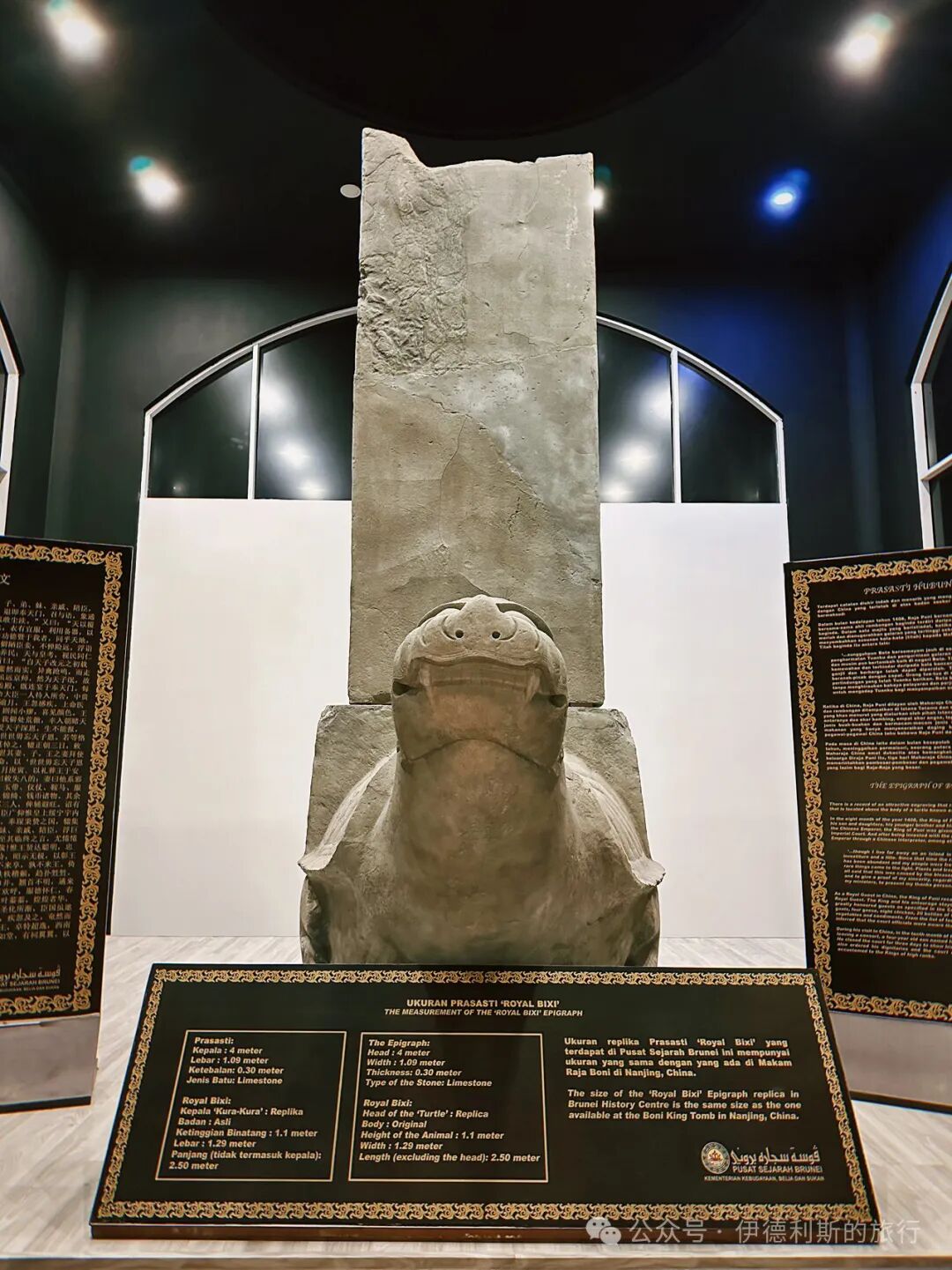
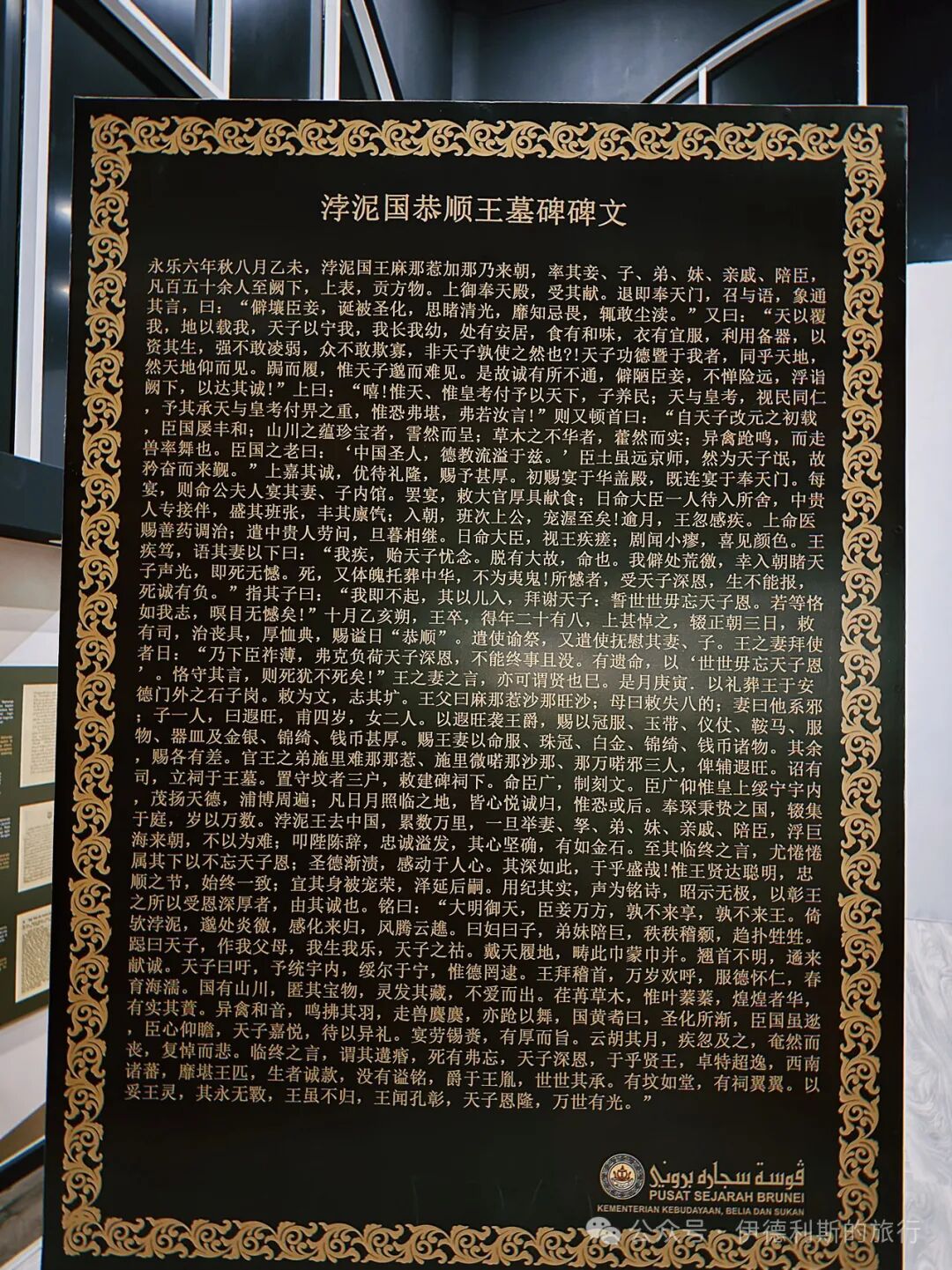
The Brunei History Centre has a replica of the 'Tombstone of the King of Boni' from Nanjing, and the full text is on display.
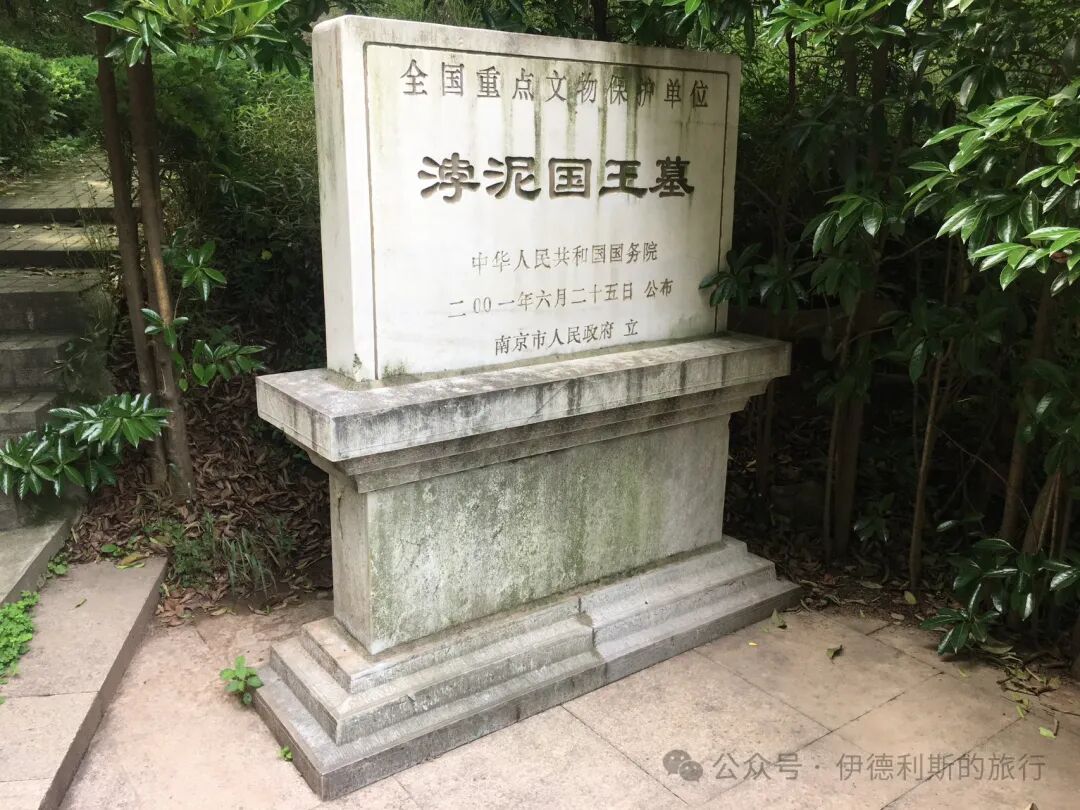
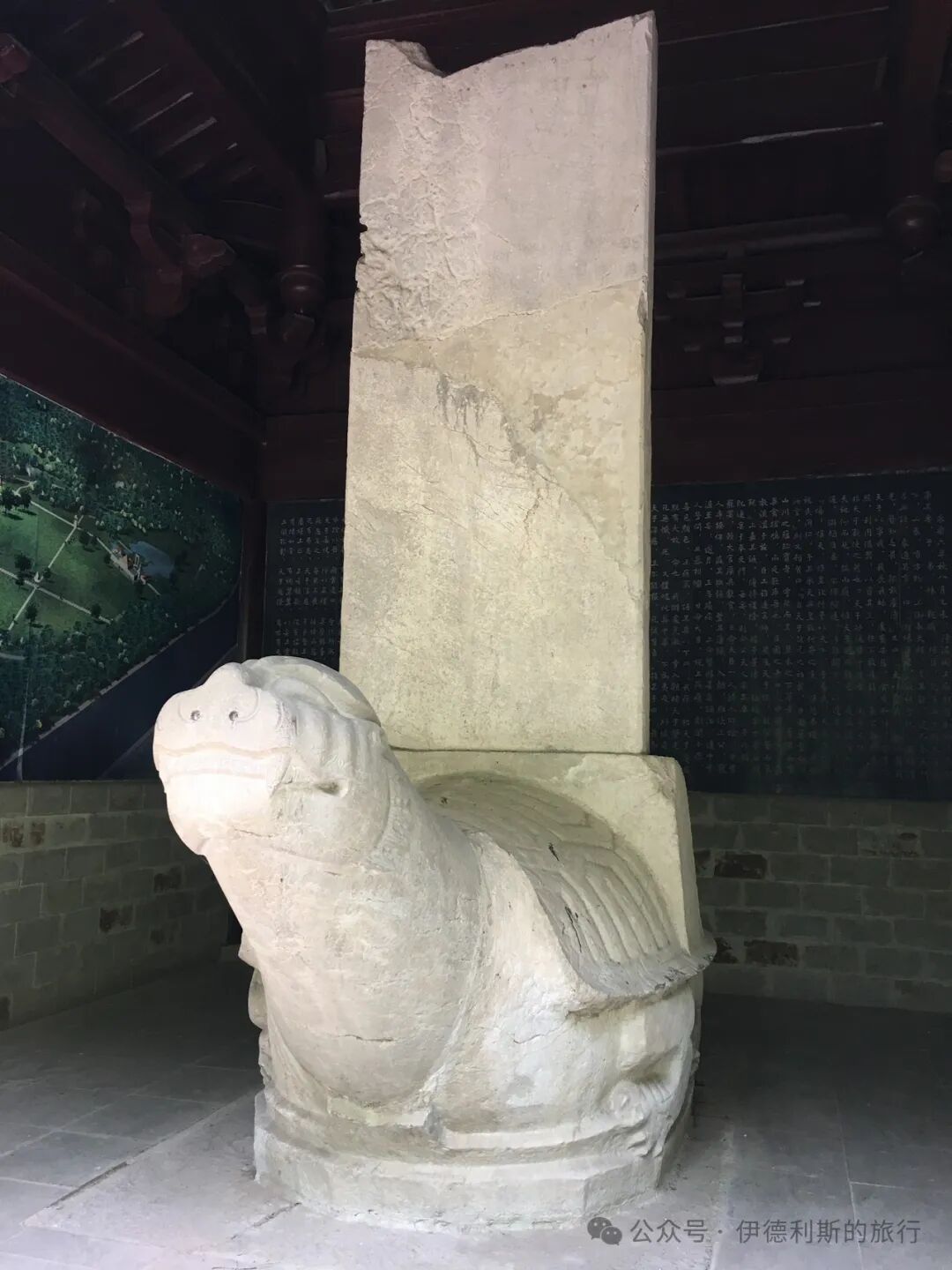
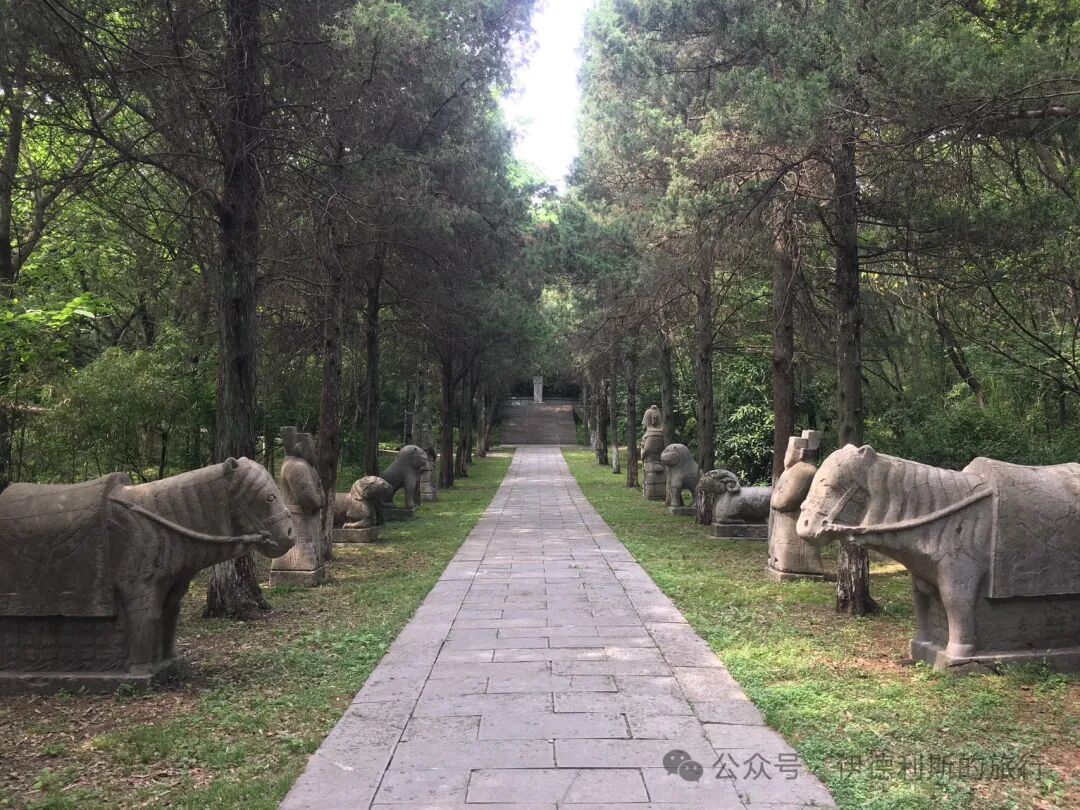
The Tomb of the King of Boni in Nanjing is commonly known as the Ma Huihui Tomb, and it is the burial site of the Bruneian Sultan Mana'naja. In 1405 (the third year of the Yongle reign), Sultan Mana'naja of Boni sent envoys to pay tribute to the Ming Dynasty, and he was granted the title of King of Boni and given many gifts. In 1408 (the sixth year of the Yongle reign), the Sultan led a delegation of over 150 people to Fujian, then traveled to Nanjing to meet the Yongle Emperor, Zhu Di, where he was treated with great honor. A month later, the Sultan suddenly fell ill and passed away at the Huitong Hall in Nanjing. According to the Sultan's final wish to 'have his body buried in China,' the Yongle Emperor ordered that he be buried with royal honors at Shizigang, outside Andemen Gate in Nanjing. After the Qing Dynasty, the tombstone was lost for a time, but the remaining parts were finally found in 1958, though unfortunately, the top of the stone has never been recovered.
The story of Sultan Mana'naja is recorded in the 'History of Ming' (Ming Shi), but it does not appear in Bruneian history books, nor is it in the Bruneian royal genealogy, the 'Salasilah Raja-Raja Brunei'. Bruneian historians believe Sultan Mana'naja is one of the sultans not mentioned in the genealogy.
The original Nanjing tombstone that I photographed a few years ago.
The ancient city in the mountains of Brunei.
I took a taxi from the city center to the ruins of the Brunei Sultanate palace hidden in the tropical rainforest, the Kota Batu Archaeological Park (Taman Arkeologi Kota Batu), which is also Brunei's most important archaeological site.
Kota Batu is believed to have been the capital of the Brunei Sultanate from the 14th to the 17th century. It was once an important trade port in Southeast Asia and the central city of northern Borneo. In 1521, Italian explorer Antonio Pigafetta arrived in Brunei with Magellan's fleet. He recorded: 'This city is built entirely on the sea, with 25,000 households, excluding the homes of the Sultan and certain heads of state.' A civil war in the Brunei Sultanate between 1660 and 1673 led to the abandonment of Kota Batu. The Sultan of Brunei moved his palace to the water village of Kampong Ayer on the upper Brunei River.
Kota Batu means 'stone castle.' It is a rare site of stone architecture in Brunei. British naturalist and Sarawak Museum curator Tom Harrisson led the first archaeological excavations at Kota Batu from 1952 to 1953. He found many Chinese coins from the Tang, Song, and Ming dynasties, as well as Arabic coins, glassware, ironware, bronze, wooden tools, stone carvings, and ceramics from Siam, Indochina, and Song and Ming dynasty China.
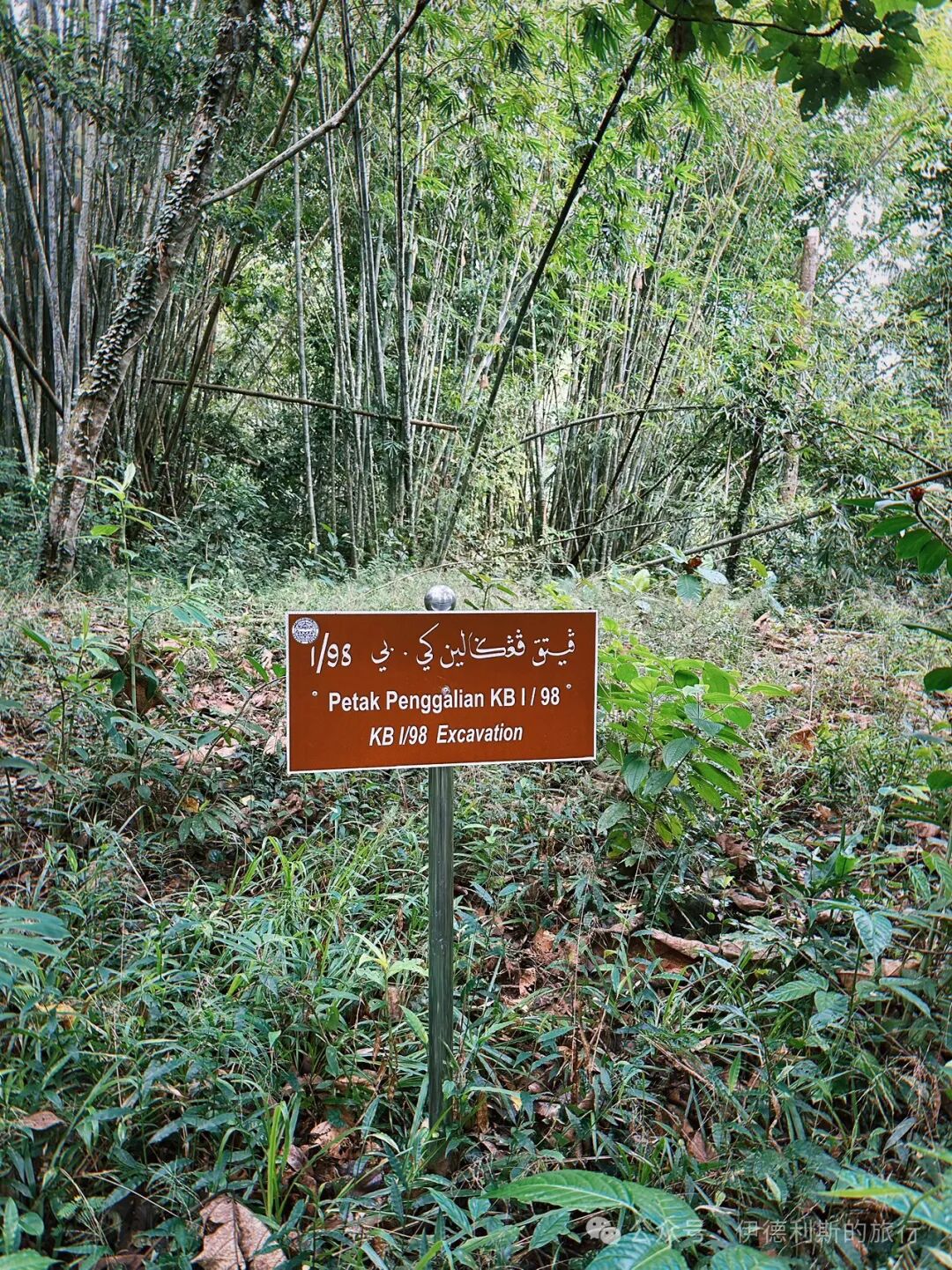
During excavations in 1986 and 1987, a square stone building measuring 25.8 meters by 25.4 meters was discovered. It contained 36 stone column bases, tombstone remains, and Ming dynasty porcelain shards. It is believed the building was constructed in the 15th century. Because the column bases are in three layers, the building likely had a three-tiered pyramid roof structure similar to traditional mosques in Malacca. Although early palace buildings in the Brunei Sultanate were made of wood and left few traces, the coins and pottery found at Kota Batu suggest the Sultan's palace was likely near this site.
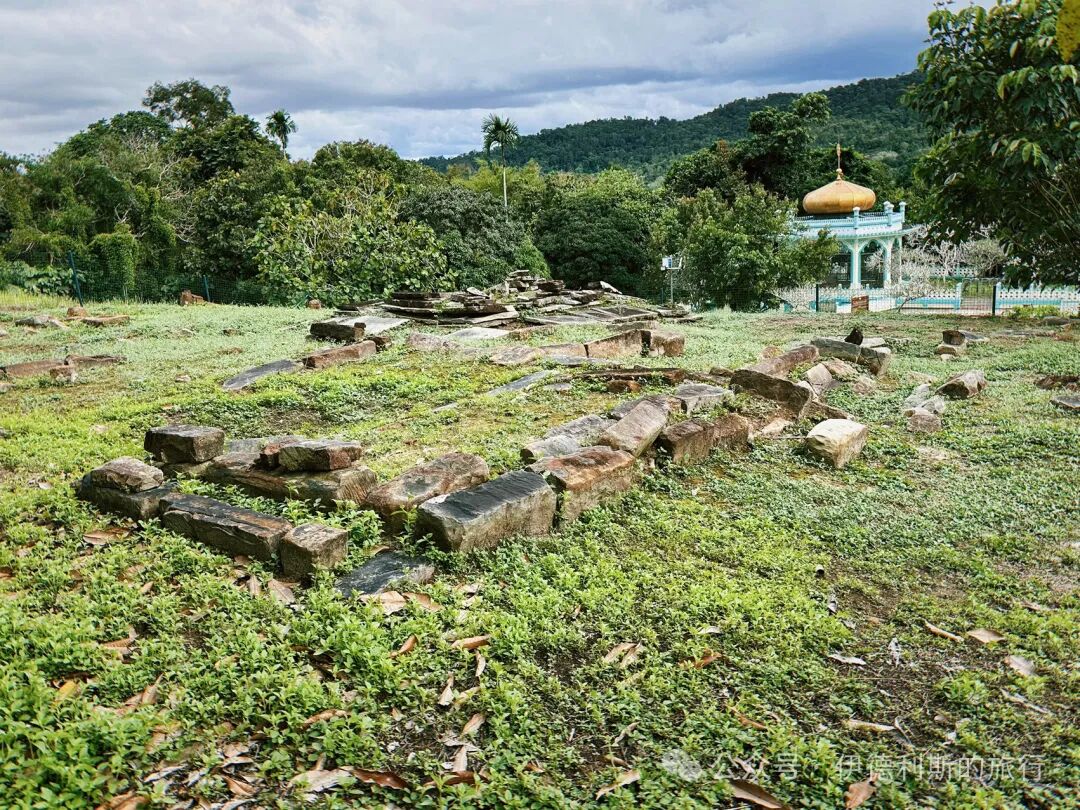
Next to the site are nine graves of Brunei nobles from the 15th and 16th centuries. The tombstones were all imported, likely from China.
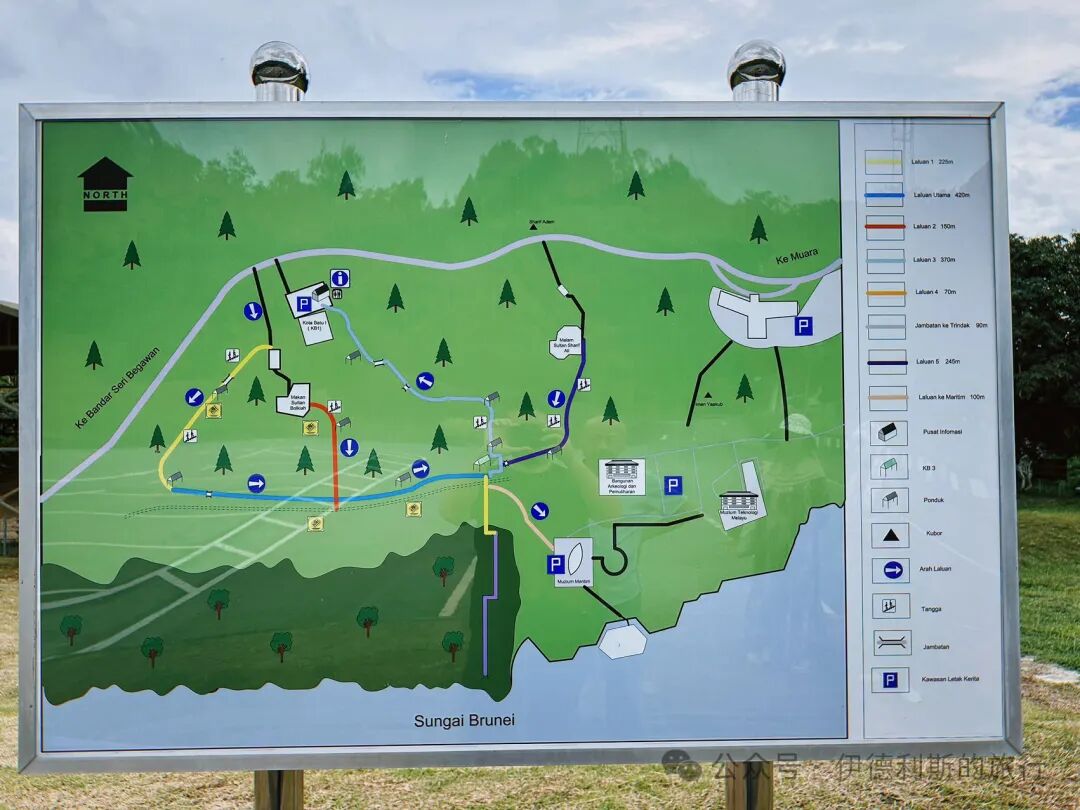
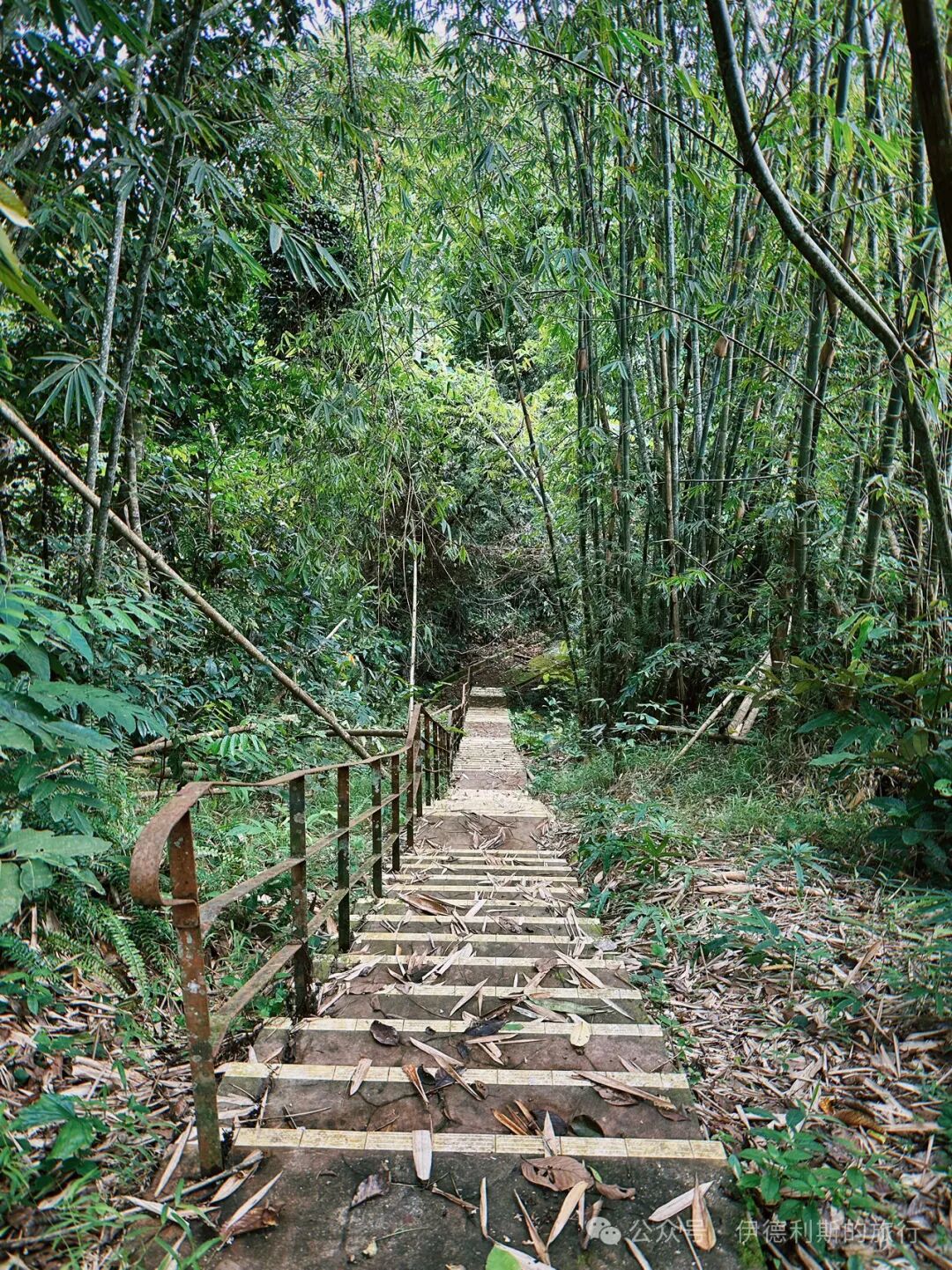
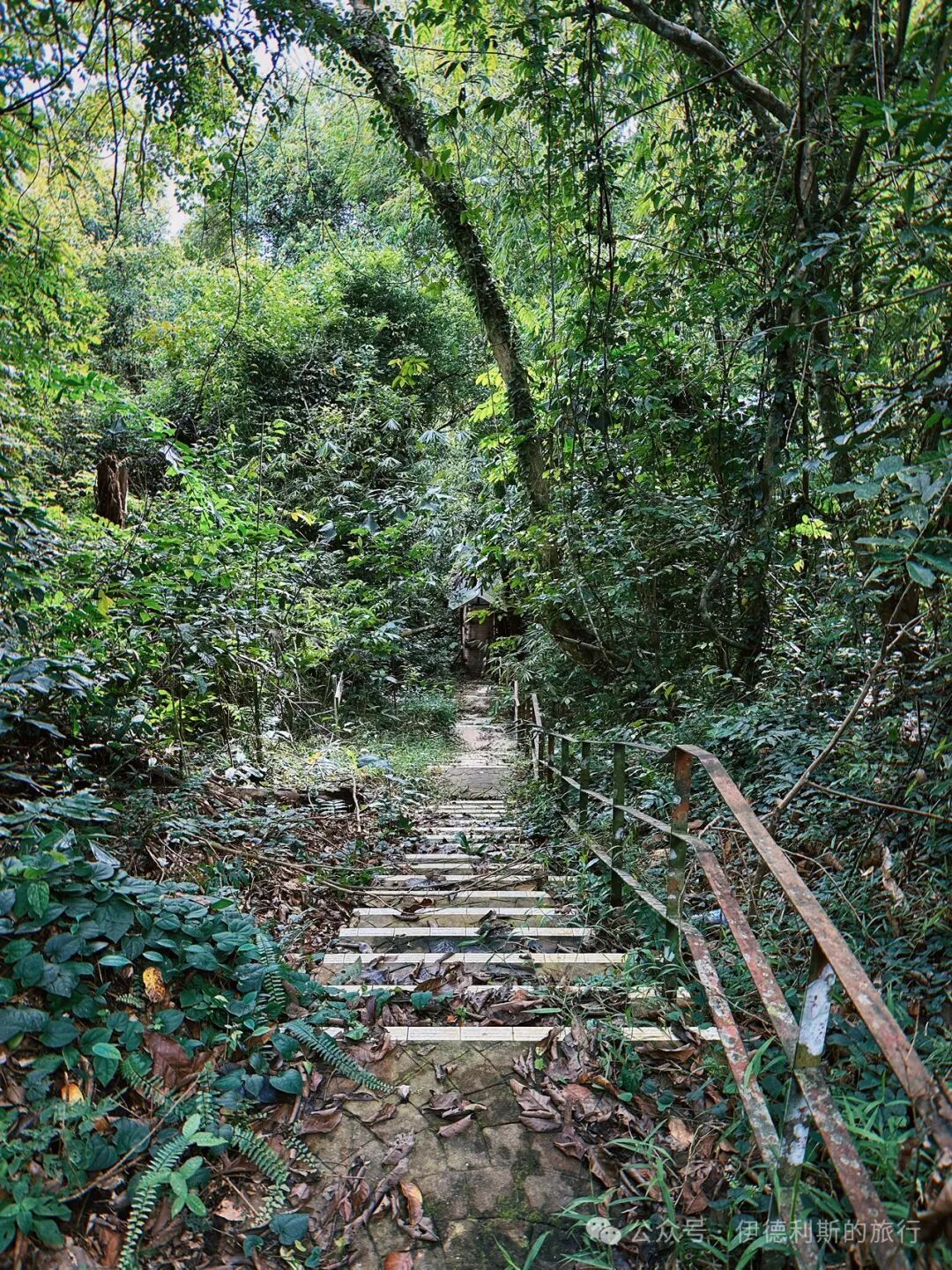
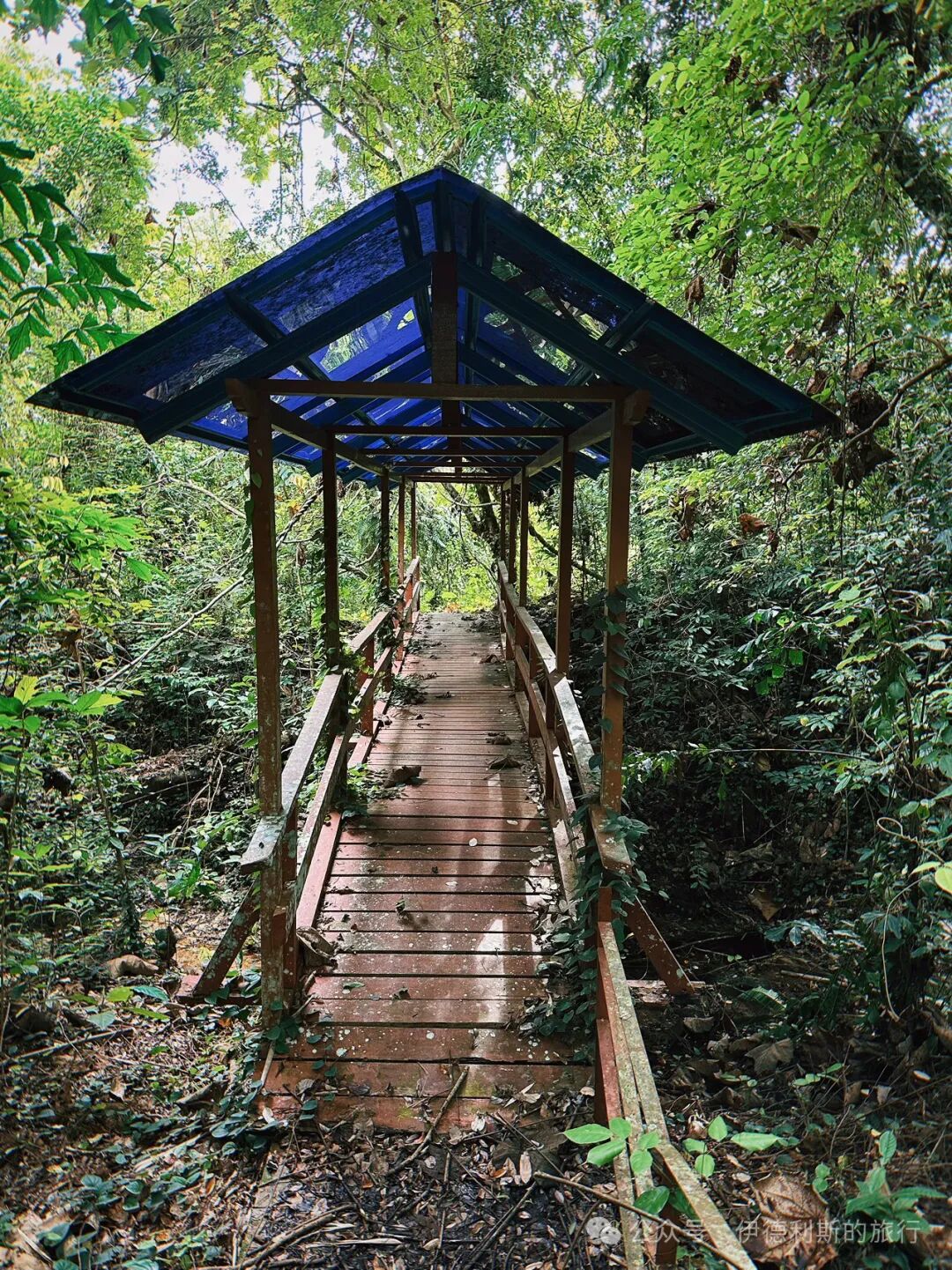
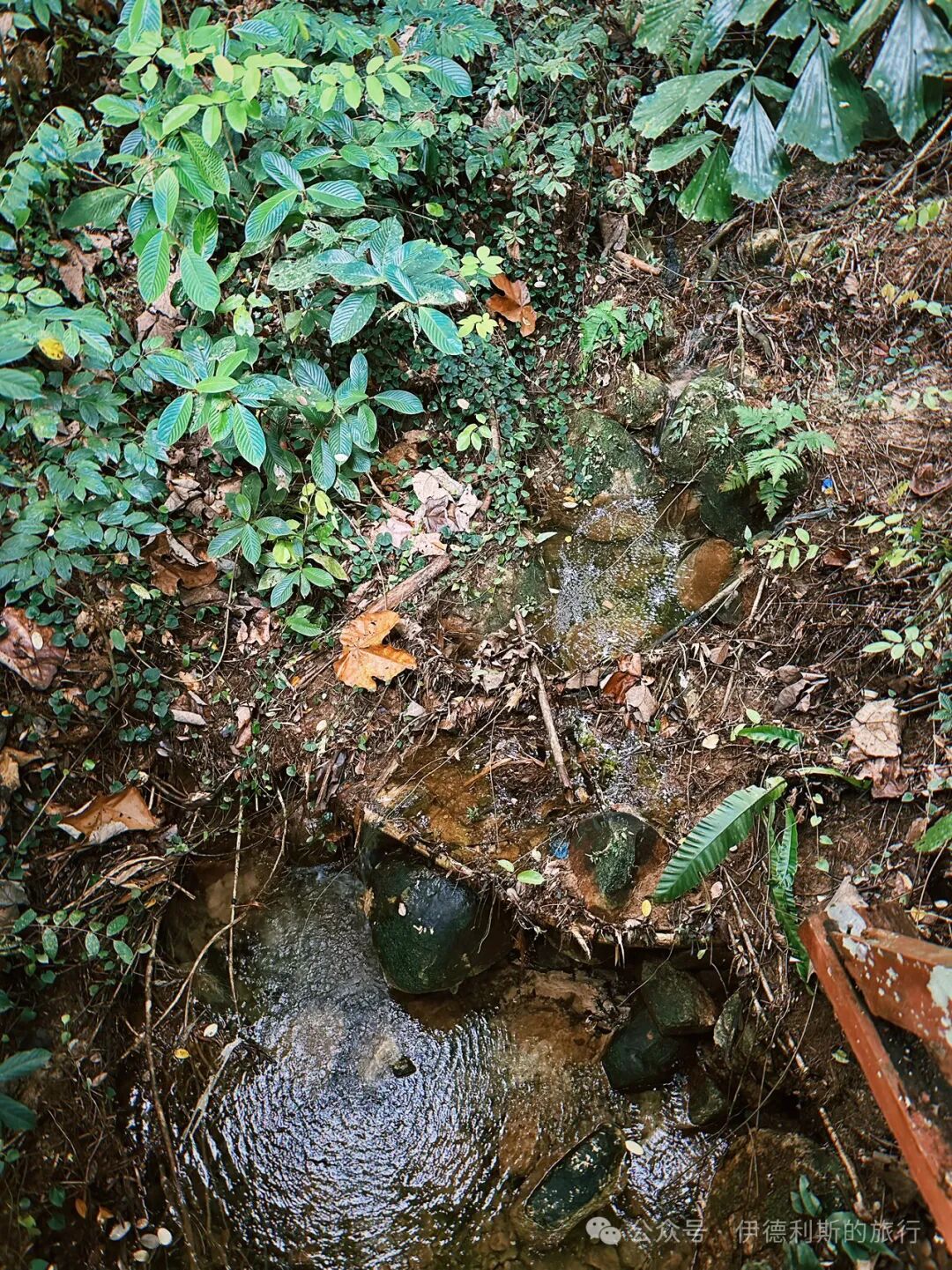
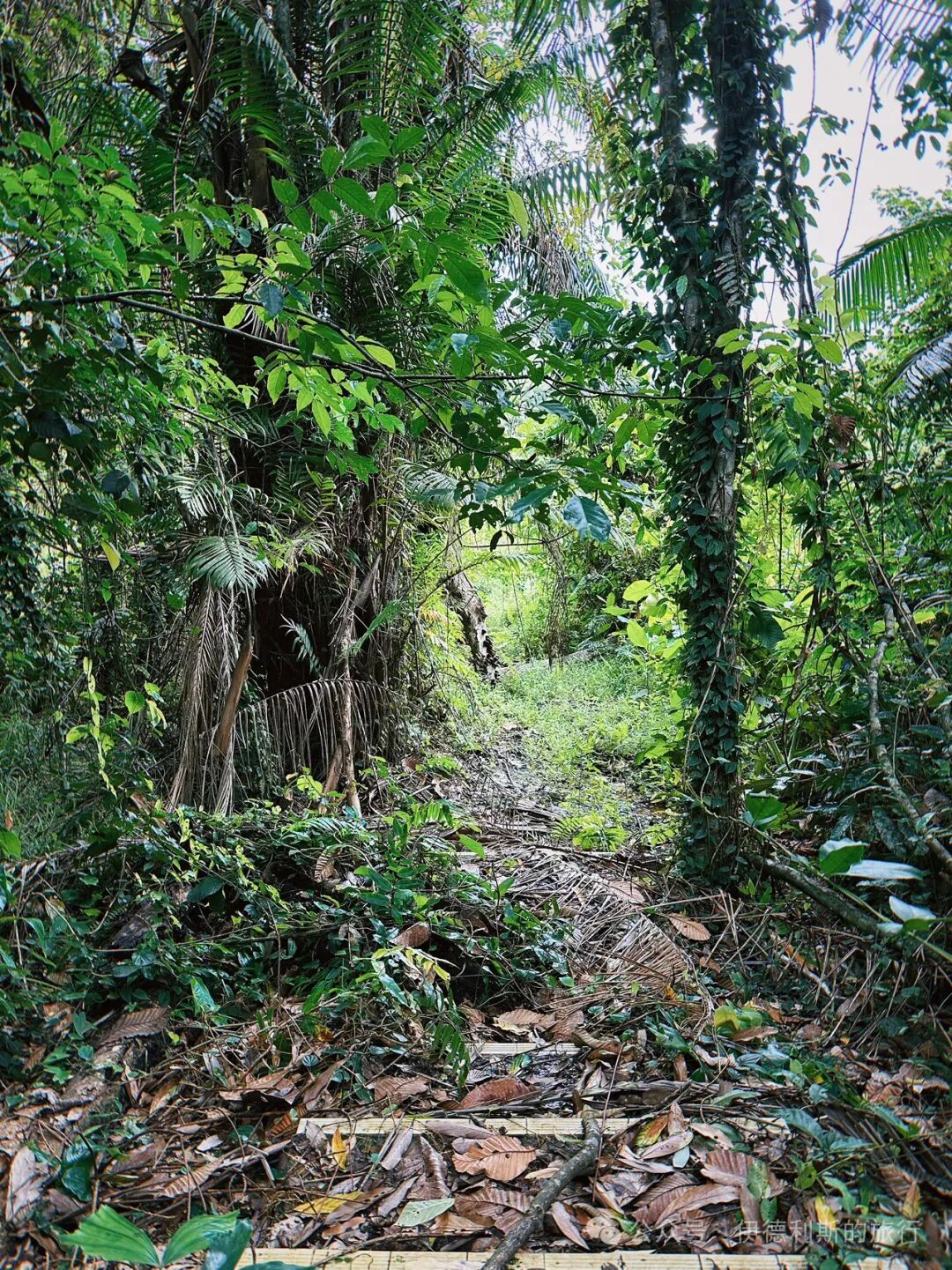
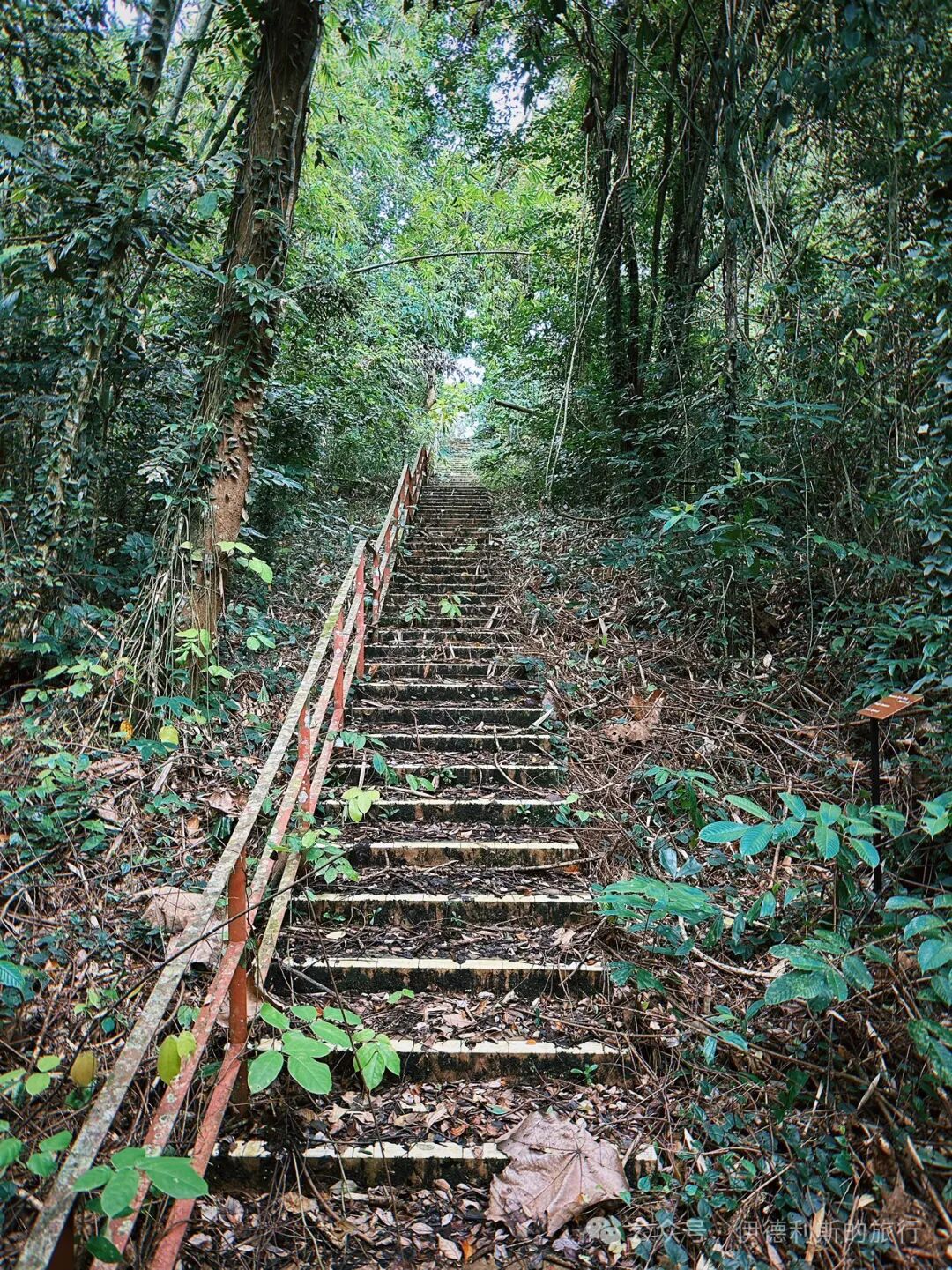
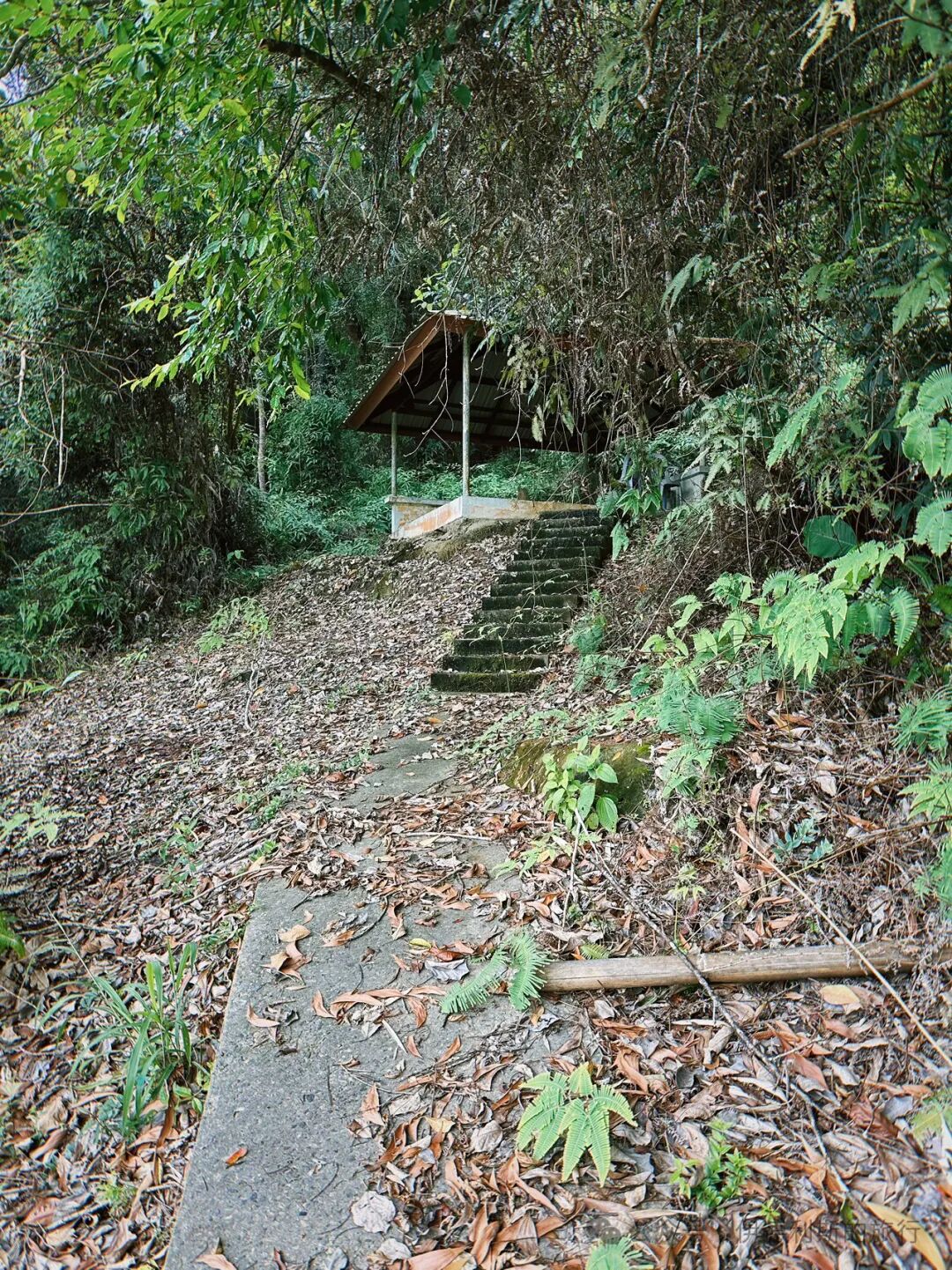
The paths in Kota Batu Archaeological Park feel like a primitive forest. There were no other tourists, and the mountain trails were often covered by fallen leaves and hidden from view. It is hard to imagine that this was once the capital of Brunei.
Tomb of the Third Sultan of Brunei
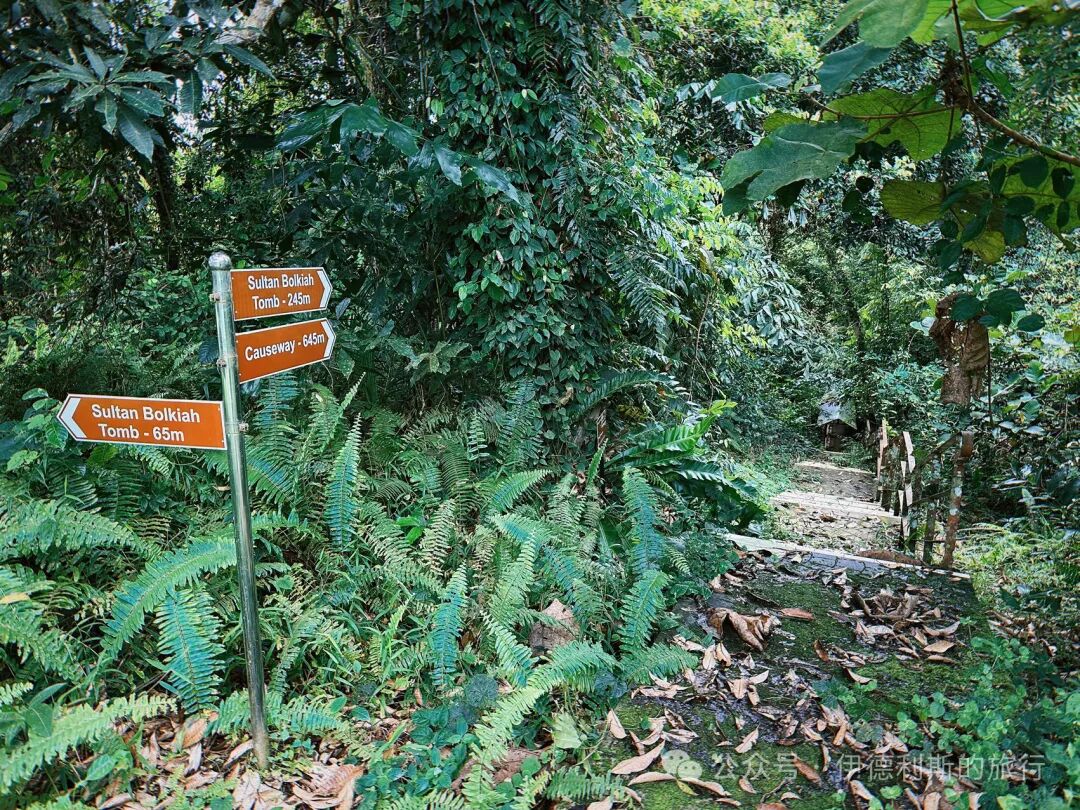
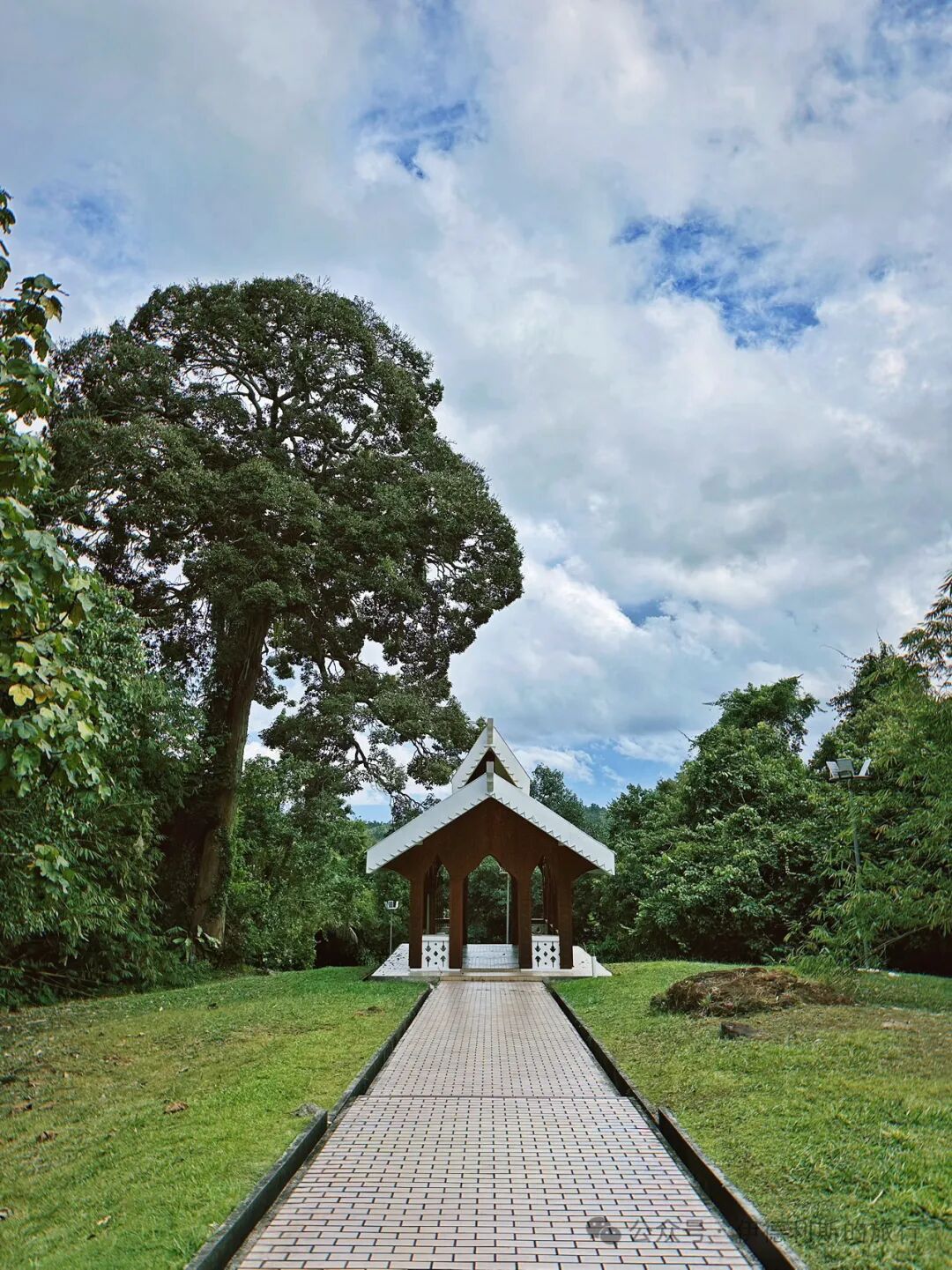
The Kota Batu Archaeological Park contains the tomb of Sharif Ali, the third Sultan of Brunei.
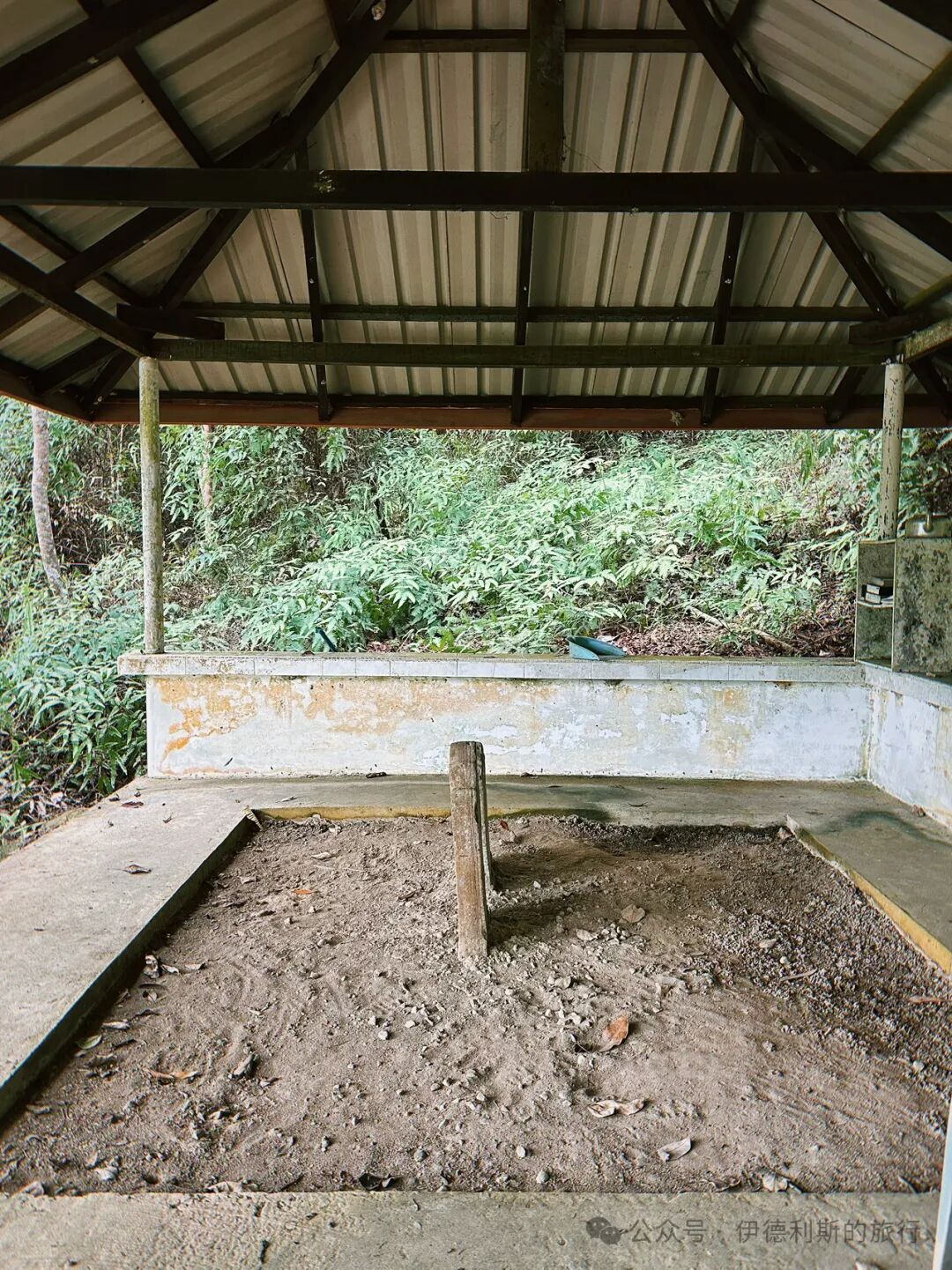
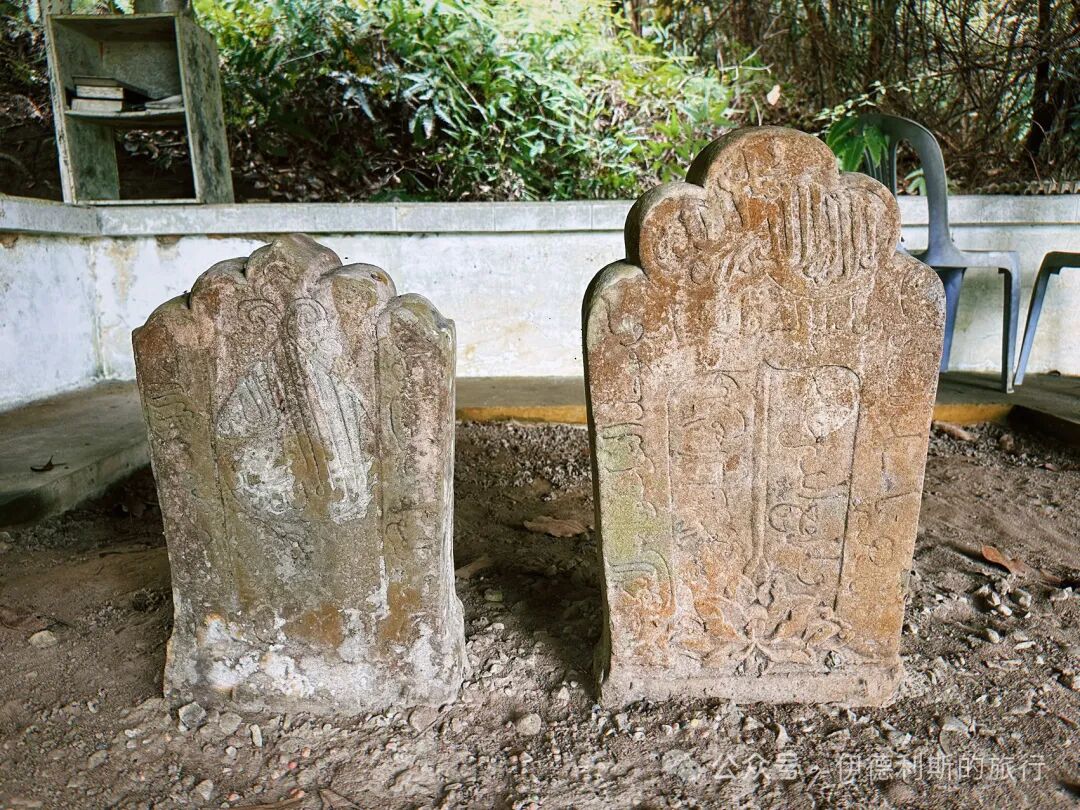
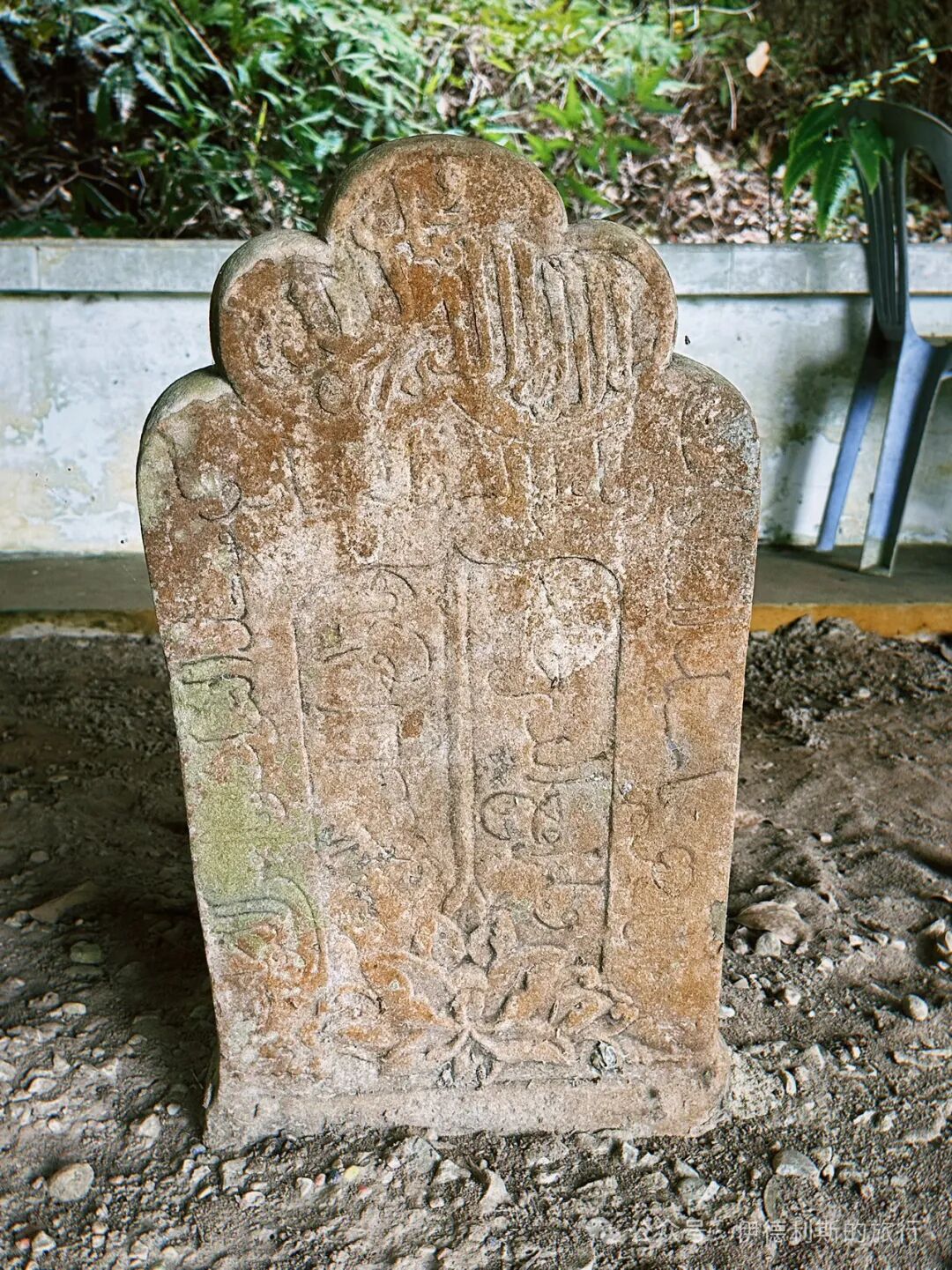
Sultan Sharif Ali (reigned 1425–1432) was originally a missionary from the ancient Saudi city of Taif and a descendant of the Prophet's grandson, Hasan ibn Ali. He arrived in Brunei to preach in 1395 and earned the respect of the Sultan and the people. He married the daughter of Sultan Ahmad around 1400 and inherited the throne after the old Sultan passed away in 1425. This is how the Brunei Sultanate gained its lineage from the Prophet.
Sultan Sharif Ali worked to spread Islamic law while keeping local customs that did not conflict with the faith. During his reign, Brunei officially transitioned from a Hindu-Buddhist cultural zone into a part of Islamic civilization. He built the first mosque in Brunei, designed the national flag, and established the title 'Darussalam' for Brunei. It is believed that he may have also built the stone castle at Kota Batu.
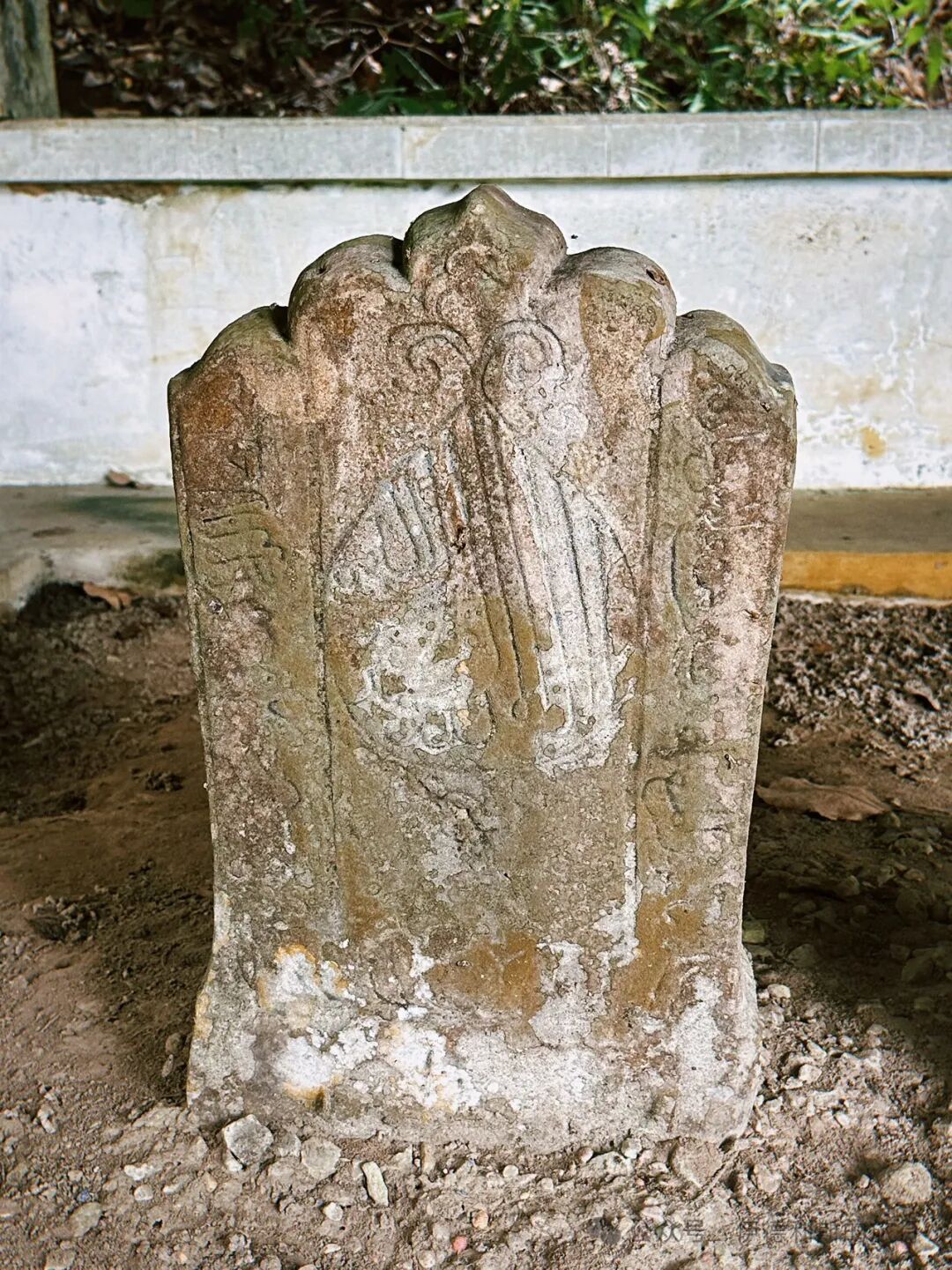
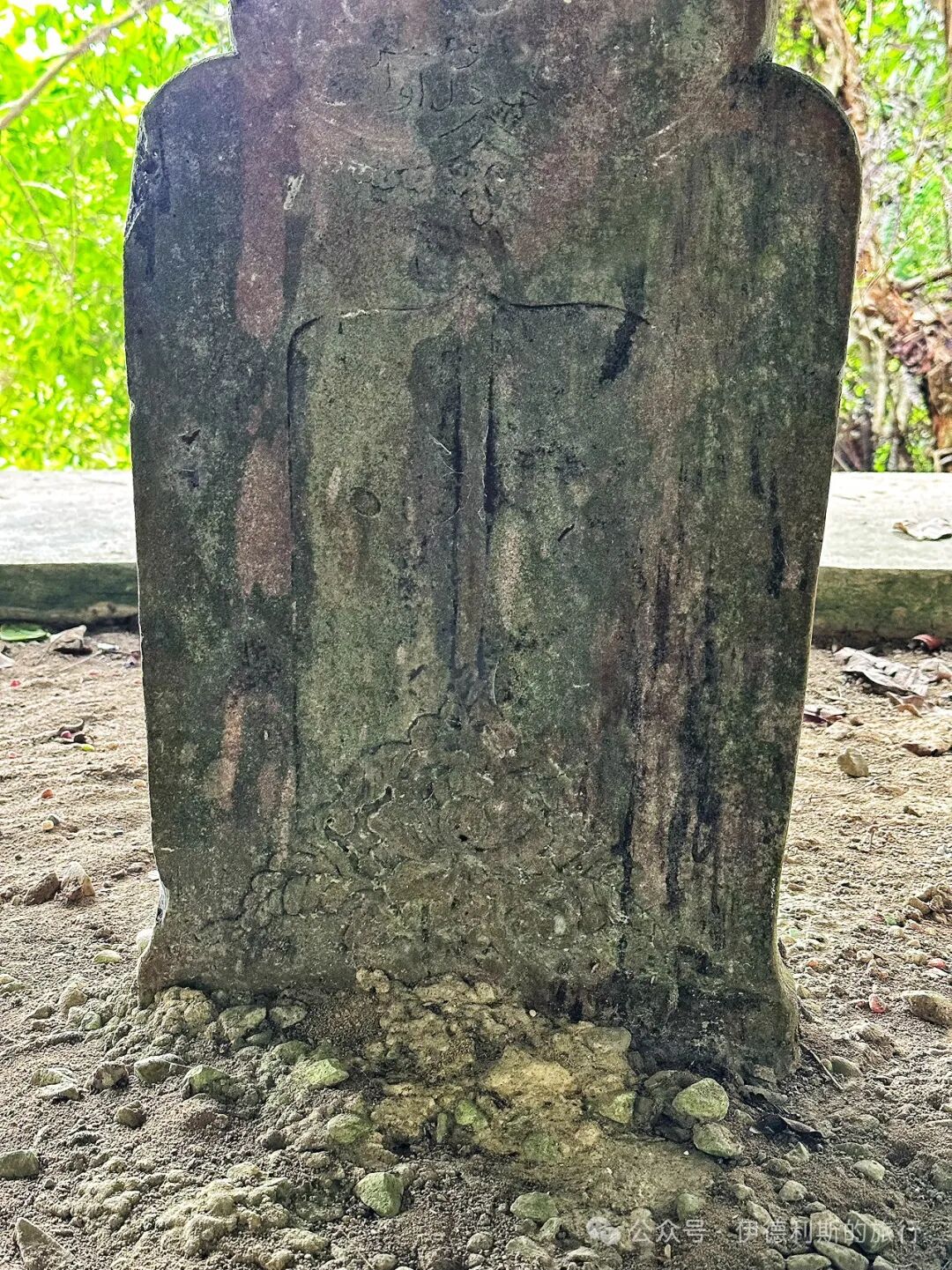
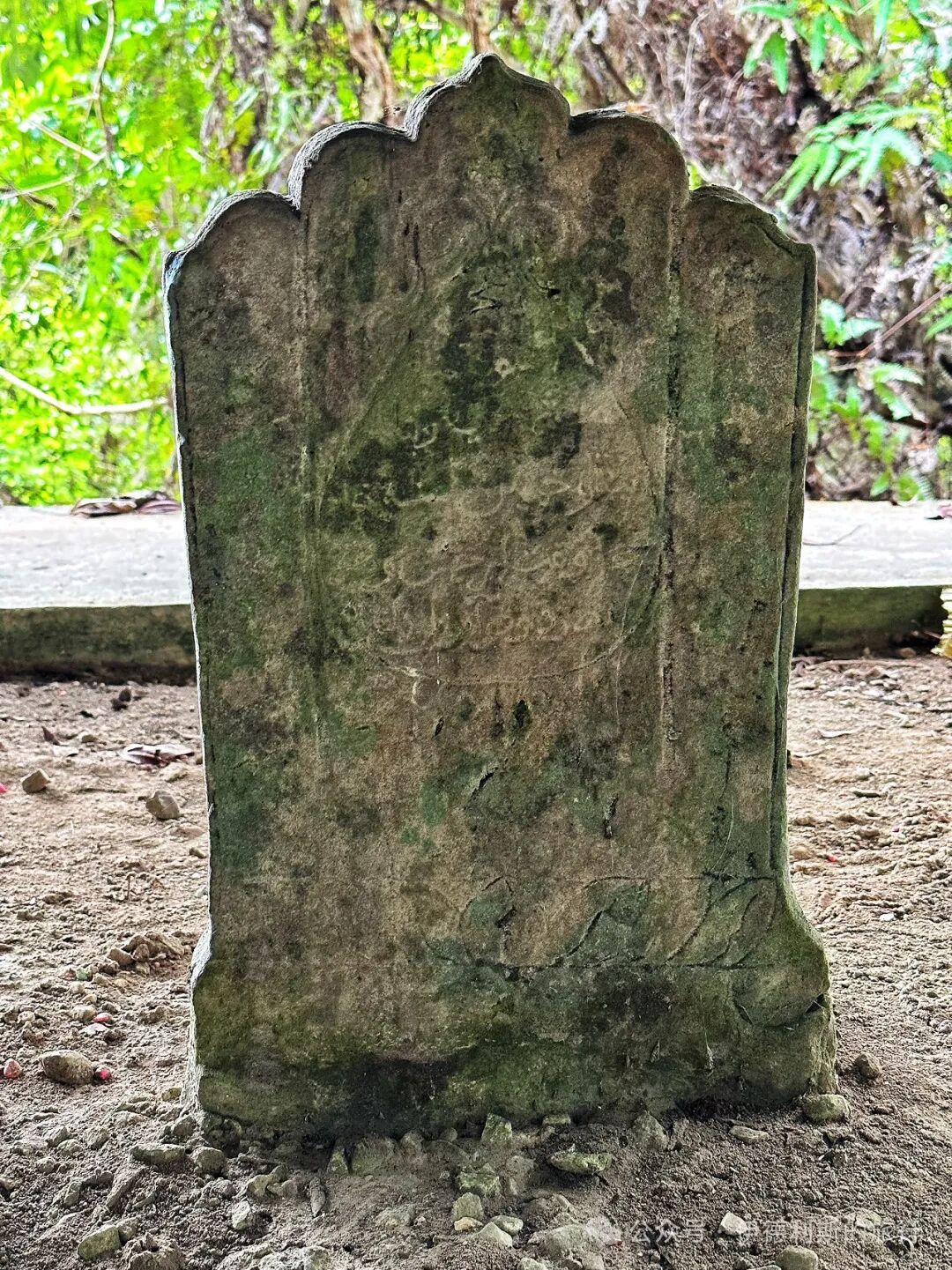
North of Sultan Sharif Ali's tomb is the grave of Syarif Adam, another sage who came to Brunei with the Sultan to preach. Together, they spread the influence of the faith from Brunei to the Sulu Archipelago and Mindanao in the southern Philippines. According to his tombstone, Syarif Adam passed away in 1454.
Tomb of the Brunei Princess
In the center of the old town of Brunei, there is the tomb of Raja Ayang. Legend says Raja Ayang was a royal family member during the reign of Sultan Sulaiman (reigned 1432-1485) of Brunei in the 15th century. Some research suggests she might be Rokayah, the daughter of Sultan Abdul Majid Hassan who passed away in Nanjing.
People say Raja Ayang had an affair with her own brother. Sultan Sulaiman punished them by locking them in a small, man-made cave that only had one air vent connecting to the outside. The Sultan provided them with enough food to live inside the cave. If no cooking smoke rose from the air vent, it meant they had passed away. Later, people built the tomb of Raja Ayang next to the small hill.
The small hill of Raja Ayang's tomb lasted until the 1950s. It was torn down to build a nearby post office and radio station, but the tomb itself was preserved. The inscription is blurry from years of people lighting candles for dua, but you can still see verses and the year 859 in the Islamic calendar (1454 AD), which is likely the date Raja Ayang passed away.
Tomb of the Fifth Sultan of Brunei
South of the Kota Batu Site 1 is the tomb of Sultan Bolkiah (reigned 1485-1524), the fifth Sultan of Brunei. His reign is known as the Golden Age of Brunei history, when the Sultanate of Brunei held power over Borneo and the southern Philippines.
When Ferdinand Magellan's fleet arrived in Brunei in 1521, they witnessed the power of Brunei under Sultan Bolkiah. When they reached the palace, they were shocked by his wealth. A hall reached by wide steps was crowded with courtiers wearing elegant clothes. Through the corridor was a slightly raised room decorated with luxurious silk and brocade curtains, bathed in natural light from wide windows. Three hundred of the Sultan's warriors stood guard there with their daggers drawn. A little further on was a smaller but equally beautiful room, where the muscular forty-year-old monarch sat on a large mat chewing betel nut with his young son beside him.
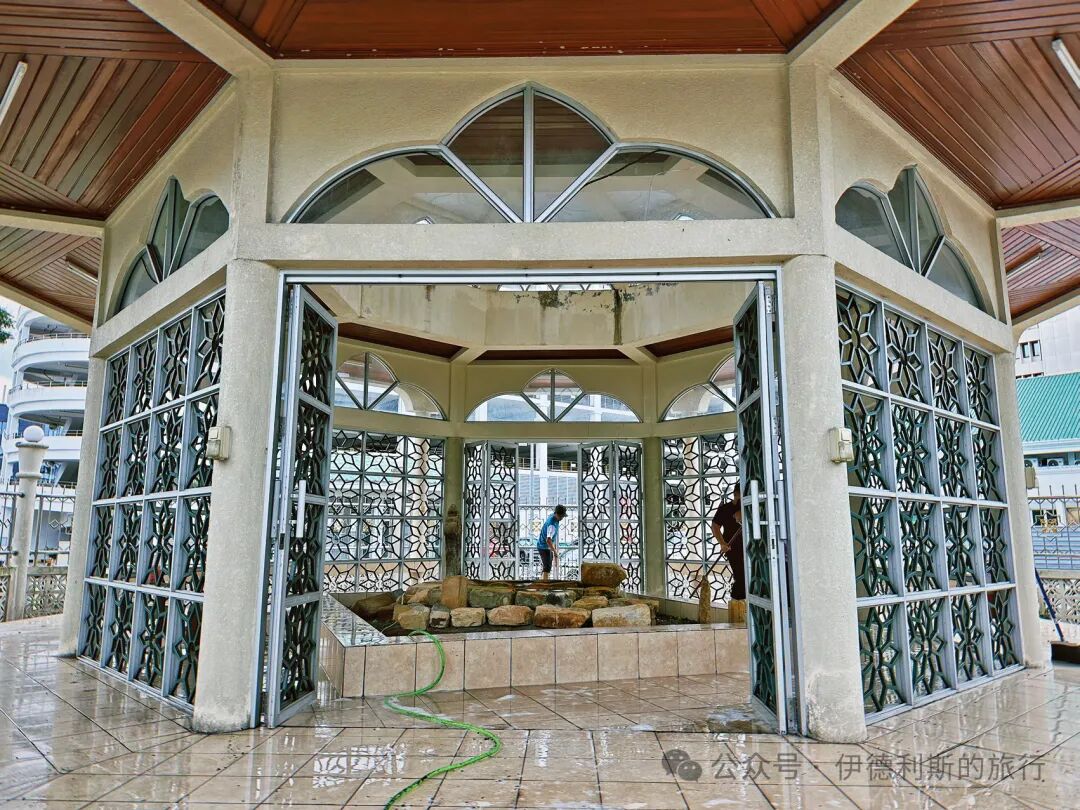
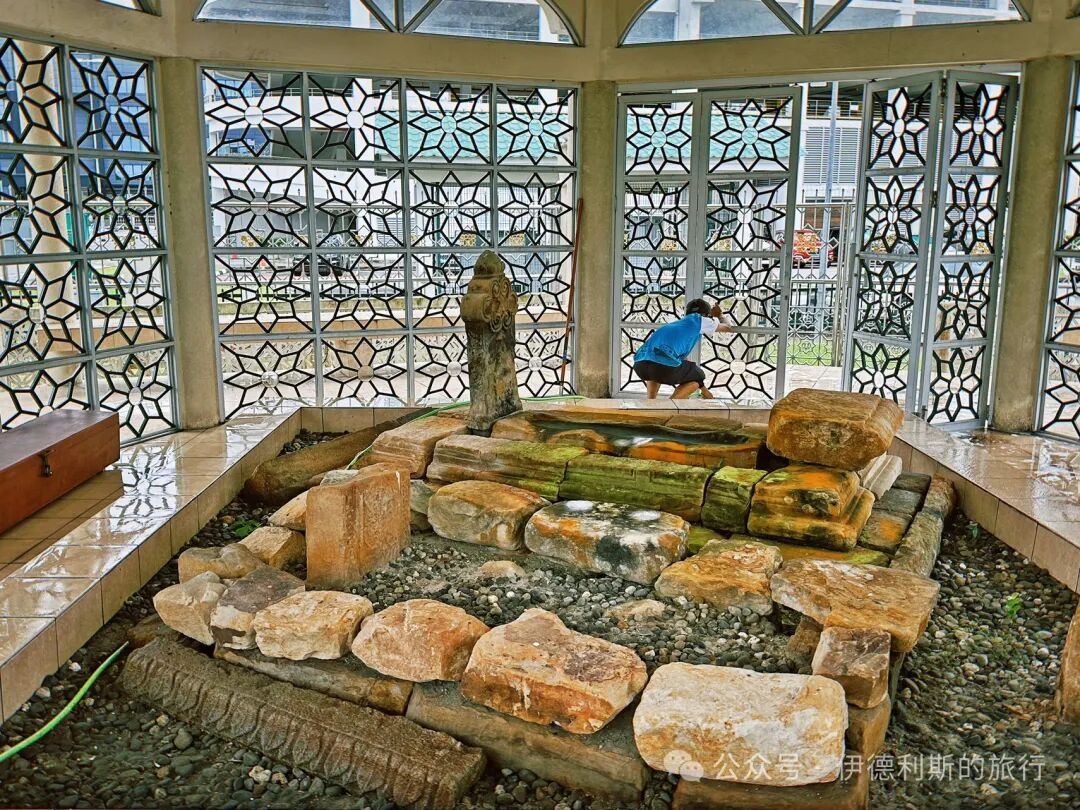
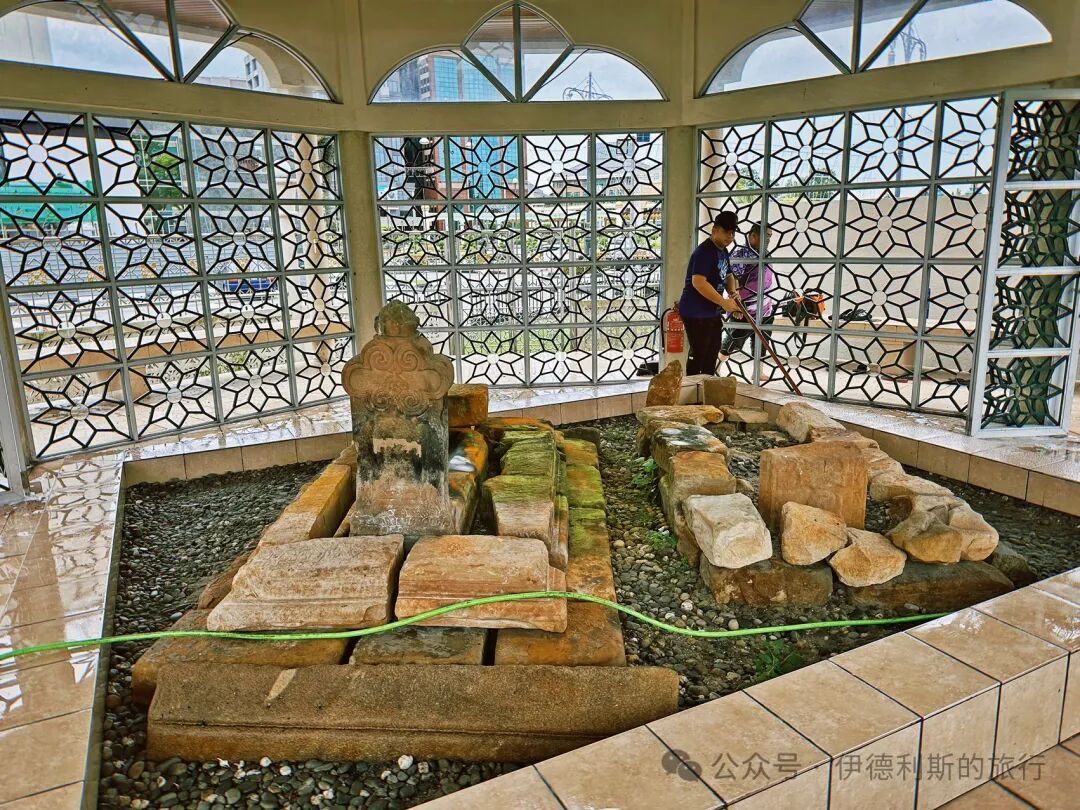
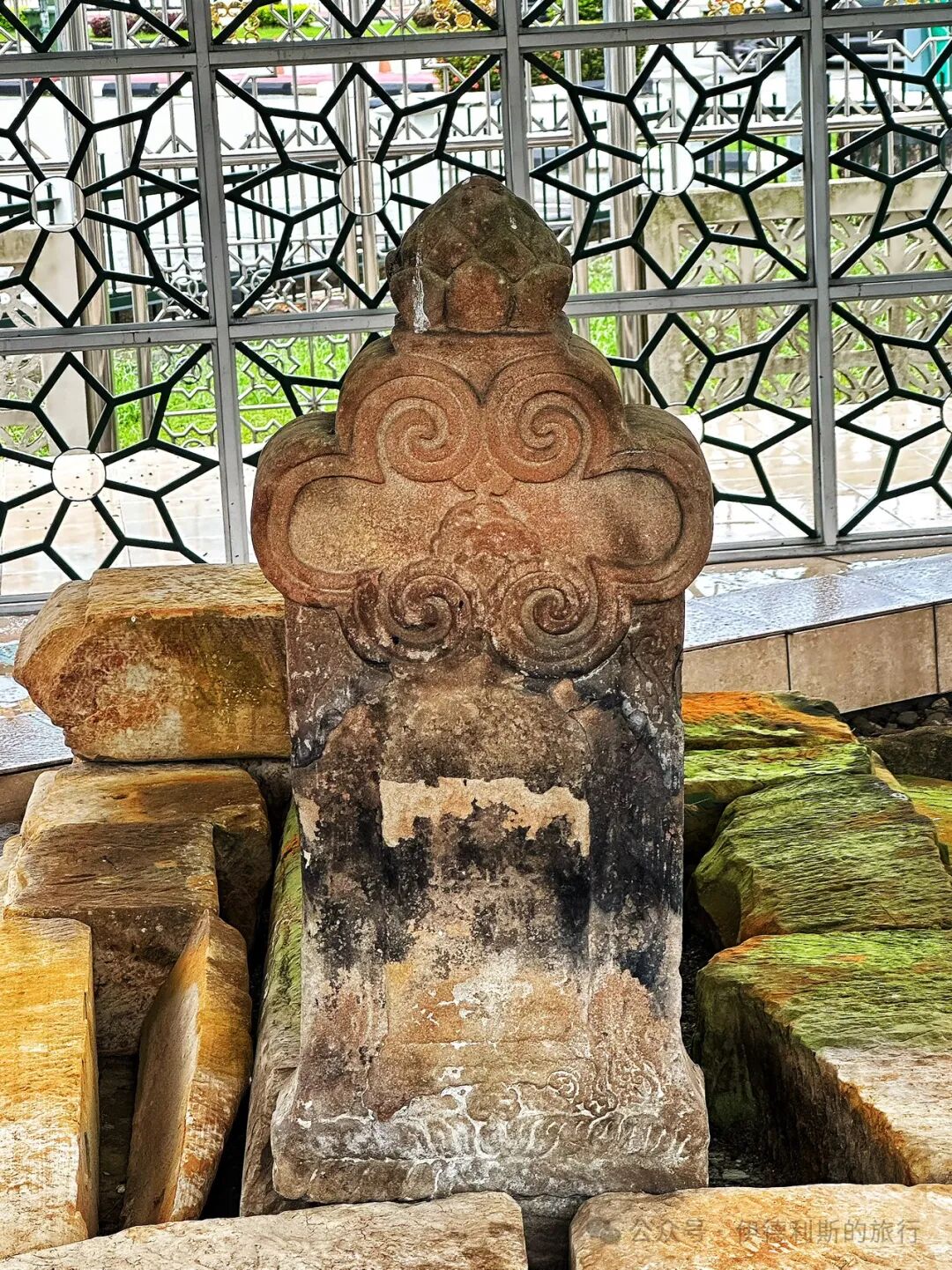
The tomb of Sultan Bolkiah is tall, majestic, and finely carved. The tombstone consists of eight layers, but only the bottom layer is original. One of the upper stones commemorates Sultan Muhammad Ali, and another commemorates Sultan Abdul Mubin, likely made in the late 17th century. The middle slab records that Sultan Bolkiah passed away on July 17, 1524, and was likely carved in modern times.
Next to the tomb of Sultan Bolkiah is the tomb of his wife.
Kampong Ayer Water Village
We took a speedboat from the pier on the Brunei River and reached Kampong Ayer on the other side for 1 Brunei dollar each. We first visited the Kampong Ayer Cultural and Tourism Gallery, which has information about the water village, and there is an observation deck next to it for a panoramic view of the village.
Kampung Ayer is the Malay term for water village. It was once the main port of the Sultanate of Brunei and served as its trade hub from the 15th to the 17th century. After the Brunei Civil War in the 18th century, Kota Batu was abandoned, and the water village became the capital of the Sultanate. In 1521, Italian explorer Antonio Pigafetta arrived in Brunei with Magellan's fleet and called Kampung Ayer the Venice of the East. The water village was once massive and even housed the Sultan's palace, but it gradually declined after the British invasion in the 19th century. Since the 20th century, Brunei has encouraged residents of the water village to move to the shore, but many people still choose to stay.
The two traditional wooden mosques on the water are a major highlight of Brunei. The walls and pillars are made of wood. Once you go inside, the air conditioning is very strong, so you cannot feel the humidity from the water. In recent years, Brunei has built several large concrete mosques on the banks of the water village, and the traditional wooden mosques are becoming fewer.
The water village has its own scenery, with small restaurants and convenience stores, though it is usually quite quiet. view all
Summary: This first part of the Brunei journey follows historic sites from hilltop fortifications to places tied to Malay royal and Muslim culture. The English version preserves the original route, images, place names, and historical notes from the Chinese source.
Entering Brunei
I took a Royal Brunei Airlines flight from Kuching in the afternoon and arrived in Bandar Seri Begawan, Brunei's capital and only city, in just over an hour. After getting off the plane, follow the crowd to the immigration counters where you will see a row specifically for visa-on-arrival. Staff members will check in advance if you are holding a Chinese passport. When entering, just show your prepared flight itinerary and accommodation booking. You do not need to print the electronic arrival card or health declaration if you have filled them out online. Then, pay the visa fee with a VISA card to complete the entry process.
After clearing immigration, I exchanged some Malaysian Ringgit for Brunei Dollars and installed the SIM card I had bought in advance. I had already installed Dart, Brunei's local ride-hailing app, on my phone. It supports both VISA card and cash payments, and it is quite fast at getting a car. Note that the pickup point for ride-hailing cars is in the side parking lot. Walk from the airport entrance toward the direction of the airport mosque, then follow the canopy until you reach the end to find it.
We stayed at the J Hotel for our first night. The hotel environment is nice, and it is not far from the Gadong Night Market and the Jame' Asr Hassanil Bolkiah Mosque. After checking into the hotel, we walked over to the Jame' Asr Hassanil Bolkiah Mosque.
My first impression of downtown Brunei is that everyone drives everywhere; there are basically no pedestrians on the streets. It feels like the whole city was designed for cars, and there are very few crosswalks. The city has low density and lots of greenery, making it feel like a garden city for cars. Our hotel was only about 300 meters away from the mosque as the crow flies, but it took 15 minutes to walk there. This is because you have to walk along the road for a long time before finding a place to cross, and then you must walk through a parking lot over 200 meters long inside the mosque grounds to reach the main prayer hall.
Brunei's two national mosques
The Jame' Asr Hassanil Bolkiah Mosque is one of Brunei's two national mosques and the largest mosque in the country. The mosque was built by Sultan Hassanal Bolkiah to celebrate his 25th anniversary on the throne and officially opened in 1994. The 29 golden domes of the mosque commemorate the 29th Sultan of Brunei. The five fountains symbolize the five daily prayers and the five pillars of Islam. The mihrab (prayer niche) is decorated with gold-plated tiles. The interior is very magnificent, featuring Persian carpets, Italian marble, and Philippine hardwood.
The night view of the Brunei mosque is more beautiful than during the day. For those who want to take photos, I recommend coming during the times for prayer.
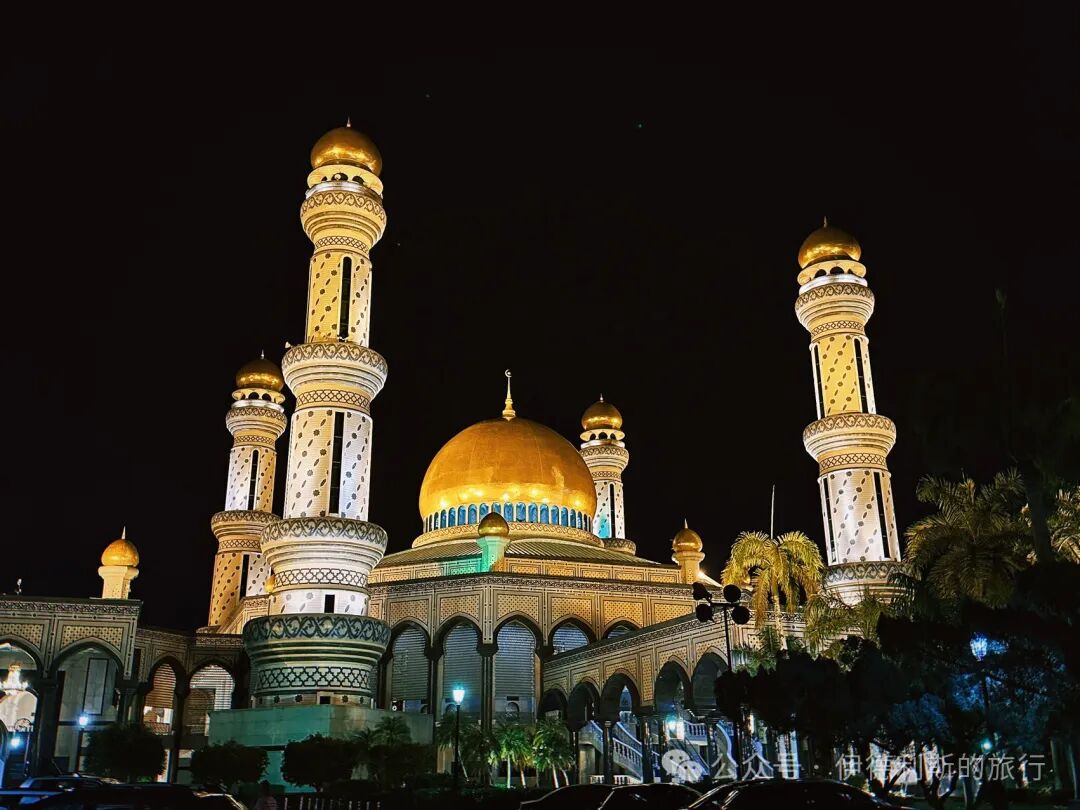
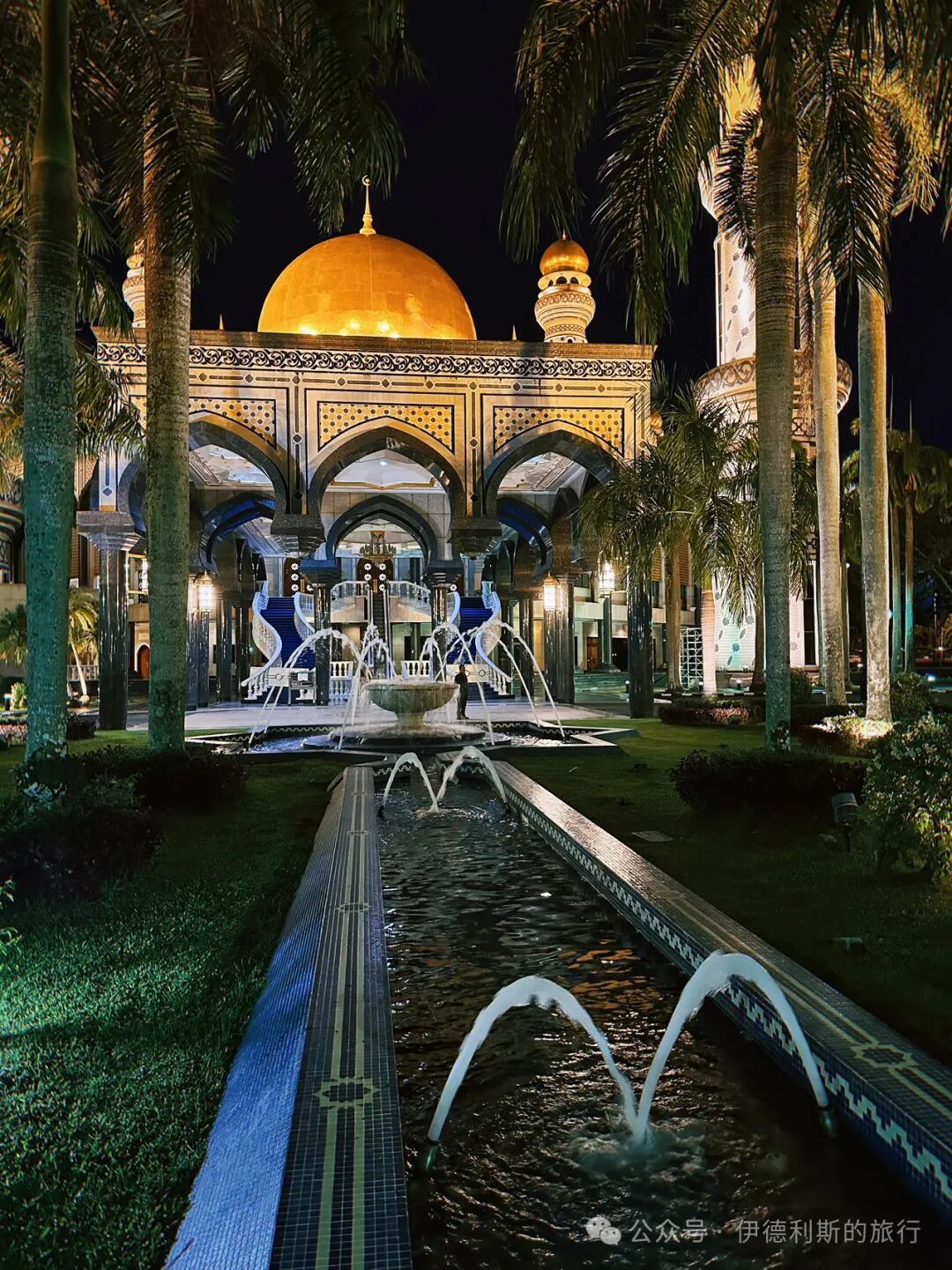
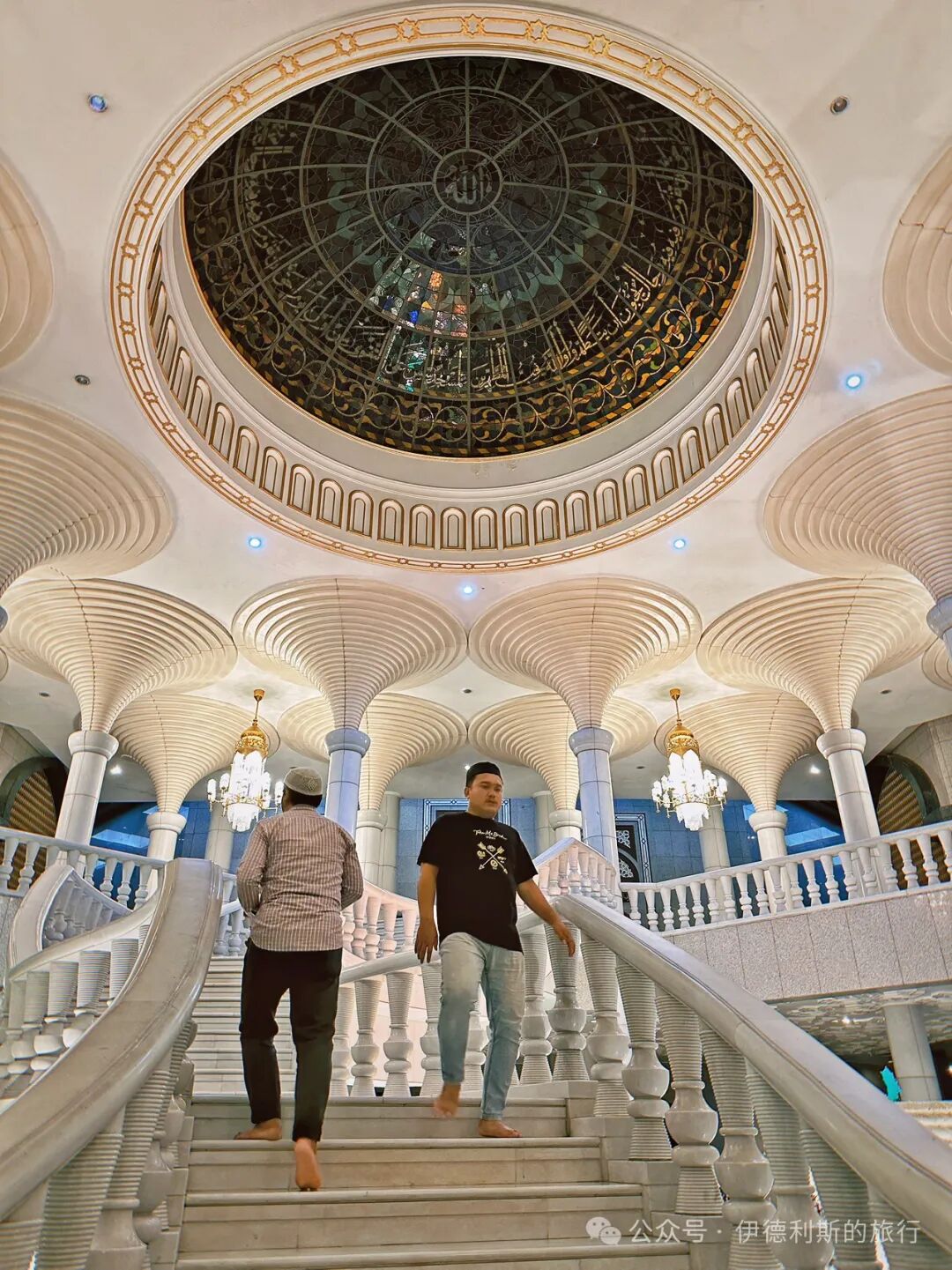
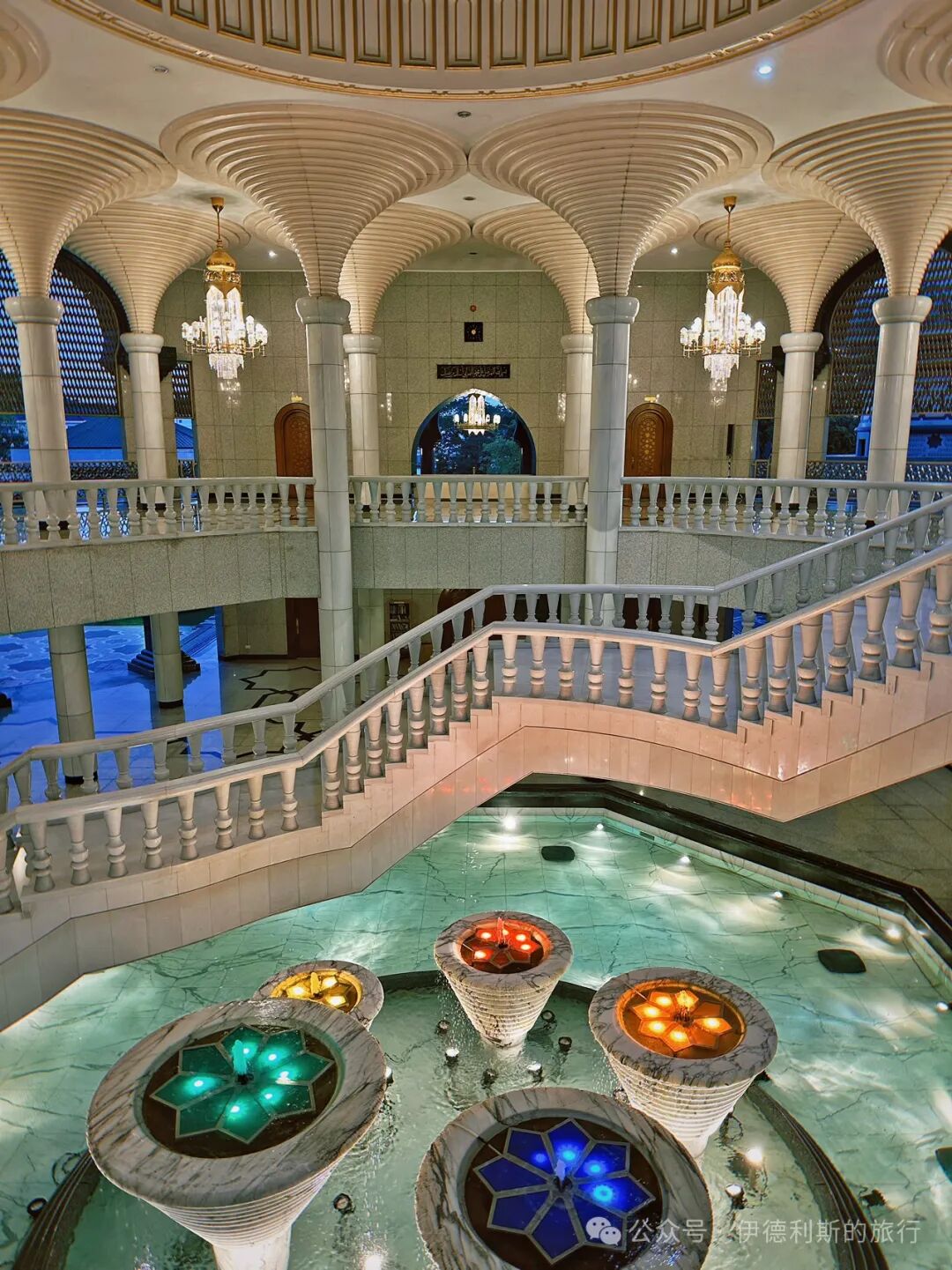
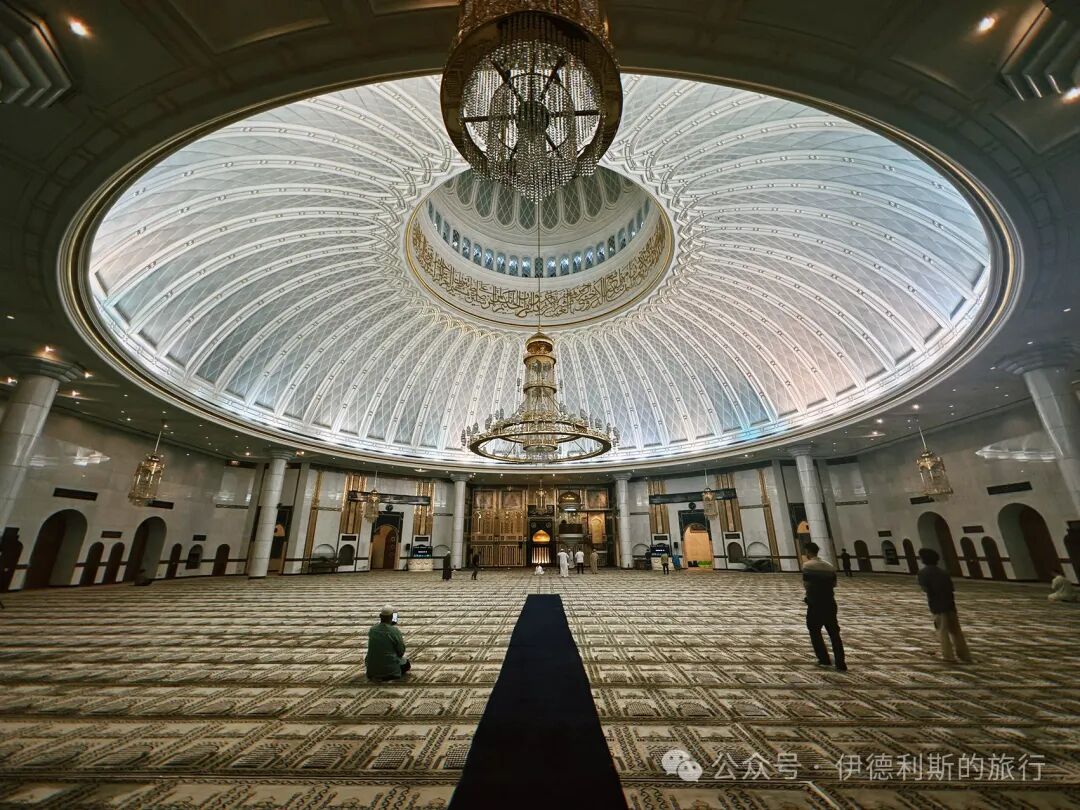
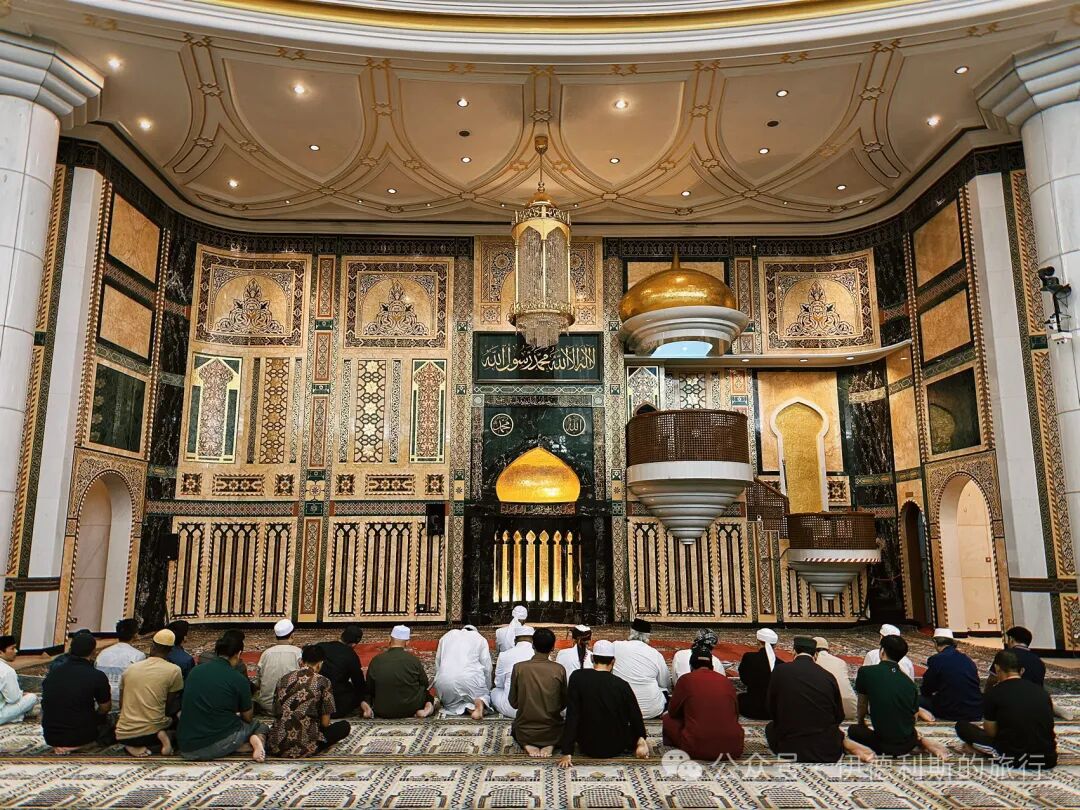
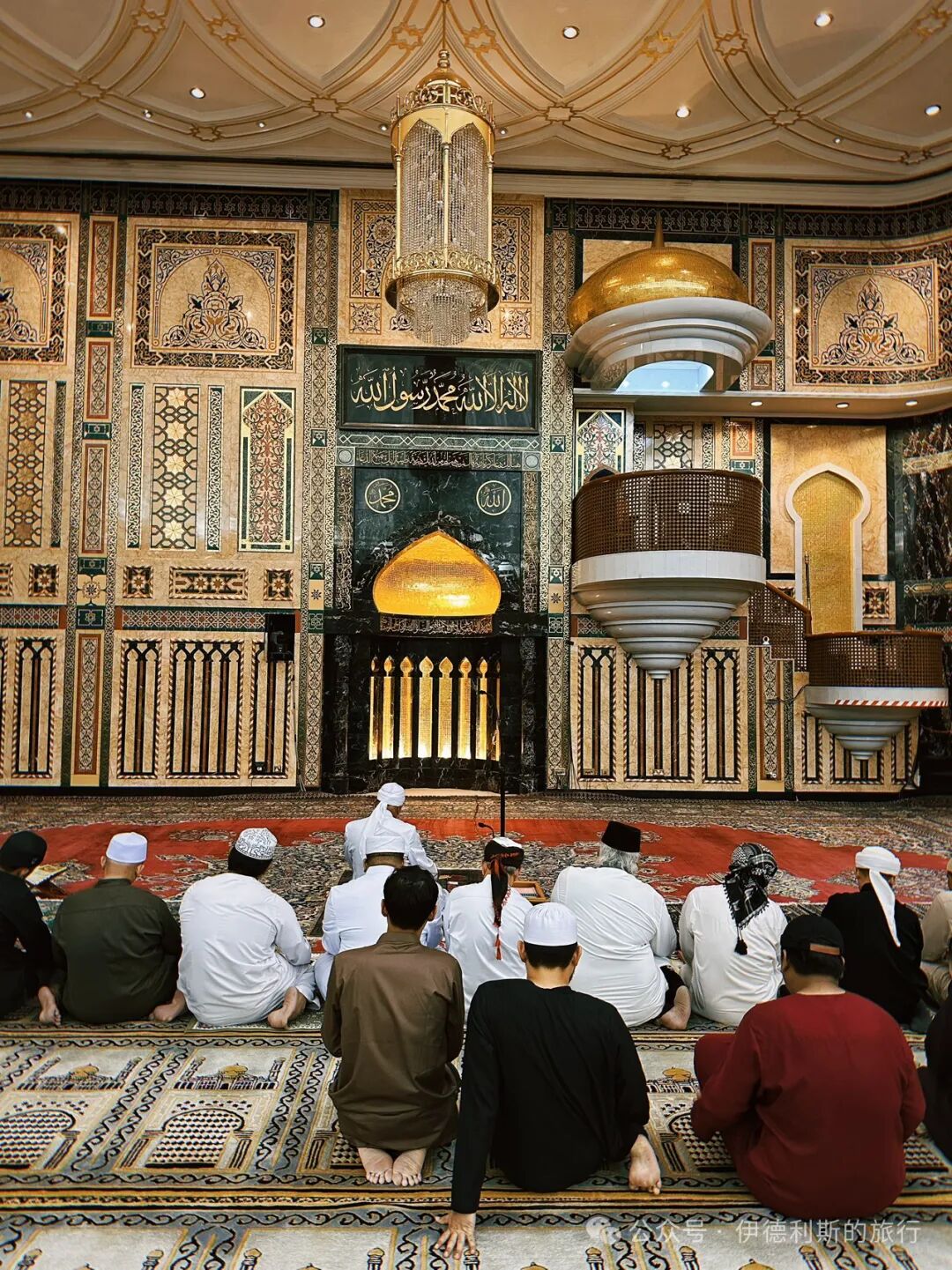
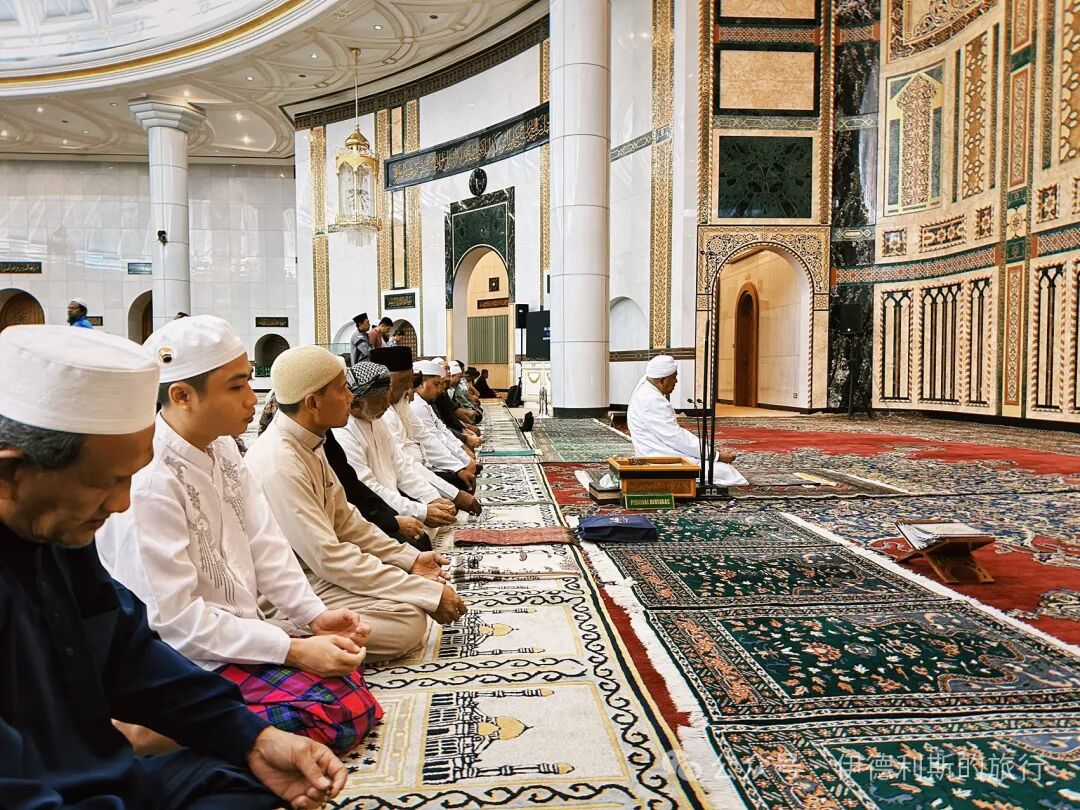
The Jame' Asr Hassanil Bolkiah Mosque during the day. The main prayer hall is connected to the women's prayer hall by a corridor. This is a rare example of an independent women's prayer hall in Southeast Asia, and it is very large. Below the women's prayer hall is the ablution area (shuifang), and it is the only one I have ever visited that uses motion-sensor faucets.
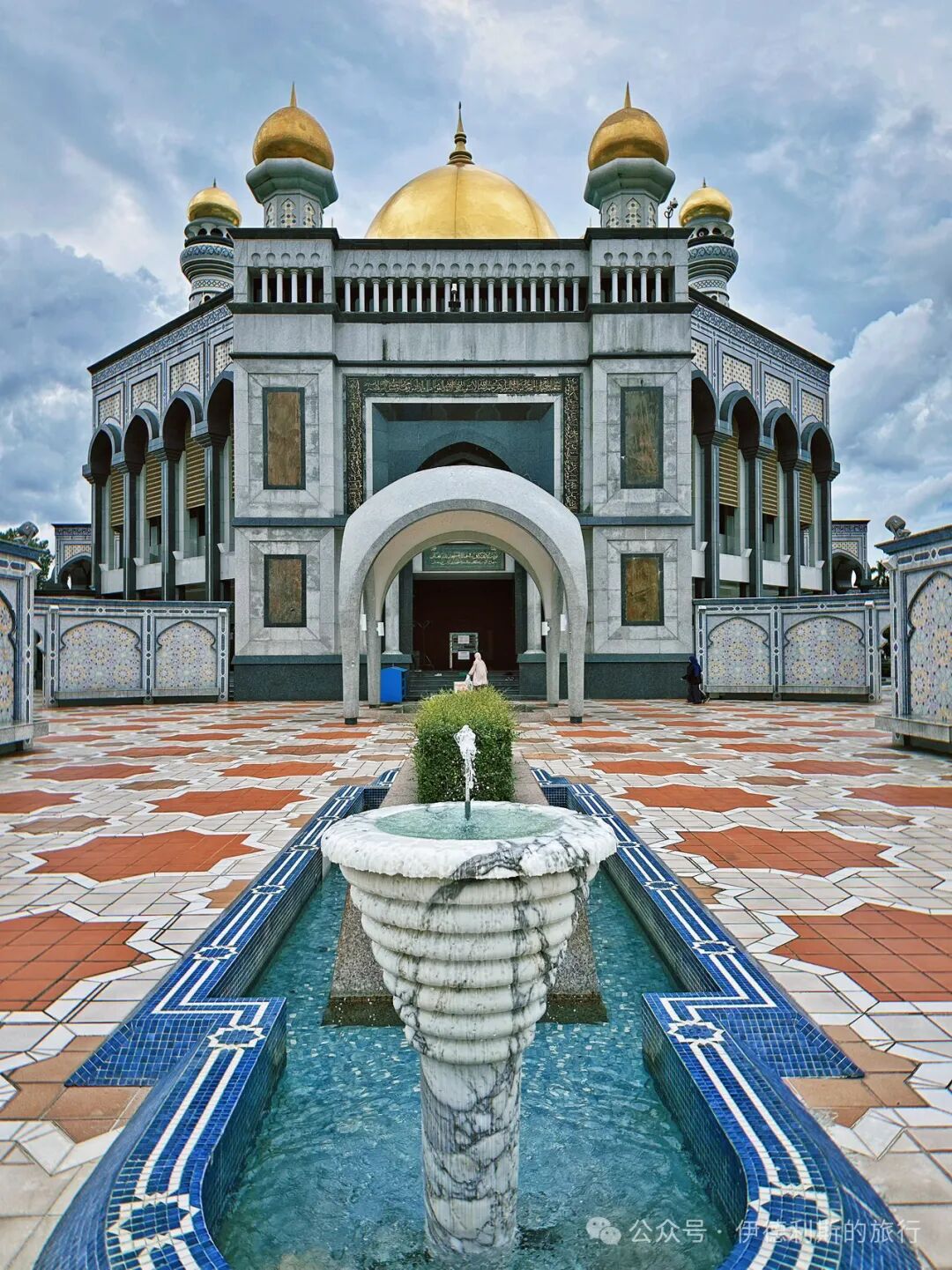
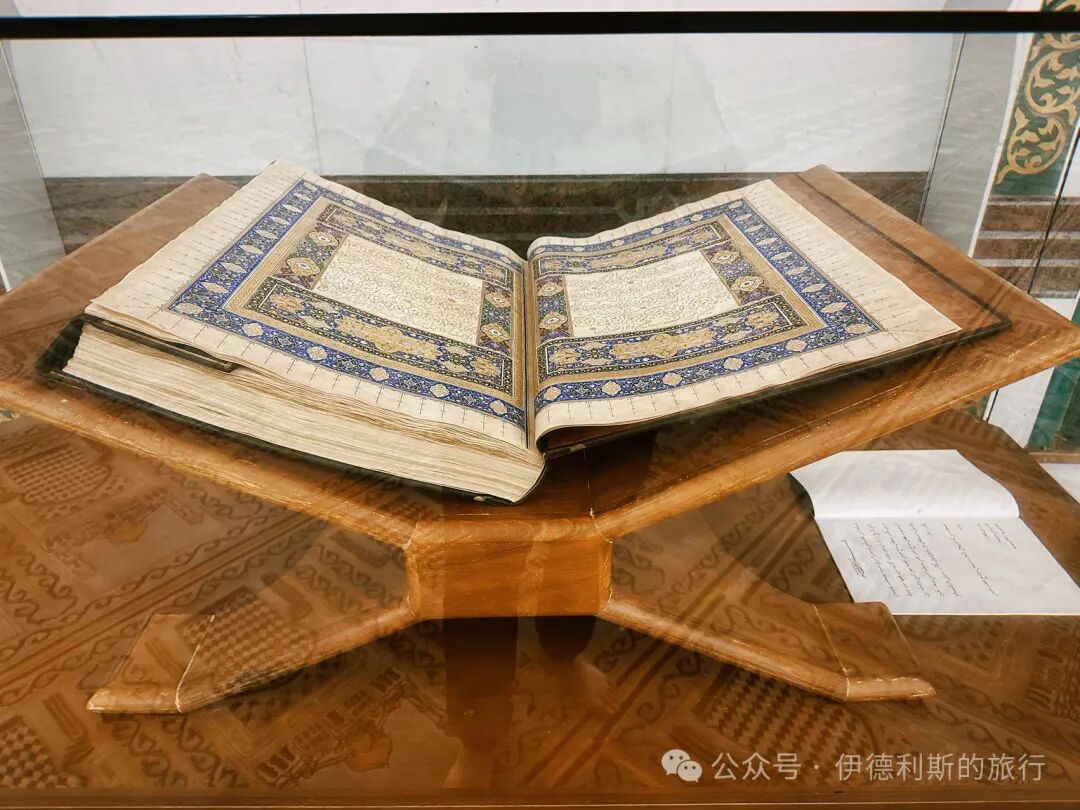
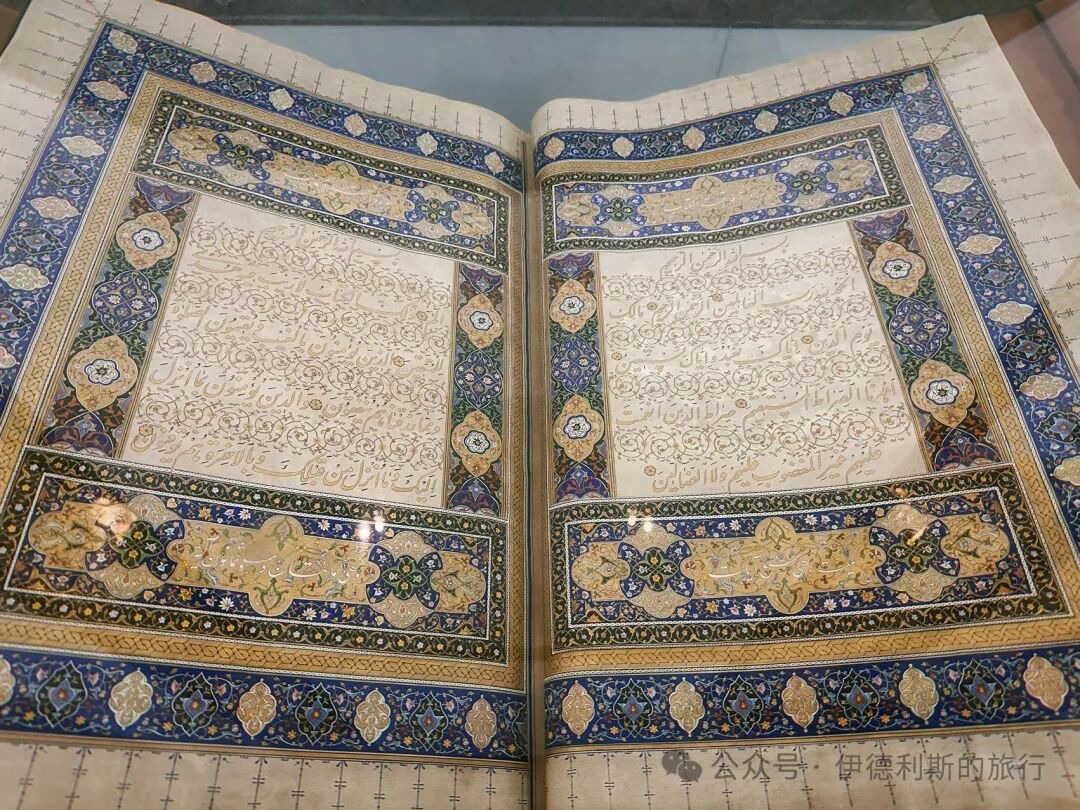
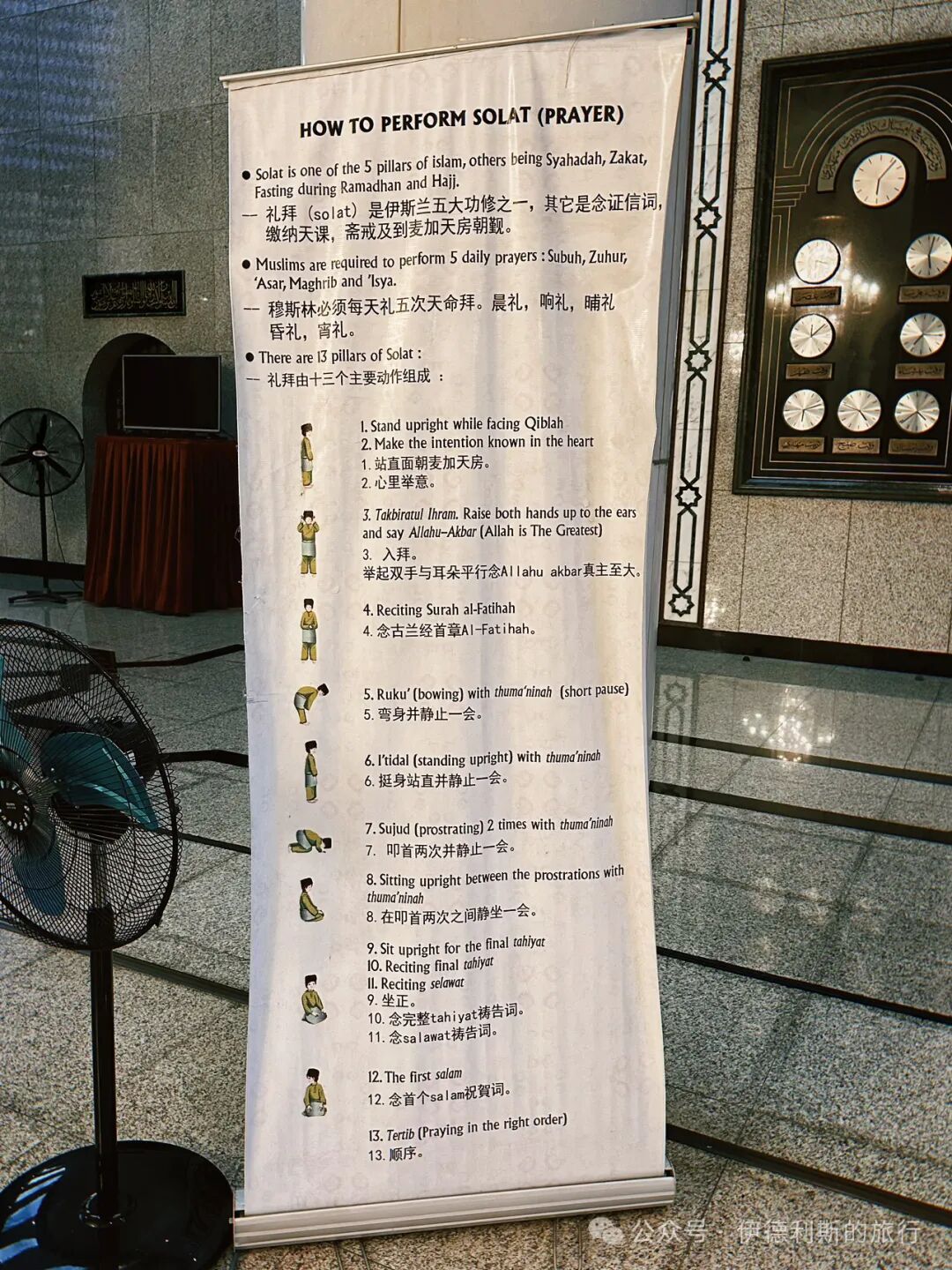
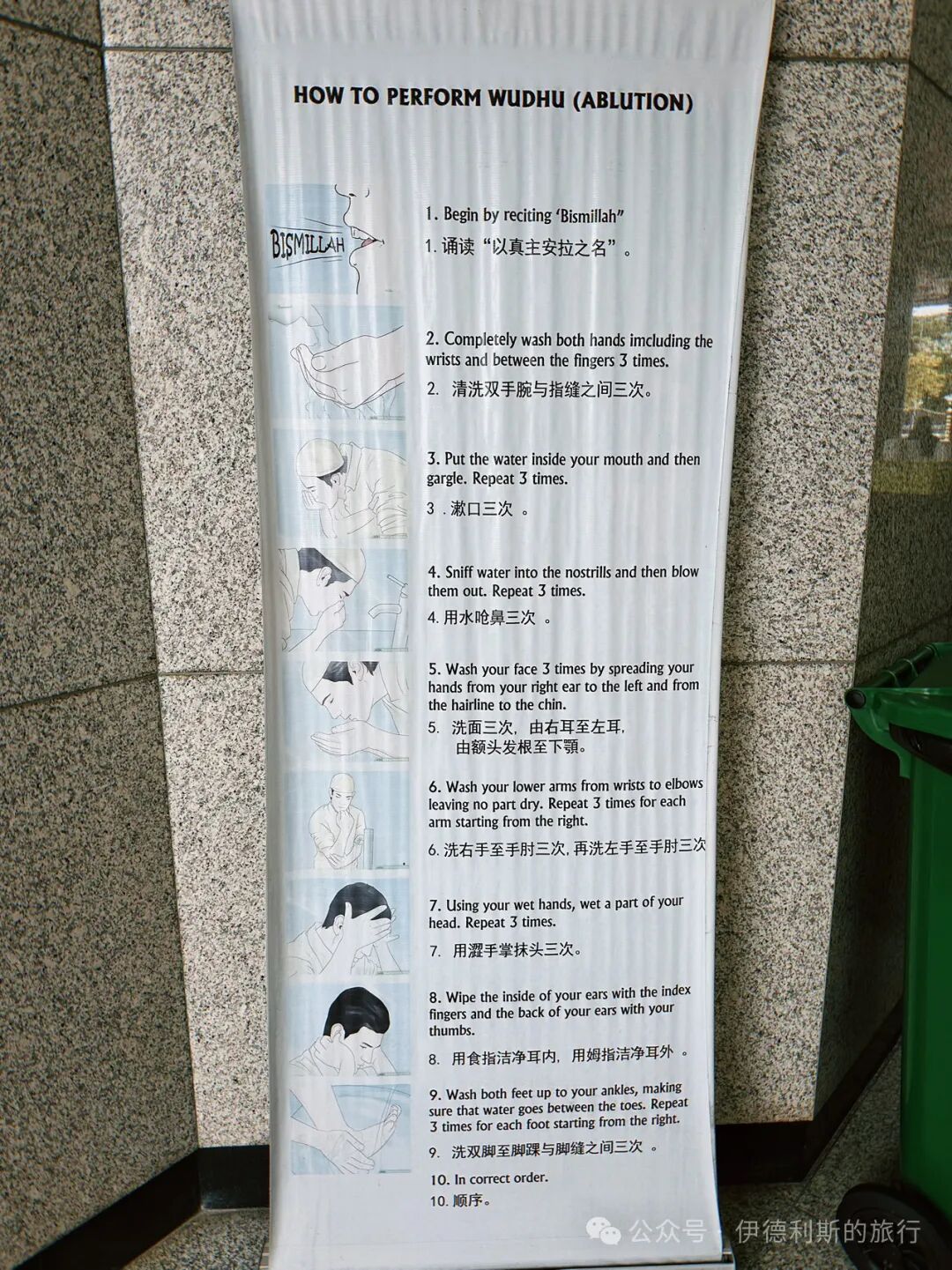
For Friday prayers (Jumu'ah), we went to Brunei's other national mosque, the Sultan Omar Ali Saifuddien Mosque, which is also known as the 'Water Mosque'. Brunei requires all malls and restaurants to close between 12:00 PM and 2:00 PM, so the mosque was packed during Jumu'ah, with the entire main hall full, which was a spectacular sight.
The Water Mosque was built between 1954 and 1958 by the former Sultan of Brunei, Omar Ali Saifuddien III (who reigned from 1950 to 1967), and it is named after him. The main hall features a golden dome in the Mughal Revival style, and the interior uses Italian marble, Shanghai granite, British chandeliers, and Venetian mosaic glass, making it Brunei's most important landmark since its completion.
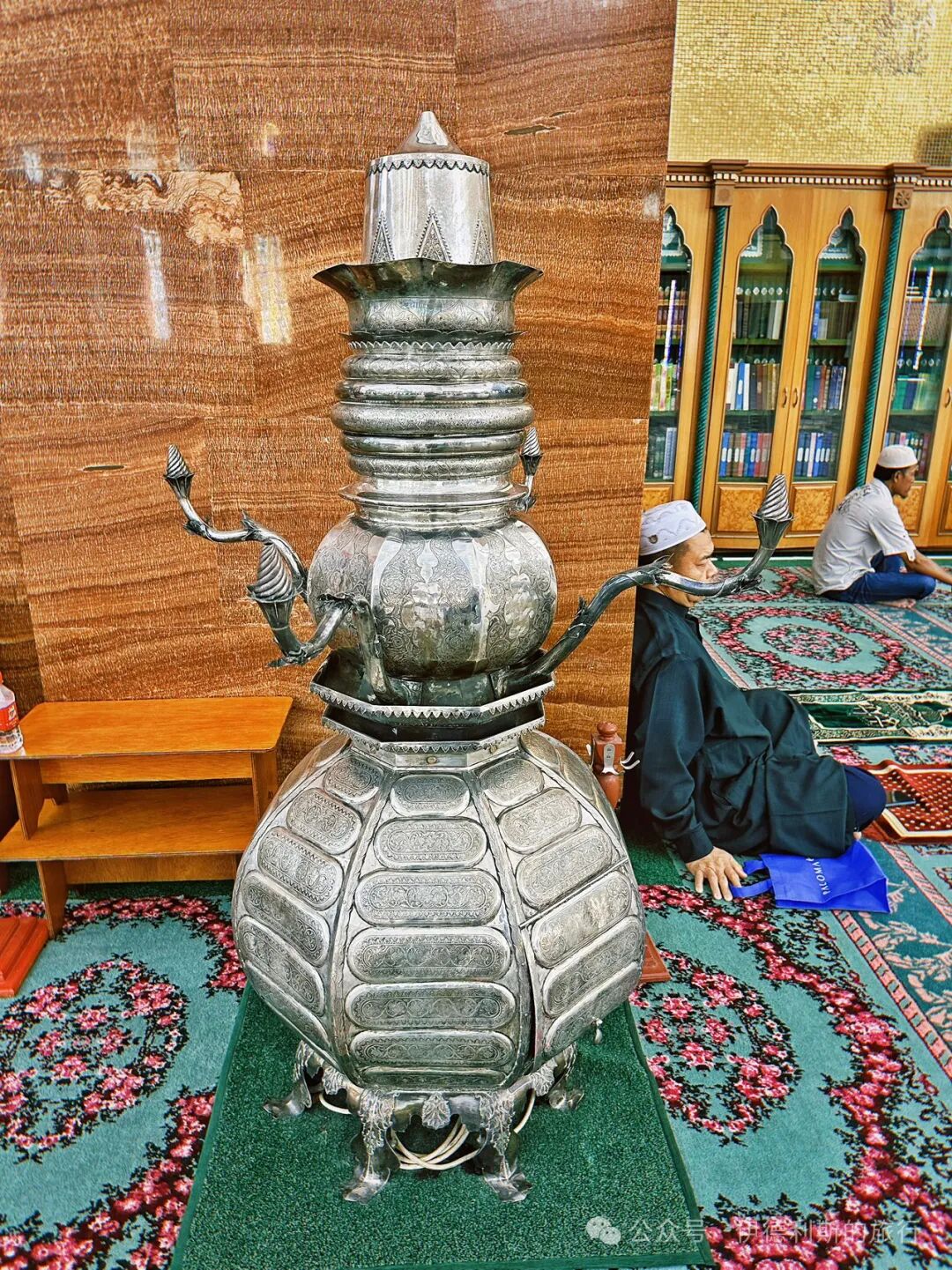
The minbar (pulpit) at the Water Mosque has two levels; the first is where the muezzin calls the adhan (bangke), and the second is where the imam delivers the khutbah (hutubai). Next to the minbar, there is a staircase leading to the second-floor prayer area reserved for the royal family.
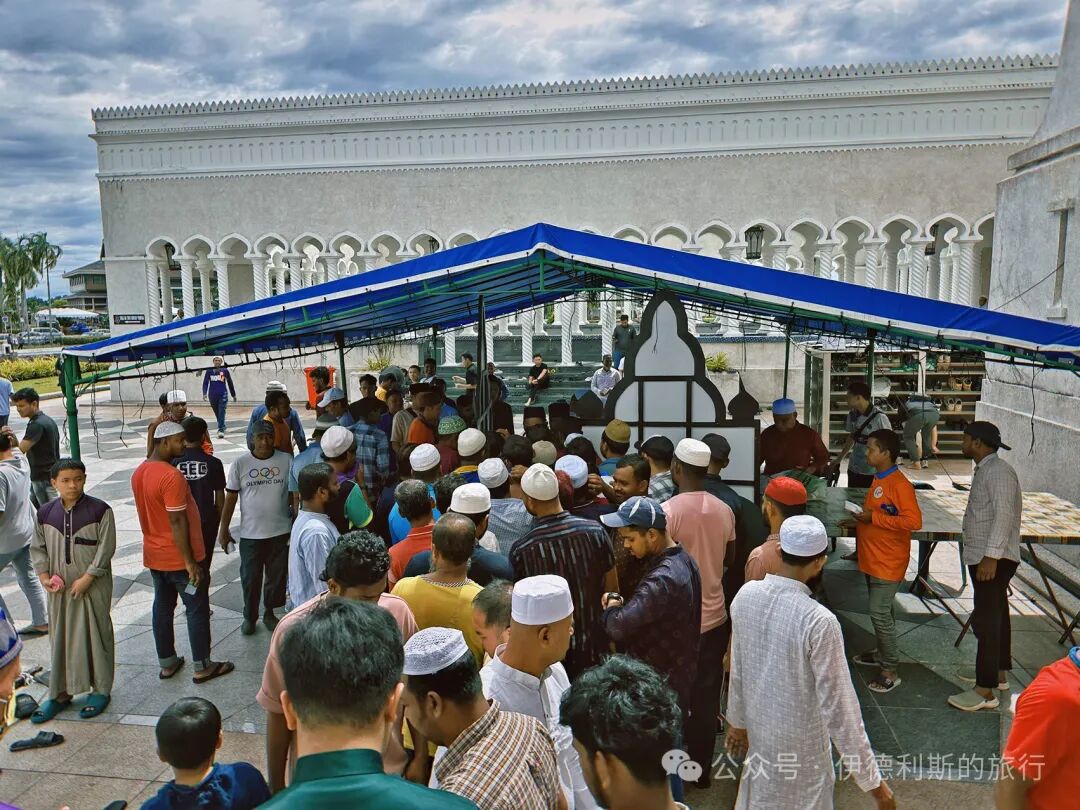
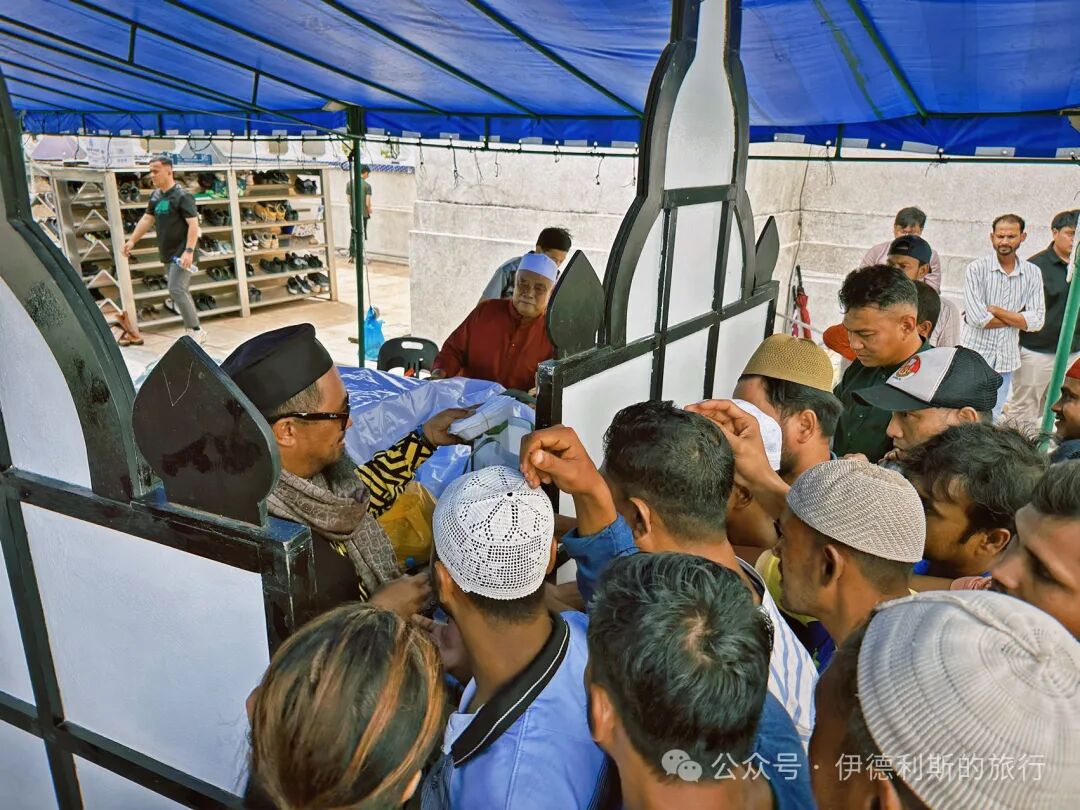
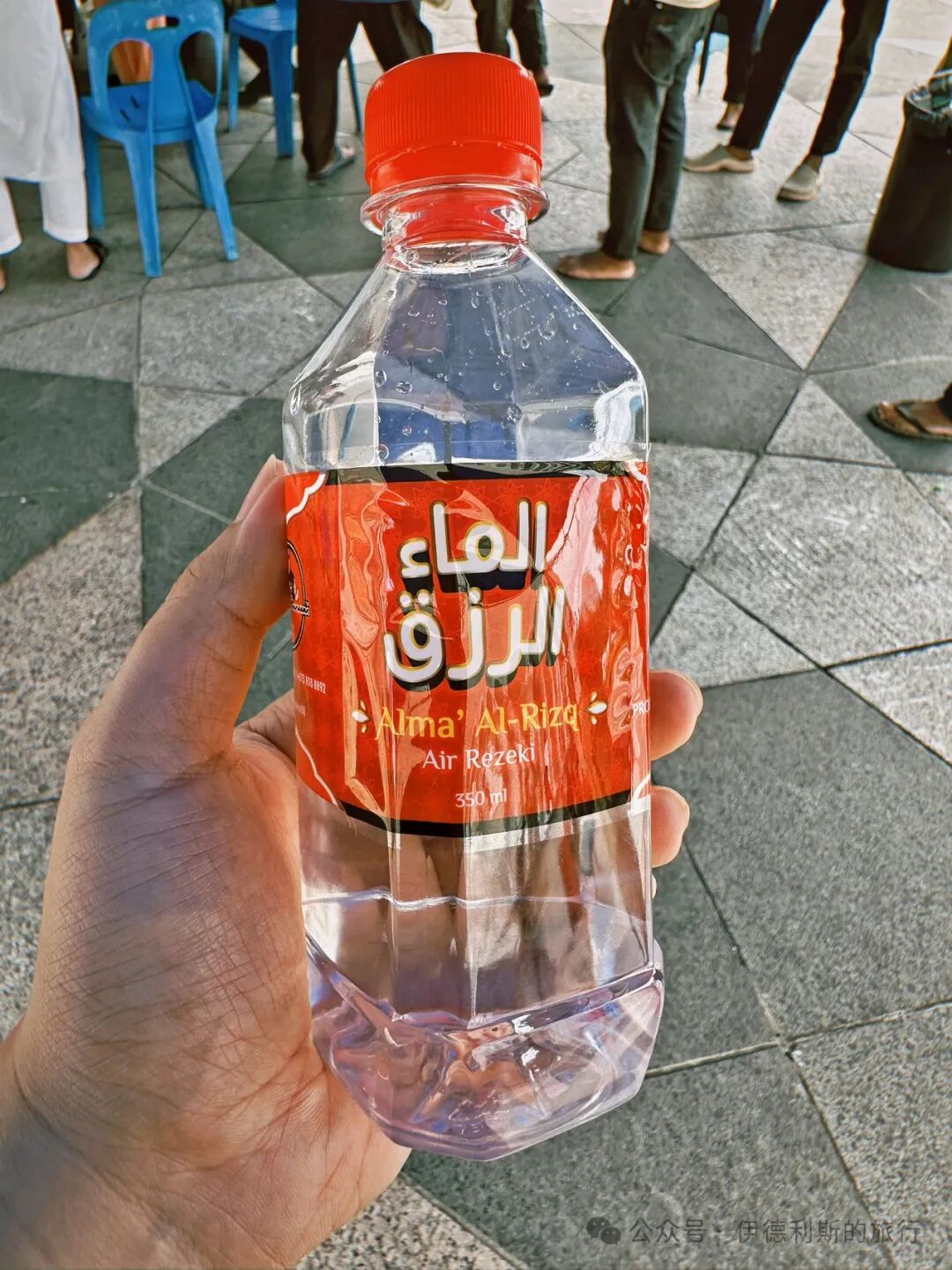
After Jumu'ah, they were handing out boxed meals, mostly to South Asian laborers, and I also went over to get a bottle of water.
The Water Mosque during the times of the morning prayer (shamu) and the afternoon prayer (hufu tan). Both of Brunei's national mosques look better at night than during the day.
The earliest historical relics of Brunei are in China.
The Brunei History Centre has a replica of the 'Tombstone of the King of Boni' from Nanjing, and the full text is on display.
The Tomb of the King of Boni in Nanjing is commonly known as the Ma Huihui Tomb, and it is the burial site of the Bruneian Sultan Mana'naja. In 1405 (the third year of the Yongle reign), Sultan Mana'naja of Boni sent envoys to pay tribute to the Ming Dynasty, and he was granted the title of King of Boni and given many gifts. In 1408 (the sixth year of the Yongle reign), the Sultan led a delegation of over 150 people to Fujian, then traveled to Nanjing to meet the Yongle Emperor, Zhu Di, where he was treated with great honor. A month later, the Sultan suddenly fell ill and passed away at the Huitong Hall in Nanjing. According to the Sultan's final wish to 'have his body buried in China,' the Yongle Emperor ordered that he be buried with royal honors at Shizigang, outside Andemen Gate in Nanjing. After the Qing Dynasty, the tombstone was lost for a time, but the remaining parts were finally found in 1958, though unfortunately, the top of the stone has never been recovered.
The story of Sultan Mana'naja is recorded in the 'History of Ming' (Ming Shi), but it does not appear in Bruneian history books, nor is it in the Bruneian royal genealogy, the 'Salasilah Raja-Raja Brunei'. Bruneian historians believe Sultan Mana'naja is one of the sultans not mentioned in the genealogy.
The original Nanjing tombstone that I photographed a few years ago.
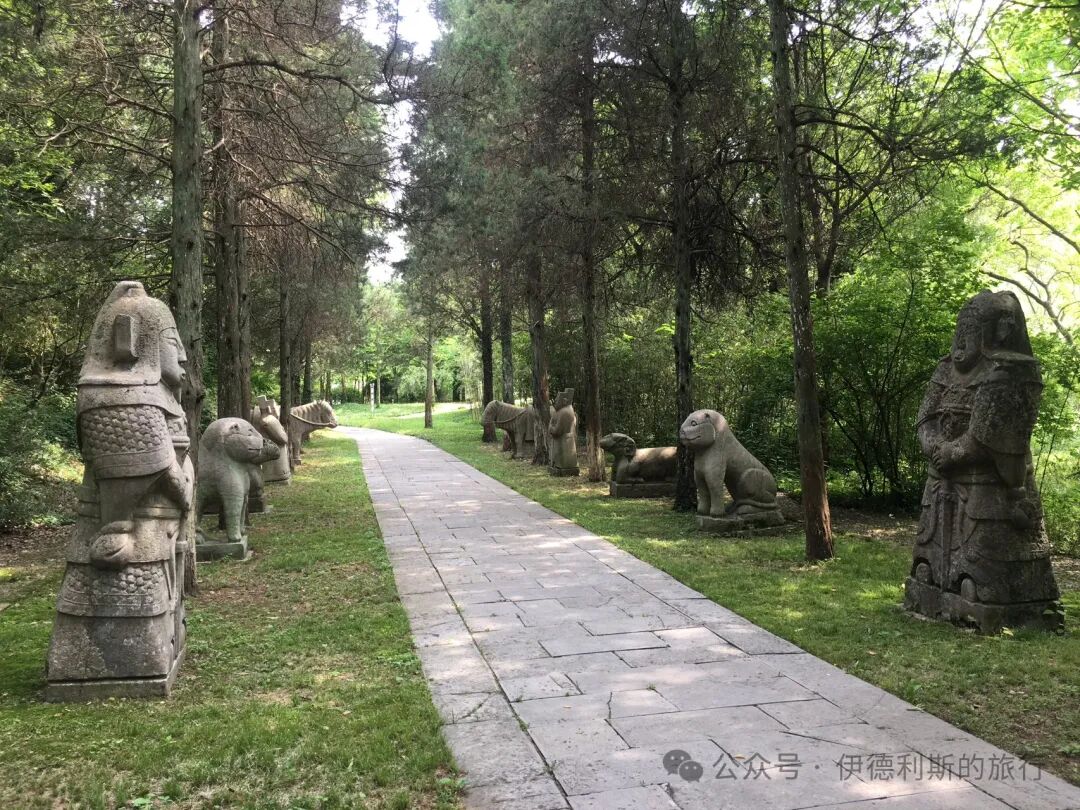
The ancient city in the mountains of Brunei.
I took a taxi from the city center to the ruins of the Brunei Sultanate palace hidden in the tropical rainforest, the Kota Batu Archaeological Park (Taman Arkeologi Kota Batu), which is also Brunei's most important archaeological site.
Kota Batu is believed to have been the capital of the Brunei Sultanate from the 14th to the 17th century. It was once an important trade port in Southeast Asia and the central city of northern Borneo. In 1521, Italian explorer Antonio Pigafetta arrived in Brunei with Magellan's fleet. He recorded: 'This city is built entirely on the sea, with 25,000 households, excluding the homes of the Sultan and certain heads of state.' A civil war in the Brunei Sultanate between 1660 and 1673 led to the abandonment of Kota Batu. The Sultan of Brunei moved his palace to the water village of Kampong Ayer on the upper Brunei River.
Kota Batu means 'stone castle.' It is a rare site of stone architecture in Brunei. British naturalist and Sarawak Museum curator Tom Harrisson led the first archaeological excavations at Kota Batu from 1952 to 1953. He found many Chinese coins from the Tang, Song, and Ming dynasties, as well as Arabic coins, glassware, ironware, bronze, wooden tools, stone carvings, and ceramics from Siam, Indochina, and Song and Ming dynasty China.
During excavations in 1986 and 1987, a square stone building measuring 25.8 meters by 25.4 meters was discovered. It contained 36 stone column bases, tombstone remains, and Ming dynasty porcelain shards. It is believed the building was constructed in the 15th century. Because the column bases are in three layers, the building likely had a three-tiered pyramid roof structure similar to traditional mosques in Malacca. Although early palace buildings in the Brunei Sultanate were made of wood and left few traces, the coins and pottery found at Kota Batu suggest the Sultan's palace was likely near this site.
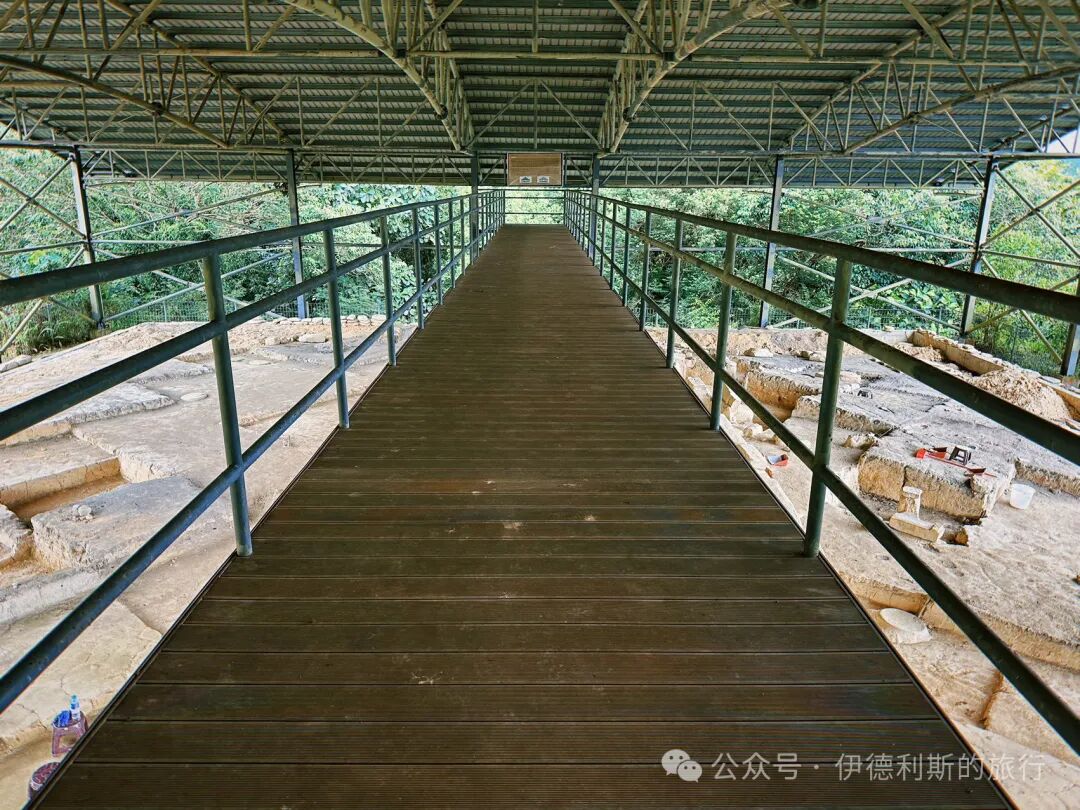
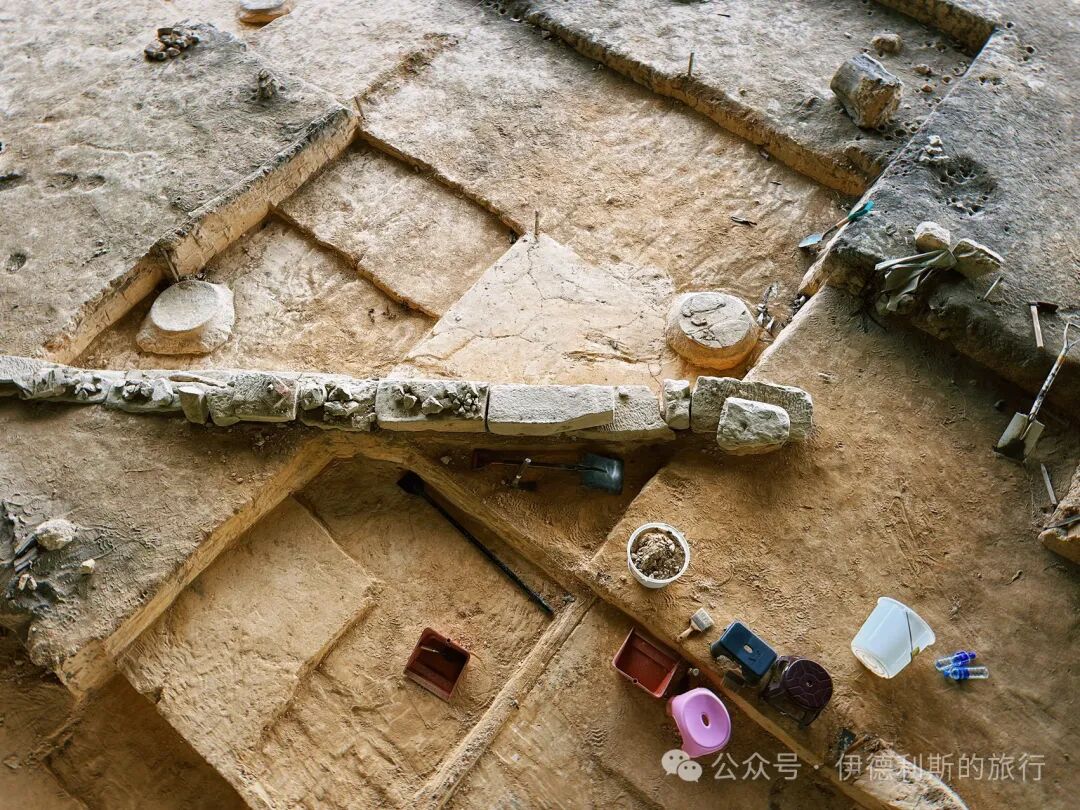
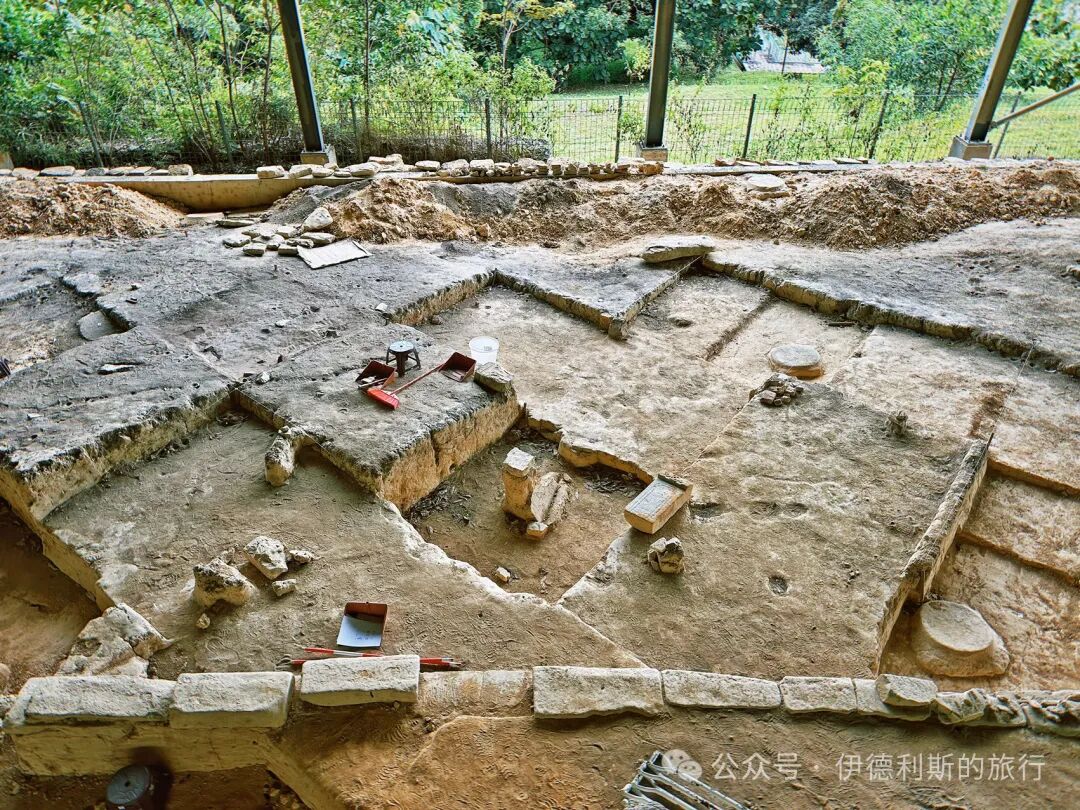
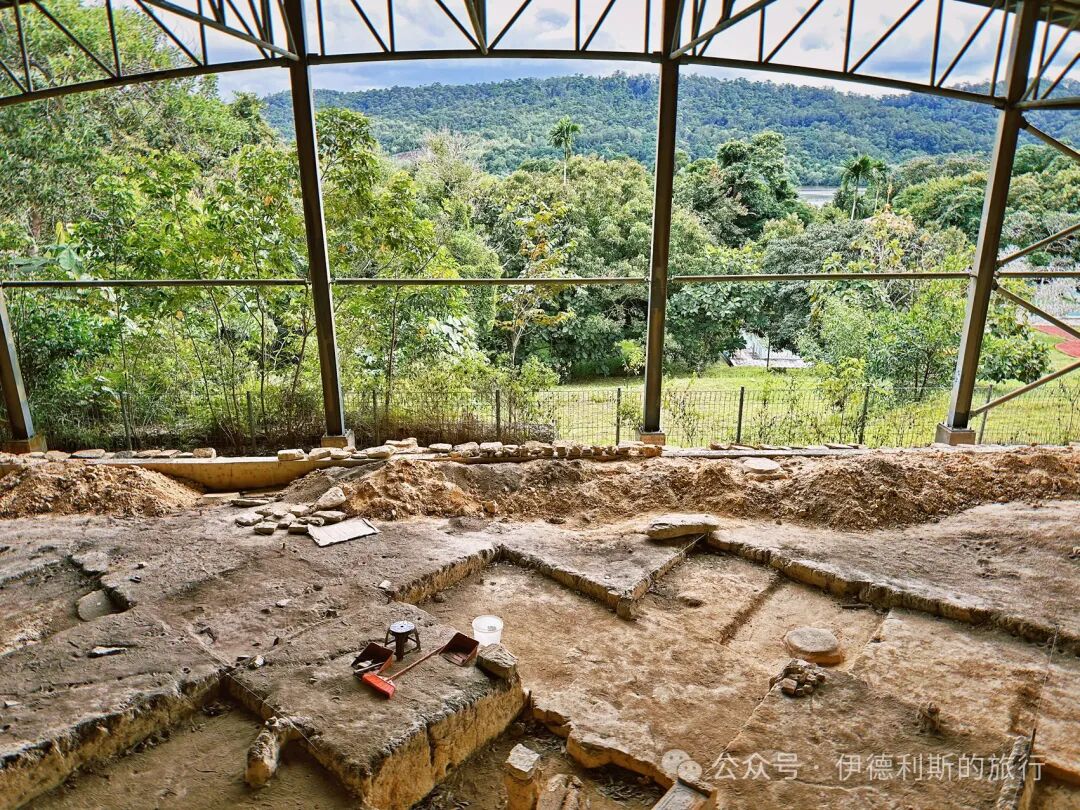
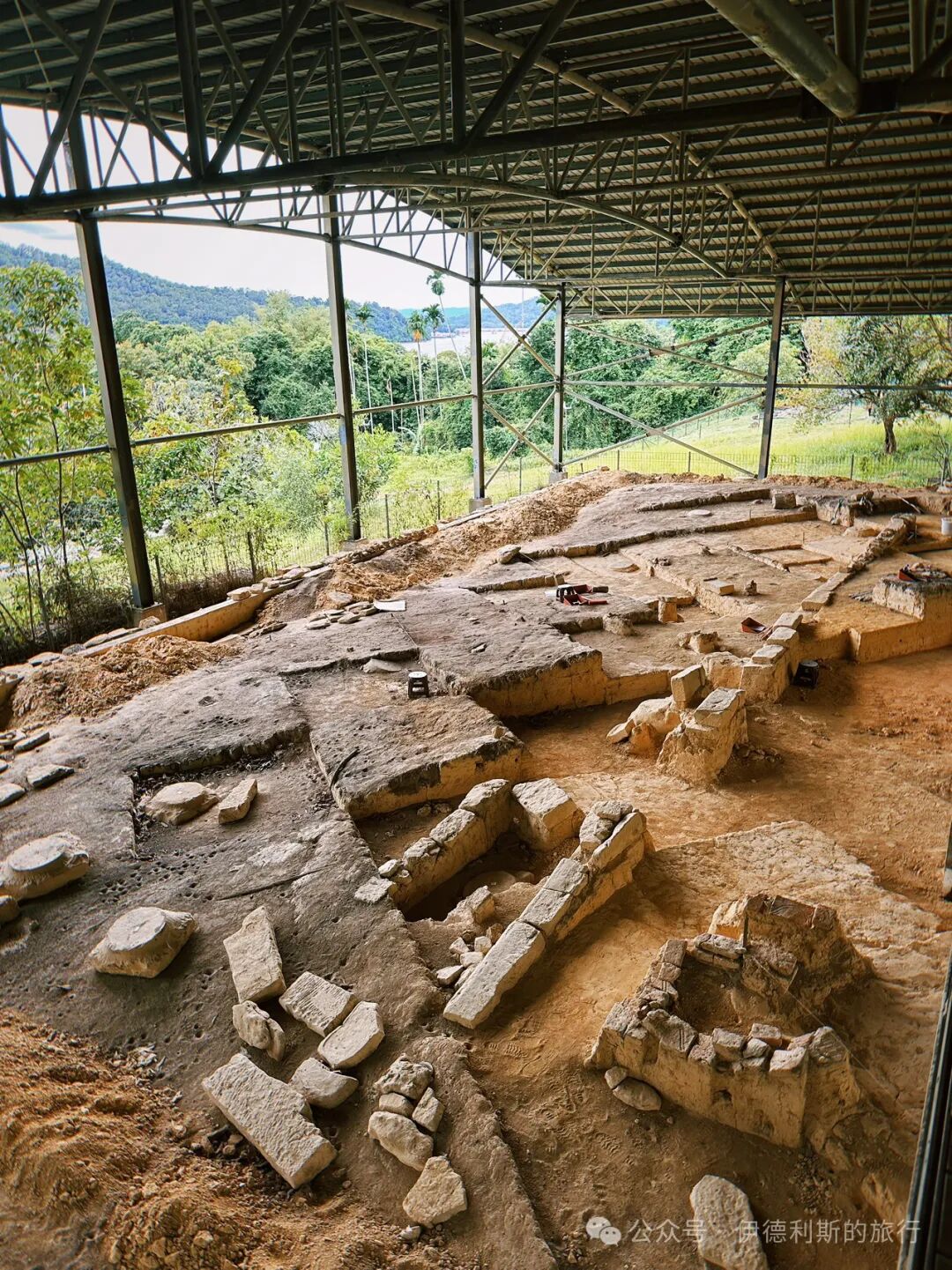
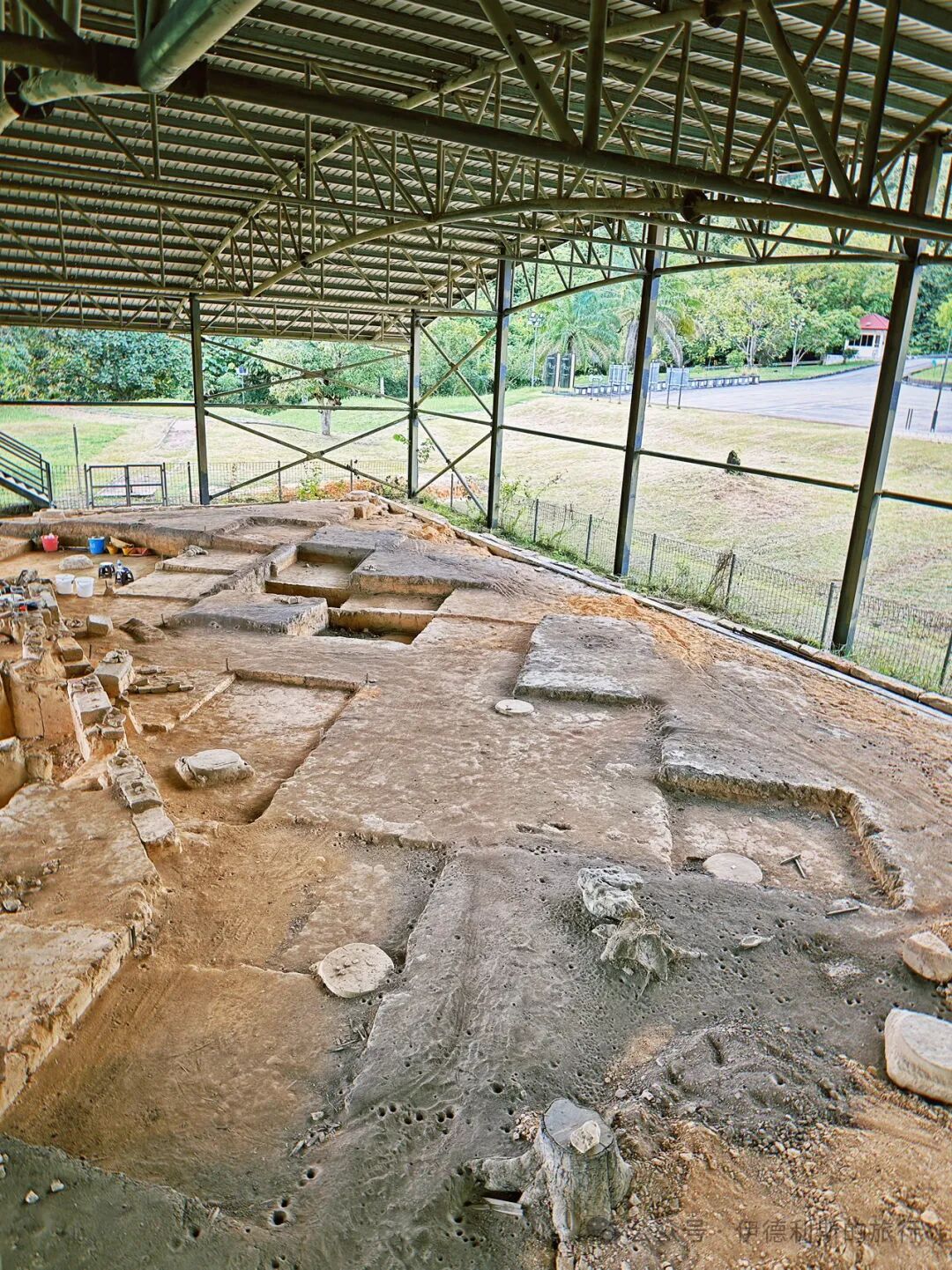
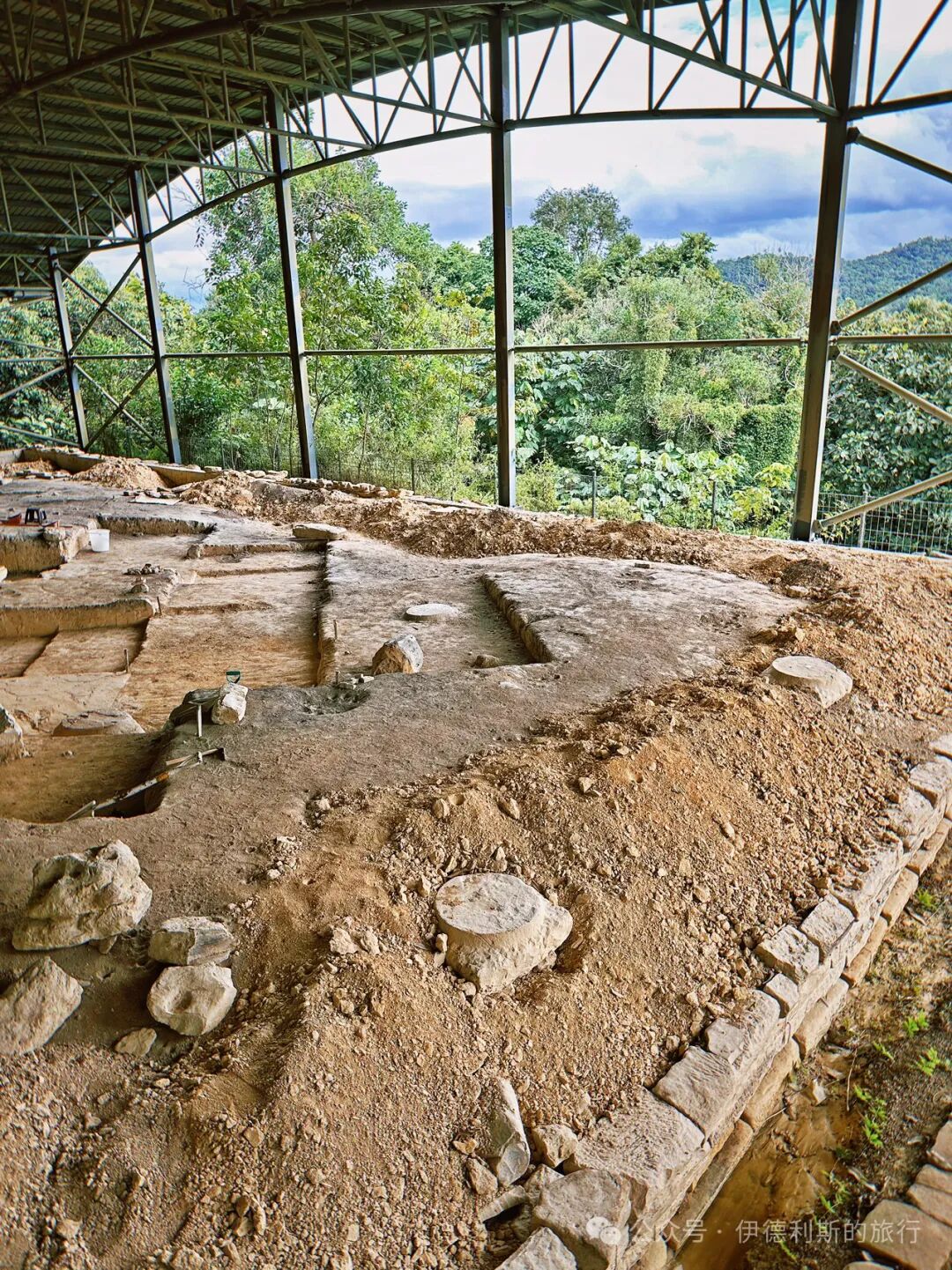
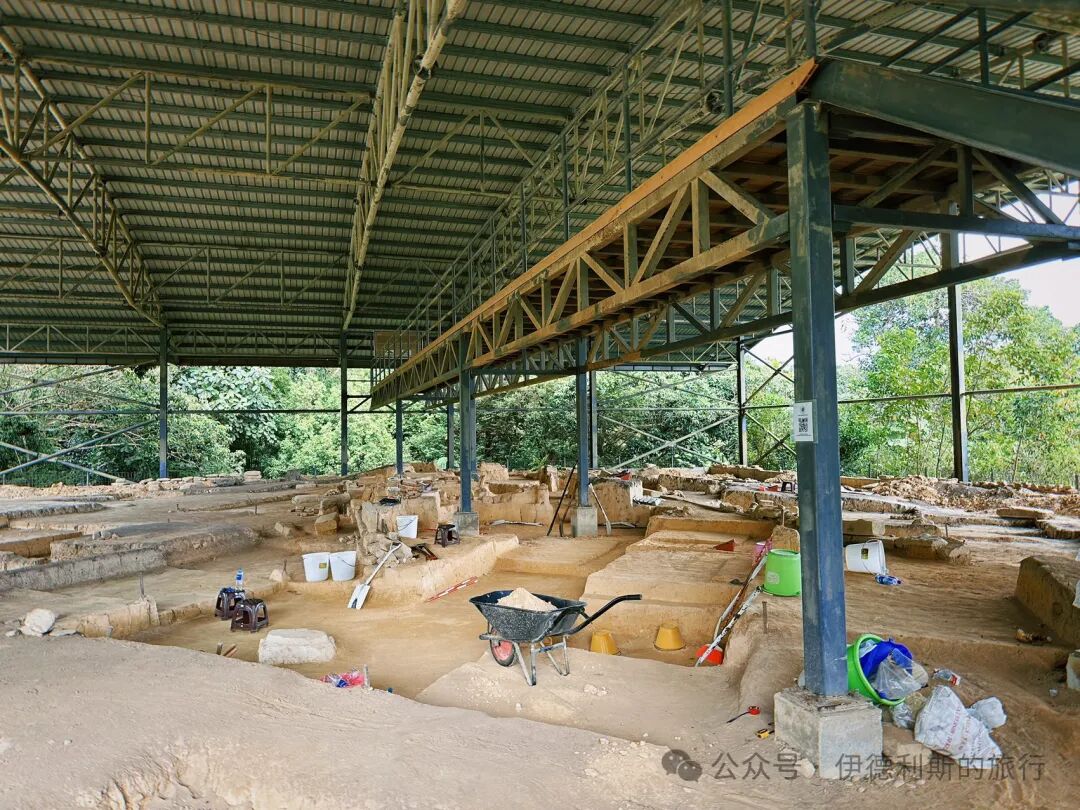
Next to the site are nine graves of Brunei nobles from the 15th and 16th centuries. The tombstones were all imported, likely from China.
The paths in Kota Batu Archaeological Park feel like a primitive forest. There were no other tourists, and the mountain trails were often covered by fallen leaves and hidden from view. It is hard to imagine that this was once the capital of Brunei.
Tomb of the Third Sultan of Brunei
The Kota Batu Archaeological Park contains the tomb of Sharif Ali, the third Sultan of Brunei.
Sultan Sharif Ali (reigned 1425–1432) was originally a missionary from the ancient Saudi city of Taif and a descendant of the Prophet's grandson, Hasan ibn Ali. He arrived in Brunei to preach in 1395 and earned the respect of the Sultan and the people. He married the daughter of Sultan Ahmad around 1400 and inherited the throne after the old Sultan passed away in 1425. This is how the Brunei Sultanate gained its lineage from the Prophet.
Sultan Sharif Ali worked to spread Islamic law while keeping local customs that did not conflict with the faith. During his reign, Brunei officially transitioned from a Hindu-Buddhist cultural zone into a part of Islamic civilization. He built the first mosque in Brunei, designed the national flag, and established the title 'Darussalam' for Brunei. It is believed that he may have also built the stone castle at Kota Batu.
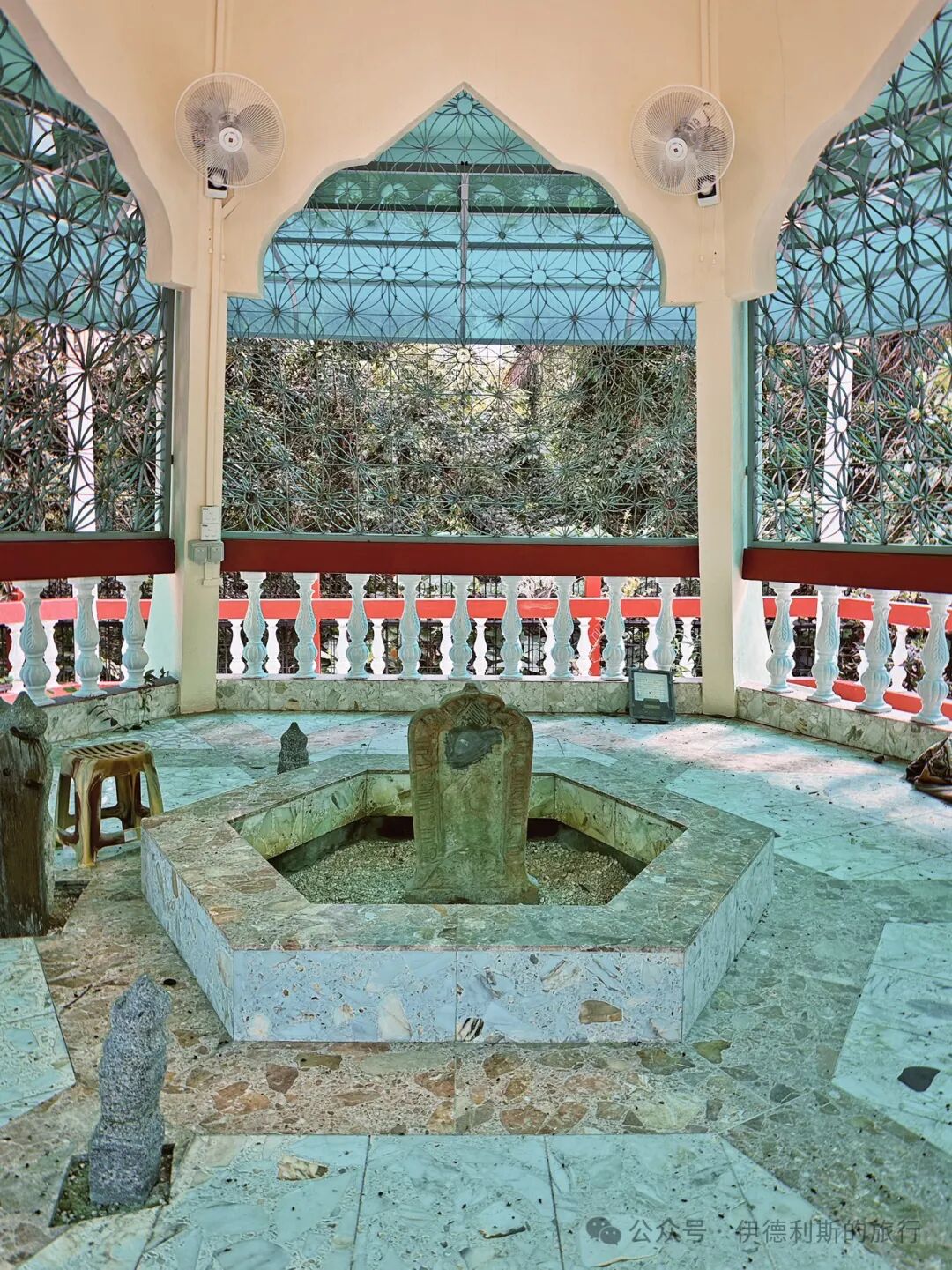
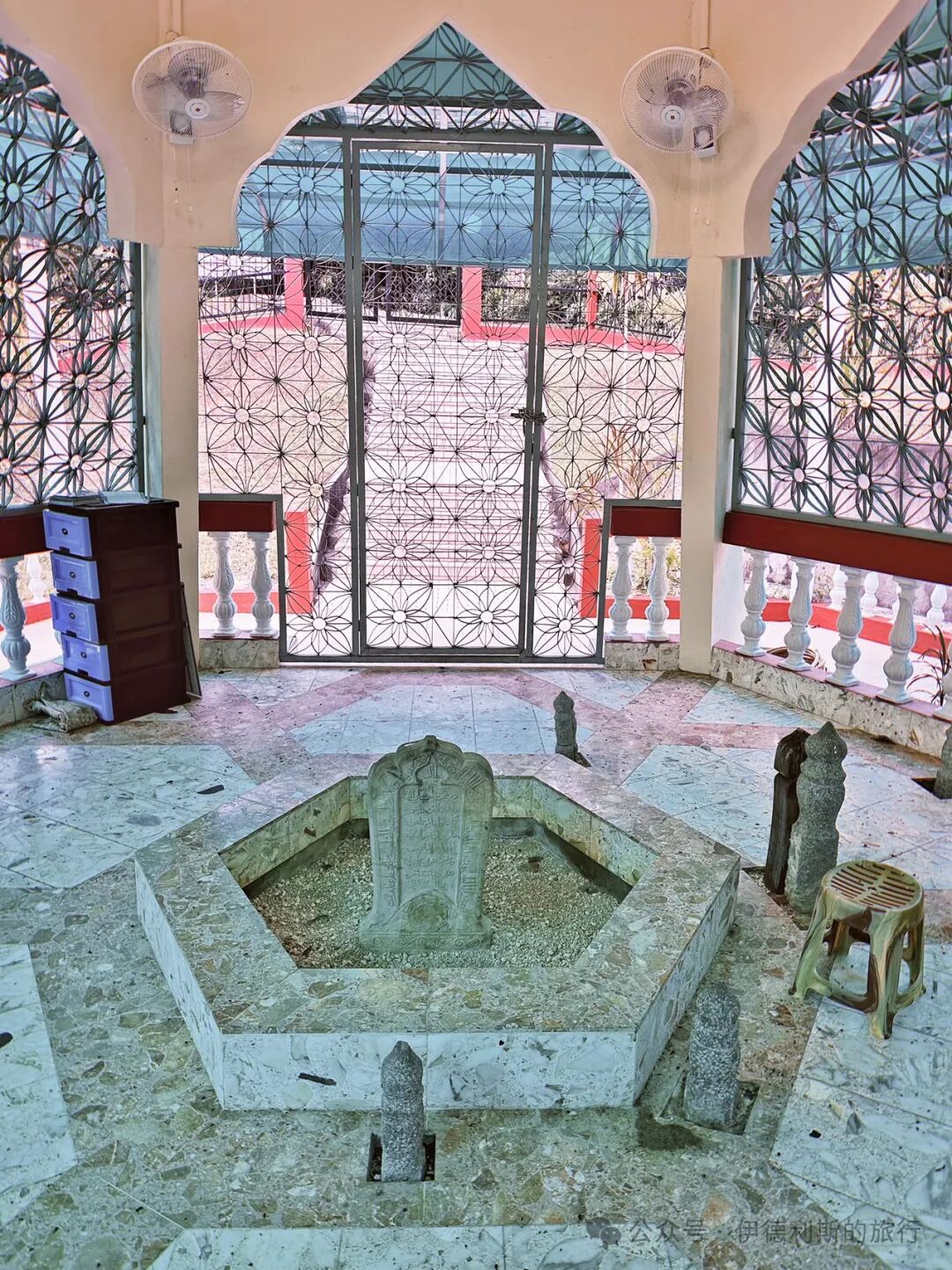
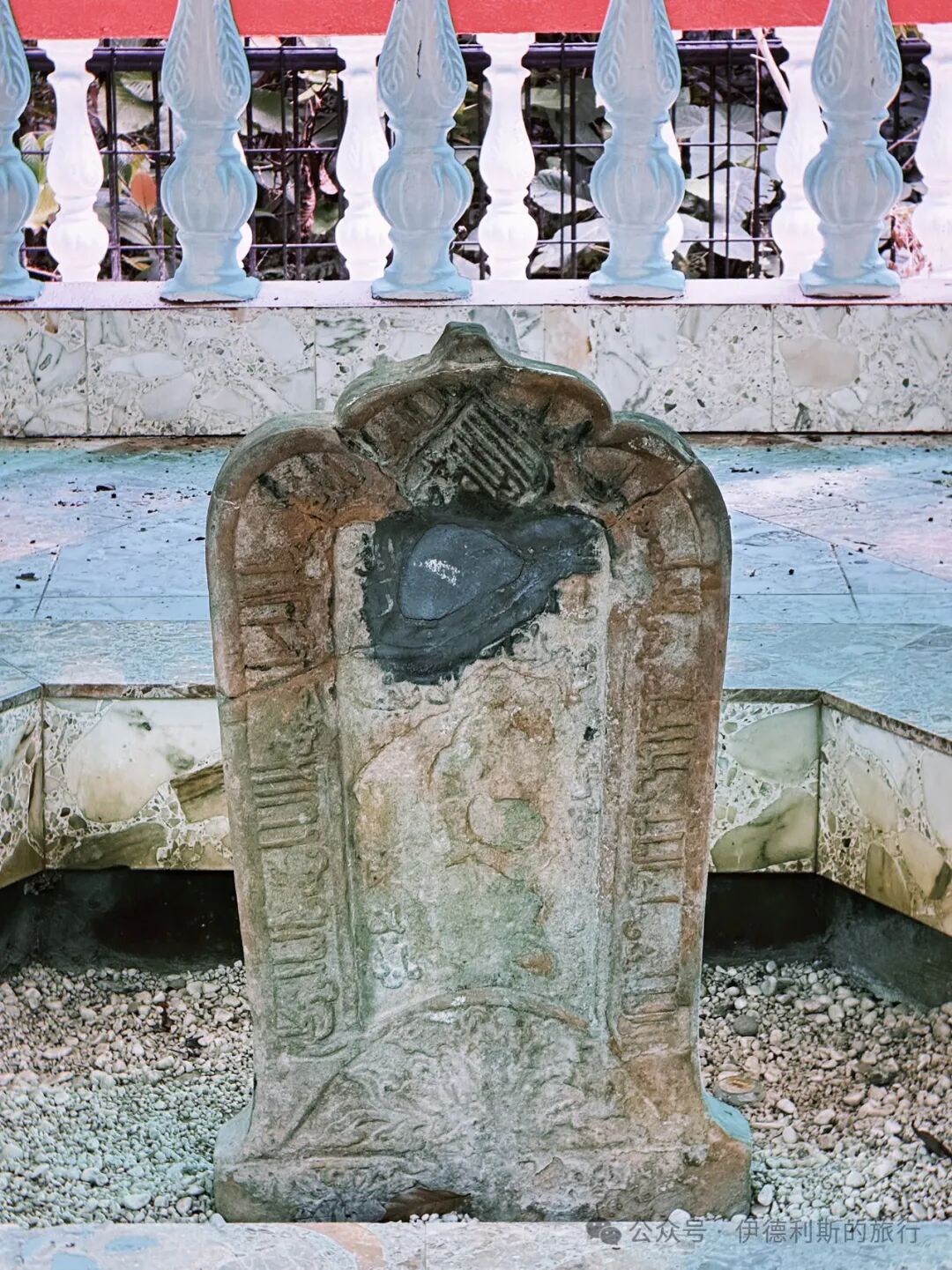
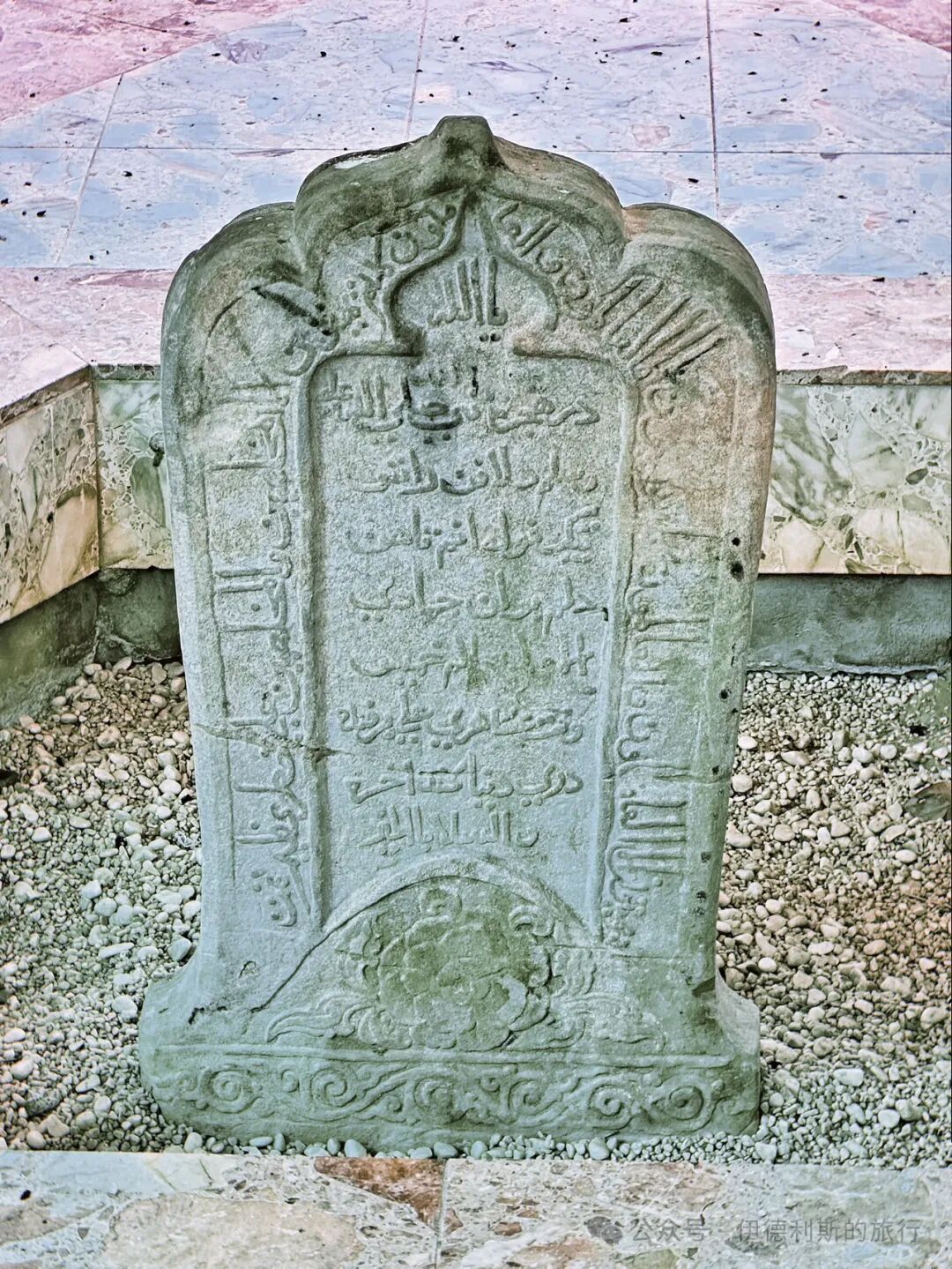
North of Sultan Sharif Ali's tomb is the grave of Syarif Adam, another sage who came to Brunei with the Sultan to preach. Together, they spread the influence of the faith from Brunei to the Sulu Archipelago and Mindanao in the southern Philippines. According to his tombstone, Syarif Adam passed away in 1454.
Tomb of the Brunei Princess
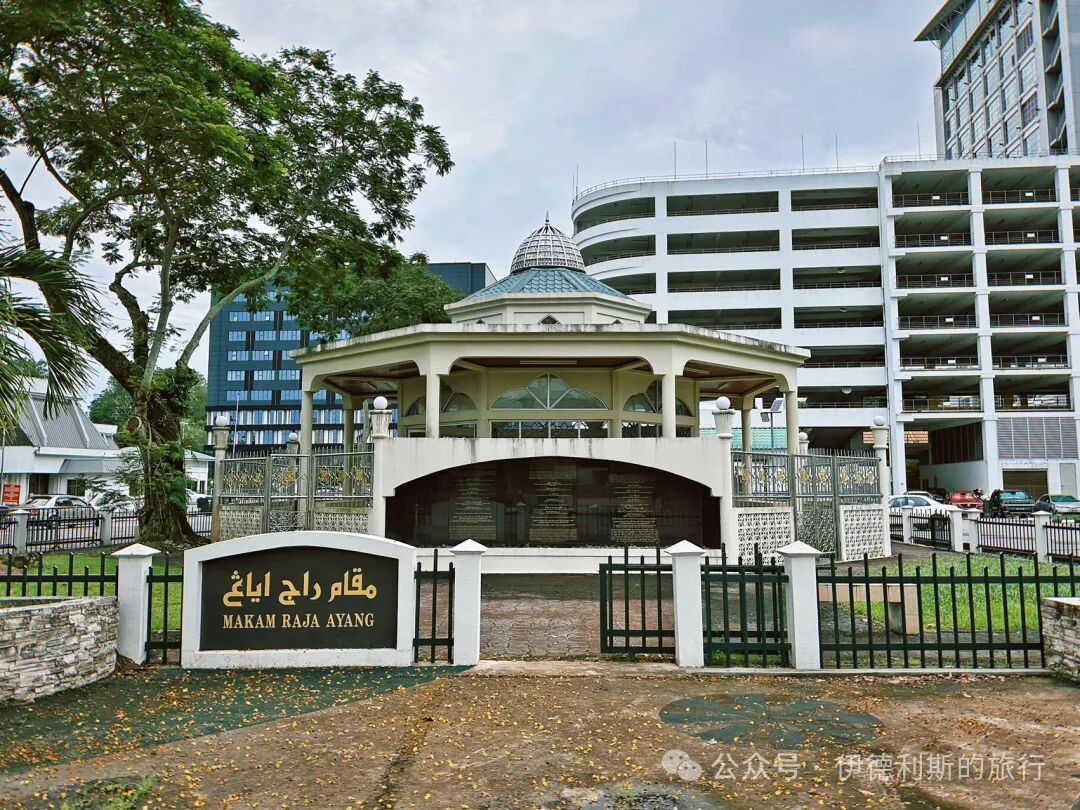
In the center of the old town of Brunei, there is the tomb of Raja Ayang. Legend says Raja Ayang was a royal family member during the reign of Sultan Sulaiman (reigned 1432-1485) of Brunei in the 15th century. Some research suggests she might be Rokayah, the daughter of Sultan Abdul Majid Hassan who passed away in Nanjing.
People say Raja Ayang had an affair with her own brother. Sultan Sulaiman punished them by locking them in a small, man-made cave that only had one air vent connecting to the outside. The Sultan provided them with enough food to live inside the cave. If no cooking smoke rose from the air vent, it meant they had passed away. Later, people built the tomb of Raja Ayang next to the small hill.
The small hill of Raja Ayang's tomb lasted until the 1950s. It was torn down to build a nearby post office and radio station, but the tomb itself was preserved. The inscription is blurry from years of people lighting candles for dua, but you can still see verses and the year 859 in the Islamic calendar (1454 AD), which is likely the date Raja Ayang passed away.
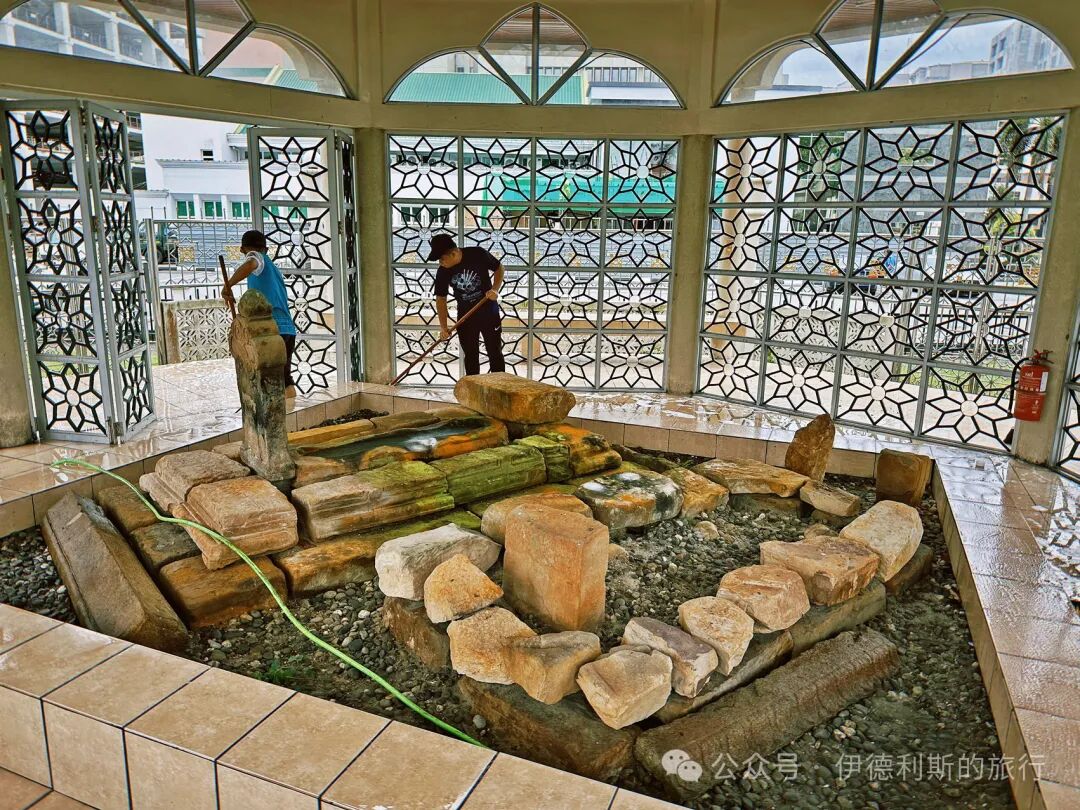
Tomb of the Fifth Sultan of Brunei
South of the Kota Batu Site 1 is the tomb of Sultan Bolkiah (reigned 1485-1524), the fifth Sultan of Brunei. His reign is known as the Golden Age of Brunei history, when the Sultanate of Brunei held power over Borneo and the southern Philippines.
When Ferdinand Magellan's fleet arrived in Brunei in 1521, they witnessed the power of Brunei under Sultan Bolkiah. When they reached the palace, they were shocked by his wealth. A hall reached by wide steps was crowded with courtiers wearing elegant clothes. Through the corridor was a slightly raised room decorated with luxurious silk and brocade curtains, bathed in natural light from wide windows. Three hundred of the Sultan's warriors stood guard there with their daggers drawn. A little further on was a smaller but equally beautiful room, where the muscular forty-year-old monarch sat on a large mat chewing betel nut with his young son beside him.
The tomb of Sultan Bolkiah is tall, majestic, and finely carved. The tombstone consists of eight layers, but only the bottom layer is original. One of the upper stones commemorates Sultan Muhammad Ali, and another commemorates Sultan Abdul Mubin, likely made in the late 17th century. The middle slab records that Sultan Bolkiah passed away on July 17, 1524, and was likely carved in modern times.
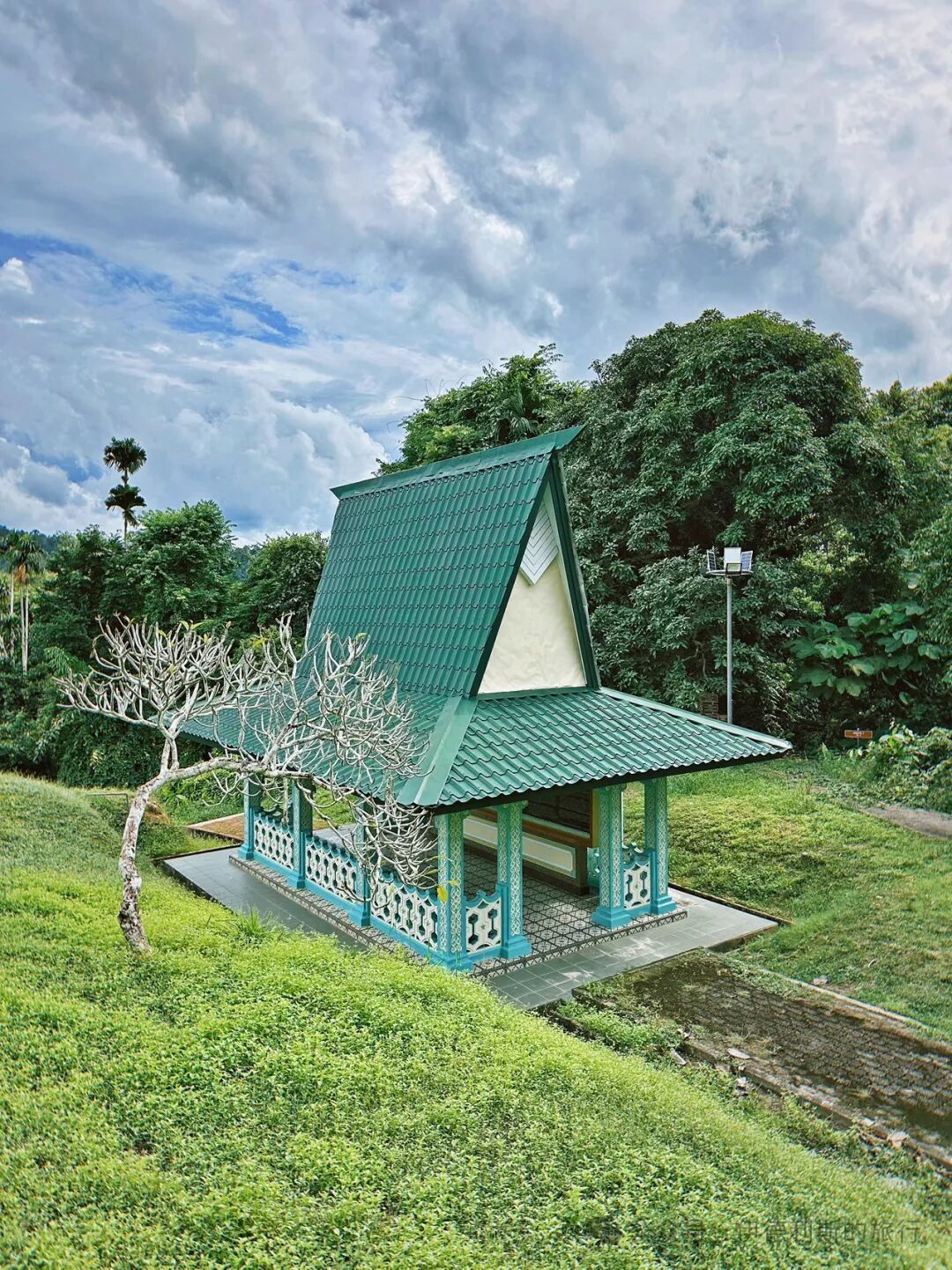
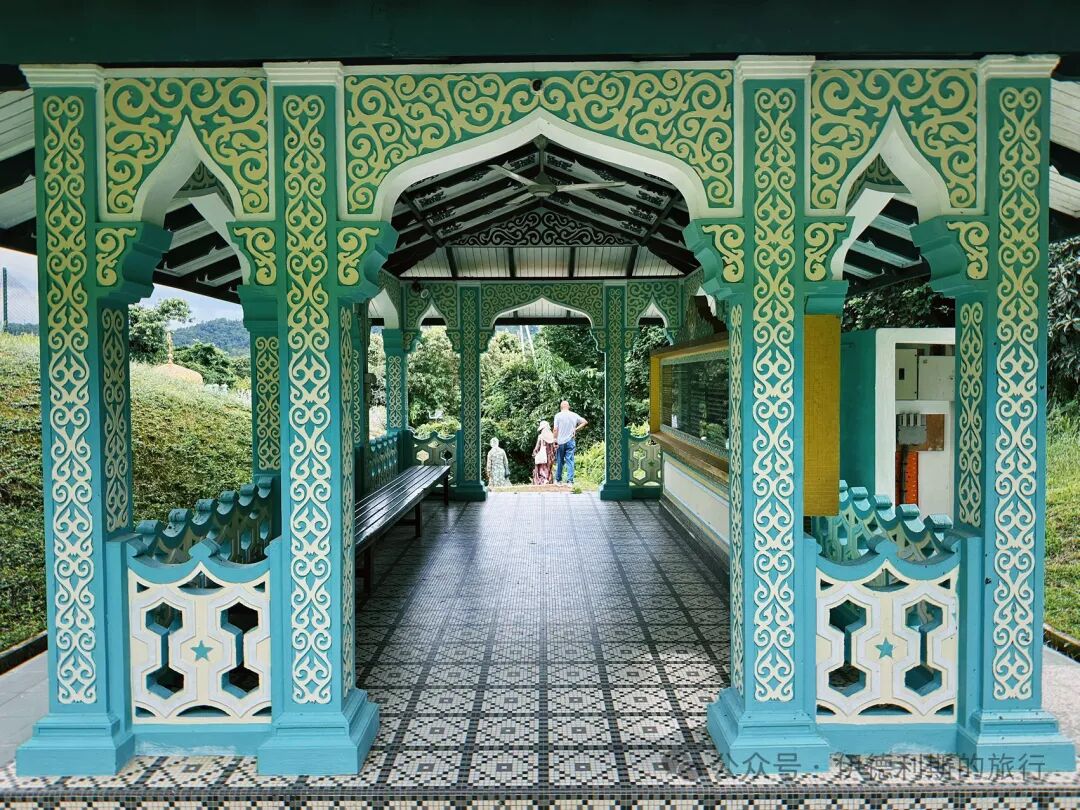
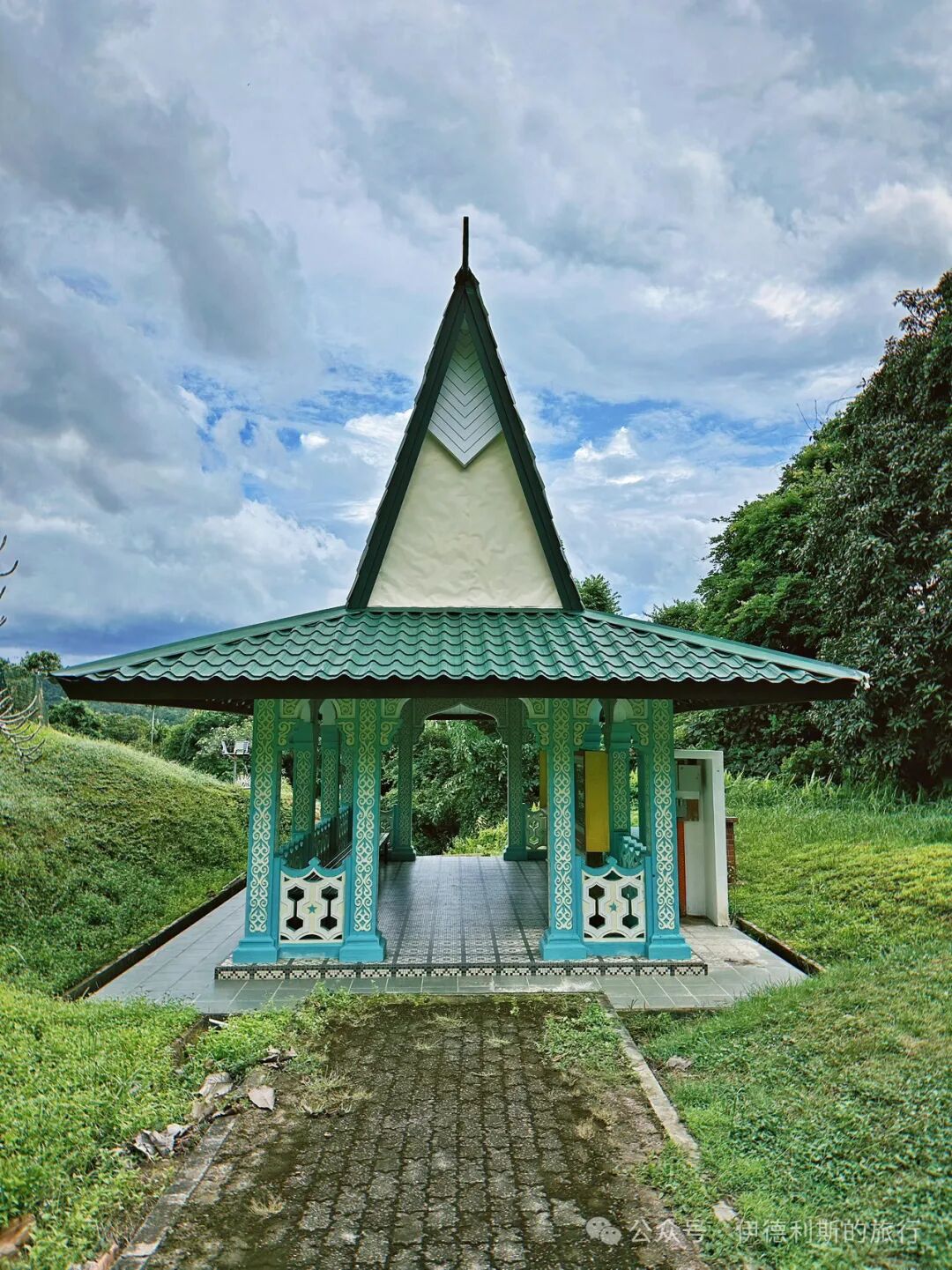
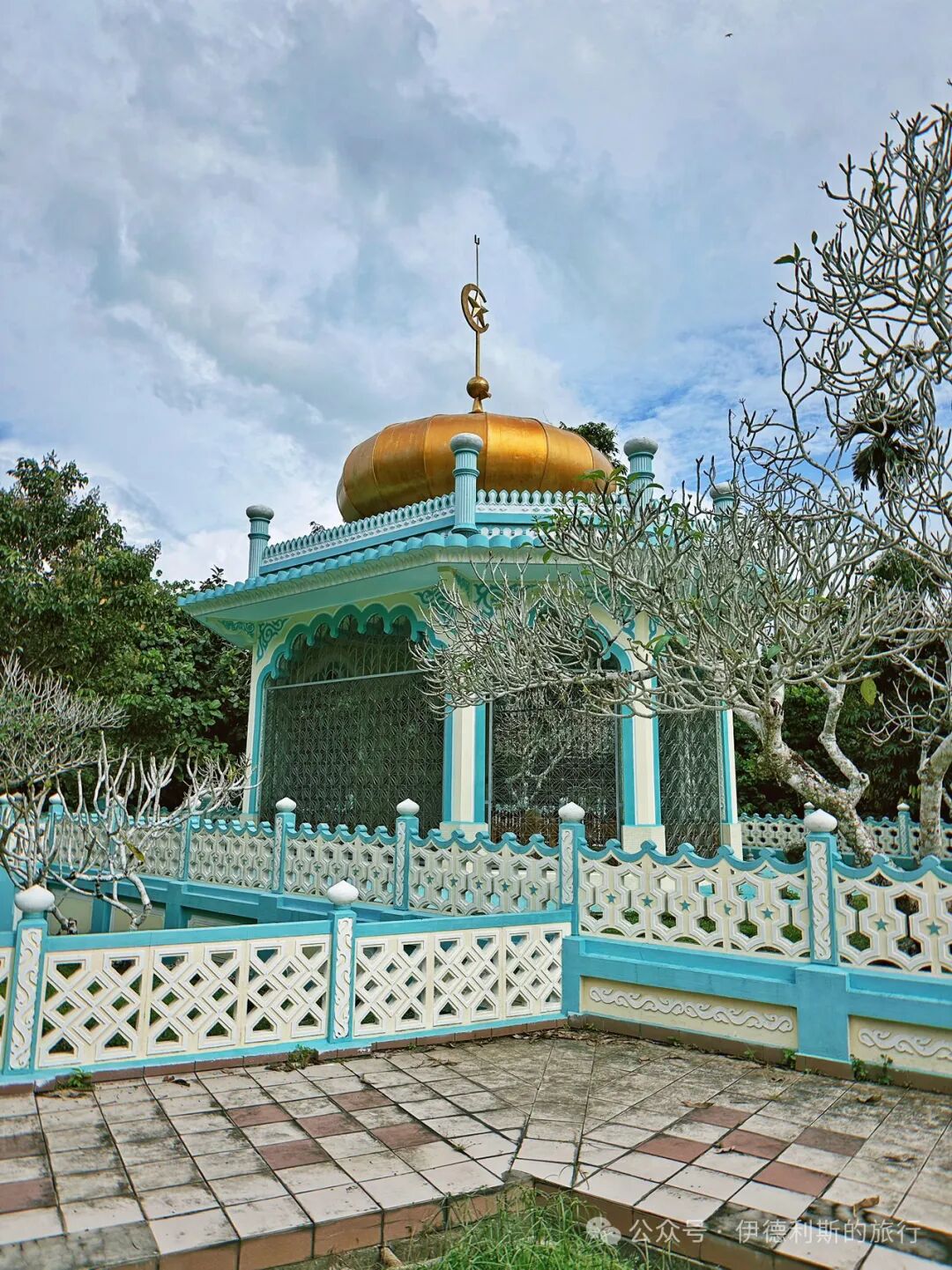
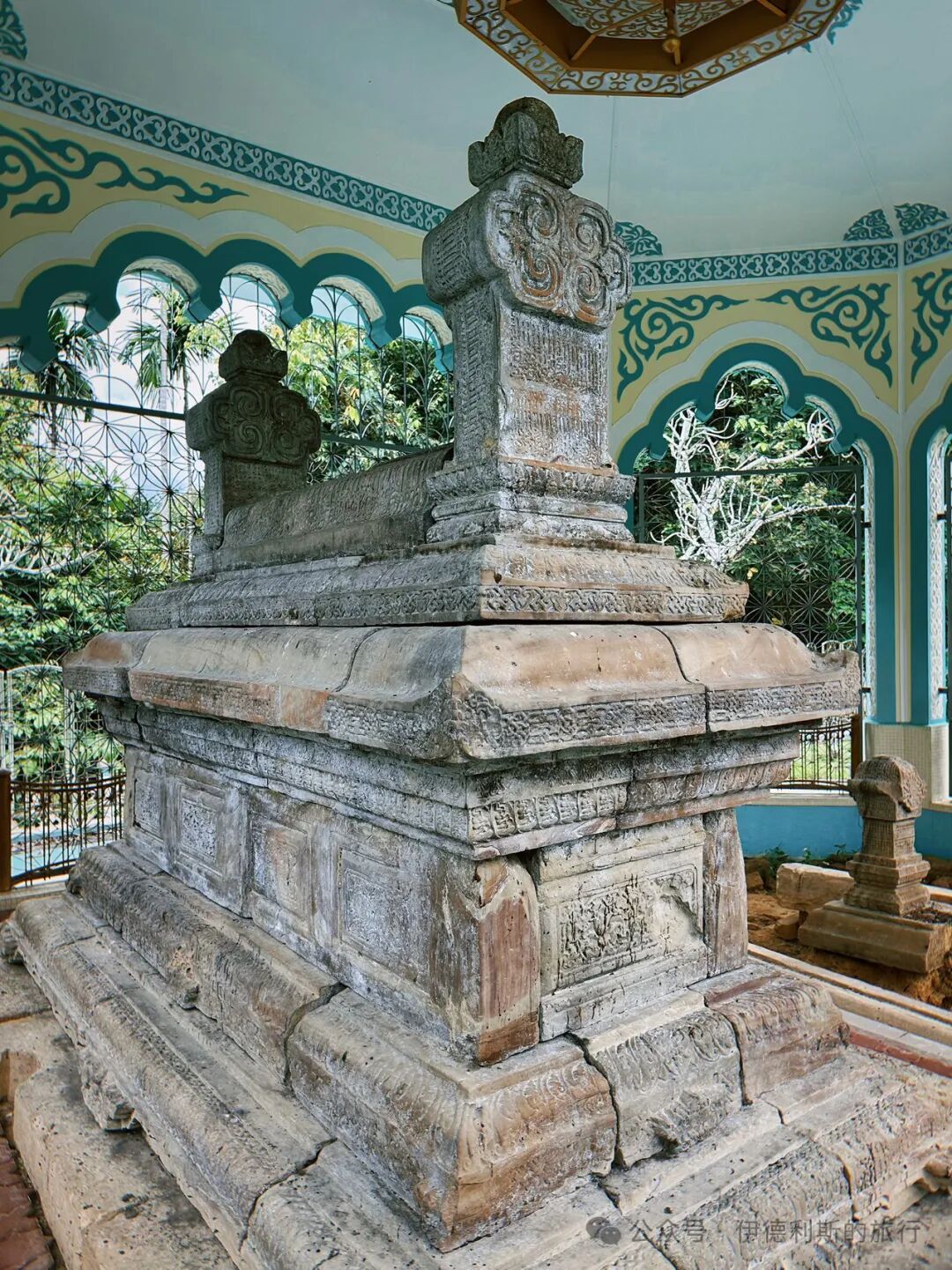
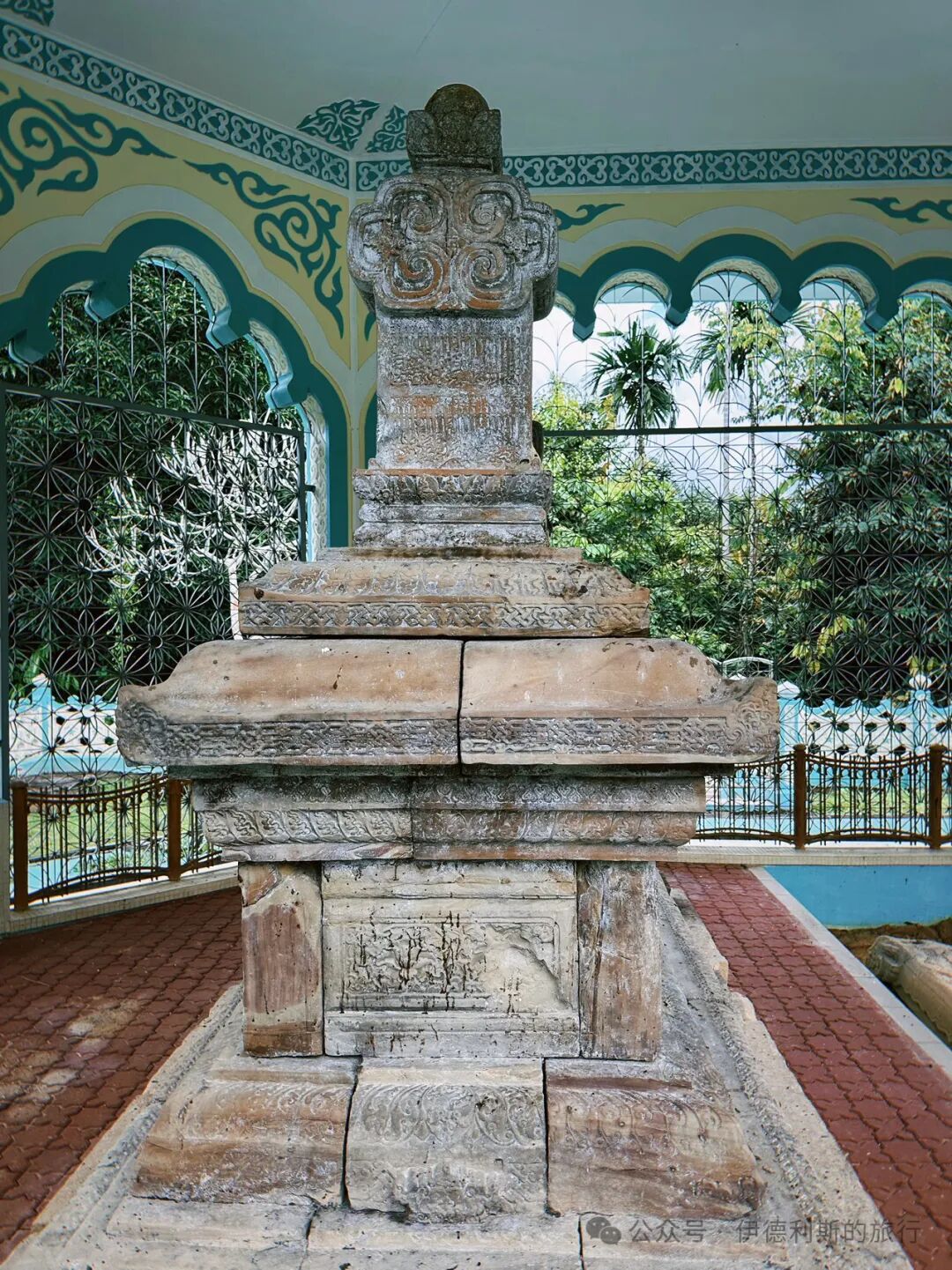
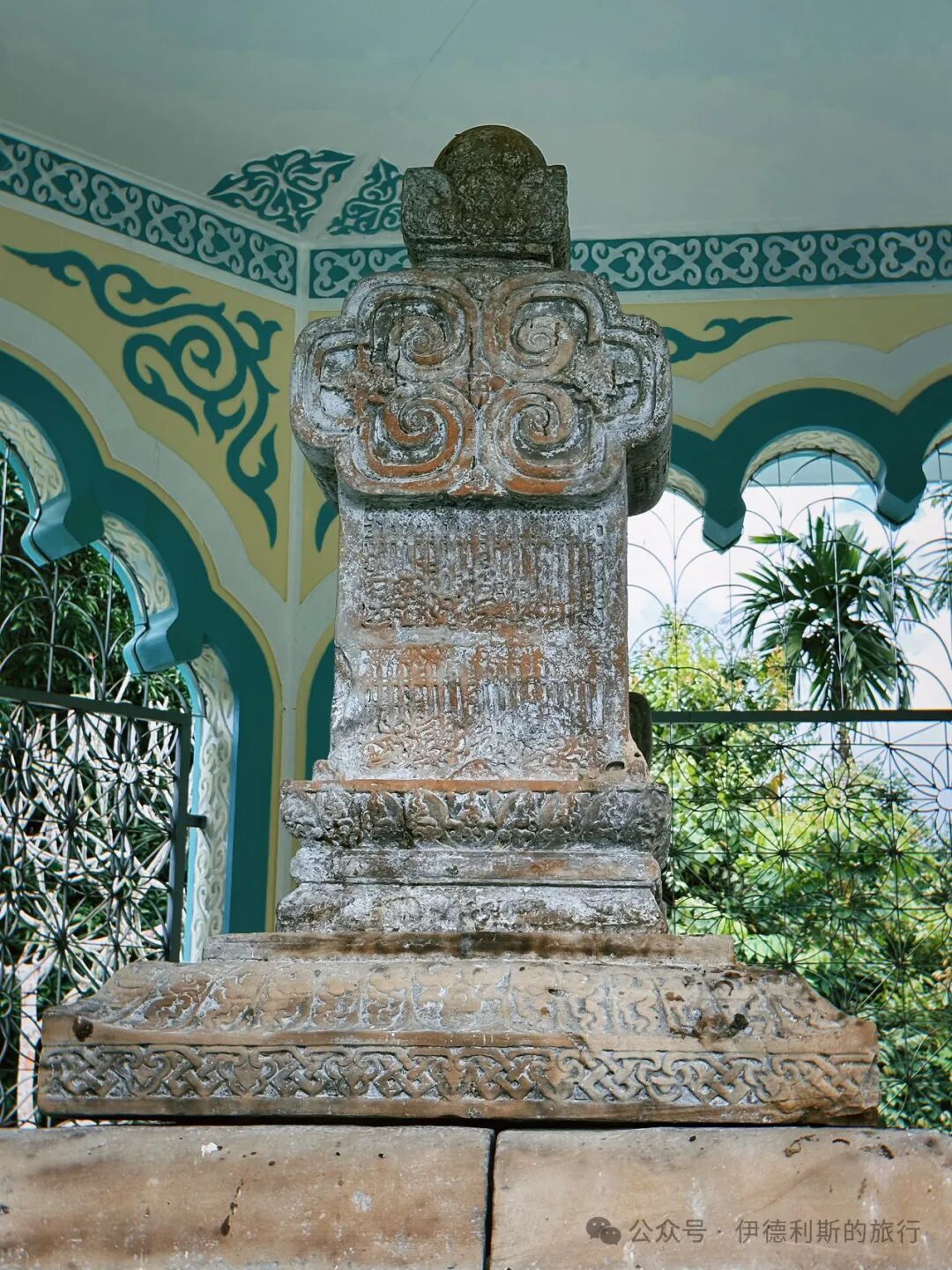
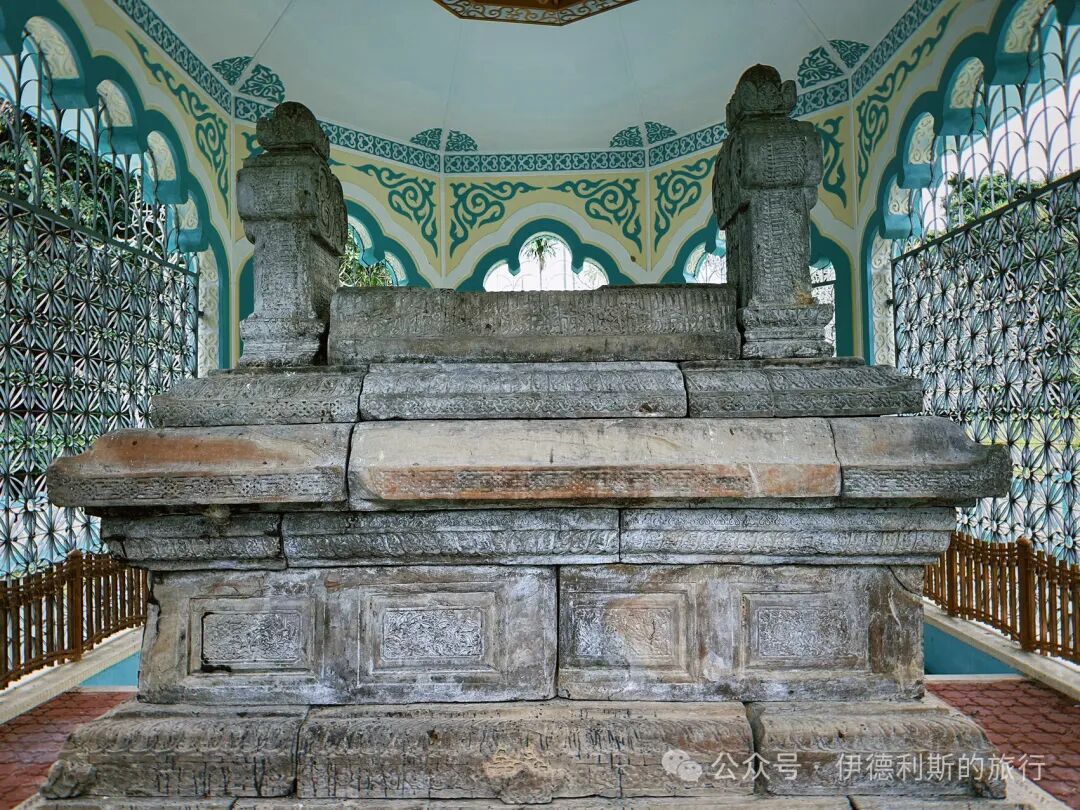
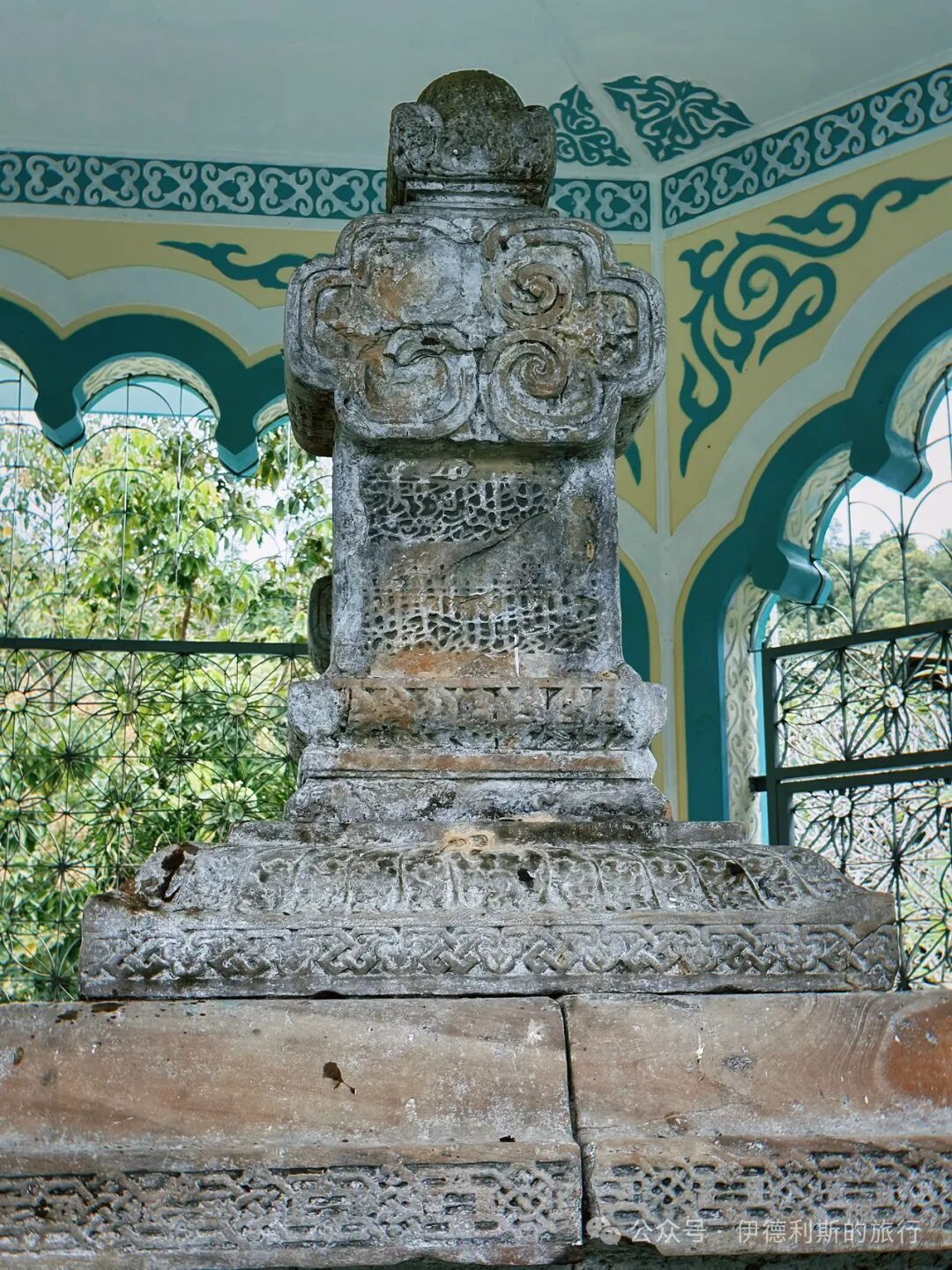
Next to the tomb of Sultan Bolkiah is the tomb of his wife.
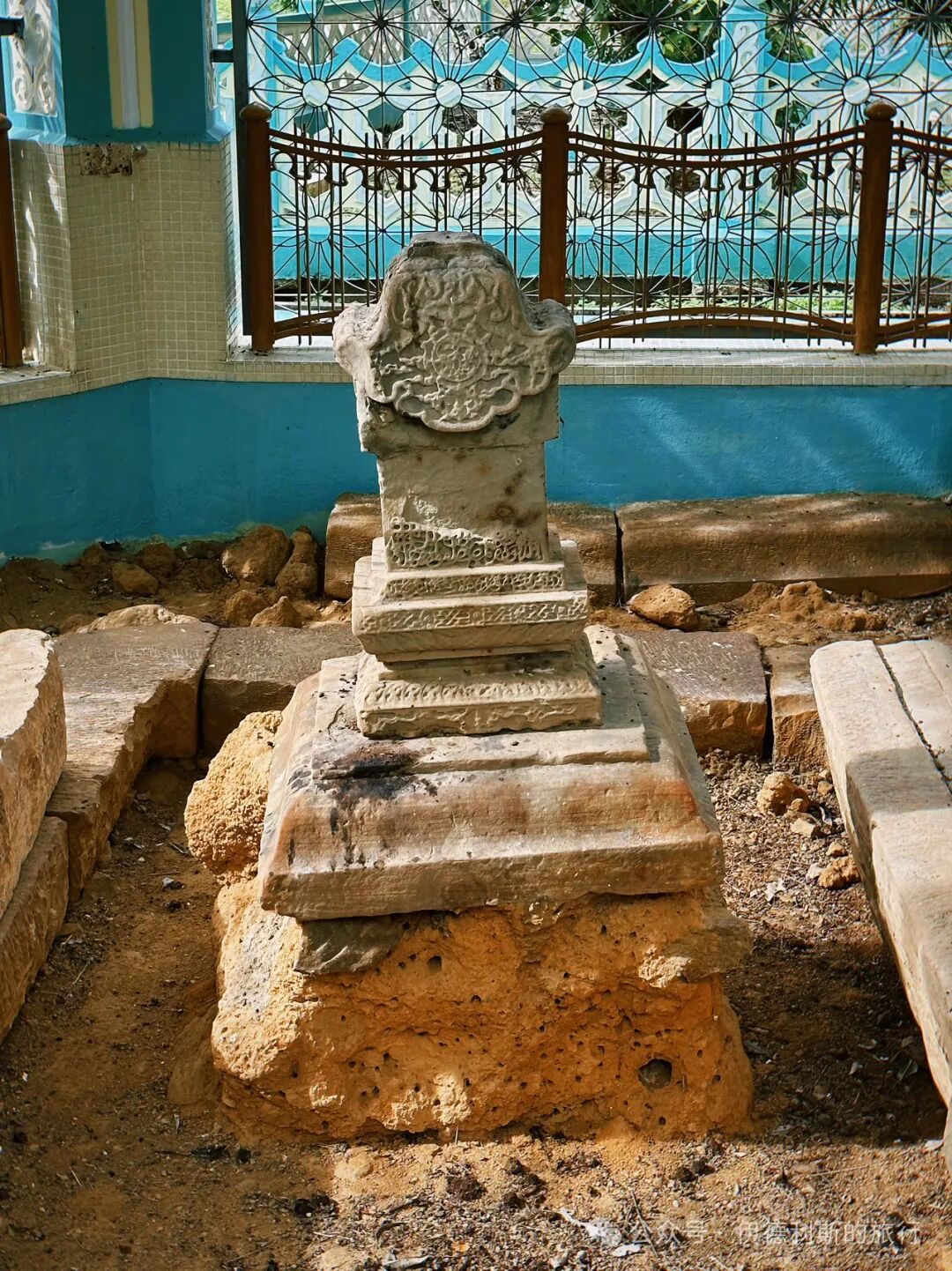
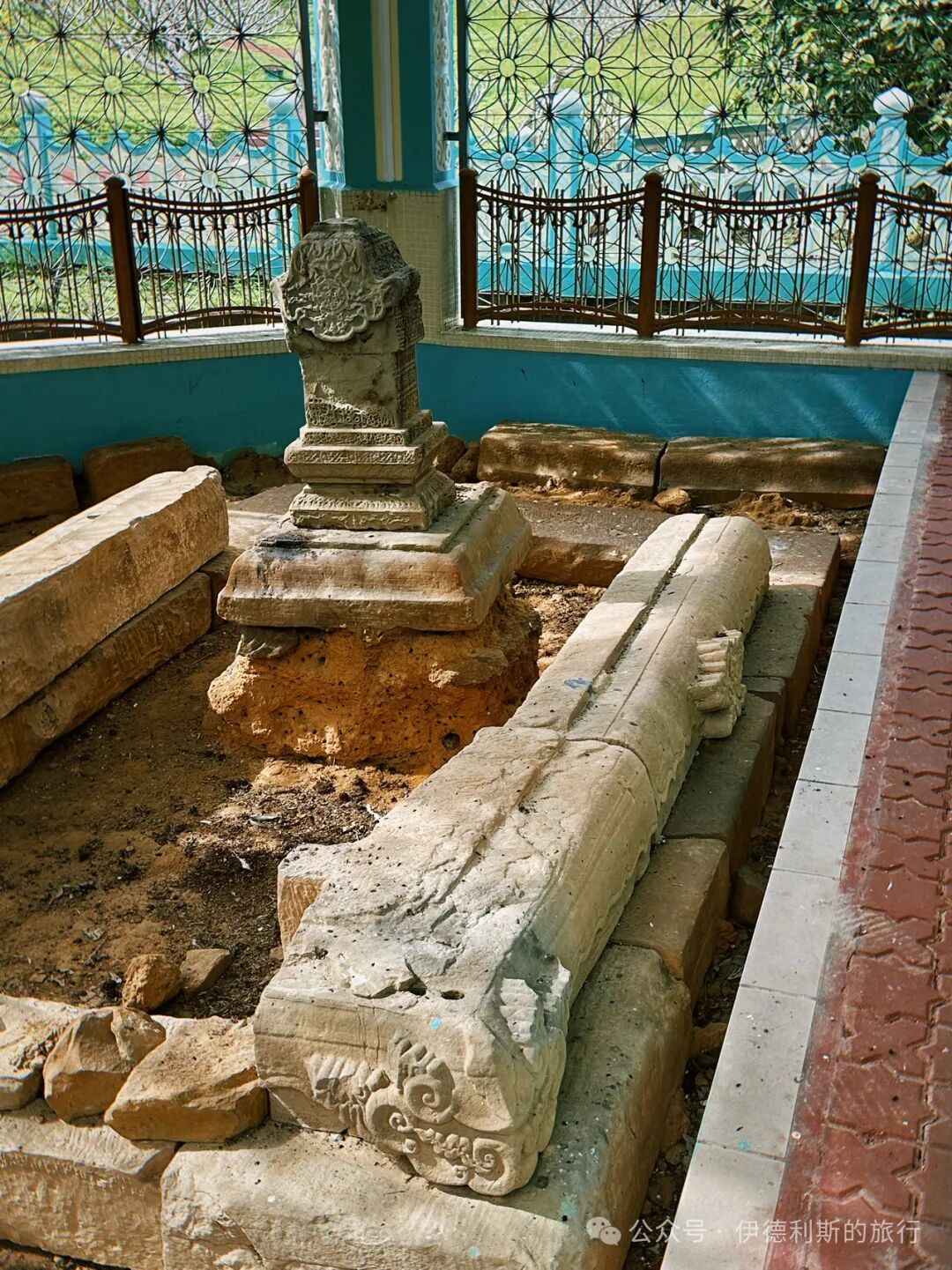
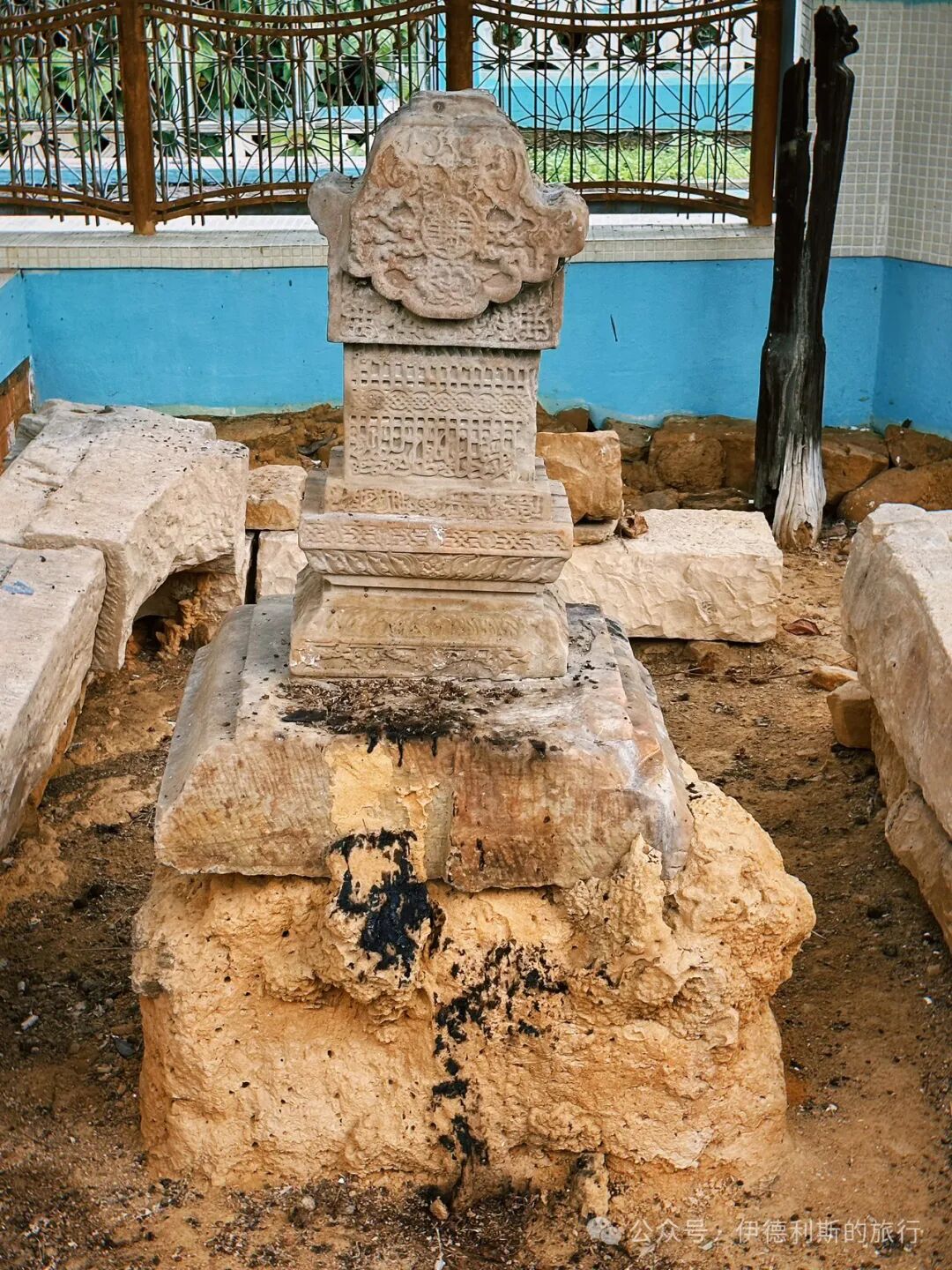
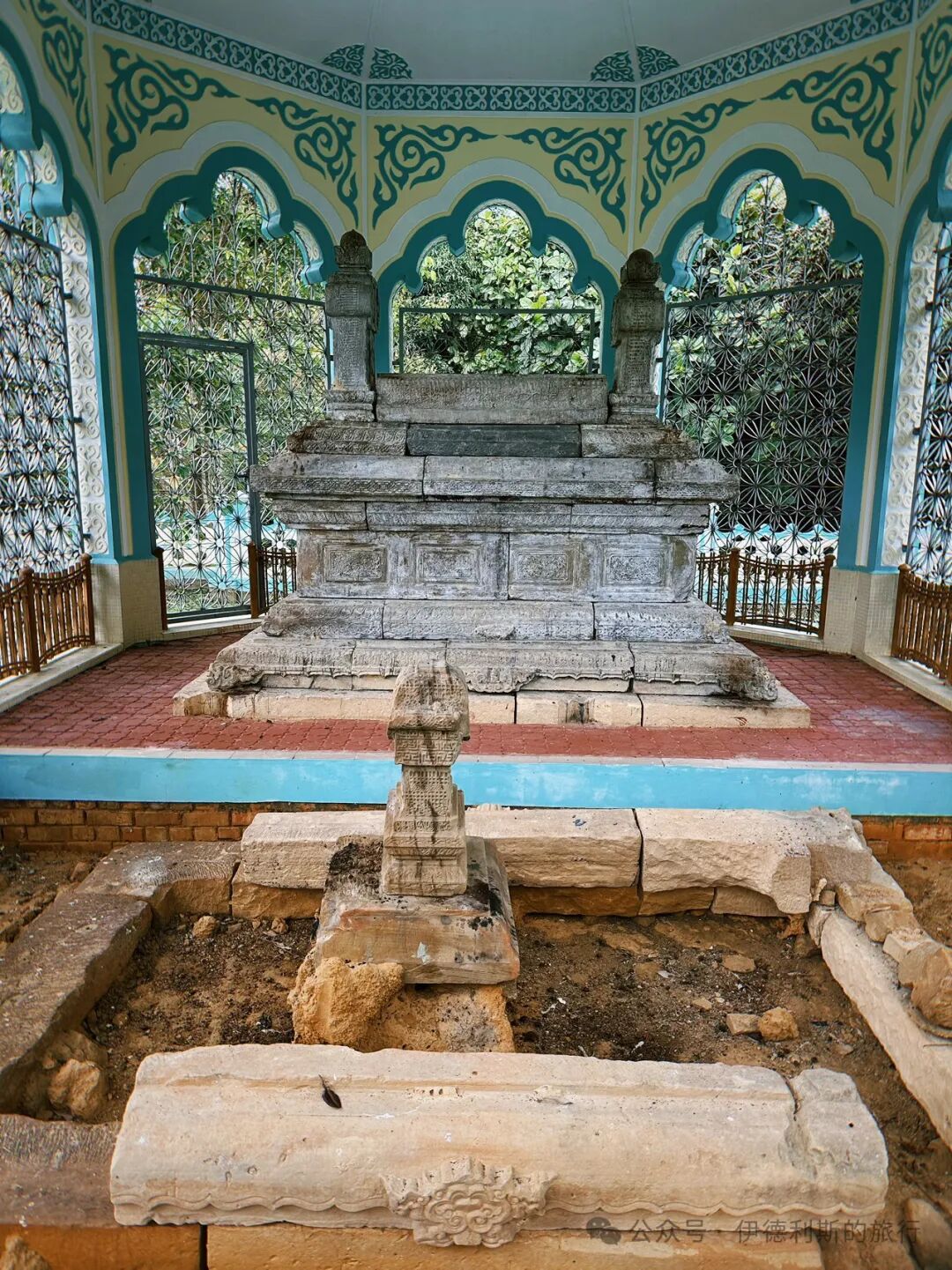
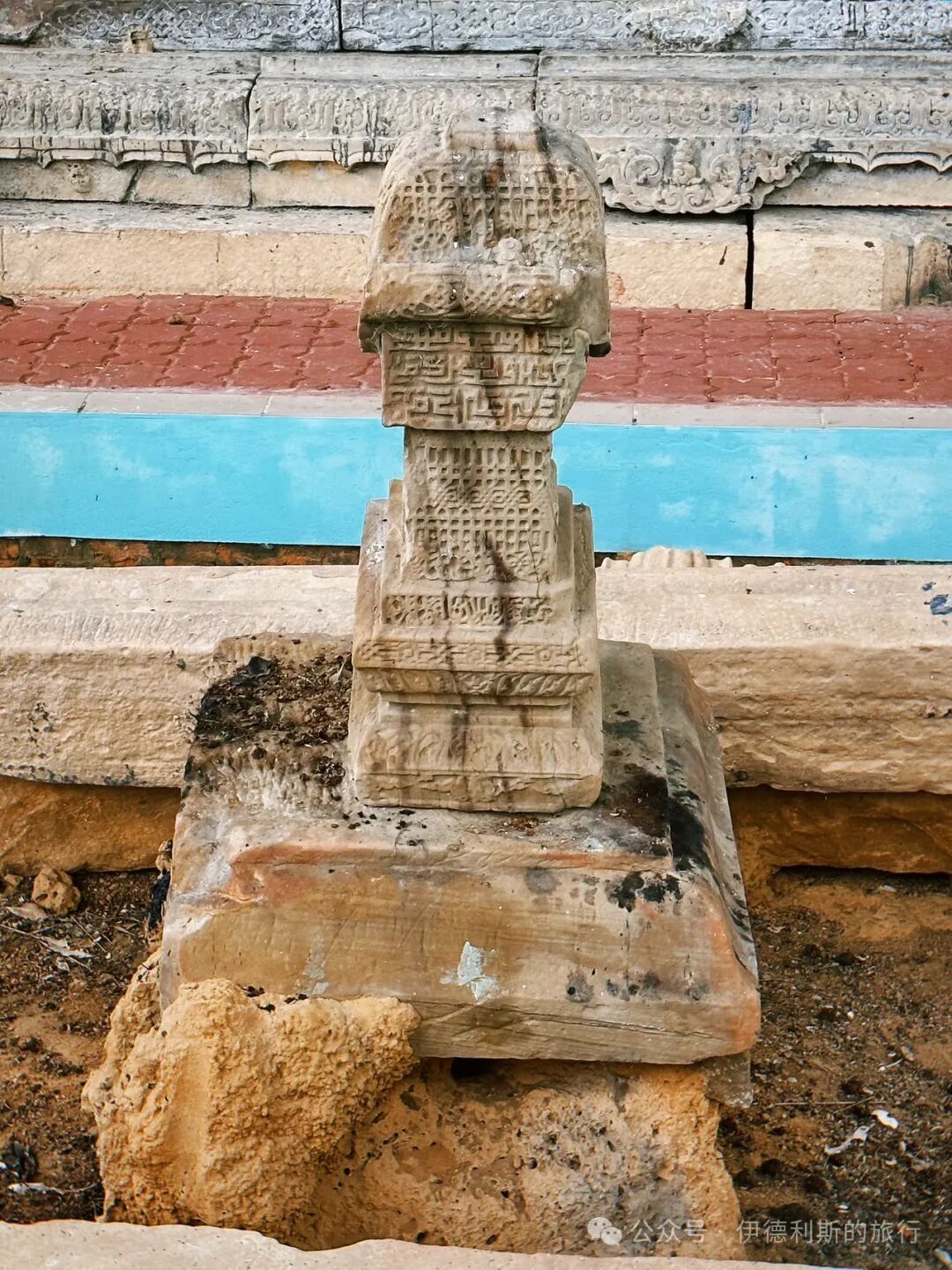
Kampong Ayer Water Village
We took a speedboat from the pier on the Brunei River and reached Kampong Ayer on the other side for 1 Brunei dollar each. We first visited the Kampong Ayer Cultural and Tourism Gallery, which has information about the water village, and there is an observation deck next to it for a panoramic view of the village.
Kampung Ayer is the Malay term for water village. It was once the main port of the Sultanate of Brunei and served as its trade hub from the 15th to the 17th century. After the Brunei Civil War in the 18th century, Kota Batu was abandoned, and the water village became the capital of the Sultanate. In 1521, Italian explorer Antonio Pigafetta arrived in Brunei with Magellan's fleet and called Kampung Ayer the Venice of the East. The water village was once massive and even housed the Sultan's palace, but it gradually declined after the British invasion in the 19th century. Since the 20th century, Brunei has encouraged residents of the water village to move to the shore, but many people still choose to stay.
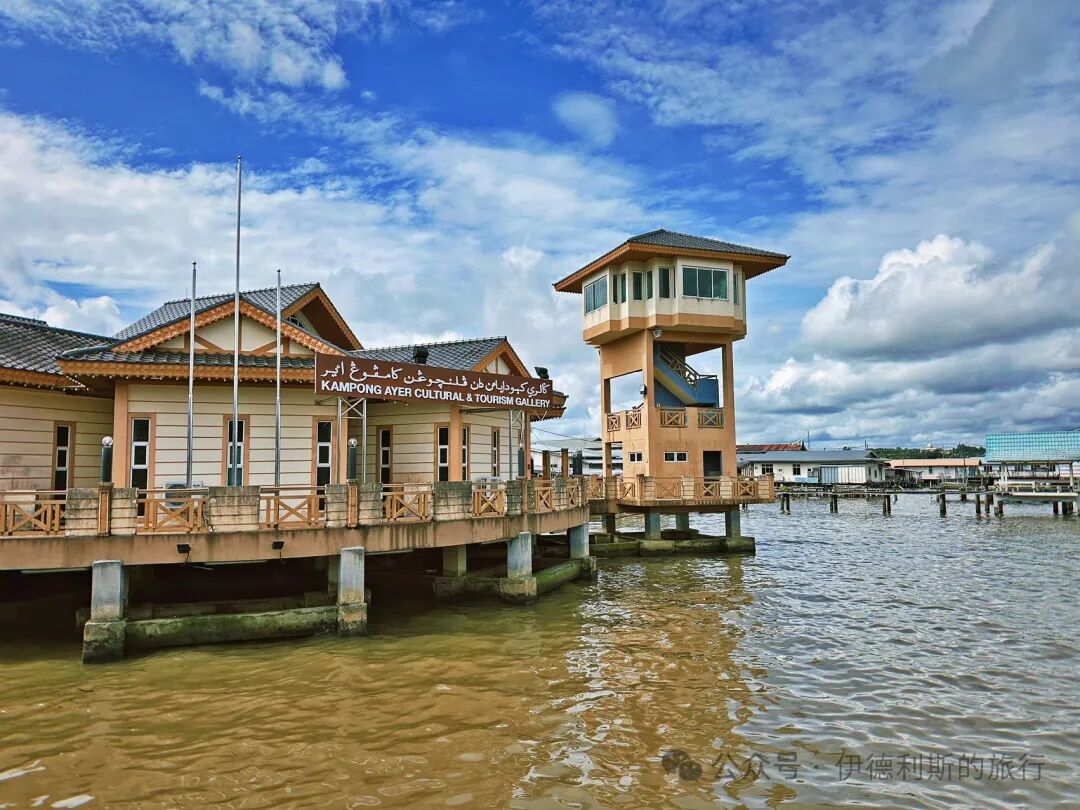
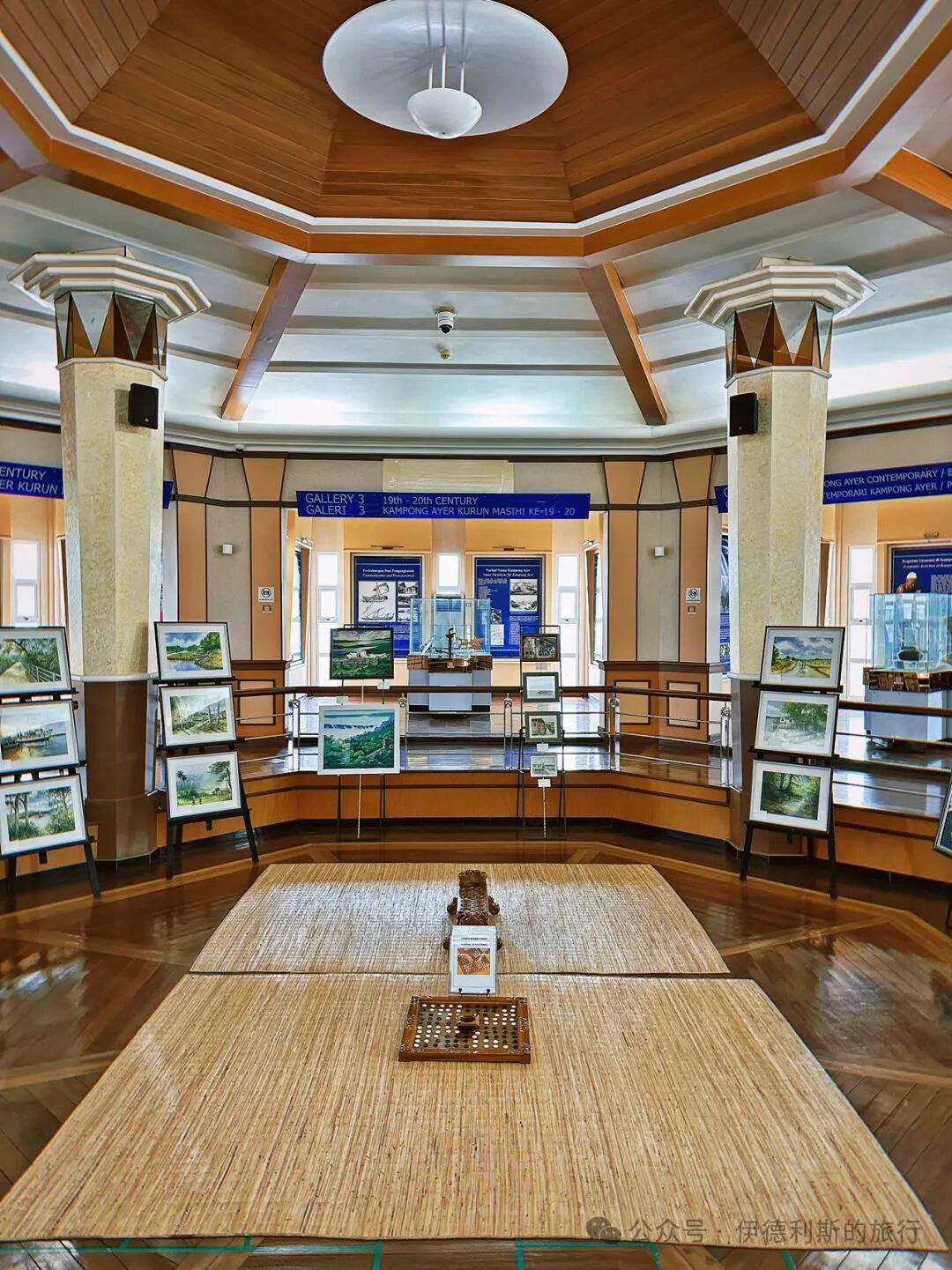
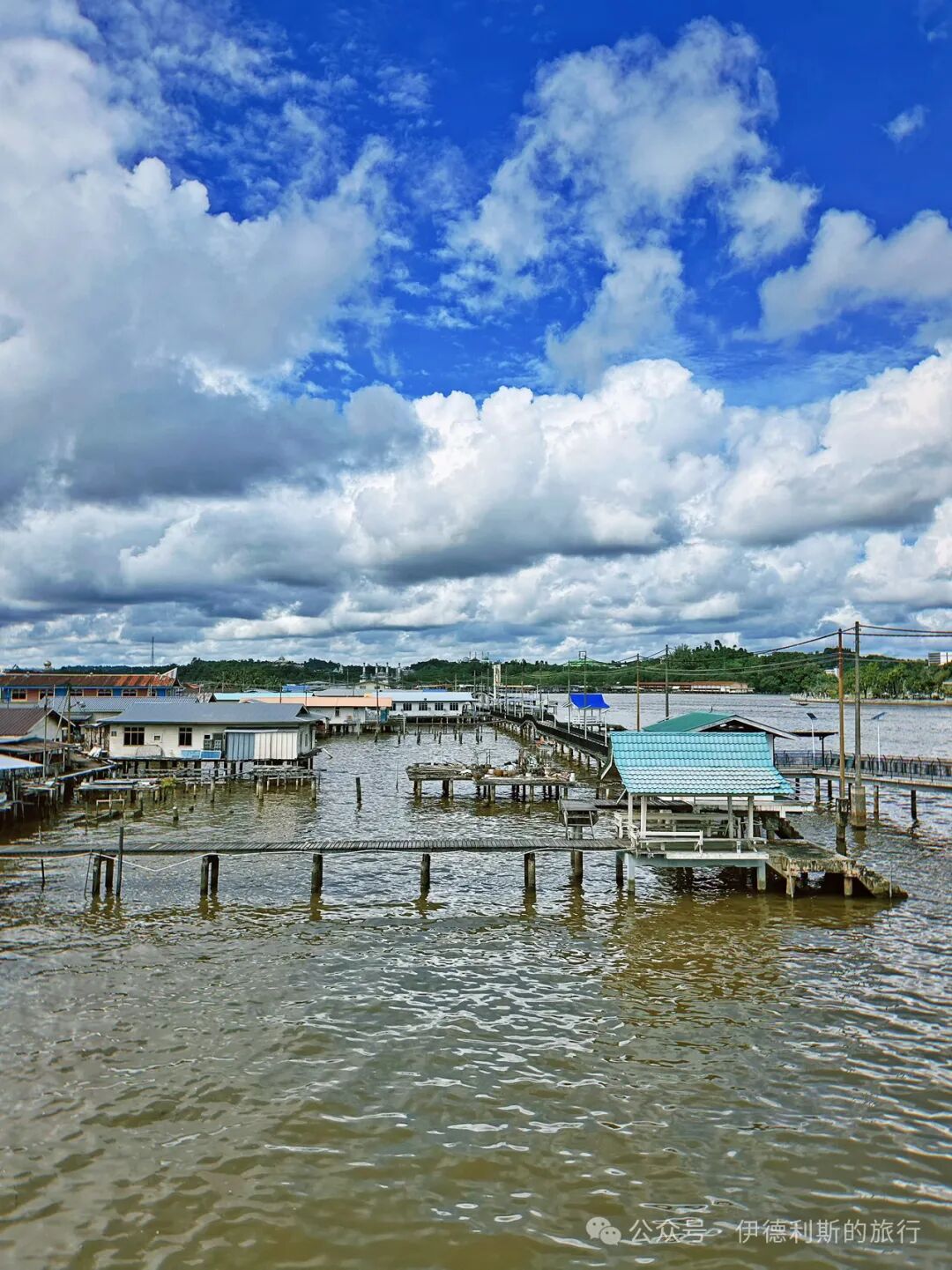
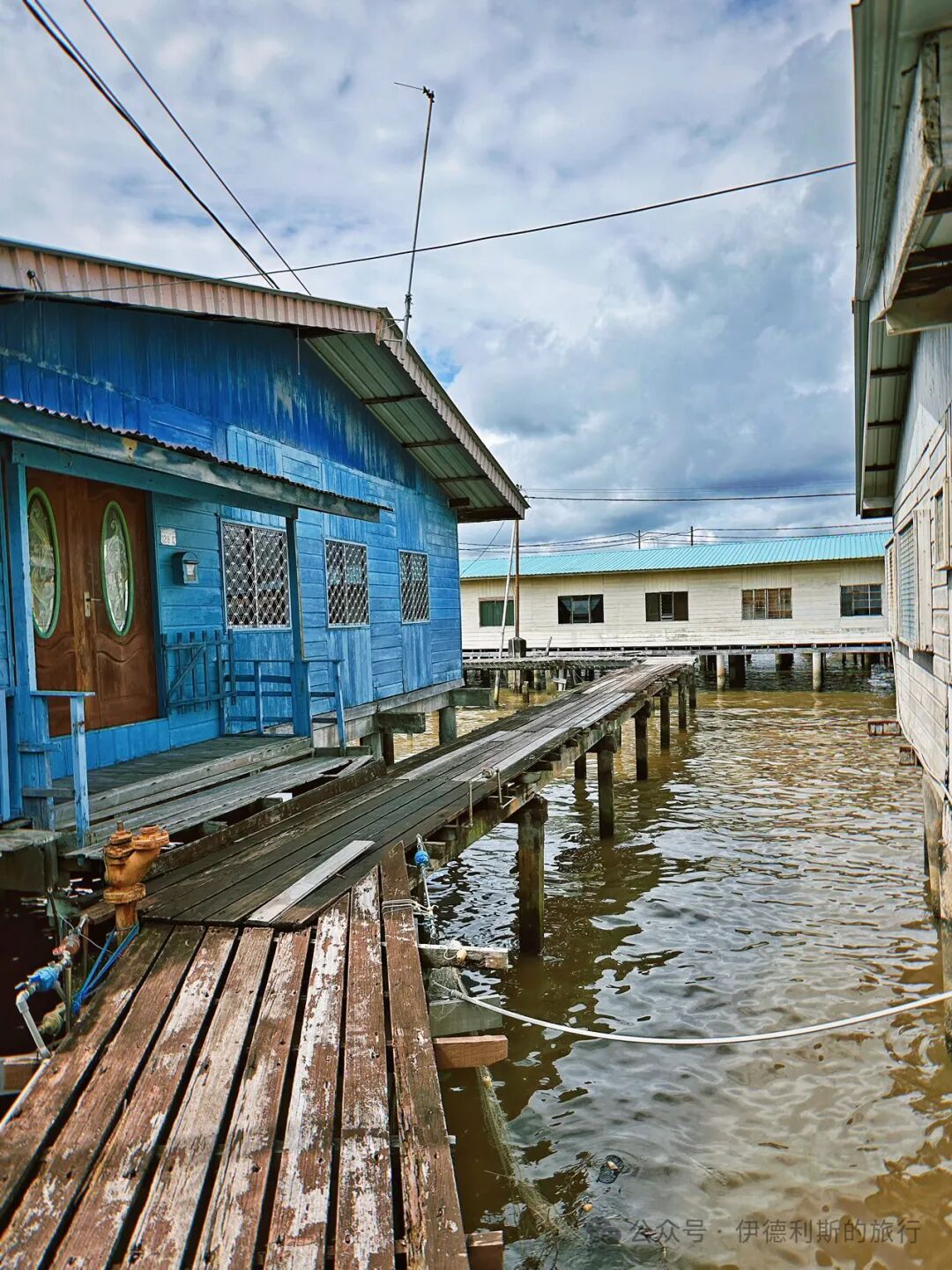
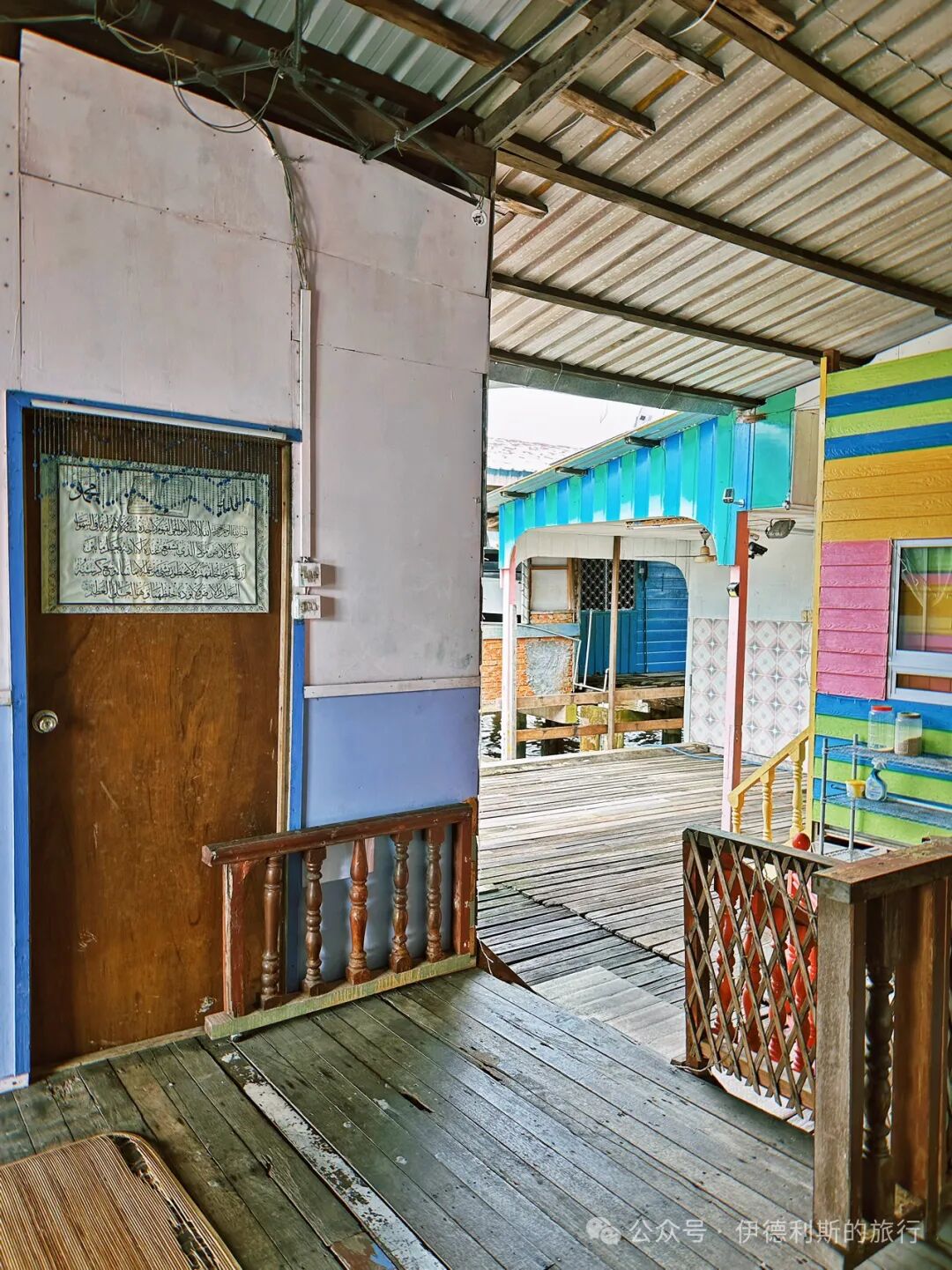
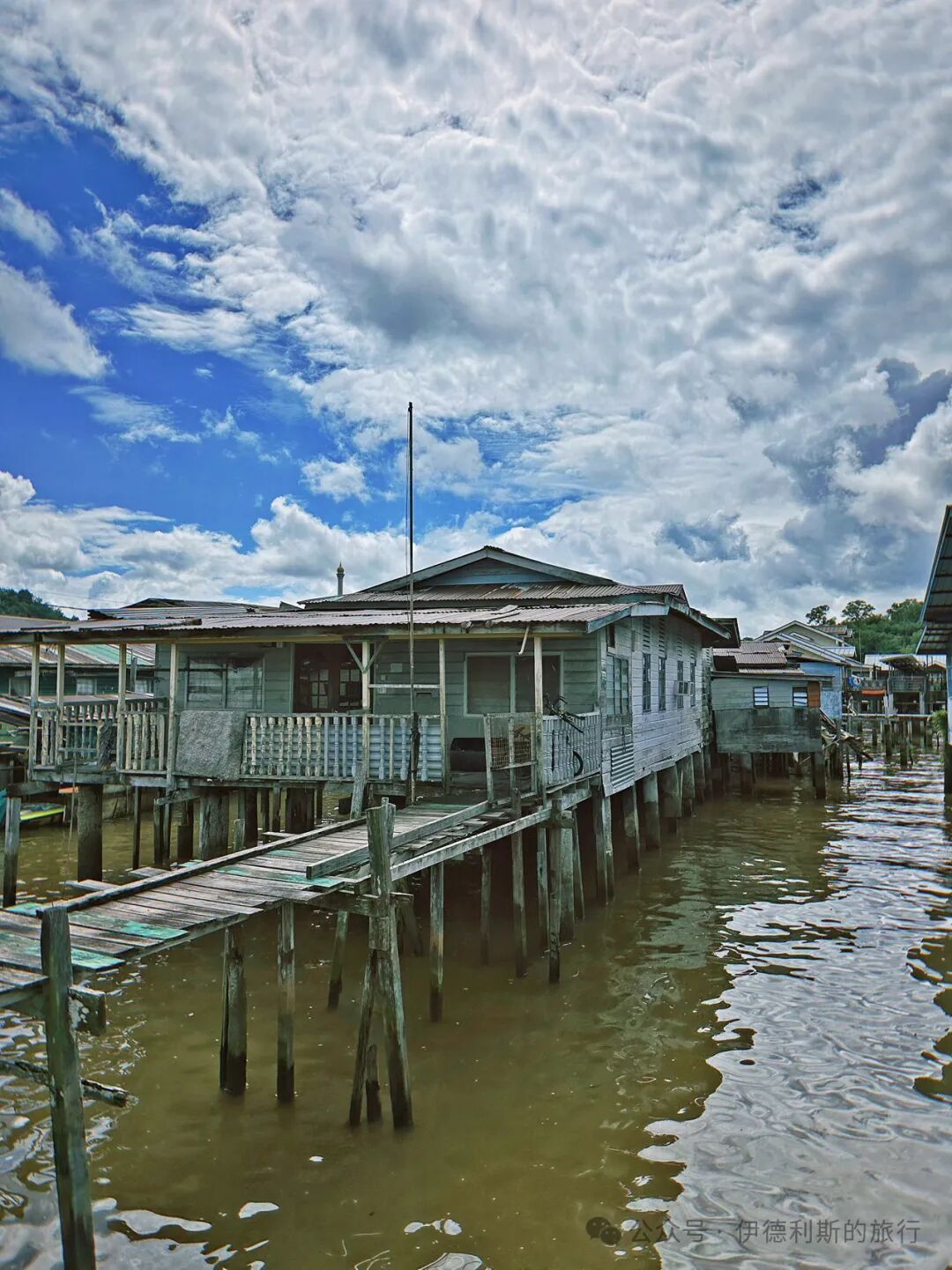
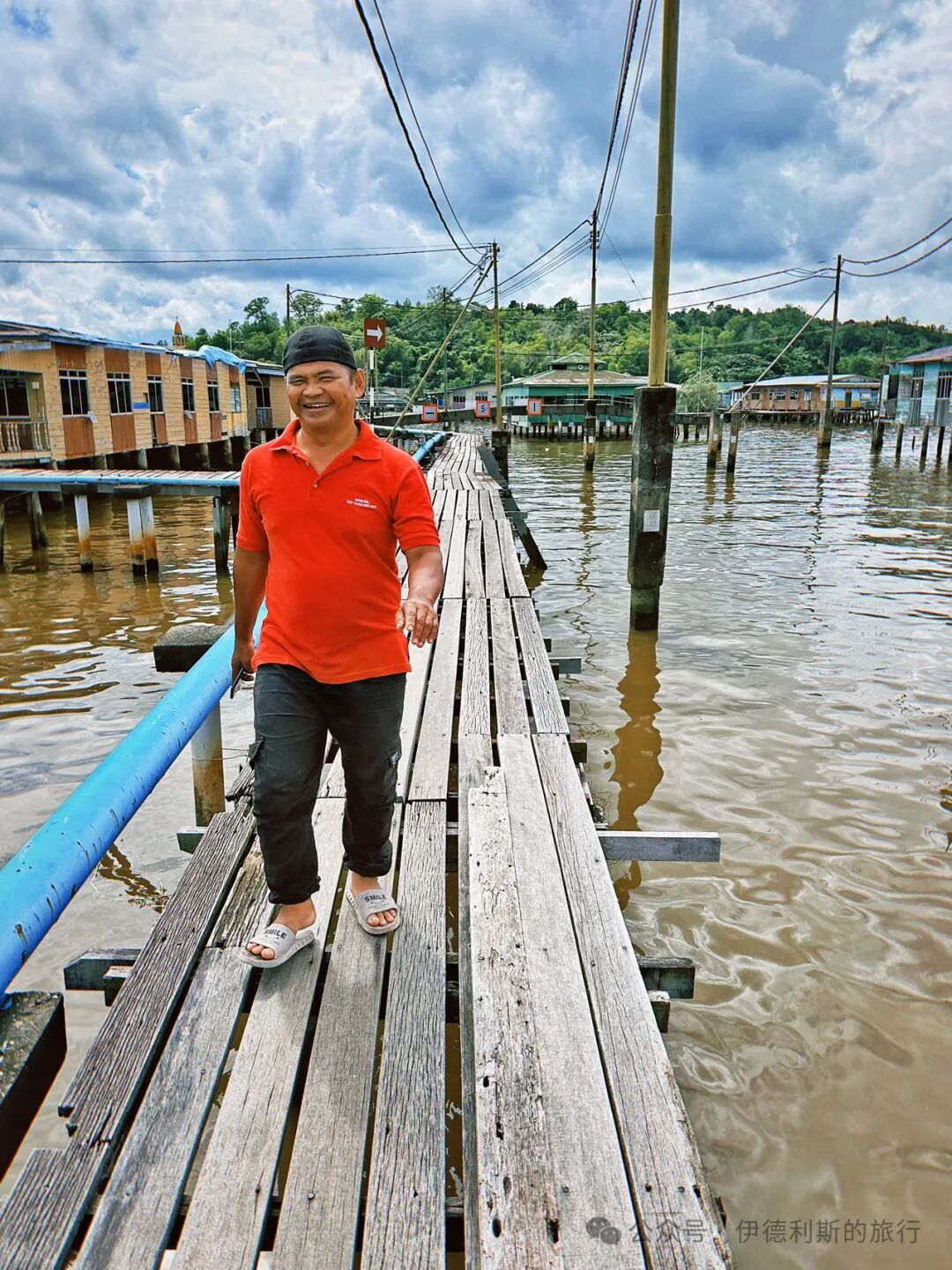
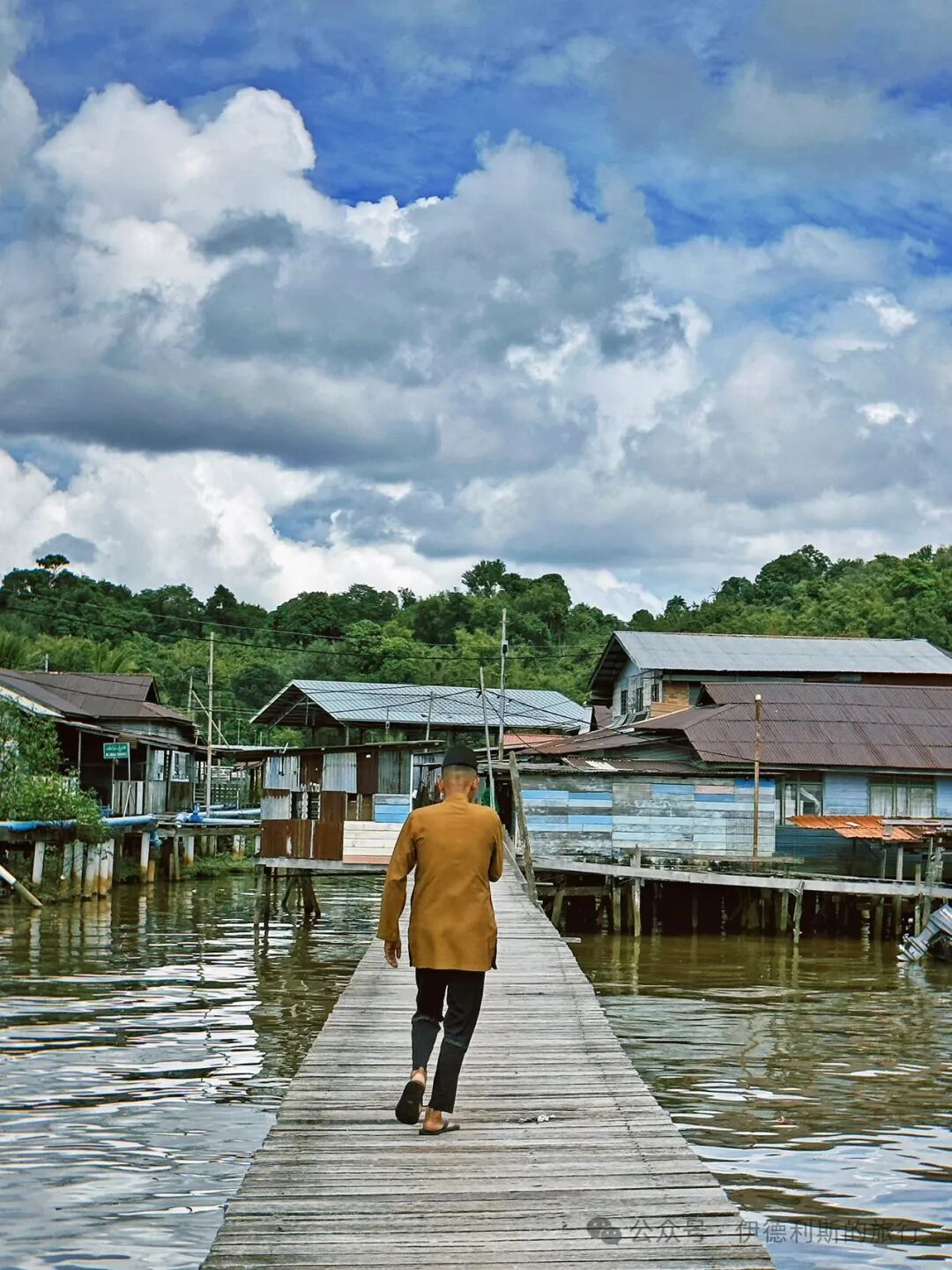
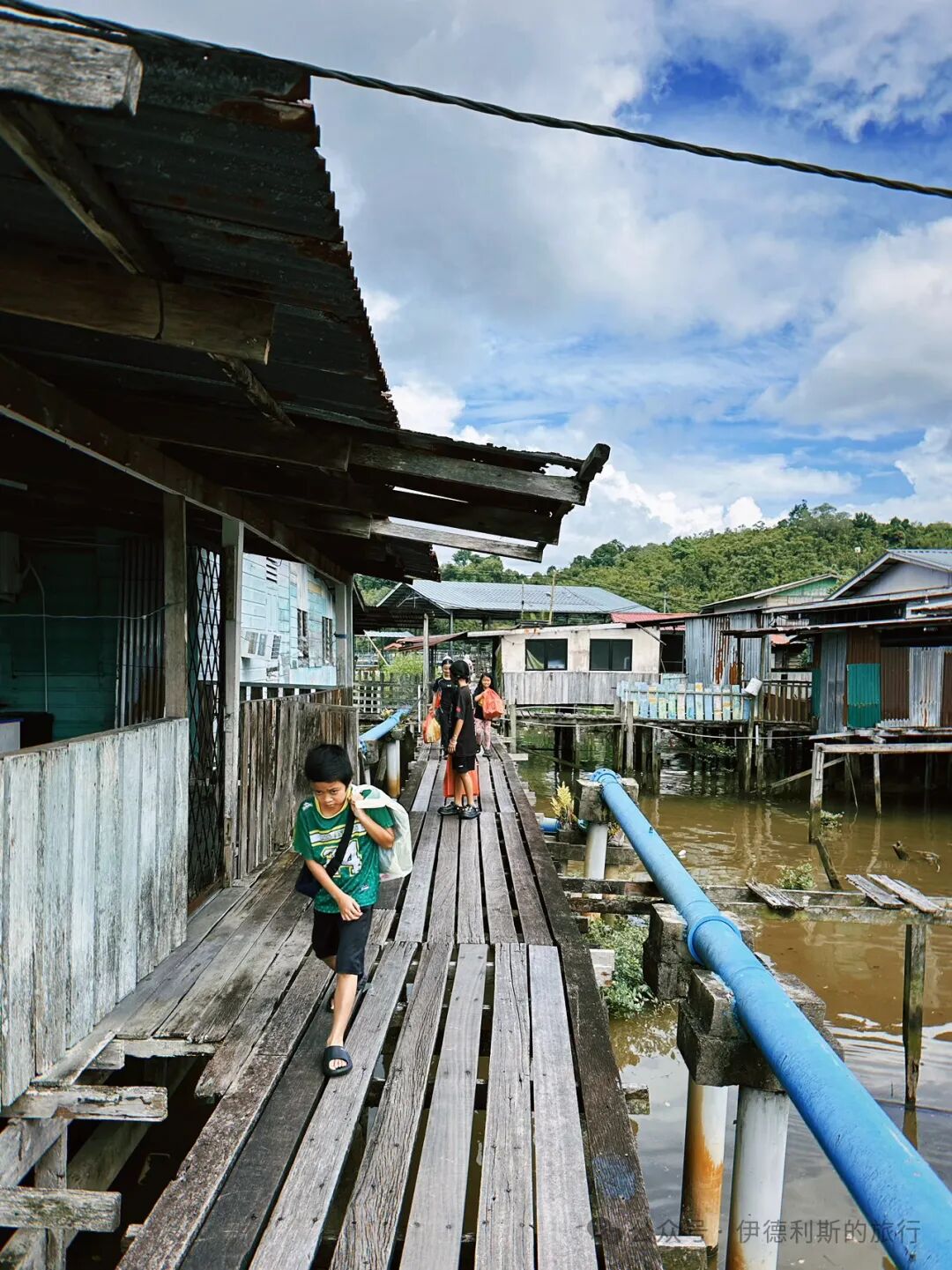
The two traditional wooden mosques on the water are a major highlight of Brunei. The walls and pillars are made of wood. Once you go inside, the air conditioning is very strong, so you cannot feel the humidity from the water. In recent years, Brunei has built several large concrete mosques on the banks of the water village, and the traditional wooden mosques are becoming fewer.
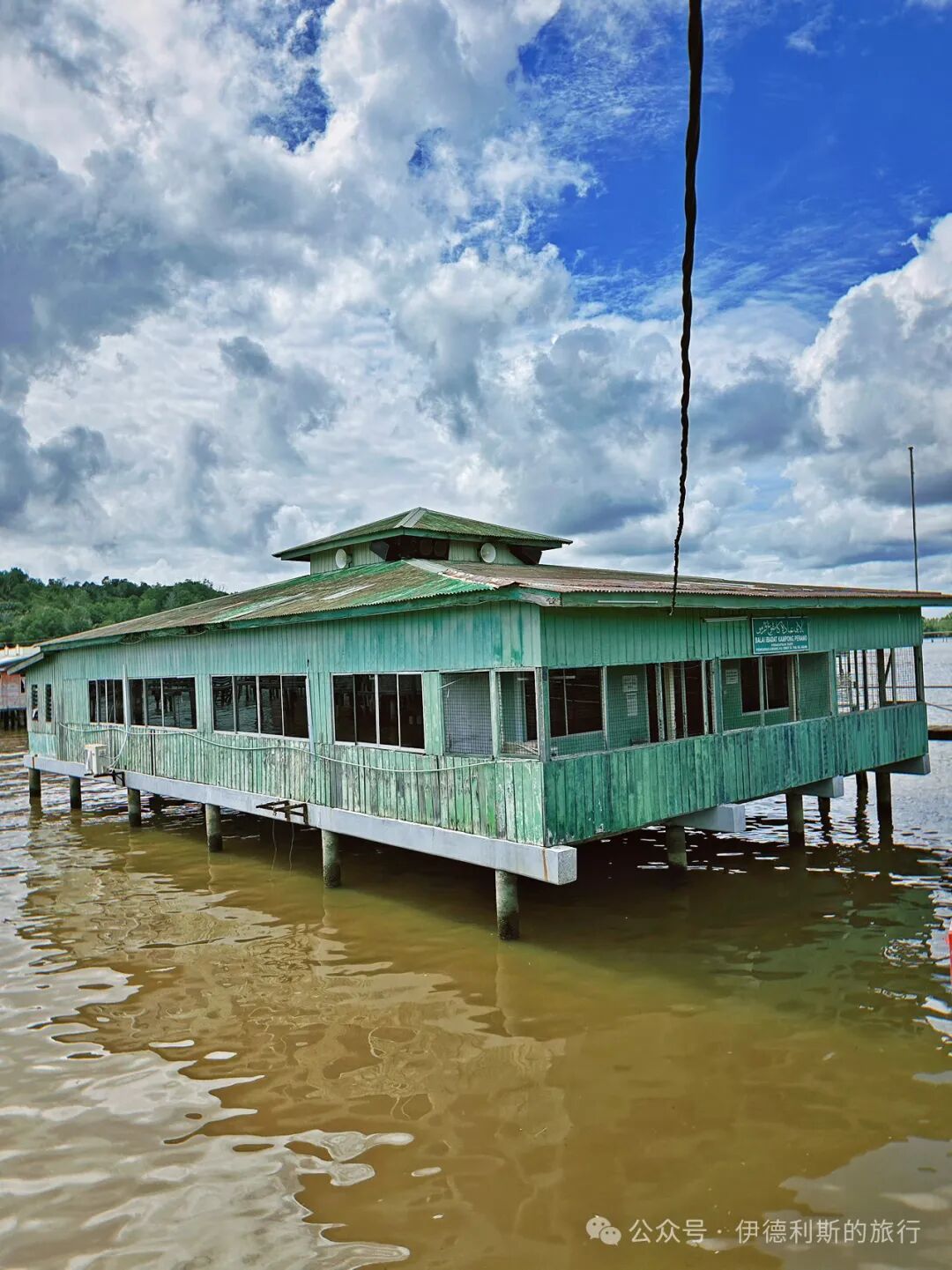
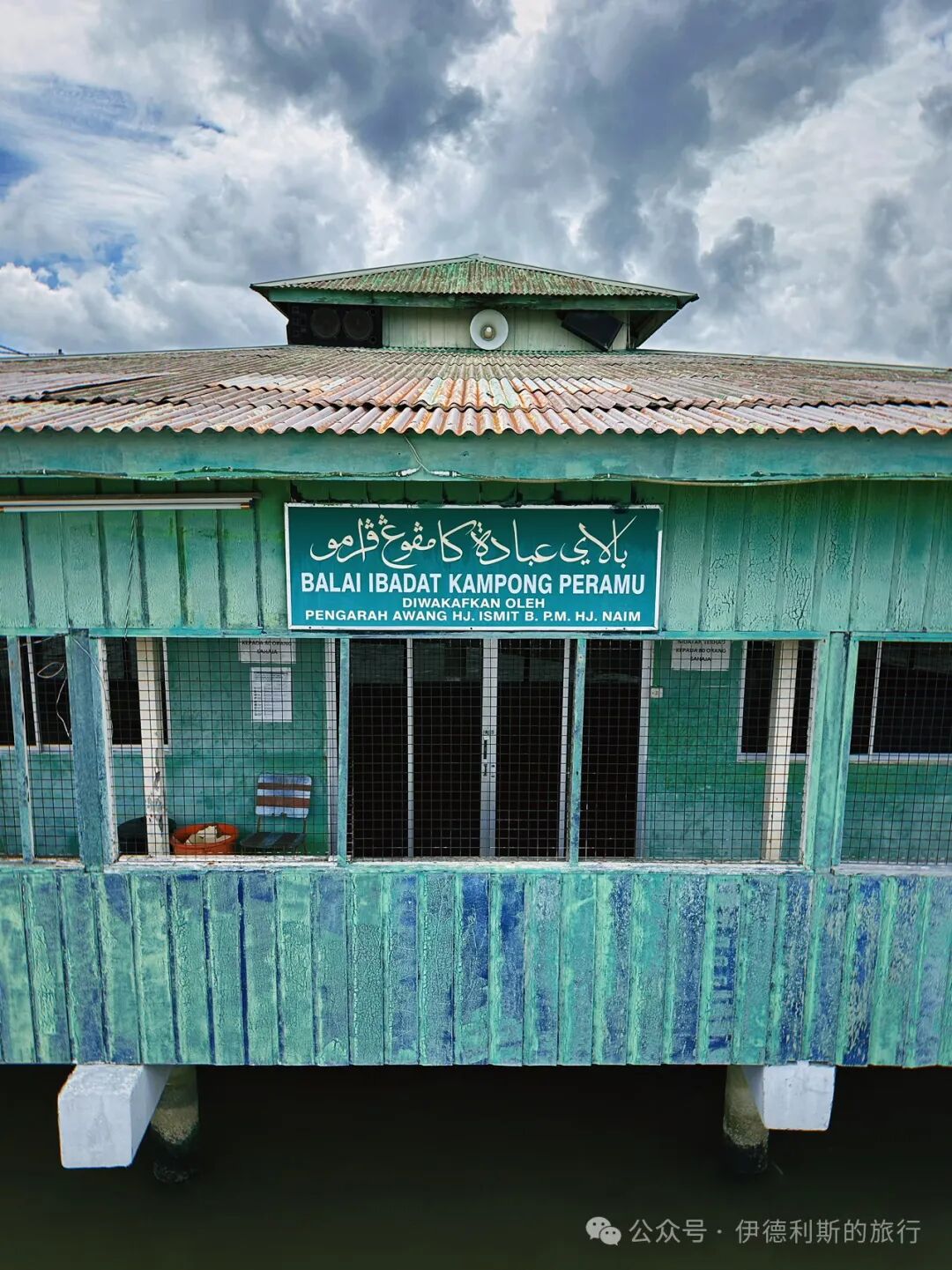
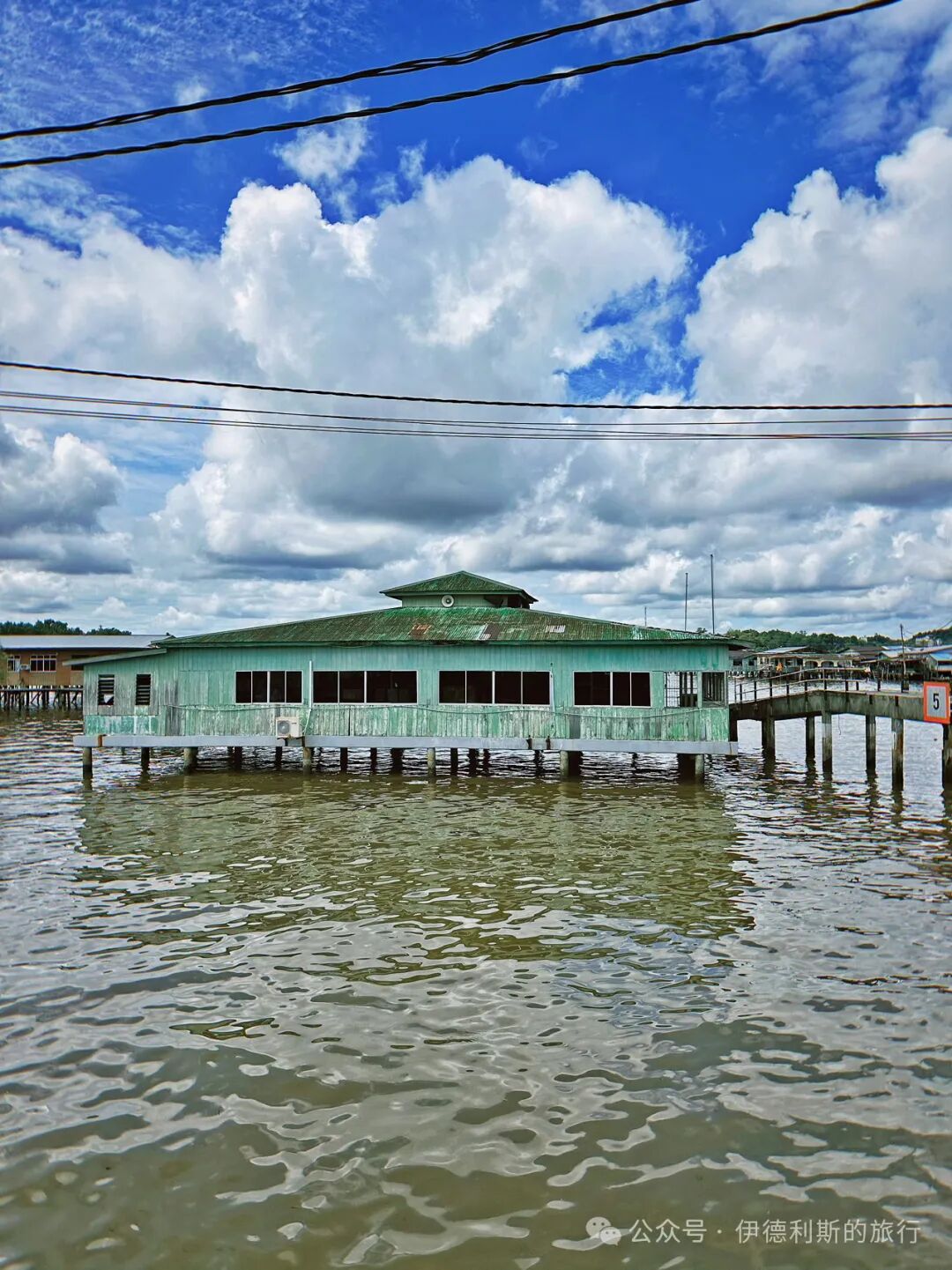
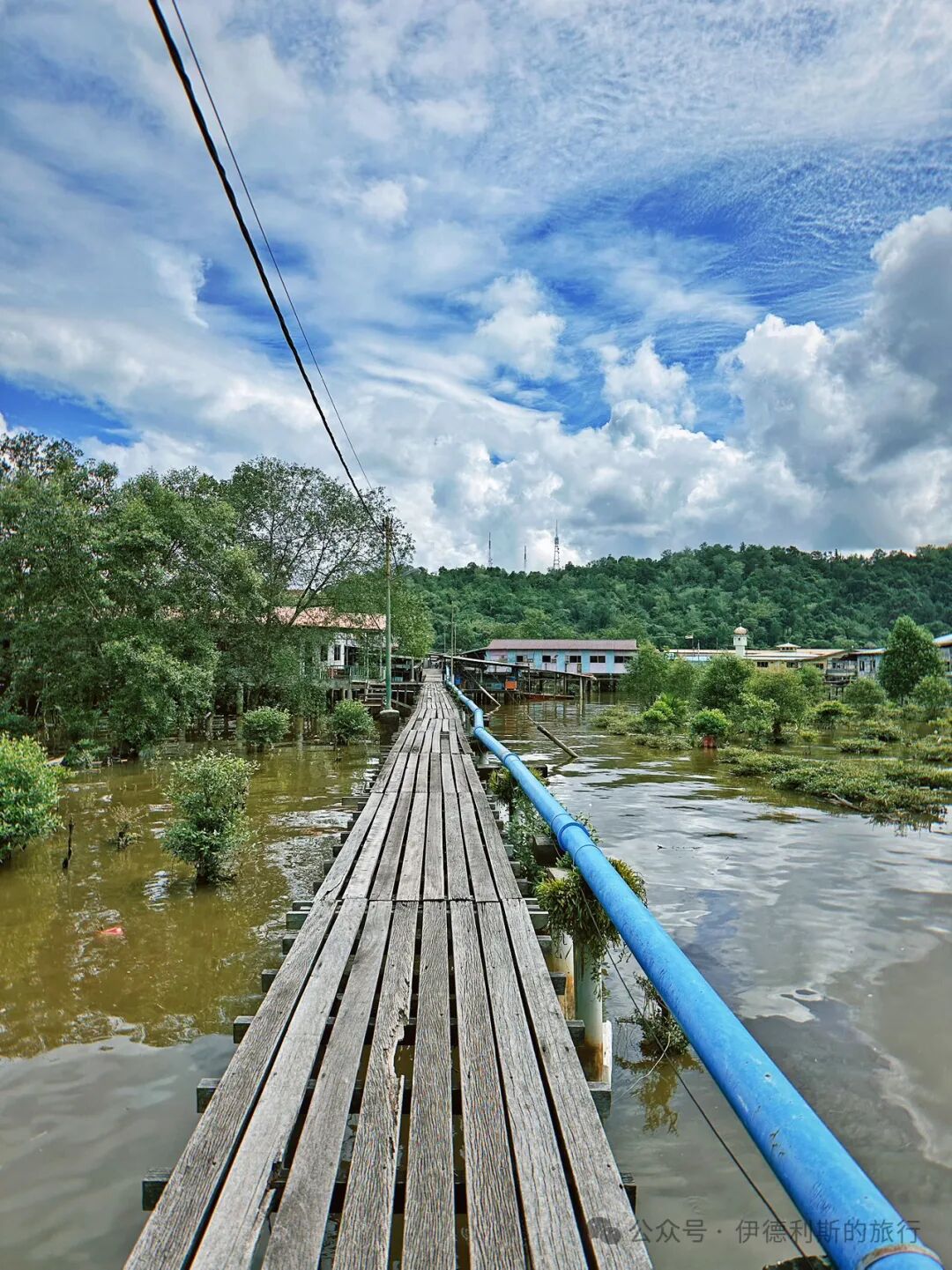
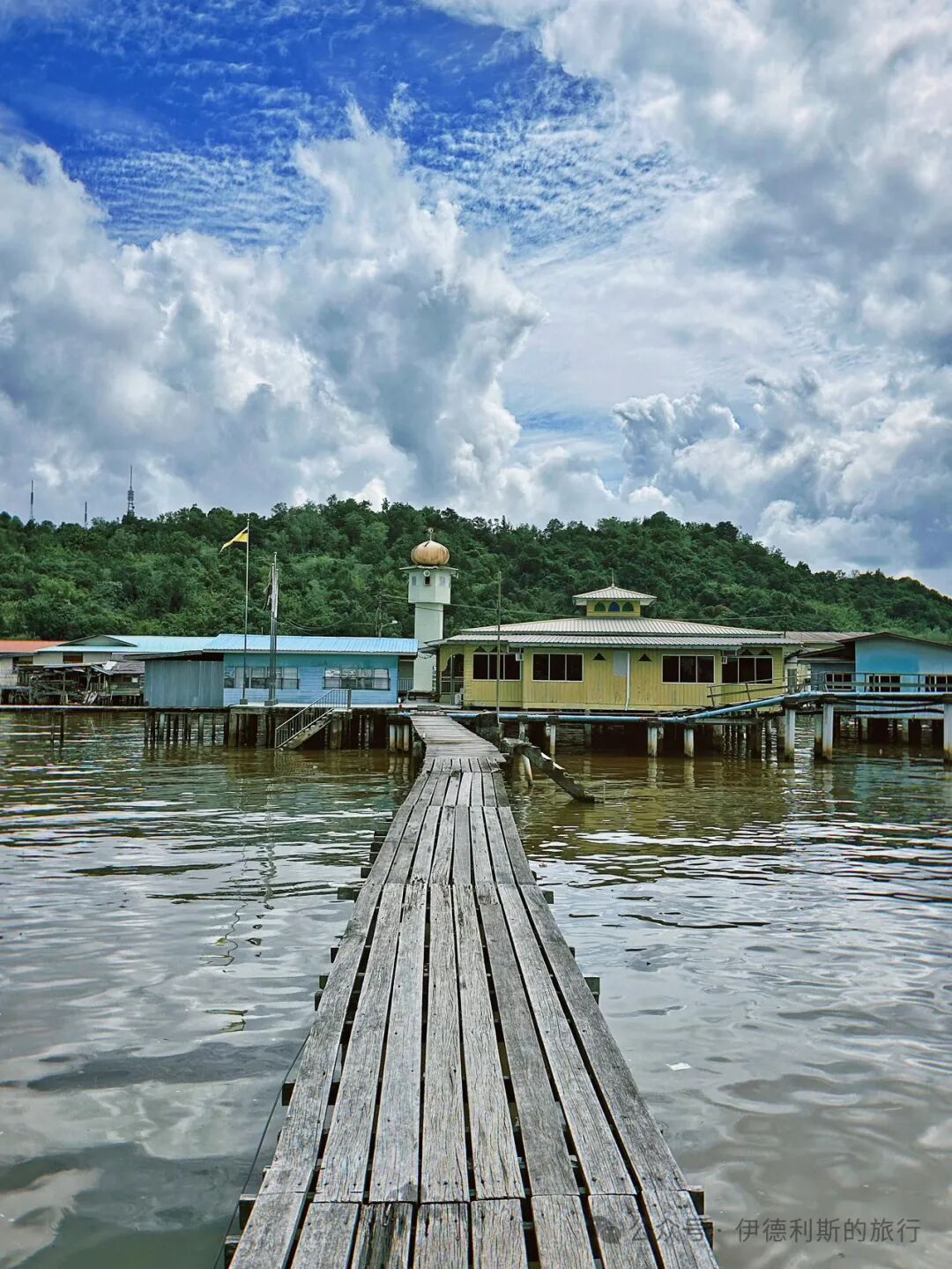
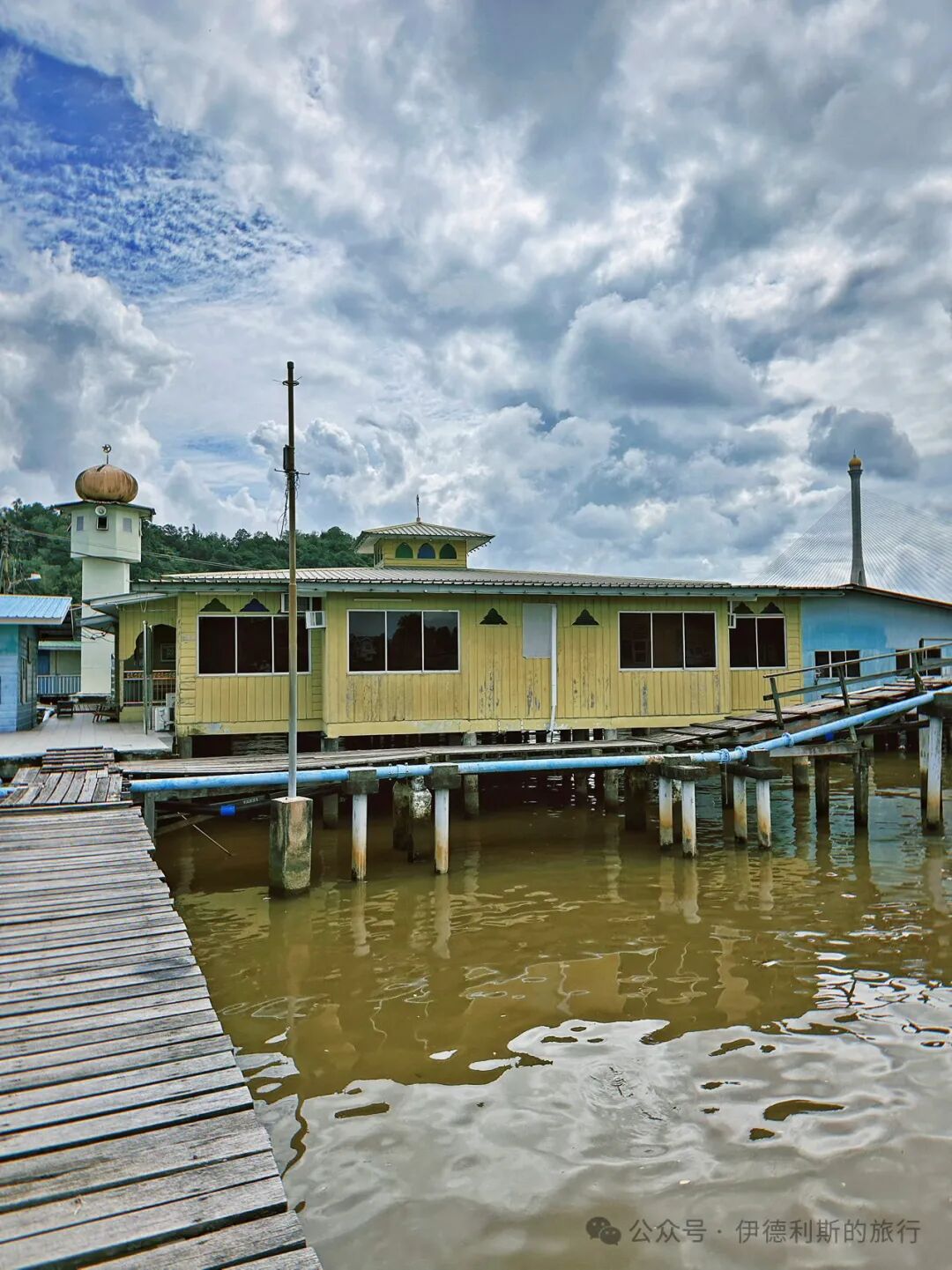
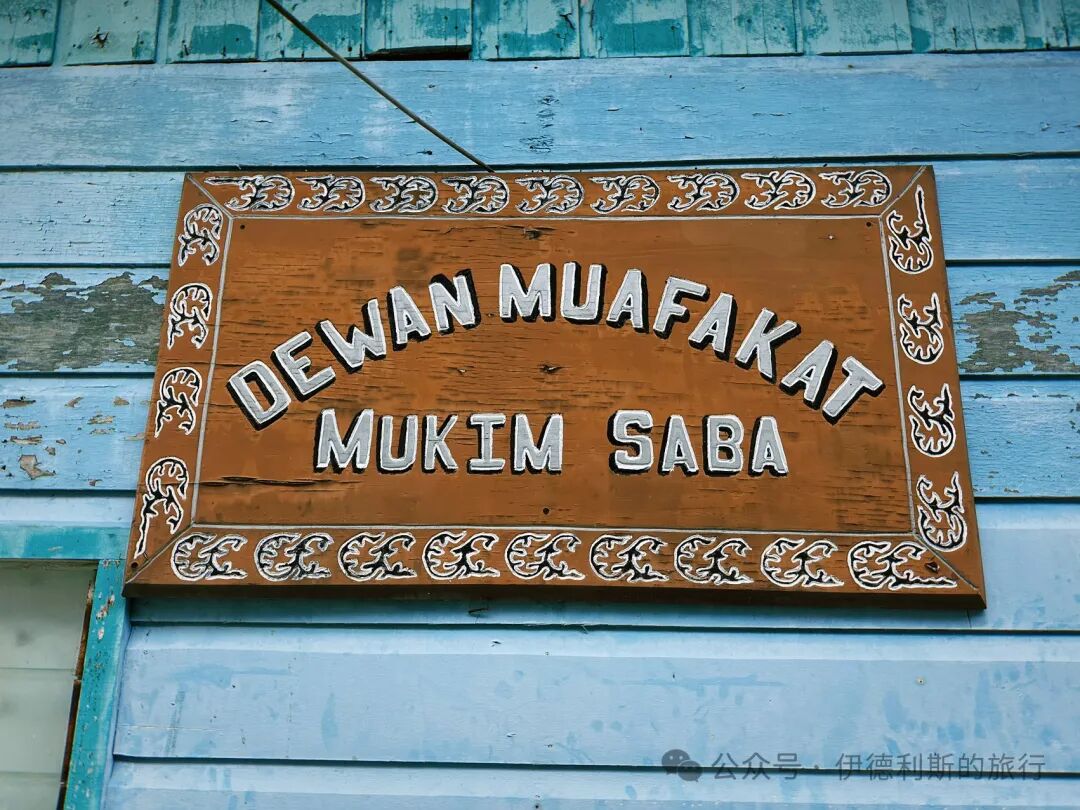
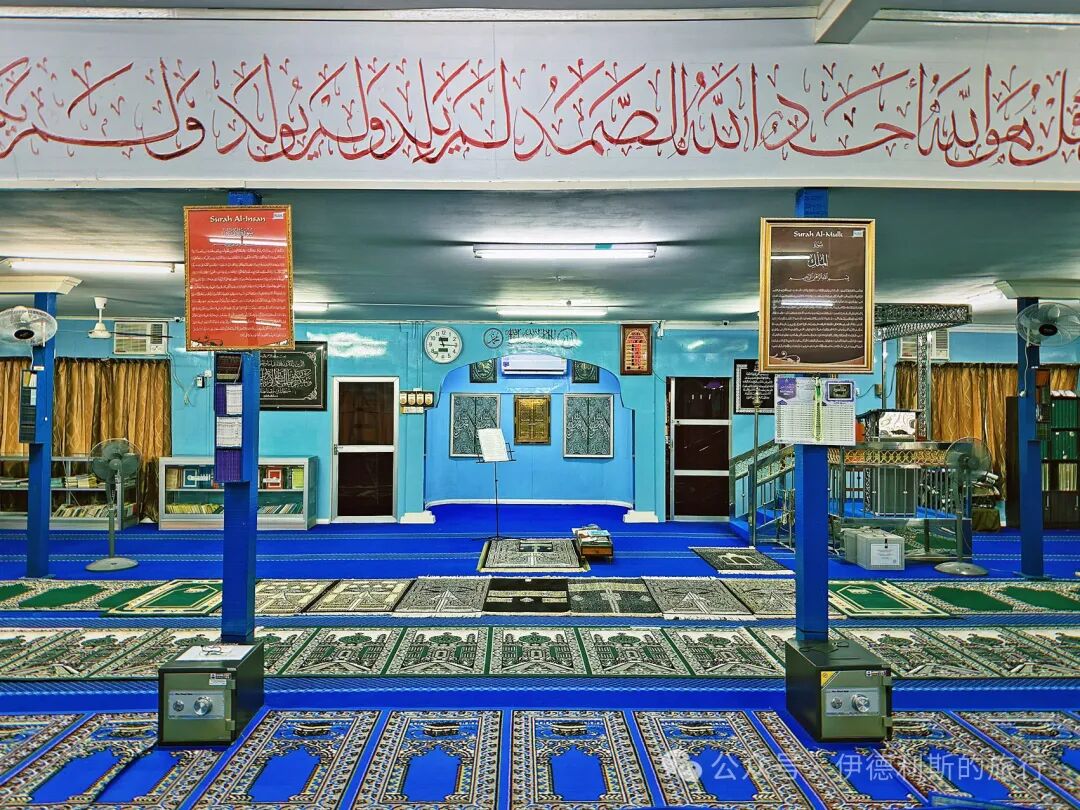
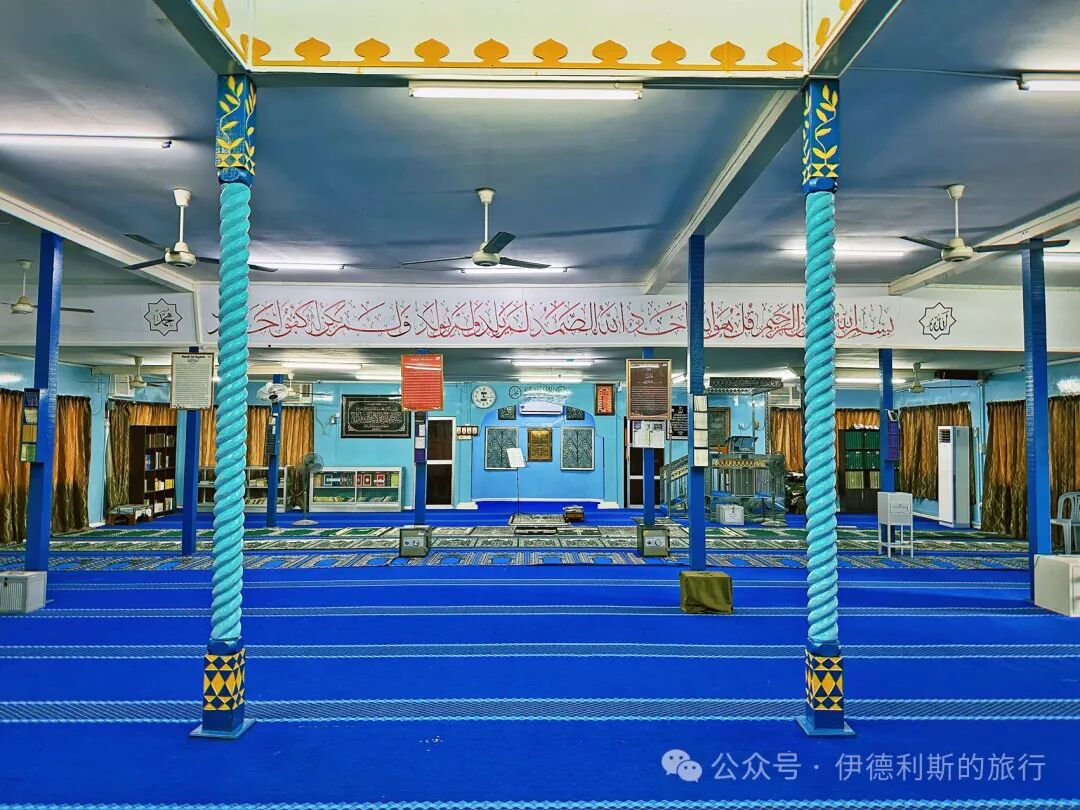
The water village has its own scenery, with small restaurants and convenience stores, though it is usually quite quiet.
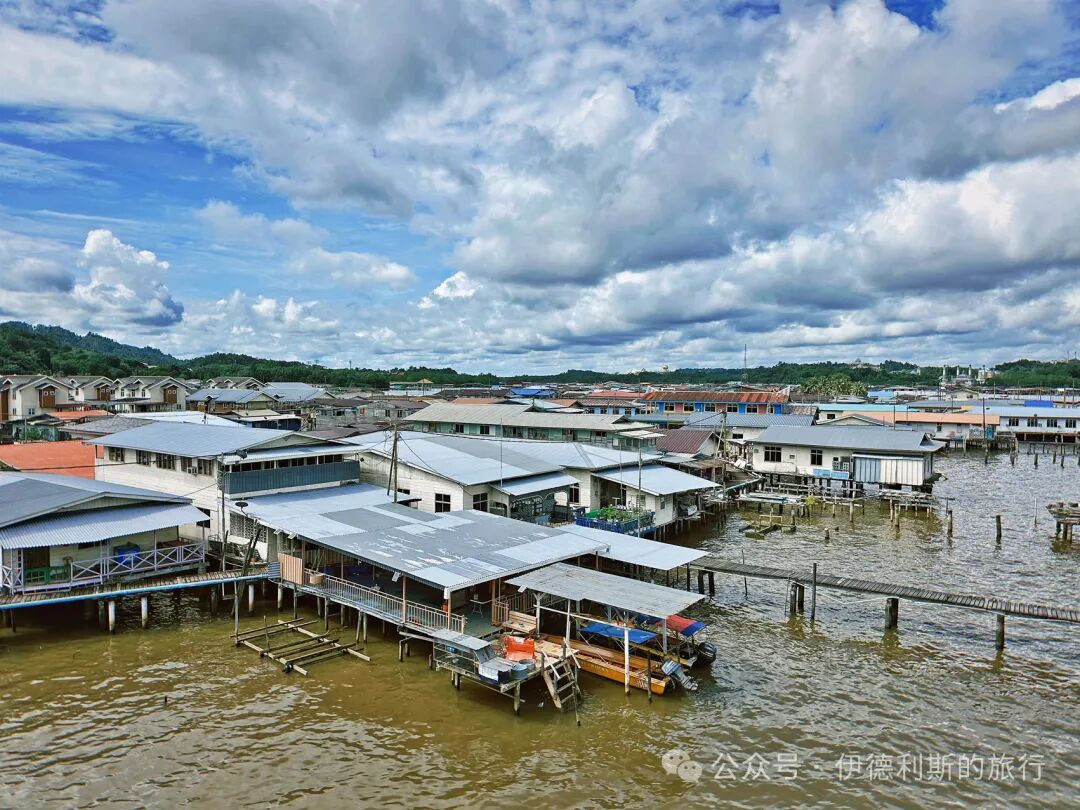
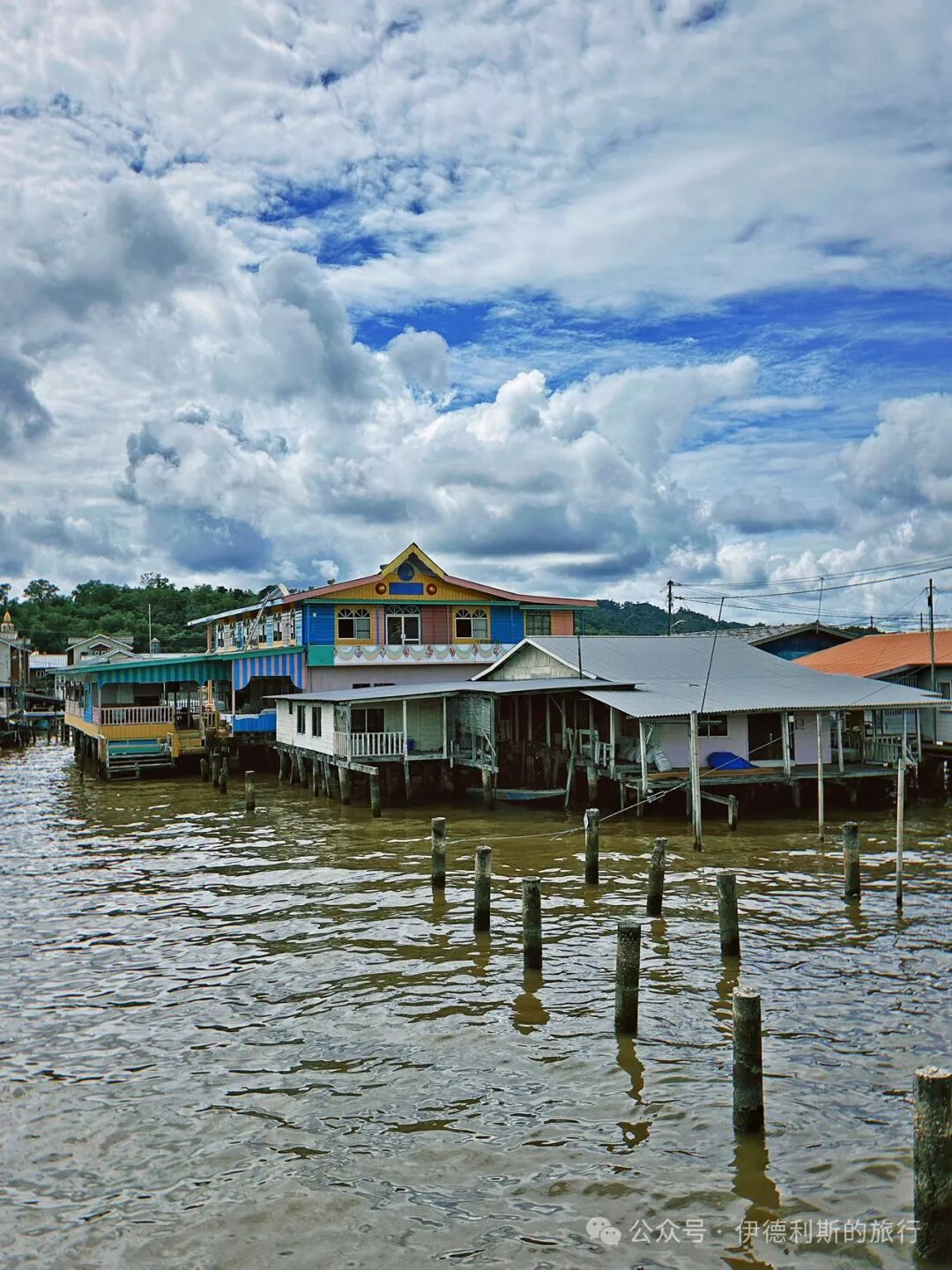
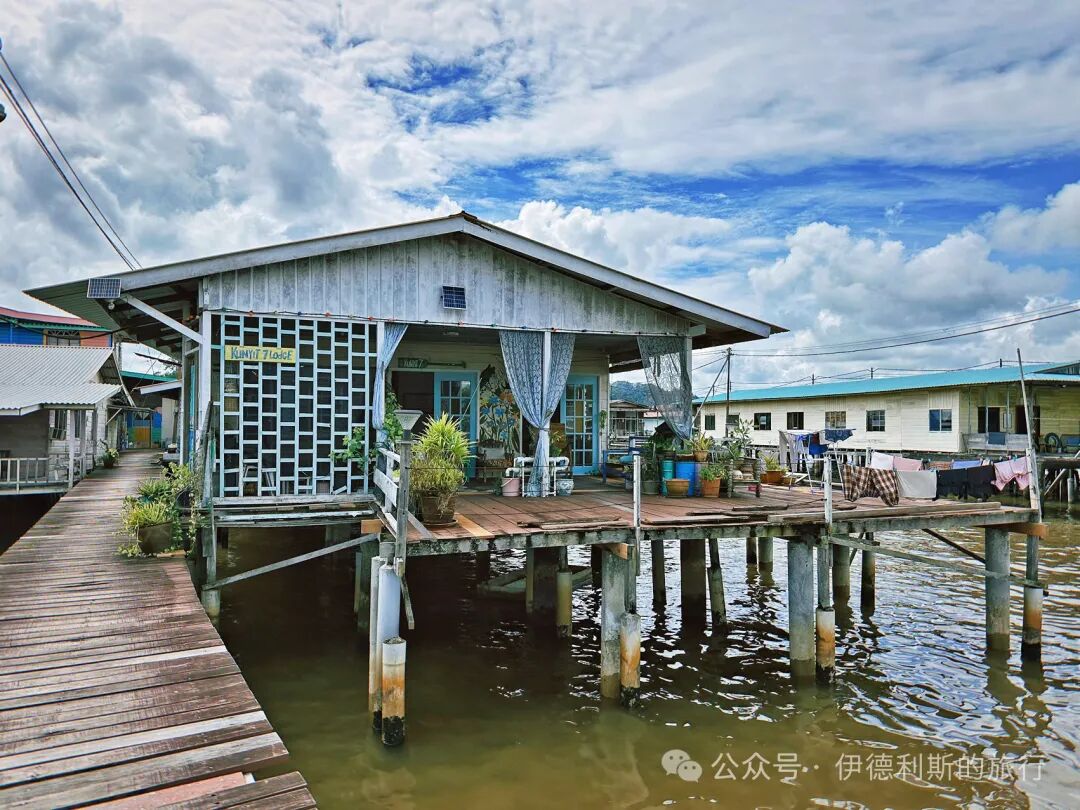
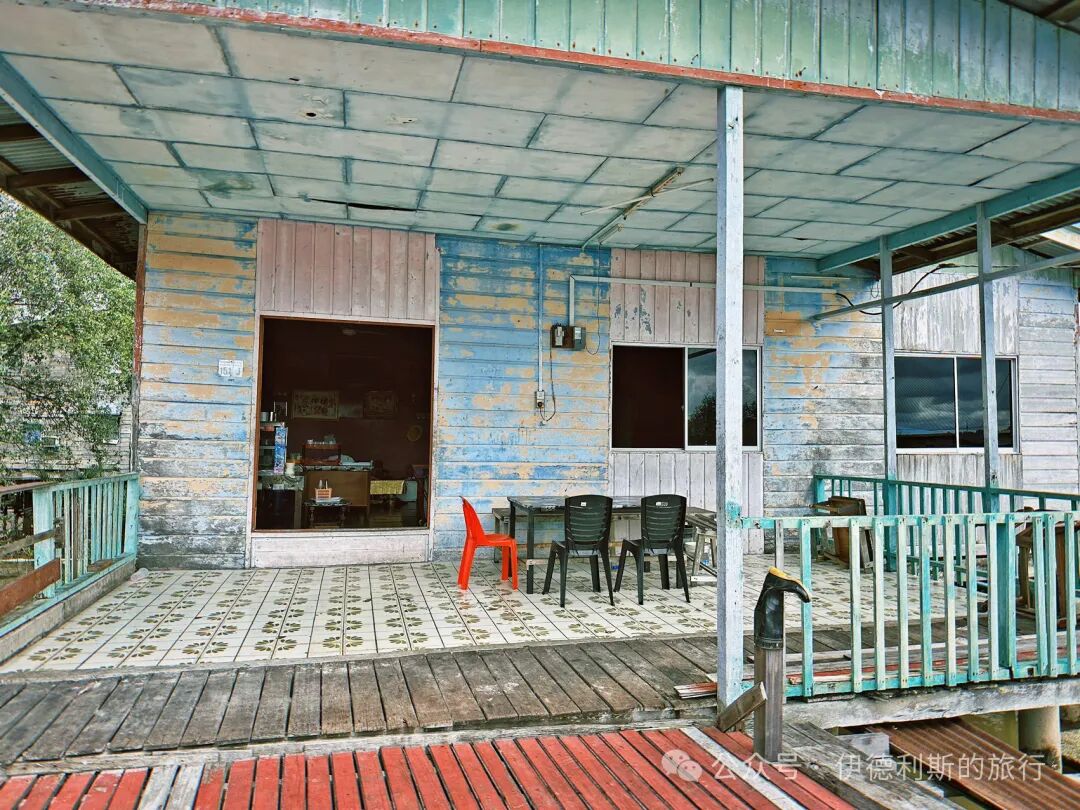
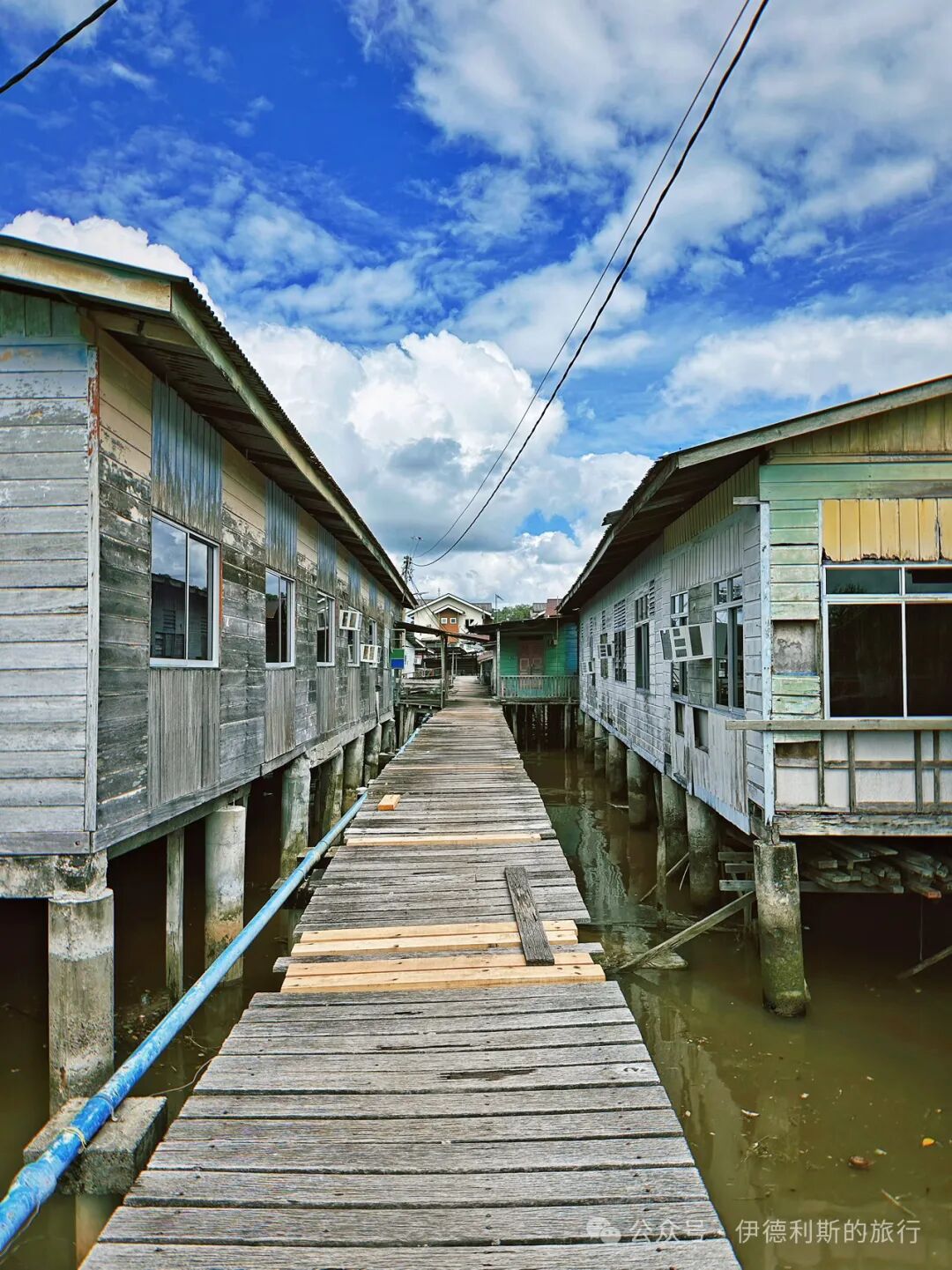
Halal Travel Guide: Brunei Part 2 — Water Village Homes, Museums & Malay History
Articles • ali2007fr posted the article • 0 comments • 241 views • 2026-05-19 23:57
Summary: This second part of the Brunei history and culture journey moves through water village homes, museums, and sites tied to Malay and Muslim life. The article keeps the original place names, photos, and historical details while presenting Brunei in simple English.
Tomb of the 16th Sultan of Brunei
Take a speedboat west from the Brunei River to reach Luba Island, hidden by mangroves. It holds the tomb of the 16th Sultan of Brunei, Hussin Kamaluddin, who reigned from 1710 to 1730 and again from 1737 to 1740. Sultan Hussin Kamaluddin survived the Brunei civil war as a child. He was a pious, studious, and hardworking man. Under his rule, Brunei was prosperous and food was plentiful. Legend says the Sultan liked to fish with locals along the upper banks of the Brunei River, especially near his tomb on Luba Island.
Old Town of Brunei Town
Until the early 20th century, the capital of Brunei was the water village of Kampong Ayer on the Brunei River. In 1906, British Resident Malcolm MacArthur began guiding residents to settle on land. In 1910, Chinese people first began building shops on the north bank of the Brunei River, and Brunei Town began to take shape. In 1922, the reigning Sultan Muhammad Jamalul Alam II decided to move his palace inland to Brunei Town. This move encouraged many water village residents to accept resettlement, and the city grew quickly.
In 1945, Brunei Town was almost leveled by Allied bombing, followed by large-scale reconstruction in the 1950s and 1960s. After 1963, economic growth from oil and gas led to a rapid increase in Chinese immigrants to Brunei Town, who opened many shops. In 1970, Brunei Town was officially renamed Bandar Seri Begawan.
The Sungai Kianggeh River is on the east side of the old town. Residents of Kampong Ayer can boat directly up the river to the Kianggeh market to buy various farm products. This is also one of the resettlement points for water village residents after they come ashore.
The old Royal Ceremonial Hall (Lapau Lama) in the old town was built in 1950. It now displays the scene of the 1959 Brunei Constitution signing, including the original chandeliers, tables, chairs, and the microphone used by the Sultan. Lapau Lama is the oldest concrete building in the old town, with an interior that blends pragmatism and minimalism.
Next to the old Royal Ceremonial Hall is the Royal Regalia Museum. It houses two royal chariots: one used for the Sultan's coronation in 1968 and Queen Elizabeth II's visit in 1972, and another used for the Sultan's 25th anniversary of his coronation in 1992.
The Royal Regalia Museum also displays porcelain vases with Arabic calligraphy collected by the Sultan, as well as stone artifacts with Arabic calligraphy gifted by Saudi Arabia.
The Brunei International Airport mosque has an imam. It is clean, cool, and bright inside. Everyone performs namaz with great enthusiasm, and the atmosphere is wonderful.
Souvenirs bought at the Brunei airport: paper art of two Brunei national mosques. view all
Summary: This second part of the Brunei history and culture journey moves through water village homes, museums, and sites tied to Malay and Muslim life. The article keeps the original place names, photos, and historical details while presenting Brunei in simple English.
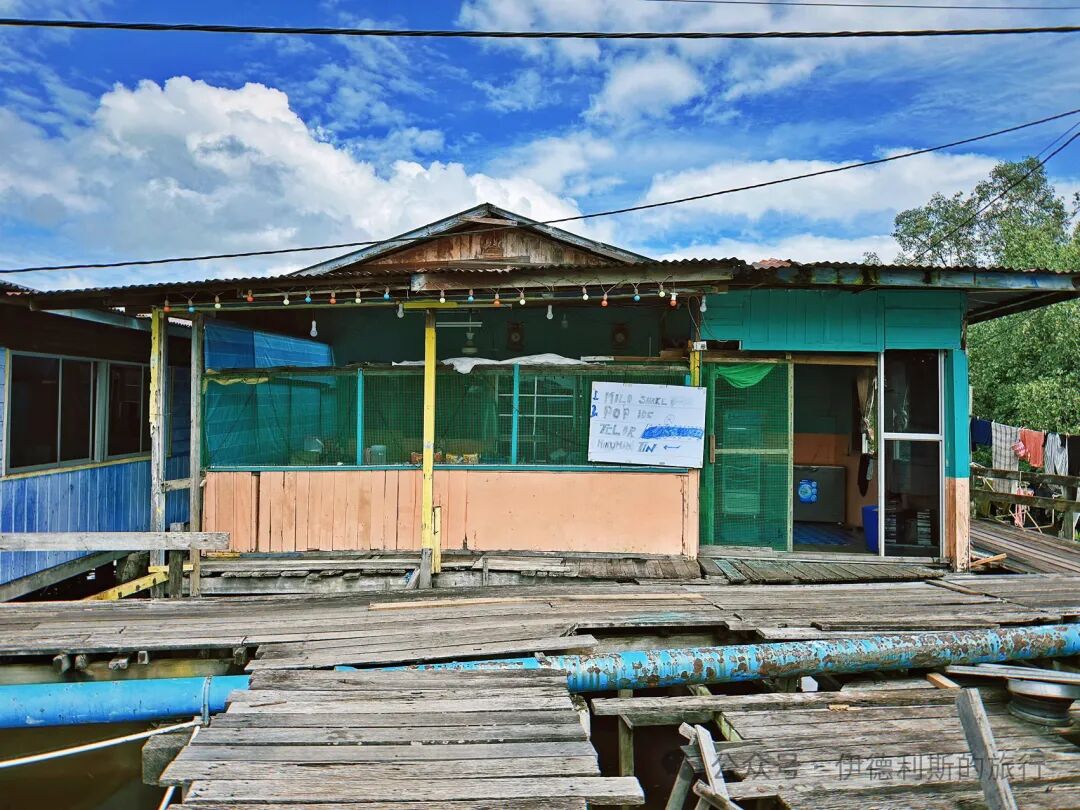
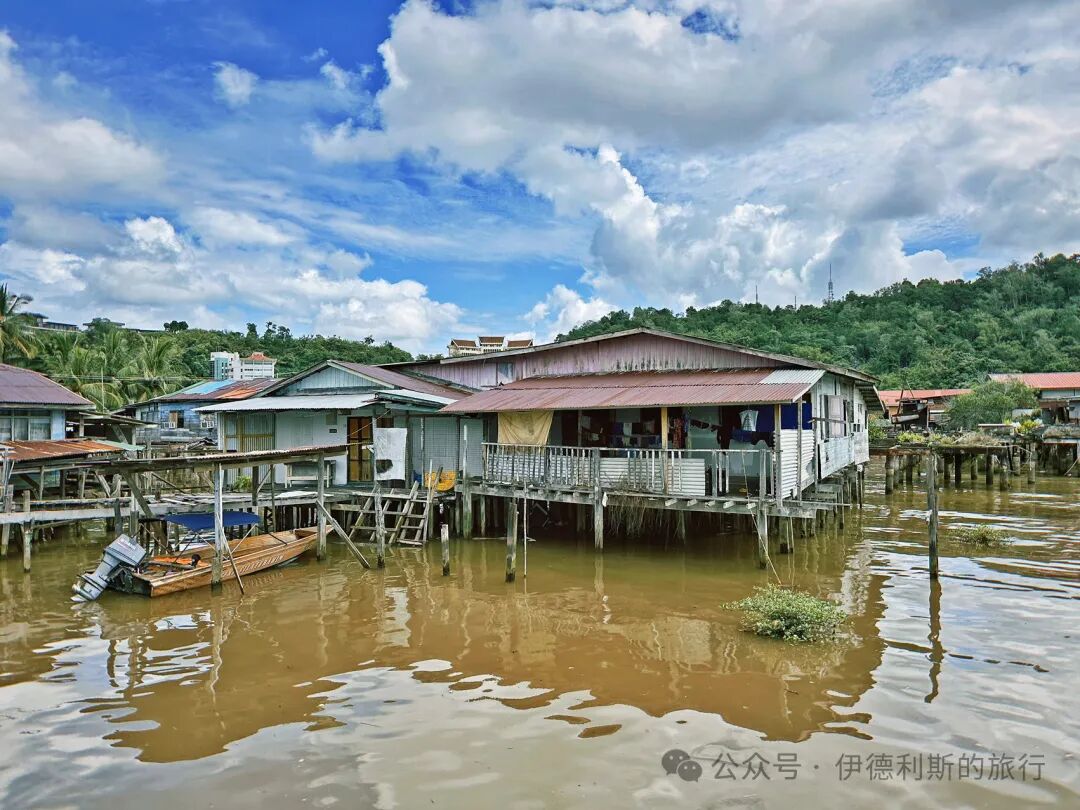
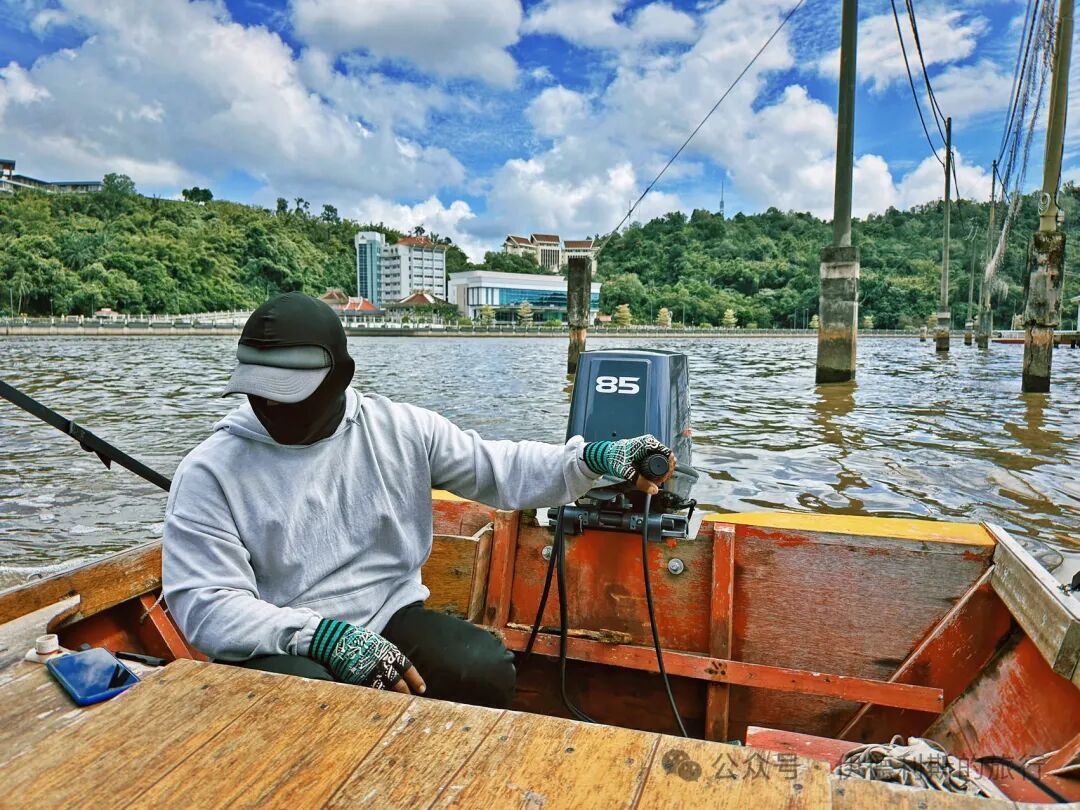
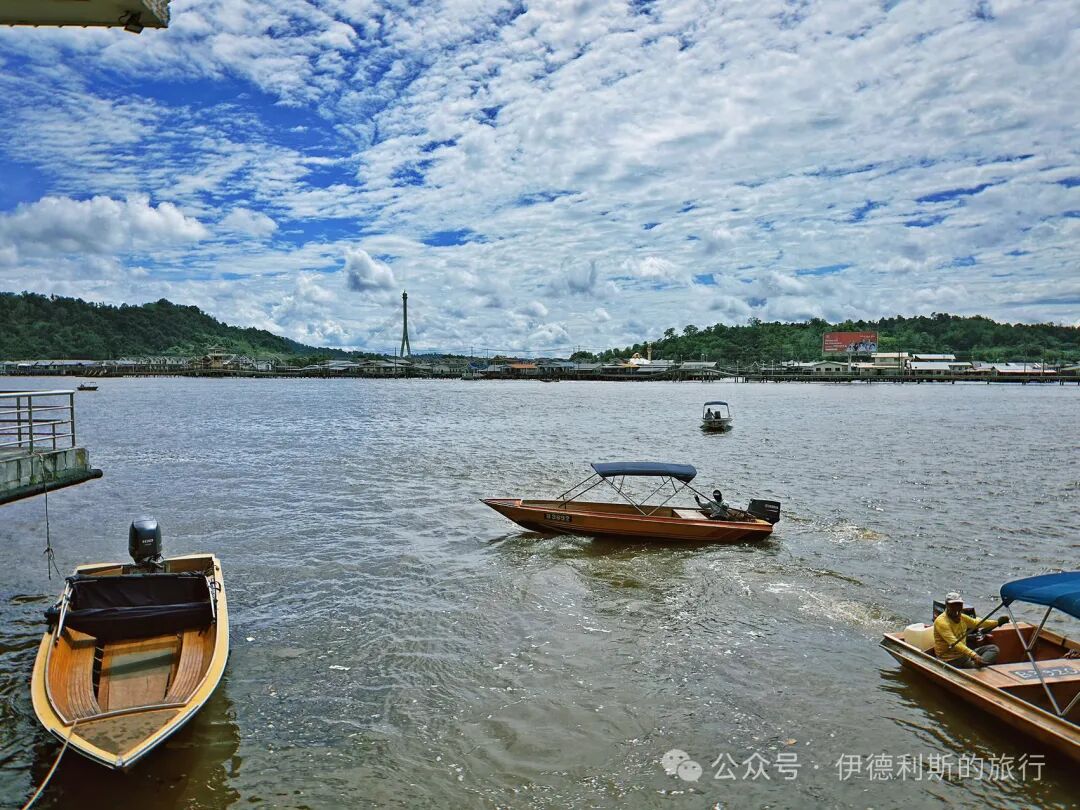
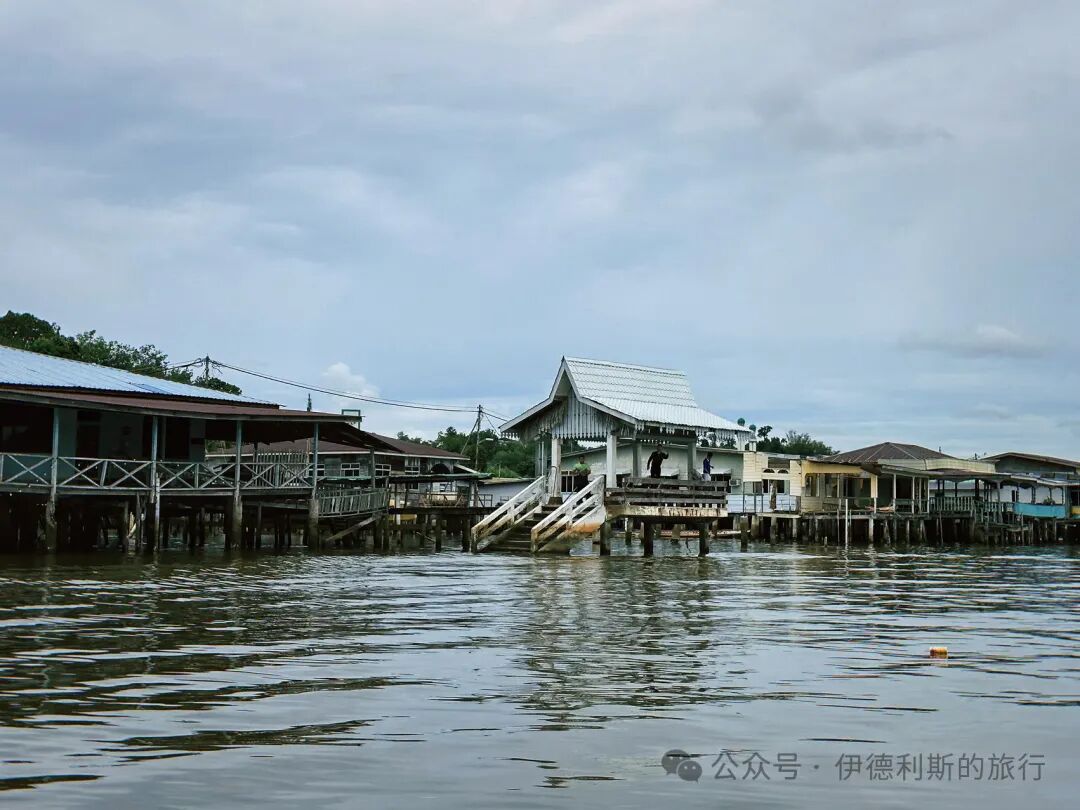
Tomb of the 16th Sultan of Brunei
Take a speedboat west from the Brunei River to reach Luba Island, hidden by mangroves. It holds the tomb of the 16th Sultan of Brunei, Hussin Kamaluddin, who reigned from 1710 to 1730 and again from 1737 to 1740. Sultan Hussin Kamaluddin survived the Brunei civil war as a child. He was a pious, studious, and hardworking man. Under his rule, Brunei was prosperous and food was plentiful. Legend says the Sultan liked to fish with locals along the upper banks of the Brunei River, especially near his tomb on Luba Island.
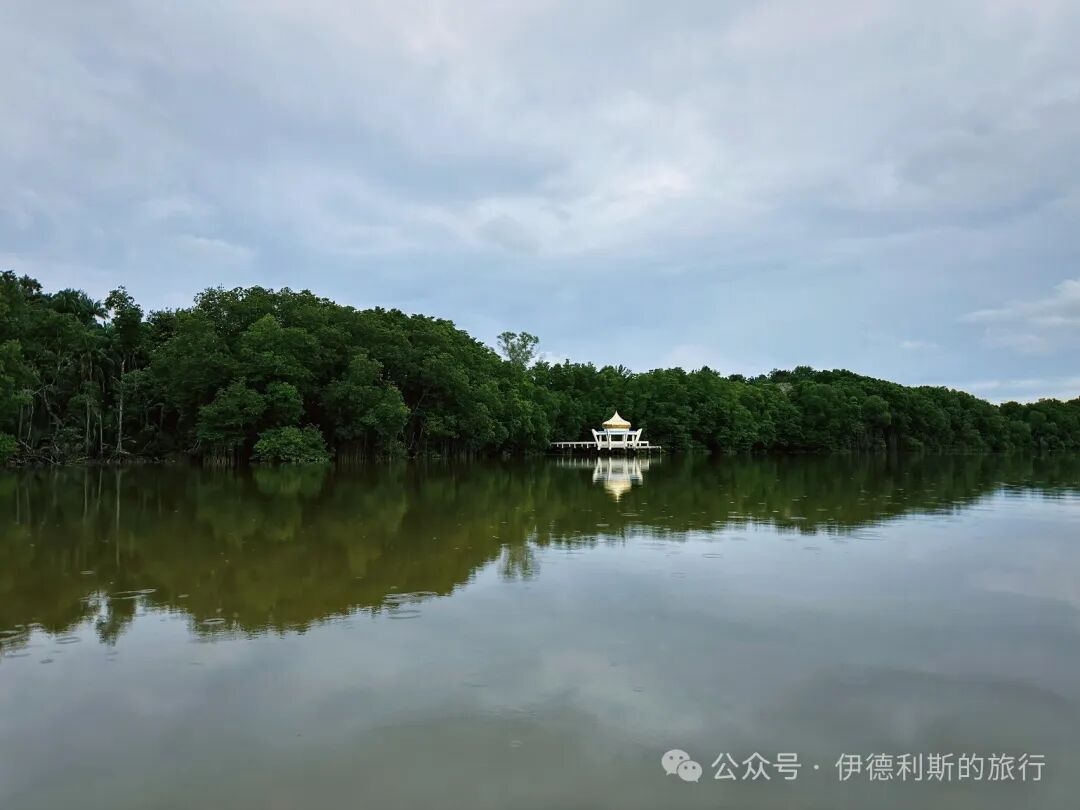
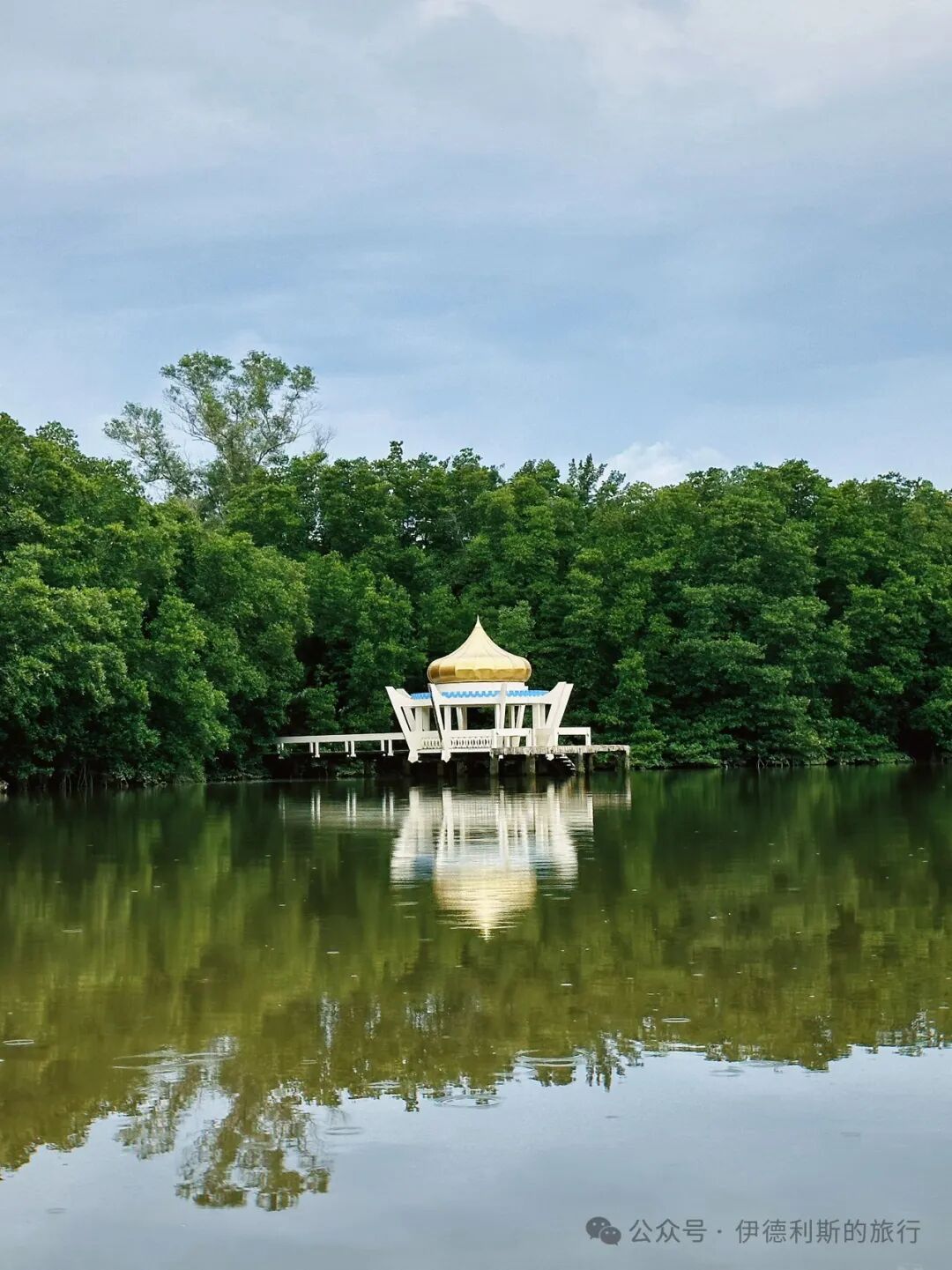
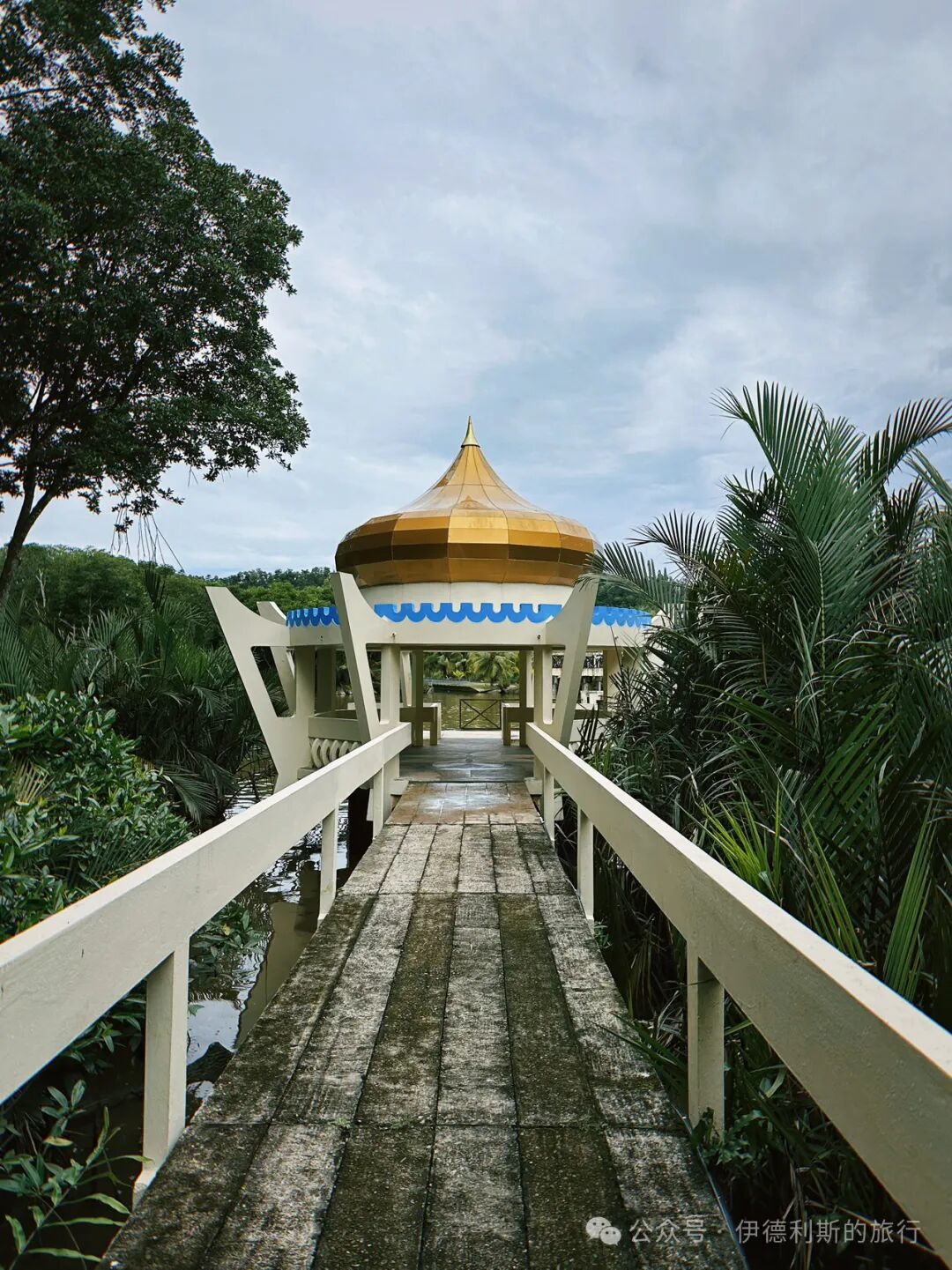
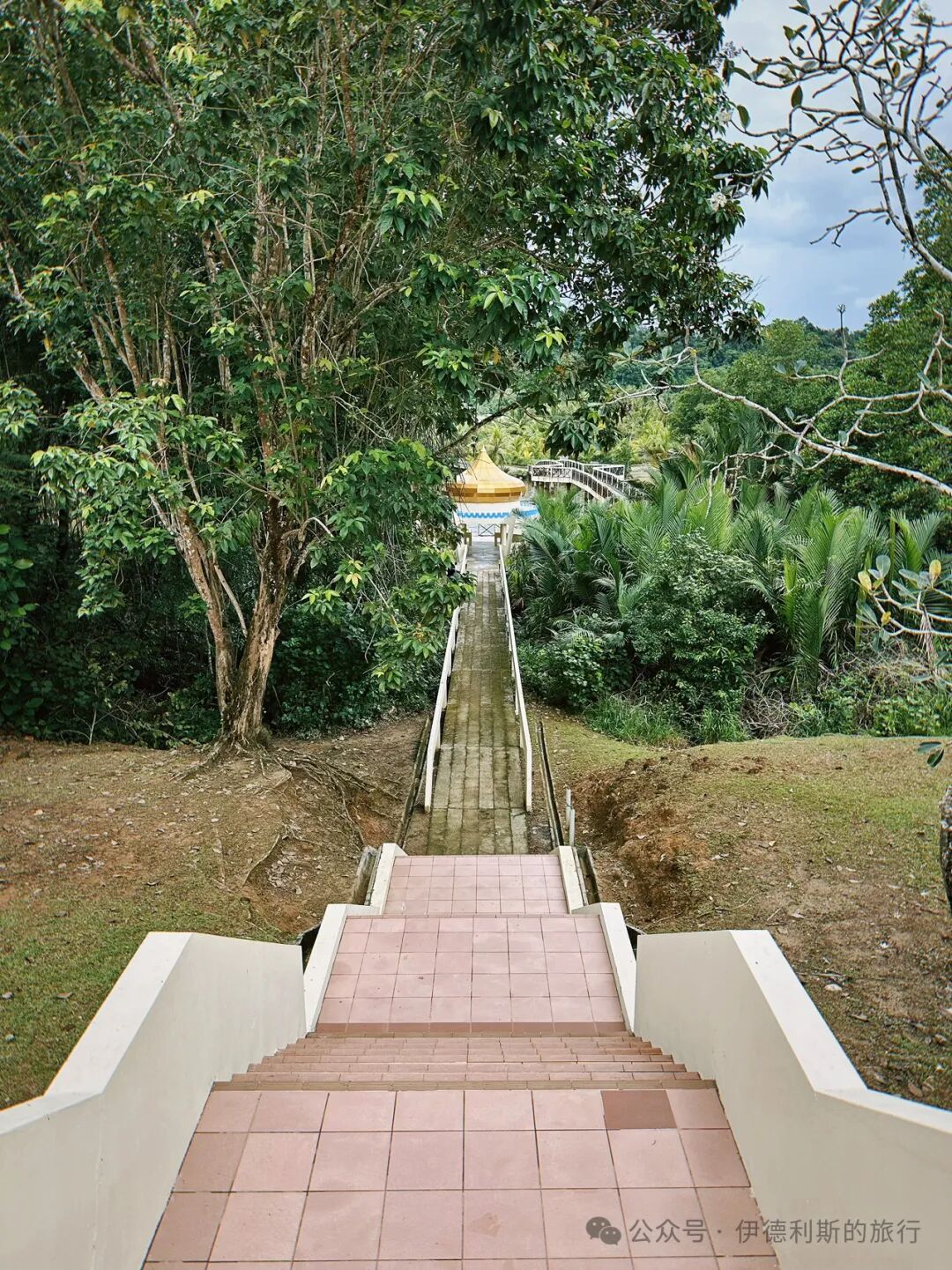
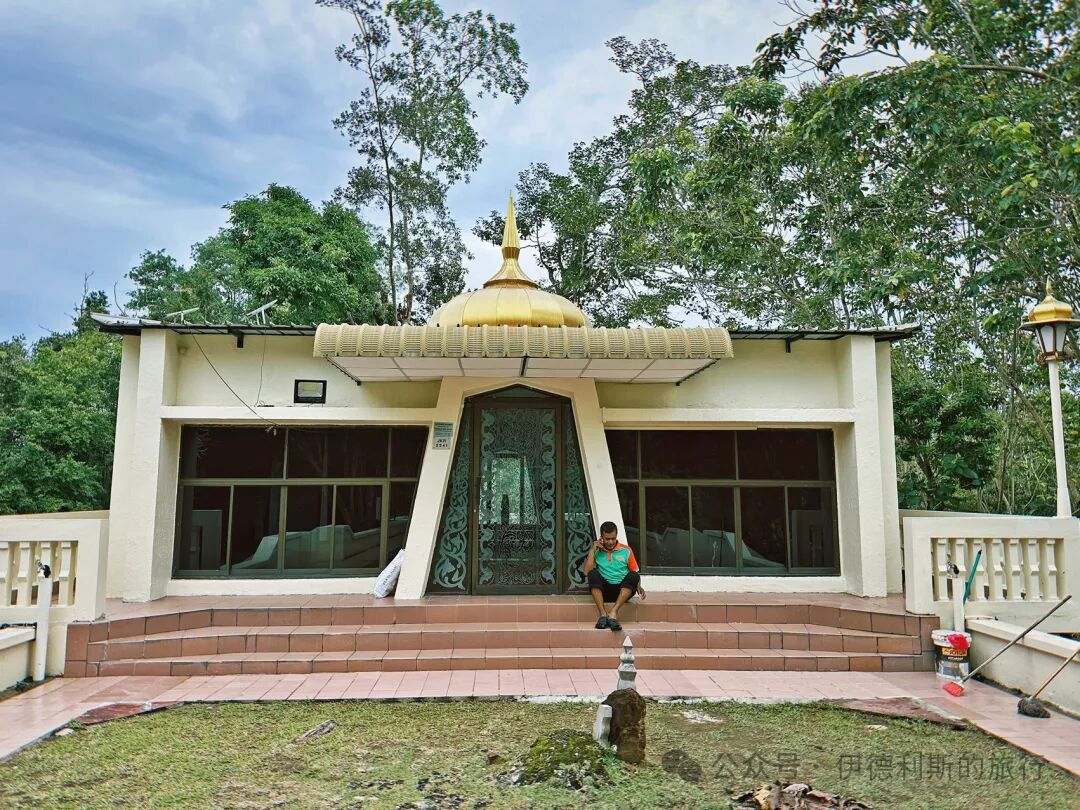
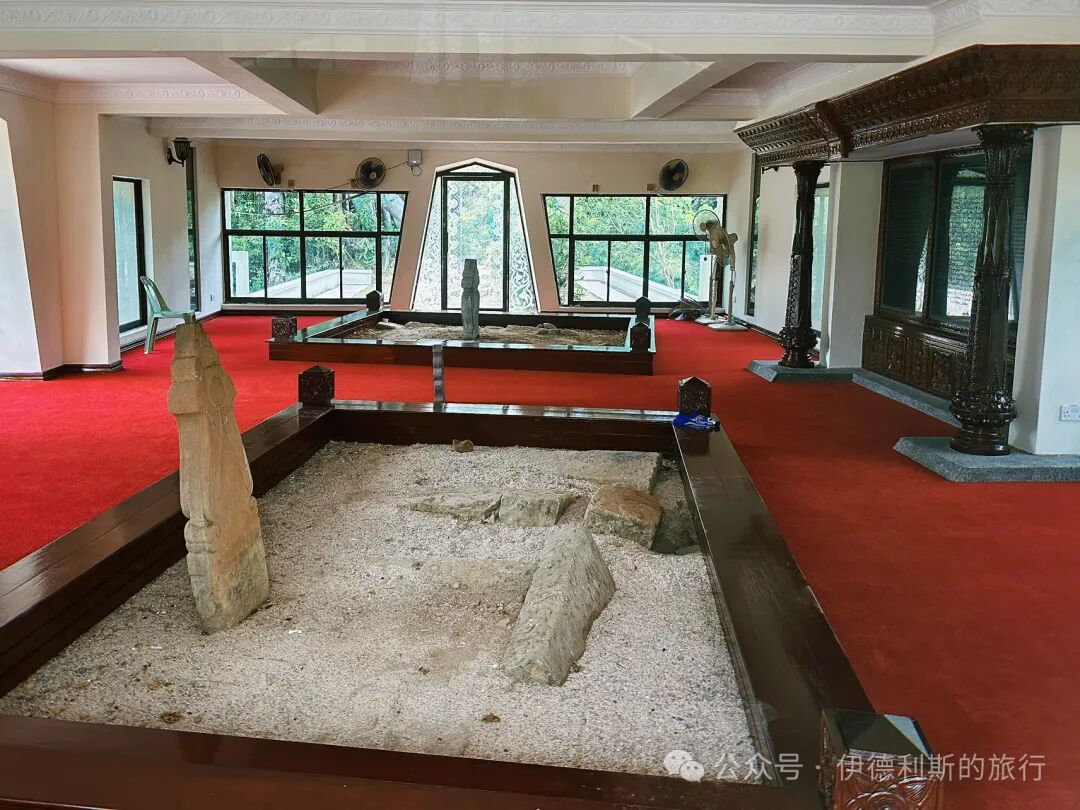
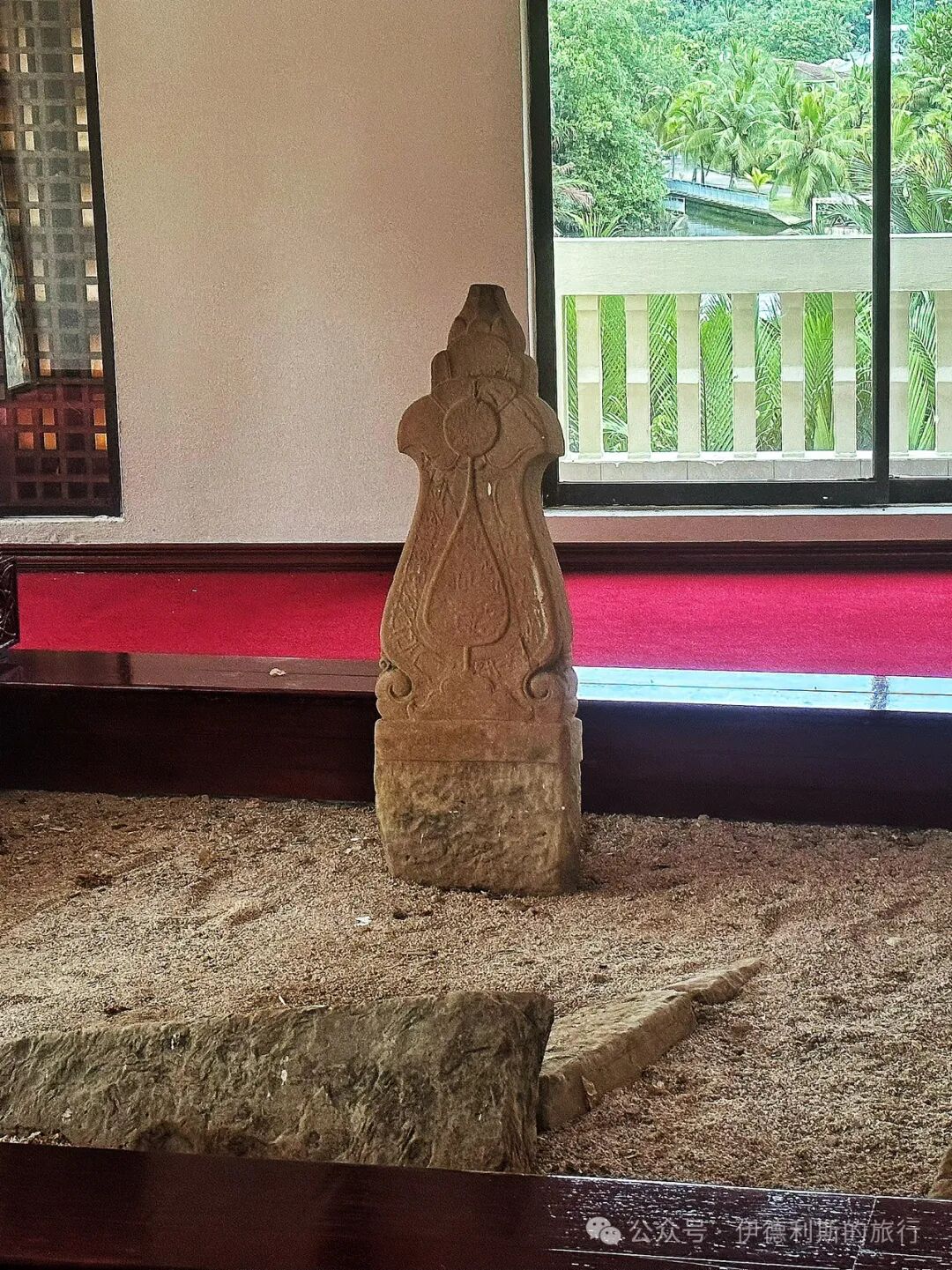
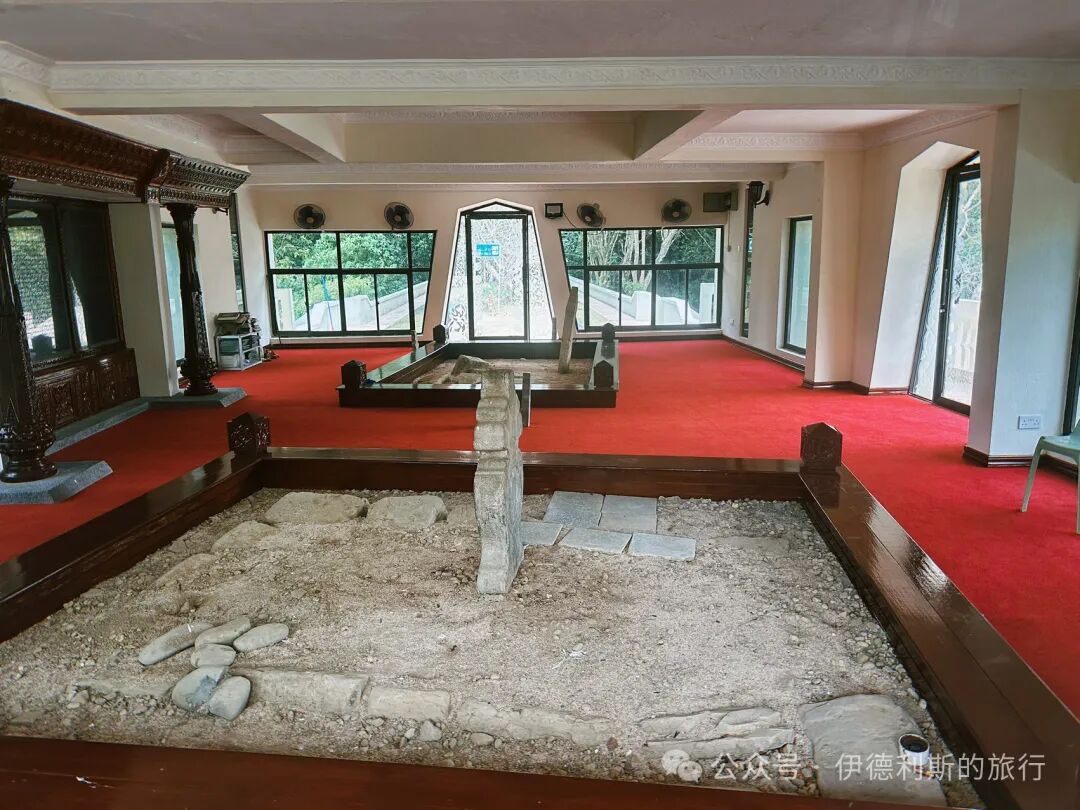
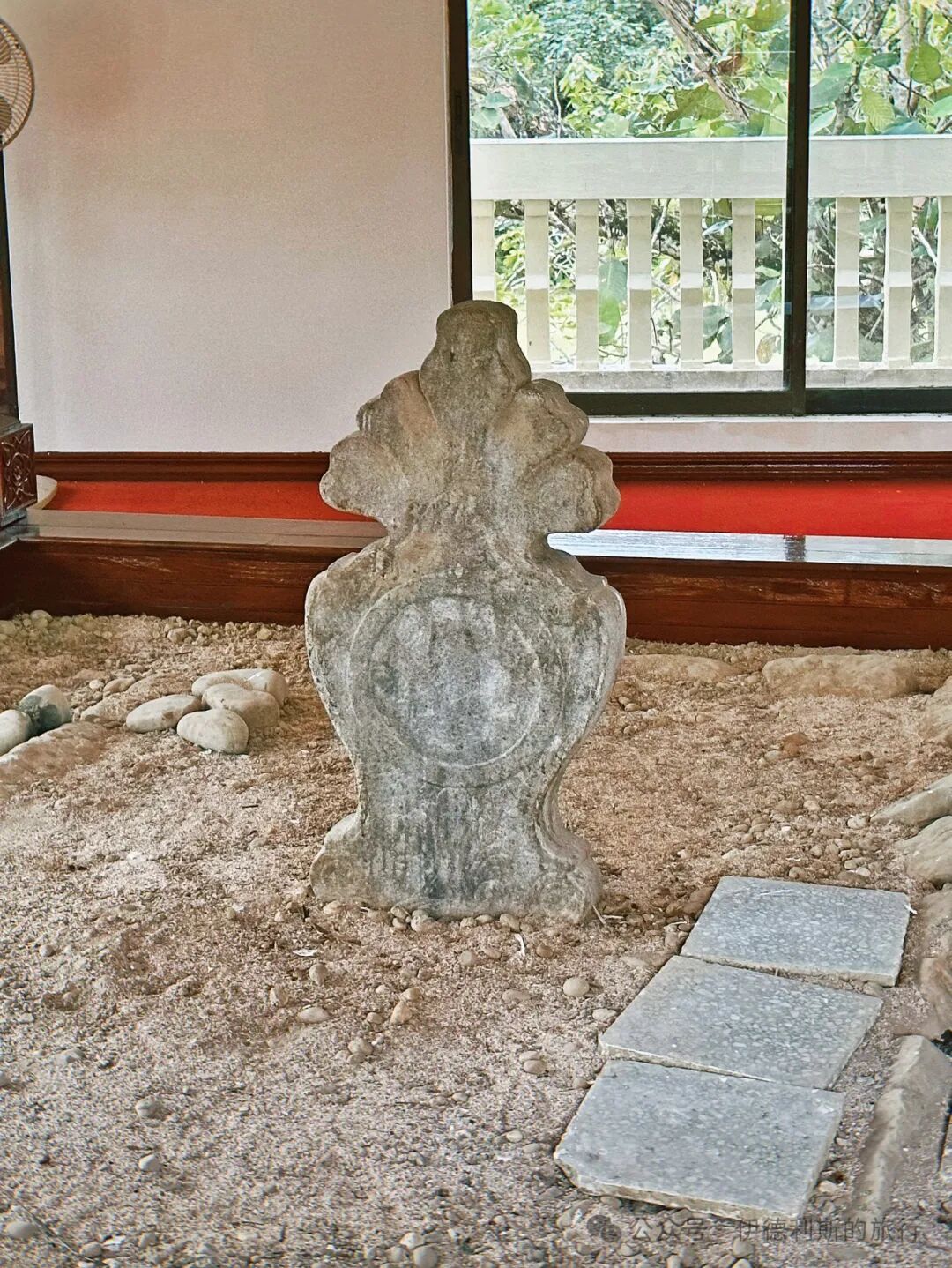
Old Town of Brunei Town
Until the early 20th century, the capital of Brunei was the water village of Kampong Ayer on the Brunei River. In 1906, British Resident Malcolm MacArthur began guiding residents to settle on land. In 1910, Chinese people first began building shops on the north bank of the Brunei River, and Brunei Town began to take shape. In 1922, the reigning Sultan Muhammad Jamalul Alam II decided to move his palace inland to Brunei Town. This move encouraged many water village residents to accept resettlement, and the city grew quickly.
In 1945, Brunei Town was almost leveled by Allied bombing, followed by large-scale reconstruction in the 1950s and 1960s. After 1963, economic growth from oil and gas led to a rapid increase in Chinese immigrants to Brunei Town, who opened many shops. In 1970, Brunei Town was officially renamed Bandar Seri Begawan.
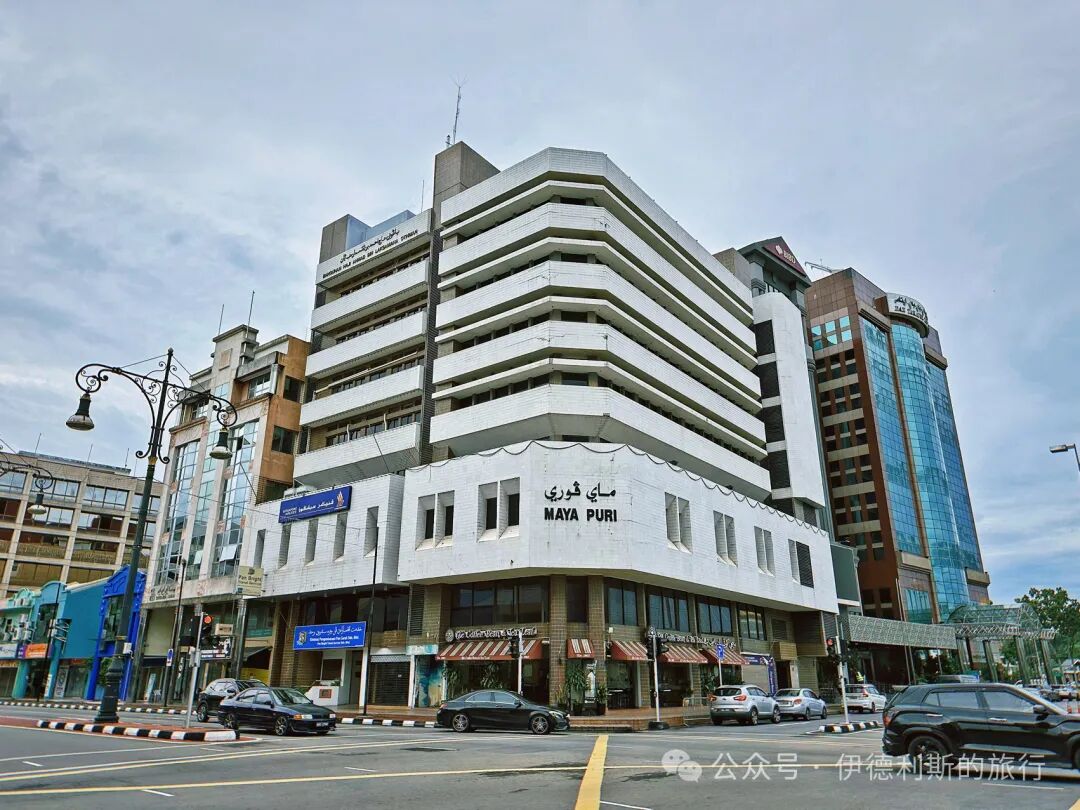
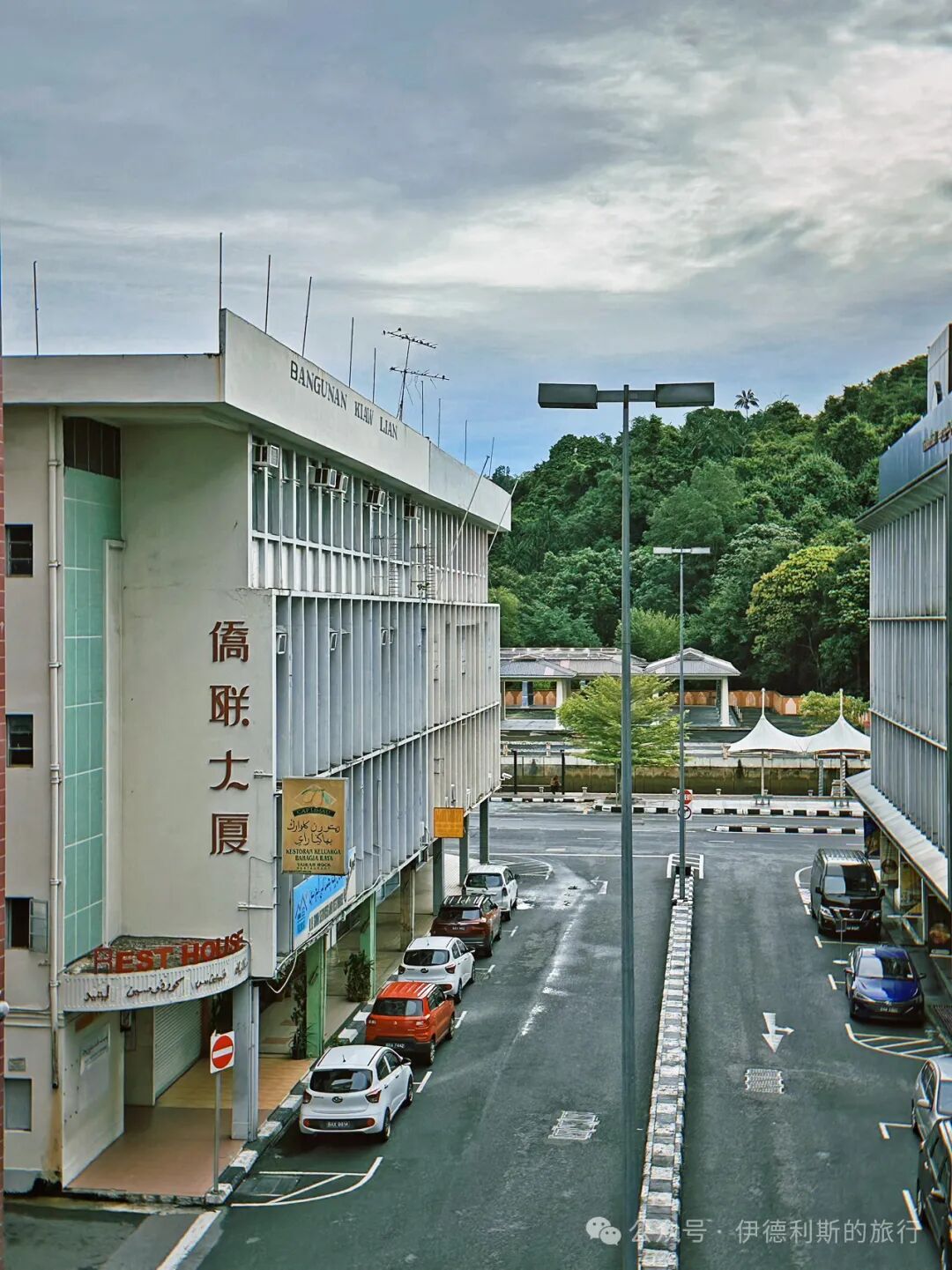
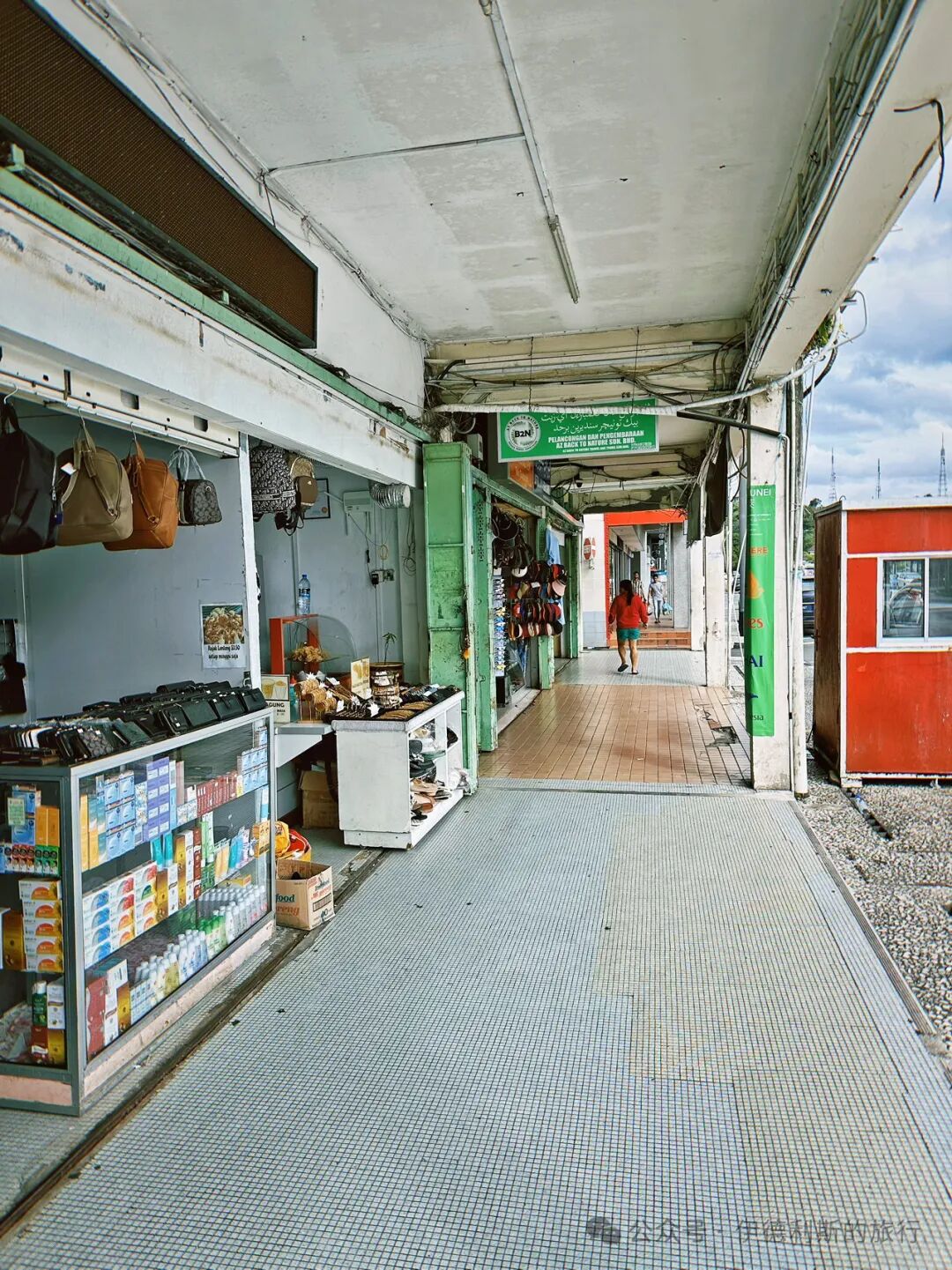
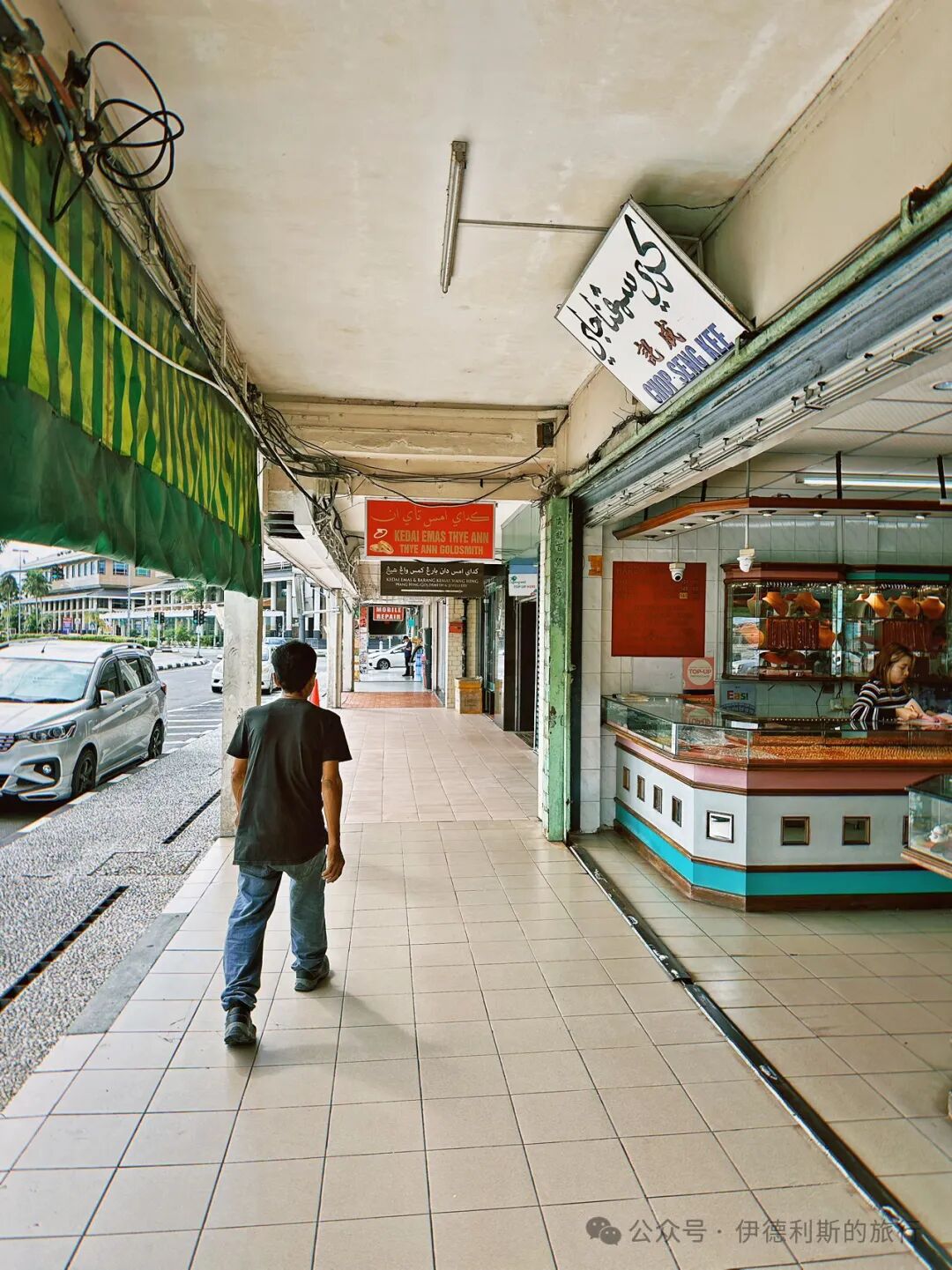
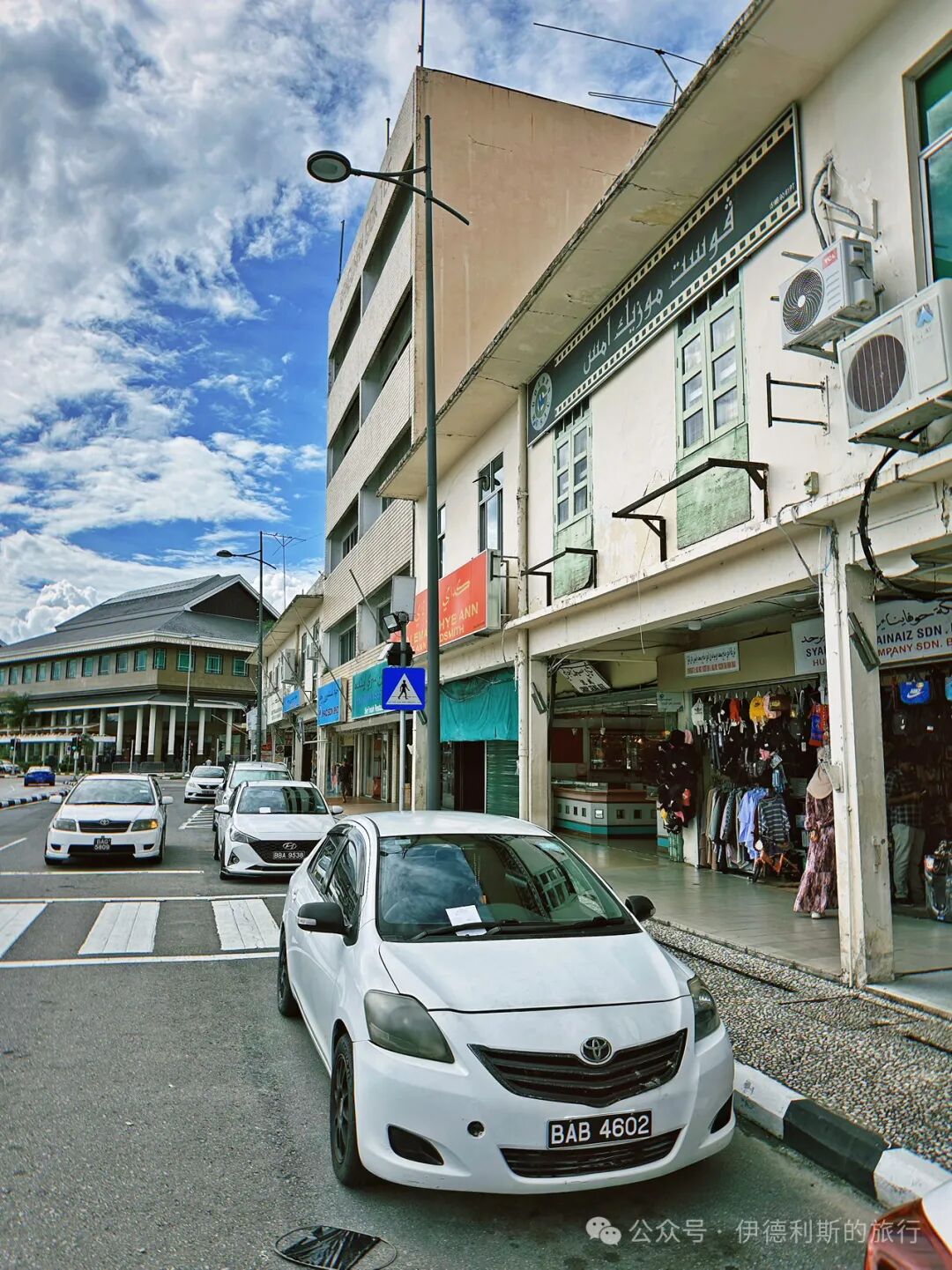
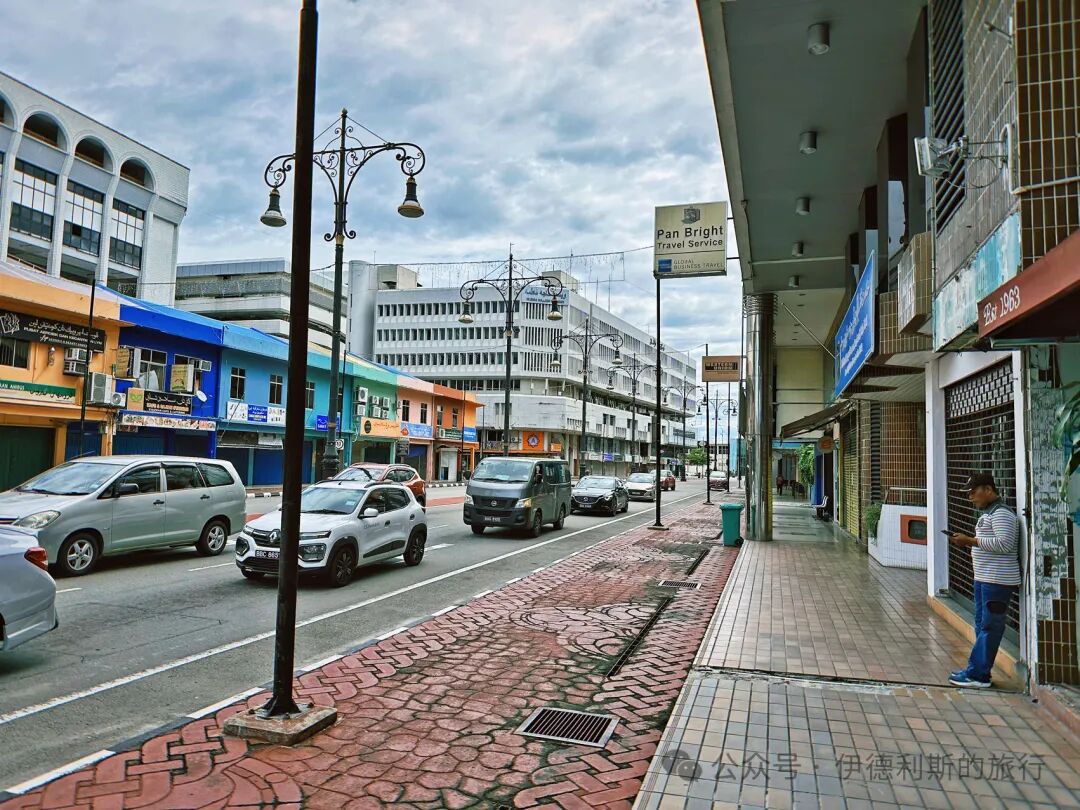
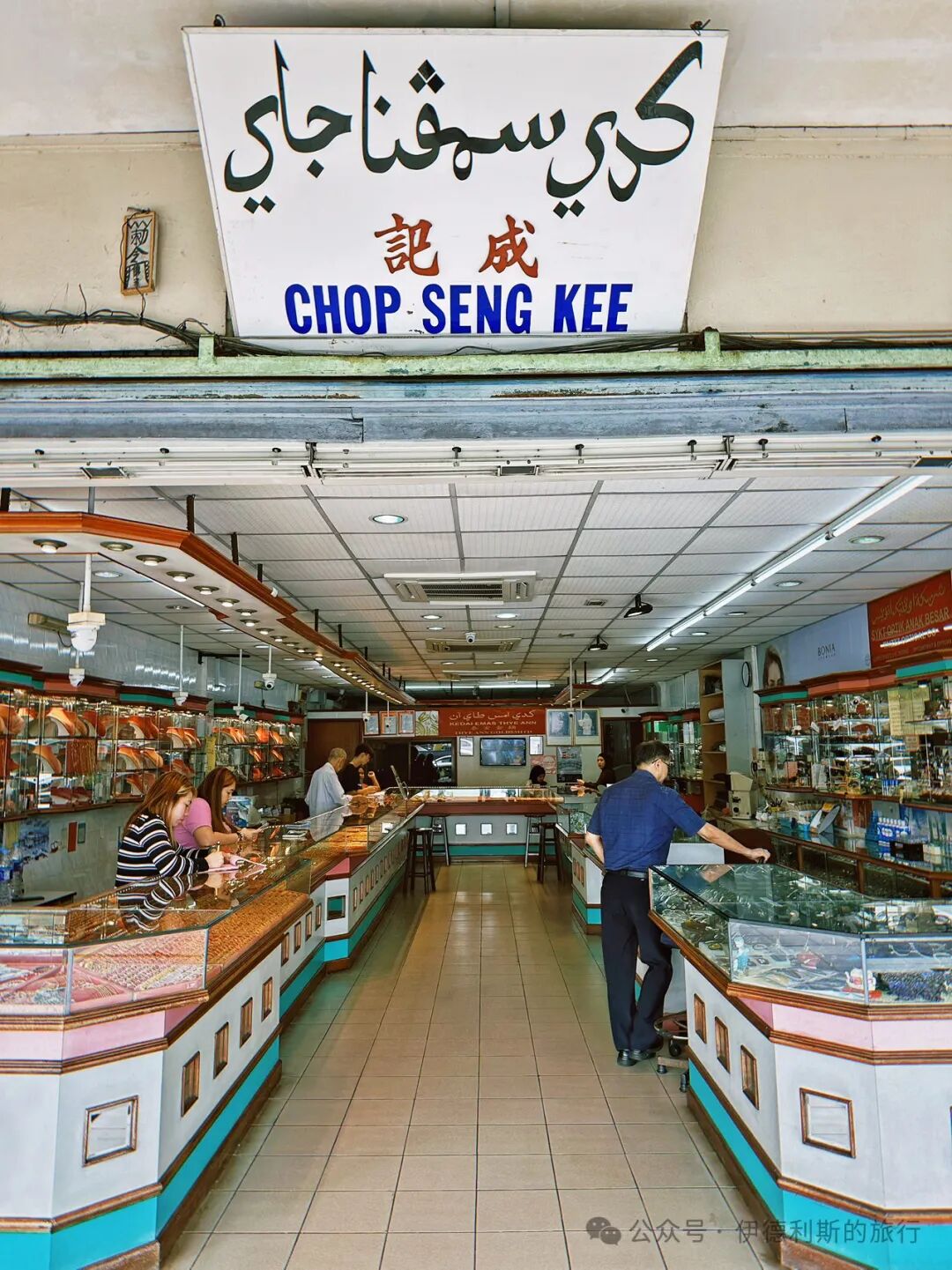
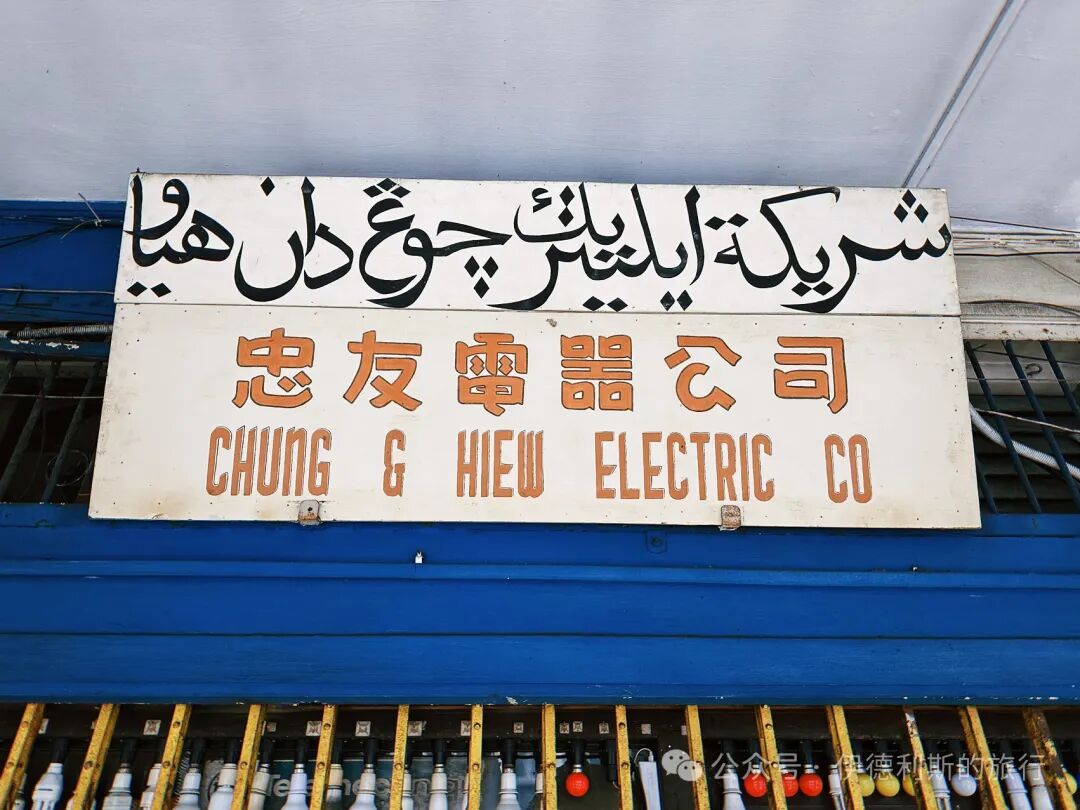
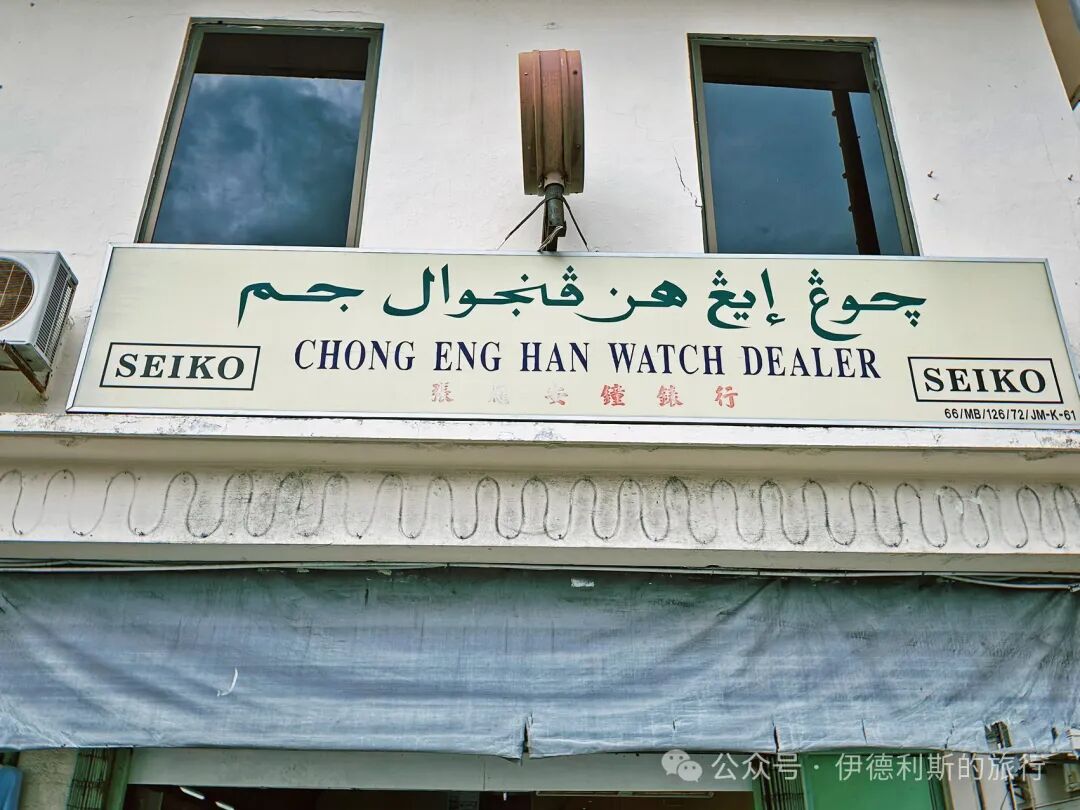
The Sungai Kianggeh River is on the east side of the old town. Residents of Kampong Ayer can boat directly up the river to the Kianggeh market to buy various farm products. This is also one of the resettlement points for water village residents after they come ashore.
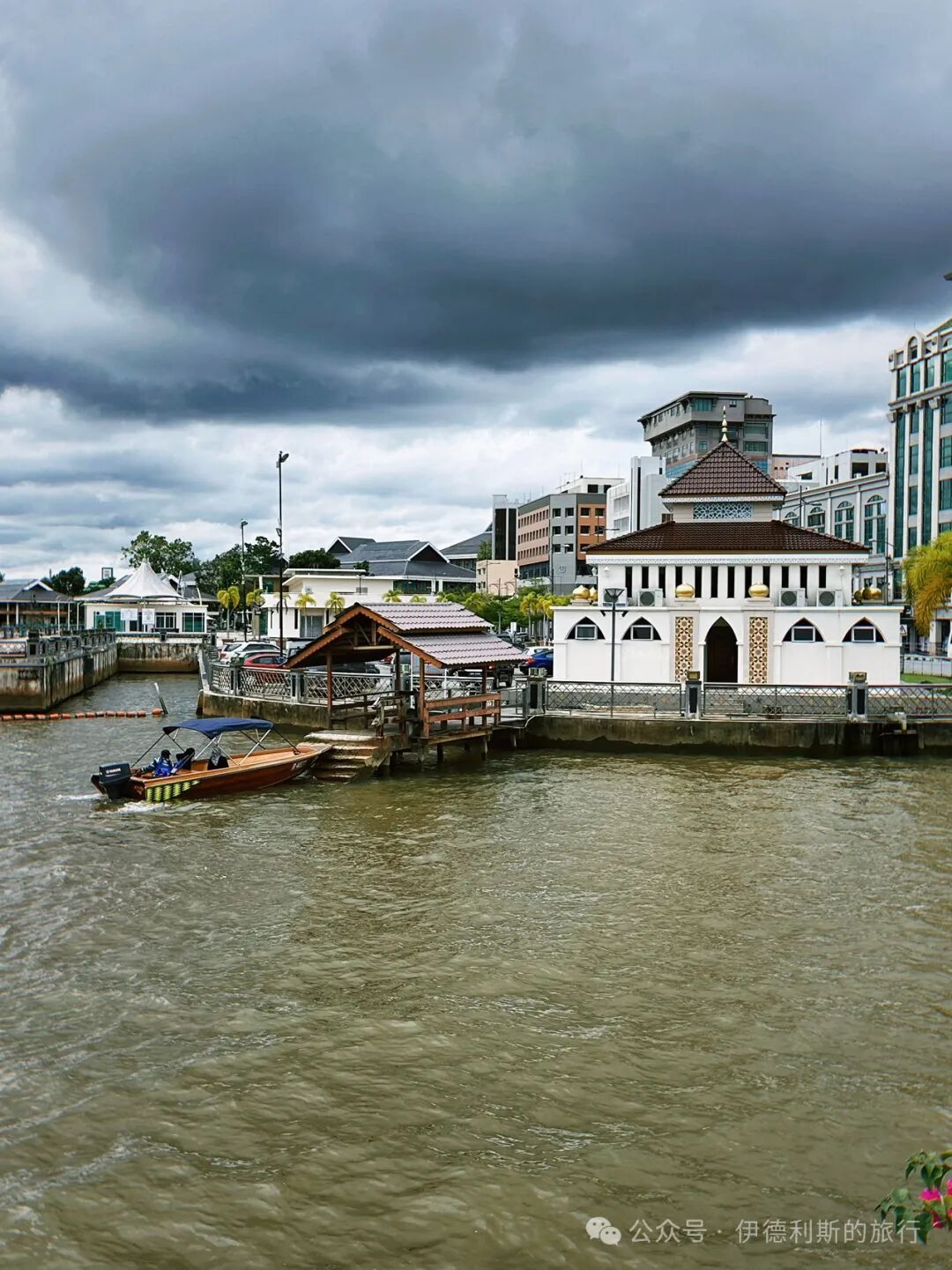
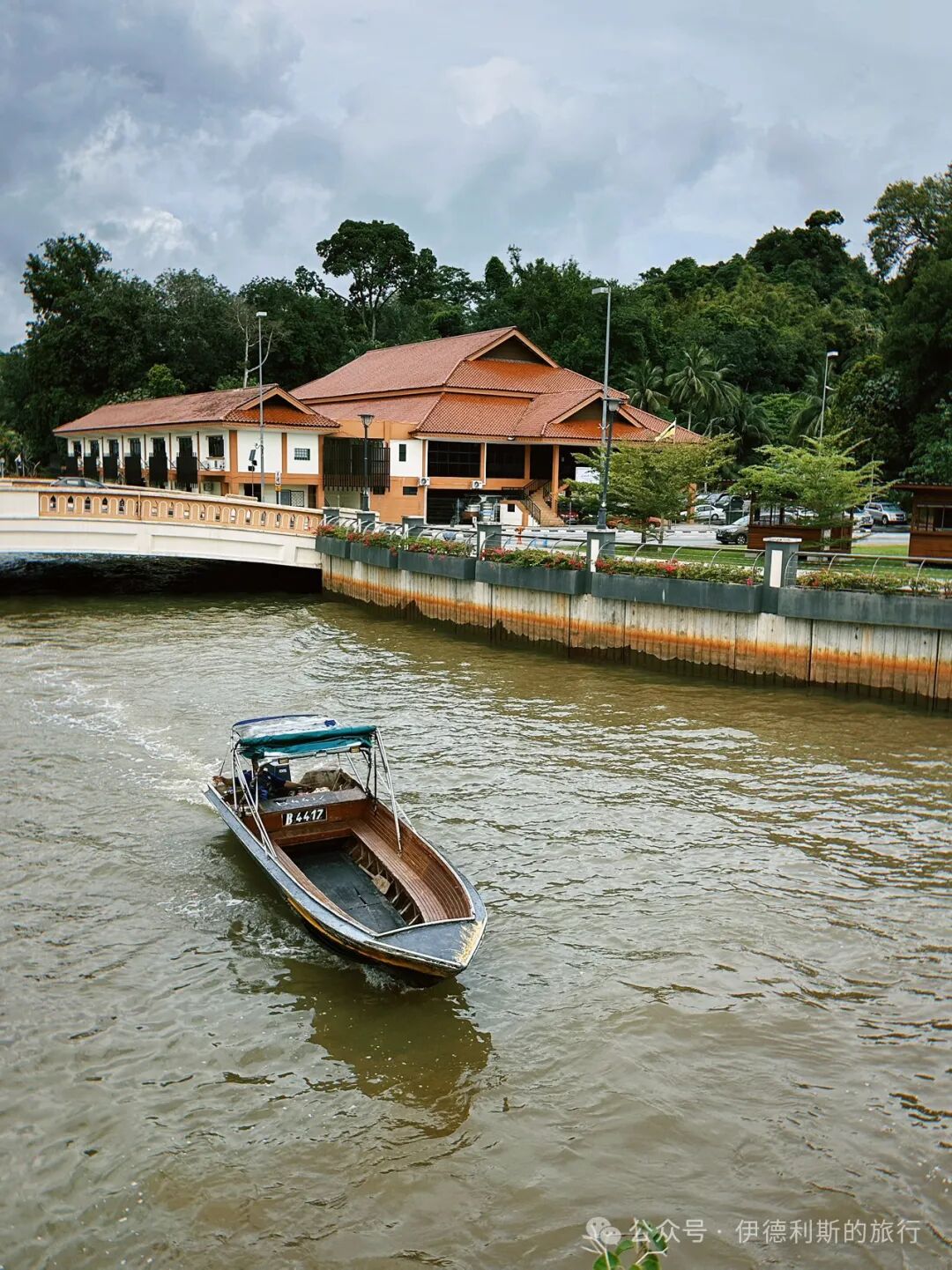
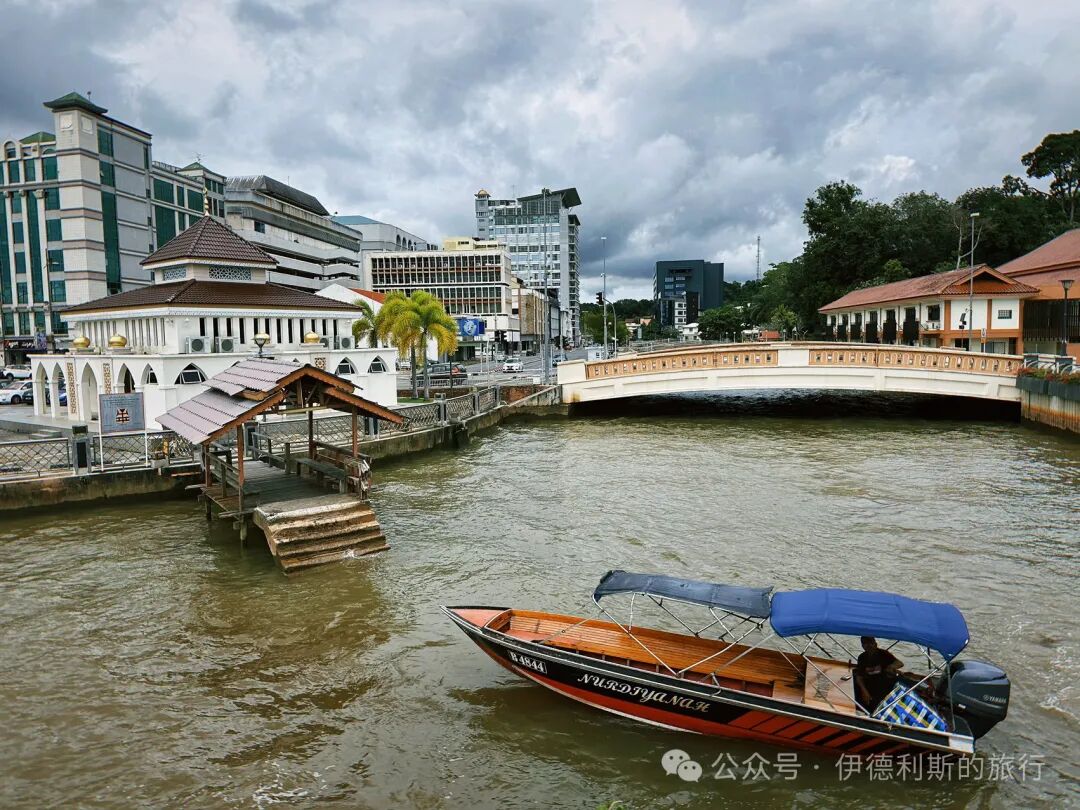
The old Royal Ceremonial Hall (Lapau Lama) in the old town was built in 1950. It now displays the scene of the 1959 Brunei Constitution signing, including the original chandeliers, tables, chairs, and the microphone used by the Sultan. Lapau Lama is the oldest concrete building in the old town, with an interior that blends pragmatism and minimalism.
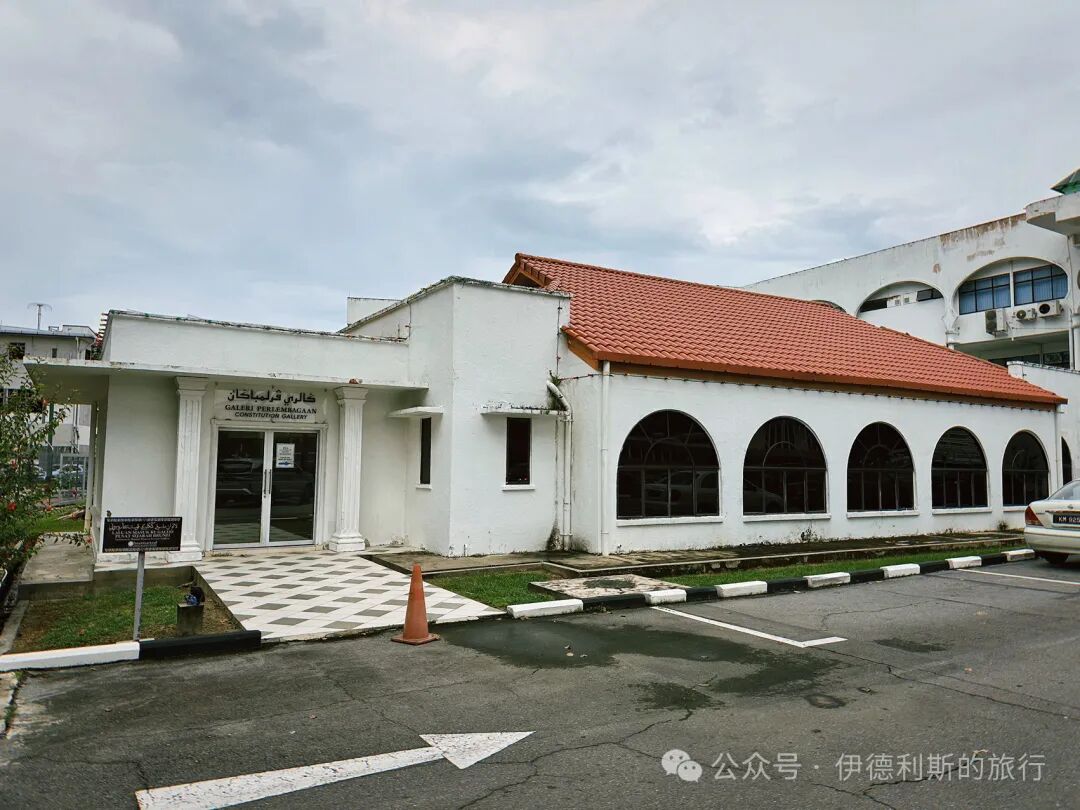
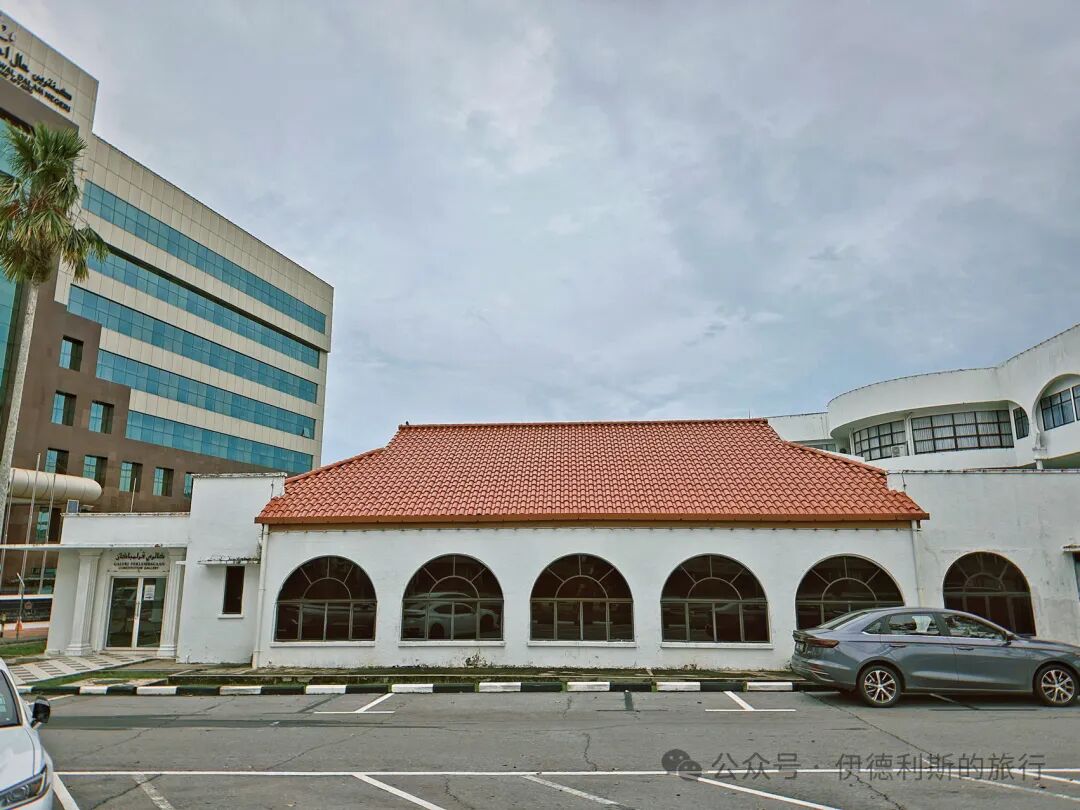
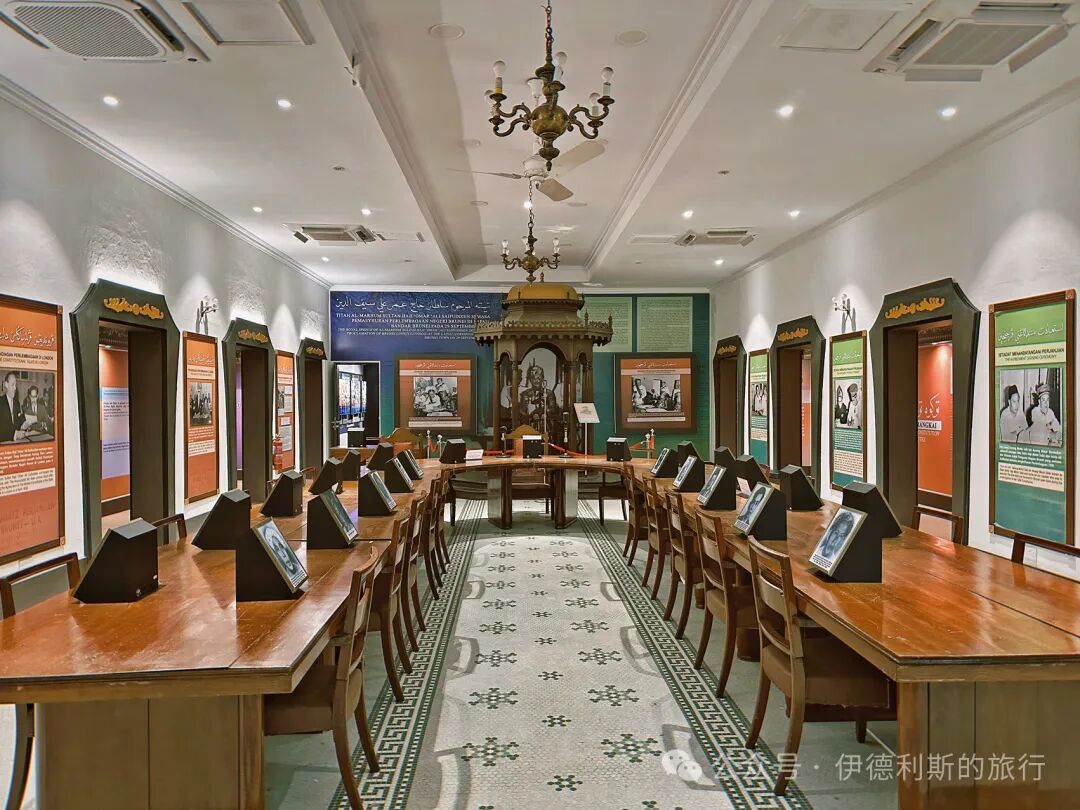
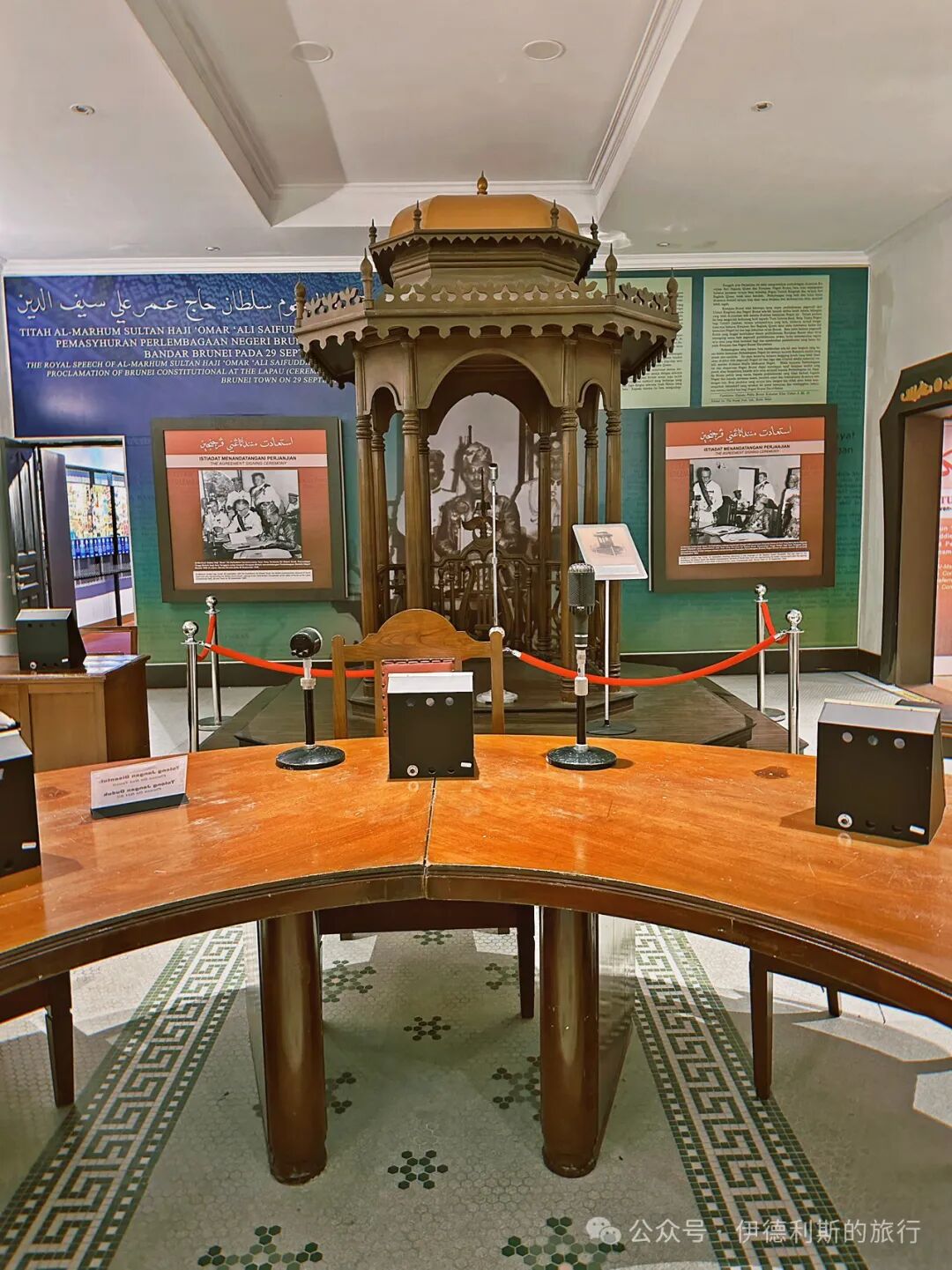
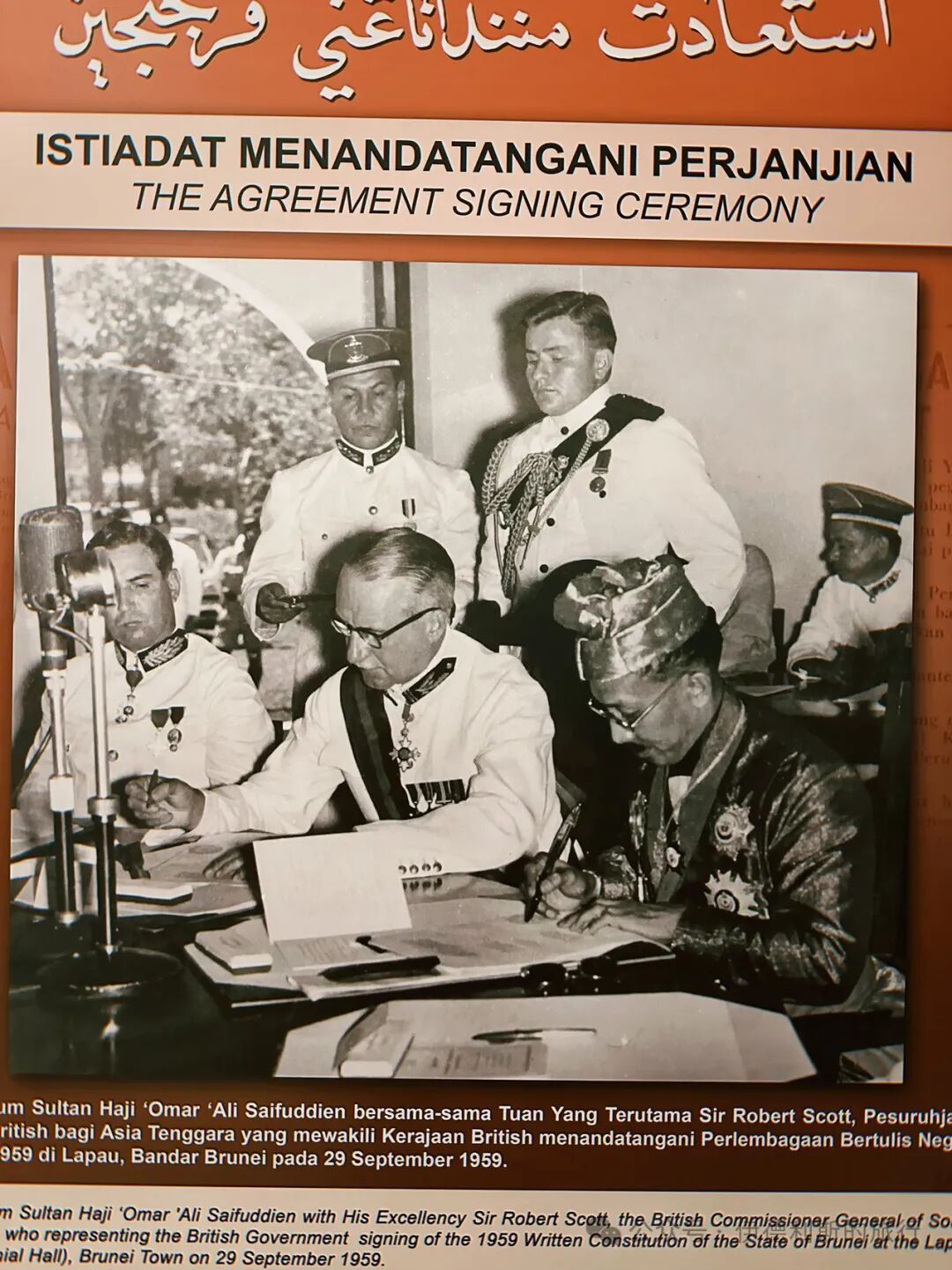
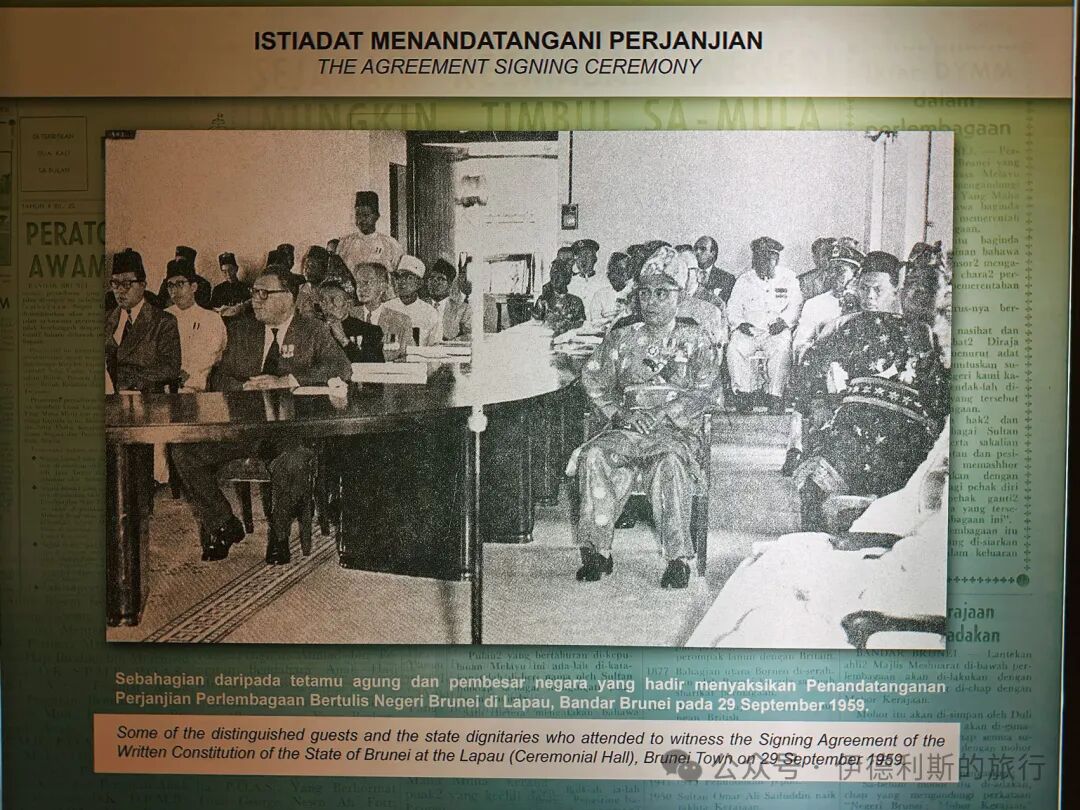
Next to the old Royal Ceremonial Hall is the Royal Regalia Museum. It houses two royal chariots: one used for the Sultan's coronation in 1968 and Queen Elizabeth II's visit in 1972, and another used for the Sultan's 25th anniversary of his coronation in 1992.
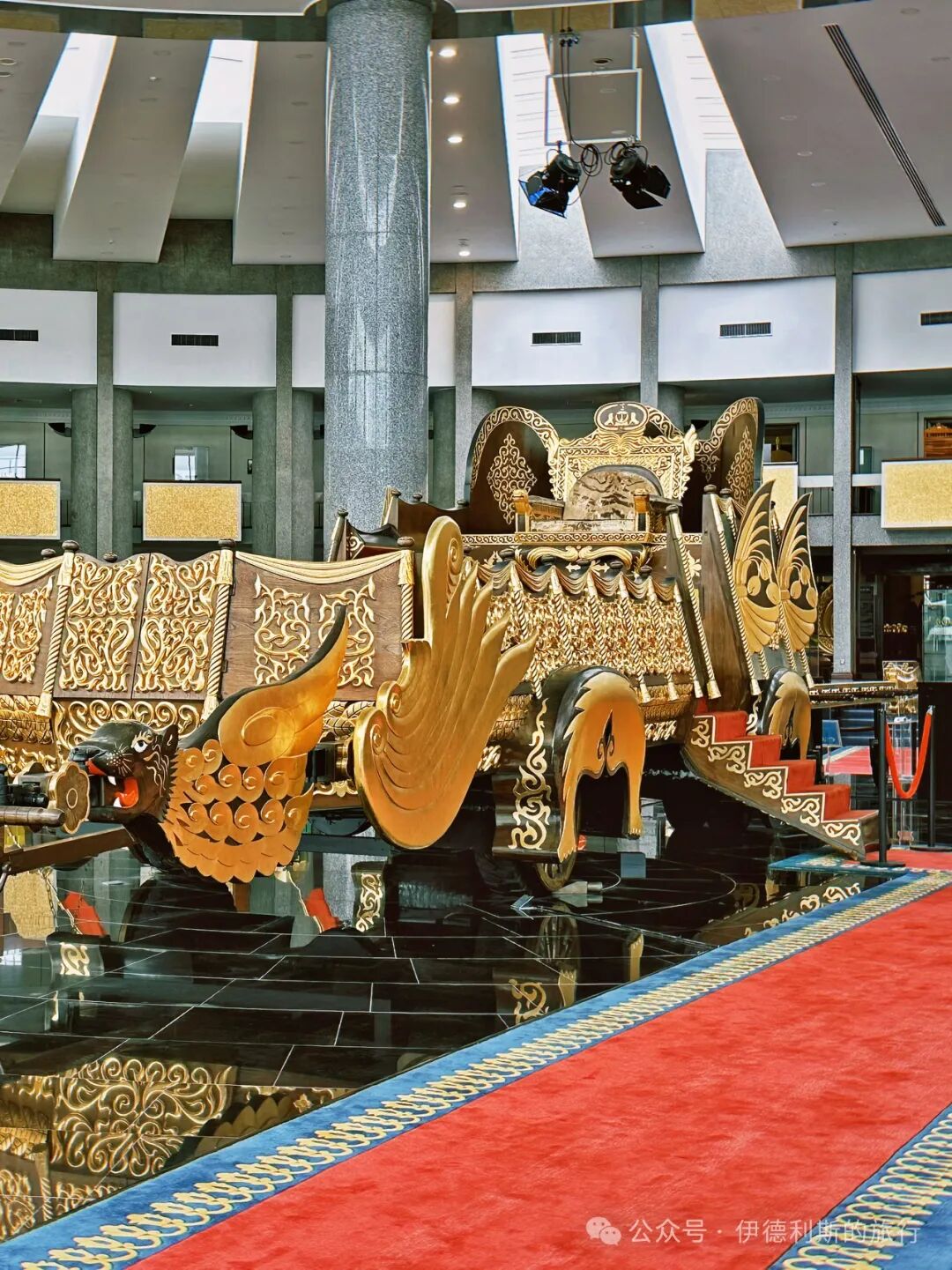
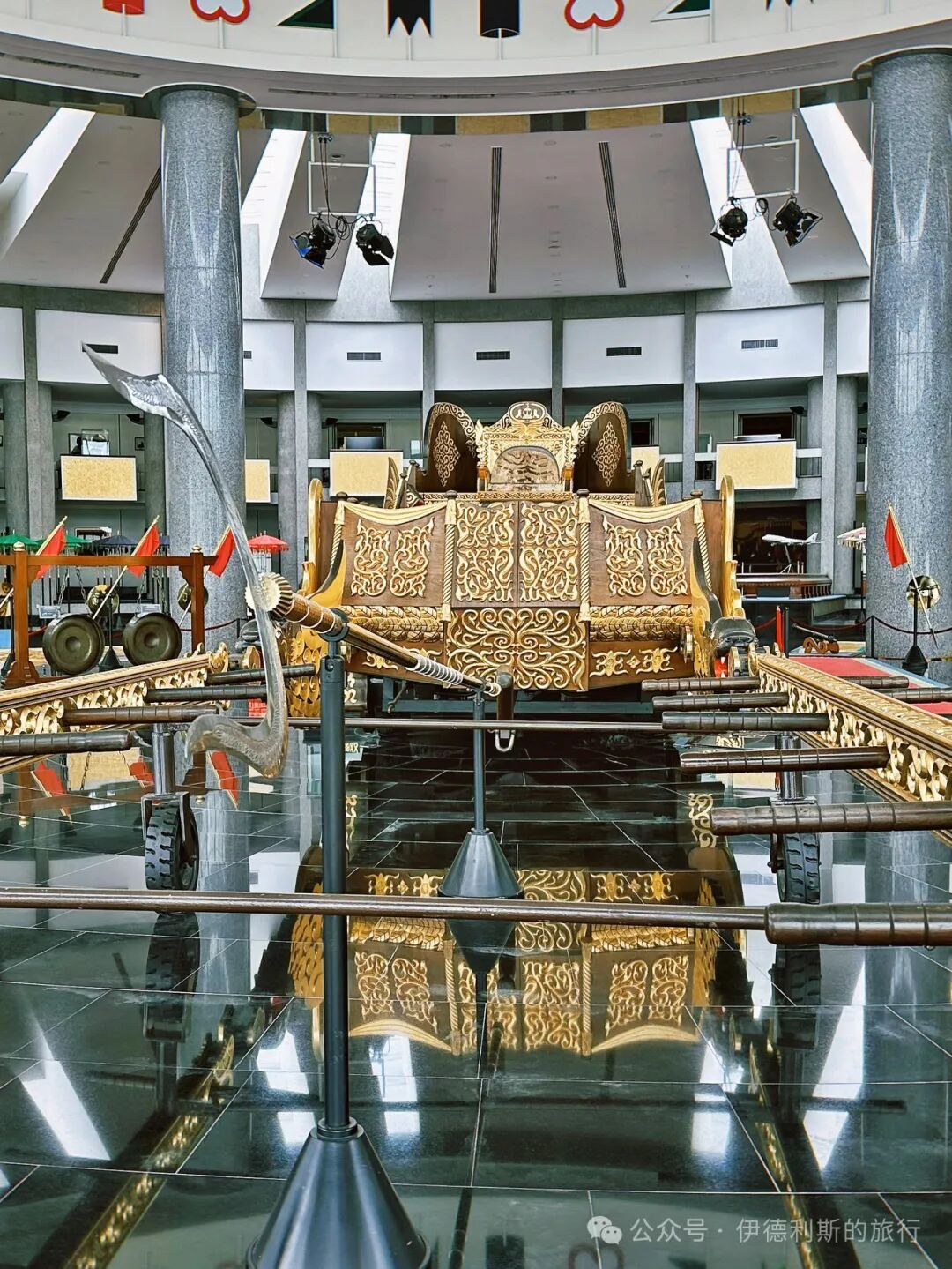
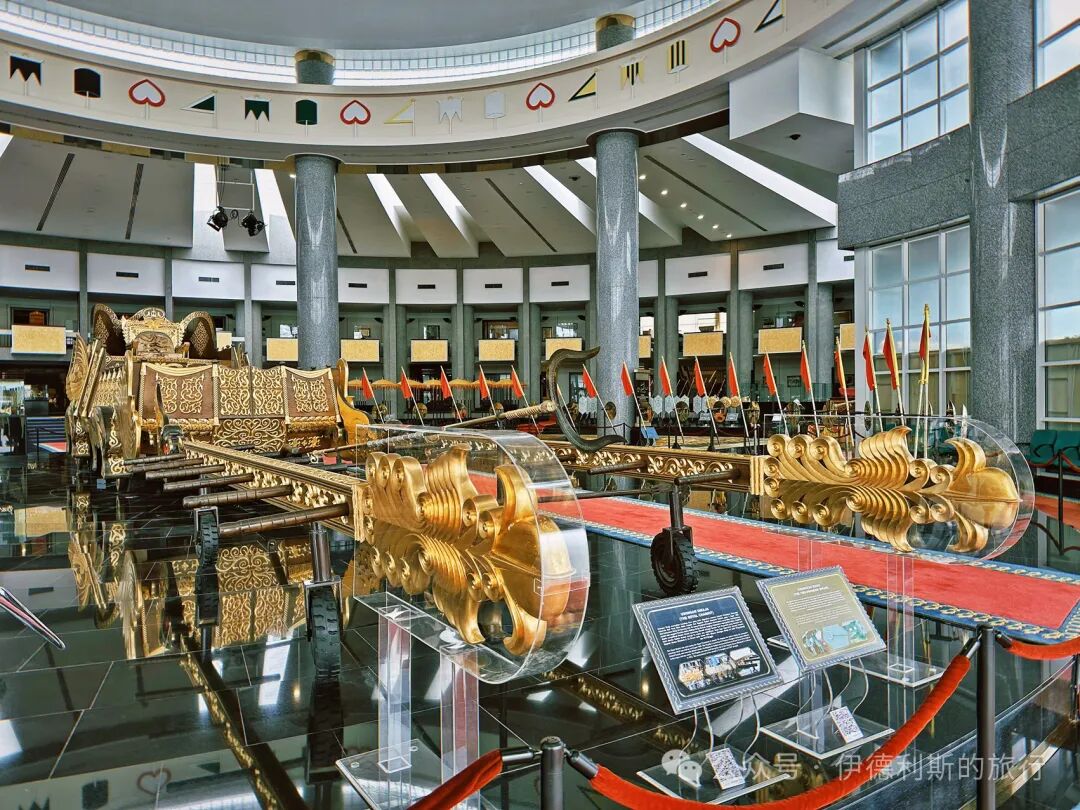
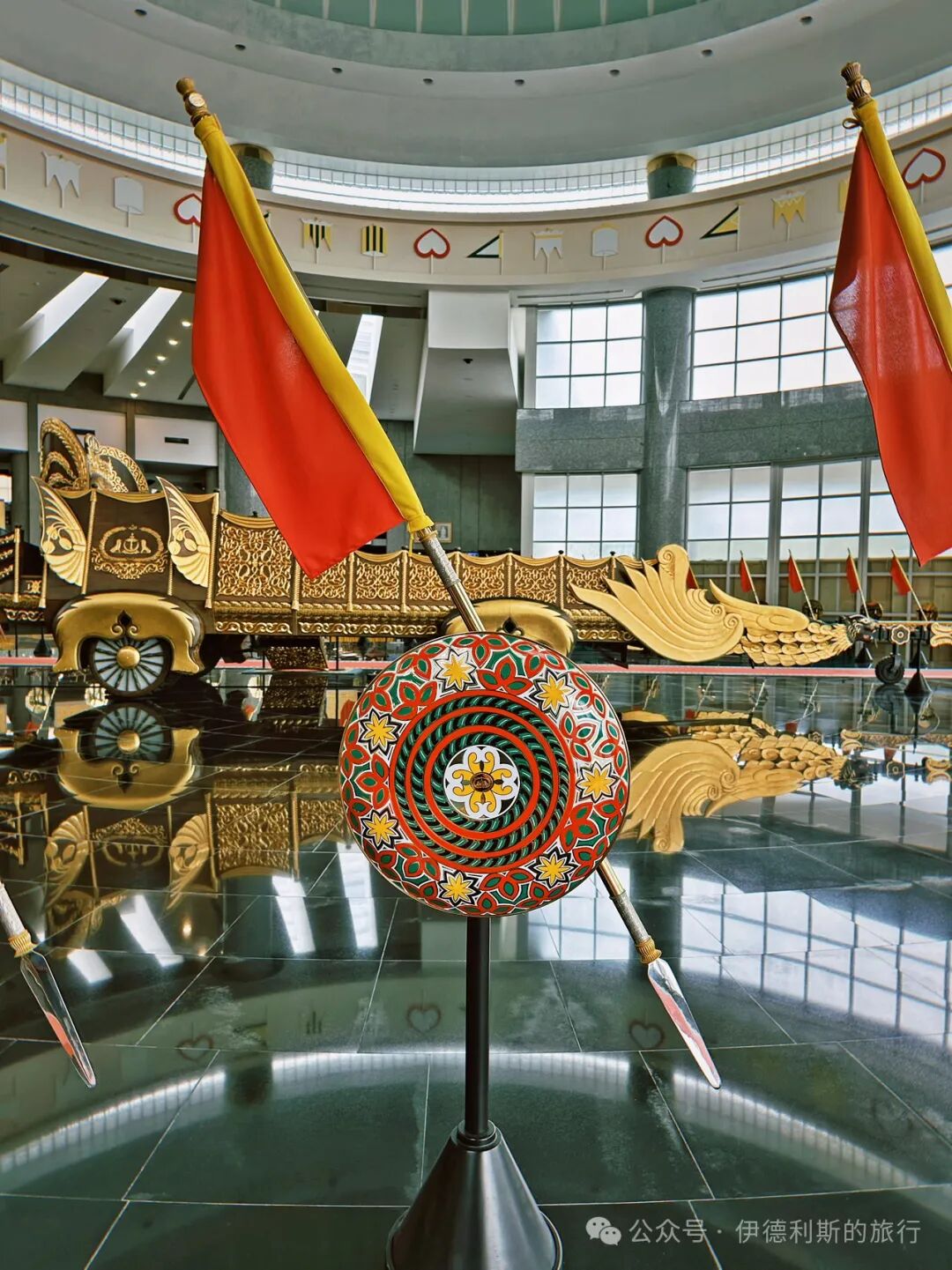
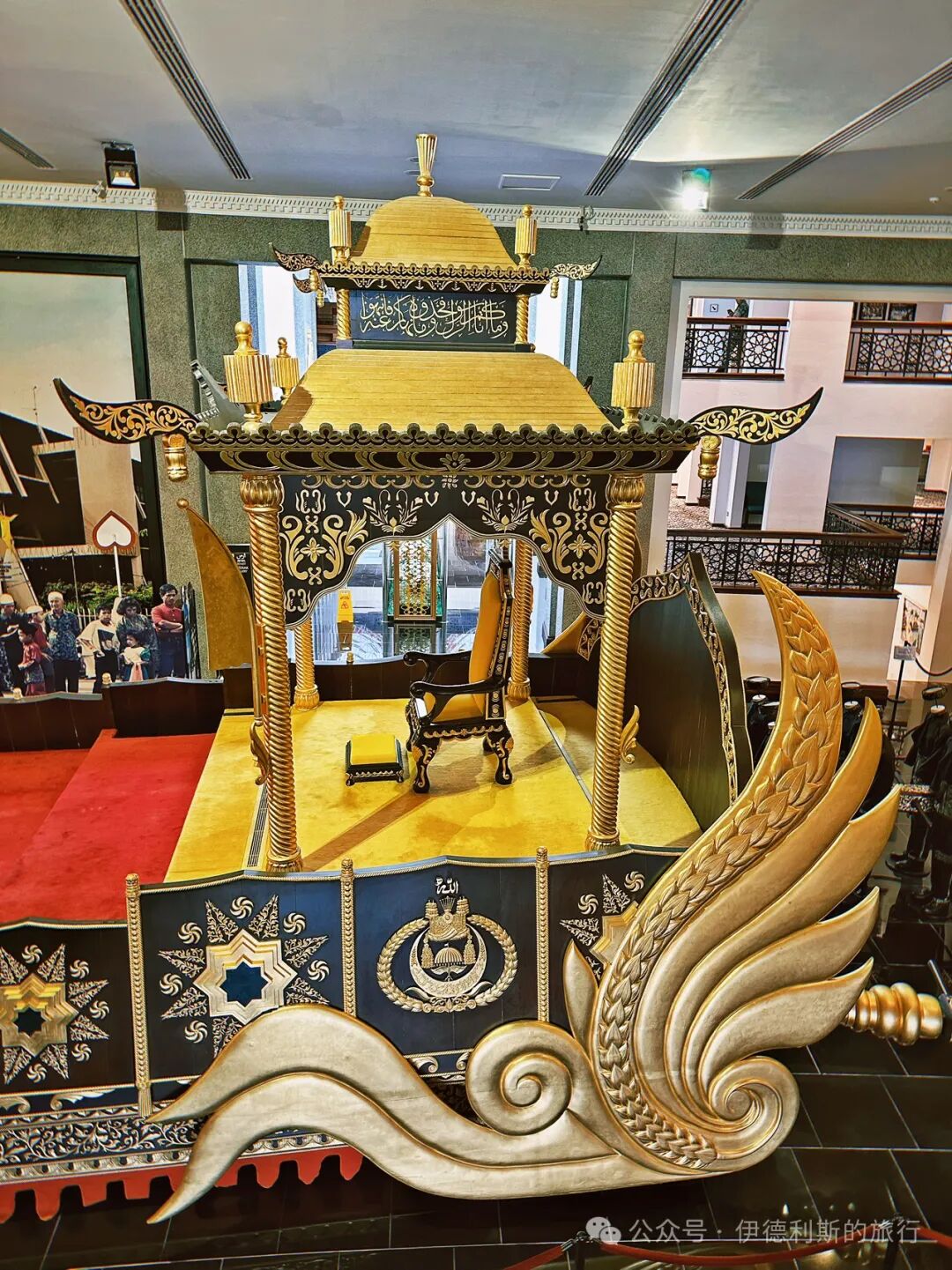
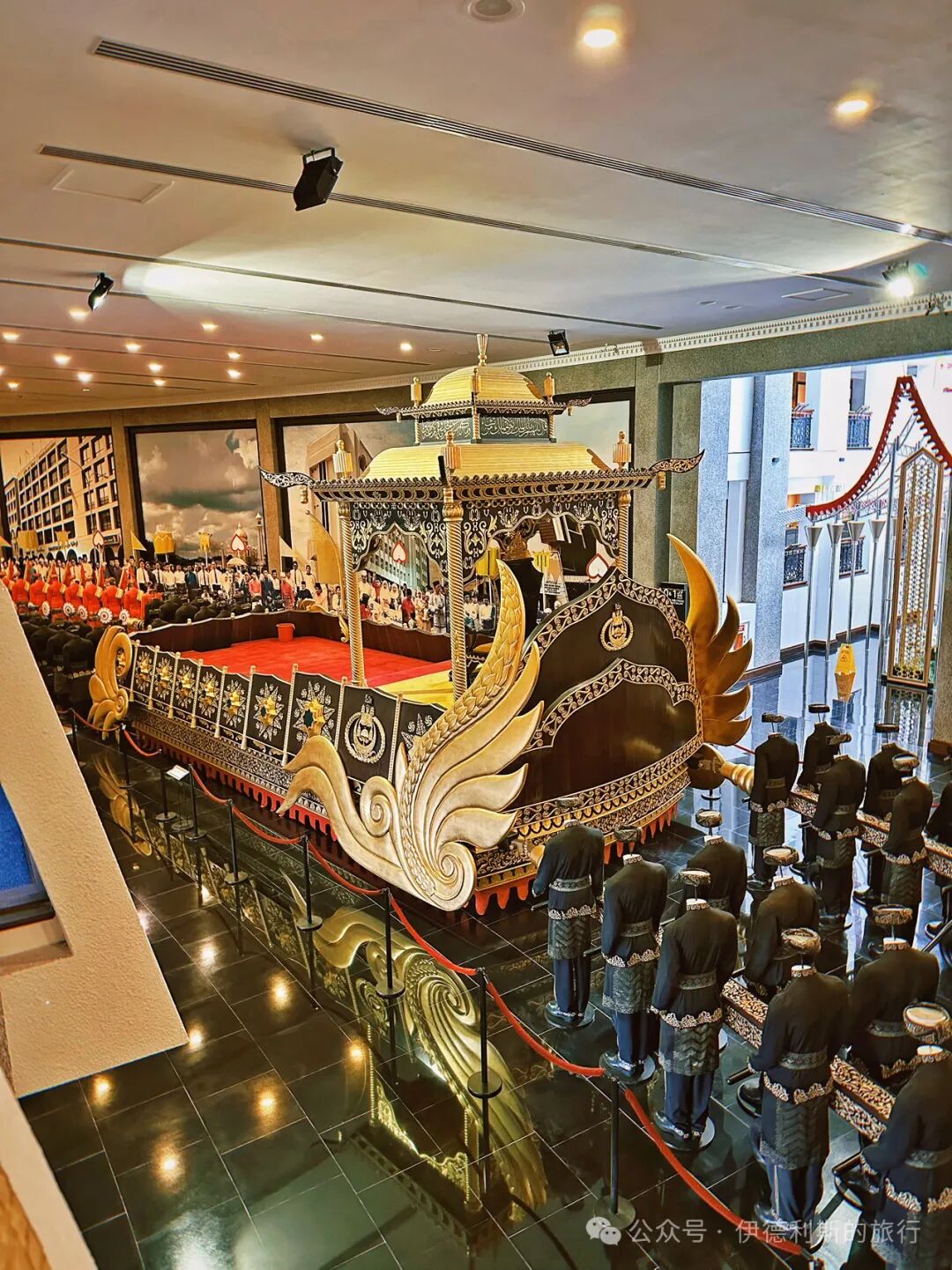
The Royal Regalia Museum also displays porcelain vases with Arabic calligraphy collected by the Sultan, as well as stone artifacts with Arabic calligraphy gifted by Saudi Arabia.
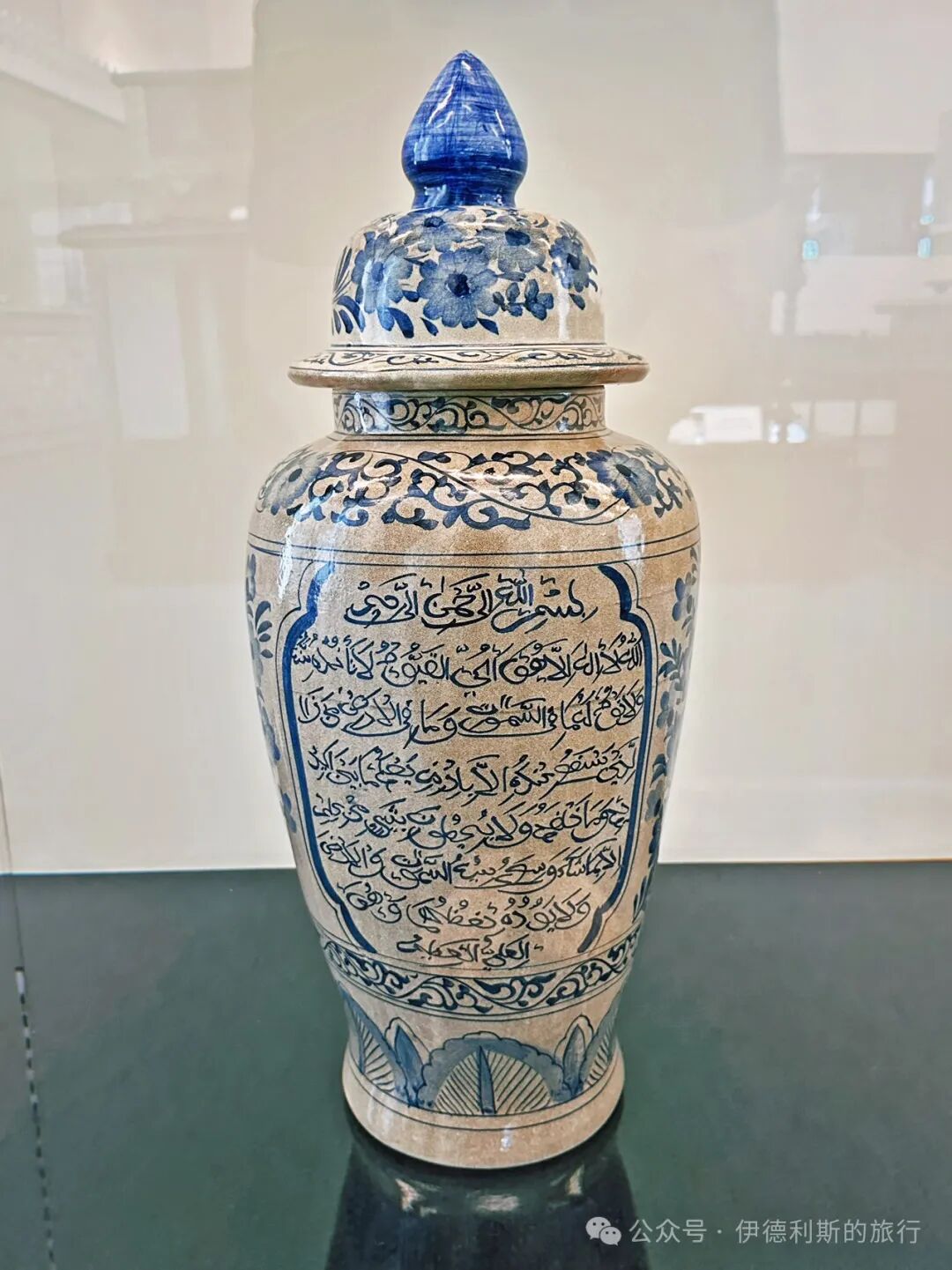
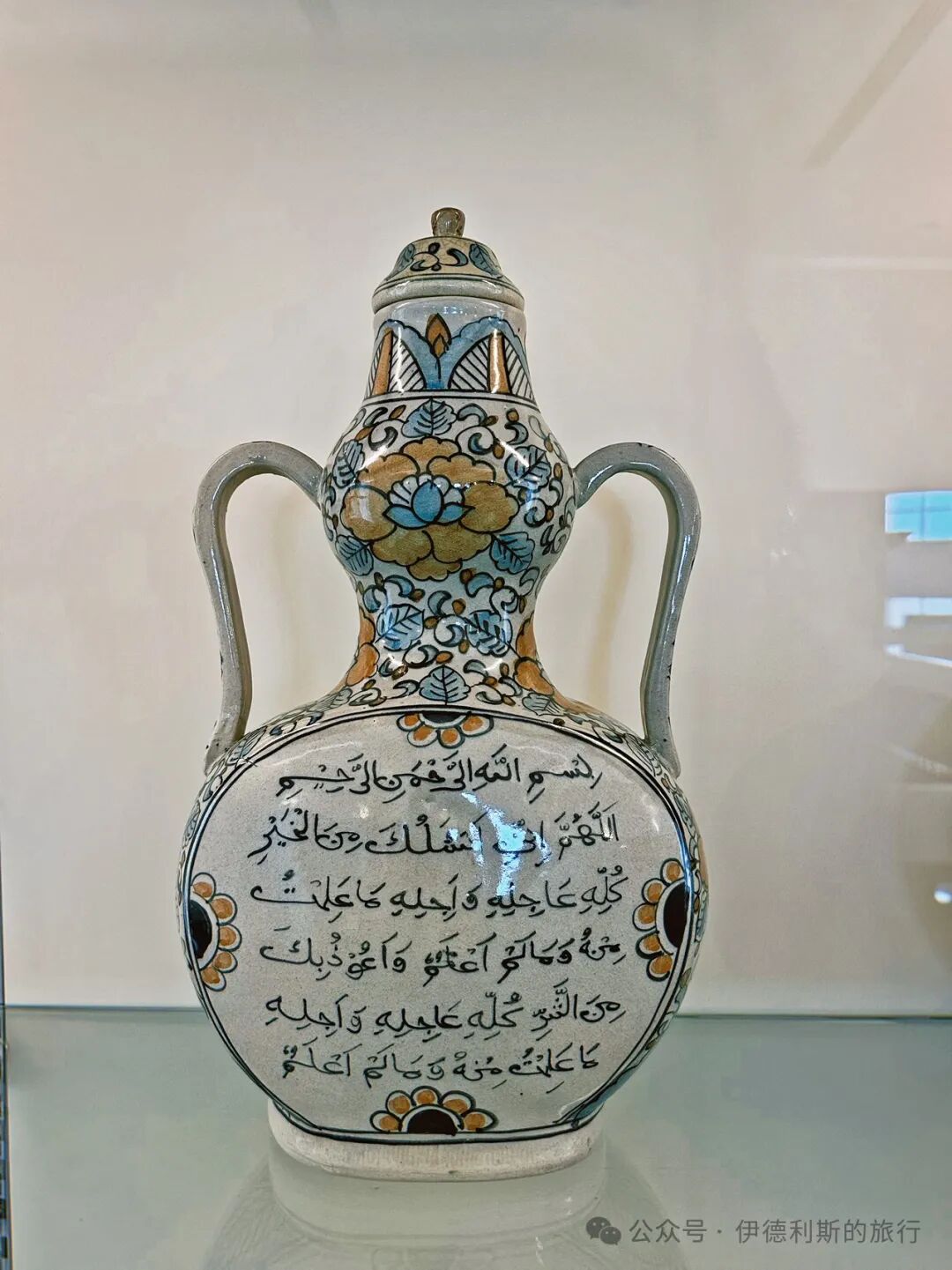
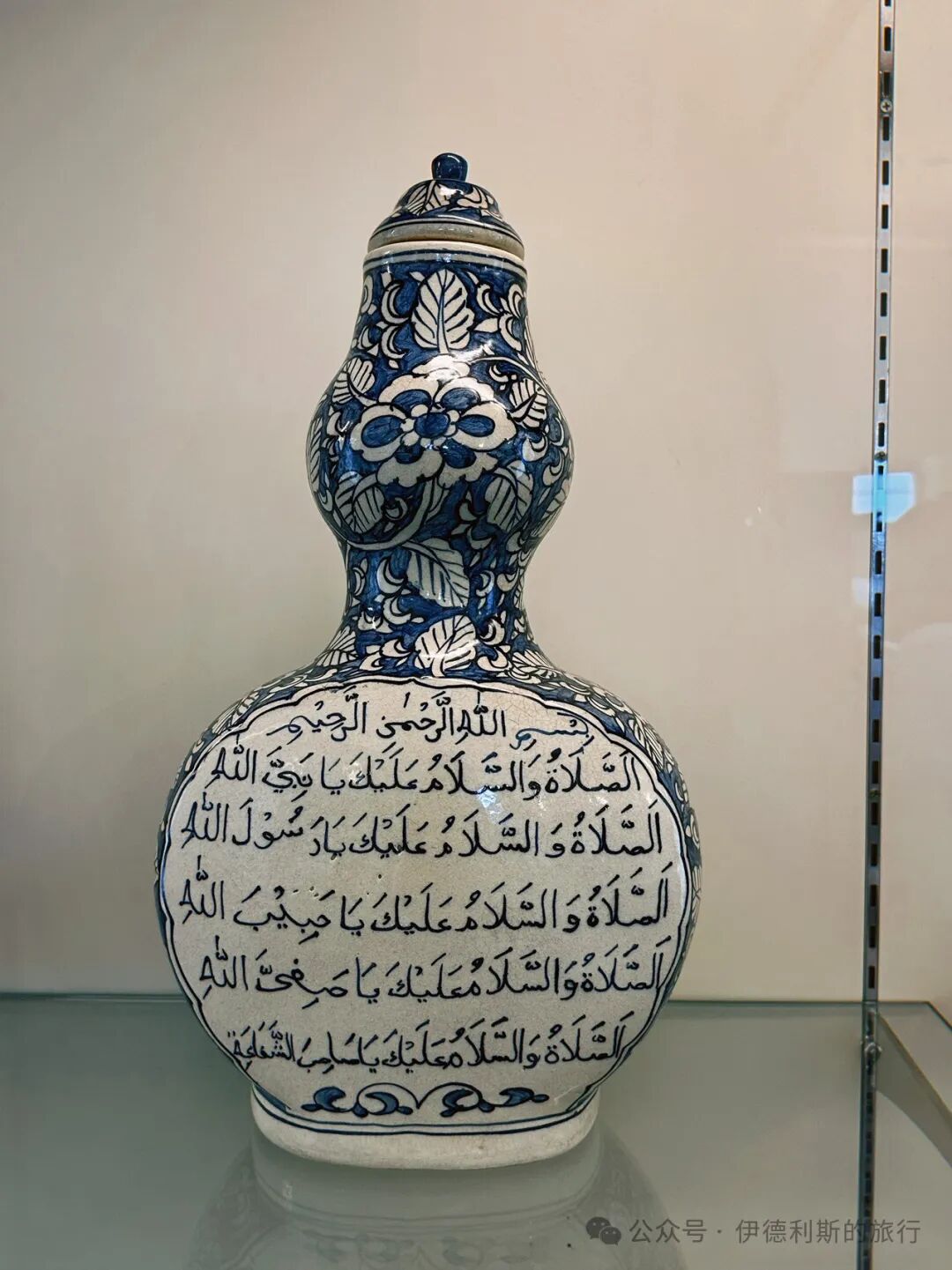
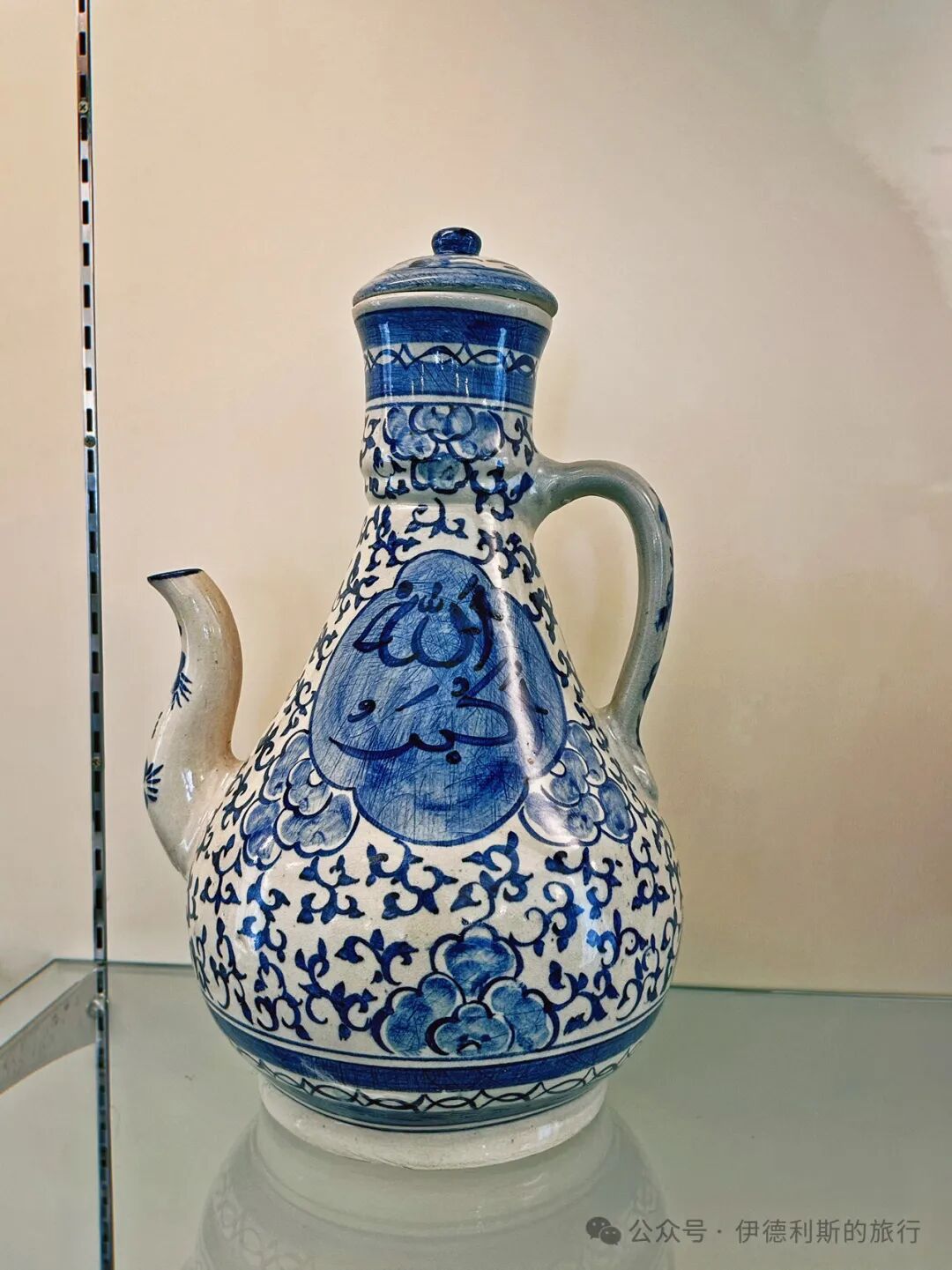
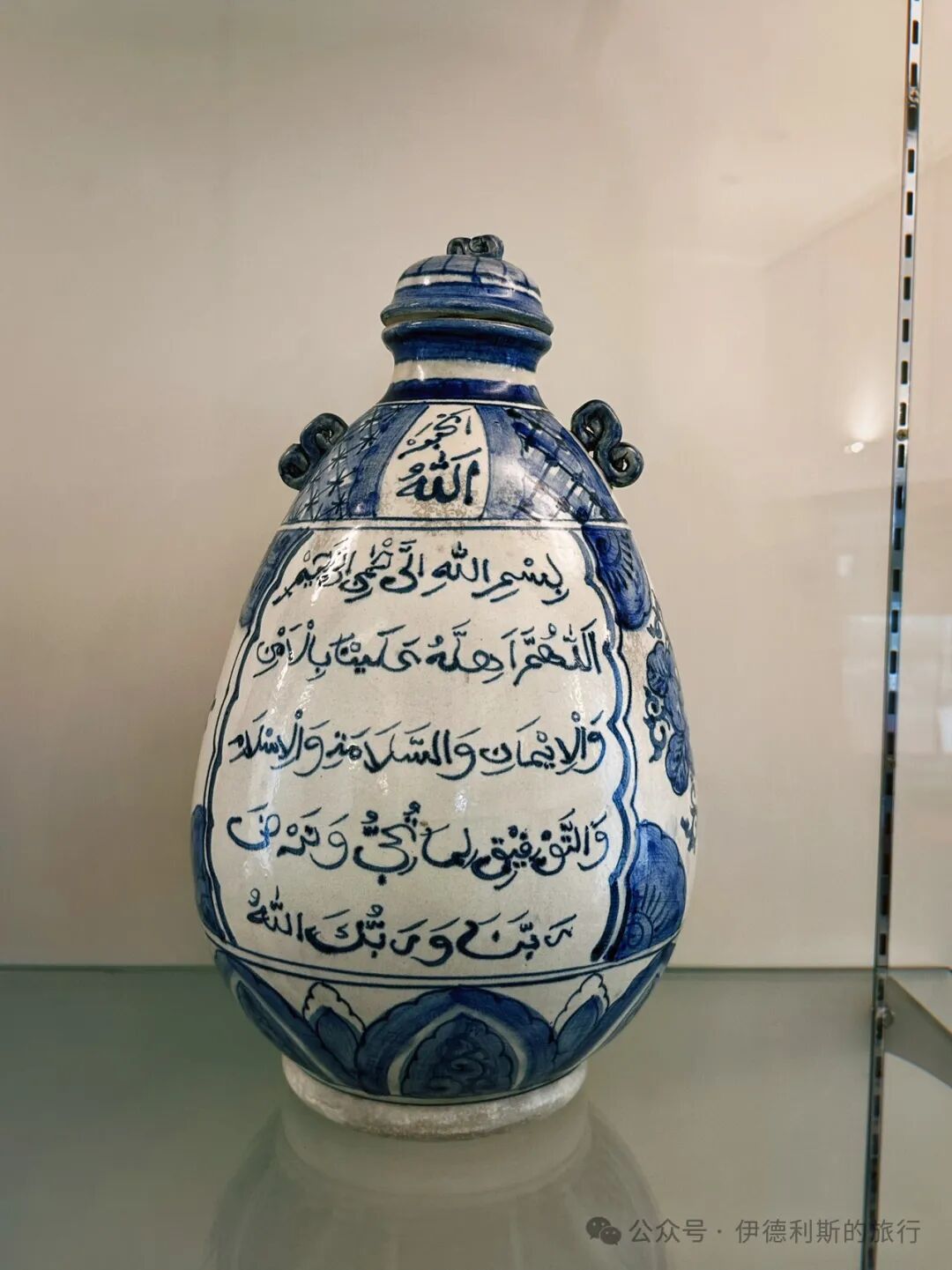
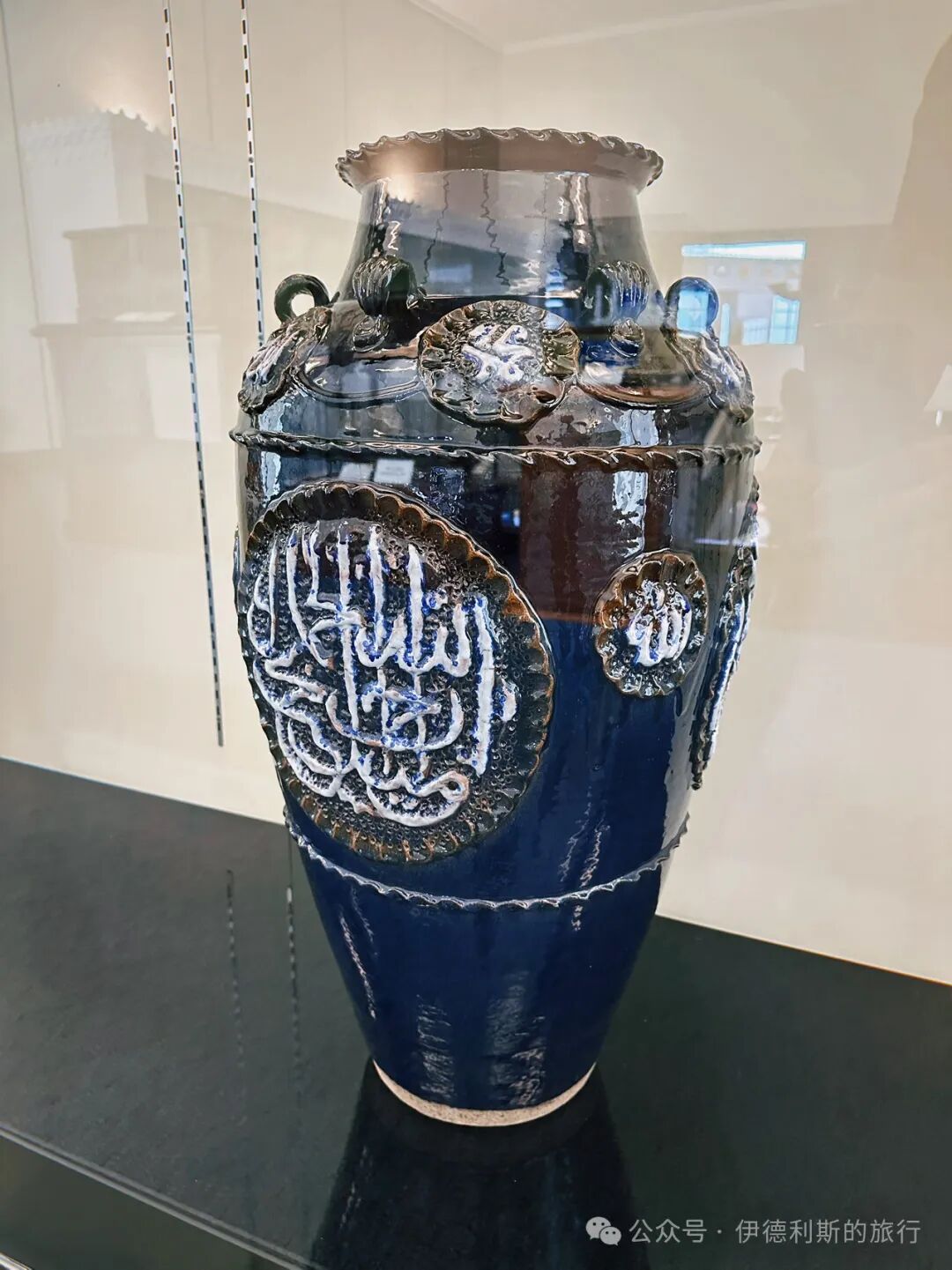
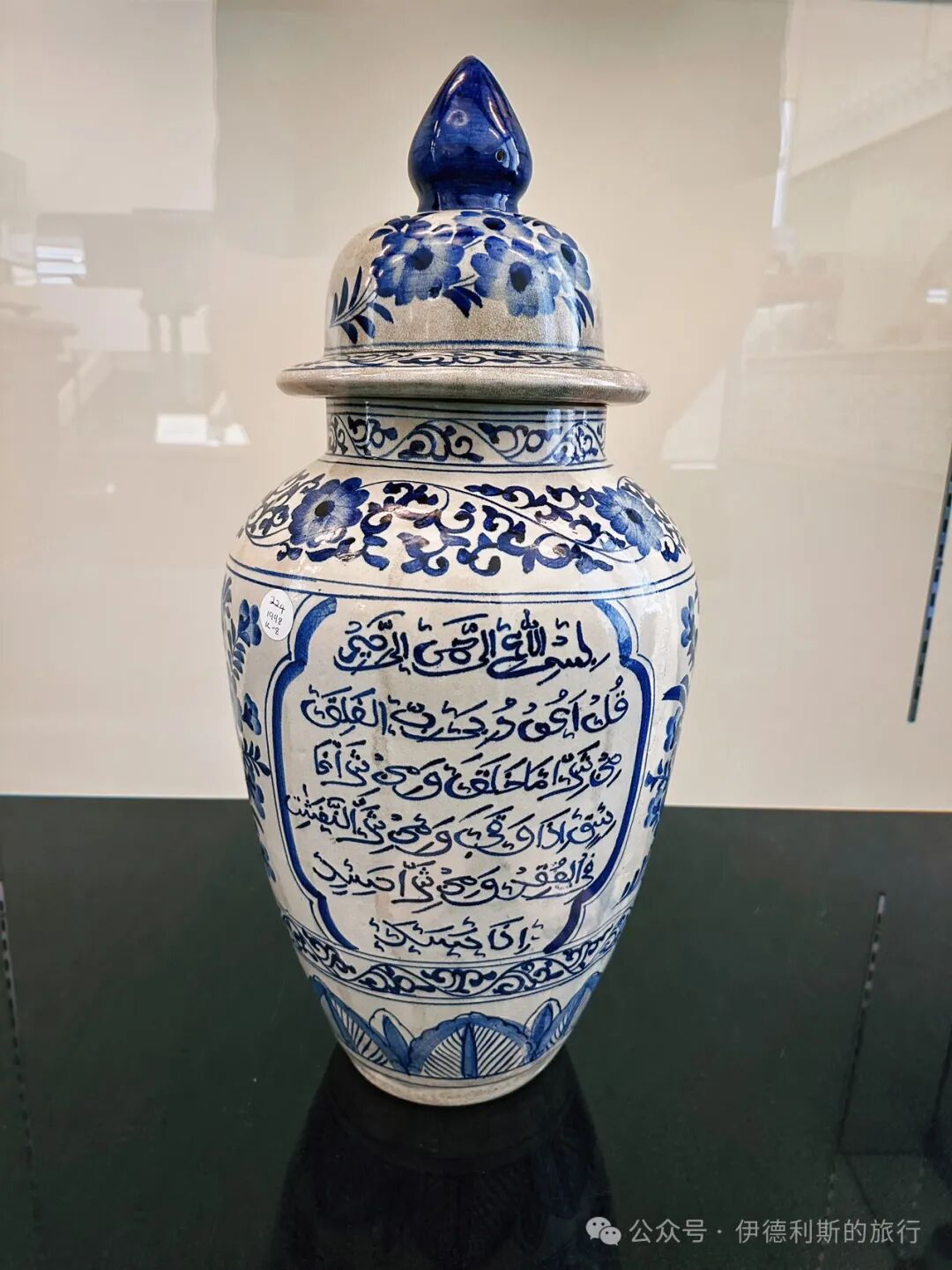
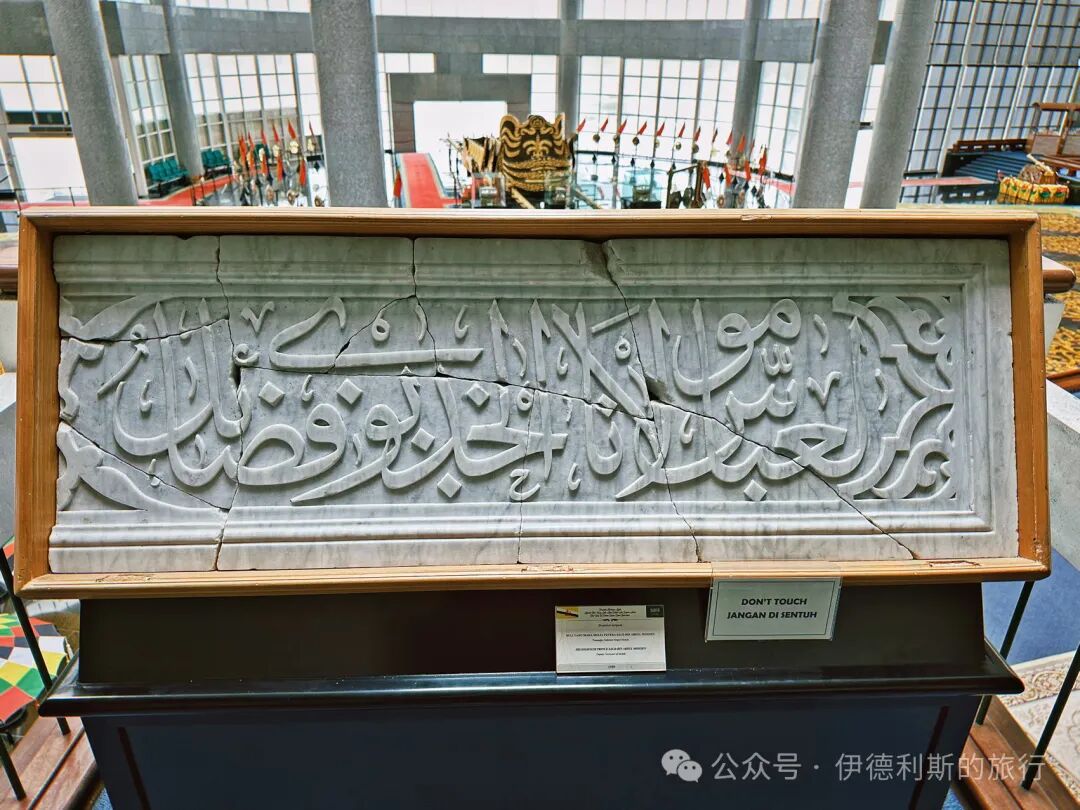
The Brunei International Airport mosque has an imam. It is clean, cool, and bright inside. Everyone performs namaz with great enthusiasm, and the atmosphere is wonderful.
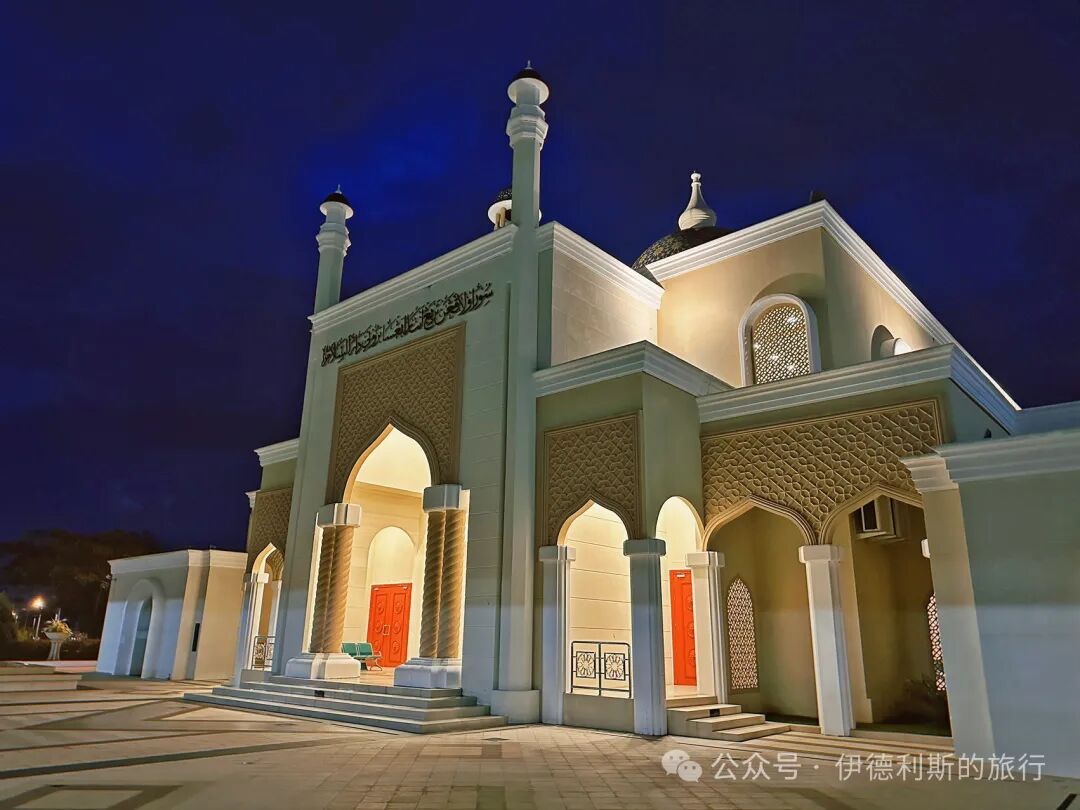
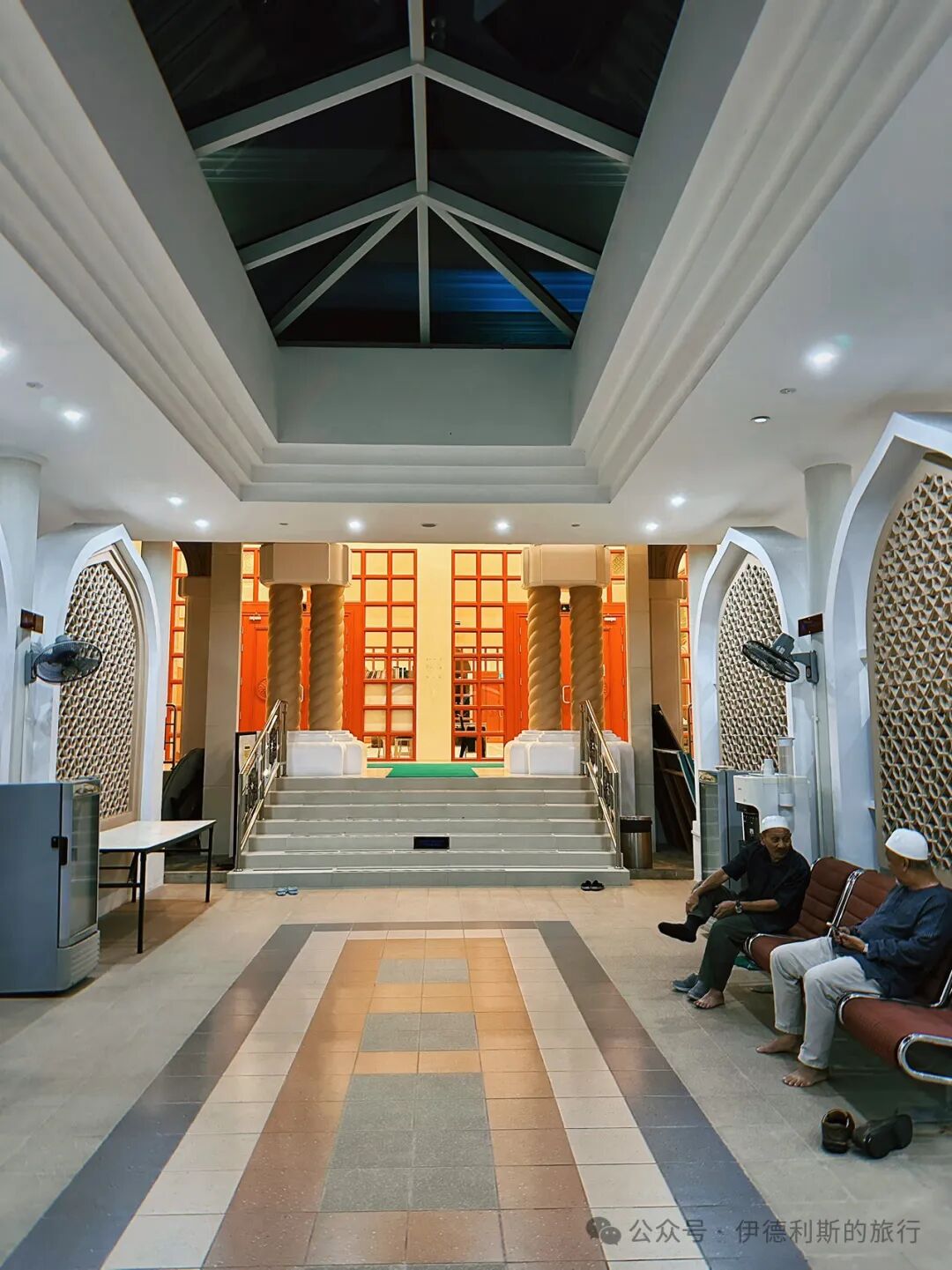
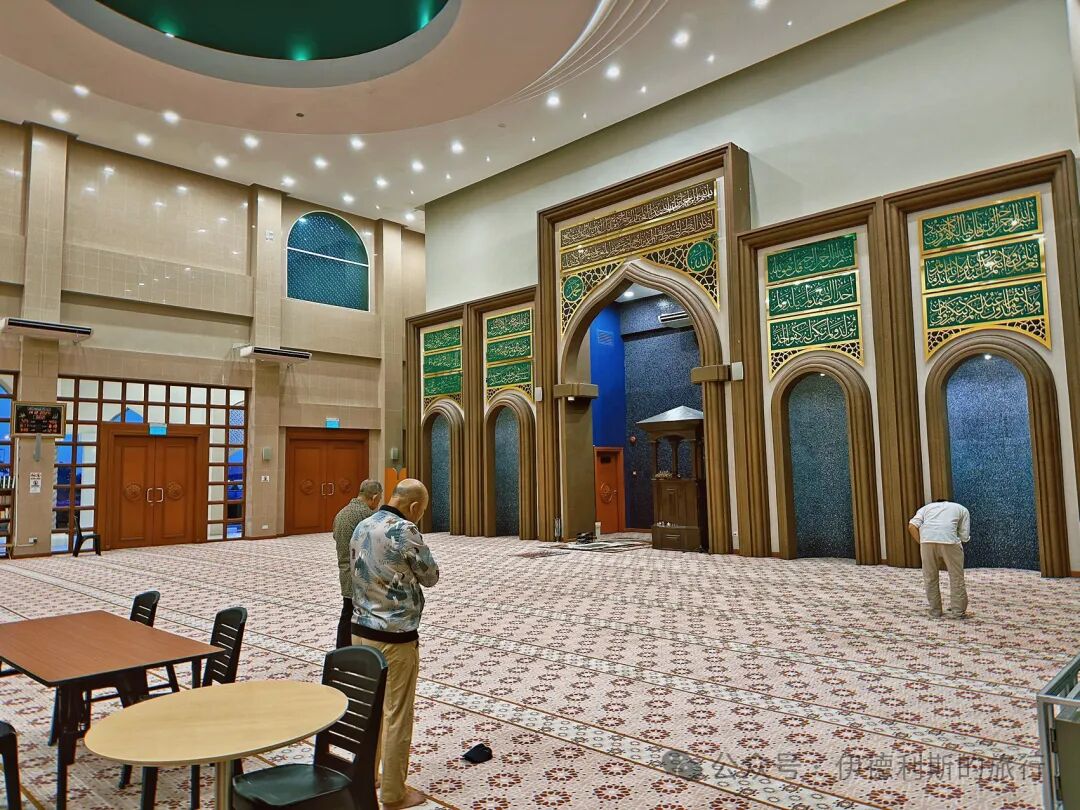
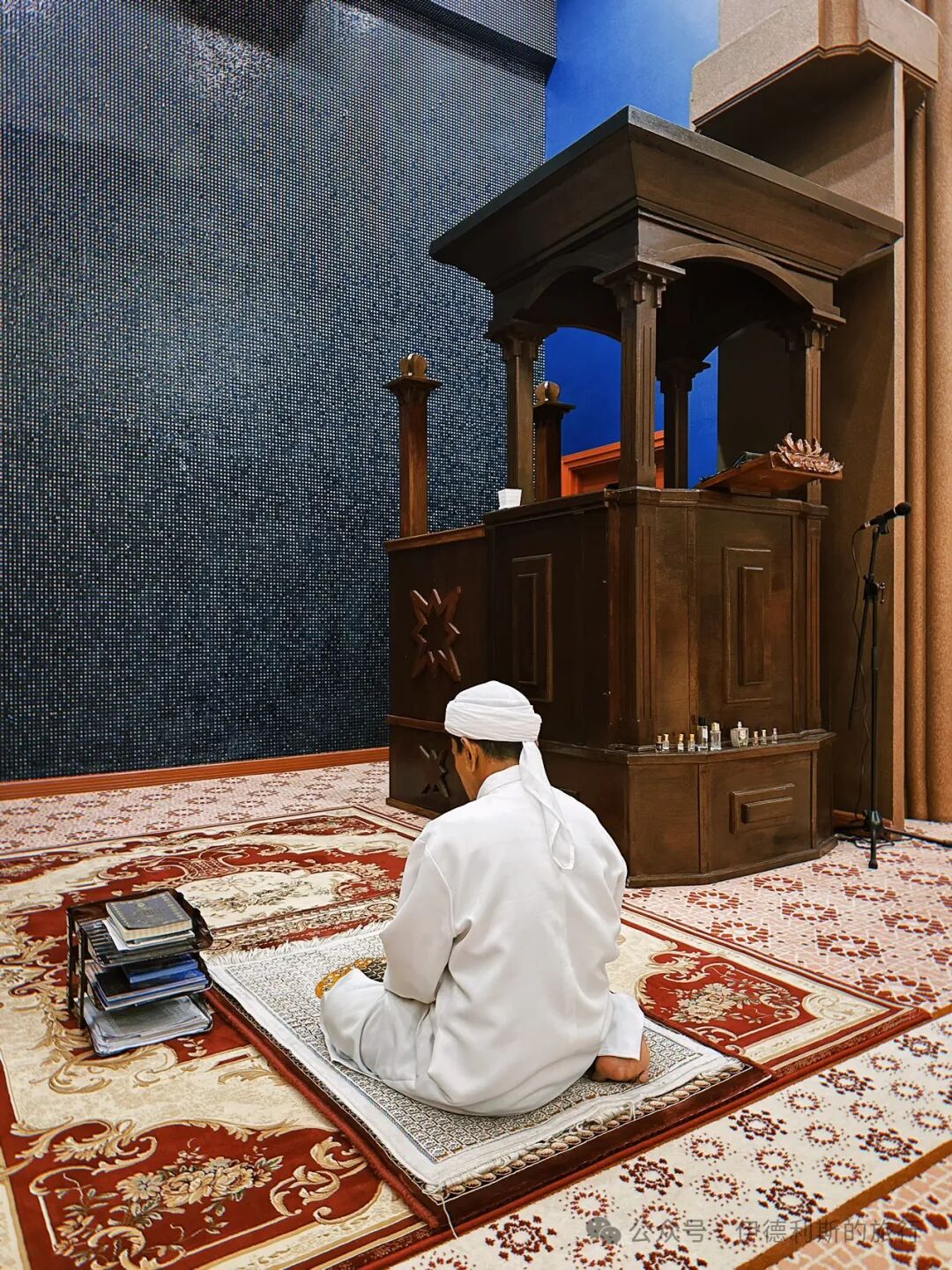
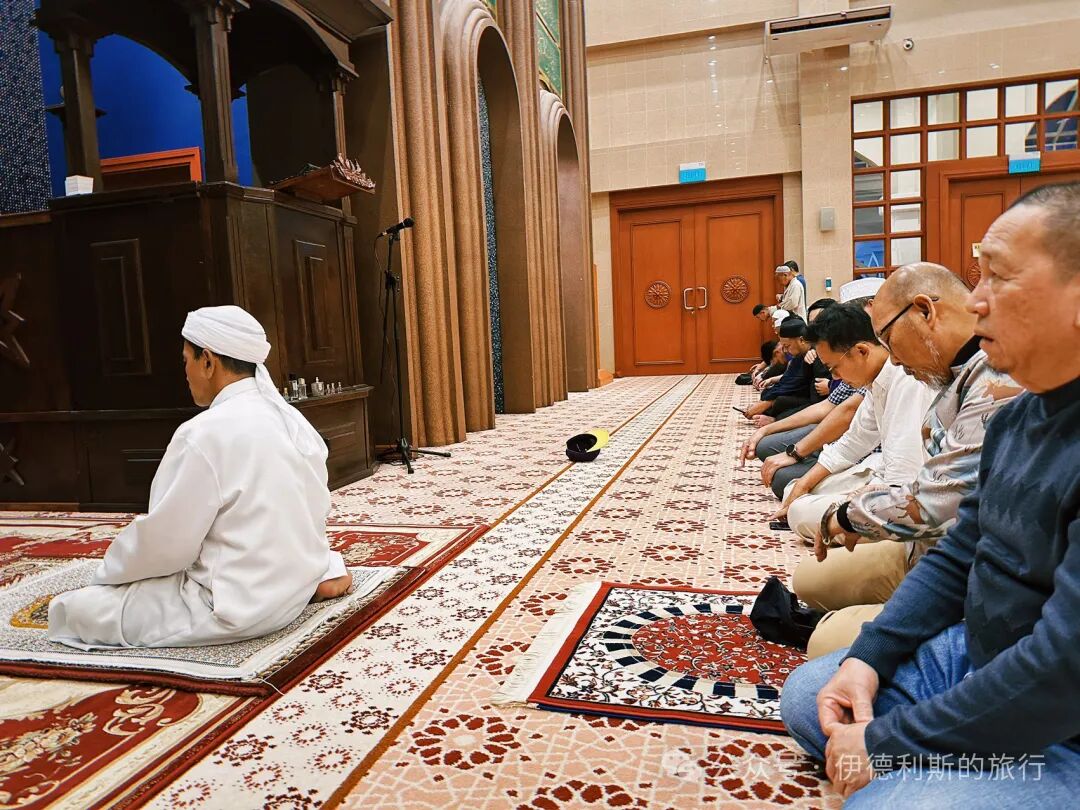
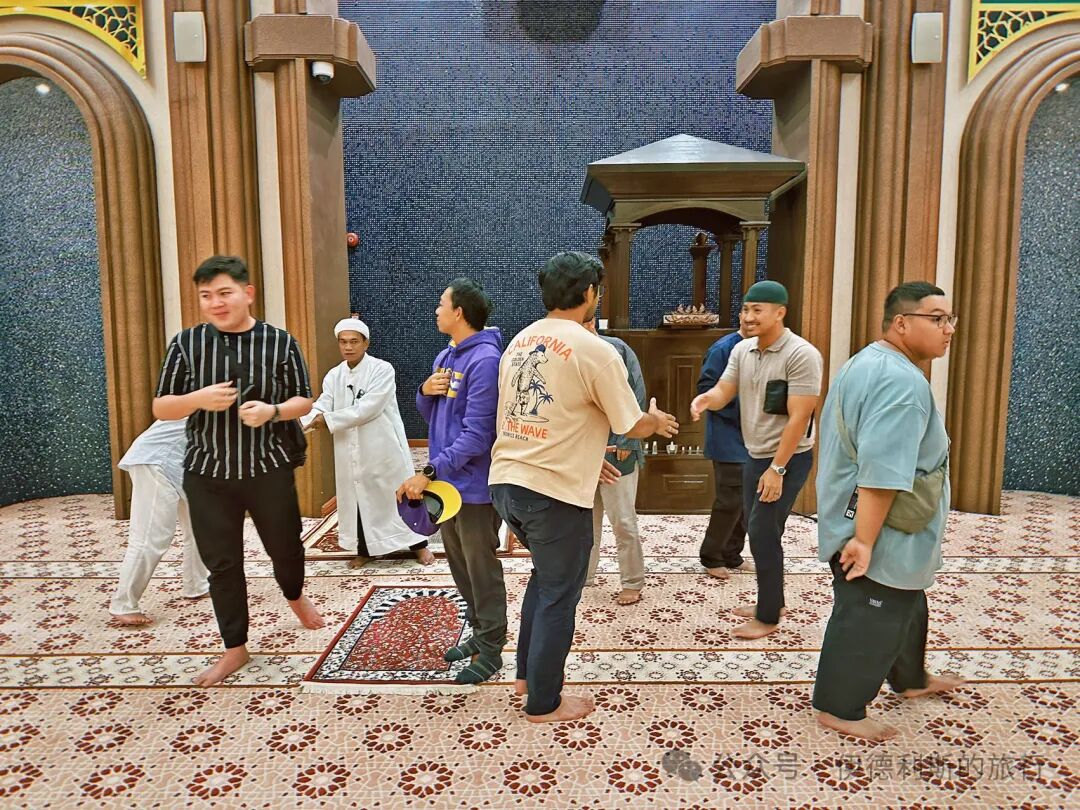
Souvenirs bought at the Brunei airport: paper art of two Brunei national mosques.
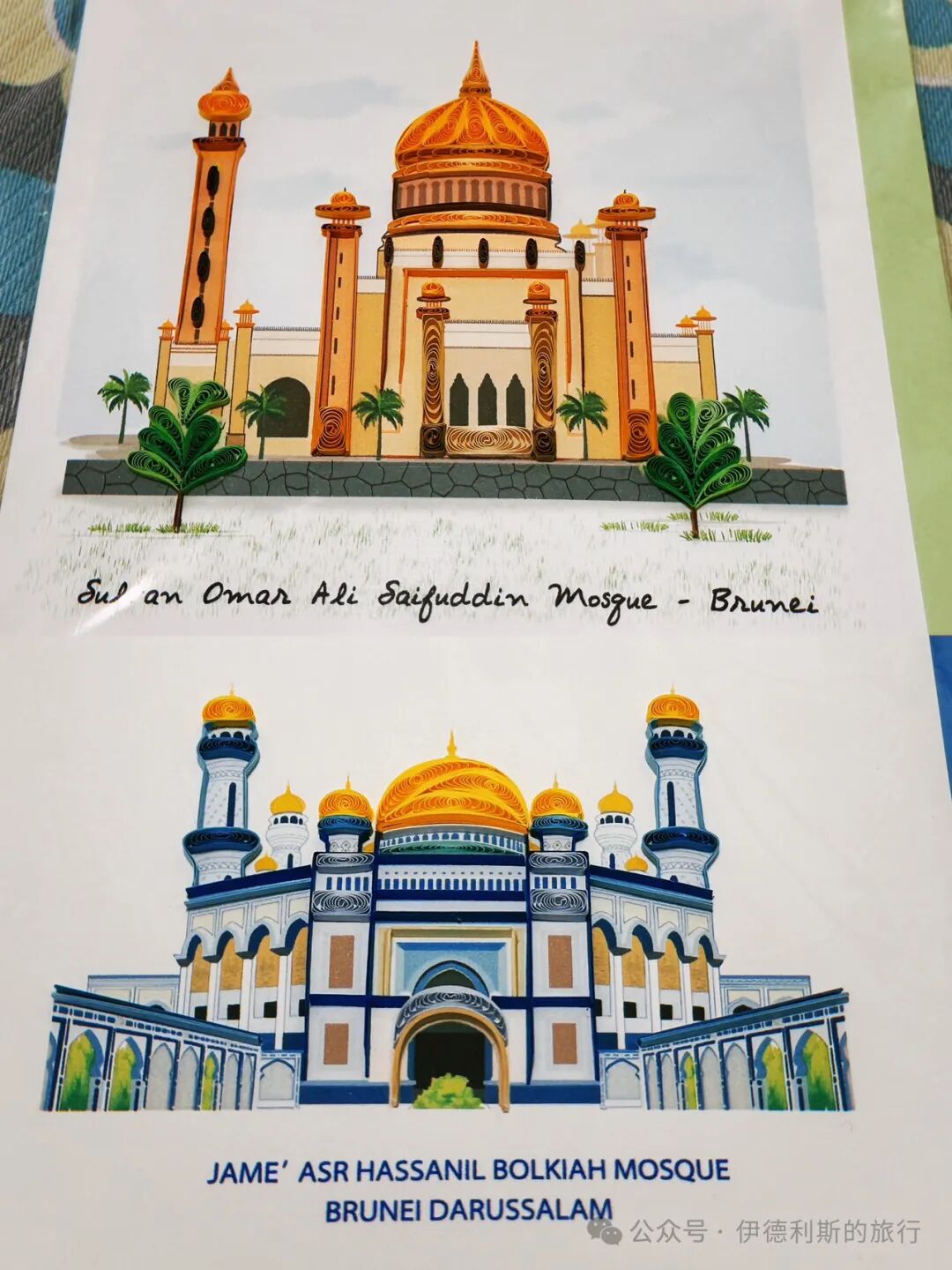
Muslim Culture Guide: Ashura Day - Fasting, Memory and Hui Muslim Traditions
Articles • ali2007fr posted the article • 0 comments • 246 views • 2026-05-19 10:23
Summary: Ashura Day - Fasting, Memory and Hui Muslim Traditions is presented as a clear English travel account for readers interested in Muslim life, halal food, mosques, and local history. The article keeps the original place names, food details, photographs, and cultural context while focusing on Ashura, Muslim Culture, Hui Muslims.
This Tuesday was the 10th of Muharram, the Day of Ashura. As usual, we made the Urumqi Hui Muslim version of Ashura bean rice (dou dou fan).
After work, I went to the supermarket to buy beans. This time I used seven kinds: soybeans, black beans, mung beans, red beans, chickpeas, white kidney beans, and lotus beans. First, I cooked the seven types of beans in a pressure cooker until soft. Then, I diced some Qurbani lamb and chopped green onions. I stir-fried the meat with the green onions, adding salt and Sichuan peppercorn powder. I added rice and sticky rice to the cooked beans, then mixed in the stir-fried meat. I set the pressure cooker to the rice cooking mode to finish it.
Since our pressure cooker wasn't big enough, the water boiled away a bit too much. After taking it out, we added more water to thin it out. Actually, the traditional way is to simmer it in a large pot for a long time.
Legend says that when the Great Flood receded and Prophet Nuh's ship reached land, he and his followers used the seven types of beans on the ship to make the first meal for humanity after the disaster. Across a vast region from Bosnia and Turkey in the west to China in the east, many friends (dostani) make Ashura bean porridge today to remember the landing of Noah's Ark.
You can actually find Ashura bean porridge at the Sultan Turkish Restaurant in Beijing, but the Turkish version is more like a dessert and tastes quite different from the Chinese one.
The Ottoman-style Ashure does not have a fixed recipe, as it changes based on the region and the habits of each family. Tradition says you should use at least seven ingredients, though some believe you should use ten to match the theme of the tenth day, while the Alevis always use twelve ingredients. Common ingredients include wheat, barley, rice, white kidney beans, chickpeas, grape molasses (pekmez), pomegranate molasses, beet juice, dates, raisins, currants, apricots, figs, apples, pistachios, almonds, hazelnuts, walnuts, pine nuts, and sesame seeds. You can decorate the finished Ashure with fennel seeds, black cumin seeds, plums, pomegranate, cardamom, cinnamon, cloves, and nutmeg.
Today, you can buy Ashure in dessert shops all year round in Turkey and the Balkans. However, on the Day of Ashura, people still prefer to make Ashure themselves and share it with the poor, relatives, neighbors, and friends. view all
Summary: Ashura Day - Fasting, Memory and Hui Muslim Traditions is presented as a clear English travel account for readers interested in Muslim life, halal food, mosques, and local history. The article keeps the original place names, food details, photographs, and cultural context while focusing on Ashura, Muslim Culture, Hui Muslims.
This Tuesday was the 10th of Muharram, the Day of Ashura. As usual, we made the Urumqi Hui Muslim version of Ashura bean rice (dou dou fan).
After work, I went to the supermarket to buy beans. This time I used seven kinds: soybeans, black beans, mung beans, red beans, chickpeas, white kidney beans, and lotus beans. First, I cooked the seven types of beans in a pressure cooker until soft. Then, I diced some Qurbani lamb and chopped green onions. I stir-fried the meat with the green onions, adding salt and Sichuan peppercorn powder. I added rice and sticky rice to the cooked beans, then mixed in the stir-fried meat. I set the pressure cooker to the rice cooking mode to finish it.
Since our pressure cooker wasn't big enough, the water boiled away a bit too much. After taking it out, we added more water to thin it out. Actually, the traditional way is to simmer it in a large pot for a long time.
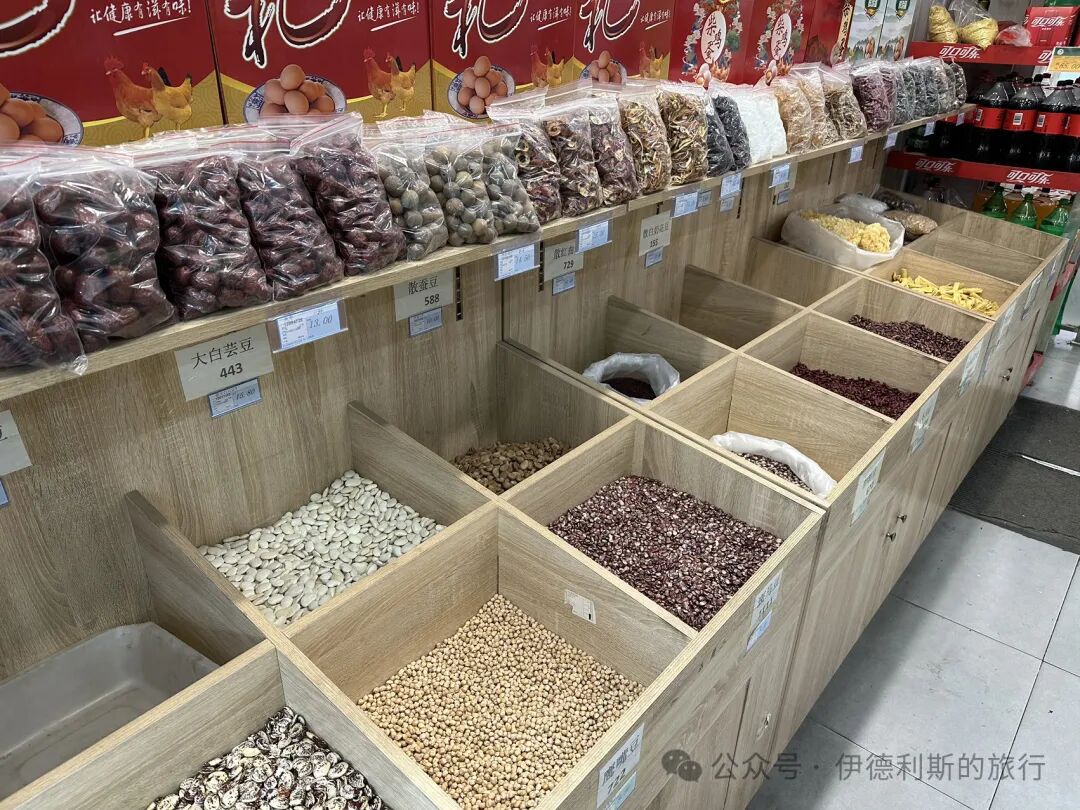
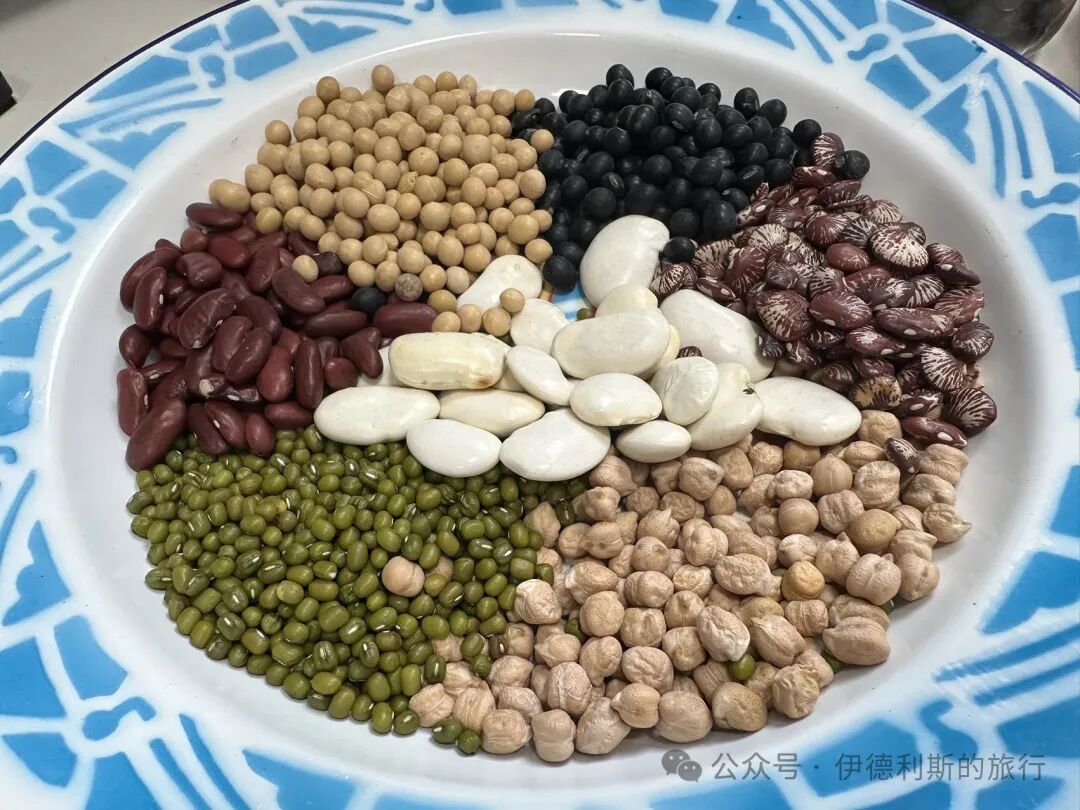
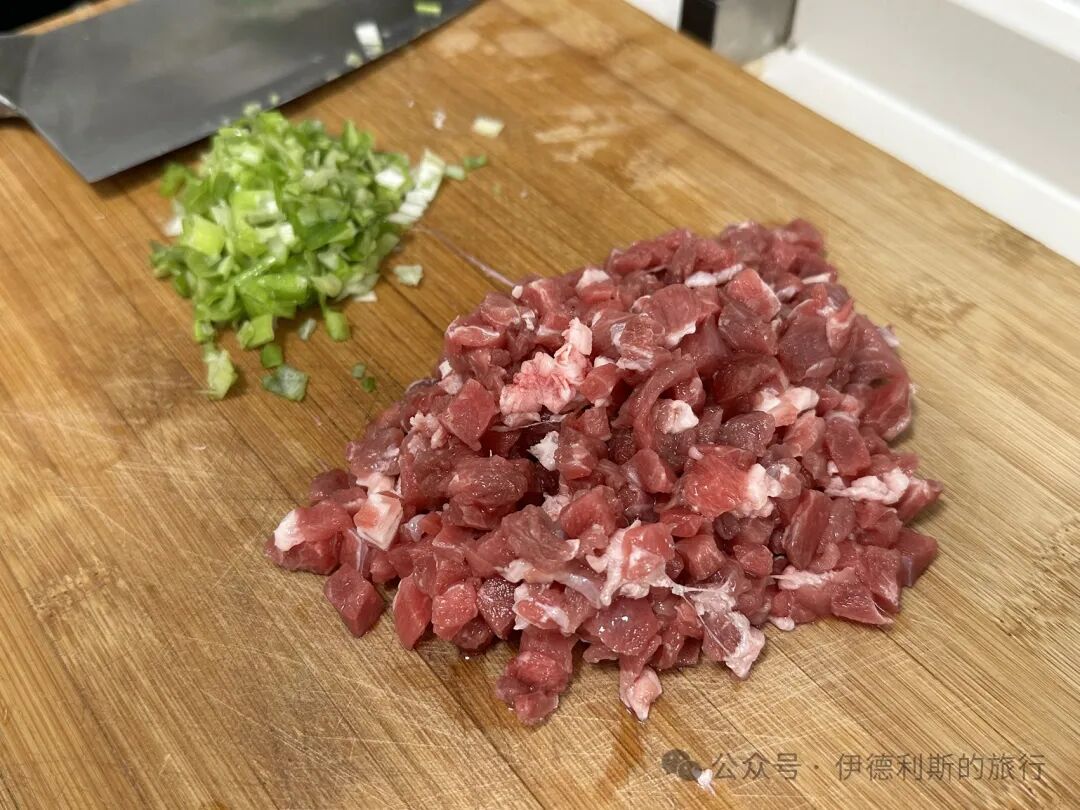
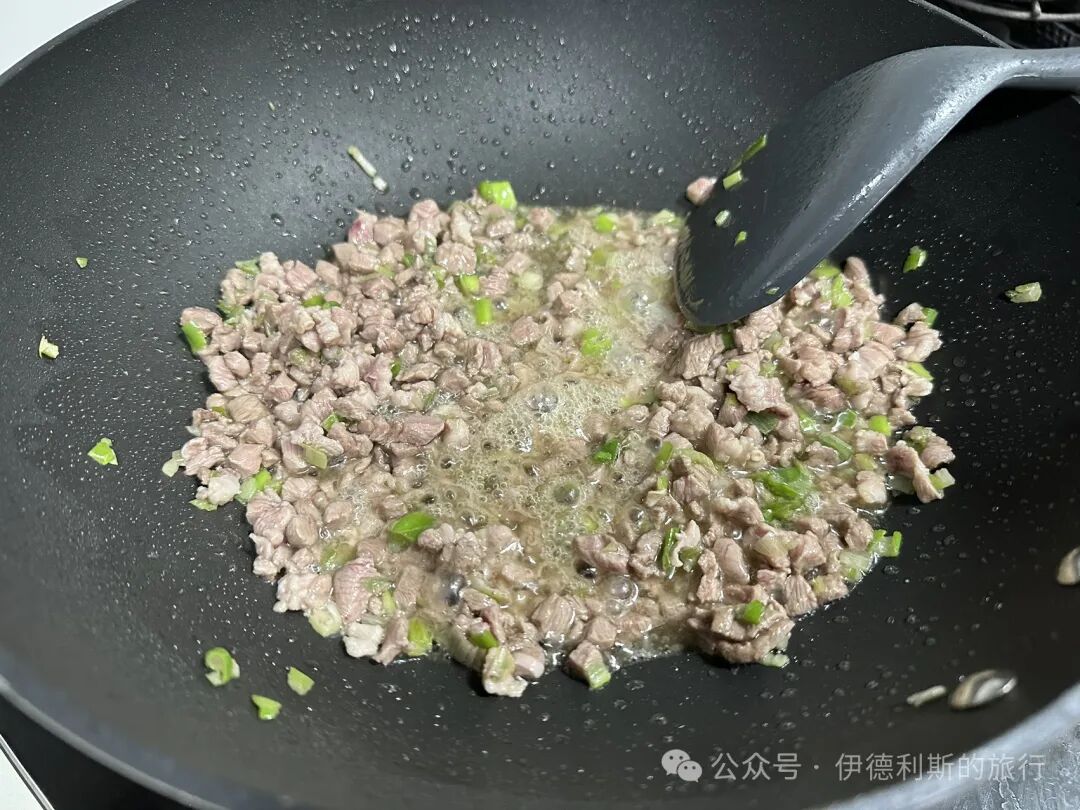
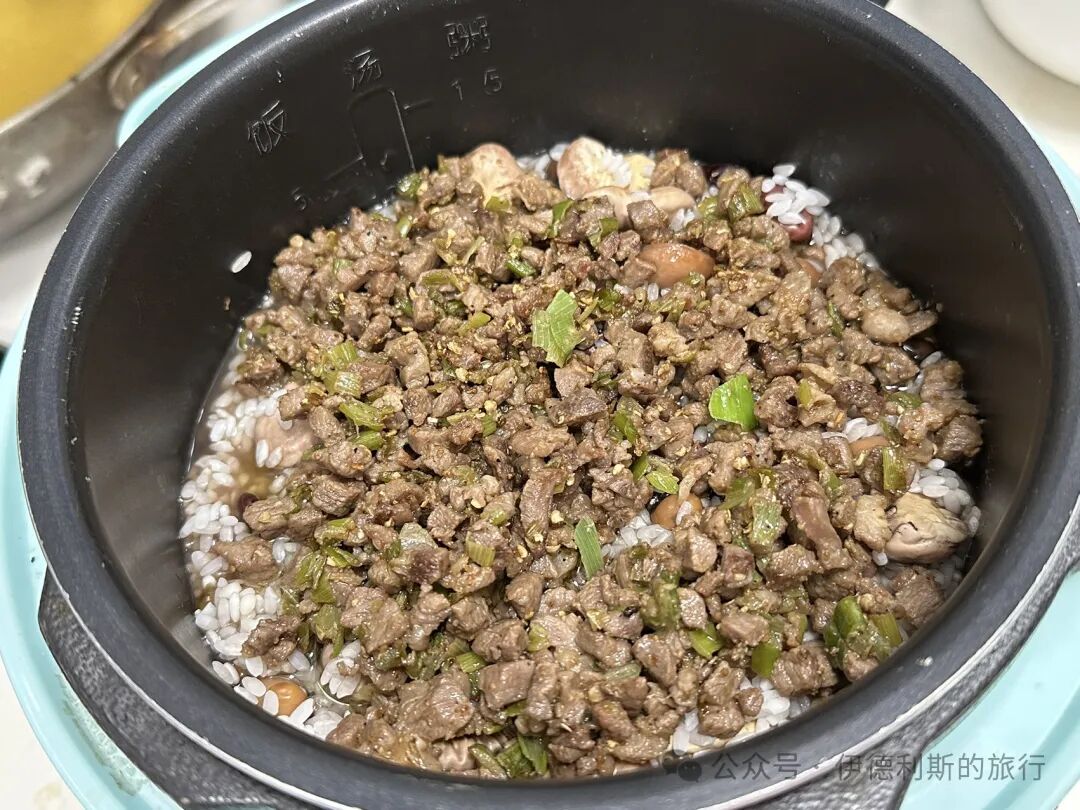
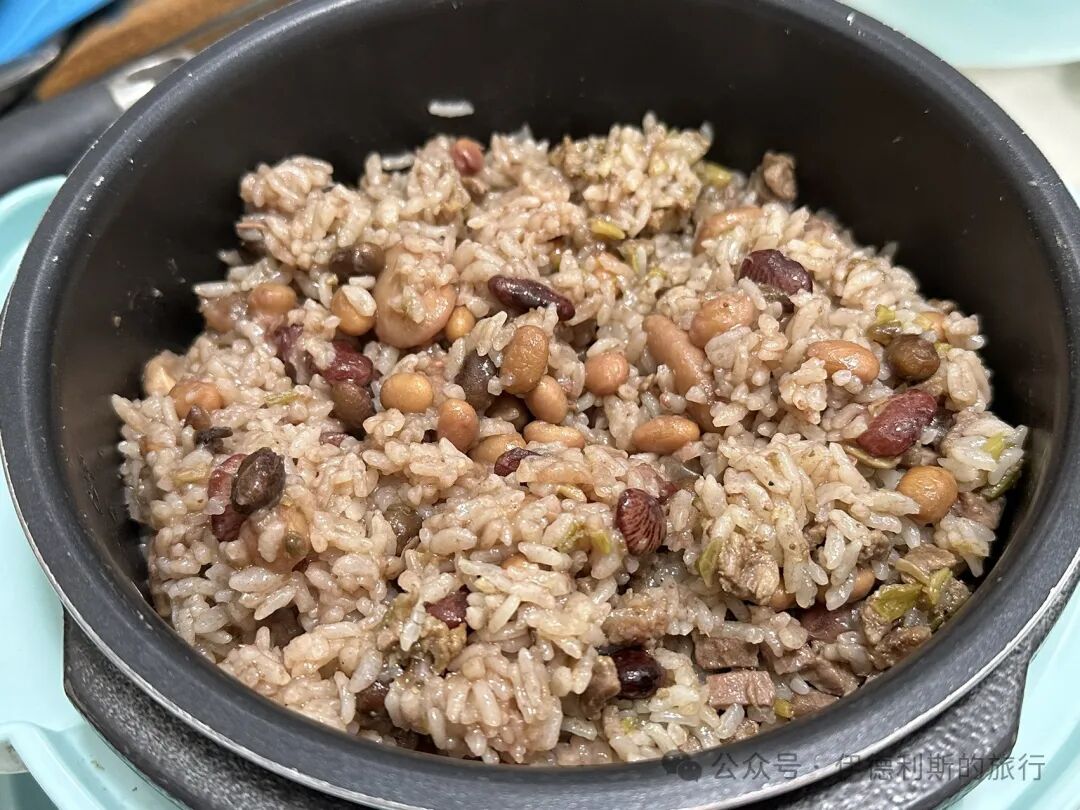
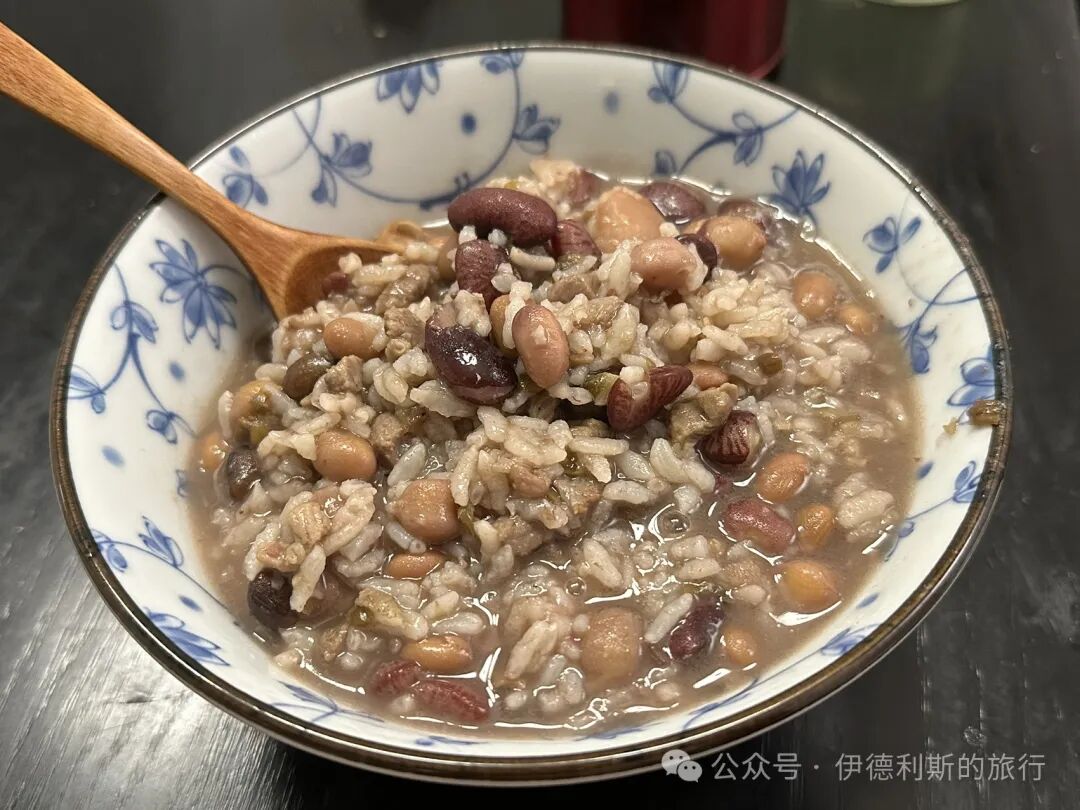
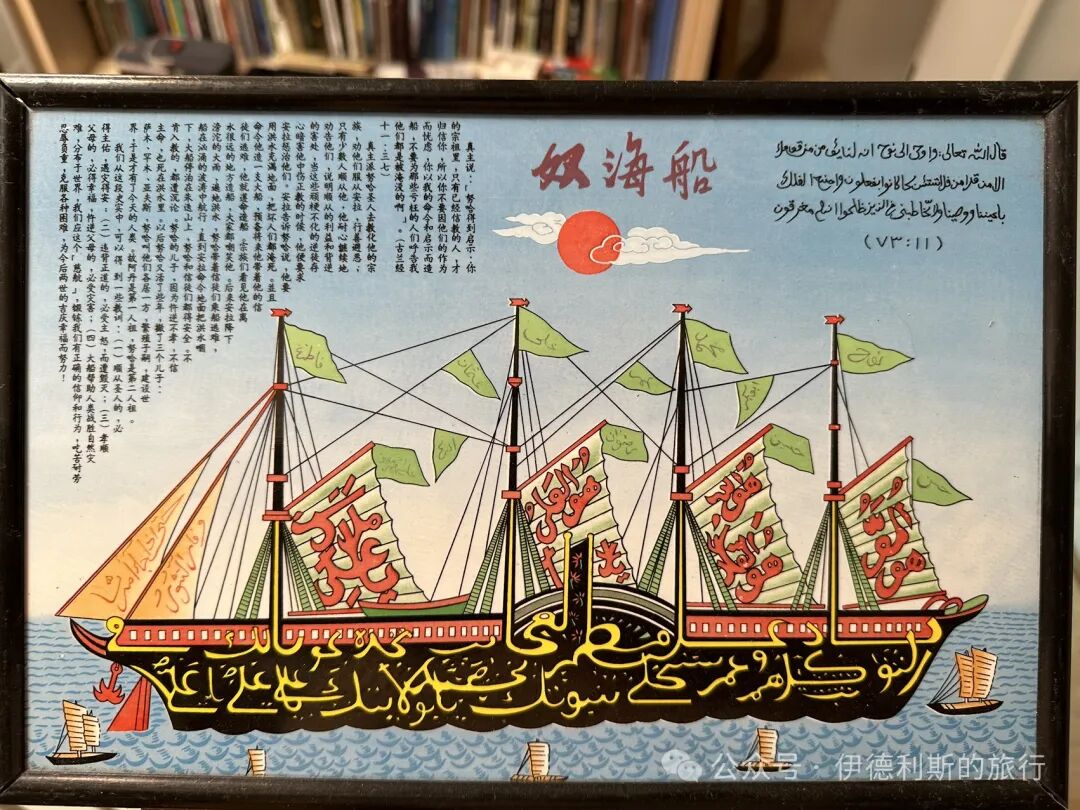
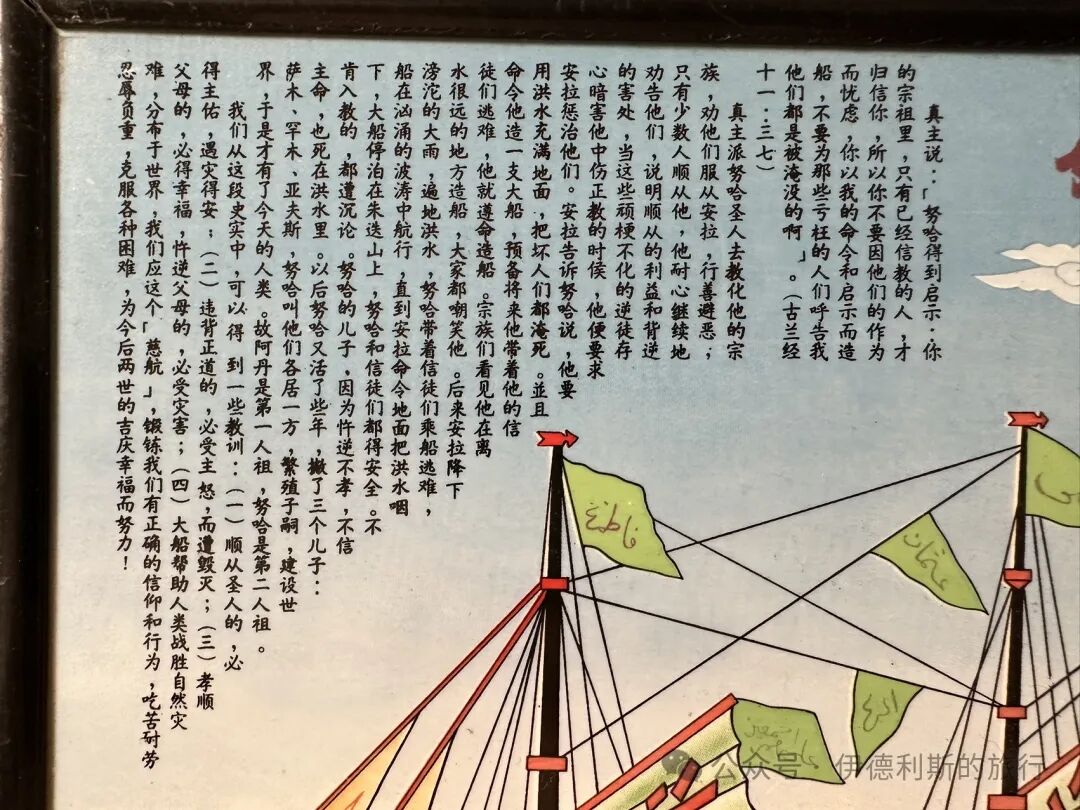
Legend says that when the Great Flood receded and Prophet Nuh's ship reached land, he and his followers used the seven types of beans on the ship to make the first meal for humanity after the disaster. Across a vast region from Bosnia and Turkey in the west to China in the east, many friends (dostani) make Ashura bean porridge today to remember the landing of Noah's Ark.
You can actually find Ashura bean porridge at the Sultan Turkish Restaurant in Beijing, but the Turkish version is more like a dessert and tastes quite different from the Chinese one.
The Ottoman-style Ashure does not have a fixed recipe, as it changes based on the region and the habits of each family. Tradition says you should use at least seven ingredients, though some believe you should use ten to match the theme of the tenth day, while the Alevis always use twelve ingredients. Common ingredients include wheat, barley, rice, white kidney beans, chickpeas, grape molasses (pekmez), pomegranate molasses, beet juice, dates, raisins, currants, apricots, figs, apples, pistachios, almonds, hazelnuts, walnuts, pine nuts, and sesame seeds. You can decorate the finished Ashure with fennel seeds, black cumin seeds, plums, pomegranate, cardamom, cinnamon, cloves, and nutmeg.
Today, you can buy Ashure in dessert shops all year round in Turkey and the Balkans. However, on the Day of Ashura, people still prefer to make Ashure themselves and share it with the poor, relatives, neighbors, and friends.
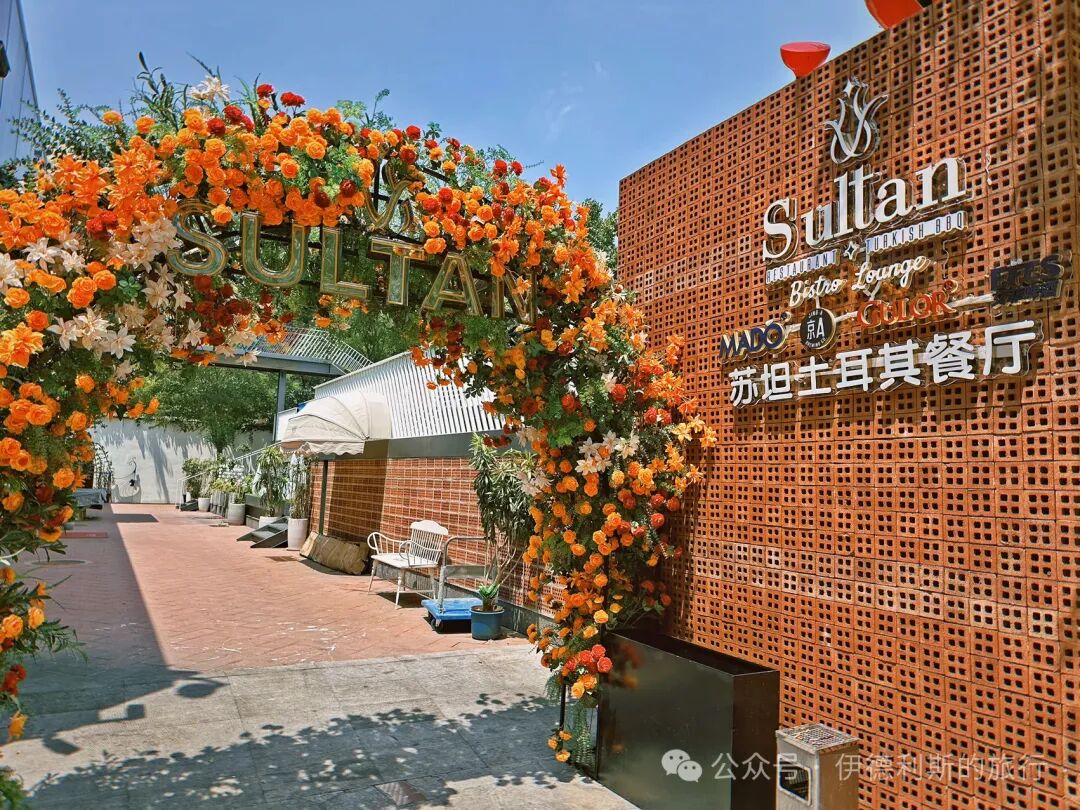
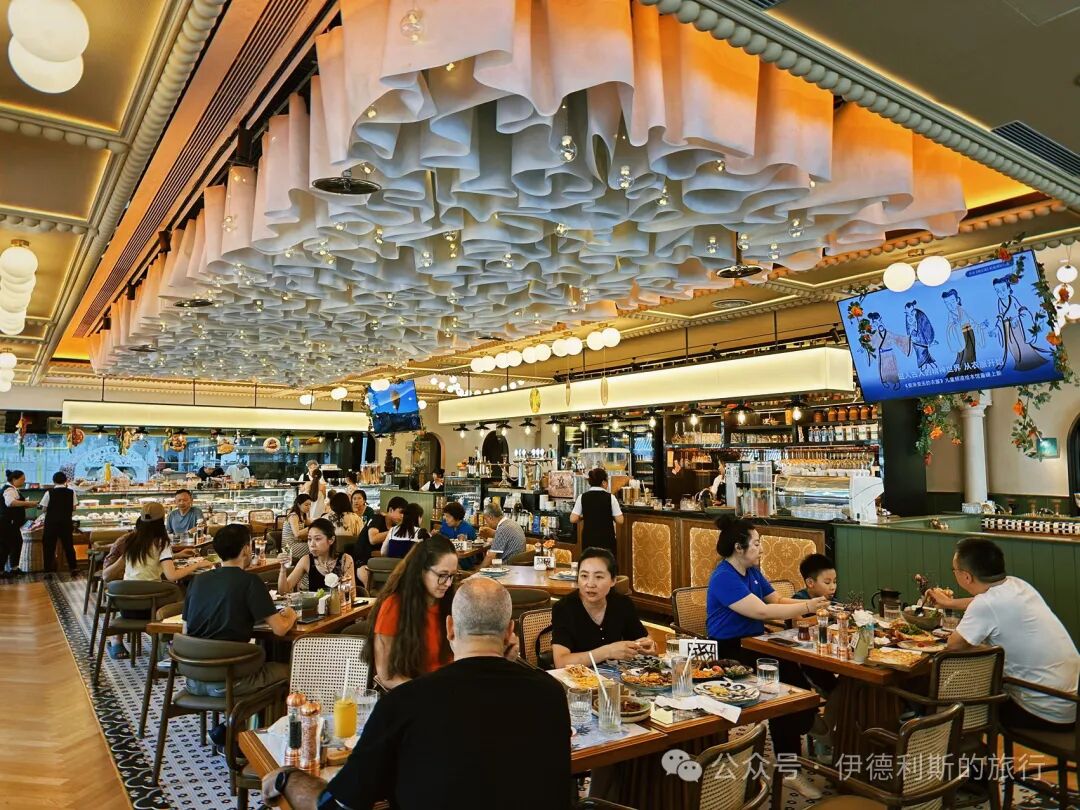
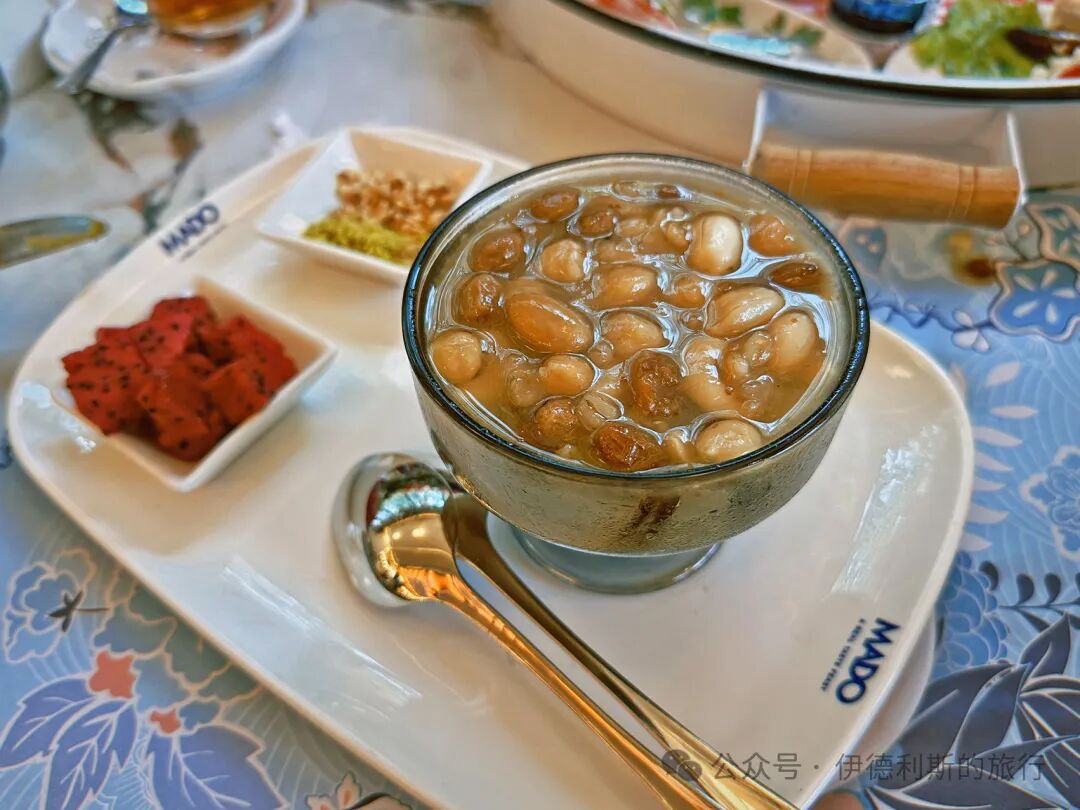
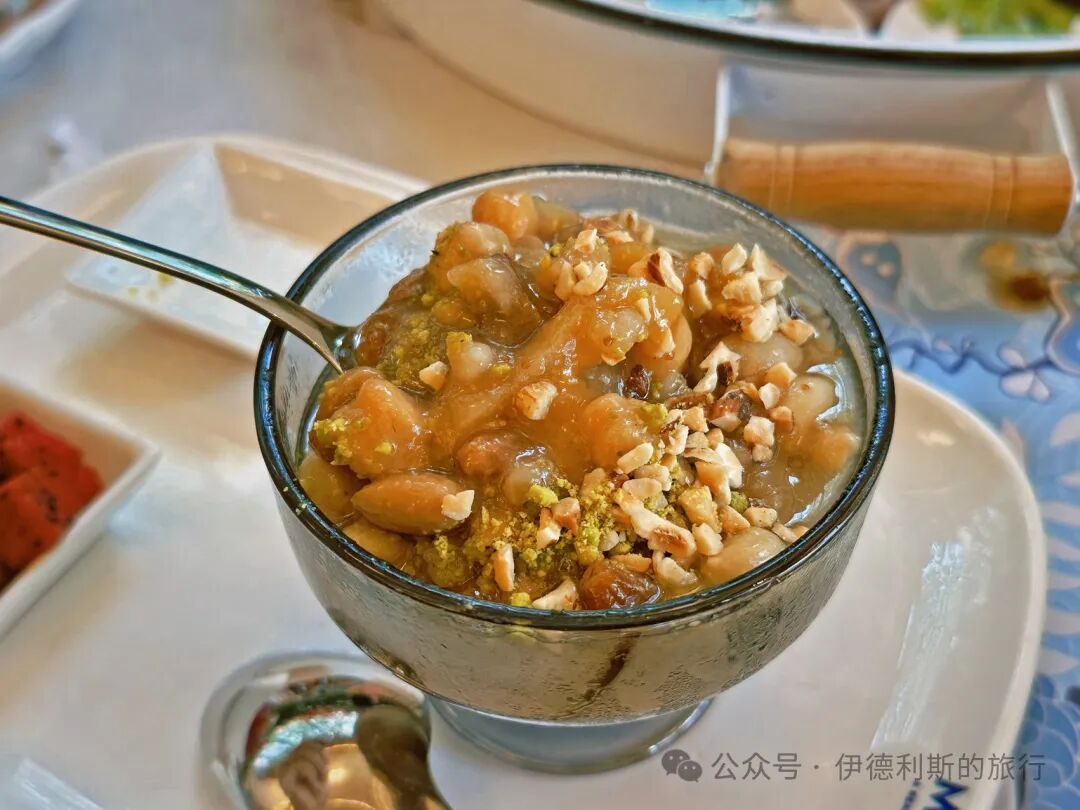
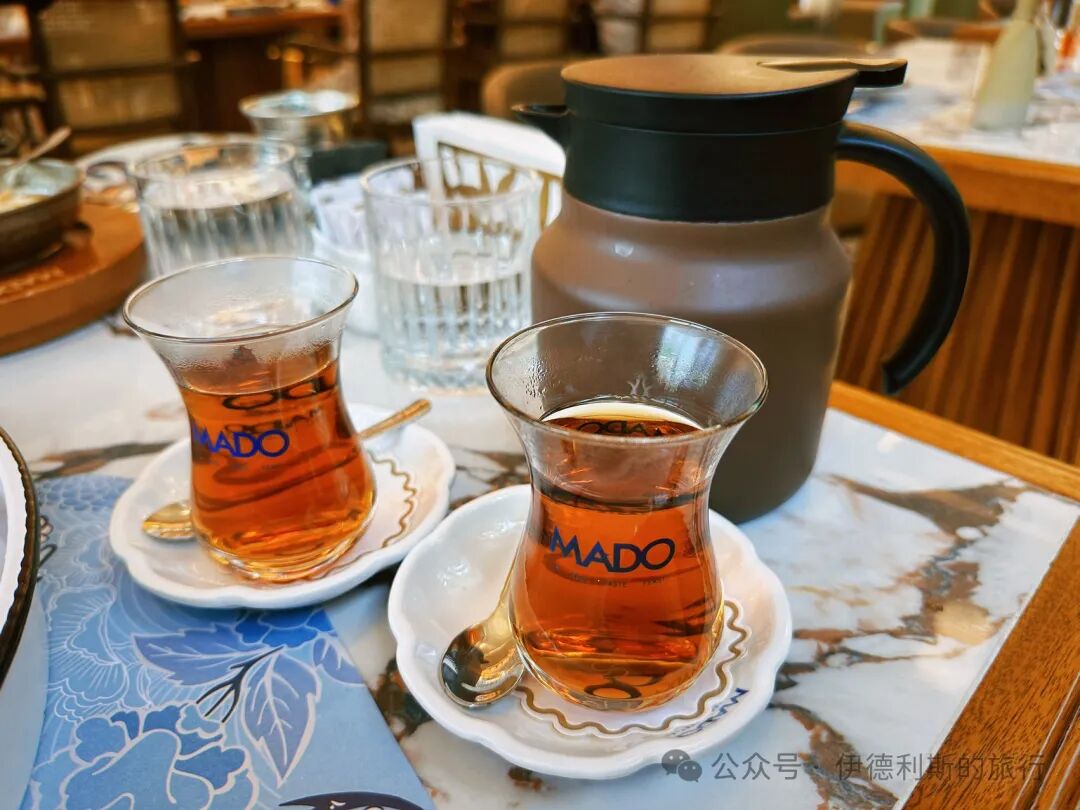
Halal Food Guide: Changying, Beijing - Fatimah Festival and Eight-Bowl Feast
Articles • ali2007fr posted the article • 0 comments • 167 views • 2026-05-19 07:23
Summary: This Beijing travel account follows a Fatimah festival gathering in Changying and a traditional Hui Muslim eight-bowl feast. It keeps the original details on the meal, community setting, religious customs, and local food culture in clear English.
Today is the 15th day of the 6th month of the Islamic calendar. Nine female elders from Changying, Beijing, organized the annual Fatimah gathering at the Changying Service Center to commemorate Lady Fatimah. The gathering began with an imam explaining the significance of remembering Lady Fatimah, followed by the recitation of the Quran and a closing dua. Afterward, we enjoyed the traditional North China banquet known as the Eight Great Bowls (badawan), which includes eight dishes: beef, meatballs, crispy meat (songrou), lamb offal, radish, kelp, yam, and fried tofu. The mix of meat and vegetables was delicious. As traditional villages disappear, most people now choose to hold religious gatherings (nieti) at restaurants with stir-fried dishes. It is truly rare to have the chance to experience a traditional outdoor banquet.
Lady Fatimah was the daughter of the Prophet Muhammad and Lady Khadijah, the wife of Imam Ali, and the mother of Imam Hasan and Imam Husayn. The Prophet Muhammad considered her his dearest person and the most outstanding woman in history, believing she would be the first to enter Paradise. Lady Fatimah’s virtues of kindness, generosity, and filial piety serve as a model for all Muslim women, which is why people organize to commemorate her every year.
As the wife of Imam Ali, the first Imam of the Shia, Lady Fatimah has always held a high status in the Shia tradition. Iran celebrates Lady Fatimah’s birthday as Mother’s Day, and her death anniversary is known as Fatimiyya. Grand commemorations are held in countries like Iran, Iraq, India, Pakistan, Azerbaijan, and Tajikistan, where people take to the streets to mourn and build models of Lady Fatimah’s house.
Due to differences in historical records, there are many dates for Lady Fatimah’s death anniversary, but in North China, it is generally observed on the 15th day of the 6th month of the Islamic calendar. Around this date, Hui Muslim women organize Fatimah gatherings at various local mosques. People invite an imam to recite the Quran and lead a dua, while sharing stories of Lady Fatimah’s life. Those who are able will also fry oil-cakes (youxiang), cook meat porridge, and host banquets to mark the occasion. The Fatimah gathering, along with the Prophet’s birthday (sheng hui), Eid al-Fitr, and Eid al-Adha, make up the 'two festivals and two gatherings' of the Hui Muslims in North China, which is an important cultural tradition. view all
Summary: This Beijing travel account follows a Fatimah festival gathering in Changying and a traditional Hui Muslim eight-bowl feast. It keeps the original details on the meal, community setting, religious customs, and local food culture in clear English.
Today is the 15th day of the 6th month of the Islamic calendar. Nine female elders from Changying, Beijing, organized the annual Fatimah gathering at the Changying Service Center to commemorate Lady Fatimah. The gathering began with an imam explaining the significance of remembering Lady Fatimah, followed by the recitation of the Quran and a closing dua. Afterward, we enjoyed the traditional North China banquet known as the Eight Great Bowls (badawan), which includes eight dishes: beef, meatballs, crispy meat (songrou), lamb offal, radish, kelp, yam, and fried tofu. The mix of meat and vegetables was delicious. As traditional villages disappear, most people now choose to hold religious gatherings (nieti) at restaurants with stir-fried dishes. It is truly rare to have the chance to experience a traditional outdoor banquet.
Lady Fatimah was the daughter of the Prophet Muhammad and Lady Khadijah, the wife of Imam Ali, and the mother of Imam Hasan and Imam Husayn. The Prophet Muhammad considered her his dearest person and the most outstanding woman in history, believing she would be the first to enter Paradise. Lady Fatimah’s virtues of kindness, generosity, and filial piety serve as a model for all Muslim women, which is why people organize to commemorate her every year.
As the wife of Imam Ali, the first Imam of the Shia, Lady Fatimah has always held a high status in the Shia tradition. Iran celebrates Lady Fatimah’s birthday as Mother’s Day, and her death anniversary is known as Fatimiyya. Grand commemorations are held in countries like Iran, Iraq, India, Pakistan, Azerbaijan, and Tajikistan, where people take to the streets to mourn and build models of Lady Fatimah’s house.
Due to differences in historical records, there are many dates for Lady Fatimah’s death anniversary, but in North China, it is generally observed on the 15th day of the 6th month of the Islamic calendar. Around this date, Hui Muslim women organize Fatimah gatherings at various local mosques. People invite an imam to recite the Quran and lead a dua, while sharing stories of Lady Fatimah’s life. Those who are able will also fry oil-cakes (youxiang), cook meat porridge, and host banquets to mark the occasion. The Fatimah gathering, along with the Prophet’s birthday (sheng hui), Eid al-Fitr, and Eid al-Adha, make up the 'two festivals and two gatherings' of the Hui Muslims in North China, which is an important cultural tradition.
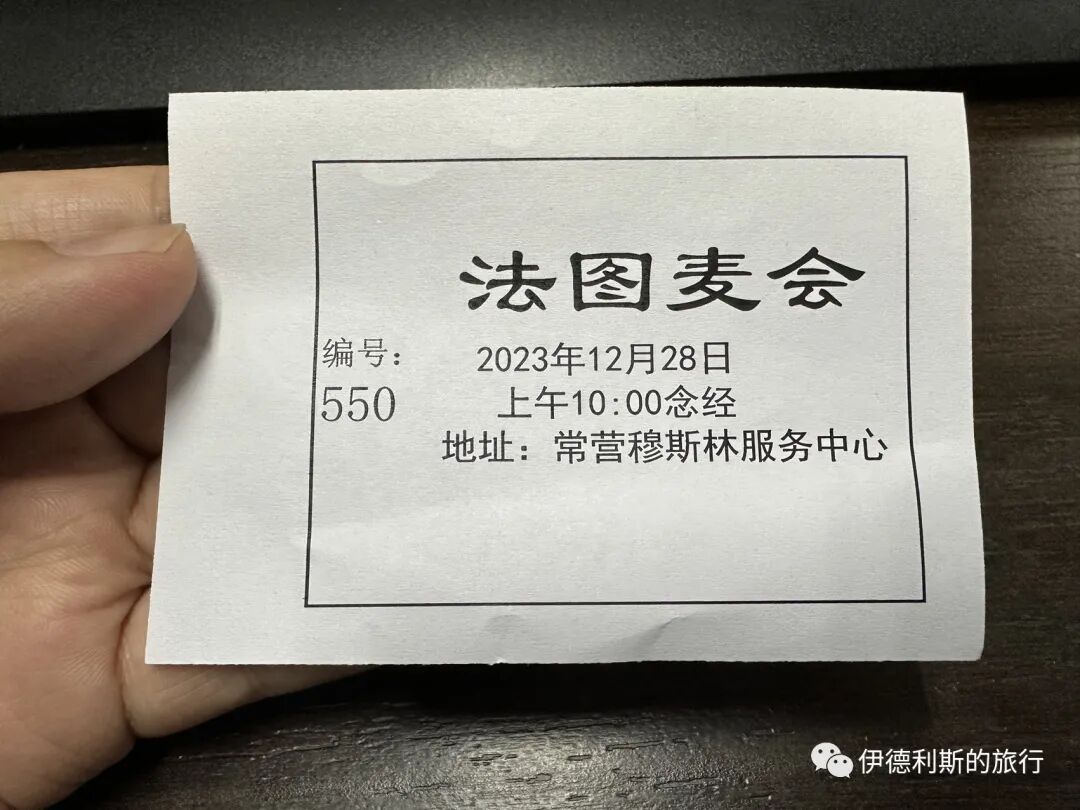
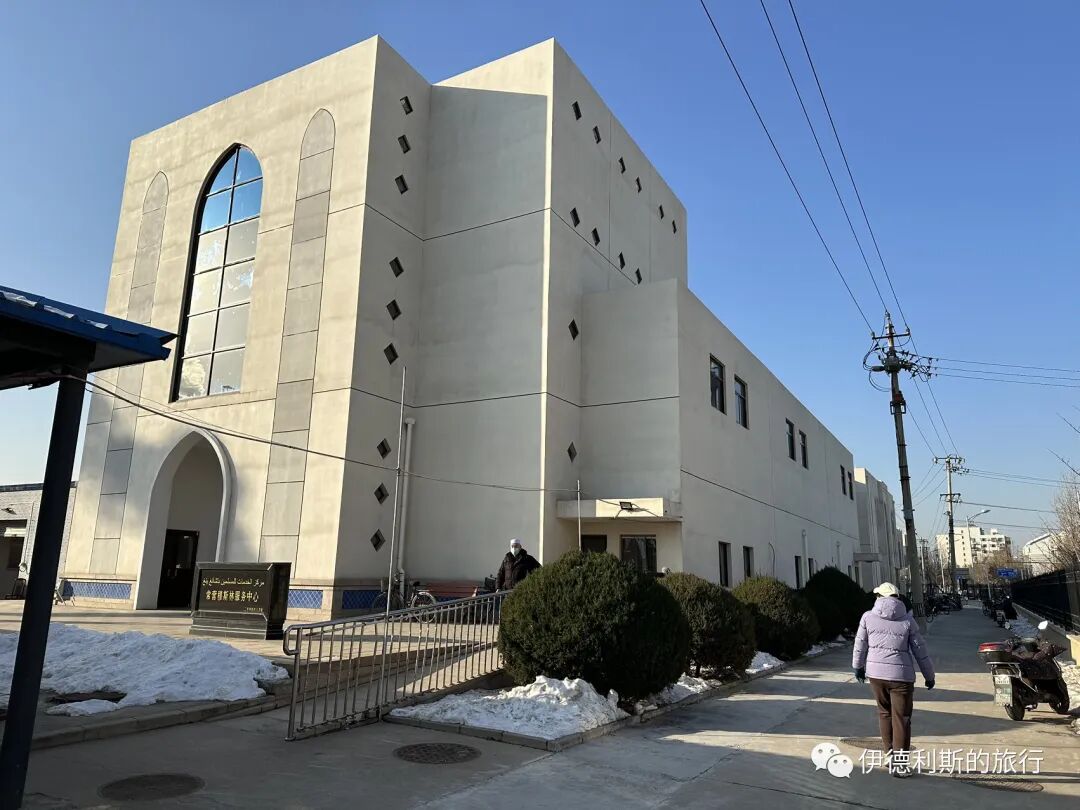
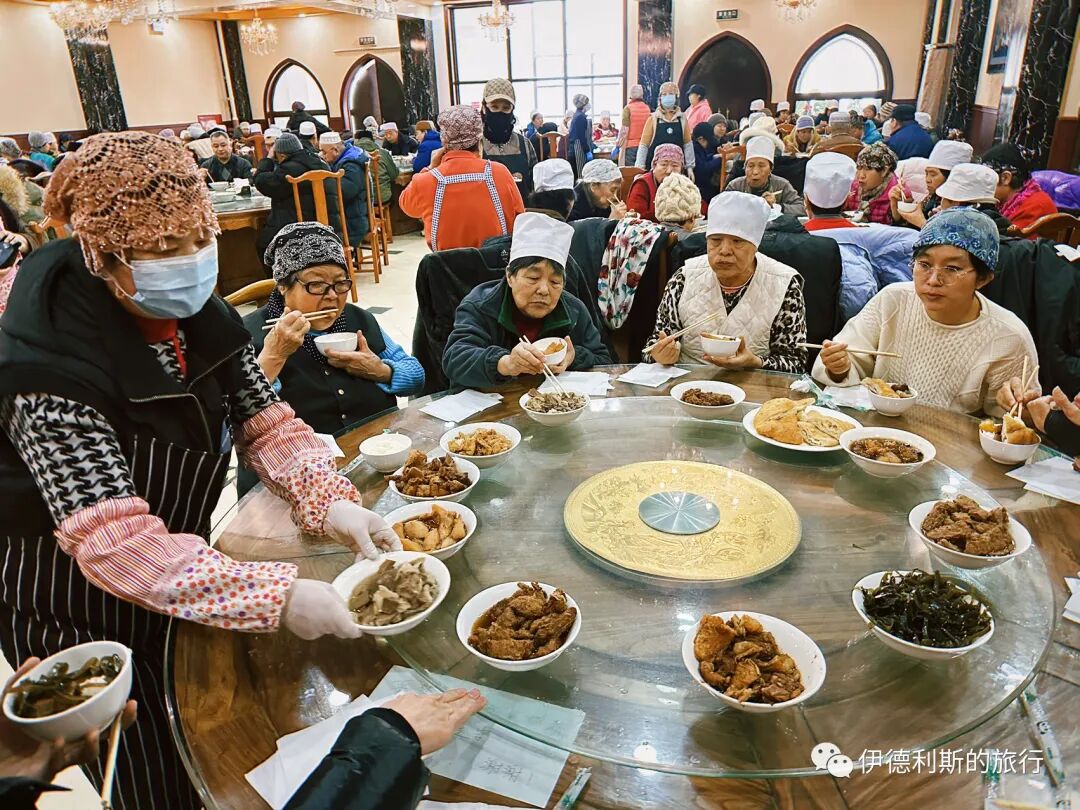
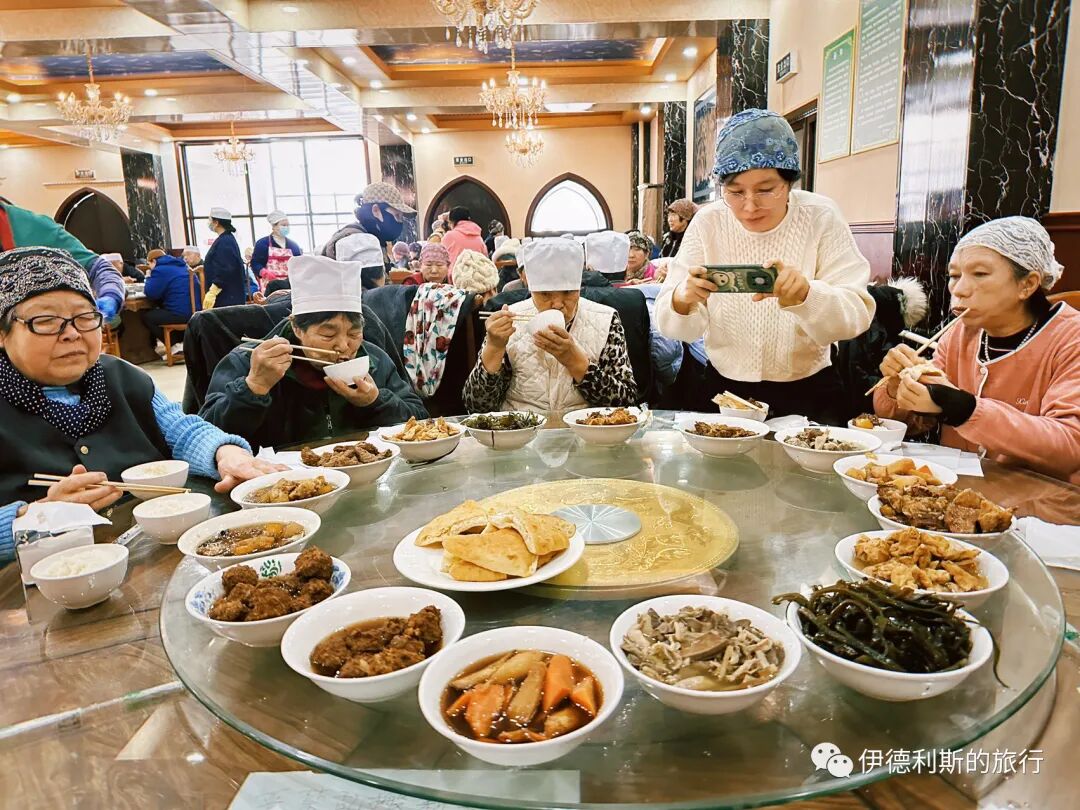
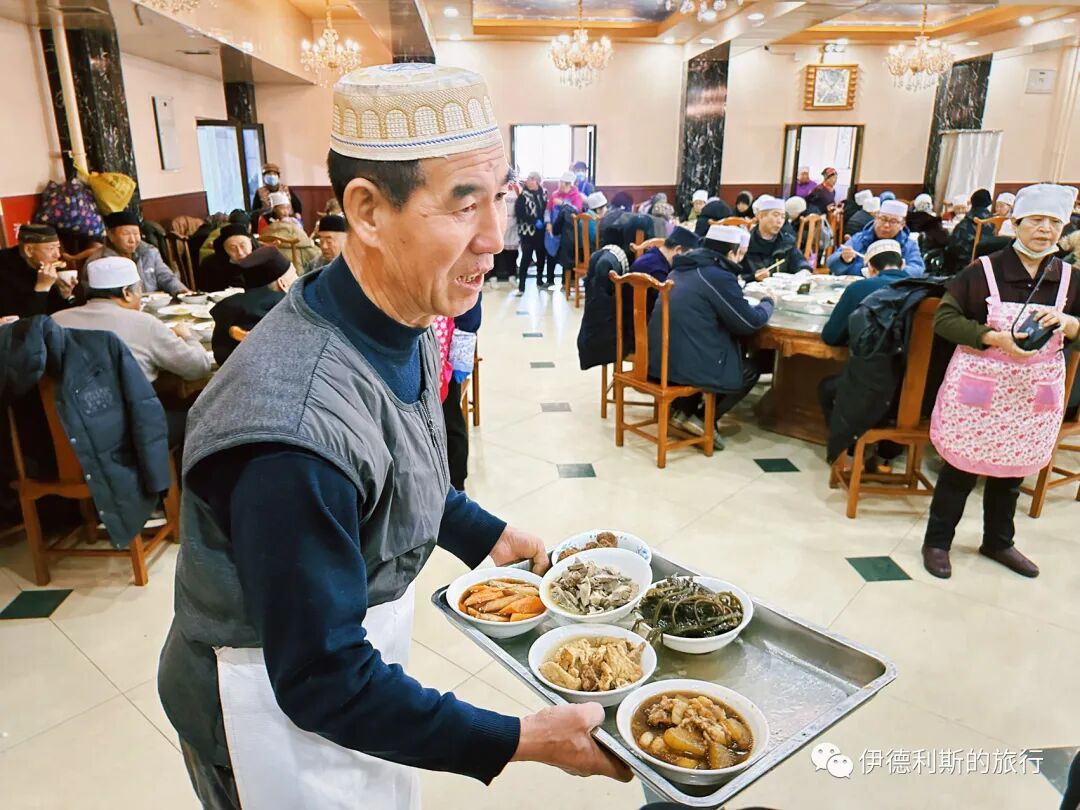
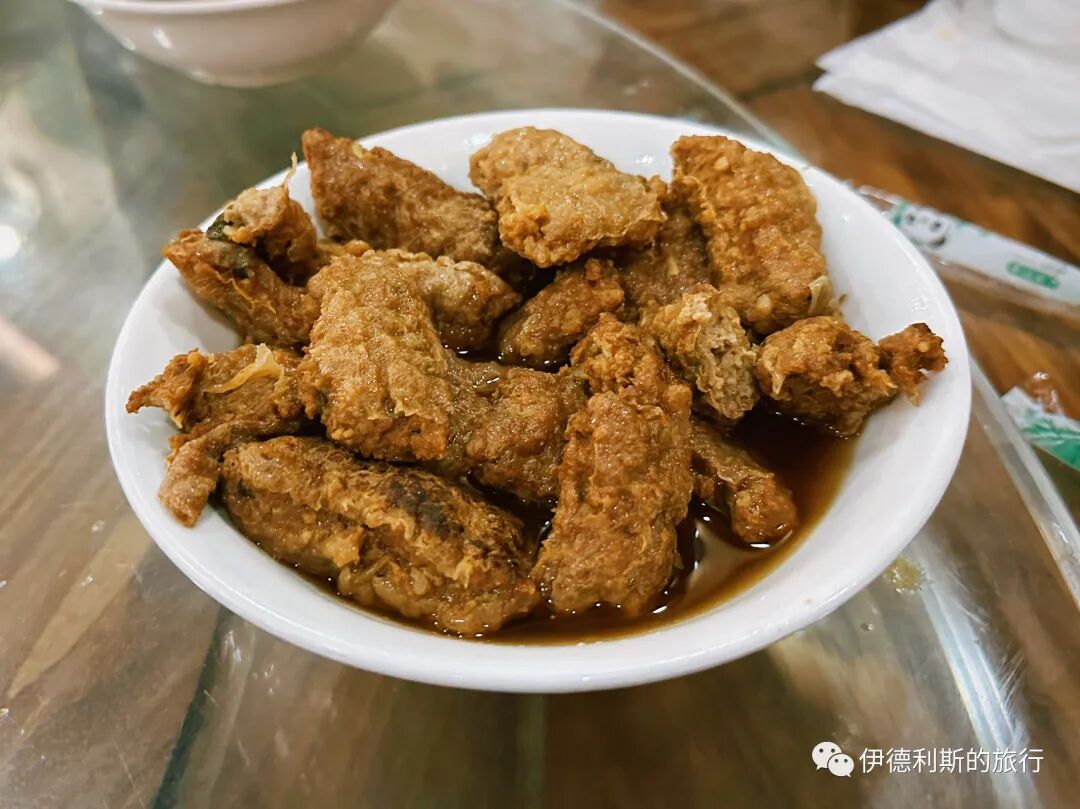
Halal Food Guide: Ashura Porridge — Muslim Memory and Home Cooking
Articles • ali2007fr posted the article • 0 comments • 158 views • 2026-05-17 10:56
Summary: Halal Food Guide: Ashura Porridge — Muslim Memory and Home Cooking is presented here as a firsthand travel account in clear English, beginning with this scene: Yesterday was the 10th of Muharram in the Islamic calendar, the honorable Day of Ashura, which is the first important day after the Islamic New Year. The account keeps its focus on Ashura Food, Muslim Culture, Halal Food while preserving the names, places, food, and historical details from the Chinese source.
Yesterday was the 10th of Muharram in the Islamic calendar, the honorable Day of Ashura, which is the first important day after the Islamic New Year. Hui Muslims in China traditionally fast and make Ashura porridge on this day. After work, Zainab and I made the Urumqi Hui Muslim version of Ashura lamb and bean rice (doudoufan). We prepared seven types of beans and cooked them in a pressure cooker first. Then, we diced the sacrificial lamb (qurbani), rendered the lamb fat, and stir-fried it with chopped green onions, salt, and Sichuan peppercorn powder. Once the beans were cooked, we added rice and glutinous rice, followed by the stir-fried diced meat, and simmered everything until the rice was done. When we ate it, it had the fresh fragrance of the beans and the savory taste of the lamb. I ate two big bowls and still wanted more. Actually, making Ashura bean porridge is to commemorate the landing of the ship of Nuh, also known as Noah's Ark. I am sharing the origin of Ashura bean porridge as told by Imam An from the Jingjue Mosque in Nanjing: On the Day of Ashura, the Prophet Nuh and his followers stepped off the ship and fasted on this day to thank Allah. At that time, they had almost run out of food. One person took out a handful of wheat, another took out a handful of mung beans, and someone else took out a handful of fava beans. After the Prophet Nuh gathered seven types of seeds, he cooked them so everyone could break their fast. By the will of Allah and the miracle (mu'jiza) of the Prophet. This small amount of food was enough to feed everyone who came off the ship. This was the first meal cooked on the ground after the flood covered the earth, so people treat it as a blessing from the Prophet Nuh. The Prophet Nuh is known as the second ancestor of humanity. view all
Summary: Halal Food Guide: Ashura Porridge — Muslim Memory and Home Cooking is presented here as a firsthand travel account in clear English, beginning with this scene: Yesterday was the 10th of Muharram in the Islamic calendar, the honorable Day of Ashura, which is the first important day after the Islamic New Year. The account keeps its focus on Ashura Food, Muslim Culture, Halal Food while preserving the names, places, food, and historical details from the Chinese source.
Yesterday was the 10th of Muharram in the Islamic calendar, the honorable Day of Ashura, which is the first important day after the Islamic New Year. Hui Muslims in China traditionally fast and make Ashura porridge on this day. After work, Zainab and I made the Urumqi Hui Muslim version of Ashura lamb and bean rice (doudoufan). We prepared seven types of beans and cooked them in a pressure cooker first. Then, we diced the sacrificial lamb (qurbani), rendered the lamb fat, and stir-fried it with chopped green onions, salt, and Sichuan peppercorn powder. Once the beans were cooked, we added rice and glutinous rice, followed by the stir-fried diced meat, and simmered everything until the rice was done. When we ate it, it had the fresh fragrance of the beans and the savory taste of the lamb. I ate two big bowls and still wanted more. Actually, making Ashura bean porridge is to commemorate the landing of the ship of Nuh, also known as Noah's Ark. I am sharing the origin of Ashura bean porridge as told by Imam An from the Jingjue Mosque in Nanjing: On the Day of Ashura, the Prophet Nuh and his followers stepped off the ship and fasted on this day to thank Allah. At that time, they had almost run out of food. One person took out a handful of wheat, another took out a handful of mung beans, and someone else took out a handful of fava beans. After the Prophet Nuh gathered seven types of seeds, he cooked them so everyone could break their fast. By the will of Allah and the miracle (mu'jiza) of the Prophet. This small amount of food was enough to feed everyone who came off the ship. This was the first meal cooked on the ground after the flood covered the earth, so people treat it as a blessing from the Prophet Nuh. The Prophet Nuh is known as the second ancestor of humanity.
Hui Muslim Language in China: Urumqi Dialect, Identity and Everyday Culture
Articles • ali2007fr posted the article • 0 comments • 149 views • 2026-05-17 08:29
Summary: This travel note introduces Hui Muslim Language in China: Urumqi Dialect, Identity and Everyday Culture. Today I am sharing two books related to the language of Hui Muslims. It is useful for readers interested in Hui Muslims, Chinese Language, Muslim Culture.
Today I am sharing two books related to the language of Hui Muslims.
The first one is the Urumqi Hui Muslim Language Gazetteer; Zainabu and I speak in this 'AA-zi' style in our daily lives, and it also includes the unique Urumqi Hui Muslim way of teasing others: 'zi-zi-zi'.
Some religious terminology.
The differences between Urumqi Hui Muslim dialect and Han Chinese dialect.
The characteristics of the Urumqi Hui Muslim dialect.
The differences between Urumqi Hui Muslim dialect and Han Chinese dialect. The Hui Muslim dialect is based on the Shaanxi dialect, while the Han Chinese dialect is based on the Gansu dialect.
The second book is a selection of Hui Muslim language published by the Tianjin Beisi (North Mosque) in 2001. The Hui Muslim language is a precious cultural treasure, and some young people today can no longer master it proficiently.
Alim, meaning 'scholar' in Arabic. Example sentence: The ink of an Alim is more precious than the blood of a Shahid (martyr).
Akhirah, meaning 'the afterlife' in Arabic. Example sentence: This world is the sowing field for the Akhirah. Bakhil, meaning 'stingy' in Arabic. Example sentence: A Bakhil person cannot enter Paradise. Bala, meaning 'disaster' in Arabic. Example sentence: Wasting food will bring about a Bala. Bandah, meaning 'servant' in Persian. Example sentence: The intention of a Bandah, the joy of sincerity. Barakah, meaning 'blessing' in Arabic. Example sentence: When a guest enters the home, Barakah comes with them. Dushman, meaning 'enemy' in Persian; in daily life, it is often used to describe someone who is unreasonable and likes to go against others. Du'a, meaning 'supplication' in Arabic. Example sentence: Keep the Du'a in your heart, and peace be upon you. Dunya, meaning 'the present world' in Arabic. Example sentence: Work for the Dunya as if you will live for a thousand years, and work for the afterlife as if you will pass away in an instant. view all
Summary: This travel note introduces Hui Muslim Language in China: Urumqi Dialect, Identity and Everyday Culture. Today I am sharing two books related to the language of Hui Muslims. It is useful for readers interested in Hui Muslims, Chinese Language, Muslim Culture.
Today I am sharing two books related to the language of Hui Muslims.
The first one is the Urumqi Hui Muslim Language Gazetteer; Zainabu and I speak in this 'AA-zi' style in our daily lives, and it also includes the unique Urumqi Hui Muslim way of teasing others: 'zi-zi-zi'.
Some religious terminology.
The differences between Urumqi Hui Muslim dialect and Han Chinese dialect.
The characteristics of the Urumqi Hui Muslim dialect.
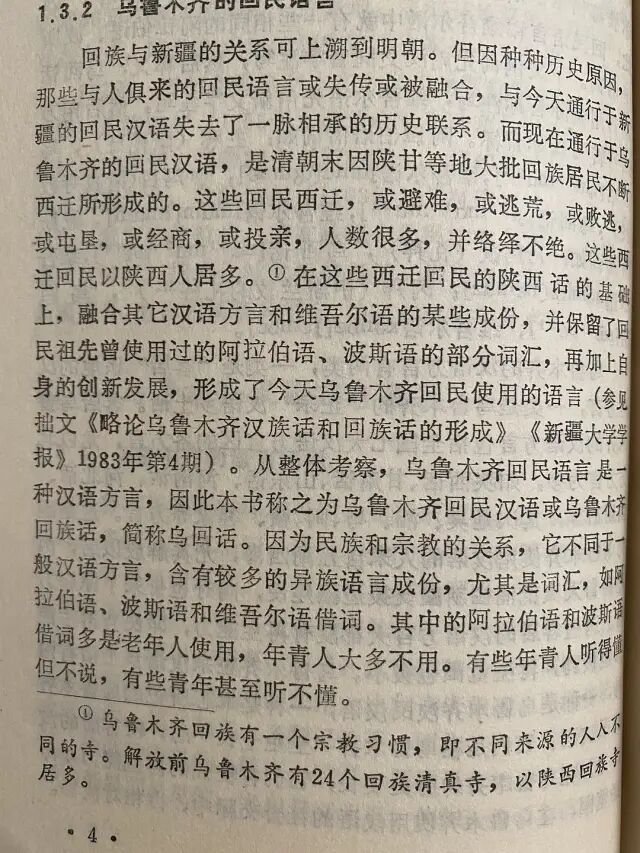
The differences between Urumqi Hui Muslim dialect and Han Chinese dialect. The Hui Muslim dialect is based on the Shaanxi dialect, while the Han Chinese dialect is based on the Gansu dialect.
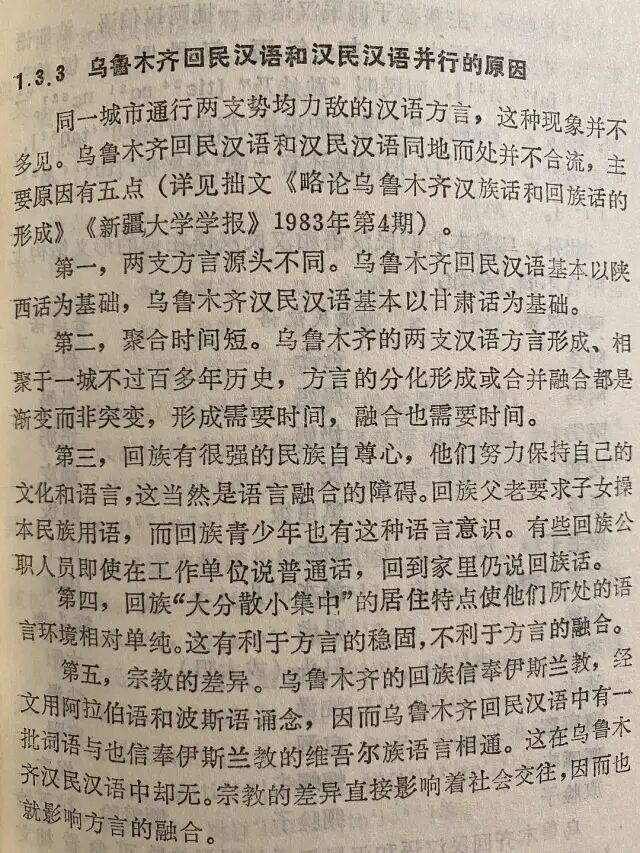
The second book is a selection of Hui Muslim language published by the Tianjin Beisi (North Mosque) in 2001. The Hui Muslim language is a precious cultural treasure, and some young people today can no longer master it proficiently.
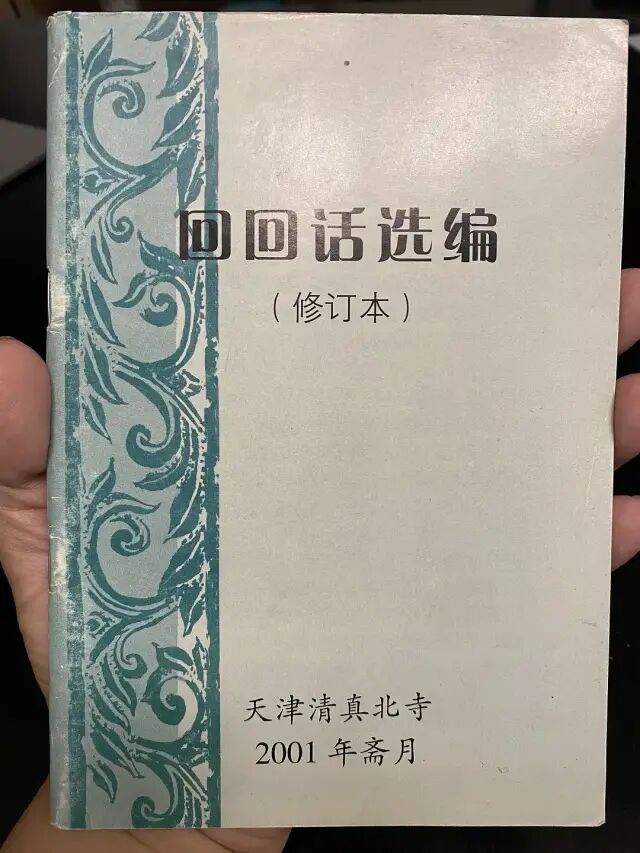
Alim, meaning 'scholar' in Arabic. Example sentence: The ink of an Alim is more precious than the blood of a Shahid (martyr).
Akhirah, meaning 'the afterlife' in Arabic. Example sentence: This world is the sowing field for the Akhirah. Bakhil, meaning 'stingy' in Arabic. Example sentence: A Bakhil person cannot enter Paradise. Bala, meaning 'disaster' in Arabic. Example sentence: Wasting food will bring about a Bala. Bandah, meaning 'servant' in Persian. Example sentence: The intention of a Bandah, the joy of sincerity. Barakah, meaning 'blessing' in Arabic. Example sentence: When a guest enters the home, Barakah comes with them. Dushman, meaning 'enemy' in Persian; in daily life, it is often used to describe someone who is unreasonable and likes to go against others. Du'a, meaning 'supplication' in Arabic. Example sentence: Keep the Du'a in your heart, and peace be upon you. Dunya, meaning 'the present world' in Arabic. Example sentence: Work for the Dunya as if you will live for a thousand years, and work for the afterlife as if you will pass away in an instant.
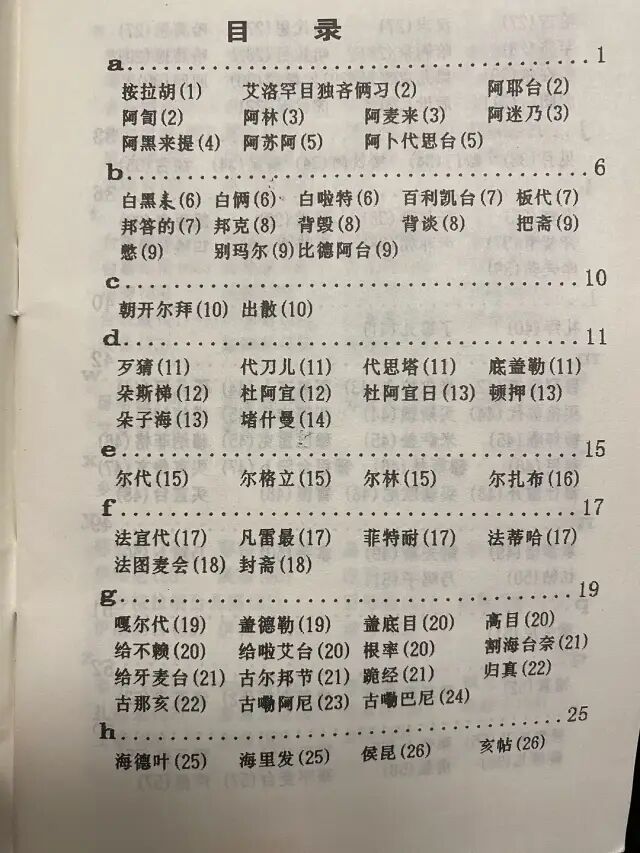
Book Notes on Hui Muslim Speech: Language, Identity and Muslim Culture in China
Articles • ali2007fr posted the article • 0 comments • 169 views • 2026-05-17 08:29
Summary: This travel note introduces Book Notes on Hui Muslim Speech: Language, Identity and Muslim Culture in China. Today I am sharing two books related to the language of Hui Muslims. It is useful for readers interested in Hui Muslims, Chinese Language, Muslim Culture.
Today I am sharing two books related to the language of Hui Muslims.
The first one is the Urumqi Hui Muslim Language Gazetteer; Zainabu and I speak in this 'AA-zi' style in our daily lives, and it also includes the unique Urumqi Hui Muslim way of teasing others: 'zi-zi-zi'.
Some religious terminology.
The differences between Urumqi Hui Muslim dialect and Han Chinese dialect.
The characteristics of the Urumqi Hui Muslim dialect.
The differences between Urumqi Hui Muslim dialect and Han Chinese dialect. The Hui Muslim dialect is based on the Shaanxi dialect, while the Han Chinese dialect is based on the Gansu dialect.
The second book is a selection of Hui Muslim language published by the Tianjin Beisi (North Mosque) in 2001. The Hui Muslim language is a precious cultural treasure, and some young people today can no longer master it proficiently.
Alim, meaning 'scholar' in Arabic. Example sentence: The ink of an Alim is more precious than the blood of a Shahid (martyr).
Akhirah, meaning 'the afterlife' in Arabic. Example sentence: This world is the sowing field for the Akhirah. Bakhil, meaning 'stingy' in Arabic. Example sentence: A Bakhil person cannot enter Paradise. Bala, meaning 'disaster' in Arabic. Example sentence: Wasting food will bring about a Bala. Bandah, meaning 'servant' in Persian. Example sentence: The intention of a Bandah, the joy of sincerity. Barakah, meaning 'blessing' in Arabic. Example sentence: When a guest enters the home, Barakah comes with them. Dushman, meaning 'enemy' in Persian; in daily life, it is often used to describe someone who is unreasonable and likes to go against others. Du'a, meaning 'supplication' in Arabic. Example sentence: Keep the Du'a in your heart, and peace be upon you. Dunya, meaning 'the present world' in Arabic. Example sentence: Work for the Dunya as if you will live for a thousand years, and work for the afterlife as if you will pass away in an instant. view all
Summary: This travel note introduces Book Notes on Hui Muslim Speech: Language, Identity and Muslim Culture in China. Today I am sharing two books related to the language of Hui Muslims. It is useful for readers interested in Hui Muslims, Chinese Language, Muslim Culture.
Today I am sharing two books related to the language of Hui Muslims.
The first one is the Urumqi Hui Muslim Language Gazetteer; Zainabu and I speak in this 'AA-zi' style in our daily lives, and it also includes the unique Urumqi Hui Muslim way of teasing others: 'zi-zi-zi'.
Some religious terminology.
The differences between Urumqi Hui Muslim dialect and Han Chinese dialect.
The characteristics of the Urumqi Hui Muslim dialect.
The differences between Urumqi Hui Muslim dialect and Han Chinese dialect. The Hui Muslim dialect is based on the Shaanxi dialect, while the Han Chinese dialect is based on the Gansu dialect.
The second book is a selection of Hui Muslim language published by the Tianjin Beisi (North Mosque) in 2001. The Hui Muslim language is a precious cultural treasure, and some young people today can no longer master it proficiently.
Alim, meaning 'scholar' in Arabic. Example sentence: The ink of an Alim is more precious than the blood of a Shahid (martyr).
Akhirah, meaning 'the afterlife' in Arabic. Example sentence: This world is the sowing field for the Akhirah. Bakhil, meaning 'stingy' in Arabic. Example sentence: A Bakhil person cannot enter Paradise. Bala, meaning 'disaster' in Arabic. Example sentence: Wasting food will bring about a Bala. Bandah, meaning 'servant' in Persian. Example sentence: The intention of a Bandah, the joy of sincerity. Barakah, meaning 'blessing' in Arabic. Example sentence: When a guest enters the home, Barakah comes with them. Dushman, meaning 'enemy' in Persian; in daily life, it is often used to describe someone who is unreasonable and likes to go against others. Du'a, meaning 'supplication' in Arabic. Example sentence: Keep the Du'a in your heart, and peace be upon you. Dunya, meaning 'the present world' in Arabic. Example sentence: Work for the Dunya as if you will live for a thousand years, and work for the afterlife as if you will pass away in an instant.
Ashura in Tehran: a Muslim Travel Note on Faith, Rituals and City Life
Articles • ali2007fr posted the article • 0 comments • 190 views • 2026-05-17 07:35
Summary: This travel note introduces Ashura in Tehran: a Muslim Travel Note on Faith, Rituals and City Life. I went to Tehran during the Mid-Autumn Festival holiday in 2019, just in time for the various activities of Ashura, and truly felt the warmth of the Iranian people. It is useful for readers interested in Tehran Travel, Ashura, Muslim Culture.
I went to Tehran during the Mid-Autumn Festival holiday in 2019, just in time for the various activities of Ashura, and truly felt the warmth of the Iranian people.
Ashura originally means 'the tenth,' and the Day of Ashura refers to the tenth day of the first month of the Islamic calendar (Muharram). On the Day of Ashura in 680 AD, Imam Hussein, the grandson of the Prophet Muhammad, refused to pledge allegiance to the Umayyad Caliphate. While leading his family and followers from Mecca to Kufa, they were attacked by the Umayyad army, and Imam Hussein and all 72 of his companions were killed. Since then, Shia Muslims around the world have held activities every year during the month of Muharram to mourn Imam Hussein and his 72 companions, gradually forming the important Shia festival of Ashura.
During Ashura, Shia Muslims perform Azadari (mourning) rituals, including memorial services (majalis al-ta'ziya), mourning processions (al-mawakib al-husayniyya), theatrical performances (shabih), and flagellation (tatbir). Some Shia Muslims believe that participating in Ashura can cleanse their sins, and there is a saying that 'a tear shed for Hussein washes away a hundred sins.'
Grand Bazaar
On ordinary days, the Tehran Grand Bazaar is a massive wholesale market selling small commodities from Yiwu, but it takes on a different look during Ashura. As soon as you reach the entrance, people are handing out free honey water, tea, and various snacks; sugar cubes are held in the mouth while sipping tea.
During Ashura, stalls are set up all over Tehran to provide free tea, drinks, and food, and an area near the north gate of the Grand Bazaar is specifically set aside for preparing drinks. A staff member, an older man, kindly invited me into the drink preparation area, offered me tea, and let me take photos.
This area is for distributing food for free.
Walking further into the Grand Bazaar, you can see processions performing the Ashura mourning march (al-mawakib al-husayniyya), where everyone mourns together for Imam Hussein and his 72 companions who were killed by the Umayyad army on the Day of Ashura, singing rhythmically together.
During the procession, the group stops intermittently, and one person delivers a eulogy for Imam Hussein, while everyone cries and wails along, with many people weeping bitterly.
In addition to the singing, various flags are also very eye-catching.
This is a procession composed of hundreds or thousands of people holding hands, which is very spectacular.
Outside the Grand Bazaar, there are also shops specifically selling Ashura flags.
The area outside the north gate of the Grand Bazaar has been turned into a venue for performing Ta'zieh opera. Ta'zieh opera performance is an important part of Ashura activities. During the month of Muharram, numerous venues for performing Ta'zieh opera are set up in various squares in Tehran, and there are many spectators.
Ta'zieh opera formed in Iran in the late 17th century and is a type of traditional Persian theater; this form of expression can be traced back to the pre-Islamic era. During Ashura, Shia Muslims use Ta'zieh opera to recreate the scene of the Battle of Karbala on the Day of Ashura in 680 AD, when Imam Hussein and his 72 companions were all killed by the Umayyad army.
In the opera, the villains are the rulers of the Umayyad dynasty, and they wear red. The heroes are Imam Hussein and his family and companions; the male characters among them wear green, and change to white when they are about to die. All female characters are played by male actors dressed in all black. If a person walks in circles around the stage, it means they are on a long journey, usually between Mecca and Karbala.
While watching the performance, you can eat honey cake and drink honey water freely.
Ashura memorial service (majalis al-ta'ziya) at Parvaz Park
I attended an Ashura memorial service (majalis al-ta'ziya) at Parvaz Park in Tehran and experienced a wonderful Iranian Shia musical performance.
In the afternoon, tea stalls were already set up in the square, and Iranian black tea was available for free. Then, accompanied by the Ney (flute), the lead singer began to sing soothing songs. Amidst the singing, a bonfire was lit in the square, and baskets nearby were filled with various fragrant fruits. After a few soothing songs, a percussion ensemble consisting of drums and cymbals walked onto the stage while playing. The rhythm of the songs began to become more and more passionate, the atmosphere grew more intense, and it reached a climax accompanied by the sound of horns.
During the singing, a group of actors in costumes walked slowly toward the stage, led by two boys holding incense.
When they reached the stage, they began to perform the Ta'zieh play.
Tajrish Bazaar
At the end of Tajrish Bazaar in the north of Tehran, there is a Tekyeh. In the Shia tradition, a Tekyeh generally refers to a place specifically for commemorating Imam Hussein, especially for performing Ta'zieh opera during the month of Muharram. Tajrish Tekyeh can be traced back to the Qajar dynasty 220 years ago. It is a very old Tekyeh in Tehran, and the current layout is also very traditional, although the wooden pillars have been replaced by metal ones.
Outside the venue, there are some shops selling Shia supplies. The picture below shows the whips used during the flagellation (tatbir) ritual on Ashura, which recreates the scene of the Umayyad army whipping Imam Hussein's family. This ritual used to involve intense self-harm, but later, the Supreme Leader of Iran's Shia, Khamenei, publicly stated that during Ashura: 'Any act that harms the body is Haram (forbidden).' Therefore, you no longer see cases of self-harm during the festival in Tehran.
The red hat represents the villainous Umayyad dynasty, and the green hat represents the heroic Imam Hussein.
The lump of clay is called a Turbah, which symbolizes the earth; Shia Muslims must place their foreheads on it during prayer.
Turning out of Tajrish Bazaar, you reach the most important Shia shrine and mosque in northern Tehran, Imamzadeh Saleh, which houses the tomb of Saleh, the son of Musa al-Kadhim, the seventh Imam of the Twelver Shia. Today, the large wooden box inside the mausoleum dates back to the late Safavid dynasty to the Afsharid dynasty in the 18th century.
During the month of Muharram, Ta'zieh opera is also performed in the courtyard of Imamzadeh Saleh.
At the place where drinks are distributed for free at the entrance of Imamzadeh Saleh shrine and mosque, Khakshir (seeds of the Flixweed plant) is a very common drink in Iran during the summer to relieve heat and quench thirst.
Then, next to it, you can also see places selling various Shia supplies. view all
Summary: This travel note introduces Ashura in Tehran: a Muslim Travel Note on Faith, Rituals and City Life. I went to Tehran during the Mid-Autumn Festival holiday in 2019, just in time for the various activities of Ashura, and truly felt the warmth of the Iranian people. It is useful for readers interested in Tehran Travel, Ashura, Muslim Culture.
I went to Tehran during the Mid-Autumn Festival holiday in 2019, just in time for the various activities of Ashura, and truly felt the warmth of the Iranian people.
Ashura originally means 'the tenth,' and the Day of Ashura refers to the tenth day of the first month of the Islamic calendar (Muharram). On the Day of Ashura in 680 AD, Imam Hussein, the grandson of the Prophet Muhammad, refused to pledge allegiance to the Umayyad Caliphate. While leading his family and followers from Mecca to Kufa, they were attacked by the Umayyad army, and Imam Hussein and all 72 of his companions were killed. Since then, Shia Muslims around the world have held activities every year during the month of Muharram to mourn Imam Hussein and his 72 companions, gradually forming the important Shia festival of Ashura.
During Ashura, Shia Muslims perform Azadari (mourning) rituals, including memorial services (majalis al-ta'ziya), mourning processions (al-mawakib al-husayniyya), theatrical performances (shabih), and flagellation (tatbir). Some Shia Muslims believe that participating in Ashura can cleanse their sins, and there is a saying that 'a tear shed for Hussein washes away a hundred sins.'
Grand Bazaar
On ordinary days, the Tehran Grand Bazaar is a massive wholesale market selling small commodities from Yiwu, but it takes on a different look during Ashura. As soon as you reach the entrance, people are handing out free honey water, tea, and various snacks; sugar cubes are held in the mouth while sipping tea.
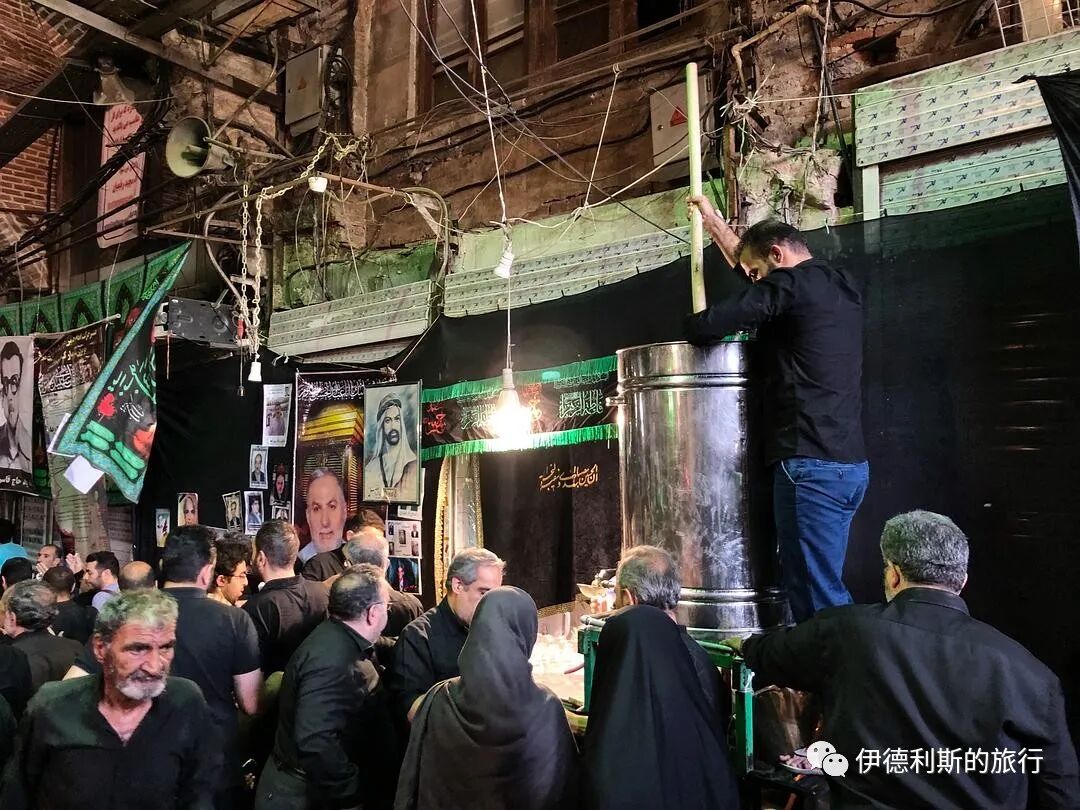
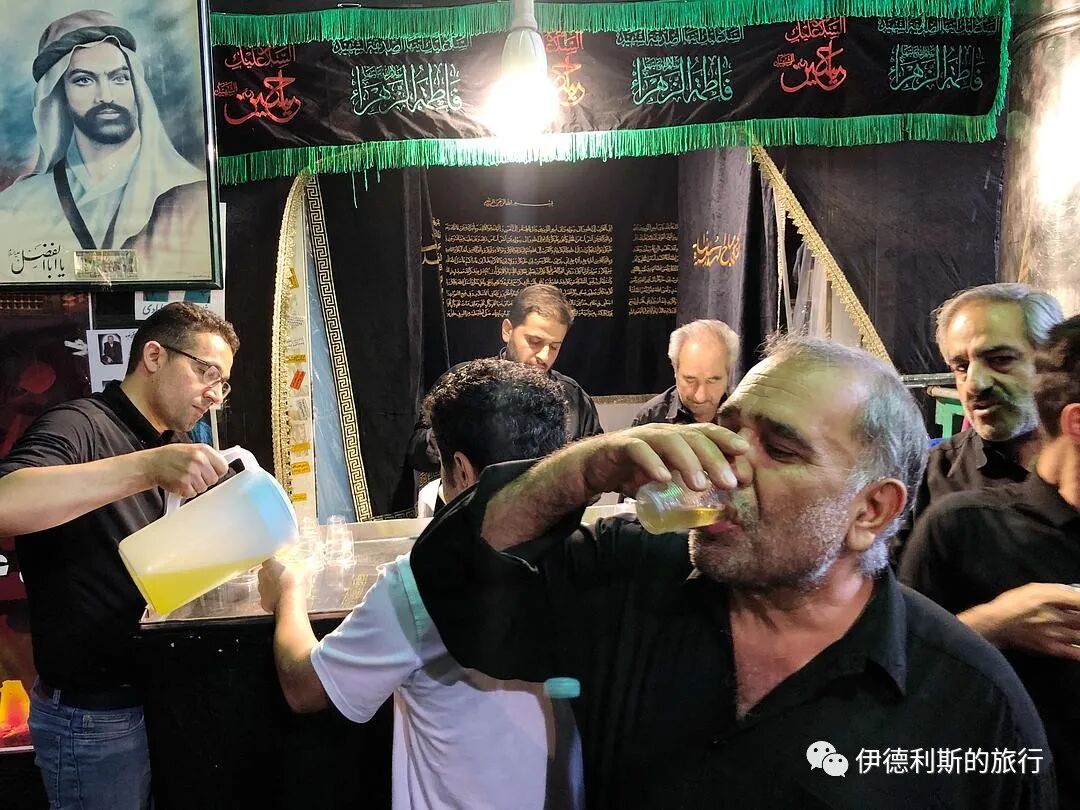
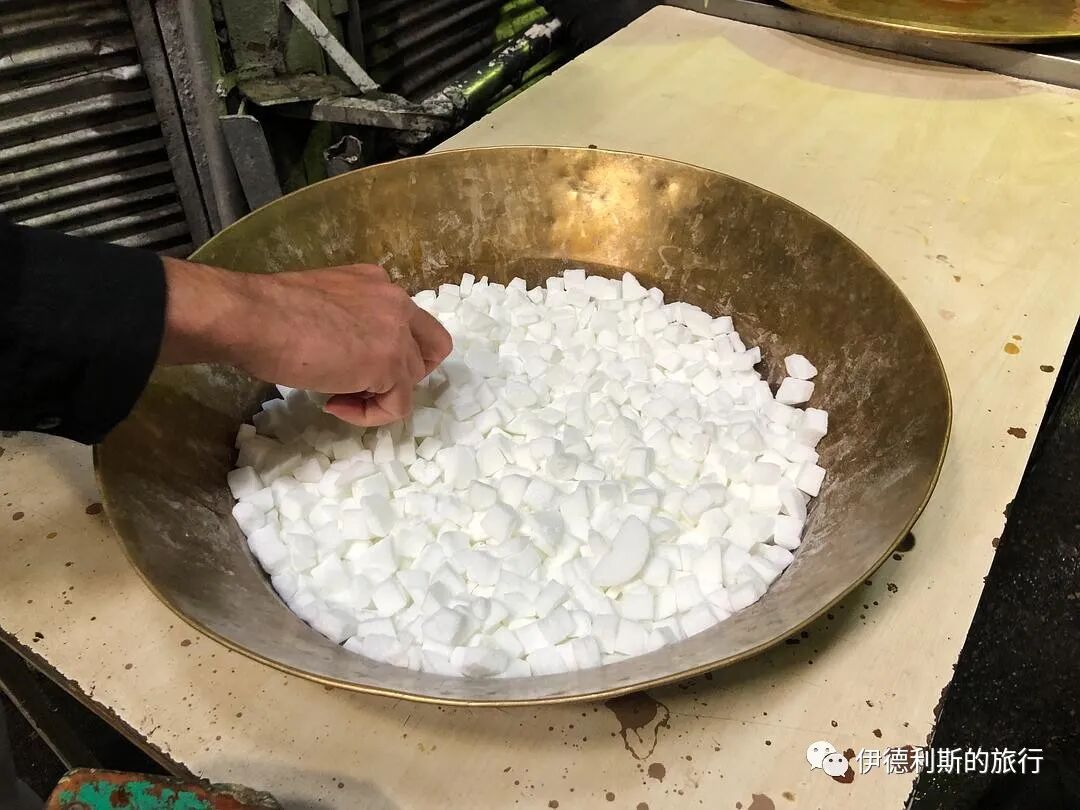
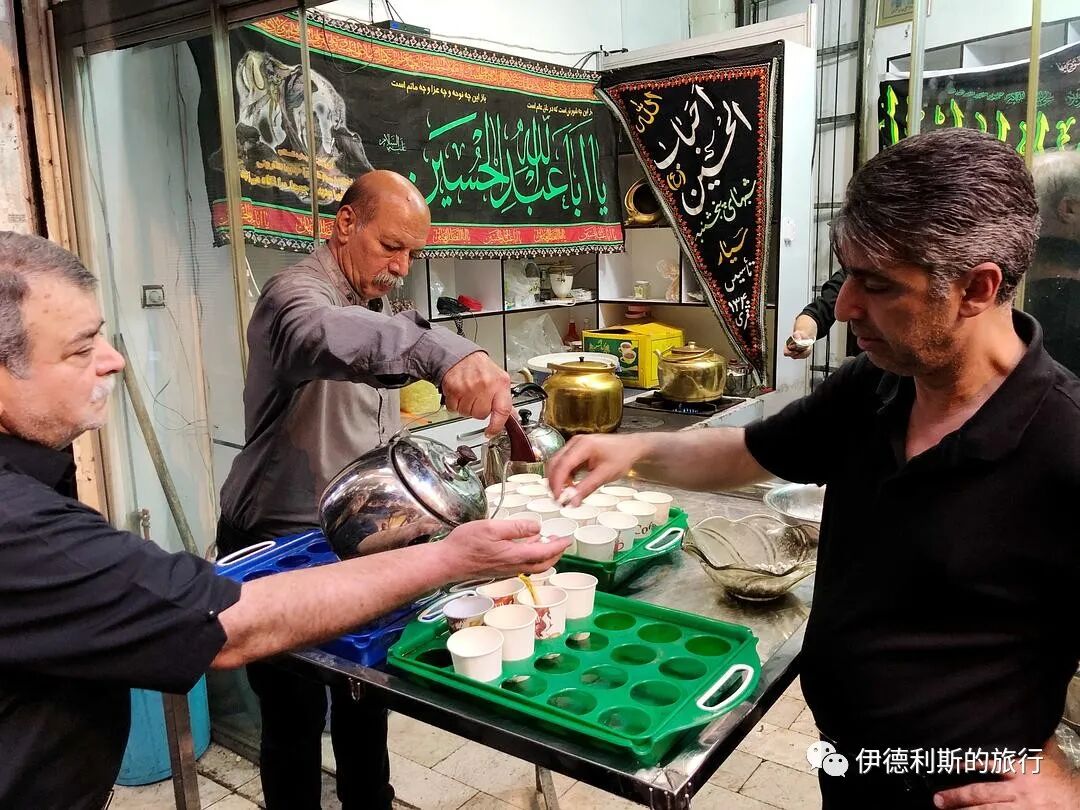
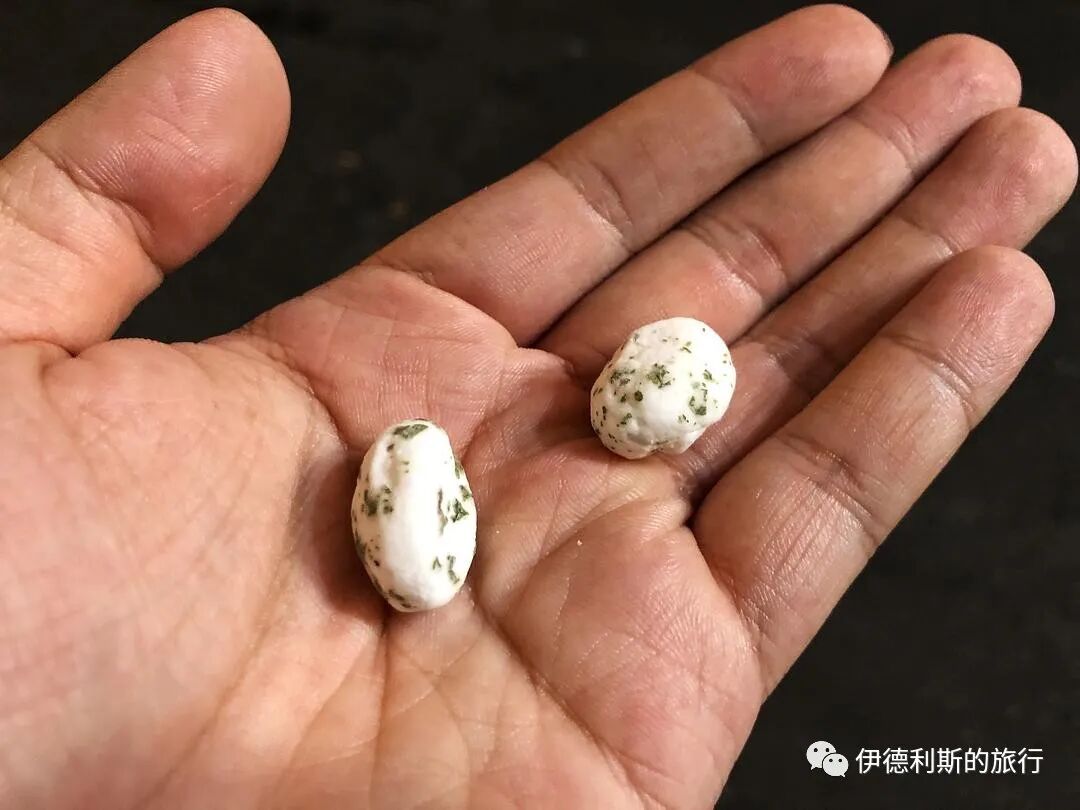
During Ashura, stalls are set up all over Tehran to provide free tea, drinks, and food, and an area near the north gate of the Grand Bazaar is specifically set aside for preparing drinks. A staff member, an older man, kindly invited me into the drink preparation area, offered me tea, and let me take photos.
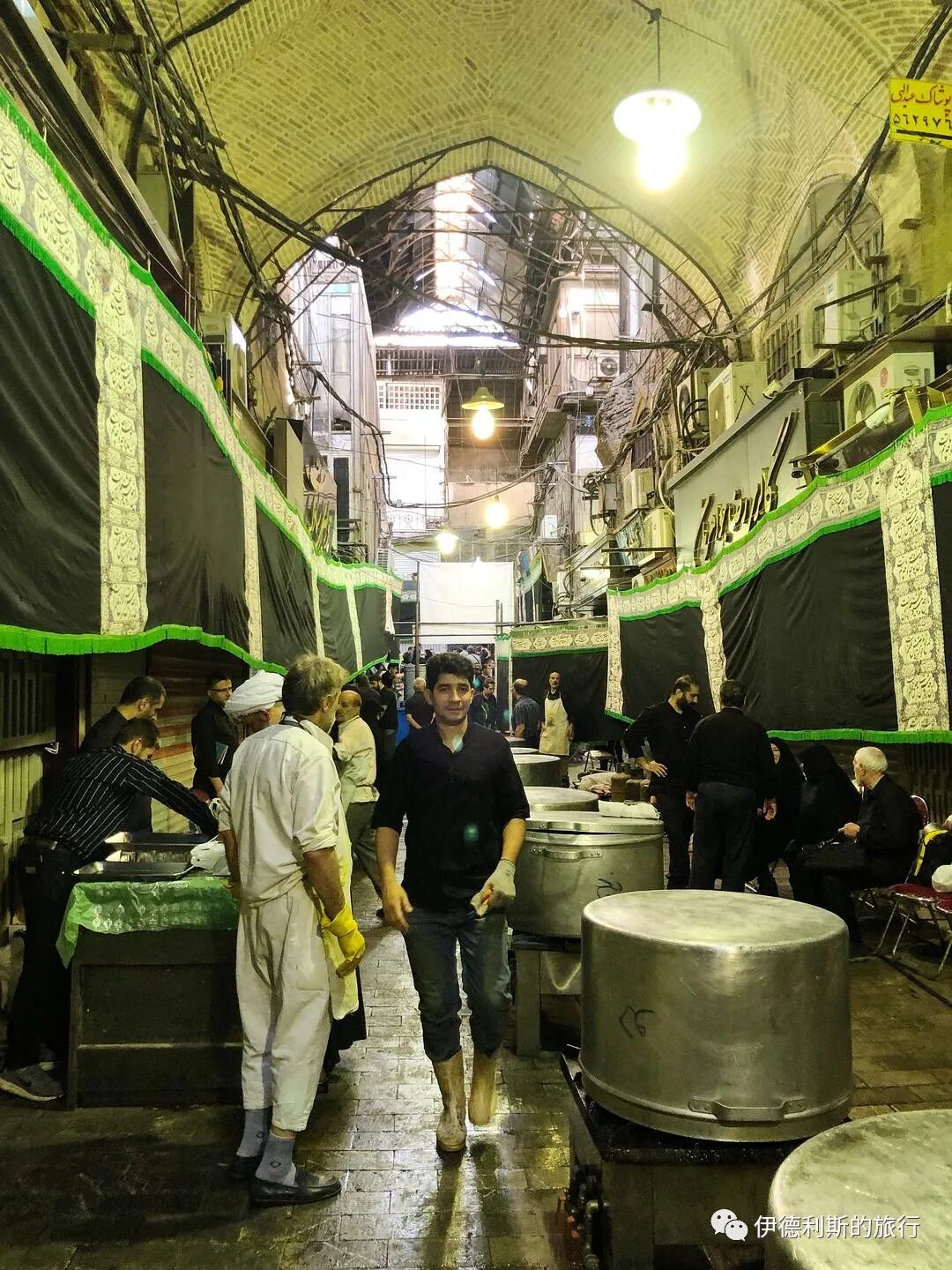
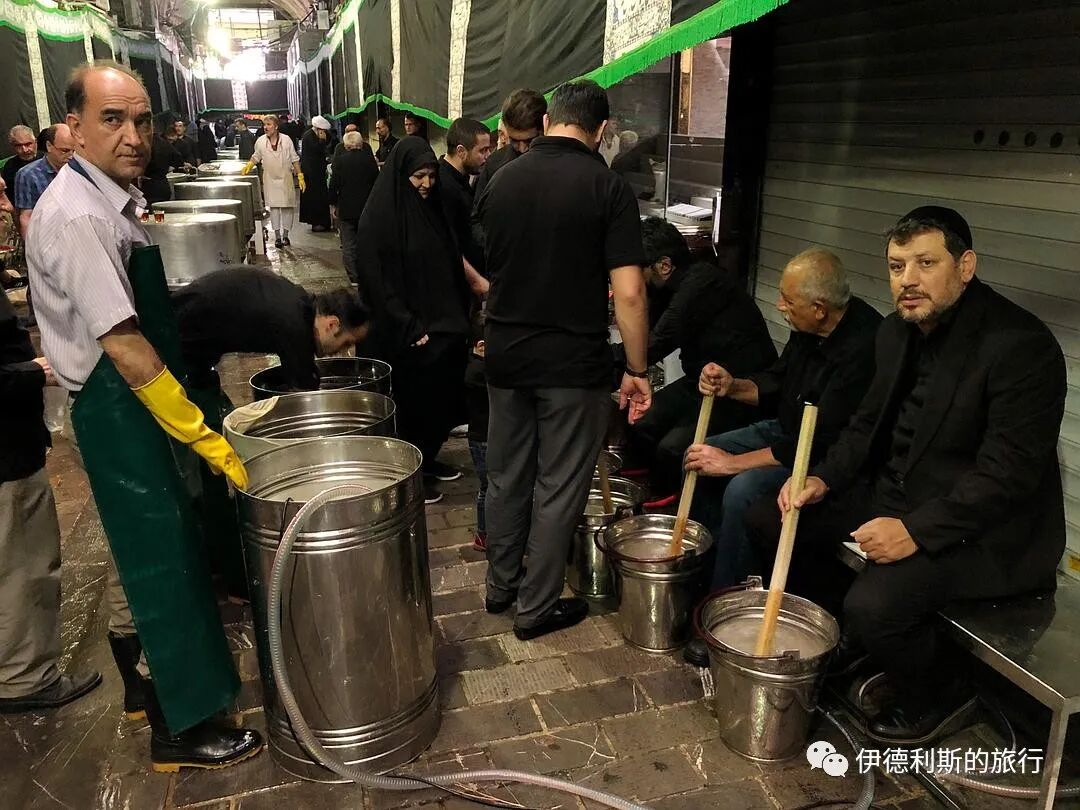
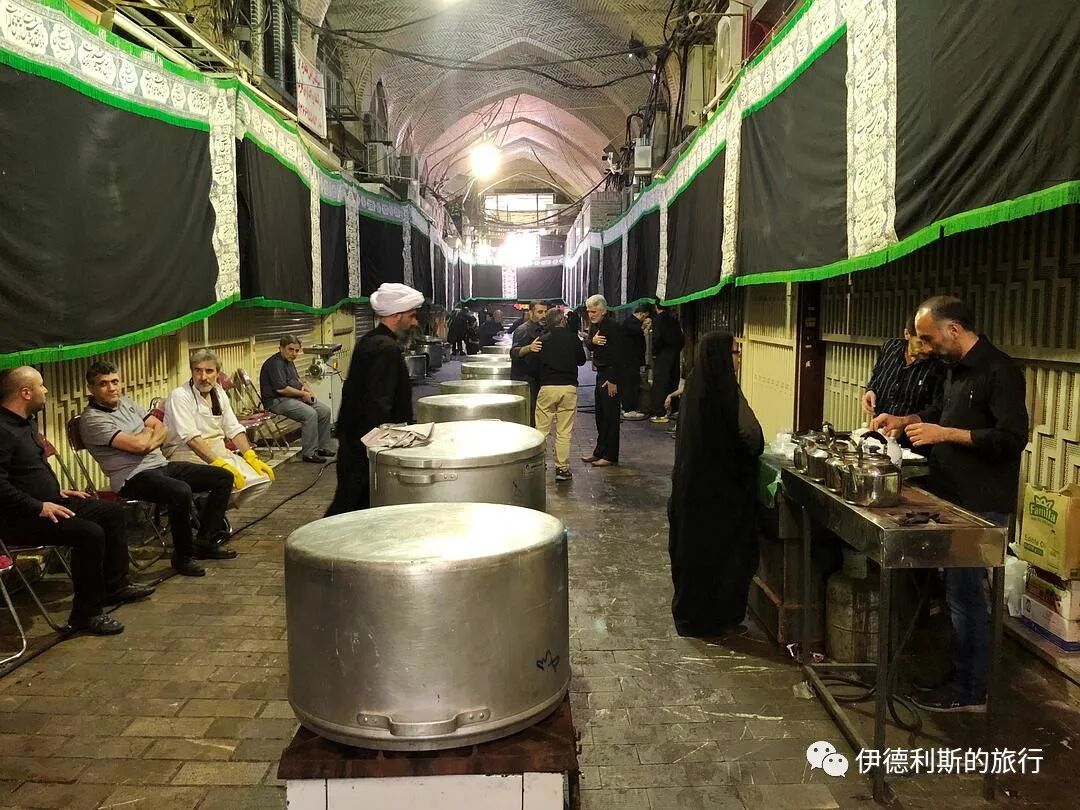
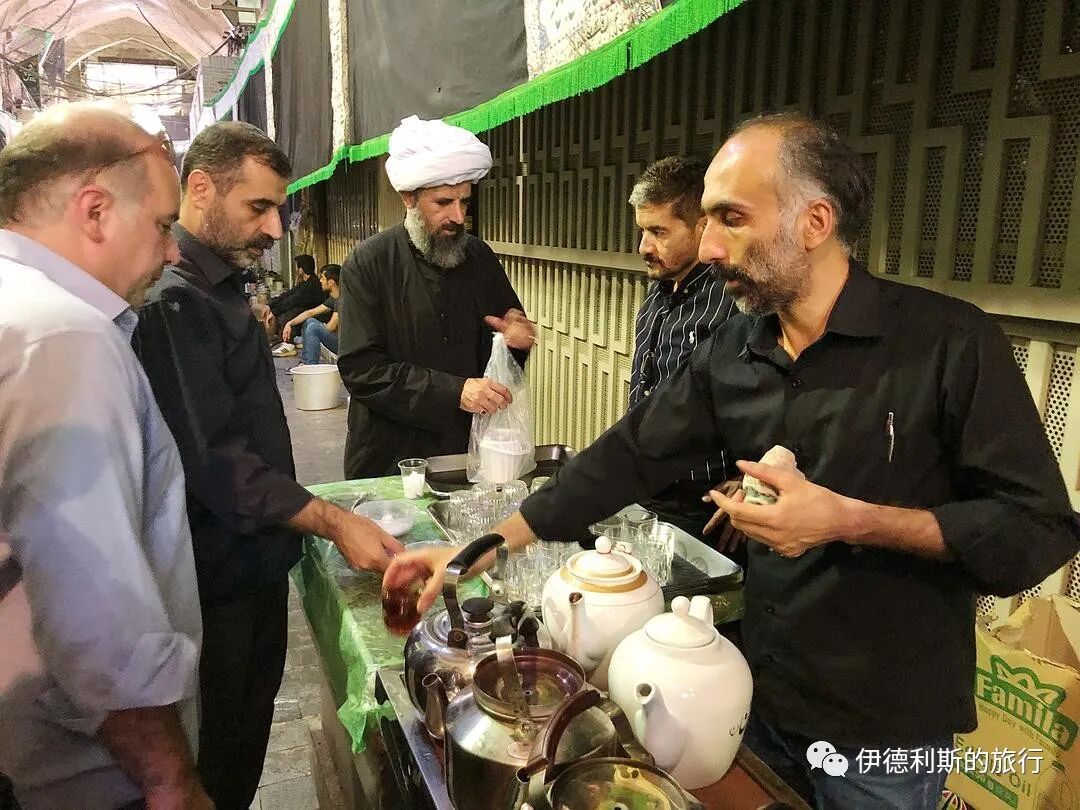
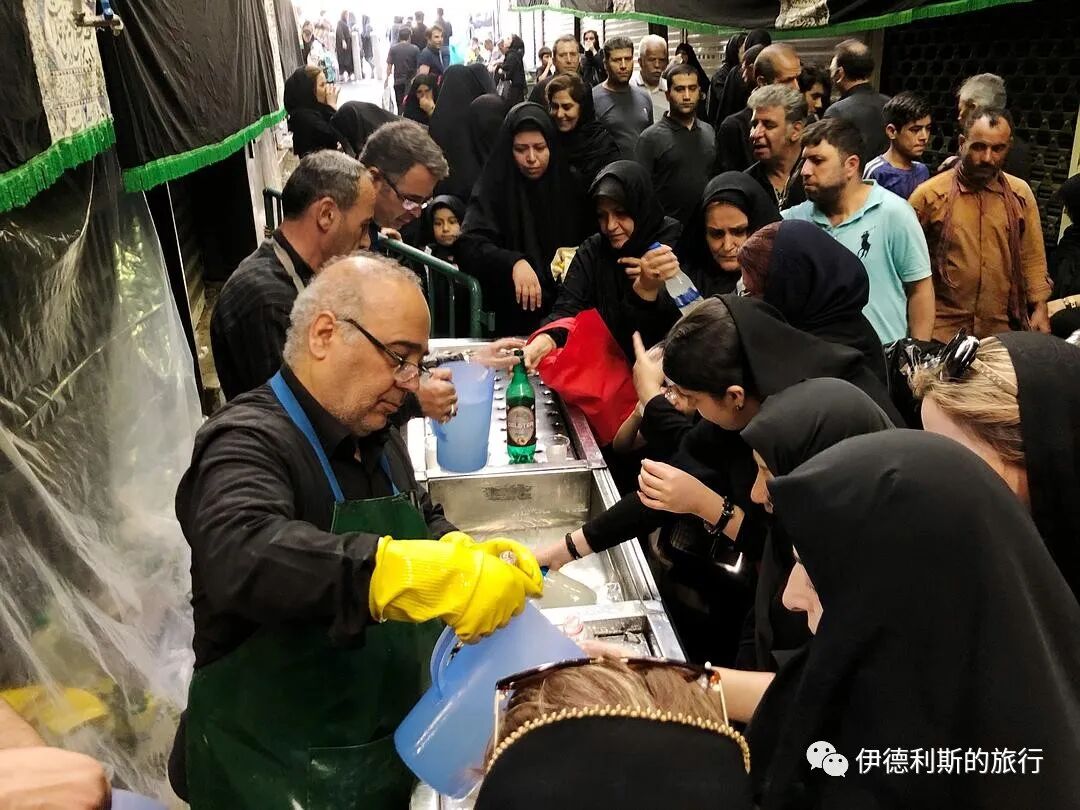
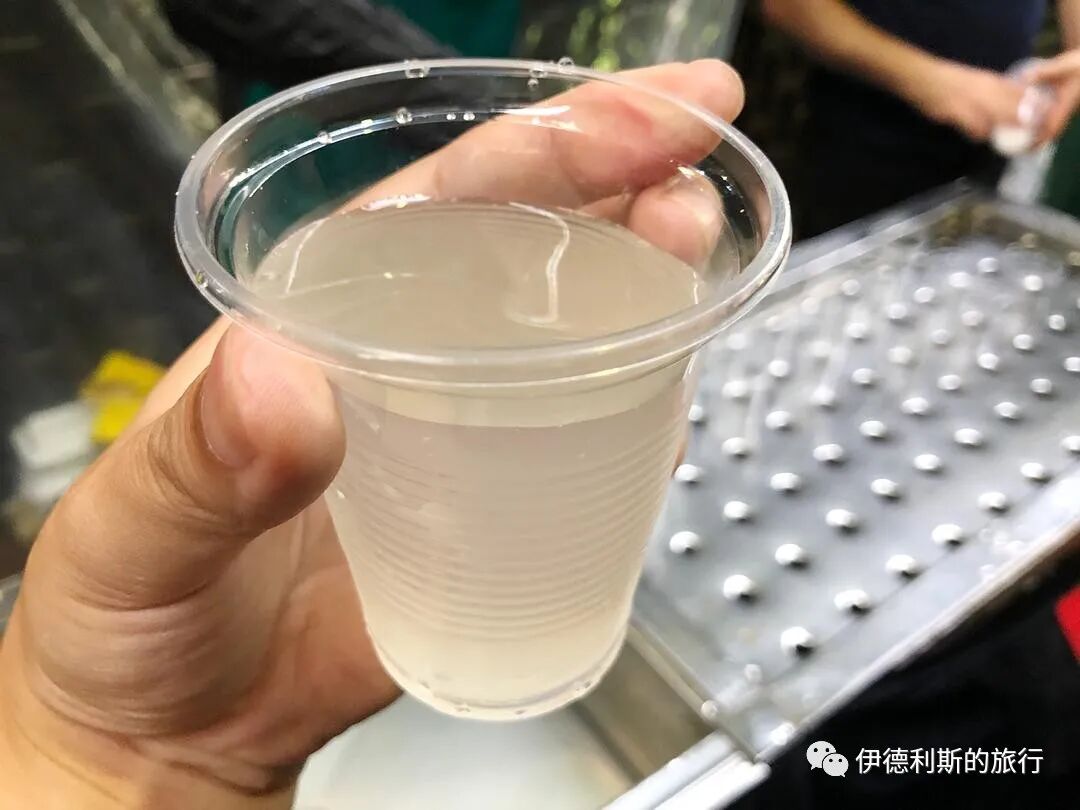
This area is for distributing food for free.
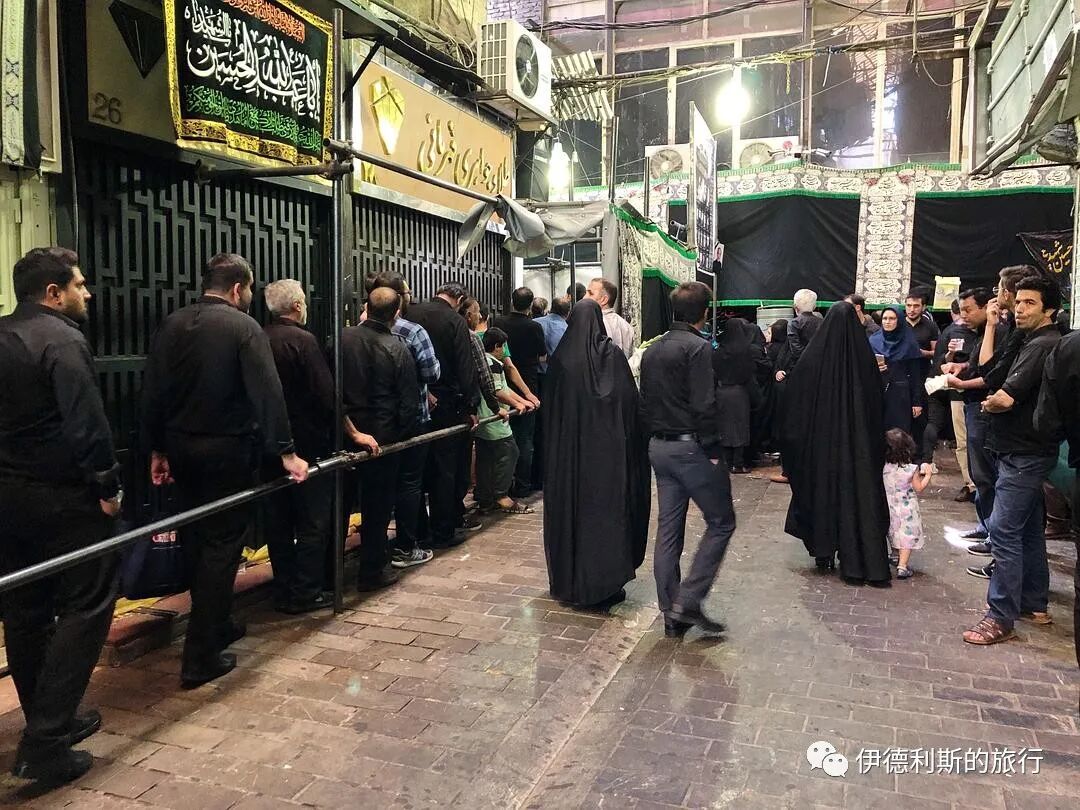
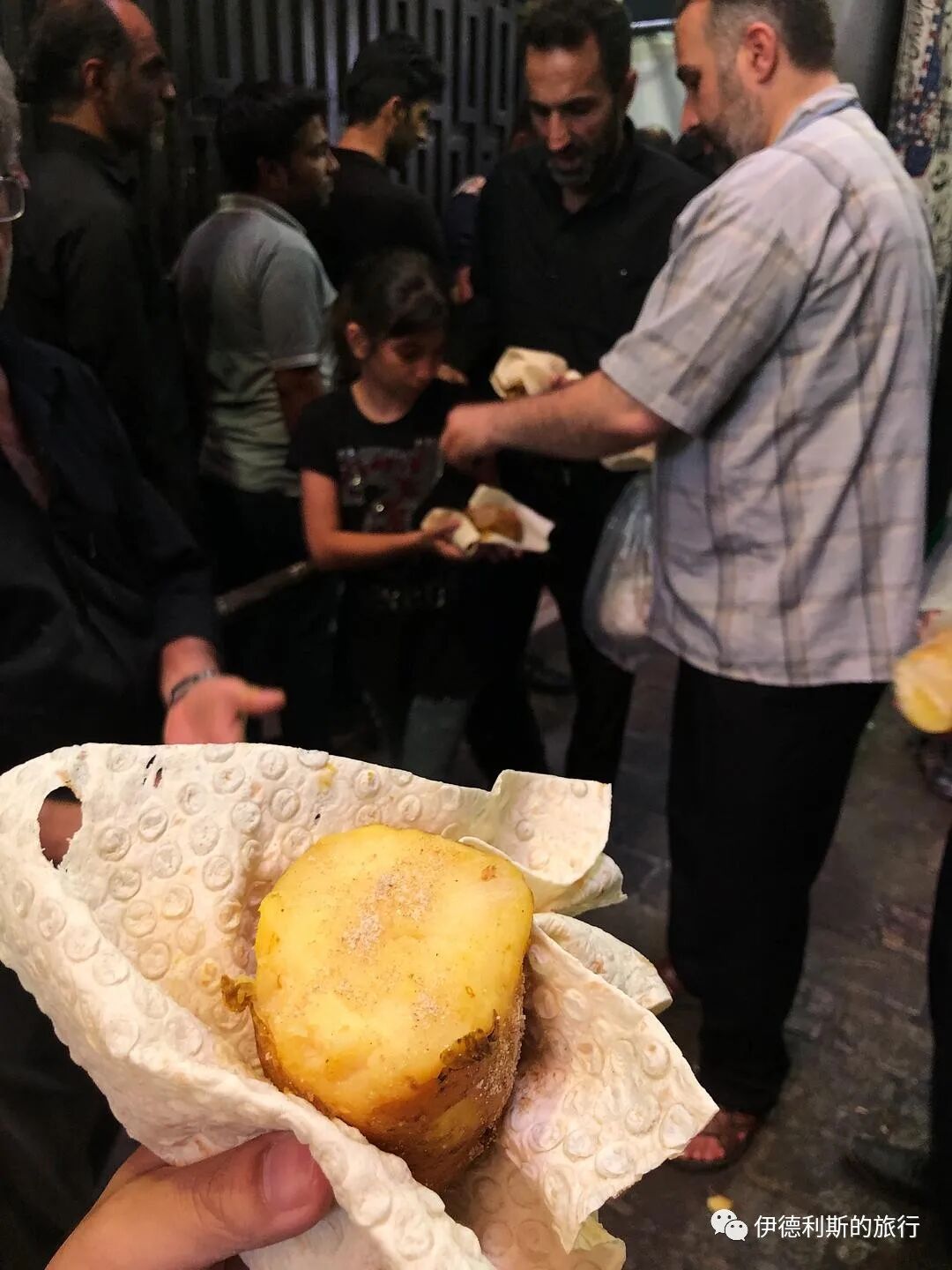
Walking further into the Grand Bazaar, you can see processions performing the Ashura mourning march (al-mawakib al-husayniyya), where everyone mourns together for Imam Hussein and his 72 companions who were killed by the Umayyad army on the Day of Ashura, singing rhythmically together.
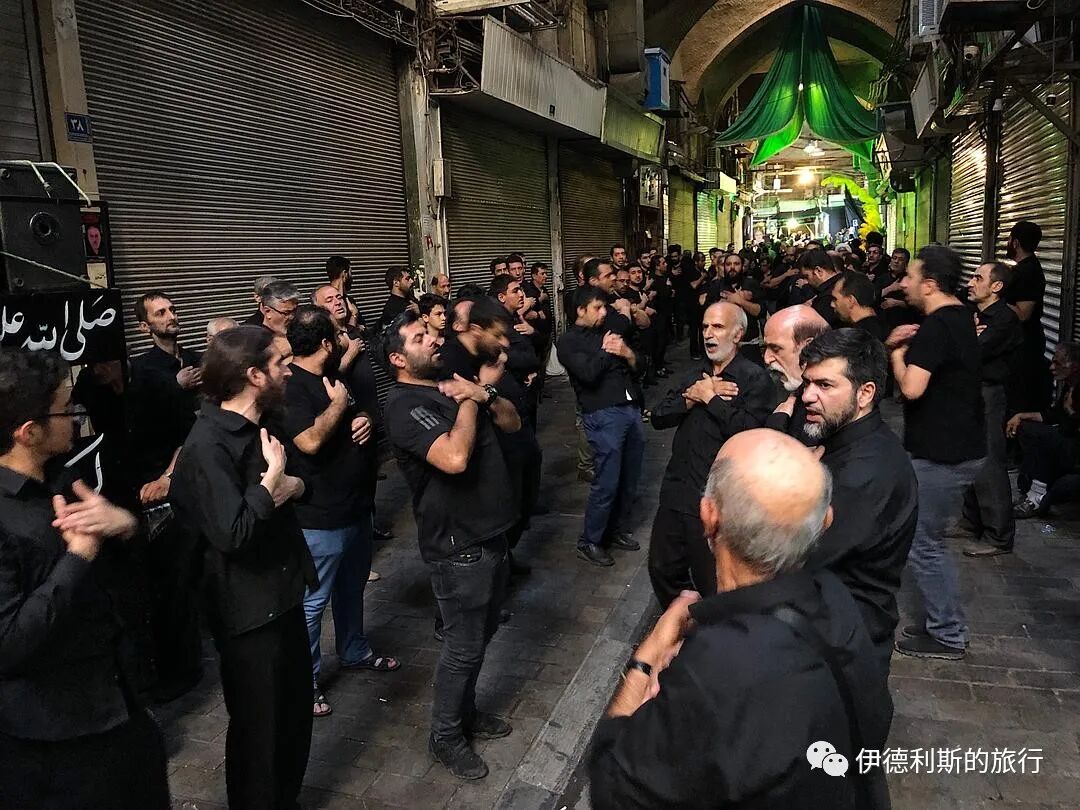
During the procession, the group stops intermittently, and one person delivers a eulogy for Imam Hussein, while everyone cries and wails along, with many people weeping bitterly.
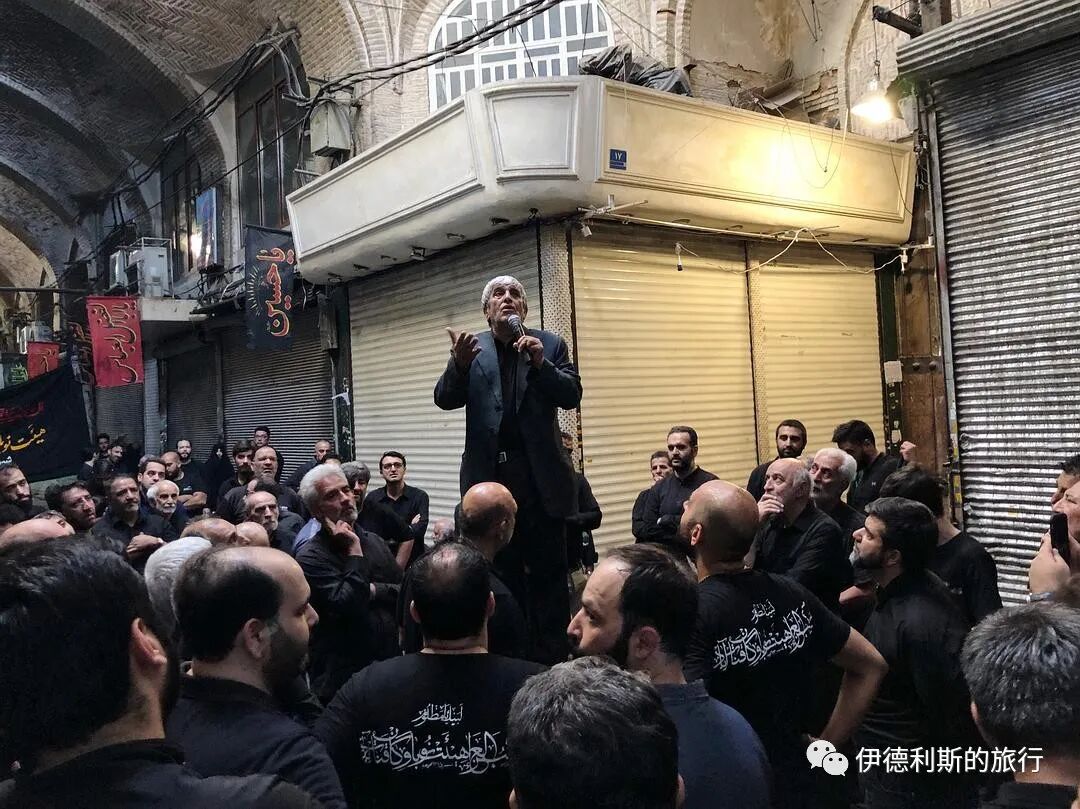
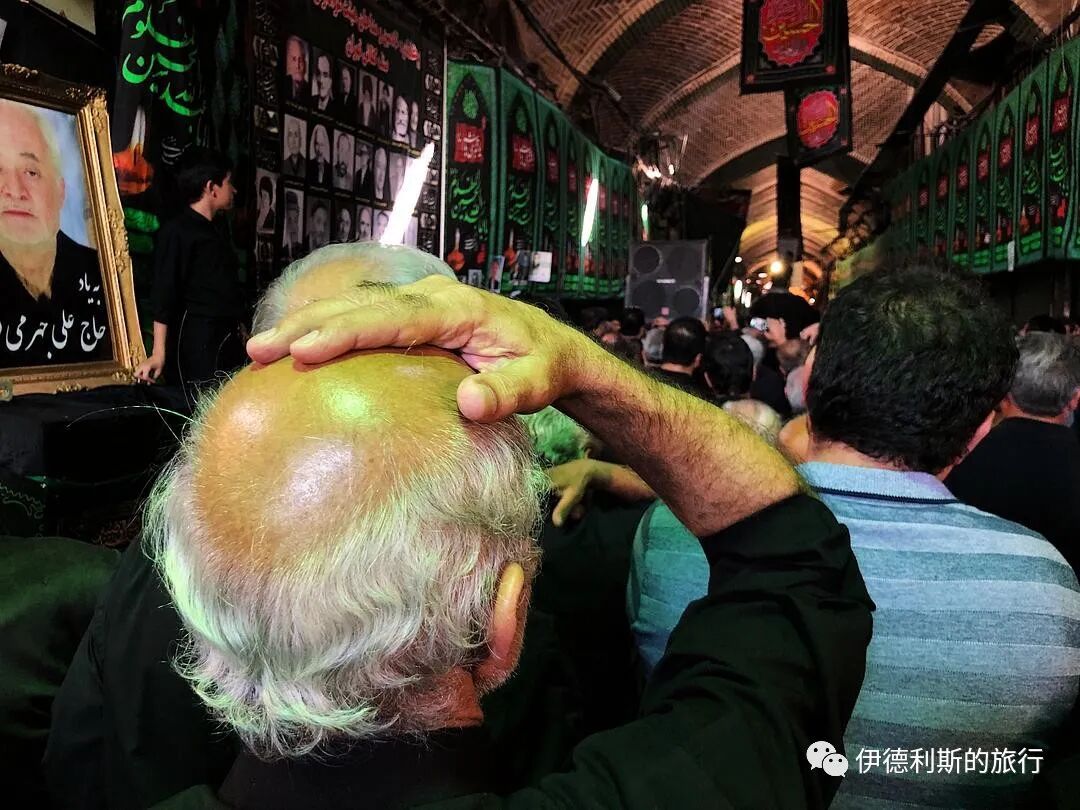
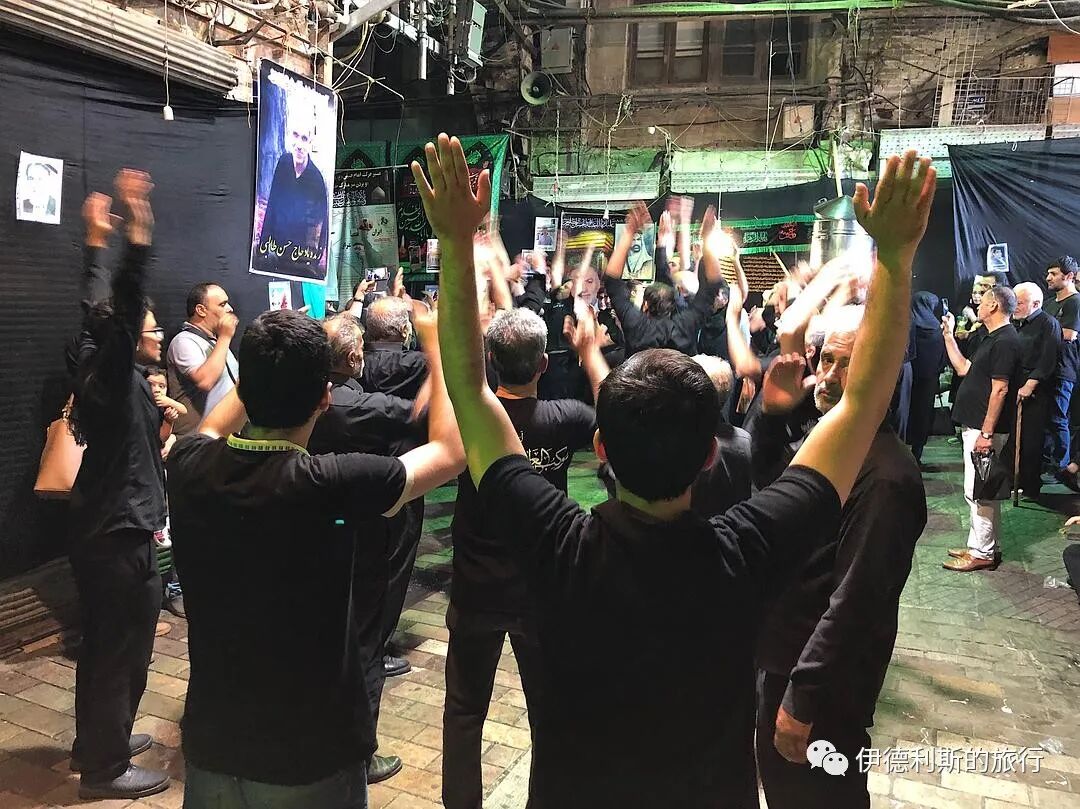
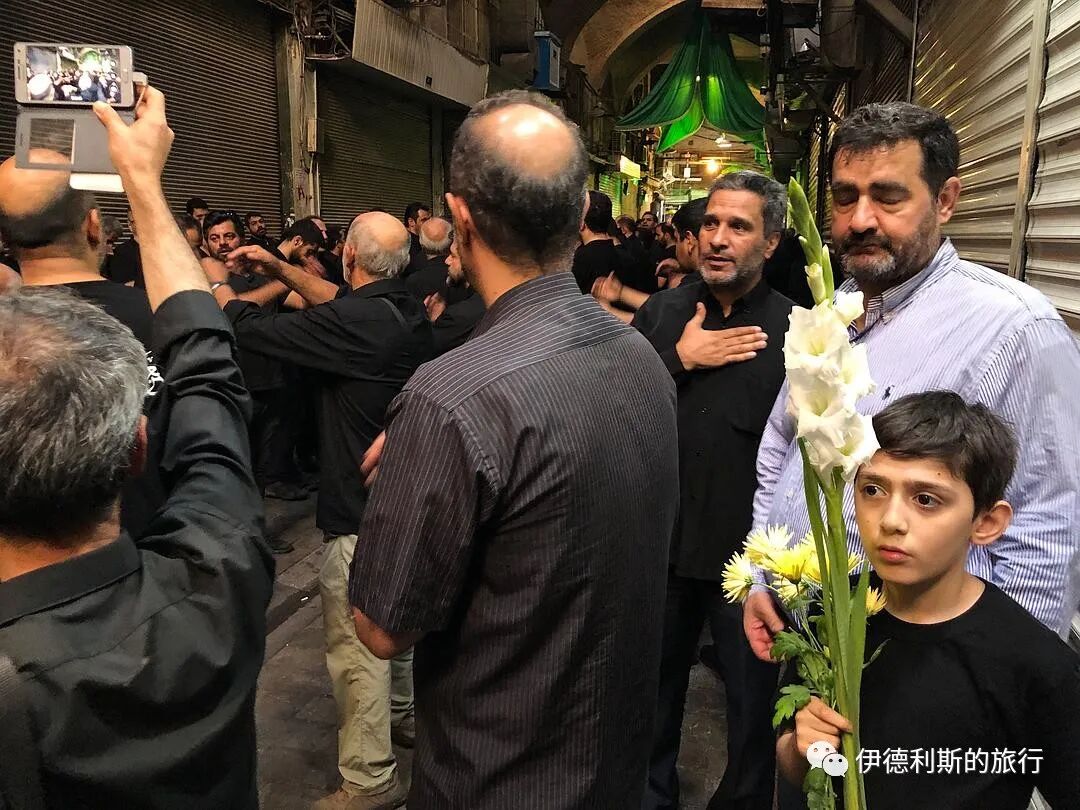
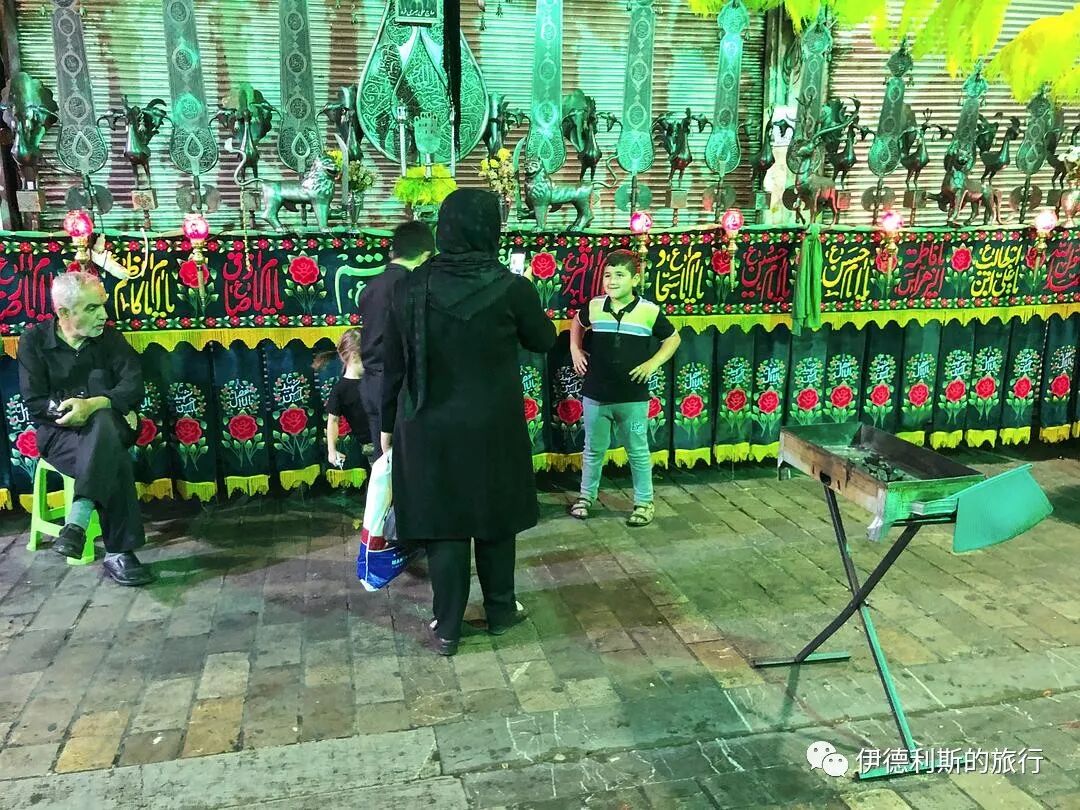
In addition to the singing, various flags are also very eye-catching.
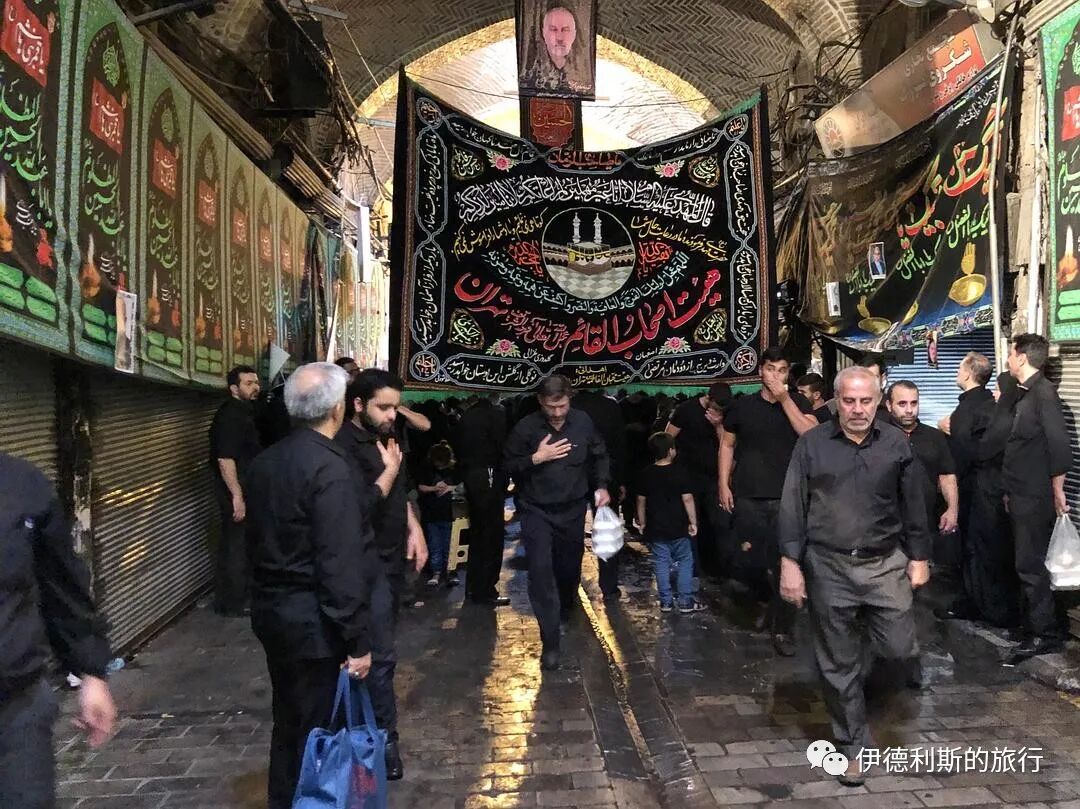
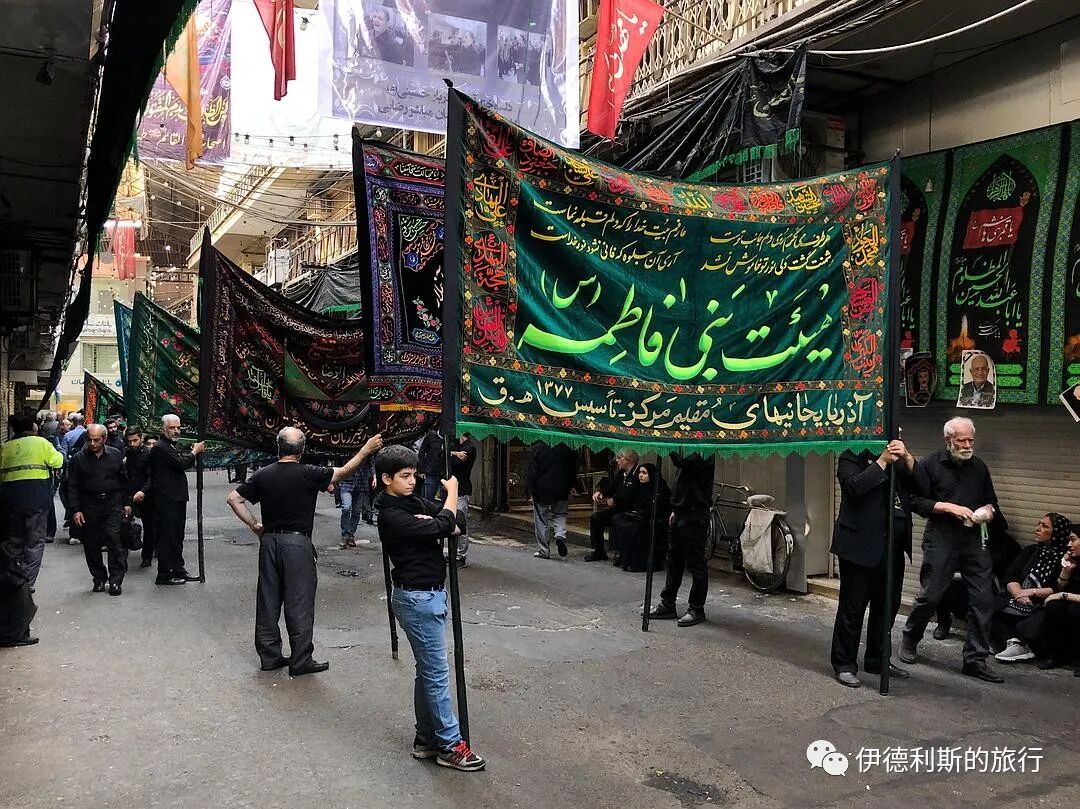
This is a procession composed of hundreds or thousands of people holding hands, which is very spectacular.
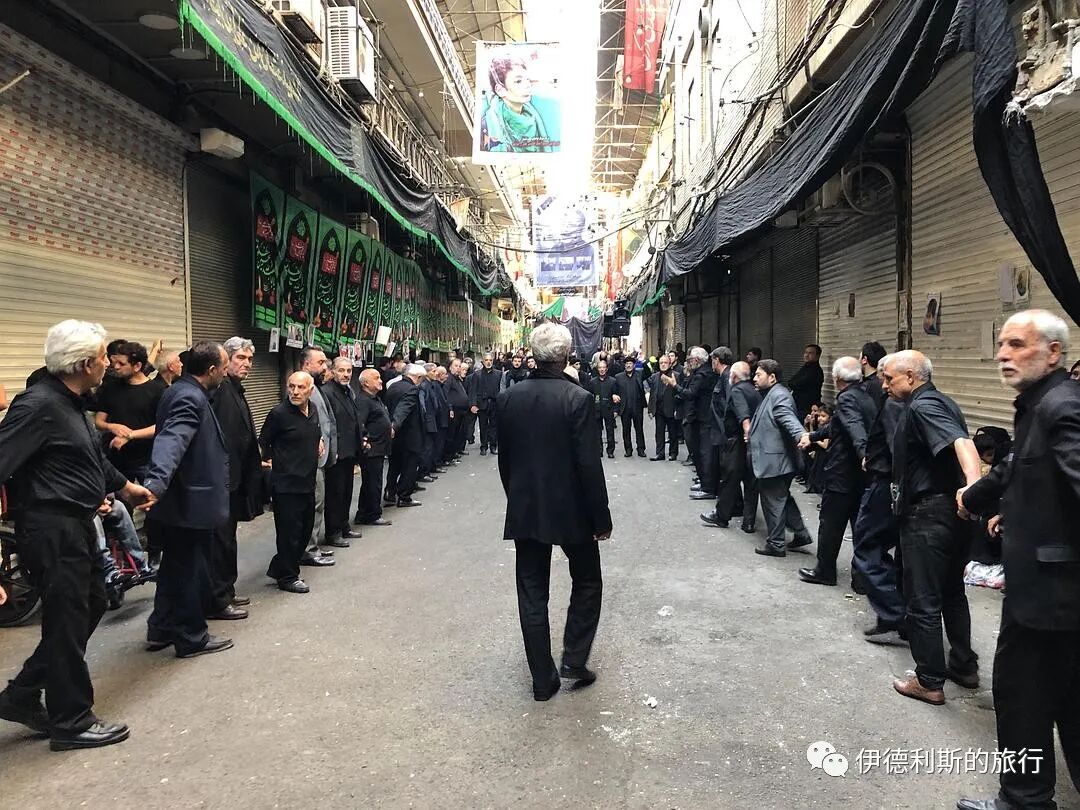
Outside the Grand Bazaar, there are also shops specifically selling Ashura flags.
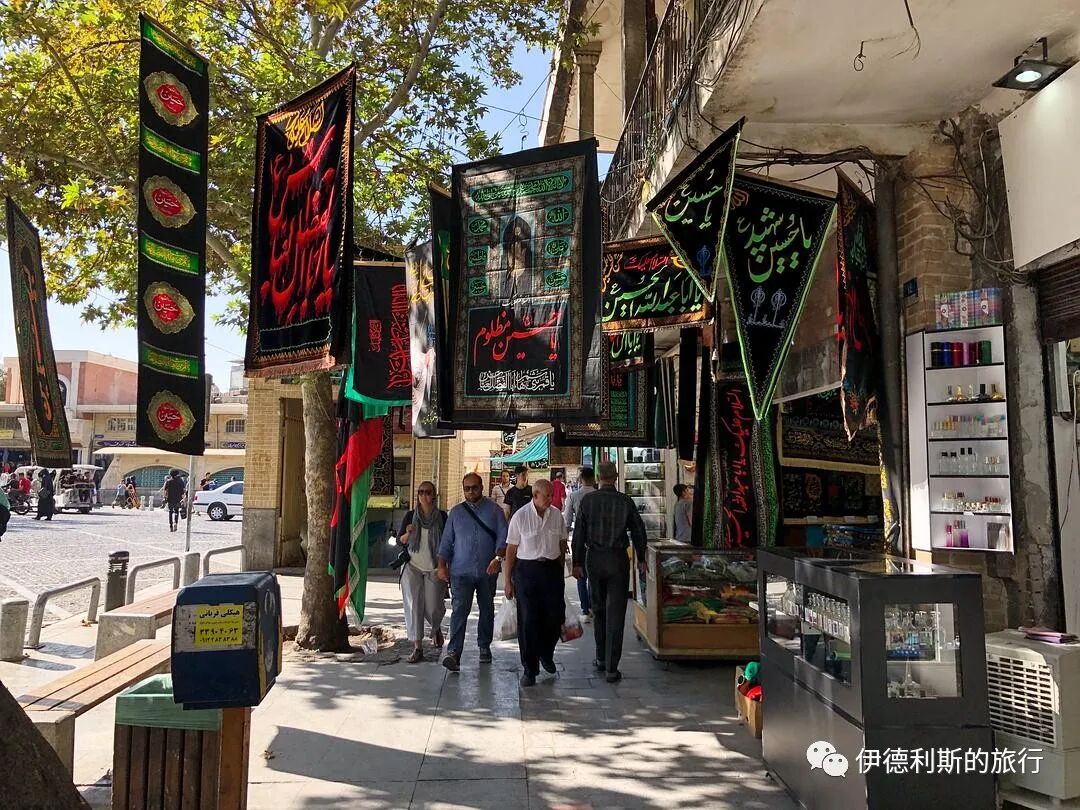
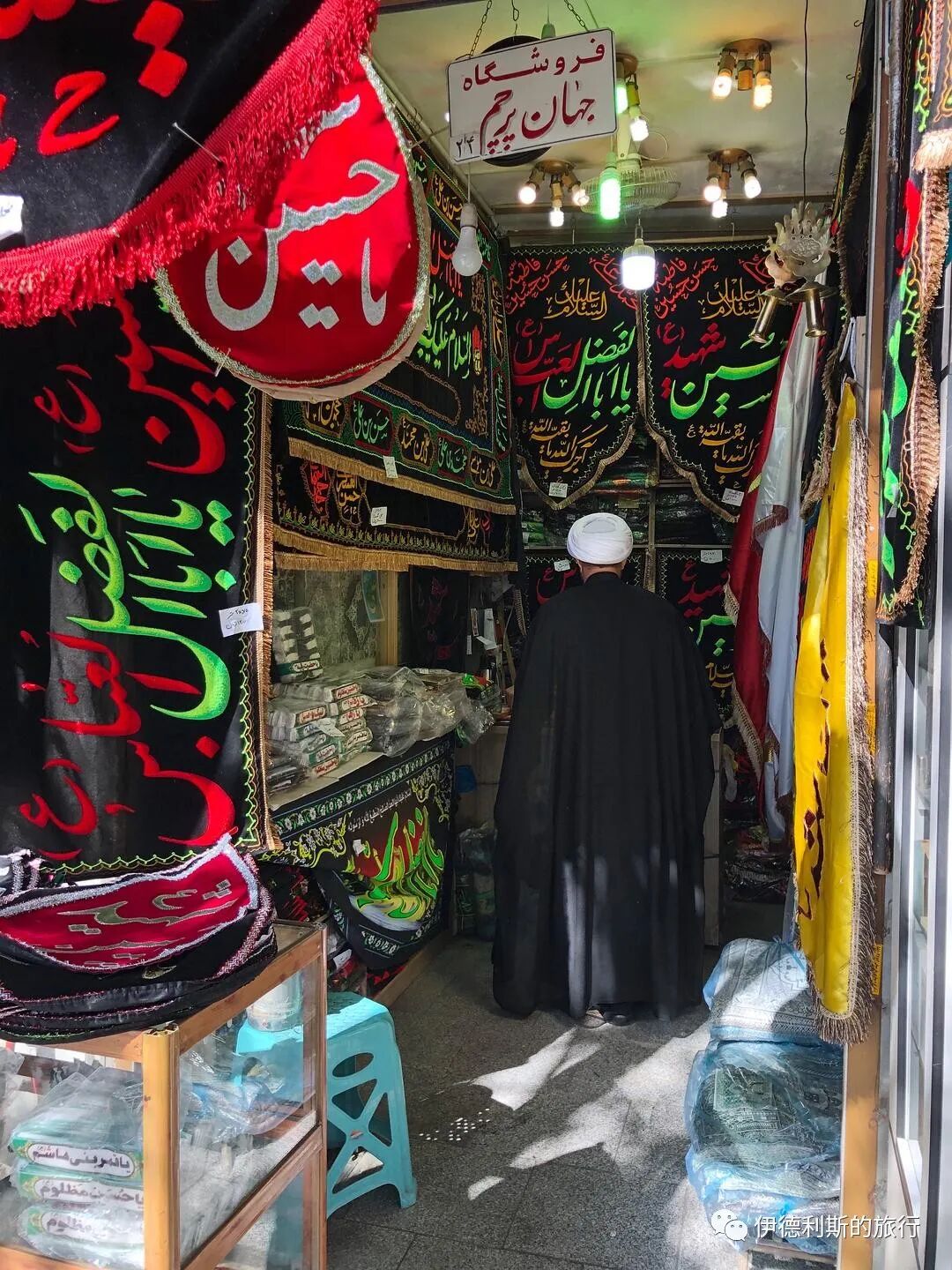
The area outside the north gate of the Grand Bazaar has been turned into a venue for performing Ta'zieh opera. Ta'zieh opera performance is an important part of Ashura activities. During the month of Muharram, numerous venues for performing Ta'zieh opera are set up in various squares in Tehran, and there are many spectators.
Ta'zieh opera formed in Iran in the late 17th century and is a type of traditional Persian theater; this form of expression can be traced back to the pre-Islamic era. During Ashura, Shia Muslims use Ta'zieh opera to recreate the scene of the Battle of Karbala on the Day of Ashura in 680 AD, when Imam Hussein and his 72 companions were all killed by the Umayyad army.
In the opera, the villains are the rulers of the Umayyad dynasty, and they wear red. The heroes are Imam Hussein and his family and companions; the male characters among them wear green, and change to white when they are about to die. All female characters are played by male actors dressed in all black. If a person walks in circles around the stage, it means they are on a long journey, usually between Mecca and Karbala.
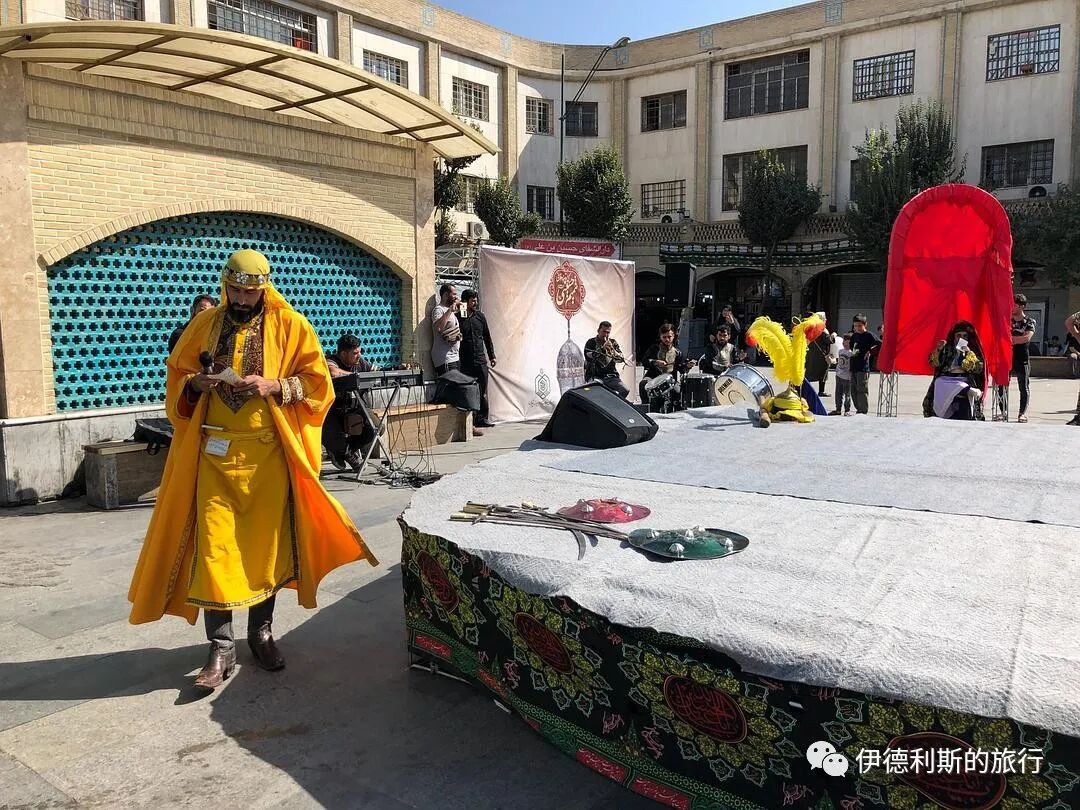
While watching the performance, you can eat honey cake and drink honey water freely.
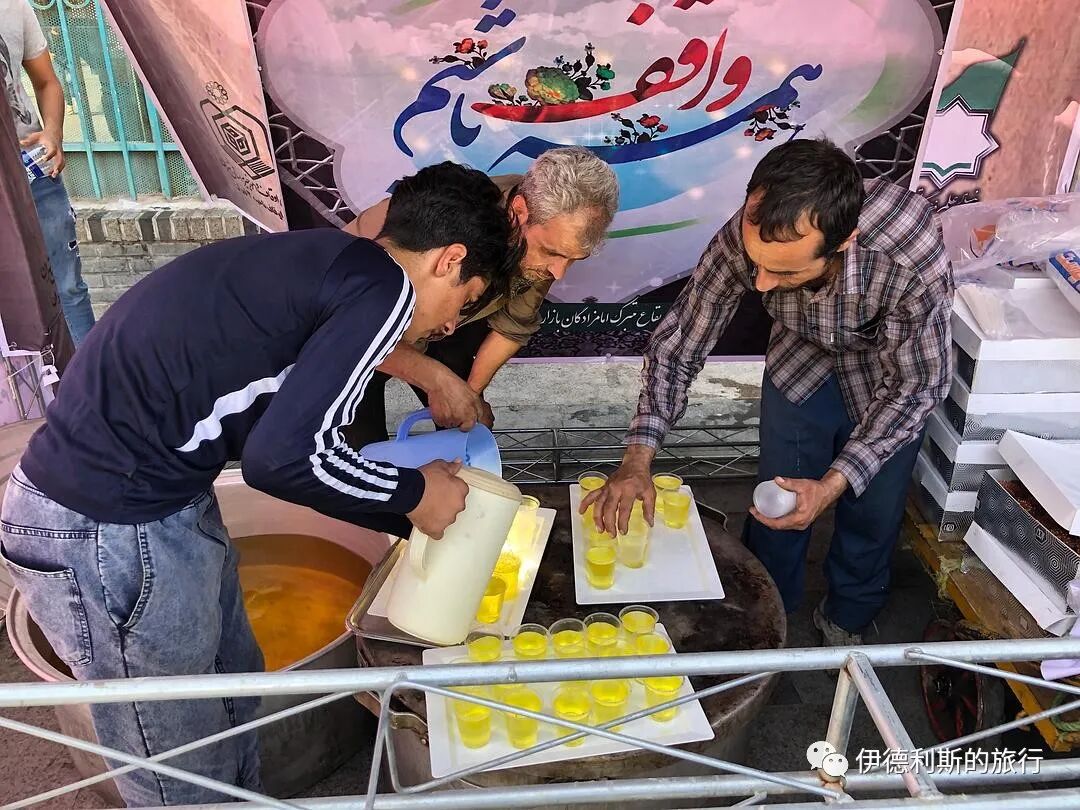
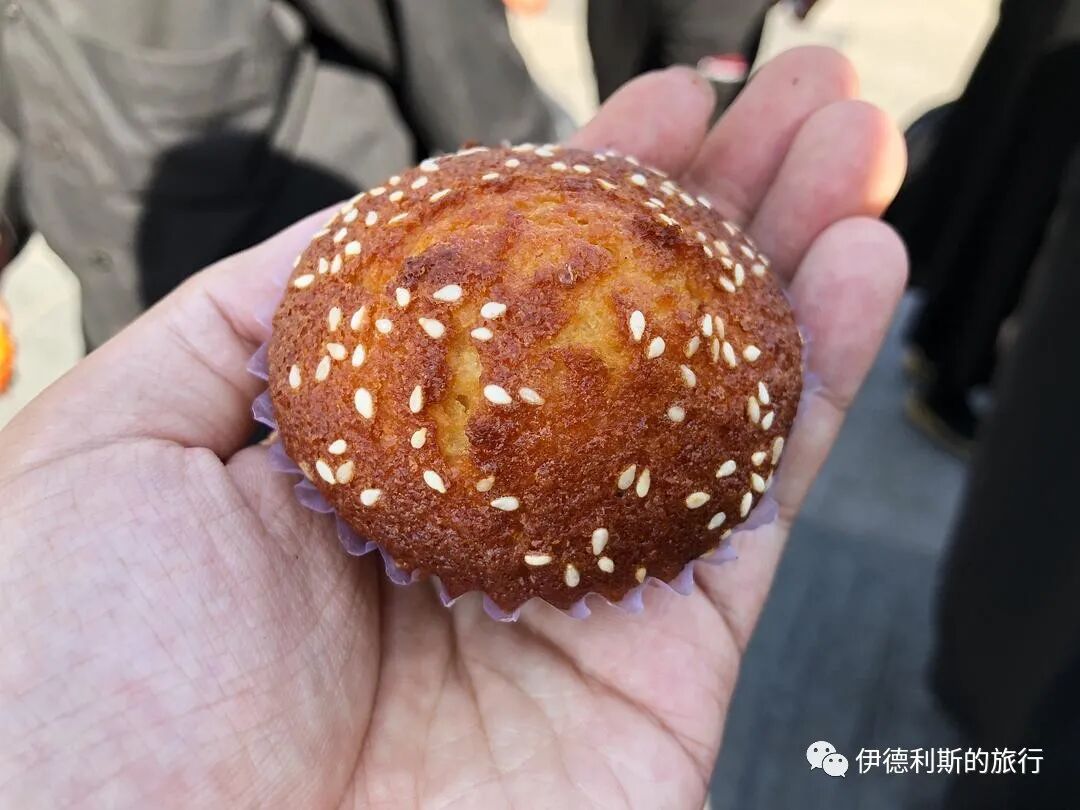
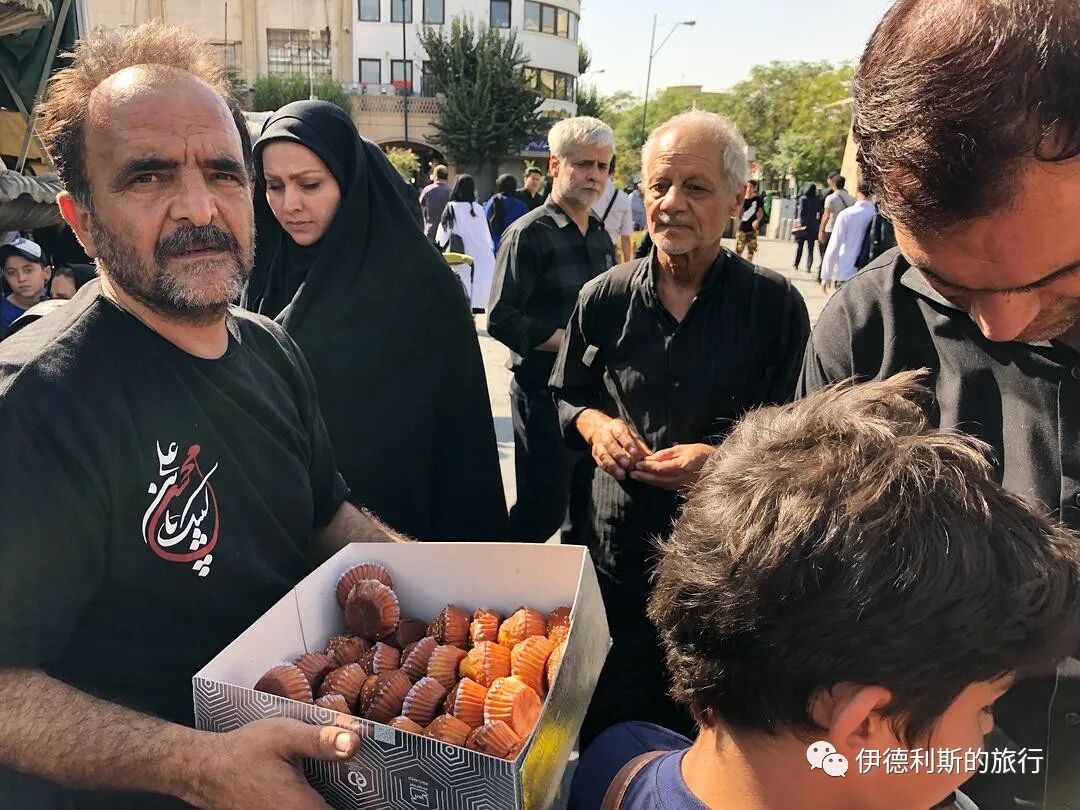
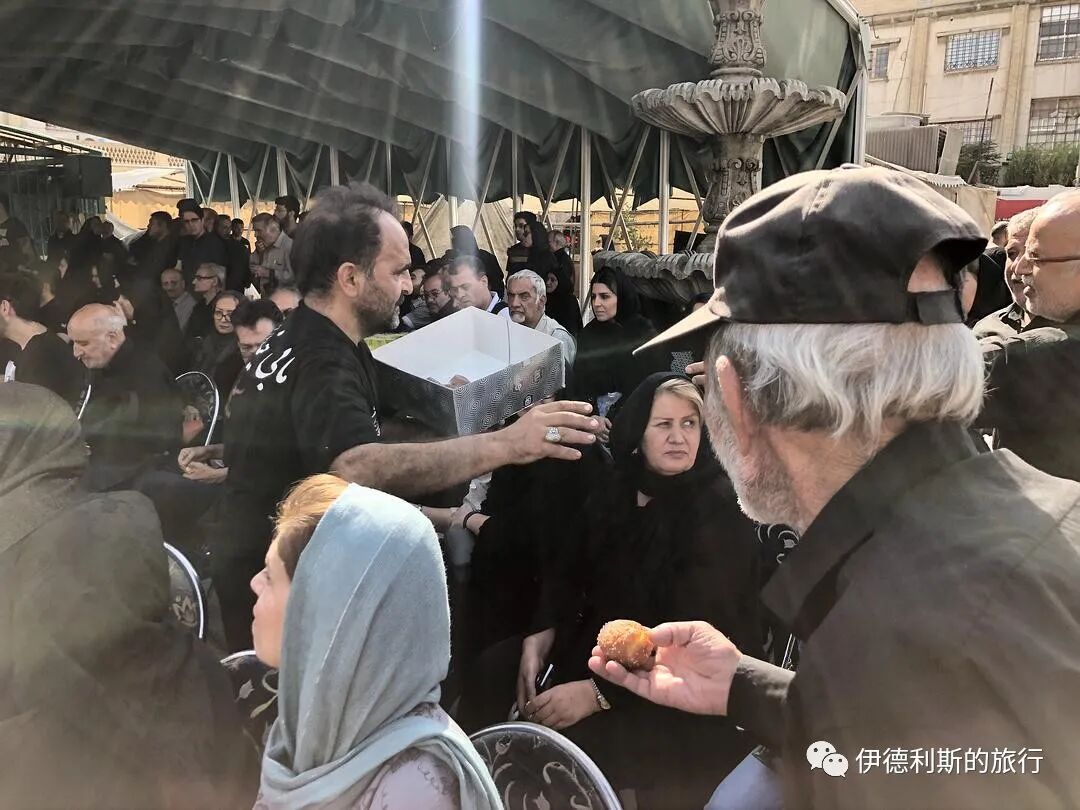
Ashura memorial service (majalis al-ta'ziya) at Parvaz Park
I attended an Ashura memorial service (majalis al-ta'ziya) at Parvaz Park in Tehran and experienced a wonderful Iranian Shia musical performance.
In the afternoon, tea stalls were already set up in the square, and Iranian black tea was available for free. Then, accompanied by the Ney (flute), the lead singer began to sing soothing songs. Amidst the singing, a bonfire was lit in the square, and baskets nearby were filled with various fragrant fruits. After a few soothing songs, a percussion ensemble consisting of drums and cymbals walked onto the stage while playing. The rhythm of the songs began to become more and more passionate, the atmosphere grew more intense, and it reached a climax accompanied by the sound of horns.
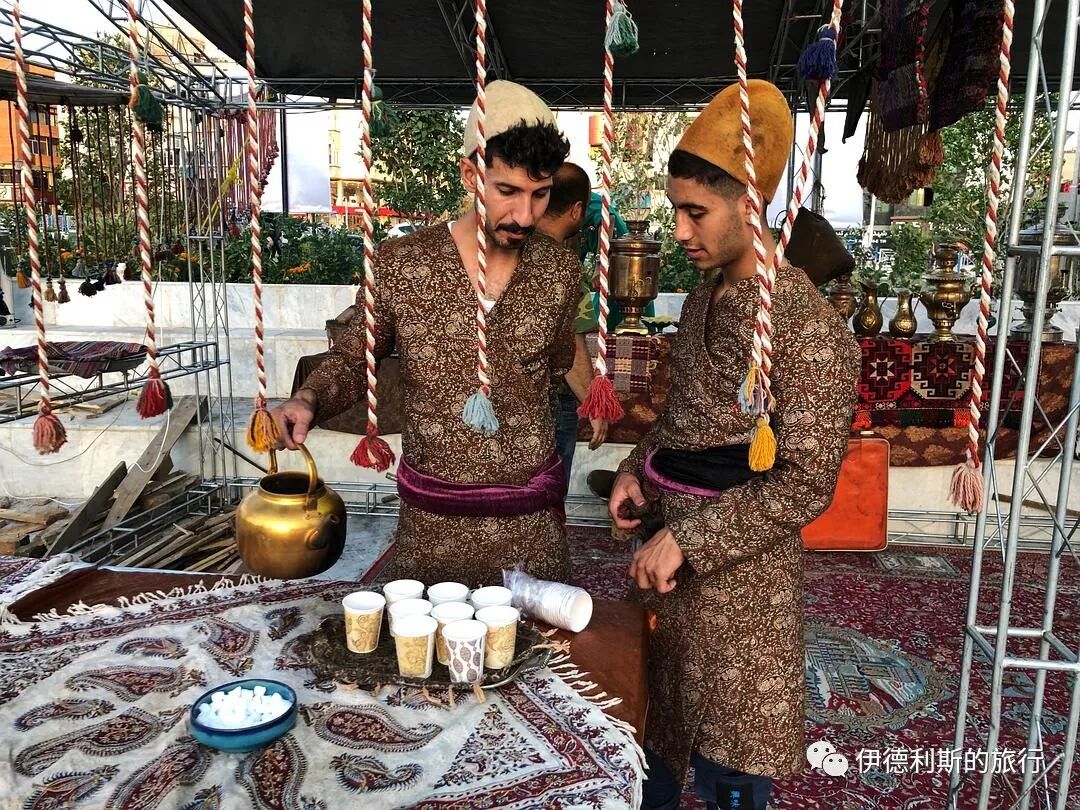
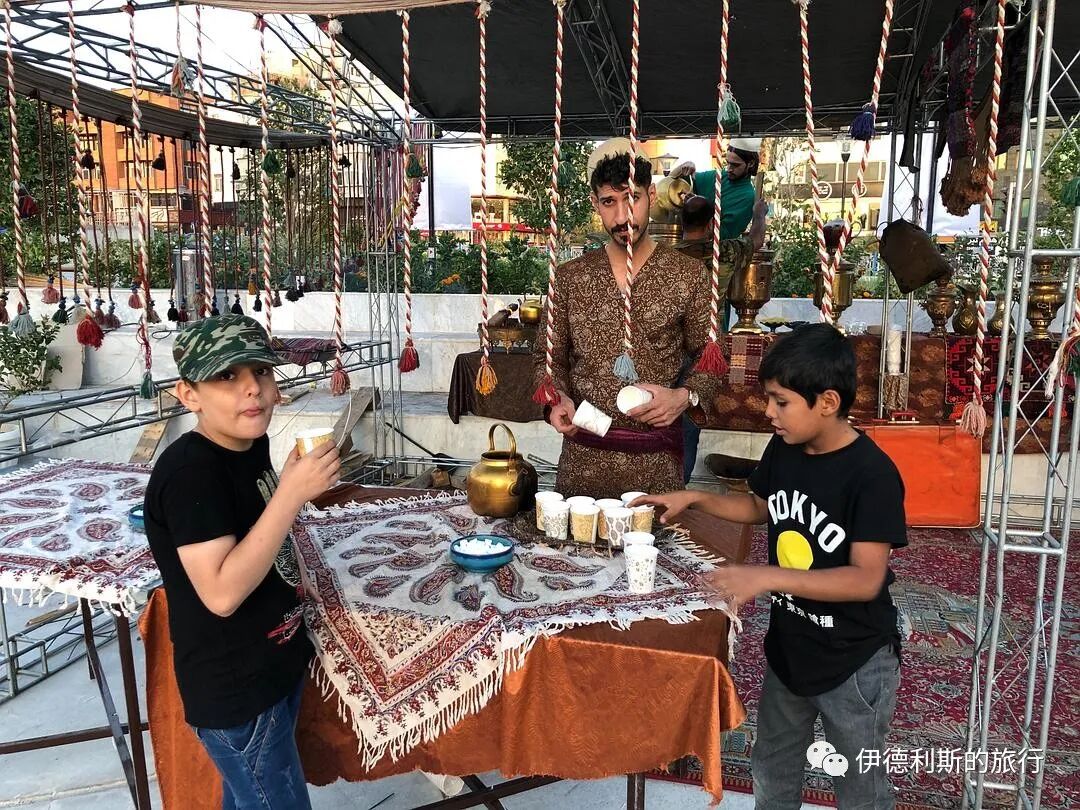
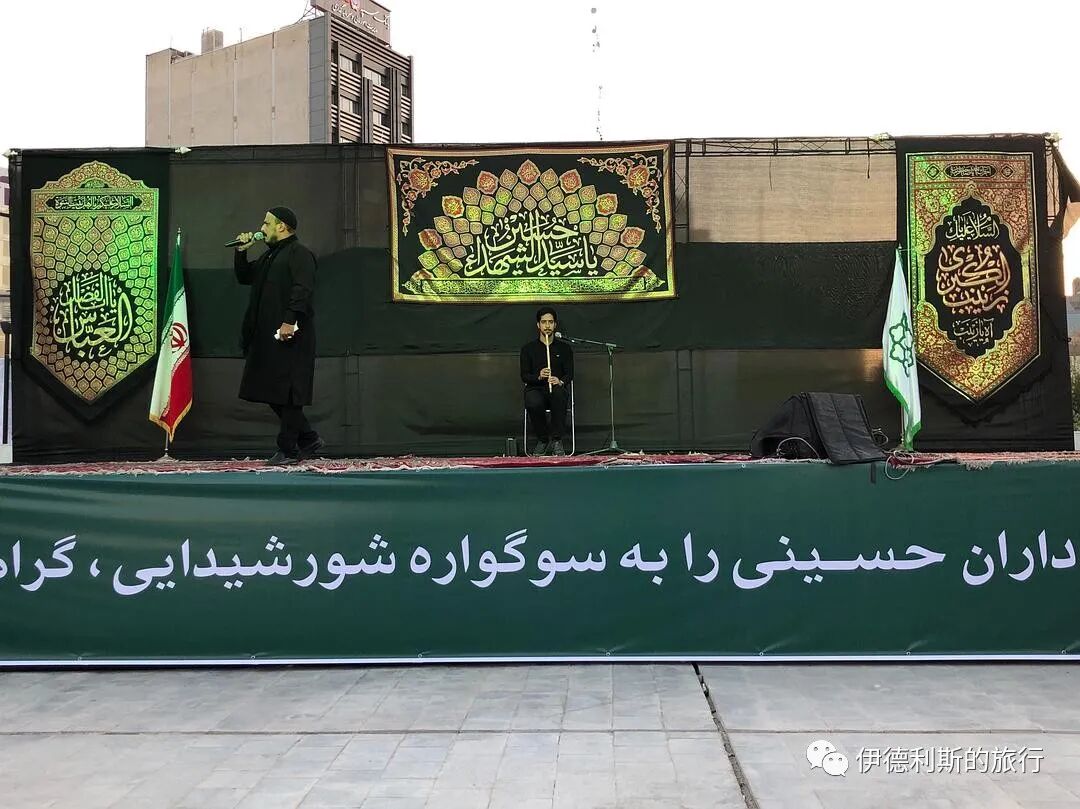
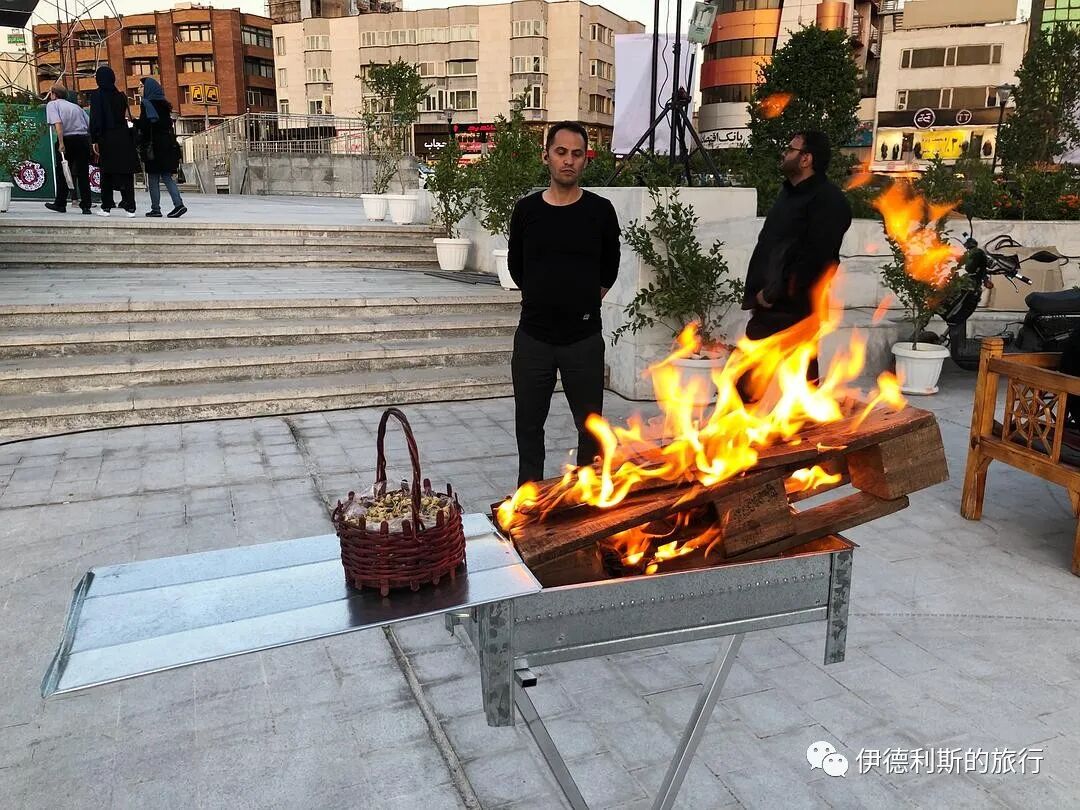
During the singing, a group of actors in costumes walked slowly toward the stage, led by two boys holding incense.
When they reached the stage, they began to perform the Ta'zieh play.
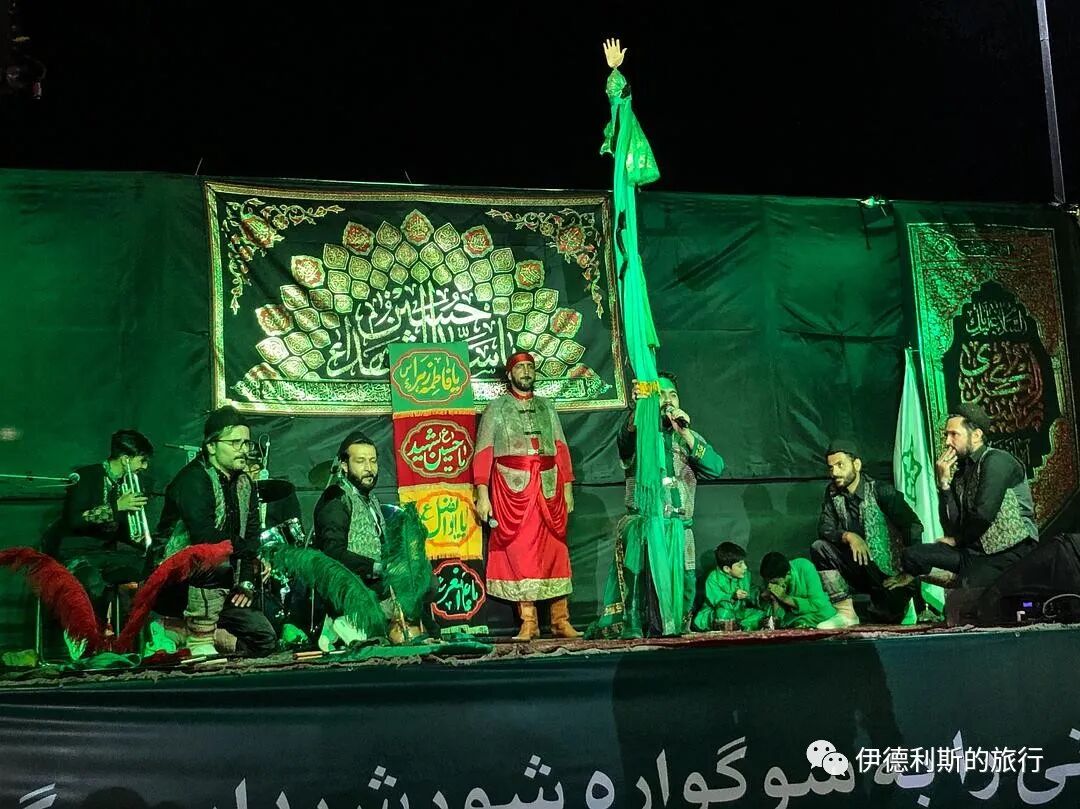
Tajrish Bazaar
At the end of Tajrish Bazaar in the north of Tehran, there is a Tekyeh. In the Shia tradition, a Tekyeh generally refers to a place specifically for commemorating Imam Hussein, especially for performing Ta'zieh opera during the month of Muharram. Tajrish Tekyeh can be traced back to the Qajar dynasty 220 years ago. It is a very old Tekyeh in Tehran, and the current layout is also very traditional, although the wooden pillars have been replaced by metal ones.
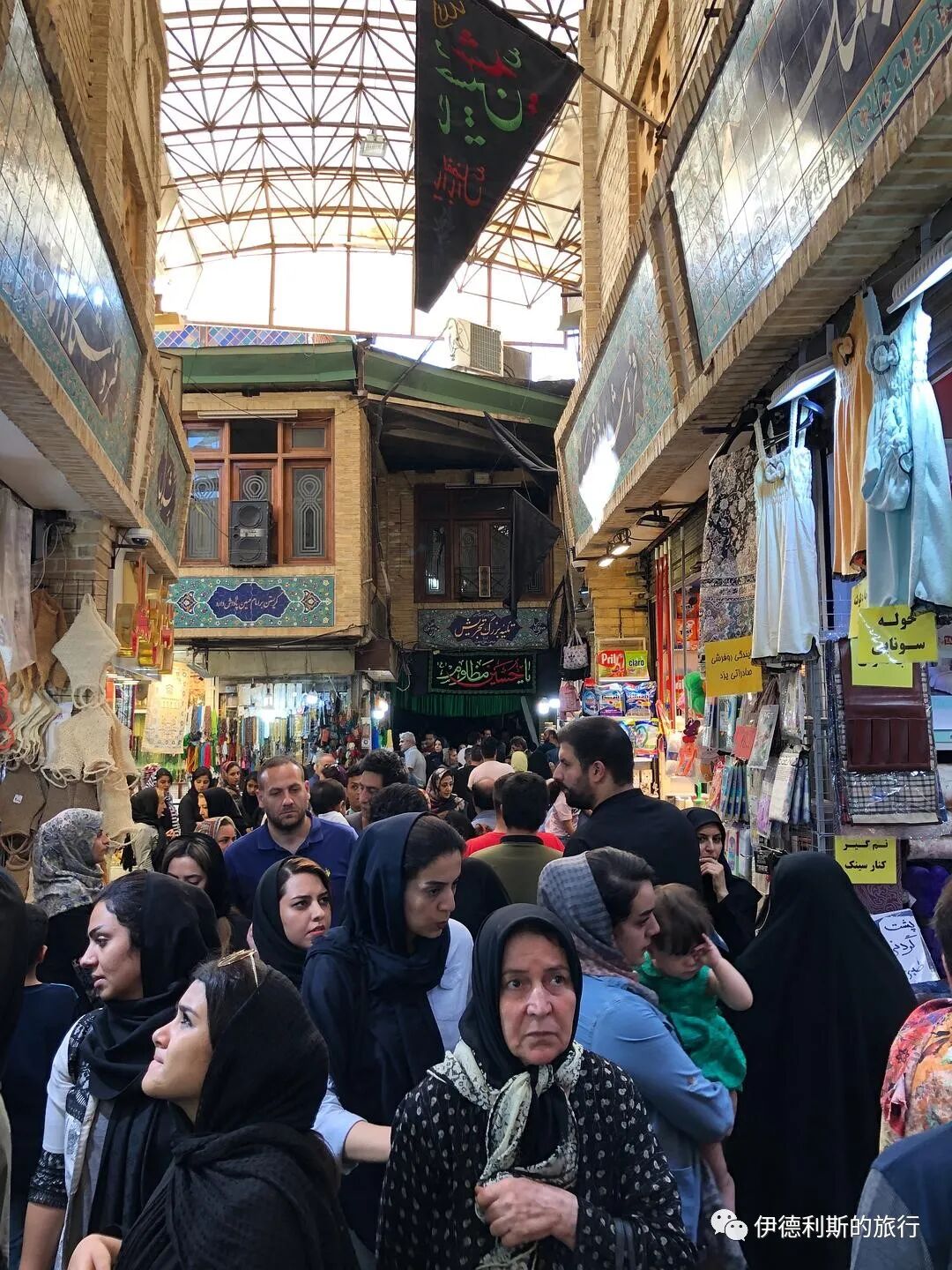
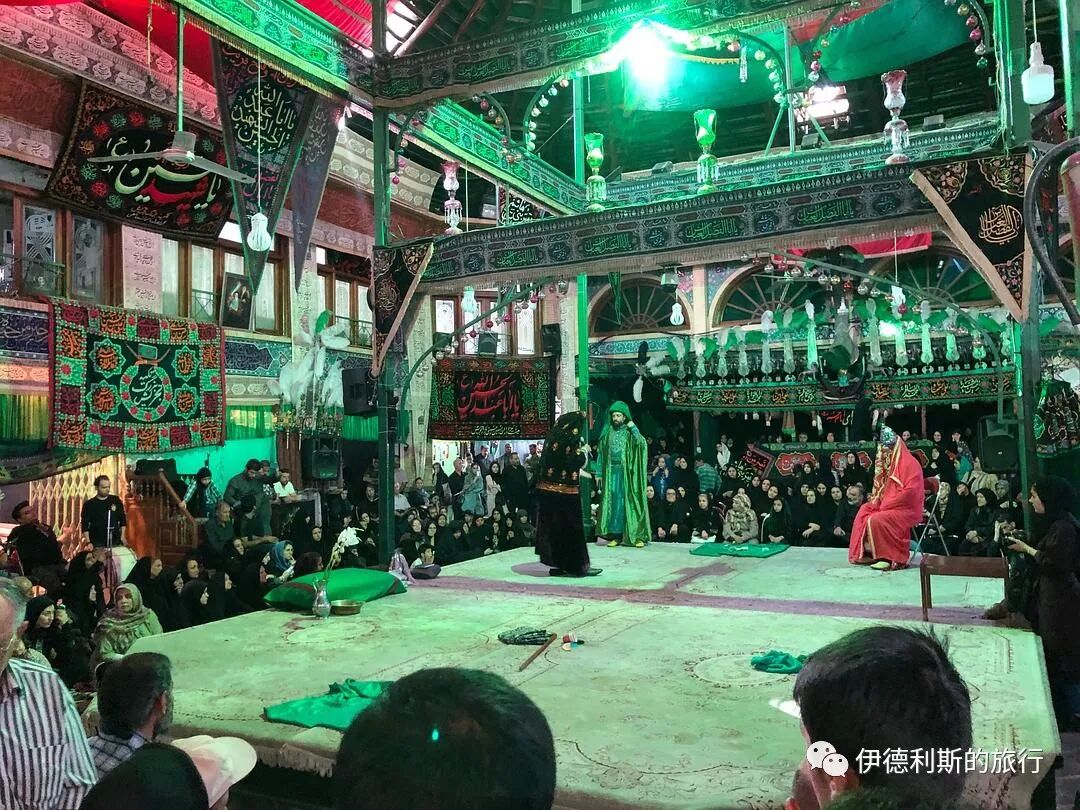
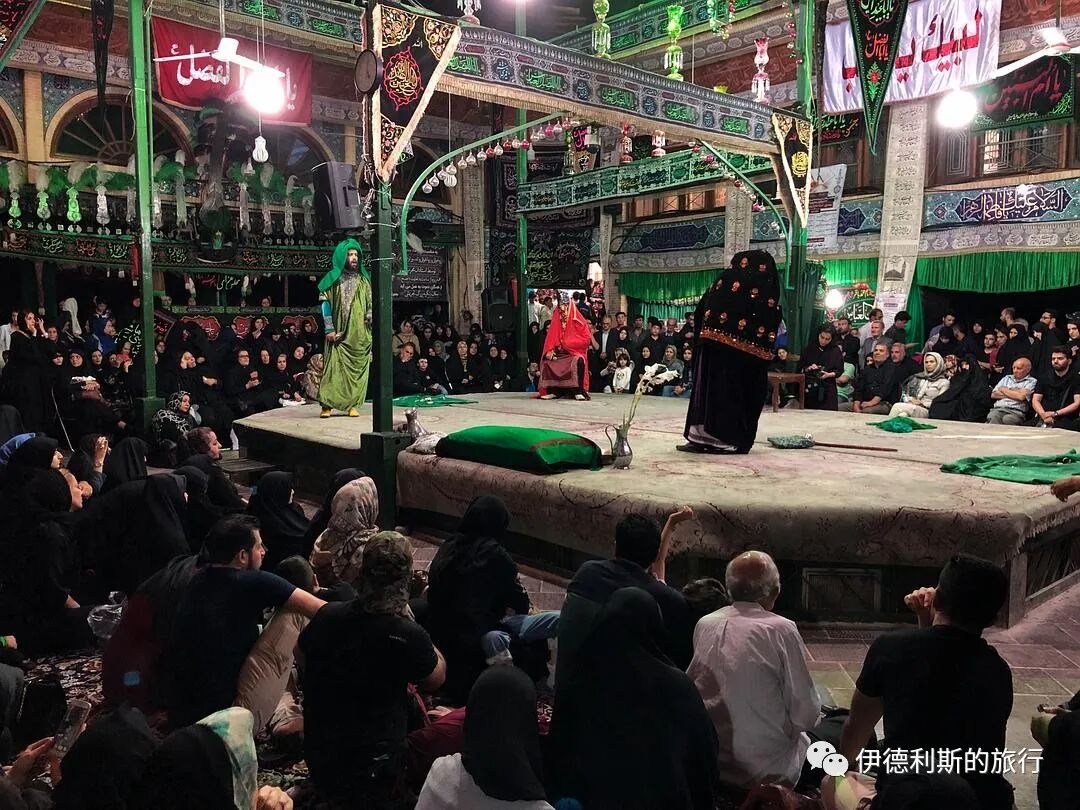
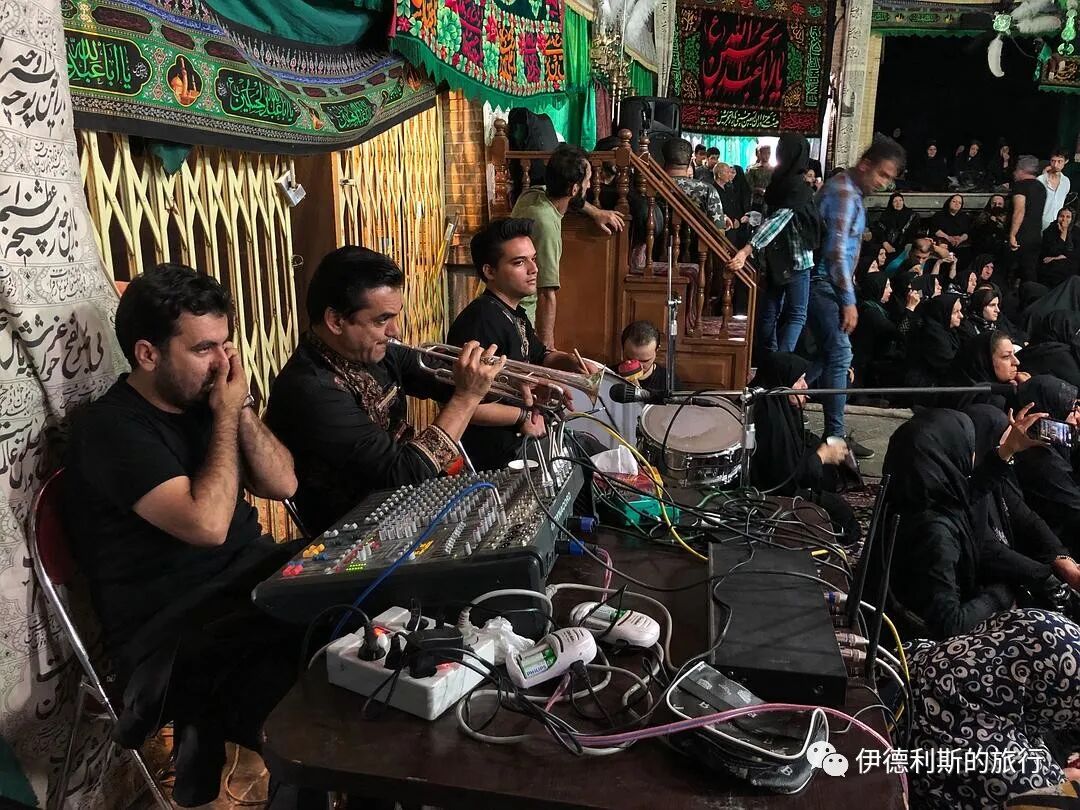
Outside the venue, there are some shops selling Shia supplies. The picture below shows the whips used during the flagellation (tatbir) ritual on Ashura, which recreates the scene of the Umayyad army whipping Imam Hussein's family. This ritual used to involve intense self-harm, but later, the Supreme Leader of Iran's Shia, Khamenei, publicly stated that during Ashura: 'Any act that harms the body is Haram (forbidden).' Therefore, you no longer see cases of self-harm during the festival in Tehran.
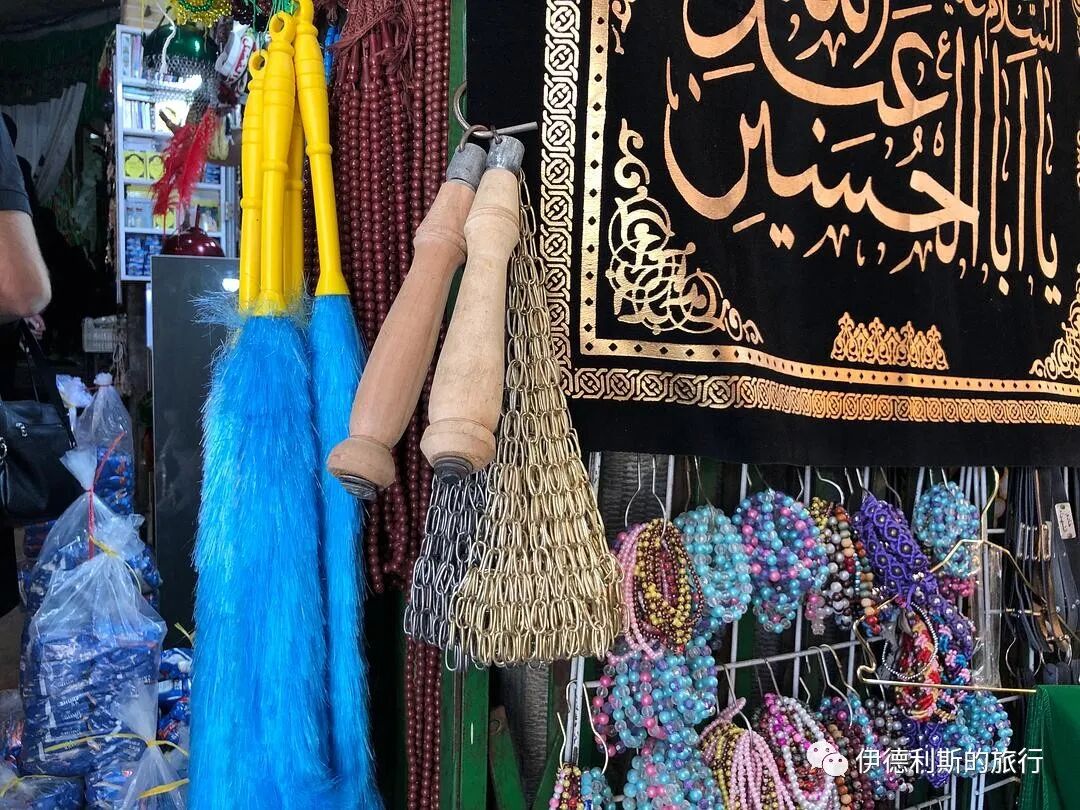
The red hat represents the villainous Umayyad dynasty, and the green hat represents the heroic Imam Hussein.
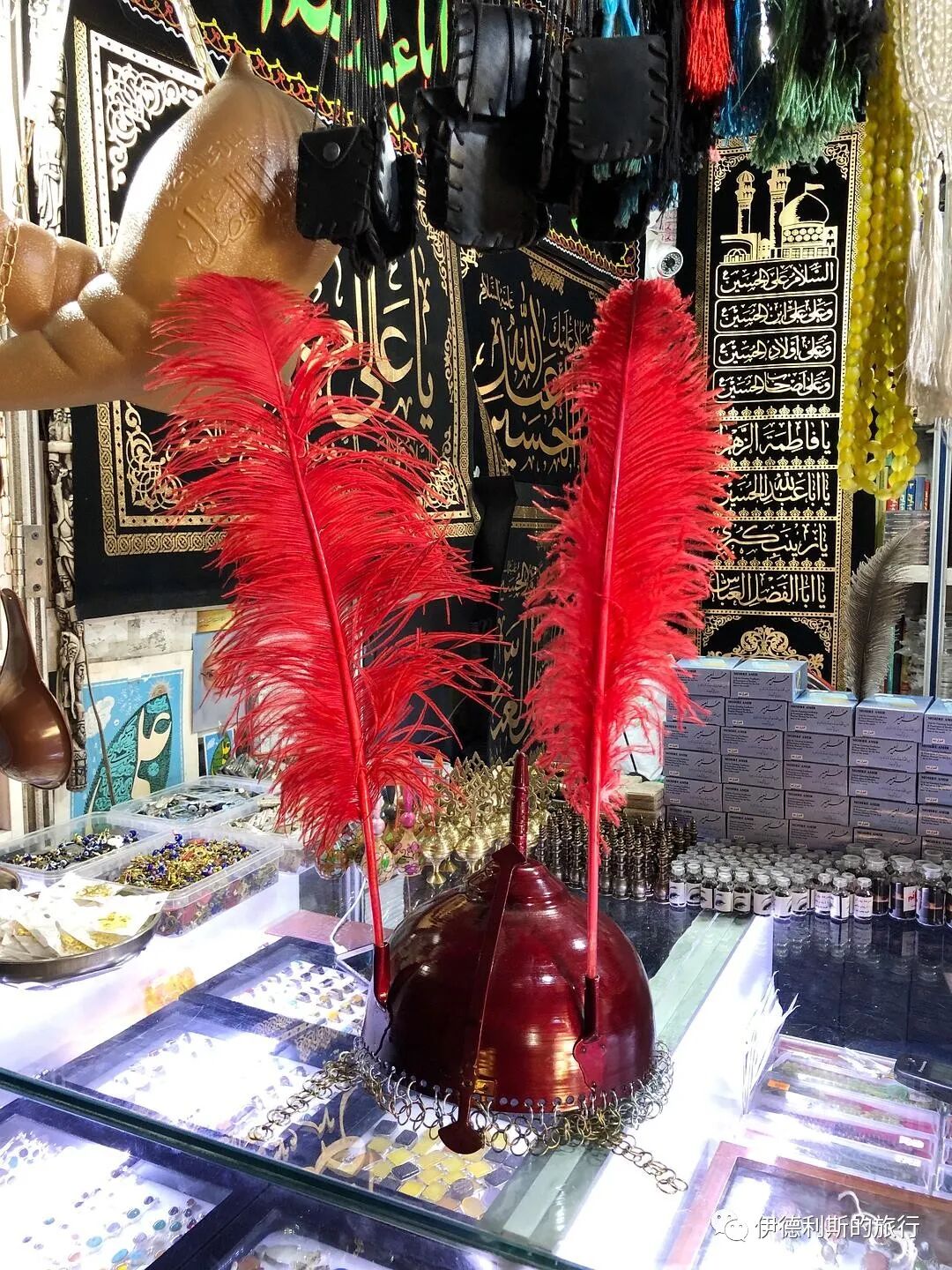
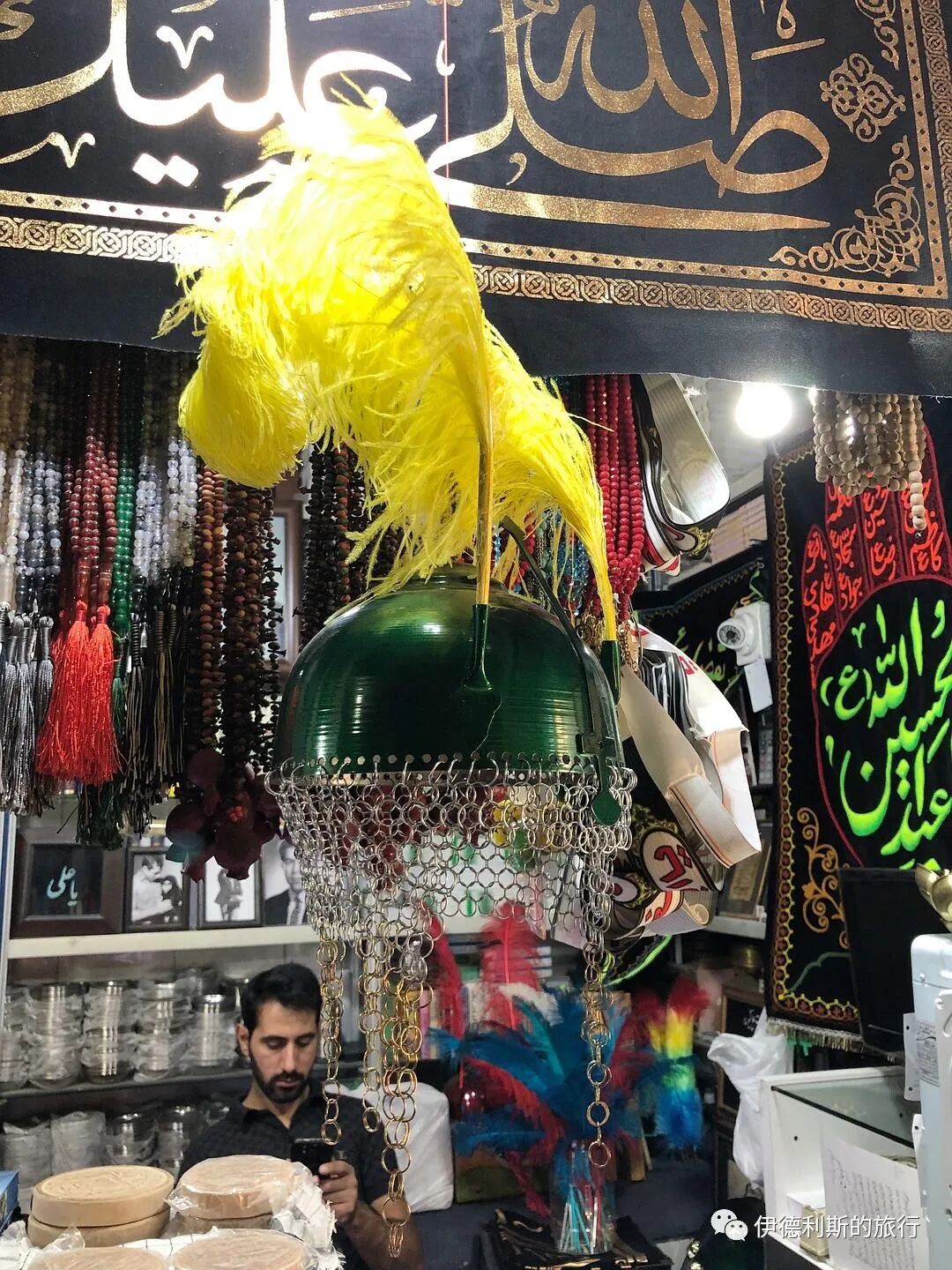
The lump of clay is called a Turbah, which symbolizes the earth; Shia Muslims must place their foreheads on it during prayer.
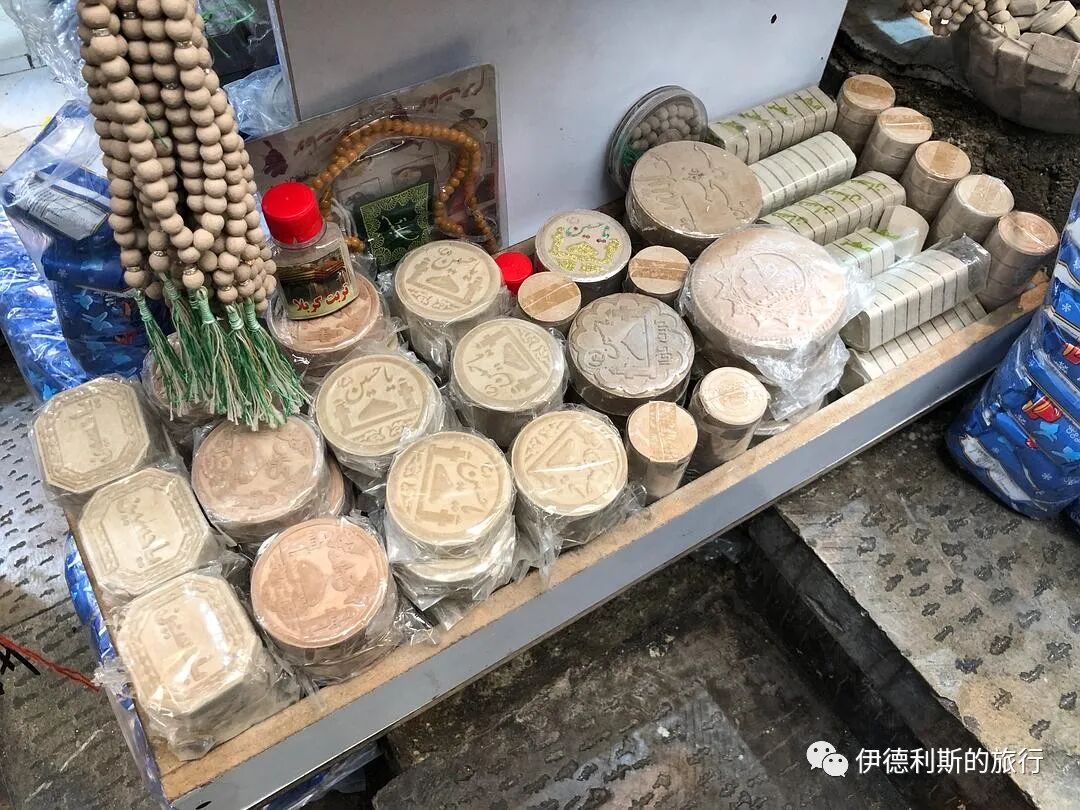
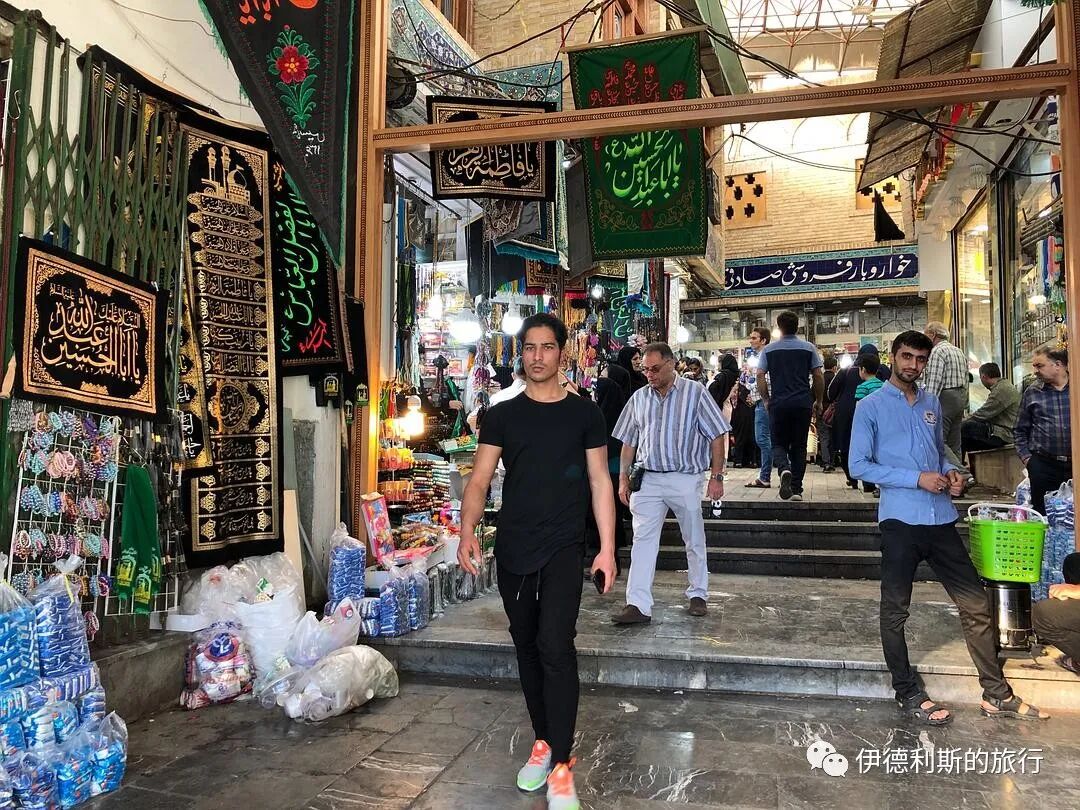
Turning out of Tajrish Bazaar, you reach the most important Shia shrine and mosque in northern Tehran, Imamzadeh Saleh, which houses the tomb of Saleh, the son of Musa al-Kadhim, the seventh Imam of the Twelver Shia. Today, the large wooden box inside the mausoleum dates back to the late Safavid dynasty to the Afsharid dynasty in the 18th century.
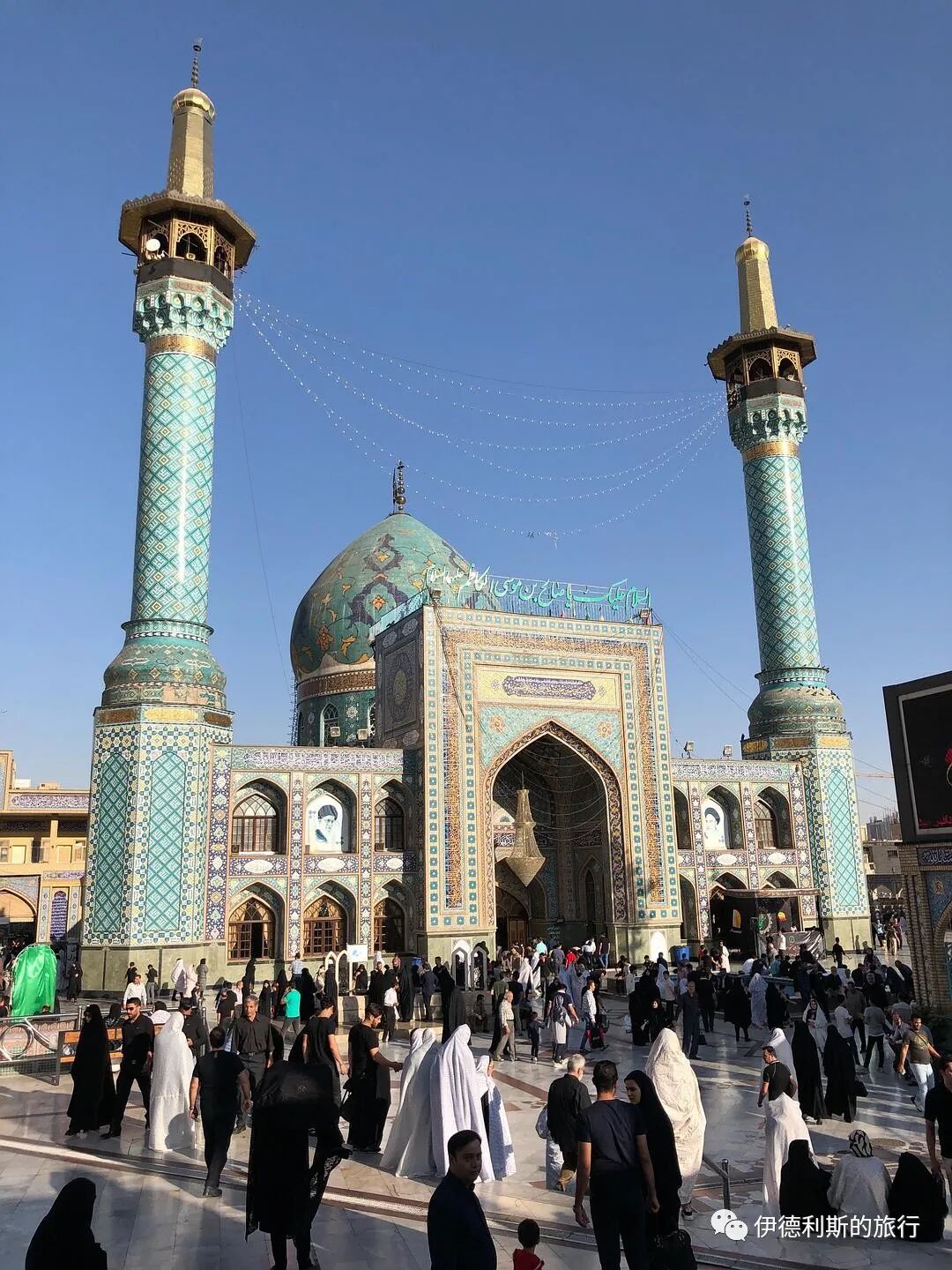
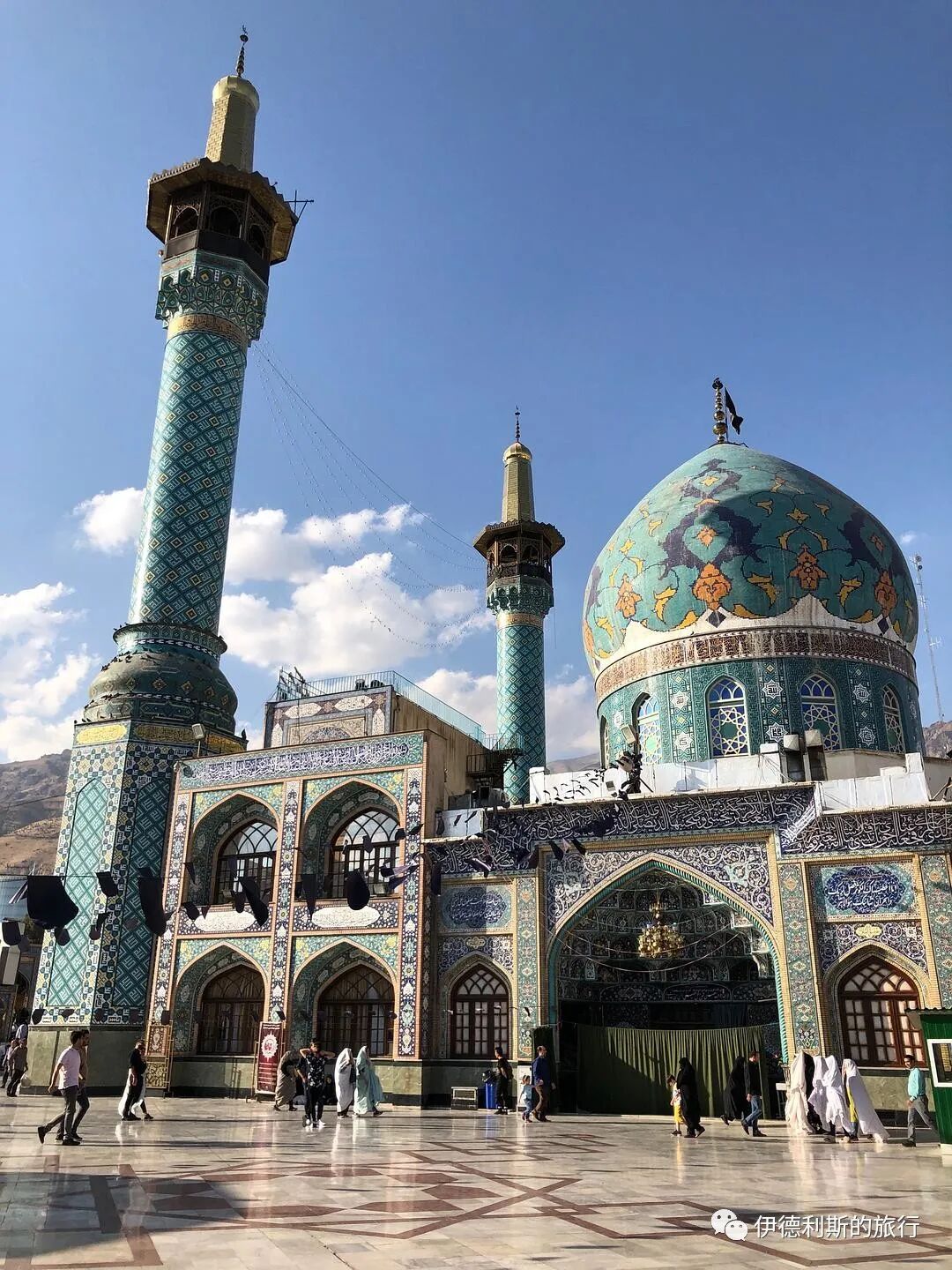
During the month of Muharram, Ta'zieh opera is also performed in the courtyard of Imamzadeh Saleh.
At the place where drinks are distributed for free at the entrance of Imamzadeh Saleh shrine and mosque, Khakshir (seeds of the Flixweed plant) is a very common drink in Iran during the summer to relieve heat and quench thirst.
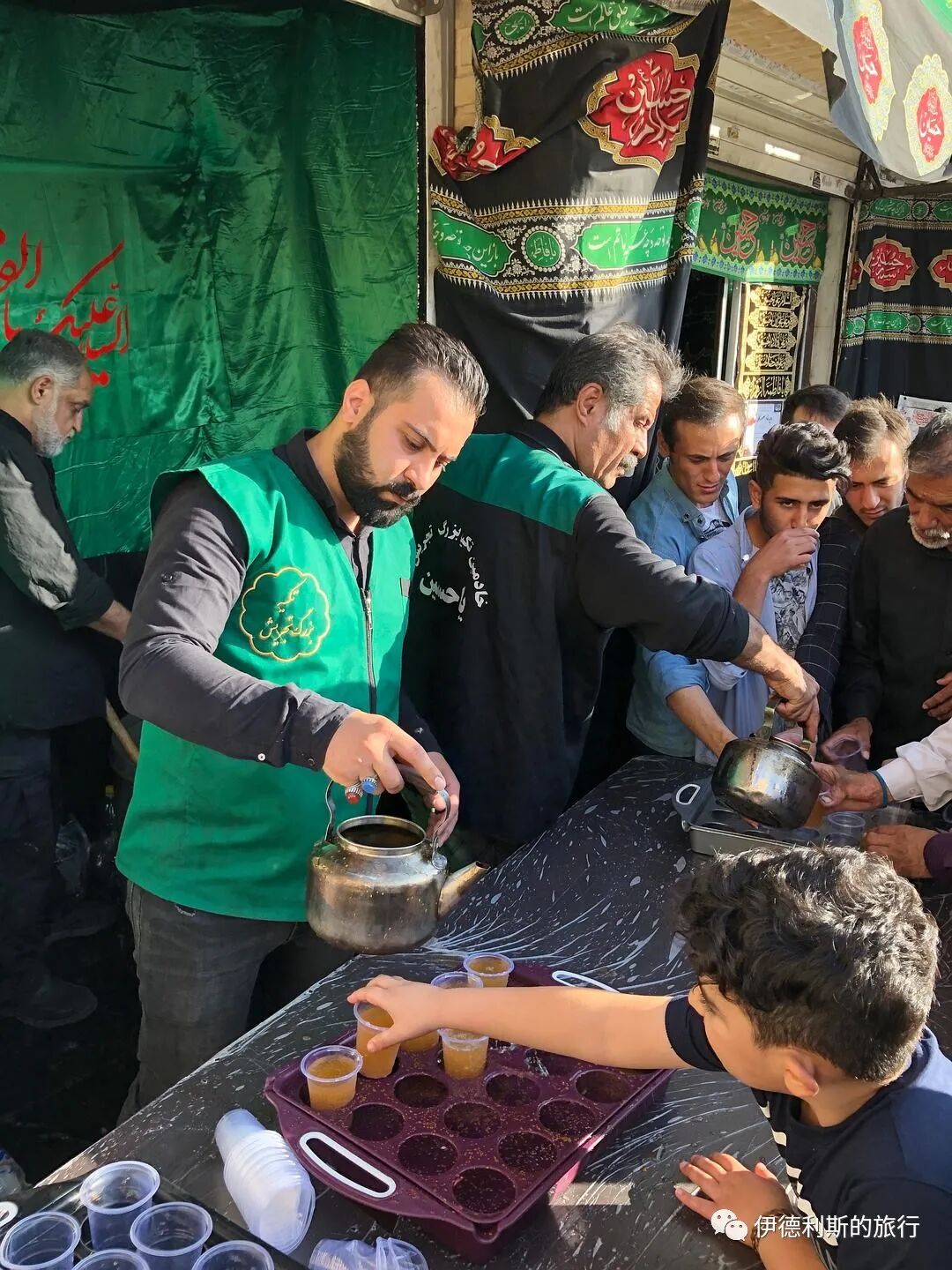
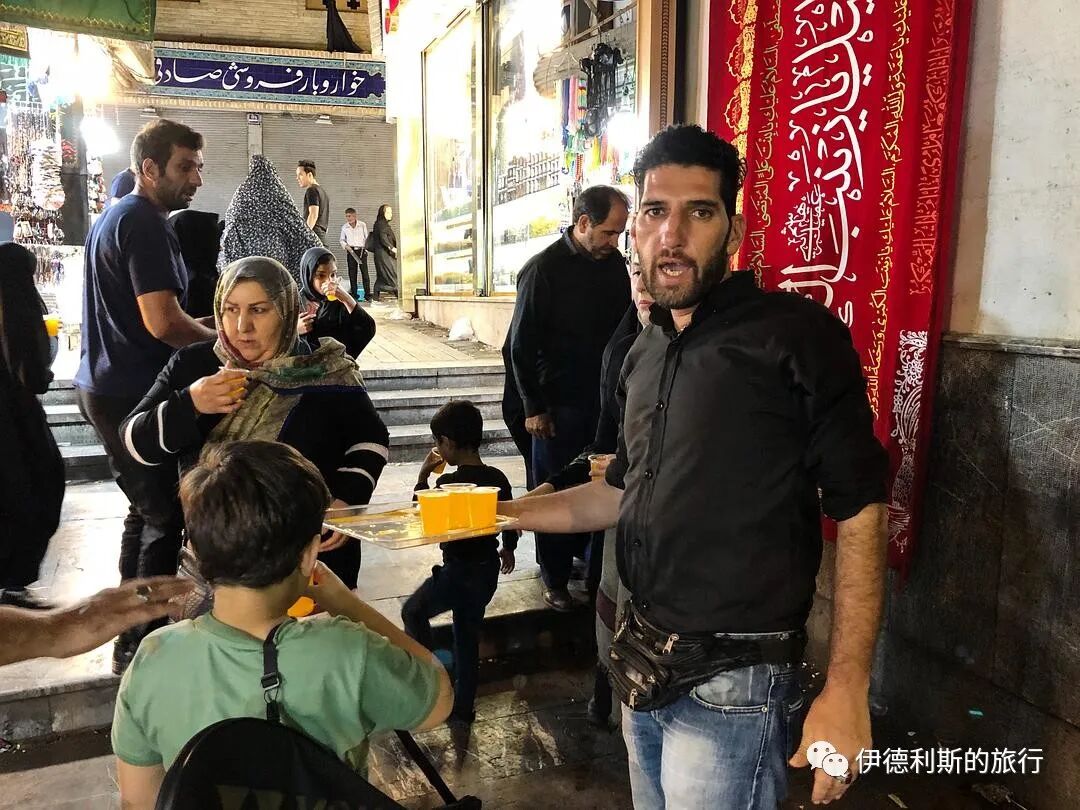
Then, next to it, you can also see places selling various Shia supplies.
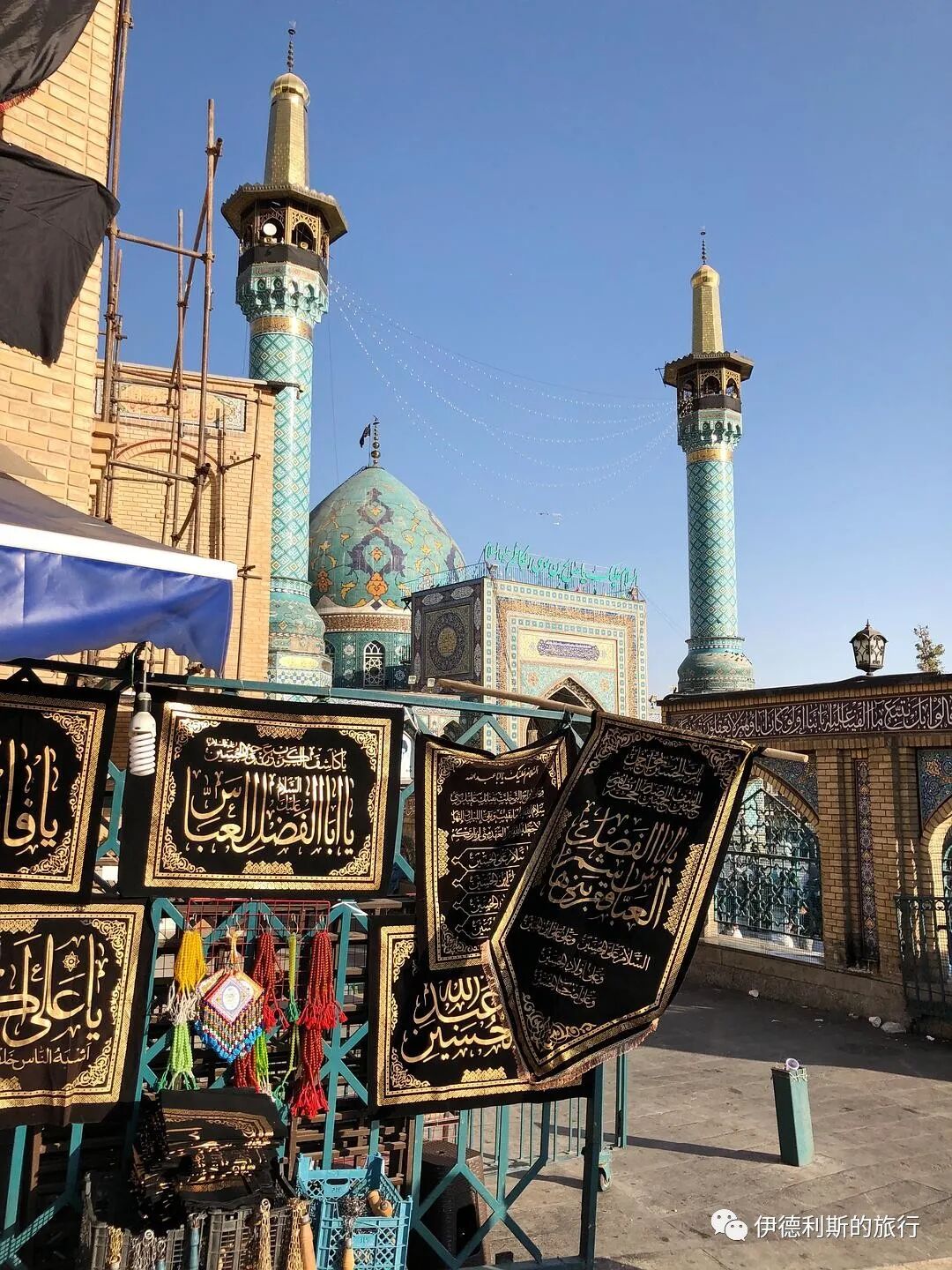
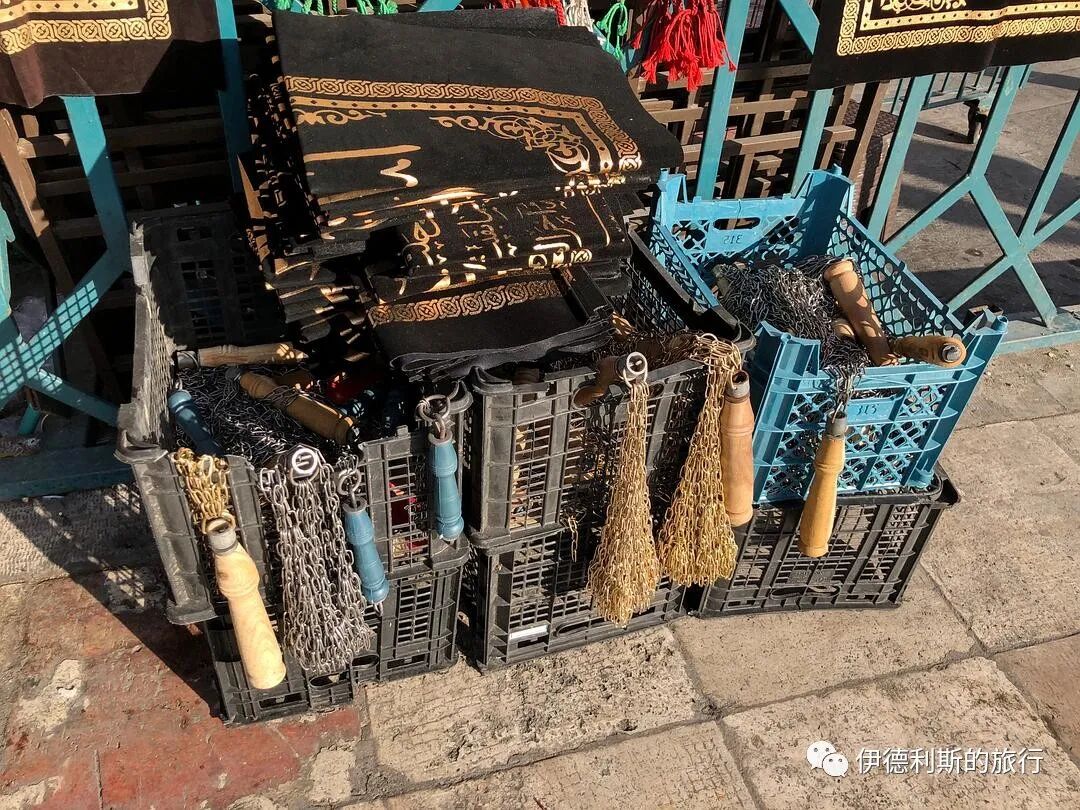
Tehran Bazaar Travel Guide: Iranian Markets, Muslim Culture and Local Life
Articles • ali2007fr posted the article • 0 comments • 194 views • 2026-05-17 07:13
Summary: This travel note introduces Tehran Bazaar Travel Guide: Iranian Markets, Muslim Culture and Local Life. I traveled to Tehran in 2019. The local prices were truly very affordable, and after arriving, I couldn't help but visit various bazaars to shop and shop. It is useful for readers interested in Tehran Bazaar, Iran Travel, Muslim Culture.
I traveled to Tehran in 2019. The local prices were truly very affordable, and after arriving, I couldn't help but visit various bazaars to shop and shop.
Jomeh Bazaar
Tehran's Jomeh Bazaar (Friday Bazaar) is usually a multi-story parking garage in the city center, but every Friday it turns into a very interesting flea market. Compared to the monotonous Yiwu small commodities in the Grand Bazaar, Jomeh Bazaar is a place where you can truly find treasures. There are second-hand dealers selling old records, old books, and antiques, as well as young women selling handmade jewelry, canvas bags, and coasters, along with various ethnic-style clothing and woven fabrics. It takes at least two or three hours to browse carefully.
Canvas bags and coasters I bought.
This was quite interesting; I kind of regret not buying it.
The felt hat and the Turkmen small floral cap, Takhya, that I bought. Takhya is a symbol of Turkmen tradition and identity. It is generally made of linen fabric, and the triangles on it are said to represent unity.
Tajrish Bazaar
Tajrish Bazaar is in the new urban area at the northernmost part of Tehran and stays open until 10 PM, making it very suitable for evening shopping. I bought some saffron at the Melal shop for Mashhad saffron in the bazaar. Buying saffron in Iran is actually quite cheap.
I bought traditional Iranian candy, Sohan asali (honey, sugar, saffron, and nut brittle), at a candy and dried fruit shop near Tajrish Bazaar. It is often eaten during Nowruz.
Carpet Bazaar
I bought a small carpet at the Carpet Bazaar next to the Tehran Grand Bazaar. It was produced in Qom, a Shia holy city in Iran. The owner is named Reza, a native of Kashan who has been in the carpet business in Tehran for over 20 years and speaks very fluent English.
Esfahan Art House
Esfahan Art House on the street at the north gate of the Grand Bazaar is a great one-stop place to buy traditional Persian handicrafts, and the prices are very reasonable. I bought two types of Iranian-style handicrafts here.
The first is a jewelry box made with the traditional Persian inlay technique, Khatam. Khatam is made by arranging bundles of wood, bone, and metal by color, then compressing and cutting them into geometric patterns. It is generally used to make doors, windows, mirror frames, chessboards, and boxes. The jewelry box I bought is made of hardwood, brass, and camel bone. Khatam flourished in the Safavid dynasty court and gradually declined after the 18th and 19th centuries, but it was revived during the reign of Reza Shah (reigned 1925-1941) of the Pahlavi dynasty, when handicraft schools were opened in Tehran, Shiraz, and Isfahan.
The second is a piece of fabric made with the woodblock printing craft, Ghalamkar. Ghalamkar is made by using woodblocks carved from pear wood to print on fabric, which is then hammered hundreds of times for repeated overprinting. The center of Ghalamkar art is Isfahan.
Tehran Museum of Islamic Art
After visiting the Tehran Museum of Islamic Art, I went to the souvenir shop. The prices were a bit high, but you can't buy these things anywhere else.
A notepad with Qajar dynasty paintings.
A bookmark featuring 15th-century Timurid dynasty Shiraz-style miniature painting.
A tile magnet from the 13th-14th century Ilkhanate period; the original is in the museum.
Golestan Palace
A replica of a wall tile from the Qajar dynasty period bought at the Golestan Palace souvenir shop. view all
Summary: This travel note introduces Tehran Bazaar Travel Guide: Iranian Markets, Muslim Culture and Local Life. I traveled to Tehran in 2019. The local prices were truly very affordable, and after arriving, I couldn't help but visit various bazaars to shop and shop. It is useful for readers interested in Tehran Bazaar, Iran Travel, Muslim Culture.
I traveled to Tehran in 2019. The local prices were truly very affordable, and after arriving, I couldn't help but visit various bazaars to shop and shop.
Jomeh Bazaar
Tehran's Jomeh Bazaar (Friday Bazaar) is usually a multi-story parking garage in the city center, but every Friday it turns into a very interesting flea market. Compared to the monotonous Yiwu small commodities in the Grand Bazaar, Jomeh Bazaar is a place where you can truly find treasures. There are second-hand dealers selling old records, old books, and antiques, as well as young women selling handmade jewelry, canvas bags, and coasters, along with various ethnic-style clothing and woven fabrics. It takes at least two or three hours to browse carefully.
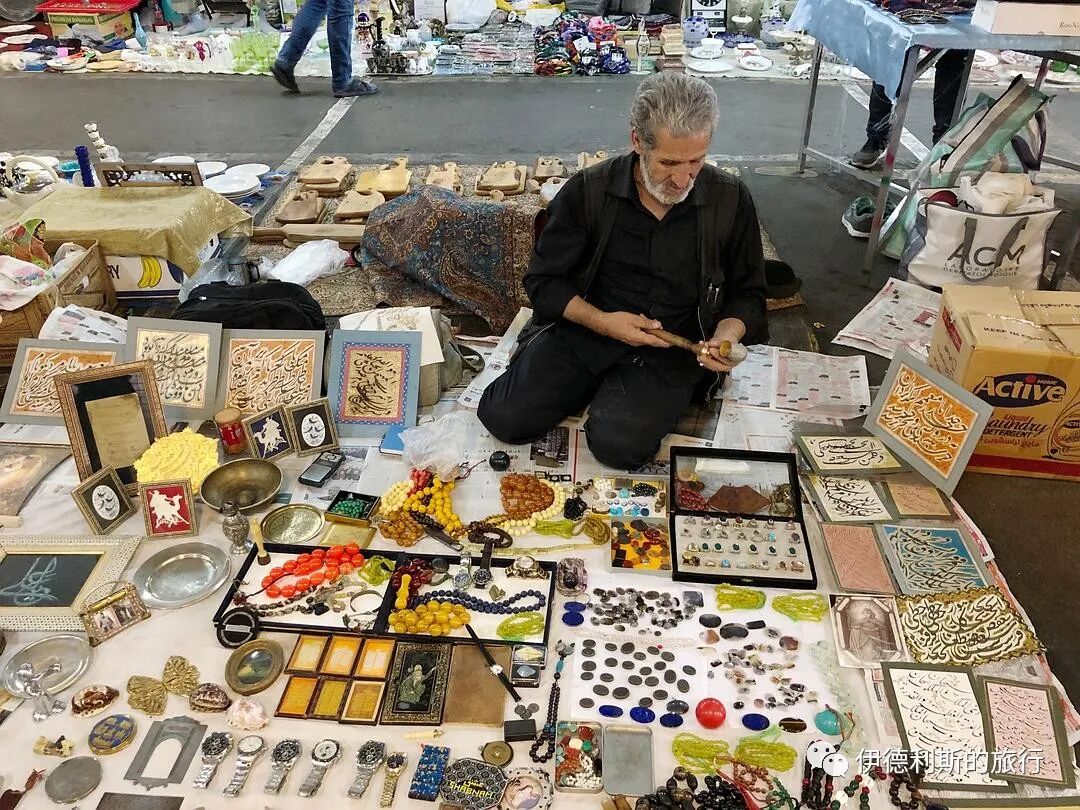
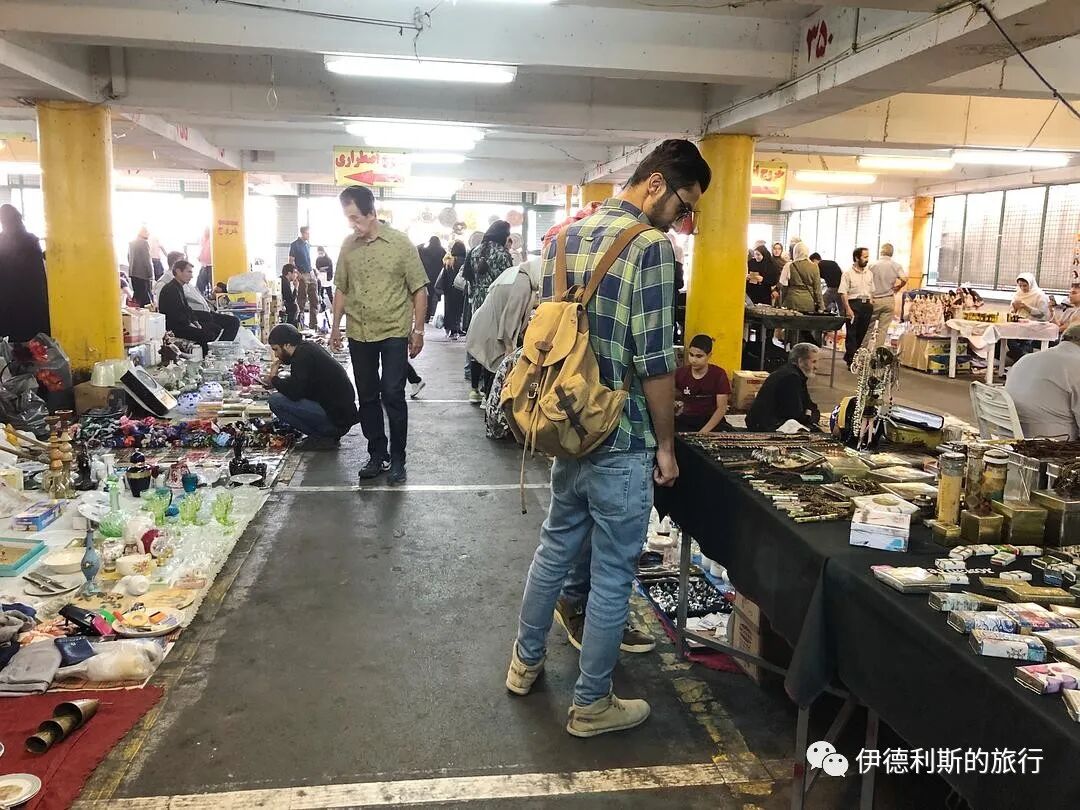
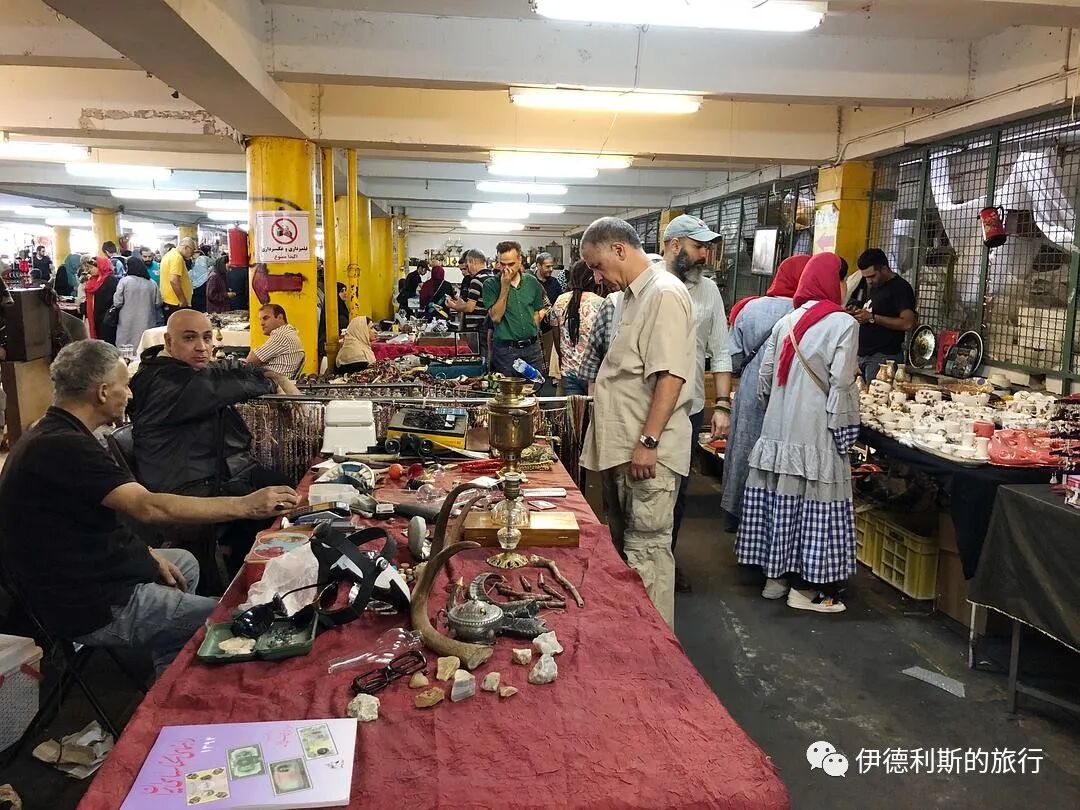
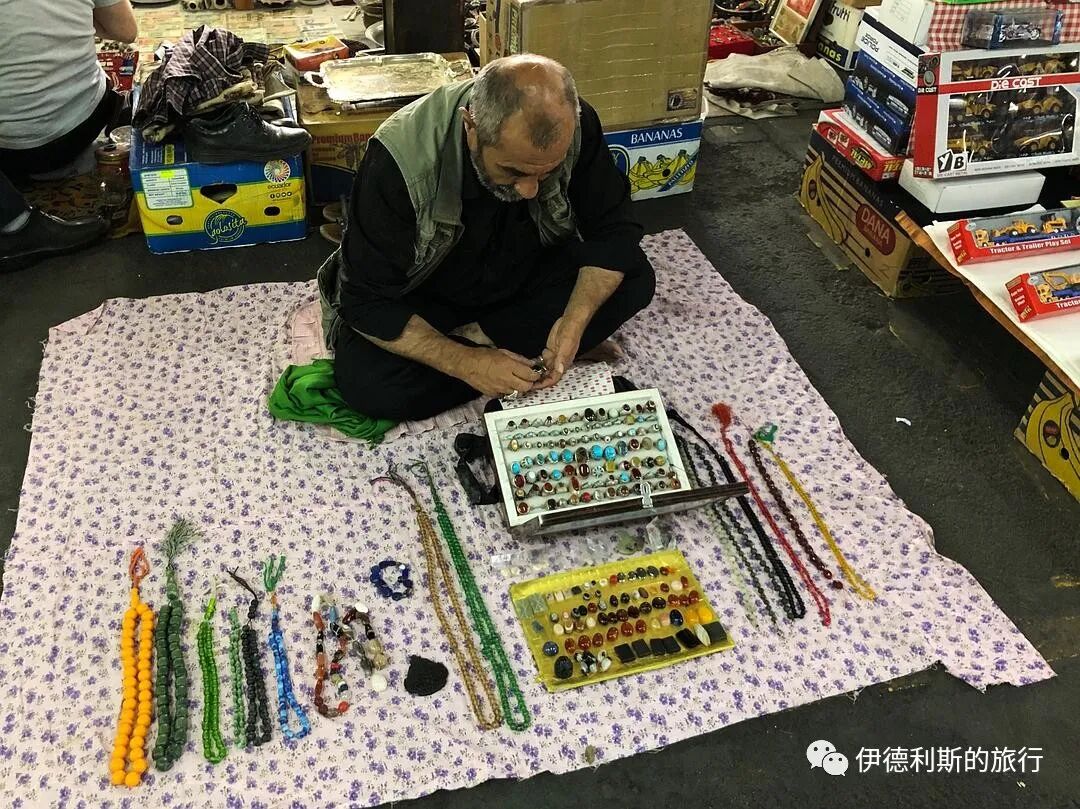
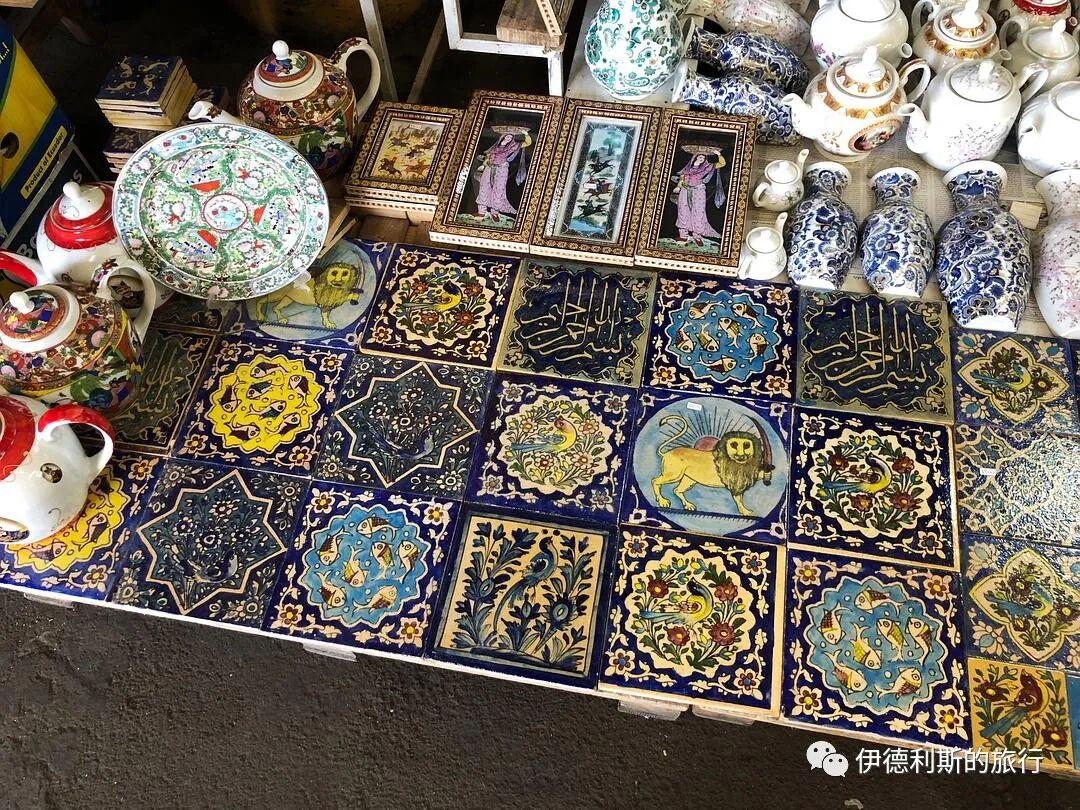
Canvas bags and coasters I bought.
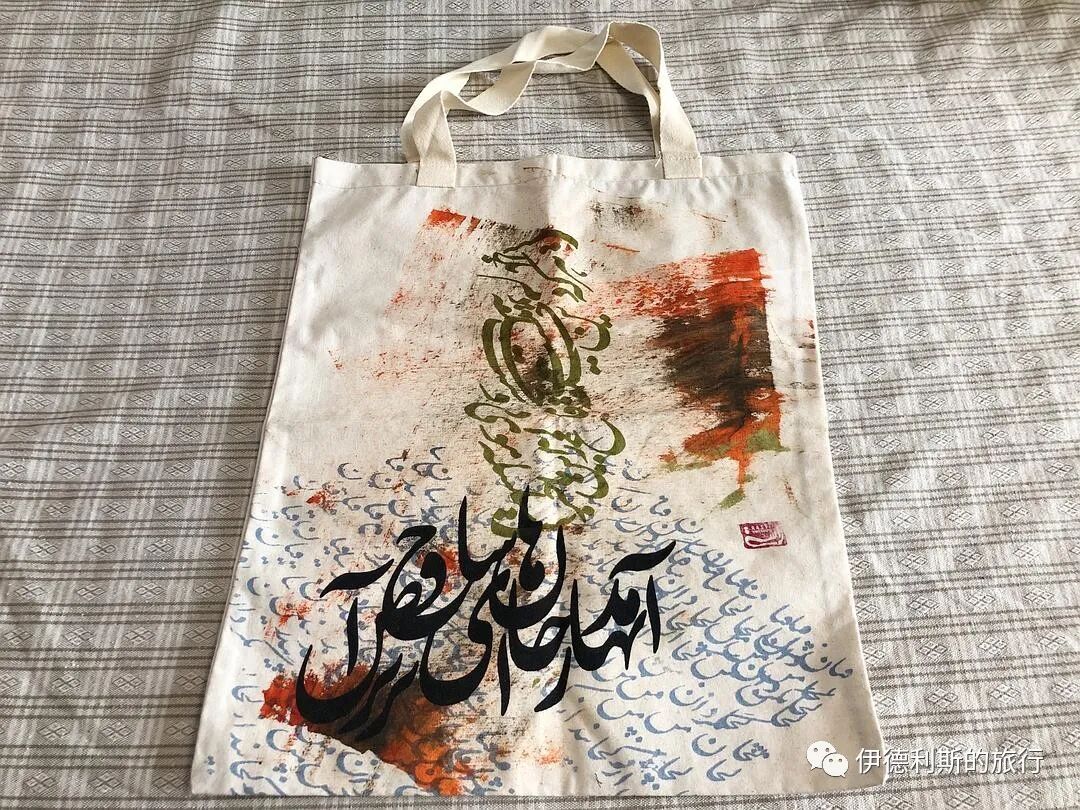
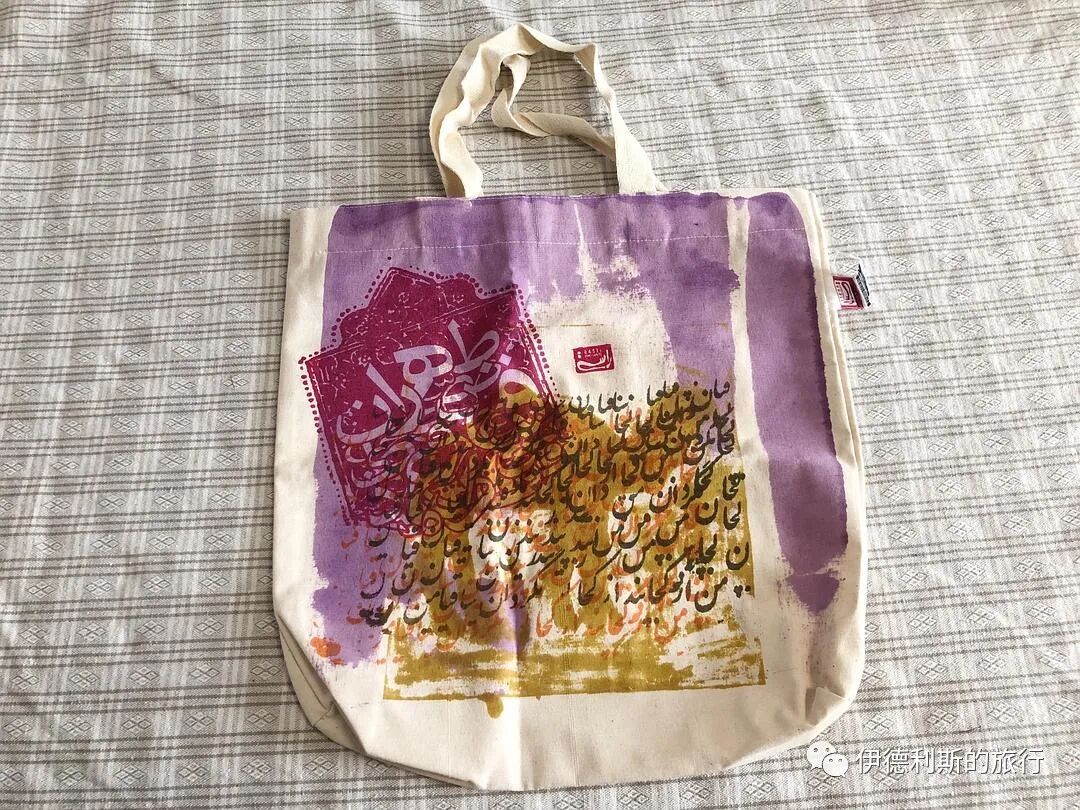
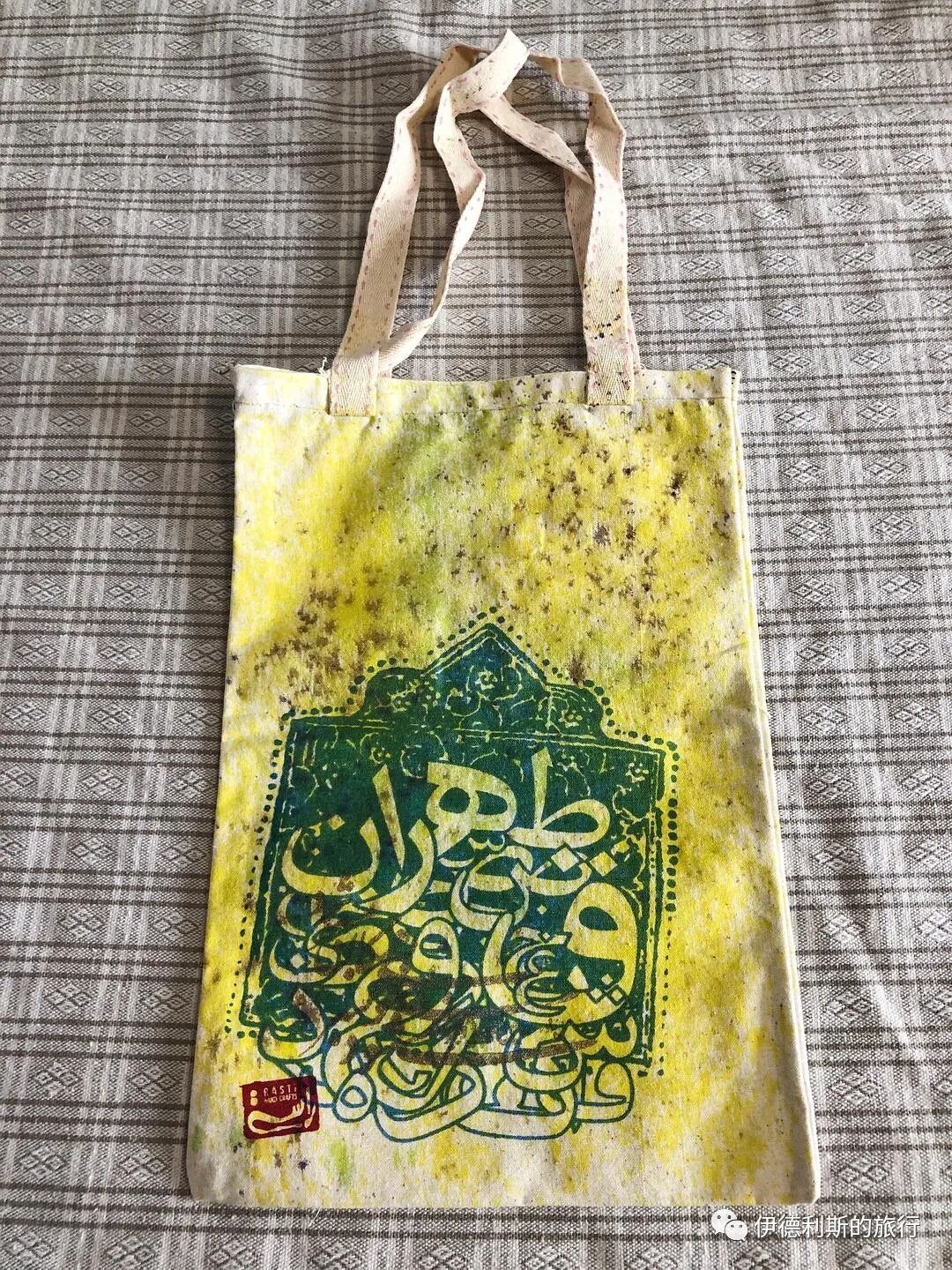
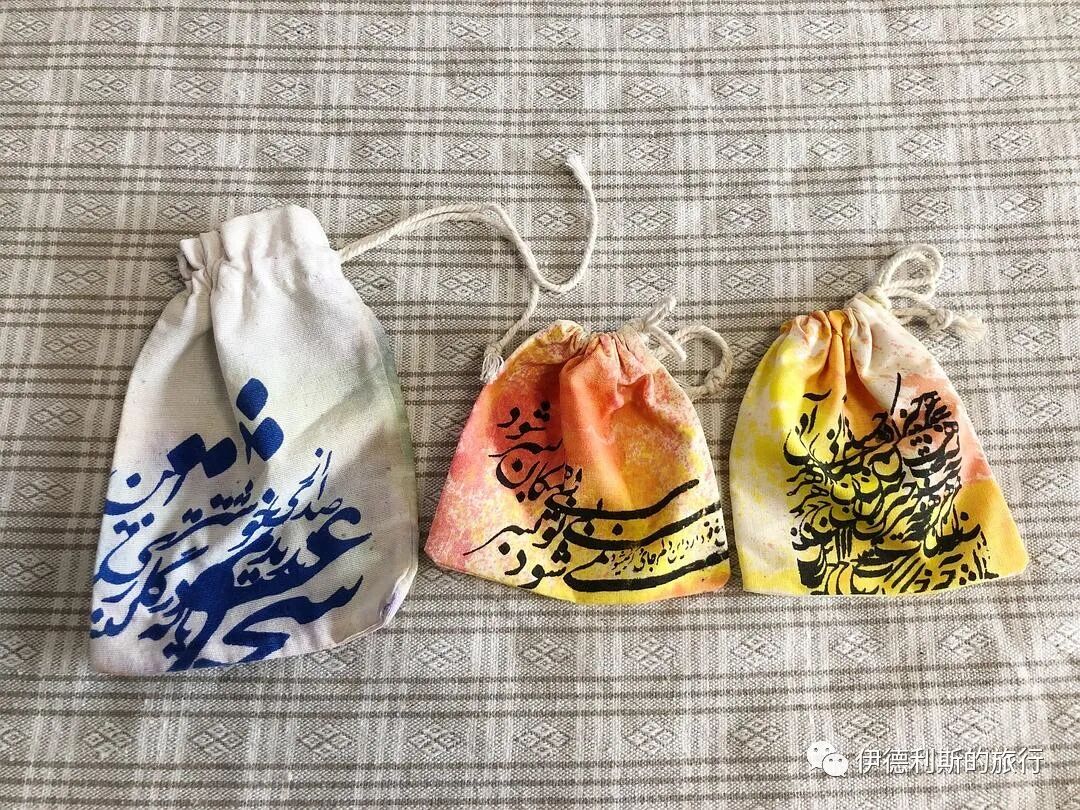
This was quite interesting; I kind of regret not buying it.
The felt hat and the Turkmen small floral cap, Takhya, that I bought. Takhya is a symbol of Turkmen tradition and identity. It is generally made of linen fabric, and the triangles on it are said to represent unity.
Tajrish Bazaar
Tajrish Bazaar is in the new urban area at the northernmost part of Tehran and stays open until 10 PM, making it very suitable for evening shopping. I bought some saffron at the Melal shop for Mashhad saffron in the bazaar. Buying saffron in Iran is actually quite cheap.
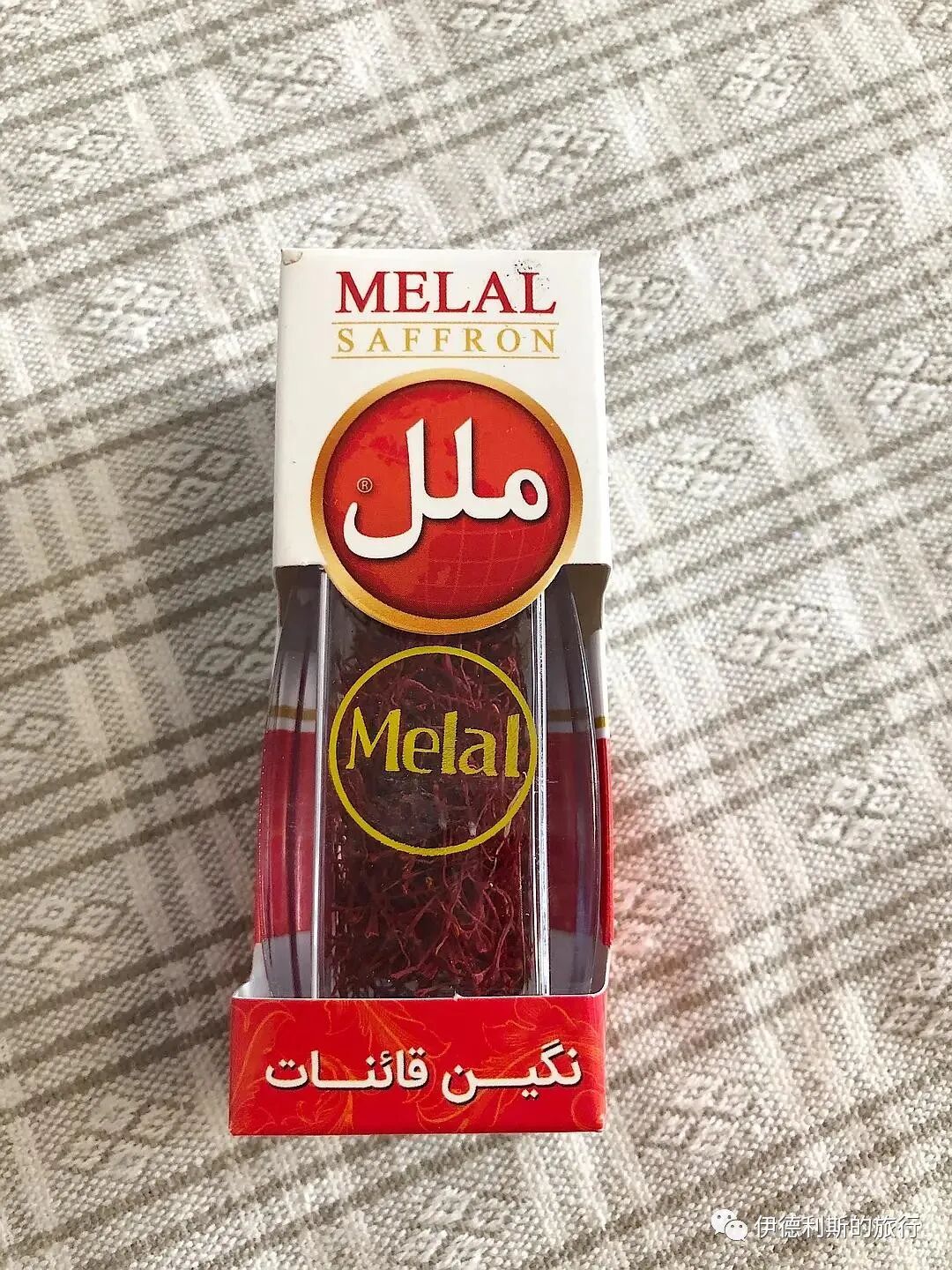
I bought traditional Iranian candy, Sohan asali (honey, sugar, saffron, and nut brittle), at a candy and dried fruit shop near Tajrish Bazaar. It is often eaten during Nowruz.
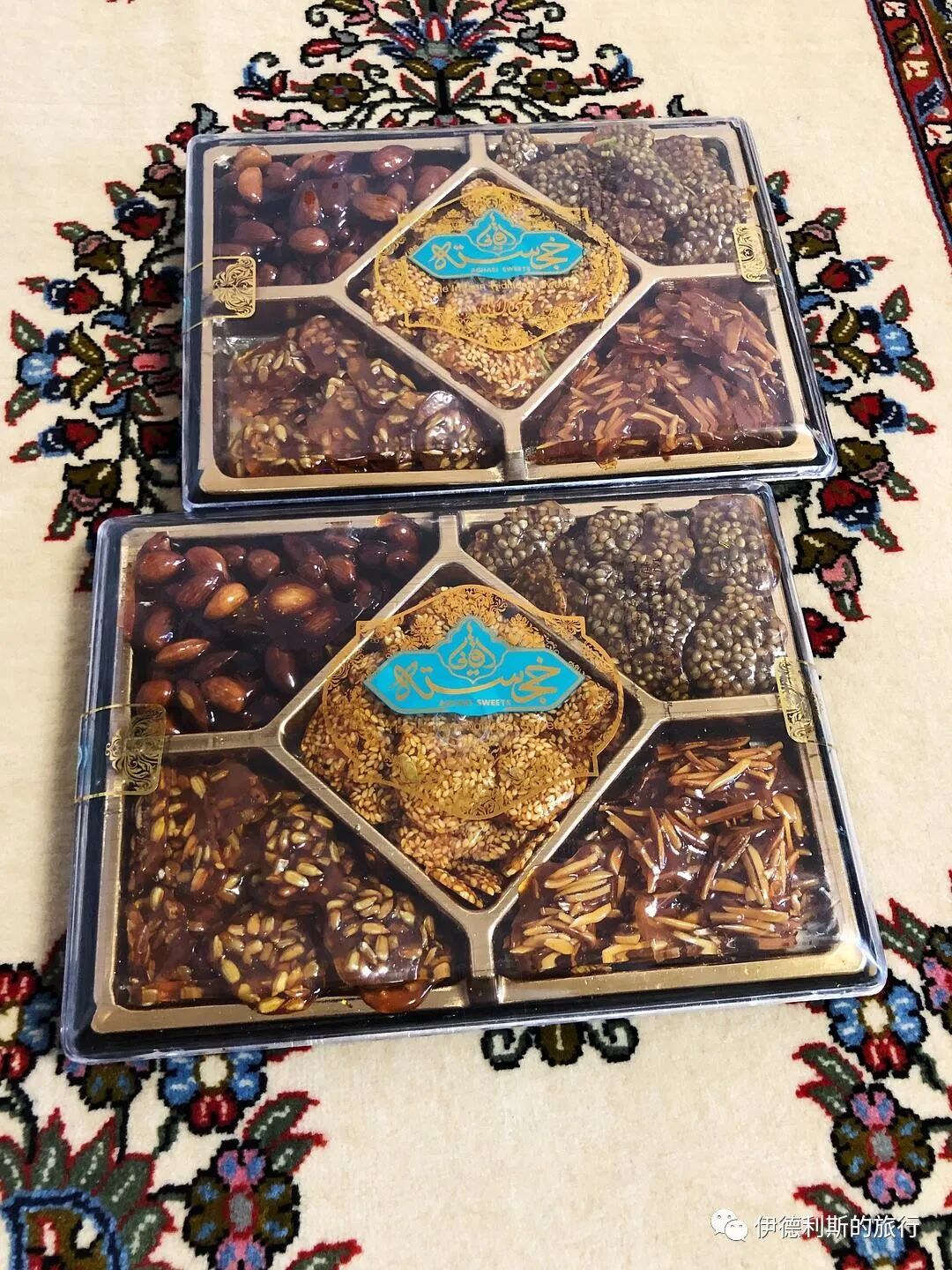
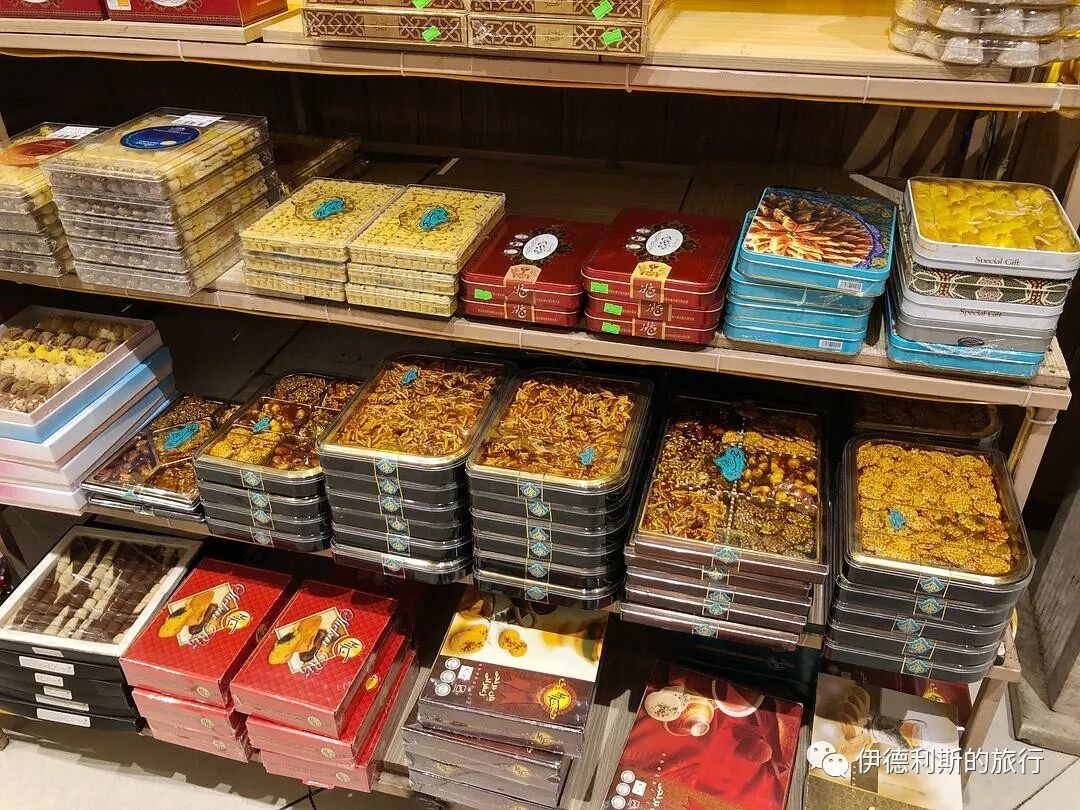
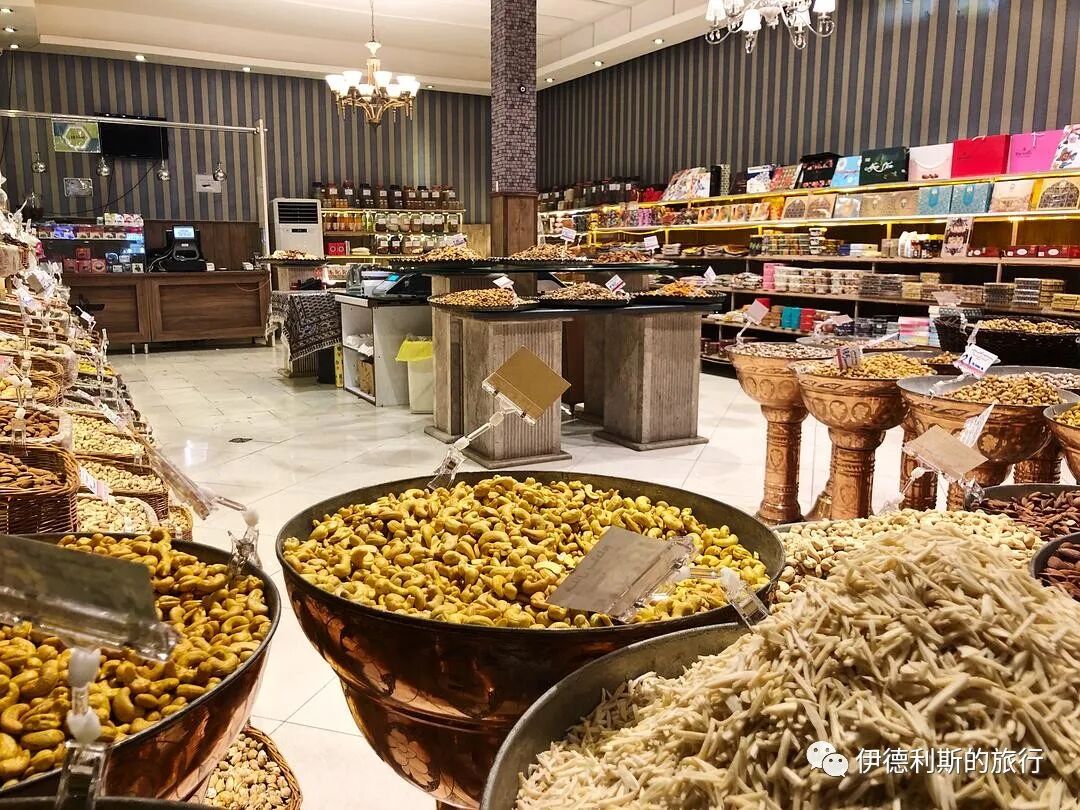
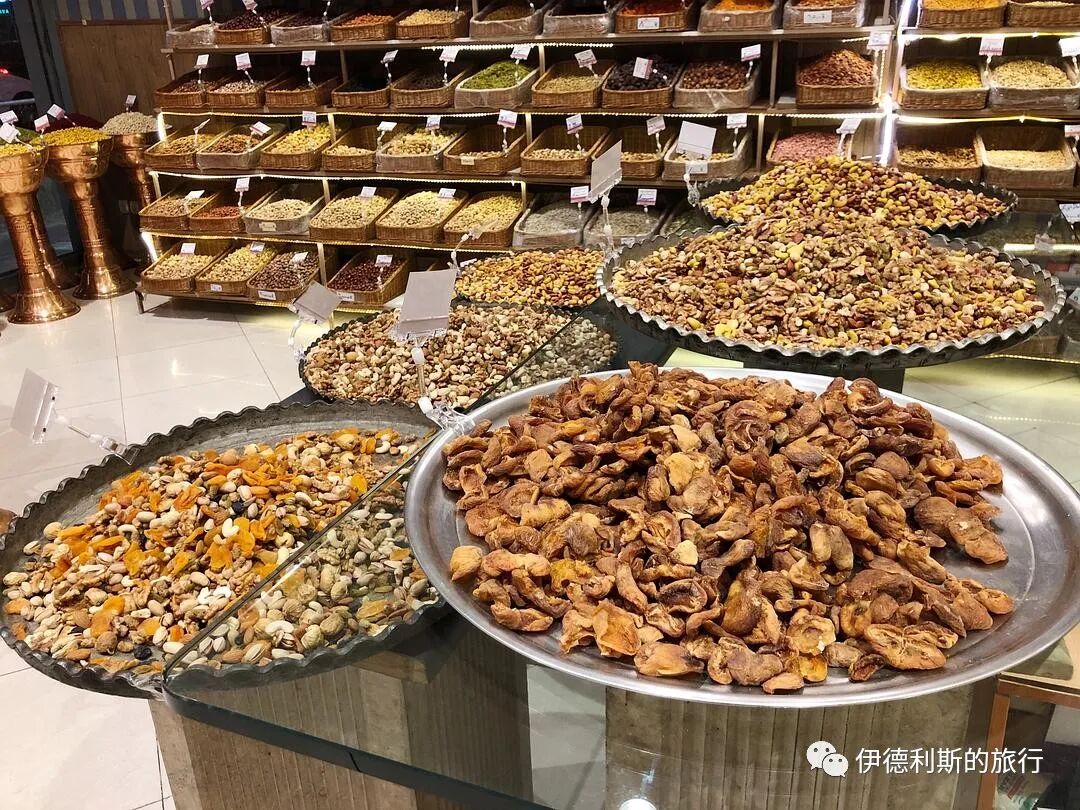
Carpet Bazaar
I bought a small carpet at the Carpet Bazaar next to the Tehran Grand Bazaar. It was produced in Qom, a Shia holy city in Iran. The owner is named Reza, a native of Kashan who has been in the carpet business in Tehran for over 20 years and speaks very fluent English.
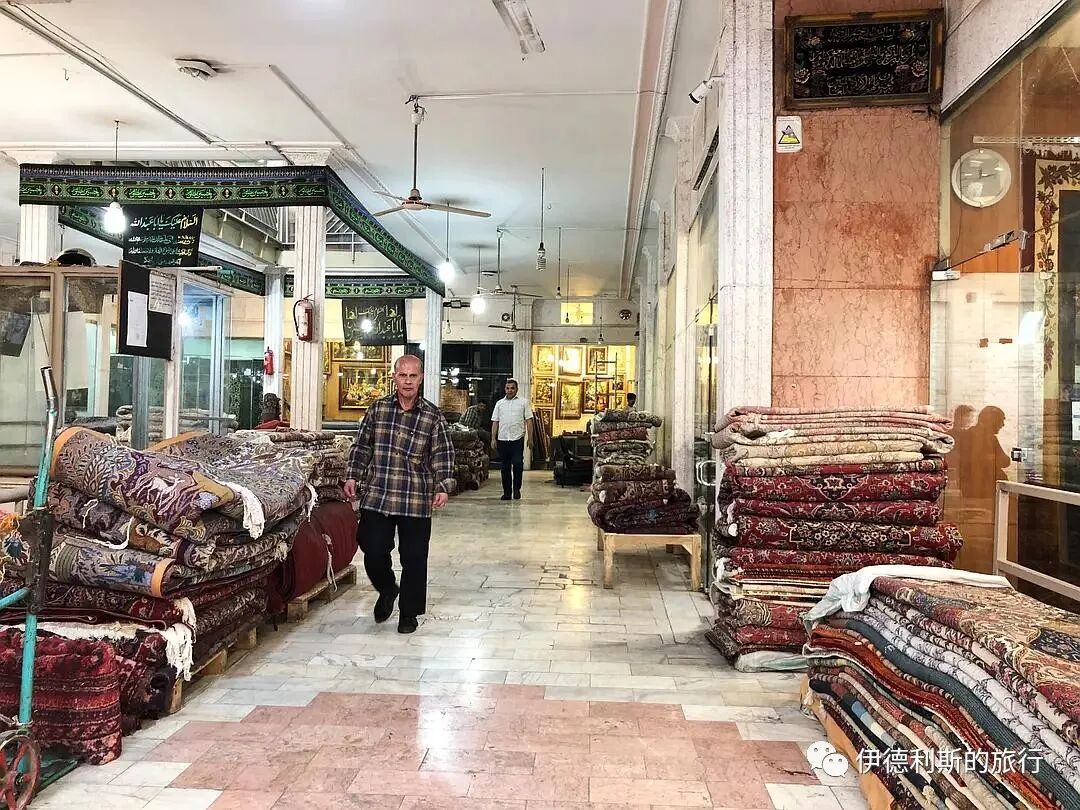
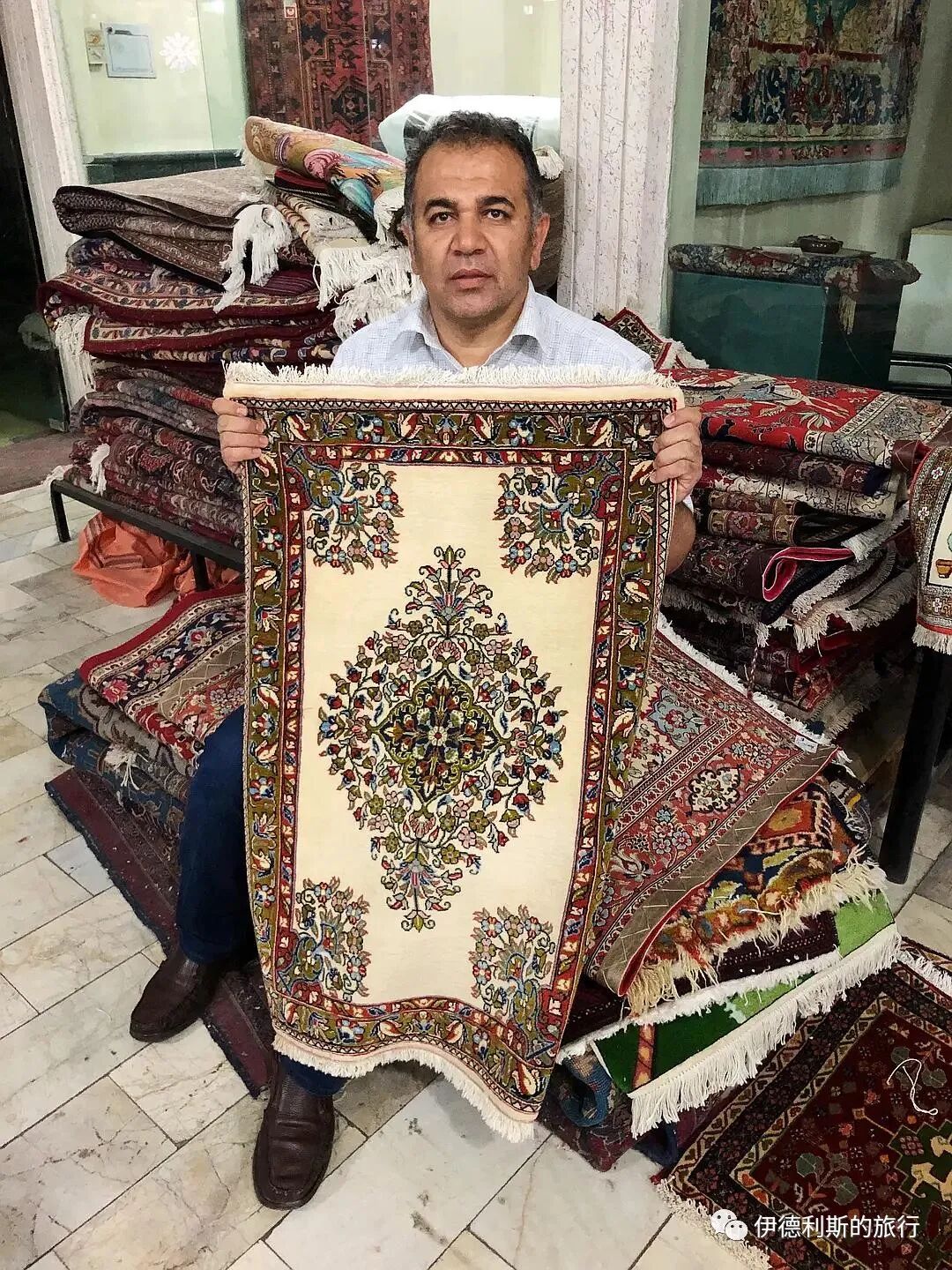
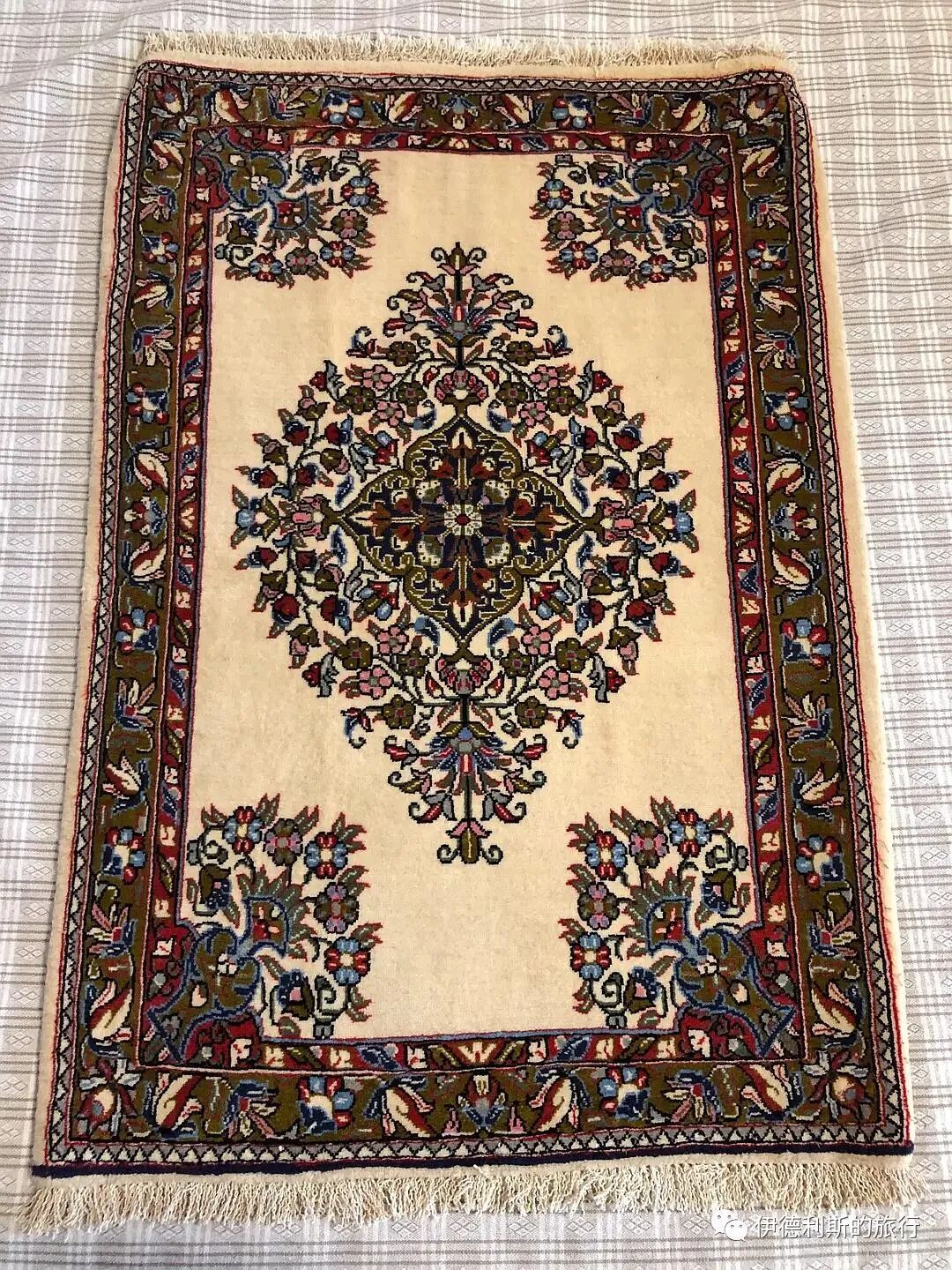
Esfahan Art House
Esfahan Art House on the street at the north gate of the Grand Bazaar is a great one-stop place to buy traditional Persian handicrafts, and the prices are very reasonable. I bought two types of Iranian-style handicrafts here.
The first is a jewelry box made with the traditional Persian inlay technique, Khatam. Khatam is made by arranging bundles of wood, bone, and metal by color, then compressing and cutting them into geometric patterns. It is generally used to make doors, windows, mirror frames, chessboards, and boxes. The jewelry box I bought is made of hardwood, brass, and camel bone. Khatam flourished in the Safavid dynasty court and gradually declined after the 18th and 19th centuries, but it was revived during the reign of Reza Shah (reigned 1925-1941) of the Pahlavi dynasty, when handicraft schools were opened in Tehran, Shiraz, and Isfahan.
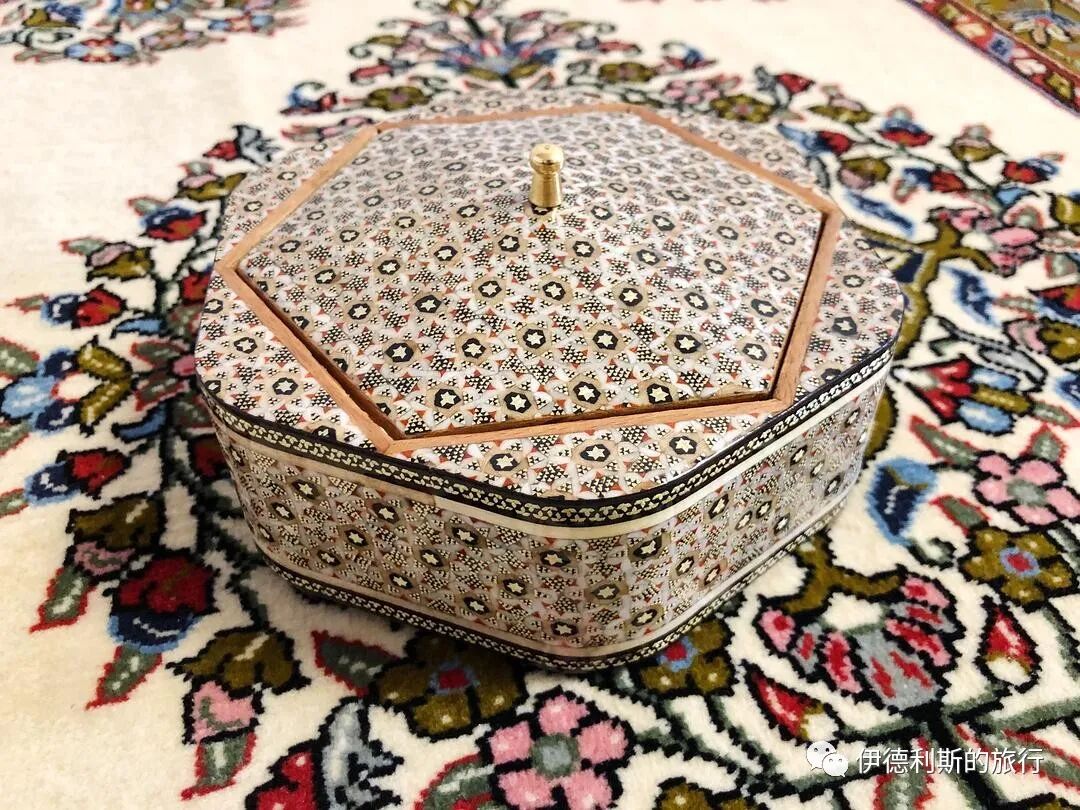
The second is a piece of fabric made with the woodblock printing craft, Ghalamkar. Ghalamkar is made by using woodblocks carved from pear wood to print on fabric, which is then hammered hundreds of times for repeated overprinting. The center of Ghalamkar art is Isfahan.
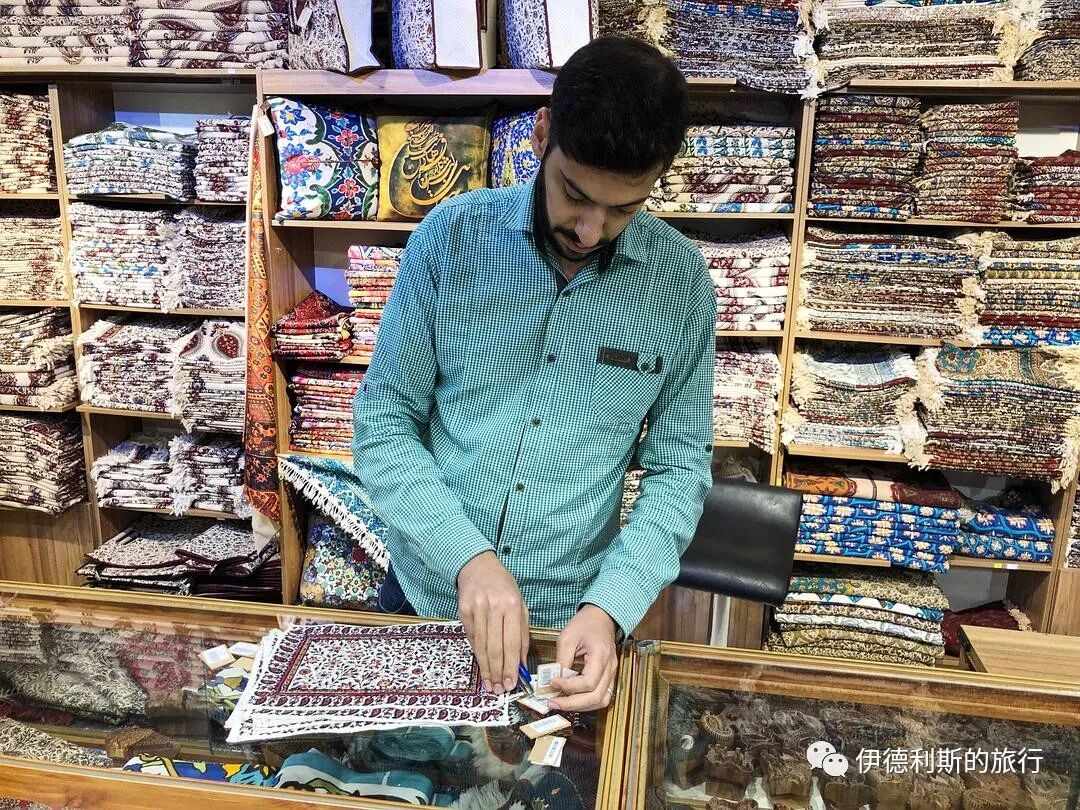
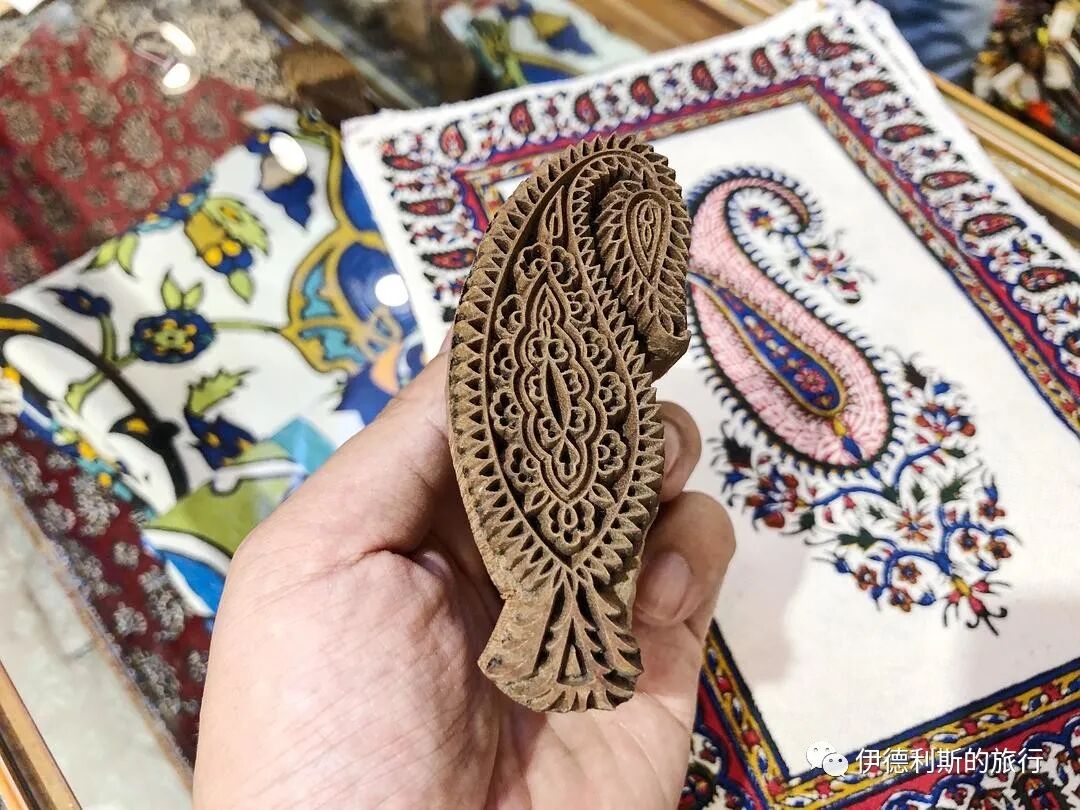
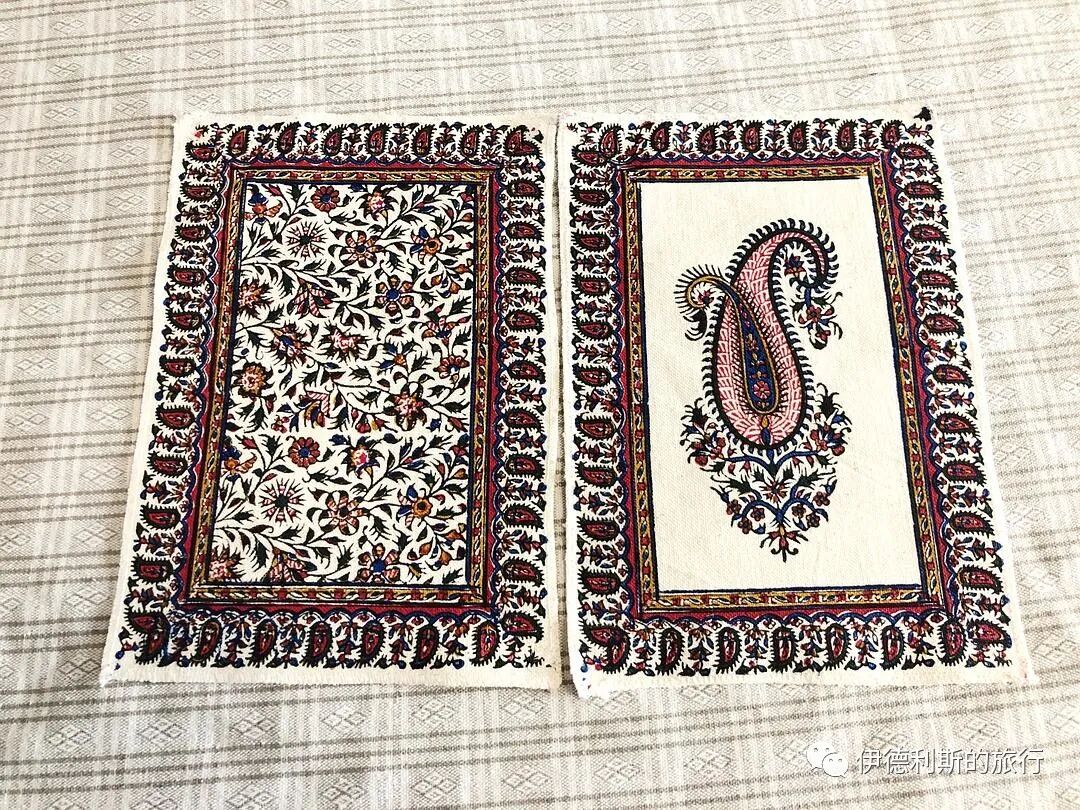
Tehran Museum of Islamic Art
After visiting the Tehran Museum of Islamic Art, I went to the souvenir shop. The prices were a bit high, but you can't buy these things anywhere else.
A notepad with Qajar dynasty paintings.
A bookmark featuring 15th-century Timurid dynasty Shiraz-style miniature painting.
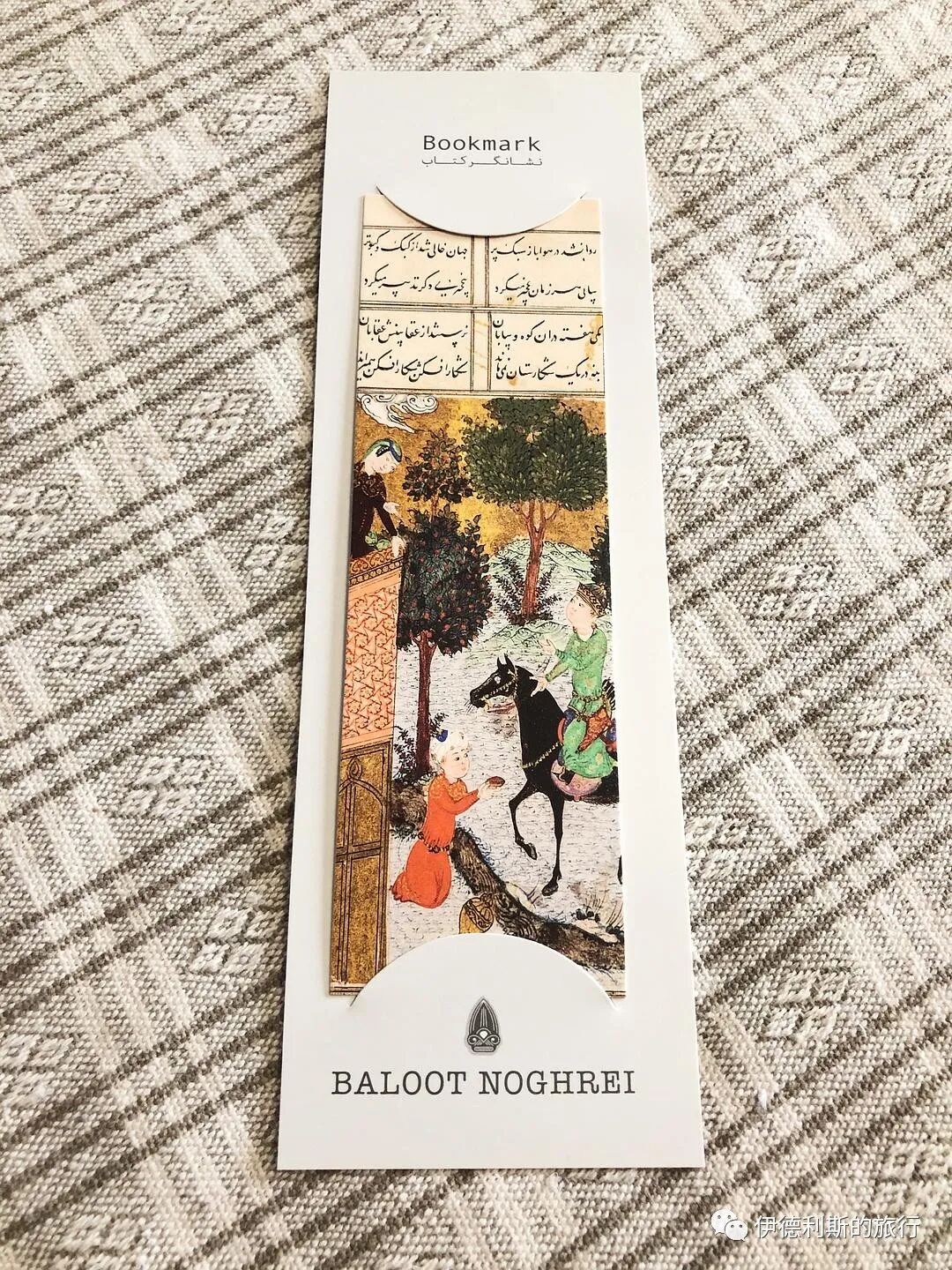
A tile magnet from the 13th-14th century Ilkhanate period; the original is in the museum.
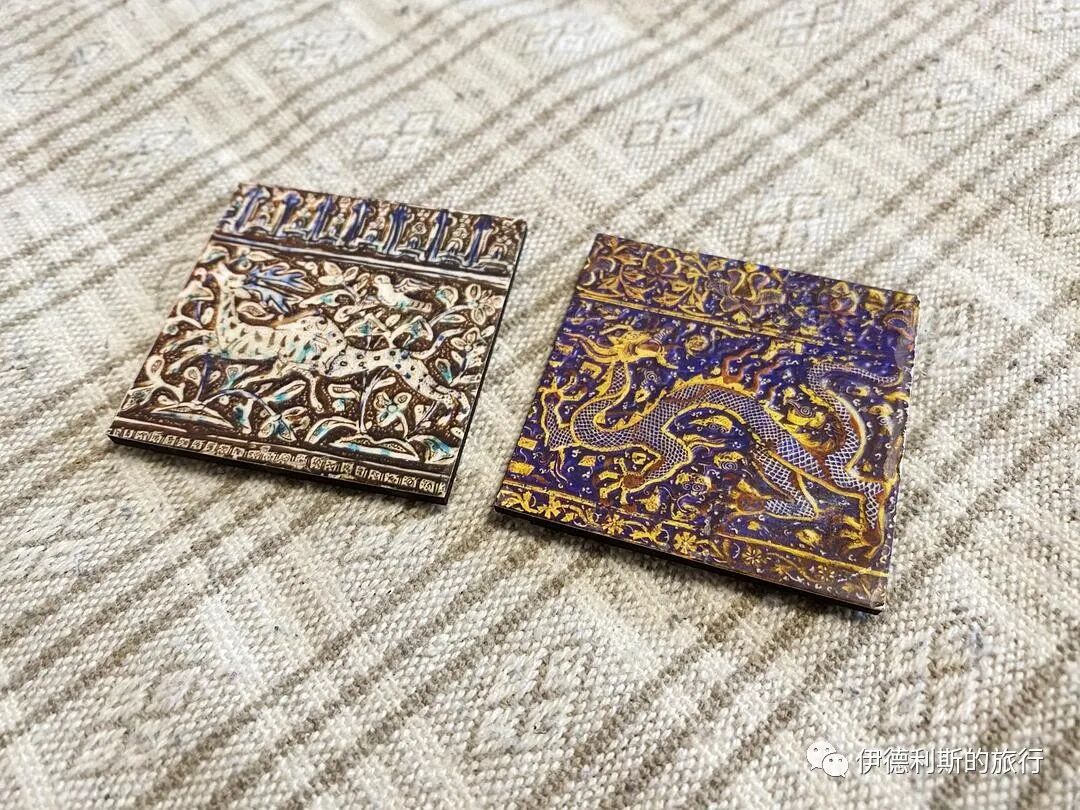
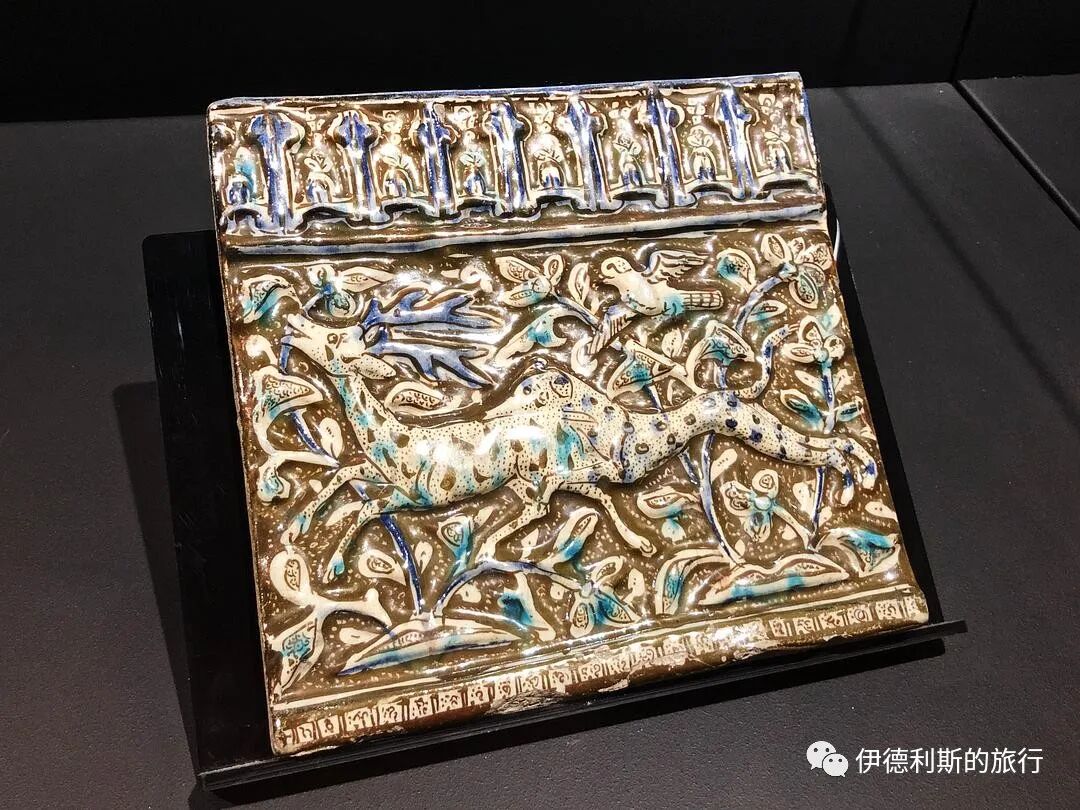
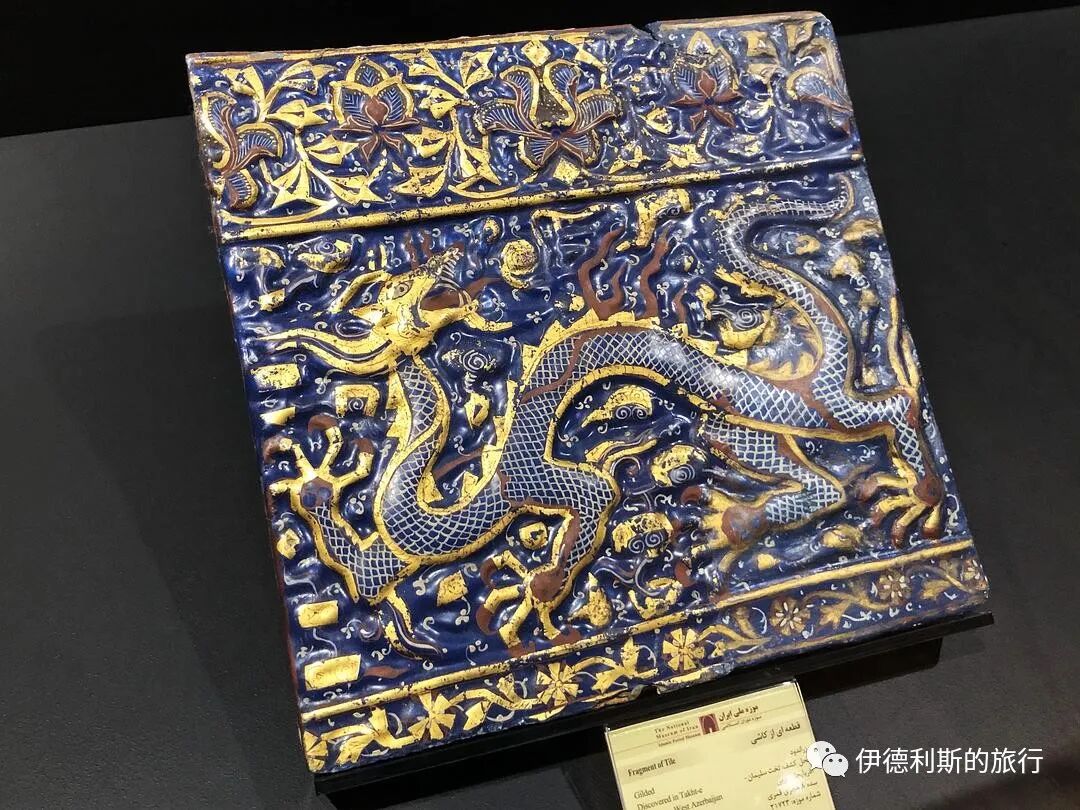
Golestan Palace
A replica of a wall tile from the Qajar dynasty period bought at the Golestan Palace souvenir shop.
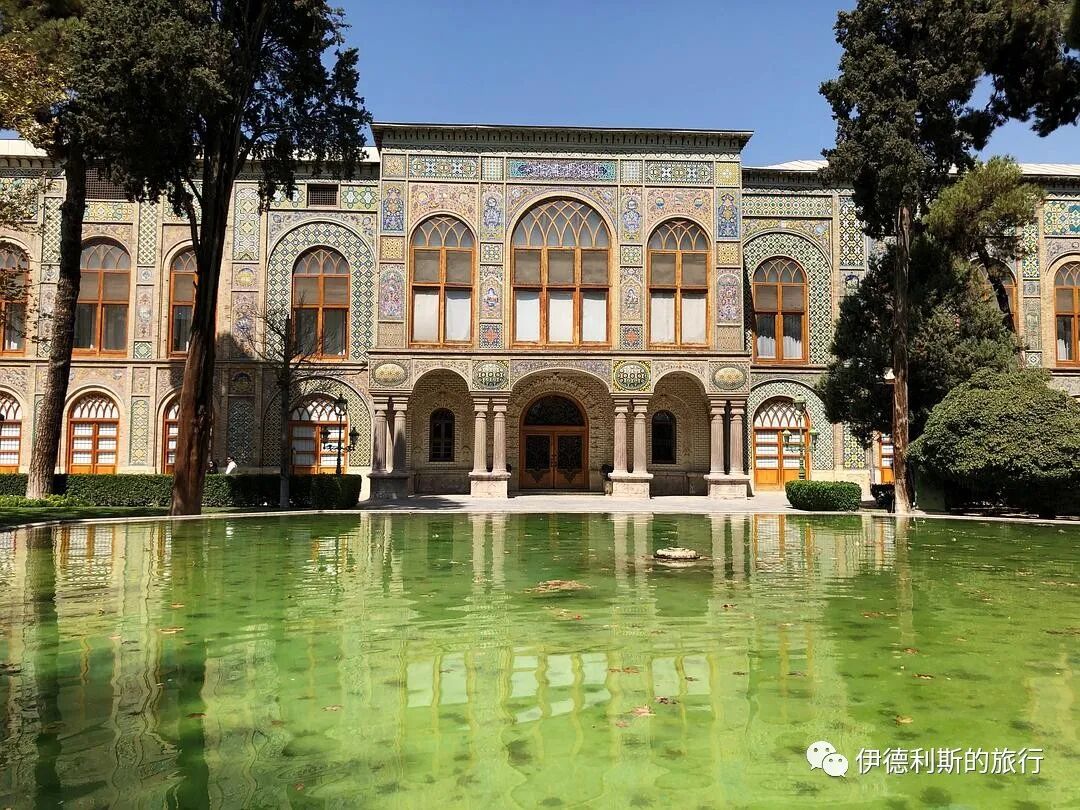
Linxia Weekend Travel Guide: Songmingyan Hua'er Festival and Muslim Culture
Articles • ali2007fr posted the article • 0 comments • 169 views • 2026-05-17 06:46
Summary: This travel note introduces Linxia Weekend Travel Guide: Songmingyan Hua'er Festival and Muslim Culture. Around the 28th day of the fourth lunar month every year, a grand Hua'er Festival (a traditional folk song festival) is held at Songmingyan in Hezheng, Gansu. It is useful for readers interested in Linxia Travel, Hua'er Festival, Muslim Culture.
Around the 28th day of the fourth lunar month every year, a grand Hua'er Festival (a traditional folk song festival) is held at Songmingyan in Hezheng, Gansu. I attended the Songmingyan Hua'er Festival for the first time in 2019, missed it in 2020 due to travel restrictions from Beijing, and 2021 was my second time attending.
I arrived in Lanzhou on Friday night and first had sheep head with milk and egg jiangzao (fermented glutinous rice) at the Jianlan Road night market; the hot-mixed version tastes different from the stir-fried one, and it is also quite delicious!
On Saturday morning, I had Hezhou baozi (steamed stuffed buns) at Xiaoxihu in Lanzhou, then set off for Dahejia Town in Linxia.
At noon in Dahejia, I had shouzhuarou (hand-grabbed mutton), laotangji (old-broth chicken), and laochao mianpian (stir-fried dough slices); my standard order whenever I go to the Hehuang region is shouzhuarou and mianpian. This long-established restaurant was very crowded at noon; most people were eating cold noodles, while some ordered heyan (river-bank style dishes) and laochao (stir-fried dishes). Their kettles were filled with beef broth, and empty bowls were set out with chopped green onions and salt, so you could pour the broth directly to drink.
Dahejia is located at the border of Gansu and Qinghai; once you cross the Yellow River Bridge, you are in Minhe, Qinghai. People from many ethnic groups live here, including the Bonan, Dongxiang, Salar, Han, Hui Muslims, and Tibetan people, and the town is full of Dongxiang shouzhuarou restaurants and Bonan knife shops.
I bought tianmaizi (sweet wheat) in Dahejia at noon and yogurt at Bafang Thirteen Alleys in Linxia in the evening; combining them made a delicious tianmaizi yogurt.
The fresh jiangshui (fermented vegetable juice) in the shop is especially refreshing in the summer.
In the evening, I had beef casserole and stir-fried fazi mianchang (sausage made with sheep intestines and meat) at Lao Dongxiang Mainai in the Linxia North Street night market. Fazi, also called fazi, is sheep fat intestine stuffed with offal and minced meat. I think the specialty of the Linxia North Street night market is the variety of stir-fried dishes; flames over a meter high can rise from the stoves, but unfortunately, I didn't capture it on camera.
Drinking Gannan yak yogurt at the night market.
A night tour of the Bafang Thirteen Alleys in Linxia. This was my fourth time here, but the first time for Zainab, so I took her around for a good stroll.
Zainab had a very high opinion of the Bafang Thirteen Alleys and the entire Hezhou city; she liked it very much. At night, the Bafang Thirteen Alleys were full of locals out for a walk to enjoy the cool air; it was very lively. The scenic area is neat and clean, without excessive commercial development, selling only local snacks like handmade yogurt and youguozi (fried dough snacks); Zainab regretted not buying youguozi to eat while hiking the next day.
In the scenic area, you can also admire various exquisite Hezhou brick carvings. I took her to see the famous Beisi Longyingbi (Dragon Screen Wall at the North Mosque), which can be considered a representative work of Hezhou brick carving.
On Sunday morning, I visited the Hongyuan Square in Linxia. Hongyuan Square is a truly magical place; it is located right next to the Dagongbei, the core area of the Jahriyya Menhuan (a Sufi order), and at night it is a brightly lit children's playground, while in the morning it becomes a bustling morning market with everything. Besides vegetables and fruits, there were also fazi mianchang, highland barley, potato chips, ganba chicken (dried chicken), and tianmaizi; we bought corn and xiangdou (fragrant bean) guokui (flatbread) here to eat.
I met an auntie knitting hats on the spot, so I bought one; in these two years of not being able to go abroad, I feel like I have rarely bought new hats.
I had beef noodles and fentang (vermicelli soup) at the Xin Kuan Hezhou Noodle Restaurant in front of the Xinhua Mosque. Their place is clean, bright, and tastes good; the fentang here in the Hehuang region uses vermicelli, not the starch blocks like in Xinjiang, and it tastes quite fragrant.
After breakfast, we set off for Songmingyan. Every year during the Hua'er Festival, the entrance to the Songmingyan scenic area becomes a large market, selling everything and very lively. Before going into the mountains to listen to Hua'er, we first had cold noodles and half a jin (250 grams) of shouzhuarou at the entrance, then bought a corn cob to take inside.
At Songmingyan, you can buy the local specialty fruit, piteguo (a type of wild pear). Piteguo grows on mountains near Songmingyan at an altitude of over 2,000 meters; when first picked, they are sour and astringent, and they need to be placed on a fruit rack for half a month to soften, and their color will turn into a dark shade like frozen pears. The ripened piteguo is very juicy; you have to bite a small hole to suck out the juice before you can eat the flesh, and the taste is sweet and sour, very refreshing.
Entering the Songmingyan Hua'er Festival venue. After two years, I saw that Songmingyan had installed wooden walkways on the mountain this year, and some roads had been newly paved, but the environment had not changed much; it is still a very free mountain field for Hua'er.
Translation from my friend Caigen: "This flower is yellow, oh, yellow to death.
My dear sister, this flower has been picked by a bee.
I haven't seen you for these few years.
I have missed you to death.
I just want to ask you,
Who have you been attracted to?" "
Saying goodbye to Songmingyan, heading to Lanzhou to catch a flight back to Beijing. Before leaving, I bought Halal Dicos (a Chinese fast-food chain) at Lanzhou West Station; it is a childhood memory for Zainab. view all
Summary: This travel note introduces Linxia Weekend Travel Guide: Songmingyan Hua'er Festival and Muslim Culture. Around the 28th day of the fourth lunar month every year, a grand Hua'er Festival (a traditional folk song festival) is held at Songmingyan in Hezheng, Gansu. It is useful for readers interested in Linxia Travel, Hua'er Festival, Muslim Culture.
Around the 28th day of the fourth lunar month every year, a grand Hua'er Festival (a traditional folk song festival) is held at Songmingyan in Hezheng, Gansu. I attended the Songmingyan Hua'er Festival for the first time in 2019, missed it in 2020 due to travel restrictions from Beijing, and 2021 was my second time attending.
I arrived in Lanzhou on Friday night and first had sheep head with milk and egg jiangzao (fermented glutinous rice) at the Jianlan Road night market; the hot-mixed version tastes different from the stir-fried one, and it is also quite delicious!
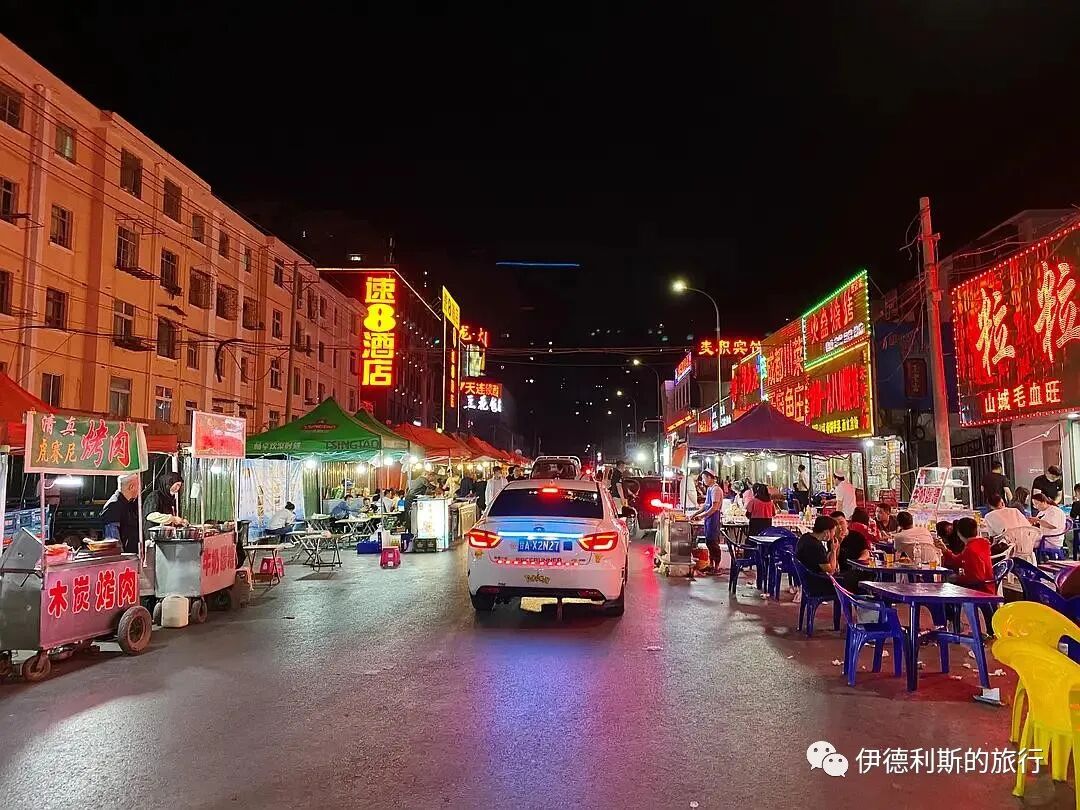
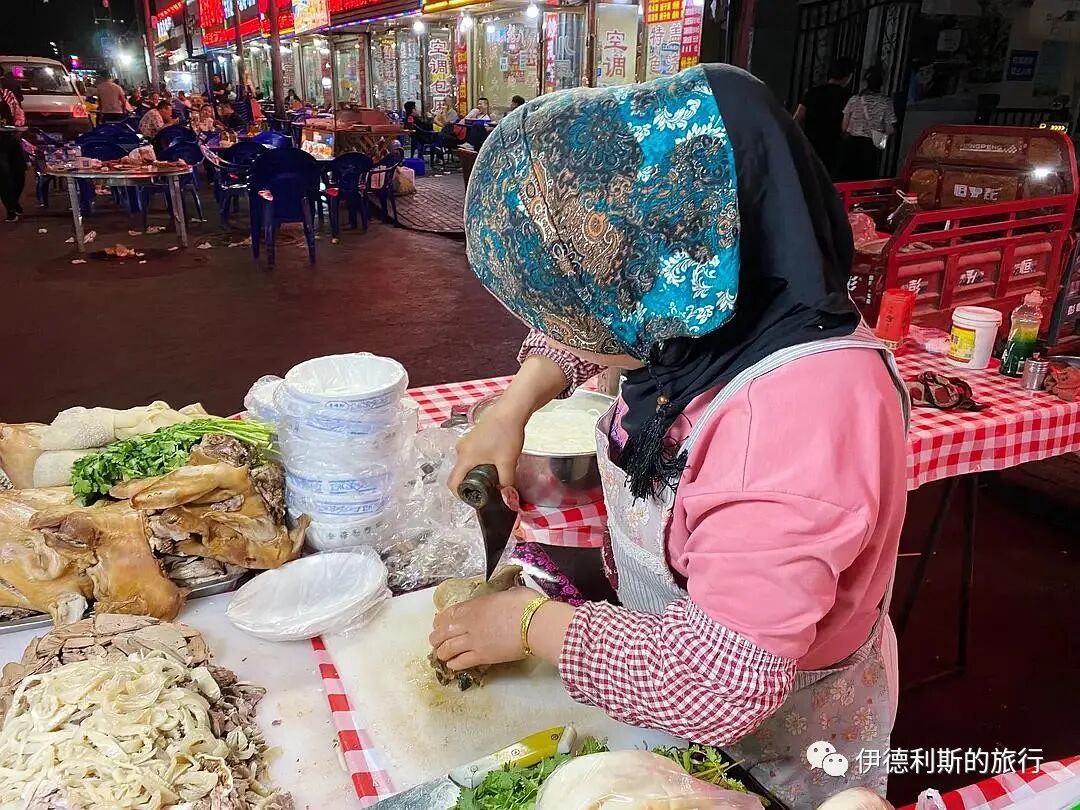
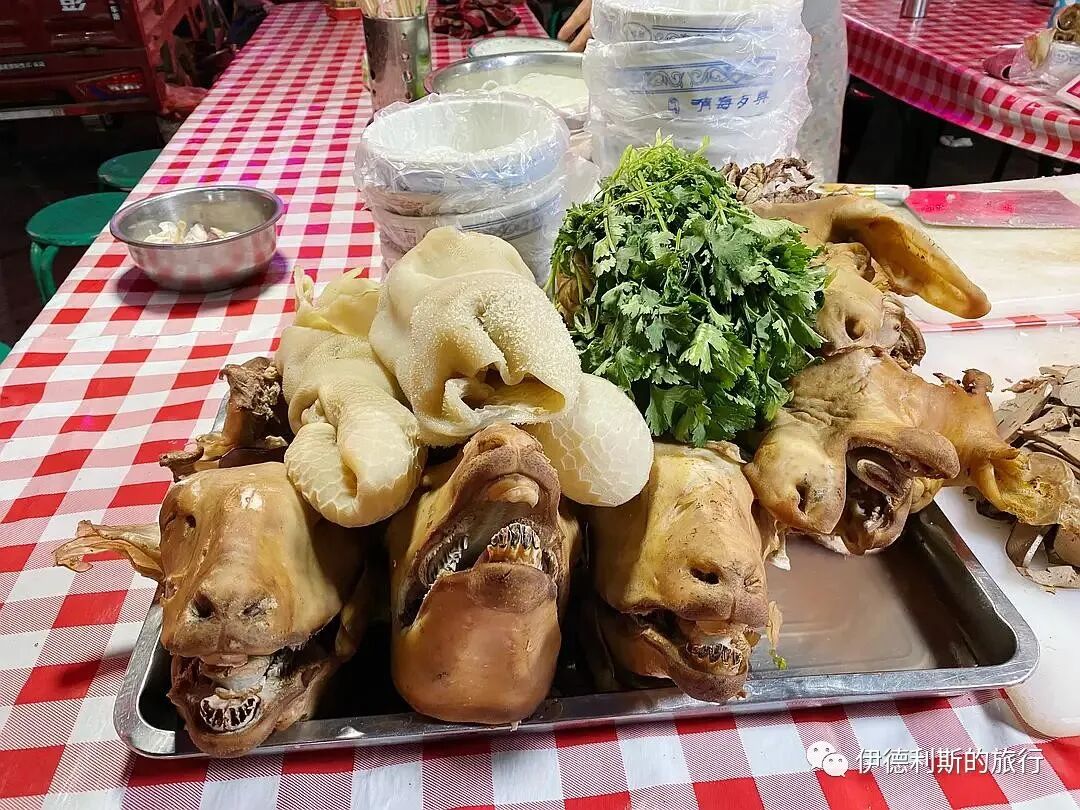
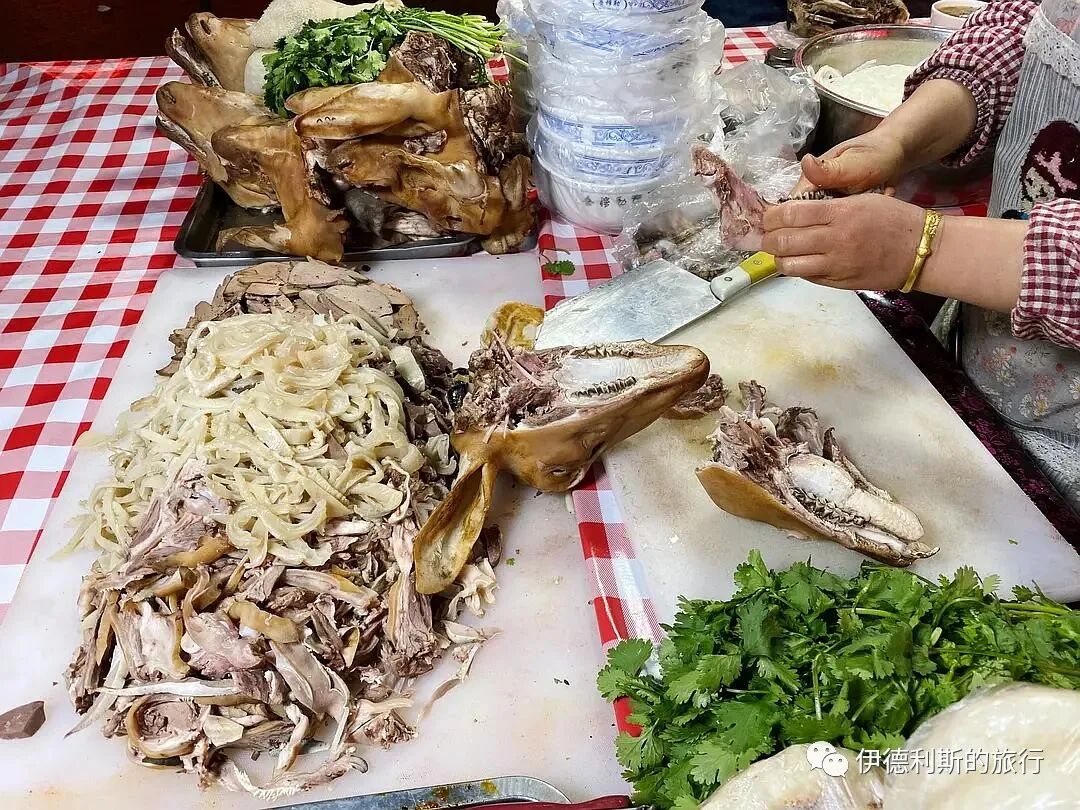
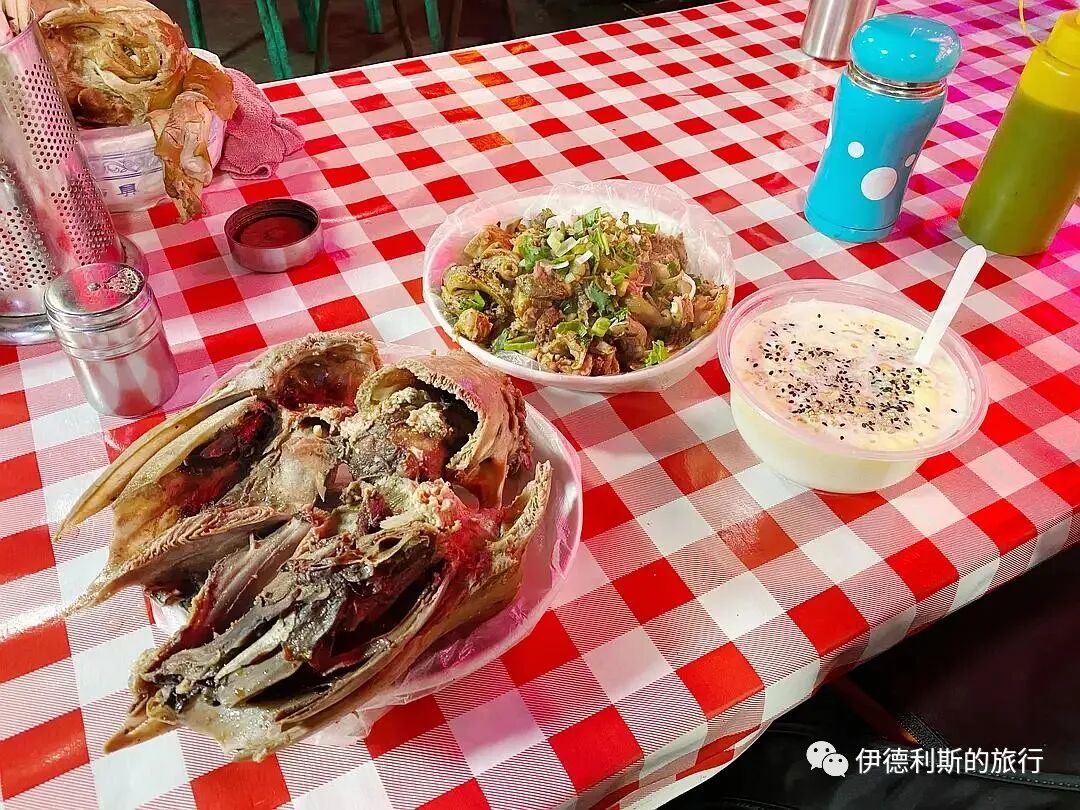
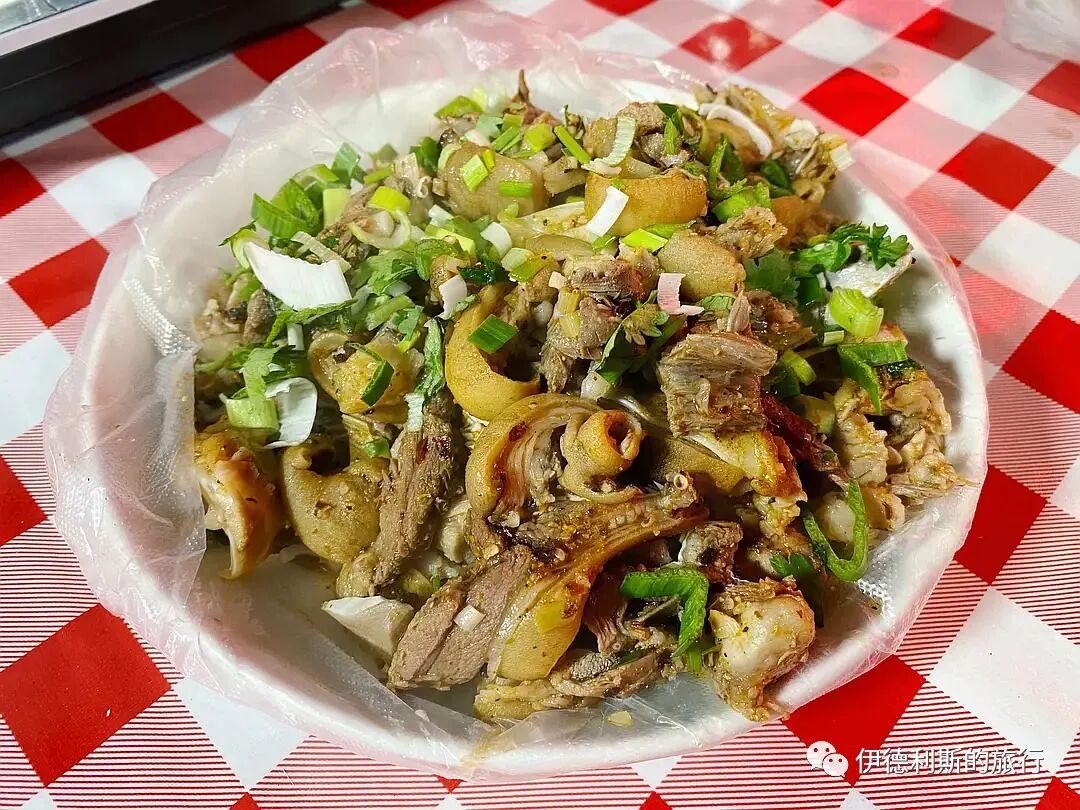
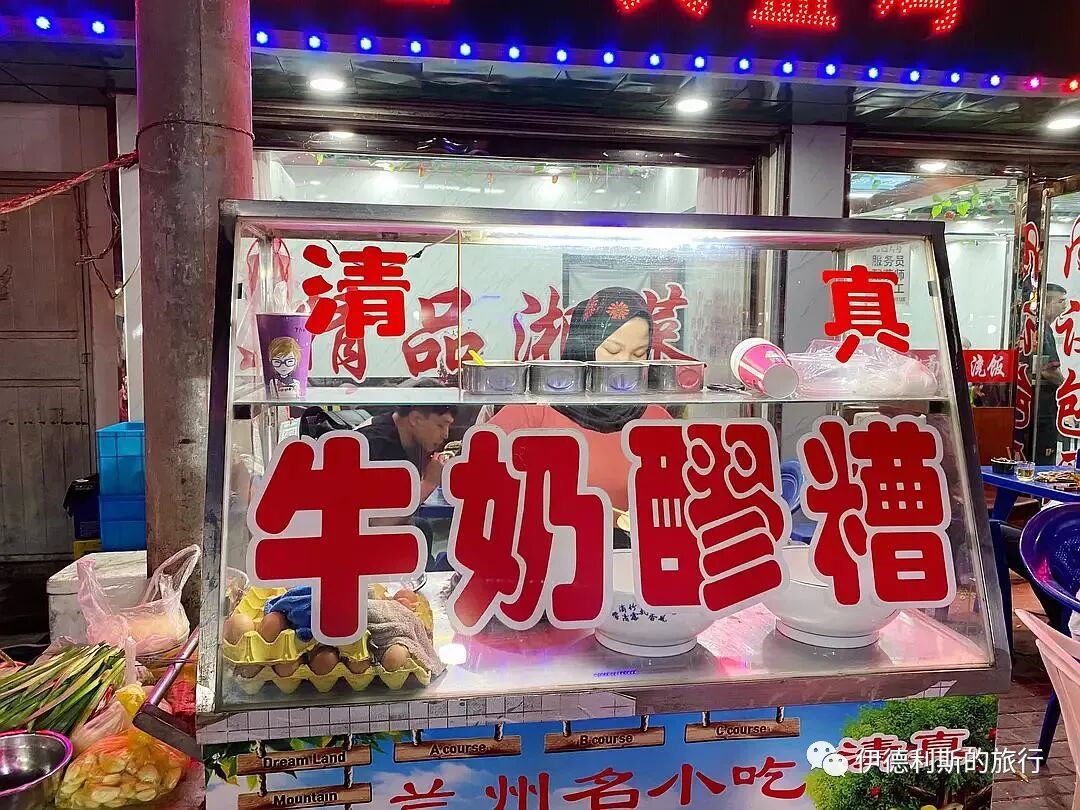
On Saturday morning, I had Hezhou baozi (steamed stuffed buns) at Xiaoxihu in Lanzhou, then set off for Dahejia Town in Linxia.
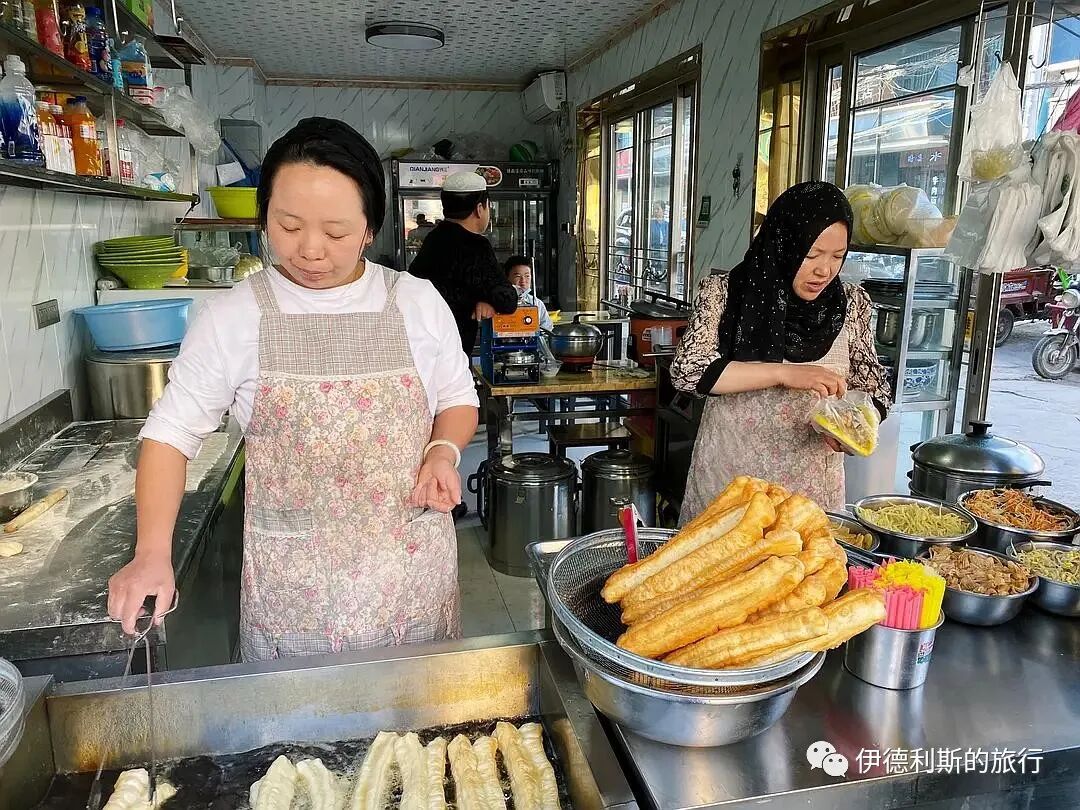
At noon in Dahejia, I had shouzhuarou (hand-grabbed mutton), laotangji (old-broth chicken), and laochao mianpian (stir-fried dough slices); my standard order whenever I go to the Hehuang region is shouzhuarou and mianpian. This long-established restaurant was very crowded at noon; most people were eating cold noodles, while some ordered heyan (river-bank style dishes) and laochao (stir-fried dishes). Their kettles were filled with beef broth, and empty bowls were set out with chopped green onions and salt, so you could pour the broth directly to drink.
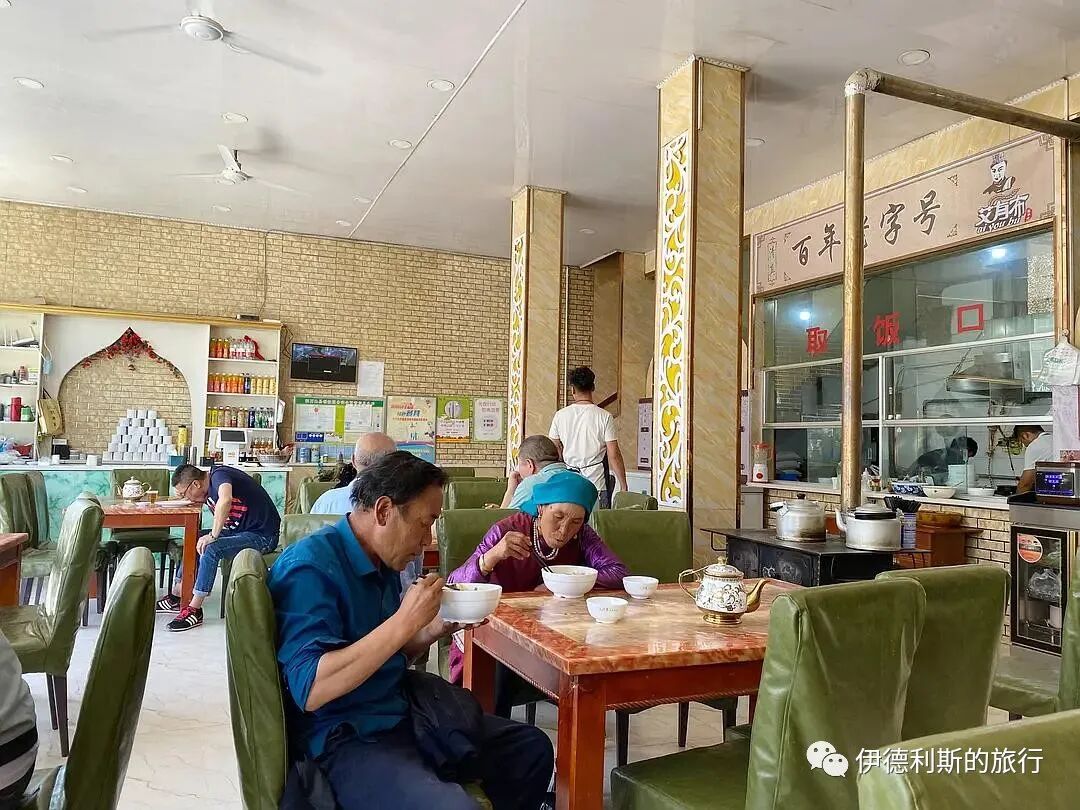
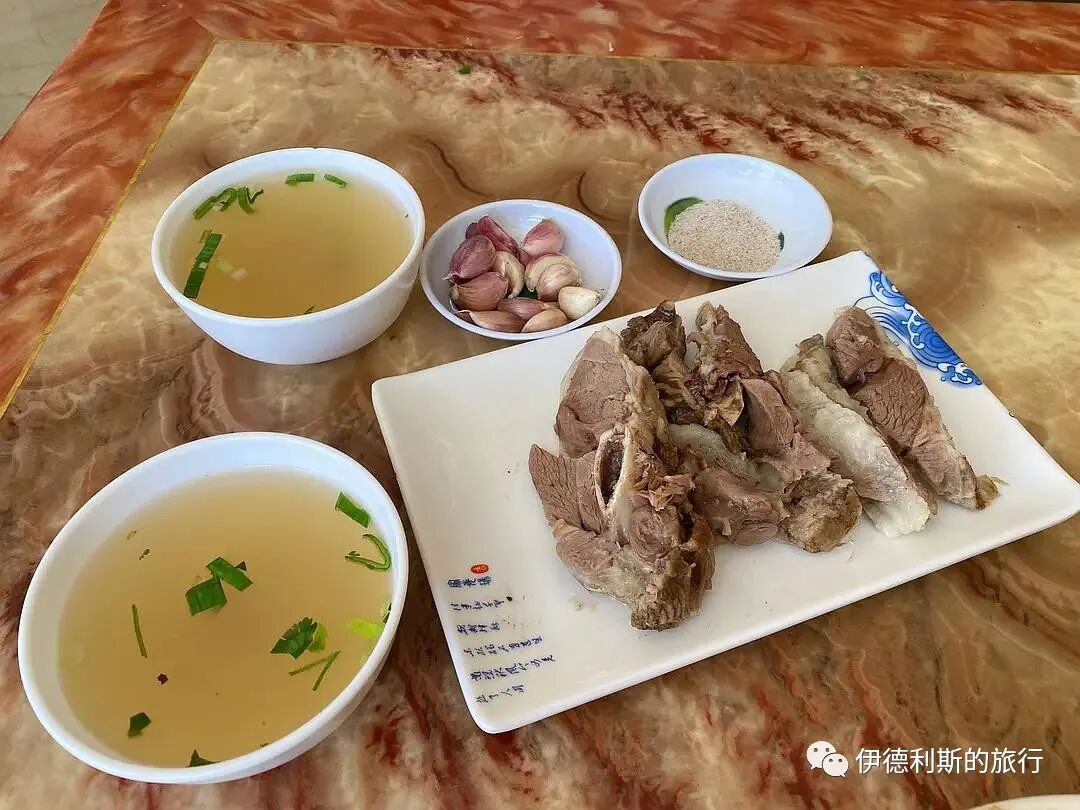
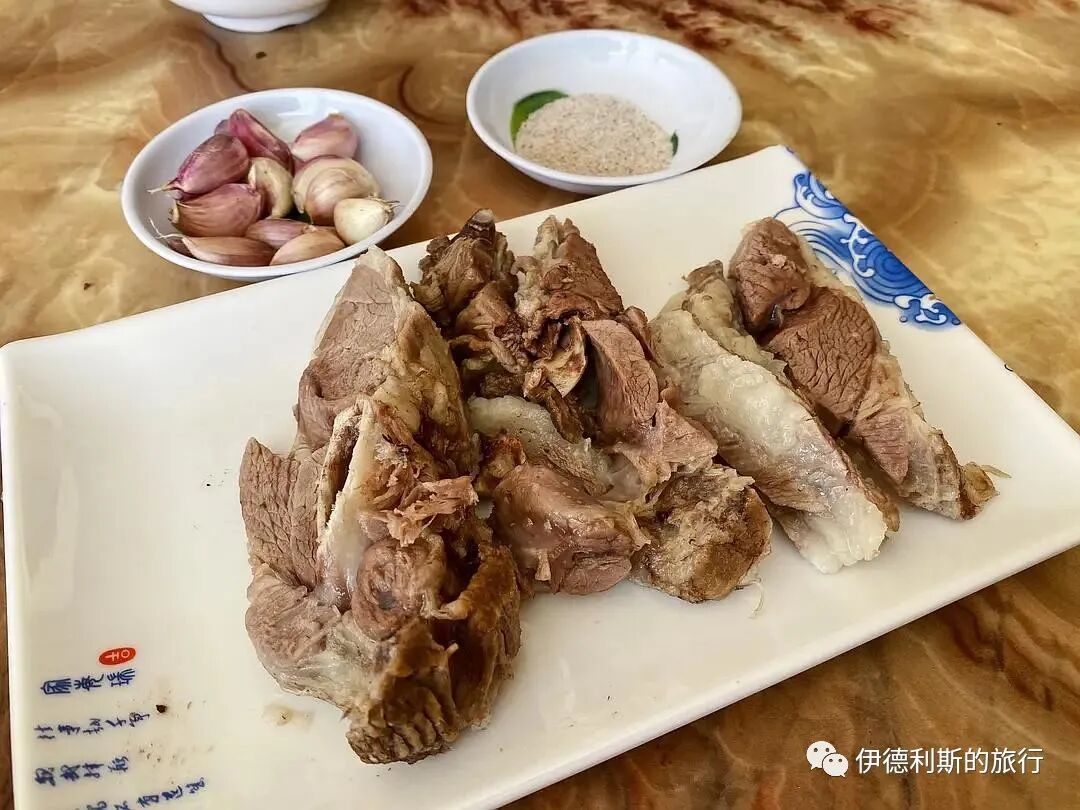
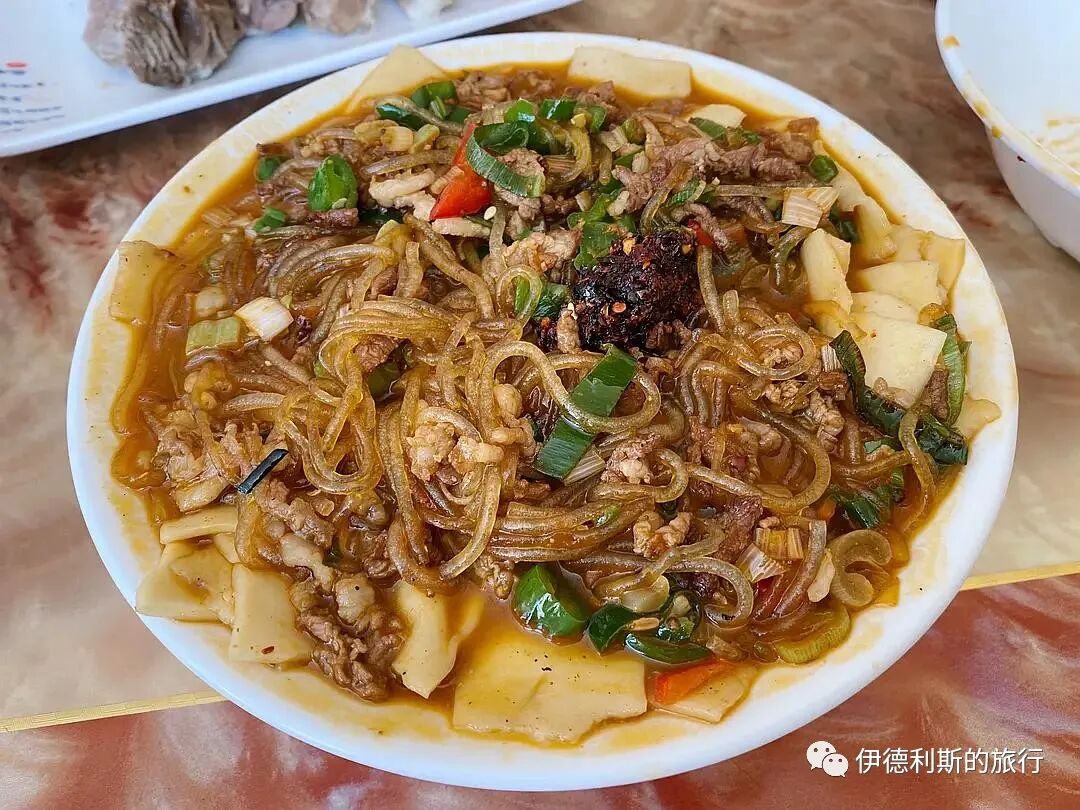
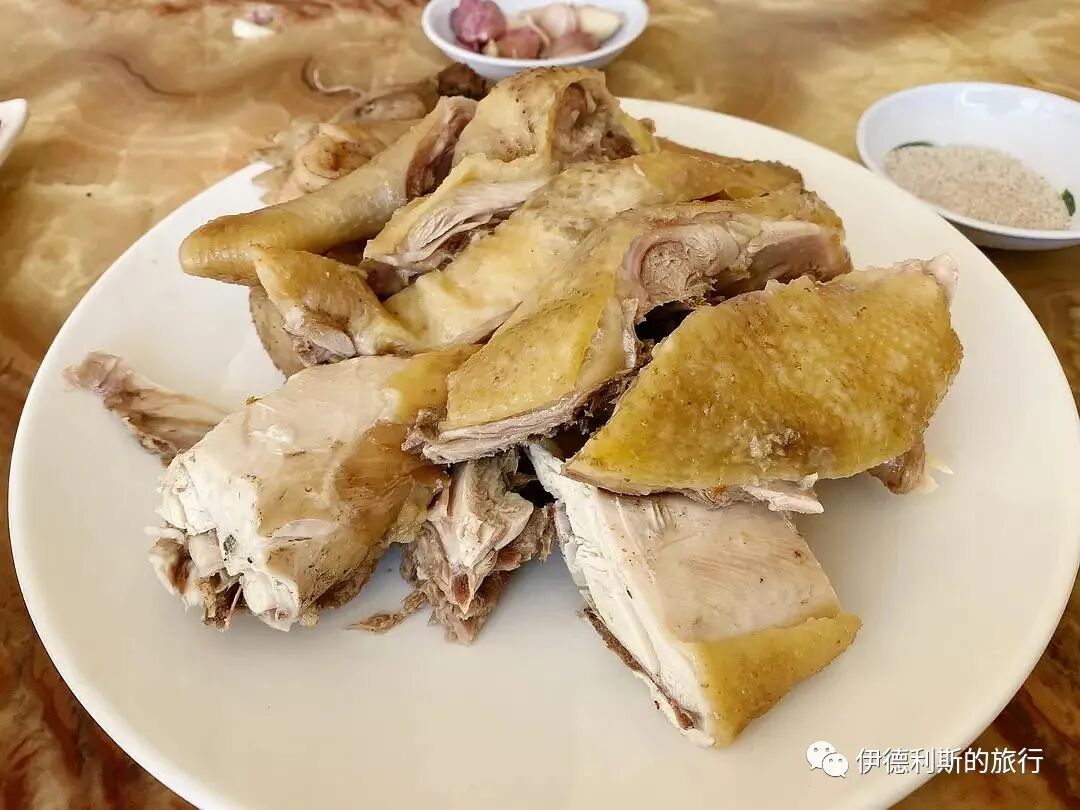
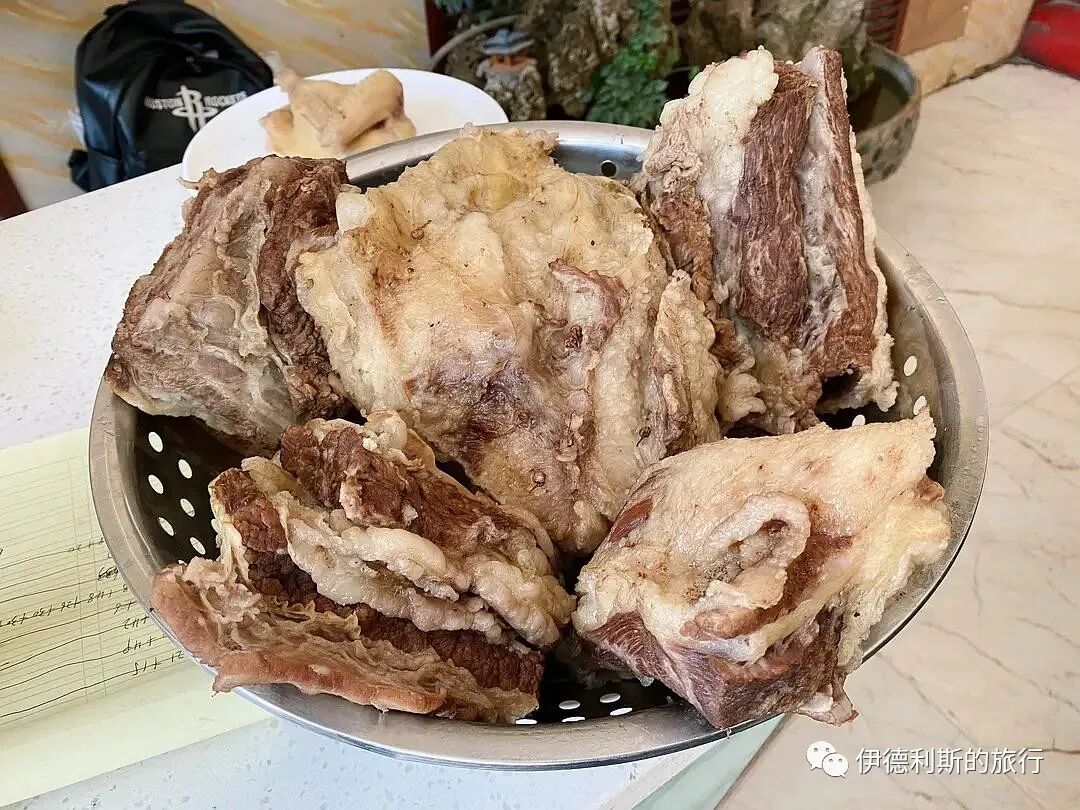
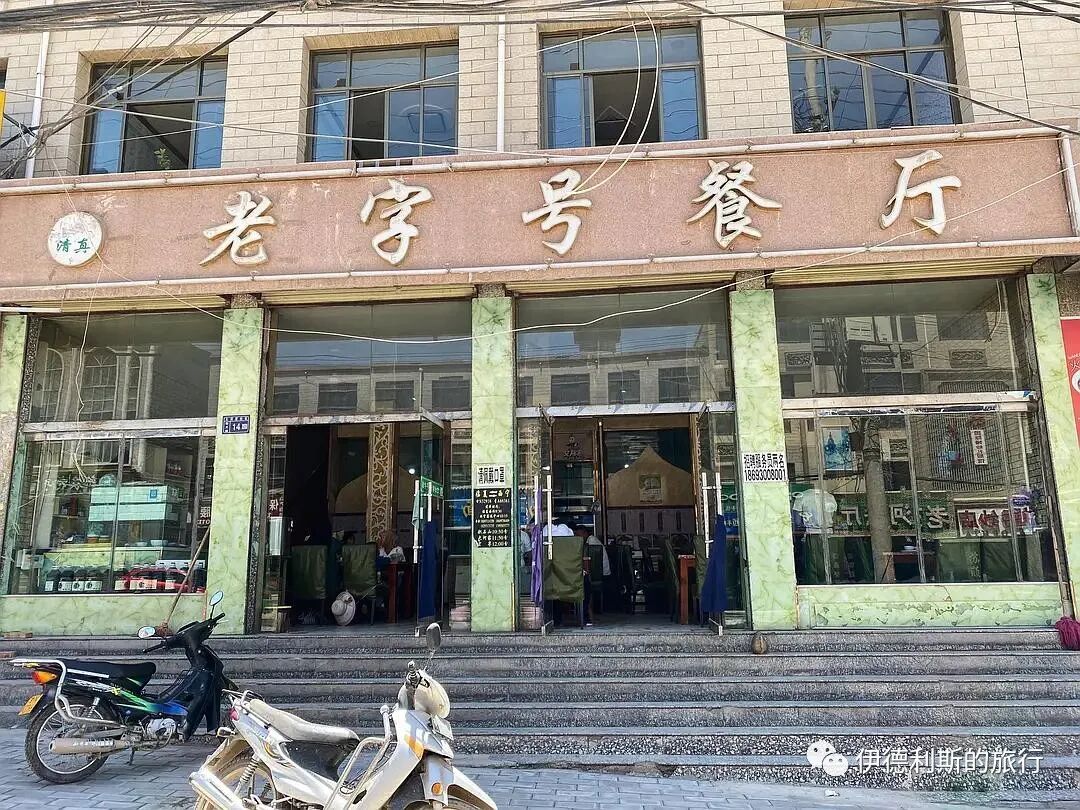
Dahejia is located at the border of Gansu and Qinghai; once you cross the Yellow River Bridge, you are in Minhe, Qinghai. People from many ethnic groups live here, including the Bonan, Dongxiang, Salar, Han, Hui Muslims, and Tibetan people, and the town is full of Dongxiang shouzhuarou restaurants and Bonan knife shops.
I bought tianmaizi (sweet wheat) in Dahejia at noon and yogurt at Bafang Thirteen Alleys in Linxia in the evening; combining them made a delicious tianmaizi yogurt.
The fresh jiangshui (fermented vegetable juice) in the shop is especially refreshing in the summer.
In the evening, I had beef casserole and stir-fried fazi mianchang (sausage made with sheep intestines and meat) at Lao Dongxiang Mainai in the Linxia North Street night market. Fazi, also called fazi, is sheep fat intestine stuffed with offal and minced meat. I think the specialty of the Linxia North Street night market is the variety of stir-fried dishes; flames over a meter high can rise from the stoves, but unfortunately, I didn't capture it on camera.
Drinking Gannan yak yogurt at the night market.
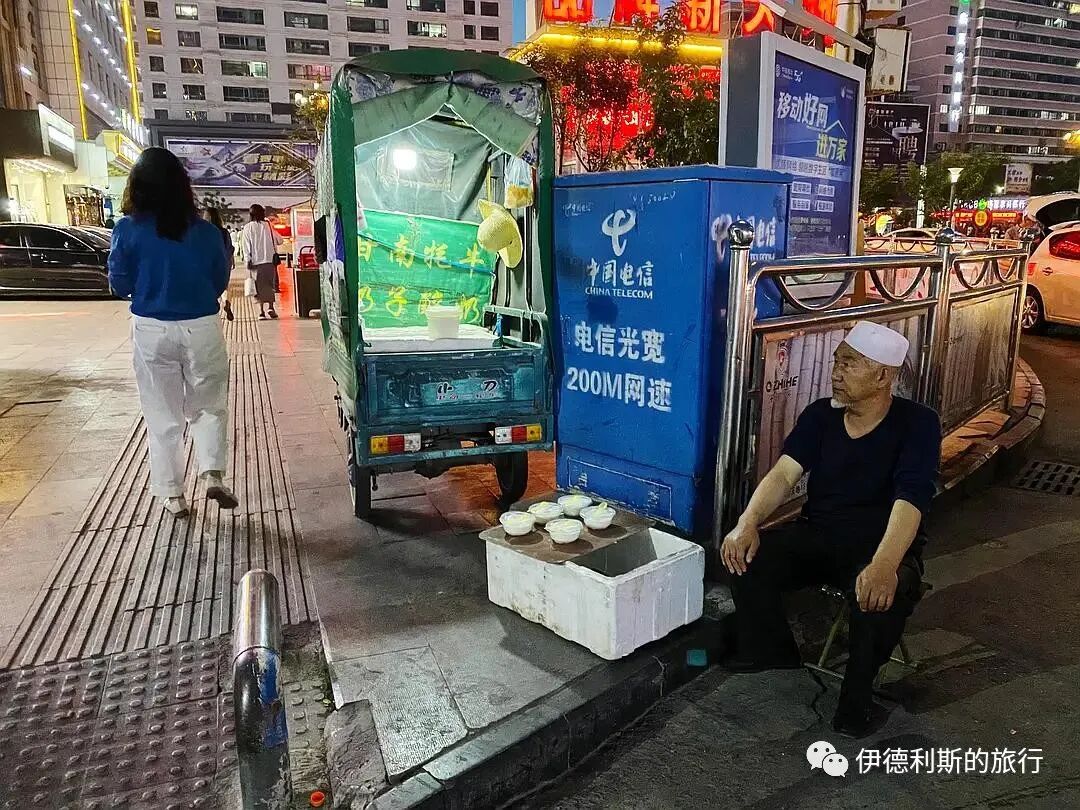
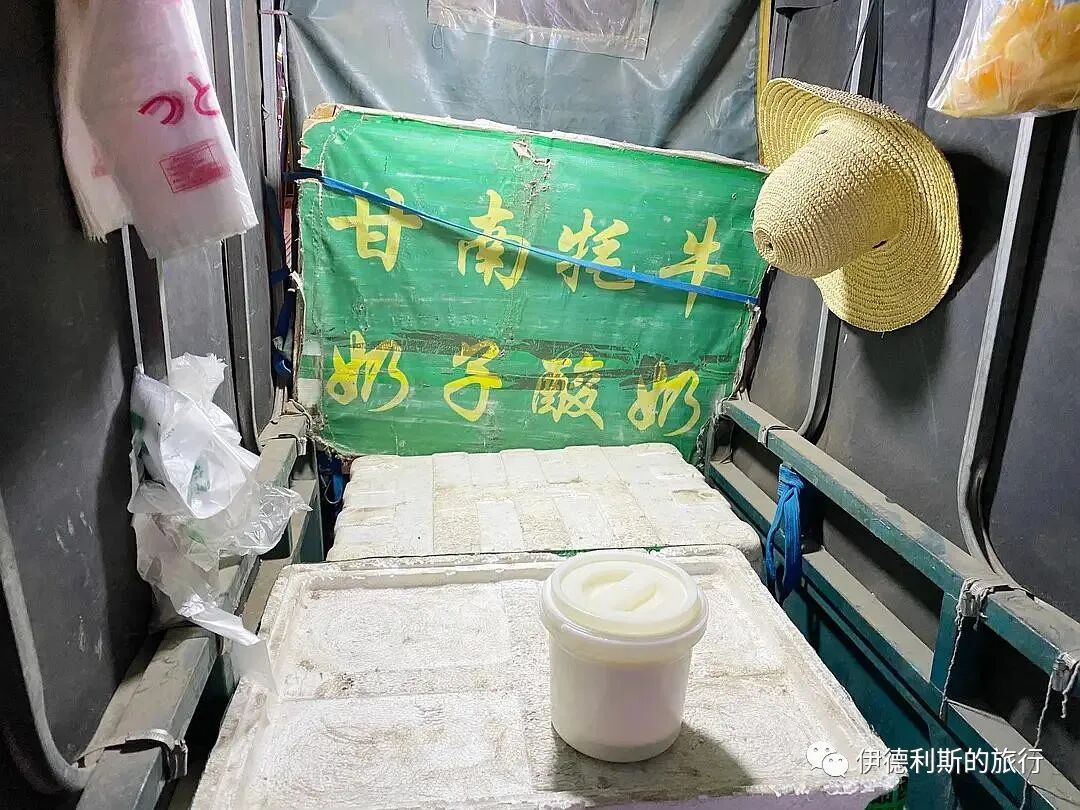
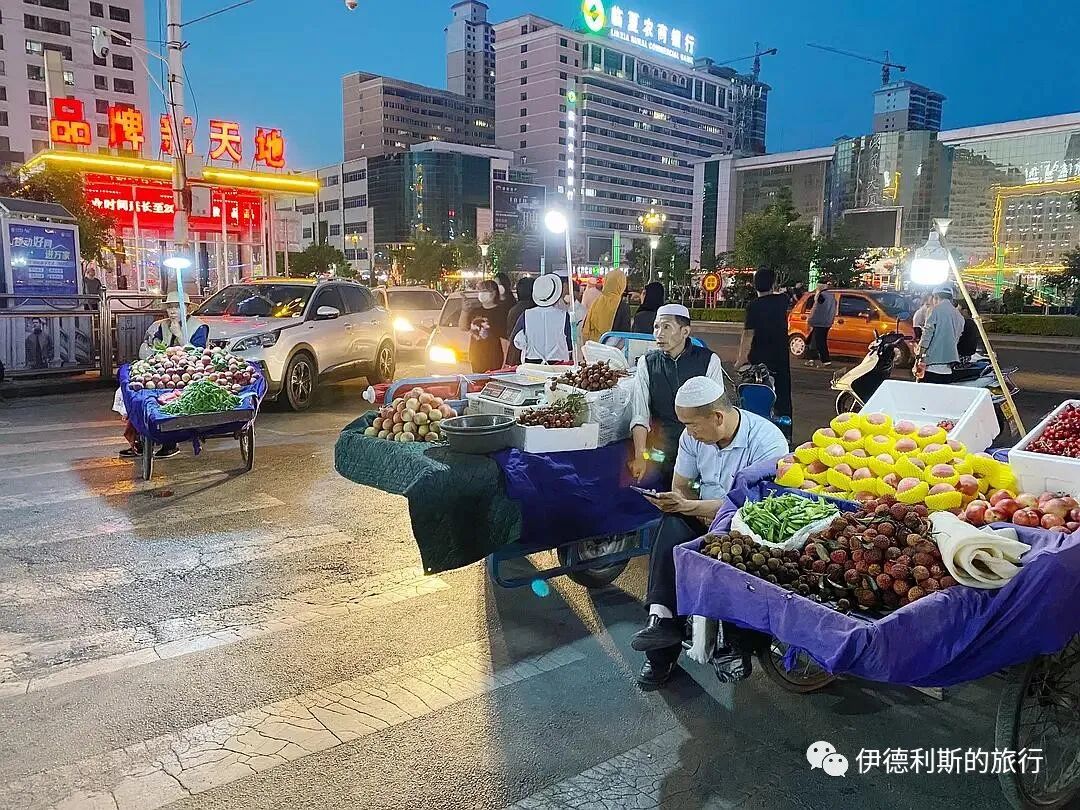
A night tour of the Bafang Thirteen Alleys in Linxia. This was my fourth time here, but the first time for Zainab, so I took her around for a good stroll.
Zainab had a very high opinion of the Bafang Thirteen Alleys and the entire Hezhou city; she liked it very much. At night, the Bafang Thirteen Alleys were full of locals out for a walk to enjoy the cool air; it was very lively. The scenic area is neat and clean, without excessive commercial development, selling only local snacks like handmade yogurt and youguozi (fried dough snacks); Zainab regretted not buying youguozi to eat while hiking the next day.
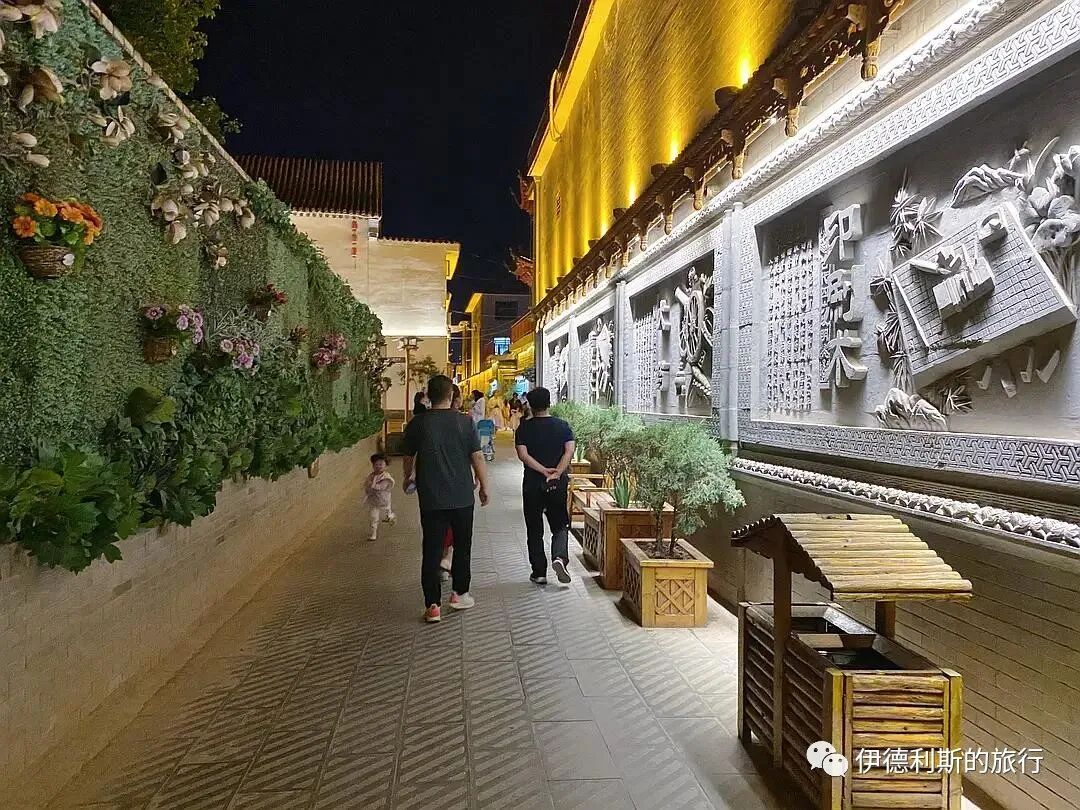
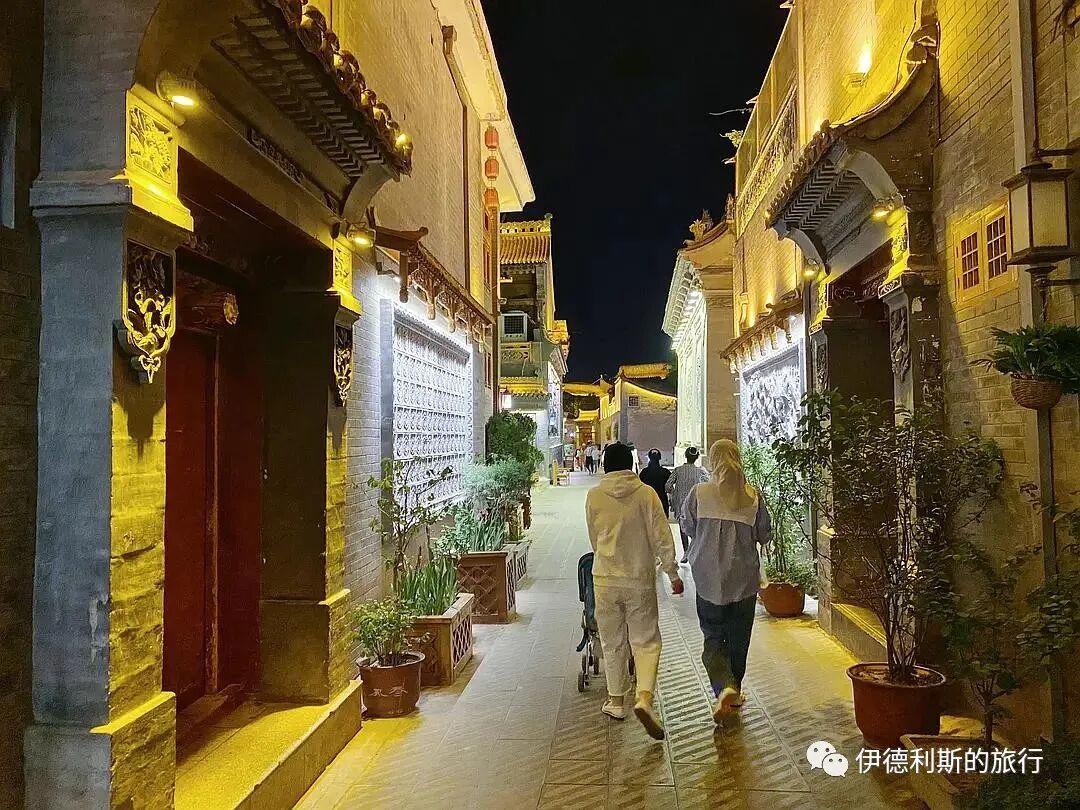
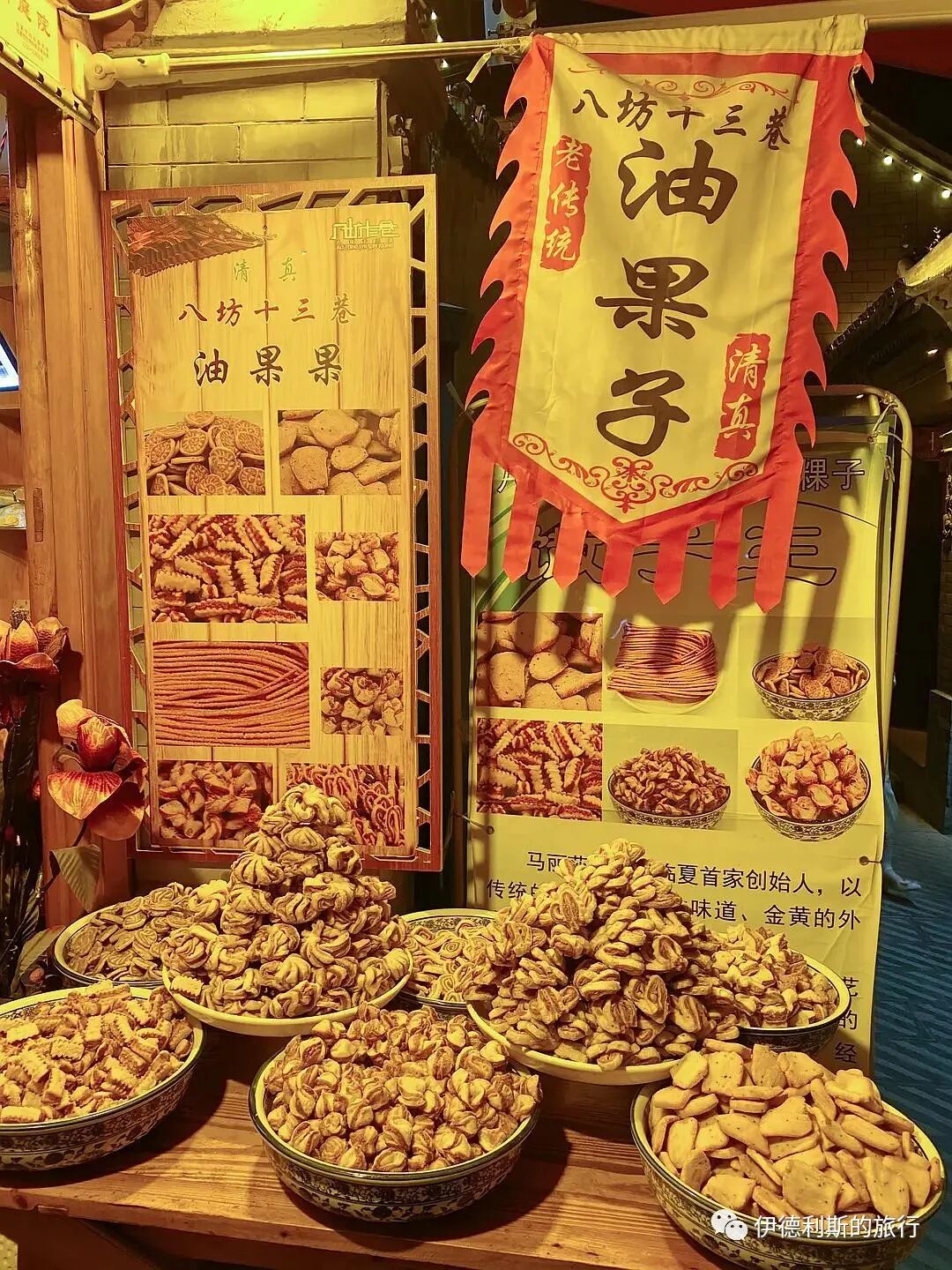
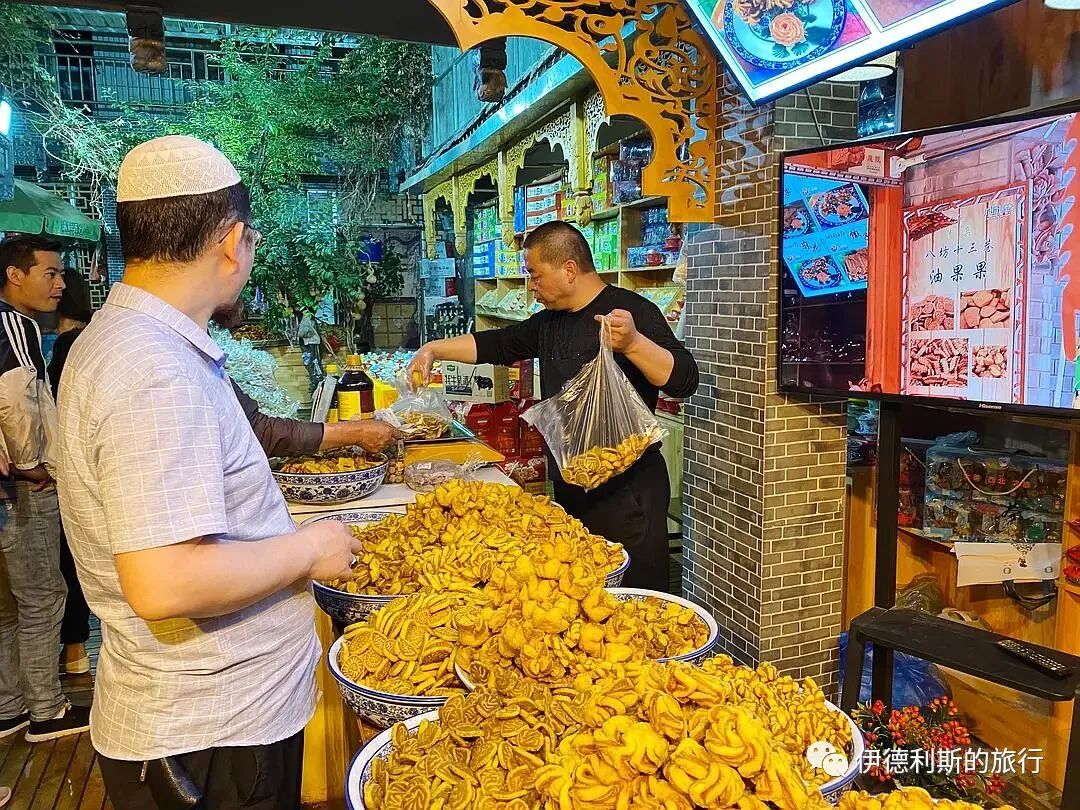
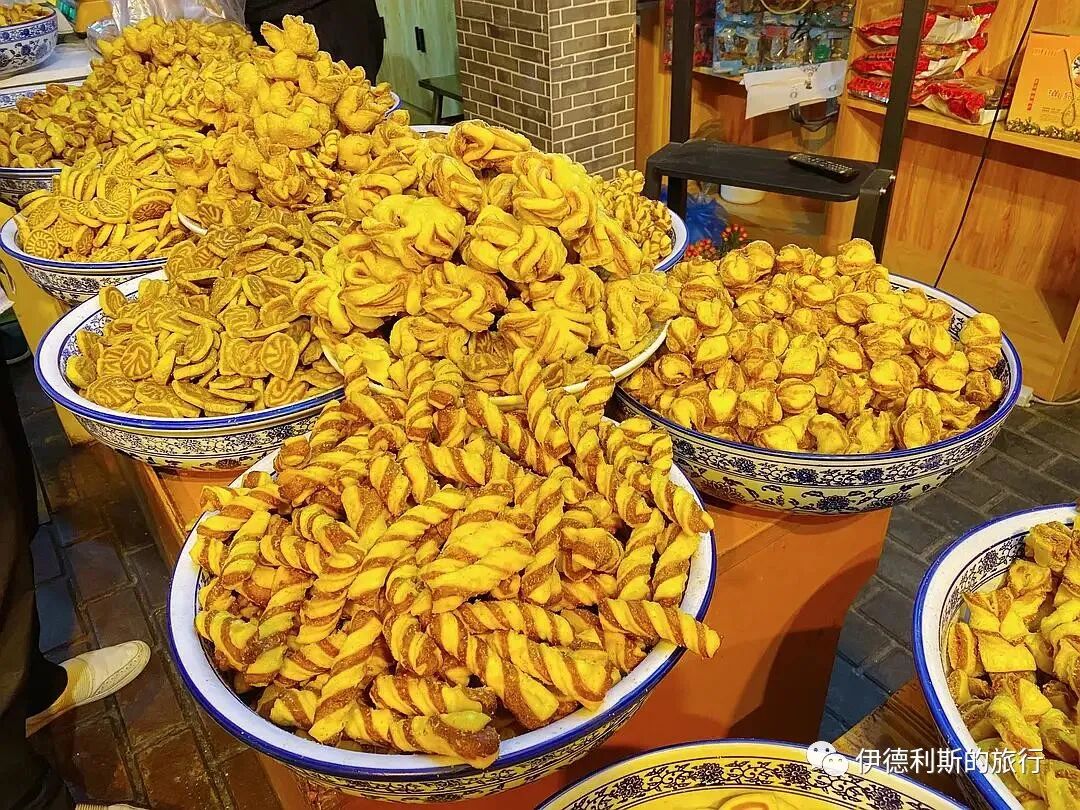
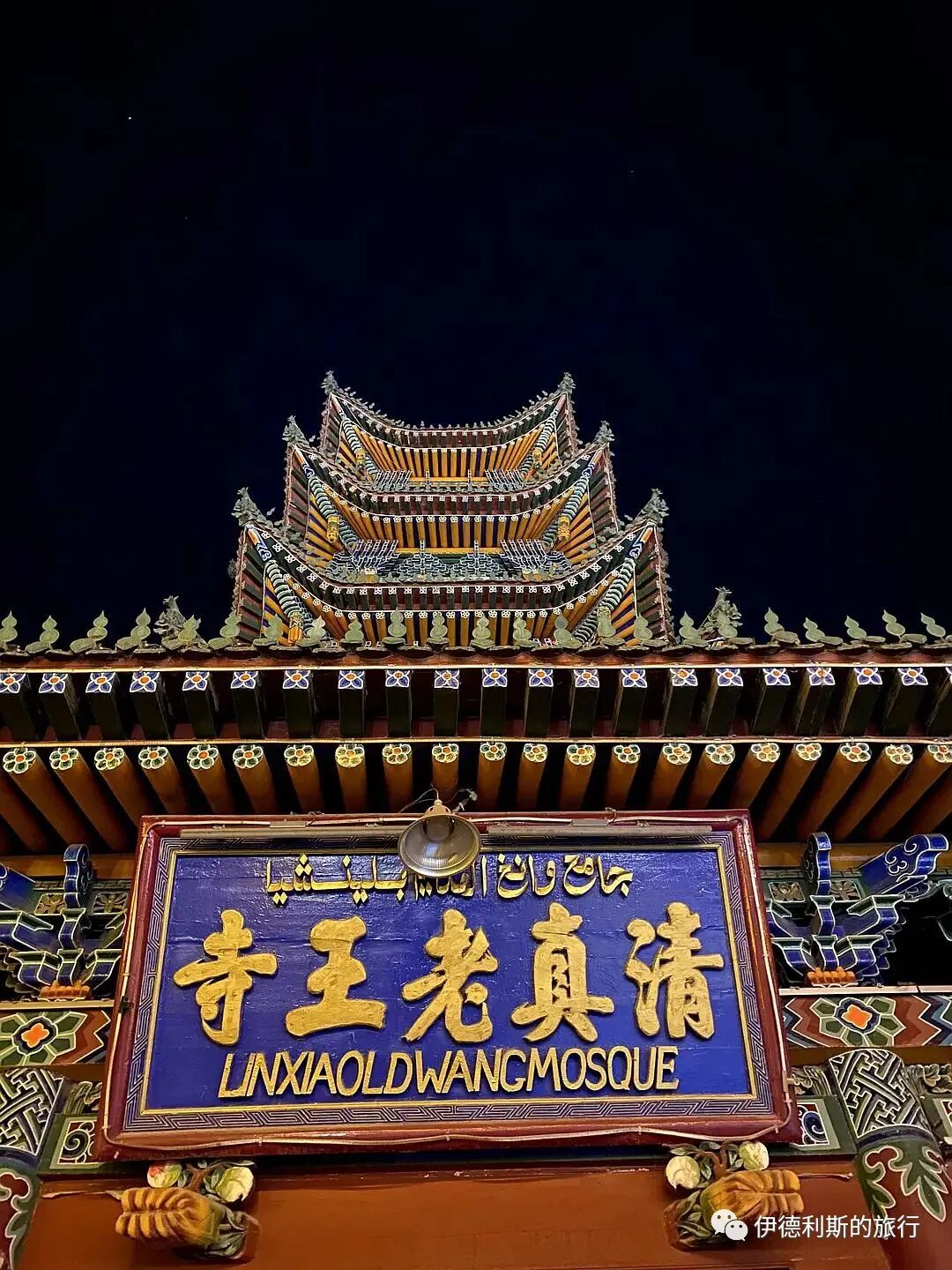
In the scenic area, you can also admire various exquisite Hezhou brick carvings. I took her to see the famous Beisi Longyingbi (Dragon Screen Wall at the North Mosque), which can be considered a representative work of Hezhou brick carving.
On Sunday morning, I visited the Hongyuan Square in Linxia. Hongyuan Square is a truly magical place; it is located right next to the Dagongbei, the core area of the Jahriyya Menhuan (a Sufi order), and at night it is a brightly lit children's playground, while in the morning it becomes a bustling morning market with everything. Besides vegetables and fruits, there were also fazi mianchang, highland barley, potato chips, ganba chicken (dried chicken), and tianmaizi; we bought corn and xiangdou (fragrant bean) guokui (flatbread) here to eat.
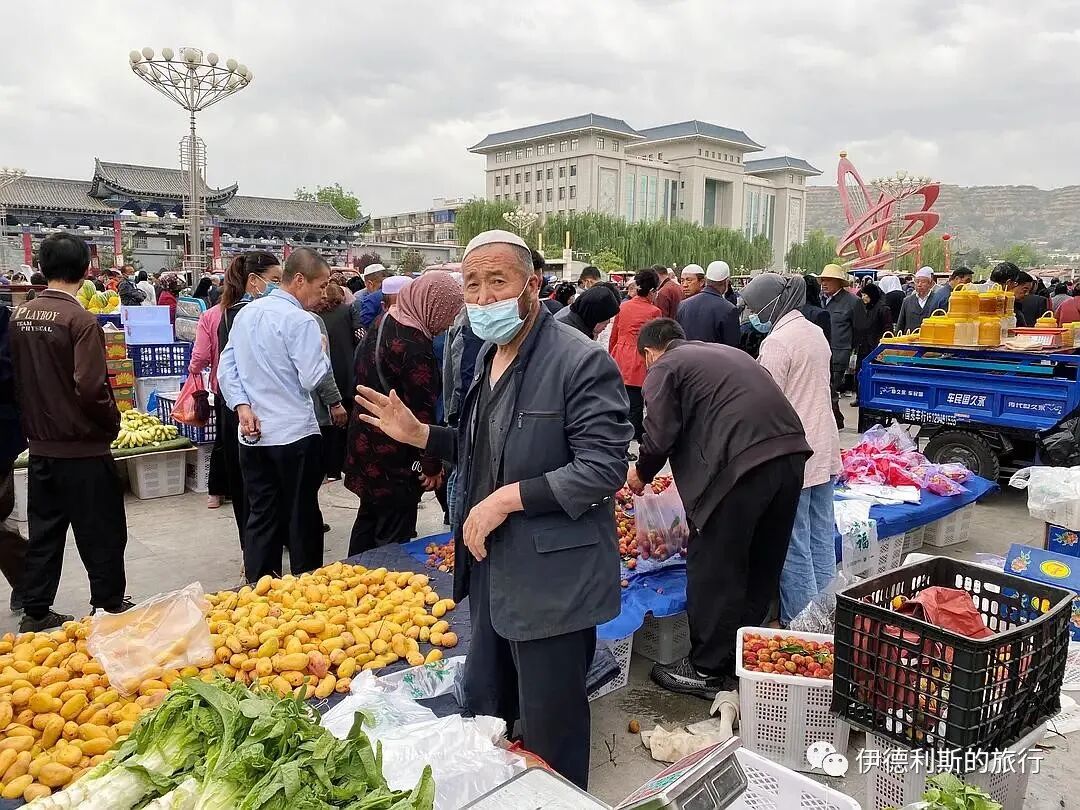
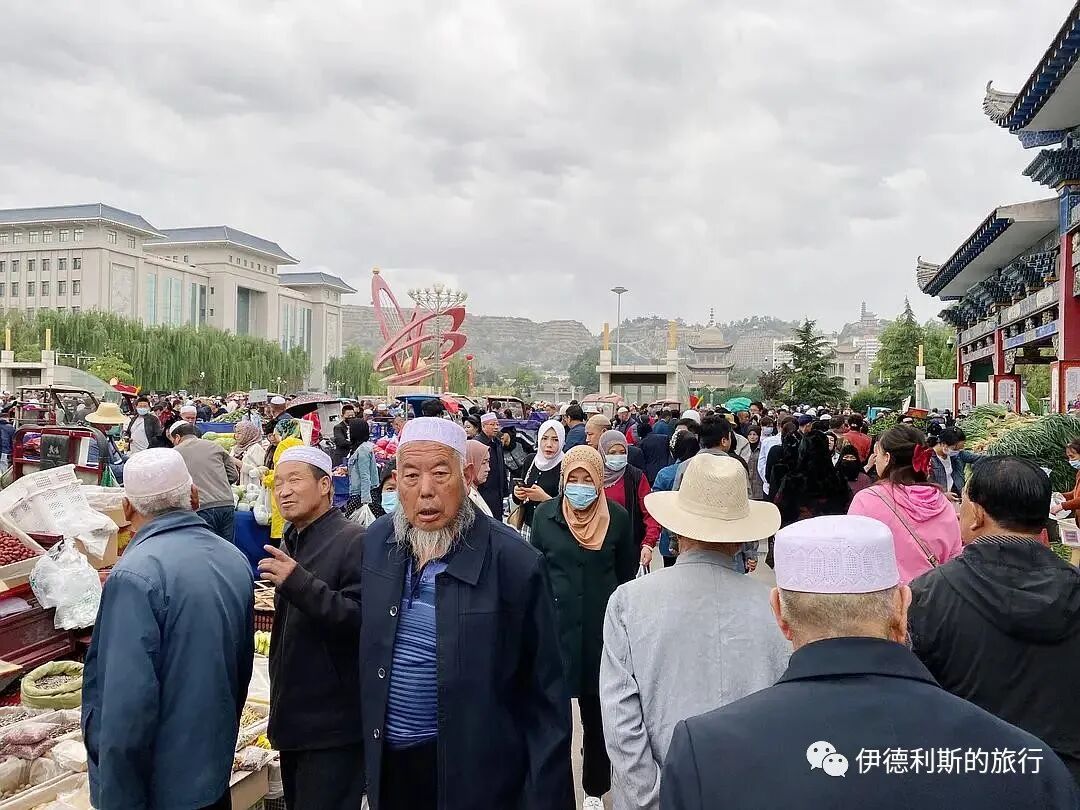
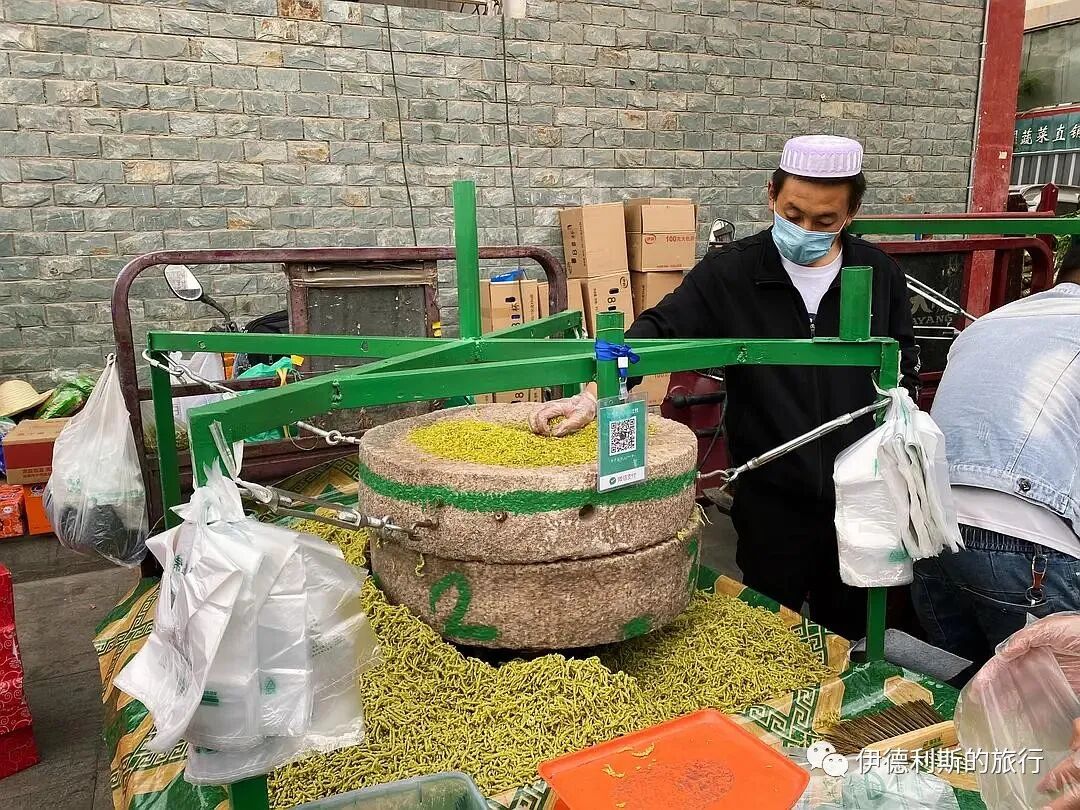
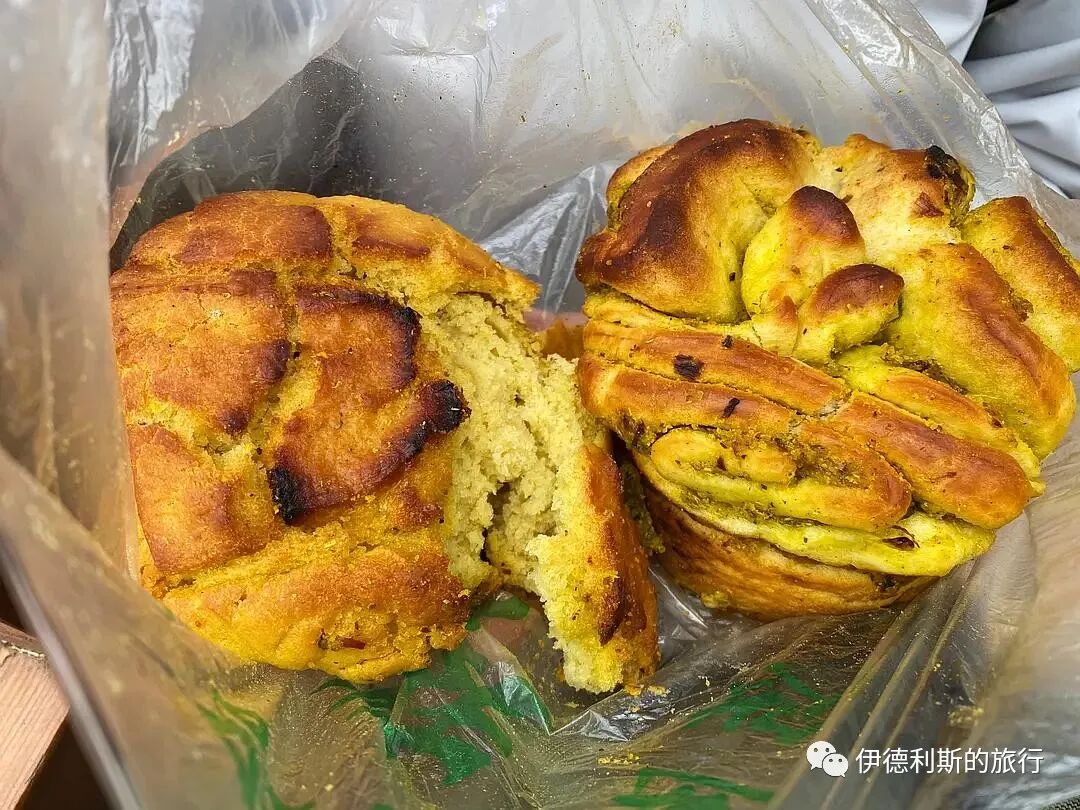
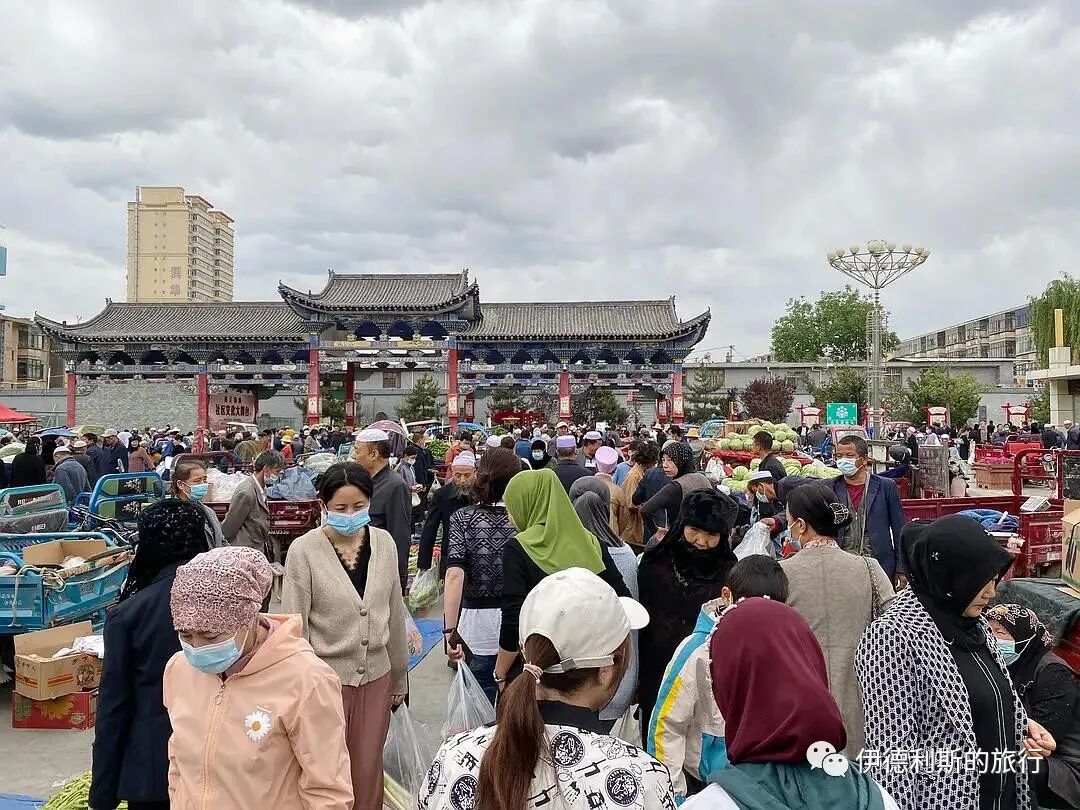
I met an auntie knitting hats on the spot, so I bought one; in these two years of not being able to go abroad, I feel like I have rarely bought new hats.
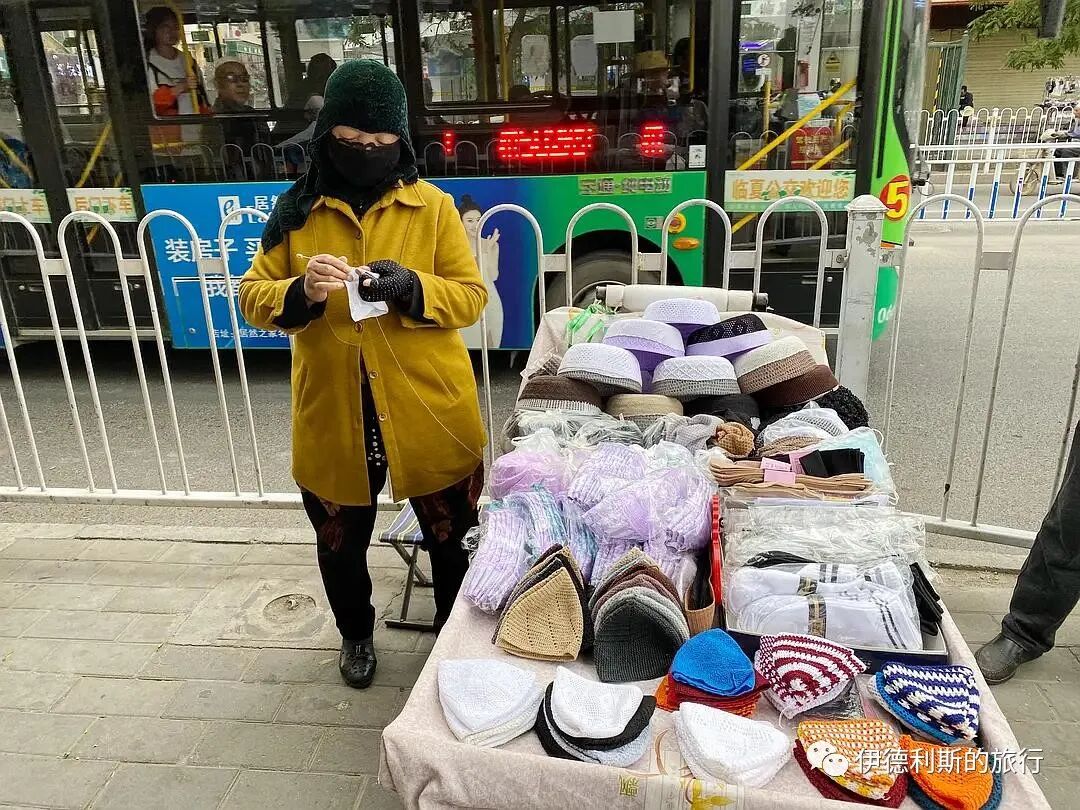
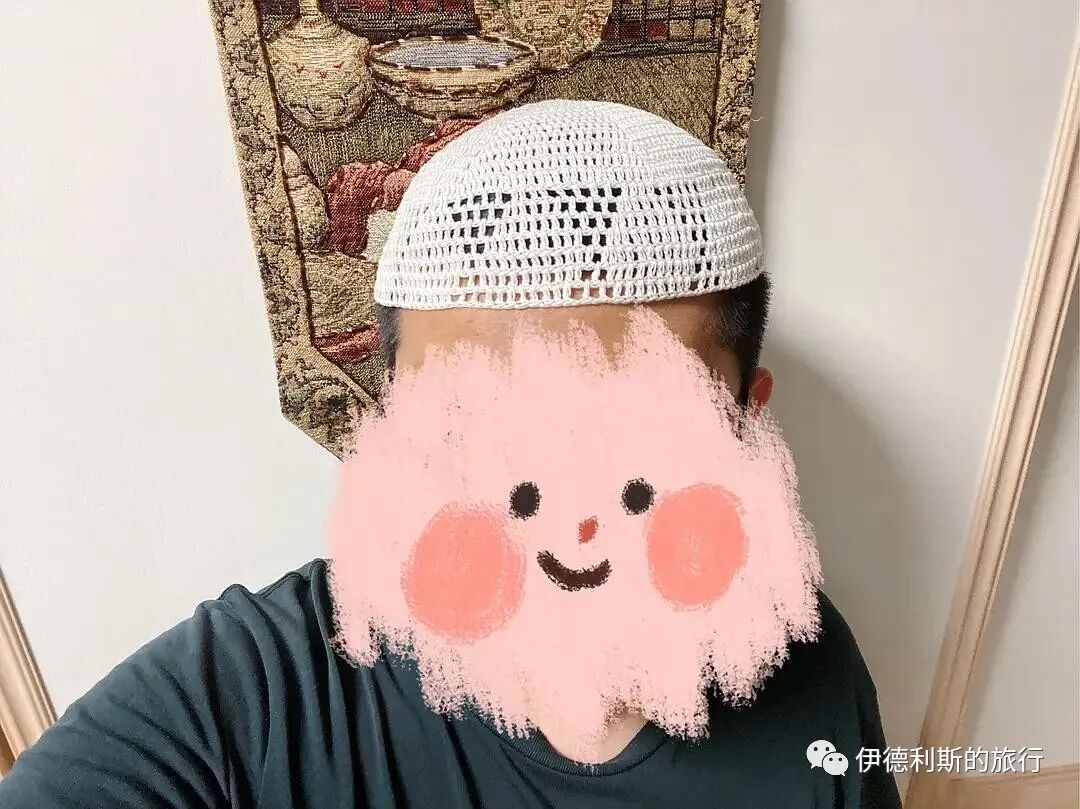
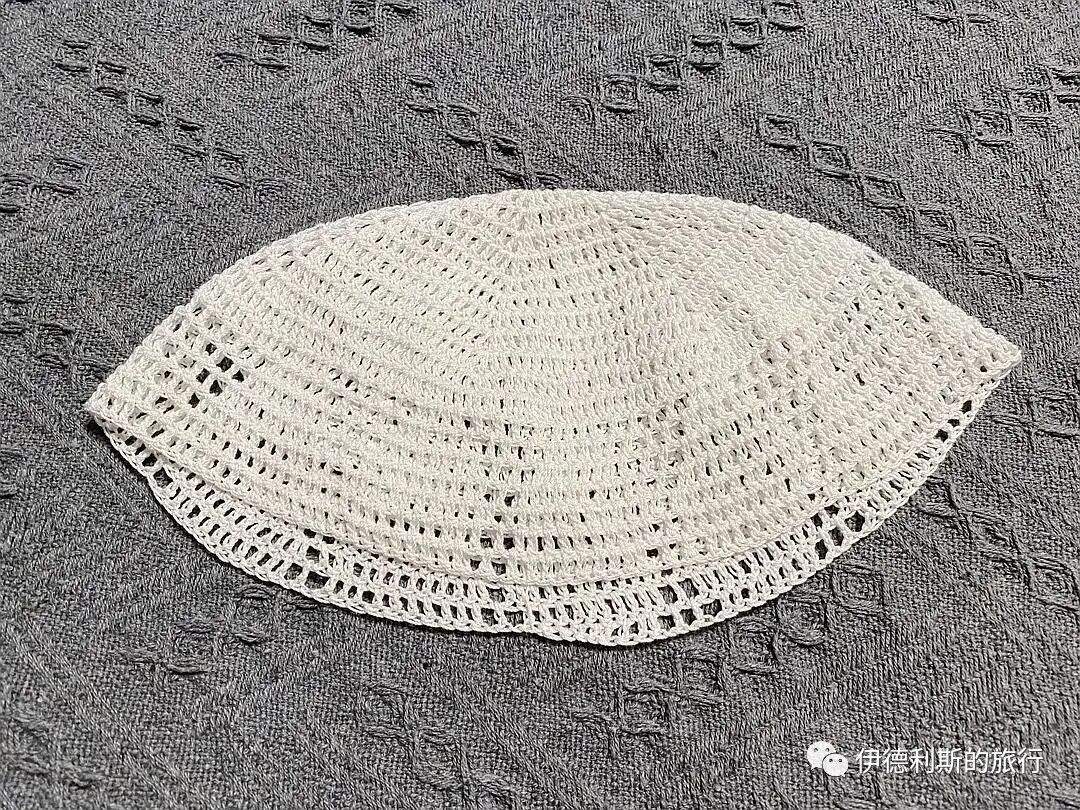
I had beef noodles and fentang (vermicelli soup) at the Xin Kuan Hezhou Noodle Restaurant in front of the Xinhua Mosque. Their place is clean, bright, and tastes good; the fentang here in the Hehuang region uses vermicelli, not the starch blocks like in Xinjiang, and it tastes quite fragrant.
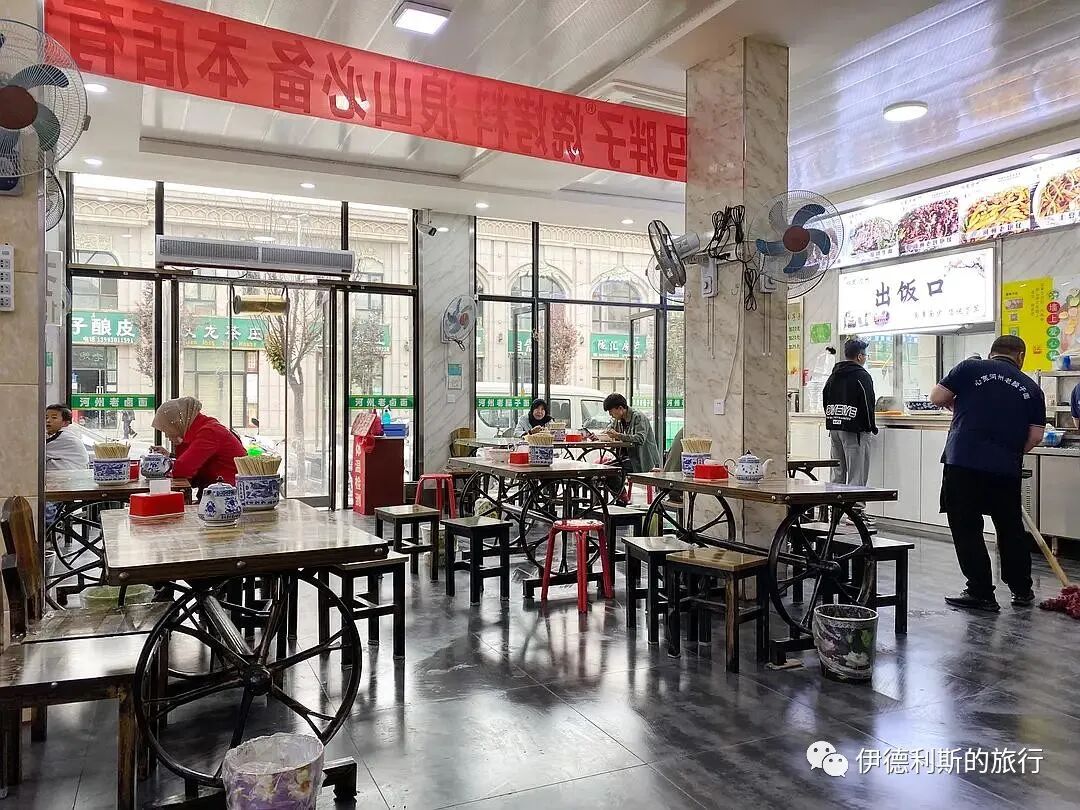
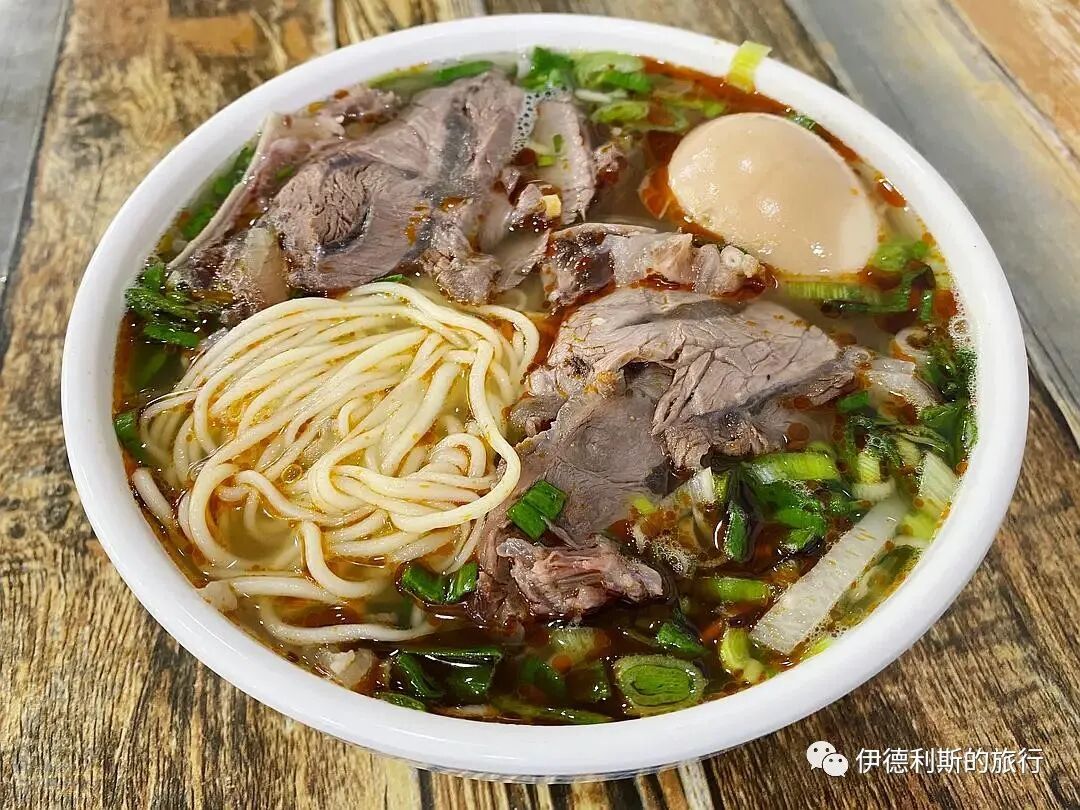
After breakfast, we set off for Songmingyan. Every year during the Hua'er Festival, the entrance to the Songmingyan scenic area becomes a large market, selling everything and very lively. Before going into the mountains to listen to Hua'er, we first had cold noodles and half a jin (250 grams) of shouzhuarou at the entrance, then bought a corn cob to take inside.
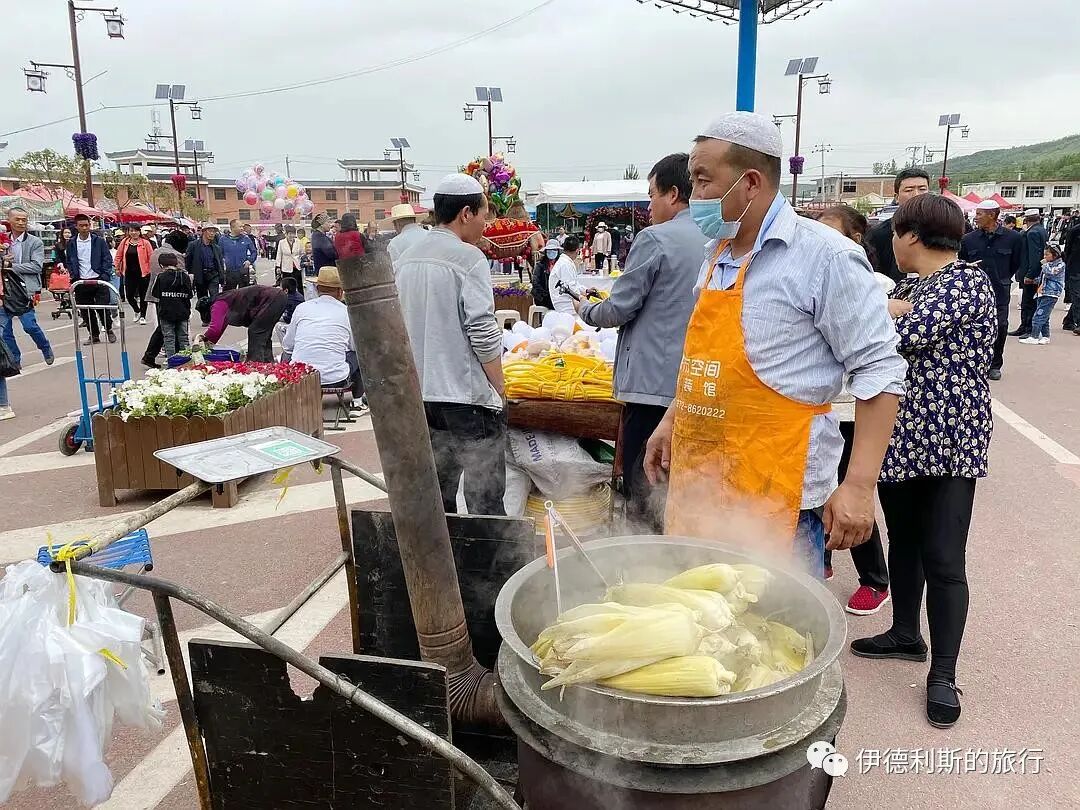
At Songmingyan, you can buy the local specialty fruit, piteguo (a type of wild pear). Piteguo grows on mountains near Songmingyan at an altitude of over 2,000 meters; when first picked, they are sour and astringent, and they need to be placed on a fruit rack for half a month to soften, and their color will turn into a dark shade like frozen pears. The ripened piteguo is very juicy; you have to bite a small hole to suck out the juice before you can eat the flesh, and the taste is sweet and sour, very refreshing.
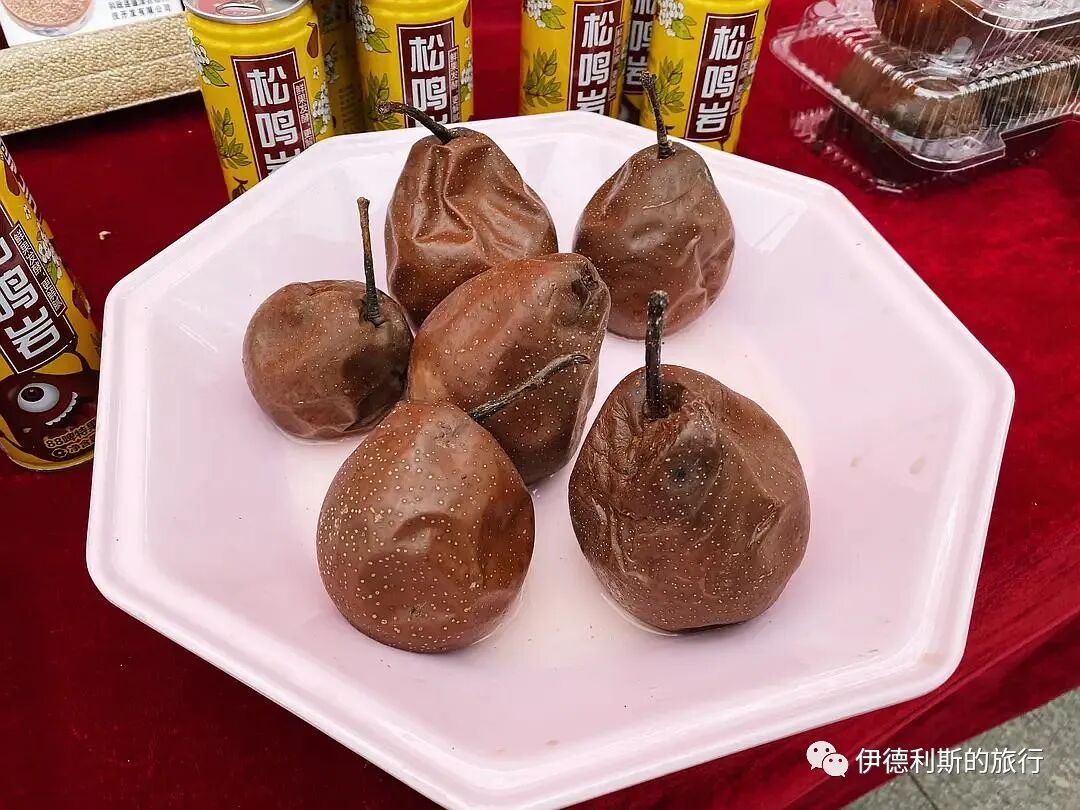
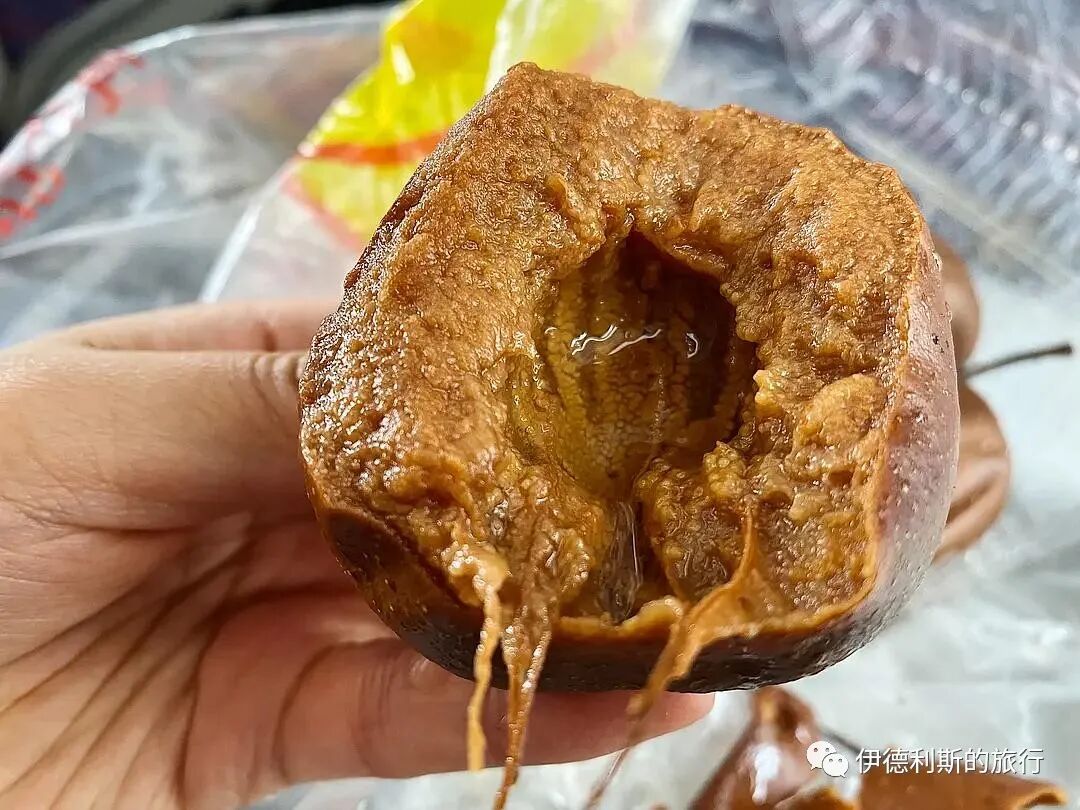
Entering the Songmingyan Hua'er Festival venue. After two years, I saw that Songmingyan had installed wooden walkways on the mountain this year, and some roads had been newly paved, but the environment had not changed much; it is still a very free mountain field for Hua'er.
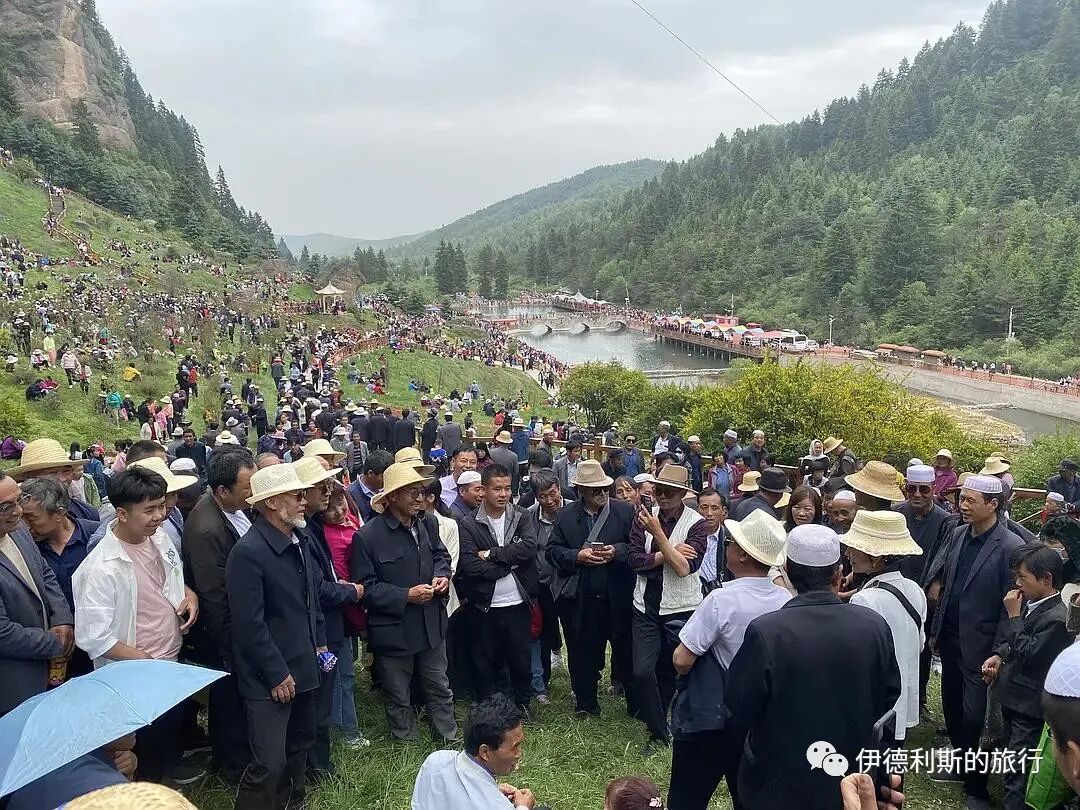
Translation from my friend Caigen: "This flower is yellow, oh, yellow to death.
My dear sister, this flower has been picked by a bee.
I haven't seen you for these few years.
I have missed you to death.
I just want to ask you,
Who have you been attracted to?" "
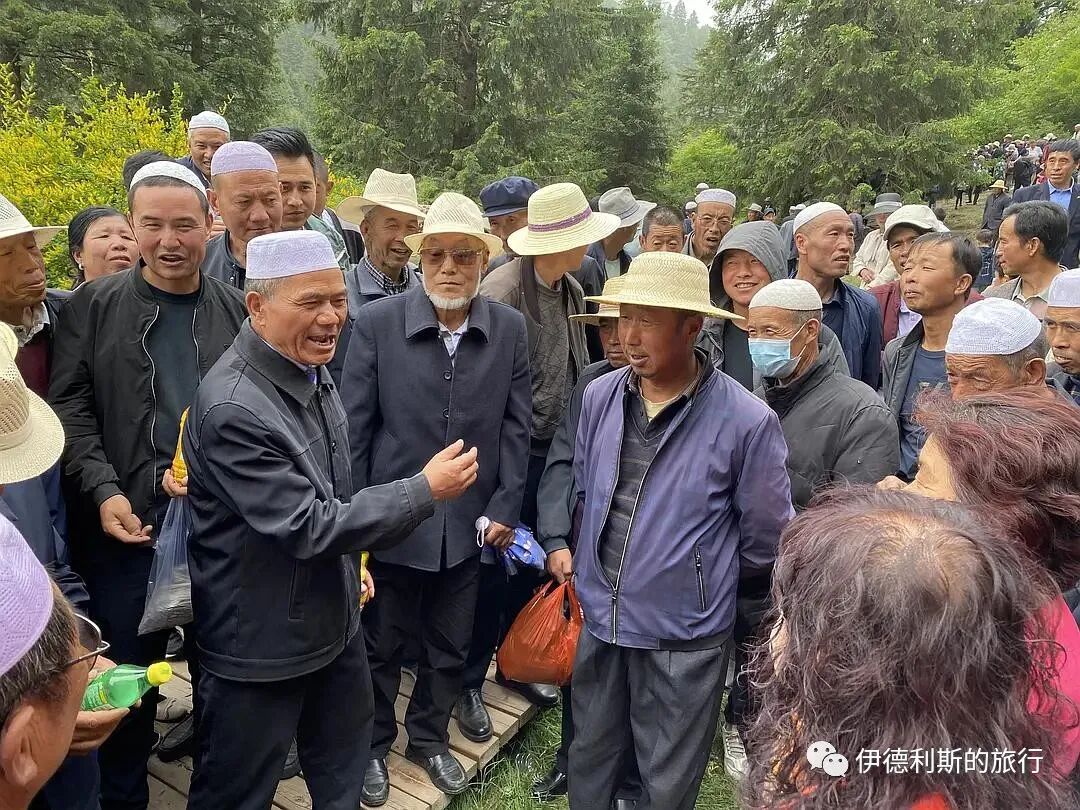
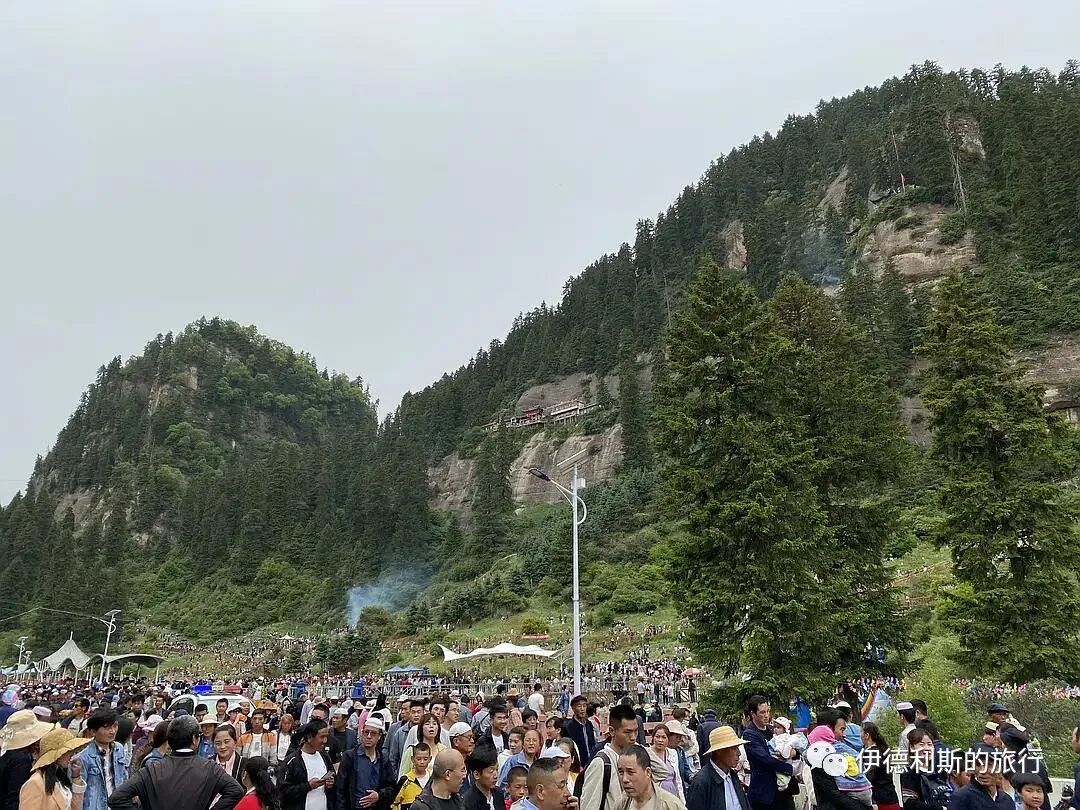
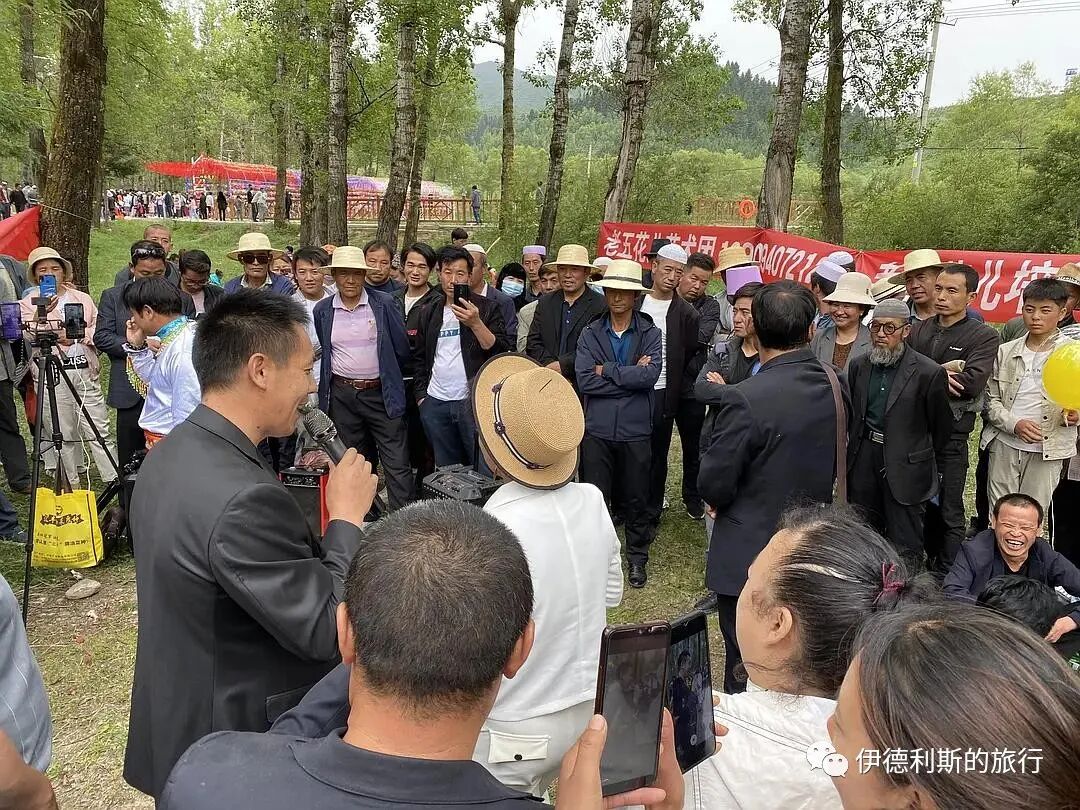
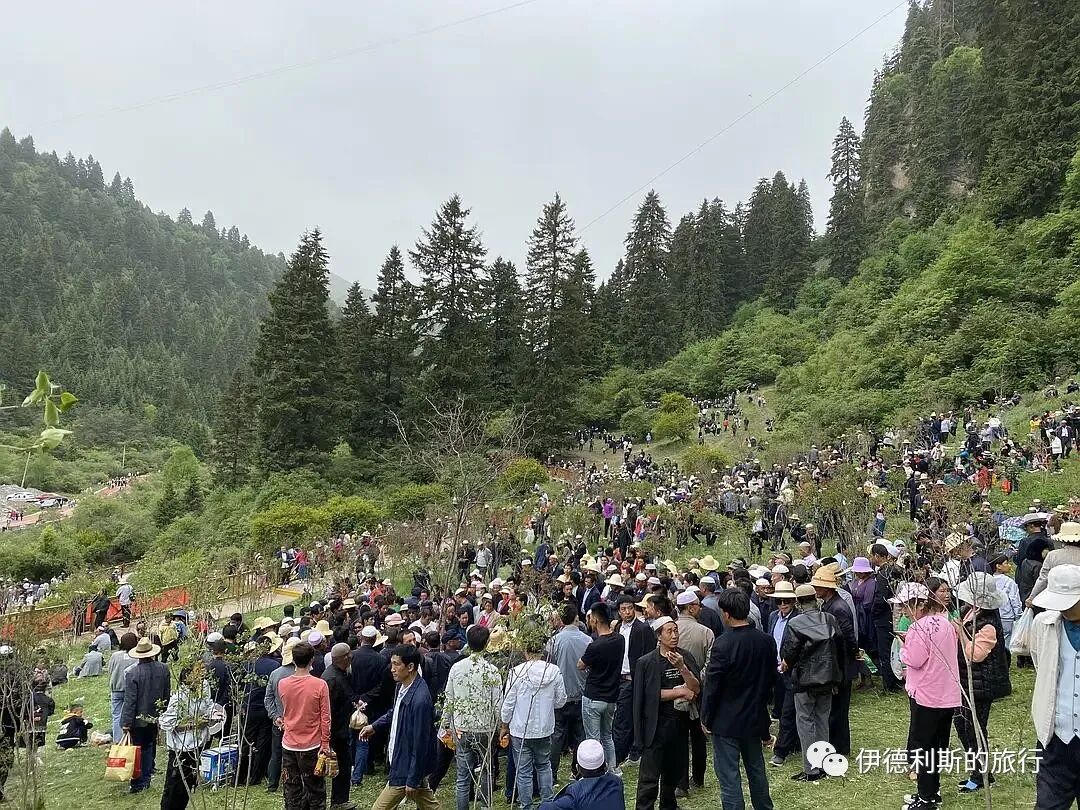
Saying goodbye to Songmingyan, heading to Lanzhou to catch a flight back to Beijing. Before leaving, I bought Halal Dicos (a Chinese fast-food chain) at Lanzhou West Station; it is a childhood memory for Zainab.
Halal Travel Guide: Beijing Book Fair - UAE, Saudi, Malaysia and Iran Books
Articles • ali2007fr posted the article • 0 comments • 207 views • 2026-05-20 08:47
Summary: The 2025 Beijing International Book Fair included displays and books from the UAE, Saudi Arabia, Malaysia, Iran, Oman, and other Muslim-majority countries. This account keeps the original book titles, booth notes, cultural details, and photographs.
I went to the Beijing International Book Fair today. The first floor has pavilions for the UAE, Malaysia, Saudi Arabia, and Azerbaijan. At the UAE pavilion, you can drink Arabic coffee and eat special desserts. Kids can play coloring games, and there are free booklets about Islamic culture.
At the Malaysia pavilion, you can get your name written in Arabic calligraphy and have a cartoon portrait drawn.
The Saudi Arabia pavilion has some children's picture books and books introducing their culture.
The Azerbaijan pavilion also has some nice photo books.
The basement level has the Iran, Oman, and Morocco pavilions, which are relatively small. It is my first time seeing an Oman pavilion, and you can pick up some brochures introducing Oman.
At the Iran pavilion, I paid my respects to all the Iranian martyrs killed by Israel. view all
Summary: The 2025 Beijing International Book Fair included displays and books from the UAE, Saudi Arabia, Malaysia, Iran, Oman, and other Muslim-majority countries. This account keeps the original book titles, booth notes, cultural details, and photographs.
I went to the Beijing International Book Fair today. The first floor has pavilions for the UAE, Malaysia, Saudi Arabia, and Azerbaijan. At the UAE pavilion, you can drink Arabic coffee and eat special desserts. Kids can play coloring games, and there are free booklets about Islamic culture.
At the Malaysia pavilion, you can get your name written in Arabic calligraphy and have a cartoon portrait drawn.
The Saudi Arabia pavilion has some children's picture books and books introducing their culture.
The Azerbaijan pavilion also has some nice photo books.
The basement level has the Iran, Oman, and Morocco pavilions, which are relatively small. It is my first time seeing an Oman pavilion, and you can pick up some brochures introducing Oman.
At the Iran pavilion, I paid my respects to all the Iranian martyrs killed by Israel.
Halal Travel Guide: Brunei Part 1 — Visa-Free Culture, Mosques and Local History
Articles • ali2007fr posted the article • 0 comments • 171 views • 2026-05-20 00:57
Summary: Brunei offers visa-free travel for Chinese visitors and a compact route through mosques, museums, royal history, and Malay culture. This first part keeps the original itinerary, photos, place names, and travel details in a clear English article.
The Brunei Darussalam Immigration Department announced that starting March 8, 2025, Chinese citizens holding ordinary passports valid for at least 6 months can enter Brunei visa-free for up to 14 days. Brunei has officially become a visa-free country!
I happened to take my family to Brunei in December 2024 and visited quite a few places. In my opinion, Brunei can be described as a "rural version of Singapore and a high-cost Malaysia." If you have already visited Singapore and Malaysia, this place is still worth a look.
First, Brunei has its own ride-hailing app called Dart. You can link a VISA card or pay with cash, and the cars arrive quite quickly. Note that after leaving the airport, the ride-hailing pickup point is in the parking lot on the right. Walk from the main airport entrance toward the mosque on the right, then follow the canopy to the end to find it.
My first impression of downtown Brunei is that everyone drives everywhere, and there are basically no pedestrians on the streets. It feels like the whole city was designed for cars, and there are very few crosswalks. The city density is very low with lots of greenery, making it feel like a garden city for cars.
Below, I will share some places in Brunei that we think are worth visiting and eating at.
Eat halal Nanyang-style Chinese food.
Yingzhun Hao.
Just like in Singapore and Malaysia, many Chinese people from Hainan and Fujian in Brunei apply for halal certification, hire Muslim staff, and serve halal Chinese food with Nanyang characteristics. We ate at several of these places this time, and they are all worth recommending.
The most famous Hainanese teahouse in Brunei is Yingzhun Hao. They have Brunei halal certification and are favored by people of all ethnic groups. The founder of Yingzhun Hao, Han Qiongyuan, was from Wenchang, Hainan. In 1939, during the Japanese invasion of China, 17-year-old Han Qiongyuan traveled to Southeast Asia and arrived in Brunei to work as a handyman at his uncle's coffee shop. In 1946, Han Qiongyuan officially opened Yingzhun Teahouse, mainly selling coffee, bread, and other food, and became widely known for his "longevity bread (roti kuning)." Later, as the teahouse business grew, Han Qiongyuan also expanded into real estate and presided over the construction of the Brunei Hainan Building. After 1993, Han Qiongyuan returned to his hometown every year to visit relatives and invested heavily there, being awarded the title of "Patriotic Hainanese" by Hainan Province three times.
Their shop has a very rich variety of bread. The most classic sandwich breads come in four flavors: peanut, red bean paste, butter, and coconut. There are also peanut yuanyang bread, cheese bread, yuanyang yellow bread, and French toast. You can add a fried egg and cheese, or order a soft-boiled egg on the side. Cakes include custard cake, egg tarts, coconut tarts, red bean cakes, butter cakes, pandan cakes, and more. Western-style breads and pastries were learned by Hainanese people working as kitchen helpers for British families when they traveled south to Southeast Asia in the 19th century. Today, they are a classic part of Nanyang Hainanese restaurants.
Besides breads and pastries, they also serve various noodles, including sesame flat rice noodles (zhima guotiao), dry-tossed noodles, fried noodles, Hainanese noodles, fried rice vermicelli, and egg gravy flat rice noodles (huadan hefen). These are all very well-suited to Chinese tastes. We ordered egg gravy flat rice noodles, sesame flat rice noodles, egg tarts, egg custard cakes, yellow bread with fried eggs, chicken curry puffs, peanut and kaya butter bread (yuanyang mianbao), ginger milk tea, and lemon tea for a full East-meets-West experience. The peanut and kaya butter bread is filled with coconut jam (kaya), butter, and crushed peanuts, giving it a very rich texture. The sesame flat rice noodles have a sweet, salty, and spicy flavor. Served with fried tofu and fried fish chunks, they are a major specialty of the restaurant.
Babu's Kitchen
There are many Chinese shops in the old town of Bandar Seri Begawan, which is also a great place to eat at halal Hainanese restaurants. We chose Babu's Kitchen. It was very busy at lunch with Chinese, Malay, and Indian customers, which is a classic scene at a Hainanese restaurant. Since they didn't have a Chinese menu, we asked the owner to recommend the Assam fish fillets, salted egg fried mushrooms, beef noodles (yee mee), and bean curd skin with tofu and chicken. Like in Malaysia, the Chinese in Brunei speak very standard Mandarin. Overall, the food was very good. The Chinese dishes were infused with Malay flavors, but they were still very easy for Chinese people to enjoy.
Meiguang Tea House
We had a Hainanese breakfast at Meiguang Tea House in the old town of Bandar Seri Begawan. The owner is Hainanese, his wife is from Xiamen, and the staff are all Indonesian. Because they mainly cater to the nearby office buildings, it is usually quite busy. It is relatively quiet on weekends, and there are fewer steamed dim sum options than usual. We ordered chicken and radish buns, red bean buns, beef porridge with small fried dough sticks (youtiao), longan herbal tea, fried noodles, and steamed dumplings (shaomai). Next time, if any friends (dost) are around on a weekday, we can try their other specialties like Fuzhou 'wealth-attracting' rice noodle soup, dry-tossed silver needle noodles (laoshufen), and chicken intestine noodles.
Shixianle
Near the Fujian Association is a restaurant called Shiraz Seafood Restaurant. The name sounds like an Iranian place, but it is actually a Chinese restaurant called Shixianle. It specializes in dim sum and various Nanyang Chinese snacks. The menu is very extensive, and it is halal-certified in Brunei. After we went in, a table of Malays and a table of South Asians arrived, which shows how much different ethnic groups love halal Chinese food.
We ordered Cantonese steamed dumplings (siu mai), chicken feet, fish maw with chicken, five-spice meat rolls (ngo hiang), fried stuffed tofu (yong tofu), fried radish cake, longan herbal tea, chicken porridge, seafood soup (a mix of fish fillets, fish balls, etc.), and dry-fried green beans. We really enjoyed our fill of Nanyang Chinese snacks in Brunei.
Ngo hiang is short for 'five-spice marinated meat,' a snack that originated in the Minnan region of Fujian. In the past, life was hard, so people would season leftover meat and vegetables with five-spice powder, wrap them in bean curd skin, and deep-fry them. Later, as Chinese people traveled south, it spread to Indonesia, Malaysia, the Philippines, Brunei, Singapore, and Thailand.
Stuffed tofu (yong tofu) is a traditional Hakka dish. In the Hakka dialect, the word niang means to stuff with filling. Legend says that after the Hakka people moved south from the Central Plains, they wanted to eat dumplings but had no wheat. They used tofu instead of flour and invented stuffed tofu (niang doufu). Later, stuffed tofu followed the Hakka people as they traveled south to Indonesia, Malaysia, Singapore, Brunei, Vietnam, and Thailand.
In Brunei, the Fujian Association and the Taiwan Overseas Compatriot Association share the same building. Nearby, there are non-halal restaurants, which are rare in Brunei, and they all have red non-halal signs at their entrances.
Hua Ho Department Store
Hua Ho Department Store is a famous halal supermarket owned by Chinese merchants in Brunei, and it has many branches across the country. We went to the Kiulap branch. Inside, one side features various traditional Brunei Malay snacks. We bought a traditional snack from Sabah and Brunei called Kuih Cincin Tempatan, which is fried using red coconut, rice flour, and palm sugar. The other side is the supermarket area, where you can buy various halal foods with Cantonese, Fujian, Chaoshan, and Taiwanese characteristics.
The founder of Hua Ho Department Store, Lau Gek Poh (Liu Jinguo), was born in 1920 to a farming family in Lieyu, Kinmen, Fujian. In 1938, he traveled south to seek his fortune, first going to Singapore and then to Brunei to join his eldest sister. In 1947, Lau Gek Poh bought a piece of land in Manggis, on the northern outskirts of Brunei. He built a vegetable garden and hired workers to raise chickens and ducks, officially establishing Hua Ho Department Store. After the 1950s, as agricultural prices fell, Lau Gek Poh eventually went bankrupt and closed his shop in 1958. Afterward, he began selling vegetables at the market and selling fabric door-to-door. He did not reopen his shop until 1961. In 1966, he built a small two-story building, and the shop was opened on the first floor. Later, he gradually expanded the scale of his business, eventually making Hua Ho the largest department store in Brunei.
In 2004, the Sultan of Brunei awarded Lau Gek Poh the title of Pehin Kapitan Cina Kornia Diraja, making him one of the few Chinese nobles in Brunei. Lieyu, also known as Little Kinmen, is located between Kinmen and Xiamen. People from Lieyu began traveling south to Brunei in the 19th century. Initially, they worked mainly as shipping laborers, dock workers, fishermen, and street vendors. Later, they gradually accumulated capital and turned to business, occupying an important position in Brunei's business world. Many have received the titles of Pehin Kapitan and Pehin.
Some products at Hua Ho Department Store: coconut jelly powder, cold bean curd powder, Hong Kong narcissus flour, Shantou sweet potato starch, fragrant braised peanuts, fragrant vegetable hearts, belacan chili, Chaoshan specialty sweet and sour ginger slices, South China vegetables, spicy fermented bean curd with sesame oil, rice noodles, shredded codfish, and selected squid.
Traditional Malay Market: Gadong Night Market
Gadong Night Market is very famous, but it is actually not very big. There are very few tourists in Brunei, so the night market is mostly filled with locals.
We first bought shredded squid and fish paste with chili sauce. This little snack is quite delicious. Then we bought mangosteen and snake fruit. It was my first time eating snake fruit, and the taste was quite good.
We ate noodle soup at a small snack shop at the entrance. We ordered Bakso beranak (large beef balls stuffed with smaller beef balls) and Soto Daging (beef noodle soup). The eating habits here are almost the same as in Indonesia. I really enjoy the beef noodle soup here, especially on a rainy day when a bowl feels very comforting. I also ordered a coconut. The local coconuts are large. Even though the husk is thick, there is still plenty of juice inside, and it comes served with a lime wedge to squeeze in.
I had satay skewers at the Gadong Night Market, specifically the liver and chicken hearts, which were sweet and grilled a bit firm.
A wide variety of Brunei-style buffet.
If you want to try authentic local food in Brunei, I recommend the buffet at the Brunei Arts and Handicraft Training Centre. You can find it on the map by searching for Tarindak D'Seni.
We went for lunch from 11:30 to 14:30, which cost 91 RMB per person, and there is a discount for seniors over 60. The environment is lovely, with the Brunei River right outside the window. The food selection is rich. You can eat various sticky rice pandan Malay cakes (kuih), Sarawak laksa noodles with coconut milk, and even make your own shaved ice dessert (cendol).
They serve Brunei's national dish, sago starch paste (ambuyat), which is made by mixing sago palm starch with hot water to create a thick paste, eaten by dipping it into a sauce.
Nasi kebuli is rice cooked with goat broth, goat milk, and ghee. It was brought to the Malay Archipelago by Hadhrami people from Yemen and is especially popular in the Arab communities of Java.
Black beef (daging hitam) is a beef rendang made with a sweet soy sauce containing plenty of palm sugar and rock sugar, a specialty of the Sarawak region.
Chicken cooked in coconut milk (opor ayam) is chicken simmered in coconut milk with various spices.
Two national mosques.
Brunei has two national mosques, each built by a different Sultan, and both are worth visiting. The Omar Ali Saifuddien Mosque, also known as the 'water mosque,' was built between 1954 and 1958 by the former Sultan of Brunei, Omar Ali Saifuddien III (who reigned from 1950 to 1967), and is named after him. The main hall features a Mughal-revival style golden dome. The interior uses Italian marble, Shanghai granite, British chandeliers, and Venetian mosaic glass, making it Brunei's most important landmark after its completion.
We happened to visit during Friday prayers (Jumu'ah). Brunei requires all malls and restaurants to close between 12:00 and 14:00, so the mosque was very crowded during the prayer, with the entire hall full, which was quite spectacular.
The pulpit (minbar) in the water mosque has two levels. The first level is where the muezzin calls the adhan, and the second level is where the imam delivers the khutbah. Next to the minbar, there is an escalator leading to the second-floor prayer area reserved for the royal family.
After Friday prayers, boxed meals were being handed out, mostly to South Asian laborers.
The water mosque during the sunset and dusk hours. Both of Brunei's national mosques look better at night than during the day.
The full name of the Brunei Friday Mosque is Jame' Asr Hassanil Bolkiah Mosque. It is one of Brunei's two national mosques and also the largest mosque in the country. The Jame' Asr Hassanil Bolkiah Mosque was built by Sultan Hassanal Bolkiah of Brunei to celebrate his 25th anniversary on the throne and officially opened in 1994. The mosque's 29 golden domes commemorate the 29th Sultan of Brunei. Five fountains symbolize the five daily namaz and the five pillars of Islam. The mihrab is decorated with gold-plated tiles, and the interior is very luxurious, featuring Persian carpets, Italian marble, and Philippine hardwood.
The night view of the Brunei mosque is more beautiful than the day. For friends (dosti) who want to take photos, I recommend coming during the times for maghrib and isha.
The Jame' Asr Hassanil Bolkiah Mosque during the day. The main prayer hall connects to a women's prayer hall via a corridor. This is a very rare independent women's hall in Southeast Asia, and it is quite large. Below the women's hall is the wudu area. It is the only one I have ever visited that uses sensor-activated faucets.
The ancient city in the mountains of Brunei.
Take a taxi from the city to the Kota Batu Archaeological Park, the ruins of the Brunei Sultanate palace hidden in the tropical rainforest. This is Brunei's most important archaeological site.
Kota Batu is believed to have been the capital of the Brunei Sultanate from the 14th to the 17th century. It was once an important trading port in Southeast Asia and a central city in northern Borneo. A civil war in the Brunei Sultanate between 1660 and 1673 led to the abandonment of Kota Batu, and the Sultan moved the palace to the water village of Kampong Ayer on the upper Brunei River.
Kota Batu means stone castle, and it is one of the few stone architectural ruins in Brunei. British naturalist and Sarawak Museum curator Tom Harrisson began archaeological excavations at Kota Batu in 1952-53. He discovered many Chinese coins from the Tang, Song, and Ming dynasties, as well as Arabic coins, glassware, ironware, bronze, wooden tools, stone carvings, and ceramics from Siam, the Indochina Peninsula, and the Song and Ming dynasties of China.
During excavations in 1986-87, a square stone building measuring 25.8 by 25.4 meters was found, along with 36 stone column bases, tombstone remains, and Ming dynasty porcelain shards. It is believed the building dates back to the 15th century. Because the column bases are divided into three levels, it is thought the building had a three-tiered pyramid roof structure similar to traditional Malacca mosques. Although early Brunei Sultanate palace buildings were made of wood and left few traces, the coins and pottery found at Kota Batu suggest the Sultan's palace was likely near this site.
The paths in Kota Batu Archaeological Park feel like a primitive forest. There were no other tourists, and the mountain trails were often covered by fallen leaves and hard to see. It is hard to imagine that this was once the capital of Brunei.
The tomb of the third Sultan of Brunei.
The Kota Batu Archaeological Park contains the tomb of the third Sultan of Brunei, Sharif Ali.
Sultan Sharif Ali (reigned 1425-1432) was originally a preacher from the ancient Saudi city of Taif and a descendant of Hasan ibn Ali, the grandson of the Prophet Muhammad. He arrived in Brunei to preach in 1395 and was respected by the Sultan and the people. He married the daughter of Sultan Ahmad around 1400 and inherited the throne after the old Sultan died in 1425, which is how the Brunei Sultanate gained its lineage from the Prophet's family.
Sultan Sharif Ali worked to spread Islamic law while keeping local customs that did not go against it. During his reign, Brunei officially changed from a Hindu-Buddhist cultural area into a part of Islamic civilization. He built the first mosque in Brunei, designed the national flag, and established the title of Brunei as the Nation of Peace (Darussalam). It is believed that he may have also built the stone wall fortress in Kota Batu. view all
Summary: Brunei offers visa-free travel for Chinese visitors and a compact route through mosques, museums, royal history, and Malay culture. This first part keeps the original itinerary, photos, place names, and travel details in a clear English article.
The Brunei Darussalam Immigration Department announced that starting March 8, 2025, Chinese citizens holding ordinary passports valid for at least 6 months can enter Brunei visa-free for up to 14 days. Brunei has officially become a visa-free country!
I happened to take my family to Brunei in December 2024 and visited quite a few places. In my opinion, Brunei can be described as a "rural version of Singapore and a high-cost Malaysia." If you have already visited Singapore and Malaysia, this place is still worth a look.
First, Brunei has its own ride-hailing app called Dart. You can link a VISA card or pay with cash, and the cars arrive quite quickly. Note that after leaving the airport, the ride-hailing pickup point is in the parking lot on the right. Walk from the main airport entrance toward the mosque on the right, then follow the canopy to the end to find it.
My first impression of downtown Brunei is that everyone drives everywhere, and there are basically no pedestrians on the streets. It feels like the whole city was designed for cars, and there are very few crosswalks. The city density is very low with lots of greenery, making it feel like a garden city for cars.
Below, I will share some places in Brunei that we think are worth visiting and eating at.
Eat halal Nanyang-style Chinese food.
Yingzhun Hao.
Just like in Singapore and Malaysia, many Chinese people from Hainan and Fujian in Brunei apply for halal certification, hire Muslim staff, and serve halal Chinese food with Nanyang characteristics. We ate at several of these places this time, and they are all worth recommending.
The most famous Hainanese teahouse in Brunei is Yingzhun Hao. They have Brunei halal certification and are favored by people of all ethnic groups. The founder of Yingzhun Hao, Han Qiongyuan, was from Wenchang, Hainan. In 1939, during the Japanese invasion of China, 17-year-old Han Qiongyuan traveled to Southeast Asia and arrived in Brunei to work as a handyman at his uncle's coffee shop. In 1946, Han Qiongyuan officially opened Yingzhun Teahouse, mainly selling coffee, bread, and other food, and became widely known for his "longevity bread (roti kuning)." Later, as the teahouse business grew, Han Qiongyuan also expanded into real estate and presided over the construction of the Brunei Hainan Building. After 1993, Han Qiongyuan returned to his hometown every year to visit relatives and invested heavily there, being awarded the title of "Patriotic Hainanese" by Hainan Province three times.
Their shop has a very rich variety of bread. The most classic sandwich breads come in four flavors: peanut, red bean paste, butter, and coconut. There are also peanut yuanyang bread, cheese bread, yuanyang yellow bread, and French toast. You can add a fried egg and cheese, or order a soft-boiled egg on the side. Cakes include custard cake, egg tarts, coconut tarts, red bean cakes, butter cakes, pandan cakes, and more. Western-style breads and pastries were learned by Hainanese people working as kitchen helpers for British families when they traveled south to Southeast Asia in the 19th century. Today, they are a classic part of Nanyang Hainanese restaurants.
Besides breads and pastries, they also serve various noodles, including sesame flat rice noodles (zhima guotiao), dry-tossed noodles, fried noodles, Hainanese noodles, fried rice vermicelli, and egg gravy flat rice noodles (huadan hefen). These are all very well-suited to Chinese tastes. We ordered egg gravy flat rice noodles, sesame flat rice noodles, egg tarts, egg custard cakes, yellow bread with fried eggs, chicken curry puffs, peanut and kaya butter bread (yuanyang mianbao), ginger milk tea, and lemon tea for a full East-meets-West experience. The peanut and kaya butter bread is filled with coconut jam (kaya), butter, and crushed peanuts, giving it a very rich texture. The sesame flat rice noodles have a sweet, salty, and spicy flavor. Served with fried tofu and fried fish chunks, they are a major specialty of the restaurant.
Babu's Kitchen
There are many Chinese shops in the old town of Bandar Seri Begawan, which is also a great place to eat at halal Hainanese restaurants. We chose Babu's Kitchen. It was very busy at lunch with Chinese, Malay, and Indian customers, which is a classic scene at a Hainanese restaurant. Since they didn't have a Chinese menu, we asked the owner to recommend the Assam fish fillets, salted egg fried mushrooms, beef noodles (yee mee), and bean curd skin with tofu and chicken. Like in Malaysia, the Chinese in Brunei speak very standard Mandarin. Overall, the food was very good. The Chinese dishes were infused with Malay flavors, but they were still very easy for Chinese people to enjoy.
Meiguang Tea House
We had a Hainanese breakfast at Meiguang Tea House in the old town of Bandar Seri Begawan. The owner is Hainanese, his wife is from Xiamen, and the staff are all Indonesian. Because they mainly cater to the nearby office buildings, it is usually quite busy. It is relatively quiet on weekends, and there are fewer steamed dim sum options than usual. We ordered chicken and radish buns, red bean buns, beef porridge with small fried dough sticks (youtiao), longan herbal tea, fried noodles, and steamed dumplings (shaomai). Next time, if any friends (dost) are around on a weekday, we can try their other specialties like Fuzhou 'wealth-attracting' rice noodle soup, dry-tossed silver needle noodles (laoshufen), and chicken intestine noodles.
Shixianle
Near the Fujian Association is a restaurant called Shiraz Seafood Restaurant. The name sounds like an Iranian place, but it is actually a Chinese restaurant called Shixianle. It specializes in dim sum and various Nanyang Chinese snacks. The menu is very extensive, and it is halal-certified in Brunei. After we went in, a table of Malays and a table of South Asians arrived, which shows how much different ethnic groups love halal Chinese food.
We ordered Cantonese steamed dumplings (siu mai), chicken feet, fish maw with chicken, five-spice meat rolls (ngo hiang), fried stuffed tofu (yong tofu), fried radish cake, longan herbal tea, chicken porridge, seafood soup (a mix of fish fillets, fish balls, etc.), and dry-fried green beans. We really enjoyed our fill of Nanyang Chinese snacks in Brunei.
Ngo hiang is short for 'five-spice marinated meat,' a snack that originated in the Minnan region of Fujian. In the past, life was hard, so people would season leftover meat and vegetables with five-spice powder, wrap them in bean curd skin, and deep-fry them. Later, as Chinese people traveled south, it spread to Indonesia, Malaysia, the Philippines, Brunei, Singapore, and Thailand.
Stuffed tofu (yong tofu) is a traditional Hakka dish. In the Hakka dialect, the word niang means to stuff with filling. Legend says that after the Hakka people moved south from the Central Plains, they wanted to eat dumplings but had no wheat. They used tofu instead of flour and invented stuffed tofu (niang doufu). Later, stuffed tofu followed the Hakka people as they traveled south to Indonesia, Malaysia, Singapore, Brunei, Vietnam, and Thailand.
In Brunei, the Fujian Association and the Taiwan Overseas Compatriot Association share the same building. Nearby, there are non-halal restaurants, which are rare in Brunei, and they all have red non-halal signs at their entrances.
Hua Ho Department Store
Hua Ho Department Store is a famous halal supermarket owned by Chinese merchants in Brunei, and it has many branches across the country. We went to the Kiulap branch. Inside, one side features various traditional Brunei Malay snacks. We bought a traditional snack from Sabah and Brunei called Kuih Cincin Tempatan, which is fried using red coconut, rice flour, and palm sugar. The other side is the supermarket area, where you can buy various halal foods with Cantonese, Fujian, Chaoshan, and Taiwanese characteristics.
The founder of Hua Ho Department Store, Lau Gek Poh (Liu Jinguo), was born in 1920 to a farming family in Lieyu, Kinmen, Fujian. In 1938, he traveled south to seek his fortune, first going to Singapore and then to Brunei to join his eldest sister. In 1947, Lau Gek Poh bought a piece of land in Manggis, on the northern outskirts of Brunei. He built a vegetable garden and hired workers to raise chickens and ducks, officially establishing Hua Ho Department Store. After the 1950s, as agricultural prices fell, Lau Gek Poh eventually went bankrupt and closed his shop in 1958. Afterward, he began selling vegetables at the market and selling fabric door-to-door. He did not reopen his shop until 1961. In 1966, he built a small two-story building, and the shop was opened on the first floor. Later, he gradually expanded the scale of his business, eventually making Hua Ho the largest department store in Brunei.
In 2004, the Sultan of Brunei awarded Lau Gek Poh the title of Pehin Kapitan Cina Kornia Diraja, making him one of the few Chinese nobles in Brunei. Lieyu, also known as Little Kinmen, is located between Kinmen and Xiamen. People from Lieyu began traveling south to Brunei in the 19th century. Initially, they worked mainly as shipping laborers, dock workers, fishermen, and street vendors. Later, they gradually accumulated capital and turned to business, occupying an important position in Brunei's business world. Many have received the titles of Pehin Kapitan and Pehin.
Some products at Hua Ho Department Store: coconut jelly powder, cold bean curd powder, Hong Kong narcissus flour, Shantou sweet potato starch, fragrant braised peanuts, fragrant vegetable hearts, belacan chili, Chaoshan specialty sweet and sour ginger slices, South China vegetables, spicy fermented bean curd with sesame oil, rice noodles, shredded codfish, and selected squid.
Traditional Malay Market: Gadong Night Market
Gadong Night Market is very famous, but it is actually not very big. There are very few tourists in Brunei, so the night market is mostly filled with locals.
We first bought shredded squid and fish paste with chili sauce. This little snack is quite delicious. Then we bought mangosteen and snake fruit. It was my first time eating snake fruit, and the taste was quite good.
We ate noodle soup at a small snack shop at the entrance. We ordered Bakso beranak (large beef balls stuffed with smaller beef balls) and Soto Daging (beef noodle soup). The eating habits here are almost the same as in Indonesia. I really enjoy the beef noodle soup here, especially on a rainy day when a bowl feels very comforting. I also ordered a coconut. The local coconuts are large. Even though the husk is thick, there is still plenty of juice inside, and it comes served with a lime wedge to squeeze in.
I had satay skewers at the Gadong Night Market, specifically the liver and chicken hearts, which were sweet and grilled a bit firm.
A wide variety of Brunei-style buffet.
If you want to try authentic local food in Brunei, I recommend the buffet at the Brunei Arts and Handicraft Training Centre. You can find it on the map by searching for Tarindak D'Seni.
We went for lunch from 11:30 to 14:30, which cost 91 RMB per person, and there is a discount for seniors over 60. The environment is lovely, with the Brunei River right outside the window. The food selection is rich. You can eat various sticky rice pandan Malay cakes (kuih), Sarawak laksa noodles with coconut milk, and even make your own shaved ice dessert (cendol).
They serve Brunei's national dish, sago starch paste (ambuyat), which is made by mixing sago palm starch with hot water to create a thick paste, eaten by dipping it into a sauce.
Nasi kebuli is rice cooked with goat broth, goat milk, and ghee. It was brought to the Malay Archipelago by Hadhrami people from Yemen and is especially popular in the Arab communities of Java.
Black beef (daging hitam) is a beef rendang made with a sweet soy sauce containing plenty of palm sugar and rock sugar, a specialty of the Sarawak region.
Chicken cooked in coconut milk (opor ayam) is chicken simmered in coconut milk with various spices.
Two national mosques.
Brunei has two national mosques, each built by a different Sultan, and both are worth visiting. The Omar Ali Saifuddien Mosque, also known as the 'water mosque,' was built between 1954 and 1958 by the former Sultan of Brunei, Omar Ali Saifuddien III (who reigned from 1950 to 1967), and is named after him. The main hall features a Mughal-revival style golden dome. The interior uses Italian marble, Shanghai granite, British chandeliers, and Venetian mosaic glass, making it Brunei's most important landmark after its completion.
We happened to visit during Friday prayers (Jumu'ah). Brunei requires all malls and restaurants to close between 12:00 and 14:00, so the mosque was very crowded during the prayer, with the entire hall full, which was quite spectacular.
The pulpit (minbar) in the water mosque has two levels. The first level is where the muezzin calls the adhan, and the second level is where the imam delivers the khutbah. Next to the minbar, there is an escalator leading to the second-floor prayer area reserved for the royal family.
After Friday prayers, boxed meals were being handed out, mostly to South Asian laborers.
The water mosque during the sunset and dusk hours. Both of Brunei's national mosques look better at night than during the day.
The full name of the Brunei Friday Mosque is Jame' Asr Hassanil Bolkiah Mosque. It is one of Brunei's two national mosques and also the largest mosque in the country. The Jame' Asr Hassanil Bolkiah Mosque was built by Sultan Hassanal Bolkiah of Brunei to celebrate his 25th anniversary on the throne and officially opened in 1994. The mosque's 29 golden domes commemorate the 29th Sultan of Brunei. Five fountains symbolize the five daily namaz and the five pillars of Islam. The mihrab is decorated with gold-plated tiles, and the interior is very luxurious, featuring Persian carpets, Italian marble, and Philippine hardwood.
The night view of the Brunei mosque is more beautiful than the day. For friends (dosti) who want to take photos, I recommend coming during the times for maghrib and isha.
The Jame' Asr Hassanil Bolkiah Mosque during the day. The main prayer hall connects to a women's prayer hall via a corridor. This is a very rare independent women's hall in Southeast Asia, and it is quite large. Below the women's hall is the wudu area. It is the only one I have ever visited that uses sensor-activated faucets.
The ancient city in the mountains of Brunei.
Take a taxi from the city to the Kota Batu Archaeological Park, the ruins of the Brunei Sultanate palace hidden in the tropical rainforest. This is Brunei's most important archaeological site.
Kota Batu is believed to have been the capital of the Brunei Sultanate from the 14th to the 17th century. It was once an important trading port in Southeast Asia and a central city in northern Borneo. A civil war in the Brunei Sultanate between 1660 and 1673 led to the abandonment of Kota Batu, and the Sultan moved the palace to the water village of Kampong Ayer on the upper Brunei River.
Kota Batu means stone castle, and it is one of the few stone architectural ruins in Brunei. British naturalist and Sarawak Museum curator Tom Harrisson began archaeological excavations at Kota Batu in 1952-53. He discovered many Chinese coins from the Tang, Song, and Ming dynasties, as well as Arabic coins, glassware, ironware, bronze, wooden tools, stone carvings, and ceramics from Siam, the Indochina Peninsula, and the Song and Ming dynasties of China.
During excavations in 1986-87, a square stone building measuring 25.8 by 25.4 meters was found, along with 36 stone column bases, tombstone remains, and Ming dynasty porcelain shards. It is believed the building dates back to the 15th century. Because the column bases are divided into three levels, it is thought the building had a three-tiered pyramid roof structure similar to traditional Malacca mosques. Although early Brunei Sultanate palace buildings were made of wood and left few traces, the coins and pottery found at Kota Batu suggest the Sultan's palace was likely near this site.
The paths in Kota Batu Archaeological Park feel like a primitive forest. There were no other tourists, and the mountain trails were often covered by fallen leaves and hard to see. It is hard to imagine that this was once the capital of Brunei.
The tomb of the third Sultan of Brunei.
The Kota Batu Archaeological Park contains the tomb of the third Sultan of Brunei, Sharif Ali.
Sultan Sharif Ali (reigned 1425-1432) was originally a preacher from the ancient Saudi city of Taif and a descendant of Hasan ibn Ali, the grandson of the Prophet Muhammad. He arrived in Brunei to preach in 1395 and was respected by the Sultan and the people. He married the daughter of Sultan Ahmad around 1400 and inherited the throne after the old Sultan died in 1425, which is how the Brunei Sultanate gained its lineage from the Prophet's family.
Sultan Sharif Ali worked to spread Islamic law while keeping local customs that did not go against it. During his reign, Brunei officially changed from a Hindu-Buddhist cultural area into a part of Islamic civilization. He built the first mosque in Brunei, designed the national flag, and established the title of Brunei as the Nation of Peace (Darussalam). It is believed that he may have also built the stone wall fortress in Kota Batu.
Halal Travel Guide: Brunei Part 2 — Visa-Free Culture, Mosques and Local History
Articles • ali2007fr posted the article • 0 comments • 156 views • 2026-05-20 00:57
Summary: This second part of the Brunei visa-free cultural trip continues through sites connected with Malay history, Muslim life, and local heritage. The English version keeps the original place names, photo order, and historical notes from the source article.
North of the tomb of Sultan Sharif Ali is the grave of Sharif Adam, another pioneer who came to Brunei with the Sultan to spread the faith. Together, they spread the influence of the faith from Brunei to the Sulu Archipelago and Mindanao in the southern Philippines. According to the tombstone, Sharif Adam passed away in 1454.
Tomb of the Fifth Sultan of Brunei
South of the Kota Batu site No. 1 is the tomb of Bolkiah, the fifth Sultan of Brunei, who reigned from 1485 to 1524. His reign is known as the golden age of Brunei history, when the Sultanate held power over Borneo and the southern Philippines.
When Magellan's fleet arrived in Brunei in 1521, they witnessed the power of Brunei under Sultan Bolkiah. When they reached the palace, they were shocked by his wealth. A hall reached by wide steps was packed with courtiers in elegant clothing. Through the corridor was a slightly raised room decorated with luxurious silk and brocade curtains, bathed in natural light from wide windows. Three hundred of the Sultan's warriors stood guard there with drawn daggers. A little further on was a smaller but equally beautiful room, where the muscular forty-year-old monarch chewed betel nut on a large mat with his young son beside him.
Sultan Bolkiah's tomb is tall, majestic, and finely carved. The tombstone has eight layers, but only the bottom layer is original. One of the upper stones commemorates Sultan Muhammad Ali, and another commemorates Sultan Abdul Mubin, likely made in the late 17th century. The middle slab records that Sultan Bolkiah died on July 17, 1524, and was likely carved in modern times.
Water Village (Kampung Ayer)
We took a speedboat from the pier by the Brunei River and reached the Water Village (Kampung Ayer) on the other side for 1 Brunei dollar each. We first visited the Kampung Ayer Cultural and Tourism Gallery, which has information about the water village, and a lookout tower next to it for a panoramic view.
Kampung Ayer is the Malay term for water village. It was once the main port of the Brunei Sultanate and served as its trade center from the 15th to the 17th century. After the Brunei Civil War in the 18th century, Kota Batu was abandoned, and the water village became the capital of the Sultanate. In 1521, Italian explorer Antonio Pigafetta arrived in Brunei with Magellan's fleet and called Kampung Ayer the Venice of the East. The water village was once huge and included the Sultan's palace, but it gradually declined under British invasion in the 19th century. After the 20th century, Brunei began encouraging residents to move to land, but many people still choose to stay.
The two traditional wooden mosques on stilts in the Water Village are a major highlight of Brunei. The walls and pillars are made of wood, but the air conditioning inside is so strong that you cannot feel the humidity from the water. In recent years, Brunei has built several large concrete mosques along the banks of the Water Village, and the traditional wooden mosques are becoming fewer.
The Water Village has its own scenery, small restaurants, and convenience stores, though it is usually quite quiet.
Tomb of the 16th Sultan of Brunei
Take a speedboat west from the Brunei River to reach Luba Island, hidden by mangroves, where the tomb of the 16th Sultan of Brunei, Hussin Kamaluddin (reigned 1710-30, 1737-40), is located. Sultan Hussin Kamaluddin survived the Brunei civil war as a child, and he was pious, studious, and hardworking. Under his rule, Brunei was prosperous and had plenty of food. Legend says the Sultan liked to fish with locals along the upper banks of the Brunei River, especially near his tomb on Luba Island.
Old Town of Brunei Town
Until the early 20th century, the capital of Brunei was the Kampong Ayer water village along the Brunei River, until British Resident Malcolm MacArthur began guiding residents to settle on land in 1906. In 1910, Chinese immigrants were the first to build shops on the north bank of the Brunei River, and Brunei Town began to take shape. In 1922, the reigning Sultan Muhammad Jamalul Alam II decided to move the palace inland to Brunei Town, a move that encouraged many Water Village residents to accept relocation, leading to rapid urban development.
In 1945, Brunei Town was almost leveled by Allied bombing, followed by large-scale reconstruction in the 1950s and 1960s. After 1963, economic growth from oil and gas led to a rapid increase in Chinese immigrants to Brunei Town, who opened many shops. In 1970, Brunei Town was officially renamed Bandar Seri Begawan.
On the east side of the old town is the Sungai Kianggeh River, where Kampong Ayer residents can boat directly to the Kianggeh market to buy various farm produce. This is also one of the relocation points for Water Village residents after they come ashore.
The old Royal Ceremonial Hall (Lapau Lama) in the old town, built in 1950, now displays the scene of the 1959 Brunei Constitution signing, including the original chandeliers, tables, chairs, and the microphone used by the Sultan. Lapau Lama is the oldest concrete building in the old town, with an interior that blends pragmatism and minimalism.
Next to the old Royal Ceremonial Hall is the Royal Regalia Museum, which houses two royal chariots: one used for the Sultan's coronation in 1968 and Queen Elizabeth II's visit in 1972, and another used for the Sultan's 25th anniversary of his coronation in 1992.
Tasek Lama Recreational Park in Brunei
Strolling through Tasek Lama Recreational Park in Brunei, a primeval forest in the city center, is very relaxing by the waterfall. The mountains are full of birds and monkeys, and pitcher plants can be seen everywhere along the road. People in Brunei love jogging in the park, and after finishing, you can buy big, juicy coconuts at the entrance to drink.
Take a speedboat to see proboscis monkeys.
At the Royal Brunei Wharf, you can see many speedboats looking for tourists to take on tours of the water village and to see proboscis monkeys. We asked the price and it was 10 Brunei dollars (53 RMB) per person for a one-hour boat ride, which felt like a pretty good deal.
After boarding, we first toured the water village, where you can see a water fire station, a water school, and a water mosque. We also spotted a huge monitor lizard among the mangroves. Then we went to see the proboscis monkeys. We traveled 10 kilometers west along the Brunei River to Luba Island in the middle of the river. The island holds the tomb of the 16th Sultan of Brunei, Hussain Kamaluddin. This is also the best place to watch proboscis monkeys, and we saw a family of them eating leaves by the edge of the mangroves. view all
Summary: This second part of the Brunei visa-free cultural trip continues through sites connected with Malay history, Muslim life, and local heritage. The English version keeps the original place names, photo order, and historical notes from the source article.
North of the tomb of Sultan Sharif Ali is the grave of Sharif Adam, another pioneer who came to Brunei with the Sultan to spread the faith. Together, they spread the influence of the faith from Brunei to the Sulu Archipelago and Mindanao in the southern Philippines. According to the tombstone, Sharif Adam passed away in 1454.
Tomb of the Fifth Sultan of Brunei
South of the Kota Batu site No. 1 is the tomb of Bolkiah, the fifth Sultan of Brunei, who reigned from 1485 to 1524. His reign is known as the golden age of Brunei history, when the Sultanate held power over Borneo and the southern Philippines.
When Magellan's fleet arrived in Brunei in 1521, they witnessed the power of Brunei under Sultan Bolkiah. When they reached the palace, they were shocked by his wealth. A hall reached by wide steps was packed with courtiers in elegant clothing. Through the corridor was a slightly raised room decorated with luxurious silk and brocade curtains, bathed in natural light from wide windows. Three hundred of the Sultan's warriors stood guard there with drawn daggers. A little further on was a smaller but equally beautiful room, where the muscular forty-year-old monarch chewed betel nut on a large mat with his young son beside him.
Sultan Bolkiah's tomb is tall, majestic, and finely carved. The tombstone has eight layers, but only the bottom layer is original. One of the upper stones commemorates Sultan Muhammad Ali, and another commemorates Sultan Abdul Mubin, likely made in the late 17th century. The middle slab records that Sultan Bolkiah died on July 17, 1524, and was likely carved in modern times.
Water Village (Kampung Ayer)
We took a speedboat from the pier by the Brunei River and reached the Water Village (Kampung Ayer) on the other side for 1 Brunei dollar each. We first visited the Kampung Ayer Cultural and Tourism Gallery, which has information about the water village, and a lookout tower next to it for a panoramic view.
Kampung Ayer is the Malay term for water village. It was once the main port of the Brunei Sultanate and served as its trade center from the 15th to the 17th century. After the Brunei Civil War in the 18th century, Kota Batu was abandoned, and the water village became the capital of the Sultanate. In 1521, Italian explorer Antonio Pigafetta arrived in Brunei with Magellan's fleet and called Kampung Ayer the Venice of the East. The water village was once huge and included the Sultan's palace, but it gradually declined under British invasion in the 19th century. After the 20th century, Brunei began encouraging residents to move to land, but many people still choose to stay.
The two traditional wooden mosques on stilts in the Water Village are a major highlight of Brunei. The walls and pillars are made of wood, but the air conditioning inside is so strong that you cannot feel the humidity from the water. In recent years, Brunei has built several large concrete mosques along the banks of the Water Village, and the traditional wooden mosques are becoming fewer.
The Water Village has its own scenery, small restaurants, and convenience stores, though it is usually quite quiet.
Tomb of the 16th Sultan of Brunei
Take a speedboat west from the Brunei River to reach Luba Island, hidden by mangroves, where the tomb of the 16th Sultan of Brunei, Hussin Kamaluddin (reigned 1710-30, 1737-40), is located. Sultan Hussin Kamaluddin survived the Brunei civil war as a child, and he was pious, studious, and hardworking. Under his rule, Brunei was prosperous and had plenty of food. Legend says the Sultan liked to fish with locals along the upper banks of the Brunei River, especially near his tomb on Luba Island.
Old Town of Brunei Town
Until the early 20th century, the capital of Brunei was the Kampong Ayer water village along the Brunei River, until British Resident Malcolm MacArthur began guiding residents to settle on land in 1906. In 1910, Chinese immigrants were the first to build shops on the north bank of the Brunei River, and Brunei Town began to take shape. In 1922, the reigning Sultan Muhammad Jamalul Alam II decided to move the palace inland to Brunei Town, a move that encouraged many Water Village residents to accept relocation, leading to rapid urban development.
In 1945, Brunei Town was almost leveled by Allied bombing, followed by large-scale reconstruction in the 1950s and 1960s. After 1963, economic growth from oil and gas led to a rapid increase in Chinese immigrants to Brunei Town, who opened many shops. In 1970, Brunei Town was officially renamed Bandar Seri Begawan.
On the east side of the old town is the Sungai Kianggeh River, where Kampong Ayer residents can boat directly to the Kianggeh market to buy various farm produce. This is also one of the relocation points for Water Village residents after they come ashore.
The old Royal Ceremonial Hall (Lapau Lama) in the old town, built in 1950, now displays the scene of the 1959 Brunei Constitution signing, including the original chandeliers, tables, chairs, and the microphone used by the Sultan. Lapau Lama is the oldest concrete building in the old town, with an interior that blends pragmatism and minimalism.
Next to the old Royal Ceremonial Hall is the Royal Regalia Museum, which houses two royal chariots: one used for the Sultan's coronation in 1968 and Queen Elizabeth II's visit in 1972, and another used for the Sultan's 25th anniversary of his coronation in 1992.
Tasek Lama Recreational Park in Brunei
Strolling through Tasek Lama Recreational Park in Brunei, a primeval forest in the city center, is very relaxing by the waterfall. The mountains are full of birds and monkeys, and pitcher plants can be seen everywhere along the road. People in Brunei love jogging in the park, and after finishing, you can buy big, juicy coconuts at the entrance to drink.
Take a speedboat to see proboscis monkeys.
At the Royal Brunei Wharf, you can see many speedboats looking for tourists to take on tours of the water village and to see proboscis monkeys. We asked the price and it was 10 Brunei dollars (53 RMB) per person for a one-hour boat ride, which felt like a pretty good deal.
After boarding, we first toured the water village, where you can see a water fire station, a water school, and a water mosque. We also spotted a huge monitor lizard among the mangroves. Then we went to see the proboscis monkeys. We traveled 10 kilometers west along the Brunei River to Luba Island in the middle of the river. The island holds the tomb of the 16th Sultan of Brunei, Hussain Kamaluddin. This is also the best place to watch proboscis monkeys, and we saw a family of them eating leaves by the edge of the mangroves.
Halal Travel Guide: Brunei Part 1 — Mountain Castles, Malay History & Muslim Culture
Articles • ali2007fr posted the article • 0 comments • 229 views • 2026-05-19 23:57
Summary: This first part of the Brunei journey follows historic sites from hilltop fortifications to places tied to Malay royal and Muslim culture. The English version preserves the original route, images, place names, and historical notes from the Chinese source.
Entering Brunei
I took a Royal Brunei Airlines flight from Kuching in the afternoon and arrived in Bandar Seri Begawan, Brunei's capital and only city, in just over an hour. After getting off the plane, follow the crowd to the immigration counters where you will see a row specifically for visa-on-arrival. Staff members will check in advance if you are holding a Chinese passport. When entering, just show your prepared flight itinerary and accommodation booking. You do not need to print the electronic arrival card or health declaration if you have filled them out online. Then, pay the visa fee with a VISA card to complete the entry process.
After clearing immigration, I exchanged some Malaysian Ringgit for Brunei Dollars and installed the SIM card I had bought in advance. I had already installed Dart, Brunei's local ride-hailing app, on my phone. It supports both VISA card and cash payments, and it is quite fast at getting a car. Note that the pickup point for ride-hailing cars is in the side parking lot. Walk from the airport entrance toward the direction of the airport mosque, then follow the canopy until you reach the end to find it.
We stayed at the J Hotel for our first night. The hotel environment is nice, and it is not far from the Gadong Night Market and the Jame' Asr Hassanil Bolkiah Mosque. After checking into the hotel, we walked over to the Jame' Asr Hassanil Bolkiah Mosque.
My first impression of downtown Brunei is that everyone drives everywhere; there are basically no pedestrians on the streets. It feels like the whole city was designed for cars, and there are very few crosswalks. The city has low density and lots of greenery, making it feel like a garden city for cars. Our hotel was only about 300 meters away from the mosque as the crow flies, but it took 15 minutes to walk there. This is because you have to walk along the road for a long time before finding a place to cross, and then you must walk through a parking lot over 200 meters long inside the mosque grounds to reach the main prayer hall.
Brunei's two national mosques
The Jame' Asr Hassanil Bolkiah Mosque is one of Brunei's two national mosques and the largest mosque in the country. The mosque was built by Sultan Hassanal Bolkiah to celebrate his 25th anniversary on the throne and officially opened in 1994. The 29 golden domes of the mosque commemorate the 29th Sultan of Brunei. The five fountains symbolize the five daily prayers and the five pillars of Islam. The mihrab (prayer niche) is decorated with gold-plated tiles. The interior is very magnificent, featuring Persian carpets, Italian marble, and Philippine hardwood.
The night view of the Brunei mosque is more beautiful than during the day. For those who want to take photos, I recommend coming during the times for prayer.
The Jame' Asr Hassanil Bolkiah Mosque during the day. The main prayer hall is connected to the women's prayer hall by a corridor. This is a rare example of an independent women's prayer hall in Southeast Asia, and it is very large. Below the women's prayer hall is the ablution area (shuifang), and it is the only one I have ever visited that uses motion-sensor faucets.
For Friday prayers (Jumu'ah), we went to Brunei's other national mosque, the Sultan Omar Ali Saifuddien Mosque, which is also known as the 'Water Mosque'. Brunei requires all malls and restaurants to close between 12:00 PM and 2:00 PM, so the mosque was packed during Jumu'ah, with the entire main hall full, which was a spectacular sight.
The Water Mosque was built between 1954 and 1958 by the former Sultan of Brunei, Omar Ali Saifuddien III (who reigned from 1950 to 1967), and it is named after him. The main hall features a golden dome in the Mughal Revival style, and the interior uses Italian marble, Shanghai granite, British chandeliers, and Venetian mosaic glass, making it Brunei's most important landmark since its completion.
The minbar (pulpit) at the Water Mosque has two levels; the first is where the muezzin calls the adhan (bangke), and the second is where the imam delivers the khutbah (hutubai). Next to the minbar, there is a staircase leading to the second-floor prayer area reserved for the royal family.
After Jumu'ah, they were handing out boxed meals, mostly to South Asian laborers, and I also went over to get a bottle of water.
The Water Mosque during the times of the morning prayer (shamu) and the afternoon prayer (hufu tan). Both of Brunei's national mosques look better at night than during the day.
The earliest historical relics of Brunei are in China.
The Brunei History Centre has a replica of the 'Tombstone of the King of Boni' from Nanjing, and the full text is on display.
The Tomb of the King of Boni in Nanjing is commonly known as the Ma Huihui Tomb, and it is the burial site of the Bruneian Sultan Mana'naja. In 1405 (the third year of the Yongle reign), Sultan Mana'naja of Boni sent envoys to pay tribute to the Ming Dynasty, and he was granted the title of King of Boni and given many gifts. In 1408 (the sixth year of the Yongle reign), the Sultan led a delegation of over 150 people to Fujian, then traveled to Nanjing to meet the Yongle Emperor, Zhu Di, where he was treated with great honor. A month later, the Sultan suddenly fell ill and passed away at the Huitong Hall in Nanjing. According to the Sultan's final wish to 'have his body buried in China,' the Yongle Emperor ordered that he be buried with royal honors at Shizigang, outside Andemen Gate in Nanjing. After the Qing Dynasty, the tombstone was lost for a time, but the remaining parts were finally found in 1958, though unfortunately, the top of the stone has never been recovered.
The story of Sultan Mana'naja is recorded in the 'History of Ming' (Ming Shi), but it does not appear in Bruneian history books, nor is it in the Bruneian royal genealogy, the 'Salasilah Raja-Raja Brunei'. Bruneian historians believe Sultan Mana'naja is one of the sultans not mentioned in the genealogy.
The original Nanjing tombstone that I photographed a few years ago.
The ancient city in the mountains of Brunei.
I took a taxi from the city center to the ruins of the Brunei Sultanate palace hidden in the tropical rainforest, the Kota Batu Archaeological Park (Taman Arkeologi Kota Batu), which is also Brunei's most important archaeological site.
Kota Batu is believed to have been the capital of the Brunei Sultanate from the 14th to the 17th century. It was once an important trade port in Southeast Asia and the central city of northern Borneo. In 1521, Italian explorer Antonio Pigafetta arrived in Brunei with Magellan's fleet. He recorded: 'This city is built entirely on the sea, with 25,000 households, excluding the homes of the Sultan and certain heads of state.' A civil war in the Brunei Sultanate between 1660 and 1673 led to the abandonment of Kota Batu. The Sultan of Brunei moved his palace to the water village of Kampong Ayer on the upper Brunei River.
Kota Batu means 'stone castle.' It is a rare site of stone architecture in Brunei. British naturalist and Sarawak Museum curator Tom Harrisson led the first archaeological excavations at Kota Batu from 1952 to 1953. He found many Chinese coins from the Tang, Song, and Ming dynasties, as well as Arabic coins, glassware, ironware, bronze, wooden tools, stone carvings, and ceramics from Siam, Indochina, and Song and Ming dynasty China.
During excavations in 1986 and 1987, a square stone building measuring 25.8 meters by 25.4 meters was discovered. It contained 36 stone column bases, tombstone remains, and Ming dynasty porcelain shards. It is believed the building was constructed in the 15th century. Because the column bases are in three layers, the building likely had a three-tiered pyramid roof structure similar to traditional mosques in Malacca. Although early palace buildings in the Brunei Sultanate were made of wood and left few traces, the coins and pottery found at Kota Batu suggest the Sultan's palace was likely near this site.
Next to the site are nine graves of Brunei nobles from the 15th and 16th centuries. The tombstones were all imported, likely from China.
The paths in Kota Batu Archaeological Park feel like a primitive forest. There were no other tourists, and the mountain trails were often covered by fallen leaves and hidden from view. It is hard to imagine that this was once the capital of Brunei.
Tomb of the Third Sultan of Brunei
The Kota Batu Archaeological Park contains the tomb of Sharif Ali, the third Sultan of Brunei.
Sultan Sharif Ali (reigned 1425–1432) was originally a missionary from the ancient Saudi city of Taif and a descendant of the Prophet's grandson, Hasan ibn Ali. He arrived in Brunei to preach in 1395 and earned the respect of the Sultan and the people. He married the daughter of Sultan Ahmad around 1400 and inherited the throne after the old Sultan passed away in 1425. This is how the Brunei Sultanate gained its lineage from the Prophet.
Sultan Sharif Ali worked to spread Islamic law while keeping local customs that did not conflict with the faith. During his reign, Brunei officially transitioned from a Hindu-Buddhist cultural zone into a part of Islamic civilization. He built the first mosque in Brunei, designed the national flag, and established the title 'Darussalam' for Brunei. It is believed that he may have also built the stone castle at Kota Batu.
North of Sultan Sharif Ali's tomb is the grave of Syarif Adam, another sage who came to Brunei with the Sultan to preach. Together, they spread the influence of the faith from Brunei to the Sulu Archipelago and Mindanao in the southern Philippines. According to his tombstone, Syarif Adam passed away in 1454.
Tomb of the Brunei Princess
In the center of the old town of Brunei, there is the tomb of Raja Ayang. Legend says Raja Ayang was a royal family member during the reign of Sultan Sulaiman (reigned 1432-1485) of Brunei in the 15th century. Some research suggests she might be Rokayah, the daughter of Sultan Abdul Majid Hassan who passed away in Nanjing.
People say Raja Ayang had an affair with her own brother. Sultan Sulaiman punished them by locking them in a small, man-made cave that only had one air vent connecting to the outside. The Sultan provided them with enough food to live inside the cave. If no cooking smoke rose from the air vent, it meant they had passed away. Later, people built the tomb of Raja Ayang next to the small hill.
The small hill of Raja Ayang's tomb lasted until the 1950s. It was torn down to build a nearby post office and radio station, but the tomb itself was preserved. The inscription is blurry from years of people lighting candles for dua, but you can still see verses and the year 859 in the Islamic calendar (1454 AD), which is likely the date Raja Ayang passed away.
Tomb of the Fifth Sultan of Brunei
South of the Kota Batu Site 1 is the tomb of Sultan Bolkiah (reigned 1485-1524), the fifth Sultan of Brunei. His reign is known as the Golden Age of Brunei history, when the Sultanate of Brunei held power over Borneo and the southern Philippines.
When Ferdinand Magellan's fleet arrived in Brunei in 1521, they witnessed the power of Brunei under Sultan Bolkiah. When they reached the palace, they were shocked by his wealth. A hall reached by wide steps was crowded with courtiers wearing elegant clothes. Through the corridor was a slightly raised room decorated with luxurious silk and brocade curtains, bathed in natural light from wide windows. Three hundred of the Sultan's warriors stood guard there with their daggers drawn. A little further on was a smaller but equally beautiful room, where the muscular forty-year-old monarch sat on a large mat chewing betel nut with his young son beside him.
The tomb of Sultan Bolkiah is tall, majestic, and finely carved. The tombstone consists of eight layers, but only the bottom layer is original. One of the upper stones commemorates Sultan Muhammad Ali, and another commemorates Sultan Abdul Mubin, likely made in the late 17th century. The middle slab records that Sultan Bolkiah passed away on July 17, 1524, and was likely carved in modern times.
Next to the tomb of Sultan Bolkiah is the tomb of his wife.
Kampong Ayer Water Village
We took a speedboat from the pier on the Brunei River and reached Kampong Ayer on the other side for 1 Brunei dollar each. We first visited the Kampong Ayer Cultural and Tourism Gallery, which has information about the water village, and there is an observation deck next to it for a panoramic view of the village.
Kampung Ayer is the Malay term for water village. It was once the main port of the Sultanate of Brunei and served as its trade hub from the 15th to the 17th century. After the Brunei Civil War in the 18th century, Kota Batu was abandoned, and the water village became the capital of the Sultanate. In 1521, Italian explorer Antonio Pigafetta arrived in Brunei with Magellan's fleet and called Kampung Ayer the Venice of the East. The water village was once massive and even housed the Sultan's palace, but it gradually declined after the British invasion in the 19th century. Since the 20th century, Brunei has encouraged residents of the water village to move to the shore, but many people still choose to stay.
The two traditional wooden mosques on the water are a major highlight of Brunei. The walls and pillars are made of wood. Once you go inside, the air conditioning is very strong, so you cannot feel the humidity from the water. In recent years, Brunei has built several large concrete mosques on the banks of the water village, and the traditional wooden mosques are becoming fewer.
The water village has its own scenery, with small restaurants and convenience stores, though it is usually quite quiet. view all
Summary: This first part of the Brunei journey follows historic sites from hilltop fortifications to places tied to Malay royal and Muslim culture. The English version preserves the original route, images, place names, and historical notes from the Chinese source.
Entering Brunei
I took a Royal Brunei Airlines flight from Kuching in the afternoon and arrived in Bandar Seri Begawan, Brunei's capital and only city, in just over an hour. After getting off the plane, follow the crowd to the immigration counters where you will see a row specifically for visa-on-arrival. Staff members will check in advance if you are holding a Chinese passport. When entering, just show your prepared flight itinerary and accommodation booking. You do not need to print the electronic arrival card or health declaration if you have filled them out online. Then, pay the visa fee with a VISA card to complete the entry process.
After clearing immigration, I exchanged some Malaysian Ringgit for Brunei Dollars and installed the SIM card I had bought in advance. I had already installed Dart, Brunei's local ride-hailing app, on my phone. It supports both VISA card and cash payments, and it is quite fast at getting a car. Note that the pickup point for ride-hailing cars is in the side parking lot. Walk from the airport entrance toward the direction of the airport mosque, then follow the canopy until you reach the end to find it.
We stayed at the J Hotel for our first night. The hotel environment is nice, and it is not far from the Gadong Night Market and the Jame' Asr Hassanil Bolkiah Mosque. After checking into the hotel, we walked over to the Jame' Asr Hassanil Bolkiah Mosque.
My first impression of downtown Brunei is that everyone drives everywhere; there are basically no pedestrians on the streets. It feels like the whole city was designed for cars, and there are very few crosswalks. The city has low density and lots of greenery, making it feel like a garden city for cars. Our hotel was only about 300 meters away from the mosque as the crow flies, but it took 15 minutes to walk there. This is because you have to walk along the road for a long time before finding a place to cross, and then you must walk through a parking lot over 200 meters long inside the mosque grounds to reach the main prayer hall.
Brunei's two national mosques
The Jame' Asr Hassanil Bolkiah Mosque is one of Brunei's two national mosques and the largest mosque in the country. The mosque was built by Sultan Hassanal Bolkiah to celebrate his 25th anniversary on the throne and officially opened in 1994. The 29 golden domes of the mosque commemorate the 29th Sultan of Brunei. The five fountains symbolize the five daily prayers and the five pillars of Islam. The mihrab (prayer niche) is decorated with gold-plated tiles. The interior is very magnificent, featuring Persian carpets, Italian marble, and Philippine hardwood.
The night view of the Brunei mosque is more beautiful than during the day. For those who want to take photos, I recommend coming during the times for prayer.
The Jame' Asr Hassanil Bolkiah Mosque during the day. The main prayer hall is connected to the women's prayer hall by a corridor. This is a rare example of an independent women's prayer hall in Southeast Asia, and it is very large. Below the women's prayer hall is the ablution area (shuifang), and it is the only one I have ever visited that uses motion-sensor faucets.
For Friday prayers (Jumu'ah), we went to Brunei's other national mosque, the Sultan Omar Ali Saifuddien Mosque, which is also known as the 'Water Mosque'. Brunei requires all malls and restaurants to close between 12:00 PM and 2:00 PM, so the mosque was packed during Jumu'ah, with the entire main hall full, which was a spectacular sight.
The Water Mosque was built between 1954 and 1958 by the former Sultan of Brunei, Omar Ali Saifuddien III (who reigned from 1950 to 1967), and it is named after him. The main hall features a golden dome in the Mughal Revival style, and the interior uses Italian marble, Shanghai granite, British chandeliers, and Venetian mosaic glass, making it Brunei's most important landmark since its completion.
The minbar (pulpit) at the Water Mosque has two levels; the first is where the muezzin calls the adhan (bangke), and the second is where the imam delivers the khutbah (hutubai). Next to the minbar, there is a staircase leading to the second-floor prayer area reserved for the royal family.
After Jumu'ah, they were handing out boxed meals, mostly to South Asian laborers, and I also went over to get a bottle of water.
The Water Mosque during the times of the morning prayer (shamu) and the afternoon prayer (hufu tan). Both of Brunei's national mosques look better at night than during the day.
The earliest historical relics of Brunei are in China.
The Brunei History Centre has a replica of the 'Tombstone of the King of Boni' from Nanjing, and the full text is on display.
The Tomb of the King of Boni in Nanjing is commonly known as the Ma Huihui Tomb, and it is the burial site of the Bruneian Sultan Mana'naja. In 1405 (the third year of the Yongle reign), Sultan Mana'naja of Boni sent envoys to pay tribute to the Ming Dynasty, and he was granted the title of King of Boni and given many gifts. In 1408 (the sixth year of the Yongle reign), the Sultan led a delegation of over 150 people to Fujian, then traveled to Nanjing to meet the Yongle Emperor, Zhu Di, where he was treated with great honor. A month later, the Sultan suddenly fell ill and passed away at the Huitong Hall in Nanjing. According to the Sultan's final wish to 'have his body buried in China,' the Yongle Emperor ordered that he be buried with royal honors at Shizigang, outside Andemen Gate in Nanjing. After the Qing Dynasty, the tombstone was lost for a time, but the remaining parts were finally found in 1958, though unfortunately, the top of the stone has never been recovered.
The story of Sultan Mana'naja is recorded in the 'History of Ming' (Ming Shi), but it does not appear in Bruneian history books, nor is it in the Bruneian royal genealogy, the 'Salasilah Raja-Raja Brunei'. Bruneian historians believe Sultan Mana'naja is one of the sultans not mentioned in the genealogy.
The original Nanjing tombstone that I photographed a few years ago.
The ancient city in the mountains of Brunei.
I took a taxi from the city center to the ruins of the Brunei Sultanate palace hidden in the tropical rainforest, the Kota Batu Archaeological Park (Taman Arkeologi Kota Batu), which is also Brunei's most important archaeological site.
Kota Batu is believed to have been the capital of the Brunei Sultanate from the 14th to the 17th century. It was once an important trade port in Southeast Asia and the central city of northern Borneo. In 1521, Italian explorer Antonio Pigafetta arrived in Brunei with Magellan's fleet. He recorded: 'This city is built entirely on the sea, with 25,000 households, excluding the homes of the Sultan and certain heads of state.' A civil war in the Brunei Sultanate between 1660 and 1673 led to the abandonment of Kota Batu. The Sultan of Brunei moved his palace to the water village of Kampong Ayer on the upper Brunei River.
Kota Batu means 'stone castle.' It is a rare site of stone architecture in Brunei. British naturalist and Sarawak Museum curator Tom Harrisson led the first archaeological excavations at Kota Batu from 1952 to 1953. He found many Chinese coins from the Tang, Song, and Ming dynasties, as well as Arabic coins, glassware, ironware, bronze, wooden tools, stone carvings, and ceramics from Siam, Indochina, and Song and Ming dynasty China.
During excavations in 1986 and 1987, a square stone building measuring 25.8 meters by 25.4 meters was discovered. It contained 36 stone column bases, tombstone remains, and Ming dynasty porcelain shards. It is believed the building was constructed in the 15th century. Because the column bases are in three layers, the building likely had a three-tiered pyramid roof structure similar to traditional mosques in Malacca. Although early palace buildings in the Brunei Sultanate were made of wood and left few traces, the coins and pottery found at Kota Batu suggest the Sultan's palace was likely near this site.
Next to the site are nine graves of Brunei nobles from the 15th and 16th centuries. The tombstones were all imported, likely from China.
The paths in Kota Batu Archaeological Park feel like a primitive forest. There were no other tourists, and the mountain trails were often covered by fallen leaves and hidden from view. It is hard to imagine that this was once the capital of Brunei.
Tomb of the Third Sultan of Brunei
The Kota Batu Archaeological Park contains the tomb of Sharif Ali, the third Sultan of Brunei.
Sultan Sharif Ali (reigned 1425–1432) was originally a missionary from the ancient Saudi city of Taif and a descendant of the Prophet's grandson, Hasan ibn Ali. He arrived in Brunei to preach in 1395 and earned the respect of the Sultan and the people. He married the daughter of Sultan Ahmad around 1400 and inherited the throne after the old Sultan passed away in 1425. This is how the Brunei Sultanate gained its lineage from the Prophet.
Sultan Sharif Ali worked to spread Islamic law while keeping local customs that did not conflict with the faith. During his reign, Brunei officially transitioned from a Hindu-Buddhist cultural zone into a part of Islamic civilization. He built the first mosque in Brunei, designed the national flag, and established the title 'Darussalam' for Brunei. It is believed that he may have also built the stone castle at Kota Batu.
North of Sultan Sharif Ali's tomb is the grave of Syarif Adam, another sage who came to Brunei with the Sultan to preach. Together, they spread the influence of the faith from Brunei to the Sulu Archipelago and Mindanao in the southern Philippines. According to his tombstone, Syarif Adam passed away in 1454.
Tomb of the Brunei Princess
In the center of the old town of Brunei, there is the tomb of Raja Ayang. Legend says Raja Ayang was a royal family member during the reign of Sultan Sulaiman (reigned 1432-1485) of Brunei in the 15th century. Some research suggests she might be Rokayah, the daughter of Sultan Abdul Majid Hassan who passed away in Nanjing.
People say Raja Ayang had an affair with her own brother. Sultan Sulaiman punished them by locking them in a small, man-made cave that only had one air vent connecting to the outside. The Sultan provided them with enough food to live inside the cave. If no cooking smoke rose from the air vent, it meant they had passed away. Later, people built the tomb of Raja Ayang next to the small hill.
The small hill of Raja Ayang's tomb lasted until the 1950s. It was torn down to build a nearby post office and radio station, but the tomb itself was preserved. The inscription is blurry from years of people lighting candles for dua, but you can still see verses and the year 859 in the Islamic calendar (1454 AD), which is likely the date Raja Ayang passed away.
Tomb of the Fifth Sultan of Brunei
South of the Kota Batu Site 1 is the tomb of Sultan Bolkiah (reigned 1485-1524), the fifth Sultan of Brunei. His reign is known as the Golden Age of Brunei history, when the Sultanate of Brunei held power over Borneo and the southern Philippines.
When Ferdinand Magellan's fleet arrived in Brunei in 1521, they witnessed the power of Brunei under Sultan Bolkiah. When they reached the palace, they were shocked by his wealth. A hall reached by wide steps was crowded with courtiers wearing elegant clothes. Through the corridor was a slightly raised room decorated with luxurious silk and brocade curtains, bathed in natural light from wide windows. Three hundred of the Sultan's warriors stood guard there with their daggers drawn. A little further on was a smaller but equally beautiful room, where the muscular forty-year-old monarch sat on a large mat chewing betel nut with his young son beside him.
The tomb of Sultan Bolkiah is tall, majestic, and finely carved. The tombstone consists of eight layers, but only the bottom layer is original. One of the upper stones commemorates Sultan Muhammad Ali, and another commemorates Sultan Abdul Mubin, likely made in the late 17th century. The middle slab records that Sultan Bolkiah passed away on July 17, 1524, and was likely carved in modern times.
Next to the tomb of Sultan Bolkiah is the tomb of his wife.
Kampong Ayer Water Village
We took a speedboat from the pier on the Brunei River and reached Kampong Ayer on the other side for 1 Brunei dollar each. We first visited the Kampong Ayer Cultural and Tourism Gallery, which has information about the water village, and there is an observation deck next to it for a panoramic view of the village.
Kampung Ayer is the Malay term for water village. It was once the main port of the Sultanate of Brunei and served as its trade hub from the 15th to the 17th century. After the Brunei Civil War in the 18th century, Kota Batu was abandoned, and the water village became the capital of the Sultanate. In 1521, Italian explorer Antonio Pigafetta arrived in Brunei with Magellan's fleet and called Kampung Ayer the Venice of the East. The water village was once massive and even housed the Sultan's palace, but it gradually declined after the British invasion in the 19th century. Since the 20th century, Brunei has encouraged residents of the water village to move to the shore, but many people still choose to stay.
The two traditional wooden mosques on the water are a major highlight of Brunei. The walls and pillars are made of wood. Once you go inside, the air conditioning is very strong, so you cannot feel the humidity from the water. In recent years, Brunei has built several large concrete mosques on the banks of the water village, and the traditional wooden mosques are becoming fewer.
The water village has its own scenery, with small restaurants and convenience stores, though it is usually quite quiet.
Halal Travel Guide: Brunei Part 2 — Water Village Homes, Museums & Malay History
Articles • ali2007fr posted the article • 0 comments • 241 views • 2026-05-19 23:57
Summary: This second part of the Brunei history and culture journey moves through water village homes, museums, and sites tied to Malay and Muslim life. The article keeps the original place names, photos, and historical details while presenting Brunei in simple English.
Tomb of the 16th Sultan of Brunei
Take a speedboat west from the Brunei River to reach Luba Island, hidden by mangroves. It holds the tomb of the 16th Sultan of Brunei, Hussin Kamaluddin, who reigned from 1710 to 1730 and again from 1737 to 1740. Sultan Hussin Kamaluddin survived the Brunei civil war as a child. He was a pious, studious, and hardworking man. Under his rule, Brunei was prosperous and food was plentiful. Legend says the Sultan liked to fish with locals along the upper banks of the Brunei River, especially near his tomb on Luba Island.
Old Town of Brunei Town
Until the early 20th century, the capital of Brunei was the water village of Kampong Ayer on the Brunei River. In 1906, British Resident Malcolm MacArthur began guiding residents to settle on land. In 1910, Chinese people first began building shops on the north bank of the Brunei River, and Brunei Town began to take shape. In 1922, the reigning Sultan Muhammad Jamalul Alam II decided to move his palace inland to Brunei Town. This move encouraged many water village residents to accept resettlement, and the city grew quickly.
In 1945, Brunei Town was almost leveled by Allied bombing, followed by large-scale reconstruction in the 1950s and 1960s. After 1963, economic growth from oil and gas led to a rapid increase in Chinese immigrants to Brunei Town, who opened many shops. In 1970, Brunei Town was officially renamed Bandar Seri Begawan.
The Sungai Kianggeh River is on the east side of the old town. Residents of Kampong Ayer can boat directly up the river to the Kianggeh market to buy various farm products. This is also one of the resettlement points for water village residents after they come ashore.
The old Royal Ceremonial Hall (Lapau Lama) in the old town was built in 1950. It now displays the scene of the 1959 Brunei Constitution signing, including the original chandeliers, tables, chairs, and the microphone used by the Sultan. Lapau Lama is the oldest concrete building in the old town, with an interior that blends pragmatism and minimalism.
Next to the old Royal Ceremonial Hall is the Royal Regalia Museum. It houses two royal chariots: one used for the Sultan's coronation in 1968 and Queen Elizabeth II's visit in 1972, and another used for the Sultan's 25th anniversary of his coronation in 1992.
The Royal Regalia Museum also displays porcelain vases with Arabic calligraphy collected by the Sultan, as well as stone artifacts with Arabic calligraphy gifted by Saudi Arabia.
The Brunei International Airport mosque has an imam. It is clean, cool, and bright inside. Everyone performs namaz with great enthusiasm, and the atmosphere is wonderful.
Souvenirs bought at the Brunei airport: paper art of two Brunei national mosques. view all
Summary: This second part of the Brunei history and culture journey moves through water village homes, museums, and sites tied to Malay and Muslim life. The article keeps the original place names, photos, and historical details while presenting Brunei in simple English.
Tomb of the 16th Sultan of Brunei
Take a speedboat west from the Brunei River to reach Luba Island, hidden by mangroves. It holds the tomb of the 16th Sultan of Brunei, Hussin Kamaluddin, who reigned from 1710 to 1730 and again from 1737 to 1740. Sultan Hussin Kamaluddin survived the Brunei civil war as a child. He was a pious, studious, and hardworking man. Under his rule, Brunei was prosperous and food was plentiful. Legend says the Sultan liked to fish with locals along the upper banks of the Brunei River, especially near his tomb on Luba Island.
Old Town of Brunei Town
Until the early 20th century, the capital of Brunei was the water village of Kampong Ayer on the Brunei River. In 1906, British Resident Malcolm MacArthur began guiding residents to settle on land. In 1910, Chinese people first began building shops on the north bank of the Brunei River, and Brunei Town began to take shape. In 1922, the reigning Sultan Muhammad Jamalul Alam II decided to move his palace inland to Brunei Town. This move encouraged many water village residents to accept resettlement, and the city grew quickly.
In 1945, Brunei Town was almost leveled by Allied bombing, followed by large-scale reconstruction in the 1950s and 1960s. After 1963, economic growth from oil and gas led to a rapid increase in Chinese immigrants to Brunei Town, who opened many shops. In 1970, Brunei Town was officially renamed Bandar Seri Begawan.
The Sungai Kianggeh River is on the east side of the old town. Residents of Kampong Ayer can boat directly up the river to the Kianggeh market to buy various farm products. This is also one of the resettlement points for water village residents after they come ashore.
The old Royal Ceremonial Hall (Lapau Lama) in the old town was built in 1950. It now displays the scene of the 1959 Brunei Constitution signing, including the original chandeliers, tables, chairs, and the microphone used by the Sultan. Lapau Lama is the oldest concrete building in the old town, with an interior that blends pragmatism and minimalism.
Next to the old Royal Ceremonial Hall is the Royal Regalia Museum. It houses two royal chariots: one used for the Sultan's coronation in 1968 and Queen Elizabeth II's visit in 1972, and another used for the Sultan's 25th anniversary of his coronation in 1992.
The Royal Regalia Museum also displays porcelain vases with Arabic calligraphy collected by the Sultan, as well as stone artifacts with Arabic calligraphy gifted by Saudi Arabia.
The Brunei International Airport mosque has an imam. It is clean, cool, and bright inside. Everyone performs namaz with great enthusiasm, and the atmosphere is wonderful.
Souvenirs bought at the Brunei airport: paper art of two Brunei national mosques.
Muslim Culture Guide: Ashura Day - Fasting, Memory and Hui Muslim Traditions
Articles • ali2007fr posted the article • 0 comments • 246 views • 2026-05-19 10:23
Summary: Ashura Day - Fasting, Memory and Hui Muslim Traditions is presented as a clear English travel account for readers interested in Muslim life, halal food, mosques, and local history. The article keeps the original place names, food details, photographs, and cultural context while focusing on Ashura, Muslim Culture, Hui Muslims.
This Tuesday was the 10th of Muharram, the Day of Ashura. As usual, we made the Urumqi Hui Muslim version of Ashura bean rice (dou dou fan).
After work, I went to the supermarket to buy beans. This time I used seven kinds: soybeans, black beans, mung beans, red beans, chickpeas, white kidney beans, and lotus beans. First, I cooked the seven types of beans in a pressure cooker until soft. Then, I diced some Qurbani lamb and chopped green onions. I stir-fried the meat with the green onions, adding salt and Sichuan peppercorn powder. I added rice and sticky rice to the cooked beans, then mixed in the stir-fried meat. I set the pressure cooker to the rice cooking mode to finish it.
Since our pressure cooker wasn't big enough, the water boiled away a bit too much. After taking it out, we added more water to thin it out. Actually, the traditional way is to simmer it in a large pot for a long time.
Legend says that when the Great Flood receded and Prophet Nuh's ship reached land, he and his followers used the seven types of beans on the ship to make the first meal for humanity after the disaster. Across a vast region from Bosnia and Turkey in the west to China in the east, many friends (dostani) make Ashura bean porridge today to remember the landing of Noah's Ark.
You can actually find Ashura bean porridge at the Sultan Turkish Restaurant in Beijing, but the Turkish version is more like a dessert and tastes quite different from the Chinese one.
The Ottoman-style Ashure does not have a fixed recipe, as it changes based on the region and the habits of each family. Tradition says you should use at least seven ingredients, though some believe you should use ten to match the theme of the tenth day, while the Alevis always use twelve ingredients. Common ingredients include wheat, barley, rice, white kidney beans, chickpeas, grape molasses (pekmez), pomegranate molasses, beet juice, dates, raisins, currants, apricots, figs, apples, pistachios, almonds, hazelnuts, walnuts, pine nuts, and sesame seeds. You can decorate the finished Ashure with fennel seeds, black cumin seeds, plums, pomegranate, cardamom, cinnamon, cloves, and nutmeg.
Today, you can buy Ashure in dessert shops all year round in Turkey and the Balkans. However, on the Day of Ashura, people still prefer to make Ashure themselves and share it with the poor, relatives, neighbors, and friends. view all
Summary: Ashura Day - Fasting, Memory and Hui Muslim Traditions is presented as a clear English travel account for readers interested in Muslim life, halal food, mosques, and local history. The article keeps the original place names, food details, photographs, and cultural context while focusing on Ashura, Muslim Culture, Hui Muslims.
This Tuesday was the 10th of Muharram, the Day of Ashura. As usual, we made the Urumqi Hui Muslim version of Ashura bean rice (dou dou fan).
After work, I went to the supermarket to buy beans. This time I used seven kinds: soybeans, black beans, mung beans, red beans, chickpeas, white kidney beans, and lotus beans. First, I cooked the seven types of beans in a pressure cooker until soft. Then, I diced some Qurbani lamb and chopped green onions. I stir-fried the meat with the green onions, adding salt and Sichuan peppercorn powder. I added rice and sticky rice to the cooked beans, then mixed in the stir-fried meat. I set the pressure cooker to the rice cooking mode to finish it.
Since our pressure cooker wasn't big enough, the water boiled away a bit too much. After taking it out, we added more water to thin it out. Actually, the traditional way is to simmer it in a large pot for a long time.
Legend says that when the Great Flood receded and Prophet Nuh's ship reached land, he and his followers used the seven types of beans on the ship to make the first meal for humanity after the disaster. Across a vast region from Bosnia and Turkey in the west to China in the east, many friends (dostani) make Ashura bean porridge today to remember the landing of Noah's Ark.
You can actually find Ashura bean porridge at the Sultan Turkish Restaurant in Beijing, but the Turkish version is more like a dessert and tastes quite different from the Chinese one.
The Ottoman-style Ashure does not have a fixed recipe, as it changes based on the region and the habits of each family. Tradition says you should use at least seven ingredients, though some believe you should use ten to match the theme of the tenth day, while the Alevis always use twelve ingredients. Common ingredients include wheat, barley, rice, white kidney beans, chickpeas, grape molasses (pekmez), pomegranate molasses, beet juice, dates, raisins, currants, apricots, figs, apples, pistachios, almonds, hazelnuts, walnuts, pine nuts, and sesame seeds. You can decorate the finished Ashure with fennel seeds, black cumin seeds, plums, pomegranate, cardamom, cinnamon, cloves, and nutmeg.
Today, you can buy Ashure in dessert shops all year round in Turkey and the Balkans. However, on the Day of Ashura, people still prefer to make Ashure themselves and share it with the poor, relatives, neighbors, and friends.
Halal Food Guide: Changying, Beijing - Fatimah Festival and Eight-Bowl Feast
Articles • ali2007fr posted the article • 0 comments • 167 views • 2026-05-19 07:23
Summary: This Beijing travel account follows a Fatimah festival gathering in Changying and a traditional Hui Muslim eight-bowl feast. It keeps the original details on the meal, community setting, religious customs, and local food culture in clear English.
Today is the 15th day of the 6th month of the Islamic calendar. Nine female elders from Changying, Beijing, organized the annual Fatimah gathering at the Changying Service Center to commemorate Lady Fatimah. The gathering began with an imam explaining the significance of remembering Lady Fatimah, followed by the recitation of the Quran and a closing dua. Afterward, we enjoyed the traditional North China banquet known as the Eight Great Bowls (badawan), which includes eight dishes: beef, meatballs, crispy meat (songrou), lamb offal, radish, kelp, yam, and fried tofu. The mix of meat and vegetables was delicious. As traditional villages disappear, most people now choose to hold religious gatherings (nieti) at restaurants with stir-fried dishes. It is truly rare to have the chance to experience a traditional outdoor banquet.
Lady Fatimah was the daughter of the Prophet Muhammad and Lady Khadijah, the wife of Imam Ali, and the mother of Imam Hasan and Imam Husayn. The Prophet Muhammad considered her his dearest person and the most outstanding woman in history, believing she would be the first to enter Paradise. Lady Fatimah’s virtues of kindness, generosity, and filial piety serve as a model for all Muslim women, which is why people organize to commemorate her every year.
As the wife of Imam Ali, the first Imam of the Shia, Lady Fatimah has always held a high status in the Shia tradition. Iran celebrates Lady Fatimah’s birthday as Mother’s Day, and her death anniversary is known as Fatimiyya. Grand commemorations are held in countries like Iran, Iraq, India, Pakistan, Azerbaijan, and Tajikistan, where people take to the streets to mourn and build models of Lady Fatimah’s house.
Due to differences in historical records, there are many dates for Lady Fatimah’s death anniversary, but in North China, it is generally observed on the 15th day of the 6th month of the Islamic calendar. Around this date, Hui Muslim women organize Fatimah gatherings at various local mosques. People invite an imam to recite the Quran and lead a dua, while sharing stories of Lady Fatimah’s life. Those who are able will also fry oil-cakes (youxiang), cook meat porridge, and host banquets to mark the occasion. The Fatimah gathering, along with the Prophet’s birthday (sheng hui), Eid al-Fitr, and Eid al-Adha, make up the 'two festivals and two gatherings' of the Hui Muslims in North China, which is an important cultural tradition. view all
Summary: This Beijing travel account follows a Fatimah festival gathering in Changying and a traditional Hui Muslim eight-bowl feast. It keeps the original details on the meal, community setting, religious customs, and local food culture in clear English.
Today is the 15th day of the 6th month of the Islamic calendar. Nine female elders from Changying, Beijing, organized the annual Fatimah gathering at the Changying Service Center to commemorate Lady Fatimah. The gathering began with an imam explaining the significance of remembering Lady Fatimah, followed by the recitation of the Quran and a closing dua. Afterward, we enjoyed the traditional North China banquet known as the Eight Great Bowls (badawan), which includes eight dishes: beef, meatballs, crispy meat (songrou), lamb offal, radish, kelp, yam, and fried tofu. The mix of meat and vegetables was delicious. As traditional villages disappear, most people now choose to hold religious gatherings (nieti) at restaurants with stir-fried dishes. It is truly rare to have the chance to experience a traditional outdoor banquet.
Lady Fatimah was the daughter of the Prophet Muhammad and Lady Khadijah, the wife of Imam Ali, and the mother of Imam Hasan and Imam Husayn. The Prophet Muhammad considered her his dearest person and the most outstanding woman in history, believing she would be the first to enter Paradise. Lady Fatimah’s virtues of kindness, generosity, and filial piety serve as a model for all Muslim women, which is why people organize to commemorate her every year.
As the wife of Imam Ali, the first Imam of the Shia, Lady Fatimah has always held a high status in the Shia tradition. Iran celebrates Lady Fatimah’s birthday as Mother’s Day, and her death anniversary is known as Fatimiyya. Grand commemorations are held in countries like Iran, Iraq, India, Pakistan, Azerbaijan, and Tajikistan, where people take to the streets to mourn and build models of Lady Fatimah’s house.
Due to differences in historical records, there are many dates for Lady Fatimah’s death anniversary, but in North China, it is generally observed on the 15th day of the 6th month of the Islamic calendar. Around this date, Hui Muslim women organize Fatimah gatherings at various local mosques. People invite an imam to recite the Quran and lead a dua, while sharing stories of Lady Fatimah’s life. Those who are able will also fry oil-cakes (youxiang), cook meat porridge, and host banquets to mark the occasion. The Fatimah gathering, along with the Prophet’s birthday (sheng hui), Eid al-Fitr, and Eid al-Adha, make up the 'two festivals and two gatherings' of the Hui Muslims in North China, which is an important cultural tradition.
Halal Food Guide: Ashura Porridge — Muslim Memory and Home Cooking
Articles • ali2007fr posted the article • 0 comments • 158 views • 2026-05-17 10:56
Summary: Halal Food Guide: Ashura Porridge — Muslim Memory and Home Cooking is presented here as a firsthand travel account in clear English, beginning with this scene: Yesterday was the 10th of Muharram in the Islamic calendar, the honorable Day of Ashura, which is the first important day after the Islamic New Year. The account keeps its focus on Ashura Food, Muslim Culture, Halal Food while preserving the names, places, food, and historical details from the Chinese source.
Yesterday was the 10th of Muharram in the Islamic calendar, the honorable Day of Ashura, which is the first important day after the Islamic New Year. Hui Muslims in China traditionally fast and make Ashura porridge on this day. After work, Zainab and I made the Urumqi Hui Muslim version of Ashura lamb and bean rice (doudoufan). We prepared seven types of beans and cooked them in a pressure cooker first. Then, we diced the sacrificial lamb (qurbani), rendered the lamb fat, and stir-fried it with chopped green onions, salt, and Sichuan peppercorn powder. Once the beans were cooked, we added rice and glutinous rice, followed by the stir-fried diced meat, and simmered everything until the rice was done. When we ate it, it had the fresh fragrance of the beans and the savory taste of the lamb. I ate two big bowls and still wanted more. Actually, making Ashura bean porridge is to commemorate the landing of the ship of Nuh, also known as Noah's Ark. I am sharing the origin of Ashura bean porridge as told by Imam An from the Jingjue Mosque in Nanjing: On the Day of Ashura, the Prophet Nuh and his followers stepped off the ship and fasted on this day to thank Allah. At that time, they had almost run out of food. One person took out a handful of wheat, another took out a handful of mung beans, and someone else took out a handful of fava beans. After the Prophet Nuh gathered seven types of seeds, he cooked them so everyone could break their fast. By the will of Allah and the miracle (mu'jiza) of the Prophet. This small amount of food was enough to feed everyone who came off the ship. This was the first meal cooked on the ground after the flood covered the earth, so people treat it as a blessing from the Prophet Nuh. The Prophet Nuh is known as the second ancestor of humanity. view all
Summary: Halal Food Guide: Ashura Porridge — Muslim Memory and Home Cooking is presented here as a firsthand travel account in clear English, beginning with this scene: Yesterday was the 10th of Muharram in the Islamic calendar, the honorable Day of Ashura, which is the first important day after the Islamic New Year. The account keeps its focus on Ashura Food, Muslim Culture, Halal Food while preserving the names, places, food, and historical details from the Chinese source.
Yesterday was the 10th of Muharram in the Islamic calendar, the honorable Day of Ashura, which is the first important day after the Islamic New Year. Hui Muslims in China traditionally fast and make Ashura porridge on this day. After work, Zainab and I made the Urumqi Hui Muslim version of Ashura lamb and bean rice (doudoufan). We prepared seven types of beans and cooked them in a pressure cooker first. Then, we diced the sacrificial lamb (qurbani), rendered the lamb fat, and stir-fried it with chopped green onions, salt, and Sichuan peppercorn powder. Once the beans were cooked, we added rice and glutinous rice, followed by the stir-fried diced meat, and simmered everything until the rice was done. When we ate it, it had the fresh fragrance of the beans and the savory taste of the lamb. I ate two big bowls and still wanted more. Actually, making Ashura bean porridge is to commemorate the landing of the ship of Nuh, also known as Noah's Ark. I am sharing the origin of Ashura bean porridge as told by Imam An from the Jingjue Mosque in Nanjing: On the Day of Ashura, the Prophet Nuh and his followers stepped off the ship and fasted on this day to thank Allah. At that time, they had almost run out of food. One person took out a handful of wheat, another took out a handful of mung beans, and someone else took out a handful of fava beans. After the Prophet Nuh gathered seven types of seeds, he cooked them so everyone could break their fast. By the will of Allah and the miracle (mu'jiza) of the Prophet. This small amount of food was enough to feed everyone who came off the ship. This was the first meal cooked on the ground after the flood covered the earth, so people treat it as a blessing from the Prophet Nuh. The Prophet Nuh is known as the second ancestor of humanity.
Hui Muslim Language in China: Urumqi Dialect, Identity and Everyday Culture
Articles • ali2007fr posted the article • 0 comments • 149 views • 2026-05-17 08:29
Summary: This travel note introduces Hui Muslim Language in China: Urumqi Dialect, Identity and Everyday Culture. Today I am sharing two books related to the language of Hui Muslims. It is useful for readers interested in Hui Muslims, Chinese Language, Muslim Culture.
Today I am sharing two books related to the language of Hui Muslims.
The first one is the Urumqi Hui Muslim Language Gazetteer; Zainabu and I speak in this 'AA-zi' style in our daily lives, and it also includes the unique Urumqi Hui Muslim way of teasing others: 'zi-zi-zi'.
Some religious terminology.
The differences between Urumqi Hui Muslim dialect and Han Chinese dialect.
The characteristics of the Urumqi Hui Muslim dialect.
The differences between Urumqi Hui Muslim dialect and Han Chinese dialect. The Hui Muslim dialect is based on the Shaanxi dialect, while the Han Chinese dialect is based on the Gansu dialect.
The second book is a selection of Hui Muslim language published by the Tianjin Beisi (North Mosque) in 2001. The Hui Muslim language is a precious cultural treasure, and some young people today can no longer master it proficiently.
Alim, meaning 'scholar' in Arabic. Example sentence: The ink of an Alim is more precious than the blood of a Shahid (martyr).
Akhirah, meaning 'the afterlife' in Arabic. Example sentence: This world is the sowing field for the Akhirah. Bakhil, meaning 'stingy' in Arabic. Example sentence: A Bakhil person cannot enter Paradise. Bala, meaning 'disaster' in Arabic. Example sentence: Wasting food will bring about a Bala. Bandah, meaning 'servant' in Persian. Example sentence: The intention of a Bandah, the joy of sincerity. Barakah, meaning 'blessing' in Arabic. Example sentence: When a guest enters the home, Barakah comes with them. Dushman, meaning 'enemy' in Persian; in daily life, it is often used to describe someone who is unreasonable and likes to go against others. Du'a, meaning 'supplication' in Arabic. Example sentence: Keep the Du'a in your heart, and peace be upon you. Dunya, meaning 'the present world' in Arabic. Example sentence: Work for the Dunya as if you will live for a thousand years, and work for the afterlife as if you will pass away in an instant. view all
Summary: This travel note introduces Hui Muslim Language in China: Urumqi Dialect, Identity and Everyday Culture. Today I am sharing two books related to the language of Hui Muslims. It is useful for readers interested in Hui Muslims, Chinese Language, Muslim Culture.
Today I am sharing two books related to the language of Hui Muslims.
The first one is the Urumqi Hui Muslim Language Gazetteer; Zainabu and I speak in this 'AA-zi' style in our daily lives, and it also includes the unique Urumqi Hui Muslim way of teasing others: 'zi-zi-zi'.
Some religious terminology.
The differences between Urumqi Hui Muslim dialect and Han Chinese dialect.
The characteristics of the Urumqi Hui Muslim dialect.
The differences between Urumqi Hui Muslim dialect and Han Chinese dialect. The Hui Muslim dialect is based on the Shaanxi dialect, while the Han Chinese dialect is based on the Gansu dialect.
The second book is a selection of Hui Muslim language published by the Tianjin Beisi (North Mosque) in 2001. The Hui Muslim language is a precious cultural treasure, and some young people today can no longer master it proficiently.
Alim, meaning 'scholar' in Arabic. Example sentence: The ink of an Alim is more precious than the blood of a Shahid (martyr).
Akhirah, meaning 'the afterlife' in Arabic. Example sentence: This world is the sowing field for the Akhirah. Bakhil, meaning 'stingy' in Arabic. Example sentence: A Bakhil person cannot enter Paradise. Bala, meaning 'disaster' in Arabic. Example sentence: Wasting food will bring about a Bala. Bandah, meaning 'servant' in Persian. Example sentence: The intention of a Bandah, the joy of sincerity. Barakah, meaning 'blessing' in Arabic. Example sentence: When a guest enters the home, Barakah comes with them. Dushman, meaning 'enemy' in Persian; in daily life, it is often used to describe someone who is unreasonable and likes to go against others. Du'a, meaning 'supplication' in Arabic. Example sentence: Keep the Du'a in your heart, and peace be upon you. Dunya, meaning 'the present world' in Arabic. Example sentence: Work for the Dunya as if you will live for a thousand years, and work for the afterlife as if you will pass away in an instant.
Book Notes on Hui Muslim Speech: Language, Identity and Muslim Culture in China
Articles • ali2007fr posted the article • 0 comments • 169 views • 2026-05-17 08:29
Summary: This travel note introduces Book Notes on Hui Muslim Speech: Language, Identity and Muslim Culture in China. Today I am sharing two books related to the language of Hui Muslims. It is useful for readers interested in Hui Muslims, Chinese Language, Muslim Culture.
Today I am sharing two books related to the language of Hui Muslims.
The first one is the Urumqi Hui Muslim Language Gazetteer; Zainabu and I speak in this 'AA-zi' style in our daily lives, and it also includes the unique Urumqi Hui Muslim way of teasing others: 'zi-zi-zi'.
Some religious terminology.
The differences between Urumqi Hui Muslim dialect and Han Chinese dialect.
The characteristics of the Urumqi Hui Muslim dialect.
The differences between Urumqi Hui Muslim dialect and Han Chinese dialect. The Hui Muslim dialect is based on the Shaanxi dialect, while the Han Chinese dialect is based on the Gansu dialect.
The second book is a selection of Hui Muslim language published by the Tianjin Beisi (North Mosque) in 2001. The Hui Muslim language is a precious cultural treasure, and some young people today can no longer master it proficiently.
Alim, meaning 'scholar' in Arabic. Example sentence: The ink of an Alim is more precious than the blood of a Shahid (martyr).
Akhirah, meaning 'the afterlife' in Arabic. Example sentence: This world is the sowing field for the Akhirah. Bakhil, meaning 'stingy' in Arabic. Example sentence: A Bakhil person cannot enter Paradise. Bala, meaning 'disaster' in Arabic. Example sentence: Wasting food will bring about a Bala. Bandah, meaning 'servant' in Persian. Example sentence: The intention of a Bandah, the joy of sincerity. Barakah, meaning 'blessing' in Arabic. Example sentence: When a guest enters the home, Barakah comes with them. Dushman, meaning 'enemy' in Persian; in daily life, it is often used to describe someone who is unreasonable and likes to go against others. Du'a, meaning 'supplication' in Arabic. Example sentence: Keep the Du'a in your heart, and peace be upon you. Dunya, meaning 'the present world' in Arabic. Example sentence: Work for the Dunya as if you will live for a thousand years, and work for the afterlife as if you will pass away in an instant. view all
Summary: This travel note introduces Book Notes on Hui Muslim Speech: Language, Identity and Muslim Culture in China. Today I am sharing two books related to the language of Hui Muslims. It is useful for readers interested in Hui Muslims, Chinese Language, Muslim Culture.
Today I am sharing two books related to the language of Hui Muslims.
The first one is the Urumqi Hui Muslim Language Gazetteer; Zainabu and I speak in this 'AA-zi' style in our daily lives, and it also includes the unique Urumqi Hui Muslim way of teasing others: 'zi-zi-zi'.
Some religious terminology.
The differences between Urumqi Hui Muslim dialect and Han Chinese dialect.
The characteristics of the Urumqi Hui Muslim dialect.
The differences between Urumqi Hui Muslim dialect and Han Chinese dialect. The Hui Muslim dialect is based on the Shaanxi dialect, while the Han Chinese dialect is based on the Gansu dialect.
The second book is a selection of Hui Muslim language published by the Tianjin Beisi (North Mosque) in 2001. The Hui Muslim language is a precious cultural treasure, and some young people today can no longer master it proficiently.
Alim, meaning 'scholar' in Arabic. Example sentence: The ink of an Alim is more precious than the blood of a Shahid (martyr).
Akhirah, meaning 'the afterlife' in Arabic. Example sentence: This world is the sowing field for the Akhirah. Bakhil, meaning 'stingy' in Arabic. Example sentence: A Bakhil person cannot enter Paradise. Bala, meaning 'disaster' in Arabic. Example sentence: Wasting food will bring about a Bala. Bandah, meaning 'servant' in Persian. Example sentence: The intention of a Bandah, the joy of sincerity. Barakah, meaning 'blessing' in Arabic. Example sentence: When a guest enters the home, Barakah comes with them. Dushman, meaning 'enemy' in Persian; in daily life, it is often used to describe someone who is unreasonable and likes to go against others. Du'a, meaning 'supplication' in Arabic. Example sentence: Keep the Du'a in your heart, and peace be upon you. Dunya, meaning 'the present world' in Arabic. Example sentence: Work for the Dunya as if you will live for a thousand years, and work for the afterlife as if you will pass away in an instant.
Ashura in Tehran: a Muslim Travel Note on Faith, Rituals and City Life
Articles • ali2007fr posted the article • 0 comments • 190 views • 2026-05-17 07:35
Summary: This travel note introduces Ashura in Tehran: a Muslim Travel Note on Faith, Rituals and City Life. I went to Tehran during the Mid-Autumn Festival holiday in 2019, just in time for the various activities of Ashura, and truly felt the warmth of the Iranian people. It is useful for readers interested in Tehran Travel, Ashura, Muslim Culture.
I went to Tehran during the Mid-Autumn Festival holiday in 2019, just in time for the various activities of Ashura, and truly felt the warmth of the Iranian people.
Ashura originally means 'the tenth,' and the Day of Ashura refers to the tenth day of the first month of the Islamic calendar (Muharram). On the Day of Ashura in 680 AD, Imam Hussein, the grandson of the Prophet Muhammad, refused to pledge allegiance to the Umayyad Caliphate. While leading his family and followers from Mecca to Kufa, they were attacked by the Umayyad army, and Imam Hussein and all 72 of his companions were killed. Since then, Shia Muslims around the world have held activities every year during the month of Muharram to mourn Imam Hussein and his 72 companions, gradually forming the important Shia festival of Ashura.
During Ashura, Shia Muslims perform Azadari (mourning) rituals, including memorial services (majalis al-ta'ziya), mourning processions (al-mawakib al-husayniyya), theatrical performances (shabih), and flagellation (tatbir). Some Shia Muslims believe that participating in Ashura can cleanse their sins, and there is a saying that 'a tear shed for Hussein washes away a hundred sins.'
Grand Bazaar
On ordinary days, the Tehran Grand Bazaar is a massive wholesale market selling small commodities from Yiwu, but it takes on a different look during Ashura. As soon as you reach the entrance, people are handing out free honey water, tea, and various snacks; sugar cubes are held in the mouth while sipping tea.
During Ashura, stalls are set up all over Tehran to provide free tea, drinks, and food, and an area near the north gate of the Grand Bazaar is specifically set aside for preparing drinks. A staff member, an older man, kindly invited me into the drink preparation area, offered me tea, and let me take photos.
This area is for distributing food for free.
Walking further into the Grand Bazaar, you can see processions performing the Ashura mourning march (al-mawakib al-husayniyya), where everyone mourns together for Imam Hussein and his 72 companions who were killed by the Umayyad army on the Day of Ashura, singing rhythmically together.
During the procession, the group stops intermittently, and one person delivers a eulogy for Imam Hussein, while everyone cries and wails along, with many people weeping bitterly.
In addition to the singing, various flags are also very eye-catching.
This is a procession composed of hundreds or thousands of people holding hands, which is very spectacular.
Outside the Grand Bazaar, there are also shops specifically selling Ashura flags.
The area outside the north gate of the Grand Bazaar has been turned into a venue for performing Ta'zieh opera. Ta'zieh opera performance is an important part of Ashura activities. During the month of Muharram, numerous venues for performing Ta'zieh opera are set up in various squares in Tehran, and there are many spectators.
Ta'zieh opera formed in Iran in the late 17th century and is a type of traditional Persian theater; this form of expression can be traced back to the pre-Islamic era. During Ashura, Shia Muslims use Ta'zieh opera to recreate the scene of the Battle of Karbala on the Day of Ashura in 680 AD, when Imam Hussein and his 72 companions were all killed by the Umayyad army.
In the opera, the villains are the rulers of the Umayyad dynasty, and they wear red. The heroes are Imam Hussein and his family and companions; the male characters among them wear green, and change to white when they are about to die. All female characters are played by male actors dressed in all black. If a person walks in circles around the stage, it means they are on a long journey, usually between Mecca and Karbala.
While watching the performance, you can eat honey cake and drink honey water freely.
Ashura memorial service (majalis al-ta'ziya) at Parvaz Park
I attended an Ashura memorial service (majalis al-ta'ziya) at Parvaz Park in Tehran and experienced a wonderful Iranian Shia musical performance.
In the afternoon, tea stalls were already set up in the square, and Iranian black tea was available for free. Then, accompanied by the Ney (flute), the lead singer began to sing soothing songs. Amidst the singing, a bonfire was lit in the square, and baskets nearby were filled with various fragrant fruits. After a few soothing songs, a percussion ensemble consisting of drums and cymbals walked onto the stage while playing. The rhythm of the songs began to become more and more passionate, the atmosphere grew more intense, and it reached a climax accompanied by the sound of horns.
During the singing, a group of actors in costumes walked slowly toward the stage, led by two boys holding incense.
When they reached the stage, they began to perform the Ta'zieh play.
Tajrish Bazaar
At the end of Tajrish Bazaar in the north of Tehran, there is a Tekyeh. In the Shia tradition, a Tekyeh generally refers to a place specifically for commemorating Imam Hussein, especially for performing Ta'zieh opera during the month of Muharram. Tajrish Tekyeh can be traced back to the Qajar dynasty 220 years ago. It is a very old Tekyeh in Tehran, and the current layout is also very traditional, although the wooden pillars have been replaced by metal ones.
Outside the venue, there are some shops selling Shia supplies. The picture below shows the whips used during the flagellation (tatbir) ritual on Ashura, which recreates the scene of the Umayyad army whipping Imam Hussein's family. This ritual used to involve intense self-harm, but later, the Supreme Leader of Iran's Shia, Khamenei, publicly stated that during Ashura: 'Any act that harms the body is Haram (forbidden).' Therefore, you no longer see cases of self-harm during the festival in Tehran.
The red hat represents the villainous Umayyad dynasty, and the green hat represents the heroic Imam Hussein.
The lump of clay is called a Turbah, which symbolizes the earth; Shia Muslims must place their foreheads on it during prayer.
Turning out of Tajrish Bazaar, you reach the most important Shia shrine and mosque in northern Tehran, Imamzadeh Saleh, which houses the tomb of Saleh, the son of Musa al-Kadhim, the seventh Imam of the Twelver Shia. Today, the large wooden box inside the mausoleum dates back to the late Safavid dynasty to the Afsharid dynasty in the 18th century.
During the month of Muharram, Ta'zieh opera is also performed in the courtyard of Imamzadeh Saleh.
At the place where drinks are distributed for free at the entrance of Imamzadeh Saleh shrine and mosque, Khakshir (seeds of the Flixweed plant) is a very common drink in Iran during the summer to relieve heat and quench thirst.
Then, next to it, you can also see places selling various Shia supplies. view all
Summary: This travel note introduces Ashura in Tehran: a Muslim Travel Note on Faith, Rituals and City Life. I went to Tehran during the Mid-Autumn Festival holiday in 2019, just in time for the various activities of Ashura, and truly felt the warmth of the Iranian people. It is useful for readers interested in Tehran Travel, Ashura, Muslim Culture.
I went to Tehran during the Mid-Autumn Festival holiday in 2019, just in time for the various activities of Ashura, and truly felt the warmth of the Iranian people.
Ashura originally means 'the tenth,' and the Day of Ashura refers to the tenth day of the first month of the Islamic calendar (Muharram). On the Day of Ashura in 680 AD, Imam Hussein, the grandson of the Prophet Muhammad, refused to pledge allegiance to the Umayyad Caliphate. While leading his family and followers from Mecca to Kufa, they were attacked by the Umayyad army, and Imam Hussein and all 72 of his companions were killed. Since then, Shia Muslims around the world have held activities every year during the month of Muharram to mourn Imam Hussein and his 72 companions, gradually forming the important Shia festival of Ashura.
During Ashura, Shia Muslims perform Azadari (mourning) rituals, including memorial services (majalis al-ta'ziya), mourning processions (al-mawakib al-husayniyya), theatrical performances (shabih), and flagellation (tatbir). Some Shia Muslims believe that participating in Ashura can cleanse their sins, and there is a saying that 'a tear shed for Hussein washes away a hundred sins.'
Grand Bazaar
On ordinary days, the Tehran Grand Bazaar is a massive wholesale market selling small commodities from Yiwu, but it takes on a different look during Ashura. As soon as you reach the entrance, people are handing out free honey water, tea, and various snacks; sugar cubes are held in the mouth while sipping tea.
During Ashura, stalls are set up all over Tehran to provide free tea, drinks, and food, and an area near the north gate of the Grand Bazaar is specifically set aside for preparing drinks. A staff member, an older man, kindly invited me into the drink preparation area, offered me tea, and let me take photos.
This area is for distributing food for free.
Walking further into the Grand Bazaar, you can see processions performing the Ashura mourning march (al-mawakib al-husayniyya), where everyone mourns together for Imam Hussein and his 72 companions who were killed by the Umayyad army on the Day of Ashura, singing rhythmically together.
During the procession, the group stops intermittently, and one person delivers a eulogy for Imam Hussein, while everyone cries and wails along, with many people weeping bitterly.
In addition to the singing, various flags are also very eye-catching.
This is a procession composed of hundreds or thousands of people holding hands, which is very spectacular.
Outside the Grand Bazaar, there are also shops specifically selling Ashura flags.
The area outside the north gate of the Grand Bazaar has been turned into a venue for performing Ta'zieh opera. Ta'zieh opera performance is an important part of Ashura activities. During the month of Muharram, numerous venues for performing Ta'zieh opera are set up in various squares in Tehran, and there are many spectators.
Ta'zieh opera formed in Iran in the late 17th century and is a type of traditional Persian theater; this form of expression can be traced back to the pre-Islamic era. During Ashura, Shia Muslims use Ta'zieh opera to recreate the scene of the Battle of Karbala on the Day of Ashura in 680 AD, when Imam Hussein and his 72 companions were all killed by the Umayyad army.
In the opera, the villains are the rulers of the Umayyad dynasty, and they wear red. The heroes are Imam Hussein and his family and companions; the male characters among them wear green, and change to white when they are about to die. All female characters are played by male actors dressed in all black. If a person walks in circles around the stage, it means they are on a long journey, usually between Mecca and Karbala.
While watching the performance, you can eat honey cake and drink honey water freely.
Ashura memorial service (majalis al-ta'ziya) at Parvaz Park
I attended an Ashura memorial service (majalis al-ta'ziya) at Parvaz Park in Tehran and experienced a wonderful Iranian Shia musical performance.
In the afternoon, tea stalls were already set up in the square, and Iranian black tea was available for free. Then, accompanied by the Ney (flute), the lead singer began to sing soothing songs. Amidst the singing, a bonfire was lit in the square, and baskets nearby were filled with various fragrant fruits. After a few soothing songs, a percussion ensemble consisting of drums and cymbals walked onto the stage while playing. The rhythm of the songs began to become more and more passionate, the atmosphere grew more intense, and it reached a climax accompanied by the sound of horns.
During the singing, a group of actors in costumes walked slowly toward the stage, led by two boys holding incense.
When they reached the stage, they began to perform the Ta'zieh play.
Tajrish Bazaar
At the end of Tajrish Bazaar in the north of Tehran, there is a Tekyeh. In the Shia tradition, a Tekyeh generally refers to a place specifically for commemorating Imam Hussein, especially for performing Ta'zieh opera during the month of Muharram. Tajrish Tekyeh can be traced back to the Qajar dynasty 220 years ago. It is a very old Tekyeh in Tehran, and the current layout is also very traditional, although the wooden pillars have been replaced by metal ones.
Outside the venue, there are some shops selling Shia supplies. The picture below shows the whips used during the flagellation (tatbir) ritual on Ashura, which recreates the scene of the Umayyad army whipping Imam Hussein's family. This ritual used to involve intense self-harm, but later, the Supreme Leader of Iran's Shia, Khamenei, publicly stated that during Ashura: 'Any act that harms the body is Haram (forbidden).' Therefore, you no longer see cases of self-harm during the festival in Tehran.
The red hat represents the villainous Umayyad dynasty, and the green hat represents the heroic Imam Hussein.
The lump of clay is called a Turbah, which symbolizes the earth; Shia Muslims must place their foreheads on it during prayer.
Turning out of Tajrish Bazaar, you reach the most important Shia shrine and mosque in northern Tehran, Imamzadeh Saleh, which houses the tomb of Saleh, the son of Musa al-Kadhim, the seventh Imam of the Twelver Shia. Today, the large wooden box inside the mausoleum dates back to the late Safavid dynasty to the Afsharid dynasty in the 18th century.
During the month of Muharram, Ta'zieh opera is also performed in the courtyard of Imamzadeh Saleh.
At the place where drinks are distributed for free at the entrance of Imamzadeh Saleh shrine and mosque, Khakshir (seeds of the Flixweed plant) is a very common drink in Iran during the summer to relieve heat and quench thirst.
Then, next to it, you can also see places selling various Shia supplies.
Tehran Bazaar Travel Guide: Iranian Markets, Muslim Culture and Local Life
Articles • ali2007fr posted the article • 0 comments • 194 views • 2026-05-17 07:13
Summary: This travel note introduces Tehran Bazaar Travel Guide: Iranian Markets, Muslim Culture and Local Life. I traveled to Tehran in 2019. The local prices were truly very affordable, and after arriving, I couldn't help but visit various bazaars to shop and shop. It is useful for readers interested in Tehran Bazaar, Iran Travel, Muslim Culture.
I traveled to Tehran in 2019. The local prices were truly very affordable, and after arriving, I couldn't help but visit various bazaars to shop and shop.
Jomeh Bazaar
Tehran's Jomeh Bazaar (Friday Bazaar) is usually a multi-story parking garage in the city center, but every Friday it turns into a very interesting flea market. Compared to the monotonous Yiwu small commodities in the Grand Bazaar, Jomeh Bazaar is a place where you can truly find treasures. There are second-hand dealers selling old records, old books, and antiques, as well as young women selling handmade jewelry, canvas bags, and coasters, along with various ethnic-style clothing and woven fabrics. It takes at least two or three hours to browse carefully.
Canvas bags and coasters I bought.
This was quite interesting; I kind of regret not buying it.
The felt hat and the Turkmen small floral cap, Takhya, that I bought. Takhya is a symbol of Turkmen tradition and identity. It is generally made of linen fabric, and the triangles on it are said to represent unity.
Tajrish Bazaar
Tajrish Bazaar is in the new urban area at the northernmost part of Tehran and stays open until 10 PM, making it very suitable for evening shopping. I bought some saffron at the Melal shop for Mashhad saffron in the bazaar. Buying saffron in Iran is actually quite cheap.
I bought traditional Iranian candy, Sohan asali (honey, sugar, saffron, and nut brittle), at a candy and dried fruit shop near Tajrish Bazaar. It is often eaten during Nowruz.
Carpet Bazaar
I bought a small carpet at the Carpet Bazaar next to the Tehran Grand Bazaar. It was produced in Qom, a Shia holy city in Iran. The owner is named Reza, a native of Kashan who has been in the carpet business in Tehran for over 20 years and speaks very fluent English.
Esfahan Art House
Esfahan Art House on the street at the north gate of the Grand Bazaar is a great one-stop place to buy traditional Persian handicrafts, and the prices are very reasonable. I bought two types of Iranian-style handicrafts here.
The first is a jewelry box made with the traditional Persian inlay technique, Khatam. Khatam is made by arranging bundles of wood, bone, and metal by color, then compressing and cutting them into geometric patterns. It is generally used to make doors, windows, mirror frames, chessboards, and boxes. The jewelry box I bought is made of hardwood, brass, and camel bone. Khatam flourished in the Safavid dynasty court and gradually declined after the 18th and 19th centuries, but it was revived during the reign of Reza Shah (reigned 1925-1941) of the Pahlavi dynasty, when handicraft schools were opened in Tehran, Shiraz, and Isfahan.
The second is a piece of fabric made with the woodblock printing craft, Ghalamkar. Ghalamkar is made by using woodblocks carved from pear wood to print on fabric, which is then hammered hundreds of times for repeated overprinting. The center of Ghalamkar art is Isfahan.
Tehran Museum of Islamic Art
After visiting the Tehran Museum of Islamic Art, I went to the souvenir shop. The prices were a bit high, but you can't buy these things anywhere else.
A notepad with Qajar dynasty paintings.
A bookmark featuring 15th-century Timurid dynasty Shiraz-style miniature painting.
A tile magnet from the 13th-14th century Ilkhanate period; the original is in the museum.
Golestan Palace
A replica of a wall tile from the Qajar dynasty period bought at the Golestan Palace souvenir shop. view all
Summary: This travel note introduces Tehran Bazaar Travel Guide: Iranian Markets, Muslim Culture and Local Life. I traveled to Tehran in 2019. The local prices were truly very affordable, and after arriving, I couldn't help but visit various bazaars to shop and shop. It is useful for readers interested in Tehran Bazaar, Iran Travel, Muslim Culture.
I traveled to Tehran in 2019. The local prices were truly very affordable, and after arriving, I couldn't help but visit various bazaars to shop and shop.
Jomeh Bazaar
Tehran's Jomeh Bazaar (Friday Bazaar) is usually a multi-story parking garage in the city center, but every Friday it turns into a very interesting flea market. Compared to the monotonous Yiwu small commodities in the Grand Bazaar, Jomeh Bazaar is a place where you can truly find treasures. There are second-hand dealers selling old records, old books, and antiques, as well as young women selling handmade jewelry, canvas bags, and coasters, along with various ethnic-style clothing and woven fabrics. It takes at least two or three hours to browse carefully.
Canvas bags and coasters I bought.
This was quite interesting; I kind of regret not buying it.
The felt hat and the Turkmen small floral cap, Takhya, that I bought. Takhya is a symbol of Turkmen tradition and identity. It is generally made of linen fabric, and the triangles on it are said to represent unity.
Tajrish Bazaar
Tajrish Bazaar is in the new urban area at the northernmost part of Tehran and stays open until 10 PM, making it very suitable for evening shopping. I bought some saffron at the Melal shop for Mashhad saffron in the bazaar. Buying saffron in Iran is actually quite cheap.
I bought traditional Iranian candy, Sohan asali (honey, sugar, saffron, and nut brittle), at a candy and dried fruit shop near Tajrish Bazaar. It is often eaten during Nowruz.
Carpet Bazaar
I bought a small carpet at the Carpet Bazaar next to the Tehran Grand Bazaar. It was produced in Qom, a Shia holy city in Iran. The owner is named Reza, a native of Kashan who has been in the carpet business in Tehran for over 20 years and speaks very fluent English.
Esfahan Art House
Esfahan Art House on the street at the north gate of the Grand Bazaar is a great one-stop place to buy traditional Persian handicrafts, and the prices are very reasonable. I bought two types of Iranian-style handicrafts here.
The first is a jewelry box made with the traditional Persian inlay technique, Khatam. Khatam is made by arranging bundles of wood, bone, and metal by color, then compressing and cutting them into geometric patterns. It is generally used to make doors, windows, mirror frames, chessboards, and boxes. The jewelry box I bought is made of hardwood, brass, and camel bone. Khatam flourished in the Safavid dynasty court and gradually declined after the 18th and 19th centuries, but it was revived during the reign of Reza Shah (reigned 1925-1941) of the Pahlavi dynasty, when handicraft schools were opened in Tehran, Shiraz, and Isfahan.
The second is a piece of fabric made with the woodblock printing craft, Ghalamkar. Ghalamkar is made by using woodblocks carved from pear wood to print on fabric, which is then hammered hundreds of times for repeated overprinting. The center of Ghalamkar art is Isfahan.
Tehran Museum of Islamic Art
After visiting the Tehran Museum of Islamic Art, I went to the souvenir shop. The prices were a bit high, but you can't buy these things anywhere else.
A notepad with Qajar dynasty paintings.
A bookmark featuring 15th-century Timurid dynasty Shiraz-style miniature painting.
A tile magnet from the 13th-14th century Ilkhanate period; the original is in the museum.
Golestan Palace
A replica of a wall tile from the Qajar dynasty period bought at the Golestan Palace souvenir shop.
Linxia Weekend Travel Guide: Songmingyan Hua'er Festival and Muslim Culture
Articles • ali2007fr posted the article • 0 comments • 169 views • 2026-05-17 06:46
Summary: This travel note introduces Linxia Weekend Travel Guide: Songmingyan Hua'er Festival and Muslim Culture. Around the 28th day of the fourth lunar month every year, a grand Hua'er Festival (a traditional folk song festival) is held at Songmingyan in Hezheng, Gansu. It is useful for readers interested in Linxia Travel, Hua'er Festival, Muslim Culture.
Around the 28th day of the fourth lunar month every year, a grand Hua'er Festival (a traditional folk song festival) is held at Songmingyan in Hezheng, Gansu. I attended the Songmingyan Hua'er Festival for the first time in 2019, missed it in 2020 due to travel restrictions from Beijing, and 2021 was my second time attending.
I arrived in Lanzhou on Friday night and first had sheep head with milk and egg jiangzao (fermented glutinous rice) at the Jianlan Road night market; the hot-mixed version tastes different from the stir-fried one, and it is also quite delicious!
On Saturday morning, I had Hezhou baozi (steamed stuffed buns) at Xiaoxihu in Lanzhou, then set off for Dahejia Town in Linxia.
At noon in Dahejia, I had shouzhuarou (hand-grabbed mutton), laotangji (old-broth chicken), and laochao mianpian (stir-fried dough slices); my standard order whenever I go to the Hehuang region is shouzhuarou and mianpian. This long-established restaurant was very crowded at noon; most people were eating cold noodles, while some ordered heyan (river-bank style dishes) and laochao (stir-fried dishes). Their kettles were filled with beef broth, and empty bowls were set out with chopped green onions and salt, so you could pour the broth directly to drink.
Dahejia is located at the border of Gansu and Qinghai; once you cross the Yellow River Bridge, you are in Minhe, Qinghai. People from many ethnic groups live here, including the Bonan, Dongxiang, Salar, Han, Hui Muslims, and Tibetan people, and the town is full of Dongxiang shouzhuarou restaurants and Bonan knife shops.
I bought tianmaizi (sweet wheat) in Dahejia at noon and yogurt at Bafang Thirteen Alleys in Linxia in the evening; combining them made a delicious tianmaizi yogurt.
The fresh jiangshui (fermented vegetable juice) in the shop is especially refreshing in the summer.
In the evening, I had beef casserole and stir-fried fazi mianchang (sausage made with sheep intestines and meat) at Lao Dongxiang Mainai in the Linxia North Street night market. Fazi, also called fazi, is sheep fat intestine stuffed with offal and minced meat. I think the specialty of the Linxia North Street night market is the variety of stir-fried dishes; flames over a meter high can rise from the stoves, but unfortunately, I didn't capture it on camera.
Drinking Gannan yak yogurt at the night market.
A night tour of the Bafang Thirteen Alleys in Linxia. This was my fourth time here, but the first time for Zainab, so I took her around for a good stroll.
Zainab had a very high opinion of the Bafang Thirteen Alleys and the entire Hezhou city; she liked it very much. At night, the Bafang Thirteen Alleys were full of locals out for a walk to enjoy the cool air; it was very lively. The scenic area is neat and clean, without excessive commercial development, selling only local snacks like handmade yogurt and youguozi (fried dough snacks); Zainab regretted not buying youguozi to eat while hiking the next day.
In the scenic area, you can also admire various exquisite Hezhou brick carvings. I took her to see the famous Beisi Longyingbi (Dragon Screen Wall at the North Mosque), which can be considered a representative work of Hezhou brick carving.
On Sunday morning, I visited the Hongyuan Square in Linxia. Hongyuan Square is a truly magical place; it is located right next to the Dagongbei, the core area of the Jahriyya Menhuan (a Sufi order), and at night it is a brightly lit children's playground, while in the morning it becomes a bustling morning market with everything. Besides vegetables and fruits, there were also fazi mianchang, highland barley, potato chips, ganba chicken (dried chicken), and tianmaizi; we bought corn and xiangdou (fragrant bean) guokui (flatbread) here to eat.
I met an auntie knitting hats on the spot, so I bought one; in these two years of not being able to go abroad, I feel like I have rarely bought new hats.
I had beef noodles and fentang (vermicelli soup) at the Xin Kuan Hezhou Noodle Restaurant in front of the Xinhua Mosque. Their place is clean, bright, and tastes good; the fentang here in the Hehuang region uses vermicelli, not the starch blocks like in Xinjiang, and it tastes quite fragrant.
After breakfast, we set off for Songmingyan. Every year during the Hua'er Festival, the entrance to the Songmingyan scenic area becomes a large market, selling everything and very lively. Before going into the mountains to listen to Hua'er, we first had cold noodles and half a jin (250 grams) of shouzhuarou at the entrance, then bought a corn cob to take inside.
At Songmingyan, you can buy the local specialty fruit, piteguo (a type of wild pear). Piteguo grows on mountains near Songmingyan at an altitude of over 2,000 meters; when first picked, they are sour and astringent, and they need to be placed on a fruit rack for half a month to soften, and their color will turn into a dark shade like frozen pears. The ripened piteguo is very juicy; you have to bite a small hole to suck out the juice before you can eat the flesh, and the taste is sweet and sour, very refreshing.
Entering the Songmingyan Hua'er Festival venue. After two years, I saw that Songmingyan had installed wooden walkways on the mountain this year, and some roads had been newly paved, but the environment had not changed much; it is still a very free mountain field for Hua'er.
Translation from my friend Caigen: "This flower is yellow, oh, yellow to death.
My dear sister, this flower has been picked by a bee.
I haven't seen you for these few years.
I have missed you to death.
I just want to ask you,
Who have you been attracted to?" "
Saying goodbye to Songmingyan, heading to Lanzhou to catch a flight back to Beijing. Before leaving, I bought Halal Dicos (a Chinese fast-food chain) at Lanzhou West Station; it is a childhood memory for Zainab. view all
Summary: This travel note introduces Linxia Weekend Travel Guide: Songmingyan Hua'er Festival and Muslim Culture. Around the 28th day of the fourth lunar month every year, a grand Hua'er Festival (a traditional folk song festival) is held at Songmingyan in Hezheng, Gansu. It is useful for readers interested in Linxia Travel, Hua'er Festival, Muslim Culture.
Around the 28th day of the fourth lunar month every year, a grand Hua'er Festival (a traditional folk song festival) is held at Songmingyan in Hezheng, Gansu. I attended the Songmingyan Hua'er Festival for the first time in 2019, missed it in 2020 due to travel restrictions from Beijing, and 2021 was my second time attending.
I arrived in Lanzhou on Friday night and first had sheep head with milk and egg jiangzao (fermented glutinous rice) at the Jianlan Road night market; the hot-mixed version tastes different from the stir-fried one, and it is also quite delicious!
On Saturday morning, I had Hezhou baozi (steamed stuffed buns) at Xiaoxihu in Lanzhou, then set off for Dahejia Town in Linxia.
At noon in Dahejia, I had shouzhuarou (hand-grabbed mutton), laotangji (old-broth chicken), and laochao mianpian (stir-fried dough slices); my standard order whenever I go to the Hehuang region is shouzhuarou and mianpian. This long-established restaurant was very crowded at noon; most people were eating cold noodles, while some ordered heyan (river-bank style dishes) and laochao (stir-fried dishes). Their kettles were filled with beef broth, and empty bowls were set out with chopped green onions and salt, so you could pour the broth directly to drink.
Dahejia is located at the border of Gansu and Qinghai; once you cross the Yellow River Bridge, you are in Minhe, Qinghai. People from many ethnic groups live here, including the Bonan, Dongxiang, Salar, Han, Hui Muslims, and Tibetan people, and the town is full of Dongxiang shouzhuarou restaurants and Bonan knife shops.
I bought tianmaizi (sweet wheat) in Dahejia at noon and yogurt at Bafang Thirteen Alleys in Linxia in the evening; combining them made a delicious tianmaizi yogurt.
The fresh jiangshui (fermented vegetable juice) in the shop is especially refreshing in the summer.
In the evening, I had beef casserole and stir-fried fazi mianchang (sausage made with sheep intestines and meat) at Lao Dongxiang Mainai in the Linxia North Street night market. Fazi, also called fazi, is sheep fat intestine stuffed with offal and minced meat. I think the specialty of the Linxia North Street night market is the variety of stir-fried dishes; flames over a meter high can rise from the stoves, but unfortunately, I didn't capture it on camera.
Drinking Gannan yak yogurt at the night market.
A night tour of the Bafang Thirteen Alleys in Linxia. This was my fourth time here, but the first time for Zainab, so I took her around for a good stroll.
Zainab had a very high opinion of the Bafang Thirteen Alleys and the entire Hezhou city; she liked it very much. At night, the Bafang Thirteen Alleys were full of locals out for a walk to enjoy the cool air; it was very lively. The scenic area is neat and clean, without excessive commercial development, selling only local snacks like handmade yogurt and youguozi (fried dough snacks); Zainab regretted not buying youguozi to eat while hiking the next day.
In the scenic area, you can also admire various exquisite Hezhou brick carvings. I took her to see the famous Beisi Longyingbi (Dragon Screen Wall at the North Mosque), which can be considered a representative work of Hezhou brick carving.
On Sunday morning, I visited the Hongyuan Square in Linxia. Hongyuan Square is a truly magical place; it is located right next to the Dagongbei, the core area of the Jahriyya Menhuan (a Sufi order), and at night it is a brightly lit children's playground, while in the morning it becomes a bustling morning market with everything. Besides vegetables and fruits, there were also fazi mianchang, highland barley, potato chips, ganba chicken (dried chicken), and tianmaizi; we bought corn and xiangdou (fragrant bean) guokui (flatbread) here to eat.
I met an auntie knitting hats on the spot, so I bought one; in these two years of not being able to go abroad, I feel like I have rarely bought new hats.
I had beef noodles and fentang (vermicelli soup) at the Xin Kuan Hezhou Noodle Restaurant in front of the Xinhua Mosque. Their place is clean, bright, and tastes good; the fentang here in the Hehuang region uses vermicelli, not the starch blocks like in Xinjiang, and it tastes quite fragrant.
After breakfast, we set off for Songmingyan. Every year during the Hua'er Festival, the entrance to the Songmingyan scenic area becomes a large market, selling everything and very lively. Before going into the mountains to listen to Hua'er, we first had cold noodles and half a jin (250 grams) of shouzhuarou at the entrance, then bought a corn cob to take inside.
At Songmingyan, you can buy the local specialty fruit, piteguo (a type of wild pear). Piteguo grows on mountains near Songmingyan at an altitude of over 2,000 meters; when first picked, they are sour and astringent, and they need to be placed on a fruit rack for half a month to soften, and their color will turn into a dark shade like frozen pears. The ripened piteguo is very juicy; you have to bite a small hole to suck out the juice before you can eat the flesh, and the taste is sweet and sour, very refreshing.
Entering the Songmingyan Hua'er Festival venue. After two years, I saw that Songmingyan had installed wooden walkways on the mountain this year, and some roads had been newly paved, but the environment had not changed much; it is still a very free mountain field for Hua'er.
Translation from my friend Caigen: "This flower is yellow, oh, yellow to death.
My dear sister, this flower has been picked by a bee.
I haven't seen you for these few years.
I have missed you to death.
I just want to ask you,
Who have you been attracted to?" "
Saying goodbye to Songmingyan, heading to Lanzhou to catch a flight back to Beijing. Before leaving, I bought Halal Dicos (a Chinese fast-food chain) at Lanzhou West Station; it is a childhood memory for Zainab.