

Muslim Culture in China
Shanghai Halal Food Guide: Inside Huoxiale & the Revival of Hongbinlou's Legendary Shanghai-Style Halal Cuisine
Articles • Hasan09 posted the article • 0 comments • 1 views • 1 hours ago
[Internet Repost]
What makes this "Shanghai-style" Halal restaurant in Shanghai so different?
Summary:
Foodies and students who have spent time studying and working in Shanghai have probably noticed that things have really been looking up lately. All kinds of regional styles and concepts of Halal restaurants are popping up across every district. When I was working and studying in Shanghai 10 years ago, my weekly food dilemma was always, "Please tell me we're not going back to that exact same place again this week!"
Foodies and students who have spent time studying and working in Shanghai have probably noticed that things have really been looking up lately.
All kinds of regional styles and concepts of Halal restaurants are popping up across every district.
When I was working and studying in Shanghai 10 years ago, my weekly food dilemma was always, "Please tell me we're not going back to that exact same place again this week!"
And now, alongside local Shanghainese noodles and spots like Guanguanji, we've got the Changying Three Brothers hailing all from Beijing, Pinhuiwei from Hangzhou... and even Yunnan beef noodle spots, Tianshuo malatang (spicy hotpot), Huainan beef soup, and grilled fish joints~
So now, isn't everyone's dilemma more like, "Which spot are we trying this week?"
After rambling on for this long, you've probably guessed it—this post is all about recommending a classic Shanghai Halal spot: "Hongbinlou," which now goes by the name 「Huoxiale · Shanghai-Style Halal Cuisine (Hongbinlou Branch)」.
01
Historical Legacy
The surprisingly twisty history of Shanghai's Hongbinlou
When people mention "Hongbinlou," most folks instantly think of the "First Halal Restaurant in China" opened in Tianjin back in 1853 (the third year of the Xianfeng Emperor's reign), which later relocated to Beijing at the personal invitation of Premier Zhou Enlai. But this Hongbinlou registered in Shanghai back in 1993 doesn't seem to have much of a connection to that century-old traditional brand—it's likely just a shared name or a respectful nod.
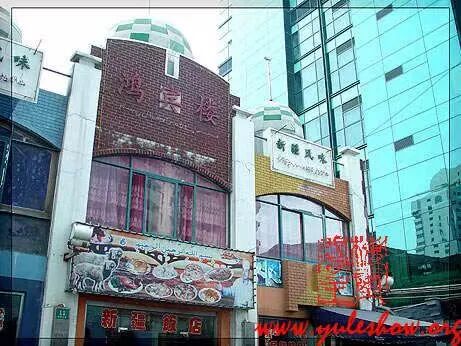
According to online archives left by food bloggers from back in the day, Shanghai's Hongbinlou was already operating at the corner of Huashan Road and Beijing Road way back in the 1990s. The storefront was pretty small back then, but the interior was surprisingly spacious and kept on the dimmer side. It was famous for its niurou jianbao (pan-fried beef buns)—thin wrappers packed with savory, juicy meat that were served year-round. (Wonder if they already had that curry-beef kick back then?) Their "fengshan lengmian" (fan-cooled cold noodles) were also legendary and loved by everyone.
Later on, that classic location went through urban redevelopment, and for a long time, nobody really knew where it had moved. Piecing together bits of info found online, a new Xinjiang restaurant bearing the same name, "Hongbinlou," popped up on Yuyuan New Road (near Urumqi Road) right around the start of the 2000s.
Images sourced from the internet; please contact us to remove if there are any copyright issues.
Xinjiang spots are basically all about yangrou chuan (Xinjiang lamb skewers), dapanji (big plate spicy chicken), nangbaorou (flatbread stuffed with meat), laohucai (tiger vegetable salad), and shouzhua yangrou (Lanzhou hand-grabbed lamb). Even though Xinjiang joints are everywhere nowadays, back then it was a super trendy vibe—especially their nangbaorou, which people affectionately called "Xinjiang pizza" a good decade before the whole "dalu nang" (gravy-topped flatbread) meme became a thing.
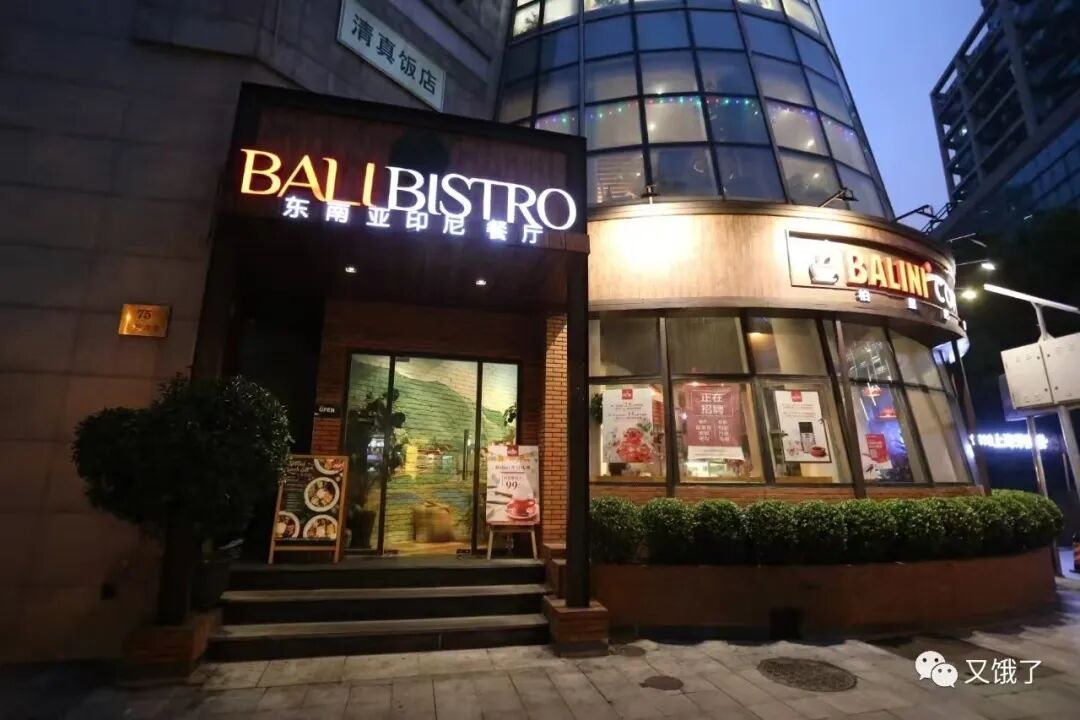
Later on, due to another round of land requisition, Hongbinlou vanished from the public eye for a while before reopening in the early 2000s at 75 Wanhangdu Road. They even paired up with the Indonesian dining brand "Bali Bistro," which was a massive hit in Shanghai for quite a while. Our canteen foodie used to walk past it all the time when working in Shanghai, though sadly I never made it inside to try it. Now, even that chapter is history.
Image source: WeChat Official Account @You E Le (Hungry Again)
02
A Fresh Start
Huoxiale redefines Shanghai-style Halal
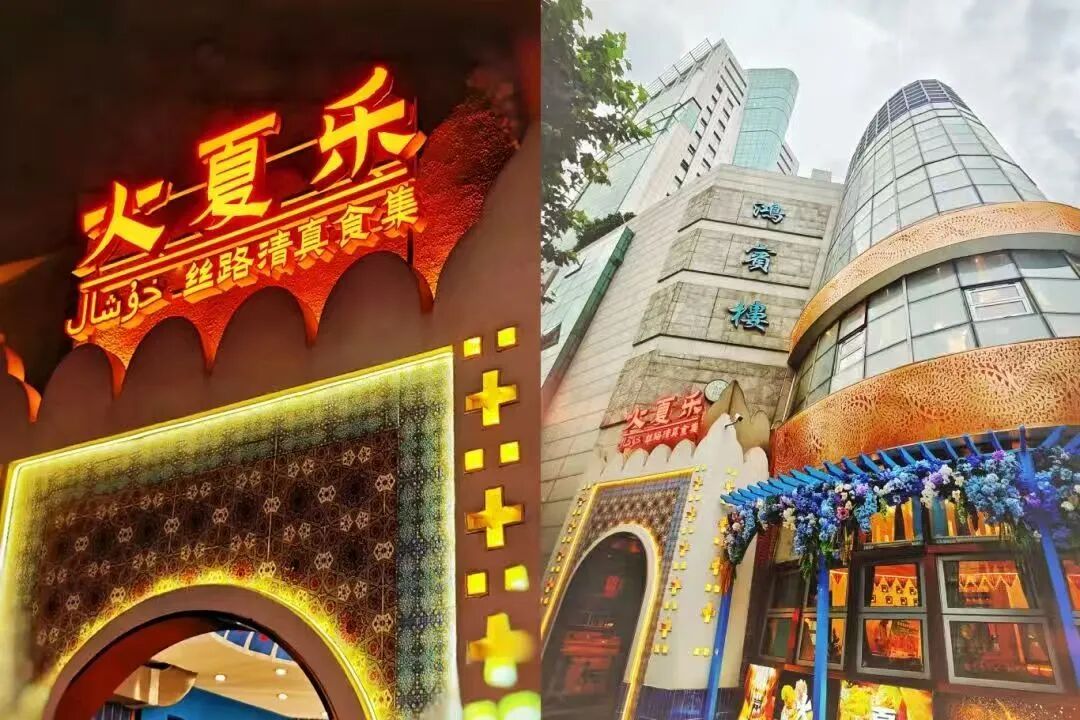
In November 2024, Hongbinlou got a fresh lease on life, transforming into what is now known as 「Huoxiale」. Even though Dazhong Dianping lists the restaurant with the suffix "Shanghai-Style Halal Cuisine," their main signboard still proudly reads "Silk Road Halal Food Market," so the core menu still leans heavily toward Northwest Chinese and Xinjiang flavors. As for why they're leaning so hard into the "Shanghai-style Halal" label, I'll get into that in a bit.
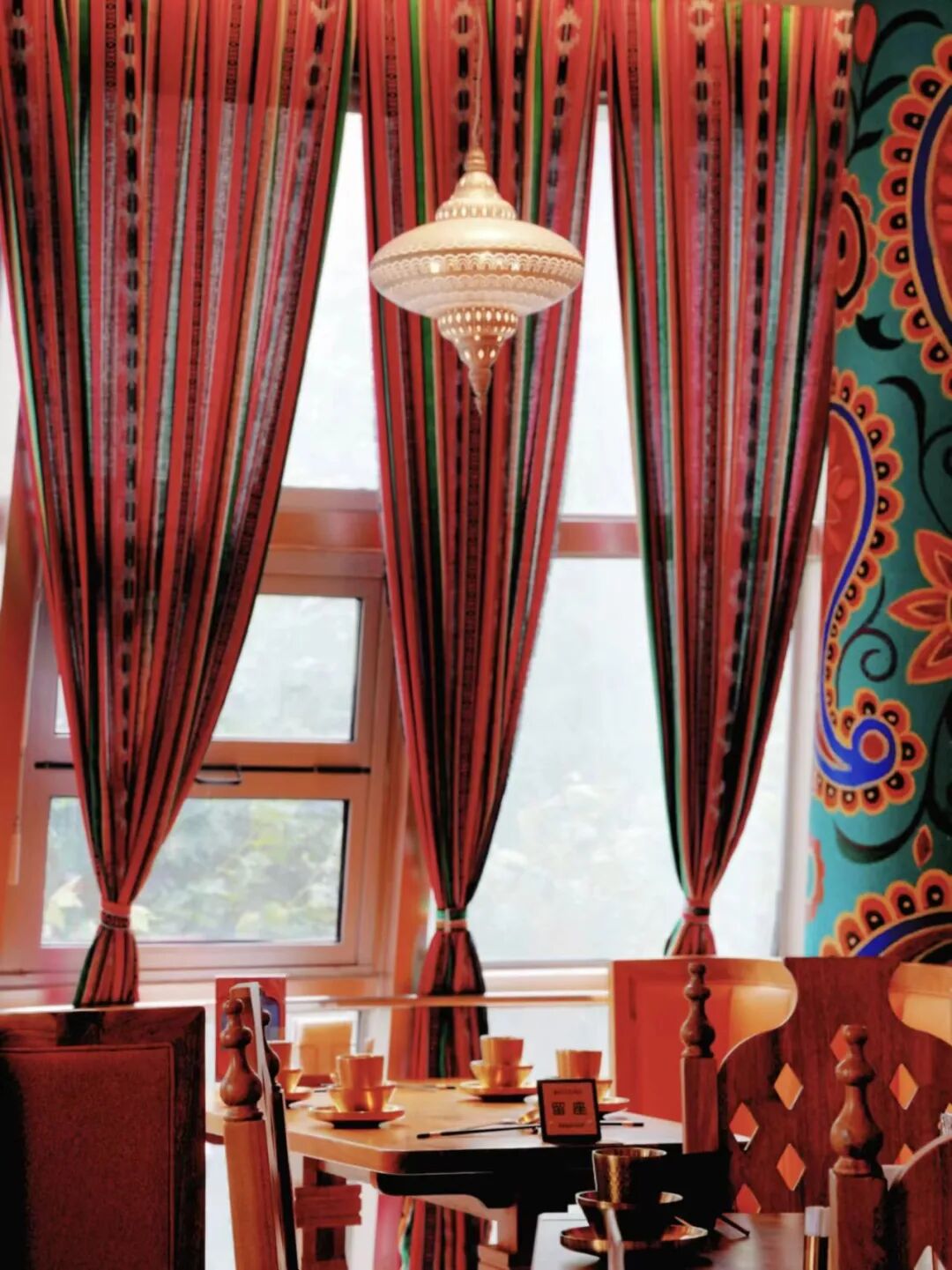
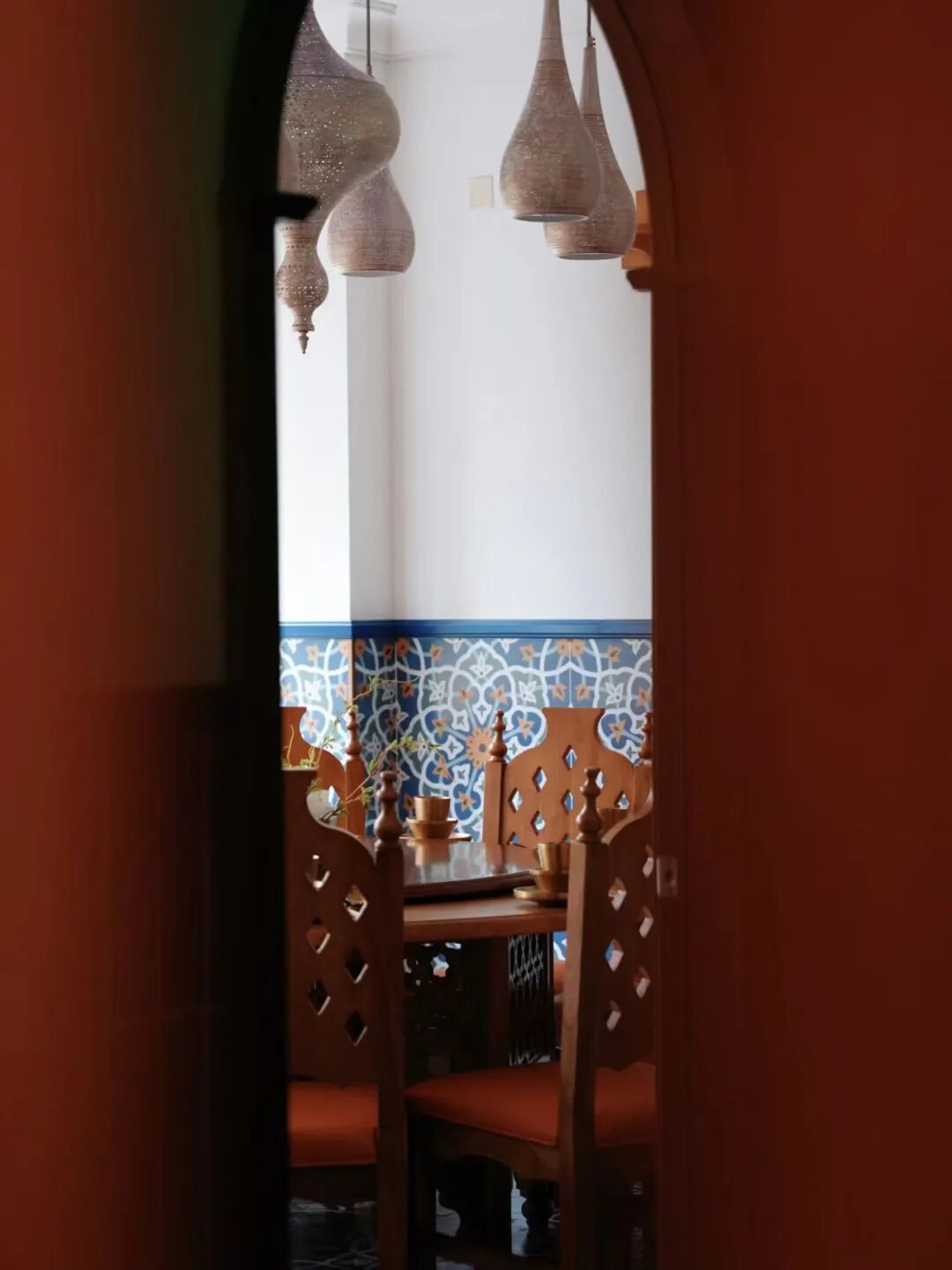
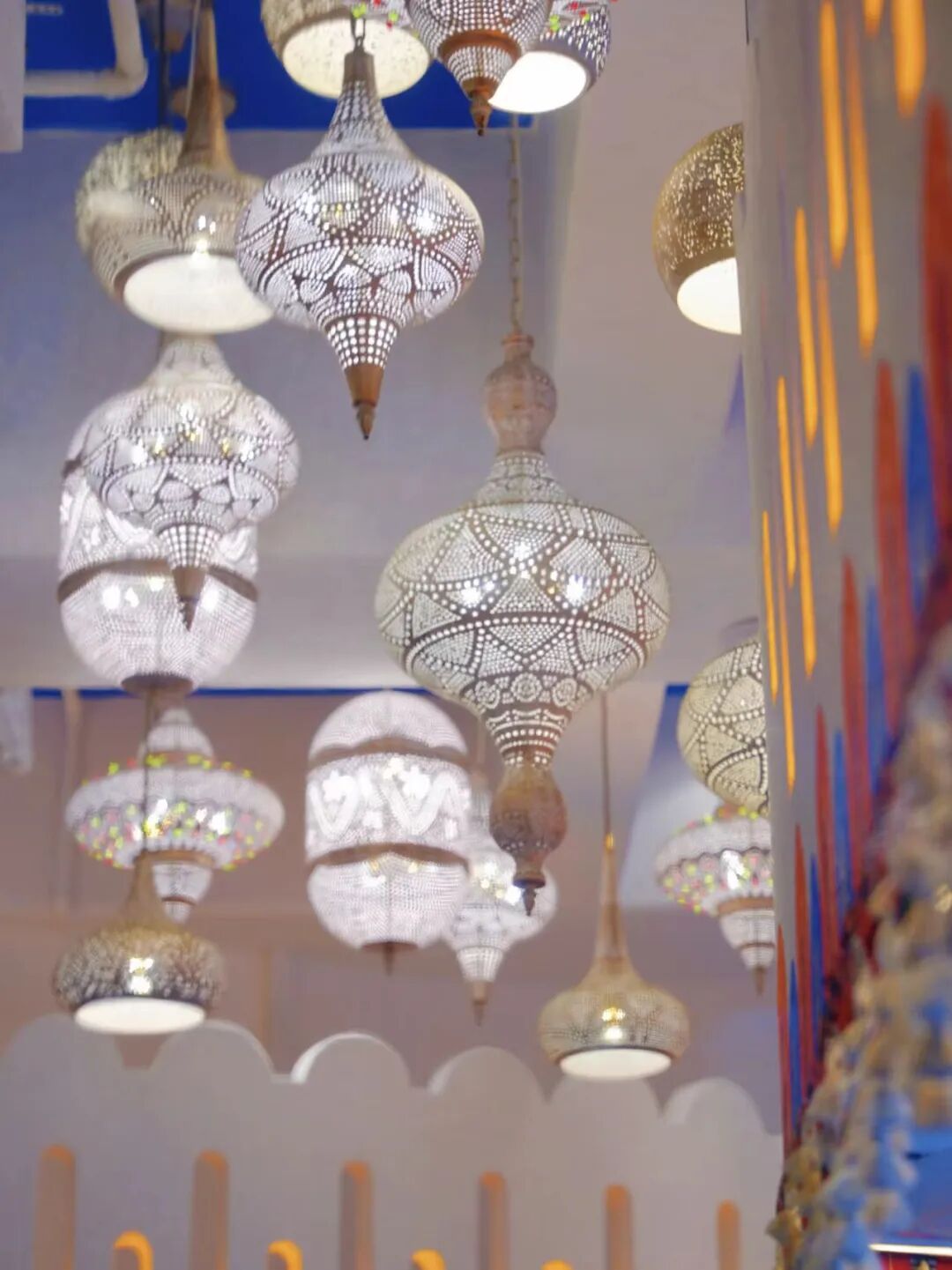
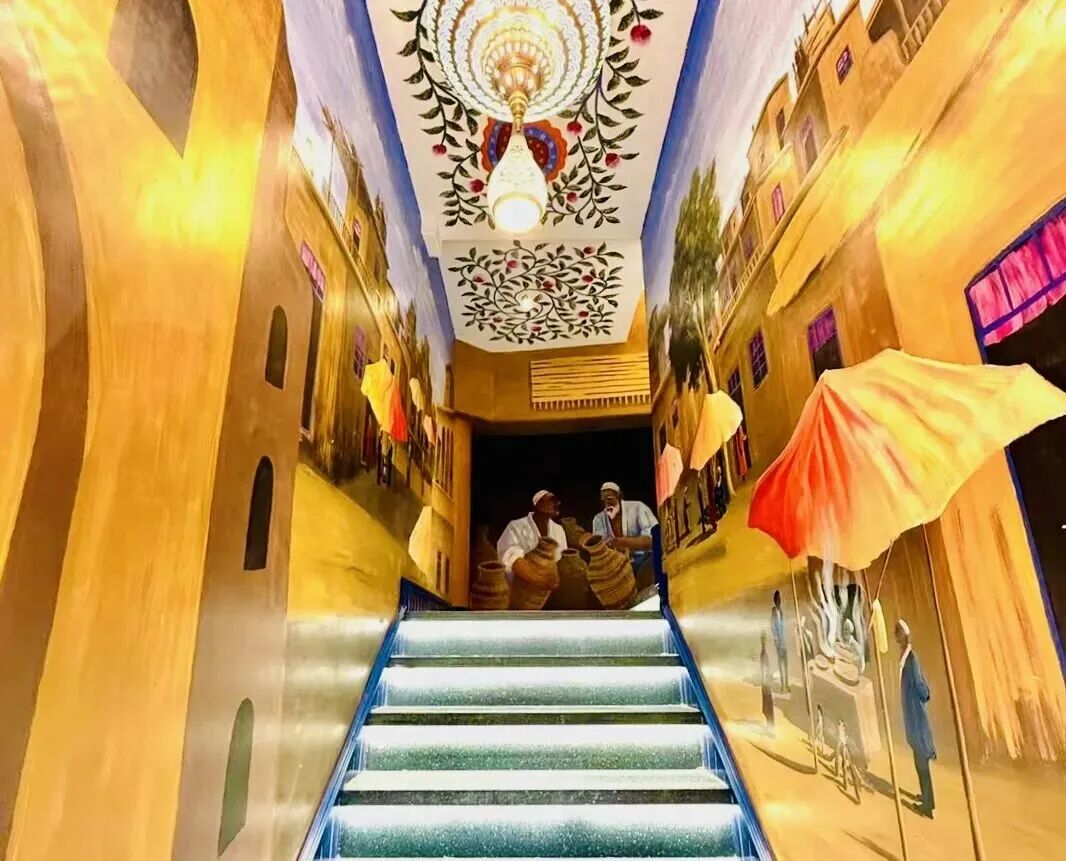
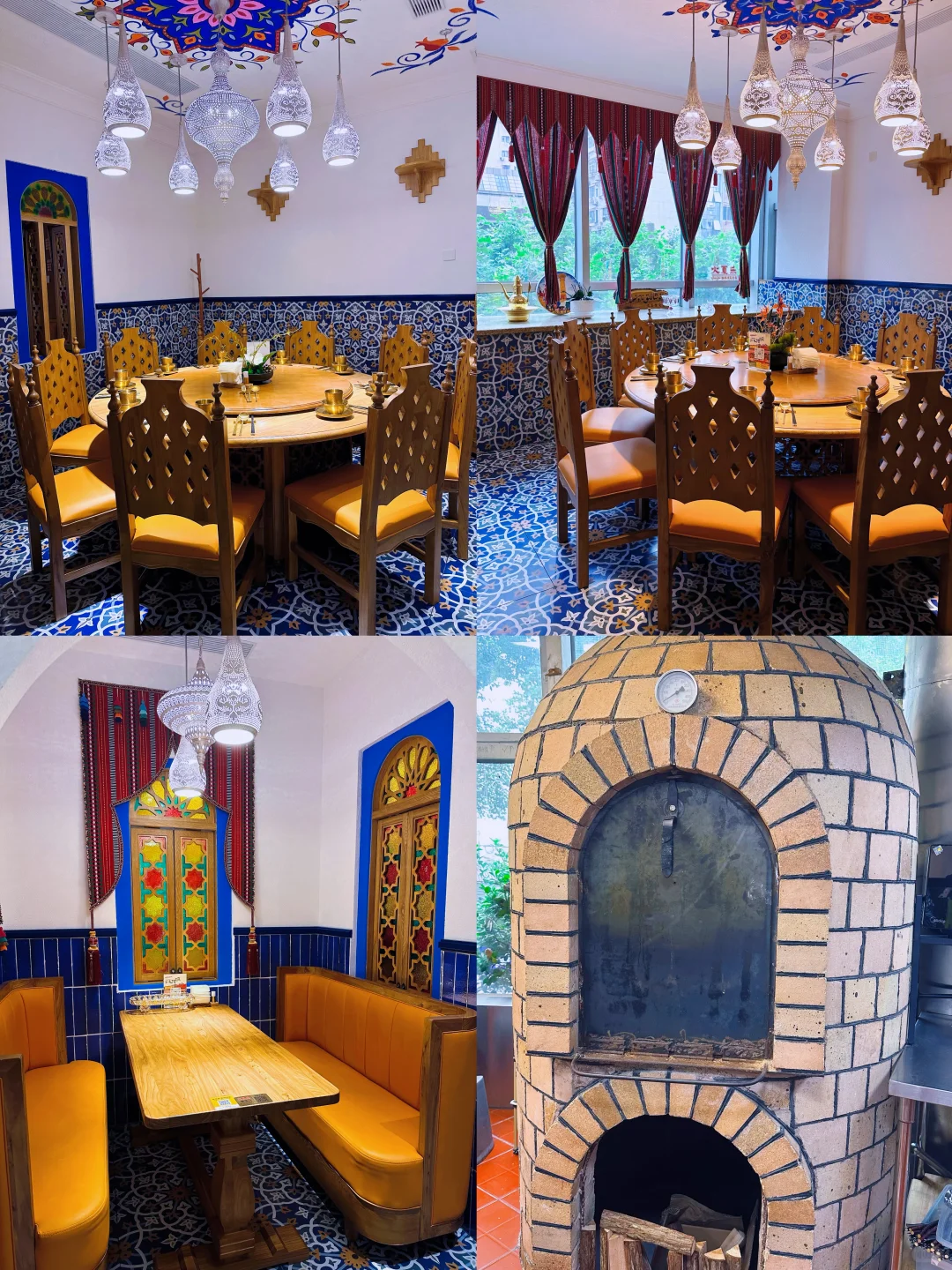
The overall interior design centers heavily around classic Silk Road aesthetics. The decor is ultra-refined, and you can really tell the boss put serious thought and taste into it—sparing no expense to ship in specialty architectural materials from afar, with every single brick and tile echoing the local culture and folk customs of the Silk Road.
Image source: Xiaohongshu @Jing'an's Sky
They didn't just splurge on the hardware either; they even brought in master mural artists to hand-paint stunning Silk Road wall art, letting diners immerse themselves in the cultural storytelling of the Western Regions right through their meal.
The tableware, serving vessels, and grills in the restaurant are all sourced directly from their places of origin, and the servers greet every single guest in traditional attire with warm, down-to-earth smiles. It's quickly become one of the most aesthetic, must-visit Halal dining hotspots in Jing'an District.
Image source: Xiaohongshu @Sharon_Jing
Speaking of the ambiance, there's one detail people rarely pay attention to that is actually an absolute game-changer for your dining mood: the omnipresent second-hand smoke and booze odors you get in typical Chinese restaurants. Sometimes you're right in the middle of a great meal, and suddenly a blast of smoke drifts over from the next table, completely killing your appetite... But Huoxiale's whole vibe is centered around being a "smoke-free and alcohol-free wellness-friendly restaurant." Tons of people on Xiaohongshu are praising it as female-friendly and kid-friendly, and our canteen foodie totally agrees. This is the kind of restaurant that truly respects everyone who loves good food!
Of course, at the end of the day, whether a restaurant is actually good or not all comes down to the food and the flavors. Alongside nailing traditional Xinjiang classics, Huoxiale also brilliantly weaves in seafood and classic Shanghainese dishes, making it a genuinely stellar fusion restaurant.
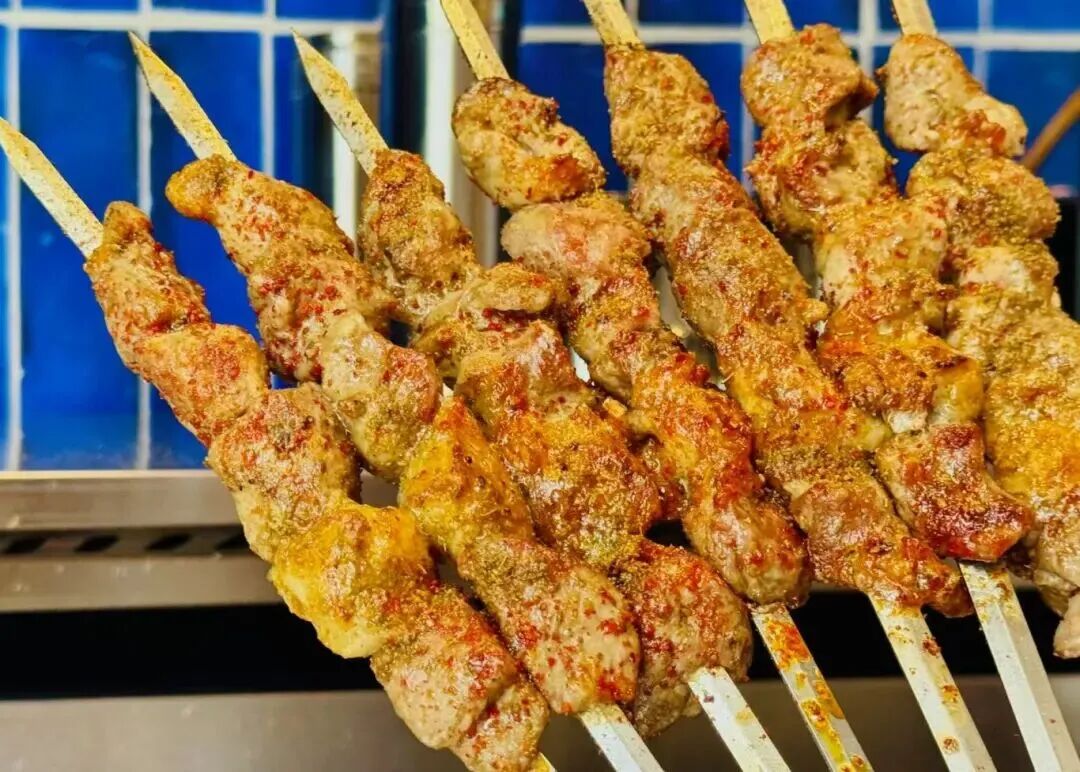
Xinjiang Bashibai Lamb Skewers
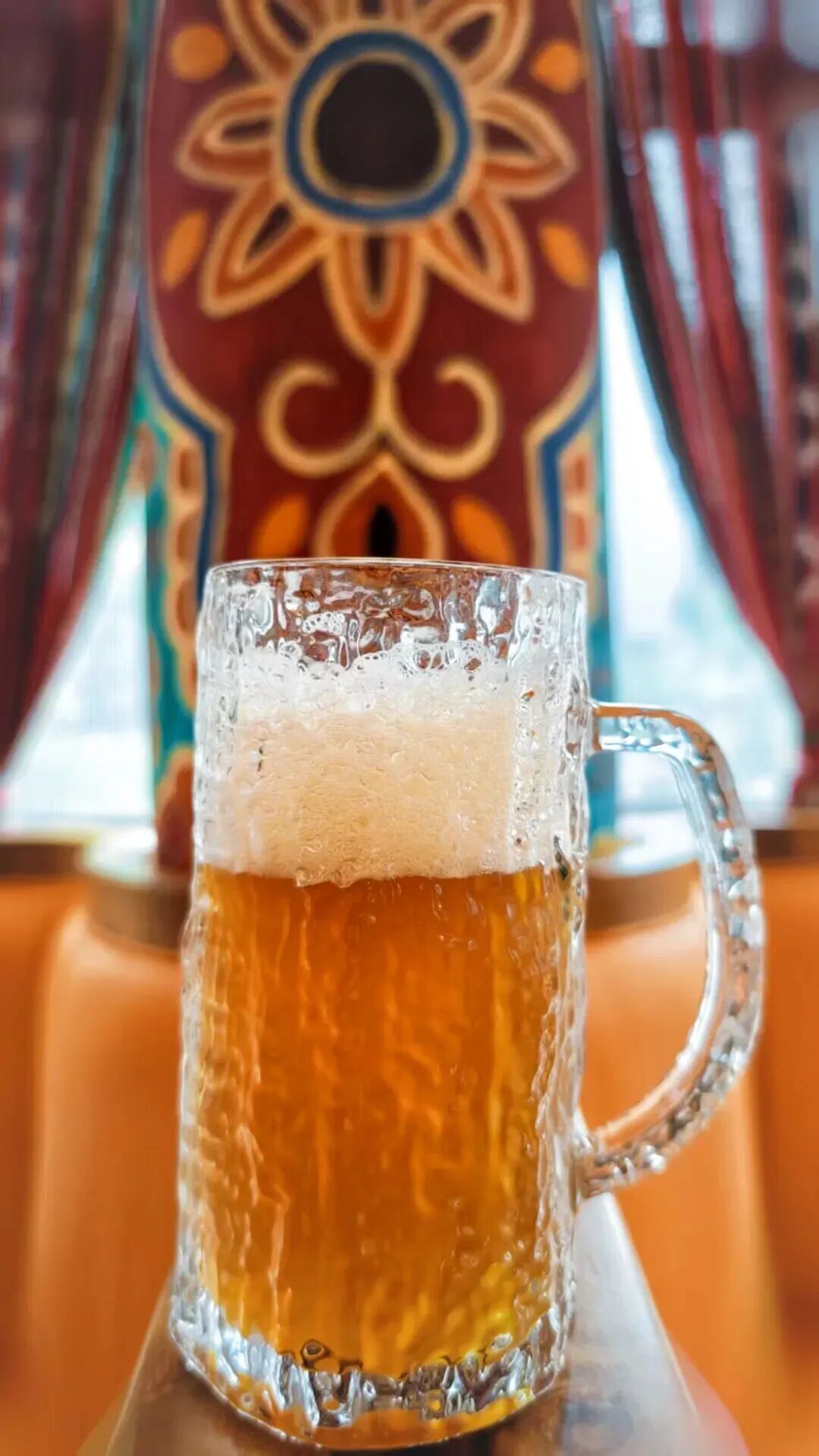
Sizzling skewers made from genuine Xinjiang Bashibai lamb transport your taste buds straight to Xinjiang in a single bite. This is Shanghai's ultimate "Western Region street food vibe": sizzling lamb skewers paired with ice-cold kavass (traditional fermented honey drink)—the absolute holy grail of summer night markets!
Hui Muslim Jiasha (Crispy Meat Fritters)
With a golden, ultra-crispy exterior and a deeply savory, flavorful meat filling inside, biting into a piece of Hui-style jiasha feels like tasting a thousand years of Silk Road history. The golden miracle born from an intangible cultural heritage stove: picking up a legend of Xinjiang beef jiasha with a single pair of chopsticks.
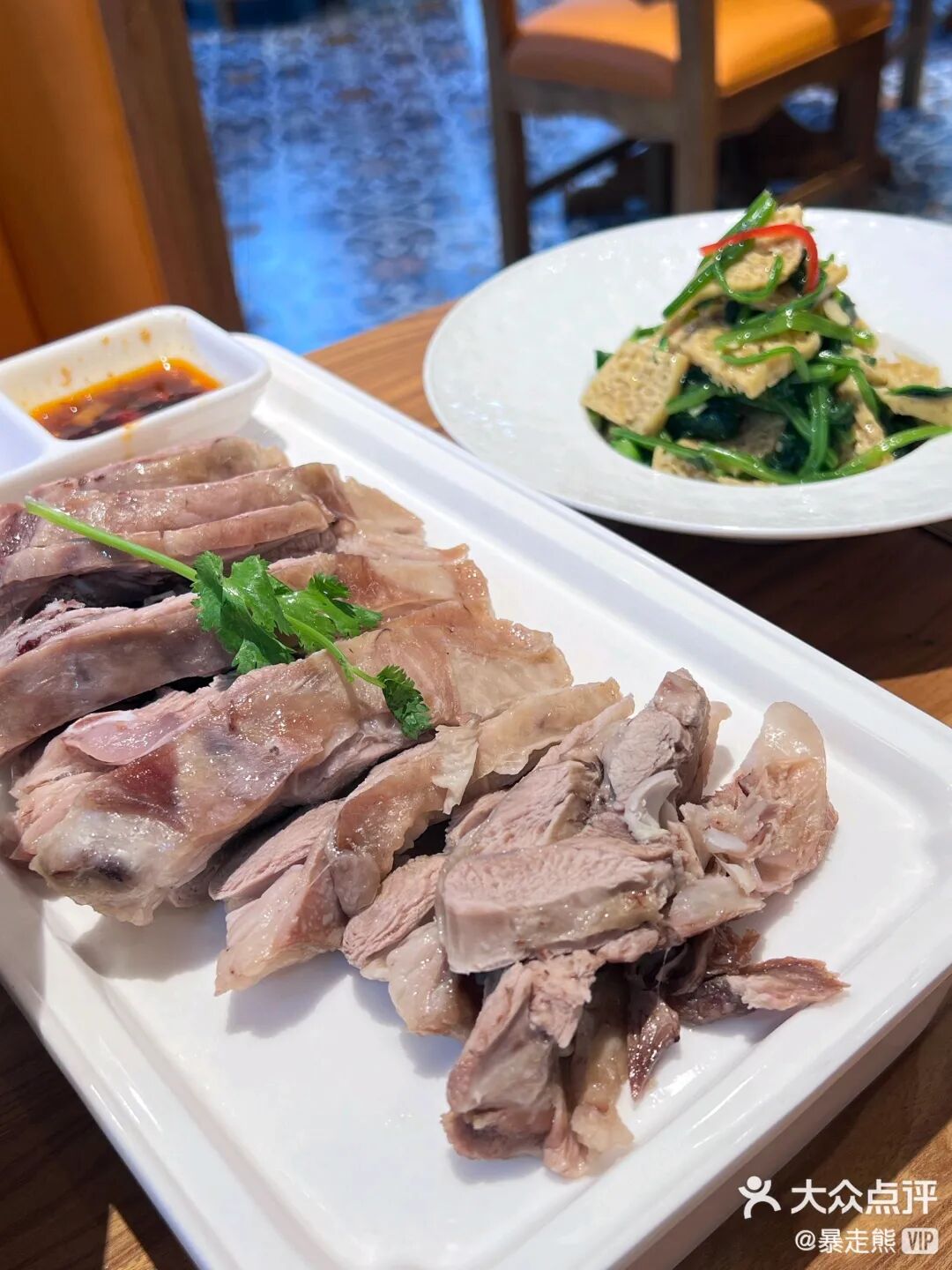
Shouzhua Yangrou (Hand-Grabbed Lamb)
Image source: Dazhong Dianping @Baozou Xiong (Rambling Bear)
Bashibai spring lambs raised on pure Tianshan snowmelt are used to craft their shouzhua yangrou, yielding meat that is glossy and rich like fine lard. After being gently simmered in plain water, a light touch of the knife makes the juices instantly well up with an amber glow. Eat it simply dipped in a little sea salt, and the pure, clean sweetness bursts across your teeth—this is the most authentic gift of the grasslands.
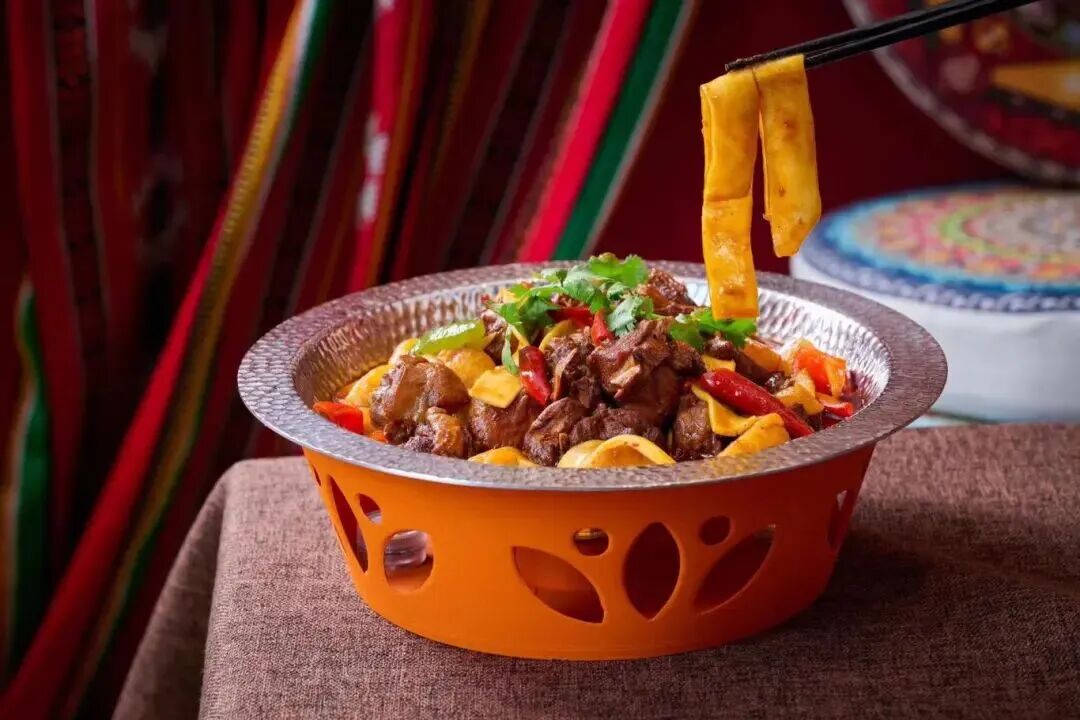
Shawan Dapanji (Big Plate Spicy Chicken)
Rugged Xinjiang ingredients meticulously braised into an legendary comfort food, lifting up a piping-hot slice of pastoral romance right beneath the Tianshan Mountains with a single pair of chopsticks. Golden country chicken wrapped in rich, clingy gravy, paired with handmade daopianmian (wide belt noodles) that soak up all that aromatic chili oil, while bell peppers and potato chunks throw a party on your tongue.
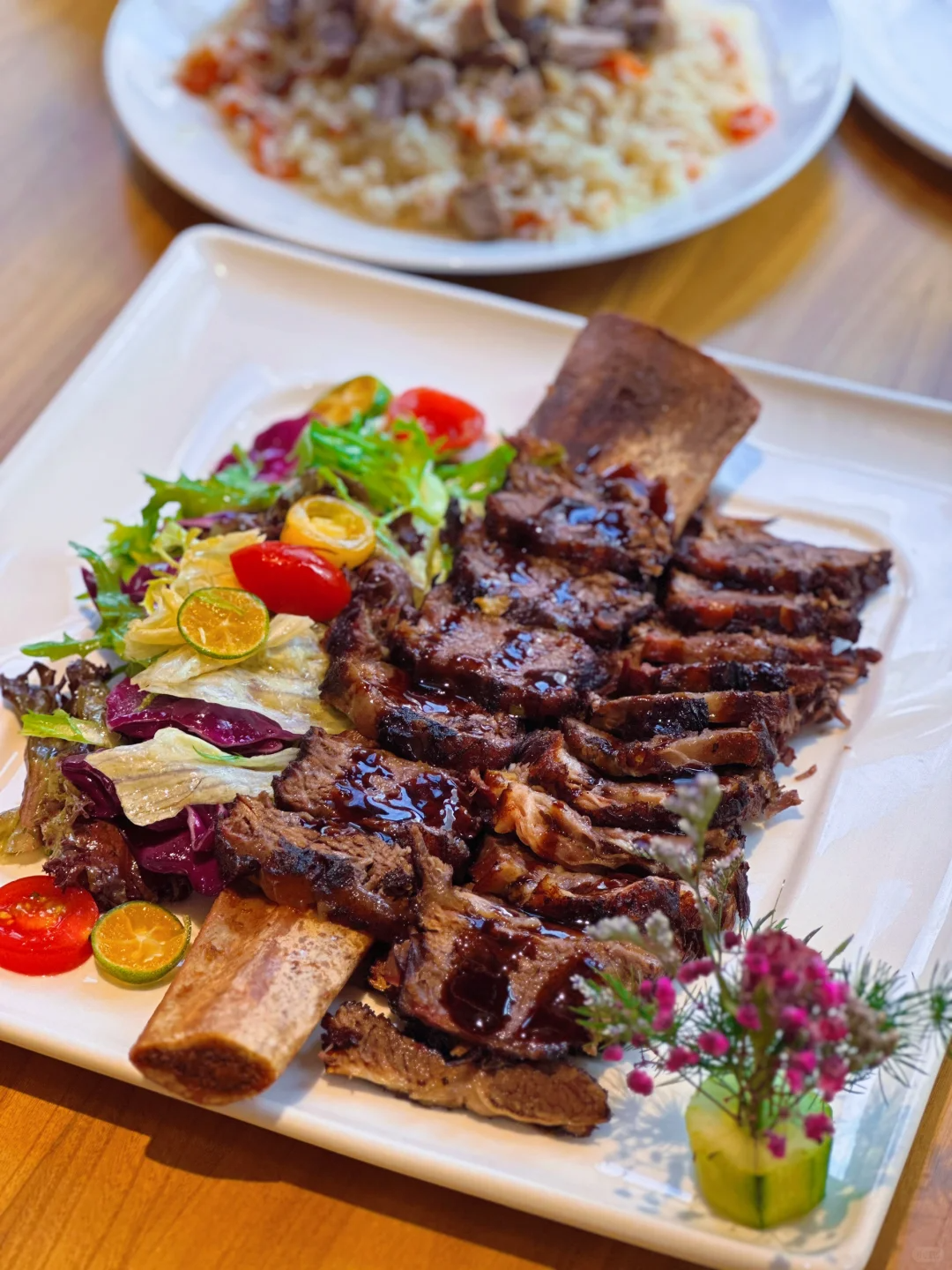
Astana Beef Ribs
Slow-braised to absolute tender perfection, these beef ribs practically melt in your mouth. Every single rib radiates a deep, rich meaty aroma, coated in the house-special secret sauce that hits that sweet-savory sweet spot, making it impossible not to grab another piece.
Some people say the ocean's sweetness belongs to the sea, while Xinjiang cuisine's richness hails from the desert, making the two impossible to blend. But 『Huoxiale』 shatters these culinary boundaries by putting seafood center-stage at a Xinjiang restaurant, breathing new life into "Shanghai-style Halal." Their seafood isn't just remarkably diverse—it's insanely fresh, with every single bite tasting like an absolute gift from the ocean. Grounded in traditional Xinjiang classics and Shanghai street eats, they deeply mine the soulful street flavors of the old days while blending in Silk Road regional profiles and refined Western culinary presentation. It keeps every dish deeply familiar yet delightfully surprising under strict Halal standards.
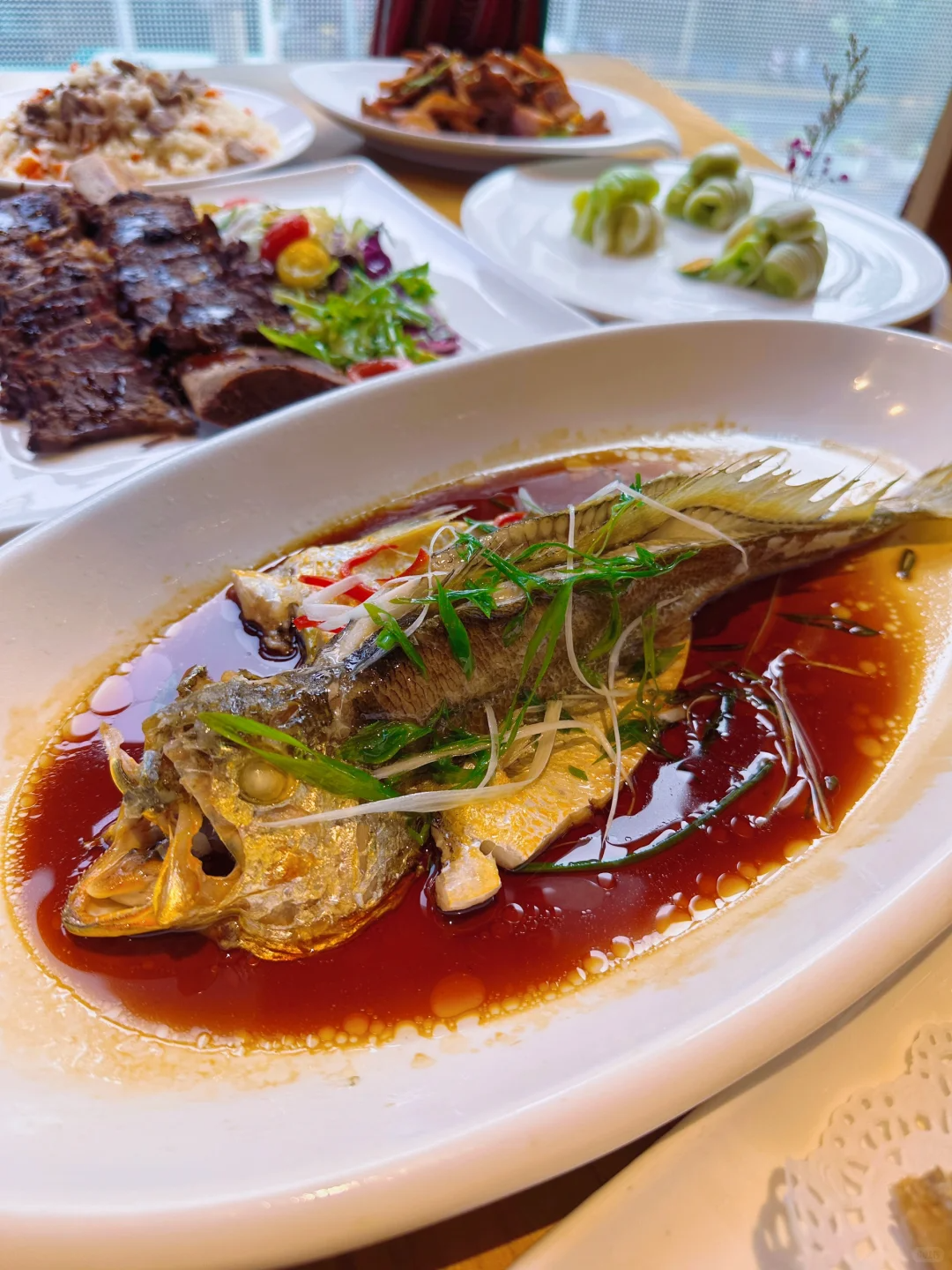
Halal Irtysh River Coldwater Fish Qiaotai
Image source: Xiaohongshu @Sharon_Jing
One of the house-signature seafood dishes. The fish is incredibly tender and juicy, with every single bite showcasing the firm, pristine quality of the meat. Paired with their custom-crafted house sauce that strikes a perfect sweet-and-sour balance, it beautifully highlights the natural sweetness of the fish.
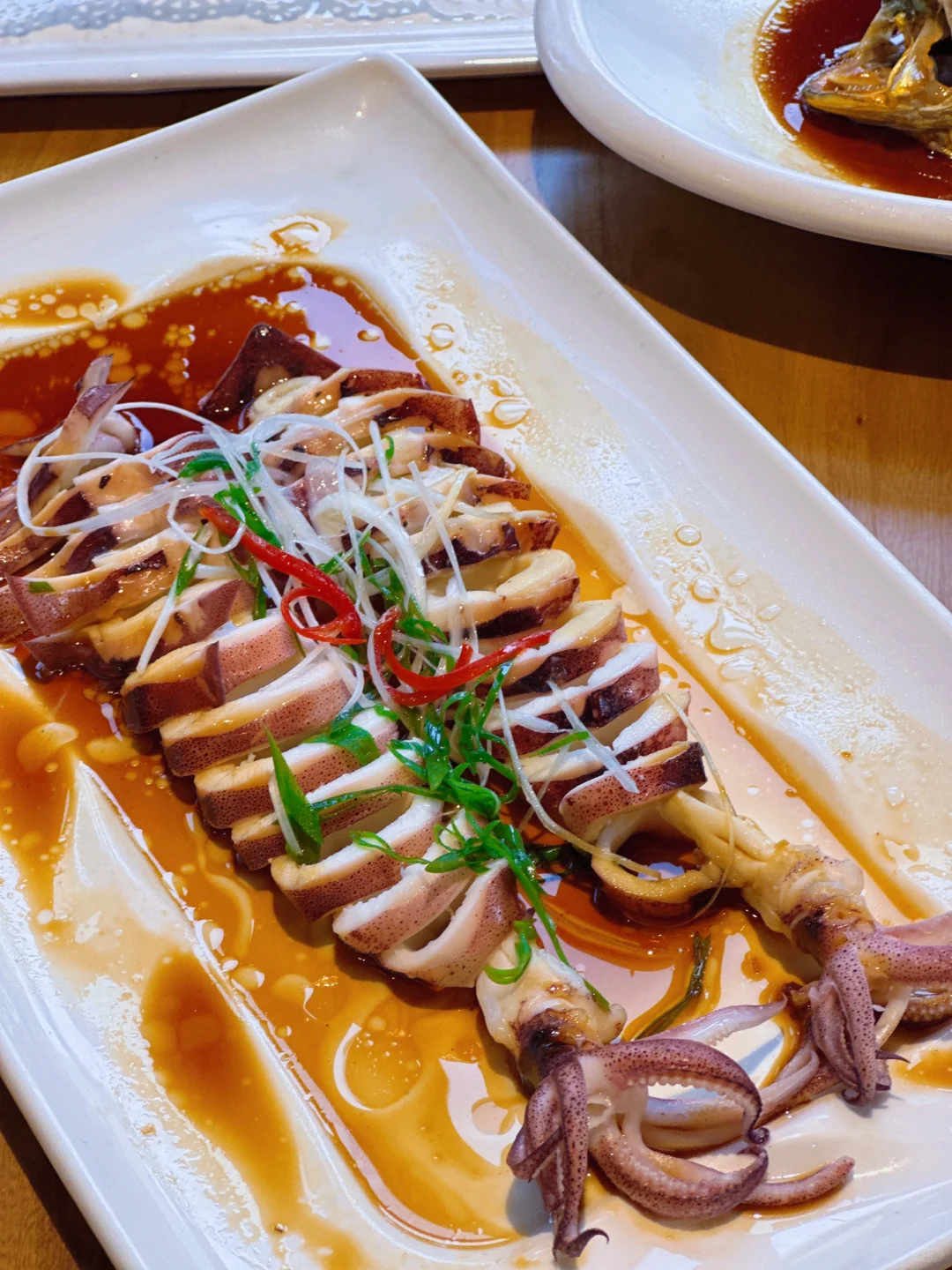
Scallion-Aromatic Rocket Squid
Image source: Xiaohongshu @Sharon_Jing
Wild-caught squid with an amazing bounce, treated with a thirty-year veteran chef's exclusive technique to lock in maximum freshness. The squid is tender and snappy, smothered in a rich, peppery sauce. The punchy green-peppercorn profile blends with the natural sweetness of the seafood to create an exquisite fusion of Shanghai elegance and Silk Road flair~
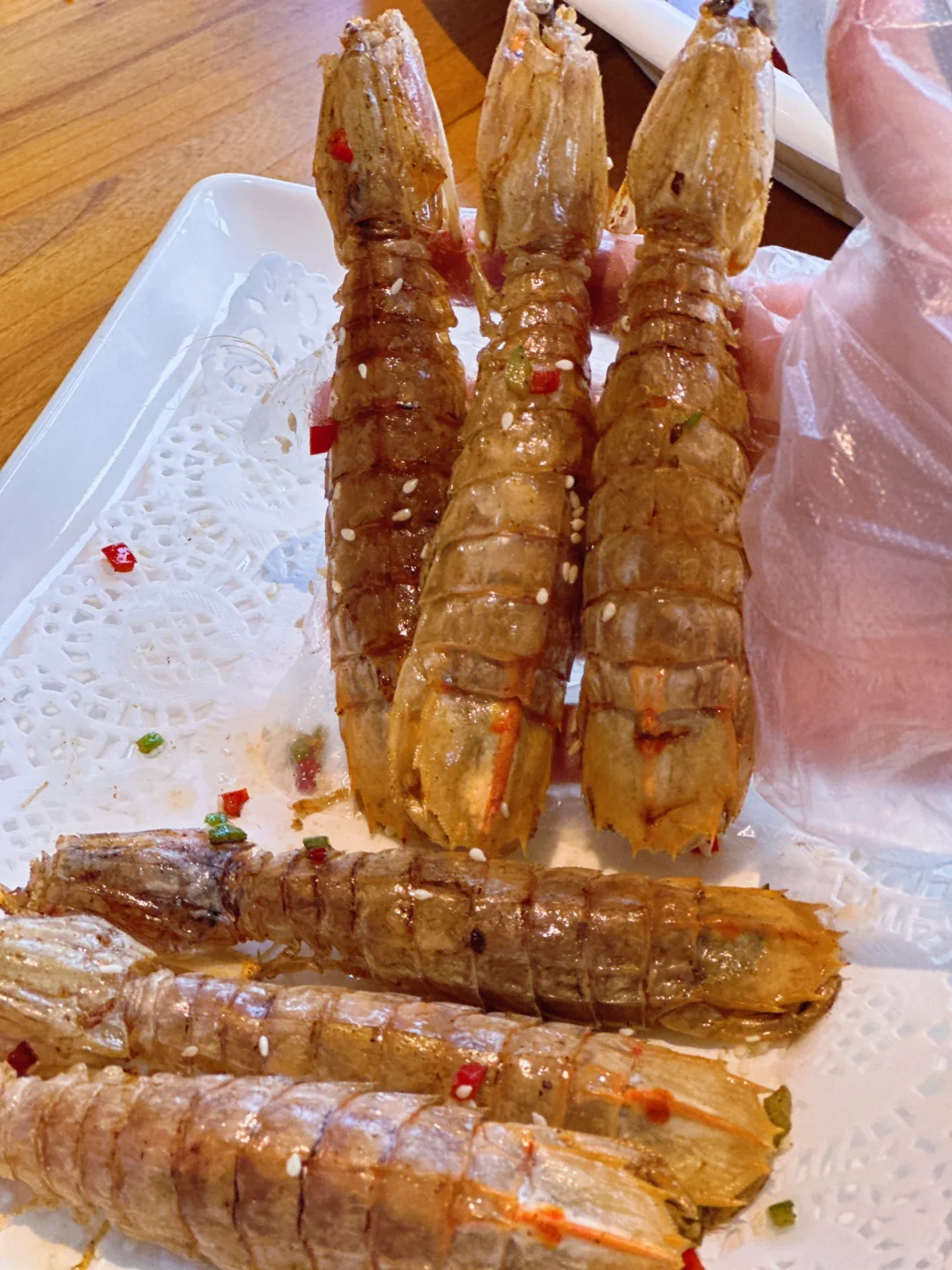
Flambéed Salt-and-Pepper Mantis Shrimp
Image source: Xiaohongshu @Sharon_Jing
Selecting only plump, meat-packed mantis shrimp, they're first flash-fried until shatteringly crisp, then tossed in a signature salt-and-pepper sauce mixed with traditional Western Region spices. Crispy on the outside, tender on the inside, with sweetness and a fiery kick bursting simultaneously on your tongue.
Xiangjian Sichuan Pepper Fish
Built on a foundation of tongue-tingling Sichuan rattan pepper numbness, slow-braised with extra Silk Road spices for depth, and finished with a hot pour of pure Xinjiang-sourced aromatic oil. The layers of numbing, fresh, savory, and tender flavors unfold sequentially, delivering a wonderfully complex Halal seafood experience.
Back in the 1990s, Shanghai's Hongbinlou operated as a beloved Halal spot right at the northern edge of the Jing'an Temple commercial hub. Back then, it wasn't just famous for its unique Halal eats; it also soaked up that irreplaceable old Shanghai ambiance. One particular dish, their "fengshan lengmian" (fan-cooled cold noodles), carried the collective memories of an entire generation. But as the decades rolled on, that distinct taste of old Shanghai slowly faded away. Today, Huoxiale has taken over the legacy of Shanghai's Hongbinlou to run a "Shanghai-style Halal" concept, picking up the traditional craftsmanship of "fengshan lengmian" to resurrect those classic cold noodles and bring back that timeless taste of old Shanghai.
Fengshan Lengmian (Fan-Cooled Cold Noodles)
Making traditional cold noodles places massive demands on the chef, who has to master the absolute art of boiling noodles. Because these cold noodles aren't steamed—they're boiled right in a pot—they have to be lifted out, instantly tossed with seasoned oil, and cooled down using electric fans. Experienced veteran chefs can pull out a single strand of noodles while they're boiling, give it a gentle pinch, and instantly know whether the noodles are done. When pulling out the whole batch, the noodles can't be cooked all the way through because they'll keep cooking during the fan-cooling process until they hit that absolute, texturally perfect bite.
The preparation techniques and ingredients of these old-school cold noodles faithfully follow Hongbinlou's classic recipe, blending Halal traditions with Shanghainese flair. Tossed with classic Shanghai lafulu (spicy fermented bean curd sauce), fresh diced beef, bamboo shoot cubes, and dried bean curd bits, then simmered down until the rich gravy clings to every strand—this spicy meat topping is thick, glossy, savory, and seriously aromatic.
Curry Ox-Head Soup
Cold noodles are wonderfully smooth and refreshing, but eating them all by themselves can feel a bit dry. That's when you pair them with a steaming bowl of fragrant curry beef soup to instantly wake up your palate! The clean, refreshing broth balances out the chill of the cold noodles, warming your stomach and cutting right through any dryness—making this the ultimate summer noodle-and-soup power couple. Slurp a few noodles, take a couple sips of soup, and snag a few tender slices of beef straight from the curry broth—now *that* is pure satisfaction.
Huoxiale's bowl of curry beef soup completely avoids that harsh, overpowering yellow curry powder flavor. Crafted through patient, slow simmering, every single spoonful carries the creamy richness of lamb bones paired with the deep savoriness of beef bones. Rejecting heavy artificial seasonings, it lets a natural, milky aroma lightly blossom across your palate, feeling just like a crisp breeze sweeping across the grasslands—pure and balanced to absolute perfection.
According to Huoxiale's founder, "Tiger Bro," they plan to introduce even more traditional Halal-style Shanghainese dishes in the future, carrying the torch for "Shanghai-style Halal" cuisine and making it bigger and better than ever.
As I mentioned at the start of Chapter Two, why would a Western Region-themed restaurant emphasize "Shanghai-style" Halal cuisine? In my view, the "Hai" (Shanghai/Ocean) in "Haipai" isn't just about the ocean—it represents the expansive, melting-pot culture of Shanghai itself. So, I decided to ask DeepSeek what a "Haipai restaurant" actually is. The answer told me: Haipai restaurants are eateries rooted in regional Shanghai culture, blending the core essences of Chinese and Western culinary traditions, defined by traits of "inclusivity, refinement, delicacy, and a knack for innovation." You can basically think of it as a "Shanghai-style" restaurant, but the absolute core of that style is "fusion" and "innovation."
Therefore, compared to the Beijing and Tianjin branches of Hongbinlou—which represent century-old heritage and tradition—Shanghai's Hongbinlou is all about innovation and fusion. From Shanghainese food to Xinjiang cuisine, Indonesian food, and now this modern trinity of Xinjiang cuisine + seafood + Shanghainese local classics, who knows? Maybe blending in Indonesian food again down the road isn't entirely out of the question!
03
More Than Just a Restaurant
Giving wanderers a warm harbor to call home
Word has it that the entrepreneurial team behind this venture crossed over from the jewelry industry. After weathering the pandemic, they dived back into business by founding Xingdeng Education Venture Capital, offering post-investment incubation for small-yet-beautiful dual-circulation brands, and integrating a three-industry-merged food supply chain. It's genuinely exciting to see this kind of resilient entrepreneurial grit injecting fresh blood into the Halal food industry.
I'm super fortunate to have been close friends with one of the co-founders for years. When I asked him why on earth he wanted to open a restaurant amidst such a hyper-competitive dining landscape, he shared a story from his past:
Twenty years ago, when he first arrived in Shanghai, he felt just as desperate to find a familiar circle of people. Back at the company where he worked, even though there were tons of people around, he spent every day moving around solo and feeling completely isolated. When he first arrived, his monthly salary was 1,800 RMB—he'd wire most of it back home and keep just 300 RMB for living expenses.
Stepping into a Xinjiang restaurant back then felt just like coming home. He couldn't afford to buy actual meals, but he could sit there and chat with folks. So, opening a restaurant was always a quiet dream he held in his heart—to give people far from home a warm, comforting place to land.
That's why Huoxiale's positioning from day one was never just about being a restaurant; it's a dynamic community space blending food, socializing, music, and culture. It aims to become a true community hub and an incubator for commercial innovation.
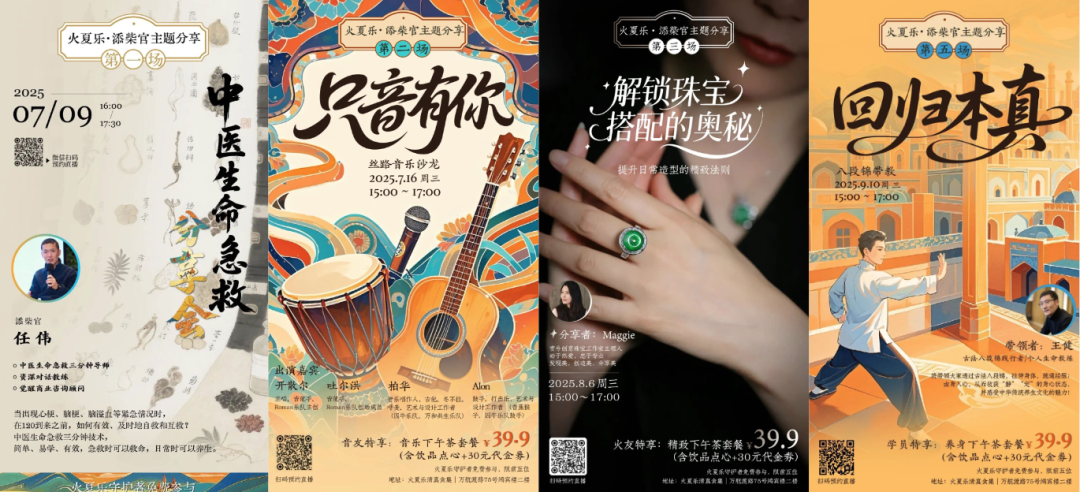
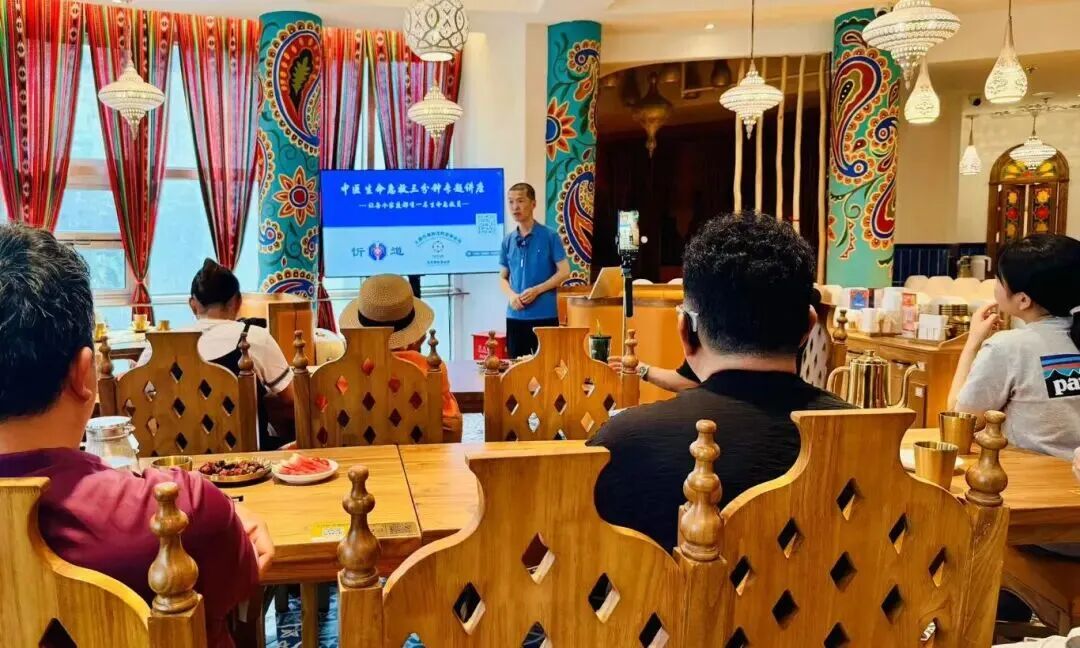
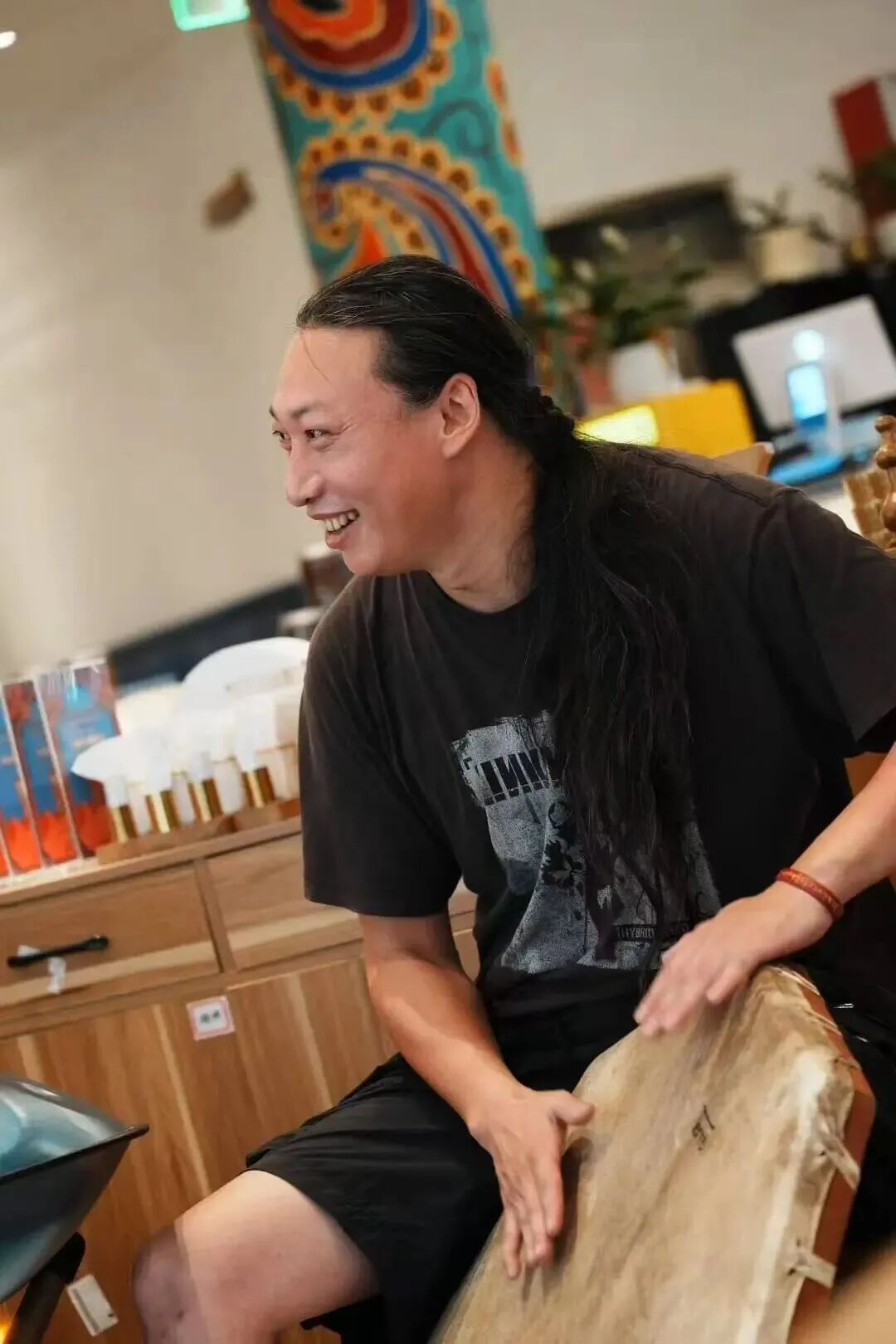
So what exactly does a "community hub" mean? It means in a joyful space like Huoxiale, people share stories, listen to others, connect with one another, and grow together. This isn't just some empty marketing slogan; they've been actively living it out ever since opening day, launching the community-driven "Firewood Stoker" program. Since kicking off back in July, they've already hosted numerous events spanning all kinds of fields.
Featuring charity Traditional Chinese Medicine wellness classes—what kind of magical restaurant is this that makes people never want to leave?
Ethnic minority music performances: Who says restaurants are only for stuffing your face? Mix music, food, and socializing, and the joy levels max out instantly!
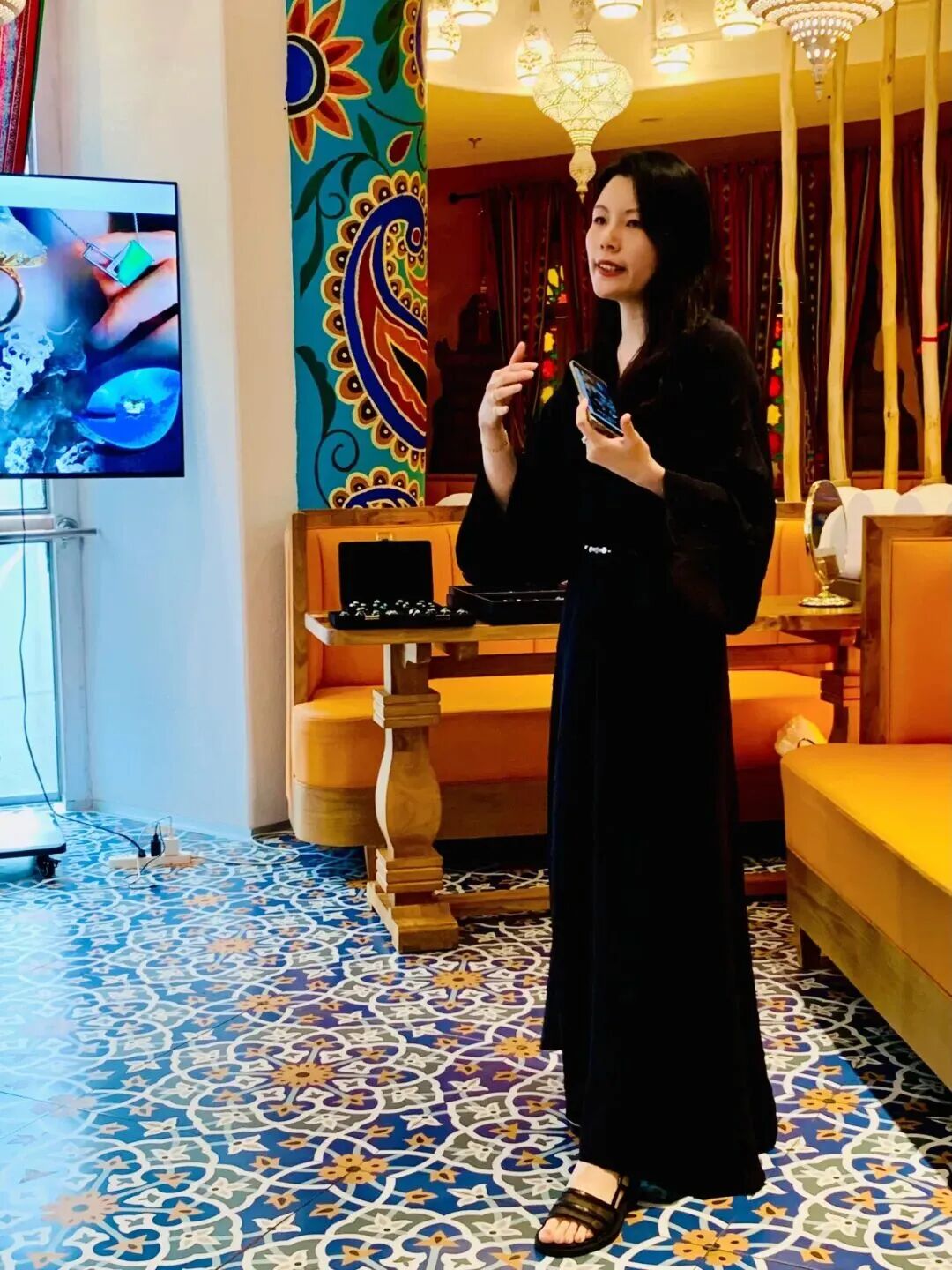
Jewelry knowledge sharing sessions—Silk Road Radiance • Maritime Pearls: When Shanghai-style Halal meets the brilliance of jade and pearls.
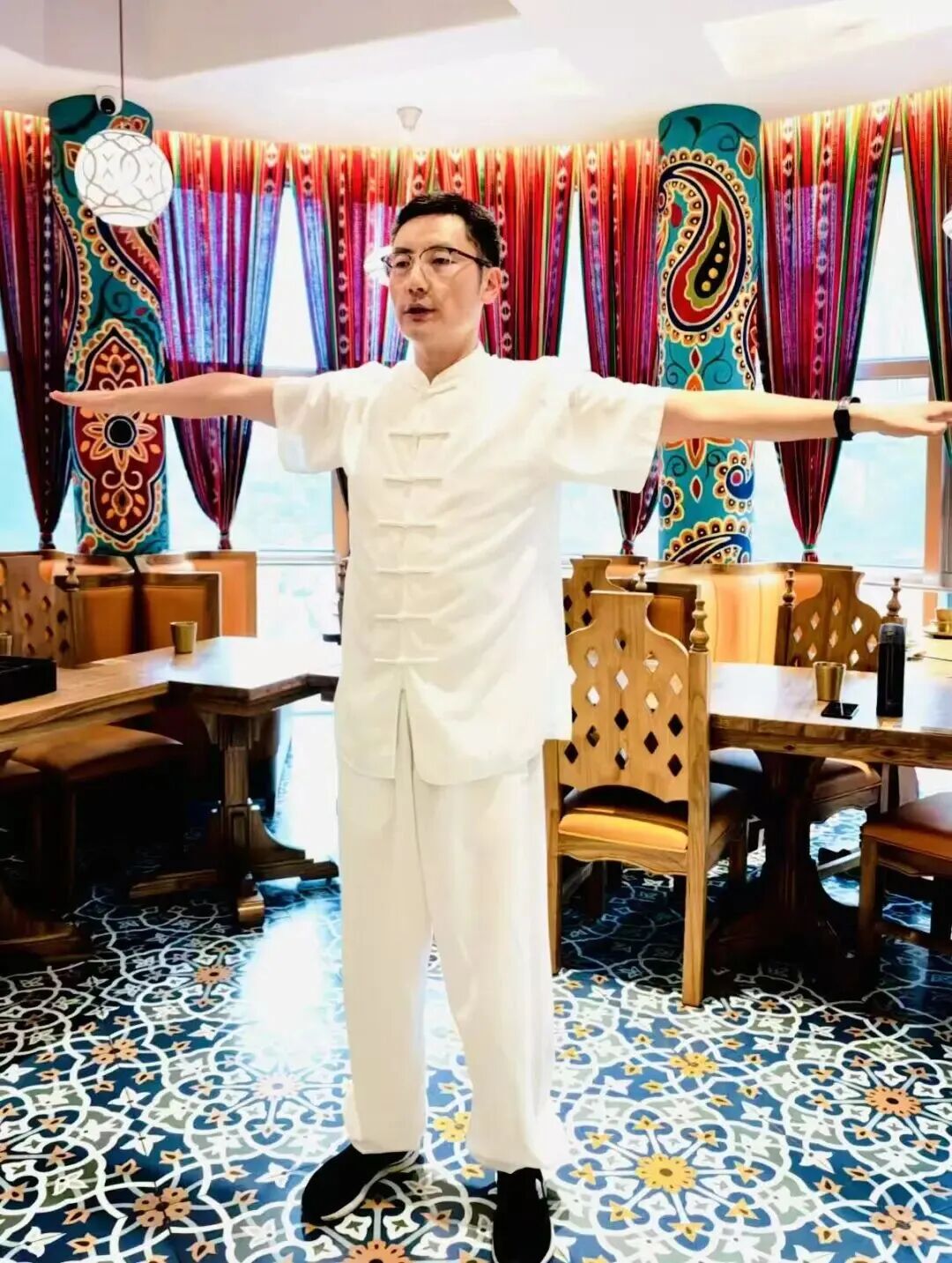
Baduanjin qigong wellness workshops: A cultural restaurant like no other—practice ancient Baduanjin exercises right here at a Shanghai-style Halal eatery in the city.
There are plenty more exciting events lined up for the future. If you want to jump in and join the fun, just scan the QR code to find out more and sign up! view all
What makes this "Shanghai-style" Halal restaurant in Shanghai so different?
Summary:
Foodies and students who have spent time studying and working in Shanghai have probably noticed that things have really been looking up lately. All kinds of regional styles and concepts of Halal restaurants are popping up across every district. When I was working and studying in Shanghai 10 years ago, my weekly food dilemma was always, "Please tell me we're not going back to that exact same place again this week!"
Foodies and students who have spent time studying and working in Shanghai have probably noticed that things have really been looking up lately.
All kinds of regional styles and concepts of Halal restaurants are popping up across every district.
When I was working and studying in Shanghai 10 years ago, my weekly food dilemma was always, "Please tell me we're not going back to that exact same place again this week!"
And now, alongside local Shanghainese noodles and spots like Guanguanji, we've got the Changying Three Brothers hailing all from Beijing, Pinhuiwei from Hangzhou... and even Yunnan beef noodle spots, Tianshuo malatang (spicy hotpot), Huainan beef soup, and grilled fish joints~
So now, isn't everyone's dilemma more like, "Which spot are we trying this week?"
After rambling on for this long, you've probably guessed it—this post is all about recommending a classic Shanghai Halal spot: "Hongbinlou," which now goes by the name 「Huoxiale · Shanghai-Style Halal Cuisine (Hongbinlou Branch)」.
01
Historical Legacy
The surprisingly twisty history of Shanghai's Hongbinlou
When people mention "Hongbinlou," most folks instantly think of the "First Halal Restaurant in China" opened in Tianjin back in 1853 (the third year of the Xianfeng Emperor's reign), which later relocated to Beijing at the personal invitation of Premier Zhou Enlai. But this Hongbinlou registered in Shanghai back in 1993 doesn't seem to have much of a connection to that century-old traditional brand—it's likely just a shared name or a respectful nod.
According to online archives left by food bloggers from back in the day, Shanghai's Hongbinlou was already operating at the corner of Huashan Road and Beijing Road way back in the 1990s. The storefront was pretty small back then, but the interior was surprisingly spacious and kept on the dimmer side. It was famous for its niurou jianbao (pan-fried beef buns)—thin wrappers packed with savory, juicy meat that were served year-round. (Wonder if they already had that curry-beef kick back then?) Their "fengshan lengmian" (fan-cooled cold noodles) were also legendary and loved by everyone.
Later on, that classic location went through urban redevelopment, and for a long time, nobody really knew where it had moved. Piecing together bits of info found online, a new Xinjiang restaurant bearing the same name, "Hongbinlou," popped up on Yuyuan New Road (near Urumqi Road) right around the start of the 2000s.
Images sourced from the internet; please contact us to remove if there are any copyright issues.
Xinjiang spots are basically all about yangrou chuan (Xinjiang lamb skewers), dapanji (big plate spicy chicken), nangbaorou (flatbread stuffed with meat), laohucai (tiger vegetable salad), and shouzhua yangrou (Lanzhou hand-grabbed lamb). Even though Xinjiang joints are everywhere nowadays, back then it was a super trendy vibe—especially their nangbaorou, which people affectionately called "Xinjiang pizza" a good decade before the whole "dalu nang" (gravy-topped flatbread) meme became a thing.
Later on, due to another round of land requisition, Hongbinlou vanished from the public eye for a while before reopening in the early 2000s at 75 Wanhangdu Road. They even paired up with the Indonesian dining brand "Bali Bistro," which was a massive hit in Shanghai for quite a while. Our canteen foodie used to walk past it all the time when working in Shanghai, though sadly I never made it inside to try it. Now, even that chapter is history.
Image source: WeChat Official Account @You E Le (Hungry Again)
02
A Fresh Start
Huoxiale redefines Shanghai-style Halal
In November 2024, Hongbinlou got a fresh lease on life, transforming into what is now known as 「Huoxiale」. Even though Dazhong Dianping lists the restaurant with the suffix "Shanghai-Style Halal Cuisine," their main signboard still proudly reads "Silk Road Halal Food Market," so the core menu still leans heavily toward Northwest Chinese and Xinjiang flavors. As for why they're leaning so hard into the "Shanghai-style Halal" label, I'll get into that in a bit.
The overall interior design centers heavily around classic Silk Road aesthetics. The decor is ultra-refined, and you can really tell the boss put serious thought and taste into it—sparing no expense to ship in specialty architectural materials from afar, with every single brick and tile echoing the local culture and folk customs of the Silk Road.
Image source: Xiaohongshu @Jing'an's Sky
They didn't just splurge on the hardware either; they even brought in master mural artists to hand-paint stunning Silk Road wall art, letting diners immerse themselves in the cultural storytelling of the Western Regions right through their meal.
The tableware, serving vessels, and grills in the restaurant are all sourced directly from their places of origin, and the servers greet every single guest in traditional attire with warm, down-to-earth smiles. It's quickly become one of the most aesthetic, must-visit Halal dining hotspots in Jing'an District.
Image source: Xiaohongshu @Sharon_Jing
Speaking of the ambiance, there's one detail people rarely pay attention to that is actually an absolute game-changer for your dining mood: the omnipresent second-hand smoke and booze odors you get in typical Chinese restaurants. Sometimes you're right in the middle of a great meal, and suddenly a blast of smoke drifts over from the next table, completely killing your appetite... But Huoxiale's whole vibe is centered around being a "smoke-free and alcohol-free wellness-friendly restaurant." Tons of people on Xiaohongshu are praising it as female-friendly and kid-friendly, and our canteen foodie totally agrees. This is the kind of restaurant that truly respects everyone who loves good food!
Of course, at the end of the day, whether a restaurant is actually good or not all comes down to the food and the flavors. Alongside nailing traditional Xinjiang classics, Huoxiale also brilliantly weaves in seafood and classic Shanghainese dishes, making it a genuinely stellar fusion restaurant.
Xinjiang Bashibai Lamb Skewers
Sizzling skewers made from genuine Xinjiang Bashibai lamb transport your taste buds straight to Xinjiang in a single bite. This is Shanghai's ultimate "Western Region street food vibe": sizzling lamb skewers paired with ice-cold kavass (traditional fermented honey drink)—the absolute holy grail of summer night markets!
Hui Muslim Jiasha (Crispy Meat Fritters)
With a golden, ultra-crispy exterior and a deeply savory, flavorful meat filling inside, biting into a piece of Hui-style jiasha feels like tasting a thousand years of Silk Road history. The golden miracle born from an intangible cultural heritage stove: picking up a legend of Xinjiang beef jiasha with a single pair of chopsticks.
Shouzhua Yangrou (Hand-Grabbed Lamb)
Image source: Dazhong Dianping @Baozou Xiong (Rambling Bear)
Bashibai spring lambs raised on pure Tianshan snowmelt are used to craft their shouzhua yangrou, yielding meat that is glossy and rich like fine lard. After being gently simmered in plain water, a light touch of the knife makes the juices instantly well up with an amber glow. Eat it simply dipped in a little sea salt, and the pure, clean sweetness bursts across your teeth—this is the most authentic gift of the grasslands.
Shawan Dapanji (Big Plate Spicy Chicken)
Rugged Xinjiang ingredients meticulously braised into an legendary comfort food, lifting up a piping-hot slice of pastoral romance right beneath the Tianshan Mountains with a single pair of chopsticks. Golden country chicken wrapped in rich, clingy gravy, paired with handmade daopianmian (wide belt noodles) that soak up all that aromatic chili oil, while bell peppers and potato chunks throw a party on your tongue.
Astana Beef Ribs
Slow-braised to absolute tender perfection, these beef ribs practically melt in your mouth. Every single rib radiates a deep, rich meaty aroma, coated in the house-special secret sauce that hits that sweet-savory sweet spot, making it impossible not to grab another piece.
Some people say the ocean's sweetness belongs to the sea, while Xinjiang cuisine's richness hails from the desert, making the two impossible to blend. But 『Huoxiale』 shatters these culinary boundaries by putting seafood center-stage at a Xinjiang restaurant, breathing new life into "Shanghai-style Halal." Their seafood isn't just remarkably diverse—it's insanely fresh, with every single bite tasting like an absolute gift from the ocean. Grounded in traditional Xinjiang classics and Shanghai street eats, they deeply mine the soulful street flavors of the old days while blending in Silk Road regional profiles and refined Western culinary presentation. It keeps every dish deeply familiar yet delightfully surprising under strict Halal standards.
Halal Irtysh River Coldwater Fish Qiaotai
Image source: Xiaohongshu @Sharon_Jing
One of the house-signature seafood dishes. The fish is incredibly tender and juicy, with every single bite showcasing the firm, pristine quality of the meat. Paired with their custom-crafted house sauce that strikes a perfect sweet-and-sour balance, it beautifully highlights the natural sweetness of the fish.
Scallion-Aromatic Rocket Squid
Image source: Xiaohongshu @Sharon_Jing
Wild-caught squid with an amazing bounce, treated with a thirty-year veteran chef's exclusive technique to lock in maximum freshness. The squid is tender and snappy, smothered in a rich, peppery sauce. The punchy green-peppercorn profile blends with the natural sweetness of the seafood to create an exquisite fusion of Shanghai elegance and Silk Road flair~
Flambéed Salt-and-Pepper Mantis Shrimp
Image source: Xiaohongshu @Sharon_Jing
Selecting only plump, meat-packed mantis shrimp, they're first flash-fried until shatteringly crisp, then tossed in a signature salt-and-pepper sauce mixed with traditional Western Region spices. Crispy on the outside, tender on the inside, with sweetness and a fiery kick bursting simultaneously on your tongue.
Xiangjian Sichuan Pepper Fish
Built on a foundation of tongue-tingling Sichuan rattan pepper numbness, slow-braised with extra Silk Road spices for depth, and finished with a hot pour of pure Xinjiang-sourced aromatic oil. The layers of numbing, fresh, savory, and tender flavors unfold sequentially, delivering a wonderfully complex Halal seafood experience.
Back in the 1990s, Shanghai's Hongbinlou operated as a beloved Halal spot right at the northern edge of the Jing'an Temple commercial hub. Back then, it wasn't just famous for its unique Halal eats; it also soaked up that irreplaceable old Shanghai ambiance. One particular dish, their "fengshan lengmian" (fan-cooled cold noodles), carried the collective memories of an entire generation. But as the decades rolled on, that distinct taste of old Shanghai slowly faded away. Today, Huoxiale has taken over the legacy of Shanghai's Hongbinlou to run a "Shanghai-style Halal" concept, picking up the traditional craftsmanship of "fengshan lengmian" to resurrect those classic cold noodles and bring back that timeless taste of old Shanghai.
Fengshan Lengmian (Fan-Cooled Cold Noodles)
Making traditional cold noodles places massive demands on the chef, who has to master the absolute art of boiling noodles. Because these cold noodles aren't steamed—they're boiled right in a pot—they have to be lifted out, instantly tossed with seasoned oil, and cooled down using electric fans. Experienced veteran chefs can pull out a single strand of noodles while they're boiling, give it a gentle pinch, and instantly know whether the noodles are done. When pulling out the whole batch, the noodles can't be cooked all the way through because they'll keep cooking during the fan-cooling process until they hit that absolute, texturally perfect bite.
The preparation techniques and ingredients of these old-school cold noodles faithfully follow Hongbinlou's classic recipe, blending Halal traditions with Shanghainese flair. Tossed with classic Shanghai lafulu (spicy fermented bean curd sauce), fresh diced beef, bamboo shoot cubes, and dried bean curd bits, then simmered down until the rich gravy clings to every strand—this spicy meat topping is thick, glossy, savory, and seriously aromatic.
Curry Ox-Head Soup
Cold noodles are wonderfully smooth and refreshing, but eating them all by themselves can feel a bit dry. That's when you pair them with a steaming bowl of fragrant curry beef soup to instantly wake up your palate! The clean, refreshing broth balances out the chill of the cold noodles, warming your stomach and cutting right through any dryness—making this the ultimate summer noodle-and-soup power couple. Slurp a few noodles, take a couple sips of soup, and snag a few tender slices of beef straight from the curry broth—now *that* is pure satisfaction.
Huoxiale's bowl of curry beef soup completely avoids that harsh, overpowering yellow curry powder flavor. Crafted through patient, slow simmering, every single spoonful carries the creamy richness of lamb bones paired with the deep savoriness of beef bones. Rejecting heavy artificial seasonings, it lets a natural, milky aroma lightly blossom across your palate, feeling just like a crisp breeze sweeping across the grasslands—pure and balanced to absolute perfection.
According to Huoxiale's founder, "Tiger Bro," they plan to introduce even more traditional Halal-style Shanghainese dishes in the future, carrying the torch for "Shanghai-style Halal" cuisine and making it bigger and better than ever.
As I mentioned at the start of Chapter Two, why would a Western Region-themed restaurant emphasize "Shanghai-style" Halal cuisine? In my view, the "Hai" (Shanghai/Ocean) in "Haipai" isn't just about the ocean—it represents the expansive, melting-pot culture of Shanghai itself. So, I decided to ask DeepSeek what a "Haipai restaurant" actually is. The answer told me: Haipai restaurants are eateries rooted in regional Shanghai culture, blending the core essences of Chinese and Western culinary traditions, defined by traits of "inclusivity, refinement, delicacy, and a knack for innovation." You can basically think of it as a "Shanghai-style" restaurant, but the absolute core of that style is "fusion" and "innovation."
Therefore, compared to the Beijing and Tianjin branches of Hongbinlou—which represent century-old heritage and tradition—Shanghai's Hongbinlou is all about innovation and fusion. From Shanghainese food to Xinjiang cuisine, Indonesian food, and now this modern trinity of Xinjiang cuisine + seafood + Shanghainese local classics, who knows? Maybe blending in Indonesian food again down the road isn't entirely out of the question!
03
More Than Just a Restaurant
Giving wanderers a warm harbor to call home
Word has it that the entrepreneurial team behind this venture crossed over from the jewelry industry. After weathering the pandemic, they dived back into business by founding Xingdeng Education Venture Capital, offering post-investment incubation for small-yet-beautiful dual-circulation brands, and integrating a three-industry-merged food supply chain. It's genuinely exciting to see this kind of resilient entrepreneurial grit injecting fresh blood into the Halal food industry.
I'm super fortunate to have been close friends with one of the co-founders for years. When I asked him why on earth he wanted to open a restaurant amidst such a hyper-competitive dining landscape, he shared a story from his past:
Twenty years ago, when he first arrived in Shanghai, he felt just as desperate to find a familiar circle of people. Back at the company where he worked, even though there were tons of people around, he spent every day moving around solo and feeling completely isolated. When he first arrived, his monthly salary was 1,800 RMB—he'd wire most of it back home and keep just 300 RMB for living expenses.
Stepping into a Xinjiang restaurant back then felt just like coming home. He couldn't afford to buy actual meals, but he could sit there and chat with folks. So, opening a restaurant was always a quiet dream he held in his heart—to give people far from home a warm, comforting place to land.
That's why Huoxiale's positioning from day one was never just about being a restaurant; it's a dynamic community space blending food, socializing, music, and culture. It aims to become a true community hub and an incubator for commercial innovation.
So what exactly does a "community hub" mean? It means in a joyful space like Huoxiale, people share stories, listen to others, connect with one another, and grow together. This isn't just some empty marketing slogan; they've been actively living it out ever since opening day, launching the community-driven "Firewood Stoker" program. Since kicking off back in July, they've already hosted numerous events spanning all kinds of fields.
Featuring charity Traditional Chinese Medicine wellness classes—what kind of magical restaurant is this that makes people never want to leave?
Ethnic minority music performances: Who says restaurants are only for stuffing your face? Mix music, food, and socializing, and the joy levels max out instantly!
Jewelry knowledge sharing sessions—Silk Road Radiance • Maritime Pearls: When Shanghai-style Halal meets the brilliance of jade and pearls.
Baduanjin qigong wellness workshops: A cultural restaurant like no other—practice ancient Baduanjin exercises right here at a Shanghai-style Halal eatery in the city.
There are plenty more exciting events lined up for the future. If you want to jump in and join the fun, just scan the QR code to find out more and sign up! view all
[Internet Repost]
What makes this "Shanghai-style" Halal restaurant in Shanghai so different?
Summary:
Foodies and students who have spent time studying and working in Shanghai have probably noticed that things have really been looking up lately. All kinds of regional styles and concepts of Halal restaurants are popping up across every district. When I was working and studying in Shanghai 10 years ago, my weekly food dilemma was always, "Please tell me we're not going back to that exact same place again this week!"
Foodies and students who have spent time studying and working in Shanghai have probably noticed that things have really been looking up lately.
All kinds of regional styles and concepts of Halal restaurants are popping up across every district.
When I was working and studying in Shanghai 10 years ago, my weekly food dilemma was always, "Please tell me we're not going back to that exact same place again this week!"
And now, alongside local Shanghainese noodles and spots like Guanguanji, we've got the Changying Three Brothers hailing all from Beijing, Pinhuiwei from Hangzhou... and even Yunnan beef noodle spots, Tianshuo malatang (spicy hotpot), Huainan beef soup, and grilled fish joints~
So now, isn't everyone's dilemma more like, "Which spot are we trying this week?"
After rambling on for this long, you've probably guessed it—this post is all about recommending a classic Shanghai Halal spot: "Hongbinlou," which now goes by the name 「Huoxiale · Shanghai-Style Halal Cuisine (Hongbinlou Branch)」.
01
Historical Legacy
The surprisingly twisty history of Shanghai's Hongbinlou
When people mention "Hongbinlou," most folks instantly think of the "First Halal Restaurant in China" opened in Tianjin back in 1853 (the third year of the Xianfeng Emperor's reign), which later relocated to Beijing at the personal invitation of Premier Zhou Enlai. But this Hongbinlou registered in Shanghai back in 1993 doesn't seem to have much of a connection to that century-old traditional brand—it's likely just a shared name or a respectful nod.
According to online archives left by food bloggers from back in the day, Shanghai's Hongbinlou was already operating at the corner of Huashan Road and Beijing Road way back in the 1990s. The storefront was pretty small back then, but the interior was surprisingly spacious and kept on the dimmer side. It was famous for its niurou jianbao (pan-fried beef buns)—thin wrappers packed with savory, juicy meat that were served year-round. (Wonder if they already had that curry-beef kick back then?) Their "fengshan lengmian" (fan-cooled cold noodles) were also legendary and loved by everyone.
Later on, that classic location went through urban redevelopment, and for a long time, nobody really knew where it had moved. Piecing together bits of info found online, a new Xinjiang restaurant bearing the same name, "Hongbinlou," popped up on Yuyuan New Road (near Urumqi Road) right around the start of the 2000s.
Images sourced from the internet; please contact us to remove if there are any copyright issues.

Xinjiang spots are basically all about yangrou chuan (Xinjiang lamb skewers), dapanji (big plate spicy chicken), nangbaorou (flatbread stuffed with meat), laohucai (tiger vegetable salad), and shouzhua yangrou (Lanzhou hand-grabbed lamb). Even though Xinjiang joints are everywhere nowadays, back then it was a super trendy vibe—especially their nangbaorou, which people affectionately called "Xinjiang pizza" a good decade before the whole "dalu nang" (gravy-topped flatbread) meme became a thing.
Later on, due to another round of land requisition, Hongbinlou vanished from the public eye for a while before reopening in the early 2000s at 75 Wanhangdu Road. They even paired up with the Indonesian dining brand "Bali Bistro," which was a massive hit in Shanghai for quite a while. Our canteen foodie used to walk past it all the time when working in Shanghai, though sadly I never made it inside to try it. Now, even that chapter is history.

Image source: WeChat Official Account @You E Le (Hungry Again)
02
A Fresh Start
Huoxiale redefines Shanghai-style Halal
In November 2024, Hongbinlou got a fresh lease on life, transforming into what is now known as 「Huoxiale」. Even though Dazhong Dianping lists the restaurant with the suffix "Shanghai-Style Halal Cuisine," their main signboard still proudly reads "Silk Road Halal Food Market," so the core menu still leans heavily toward Northwest Chinese and Xinjiang flavors. As for why they're leaning so hard into the "Shanghai-style Halal" label, I'll get into that in a bit.
The overall interior design centers heavily around classic Silk Road aesthetics. The decor is ultra-refined, and you can really tell the boss put serious thought and taste into it—sparing no expense to ship in specialty architectural materials from afar, with every single brick and tile echoing the local culture and folk customs of the Silk Road.
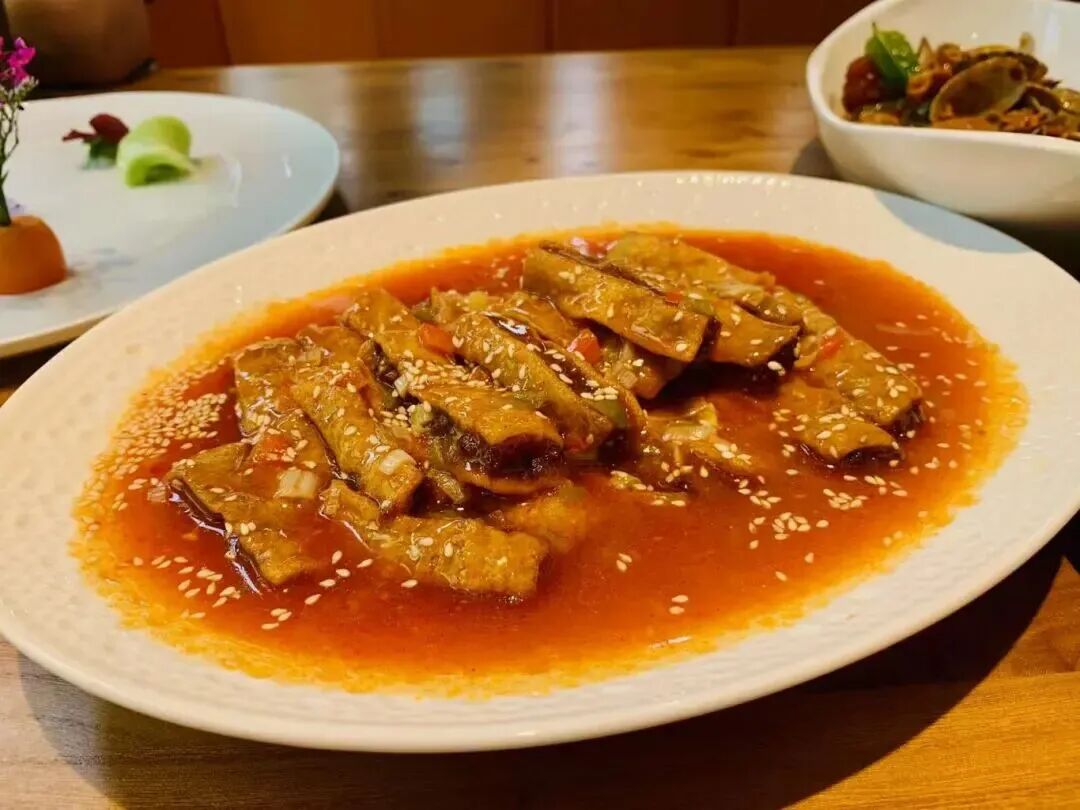
Image source: Xiaohongshu @Jing'an's Sky
They didn't just splurge on the hardware either; they even brought in master mural artists to hand-paint stunning Silk Road wall art, letting diners immerse themselves in the cultural storytelling of the Western Regions right through their meal.
The tableware, serving vessels, and grills in the restaurant are all sourced directly from their places of origin, and the servers greet every single guest in traditional attire with warm, down-to-earth smiles. It's quickly become one of the most aesthetic, must-visit Halal dining hotspots in Jing'an District.
Image source: Xiaohongshu @Sharon_Jing
Speaking of the ambiance, there's one detail people rarely pay attention to that is actually an absolute game-changer for your dining mood: the omnipresent second-hand smoke and booze odors you get in typical Chinese restaurants. Sometimes you're right in the middle of a great meal, and suddenly a blast of smoke drifts over from the next table, completely killing your appetite... But Huoxiale's whole vibe is centered around being a "smoke-free and alcohol-free wellness-friendly restaurant." Tons of people on Xiaohongshu are praising it as female-friendly and kid-friendly, and our canteen foodie totally agrees. This is the kind of restaurant that truly respects everyone who loves good food!
Of course, at the end of the day, whether a restaurant is actually good or not all comes down to the food and the flavors. Alongside nailing traditional Xinjiang classics, Huoxiale also brilliantly weaves in seafood and classic Shanghainese dishes, making it a genuinely stellar fusion restaurant.
Xinjiang Bashibai Lamb Skewers
Sizzling skewers made from genuine Xinjiang Bashibai lamb transport your taste buds straight to Xinjiang in a single bite. This is Shanghai's ultimate "Western Region street food vibe": sizzling lamb skewers paired with ice-cold kavass (traditional fermented honey drink)—the absolute holy grail of summer night markets!
Hui Muslim Jiasha (Crispy Meat Fritters)
With a golden, ultra-crispy exterior and a deeply savory, flavorful meat filling inside, biting into a piece of Hui-style jiasha feels like tasting a thousand years of Silk Road history. The golden miracle born from an intangible cultural heritage stove: picking up a legend of Xinjiang beef jiasha with a single pair of chopsticks.
Shouzhua Yangrou (Hand-Grabbed Lamb)
Image source: Dazhong Dianping @Baozou Xiong (Rambling Bear)
Bashibai spring lambs raised on pure Tianshan snowmelt are used to craft their shouzhua yangrou, yielding meat that is glossy and rich like fine lard. After being gently simmered in plain water, a light touch of the knife makes the juices instantly well up with an amber glow. Eat it simply dipped in a little sea salt, and the pure, clean sweetness bursts across your teeth—this is the most authentic gift of the grasslands.
Shawan Dapanji (Big Plate Spicy Chicken)
Rugged Xinjiang ingredients meticulously braised into an legendary comfort food, lifting up a piping-hot slice of pastoral romance right beneath the Tianshan Mountains with a single pair of chopsticks. Golden country chicken wrapped in rich, clingy gravy, paired with handmade daopianmian (wide belt noodles) that soak up all that aromatic chili oil, while bell peppers and potato chunks throw a party on your tongue.
Astana Beef Ribs
Slow-braised to absolute tender perfection, these beef ribs practically melt in your mouth. Every single rib radiates a deep, rich meaty aroma, coated in the house-special secret sauce that hits that sweet-savory sweet spot, making it impossible not to grab another piece.
Some people say the ocean's sweetness belongs to the sea, while Xinjiang cuisine's richness hails from the desert, making the two impossible to blend. But 『Huoxiale』 shatters these culinary boundaries by putting seafood center-stage at a Xinjiang restaurant, breathing new life into "Shanghai-style Halal." Their seafood isn't just remarkably diverse—it's insanely fresh, with every single bite tasting like an absolute gift from the ocean. Grounded in traditional Xinjiang classics and Shanghai street eats, they deeply mine the soulful street flavors of the old days while blending in Silk Road regional profiles and refined Western culinary presentation. It keeps every dish deeply familiar yet delightfully surprising under strict Halal standards.
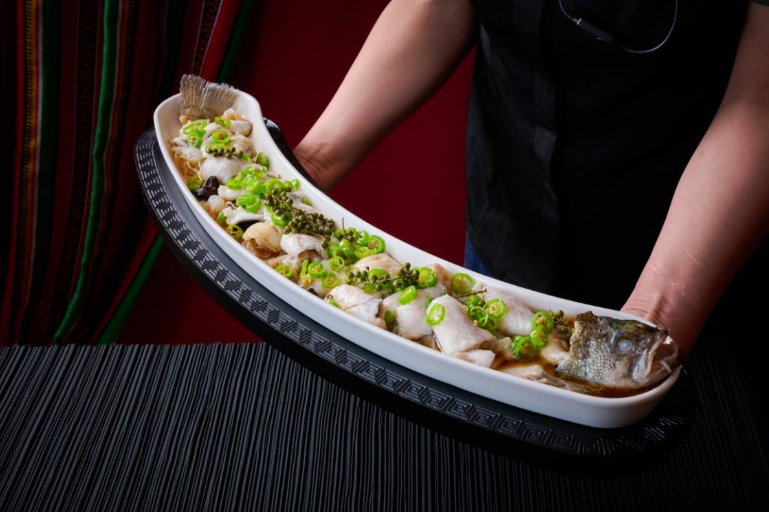
Halal Irtysh River Coldwater Fish Qiaotai
Image source: Xiaohongshu @Sharon_Jing
One of the house-signature seafood dishes. The fish is incredibly tender and juicy, with every single bite showcasing the firm, pristine quality of the meat. Paired with their custom-crafted house sauce that strikes a perfect sweet-and-sour balance, it beautifully highlights the natural sweetness of the fish.
Scallion-Aromatic Rocket Squid
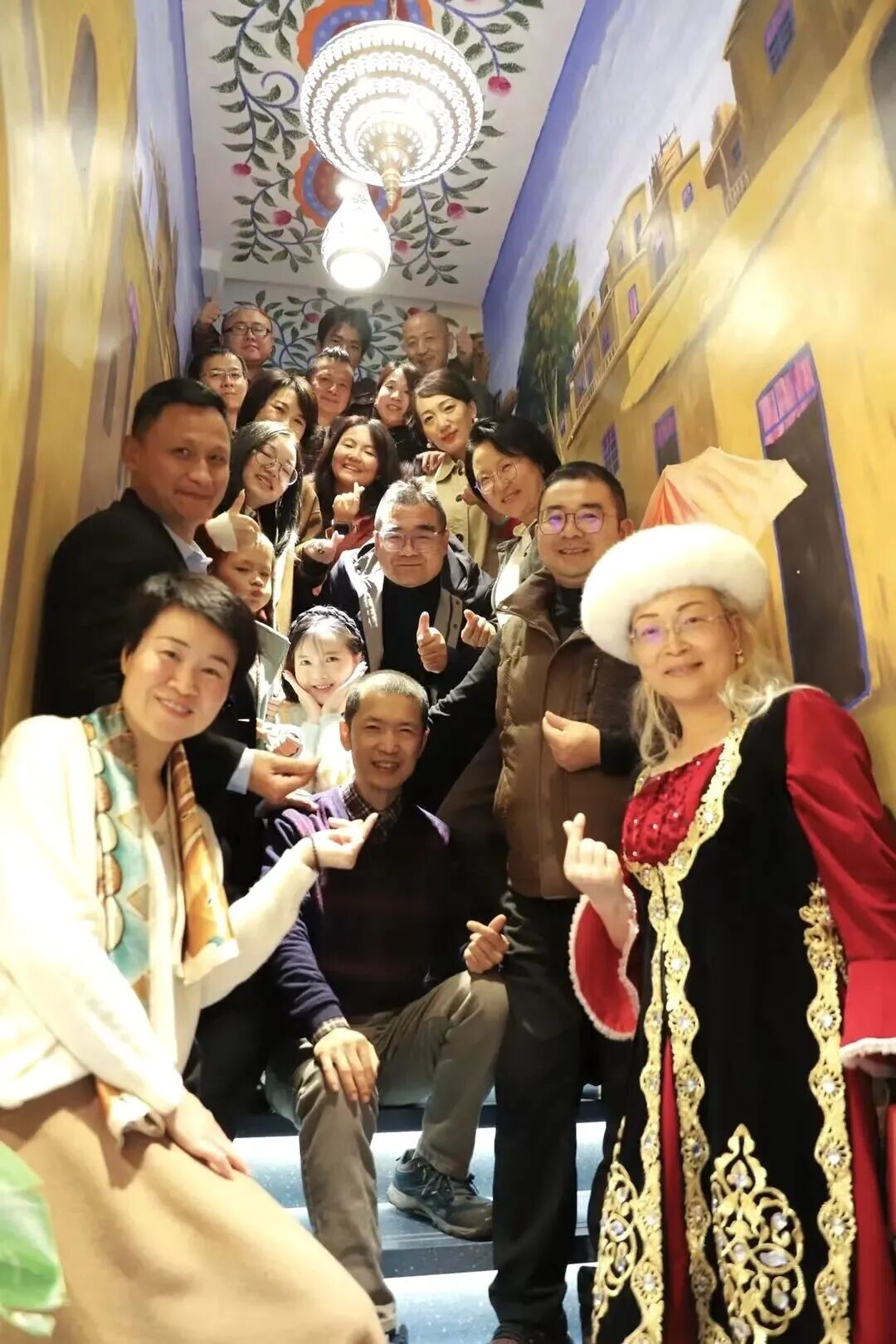
Image source: Xiaohongshu @Sharon_Jing
Wild-caught squid with an amazing bounce, treated with a thirty-year veteran chef's exclusive technique to lock in maximum freshness. The squid is tender and snappy, smothered in a rich, peppery sauce. The punchy green-peppercorn profile blends with the natural sweetness of the seafood to create an exquisite fusion of Shanghai elegance and Silk Road flair~
Flambéed Salt-and-Pepper Mantis Shrimp
Image source: Xiaohongshu @Sharon_Jing
Selecting only plump, meat-packed mantis shrimp, they're first flash-fried until shatteringly crisp, then tossed in a signature salt-and-pepper sauce mixed with traditional Western Region spices. Crispy on the outside, tender on the inside, with sweetness and a fiery kick bursting simultaneously on your tongue.
Xiangjian Sichuan Pepper Fish
Built on a foundation of tongue-tingling Sichuan rattan pepper numbness, slow-braised with extra Silk Road spices for depth, and finished with a hot pour of pure Xinjiang-sourced aromatic oil. The layers of numbing, fresh, savory, and tender flavors unfold sequentially, delivering a wonderfully complex Halal seafood experience.
Back in the 1990s, Shanghai's Hongbinlou operated as a beloved Halal spot right at the northern edge of the Jing'an Temple commercial hub. Back then, it wasn't just famous for its unique Halal eats; it also soaked up that irreplaceable old Shanghai ambiance. One particular dish, their "fengshan lengmian" (fan-cooled cold noodles), carried the collective memories of an entire generation. But as the decades rolled on, that distinct taste of old Shanghai slowly faded away. Today, Huoxiale has taken over the legacy of Shanghai's Hongbinlou to run a "Shanghai-style Halal" concept, picking up the traditional craftsmanship of "fengshan lengmian" to resurrect those classic cold noodles and bring back that timeless taste of old Shanghai.
Fengshan Lengmian (Fan-Cooled Cold Noodles)
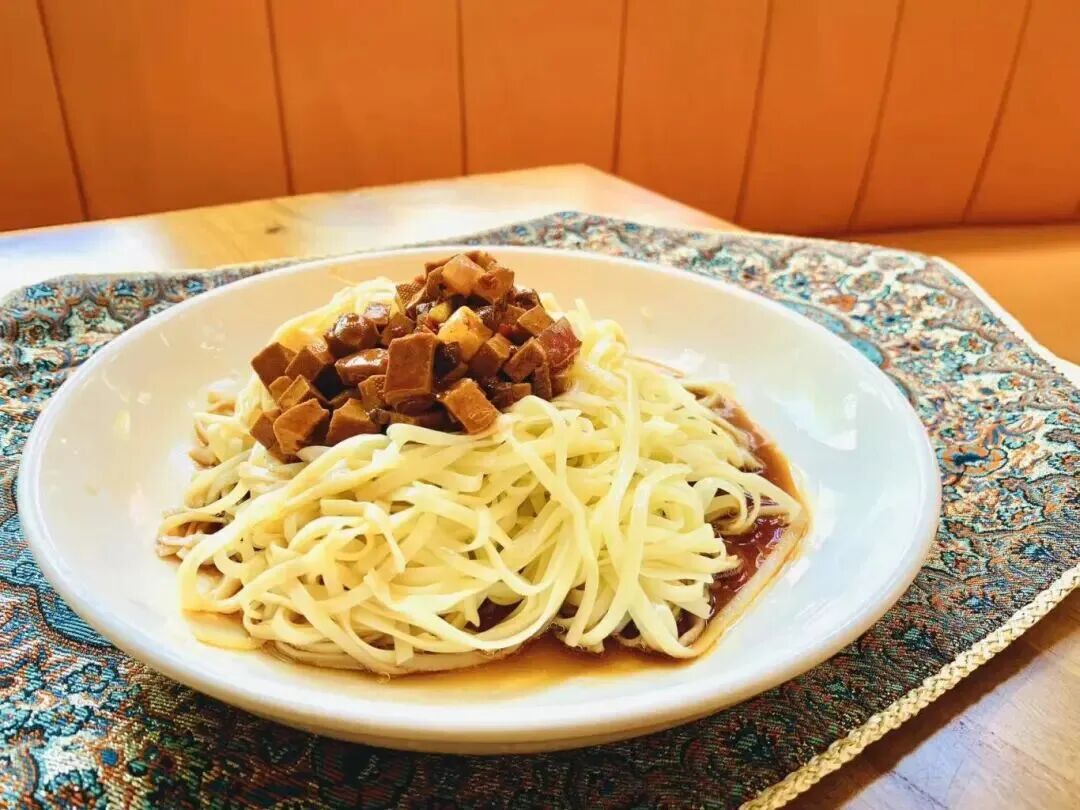
Making traditional cold noodles places massive demands on the chef, who has to master the absolute art of boiling noodles. Because these cold noodles aren't steamed—they're boiled right in a pot—they have to be lifted out, instantly tossed with seasoned oil, and cooled down using electric fans. Experienced veteran chefs can pull out a single strand of noodles while they're boiling, give it a gentle pinch, and instantly know whether the noodles are done. When pulling out the whole batch, the noodles can't be cooked all the way through because they'll keep cooking during the fan-cooling process until they hit that absolute, texturally perfect bite.
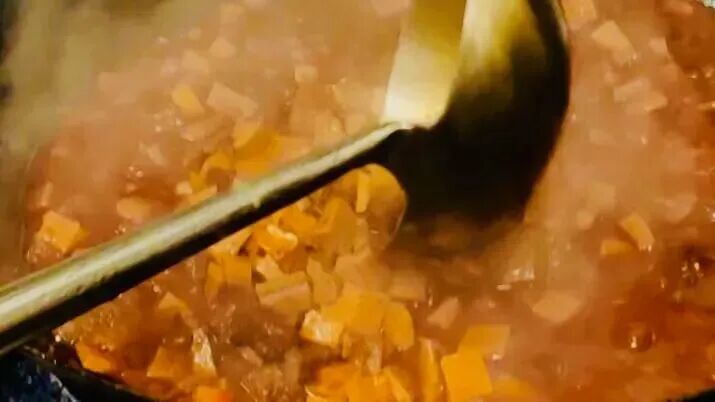
The preparation techniques and ingredients of these old-school cold noodles faithfully follow Hongbinlou's classic recipe, blending Halal traditions with Shanghainese flair. Tossed with classic Shanghai lafulu (spicy fermented bean curd sauce), fresh diced beef, bamboo shoot cubes, and dried bean curd bits, then simmered down until the rich gravy clings to every strand—this spicy meat topping is thick, glossy, savory, and seriously aromatic.
Curry Ox-Head Soup
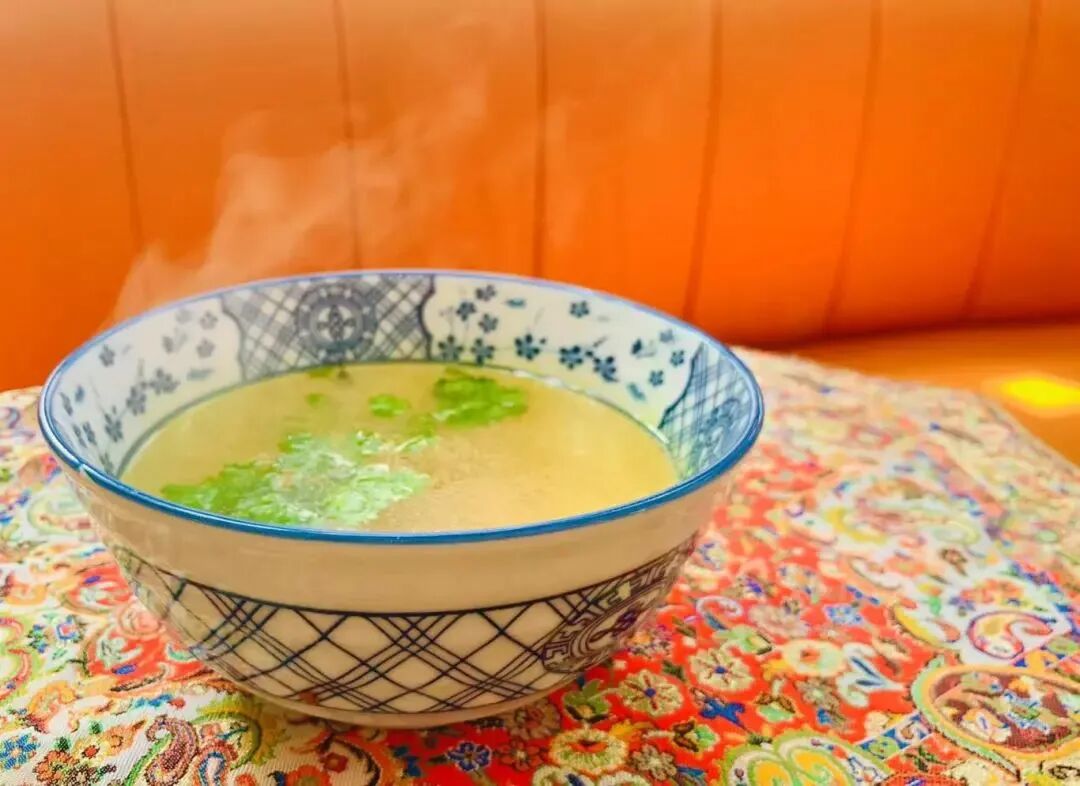
Cold noodles are wonderfully smooth and refreshing, but eating them all by themselves can feel a bit dry. That's when you pair them with a steaming bowl of fragrant curry beef soup to instantly wake up your palate! The clean, refreshing broth balances out the chill of the cold noodles, warming your stomach and cutting right through any dryness—making this the ultimate summer noodle-and-soup power couple. Slurp a few noodles, take a couple sips of soup, and snag a few tender slices of beef straight from the curry broth—now *that* is pure satisfaction.
Huoxiale's bowl of curry beef soup completely avoids that harsh, overpowering yellow curry powder flavor. Crafted through patient, slow simmering, every single spoonful carries the creamy richness of lamb bones paired with the deep savoriness of beef bones. Rejecting heavy artificial seasonings, it lets a natural, milky aroma lightly blossom across your palate, feeling just like a crisp breeze sweeping across the grasslands—pure and balanced to absolute perfection.
According to Huoxiale's founder, "Tiger Bro," they plan to introduce even more traditional Halal-style Shanghainese dishes in the future, carrying the torch for "Shanghai-style Halal" cuisine and making it bigger and better than ever.
As I mentioned at the start of Chapter Two, why would a Western Region-themed restaurant emphasize "Shanghai-style" Halal cuisine? In my view, the "Hai" (Shanghai/Ocean) in "Haipai" isn't just about the ocean—it represents the expansive, melting-pot culture of Shanghai itself. So, I decided to ask DeepSeek what a "Haipai restaurant" actually is. The answer told me: Haipai restaurants are eateries rooted in regional Shanghai culture, blending the core essences of Chinese and Western culinary traditions, defined by traits of "inclusivity, refinement, delicacy, and a knack for innovation." You can basically think of it as a "Shanghai-style" restaurant, but the absolute core of that style is "fusion" and "innovation."
Therefore, compared to the Beijing and Tianjin branches of Hongbinlou—which represent century-old heritage and tradition—Shanghai's Hongbinlou is all about innovation and fusion. From Shanghainese food to Xinjiang cuisine, Indonesian food, and now this modern trinity of Xinjiang cuisine + seafood + Shanghainese local classics, who knows? Maybe blending in Indonesian food again down the road isn't entirely out of the question!
03
More Than Just a Restaurant
Giving wanderers a warm harbor to call home
Word has it that the entrepreneurial team behind this venture crossed over from the jewelry industry. After weathering the pandemic, they dived back into business by founding Xingdeng Education Venture Capital, offering post-investment incubation for small-yet-beautiful dual-circulation brands, and integrating a three-industry-merged food supply chain. It's genuinely exciting to see this kind of resilient entrepreneurial grit injecting fresh blood into the Halal food industry.
I'm super fortunate to have been close friends with one of the co-founders for years. When I asked him why on earth he wanted to open a restaurant amidst such a hyper-competitive dining landscape, he shared a story from his past:
Twenty years ago, when he first arrived in Shanghai, he felt just as desperate to find a familiar circle of people. Back at the company where he worked, even though there were tons of people around, he spent every day moving around solo and feeling completely isolated. When he first arrived, his monthly salary was 1,800 RMB—he'd wire most of it back home and keep just 300 RMB for living expenses.
Stepping into a Xinjiang restaurant back then felt just like coming home. He couldn't afford to buy actual meals, but he could sit there and chat with folks. So, opening a restaurant was always a quiet dream he held in his heart—to give people far from home a warm, comforting place to land.
That's why Huoxiale's positioning from day one was never just about being a restaurant; it's a dynamic community space blending food, socializing, music, and culture. It aims to become a true community hub and an incubator for commercial innovation.
So what exactly does a "community hub" mean? It means in a joyful space like Huoxiale, people share stories, listen to others, connect with one another, and grow together. This isn't just some empty marketing slogan; they've been actively living it out ever since opening day, launching the community-driven "Firewood Stoker" program. Since kicking off back in July, they've already hosted numerous events spanning all kinds of fields.
Featuring charity Traditional Chinese Medicine wellness classes—what kind of magical restaurant is this that makes people never want to leave?
Ethnic minority music performances: Who says restaurants are only for stuffing your face? Mix music, food, and socializing, and the joy levels max out instantly!
Jewelry knowledge sharing sessions—Silk Road Radiance • Maritime Pearls: When Shanghai-style Halal meets the brilliance of jade and pearls.
Baduanjin qigong wellness workshops: A cultural restaurant like no other—practice ancient Baduanjin exercises right here at a Shanghai-style Halal eatery in the city.
There are plenty more exciting events lined up for the future. If you want to jump in and join the fun, just scan the QR code to find out more and sign up!
What makes this "Shanghai-style" Halal restaurant in Shanghai so different?
Summary:
Foodies and students who have spent time studying and working in Shanghai have probably noticed that things have really been looking up lately. All kinds of regional styles and concepts of Halal restaurants are popping up across every district. When I was working and studying in Shanghai 10 years ago, my weekly food dilemma was always, "Please tell me we're not going back to that exact same place again this week!"
Foodies and students who have spent time studying and working in Shanghai have probably noticed that things have really been looking up lately.
All kinds of regional styles and concepts of Halal restaurants are popping up across every district.
When I was working and studying in Shanghai 10 years ago, my weekly food dilemma was always, "Please tell me we're not going back to that exact same place again this week!"
And now, alongside local Shanghainese noodles and spots like Guanguanji, we've got the Changying Three Brothers hailing all from Beijing, Pinhuiwei from Hangzhou... and even Yunnan beef noodle spots, Tianshuo malatang (spicy hotpot), Huainan beef soup, and grilled fish joints~
So now, isn't everyone's dilemma more like, "Which spot are we trying this week?"
After rambling on for this long, you've probably guessed it—this post is all about recommending a classic Shanghai Halal spot: "Hongbinlou," which now goes by the name 「Huoxiale · Shanghai-Style Halal Cuisine (Hongbinlou Branch)」.
01
Historical Legacy
The surprisingly twisty history of Shanghai's Hongbinlou
When people mention "Hongbinlou," most folks instantly think of the "First Halal Restaurant in China" opened in Tianjin back in 1853 (the third year of the Xianfeng Emperor's reign), which later relocated to Beijing at the personal invitation of Premier Zhou Enlai. But this Hongbinlou registered in Shanghai back in 1993 doesn't seem to have much of a connection to that century-old traditional brand—it's likely just a shared name or a respectful nod.
According to online archives left by food bloggers from back in the day, Shanghai's Hongbinlou was already operating at the corner of Huashan Road and Beijing Road way back in the 1990s. The storefront was pretty small back then, but the interior was surprisingly spacious and kept on the dimmer side. It was famous for its niurou jianbao (pan-fried beef buns)—thin wrappers packed with savory, juicy meat that were served year-round. (Wonder if they already had that curry-beef kick back then?) Their "fengshan lengmian" (fan-cooled cold noodles) were also legendary and loved by everyone.
Later on, that classic location went through urban redevelopment, and for a long time, nobody really knew where it had moved. Piecing together bits of info found online, a new Xinjiang restaurant bearing the same name, "Hongbinlou," popped up on Yuyuan New Road (near Urumqi Road) right around the start of the 2000s.
Images sourced from the internet; please contact us to remove if there are any copyright issues.
Xinjiang spots are basically all about yangrou chuan (Xinjiang lamb skewers), dapanji (big plate spicy chicken), nangbaorou (flatbread stuffed with meat), laohucai (tiger vegetable salad), and shouzhua yangrou (Lanzhou hand-grabbed lamb). Even though Xinjiang joints are everywhere nowadays, back then it was a super trendy vibe—especially their nangbaorou, which people affectionately called "Xinjiang pizza" a good decade before the whole "dalu nang" (gravy-topped flatbread) meme became a thing.
Later on, due to another round of land requisition, Hongbinlou vanished from the public eye for a while before reopening in the early 2000s at 75 Wanhangdu Road. They even paired up with the Indonesian dining brand "Bali Bistro," which was a massive hit in Shanghai for quite a while. Our canteen foodie used to walk past it all the time when working in Shanghai, though sadly I never made it inside to try it. Now, even that chapter is history.
Image source: WeChat Official Account @You E Le (Hungry Again)
02
A Fresh Start
Huoxiale redefines Shanghai-style Halal
In November 2024, Hongbinlou got a fresh lease on life, transforming into what is now known as 「Huoxiale」. Even though Dazhong Dianping lists the restaurant with the suffix "Shanghai-Style Halal Cuisine," their main signboard still proudly reads "Silk Road Halal Food Market," so the core menu still leans heavily toward Northwest Chinese and Xinjiang flavors. As for why they're leaning so hard into the "Shanghai-style Halal" label, I'll get into that in a bit.
The overall interior design centers heavily around classic Silk Road aesthetics. The decor is ultra-refined, and you can really tell the boss put serious thought and taste into it—sparing no expense to ship in specialty architectural materials from afar, with every single brick and tile echoing the local culture and folk customs of the Silk Road.
Image source: Xiaohongshu @Jing'an's Sky
They didn't just splurge on the hardware either; they even brought in master mural artists to hand-paint stunning Silk Road wall art, letting diners immerse themselves in the cultural storytelling of the Western Regions right through their meal.
The tableware, serving vessels, and grills in the restaurant are all sourced directly from their places of origin, and the servers greet every single guest in traditional attire with warm, down-to-earth smiles. It's quickly become one of the most aesthetic, must-visit Halal dining hotspots in Jing'an District.
Image source: Xiaohongshu @Sharon_Jing
Speaking of the ambiance, there's one detail people rarely pay attention to that is actually an absolute game-changer for your dining mood: the omnipresent second-hand smoke and booze odors you get in typical Chinese restaurants. Sometimes you're right in the middle of a great meal, and suddenly a blast of smoke drifts over from the next table, completely killing your appetite... But Huoxiale's whole vibe is centered around being a "smoke-free and alcohol-free wellness-friendly restaurant." Tons of people on Xiaohongshu are praising it as female-friendly and kid-friendly, and our canteen foodie totally agrees. This is the kind of restaurant that truly respects everyone who loves good food!
Of course, at the end of the day, whether a restaurant is actually good or not all comes down to the food and the flavors. Alongside nailing traditional Xinjiang classics, Huoxiale also brilliantly weaves in seafood and classic Shanghainese dishes, making it a genuinely stellar fusion restaurant.
Xinjiang Bashibai Lamb Skewers
Sizzling skewers made from genuine Xinjiang Bashibai lamb transport your taste buds straight to Xinjiang in a single bite. This is Shanghai's ultimate "Western Region street food vibe": sizzling lamb skewers paired with ice-cold kavass (traditional fermented honey drink)—the absolute holy grail of summer night markets!
Hui Muslim Jiasha (Crispy Meat Fritters)
With a golden, ultra-crispy exterior and a deeply savory, flavorful meat filling inside, biting into a piece of Hui-style jiasha feels like tasting a thousand years of Silk Road history. The golden miracle born from an intangible cultural heritage stove: picking up a legend of Xinjiang beef jiasha with a single pair of chopsticks.
Shouzhua Yangrou (Hand-Grabbed Lamb)
Image source: Dazhong Dianping @Baozou Xiong (Rambling Bear)
Bashibai spring lambs raised on pure Tianshan snowmelt are used to craft their shouzhua yangrou, yielding meat that is glossy and rich like fine lard. After being gently simmered in plain water, a light touch of the knife makes the juices instantly well up with an amber glow. Eat it simply dipped in a little sea salt, and the pure, clean sweetness bursts across your teeth—this is the most authentic gift of the grasslands.
Shawan Dapanji (Big Plate Spicy Chicken)
Rugged Xinjiang ingredients meticulously braised into an legendary comfort food, lifting up a piping-hot slice of pastoral romance right beneath the Tianshan Mountains with a single pair of chopsticks. Golden country chicken wrapped in rich, clingy gravy, paired with handmade daopianmian (wide belt noodles) that soak up all that aromatic chili oil, while bell peppers and potato chunks throw a party on your tongue.
Astana Beef Ribs
Slow-braised to absolute tender perfection, these beef ribs practically melt in your mouth. Every single rib radiates a deep, rich meaty aroma, coated in the house-special secret sauce that hits that sweet-savory sweet spot, making it impossible not to grab another piece.
Some people say the ocean's sweetness belongs to the sea, while Xinjiang cuisine's richness hails from the desert, making the two impossible to blend. But 『Huoxiale』 shatters these culinary boundaries by putting seafood center-stage at a Xinjiang restaurant, breathing new life into "Shanghai-style Halal." Their seafood isn't just remarkably diverse—it's insanely fresh, with every single bite tasting like an absolute gift from the ocean. Grounded in traditional Xinjiang classics and Shanghai street eats, they deeply mine the soulful street flavors of the old days while blending in Silk Road regional profiles and refined Western culinary presentation. It keeps every dish deeply familiar yet delightfully surprising under strict Halal standards.
Halal Irtysh River Coldwater Fish Qiaotai
Image source: Xiaohongshu @Sharon_Jing
One of the house-signature seafood dishes. The fish is incredibly tender and juicy, with every single bite showcasing the firm, pristine quality of the meat. Paired with their custom-crafted house sauce that strikes a perfect sweet-and-sour balance, it beautifully highlights the natural sweetness of the fish.
Scallion-Aromatic Rocket Squid
Image source: Xiaohongshu @Sharon_Jing
Wild-caught squid with an amazing bounce, treated with a thirty-year veteran chef's exclusive technique to lock in maximum freshness. The squid is tender and snappy, smothered in a rich, peppery sauce. The punchy green-peppercorn profile blends with the natural sweetness of the seafood to create an exquisite fusion of Shanghai elegance and Silk Road flair~
Flambéed Salt-and-Pepper Mantis Shrimp
Image source: Xiaohongshu @Sharon_Jing
Selecting only plump, meat-packed mantis shrimp, they're first flash-fried until shatteringly crisp, then tossed in a signature salt-and-pepper sauce mixed with traditional Western Region spices. Crispy on the outside, tender on the inside, with sweetness and a fiery kick bursting simultaneously on your tongue.
Xiangjian Sichuan Pepper Fish
Built on a foundation of tongue-tingling Sichuan rattan pepper numbness, slow-braised with extra Silk Road spices for depth, and finished with a hot pour of pure Xinjiang-sourced aromatic oil. The layers of numbing, fresh, savory, and tender flavors unfold sequentially, delivering a wonderfully complex Halal seafood experience.
Back in the 1990s, Shanghai's Hongbinlou operated as a beloved Halal spot right at the northern edge of the Jing'an Temple commercial hub. Back then, it wasn't just famous for its unique Halal eats; it also soaked up that irreplaceable old Shanghai ambiance. One particular dish, their "fengshan lengmian" (fan-cooled cold noodles), carried the collective memories of an entire generation. But as the decades rolled on, that distinct taste of old Shanghai slowly faded away. Today, Huoxiale has taken over the legacy of Shanghai's Hongbinlou to run a "Shanghai-style Halal" concept, picking up the traditional craftsmanship of "fengshan lengmian" to resurrect those classic cold noodles and bring back that timeless taste of old Shanghai.
Fengshan Lengmian (Fan-Cooled Cold Noodles)
Making traditional cold noodles places massive demands on the chef, who has to master the absolute art of boiling noodles. Because these cold noodles aren't steamed—they're boiled right in a pot—they have to be lifted out, instantly tossed with seasoned oil, and cooled down using electric fans. Experienced veteran chefs can pull out a single strand of noodles while they're boiling, give it a gentle pinch, and instantly know whether the noodles are done. When pulling out the whole batch, the noodles can't be cooked all the way through because they'll keep cooking during the fan-cooling process until they hit that absolute, texturally perfect bite.
The preparation techniques and ingredients of these old-school cold noodles faithfully follow Hongbinlou's classic recipe, blending Halal traditions with Shanghainese flair. Tossed with classic Shanghai lafulu (spicy fermented bean curd sauce), fresh diced beef, bamboo shoot cubes, and dried bean curd bits, then simmered down until the rich gravy clings to every strand—this spicy meat topping is thick, glossy, savory, and seriously aromatic.
Curry Ox-Head Soup
Cold noodles are wonderfully smooth and refreshing, but eating them all by themselves can feel a bit dry. That's when you pair them with a steaming bowl of fragrant curry beef soup to instantly wake up your palate! The clean, refreshing broth balances out the chill of the cold noodles, warming your stomach and cutting right through any dryness—making this the ultimate summer noodle-and-soup power couple. Slurp a few noodles, take a couple sips of soup, and snag a few tender slices of beef straight from the curry broth—now *that* is pure satisfaction.
Huoxiale's bowl of curry beef soup completely avoids that harsh, overpowering yellow curry powder flavor. Crafted through patient, slow simmering, every single spoonful carries the creamy richness of lamb bones paired with the deep savoriness of beef bones. Rejecting heavy artificial seasonings, it lets a natural, milky aroma lightly blossom across your palate, feeling just like a crisp breeze sweeping across the grasslands—pure and balanced to absolute perfection.
According to Huoxiale's founder, "Tiger Bro," they plan to introduce even more traditional Halal-style Shanghainese dishes in the future, carrying the torch for "Shanghai-style Halal" cuisine and making it bigger and better than ever.
As I mentioned at the start of Chapter Two, why would a Western Region-themed restaurant emphasize "Shanghai-style" Halal cuisine? In my view, the "Hai" (Shanghai/Ocean) in "Haipai" isn't just about the ocean—it represents the expansive, melting-pot culture of Shanghai itself. So, I decided to ask DeepSeek what a "Haipai restaurant" actually is. The answer told me: Haipai restaurants are eateries rooted in regional Shanghai culture, blending the core essences of Chinese and Western culinary traditions, defined by traits of "inclusivity, refinement, delicacy, and a knack for innovation." You can basically think of it as a "Shanghai-style" restaurant, but the absolute core of that style is "fusion" and "innovation."
Therefore, compared to the Beijing and Tianjin branches of Hongbinlou—which represent century-old heritage and tradition—Shanghai's Hongbinlou is all about innovation and fusion. From Shanghainese food to Xinjiang cuisine, Indonesian food, and now this modern trinity of Xinjiang cuisine + seafood + Shanghainese local classics, who knows? Maybe blending in Indonesian food again down the road isn't entirely out of the question!
03
More Than Just a Restaurant
Giving wanderers a warm harbor to call home
Word has it that the entrepreneurial team behind this venture crossed over from the jewelry industry. After weathering the pandemic, they dived back into business by founding Xingdeng Education Venture Capital, offering post-investment incubation for small-yet-beautiful dual-circulation brands, and integrating a three-industry-merged food supply chain. It's genuinely exciting to see this kind of resilient entrepreneurial grit injecting fresh blood into the Halal food industry.
I'm super fortunate to have been close friends with one of the co-founders for years. When I asked him why on earth he wanted to open a restaurant amidst such a hyper-competitive dining landscape, he shared a story from his past:
Twenty years ago, when he first arrived in Shanghai, he felt just as desperate to find a familiar circle of people. Back at the company where he worked, even though there were tons of people around, he spent every day moving around solo and feeling completely isolated. When he first arrived, his monthly salary was 1,800 RMB—he'd wire most of it back home and keep just 300 RMB for living expenses.
Stepping into a Xinjiang restaurant back then felt just like coming home. He couldn't afford to buy actual meals, but he could sit there and chat with folks. So, opening a restaurant was always a quiet dream he held in his heart—to give people far from home a warm, comforting place to land.
That's why Huoxiale's positioning from day one was never just about being a restaurant; it's a dynamic community space blending food, socializing, music, and culture. It aims to become a true community hub and an incubator for commercial innovation.
So what exactly does a "community hub" mean? It means in a joyful space like Huoxiale, people share stories, listen to others, connect with one another, and grow together. This isn't just some empty marketing slogan; they've been actively living it out ever since opening day, launching the community-driven "Firewood Stoker" program. Since kicking off back in July, they've already hosted numerous events spanning all kinds of fields.
Featuring charity Traditional Chinese Medicine wellness classes—what kind of magical restaurant is this that makes people never want to leave?
Ethnic minority music performances: Who says restaurants are only for stuffing your face? Mix music, food, and socializing, and the joy levels max out instantly!
Jewelry knowledge sharing sessions—Silk Road Radiance • Maritime Pearls: When Shanghai-style Halal meets the brilliance of jade and pearls.
Baduanjin qigong wellness workshops: A cultural restaurant like no other—practice ancient Baduanjin exercises right here at a Shanghai-style Halal eatery in the city.
There are plenty more exciting events lined up for the future. If you want to jump in and join the fun, just scan the QR code to find out more and sign up!
Shanghai Halal Food Guide: Inside Huoxiale & the Revival of Hongbinlou's Legendary Shanghai-Style Halal Cuisine
Articles • Hasan09 posted the article • 0 comments • 1 views • 1 hours ago
[Internet Repost]
What makes this "Shanghai-style" Halal restaurant in Shanghai so different?
Summary:
Foodies and students who have spent time studying and working in Shanghai have probably noticed that things have really been looking up lately. All kinds of regional styles and concepts of Halal restaurants are popping up across every district. When I was working and studying in Shanghai 10 years ago, my weekly food dilemma was always, "Please tell me we're not going back to that exact same place again this week!"
Foodies and students who have spent time studying and working in Shanghai have probably noticed that things have really been looking up lately.
All kinds of regional styles and concepts of Halal restaurants are popping up across every district.
When I was working and studying in Shanghai 10 years ago, my weekly food dilemma was always, "Please tell me we're not going back to that exact same place again this week!"
And now, alongside local Shanghainese noodles and spots like Guanguanji, we've got the Changying Three Brothers hailing all from Beijing, Pinhuiwei from Hangzhou... and even Yunnan beef noodle spots, Tianshuo malatang (spicy hotpot), Huainan beef soup, and grilled fish joints~
So now, isn't everyone's dilemma more like, "Which spot are we trying this week?"
After rambling on for this long, you've probably guessed it—this post is all about recommending a classic Shanghai Halal spot: "Hongbinlou," which now goes by the name 「Huoxiale · Shanghai-Style Halal Cuisine (Hongbinlou Branch)」.
01
Historical Legacy
The surprisingly twisty history of Shanghai's Hongbinlou
When people mention "Hongbinlou," most folks instantly think of the "First Halal Restaurant in China" opened in Tianjin back in 1853 (the third year of the Xianfeng Emperor's reign), which later relocated to Beijing at the personal invitation of Premier Zhou Enlai. But this Hongbinlou registered in Shanghai back in 1993 doesn't seem to have much of a connection to that century-old traditional brand—it's likely just a shared name or a respectful nod.
According to online archives left by food bloggers from back in the day, Shanghai's Hongbinlou was already operating at the corner of Huashan Road and Beijing Road way back in the 1990s. The storefront was pretty small back then, but the interior was surprisingly spacious and kept on the dimmer side. It was famous for its niurou jianbao (pan-fried beef buns)—thin wrappers packed with savory, juicy meat that were served year-round. (Wonder if they already had that curry-beef kick back then?) Their "fengshan lengmian" (fan-cooled cold noodles) were also legendary and loved by everyone.
Later on, that classic location went through urban redevelopment, and for a long time, nobody really knew where it had moved. Piecing together bits of info found online, a new Xinjiang restaurant bearing the same name, "Hongbinlou," popped up on Yuyuan New Road (near Urumqi Road) right around the start of the 2000s.
Images sourced from the internet; please contact us to remove if there are any copyright issues.
Xinjiang spots are basically all about yangrou chuan (Xinjiang lamb skewers), dapanji (big plate spicy chicken), nangbaorou (flatbread stuffed with meat), laohucai (tiger vegetable salad), and shouzhua yangrou (Lanzhou hand-grabbed lamb). Even though Xinjiang joints are everywhere nowadays, back then it was a super trendy vibe—especially their nangbaorou, which people affectionately called "Xinjiang pizza" a good decade before the whole "dalu nang" (gravy-topped flatbread) meme became a thing.
Later on, due to another round of land requisition, Hongbinlou vanished from the public eye for a while before reopening in the early 2000s at 75 Wanhangdu Road. They even paired up with the Indonesian dining brand "Bali Bistro," which was a massive hit in Shanghai for quite a while. Our canteen foodie used to walk past it all the time when working in Shanghai, though sadly I never made it inside to try it. Now, even that chapter is history.
Image source: WeChat Official Account @You E Le (Hungry Again)
02
A Fresh Start
Huoxiale redefines Shanghai-style Halal
In November 2024, Hongbinlou got a fresh lease on life, transforming into what is now known as 「Huoxiale」. Even though Dazhong Dianping lists the restaurant with the suffix "Shanghai-Style Halal Cuisine," their main signboard still proudly reads "Silk Road Halal Food Market," so the core menu still leans heavily toward Northwest Chinese and Xinjiang flavors. As for why they're leaning so hard into the "Shanghai-style Halal" label, I'll get into that in a bit.
The overall interior design centers heavily around classic Silk Road aesthetics. The decor is ultra-refined, and you can really tell the boss put serious thought and taste into it—sparing no expense to ship in specialty architectural materials from afar, with every single brick and tile echoing the local culture and folk customs of the Silk Road.
Image source: Xiaohongshu @Jing'an's Sky
They didn't just splurge on the hardware either; they even brought in master mural artists to hand-paint stunning Silk Road wall art, letting diners immerse themselves in the cultural storytelling of the Western Regions right through their meal.
The tableware, serving vessels, and grills in the restaurant are all sourced directly from their places of origin, and the servers greet every single guest in traditional attire with warm, down-to-earth smiles. It's quickly become one of the most aesthetic, must-visit Halal dining hotspots in Jing'an District.
Image source: Xiaohongshu @Sharon_Jing
Speaking of the ambiance, there's one detail people rarely pay attention to that is actually an absolute game-changer for your dining mood: the omnipresent second-hand smoke and booze odors you get in typical Chinese restaurants. Sometimes you're right in the middle of a great meal, and suddenly a blast of smoke drifts over from the next table, completely killing your appetite... But Huoxiale's whole vibe is centered around being a "smoke-free and alcohol-free wellness-friendly restaurant." Tons of people on Xiaohongshu are praising it as female-friendly and kid-friendly, and our canteen foodie totally agrees. This is the kind of restaurant that truly respects everyone who loves good food!
Of course, at the end of the day, whether a restaurant is actually good or not all comes down to the food and the flavors. Alongside nailing traditional Xinjiang classics, Huoxiale also brilliantly weaves in seafood and classic Shanghainese dishes, making it a genuinely stellar fusion restaurant.
Xinjiang Bashibai Lamb Skewers
Sizzling skewers made from genuine Xinjiang Bashibai lamb transport your taste buds straight to Xinjiang in a single bite. This is Shanghai's ultimate "Western Region street food vibe": sizzling lamb skewers paired with ice-cold kavass (traditional fermented honey drink)—the absolute holy grail of summer night markets!
Hui Muslim Jiasha (Crispy Meat Fritters)
With a golden, ultra-crispy exterior and a deeply savory, flavorful meat filling inside, biting into a piece of Hui-style jiasha feels like tasting a thousand years of Silk Road history. The golden miracle born from an intangible cultural heritage stove: picking up a legend of Xinjiang beef jiasha with a single pair of chopsticks.
Shouzhua Yangrou (Hand-Grabbed Lamb)
Image source: Dazhong Dianping @Baozou Xiong (Rambling Bear)
Bashibai spring lambs raised on pure Tianshan snowmelt are used to craft their shouzhua yangrou, yielding meat that is glossy and rich like fine lard. After being gently simmered in plain water, a light touch of the knife makes the juices instantly well up with an amber glow. Eat it simply dipped in a little sea salt, and the pure, clean sweetness bursts across your teeth—this is the most authentic gift of the grasslands.
Shawan Dapanji (Big Plate Spicy Chicken)
Rugged Xinjiang ingredients meticulously braised into an legendary comfort food, lifting up a piping-hot slice of pastoral romance right beneath the Tianshan Mountains with a single pair of chopsticks. Golden country chicken wrapped in rich, clingy gravy, paired with handmade daopianmian (wide belt noodles) that soak up all that aromatic chili oil, while bell peppers and potato chunks throw a party on your tongue.
Astana Beef Ribs
Slow-braised to absolute tender perfection, these beef ribs practically melt in your mouth. Every single rib radiates a deep, rich meaty aroma, coated in the house-special secret sauce that hits that sweet-savory sweet spot, making it impossible not to grab another piece.
Some people say the ocean's sweetness belongs to the sea, while Xinjiang cuisine's richness hails from the desert, making the two impossible to blend. But 『Huoxiale』 shatters these culinary boundaries by putting seafood center-stage at a Xinjiang restaurant, breathing new life into "Shanghai-style Halal." Their seafood isn't just remarkably diverse—it's insanely fresh, with every single bite tasting like an absolute gift from the ocean. Grounded in traditional Xinjiang classics and Shanghai street eats, they deeply mine the soulful street flavors of the old days while blending in Silk Road regional profiles and refined Western culinary presentation. It keeps every dish deeply familiar yet delightfully surprising under strict Halal standards.
Halal Irtysh River Coldwater Fish Qiaotai
Image source: Xiaohongshu @Sharon_Jing
One of the house-signature seafood dishes. The fish is incredibly tender and juicy, with every single bite showcasing the firm, pristine quality of the meat. Paired with their custom-crafted house sauce that strikes a perfect sweet-and-sour balance, it beautifully highlights the natural sweetness of the fish.
Scallion-Aromatic Rocket Squid
Image source: Xiaohongshu @Sharon_Jing
Wild-caught squid with an amazing bounce, treated with a thirty-year veteran chef's exclusive technique to lock in maximum freshness. The squid is tender and snappy, smothered in a rich, peppery sauce. The punchy green-peppercorn profile blends with the natural sweetness of the seafood to create an exquisite fusion of Shanghai elegance and Silk Road flair~
Flambéed Salt-and-Pepper Mantis Shrimp
Image source: Xiaohongshu @Sharon_Jing
Selecting only plump, meat-packed mantis shrimp, they're first flash-fried until shatteringly crisp, then tossed in a signature salt-and-pepper sauce mixed with traditional Western Region spices. Crispy on the outside, tender on the inside, with sweetness and a fiery kick bursting simultaneously on your tongue.
Xiangjian Sichuan Pepper Fish
Built on a foundation of tongue-tingling Sichuan rattan pepper numbness, slow-braised with extra Silk Road spices for depth, and finished with a hot pour of pure Xinjiang-sourced aromatic oil. The layers of numbing, fresh, savory, and tender flavors unfold sequentially, delivering a wonderfully complex Halal seafood experience.
Back in the 1990s, Shanghai's Hongbinlou operated as a beloved Halal spot right at the northern edge of the Jing'an Temple commercial hub. Back then, it wasn't just famous for its unique Halal eats; it also soaked up that irreplaceable old Shanghai ambiance. One particular dish, their "fengshan lengmian" (fan-cooled cold noodles), carried the collective memories of an entire generation. But as the decades rolled on, that distinct taste of old Shanghai slowly faded away. Today, Huoxiale has taken over the legacy of Shanghai's Hongbinlou to run a "Shanghai-style Halal" concept, picking up the traditional craftsmanship of "fengshan lengmian" to resurrect those classic cold noodles and bring back that timeless taste of old Shanghai.
Fengshan Lengmian (Fan-Cooled Cold Noodles)
Making traditional cold noodles places massive demands on the chef, who has to master the absolute art of boiling noodles. Because these cold noodles aren't steamed—they're boiled right in a pot—they have to be lifted out, instantly tossed with seasoned oil, and cooled down using electric fans. Experienced veteran chefs can pull out a single strand of noodles while they're boiling, give it a gentle pinch, and instantly know whether the noodles are done. When pulling out the whole batch, the noodles can't be cooked all the way through because they'll keep cooking during the fan-cooling process until they hit that absolute, texturally perfect bite.
The preparation techniques and ingredients of these old-school cold noodles faithfully follow Hongbinlou's classic recipe, blending Halal traditions with Shanghainese flair. Tossed with classic Shanghai lafulu (spicy fermented bean curd sauce), fresh diced beef, bamboo shoot cubes, and dried bean curd bits, then simmered down until the rich gravy clings to every strand—this spicy meat topping is thick, glossy, savory, and seriously aromatic.
Curry Ox-Head Soup
Cold noodles are wonderfully smooth and refreshing, but eating them all by themselves can feel a bit dry. That's when you pair them with a steaming bowl of fragrant curry beef soup to instantly wake up your palate! The clean, refreshing broth balances out the chill of the cold noodles, warming your stomach and cutting right through any dryness—making this the ultimate summer noodle-and-soup power couple. Slurp a few noodles, take a couple sips of soup, and snag a few tender slices of beef straight from the curry broth—now *that* is pure satisfaction.
Huoxiale's bowl of curry beef soup completely avoids that harsh, overpowering yellow curry powder flavor. Crafted through patient, slow simmering, every single spoonful carries the creamy richness of lamb bones paired with the deep savoriness of beef bones. Rejecting heavy artificial seasonings, it lets a natural, milky aroma lightly blossom across your palate, feeling just like a crisp breeze sweeping across the grasslands—pure and balanced to absolute perfection.
According to Huoxiale's founder, "Tiger Bro," they plan to introduce even more traditional Halal-style Shanghainese dishes in the future, carrying the torch for "Shanghai-style Halal" cuisine and making it bigger and better than ever.
As I mentioned at the start of Chapter Two, why would a Western Region-themed restaurant emphasize "Shanghai-style" Halal cuisine? In my view, the "Hai" (Shanghai/Ocean) in "Haipai" isn't just about the ocean—it represents the expansive, melting-pot culture of Shanghai itself. So, I decided to ask DeepSeek what a "Haipai restaurant" actually is. The answer told me: Haipai restaurants are eateries rooted in regional Shanghai culture, blending the core essences of Chinese and Western culinary traditions, defined by traits of "inclusivity, refinement, delicacy, and a knack for innovation." You can basically think of it as a "Shanghai-style" restaurant, but the absolute core of that style is "fusion" and "innovation."
Therefore, compared to the Beijing and Tianjin branches of Hongbinlou—which represent century-old heritage and tradition—Shanghai's Hongbinlou is all about innovation and fusion. From Shanghainese food to Xinjiang cuisine, Indonesian food, and now this modern trinity of Xinjiang cuisine + seafood + Shanghainese local classics, who knows? Maybe blending in Indonesian food again down the road isn't entirely out of the question!
03
More Than Just a Restaurant
Giving wanderers a warm harbor to call home
Word has it that the entrepreneurial team behind this venture crossed over from the jewelry industry. After weathering the pandemic, they dived back into business by founding Xingdeng Education Venture Capital, offering post-investment incubation for small-yet-beautiful dual-circulation brands, and integrating a three-industry-merged food supply chain. It's genuinely exciting to see this kind of resilient entrepreneurial grit injecting fresh blood into the Halal food industry.
I'm super fortunate to have been close friends with one of the co-founders for years. When I asked him why on earth he wanted to open a restaurant amidst such a hyper-competitive dining landscape, he shared a story from his past:
Twenty years ago, when he first arrived in Shanghai, he felt just as desperate to find a familiar circle of people. Back at the company where he worked, even though there were tons of people around, he spent every day moving around solo and feeling completely isolated. When he first arrived, his monthly salary was 1,800 RMB—he'd wire most of it back home and keep just 300 RMB for living expenses.
Stepping into a Xinjiang restaurant back then felt just like coming home. He couldn't afford to buy actual meals, but he could sit there and chat with folks. So, opening a restaurant was always a quiet dream he held in his heart—to give people far from home a warm, comforting place to land.
That's why Huoxiale's positioning from day one was never just about being a restaurant; it's a dynamic community space blending food, socializing, music, and culture. It aims to become a true community hub and an incubator for commercial innovation.
So what exactly does a "community hub" mean? It means in a joyful space like Huoxiale, people share stories, listen to others, connect with one another, and grow together. This isn't just some empty marketing slogan; they've been actively living it out ever since opening day, launching the community-driven "Firewood Stoker" program. Since kicking off back in July, they've already hosted numerous events spanning all kinds of fields.
Featuring charity Traditional Chinese Medicine wellness classes—what kind of magical restaurant is this that makes people never want to leave?
Ethnic minority music performances: Who says restaurants are only for stuffing your face? Mix music, food, and socializing, and the joy levels max out instantly!
Jewelry knowledge sharing sessions—Silk Road Radiance • Maritime Pearls: When Shanghai-style Halal meets the brilliance of jade and pearls.
Baduanjin qigong wellness workshops: A cultural restaurant like no other—practice ancient Baduanjin exercises right here at a Shanghai-style Halal eatery in the city.
There are plenty more exciting events lined up for the future. If you want to jump in and join the fun, just scan the QR code to find out more and sign up! view all
What makes this "Shanghai-style" Halal restaurant in Shanghai so different?
Summary:
Foodies and students who have spent time studying and working in Shanghai have probably noticed that things have really been looking up lately. All kinds of regional styles and concepts of Halal restaurants are popping up across every district. When I was working and studying in Shanghai 10 years ago, my weekly food dilemma was always, "Please tell me we're not going back to that exact same place again this week!"
Foodies and students who have spent time studying and working in Shanghai have probably noticed that things have really been looking up lately.
All kinds of regional styles and concepts of Halal restaurants are popping up across every district.
When I was working and studying in Shanghai 10 years ago, my weekly food dilemma was always, "Please tell me we're not going back to that exact same place again this week!"
And now, alongside local Shanghainese noodles and spots like Guanguanji, we've got the Changying Three Brothers hailing all from Beijing, Pinhuiwei from Hangzhou... and even Yunnan beef noodle spots, Tianshuo malatang (spicy hotpot), Huainan beef soup, and grilled fish joints~
So now, isn't everyone's dilemma more like, "Which spot are we trying this week?"
After rambling on for this long, you've probably guessed it—this post is all about recommending a classic Shanghai Halal spot: "Hongbinlou," which now goes by the name 「Huoxiale · Shanghai-Style Halal Cuisine (Hongbinlou Branch)」.
01
Historical Legacy
The surprisingly twisty history of Shanghai's Hongbinlou
When people mention "Hongbinlou," most folks instantly think of the "First Halal Restaurant in China" opened in Tianjin back in 1853 (the third year of the Xianfeng Emperor's reign), which later relocated to Beijing at the personal invitation of Premier Zhou Enlai. But this Hongbinlou registered in Shanghai back in 1993 doesn't seem to have much of a connection to that century-old traditional brand—it's likely just a shared name or a respectful nod.
According to online archives left by food bloggers from back in the day, Shanghai's Hongbinlou was already operating at the corner of Huashan Road and Beijing Road way back in the 1990s. The storefront was pretty small back then, but the interior was surprisingly spacious and kept on the dimmer side. It was famous for its niurou jianbao (pan-fried beef buns)—thin wrappers packed with savory, juicy meat that were served year-round. (Wonder if they already had that curry-beef kick back then?) Their "fengshan lengmian" (fan-cooled cold noodles) were also legendary and loved by everyone.
Later on, that classic location went through urban redevelopment, and for a long time, nobody really knew where it had moved. Piecing together bits of info found online, a new Xinjiang restaurant bearing the same name, "Hongbinlou," popped up on Yuyuan New Road (near Urumqi Road) right around the start of the 2000s.
Images sourced from the internet; please contact us to remove if there are any copyright issues.
Xinjiang spots are basically all about yangrou chuan (Xinjiang lamb skewers), dapanji (big plate spicy chicken), nangbaorou (flatbread stuffed with meat), laohucai (tiger vegetable salad), and shouzhua yangrou (Lanzhou hand-grabbed lamb). Even though Xinjiang joints are everywhere nowadays, back then it was a super trendy vibe—especially their nangbaorou, which people affectionately called "Xinjiang pizza" a good decade before the whole "dalu nang" (gravy-topped flatbread) meme became a thing.
Later on, due to another round of land requisition, Hongbinlou vanished from the public eye for a while before reopening in the early 2000s at 75 Wanhangdu Road. They even paired up with the Indonesian dining brand "Bali Bistro," which was a massive hit in Shanghai for quite a while. Our canteen foodie used to walk past it all the time when working in Shanghai, though sadly I never made it inside to try it. Now, even that chapter is history.
Image source: WeChat Official Account @You E Le (Hungry Again)
02
A Fresh Start
Huoxiale redefines Shanghai-style Halal
In November 2024, Hongbinlou got a fresh lease on life, transforming into what is now known as 「Huoxiale」. Even though Dazhong Dianping lists the restaurant with the suffix "Shanghai-Style Halal Cuisine," their main signboard still proudly reads "Silk Road Halal Food Market," so the core menu still leans heavily toward Northwest Chinese and Xinjiang flavors. As for why they're leaning so hard into the "Shanghai-style Halal" label, I'll get into that in a bit.
The overall interior design centers heavily around classic Silk Road aesthetics. The decor is ultra-refined, and you can really tell the boss put serious thought and taste into it—sparing no expense to ship in specialty architectural materials from afar, with every single brick and tile echoing the local culture and folk customs of the Silk Road.
Image source: Xiaohongshu @Jing'an's Sky
They didn't just splurge on the hardware either; they even brought in master mural artists to hand-paint stunning Silk Road wall art, letting diners immerse themselves in the cultural storytelling of the Western Regions right through their meal.
The tableware, serving vessels, and grills in the restaurant are all sourced directly from their places of origin, and the servers greet every single guest in traditional attire with warm, down-to-earth smiles. It's quickly become one of the most aesthetic, must-visit Halal dining hotspots in Jing'an District.
Image source: Xiaohongshu @Sharon_Jing
Speaking of the ambiance, there's one detail people rarely pay attention to that is actually an absolute game-changer for your dining mood: the omnipresent second-hand smoke and booze odors you get in typical Chinese restaurants. Sometimes you're right in the middle of a great meal, and suddenly a blast of smoke drifts over from the next table, completely killing your appetite... But Huoxiale's whole vibe is centered around being a "smoke-free and alcohol-free wellness-friendly restaurant." Tons of people on Xiaohongshu are praising it as female-friendly and kid-friendly, and our canteen foodie totally agrees. This is the kind of restaurant that truly respects everyone who loves good food!
Of course, at the end of the day, whether a restaurant is actually good or not all comes down to the food and the flavors. Alongside nailing traditional Xinjiang classics, Huoxiale also brilliantly weaves in seafood and classic Shanghainese dishes, making it a genuinely stellar fusion restaurant.
Xinjiang Bashibai Lamb Skewers
Sizzling skewers made from genuine Xinjiang Bashibai lamb transport your taste buds straight to Xinjiang in a single bite. This is Shanghai's ultimate "Western Region street food vibe": sizzling lamb skewers paired with ice-cold kavass (traditional fermented honey drink)—the absolute holy grail of summer night markets!
Hui Muslim Jiasha (Crispy Meat Fritters)
With a golden, ultra-crispy exterior and a deeply savory, flavorful meat filling inside, biting into a piece of Hui-style jiasha feels like tasting a thousand years of Silk Road history. The golden miracle born from an intangible cultural heritage stove: picking up a legend of Xinjiang beef jiasha with a single pair of chopsticks.
Shouzhua Yangrou (Hand-Grabbed Lamb)
Image source: Dazhong Dianping @Baozou Xiong (Rambling Bear)
Bashibai spring lambs raised on pure Tianshan snowmelt are used to craft their shouzhua yangrou, yielding meat that is glossy and rich like fine lard. After being gently simmered in plain water, a light touch of the knife makes the juices instantly well up with an amber glow. Eat it simply dipped in a little sea salt, and the pure, clean sweetness bursts across your teeth—this is the most authentic gift of the grasslands.
Shawan Dapanji (Big Plate Spicy Chicken)
Rugged Xinjiang ingredients meticulously braised into an legendary comfort food, lifting up a piping-hot slice of pastoral romance right beneath the Tianshan Mountains with a single pair of chopsticks. Golden country chicken wrapped in rich, clingy gravy, paired with handmade daopianmian (wide belt noodles) that soak up all that aromatic chili oil, while bell peppers and potato chunks throw a party on your tongue.
Astana Beef Ribs
Slow-braised to absolute tender perfection, these beef ribs practically melt in your mouth. Every single rib radiates a deep, rich meaty aroma, coated in the house-special secret sauce that hits that sweet-savory sweet spot, making it impossible not to grab another piece.
Some people say the ocean's sweetness belongs to the sea, while Xinjiang cuisine's richness hails from the desert, making the two impossible to blend. But 『Huoxiale』 shatters these culinary boundaries by putting seafood center-stage at a Xinjiang restaurant, breathing new life into "Shanghai-style Halal." Their seafood isn't just remarkably diverse—it's insanely fresh, with every single bite tasting like an absolute gift from the ocean. Grounded in traditional Xinjiang classics and Shanghai street eats, they deeply mine the soulful street flavors of the old days while blending in Silk Road regional profiles and refined Western culinary presentation. It keeps every dish deeply familiar yet delightfully surprising under strict Halal standards.
Halal Irtysh River Coldwater Fish Qiaotai
Image source: Xiaohongshu @Sharon_Jing
One of the house-signature seafood dishes. The fish is incredibly tender and juicy, with every single bite showcasing the firm, pristine quality of the meat. Paired with their custom-crafted house sauce that strikes a perfect sweet-and-sour balance, it beautifully highlights the natural sweetness of the fish.
Scallion-Aromatic Rocket Squid
Image source: Xiaohongshu @Sharon_Jing
Wild-caught squid with an amazing bounce, treated with a thirty-year veteran chef's exclusive technique to lock in maximum freshness. The squid is tender and snappy, smothered in a rich, peppery sauce. The punchy green-peppercorn profile blends with the natural sweetness of the seafood to create an exquisite fusion of Shanghai elegance and Silk Road flair~
Flambéed Salt-and-Pepper Mantis Shrimp
Image source: Xiaohongshu @Sharon_Jing
Selecting only plump, meat-packed mantis shrimp, they're first flash-fried until shatteringly crisp, then tossed in a signature salt-and-pepper sauce mixed with traditional Western Region spices. Crispy on the outside, tender on the inside, with sweetness and a fiery kick bursting simultaneously on your tongue.
Xiangjian Sichuan Pepper Fish
Built on a foundation of tongue-tingling Sichuan rattan pepper numbness, slow-braised with extra Silk Road spices for depth, and finished with a hot pour of pure Xinjiang-sourced aromatic oil. The layers of numbing, fresh, savory, and tender flavors unfold sequentially, delivering a wonderfully complex Halal seafood experience.
Back in the 1990s, Shanghai's Hongbinlou operated as a beloved Halal spot right at the northern edge of the Jing'an Temple commercial hub. Back then, it wasn't just famous for its unique Halal eats; it also soaked up that irreplaceable old Shanghai ambiance. One particular dish, their "fengshan lengmian" (fan-cooled cold noodles), carried the collective memories of an entire generation. But as the decades rolled on, that distinct taste of old Shanghai slowly faded away. Today, Huoxiale has taken over the legacy of Shanghai's Hongbinlou to run a "Shanghai-style Halal" concept, picking up the traditional craftsmanship of "fengshan lengmian" to resurrect those classic cold noodles and bring back that timeless taste of old Shanghai.
Fengshan Lengmian (Fan-Cooled Cold Noodles)
Making traditional cold noodles places massive demands on the chef, who has to master the absolute art of boiling noodles. Because these cold noodles aren't steamed—they're boiled right in a pot—they have to be lifted out, instantly tossed with seasoned oil, and cooled down using electric fans. Experienced veteran chefs can pull out a single strand of noodles while they're boiling, give it a gentle pinch, and instantly know whether the noodles are done. When pulling out the whole batch, the noodles can't be cooked all the way through because they'll keep cooking during the fan-cooling process until they hit that absolute, texturally perfect bite.
The preparation techniques and ingredients of these old-school cold noodles faithfully follow Hongbinlou's classic recipe, blending Halal traditions with Shanghainese flair. Tossed with classic Shanghai lafulu (spicy fermented bean curd sauce), fresh diced beef, bamboo shoot cubes, and dried bean curd bits, then simmered down until the rich gravy clings to every strand—this spicy meat topping is thick, glossy, savory, and seriously aromatic.
Curry Ox-Head Soup
Cold noodles are wonderfully smooth and refreshing, but eating them all by themselves can feel a bit dry. That's when you pair them with a steaming bowl of fragrant curry beef soup to instantly wake up your palate! The clean, refreshing broth balances out the chill of the cold noodles, warming your stomach and cutting right through any dryness—making this the ultimate summer noodle-and-soup power couple. Slurp a few noodles, take a couple sips of soup, and snag a few tender slices of beef straight from the curry broth—now *that* is pure satisfaction.
Huoxiale's bowl of curry beef soup completely avoids that harsh, overpowering yellow curry powder flavor. Crafted through patient, slow simmering, every single spoonful carries the creamy richness of lamb bones paired with the deep savoriness of beef bones. Rejecting heavy artificial seasonings, it lets a natural, milky aroma lightly blossom across your palate, feeling just like a crisp breeze sweeping across the grasslands—pure and balanced to absolute perfection.
According to Huoxiale's founder, "Tiger Bro," they plan to introduce even more traditional Halal-style Shanghainese dishes in the future, carrying the torch for "Shanghai-style Halal" cuisine and making it bigger and better than ever.
As I mentioned at the start of Chapter Two, why would a Western Region-themed restaurant emphasize "Shanghai-style" Halal cuisine? In my view, the "Hai" (Shanghai/Ocean) in "Haipai" isn't just about the ocean—it represents the expansive, melting-pot culture of Shanghai itself. So, I decided to ask DeepSeek what a "Haipai restaurant" actually is. The answer told me: Haipai restaurants are eateries rooted in regional Shanghai culture, blending the core essences of Chinese and Western culinary traditions, defined by traits of "inclusivity, refinement, delicacy, and a knack for innovation." You can basically think of it as a "Shanghai-style" restaurant, but the absolute core of that style is "fusion" and "innovation."
Therefore, compared to the Beijing and Tianjin branches of Hongbinlou—which represent century-old heritage and tradition—Shanghai's Hongbinlou is all about innovation and fusion. From Shanghainese food to Xinjiang cuisine, Indonesian food, and now this modern trinity of Xinjiang cuisine + seafood + Shanghainese local classics, who knows? Maybe blending in Indonesian food again down the road isn't entirely out of the question!
03
More Than Just a Restaurant
Giving wanderers a warm harbor to call home
Word has it that the entrepreneurial team behind this venture crossed over from the jewelry industry. After weathering the pandemic, they dived back into business by founding Xingdeng Education Venture Capital, offering post-investment incubation for small-yet-beautiful dual-circulation brands, and integrating a three-industry-merged food supply chain. It's genuinely exciting to see this kind of resilient entrepreneurial grit injecting fresh blood into the Halal food industry.
I'm super fortunate to have been close friends with one of the co-founders for years. When I asked him why on earth he wanted to open a restaurant amidst such a hyper-competitive dining landscape, he shared a story from his past:
Twenty years ago, when he first arrived in Shanghai, he felt just as desperate to find a familiar circle of people. Back at the company where he worked, even though there were tons of people around, he spent every day moving around solo and feeling completely isolated. When he first arrived, his monthly salary was 1,800 RMB—he'd wire most of it back home and keep just 300 RMB for living expenses.
Stepping into a Xinjiang restaurant back then felt just like coming home. He couldn't afford to buy actual meals, but he could sit there and chat with folks. So, opening a restaurant was always a quiet dream he held in his heart—to give people far from home a warm, comforting place to land.
That's why Huoxiale's positioning from day one was never just about being a restaurant; it's a dynamic community space blending food, socializing, music, and culture. It aims to become a true community hub and an incubator for commercial innovation.
So what exactly does a "community hub" mean? It means in a joyful space like Huoxiale, people share stories, listen to others, connect with one another, and grow together. This isn't just some empty marketing slogan; they've been actively living it out ever since opening day, launching the community-driven "Firewood Stoker" program. Since kicking off back in July, they've already hosted numerous events spanning all kinds of fields.
Featuring charity Traditional Chinese Medicine wellness classes—what kind of magical restaurant is this that makes people never want to leave?
Ethnic minority music performances: Who says restaurants are only for stuffing your face? Mix music, food, and socializing, and the joy levels max out instantly!
Jewelry knowledge sharing sessions—Silk Road Radiance • Maritime Pearls: When Shanghai-style Halal meets the brilliance of jade and pearls.
Baduanjin qigong wellness workshops: A cultural restaurant like no other—practice ancient Baduanjin exercises right here at a Shanghai-style Halal eatery in the city.
There are plenty more exciting events lined up for the future. If you want to jump in and join the fun, just scan the QR code to find out more and sign up! view all
[Internet Repost]
What makes this "Shanghai-style" Halal restaurant in Shanghai so different?
Summary:
Foodies and students who have spent time studying and working in Shanghai have probably noticed that things have really been looking up lately. All kinds of regional styles and concepts of Halal restaurants are popping up across every district. When I was working and studying in Shanghai 10 years ago, my weekly food dilemma was always, "Please tell me we're not going back to that exact same place again this week!"
Foodies and students who have spent time studying and working in Shanghai have probably noticed that things have really been looking up lately.
All kinds of regional styles and concepts of Halal restaurants are popping up across every district.
When I was working and studying in Shanghai 10 years ago, my weekly food dilemma was always, "Please tell me we're not going back to that exact same place again this week!"
And now, alongside local Shanghainese noodles and spots like Guanguanji, we've got the Changying Three Brothers hailing all from Beijing, Pinhuiwei from Hangzhou... and even Yunnan beef noodle spots, Tianshuo malatang (spicy hotpot), Huainan beef soup, and grilled fish joints~
So now, isn't everyone's dilemma more like, "Which spot are we trying this week?"
After rambling on for this long, you've probably guessed it—this post is all about recommending a classic Shanghai Halal spot: "Hongbinlou," which now goes by the name 「Huoxiale · Shanghai-Style Halal Cuisine (Hongbinlou Branch)」.
01
Historical Legacy
The surprisingly twisty history of Shanghai's Hongbinlou
When people mention "Hongbinlou," most folks instantly think of the "First Halal Restaurant in China" opened in Tianjin back in 1853 (the third year of the Xianfeng Emperor's reign), which later relocated to Beijing at the personal invitation of Premier Zhou Enlai. But this Hongbinlou registered in Shanghai back in 1993 doesn't seem to have much of a connection to that century-old traditional brand—it's likely just a shared name or a respectful nod.
According to online archives left by food bloggers from back in the day, Shanghai's Hongbinlou was already operating at the corner of Huashan Road and Beijing Road way back in the 1990s. The storefront was pretty small back then, but the interior was surprisingly spacious and kept on the dimmer side. It was famous for its niurou jianbao (pan-fried beef buns)—thin wrappers packed with savory, juicy meat that were served year-round. (Wonder if they already had that curry-beef kick back then?) Their "fengshan lengmian" (fan-cooled cold noodles) were also legendary and loved by everyone.
Later on, that classic location went through urban redevelopment, and for a long time, nobody really knew where it had moved. Piecing together bits of info found online, a new Xinjiang restaurant bearing the same name, "Hongbinlou," popped up on Yuyuan New Road (near Urumqi Road) right around the start of the 2000s.
Images sourced from the internet; please contact us to remove if there are any copyright issues.
Xinjiang spots are basically all about yangrou chuan (Xinjiang lamb skewers), dapanji (big plate spicy chicken), nangbaorou (flatbread stuffed with meat), laohucai (tiger vegetable salad), and shouzhua yangrou (Lanzhou hand-grabbed lamb). Even though Xinjiang joints are everywhere nowadays, back then it was a super trendy vibe—especially their nangbaorou, which people affectionately called "Xinjiang pizza" a good decade before the whole "dalu nang" (gravy-topped flatbread) meme became a thing.
Later on, due to another round of land requisition, Hongbinlou vanished from the public eye for a while before reopening in the early 2000s at 75 Wanhangdu Road. They even paired up with the Indonesian dining brand "Bali Bistro," which was a massive hit in Shanghai for quite a while. Our canteen foodie used to walk past it all the time when working in Shanghai, though sadly I never made it inside to try it. Now, even that chapter is history.
Image source: WeChat Official Account @You E Le (Hungry Again)
02
A Fresh Start
Huoxiale redefines Shanghai-style Halal
In November 2024, Hongbinlou got a fresh lease on life, transforming into what is now known as 「Huoxiale」. Even though Dazhong Dianping lists the restaurant with the suffix "Shanghai-Style Halal Cuisine," their main signboard still proudly reads "Silk Road Halal Food Market," so the core menu still leans heavily toward Northwest Chinese and Xinjiang flavors. As for why they're leaning so hard into the "Shanghai-style Halal" label, I'll get into that in a bit.
The overall interior design centers heavily around classic Silk Road aesthetics. The decor is ultra-refined, and you can really tell the boss put serious thought and taste into it—sparing no expense to ship in specialty architectural materials from afar, with every single brick and tile echoing the local culture and folk customs of the Silk Road.
Image source: Xiaohongshu @Jing'an's Sky
They didn't just splurge on the hardware either; they even brought in master mural artists to hand-paint stunning Silk Road wall art, letting diners immerse themselves in the cultural storytelling of the Western Regions right through their meal.
The tableware, serving vessels, and grills in the restaurant are all sourced directly from their places of origin, and the servers greet every single guest in traditional attire with warm, down-to-earth smiles. It's quickly become one of the most aesthetic, must-visit Halal dining hotspots in Jing'an District.
Image source: Xiaohongshu @Sharon_Jing
Speaking of the ambiance, there's one detail people rarely pay attention to that is actually an absolute game-changer for your dining mood: the omnipresent second-hand smoke and booze odors you get in typical Chinese restaurants. Sometimes you're right in the middle of a great meal, and suddenly a blast of smoke drifts over from the next table, completely killing your appetite... But Huoxiale's whole vibe is centered around being a "smoke-free and alcohol-free wellness-friendly restaurant." Tons of people on Xiaohongshu are praising it as female-friendly and kid-friendly, and our canteen foodie totally agrees. This is the kind of restaurant that truly respects everyone who loves good food!
Of course, at the end of the day, whether a restaurant is actually good or not all comes down to the food and the flavors. Alongside nailing traditional Xinjiang classics, Huoxiale also brilliantly weaves in seafood and classic Shanghainese dishes, making it a genuinely stellar fusion restaurant.
Xinjiang Bashibai Lamb Skewers
Sizzling skewers made from genuine Xinjiang Bashibai lamb transport your taste buds straight to Xinjiang in a single bite. This is Shanghai's ultimate "Western Region street food vibe": sizzling lamb skewers paired with ice-cold kavass (traditional fermented honey drink)—the absolute holy grail of summer night markets!
Hui Muslim Jiasha (Crispy Meat Fritters)
With a golden, ultra-crispy exterior and a deeply savory, flavorful meat filling inside, biting into a piece of Hui-style jiasha feels like tasting a thousand years of Silk Road history. The golden miracle born from an intangible cultural heritage stove: picking up a legend of Xinjiang beef jiasha with a single pair of chopsticks.
Shouzhua Yangrou (Hand-Grabbed Lamb)
Image source: Dazhong Dianping @Baozou Xiong (Rambling Bear)
Bashibai spring lambs raised on pure Tianshan snowmelt are used to craft their shouzhua yangrou, yielding meat that is glossy and rich like fine lard. After being gently simmered in plain water, a light touch of the knife makes the juices instantly well up with an amber glow. Eat it simply dipped in a little sea salt, and the pure, clean sweetness bursts across your teeth—this is the most authentic gift of the grasslands.
Shawan Dapanji (Big Plate Spicy Chicken)
Rugged Xinjiang ingredients meticulously braised into an legendary comfort food, lifting up a piping-hot slice of pastoral romance right beneath the Tianshan Mountains with a single pair of chopsticks. Golden country chicken wrapped in rich, clingy gravy, paired with handmade daopianmian (wide belt noodles) that soak up all that aromatic chili oil, while bell peppers and potato chunks throw a party on your tongue.
Astana Beef Ribs
Slow-braised to absolute tender perfection, these beef ribs practically melt in your mouth. Every single rib radiates a deep, rich meaty aroma, coated in the house-special secret sauce that hits that sweet-savory sweet spot, making it impossible not to grab another piece.
Some people say the ocean's sweetness belongs to the sea, while Xinjiang cuisine's richness hails from the desert, making the two impossible to blend. But 『Huoxiale』 shatters these culinary boundaries by putting seafood center-stage at a Xinjiang restaurant, breathing new life into "Shanghai-style Halal." Their seafood isn't just remarkably diverse—it's insanely fresh, with every single bite tasting like an absolute gift from the ocean. Grounded in traditional Xinjiang classics and Shanghai street eats, they deeply mine the soulful street flavors of the old days while blending in Silk Road regional profiles and refined Western culinary presentation. It keeps every dish deeply familiar yet delightfully surprising under strict Halal standards.
Halal Irtysh River Coldwater Fish Qiaotai
Image source: Xiaohongshu @Sharon_Jing
One of the house-signature seafood dishes. The fish is incredibly tender and juicy, with every single bite showcasing the firm, pristine quality of the meat. Paired with their custom-crafted house sauce that strikes a perfect sweet-and-sour balance, it beautifully highlights the natural sweetness of the fish.
Scallion-Aromatic Rocket Squid
Image source: Xiaohongshu @Sharon_Jing
Wild-caught squid with an amazing bounce, treated with a thirty-year veteran chef's exclusive technique to lock in maximum freshness. The squid is tender and snappy, smothered in a rich, peppery sauce. The punchy green-peppercorn profile blends with the natural sweetness of the seafood to create an exquisite fusion of Shanghai elegance and Silk Road flair~
Flambéed Salt-and-Pepper Mantis Shrimp
Image source: Xiaohongshu @Sharon_Jing
Selecting only plump, meat-packed mantis shrimp, they're first flash-fried until shatteringly crisp, then tossed in a signature salt-and-pepper sauce mixed with traditional Western Region spices. Crispy on the outside, tender on the inside, with sweetness and a fiery kick bursting simultaneously on your tongue.
Xiangjian Sichuan Pepper Fish
Built on a foundation of tongue-tingling Sichuan rattan pepper numbness, slow-braised with extra Silk Road spices for depth, and finished with a hot pour of pure Xinjiang-sourced aromatic oil. The layers of numbing, fresh, savory, and tender flavors unfold sequentially, delivering a wonderfully complex Halal seafood experience.
Back in the 1990s, Shanghai's Hongbinlou operated as a beloved Halal spot right at the northern edge of the Jing'an Temple commercial hub. Back then, it wasn't just famous for its unique Halal eats; it also soaked up that irreplaceable old Shanghai ambiance. One particular dish, their "fengshan lengmian" (fan-cooled cold noodles), carried the collective memories of an entire generation. But as the decades rolled on, that distinct taste of old Shanghai slowly faded away. Today, Huoxiale has taken over the legacy of Shanghai's Hongbinlou to run a "Shanghai-style Halal" concept, picking up the traditional craftsmanship of "fengshan lengmian" to resurrect those classic cold noodles and bring back that timeless taste of old Shanghai.
Fengshan Lengmian (Fan-Cooled Cold Noodles)
Making traditional cold noodles places massive demands on the chef, who has to master the absolute art of boiling noodles. Because these cold noodles aren't steamed—they're boiled right in a pot—they have to be lifted out, instantly tossed with seasoned oil, and cooled down using electric fans. Experienced veteran chefs can pull out a single strand of noodles while they're boiling, give it a gentle pinch, and instantly know whether the noodles are done. When pulling out the whole batch, the noodles can't be cooked all the way through because they'll keep cooking during the fan-cooling process until they hit that absolute, texturally perfect bite.
The preparation techniques and ingredients of these old-school cold noodles faithfully follow Hongbinlou's classic recipe, blending Halal traditions with Shanghainese flair. Tossed with classic Shanghai lafulu (spicy fermented bean curd sauce), fresh diced beef, bamboo shoot cubes, and dried bean curd bits, then simmered down until the rich gravy clings to every strand—this spicy meat topping is thick, glossy, savory, and seriously aromatic.
Curry Ox-Head Soup
Cold noodles are wonderfully smooth and refreshing, but eating them all by themselves can feel a bit dry. That's when you pair them with a steaming bowl of fragrant curry beef soup to instantly wake up your palate! The clean, refreshing broth balances out the chill of the cold noodles, warming your stomach and cutting right through any dryness—making this the ultimate summer noodle-and-soup power couple. Slurp a few noodles, take a couple sips of soup, and snag a few tender slices of beef straight from the curry broth—now *that* is pure satisfaction.
Huoxiale's bowl of curry beef soup completely avoids that harsh, overpowering yellow curry powder flavor. Crafted through patient, slow simmering, every single spoonful carries the creamy richness of lamb bones paired with the deep savoriness of beef bones. Rejecting heavy artificial seasonings, it lets a natural, milky aroma lightly blossom across your palate, feeling just like a crisp breeze sweeping across the grasslands—pure and balanced to absolute perfection.
According to Huoxiale's founder, "Tiger Bro," they plan to introduce even more traditional Halal-style Shanghainese dishes in the future, carrying the torch for "Shanghai-style Halal" cuisine and making it bigger and better than ever.
As I mentioned at the start of Chapter Two, why would a Western Region-themed restaurant emphasize "Shanghai-style" Halal cuisine? In my view, the "Hai" (Shanghai/Ocean) in "Haipai" isn't just about the ocean—it represents the expansive, melting-pot culture of Shanghai itself. So, I decided to ask DeepSeek what a "Haipai restaurant" actually is. The answer told me: Haipai restaurants are eateries rooted in regional Shanghai culture, blending the core essences of Chinese and Western culinary traditions, defined by traits of "inclusivity, refinement, delicacy, and a knack for innovation." You can basically think of it as a "Shanghai-style" restaurant, but the absolute core of that style is "fusion" and "innovation."
Therefore, compared to the Beijing and Tianjin branches of Hongbinlou—which represent century-old heritage and tradition—Shanghai's Hongbinlou is all about innovation and fusion. From Shanghainese food to Xinjiang cuisine, Indonesian food, and now this modern trinity of Xinjiang cuisine + seafood + Shanghainese local classics, who knows? Maybe blending in Indonesian food again down the road isn't entirely out of the question!
03
More Than Just a Restaurant
Giving wanderers a warm harbor to call home
Word has it that the entrepreneurial team behind this venture crossed over from the jewelry industry. After weathering the pandemic, they dived back into business by founding Xingdeng Education Venture Capital, offering post-investment incubation for small-yet-beautiful dual-circulation brands, and integrating a three-industry-merged food supply chain. It's genuinely exciting to see this kind of resilient entrepreneurial grit injecting fresh blood into the Halal food industry.
I'm super fortunate to have been close friends with one of the co-founders for years. When I asked him why on earth he wanted to open a restaurant amidst such a hyper-competitive dining landscape, he shared a story from his past:
Twenty years ago, when he first arrived in Shanghai, he felt just as desperate to find a familiar circle of people. Back at the company where he worked, even though there were tons of people around, he spent every day moving around solo and feeling completely isolated. When he first arrived, his monthly salary was 1,800 RMB—he'd wire most of it back home and keep just 300 RMB for living expenses.
Stepping into a Xinjiang restaurant back then felt just like coming home. He couldn't afford to buy actual meals, but he could sit there and chat with folks. So, opening a restaurant was always a quiet dream he held in his heart—to give people far from home a warm, comforting place to land.
That's why Huoxiale's positioning from day one was never just about being a restaurant; it's a dynamic community space blending food, socializing, music, and culture. It aims to become a true community hub and an incubator for commercial innovation.
So what exactly does a "community hub" mean? It means in a joyful space like Huoxiale, people share stories, listen to others, connect with one another, and grow together. This isn't just some empty marketing slogan; they've been actively living it out ever since opening day, launching the community-driven "Firewood Stoker" program. Since kicking off back in July, they've already hosted numerous events spanning all kinds of fields.
Featuring charity Traditional Chinese Medicine wellness classes—what kind of magical restaurant is this that makes people never want to leave?
Ethnic minority music performances: Who says restaurants are only for stuffing your face? Mix music, food, and socializing, and the joy levels max out instantly!
Jewelry knowledge sharing sessions—Silk Road Radiance • Maritime Pearls: When Shanghai-style Halal meets the brilliance of jade and pearls.
Baduanjin qigong wellness workshops: A cultural restaurant like no other—practice ancient Baduanjin exercises right here at a Shanghai-style Halal eatery in the city.
There are plenty more exciting events lined up for the future. If you want to jump in and join the fun, just scan the QR code to find out more and sign up!
What makes this "Shanghai-style" Halal restaurant in Shanghai so different?
Summary:
Foodies and students who have spent time studying and working in Shanghai have probably noticed that things have really been looking up lately. All kinds of regional styles and concepts of Halal restaurants are popping up across every district. When I was working and studying in Shanghai 10 years ago, my weekly food dilemma was always, "Please tell me we're not going back to that exact same place again this week!"
Foodies and students who have spent time studying and working in Shanghai have probably noticed that things have really been looking up lately.
All kinds of regional styles and concepts of Halal restaurants are popping up across every district.
When I was working and studying in Shanghai 10 years ago, my weekly food dilemma was always, "Please tell me we're not going back to that exact same place again this week!"
And now, alongside local Shanghainese noodles and spots like Guanguanji, we've got the Changying Three Brothers hailing all from Beijing, Pinhuiwei from Hangzhou... and even Yunnan beef noodle spots, Tianshuo malatang (spicy hotpot), Huainan beef soup, and grilled fish joints~
So now, isn't everyone's dilemma more like, "Which spot are we trying this week?"
After rambling on for this long, you've probably guessed it—this post is all about recommending a classic Shanghai Halal spot: "Hongbinlou," which now goes by the name 「Huoxiale · Shanghai-Style Halal Cuisine (Hongbinlou Branch)」.
01
Historical Legacy
The surprisingly twisty history of Shanghai's Hongbinlou
When people mention "Hongbinlou," most folks instantly think of the "First Halal Restaurant in China" opened in Tianjin back in 1853 (the third year of the Xianfeng Emperor's reign), which later relocated to Beijing at the personal invitation of Premier Zhou Enlai. But this Hongbinlou registered in Shanghai back in 1993 doesn't seem to have much of a connection to that century-old traditional brand—it's likely just a shared name or a respectful nod.
According to online archives left by food bloggers from back in the day, Shanghai's Hongbinlou was already operating at the corner of Huashan Road and Beijing Road way back in the 1990s. The storefront was pretty small back then, but the interior was surprisingly spacious and kept on the dimmer side. It was famous for its niurou jianbao (pan-fried beef buns)—thin wrappers packed with savory, juicy meat that were served year-round. (Wonder if they already had that curry-beef kick back then?) Their "fengshan lengmian" (fan-cooled cold noodles) were also legendary and loved by everyone.
Later on, that classic location went through urban redevelopment, and for a long time, nobody really knew where it had moved. Piecing together bits of info found online, a new Xinjiang restaurant bearing the same name, "Hongbinlou," popped up on Yuyuan New Road (near Urumqi Road) right around the start of the 2000s.
Images sourced from the internet; please contact us to remove if there are any copyright issues.
Xinjiang spots are basically all about yangrou chuan (Xinjiang lamb skewers), dapanji (big plate spicy chicken), nangbaorou (flatbread stuffed with meat), laohucai (tiger vegetable salad), and shouzhua yangrou (Lanzhou hand-grabbed lamb). Even though Xinjiang joints are everywhere nowadays, back then it was a super trendy vibe—especially their nangbaorou, which people affectionately called "Xinjiang pizza" a good decade before the whole "dalu nang" (gravy-topped flatbread) meme became a thing.
Later on, due to another round of land requisition, Hongbinlou vanished from the public eye for a while before reopening in the early 2000s at 75 Wanhangdu Road. They even paired up with the Indonesian dining brand "Bali Bistro," which was a massive hit in Shanghai for quite a while. Our canteen foodie used to walk past it all the time when working in Shanghai, though sadly I never made it inside to try it. Now, even that chapter is history.
Image source: WeChat Official Account @You E Le (Hungry Again)
02
A Fresh Start
Huoxiale redefines Shanghai-style Halal
In November 2024, Hongbinlou got a fresh lease on life, transforming into what is now known as 「Huoxiale」. Even though Dazhong Dianping lists the restaurant with the suffix "Shanghai-Style Halal Cuisine," their main signboard still proudly reads "Silk Road Halal Food Market," so the core menu still leans heavily toward Northwest Chinese and Xinjiang flavors. As for why they're leaning so hard into the "Shanghai-style Halal" label, I'll get into that in a bit.
The overall interior design centers heavily around classic Silk Road aesthetics. The decor is ultra-refined, and you can really tell the boss put serious thought and taste into it—sparing no expense to ship in specialty architectural materials from afar, with every single brick and tile echoing the local culture and folk customs of the Silk Road.
Image source: Xiaohongshu @Jing'an's Sky
They didn't just splurge on the hardware either; they even brought in master mural artists to hand-paint stunning Silk Road wall art, letting diners immerse themselves in the cultural storytelling of the Western Regions right through their meal.
The tableware, serving vessels, and grills in the restaurant are all sourced directly from their places of origin, and the servers greet every single guest in traditional attire with warm, down-to-earth smiles. It's quickly become one of the most aesthetic, must-visit Halal dining hotspots in Jing'an District.
Image source: Xiaohongshu @Sharon_Jing
Speaking of the ambiance, there's one detail people rarely pay attention to that is actually an absolute game-changer for your dining mood: the omnipresent second-hand smoke and booze odors you get in typical Chinese restaurants. Sometimes you're right in the middle of a great meal, and suddenly a blast of smoke drifts over from the next table, completely killing your appetite... But Huoxiale's whole vibe is centered around being a "smoke-free and alcohol-free wellness-friendly restaurant." Tons of people on Xiaohongshu are praising it as female-friendly and kid-friendly, and our canteen foodie totally agrees. This is the kind of restaurant that truly respects everyone who loves good food!
Of course, at the end of the day, whether a restaurant is actually good or not all comes down to the food and the flavors. Alongside nailing traditional Xinjiang classics, Huoxiale also brilliantly weaves in seafood and classic Shanghainese dishes, making it a genuinely stellar fusion restaurant.
Xinjiang Bashibai Lamb Skewers
Sizzling skewers made from genuine Xinjiang Bashibai lamb transport your taste buds straight to Xinjiang in a single bite. This is Shanghai's ultimate "Western Region street food vibe": sizzling lamb skewers paired with ice-cold kavass (traditional fermented honey drink)—the absolute holy grail of summer night markets!
Hui Muslim Jiasha (Crispy Meat Fritters)
With a golden, ultra-crispy exterior and a deeply savory, flavorful meat filling inside, biting into a piece of Hui-style jiasha feels like tasting a thousand years of Silk Road history. The golden miracle born from an intangible cultural heritage stove: picking up a legend of Xinjiang beef jiasha with a single pair of chopsticks.
Shouzhua Yangrou (Hand-Grabbed Lamb)
Image source: Dazhong Dianping @Baozou Xiong (Rambling Bear)
Bashibai spring lambs raised on pure Tianshan snowmelt are used to craft their shouzhua yangrou, yielding meat that is glossy and rich like fine lard. After being gently simmered in plain water, a light touch of the knife makes the juices instantly well up with an amber glow. Eat it simply dipped in a little sea salt, and the pure, clean sweetness bursts across your teeth—this is the most authentic gift of the grasslands.
Shawan Dapanji (Big Plate Spicy Chicken)
Rugged Xinjiang ingredients meticulously braised into an legendary comfort food, lifting up a piping-hot slice of pastoral romance right beneath the Tianshan Mountains with a single pair of chopsticks. Golden country chicken wrapped in rich, clingy gravy, paired with handmade daopianmian (wide belt noodles) that soak up all that aromatic chili oil, while bell peppers and potato chunks throw a party on your tongue.
Astana Beef Ribs
Slow-braised to absolute tender perfection, these beef ribs practically melt in your mouth. Every single rib radiates a deep, rich meaty aroma, coated in the house-special secret sauce that hits that sweet-savory sweet spot, making it impossible not to grab another piece.
Some people say the ocean's sweetness belongs to the sea, while Xinjiang cuisine's richness hails from the desert, making the two impossible to blend. But 『Huoxiale』 shatters these culinary boundaries by putting seafood center-stage at a Xinjiang restaurant, breathing new life into "Shanghai-style Halal." Their seafood isn't just remarkably diverse—it's insanely fresh, with every single bite tasting like an absolute gift from the ocean. Grounded in traditional Xinjiang classics and Shanghai street eats, they deeply mine the soulful street flavors of the old days while blending in Silk Road regional profiles and refined Western culinary presentation. It keeps every dish deeply familiar yet delightfully surprising under strict Halal standards.
Halal Irtysh River Coldwater Fish Qiaotai
Image source: Xiaohongshu @Sharon_Jing
One of the house-signature seafood dishes. The fish is incredibly tender and juicy, with every single bite showcasing the firm, pristine quality of the meat. Paired with their custom-crafted house sauce that strikes a perfect sweet-and-sour balance, it beautifully highlights the natural sweetness of the fish.
Scallion-Aromatic Rocket Squid
Image source: Xiaohongshu @Sharon_Jing
Wild-caught squid with an amazing bounce, treated with a thirty-year veteran chef's exclusive technique to lock in maximum freshness. The squid is tender and snappy, smothered in a rich, peppery sauce. The punchy green-peppercorn profile blends with the natural sweetness of the seafood to create an exquisite fusion of Shanghai elegance and Silk Road flair~
Flambéed Salt-and-Pepper Mantis Shrimp
Image source: Xiaohongshu @Sharon_Jing
Selecting only plump, meat-packed mantis shrimp, they're first flash-fried until shatteringly crisp, then tossed in a signature salt-and-pepper sauce mixed with traditional Western Region spices. Crispy on the outside, tender on the inside, with sweetness and a fiery kick bursting simultaneously on your tongue.
Xiangjian Sichuan Pepper Fish
Built on a foundation of tongue-tingling Sichuan rattan pepper numbness, slow-braised with extra Silk Road spices for depth, and finished with a hot pour of pure Xinjiang-sourced aromatic oil. The layers of numbing, fresh, savory, and tender flavors unfold sequentially, delivering a wonderfully complex Halal seafood experience.
Back in the 1990s, Shanghai's Hongbinlou operated as a beloved Halal spot right at the northern edge of the Jing'an Temple commercial hub. Back then, it wasn't just famous for its unique Halal eats; it also soaked up that irreplaceable old Shanghai ambiance. One particular dish, their "fengshan lengmian" (fan-cooled cold noodles), carried the collective memories of an entire generation. But as the decades rolled on, that distinct taste of old Shanghai slowly faded away. Today, Huoxiale has taken over the legacy of Shanghai's Hongbinlou to run a "Shanghai-style Halal" concept, picking up the traditional craftsmanship of "fengshan lengmian" to resurrect those classic cold noodles and bring back that timeless taste of old Shanghai.
Fengshan Lengmian (Fan-Cooled Cold Noodles)
Making traditional cold noodles places massive demands on the chef, who has to master the absolute art of boiling noodles. Because these cold noodles aren't steamed—they're boiled right in a pot—they have to be lifted out, instantly tossed with seasoned oil, and cooled down using electric fans. Experienced veteran chefs can pull out a single strand of noodles while they're boiling, give it a gentle pinch, and instantly know whether the noodles are done. When pulling out the whole batch, the noodles can't be cooked all the way through because they'll keep cooking during the fan-cooling process until they hit that absolute, texturally perfect bite.
The preparation techniques and ingredients of these old-school cold noodles faithfully follow Hongbinlou's classic recipe, blending Halal traditions with Shanghainese flair. Tossed with classic Shanghai lafulu (spicy fermented bean curd sauce), fresh diced beef, bamboo shoot cubes, and dried bean curd bits, then simmered down until the rich gravy clings to every strand—this spicy meat topping is thick, glossy, savory, and seriously aromatic.
Curry Ox-Head Soup
Cold noodles are wonderfully smooth and refreshing, but eating them all by themselves can feel a bit dry. That's when you pair them with a steaming bowl of fragrant curry beef soup to instantly wake up your palate! The clean, refreshing broth balances out the chill of the cold noodles, warming your stomach and cutting right through any dryness—making this the ultimate summer noodle-and-soup power couple. Slurp a few noodles, take a couple sips of soup, and snag a few tender slices of beef straight from the curry broth—now *that* is pure satisfaction.
Huoxiale's bowl of curry beef soup completely avoids that harsh, overpowering yellow curry powder flavor. Crafted through patient, slow simmering, every single spoonful carries the creamy richness of lamb bones paired with the deep savoriness of beef bones. Rejecting heavy artificial seasonings, it lets a natural, milky aroma lightly blossom across your palate, feeling just like a crisp breeze sweeping across the grasslands—pure and balanced to absolute perfection.
According to Huoxiale's founder, "Tiger Bro," they plan to introduce even more traditional Halal-style Shanghainese dishes in the future, carrying the torch for "Shanghai-style Halal" cuisine and making it bigger and better than ever.
As I mentioned at the start of Chapter Two, why would a Western Region-themed restaurant emphasize "Shanghai-style" Halal cuisine? In my view, the "Hai" (Shanghai/Ocean) in "Haipai" isn't just about the ocean—it represents the expansive, melting-pot culture of Shanghai itself. So, I decided to ask DeepSeek what a "Haipai restaurant" actually is. The answer told me: Haipai restaurants are eateries rooted in regional Shanghai culture, blending the core essences of Chinese and Western culinary traditions, defined by traits of "inclusivity, refinement, delicacy, and a knack for innovation." You can basically think of it as a "Shanghai-style" restaurant, but the absolute core of that style is "fusion" and "innovation."
Therefore, compared to the Beijing and Tianjin branches of Hongbinlou—which represent century-old heritage and tradition—Shanghai's Hongbinlou is all about innovation and fusion. From Shanghainese food to Xinjiang cuisine, Indonesian food, and now this modern trinity of Xinjiang cuisine + seafood + Shanghainese local classics, who knows? Maybe blending in Indonesian food again down the road isn't entirely out of the question!
03
More Than Just a Restaurant
Giving wanderers a warm harbor to call home
Word has it that the entrepreneurial team behind this venture crossed over from the jewelry industry. After weathering the pandemic, they dived back into business by founding Xingdeng Education Venture Capital, offering post-investment incubation for small-yet-beautiful dual-circulation brands, and integrating a three-industry-merged food supply chain. It's genuinely exciting to see this kind of resilient entrepreneurial grit injecting fresh blood into the Halal food industry.
I'm super fortunate to have been close friends with one of the co-founders for years. When I asked him why on earth he wanted to open a restaurant amidst such a hyper-competitive dining landscape, he shared a story from his past:
Twenty years ago, when he first arrived in Shanghai, he felt just as desperate to find a familiar circle of people. Back at the company where he worked, even though there were tons of people around, he spent every day moving around solo and feeling completely isolated. When he first arrived, his monthly salary was 1,800 RMB—he'd wire most of it back home and keep just 300 RMB for living expenses.
Stepping into a Xinjiang restaurant back then felt just like coming home. He couldn't afford to buy actual meals, but he could sit there and chat with folks. So, opening a restaurant was always a quiet dream he held in his heart—to give people far from home a warm, comforting place to land.
That's why Huoxiale's positioning from day one was never just about being a restaurant; it's a dynamic community space blending food, socializing, music, and culture. It aims to become a true community hub and an incubator for commercial innovation.
So what exactly does a "community hub" mean? It means in a joyful space like Huoxiale, people share stories, listen to others, connect with one another, and grow together. This isn't just some empty marketing slogan; they've been actively living it out ever since opening day, launching the community-driven "Firewood Stoker" program. Since kicking off back in July, they've already hosted numerous events spanning all kinds of fields.
Featuring charity Traditional Chinese Medicine wellness classes—what kind of magical restaurant is this that makes people never want to leave?
Ethnic minority music performances: Who says restaurants are only for stuffing your face? Mix music, food, and socializing, and the joy levels max out instantly!
Jewelry knowledge sharing sessions—Silk Road Radiance • Maritime Pearls: When Shanghai-style Halal meets the brilliance of jade and pearls.
Baduanjin qigong wellness workshops: A cultural restaurant like no other—practice ancient Baduanjin exercises right here at a Shanghai-style Halal eatery in the city.
There are plenty more exciting events lined up for the future. If you want to jump in and join the fun, just scan the QR code to find out more and sign up!
Shanghai Halal Food Guide: Inside Huoxiale & the Revival of Hongbinlou's Legendary Shanghai-Style Halal Cuisine
Articles • Hasan09 posted the article • 0 comments • 1 views • 1 hours ago
[Internet Repost]
What makes this "Shanghai-style" Halal restaurant in Shanghai so different?
Summary:
Foodies and students who have spent time studying and working in Shanghai have probably noticed that things have really been looking up lately. All kinds of regional styles and concepts of Halal restaurants are popping up across every district. When I was working and studying in Shanghai 10 years ago, my weekly food dilemma was always, "Please tell me we're not going back to that exact same place again this week!"
Foodies and students who have spent time studying and working in Shanghai have probably noticed that things have really been looking up lately.
All kinds of regional styles and concepts of Halal restaurants are popping up across every district.
When I was working and studying in Shanghai 10 years ago, my weekly food dilemma was always, "Please tell me we're not going back to that exact same place again this week!"
And now, alongside local Shanghainese noodles and spots like Guanguanji, we've got the Changying Three Brothers hailing all from Beijing, Pinhuiwei from Hangzhou... and even Yunnan beef noodle spots, Tianshuo malatang (spicy hotpot), Huainan beef soup, and grilled fish joints~
So now, isn't everyone's dilemma more like, "Which spot are we trying this week?"
After rambling on for this long, you've probably guessed it—this post is all about recommending a classic Shanghai Halal spot: "Hongbinlou," which now goes by the name 「Huoxiale · Shanghai-Style Halal Cuisine (Hongbinlou Branch)」.
01
Historical Legacy
The surprisingly twisty history of Shanghai's Hongbinlou
When people mention "Hongbinlou," most folks instantly think of the "First Halal Restaurant in China" opened in Tianjin back in 1853 (the third year of the Xianfeng Emperor's reign), which later relocated to Beijing at the personal invitation of Premier Zhou Enlai. But this Hongbinlou registered in Shanghai back in 1993 doesn't seem to have much of a connection to that century-old traditional brand—it's likely just a shared name or a respectful nod.
According to online archives left by food bloggers from back in the day, Shanghai's Hongbinlou was already operating at the corner of Huashan Road and Beijing Road way back in the 1990s. The storefront was pretty small back then, but the interior was surprisingly spacious and kept on the dimmer side. It was famous for its niurou jianbao (pan-fried beef buns)—thin wrappers packed with savory, juicy meat that were served year-round. (Wonder if they already had that curry-beef kick back then?) Their "fengshan lengmian" (fan-cooled cold noodles) were also legendary and loved by everyone.
Later on, that classic location went through urban redevelopment, and for a long time, nobody really knew where it had moved. Piecing together bits of info found online, a new Xinjiang restaurant bearing the same name, "Hongbinlou," popped up on Yuyuan New Road (near Urumqi Road) right around the start of the 2000s.
Images sourced from the internet; please contact us to remove if there are any copyright issues.
Xinjiang spots are basically all about yangrou chuan (Xinjiang lamb skewers), dapanji (big plate spicy chicken), nangbaorou (flatbread stuffed with meat), laohucai (tiger vegetable salad), and shouzhua yangrou (Lanzhou hand-grabbed lamb). Even though Xinjiang joints are everywhere nowadays, back then it was a super trendy vibe—especially their nangbaorou, which people affectionately called "Xinjiang pizza" a good decade before the whole "dalu nang" (gravy-topped flatbread) meme became a thing.
Later on, due to another round of land requisition, Hongbinlou vanished from the public eye for a while before reopening in the early 2000s at 75 Wanhangdu Road. They even paired up with the Indonesian dining brand "Bali Bistro," which was a massive hit in Shanghai for quite a while. Our canteen foodie used to walk past it all the time when working in Shanghai, though sadly I never made it inside to try it. Now, even that chapter is history.
Image source: WeChat Official Account @You E Le (Hungry Again)
02
A Fresh Start
Huoxiale redefines Shanghai-style Halal
In November 2024, Hongbinlou got a fresh lease on life, transforming into what is now known as 「Huoxiale」. Even though Dazhong Dianping lists the restaurant with the suffix "Shanghai-Style Halal Cuisine," their main signboard still proudly reads "Silk Road Halal Food Market," so the core menu still leans heavily toward Northwest Chinese and Xinjiang flavors. As for why they're leaning so hard into the "Shanghai-style Halal" label, I'll get into that in a bit.
The overall interior design centers heavily around classic Silk Road aesthetics. The decor is ultra-refined, and you can really tell the boss put serious thought and taste into it—sparing no expense to ship in specialty architectural materials from afar, with every single brick and tile echoing the local culture and folk customs of the Silk Road.
Image source: Xiaohongshu @Jing'an's Sky
They didn't just splurge on the hardware either; they even brought in master mural artists to hand-paint stunning Silk Road wall art, letting diners immerse themselves in the cultural storytelling of the Western Regions right through their meal.
The tableware, serving vessels, and grills in the restaurant are all sourced directly from their places of origin, and the servers greet every single guest in traditional attire with warm, down-to-earth smiles. It's quickly become one of the most aesthetic, must-visit Halal dining hotspots in Jing'an District.
Image source: Xiaohongshu @Sharon_Jing
Speaking of the ambiance, there's one detail people rarely pay attention to that is actually an absolute game-changer for your dining mood: the omnipresent second-hand smoke and booze odors you get in typical Chinese restaurants. Sometimes you're right in the middle of a great meal, and suddenly a blast of smoke drifts over from the next table, completely killing your appetite... But Huoxiale's whole vibe is centered around being a "smoke-free and alcohol-free wellness-friendly restaurant." Tons of people on Xiaohongshu are praising it as female-friendly and kid-friendly, and our canteen foodie totally agrees. This is the kind of restaurant that truly respects everyone who loves good food!
Of course, at the end of the day, whether a restaurant is actually good or not all comes down to the food and the flavors. Alongside nailing traditional Xinjiang classics, Huoxiale also brilliantly weaves in seafood and classic Shanghainese dishes, making it a genuinely stellar fusion restaurant.
Xinjiang Bashibai Lamb Skewers
Sizzling skewers made from genuine Xinjiang Bashibai lamb transport your taste buds straight to Xinjiang in a single bite. This is Shanghai's ultimate "Western Region street food vibe": sizzling lamb skewers paired with ice-cold kavass (traditional fermented honey drink)—the absolute holy grail of summer night markets!
Hui Muslim Jiasha (Crispy Meat Fritters)
With a golden, ultra-crispy exterior and a deeply savory, flavorful meat filling inside, biting into a piece of Hui-style jiasha feels like tasting a thousand years of Silk Road history. The golden miracle born from an intangible cultural heritage stove: picking up a legend of Xinjiang beef jiasha with a single pair of chopsticks.
Shouzhua Yangrou (Hand-Grabbed Lamb)
Image source: Dazhong Dianping @Baozou Xiong (Rambling Bear)
Bashibai spring lambs raised on pure Tianshan snowmelt are used to craft their shouzhua yangrou, yielding meat that is glossy and rich like fine lard. After being gently simmered in plain water, a light touch of the knife makes the juices instantly well up with an amber glow. Eat it simply dipped in a little sea salt, and the pure, clean sweetness bursts across your teeth—this is the most authentic gift of the grasslands.
Shawan Dapanji (Big Plate Spicy Chicken)
Rugged Xinjiang ingredients meticulously braised into an legendary comfort food, lifting up a piping-hot slice of pastoral romance right beneath the Tianshan Mountains with a single pair of chopsticks. Golden country chicken wrapped in rich, clingy gravy, paired with handmade daopianmian (wide belt noodles) that soak up all that aromatic chili oil, while bell peppers and potato chunks throw a party on your tongue.
Astana Beef Ribs
Slow-braised to absolute tender perfection, these beef ribs practically melt in your mouth. Every single rib radiates a deep, rich meaty aroma, coated in the house-special secret sauce that hits that sweet-savory sweet spot, making it impossible not to grab another piece.
Some people say the ocean's sweetness belongs to the sea, while Xinjiang cuisine's richness hails from the desert, making the two impossible to blend. But 『Huoxiale』 shatters these culinary boundaries by putting seafood center-stage at a Xinjiang restaurant, breathing new life into "Shanghai-style Halal." Their seafood isn't just remarkably diverse—it's insanely fresh, with every single bite tasting like an absolute gift from the ocean. Grounded in traditional Xinjiang classics and Shanghai street eats, they deeply mine the soulful street flavors of the old days while blending in Silk Road regional profiles and refined Western culinary presentation. It keeps every dish deeply familiar yet delightfully surprising under strict Halal standards.
Halal Irtysh River Coldwater Fish Qiaotai
Image source: Xiaohongshu @Sharon_Jing
One of the house-signature seafood dishes. The fish is incredibly tender and juicy, with every single bite showcasing the firm, pristine quality of the meat. Paired with their custom-crafted house sauce that strikes a perfect sweet-and-sour balance, it beautifully highlights the natural sweetness of the fish.
Scallion-Aromatic Rocket Squid
Image source: Xiaohongshu @Sharon_Jing
Wild-caught squid with an amazing bounce, treated with a thirty-year veteran chef's exclusive technique to lock in maximum freshness. The squid is tender and snappy, smothered in a rich, peppery sauce. The punchy green-peppercorn profile blends with the natural sweetness of the seafood to create an exquisite fusion of Shanghai elegance and Silk Road flair~
Flambéed Salt-and-Pepper Mantis Shrimp
Image source: Xiaohongshu @Sharon_Jing
Selecting only plump, meat-packed mantis shrimp, they're first flash-fried until shatteringly crisp, then tossed in a signature salt-and-pepper sauce mixed with traditional Western Region spices. Crispy on the outside, tender on the inside, with sweetness and a fiery kick bursting simultaneously on your tongue.
Xiangjian Sichuan Pepper Fish
Built on a foundation of tongue-tingling Sichuan rattan pepper numbness, slow-braised with extra Silk Road spices for depth, and finished with a hot pour of pure Xinjiang-sourced aromatic oil. The layers of numbing, fresh, savory, and tender flavors unfold sequentially, delivering a wonderfully complex Halal seafood experience.
Back in the 1990s, Shanghai's Hongbinlou operated as a beloved Halal spot right at the northern edge of the Jing'an Temple commercial hub. Back then, it wasn't just famous for its unique Halal eats; it also soaked up that irreplaceable old Shanghai ambiance. One particular dish, their "fengshan lengmian" (fan-cooled cold noodles), carried the collective memories of an entire generation. But as the decades rolled on, that distinct taste of old Shanghai slowly faded away. Today, Huoxiale has taken over the legacy of Shanghai's Hongbinlou to run a "Shanghai-style Halal" concept, picking up the traditional craftsmanship of "fengshan lengmian" to resurrect those classic cold noodles and bring back that timeless taste of old Shanghai.
Fengshan Lengmian (Fan-Cooled Cold Noodles)
Making traditional cold noodles places massive demands on the chef, who has to master the absolute art of boiling noodles. Because these cold noodles aren't steamed—they're boiled right in a pot—they have to be lifted out, instantly tossed with seasoned oil, and cooled down using electric fans. Experienced veteran chefs can pull out a single strand of noodles while they're boiling, give it a gentle pinch, and instantly know whether the noodles are done. When pulling out the whole batch, the noodles can't be cooked all the way through because they'll keep cooking during the fan-cooling process until they hit that absolute, texturally perfect bite.
The preparation techniques and ingredients of these old-school cold noodles faithfully follow Hongbinlou's classic recipe, blending Halal traditions with Shanghainese flair. Tossed with classic Shanghai lafulu (spicy fermented bean curd sauce), fresh diced beef, bamboo shoot cubes, and dried bean curd bits, then simmered down until the rich gravy clings to every strand—this spicy meat topping is thick, glossy, savory, and seriously aromatic.
Curry Ox-Head Soup
Cold noodles are wonderfully smooth and refreshing, but eating them all by themselves can feel a bit dry. That's when you pair them with a steaming bowl of fragrant curry beef soup to instantly wake up your palate! The clean, refreshing broth balances out the chill of the cold noodles, warming your stomach and cutting right through any dryness—making this the ultimate summer noodle-and-soup power couple. Slurp a few noodles, take a couple sips of soup, and snag a few tender slices of beef straight from the curry broth—now *that* is pure satisfaction.
Huoxiale's bowl of curry beef soup completely avoids that harsh, overpowering yellow curry powder flavor. Crafted through patient, slow simmering, every single spoonful carries the creamy richness of lamb bones paired with the deep savoriness of beef bones. Rejecting heavy artificial seasonings, it lets a natural, milky aroma lightly blossom across your palate, feeling just like a crisp breeze sweeping across the grasslands—pure and balanced to absolute perfection.
According to Huoxiale's founder, "Tiger Bro," they plan to introduce even more traditional Halal-style Shanghainese dishes in the future, carrying the torch for "Shanghai-style Halal" cuisine and making it bigger and better than ever.
As I mentioned at the start of Chapter Two, why would a Western Region-themed restaurant emphasize "Shanghai-style" Halal cuisine? In my view, the "Hai" (Shanghai/Ocean) in "Haipai" isn't just about the ocean—it represents the expansive, melting-pot culture of Shanghai itself. So, I decided to ask DeepSeek what a "Haipai restaurant" actually is. The answer told me: Haipai restaurants are eateries rooted in regional Shanghai culture, blending the core essences of Chinese and Western culinary traditions, defined by traits of "inclusivity, refinement, delicacy, and a knack for innovation." You can basically think of it as a "Shanghai-style" restaurant, but the absolute core of that style is "fusion" and "innovation."
Therefore, compared to the Beijing and Tianjin branches of Hongbinlou—which represent century-old heritage and tradition—Shanghai's Hongbinlou is all about innovation and fusion. From Shanghainese food to Xinjiang cuisine, Indonesian food, and now this modern trinity of Xinjiang cuisine + seafood + Shanghainese local classics, who knows? Maybe blending in Indonesian food again down the road isn't entirely out of the question!
03
More Than Just a Restaurant
Giving wanderers a warm harbor to call home
Word has it that the entrepreneurial team behind this venture crossed over from the jewelry industry. After weathering the pandemic, they dived back into business by founding Xingdeng Education Venture Capital, offering post-investment incubation for small-yet-beautiful dual-circulation brands, and integrating a three-industry-merged food supply chain. It's genuinely exciting to see this kind of resilient entrepreneurial grit injecting fresh blood into the Halal food industry.
I'm super fortunate to have been close friends with one of the co-founders for years. When I asked him why on earth he wanted to open a restaurant amidst such a hyper-competitive dining landscape, he shared a story from his past:
Twenty years ago, when he first arrived in Shanghai, he felt just as desperate to find a familiar circle of people. Back at the company where he worked, even though there were tons of people around, he spent every day moving around solo and feeling completely isolated. When he first arrived, his monthly salary was 1,800 RMB—he'd wire most of it back home and keep just 300 RMB for living expenses.
Stepping into a Xinjiang restaurant back then felt just like coming home. He couldn't afford to buy actual meals, but he could sit there and chat with folks. So, opening a restaurant was always a quiet dream he held in his heart—to give people far from home a warm, comforting place to land.
That's why Huoxiale's positioning from day one was never just about being a restaurant; it's a dynamic community space blending food, socializing, music, and culture. It aims to become a true community hub and an incubator for commercial innovation.
So what exactly does a "community hub" mean? It means in a joyful space like Huoxiale, people share stories, listen to others, connect with one another, and grow together. This isn't just some empty marketing slogan; they've been actively living it out ever since opening day, launching the community-driven "Firewood Stoker" program. Since kicking off back in July, they've already hosted numerous events spanning all kinds of fields.
Featuring charity Traditional Chinese Medicine wellness classes—what kind of magical restaurant is this that makes people never want to leave?
Ethnic minority music performances: Who says restaurants are only for stuffing your face? Mix music, food, and socializing, and the joy levels max out instantly!
Jewelry knowledge sharing sessions—Silk Road Radiance • Maritime Pearls: When Shanghai-style Halal meets the brilliance of jade and pearls.
Baduanjin qigong wellness workshops: A cultural restaurant like no other—practice ancient Baduanjin exercises right here at a Shanghai-style Halal eatery in the city.
There are plenty more exciting events lined up for the future. If you want to jump in and join the fun, just scan the QR code to find out more and sign up! view all
What makes this "Shanghai-style" Halal restaurant in Shanghai so different?
Summary:
Foodies and students who have spent time studying and working in Shanghai have probably noticed that things have really been looking up lately. All kinds of regional styles and concepts of Halal restaurants are popping up across every district. When I was working and studying in Shanghai 10 years ago, my weekly food dilemma was always, "Please tell me we're not going back to that exact same place again this week!"
Foodies and students who have spent time studying and working in Shanghai have probably noticed that things have really been looking up lately.
All kinds of regional styles and concepts of Halal restaurants are popping up across every district.
When I was working and studying in Shanghai 10 years ago, my weekly food dilemma was always, "Please tell me we're not going back to that exact same place again this week!"
And now, alongside local Shanghainese noodles and spots like Guanguanji, we've got the Changying Three Brothers hailing all from Beijing, Pinhuiwei from Hangzhou... and even Yunnan beef noodle spots, Tianshuo malatang (spicy hotpot), Huainan beef soup, and grilled fish joints~
So now, isn't everyone's dilemma more like, "Which spot are we trying this week?"
After rambling on for this long, you've probably guessed it—this post is all about recommending a classic Shanghai Halal spot: "Hongbinlou," which now goes by the name 「Huoxiale · Shanghai-Style Halal Cuisine (Hongbinlou Branch)」.
01
Historical Legacy
The surprisingly twisty history of Shanghai's Hongbinlou
When people mention "Hongbinlou," most folks instantly think of the "First Halal Restaurant in China" opened in Tianjin back in 1853 (the third year of the Xianfeng Emperor's reign), which later relocated to Beijing at the personal invitation of Premier Zhou Enlai. But this Hongbinlou registered in Shanghai back in 1993 doesn't seem to have much of a connection to that century-old traditional brand—it's likely just a shared name or a respectful nod.
According to online archives left by food bloggers from back in the day, Shanghai's Hongbinlou was already operating at the corner of Huashan Road and Beijing Road way back in the 1990s. The storefront was pretty small back then, but the interior was surprisingly spacious and kept on the dimmer side. It was famous for its niurou jianbao (pan-fried beef buns)—thin wrappers packed with savory, juicy meat that were served year-round. (Wonder if they already had that curry-beef kick back then?) Their "fengshan lengmian" (fan-cooled cold noodles) were also legendary and loved by everyone.
Later on, that classic location went through urban redevelopment, and for a long time, nobody really knew where it had moved. Piecing together bits of info found online, a new Xinjiang restaurant bearing the same name, "Hongbinlou," popped up on Yuyuan New Road (near Urumqi Road) right around the start of the 2000s.
Images sourced from the internet; please contact us to remove if there are any copyright issues.
Xinjiang spots are basically all about yangrou chuan (Xinjiang lamb skewers), dapanji (big plate spicy chicken), nangbaorou (flatbread stuffed with meat), laohucai (tiger vegetable salad), and shouzhua yangrou (Lanzhou hand-grabbed lamb). Even though Xinjiang joints are everywhere nowadays, back then it was a super trendy vibe—especially their nangbaorou, which people affectionately called "Xinjiang pizza" a good decade before the whole "dalu nang" (gravy-topped flatbread) meme became a thing.
Later on, due to another round of land requisition, Hongbinlou vanished from the public eye for a while before reopening in the early 2000s at 75 Wanhangdu Road. They even paired up with the Indonesian dining brand "Bali Bistro," which was a massive hit in Shanghai for quite a while. Our canteen foodie used to walk past it all the time when working in Shanghai, though sadly I never made it inside to try it. Now, even that chapter is history.
Image source: WeChat Official Account @You E Le (Hungry Again)
02
A Fresh Start
Huoxiale redefines Shanghai-style Halal
In November 2024, Hongbinlou got a fresh lease on life, transforming into what is now known as 「Huoxiale」. Even though Dazhong Dianping lists the restaurant with the suffix "Shanghai-Style Halal Cuisine," their main signboard still proudly reads "Silk Road Halal Food Market," so the core menu still leans heavily toward Northwest Chinese and Xinjiang flavors. As for why they're leaning so hard into the "Shanghai-style Halal" label, I'll get into that in a bit.
The overall interior design centers heavily around classic Silk Road aesthetics. The decor is ultra-refined, and you can really tell the boss put serious thought and taste into it—sparing no expense to ship in specialty architectural materials from afar, with every single brick and tile echoing the local culture and folk customs of the Silk Road.
Image source: Xiaohongshu @Jing'an's Sky
They didn't just splurge on the hardware either; they even brought in master mural artists to hand-paint stunning Silk Road wall art, letting diners immerse themselves in the cultural storytelling of the Western Regions right through their meal.
The tableware, serving vessels, and grills in the restaurant are all sourced directly from their places of origin, and the servers greet every single guest in traditional attire with warm, down-to-earth smiles. It's quickly become one of the most aesthetic, must-visit Halal dining hotspots in Jing'an District.
Image source: Xiaohongshu @Sharon_Jing
Speaking of the ambiance, there's one detail people rarely pay attention to that is actually an absolute game-changer for your dining mood: the omnipresent second-hand smoke and booze odors you get in typical Chinese restaurants. Sometimes you're right in the middle of a great meal, and suddenly a blast of smoke drifts over from the next table, completely killing your appetite... But Huoxiale's whole vibe is centered around being a "smoke-free and alcohol-free wellness-friendly restaurant." Tons of people on Xiaohongshu are praising it as female-friendly and kid-friendly, and our canteen foodie totally agrees. This is the kind of restaurant that truly respects everyone who loves good food!
Of course, at the end of the day, whether a restaurant is actually good or not all comes down to the food and the flavors. Alongside nailing traditional Xinjiang classics, Huoxiale also brilliantly weaves in seafood and classic Shanghainese dishes, making it a genuinely stellar fusion restaurant.
Xinjiang Bashibai Lamb Skewers
Sizzling skewers made from genuine Xinjiang Bashibai lamb transport your taste buds straight to Xinjiang in a single bite. This is Shanghai's ultimate "Western Region street food vibe": sizzling lamb skewers paired with ice-cold kavass (traditional fermented honey drink)—the absolute holy grail of summer night markets!
Hui Muslim Jiasha (Crispy Meat Fritters)
With a golden, ultra-crispy exterior and a deeply savory, flavorful meat filling inside, biting into a piece of Hui-style jiasha feels like tasting a thousand years of Silk Road history. The golden miracle born from an intangible cultural heritage stove: picking up a legend of Xinjiang beef jiasha with a single pair of chopsticks.
Shouzhua Yangrou (Hand-Grabbed Lamb)
Image source: Dazhong Dianping @Baozou Xiong (Rambling Bear)
Bashibai spring lambs raised on pure Tianshan snowmelt are used to craft their shouzhua yangrou, yielding meat that is glossy and rich like fine lard. After being gently simmered in plain water, a light touch of the knife makes the juices instantly well up with an amber glow. Eat it simply dipped in a little sea salt, and the pure, clean sweetness bursts across your teeth—this is the most authentic gift of the grasslands.
Shawan Dapanji (Big Plate Spicy Chicken)
Rugged Xinjiang ingredients meticulously braised into an legendary comfort food, lifting up a piping-hot slice of pastoral romance right beneath the Tianshan Mountains with a single pair of chopsticks. Golden country chicken wrapped in rich, clingy gravy, paired with handmade daopianmian (wide belt noodles) that soak up all that aromatic chili oil, while bell peppers and potato chunks throw a party on your tongue.
Astana Beef Ribs
Slow-braised to absolute tender perfection, these beef ribs practically melt in your mouth. Every single rib radiates a deep, rich meaty aroma, coated in the house-special secret sauce that hits that sweet-savory sweet spot, making it impossible not to grab another piece.
Some people say the ocean's sweetness belongs to the sea, while Xinjiang cuisine's richness hails from the desert, making the two impossible to blend. But 『Huoxiale』 shatters these culinary boundaries by putting seafood center-stage at a Xinjiang restaurant, breathing new life into "Shanghai-style Halal." Their seafood isn't just remarkably diverse—it's insanely fresh, with every single bite tasting like an absolute gift from the ocean. Grounded in traditional Xinjiang classics and Shanghai street eats, they deeply mine the soulful street flavors of the old days while blending in Silk Road regional profiles and refined Western culinary presentation. It keeps every dish deeply familiar yet delightfully surprising under strict Halal standards.
Halal Irtysh River Coldwater Fish Qiaotai
Image source: Xiaohongshu @Sharon_Jing
One of the house-signature seafood dishes. The fish is incredibly tender and juicy, with every single bite showcasing the firm, pristine quality of the meat. Paired with their custom-crafted house sauce that strikes a perfect sweet-and-sour balance, it beautifully highlights the natural sweetness of the fish.
Scallion-Aromatic Rocket Squid
Image source: Xiaohongshu @Sharon_Jing
Wild-caught squid with an amazing bounce, treated with a thirty-year veteran chef's exclusive technique to lock in maximum freshness. The squid is tender and snappy, smothered in a rich, peppery sauce. The punchy green-peppercorn profile blends with the natural sweetness of the seafood to create an exquisite fusion of Shanghai elegance and Silk Road flair~
Flambéed Salt-and-Pepper Mantis Shrimp
Image source: Xiaohongshu @Sharon_Jing
Selecting only plump, meat-packed mantis shrimp, they're first flash-fried until shatteringly crisp, then tossed in a signature salt-and-pepper sauce mixed with traditional Western Region spices. Crispy on the outside, tender on the inside, with sweetness and a fiery kick bursting simultaneously on your tongue.
Xiangjian Sichuan Pepper Fish
Built on a foundation of tongue-tingling Sichuan rattan pepper numbness, slow-braised with extra Silk Road spices for depth, and finished with a hot pour of pure Xinjiang-sourced aromatic oil. The layers of numbing, fresh, savory, and tender flavors unfold sequentially, delivering a wonderfully complex Halal seafood experience.
Back in the 1990s, Shanghai's Hongbinlou operated as a beloved Halal spot right at the northern edge of the Jing'an Temple commercial hub. Back then, it wasn't just famous for its unique Halal eats; it also soaked up that irreplaceable old Shanghai ambiance. One particular dish, their "fengshan lengmian" (fan-cooled cold noodles), carried the collective memories of an entire generation. But as the decades rolled on, that distinct taste of old Shanghai slowly faded away. Today, Huoxiale has taken over the legacy of Shanghai's Hongbinlou to run a "Shanghai-style Halal" concept, picking up the traditional craftsmanship of "fengshan lengmian" to resurrect those classic cold noodles and bring back that timeless taste of old Shanghai.
Fengshan Lengmian (Fan-Cooled Cold Noodles)
Making traditional cold noodles places massive demands on the chef, who has to master the absolute art of boiling noodles. Because these cold noodles aren't steamed—they're boiled right in a pot—they have to be lifted out, instantly tossed with seasoned oil, and cooled down using electric fans. Experienced veteran chefs can pull out a single strand of noodles while they're boiling, give it a gentle pinch, and instantly know whether the noodles are done. When pulling out the whole batch, the noodles can't be cooked all the way through because they'll keep cooking during the fan-cooling process until they hit that absolute, texturally perfect bite.
The preparation techniques and ingredients of these old-school cold noodles faithfully follow Hongbinlou's classic recipe, blending Halal traditions with Shanghainese flair. Tossed with classic Shanghai lafulu (spicy fermented bean curd sauce), fresh diced beef, bamboo shoot cubes, and dried bean curd bits, then simmered down until the rich gravy clings to every strand—this spicy meat topping is thick, glossy, savory, and seriously aromatic.
Curry Ox-Head Soup
Cold noodles are wonderfully smooth and refreshing, but eating them all by themselves can feel a bit dry. That's when you pair them with a steaming bowl of fragrant curry beef soup to instantly wake up your palate! The clean, refreshing broth balances out the chill of the cold noodles, warming your stomach and cutting right through any dryness—making this the ultimate summer noodle-and-soup power couple. Slurp a few noodles, take a couple sips of soup, and snag a few tender slices of beef straight from the curry broth—now *that* is pure satisfaction.
Huoxiale's bowl of curry beef soup completely avoids that harsh, overpowering yellow curry powder flavor. Crafted through patient, slow simmering, every single spoonful carries the creamy richness of lamb bones paired with the deep savoriness of beef bones. Rejecting heavy artificial seasonings, it lets a natural, milky aroma lightly blossom across your palate, feeling just like a crisp breeze sweeping across the grasslands—pure and balanced to absolute perfection.
According to Huoxiale's founder, "Tiger Bro," they plan to introduce even more traditional Halal-style Shanghainese dishes in the future, carrying the torch for "Shanghai-style Halal" cuisine and making it bigger and better than ever.
As I mentioned at the start of Chapter Two, why would a Western Region-themed restaurant emphasize "Shanghai-style" Halal cuisine? In my view, the "Hai" (Shanghai/Ocean) in "Haipai" isn't just about the ocean—it represents the expansive, melting-pot culture of Shanghai itself. So, I decided to ask DeepSeek what a "Haipai restaurant" actually is. The answer told me: Haipai restaurants are eateries rooted in regional Shanghai culture, blending the core essences of Chinese and Western culinary traditions, defined by traits of "inclusivity, refinement, delicacy, and a knack for innovation." You can basically think of it as a "Shanghai-style" restaurant, but the absolute core of that style is "fusion" and "innovation."
Therefore, compared to the Beijing and Tianjin branches of Hongbinlou—which represent century-old heritage and tradition—Shanghai's Hongbinlou is all about innovation and fusion. From Shanghainese food to Xinjiang cuisine, Indonesian food, and now this modern trinity of Xinjiang cuisine + seafood + Shanghainese local classics, who knows? Maybe blending in Indonesian food again down the road isn't entirely out of the question!
03
More Than Just a Restaurant
Giving wanderers a warm harbor to call home
Word has it that the entrepreneurial team behind this venture crossed over from the jewelry industry. After weathering the pandemic, they dived back into business by founding Xingdeng Education Venture Capital, offering post-investment incubation for small-yet-beautiful dual-circulation brands, and integrating a three-industry-merged food supply chain. It's genuinely exciting to see this kind of resilient entrepreneurial grit injecting fresh blood into the Halal food industry.
I'm super fortunate to have been close friends with one of the co-founders for years. When I asked him why on earth he wanted to open a restaurant amidst such a hyper-competitive dining landscape, he shared a story from his past:
Twenty years ago, when he first arrived in Shanghai, he felt just as desperate to find a familiar circle of people. Back at the company where he worked, even though there were tons of people around, he spent every day moving around solo and feeling completely isolated. When he first arrived, his monthly salary was 1,800 RMB—he'd wire most of it back home and keep just 300 RMB for living expenses.
Stepping into a Xinjiang restaurant back then felt just like coming home. He couldn't afford to buy actual meals, but he could sit there and chat with folks. So, opening a restaurant was always a quiet dream he held in his heart—to give people far from home a warm, comforting place to land.
That's why Huoxiale's positioning from day one was never just about being a restaurant; it's a dynamic community space blending food, socializing, music, and culture. It aims to become a true community hub and an incubator for commercial innovation.
So what exactly does a "community hub" mean? It means in a joyful space like Huoxiale, people share stories, listen to others, connect with one another, and grow together. This isn't just some empty marketing slogan; they've been actively living it out ever since opening day, launching the community-driven "Firewood Stoker" program. Since kicking off back in July, they've already hosted numerous events spanning all kinds of fields.
Featuring charity Traditional Chinese Medicine wellness classes—what kind of magical restaurant is this that makes people never want to leave?
Ethnic minority music performances: Who says restaurants are only for stuffing your face? Mix music, food, and socializing, and the joy levels max out instantly!
Jewelry knowledge sharing sessions—Silk Road Radiance • Maritime Pearls: When Shanghai-style Halal meets the brilliance of jade and pearls.
Baduanjin qigong wellness workshops: A cultural restaurant like no other—practice ancient Baduanjin exercises right here at a Shanghai-style Halal eatery in the city.
There are plenty more exciting events lined up for the future. If you want to jump in and join the fun, just scan the QR code to find out more and sign up! view all
[Internet Repost]
What makes this "Shanghai-style" Halal restaurant in Shanghai so different?
Summary:
Foodies and students who have spent time studying and working in Shanghai have probably noticed that things have really been looking up lately. All kinds of regional styles and concepts of Halal restaurants are popping up across every district. When I was working and studying in Shanghai 10 years ago, my weekly food dilemma was always, "Please tell me we're not going back to that exact same place again this week!"
Foodies and students who have spent time studying and working in Shanghai have probably noticed that things have really been looking up lately.
All kinds of regional styles and concepts of Halal restaurants are popping up across every district.
When I was working and studying in Shanghai 10 years ago, my weekly food dilemma was always, "Please tell me we're not going back to that exact same place again this week!"
And now, alongside local Shanghainese noodles and spots like Guanguanji, we've got the Changying Three Brothers hailing all from Beijing, Pinhuiwei from Hangzhou... and even Yunnan beef noodle spots, Tianshuo malatang (spicy hotpot), Huainan beef soup, and grilled fish joints~
So now, isn't everyone's dilemma more like, "Which spot are we trying this week?"
After rambling on for this long, you've probably guessed it—this post is all about recommending a classic Shanghai Halal spot: "Hongbinlou," which now goes by the name 「Huoxiale · Shanghai-Style Halal Cuisine (Hongbinlou Branch)」.
01
Historical Legacy
The surprisingly twisty history of Shanghai's Hongbinlou
When people mention "Hongbinlou," most folks instantly think of the "First Halal Restaurant in China" opened in Tianjin back in 1853 (the third year of the Xianfeng Emperor's reign), which later relocated to Beijing at the personal invitation of Premier Zhou Enlai. But this Hongbinlou registered in Shanghai back in 1993 doesn't seem to have much of a connection to that century-old traditional brand—it's likely just a shared name or a respectful nod.
According to online archives left by food bloggers from back in the day, Shanghai's Hongbinlou was already operating at the corner of Huashan Road and Beijing Road way back in the 1990s. The storefront was pretty small back then, but the interior was surprisingly spacious and kept on the dimmer side. It was famous for its niurou jianbao (pan-fried beef buns)—thin wrappers packed with savory, juicy meat that were served year-round. (Wonder if they already had that curry-beef kick back then?) Their "fengshan lengmian" (fan-cooled cold noodles) were also legendary and loved by everyone.
Later on, that classic location went through urban redevelopment, and for a long time, nobody really knew where it had moved. Piecing together bits of info found online, a new Xinjiang restaurant bearing the same name, "Hongbinlou," popped up on Yuyuan New Road (near Urumqi Road) right around the start of the 2000s.
Images sourced from the internet; please contact us to remove if there are any copyright issues.
Xinjiang spots are basically all about yangrou chuan (Xinjiang lamb skewers), dapanji (big plate spicy chicken), nangbaorou (flatbread stuffed with meat), laohucai (tiger vegetable salad), and shouzhua yangrou (Lanzhou hand-grabbed lamb). Even though Xinjiang joints are everywhere nowadays, back then it was a super trendy vibe—especially their nangbaorou, which people affectionately called "Xinjiang pizza" a good decade before the whole "dalu nang" (gravy-topped flatbread) meme became a thing.
Later on, due to another round of land requisition, Hongbinlou vanished from the public eye for a while before reopening in the early 2000s at 75 Wanhangdu Road. They even paired up with the Indonesian dining brand "Bali Bistro," which was a massive hit in Shanghai for quite a while. Our canteen foodie used to walk past it all the time when working in Shanghai, though sadly I never made it inside to try it. Now, even that chapter is history.
Image source: WeChat Official Account @You E Le (Hungry Again)
02
A Fresh Start
Huoxiale redefines Shanghai-style Halal
In November 2024, Hongbinlou got a fresh lease on life, transforming into what is now known as 「Huoxiale」. Even though Dazhong Dianping lists the restaurant with the suffix "Shanghai-Style Halal Cuisine," their main signboard still proudly reads "Silk Road Halal Food Market," so the core menu still leans heavily toward Northwest Chinese and Xinjiang flavors. As for why they're leaning so hard into the "Shanghai-style Halal" label, I'll get into that in a bit.
The overall interior design centers heavily around classic Silk Road aesthetics. The decor is ultra-refined, and you can really tell the boss put serious thought and taste into it—sparing no expense to ship in specialty architectural materials from afar, with every single brick and tile echoing the local culture and folk customs of the Silk Road.
Image source: Xiaohongshu @Jing'an's Sky
They didn't just splurge on the hardware either; they even brought in master mural artists to hand-paint stunning Silk Road wall art, letting diners immerse themselves in the cultural storytelling of the Western Regions right through their meal.
The tableware, serving vessels, and grills in the restaurant are all sourced directly from their places of origin, and the servers greet every single guest in traditional attire with warm, down-to-earth smiles. It's quickly become one of the most aesthetic, must-visit Halal dining hotspots in Jing'an District.
Image source: Xiaohongshu @Sharon_Jing
Speaking of the ambiance, there's one detail people rarely pay attention to that is actually an absolute game-changer for your dining mood: the omnipresent second-hand smoke and booze odors you get in typical Chinese restaurants. Sometimes you're right in the middle of a great meal, and suddenly a blast of smoke drifts over from the next table, completely killing your appetite... But Huoxiale's whole vibe is centered around being a "smoke-free and alcohol-free wellness-friendly restaurant." Tons of people on Xiaohongshu are praising it as female-friendly and kid-friendly, and our canteen foodie totally agrees. This is the kind of restaurant that truly respects everyone who loves good food!
Of course, at the end of the day, whether a restaurant is actually good or not all comes down to the food and the flavors. Alongside nailing traditional Xinjiang classics, Huoxiale also brilliantly weaves in seafood and classic Shanghainese dishes, making it a genuinely stellar fusion restaurant.
Xinjiang Bashibai Lamb Skewers
Sizzling skewers made from genuine Xinjiang Bashibai lamb transport your taste buds straight to Xinjiang in a single bite. This is Shanghai's ultimate "Western Region street food vibe": sizzling lamb skewers paired with ice-cold kavass (traditional fermented honey drink)—the absolute holy grail of summer night markets!
Hui Muslim Jiasha (Crispy Meat Fritters)
With a golden, ultra-crispy exterior and a deeply savory, flavorful meat filling inside, biting into a piece of Hui-style jiasha feels like tasting a thousand years of Silk Road history. The golden miracle born from an intangible cultural heritage stove: picking up a legend of Xinjiang beef jiasha with a single pair of chopsticks.
Shouzhua Yangrou (Hand-Grabbed Lamb)
Image source: Dazhong Dianping @Baozou Xiong (Rambling Bear)
Bashibai spring lambs raised on pure Tianshan snowmelt are used to craft their shouzhua yangrou, yielding meat that is glossy and rich like fine lard. After being gently simmered in plain water, a light touch of the knife makes the juices instantly well up with an amber glow. Eat it simply dipped in a little sea salt, and the pure, clean sweetness bursts across your teeth—this is the most authentic gift of the grasslands.
Shawan Dapanji (Big Plate Spicy Chicken)
Rugged Xinjiang ingredients meticulously braised into an legendary comfort food, lifting up a piping-hot slice of pastoral romance right beneath the Tianshan Mountains with a single pair of chopsticks. Golden country chicken wrapped in rich, clingy gravy, paired with handmade daopianmian (wide belt noodles) that soak up all that aromatic chili oil, while bell peppers and potato chunks throw a party on your tongue.
Astana Beef Ribs
Slow-braised to absolute tender perfection, these beef ribs practically melt in your mouth. Every single rib radiates a deep, rich meaty aroma, coated in the house-special secret sauce that hits that sweet-savory sweet spot, making it impossible not to grab another piece.
Some people say the ocean's sweetness belongs to the sea, while Xinjiang cuisine's richness hails from the desert, making the two impossible to blend. But 『Huoxiale』 shatters these culinary boundaries by putting seafood center-stage at a Xinjiang restaurant, breathing new life into "Shanghai-style Halal." Their seafood isn't just remarkably diverse—it's insanely fresh, with every single bite tasting like an absolute gift from the ocean. Grounded in traditional Xinjiang classics and Shanghai street eats, they deeply mine the soulful street flavors of the old days while blending in Silk Road regional profiles and refined Western culinary presentation. It keeps every dish deeply familiar yet delightfully surprising under strict Halal standards.
Halal Irtysh River Coldwater Fish Qiaotai
Image source: Xiaohongshu @Sharon_Jing
One of the house-signature seafood dishes. The fish is incredibly tender and juicy, with every single bite showcasing the firm, pristine quality of the meat. Paired with their custom-crafted house sauce that strikes a perfect sweet-and-sour balance, it beautifully highlights the natural sweetness of the fish.
Scallion-Aromatic Rocket Squid
Image source: Xiaohongshu @Sharon_Jing
Wild-caught squid with an amazing bounce, treated with a thirty-year veteran chef's exclusive technique to lock in maximum freshness. The squid is tender and snappy, smothered in a rich, peppery sauce. The punchy green-peppercorn profile blends with the natural sweetness of the seafood to create an exquisite fusion of Shanghai elegance and Silk Road flair~
Flambéed Salt-and-Pepper Mantis Shrimp
Image source: Xiaohongshu @Sharon_Jing
Selecting only plump, meat-packed mantis shrimp, they're first flash-fried until shatteringly crisp, then tossed in a signature salt-and-pepper sauce mixed with traditional Western Region spices. Crispy on the outside, tender on the inside, with sweetness and a fiery kick bursting simultaneously on your tongue.
Xiangjian Sichuan Pepper Fish
Built on a foundation of tongue-tingling Sichuan rattan pepper numbness, slow-braised with extra Silk Road spices for depth, and finished with a hot pour of pure Xinjiang-sourced aromatic oil. The layers of numbing, fresh, savory, and tender flavors unfold sequentially, delivering a wonderfully complex Halal seafood experience.
Back in the 1990s, Shanghai's Hongbinlou operated as a beloved Halal spot right at the northern edge of the Jing'an Temple commercial hub. Back then, it wasn't just famous for its unique Halal eats; it also soaked up that irreplaceable old Shanghai ambiance. One particular dish, their "fengshan lengmian" (fan-cooled cold noodles), carried the collective memories of an entire generation. But as the decades rolled on, that distinct taste of old Shanghai slowly faded away. Today, Huoxiale has taken over the legacy of Shanghai's Hongbinlou to run a "Shanghai-style Halal" concept, picking up the traditional craftsmanship of "fengshan lengmian" to resurrect those classic cold noodles and bring back that timeless taste of old Shanghai.
Fengshan Lengmian (Fan-Cooled Cold Noodles)
Making traditional cold noodles places massive demands on the chef, who has to master the absolute art of boiling noodles. Because these cold noodles aren't steamed—they're boiled right in a pot—they have to be lifted out, instantly tossed with seasoned oil, and cooled down using electric fans. Experienced veteran chefs can pull out a single strand of noodles while they're boiling, give it a gentle pinch, and instantly know whether the noodles are done. When pulling out the whole batch, the noodles can't be cooked all the way through because they'll keep cooking during the fan-cooling process until they hit that absolute, texturally perfect bite.
The preparation techniques and ingredients of these old-school cold noodles faithfully follow Hongbinlou's classic recipe, blending Halal traditions with Shanghainese flair. Tossed with classic Shanghai lafulu (spicy fermented bean curd sauce), fresh diced beef, bamboo shoot cubes, and dried bean curd bits, then simmered down until the rich gravy clings to every strand—this spicy meat topping is thick, glossy, savory, and seriously aromatic.
Curry Ox-Head Soup
Cold noodles are wonderfully smooth and refreshing, but eating them all by themselves can feel a bit dry. That's when you pair them with a steaming bowl of fragrant curry beef soup to instantly wake up your palate! The clean, refreshing broth balances out the chill of the cold noodles, warming your stomach and cutting right through any dryness—making this the ultimate summer noodle-and-soup power couple. Slurp a few noodles, take a couple sips of soup, and snag a few tender slices of beef straight from the curry broth—now *that* is pure satisfaction.
Huoxiale's bowl of curry beef soup completely avoids that harsh, overpowering yellow curry powder flavor. Crafted through patient, slow simmering, every single spoonful carries the creamy richness of lamb bones paired with the deep savoriness of beef bones. Rejecting heavy artificial seasonings, it lets a natural, milky aroma lightly blossom across your palate, feeling just like a crisp breeze sweeping across the grasslands—pure and balanced to absolute perfection.
According to Huoxiale's founder, "Tiger Bro," they plan to introduce even more traditional Halal-style Shanghainese dishes in the future, carrying the torch for "Shanghai-style Halal" cuisine and making it bigger and better than ever.
As I mentioned at the start of Chapter Two, why would a Western Region-themed restaurant emphasize "Shanghai-style" Halal cuisine? In my view, the "Hai" (Shanghai/Ocean) in "Haipai" isn't just about the ocean—it represents the expansive, melting-pot culture of Shanghai itself. So, I decided to ask DeepSeek what a "Haipai restaurant" actually is. The answer told me: Haipai restaurants are eateries rooted in regional Shanghai culture, blending the core essences of Chinese and Western culinary traditions, defined by traits of "inclusivity, refinement, delicacy, and a knack for innovation." You can basically think of it as a "Shanghai-style" restaurant, but the absolute core of that style is "fusion" and "innovation."
Therefore, compared to the Beijing and Tianjin branches of Hongbinlou—which represent century-old heritage and tradition—Shanghai's Hongbinlou is all about innovation and fusion. From Shanghainese food to Xinjiang cuisine, Indonesian food, and now this modern trinity of Xinjiang cuisine + seafood + Shanghainese local classics, who knows? Maybe blending in Indonesian food again down the road isn't entirely out of the question!
03
More Than Just a Restaurant
Giving wanderers a warm harbor to call home
Word has it that the entrepreneurial team behind this venture crossed over from the jewelry industry. After weathering the pandemic, they dived back into business by founding Xingdeng Education Venture Capital, offering post-investment incubation for small-yet-beautiful dual-circulation brands, and integrating a three-industry-merged food supply chain. It's genuinely exciting to see this kind of resilient entrepreneurial grit injecting fresh blood into the Halal food industry.
I'm super fortunate to have been close friends with one of the co-founders for years. When I asked him why on earth he wanted to open a restaurant amidst such a hyper-competitive dining landscape, he shared a story from his past:
Twenty years ago, when he first arrived in Shanghai, he felt just as desperate to find a familiar circle of people. Back at the company where he worked, even though there were tons of people around, he spent every day moving around solo and feeling completely isolated. When he first arrived, his monthly salary was 1,800 RMB—he'd wire most of it back home and keep just 300 RMB for living expenses.
Stepping into a Xinjiang restaurant back then felt just like coming home. He couldn't afford to buy actual meals, but he could sit there and chat with folks. So, opening a restaurant was always a quiet dream he held in his heart—to give people far from home a warm, comforting place to land.
That's why Huoxiale's positioning from day one was never just about being a restaurant; it's a dynamic community space blending food, socializing, music, and culture. It aims to become a true community hub and an incubator for commercial innovation.
So what exactly does a "community hub" mean? It means in a joyful space like Huoxiale, people share stories, listen to others, connect with one another, and grow together. This isn't just some empty marketing slogan; they've been actively living it out ever since opening day, launching the community-driven "Firewood Stoker" program. Since kicking off back in July, they've already hosted numerous events spanning all kinds of fields.
Featuring charity Traditional Chinese Medicine wellness classes—what kind of magical restaurant is this that makes people never want to leave?
Ethnic minority music performances: Who says restaurants are only for stuffing your face? Mix music, food, and socializing, and the joy levels max out instantly!
Jewelry knowledge sharing sessions—Silk Road Radiance • Maritime Pearls: When Shanghai-style Halal meets the brilliance of jade and pearls.
Baduanjin qigong wellness workshops: A cultural restaurant like no other—practice ancient Baduanjin exercises right here at a Shanghai-style Halal eatery in the city.
There are plenty more exciting events lined up for the future. If you want to jump in and join the fun, just scan the QR code to find out more and sign up!
What makes this "Shanghai-style" Halal restaurant in Shanghai so different?
Summary:
Foodies and students who have spent time studying and working in Shanghai have probably noticed that things have really been looking up lately. All kinds of regional styles and concepts of Halal restaurants are popping up across every district. When I was working and studying in Shanghai 10 years ago, my weekly food dilemma was always, "Please tell me we're not going back to that exact same place again this week!"
Foodies and students who have spent time studying and working in Shanghai have probably noticed that things have really been looking up lately.
All kinds of regional styles and concepts of Halal restaurants are popping up across every district.
When I was working and studying in Shanghai 10 years ago, my weekly food dilemma was always, "Please tell me we're not going back to that exact same place again this week!"
And now, alongside local Shanghainese noodles and spots like Guanguanji, we've got the Changying Three Brothers hailing all from Beijing, Pinhuiwei from Hangzhou... and even Yunnan beef noodle spots, Tianshuo malatang (spicy hotpot), Huainan beef soup, and grilled fish joints~
So now, isn't everyone's dilemma more like, "Which spot are we trying this week?"
After rambling on for this long, you've probably guessed it—this post is all about recommending a classic Shanghai Halal spot: "Hongbinlou," which now goes by the name 「Huoxiale · Shanghai-Style Halal Cuisine (Hongbinlou Branch)」.
01
Historical Legacy
The surprisingly twisty history of Shanghai's Hongbinlou
When people mention "Hongbinlou," most folks instantly think of the "First Halal Restaurant in China" opened in Tianjin back in 1853 (the third year of the Xianfeng Emperor's reign), which later relocated to Beijing at the personal invitation of Premier Zhou Enlai. But this Hongbinlou registered in Shanghai back in 1993 doesn't seem to have much of a connection to that century-old traditional brand—it's likely just a shared name or a respectful nod.
According to online archives left by food bloggers from back in the day, Shanghai's Hongbinlou was already operating at the corner of Huashan Road and Beijing Road way back in the 1990s. The storefront was pretty small back then, but the interior was surprisingly spacious and kept on the dimmer side. It was famous for its niurou jianbao (pan-fried beef buns)—thin wrappers packed with savory, juicy meat that were served year-round. (Wonder if they already had that curry-beef kick back then?) Their "fengshan lengmian" (fan-cooled cold noodles) were also legendary and loved by everyone.
Later on, that classic location went through urban redevelopment, and for a long time, nobody really knew where it had moved. Piecing together bits of info found online, a new Xinjiang restaurant bearing the same name, "Hongbinlou," popped up on Yuyuan New Road (near Urumqi Road) right around the start of the 2000s.
Images sourced from the internet; please contact us to remove if there are any copyright issues.
Xinjiang spots are basically all about yangrou chuan (Xinjiang lamb skewers), dapanji (big plate spicy chicken), nangbaorou (flatbread stuffed with meat), laohucai (tiger vegetable salad), and shouzhua yangrou (Lanzhou hand-grabbed lamb). Even though Xinjiang joints are everywhere nowadays, back then it was a super trendy vibe—especially their nangbaorou, which people affectionately called "Xinjiang pizza" a good decade before the whole "dalu nang" (gravy-topped flatbread) meme became a thing.
Later on, due to another round of land requisition, Hongbinlou vanished from the public eye for a while before reopening in the early 2000s at 75 Wanhangdu Road. They even paired up with the Indonesian dining brand "Bali Bistro," which was a massive hit in Shanghai for quite a while. Our canteen foodie used to walk past it all the time when working in Shanghai, though sadly I never made it inside to try it. Now, even that chapter is history.
Image source: WeChat Official Account @You E Le (Hungry Again)
02
A Fresh Start
Huoxiale redefines Shanghai-style Halal
In November 2024, Hongbinlou got a fresh lease on life, transforming into what is now known as 「Huoxiale」. Even though Dazhong Dianping lists the restaurant with the suffix "Shanghai-Style Halal Cuisine," their main signboard still proudly reads "Silk Road Halal Food Market," so the core menu still leans heavily toward Northwest Chinese and Xinjiang flavors. As for why they're leaning so hard into the "Shanghai-style Halal" label, I'll get into that in a bit.
The overall interior design centers heavily around classic Silk Road aesthetics. The decor is ultra-refined, and you can really tell the boss put serious thought and taste into it—sparing no expense to ship in specialty architectural materials from afar, with every single brick and tile echoing the local culture and folk customs of the Silk Road.
Image source: Xiaohongshu @Jing'an's Sky
They didn't just splurge on the hardware either; they even brought in master mural artists to hand-paint stunning Silk Road wall art, letting diners immerse themselves in the cultural storytelling of the Western Regions right through their meal.
The tableware, serving vessels, and grills in the restaurant are all sourced directly from their places of origin, and the servers greet every single guest in traditional attire with warm, down-to-earth smiles. It's quickly become one of the most aesthetic, must-visit Halal dining hotspots in Jing'an District.
Image source: Xiaohongshu @Sharon_Jing
Speaking of the ambiance, there's one detail people rarely pay attention to that is actually an absolute game-changer for your dining mood: the omnipresent second-hand smoke and booze odors you get in typical Chinese restaurants. Sometimes you're right in the middle of a great meal, and suddenly a blast of smoke drifts over from the next table, completely killing your appetite... But Huoxiale's whole vibe is centered around being a "smoke-free and alcohol-free wellness-friendly restaurant." Tons of people on Xiaohongshu are praising it as female-friendly and kid-friendly, and our canteen foodie totally agrees. This is the kind of restaurant that truly respects everyone who loves good food!
Of course, at the end of the day, whether a restaurant is actually good or not all comes down to the food and the flavors. Alongside nailing traditional Xinjiang classics, Huoxiale also brilliantly weaves in seafood and classic Shanghainese dishes, making it a genuinely stellar fusion restaurant.
Xinjiang Bashibai Lamb Skewers
Sizzling skewers made from genuine Xinjiang Bashibai lamb transport your taste buds straight to Xinjiang in a single bite. This is Shanghai's ultimate "Western Region street food vibe": sizzling lamb skewers paired with ice-cold kavass (traditional fermented honey drink)—the absolute holy grail of summer night markets!
Hui Muslim Jiasha (Crispy Meat Fritters)
With a golden, ultra-crispy exterior and a deeply savory, flavorful meat filling inside, biting into a piece of Hui-style jiasha feels like tasting a thousand years of Silk Road history. The golden miracle born from an intangible cultural heritage stove: picking up a legend of Xinjiang beef jiasha with a single pair of chopsticks.
Shouzhua Yangrou (Hand-Grabbed Lamb)
Image source: Dazhong Dianping @Baozou Xiong (Rambling Bear)
Bashibai spring lambs raised on pure Tianshan snowmelt are used to craft their shouzhua yangrou, yielding meat that is glossy and rich like fine lard. After being gently simmered in plain water, a light touch of the knife makes the juices instantly well up with an amber glow. Eat it simply dipped in a little sea salt, and the pure, clean sweetness bursts across your teeth—this is the most authentic gift of the grasslands.
Shawan Dapanji (Big Plate Spicy Chicken)
Rugged Xinjiang ingredients meticulously braised into an legendary comfort food, lifting up a piping-hot slice of pastoral romance right beneath the Tianshan Mountains with a single pair of chopsticks. Golden country chicken wrapped in rich, clingy gravy, paired with handmade daopianmian (wide belt noodles) that soak up all that aromatic chili oil, while bell peppers and potato chunks throw a party on your tongue.
Astana Beef Ribs
Slow-braised to absolute tender perfection, these beef ribs practically melt in your mouth. Every single rib radiates a deep, rich meaty aroma, coated in the house-special secret sauce that hits that sweet-savory sweet spot, making it impossible not to grab another piece.
Some people say the ocean's sweetness belongs to the sea, while Xinjiang cuisine's richness hails from the desert, making the two impossible to blend. But 『Huoxiale』 shatters these culinary boundaries by putting seafood center-stage at a Xinjiang restaurant, breathing new life into "Shanghai-style Halal." Their seafood isn't just remarkably diverse—it's insanely fresh, with every single bite tasting like an absolute gift from the ocean. Grounded in traditional Xinjiang classics and Shanghai street eats, they deeply mine the soulful street flavors of the old days while blending in Silk Road regional profiles and refined Western culinary presentation. It keeps every dish deeply familiar yet delightfully surprising under strict Halal standards.
Halal Irtysh River Coldwater Fish Qiaotai
Image source: Xiaohongshu @Sharon_Jing
One of the house-signature seafood dishes. The fish is incredibly tender and juicy, with every single bite showcasing the firm, pristine quality of the meat. Paired with their custom-crafted house sauce that strikes a perfect sweet-and-sour balance, it beautifully highlights the natural sweetness of the fish.
Scallion-Aromatic Rocket Squid
Image source: Xiaohongshu @Sharon_Jing
Wild-caught squid with an amazing bounce, treated with a thirty-year veteran chef's exclusive technique to lock in maximum freshness. The squid is tender and snappy, smothered in a rich, peppery sauce. The punchy green-peppercorn profile blends with the natural sweetness of the seafood to create an exquisite fusion of Shanghai elegance and Silk Road flair~
Flambéed Salt-and-Pepper Mantis Shrimp
Image source: Xiaohongshu @Sharon_Jing
Selecting only plump, meat-packed mantis shrimp, they're first flash-fried until shatteringly crisp, then tossed in a signature salt-and-pepper sauce mixed with traditional Western Region spices. Crispy on the outside, tender on the inside, with sweetness and a fiery kick bursting simultaneously on your tongue.
Xiangjian Sichuan Pepper Fish
Built on a foundation of tongue-tingling Sichuan rattan pepper numbness, slow-braised with extra Silk Road spices for depth, and finished with a hot pour of pure Xinjiang-sourced aromatic oil. The layers of numbing, fresh, savory, and tender flavors unfold sequentially, delivering a wonderfully complex Halal seafood experience.
Back in the 1990s, Shanghai's Hongbinlou operated as a beloved Halal spot right at the northern edge of the Jing'an Temple commercial hub. Back then, it wasn't just famous for its unique Halal eats; it also soaked up that irreplaceable old Shanghai ambiance. One particular dish, their "fengshan lengmian" (fan-cooled cold noodles), carried the collective memories of an entire generation. But as the decades rolled on, that distinct taste of old Shanghai slowly faded away. Today, Huoxiale has taken over the legacy of Shanghai's Hongbinlou to run a "Shanghai-style Halal" concept, picking up the traditional craftsmanship of "fengshan lengmian" to resurrect those classic cold noodles and bring back that timeless taste of old Shanghai.
Fengshan Lengmian (Fan-Cooled Cold Noodles)
Making traditional cold noodles places massive demands on the chef, who has to master the absolute art of boiling noodles. Because these cold noodles aren't steamed—they're boiled right in a pot—they have to be lifted out, instantly tossed with seasoned oil, and cooled down using electric fans. Experienced veteran chefs can pull out a single strand of noodles while they're boiling, give it a gentle pinch, and instantly know whether the noodles are done. When pulling out the whole batch, the noodles can't be cooked all the way through because they'll keep cooking during the fan-cooling process until they hit that absolute, texturally perfect bite.
The preparation techniques and ingredients of these old-school cold noodles faithfully follow Hongbinlou's classic recipe, blending Halal traditions with Shanghainese flair. Tossed with classic Shanghai lafulu (spicy fermented bean curd sauce), fresh diced beef, bamboo shoot cubes, and dried bean curd bits, then simmered down until the rich gravy clings to every strand—this spicy meat topping is thick, glossy, savory, and seriously aromatic.
Curry Ox-Head Soup
Cold noodles are wonderfully smooth and refreshing, but eating them all by themselves can feel a bit dry. That's when you pair them with a steaming bowl of fragrant curry beef soup to instantly wake up your palate! The clean, refreshing broth balances out the chill of the cold noodles, warming your stomach and cutting right through any dryness—making this the ultimate summer noodle-and-soup power couple. Slurp a few noodles, take a couple sips of soup, and snag a few tender slices of beef straight from the curry broth—now *that* is pure satisfaction.
Huoxiale's bowl of curry beef soup completely avoids that harsh, overpowering yellow curry powder flavor. Crafted through patient, slow simmering, every single spoonful carries the creamy richness of lamb bones paired with the deep savoriness of beef bones. Rejecting heavy artificial seasonings, it lets a natural, milky aroma lightly blossom across your palate, feeling just like a crisp breeze sweeping across the grasslands—pure and balanced to absolute perfection.
According to Huoxiale's founder, "Tiger Bro," they plan to introduce even more traditional Halal-style Shanghainese dishes in the future, carrying the torch for "Shanghai-style Halal" cuisine and making it bigger and better than ever.
As I mentioned at the start of Chapter Two, why would a Western Region-themed restaurant emphasize "Shanghai-style" Halal cuisine? In my view, the "Hai" (Shanghai/Ocean) in "Haipai" isn't just about the ocean—it represents the expansive, melting-pot culture of Shanghai itself. So, I decided to ask DeepSeek what a "Haipai restaurant" actually is. The answer told me: Haipai restaurants are eateries rooted in regional Shanghai culture, blending the core essences of Chinese and Western culinary traditions, defined by traits of "inclusivity, refinement, delicacy, and a knack for innovation." You can basically think of it as a "Shanghai-style" restaurant, but the absolute core of that style is "fusion" and "innovation."
Therefore, compared to the Beijing and Tianjin branches of Hongbinlou—which represent century-old heritage and tradition—Shanghai's Hongbinlou is all about innovation and fusion. From Shanghainese food to Xinjiang cuisine, Indonesian food, and now this modern trinity of Xinjiang cuisine + seafood + Shanghainese local classics, who knows? Maybe blending in Indonesian food again down the road isn't entirely out of the question!
03
More Than Just a Restaurant
Giving wanderers a warm harbor to call home
Word has it that the entrepreneurial team behind this venture crossed over from the jewelry industry. After weathering the pandemic, they dived back into business by founding Xingdeng Education Venture Capital, offering post-investment incubation for small-yet-beautiful dual-circulation brands, and integrating a three-industry-merged food supply chain. It's genuinely exciting to see this kind of resilient entrepreneurial grit injecting fresh blood into the Halal food industry.
I'm super fortunate to have been close friends with one of the co-founders for years. When I asked him why on earth he wanted to open a restaurant amidst such a hyper-competitive dining landscape, he shared a story from his past:
Twenty years ago, when he first arrived in Shanghai, he felt just as desperate to find a familiar circle of people. Back at the company where he worked, even though there were tons of people around, he spent every day moving around solo and feeling completely isolated. When he first arrived, his monthly salary was 1,800 RMB—he'd wire most of it back home and keep just 300 RMB for living expenses.
Stepping into a Xinjiang restaurant back then felt just like coming home. He couldn't afford to buy actual meals, but he could sit there and chat with folks. So, opening a restaurant was always a quiet dream he held in his heart—to give people far from home a warm, comforting place to land.
That's why Huoxiale's positioning from day one was never just about being a restaurant; it's a dynamic community space blending food, socializing, music, and culture. It aims to become a true community hub and an incubator for commercial innovation.
So what exactly does a "community hub" mean? It means in a joyful space like Huoxiale, people share stories, listen to others, connect with one another, and grow together. This isn't just some empty marketing slogan; they've been actively living it out ever since opening day, launching the community-driven "Firewood Stoker" program. Since kicking off back in July, they've already hosted numerous events spanning all kinds of fields.
Featuring charity Traditional Chinese Medicine wellness classes—what kind of magical restaurant is this that makes people never want to leave?
Ethnic minority music performances: Who says restaurants are only for stuffing your face? Mix music, food, and socializing, and the joy levels max out instantly!
Jewelry knowledge sharing sessions—Silk Road Radiance • Maritime Pearls: When Shanghai-style Halal meets the brilliance of jade and pearls.
Baduanjin qigong wellness workshops: A cultural restaurant like no other—practice ancient Baduanjin exercises right here at a Shanghai-style Halal eatery in the city.
There are plenty more exciting events lined up for the future. If you want to jump in and join the fun, just scan the QR code to find out more and sign up!
Shanghai Halal Food Guide: Inside Huoxiale & the Revival of Hongbinlou's Legendary Shanghai-Style Halal Cuisine
Articles • Hasan09 posted the article • 0 comments • 1 views • 1 hours ago
[Internet Repost]
What makes this "Shanghai-style" Halal restaurant in Shanghai so different?
Summary:
Foodies and students who have spent time studying and working in Shanghai have probably noticed that things have really been looking up lately. All kinds of regional styles and concepts of Halal restaurants are popping up across every district. When I was working and studying in Shanghai 10 years ago, my weekly food dilemma was always, "Please tell me we're not going back to that exact same place again this week!"
Foodies and students who have spent time studying and working in Shanghai have probably noticed that things have really been looking up lately.
All kinds of regional styles and concepts of Halal restaurants are popping up across every district.
When I was working and studying in Shanghai 10 years ago, my weekly food dilemma was always, "Please tell me we're not going back to that exact same place again this week!"
And now, alongside local Shanghainese noodles and spots like Guanguanji, we've got the Changying Three Brothers hailing all from Beijing, Pinhuiwei from Hangzhou... and even Yunnan beef noodle spots, Tianshuo malatang (spicy hotpot), Huainan beef soup, and grilled fish joints~
So now, isn't everyone's dilemma more like, "Which spot are we trying this week?"
After rambling on for this long, you've probably guessed it—this post is all about recommending a classic Shanghai Halal spot: "Hongbinlou," which now goes by the name 「Huoxiale · Shanghai-Style Halal Cuisine (Hongbinlou Branch)」.
01
Historical Legacy
The surprisingly twisty history of Shanghai's Hongbinlou
When people mention "Hongbinlou," most folks instantly think of the "First Halal Restaurant in China" opened in Tianjin back in 1853 (the third year of the Xianfeng Emperor's reign), which later relocated to Beijing at the personal invitation of Premier Zhou Enlai. But this Hongbinlou registered in Shanghai back in 1993 doesn't seem to have much of a connection to that century-old traditional brand—it's likely just a shared name or a respectful nod.
According to online archives left by food bloggers from back in the day, Shanghai's Hongbinlou was already operating at the corner of Huashan Road and Beijing Road way back in the 1990s. The storefront was pretty small back then, but the interior was surprisingly spacious and kept on the dimmer side. It was famous for its niurou jianbao (pan-fried beef buns)—thin wrappers packed with savory, juicy meat that were served year-round. (Wonder if they already had that curry-beef kick back then?) Their "fengshan lengmian" (fan-cooled cold noodles) were also legendary and loved by everyone.
Later on, that classic location went through urban redevelopment, and for a long time, nobody really knew where it had moved. Piecing together bits of info found online, a new Xinjiang restaurant bearing the same name, "Hongbinlou," popped up on Yuyuan New Road (near Urumqi Road) right around the start of the 2000s.
Images sourced from the internet; please contact us to remove if there are any copyright issues.
Xinjiang spots are basically all about yangrou chuan (Xinjiang lamb skewers), dapanji (big plate spicy chicken), nangbaorou (flatbread stuffed with meat), laohucai (tiger vegetable salad), and shouzhua yangrou (Lanzhou hand-grabbed lamb). Even though Xinjiang joints are everywhere nowadays, back then it was a super trendy vibe—especially their nangbaorou, which people affectionately called "Xinjiang pizza" a good decade before the whole "dalu nang" (gravy-topped flatbread) meme became a thing.
Later on, due to another round of land requisition, Hongbinlou vanished from the public eye for a while before reopening in the early 2000s at 75 Wanhangdu Road. They even paired up with the Indonesian dining brand "Bali Bistro," which was a massive hit in Shanghai for quite a while. Our canteen foodie used to walk past it all the time when working in Shanghai, though sadly I never made it inside to try it. Now, even that chapter is history.
Image source: WeChat Official Account @You E Le (Hungry Again)
02
A Fresh Start
Huoxiale redefines Shanghai-style Halal
In November 2024, Hongbinlou got a fresh lease on life, transforming into what is now known as 「Huoxiale」. Even though Dazhong Dianping lists the restaurant with the suffix "Shanghai-Style Halal Cuisine," their main signboard still proudly reads "Silk Road Halal Food Market," so the core menu still leans heavily toward Northwest Chinese and Xinjiang flavors. As for why they're leaning so hard into the "Shanghai-style Halal" label, I'll get into that in a bit.
The overall interior design centers heavily around classic Silk Road aesthetics. The decor is ultra-refined, and you can really tell the boss put serious thought and taste into it—sparing no expense to ship in specialty architectural materials from afar, with every single brick and tile echoing the local culture and folk customs of the Silk Road.
Image source: Xiaohongshu @Jing'an's Sky
They didn't just splurge on the hardware either; they even brought in master mural artists to hand-paint stunning Silk Road wall art, letting diners immerse themselves in the cultural storytelling of the Western Regions right through their meal.
The tableware, serving vessels, and grills in the restaurant are all sourced directly from their places of origin, and the servers greet every single guest in traditional attire with warm, down-to-earth smiles. It's quickly become one of the most aesthetic, must-visit Halal dining hotspots in Jing'an District.
Image source: Xiaohongshu @Sharon_Jing
Speaking of the ambiance, there's one detail people rarely pay attention to that is actually an absolute game-changer for your dining mood: the omnipresent second-hand smoke and booze odors you get in typical Chinese restaurants. Sometimes you're right in the middle of a great meal, and suddenly a blast of smoke drifts over from the next table, completely killing your appetite... But Huoxiale's whole vibe is centered around being a "smoke-free and alcohol-free wellness-friendly restaurant." Tons of people on Xiaohongshu are praising it as female-friendly and kid-friendly, and our canteen foodie totally agrees. This is the kind of restaurant that truly respects everyone who loves good food!
Of course, at the end of the day, whether a restaurant is actually good or not all comes down to the food and the flavors. Alongside nailing traditional Xinjiang classics, Huoxiale also brilliantly weaves in seafood and classic Shanghainese dishes, making it a genuinely stellar fusion restaurant.
Xinjiang Bashibai Lamb Skewers
Sizzling skewers made from genuine Xinjiang Bashibai lamb transport your taste buds straight to Xinjiang in a single bite. This is Shanghai's ultimate "Western Region street food vibe": sizzling lamb skewers paired with ice-cold kavass (traditional fermented honey drink)—the absolute holy grail of summer night markets!
Hui Muslim Jiasha (Crispy Meat Fritters)
With a golden, ultra-crispy exterior and a deeply savory, flavorful meat filling inside, biting into a piece of Hui-style jiasha feels like tasting a thousand years of Silk Road history. The golden miracle born from an intangible cultural heritage stove: picking up a legend of Xinjiang beef jiasha with a single pair of chopsticks.
Shouzhua Yangrou (Hand-Grabbed Lamb)
Image source: Dazhong Dianping @Baozou Xiong (Rambling Bear)
Bashibai spring lambs raised on pure Tianshan snowmelt are used to craft their shouzhua yangrou, yielding meat that is glossy and rich like fine lard. After being gently simmered in plain water, a light touch of the knife makes the juices instantly well up with an amber glow. Eat it simply dipped in a little sea salt, and the pure, clean sweetness bursts across your teeth—this is the most authentic gift of the grasslands.
Shawan Dapanji (Big Plate Spicy Chicken)
Rugged Xinjiang ingredients meticulously braised into an legendary comfort food, lifting up a piping-hot slice of pastoral romance right beneath the Tianshan Mountains with a single pair of chopsticks. Golden country chicken wrapped in rich, clingy gravy, paired with handmade daopianmian (wide belt noodles) that soak up all that aromatic chili oil, while bell peppers and potato chunks throw a party on your tongue.
Astana Beef Ribs
Slow-braised to absolute tender perfection, these beef ribs practically melt in your mouth. Every single rib radiates a deep, rich meaty aroma, coated in the house-special secret sauce that hits that sweet-savory sweet spot, making it impossible not to grab another piece.
Some people say the ocean's sweetness belongs to the sea, while Xinjiang cuisine's richness hails from the desert, making the two impossible to blend. But 『Huoxiale』 shatters these culinary boundaries by putting seafood center-stage at a Xinjiang restaurant, breathing new life into "Shanghai-style Halal." Their seafood isn't just remarkably diverse—it's insanely fresh, with every single bite tasting like an absolute gift from the ocean. Grounded in traditional Xinjiang classics and Shanghai street eats, they deeply mine the soulful street flavors of the old days while blending in Silk Road regional profiles and refined Western culinary presentation. It keeps every dish deeply familiar yet delightfully surprising under strict Halal standards.
Halal Irtysh River Coldwater Fish Qiaotai
Image source: Xiaohongshu @Sharon_Jing
One of the house-signature seafood dishes. The fish is incredibly tender and juicy, with every single bite showcasing the firm, pristine quality of the meat. Paired with their custom-crafted house sauce that strikes a perfect sweet-and-sour balance, it beautifully highlights the natural sweetness of the fish.
Scallion-Aromatic Rocket Squid
Image source: Xiaohongshu @Sharon_Jing
Wild-caught squid with an amazing bounce, treated with a thirty-year veteran chef's exclusive technique to lock in maximum freshness. The squid is tender and snappy, smothered in a rich, peppery sauce. The punchy green-peppercorn profile blends with the natural sweetness of the seafood to create an exquisite fusion of Shanghai elegance and Silk Road flair~
Flambéed Salt-and-Pepper Mantis Shrimp
Image source: Xiaohongshu @Sharon_Jing
Selecting only plump, meat-packed mantis shrimp, they're first flash-fried until shatteringly crisp, then tossed in a signature salt-and-pepper sauce mixed with traditional Western Region spices. Crispy on the outside, tender on the inside, with sweetness and a fiery kick bursting simultaneously on your tongue.
Xiangjian Sichuan Pepper Fish
Built on a foundation of tongue-tingling Sichuan rattan pepper numbness, slow-braised with extra Silk Road spices for depth, and finished with a hot pour of pure Xinjiang-sourced aromatic oil. The layers of numbing, fresh, savory, and tender flavors unfold sequentially, delivering a wonderfully complex Halal seafood experience.
Back in the 1990s, Shanghai's Hongbinlou operated as a beloved Halal spot right at the northern edge of the Jing'an Temple commercial hub. Back then, it wasn't just famous for its unique Halal eats; it also soaked up that irreplaceable old Shanghai ambiance. One particular dish, their "fengshan lengmian" (fan-cooled cold noodles), carried the collective memories of an entire generation. But as the decades rolled on, that distinct taste of old Shanghai slowly faded away. Today, Huoxiale has taken over the legacy of Shanghai's Hongbinlou to run a "Shanghai-style Halal" concept, picking up the traditional craftsmanship of "fengshan lengmian" to resurrect those classic cold noodles and bring back that timeless taste of old Shanghai.
Fengshan Lengmian (Fan-Cooled Cold Noodles)
Making traditional cold noodles places massive demands on the chef, who has to master the absolute art of boiling noodles. Because these cold noodles aren't steamed—they're boiled right in a pot—they have to be lifted out, instantly tossed with seasoned oil, and cooled down using electric fans. Experienced veteran chefs can pull out a single strand of noodles while they're boiling, give it a gentle pinch, and instantly know whether the noodles are done. When pulling out the whole batch, the noodles can't be cooked all the way through because they'll keep cooking during the fan-cooling process until they hit that absolute, texturally perfect bite.
The preparation techniques and ingredients of these old-school cold noodles faithfully follow Hongbinlou's classic recipe, blending Halal traditions with Shanghainese flair. Tossed with classic Shanghai lafulu (spicy fermented bean curd sauce), fresh diced beef, bamboo shoot cubes, and dried bean curd bits, then simmered down until the rich gravy clings to every strand—this spicy meat topping is thick, glossy, savory, and seriously aromatic.
Curry Ox-Head Soup
Cold noodles are wonderfully smooth and refreshing, but eating them all by themselves can feel a bit dry. That's when you pair them with a steaming bowl of fragrant curry beef soup to instantly wake up your palate! The clean, refreshing broth balances out the chill of the cold noodles, warming your stomach and cutting right through any dryness—making this the ultimate summer noodle-and-soup power couple. Slurp a few noodles, take a couple sips of soup, and snag a few tender slices of beef straight from the curry broth—now *that* is pure satisfaction.
Huoxiale's bowl of curry beef soup completely avoids that harsh, overpowering yellow curry powder flavor. Crafted through patient, slow simmering, every single spoonful carries the creamy richness of lamb bones paired with the deep savoriness of beef bones. Rejecting heavy artificial seasonings, it lets a natural, milky aroma lightly blossom across your palate, feeling just like a crisp breeze sweeping across the grasslands—pure and balanced to absolute perfection.
According to Huoxiale's founder, "Tiger Bro," they plan to introduce even more traditional Halal-style Shanghainese dishes in the future, carrying the torch for "Shanghai-style Halal" cuisine and making it bigger and better than ever.
As I mentioned at the start of Chapter Two, why would a Western Region-themed restaurant emphasize "Shanghai-style" Halal cuisine? In my view, the "Hai" (Shanghai/Ocean) in "Haipai" isn't just about the ocean—it represents the expansive, melting-pot culture of Shanghai itself. So, I decided to ask DeepSeek what a "Haipai restaurant" actually is. The answer told me: Haipai restaurants are eateries rooted in regional Shanghai culture, blending the core essences of Chinese and Western culinary traditions, defined by traits of "inclusivity, refinement, delicacy, and a knack for innovation." You can basically think of it as a "Shanghai-style" restaurant, but the absolute core of that style is "fusion" and "innovation."
Therefore, compared to the Beijing and Tianjin branches of Hongbinlou—which represent century-old heritage and tradition—Shanghai's Hongbinlou is all about innovation and fusion. From Shanghainese food to Xinjiang cuisine, Indonesian food, and now this modern trinity of Xinjiang cuisine + seafood + Shanghainese local classics, who knows? Maybe blending in Indonesian food again down the road isn't entirely out of the question!
03
More Than Just a Restaurant
Giving wanderers a warm harbor to call home
Word has it that the entrepreneurial team behind this venture crossed over from the jewelry industry. After weathering the pandemic, they dived back into business by founding Xingdeng Education Venture Capital, offering post-investment incubation for small-yet-beautiful dual-circulation brands, and integrating a three-industry-merged food supply chain. It's genuinely exciting to see this kind of resilient entrepreneurial grit injecting fresh blood into the Halal food industry.
I'm super fortunate to have been close friends with one of the co-founders for years. When I asked him why on earth he wanted to open a restaurant amidst such a hyper-competitive dining landscape, he shared a story from his past:
Twenty years ago, when he first arrived in Shanghai, he felt just as desperate to find a familiar circle of people. Back at the company where he worked, even though there were tons of people around, he spent every day moving around solo and feeling completely isolated. When he first arrived, his monthly salary was 1,800 RMB—he'd wire most of it back home and keep just 300 RMB for living expenses.
Stepping into a Xinjiang restaurant back then felt just like coming home. He couldn't afford to buy actual meals, but he could sit there and chat with folks. So, opening a restaurant was always a quiet dream he held in his heart—to give people far from home a warm, comforting place to land.
That's why Huoxiale's positioning from day one was never just about being a restaurant; it's a dynamic community space blending food, socializing, music, and culture. It aims to become a true community hub and an incubator for commercial innovation.
So what exactly does a "community hub" mean? It means in a joyful space like Huoxiale, people share stories, listen to others, connect with one another, and grow together. This isn't just some empty marketing slogan; they've been actively living it out ever since opening day, launching the community-driven "Firewood Stoker" program. Since kicking off back in July, they've already hosted numerous events spanning all kinds of fields.
Featuring charity Traditional Chinese Medicine wellness classes—what kind of magical restaurant is this that makes people never want to leave?
Ethnic minority music performances: Who says restaurants are only for stuffing your face? Mix music, food, and socializing, and the joy levels max out instantly!
Jewelry knowledge sharing sessions—Silk Road Radiance • Maritime Pearls: When Shanghai-style Halal meets the brilliance of jade and pearls.
Baduanjin qigong wellness workshops: A cultural restaurant like no other—practice ancient Baduanjin exercises right here at a Shanghai-style Halal eatery in the city.
There are plenty more exciting events lined up for the future. If you want to jump in and join the fun, just scan the QR code to find out more and sign up! view all
What makes this "Shanghai-style" Halal restaurant in Shanghai so different?
Summary:
Foodies and students who have spent time studying and working in Shanghai have probably noticed that things have really been looking up lately. All kinds of regional styles and concepts of Halal restaurants are popping up across every district. When I was working and studying in Shanghai 10 years ago, my weekly food dilemma was always, "Please tell me we're not going back to that exact same place again this week!"
Foodies and students who have spent time studying and working in Shanghai have probably noticed that things have really been looking up lately.
All kinds of regional styles and concepts of Halal restaurants are popping up across every district.
When I was working and studying in Shanghai 10 years ago, my weekly food dilemma was always, "Please tell me we're not going back to that exact same place again this week!"
And now, alongside local Shanghainese noodles and spots like Guanguanji, we've got the Changying Three Brothers hailing all from Beijing, Pinhuiwei from Hangzhou... and even Yunnan beef noodle spots, Tianshuo malatang (spicy hotpot), Huainan beef soup, and grilled fish joints~
So now, isn't everyone's dilemma more like, "Which spot are we trying this week?"
After rambling on for this long, you've probably guessed it—this post is all about recommending a classic Shanghai Halal spot: "Hongbinlou," which now goes by the name 「Huoxiale · Shanghai-Style Halal Cuisine (Hongbinlou Branch)」.
01
Historical Legacy
The surprisingly twisty history of Shanghai's Hongbinlou
When people mention "Hongbinlou," most folks instantly think of the "First Halal Restaurant in China" opened in Tianjin back in 1853 (the third year of the Xianfeng Emperor's reign), which later relocated to Beijing at the personal invitation of Premier Zhou Enlai. But this Hongbinlou registered in Shanghai back in 1993 doesn't seem to have much of a connection to that century-old traditional brand—it's likely just a shared name or a respectful nod.
According to online archives left by food bloggers from back in the day, Shanghai's Hongbinlou was already operating at the corner of Huashan Road and Beijing Road way back in the 1990s. The storefront was pretty small back then, but the interior was surprisingly spacious and kept on the dimmer side. It was famous for its niurou jianbao (pan-fried beef buns)—thin wrappers packed with savory, juicy meat that were served year-round. (Wonder if they already had that curry-beef kick back then?) Their "fengshan lengmian" (fan-cooled cold noodles) were also legendary and loved by everyone.
Later on, that classic location went through urban redevelopment, and for a long time, nobody really knew where it had moved. Piecing together bits of info found online, a new Xinjiang restaurant bearing the same name, "Hongbinlou," popped up on Yuyuan New Road (near Urumqi Road) right around the start of the 2000s.
Images sourced from the internet; please contact us to remove if there are any copyright issues.
Xinjiang spots are basically all about yangrou chuan (Xinjiang lamb skewers), dapanji (big plate spicy chicken), nangbaorou (flatbread stuffed with meat), laohucai (tiger vegetable salad), and shouzhua yangrou (Lanzhou hand-grabbed lamb). Even though Xinjiang joints are everywhere nowadays, back then it was a super trendy vibe—especially their nangbaorou, which people affectionately called "Xinjiang pizza" a good decade before the whole "dalu nang" (gravy-topped flatbread) meme became a thing.
Later on, due to another round of land requisition, Hongbinlou vanished from the public eye for a while before reopening in the early 2000s at 75 Wanhangdu Road. They even paired up with the Indonesian dining brand "Bali Bistro," which was a massive hit in Shanghai for quite a while. Our canteen foodie used to walk past it all the time when working in Shanghai, though sadly I never made it inside to try it. Now, even that chapter is history.
Image source: WeChat Official Account @You E Le (Hungry Again)
02
A Fresh Start
Huoxiale redefines Shanghai-style Halal
In November 2024, Hongbinlou got a fresh lease on life, transforming into what is now known as 「Huoxiale」. Even though Dazhong Dianping lists the restaurant with the suffix "Shanghai-Style Halal Cuisine," their main signboard still proudly reads "Silk Road Halal Food Market," so the core menu still leans heavily toward Northwest Chinese and Xinjiang flavors. As for why they're leaning so hard into the "Shanghai-style Halal" label, I'll get into that in a bit.
The overall interior design centers heavily around classic Silk Road aesthetics. The decor is ultra-refined, and you can really tell the boss put serious thought and taste into it—sparing no expense to ship in specialty architectural materials from afar, with every single brick and tile echoing the local culture and folk customs of the Silk Road.
Image source: Xiaohongshu @Jing'an's Sky
They didn't just splurge on the hardware either; they even brought in master mural artists to hand-paint stunning Silk Road wall art, letting diners immerse themselves in the cultural storytelling of the Western Regions right through their meal.
The tableware, serving vessels, and grills in the restaurant are all sourced directly from their places of origin, and the servers greet every single guest in traditional attire with warm, down-to-earth smiles. It's quickly become one of the most aesthetic, must-visit Halal dining hotspots in Jing'an District.
Image source: Xiaohongshu @Sharon_Jing
Speaking of the ambiance, there's one detail people rarely pay attention to that is actually an absolute game-changer for your dining mood: the omnipresent second-hand smoke and booze odors you get in typical Chinese restaurants. Sometimes you're right in the middle of a great meal, and suddenly a blast of smoke drifts over from the next table, completely killing your appetite... But Huoxiale's whole vibe is centered around being a "smoke-free and alcohol-free wellness-friendly restaurant." Tons of people on Xiaohongshu are praising it as female-friendly and kid-friendly, and our canteen foodie totally agrees. This is the kind of restaurant that truly respects everyone who loves good food!
Of course, at the end of the day, whether a restaurant is actually good or not all comes down to the food and the flavors. Alongside nailing traditional Xinjiang classics, Huoxiale also brilliantly weaves in seafood and classic Shanghainese dishes, making it a genuinely stellar fusion restaurant.
Xinjiang Bashibai Lamb Skewers
Sizzling skewers made from genuine Xinjiang Bashibai lamb transport your taste buds straight to Xinjiang in a single bite. This is Shanghai's ultimate "Western Region street food vibe": sizzling lamb skewers paired with ice-cold kavass (traditional fermented honey drink)—the absolute holy grail of summer night markets!
Hui Muslim Jiasha (Crispy Meat Fritters)
With a golden, ultra-crispy exterior and a deeply savory, flavorful meat filling inside, biting into a piece of Hui-style jiasha feels like tasting a thousand years of Silk Road history. The golden miracle born from an intangible cultural heritage stove: picking up a legend of Xinjiang beef jiasha with a single pair of chopsticks.
Shouzhua Yangrou (Hand-Grabbed Lamb)
Image source: Dazhong Dianping @Baozou Xiong (Rambling Bear)
Bashibai spring lambs raised on pure Tianshan snowmelt are used to craft their shouzhua yangrou, yielding meat that is glossy and rich like fine lard. After being gently simmered in plain water, a light touch of the knife makes the juices instantly well up with an amber glow. Eat it simply dipped in a little sea salt, and the pure, clean sweetness bursts across your teeth—this is the most authentic gift of the grasslands.
Shawan Dapanji (Big Plate Spicy Chicken)
Rugged Xinjiang ingredients meticulously braised into an legendary comfort food, lifting up a piping-hot slice of pastoral romance right beneath the Tianshan Mountains with a single pair of chopsticks. Golden country chicken wrapped in rich, clingy gravy, paired with handmade daopianmian (wide belt noodles) that soak up all that aromatic chili oil, while bell peppers and potato chunks throw a party on your tongue.
Astana Beef Ribs
Slow-braised to absolute tender perfection, these beef ribs practically melt in your mouth. Every single rib radiates a deep, rich meaty aroma, coated in the house-special secret sauce that hits that sweet-savory sweet spot, making it impossible not to grab another piece.
Some people say the ocean's sweetness belongs to the sea, while Xinjiang cuisine's richness hails from the desert, making the two impossible to blend. But 『Huoxiale』 shatters these culinary boundaries by putting seafood center-stage at a Xinjiang restaurant, breathing new life into "Shanghai-style Halal." Their seafood isn't just remarkably diverse—it's insanely fresh, with every single bite tasting like an absolute gift from the ocean. Grounded in traditional Xinjiang classics and Shanghai street eats, they deeply mine the soulful street flavors of the old days while blending in Silk Road regional profiles and refined Western culinary presentation. It keeps every dish deeply familiar yet delightfully surprising under strict Halal standards.
Halal Irtysh River Coldwater Fish Qiaotai
Image source: Xiaohongshu @Sharon_Jing
One of the house-signature seafood dishes. The fish is incredibly tender and juicy, with every single bite showcasing the firm, pristine quality of the meat. Paired with their custom-crafted house sauce that strikes a perfect sweet-and-sour balance, it beautifully highlights the natural sweetness of the fish.
Scallion-Aromatic Rocket Squid
Image source: Xiaohongshu @Sharon_Jing
Wild-caught squid with an amazing bounce, treated with a thirty-year veteran chef's exclusive technique to lock in maximum freshness. The squid is tender and snappy, smothered in a rich, peppery sauce. The punchy green-peppercorn profile blends with the natural sweetness of the seafood to create an exquisite fusion of Shanghai elegance and Silk Road flair~
Flambéed Salt-and-Pepper Mantis Shrimp
Image source: Xiaohongshu @Sharon_Jing
Selecting only plump, meat-packed mantis shrimp, they're first flash-fried until shatteringly crisp, then tossed in a signature salt-and-pepper sauce mixed with traditional Western Region spices. Crispy on the outside, tender on the inside, with sweetness and a fiery kick bursting simultaneously on your tongue.
Xiangjian Sichuan Pepper Fish
Built on a foundation of tongue-tingling Sichuan rattan pepper numbness, slow-braised with extra Silk Road spices for depth, and finished with a hot pour of pure Xinjiang-sourced aromatic oil. The layers of numbing, fresh, savory, and tender flavors unfold sequentially, delivering a wonderfully complex Halal seafood experience.
Back in the 1990s, Shanghai's Hongbinlou operated as a beloved Halal spot right at the northern edge of the Jing'an Temple commercial hub. Back then, it wasn't just famous for its unique Halal eats; it also soaked up that irreplaceable old Shanghai ambiance. One particular dish, their "fengshan lengmian" (fan-cooled cold noodles), carried the collective memories of an entire generation. But as the decades rolled on, that distinct taste of old Shanghai slowly faded away. Today, Huoxiale has taken over the legacy of Shanghai's Hongbinlou to run a "Shanghai-style Halal" concept, picking up the traditional craftsmanship of "fengshan lengmian" to resurrect those classic cold noodles and bring back that timeless taste of old Shanghai.
Fengshan Lengmian (Fan-Cooled Cold Noodles)
Making traditional cold noodles places massive demands on the chef, who has to master the absolute art of boiling noodles. Because these cold noodles aren't steamed—they're boiled right in a pot—they have to be lifted out, instantly tossed with seasoned oil, and cooled down using electric fans. Experienced veteran chefs can pull out a single strand of noodles while they're boiling, give it a gentle pinch, and instantly know whether the noodles are done. When pulling out the whole batch, the noodles can't be cooked all the way through because they'll keep cooking during the fan-cooling process until they hit that absolute, texturally perfect bite.
The preparation techniques and ingredients of these old-school cold noodles faithfully follow Hongbinlou's classic recipe, blending Halal traditions with Shanghainese flair. Tossed with classic Shanghai lafulu (spicy fermented bean curd sauce), fresh diced beef, bamboo shoot cubes, and dried bean curd bits, then simmered down until the rich gravy clings to every strand—this spicy meat topping is thick, glossy, savory, and seriously aromatic.
Curry Ox-Head Soup
Cold noodles are wonderfully smooth and refreshing, but eating them all by themselves can feel a bit dry. That's when you pair them with a steaming bowl of fragrant curry beef soup to instantly wake up your palate! The clean, refreshing broth balances out the chill of the cold noodles, warming your stomach and cutting right through any dryness—making this the ultimate summer noodle-and-soup power couple. Slurp a few noodles, take a couple sips of soup, and snag a few tender slices of beef straight from the curry broth—now *that* is pure satisfaction.
Huoxiale's bowl of curry beef soup completely avoids that harsh, overpowering yellow curry powder flavor. Crafted through patient, slow simmering, every single spoonful carries the creamy richness of lamb bones paired with the deep savoriness of beef bones. Rejecting heavy artificial seasonings, it lets a natural, milky aroma lightly blossom across your palate, feeling just like a crisp breeze sweeping across the grasslands—pure and balanced to absolute perfection.
According to Huoxiale's founder, "Tiger Bro," they plan to introduce even more traditional Halal-style Shanghainese dishes in the future, carrying the torch for "Shanghai-style Halal" cuisine and making it bigger and better than ever.
As I mentioned at the start of Chapter Two, why would a Western Region-themed restaurant emphasize "Shanghai-style" Halal cuisine? In my view, the "Hai" (Shanghai/Ocean) in "Haipai" isn't just about the ocean—it represents the expansive, melting-pot culture of Shanghai itself. So, I decided to ask DeepSeek what a "Haipai restaurant" actually is. The answer told me: Haipai restaurants are eateries rooted in regional Shanghai culture, blending the core essences of Chinese and Western culinary traditions, defined by traits of "inclusivity, refinement, delicacy, and a knack for innovation." You can basically think of it as a "Shanghai-style" restaurant, but the absolute core of that style is "fusion" and "innovation."
Therefore, compared to the Beijing and Tianjin branches of Hongbinlou—which represent century-old heritage and tradition—Shanghai's Hongbinlou is all about innovation and fusion. From Shanghainese food to Xinjiang cuisine, Indonesian food, and now this modern trinity of Xinjiang cuisine + seafood + Shanghainese local classics, who knows? Maybe blending in Indonesian food again down the road isn't entirely out of the question!
03
More Than Just a Restaurant
Giving wanderers a warm harbor to call home
Word has it that the entrepreneurial team behind this venture crossed over from the jewelry industry. After weathering the pandemic, they dived back into business by founding Xingdeng Education Venture Capital, offering post-investment incubation for small-yet-beautiful dual-circulation brands, and integrating a three-industry-merged food supply chain. It's genuinely exciting to see this kind of resilient entrepreneurial grit injecting fresh blood into the Halal food industry.
I'm super fortunate to have been close friends with one of the co-founders for years. When I asked him why on earth he wanted to open a restaurant amidst such a hyper-competitive dining landscape, he shared a story from his past:
Twenty years ago, when he first arrived in Shanghai, he felt just as desperate to find a familiar circle of people. Back at the company where he worked, even though there were tons of people around, he spent every day moving around solo and feeling completely isolated. When he first arrived, his monthly salary was 1,800 RMB—he'd wire most of it back home and keep just 300 RMB for living expenses.
Stepping into a Xinjiang restaurant back then felt just like coming home. He couldn't afford to buy actual meals, but he could sit there and chat with folks. So, opening a restaurant was always a quiet dream he held in his heart—to give people far from home a warm, comforting place to land.
That's why Huoxiale's positioning from day one was never just about being a restaurant; it's a dynamic community space blending food, socializing, music, and culture. It aims to become a true community hub and an incubator for commercial innovation.
So what exactly does a "community hub" mean? It means in a joyful space like Huoxiale, people share stories, listen to others, connect with one another, and grow together. This isn't just some empty marketing slogan; they've been actively living it out ever since opening day, launching the community-driven "Firewood Stoker" program. Since kicking off back in July, they've already hosted numerous events spanning all kinds of fields.
Featuring charity Traditional Chinese Medicine wellness classes—what kind of magical restaurant is this that makes people never want to leave?
Ethnic minority music performances: Who says restaurants are only for stuffing your face? Mix music, food, and socializing, and the joy levels max out instantly!
Jewelry knowledge sharing sessions—Silk Road Radiance • Maritime Pearls: When Shanghai-style Halal meets the brilliance of jade and pearls.
Baduanjin qigong wellness workshops: A cultural restaurant like no other—practice ancient Baduanjin exercises right here at a Shanghai-style Halal eatery in the city.
There are plenty more exciting events lined up for the future. If you want to jump in and join the fun, just scan the QR code to find out more and sign up! view all
[Internet Repost]
What makes this "Shanghai-style" Halal restaurant in Shanghai so different?
Summary:
Foodies and students who have spent time studying and working in Shanghai have probably noticed that things have really been looking up lately. All kinds of regional styles and concepts of Halal restaurants are popping up across every district. When I was working and studying in Shanghai 10 years ago, my weekly food dilemma was always, "Please tell me we're not going back to that exact same place again this week!"
Foodies and students who have spent time studying and working in Shanghai have probably noticed that things have really been looking up lately.
All kinds of regional styles and concepts of Halal restaurants are popping up across every district.
When I was working and studying in Shanghai 10 years ago, my weekly food dilemma was always, "Please tell me we're not going back to that exact same place again this week!"
And now, alongside local Shanghainese noodles and spots like Guanguanji, we've got the Changying Three Brothers hailing all from Beijing, Pinhuiwei from Hangzhou... and even Yunnan beef noodle spots, Tianshuo malatang (spicy hotpot), Huainan beef soup, and grilled fish joints~
So now, isn't everyone's dilemma more like, "Which spot are we trying this week?"
After rambling on for this long, you've probably guessed it—this post is all about recommending a classic Shanghai Halal spot: "Hongbinlou," which now goes by the name 「Huoxiale · Shanghai-Style Halal Cuisine (Hongbinlou Branch)」.
01
Historical Legacy
The surprisingly twisty history of Shanghai's Hongbinlou
When people mention "Hongbinlou," most folks instantly think of the "First Halal Restaurant in China" opened in Tianjin back in 1853 (the third year of the Xianfeng Emperor's reign), which later relocated to Beijing at the personal invitation of Premier Zhou Enlai. But this Hongbinlou registered in Shanghai back in 1993 doesn't seem to have much of a connection to that century-old traditional brand—it's likely just a shared name or a respectful nod.
According to online archives left by food bloggers from back in the day, Shanghai's Hongbinlou was already operating at the corner of Huashan Road and Beijing Road way back in the 1990s. The storefront was pretty small back then, but the interior was surprisingly spacious and kept on the dimmer side. It was famous for its niurou jianbao (pan-fried beef buns)—thin wrappers packed with savory, juicy meat that were served year-round. (Wonder if they already had that curry-beef kick back then?) Their "fengshan lengmian" (fan-cooled cold noodles) were also legendary and loved by everyone.
Later on, that classic location went through urban redevelopment, and for a long time, nobody really knew where it had moved. Piecing together bits of info found online, a new Xinjiang restaurant bearing the same name, "Hongbinlou," popped up on Yuyuan New Road (near Urumqi Road) right around the start of the 2000s.
Images sourced from the internet; please contact us to remove if there are any copyright issues.
Xinjiang spots are basically all about yangrou chuan (Xinjiang lamb skewers), dapanji (big plate spicy chicken), nangbaorou (flatbread stuffed with meat), laohucai (tiger vegetable salad), and shouzhua yangrou (Lanzhou hand-grabbed lamb). Even though Xinjiang joints are everywhere nowadays, back then it was a super trendy vibe—especially their nangbaorou, which people affectionately called "Xinjiang pizza" a good decade before the whole "dalu nang" (gravy-topped flatbread) meme became a thing.
Later on, due to another round of land requisition, Hongbinlou vanished from the public eye for a while before reopening in the early 2000s at 75 Wanhangdu Road. They even paired up with the Indonesian dining brand "Bali Bistro," which was a massive hit in Shanghai for quite a while. Our canteen foodie used to walk past it all the time when working in Shanghai, though sadly I never made it inside to try it. Now, even that chapter is history.
Image source: WeChat Official Account @You E Le (Hungry Again)
02
A Fresh Start
Huoxiale redefines Shanghai-style Halal
In November 2024, Hongbinlou got a fresh lease on life, transforming into what is now known as 「Huoxiale」. Even though Dazhong Dianping lists the restaurant with the suffix "Shanghai-Style Halal Cuisine," their main signboard still proudly reads "Silk Road Halal Food Market," so the core menu still leans heavily toward Northwest Chinese and Xinjiang flavors. As for why they're leaning so hard into the "Shanghai-style Halal" label, I'll get into that in a bit.
The overall interior design centers heavily around classic Silk Road aesthetics. The decor is ultra-refined, and you can really tell the boss put serious thought and taste into it—sparing no expense to ship in specialty architectural materials from afar, with every single brick and tile echoing the local culture and folk customs of the Silk Road.
Image source: Xiaohongshu @Jing'an's Sky
They didn't just splurge on the hardware either; they even brought in master mural artists to hand-paint stunning Silk Road wall art, letting diners immerse themselves in the cultural storytelling of the Western Regions right through their meal.
The tableware, serving vessels, and grills in the restaurant are all sourced directly from their places of origin, and the servers greet every single guest in traditional attire with warm, down-to-earth smiles. It's quickly become one of the most aesthetic, must-visit Halal dining hotspots in Jing'an District.
Image source: Xiaohongshu @Sharon_Jing
Speaking of the ambiance, there's one detail people rarely pay attention to that is actually an absolute game-changer for your dining mood: the omnipresent second-hand smoke and booze odors you get in typical Chinese restaurants. Sometimes you're right in the middle of a great meal, and suddenly a blast of smoke drifts over from the next table, completely killing your appetite... But Huoxiale's whole vibe is centered around being a "smoke-free and alcohol-free wellness-friendly restaurant." Tons of people on Xiaohongshu are praising it as female-friendly and kid-friendly, and our canteen foodie totally agrees. This is the kind of restaurant that truly respects everyone who loves good food!
Of course, at the end of the day, whether a restaurant is actually good or not all comes down to the food and the flavors. Alongside nailing traditional Xinjiang classics, Huoxiale also brilliantly weaves in seafood and classic Shanghainese dishes, making it a genuinely stellar fusion restaurant.
Xinjiang Bashibai Lamb Skewers
Sizzling skewers made from genuine Xinjiang Bashibai lamb transport your taste buds straight to Xinjiang in a single bite. This is Shanghai's ultimate "Western Region street food vibe": sizzling lamb skewers paired with ice-cold kavass (traditional fermented honey drink)—the absolute holy grail of summer night markets!
Hui Muslim Jiasha (Crispy Meat Fritters)
With a golden, ultra-crispy exterior and a deeply savory, flavorful meat filling inside, biting into a piece of Hui-style jiasha feels like tasting a thousand years of Silk Road history. The golden miracle born from an intangible cultural heritage stove: picking up a legend of Xinjiang beef jiasha with a single pair of chopsticks.
Shouzhua Yangrou (Hand-Grabbed Lamb)
Image source: Dazhong Dianping @Baozou Xiong (Rambling Bear)
Bashibai spring lambs raised on pure Tianshan snowmelt are used to craft their shouzhua yangrou, yielding meat that is glossy and rich like fine lard. After being gently simmered in plain water, a light touch of the knife makes the juices instantly well up with an amber glow. Eat it simply dipped in a little sea salt, and the pure, clean sweetness bursts across your teeth—this is the most authentic gift of the grasslands.
Shawan Dapanji (Big Plate Spicy Chicken)
Rugged Xinjiang ingredients meticulously braised into an legendary comfort food, lifting up a piping-hot slice of pastoral romance right beneath the Tianshan Mountains with a single pair of chopsticks. Golden country chicken wrapped in rich, clingy gravy, paired with handmade daopianmian (wide belt noodles) that soak up all that aromatic chili oil, while bell peppers and potato chunks throw a party on your tongue.
Astana Beef Ribs
Slow-braised to absolute tender perfection, these beef ribs practically melt in your mouth. Every single rib radiates a deep, rich meaty aroma, coated in the house-special secret sauce that hits that sweet-savory sweet spot, making it impossible not to grab another piece.
Some people say the ocean's sweetness belongs to the sea, while Xinjiang cuisine's richness hails from the desert, making the two impossible to blend. But 『Huoxiale』 shatters these culinary boundaries by putting seafood center-stage at a Xinjiang restaurant, breathing new life into "Shanghai-style Halal." Their seafood isn't just remarkably diverse—it's insanely fresh, with every single bite tasting like an absolute gift from the ocean. Grounded in traditional Xinjiang classics and Shanghai street eats, they deeply mine the soulful street flavors of the old days while blending in Silk Road regional profiles and refined Western culinary presentation. It keeps every dish deeply familiar yet delightfully surprising under strict Halal standards.
Halal Irtysh River Coldwater Fish Qiaotai
Image source: Xiaohongshu @Sharon_Jing
One of the house-signature seafood dishes. The fish is incredibly tender and juicy, with every single bite showcasing the firm, pristine quality of the meat. Paired with their custom-crafted house sauce that strikes a perfect sweet-and-sour balance, it beautifully highlights the natural sweetness of the fish.
Scallion-Aromatic Rocket Squid
Image source: Xiaohongshu @Sharon_Jing
Wild-caught squid with an amazing bounce, treated with a thirty-year veteran chef's exclusive technique to lock in maximum freshness. The squid is tender and snappy, smothered in a rich, peppery sauce. The punchy green-peppercorn profile blends with the natural sweetness of the seafood to create an exquisite fusion of Shanghai elegance and Silk Road flair~
Flambéed Salt-and-Pepper Mantis Shrimp
Image source: Xiaohongshu @Sharon_Jing
Selecting only plump, meat-packed mantis shrimp, they're first flash-fried until shatteringly crisp, then tossed in a signature salt-and-pepper sauce mixed with traditional Western Region spices. Crispy on the outside, tender on the inside, with sweetness and a fiery kick bursting simultaneously on your tongue.
Xiangjian Sichuan Pepper Fish
Built on a foundation of tongue-tingling Sichuan rattan pepper numbness, slow-braised with extra Silk Road spices for depth, and finished with a hot pour of pure Xinjiang-sourced aromatic oil. The layers of numbing, fresh, savory, and tender flavors unfold sequentially, delivering a wonderfully complex Halal seafood experience.
Back in the 1990s, Shanghai's Hongbinlou operated as a beloved Halal spot right at the northern edge of the Jing'an Temple commercial hub. Back then, it wasn't just famous for its unique Halal eats; it also soaked up that irreplaceable old Shanghai ambiance. One particular dish, their "fengshan lengmian" (fan-cooled cold noodles), carried the collective memories of an entire generation. But as the decades rolled on, that distinct taste of old Shanghai slowly faded away. Today, Huoxiale has taken over the legacy of Shanghai's Hongbinlou to run a "Shanghai-style Halal" concept, picking up the traditional craftsmanship of "fengshan lengmian" to resurrect those classic cold noodles and bring back that timeless taste of old Shanghai.
Fengshan Lengmian (Fan-Cooled Cold Noodles)
Making traditional cold noodles places massive demands on the chef, who has to master the absolute art of boiling noodles. Because these cold noodles aren't steamed—they're boiled right in a pot—they have to be lifted out, instantly tossed with seasoned oil, and cooled down using electric fans. Experienced veteran chefs can pull out a single strand of noodles while they're boiling, give it a gentle pinch, and instantly know whether the noodles are done. When pulling out the whole batch, the noodles can't be cooked all the way through because they'll keep cooking during the fan-cooling process until they hit that absolute, texturally perfect bite.
The preparation techniques and ingredients of these old-school cold noodles faithfully follow Hongbinlou's classic recipe, blending Halal traditions with Shanghainese flair. Tossed with classic Shanghai lafulu (spicy fermented bean curd sauce), fresh diced beef, bamboo shoot cubes, and dried bean curd bits, then simmered down until the rich gravy clings to every strand—this spicy meat topping is thick, glossy, savory, and seriously aromatic.
Curry Ox-Head Soup
Cold noodles are wonderfully smooth and refreshing, but eating them all by themselves can feel a bit dry. That's when you pair them with a steaming bowl of fragrant curry beef soup to instantly wake up your palate! The clean, refreshing broth balances out the chill of the cold noodles, warming your stomach and cutting right through any dryness—making this the ultimate summer noodle-and-soup power couple. Slurp a few noodles, take a couple sips of soup, and snag a few tender slices of beef straight from the curry broth—now *that* is pure satisfaction.
Huoxiale's bowl of curry beef soup completely avoids that harsh, overpowering yellow curry powder flavor. Crafted through patient, slow simmering, every single spoonful carries the creamy richness of lamb bones paired with the deep savoriness of beef bones. Rejecting heavy artificial seasonings, it lets a natural, milky aroma lightly blossom across your palate, feeling just like a crisp breeze sweeping across the grasslands—pure and balanced to absolute perfection.
According to Huoxiale's founder, "Tiger Bro," they plan to introduce even more traditional Halal-style Shanghainese dishes in the future, carrying the torch for "Shanghai-style Halal" cuisine and making it bigger and better than ever.
As I mentioned at the start of Chapter Two, why would a Western Region-themed restaurant emphasize "Shanghai-style" Halal cuisine? In my view, the "Hai" (Shanghai/Ocean) in "Haipai" isn't just about the ocean—it represents the expansive, melting-pot culture of Shanghai itself. So, I decided to ask DeepSeek what a "Haipai restaurant" actually is. The answer told me: Haipai restaurants are eateries rooted in regional Shanghai culture, blending the core essences of Chinese and Western culinary traditions, defined by traits of "inclusivity, refinement, delicacy, and a knack for innovation." You can basically think of it as a "Shanghai-style" restaurant, but the absolute core of that style is "fusion" and "innovation."
Therefore, compared to the Beijing and Tianjin branches of Hongbinlou—which represent century-old heritage and tradition—Shanghai's Hongbinlou is all about innovation and fusion. From Shanghainese food to Xinjiang cuisine, Indonesian food, and now this modern trinity of Xinjiang cuisine + seafood + Shanghainese local classics, who knows? Maybe blending in Indonesian food again down the road isn't entirely out of the question!
03
More Than Just a Restaurant
Giving wanderers a warm harbor to call home
Word has it that the entrepreneurial team behind this venture crossed over from the jewelry industry. After weathering the pandemic, they dived back into business by founding Xingdeng Education Venture Capital, offering post-investment incubation for small-yet-beautiful dual-circulation brands, and integrating a three-industry-merged food supply chain. It's genuinely exciting to see this kind of resilient entrepreneurial grit injecting fresh blood into the Halal food industry.
I'm super fortunate to have been close friends with one of the co-founders for years. When I asked him why on earth he wanted to open a restaurant amidst such a hyper-competitive dining landscape, he shared a story from his past:
Twenty years ago, when he first arrived in Shanghai, he felt just as desperate to find a familiar circle of people. Back at the company where he worked, even though there were tons of people around, he spent every day moving around solo and feeling completely isolated. When he first arrived, his monthly salary was 1,800 RMB—he'd wire most of it back home and keep just 300 RMB for living expenses.
Stepping into a Xinjiang restaurant back then felt just like coming home. He couldn't afford to buy actual meals, but he could sit there and chat with folks. So, opening a restaurant was always a quiet dream he held in his heart—to give people far from home a warm, comforting place to land.
That's why Huoxiale's positioning from day one was never just about being a restaurant; it's a dynamic community space blending food, socializing, music, and culture. It aims to become a true community hub and an incubator for commercial innovation.
So what exactly does a "community hub" mean? It means in a joyful space like Huoxiale, people share stories, listen to others, connect with one another, and grow together. This isn't just some empty marketing slogan; they've been actively living it out ever since opening day, launching the community-driven "Firewood Stoker" program. Since kicking off back in July, they've already hosted numerous events spanning all kinds of fields.
Featuring charity Traditional Chinese Medicine wellness classes—what kind of magical restaurant is this that makes people never want to leave?
Ethnic minority music performances: Who says restaurants are only for stuffing your face? Mix music, food, and socializing, and the joy levels max out instantly!
Jewelry knowledge sharing sessions—Silk Road Radiance • Maritime Pearls: When Shanghai-style Halal meets the brilliance of jade and pearls.
Baduanjin qigong wellness workshops: A cultural restaurant like no other—practice ancient Baduanjin exercises right here at a Shanghai-style Halal eatery in the city.
There are plenty more exciting events lined up for the future. If you want to jump in and join the fun, just scan the QR code to find out more and sign up!
What makes this "Shanghai-style" Halal restaurant in Shanghai so different?
Summary:
Foodies and students who have spent time studying and working in Shanghai have probably noticed that things have really been looking up lately. All kinds of regional styles and concepts of Halal restaurants are popping up across every district. When I was working and studying in Shanghai 10 years ago, my weekly food dilemma was always, "Please tell me we're not going back to that exact same place again this week!"
Foodies and students who have spent time studying and working in Shanghai have probably noticed that things have really been looking up lately.
All kinds of regional styles and concepts of Halal restaurants are popping up across every district.
When I was working and studying in Shanghai 10 years ago, my weekly food dilemma was always, "Please tell me we're not going back to that exact same place again this week!"
And now, alongside local Shanghainese noodles and spots like Guanguanji, we've got the Changying Three Brothers hailing all from Beijing, Pinhuiwei from Hangzhou... and even Yunnan beef noodle spots, Tianshuo malatang (spicy hotpot), Huainan beef soup, and grilled fish joints~
So now, isn't everyone's dilemma more like, "Which spot are we trying this week?"
After rambling on for this long, you've probably guessed it—this post is all about recommending a classic Shanghai Halal spot: "Hongbinlou," which now goes by the name 「Huoxiale · Shanghai-Style Halal Cuisine (Hongbinlou Branch)」.
01
Historical Legacy
The surprisingly twisty history of Shanghai's Hongbinlou
When people mention "Hongbinlou," most folks instantly think of the "First Halal Restaurant in China" opened in Tianjin back in 1853 (the third year of the Xianfeng Emperor's reign), which later relocated to Beijing at the personal invitation of Premier Zhou Enlai. But this Hongbinlou registered in Shanghai back in 1993 doesn't seem to have much of a connection to that century-old traditional brand—it's likely just a shared name or a respectful nod.
According to online archives left by food bloggers from back in the day, Shanghai's Hongbinlou was already operating at the corner of Huashan Road and Beijing Road way back in the 1990s. The storefront was pretty small back then, but the interior was surprisingly spacious and kept on the dimmer side. It was famous for its niurou jianbao (pan-fried beef buns)—thin wrappers packed with savory, juicy meat that were served year-round. (Wonder if they already had that curry-beef kick back then?) Their "fengshan lengmian" (fan-cooled cold noodles) were also legendary and loved by everyone.
Later on, that classic location went through urban redevelopment, and for a long time, nobody really knew where it had moved. Piecing together bits of info found online, a new Xinjiang restaurant bearing the same name, "Hongbinlou," popped up on Yuyuan New Road (near Urumqi Road) right around the start of the 2000s.
Images sourced from the internet; please contact us to remove if there are any copyright issues.
Xinjiang spots are basically all about yangrou chuan (Xinjiang lamb skewers), dapanji (big plate spicy chicken), nangbaorou (flatbread stuffed with meat), laohucai (tiger vegetable salad), and shouzhua yangrou (Lanzhou hand-grabbed lamb). Even though Xinjiang joints are everywhere nowadays, back then it was a super trendy vibe—especially their nangbaorou, which people affectionately called "Xinjiang pizza" a good decade before the whole "dalu nang" (gravy-topped flatbread) meme became a thing.
Later on, due to another round of land requisition, Hongbinlou vanished from the public eye for a while before reopening in the early 2000s at 75 Wanhangdu Road. They even paired up with the Indonesian dining brand "Bali Bistro," which was a massive hit in Shanghai for quite a while. Our canteen foodie used to walk past it all the time when working in Shanghai, though sadly I never made it inside to try it. Now, even that chapter is history.
Image source: WeChat Official Account @You E Le (Hungry Again)
02
A Fresh Start
Huoxiale redefines Shanghai-style Halal
In November 2024, Hongbinlou got a fresh lease on life, transforming into what is now known as 「Huoxiale」. Even though Dazhong Dianping lists the restaurant with the suffix "Shanghai-Style Halal Cuisine," their main signboard still proudly reads "Silk Road Halal Food Market," so the core menu still leans heavily toward Northwest Chinese and Xinjiang flavors. As for why they're leaning so hard into the "Shanghai-style Halal" label, I'll get into that in a bit.
The overall interior design centers heavily around classic Silk Road aesthetics. The decor is ultra-refined, and you can really tell the boss put serious thought and taste into it—sparing no expense to ship in specialty architectural materials from afar, with every single brick and tile echoing the local culture and folk customs of the Silk Road.
Image source: Xiaohongshu @Jing'an's Sky
They didn't just splurge on the hardware either; they even brought in master mural artists to hand-paint stunning Silk Road wall art, letting diners immerse themselves in the cultural storytelling of the Western Regions right through their meal.
The tableware, serving vessels, and grills in the restaurant are all sourced directly from their places of origin, and the servers greet every single guest in traditional attire with warm, down-to-earth smiles. It's quickly become one of the most aesthetic, must-visit Halal dining hotspots in Jing'an District.
Image source: Xiaohongshu @Sharon_Jing
Speaking of the ambiance, there's one detail people rarely pay attention to that is actually an absolute game-changer for your dining mood: the omnipresent second-hand smoke and booze odors you get in typical Chinese restaurants. Sometimes you're right in the middle of a great meal, and suddenly a blast of smoke drifts over from the next table, completely killing your appetite... But Huoxiale's whole vibe is centered around being a "smoke-free and alcohol-free wellness-friendly restaurant." Tons of people on Xiaohongshu are praising it as female-friendly and kid-friendly, and our canteen foodie totally agrees. This is the kind of restaurant that truly respects everyone who loves good food!
Of course, at the end of the day, whether a restaurant is actually good or not all comes down to the food and the flavors. Alongside nailing traditional Xinjiang classics, Huoxiale also brilliantly weaves in seafood and classic Shanghainese dishes, making it a genuinely stellar fusion restaurant.
Xinjiang Bashibai Lamb Skewers
Sizzling skewers made from genuine Xinjiang Bashibai lamb transport your taste buds straight to Xinjiang in a single bite. This is Shanghai's ultimate "Western Region street food vibe": sizzling lamb skewers paired with ice-cold kavass (traditional fermented honey drink)—the absolute holy grail of summer night markets!
Hui Muslim Jiasha (Crispy Meat Fritters)
With a golden, ultra-crispy exterior and a deeply savory, flavorful meat filling inside, biting into a piece of Hui-style jiasha feels like tasting a thousand years of Silk Road history. The golden miracle born from an intangible cultural heritage stove: picking up a legend of Xinjiang beef jiasha with a single pair of chopsticks.
Shouzhua Yangrou (Hand-Grabbed Lamb)
Image source: Dazhong Dianping @Baozou Xiong (Rambling Bear)
Bashibai spring lambs raised on pure Tianshan snowmelt are used to craft their shouzhua yangrou, yielding meat that is glossy and rich like fine lard. After being gently simmered in plain water, a light touch of the knife makes the juices instantly well up with an amber glow. Eat it simply dipped in a little sea salt, and the pure, clean sweetness bursts across your teeth—this is the most authentic gift of the grasslands.
Shawan Dapanji (Big Plate Spicy Chicken)
Rugged Xinjiang ingredients meticulously braised into an legendary comfort food, lifting up a piping-hot slice of pastoral romance right beneath the Tianshan Mountains with a single pair of chopsticks. Golden country chicken wrapped in rich, clingy gravy, paired with handmade daopianmian (wide belt noodles) that soak up all that aromatic chili oil, while bell peppers and potato chunks throw a party on your tongue.
Astana Beef Ribs
Slow-braised to absolute tender perfection, these beef ribs practically melt in your mouth. Every single rib radiates a deep, rich meaty aroma, coated in the house-special secret sauce that hits that sweet-savory sweet spot, making it impossible not to grab another piece.
Some people say the ocean's sweetness belongs to the sea, while Xinjiang cuisine's richness hails from the desert, making the two impossible to blend. But 『Huoxiale』 shatters these culinary boundaries by putting seafood center-stage at a Xinjiang restaurant, breathing new life into "Shanghai-style Halal." Their seafood isn't just remarkably diverse—it's insanely fresh, with every single bite tasting like an absolute gift from the ocean. Grounded in traditional Xinjiang classics and Shanghai street eats, they deeply mine the soulful street flavors of the old days while blending in Silk Road regional profiles and refined Western culinary presentation. It keeps every dish deeply familiar yet delightfully surprising under strict Halal standards.
Halal Irtysh River Coldwater Fish Qiaotai
Image source: Xiaohongshu @Sharon_Jing
One of the house-signature seafood dishes. The fish is incredibly tender and juicy, with every single bite showcasing the firm, pristine quality of the meat. Paired with their custom-crafted house sauce that strikes a perfect sweet-and-sour balance, it beautifully highlights the natural sweetness of the fish.
Scallion-Aromatic Rocket Squid
Image source: Xiaohongshu @Sharon_Jing
Wild-caught squid with an amazing bounce, treated with a thirty-year veteran chef's exclusive technique to lock in maximum freshness. The squid is tender and snappy, smothered in a rich, peppery sauce. The punchy green-peppercorn profile blends with the natural sweetness of the seafood to create an exquisite fusion of Shanghai elegance and Silk Road flair~
Flambéed Salt-and-Pepper Mantis Shrimp
Image source: Xiaohongshu @Sharon_Jing
Selecting only plump, meat-packed mantis shrimp, they're first flash-fried until shatteringly crisp, then tossed in a signature salt-and-pepper sauce mixed with traditional Western Region spices. Crispy on the outside, tender on the inside, with sweetness and a fiery kick bursting simultaneously on your tongue.
Xiangjian Sichuan Pepper Fish
Built on a foundation of tongue-tingling Sichuan rattan pepper numbness, slow-braised with extra Silk Road spices for depth, and finished with a hot pour of pure Xinjiang-sourced aromatic oil. The layers of numbing, fresh, savory, and tender flavors unfold sequentially, delivering a wonderfully complex Halal seafood experience.
Back in the 1990s, Shanghai's Hongbinlou operated as a beloved Halal spot right at the northern edge of the Jing'an Temple commercial hub. Back then, it wasn't just famous for its unique Halal eats; it also soaked up that irreplaceable old Shanghai ambiance. One particular dish, their "fengshan lengmian" (fan-cooled cold noodles), carried the collective memories of an entire generation. But as the decades rolled on, that distinct taste of old Shanghai slowly faded away. Today, Huoxiale has taken over the legacy of Shanghai's Hongbinlou to run a "Shanghai-style Halal" concept, picking up the traditional craftsmanship of "fengshan lengmian" to resurrect those classic cold noodles and bring back that timeless taste of old Shanghai.
Fengshan Lengmian (Fan-Cooled Cold Noodles)
Making traditional cold noodles places massive demands on the chef, who has to master the absolute art of boiling noodles. Because these cold noodles aren't steamed—they're boiled right in a pot—they have to be lifted out, instantly tossed with seasoned oil, and cooled down using electric fans. Experienced veteran chefs can pull out a single strand of noodles while they're boiling, give it a gentle pinch, and instantly know whether the noodles are done. When pulling out the whole batch, the noodles can't be cooked all the way through because they'll keep cooking during the fan-cooling process until they hit that absolute, texturally perfect bite.
The preparation techniques and ingredients of these old-school cold noodles faithfully follow Hongbinlou's classic recipe, blending Halal traditions with Shanghainese flair. Tossed with classic Shanghai lafulu (spicy fermented bean curd sauce), fresh diced beef, bamboo shoot cubes, and dried bean curd bits, then simmered down until the rich gravy clings to every strand—this spicy meat topping is thick, glossy, savory, and seriously aromatic.
Curry Ox-Head Soup
Cold noodles are wonderfully smooth and refreshing, but eating them all by themselves can feel a bit dry. That's when you pair them with a steaming bowl of fragrant curry beef soup to instantly wake up your palate! The clean, refreshing broth balances out the chill of the cold noodles, warming your stomach and cutting right through any dryness—making this the ultimate summer noodle-and-soup power couple. Slurp a few noodles, take a couple sips of soup, and snag a few tender slices of beef straight from the curry broth—now *that* is pure satisfaction.
Huoxiale's bowl of curry beef soup completely avoids that harsh, overpowering yellow curry powder flavor. Crafted through patient, slow simmering, every single spoonful carries the creamy richness of lamb bones paired with the deep savoriness of beef bones. Rejecting heavy artificial seasonings, it lets a natural, milky aroma lightly blossom across your palate, feeling just like a crisp breeze sweeping across the grasslands—pure and balanced to absolute perfection.
According to Huoxiale's founder, "Tiger Bro," they plan to introduce even more traditional Halal-style Shanghainese dishes in the future, carrying the torch for "Shanghai-style Halal" cuisine and making it bigger and better than ever.
As I mentioned at the start of Chapter Two, why would a Western Region-themed restaurant emphasize "Shanghai-style" Halal cuisine? In my view, the "Hai" (Shanghai/Ocean) in "Haipai" isn't just about the ocean—it represents the expansive, melting-pot culture of Shanghai itself. So, I decided to ask DeepSeek what a "Haipai restaurant" actually is. The answer told me: Haipai restaurants are eateries rooted in regional Shanghai culture, blending the core essences of Chinese and Western culinary traditions, defined by traits of "inclusivity, refinement, delicacy, and a knack for innovation." You can basically think of it as a "Shanghai-style" restaurant, but the absolute core of that style is "fusion" and "innovation."
Therefore, compared to the Beijing and Tianjin branches of Hongbinlou—which represent century-old heritage and tradition—Shanghai's Hongbinlou is all about innovation and fusion. From Shanghainese food to Xinjiang cuisine, Indonesian food, and now this modern trinity of Xinjiang cuisine + seafood + Shanghainese local classics, who knows? Maybe blending in Indonesian food again down the road isn't entirely out of the question!
03
More Than Just a Restaurant
Giving wanderers a warm harbor to call home
Word has it that the entrepreneurial team behind this venture crossed over from the jewelry industry. After weathering the pandemic, they dived back into business by founding Xingdeng Education Venture Capital, offering post-investment incubation for small-yet-beautiful dual-circulation brands, and integrating a three-industry-merged food supply chain. It's genuinely exciting to see this kind of resilient entrepreneurial grit injecting fresh blood into the Halal food industry.
I'm super fortunate to have been close friends with one of the co-founders for years. When I asked him why on earth he wanted to open a restaurant amidst such a hyper-competitive dining landscape, he shared a story from his past:
Twenty years ago, when he first arrived in Shanghai, he felt just as desperate to find a familiar circle of people. Back at the company where he worked, even though there were tons of people around, he spent every day moving around solo and feeling completely isolated. When he first arrived, his monthly salary was 1,800 RMB—he'd wire most of it back home and keep just 300 RMB for living expenses.
Stepping into a Xinjiang restaurant back then felt just like coming home. He couldn't afford to buy actual meals, but he could sit there and chat with folks. So, opening a restaurant was always a quiet dream he held in his heart—to give people far from home a warm, comforting place to land.
That's why Huoxiale's positioning from day one was never just about being a restaurant; it's a dynamic community space blending food, socializing, music, and culture. It aims to become a true community hub and an incubator for commercial innovation.
So what exactly does a "community hub" mean? It means in a joyful space like Huoxiale, people share stories, listen to others, connect with one another, and grow together. This isn't just some empty marketing slogan; they've been actively living it out ever since opening day, launching the community-driven "Firewood Stoker" program. Since kicking off back in July, they've already hosted numerous events spanning all kinds of fields.
Featuring charity Traditional Chinese Medicine wellness classes—what kind of magical restaurant is this that makes people never want to leave?
Ethnic minority music performances: Who says restaurants are only for stuffing your face? Mix music, food, and socializing, and the joy levels max out instantly!
Jewelry knowledge sharing sessions—Silk Road Radiance • Maritime Pearls: When Shanghai-style Halal meets the brilliance of jade and pearls.
Baduanjin qigong wellness workshops: A cultural restaurant like no other—practice ancient Baduanjin exercises right here at a Shanghai-style Halal eatery in the city.
There are plenty more exciting events lined up for the future. If you want to jump in and join the fun, just scan the QR code to find out more and sign up!
Shanghai Halal Food Guide: Inside Huoxiale & the Revival of Hongbinlou's Legendary Shanghai-Style Halal Cuisine
Articles • Hasan09 posted the article • 0 comments • 1 views • 1 hours ago
[Internet Repost]
What makes this "Shanghai-style" Halal restaurant in Shanghai so different?
Summary:
Foodies and students who have spent time studying and working in Shanghai have probably noticed that things have really been looking up lately. All kinds of regional styles and concepts of Halal restaurants are popping up across every district. When I was working and studying in Shanghai 10 years ago, my weekly food dilemma was always, "Please tell me we're not going back to that exact same place again this week!"
Foodies and students who have spent time studying and working in Shanghai have probably noticed that things have really been looking up lately.
All kinds of regional styles and concepts of Halal restaurants are popping up across every district.
When I was working and studying in Shanghai 10 years ago, my weekly food dilemma was always, "Please tell me we're not going back to that exact same place again this week!"
And now, alongside local Shanghainese noodles and spots like Guanguanji, we've got the Changying Three Brothers hailing all from Beijing, Pinhuiwei from Hangzhou... and even Yunnan beef noodle spots, Tianshuo malatang (spicy hotpot), Huainan beef soup, and grilled fish joints~
So now, isn't everyone's dilemma more like, "Which spot are we trying this week?"
After rambling on for this long, you've probably guessed it—this post is all about recommending a classic Shanghai Halal spot: "Hongbinlou," which now goes by the name 「Huoxiale · Shanghai-Style Halal Cuisine (Hongbinlou Branch)」.
01
Historical Legacy
The surprisingly twisty history of Shanghai's Hongbinlou
When people mention "Hongbinlou," most folks instantly think of the "First Halal Restaurant in China" opened in Tianjin back in 1853 (the third year of the Xianfeng Emperor's reign), which later relocated to Beijing at the personal invitation of Premier Zhou Enlai. But this Hongbinlou registered in Shanghai back in 1993 doesn't seem to have much of a connection to that century-old traditional brand—it's likely just a shared name or a respectful nod.
According to online archives left by food bloggers from back in the day, Shanghai's Hongbinlou was already operating at the corner of Huashan Road and Beijing Road way back in the 1990s. The storefront was pretty small back then, but the interior was surprisingly spacious and kept on the dimmer side. It was famous for its niurou jianbao (pan-fried beef buns)—thin wrappers packed with savory, juicy meat that were served year-round. (Wonder if they already had that curry-beef kick back then?) Their "fengshan lengmian" (fan-cooled cold noodles) were also legendary and loved by everyone.
Later on, that classic location went through urban redevelopment, and for a long time, nobody really knew where it had moved. Piecing together bits of info found online, a new Xinjiang restaurant bearing the same name, "Hongbinlou," popped up on Yuyuan New Road (near Urumqi Road) right around the start of the 2000s.
Images sourced from the internet; please contact us to remove if there are any copyright issues.
Xinjiang spots are basically all about yangrou chuan (Xinjiang lamb skewers), dapanji (big plate spicy chicken), nangbaorou (flatbread stuffed with meat), laohucai (tiger vegetable salad), and shouzhua yangrou (Lanzhou hand-grabbed lamb). Even though Xinjiang joints are everywhere nowadays, back then it was a super trendy vibe—especially their nangbaorou, which people affectionately called "Xinjiang pizza" a good decade before the whole "dalu nang" (gravy-topped flatbread) meme became a thing.
Later on, due to another round of land requisition, Hongbinlou vanished from the public eye for a while before reopening in the early 2000s at 75 Wanhangdu Road. They even paired up with the Indonesian dining brand "Bali Bistro," which was a massive hit in Shanghai for quite a while. Our canteen foodie used to walk past it all the time when working in Shanghai, though sadly I never made it inside to try it. Now, even that chapter is history.
Image source: WeChat Official Account @You E Le (Hungry Again)
02
A Fresh Start
Huoxiale redefines Shanghai-style Halal
In November 2024, Hongbinlou got a fresh lease on life, transforming into what is now known as 「Huoxiale」. Even though Dazhong Dianping lists the restaurant with the suffix "Shanghai-Style Halal Cuisine," their main signboard still proudly reads "Silk Road Halal Food Market," so the core menu still leans heavily toward Northwest Chinese and Xinjiang flavors. As for why they're leaning so hard into the "Shanghai-style Halal" label, I'll get into that in a bit.
The overall interior design centers heavily around classic Silk Road aesthetics. The decor is ultra-refined, and you can really tell the boss put serious thought and taste into it—sparing no expense to ship in specialty architectural materials from afar, with every single brick and tile echoing the local culture and folk customs of the Silk Road.
Image source: Xiaohongshu @Jing'an's Sky
They didn't just splurge on the hardware either; they even brought in master mural artists to hand-paint stunning Silk Road wall art, letting diners immerse themselves in the cultural storytelling of the Western Regions right through their meal.
The tableware, serving vessels, and grills in the restaurant are all sourced directly from their places of origin, and the servers greet every single guest in traditional attire with warm, down-to-earth smiles. It's quickly become one of the most aesthetic, must-visit Halal dining hotspots in Jing'an District.
Image source: Xiaohongshu @Sharon_Jing
Speaking of the ambiance, there's one detail people rarely pay attention to that is actually an absolute game-changer for your dining mood: the omnipresent second-hand smoke and booze odors you get in typical Chinese restaurants. Sometimes you're right in the middle of a great meal, and suddenly a blast of smoke drifts over from the next table, completely killing your appetite... But Huoxiale's whole vibe is centered around being a "smoke-free and alcohol-free wellness-friendly restaurant." Tons of people on Xiaohongshu are praising it as female-friendly and kid-friendly, and our canteen foodie totally agrees. This is the kind of restaurant that truly respects everyone who loves good food!
Of course, at the end of the day, whether a restaurant is actually good or not all comes down to the food and the flavors. Alongside nailing traditional Xinjiang classics, Huoxiale also brilliantly weaves in seafood and classic Shanghainese dishes, making it a genuinely stellar fusion restaurant.
Xinjiang Bashibai Lamb Skewers
Sizzling skewers made from genuine Xinjiang Bashibai lamb transport your taste buds straight to Xinjiang in a single bite. This is Shanghai's ultimate "Western Region street food vibe": sizzling lamb skewers paired with ice-cold kavass (traditional fermented honey drink)—the absolute holy grail of summer night markets!
Hui Muslim Jiasha (Crispy Meat Fritters)
With a golden, ultra-crispy exterior and a deeply savory, flavorful meat filling inside, biting into a piece of Hui-style jiasha feels like tasting a thousand years of Silk Road history. The golden miracle born from an intangible cultural heritage stove: picking up a legend of Xinjiang beef jiasha with a single pair of chopsticks.
Shouzhua Yangrou (Hand-Grabbed Lamb)
Image source: Dazhong Dianping @Baozou Xiong (Rambling Bear)
Bashibai spring lambs raised on pure Tianshan snowmelt are used to craft their shouzhua yangrou, yielding meat that is glossy and rich like fine lard. After being gently simmered in plain water, a light touch of the knife makes the juices instantly well up with an amber glow. Eat it simply dipped in a little sea salt, and the pure, clean sweetness bursts across your teeth—this is the most authentic gift of the grasslands.
Shawan Dapanji (Big Plate Spicy Chicken)
Rugged Xinjiang ingredients meticulously braised into an legendary comfort food, lifting up a piping-hot slice of pastoral romance right beneath the Tianshan Mountains with a single pair of chopsticks. Golden country chicken wrapped in rich, clingy gravy, paired with handmade daopianmian (wide belt noodles) that soak up all that aromatic chili oil, while bell peppers and potato chunks throw a party on your tongue.
Astana Beef Ribs
Slow-braised to absolute tender perfection, these beef ribs practically melt in your mouth. Every single rib radiates a deep, rich meaty aroma, coated in the house-special secret sauce that hits that sweet-savory sweet spot, making it impossible not to grab another piece.
Some people say the ocean's sweetness belongs to the sea, while Xinjiang cuisine's richness hails from the desert, making the two impossible to blend. But 『Huoxiale』 shatters these culinary boundaries by putting seafood center-stage at a Xinjiang restaurant, breathing new life into "Shanghai-style Halal." Their seafood isn't just remarkably diverse—it's insanely fresh, with every single bite tasting like an absolute gift from the ocean. Grounded in traditional Xinjiang classics and Shanghai street eats, they deeply mine the soulful street flavors of the old days while blending in Silk Road regional profiles and refined Western culinary presentation. It keeps every dish deeply familiar yet delightfully surprising under strict Halal standards.
Halal Irtysh River Coldwater Fish Qiaotai
Image source: Xiaohongshu @Sharon_Jing
One of the house-signature seafood dishes. The fish is incredibly tender and juicy, with every single bite showcasing the firm, pristine quality of the meat. Paired with their custom-crafted house sauce that strikes a perfect sweet-and-sour balance, it beautifully highlights the natural sweetness of the fish.
Scallion-Aromatic Rocket Squid
Image source: Xiaohongshu @Sharon_Jing
Wild-caught squid with an amazing bounce, treated with a thirty-year veteran chef's exclusive technique to lock in maximum freshness. The squid is tender and snappy, smothered in a rich, peppery sauce. The punchy green-peppercorn profile blends with the natural sweetness of the seafood to create an exquisite fusion of Shanghai elegance and Silk Road flair~
Flambéed Salt-and-Pepper Mantis Shrimp
Image source: Xiaohongshu @Sharon_Jing
Selecting only plump, meat-packed mantis shrimp, they're first flash-fried until shatteringly crisp, then tossed in a signature salt-and-pepper sauce mixed with traditional Western Region spices. Crispy on the outside, tender on the inside, with sweetness and a fiery kick bursting simultaneously on your tongue.
Xiangjian Sichuan Pepper Fish
Built on a foundation of tongue-tingling Sichuan rattan pepper numbness, slow-braised with extra Silk Road spices for depth, and finished with a hot pour of pure Xinjiang-sourced aromatic oil. The layers of numbing, fresh, savory, and tender flavors unfold sequentially, delivering a wonderfully complex Halal seafood experience.
Back in the 1990s, Shanghai's Hongbinlou operated as a beloved Halal spot right at the northern edge of the Jing'an Temple commercial hub. Back then, it wasn't just famous for its unique Halal eats; it also soaked up that irreplaceable old Shanghai ambiance. One particular dish, their "fengshan lengmian" (fan-cooled cold noodles), carried the collective memories of an entire generation. But as the decades rolled on, that distinct taste of old Shanghai slowly faded away. Today, Huoxiale has taken over the legacy of Shanghai's Hongbinlou to run a "Shanghai-style Halal" concept, picking up the traditional craftsmanship of "fengshan lengmian" to resurrect those classic cold noodles and bring back that timeless taste of old Shanghai.
Fengshan Lengmian (Fan-Cooled Cold Noodles)
Making traditional cold noodles places massive demands on the chef, who has to master the absolute art of boiling noodles. Because these cold noodles aren't steamed—they're boiled right in a pot—they have to be lifted out, instantly tossed with seasoned oil, and cooled down using electric fans. Experienced veteran chefs can pull out a single strand of noodles while they're boiling, give it a gentle pinch, and instantly know whether the noodles are done. When pulling out the whole batch, the noodles can't be cooked all the way through because they'll keep cooking during the fan-cooling process until they hit that absolute, texturally perfect bite.
The preparation techniques and ingredients of these old-school cold noodles faithfully follow Hongbinlou's classic recipe, blending Halal traditions with Shanghainese flair. Tossed with classic Shanghai lafulu (spicy fermented bean curd sauce), fresh diced beef, bamboo shoot cubes, and dried bean curd bits, then simmered down until the rich gravy clings to every strand—this spicy meat topping is thick, glossy, savory, and seriously aromatic.
Curry Ox-Head Soup
Cold noodles are wonderfully smooth and refreshing, but eating them all by themselves can feel a bit dry. That's when you pair them with a steaming bowl of fragrant curry beef soup to instantly wake up your palate! The clean, refreshing broth balances out the chill of the cold noodles, warming your stomach and cutting right through any dryness—making this the ultimate summer noodle-and-soup power couple. Slurp a few noodles, take a couple sips of soup, and snag a few tender slices of beef straight from the curry broth—now *that* is pure satisfaction.
Huoxiale's bowl of curry beef soup completely avoids that harsh, overpowering yellow curry powder flavor. Crafted through patient, slow simmering, every single spoonful carries the creamy richness of lamb bones paired with the deep savoriness of beef bones. Rejecting heavy artificial seasonings, it lets a natural, milky aroma lightly blossom across your palate, feeling just like a crisp breeze sweeping across the grasslands—pure and balanced to absolute perfection.
According to Huoxiale's founder, "Tiger Bro," they plan to introduce even more traditional Halal-style Shanghainese dishes in the future, carrying the torch for "Shanghai-style Halal" cuisine and making it bigger and better than ever.
As I mentioned at the start of Chapter Two, why would a Western Region-themed restaurant emphasize "Shanghai-style" Halal cuisine? In my view, the "Hai" (Shanghai/Ocean) in "Haipai" isn't just about the ocean—it represents the expansive, melting-pot culture of Shanghai itself. So, I decided to ask DeepSeek what a "Haipai restaurant" actually is. The answer told me: Haipai restaurants are eateries rooted in regional Shanghai culture, blending the core essences of Chinese and Western culinary traditions, defined by traits of "inclusivity, refinement, delicacy, and a knack for innovation." You can basically think of it as a "Shanghai-style" restaurant, but the absolute core of that style is "fusion" and "innovation."
Therefore, compared to the Beijing and Tianjin branches of Hongbinlou—which represent century-old heritage and tradition—Shanghai's Hongbinlou is all about innovation and fusion. From Shanghainese food to Xinjiang cuisine, Indonesian food, and now this modern trinity of Xinjiang cuisine + seafood + Shanghainese local classics, who knows? Maybe blending in Indonesian food again down the road isn't entirely out of the question!
03
More Than Just a Restaurant
Giving wanderers a warm harbor to call home
Word has it that the entrepreneurial team behind this venture crossed over from the jewelry industry. After weathering the pandemic, they dived back into business by founding Xingdeng Education Venture Capital, offering post-investment incubation for small-yet-beautiful dual-circulation brands, and integrating a three-industry-merged food supply chain. It's genuinely exciting to see this kind of resilient entrepreneurial grit injecting fresh blood into the Halal food industry.
I'm super fortunate to have been close friends with one of the co-founders for years. When I asked him why on earth he wanted to open a restaurant amidst such a hyper-competitive dining landscape, he shared a story from his past:
Twenty years ago, when he first arrived in Shanghai, he felt just as desperate to find a familiar circle of people. Back at the company where he worked, even though there were tons of people around, he spent every day moving around solo and feeling completely isolated. When he first arrived, his monthly salary was 1,800 RMB—he'd wire most of it back home and keep just 300 RMB for living expenses.
Stepping into a Xinjiang restaurant back then felt just like coming home. He couldn't afford to buy actual meals, but he could sit there and chat with folks. So, opening a restaurant was always a quiet dream he held in his heart—to give people far from home a warm, comforting place to land.
That's why Huoxiale's positioning from day one was never just about being a restaurant; it's a dynamic community space blending food, socializing, music, and culture. It aims to become a true community hub and an incubator for commercial innovation.
So what exactly does a "community hub" mean? It means in a joyful space like Huoxiale, people share stories, listen to others, connect with one another, and grow together. This isn't just some empty marketing slogan; they've been actively living it out ever since opening day, launching the community-driven "Firewood Stoker" program. Since kicking off back in July, they've already hosted numerous events spanning all kinds of fields.
Featuring charity Traditional Chinese Medicine wellness classes—what kind of magical restaurant is this that makes people never want to leave?
Ethnic minority music performances: Who says restaurants are only for stuffing your face? Mix music, food, and socializing, and the joy levels max out instantly!
Jewelry knowledge sharing sessions—Silk Road Radiance • Maritime Pearls: When Shanghai-style Halal meets the brilliance of jade and pearls.
Baduanjin qigong wellness workshops: A cultural restaurant like no other—practice ancient Baduanjin exercises right here at a Shanghai-style Halal eatery in the city.
There are plenty more exciting events lined up for the future. If you want to jump in and join the fun, just scan the QR code to find out more and sign up! view all
What makes this "Shanghai-style" Halal restaurant in Shanghai so different?
Summary:
Foodies and students who have spent time studying and working in Shanghai have probably noticed that things have really been looking up lately. All kinds of regional styles and concepts of Halal restaurants are popping up across every district. When I was working and studying in Shanghai 10 years ago, my weekly food dilemma was always, "Please tell me we're not going back to that exact same place again this week!"
Foodies and students who have spent time studying and working in Shanghai have probably noticed that things have really been looking up lately.
All kinds of regional styles and concepts of Halal restaurants are popping up across every district.
When I was working and studying in Shanghai 10 years ago, my weekly food dilemma was always, "Please tell me we're not going back to that exact same place again this week!"
And now, alongside local Shanghainese noodles and spots like Guanguanji, we've got the Changying Three Brothers hailing all from Beijing, Pinhuiwei from Hangzhou... and even Yunnan beef noodle spots, Tianshuo malatang (spicy hotpot), Huainan beef soup, and grilled fish joints~
So now, isn't everyone's dilemma more like, "Which spot are we trying this week?"
After rambling on for this long, you've probably guessed it—this post is all about recommending a classic Shanghai Halal spot: "Hongbinlou," which now goes by the name 「Huoxiale · Shanghai-Style Halal Cuisine (Hongbinlou Branch)」.
01
Historical Legacy
The surprisingly twisty history of Shanghai's Hongbinlou
When people mention "Hongbinlou," most folks instantly think of the "First Halal Restaurant in China" opened in Tianjin back in 1853 (the third year of the Xianfeng Emperor's reign), which later relocated to Beijing at the personal invitation of Premier Zhou Enlai. But this Hongbinlou registered in Shanghai back in 1993 doesn't seem to have much of a connection to that century-old traditional brand—it's likely just a shared name or a respectful nod.
According to online archives left by food bloggers from back in the day, Shanghai's Hongbinlou was already operating at the corner of Huashan Road and Beijing Road way back in the 1990s. The storefront was pretty small back then, but the interior was surprisingly spacious and kept on the dimmer side. It was famous for its niurou jianbao (pan-fried beef buns)—thin wrappers packed with savory, juicy meat that were served year-round. (Wonder if they already had that curry-beef kick back then?) Their "fengshan lengmian" (fan-cooled cold noodles) were also legendary and loved by everyone.
Later on, that classic location went through urban redevelopment, and for a long time, nobody really knew where it had moved. Piecing together bits of info found online, a new Xinjiang restaurant bearing the same name, "Hongbinlou," popped up on Yuyuan New Road (near Urumqi Road) right around the start of the 2000s.
Images sourced from the internet; please contact us to remove if there are any copyright issues.
Xinjiang spots are basically all about yangrou chuan (Xinjiang lamb skewers), dapanji (big plate spicy chicken), nangbaorou (flatbread stuffed with meat), laohucai (tiger vegetable salad), and shouzhua yangrou (Lanzhou hand-grabbed lamb). Even though Xinjiang joints are everywhere nowadays, back then it was a super trendy vibe—especially their nangbaorou, which people affectionately called "Xinjiang pizza" a good decade before the whole "dalu nang" (gravy-topped flatbread) meme became a thing.
Later on, due to another round of land requisition, Hongbinlou vanished from the public eye for a while before reopening in the early 2000s at 75 Wanhangdu Road. They even paired up with the Indonesian dining brand "Bali Bistro," which was a massive hit in Shanghai for quite a while. Our canteen foodie used to walk past it all the time when working in Shanghai, though sadly I never made it inside to try it. Now, even that chapter is history.
Image source: WeChat Official Account @You E Le (Hungry Again)
02
A Fresh Start
Huoxiale redefines Shanghai-style Halal
In November 2024, Hongbinlou got a fresh lease on life, transforming into what is now known as 「Huoxiale」. Even though Dazhong Dianping lists the restaurant with the suffix "Shanghai-Style Halal Cuisine," their main signboard still proudly reads "Silk Road Halal Food Market," so the core menu still leans heavily toward Northwest Chinese and Xinjiang flavors. As for why they're leaning so hard into the "Shanghai-style Halal" label, I'll get into that in a bit.
The overall interior design centers heavily around classic Silk Road aesthetics. The decor is ultra-refined, and you can really tell the boss put serious thought and taste into it—sparing no expense to ship in specialty architectural materials from afar, with every single brick and tile echoing the local culture and folk customs of the Silk Road.
Image source: Xiaohongshu @Jing'an's Sky
They didn't just splurge on the hardware either; they even brought in master mural artists to hand-paint stunning Silk Road wall art, letting diners immerse themselves in the cultural storytelling of the Western Regions right through their meal.
The tableware, serving vessels, and grills in the restaurant are all sourced directly from their places of origin, and the servers greet every single guest in traditional attire with warm, down-to-earth smiles. It's quickly become one of the most aesthetic, must-visit Halal dining hotspots in Jing'an District.
Image source: Xiaohongshu @Sharon_Jing
Speaking of the ambiance, there's one detail people rarely pay attention to that is actually an absolute game-changer for your dining mood: the omnipresent second-hand smoke and booze odors you get in typical Chinese restaurants. Sometimes you're right in the middle of a great meal, and suddenly a blast of smoke drifts over from the next table, completely killing your appetite... But Huoxiale's whole vibe is centered around being a "smoke-free and alcohol-free wellness-friendly restaurant." Tons of people on Xiaohongshu are praising it as female-friendly and kid-friendly, and our canteen foodie totally agrees. This is the kind of restaurant that truly respects everyone who loves good food!
Of course, at the end of the day, whether a restaurant is actually good or not all comes down to the food and the flavors. Alongside nailing traditional Xinjiang classics, Huoxiale also brilliantly weaves in seafood and classic Shanghainese dishes, making it a genuinely stellar fusion restaurant.
Xinjiang Bashibai Lamb Skewers
Sizzling skewers made from genuine Xinjiang Bashibai lamb transport your taste buds straight to Xinjiang in a single bite. This is Shanghai's ultimate "Western Region street food vibe": sizzling lamb skewers paired with ice-cold kavass (traditional fermented honey drink)—the absolute holy grail of summer night markets!
Hui Muslim Jiasha (Crispy Meat Fritters)
With a golden, ultra-crispy exterior and a deeply savory, flavorful meat filling inside, biting into a piece of Hui-style jiasha feels like tasting a thousand years of Silk Road history. The golden miracle born from an intangible cultural heritage stove: picking up a legend of Xinjiang beef jiasha with a single pair of chopsticks.
Shouzhua Yangrou (Hand-Grabbed Lamb)
Image source: Dazhong Dianping @Baozou Xiong (Rambling Bear)
Bashibai spring lambs raised on pure Tianshan snowmelt are used to craft their shouzhua yangrou, yielding meat that is glossy and rich like fine lard. After being gently simmered in plain water, a light touch of the knife makes the juices instantly well up with an amber glow. Eat it simply dipped in a little sea salt, and the pure, clean sweetness bursts across your teeth—this is the most authentic gift of the grasslands.
Shawan Dapanji (Big Plate Spicy Chicken)
Rugged Xinjiang ingredients meticulously braised into an legendary comfort food, lifting up a piping-hot slice of pastoral romance right beneath the Tianshan Mountains with a single pair of chopsticks. Golden country chicken wrapped in rich, clingy gravy, paired with handmade daopianmian (wide belt noodles) that soak up all that aromatic chili oil, while bell peppers and potato chunks throw a party on your tongue.
Astana Beef Ribs
Slow-braised to absolute tender perfection, these beef ribs practically melt in your mouth. Every single rib radiates a deep, rich meaty aroma, coated in the house-special secret sauce that hits that sweet-savory sweet spot, making it impossible not to grab another piece.
Some people say the ocean's sweetness belongs to the sea, while Xinjiang cuisine's richness hails from the desert, making the two impossible to blend. But 『Huoxiale』 shatters these culinary boundaries by putting seafood center-stage at a Xinjiang restaurant, breathing new life into "Shanghai-style Halal." Their seafood isn't just remarkably diverse—it's insanely fresh, with every single bite tasting like an absolute gift from the ocean. Grounded in traditional Xinjiang classics and Shanghai street eats, they deeply mine the soulful street flavors of the old days while blending in Silk Road regional profiles and refined Western culinary presentation. It keeps every dish deeply familiar yet delightfully surprising under strict Halal standards.
Halal Irtysh River Coldwater Fish Qiaotai
Image source: Xiaohongshu @Sharon_Jing
One of the house-signature seafood dishes. The fish is incredibly tender and juicy, with every single bite showcasing the firm, pristine quality of the meat. Paired with their custom-crafted house sauce that strikes a perfect sweet-and-sour balance, it beautifully highlights the natural sweetness of the fish.
Scallion-Aromatic Rocket Squid
Image source: Xiaohongshu @Sharon_Jing
Wild-caught squid with an amazing bounce, treated with a thirty-year veteran chef's exclusive technique to lock in maximum freshness. The squid is tender and snappy, smothered in a rich, peppery sauce. The punchy green-peppercorn profile blends with the natural sweetness of the seafood to create an exquisite fusion of Shanghai elegance and Silk Road flair~
Flambéed Salt-and-Pepper Mantis Shrimp
Image source: Xiaohongshu @Sharon_Jing
Selecting only plump, meat-packed mantis shrimp, they're first flash-fried until shatteringly crisp, then tossed in a signature salt-and-pepper sauce mixed with traditional Western Region spices. Crispy on the outside, tender on the inside, with sweetness and a fiery kick bursting simultaneously on your tongue.
Xiangjian Sichuan Pepper Fish
Built on a foundation of tongue-tingling Sichuan rattan pepper numbness, slow-braised with extra Silk Road spices for depth, and finished with a hot pour of pure Xinjiang-sourced aromatic oil. The layers of numbing, fresh, savory, and tender flavors unfold sequentially, delivering a wonderfully complex Halal seafood experience.
Back in the 1990s, Shanghai's Hongbinlou operated as a beloved Halal spot right at the northern edge of the Jing'an Temple commercial hub. Back then, it wasn't just famous for its unique Halal eats; it also soaked up that irreplaceable old Shanghai ambiance. One particular dish, their "fengshan lengmian" (fan-cooled cold noodles), carried the collective memories of an entire generation. But as the decades rolled on, that distinct taste of old Shanghai slowly faded away. Today, Huoxiale has taken over the legacy of Shanghai's Hongbinlou to run a "Shanghai-style Halal" concept, picking up the traditional craftsmanship of "fengshan lengmian" to resurrect those classic cold noodles and bring back that timeless taste of old Shanghai.
Fengshan Lengmian (Fan-Cooled Cold Noodles)
Making traditional cold noodles places massive demands on the chef, who has to master the absolute art of boiling noodles. Because these cold noodles aren't steamed—they're boiled right in a pot—they have to be lifted out, instantly tossed with seasoned oil, and cooled down using electric fans. Experienced veteran chefs can pull out a single strand of noodles while they're boiling, give it a gentle pinch, and instantly know whether the noodles are done. When pulling out the whole batch, the noodles can't be cooked all the way through because they'll keep cooking during the fan-cooling process until they hit that absolute, texturally perfect bite.
The preparation techniques and ingredients of these old-school cold noodles faithfully follow Hongbinlou's classic recipe, blending Halal traditions with Shanghainese flair. Tossed with classic Shanghai lafulu (spicy fermented bean curd sauce), fresh diced beef, bamboo shoot cubes, and dried bean curd bits, then simmered down until the rich gravy clings to every strand—this spicy meat topping is thick, glossy, savory, and seriously aromatic.
Curry Ox-Head Soup
Cold noodles are wonderfully smooth and refreshing, but eating them all by themselves can feel a bit dry. That's when you pair them with a steaming bowl of fragrant curry beef soup to instantly wake up your palate! The clean, refreshing broth balances out the chill of the cold noodles, warming your stomach and cutting right through any dryness—making this the ultimate summer noodle-and-soup power couple. Slurp a few noodles, take a couple sips of soup, and snag a few tender slices of beef straight from the curry broth—now *that* is pure satisfaction.
Huoxiale's bowl of curry beef soup completely avoids that harsh, overpowering yellow curry powder flavor. Crafted through patient, slow simmering, every single spoonful carries the creamy richness of lamb bones paired with the deep savoriness of beef bones. Rejecting heavy artificial seasonings, it lets a natural, milky aroma lightly blossom across your palate, feeling just like a crisp breeze sweeping across the grasslands—pure and balanced to absolute perfection.
According to Huoxiale's founder, "Tiger Bro," they plan to introduce even more traditional Halal-style Shanghainese dishes in the future, carrying the torch for "Shanghai-style Halal" cuisine and making it bigger and better than ever.
As I mentioned at the start of Chapter Two, why would a Western Region-themed restaurant emphasize "Shanghai-style" Halal cuisine? In my view, the "Hai" (Shanghai/Ocean) in "Haipai" isn't just about the ocean—it represents the expansive, melting-pot culture of Shanghai itself. So, I decided to ask DeepSeek what a "Haipai restaurant" actually is. The answer told me: Haipai restaurants are eateries rooted in regional Shanghai culture, blending the core essences of Chinese and Western culinary traditions, defined by traits of "inclusivity, refinement, delicacy, and a knack for innovation." You can basically think of it as a "Shanghai-style" restaurant, but the absolute core of that style is "fusion" and "innovation."
Therefore, compared to the Beijing and Tianjin branches of Hongbinlou—which represent century-old heritage and tradition—Shanghai's Hongbinlou is all about innovation and fusion. From Shanghainese food to Xinjiang cuisine, Indonesian food, and now this modern trinity of Xinjiang cuisine + seafood + Shanghainese local classics, who knows? Maybe blending in Indonesian food again down the road isn't entirely out of the question!
03
More Than Just a Restaurant
Giving wanderers a warm harbor to call home
Word has it that the entrepreneurial team behind this venture crossed over from the jewelry industry. After weathering the pandemic, they dived back into business by founding Xingdeng Education Venture Capital, offering post-investment incubation for small-yet-beautiful dual-circulation brands, and integrating a three-industry-merged food supply chain. It's genuinely exciting to see this kind of resilient entrepreneurial grit injecting fresh blood into the Halal food industry.
I'm super fortunate to have been close friends with one of the co-founders for years. When I asked him why on earth he wanted to open a restaurant amidst such a hyper-competitive dining landscape, he shared a story from his past:
Twenty years ago, when he first arrived in Shanghai, he felt just as desperate to find a familiar circle of people. Back at the company where he worked, even though there were tons of people around, he spent every day moving around solo and feeling completely isolated. When he first arrived, his monthly salary was 1,800 RMB—he'd wire most of it back home and keep just 300 RMB for living expenses.
Stepping into a Xinjiang restaurant back then felt just like coming home. He couldn't afford to buy actual meals, but he could sit there and chat with folks. So, opening a restaurant was always a quiet dream he held in his heart—to give people far from home a warm, comforting place to land.
That's why Huoxiale's positioning from day one was never just about being a restaurant; it's a dynamic community space blending food, socializing, music, and culture. It aims to become a true community hub and an incubator for commercial innovation.
So what exactly does a "community hub" mean? It means in a joyful space like Huoxiale, people share stories, listen to others, connect with one another, and grow together. This isn't just some empty marketing slogan; they've been actively living it out ever since opening day, launching the community-driven "Firewood Stoker" program. Since kicking off back in July, they've already hosted numerous events spanning all kinds of fields.
Featuring charity Traditional Chinese Medicine wellness classes—what kind of magical restaurant is this that makes people never want to leave?
Ethnic minority music performances: Who says restaurants are only for stuffing your face? Mix music, food, and socializing, and the joy levels max out instantly!
Jewelry knowledge sharing sessions—Silk Road Radiance • Maritime Pearls: When Shanghai-style Halal meets the brilliance of jade and pearls.
Baduanjin qigong wellness workshops: A cultural restaurant like no other—practice ancient Baduanjin exercises right here at a Shanghai-style Halal eatery in the city.
There are plenty more exciting events lined up for the future. If you want to jump in and join the fun, just scan the QR code to find out more and sign up! view all
[Internet Repost]
What makes this "Shanghai-style" Halal restaurant in Shanghai so different?
Summary:
Foodies and students who have spent time studying and working in Shanghai have probably noticed that things have really been looking up lately. All kinds of regional styles and concepts of Halal restaurants are popping up across every district. When I was working and studying in Shanghai 10 years ago, my weekly food dilemma was always, "Please tell me we're not going back to that exact same place again this week!"
Foodies and students who have spent time studying and working in Shanghai have probably noticed that things have really been looking up lately.
All kinds of regional styles and concepts of Halal restaurants are popping up across every district.
When I was working and studying in Shanghai 10 years ago, my weekly food dilemma was always, "Please tell me we're not going back to that exact same place again this week!"
And now, alongside local Shanghainese noodles and spots like Guanguanji, we've got the Changying Three Brothers hailing all from Beijing, Pinhuiwei from Hangzhou... and even Yunnan beef noodle spots, Tianshuo malatang (spicy hotpot), Huainan beef soup, and grilled fish joints~
So now, isn't everyone's dilemma more like, "Which spot are we trying this week?"
After rambling on for this long, you've probably guessed it—this post is all about recommending a classic Shanghai Halal spot: "Hongbinlou," which now goes by the name 「Huoxiale · Shanghai-Style Halal Cuisine (Hongbinlou Branch)」.
01
Historical Legacy
The surprisingly twisty history of Shanghai's Hongbinlou
When people mention "Hongbinlou," most folks instantly think of the "First Halal Restaurant in China" opened in Tianjin back in 1853 (the third year of the Xianfeng Emperor's reign), which later relocated to Beijing at the personal invitation of Premier Zhou Enlai. But this Hongbinlou registered in Shanghai back in 1993 doesn't seem to have much of a connection to that century-old traditional brand—it's likely just a shared name or a respectful nod.
According to online archives left by food bloggers from back in the day, Shanghai's Hongbinlou was already operating at the corner of Huashan Road and Beijing Road way back in the 1990s. The storefront was pretty small back then, but the interior was surprisingly spacious and kept on the dimmer side. It was famous for its niurou jianbao (pan-fried beef buns)—thin wrappers packed with savory, juicy meat that were served year-round. (Wonder if they already had that curry-beef kick back then?) Their "fengshan lengmian" (fan-cooled cold noodles) were also legendary and loved by everyone.
Later on, that classic location went through urban redevelopment, and for a long time, nobody really knew where it had moved. Piecing together bits of info found online, a new Xinjiang restaurant bearing the same name, "Hongbinlou," popped up on Yuyuan New Road (near Urumqi Road) right around the start of the 2000s.
Images sourced from the internet; please contact us to remove if there are any copyright issues.
Xinjiang spots are basically all about yangrou chuan (Xinjiang lamb skewers), dapanji (big plate spicy chicken), nangbaorou (flatbread stuffed with meat), laohucai (tiger vegetable salad), and shouzhua yangrou (Lanzhou hand-grabbed lamb). Even though Xinjiang joints are everywhere nowadays, back then it was a super trendy vibe—especially their nangbaorou, which people affectionately called "Xinjiang pizza" a good decade before the whole "dalu nang" (gravy-topped flatbread) meme became a thing.
Later on, due to another round of land requisition, Hongbinlou vanished from the public eye for a while before reopening in the early 2000s at 75 Wanhangdu Road. They even paired up with the Indonesian dining brand "Bali Bistro," which was a massive hit in Shanghai for quite a while. Our canteen foodie used to walk past it all the time when working in Shanghai, though sadly I never made it inside to try it. Now, even that chapter is history.
Image source: WeChat Official Account @You E Le (Hungry Again)
02
A Fresh Start
Huoxiale redefines Shanghai-style Halal
In November 2024, Hongbinlou got a fresh lease on life, transforming into what is now known as 「Huoxiale」. Even though Dazhong Dianping lists the restaurant with the suffix "Shanghai-Style Halal Cuisine," their main signboard still proudly reads "Silk Road Halal Food Market," so the core menu still leans heavily toward Northwest Chinese and Xinjiang flavors. As for why they're leaning so hard into the "Shanghai-style Halal" label, I'll get into that in a bit.
The overall interior design centers heavily around classic Silk Road aesthetics. The decor is ultra-refined, and you can really tell the boss put serious thought and taste into it—sparing no expense to ship in specialty architectural materials from afar, with every single brick and tile echoing the local culture and folk customs of the Silk Road.
Image source: Xiaohongshu @Jing'an's Sky
They didn't just splurge on the hardware either; they even brought in master mural artists to hand-paint stunning Silk Road wall art, letting diners immerse themselves in the cultural storytelling of the Western Regions right through their meal.
The tableware, serving vessels, and grills in the restaurant are all sourced directly from their places of origin, and the servers greet every single guest in traditional attire with warm, down-to-earth smiles. It's quickly become one of the most aesthetic, must-visit Halal dining hotspots in Jing'an District.
Image source: Xiaohongshu @Sharon_Jing
Speaking of the ambiance, there's one detail people rarely pay attention to that is actually an absolute game-changer for your dining mood: the omnipresent second-hand smoke and booze odors you get in typical Chinese restaurants. Sometimes you're right in the middle of a great meal, and suddenly a blast of smoke drifts over from the next table, completely killing your appetite... But Huoxiale's whole vibe is centered around being a "smoke-free and alcohol-free wellness-friendly restaurant." Tons of people on Xiaohongshu are praising it as female-friendly and kid-friendly, and our canteen foodie totally agrees. This is the kind of restaurant that truly respects everyone who loves good food!
Of course, at the end of the day, whether a restaurant is actually good or not all comes down to the food and the flavors. Alongside nailing traditional Xinjiang classics, Huoxiale also brilliantly weaves in seafood and classic Shanghainese dishes, making it a genuinely stellar fusion restaurant.
Xinjiang Bashibai Lamb Skewers
Sizzling skewers made from genuine Xinjiang Bashibai lamb transport your taste buds straight to Xinjiang in a single bite. This is Shanghai's ultimate "Western Region street food vibe": sizzling lamb skewers paired with ice-cold kavass (traditional fermented honey drink)—the absolute holy grail of summer night markets!
Hui Muslim Jiasha (Crispy Meat Fritters)
With a golden, ultra-crispy exterior and a deeply savory, flavorful meat filling inside, biting into a piece of Hui-style jiasha feels like tasting a thousand years of Silk Road history. The golden miracle born from an intangible cultural heritage stove: picking up a legend of Xinjiang beef jiasha with a single pair of chopsticks.
Shouzhua Yangrou (Hand-Grabbed Lamb)
Image source: Dazhong Dianping @Baozou Xiong (Rambling Bear)
Bashibai spring lambs raised on pure Tianshan snowmelt are used to craft their shouzhua yangrou, yielding meat that is glossy and rich like fine lard. After being gently simmered in plain water, a light touch of the knife makes the juices instantly well up with an amber glow. Eat it simply dipped in a little sea salt, and the pure, clean sweetness bursts across your teeth—this is the most authentic gift of the grasslands.
Shawan Dapanji (Big Plate Spicy Chicken)
Rugged Xinjiang ingredients meticulously braised into an legendary comfort food, lifting up a piping-hot slice of pastoral romance right beneath the Tianshan Mountains with a single pair of chopsticks. Golden country chicken wrapped in rich, clingy gravy, paired with handmade daopianmian (wide belt noodles) that soak up all that aromatic chili oil, while bell peppers and potato chunks throw a party on your tongue.
Astana Beef Ribs
Slow-braised to absolute tender perfection, these beef ribs practically melt in your mouth. Every single rib radiates a deep, rich meaty aroma, coated in the house-special secret sauce that hits that sweet-savory sweet spot, making it impossible not to grab another piece.
Some people say the ocean's sweetness belongs to the sea, while Xinjiang cuisine's richness hails from the desert, making the two impossible to blend. But 『Huoxiale』 shatters these culinary boundaries by putting seafood center-stage at a Xinjiang restaurant, breathing new life into "Shanghai-style Halal." Their seafood isn't just remarkably diverse—it's insanely fresh, with every single bite tasting like an absolute gift from the ocean. Grounded in traditional Xinjiang classics and Shanghai street eats, they deeply mine the soulful street flavors of the old days while blending in Silk Road regional profiles and refined Western culinary presentation. It keeps every dish deeply familiar yet delightfully surprising under strict Halal standards.
Halal Irtysh River Coldwater Fish Qiaotai
Image source: Xiaohongshu @Sharon_Jing
One of the house-signature seafood dishes. The fish is incredibly tender and juicy, with every single bite showcasing the firm, pristine quality of the meat. Paired with their custom-crafted house sauce that strikes a perfect sweet-and-sour balance, it beautifully highlights the natural sweetness of the fish.
Scallion-Aromatic Rocket Squid
Image source: Xiaohongshu @Sharon_Jing
Wild-caught squid with an amazing bounce, treated with a thirty-year veteran chef's exclusive technique to lock in maximum freshness. The squid is tender and snappy, smothered in a rich, peppery sauce. The punchy green-peppercorn profile blends with the natural sweetness of the seafood to create an exquisite fusion of Shanghai elegance and Silk Road flair~
Flambéed Salt-and-Pepper Mantis Shrimp
Image source: Xiaohongshu @Sharon_Jing
Selecting only plump, meat-packed mantis shrimp, they're first flash-fried until shatteringly crisp, then tossed in a signature salt-and-pepper sauce mixed with traditional Western Region spices. Crispy on the outside, tender on the inside, with sweetness and a fiery kick bursting simultaneously on your tongue.
Xiangjian Sichuan Pepper Fish
Built on a foundation of tongue-tingling Sichuan rattan pepper numbness, slow-braised with extra Silk Road spices for depth, and finished with a hot pour of pure Xinjiang-sourced aromatic oil. The layers of numbing, fresh, savory, and tender flavors unfold sequentially, delivering a wonderfully complex Halal seafood experience.
Back in the 1990s, Shanghai's Hongbinlou operated as a beloved Halal spot right at the northern edge of the Jing'an Temple commercial hub. Back then, it wasn't just famous for its unique Halal eats; it also soaked up that irreplaceable old Shanghai ambiance. One particular dish, their "fengshan lengmian" (fan-cooled cold noodles), carried the collective memories of an entire generation. But as the decades rolled on, that distinct taste of old Shanghai slowly faded away. Today, Huoxiale has taken over the legacy of Shanghai's Hongbinlou to run a "Shanghai-style Halal" concept, picking up the traditional craftsmanship of "fengshan lengmian" to resurrect those classic cold noodles and bring back that timeless taste of old Shanghai.
Fengshan Lengmian (Fan-Cooled Cold Noodles)
Making traditional cold noodles places massive demands on the chef, who has to master the absolute art of boiling noodles. Because these cold noodles aren't steamed—they're boiled right in a pot—they have to be lifted out, instantly tossed with seasoned oil, and cooled down using electric fans. Experienced veteran chefs can pull out a single strand of noodles while they're boiling, give it a gentle pinch, and instantly know whether the noodles are done. When pulling out the whole batch, the noodles can't be cooked all the way through because they'll keep cooking during the fan-cooling process until they hit that absolute, texturally perfect bite.
The preparation techniques and ingredients of these old-school cold noodles faithfully follow Hongbinlou's classic recipe, blending Halal traditions with Shanghainese flair. Tossed with classic Shanghai lafulu (spicy fermented bean curd sauce), fresh diced beef, bamboo shoot cubes, and dried bean curd bits, then simmered down until the rich gravy clings to every strand—this spicy meat topping is thick, glossy, savory, and seriously aromatic.
Curry Ox-Head Soup
Cold noodles are wonderfully smooth and refreshing, but eating them all by themselves can feel a bit dry. That's when you pair them with a steaming bowl of fragrant curry beef soup to instantly wake up your palate! The clean, refreshing broth balances out the chill of the cold noodles, warming your stomach and cutting right through any dryness—making this the ultimate summer noodle-and-soup power couple. Slurp a few noodles, take a couple sips of soup, and snag a few tender slices of beef straight from the curry broth—now *that* is pure satisfaction.
Huoxiale's bowl of curry beef soup completely avoids that harsh, overpowering yellow curry powder flavor. Crafted through patient, slow simmering, every single spoonful carries the creamy richness of lamb bones paired with the deep savoriness of beef bones. Rejecting heavy artificial seasonings, it lets a natural, milky aroma lightly blossom across your palate, feeling just like a crisp breeze sweeping across the grasslands—pure and balanced to absolute perfection.
According to Huoxiale's founder, "Tiger Bro," they plan to introduce even more traditional Halal-style Shanghainese dishes in the future, carrying the torch for "Shanghai-style Halal" cuisine and making it bigger and better than ever.
As I mentioned at the start of Chapter Two, why would a Western Region-themed restaurant emphasize "Shanghai-style" Halal cuisine? In my view, the "Hai" (Shanghai/Ocean) in "Haipai" isn't just about the ocean—it represents the expansive, melting-pot culture of Shanghai itself. So, I decided to ask DeepSeek what a "Haipai restaurant" actually is. The answer told me: Haipai restaurants are eateries rooted in regional Shanghai culture, blending the core essences of Chinese and Western culinary traditions, defined by traits of "inclusivity, refinement, delicacy, and a knack for innovation." You can basically think of it as a "Shanghai-style" restaurant, but the absolute core of that style is "fusion" and "innovation."
Therefore, compared to the Beijing and Tianjin branches of Hongbinlou—which represent century-old heritage and tradition—Shanghai's Hongbinlou is all about innovation and fusion. From Shanghainese food to Xinjiang cuisine, Indonesian food, and now this modern trinity of Xinjiang cuisine + seafood + Shanghainese local classics, who knows? Maybe blending in Indonesian food again down the road isn't entirely out of the question!
03
More Than Just a Restaurant
Giving wanderers a warm harbor to call home
Word has it that the entrepreneurial team behind this venture crossed over from the jewelry industry. After weathering the pandemic, they dived back into business by founding Xingdeng Education Venture Capital, offering post-investment incubation for small-yet-beautiful dual-circulation brands, and integrating a three-industry-merged food supply chain. It's genuinely exciting to see this kind of resilient entrepreneurial grit injecting fresh blood into the Halal food industry.
I'm super fortunate to have been close friends with one of the co-founders for years. When I asked him why on earth he wanted to open a restaurant amidst such a hyper-competitive dining landscape, he shared a story from his past:
Twenty years ago, when he first arrived in Shanghai, he felt just as desperate to find a familiar circle of people. Back at the company where he worked, even though there were tons of people around, he spent every day moving around solo and feeling completely isolated. When he first arrived, his monthly salary was 1,800 RMB—he'd wire most of it back home and keep just 300 RMB for living expenses.
Stepping into a Xinjiang restaurant back then felt just like coming home. He couldn't afford to buy actual meals, but he could sit there and chat with folks. So, opening a restaurant was always a quiet dream he held in his heart—to give people far from home a warm, comforting place to land.
That's why Huoxiale's positioning from day one was never just about being a restaurant; it's a dynamic community space blending food, socializing, music, and culture. It aims to become a true community hub and an incubator for commercial innovation.
So what exactly does a "community hub" mean? It means in a joyful space like Huoxiale, people share stories, listen to others, connect with one another, and grow together. This isn't just some empty marketing slogan; they've been actively living it out ever since opening day, launching the community-driven "Firewood Stoker" program. Since kicking off back in July, they've already hosted numerous events spanning all kinds of fields.
Featuring charity Traditional Chinese Medicine wellness classes—what kind of magical restaurant is this that makes people never want to leave?
Ethnic minority music performances: Who says restaurants are only for stuffing your face? Mix music, food, and socializing, and the joy levels max out instantly!
Jewelry knowledge sharing sessions—Silk Road Radiance • Maritime Pearls: When Shanghai-style Halal meets the brilliance of jade and pearls.
Baduanjin qigong wellness workshops: A cultural restaurant like no other—practice ancient Baduanjin exercises right here at a Shanghai-style Halal eatery in the city.
There are plenty more exciting events lined up for the future. If you want to jump in and join the fun, just scan the QR code to find out more and sign up!
What makes this "Shanghai-style" Halal restaurant in Shanghai so different?
Summary:
Foodies and students who have spent time studying and working in Shanghai have probably noticed that things have really been looking up lately. All kinds of regional styles and concepts of Halal restaurants are popping up across every district. When I was working and studying in Shanghai 10 years ago, my weekly food dilemma was always, "Please tell me we're not going back to that exact same place again this week!"
Foodies and students who have spent time studying and working in Shanghai have probably noticed that things have really been looking up lately.
All kinds of regional styles and concepts of Halal restaurants are popping up across every district.
When I was working and studying in Shanghai 10 years ago, my weekly food dilemma was always, "Please tell me we're not going back to that exact same place again this week!"
And now, alongside local Shanghainese noodles and spots like Guanguanji, we've got the Changying Three Brothers hailing all from Beijing, Pinhuiwei from Hangzhou... and even Yunnan beef noodle spots, Tianshuo malatang (spicy hotpot), Huainan beef soup, and grilled fish joints~
So now, isn't everyone's dilemma more like, "Which spot are we trying this week?"
After rambling on for this long, you've probably guessed it—this post is all about recommending a classic Shanghai Halal spot: "Hongbinlou," which now goes by the name 「Huoxiale · Shanghai-Style Halal Cuisine (Hongbinlou Branch)」.
01
Historical Legacy
The surprisingly twisty history of Shanghai's Hongbinlou
When people mention "Hongbinlou," most folks instantly think of the "First Halal Restaurant in China" opened in Tianjin back in 1853 (the third year of the Xianfeng Emperor's reign), which later relocated to Beijing at the personal invitation of Premier Zhou Enlai. But this Hongbinlou registered in Shanghai back in 1993 doesn't seem to have much of a connection to that century-old traditional brand—it's likely just a shared name or a respectful nod.
According to online archives left by food bloggers from back in the day, Shanghai's Hongbinlou was already operating at the corner of Huashan Road and Beijing Road way back in the 1990s. The storefront was pretty small back then, but the interior was surprisingly spacious and kept on the dimmer side. It was famous for its niurou jianbao (pan-fried beef buns)—thin wrappers packed with savory, juicy meat that were served year-round. (Wonder if they already had that curry-beef kick back then?) Their "fengshan lengmian" (fan-cooled cold noodles) were also legendary and loved by everyone.
Later on, that classic location went through urban redevelopment, and for a long time, nobody really knew where it had moved. Piecing together bits of info found online, a new Xinjiang restaurant bearing the same name, "Hongbinlou," popped up on Yuyuan New Road (near Urumqi Road) right around the start of the 2000s.
Images sourced from the internet; please contact us to remove if there are any copyright issues.
Xinjiang spots are basically all about yangrou chuan (Xinjiang lamb skewers), dapanji (big plate spicy chicken), nangbaorou (flatbread stuffed with meat), laohucai (tiger vegetable salad), and shouzhua yangrou (Lanzhou hand-grabbed lamb). Even though Xinjiang joints are everywhere nowadays, back then it was a super trendy vibe—especially their nangbaorou, which people affectionately called "Xinjiang pizza" a good decade before the whole "dalu nang" (gravy-topped flatbread) meme became a thing.
Later on, due to another round of land requisition, Hongbinlou vanished from the public eye for a while before reopening in the early 2000s at 75 Wanhangdu Road. They even paired up with the Indonesian dining brand "Bali Bistro," which was a massive hit in Shanghai for quite a while. Our canteen foodie used to walk past it all the time when working in Shanghai, though sadly I never made it inside to try it. Now, even that chapter is history.
Image source: WeChat Official Account @You E Le (Hungry Again)
02
A Fresh Start
Huoxiale redefines Shanghai-style Halal
In November 2024, Hongbinlou got a fresh lease on life, transforming into what is now known as 「Huoxiale」. Even though Dazhong Dianping lists the restaurant with the suffix "Shanghai-Style Halal Cuisine," their main signboard still proudly reads "Silk Road Halal Food Market," so the core menu still leans heavily toward Northwest Chinese and Xinjiang flavors. As for why they're leaning so hard into the "Shanghai-style Halal" label, I'll get into that in a bit.
The overall interior design centers heavily around classic Silk Road aesthetics. The decor is ultra-refined, and you can really tell the boss put serious thought and taste into it—sparing no expense to ship in specialty architectural materials from afar, with every single brick and tile echoing the local culture and folk customs of the Silk Road.
Image source: Xiaohongshu @Jing'an's Sky
They didn't just splurge on the hardware either; they even brought in master mural artists to hand-paint stunning Silk Road wall art, letting diners immerse themselves in the cultural storytelling of the Western Regions right through their meal.
The tableware, serving vessels, and grills in the restaurant are all sourced directly from their places of origin, and the servers greet every single guest in traditional attire with warm, down-to-earth smiles. It's quickly become one of the most aesthetic, must-visit Halal dining hotspots in Jing'an District.
Image source: Xiaohongshu @Sharon_Jing
Speaking of the ambiance, there's one detail people rarely pay attention to that is actually an absolute game-changer for your dining mood: the omnipresent second-hand smoke and booze odors you get in typical Chinese restaurants. Sometimes you're right in the middle of a great meal, and suddenly a blast of smoke drifts over from the next table, completely killing your appetite... But Huoxiale's whole vibe is centered around being a "smoke-free and alcohol-free wellness-friendly restaurant." Tons of people on Xiaohongshu are praising it as female-friendly and kid-friendly, and our canteen foodie totally agrees. This is the kind of restaurant that truly respects everyone who loves good food!
Of course, at the end of the day, whether a restaurant is actually good or not all comes down to the food and the flavors. Alongside nailing traditional Xinjiang classics, Huoxiale also brilliantly weaves in seafood and classic Shanghainese dishes, making it a genuinely stellar fusion restaurant.
Xinjiang Bashibai Lamb Skewers
Sizzling skewers made from genuine Xinjiang Bashibai lamb transport your taste buds straight to Xinjiang in a single bite. This is Shanghai's ultimate "Western Region street food vibe": sizzling lamb skewers paired with ice-cold kavass (traditional fermented honey drink)—the absolute holy grail of summer night markets!
Hui Muslim Jiasha (Crispy Meat Fritters)
With a golden, ultra-crispy exterior and a deeply savory, flavorful meat filling inside, biting into a piece of Hui-style jiasha feels like tasting a thousand years of Silk Road history. The golden miracle born from an intangible cultural heritage stove: picking up a legend of Xinjiang beef jiasha with a single pair of chopsticks.
Shouzhua Yangrou (Hand-Grabbed Lamb)
Image source: Dazhong Dianping @Baozou Xiong (Rambling Bear)
Bashibai spring lambs raised on pure Tianshan snowmelt are used to craft their shouzhua yangrou, yielding meat that is glossy and rich like fine lard. After being gently simmered in plain water, a light touch of the knife makes the juices instantly well up with an amber glow. Eat it simply dipped in a little sea salt, and the pure, clean sweetness bursts across your teeth—this is the most authentic gift of the grasslands.
Shawan Dapanji (Big Plate Spicy Chicken)
Rugged Xinjiang ingredients meticulously braised into an legendary comfort food, lifting up a piping-hot slice of pastoral romance right beneath the Tianshan Mountains with a single pair of chopsticks. Golden country chicken wrapped in rich, clingy gravy, paired with handmade daopianmian (wide belt noodles) that soak up all that aromatic chili oil, while bell peppers and potato chunks throw a party on your tongue.
Astana Beef Ribs
Slow-braised to absolute tender perfection, these beef ribs practically melt in your mouth. Every single rib radiates a deep, rich meaty aroma, coated in the house-special secret sauce that hits that sweet-savory sweet spot, making it impossible not to grab another piece.
Some people say the ocean's sweetness belongs to the sea, while Xinjiang cuisine's richness hails from the desert, making the two impossible to blend. But 『Huoxiale』 shatters these culinary boundaries by putting seafood center-stage at a Xinjiang restaurant, breathing new life into "Shanghai-style Halal." Their seafood isn't just remarkably diverse—it's insanely fresh, with every single bite tasting like an absolute gift from the ocean. Grounded in traditional Xinjiang classics and Shanghai street eats, they deeply mine the soulful street flavors of the old days while blending in Silk Road regional profiles and refined Western culinary presentation. It keeps every dish deeply familiar yet delightfully surprising under strict Halal standards.
Halal Irtysh River Coldwater Fish Qiaotai
Image source: Xiaohongshu @Sharon_Jing
One of the house-signature seafood dishes. The fish is incredibly tender and juicy, with every single bite showcasing the firm, pristine quality of the meat. Paired with their custom-crafted house sauce that strikes a perfect sweet-and-sour balance, it beautifully highlights the natural sweetness of the fish.
Scallion-Aromatic Rocket Squid
Image source: Xiaohongshu @Sharon_Jing
Wild-caught squid with an amazing bounce, treated with a thirty-year veteran chef's exclusive technique to lock in maximum freshness. The squid is tender and snappy, smothered in a rich, peppery sauce. The punchy green-peppercorn profile blends with the natural sweetness of the seafood to create an exquisite fusion of Shanghai elegance and Silk Road flair~
Flambéed Salt-and-Pepper Mantis Shrimp
Image source: Xiaohongshu @Sharon_Jing
Selecting only plump, meat-packed mantis shrimp, they're first flash-fried until shatteringly crisp, then tossed in a signature salt-and-pepper sauce mixed with traditional Western Region spices. Crispy on the outside, tender on the inside, with sweetness and a fiery kick bursting simultaneously on your tongue.
Xiangjian Sichuan Pepper Fish
Built on a foundation of tongue-tingling Sichuan rattan pepper numbness, slow-braised with extra Silk Road spices for depth, and finished with a hot pour of pure Xinjiang-sourced aromatic oil. The layers of numbing, fresh, savory, and tender flavors unfold sequentially, delivering a wonderfully complex Halal seafood experience.
Back in the 1990s, Shanghai's Hongbinlou operated as a beloved Halal spot right at the northern edge of the Jing'an Temple commercial hub. Back then, it wasn't just famous for its unique Halal eats; it also soaked up that irreplaceable old Shanghai ambiance. One particular dish, their "fengshan lengmian" (fan-cooled cold noodles), carried the collective memories of an entire generation. But as the decades rolled on, that distinct taste of old Shanghai slowly faded away. Today, Huoxiale has taken over the legacy of Shanghai's Hongbinlou to run a "Shanghai-style Halal" concept, picking up the traditional craftsmanship of "fengshan lengmian" to resurrect those classic cold noodles and bring back that timeless taste of old Shanghai.
Fengshan Lengmian (Fan-Cooled Cold Noodles)
Making traditional cold noodles places massive demands on the chef, who has to master the absolute art of boiling noodles. Because these cold noodles aren't steamed—they're boiled right in a pot—they have to be lifted out, instantly tossed with seasoned oil, and cooled down using electric fans. Experienced veteran chefs can pull out a single strand of noodles while they're boiling, give it a gentle pinch, and instantly know whether the noodles are done. When pulling out the whole batch, the noodles can't be cooked all the way through because they'll keep cooking during the fan-cooling process until they hit that absolute, texturally perfect bite.
The preparation techniques and ingredients of these old-school cold noodles faithfully follow Hongbinlou's classic recipe, blending Halal traditions with Shanghainese flair. Tossed with classic Shanghai lafulu (spicy fermented bean curd sauce), fresh diced beef, bamboo shoot cubes, and dried bean curd bits, then simmered down until the rich gravy clings to every strand—this spicy meat topping is thick, glossy, savory, and seriously aromatic.
Curry Ox-Head Soup
Cold noodles are wonderfully smooth and refreshing, but eating them all by themselves can feel a bit dry. That's when you pair them with a steaming bowl of fragrant curry beef soup to instantly wake up your palate! The clean, refreshing broth balances out the chill of the cold noodles, warming your stomach and cutting right through any dryness—making this the ultimate summer noodle-and-soup power couple. Slurp a few noodles, take a couple sips of soup, and snag a few tender slices of beef straight from the curry broth—now *that* is pure satisfaction.
Huoxiale's bowl of curry beef soup completely avoids that harsh, overpowering yellow curry powder flavor. Crafted through patient, slow simmering, every single spoonful carries the creamy richness of lamb bones paired with the deep savoriness of beef bones. Rejecting heavy artificial seasonings, it lets a natural, milky aroma lightly blossom across your palate, feeling just like a crisp breeze sweeping across the grasslands—pure and balanced to absolute perfection.
According to Huoxiale's founder, "Tiger Bro," they plan to introduce even more traditional Halal-style Shanghainese dishes in the future, carrying the torch for "Shanghai-style Halal" cuisine and making it bigger and better than ever.
As I mentioned at the start of Chapter Two, why would a Western Region-themed restaurant emphasize "Shanghai-style" Halal cuisine? In my view, the "Hai" (Shanghai/Ocean) in "Haipai" isn't just about the ocean—it represents the expansive, melting-pot culture of Shanghai itself. So, I decided to ask DeepSeek what a "Haipai restaurant" actually is. The answer told me: Haipai restaurants are eateries rooted in regional Shanghai culture, blending the core essences of Chinese and Western culinary traditions, defined by traits of "inclusivity, refinement, delicacy, and a knack for innovation." You can basically think of it as a "Shanghai-style" restaurant, but the absolute core of that style is "fusion" and "innovation."
Therefore, compared to the Beijing and Tianjin branches of Hongbinlou—which represent century-old heritage and tradition—Shanghai's Hongbinlou is all about innovation and fusion. From Shanghainese food to Xinjiang cuisine, Indonesian food, and now this modern trinity of Xinjiang cuisine + seafood + Shanghainese local classics, who knows? Maybe blending in Indonesian food again down the road isn't entirely out of the question!
03
More Than Just a Restaurant
Giving wanderers a warm harbor to call home
Word has it that the entrepreneurial team behind this venture crossed over from the jewelry industry. After weathering the pandemic, they dived back into business by founding Xingdeng Education Venture Capital, offering post-investment incubation for small-yet-beautiful dual-circulation brands, and integrating a three-industry-merged food supply chain. It's genuinely exciting to see this kind of resilient entrepreneurial grit injecting fresh blood into the Halal food industry.
I'm super fortunate to have been close friends with one of the co-founders for years. When I asked him why on earth he wanted to open a restaurant amidst such a hyper-competitive dining landscape, he shared a story from his past:
Twenty years ago, when he first arrived in Shanghai, he felt just as desperate to find a familiar circle of people. Back at the company where he worked, even though there were tons of people around, he spent every day moving around solo and feeling completely isolated. When he first arrived, his monthly salary was 1,800 RMB—he'd wire most of it back home and keep just 300 RMB for living expenses.
Stepping into a Xinjiang restaurant back then felt just like coming home. He couldn't afford to buy actual meals, but he could sit there and chat with folks. So, opening a restaurant was always a quiet dream he held in his heart—to give people far from home a warm, comforting place to land.
That's why Huoxiale's positioning from day one was never just about being a restaurant; it's a dynamic community space blending food, socializing, music, and culture. It aims to become a true community hub and an incubator for commercial innovation.
So what exactly does a "community hub" mean? It means in a joyful space like Huoxiale, people share stories, listen to others, connect with one another, and grow together. This isn't just some empty marketing slogan; they've been actively living it out ever since opening day, launching the community-driven "Firewood Stoker" program. Since kicking off back in July, they've already hosted numerous events spanning all kinds of fields.
Featuring charity Traditional Chinese Medicine wellness classes—what kind of magical restaurant is this that makes people never want to leave?
Ethnic minority music performances: Who says restaurants are only for stuffing your face? Mix music, food, and socializing, and the joy levels max out instantly!
Jewelry knowledge sharing sessions—Silk Road Radiance • Maritime Pearls: When Shanghai-style Halal meets the brilliance of jade and pearls.
Baduanjin qigong wellness workshops: A cultural restaurant like no other—practice ancient Baduanjin exercises right here at a Shanghai-style Halal eatery in the city.
There are plenty more exciting events lined up for the future. If you want to jump in and join the fun, just scan the QR code to find out more and sign up!
Shanghai Halal Food Guide: Inside Huoxiale & the Revival of Hongbinlou's Legendary Shanghai-Style Halal Cuisine
Articles • Hasan09 posted the article • 0 comments • 1 views • 1 hours ago
[Internet Repost]
What makes this "Shanghai-style" Halal restaurant in Shanghai so different?
Summary:
Foodies and students who have spent time studying and working in Shanghai have probably noticed that things have really been looking up lately. All kinds of regional styles and concepts of Halal restaurants are popping up across every district. When I was working and studying in Shanghai 10 years ago, my weekly food dilemma was always, "Please tell me we're not going back to that exact same place again this week!"
Foodies and students who have spent time studying and working in Shanghai have probably noticed that things have really been looking up lately.
All kinds of regional styles and concepts of Halal restaurants are popping up across every district.
When I was working and studying in Shanghai 10 years ago, my weekly food dilemma was always, "Please tell me we're not going back to that exact same place again this week!"
And now, alongside local Shanghainese noodles and spots like Guanguanji, we've got the Changying Three Brothers hailing all from Beijing, Pinhuiwei from Hangzhou... and even Yunnan beef noodle spots, Tianshuo malatang (spicy hotpot), Huainan beef soup, and grilled fish joints~
So now, isn't everyone's dilemma more like, "Which spot are we trying this week?"
After rambling on for this long, you've probably guessed it—this post is all about recommending a classic Shanghai Halal spot: "Hongbinlou," which now goes by the name 「Huoxiale · Shanghai-Style Halal Cuisine (Hongbinlou Branch)」.
01
Historical Legacy
The surprisingly twisty history of Shanghai's Hongbinlou
When people mention "Hongbinlou," most folks instantly think of the "First Halal Restaurant in China" opened in Tianjin back in 1853 (the third year of the Xianfeng Emperor's reign), which later relocated to Beijing at the personal invitation of Premier Zhou Enlai. But this Hongbinlou registered in Shanghai back in 1993 doesn't seem to have much of a connection to that century-old traditional brand—it's likely just a shared name or a respectful nod.
According to online archives left by food bloggers from back in the day, Shanghai's Hongbinlou was already operating at the corner of Huashan Road and Beijing Road way back in the 1990s. The storefront was pretty small back then, but the interior was surprisingly spacious and kept on the dimmer side. It was famous for its niurou jianbao (pan-fried beef buns)—thin wrappers packed with savory, juicy meat that were served year-round. (Wonder if they already had that curry-beef kick back then?) Their "fengshan lengmian" (fan-cooled cold noodles) were also legendary and loved by everyone.
Later on, that classic location went through urban redevelopment, and for a long time, nobody really knew where it had moved. Piecing together bits of info found online, a new Xinjiang restaurant bearing the same name, "Hongbinlou," popped up on Yuyuan New Road (near Urumqi Road) right around the start of the 2000s.
Images sourced from the internet; please contact us to remove if there are any copyright issues.
Xinjiang spots are basically all about yangrou chuan (Xinjiang lamb skewers), dapanji (big plate spicy chicken), nangbaorou (flatbread stuffed with meat), laohucai (tiger vegetable salad), and shouzhua yangrou (Lanzhou hand-grabbed lamb). Even though Xinjiang joints are everywhere nowadays, back then it was a super trendy vibe—especially their nangbaorou, which people affectionately called "Xinjiang pizza" a good decade before the whole "dalu nang" (gravy-topped flatbread) meme became a thing.
Later on, due to another round of land requisition, Hongbinlou vanished from the public eye for a while before reopening in the early 2000s at 75 Wanhangdu Road. They even paired up with the Indonesian dining brand "Bali Bistro," which was a massive hit in Shanghai for quite a while. Our canteen foodie used to walk past it all the time when working in Shanghai, though sadly I never made it inside to try it. Now, even that chapter is history.
Image source: WeChat Official Account @You E Le (Hungry Again)
02
A Fresh Start
Huoxiale redefines Shanghai-style Halal
In November 2024, Hongbinlou got a fresh lease on life, transforming into what is now known as 「Huoxiale」. Even though Dazhong Dianping lists the restaurant with the suffix "Shanghai-Style Halal Cuisine," their main signboard still proudly reads "Silk Road Halal Food Market," so the core menu still leans heavily toward Northwest Chinese and Xinjiang flavors. As for why they're leaning so hard into the "Shanghai-style Halal" label, I'll get into that in a bit.
The overall interior design centers heavily around classic Silk Road aesthetics. The decor is ultra-refined, and you can really tell the boss put serious thought and taste into it—sparing no expense to ship in specialty architectural materials from afar, with every single brick and tile echoing the local culture and folk customs of the Silk Road.
Image source: Xiaohongshu @Jing'an's Sky
They didn't just splurge on the hardware either; they even brought in master mural artists to hand-paint stunning Silk Road wall art, letting diners immerse themselves in the cultural storytelling of the Western Regions right through their meal.
The tableware, serving vessels, and grills in the restaurant are all sourced directly from their places of origin, and the servers greet every single guest in traditional attire with warm, down-to-earth smiles. It's quickly become one of the most aesthetic, must-visit Halal dining hotspots in Jing'an District.
Image source: Xiaohongshu @Sharon_Jing
Speaking of the ambiance, there's one detail people rarely pay attention to that is actually an absolute game-changer for your dining mood: the omnipresent second-hand smoke and booze odors you get in typical Chinese restaurants. Sometimes you're right in the middle of a great meal, and suddenly a blast of smoke drifts over from the next table, completely killing your appetite... But Huoxiale's whole vibe is centered around being a "smoke-free and alcohol-free wellness-friendly restaurant." Tons of people on Xiaohongshu are praising it as female-friendly and kid-friendly, and our canteen foodie totally agrees. This is the kind of restaurant that truly respects everyone who loves good food!
Of course, at the end of the day, whether a restaurant is actually good or not all comes down to the food and the flavors. Alongside nailing traditional Xinjiang classics, Huoxiale also brilliantly weaves in seafood and classic Shanghainese dishes, making it a genuinely stellar fusion restaurant.
Xinjiang Bashibai Lamb Skewers
Sizzling skewers made from genuine Xinjiang Bashibai lamb transport your taste buds straight to Xinjiang in a single bite. This is Shanghai's ultimate "Western Region street food vibe": sizzling lamb skewers paired with ice-cold kavass (traditional fermented honey drink)—the absolute holy grail of summer night markets!
Hui Muslim Jiasha (Crispy Meat Fritters)
With a golden, ultra-crispy exterior and a deeply savory, flavorful meat filling inside, biting into a piece of Hui-style jiasha feels like tasting a thousand years of Silk Road history. The golden miracle born from an intangible cultural heritage stove: picking up a legend of Xinjiang beef jiasha with a single pair of chopsticks.
Shouzhua Yangrou (Hand-Grabbed Lamb)
Image source: Dazhong Dianping @Baozou Xiong (Rambling Bear)
Bashibai spring lambs raised on pure Tianshan snowmelt are used to craft their shouzhua yangrou, yielding meat that is glossy and rich like fine lard. After being gently simmered in plain water, a light touch of the knife makes the juices instantly well up with an amber glow. Eat it simply dipped in a little sea salt, and the pure, clean sweetness bursts across your teeth—this is the most authentic gift of the grasslands.
Shawan Dapanji (Big Plate Spicy Chicken)
Rugged Xinjiang ingredients meticulously braised into an legendary comfort food, lifting up a piping-hot slice of pastoral romance right beneath the Tianshan Mountains with a single pair of chopsticks. Golden country chicken wrapped in rich, clingy gravy, paired with handmade daopianmian (wide belt noodles) that soak up all that aromatic chili oil, while bell peppers and potato chunks throw a party on your tongue.
Astana Beef Ribs
Slow-braised to absolute tender perfection, these beef ribs practically melt in your mouth. Every single rib radiates a deep, rich meaty aroma, coated in the house-special secret sauce that hits that sweet-savory sweet spot, making it impossible not to grab another piece.
Some people say the ocean's sweetness belongs to the sea, while Xinjiang cuisine's richness hails from the desert, making the two impossible to blend. But 『Huoxiale』 shatters these culinary boundaries by putting seafood center-stage at a Xinjiang restaurant, breathing new life into "Shanghai-style Halal." Their seafood isn't just remarkably diverse—it's insanely fresh, with every single bite tasting like an absolute gift from the ocean. Grounded in traditional Xinjiang classics and Shanghai street eats, they deeply mine the soulful street flavors of the old days while blending in Silk Road regional profiles and refined Western culinary presentation. It keeps every dish deeply familiar yet delightfully surprising under strict Halal standards.
Halal Irtysh River Coldwater Fish Qiaotai
Image source: Xiaohongshu @Sharon_Jing
One of the house-signature seafood dishes. The fish is incredibly tender and juicy, with every single bite showcasing the firm, pristine quality of the meat. Paired with their custom-crafted house sauce that strikes a perfect sweet-and-sour balance, it beautifully highlights the natural sweetness of the fish.
Scallion-Aromatic Rocket Squid
Image source: Xiaohongshu @Sharon_Jing
Wild-caught squid with an amazing bounce, treated with a thirty-year veteran chef's exclusive technique to lock in maximum freshness. The squid is tender and snappy, smothered in a rich, peppery sauce. The punchy green-peppercorn profile blends with the natural sweetness of the seafood to create an exquisite fusion of Shanghai elegance and Silk Road flair~
Flambéed Salt-and-Pepper Mantis Shrimp
Image source: Xiaohongshu @Sharon_Jing
Selecting only plump, meat-packed mantis shrimp, they're first flash-fried until shatteringly crisp, then tossed in a signature salt-and-pepper sauce mixed with traditional Western Region spices. Crispy on the outside, tender on the inside, with sweetness and a fiery kick bursting simultaneously on your tongue.
Xiangjian Sichuan Pepper Fish
Built on a foundation of tongue-tingling Sichuan rattan pepper numbness, slow-braised with extra Silk Road spices for depth, and finished with a hot pour of pure Xinjiang-sourced aromatic oil. The layers of numbing, fresh, savory, and tender flavors unfold sequentially, delivering a wonderfully complex Halal seafood experience.
Back in the 1990s, Shanghai's Hongbinlou operated as a beloved Halal spot right at the northern edge of the Jing'an Temple commercial hub. Back then, it wasn't just famous for its unique Halal eats; it also soaked up that irreplaceable old Shanghai ambiance. One particular dish, their "fengshan lengmian" (fan-cooled cold noodles), carried the collective memories of an entire generation. But as the decades rolled on, that distinct taste of old Shanghai slowly faded away. Today, Huoxiale has taken over the legacy of Shanghai's Hongbinlou to run a "Shanghai-style Halal" concept, picking up the traditional craftsmanship of "fengshan lengmian" to resurrect those classic cold noodles and bring back that timeless taste of old Shanghai.
Fengshan Lengmian (Fan-Cooled Cold Noodles)
Making traditional cold noodles places massive demands on the chef, who has to master the absolute art of boiling noodles. Because these cold noodles aren't steamed—they're boiled right in a pot—they have to be lifted out, instantly tossed with seasoned oil, and cooled down using electric fans. Experienced veteran chefs can pull out a single strand of noodles while they're boiling, give it a gentle pinch, and instantly know whether the noodles are done. When pulling out the whole batch, the noodles can't be cooked all the way through because they'll keep cooking during the fan-cooling process until they hit that absolute, texturally perfect bite.
The preparation techniques and ingredients of these old-school cold noodles faithfully follow Hongbinlou's classic recipe, blending Halal traditions with Shanghainese flair. Tossed with classic Shanghai lafulu (spicy fermented bean curd sauce), fresh diced beef, bamboo shoot cubes, and dried bean curd bits, then simmered down until the rich gravy clings to every strand—this spicy meat topping is thick, glossy, savory, and seriously aromatic.
Curry Ox-Head Soup
Cold noodles are wonderfully smooth and refreshing, but eating them all by themselves can feel a bit dry. That's when you pair them with a steaming bowl of fragrant curry beef soup to instantly wake up your palate! The clean, refreshing broth balances out the chill of the cold noodles, warming your stomach and cutting right through any dryness—making this the ultimate summer noodle-and-soup power couple. Slurp a few noodles, take a couple sips of soup, and snag a few tender slices of beef straight from the curry broth—now *that* is pure satisfaction.
Huoxiale's bowl of curry beef soup completely avoids that harsh, overpowering yellow curry powder flavor. Crafted through patient, slow simmering, every single spoonful carries the creamy richness of lamb bones paired with the deep savoriness of beef bones. Rejecting heavy artificial seasonings, it lets a natural, milky aroma lightly blossom across your palate, feeling just like a crisp breeze sweeping across the grasslands—pure and balanced to absolute perfection.
According to Huoxiale's founder, "Tiger Bro," they plan to introduce even more traditional Halal-style Shanghainese dishes in the future, carrying the torch for "Shanghai-style Halal" cuisine and making it bigger and better than ever.
As I mentioned at the start of Chapter Two, why would a Western Region-themed restaurant emphasize "Shanghai-style" Halal cuisine? In my view, the "Hai" (Shanghai/Ocean) in "Haipai" isn't just about the ocean—it represents the expansive, melting-pot culture of Shanghai itself. So, I decided to ask DeepSeek what a "Haipai restaurant" actually is. The answer told me: Haipai restaurants are eateries rooted in regional Shanghai culture, blending the core essences of Chinese and Western culinary traditions, defined by traits of "inclusivity, refinement, delicacy, and a knack for innovation." You can basically think of it as a "Shanghai-style" restaurant, but the absolute core of that style is "fusion" and "innovation."
Therefore, compared to the Beijing and Tianjin branches of Hongbinlou—which represent century-old heritage and tradition—Shanghai's Hongbinlou is all about innovation and fusion. From Shanghainese food to Xinjiang cuisine, Indonesian food, and now this modern trinity of Xinjiang cuisine + seafood + Shanghainese local classics, who knows? Maybe blending in Indonesian food again down the road isn't entirely out of the question!
03
More Than Just a Restaurant
Giving wanderers a warm harbor to call home
Word has it that the entrepreneurial team behind this venture crossed over from the jewelry industry. After weathering the pandemic, they dived back into business by founding Xingdeng Education Venture Capital, offering post-investment incubation for small-yet-beautiful dual-circulation brands, and integrating a three-industry-merged food supply chain. It's genuinely exciting to see this kind of resilient entrepreneurial grit injecting fresh blood into the Halal food industry.
I'm super fortunate to have been close friends with one of the co-founders for years. When I asked him why on earth he wanted to open a restaurant amidst such a hyper-competitive dining landscape, he shared a story from his past:
Twenty years ago, when he first arrived in Shanghai, he felt just as desperate to find a familiar circle of people. Back at the company where he worked, even though there were tons of people around, he spent every day moving around solo and feeling completely isolated. When he first arrived, his monthly salary was 1,800 RMB—he'd wire most of it back home and keep just 300 RMB for living expenses.
Stepping into a Xinjiang restaurant back then felt just like coming home. He couldn't afford to buy actual meals, but he could sit there and chat with folks. So, opening a restaurant was always a quiet dream he held in his heart—to give people far from home a warm, comforting place to land.
That's why Huoxiale's positioning from day one was never just about being a restaurant; it's a dynamic community space blending food, socializing, music, and culture. It aims to become a true community hub and an incubator for commercial innovation.
So what exactly does a "community hub" mean? It means in a joyful space like Huoxiale, people share stories, listen to others, connect with one another, and grow together. This isn't just some empty marketing slogan; they've been actively living it out ever since opening day, launching the community-driven "Firewood Stoker" program. Since kicking off back in July, they've already hosted numerous events spanning all kinds of fields.
Featuring charity Traditional Chinese Medicine wellness classes—what kind of magical restaurant is this that makes people never want to leave?
Ethnic minority music performances: Who says restaurants are only for stuffing your face? Mix music, food, and socializing, and the joy levels max out instantly!
Jewelry knowledge sharing sessions—Silk Road Radiance • Maritime Pearls: When Shanghai-style Halal meets the brilliance of jade and pearls.
Baduanjin qigong wellness workshops: A cultural restaurant like no other—practice ancient Baduanjin exercises right here at a Shanghai-style Halal eatery in the city.
There are plenty more exciting events lined up for the future. If you want to jump in and join the fun, just scan the QR code to find out more and sign up! view all
What makes this "Shanghai-style" Halal restaurant in Shanghai so different?
Summary:
Foodies and students who have spent time studying and working in Shanghai have probably noticed that things have really been looking up lately. All kinds of regional styles and concepts of Halal restaurants are popping up across every district. When I was working and studying in Shanghai 10 years ago, my weekly food dilemma was always, "Please tell me we're not going back to that exact same place again this week!"
Foodies and students who have spent time studying and working in Shanghai have probably noticed that things have really been looking up lately.
All kinds of regional styles and concepts of Halal restaurants are popping up across every district.
When I was working and studying in Shanghai 10 years ago, my weekly food dilemma was always, "Please tell me we're not going back to that exact same place again this week!"
And now, alongside local Shanghainese noodles and spots like Guanguanji, we've got the Changying Three Brothers hailing all from Beijing, Pinhuiwei from Hangzhou... and even Yunnan beef noodle spots, Tianshuo malatang (spicy hotpot), Huainan beef soup, and grilled fish joints~
So now, isn't everyone's dilemma more like, "Which spot are we trying this week?"
After rambling on for this long, you've probably guessed it—this post is all about recommending a classic Shanghai Halal spot: "Hongbinlou," which now goes by the name 「Huoxiale · Shanghai-Style Halal Cuisine (Hongbinlou Branch)」.
01
Historical Legacy
The surprisingly twisty history of Shanghai's Hongbinlou
When people mention "Hongbinlou," most folks instantly think of the "First Halal Restaurant in China" opened in Tianjin back in 1853 (the third year of the Xianfeng Emperor's reign), which later relocated to Beijing at the personal invitation of Premier Zhou Enlai. But this Hongbinlou registered in Shanghai back in 1993 doesn't seem to have much of a connection to that century-old traditional brand—it's likely just a shared name or a respectful nod.
According to online archives left by food bloggers from back in the day, Shanghai's Hongbinlou was already operating at the corner of Huashan Road and Beijing Road way back in the 1990s. The storefront was pretty small back then, but the interior was surprisingly spacious and kept on the dimmer side. It was famous for its niurou jianbao (pan-fried beef buns)—thin wrappers packed with savory, juicy meat that were served year-round. (Wonder if they already had that curry-beef kick back then?) Their "fengshan lengmian" (fan-cooled cold noodles) were also legendary and loved by everyone.
Later on, that classic location went through urban redevelopment, and for a long time, nobody really knew where it had moved. Piecing together bits of info found online, a new Xinjiang restaurant bearing the same name, "Hongbinlou," popped up on Yuyuan New Road (near Urumqi Road) right around the start of the 2000s.
Images sourced from the internet; please contact us to remove if there are any copyright issues.
Xinjiang spots are basically all about yangrou chuan (Xinjiang lamb skewers), dapanji (big plate spicy chicken), nangbaorou (flatbread stuffed with meat), laohucai (tiger vegetable salad), and shouzhua yangrou (Lanzhou hand-grabbed lamb). Even though Xinjiang joints are everywhere nowadays, back then it was a super trendy vibe—especially their nangbaorou, which people affectionately called "Xinjiang pizza" a good decade before the whole "dalu nang" (gravy-topped flatbread) meme became a thing.
Later on, due to another round of land requisition, Hongbinlou vanished from the public eye for a while before reopening in the early 2000s at 75 Wanhangdu Road. They even paired up with the Indonesian dining brand "Bali Bistro," which was a massive hit in Shanghai for quite a while. Our canteen foodie used to walk past it all the time when working in Shanghai, though sadly I never made it inside to try it. Now, even that chapter is history.
Image source: WeChat Official Account @You E Le (Hungry Again)
02
A Fresh Start
Huoxiale redefines Shanghai-style Halal
In November 2024, Hongbinlou got a fresh lease on life, transforming into what is now known as 「Huoxiale」. Even though Dazhong Dianping lists the restaurant with the suffix "Shanghai-Style Halal Cuisine," their main signboard still proudly reads "Silk Road Halal Food Market," so the core menu still leans heavily toward Northwest Chinese and Xinjiang flavors. As for why they're leaning so hard into the "Shanghai-style Halal" label, I'll get into that in a bit.
The overall interior design centers heavily around classic Silk Road aesthetics. The decor is ultra-refined, and you can really tell the boss put serious thought and taste into it—sparing no expense to ship in specialty architectural materials from afar, with every single brick and tile echoing the local culture and folk customs of the Silk Road.
Image source: Xiaohongshu @Jing'an's Sky
They didn't just splurge on the hardware either; they even brought in master mural artists to hand-paint stunning Silk Road wall art, letting diners immerse themselves in the cultural storytelling of the Western Regions right through their meal.
The tableware, serving vessels, and grills in the restaurant are all sourced directly from their places of origin, and the servers greet every single guest in traditional attire with warm, down-to-earth smiles. It's quickly become one of the most aesthetic, must-visit Halal dining hotspots in Jing'an District.
Image source: Xiaohongshu @Sharon_Jing
Speaking of the ambiance, there's one detail people rarely pay attention to that is actually an absolute game-changer for your dining mood: the omnipresent second-hand smoke and booze odors you get in typical Chinese restaurants. Sometimes you're right in the middle of a great meal, and suddenly a blast of smoke drifts over from the next table, completely killing your appetite... But Huoxiale's whole vibe is centered around being a "smoke-free and alcohol-free wellness-friendly restaurant." Tons of people on Xiaohongshu are praising it as female-friendly and kid-friendly, and our canteen foodie totally agrees. This is the kind of restaurant that truly respects everyone who loves good food!
Of course, at the end of the day, whether a restaurant is actually good or not all comes down to the food and the flavors. Alongside nailing traditional Xinjiang classics, Huoxiale also brilliantly weaves in seafood and classic Shanghainese dishes, making it a genuinely stellar fusion restaurant.
Xinjiang Bashibai Lamb Skewers
Sizzling skewers made from genuine Xinjiang Bashibai lamb transport your taste buds straight to Xinjiang in a single bite. This is Shanghai's ultimate "Western Region street food vibe": sizzling lamb skewers paired with ice-cold kavass (traditional fermented honey drink)—the absolute holy grail of summer night markets!
Hui Muslim Jiasha (Crispy Meat Fritters)
With a golden, ultra-crispy exterior and a deeply savory, flavorful meat filling inside, biting into a piece of Hui-style jiasha feels like tasting a thousand years of Silk Road history. The golden miracle born from an intangible cultural heritage stove: picking up a legend of Xinjiang beef jiasha with a single pair of chopsticks.
Shouzhua Yangrou (Hand-Grabbed Lamb)
Image source: Dazhong Dianping @Baozou Xiong (Rambling Bear)
Bashibai spring lambs raised on pure Tianshan snowmelt are used to craft their shouzhua yangrou, yielding meat that is glossy and rich like fine lard. After being gently simmered in plain water, a light touch of the knife makes the juices instantly well up with an amber glow. Eat it simply dipped in a little sea salt, and the pure, clean sweetness bursts across your teeth—this is the most authentic gift of the grasslands.
Shawan Dapanji (Big Plate Spicy Chicken)
Rugged Xinjiang ingredients meticulously braised into an legendary comfort food, lifting up a piping-hot slice of pastoral romance right beneath the Tianshan Mountains with a single pair of chopsticks. Golden country chicken wrapped in rich, clingy gravy, paired with handmade daopianmian (wide belt noodles) that soak up all that aromatic chili oil, while bell peppers and potato chunks throw a party on your tongue.
Astana Beef Ribs
Slow-braised to absolute tender perfection, these beef ribs practically melt in your mouth. Every single rib radiates a deep, rich meaty aroma, coated in the house-special secret sauce that hits that sweet-savory sweet spot, making it impossible not to grab another piece.
Some people say the ocean's sweetness belongs to the sea, while Xinjiang cuisine's richness hails from the desert, making the two impossible to blend. But 『Huoxiale』 shatters these culinary boundaries by putting seafood center-stage at a Xinjiang restaurant, breathing new life into "Shanghai-style Halal." Their seafood isn't just remarkably diverse—it's insanely fresh, with every single bite tasting like an absolute gift from the ocean. Grounded in traditional Xinjiang classics and Shanghai street eats, they deeply mine the soulful street flavors of the old days while blending in Silk Road regional profiles and refined Western culinary presentation. It keeps every dish deeply familiar yet delightfully surprising under strict Halal standards.
Halal Irtysh River Coldwater Fish Qiaotai
Image source: Xiaohongshu @Sharon_Jing
One of the house-signature seafood dishes. The fish is incredibly tender and juicy, with every single bite showcasing the firm, pristine quality of the meat. Paired with their custom-crafted house sauce that strikes a perfect sweet-and-sour balance, it beautifully highlights the natural sweetness of the fish.
Scallion-Aromatic Rocket Squid
Image source: Xiaohongshu @Sharon_Jing
Wild-caught squid with an amazing bounce, treated with a thirty-year veteran chef's exclusive technique to lock in maximum freshness. The squid is tender and snappy, smothered in a rich, peppery sauce. The punchy green-peppercorn profile blends with the natural sweetness of the seafood to create an exquisite fusion of Shanghai elegance and Silk Road flair~
Flambéed Salt-and-Pepper Mantis Shrimp
Image source: Xiaohongshu @Sharon_Jing
Selecting only plump, meat-packed mantis shrimp, they're first flash-fried until shatteringly crisp, then tossed in a signature salt-and-pepper sauce mixed with traditional Western Region spices. Crispy on the outside, tender on the inside, with sweetness and a fiery kick bursting simultaneously on your tongue.
Xiangjian Sichuan Pepper Fish
Built on a foundation of tongue-tingling Sichuan rattan pepper numbness, slow-braised with extra Silk Road spices for depth, and finished with a hot pour of pure Xinjiang-sourced aromatic oil. The layers of numbing, fresh, savory, and tender flavors unfold sequentially, delivering a wonderfully complex Halal seafood experience.
Back in the 1990s, Shanghai's Hongbinlou operated as a beloved Halal spot right at the northern edge of the Jing'an Temple commercial hub. Back then, it wasn't just famous for its unique Halal eats; it also soaked up that irreplaceable old Shanghai ambiance. One particular dish, their "fengshan lengmian" (fan-cooled cold noodles), carried the collective memories of an entire generation. But as the decades rolled on, that distinct taste of old Shanghai slowly faded away. Today, Huoxiale has taken over the legacy of Shanghai's Hongbinlou to run a "Shanghai-style Halal" concept, picking up the traditional craftsmanship of "fengshan lengmian" to resurrect those classic cold noodles and bring back that timeless taste of old Shanghai.
Fengshan Lengmian (Fan-Cooled Cold Noodles)
Making traditional cold noodles places massive demands on the chef, who has to master the absolute art of boiling noodles. Because these cold noodles aren't steamed—they're boiled right in a pot—they have to be lifted out, instantly tossed with seasoned oil, and cooled down using electric fans. Experienced veteran chefs can pull out a single strand of noodles while they're boiling, give it a gentle pinch, and instantly know whether the noodles are done. When pulling out the whole batch, the noodles can't be cooked all the way through because they'll keep cooking during the fan-cooling process until they hit that absolute, texturally perfect bite.
The preparation techniques and ingredients of these old-school cold noodles faithfully follow Hongbinlou's classic recipe, blending Halal traditions with Shanghainese flair. Tossed with classic Shanghai lafulu (spicy fermented bean curd sauce), fresh diced beef, bamboo shoot cubes, and dried bean curd bits, then simmered down until the rich gravy clings to every strand—this spicy meat topping is thick, glossy, savory, and seriously aromatic.
Curry Ox-Head Soup
Cold noodles are wonderfully smooth and refreshing, but eating them all by themselves can feel a bit dry. That's when you pair them with a steaming bowl of fragrant curry beef soup to instantly wake up your palate! The clean, refreshing broth balances out the chill of the cold noodles, warming your stomach and cutting right through any dryness—making this the ultimate summer noodle-and-soup power couple. Slurp a few noodles, take a couple sips of soup, and snag a few tender slices of beef straight from the curry broth—now *that* is pure satisfaction.
Huoxiale's bowl of curry beef soup completely avoids that harsh, overpowering yellow curry powder flavor. Crafted through patient, slow simmering, every single spoonful carries the creamy richness of lamb bones paired with the deep savoriness of beef bones. Rejecting heavy artificial seasonings, it lets a natural, milky aroma lightly blossom across your palate, feeling just like a crisp breeze sweeping across the grasslands—pure and balanced to absolute perfection.
According to Huoxiale's founder, "Tiger Bro," they plan to introduce even more traditional Halal-style Shanghainese dishes in the future, carrying the torch for "Shanghai-style Halal" cuisine and making it bigger and better than ever.
As I mentioned at the start of Chapter Two, why would a Western Region-themed restaurant emphasize "Shanghai-style" Halal cuisine? In my view, the "Hai" (Shanghai/Ocean) in "Haipai" isn't just about the ocean—it represents the expansive, melting-pot culture of Shanghai itself. So, I decided to ask DeepSeek what a "Haipai restaurant" actually is. The answer told me: Haipai restaurants are eateries rooted in regional Shanghai culture, blending the core essences of Chinese and Western culinary traditions, defined by traits of "inclusivity, refinement, delicacy, and a knack for innovation." You can basically think of it as a "Shanghai-style" restaurant, but the absolute core of that style is "fusion" and "innovation."
Therefore, compared to the Beijing and Tianjin branches of Hongbinlou—which represent century-old heritage and tradition—Shanghai's Hongbinlou is all about innovation and fusion. From Shanghainese food to Xinjiang cuisine, Indonesian food, and now this modern trinity of Xinjiang cuisine + seafood + Shanghainese local classics, who knows? Maybe blending in Indonesian food again down the road isn't entirely out of the question!
03
More Than Just a Restaurant
Giving wanderers a warm harbor to call home
Word has it that the entrepreneurial team behind this venture crossed over from the jewelry industry. After weathering the pandemic, they dived back into business by founding Xingdeng Education Venture Capital, offering post-investment incubation for small-yet-beautiful dual-circulation brands, and integrating a three-industry-merged food supply chain. It's genuinely exciting to see this kind of resilient entrepreneurial grit injecting fresh blood into the Halal food industry.
I'm super fortunate to have been close friends with one of the co-founders for years. When I asked him why on earth he wanted to open a restaurant amidst such a hyper-competitive dining landscape, he shared a story from his past:
Twenty years ago, when he first arrived in Shanghai, he felt just as desperate to find a familiar circle of people. Back at the company where he worked, even though there were tons of people around, he spent every day moving around solo and feeling completely isolated. When he first arrived, his monthly salary was 1,800 RMB—he'd wire most of it back home and keep just 300 RMB for living expenses.
Stepping into a Xinjiang restaurant back then felt just like coming home. He couldn't afford to buy actual meals, but he could sit there and chat with folks. So, opening a restaurant was always a quiet dream he held in his heart—to give people far from home a warm, comforting place to land.
That's why Huoxiale's positioning from day one was never just about being a restaurant; it's a dynamic community space blending food, socializing, music, and culture. It aims to become a true community hub and an incubator for commercial innovation.
So what exactly does a "community hub" mean? It means in a joyful space like Huoxiale, people share stories, listen to others, connect with one another, and grow together. This isn't just some empty marketing slogan; they've been actively living it out ever since opening day, launching the community-driven "Firewood Stoker" program. Since kicking off back in July, they've already hosted numerous events spanning all kinds of fields.
Featuring charity Traditional Chinese Medicine wellness classes—what kind of magical restaurant is this that makes people never want to leave?
Ethnic minority music performances: Who says restaurants are only for stuffing your face? Mix music, food, and socializing, and the joy levels max out instantly!
Jewelry knowledge sharing sessions—Silk Road Radiance • Maritime Pearls: When Shanghai-style Halal meets the brilliance of jade and pearls.
Baduanjin qigong wellness workshops: A cultural restaurant like no other—practice ancient Baduanjin exercises right here at a Shanghai-style Halal eatery in the city.
There are plenty more exciting events lined up for the future. If you want to jump in and join the fun, just scan the QR code to find out more and sign up! view all
[Internet Repost]
What makes this "Shanghai-style" Halal restaurant in Shanghai so different?
Summary:
Foodies and students who have spent time studying and working in Shanghai have probably noticed that things have really been looking up lately. All kinds of regional styles and concepts of Halal restaurants are popping up across every district. When I was working and studying in Shanghai 10 years ago, my weekly food dilemma was always, "Please tell me we're not going back to that exact same place again this week!"
Foodies and students who have spent time studying and working in Shanghai have probably noticed that things have really been looking up lately.
All kinds of regional styles and concepts of Halal restaurants are popping up across every district.
When I was working and studying in Shanghai 10 years ago, my weekly food dilemma was always, "Please tell me we're not going back to that exact same place again this week!"
And now, alongside local Shanghainese noodles and spots like Guanguanji, we've got the Changying Three Brothers hailing all from Beijing, Pinhuiwei from Hangzhou... and even Yunnan beef noodle spots, Tianshuo malatang (spicy hotpot), Huainan beef soup, and grilled fish joints~
So now, isn't everyone's dilemma more like, "Which spot are we trying this week?"
After rambling on for this long, you've probably guessed it—this post is all about recommending a classic Shanghai Halal spot: "Hongbinlou," which now goes by the name 「Huoxiale · Shanghai-Style Halal Cuisine (Hongbinlou Branch)」.
01
Historical Legacy
The surprisingly twisty history of Shanghai's Hongbinlou
When people mention "Hongbinlou," most folks instantly think of the "First Halal Restaurant in China" opened in Tianjin back in 1853 (the third year of the Xianfeng Emperor's reign), which later relocated to Beijing at the personal invitation of Premier Zhou Enlai. But this Hongbinlou registered in Shanghai back in 1993 doesn't seem to have much of a connection to that century-old traditional brand—it's likely just a shared name or a respectful nod.
According to online archives left by food bloggers from back in the day, Shanghai's Hongbinlou was already operating at the corner of Huashan Road and Beijing Road way back in the 1990s. The storefront was pretty small back then, but the interior was surprisingly spacious and kept on the dimmer side. It was famous for its niurou jianbao (pan-fried beef buns)—thin wrappers packed with savory, juicy meat that were served year-round. (Wonder if they already had that curry-beef kick back then?) Their "fengshan lengmian" (fan-cooled cold noodles) were also legendary and loved by everyone.
Later on, that classic location went through urban redevelopment, and for a long time, nobody really knew where it had moved. Piecing together bits of info found online, a new Xinjiang restaurant bearing the same name, "Hongbinlou," popped up on Yuyuan New Road (near Urumqi Road) right around the start of the 2000s.
Images sourced from the internet; please contact us to remove if there are any copyright issues.
Xinjiang spots are basically all about yangrou chuan (Xinjiang lamb skewers), dapanji (big plate spicy chicken), nangbaorou (flatbread stuffed with meat), laohucai (tiger vegetable salad), and shouzhua yangrou (Lanzhou hand-grabbed lamb). Even though Xinjiang joints are everywhere nowadays, back then it was a super trendy vibe—especially their nangbaorou, which people affectionately called "Xinjiang pizza" a good decade before the whole "dalu nang" (gravy-topped flatbread) meme became a thing.
Later on, due to another round of land requisition, Hongbinlou vanished from the public eye for a while before reopening in the early 2000s at 75 Wanhangdu Road. They even paired up with the Indonesian dining brand "Bali Bistro," which was a massive hit in Shanghai for quite a while. Our canteen foodie used to walk past it all the time when working in Shanghai, though sadly I never made it inside to try it. Now, even that chapter is history.
Image source: WeChat Official Account @You E Le (Hungry Again)
02
A Fresh Start
Huoxiale redefines Shanghai-style Halal
In November 2024, Hongbinlou got a fresh lease on life, transforming into what is now known as 「Huoxiale」. Even though Dazhong Dianping lists the restaurant with the suffix "Shanghai-Style Halal Cuisine," their main signboard still proudly reads "Silk Road Halal Food Market," so the core menu still leans heavily toward Northwest Chinese and Xinjiang flavors. As for why they're leaning so hard into the "Shanghai-style Halal" label, I'll get into that in a bit.
The overall interior design centers heavily around classic Silk Road aesthetics. The decor is ultra-refined, and you can really tell the boss put serious thought and taste into it—sparing no expense to ship in specialty architectural materials from afar, with every single brick and tile echoing the local culture and folk customs of the Silk Road.
Image source: Xiaohongshu @Jing'an's Sky
They didn't just splurge on the hardware either; they even brought in master mural artists to hand-paint stunning Silk Road wall art, letting diners immerse themselves in the cultural storytelling of the Western Regions right through their meal.
The tableware, serving vessels, and grills in the restaurant are all sourced directly from their places of origin, and the servers greet every single guest in traditional attire with warm, down-to-earth smiles. It's quickly become one of the most aesthetic, must-visit Halal dining hotspots in Jing'an District.
Image source: Xiaohongshu @Sharon_Jing
Speaking of the ambiance, there's one detail people rarely pay attention to that is actually an absolute game-changer for your dining mood: the omnipresent second-hand smoke and booze odors you get in typical Chinese restaurants. Sometimes you're right in the middle of a great meal, and suddenly a blast of smoke drifts over from the next table, completely killing your appetite... But Huoxiale's whole vibe is centered around being a "smoke-free and alcohol-free wellness-friendly restaurant." Tons of people on Xiaohongshu are praising it as female-friendly and kid-friendly, and our canteen foodie totally agrees. This is the kind of restaurant that truly respects everyone who loves good food!
Of course, at the end of the day, whether a restaurant is actually good or not all comes down to the food and the flavors. Alongside nailing traditional Xinjiang classics, Huoxiale also brilliantly weaves in seafood and classic Shanghainese dishes, making it a genuinely stellar fusion restaurant.
Xinjiang Bashibai Lamb Skewers
Sizzling skewers made from genuine Xinjiang Bashibai lamb transport your taste buds straight to Xinjiang in a single bite. This is Shanghai's ultimate "Western Region street food vibe": sizzling lamb skewers paired with ice-cold kavass (traditional fermented honey drink)—the absolute holy grail of summer night markets!
Hui Muslim Jiasha (Crispy Meat Fritters)
With a golden, ultra-crispy exterior and a deeply savory, flavorful meat filling inside, biting into a piece of Hui-style jiasha feels like tasting a thousand years of Silk Road history. The golden miracle born from an intangible cultural heritage stove: picking up a legend of Xinjiang beef jiasha with a single pair of chopsticks.
Shouzhua Yangrou (Hand-Grabbed Lamb)
Image source: Dazhong Dianping @Baozou Xiong (Rambling Bear)
Bashibai spring lambs raised on pure Tianshan snowmelt are used to craft their shouzhua yangrou, yielding meat that is glossy and rich like fine lard. After being gently simmered in plain water, a light touch of the knife makes the juices instantly well up with an amber glow. Eat it simply dipped in a little sea salt, and the pure, clean sweetness bursts across your teeth—this is the most authentic gift of the grasslands.
Shawan Dapanji (Big Plate Spicy Chicken)
Rugged Xinjiang ingredients meticulously braised into an legendary comfort food, lifting up a piping-hot slice of pastoral romance right beneath the Tianshan Mountains with a single pair of chopsticks. Golden country chicken wrapped in rich, clingy gravy, paired with handmade daopianmian (wide belt noodles) that soak up all that aromatic chili oil, while bell peppers and potato chunks throw a party on your tongue.
Astana Beef Ribs
Slow-braised to absolute tender perfection, these beef ribs practically melt in your mouth. Every single rib radiates a deep, rich meaty aroma, coated in the house-special secret sauce that hits that sweet-savory sweet spot, making it impossible not to grab another piece.
Some people say the ocean's sweetness belongs to the sea, while Xinjiang cuisine's richness hails from the desert, making the two impossible to blend. But 『Huoxiale』 shatters these culinary boundaries by putting seafood center-stage at a Xinjiang restaurant, breathing new life into "Shanghai-style Halal." Their seafood isn't just remarkably diverse—it's insanely fresh, with every single bite tasting like an absolute gift from the ocean. Grounded in traditional Xinjiang classics and Shanghai street eats, they deeply mine the soulful street flavors of the old days while blending in Silk Road regional profiles and refined Western culinary presentation. It keeps every dish deeply familiar yet delightfully surprising under strict Halal standards.
Halal Irtysh River Coldwater Fish Qiaotai
Image source: Xiaohongshu @Sharon_Jing
One of the house-signature seafood dishes. The fish is incredibly tender and juicy, with every single bite showcasing the firm, pristine quality of the meat. Paired with their custom-crafted house sauce that strikes a perfect sweet-and-sour balance, it beautifully highlights the natural sweetness of the fish.
Scallion-Aromatic Rocket Squid
Image source: Xiaohongshu @Sharon_Jing
Wild-caught squid with an amazing bounce, treated with a thirty-year veteran chef's exclusive technique to lock in maximum freshness. The squid is tender and snappy, smothered in a rich, peppery sauce. The punchy green-peppercorn profile blends with the natural sweetness of the seafood to create an exquisite fusion of Shanghai elegance and Silk Road flair~
Flambéed Salt-and-Pepper Mantis Shrimp
Image source: Xiaohongshu @Sharon_Jing
Selecting only plump, meat-packed mantis shrimp, they're first flash-fried until shatteringly crisp, then tossed in a signature salt-and-pepper sauce mixed with traditional Western Region spices. Crispy on the outside, tender on the inside, with sweetness and a fiery kick bursting simultaneously on your tongue.
Xiangjian Sichuan Pepper Fish
Built on a foundation of tongue-tingling Sichuan rattan pepper numbness, slow-braised with extra Silk Road spices for depth, and finished with a hot pour of pure Xinjiang-sourced aromatic oil. The layers of numbing, fresh, savory, and tender flavors unfold sequentially, delivering a wonderfully complex Halal seafood experience.
Back in the 1990s, Shanghai's Hongbinlou operated as a beloved Halal spot right at the northern edge of the Jing'an Temple commercial hub. Back then, it wasn't just famous for its unique Halal eats; it also soaked up that irreplaceable old Shanghai ambiance. One particular dish, their "fengshan lengmian" (fan-cooled cold noodles), carried the collective memories of an entire generation. But as the decades rolled on, that distinct taste of old Shanghai slowly faded away. Today, Huoxiale has taken over the legacy of Shanghai's Hongbinlou to run a "Shanghai-style Halal" concept, picking up the traditional craftsmanship of "fengshan lengmian" to resurrect those classic cold noodles and bring back that timeless taste of old Shanghai.
Fengshan Lengmian (Fan-Cooled Cold Noodles)
Making traditional cold noodles places massive demands on the chef, who has to master the absolute art of boiling noodles. Because these cold noodles aren't steamed—they're boiled right in a pot—they have to be lifted out, instantly tossed with seasoned oil, and cooled down using electric fans. Experienced veteran chefs can pull out a single strand of noodles while they're boiling, give it a gentle pinch, and instantly know whether the noodles are done. When pulling out the whole batch, the noodles can't be cooked all the way through because they'll keep cooking during the fan-cooling process until they hit that absolute, texturally perfect bite.
The preparation techniques and ingredients of these old-school cold noodles faithfully follow Hongbinlou's classic recipe, blending Halal traditions with Shanghainese flair. Tossed with classic Shanghai lafulu (spicy fermented bean curd sauce), fresh diced beef, bamboo shoot cubes, and dried bean curd bits, then simmered down until the rich gravy clings to every strand—this spicy meat topping is thick, glossy, savory, and seriously aromatic.
Curry Ox-Head Soup
Cold noodles are wonderfully smooth and refreshing, but eating them all by themselves can feel a bit dry. That's when you pair them with a steaming bowl of fragrant curry beef soup to instantly wake up your palate! The clean, refreshing broth balances out the chill of the cold noodles, warming your stomach and cutting right through any dryness—making this the ultimate summer noodle-and-soup power couple. Slurp a few noodles, take a couple sips of soup, and snag a few tender slices of beef straight from the curry broth—now *that* is pure satisfaction.
Huoxiale's bowl of curry beef soup completely avoids that harsh, overpowering yellow curry powder flavor. Crafted through patient, slow simmering, every single spoonful carries the creamy richness of lamb bones paired with the deep savoriness of beef bones. Rejecting heavy artificial seasonings, it lets a natural, milky aroma lightly blossom across your palate, feeling just like a crisp breeze sweeping across the grasslands—pure and balanced to absolute perfection.
According to Huoxiale's founder, "Tiger Bro," they plan to introduce even more traditional Halal-style Shanghainese dishes in the future, carrying the torch for "Shanghai-style Halal" cuisine and making it bigger and better than ever.
As I mentioned at the start of Chapter Two, why would a Western Region-themed restaurant emphasize "Shanghai-style" Halal cuisine? In my view, the "Hai" (Shanghai/Ocean) in "Haipai" isn't just about the ocean—it represents the expansive, melting-pot culture of Shanghai itself. So, I decided to ask DeepSeek what a "Haipai restaurant" actually is. The answer told me: Haipai restaurants are eateries rooted in regional Shanghai culture, blending the core essences of Chinese and Western culinary traditions, defined by traits of "inclusivity, refinement, delicacy, and a knack for innovation." You can basically think of it as a "Shanghai-style" restaurant, but the absolute core of that style is "fusion" and "innovation."
Therefore, compared to the Beijing and Tianjin branches of Hongbinlou—which represent century-old heritage and tradition—Shanghai's Hongbinlou is all about innovation and fusion. From Shanghainese food to Xinjiang cuisine, Indonesian food, and now this modern trinity of Xinjiang cuisine + seafood + Shanghainese local classics, who knows? Maybe blending in Indonesian food again down the road isn't entirely out of the question!
03
More Than Just a Restaurant
Giving wanderers a warm harbor to call home
Word has it that the entrepreneurial team behind this venture crossed over from the jewelry industry. After weathering the pandemic, they dived back into business by founding Xingdeng Education Venture Capital, offering post-investment incubation for small-yet-beautiful dual-circulation brands, and integrating a three-industry-merged food supply chain. It's genuinely exciting to see this kind of resilient entrepreneurial grit injecting fresh blood into the Halal food industry.
I'm super fortunate to have been close friends with one of the co-founders for years. When I asked him why on earth he wanted to open a restaurant amidst such a hyper-competitive dining landscape, he shared a story from his past:
Twenty years ago, when he first arrived in Shanghai, he felt just as desperate to find a familiar circle of people. Back at the company where he worked, even though there were tons of people around, he spent every day moving around solo and feeling completely isolated. When he first arrived, his monthly salary was 1,800 RMB—he'd wire most of it back home and keep just 300 RMB for living expenses.
Stepping into a Xinjiang restaurant back then felt just like coming home. He couldn't afford to buy actual meals, but he could sit there and chat with folks. So, opening a restaurant was always a quiet dream he held in his heart—to give people far from home a warm, comforting place to land.
That's why Huoxiale's positioning from day one was never just about being a restaurant; it's a dynamic community space blending food, socializing, music, and culture. It aims to become a true community hub and an incubator for commercial innovation.
So what exactly does a "community hub" mean? It means in a joyful space like Huoxiale, people share stories, listen to others, connect with one another, and grow together. This isn't just some empty marketing slogan; they've been actively living it out ever since opening day, launching the community-driven "Firewood Stoker" program. Since kicking off back in July, they've already hosted numerous events spanning all kinds of fields.
Featuring charity Traditional Chinese Medicine wellness classes—what kind of magical restaurant is this that makes people never want to leave?
Ethnic minority music performances: Who says restaurants are only for stuffing your face? Mix music, food, and socializing, and the joy levels max out instantly!
Jewelry knowledge sharing sessions—Silk Road Radiance • Maritime Pearls: When Shanghai-style Halal meets the brilliance of jade and pearls.
Baduanjin qigong wellness workshops: A cultural restaurant like no other—practice ancient Baduanjin exercises right here at a Shanghai-style Halal eatery in the city.
There are plenty more exciting events lined up for the future. If you want to jump in and join the fun, just scan the QR code to find out more and sign up!
What makes this "Shanghai-style" Halal restaurant in Shanghai so different?
Summary:
Foodies and students who have spent time studying and working in Shanghai have probably noticed that things have really been looking up lately. All kinds of regional styles and concepts of Halal restaurants are popping up across every district. When I was working and studying in Shanghai 10 years ago, my weekly food dilemma was always, "Please tell me we're not going back to that exact same place again this week!"
Foodies and students who have spent time studying and working in Shanghai have probably noticed that things have really been looking up lately.
All kinds of regional styles and concepts of Halal restaurants are popping up across every district.
When I was working and studying in Shanghai 10 years ago, my weekly food dilemma was always, "Please tell me we're not going back to that exact same place again this week!"
And now, alongside local Shanghainese noodles and spots like Guanguanji, we've got the Changying Three Brothers hailing all from Beijing, Pinhuiwei from Hangzhou... and even Yunnan beef noodle spots, Tianshuo malatang (spicy hotpot), Huainan beef soup, and grilled fish joints~
So now, isn't everyone's dilemma more like, "Which spot are we trying this week?"
After rambling on for this long, you've probably guessed it—this post is all about recommending a classic Shanghai Halal spot: "Hongbinlou," which now goes by the name 「Huoxiale · Shanghai-Style Halal Cuisine (Hongbinlou Branch)」.
01
Historical Legacy
The surprisingly twisty history of Shanghai's Hongbinlou
When people mention "Hongbinlou," most folks instantly think of the "First Halal Restaurant in China" opened in Tianjin back in 1853 (the third year of the Xianfeng Emperor's reign), which later relocated to Beijing at the personal invitation of Premier Zhou Enlai. But this Hongbinlou registered in Shanghai back in 1993 doesn't seem to have much of a connection to that century-old traditional brand—it's likely just a shared name or a respectful nod.
According to online archives left by food bloggers from back in the day, Shanghai's Hongbinlou was already operating at the corner of Huashan Road and Beijing Road way back in the 1990s. The storefront was pretty small back then, but the interior was surprisingly spacious and kept on the dimmer side. It was famous for its niurou jianbao (pan-fried beef buns)—thin wrappers packed with savory, juicy meat that were served year-round. (Wonder if they already had that curry-beef kick back then?) Their "fengshan lengmian" (fan-cooled cold noodles) were also legendary and loved by everyone.
Later on, that classic location went through urban redevelopment, and for a long time, nobody really knew where it had moved. Piecing together bits of info found online, a new Xinjiang restaurant bearing the same name, "Hongbinlou," popped up on Yuyuan New Road (near Urumqi Road) right around the start of the 2000s.
Images sourced from the internet; please contact us to remove if there are any copyright issues.
Xinjiang spots are basically all about yangrou chuan (Xinjiang lamb skewers), dapanji (big plate spicy chicken), nangbaorou (flatbread stuffed with meat), laohucai (tiger vegetable salad), and shouzhua yangrou (Lanzhou hand-grabbed lamb). Even though Xinjiang joints are everywhere nowadays, back then it was a super trendy vibe—especially their nangbaorou, which people affectionately called "Xinjiang pizza" a good decade before the whole "dalu nang" (gravy-topped flatbread) meme became a thing.
Later on, due to another round of land requisition, Hongbinlou vanished from the public eye for a while before reopening in the early 2000s at 75 Wanhangdu Road. They even paired up with the Indonesian dining brand "Bali Bistro," which was a massive hit in Shanghai for quite a while. Our canteen foodie used to walk past it all the time when working in Shanghai, though sadly I never made it inside to try it. Now, even that chapter is history.
Image source: WeChat Official Account @You E Le (Hungry Again)
02
A Fresh Start
Huoxiale redefines Shanghai-style Halal
In November 2024, Hongbinlou got a fresh lease on life, transforming into what is now known as 「Huoxiale」. Even though Dazhong Dianping lists the restaurant with the suffix "Shanghai-Style Halal Cuisine," their main signboard still proudly reads "Silk Road Halal Food Market," so the core menu still leans heavily toward Northwest Chinese and Xinjiang flavors. As for why they're leaning so hard into the "Shanghai-style Halal" label, I'll get into that in a bit.
The overall interior design centers heavily around classic Silk Road aesthetics. The decor is ultra-refined, and you can really tell the boss put serious thought and taste into it—sparing no expense to ship in specialty architectural materials from afar, with every single brick and tile echoing the local culture and folk customs of the Silk Road.
Image source: Xiaohongshu @Jing'an's Sky
They didn't just splurge on the hardware either; they even brought in master mural artists to hand-paint stunning Silk Road wall art, letting diners immerse themselves in the cultural storytelling of the Western Regions right through their meal.
The tableware, serving vessels, and grills in the restaurant are all sourced directly from their places of origin, and the servers greet every single guest in traditional attire with warm, down-to-earth smiles. It's quickly become one of the most aesthetic, must-visit Halal dining hotspots in Jing'an District.
Image source: Xiaohongshu @Sharon_Jing
Speaking of the ambiance, there's one detail people rarely pay attention to that is actually an absolute game-changer for your dining mood: the omnipresent second-hand smoke and booze odors you get in typical Chinese restaurants. Sometimes you're right in the middle of a great meal, and suddenly a blast of smoke drifts over from the next table, completely killing your appetite... But Huoxiale's whole vibe is centered around being a "smoke-free and alcohol-free wellness-friendly restaurant." Tons of people on Xiaohongshu are praising it as female-friendly and kid-friendly, and our canteen foodie totally agrees. This is the kind of restaurant that truly respects everyone who loves good food!
Of course, at the end of the day, whether a restaurant is actually good or not all comes down to the food and the flavors. Alongside nailing traditional Xinjiang classics, Huoxiale also brilliantly weaves in seafood and classic Shanghainese dishes, making it a genuinely stellar fusion restaurant.
Xinjiang Bashibai Lamb Skewers
Sizzling skewers made from genuine Xinjiang Bashibai lamb transport your taste buds straight to Xinjiang in a single bite. This is Shanghai's ultimate "Western Region street food vibe": sizzling lamb skewers paired with ice-cold kavass (traditional fermented honey drink)—the absolute holy grail of summer night markets!
Hui Muslim Jiasha (Crispy Meat Fritters)
With a golden, ultra-crispy exterior and a deeply savory, flavorful meat filling inside, biting into a piece of Hui-style jiasha feels like tasting a thousand years of Silk Road history. The golden miracle born from an intangible cultural heritage stove: picking up a legend of Xinjiang beef jiasha with a single pair of chopsticks.
Shouzhua Yangrou (Hand-Grabbed Lamb)
Image source: Dazhong Dianping @Baozou Xiong (Rambling Bear)
Bashibai spring lambs raised on pure Tianshan snowmelt are used to craft their shouzhua yangrou, yielding meat that is glossy and rich like fine lard. After being gently simmered in plain water, a light touch of the knife makes the juices instantly well up with an amber glow. Eat it simply dipped in a little sea salt, and the pure, clean sweetness bursts across your teeth—this is the most authentic gift of the grasslands.
Shawan Dapanji (Big Plate Spicy Chicken)
Rugged Xinjiang ingredients meticulously braised into an legendary comfort food, lifting up a piping-hot slice of pastoral romance right beneath the Tianshan Mountains with a single pair of chopsticks. Golden country chicken wrapped in rich, clingy gravy, paired with handmade daopianmian (wide belt noodles) that soak up all that aromatic chili oil, while bell peppers and potato chunks throw a party on your tongue.
Astana Beef Ribs
Slow-braised to absolute tender perfection, these beef ribs practically melt in your mouth. Every single rib radiates a deep, rich meaty aroma, coated in the house-special secret sauce that hits that sweet-savory sweet spot, making it impossible not to grab another piece.
Some people say the ocean's sweetness belongs to the sea, while Xinjiang cuisine's richness hails from the desert, making the two impossible to blend. But 『Huoxiale』 shatters these culinary boundaries by putting seafood center-stage at a Xinjiang restaurant, breathing new life into "Shanghai-style Halal." Their seafood isn't just remarkably diverse—it's insanely fresh, with every single bite tasting like an absolute gift from the ocean. Grounded in traditional Xinjiang classics and Shanghai street eats, they deeply mine the soulful street flavors of the old days while blending in Silk Road regional profiles and refined Western culinary presentation. It keeps every dish deeply familiar yet delightfully surprising under strict Halal standards.
Halal Irtysh River Coldwater Fish Qiaotai
Image source: Xiaohongshu @Sharon_Jing
One of the house-signature seafood dishes. The fish is incredibly tender and juicy, with every single bite showcasing the firm, pristine quality of the meat. Paired with their custom-crafted house sauce that strikes a perfect sweet-and-sour balance, it beautifully highlights the natural sweetness of the fish.
Scallion-Aromatic Rocket Squid
Image source: Xiaohongshu @Sharon_Jing
Wild-caught squid with an amazing bounce, treated with a thirty-year veteran chef's exclusive technique to lock in maximum freshness. The squid is tender and snappy, smothered in a rich, peppery sauce. The punchy green-peppercorn profile blends with the natural sweetness of the seafood to create an exquisite fusion of Shanghai elegance and Silk Road flair~
Flambéed Salt-and-Pepper Mantis Shrimp
Image source: Xiaohongshu @Sharon_Jing
Selecting only plump, meat-packed mantis shrimp, they're first flash-fried until shatteringly crisp, then tossed in a signature salt-and-pepper sauce mixed with traditional Western Region spices. Crispy on the outside, tender on the inside, with sweetness and a fiery kick bursting simultaneously on your tongue.
Xiangjian Sichuan Pepper Fish
Built on a foundation of tongue-tingling Sichuan rattan pepper numbness, slow-braised with extra Silk Road spices for depth, and finished with a hot pour of pure Xinjiang-sourced aromatic oil. The layers of numbing, fresh, savory, and tender flavors unfold sequentially, delivering a wonderfully complex Halal seafood experience.
Back in the 1990s, Shanghai's Hongbinlou operated as a beloved Halal spot right at the northern edge of the Jing'an Temple commercial hub. Back then, it wasn't just famous for its unique Halal eats; it also soaked up that irreplaceable old Shanghai ambiance. One particular dish, their "fengshan lengmian" (fan-cooled cold noodles), carried the collective memories of an entire generation. But as the decades rolled on, that distinct taste of old Shanghai slowly faded away. Today, Huoxiale has taken over the legacy of Shanghai's Hongbinlou to run a "Shanghai-style Halal" concept, picking up the traditional craftsmanship of "fengshan lengmian" to resurrect those classic cold noodles and bring back that timeless taste of old Shanghai.
Fengshan Lengmian (Fan-Cooled Cold Noodles)
Making traditional cold noodles places massive demands on the chef, who has to master the absolute art of boiling noodles. Because these cold noodles aren't steamed—they're boiled right in a pot—they have to be lifted out, instantly tossed with seasoned oil, and cooled down using electric fans. Experienced veteran chefs can pull out a single strand of noodles while they're boiling, give it a gentle pinch, and instantly know whether the noodles are done. When pulling out the whole batch, the noodles can't be cooked all the way through because they'll keep cooking during the fan-cooling process until they hit that absolute, texturally perfect bite.
The preparation techniques and ingredients of these old-school cold noodles faithfully follow Hongbinlou's classic recipe, blending Halal traditions with Shanghainese flair. Tossed with classic Shanghai lafulu (spicy fermented bean curd sauce), fresh diced beef, bamboo shoot cubes, and dried bean curd bits, then simmered down until the rich gravy clings to every strand—this spicy meat topping is thick, glossy, savory, and seriously aromatic.
Curry Ox-Head Soup
Cold noodles are wonderfully smooth and refreshing, but eating them all by themselves can feel a bit dry. That's when you pair them with a steaming bowl of fragrant curry beef soup to instantly wake up your palate! The clean, refreshing broth balances out the chill of the cold noodles, warming your stomach and cutting right through any dryness—making this the ultimate summer noodle-and-soup power couple. Slurp a few noodles, take a couple sips of soup, and snag a few tender slices of beef straight from the curry broth—now *that* is pure satisfaction.
Huoxiale's bowl of curry beef soup completely avoids that harsh, overpowering yellow curry powder flavor. Crafted through patient, slow simmering, every single spoonful carries the creamy richness of lamb bones paired with the deep savoriness of beef bones. Rejecting heavy artificial seasonings, it lets a natural, milky aroma lightly blossom across your palate, feeling just like a crisp breeze sweeping across the grasslands—pure and balanced to absolute perfection.
According to Huoxiale's founder, "Tiger Bro," they plan to introduce even more traditional Halal-style Shanghainese dishes in the future, carrying the torch for "Shanghai-style Halal" cuisine and making it bigger and better than ever.
As I mentioned at the start of Chapter Two, why would a Western Region-themed restaurant emphasize "Shanghai-style" Halal cuisine? In my view, the "Hai" (Shanghai/Ocean) in "Haipai" isn't just about the ocean—it represents the expansive, melting-pot culture of Shanghai itself. So, I decided to ask DeepSeek what a "Haipai restaurant" actually is. The answer told me: Haipai restaurants are eateries rooted in regional Shanghai culture, blending the core essences of Chinese and Western culinary traditions, defined by traits of "inclusivity, refinement, delicacy, and a knack for innovation." You can basically think of it as a "Shanghai-style" restaurant, but the absolute core of that style is "fusion" and "innovation."
Therefore, compared to the Beijing and Tianjin branches of Hongbinlou—which represent century-old heritage and tradition—Shanghai's Hongbinlou is all about innovation and fusion. From Shanghainese food to Xinjiang cuisine, Indonesian food, and now this modern trinity of Xinjiang cuisine + seafood + Shanghainese local classics, who knows? Maybe blending in Indonesian food again down the road isn't entirely out of the question!
03
More Than Just a Restaurant
Giving wanderers a warm harbor to call home
Word has it that the entrepreneurial team behind this venture crossed over from the jewelry industry. After weathering the pandemic, they dived back into business by founding Xingdeng Education Venture Capital, offering post-investment incubation for small-yet-beautiful dual-circulation brands, and integrating a three-industry-merged food supply chain. It's genuinely exciting to see this kind of resilient entrepreneurial grit injecting fresh blood into the Halal food industry.
I'm super fortunate to have been close friends with one of the co-founders for years. When I asked him why on earth he wanted to open a restaurant amidst such a hyper-competitive dining landscape, he shared a story from his past:
Twenty years ago, when he first arrived in Shanghai, he felt just as desperate to find a familiar circle of people. Back at the company where he worked, even though there were tons of people around, he spent every day moving around solo and feeling completely isolated. When he first arrived, his monthly salary was 1,800 RMB—he'd wire most of it back home and keep just 300 RMB for living expenses.
Stepping into a Xinjiang restaurant back then felt just like coming home. He couldn't afford to buy actual meals, but he could sit there and chat with folks. So, opening a restaurant was always a quiet dream he held in his heart—to give people far from home a warm, comforting place to land.
That's why Huoxiale's positioning from day one was never just about being a restaurant; it's a dynamic community space blending food, socializing, music, and culture. It aims to become a true community hub and an incubator for commercial innovation.
So what exactly does a "community hub" mean? It means in a joyful space like Huoxiale, people share stories, listen to others, connect with one another, and grow together. This isn't just some empty marketing slogan; they've been actively living it out ever since opening day, launching the community-driven "Firewood Stoker" program. Since kicking off back in July, they've already hosted numerous events spanning all kinds of fields.
Featuring charity Traditional Chinese Medicine wellness classes—what kind of magical restaurant is this that makes people never want to leave?
Ethnic minority music performances: Who says restaurants are only for stuffing your face? Mix music, food, and socializing, and the joy levels max out instantly!
Jewelry knowledge sharing sessions—Silk Road Radiance • Maritime Pearls: When Shanghai-style Halal meets the brilliance of jade and pearls.
Baduanjin qigong wellness workshops: A cultural restaurant like no other—practice ancient Baduanjin exercises right here at a Shanghai-style Halal eatery in the city.
There are plenty more exciting events lined up for the future. If you want to jump in and join the fun, just scan the QR code to find out more and sign up!