

Muslim Women
Muslim Life Guide in the Muslim World: Last Ten Nights, Menstruation, Dua and Ramadan Worship
Articles • yusuf908 posted the article • 0 comments • 227 views • 2026-05-22 10:09
Reposted from the web
Summary: Muslim Life Guide in the Muslim World: Last Ten Nights, Menstruation, dua and Ramadan Worship is presented here as a clear English Islamic knowledge article for Muslim readers, starting with this scene: Aisha (rA) reported that when the last ten nights of Ramadan arrived, the Prophet ﷺ would tighten his belt, spend the night in worship, and awaken his family (agreed upon). It keeps the original names, Quran and hadith references, dua, photographs, and religious context while focusing on Ramadan Worship, Muslim Women, dua.
Aisha (rA) reported that when the last ten nights of Ramadan arrived, the Prophet ﷺ would tighten his belt, spend the night in worship, and awaken his family (agreed upon). This is the time that, as Muslims, we put in the most effort, praying for longer and later in the night, hoping for Laylat al-Qadr, asking to be accepted by Allah.
For women though, there is always disappointment and sadness if menstruation starts during the last ten nights of Ramadan. All the blessings seem to be out of reach, and it feels like we are excluded from the immense rewards.
Aisha (rA) went through something similar. She had intended Hajj, but began menstruating. The feelings of frustration, sorrow, and even rejection are feelings that many women know all too well. The Prophet ﷺ walked in on her as she was weeping, and he immediately knew. "What is the matter? Are you menstruating? " he asked. She responded in the affirmative. The Prophet comforted her. "This is a matter that Allah has decreed for the daughters of Adam," he said, "so complete the rites of Hajj pilgrimage as other pilgrims do, but do not circle around the House" (agreed upon).
Many women worry that getting their menstruation during a blessed time could be a sign of Allah's displeasure. We equate it with exclusion-when people exclude, it is because they do not like you or they see you as unworthy, so we subconsciously project that onto Allah, believing that He might not like us and deems us unworthy. But the Prophet ﷺ comforted Aisha (rA) and all of us by banishing the thought-your natural cycle, that Allah gave you as a blessing and for a wisdom, is simply something that Allah decreed. When you start your period has nothing to do with Allah's pleasure with you.
He then taught Aisha (rA) what she should do. Out of mercy, Allah decreed that women should not do the prayer or fast during menstruation. We are rewarded for submitting to and obeying Him, so not fasting becomes an act of obedience, as does not praying during this time. We are in a state of submission because we fast and pray when He tells us to and we refrain from doing so when He forbids us. The state of the heart is the same: loving submission to the commands of our Merciful Lord.
But what about connection? We might miss those actions. We might want to pray for long hours during the night, or join the congregation in the mosque. Yet menstruation does not mean you are cut off from Allah. In fact, just like the Prophet ﷺ taught Aisha (rA) that there were things she should be doing to worship Allah, we have so many avenues to worship Him and come closer to Him during these last ten nights. Indeed, it teaches us how to turn to Him no matter our state.
1- Reciting Qur'an
If you take the opinion that reciting Qur'an is permissible, then continue to recite and reflect upon it, or simply listen to its recitation, as well as delving into digestible tafsir (exegesis). The Qur'an is a blessing not simply when we recite it, but when we implement its teachings and practice it. When Aisha (rA) was asked about the character of the Prophet ﷺ, she said that his character was the Qur'an (Sahih Muslim, no. 746). The Prophet was described as being the most generous of people, and he was even more generous during Ramadan, when Jibril would revise the Qur'an with him (agreed upon). This shows us that the Qur'an impacted him even more during Ramadan.
So connect with the Qur'an during this time. Connect with Allah's words-nothing soothes the soul more than His own words to us. Allah says,
"We send down the Qur'an as a healing and mercy for the believers..." (Qur'an 17:82).
2- Remembrance
Allah says,
"Remember Me; I will remember you. And thank Me, and never be ungrateful" (Qur'an 2:152).
The Prophet ﷺ said, "Allah said, 'I am with him [My servant] if he remembers Me'" (Sahih al-Bukhari, no. 7405).
If we are feeling alone, or far from Allah, then the antidote is simply to remember Him. To talk to Him. Allah tells us that He is with us when we do. And the Prophet ﷺ taught us profound words of remembrance and praise. For example, he taught that "Alhamdulillah (all praise and gratitude is for Allah alone) fills the scale" (Sahih Muslim, no. 223). Take the time to just sit down, contemplate your blessings, and even the tests that you are growing through, and praise Allah for them. The Prophet ﷺ also taught, "Whoever declares the glory of Allah and His praises (subhanAllah wa bihamdihi) one hundred times every day, his sins will be diminished even if they are like the foam of the sea" (agreed upon). Reflect upon what these remembrances mean and increase in your hope, love, and closeness to Allah.
The Prophet ﷺ also said, "Those in solitude have raced ahead." They said, "O Messenger of Allah, who are those in solitude? The Prophet said, "They are men and women who remember Allah often" (Sahih Muslim, no. 2676).
3- dua
"When My servants ask you [O Prophet] about Me: I am truly near. I respond to one's prayer when they call upon Me" (Qur'an 2:186).
dua is always open to us. You can wake up before Fajr if you want, and spend the last third of the night pouring your heart out to Him and asking. Keep seeking the blessings of the Night of Decree (Laylat al-Qadr). The Prophet ﷺ said, "Verily, Allah is abundant in grace and generous. He would be shy, when a person raises his hands to Him, to turn them away empty and disappointed" (Sunan al-Tirmidhi, no. 3556).
When Aisha (rA) asked the Prophet ﷺ what she should say if she knew which night Laylat al-Qadr was, he said, "Say: O Allah, You are pardoning. You love to pardon, so pardon me" (Sunan al-Tirmidhi, no. 3513).
Allah is al-Sami al-Mujib—He hears you and answers in the best way. Keep asking.
4- Use your energy to help those fasting
Since you are not fasting, use your extra energy to serve those who are fasting or in need. Once, the companions were on a journey with the Prophet ﷺ. Some were fasting and some were not. It was a hot day and they stopped to rest. The fasting ones fell to the ground, but those not fasting got up to pitch the tents and water the animals. The Prophet ﷺ said,
"Those who were not fasting today have taken all the reward" (Sahih al-Bukhari, no. 2890).
You can also get great rewards by helping others while not fasting. The Prophet ﷺ taught us that "Whoever feeds a fasting person, he will have the same reward as him" (Sunan al-Tirmidhi, no. 807). The Prophet ﷺ also reminded us, "Whoever would love to be shaded in the shade of Allah, let him help someone in hardship or waive a loan" (Musnad Ahmad, no. 15520).
There is so much good we can do for others, like helping them worship, that Allah rewards us for.
5- Charity
Allah says in the Qur'an,
"Those who spend their wealth in charity day and night, secretly and openly-their reward is with their Lord, and there will be no fear for them, nor will they grieve." (2:274)
Whatever little you can do, Allah is al-Shakur (the Most Appreciative). Out of His generosity, He rewards the little we give with huge blessings.
The Prophet ﷺ was the most generous of people, and he was even more generous during Ramadan when Jibril would revise the Qur'an with him (agreed upon). This is a time to give! Let reflecting on the Qur'an make you even more giving, following the sunnah of the beloved ﷺ.
6- The worship of the heart
We often focus on outward actions instead of our hearts. The Prophet ﷺ once pointed out a man to the companions, saying he was from the people of Paradise. Abdullah ibn Amr (rA) wanted to know what was special about him and expected something extraordinary. He spent three nights with him, but saw nothing unusual. Finally, he asked him. The man replied, "It is not but as you see, except that I find no malice within myself towards the Muslims, nor do I envy anyone for the good that Allah has given them." Abdullah said, "It is these virtues that have elevated you to this status, and these are the same qualities that we have not been able to maintain" (Musnad Ahmad, no. 12697). Spending these nights working on our hearts—our hope in Allah, our contentment with His decree, and self-examination (muhasabah)—is worship He loves.
There are many ways to worship Allah and connect to Him. Allah's door is never closed, especially to those who seek Him and want closeness. If you cannot do one or two acts of worship, be happy that you can do so many others.
May Allah accept it.
For more ways to worship during your period, look at 10 Acts of Worship When You Can't Pray | Blog | Yaqeen Institute for Islamic Research. view all
Summary: Muslim Life Guide in the Muslim World: Last Ten Nights, Menstruation, dua and Ramadan Worship is presented here as a clear English Islamic knowledge article for Muslim readers, starting with this scene: Aisha (rA) reported that when the last ten nights of Ramadan arrived, the Prophet ﷺ would tighten his belt, spend the night in worship, and awaken his family (agreed upon). It keeps the original names, Quran and hadith references, dua, photographs, and religious context while focusing on Ramadan Worship, Muslim Women, dua.
Aisha (rA) reported that when the last ten nights of Ramadan arrived, the Prophet ﷺ would tighten his belt, spend the night in worship, and awaken his family (agreed upon). This is the time that, as Muslims, we put in the most effort, praying for longer and later in the night, hoping for Laylat al-Qadr, asking to be accepted by Allah.
For women though, there is always disappointment and sadness if menstruation starts during the last ten nights of Ramadan. All the blessings seem to be out of reach, and it feels like we are excluded from the immense rewards.
Aisha (rA) went through something similar. She had intended Hajj, but began menstruating. The feelings of frustration, sorrow, and even rejection are feelings that many women know all too well. The Prophet ﷺ walked in on her as she was weeping, and he immediately knew. "What is the matter? Are you menstruating? " he asked. She responded in the affirmative. The Prophet comforted her. "This is a matter that Allah has decreed for the daughters of Adam," he said, "so complete the rites of Hajj pilgrimage as other pilgrims do, but do not circle around the House" (agreed upon).
Many women worry that getting their menstruation during a blessed time could be a sign of Allah's displeasure. We equate it with exclusion-when people exclude, it is because they do not like you or they see you as unworthy, so we subconsciously project that onto Allah, believing that He might not like us and deems us unworthy. But the Prophet ﷺ comforted Aisha (rA) and all of us by banishing the thought-your natural cycle, that Allah gave you as a blessing and for a wisdom, is simply something that Allah decreed. When you start your period has nothing to do with Allah's pleasure with you.
He then taught Aisha (rA) what she should do. Out of mercy, Allah decreed that women should not do the prayer or fast during menstruation. We are rewarded for submitting to and obeying Him, so not fasting becomes an act of obedience, as does not praying during this time. We are in a state of submission because we fast and pray when He tells us to and we refrain from doing so when He forbids us. The state of the heart is the same: loving submission to the commands of our Merciful Lord.
But what about connection? We might miss those actions. We might want to pray for long hours during the night, or join the congregation in the mosque. Yet menstruation does not mean you are cut off from Allah. In fact, just like the Prophet ﷺ taught Aisha (rA) that there were things she should be doing to worship Allah, we have so many avenues to worship Him and come closer to Him during these last ten nights. Indeed, it teaches us how to turn to Him no matter our state.
1- Reciting Qur'an
If you take the opinion that reciting Qur'an is permissible, then continue to recite and reflect upon it, or simply listen to its recitation, as well as delving into digestible tafsir (exegesis). The Qur'an is a blessing not simply when we recite it, but when we implement its teachings and practice it. When Aisha (rA) was asked about the character of the Prophet ﷺ, she said that his character was the Qur'an (Sahih Muslim, no. 746). The Prophet was described as being the most generous of people, and he was even more generous during Ramadan, when Jibril would revise the Qur'an with him (agreed upon). This shows us that the Qur'an impacted him even more during Ramadan.
So connect with the Qur'an during this time. Connect with Allah's words-nothing soothes the soul more than His own words to us. Allah says,
"We send down the Qur'an as a healing and mercy for the believers..." (Qur'an 17:82).
2- Remembrance
Allah says,
"Remember Me; I will remember you. And thank Me, and never be ungrateful" (Qur'an 2:152).
The Prophet ﷺ said, "Allah said, 'I am with him [My servant] if he remembers Me'" (Sahih al-Bukhari, no. 7405).
If we are feeling alone, or far from Allah, then the antidote is simply to remember Him. To talk to Him. Allah tells us that He is with us when we do. And the Prophet ﷺ taught us profound words of remembrance and praise. For example, he taught that "Alhamdulillah (all praise and gratitude is for Allah alone) fills the scale" (Sahih Muslim, no. 223). Take the time to just sit down, contemplate your blessings, and even the tests that you are growing through, and praise Allah for them. The Prophet ﷺ also taught, "Whoever declares the glory of Allah and His praises (subhanAllah wa bihamdihi) one hundred times every day, his sins will be diminished even if they are like the foam of the sea" (agreed upon). Reflect upon what these remembrances mean and increase in your hope, love, and closeness to Allah.
The Prophet ﷺ also said, "Those in solitude have raced ahead." They said, "O Messenger of Allah, who are those in solitude? The Prophet said, "They are men and women who remember Allah often" (Sahih Muslim, no. 2676).
3- dua
"When My servants ask you [O Prophet] about Me: I am truly near. I respond to one's prayer when they call upon Me" (Qur'an 2:186).
dua is always open to us. You can wake up before Fajr if you want, and spend the last third of the night pouring your heart out to Him and asking. Keep seeking the blessings of the Night of Decree (Laylat al-Qadr). The Prophet ﷺ said, "Verily, Allah is abundant in grace and generous. He would be shy, when a person raises his hands to Him, to turn them away empty and disappointed" (Sunan al-Tirmidhi, no. 3556).
When Aisha (rA) asked the Prophet ﷺ what she should say if she knew which night Laylat al-Qadr was, he said, "Say: O Allah, You are pardoning. You love to pardon, so pardon me" (Sunan al-Tirmidhi, no. 3513).
Allah is al-Sami al-Mujib—He hears you and answers in the best way. Keep asking.
4- Use your energy to help those fasting
Since you are not fasting, use your extra energy to serve those who are fasting or in need. Once, the companions were on a journey with the Prophet ﷺ. Some were fasting and some were not. It was a hot day and they stopped to rest. The fasting ones fell to the ground, but those not fasting got up to pitch the tents and water the animals. The Prophet ﷺ said,
"Those who were not fasting today have taken all the reward" (Sahih al-Bukhari, no. 2890).
You can also get great rewards by helping others while not fasting. The Prophet ﷺ taught us that "Whoever feeds a fasting person, he will have the same reward as him" (Sunan al-Tirmidhi, no. 807). The Prophet ﷺ also reminded us, "Whoever would love to be shaded in the shade of Allah, let him help someone in hardship or waive a loan" (Musnad Ahmad, no. 15520).
There is so much good we can do for others, like helping them worship, that Allah rewards us for.
5- Charity
Allah says in the Qur'an,
"Those who spend their wealth in charity day and night, secretly and openly-their reward is with their Lord, and there will be no fear for them, nor will they grieve." (2:274)
Whatever little you can do, Allah is al-Shakur (the Most Appreciative). Out of His generosity, He rewards the little we give with huge blessings.
The Prophet ﷺ was the most generous of people, and he was even more generous during Ramadan when Jibril would revise the Qur'an with him (agreed upon). This is a time to give! Let reflecting on the Qur'an make you even more giving, following the sunnah of the beloved ﷺ.
6- The worship of the heart
We often focus on outward actions instead of our hearts. The Prophet ﷺ once pointed out a man to the companions, saying he was from the people of Paradise. Abdullah ibn Amr (rA) wanted to know what was special about him and expected something extraordinary. He spent three nights with him, but saw nothing unusual. Finally, he asked him. The man replied, "It is not but as you see, except that I find no malice within myself towards the Muslims, nor do I envy anyone for the good that Allah has given them." Abdullah said, "It is these virtues that have elevated you to this status, and these are the same qualities that we have not been able to maintain" (Musnad Ahmad, no. 12697). Spending these nights working on our hearts—our hope in Allah, our contentment with His decree, and self-examination (muhasabah)—is worship He loves.
There are many ways to worship Allah and connect to Him. Allah's door is never closed, especially to those who seek Him and want closeness. If you cannot do one or two acts of worship, be happy that you can do so many others.
May Allah accept it.
For more ways to worship during your period, look at 10 Acts of Worship When You Can't Pray | Blog | Yaqeen Institute for Islamic Research. view all
Reposted from the web
Summary: Muslim Life Guide in the Muslim World: Last Ten Nights, Menstruation, dua and Ramadan Worship is presented here as a clear English Islamic knowledge article for Muslim readers, starting with this scene: Aisha (rA) reported that when the last ten nights of Ramadan arrived, the Prophet ﷺ would tighten his belt, spend the night in worship, and awaken his family (agreed upon). It keeps the original names, Quran and hadith references, dua, photographs, and religious context while focusing on Ramadan Worship, Muslim Women, dua.
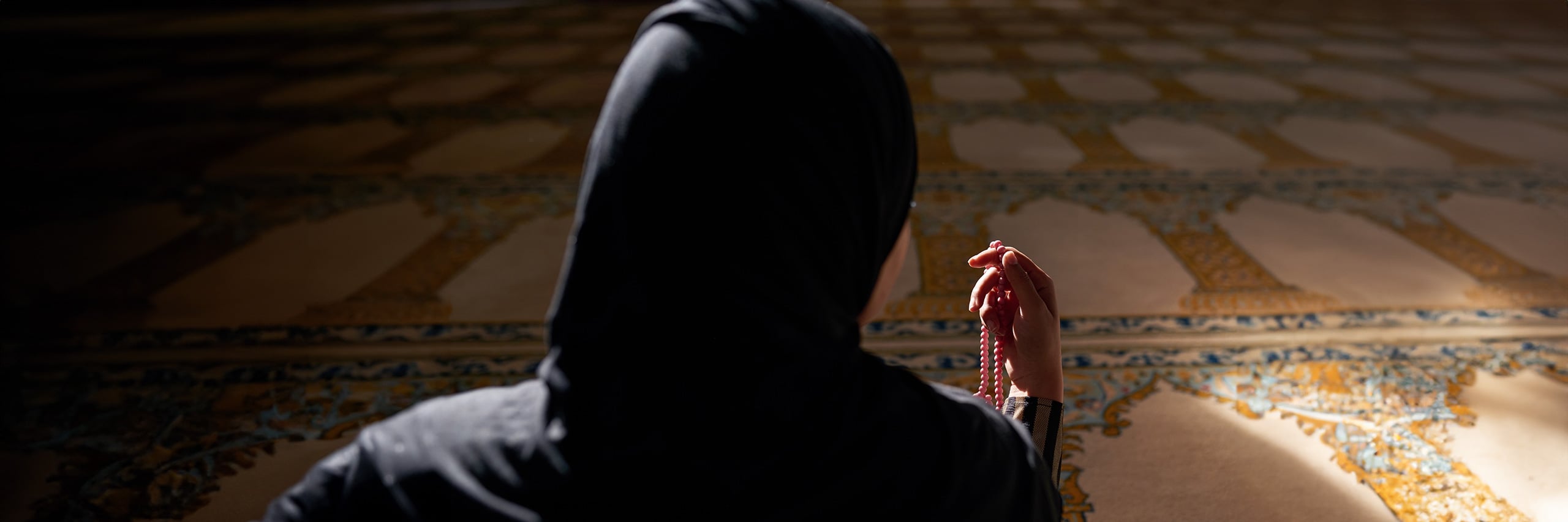
Aisha (rA) reported that when the last ten nights of Ramadan arrived, the Prophet ﷺ would tighten his belt, spend the night in worship, and awaken his family (agreed upon). This is the time that, as Muslims, we put in the most effort, praying for longer and later in the night, hoping for Laylat al-Qadr, asking to be accepted by Allah.
For women though, there is always disappointment and sadness if menstruation starts during the last ten nights of Ramadan. All the blessings seem to be out of reach, and it feels like we are excluded from the immense rewards.
Aisha (rA) went through something similar. She had intended Hajj, but began menstruating. The feelings of frustration, sorrow, and even rejection are feelings that many women know all too well. The Prophet ﷺ walked in on her as she was weeping, and he immediately knew. "What is the matter? Are you menstruating? " he asked. She responded in the affirmative. The Prophet comforted her. "This is a matter that Allah has decreed for the daughters of Adam," he said, "so complete the rites of Hajj pilgrimage as other pilgrims do, but do not circle around the House" (agreed upon).
Many women worry that getting their menstruation during a blessed time could be a sign of Allah's displeasure. We equate it with exclusion-when people exclude, it is because they do not like you or they see you as unworthy, so we subconsciously project that onto Allah, believing that He might not like us and deems us unworthy. But the Prophet ﷺ comforted Aisha (rA) and all of us by banishing the thought-your natural cycle, that Allah gave you as a blessing and for a wisdom, is simply something that Allah decreed. When you start your period has nothing to do with Allah's pleasure with you.
He then taught Aisha (rA) what she should do. Out of mercy, Allah decreed that women should not do the prayer or fast during menstruation. We are rewarded for submitting to and obeying Him, so not fasting becomes an act of obedience, as does not praying during this time. We are in a state of submission because we fast and pray when He tells us to and we refrain from doing so when He forbids us. The state of the heart is the same: loving submission to the commands of our Merciful Lord.
But what about connection? We might miss those actions. We might want to pray for long hours during the night, or join the congregation in the mosque. Yet menstruation does not mean you are cut off from Allah. In fact, just like the Prophet ﷺ taught Aisha (rA) that there were things she should be doing to worship Allah, we have so many avenues to worship Him and come closer to Him during these last ten nights. Indeed, it teaches us how to turn to Him no matter our state.
1- Reciting Qur'an
If you take the opinion that reciting Qur'an is permissible, then continue to recite and reflect upon it, or simply listen to its recitation, as well as delving into digestible tafsir (exegesis). The Qur'an is a blessing not simply when we recite it, but when we implement its teachings and practice it. When Aisha (rA) was asked about the character of the Prophet ﷺ, she said that his character was the Qur'an (Sahih Muslim, no. 746). The Prophet was described as being the most generous of people, and he was even more generous during Ramadan, when Jibril would revise the Qur'an with him (agreed upon). This shows us that the Qur'an impacted him even more during Ramadan.
So connect with the Qur'an during this time. Connect with Allah's words-nothing soothes the soul more than His own words to us. Allah says,
"We send down the Qur'an as a healing and mercy for the believers..." (Qur'an 17:82).
2- Remembrance
Allah says,
"Remember Me; I will remember you. And thank Me, and never be ungrateful" (Qur'an 2:152).
The Prophet ﷺ said, "Allah said, 'I am with him [My servant] if he remembers Me'" (Sahih al-Bukhari, no. 7405).
If we are feeling alone, or far from Allah, then the antidote is simply to remember Him. To talk to Him. Allah tells us that He is with us when we do. And the Prophet ﷺ taught us profound words of remembrance and praise. For example, he taught that "Alhamdulillah (all praise and gratitude is for Allah alone) fills the scale" (Sahih Muslim, no. 223). Take the time to just sit down, contemplate your blessings, and even the tests that you are growing through, and praise Allah for them. The Prophet ﷺ also taught, "Whoever declares the glory of Allah and His praises (subhanAllah wa bihamdihi) one hundred times every day, his sins will be diminished even if they are like the foam of the sea" (agreed upon). Reflect upon what these remembrances mean and increase in your hope, love, and closeness to Allah.
The Prophet ﷺ also said, "Those in solitude have raced ahead." They said, "O Messenger of Allah, who are those in solitude? The Prophet said, "They are men and women who remember Allah often" (Sahih Muslim, no. 2676).
3- dua
"When My servants ask you [O Prophet] about Me: I am truly near. I respond to one's prayer when they call upon Me" (Qur'an 2:186).
dua is always open to us. You can wake up before Fajr if you want, and spend the last third of the night pouring your heart out to Him and asking. Keep seeking the blessings of the Night of Decree (Laylat al-Qadr). The Prophet ﷺ said, "Verily, Allah is abundant in grace and generous. He would be shy, when a person raises his hands to Him, to turn them away empty and disappointed" (Sunan al-Tirmidhi, no. 3556).
When Aisha (rA) asked the Prophet ﷺ what she should say if she knew which night Laylat al-Qadr was, he said, "Say: O Allah, You are pardoning. You love to pardon, so pardon me" (Sunan al-Tirmidhi, no. 3513).
Allah is al-Sami al-Mujib—He hears you and answers in the best way. Keep asking.
4- Use your energy to help those fasting
Since you are not fasting, use your extra energy to serve those who are fasting or in need. Once, the companions were on a journey with the Prophet ﷺ. Some were fasting and some were not. It was a hot day and they stopped to rest. The fasting ones fell to the ground, but those not fasting got up to pitch the tents and water the animals. The Prophet ﷺ said,
"Those who were not fasting today have taken all the reward" (Sahih al-Bukhari, no. 2890).
You can also get great rewards by helping others while not fasting. The Prophet ﷺ taught us that "Whoever feeds a fasting person, he will have the same reward as him" (Sunan al-Tirmidhi, no. 807). The Prophet ﷺ also reminded us, "Whoever would love to be shaded in the shade of Allah, let him help someone in hardship or waive a loan" (Musnad Ahmad, no. 15520).
There is so much good we can do for others, like helping them worship, that Allah rewards us for.
5- Charity
Allah says in the Qur'an,
"Those who spend their wealth in charity day and night, secretly and openly-their reward is with their Lord, and there will be no fear for them, nor will they grieve." (2:274)
Whatever little you can do, Allah is al-Shakur (the Most Appreciative). Out of His generosity, He rewards the little we give with huge blessings.
The Prophet ﷺ was the most generous of people, and he was even more generous during Ramadan when Jibril would revise the Qur'an with him (agreed upon). This is a time to give! Let reflecting on the Qur'an make you even more giving, following the sunnah of the beloved ﷺ.
6- The worship of the heart
We often focus on outward actions instead of our hearts. The Prophet ﷺ once pointed out a man to the companions, saying he was from the people of Paradise. Abdullah ibn Amr (rA) wanted to know what was special about him and expected something extraordinary. He spent three nights with him, but saw nothing unusual. Finally, he asked him. The man replied, "It is not but as you see, except that I find no malice within myself towards the Muslims, nor do I envy anyone for the good that Allah has given them." Abdullah said, "It is these virtues that have elevated you to this status, and these are the same qualities that we have not been able to maintain" (Musnad Ahmad, no. 12697). Spending these nights working on our hearts—our hope in Allah, our contentment with His decree, and self-examination (muhasabah)—is worship He loves.
There are many ways to worship Allah and connect to Him. Allah's door is never closed, especially to those who seek Him and want closeness. If you cannot do one or two acts of worship, be happy that you can do so many others.
May Allah accept it.
For more ways to worship during your period, look at 10 Acts of Worship When You Can't Pray | Blog | Yaqeen Institute for Islamic Research.
Summary: Muslim Life Guide in the Muslim World: Last Ten Nights, Menstruation, dua and Ramadan Worship is presented here as a clear English Islamic knowledge article for Muslim readers, starting with this scene: Aisha (rA) reported that when the last ten nights of Ramadan arrived, the Prophet ﷺ would tighten his belt, spend the night in worship, and awaken his family (agreed upon). It keeps the original names, Quran and hadith references, dua, photographs, and religious context while focusing on Ramadan Worship, Muslim Women, dua.
Aisha (rA) reported that when the last ten nights of Ramadan arrived, the Prophet ﷺ would tighten his belt, spend the night in worship, and awaken his family (agreed upon). This is the time that, as Muslims, we put in the most effort, praying for longer and later in the night, hoping for Laylat al-Qadr, asking to be accepted by Allah.
For women though, there is always disappointment and sadness if menstruation starts during the last ten nights of Ramadan. All the blessings seem to be out of reach, and it feels like we are excluded from the immense rewards.
Aisha (rA) went through something similar. She had intended Hajj, but began menstruating. The feelings of frustration, sorrow, and even rejection are feelings that many women know all too well. The Prophet ﷺ walked in on her as she was weeping, and he immediately knew. "What is the matter? Are you menstruating? " he asked. She responded in the affirmative. The Prophet comforted her. "This is a matter that Allah has decreed for the daughters of Adam," he said, "so complete the rites of Hajj pilgrimage as other pilgrims do, but do not circle around the House" (agreed upon).
Many women worry that getting their menstruation during a blessed time could be a sign of Allah's displeasure. We equate it with exclusion-when people exclude, it is because they do not like you or they see you as unworthy, so we subconsciously project that onto Allah, believing that He might not like us and deems us unworthy. But the Prophet ﷺ comforted Aisha (rA) and all of us by banishing the thought-your natural cycle, that Allah gave you as a blessing and for a wisdom, is simply something that Allah decreed. When you start your period has nothing to do with Allah's pleasure with you.
He then taught Aisha (rA) what she should do. Out of mercy, Allah decreed that women should not do the prayer or fast during menstruation. We are rewarded for submitting to and obeying Him, so not fasting becomes an act of obedience, as does not praying during this time. We are in a state of submission because we fast and pray when He tells us to and we refrain from doing so when He forbids us. The state of the heart is the same: loving submission to the commands of our Merciful Lord.
But what about connection? We might miss those actions. We might want to pray for long hours during the night, or join the congregation in the mosque. Yet menstruation does not mean you are cut off from Allah. In fact, just like the Prophet ﷺ taught Aisha (rA) that there were things she should be doing to worship Allah, we have so many avenues to worship Him and come closer to Him during these last ten nights. Indeed, it teaches us how to turn to Him no matter our state.
1- Reciting Qur'an
If you take the opinion that reciting Qur'an is permissible, then continue to recite and reflect upon it, or simply listen to its recitation, as well as delving into digestible tafsir (exegesis). The Qur'an is a blessing not simply when we recite it, but when we implement its teachings and practice it. When Aisha (rA) was asked about the character of the Prophet ﷺ, she said that his character was the Qur'an (Sahih Muslim, no. 746). The Prophet was described as being the most generous of people, and he was even more generous during Ramadan, when Jibril would revise the Qur'an with him (agreed upon). This shows us that the Qur'an impacted him even more during Ramadan.
So connect with the Qur'an during this time. Connect with Allah's words-nothing soothes the soul more than His own words to us. Allah says,
"We send down the Qur'an as a healing and mercy for the believers..." (Qur'an 17:82).
2- Remembrance
Allah says,
"Remember Me; I will remember you. And thank Me, and never be ungrateful" (Qur'an 2:152).
The Prophet ﷺ said, "Allah said, 'I am with him [My servant] if he remembers Me'" (Sahih al-Bukhari, no. 7405).
If we are feeling alone, or far from Allah, then the antidote is simply to remember Him. To talk to Him. Allah tells us that He is with us when we do. And the Prophet ﷺ taught us profound words of remembrance and praise. For example, he taught that "Alhamdulillah (all praise and gratitude is for Allah alone) fills the scale" (Sahih Muslim, no. 223). Take the time to just sit down, contemplate your blessings, and even the tests that you are growing through, and praise Allah for them. The Prophet ﷺ also taught, "Whoever declares the glory of Allah and His praises (subhanAllah wa bihamdihi) one hundred times every day, his sins will be diminished even if they are like the foam of the sea" (agreed upon). Reflect upon what these remembrances mean and increase in your hope, love, and closeness to Allah.
The Prophet ﷺ also said, "Those in solitude have raced ahead." They said, "O Messenger of Allah, who are those in solitude? The Prophet said, "They are men and women who remember Allah often" (Sahih Muslim, no. 2676).
3- dua
"When My servants ask you [O Prophet] about Me: I am truly near. I respond to one's prayer when they call upon Me" (Qur'an 2:186).
dua is always open to us. You can wake up before Fajr if you want, and spend the last third of the night pouring your heart out to Him and asking. Keep seeking the blessings of the Night of Decree (Laylat al-Qadr). The Prophet ﷺ said, "Verily, Allah is abundant in grace and generous. He would be shy, when a person raises his hands to Him, to turn them away empty and disappointed" (Sunan al-Tirmidhi, no. 3556).
When Aisha (rA) asked the Prophet ﷺ what she should say if she knew which night Laylat al-Qadr was, he said, "Say: O Allah, You are pardoning. You love to pardon, so pardon me" (Sunan al-Tirmidhi, no. 3513).
Allah is al-Sami al-Mujib—He hears you and answers in the best way. Keep asking.
4- Use your energy to help those fasting
Since you are not fasting, use your extra energy to serve those who are fasting or in need. Once, the companions were on a journey with the Prophet ﷺ. Some were fasting and some were not. It was a hot day and they stopped to rest. The fasting ones fell to the ground, but those not fasting got up to pitch the tents and water the animals. The Prophet ﷺ said,
"Those who were not fasting today have taken all the reward" (Sahih al-Bukhari, no. 2890).
You can also get great rewards by helping others while not fasting. The Prophet ﷺ taught us that "Whoever feeds a fasting person, he will have the same reward as him" (Sunan al-Tirmidhi, no. 807). The Prophet ﷺ also reminded us, "Whoever would love to be shaded in the shade of Allah, let him help someone in hardship or waive a loan" (Musnad Ahmad, no. 15520).
There is so much good we can do for others, like helping them worship, that Allah rewards us for.
5- Charity
Allah says in the Qur'an,
"Those who spend their wealth in charity day and night, secretly and openly-their reward is with their Lord, and there will be no fear for them, nor will they grieve." (2:274)
Whatever little you can do, Allah is al-Shakur (the Most Appreciative). Out of His generosity, He rewards the little we give with huge blessings.
The Prophet ﷺ was the most generous of people, and he was even more generous during Ramadan when Jibril would revise the Qur'an with him (agreed upon). This is a time to give! Let reflecting on the Qur'an make you even more giving, following the sunnah of the beloved ﷺ.
6- The worship of the heart
We often focus on outward actions instead of our hearts. The Prophet ﷺ once pointed out a man to the companions, saying he was from the people of Paradise. Abdullah ibn Amr (rA) wanted to know what was special about him and expected something extraordinary. He spent three nights with him, but saw nothing unusual. Finally, he asked him. The man replied, "It is not but as you see, except that I find no malice within myself towards the Muslims, nor do I envy anyone for the good that Allah has given them." Abdullah said, "It is these virtues that have elevated you to this status, and these are the same qualities that we have not been able to maintain" (Musnad Ahmad, no. 12697). Spending these nights working on our hearts—our hope in Allah, our contentment with His decree, and self-examination (muhasabah)—is worship He loves.
There are many ways to worship Allah and connect to Him. Allah's door is never closed, especially to those who seek Him and want closeness. If you cannot do one or two acts of worship, be happy that you can do so many others.
May Allah accept it.
For more ways to worship during your period, look at 10 Acts of Worship When You Can't Pray | Blog | Yaqeen Institute for Islamic Research.
Women's Rights in Islam
Articles • yhh83 posted the article • 0 comments • 940 views • 2022-08-15 03:27


A beautiful announcement that was found written on a bus in Canada
Articles • mykhan posted the article • 0 comments • 1051 views • 2022-07-28 01:18
HIJAB A head covering honored by MARY, MOTHER OF JESUS and Worn by Muslim Women
HIJAB A head covering honored by MARY, MOTHER OF JESUS and Worn by Muslim Women

Muslim Life Guide in the Muslim World: Last Ten Nights, Menstruation, Dua and Ramadan Worship
Articles • yusuf908 posted the article • 0 comments • 227 views • 2026-05-22 10:09
Reposted from the web
Summary: Muslim Life Guide in the Muslim World: Last Ten Nights, Menstruation, dua and Ramadan Worship is presented here as a clear English Islamic knowledge article for Muslim readers, starting with this scene: Aisha (rA) reported that when the last ten nights of Ramadan arrived, the Prophet ﷺ would tighten his belt, spend the night in worship, and awaken his family (agreed upon). It keeps the original names, Quran and hadith references, dua, photographs, and religious context while focusing on Ramadan Worship, Muslim Women, dua.
Aisha (rA) reported that when the last ten nights of Ramadan arrived, the Prophet ﷺ would tighten his belt, spend the night in worship, and awaken his family (agreed upon). This is the time that, as Muslims, we put in the most effort, praying for longer and later in the night, hoping for Laylat al-Qadr, asking to be accepted by Allah.
For women though, there is always disappointment and sadness if menstruation starts during the last ten nights of Ramadan. All the blessings seem to be out of reach, and it feels like we are excluded from the immense rewards.
Aisha (rA) went through something similar. She had intended Hajj, but began menstruating. The feelings of frustration, sorrow, and even rejection are feelings that many women know all too well. The Prophet ﷺ walked in on her as she was weeping, and he immediately knew. "What is the matter? Are you menstruating? " he asked. She responded in the affirmative. The Prophet comforted her. "This is a matter that Allah has decreed for the daughters of Adam," he said, "so complete the rites of Hajj pilgrimage as other pilgrims do, but do not circle around the House" (agreed upon).
Many women worry that getting their menstruation during a blessed time could be a sign of Allah's displeasure. We equate it with exclusion-when people exclude, it is because they do not like you or they see you as unworthy, so we subconsciously project that onto Allah, believing that He might not like us and deems us unworthy. But the Prophet ﷺ comforted Aisha (rA) and all of us by banishing the thought-your natural cycle, that Allah gave you as a blessing and for a wisdom, is simply something that Allah decreed. When you start your period has nothing to do with Allah's pleasure with you.
He then taught Aisha (rA) what she should do. Out of mercy, Allah decreed that women should not do the prayer or fast during menstruation. We are rewarded for submitting to and obeying Him, so not fasting becomes an act of obedience, as does not praying during this time. We are in a state of submission because we fast and pray when He tells us to and we refrain from doing so when He forbids us. The state of the heart is the same: loving submission to the commands of our Merciful Lord.
But what about connection? We might miss those actions. We might want to pray for long hours during the night, or join the congregation in the mosque. Yet menstruation does not mean you are cut off from Allah. In fact, just like the Prophet ﷺ taught Aisha (rA) that there were things she should be doing to worship Allah, we have so many avenues to worship Him and come closer to Him during these last ten nights. Indeed, it teaches us how to turn to Him no matter our state.
1- Reciting Qur'an
If you take the opinion that reciting Qur'an is permissible, then continue to recite and reflect upon it, or simply listen to its recitation, as well as delving into digestible tafsir (exegesis). The Qur'an is a blessing not simply when we recite it, but when we implement its teachings and practice it. When Aisha (rA) was asked about the character of the Prophet ﷺ, she said that his character was the Qur'an (Sahih Muslim, no. 746). The Prophet was described as being the most generous of people, and he was even more generous during Ramadan, when Jibril would revise the Qur'an with him (agreed upon). This shows us that the Qur'an impacted him even more during Ramadan.
So connect with the Qur'an during this time. Connect with Allah's words-nothing soothes the soul more than His own words to us. Allah says,
"We send down the Qur'an as a healing and mercy for the believers..." (Qur'an 17:82).
2- Remembrance
Allah says,
"Remember Me; I will remember you. And thank Me, and never be ungrateful" (Qur'an 2:152).
The Prophet ﷺ said, "Allah said, 'I am with him [My servant] if he remembers Me'" (Sahih al-Bukhari, no. 7405).
If we are feeling alone, or far from Allah, then the antidote is simply to remember Him. To talk to Him. Allah tells us that He is with us when we do. And the Prophet ﷺ taught us profound words of remembrance and praise. For example, he taught that "Alhamdulillah (all praise and gratitude is for Allah alone) fills the scale" (Sahih Muslim, no. 223). Take the time to just sit down, contemplate your blessings, and even the tests that you are growing through, and praise Allah for them. The Prophet ﷺ also taught, "Whoever declares the glory of Allah and His praises (subhanAllah wa bihamdihi) one hundred times every day, his sins will be diminished even if they are like the foam of the sea" (agreed upon). Reflect upon what these remembrances mean and increase in your hope, love, and closeness to Allah.
The Prophet ﷺ also said, "Those in solitude have raced ahead." They said, "O Messenger of Allah, who are those in solitude? The Prophet said, "They are men and women who remember Allah often" (Sahih Muslim, no. 2676).
3- dua
"When My servants ask you [O Prophet] about Me: I am truly near. I respond to one's prayer when they call upon Me" (Qur'an 2:186).
dua is always open to us. You can wake up before Fajr if you want, and spend the last third of the night pouring your heart out to Him and asking. Keep seeking the blessings of the Night of Decree (Laylat al-Qadr). The Prophet ﷺ said, "Verily, Allah is abundant in grace and generous. He would be shy, when a person raises his hands to Him, to turn them away empty and disappointed" (Sunan al-Tirmidhi, no. 3556).
When Aisha (rA) asked the Prophet ﷺ what she should say if she knew which night Laylat al-Qadr was, he said, "Say: O Allah, You are pardoning. You love to pardon, so pardon me" (Sunan al-Tirmidhi, no. 3513).
Allah is al-Sami al-Mujib—He hears you and answers in the best way. Keep asking.
4- Use your energy to help those fasting
Since you are not fasting, use your extra energy to serve those who are fasting or in need. Once, the companions were on a journey with the Prophet ﷺ. Some were fasting and some were not. It was a hot day and they stopped to rest. The fasting ones fell to the ground, but those not fasting got up to pitch the tents and water the animals. The Prophet ﷺ said,
"Those who were not fasting today have taken all the reward" (Sahih al-Bukhari, no. 2890).
You can also get great rewards by helping others while not fasting. The Prophet ﷺ taught us that "Whoever feeds a fasting person, he will have the same reward as him" (Sunan al-Tirmidhi, no. 807). The Prophet ﷺ also reminded us, "Whoever would love to be shaded in the shade of Allah, let him help someone in hardship or waive a loan" (Musnad Ahmad, no. 15520).
There is so much good we can do for others, like helping them worship, that Allah rewards us for.
5- Charity
Allah says in the Qur'an,
"Those who spend their wealth in charity day and night, secretly and openly-their reward is with their Lord, and there will be no fear for them, nor will they grieve." (2:274)
Whatever little you can do, Allah is al-Shakur (the Most Appreciative). Out of His generosity, He rewards the little we give with huge blessings.
The Prophet ﷺ was the most generous of people, and he was even more generous during Ramadan when Jibril would revise the Qur'an with him (agreed upon). This is a time to give! Let reflecting on the Qur'an make you even more giving, following the sunnah of the beloved ﷺ.
6- The worship of the heart
We often focus on outward actions instead of our hearts. The Prophet ﷺ once pointed out a man to the companions, saying he was from the people of Paradise. Abdullah ibn Amr (rA) wanted to know what was special about him and expected something extraordinary. He spent three nights with him, but saw nothing unusual. Finally, he asked him. The man replied, "It is not but as you see, except that I find no malice within myself towards the Muslims, nor do I envy anyone for the good that Allah has given them." Abdullah said, "It is these virtues that have elevated you to this status, and these are the same qualities that we have not been able to maintain" (Musnad Ahmad, no. 12697). Spending these nights working on our hearts—our hope in Allah, our contentment with His decree, and self-examination (muhasabah)—is worship He loves.
There are many ways to worship Allah and connect to Him. Allah's door is never closed, especially to those who seek Him and want closeness. If you cannot do one or two acts of worship, be happy that you can do so many others.
May Allah accept it.
For more ways to worship during your period, look at 10 Acts of Worship When You Can't Pray | Blog | Yaqeen Institute for Islamic Research. view all
Summary: Muslim Life Guide in the Muslim World: Last Ten Nights, Menstruation, dua and Ramadan Worship is presented here as a clear English Islamic knowledge article for Muslim readers, starting with this scene: Aisha (rA) reported that when the last ten nights of Ramadan arrived, the Prophet ﷺ would tighten his belt, spend the night in worship, and awaken his family (agreed upon). It keeps the original names, Quran and hadith references, dua, photographs, and religious context while focusing on Ramadan Worship, Muslim Women, dua.
Aisha (rA) reported that when the last ten nights of Ramadan arrived, the Prophet ﷺ would tighten his belt, spend the night in worship, and awaken his family (agreed upon). This is the time that, as Muslims, we put in the most effort, praying for longer and later in the night, hoping for Laylat al-Qadr, asking to be accepted by Allah.
For women though, there is always disappointment and sadness if menstruation starts during the last ten nights of Ramadan. All the blessings seem to be out of reach, and it feels like we are excluded from the immense rewards.
Aisha (rA) went through something similar. She had intended Hajj, but began menstruating. The feelings of frustration, sorrow, and even rejection are feelings that many women know all too well. The Prophet ﷺ walked in on her as she was weeping, and he immediately knew. "What is the matter? Are you menstruating? " he asked. She responded in the affirmative. The Prophet comforted her. "This is a matter that Allah has decreed for the daughters of Adam," he said, "so complete the rites of Hajj pilgrimage as other pilgrims do, but do not circle around the House" (agreed upon).
Many women worry that getting their menstruation during a blessed time could be a sign of Allah's displeasure. We equate it with exclusion-when people exclude, it is because they do not like you or they see you as unworthy, so we subconsciously project that onto Allah, believing that He might not like us and deems us unworthy. But the Prophet ﷺ comforted Aisha (rA) and all of us by banishing the thought-your natural cycle, that Allah gave you as a blessing and for a wisdom, is simply something that Allah decreed. When you start your period has nothing to do with Allah's pleasure with you.
He then taught Aisha (rA) what she should do. Out of mercy, Allah decreed that women should not do the prayer or fast during menstruation. We are rewarded for submitting to and obeying Him, so not fasting becomes an act of obedience, as does not praying during this time. We are in a state of submission because we fast and pray when He tells us to and we refrain from doing so when He forbids us. The state of the heart is the same: loving submission to the commands of our Merciful Lord.
But what about connection? We might miss those actions. We might want to pray for long hours during the night, or join the congregation in the mosque. Yet menstruation does not mean you are cut off from Allah. In fact, just like the Prophet ﷺ taught Aisha (rA) that there were things she should be doing to worship Allah, we have so many avenues to worship Him and come closer to Him during these last ten nights. Indeed, it teaches us how to turn to Him no matter our state.
1- Reciting Qur'an
If you take the opinion that reciting Qur'an is permissible, then continue to recite and reflect upon it, or simply listen to its recitation, as well as delving into digestible tafsir (exegesis). The Qur'an is a blessing not simply when we recite it, but when we implement its teachings and practice it. When Aisha (rA) was asked about the character of the Prophet ﷺ, she said that his character was the Qur'an (Sahih Muslim, no. 746). The Prophet was described as being the most generous of people, and he was even more generous during Ramadan, when Jibril would revise the Qur'an with him (agreed upon). This shows us that the Qur'an impacted him even more during Ramadan.
So connect with the Qur'an during this time. Connect with Allah's words-nothing soothes the soul more than His own words to us. Allah says,
"We send down the Qur'an as a healing and mercy for the believers..." (Qur'an 17:82).
2- Remembrance
Allah says,
"Remember Me; I will remember you. And thank Me, and never be ungrateful" (Qur'an 2:152).
The Prophet ﷺ said, "Allah said, 'I am with him [My servant] if he remembers Me'" (Sahih al-Bukhari, no. 7405).
If we are feeling alone, or far from Allah, then the antidote is simply to remember Him. To talk to Him. Allah tells us that He is with us when we do. And the Prophet ﷺ taught us profound words of remembrance and praise. For example, he taught that "Alhamdulillah (all praise and gratitude is for Allah alone) fills the scale" (Sahih Muslim, no. 223). Take the time to just sit down, contemplate your blessings, and even the tests that you are growing through, and praise Allah for them. The Prophet ﷺ also taught, "Whoever declares the glory of Allah and His praises (subhanAllah wa bihamdihi) one hundred times every day, his sins will be diminished even if they are like the foam of the sea" (agreed upon). Reflect upon what these remembrances mean and increase in your hope, love, and closeness to Allah.
The Prophet ﷺ also said, "Those in solitude have raced ahead." They said, "O Messenger of Allah, who are those in solitude? The Prophet said, "They are men and women who remember Allah often" (Sahih Muslim, no. 2676).
3- dua
"When My servants ask you [O Prophet] about Me: I am truly near. I respond to one's prayer when they call upon Me" (Qur'an 2:186).
dua is always open to us. You can wake up before Fajr if you want, and spend the last third of the night pouring your heart out to Him and asking. Keep seeking the blessings of the Night of Decree (Laylat al-Qadr). The Prophet ﷺ said, "Verily, Allah is abundant in grace and generous. He would be shy, when a person raises his hands to Him, to turn them away empty and disappointed" (Sunan al-Tirmidhi, no. 3556).
When Aisha (rA) asked the Prophet ﷺ what she should say if she knew which night Laylat al-Qadr was, he said, "Say: O Allah, You are pardoning. You love to pardon, so pardon me" (Sunan al-Tirmidhi, no. 3513).
Allah is al-Sami al-Mujib—He hears you and answers in the best way. Keep asking.
4- Use your energy to help those fasting
Since you are not fasting, use your extra energy to serve those who are fasting or in need. Once, the companions were on a journey with the Prophet ﷺ. Some were fasting and some were not. It was a hot day and they stopped to rest. The fasting ones fell to the ground, but those not fasting got up to pitch the tents and water the animals. The Prophet ﷺ said,
"Those who were not fasting today have taken all the reward" (Sahih al-Bukhari, no. 2890).
You can also get great rewards by helping others while not fasting. The Prophet ﷺ taught us that "Whoever feeds a fasting person, he will have the same reward as him" (Sunan al-Tirmidhi, no. 807). The Prophet ﷺ also reminded us, "Whoever would love to be shaded in the shade of Allah, let him help someone in hardship or waive a loan" (Musnad Ahmad, no. 15520).
There is so much good we can do for others, like helping them worship, that Allah rewards us for.
5- Charity
Allah says in the Qur'an,
"Those who spend their wealth in charity day and night, secretly and openly-their reward is with their Lord, and there will be no fear for them, nor will they grieve." (2:274)
Whatever little you can do, Allah is al-Shakur (the Most Appreciative). Out of His generosity, He rewards the little we give with huge blessings.
The Prophet ﷺ was the most generous of people, and he was even more generous during Ramadan when Jibril would revise the Qur'an with him (agreed upon). This is a time to give! Let reflecting on the Qur'an make you even more giving, following the sunnah of the beloved ﷺ.
6- The worship of the heart
We often focus on outward actions instead of our hearts. The Prophet ﷺ once pointed out a man to the companions, saying he was from the people of Paradise. Abdullah ibn Amr (rA) wanted to know what was special about him and expected something extraordinary. He spent three nights with him, but saw nothing unusual. Finally, he asked him. The man replied, "It is not but as you see, except that I find no malice within myself towards the Muslims, nor do I envy anyone for the good that Allah has given them." Abdullah said, "It is these virtues that have elevated you to this status, and these are the same qualities that we have not been able to maintain" (Musnad Ahmad, no. 12697). Spending these nights working on our hearts—our hope in Allah, our contentment with His decree, and self-examination (muhasabah)—is worship He loves.
There are many ways to worship Allah and connect to Him. Allah's door is never closed, especially to those who seek Him and want closeness. If you cannot do one or two acts of worship, be happy that you can do so many others.
May Allah accept it.
For more ways to worship during your period, look at 10 Acts of Worship When You Can't Pray | Blog | Yaqeen Institute for Islamic Research. view all
Reposted from the web
Summary: Muslim Life Guide in the Muslim World: Last Ten Nights, Menstruation, dua and Ramadan Worship is presented here as a clear English Islamic knowledge article for Muslim readers, starting with this scene: Aisha (rA) reported that when the last ten nights of Ramadan arrived, the Prophet ﷺ would tighten his belt, spend the night in worship, and awaken his family (agreed upon). It keeps the original names, Quran and hadith references, dua, photographs, and religious context while focusing on Ramadan Worship, Muslim Women, dua.
Aisha (rA) reported that when the last ten nights of Ramadan arrived, the Prophet ﷺ would tighten his belt, spend the night in worship, and awaken his family (agreed upon). This is the time that, as Muslims, we put in the most effort, praying for longer and later in the night, hoping for Laylat al-Qadr, asking to be accepted by Allah.
For women though, there is always disappointment and sadness if menstruation starts during the last ten nights of Ramadan. All the blessings seem to be out of reach, and it feels like we are excluded from the immense rewards.
Aisha (rA) went through something similar. She had intended Hajj, but began menstruating. The feelings of frustration, sorrow, and even rejection are feelings that many women know all too well. The Prophet ﷺ walked in on her as she was weeping, and he immediately knew. "What is the matter? Are you menstruating? " he asked. She responded in the affirmative. The Prophet comforted her. "This is a matter that Allah has decreed for the daughters of Adam," he said, "so complete the rites of Hajj pilgrimage as other pilgrims do, but do not circle around the House" (agreed upon).
Many women worry that getting their menstruation during a blessed time could be a sign of Allah's displeasure. We equate it with exclusion-when people exclude, it is because they do not like you or they see you as unworthy, so we subconsciously project that onto Allah, believing that He might not like us and deems us unworthy. But the Prophet ﷺ comforted Aisha (rA) and all of us by banishing the thought-your natural cycle, that Allah gave you as a blessing and for a wisdom, is simply something that Allah decreed. When you start your period has nothing to do with Allah's pleasure with you.
He then taught Aisha (rA) what she should do. Out of mercy, Allah decreed that women should not do the prayer or fast during menstruation. We are rewarded for submitting to and obeying Him, so not fasting becomes an act of obedience, as does not praying during this time. We are in a state of submission because we fast and pray when He tells us to and we refrain from doing so when He forbids us. The state of the heart is the same: loving submission to the commands of our Merciful Lord.
But what about connection? We might miss those actions. We might want to pray for long hours during the night, or join the congregation in the mosque. Yet menstruation does not mean you are cut off from Allah. In fact, just like the Prophet ﷺ taught Aisha (rA) that there were things she should be doing to worship Allah, we have so many avenues to worship Him and come closer to Him during these last ten nights. Indeed, it teaches us how to turn to Him no matter our state.
1- Reciting Qur'an
If you take the opinion that reciting Qur'an is permissible, then continue to recite and reflect upon it, or simply listen to its recitation, as well as delving into digestible tafsir (exegesis). The Qur'an is a blessing not simply when we recite it, but when we implement its teachings and practice it. When Aisha (rA) was asked about the character of the Prophet ﷺ, she said that his character was the Qur'an (Sahih Muslim, no. 746). The Prophet was described as being the most generous of people, and he was even more generous during Ramadan, when Jibril would revise the Qur'an with him (agreed upon). This shows us that the Qur'an impacted him even more during Ramadan.
So connect with the Qur'an during this time. Connect with Allah's words-nothing soothes the soul more than His own words to us. Allah says,
"We send down the Qur'an as a healing and mercy for the believers..." (Qur'an 17:82).
2- Remembrance
Allah says,
"Remember Me; I will remember you. And thank Me, and never be ungrateful" (Qur'an 2:152).
The Prophet ﷺ said, "Allah said, 'I am with him [My servant] if he remembers Me'" (Sahih al-Bukhari, no. 7405).
If we are feeling alone, or far from Allah, then the antidote is simply to remember Him. To talk to Him. Allah tells us that He is with us when we do. And the Prophet ﷺ taught us profound words of remembrance and praise. For example, he taught that "Alhamdulillah (all praise and gratitude is for Allah alone) fills the scale" (Sahih Muslim, no. 223). Take the time to just sit down, contemplate your blessings, and even the tests that you are growing through, and praise Allah for them. The Prophet ﷺ also taught, "Whoever declares the glory of Allah and His praises (subhanAllah wa bihamdihi) one hundred times every day, his sins will be diminished even if they are like the foam of the sea" (agreed upon). Reflect upon what these remembrances mean and increase in your hope, love, and closeness to Allah.
The Prophet ﷺ also said, "Those in solitude have raced ahead." They said, "O Messenger of Allah, who are those in solitude? The Prophet said, "They are men and women who remember Allah often" (Sahih Muslim, no. 2676).
3- dua
"When My servants ask you [O Prophet] about Me: I am truly near. I respond to one's prayer when they call upon Me" (Qur'an 2:186).
dua is always open to us. You can wake up before Fajr if you want, and spend the last third of the night pouring your heart out to Him and asking. Keep seeking the blessings of the Night of Decree (Laylat al-Qadr). The Prophet ﷺ said, "Verily, Allah is abundant in grace and generous. He would be shy, when a person raises his hands to Him, to turn them away empty and disappointed" (Sunan al-Tirmidhi, no. 3556).
When Aisha (rA) asked the Prophet ﷺ what she should say if she knew which night Laylat al-Qadr was, he said, "Say: O Allah, You are pardoning. You love to pardon, so pardon me" (Sunan al-Tirmidhi, no. 3513).
Allah is al-Sami al-Mujib—He hears you and answers in the best way. Keep asking.
4- Use your energy to help those fasting
Since you are not fasting, use your extra energy to serve those who are fasting or in need. Once, the companions were on a journey with the Prophet ﷺ. Some were fasting and some were not. It was a hot day and they stopped to rest. The fasting ones fell to the ground, but those not fasting got up to pitch the tents and water the animals. The Prophet ﷺ said,
"Those who were not fasting today have taken all the reward" (Sahih al-Bukhari, no. 2890).
You can also get great rewards by helping others while not fasting. The Prophet ﷺ taught us that "Whoever feeds a fasting person, he will have the same reward as him" (Sunan al-Tirmidhi, no. 807). The Prophet ﷺ also reminded us, "Whoever would love to be shaded in the shade of Allah, let him help someone in hardship or waive a loan" (Musnad Ahmad, no. 15520).
There is so much good we can do for others, like helping them worship, that Allah rewards us for.
5- Charity
Allah says in the Qur'an,
"Those who spend their wealth in charity day and night, secretly and openly-their reward is with their Lord, and there will be no fear for them, nor will they grieve." (2:274)
Whatever little you can do, Allah is al-Shakur (the Most Appreciative). Out of His generosity, He rewards the little we give with huge blessings.
The Prophet ﷺ was the most generous of people, and he was even more generous during Ramadan when Jibril would revise the Qur'an with him (agreed upon). This is a time to give! Let reflecting on the Qur'an make you even more giving, following the sunnah of the beloved ﷺ.
6- The worship of the heart
We often focus on outward actions instead of our hearts. The Prophet ﷺ once pointed out a man to the companions, saying he was from the people of Paradise. Abdullah ibn Amr (rA) wanted to know what was special about him and expected something extraordinary. He spent three nights with him, but saw nothing unusual. Finally, he asked him. The man replied, "It is not but as you see, except that I find no malice within myself towards the Muslims, nor do I envy anyone for the good that Allah has given them." Abdullah said, "It is these virtues that have elevated you to this status, and these are the same qualities that we have not been able to maintain" (Musnad Ahmad, no. 12697). Spending these nights working on our hearts—our hope in Allah, our contentment with His decree, and self-examination (muhasabah)—is worship He loves.
There are many ways to worship Allah and connect to Him. Allah's door is never closed, especially to those who seek Him and want closeness. If you cannot do one or two acts of worship, be happy that you can do so many others.
May Allah accept it.
For more ways to worship during your period, look at 10 Acts of Worship When You Can't Pray | Blog | Yaqeen Institute for Islamic Research.
Summary: Muslim Life Guide in the Muslim World: Last Ten Nights, Menstruation, dua and Ramadan Worship is presented here as a clear English Islamic knowledge article for Muslim readers, starting with this scene: Aisha (rA) reported that when the last ten nights of Ramadan arrived, the Prophet ﷺ would tighten his belt, spend the night in worship, and awaken his family (agreed upon). It keeps the original names, Quran and hadith references, dua, photographs, and religious context while focusing on Ramadan Worship, Muslim Women, dua.
Aisha (rA) reported that when the last ten nights of Ramadan arrived, the Prophet ﷺ would tighten his belt, spend the night in worship, and awaken his family (agreed upon). This is the time that, as Muslims, we put in the most effort, praying for longer and later in the night, hoping for Laylat al-Qadr, asking to be accepted by Allah.
For women though, there is always disappointment and sadness if menstruation starts during the last ten nights of Ramadan. All the blessings seem to be out of reach, and it feels like we are excluded from the immense rewards.
Aisha (rA) went through something similar. She had intended Hajj, but began menstruating. The feelings of frustration, sorrow, and even rejection are feelings that many women know all too well. The Prophet ﷺ walked in on her as she was weeping, and he immediately knew. "What is the matter? Are you menstruating? " he asked. She responded in the affirmative. The Prophet comforted her. "This is a matter that Allah has decreed for the daughters of Adam," he said, "so complete the rites of Hajj pilgrimage as other pilgrims do, but do not circle around the House" (agreed upon).
Many women worry that getting their menstruation during a blessed time could be a sign of Allah's displeasure. We equate it with exclusion-when people exclude, it is because they do not like you or they see you as unworthy, so we subconsciously project that onto Allah, believing that He might not like us and deems us unworthy. But the Prophet ﷺ comforted Aisha (rA) and all of us by banishing the thought-your natural cycle, that Allah gave you as a blessing and for a wisdom, is simply something that Allah decreed. When you start your period has nothing to do with Allah's pleasure with you.
He then taught Aisha (rA) what she should do. Out of mercy, Allah decreed that women should not do the prayer or fast during menstruation. We are rewarded for submitting to and obeying Him, so not fasting becomes an act of obedience, as does not praying during this time. We are in a state of submission because we fast and pray when He tells us to and we refrain from doing so when He forbids us. The state of the heart is the same: loving submission to the commands of our Merciful Lord.
But what about connection? We might miss those actions. We might want to pray for long hours during the night, or join the congregation in the mosque. Yet menstruation does not mean you are cut off from Allah. In fact, just like the Prophet ﷺ taught Aisha (rA) that there were things she should be doing to worship Allah, we have so many avenues to worship Him and come closer to Him during these last ten nights. Indeed, it teaches us how to turn to Him no matter our state.
1- Reciting Qur'an
If you take the opinion that reciting Qur'an is permissible, then continue to recite and reflect upon it, or simply listen to its recitation, as well as delving into digestible tafsir (exegesis). The Qur'an is a blessing not simply when we recite it, but when we implement its teachings and practice it. When Aisha (rA) was asked about the character of the Prophet ﷺ, she said that his character was the Qur'an (Sahih Muslim, no. 746). The Prophet was described as being the most generous of people, and he was even more generous during Ramadan, when Jibril would revise the Qur'an with him (agreed upon). This shows us that the Qur'an impacted him even more during Ramadan.
So connect with the Qur'an during this time. Connect with Allah's words-nothing soothes the soul more than His own words to us. Allah says,
"We send down the Qur'an as a healing and mercy for the believers..." (Qur'an 17:82).
2- Remembrance
Allah says,
"Remember Me; I will remember you. And thank Me, and never be ungrateful" (Qur'an 2:152).
The Prophet ﷺ said, "Allah said, 'I am with him [My servant] if he remembers Me'" (Sahih al-Bukhari, no. 7405).
If we are feeling alone, or far from Allah, then the antidote is simply to remember Him. To talk to Him. Allah tells us that He is with us when we do. And the Prophet ﷺ taught us profound words of remembrance and praise. For example, he taught that "Alhamdulillah (all praise and gratitude is for Allah alone) fills the scale" (Sahih Muslim, no. 223). Take the time to just sit down, contemplate your blessings, and even the tests that you are growing through, and praise Allah for them. The Prophet ﷺ also taught, "Whoever declares the glory of Allah and His praises (subhanAllah wa bihamdihi) one hundred times every day, his sins will be diminished even if they are like the foam of the sea" (agreed upon). Reflect upon what these remembrances mean and increase in your hope, love, and closeness to Allah.
The Prophet ﷺ also said, "Those in solitude have raced ahead." They said, "O Messenger of Allah, who are those in solitude? The Prophet said, "They are men and women who remember Allah often" (Sahih Muslim, no. 2676).
3- dua
"When My servants ask you [O Prophet] about Me: I am truly near. I respond to one's prayer when they call upon Me" (Qur'an 2:186).
dua is always open to us. You can wake up before Fajr if you want, and spend the last third of the night pouring your heart out to Him and asking. Keep seeking the blessings of the Night of Decree (Laylat al-Qadr). The Prophet ﷺ said, "Verily, Allah is abundant in grace and generous. He would be shy, when a person raises his hands to Him, to turn them away empty and disappointed" (Sunan al-Tirmidhi, no. 3556).
When Aisha (rA) asked the Prophet ﷺ what she should say if she knew which night Laylat al-Qadr was, he said, "Say: O Allah, You are pardoning. You love to pardon, so pardon me" (Sunan al-Tirmidhi, no. 3513).
Allah is al-Sami al-Mujib—He hears you and answers in the best way. Keep asking.
4- Use your energy to help those fasting
Since you are not fasting, use your extra energy to serve those who are fasting or in need. Once, the companions were on a journey with the Prophet ﷺ. Some were fasting and some were not. It was a hot day and they stopped to rest. The fasting ones fell to the ground, but those not fasting got up to pitch the tents and water the animals. The Prophet ﷺ said,
"Those who were not fasting today have taken all the reward" (Sahih al-Bukhari, no. 2890).
You can also get great rewards by helping others while not fasting. The Prophet ﷺ taught us that "Whoever feeds a fasting person, he will have the same reward as him" (Sunan al-Tirmidhi, no. 807). The Prophet ﷺ also reminded us, "Whoever would love to be shaded in the shade of Allah, let him help someone in hardship or waive a loan" (Musnad Ahmad, no. 15520).
There is so much good we can do for others, like helping them worship, that Allah rewards us for.
5- Charity
Allah says in the Qur'an,
"Those who spend their wealth in charity day and night, secretly and openly-their reward is with their Lord, and there will be no fear for them, nor will they grieve." (2:274)
Whatever little you can do, Allah is al-Shakur (the Most Appreciative). Out of His generosity, He rewards the little we give with huge blessings.
The Prophet ﷺ was the most generous of people, and he was even more generous during Ramadan when Jibril would revise the Qur'an with him (agreed upon). This is a time to give! Let reflecting on the Qur'an make you even more giving, following the sunnah of the beloved ﷺ.
6- The worship of the heart
We often focus on outward actions instead of our hearts. The Prophet ﷺ once pointed out a man to the companions, saying he was from the people of Paradise. Abdullah ibn Amr (rA) wanted to know what was special about him and expected something extraordinary. He spent three nights with him, but saw nothing unusual. Finally, he asked him. The man replied, "It is not but as you see, except that I find no malice within myself towards the Muslims, nor do I envy anyone for the good that Allah has given them." Abdullah said, "It is these virtues that have elevated you to this status, and these are the same qualities that we have not been able to maintain" (Musnad Ahmad, no. 12697). Spending these nights working on our hearts—our hope in Allah, our contentment with His decree, and self-examination (muhasabah)—is worship He loves.
There are many ways to worship Allah and connect to Him. Allah's door is never closed, especially to those who seek Him and want closeness. If you cannot do one or two acts of worship, be happy that you can do so many others.
May Allah accept it.
For more ways to worship during your period, look at 10 Acts of Worship When You Can't Pray | Blog | Yaqeen Institute for Islamic Research.
Women's Rights in Islam
Articles • yhh83 posted the article • 0 comments • 940 views • 2022-08-15 03:27
A beautiful announcement that was found written on a bus in Canada
Articles • mykhan posted the article • 0 comments • 1051 views • 2022-07-28 01:18
HIJAB A head covering honored by MARY, MOTHER OF JESUS and Worn by Muslim Women
HIJAB A head covering honored by MARY, MOTHER OF JESUS and Worn by Muslim Women