

New Restaurants
Halal Food Guide: Beijing New Restaurants - Turkish, Tunisian and Local Eats (Part 1)
Articles • ali2007fr posted the article • 0 comments • 199 views • 2026-05-19 21:24
Reposted from the web
Summary: Beijing New Restaurants - Turkish, Tunisian and Local Eats (Part 1) is presented as a clear English travel account for readers interested in Muslim life, halal food, mosques, and local history. The article keeps the original names, food details, photographs, and cultural context while focusing on Beijing Halal Food, New Restaurants, Muslim Travel.
1. Sultan Turkish Restaurant, Beijing branch
The super delicious Turkish Mado breakfast has finally arrived in Beijing!
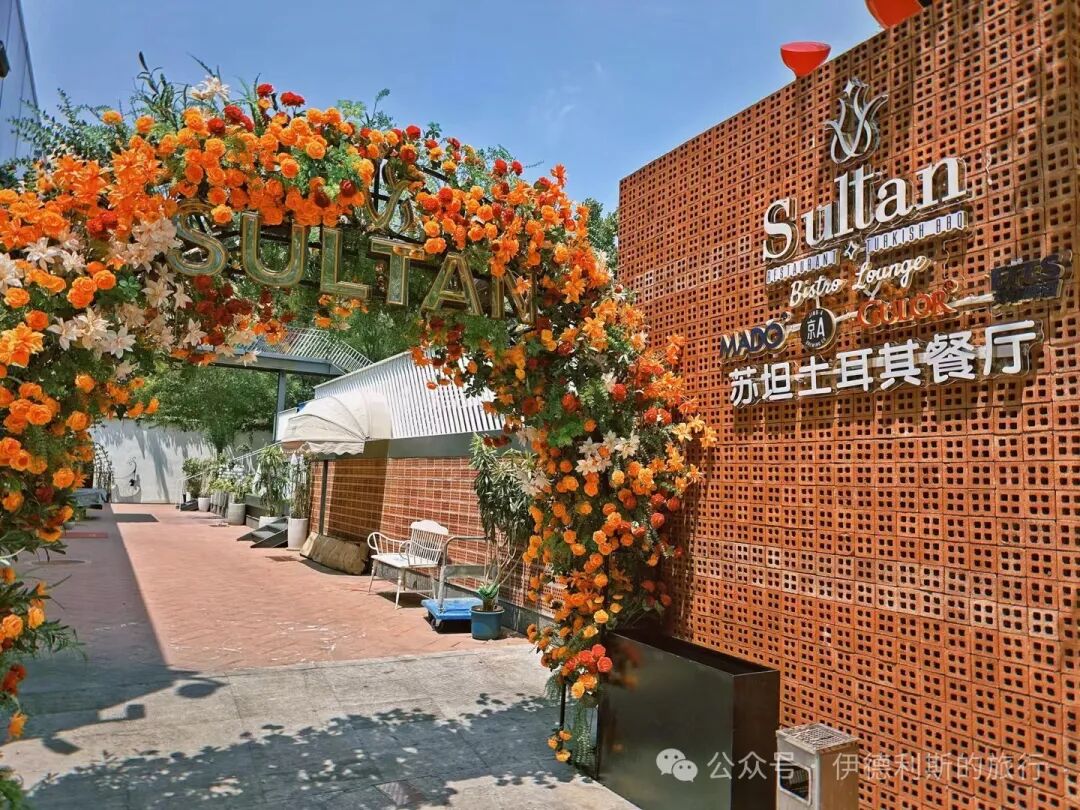
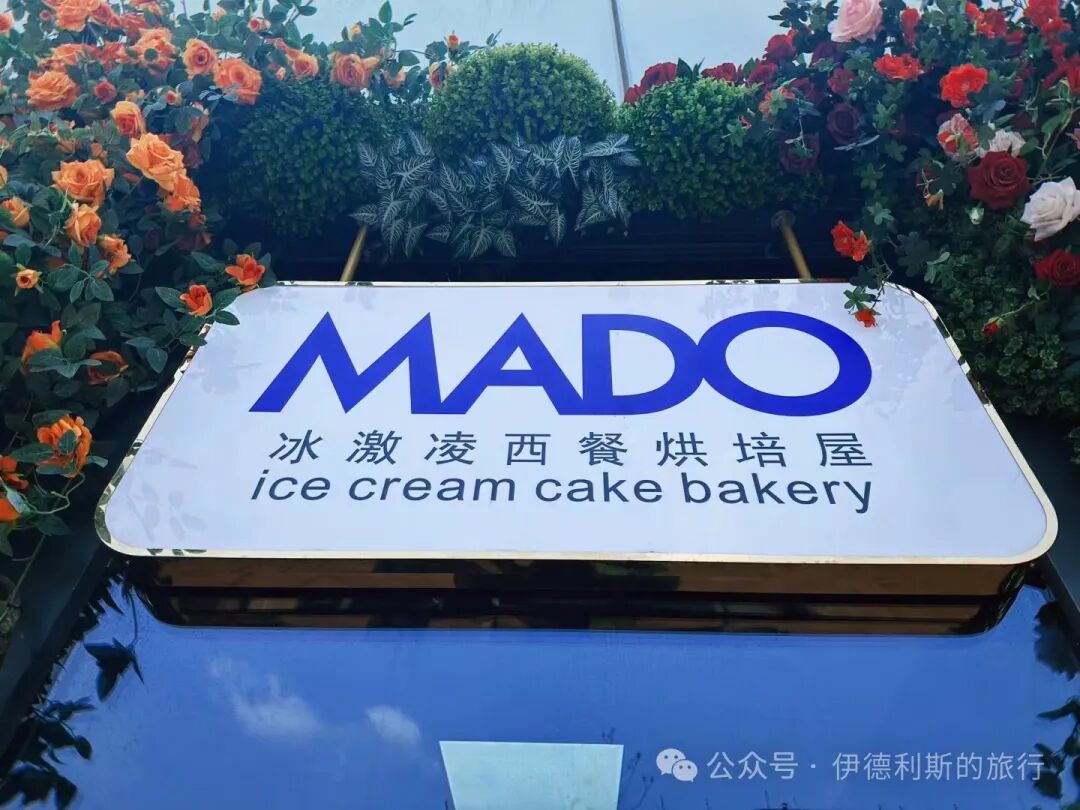
The famous Sultan Turkish Restaurant from Guangzhou and Yiwu recently opened in Beijing at the former location of the Kubei Turkish Restaurant in Zuojiazhuang. The owner of Sultan also brought the famous Turkish Mado ice cream shop to China, so after you enter, the staff will provide two menus: one for Sultan and one for Mado.
Mado comes from the city of Kahramanmarash in southeastern Turkey, and its biggest feature is that everything is made using goat milk from their hometown. Besides ice cream, their various cheeses are also a main specialty. Of course, there is also my favorite Turkish breakfast.
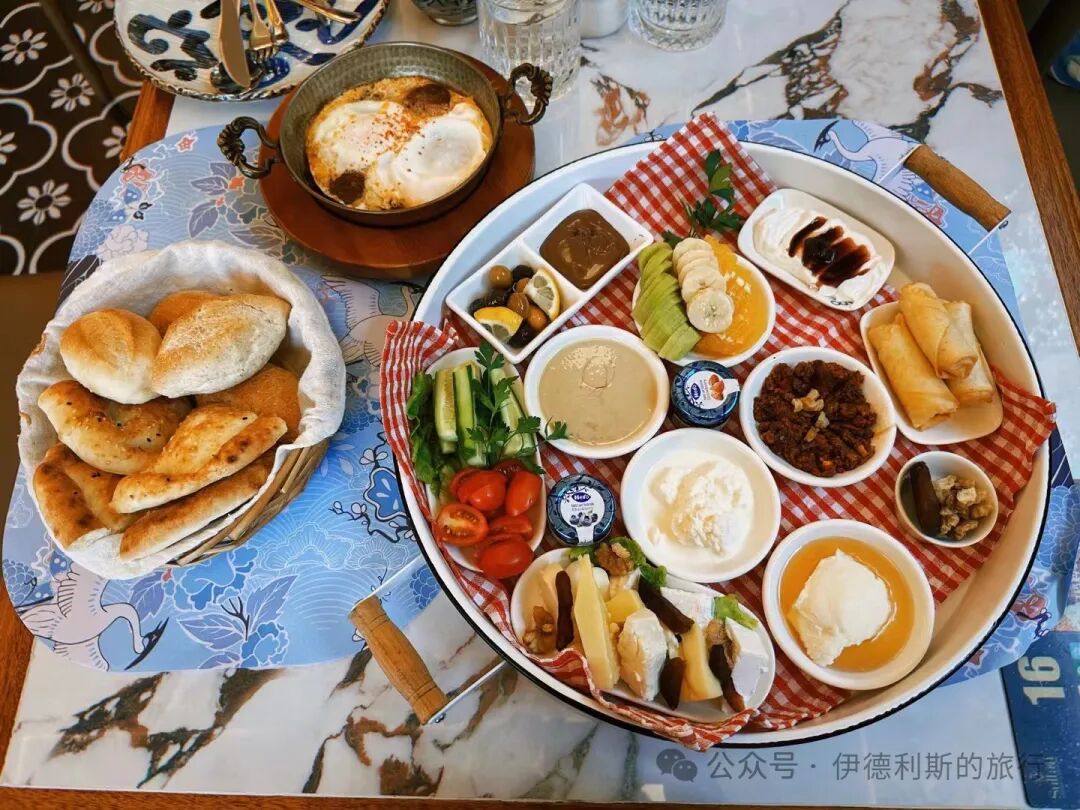
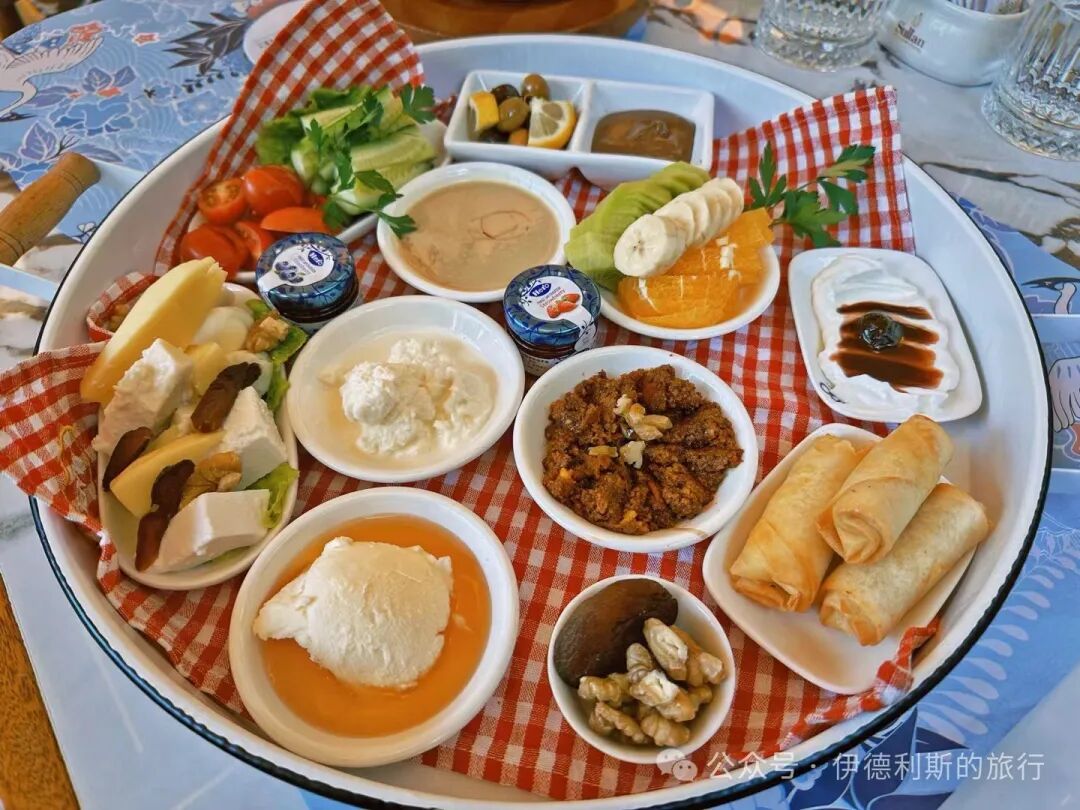
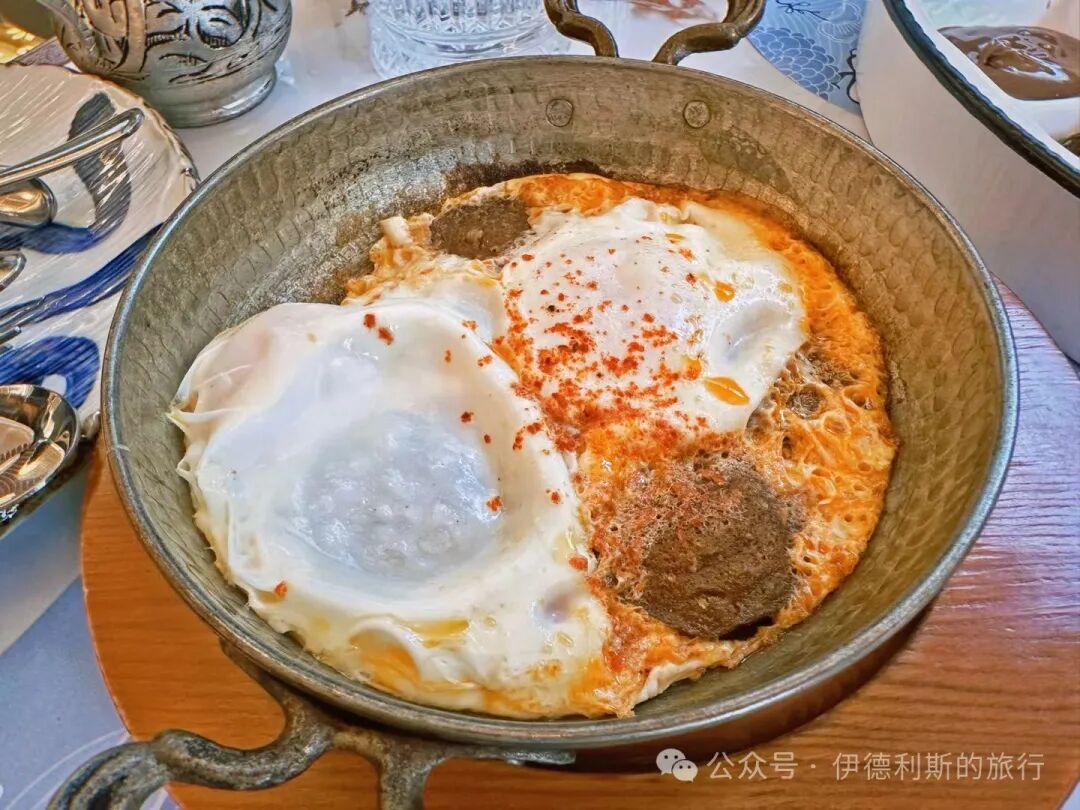
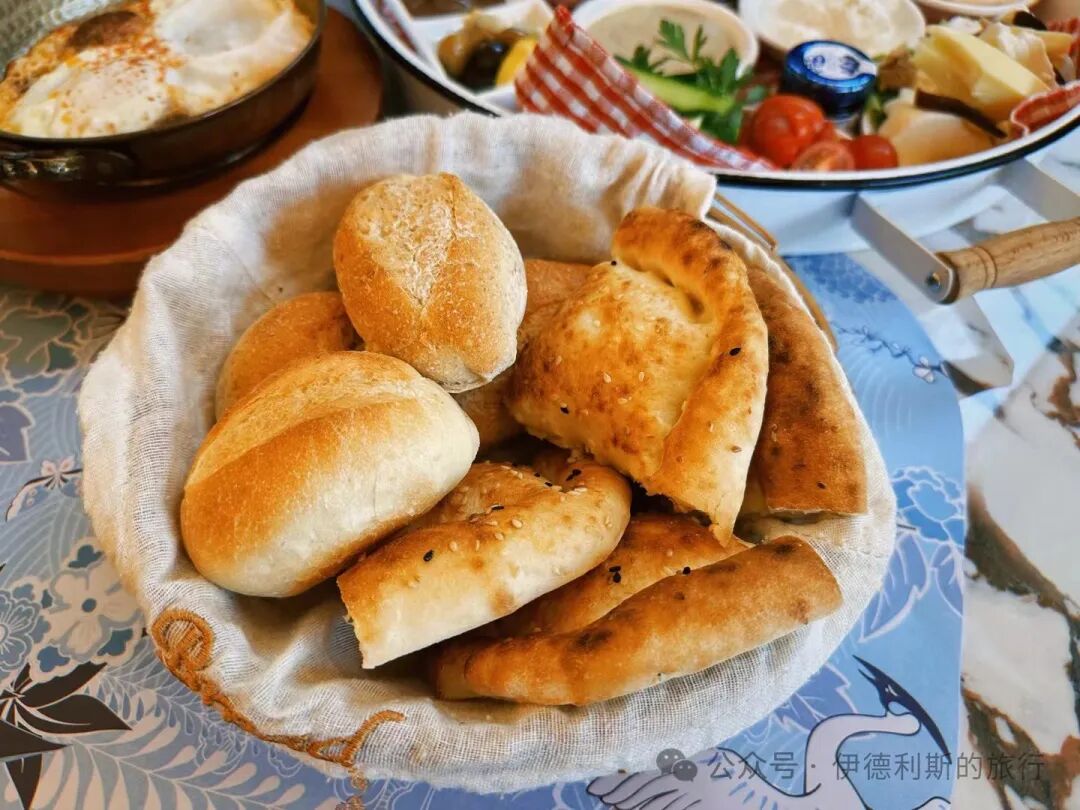
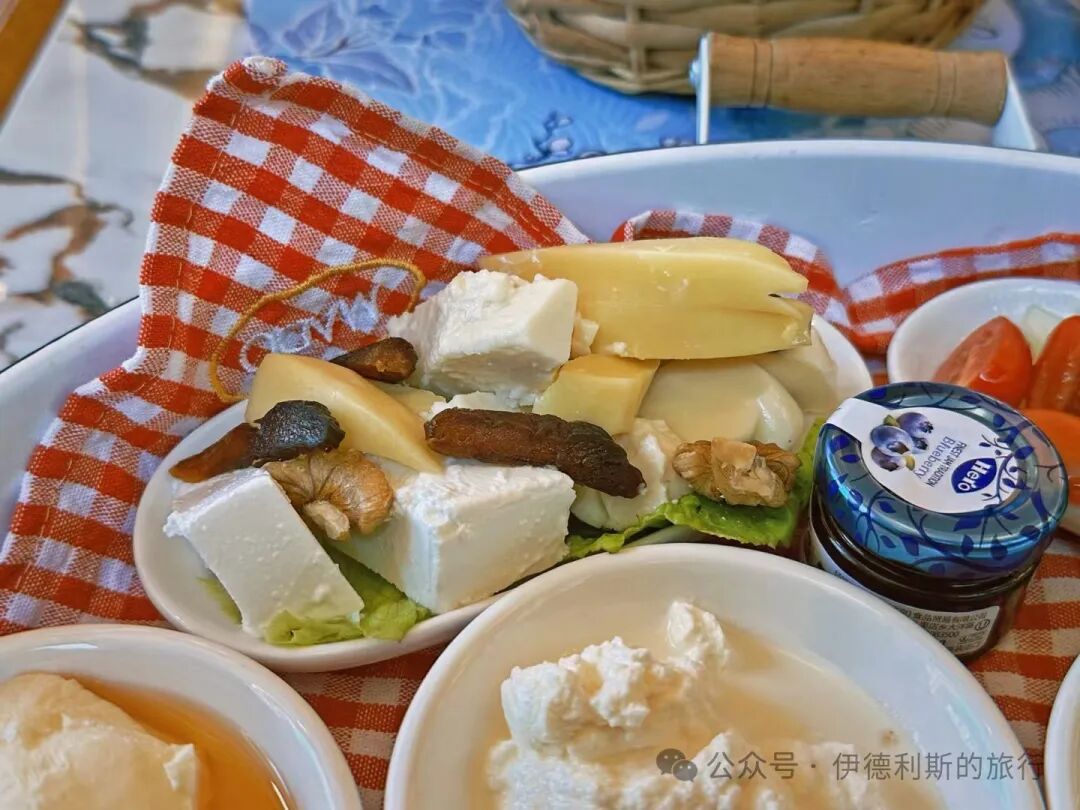
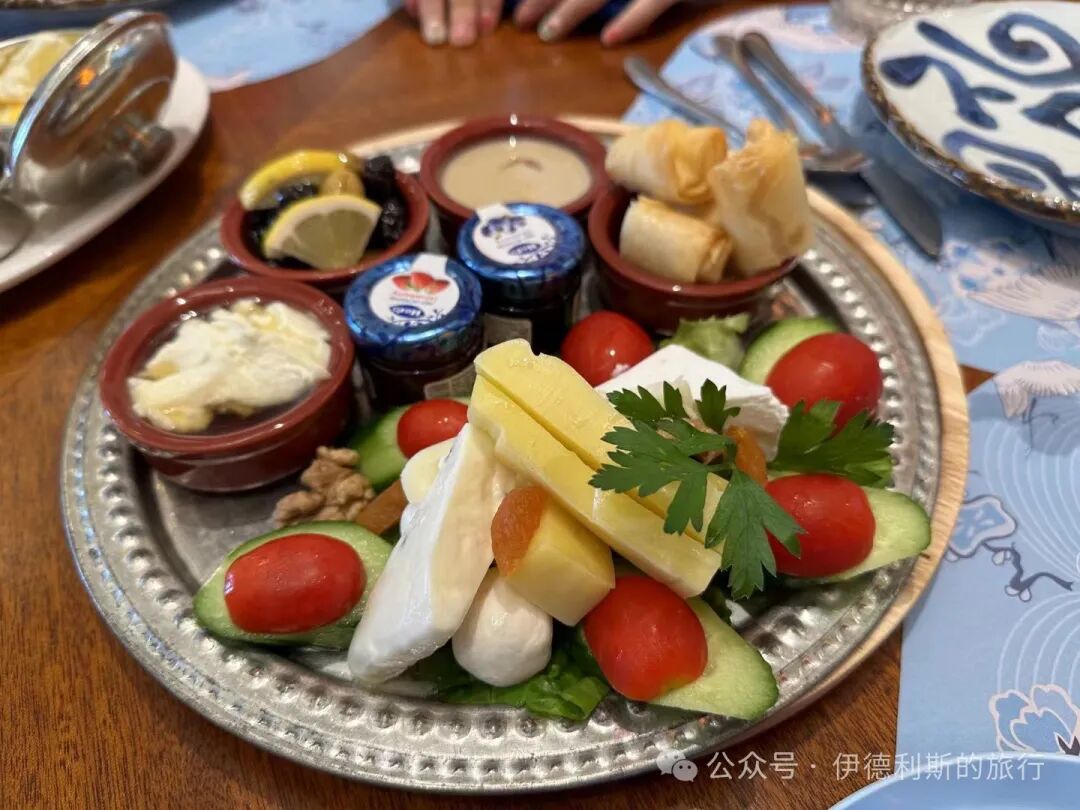
Friends who have been to Turkey probably know that Turkish breakfast is really hearty, nutritious, and healthy. I have eaten Mado breakfast at their Yiwu and Guangzhou locations before, and this time I finally got to have it in Beijing. Mado offers many types of breakfast. We ordered the meal for two, which starts at 10:30 and is available all day. The meal for two includes Turkish-style fried eggs with sausage (sucuk), Maras cheese (maras peyniri), feta cheese (beyaz peynir), yellow cheese platter, honey with clotted cream (kaymak), green olives, black olives, tomato pepper paste (acuka), tahini syrup (tahin pekmez), cherry jam, dried apricots, walnuts, feta cheese spring rolls (sigara boregi), a kiwi, orange, and banana platter, a cucumber and tomato platter, plus bread, flatbread (pide), and Turkish black tea. It is a very rich variety. Their flatbread (pide) is especially fluffy. It tastes great when you tear it open and spread different jams on it.
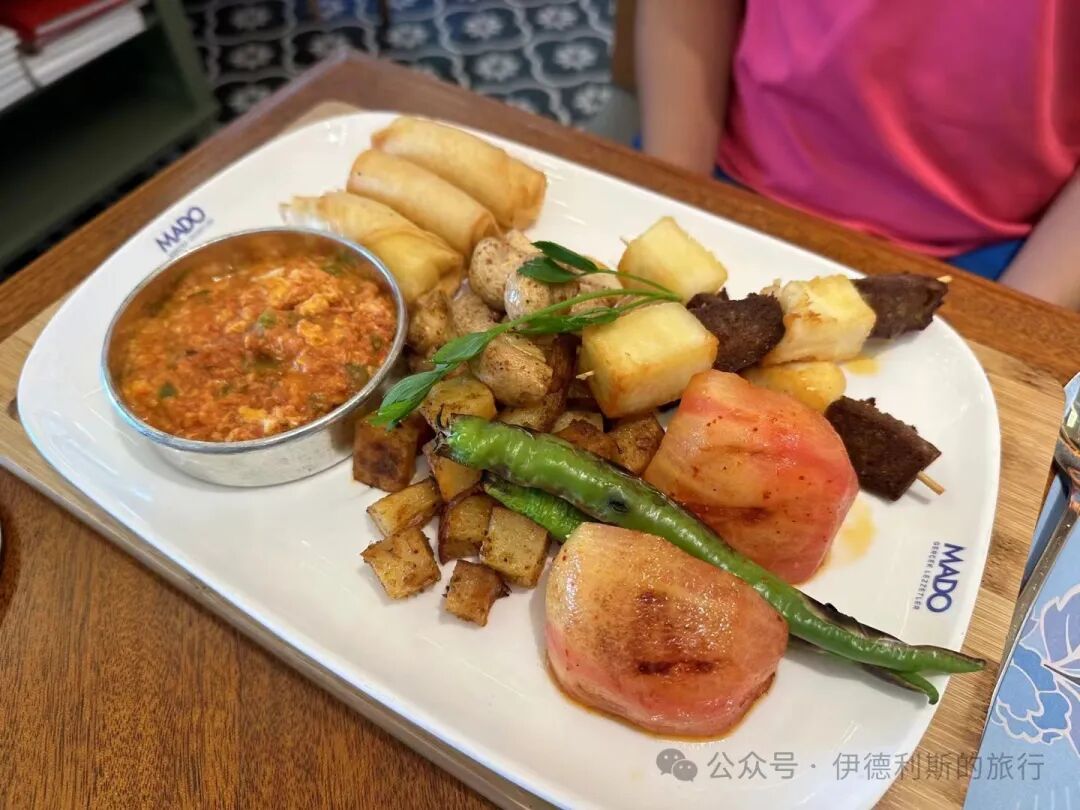
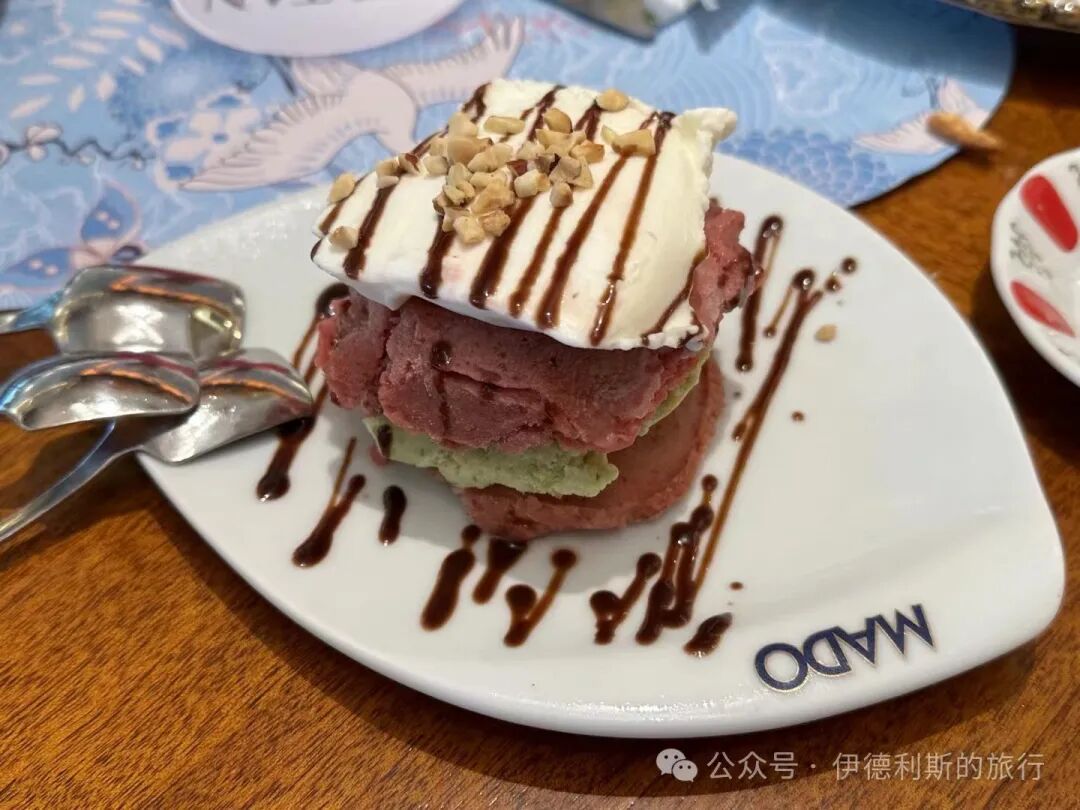
On my second visit to Sultan, I ordered two of Mado's single-person breakfasts, homemade lemonade, and ice cream. This place is likely the most authentic Turkish breakfast you can find in Beijing. The only disappointing part is that the jam is store-bought in jars. You would never find a place in Turkey that serves breakfast jam like that. Also, the single-person breakfast does not come with bread like the meal for two does; you have to buy the bread separately.
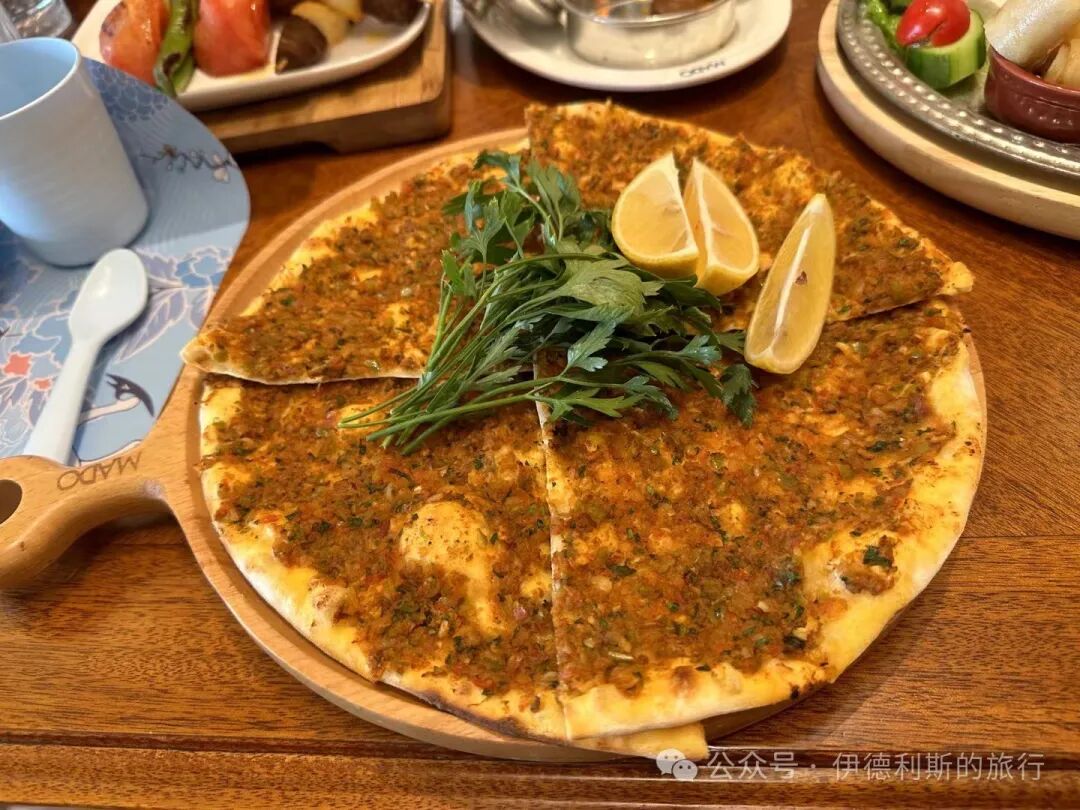
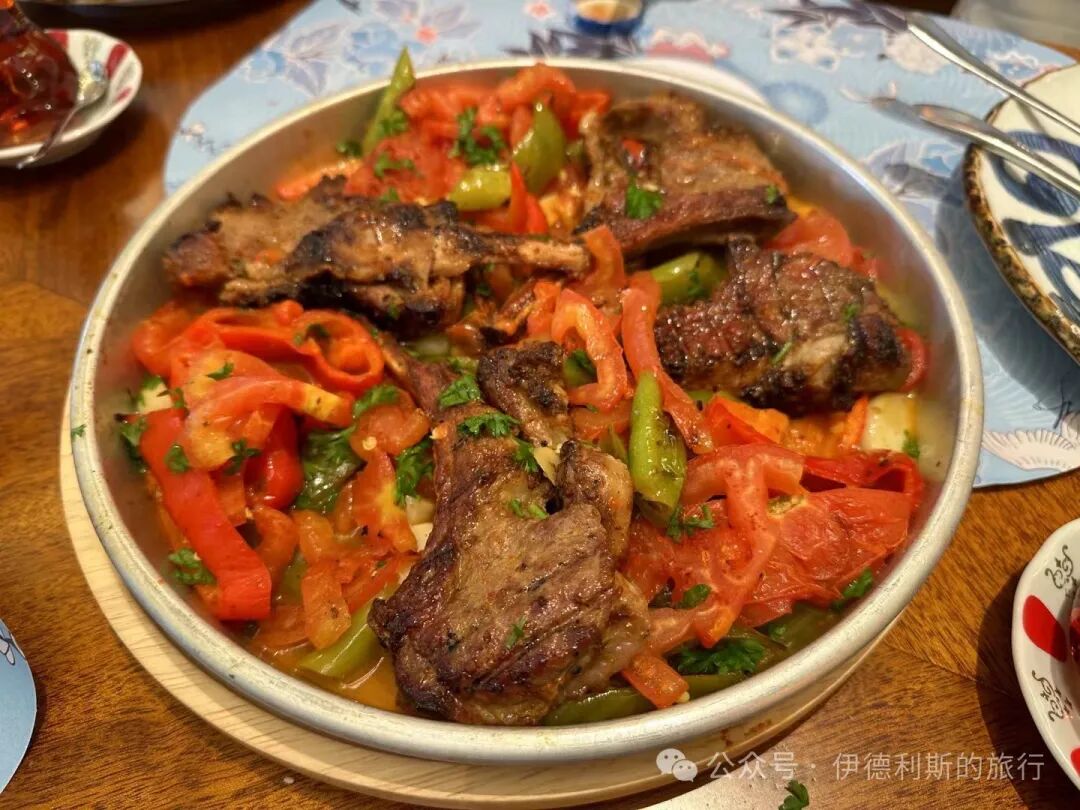
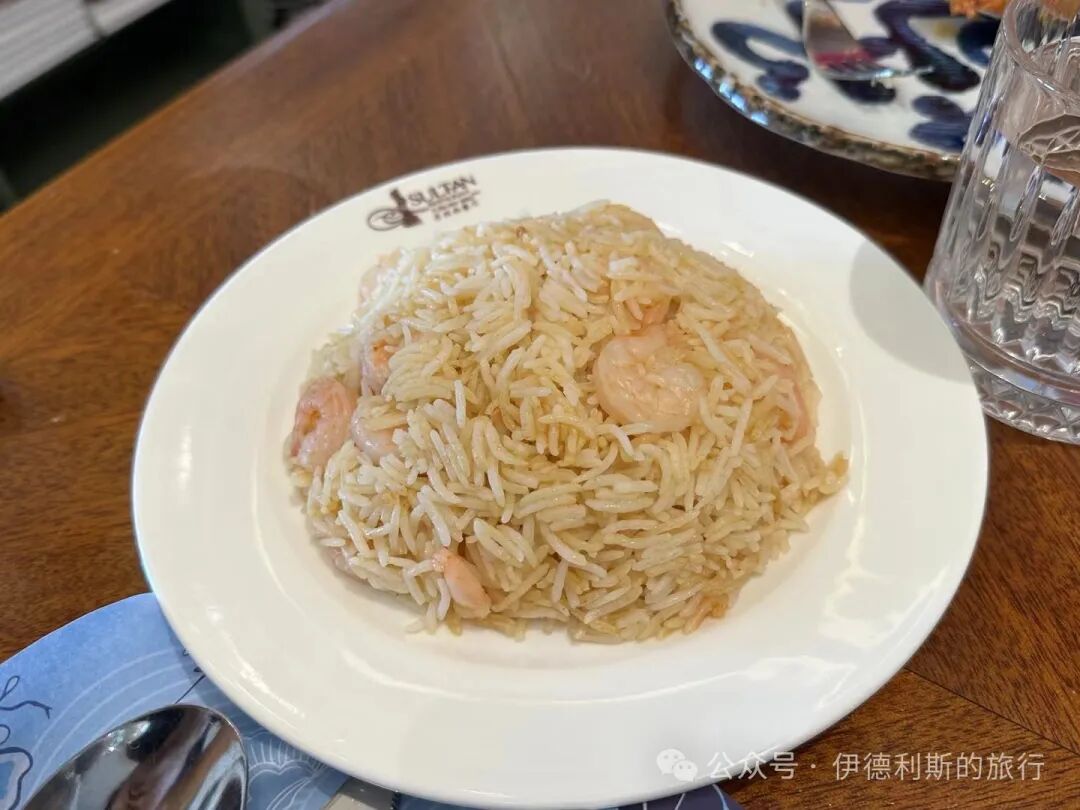
We also ate Sultan's Mardin Tava and Turkish pizza (lahmacun), and we ordered shrimp risotto for the kids. This restaurant is likely the only place in Beijing selling Mardin Tava, a dish made by baking lamb chops, tomatoes, and chili peppers together in a flat pan. Mardin is an ancient city in southeastern Turkey near the border with Iraq, and tava means flat pan. The ancient city of Mardin is home to Kurds, Arabs, and Assyrians, and its local customs are very different from those in central and western Turkey, making it well worth a visit.
I also want to introduce the word "Sultan," which we usually translate as "Sudan" in Chinese. In Arabic, the original meaning of Sultan is "strength, authority, and rule." The first ruler to call himself Sultan was Sultan Mahmud of the Ghaznavid dynasty (reigned 998-1030). Later, the Seljuk and Ottoman dynasties adopted the title, and it gradually became the title for a national ruler. Today, only the heads of state of two countries hold the title of Sultan: the Sultanate of Oman and the Sultanate of Brunei. Additionally, the heads of the Malaysian states of Johor, Kedah, Kelantan, Pahang, Perak, Selangor, and Terengganu, as well as the Special Region of Yogyakarta in Indonesia, are also called Sultans.
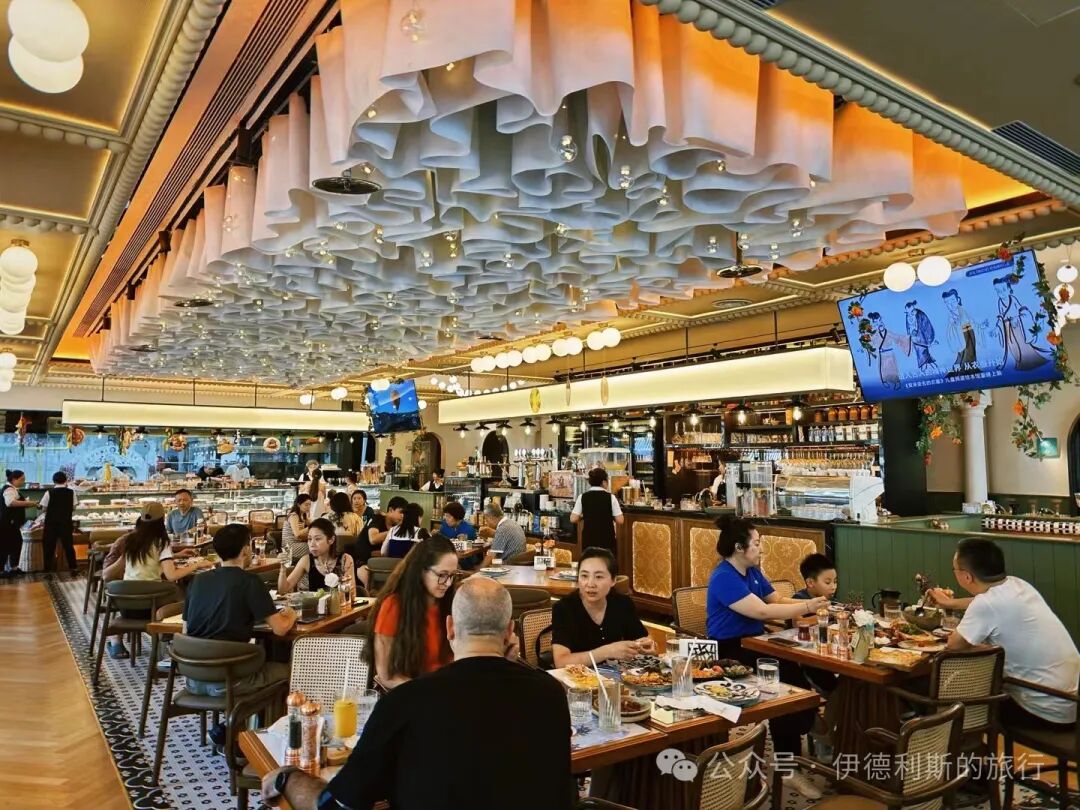
Finally, a reminder: the further inside you sit at Sultan Restaurant, the hotter it gets. If you are sensitive to heat, try to sit closer to the front door.
2. Carthage Tunisian Restaurant
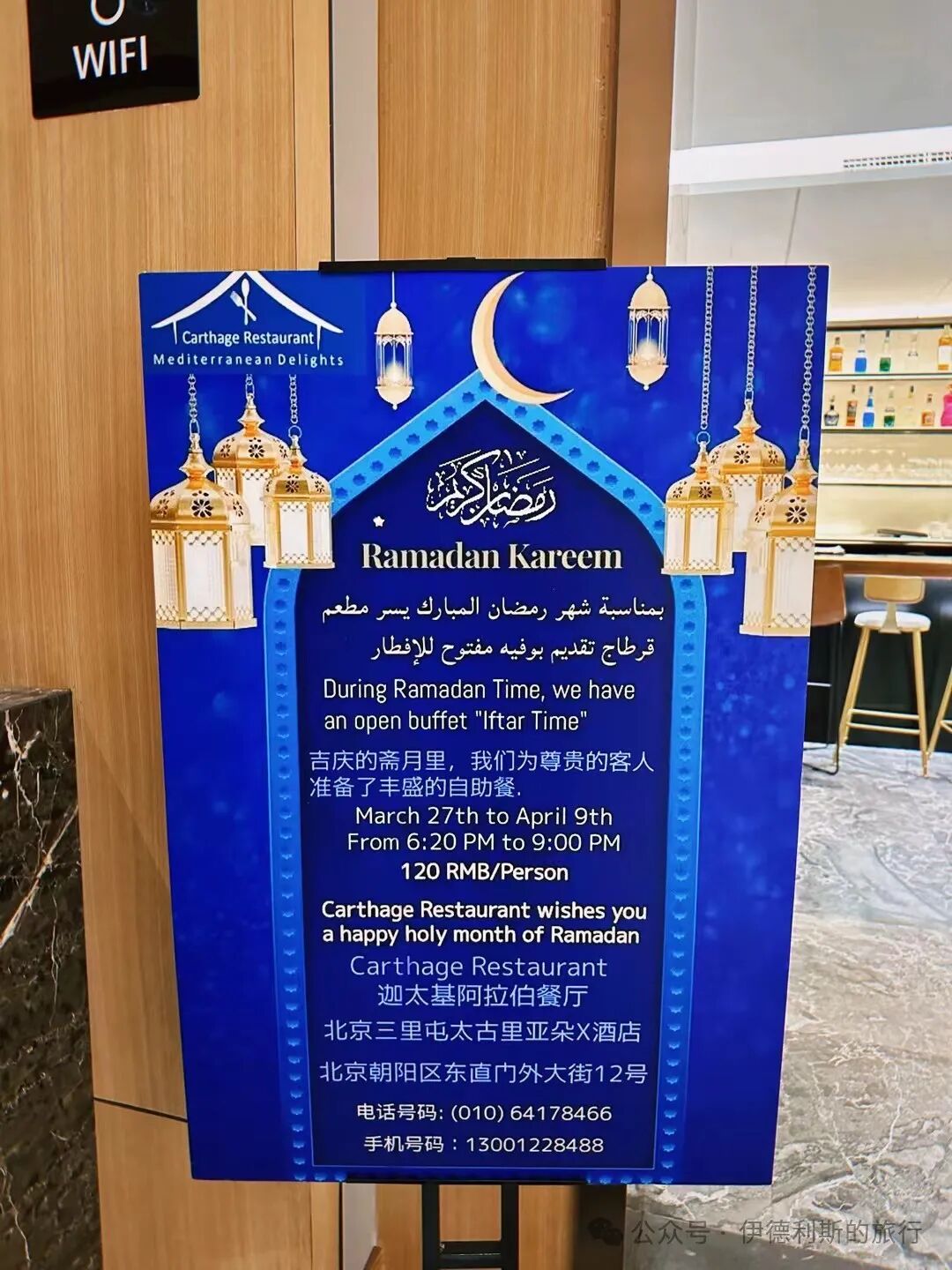
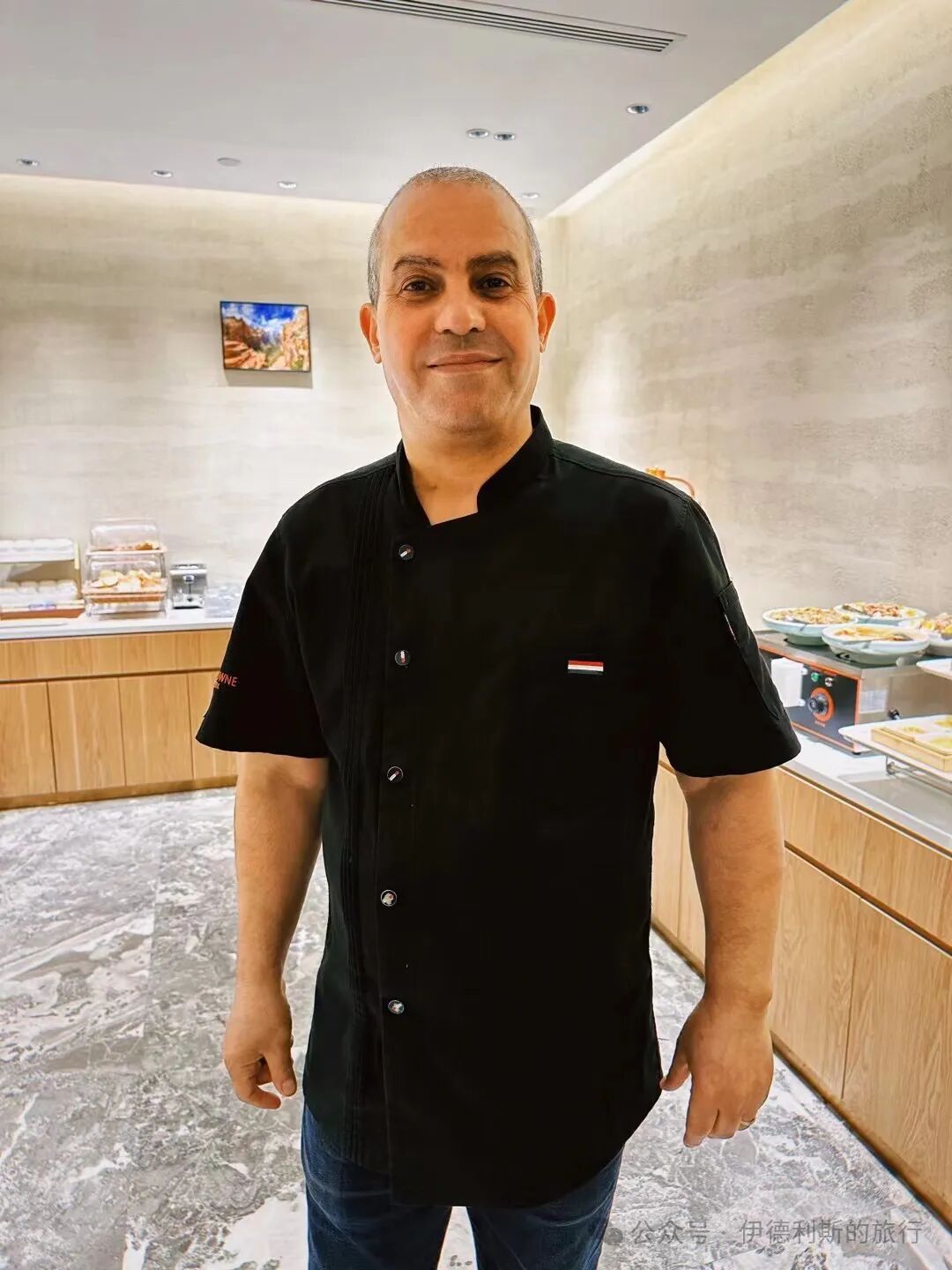
A new Carthage Arabic restaurant opened on Dongzhimen Outer Street in Beijing during Ramadan, and we went there for an iftar buffet. This is a new iftar buffet opened by Adel, the head chef of La Medina, on the first floor breakfast area of the Atour X Hotel in Sanlitun Taikoo Li, still focusing on Tunisian flavors. Since it has not been open long, it is mostly frequented by foreign friends (dosti) from the nearby embassy district, so there is no need to wait in line.
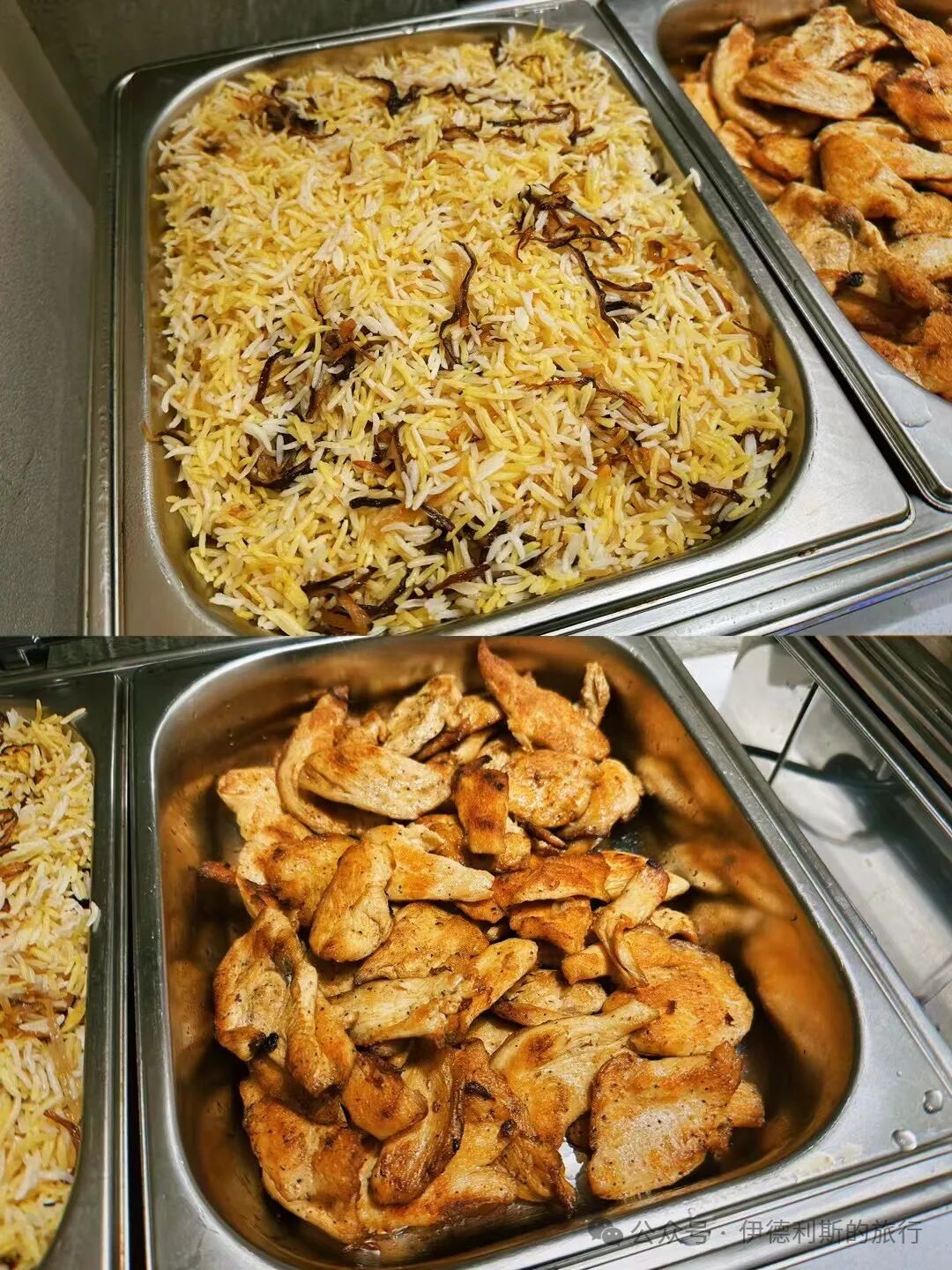
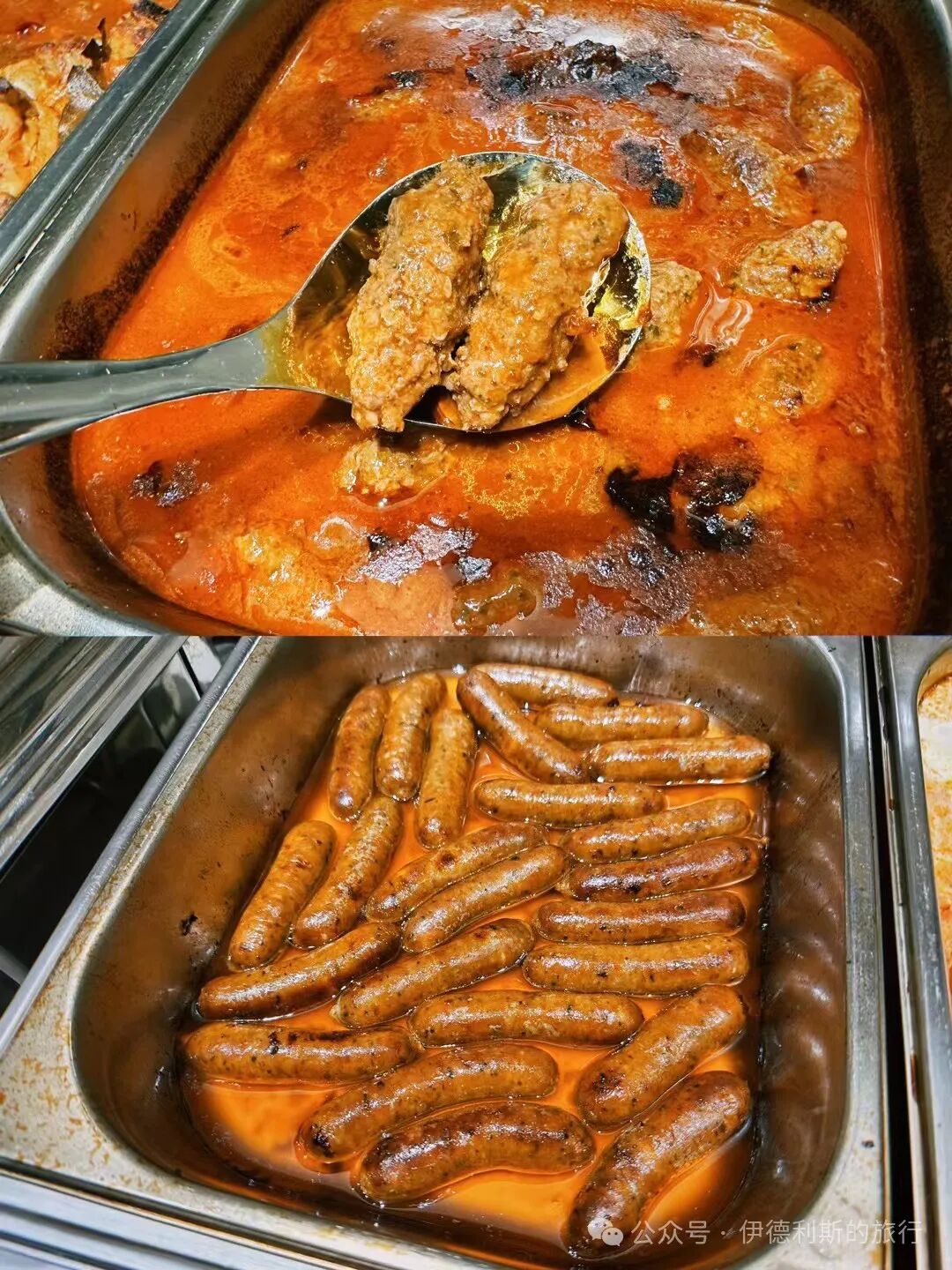
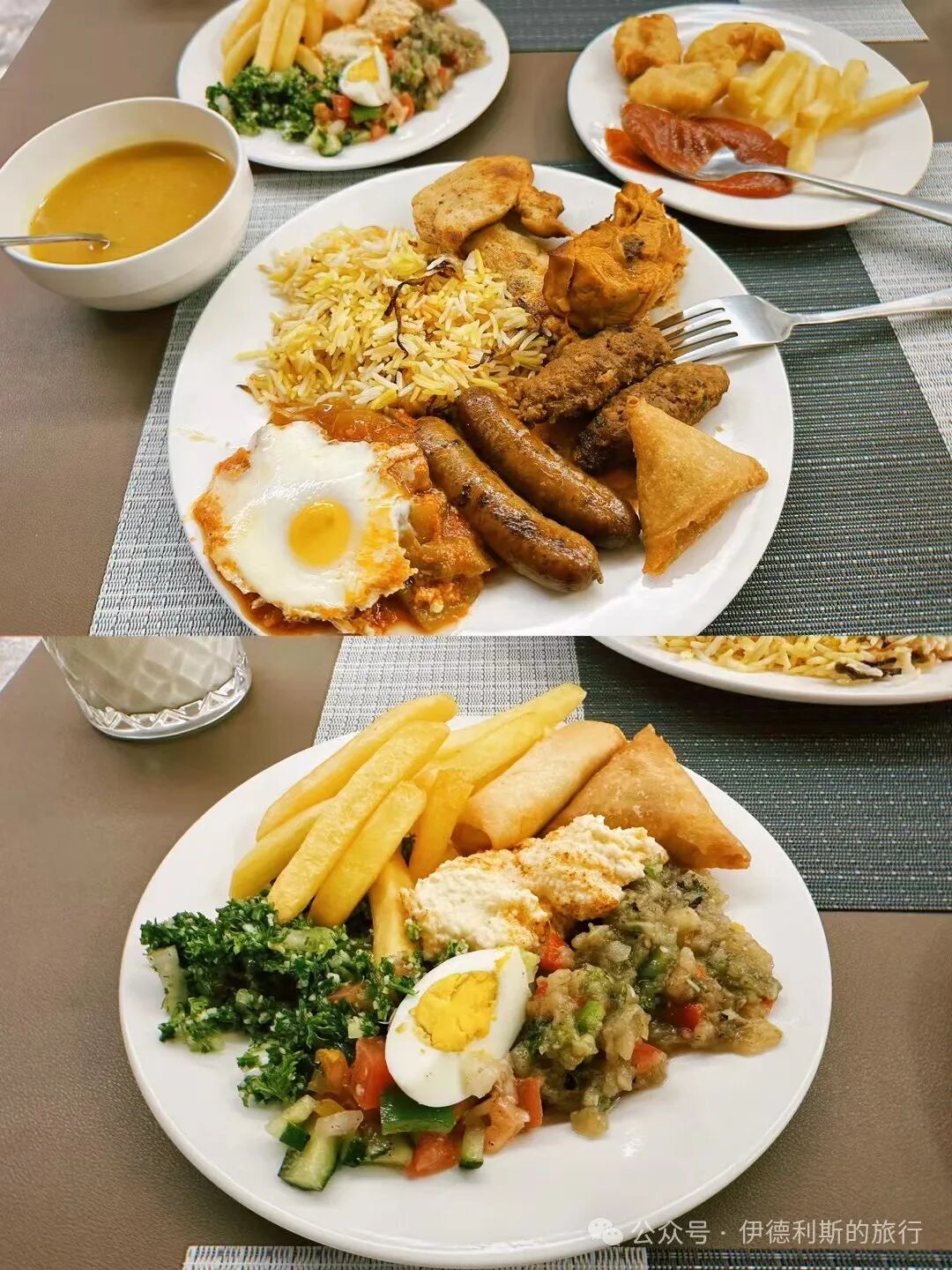
Because Adel is in charge, the dishes are similar to La Medina, though there are slightly fewer options. Appetizers include chickpea dip (hummus), parsley salad (tabbouleh), and the Tunisian specialty grilled eggplant salad (mechouia). Besides grilled eggplant, the grilled eggplant salad (mechouia) contains tomatoes, chili peppers, onions, and olive oil, making it very healthy.
The main course features North African sausage (merguez), which is made with lamb and beef mixed with cumin, harissa sauce, chili, and various other spices; it dates back to 12th-century Andalusia and later spread throughout North Africa.
They also serve the classic North African Maghreb tomato and pepper poached egg dish, shakshouka. Shakshouka started in North Africa under Ottoman rule in the 16th century, when tomatoes and peppers were brought from the Americas and became part of the local diet.
They also have the Arab version of fried triangular pastries (sambousek), which is a classic snack for Muslims during Ramadan. Sambousek originated in Iran and entered the Arab diet after the 10th century, later spreading to India, China, Indonesia, and Africa. In some parts of eastern China, Hui Muslims still use the Persian name 'sanmosan'.
3.
Fang Zhongshan Hulatang Hujialou Branch
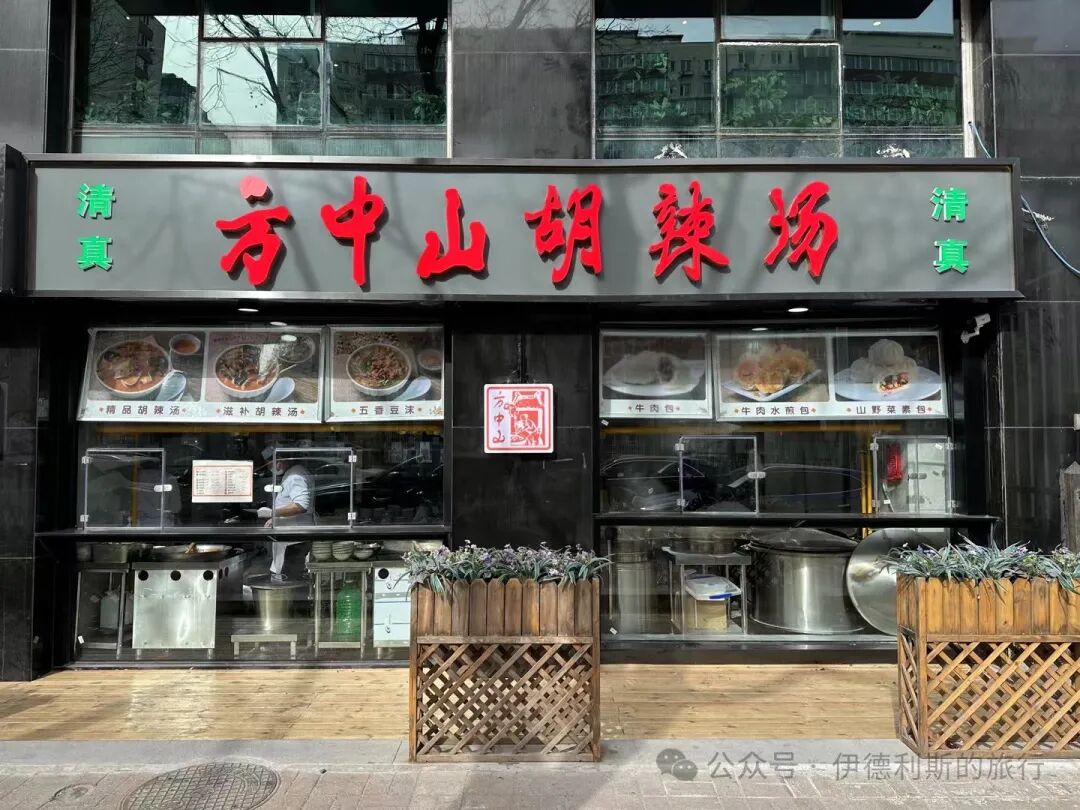
Fang Zhongshan came to Beijing in 2023 and started a trend for spicy pepper soup (hulatang). The Hujialou branch opened in early 2024, right on my commute.
On the first day Fang Zhongshan Hujialou opened after the Spring Festival, I went there for a mix of spicy pepper soup and tofu pudding (doufunao), plus a beef pie (niurouhe). The Hujialou branch is just a short walk from the Hujialou subway station on Line 6, so it is easy to get to. I arrived at 1:00 and did not have to wait in line; it is not as crowded as it was when it first opened.
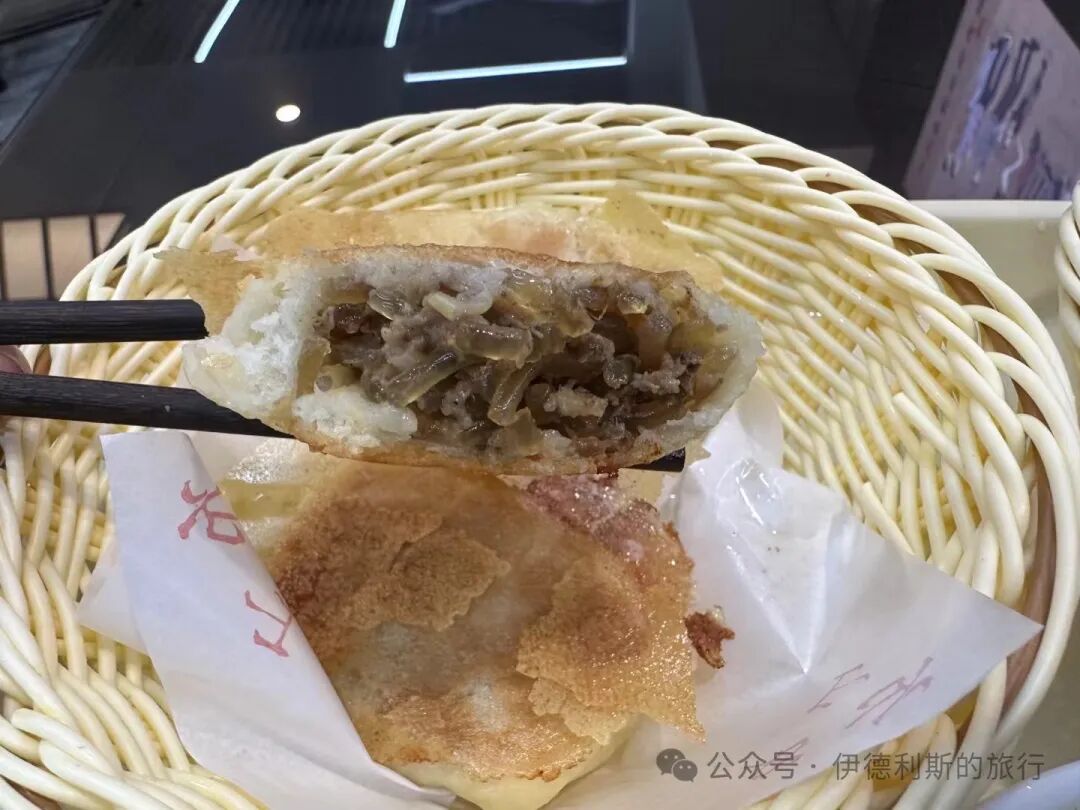
I had heard that their spicy soup (hulatang) is very hot. I tried the mixed version, and it was quite spicy. I think some Beijingers who cannot handle spice might find it too much. However, they put plenty of beef and mushrooms inside, which gives it a rich texture. I have to praise their beef pastry (niurouhe). It is wrapped and fried to order, with a thin, crispy crust. It is a great experience. The filling is made of vermicelli and minced beef with a strong hint of Sichuan peppercorn, which should be very popular.
On my second visit, I ordered bean flour porridge (doumo), scallion pancake (congyoubing), and pan-fried buns (shuijianbao). There were more people than the day before, so I expect it will be packed again in a few days.
Their bean flour porridge (doumo) is more traditional than the spicy soup. It tastes just like the one I had on Shuncheng Street in Zhengzhou. It has vermicelli, peanuts, and other ingredients inside, and I think it suits the taste of Beijingers better. The scallion pancake (congyoubing) is very thin, freshly fried, and full of onion aroma with a great texture. Pan-fried buns (shuijianbao) are made in large batches, so you might not always get them fresh out of the pan, but they are still served hot. The filling is beef and vermicelli, with a strong, spicy kick from the seasonings.
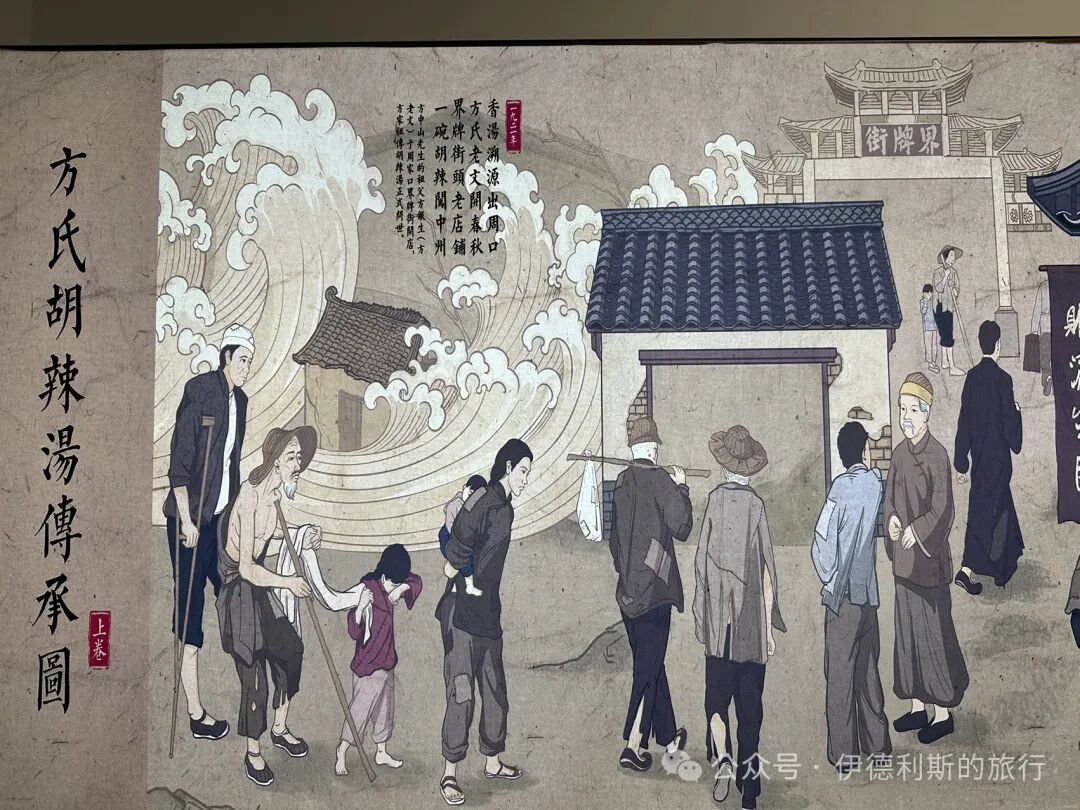
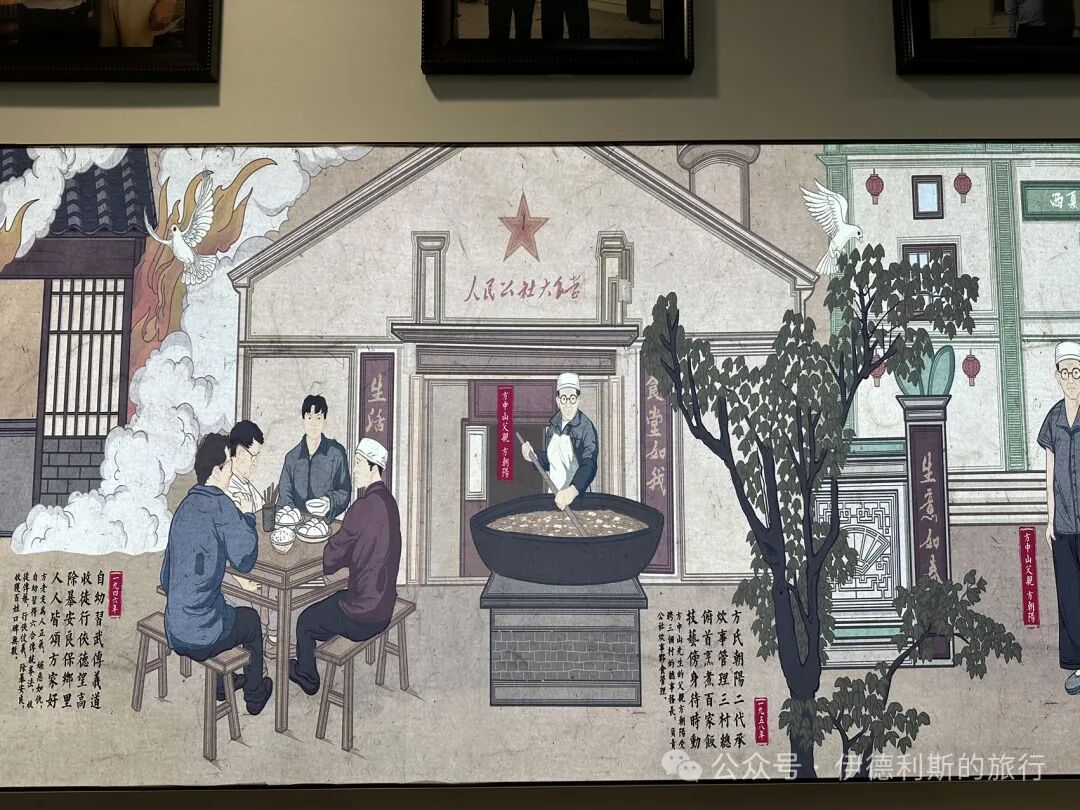
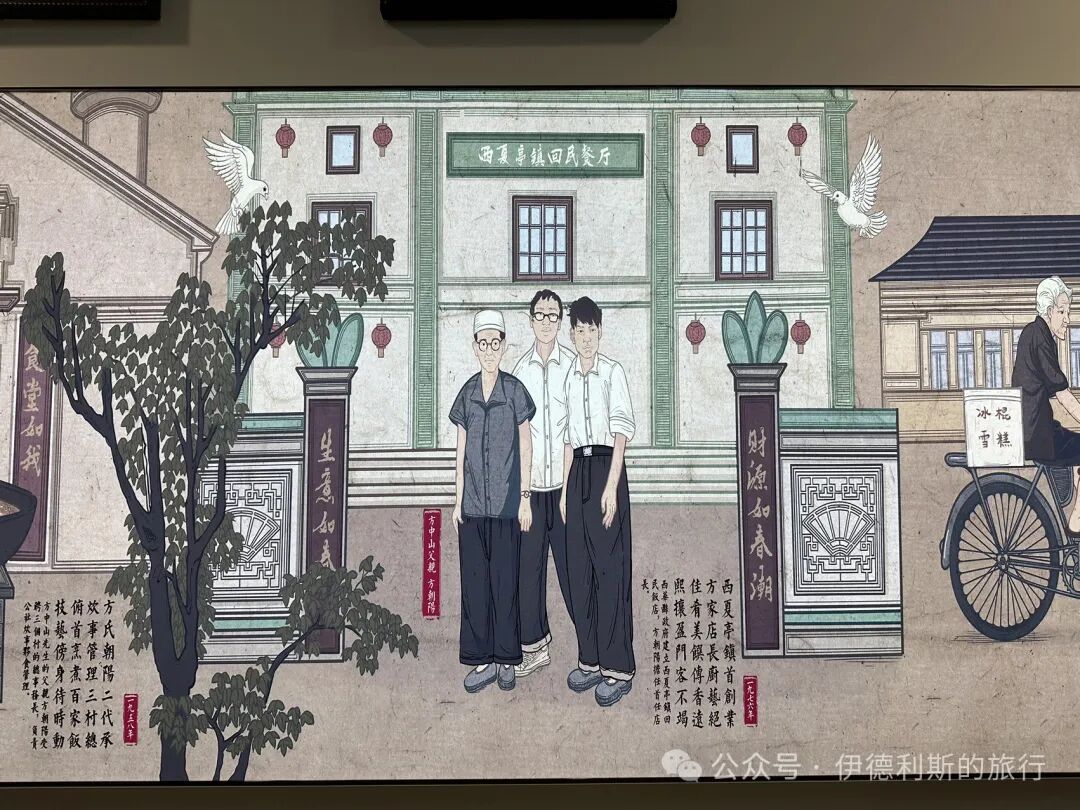
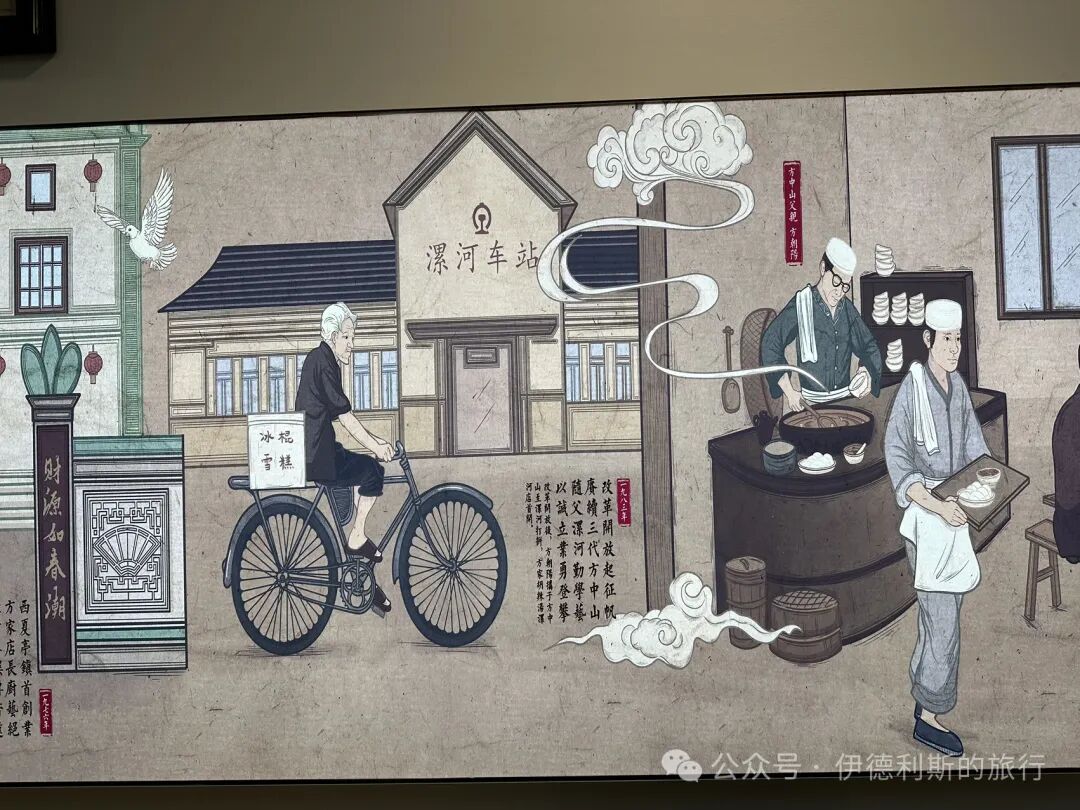
The wall at the Fangzhongshan Hujialou branch displays the history of Fangzhongshan spicy soup (hulatang). It feels meaningful to share this cultural heritage.
Fangzhongshan’s grandfather, Fang Yinsheng, opened the Fang Family Soup Shop on Jiepai Street in Zhoukou, Henan, in 1922 and started selling spicy soup (hulatang).
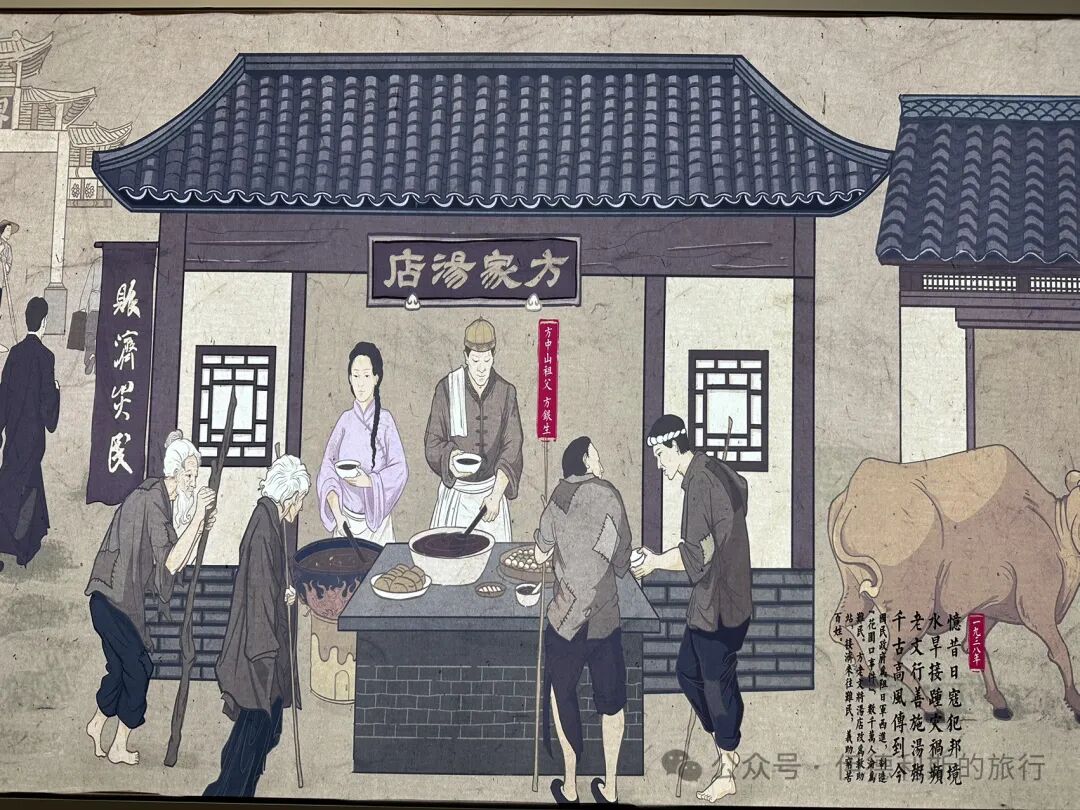
After the Kuomintang caused the Yellow River to breach its banks in the 1938 Huayuankou incident, Henan suffered a severe disaster. Fang Yinsheng turned his soup shop into a relief station to help passing refugees.
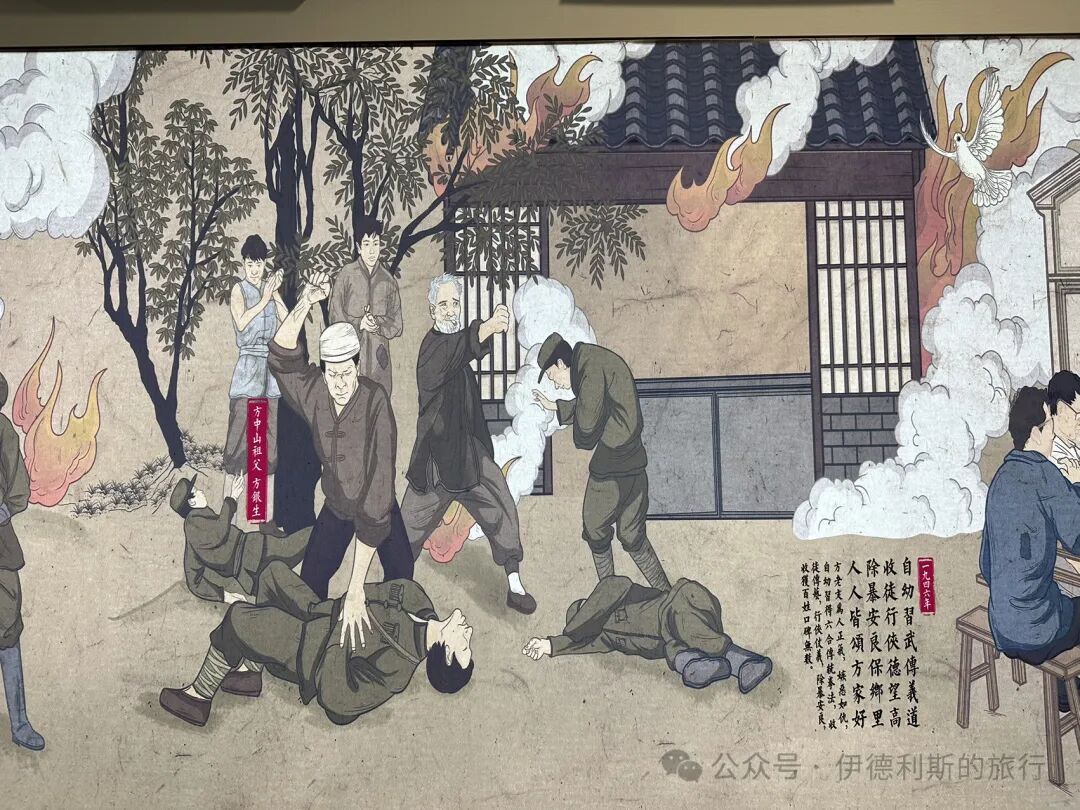
After 1958, Fangzhongshan’s father, Fang Chaoyang, was hired as the general manager for three villages, where he oversaw food management for the people's commune.
In 1976, a restaurant for Hui Muslims was established in Xixiatin Town, Xihua County, Zhoukou, Henan, and Fang Chaoyang served as its first manager.
After the reform and opening-up policy, Fang Chaoyang took his son Fangzhongshan to Luohe to build their business, and in 1983, they opened the Fang Family Spicy Soup Shop in Luohe.
4. Zhang Dahui Spicy Soup (hulatang)
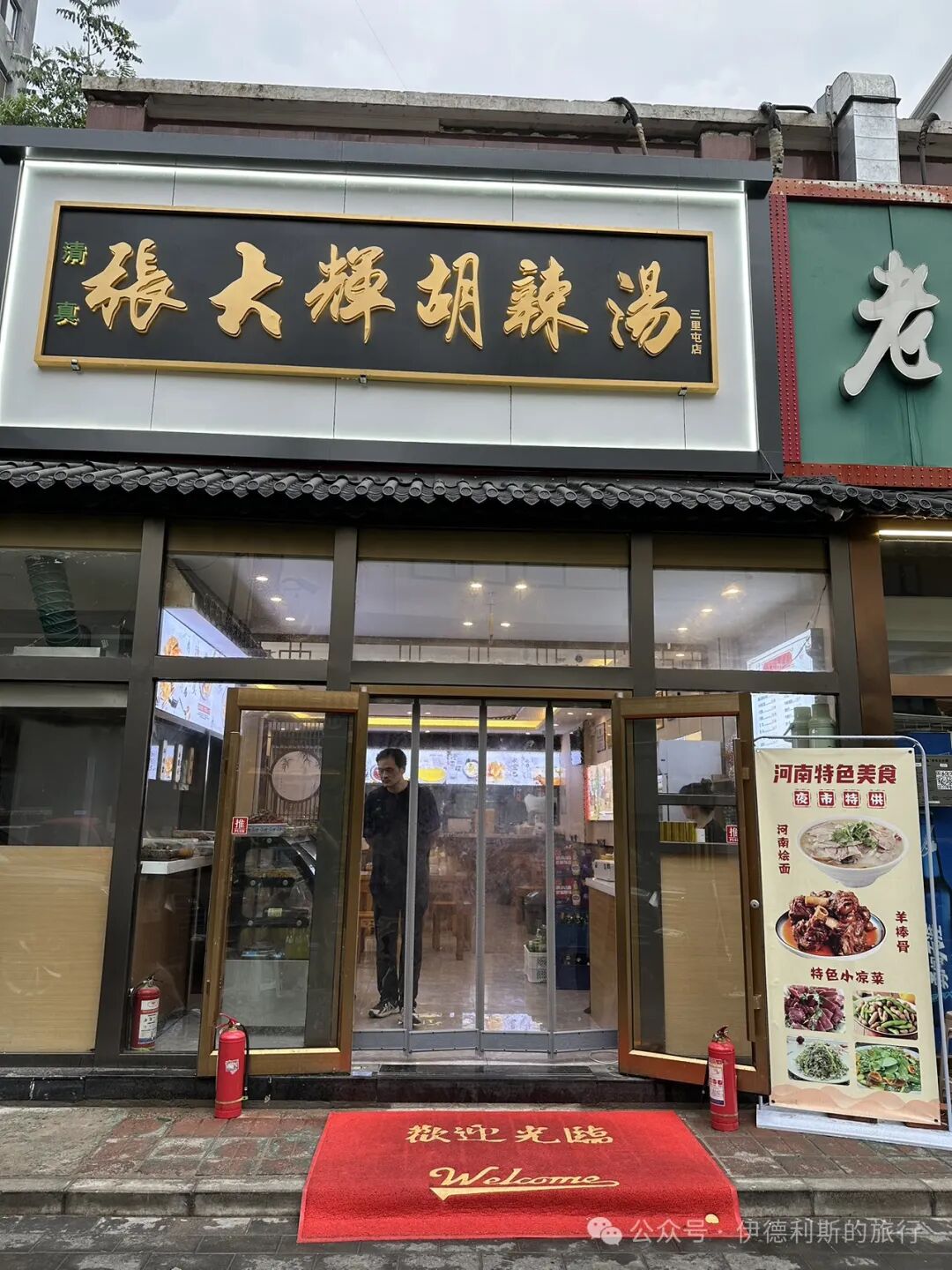
Following Fang Zhongshan, the Xiaoyao Town style Zhang Dahui Spicy Soup (hulatang) has also opened a shop in Beijing.
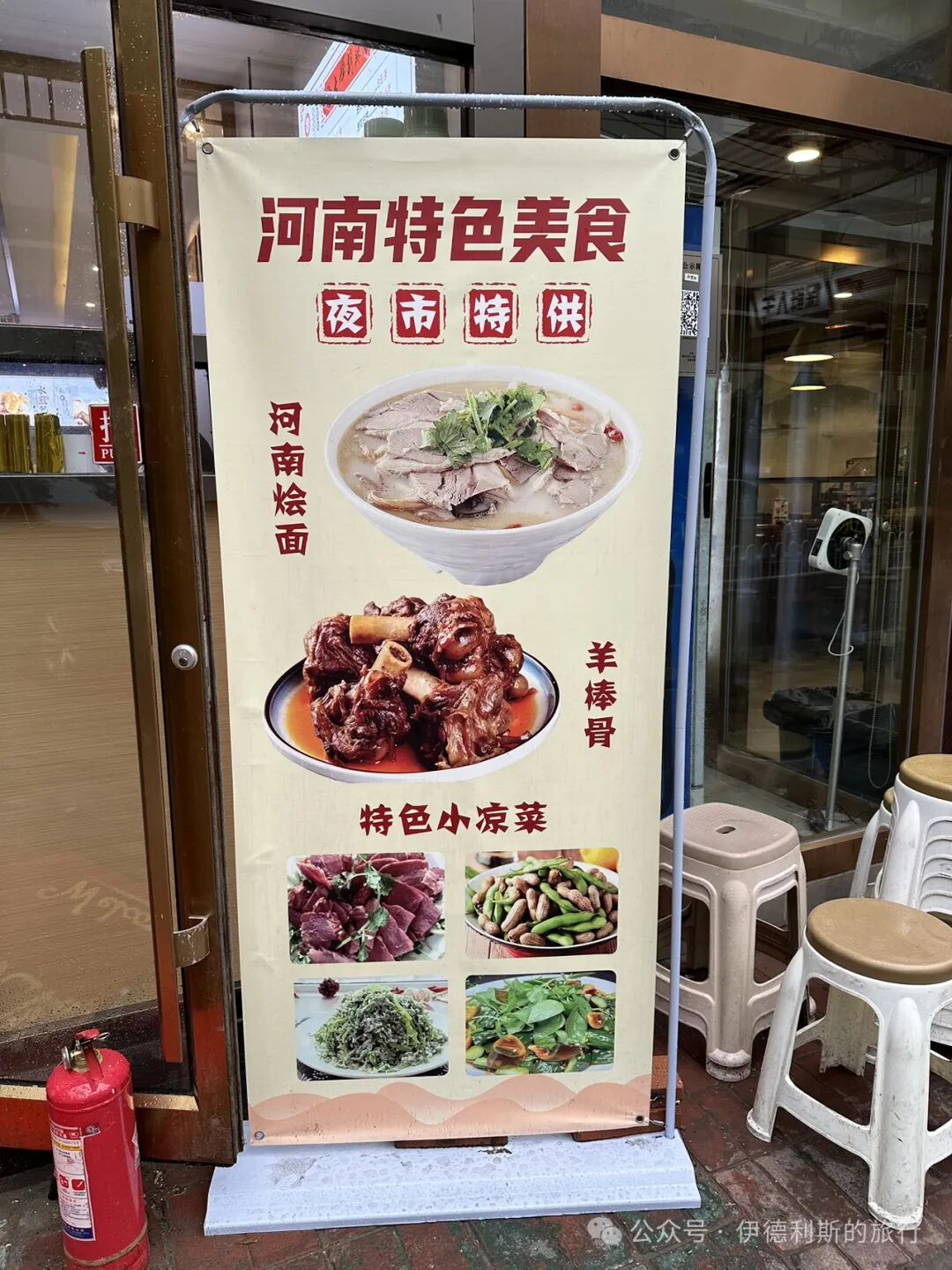
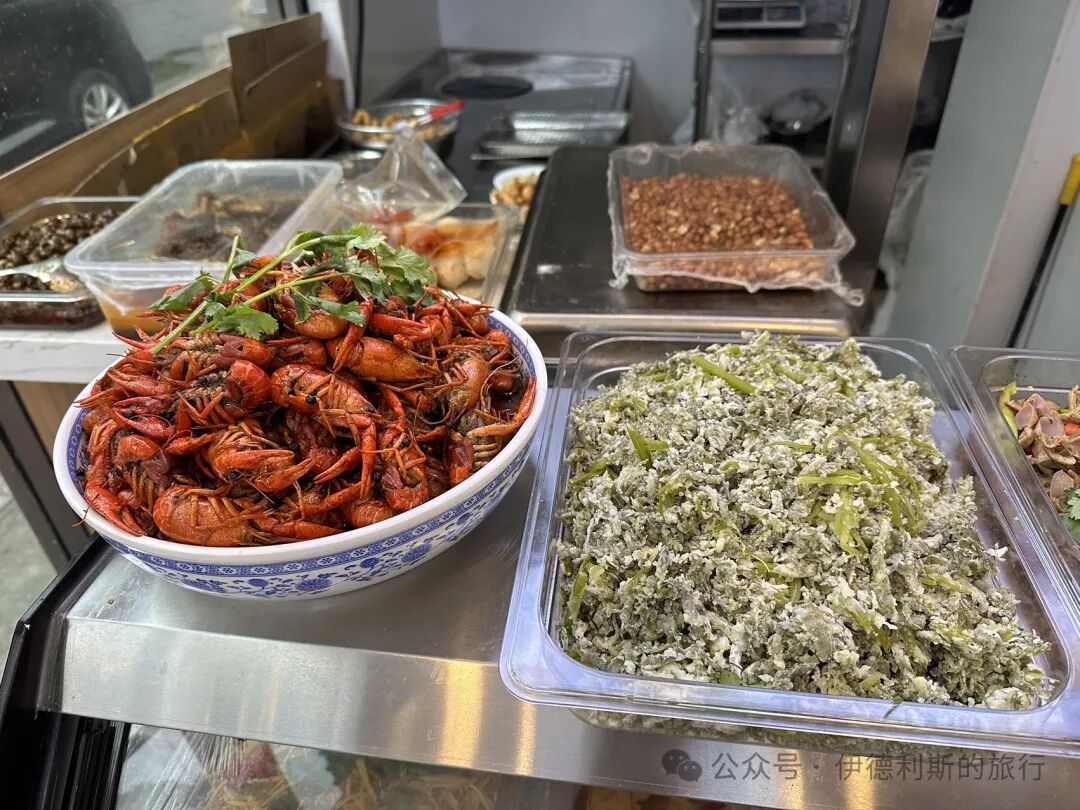
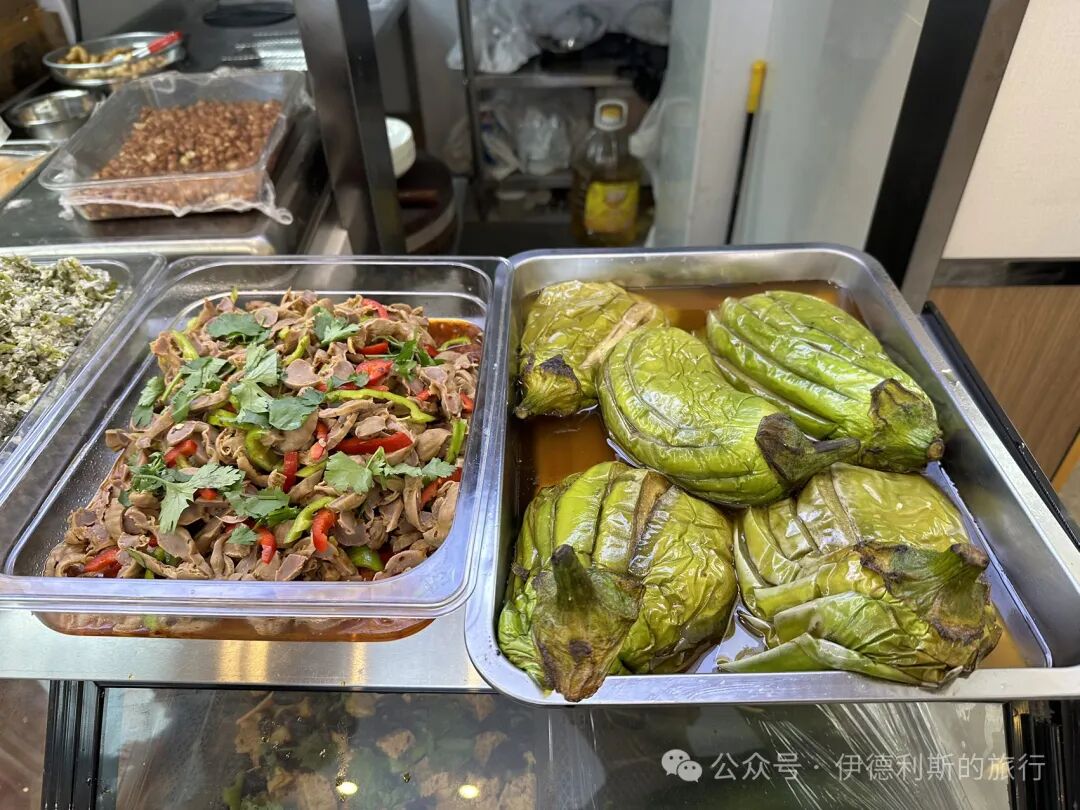
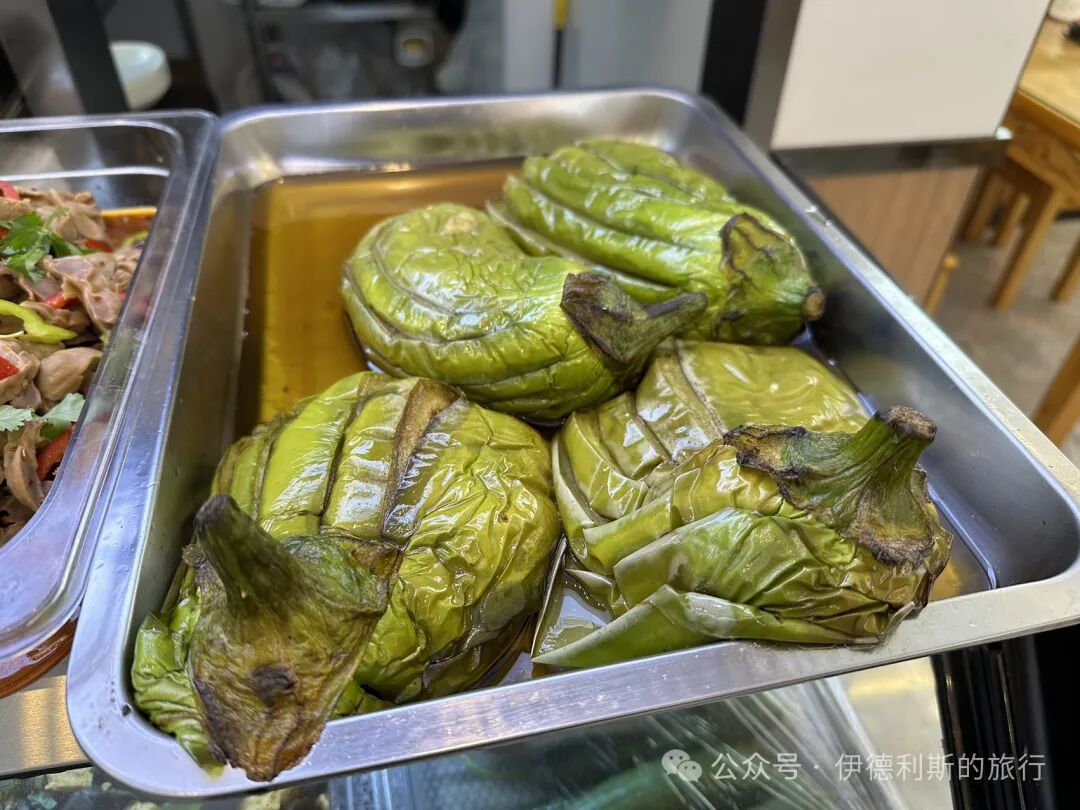
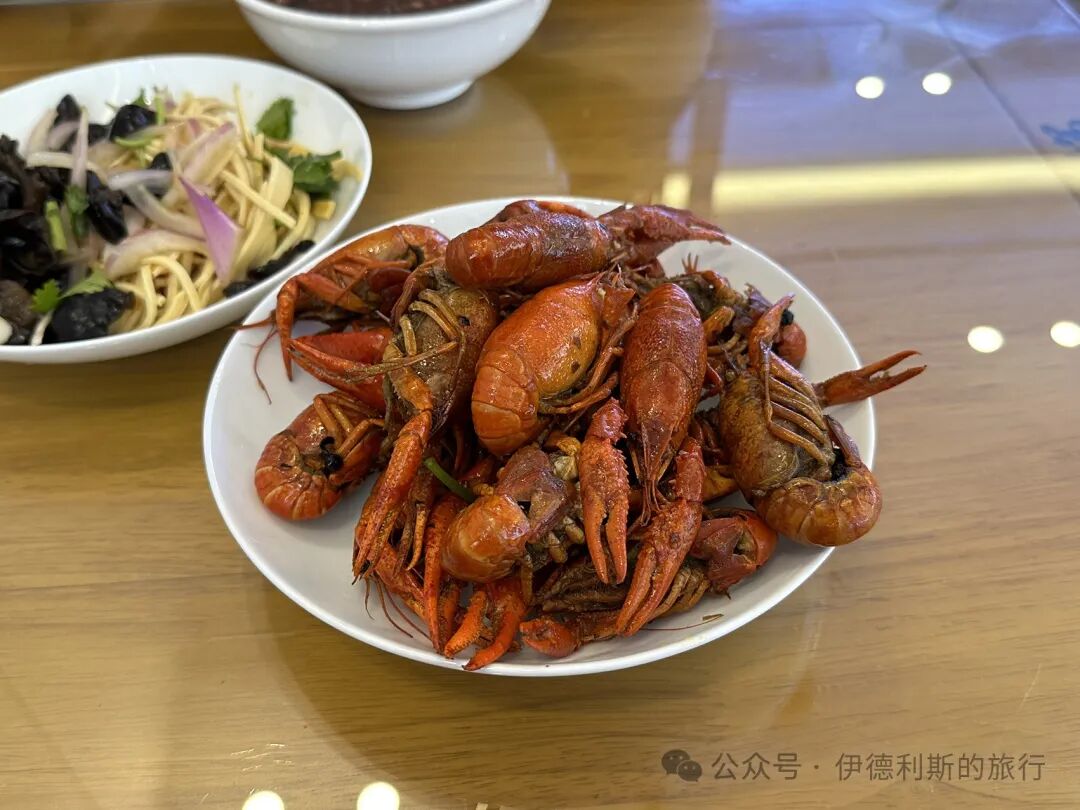
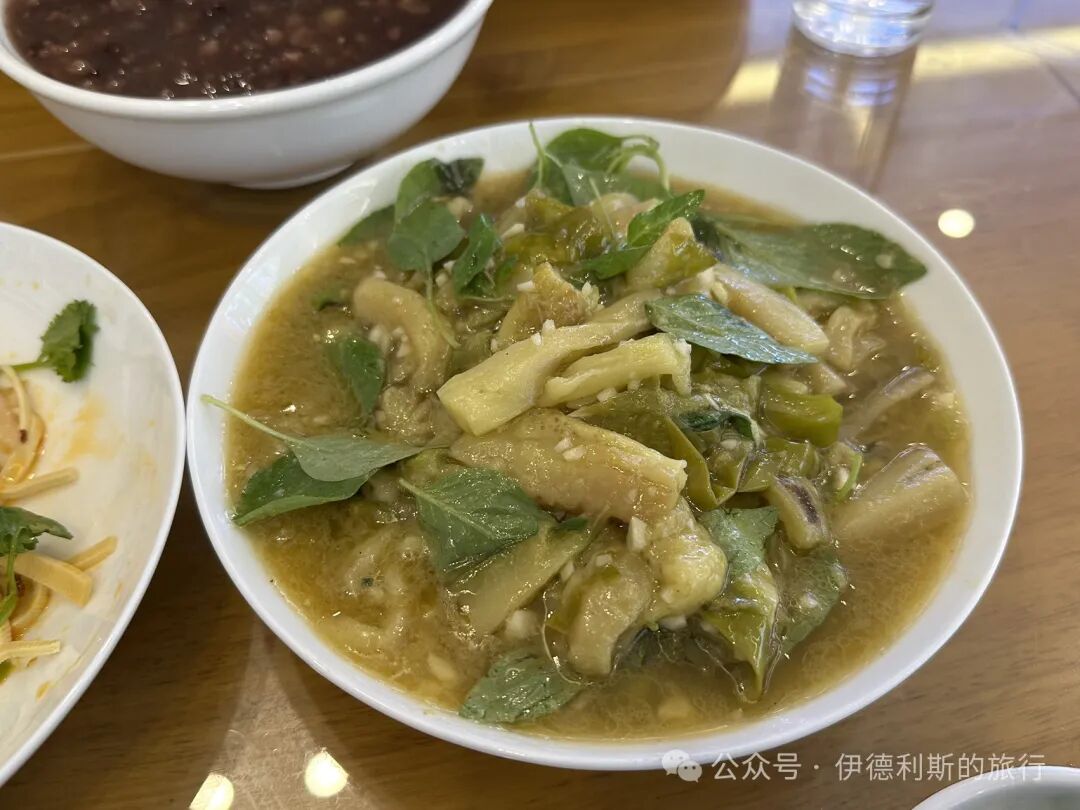
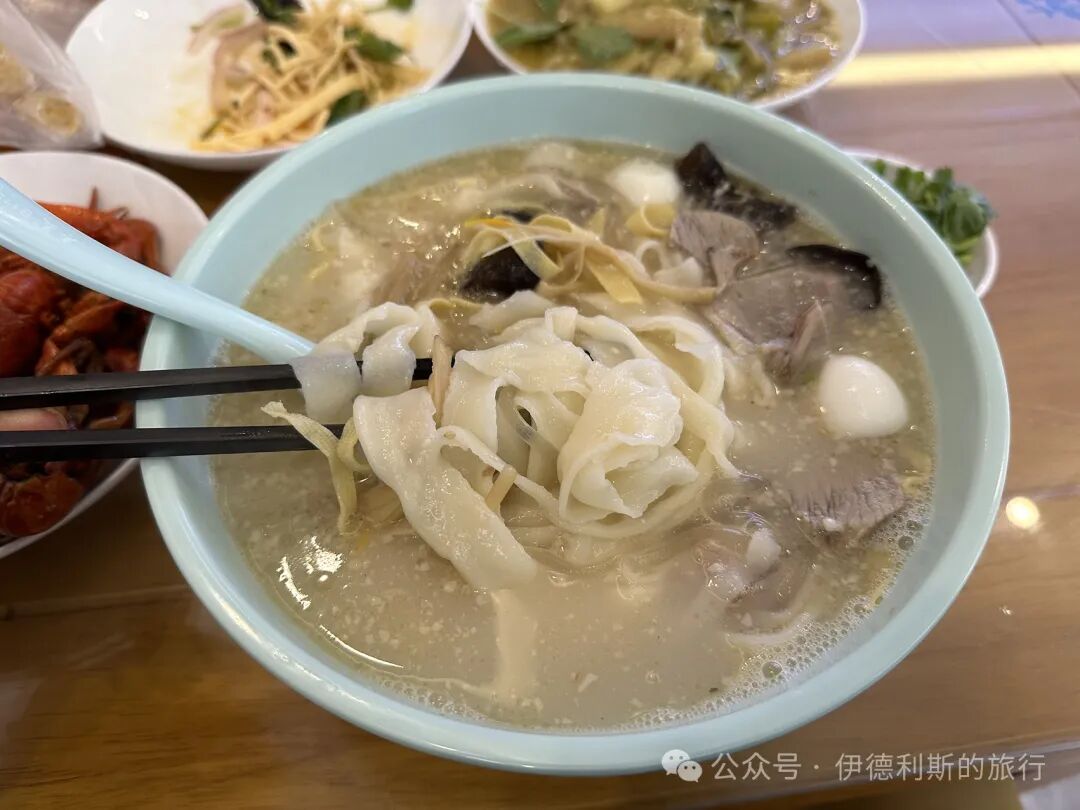
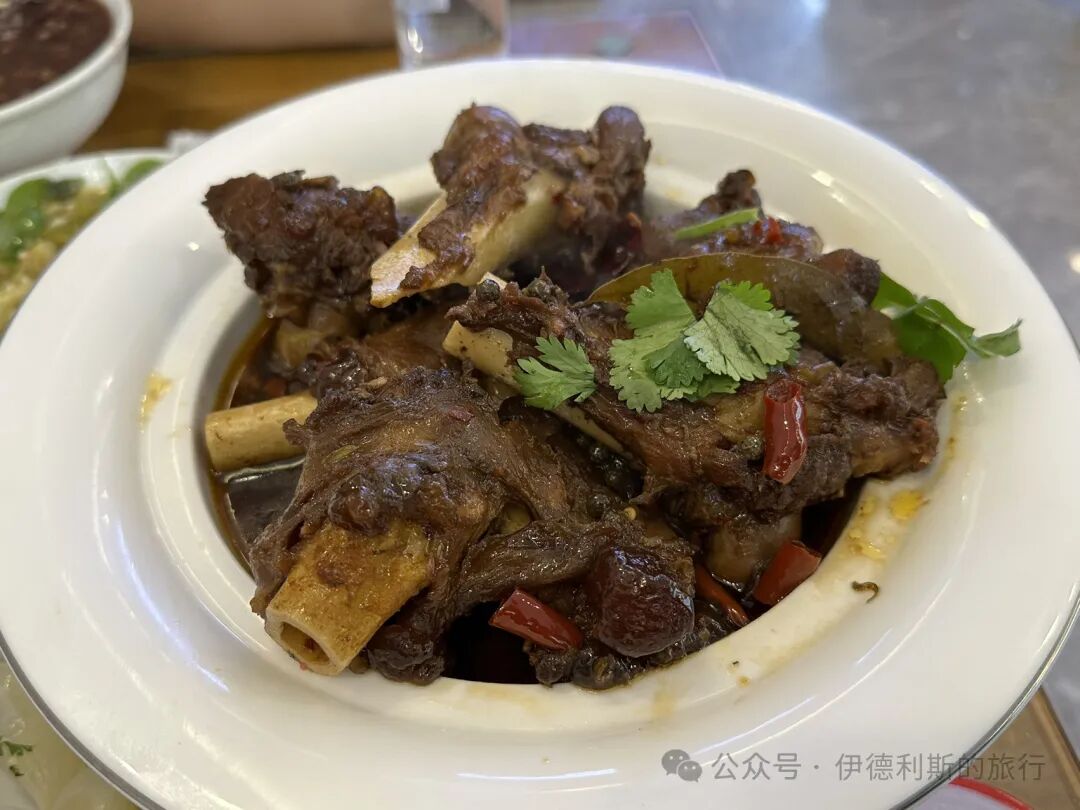
The Sanlitun branch is located in Baijiazhuang. The shop is small. In the morning, they sell spicy soup (hulatang), pan-fried buns (shuijianbao), sugar cakes (tanggao), vegetable pockets (caijiao), fried dough fritters (youmotou), and beef pies (niurouhe) until about 2:00 PM. In the evening, they sell braised noodles (huimian), lamb soup with sesame flatbread (yangtang shaobing), lamb bone marrow (yangbanggu), steamed vegetables (zhengcai), and crawfish (xiaolongxia). We arrived in the evening and ordered lamb braised noodles (yangrou huimian), steamed eggplant (zheng qiezi), lamb bone marrow (yangbanggu), and crawfish (xiaolongxia). I thought the lamb braised noodles (yangrou huimian) were quite tasty. The chef pulls the noodles fresh, and they are packed with ingredients and have a strong flavor. The steamed eggplant (zheng qiezi) is sweet, sour, and salty, seasoned with minced garlic and catnip (jingjie). It goes well with the braised noodles (huimian). The crawfish (xiaolongxia) were served cold, and I felt they were not spicy enough. The beef bone marrow (niubanggu) is braised in sauce, but I felt it was a bit too salty. Next time I have a chance, I will come in the morning to try their spicy soup (hulatang).
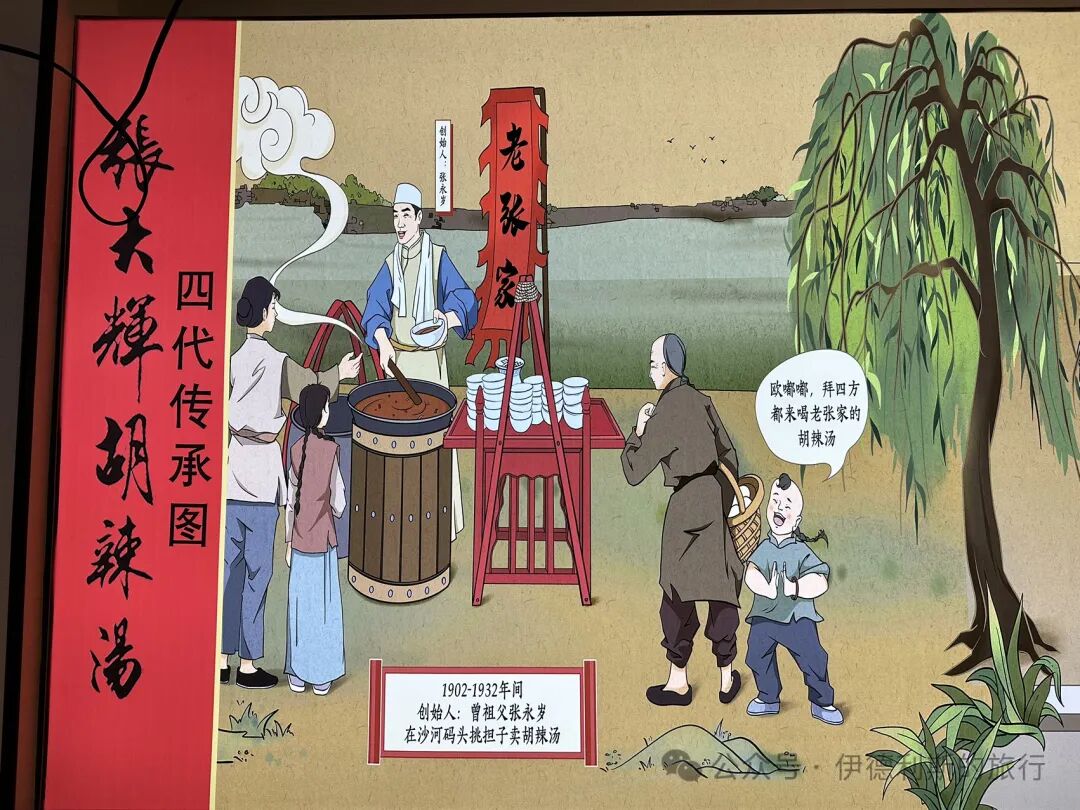
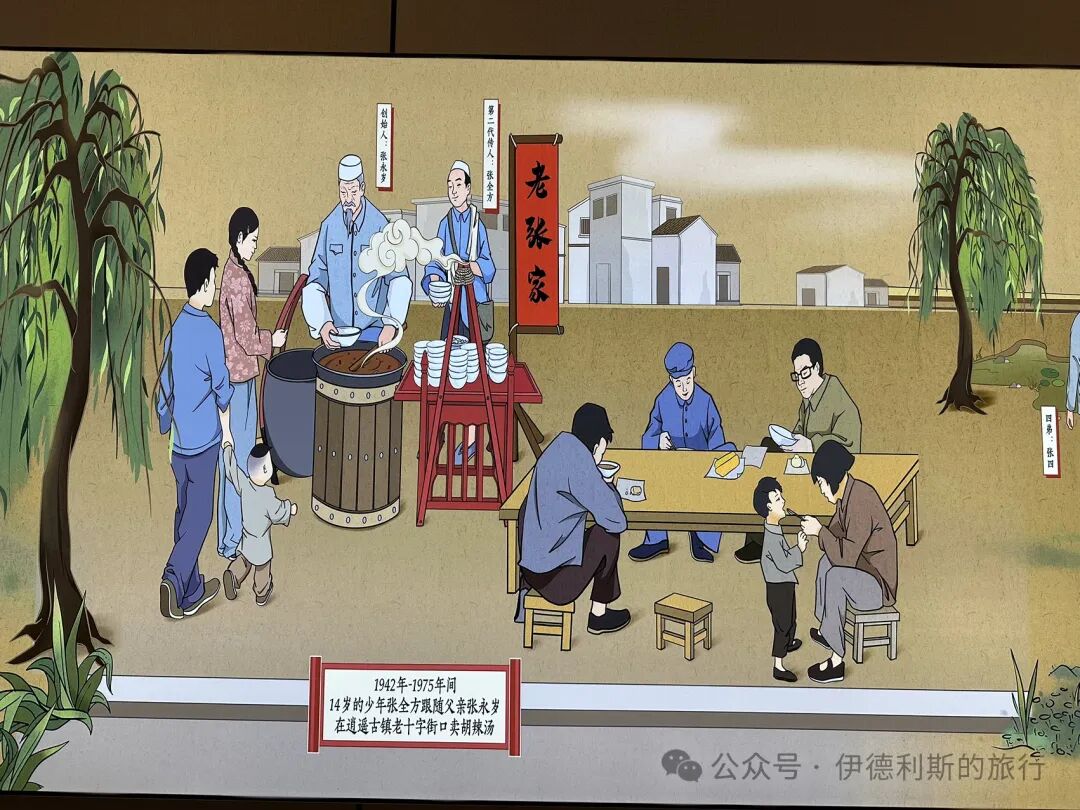
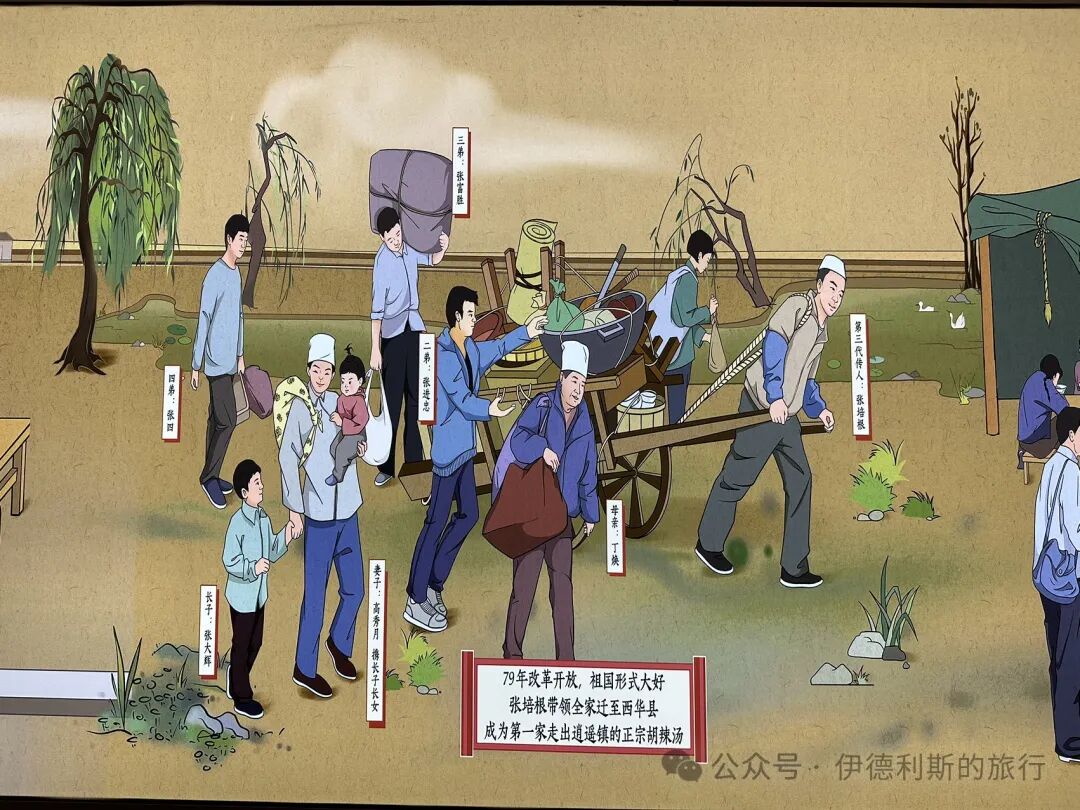
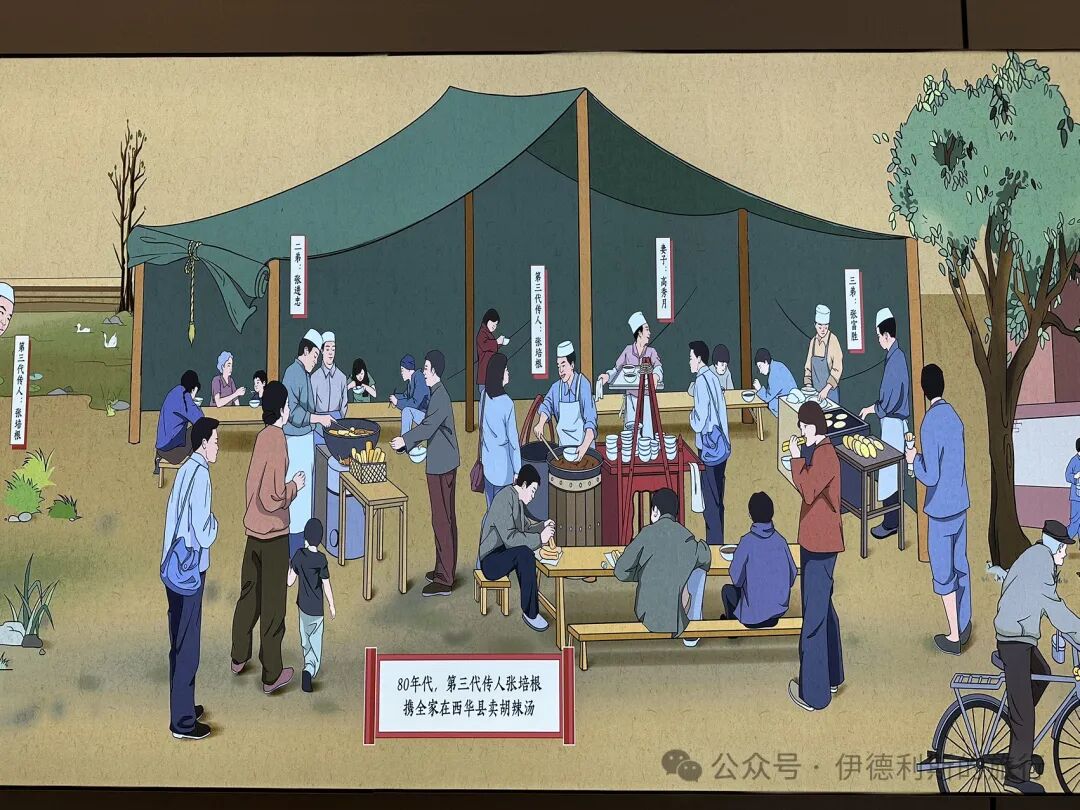
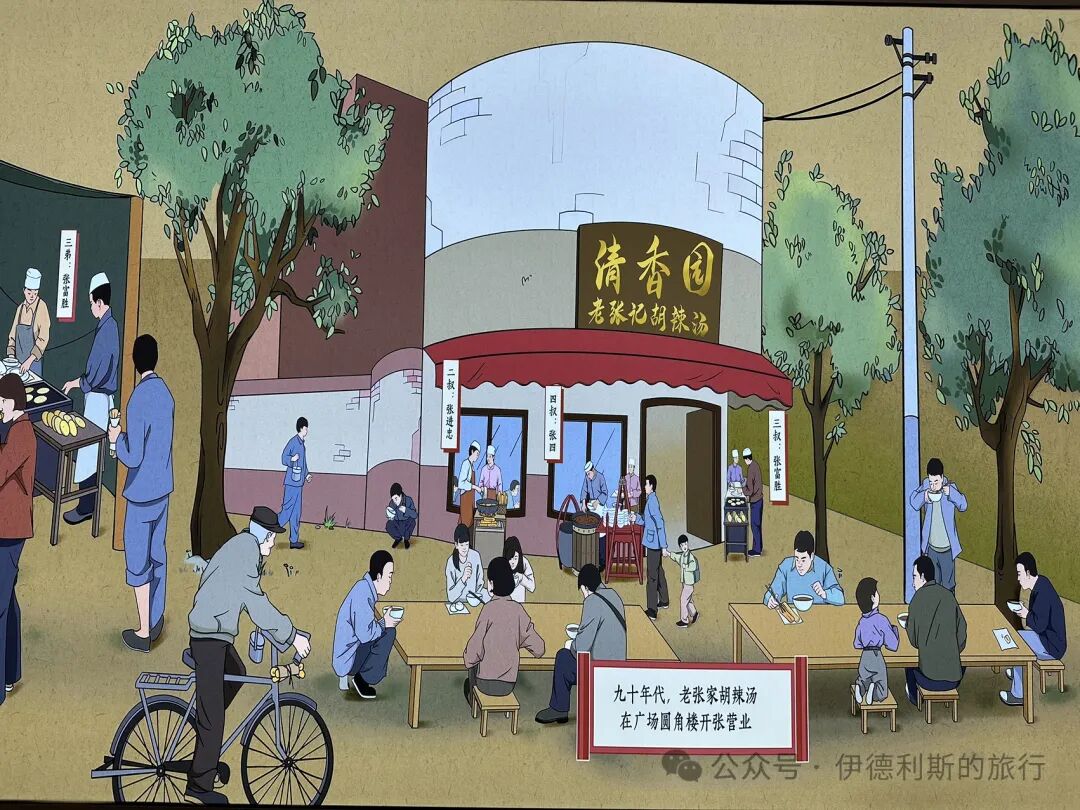
The founder of Zhang Dahui was the great-grandfather, Zhang Yongsui. In the early 20th century, Zhang Yongsui carried a pole to sell spicy soup (hulatang) at the Shahe River wharf in Xiaoyao Town, Xihua County, Zhoukou, Henan. Xiaoyao Town sits where the Shahe and Yinghe rivers meet. It has always been an important trade hub, and the area around the Shahe River wharf was especially busy. Starting in 1942, 14-year-old Zhang Quanfang began selling spicy soup (hulatang) with his father, Zhang Yongsui, at the crossroads in Xiaoyao Town. He sold it there for over thirty years. After the reform and opening up in 1979, the third-generation successor, Zhang Peigen, moved his whole family to Xihua County to open a shop. It was the first spicy soup (hulatang) business to move out of Xiaoyao Town. In the 1990s, the Zhang family opened Qingxiangyuan Old Zhang's Spicy Soup (hulatang) at the Round Corner Building in Xihua County Square. Later, the fourth-generation successor changed the name to Zhang Dahui Spicy Soup (hulatang), which is still open today.
5. Yu-style Xiaoyao Town Spicy Soup (hulatang)
There is finally a halal Xiaoyao Town spicy soup (hulatang) inside the Second Ring Road in Beijing!
A new shop called Yuwei Xiaoyao Town Spicy Soup opened on Dongsi North Street. For liquids, they have spicy soup (hulatang), tofu pudding (doufunao), a mix of both (liangchan), bean foam soup (doumo), soy milk (doujiang), eight-treasure porridge (babaozhou), and millet porridge (xiaomizhou). For solids, they have scallion oil pancakes (congyoubing), pan-fried buns (shuijianbao), beef pockets (niurouhe), fried dough strips (youmotou), beef buns (niuroubao), and vegetable buns (subao). I had the mix, a scallion oil pancake, and a pan-fried bun for breakfast. The spicy soup has beef slices, gluten, and wood ear mushrooms in it. It is not the super spicy version like Fang Zhongshan, but the traditional Xiaoyao Town flavor. Maybe because it was raining when they opened, the shop was not crowded. I missed out on the freshly made scallion oil pancakes and pan-fried buns, but the pan-fried buns were still hot and tasted great.
Yuwei Xiaoyao Town Spicy Soup officially opened on July 26, and many friends (dosti) came to visit. I had bean foam soup, fried dough strips, and pan-fried buns for breakfast. This time I caught the freshly fried dough strips, and they tasted very good.
In August, Yuwei Xiaoyao Town Spicy Soup added braised noodles (huimian) to the menu. It is a typical Zhengzhou nourishing braised noodle dish. The broth contains quail eggs, glass noodles (fensi), goji berries, and kelp. The chef pulls the noodles fresh to order. Their cold dishes are a bit pricey, and they are sold individually, unlike the braised noodle (huimian) shops in Henan where you can usually get a mix of dishes.
6. Qinyuanzhai Fresh Braised Duck Shop
I bought duck head, duck neck, duck web, duck gizzard, duck esophagus, tofu skin, kelp, and orchid-shaped tofu skewers at Qinyuanzhai Fresh Braised Duck Shop on Andingmen Inner Street. They have a good variety. The braised items are not very spicy, but they have a lingering heat, making them great for snacking.
7. Subuha Almond Tofu Jiaodaokou Branch
I went for a walk in the evening and visited the newly opened Subuha at Jiaodaokou, where I ordered almond tofu and coconut cheese. Their almond tofu is made like cheese, with both almond and milk flavors. It is quite delicious.
The second time I went, I had the matcha cheese, while Zainab had the lamb skewers and almond tofu. They also have 800 grams of sugar-free yogurt for 14.5 yuan, which feels like a good deal.
8. Shawarma City
I took Suleiman for a walk in Sanlitun in the evening. Down the stairs at Sanlitun SOHO, a new kebab wrap shop called Shawarma City just opened, and it has a real Middle Eastern street vibe. The owner is Palestinian. They specialize in beef wraps and chicken wraps, plus fried chicken, onion rings, and salty yogurt drink (ayran).
We had the beef wrap and ayran. The beef wrap was surprisingly delicious, and the meat was very tender. When we visited Turkey, the flatbread for the kebab wraps we bought on the street was always mass-produced and got hard once it cooled down. But their flatbread is made fresh to order. It is hot and crispy, and it tastes even better than the ones we bought in Turkey!
9. Tomato Casual Western Restaurant (Xihongshi) at Hopson One
After coming back from Badaling Wildlife Park, we went to Xihongshi Pizza and Pasta at Hopson One in Changping. The owner is a Hui Muslim from Xueying in Daxing, and he has opened several branches now.
We ordered the tomato beef pasta and cheese pizza. The portions were very small, and there wasn't much meat in the pasta, but the price was really cheap. I guess they focus on high volume.
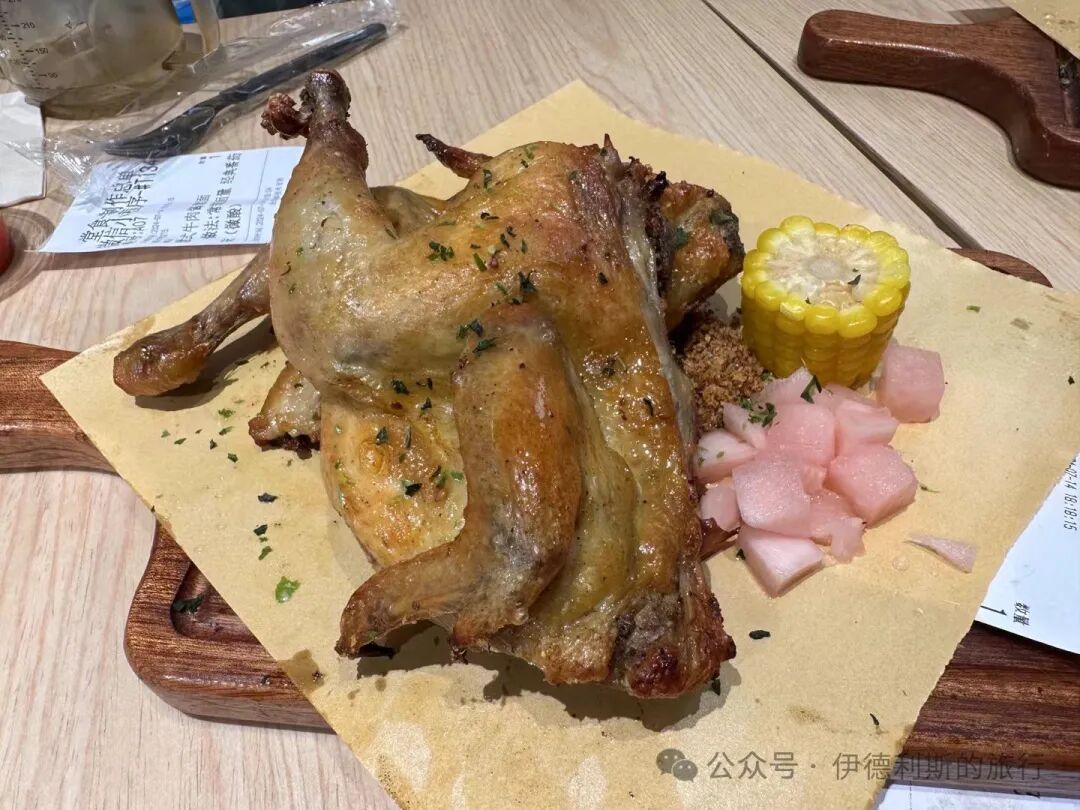
The fries tasted good and were very fragrant. I think their best dish is the roast chicken. It is crispy on the outside and tender on the inside, which makes it very appetizing. They have another shop in the New Zhongguancun Shopping Center. Next time I pass by, I will definitely eat their roast chicken and fries again.
10. Ya'er Liji Courtyard
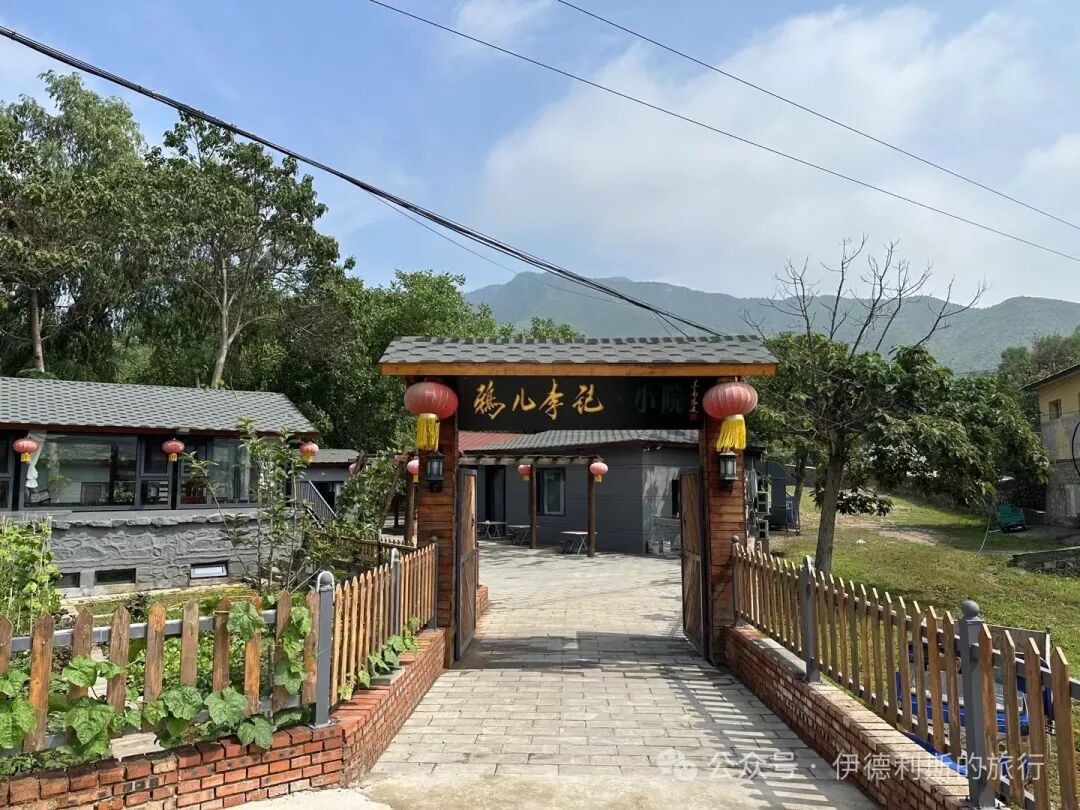
Last weekend, our family of three went to Ya'er Liji Courtyard by the Shayukou Reservoir in Huairou. The courtyard is a little over an hour from the city center by highway. If you take the bus, take the 924 express from outside Dongzhimen to the terminal station, Chawu Railway Station, and then transfer to the H27. However, the H27 runs very infrequently, and we just happened to catch the 11:50 bus on our way back.
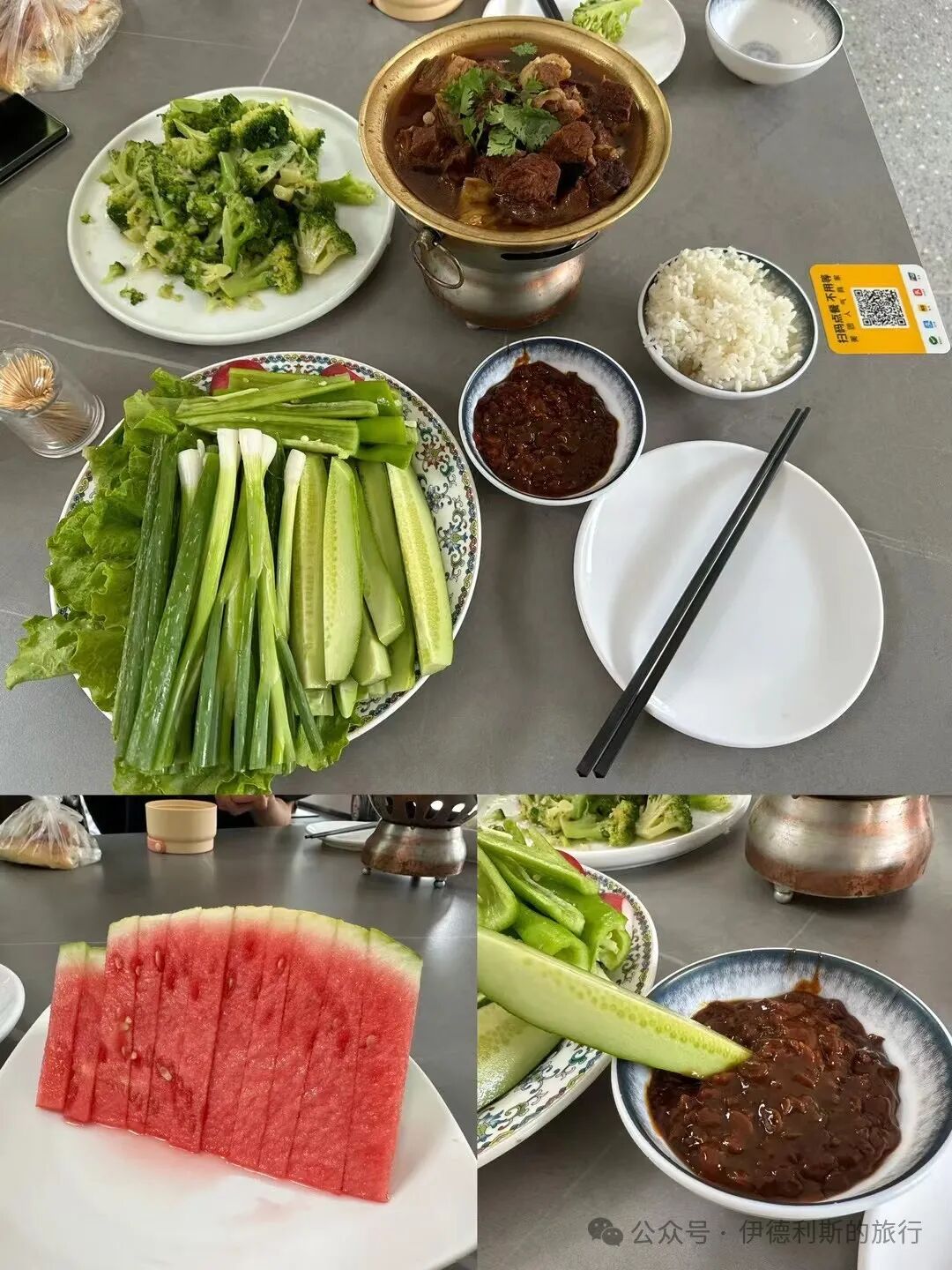
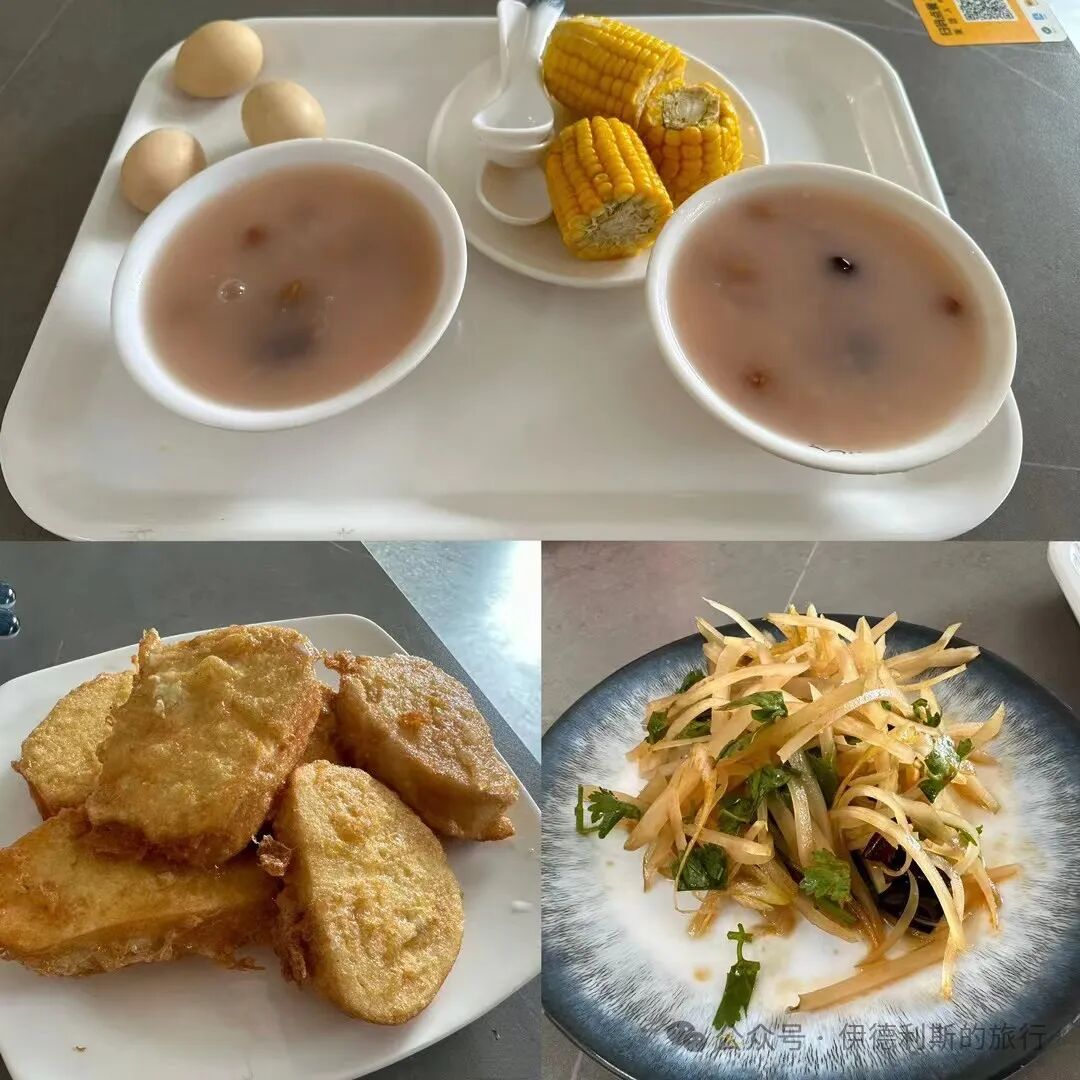
Yar Liji Courtyard has two rooms with large beds and two rooms with large heated brick beds (kang). Saturday nights are busy, so you need to book ahead. The courtyard provides breakfast, which consists of corn, fried steamed bun slices (mantou pian), porridge, eggs, and pickled vegetables. For lunch and dinner, they serve stewed pots, hot pot meat (shuanrou), and barbecue, but there are very few stir-fried dishes.
Yar Liji Courtyard is right next to the Reservoir Mountain Bar Resort. The resort has all kinds of fitness equipment, small slides, and swings, which Suleiman loved. Behind the resort, you can climb up to the Shayukou Reservoir dam to see the view. The rocky path is a bit slippery on the way down, and Suleiman took a tumble. I guess that counts as his first memorable fall while hiking. view all
Summary: Beijing New Restaurants - Turkish, Tunisian and Local Eats (Part 1) is presented as a clear English travel account for readers interested in Muslim life, halal food, mosques, and local history. The article keeps the original names, food details, photographs, and cultural context while focusing on Beijing Halal Food, New Restaurants, Muslim Travel.
1. Sultan Turkish Restaurant, Beijing branch
The super delicious Turkish Mado breakfast has finally arrived in Beijing!
The famous Sultan Turkish Restaurant from Guangzhou and Yiwu recently opened in Beijing at the former location of the Kubei Turkish Restaurant in Zuojiazhuang. The owner of Sultan also brought the famous Turkish Mado ice cream shop to China, so after you enter, the staff will provide two menus: one for Sultan and one for Mado.
Mado comes from the city of Kahramanmarash in southeastern Turkey, and its biggest feature is that everything is made using goat milk from their hometown. Besides ice cream, their various cheeses are also a main specialty. Of course, there is also my favorite Turkish breakfast.
Friends who have been to Turkey probably know that Turkish breakfast is really hearty, nutritious, and healthy. I have eaten Mado breakfast at their Yiwu and Guangzhou locations before, and this time I finally got to have it in Beijing. Mado offers many types of breakfast. We ordered the meal for two, which starts at 10:30 and is available all day. The meal for two includes Turkish-style fried eggs with sausage (sucuk), Maras cheese (maras peyniri), feta cheese (beyaz peynir), yellow cheese platter, honey with clotted cream (kaymak), green olives, black olives, tomato pepper paste (acuka), tahini syrup (tahin pekmez), cherry jam, dried apricots, walnuts, feta cheese spring rolls (sigara boregi), a kiwi, orange, and banana platter, a cucumber and tomato platter, plus bread, flatbread (pide), and Turkish black tea. It is a very rich variety. Their flatbread (pide) is especially fluffy. It tastes great when you tear it open and spread different jams on it.
On my second visit to Sultan, I ordered two of Mado's single-person breakfasts, homemade lemonade, and ice cream. This place is likely the most authentic Turkish breakfast you can find in Beijing. The only disappointing part is that the jam is store-bought in jars. You would never find a place in Turkey that serves breakfast jam like that. Also, the single-person breakfast does not come with bread like the meal for two does; you have to buy the bread separately.
We also ate Sultan's Mardin Tava and Turkish pizza (lahmacun), and we ordered shrimp risotto for the kids. This restaurant is likely the only place in Beijing selling Mardin Tava, a dish made by baking lamb chops, tomatoes, and chili peppers together in a flat pan. Mardin is an ancient city in southeastern Turkey near the border with Iraq, and tava means flat pan. The ancient city of Mardin is home to Kurds, Arabs, and Assyrians, and its local customs are very different from those in central and western Turkey, making it well worth a visit.
I also want to introduce the word "Sultan," which we usually translate as "Sudan" in Chinese. In Arabic, the original meaning of Sultan is "strength, authority, and rule." The first ruler to call himself Sultan was Sultan Mahmud of the Ghaznavid dynasty (reigned 998-1030). Later, the Seljuk and Ottoman dynasties adopted the title, and it gradually became the title for a national ruler. Today, only the heads of state of two countries hold the title of Sultan: the Sultanate of Oman and the Sultanate of Brunei. Additionally, the heads of the Malaysian states of Johor, Kedah, Kelantan, Pahang, Perak, Selangor, and Terengganu, as well as the Special Region of Yogyakarta in Indonesia, are also called Sultans.
Finally, a reminder: the further inside you sit at Sultan Restaurant, the hotter it gets. If you are sensitive to heat, try to sit closer to the front door.
2. Carthage Tunisian Restaurant
A new Carthage Arabic restaurant opened on Dongzhimen Outer Street in Beijing during Ramadan, and we went there for an iftar buffet. This is a new iftar buffet opened by Adel, the head chef of La Medina, on the first floor breakfast area of the Atour X Hotel in Sanlitun Taikoo Li, still focusing on Tunisian flavors. Since it has not been open long, it is mostly frequented by foreign friends (dosti) from the nearby embassy district, so there is no need to wait in line.
Because Adel is in charge, the dishes are similar to La Medina, though there are slightly fewer options. Appetizers include chickpea dip (hummus), parsley salad (tabbouleh), and the Tunisian specialty grilled eggplant salad (mechouia). Besides grilled eggplant, the grilled eggplant salad (mechouia) contains tomatoes, chili peppers, onions, and olive oil, making it very healthy.
The main course features North African sausage (merguez), which is made with lamb and beef mixed with cumin, harissa sauce, chili, and various other spices; it dates back to 12th-century Andalusia and later spread throughout North Africa.
They also serve the classic North African Maghreb tomato and pepper poached egg dish, shakshouka. Shakshouka started in North Africa under Ottoman rule in the 16th century, when tomatoes and peppers were brought from the Americas and became part of the local diet.
They also have the Arab version of fried triangular pastries (sambousek), which is a classic snack for Muslims during Ramadan. Sambousek originated in Iran and entered the Arab diet after the 10th century, later spreading to India, China, Indonesia, and Africa. In some parts of eastern China, Hui Muslims still use the Persian name 'sanmosan'.
3.
Fang Zhongshan Hulatang Hujialou Branch
Fang Zhongshan came to Beijing in 2023 and started a trend for spicy pepper soup (hulatang). The Hujialou branch opened in early 2024, right on my commute.
On the first day Fang Zhongshan Hujialou opened after the Spring Festival, I went there for a mix of spicy pepper soup and tofu pudding (doufunao), plus a beef pie (niurouhe). The Hujialou branch is just a short walk from the Hujialou subway station on Line 6, so it is easy to get to. I arrived at 1:00 and did not have to wait in line; it is not as crowded as it was when it first opened.
I had heard that their spicy soup (hulatang) is very hot. I tried the mixed version, and it was quite spicy. I think some Beijingers who cannot handle spice might find it too much. However, they put plenty of beef and mushrooms inside, which gives it a rich texture. I have to praise their beef pastry (niurouhe). It is wrapped and fried to order, with a thin, crispy crust. It is a great experience. The filling is made of vermicelli and minced beef with a strong hint of Sichuan peppercorn, which should be very popular.
On my second visit, I ordered bean flour porridge (doumo), scallion pancake (congyoubing), and pan-fried buns (shuijianbao). There were more people than the day before, so I expect it will be packed again in a few days.
Their bean flour porridge (doumo) is more traditional than the spicy soup. It tastes just like the one I had on Shuncheng Street in Zhengzhou. It has vermicelli, peanuts, and other ingredients inside, and I think it suits the taste of Beijingers better. The scallion pancake (congyoubing) is very thin, freshly fried, and full of onion aroma with a great texture. Pan-fried buns (shuijianbao) are made in large batches, so you might not always get them fresh out of the pan, but they are still served hot. The filling is beef and vermicelli, with a strong, spicy kick from the seasonings.
The wall at the Fangzhongshan Hujialou branch displays the history of Fangzhongshan spicy soup (hulatang). It feels meaningful to share this cultural heritage.
Fangzhongshan’s grandfather, Fang Yinsheng, opened the Fang Family Soup Shop on Jiepai Street in Zhoukou, Henan, in 1922 and started selling spicy soup (hulatang).
After the Kuomintang caused the Yellow River to breach its banks in the 1938 Huayuankou incident, Henan suffered a severe disaster. Fang Yinsheng turned his soup shop into a relief station to help passing refugees.
After 1958, Fangzhongshan’s father, Fang Chaoyang, was hired as the general manager for three villages, where he oversaw food management for the people's commune.
In 1976, a restaurant for Hui Muslims was established in Xixiatin Town, Xihua County, Zhoukou, Henan, and Fang Chaoyang served as its first manager.
After the reform and opening-up policy, Fang Chaoyang took his son Fangzhongshan to Luohe to build their business, and in 1983, they opened the Fang Family Spicy Soup Shop in Luohe.
4. Zhang Dahui Spicy Soup (hulatang)
Following Fang Zhongshan, the Xiaoyao Town style Zhang Dahui Spicy Soup (hulatang) has also opened a shop in Beijing.
The Sanlitun branch is located in Baijiazhuang. The shop is small. In the morning, they sell spicy soup (hulatang), pan-fried buns (shuijianbao), sugar cakes (tanggao), vegetable pockets (caijiao), fried dough fritters (youmotou), and beef pies (niurouhe) until about 2:00 PM. In the evening, they sell braised noodles (huimian), lamb soup with sesame flatbread (yangtang shaobing), lamb bone marrow (yangbanggu), steamed vegetables (zhengcai), and crawfish (xiaolongxia). We arrived in the evening and ordered lamb braised noodles (yangrou huimian), steamed eggplant (zheng qiezi), lamb bone marrow (yangbanggu), and crawfish (xiaolongxia). I thought the lamb braised noodles (yangrou huimian) were quite tasty. The chef pulls the noodles fresh, and they are packed with ingredients and have a strong flavor. The steamed eggplant (zheng qiezi) is sweet, sour, and salty, seasoned with minced garlic and catnip (jingjie). It goes well with the braised noodles (huimian). The crawfish (xiaolongxia) were served cold, and I felt they were not spicy enough. The beef bone marrow (niubanggu) is braised in sauce, but I felt it was a bit too salty. Next time I have a chance, I will come in the morning to try their spicy soup (hulatang).
The founder of Zhang Dahui was the great-grandfather, Zhang Yongsui. In the early 20th century, Zhang Yongsui carried a pole to sell spicy soup (hulatang) at the Shahe River wharf in Xiaoyao Town, Xihua County, Zhoukou, Henan. Xiaoyao Town sits where the Shahe and Yinghe rivers meet. It has always been an important trade hub, and the area around the Shahe River wharf was especially busy. Starting in 1942, 14-year-old Zhang Quanfang began selling spicy soup (hulatang) with his father, Zhang Yongsui, at the crossroads in Xiaoyao Town. He sold it there for over thirty years. After the reform and opening up in 1979, the third-generation successor, Zhang Peigen, moved his whole family to Xihua County to open a shop. It was the first spicy soup (hulatang) business to move out of Xiaoyao Town. In the 1990s, the Zhang family opened Qingxiangyuan Old Zhang's Spicy Soup (hulatang) at the Round Corner Building in Xihua County Square. Later, the fourth-generation successor changed the name to Zhang Dahui Spicy Soup (hulatang), which is still open today.
5. Yu-style Xiaoyao Town Spicy Soup (hulatang)
There is finally a halal Xiaoyao Town spicy soup (hulatang) inside the Second Ring Road in Beijing!
A new shop called Yuwei Xiaoyao Town Spicy Soup opened on Dongsi North Street. For liquids, they have spicy soup (hulatang), tofu pudding (doufunao), a mix of both (liangchan), bean foam soup (doumo), soy milk (doujiang), eight-treasure porridge (babaozhou), and millet porridge (xiaomizhou). For solids, they have scallion oil pancakes (congyoubing), pan-fried buns (shuijianbao), beef pockets (niurouhe), fried dough strips (youmotou), beef buns (niuroubao), and vegetable buns (subao). I had the mix, a scallion oil pancake, and a pan-fried bun for breakfast. The spicy soup has beef slices, gluten, and wood ear mushrooms in it. It is not the super spicy version like Fang Zhongshan, but the traditional Xiaoyao Town flavor. Maybe because it was raining when they opened, the shop was not crowded. I missed out on the freshly made scallion oil pancakes and pan-fried buns, but the pan-fried buns were still hot and tasted great.
Yuwei Xiaoyao Town Spicy Soup officially opened on July 26, and many friends (dosti) came to visit. I had bean foam soup, fried dough strips, and pan-fried buns for breakfast. This time I caught the freshly fried dough strips, and they tasted very good.
In August, Yuwei Xiaoyao Town Spicy Soup added braised noodles (huimian) to the menu. It is a typical Zhengzhou nourishing braised noodle dish. The broth contains quail eggs, glass noodles (fensi), goji berries, and kelp. The chef pulls the noodles fresh to order. Their cold dishes are a bit pricey, and they are sold individually, unlike the braised noodle (huimian) shops in Henan where you can usually get a mix of dishes.
6. Qinyuanzhai Fresh Braised Duck Shop
I bought duck head, duck neck, duck web, duck gizzard, duck esophagus, tofu skin, kelp, and orchid-shaped tofu skewers at Qinyuanzhai Fresh Braised Duck Shop on Andingmen Inner Street. They have a good variety. The braised items are not very spicy, but they have a lingering heat, making them great for snacking.
7. Subuha Almond Tofu Jiaodaokou Branch
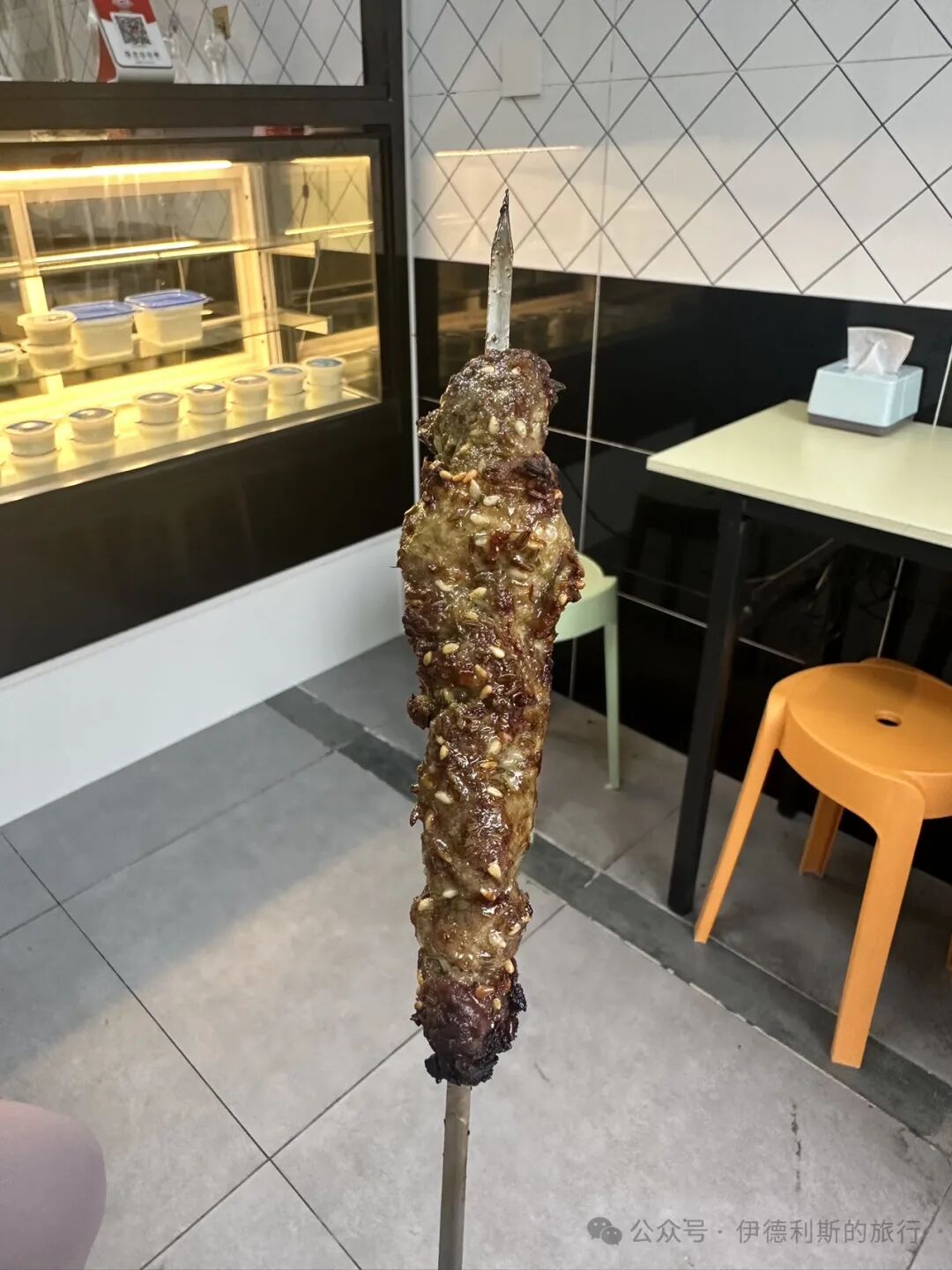
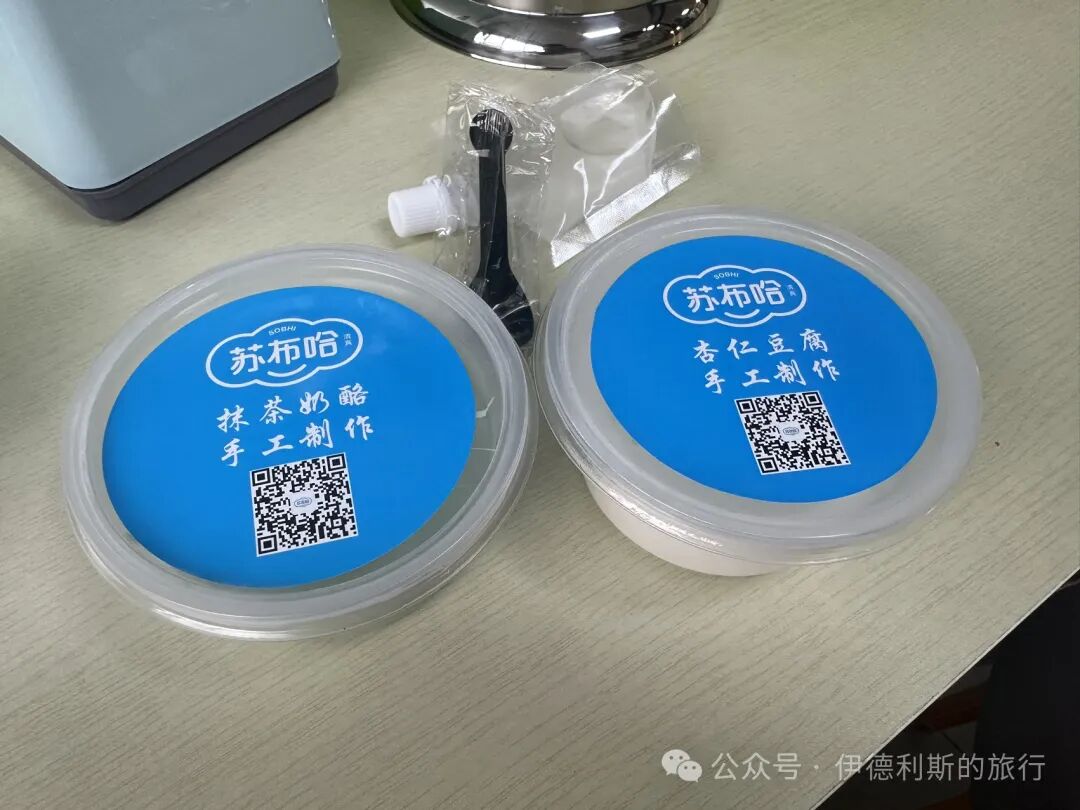
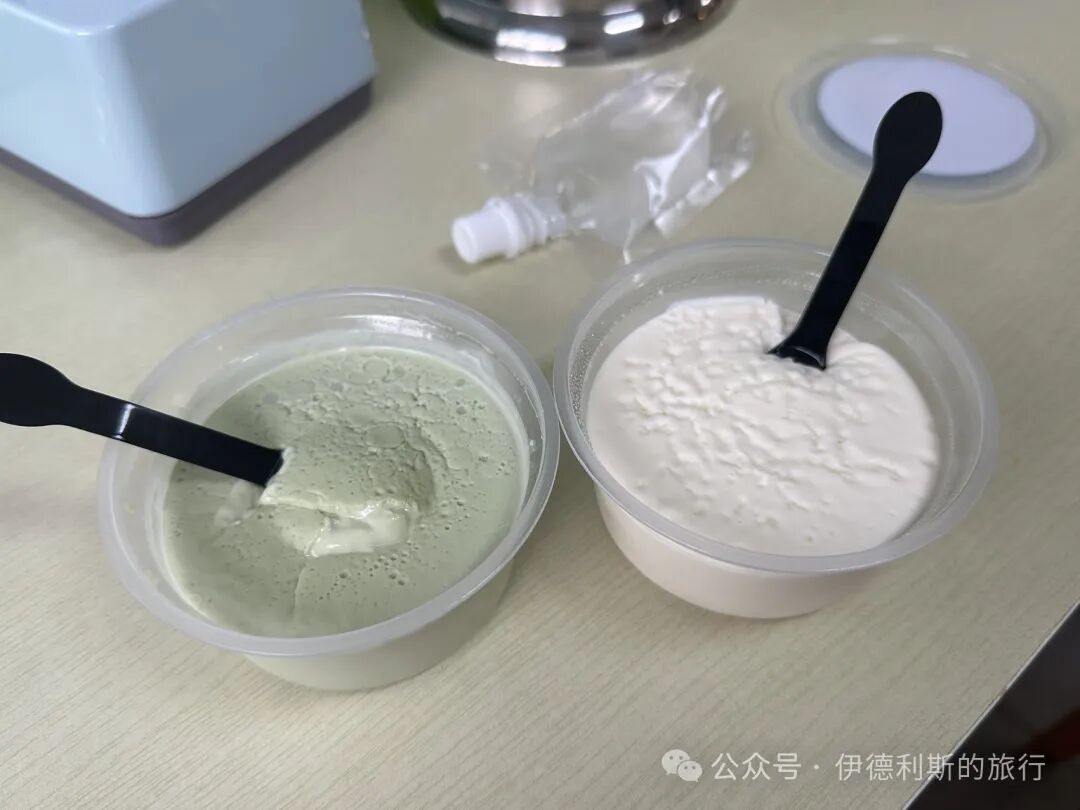
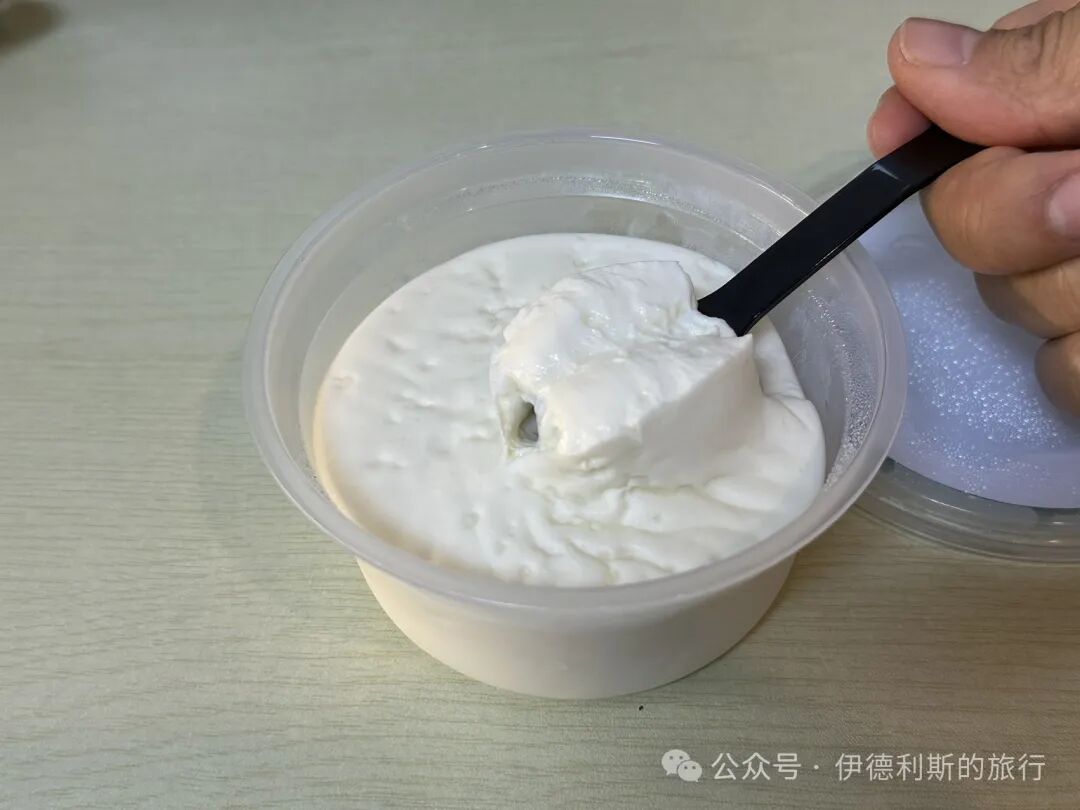
I went for a walk in the evening and visited the newly opened Subuha at Jiaodaokou, where I ordered almond tofu and coconut cheese. Their almond tofu is made like cheese, with both almond and milk flavors. It is quite delicious.
The second time I went, I had the matcha cheese, while Zainab had the lamb skewers and almond tofu. They also have 800 grams of sugar-free yogurt for 14.5 yuan, which feels like a good deal.
8. Shawarma City
I took Suleiman for a walk in Sanlitun in the evening. Down the stairs at Sanlitun SOHO, a new kebab wrap shop called Shawarma City just opened, and it has a real Middle Eastern street vibe. The owner is Palestinian. They specialize in beef wraps and chicken wraps, plus fried chicken, onion rings, and salty yogurt drink (ayran).
We had the beef wrap and ayran. The beef wrap was surprisingly delicious, and the meat was very tender. When we visited Turkey, the flatbread for the kebab wraps we bought on the street was always mass-produced and got hard once it cooled down. But their flatbread is made fresh to order. It is hot and crispy, and it tastes even better than the ones we bought in Turkey!
9. Tomato Casual Western Restaurant (Xihongshi) at Hopson One
After coming back from Badaling Wildlife Park, we went to Xihongshi Pizza and Pasta at Hopson One in Changping. The owner is a Hui Muslim from Xueying in Daxing, and he has opened several branches now.
We ordered the tomato beef pasta and cheese pizza. The portions were very small, and there wasn't much meat in the pasta, but the price was really cheap. I guess they focus on high volume.
The fries tasted good and were very fragrant. I think their best dish is the roast chicken. It is crispy on the outside and tender on the inside, which makes it very appetizing. They have another shop in the New Zhongguancun Shopping Center. Next time I pass by, I will definitely eat their roast chicken and fries again.
10. Ya'er Liji Courtyard
Last weekend, our family of three went to Ya'er Liji Courtyard by the Shayukou Reservoir in Huairou. The courtyard is a little over an hour from the city center by highway. If you take the bus, take the 924 express from outside Dongzhimen to the terminal station, Chawu Railway Station, and then transfer to the H27. However, the H27 runs very infrequently, and we just happened to catch the 11:50 bus on our way back.
Yar Liji Courtyard has two rooms with large beds and two rooms with large heated brick beds (kang). Saturday nights are busy, so you need to book ahead. The courtyard provides breakfast, which consists of corn, fried steamed bun slices (mantou pian), porridge, eggs, and pickled vegetables. For lunch and dinner, they serve stewed pots, hot pot meat (shuanrou), and barbecue, but there are very few stir-fried dishes.
Yar Liji Courtyard is right next to the Reservoir Mountain Bar Resort. The resort has all kinds of fitness equipment, small slides, and swings, which Suleiman loved. Behind the resort, you can climb up to the Shayukou Reservoir dam to see the view. The rocky path is a bit slippery on the way down, and Suleiman took a tumble. I guess that counts as his first memorable fall while hiking. view all
Reposted from the web
Summary: Beijing New Restaurants - Turkish, Tunisian and Local Eats (Part 1) is presented as a clear English travel account for readers interested in Muslim life, halal food, mosques, and local history. The article keeps the original names, food details, photographs, and cultural context while focusing on Beijing Halal Food, New Restaurants, Muslim Travel.
1. Sultan Turkish Restaurant, Beijing branch
The super delicious Turkish Mado breakfast has finally arrived in Beijing!
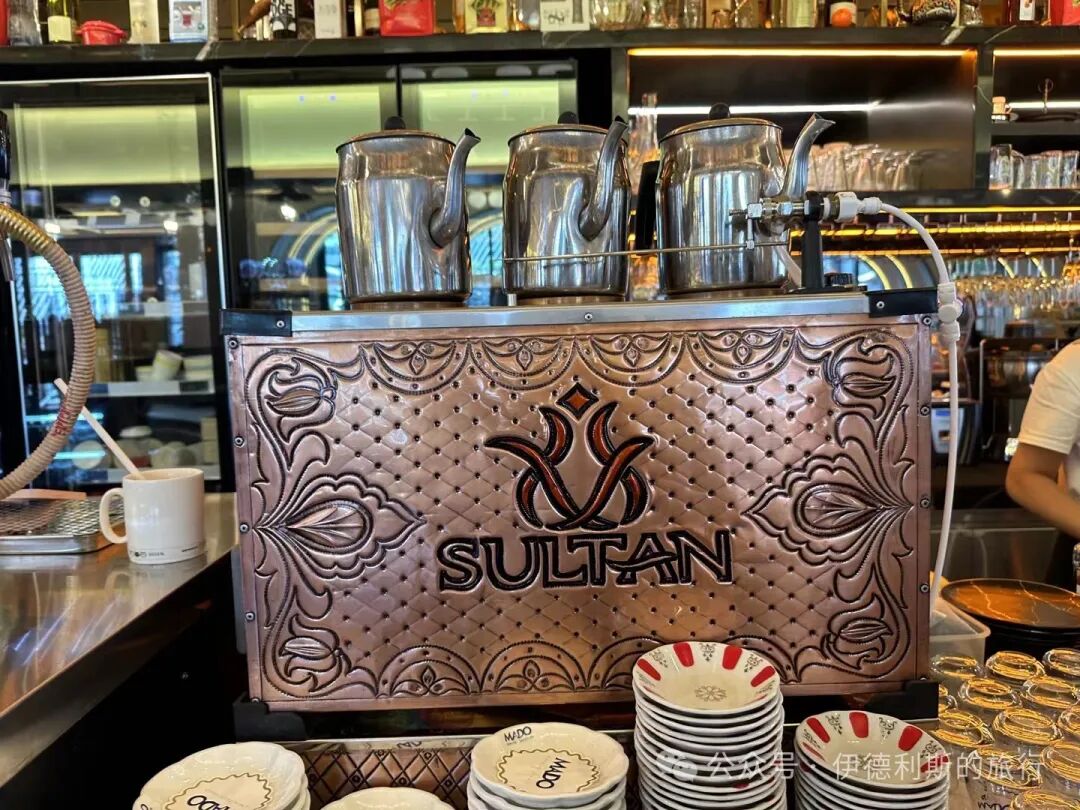
The famous Sultan Turkish Restaurant from Guangzhou and Yiwu recently opened in Beijing at the former location of the Kubei Turkish Restaurant in Zuojiazhuang. The owner of Sultan also brought the famous Turkish Mado ice cream shop to China, so after you enter, the staff will provide two menus: one for Sultan and one for Mado.
Mado comes from the city of Kahramanmarash in southeastern Turkey, and its biggest feature is that everything is made using goat milk from their hometown. Besides ice cream, their various cheeses are also a main specialty. Of course, there is also my favorite Turkish breakfast.
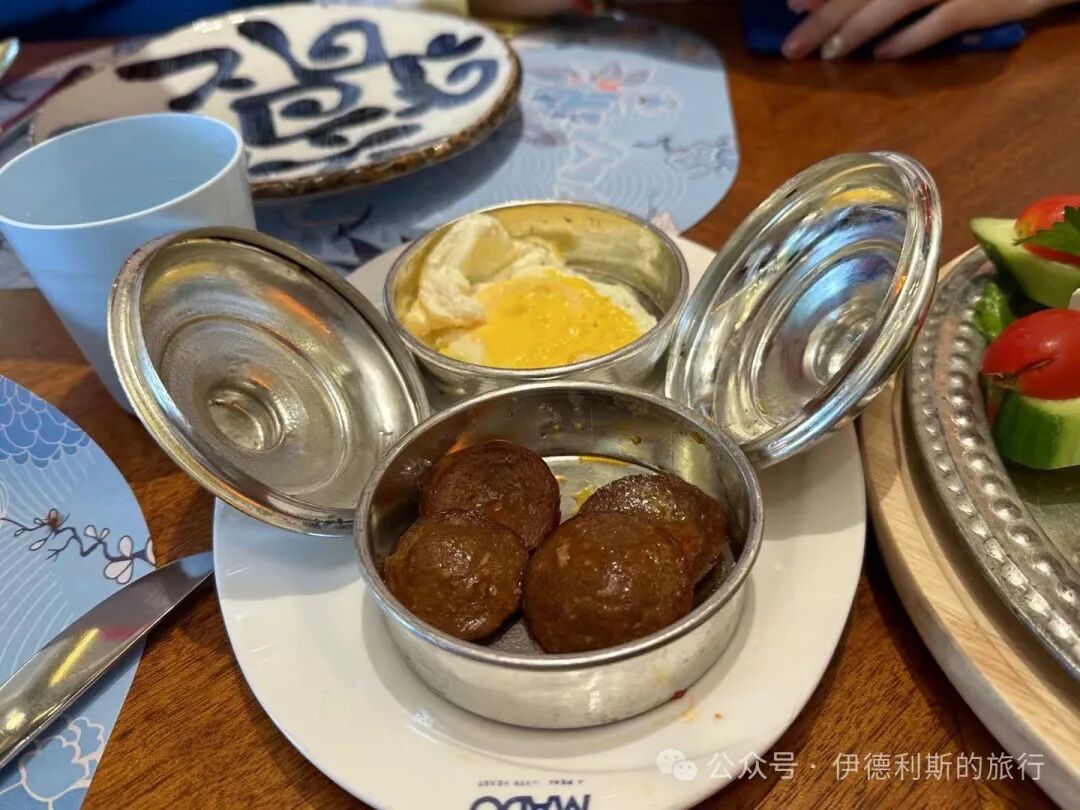
Friends who have been to Turkey probably know that Turkish breakfast is really hearty, nutritious, and healthy. I have eaten Mado breakfast at their Yiwu and Guangzhou locations before, and this time I finally got to have it in Beijing. Mado offers many types of breakfast. We ordered the meal for two, which starts at 10:30 and is available all day. The meal for two includes Turkish-style fried eggs with sausage (sucuk), Maras cheese (maras peyniri), feta cheese (beyaz peynir), yellow cheese platter, honey with clotted cream (kaymak), green olives, black olives, tomato pepper paste (acuka), tahini syrup (tahin pekmez), cherry jam, dried apricots, walnuts, feta cheese spring rolls (sigara boregi), a kiwi, orange, and banana platter, a cucumber and tomato platter, plus bread, flatbread (pide), and Turkish black tea. It is a very rich variety. Their flatbread (pide) is especially fluffy. It tastes great when you tear it open and spread different jams on it.
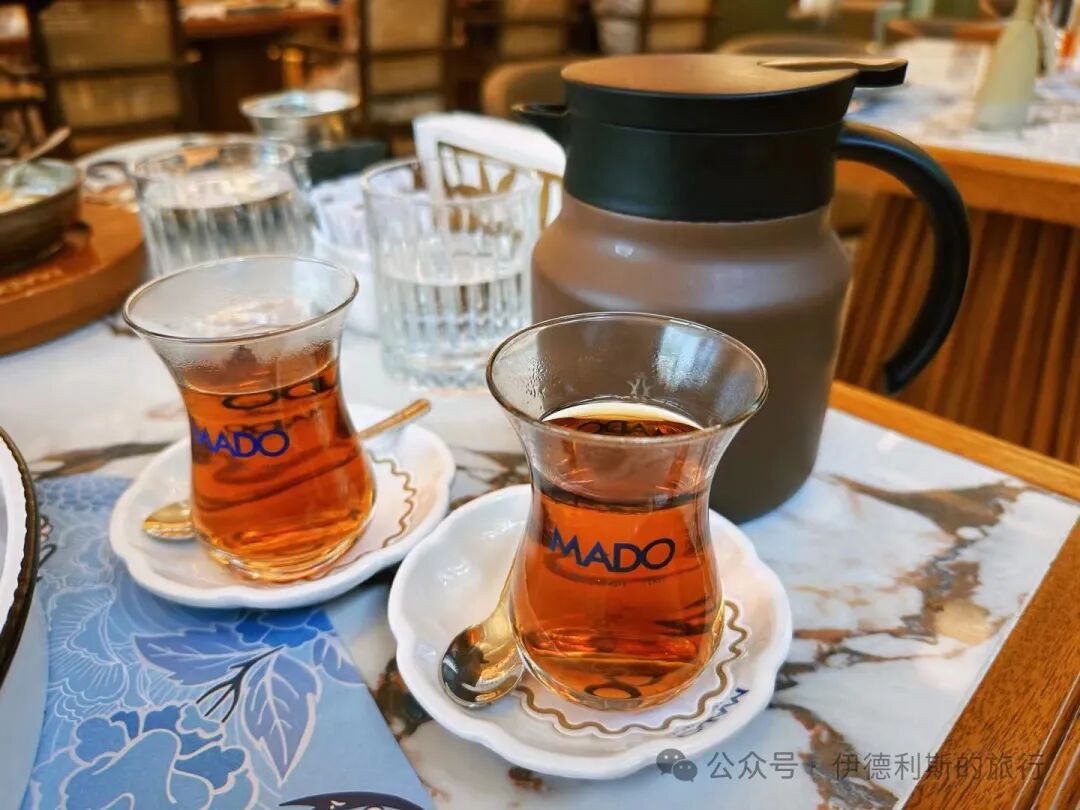
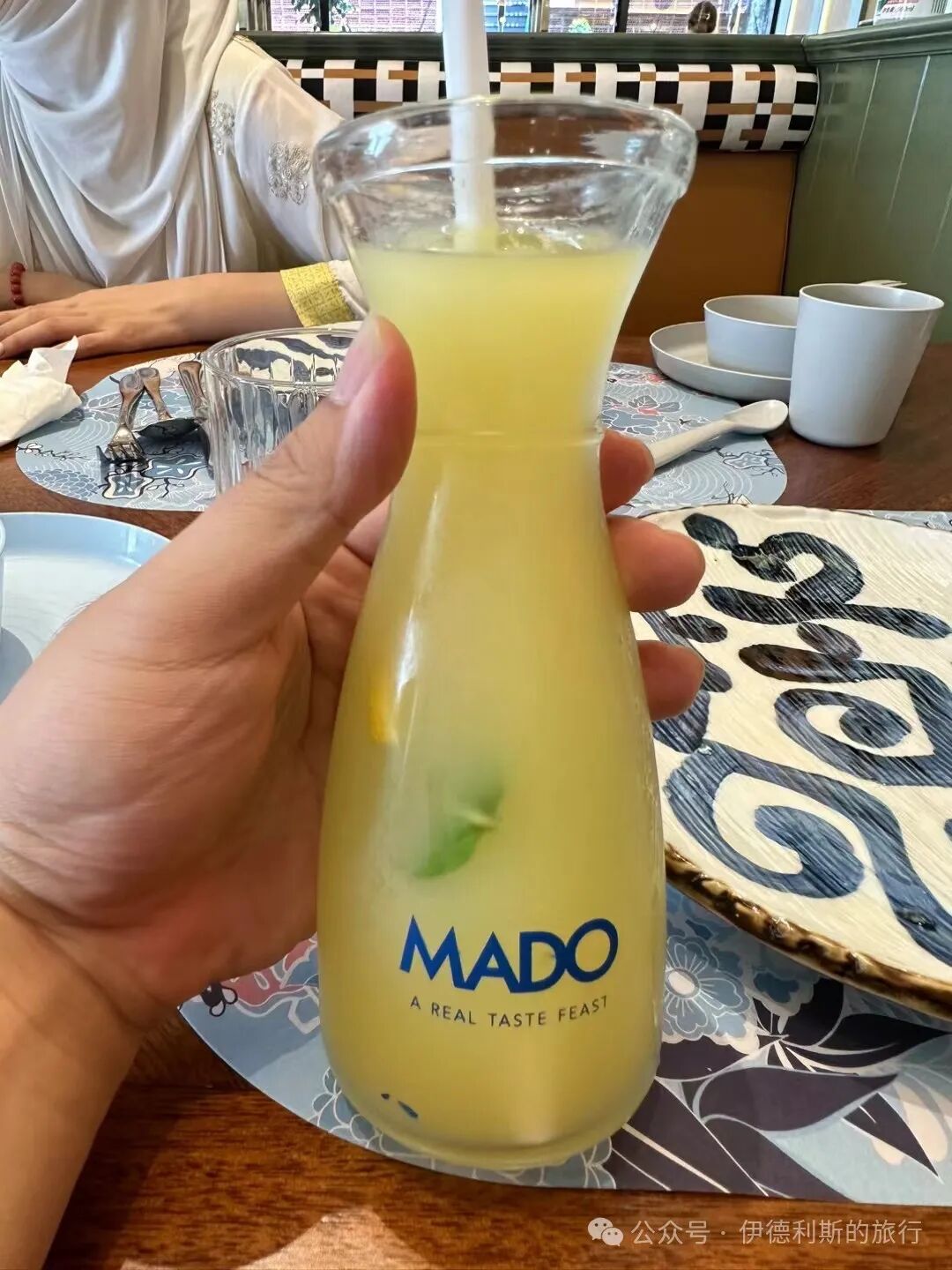
On my second visit to Sultan, I ordered two of Mado's single-person breakfasts, homemade lemonade, and ice cream. This place is likely the most authentic Turkish breakfast you can find in Beijing. The only disappointing part is that the jam is store-bought in jars. You would never find a place in Turkey that serves breakfast jam like that. Also, the single-person breakfast does not come with bread like the meal for two does; you have to buy the bread separately.
We also ate Sultan's Mardin Tava and Turkish pizza (lahmacun), and we ordered shrimp risotto for the kids. This restaurant is likely the only place in Beijing selling Mardin Tava, a dish made by baking lamb chops, tomatoes, and chili peppers together in a flat pan. Mardin is an ancient city in southeastern Turkey near the border with Iraq, and tava means flat pan. The ancient city of Mardin is home to Kurds, Arabs, and Assyrians, and its local customs are very different from those in central and western Turkey, making it well worth a visit.
I also want to introduce the word "Sultan," which we usually translate as "Sudan" in Chinese. In Arabic, the original meaning of Sultan is "strength, authority, and rule." The first ruler to call himself Sultan was Sultan Mahmud of the Ghaznavid dynasty (reigned 998-1030). Later, the Seljuk and Ottoman dynasties adopted the title, and it gradually became the title for a national ruler. Today, only the heads of state of two countries hold the title of Sultan: the Sultanate of Oman and the Sultanate of Brunei. Additionally, the heads of the Malaysian states of Johor, Kedah, Kelantan, Pahang, Perak, Selangor, and Terengganu, as well as the Special Region of Yogyakarta in Indonesia, are also called Sultans.
Finally, a reminder: the further inside you sit at Sultan Restaurant, the hotter it gets. If you are sensitive to heat, try to sit closer to the front door.
2. Carthage Tunisian Restaurant
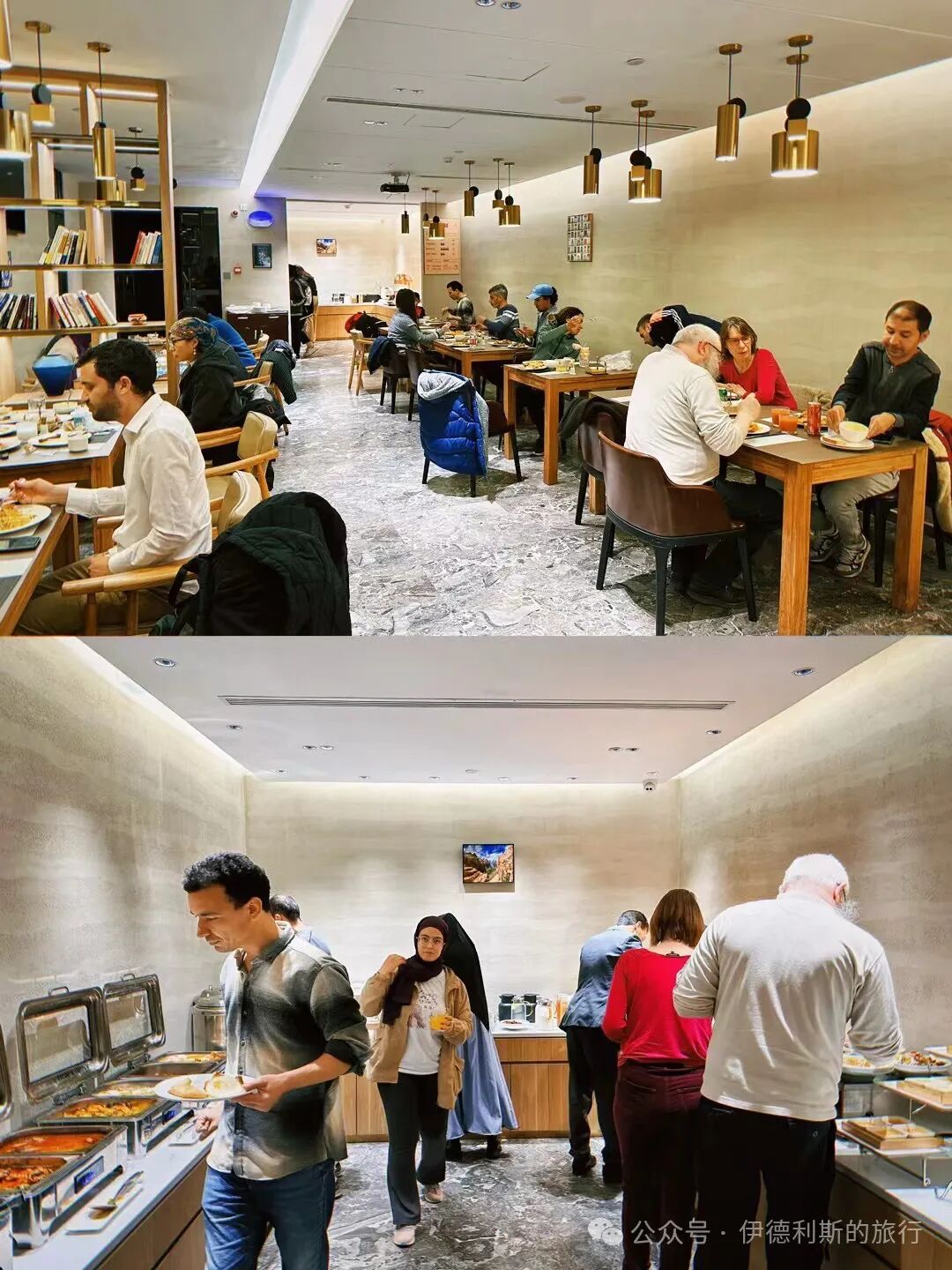
A new Carthage Arabic restaurant opened on Dongzhimen Outer Street in Beijing during Ramadan, and we went there for an iftar buffet. This is a new iftar buffet opened by Adel, the head chef of La Medina, on the first floor breakfast area of the Atour X Hotel in Sanlitun Taikoo Li, still focusing on Tunisian flavors. Since it has not been open long, it is mostly frequented by foreign friends (dosti) from the nearby embassy district, so there is no need to wait in line.
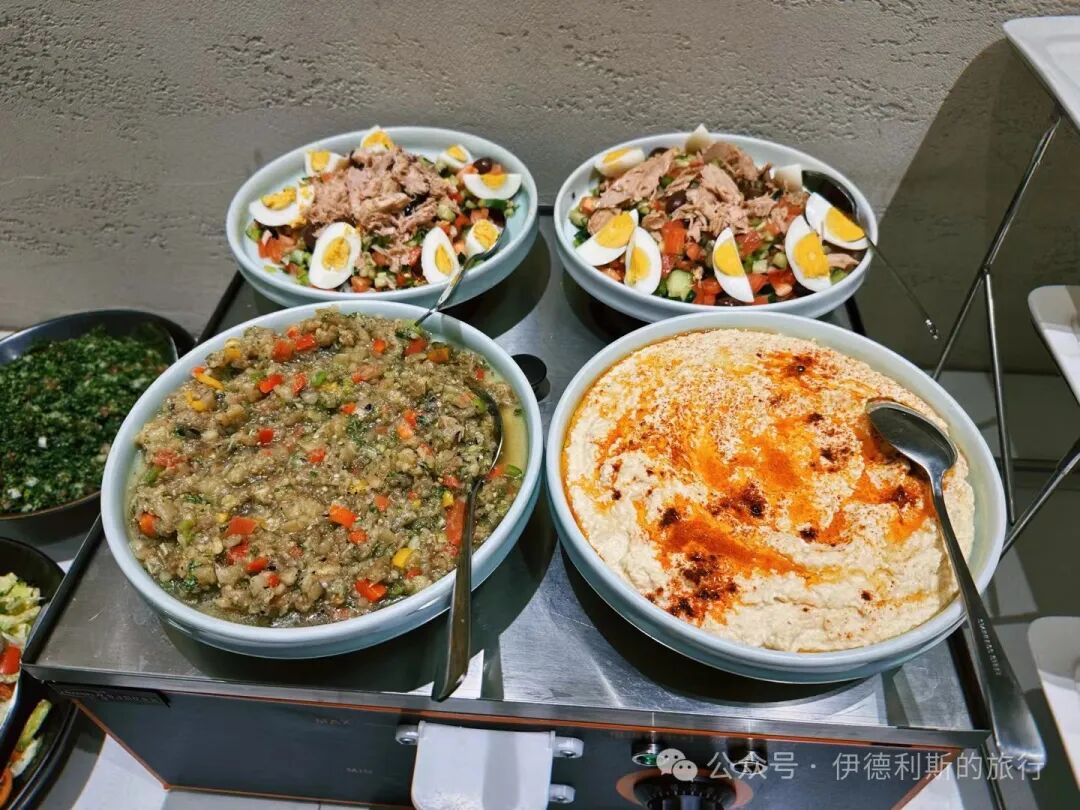
Because Adel is in charge, the dishes are similar to La Medina, though there are slightly fewer options. Appetizers include chickpea dip (hummus), parsley salad (tabbouleh), and the Tunisian specialty grilled eggplant salad (mechouia). Besides grilled eggplant, the grilled eggplant salad (mechouia) contains tomatoes, chili peppers, onions, and olive oil, making it very healthy.
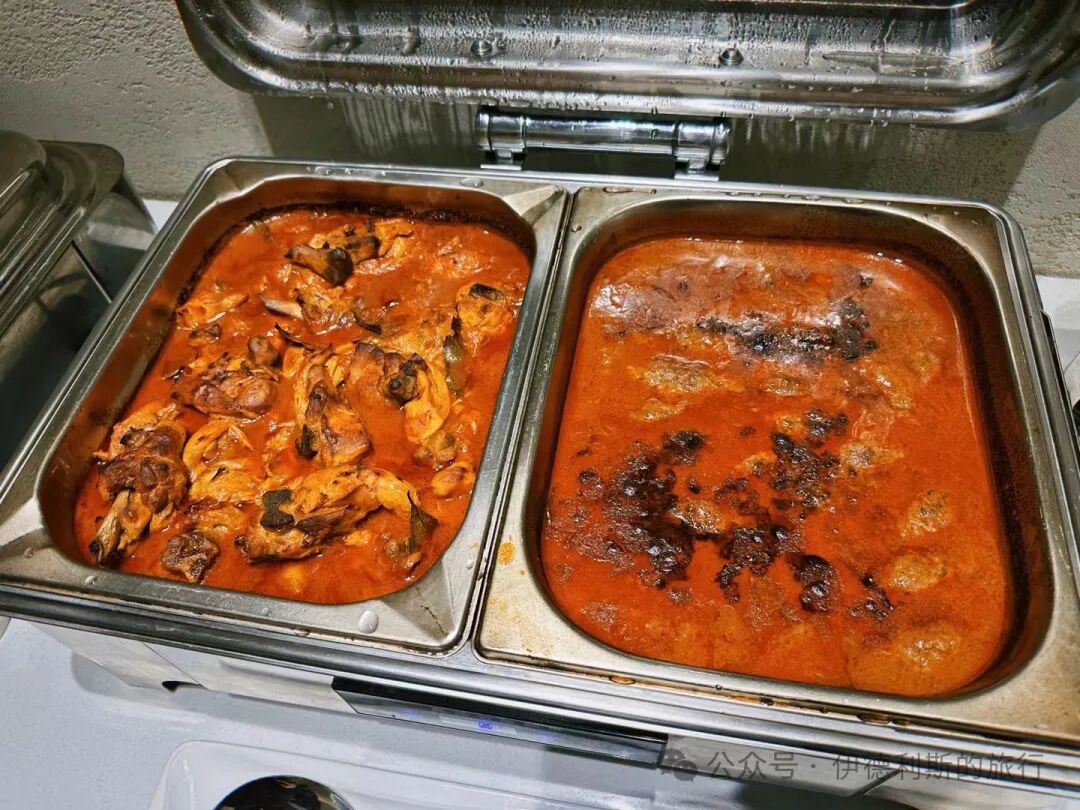
The main course features North African sausage (merguez), which is made with lamb and beef mixed with cumin, harissa sauce, chili, and various other spices; it dates back to 12th-century Andalusia and later spread throughout North Africa.
They also serve the classic North African Maghreb tomato and pepper poached egg dish, shakshouka. Shakshouka started in North Africa under Ottoman rule in the 16th century, when tomatoes and peppers were brought from the Americas and became part of the local diet.
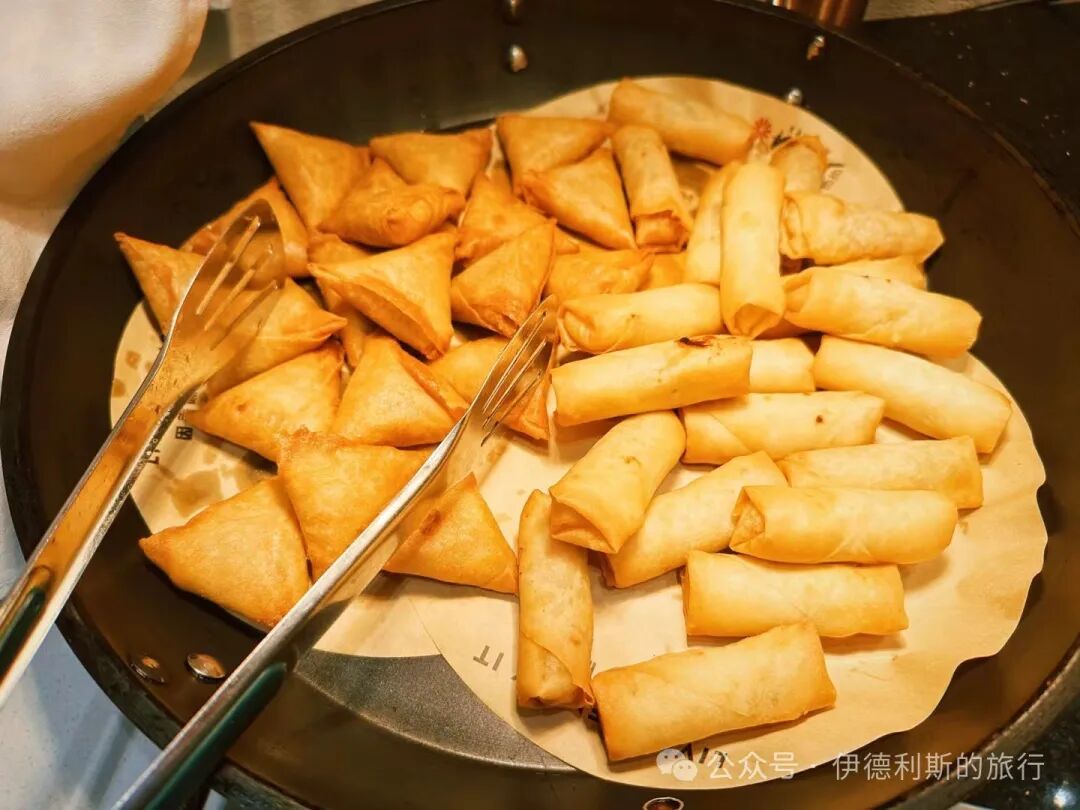
They also have the Arab version of fried triangular pastries (sambousek), which is a classic snack for Muslims during Ramadan. Sambousek originated in Iran and entered the Arab diet after the 10th century, later spreading to India, China, Indonesia, and Africa. In some parts of eastern China, Hui Muslims still use the Persian name 'sanmosan'.
3.
Fang Zhongshan Hulatang Hujialou Branch
Fang Zhongshan came to Beijing in 2023 and started a trend for spicy pepper soup (hulatang). The Hujialou branch opened in early 2024, right on my commute.
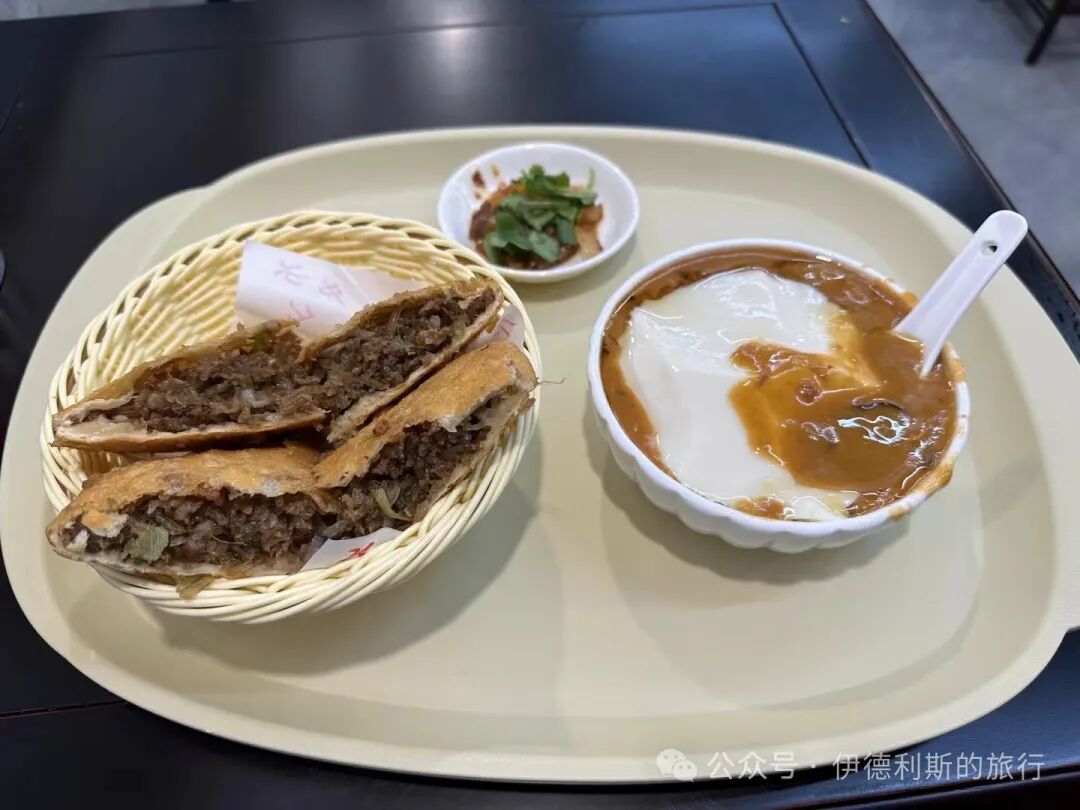
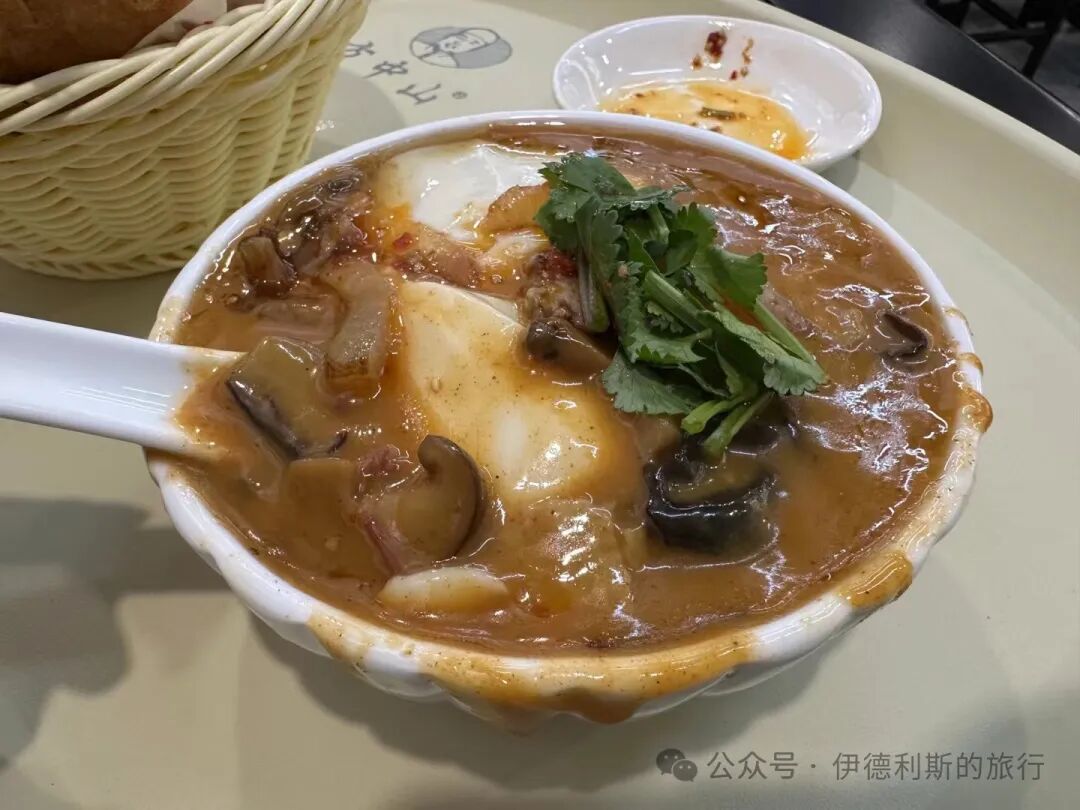
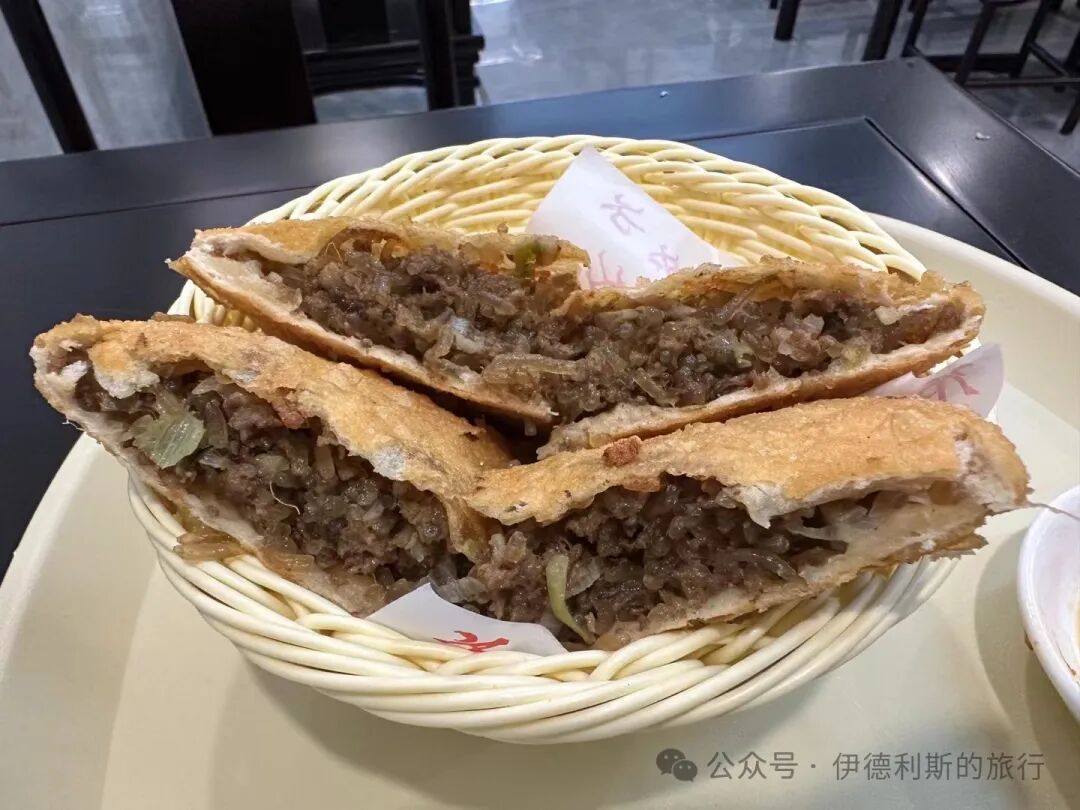
On the first day Fang Zhongshan Hujialou opened after the Spring Festival, I went there for a mix of spicy pepper soup and tofu pudding (doufunao), plus a beef pie (niurouhe). The Hujialou branch is just a short walk from the Hujialou subway station on Line 6, so it is easy to get to. I arrived at 1:00 and did not have to wait in line; it is not as crowded as it was when it first opened.
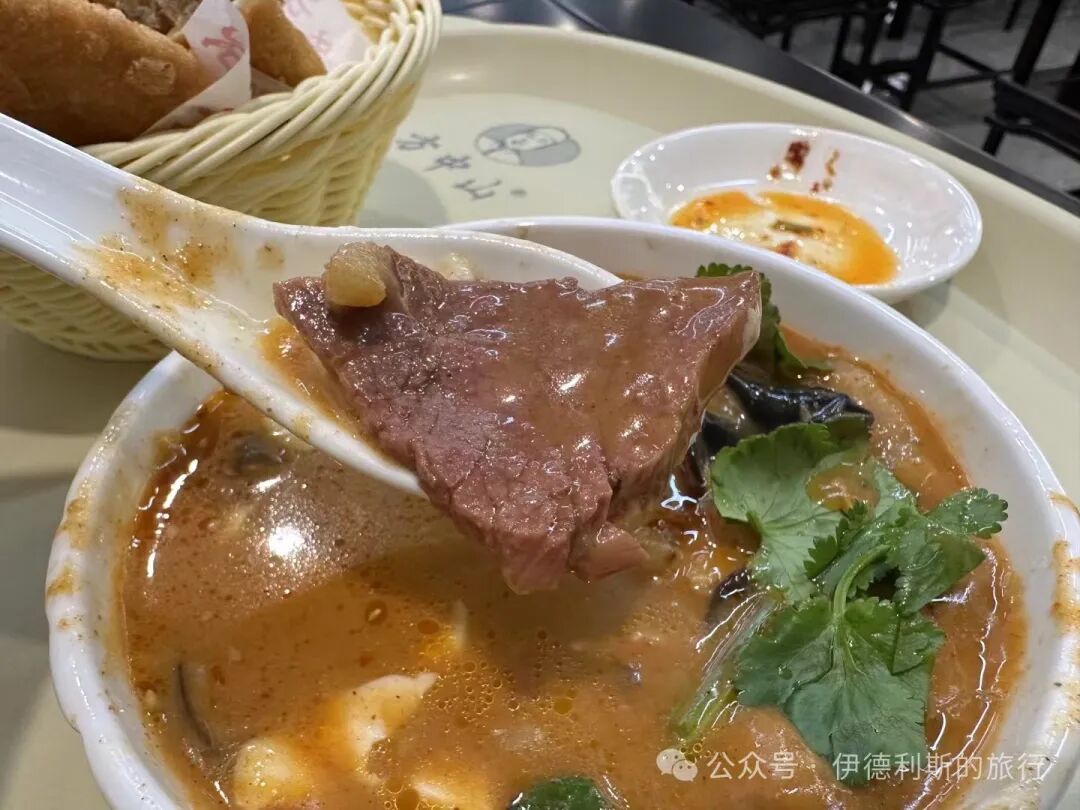
I had heard that their spicy soup (hulatang) is very hot. I tried the mixed version, and it was quite spicy. I think some Beijingers who cannot handle spice might find it too much. However, they put plenty of beef and mushrooms inside, which gives it a rich texture. I have to praise their beef pastry (niurouhe). It is wrapped and fried to order, with a thin, crispy crust. It is a great experience. The filling is made of vermicelli and minced beef with a strong hint of Sichuan peppercorn, which should be very popular.
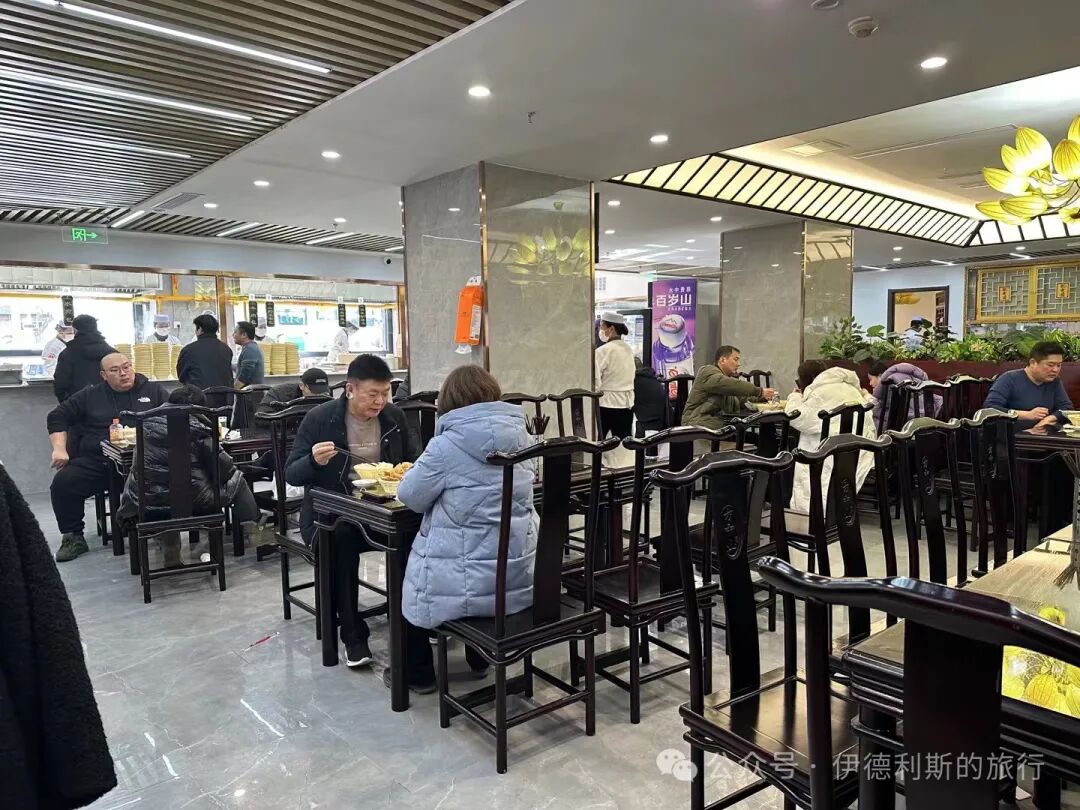
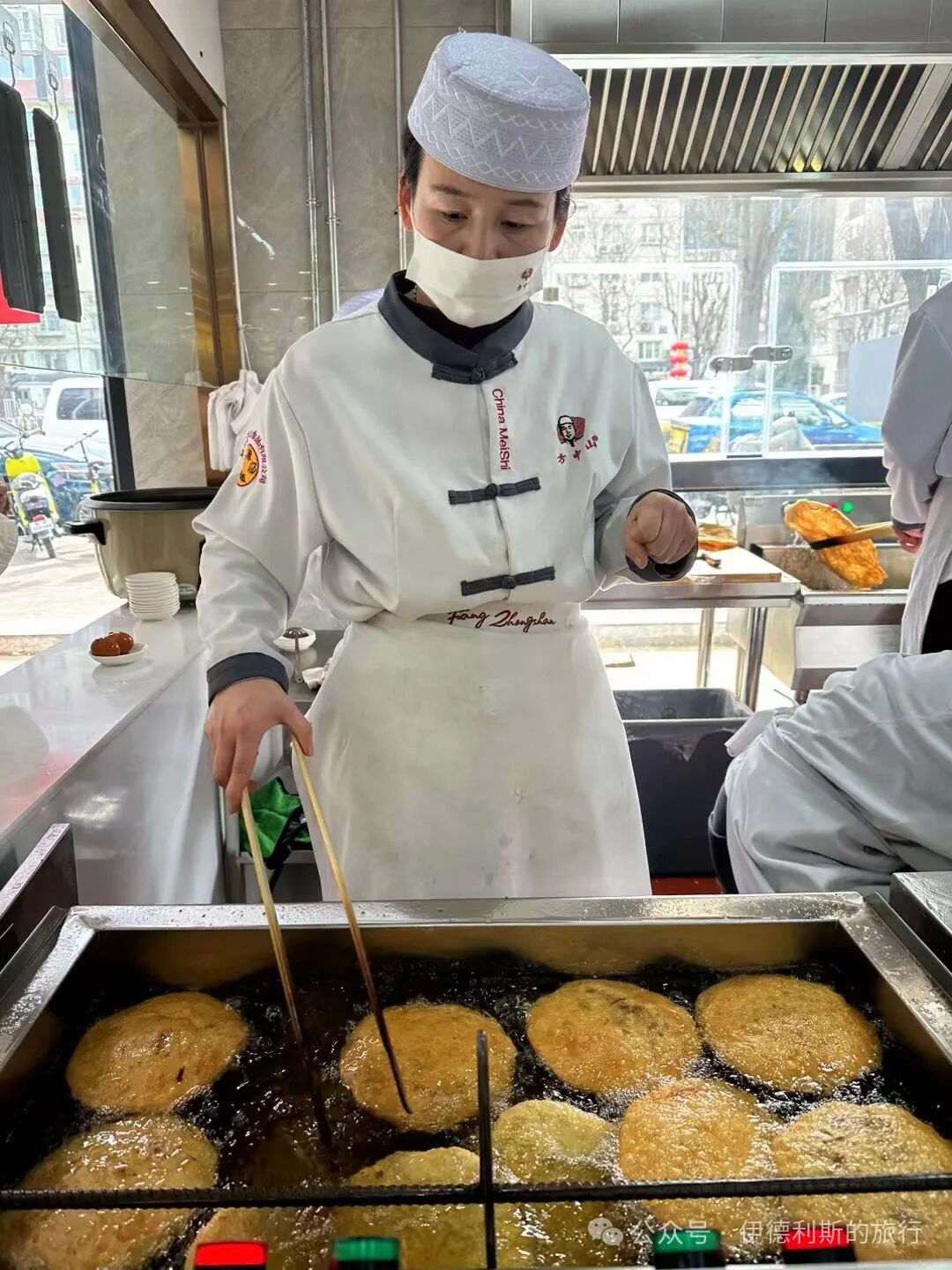
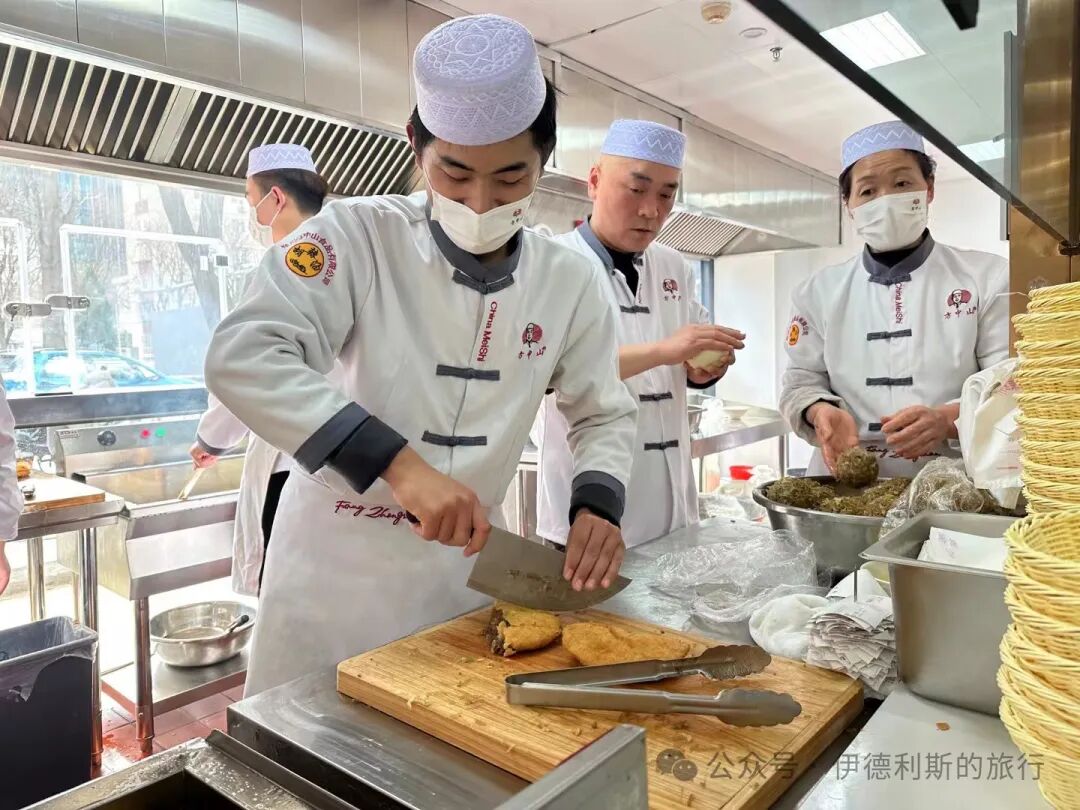
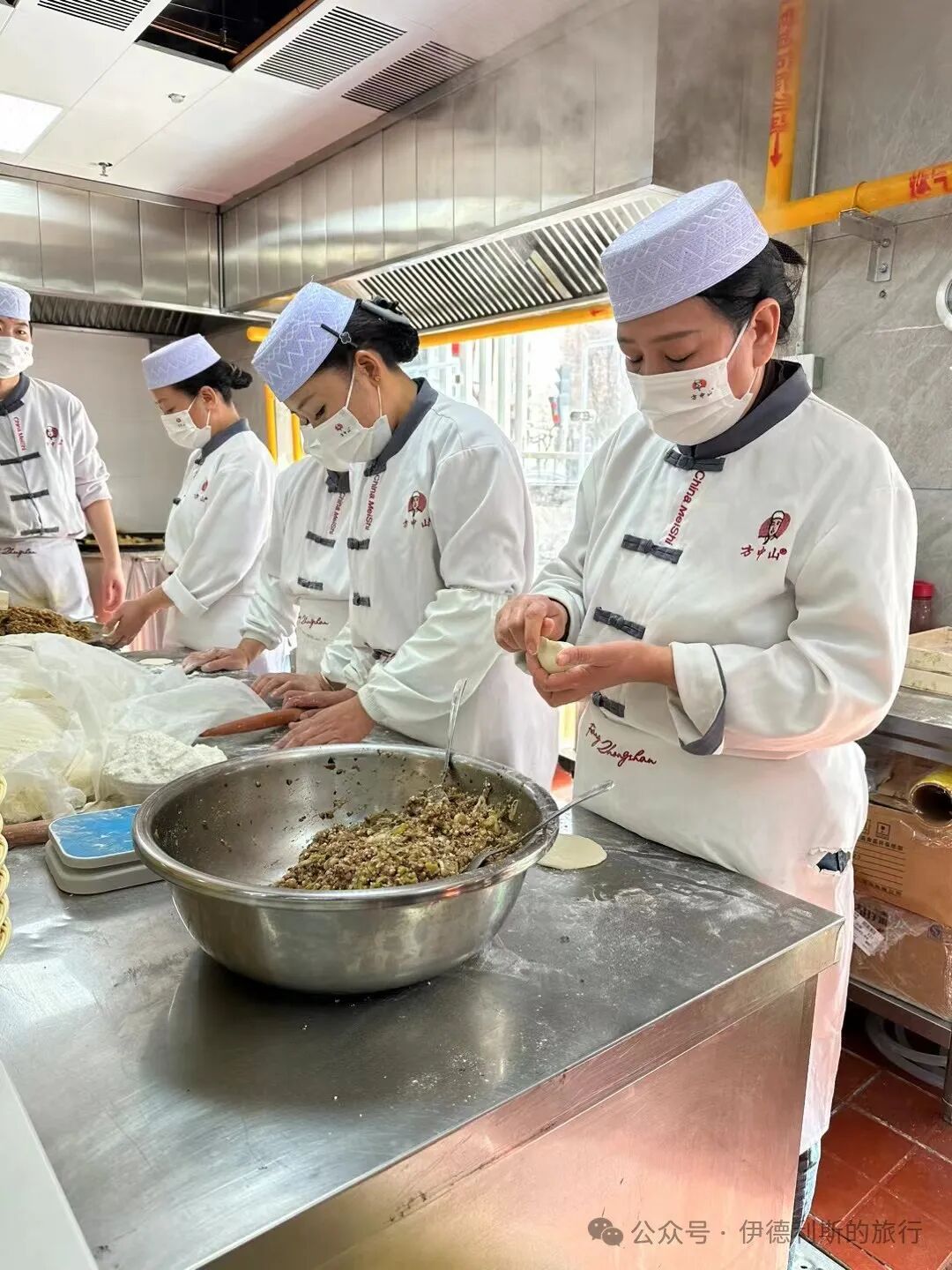
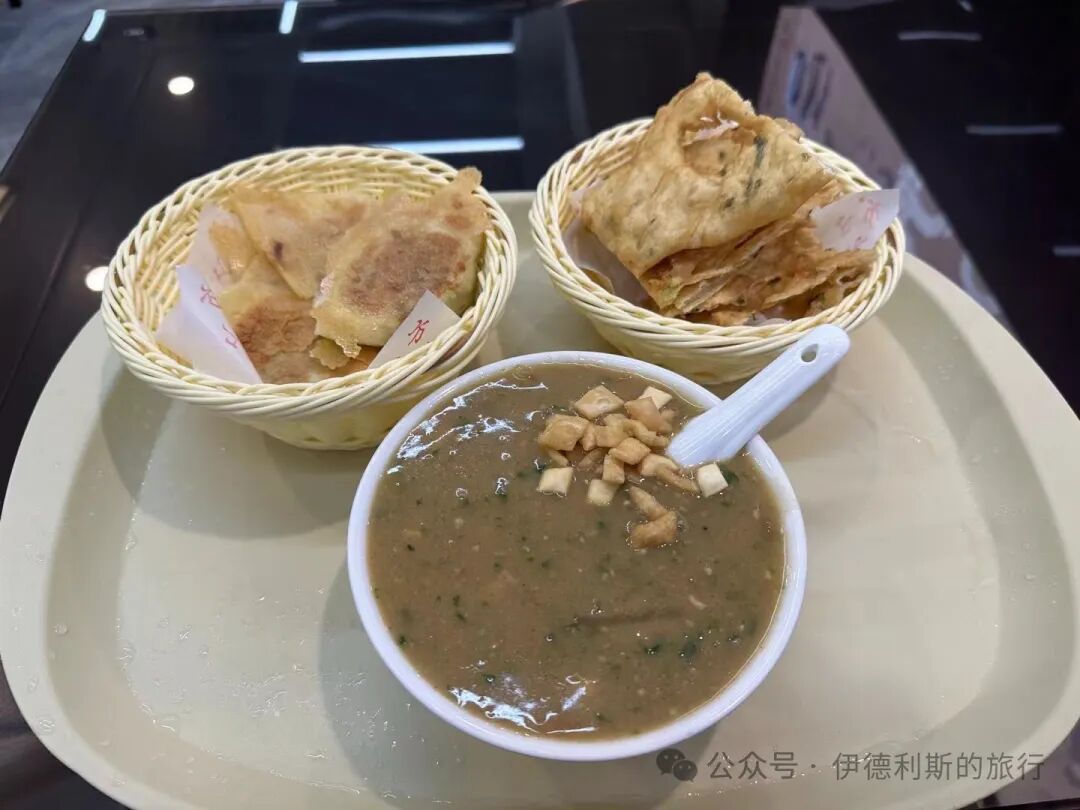
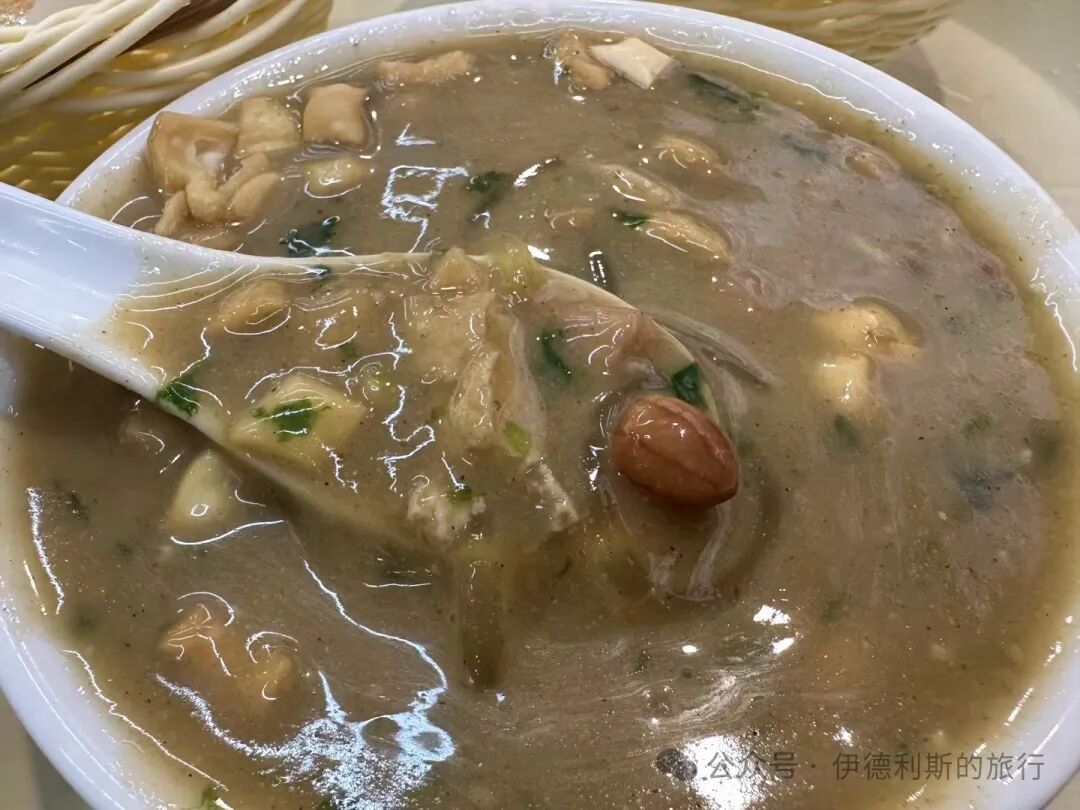
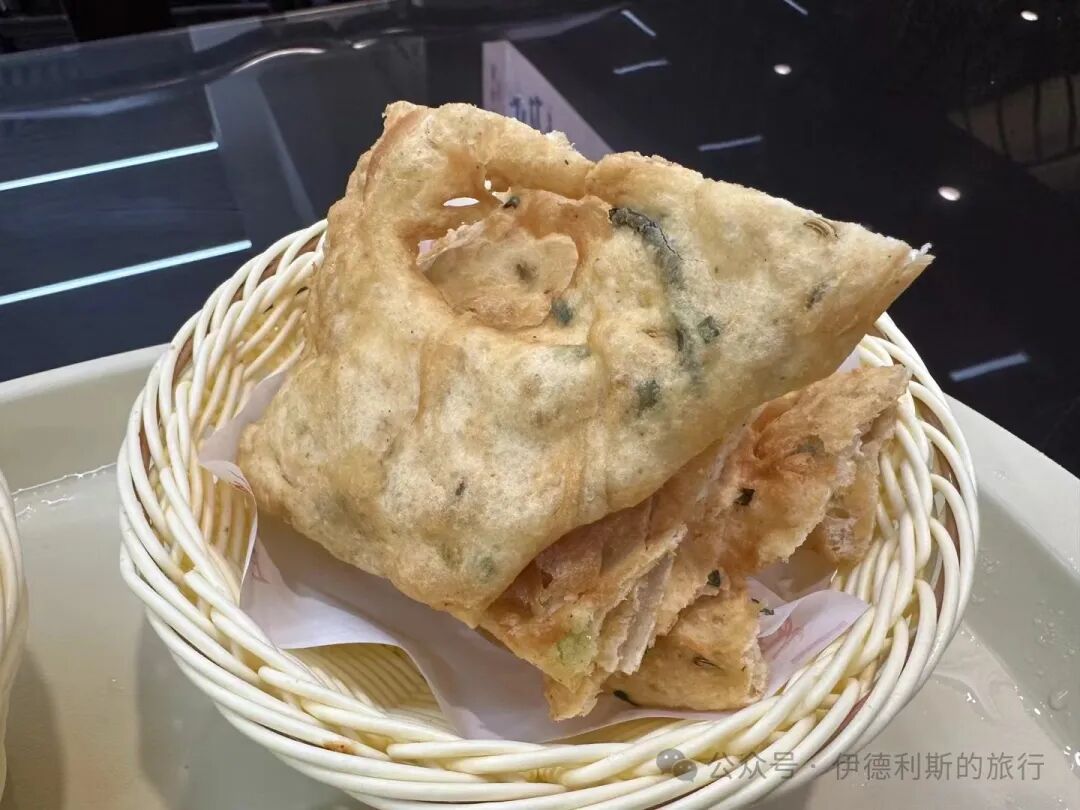
On my second visit, I ordered bean flour porridge (doumo), scallion pancake (congyoubing), and pan-fried buns (shuijianbao). There were more people than the day before, so I expect it will be packed again in a few days.
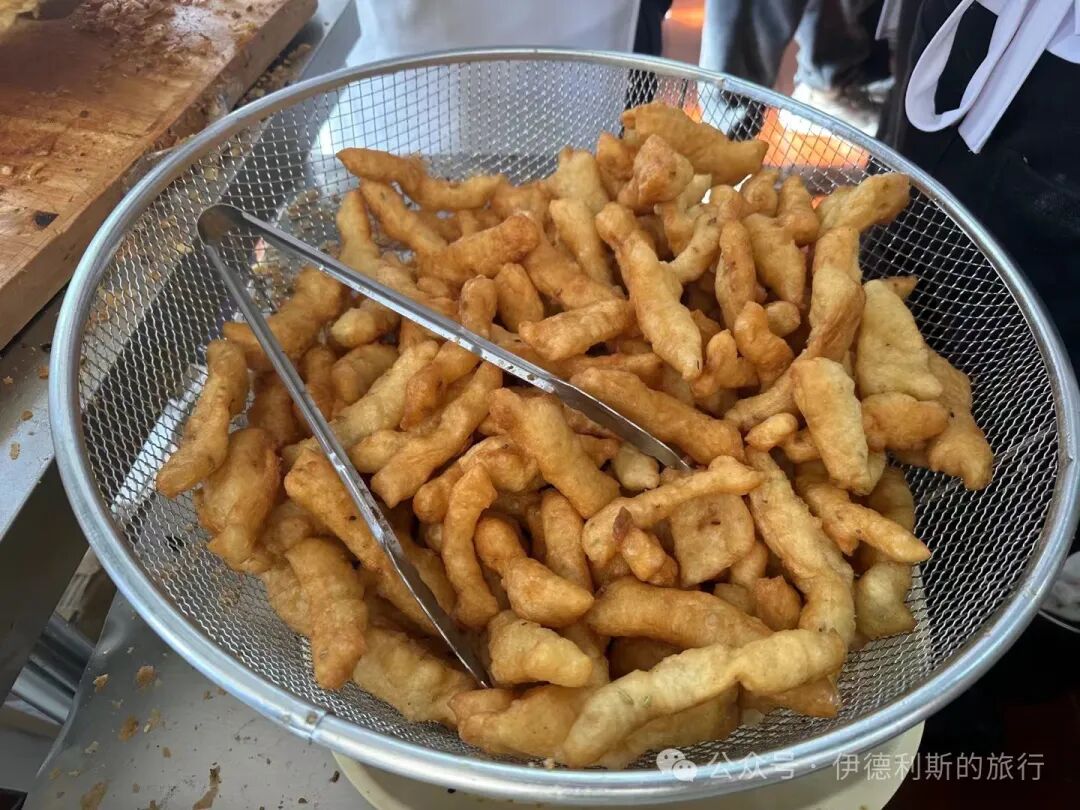
Their bean flour porridge (doumo) is more traditional than the spicy soup. It tastes just like the one I had on Shuncheng Street in Zhengzhou. It has vermicelli, peanuts, and other ingredients inside, and I think it suits the taste of Beijingers better. The scallion pancake (congyoubing) is very thin, freshly fried, and full of onion aroma with a great texture. Pan-fried buns (shuijianbao) are made in large batches, so you might not always get them fresh out of the pan, but they are still served hot. The filling is beef and vermicelli, with a strong, spicy kick from the seasonings.
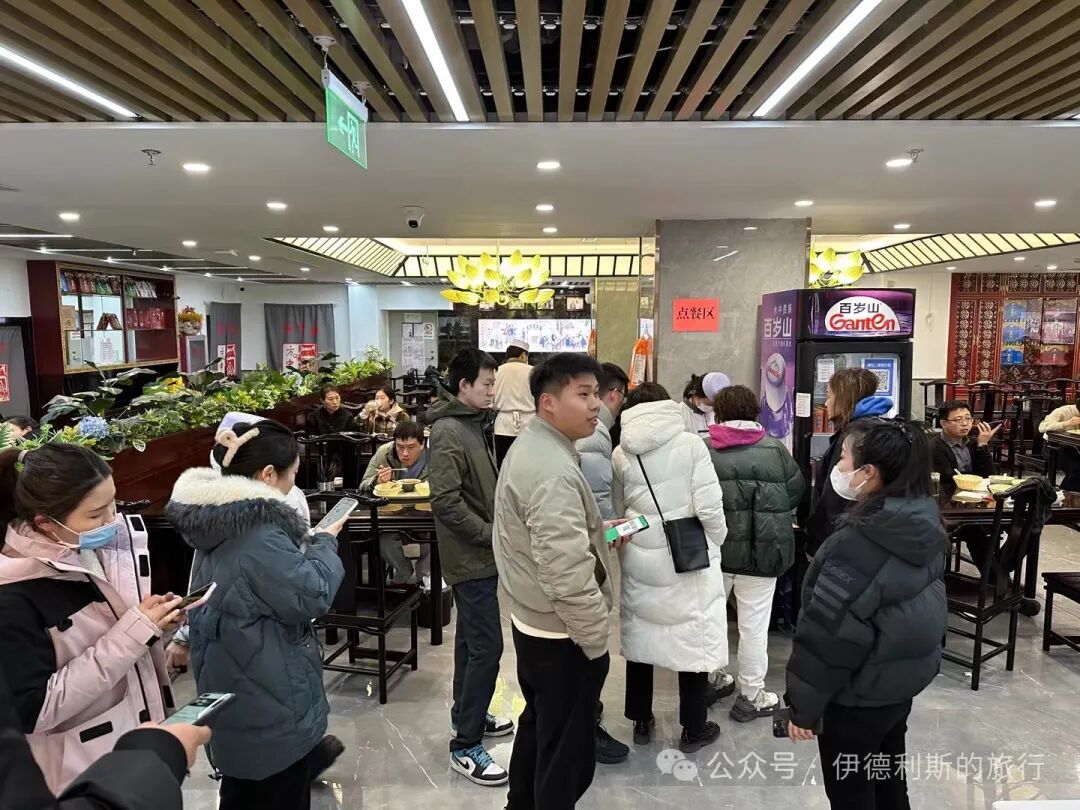
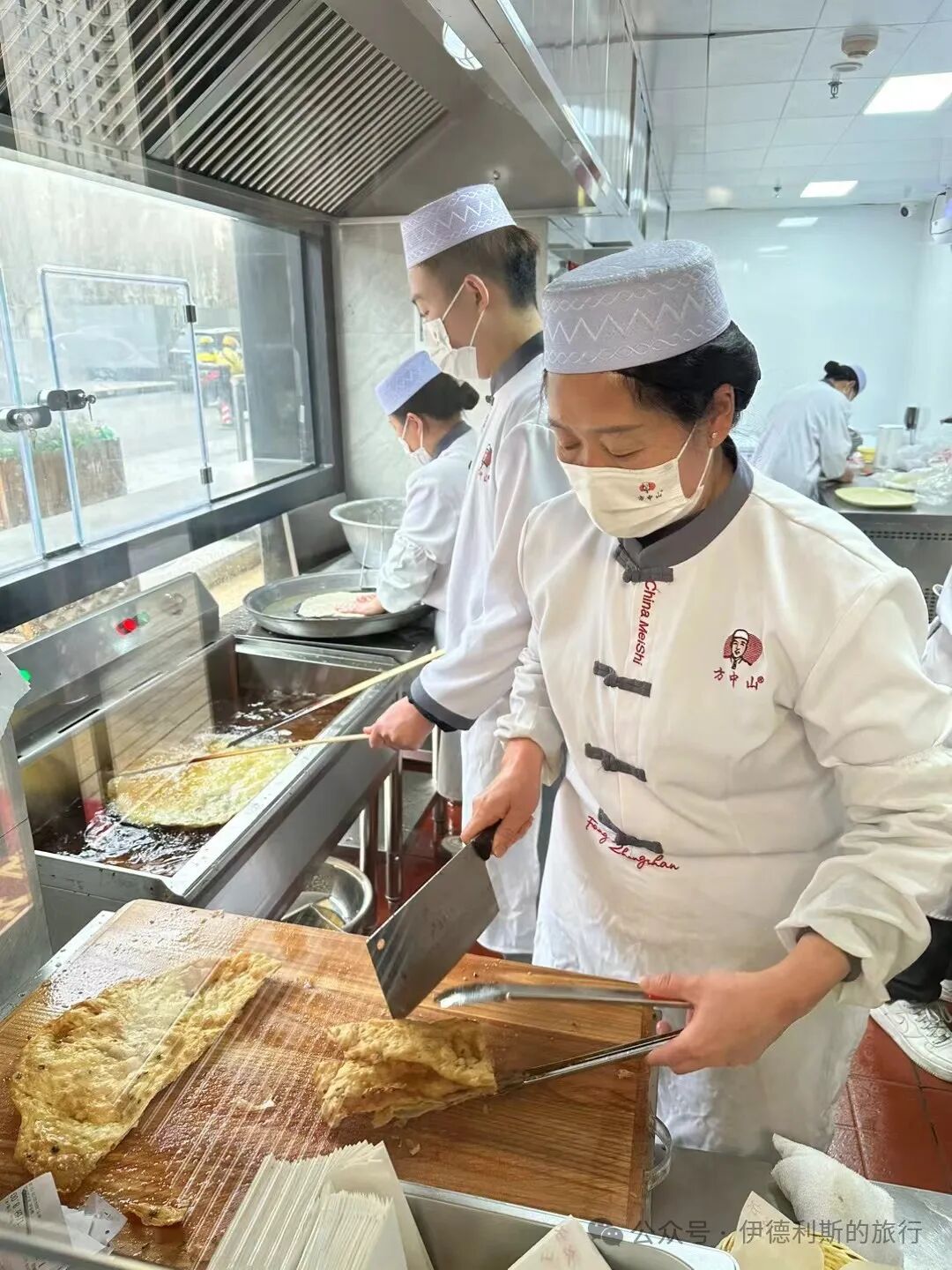
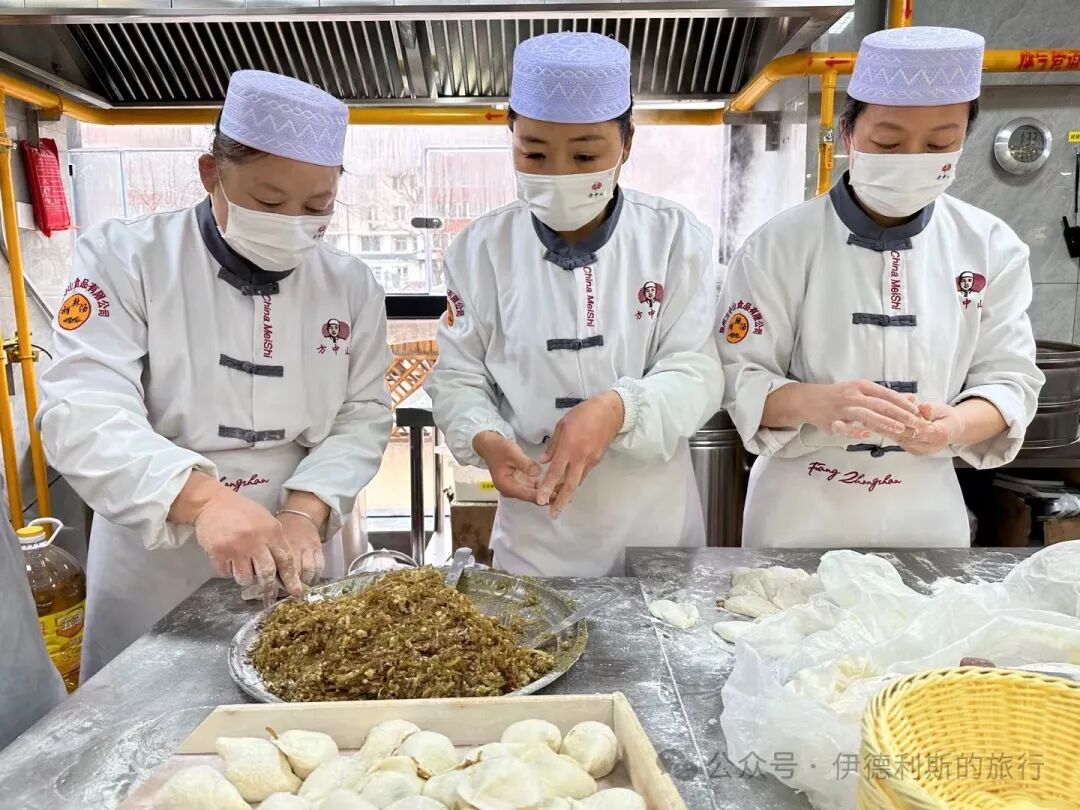
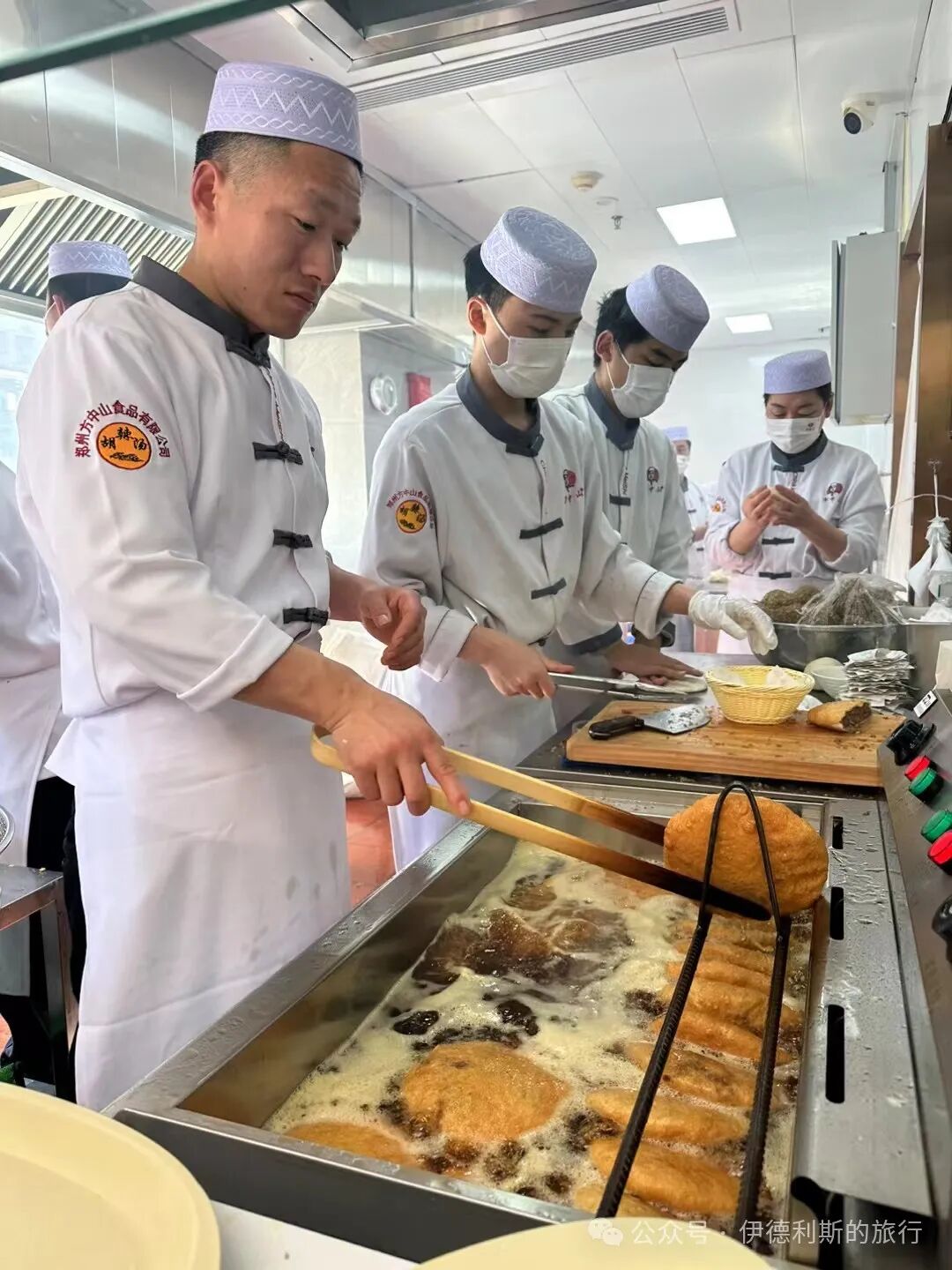
The wall at the Fangzhongshan Hujialou branch displays the history of Fangzhongshan spicy soup (hulatang). It feels meaningful to share this cultural heritage.
Fangzhongshan’s grandfather, Fang Yinsheng, opened the Fang Family Soup Shop on Jiepai Street in Zhoukou, Henan, in 1922 and started selling spicy soup (hulatang).
After the Kuomintang caused the Yellow River to breach its banks in the 1938 Huayuankou incident, Henan suffered a severe disaster. Fang Yinsheng turned his soup shop into a relief station to help passing refugees.
After 1958, Fangzhongshan’s father, Fang Chaoyang, was hired as the general manager for three villages, where he oversaw food management for the people's commune.
In 1976, a restaurant for Hui Muslims was established in Xixiatin Town, Xihua County, Zhoukou, Henan, and Fang Chaoyang served as its first manager.
After the reform and opening-up policy, Fang Chaoyang took his son Fangzhongshan to Luohe to build their business, and in 1983, they opened the Fang Family Spicy Soup Shop in Luohe.
4. Zhang Dahui Spicy Soup (hulatang)
Following Fang Zhongshan, the Xiaoyao Town style Zhang Dahui Spicy Soup (hulatang) has also opened a shop in Beijing.
The Sanlitun branch is located in Baijiazhuang. The shop is small. In the morning, they sell spicy soup (hulatang), pan-fried buns (shuijianbao), sugar cakes (tanggao), vegetable pockets (caijiao), fried dough fritters (youmotou), and beef pies (niurouhe) until about 2:00 PM. In the evening, they sell braised noodles (huimian), lamb soup with sesame flatbread (yangtang shaobing), lamb bone marrow (yangbanggu), steamed vegetables (zhengcai), and crawfish (xiaolongxia). We arrived in the evening and ordered lamb braised noodles (yangrou huimian), steamed eggplant (zheng qiezi), lamb bone marrow (yangbanggu), and crawfish (xiaolongxia). I thought the lamb braised noodles (yangrou huimian) were quite tasty. The chef pulls the noodles fresh, and they are packed with ingredients and have a strong flavor. The steamed eggplant (zheng qiezi) is sweet, sour, and salty, seasoned with minced garlic and catnip (jingjie). It goes well with the braised noodles (huimian). The crawfish (xiaolongxia) were served cold, and I felt they were not spicy enough. The beef bone marrow (niubanggu) is braised in sauce, but I felt it was a bit too salty. Next time I have a chance, I will come in the morning to try their spicy soup (hulatang).
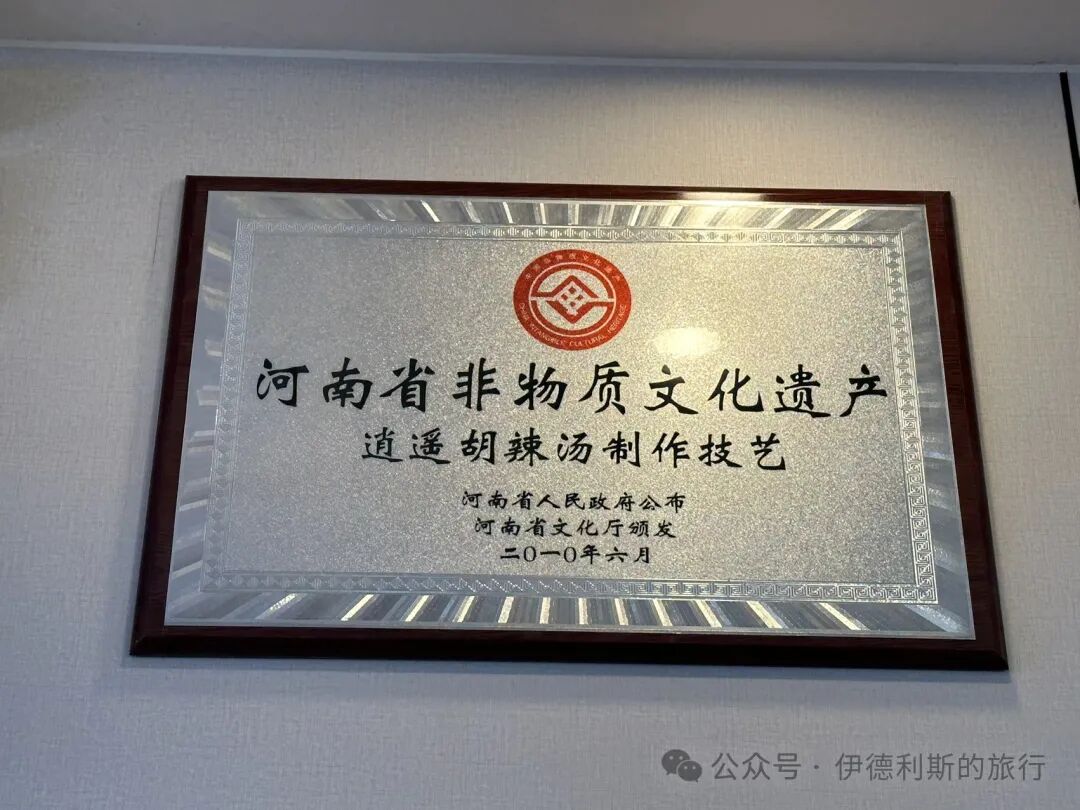
The founder of Zhang Dahui was the great-grandfather, Zhang Yongsui. In the early 20th century, Zhang Yongsui carried a pole to sell spicy soup (hulatang) at the Shahe River wharf in Xiaoyao Town, Xihua County, Zhoukou, Henan. Xiaoyao Town sits where the Shahe and Yinghe rivers meet. It has always been an important trade hub, and the area around the Shahe River wharf was especially busy. Starting in 1942, 14-year-old Zhang Quanfang began selling spicy soup (hulatang) with his father, Zhang Yongsui, at the crossroads in Xiaoyao Town. He sold it there for over thirty years. After the reform and opening up in 1979, the third-generation successor, Zhang Peigen, moved his whole family to Xihua County to open a shop. It was the first spicy soup (hulatang) business to move out of Xiaoyao Town. In the 1990s, the Zhang family opened Qingxiangyuan Old Zhang's Spicy Soup (hulatang) at the Round Corner Building in Xihua County Square. Later, the fourth-generation successor changed the name to Zhang Dahui Spicy Soup (hulatang), which is still open today.
5. Yu-style Xiaoyao Town Spicy Soup (hulatang)
There is finally a halal Xiaoyao Town spicy soup (hulatang) inside the Second Ring Road in Beijing!
A new shop called Yuwei Xiaoyao Town Spicy Soup opened on Dongsi North Street. For liquids, they have spicy soup (hulatang), tofu pudding (doufunao), a mix of both (liangchan), bean foam soup (doumo), soy milk (doujiang), eight-treasure porridge (babaozhou), and millet porridge (xiaomizhou). For solids, they have scallion oil pancakes (congyoubing), pan-fried buns (shuijianbao), beef pockets (niurouhe), fried dough strips (youmotou), beef buns (niuroubao), and vegetable buns (subao). I had the mix, a scallion oil pancake, and a pan-fried bun for breakfast. The spicy soup has beef slices, gluten, and wood ear mushrooms in it. It is not the super spicy version like Fang Zhongshan, but the traditional Xiaoyao Town flavor. Maybe because it was raining when they opened, the shop was not crowded. I missed out on the freshly made scallion oil pancakes and pan-fried buns, but the pan-fried buns were still hot and tasted great.
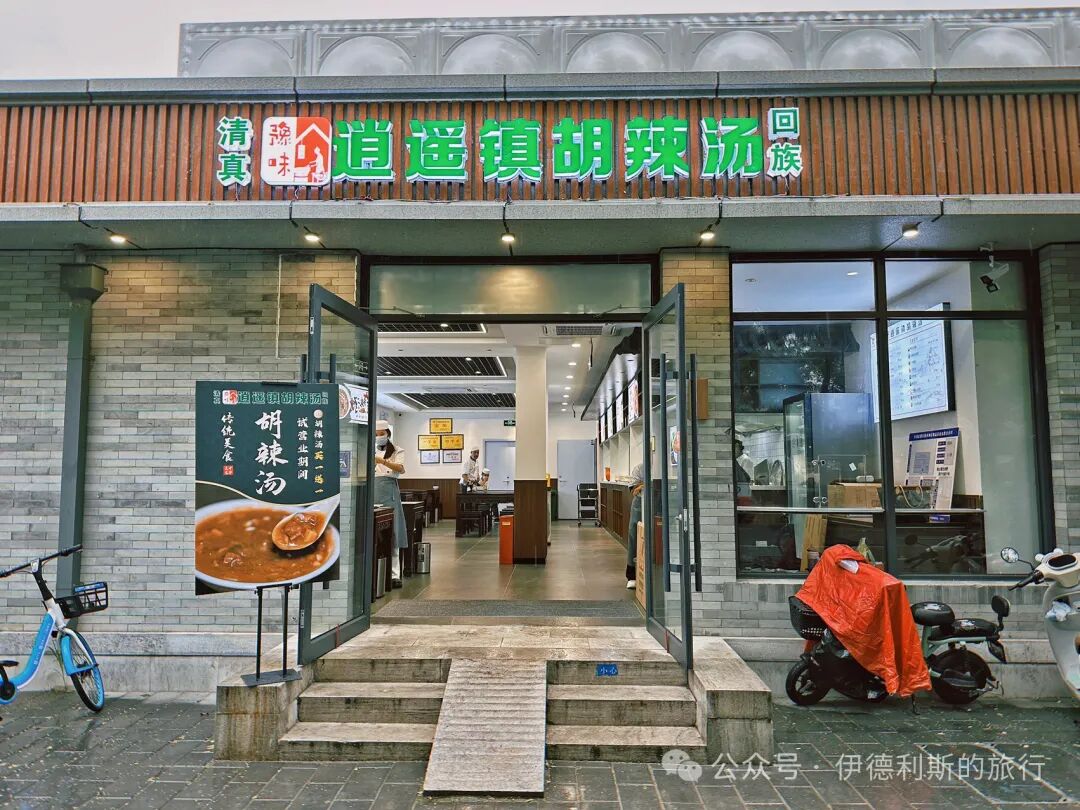
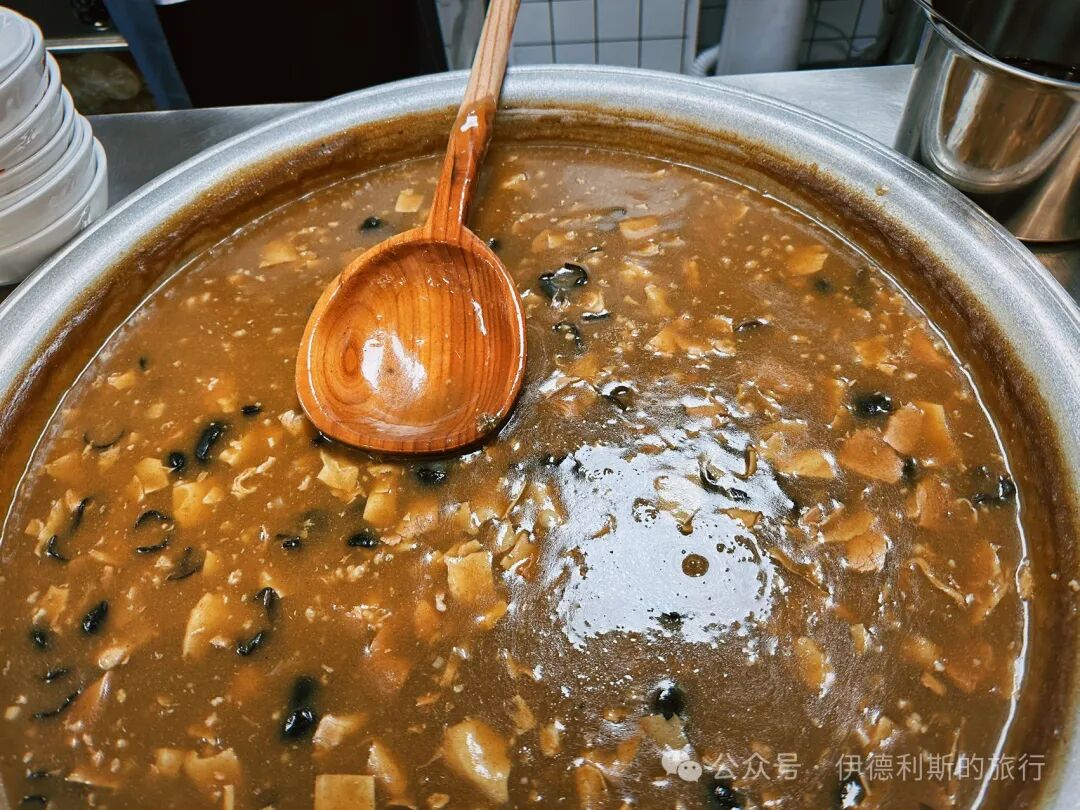
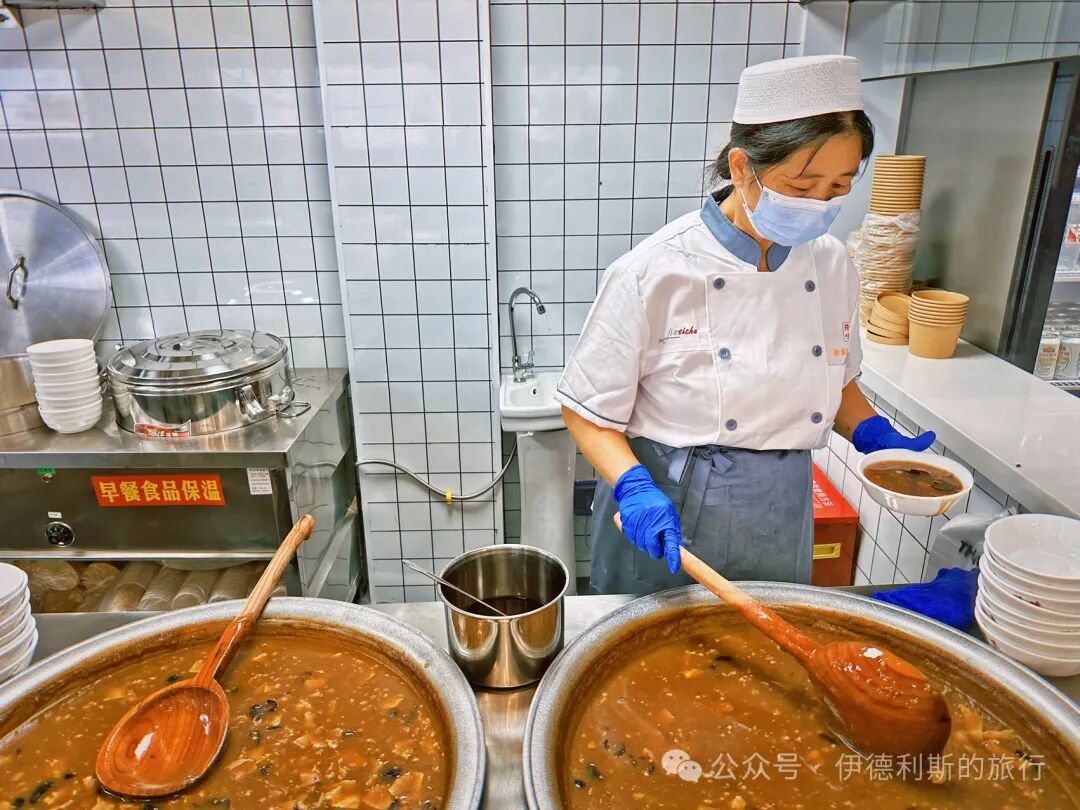
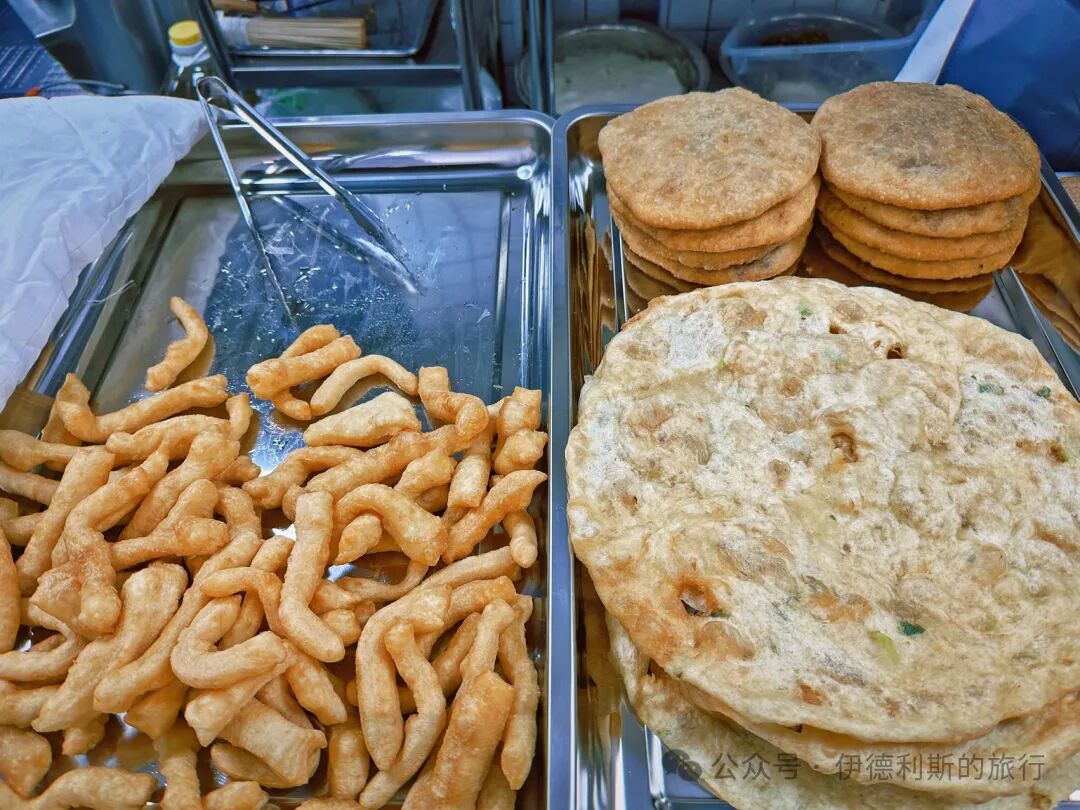
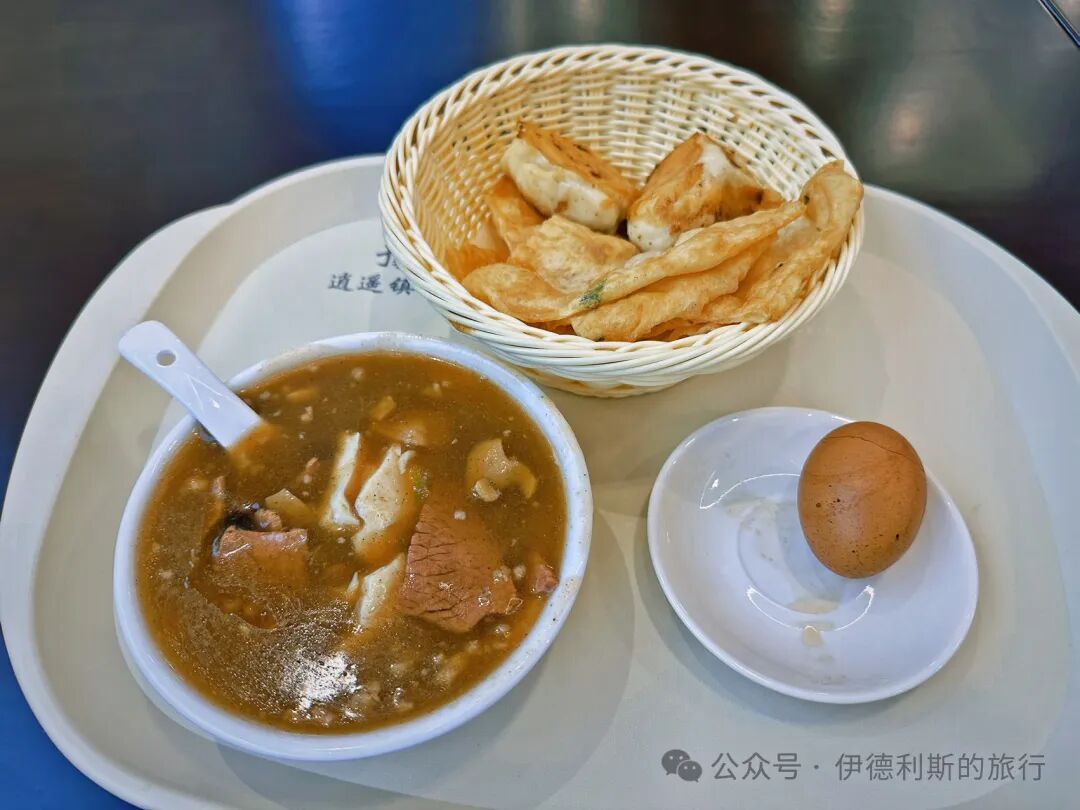
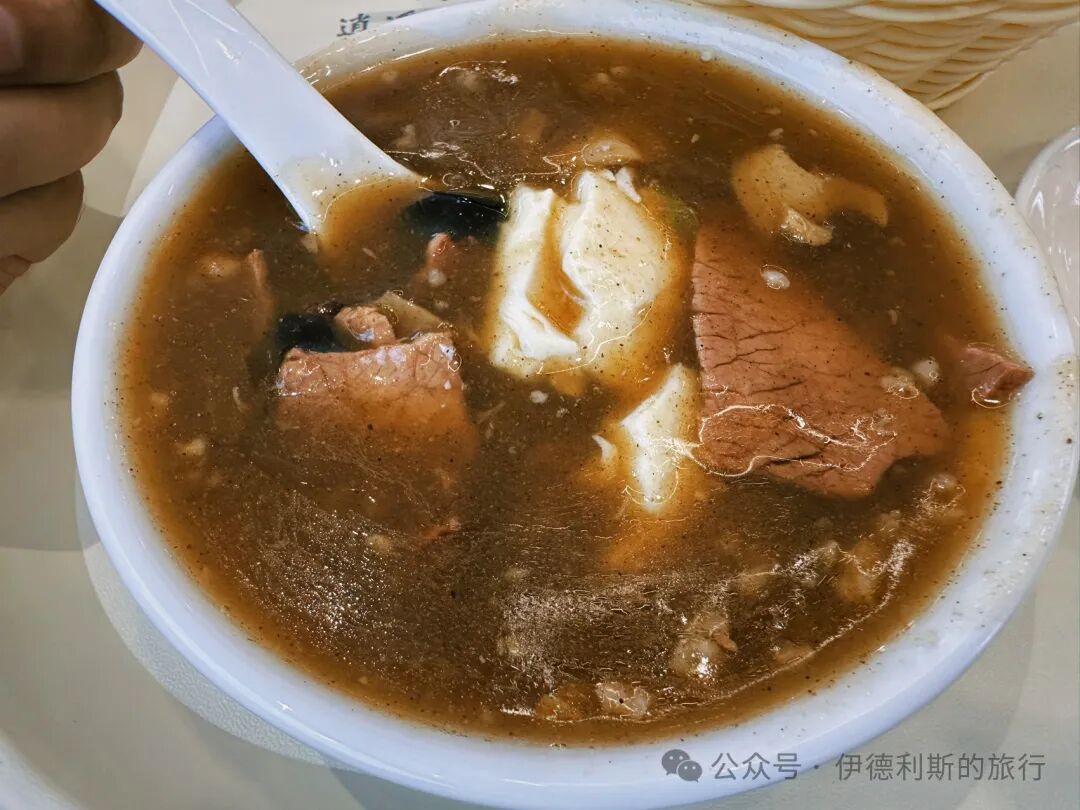
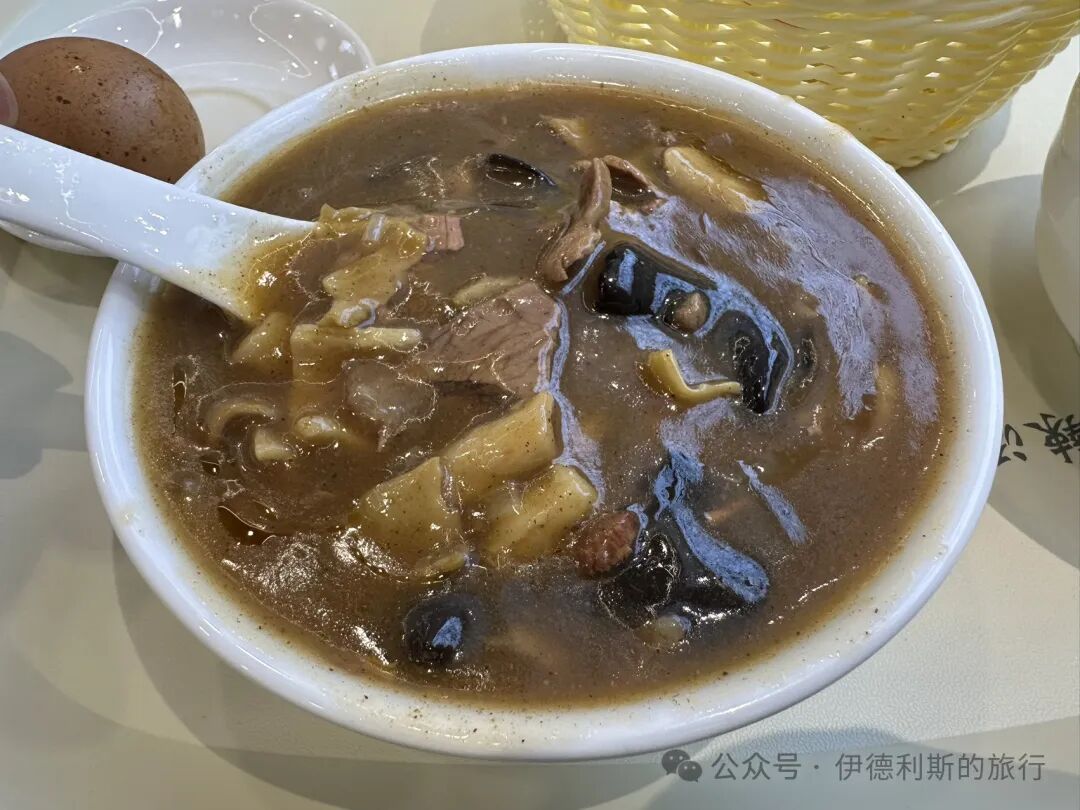
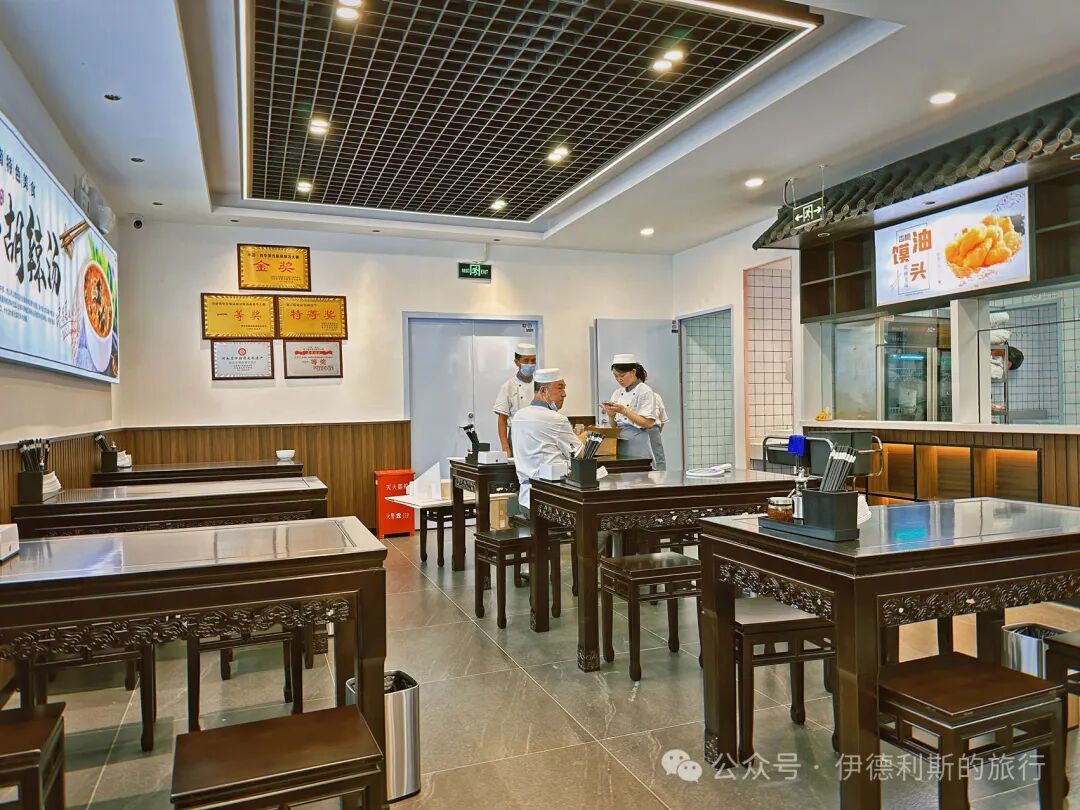
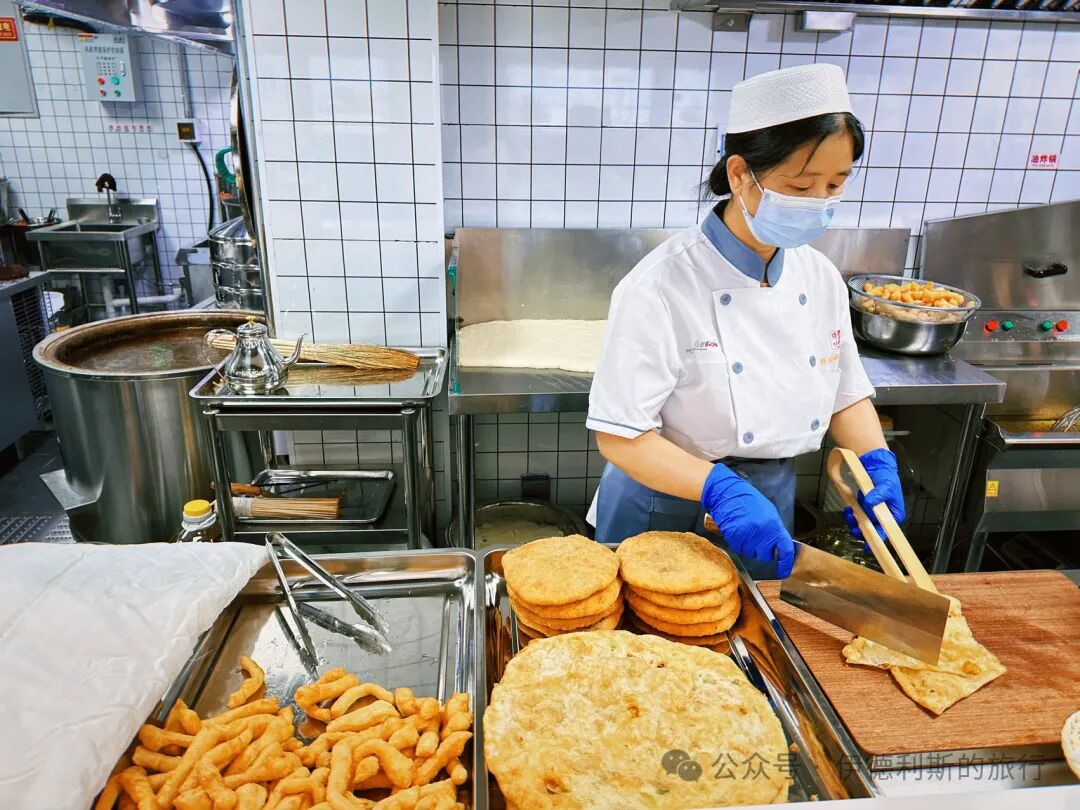
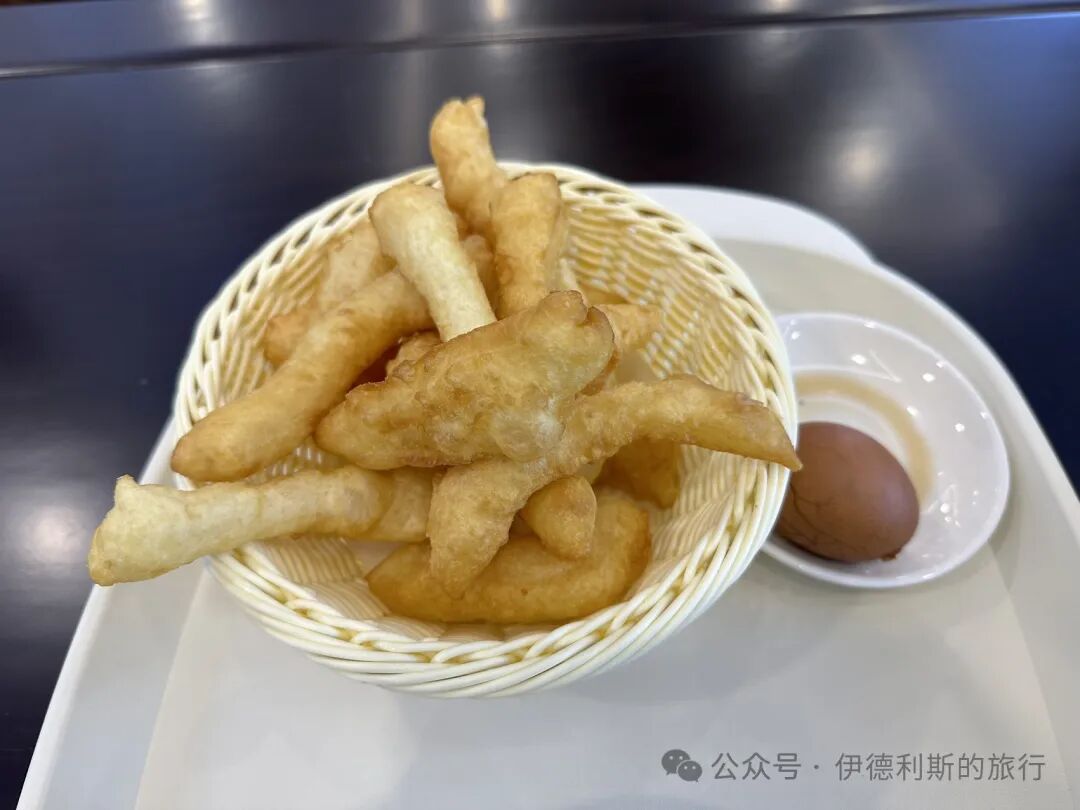
Yuwei Xiaoyao Town Spicy Soup officially opened on July 26, and many friends (dosti) came to visit. I had bean foam soup, fried dough strips, and pan-fried buns for breakfast. This time I caught the freshly fried dough strips, and they tasted very good.
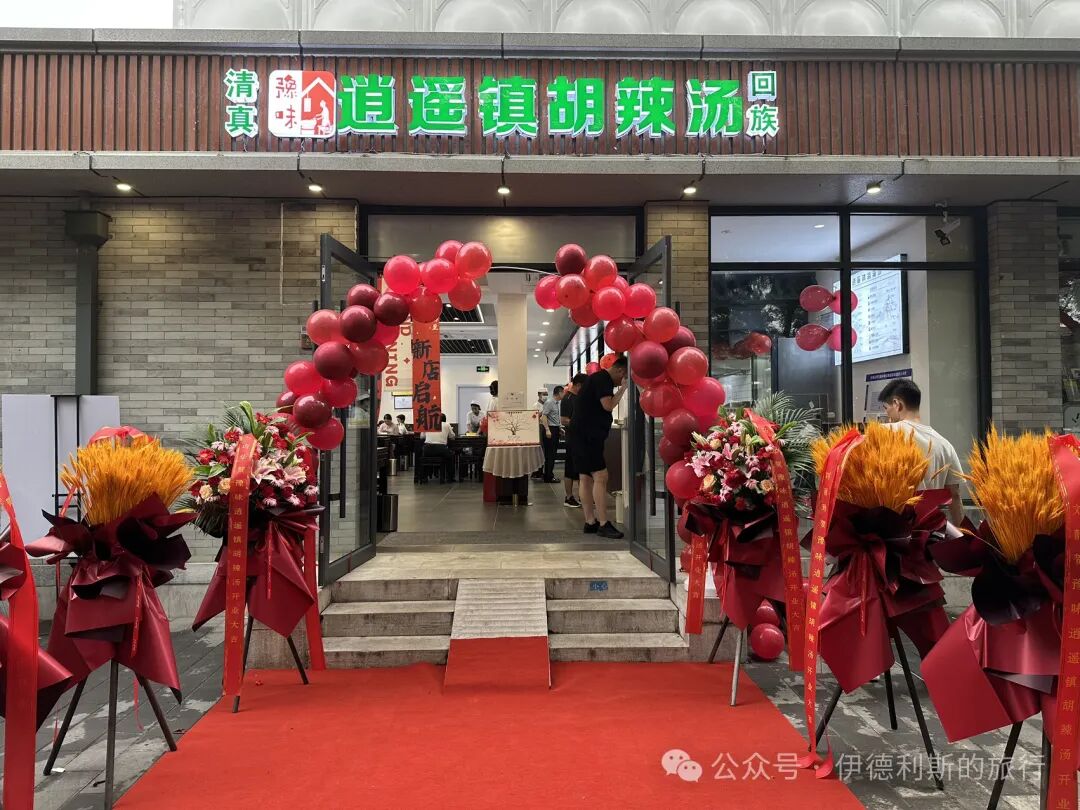
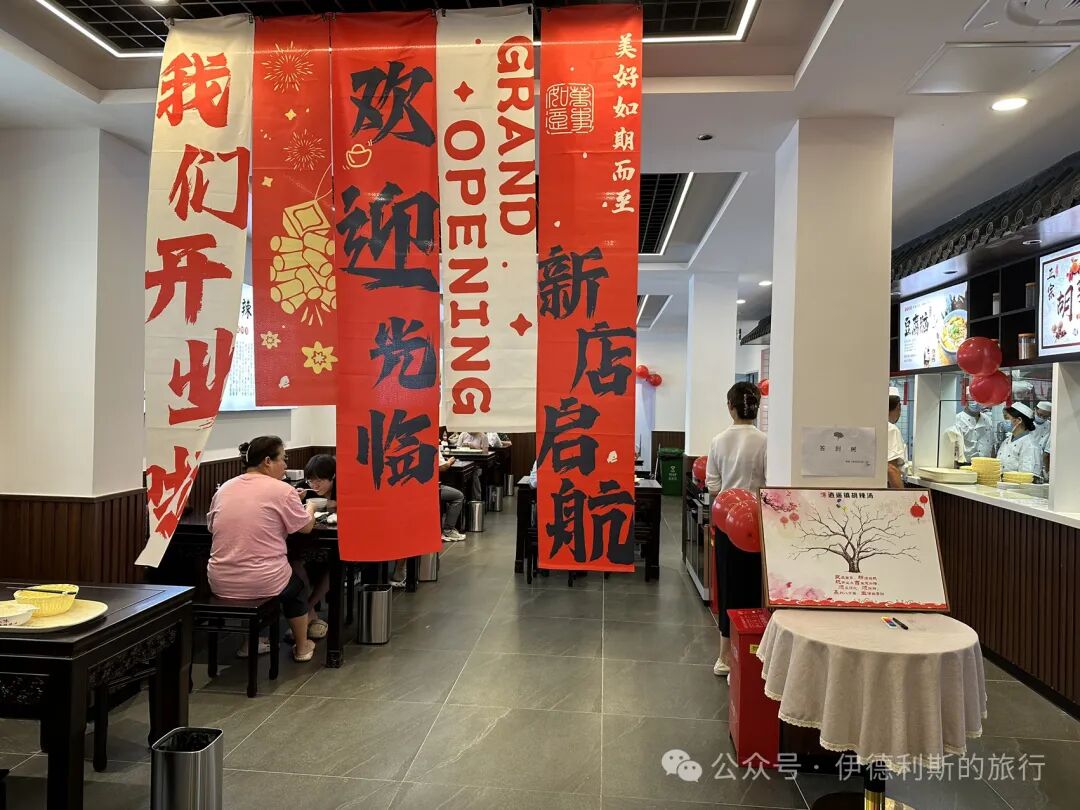
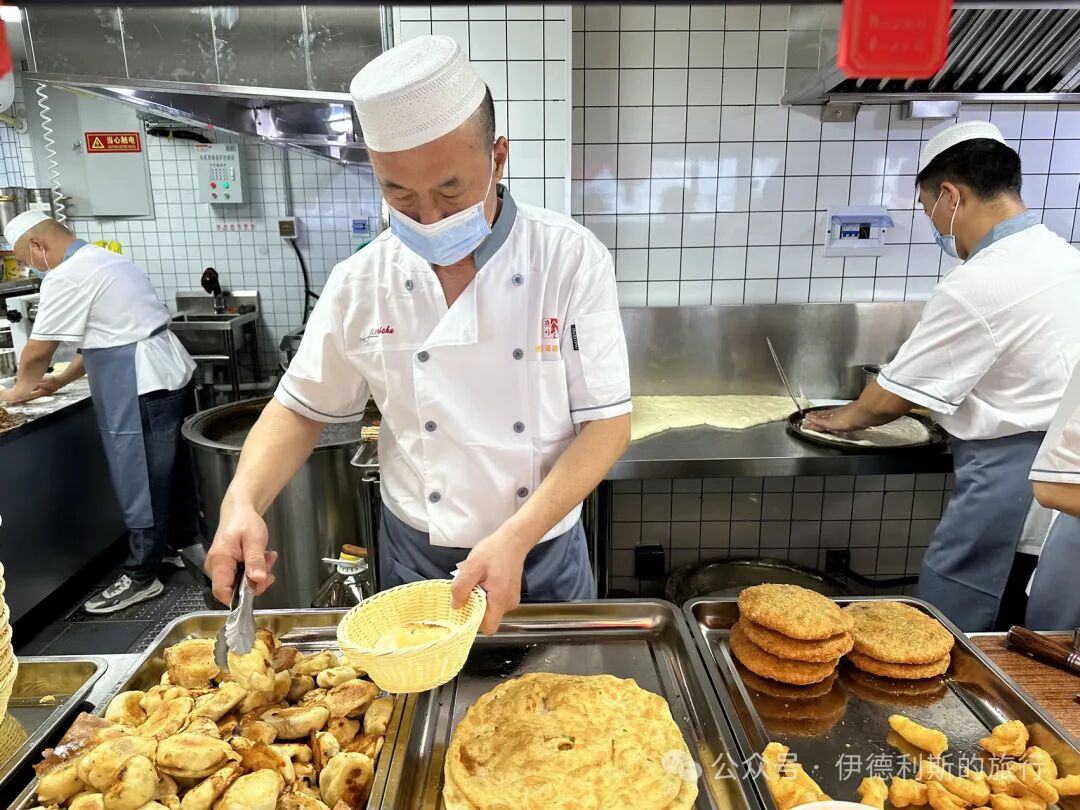
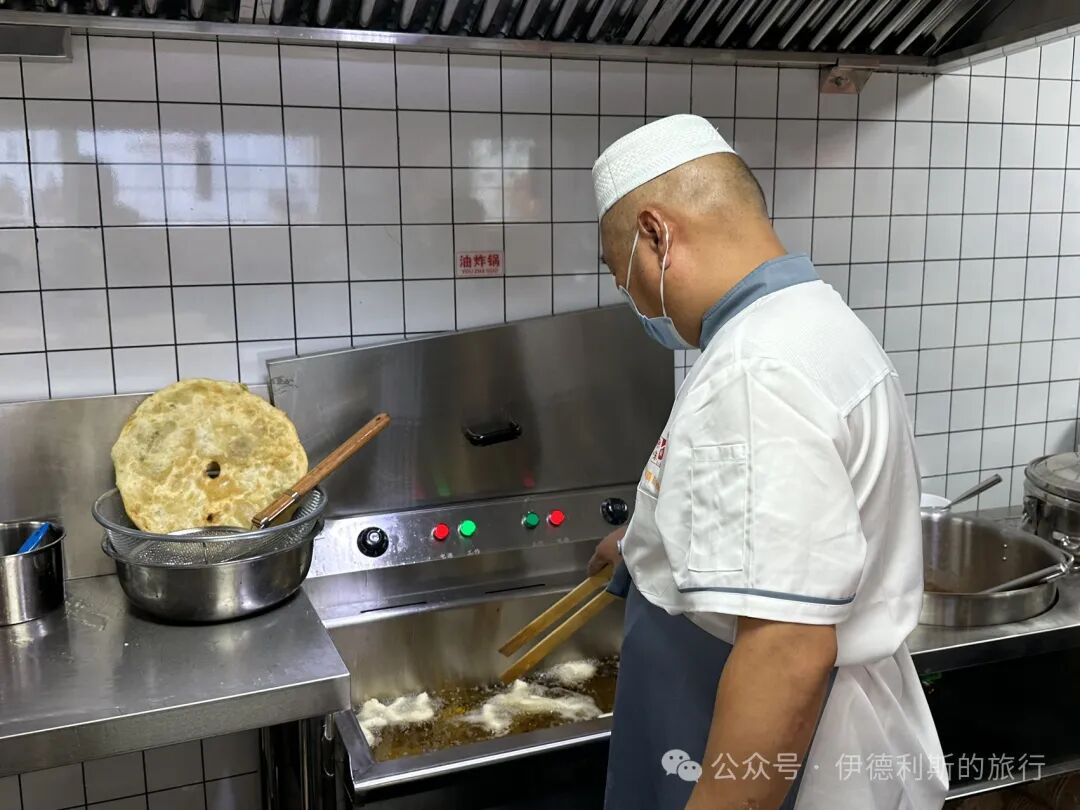
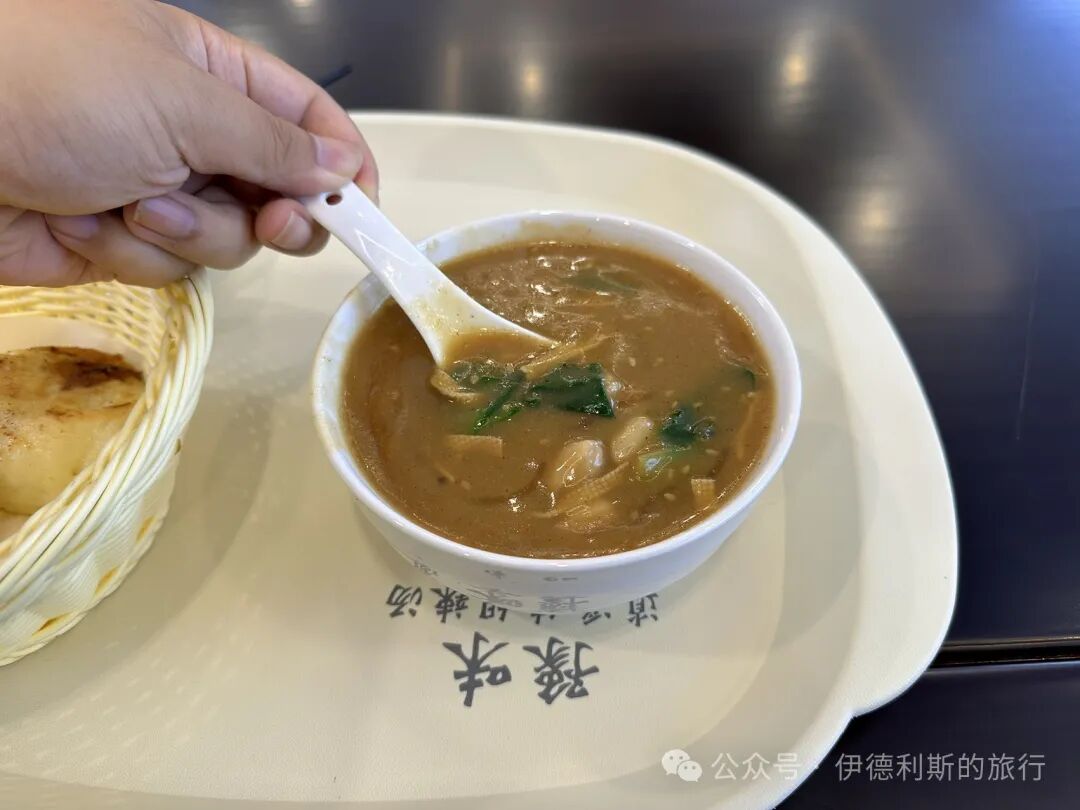
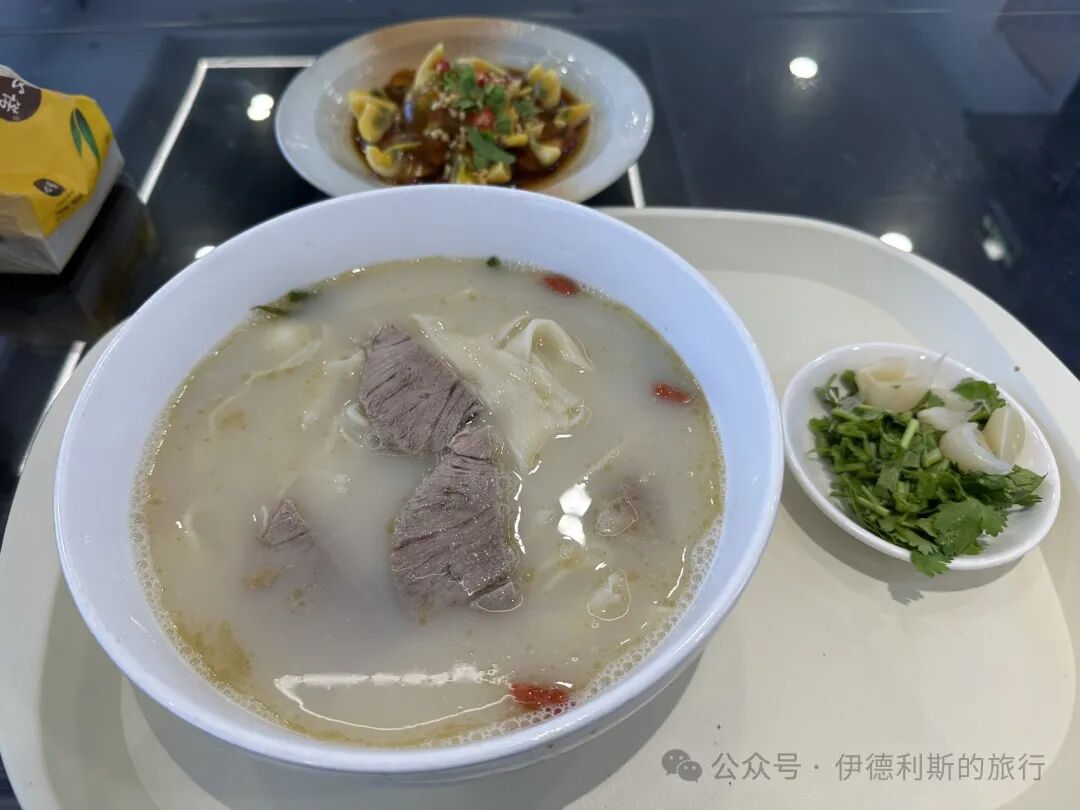
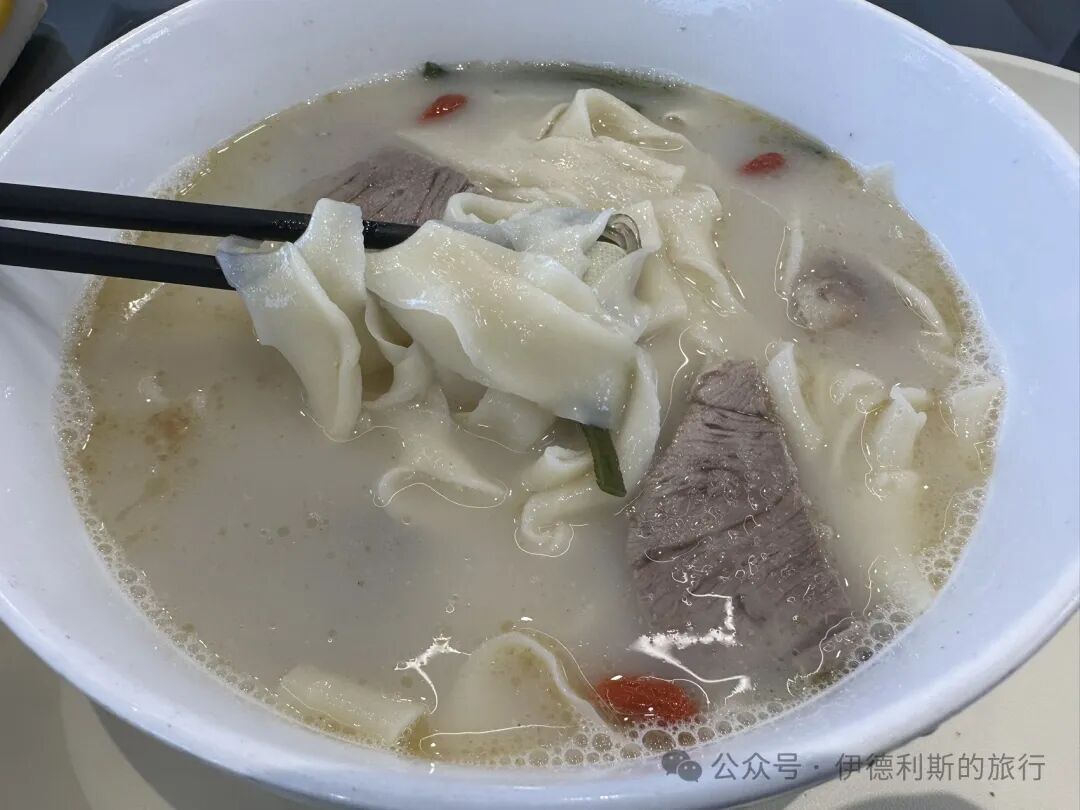
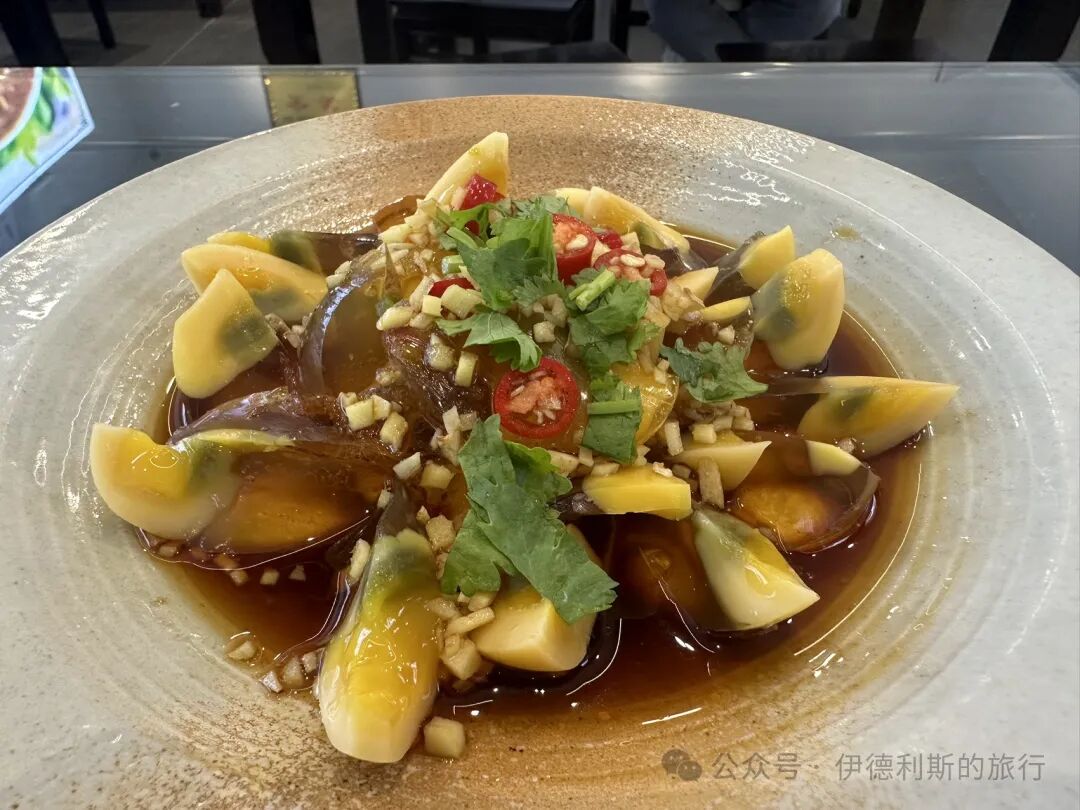
In August, Yuwei Xiaoyao Town Spicy Soup added braised noodles (huimian) to the menu. It is a typical Zhengzhou nourishing braised noodle dish. The broth contains quail eggs, glass noodles (fensi), goji berries, and kelp. The chef pulls the noodles fresh to order. Their cold dishes are a bit pricey, and they are sold individually, unlike the braised noodle (huimian) shops in Henan where you can usually get a mix of dishes.
6. Qinyuanzhai Fresh Braised Duck Shop
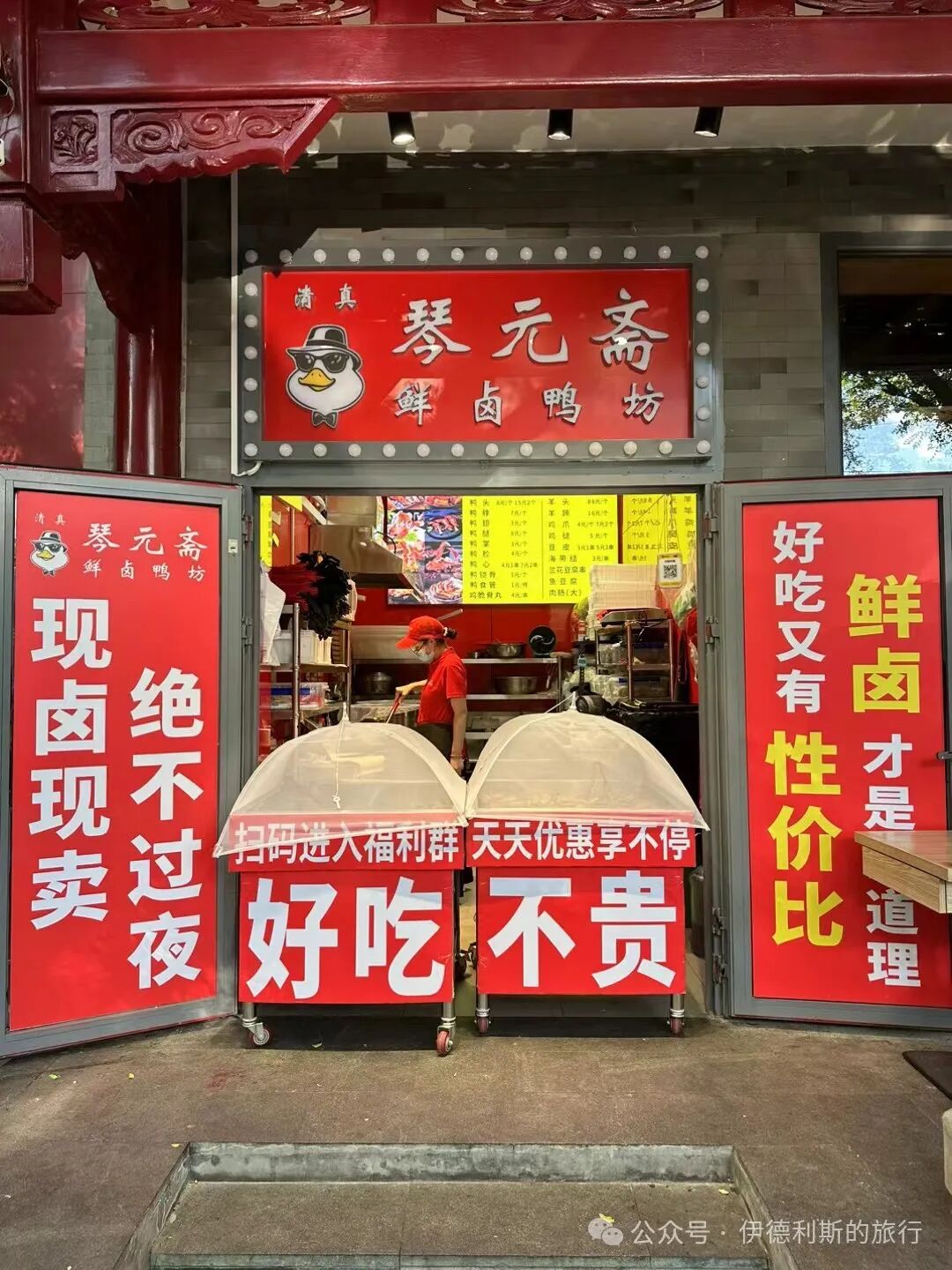
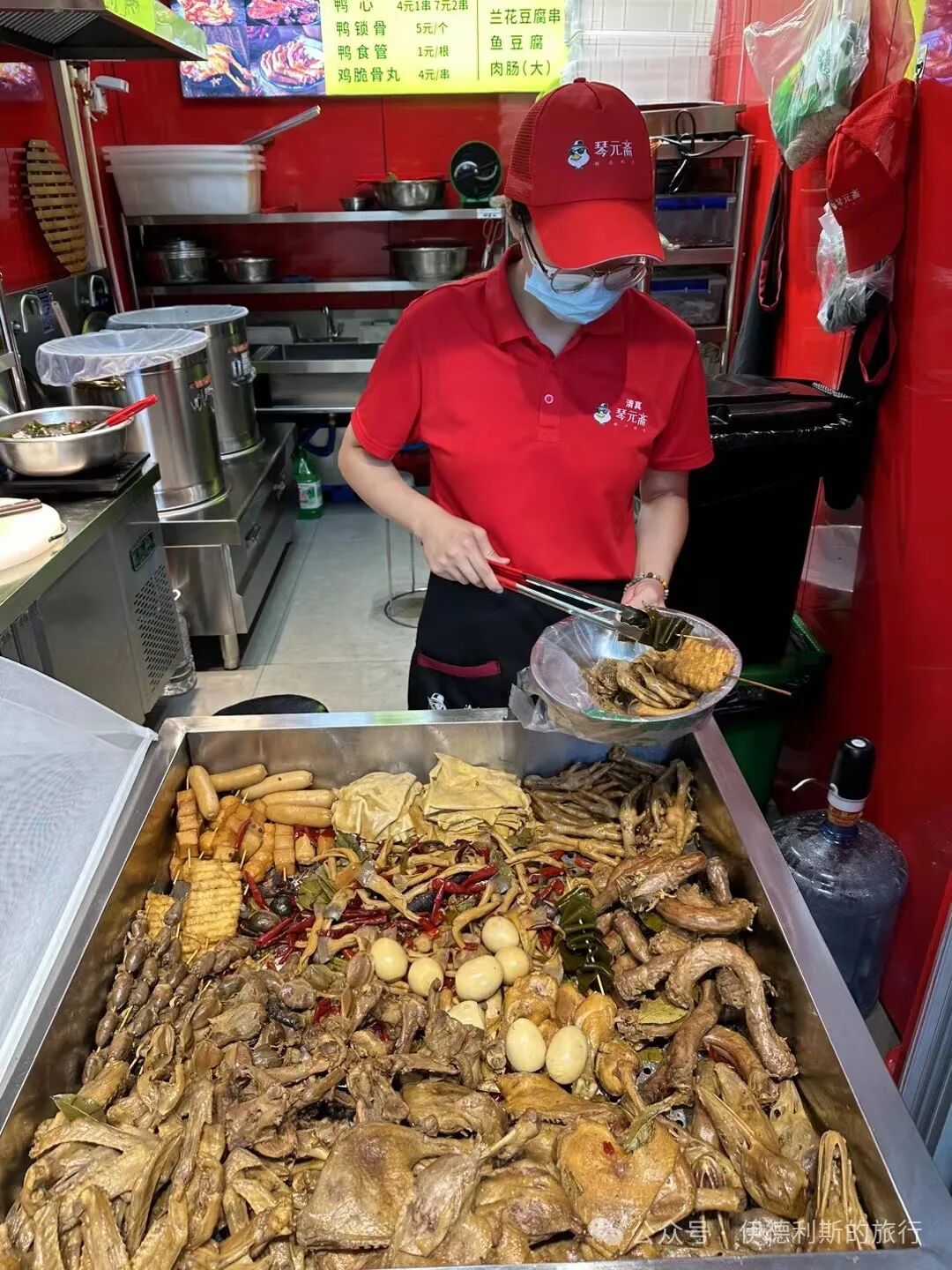
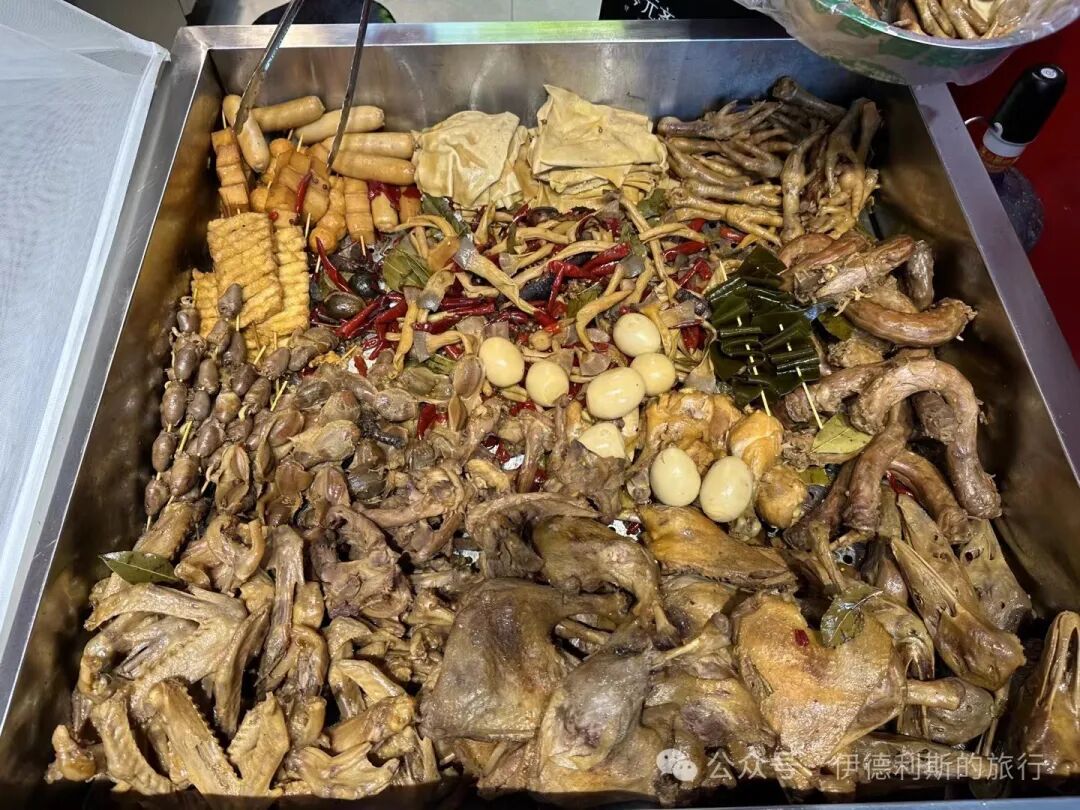
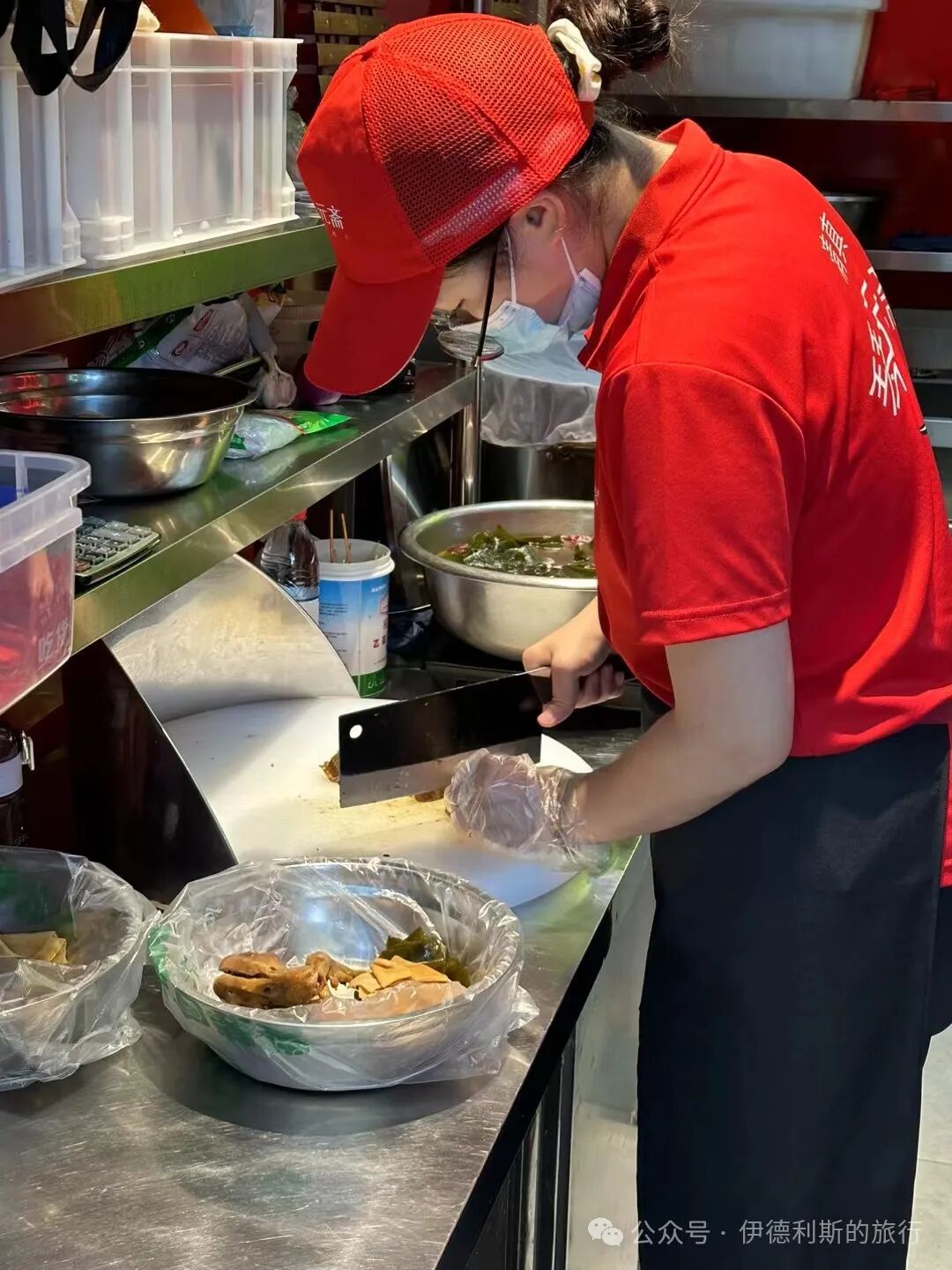
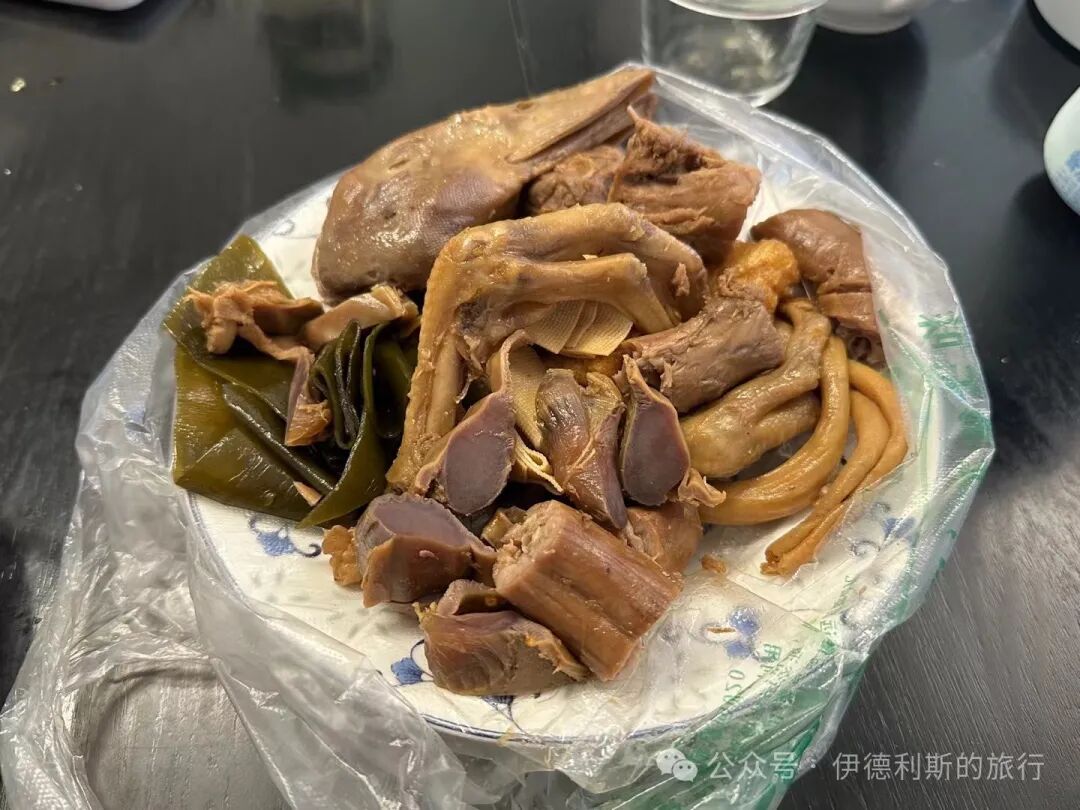
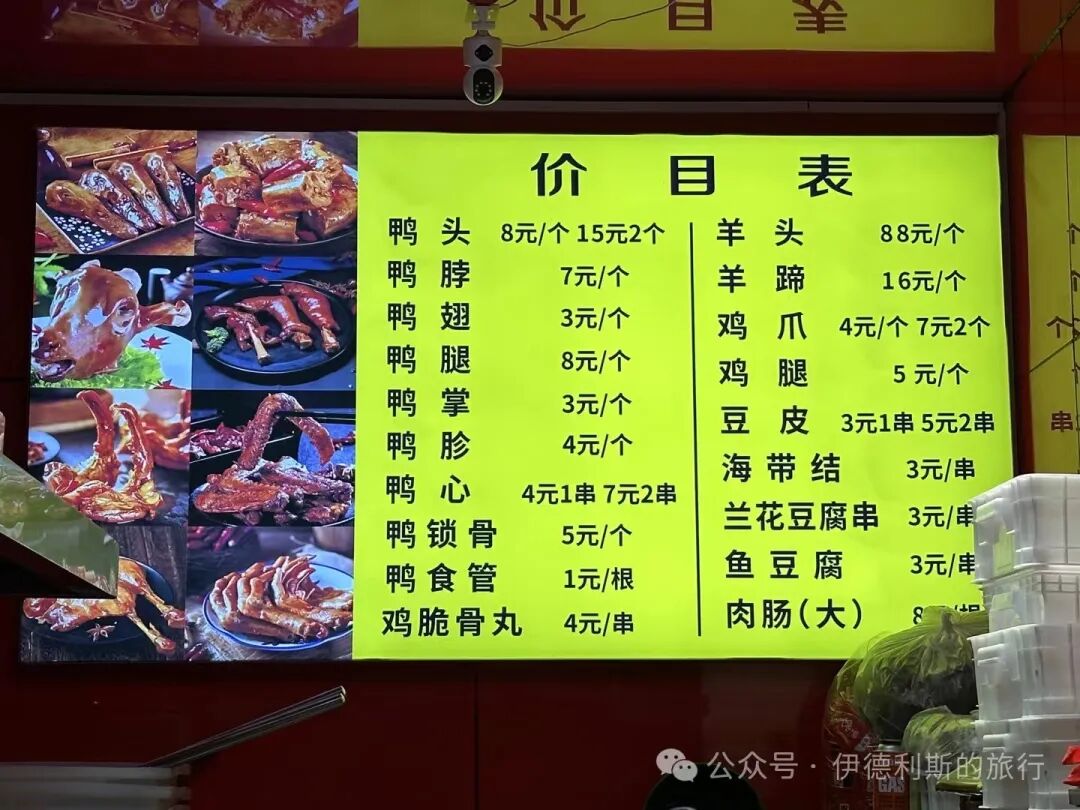
I bought duck head, duck neck, duck web, duck gizzard, duck esophagus, tofu skin, kelp, and orchid-shaped tofu skewers at Qinyuanzhai Fresh Braised Duck Shop on Andingmen Inner Street. They have a good variety. The braised items are not very spicy, but they have a lingering heat, making them great for snacking.
7. Subuha Almond Tofu Jiaodaokou Branch
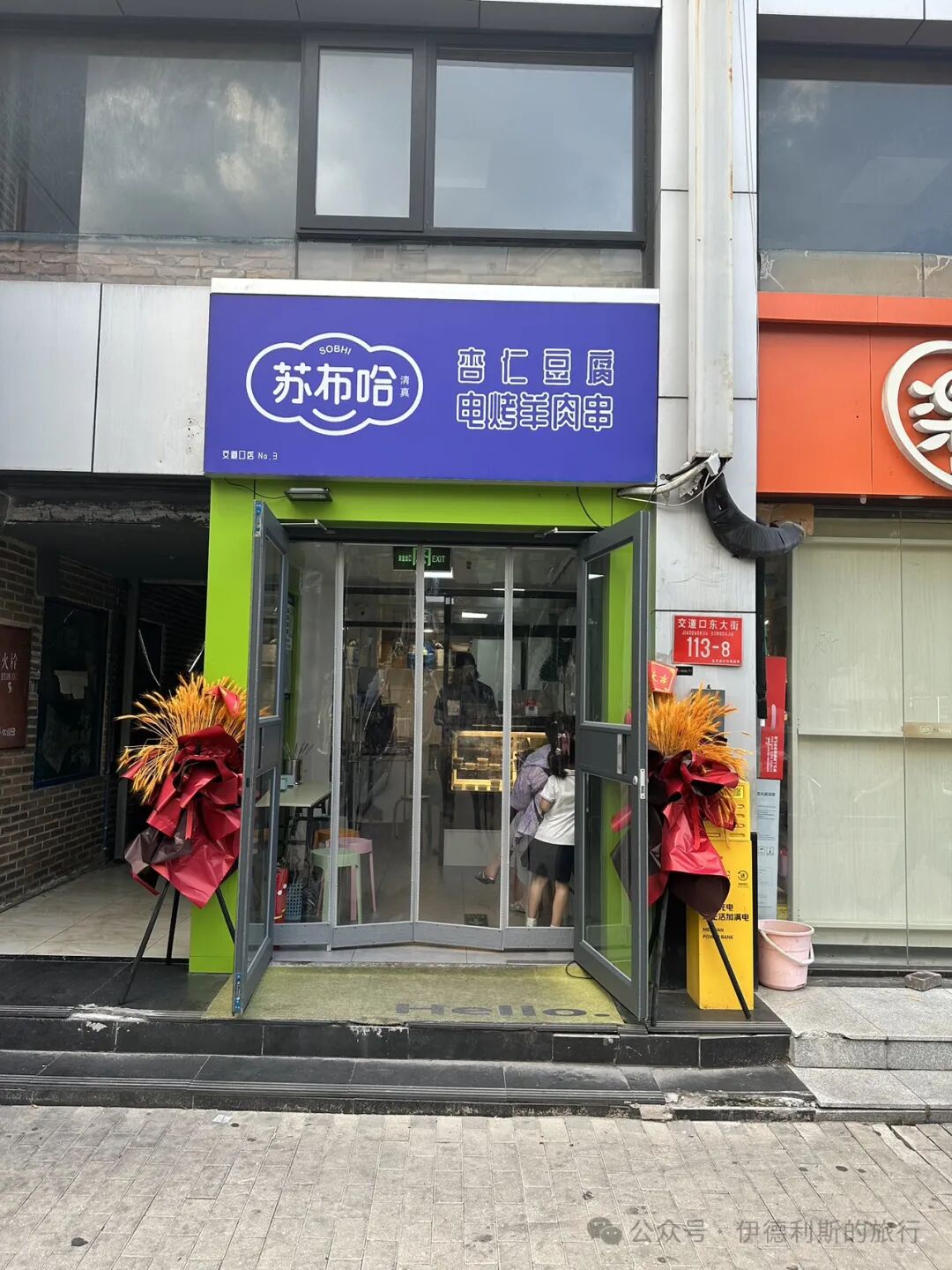
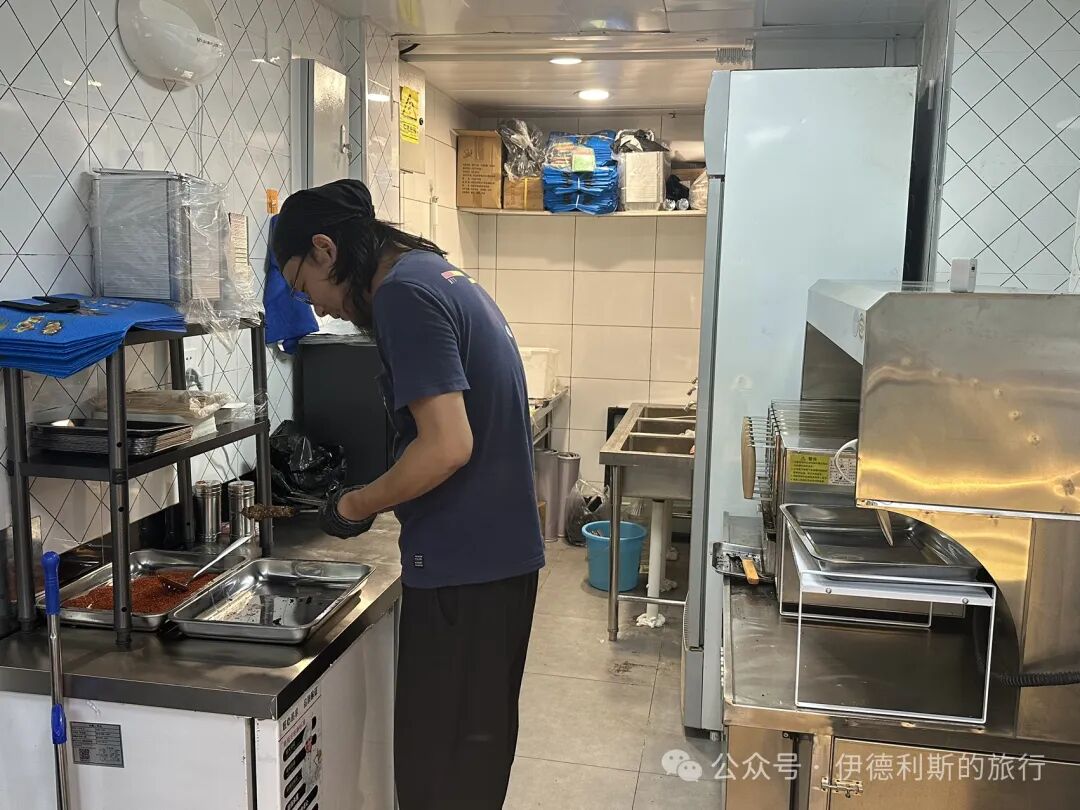
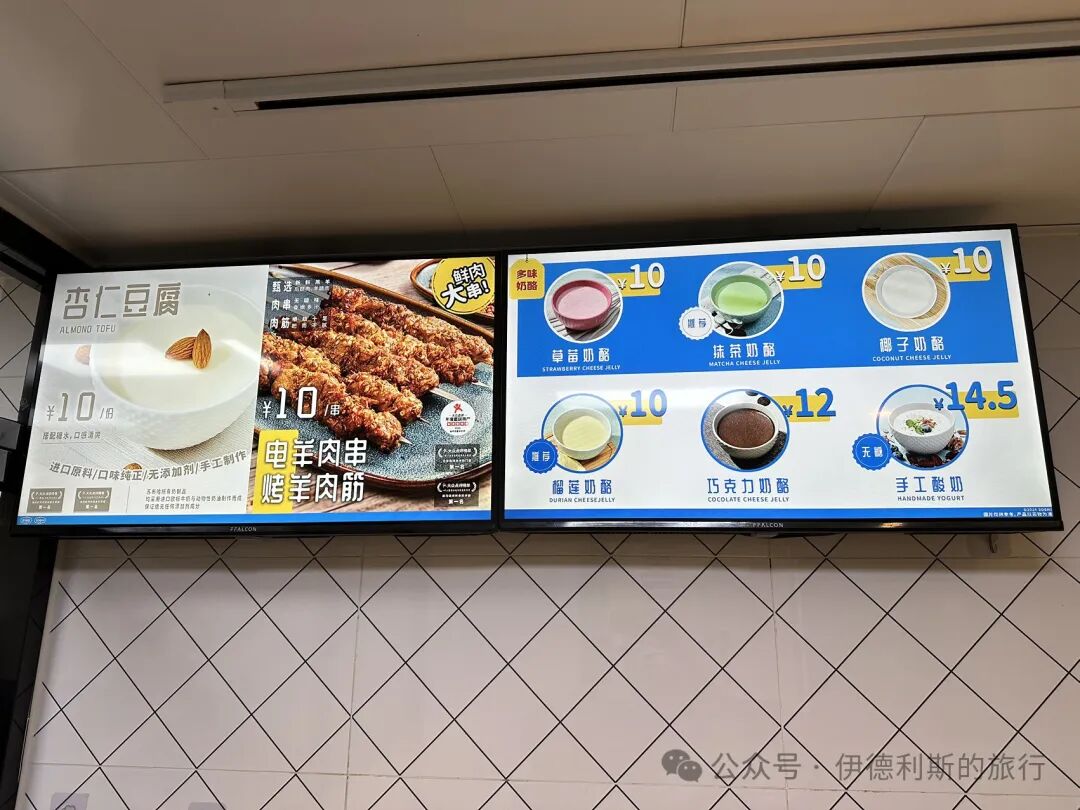
I went for a walk in the evening and visited the newly opened Subuha at Jiaodaokou, where I ordered almond tofu and coconut cheese. Their almond tofu is made like cheese, with both almond and milk flavors. It is quite delicious.
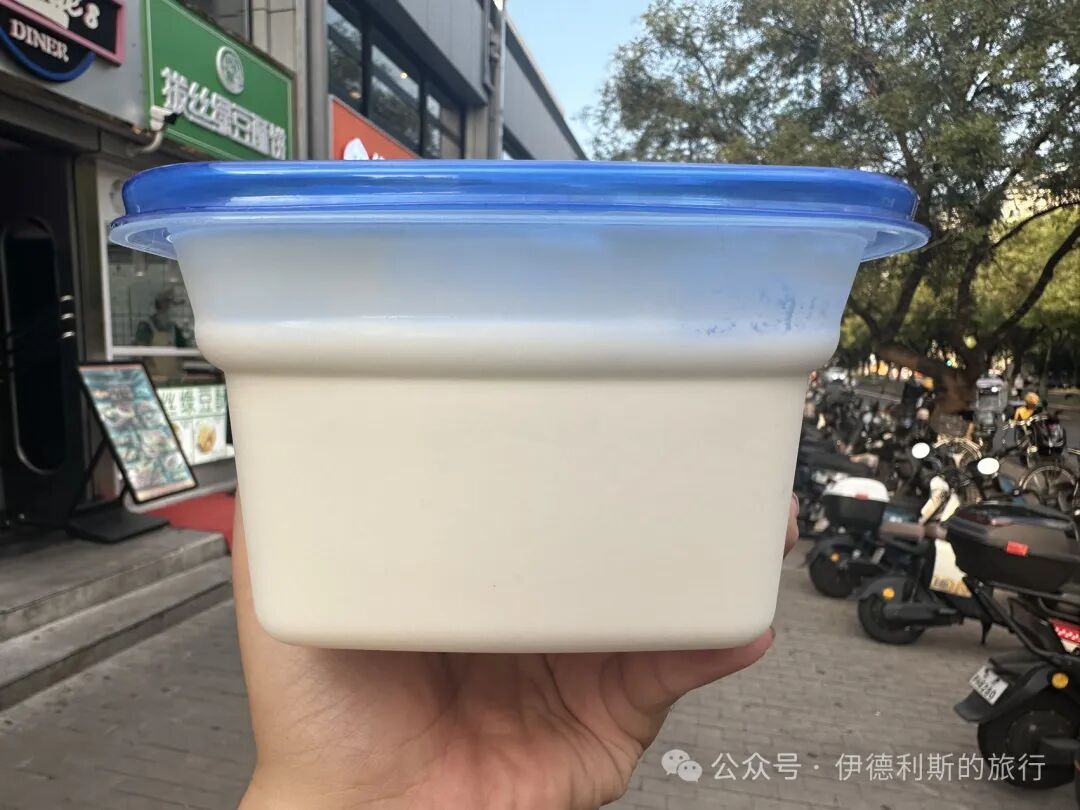
The second time I went, I had the matcha cheese, while Zainab had the lamb skewers and almond tofu. They also have 800 grams of sugar-free yogurt for 14.5 yuan, which feels like a good deal.
8. Shawarma City
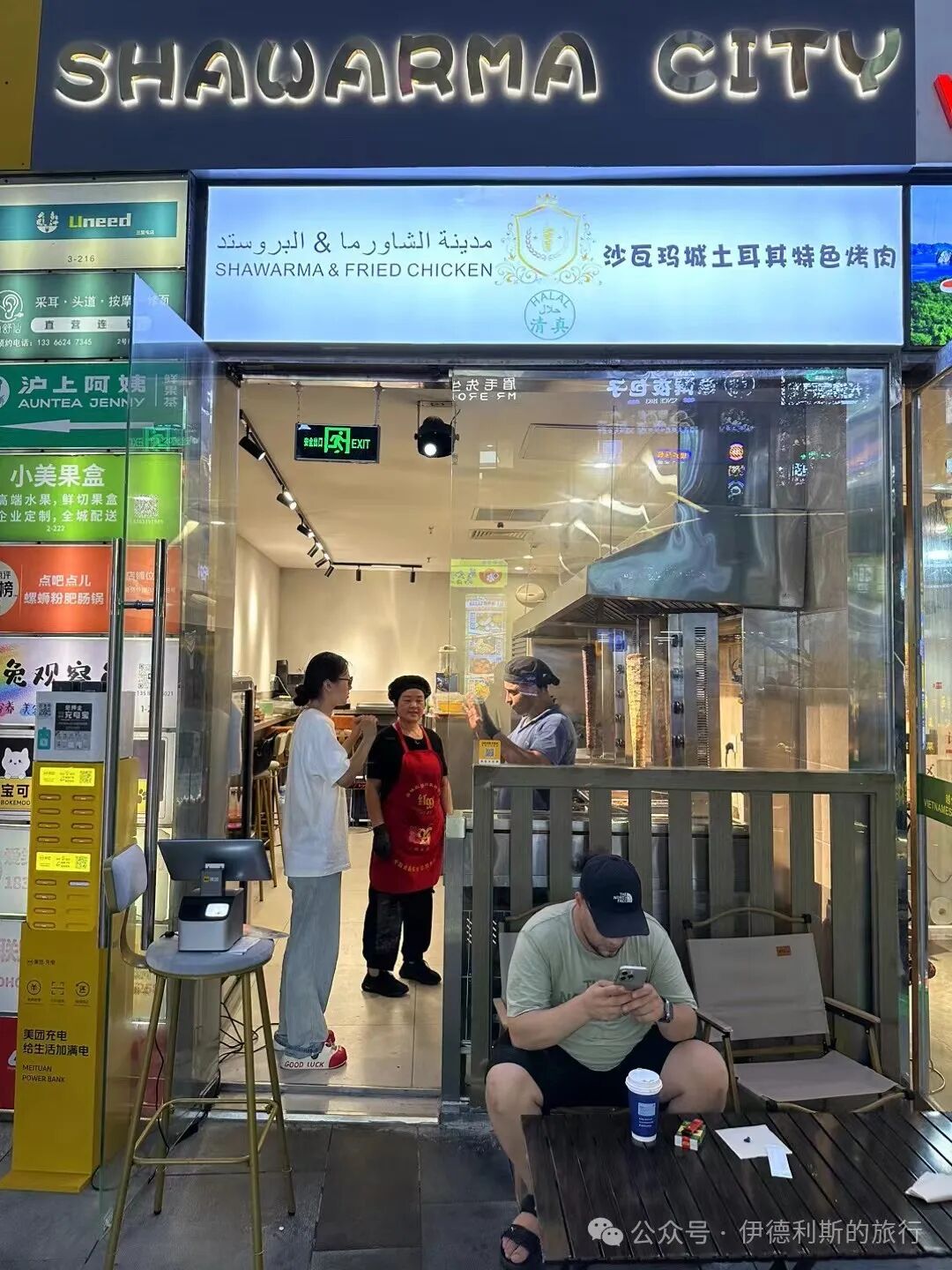
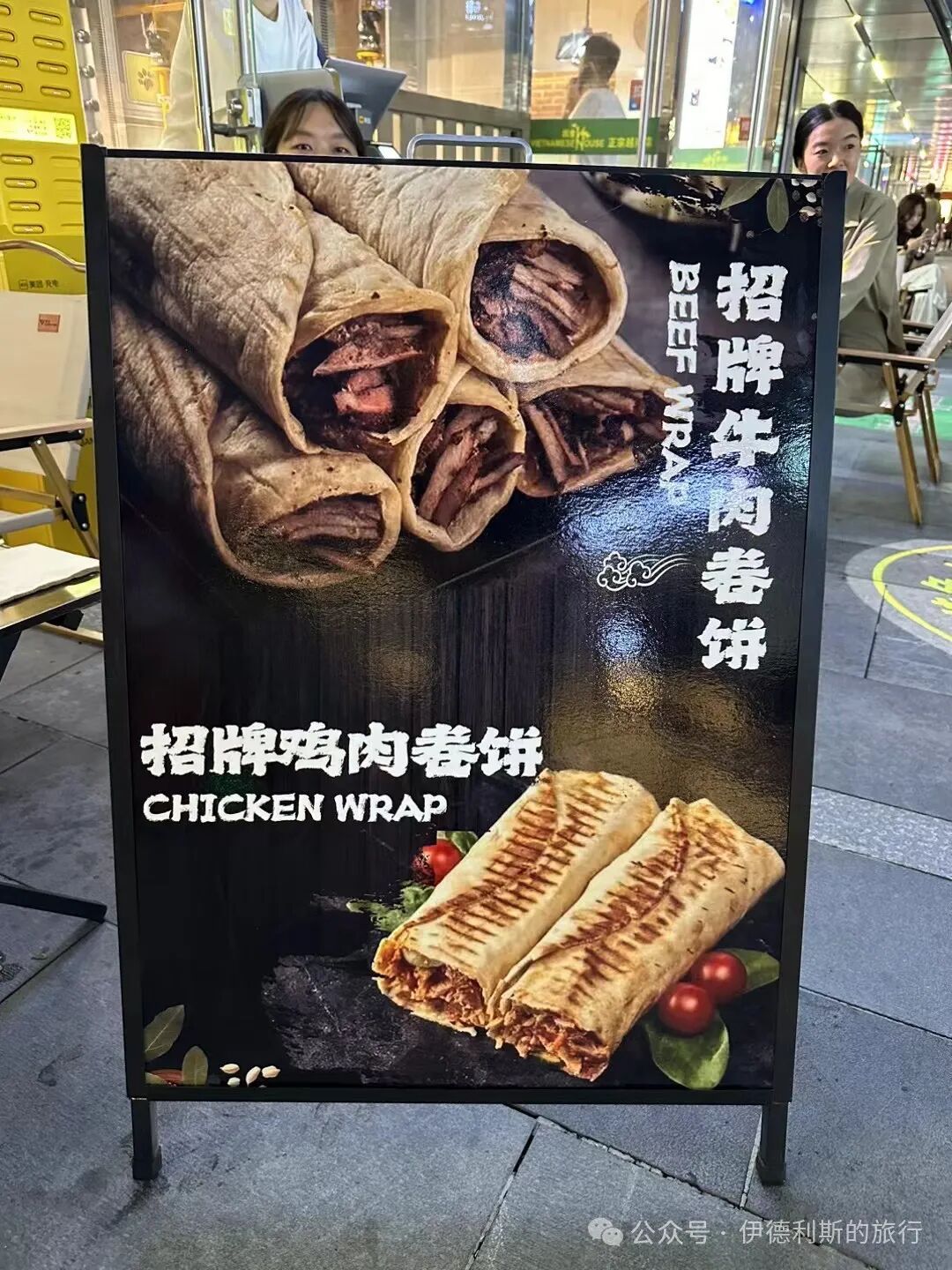
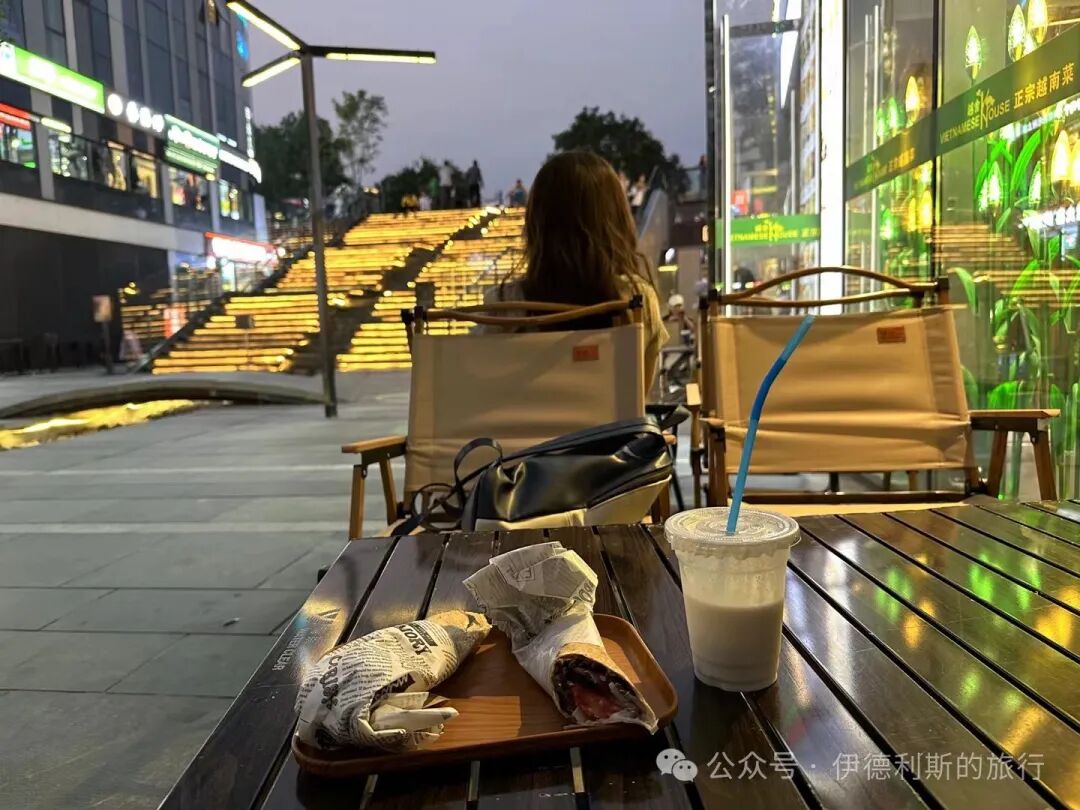
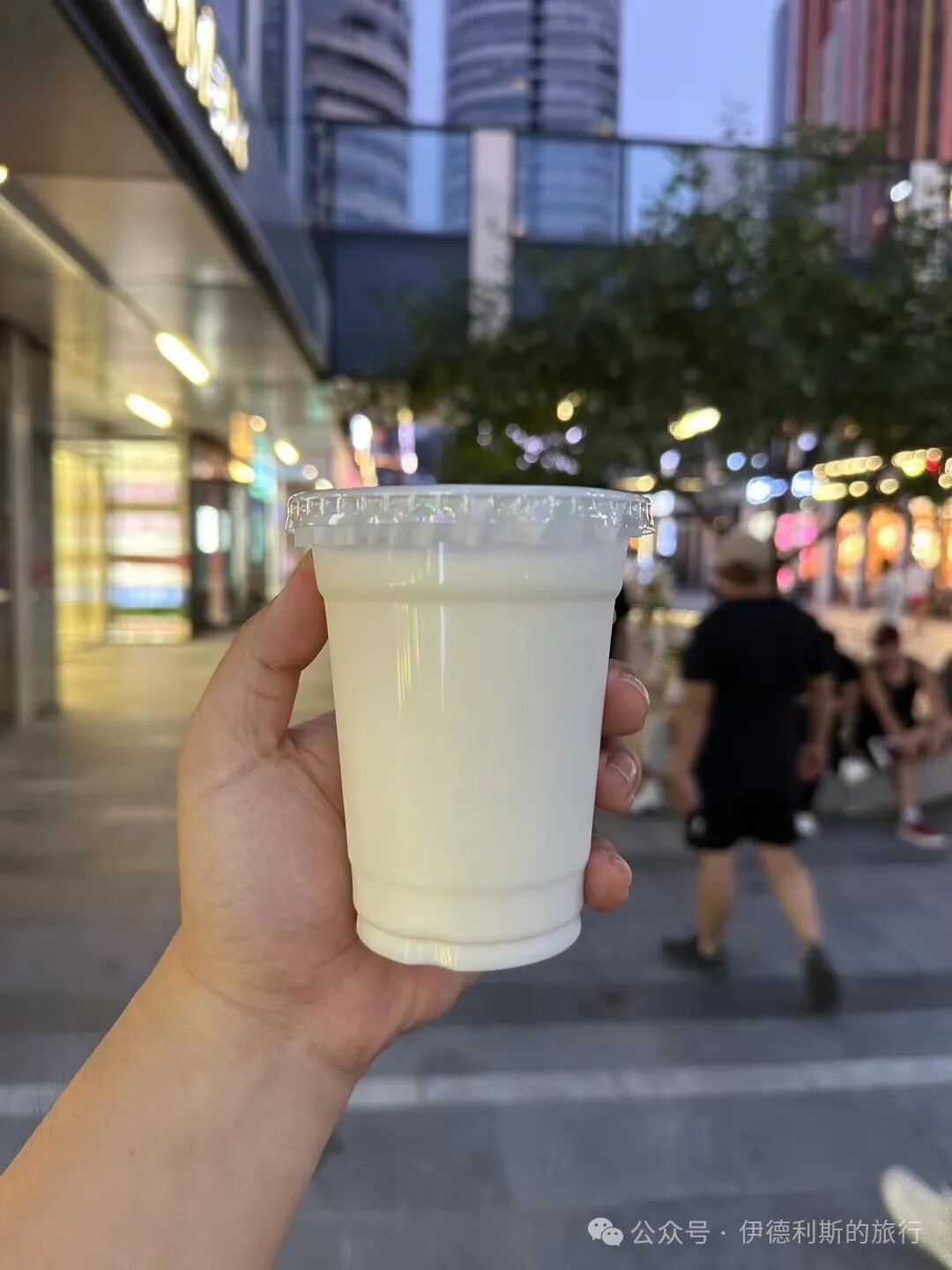
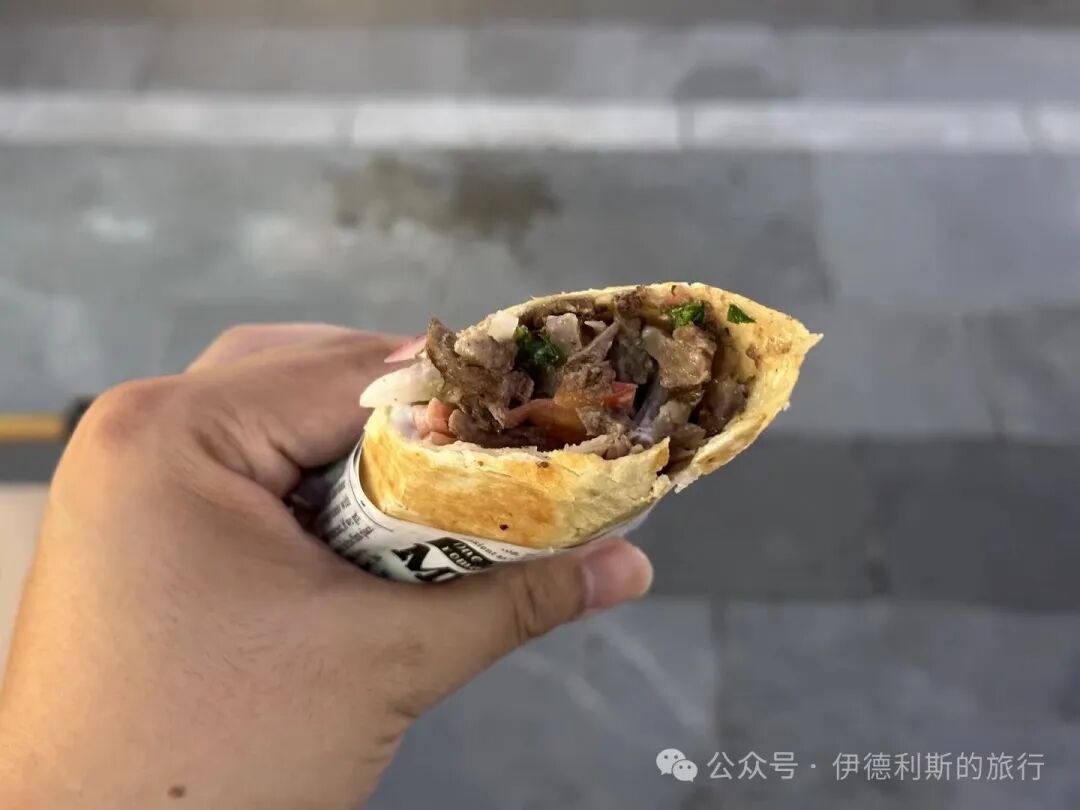
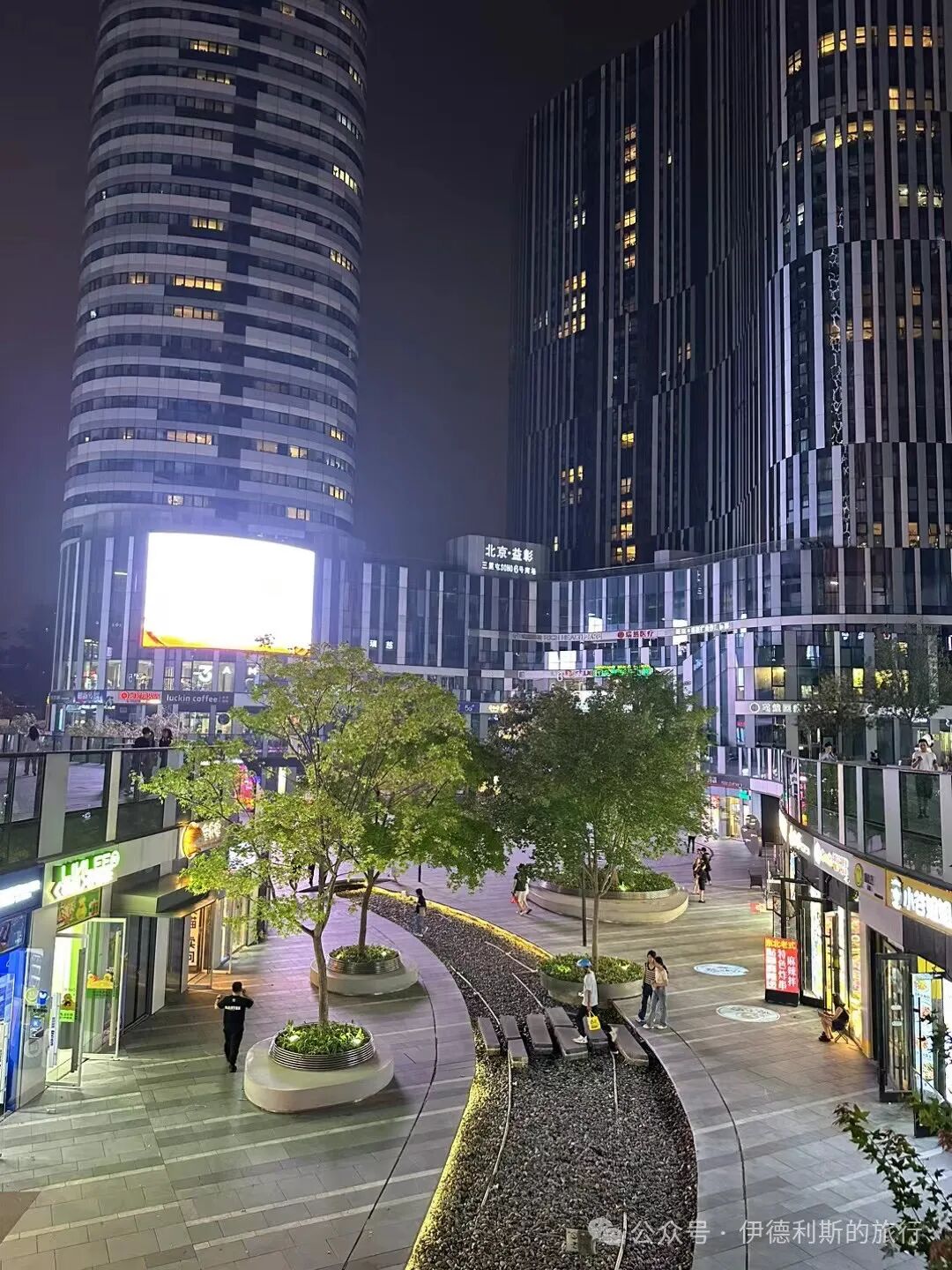
I took Suleiman for a walk in Sanlitun in the evening. Down the stairs at Sanlitun SOHO, a new kebab wrap shop called Shawarma City just opened, and it has a real Middle Eastern street vibe. The owner is Palestinian. They specialize in beef wraps and chicken wraps, plus fried chicken, onion rings, and salty yogurt drink (ayran).
We had the beef wrap and ayran. The beef wrap was surprisingly delicious, and the meat was very tender. When we visited Turkey, the flatbread for the kebab wraps we bought on the street was always mass-produced and got hard once it cooled down. But their flatbread is made fresh to order. It is hot and crispy, and it tastes even better than the ones we bought in Turkey!
9. Tomato Casual Western Restaurant (Xihongshi) at Hopson One
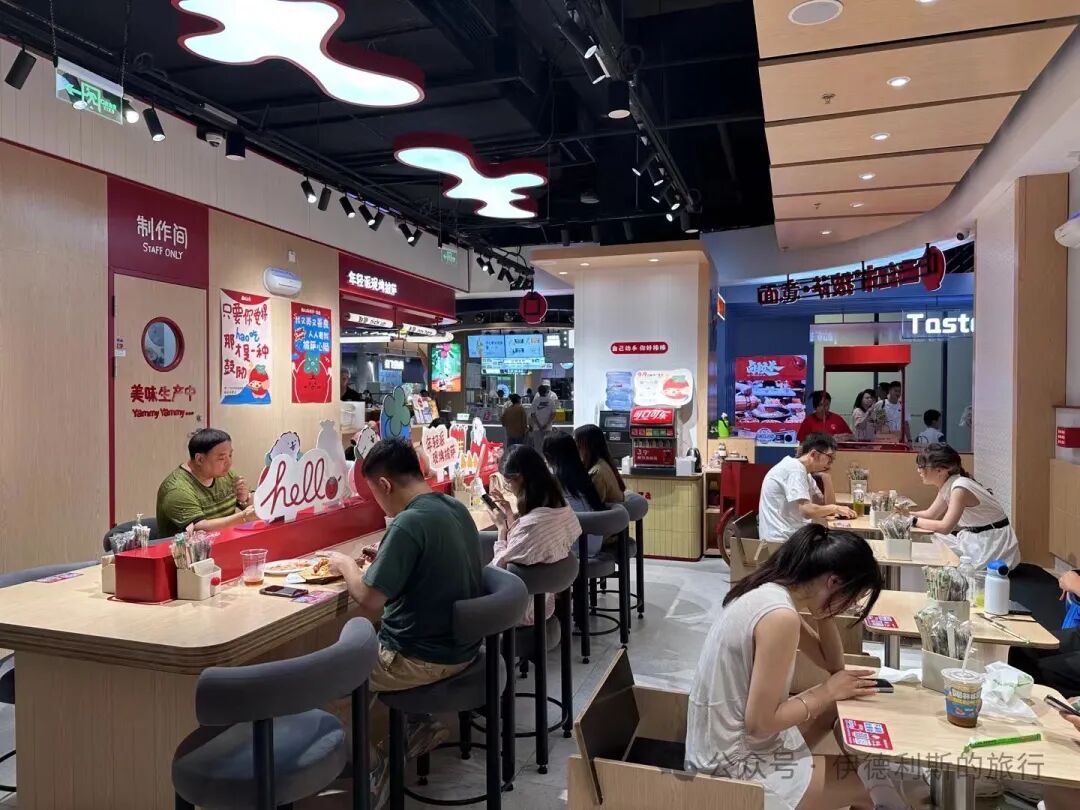
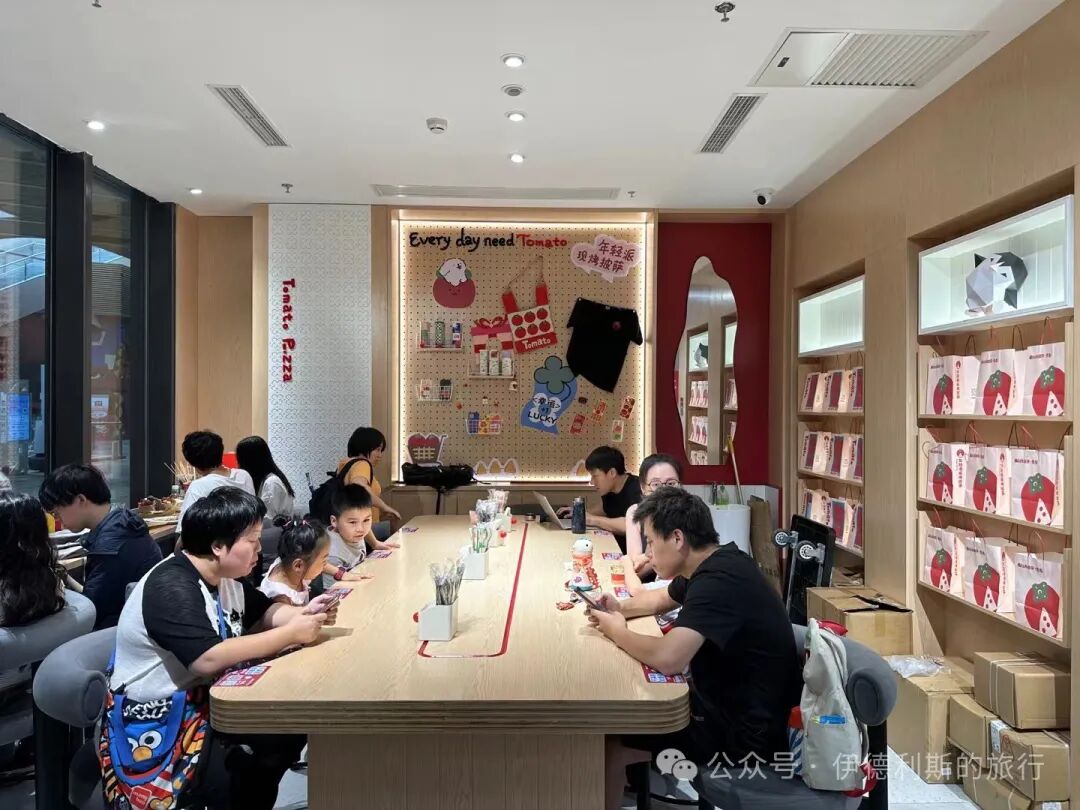
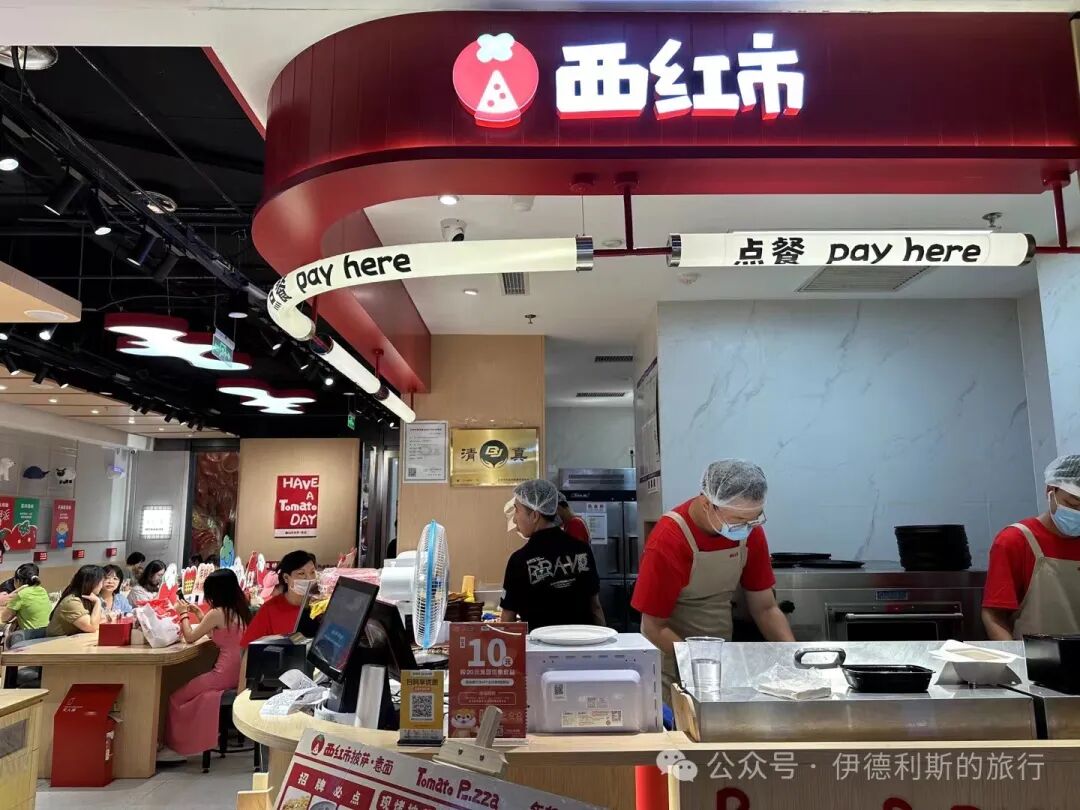
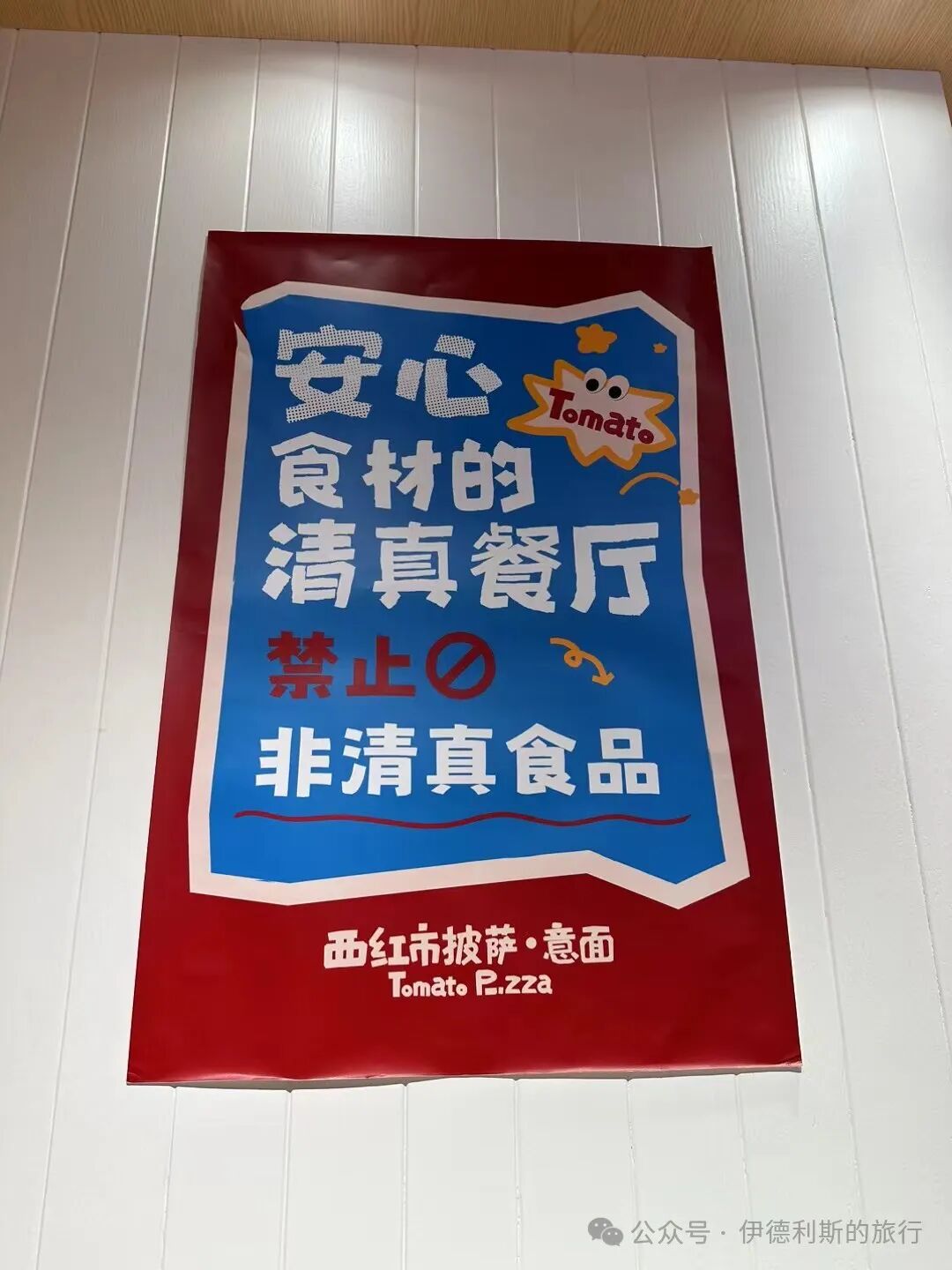
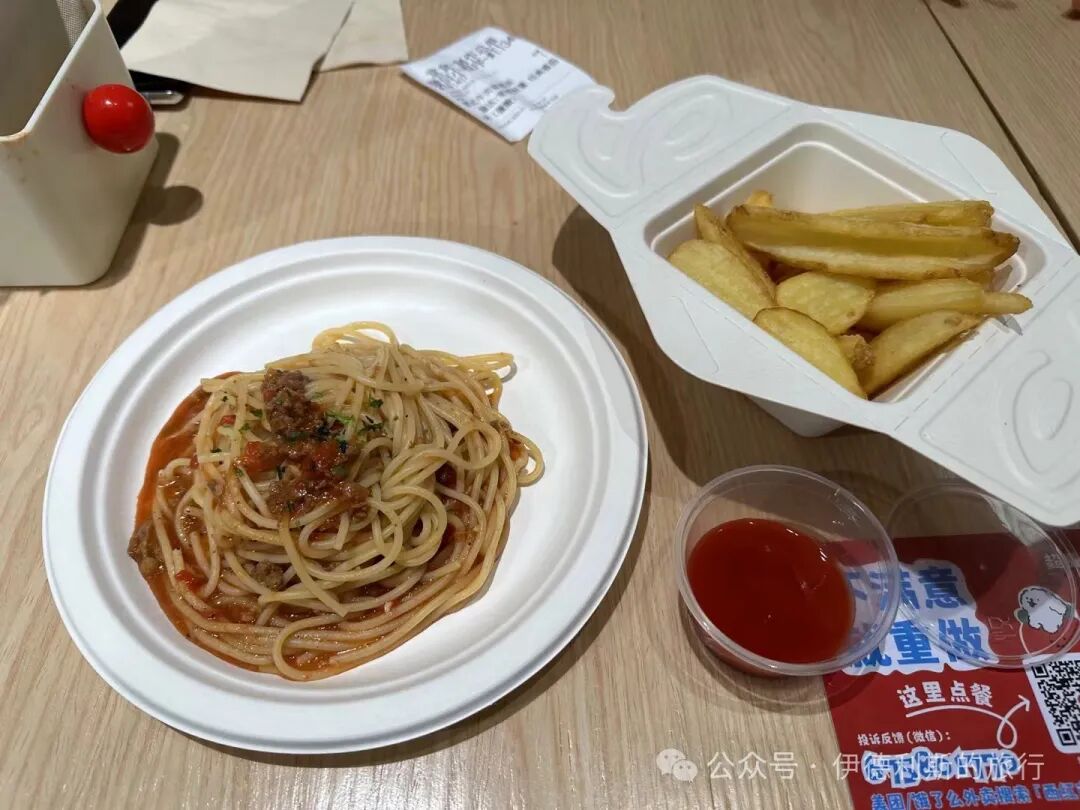
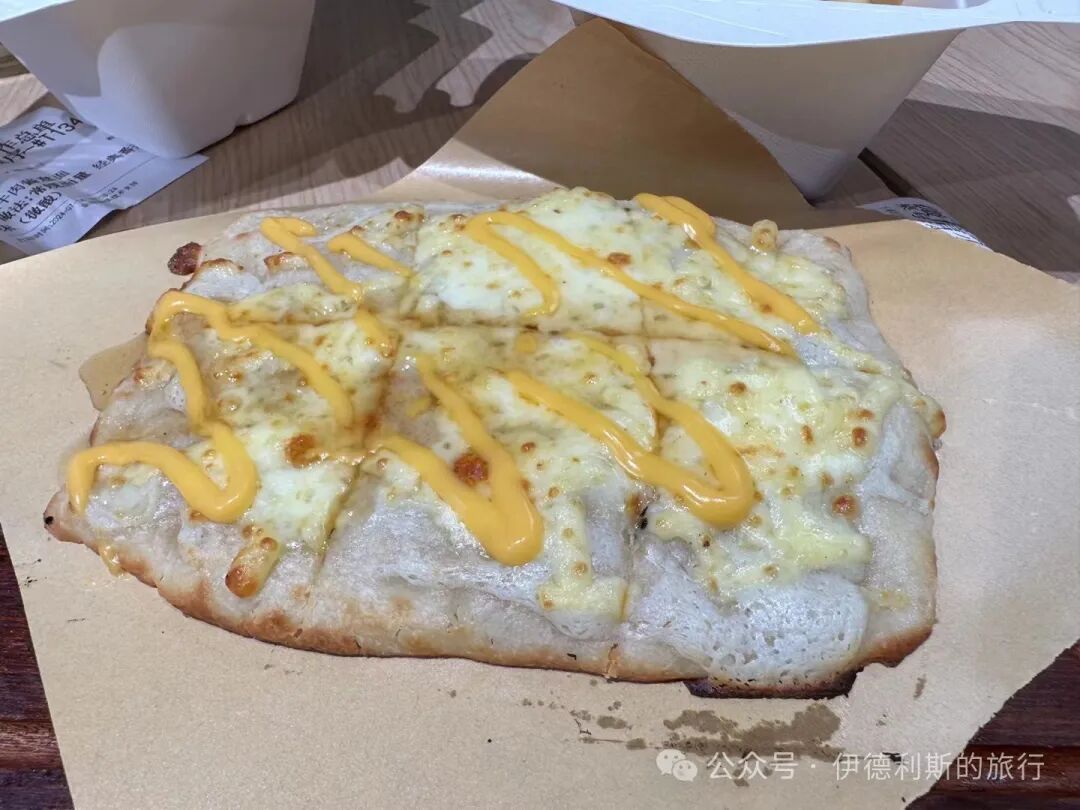
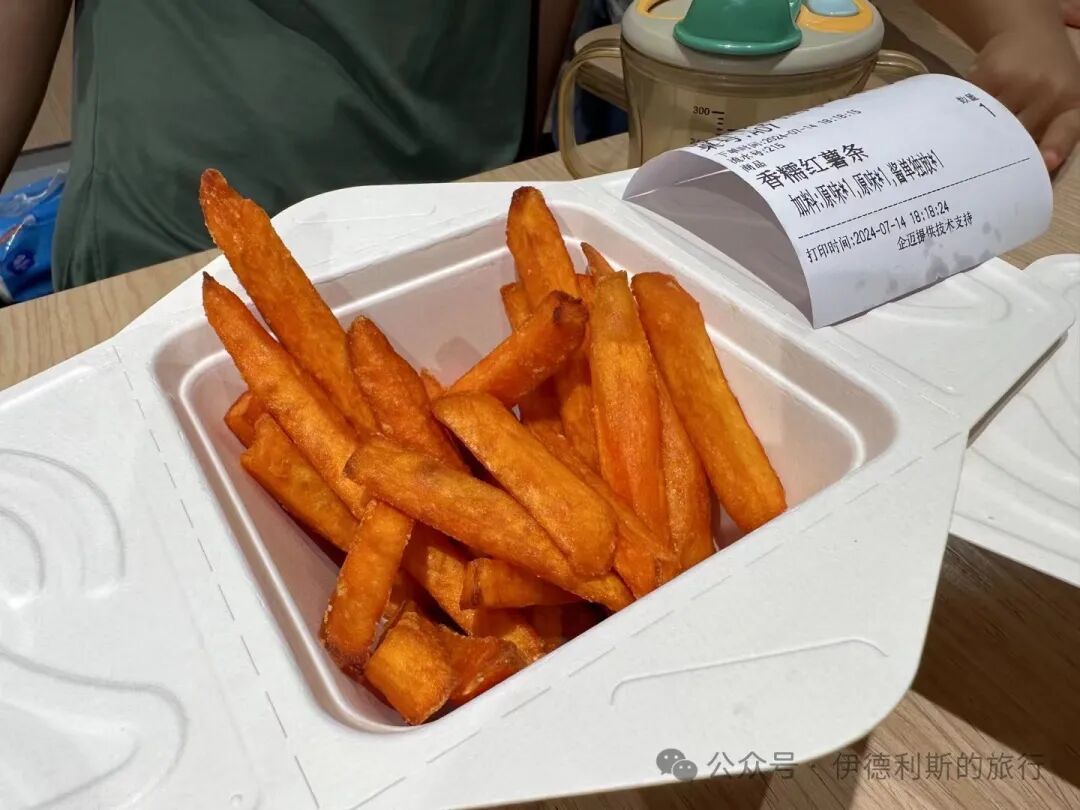
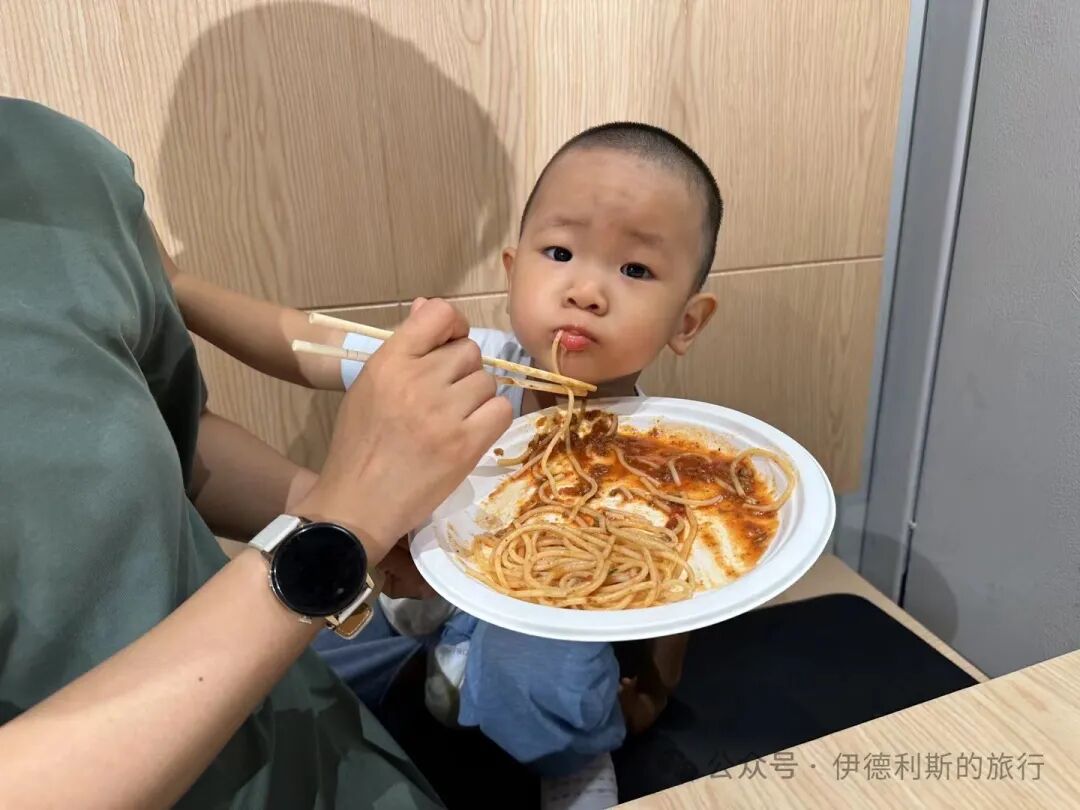
After coming back from Badaling Wildlife Park, we went to Xihongshi Pizza and Pasta at Hopson One in Changping. The owner is a Hui Muslim from Xueying in Daxing, and he has opened several branches now.
We ordered the tomato beef pasta and cheese pizza. The portions were very small, and there wasn't much meat in the pasta, but the price was really cheap. I guess they focus on high volume.
The fries tasted good and were very fragrant. I think their best dish is the roast chicken. It is crispy on the outside and tender on the inside, which makes it very appetizing. They have another shop in the New Zhongguancun Shopping Center. Next time I pass by, I will definitely eat their roast chicken and fries again.
10. Ya'er Liji Courtyard
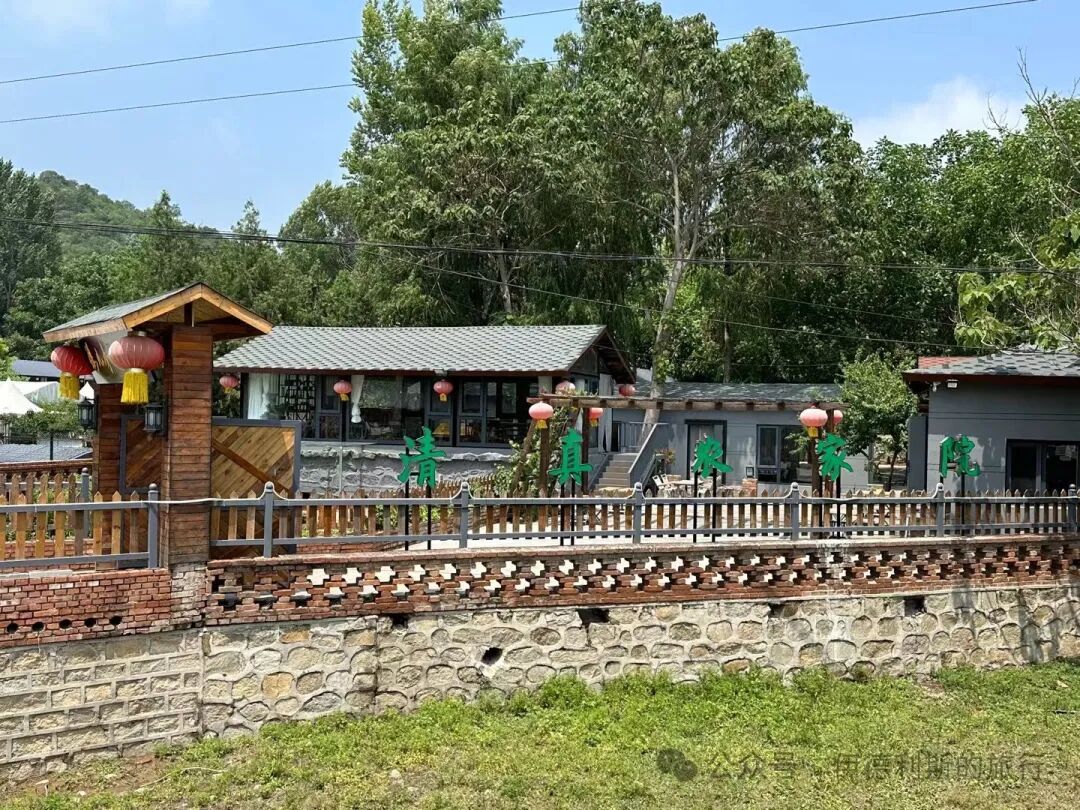
Last weekend, our family of three went to Ya'er Liji Courtyard by the Shayukou Reservoir in Huairou. The courtyard is a little over an hour from the city center by highway. If you take the bus, take the 924 express from outside Dongzhimen to the terminal station, Chawu Railway Station, and then transfer to the H27. However, the H27 runs very infrequently, and we just happened to catch the 11:50 bus on our way back.
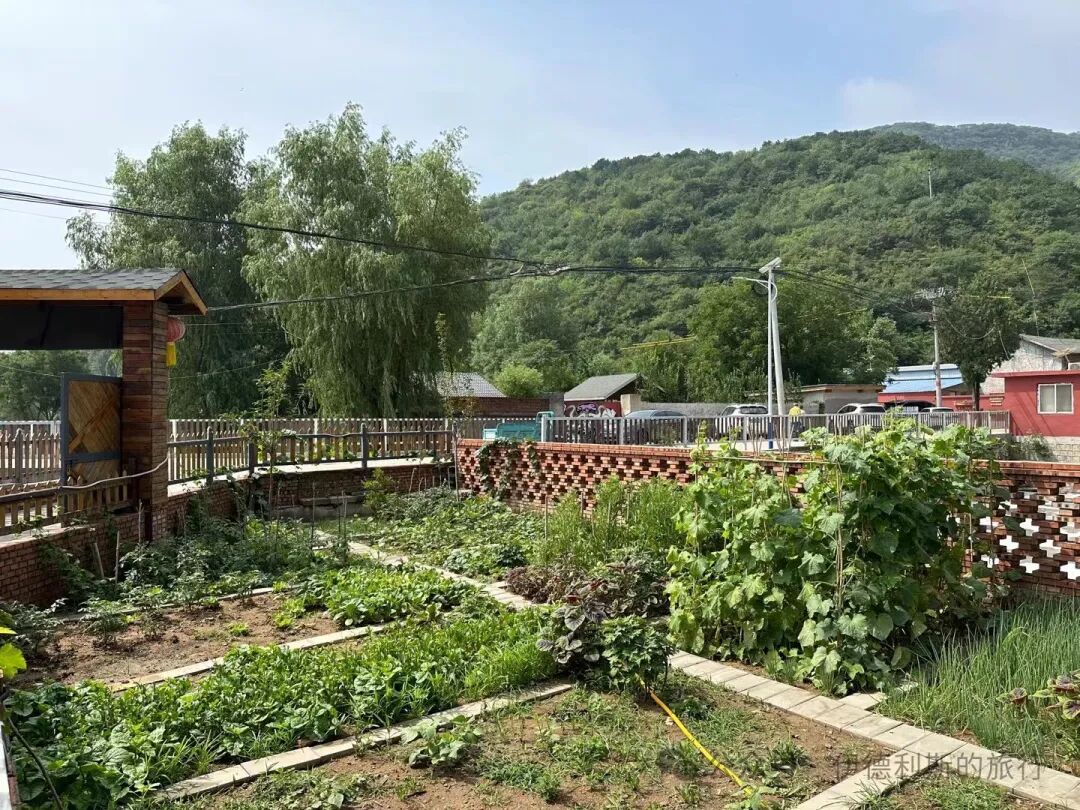
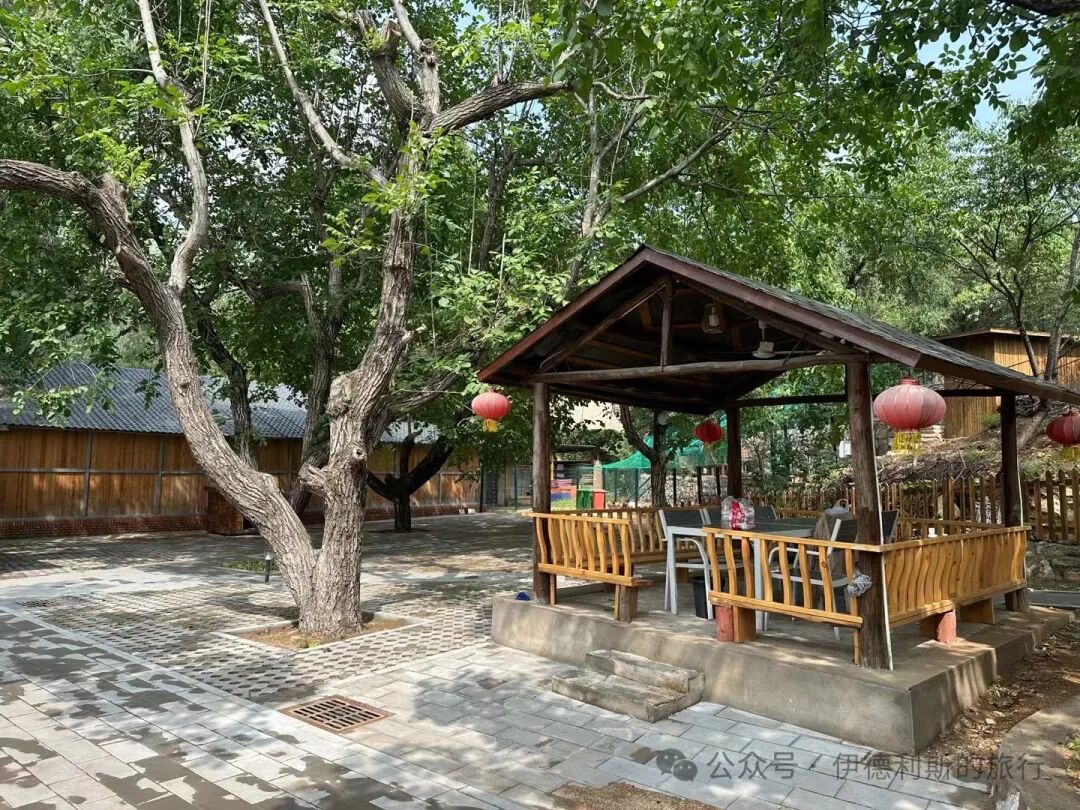
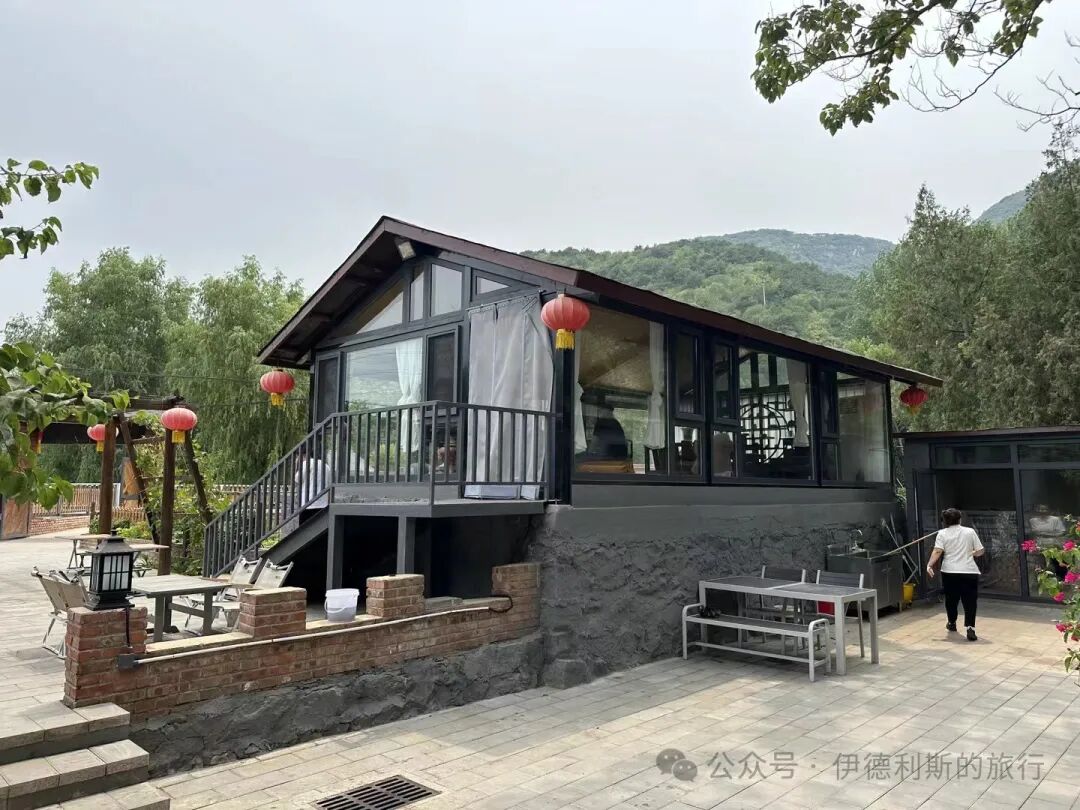
Yar Liji Courtyard has two rooms with large beds and two rooms with large heated brick beds (kang). Saturday nights are busy, so you need to book ahead. The courtyard provides breakfast, which consists of corn, fried steamed bun slices (mantou pian), porridge, eggs, and pickled vegetables. For lunch and dinner, they serve stewed pots, hot pot meat (shuanrou), and barbecue, but there are very few stir-fried dishes.
Yar Liji Courtyard is right next to the Reservoir Mountain Bar Resort. The resort has all kinds of fitness equipment, small slides, and swings, which Suleiman loved. Behind the resort, you can climb up to the Shayukou Reservoir dam to see the view. The rocky path is a bit slippery on the way down, and Suleiman took a tumble. I guess that counts as his first memorable fall while hiking.
Summary: Beijing New Restaurants - Turkish, Tunisian and Local Eats (Part 1) is presented as a clear English travel account for readers interested in Muslim life, halal food, mosques, and local history. The article keeps the original names, food details, photographs, and cultural context while focusing on Beijing Halal Food, New Restaurants, Muslim Travel.
1. Sultan Turkish Restaurant, Beijing branch
The super delicious Turkish Mado breakfast has finally arrived in Beijing!
The famous Sultan Turkish Restaurant from Guangzhou and Yiwu recently opened in Beijing at the former location of the Kubei Turkish Restaurant in Zuojiazhuang. The owner of Sultan also brought the famous Turkish Mado ice cream shop to China, so after you enter, the staff will provide two menus: one for Sultan and one for Mado.
Mado comes from the city of Kahramanmarash in southeastern Turkey, and its biggest feature is that everything is made using goat milk from their hometown. Besides ice cream, their various cheeses are also a main specialty. Of course, there is also my favorite Turkish breakfast.
Friends who have been to Turkey probably know that Turkish breakfast is really hearty, nutritious, and healthy. I have eaten Mado breakfast at their Yiwu and Guangzhou locations before, and this time I finally got to have it in Beijing. Mado offers many types of breakfast. We ordered the meal for two, which starts at 10:30 and is available all day. The meal for two includes Turkish-style fried eggs with sausage (sucuk), Maras cheese (maras peyniri), feta cheese (beyaz peynir), yellow cheese platter, honey with clotted cream (kaymak), green olives, black olives, tomato pepper paste (acuka), tahini syrup (tahin pekmez), cherry jam, dried apricots, walnuts, feta cheese spring rolls (sigara boregi), a kiwi, orange, and banana platter, a cucumber and tomato platter, plus bread, flatbread (pide), and Turkish black tea. It is a very rich variety. Their flatbread (pide) is especially fluffy. It tastes great when you tear it open and spread different jams on it.
On my second visit to Sultan, I ordered two of Mado's single-person breakfasts, homemade lemonade, and ice cream. This place is likely the most authentic Turkish breakfast you can find in Beijing. The only disappointing part is that the jam is store-bought in jars. You would never find a place in Turkey that serves breakfast jam like that. Also, the single-person breakfast does not come with bread like the meal for two does; you have to buy the bread separately.
We also ate Sultan's Mardin Tava and Turkish pizza (lahmacun), and we ordered shrimp risotto for the kids. This restaurant is likely the only place in Beijing selling Mardin Tava, a dish made by baking lamb chops, tomatoes, and chili peppers together in a flat pan. Mardin is an ancient city in southeastern Turkey near the border with Iraq, and tava means flat pan. The ancient city of Mardin is home to Kurds, Arabs, and Assyrians, and its local customs are very different from those in central and western Turkey, making it well worth a visit.
I also want to introduce the word "Sultan," which we usually translate as "Sudan" in Chinese. In Arabic, the original meaning of Sultan is "strength, authority, and rule." The first ruler to call himself Sultan was Sultan Mahmud of the Ghaznavid dynasty (reigned 998-1030). Later, the Seljuk and Ottoman dynasties adopted the title, and it gradually became the title for a national ruler. Today, only the heads of state of two countries hold the title of Sultan: the Sultanate of Oman and the Sultanate of Brunei. Additionally, the heads of the Malaysian states of Johor, Kedah, Kelantan, Pahang, Perak, Selangor, and Terengganu, as well as the Special Region of Yogyakarta in Indonesia, are also called Sultans.
Finally, a reminder: the further inside you sit at Sultan Restaurant, the hotter it gets. If you are sensitive to heat, try to sit closer to the front door.
2. Carthage Tunisian Restaurant
A new Carthage Arabic restaurant opened on Dongzhimen Outer Street in Beijing during Ramadan, and we went there for an iftar buffet. This is a new iftar buffet opened by Adel, the head chef of La Medina, on the first floor breakfast area of the Atour X Hotel in Sanlitun Taikoo Li, still focusing on Tunisian flavors. Since it has not been open long, it is mostly frequented by foreign friends (dosti) from the nearby embassy district, so there is no need to wait in line.
Because Adel is in charge, the dishes are similar to La Medina, though there are slightly fewer options. Appetizers include chickpea dip (hummus), parsley salad (tabbouleh), and the Tunisian specialty grilled eggplant salad (mechouia). Besides grilled eggplant, the grilled eggplant salad (mechouia) contains tomatoes, chili peppers, onions, and olive oil, making it very healthy.
The main course features North African sausage (merguez), which is made with lamb and beef mixed with cumin, harissa sauce, chili, and various other spices; it dates back to 12th-century Andalusia and later spread throughout North Africa.
They also serve the classic North African Maghreb tomato and pepper poached egg dish, shakshouka. Shakshouka started in North Africa under Ottoman rule in the 16th century, when tomatoes and peppers were brought from the Americas and became part of the local diet.
They also have the Arab version of fried triangular pastries (sambousek), which is a classic snack for Muslims during Ramadan. Sambousek originated in Iran and entered the Arab diet after the 10th century, later spreading to India, China, Indonesia, and Africa. In some parts of eastern China, Hui Muslims still use the Persian name 'sanmosan'.
3.
Fang Zhongshan Hulatang Hujialou Branch
Fang Zhongshan came to Beijing in 2023 and started a trend for spicy pepper soup (hulatang). The Hujialou branch opened in early 2024, right on my commute.
On the first day Fang Zhongshan Hujialou opened after the Spring Festival, I went there for a mix of spicy pepper soup and tofu pudding (doufunao), plus a beef pie (niurouhe). The Hujialou branch is just a short walk from the Hujialou subway station on Line 6, so it is easy to get to. I arrived at 1:00 and did not have to wait in line; it is not as crowded as it was when it first opened.
I had heard that their spicy soup (hulatang) is very hot. I tried the mixed version, and it was quite spicy. I think some Beijingers who cannot handle spice might find it too much. However, they put plenty of beef and mushrooms inside, which gives it a rich texture. I have to praise their beef pastry (niurouhe). It is wrapped and fried to order, with a thin, crispy crust. It is a great experience. The filling is made of vermicelli and minced beef with a strong hint of Sichuan peppercorn, which should be very popular.
On my second visit, I ordered bean flour porridge (doumo), scallion pancake (congyoubing), and pan-fried buns (shuijianbao). There were more people than the day before, so I expect it will be packed again in a few days.
Their bean flour porridge (doumo) is more traditional than the spicy soup. It tastes just like the one I had on Shuncheng Street in Zhengzhou. It has vermicelli, peanuts, and other ingredients inside, and I think it suits the taste of Beijingers better. The scallion pancake (congyoubing) is very thin, freshly fried, and full of onion aroma with a great texture. Pan-fried buns (shuijianbao) are made in large batches, so you might not always get them fresh out of the pan, but they are still served hot. The filling is beef and vermicelli, with a strong, spicy kick from the seasonings.
The wall at the Fangzhongshan Hujialou branch displays the history of Fangzhongshan spicy soup (hulatang). It feels meaningful to share this cultural heritage.
Fangzhongshan’s grandfather, Fang Yinsheng, opened the Fang Family Soup Shop on Jiepai Street in Zhoukou, Henan, in 1922 and started selling spicy soup (hulatang).
After the Kuomintang caused the Yellow River to breach its banks in the 1938 Huayuankou incident, Henan suffered a severe disaster. Fang Yinsheng turned his soup shop into a relief station to help passing refugees.
After 1958, Fangzhongshan’s father, Fang Chaoyang, was hired as the general manager for three villages, where he oversaw food management for the people's commune.
In 1976, a restaurant for Hui Muslims was established in Xixiatin Town, Xihua County, Zhoukou, Henan, and Fang Chaoyang served as its first manager.
After the reform and opening-up policy, Fang Chaoyang took his son Fangzhongshan to Luohe to build their business, and in 1983, they opened the Fang Family Spicy Soup Shop in Luohe.
4. Zhang Dahui Spicy Soup (hulatang)
Following Fang Zhongshan, the Xiaoyao Town style Zhang Dahui Spicy Soup (hulatang) has also opened a shop in Beijing.
The Sanlitun branch is located in Baijiazhuang. The shop is small. In the morning, they sell spicy soup (hulatang), pan-fried buns (shuijianbao), sugar cakes (tanggao), vegetable pockets (caijiao), fried dough fritters (youmotou), and beef pies (niurouhe) until about 2:00 PM. In the evening, they sell braised noodles (huimian), lamb soup with sesame flatbread (yangtang shaobing), lamb bone marrow (yangbanggu), steamed vegetables (zhengcai), and crawfish (xiaolongxia). We arrived in the evening and ordered lamb braised noodles (yangrou huimian), steamed eggplant (zheng qiezi), lamb bone marrow (yangbanggu), and crawfish (xiaolongxia). I thought the lamb braised noodles (yangrou huimian) were quite tasty. The chef pulls the noodles fresh, and they are packed with ingredients and have a strong flavor. The steamed eggplant (zheng qiezi) is sweet, sour, and salty, seasoned with minced garlic and catnip (jingjie). It goes well with the braised noodles (huimian). The crawfish (xiaolongxia) were served cold, and I felt they were not spicy enough. The beef bone marrow (niubanggu) is braised in sauce, but I felt it was a bit too salty. Next time I have a chance, I will come in the morning to try their spicy soup (hulatang).
The founder of Zhang Dahui was the great-grandfather, Zhang Yongsui. In the early 20th century, Zhang Yongsui carried a pole to sell spicy soup (hulatang) at the Shahe River wharf in Xiaoyao Town, Xihua County, Zhoukou, Henan. Xiaoyao Town sits where the Shahe and Yinghe rivers meet. It has always been an important trade hub, and the area around the Shahe River wharf was especially busy. Starting in 1942, 14-year-old Zhang Quanfang began selling spicy soup (hulatang) with his father, Zhang Yongsui, at the crossroads in Xiaoyao Town. He sold it there for over thirty years. After the reform and opening up in 1979, the third-generation successor, Zhang Peigen, moved his whole family to Xihua County to open a shop. It was the first spicy soup (hulatang) business to move out of Xiaoyao Town. In the 1990s, the Zhang family opened Qingxiangyuan Old Zhang's Spicy Soup (hulatang) at the Round Corner Building in Xihua County Square. Later, the fourth-generation successor changed the name to Zhang Dahui Spicy Soup (hulatang), which is still open today.
5. Yu-style Xiaoyao Town Spicy Soup (hulatang)
There is finally a halal Xiaoyao Town spicy soup (hulatang) inside the Second Ring Road in Beijing!
A new shop called Yuwei Xiaoyao Town Spicy Soup opened on Dongsi North Street. For liquids, they have spicy soup (hulatang), tofu pudding (doufunao), a mix of both (liangchan), bean foam soup (doumo), soy milk (doujiang), eight-treasure porridge (babaozhou), and millet porridge (xiaomizhou). For solids, they have scallion oil pancakes (congyoubing), pan-fried buns (shuijianbao), beef pockets (niurouhe), fried dough strips (youmotou), beef buns (niuroubao), and vegetable buns (subao). I had the mix, a scallion oil pancake, and a pan-fried bun for breakfast. The spicy soup has beef slices, gluten, and wood ear mushrooms in it. It is not the super spicy version like Fang Zhongshan, but the traditional Xiaoyao Town flavor. Maybe because it was raining when they opened, the shop was not crowded. I missed out on the freshly made scallion oil pancakes and pan-fried buns, but the pan-fried buns were still hot and tasted great.
Yuwei Xiaoyao Town Spicy Soup officially opened on July 26, and many friends (dosti) came to visit. I had bean foam soup, fried dough strips, and pan-fried buns for breakfast. This time I caught the freshly fried dough strips, and they tasted very good.
In August, Yuwei Xiaoyao Town Spicy Soup added braised noodles (huimian) to the menu. It is a typical Zhengzhou nourishing braised noodle dish. The broth contains quail eggs, glass noodles (fensi), goji berries, and kelp. The chef pulls the noodles fresh to order. Their cold dishes are a bit pricey, and they are sold individually, unlike the braised noodle (huimian) shops in Henan where you can usually get a mix of dishes.
6. Qinyuanzhai Fresh Braised Duck Shop
I bought duck head, duck neck, duck web, duck gizzard, duck esophagus, tofu skin, kelp, and orchid-shaped tofu skewers at Qinyuanzhai Fresh Braised Duck Shop on Andingmen Inner Street. They have a good variety. The braised items are not very spicy, but they have a lingering heat, making them great for snacking.
7. Subuha Almond Tofu Jiaodaokou Branch
I went for a walk in the evening and visited the newly opened Subuha at Jiaodaokou, where I ordered almond tofu and coconut cheese. Their almond tofu is made like cheese, with both almond and milk flavors. It is quite delicious.
The second time I went, I had the matcha cheese, while Zainab had the lamb skewers and almond tofu. They also have 800 grams of sugar-free yogurt for 14.5 yuan, which feels like a good deal.
8. Shawarma City
I took Suleiman for a walk in Sanlitun in the evening. Down the stairs at Sanlitun SOHO, a new kebab wrap shop called Shawarma City just opened, and it has a real Middle Eastern street vibe. The owner is Palestinian. They specialize in beef wraps and chicken wraps, plus fried chicken, onion rings, and salty yogurt drink (ayran).
We had the beef wrap and ayran. The beef wrap was surprisingly delicious, and the meat was very tender. When we visited Turkey, the flatbread for the kebab wraps we bought on the street was always mass-produced and got hard once it cooled down. But their flatbread is made fresh to order. It is hot and crispy, and it tastes even better than the ones we bought in Turkey!
9. Tomato Casual Western Restaurant (Xihongshi) at Hopson One
After coming back from Badaling Wildlife Park, we went to Xihongshi Pizza and Pasta at Hopson One in Changping. The owner is a Hui Muslim from Xueying in Daxing, and he has opened several branches now.
We ordered the tomato beef pasta and cheese pizza. The portions were very small, and there wasn't much meat in the pasta, but the price was really cheap. I guess they focus on high volume.
The fries tasted good and were very fragrant. I think their best dish is the roast chicken. It is crispy on the outside and tender on the inside, which makes it very appetizing. They have another shop in the New Zhongguancun Shopping Center. Next time I pass by, I will definitely eat their roast chicken and fries again.
10. Ya'er Liji Courtyard
Last weekend, our family of three went to Ya'er Liji Courtyard by the Shayukou Reservoir in Huairou. The courtyard is a little over an hour from the city center by highway. If you take the bus, take the 924 express from outside Dongzhimen to the terminal station, Chawu Railway Station, and then transfer to the H27. However, the H27 runs very infrequently, and we just happened to catch the 11:50 bus on our way back.
Yar Liji Courtyard has two rooms with large beds and two rooms with large heated brick beds (kang). Saturday nights are busy, so you need to book ahead. The courtyard provides breakfast, which consists of corn, fried steamed bun slices (mantou pian), porridge, eggs, and pickled vegetables. For lunch and dinner, they serve stewed pots, hot pot meat (shuanrou), and barbecue, but there are very few stir-fried dishes.
Yar Liji Courtyard is right next to the Reservoir Mountain Bar Resort. The resort has all kinds of fitness equipment, small slides, and swings, which Suleiman loved. Behind the resort, you can climb up to the Shayukou Reservoir dam to see the view. The rocky path is a bit slippery on the way down, and Suleiman took a tumble. I guess that counts as his first memorable fall while hiking.
Halal Food Guide: Beijing New Restaurants - Turkish, Tunisian and Local Eats (Part 2)
Articles • ali2007fr posted the article • 0 comments • 105 views • 2026-05-19 21:20
Reposted from the web
Summary: Beijing New Restaurants - Turkish, Tunisian and Local Eats (Part 2) is presented as a photo-based continuation of the original Chinese post, keeping the images in their original order. The entry is organized for readers looking for Beijing Halal Food, New Restaurants, Muslim Travel without adding new claims beyond the source material. view all
Summary: Beijing New Restaurants - Turkish, Tunisian and Local Eats (Part 2) is presented as a photo-based continuation of the original Chinese post, keeping the images in their original order. The entry is organized for readers looking for Beijing Halal Food, New Restaurants, Muslim Travel without adding new claims beyond the source material. view all
Reposted from the web
Summary: Beijing New Restaurants - Turkish, Tunisian and Local Eats (Part 2) is presented as a photo-based continuation of the original Chinese post, keeping the images in their original order. The entry is organized for readers looking for Beijing Halal Food, New Restaurants, Muslim Travel without adding new claims beyond the source material.
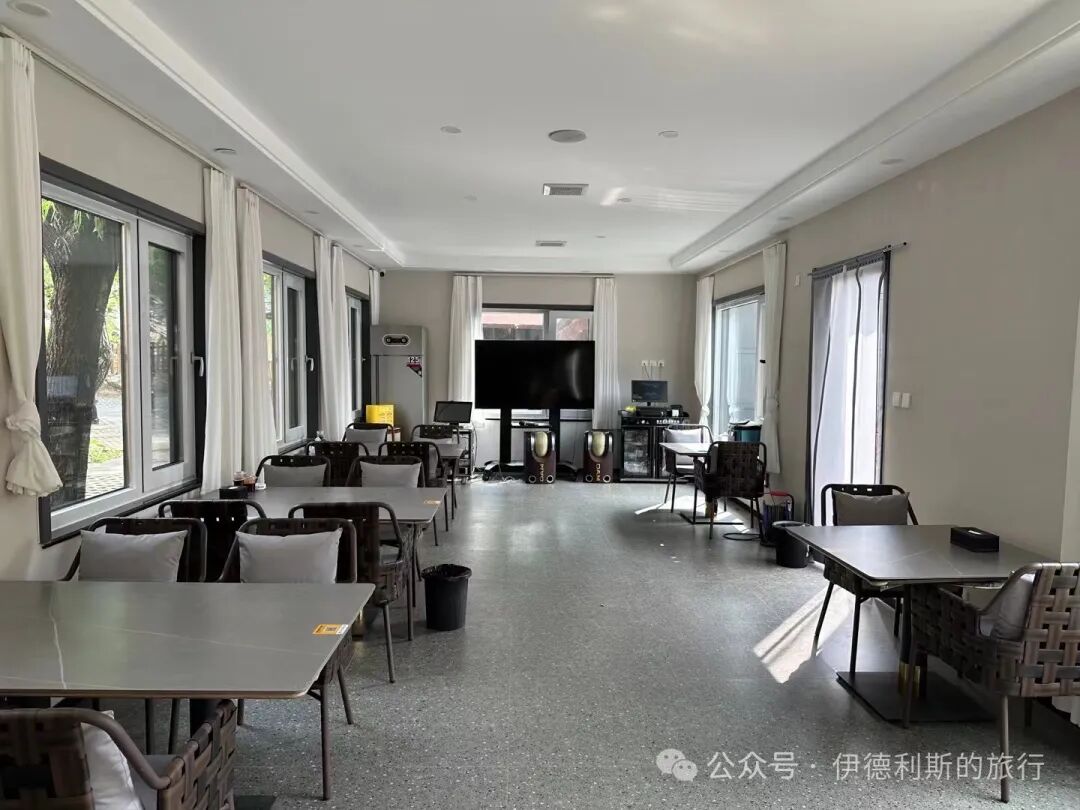
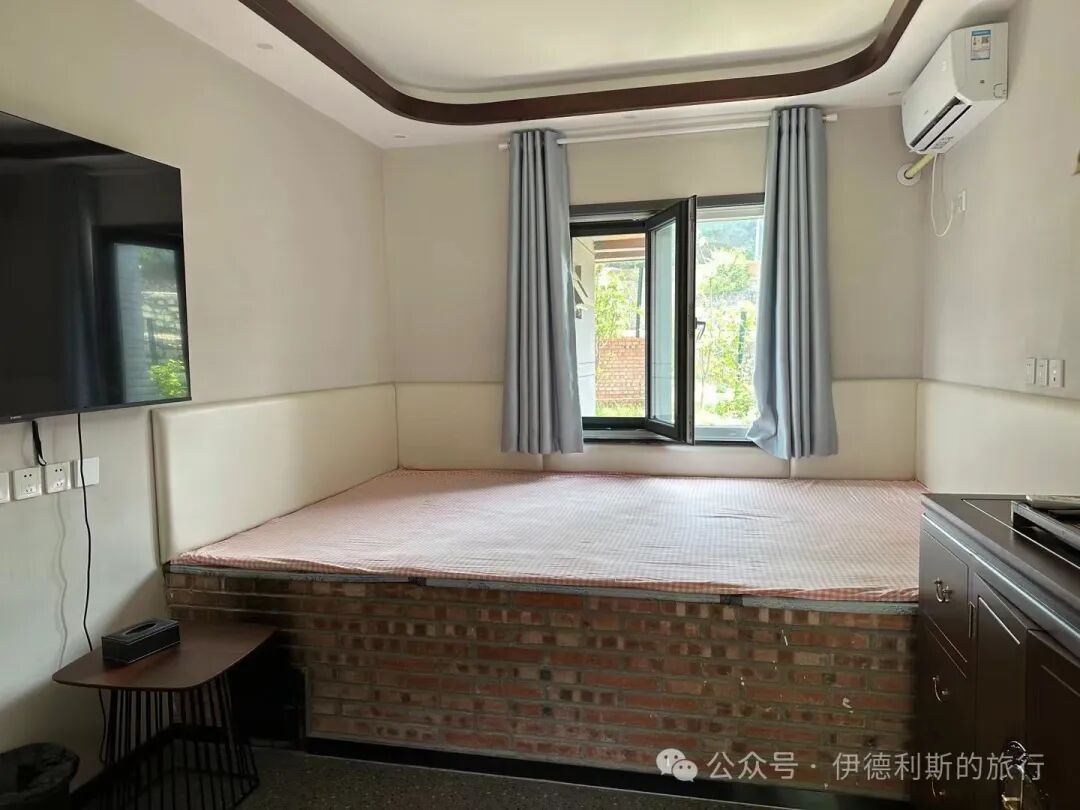
Summary: Beijing New Restaurants - Turkish, Tunisian and Local Eats (Part 2) is presented as a photo-based continuation of the original Chinese post, keeping the images in their original order. The entry is organized for readers looking for Beijing Halal Food, New Restaurants, Muslim Travel without adding new claims beyond the source material.
Halal Food Guide: Beijing New Restaurants - Turkish, Tunisian and Local Eats (Part 1)
Articles • ali2007fr posted the article • 0 comments • 199 views • 2026-05-19 21:24
Reposted from the web
Summary: Beijing New Restaurants - Turkish, Tunisian and Local Eats (Part 1) is presented as a clear English travel account for readers interested in Muslim life, halal food, mosques, and local history. The article keeps the original names, food details, photographs, and cultural context while focusing on Beijing Halal Food, New Restaurants, Muslim Travel.
1. Sultan Turkish Restaurant, Beijing branch
The super delicious Turkish Mado breakfast has finally arrived in Beijing!
The famous Sultan Turkish Restaurant from Guangzhou and Yiwu recently opened in Beijing at the former location of the Kubei Turkish Restaurant in Zuojiazhuang. The owner of Sultan also brought the famous Turkish Mado ice cream shop to China, so after you enter, the staff will provide two menus: one for Sultan and one for Mado.
Mado comes from the city of Kahramanmarash in southeastern Turkey, and its biggest feature is that everything is made using goat milk from their hometown. Besides ice cream, their various cheeses are also a main specialty. Of course, there is also my favorite Turkish breakfast.
Friends who have been to Turkey probably know that Turkish breakfast is really hearty, nutritious, and healthy. I have eaten Mado breakfast at their Yiwu and Guangzhou locations before, and this time I finally got to have it in Beijing. Mado offers many types of breakfast. We ordered the meal for two, which starts at 10:30 and is available all day. The meal for two includes Turkish-style fried eggs with sausage (sucuk), Maras cheese (maras peyniri), feta cheese (beyaz peynir), yellow cheese platter, honey with clotted cream (kaymak), green olives, black olives, tomato pepper paste (acuka), tahini syrup (tahin pekmez), cherry jam, dried apricots, walnuts, feta cheese spring rolls (sigara boregi), a kiwi, orange, and banana platter, a cucumber and tomato platter, plus bread, flatbread (pide), and Turkish black tea. It is a very rich variety. Their flatbread (pide) is especially fluffy. It tastes great when you tear it open and spread different jams on it.
On my second visit to Sultan, I ordered two of Mado's single-person breakfasts, homemade lemonade, and ice cream. This place is likely the most authentic Turkish breakfast you can find in Beijing. The only disappointing part is that the jam is store-bought in jars. You would never find a place in Turkey that serves breakfast jam like that. Also, the single-person breakfast does not come with bread like the meal for two does; you have to buy the bread separately.
We also ate Sultan's Mardin Tava and Turkish pizza (lahmacun), and we ordered shrimp risotto for the kids. This restaurant is likely the only place in Beijing selling Mardin Tava, a dish made by baking lamb chops, tomatoes, and chili peppers together in a flat pan. Mardin is an ancient city in southeastern Turkey near the border with Iraq, and tava means flat pan. The ancient city of Mardin is home to Kurds, Arabs, and Assyrians, and its local customs are very different from those in central and western Turkey, making it well worth a visit.
I also want to introduce the word "Sultan," which we usually translate as "Sudan" in Chinese. In Arabic, the original meaning of Sultan is "strength, authority, and rule." The first ruler to call himself Sultan was Sultan Mahmud of the Ghaznavid dynasty (reigned 998-1030). Later, the Seljuk and Ottoman dynasties adopted the title, and it gradually became the title for a national ruler. Today, only the heads of state of two countries hold the title of Sultan: the Sultanate of Oman and the Sultanate of Brunei. Additionally, the heads of the Malaysian states of Johor, Kedah, Kelantan, Pahang, Perak, Selangor, and Terengganu, as well as the Special Region of Yogyakarta in Indonesia, are also called Sultans.
Finally, a reminder: the further inside you sit at Sultan Restaurant, the hotter it gets. If you are sensitive to heat, try to sit closer to the front door.
2. Carthage Tunisian Restaurant
A new Carthage Arabic restaurant opened on Dongzhimen Outer Street in Beijing during Ramadan, and we went there for an iftar buffet. This is a new iftar buffet opened by Adel, the head chef of La Medina, on the first floor breakfast area of the Atour X Hotel in Sanlitun Taikoo Li, still focusing on Tunisian flavors. Since it has not been open long, it is mostly frequented by foreign friends (dosti) from the nearby embassy district, so there is no need to wait in line.
Because Adel is in charge, the dishes are similar to La Medina, though there are slightly fewer options. Appetizers include chickpea dip (hummus), parsley salad (tabbouleh), and the Tunisian specialty grilled eggplant salad (mechouia). Besides grilled eggplant, the grilled eggplant salad (mechouia) contains tomatoes, chili peppers, onions, and olive oil, making it very healthy.
The main course features North African sausage (merguez), which is made with lamb and beef mixed with cumin, harissa sauce, chili, and various other spices; it dates back to 12th-century Andalusia and later spread throughout North Africa.
They also serve the classic North African Maghreb tomato and pepper poached egg dish, shakshouka. Shakshouka started in North Africa under Ottoman rule in the 16th century, when tomatoes and peppers were brought from the Americas and became part of the local diet.
They also have the Arab version of fried triangular pastries (sambousek), which is a classic snack for Muslims during Ramadan. Sambousek originated in Iran and entered the Arab diet after the 10th century, later spreading to India, China, Indonesia, and Africa. In some parts of eastern China, Hui Muslims still use the Persian name 'sanmosan'.
3.
Fang Zhongshan Hulatang Hujialou Branch
Fang Zhongshan came to Beijing in 2023 and started a trend for spicy pepper soup (hulatang). The Hujialou branch opened in early 2024, right on my commute.
On the first day Fang Zhongshan Hujialou opened after the Spring Festival, I went there for a mix of spicy pepper soup and tofu pudding (doufunao), plus a beef pie (niurouhe). The Hujialou branch is just a short walk from the Hujialou subway station on Line 6, so it is easy to get to. I arrived at 1:00 and did not have to wait in line; it is not as crowded as it was when it first opened.
I had heard that their spicy soup (hulatang) is very hot. I tried the mixed version, and it was quite spicy. I think some Beijingers who cannot handle spice might find it too much. However, they put plenty of beef and mushrooms inside, which gives it a rich texture. I have to praise their beef pastry (niurouhe). It is wrapped and fried to order, with a thin, crispy crust. It is a great experience. The filling is made of vermicelli and minced beef with a strong hint of Sichuan peppercorn, which should be very popular.
On my second visit, I ordered bean flour porridge (doumo), scallion pancake (congyoubing), and pan-fried buns (shuijianbao). There were more people than the day before, so I expect it will be packed again in a few days.
Their bean flour porridge (doumo) is more traditional than the spicy soup. It tastes just like the one I had on Shuncheng Street in Zhengzhou. It has vermicelli, peanuts, and other ingredients inside, and I think it suits the taste of Beijingers better. The scallion pancake (congyoubing) is very thin, freshly fried, and full of onion aroma with a great texture. Pan-fried buns (shuijianbao) are made in large batches, so you might not always get them fresh out of the pan, but they are still served hot. The filling is beef and vermicelli, with a strong, spicy kick from the seasonings.
The wall at the Fangzhongshan Hujialou branch displays the history of Fangzhongshan spicy soup (hulatang). It feels meaningful to share this cultural heritage.
Fangzhongshan’s grandfather, Fang Yinsheng, opened the Fang Family Soup Shop on Jiepai Street in Zhoukou, Henan, in 1922 and started selling spicy soup (hulatang).
After the Kuomintang caused the Yellow River to breach its banks in the 1938 Huayuankou incident, Henan suffered a severe disaster. Fang Yinsheng turned his soup shop into a relief station to help passing refugees.
After 1958, Fangzhongshan’s father, Fang Chaoyang, was hired as the general manager for three villages, where he oversaw food management for the people's commune.
In 1976, a restaurant for Hui Muslims was established in Xixiatin Town, Xihua County, Zhoukou, Henan, and Fang Chaoyang served as its first manager.
After the reform and opening-up policy, Fang Chaoyang took his son Fangzhongshan to Luohe to build their business, and in 1983, they opened the Fang Family Spicy Soup Shop in Luohe.
4. Zhang Dahui Spicy Soup (hulatang)
Following Fang Zhongshan, the Xiaoyao Town style Zhang Dahui Spicy Soup (hulatang) has also opened a shop in Beijing.
The Sanlitun branch is located in Baijiazhuang. The shop is small. In the morning, they sell spicy soup (hulatang), pan-fried buns (shuijianbao), sugar cakes (tanggao), vegetable pockets (caijiao), fried dough fritters (youmotou), and beef pies (niurouhe) until about 2:00 PM. In the evening, they sell braised noodles (huimian), lamb soup with sesame flatbread (yangtang shaobing), lamb bone marrow (yangbanggu), steamed vegetables (zhengcai), and crawfish (xiaolongxia). We arrived in the evening and ordered lamb braised noodles (yangrou huimian), steamed eggplant (zheng qiezi), lamb bone marrow (yangbanggu), and crawfish (xiaolongxia). I thought the lamb braised noodles (yangrou huimian) were quite tasty. The chef pulls the noodles fresh, and they are packed with ingredients and have a strong flavor. The steamed eggplant (zheng qiezi) is sweet, sour, and salty, seasoned with minced garlic and catnip (jingjie). It goes well with the braised noodles (huimian). The crawfish (xiaolongxia) were served cold, and I felt they were not spicy enough. The beef bone marrow (niubanggu) is braised in sauce, but I felt it was a bit too salty. Next time I have a chance, I will come in the morning to try their spicy soup (hulatang).
The founder of Zhang Dahui was the great-grandfather, Zhang Yongsui. In the early 20th century, Zhang Yongsui carried a pole to sell spicy soup (hulatang) at the Shahe River wharf in Xiaoyao Town, Xihua County, Zhoukou, Henan. Xiaoyao Town sits where the Shahe and Yinghe rivers meet. It has always been an important trade hub, and the area around the Shahe River wharf was especially busy. Starting in 1942, 14-year-old Zhang Quanfang began selling spicy soup (hulatang) with his father, Zhang Yongsui, at the crossroads in Xiaoyao Town. He sold it there for over thirty years. After the reform and opening up in 1979, the third-generation successor, Zhang Peigen, moved his whole family to Xihua County to open a shop. It was the first spicy soup (hulatang) business to move out of Xiaoyao Town. In the 1990s, the Zhang family opened Qingxiangyuan Old Zhang's Spicy Soup (hulatang) at the Round Corner Building in Xihua County Square. Later, the fourth-generation successor changed the name to Zhang Dahui Spicy Soup (hulatang), which is still open today.
5. Yu-style Xiaoyao Town Spicy Soup (hulatang)
There is finally a halal Xiaoyao Town spicy soup (hulatang) inside the Second Ring Road in Beijing!
A new shop called Yuwei Xiaoyao Town Spicy Soup opened on Dongsi North Street. For liquids, they have spicy soup (hulatang), tofu pudding (doufunao), a mix of both (liangchan), bean foam soup (doumo), soy milk (doujiang), eight-treasure porridge (babaozhou), and millet porridge (xiaomizhou). For solids, they have scallion oil pancakes (congyoubing), pan-fried buns (shuijianbao), beef pockets (niurouhe), fried dough strips (youmotou), beef buns (niuroubao), and vegetable buns (subao). I had the mix, a scallion oil pancake, and a pan-fried bun for breakfast. The spicy soup has beef slices, gluten, and wood ear mushrooms in it. It is not the super spicy version like Fang Zhongshan, but the traditional Xiaoyao Town flavor. Maybe because it was raining when they opened, the shop was not crowded. I missed out on the freshly made scallion oil pancakes and pan-fried buns, but the pan-fried buns were still hot and tasted great.
Yuwei Xiaoyao Town Spicy Soup officially opened on July 26, and many friends (dosti) came to visit. I had bean foam soup, fried dough strips, and pan-fried buns for breakfast. This time I caught the freshly fried dough strips, and they tasted very good.
In August, Yuwei Xiaoyao Town Spicy Soup added braised noodles (huimian) to the menu. It is a typical Zhengzhou nourishing braised noodle dish. The broth contains quail eggs, glass noodles (fensi), goji berries, and kelp. The chef pulls the noodles fresh to order. Their cold dishes are a bit pricey, and they are sold individually, unlike the braised noodle (huimian) shops in Henan where you can usually get a mix of dishes.
6. Qinyuanzhai Fresh Braised Duck Shop
I bought duck head, duck neck, duck web, duck gizzard, duck esophagus, tofu skin, kelp, and orchid-shaped tofu skewers at Qinyuanzhai Fresh Braised Duck Shop on Andingmen Inner Street. They have a good variety. The braised items are not very spicy, but they have a lingering heat, making them great for snacking.
7. Subuha Almond Tofu Jiaodaokou Branch
I went for a walk in the evening and visited the newly opened Subuha at Jiaodaokou, where I ordered almond tofu and coconut cheese. Their almond tofu is made like cheese, with both almond and milk flavors. It is quite delicious.
The second time I went, I had the matcha cheese, while Zainab had the lamb skewers and almond tofu. They also have 800 grams of sugar-free yogurt for 14.5 yuan, which feels like a good deal.
8. Shawarma City
I took Suleiman for a walk in Sanlitun in the evening. Down the stairs at Sanlitun SOHO, a new kebab wrap shop called Shawarma City just opened, and it has a real Middle Eastern street vibe. The owner is Palestinian. They specialize in beef wraps and chicken wraps, plus fried chicken, onion rings, and salty yogurt drink (ayran).
We had the beef wrap and ayran. The beef wrap was surprisingly delicious, and the meat was very tender. When we visited Turkey, the flatbread for the kebab wraps we bought on the street was always mass-produced and got hard once it cooled down. But their flatbread is made fresh to order. It is hot and crispy, and it tastes even better than the ones we bought in Turkey!
9. Tomato Casual Western Restaurant (Xihongshi) at Hopson One
After coming back from Badaling Wildlife Park, we went to Xihongshi Pizza and Pasta at Hopson One in Changping. The owner is a Hui Muslim from Xueying in Daxing, and he has opened several branches now.
We ordered the tomato beef pasta and cheese pizza. The portions were very small, and there wasn't much meat in the pasta, but the price was really cheap. I guess they focus on high volume.
The fries tasted good and were very fragrant. I think their best dish is the roast chicken. It is crispy on the outside and tender on the inside, which makes it very appetizing. They have another shop in the New Zhongguancun Shopping Center. Next time I pass by, I will definitely eat their roast chicken and fries again.
10. Ya'er Liji Courtyard
Last weekend, our family of three went to Ya'er Liji Courtyard by the Shayukou Reservoir in Huairou. The courtyard is a little over an hour from the city center by highway. If you take the bus, take the 924 express from outside Dongzhimen to the terminal station, Chawu Railway Station, and then transfer to the H27. However, the H27 runs very infrequently, and we just happened to catch the 11:50 bus on our way back.
Yar Liji Courtyard has two rooms with large beds and two rooms with large heated brick beds (kang). Saturday nights are busy, so you need to book ahead. The courtyard provides breakfast, which consists of corn, fried steamed bun slices (mantou pian), porridge, eggs, and pickled vegetables. For lunch and dinner, they serve stewed pots, hot pot meat (shuanrou), and barbecue, but there are very few stir-fried dishes.
Yar Liji Courtyard is right next to the Reservoir Mountain Bar Resort. The resort has all kinds of fitness equipment, small slides, and swings, which Suleiman loved. Behind the resort, you can climb up to the Shayukou Reservoir dam to see the view. The rocky path is a bit slippery on the way down, and Suleiman took a tumble. I guess that counts as his first memorable fall while hiking. view all
Summary: Beijing New Restaurants - Turkish, Tunisian and Local Eats (Part 1) is presented as a clear English travel account for readers interested in Muslim life, halal food, mosques, and local history. The article keeps the original names, food details, photographs, and cultural context while focusing on Beijing Halal Food, New Restaurants, Muslim Travel.
1. Sultan Turkish Restaurant, Beijing branch
The super delicious Turkish Mado breakfast has finally arrived in Beijing!
The famous Sultan Turkish Restaurant from Guangzhou and Yiwu recently opened in Beijing at the former location of the Kubei Turkish Restaurant in Zuojiazhuang. The owner of Sultan also brought the famous Turkish Mado ice cream shop to China, so after you enter, the staff will provide two menus: one for Sultan and one for Mado.
Mado comes from the city of Kahramanmarash in southeastern Turkey, and its biggest feature is that everything is made using goat milk from their hometown. Besides ice cream, their various cheeses are also a main specialty. Of course, there is also my favorite Turkish breakfast.
Friends who have been to Turkey probably know that Turkish breakfast is really hearty, nutritious, and healthy. I have eaten Mado breakfast at their Yiwu and Guangzhou locations before, and this time I finally got to have it in Beijing. Mado offers many types of breakfast. We ordered the meal for two, which starts at 10:30 and is available all day. The meal for two includes Turkish-style fried eggs with sausage (sucuk), Maras cheese (maras peyniri), feta cheese (beyaz peynir), yellow cheese platter, honey with clotted cream (kaymak), green olives, black olives, tomato pepper paste (acuka), tahini syrup (tahin pekmez), cherry jam, dried apricots, walnuts, feta cheese spring rolls (sigara boregi), a kiwi, orange, and banana platter, a cucumber and tomato platter, plus bread, flatbread (pide), and Turkish black tea. It is a very rich variety. Their flatbread (pide) is especially fluffy. It tastes great when you tear it open and spread different jams on it.
On my second visit to Sultan, I ordered two of Mado's single-person breakfasts, homemade lemonade, and ice cream. This place is likely the most authentic Turkish breakfast you can find in Beijing. The only disappointing part is that the jam is store-bought in jars. You would never find a place in Turkey that serves breakfast jam like that. Also, the single-person breakfast does not come with bread like the meal for two does; you have to buy the bread separately.
We also ate Sultan's Mardin Tava and Turkish pizza (lahmacun), and we ordered shrimp risotto for the kids. This restaurant is likely the only place in Beijing selling Mardin Tava, a dish made by baking lamb chops, tomatoes, and chili peppers together in a flat pan. Mardin is an ancient city in southeastern Turkey near the border with Iraq, and tava means flat pan. The ancient city of Mardin is home to Kurds, Arabs, and Assyrians, and its local customs are very different from those in central and western Turkey, making it well worth a visit.
I also want to introduce the word "Sultan," which we usually translate as "Sudan" in Chinese. In Arabic, the original meaning of Sultan is "strength, authority, and rule." The first ruler to call himself Sultan was Sultan Mahmud of the Ghaznavid dynasty (reigned 998-1030). Later, the Seljuk and Ottoman dynasties adopted the title, and it gradually became the title for a national ruler. Today, only the heads of state of two countries hold the title of Sultan: the Sultanate of Oman and the Sultanate of Brunei. Additionally, the heads of the Malaysian states of Johor, Kedah, Kelantan, Pahang, Perak, Selangor, and Terengganu, as well as the Special Region of Yogyakarta in Indonesia, are also called Sultans.
Finally, a reminder: the further inside you sit at Sultan Restaurant, the hotter it gets. If you are sensitive to heat, try to sit closer to the front door.
2. Carthage Tunisian Restaurant
A new Carthage Arabic restaurant opened on Dongzhimen Outer Street in Beijing during Ramadan, and we went there for an iftar buffet. This is a new iftar buffet opened by Adel, the head chef of La Medina, on the first floor breakfast area of the Atour X Hotel in Sanlitun Taikoo Li, still focusing on Tunisian flavors. Since it has not been open long, it is mostly frequented by foreign friends (dosti) from the nearby embassy district, so there is no need to wait in line.
Because Adel is in charge, the dishes are similar to La Medina, though there are slightly fewer options. Appetizers include chickpea dip (hummus), parsley salad (tabbouleh), and the Tunisian specialty grilled eggplant salad (mechouia). Besides grilled eggplant, the grilled eggplant salad (mechouia) contains tomatoes, chili peppers, onions, and olive oil, making it very healthy.
The main course features North African sausage (merguez), which is made with lamb and beef mixed with cumin, harissa sauce, chili, and various other spices; it dates back to 12th-century Andalusia and later spread throughout North Africa.
They also serve the classic North African Maghreb tomato and pepper poached egg dish, shakshouka. Shakshouka started in North Africa under Ottoman rule in the 16th century, when tomatoes and peppers were brought from the Americas and became part of the local diet.
They also have the Arab version of fried triangular pastries (sambousek), which is a classic snack for Muslims during Ramadan. Sambousek originated in Iran and entered the Arab diet after the 10th century, later spreading to India, China, Indonesia, and Africa. In some parts of eastern China, Hui Muslims still use the Persian name 'sanmosan'.
3.
Fang Zhongshan Hulatang Hujialou Branch
Fang Zhongshan came to Beijing in 2023 and started a trend for spicy pepper soup (hulatang). The Hujialou branch opened in early 2024, right on my commute.
On the first day Fang Zhongshan Hujialou opened after the Spring Festival, I went there for a mix of spicy pepper soup and tofu pudding (doufunao), plus a beef pie (niurouhe). The Hujialou branch is just a short walk from the Hujialou subway station on Line 6, so it is easy to get to. I arrived at 1:00 and did not have to wait in line; it is not as crowded as it was when it first opened.
I had heard that their spicy soup (hulatang) is very hot. I tried the mixed version, and it was quite spicy. I think some Beijingers who cannot handle spice might find it too much. However, they put plenty of beef and mushrooms inside, which gives it a rich texture. I have to praise their beef pastry (niurouhe). It is wrapped and fried to order, with a thin, crispy crust. It is a great experience. The filling is made of vermicelli and minced beef with a strong hint of Sichuan peppercorn, which should be very popular.
On my second visit, I ordered bean flour porridge (doumo), scallion pancake (congyoubing), and pan-fried buns (shuijianbao). There were more people than the day before, so I expect it will be packed again in a few days.
Their bean flour porridge (doumo) is more traditional than the spicy soup. It tastes just like the one I had on Shuncheng Street in Zhengzhou. It has vermicelli, peanuts, and other ingredients inside, and I think it suits the taste of Beijingers better. The scallion pancake (congyoubing) is very thin, freshly fried, and full of onion aroma with a great texture. Pan-fried buns (shuijianbao) are made in large batches, so you might not always get them fresh out of the pan, but they are still served hot. The filling is beef and vermicelli, with a strong, spicy kick from the seasonings.
The wall at the Fangzhongshan Hujialou branch displays the history of Fangzhongshan spicy soup (hulatang). It feels meaningful to share this cultural heritage.
Fangzhongshan’s grandfather, Fang Yinsheng, opened the Fang Family Soup Shop on Jiepai Street in Zhoukou, Henan, in 1922 and started selling spicy soup (hulatang).
After the Kuomintang caused the Yellow River to breach its banks in the 1938 Huayuankou incident, Henan suffered a severe disaster. Fang Yinsheng turned his soup shop into a relief station to help passing refugees.
After 1958, Fangzhongshan’s father, Fang Chaoyang, was hired as the general manager for three villages, where he oversaw food management for the people's commune.
In 1976, a restaurant for Hui Muslims was established in Xixiatin Town, Xihua County, Zhoukou, Henan, and Fang Chaoyang served as its first manager.
After the reform and opening-up policy, Fang Chaoyang took his son Fangzhongshan to Luohe to build their business, and in 1983, they opened the Fang Family Spicy Soup Shop in Luohe.
4. Zhang Dahui Spicy Soup (hulatang)
Following Fang Zhongshan, the Xiaoyao Town style Zhang Dahui Spicy Soup (hulatang) has also opened a shop in Beijing.
The Sanlitun branch is located in Baijiazhuang. The shop is small. In the morning, they sell spicy soup (hulatang), pan-fried buns (shuijianbao), sugar cakes (tanggao), vegetable pockets (caijiao), fried dough fritters (youmotou), and beef pies (niurouhe) until about 2:00 PM. In the evening, they sell braised noodles (huimian), lamb soup with sesame flatbread (yangtang shaobing), lamb bone marrow (yangbanggu), steamed vegetables (zhengcai), and crawfish (xiaolongxia). We arrived in the evening and ordered lamb braised noodles (yangrou huimian), steamed eggplant (zheng qiezi), lamb bone marrow (yangbanggu), and crawfish (xiaolongxia). I thought the lamb braised noodles (yangrou huimian) were quite tasty. The chef pulls the noodles fresh, and they are packed with ingredients and have a strong flavor. The steamed eggplant (zheng qiezi) is sweet, sour, and salty, seasoned with minced garlic and catnip (jingjie). It goes well with the braised noodles (huimian). The crawfish (xiaolongxia) were served cold, and I felt they were not spicy enough. The beef bone marrow (niubanggu) is braised in sauce, but I felt it was a bit too salty. Next time I have a chance, I will come in the morning to try their spicy soup (hulatang).
The founder of Zhang Dahui was the great-grandfather, Zhang Yongsui. In the early 20th century, Zhang Yongsui carried a pole to sell spicy soup (hulatang) at the Shahe River wharf in Xiaoyao Town, Xihua County, Zhoukou, Henan. Xiaoyao Town sits where the Shahe and Yinghe rivers meet. It has always been an important trade hub, and the area around the Shahe River wharf was especially busy. Starting in 1942, 14-year-old Zhang Quanfang began selling spicy soup (hulatang) with his father, Zhang Yongsui, at the crossroads in Xiaoyao Town. He sold it there for over thirty years. After the reform and opening up in 1979, the third-generation successor, Zhang Peigen, moved his whole family to Xihua County to open a shop. It was the first spicy soup (hulatang) business to move out of Xiaoyao Town. In the 1990s, the Zhang family opened Qingxiangyuan Old Zhang's Spicy Soup (hulatang) at the Round Corner Building in Xihua County Square. Later, the fourth-generation successor changed the name to Zhang Dahui Spicy Soup (hulatang), which is still open today.
5. Yu-style Xiaoyao Town Spicy Soup (hulatang)
There is finally a halal Xiaoyao Town spicy soup (hulatang) inside the Second Ring Road in Beijing!
A new shop called Yuwei Xiaoyao Town Spicy Soup opened on Dongsi North Street. For liquids, they have spicy soup (hulatang), tofu pudding (doufunao), a mix of both (liangchan), bean foam soup (doumo), soy milk (doujiang), eight-treasure porridge (babaozhou), and millet porridge (xiaomizhou). For solids, they have scallion oil pancakes (congyoubing), pan-fried buns (shuijianbao), beef pockets (niurouhe), fried dough strips (youmotou), beef buns (niuroubao), and vegetable buns (subao). I had the mix, a scallion oil pancake, and a pan-fried bun for breakfast. The spicy soup has beef slices, gluten, and wood ear mushrooms in it. It is not the super spicy version like Fang Zhongshan, but the traditional Xiaoyao Town flavor. Maybe because it was raining when they opened, the shop was not crowded. I missed out on the freshly made scallion oil pancakes and pan-fried buns, but the pan-fried buns were still hot and tasted great.
Yuwei Xiaoyao Town Spicy Soup officially opened on July 26, and many friends (dosti) came to visit. I had bean foam soup, fried dough strips, and pan-fried buns for breakfast. This time I caught the freshly fried dough strips, and they tasted very good.
In August, Yuwei Xiaoyao Town Spicy Soup added braised noodles (huimian) to the menu. It is a typical Zhengzhou nourishing braised noodle dish. The broth contains quail eggs, glass noodles (fensi), goji berries, and kelp. The chef pulls the noodles fresh to order. Their cold dishes are a bit pricey, and they are sold individually, unlike the braised noodle (huimian) shops in Henan where you can usually get a mix of dishes.
6. Qinyuanzhai Fresh Braised Duck Shop
I bought duck head, duck neck, duck web, duck gizzard, duck esophagus, tofu skin, kelp, and orchid-shaped tofu skewers at Qinyuanzhai Fresh Braised Duck Shop on Andingmen Inner Street. They have a good variety. The braised items are not very spicy, but they have a lingering heat, making them great for snacking.
7. Subuha Almond Tofu Jiaodaokou Branch
I went for a walk in the evening and visited the newly opened Subuha at Jiaodaokou, where I ordered almond tofu and coconut cheese. Their almond tofu is made like cheese, with both almond and milk flavors. It is quite delicious.
The second time I went, I had the matcha cheese, while Zainab had the lamb skewers and almond tofu. They also have 800 grams of sugar-free yogurt for 14.5 yuan, which feels like a good deal.
8. Shawarma City
I took Suleiman for a walk in Sanlitun in the evening. Down the stairs at Sanlitun SOHO, a new kebab wrap shop called Shawarma City just opened, and it has a real Middle Eastern street vibe. The owner is Palestinian. They specialize in beef wraps and chicken wraps, plus fried chicken, onion rings, and salty yogurt drink (ayran).
We had the beef wrap and ayran. The beef wrap was surprisingly delicious, and the meat was very tender. When we visited Turkey, the flatbread for the kebab wraps we bought on the street was always mass-produced and got hard once it cooled down. But their flatbread is made fresh to order. It is hot and crispy, and it tastes even better than the ones we bought in Turkey!
9. Tomato Casual Western Restaurant (Xihongshi) at Hopson One
After coming back from Badaling Wildlife Park, we went to Xihongshi Pizza and Pasta at Hopson One in Changping. The owner is a Hui Muslim from Xueying in Daxing, and he has opened several branches now.
We ordered the tomato beef pasta and cheese pizza. The portions were very small, and there wasn't much meat in the pasta, but the price was really cheap. I guess they focus on high volume.
The fries tasted good and were very fragrant. I think their best dish is the roast chicken. It is crispy on the outside and tender on the inside, which makes it very appetizing. They have another shop in the New Zhongguancun Shopping Center. Next time I pass by, I will definitely eat their roast chicken and fries again.
10. Ya'er Liji Courtyard
Last weekend, our family of three went to Ya'er Liji Courtyard by the Shayukou Reservoir in Huairou. The courtyard is a little over an hour from the city center by highway. If you take the bus, take the 924 express from outside Dongzhimen to the terminal station, Chawu Railway Station, and then transfer to the H27. However, the H27 runs very infrequently, and we just happened to catch the 11:50 bus on our way back.
Yar Liji Courtyard has two rooms with large beds and two rooms with large heated brick beds (kang). Saturday nights are busy, so you need to book ahead. The courtyard provides breakfast, which consists of corn, fried steamed bun slices (mantou pian), porridge, eggs, and pickled vegetables. For lunch and dinner, they serve stewed pots, hot pot meat (shuanrou), and barbecue, but there are very few stir-fried dishes.
Yar Liji Courtyard is right next to the Reservoir Mountain Bar Resort. The resort has all kinds of fitness equipment, small slides, and swings, which Suleiman loved. Behind the resort, you can climb up to the Shayukou Reservoir dam to see the view. The rocky path is a bit slippery on the way down, and Suleiman took a tumble. I guess that counts as his first memorable fall while hiking. view all
Reposted from the web
Summary: Beijing New Restaurants - Turkish, Tunisian and Local Eats (Part 1) is presented as a clear English travel account for readers interested in Muslim life, halal food, mosques, and local history. The article keeps the original names, food details, photographs, and cultural context while focusing on Beijing Halal Food, New Restaurants, Muslim Travel.
1. Sultan Turkish Restaurant, Beijing branch
The super delicious Turkish Mado breakfast has finally arrived in Beijing!
The famous Sultan Turkish Restaurant from Guangzhou and Yiwu recently opened in Beijing at the former location of the Kubei Turkish Restaurant in Zuojiazhuang. The owner of Sultan also brought the famous Turkish Mado ice cream shop to China, so after you enter, the staff will provide two menus: one for Sultan and one for Mado.
Mado comes from the city of Kahramanmarash in southeastern Turkey, and its biggest feature is that everything is made using goat milk from their hometown. Besides ice cream, their various cheeses are also a main specialty. Of course, there is also my favorite Turkish breakfast.
Friends who have been to Turkey probably know that Turkish breakfast is really hearty, nutritious, and healthy. I have eaten Mado breakfast at their Yiwu and Guangzhou locations before, and this time I finally got to have it in Beijing. Mado offers many types of breakfast. We ordered the meal for two, which starts at 10:30 and is available all day. The meal for two includes Turkish-style fried eggs with sausage (sucuk), Maras cheese (maras peyniri), feta cheese (beyaz peynir), yellow cheese platter, honey with clotted cream (kaymak), green olives, black olives, tomato pepper paste (acuka), tahini syrup (tahin pekmez), cherry jam, dried apricots, walnuts, feta cheese spring rolls (sigara boregi), a kiwi, orange, and banana platter, a cucumber and tomato platter, plus bread, flatbread (pide), and Turkish black tea. It is a very rich variety. Their flatbread (pide) is especially fluffy. It tastes great when you tear it open and spread different jams on it.
On my second visit to Sultan, I ordered two of Mado's single-person breakfasts, homemade lemonade, and ice cream. This place is likely the most authentic Turkish breakfast you can find in Beijing. The only disappointing part is that the jam is store-bought in jars. You would never find a place in Turkey that serves breakfast jam like that. Also, the single-person breakfast does not come with bread like the meal for two does; you have to buy the bread separately.
We also ate Sultan's Mardin Tava and Turkish pizza (lahmacun), and we ordered shrimp risotto for the kids. This restaurant is likely the only place in Beijing selling Mardin Tava, a dish made by baking lamb chops, tomatoes, and chili peppers together in a flat pan. Mardin is an ancient city in southeastern Turkey near the border with Iraq, and tava means flat pan. The ancient city of Mardin is home to Kurds, Arabs, and Assyrians, and its local customs are very different from those in central and western Turkey, making it well worth a visit.
I also want to introduce the word "Sultan," which we usually translate as "Sudan" in Chinese. In Arabic, the original meaning of Sultan is "strength, authority, and rule." The first ruler to call himself Sultan was Sultan Mahmud of the Ghaznavid dynasty (reigned 998-1030). Later, the Seljuk and Ottoman dynasties adopted the title, and it gradually became the title for a national ruler. Today, only the heads of state of two countries hold the title of Sultan: the Sultanate of Oman and the Sultanate of Brunei. Additionally, the heads of the Malaysian states of Johor, Kedah, Kelantan, Pahang, Perak, Selangor, and Terengganu, as well as the Special Region of Yogyakarta in Indonesia, are also called Sultans.
Finally, a reminder: the further inside you sit at Sultan Restaurant, the hotter it gets. If you are sensitive to heat, try to sit closer to the front door.
2. Carthage Tunisian Restaurant
A new Carthage Arabic restaurant opened on Dongzhimen Outer Street in Beijing during Ramadan, and we went there for an iftar buffet. This is a new iftar buffet opened by Adel, the head chef of La Medina, on the first floor breakfast area of the Atour X Hotel in Sanlitun Taikoo Li, still focusing on Tunisian flavors. Since it has not been open long, it is mostly frequented by foreign friends (dosti) from the nearby embassy district, so there is no need to wait in line.
Because Adel is in charge, the dishes are similar to La Medina, though there are slightly fewer options. Appetizers include chickpea dip (hummus), parsley salad (tabbouleh), and the Tunisian specialty grilled eggplant salad (mechouia). Besides grilled eggplant, the grilled eggplant salad (mechouia) contains tomatoes, chili peppers, onions, and olive oil, making it very healthy.
The main course features North African sausage (merguez), which is made with lamb and beef mixed with cumin, harissa sauce, chili, and various other spices; it dates back to 12th-century Andalusia and later spread throughout North Africa.
They also serve the classic North African Maghreb tomato and pepper poached egg dish, shakshouka. Shakshouka started in North Africa under Ottoman rule in the 16th century, when tomatoes and peppers were brought from the Americas and became part of the local diet.
They also have the Arab version of fried triangular pastries (sambousek), which is a classic snack for Muslims during Ramadan. Sambousek originated in Iran and entered the Arab diet after the 10th century, later spreading to India, China, Indonesia, and Africa. In some parts of eastern China, Hui Muslims still use the Persian name 'sanmosan'.
3.
Fang Zhongshan Hulatang Hujialou Branch
Fang Zhongshan came to Beijing in 2023 and started a trend for spicy pepper soup (hulatang). The Hujialou branch opened in early 2024, right on my commute.
On the first day Fang Zhongshan Hujialou opened after the Spring Festival, I went there for a mix of spicy pepper soup and tofu pudding (doufunao), plus a beef pie (niurouhe). The Hujialou branch is just a short walk from the Hujialou subway station on Line 6, so it is easy to get to. I arrived at 1:00 and did not have to wait in line; it is not as crowded as it was when it first opened.
I had heard that their spicy soup (hulatang) is very hot. I tried the mixed version, and it was quite spicy. I think some Beijingers who cannot handle spice might find it too much. However, they put plenty of beef and mushrooms inside, which gives it a rich texture. I have to praise their beef pastry (niurouhe). It is wrapped and fried to order, with a thin, crispy crust. It is a great experience. The filling is made of vermicelli and minced beef with a strong hint of Sichuan peppercorn, which should be very popular.
On my second visit, I ordered bean flour porridge (doumo), scallion pancake (congyoubing), and pan-fried buns (shuijianbao). There were more people than the day before, so I expect it will be packed again in a few days.
Their bean flour porridge (doumo) is more traditional than the spicy soup. It tastes just like the one I had on Shuncheng Street in Zhengzhou. It has vermicelli, peanuts, and other ingredients inside, and I think it suits the taste of Beijingers better. The scallion pancake (congyoubing) is very thin, freshly fried, and full of onion aroma with a great texture. Pan-fried buns (shuijianbao) are made in large batches, so you might not always get them fresh out of the pan, but they are still served hot. The filling is beef and vermicelli, with a strong, spicy kick from the seasonings.
The wall at the Fangzhongshan Hujialou branch displays the history of Fangzhongshan spicy soup (hulatang). It feels meaningful to share this cultural heritage.
Fangzhongshan’s grandfather, Fang Yinsheng, opened the Fang Family Soup Shop on Jiepai Street in Zhoukou, Henan, in 1922 and started selling spicy soup (hulatang).
After the Kuomintang caused the Yellow River to breach its banks in the 1938 Huayuankou incident, Henan suffered a severe disaster. Fang Yinsheng turned his soup shop into a relief station to help passing refugees.
After 1958, Fangzhongshan’s father, Fang Chaoyang, was hired as the general manager for three villages, where he oversaw food management for the people's commune.
In 1976, a restaurant for Hui Muslims was established in Xixiatin Town, Xihua County, Zhoukou, Henan, and Fang Chaoyang served as its first manager.
After the reform and opening-up policy, Fang Chaoyang took his son Fangzhongshan to Luohe to build their business, and in 1983, they opened the Fang Family Spicy Soup Shop in Luohe.
4. Zhang Dahui Spicy Soup (hulatang)
Following Fang Zhongshan, the Xiaoyao Town style Zhang Dahui Spicy Soup (hulatang) has also opened a shop in Beijing.
The Sanlitun branch is located in Baijiazhuang. The shop is small. In the morning, they sell spicy soup (hulatang), pan-fried buns (shuijianbao), sugar cakes (tanggao), vegetable pockets (caijiao), fried dough fritters (youmotou), and beef pies (niurouhe) until about 2:00 PM. In the evening, they sell braised noodles (huimian), lamb soup with sesame flatbread (yangtang shaobing), lamb bone marrow (yangbanggu), steamed vegetables (zhengcai), and crawfish (xiaolongxia). We arrived in the evening and ordered lamb braised noodles (yangrou huimian), steamed eggplant (zheng qiezi), lamb bone marrow (yangbanggu), and crawfish (xiaolongxia). I thought the lamb braised noodles (yangrou huimian) were quite tasty. The chef pulls the noodles fresh, and they are packed with ingredients and have a strong flavor. The steamed eggplant (zheng qiezi) is sweet, sour, and salty, seasoned with minced garlic and catnip (jingjie). It goes well with the braised noodles (huimian). The crawfish (xiaolongxia) were served cold, and I felt they were not spicy enough. The beef bone marrow (niubanggu) is braised in sauce, but I felt it was a bit too salty. Next time I have a chance, I will come in the morning to try their spicy soup (hulatang).
The founder of Zhang Dahui was the great-grandfather, Zhang Yongsui. In the early 20th century, Zhang Yongsui carried a pole to sell spicy soup (hulatang) at the Shahe River wharf in Xiaoyao Town, Xihua County, Zhoukou, Henan. Xiaoyao Town sits where the Shahe and Yinghe rivers meet. It has always been an important trade hub, and the area around the Shahe River wharf was especially busy. Starting in 1942, 14-year-old Zhang Quanfang began selling spicy soup (hulatang) with his father, Zhang Yongsui, at the crossroads in Xiaoyao Town. He sold it there for over thirty years. After the reform and opening up in 1979, the third-generation successor, Zhang Peigen, moved his whole family to Xihua County to open a shop. It was the first spicy soup (hulatang) business to move out of Xiaoyao Town. In the 1990s, the Zhang family opened Qingxiangyuan Old Zhang's Spicy Soup (hulatang) at the Round Corner Building in Xihua County Square. Later, the fourth-generation successor changed the name to Zhang Dahui Spicy Soup (hulatang), which is still open today.
5. Yu-style Xiaoyao Town Spicy Soup (hulatang)
There is finally a halal Xiaoyao Town spicy soup (hulatang) inside the Second Ring Road in Beijing!
A new shop called Yuwei Xiaoyao Town Spicy Soup opened on Dongsi North Street. For liquids, they have spicy soup (hulatang), tofu pudding (doufunao), a mix of both (liangchan), bean foam soup (doumo), soy milk (doujiang), eight-treasure porridge (babaozhou), and millet porridge (xiaomizhou). For solids, they have scallion oil pancakes (congyoubing), pan-fried buns (shuijianbao), beef pockets (niurouhe), fried dough strips (youmotou), beef buns (niuroubao), and vegetable buns (subao). I had the mix, a scallion oil pancake, and a pan-fried bun for breakfast. The spicy soup has beef slices, gluten, and wood ear mushrooms in it. It is not the super spicy version like Fang Zhongshan, but the traditional Xiaoyao Town flavor. Maybe because it was raining when they opened, the shop was not crowded. I missed out on the freshly made scallion oil pancakes and pan-fried buns, but the pan-fried buns were still hot and tasted great.
Yuwei Xiaoyao Town Spicy Soup officially opened on July 26, and many friends (dosti) came to visit. I had bean foam soup, fried dough strips, and pan-fried buns for breakfast. This time I caught the freshly fried dough strips, and they tasted very good.
In August, Yuwei Xiaoyao Town Spicy Soup added braised noodles (huimian) to the menu. It is a typical Zhengzhou nourishing braised noodle dish. The broth contains quail eggs, glass noodles (fensi), goji berries, and kelp. The chef pulls the noodles fresh to order. Their cold dishes are a bit pricey, and they are sold individually, unlike the braised noodle (huimian) shops in Henan where you can usually get a mix of dishes.
6. Qinyuanzhai Fresh Braised Duck Shop
I bought duck head, duck neck, duck web, duck gizzard, duck esophagus, tofu skin, kelp, and orchid-shaped tofu skewers at Qinyuanzhai Fresh Braised Duck Shop on Andingmen Inner Street. They have a good variety. The braised items are not very spicy, but they have a lingering heat, making them great for snacking.
7. Subuha Almond Tofu Jiaodaokou Branch
I went for a walk in the evening and visited the newly opened Subuha at Jiaodaokou, where I ordered almond tofu and coconut cheese. Their almond tofu is made like cheese, with both almond and milk flavors. It is quite delicious.
The second time I went, I had the matcha cheese, while Zainab had the lamb skewers and almond tofu. They also have 800 grams of sugar-free yogurt for 14.5 yuan, which feels like a good deal.
8. Shawarma City
I took Suleiman for a walk in Sanlitun in the evening. Down the stairs at Sanlitun SOHO, a new kebab wrap shop called Shawarma City just opened, and it has a real Middle Eastern street vibe. The owner is Palestinian. They specialize in beef wraps and chicken wraps, plus fried chicken, onion rings, and salty yogurt drink (ayran).
We had the beef wrap and ayran. The beef wrap was surprisingly delicious, and the meat was very tender. When we visited Turkey, the flatbread for the kebab wraps we bought on the street was always mass-produced and got hard once it cooled down. But their flatbread is made fresh to order. It is hot and crispy, and it tastes even better than the ones we bought in Turkey!
9. Tomato Casual Western Restaurant (Xihongshi) at Hopson One
After coming back from Badaling Wildlife Park, we went to Xihongshi Pizza and Pasta at Hopson One in Changping. The owner is a Hui Muslim from Xueying in Daxing, and he has opened several branches now.
We ordered the tomato beef pasta and cheese pizza. The portions were very small, and there wasn't much meat in the pasta, but the price was really cheap. I guess they focus on high volume.
The fries tasted good and were very fragrant. I think their best dish is the roast chicken. It is crispy on the outside and tender on the inside, which makes it very appetizing. They have another shop in the New Zhongguancun Shopping Center. Next time I pass by, I will definitely eat their roast chicken and fries again.
10. Ya'er Liji Courtyard
Last weekend, our family of three went to Ya'er Liji Courtyard by the Shayukou Reservoir in Huairou. The courtyard is a little over an hour from the city center by highway. If you take the bus, take the 924 express from outside Dongzhimen to the terminal station, Chawu Railway Station, and then transfer to the H27. However, the H27 runs very infrequently, and we just happened to catch the 11:50 bus on our way back.
Yar Liji Courtyard has two rooms with large beds and two rooms with large heated brick beds (kang). Saturday nights are busy, so you need to book ahead. The courtyard provides breakfast, which consists of corn, fried steamed bun slices (mantou pian), porridge, eggs, and pickled vegetables. For lunch and dinner, they serve stewed pots, hot pot meat (shuanrou), and barbecue, but there are very few stir-fried dishes.
Yar Liji Courtyard is right next to the Reservoir Mountain Bar Resort. The resort has all kinds of fitness equipment, small slides, and swings, which Suleiman loved. Behind the resort, you can climb up to the Shayukou Reservoir dam to see the view. The rocky path is a bit slippery on the way down, and Suleiman took a tumble. I guess that counts as his first memorable fall while hiking.
Summary: Beijing New Restaurants - Turkish, Tunisian and Local Eats (Part 1) is presented as a clear English travel account for readers interested in Muslim life, halal food, mosques, and local history. The article keeps the original names, food details, photographs, and cultural context while focusing on Beijing Halal Food, New Restaurants, Muslim Travel.
1. Sultan Turkish Restaurant, Beijing branch
The super delicious Turkish Mado breakfast has finally arrived in Beijing!
The famous Sultan Turkish Restaurant from Guangzhou and Yiwu recently opened in Beijing at the former location of the Kubei Turkish Restaurant in Zuojiazhuang. The owner of Sultan also brought the famous Turkish Mado ice cream shop to China, so after you enter, the staff will provide two menus: one for Sultan and one for Mado.
Mado comes from the city of Kahramanmarash in southeastern Turkey, and its biggest feature is that everything is made using goat milk from their hometown. Besides ice cream, their various cheeses are also a main specialty. Of course, there is also my favorite Turkish breakfast.
Friends who have been to Turkey probably know that Turkish breakfast is really hearty, nutritious, and healthy. I have eaten Mado breakfast at their Yiwu and Guangzhou locations before, and this time I finally got to have it in Beijing. Mado offers many types of breakfast. We ordered the meal for two, which starts at 10:30 and is available all day. The meal for two includes Turkish-style fried eggs with sausage (sucuk), Maras cheese (maras peyniri), feta cheese (beyaz peynir), yellow cheese platter, honey with clotted cream (kaymak), green olives, black olives, tomato pepper paste (acuka), tahini syrup (tahin pekmez), cherry jam, dried apricots, walnuts, feta cheese spring rolls (sigara boregi), a kiwi, orange, and banana platter, a cucumber and tomato platter, plus bread, flatbread (pide), and Turkish black tea. It is a very rich variety. Their flatbread (pide) is especially fluffy. It tastes great when you tear it open and spread different jams on it.
On my second visit to Sultan, I ordered two of Mado's single-person breakfasts, homemade lemonade, and ice cream. This place is likely the most authentic Turkish breakfast you can find in Beijing. The only disappointing part is that the jam is store-bought in jars. You would never find a place in Turkey that serves breakfast jam like that. Also, the single-person breakfast does not come with bread like the meal for two does; you have to buy the bread separately.
We also ate Sultan's Mardin Tava and Turkish pizza (lahmacun), and we ordered shrimp risotto for the kids. This restaurant is likely the only place in Beijing selling Mardin Tava, a dish made by baking lamb chops, tomatoes, and chili peppers together in a flat pan. Mardin is an ancient city in southeastern Turkey near the border with Iraq, and tava means flat pan. The ancient city of Mardin is home to Kurds, Arabs, and Assyrians, and its local customs are very different from those in central and western Turkey, making it well worth a visit.
I also want to introduce the word "Sultan," which we usually translate as "Sudan" in Chinese. In Arabic, the original meaning of Sultan is "strength, authority, and rule." The first ruler to call himself Sultan was Sultan Mahmud of the Ghaznavid dynasty (reigned 998-1030). Later, the Seljuk and Ottoman dynasties adopted the title, and it gradually became the title for a national ruler. Today, only the heads of state of two countries hold the title of Sultan: the Sultanate of Oman and the Sultanate of Brunei. Additionally, the heads of the Malaysian states of Johor, Kedah, Kelantan, Pahang, Perak, Selangor, and Terengganu, as well as the Special Region of Yogyakarta in Indonesia, are also called Sultans.
Finally, a reminder: the further inside you sit at Sultan Restaurant, the hotter it gets. If you are sensitive to heat, try to sit closer to the front door.
2. Carthage Tunisian Restaurant
A new Carthage Arabic restaurant opened on Dongzhimen Outer Street in Beijing during Ramadan, and we went there for an iftar buffet. This is a new iftar buffet opened by Adel, the head chef of La Medina, on the first floor breakfast area of the Atour X Hotel in Sanlitun Taikoo Li, still focusing on Tunisian flavors. Since it has not been open long, it is mostly frequented by foreign friends (dosti) from the nearby embassy district, so there is no need to wait in line.
Because Adel is in charge, the dishes are similar to La Medina, though there are slightly fewer options. Appetizers include chickpea dip (hummus), parsley salad (tabbouleh), and the Tunisian specialty grilled eggplant salad (mechouia). Besides grilled eggplant, the grilled eggplant salad (mechouia) contains tomatoes, chili peppers, onions, and olive oil, making it very healthy.
The main course features North African sausage (merguez), which is made with lamb and beef mixed with cumin, harissa sauce, chili, and various other spices; it dates back to 12th-century Andalusia and later spread throughout North Africa.
They also serve the classic North African Maghreb tomato and pepper poached egg dish, shakshouka. Shakshouka started in North Africa under Ottoman rule in the 16th century, when tomatoes and peppers were brought from the Americas and became part of the local diet.
They also have the Arab version of fried triangular pastries (sambousek), which is a classic snack for Muslims during Ramadan. Sambousek originated in Iran and entered the Arab diet after the 10th century, later spreading to India, China, Indonesia, and Africa. In some parts of eastern China, Hui Muslims still use the Persian name 'sanmosan'.
3.
Fang Zhongshan Hulatang Hujialou Branch
Fang Zhongshan came to Beijing in 2023 and started a trend for spicy pepper soup (hulatang). The Hujialou branch opened in early 2024, right on my commute.
On the first day Fang Zhongshan Hujialou opened after the Spring Festival, I went there for a mix of spicy pepper soup and tofu pudding (doufunao), plus a beef pie (niurouhe). The Hujialou branch is just a short walk from the Hujialou subway station on Line 6, so it is easy to get to. I arrived at 1:00 and did not have to wait in line; it is not as crowded as it was when it first opened.
I had heard that their spicy soup (hulatang) is very hot. I tried the mixed version, and it was quite spicy. I think some Beijingers who cannot handle spice might find it too much. However, they put plenty of beef and mushrooms inside, which gives it a rich texture. I have to praise their beef pastry (niurouhe). It is wrapped and fried to order, with a thin, crispy crust. It is a great experience. The filling is made of vermicelli and minced beef with a strong hint of Sichuan peppercorn, which should be very popular.
On my second visit, I ordered bean flour porridge (doumo), scallion pancake (congyoubing), and pan-fried buns (shuijianbao). There were more people than the day before, so I expect it will be packed again in a few days.
Their bean flour porridge (doumo) is more traditional than the spicy soup. It tastes just like the one I had on Shuncheng Street in Zhengzhou. It has vermicelli, peanuts, and other ingredients inside, and I think it suits the taste of Beijingers better. The scallion pancake (congyoubing) is very thin, freshly fried, and full of onion aroma with a great texture. Pan-fried buns (shuijianbao) are made in large batches, so you might not always get them fresh out of the pan, but they are still served hot. The filling is beef and vermicelli, with a strong, spicy kick from the seasonings.
The wall at the Fangzhongshan Hujialou branch displays the history of Fangzhongshan spicy soup (hulatang). It feels meaningful to share this cultural heritage.
Fangzhongshan’s grandfather, Fang Yinsheng, opened the Fang Family Soup Shop on Jiepai Street in Zhoukou, Henan, in 1922 and started selling spicy soup (hulatang).
After the Kuomintang caused the Yellow River to breach its banks in the 1938 Huayuankou incident, Henan suffered a severe disaster. Fang Yinsheng turned his soup shop into a relief station to help passing refugees.
After 1958, Fangzhongshan’s father, Fang Chaoyang, was hired as the general manager for three villages, where he oversaw food management for the people's commune.
In 1976, a restaurant for Hui Muslims was established in Xixiatin Town, Xihua County, Zhoukou, Henan, and Fang Chaoyang served as its first manager.
After the reform and opening-up policy, Fang Chaoyang took his son Fangzhongshan to Luohe to build their business, and in 1983, they opened the Fang Family Spicy Soup Shop in Luohe.
4. Zhang Dahui Spicy Soup (hulatang)
Following Fang Zhongshan, the Xiaoyao Town style Zhang Dahui Spicy Soup (hulatang) has also opened a shop in Beijing.
The Sanlitun branch is located in Baijiazhuang. The shop is small. In the morning, they sell spicy soup (hulatang), pan-fried buns (shuijianbao), sugar cakes (tanggao), vegetable pockets (caijiao), fried dough fritters (youmotou), and beef pies (niurouhe) until about 2:00 PM. In the evening, they sell braised noodles (huimian), lamb soup with sesame flatbread (yangtang shaobing), lamb bone marrow (yangbanggu), steamed vegetables (zhengcai), and crawfish (xiaolongxia). We arrived in the evening and ordered lamb braised noodles (yangrou huimian), steamed eggplant (zheng qiezi), lamb bone marrow (yangbanggu), and crawfish (xiaolongxia). I thought the lamb braised noodles (yangrou huimian) were quite tasty. The chef pulls the noodles fresh, and they are packed with ingredients and have a strong flavor. The steamed eggplant (zheng qiezi) is sweet, sour, and salty, seasoned with minced garlic and catnip (jingjie). It goes well with the braised noodles (huimian). The crawfish (xiaolongxia) were served cold, and I felt they were not spicy enough. The beef bone marrow (niubanggu) is braised in sauce, but I felt it was a bit too salty. Next time I have a chance, I will come in the morning to try their spicy soup (hulatang).
The founder of Zhang Dahui was the great-grandfather, Zhang Yongsui. In the early 20th century, Zhang Yongsui carried a pole to sell spicy soup (hulatang) at the Shahe River wharf in Xiaoyao Town, Xihua County, Zhoukou, Henan. Xiaoyao Town sits where the Shahe and Yinghe rivers meet. It has always been an important trade hub, and the area around the Shahe River wharf was especially busy. Starting in 1942, 14-year-old Zhang Quanfang began selling spicy soup (hulatang) with his father, Zhang Yongsui, at the crossroads in Xiaoyao Town. He sold it there for over thirty years. After the reform and opening up in 1979, the third-generation successor, Zhang Peigen, moved his whole family to Xihua County to open a shop. It was the first spicy soup (hulatang) business to move out of Xiaoyao Town. In the 1990s, the Zhang family opened Qingxiangyuan Old Zhang's Spicy Soup (hulatang) at the Round Corner Building in Xihua County Square. Later, the fourth-generation successor changed the name to Zhang Dahui Spicy Soup (hulatang), which is still open today.
5. Yu-style Xiaoyao Town Spicy Soup (hulatang)
There is finally a halal Xiaoyao Town spicy soup (hulatang) inside the Second Ring Road in Beijing!
A new shop called Yuwei Xiaoyao Town Spicy Soup opened on Dongsi North Street. For liquids, they have spicy soup (hulatang), tofu pudding (doufunao), a mix of both (liangchan), bean foam soup (doumo), soy milk (doujiang), eight-treasure porridge (babaozhou), and millet porridge (xiaomizhou). For solids, they have scallion oil pancakes (congyoubing), pan-fried buns (shuijianbao), beef pockets (niurouhe), fried dough strips (youmotou), beef buns (niuroubao), and vegetable buns (subao). I had the mix, a scallion oil pancake, and a pan-fried bun for breakfast. The spicy soup has beef slices, gluten, and wood ear mushrooms in it. It is not the super spicy version like Fang Zhongshan, but the traditional Xiaoyao Town flavor. Maybe because it was raining when they opened, the shop was not crowded. I missed out on the freshly made scallion oil pancakes and pan-fried buns, but the pan-fried buns were still hot and tasted great.
Yuwei Xiaoyao Town Spicy Soup officially opened on July 26, and many friends (dosti) came to visit. I had bean foam soup, fried dough strips, and pan-fried buns for breakfast. This time I caught the freshly fried dough strips, and they tasted very good.
In August, Yuwei Xiaoyao Town Spicy Soup added braised noodles (huimian) to the menu. It is a typical Zhengzhou nourishing braised noodle dish. The broth contains quail eggs, glass noodles (fensi), goji berries, and kelp. The chef pulls the noodles fresh to order. Their cold dishes are a bit pricey, and they are sold individually, unlike the braised noodle (huimian) shops in Henan where you can usually get a mix of dishes.
6. Qinyuanzhai Fresh Braised Duck Shop
I bought duck head, duck neck, duck web, duck gizzard, duck esophagus, tofu skin, kelp, and orchid-shaped tofu skewers at Qinyuanzhai Fresh Braised Duck Shop on Andingmen Inner Street. They have a good variety. The braised items are not very spicy, but they have a lingering heat, making them great for snacking.
7. Subuha Almond Tofu Jiaodaokou Branch
I went for a walk in the evening and visited the newly opened Subuha at Jiaodaokou, where I ordered almond tofu and coconut cheese. Their almond tofu is made like cheese, with both almond and milk flavors. It is quite delicious.
The second time I went, I had the matcha cheese, while Zainab had the lamb skewers and almond tofu. They also have 800 grams of sugar-free yogurt for 14.5 yuan, which feels like a good deal.
8. Shawarma City
I took Suleiman for a walk in Sanlitun in the evening. Down the stairs at Sanlitun SOHO, a new kebab wrap shop called Shawarma City just opened, and it has a real Middle Eastern street vibe. The owner is Palestinian. They specialize in beef wraps and chicken wraps, plus fried chicken, onion rings, and salty yogurt drink (ayran).
We had the beef wrap and ayran. The beef wrap was surprisingly delicious, and the meat was very tender. When we visited Turkey, the flatbread for the kebab wraps we bought on the street was always mass-produced and got hard once it cooled down. But their flatbread is made fresh to order. It is hot and crispy, and it tastes even better than the ones we bought in Turkey!
9. Tomato Casual Western Restaurant (Xihongshi) at Hopson One
After coming back from Badaling Wildlife Park, we went to Xihongshi Pizza and Pasta at Hopson One in Changping. The owner is a Hui Muslim from Xueying in Daxing, and he has opened several branches now.
We ordered the tomato beef pasta and cheese pizza. The portions were very small, and there wasn't much meat in the pasta, but the price was really cheap. I guess they focus on high volume.
The fries tasted good and were very fragrant. I think their best dish is the roast chicken. It is crispy on the outside and tender on the inside, which makes it very appetizing. They have another shop in the New Zhongguancun Shopping Center. Next time I pass by, I will definitely eat their roast chicken and fries again.
10. Ya'er Liji Courtyard
Last weekend, our family of three went to Ya'er Liji Courtyard by the Shayukou Reservoir in Huairou. The courtyard is a little over an hour from the city center by highway. If you take the bus, take the 924 express from outside Dongzhimen to the terminal station, Chawu Railway Station, and then transfer to the H27. However, the H27 runs very infrequently, and we just happened to catch the 11:50 bus on our way back.
Yar Liji Courtyard has two rooms with large beds and two rooms with large heated brick beds (kang). Saturday nights are busy, so you need to book ahead. The courtyard provides breakfast, which consists of corn, fried steamed bun slices (mantou pian), porridge, eggs, and pickled vegetables. For lunch and dinner, they serve stewed pots, hot pot meat (shuanrou), and barbecue, but there are very few stir-fried dishes.
Yar Liji Courtyard is right next to the Reservoir Mountain Bar Resort. The resort has all kinds of fitness equipment, small slides, and swings, which Suleiman loved. Behind the resort, you can climb up to the Shayukou Reservoir dam to see the view. The rocky path is a bit slippery on the way down, and Suleiman took a tumble. I guess that counts as his first memorable fall while hiking.
Halal Food Guide: Beijing New Restaurants - Turkish, Tunisian and Local Eats (Part 2)
Articles • ali2007fr posted the article • 0 comments • 105 views • 2026-05-19 21:20
Reposted from the web
Summary: Beijing New Restaurants - Turkish, Tunisian and Local Eats (Part 2) is presented as a photo-based continuation of the original Chinese post, keeping the images in their original order. The entry is organized for readers looking for Beijing Halal Food, New Restaurants, Muslim Travel without adding new claims beyond the source material. view all
Summary: Beijing New Restaurants - Turkish, Tunisian and Local Eats (Part 2) is presented as a photo-based continuation of the original Chinese post, keeping the images in their original order. The entry is organized for readers looking for Beijing Halal Food, New Restaurants, Muslim Travel without adding new claims beyond the source material. view all
Reposted from the web
Summary: Beijing New Restaurants - Turkish, Tunisian and Local Eats (Part 2) is presented as a photo-based continuation of the original Chinese post, keeping the images in their original order. The entry is organized for readers looking for Beijing Halal Food, New Restaurants, Muslim Travel without adding new claims beyond the source material.
Summary: Beijing New Restaurants - Turkish, Tunisian and Local Eats (Part 2) is presented as a photo-based continuation of the original Chinese post, keeping the images in their original order. The entry is organized for readers looking for Beijing Halal Food, New Restaurants, Muslim Travel without adding new claims beyond the source material.