

Night Markets
Halal Food Guide: Brunei — Hainanese Cafes, Malay Night Markets & Muslim Food
Articles • ali2007fr posted the article • 0 comments • 249 views • 2026-05-19 23:57
Reposted from the web
Summary: Brunei offers Hainanese cafes, Malay night markets, and everyday food scenes shaped by local Muslim life. This account keeps the original restaurant details, market observations, photos, and food descriptions while making the story easy for English readers to follow.
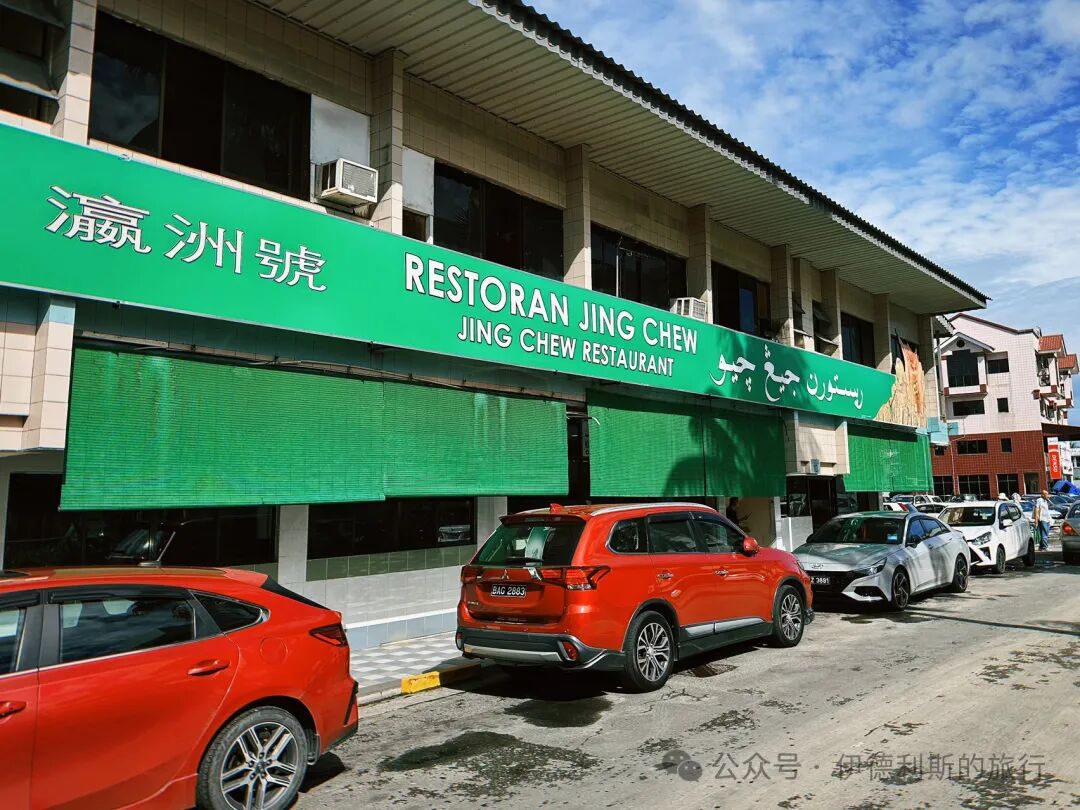
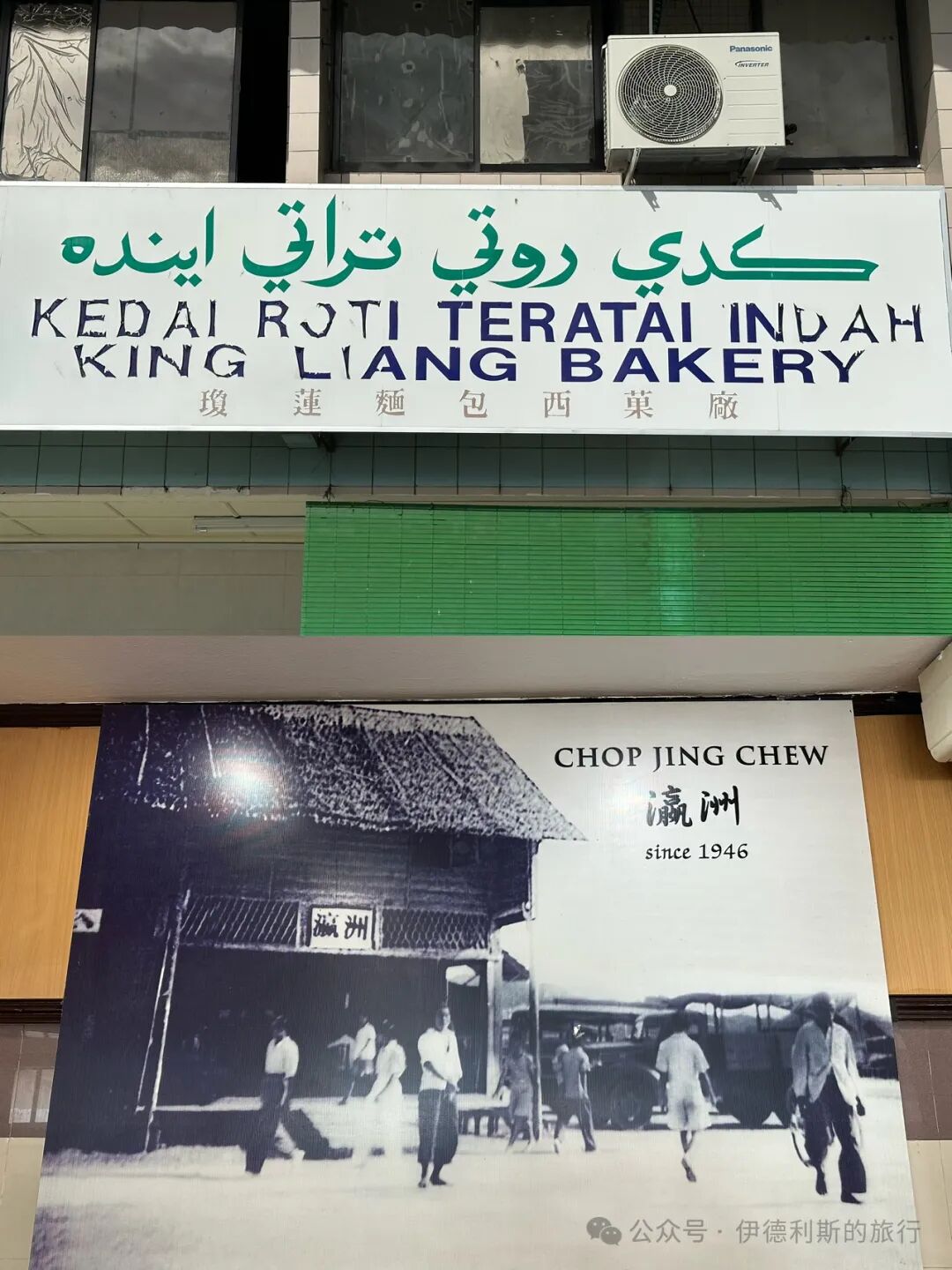
In the morning, we visited a legendary Hainanese coffee shop in Brunei called Ying Chuan (Yingzhou Hao).
The founder of Ying Chuan, Han Qiongyuan, was from Wenchang, Hainan. During the Japanese invasion of China in 1939, 17-year-old Han Qiongyuan traveled to Southeast Asia and arrived in Brunei to work as a helper in his uncle's coffee shop. In 1946, Han Qiongyuan officially opened Ying Chuan Coffee Shop, serving coffee, bread, and other meals. It became widely known for its yellow bread (roti kuning). As the business grew, Han Qiongyuan expanded into real estate and led the construction of the Brunei Hainan Building. After 1993, Han Qiongyuan returned to his hometown every year to visit relatives and invested heavily there. He was awarded the title of 'Patriotic Son of Hainan' by the Hainan provincial government three times.
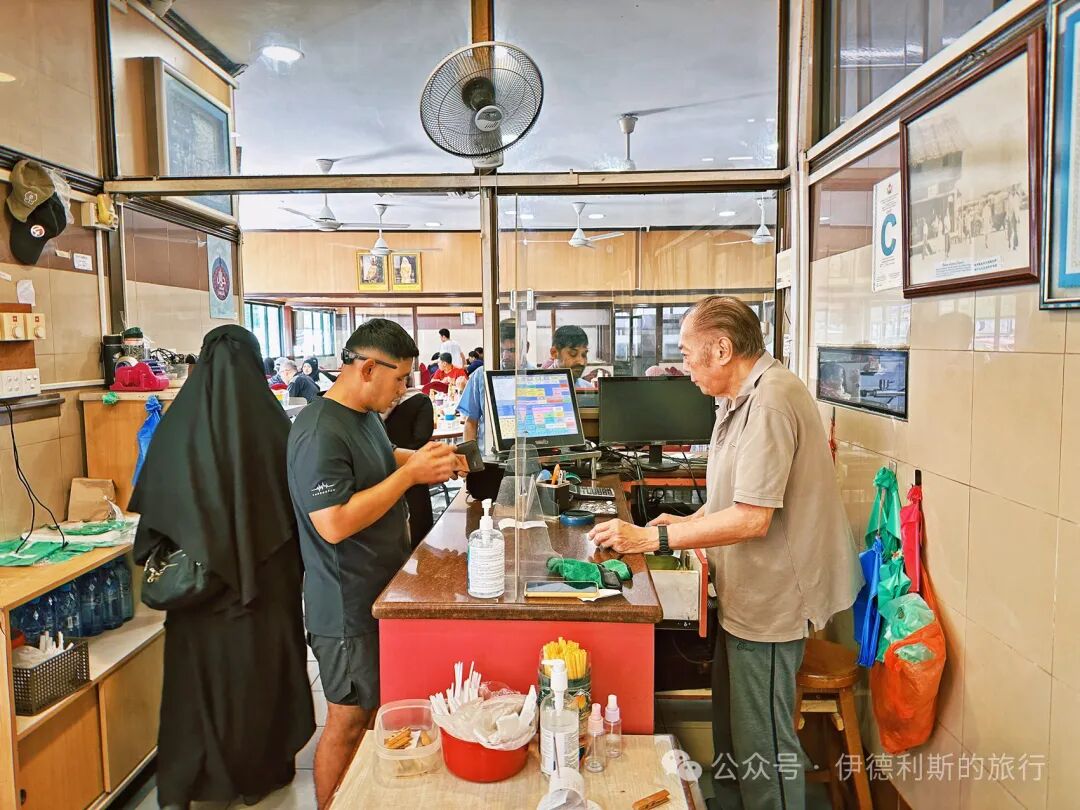
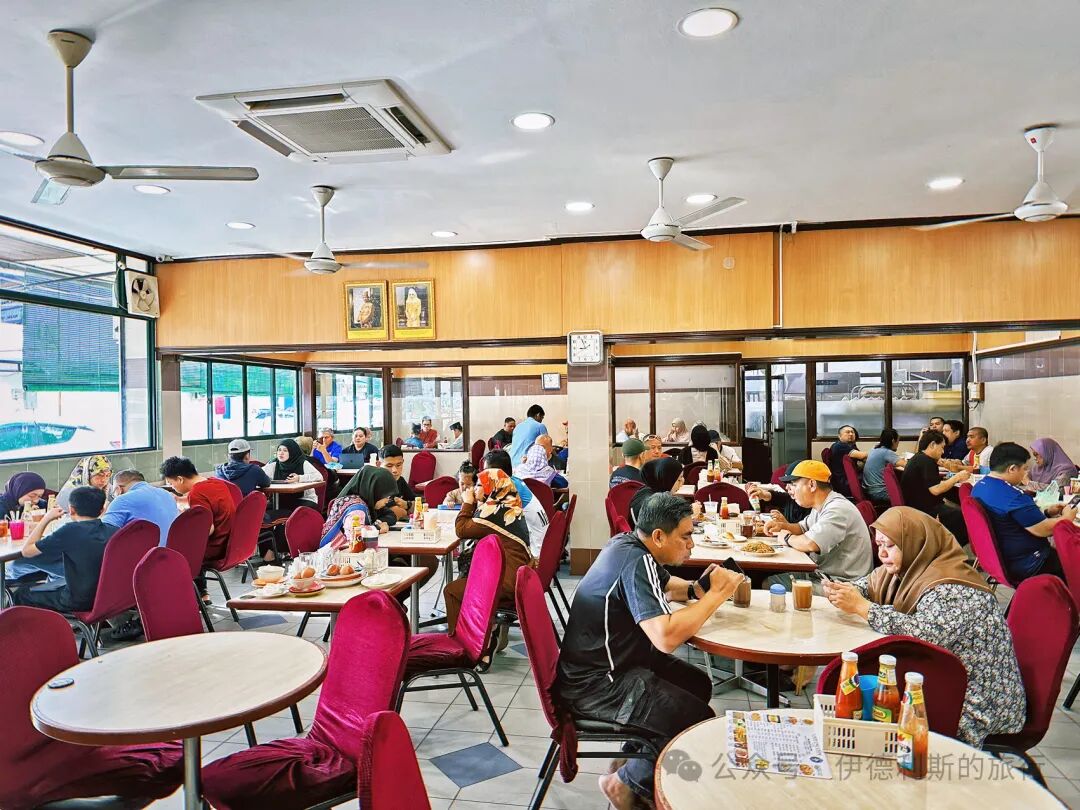
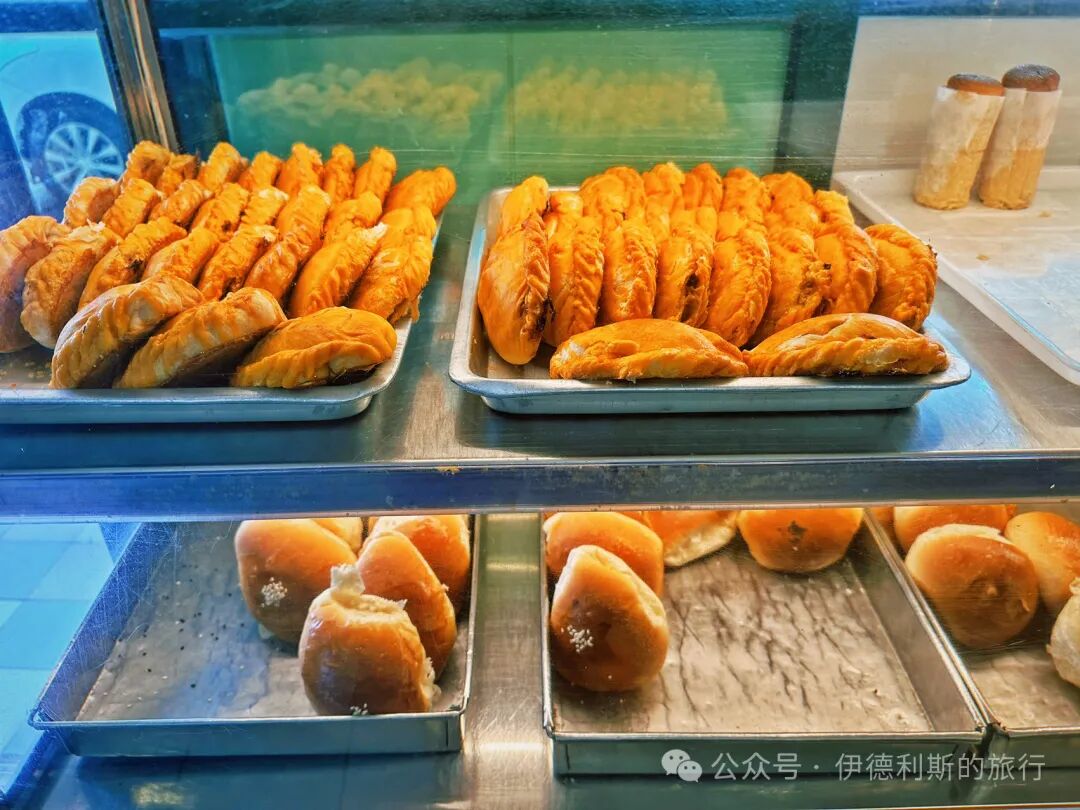
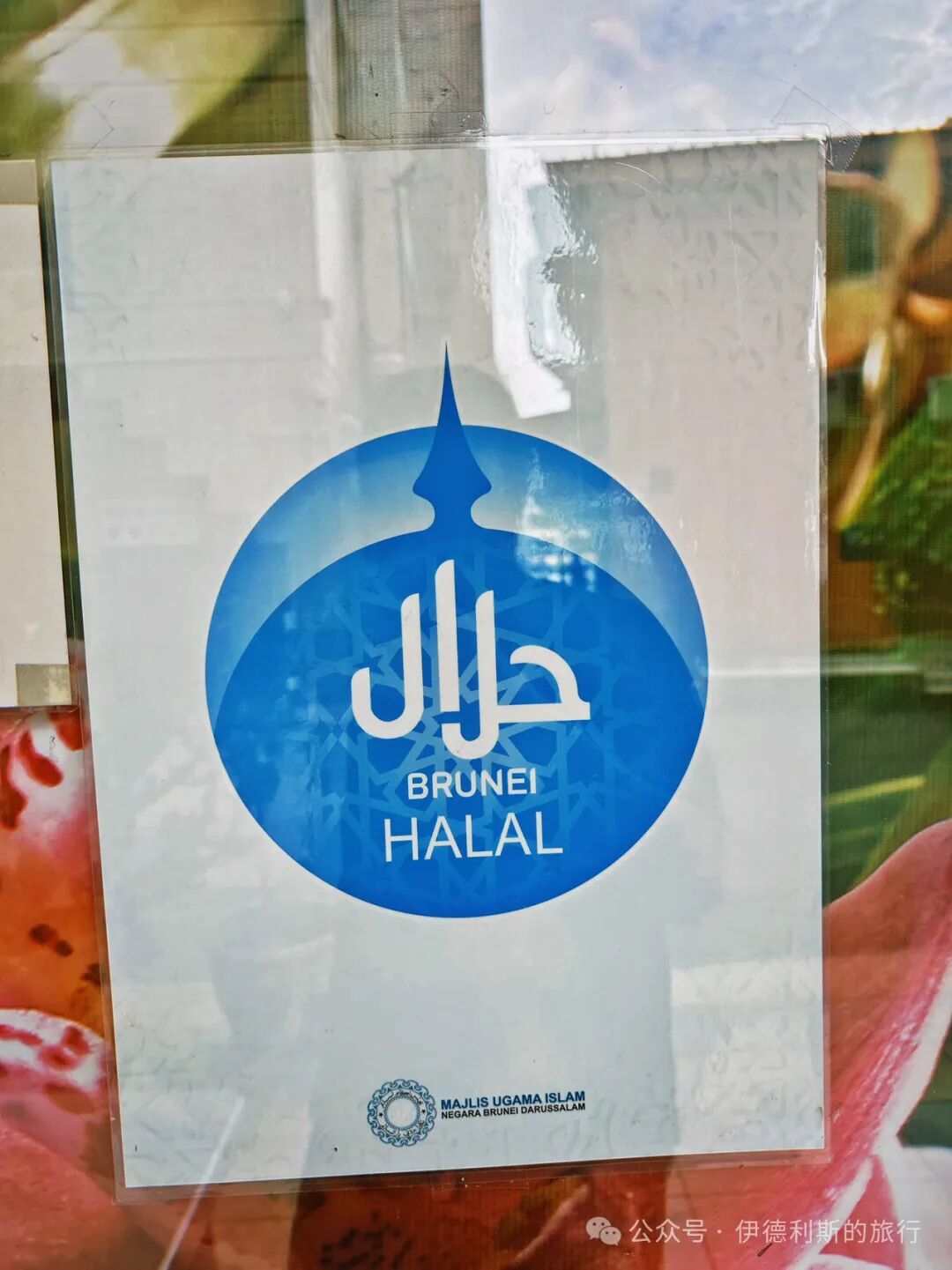
Like many old-fashioned Nanyang Hainanese coffee shops, they serve halal food and hold a Brunei halal certification, making them popular with all ethnic groups. They offer a very wide variety of bread. The classic sandwich breads come in four flavors: peanut, red bean paste, butter, and coconut. They also have peanut and butter bread (yuanyang bread), cheese bread, yellow bread with butter and kaya (yuanyang huang mianbao), and French toast. You can add a fried egg and cheese, or order a soft-boiled egg on the side. Cakes and pastries include custard cake (dan nai gao), egg tarts (dan ta), coconut tarts (ye ta), red bean cakes (hong dou bing), butter cake (niu you dangao), and pandan cake (ban lan dangao). Western-style breads and pastries were learned by Hainanese people while working as kitchen helpers for the British in the 19th century when they moved to Southeast Asia. Today, they are a classic part of Nanyang Hainanese restaurants.
Besides bread and pastries, they also serve various noodles, such as sesame flat rice noodles (zhima guetiao), dry-tossed noodles (ganlao mian), fried noodles, Hainanese noodles, fried rice vermicelli, and egg gravy rice noodles (huadan hefen). These are all very well-suited to Chinese tastes. We ordered egg gravy rice noodles, sesame flat rice noodles, egg tarts, custard cake, yellow bread with a fried egg, chicken curry puffs, peanut and butter bread, ginger milk tea, and lemon tea for a mix of Chinese and Western flavors. The peanut and butter bread is filled with kaya jam, butter, and crushed peanuts, giving it a very rich texture. The sesame flat rice noodles have a sweet, salty, and spicy flavor. Served with fried tofu and fried fish chunks, they are a signature dish of the shop.
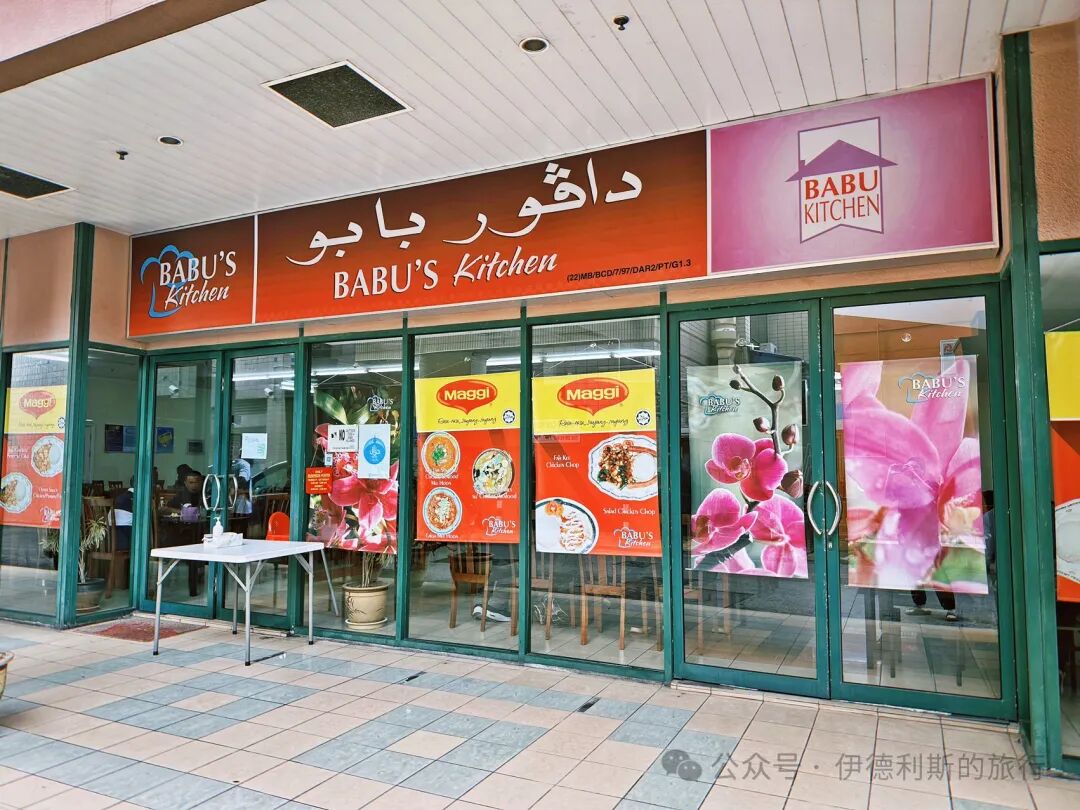
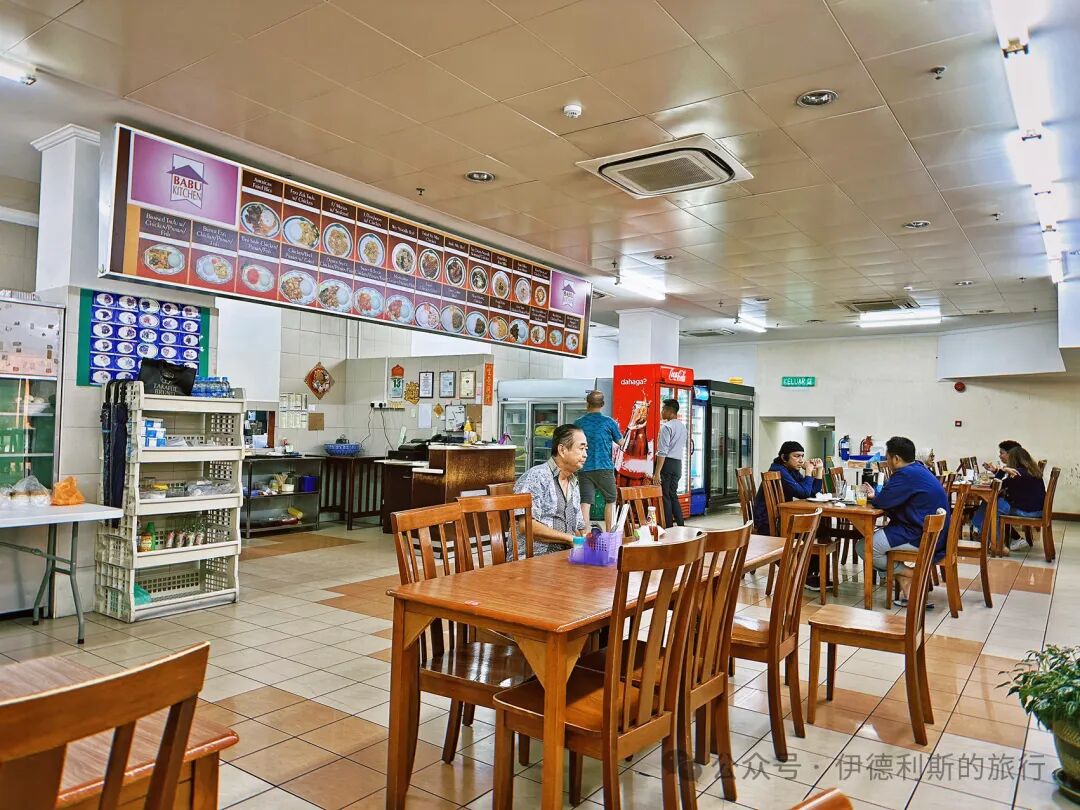
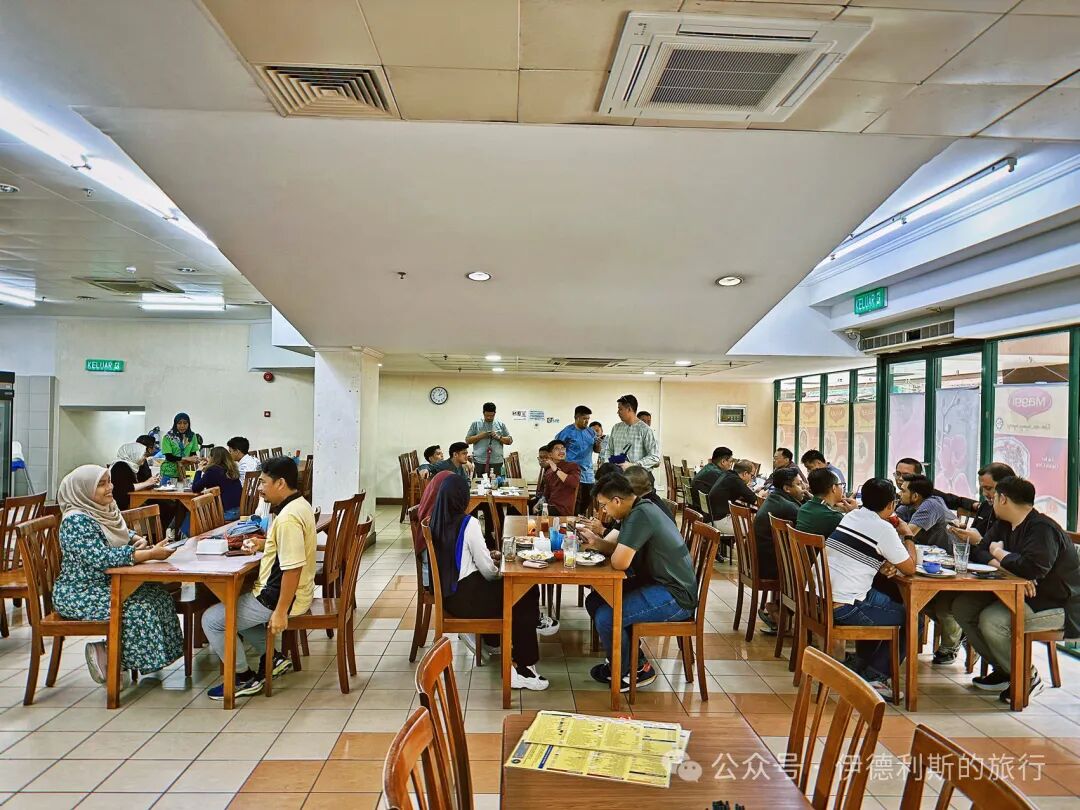
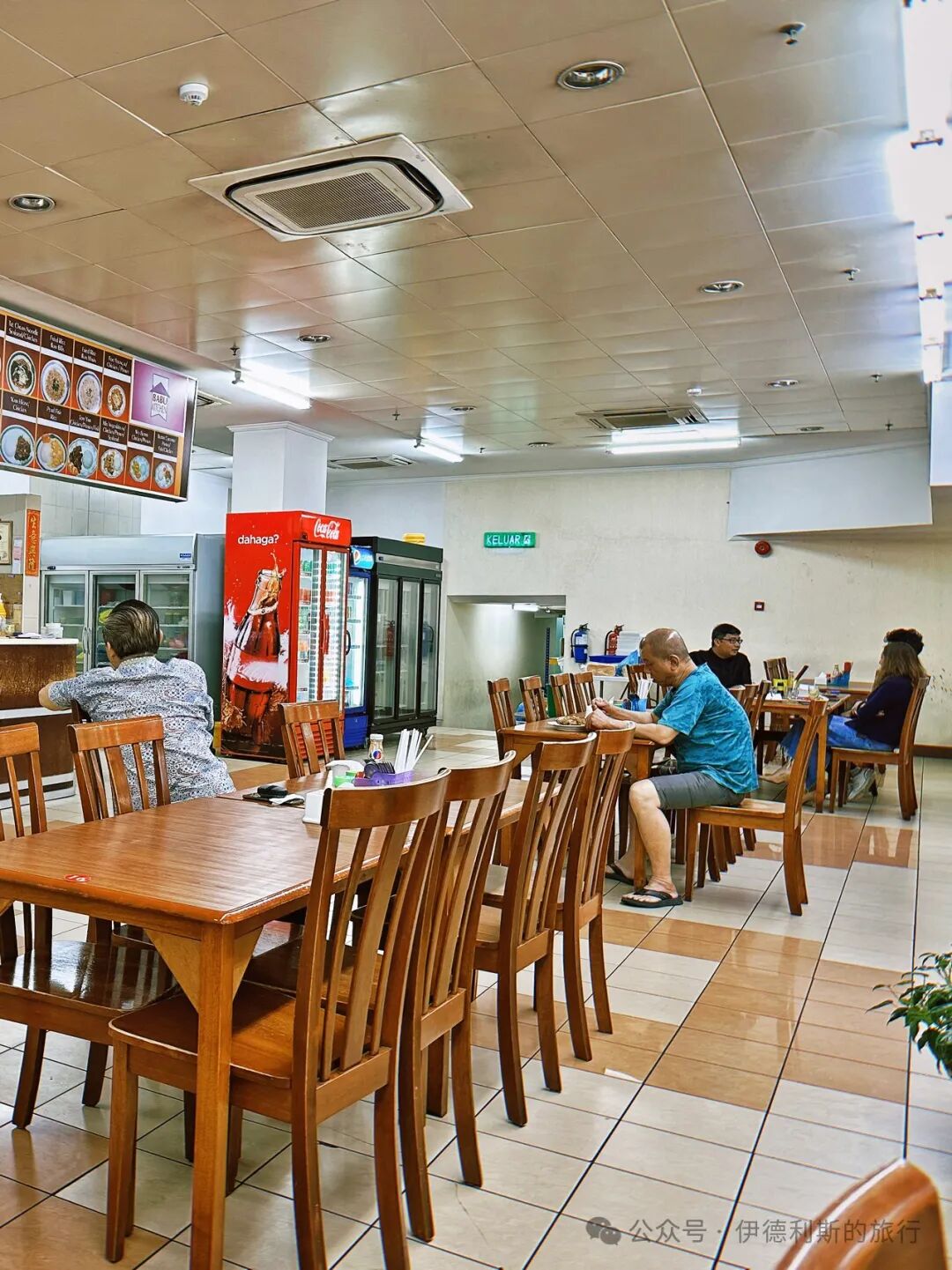
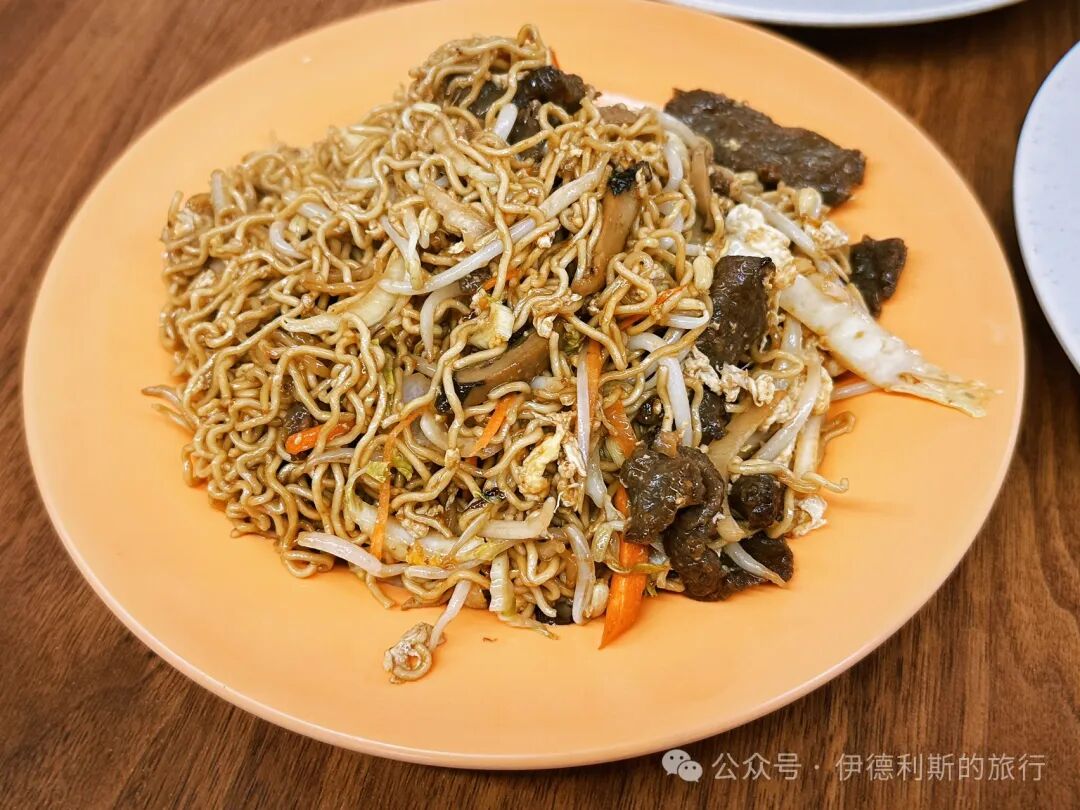
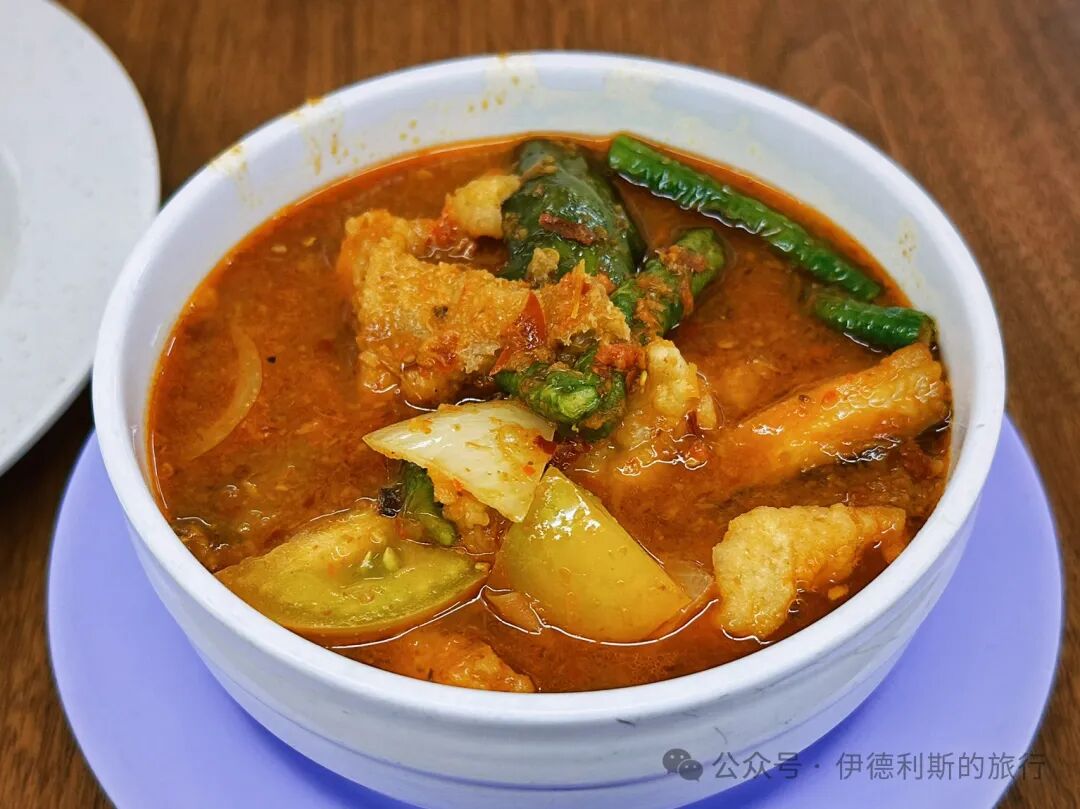
After Friday prayers (Jumu'ah), we had lunch in the old town of Brunei Town. There are many Chinese shops here, and it is also a great place to find halal Hainanese restaurants. We chose Babu's Kitchen. It was very busy at noon with Chinese, Malay, and Indian customers, which is a classic scene in a Hainanese restaurant. Since they didn't have a Chinese menu, we asked the owner to recommend the Assam fish fillets, salted egg fried mushrooms, beef yee mein (beef niu rou yi mian), and bean curd skin with tofu and chicken. Like in Malaysia, the Chinese in Brunei speak very standard Mandarin. Overall, the food was very good. The Chinese dishes were infused with Malay flavors, but they were still very easy for Chinese people to enjoy.
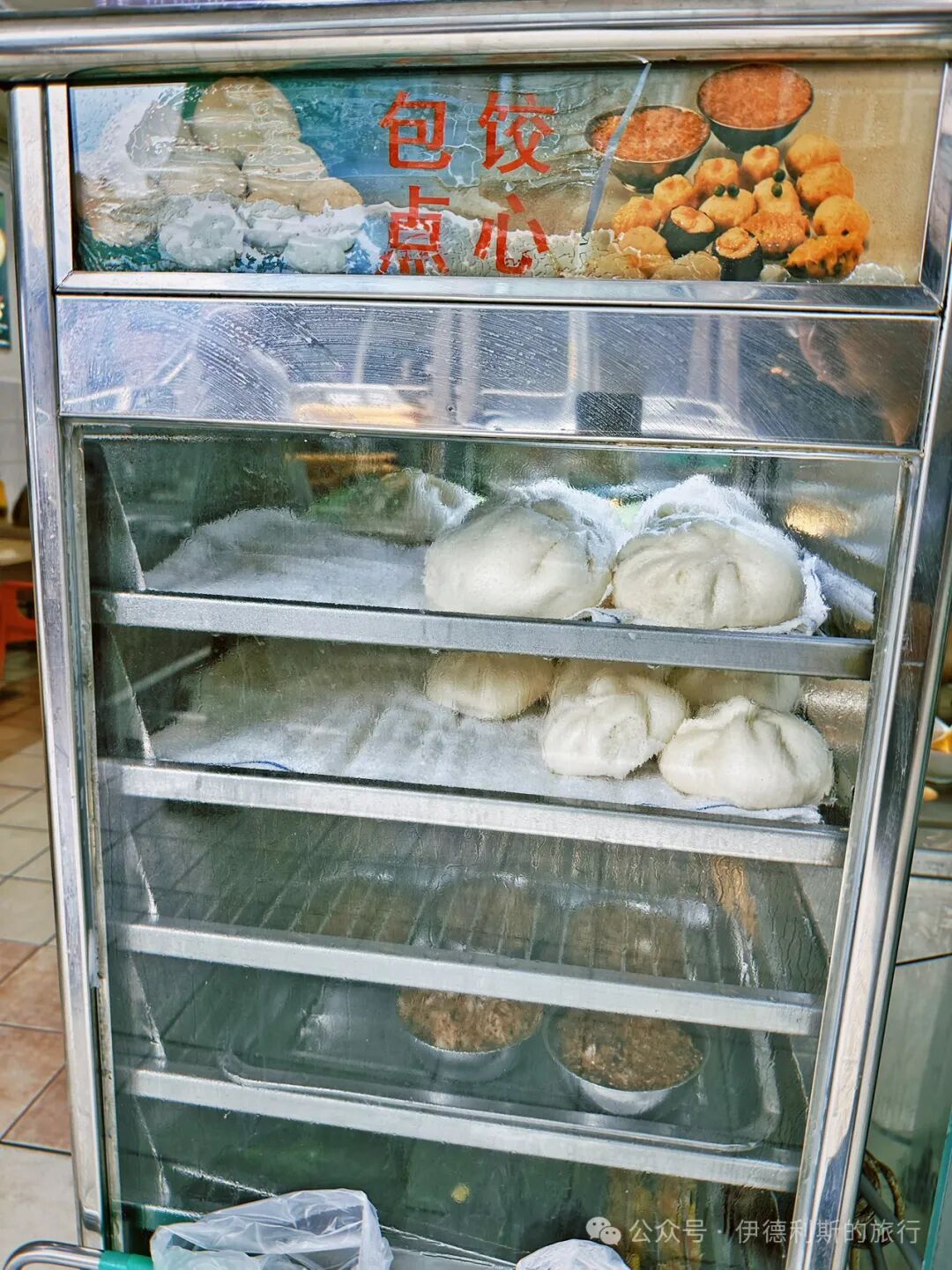
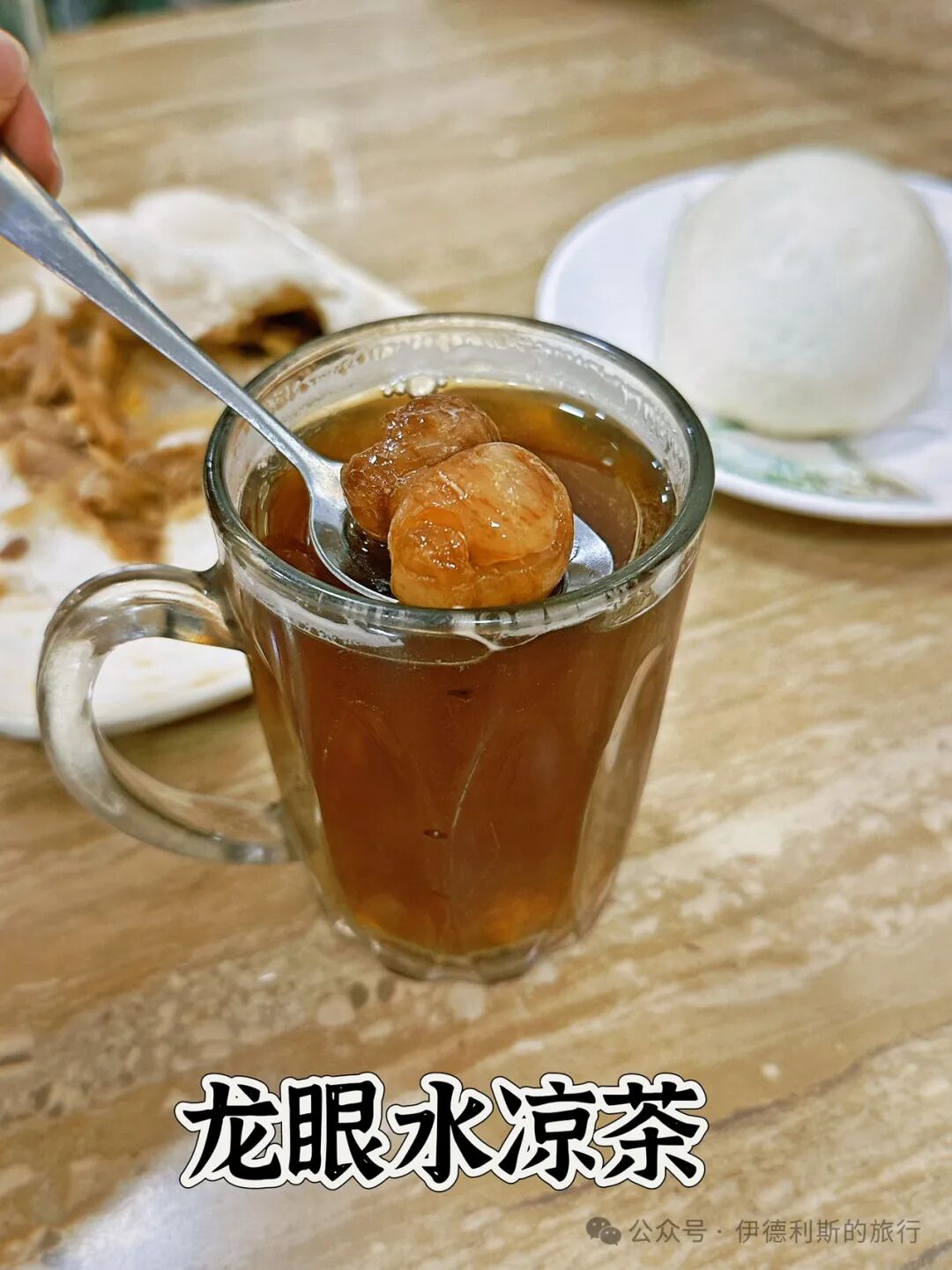
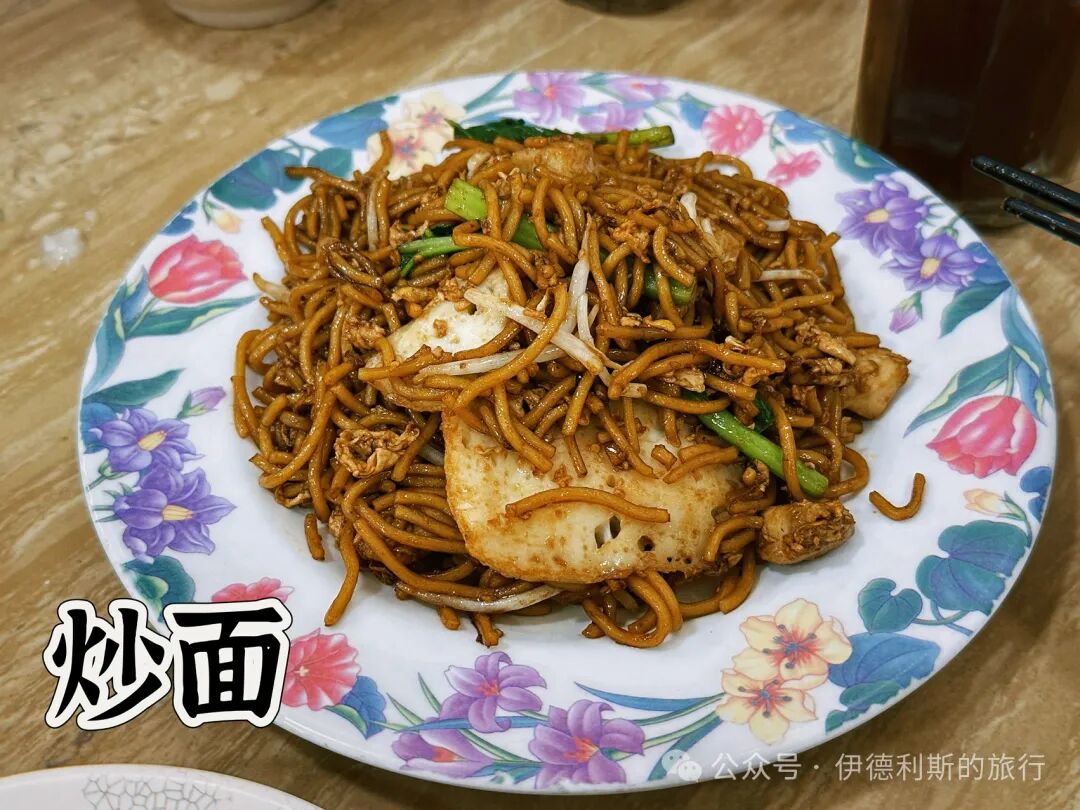
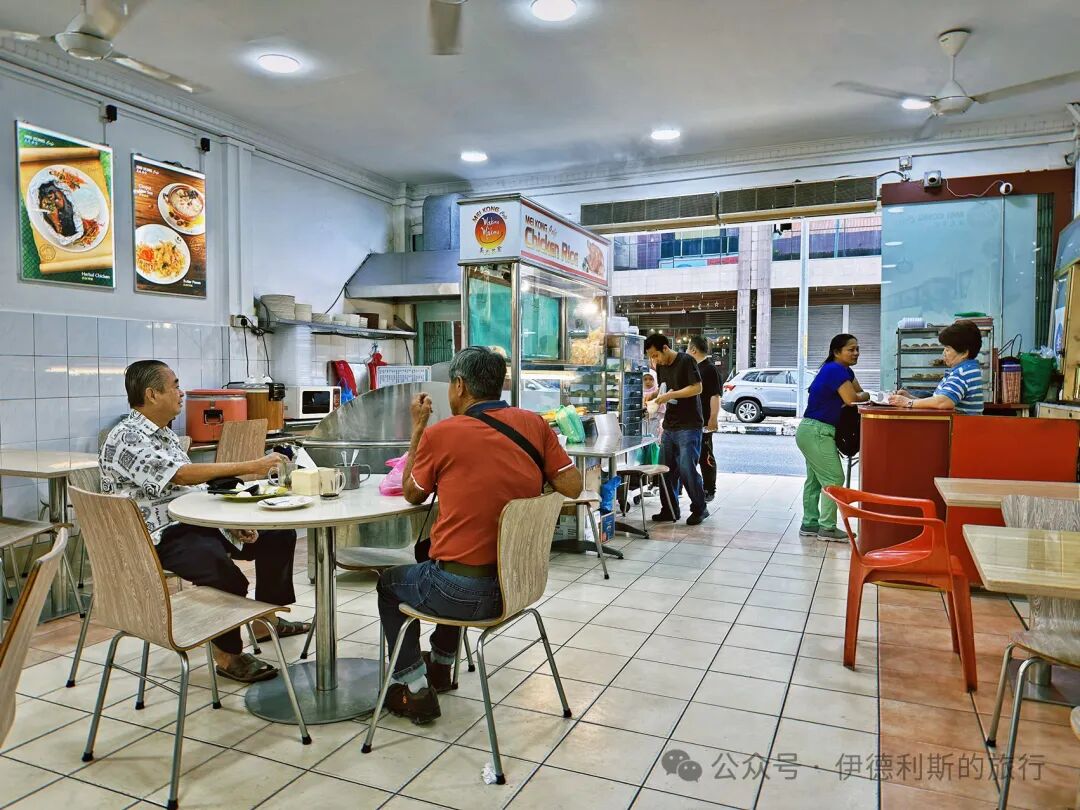
The next morning, we continued to have a Hainanese breakfast at Meiguang Tea House in the old town of Brunei Town. The owner is Hainanese, his wife is from Xiamen, and the staff are all Indonesian. Because they mainly serve the nearby office buildings, it is usually quite busy on weekdays. It is relatively quiet on weekends, and there are fewer steamed dim sum options than usual. We ordered chicken and radish steamed buns (daba), red bean paste buns (doushabao), beef porridge with small fried dough sticks (youtiao), longan herbal tea, stir-fried noodles, and steamed dumplings (shaomai). Next time a friend (dosti) comes on a weekday, we can try their other dishes, like Fuzhou "lucky" rice noodle soup, dry-tossed mouse tail noodles (laoshufen), and chicken intestine noodles (jichangfen).
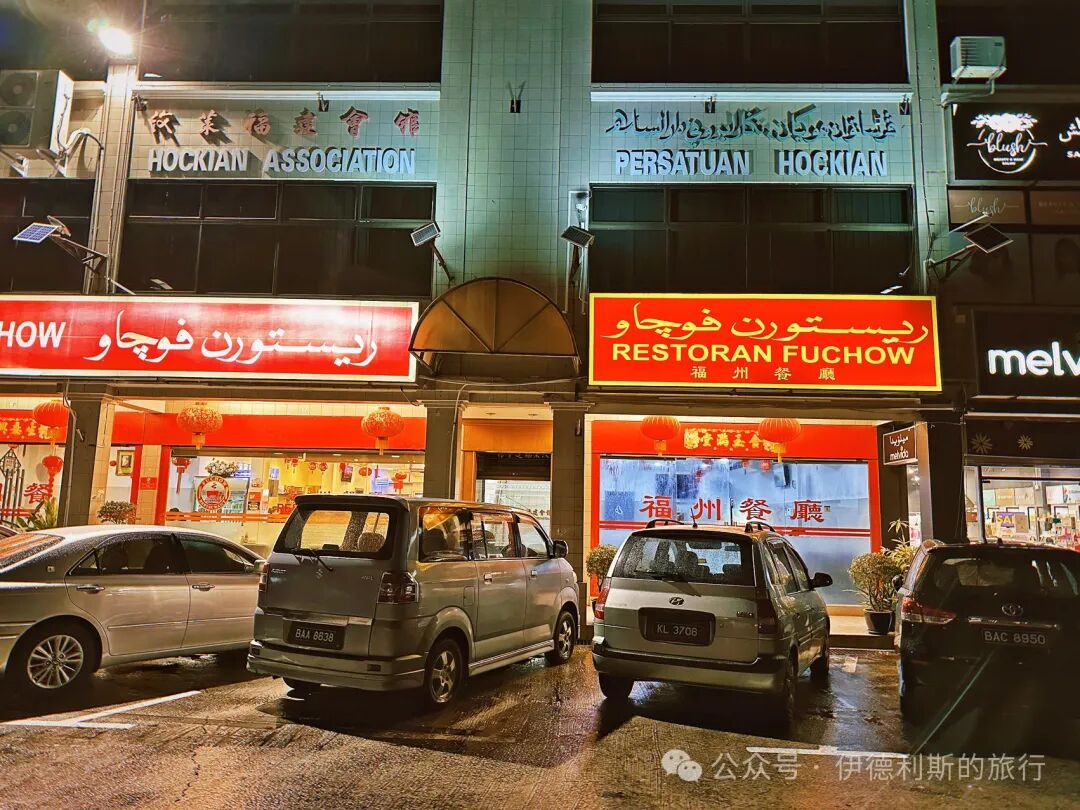
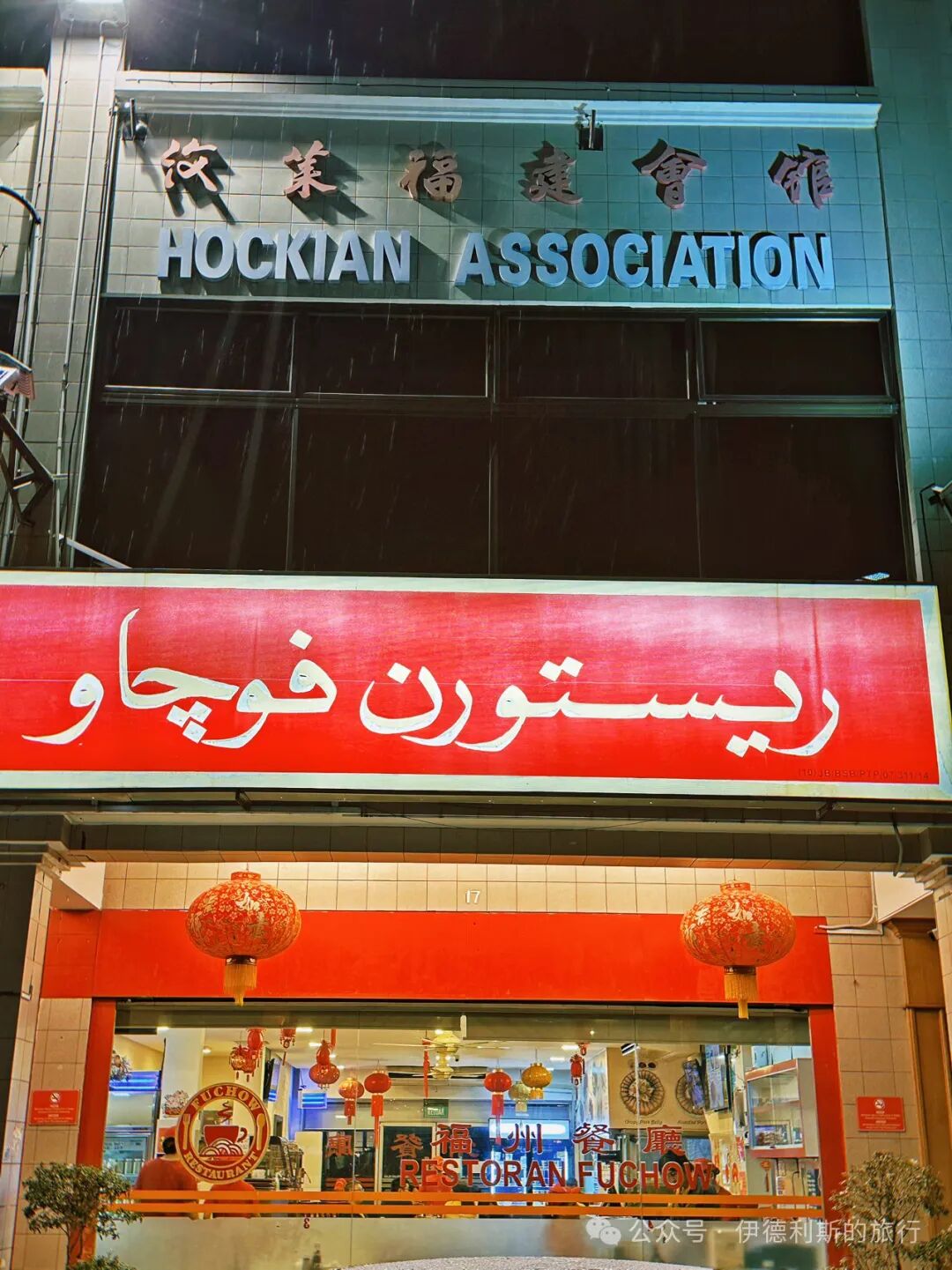
While taking a taxi in the afternoon, we passed the Brunei Fujian Association. I checked the map and saw many Chinese restaurants nearby, so after finishing our namaz, we took a taxi straight there for halal Chinese food.
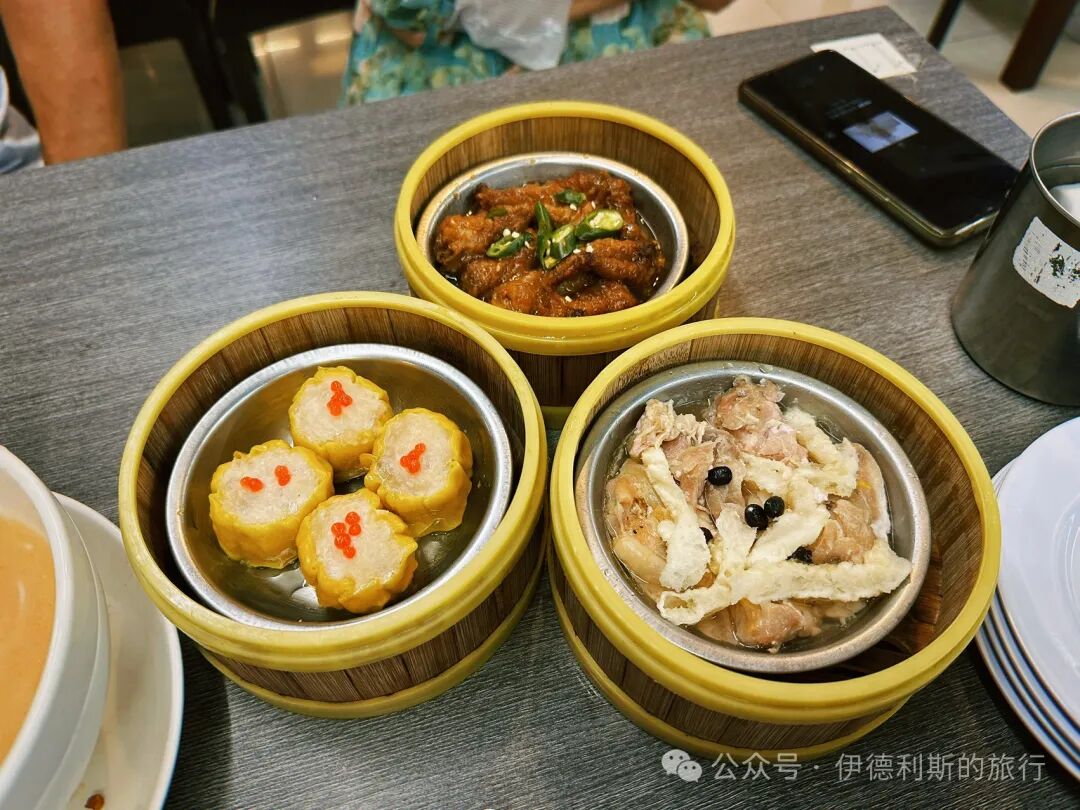
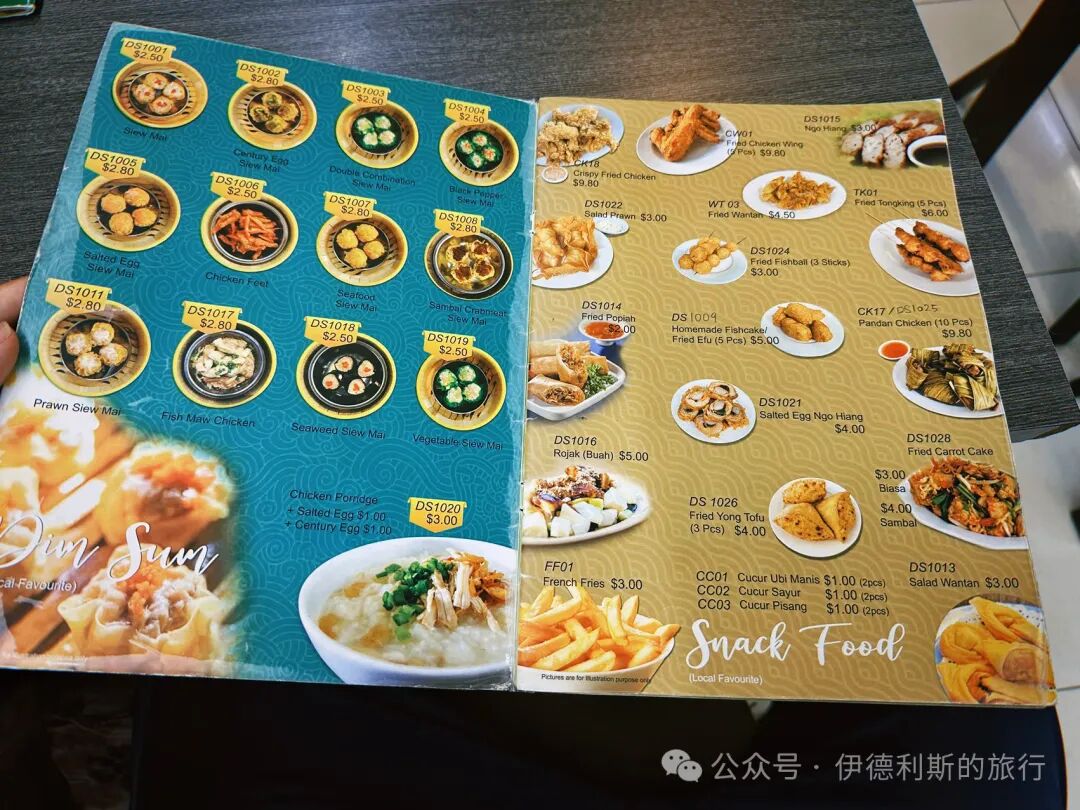
We chose a restaurant called Shiraz Seafood Restaurant. It sounds like Iranian food, but it is actually a Chinese restaurant called Shixianle. They specialize in dim sum and various Nanyang-style Chinese snacks. The menu is huge, and they have a Brunei halal certification. After we went in, a table of Malays and a table of South Asians arrived, which shows how much different ethnic groups love halal Chinese food.
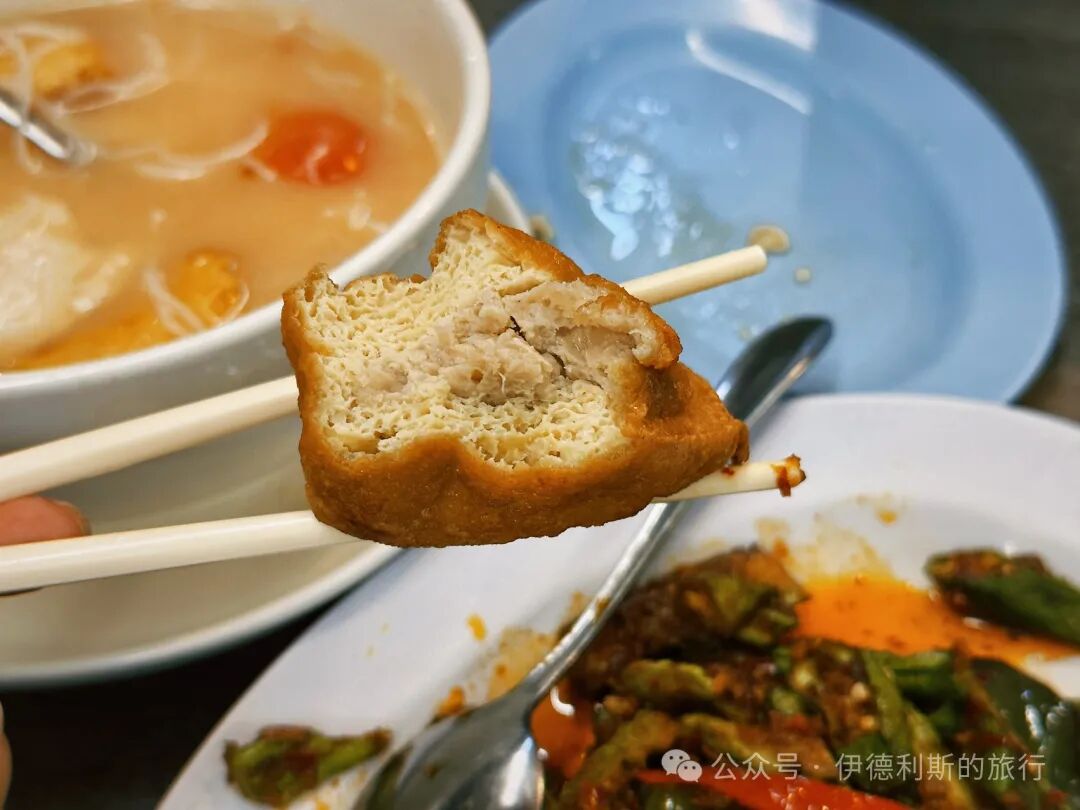
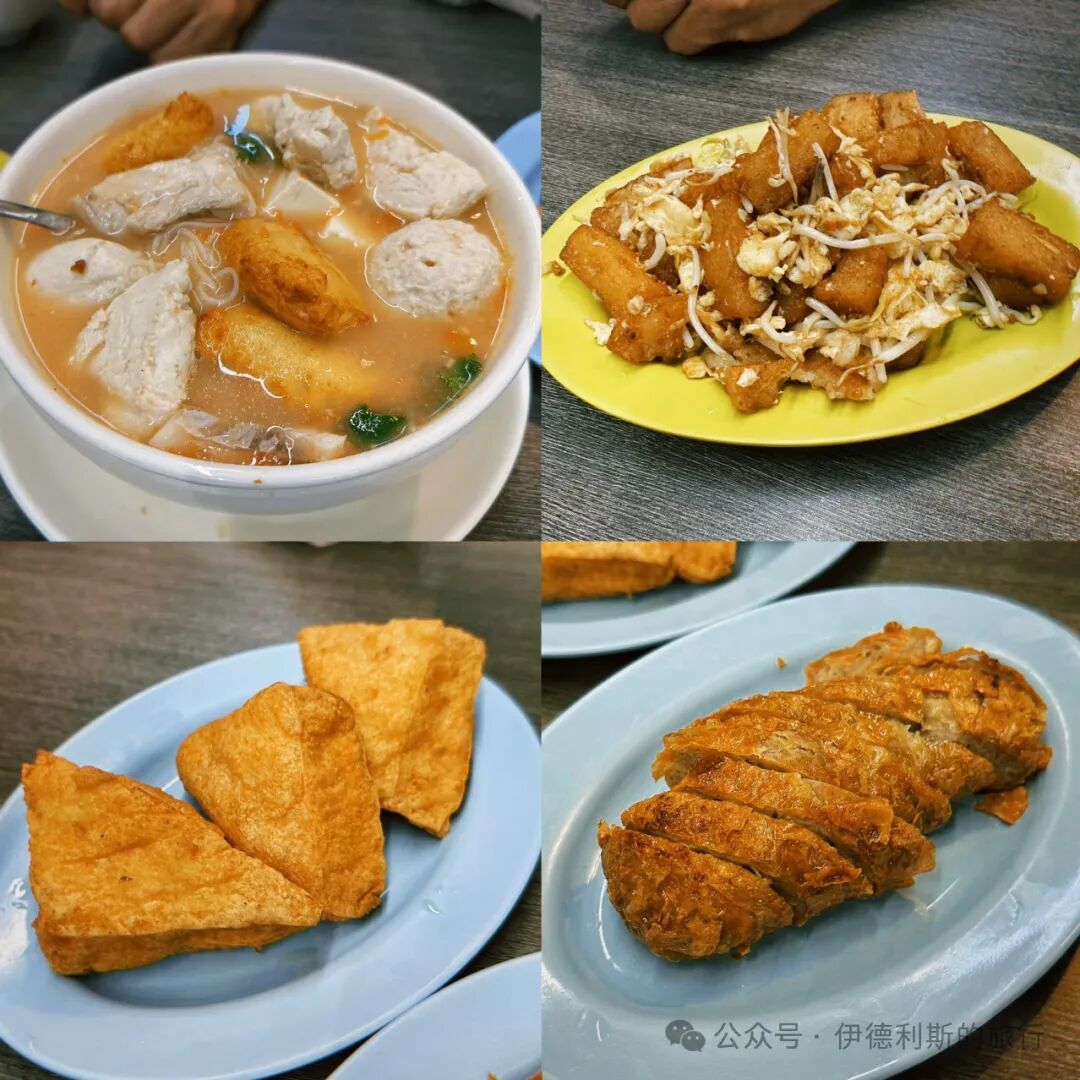
We ordered Cantonese steamed dumplings (siu mai), chicken feet, fish maw with chicken, five-spice meat rolls (ngo hiang), fried stuffed tofu (yong tofu), fried radish cake, longan herbal tea, chicken porridge, seafood soup (a mix of fish slices, fish balls, and more), and dry-fried green beans. We really enjoyed these Nanyang Chinese snacks in Brunei.
Ngo hiang is short for five-spice marinated meat, a snack that originated in the Minnan region of Fujian. In the past, life was hard, so people used five-spice powder to marinate leftover meat and vegetables, wrapped them in tofu skin, and deep-fried them. Later, as Chinese people moved to Nanyang, it spread to Indonesia, Malaysia, the Philippines, Brunei, Singapore, and Thailand.
Stuffed tofu (yong tofu) is a traditional Hakka dish. In the Hakka dialect, "yong" means to fill with stuffing. Legend says that after the Hakka people moved south from the Central Plains, they wanted to eat dumplings but had no wheat. They used tofu instead of flour and invented stuffed tofu. Later, stuffed tofu spread with the Hakka people to Indonesia, Malaysia, Singapore, Brunei, Vietnam, and Thailand.
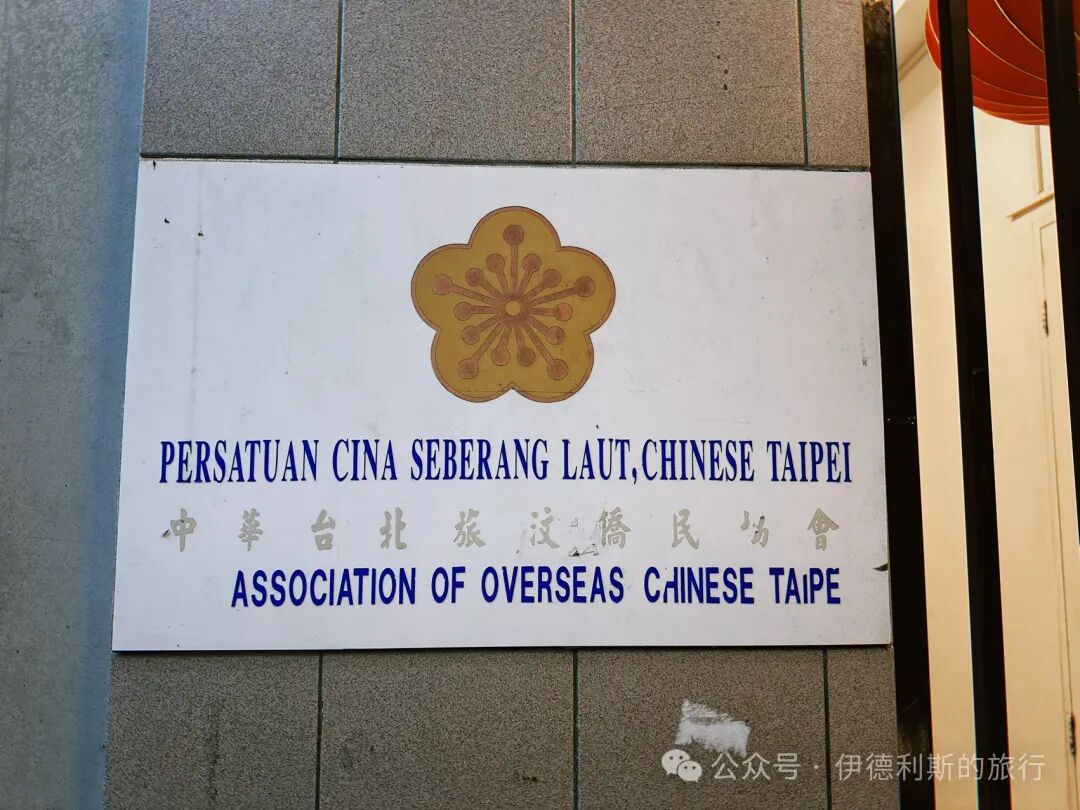
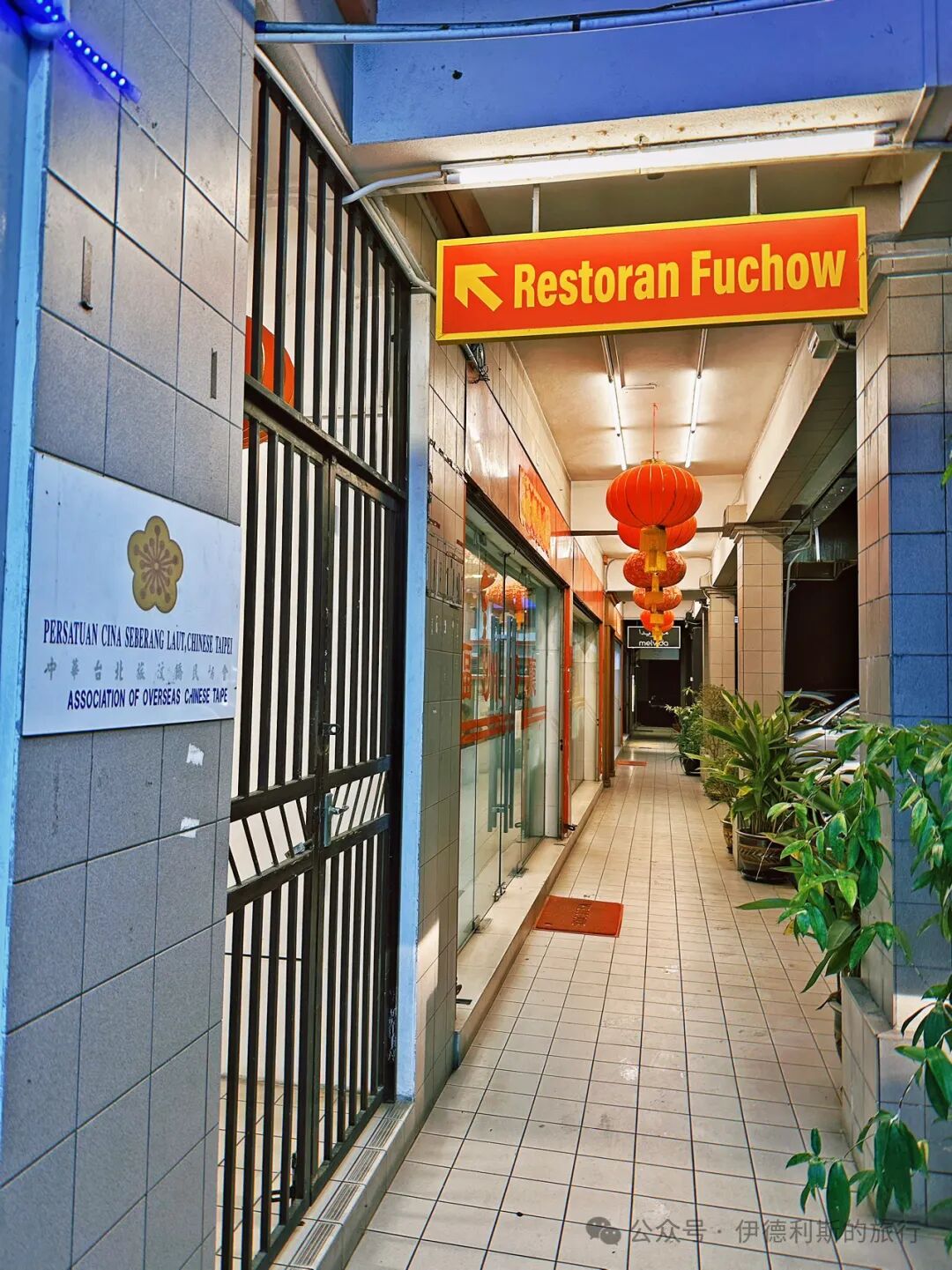
The Brunei Fujian Association and the Taiwan Overseas Chinese Association in Brunei share the same building. Nearby, there are a few non-halal restaurants, which have red non-halal signs at their entrances.
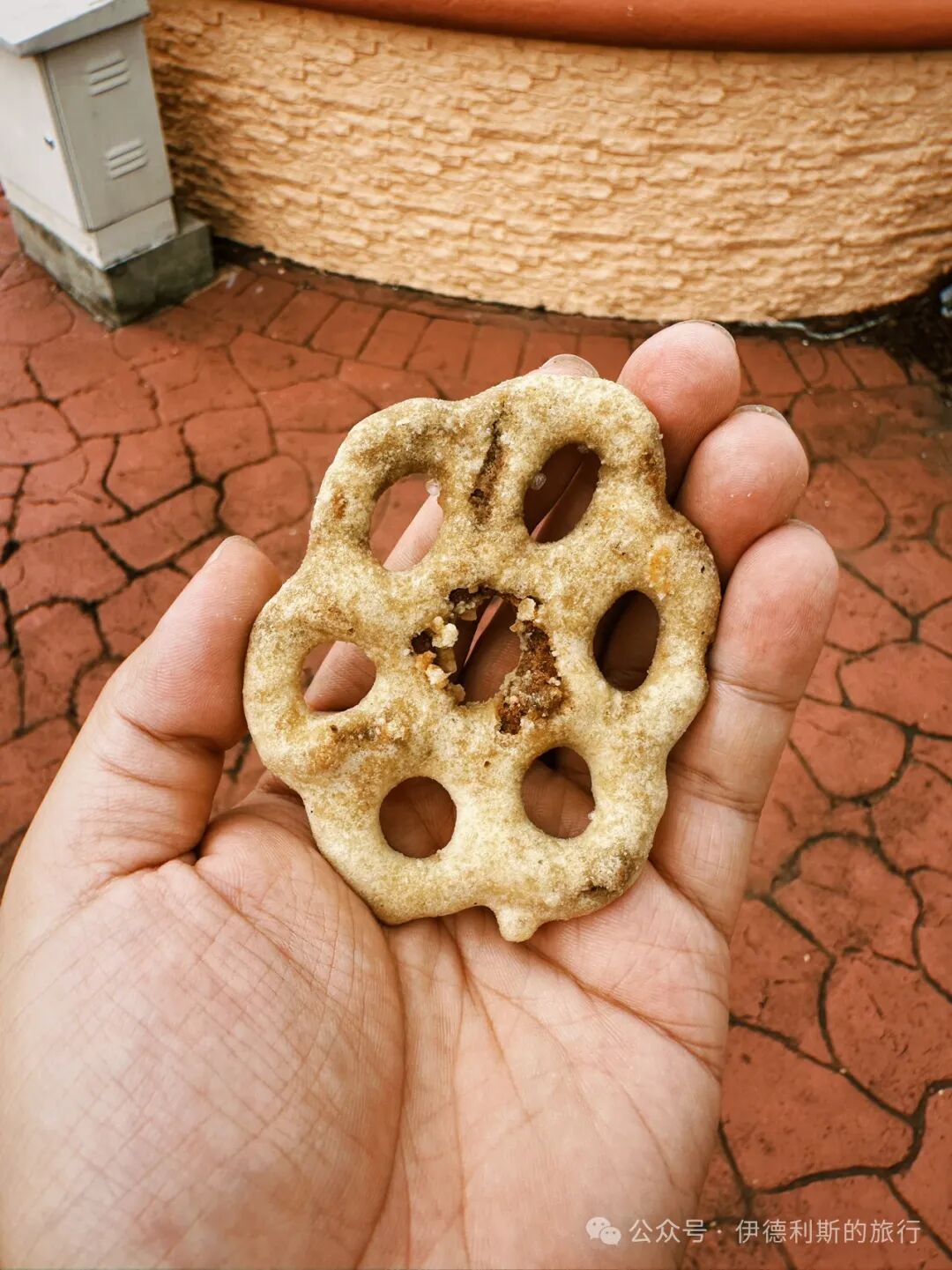
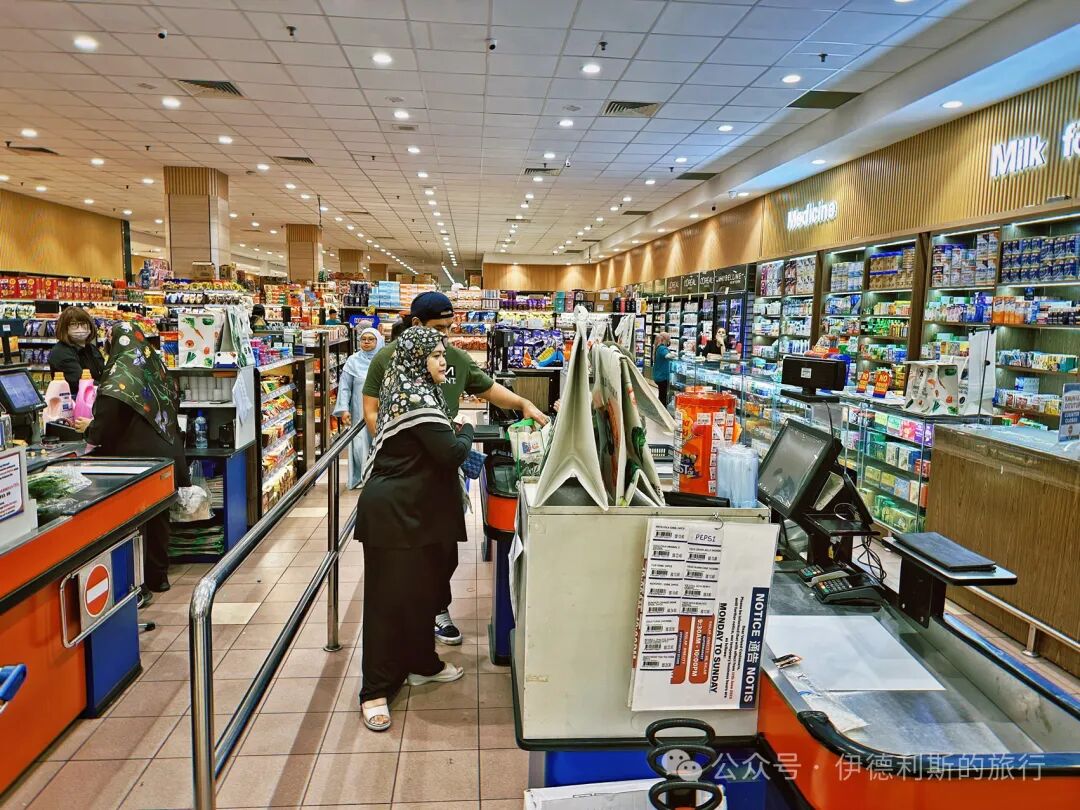
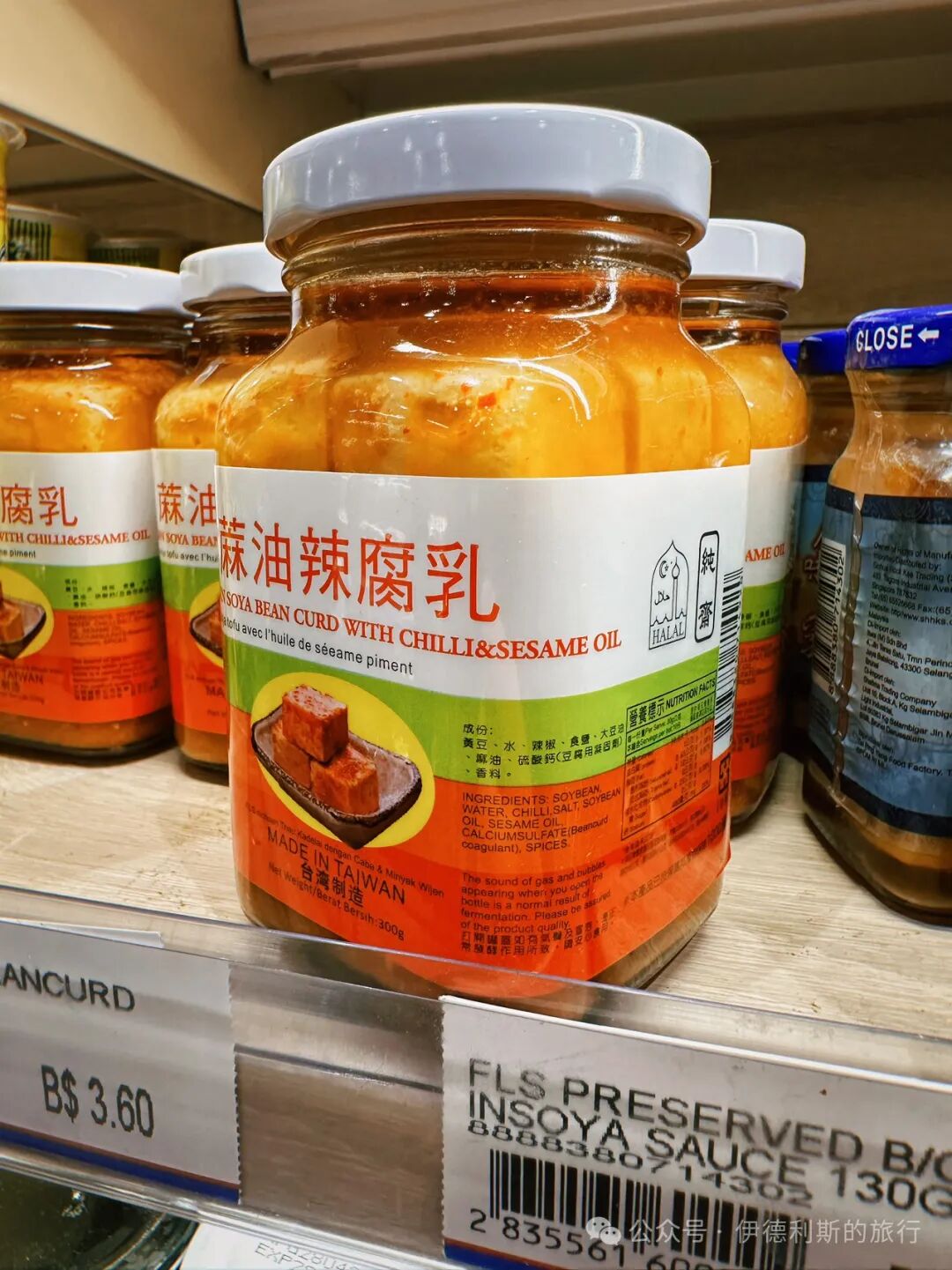
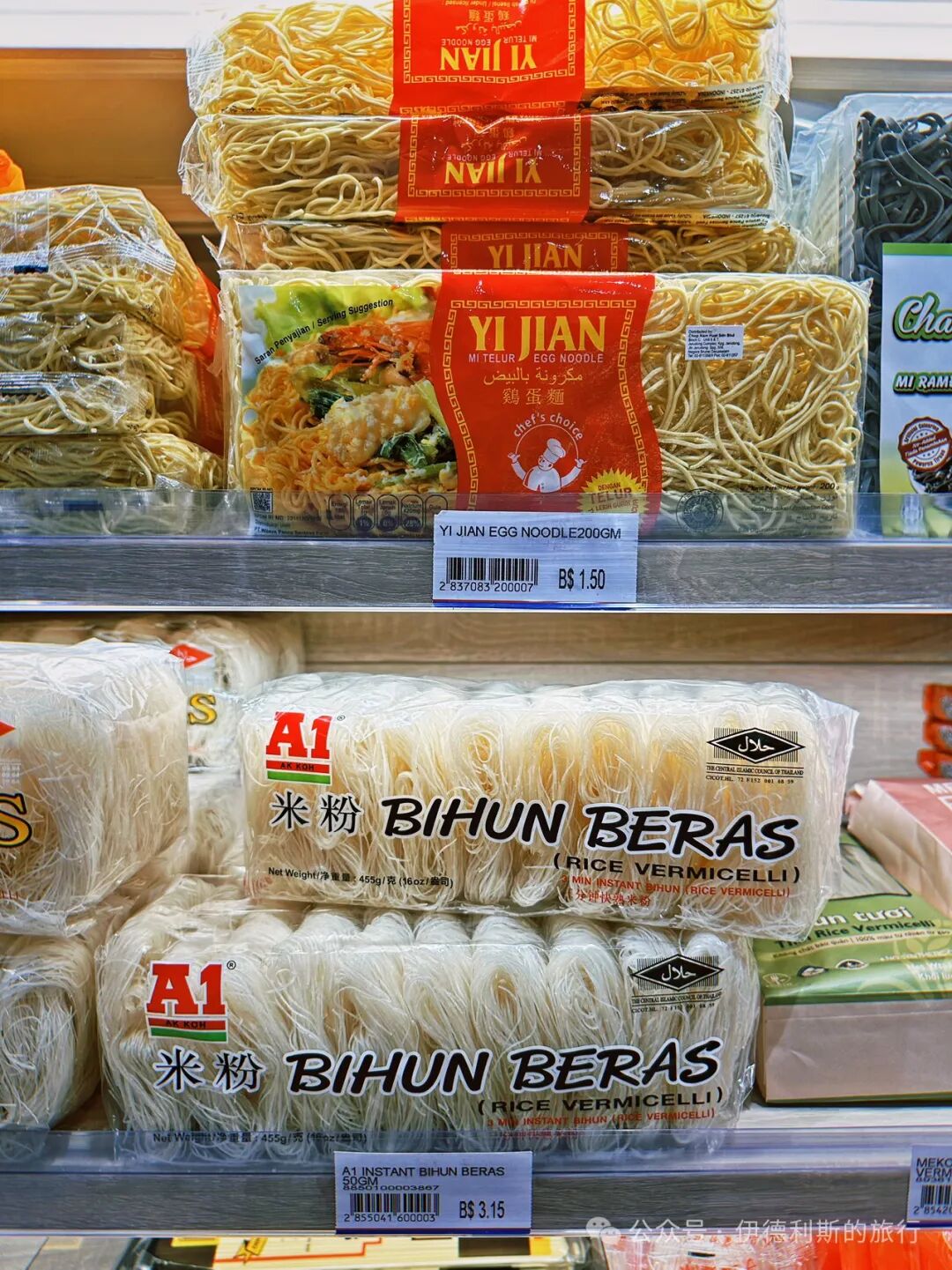
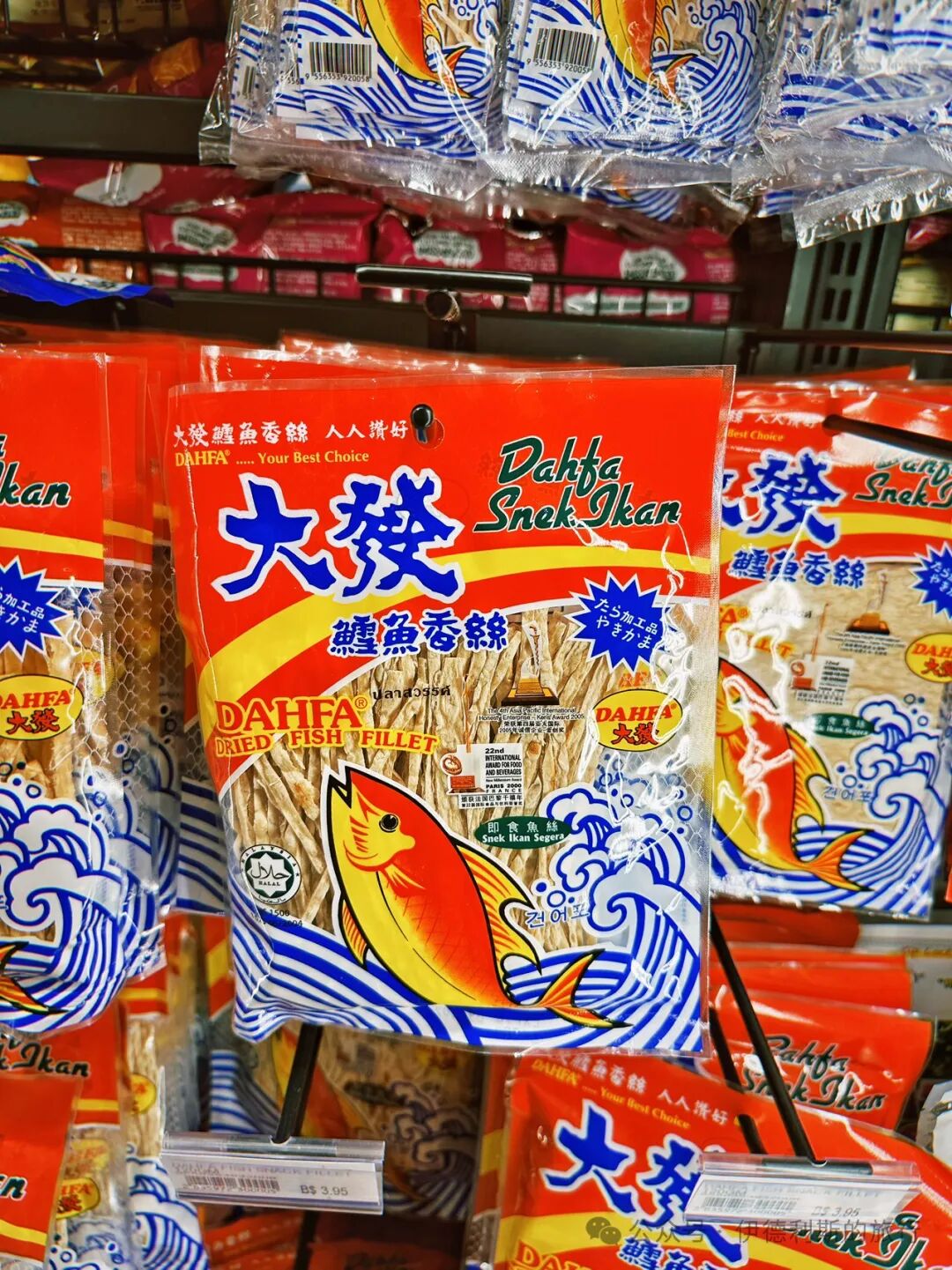
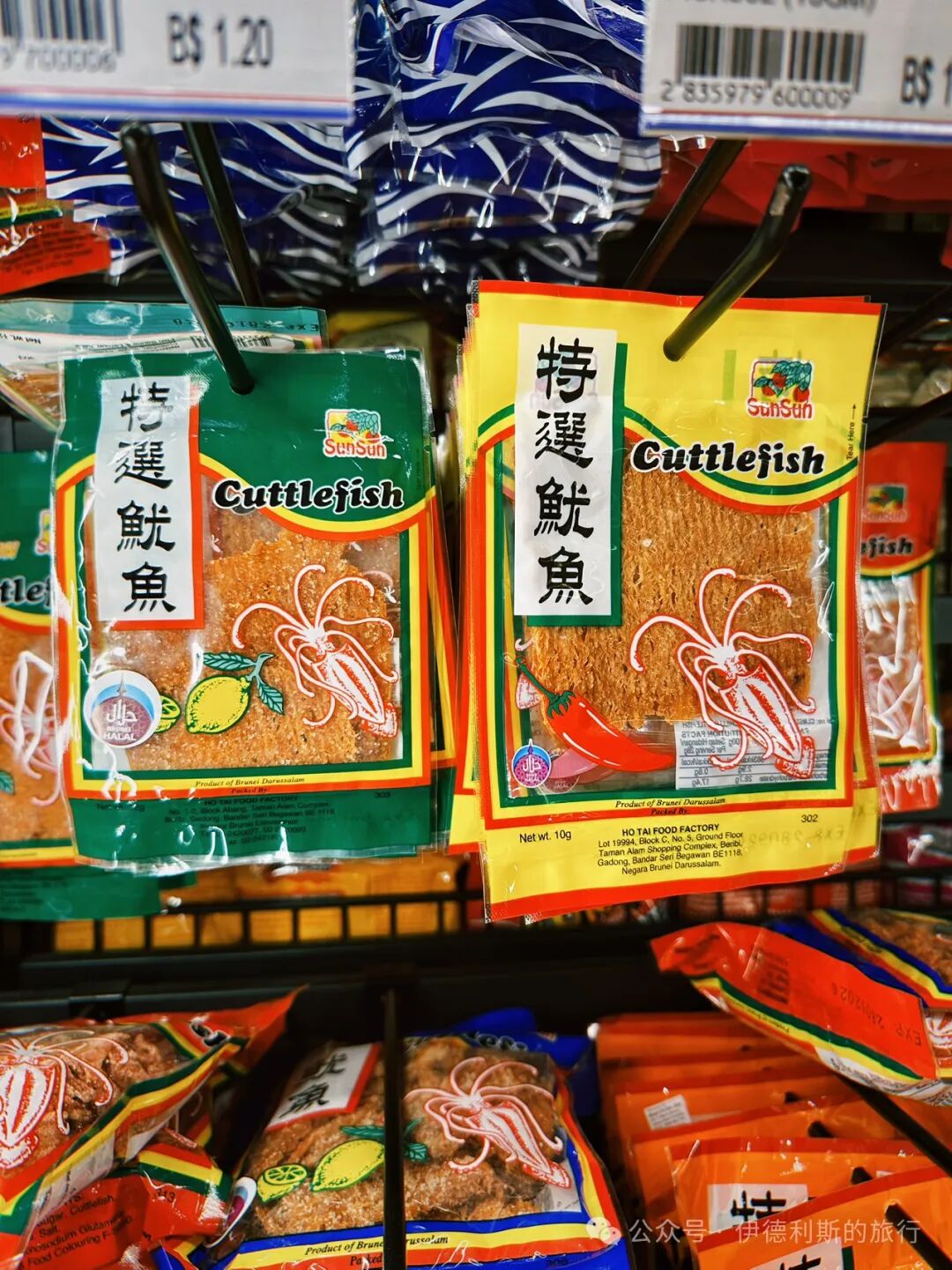
Hua Ho Department Store is a famous halal supermarket chain owned by Chinese merchants in Brunei, with many branches across the country. We went to the Kiulap branch. Inside, one side had various traditional Brunei Malay snacks. We bought a traditional snack from Sabah and Brunei called Kuih Cincin Tempatan, which is made by frying red coconut, rice flour, and palm sugar. The other side is the supermarket area, where you can buy various halal foods with Cantonese, Fujian, Chaoshan, and Taiwanese characteristics.
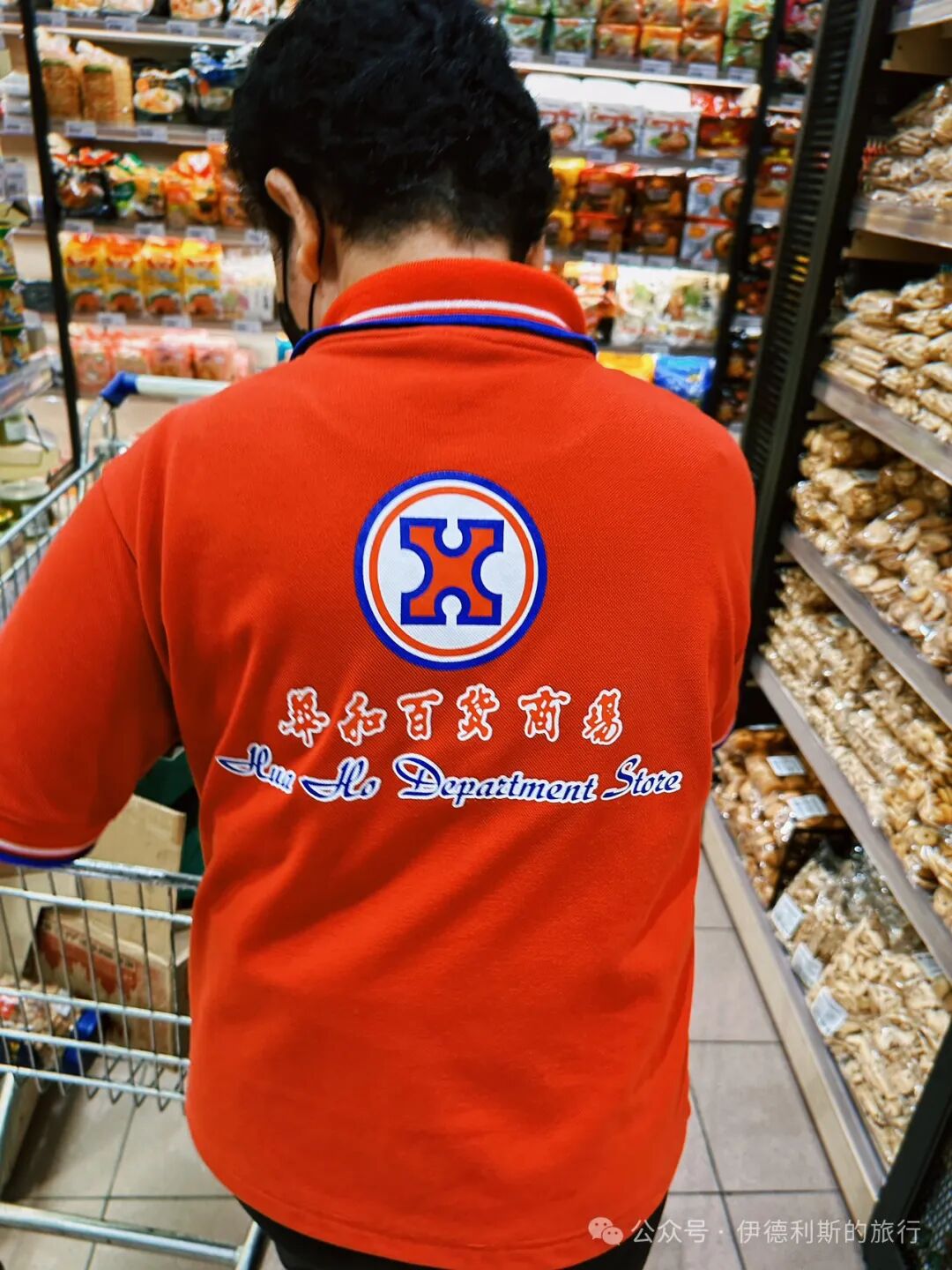
The founder of Hua Ho Department Store, Lau Kam Kok, was born in 1920 to a farming family in Lieyu, Kinmen, Fujian. In 1938, he went to Nanyang to seek his fortune, first arriving in Singapore and then moving to Brunei to join his eldest sister. In 1947, Lau Kam Kok bought land in Manggis, in the northern suburbs of Brunei, built a vegetable garden, hired workers to raise chickens and ducks, and officially established Hua Ho Department Store. After the 1950s, as agricultural prices fell, Lau Kam Kok went bankrupt and closed his shop in 1958. Later, he began selling vegetables at the market and selling fabric door-to-door. He did not reopen his shop until 1961. In 1966, he built a two-story building, and the shop was on the first floor. He gradually expanded the business, eventually making Hua Ho the largest department store in Brunei.
In 2004, the Sultan of Brunei awarded Lau Kam Kok the title of Pehin Kapitan Cina, making him one of the few Chinese nobles in Brunei. Lieyu, also known as Little Kinmen, is located between Kinmen and Xiamen. People from Lieyu began traveling to Brunei in the 19th century to seek their fortunes. They started as shipping laborers, dock workers, fishermen, and street vendors. Over time, they saved money, started businesses, and became important figures in Brunei's business world. Many earned titles like Pehin Kapitan and Pehin Dato.
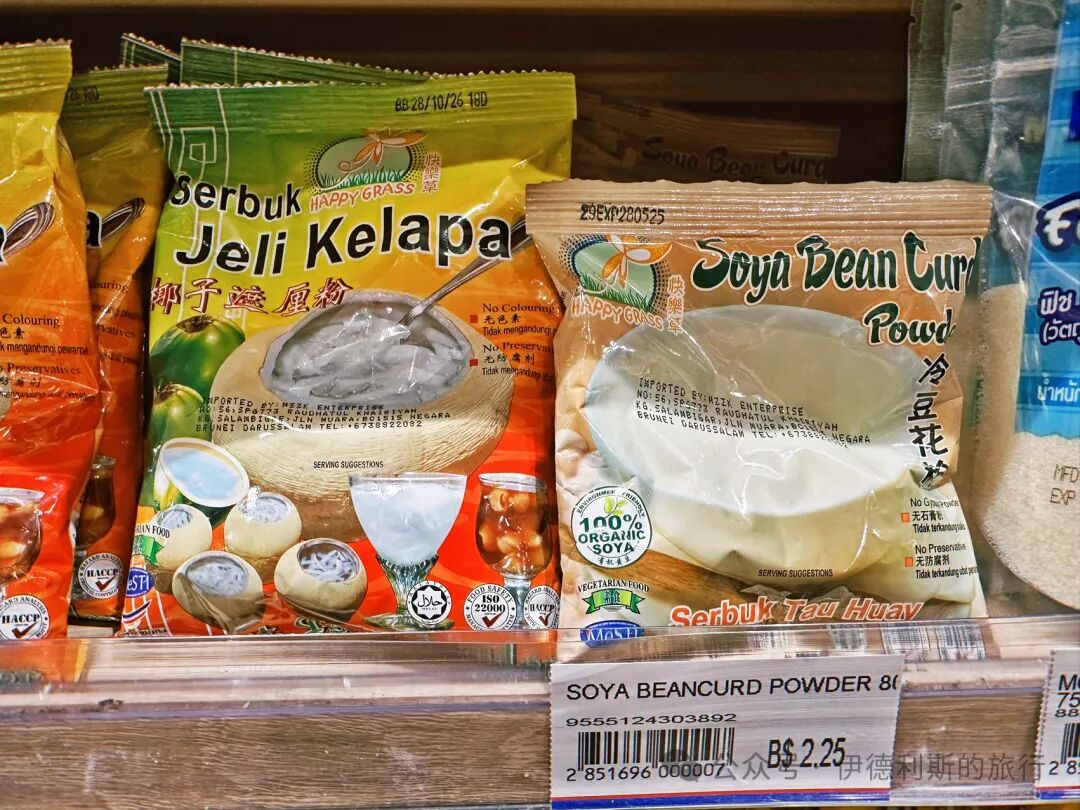
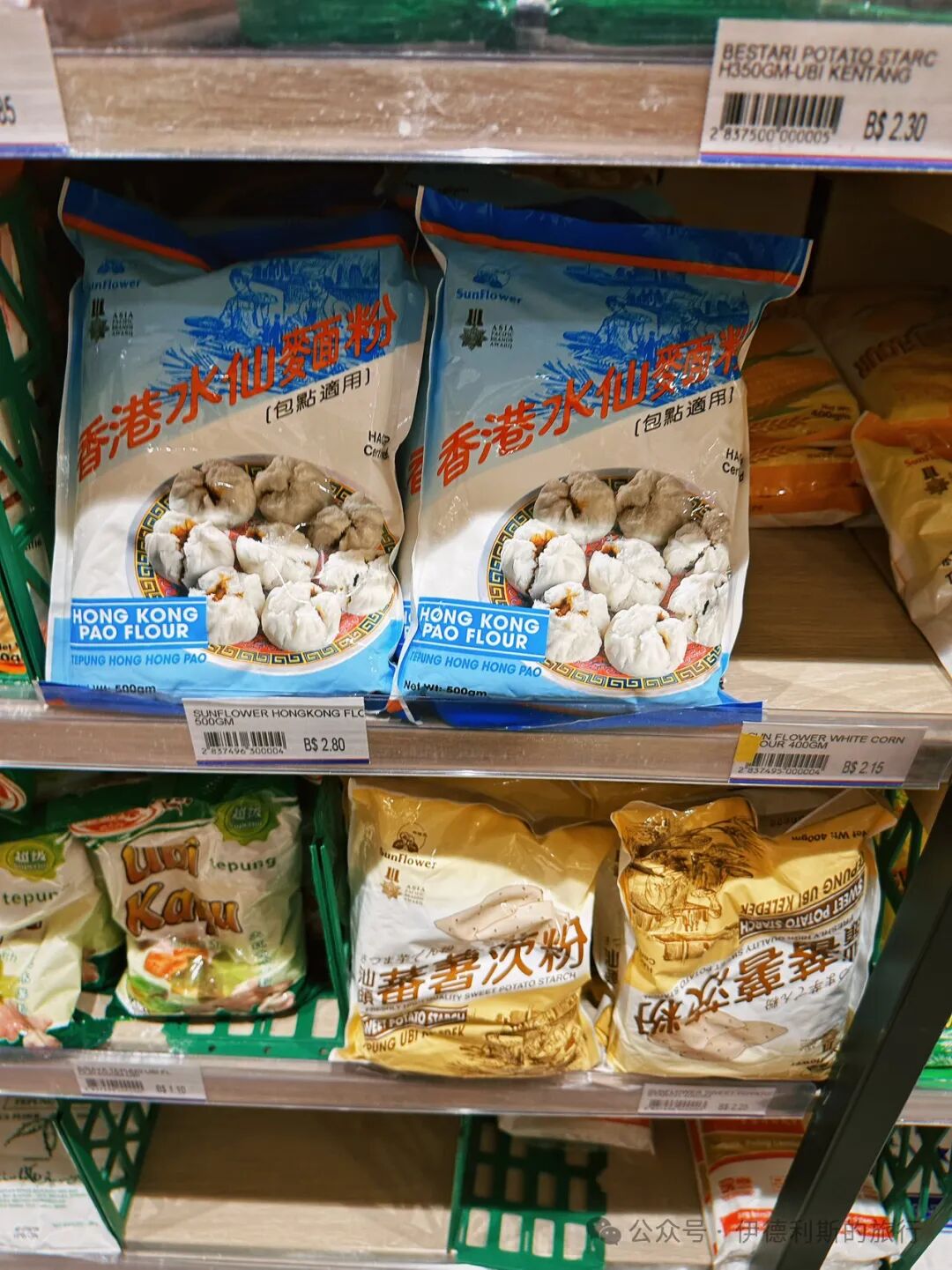
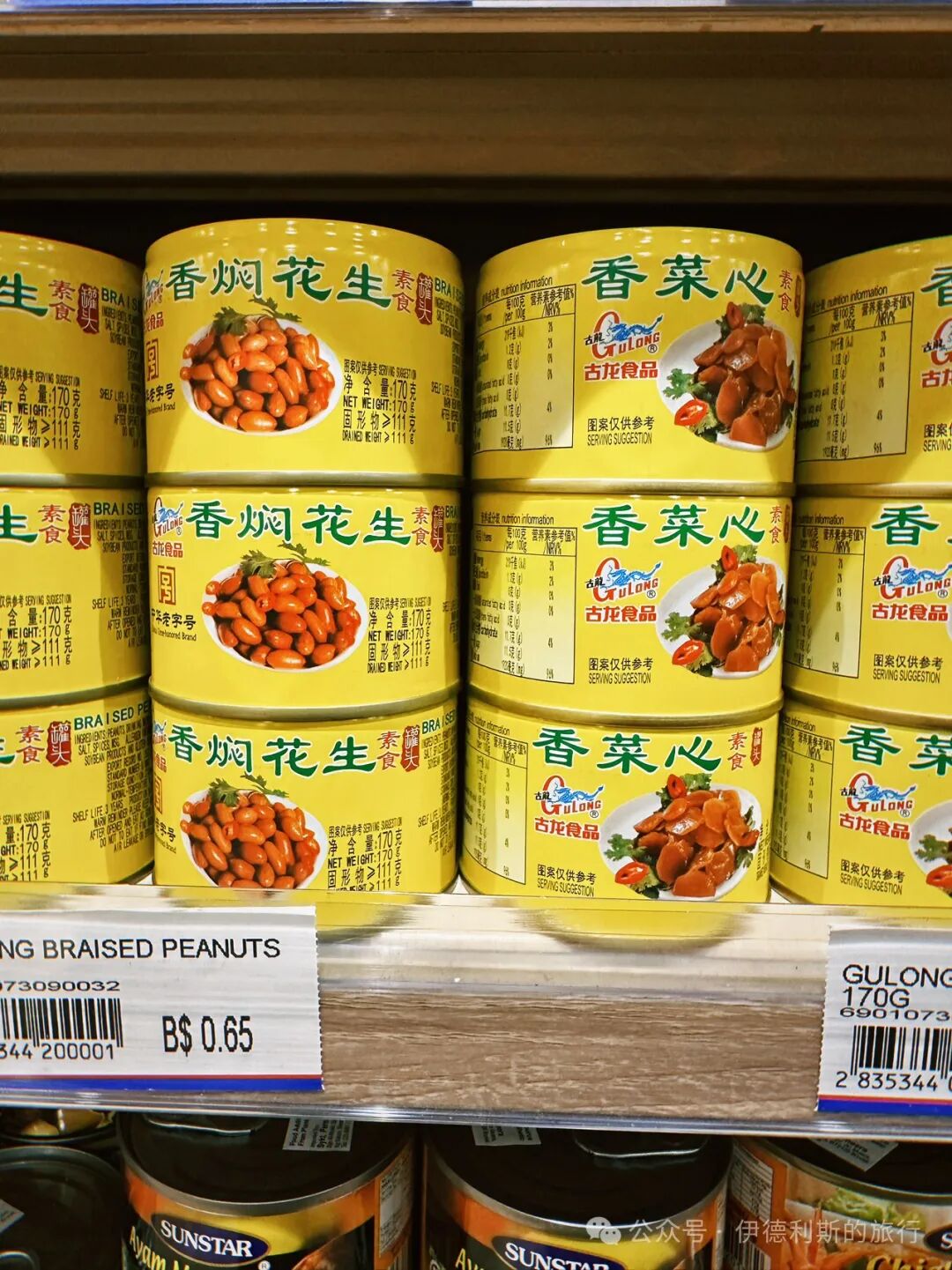
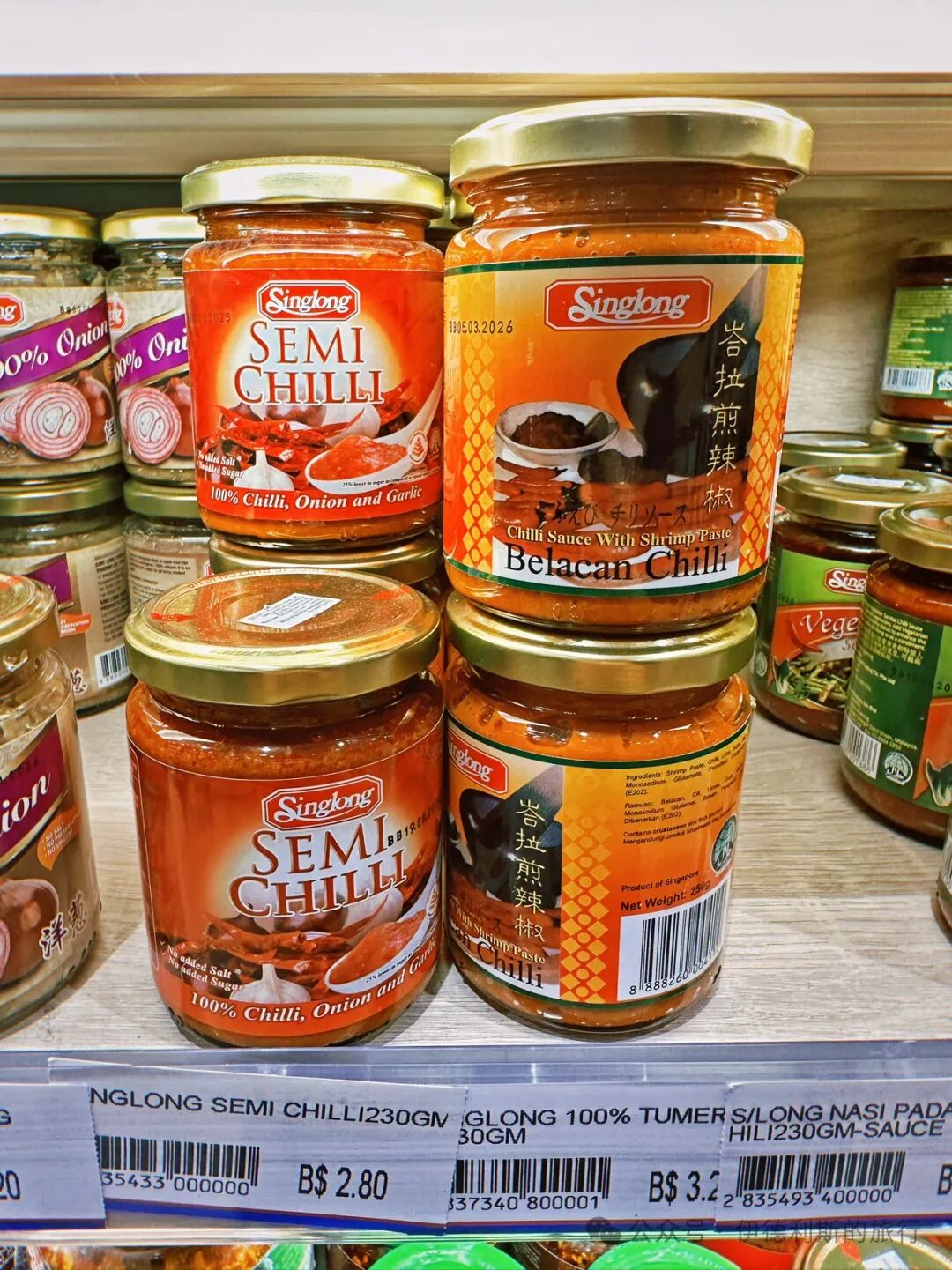
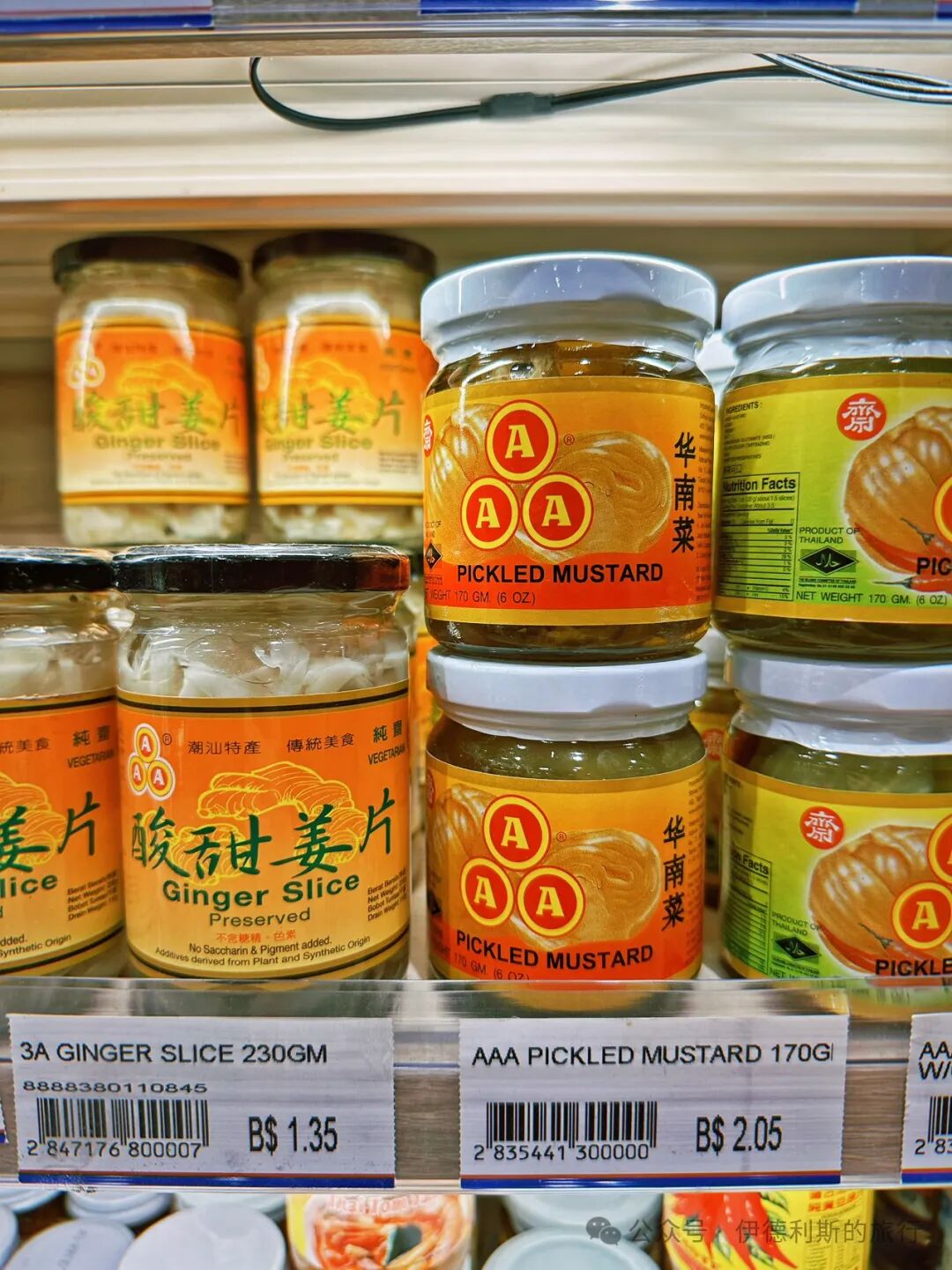
Some items at Hua Ho Department Store include coconut jelly powder, cold tofu pudding powder, Hong Kong narcissus flour, Shantou sweet potato starch, braised peanuts, cilantro hearts, shrimp paste chili (belacan chili), Chaoshan-style sweet and sour ginger slices, South China vegetables, spicy fermented bean curd with sesame oil, rice noodles, shredded codfish, and premium dried squid.
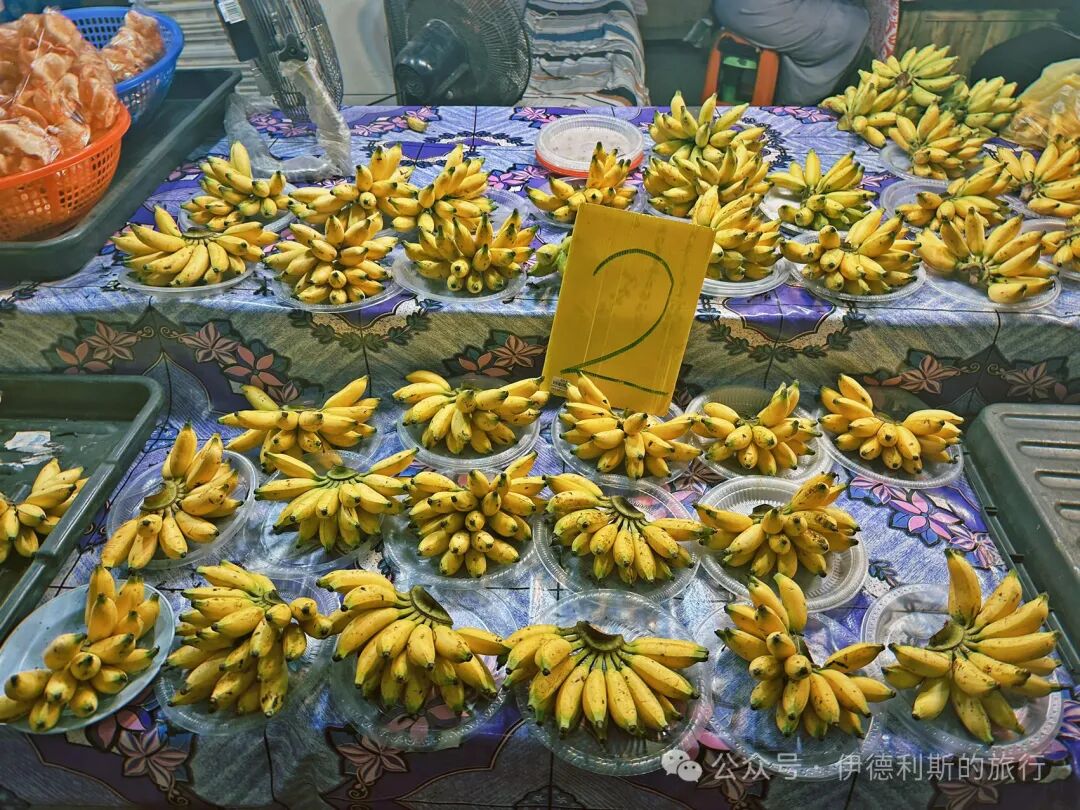
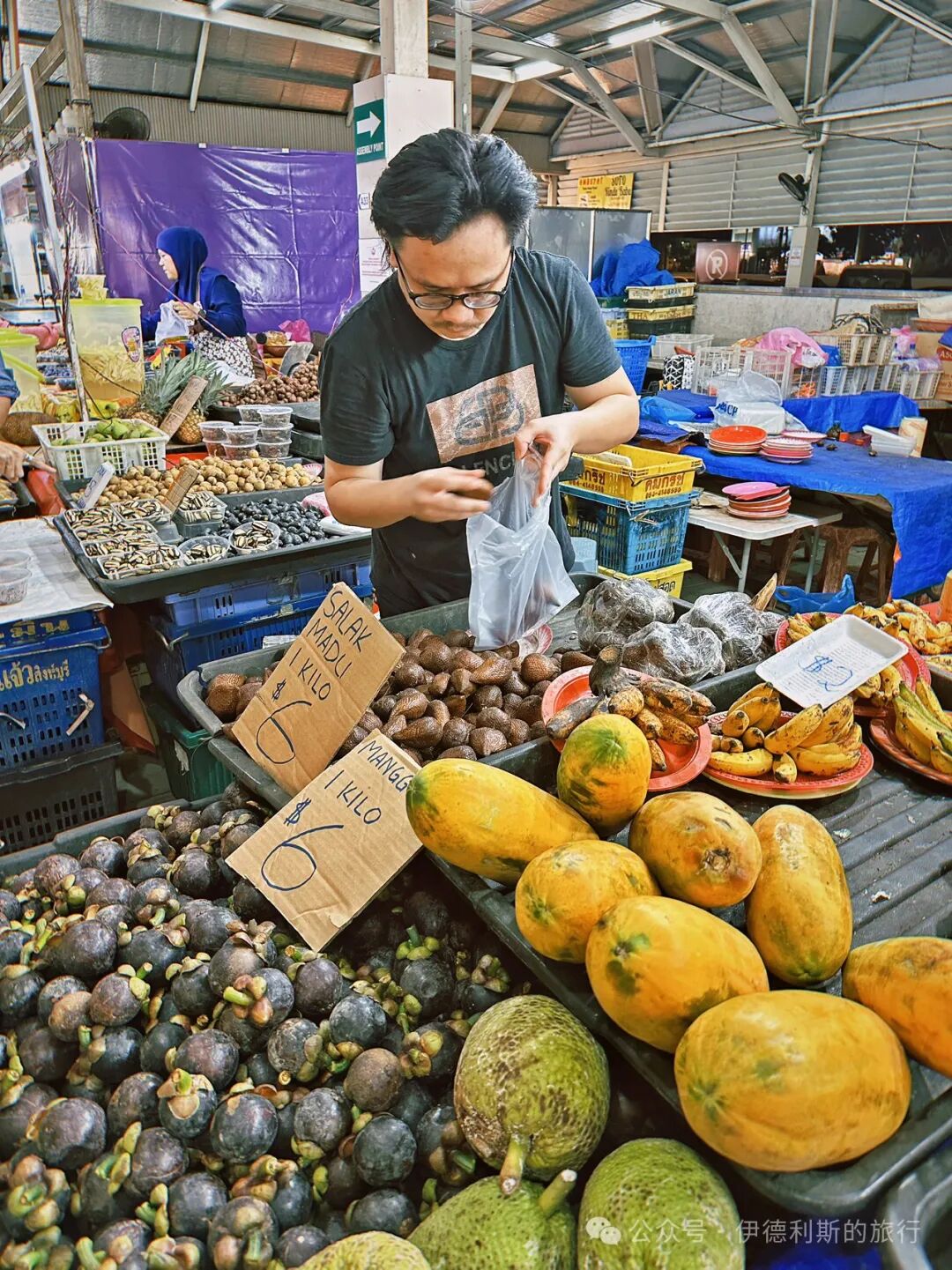
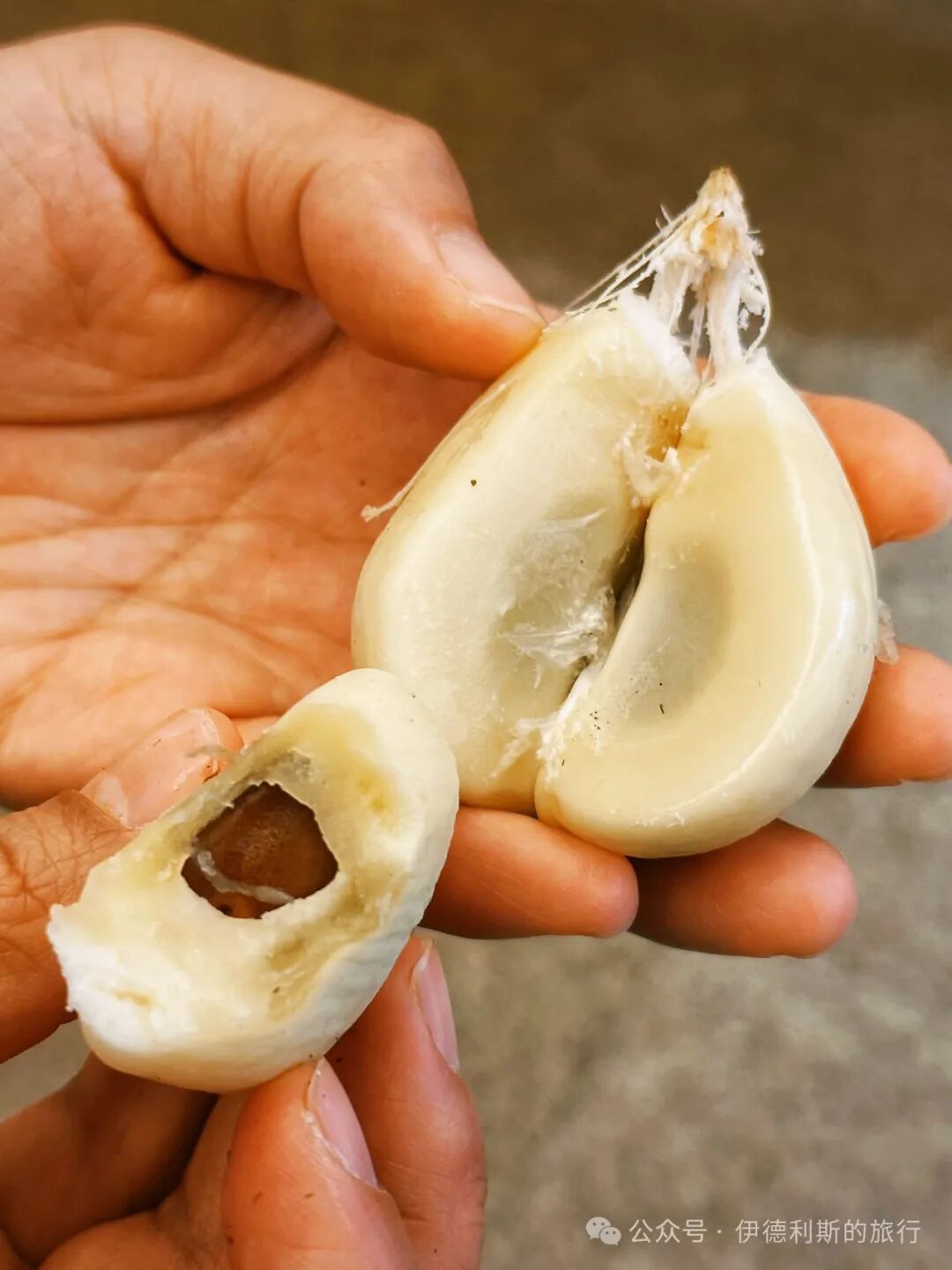
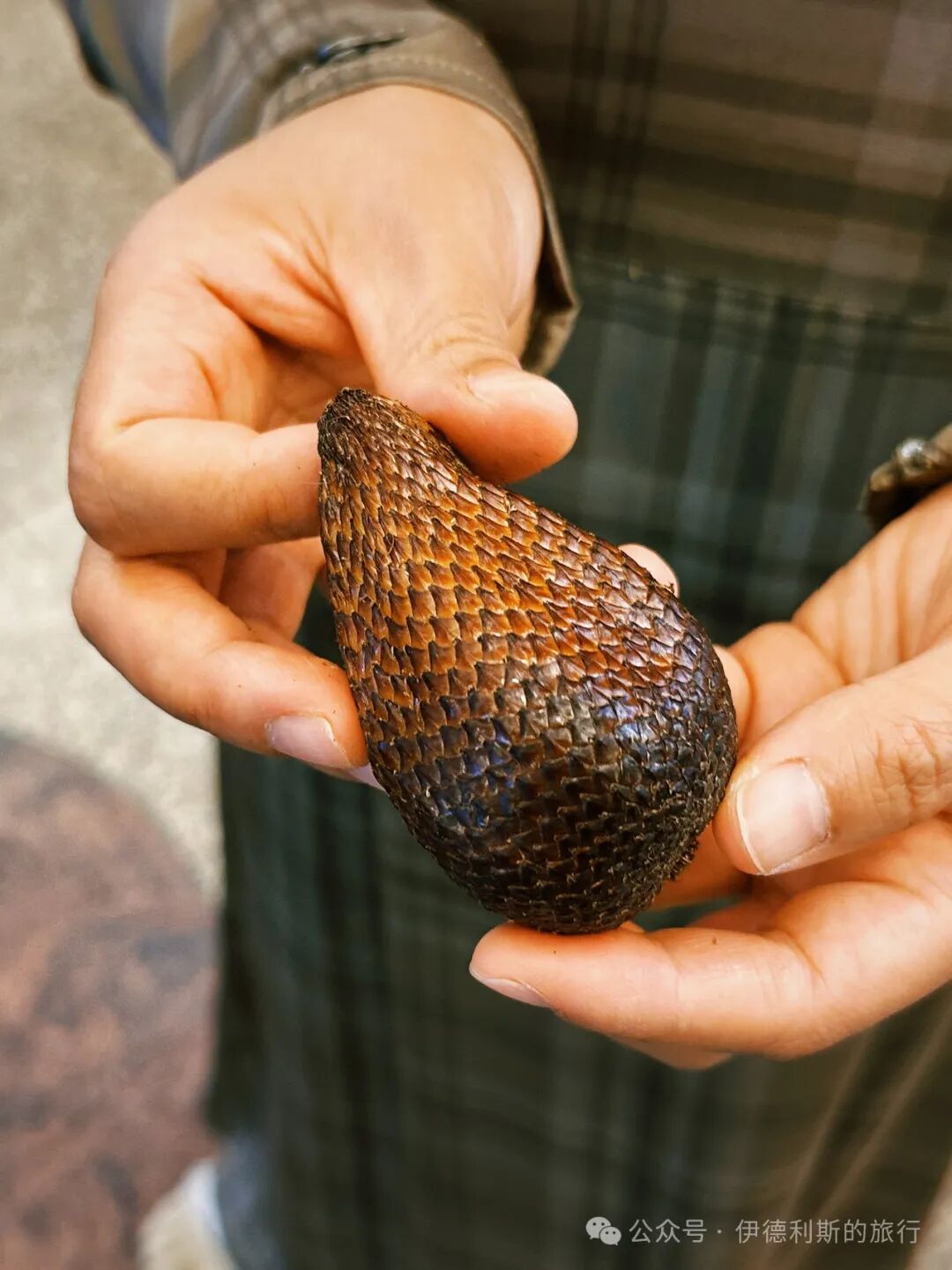
After getting off at Gadong, we took a taxi to the night market. There are very few tourists in Brunei, so the night market is mostly filled with locals. We first bought spicy sauce to go with shredded squid and fish maw. These snacks are quite tasty. Then we bought mangosteen and snake fruit. It was my first time eating snake fruit, and it tasted pretty good.
While walking around the night market, the adhan (call to prayer) sounded. You can find a place to pray everywhere in Brunei. We performed our namaz at the small mosque in the night market. They provide sarong skirts for men to wear here.
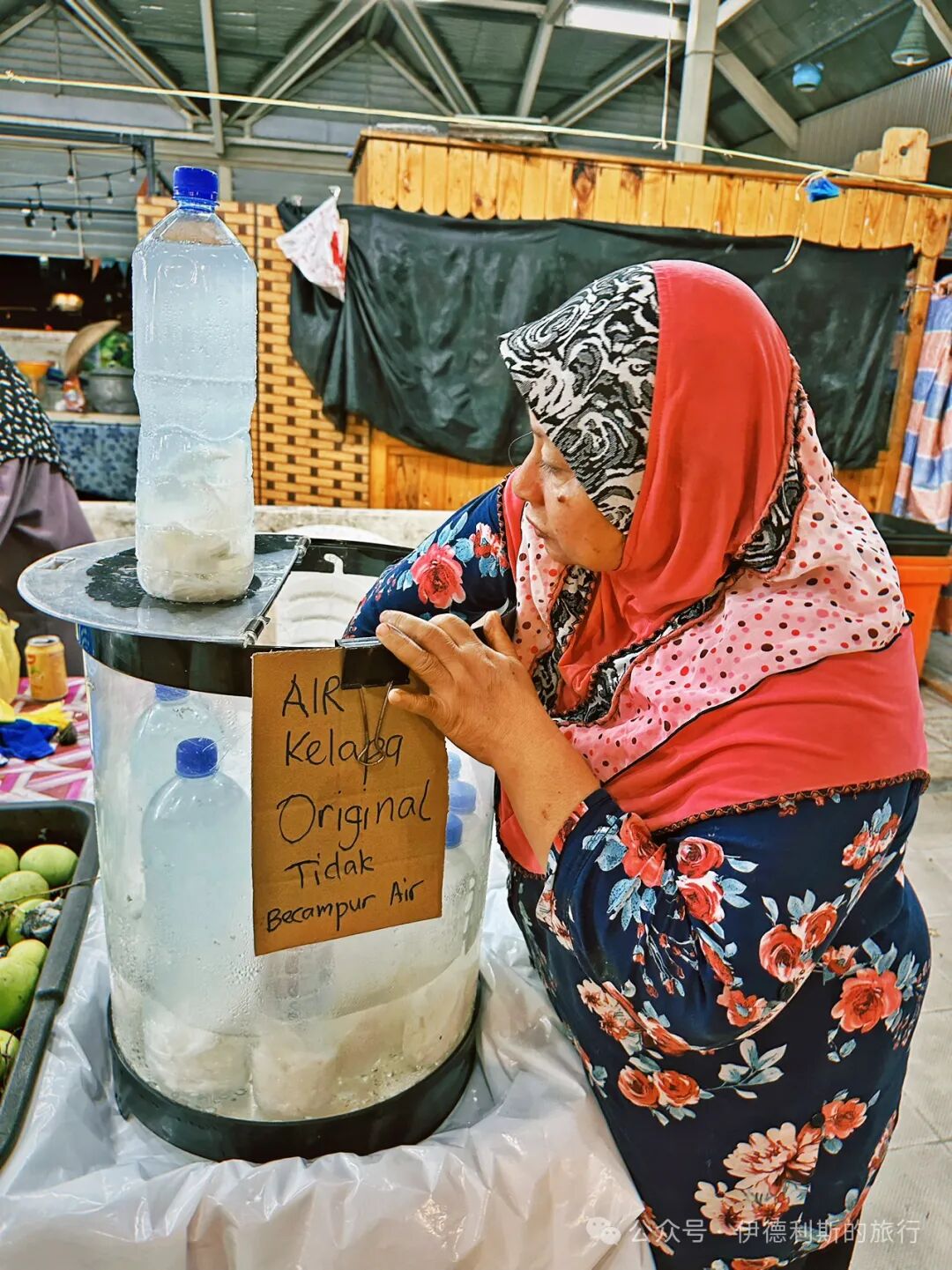
After praying, we ate noodle soup at a snack shop by the entrance. We ordered beef ball soup (bakso beranak) with large and small beef balls, and beef noodle soup (soto daging). The eating habits here are almost the same as in Indonesia. I really like the beef noodle soup here, especially on a rainy day; it is very comforting. We also ordered a coconut. Local coconuts are large. Even though the shell is thick, there is still plenty of juice inside. It came with a lime to squeeze in.
We had satay skewers at the Gadong night market, eating liver and chicken hearts. They were sweet and grilled a bit hard.
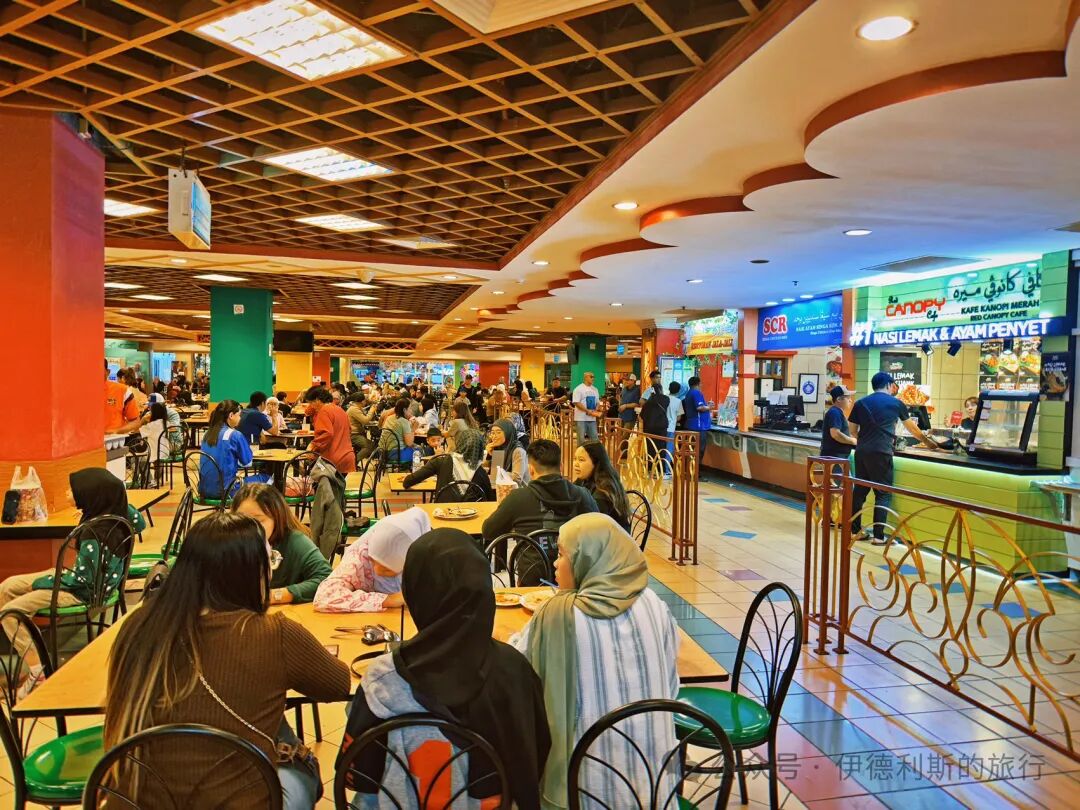
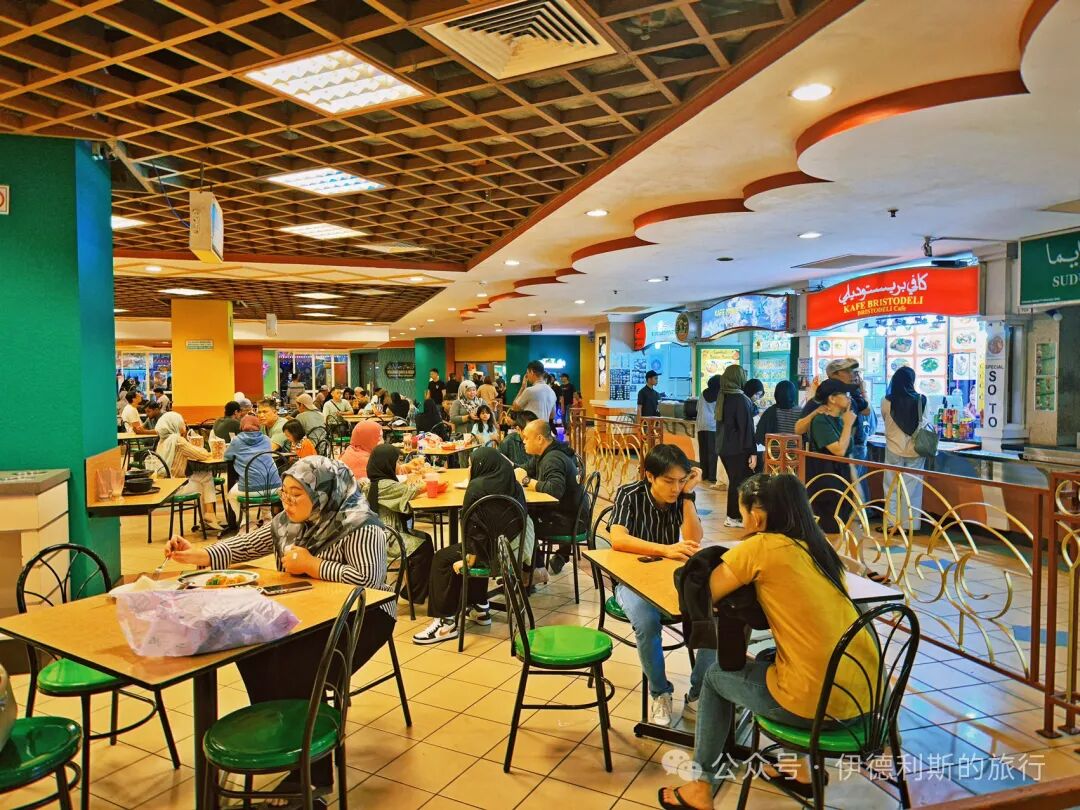
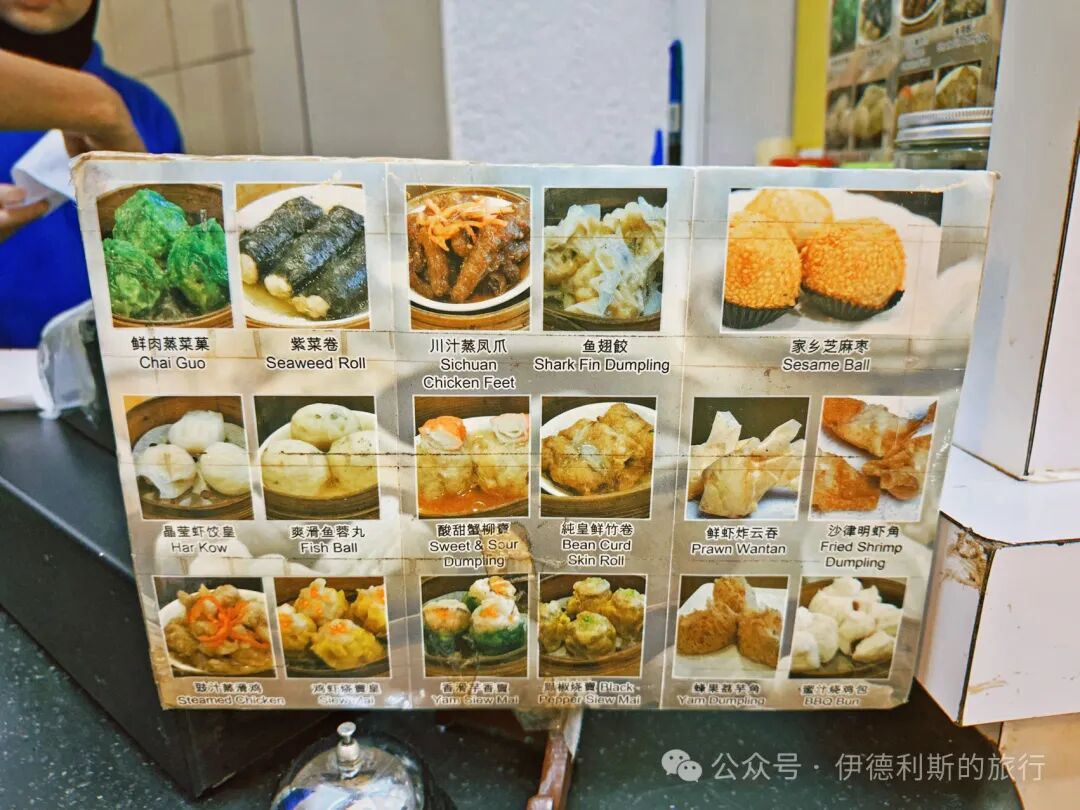
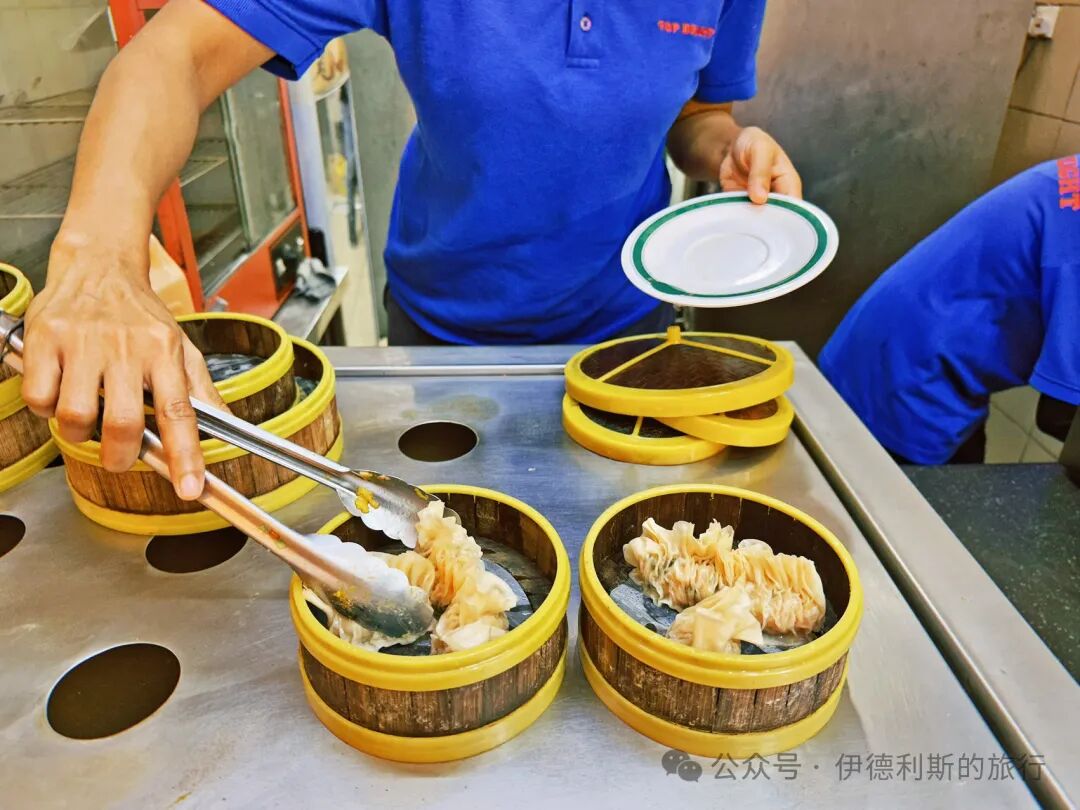
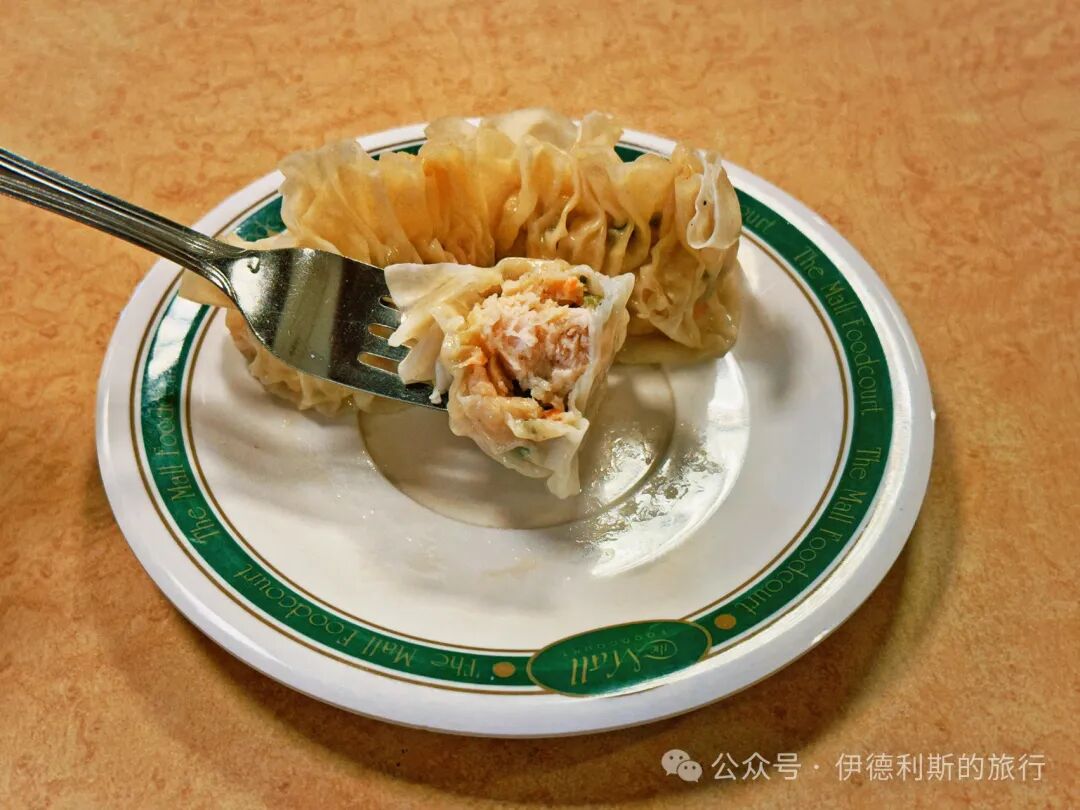
In the food court of the mall next to the Gadong night market, there is a place that sells Hong Kong-style dim sum. It is very popular, so by the time we got there, only shark fin dumplings were left.
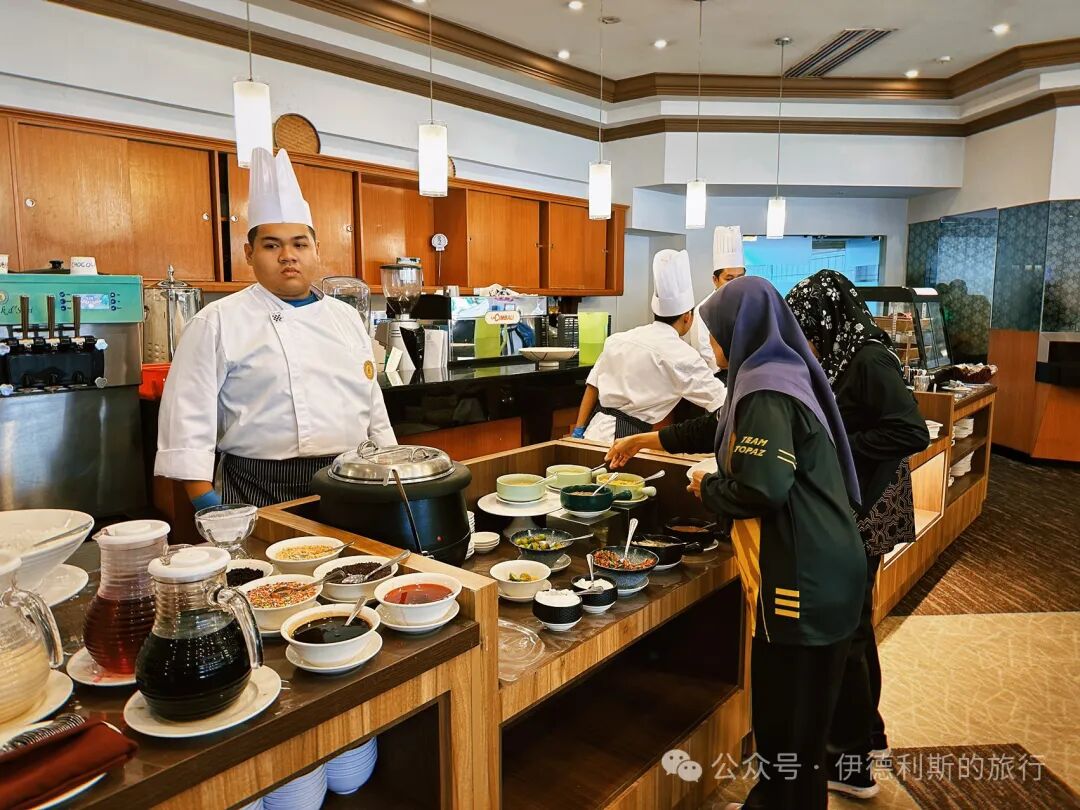
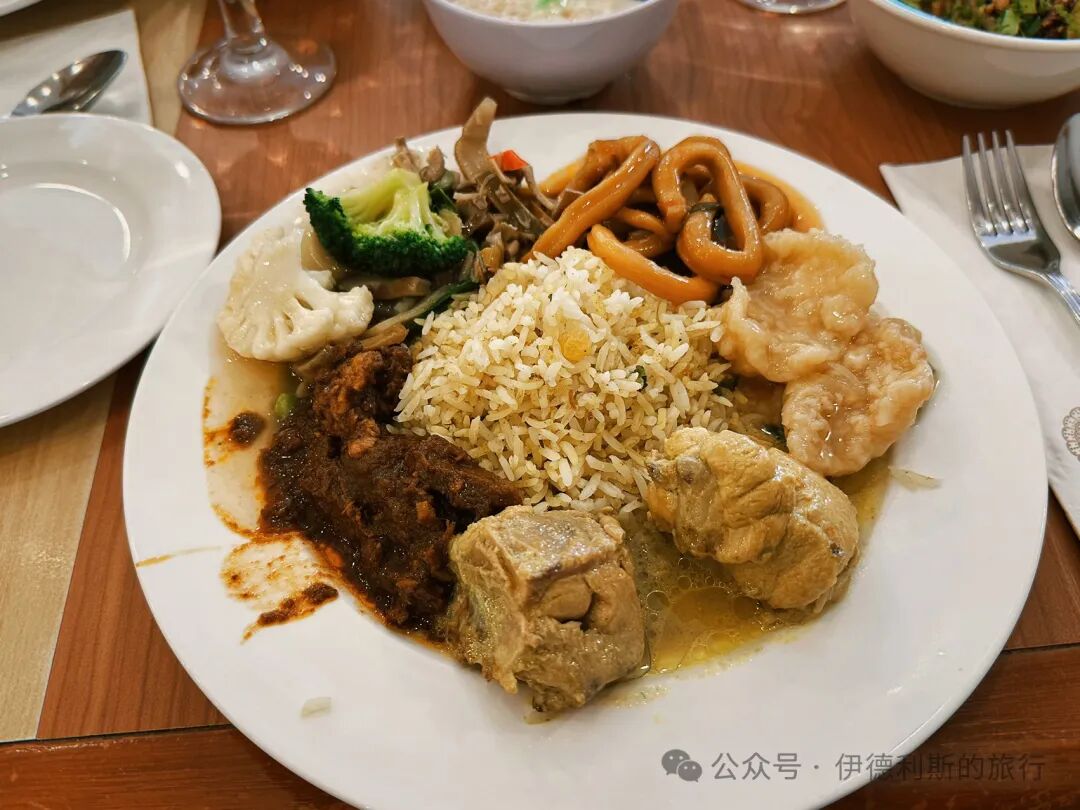
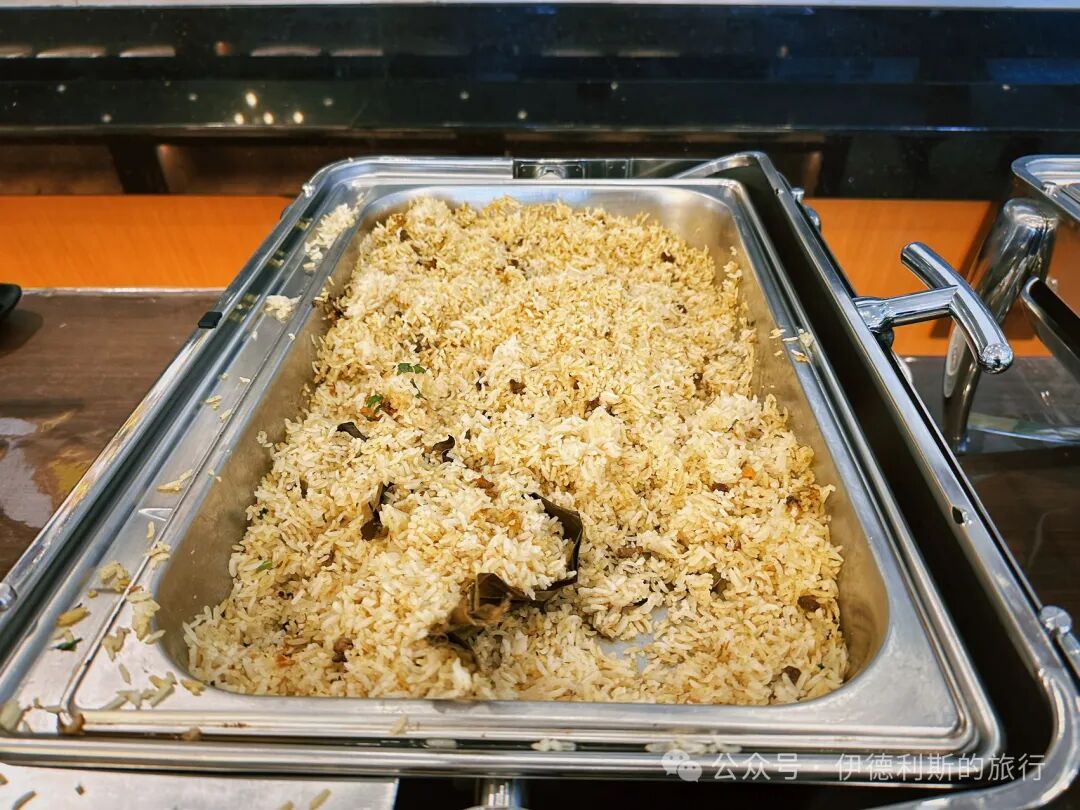
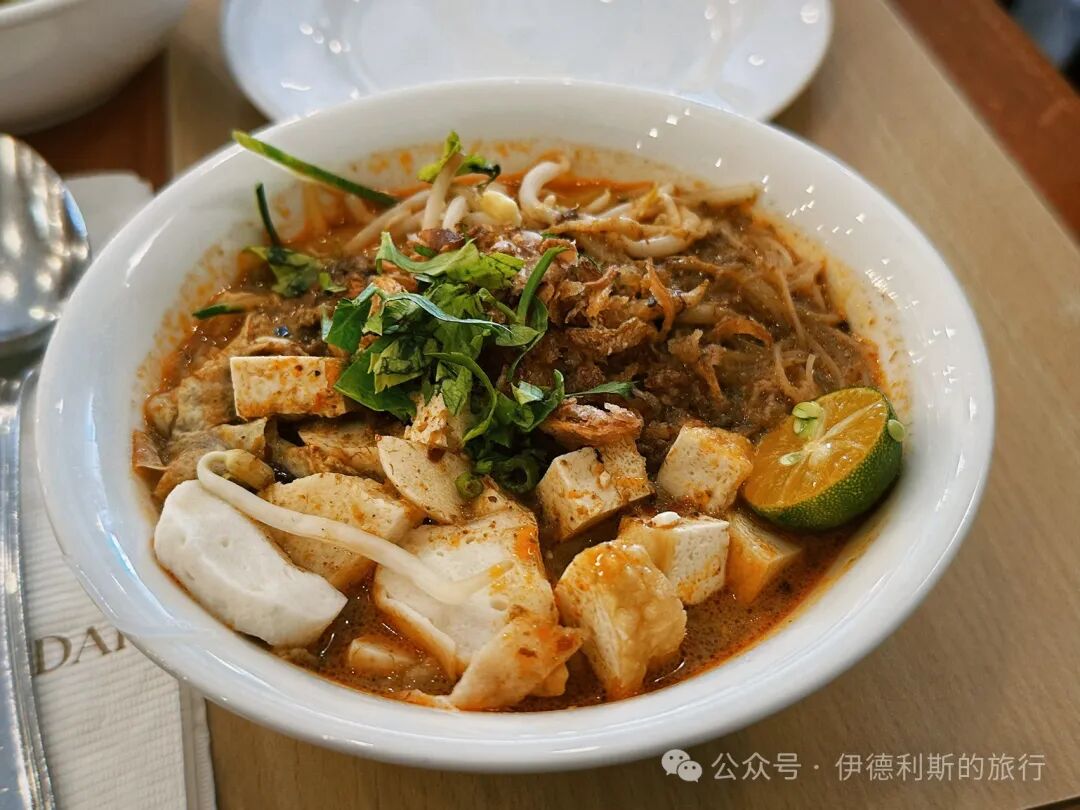
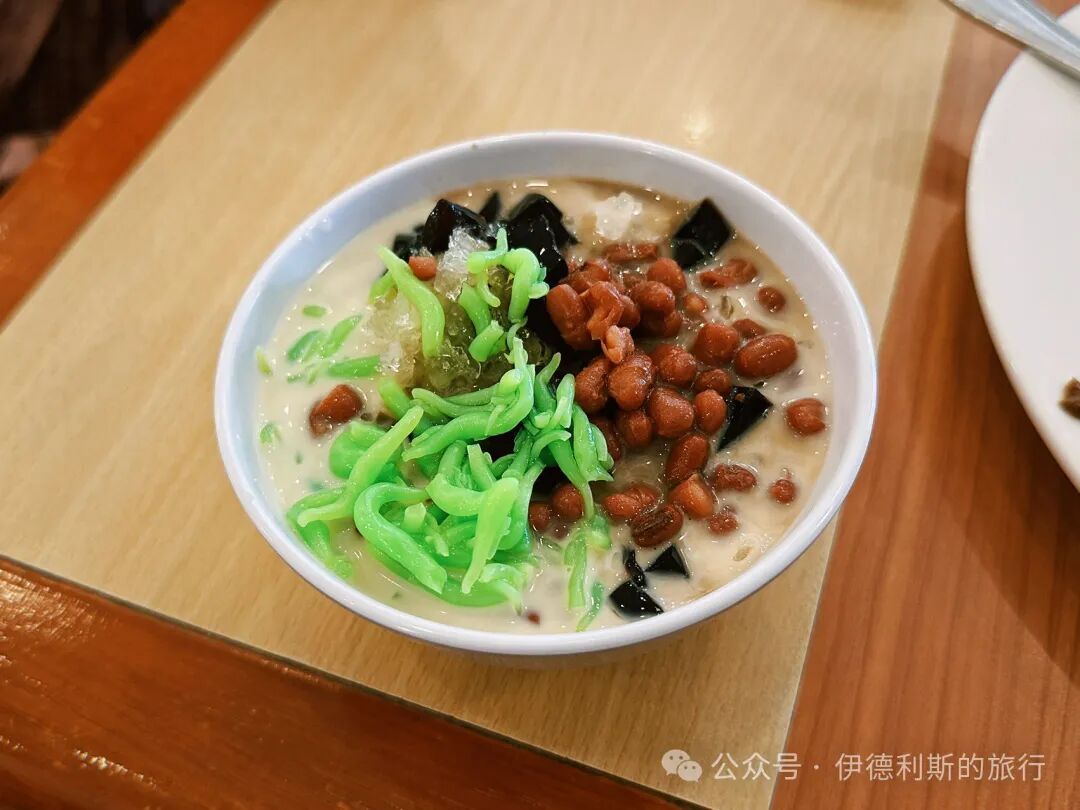
If you want to try authentic Malay food in Brunei, I recommend the buffet at the Brunei Arts and Handicrafts Training Centre. You can find it on the map by searching for Tarindak D'Seni.
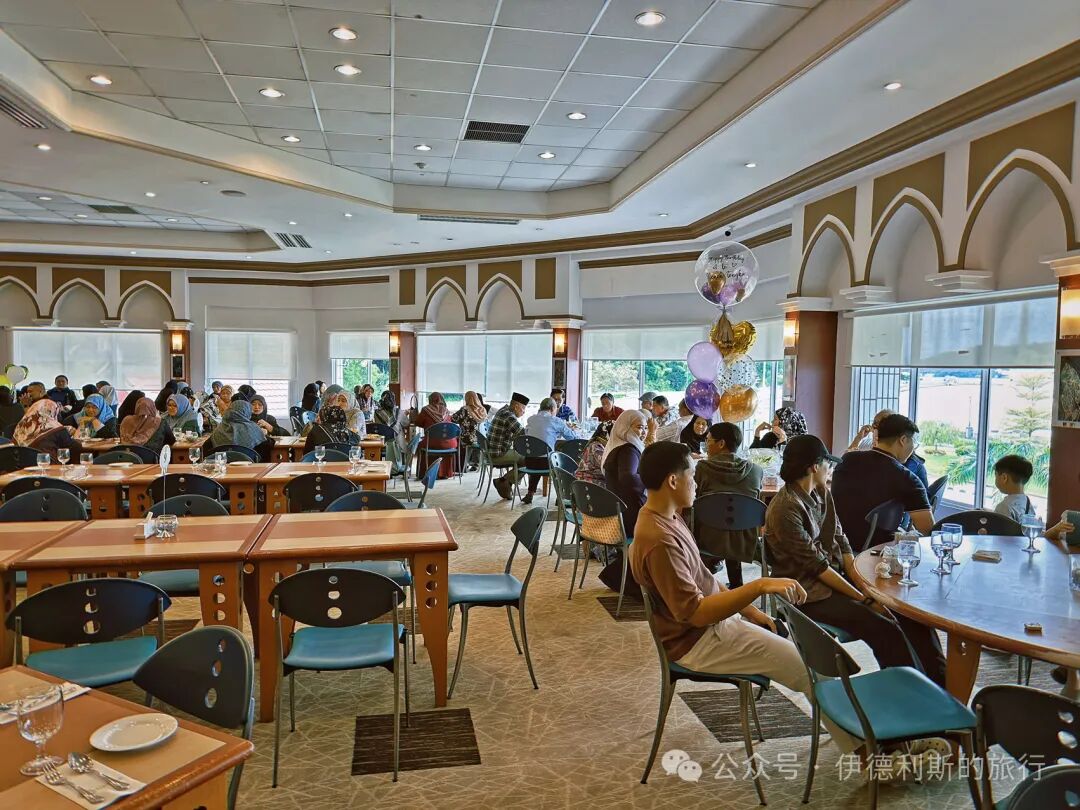
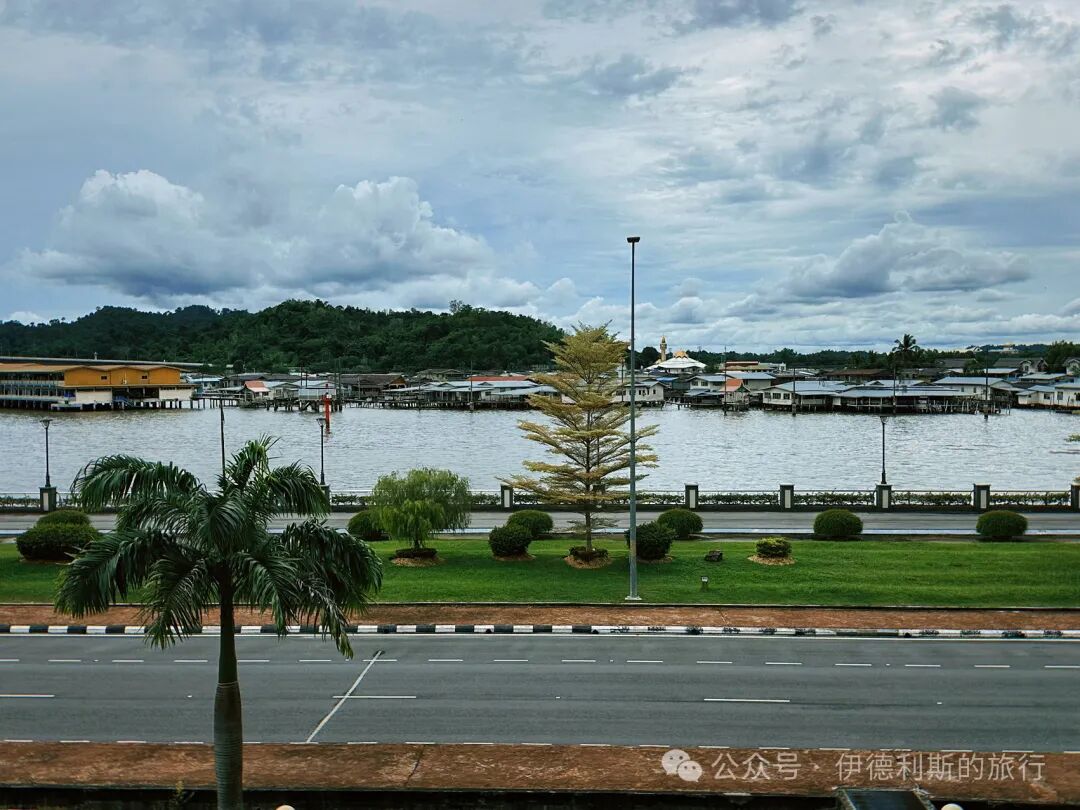
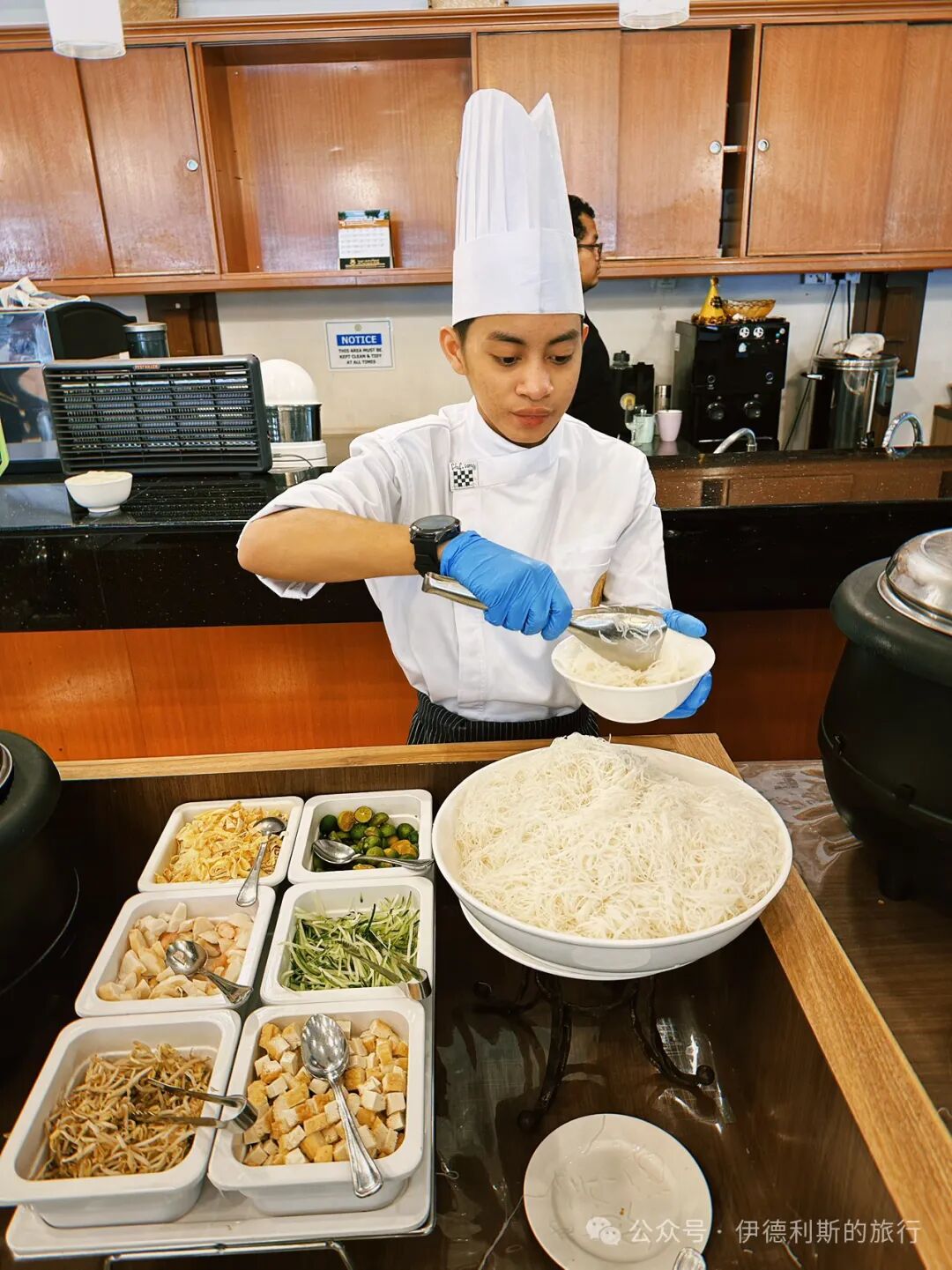
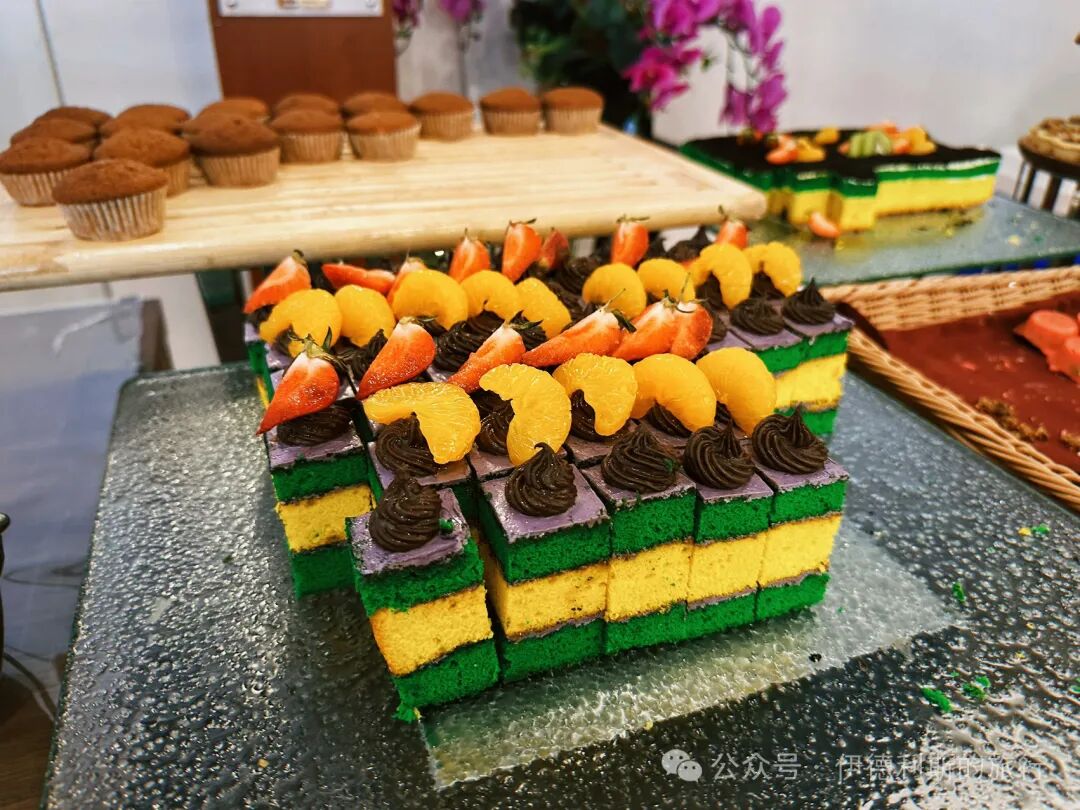
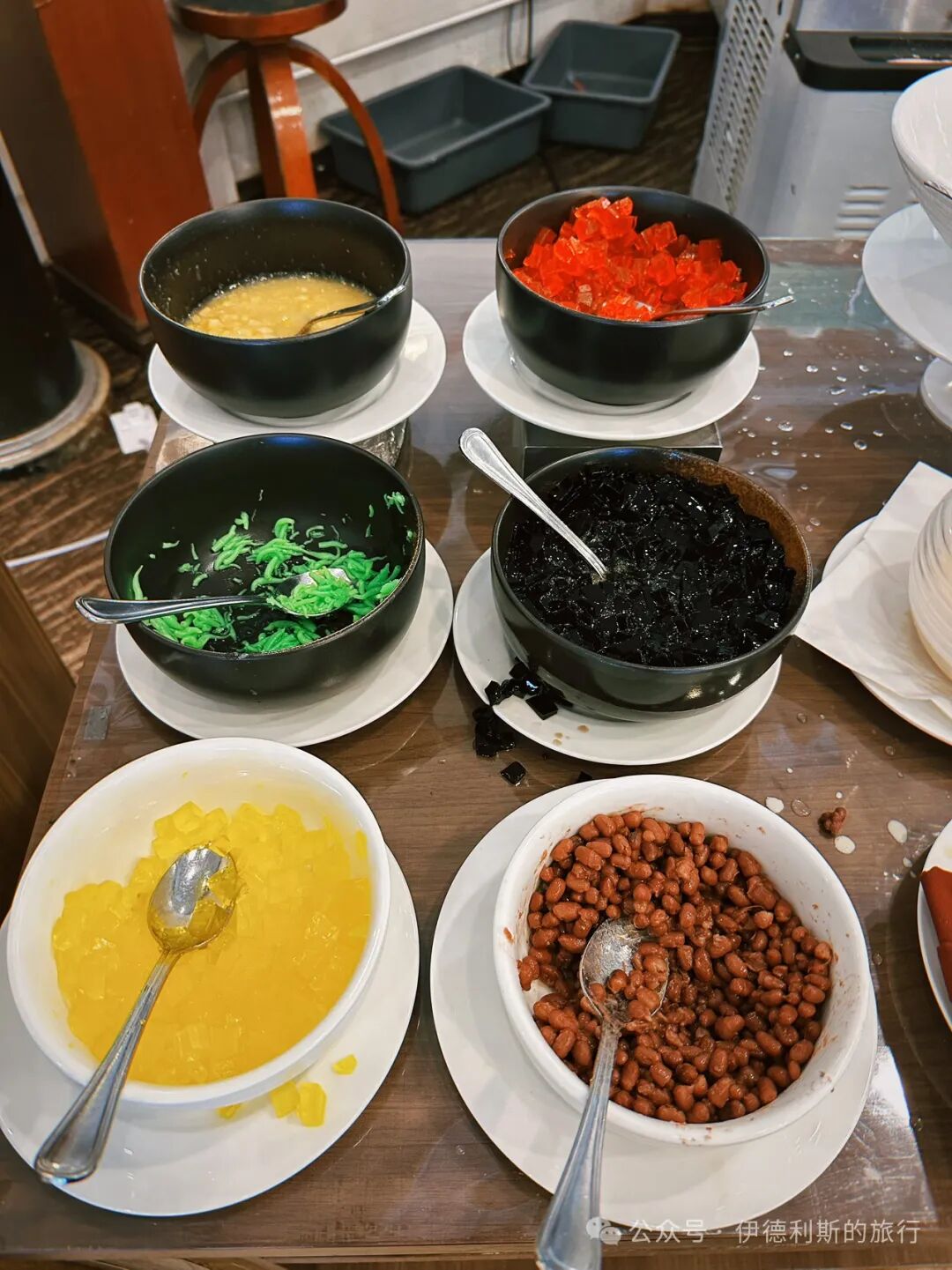
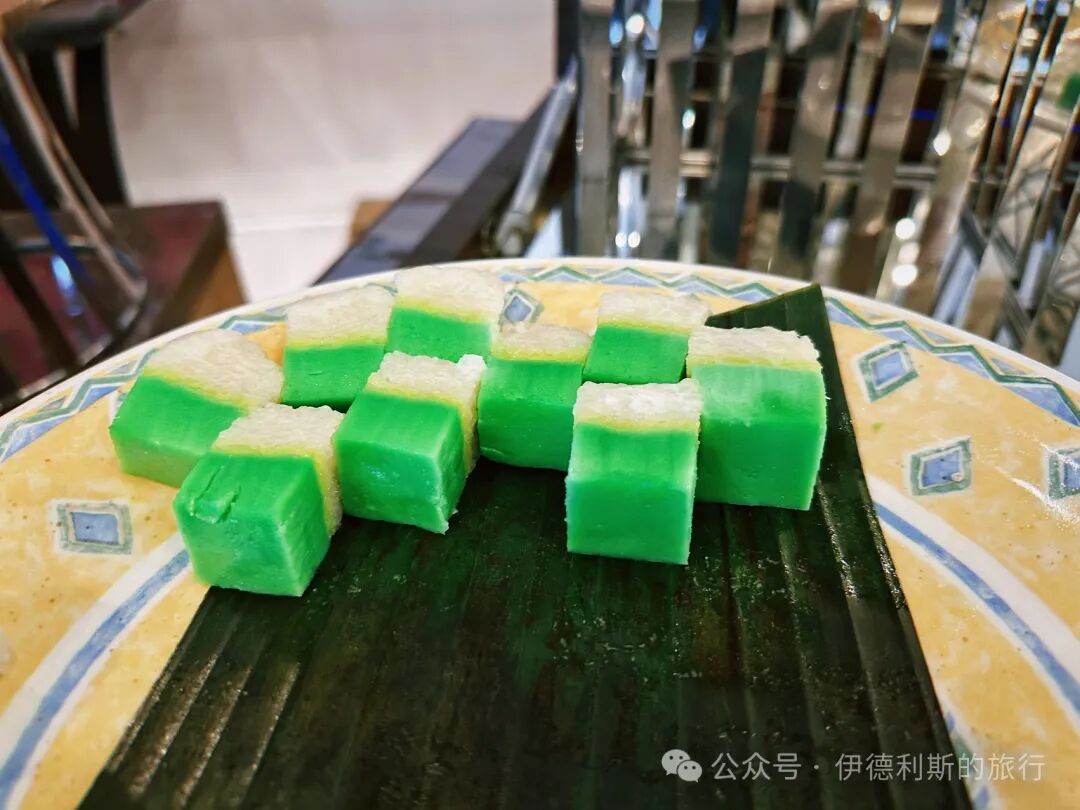
We went at noon from 11:30 to 14:30. It cost 91 yuan per person, and there is a discount for seniors over 60. The environment is very nice, and you can see the Brunei River right outside the window. The food selection is rich. You can eat various sticky rice pandan Malay cakes (kuih), Sarawak laksa noodles with coconut milk, and make your own shaved ice dessert (cendol).
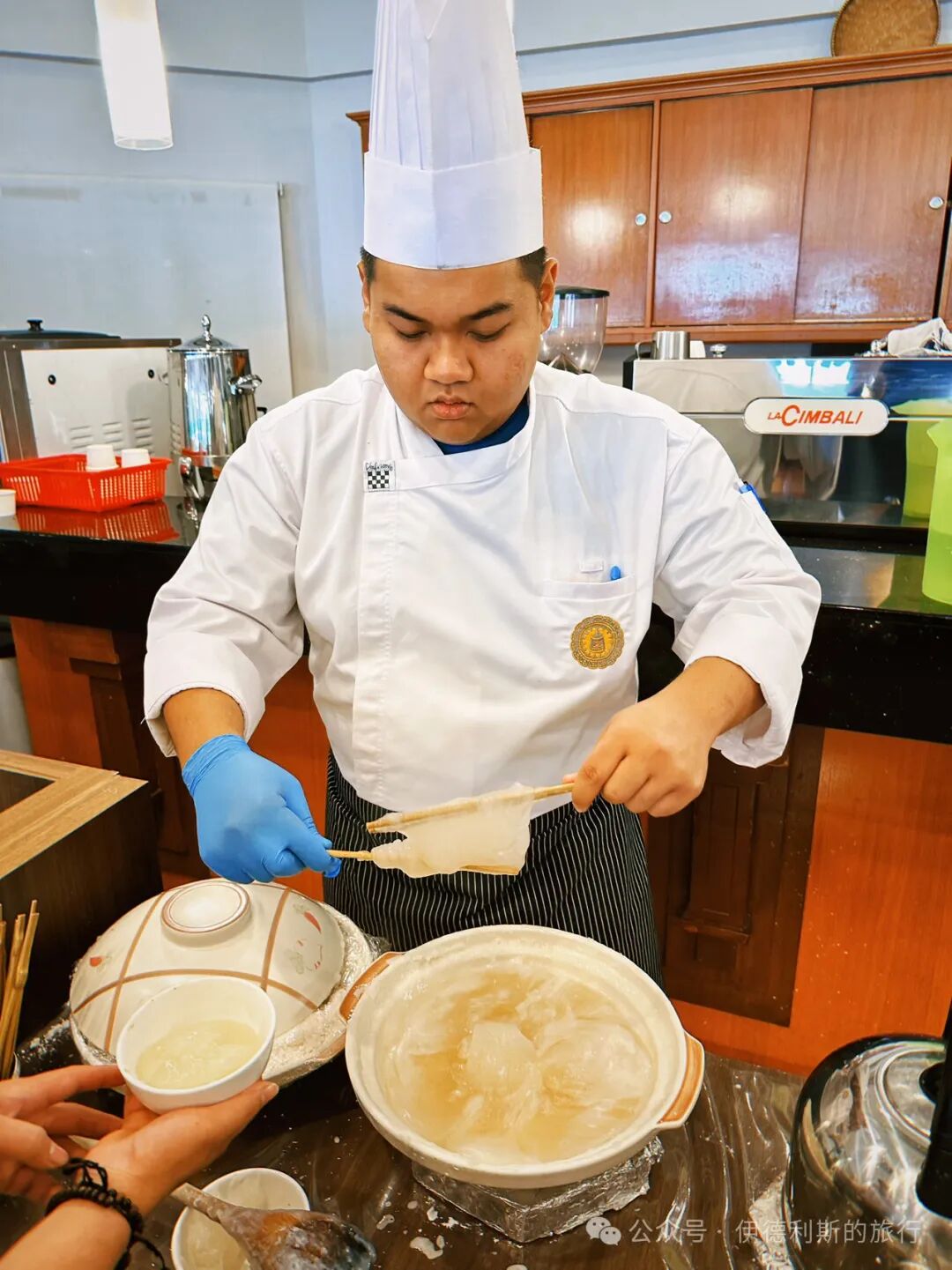
They serve Brunei's national dish, sago starch paste (ambuyat). It is made by mixing sago palm starch with hot water to create a paste, which you eat by dipping it into a sauce.
Nasi kebuli is rice cooked with goat meat broth, goat milk, and ghee. It was brought to the Malay Archipelago by Hadhrami people from Yemen and is especially popular in the Arab communities of Java.
Black beef (daging hitam) is beef rendang made with sweet soy sauce, lots of palm sugar, and rock sugar. It is a specialty of the Sarawak region.
Chicken cooked in coconut milk (opor ayam) is chicken simmered in coconut milk with various spices.
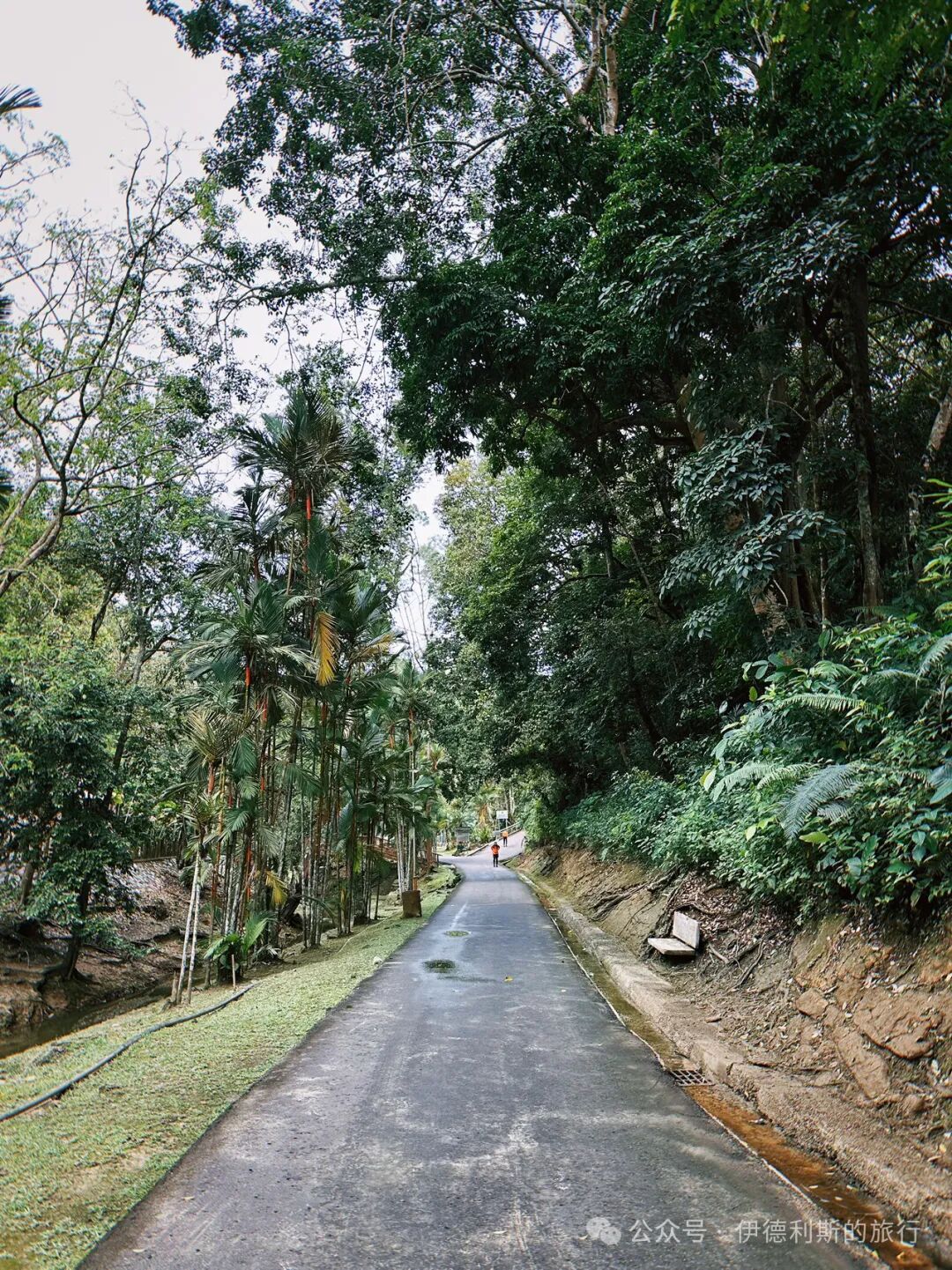
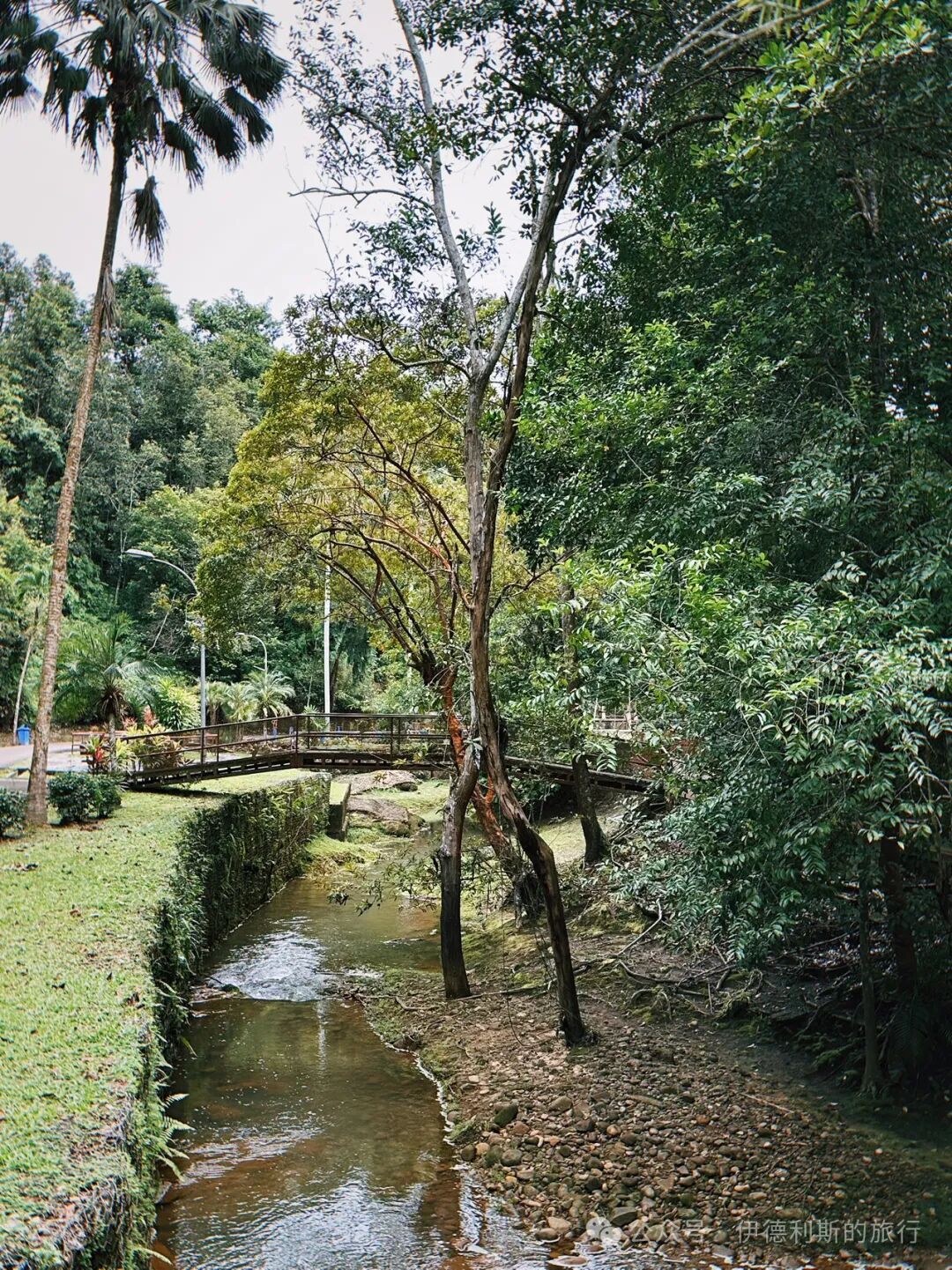
Strolling through Tasek Lama Recreational Park in Brunei, you find a primeval forest in the city center. It is very relaxing by the waterfall. The mountains are full of birds and monkeys, and you can see pitcher plants (zhulongcao) everywhere along the road. Bruneians love jogging in the parks, and after you finish, you can buy big, juicy coconuts (dayezi) at the entrance.
At the Royal Wharf in Brunei, many speedboats offer tours of the water village and trips to see proboscis monkeys. We asked the price and it was 10 Brunei dollars (53 RMB) per person for a one-hour boat ride, which felt like a pretty good deal.
After boarding, we first toured the water village, where we saw a water fire station, a water school, and a water mosque. We also spotted a huge monitor lizard among the mangroves. Then we went to see the proboscis monkeys. We traveled 10 kilometers west along the Brunei River to Luba Island in the middle of the river. The island holds the tomb of the 16th Sultan of Brunei, Hussin Kamaluddin (reigned 1710-30, 1737-40). This is also the best place to watch proboscis monkeys, and we saw a family of them eating leaves by the edge of the mangroves. view all
Summary: Brunei offers Hainanese cafes, Malay night markets, and everyday food scenes shaped by local Muslim life. This account keeps the original restaurant details, market observations, photos, and food descriptions while making the story easy for English readers to follow.
In the morning, we visited a legendary Hainanese coffee shop in Brunei called Ying Chuan (Yingzhou Hao).
The founder of Ying Chuan, Han Qiongyuan, was from Wenchang, Hainan. During the Japanese invasion of China in 1939, 17-year-old Han Qiongyuan traveled to Southeast Asia and arrived in Brunei to work as a helper in his uncle's coffee shop. In 1946, Han Qiongyuan officially opened Ying Chuan Coffee Shop, serving coffee, bread, and other meals. It became widely known for its yellow bread (roti kuning). As the business grew, Han Qiongyuan expanded into real estate and led the construction of the Brunei Hainan Building. After 1993, Han Qiongyuan returned to his hometown every year to visit relatives and invested heavily there. He was awarded the title of 'Patriotic Son of Hainan' by the Hainan provincial government three times.
Like many old-fashioned Nanyang Hainanese coffee shops, they serve halal food and hold a Brunei halal certification, making them popular with all ethnic groups. They offer a very wide variety of bread. The classic sandwich breads come in four flavors: peanut, red bean paste, butter, and coconut. They also have peanut and butter bread (yuanyang bread), cheese bread, yellow bread with butter and kaya (yuanyang huang mianbao), and French toast. You can add a fried egg and cheese, or order a soft-boiled egg on the side. Cakes and pastries include custard cake (dan nai gao), egg tarts (dan ta), coconut tarts (ye ta), red bean cakes (hong dou bing), butter cake (niu you dangao), and pandan cake (ban lan dangao). Western-style breads and pastries were learned by Hainanese people while working as kitchen helpers for the British in the 19th century when they moved to Southeast Asia. Today, they are a classic part of Nanyang Hainanese restaurants.
Besides bread and pastries, they also serve various noodles, such as sesame flat rice noodles (zhima guetiao), dry-tossed noodles (ganlao mian), fried noodles, Hainanese noodles, fried rice vermicelli, and egg gravy rice noodles (huadan hefen). These are all very well-suited to Chinese tastes. We ordered egg gravy rice noodles, sesame flat rice noodles, egg tarts, custard cake, yellow bread with a fried egg, chicken curry puffs, peanut and butter bread, ginger milk tea, and lemon tea for a mix of Chinese and Western flavors. The peanut and butter bread is filled with kaya jam, butter, and crushed peanuts, giving it a very rich texture. The sesame flat rice noodles have a sweet, salty, and spicy flavor. Served with fried tofu and fried fish chunks, they are a signature dish of the shop.
After Friday prayers (Jumu'ah), we had lunch in the old town of Brunei Town. There are many Chinese shops here, and it is also a great place to find halal Hainanese restaurants. We chose Babu's Kitchen. It was very busy at noon with Chinese, Malay, and Indian customers, which is a classic scene in a Hainanese restaurant. Since they didn't have a Chinese menu, we asked the owner to recommend the Assam fish fillets, salted egg fried mushrooms, beef yee mein (beef niu rou yi mian), and bean curd skin with tofu and chicken. Like in Malaysia, the Chinese in Brunei speak very standard Mandarin. Overall, the food was very good. The Chinese dishes were infused with Malay flavors, but they were still very easy for Chinese people to enjoy.
The next morning, we continued to have a Hainanese breakfast at Meiguang Tea House in the old town of Brunei Town. The owner is Hainanese, his wife is from Xiamen, and the staff are all Indonesian. Because they mainly serve the nearby office buildings, it is usually quite busy on weekdays. It is relatively quiet on weekends, and there are fewer steamed dim sum options than usual. We ordered chicken and radish steamed buns (daba), red bean paste buns (doushabao), beef porridge with small fried dough sticks (youtiao), longan herbal tea, stir-fried noodles, and steamed dumplings (shaomai). Next time a friend (dosti) comes on a weekday, we can try their other dishes, like Fuzhou "lucky" rice noodle soup, dry-tossed mouse tail noodles (laoshufen), and chicken intestine noodles (jichangfen).
While taking a taxi in the afternoon, we passed the Brunei Fujian Association. I checked the map and saw many Chinese restaurants nearby, so after finishing our namaz, we took a taxi straight there for halal Chinese food.
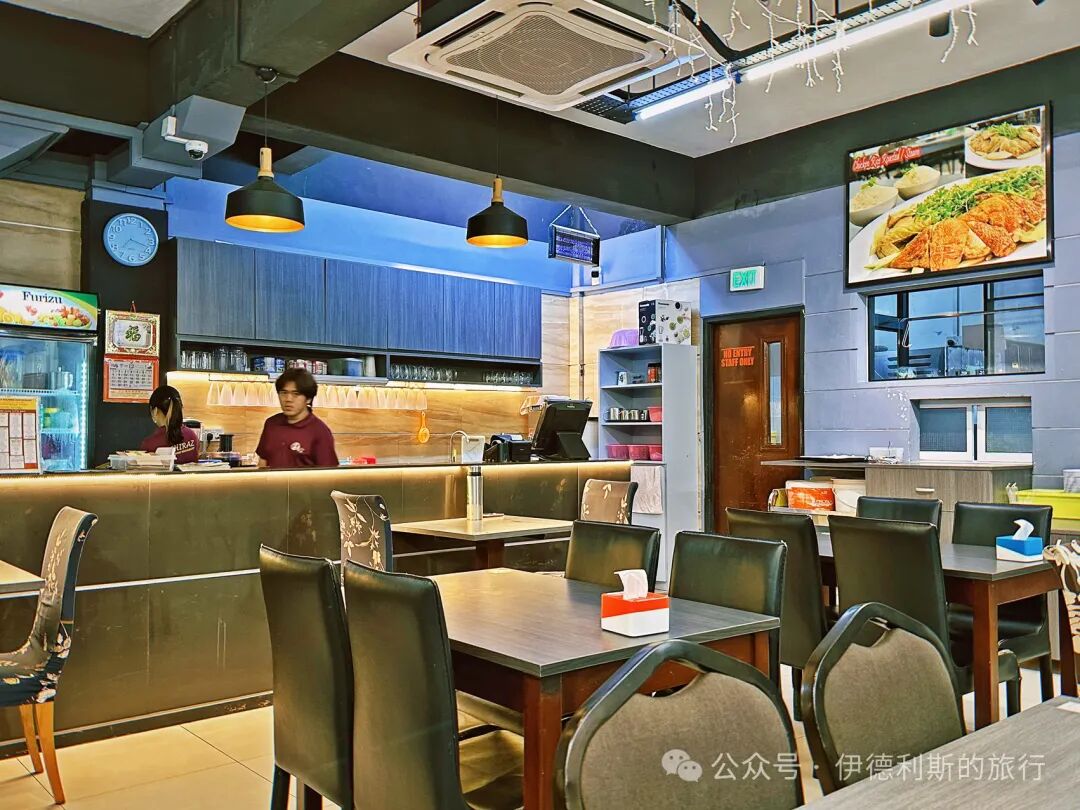
We chose a restaurant called Shiraz Seafood Restaurant. It sounds like Iranian food, but it is actually a Chinese restaurant called Shixianle. They specialize in dim sum and various Nanyang-style Chinese snacks. The menu is huge, and they have a Brunei halal certification. After we went in, a table of Malays and a table of South Asians arrived, which shows how much different ethnic groups love halal Chinese food.
We ordered Cantonese steamed dumplings (siu mai), chicken feet, fish maw with chicken, five-spice meat rolls (ngo hiang), fried stuffed tofu (yong tofu), fried radish cake, longan herbal tea, chicken porridge, seafood soup (a mix of fish slices, fish balls, and more), and dry-fried green beans. We really enjoyed these Nanyang Chinese snacks in Brunei.
Ngo hiang is short for five-spice marinated meat, a snack that originated in the Minnan region of Fujian. In the past, life was hard, so people used five-spice powder to marinate leftover meat and vegetables, wrapped them in tofu skin, and deep-fried them. Later, as Chinese people moved to Nanyang, it spread to Indonesia, Malaysia, the Philippines, Brunei, Singapore, and Thailand.
Stuffed tofu (yong tofu) is a traditional Hakka dish. In the Hakka dialect, "yong" means to fill with stuffing. Legend says that after the Hakka people moved south from the Central Plains, they wanted to eat dumplings but had no wheat. They used tofu instead of flour and invented stuffed tofu. Later, stuffed tofu spread with the Hakka people to Indonesia, Malaysia, Singapore, Brunei, Vietnam, and Thailand.
The Brunei Fujian Association and the Taiwan Overseas Chinese Association in Brunei share the same building. Nearby, there are a few non-halal restaurants, which have red non-halal signs at their entrances.
Hua Ho Department Store is a famous halal supermarket chain owned by Chinese merchants in Brunei, with many branches across the country. We went to the Kiulap branch. Inside, one side had various traditional Brunei Malay snacks. We bought a traditional snack from Sabah and Brunei called Kuih Cincin Tempatan, which is made by frying red coconut, rice flour, and palm sugar. The other side is the supermarket area, where you can buy various halal foods with Cantonese, Fujian, Chaoshan, and Taiwanese characteristics.
The founder of Hua Ho Department Store, Lau Kam Kok, was born in 1920 to a farming family in Lieyu, Kinmen, Fujian. In 1938, he went to Nanyang to seek his fortune, first arriving in Singapore and then moving to Brunei to join his eldest sister. In 1947, Lau Kam Kok bought land in Manggis, in the northern suburbs of Brunei, built a vegetable garden, hired workers to raise chickens and ducks, and officially established Hua Ho Department Store. After the 1950s, as agricultural prices fell, Lau Kam Kok went bankrupt and closed his shop in 1958. Later, he began selling vegetables at the market and selling fabric door-to-door. He did not reopen his shop until 1961. In 1966, he built a two-story building, and the shop was on the first floor. He gradually expanded the business, eventually making Hua Ho the largest department store in Brunei.
In 2004, the Sultan of Brunei awarded Lau Kam Kok the title of Pehin Kapitan Cina, making him one of the few Chinese nobles in Brunei. Lieyu, also known as Little Kinmen, is located between Kinmen and Xiamen. People from Lieyu began traveling to Brunei in the 19th century to seek their fortunes. They started as shipping laborers, dock workers, fishermen, and street vendors. Over time, they saved money, started businesses, and became important figures in Brunei's business world. Many earned titles like Pehin Kapitan and Pehin Dato.
Some items at Hua Ho Department Store include coconut jelly powder, cold tofu pudding powder, Hong Kong narcissus flour, Shantou sweet potato starch, braised peanuts, cilantro hearts, shrimp paste chili (belacan chili), Chaoshan-style sweet and sour ginger slices, South China vegetables, spicy fermented bean curd with sesame oil, rice noodles, shredded codfish, and premium dried squid.
After getting off at Gadong, we took a taxi to the night market. There are very few tourists in Brunei, so the night market is mostly filled with locals. We first bought spicy sauce to go with shredded squid and fish maw. These snacks are quite tasty. Then we bought mangosteen and snake fruit. It was my first time eating snake fruit, and it tasted pretty good.
While walking around the night market, the adhan (call to prayer) sounded. You can find a place to pray everywhere in Brunei. We performed our namaz at the small mosque in the night market. They provide sarong skirts for men to wear here.
After praying, we ate noodle soup at a snack shop by the entrance. We ordered beef ball soup (bakso beranak) with large and small beef balls, and beef noodle soup (soto daging). The eating habits here are almost the same as in Indonesia. I really like the beef noodle soup here, especially on a rainy day; it is very comforting. We also ordered a coconut. Local coconuts are large. Even though the shell is thick, there is still plenty of juice inside. It came with a lime to squeeze in.
We had satay skewers at the Gadong night market, eating liver and chicken hearts. They were sweet and grilled a bit hard.
In the food court of the mall next to the Gadong night market, there is a place that sells Hong Kong-style dim sum. It is very popular, so by the time we got there, only shark fin dumplings were left.
If you want to try authentic Malay food in Brunei, I recommend the buffet at the Brunei Arts and Handicrafts Training Centre. You can find it on the map by searching for Tarindak D'Seni.
We went at noon from 11:30 to 14:30. It cost 91 yuan per person, and there is a discount for seniors over 60. The environment is very nice, and you can see the Brunei River right outside the window. The food selection is rich. You can eat various sticky rice pandan Malay cakes (kuih), Sarawak laksa noodles with coconut milk, and make your own shaved ice dessert (cendol).
They serve Brunei's national dish, sago starch paste (ambuyat). It is made by mixing sago palm starch with hot water to create a paste, which you eat by dipping it into a sauce.
Nasi kebuli is rice cooked with goat meat broth, goat milk, and ghee. It was brought to the Malay Archipelago by Hadhrami people from Yemen and is especially popular in the Arab communities of Java.
Black beef (daging hitam) is beef rendang made with sweet soy sauce, lots of palm sugar, and rock sugar. It is a specialty of the Sarawak region.
Chicken cooked in coconut milk (opor ayam) is chicken simmered in coconut milk with various spices.
Strolling through Tasek Lama Recreational Park in Brunei, you find a primeval forest in the city center. It is very relaxing by the waterfall. The mountains are full of birds and monkeys, and you can see pitcher plants (zhulongcao) everywhere along the road. Bruneians love jogging in the parks, and after you finish, you can buy big, juicy coconuts (dayezi) at the entrance.
At the Royal Wharf in Brunei, many speedboats offer tours of the water village and trips to see proboscis monkeys. We asked the price and it was 10 Brunei dollars (53 RMB) per person for a one-hour boat ride, which felt like a pretty good deal.
After boarding, we first toured the water village, where we saw a water fire station, a water school, and a water mosque. We also spotted a huge monitor lizard among the mangroves. Then we went to see the proboscis monkeys. We traveled 10 kilometers west along the Brunei River to Luba Island in the middle of the river. The island holds the tomb of the 16th Sultan of Brunei, Hussin Kamaluddin (reigned 1710-30, 1737-40). This is also the best place to watch proboscis monkeys, and we saw a family of them eating leaves by the edge of the mangroves. view all
Reposted from the web
Summary: Brunei offers Hainanese cafes, Malay night markets, and everyday food scenes shaped by local Muslim life. This account keeps the original restaurant details, market observations, photos, and food descriptions while making the story easy for English readers to follow.
In the morning, we visited a legendary Hainanese coffee shop in Brunei called Ying Chuan (Yingzhou Hao).
The founder of Ying Chuan, Han Qiongyuan, was from Wenchang, Hainan. During the Japanese invasion of China in 1939, 17-year-old Han Qiongyuan traveled to Southeast Asia and arrived in Brunei to work as a helper in his uncle's coffee shop. In 1946, Han Qiongyuan officially opened Ying Chuan Coffee Shop, serving coffee, bread, and other meals. It became widely known for its yellow bread (roti kuning). As the business grew, Han Qiongyuan expanded into real estate and led the construction of the Brunei Hainan Building. After 1993, Han Qiongyuan returned to his hometown every year to visit relatives and invested heavily there. He was awarded the title of 'Patriotic Son of Hainan' by the Hainan provincial government three times.
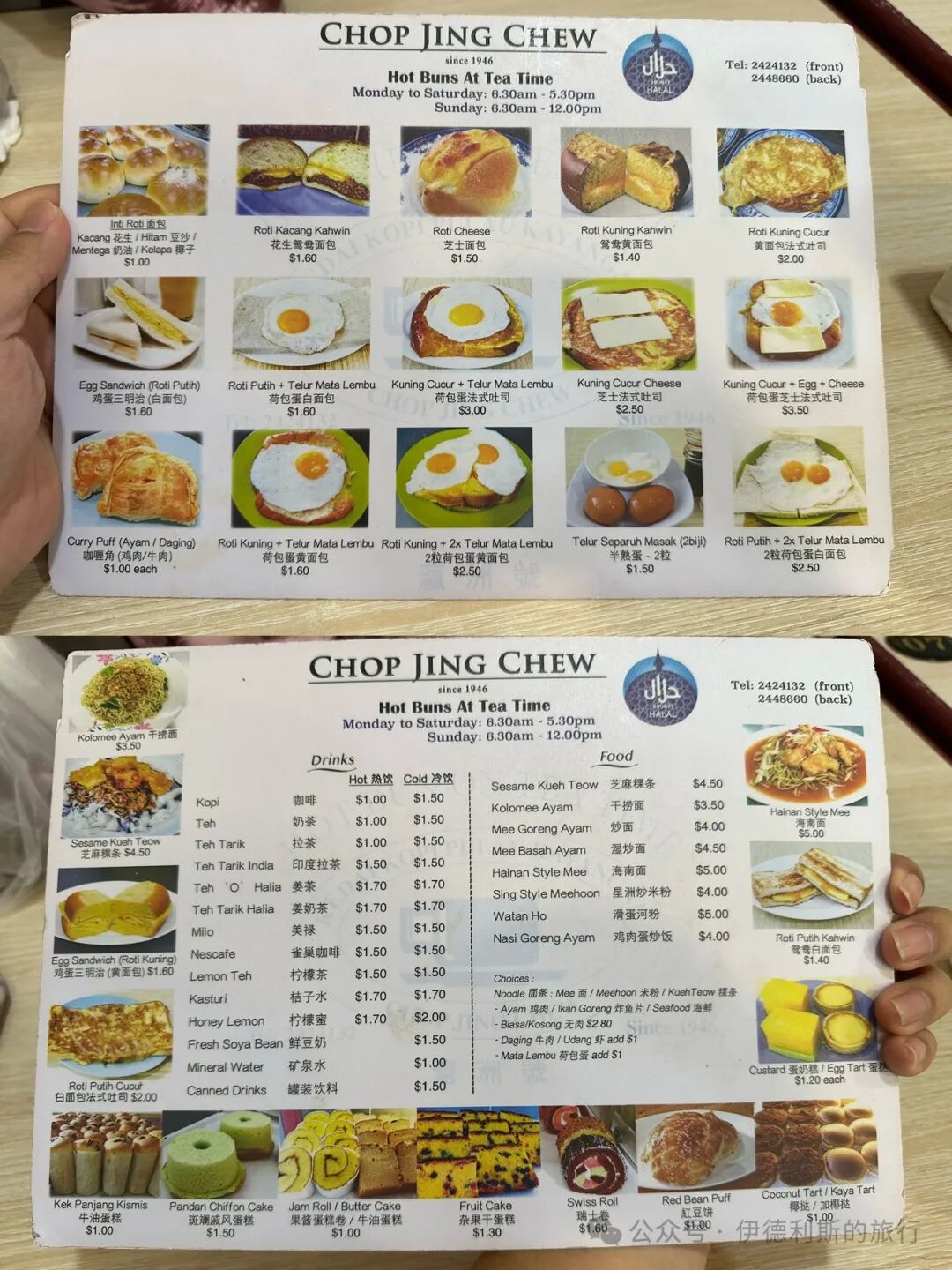
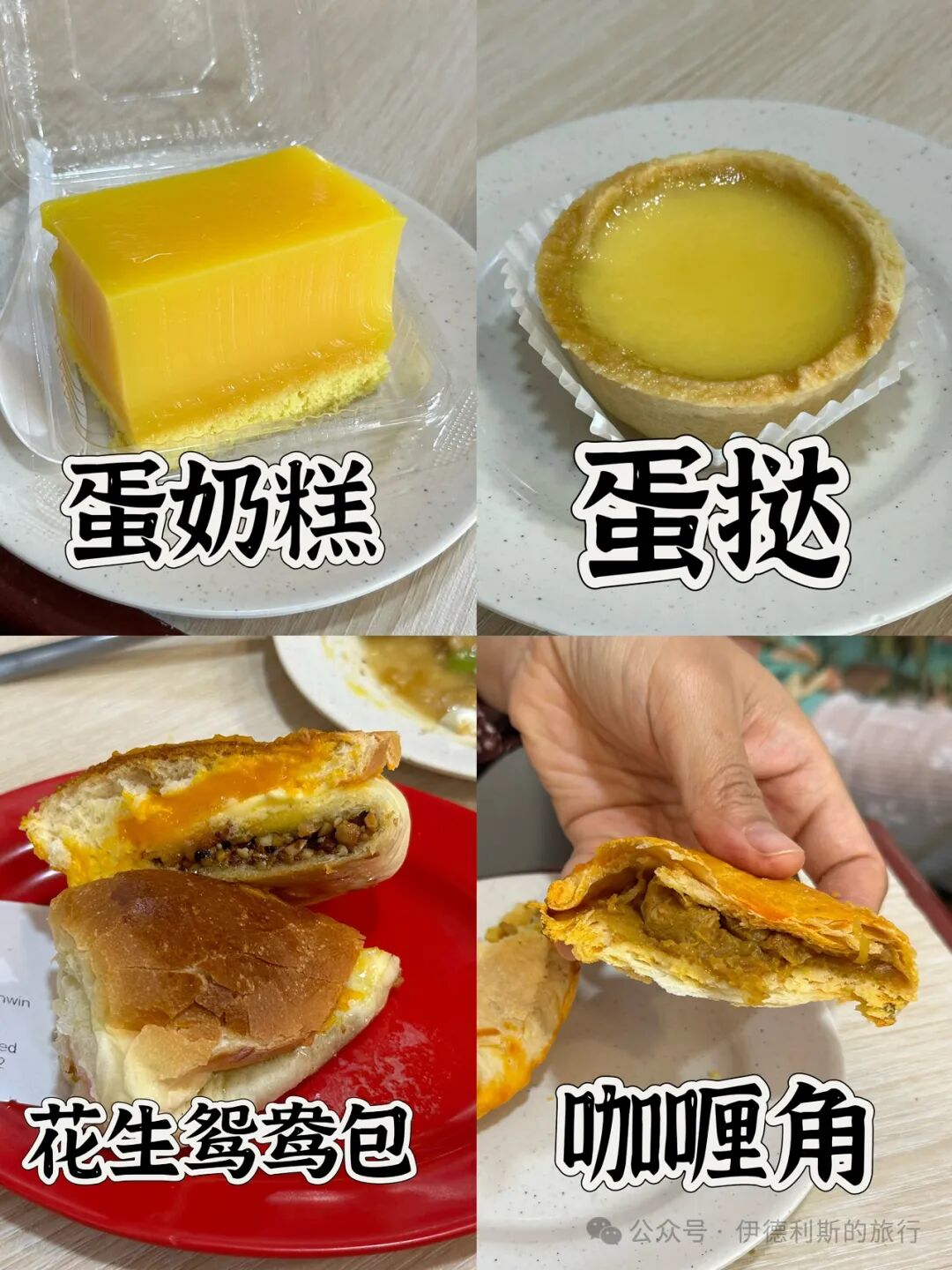
Like many old-fashioned Nanyang Hainanese coffee shops, they serve halal food and hold a Brunei halal certification, making them popular with all ethnic groups. They offer a very wide variety of bread. The classic sandwich breads come in four flavors: peanut, red bean paste, butter, and coconut. They also have peanut and butter bread (yuanyang bread), cheese bread, yellow bread with butter and kaya (yuanyang huang mianbao), and French toast. You can add a fried egg and cheese, or order a soft-boiled egg on the side. Cakes and pastries include custard cake (dan nai gao), egg tarts (dan ta), coconut tarts (ye ta), red bean cakes (hong dou bing), butter cake (niu you dangao), and pandan cake (ban lan dangao). Western-style breads and pastries were learned by Hainanese people while working as kitchen helpers for the British in the 19th century when they moved to Southeast Asia. Today, they are a classic part of Nanyang Hainanese restaurants.
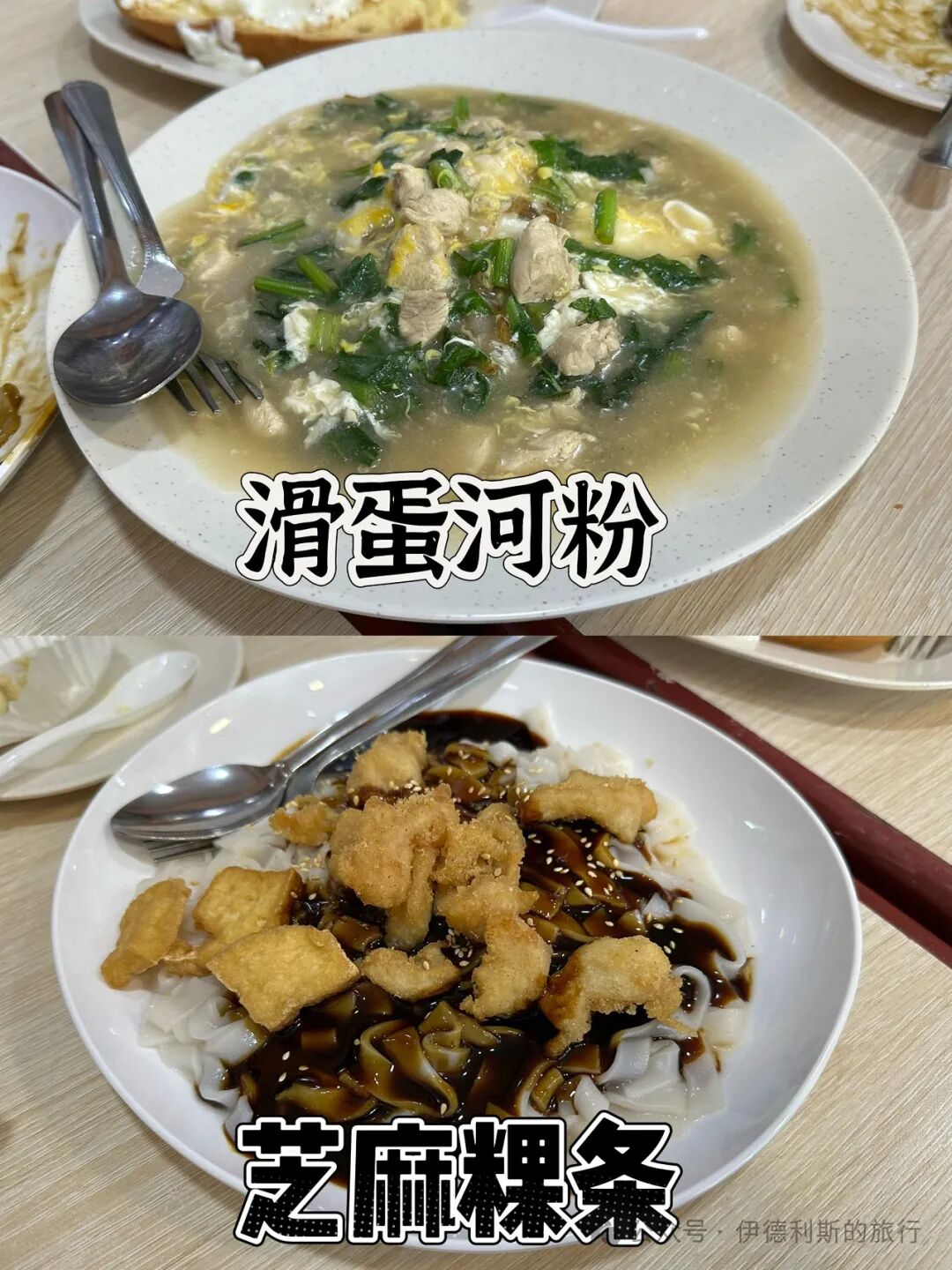
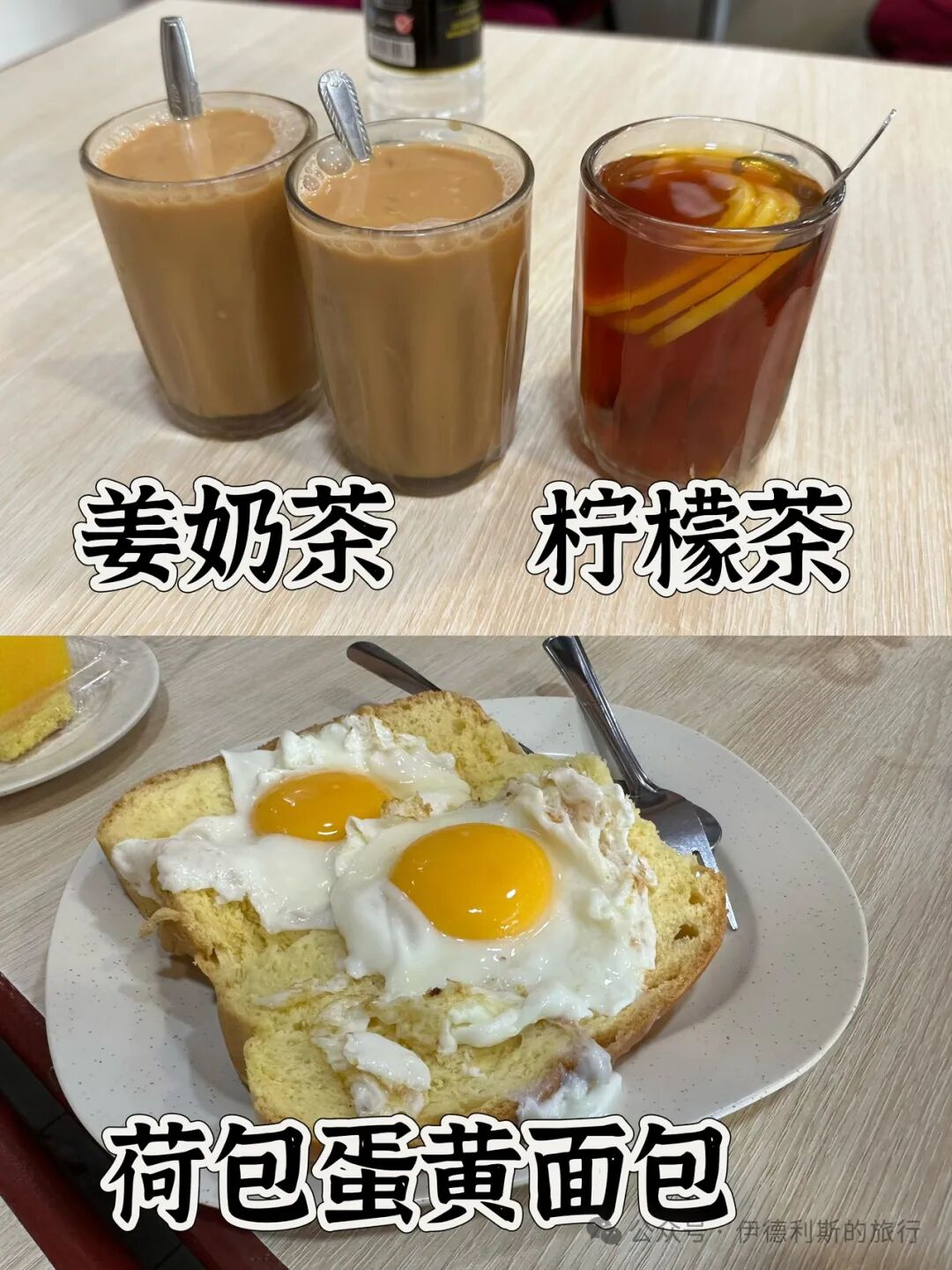
Besides bread and pastries, they also serve various noodles, such as sesame flat rice noodles (zhima guetiao), dry-tossed noodles (ganlao mian), fried noodles, Hainanese noodles, fried rice vermicelli, and egg gravy rice noodles (huadan hefen). These are all very well-suited to Chinese tastes. We ordered egg gravy rice noodles, sesame flat rice noodles, egg tarts, custard cake, yellow bread with a fried egg, chicken curry puffs, peanut and butter bread, ginger milk tea, and lemon tea for a mix of Chinese and Western flavors. The peanut and butter bread is filled with kaya jam, butter, and crushed peanuts, giving it a very rich texture. The sesame flat rice noodles have a sweet, salty, and spicy flavor. Served with fried tofu and fried fish chunks, they are a signature dish of the shop.
After Friday prayers (Jumu'ah), we had lunch in the old town of Brunei Town. There are many Chinese shops here, and it is also a great place to find halal Hainanese restaurants. We chose Babu's Kitchen. It was very busy at noon with Chinese, Malay, and Indian customers, which is a classic scene in a Hainanese restaurant. Since they didn't have a Chinese menu, we asked the owner to recommend the Assam fish fillets, salted egg fried mushrooms, beef yee mein (beef niu rou yi mian), and bean curd skin with tofu and chicken. Like in Malaysia, the Chinese in Brunei speak very standard Mandarin. Overall, the food was very good. The Chinese dishes were infused with Malay flavors, but they were still very easy for Chinese people to enjoy.
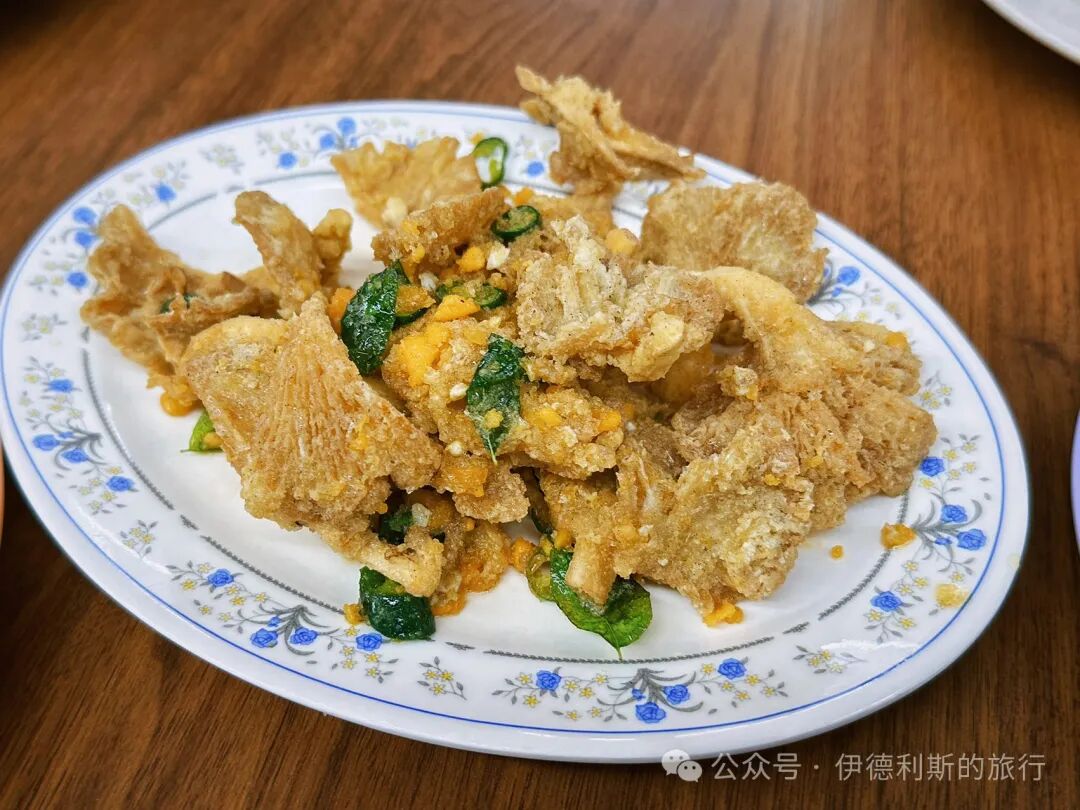
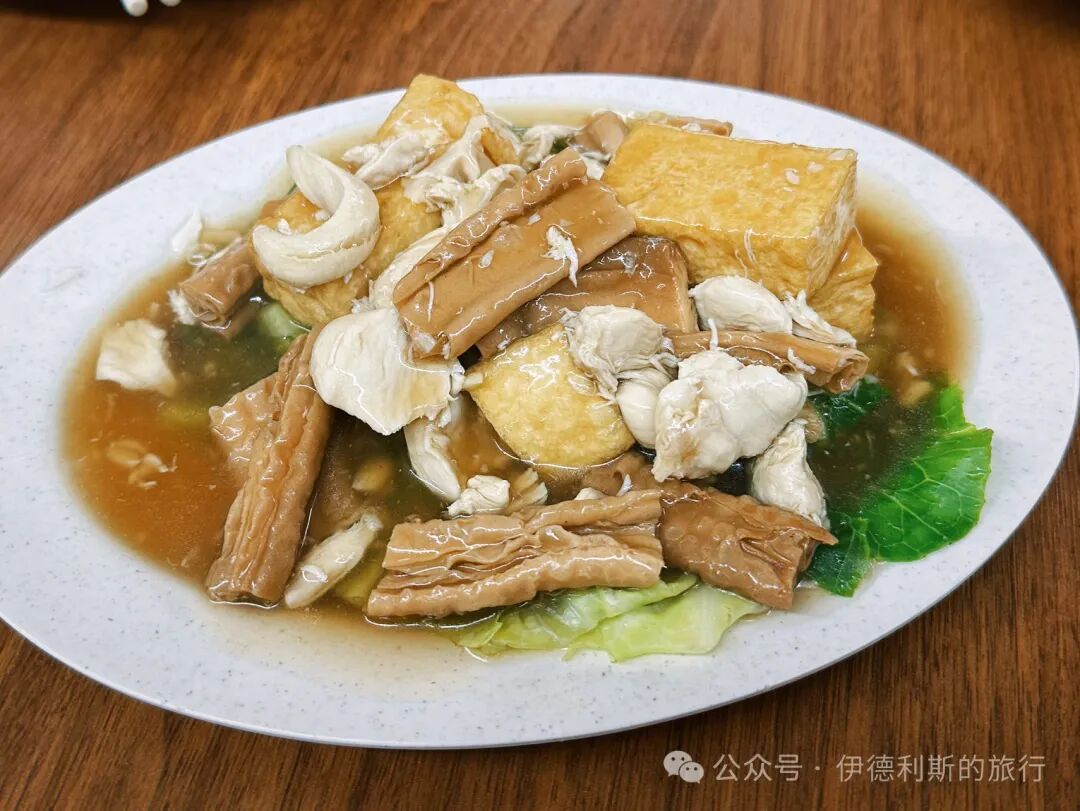
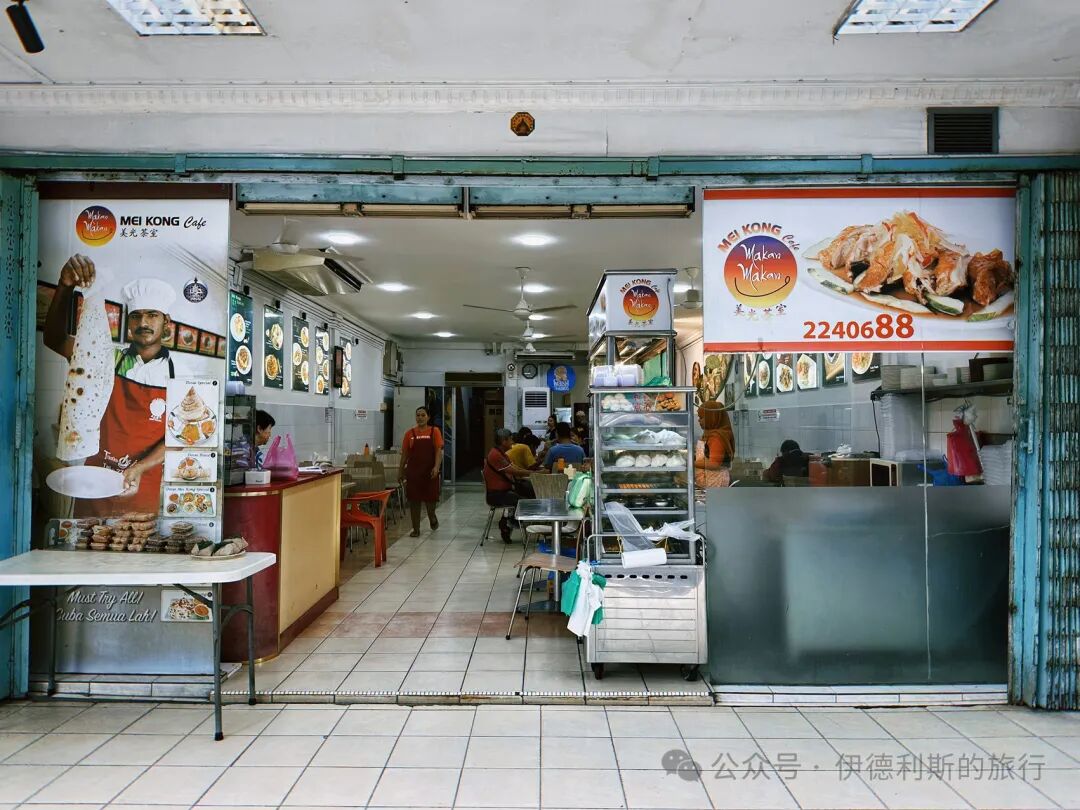
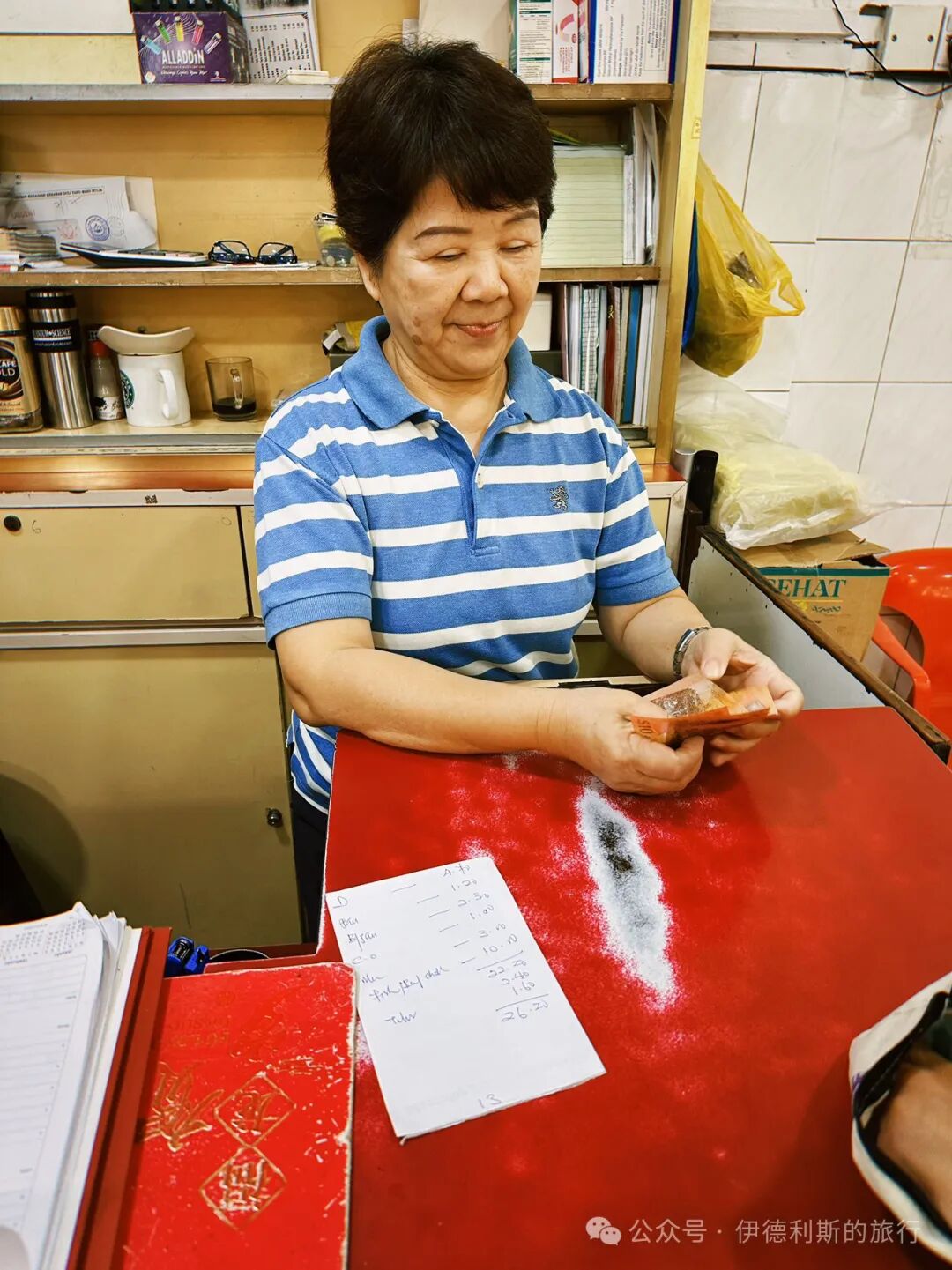
The next morning, we continued to have a Hainanese breakfast at Meiguang Tea House in the old town of Brunei Town. The owner is Hainanese, his wife is from Xiamen, and the staff are all Indonesian. Because they mainly serve the nearby office buildings, it is usually quite busy on weekdays. It is relatively quiet on weekends, and there are fewer steamed dim sum options than usual. We ordered chicken and radish steamed buns (daba), red bean paste buns (doushabao), beef porridge with small fried dough sticks (youtiao), longan herbal tea, stir-fried noodles, and steamed dumplings (shaomai). Next time a friend (dosti) comes on a weekday, we can try their other dishes, like Fuzhou "lucky" rice noodle soup, dry-tossed mouse tail noodles (laoshufen), and chicken intestine noodles (jichangfen).
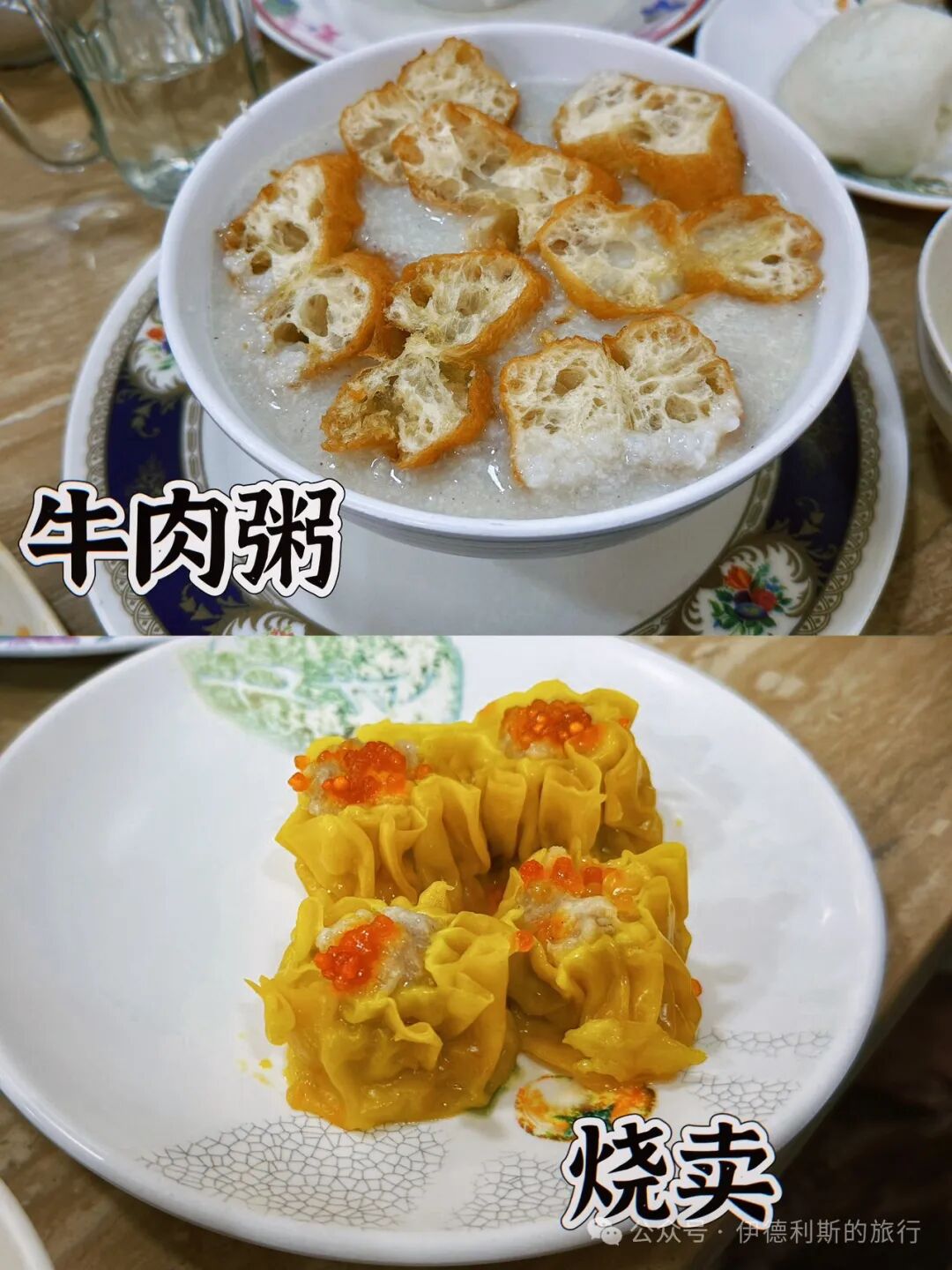
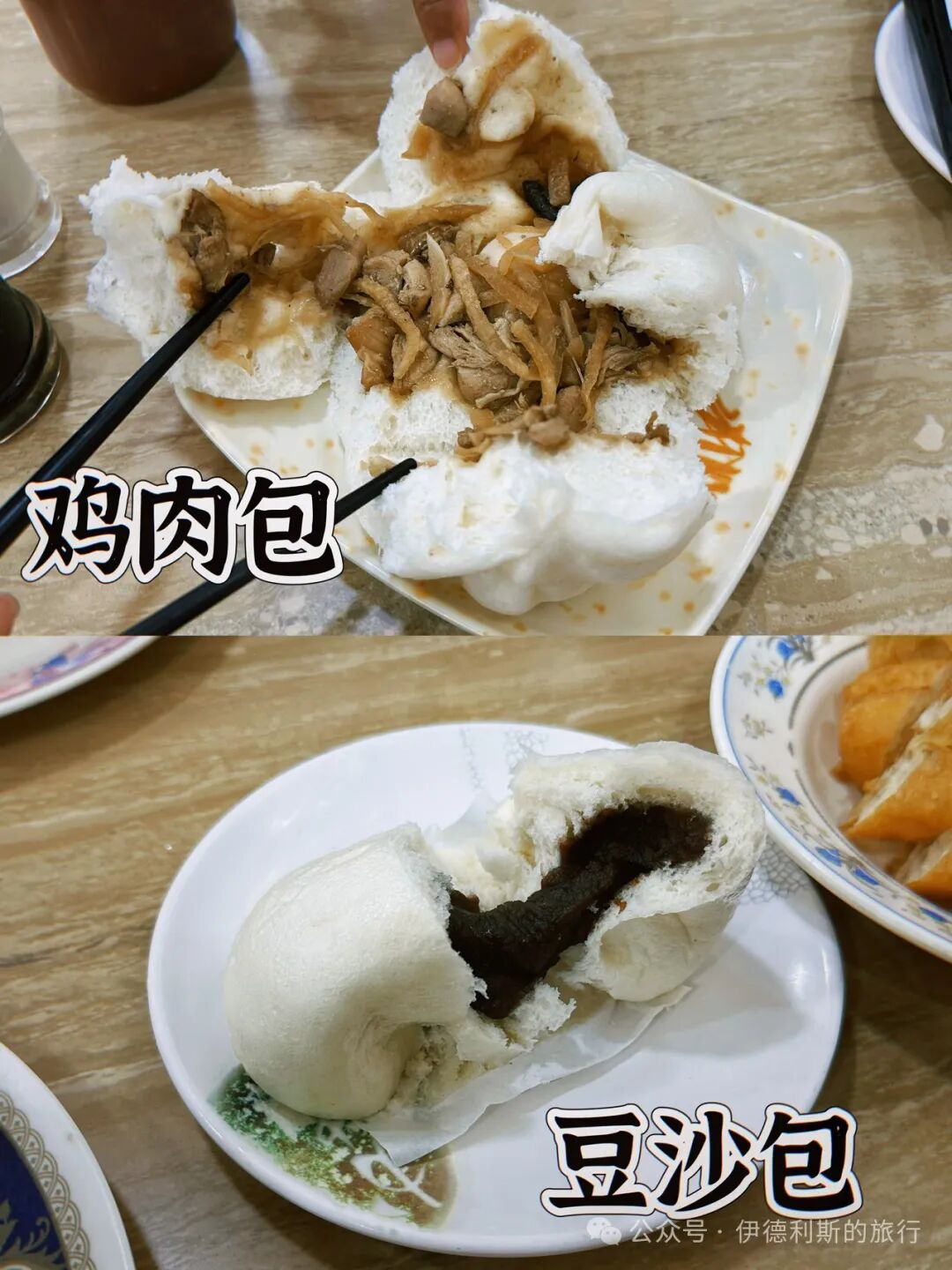
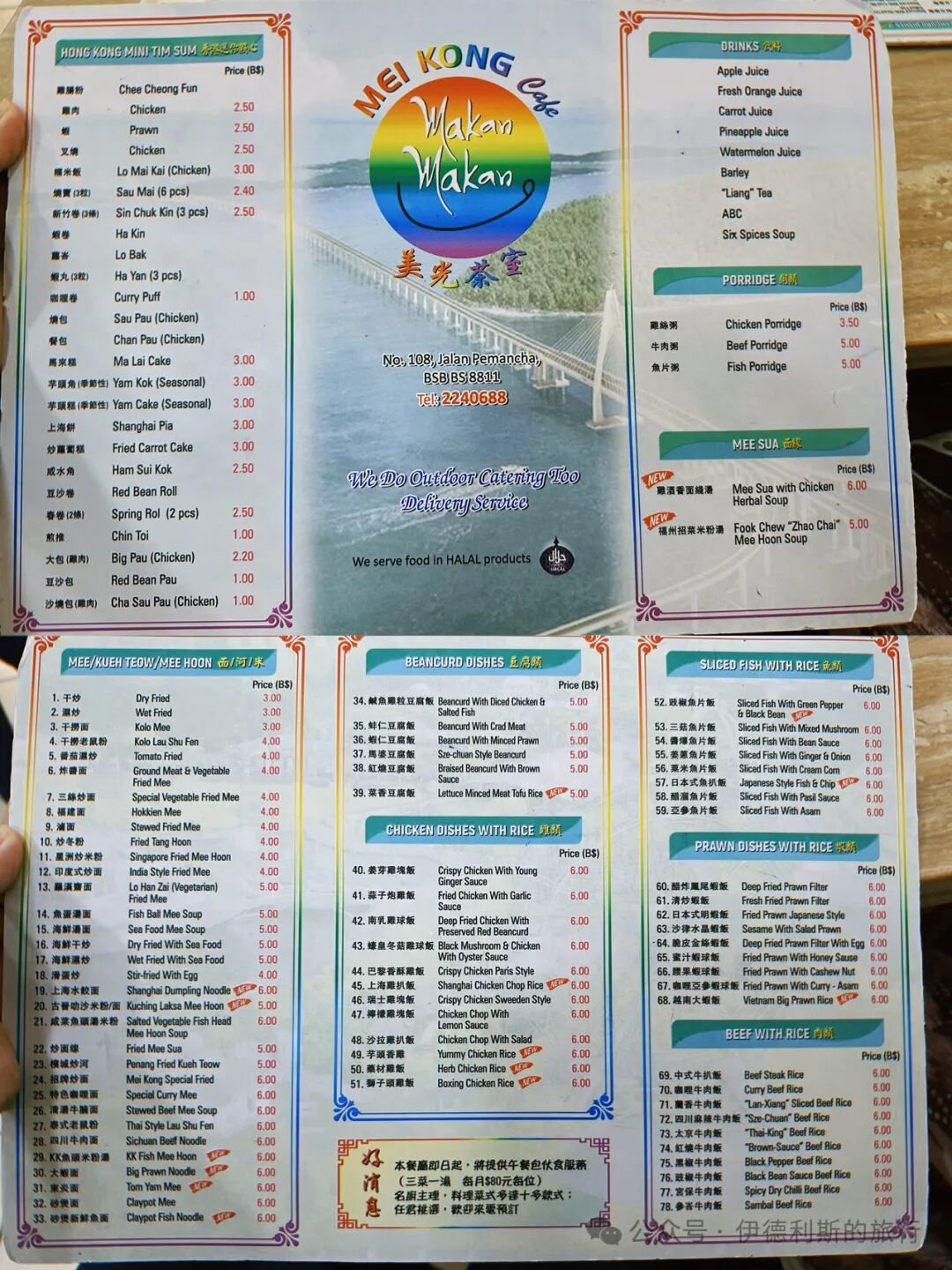
While taking a taxi in the afternoon, we passed the Brunei Fujian Association. I checked the map and saw many Chinese restaurants nearby, so after finishing our namaz, we took a taxi straight there for halal Chinese food.
We chose a restaurant called Shiraz Seafood Restaurant. It sounds like Iranian food, but it is actually a Chinese restaurant called Shixianle. They specialize in dim sum and various Nanyang-style Chinese snacks. The menu is huge, and they have a Brunei halal certification. After we went in, a table of Malays and a table of South Asians arrived, which shows how much different ethnic groups love halal Chinese food.
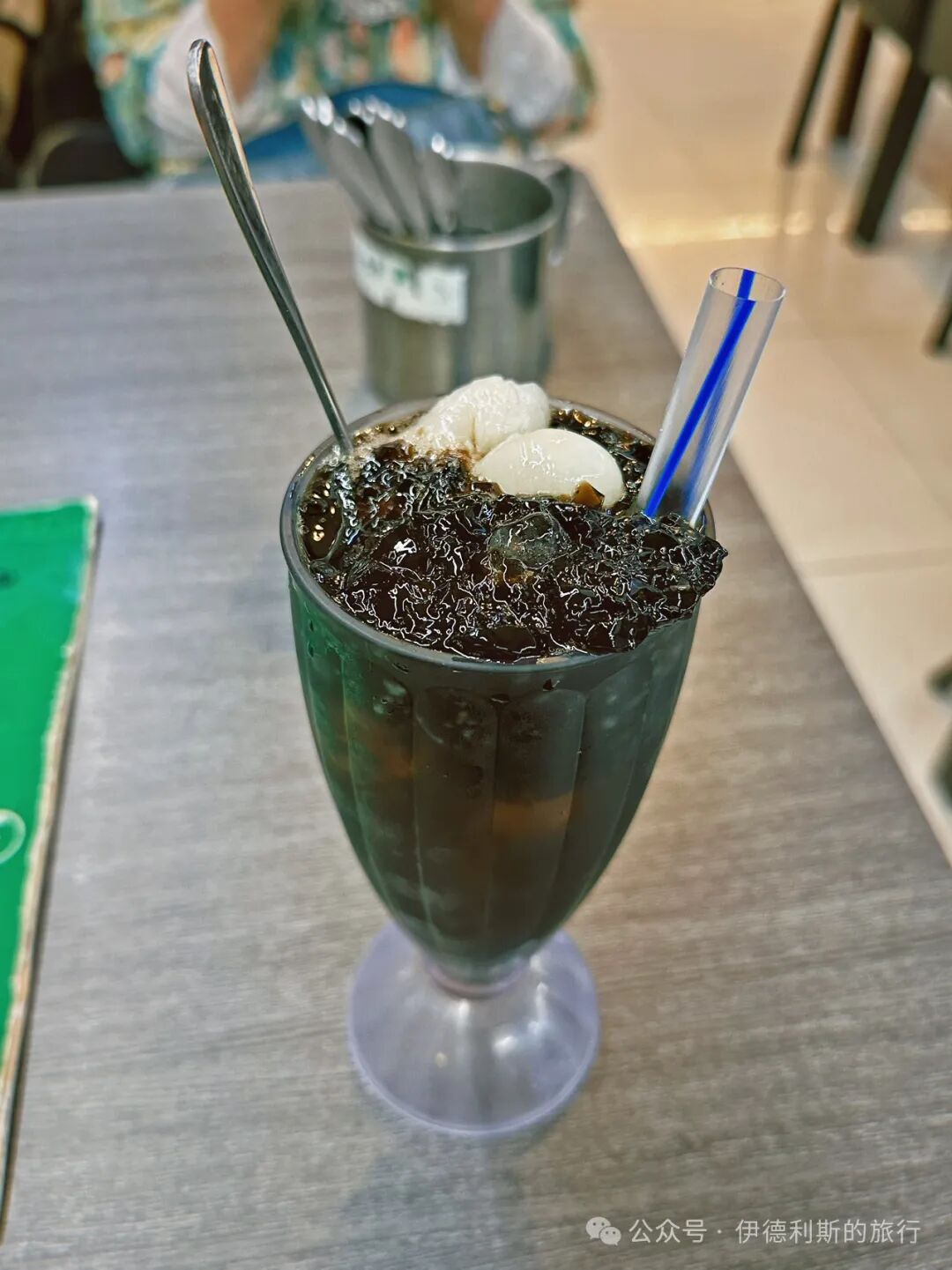
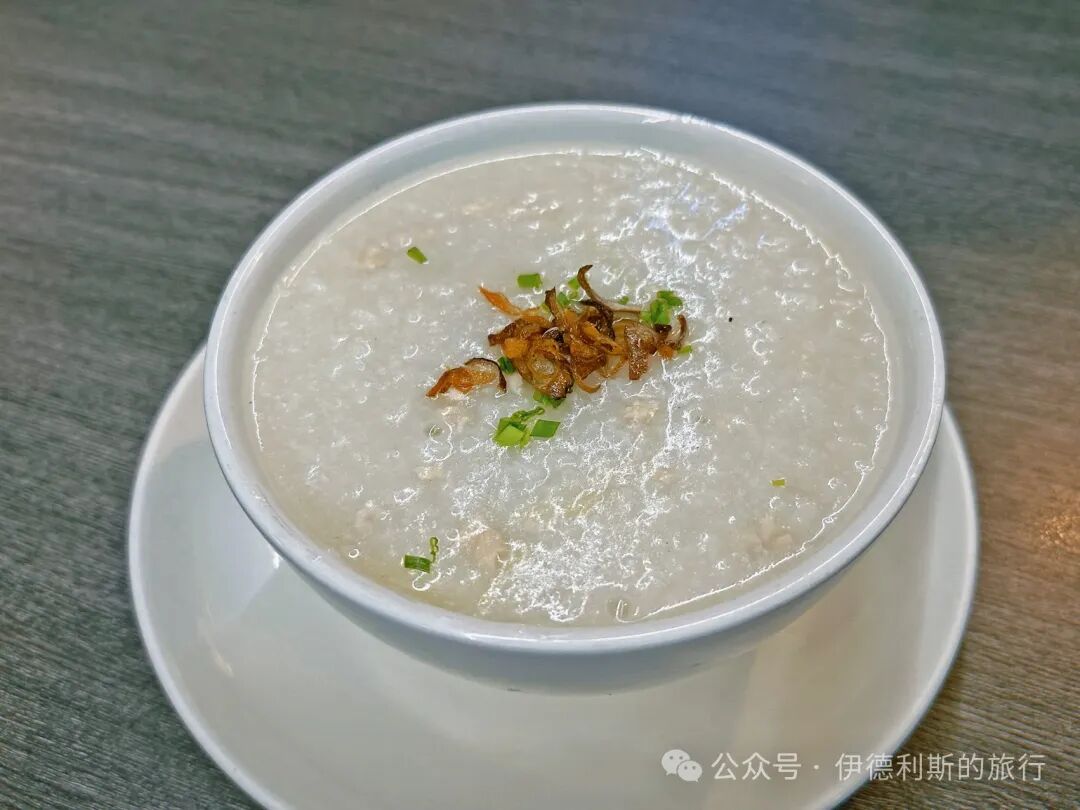
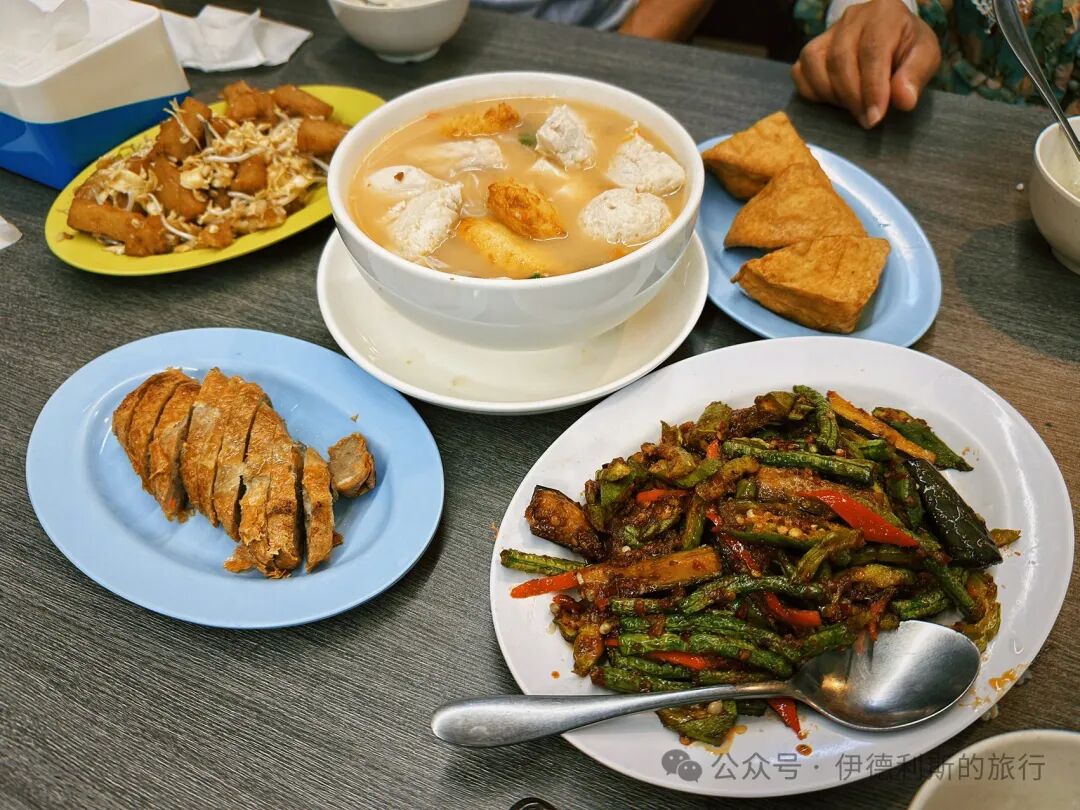
We ordered Cantonese steamed dumplings (siu mai), chicken feet, fish maw with chicken, five-spice meat rolls (ngo hiang), fried stuffed tofu (yong tofu), fried radish cake, longan herbal tea, chicken porridge, seafood soup (a mix of fish slices, fish balls, and more), and dry-fried green beans. We really enjoyed these Nanyang Chinese snacks in Brunei.
Ngo hiang is short for five-spice marinated meat, a snack that originated in the Minnan region of Fujian. In the past, life was hard, so people used five-spice powder to marinate leftover meat and vegetables, wrapped them in tofu skin, and deep-fried them. Later, as Chinese people moved to Nanyang, it spread to Indonesia, Malaysia, the Philippines, Brunei, Singapore, and Thailand.
Stuffed tofu (yong tofu) is a traditional Hakka dish. In the Hakka dialect, "yong" means to fill with stuffing. Legend says that after the Hakka people moved south from the Central Plains, they wanted to eat dumplings but had no wheat. They used tofu instead of flour and invented stuffed tofu. Later, stuffed tofu spread with the Hakka people to Indonesia, Malaysia, Singapore, Brunei, Vietnam, and Thailand.
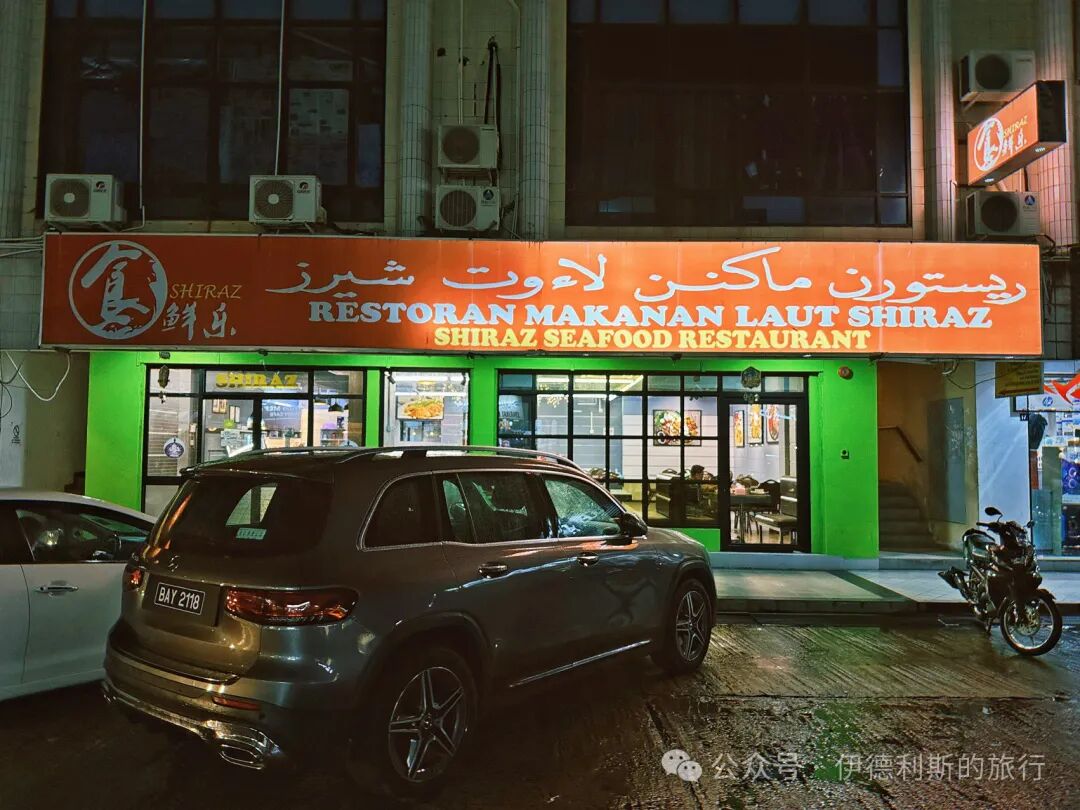
The Brunei Fujian Association and the Taiwan Overseas Chinese Association in Brunei share the same building. Nearby, there are a few non-halal restaurants, which have red non-halal signs at their entrances.
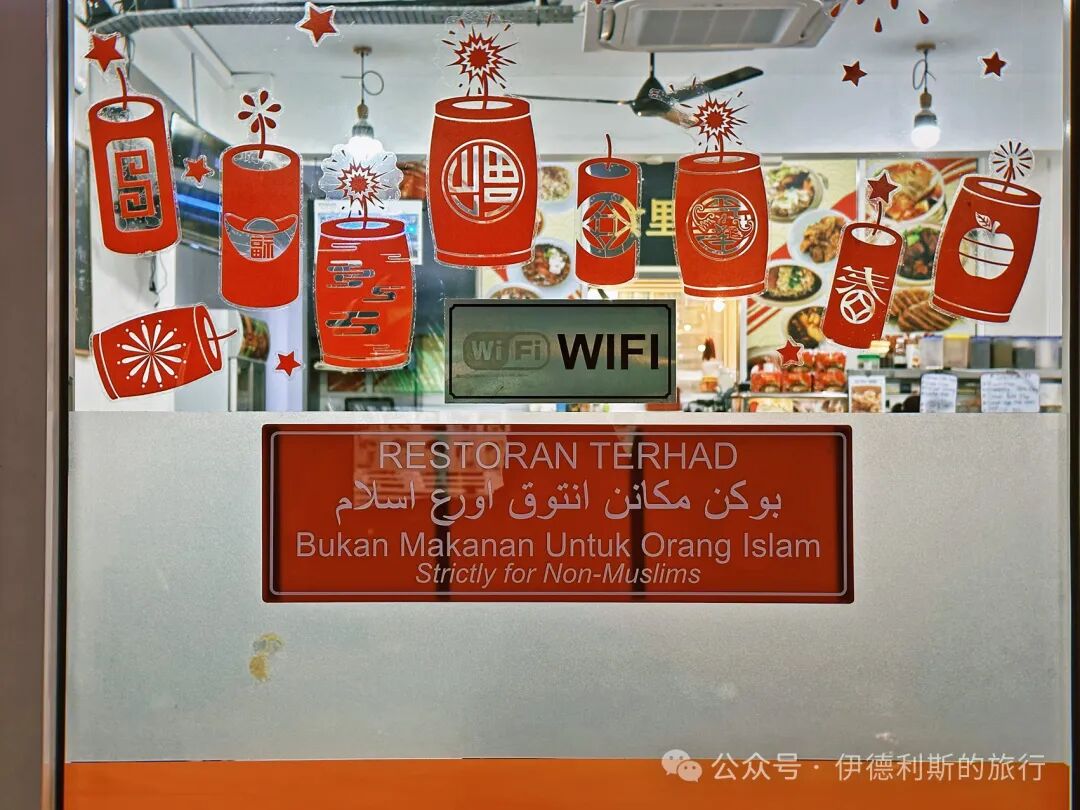
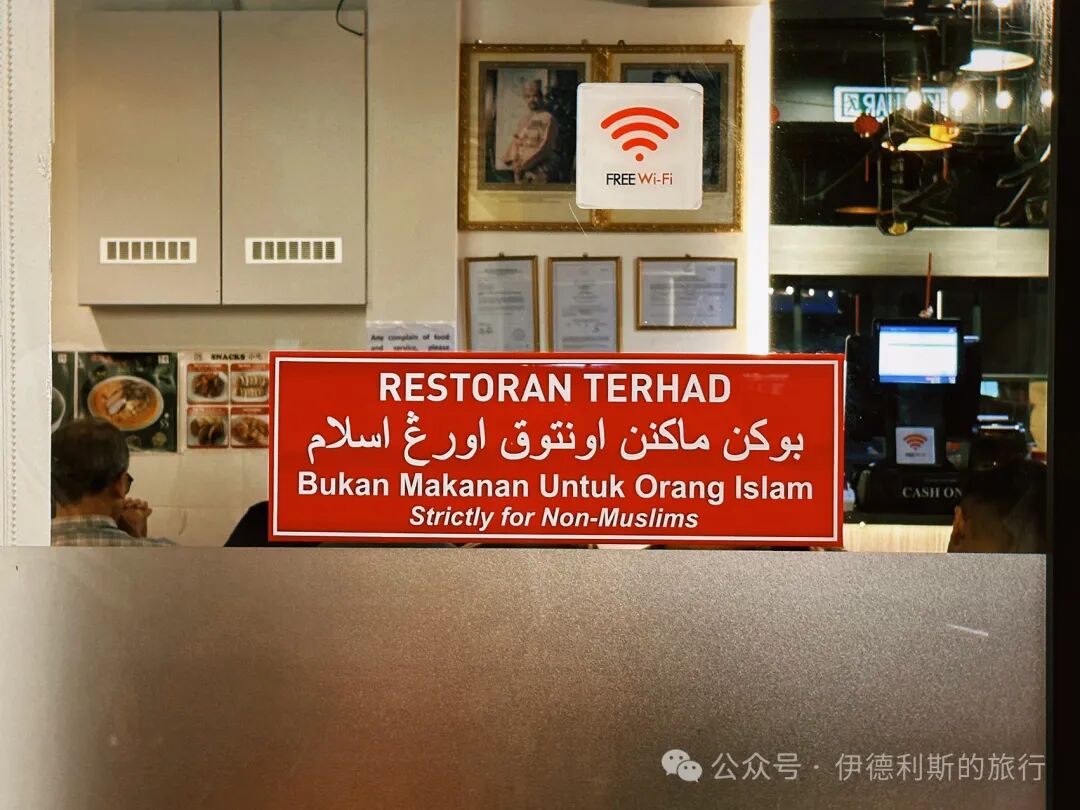
Hua Ho Department Store is a famous halal supermarket chain owned by Chinese merchants in Brunei, with many branches across the country. We went to the Kiulap branch. Inside, one side had various traditional Brunei Malay snacks. We bought a traditional snack from Sabah and Brunei called Kuih Cincin Tempatan, which is made by frying red coconut, rice flour, and palm sugar. The other side is the supermarket area, where you can buy various halal foods with Cantonese, Fujian, Chaoshan, and Taiwanese characteristics.
The founder of Hua Ho Department Store, Lau Kam Kok, was born in 1920 to a farming family in Lieyu, Kinmen, Fujian. In 1938, he went to Nanyang to seek his fortune, first arriving in Singapore and then moving to Brunei to join his eldest sister. In 1947, Lau Kam Kok bought land in Manggis, in the northern suburbs of Brunei, built a vegetable garden, hired workers to raise chickens and ducks, and officially established Hua Ho Department Store. After the 1950s, as agricultural prices fell, Lau Kam Kok went bankrupt and closed his shop in 1958. Later, he began selling vegetables at the market and selling fabric door-to-door. He did not reopen his shop until 1961. In 1966, he built a two-story building, and the shop was on the first floor. He gradually expanded the business, eventually making Hua Ho the largest department store in Brunei.
In 2004, the Sultan of Brunei awarded Lau Kam Kok the title of Pehin Kapitan Cina, making him one of the few Chinese nobles in Brunei. Lieyu, also known as Little Kinmen, is located between Kinmen and Xiamen. People from Lieyu began traveling to Brunei in the 19th century to seek their fortunes. They started as shipping laborers, dock workers, fishermen, and street vendors. Over time, they saved money, started businesses, and became important figures in Brunei's business world. Many earned titles like Pehin Kapitan and Pehin Dato.
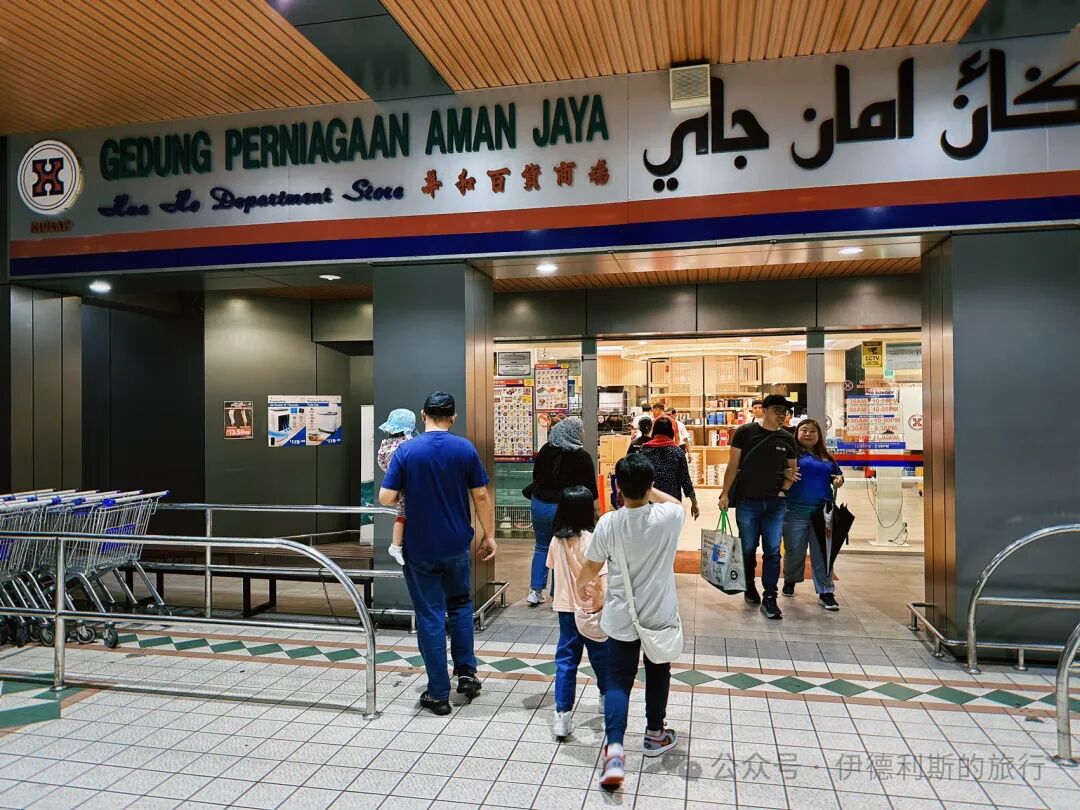
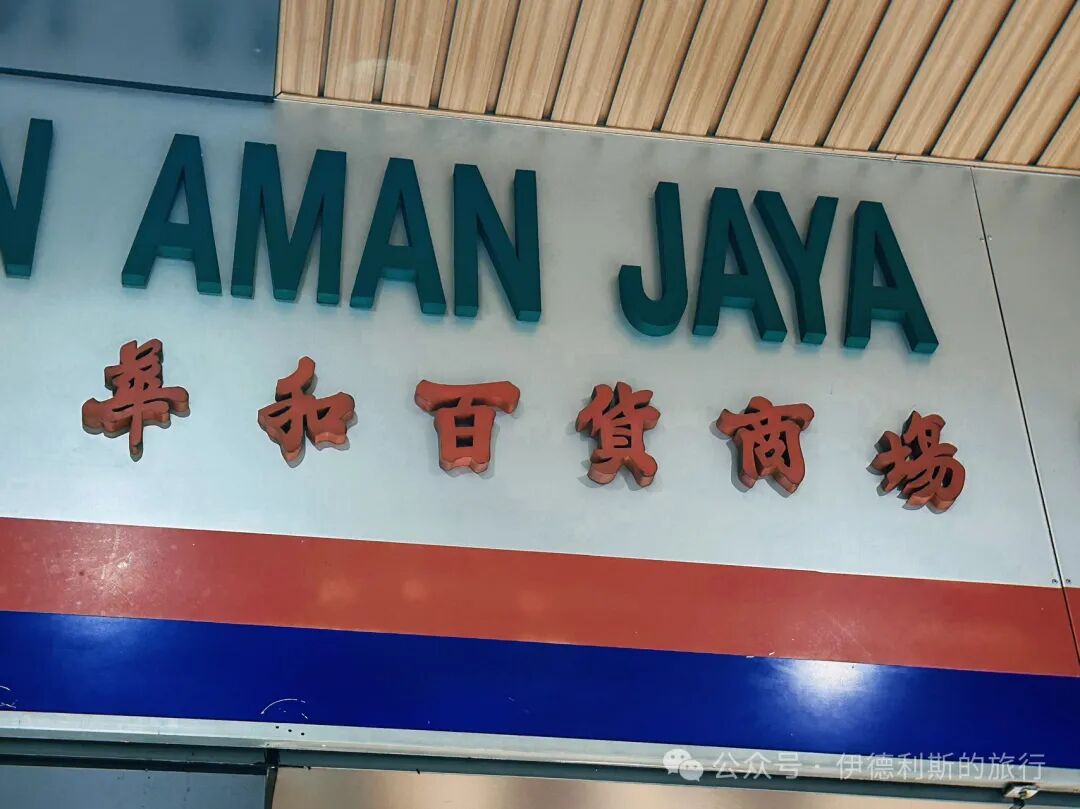
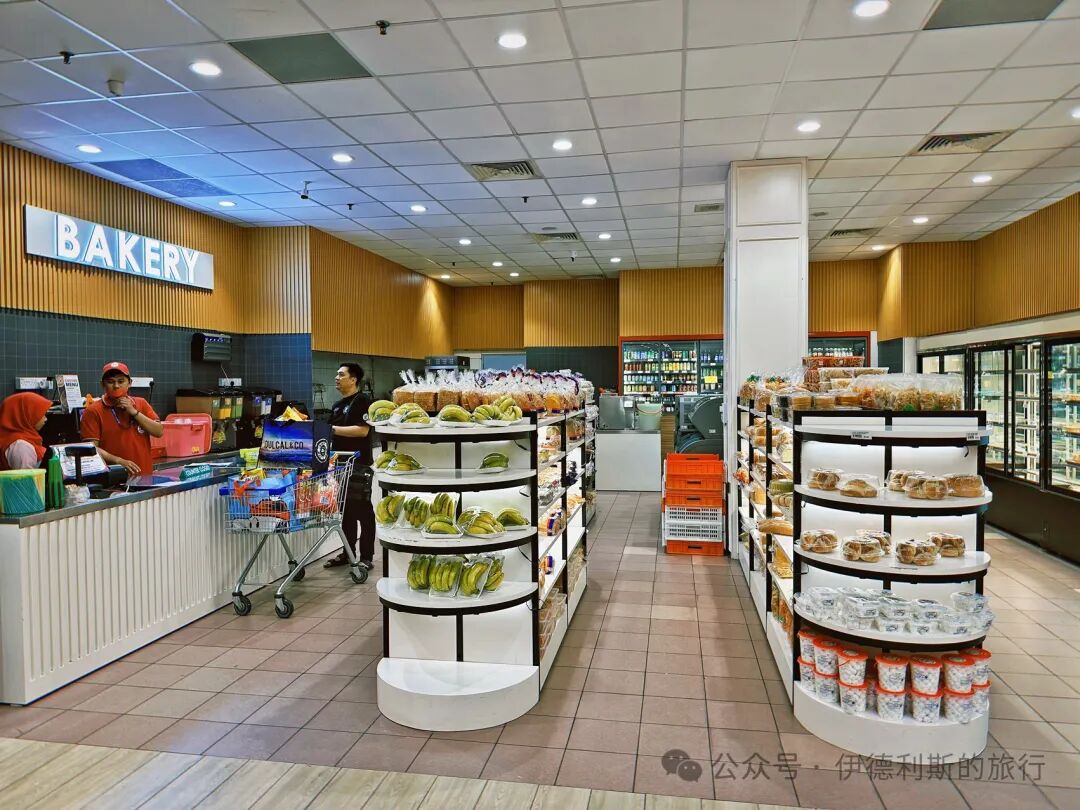
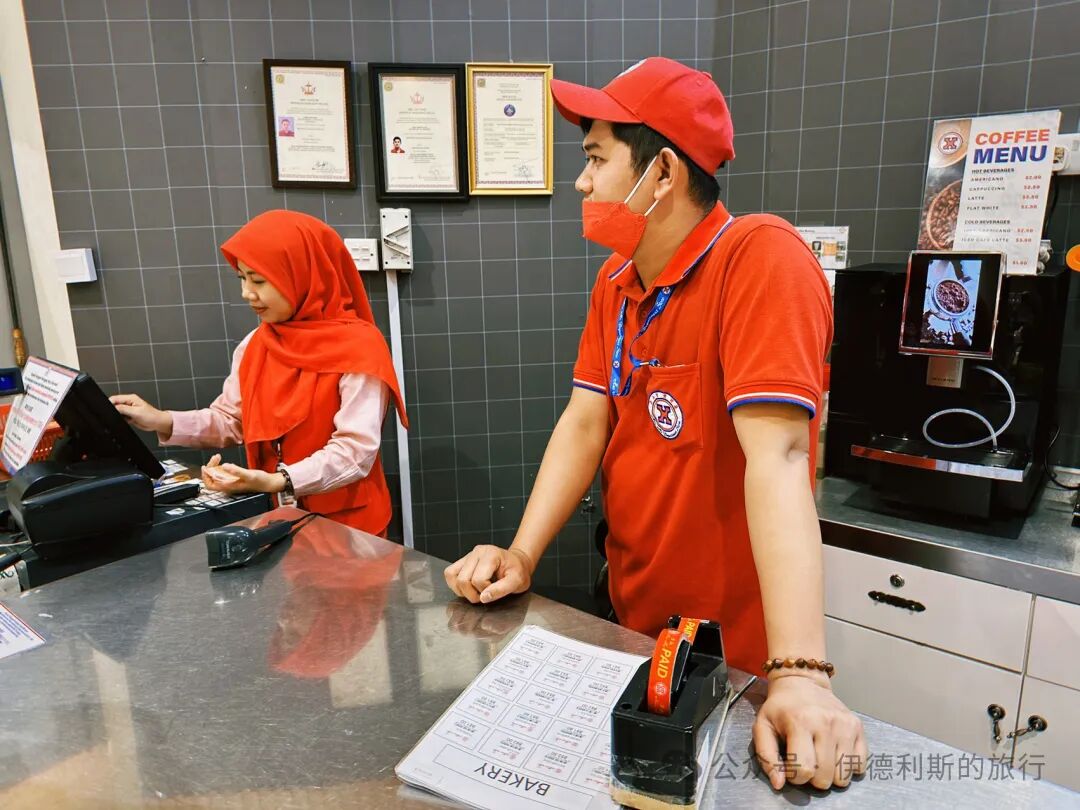
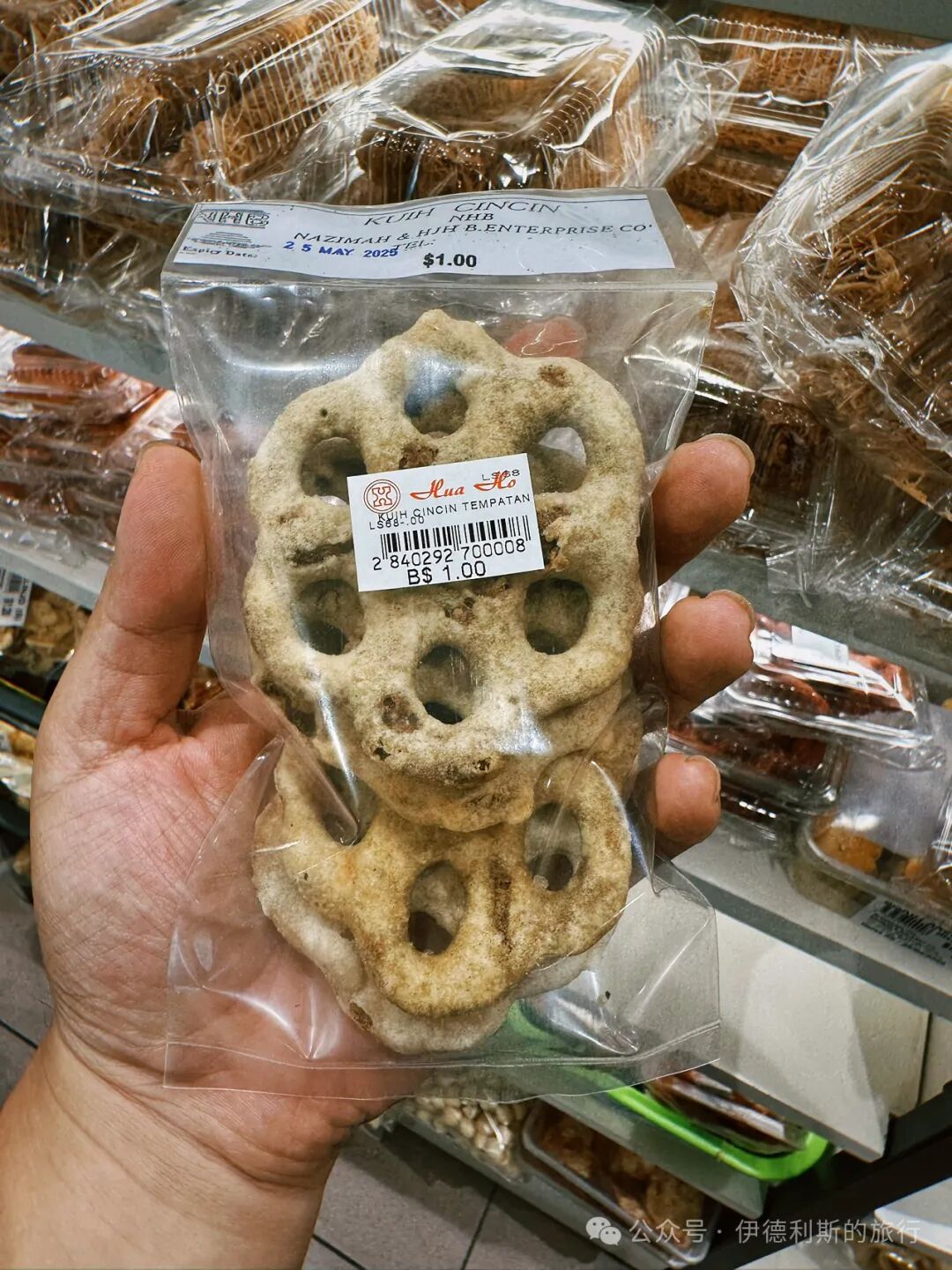
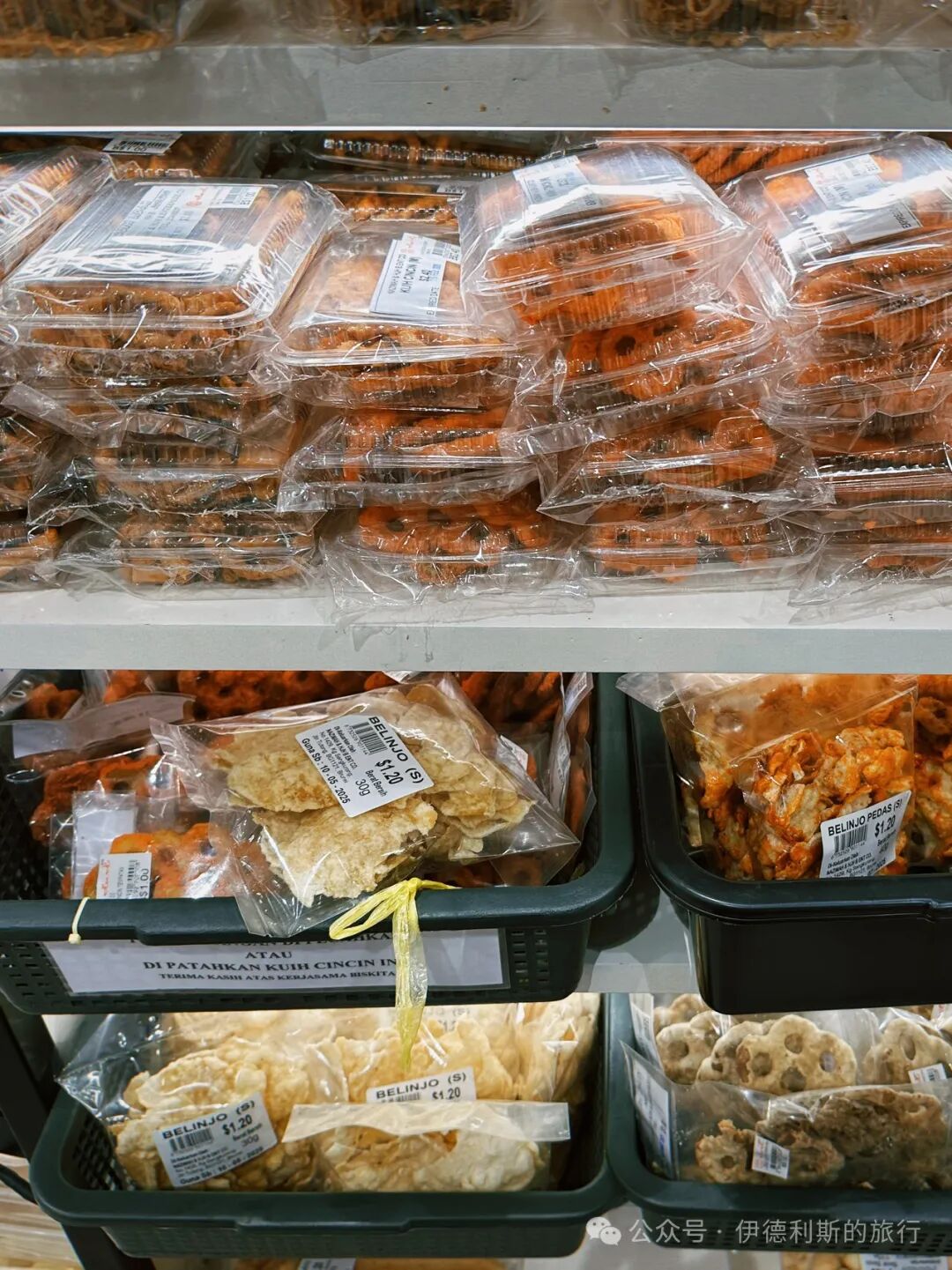
Some items at Hua Ho Department Store include coconut jelly powder, cold tofu pudding powder, Hong Kong narcissus flour, Shantou sweet potato starch, braised peanuts, cilantro hearts, shrimp paste chili (belacan chili), Chaoshan-style sweet and sour ginger slices, South China vegetables, spicy fermented bean curd with sesame oil, rice noodles, shredded codfish, and premium dried squid.
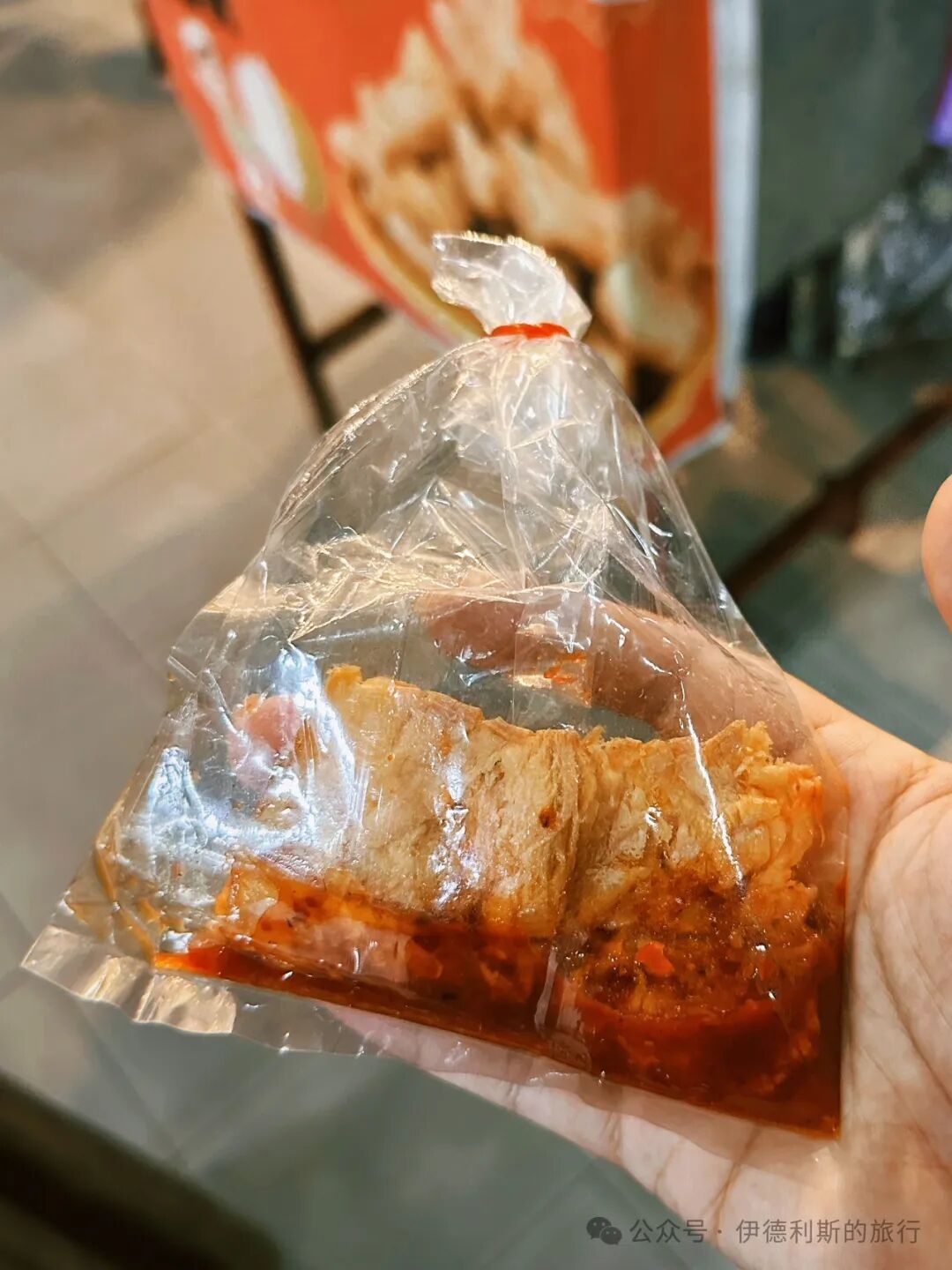
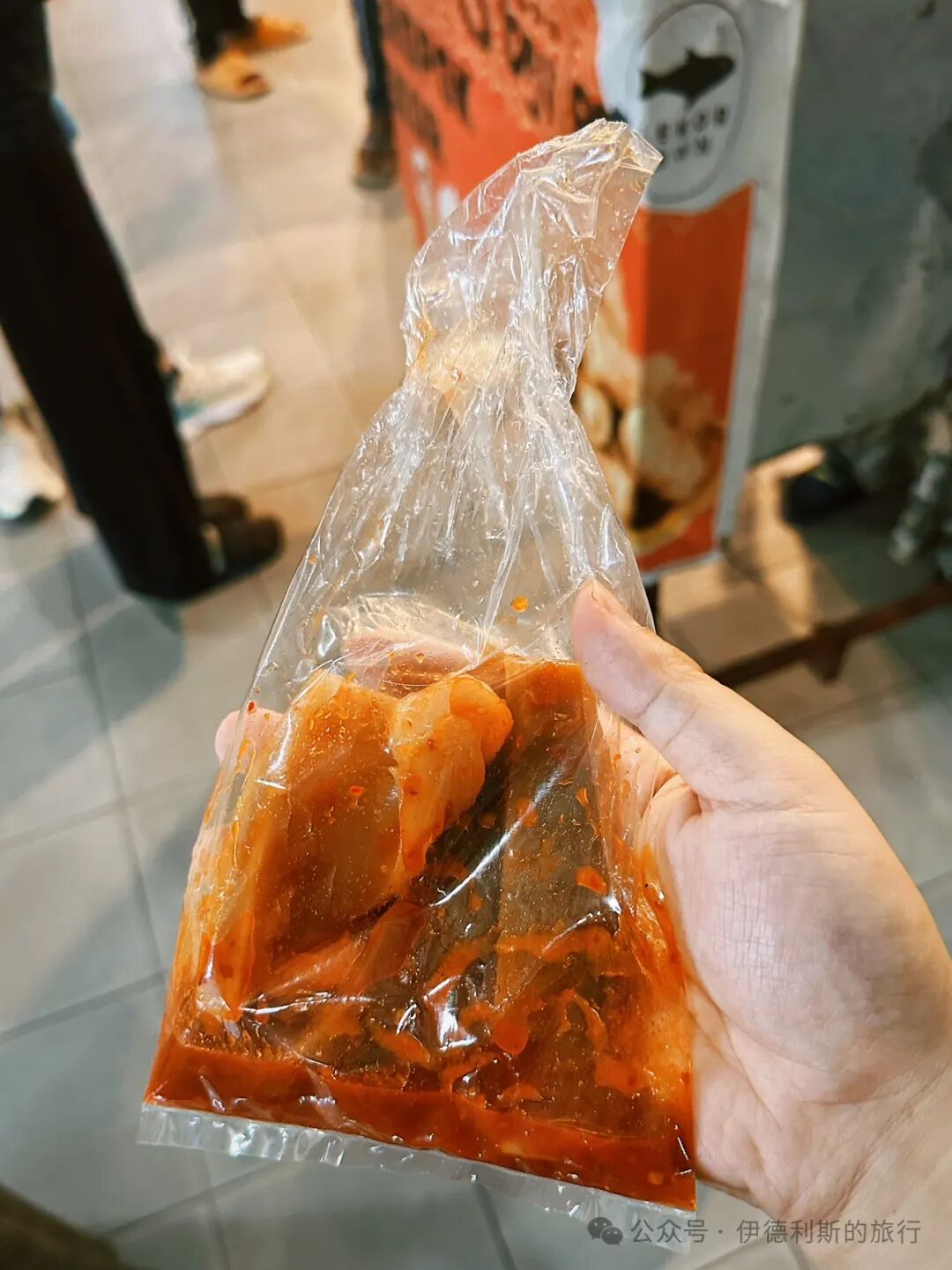
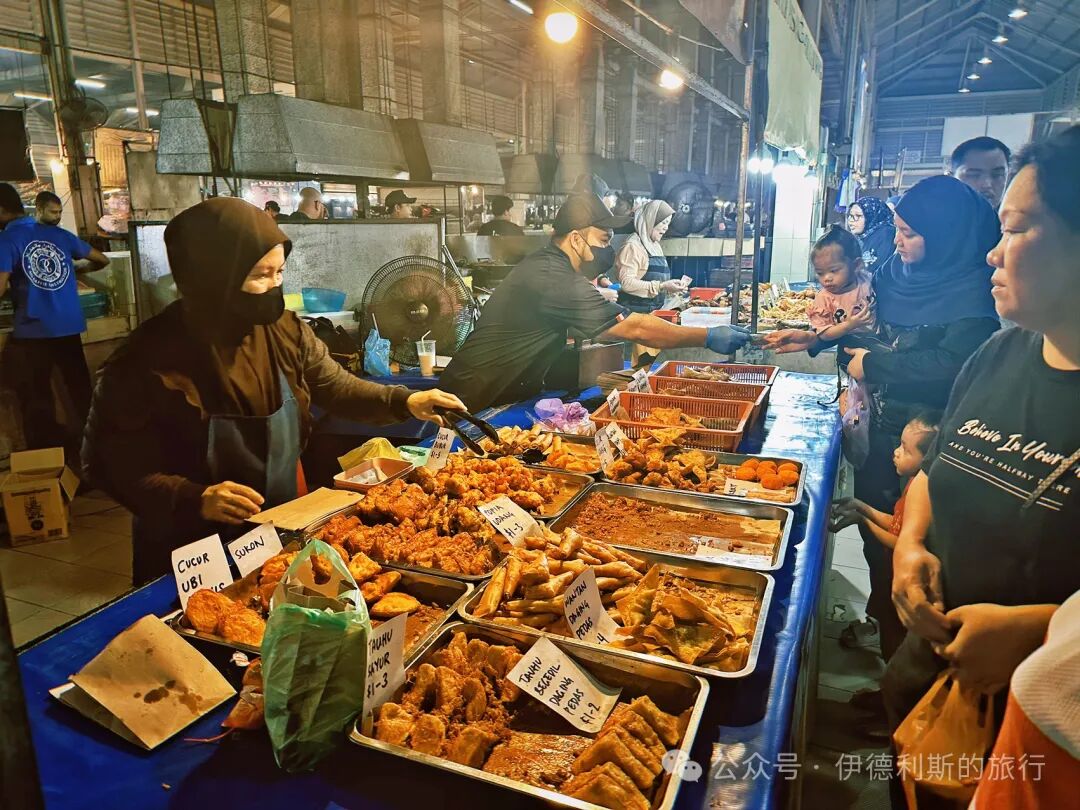
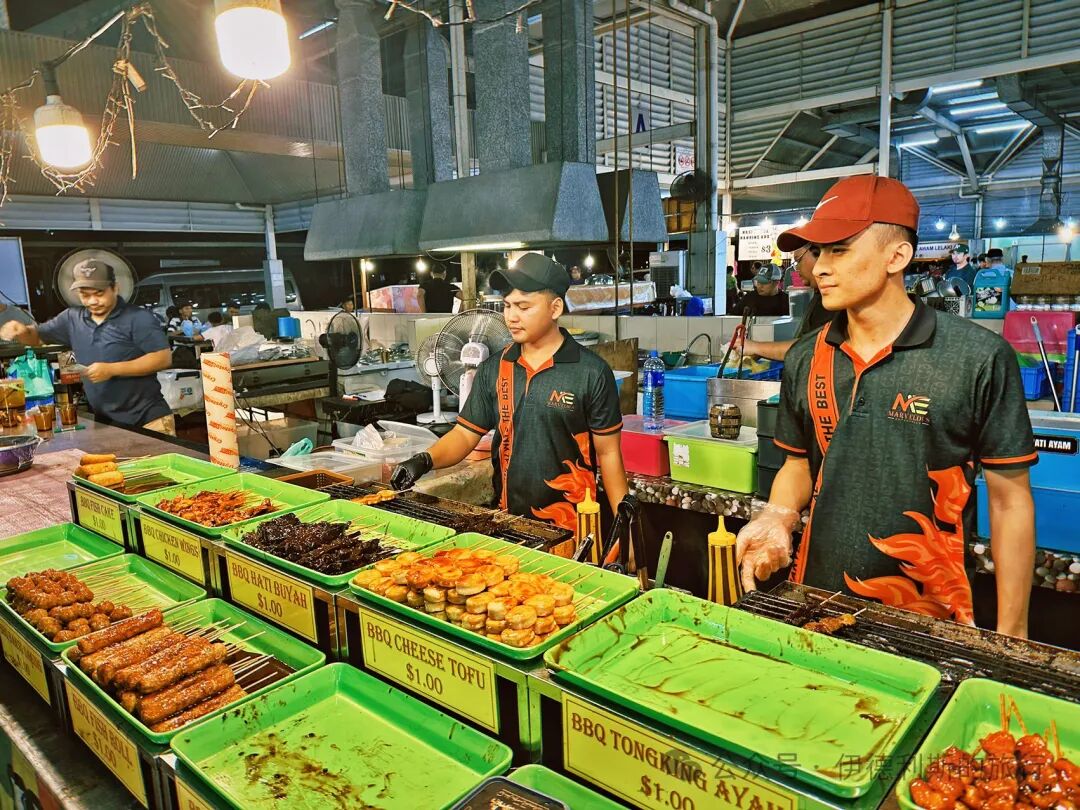
After getting off at Gadong, we took a taxi to the night market. There are very few tourists in Brunei, so the night market is mostly filled with locals. We first bought spicy sauce to go with shredded squid and fish maw. These snacks are quite tasty. Then we bought mangosteen and snake fruit. It was my first time eating snake fruit, and it tasted pretty good.
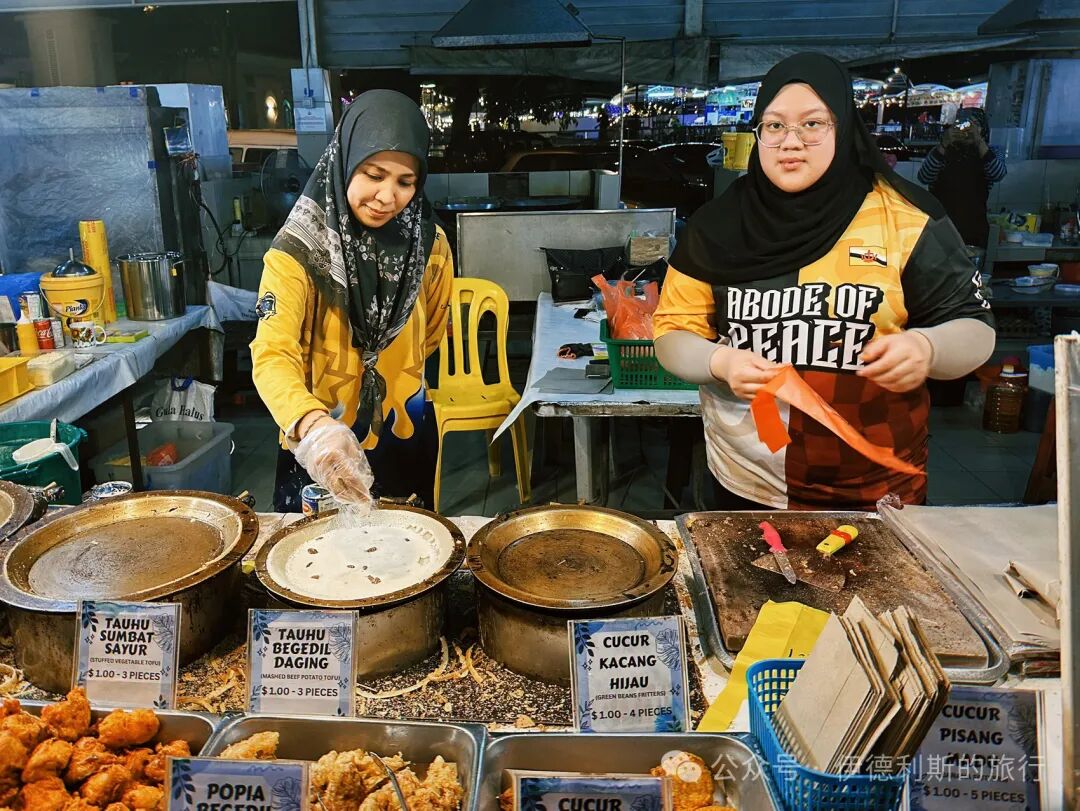
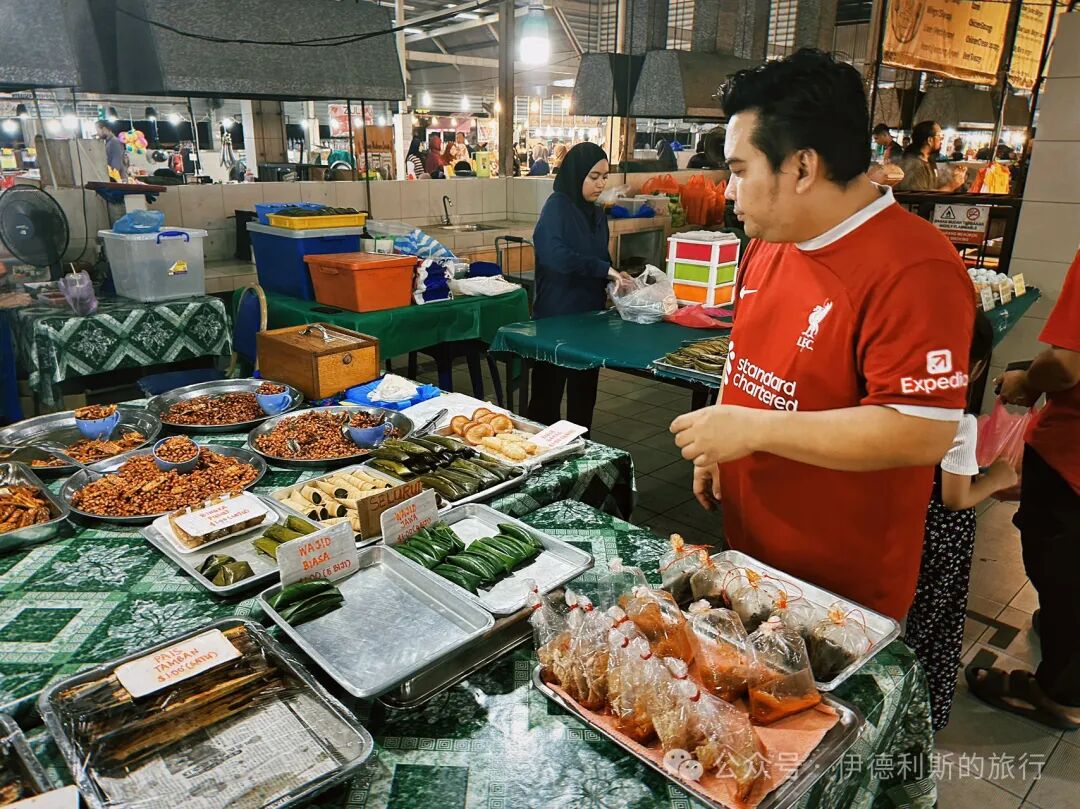
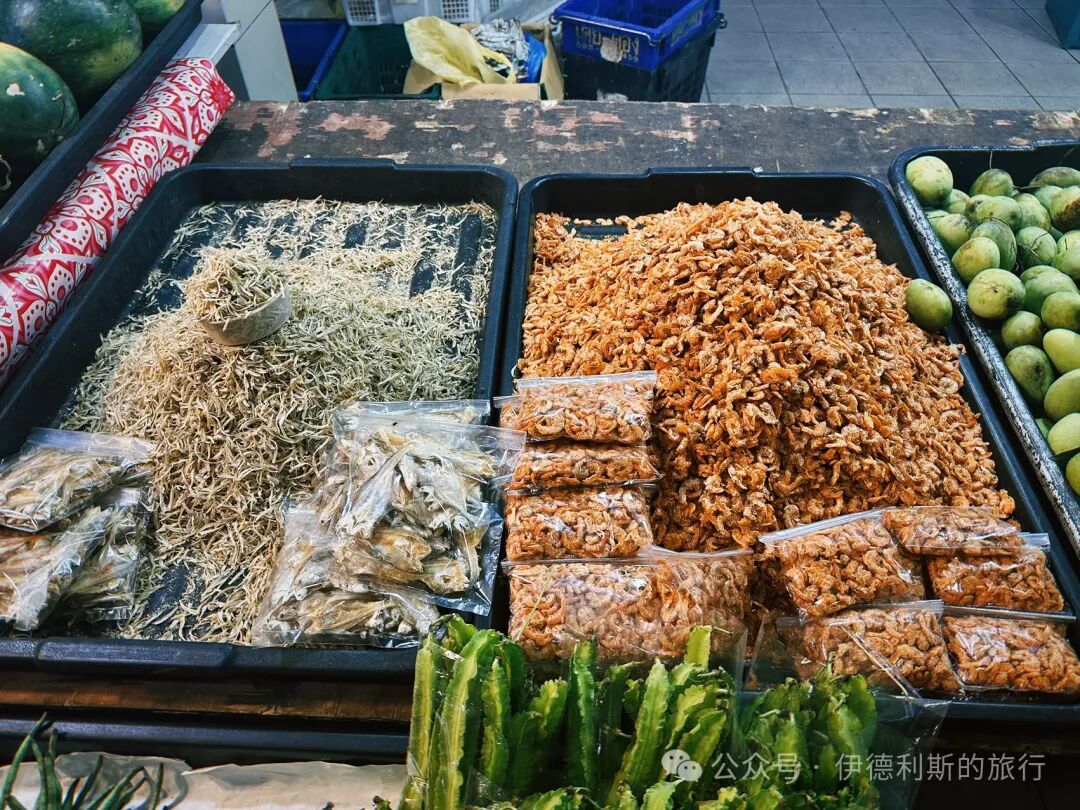
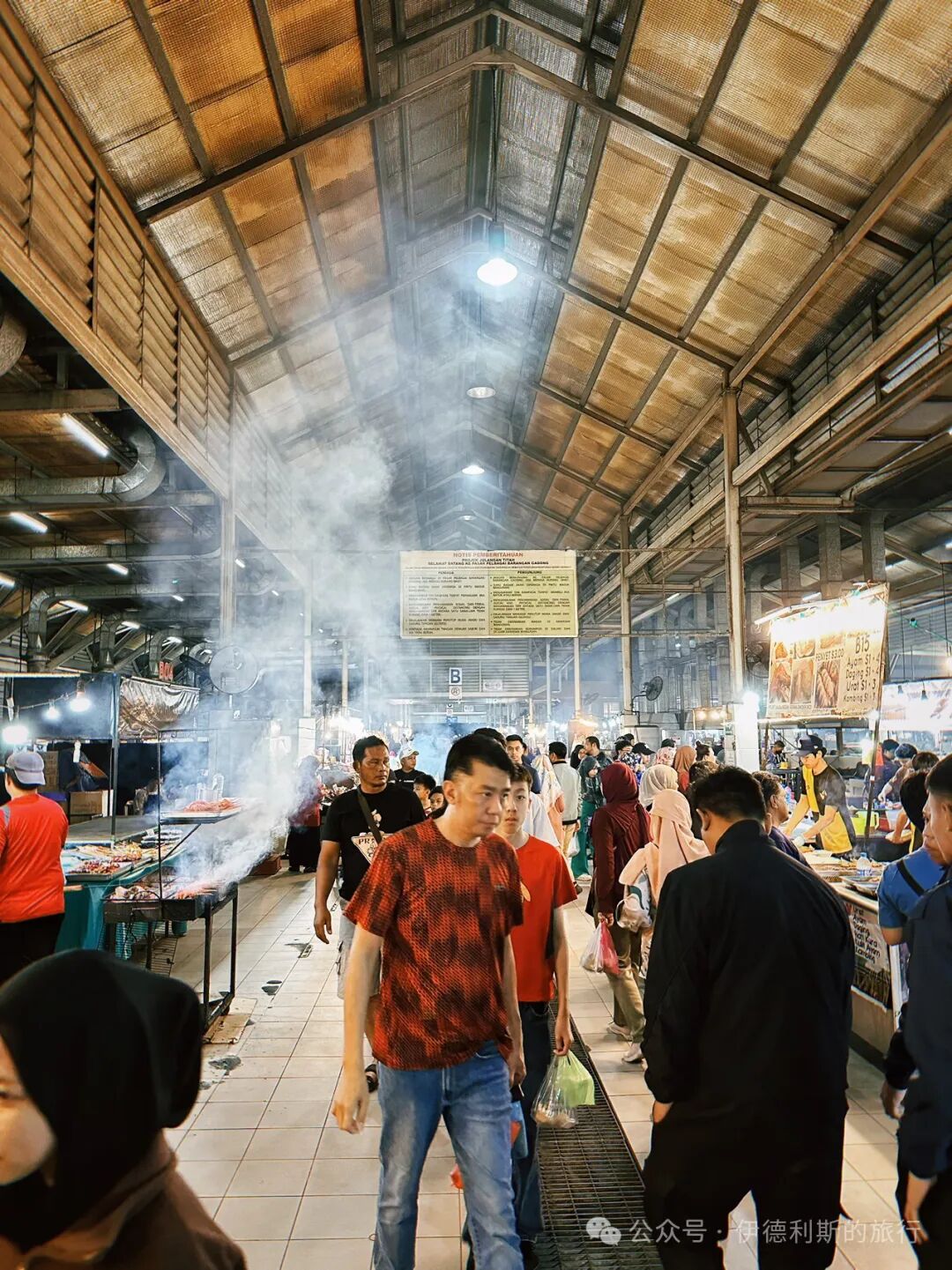
While walking around the night market, the adhan (call to prayer) sounded. You can find a place to pray everywhere in Brunei. We performed our namaz at the small mosque in the night market. They provide sarong skirts for men to wear here.
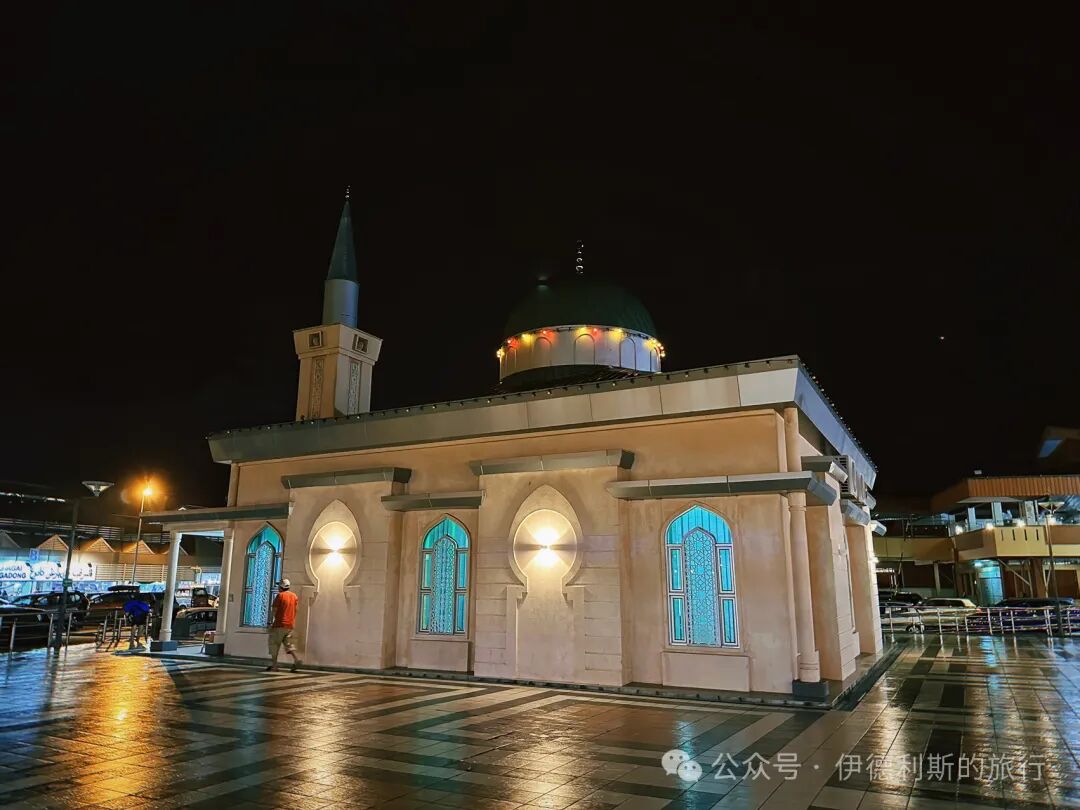
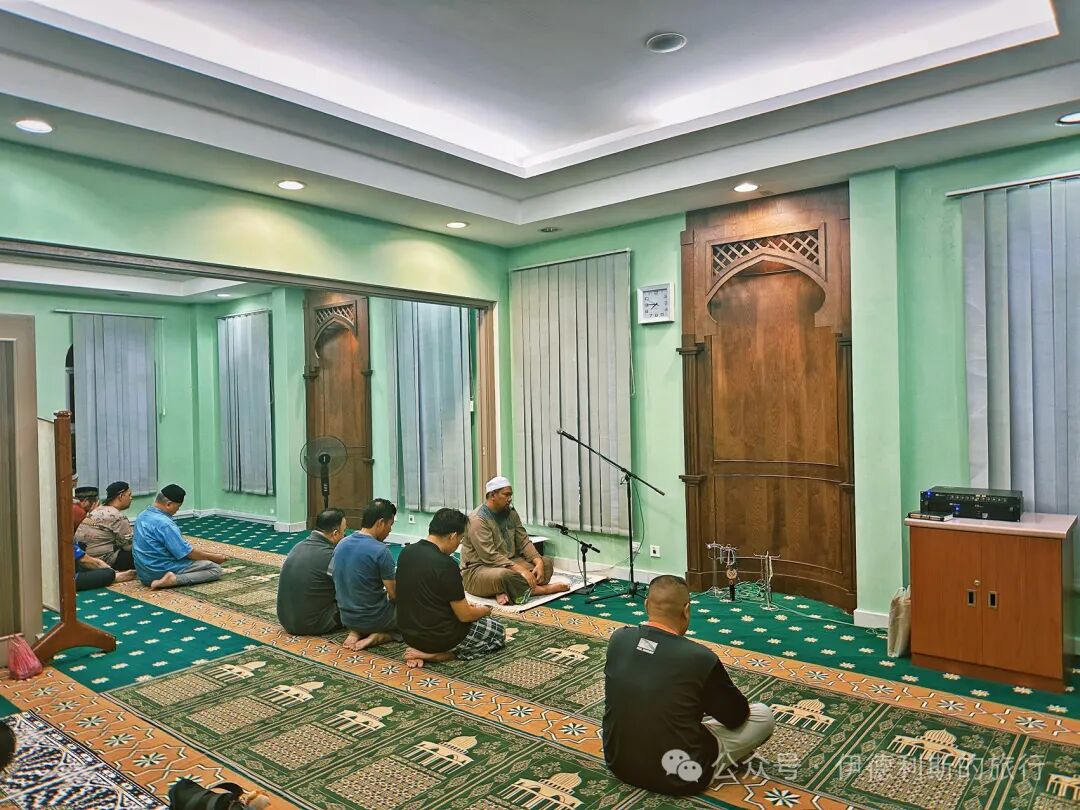
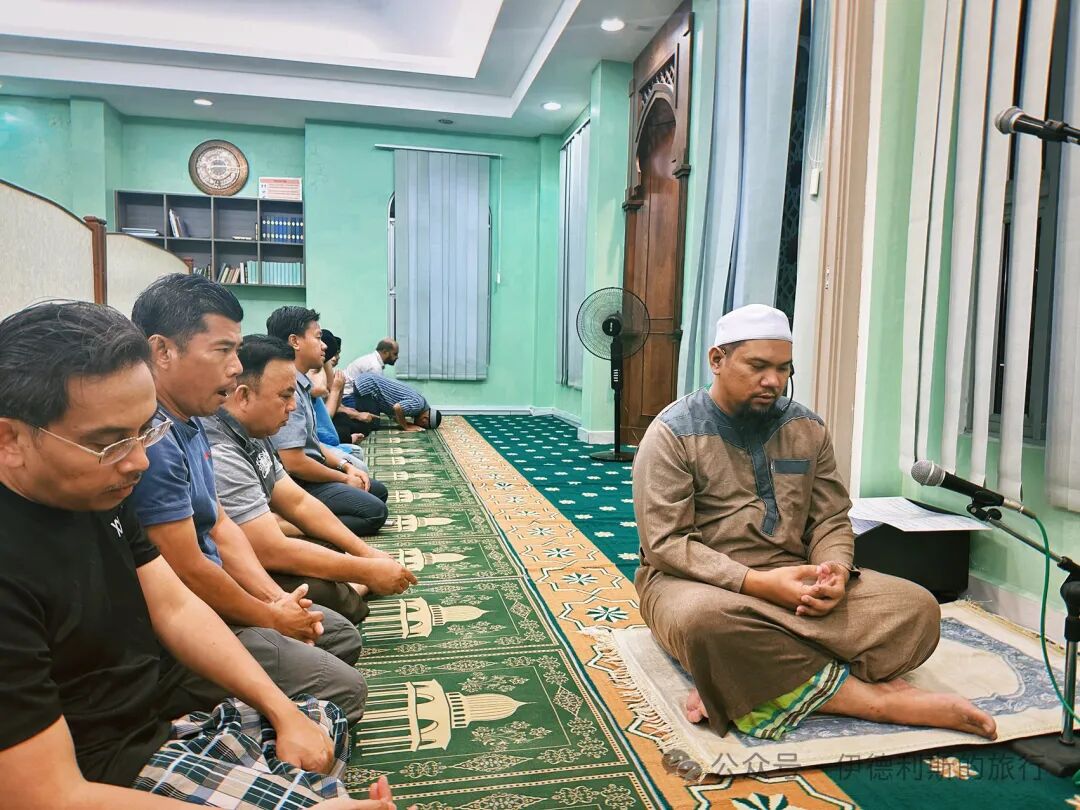
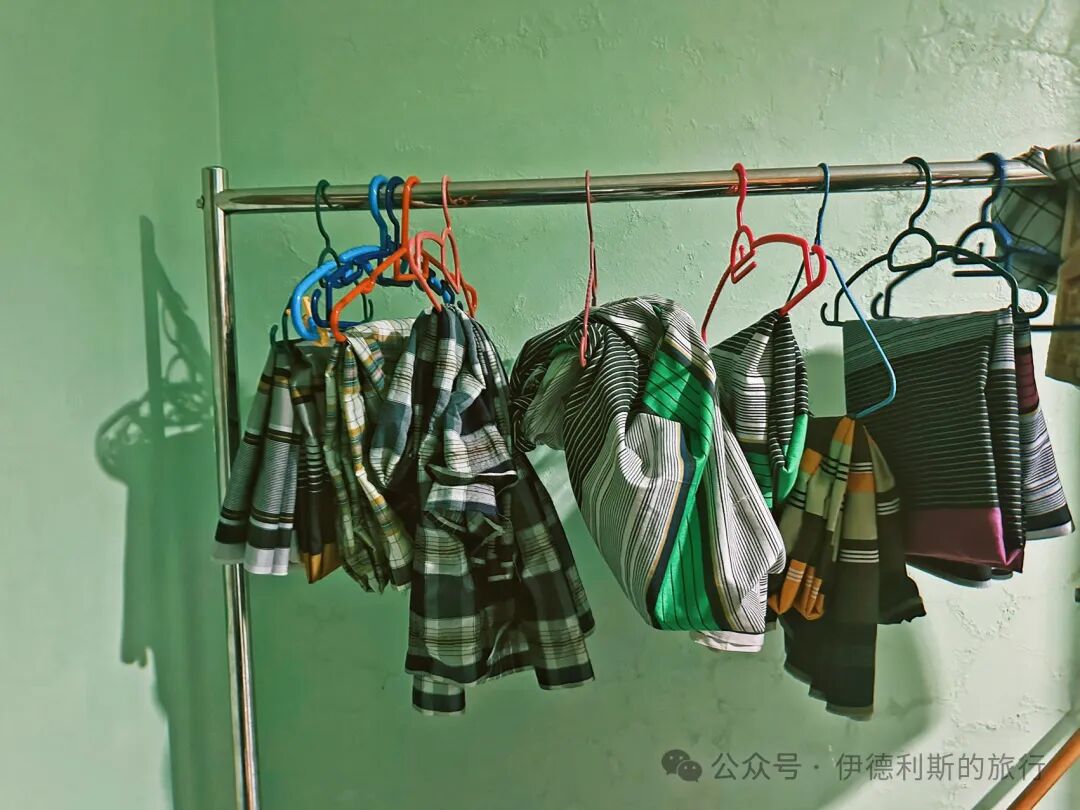
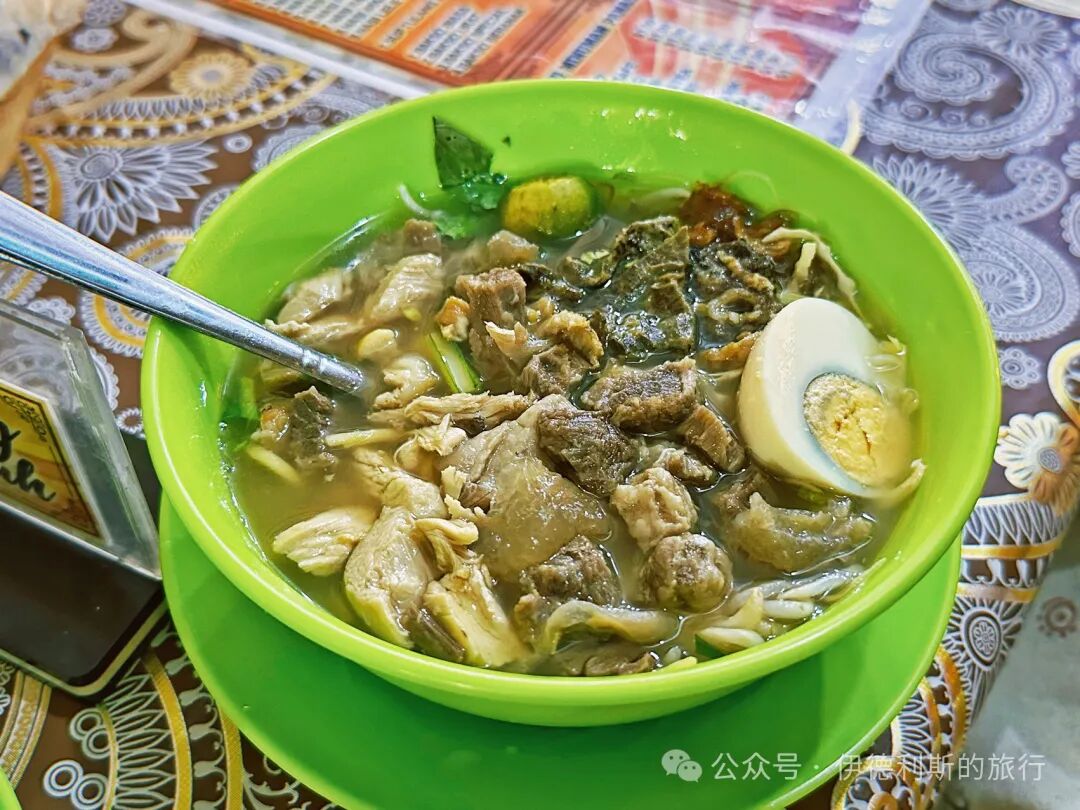
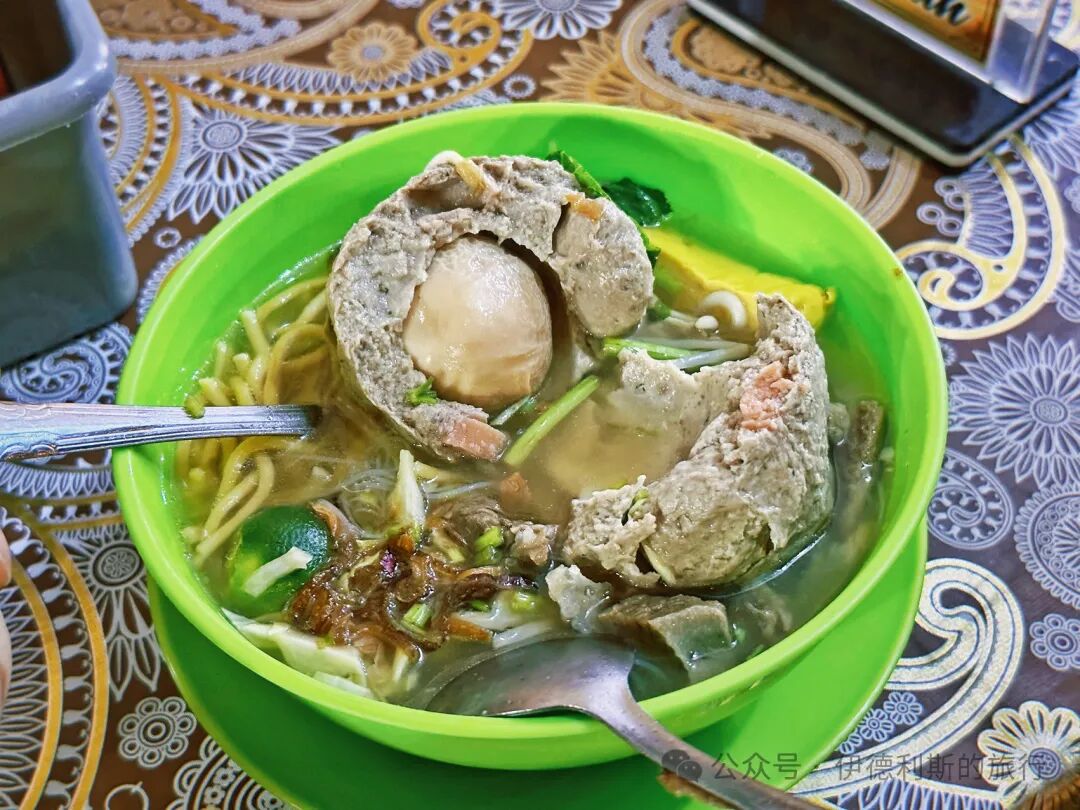
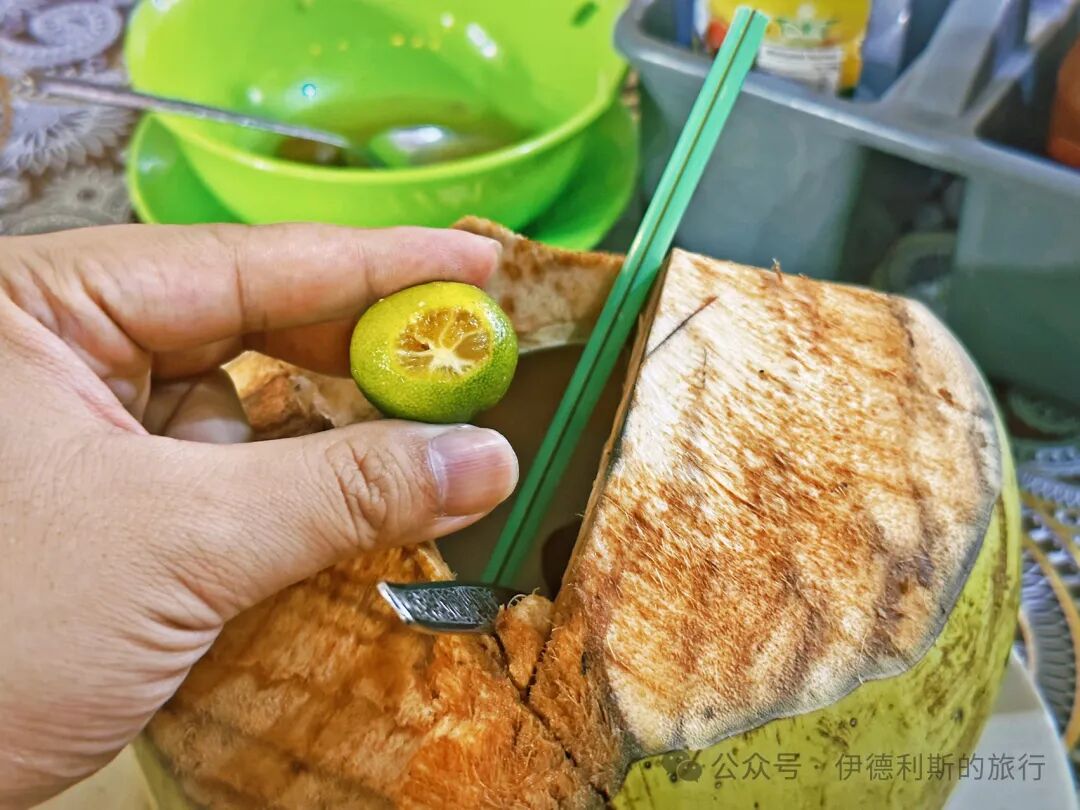
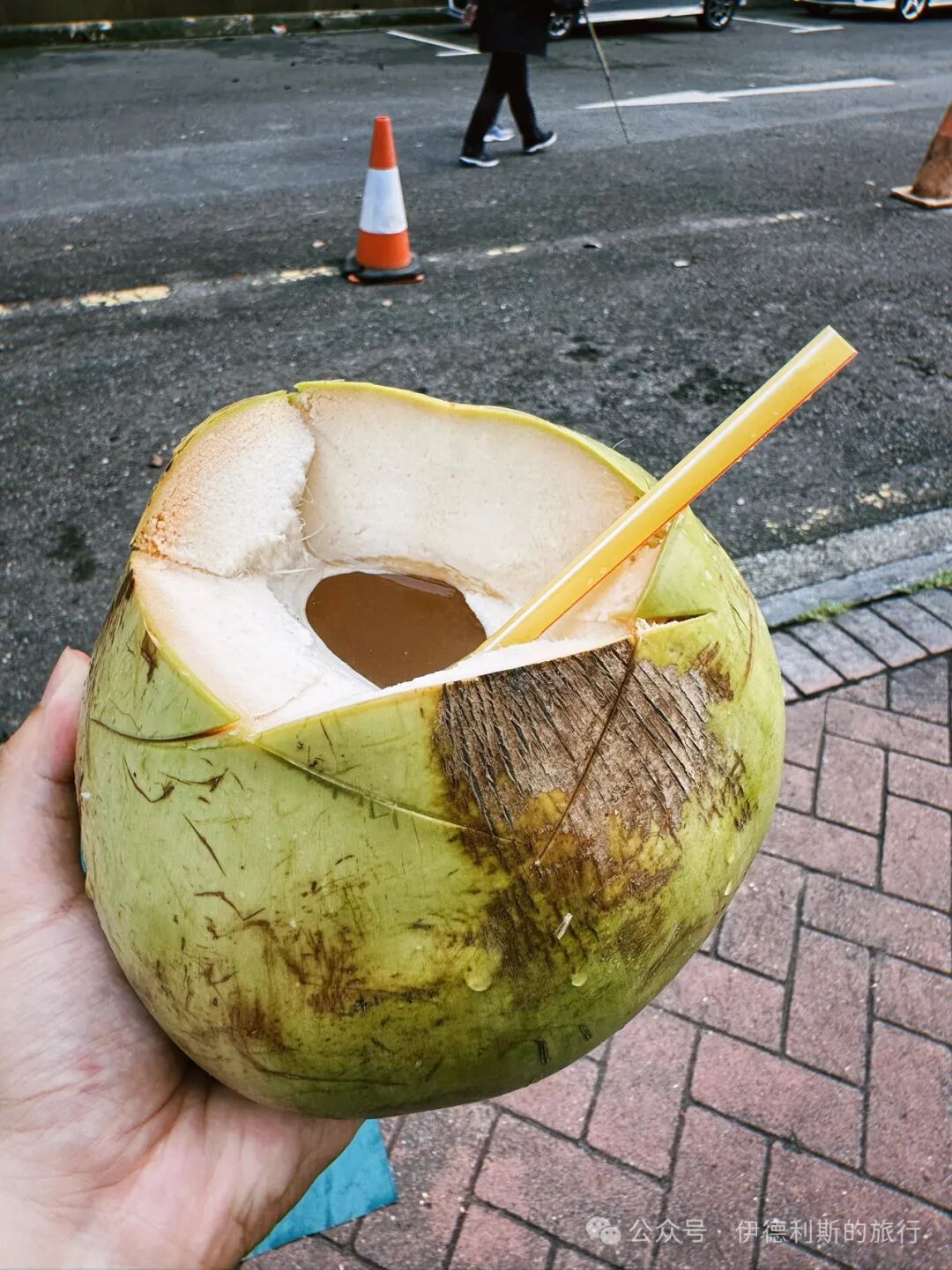
After praying, we ate noodle soup at a snack shop by the entrance. We ordered beef ball soup (bakso beranak) with large and small beef balls, and beef noodle soup (soto daging). The eating habits here are almost the same as in Indonesia. I really like the beef noodle soup here, especially on a rainy day; it is very comforting. We also ordered a coconut. Local coconuts are large. Even though the shell is thick, there is still plenty of juice inside. It came with a lime to squeeze in.
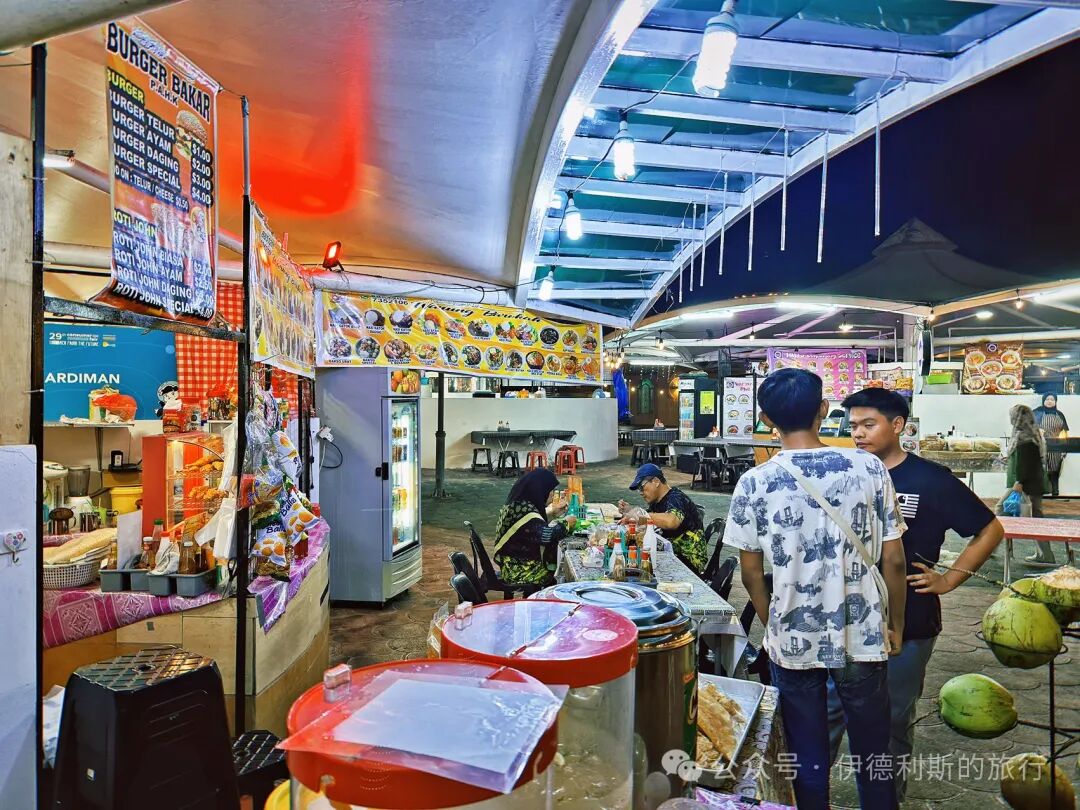
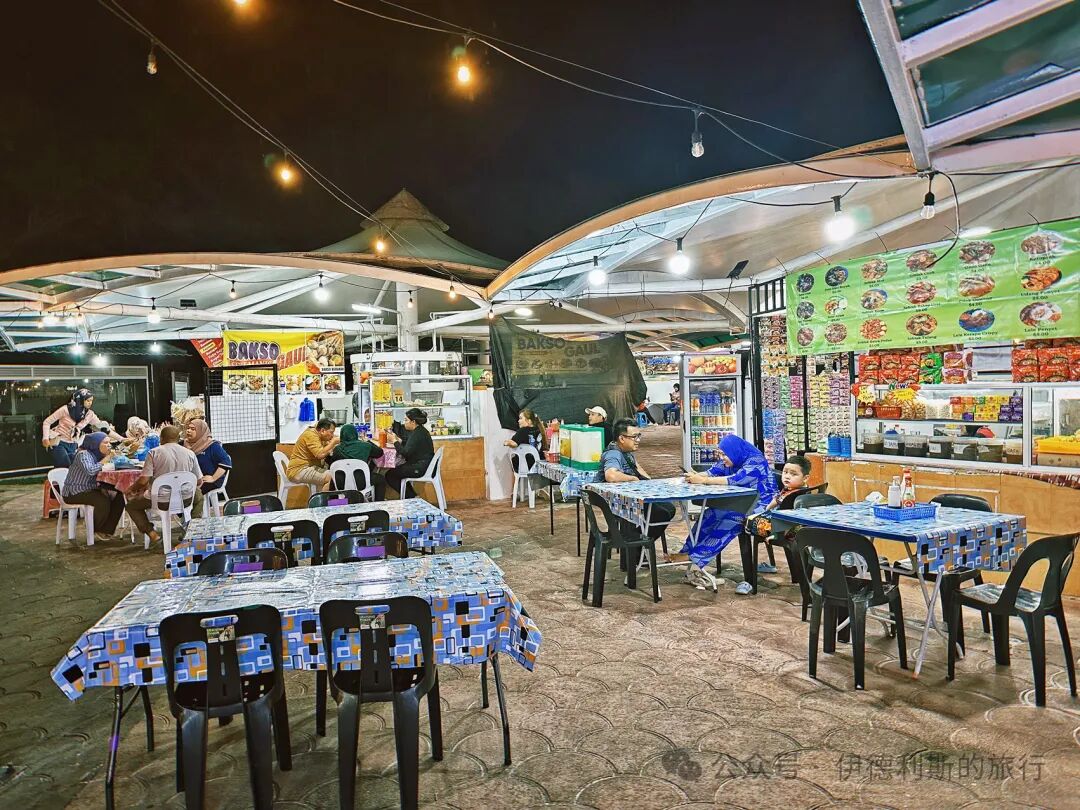
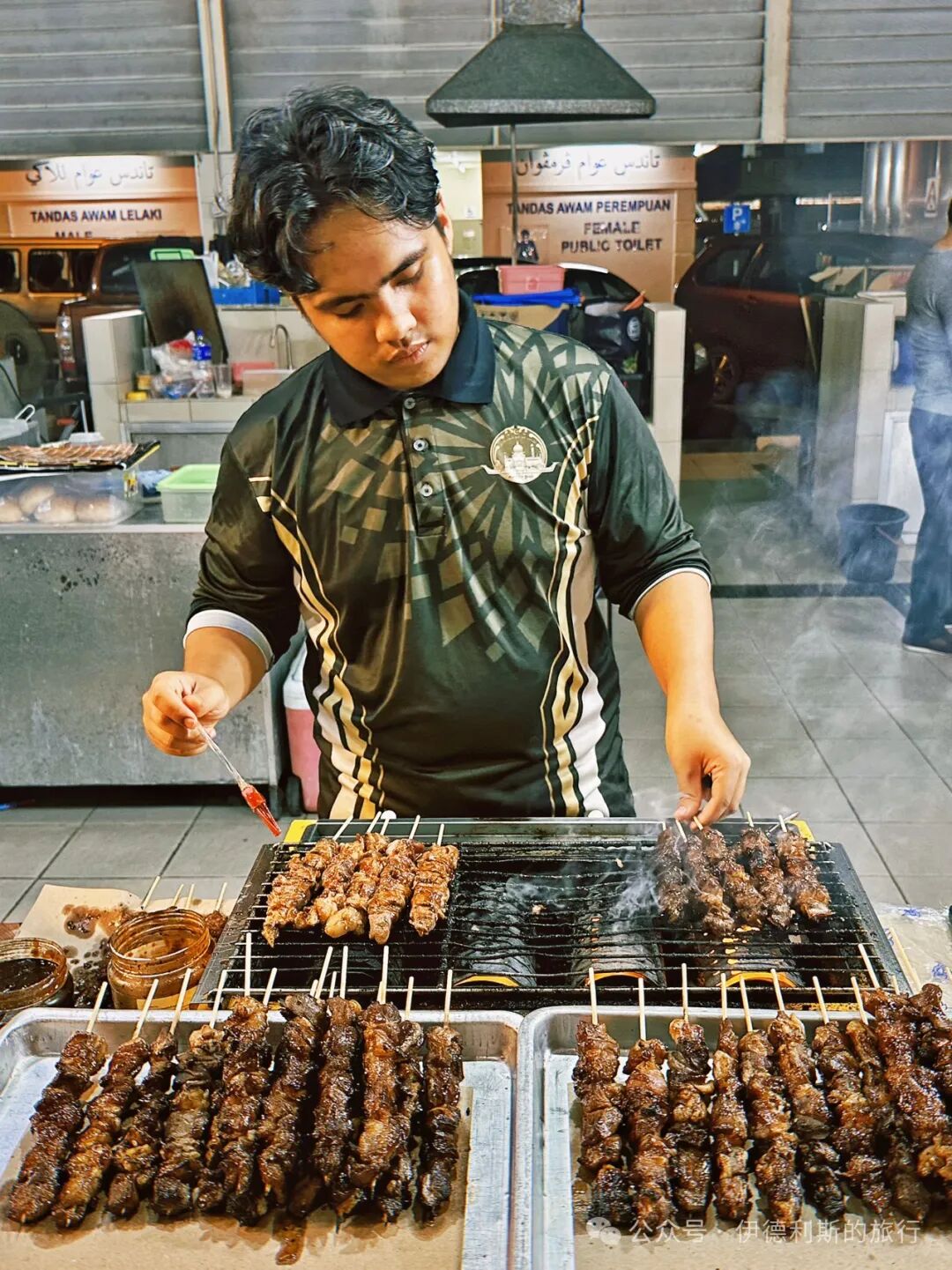
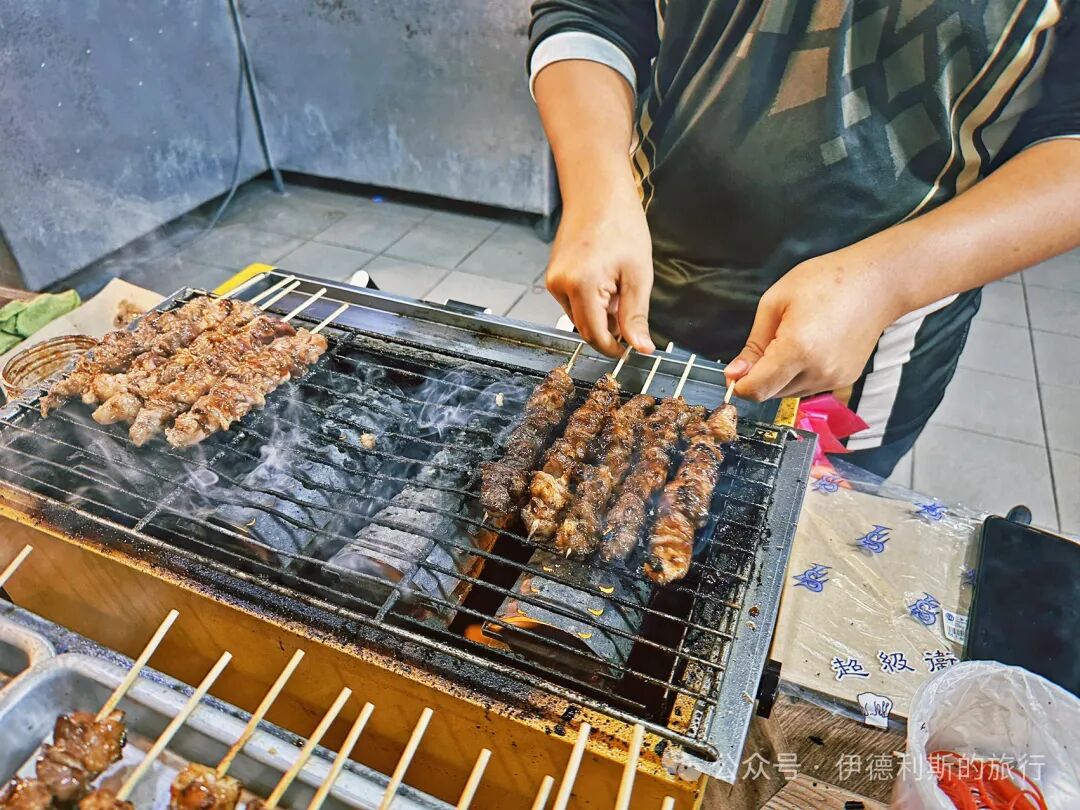
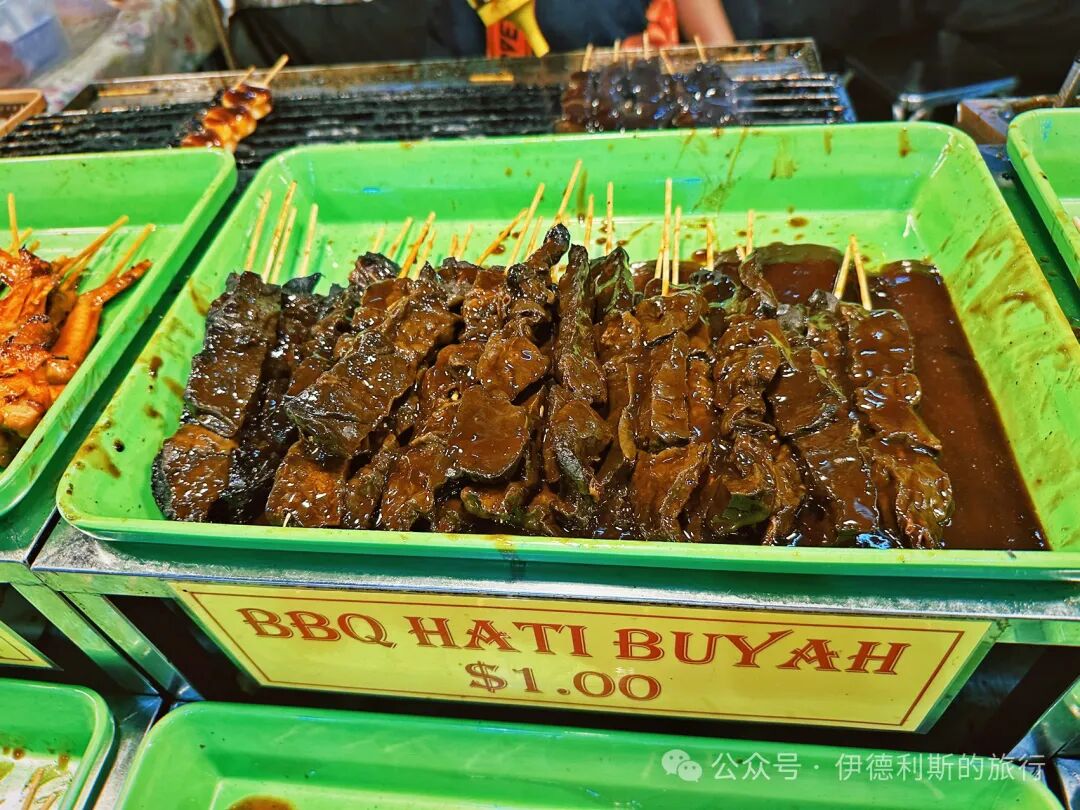
We had satay skewers at the Gadong night market, eating liver and chicken hearts. They were sweet and grilled a bit hard.
In the food court of the mall next to the Gadong night market, there is a place that sells Hong Kong-style dim sum. It is very popular, so by the time we got there, only shark fin dumplings were left.
If you want to try authentic Malay food in Brunei, I recommend the buffet at the Brunei Arts and Handicrafts Training Centre. You can find it on the map by searching for Tarindak D'Seni.
We went at noon from 11:30 to 14:30. It cost 91 yuan per person, and there is a discount for seniors over 60. The environment is very nice, and you can see the Brunei River right outside the window. The food selection is rich. You can eat various sticky rice pandan Malay cakes (kuih), Sarawak laksa noodles with coconut milk, and make your own shaved ice dessert (cendol).
They serve Brunei's national dish, sago starch paste (ambuyat). It is made by mixing sago palm starch with hot water to create a paste, which you eat by dipping it into a sauce.
Nasi kebuli is rice cooked with goat meat broth, goat milk, and ghee. It was brought to the Malay Archipelago by Hadhrami people from Yemen and is especially popular in the Arab communities of Java.
Black beef (daging hitam) is beef rendang made with sweet soy sauce, lots of palm sugar, and rock sugar. It is a specialty of the Sarawak region.
Chicken cooked in coconut milk (opor ayam) is chicken simmered in coconut milk with various spices.
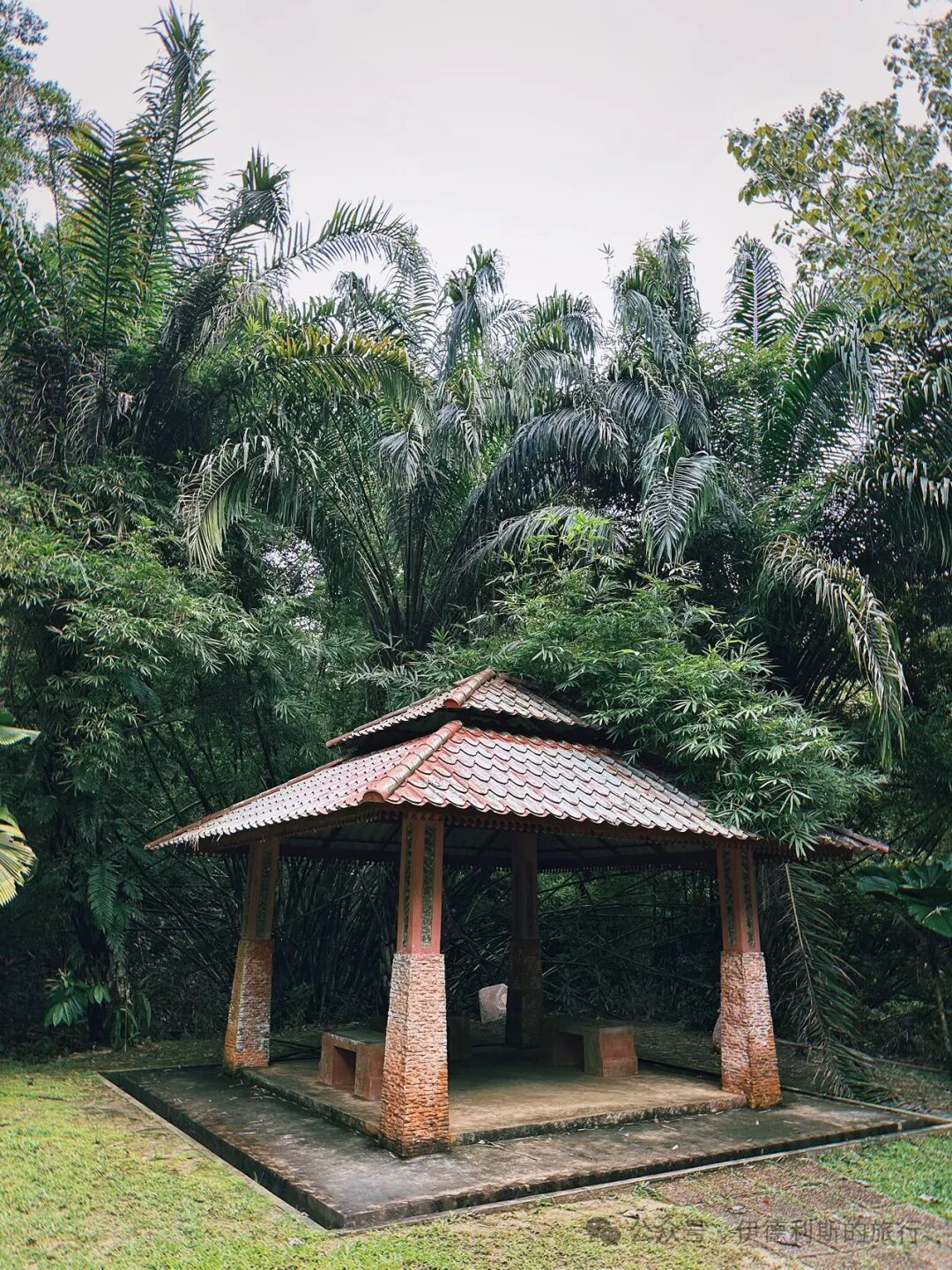
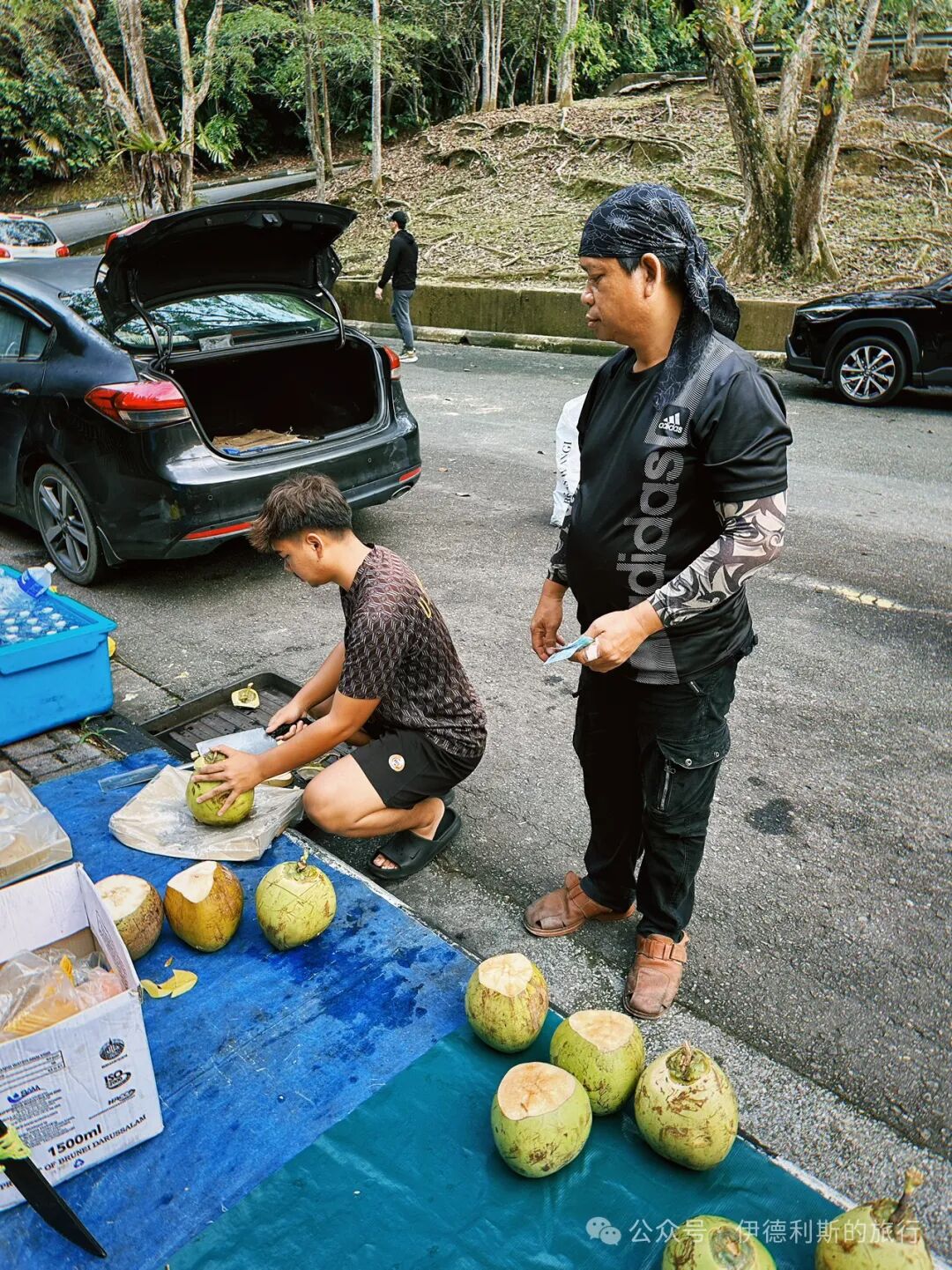
Strolling through Tasek Lama Recreational Park in Brunei, you find a primeval forest in the city center. It is very relaxing by the waterfall. The mountains are full of birds and monkeys, and you can see pitcher plants (zhulongcao) everywhere along the road. Bruneians love jogging in the parks, and after you finish, you can buy big, juicy coconuts (dayezi) at the entrance.
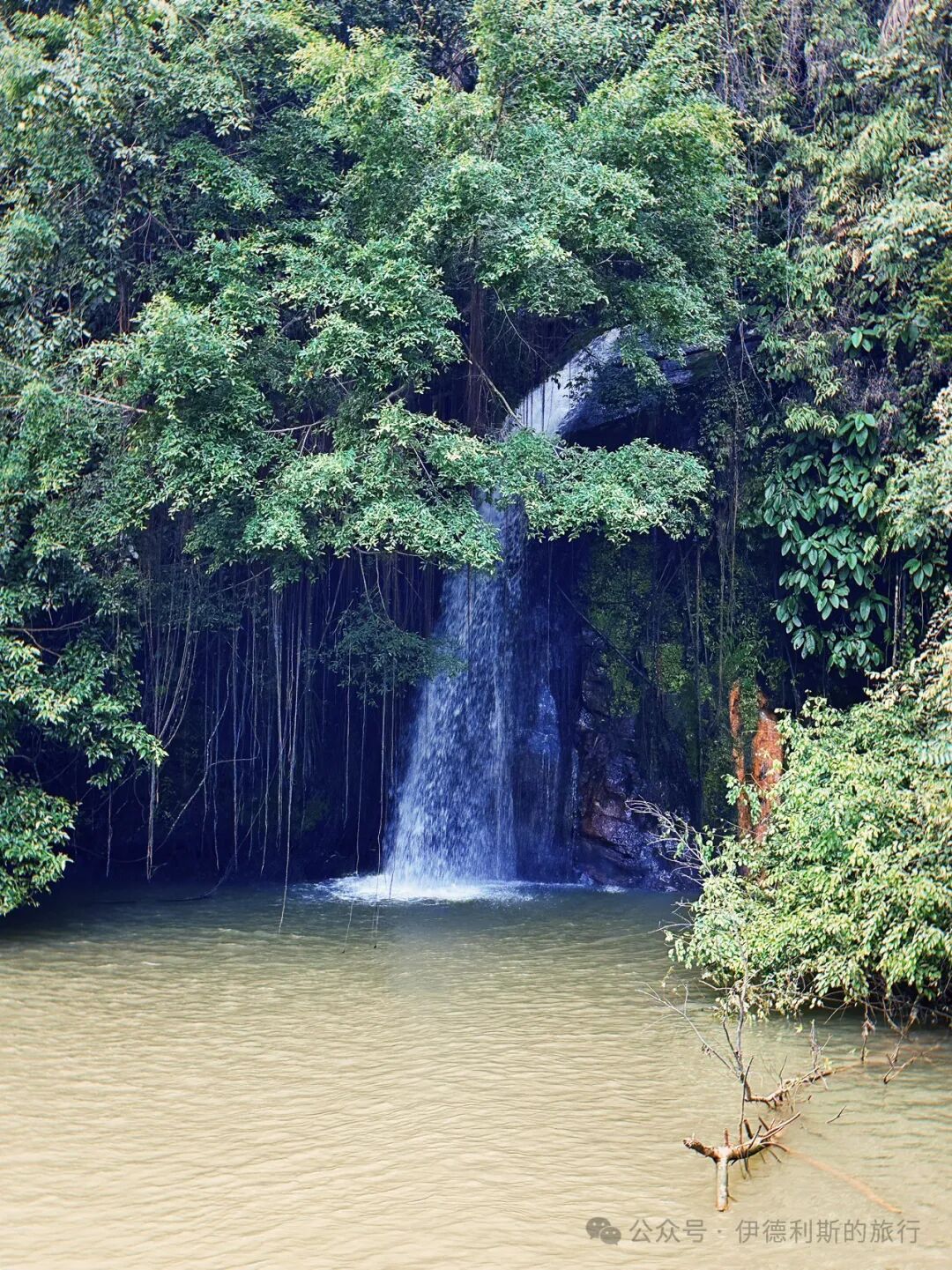
At the Royal Wharf in Brunei, many speedboats offer tours of the water village and trips to see proboscis monkeys. We asked the price and it was 10 Brunei dollars (53 RMB) per person for a one-hour boat ride, which felt like a pretty good deal.
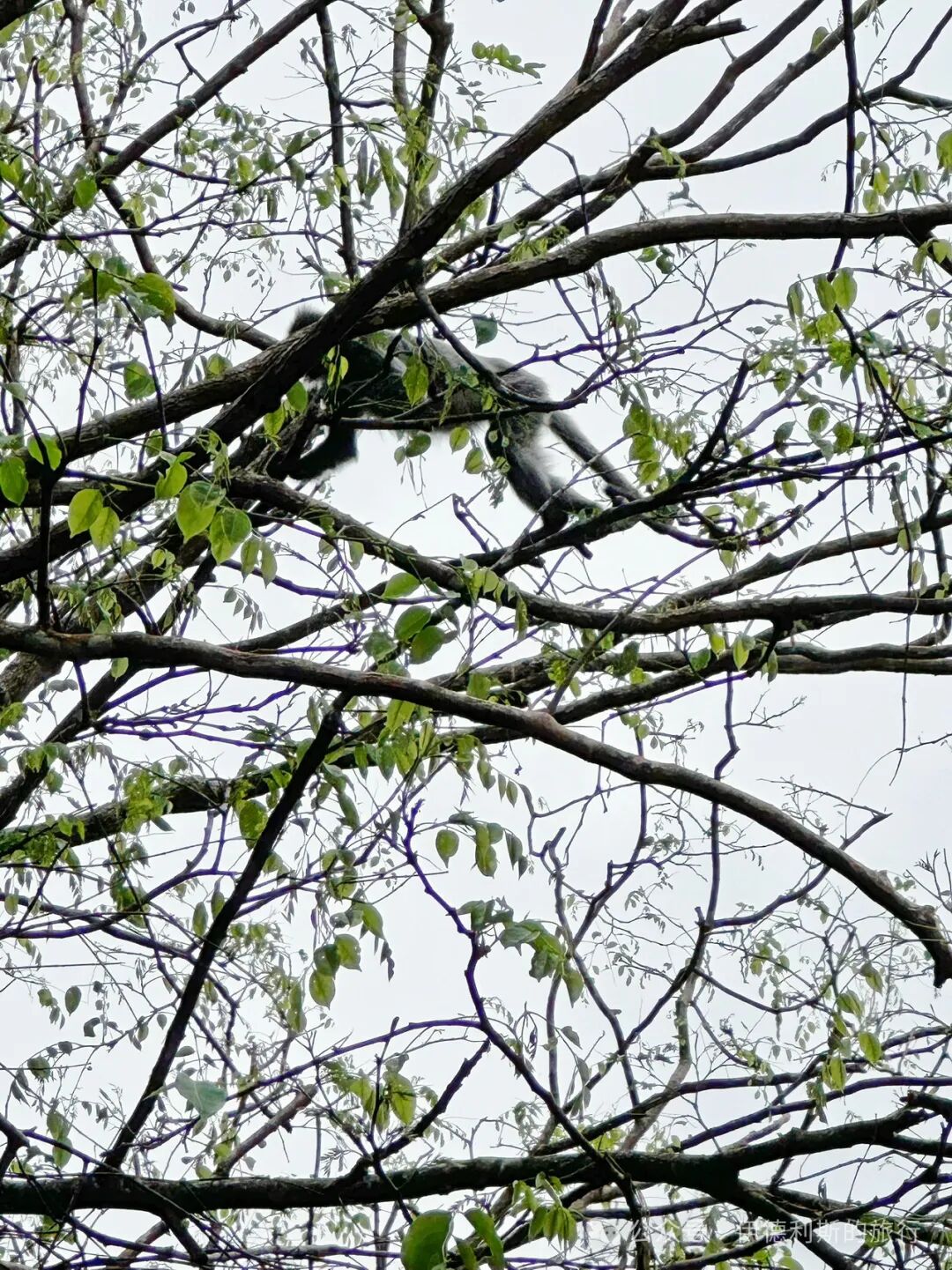
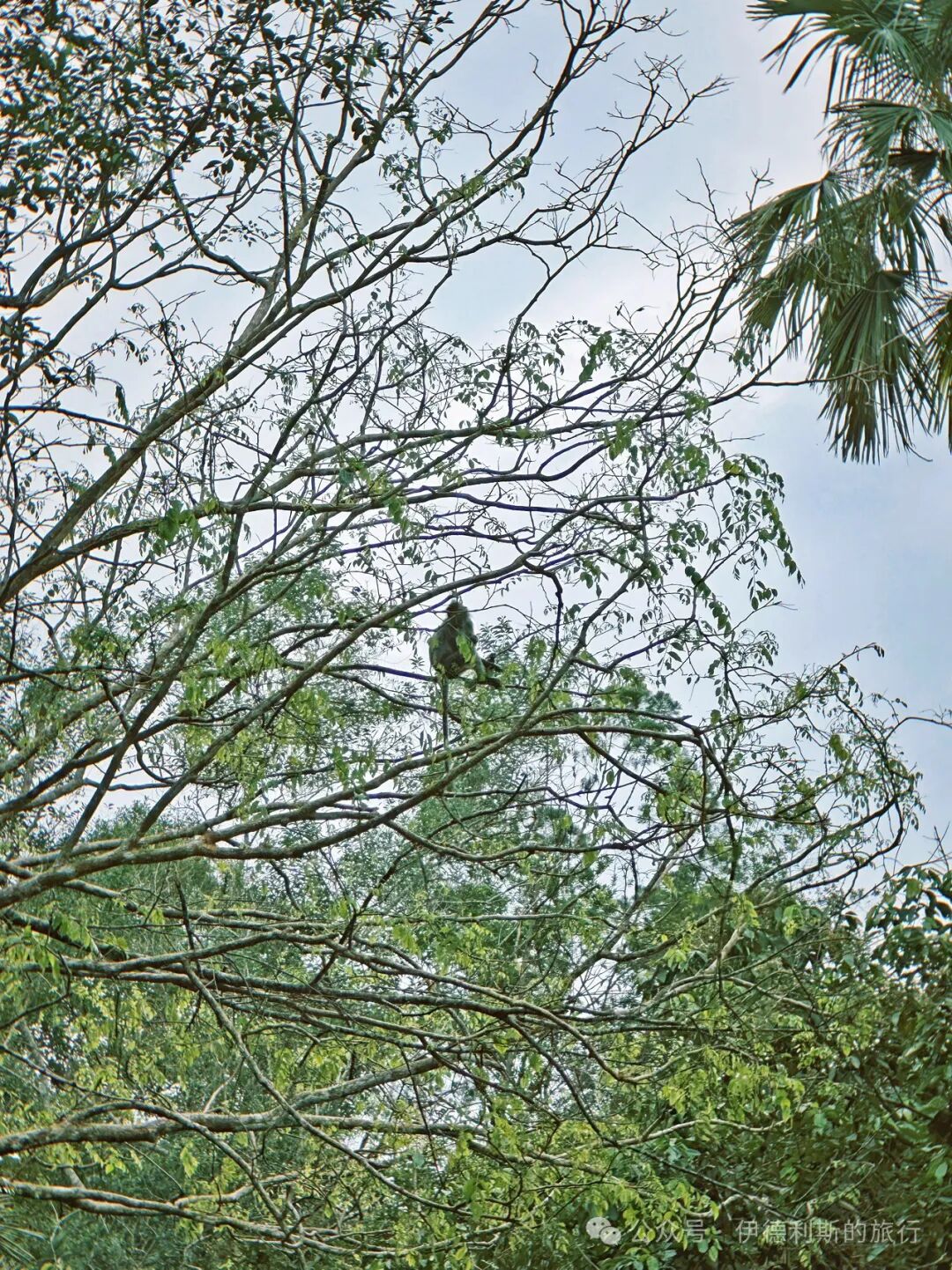
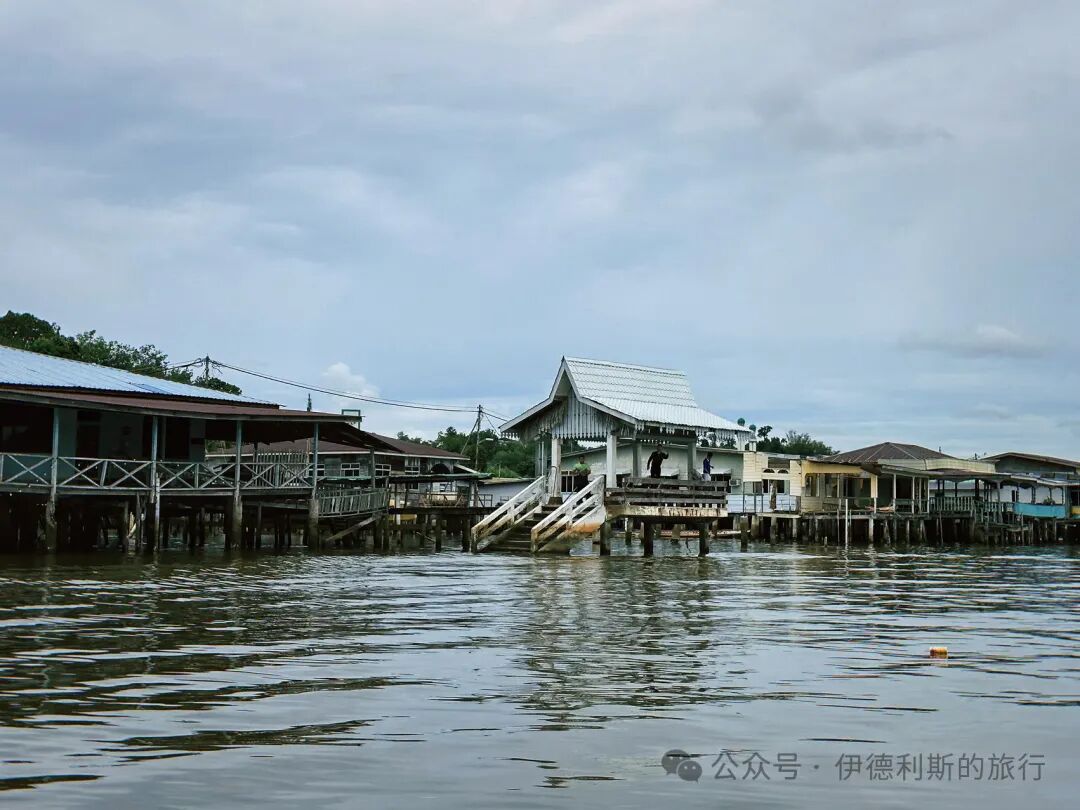
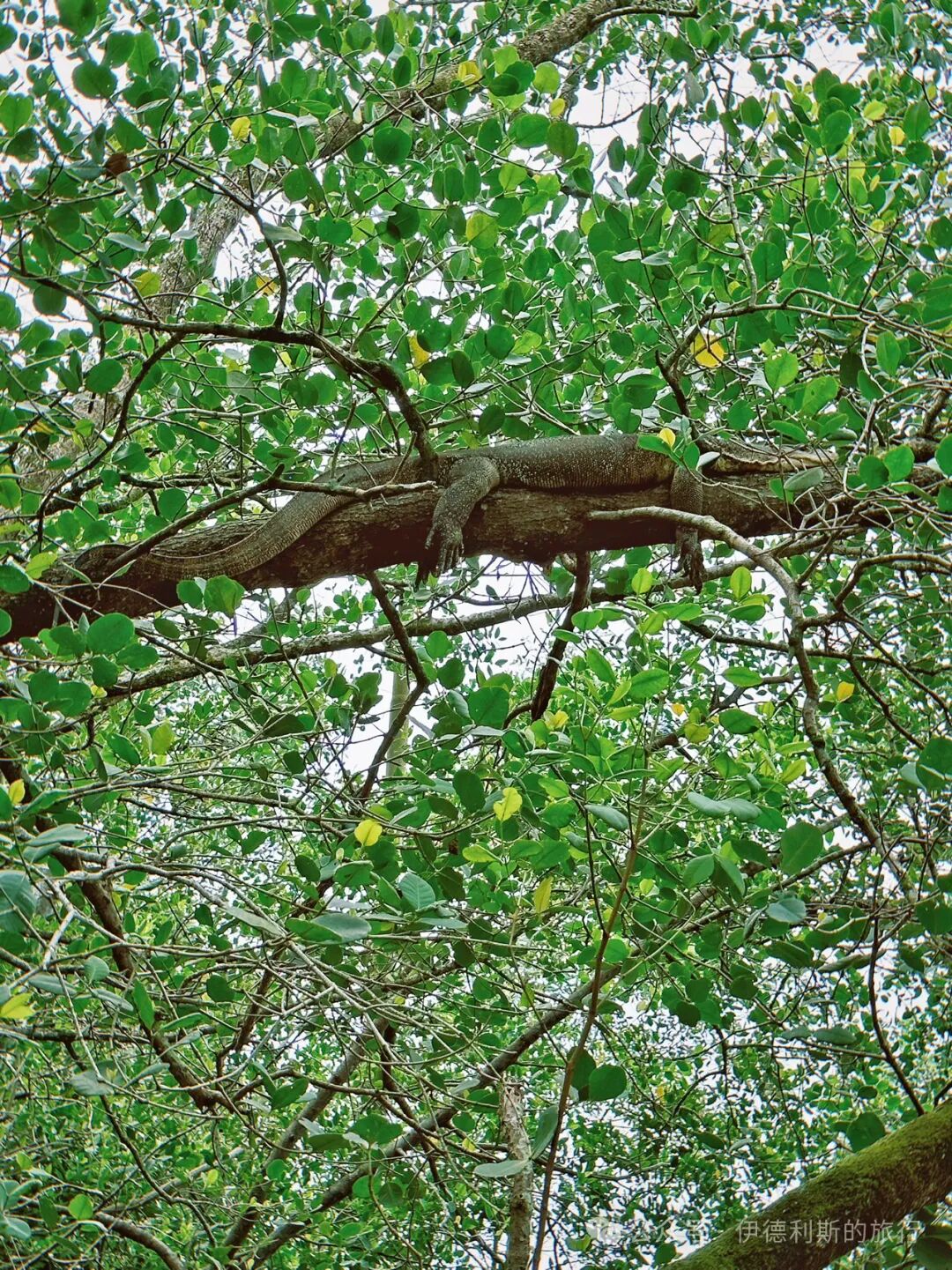
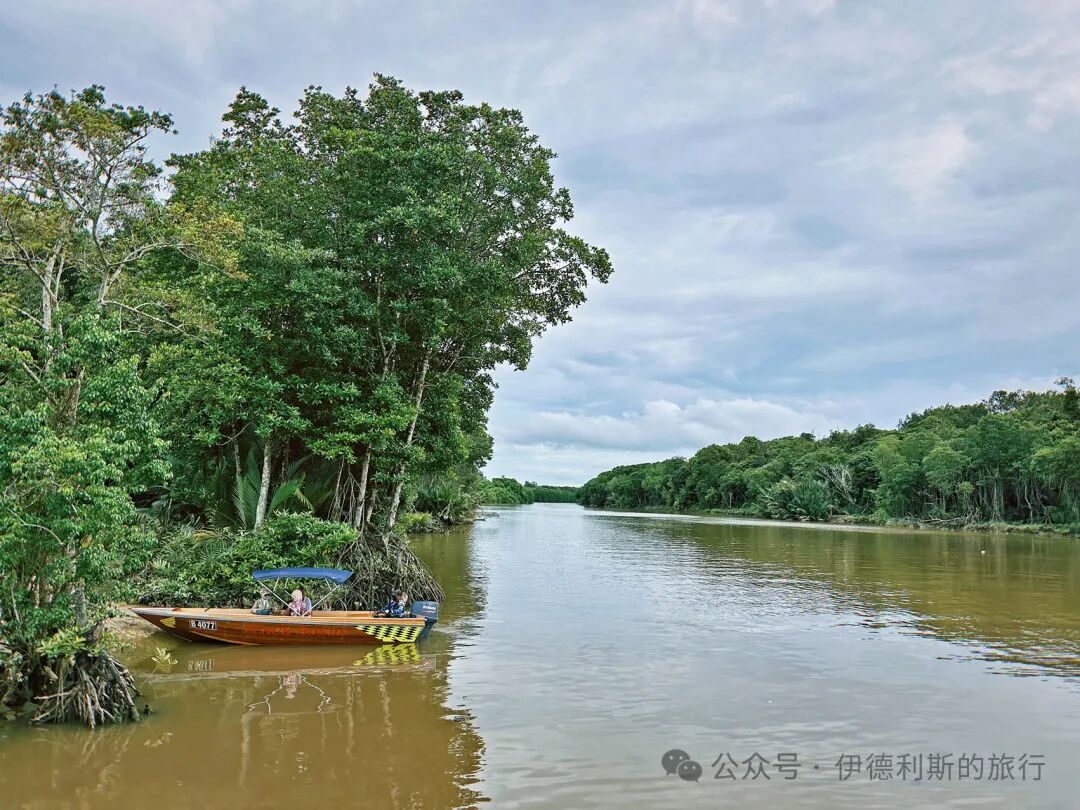
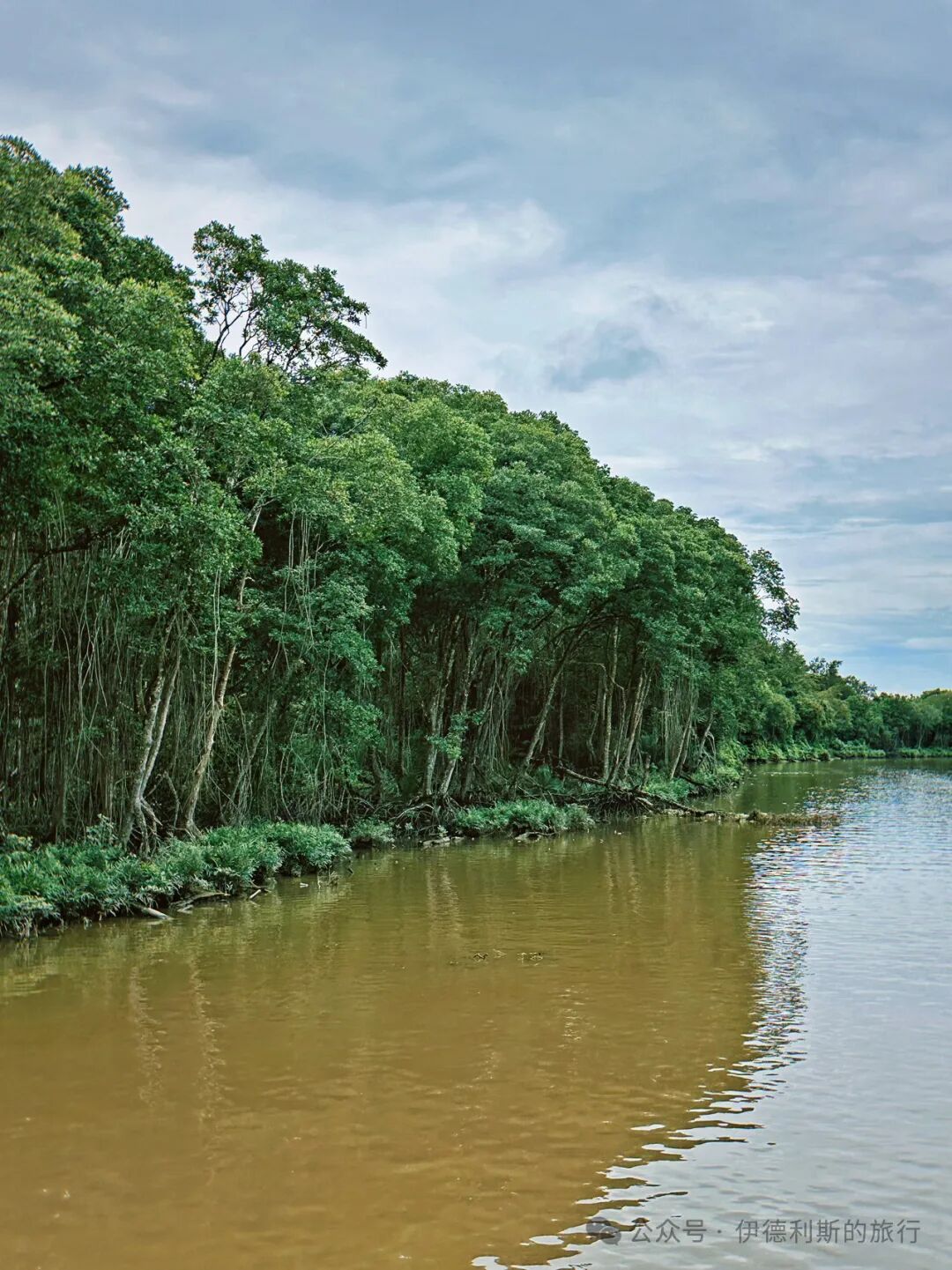
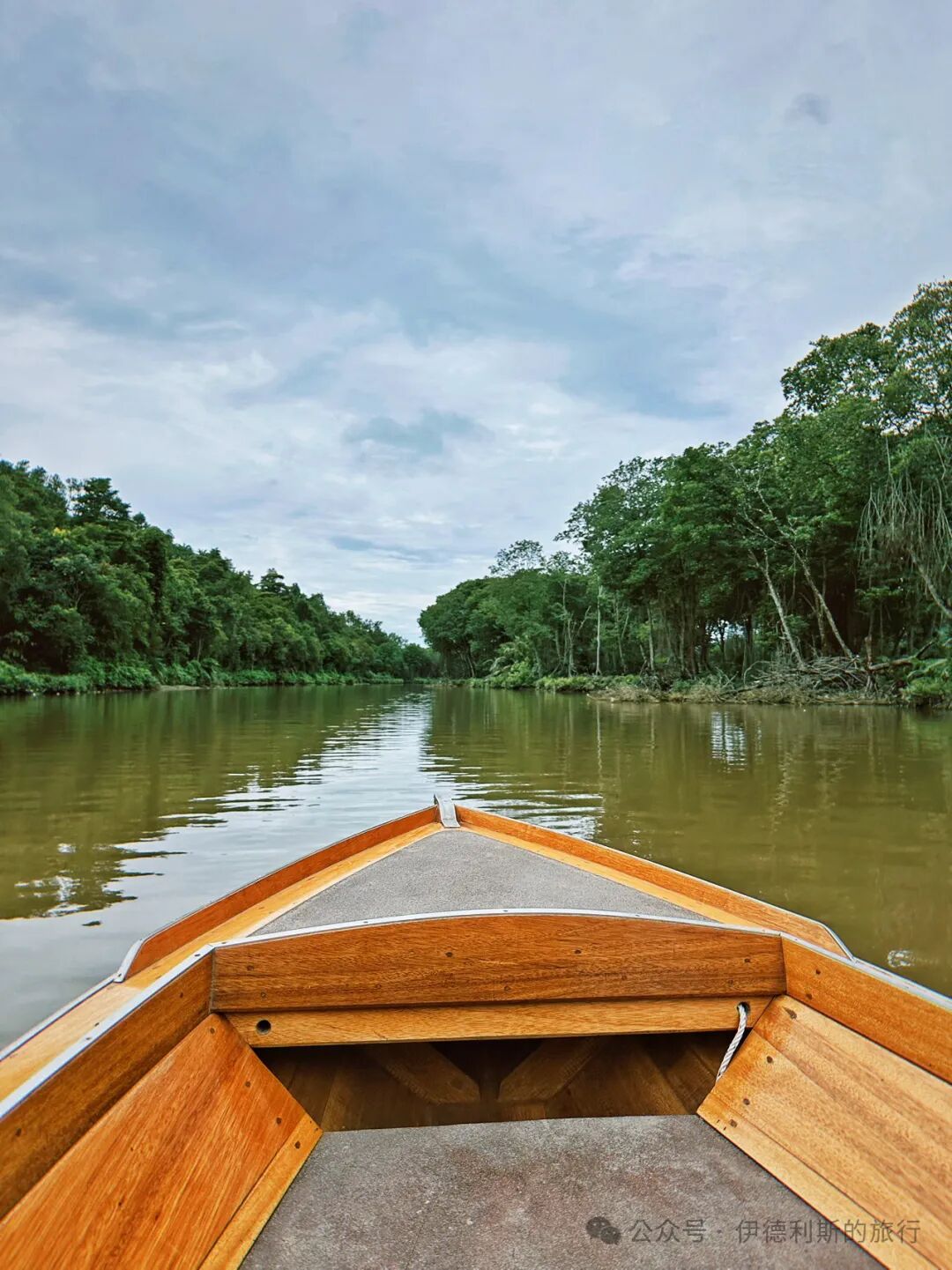
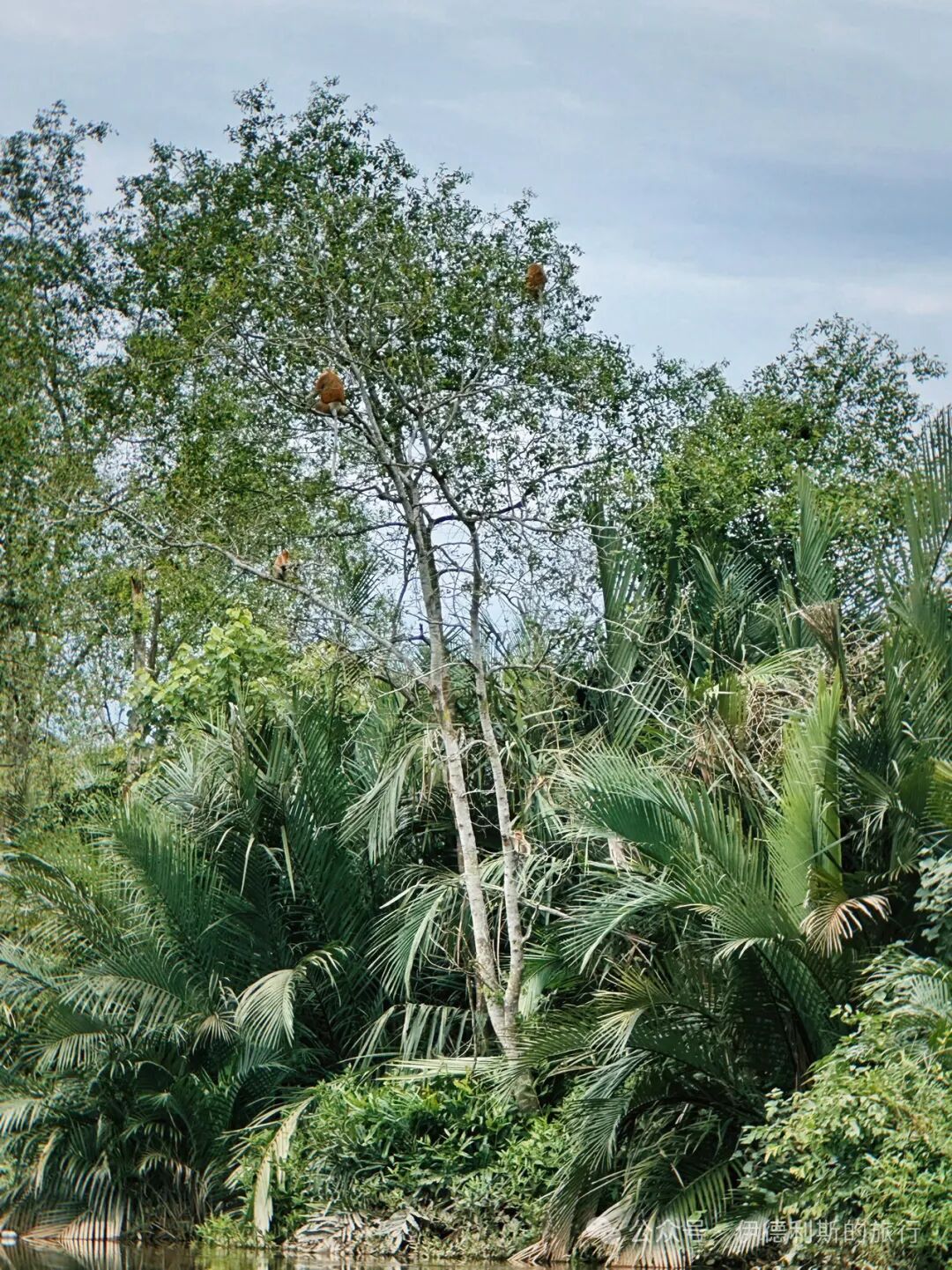
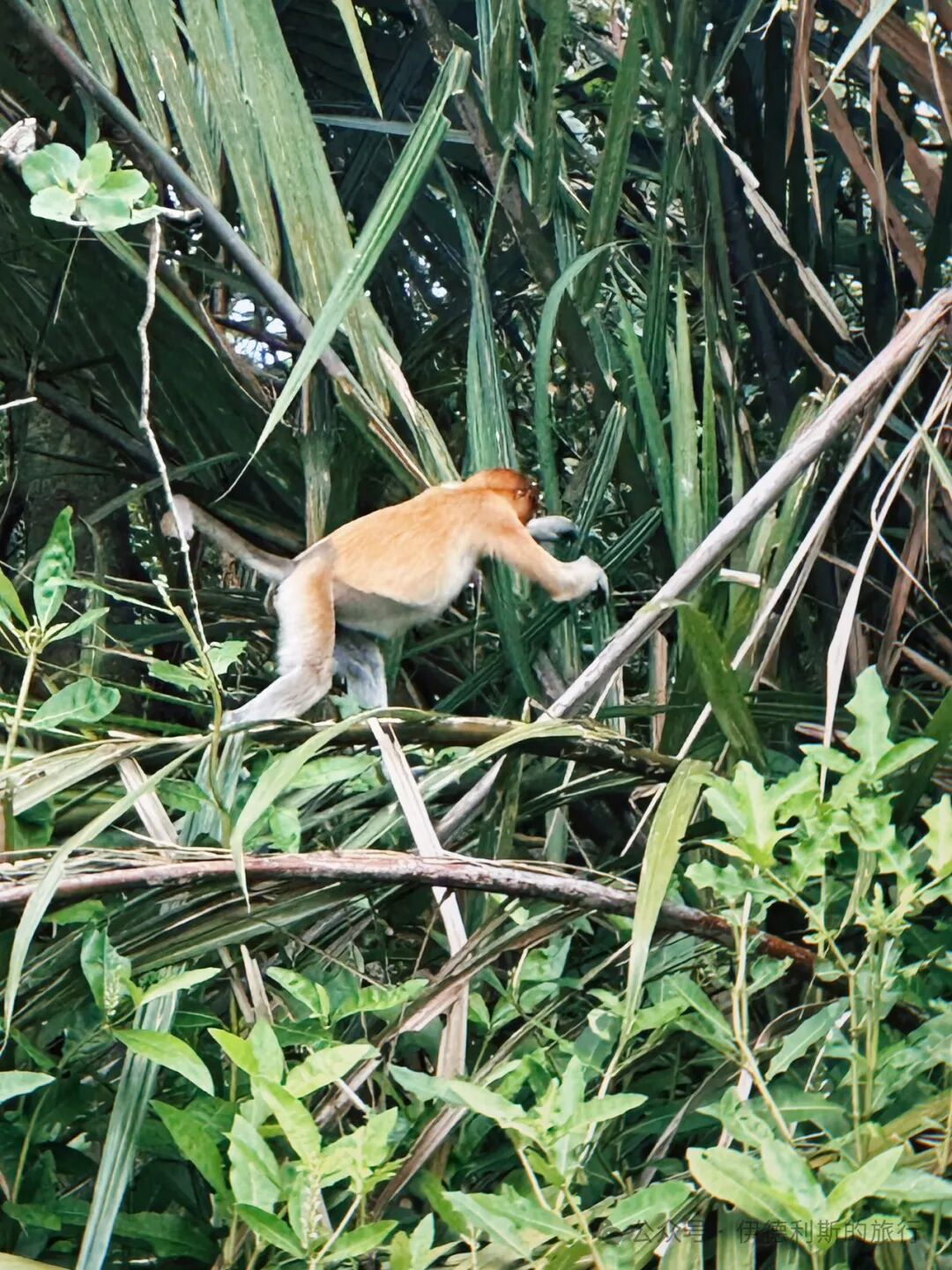
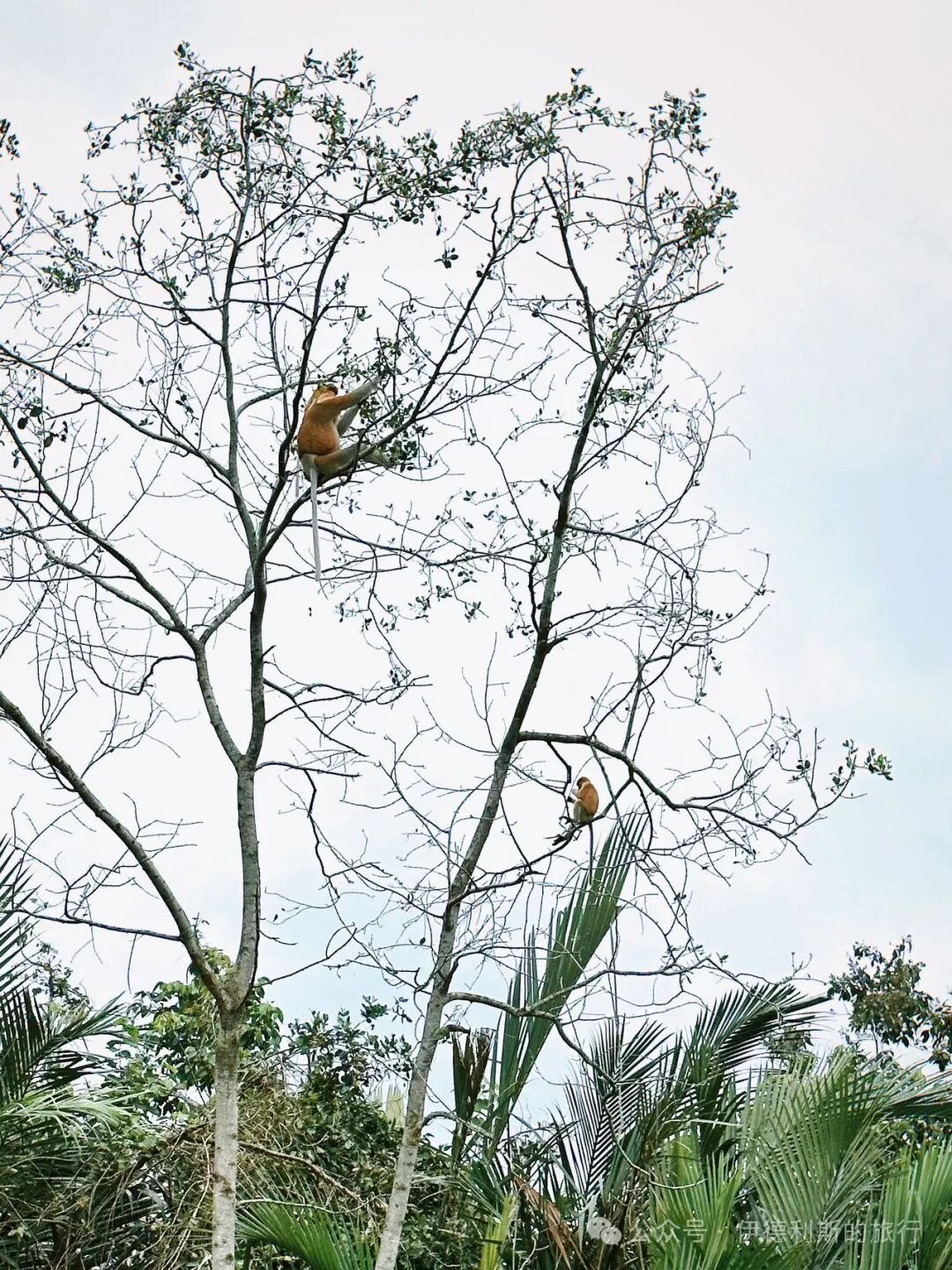
After boarding, we first toured the water village, where we saw a water fire station, a water school, and a water mosque. We also spotted a huge monitor lizard among the mangroves. Then we went to see the proboscis monkeys. We traveled 10 kilometers west along the Brunei River to Luba Island in the middle of the river. The island holds the tomb of the 16th Sultan of Brunei, Hussin Kamaluddin (reigned 1710-30, 1737-40). This is also the best place to watch proboscis monkeys, and we saw a family of them eating leaves by the edge of the mangroves.

Summary: Brunei offers Hainanese cafes, Malay night markets, and everyday food scenes shaped by local Muslim life. This account keeps the original restaurant details, market observations, photos, and food descriptions while making the story easy for English readers to follow.
In the morning, we visited a legendary Hainanese coffee shop in Brunei called Ying Chuan (Yingzhou Hao).
The founder of Ying Chuan, Han Qiongyuan, was from Wenchang, Hainan. During the Japanese invasion of China in 1939, 17-year-old Han Qiongyuan traveled to Southeast Asia and arrived in Brunei to work as a helper in his uncle's coffee shop. In 1946, Han Qiongyuan officially opened Ying Chuan Coffee Shop, serving coffee, bread, and other meals. It became widely known for its yellow bread (roti kuning). As the business grew, Han Qiongyuan expanded into real estate and led the construction of the Brunei Hainan Building. After 1993, Han Qiongyuan returned to his hometown every year to visit relatives and invested heavily there. He was awarded the title of 'Patriotic Son of Hainan' by the Hainan provincial government three times.
Like many old-fashioned Nanyang Hainanese coffee shops, they serve halal food and hold a Brunei halal certification, making them popular with all ethnic groups. They offer a very wide variety of bread. The classic sandwich breads come in four flavors: peanut, red bean paste, butter, and coconut. They also have peanut and butter bread (yuanyang bread), cheese bread, yellow bread with butter and kaya (yuanyang huang mianbao), and French toast. You can add a fried egg and cheese, or order a soft-boiled egg on the side. Cakes and pastries include custard cake (dan nai gao), egg tarts (dan ta), coconut tarts (ye ta), red bean cakes (hong dou bing), butter cake (niu you dangao), and pandan cake (ban lan dangao). Western-style breads and pastries were learned by Hainanese people while working as kitchen helpers for the British in the 19th century when they moved to Southeast Asia. Today, they are a classic part of Nanyang Hainanese restaurants.
Besides bread and pastries, they also serve various noodles, such as sesame flat rice noodles (zhima guetiao), dry-tossed noodles (ganlao mian), fried noodles, Hainanese noodles, fried rice vermicelli, and egg gravy rice noodles (huadan hefen). These are all very well-suited to Chinese tastes. We ordered egg gravy rice noodles, sesame flat rice noodles, egg tarts, custard cake, yellow bread with a fried egg, chicken curry puffs, peanut and butter bread, ginger milk tea, and lemon tea for a mix of Chinese and Western flavors. The peanut and butter bread is filled with kaya jam, butter, and crushed peanuts, giving it a very rich texture. The sesame flat rice noodles have a sweet, salty, and spicy flavor. Served with fried tofu and fried fish chunks, they are a signature dish of the shop.
After Friday prayers (Jumu'ah), we had lunch in the old town of Brunei Town. There are many Chinese shops here, and it is also a great place to find halal Hainanese restaurants. We chose Babu's Kitchen. It was very busy at noon with Chinese, Malay, and Indian customers, which is a classic scene in a Hainanese restaurant. Since they didn't have a Chinese menu, we asked the owner to recommend the Assam fish fillets, salted egg fried mushrooms, beef yee mein (beef niu rou yi mian), and bean curd skin with tofu and chicken. Like in Malaysia, the Chinese in Brunei speak very standard Mandarin. Overall, the food was very good. The Chinese dishes were infused with Malay flavors, but they were still very easy for Chinese people to enjoy.
The next morning, we continued to have a Hainanese breakfast at Meiguang Tea House in the old town of Brunei Town. The owner is Hainanese, his wife is from Xiamen, and the staff are all Indonesian. Because they mainly serve the nearby office buildings, it is usually quite busy on weekdays. It is relatively quiet on weekends, and there are fewer steamed dim sum options than usual. We ordered chicken and radish steamed buns (daba), red bean paste buns (doushabao), beef porridge with small fried dough sticks (youtiao), longan herbal tea, stir-fried noodles, and steamed dumplings (shaomai). Next time a friend (dosti) comes on a weekday, we can try their other dishes, like Fuzhou "lucky" rice noodle soup, dry-tossed mouse tail noodles (laoshufen), and chicken intestine noodles (jichangfen).
While taking a taxi in the afternoon, we passed the Brunei Fujian Association. I checked the map and saw many Chinese restaurants nearby, so after finishing our namaz, we took a taxi straight there for halal Chinese food.
We chose a restaurant called Shiraz Seafood Restaurant. It sounds like Iranian food, but it is actually a Chinese restaurant called Shixianle. They specialize in dim sum and various Nanyang-style Chinese snacks. The menu is huge, and they have a Brunei halal certification. After we went in, a table of Malays and a table of South Asians arrived, which shows how much different ethnic groups love halal Chinese food.
We ordered Cantonese steamed dumplings (siu mai), chicken feet, fish maw with chicken, five-spice meat rolls (ngo hiang), fried stuffed tofu (yong tofu), fried radish cake, longan herbal tea, chicken porridge, seafood soup (a mix of fish slices, fish balls, and more), and dry-fried green beans. We really enjoyed these Nanyang Chinese snacks in Brunei.
Ngo hiang is short for five-spice marinated meat, a snack that originated in the Minnan region of Fujian. In the past, life was hard, so people used five-spice powder to marinate leftover meat and vegetables, wrapped them in tofu skin, and deep-fried them. Later, as Chinese people moved to Nanyang, it spread to Indonesia, Malaysia, the Philippines, Brunei, Singapore, and Thailand.
Stuffed tofu (yong tofu) is a traditional Hakka dish. In the Hakka dialect, "yong" means to fill with stuffing. Legend says that after the Hakka people moved south from the Central Plains, they wanted to eat dumplings but had no wheat. They used tofu instead of flour and invented stuffed tofu. Later, stuffed tofu spread with the Hakka people to Indonesia, Malaysia, Singapore, Brunei, Vietnam, and Thailand.
The Brunei Fujian Association and the Taiwan Overseas Chinese Association in Brunei share the same building. Nearby, there are a few non-halal restaurants, which have red non-halal signs at their entrances.
Hua Ho Department Store is a famous halal supermarket chain owned by Chinese merchants in Brunei, with many branches across the country. We went to the Kiulap branch. Inside, one side had various traditional Brunei Malay snacks. We bought a traditional snack from Sabah and Brunei called Kuih Cincin Tempatan, which is made by frying red coconut, rice flour, and palm sugar. The other side is the supermarket area, where you can buy various halal foods with Cantonese, Fujian, Chaoshan, and Taiwanese characteristics.
The founder of Hua Ho Department Store, Lau Kam Kok, was born in 1920 to a farming family in Lieyu, Kinmen, Fujian. In 1938, he went to Nanyang to seek his fortune, first arriving in Singapore and then moving to Brunei to join his eldest sister. In 1947, Lau Kam Kok bought land in Manggis, in the northern suburbs of Brunei, built a vegetable garden, hired workers to raise chickens and ducks, and officially established Hua Ho Department Store. After the 1950s, as agricultural prices fell, Lau Kam Kok went bankrupt and closed his shop in 1958. Later, he began selling vegetables at the market and selling fabric door-to-door. He did not reopen his shop until 1961. In 1966, he built a two-story building, and the shop was on the first floor. He gradually expanded the business, eventually making Hua Ho the largest department store in Brunei.
In 2004, the Sultan of Brunei awarded Lau Kam Kok the title of Pehin Kapitan Cina, making him one of the few Chinese nobles in Brunei. Lieyu, also known as Little Kinmen, is located between Kinmen and Xiamen. People from Lieyu began traveling to Brunei in the 19th century to seek their fortunes. They started as shipping laborers, dock workers, fishermen, and street vendors. Over time, they saved money, started businesses, and became important figures in Brunei's business world. Many earned titles like Pehin Kapitan and Pehin Dato.
Some items at Hua Ho Department Store include coconut jelly powder, cold tofu pudding powder, Hong Kong narcissus flour, Shantou sweet potato starch, braised peanuts, cilantro hearts, shrimp paste chili (belacan chili), Chaoshan-style sweet and sour ginger slices, South China vegetables, spicy fermented bean curd with sesame oil, rice noodles, shredded codfish, and premium dried squid.
After getting off at Gadong, we took a taxi to the night market. There are very few tourists in Brunei, so the night market is mostly filled with locals. We first bought spicy sauce to go with shredded squid and fish maw. These snacks are quite tasty. Then we bought mangosteen and snake fruit. It was my first time eating snake fruit, and it tasted pretty good.
While walking around the night market, the adhan (call to prayer) sounded. You can find a place to pray everywhere in Brunei. We performed our namaz at the small mosque in the night market. They provide sarong skirts for men to wear here.
After praying, we ate noodle soup at a snack shop by the entrance. We ordered beef ball soup (bakso beranak) with large and small beef balls, and beef noodle soup (soto daging). The eating habits here are almost the same as in Indonesia. I really like the beef noodle soup here, especially on a rainy day; it is very comforting. We also ordered a coconut. Local coconuts are large. Even though the shell is thick, there is still plenty of juice inside. It came with a lime to squeeze in.
We had satay skewers at the Gadong night market, eating liver and chicken hearts. They were sweet and grilled a bit hard.
In the food court of the mall next to the Gadong night market, there is a place that sells Hong Kong-style dim sum. It is very popular, so by the time we got there, only shark fin dumplings were left.
If you want to try authentic Malay food in Brunei, I recommend the buffet at the Brunei Arts and Handicrafts Training Centre. You can find it on the map by searching for Tarindak D'Seni.
We went at noon from 11:30 to 14:30. It cost 91 yuan per person, and there is a discount for seniors over 60. The environment is very nice, and you can see the Brunei River right outside the window. The food selection is rich. You can eat various sticky rice pandan Malay cakes (kuih), Sarawak laksa noodles with coconut milk, and make your own shaved ice dessert (cendol).
They serve Brunei's national dish, sago starch paste (ambuyat). It is made by mixing sago palm starch with hot water to create a paste, which you eat by dipping it into a sauce.
Nasi kebuli is rice cooked with goat meat broth, goat milk, and ghee. It was brought to the Malay Archipelago by Hadhrami people from Yemen and is especially popular in the Arab communities of Java.
Black beef (daging hitam) is beef rendang made with sweet soy sauce, lots of palm sugar, and rock sugar. It is a specialty of the Sarawak region.
Chicken cooked in coconut milk (opor ayam) is chicken simmered in coconut milk with various spices.
Strolling through Tasek Lama Recreational Park in Brunei, you find a primeval forest in the city center. It is very relaxing by the waterfall. The mountains are full of birds and monkeys, and you can see pitcher plants (zhulongcao) everywhere along the road. Bruneians love jogging in the parks, and after you finish, you can buy big, juicy coconuts (dayezi) at the entrance.
At the Royal Wharf in Brunei, many speedboats offer tours of the water village and trips to see proboscis monkeys. We asked the price and it was 10 Brunei dollars (53 RMB) per person for a one-hour boat ride, which felt like a pretty good deal.
After boarding, we first toured the water village, where we saw a water fire station, a water school, and a water mosque. We also spotted a huge monitor lizard among the mangroves. Then we went to see the proboscis monkeys. We traveled 10 kilometers west along the Brunei River to Luba Island in the middle of the river. The island holds the tomb of the 16th Sultan of Brunei, Hussin Kamaluddin (reigned 1710-30, 1737-40). This is also the best place to watch proboscis monkeys, and we saw a family of them eating leaves by the edge of the mangroves.
Halal Food Guide: Brunei — Hainanese Cafes, Malay Night Markets & Muslim Food
Articles • ali2007fr posted the article • 0 comments • 249 views • 2026-05-19 23:57
Reposted from the web
Summary: Brunei offers Hainanese cafes, Malay night markets, and everyday food scenes shaped by local Muslim life. This account keeps the original restaurant details, market observations, photos, and food descriptions while making the story easy for English readers to follow.
In the morning, we visited a legendary Hainanese coffee shop in Brunei called Ying Chuan (Yingzhou Hao).
The founder of Ying Chuan, Han Qiongyuan, was from Wenchang, Hainan. During the Japanese invasion of China in 1939, 17-year-old Han Qiongyuan traveled to Southeast Asia and arrived in Brunei to work as a helper in his uncle's coffee shop. In 1946, Han Qiongyuan officially opened Ying Chuan Coffee Shop, serving coffee, bread, and other meals. It became widely known for its yellow bread (roti kuning). As the business grew, Han Qiongyuan expanded into real estate and led the construction of the Brunei Hainan Building. After 1993, Han Qiongyuan returned to his hometown every year to visit relatives and invested heavily there. He was awarded the title of 'Patriotic Son of Hainan' by the Hainan provincial government three times.
Like many old-fashioned Nanyang Hainanese coffee shops, they serve halal food and hold a Brunei halal certification, making them popular with all ethnic groups. They offer a very wide variety of bread. The classic sandwich breads come in four flavors: peanut, red bean paste, butter, and coconut. They also have peanut and butter bread (yuanyang bread), cheese bread, yellow bread with butter and kaya (yuanyang huang mianbao), and French toast. You can add a fried egg and cheese, or order a soft-boiled egg on the side. Cakes and pastries include custard cake (dan nai gao), egg tarts (dan ta), coconut tarts (ye ta), red bean cakes (hong dou bing), butter cake (niu you dangao), and pandan cake (ban lan dangao). Western-style breads and pastries were learned by Hainanese people while working as kitchen helpers for the British in the 19th century when they moved to Southeast Asia. Today, they are a classic part of Nanyang Hainanese restaurants.
Besides bread and pastries, they also serve various noodles, such as sesame flat rice noodles (zhima guetiao), dry-tossed noodles (ganlao mian), fried noodles, Hainanese noodles, fried rice vermicelli, and egg gravy rice noodles (huadan hefen). These are all very well-suited to Chinese tastes. We ordered egg gravy rice noodles, sesame flat rice noodles, egg tarts, custard cake, yellow bread with a fried egg, chicken curry puffs, peanut and butter bread, ginger milk tea, and lemon tea for a mix of Chinese and Western flavors. The peanut and butter bread is filled with kaya jam, butter, and crushed peanuts, giving it a very rich texture. The sesame flat rice noodles have a sweet, salty, and spicy flavor. Served with fried tofu and fried fish chunks, they are a signature dish of the shop.
After Friday prayers (Jumu'ah), we had lunch in the old town of Brunei Town. There are many Chinese shops here, and it is also a great place to find halal Hainanese restaurants. We chose Babu's Kitchen. It was very busy at noon with Chinese, Malay, and Indian customers, which is a classic scene in a Hainanese restaurant. Since they didn't have a Chinese menu, we asked the owner to recommend the Assam fish fillets, salted egg fried mushrooms, beef yee mein (beef niu rou yi mian), and bean curd skin with tofu and chicken. Like in Malaysia, the Chinese in Brunei speak very standard Mandarin. Overall, the food was very good. The Chinese dishes were infused with Malay flavors, but they were still very easy for Chinese people to enjoy.
The next morning, we continued to have a Hainanese breakfast at Meiguang Tea House in the old town of Brunei Town. The owner is Hainanese, his wife is from Xiamen, and the staff are all Indonesian. Because they mainly serve the nearby office buildings, it is usually quite busy on weekdays. It is relatively quiet on weekends, and there are fewer steamed dim sum options than usual. We ordered chicken and radish steamed buns (daba), red bean paste buns (doushabao), beef porridge with small fried dough sticks (youtiao), longan herbal tea, stir-fried noodles, and steamed dumplings (shaomai). Next time a friend (dosti) comes on a weekday, we can try their other dishes, like Fuzhou "lucky" rice noodle soup, dry-tossed mouse tail noodles (laoshufen), and chicken intestine noodles (jichangfen).
While taking a taxi in the afternoon, we passed the Brunei Fujian Association. I checked the map and saw many Chinese restaurants nearby, so after finishing our namaz, we took a taxi straight there for halal Chinese food.
We chose a restaurant called Shiraz Seafood Restaurant. It sounds like Iranian food, but it is actually a Chinese restaurant called Shixianle. They specialize in dim sum and various Nanyang-style Chinese snacks. The menu is huge, and they have a Brunei halal certification. After we went in, a table of Malays and a table of South Asians arrived, which shows how much different ethnic groups love halal Chinese food.
We ordered Cantonese steamed dumplings (siu mai), chicken feet, fish maw with chicken, five-spice meat rolls (ngo hiang), fried stuffed tofu (yong tofu), fried radish cake, longan herbal tea, chicken porridge, seafood soup (a mix of fish slices, fish balls, and more), and dry-fried green beans. We really enjoyed these Nanyang Chinese snacks in Brunei.
Ngo hiang is short for five-spice marinated meat, a snack that originated in the Minnan region of Fujian. In the past, life was hard, so people used five-spice powder to marinate leftover meat and vegetables, wrapped them in tofu skin, and deep-fried them. Later, as Chinese people moved to Nanyang, it spread to Indonesia, Malaysia, the Philippines, Brunei, Singapore, and Thailand.
Stuffed tofu (yong tofu) is a traditional Hakka dish. In the Hakka dialect, "yong" means to fill with stuffing. Legend says that after the Hakka people moved south from the Central Plains, they wanted to eat dumplings but had no wheat. They used tofu instead of flour and invented stuffed tofu. Later, stuffed tofu spread with the Hakka people to Indonesia, Malaysia, Singapore, Brunei, Vietnam, and Thailand.
The Brunei Fujian Association and the Taiwan Overseas Chinese Association in Brunei share the same building. Nearby, there are a few non-halal restaurants, which have red non-halal signs at their entrances.
Hua Ho Department Store is a famous halal supermarket chain owned by Chinese merchants in Brunei, with many branches across the country. We went to the Kiulap branch. Inside, one side had various traditional Brunei Malay snacks. We bought a traditional snack from Sabah and Brunei called Kuih Cincin Tempatan, which is made by frying red coconut, rice flour, and palm sugar. The other side is the supermarket area, where you can buy various halal foods with Cantonese, Fujian, Chaoshan, and Taiwanese characteristics.
The founder of Hua Ho Department Store, Lau Kam Kok, was born in 1920 to a farming family in Lieyu, Kinmen, Fujian. In 1938, he went to Nanyang to seek his fortune, first arriving in Singapore and then moving to Brunei to join his eldest sister. In 1947, Lau Kam Kok bought land in Manggis, in the northern suburbs of Brunei, built a vegetable garden, hired workers to raise chickens and ducks, and officially established Hua Ho Department Store. After the 1950s, as agricultural prices fell, Lau Kam Kok went bankrupt and closed his shop in 1958. Later, he began selling vegetables at the market and selling fabric door-to-door. He did not reopen his shop until 1961. In 1966, he built a two-story building, and the shop was on the first floor. He gradually expanded the business, eventually making Hua Ho the largest department store in Brunei.
In 2004, the Sultan of Brunei awarded Lau Kam Kok the title of Pehin Kapitan Cina, making him one of the few Chinese nobles in Brunei. Lieyu, also known as Little Kinmen, is located between Kinmen and Xiamen. People from Lieyu began traveling to Brunei in the 19th century to seek their fortunes. They started as shipping laborers, dock workers, fishermen, and street vendors. Over time, they saved money, started businesses, and became important figures in Brunei's business world. Many earned titles like Pehin Kapitan and Pehin Dato.
Some items at Hua Ho Department Store include coconut jelly powder, cold tofu pudding powder, Hong Kong narcissus flour, Shantou sweet potato starch, braised peanuts, cilantro hearts, shrimp paste chili (belacan chili), Chaoshan-style sweet and sour ginger slices, South China vegetables, spicy fermented bean curd with sesame oil, rice noodles, shredded codfish, and premium dried squid.
After getting off at Gadong, we took a taxi to the night market. There are very few tourists in Brunei, so the night market is mostly filled with locals. We first bought spicy sauce to go with shredded squid and fish maw. These snacks are quite tasty. Then we bought mangosteen and snake fruit. It was my first time eating snake fruit, and it tasted pretty good.
While walking around the night market, the adhan (call to prayer) sounded. You can find a place to pray everywhere in Brunei. We performed our namaz at the small mosque in the night market. They provide sarong skirts for men to wear here.
After praying, we ate noodle soup at a snack shop by the entrance. We ordered beef ball soup (bakso beranak) with large and small beef balls, and beef noodle soup (soto daging). The eating habits here are almost the same as in Indonesia. I really like the beef noodle soup here, especially on a rainy day; it is very comforting. We also ordered a coconut. Local coconuts are large. Even though the shell is thick, there is still plenty of juice inside. It came with a lime to squeeze in.
We had satay skewers at the Gadong night market, eating liver and chicken hearts. They were sweet and grilled a bit hard.
In the food court of the mall next to the Gadong night market, there is a place that sells Hong Kong-style dim sum. It is very popular, so by the time we got there, only shark fin dumplings were left.
If you want to try authentic Malay food in Brunei, I recommend the buffet at the Brunei Arts and Handicrafts Training Centre. You can find it on the map by searching for Tarindak D'Seni.
We went at noon from 11:30 to 14:30. It cost 91 yuan per person, and there is a discount for seniors over 60. The environment is very nice, and you can see the Brunei River right outside the window. The food selection is rich. You can eat various sticky rice pandan Malay cakes (kuih), Sarawak laksa noodles with coconut milk, and make your own shaved ice dessert (cendol).
They serve Brunei's national dish, sago starch paste (ambuyat). It is made by mixing sago palm starch with hot water to create a paste, which you eat by dipping it into a sauce.
Nasi kebuli is rice cooked with goat meat broth, goat milk, and ghee. It was brought to the Malay Archipelago by Hadhrami people from Yemen and is especially popular in the Arab communities of Java.
Black beef (daging hitam) is beef rendang made with sweet soy sauce, lots of palm sugar, and rock sugar. It is a specialty of the Sarawak region.
Chicken cooked in coconut milk (opor ayam) is chicken simmered in coconut milk with various spices.
Strolling through Tasek Lama Recreational Park in Brunei, you find a primeval forest in the city center. It is very relaxing by the waterfall. The mountains are full of birds and monkeys, and you can see pitcher plants (zhulongcao) everywhere along the road. Bruneians love jogging in the parks, and after you finish, you can buy big, juicy coconuts (dayezi) at the entrance.
At the Royal Wharf in Brunei, many speedboats offer tours of the water village and trips to see proboscis monkeys. We asked the price and it was 10 Brunei dollars (53 RMB) per person for a one-hour boat ride, which felt like a pretty good deal.
After boarding, we first toured the water village, where we saw a water fire station, a water school, and a water mosque. We also spotted a huge monitor lizard among the mangroves. Then we went to see the proboscis monkeys. We traveled 10 kilometers west along the Brunei River to Luba Island in the middle of the river. The island holds the tomb of the 16th Sultan of Brunei, Hussin Kamaluddin (reigned 1710-30, 1737-40). This is also the best place to watch proboscis monkeys, and we saw a family of them eating leaves by the edge of the mangroves. view all
Summary: Brunei offers Hainanese cafes, Malay night markets, and everyday food scenes shaped by local Muslim life. This account keeps the original restaurant details, market observations, photos, and food descriptions while making the story easy for English readers to follow.
In the morning, we visited a legendary Hainanese coffee shop in Brunei called Ying Chuan (Yingzhou Hao).
The founder of Ying Chuan, Han Qiongyuan, was from Wenchang, Hainan. During the Japanese invasion of China in 1939, 17-year-old Han Qiongyuan traveled to Southeast Asia and arrived in Brunei to work as a helper in his uncle's coffee shop. In 1946, Han Qiongyuan officially opened Ying Chuan Coffee Shop, serving coffee, bread, and other meals. It became widely known for its yellow bread (roti kuning). As the business grew, Han Qiongyuan expanded into real estate and led the construction of the Brunei Hainan Building. After 1993, Han Qiongyuan returned to his hometown every year to visit relatives and invested heavily there. He was awarded the title of 'Patriotic Son of Hainan' by the Hainan provincial government three times.
Like many old-fashioned Nanyang Hainanese coffee shops, they serve halal food and hold a Brunei halal certification, making them popular with all ethnic groups. They offer a very wide variety of bread. The classic sandwich breads come in four flavors: peanut, red bean paste, butter, and coconut. They also have peanut and butter bread (yuanyang bread), cheese bread, yellow bread with butter and kaya (yuanyang huang mianbao), and French toast. You can add a fried egg and cheese, or order a soft-boiled egg on the side. Cakes and pastries include custard cake (dan nai gao), egg tarts (dan ta), coconut tarts (ye ta), red bean cakes (hong dou bing), butter cake (niu you dangao), and pandan cake (ban lan dangao). Western-style breads and pastries were learned by Hainanese people while working as kitchen helpers for the British in the 19th century when they moved to Southeast Asia. Today, they are a classic part of Nanyang Hainanese restaurants.
Besides bread and pastries, they also serve various noodles, such as sesame flat rice noodles (zhima guetiao), dry-tossed noodles (ganlao mian), fried noodles, Hainanese noodles, fried rice vermicelli, and egg gravy rice noodles (huadan hefen). These are all very well-suited to Chinese tastes. We ordered egg gravy rice noodles, sesame flat rice noodles, egg tarts, custard cake, yellow bread with a fried egg, chicken curry puffs, peanut and butter bread, ginger milk tea, and lemon tea for a mix of Chinese and Western flavors. The peanut and butter bread is filled with kaya jam, butter, and crushed peanuts, giving it a very rich texture. The sesame flat rice noodles have a sweet, salty, and spicy flavor. Served with fried tofu and fried fish chunks, they are a signature dish of the shop.
After Friday prayers (Jumu'ah), we had lunch in the old town of Brunei Town. There are many Chinese shops here, and it is also a great place to find halal Hainanese restaurants. We chose Babu's Kitchen. It was very busy at noon with Chinese, Malay, and Indian customers, which is a classic scene in a Hainanese restaurant. Since they didn't have a Chinese menu, we asked the owner to recommend the Assam fish fillets, salted egg fried mushrooms, beef yee mein (beef niu rou yi mian), and bean curd skin with tofu and chicken. Like in Malaysia, the Chinese in Brunei speak very standard Mandarin. Overall, the food was very good. The Chinese dishes were infused with Malay flavors, but they were still very easy for Chinese people to enjoy.
The next morning, we continued to have a Hainanese breakfast at Meiguang Tea House in the old town of Brunei Town. The owner is Hainanese, his wife is from Xiamen, and the staff are all Indonesian. Because they mainly serve the nearby office buildings, it is usually quite busy on weekdays. It is relatively quiet on weekends, and there are fewer steamed dim sum options than usual. We ordered chicken and radish steamed buns (daba), red bean paste buns (doushabao), beef porridge with small fried dough sticks (youtiao), longan herbal tea, stir-fried noodles, and steamed dumplings (shaomai). Next time a friend (dosti) comes on a weekday, we can try their other dishes, like Fuzhou "lucky" rice noodle soup, dry-tossed mouse tail noodles (laoshufen), and chicken intestine noodles (jichangfen).
While taking a taxi in the afternoon, we passed the Brunei Fujian Association. I checked the map and saw many Chinese restaurants nearby, so after finishing our namaz, we took a taxi straight there for halal Chinese food.
We chose a restaurant called Shiraz Seafood Restaurant. It sounds like Iranian food, but it is actually a Chinese restaurant called Shixianle. They specialize in dim sum and various Nanyang-style Chinese snacks. The menu is huge, and they have a Brunei halal certification. After we went in, a table of Malays and a table of South Asians arrived, which shows how much different ethnic groups love halal Chinese food.
We ordered Cantonese steamed dumplings (siu mai), chicken feet, fish maw with chicken, five-spice meat rolls (ngo hiang), fried stuffed tofu (yong tofu), fried radish cake, longan herbal tea, chicken porridge, seafood soup (a mix of fish slices, fish balls, and more), and dry-fried green beans. We really enjoyed these Nanyang Chinese snacks in Brunei.
Ngo hiang is short for five-spice marinated meat, a snack that originated in the Minnan region of Fujian. In the past, life was hard, so people used five-spice powder to marinate leftover meat and vegetables, wrapped them in tofu skin, and deep-fried them. Later, as Chinese people moved to Nanyang, it spread to Indonesia, Malaysia, the Philippines, Brunei, Singapore, and Thailand.
Stuffed tofu (yong tofu) is a traditional Hakka dish. In the Hakka dialect, "yong" means to fill with stuffing. Legend says that after the Hakka people moved south from the Central Plains, they wanted to eat dumplings but had no wheat. They used tofu instead of flour and invented stuffed tofu. Later, stuffed tofu spread with the Hakka people to Indonesia, Malaysia, Singapore, Brunei, Vietnam, and Thailand.
The Brunei Fujian Association and the Taiwan Overseas Chinese Association in Brunei share the same building. Nearby, there are a few non-halal restaurants, which have red non-halal signs at their entrances.
Hua Ho Department Store is a famous halal supermarket chain owned by Chinese merchants in Brunei, with many branches across the country. We went to the Kiulap branch. Inside, one side had various traditional Brunei Malay snacks. We bought a traditional snack from Sabah and Brunei called Kuih Cincin Tempatan, which is made by frying red coconut, rice flour, and palm sugar. The other side is the supermarket area, where you can buy various halal foods with Cantonese, Fujian, Chaoshan, and Taiwanese characteristics.
The founder of Hua Ho Department Store, Lau Kam Kok, was born in 1920 to a farming family in Lieyu, Kinmen, Fujian. In 1938, he went to Nanyang to seek his fortune, first arriving in Singapore and then moving to Brunei to join his eldest sister. In 1947, Lau Kam Kok bought land in Manggis, in the northern suburbs of Brunei, built a vegetable garden, hired workers to raise chickens and ducks, and officially established Hua Ho Department Store. After the 1950s, as agricultural prices fell, Lau Kam Kok went bankrupt and closed his shop in 1958. Later, he began selling vegetables at the market and selling fabric door-to-door. He did not reopen his shop until 1961. In 1966, he built a two-story building, and the shop was on the first floor. He gradually expanded the business, eventually making Hua Ho the largest department store in Brunei.
In 2004, the Sultan of Brunei awarded Lau Kam Kok the title of Pehin Kapitan Cina, making him one of the few Chinese nobles in Brunei. Lieyu, also known as Little Kinmen, is located between Kinmen and Xiamen. People from Lieyu began traveling to Brunei in the 19th century to seek their fortunes. They started as shipping laborers, dock workers, fishermen, and street vendors. Over time, they saved money, started businesses, and became important figures in Brunei's business world. Many earned titles like Pehin Kapitan and Pehin Dato.
Some items at Hua Ho Department Store include coconut jelly powder, cold tofu pudding powder, Hong Kong narcissus flour, Shantou sweet potato starch, braised peanuts, cilantro hearts, shrimp paste chili (belacan chili), Chaoshan-style sweet and sour ginger slices, South China vegetables, spicy fermented bean curd with sesame oil, rice noodles, shredded codfish, and premium dried squid.
After getting off at Gadong, we took a taxi to the night market. There are very few tourists in Brunei, so the night market is mostly filled with locals. We first bought spicy sauce to go with shredded squid and fish maw. These snacks are quite tasty. Then we bought mangosteen and snake fruit. It was my first time eating snake fruit, and it tasted pretty good.
While walking around the night market, the adhan (call to prayer) sounded. You can find a place to pray everywhere in Brunei. We performed our namaz at the small mosque in the night market. They provide sarong skirts for men to wear here.
After praying, we ate noodle soup at a snack shop by the entrance. We ordered beef ball soup (bakso beranak) with large and small beef balls, and beef noodle soup (soto daging). The eating habits here are almost the same as in Indonesia. I really like the beef noodle soup here, especially on a rainy day; it is very comforting. We also ordered a coconut. Local coconuts are large. Even though the shell is thick, there is still plenty of juice inside. It came with a lime to squeeze in.
We had satay skewers at the Gadong night market, eating liver and chicken hearts. They were sweet and grilled a bit hard.
In the food court of the mall next to the Gadong night market, there is a place that sells Hong Kong-style dim sum. It is very popular, so by the time we got there, only shark fin dumplings were left.
If you want to try authentic Malay food in Brunei, I recommend the buffet at the Brunei Arts and Handicrafts Training Centre. You can find it on the map by searching for Tarindak D'Seni.
We went at noon from 11:30 to 14:30. It cost 91 yuan per person, and there is a discount for seniors over 60. The environment is very nice, and you can see the Brunei River right outside the window. The food selection is rich. You can eat various sticky rice pandan Malay cakes (kuih), Sarawak laksa noodles with coconut milk, and make your own shaved ice dessert (cendol).
They serve Brunei's national dish, sago starch paste (ambuyat). It is made by mixing sago palm starch with hot water to create a paste, which you eat by dipping it into a sauce.
Nasi kebuli is rice cooked with goat meat broth, goat milk, and ghee. It was brought to the Malay Archipelago by Hadhrami people from Yemen and is especially popular in the Arab communities of Java.
Black beef (daging hitam) is beef rendang made with sweet soy sauce, lots of palm sugar, and rock sugar. It is a specialty of the Sarawak region.
Chicken cooked in coconut milk (opor ayam) is chicken simmered in coconut milk with various spices.
Strolling through Tasek Lama Recreational Park in Brunei, you find a primeval forest in the city center. It is very relaxing by the waterfall. The mountains are full of birds and monkeys, and you can see pitcher plants (zhulongcao) everywhere along the road. Bruneians love jogging in the parks, and after you finish, you can buy big, juicy coconuts (dayezi) at the entrance.
At the Royal Wharf in Brunei, many speedboats offer tours of the water village and trips to see proboscis monkeys. We asked the price and it was 10 Brunei dollars (53 RMB) per person for a one-hour boat ride, which felt like a pretty good deal.
After boarding, we first toured the water village, where we saw a water fire station, a water school, and a water mosque. We also spotted a huge monitor lizard among the mangroves. Then we went to see the proboscis monkeys. We traveled 10 kilometers west along the Brunei River to Luba Island in the middle of the river. The island holds the tomb of the 16th Sultan of Brunei, Hussin Kamaluddin (reigned 1710-30, 1737-40). This is also the best place to watch proboscis monkeys, and we saw a family of them eating leaves by the edge of the mangroves. view all
Reposted from the web
Summary: Brunei offers Hainanese cafes, Malay night markets, and everyday food scenes shaped by local Muslim life. This account keeps the original restaurant details, market observations, photos, and food descriptions while making the story easy for English readers to follow.
In the morning, we visited a legendary Hainanese coffee shop in Brunei called Ying Chuan (Yingzhou Hao).
The founder of Ying Chuan, Han Qiongyuan, was from Wenchang, Hainan. During the Japanese invasion of China in 1939, 17-year-old Han Qiongyuan traveled to Southeast Asia and arrived in Brunei to work as a helper in his uncle's coffee shop. In 1946, Han Qiongyuan officially opened Ying Chuan Coffee Shop, serving coffee, bread, and other meals. It became widely known for its yellow bread (roti kuning). As the business grew, Han Qiongyuan expanded into real estate and led the construction of the Brunei Hainan Building. After 1993, Han Qiongyuan returned to his hometown every year to visit relatives and invested heavily there. He was awarded the title of 'Patriotic Son of Hainan' by the Hainan provincial government three times.
Like many old-fashioned Nanyang Hainanese coffee shops, they serve halal food and hold a Brunei halal certification, making them popular with all ethnic groups. They offer a very wide variety of bread. The classic sandwich breads come in four flavors: peanut, red bean paste, butter, and coconut. They also have peanut and butter bread (yuanyang bread), cheese bread, yellow bread with butter and kaya (yuanyang huang mianbao), and French toast. You can add a fried egg and cheese, or order a soft-boiled egg on the side. Cakes and pastries include custard cake (dan nai gao), egg tarts (dan ta), coconut tarts (ye ta), red bean cakes (hong dou bing), butter cake (niu you dangao), and pandan cake (ban lan dangao). Western-style breads and pastries were learned by Hainanese people while working as kitchen helpers for the British in the 19th century when they moved to Southeast Asia. Today, they are a classic part of Nanyang Hainanese restaurants.
Besides bread and pastries, they also serve various noodles, such as sesame flat rice noodles (zhima guetiao), dry-tossed noodles (ganlao mian), fried noodles, Hainanese noodles, fried rice vermicelli, and egg gravy rice noodles (huadan hefen). These are all very well-suited to Chinese tastes. We ordered egg gravy rice noodles, sesame flat rice noodles, egg tarts, custard cake, yellow bread with a fried egg, chicken curry puffs, peanut and butter bread, ginger milk tea, and lemon tea for a mix of Chinese and Western flavors. The peanut and butter bread is filled with kaya jam, butter, and crushed peanuts, giving it a very rich texture. The sesame flat rice noodles have a sweet, salty, and spicy flavor. Served with fried tofu and fried fish chunks, they are a signature dish of the shop.
After Friday prayers (Jumu'ah), we had lunch in the old town of Brunei Town. There are many Chinese shops here, and it is also a great place to find halal Hainanese restaurants. We chose Babu's Kitchen. It was very busy at noon with Chinese, Malay, and Indian customers, which is a classic scene in a Hainanese restaurant. Since they didn't have a Chinese menu, we asked the owner to recommend the Assam fish fillets, salted egg fried mushrooms, beef yee mein (beef niu rou yi mian), and bean curd skin with tofu and chicken. Like in Malaysia, the Chinese in Brunei speak very standard Mandarin. Overall, the food was very good. The Chinese dishes were infused with Malay flavors, but they were still very easy for Chinese people to enjoy.
The next morning, we continued to have a Hainanese breakfast at Meiguang Tea House in the old town of Brunei Town. The owner is Hainanese, his wife is from Xiamen, and the staff are all Indonesian. Because they mainly serve the nearby office buildings, it is usually quite busy on weekdays. It is relatively quiet on weekends, and there are fewer steamed dim sum options than usual. We ordered chicken and radish steamed buns (daba), red bean paste buns (doushabao), beef porridge with small fried dough sticks (youtiao), longan herbal tea, stir-fried noodles, and steamed dumplings (shaomai). Next time a friend (dosti) comes on a weekday, we can try their other dishes, like Fuzhou "lucky" rice noodle soup, dry-tossed mouse tail noodles (laoshufen), and chicken intestine noodles (jichangfen).
While taking a taxi in the afternoon, we passed the Brunei Fujian Association. I checked the map and saw many Chinese restaurants nearby, so after finishing our namaz, we took a taxi straight there for halal Chinese food.
We chose a restaurant called Shiraz Seafood Restaurant. It sounds like Iranian food, but it is actually a Chinese restaurant called Shixianle. They specialize in dim sum and various Nanyang-style Chinese snacks. The menu is huge, and they have a Brunei halal certification. After we went in, a table of Malays and a table of South Asians arrived, which shows how much different ethnic groups love halal Chinese food.
We ordered Cantonese steamed dumplings (siu mai), chicken feet, fish maw with chicken, five-spice meat rolls (ngo hiang), fried stuffed tofu (yong tofu), fried radish cake, longan herbal tea, chicken porridge, seafood soup (a mix of fish slices, fish balls, and more), and dry-fried green beans. We really enjoyed these Nanyang Chinese snacks in Brunei.
Ngo hiang is short for five-spice marinated meat, a snack that originated in the Minnan region of Fujian. In the past, life was hard, so people used five-spice powder to marinate leftover meat and vegetables, wrapped them in tofu skin, and deep-fried them. Later, as Chinese people moved to Nanyang, it spread to Indonesia, Malaysia, the Philippines, Brunei, Singapore, and Thailand.
Stuffed tofu (yong tofu) is a traditional Hakka dish. In the Hakka dialect, "yong" means to fill with stuffing. Legend says that after the Hakka people moved south from the Central Plains, they wanted to eat dumplings but had no wheat. They used tofu instead of flour and invented stuffed tofu. Later, stuffed tofu spread with the Hakka people to Indonesia, Malaysia, Singapore, Brunei, Vietnam, and Thailand.
The Brunei Fujian Association and the Taiwan Overseas Chinese Association in Brunei share the same building. Nearby, there are a few non-halal restaurants, which have red non-halal signs at their entrances.
Hua Ho Department Store is a famous halal supermarket chain owned by Chinese merchants in Brunei, with many branches across the country. We went to the Kiulap branch. Inside, one side had various traditional Brunei Malay snacks. We bought a traditional snack from Sabah and Brunei called Kuih Cincin Tempatan, which is made by frying red coconut, rice flour, and palm sugar. The other side is the supermarket area, where you can buy various halal foods with Cantonese, Fujian, Chaoshan, and Taiwanese characteristics.
The founder of Hua Ho Department Store, Lau Kam Kok, was born in 1920 to a farming family in Lieyu, Kinmen, Fujian. In 1938, he went to Nanyang to seek his fortune, first arriving in Singapore and then moving to Brunei to join his eldest sister. In 1947, Lau Kam Kok bought land in Manggis, in the northern suburbs of Brunei, built a vegetable garden, hired workers to raise chickens and ducks, and officially established Hua Ho Department Store. After the 1950s, as agricultural prices fell, Lau Kam Kok went bankrupt and closed his shop in 1958. Later, he began selling vegetables at the market and selling fabric door-to-door. He did not reopen his shop until 1961. In 1966, he built a two-story building, and the shop was on the first floor. He gradually expanded the business, eventually making Hua Ho the largest department store in Brunei.
In 2004, the Sultan of Brunei awarded Lau Kam Kok the title of Pehin Kapitan Cina, making him one of the few Chinese nobles in Brunei. Lieyu, also known as Little Kinmen, is located between Kinmen and Xiamen. People from Lieyu began traveling to Brunei in the 19th century to seek their fortunes. They started as shipping laborers, dock workers, fishermen, and street vendors. Over time, they saved money, started businesses, and became important figures in Brunei's business world. Many earned titles like Pehin Kapitan and Pehin Dato.
Some items at Hua Ho Department Store include coconut jelly powder, cold tofu pudding powder, Hong Kong narcissus flour, Shantou sweet potato starch, braised peanuts, cilantro hearts, shrimp paste chili (belacan chili), Chaoshan-style sweet and sour ginger slices, South China vegetables, spicy fermented bean curd with sesame oil, rice noodles, shredded codfish, and premium dried squid.
After getting off at Gadong, we took a taxi to the night market. There are very few tourists in Brunei, so the night market is mostly filled with locals. We first bought spicy sauce to go with shredded squid and fish maw. These snacks are quite tasty. Then we bought mangosteen and snake fruit. It was my first time eating snake fruit, and it tasted pretty good.
While walking around the night market, the adhan (call to prayer) sounded. You can find a place to pray everywhere in Brunei. We performed our namaz at the small mosque in the night market. They provide sarong skirts for men to wear here.
After praying, we ate noodle soup at a snack shop by the entrance. We ordered beef ball soup (bakso beranak) with large and small beef balls, and beef noodle soup (soto daging). The eating habits here are almost the same as in Indonesia. I really like the beef noodle soup here, especially on a rainy day; it is very comforting. We also ordered a coconut. Local coconuts are large. Even though the shell is thick, there is still plenty of juice inside. It came with a lime to squeeze in.
We had satay skewers at the Gadong night market, eating liver and chicken hearts. They were sweet and grilled a bit hard.
In the food court of the mall next to the Gadong night market, there is a place that sells Hong Kong-style dim sum. It is very popular, so by the time we got there, only shark fin dumplings were left.
If you want to try authentic Malay food in Brunei, I recommend the buffet at the Brunei Arts and Handicrafts Training Centre. You can find it on the map by searching for Tarindak D'Seni.
We went at noon from 11:30 to 14:30. It cost 91 yuan per person, and there is a discount for seniors over 60. The environment is very nice, and you can see the Brunei River right outside the window. The food selection is rich. You can eat various sticky rice pandan Malay cakes (kuih), Sarawak laksa noodles with coconut milk, and make your own shaved ice dessert (cendol).
They serve Brunei's national dish, sago starch paste (ambuyat). It is made by mixing sago palm starch with hot water to create a paste, which you eat by dipping it into a sauce.
Nasi kebuli is rice cooked with goat meat broth, goat milk, and ghee. It was brought to the Malay Archipelago by Hadhrami people from Yemen and is especially popular in the Arab communities of Java.
Black beef (daging hitam) is beef rendang made with sweet soy sauce, lots of palm sugar, and rock sugar. It is a specialty of the Sarawak region.
Chicken cooked in coconut milk (opor ayam) is chicken simmered in coconut milk with various spices.
Strolling through Tasek Lama Recreational Park in Brunei, you find a primeval forest in the city center. It is very relaxing by the waterfall. The mountains are full of birds and monkeys, and you can see pitcher plants (zhulongcao) everywhere along the road. Bruneians love jogging in the parks, and after you finish, you can buy big, juicy coconuts (dayezi) at the entrance.
At the Royal Wharf in Brunei, many speedboats offer tours of the water village and trips to see proboscis monkeys. We asked the price and it was 10 Brunei dollars (53 RMB) per person for a one-hour boat ride, which felt like a pretty good deal.
After boarding, we first toured the water village, where we saw a water fire station, a water school, and a water mosque. We also spotted a huge monitor lizard among the mangroves. Then we went to see the proboscis monkeys. We traveled 10 kilometers west along the Brunei River to Luba Island in the middle of the river. The island holds the tomb of the 16th Sultan of Brunei, Hussin Kamaluddin (reigned 1710-30, 1737-40). This is also the best place to watch proboscis monkeys, and we saw a family of them eating leaves by the edge of the mangroves.
Summary: Brunei offers Hainanese cafes, Malay night markets, and everyday food scenes shaped by local Muslim life. This account keeps the original restaurant details, market observations, photos, and food descriptions while making the story easy for English readers to follow.
In the morning, we visited a legendary Hainanese coffee shop in Brunei called Ying Chuan (Yingzhou Hao).
The founder of Ying Chuan, Han Qiongyuan, was from Wenchang, Hainan. During the Japanese invasion of China in 1939, 17-year-old Han Qiongyuan traveled to Southeast Asia and arrived in Brunei to work as a helper in his uncle's coffee shop. In 1946, Han Qiongyuan officially opened Ying Chuan Coffee Shop, serving coffee, bread, and other meals. It became widely known for its yellow bread (roti kuning). As the business grew, Han Qiongyuan expanded into real estate and led the construction of the Brunei Hainan Building. After 1993, Han Qiongyuan returned to his hometown every year to visit relatives and invested heavily there. He was awarded the title of 'Patriotic Son of Hainan' by the Hainan provincial government three times.
Like many old-fashioned Nanyang Hainanese coffee shops, they serve halal food and hold a Brunei halal certification, making them popular with all ethnic groups. They offer a very wide variety of bread. The classic sandwich breads come in four flavors: peanut, red bean paste, butter, and coconut. They also have peanut and butter bread (yuanyang bread), cheese bread, yellow bread with butter and kaya (yuanyang huang mianbao), and French toast. You can add a fried egg and cheese, or order a soft-boiled egg on the side. Cakes and pastries include custard cake (dan nai gao), egg tarts (dan ta), coconut tarts (ye ta), red bean cakes (hong dou bing), butter cake (niu you dangao), and pandan cake (ban lan dangao). Western-style breads and pastries were learned by Hainanese people while working as kitchen helpers for the British in the 19th century when they moved to Southeast Asia. Today, they are a classic part of Nanyang Hainanese restaurants.
Besides bread and pastries, they also serve various noodles, such as sesame flat rice noodles (zhima guetiao), dry-tossed noodles (ganlao mian), fried noodles, Hainanese noodles, fried rice vermicelli, and egg gravy rice noodles (huadan hefen). These are all very well-suited to Chinese tastes. We ordered egg gravy rice noodles, sesame flat rice noodles, egg tarts, custard cake, yellow bread with a fried egg, chicken curry puffs, peanut and butter bread, ginger milk tea, and lemon tea for a mix of Chinese and Western flavors. The peanut and butter bread is filled with kaya jam, butter, and crushed peanuts, giving it a very rich texture. The sesame flat rice noodles have a sweet, salty, and spicy flavor. Served with fried tofu and fried fish chunks, they are a signature dish of the shop.
After Friday prayers (Jumu'ah), we had lunch in the old town of Brunei Town. There are many Chinese shops here, and it is also a great place to find halal Hainanese restaurants. We chose Babu's Kitchen. It was very busy at noon with Chinese, Malay, and Indian customers, which is a classic scene in a Hainanese restaurant. Since they didn't have a Chinese menu, we asked the owner to recommend the Assam fish fillets, salted egg fried mushrooms, beef yee mein (beef niu rou yi mian), and bean curd skin with tofu and chicken. Like in Malaysia, the Chinese in Brunei speak very standard Mandarin. Overall, the food was very good. The Chinese dishes were infused with Malay flavors, but they were still very easy for Chinese people to enjoy.
The next morning, we continued to have a Hainanese breakfast at Meiguang Tea House in the old town of Brunei Town. The owner is Hainanese, his wife is from Xiamen, and the staff are all Indonesian. Because they mainly serve the nearby office buildings, it is usually quite busy on weekdays. It is relatively quiet on weekends, and there are fewer steamed dim sum options than usual. We ordered chicken and radish steamed buns (daba), red bean paste buns (doushabao), beef porridge with small fried dough sticks (youtiao), longan herbal tea, stir-fried noodles, and steamed dumplings (shaomai). Next time a friend (dosti) comes on a weekday, we can try their other dishes, like Fuzhou "lucky" rice noodle soup, dry-tossed mouse tail noodles (laoshufen), and chicken intestine noodles (jichangfen).
While taking a taxi in the afternoon, we passed the Brunei Fujian Association. I checked the map and saw many Chinese restaurants nearby, so after finishing our namaz, we took a taxi straight there for halal Chinese food.
We chose a restaurant called Shiraz Seafood Restaurant. It sounds like Iranian food, but it is actually a Chinese restaurant called Shixianle. They specialize in dim sum and various Nanyang-style Chinese snacks. The menu is huge, and they have a Brunei halal certification. After we went in, a table of Malays and a table of South Asians arrived, which shows how much different ethnic groups love halal Chinese food.
We ordered Cantonese steamed dumplings (siu mai), chicken feet, fish maw with chicken, five-spice meat rolls (ngo hiang), fried stuffed tofu (yong tofu), fried radish cake, longan herbal tea, chicken porridge, seafood soup (a mix of fish slices, fish balls, and more), and dry-fried green beans. We really enjoyed these Nanyang Chinese snacks in Brunei.
Ngo hiang is short for five-spice marinated meat, a snack that originated in the Minnan region of Fujian. In the past, life was hard, so people used five-spice powder to marinate leftover meat and vegetables, wrapped them in tofu skin, and deep-fried them. Later, as Chinese people moved to Nanyang, it spread to Indonesia, Malaysia, the Philippines, Brunei, Singapore, and Thailand.
Stuffed tofu (yong tofu) is a traditional Hakka dish. In the Hakka dialect, "yong" means to fill with stuffing. Legend says that after the Hakka people moved south from the Central Plains, they wanted to eat dumplings but had no wheat. They used tofu instead of flour and invented stuffed tofu. Later, stuffed tofu spread with the Hakka people to Indonesia, Malaysia, Singapore, Brunei, Vietnam, and Thailand.
The Brunei Fujian Association and the Taiwan Overseas Chinese Association in Brunei share the same building. Nearby, there are a few non-halal restaurants, which have red non-halal signs at their entrances.
Hua Ho Department Store is a famous halal supermarket chain owned by Chinese merchants in Brunei, with many branches across the country. We went to the Kiulap branch. Inside, one side had various traditional Brunei Malay snacks. We bought a traditional snack from Sabah and Brunei called Kuih Cincin Tempatan, which is made by frying red coconut, rice flour, and palm sugar. The other side is the supermarket area, where you can buy various halal foods with Cantonese, Fujian, Chaoshan, and Taiwanese characteristics.
The founder of Hua Ho Department Store, Lau Kam Kok, was born in 1920 to a farming family in Lieyu, Kinmen, Fujian. In 1938, he went to Nanyang to seek his fortune, first arriving in Singapore and then moving to Brunei to join his eldest sister. In 1947, Lau Kam Kok bought land in Manggis, in the northern suburbs of Brunei, built a vegetable garden, hired workers to raise chickens and ducks, and officially established Hua Ho Department Store. After the 1950s, as agricultural prices fell, Lau Kam Kok went bankrupt and closed his shop in 1958. Later, he began selling vegetables at the market and selling fabric door-to-door. He did not reopen his shop until 1961. In 1966, he built a two-story building, and the shop was on the first floor. He gradually expanded the business, eventually making Hua Ho the largest department store in Brunei.
In 2004, the Sultan of Brunei awarded Lau Kam Kok the title of Pehin Kapitan Cina, making him one of the few Chinese nobles in Brunei. Lieyu, also known as Little Kinmen, is located between Kinmen and Xiamen. People from Lieyu began traveling to Brunei in the 19th century to seek their fortunes. They started as shipping laborers, dock workers, fishermen, and street vendors. Over time, they saved money, started businesses, and became important figures in Brunei's business world. Many earned titles like Pehin Kapitan and Pehin Dato.
Some items at Hua Ho Department Store include coconut jelly powder, cold tofu pudding powder, Hong Kong narcissus flour, Shantou sweet potato starch, braised peanuts, cilantro hearts, shrimp paste chili (belacan chili), Chaoshan-style sweet and sour ginger slices, South China vegetables, spicy fermented bean curd with sesame oil, rice noodles, shredded codfish, and premium dried squid.
After getting off at Gadong, we took a taxi to the night market. There are very few tourists in Brunei, so the night market is mostly filled with locals. We first bought spicy sauce to go with shredded squid and fish maw. These snacks are quite tasty. Then we bought mangosteen and snake fruit. It was my first time eating snake fruit, and it tasted pretty good.
While walking around the night market, the adhan (call to prayer) sounded. You can find a place to pray everywhere in Brunei. We performed our namaz at the small mosque in the night market. They provide sarong skirts for men to wear here.
After praying, we ate noodle soup at a snack shop by the entrance. We ordered beef ball soup (bakso beranak) with large and small beef balls, and beef noodle soup (soto daging). The eating habits here are almost the same as in Indonesia. I really like the beef noodle soup here, especially on a rainy day; it is very comforting. We also ordered a coconut. Local coconuts are large. Even though the shell is thick, there is still plenty of juice inside. It came with a lime to squeeze in.
We had satay skewers at the Gadong night market, eating liver and chicken hearts. They were sweet and grilled a bit hard.
In the food court of the mall next to the Gadong night market, there is a place that sells Hong Kong-style dim sum. It is very popular, so by the time we got there, only shark fin dumplings were left.
If you want to try authentic Malay food in Brunei, I recommend the buffet at the Brunei Arts and Handicrafts Training Centre. You can find it on the map by searching for Tarindak D'Seni.
We went at noon from 11:30 to 14:30. It cost 91 yuan per person, and there is a discount for seniors over 60. The environment is very nice, and you can see the Brunei River right outside the window. The food selection is rich. You can eat various sticky rice pandan Malay cakes (kuih), Sarawak laksa noodles with coconut milk, and make your own shaved ice dessert (cendol).
They serve Brunei's national dish, sago starch paste (ambuyat). It is made by mixing sago palm starch with hot water to create a paste, which you eat by dipping it into a sauce.
Nasi kebuli is rice cooked with goat meat broth, goat milk, and ghee. It was brought to the Malay Archipelago by Hadhrami people from Yemen and is especially popular in the Arab communities of Java.
Black beef (daging hitam) is beef rendang made with sweet soy sauce, lots of palm sugar, and rock sugar. It is a specialty of the Sarawak region.
Chicken cooked in coconut milk (opor ayam) is chicken simmered in coconut milk with various spices.
Strolling through Tasek Lama Recreational Park in Brunei, you find a primeval forest in the city center. It is very relaxing by the waterfall. The mountains are full of birds and monkeys, and you can see pitcher plants (zhulongcao) everywhere along the road. Bruneians love jogging in the parks, and after you finish, you can buy big, juicy coconuts (dayezi) at the entrance.
At the Royal Wharf in Brunei, many speedboats offer tours of the water village and trips to see proboscis monkeys. We asked the price and it was 10 Brunei dollars (53 RMB) per person for a one-hour boat ride, which felt like a pretty good deal.
After boarding, we first toured the water village, where we saw a water fire station, a water school, and a water mosque. We also spotted a huge monitor lizard among the mangroves. Then we went to see the proboscis monkeys. We traveled 10 kilometers west along the Brunei River to Luba Island in the middle of the river. The island holds the tomb of the 16th Sultan of Brunei, Hussin Kamaluddin (reigned 1710-30, 1737-40). This is also the best place to watch proboscis monkeys, and we saw a family of them eating leaves by the edge of the mangroves.