

Nizwa Market
Nizwa Goat Market Guide: Experience the Authentic Friday Livestock Auction in Oman's Ancient Capital
Articles • Hasan09 posted the article • 0 comments • 42 views • 2026-10-30 01:12
[Internet Repost]
Check out these 14 documentary-style photos that take you straight into the heart of the traditional Friday morning livestock market in Nizwa, the ancient capital of Oman. You’ll get an up-close look at the centuries-old tradition of Bedouin herders and locals gathering for their unique circular walk-and-bid auctions, all set against a backdrop of authentic Arabian culture.
It wasn’t even planned, but we were lucky enough to be in Oman on a Friday, which is the only day this traditional livestock market happens in Nizwa. Seeing and experiencing this market culture, which has been going strong in the Arabian Peninsula for hundreds of years, was honestly one of the most unique experiences of our entire trip.
Nizwa served as the capital of Oman from the 6th to the 10th century and still holds onto its deep-rooted Islamic and Arabian traditions. The market continues to operate using farming and herding trade practices that are centuries old; it’s not just a place for business, but a major social hub where Bedouin people and local residents meet to connect and swap information.
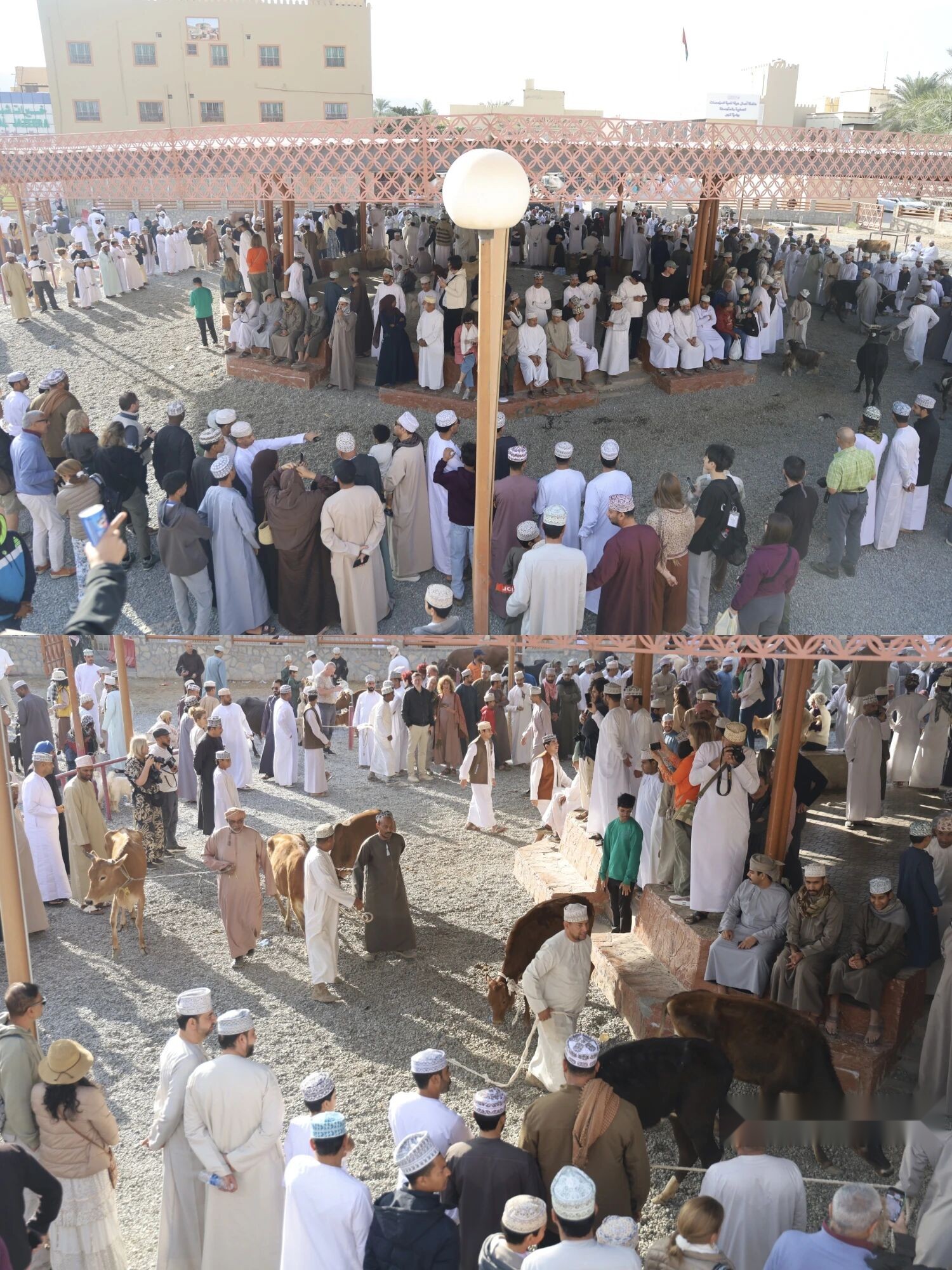
Since the livestock market only runs between 6:00 AM and 9:00 AM, we hit the road at 6:00 AM for a two-hour drive to Nizwa. We were so fortunate to catch this classic, high-energy scene. The trading happens in two concentric rings: sellers lead their goats around the inner loop while calling out their prices, and buyers in both the inner and outer circles jump in to take a closer look, inspect the animals, and shout out their bids. Once a deal is struck, the cash changes hands right there, and the seller exits the ring.
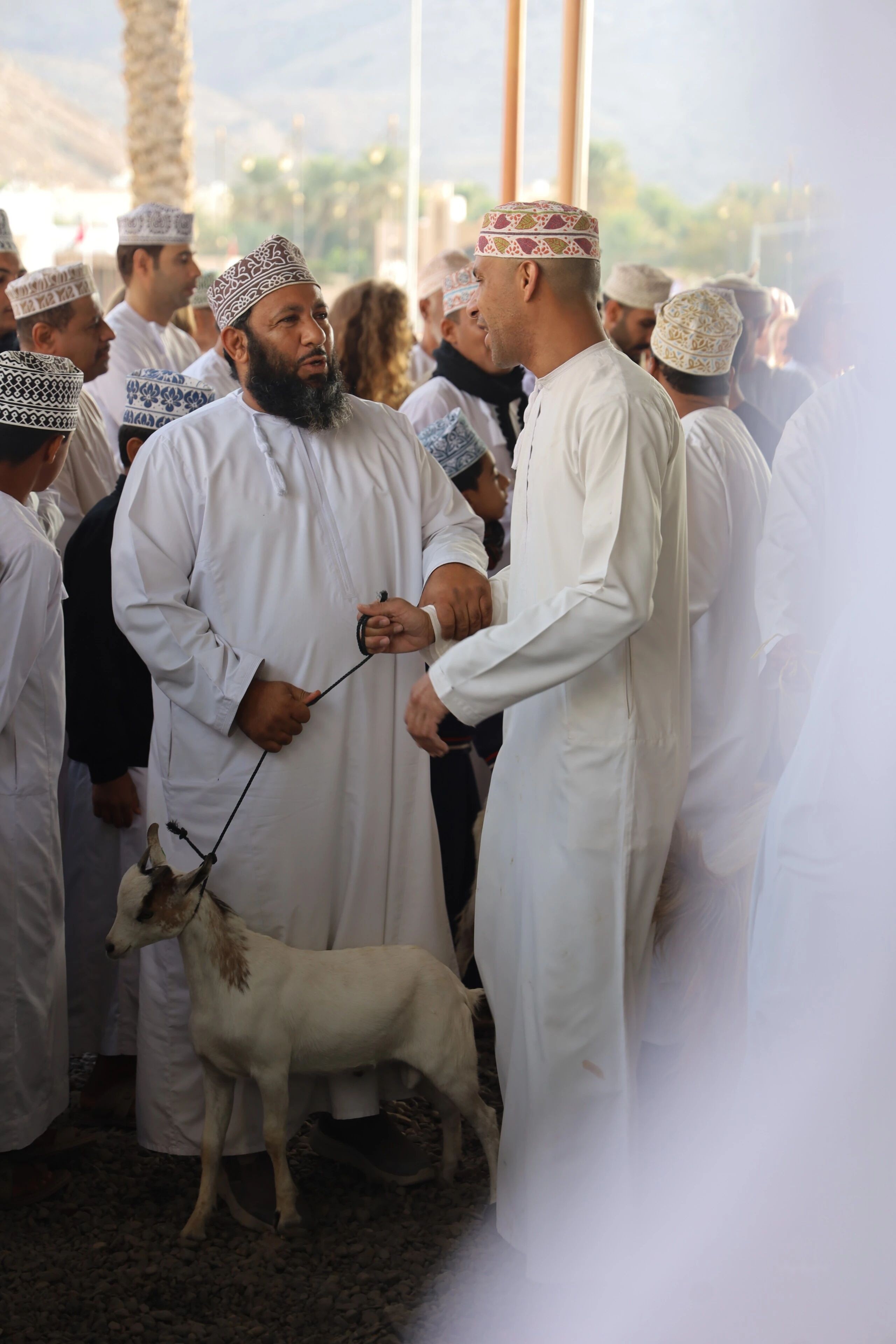
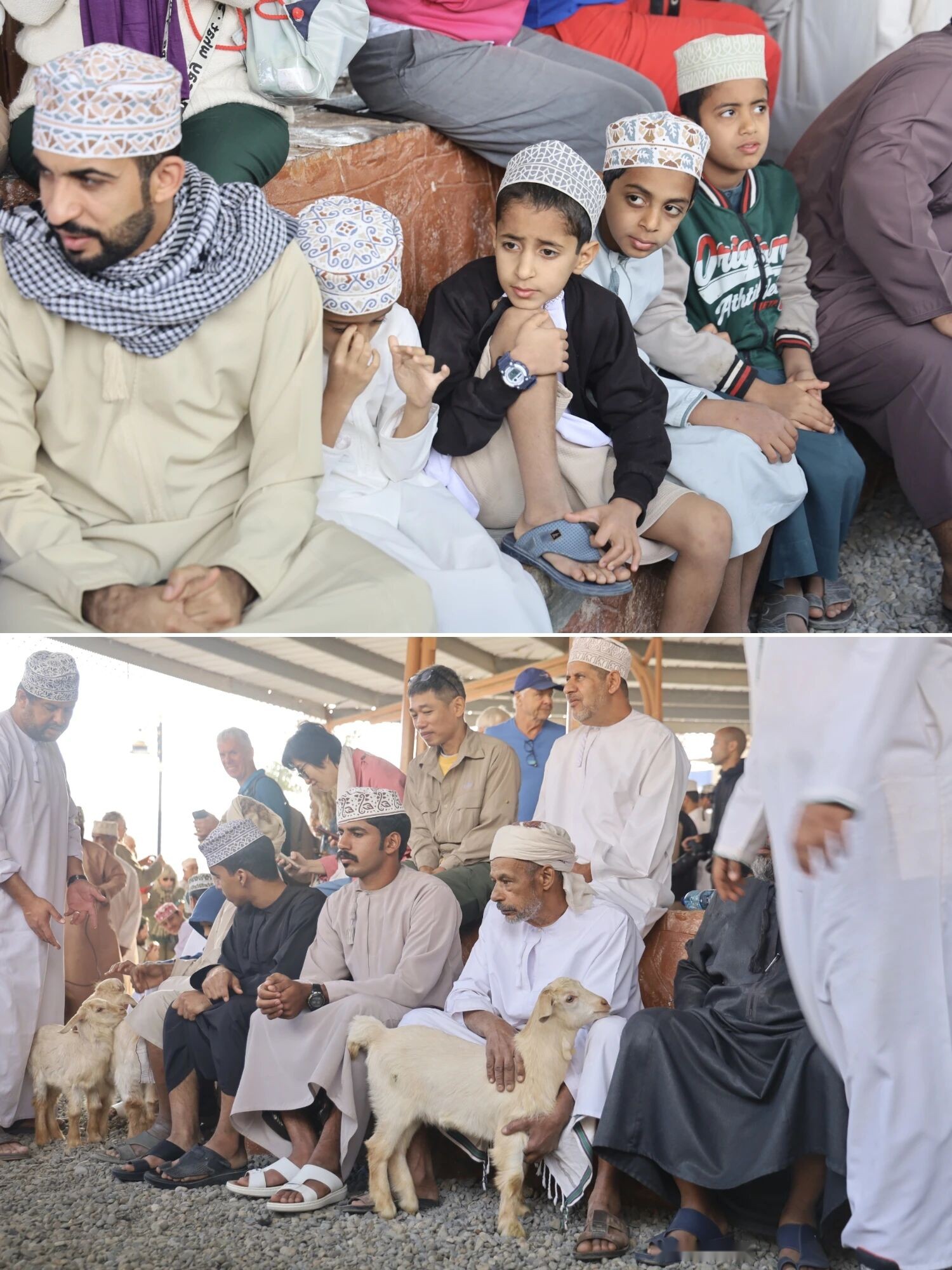
Watching the goats being traded felt pretty gentle and sweet—a lot of the time, the owners would carry the little goats in their arms as they walked, the animals letting out soft bleats. Things turned into a different vibe when the cows came out; it was a lot more intense, with the animals charging around the ring and owners putting their full strength into pulling them to keep things under control.
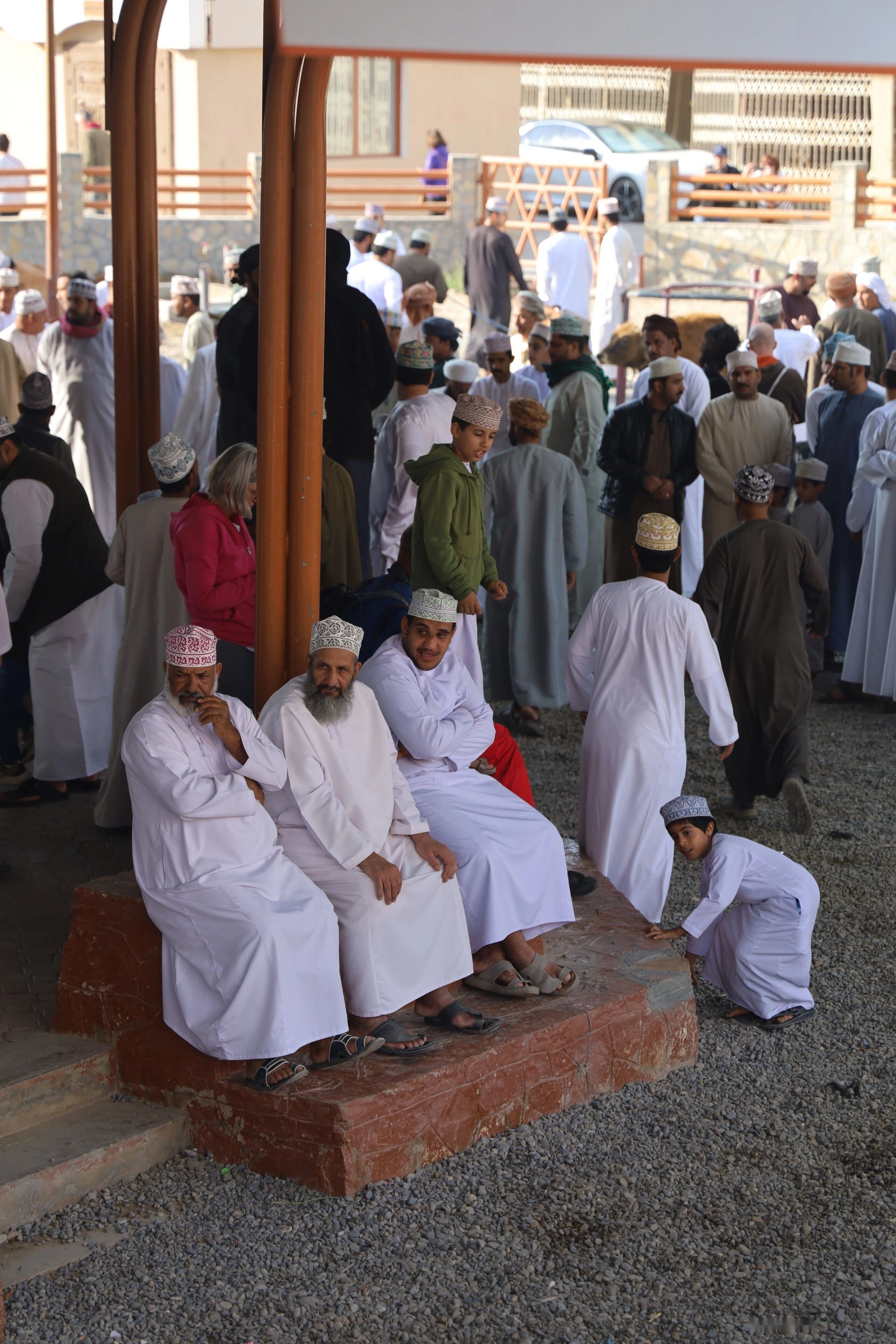
Beyond the animals, the Omani men wearing their traditional caps (kuma) added such a cool layer to the scene. It felt like we had walked straight into a movie set! I am absolutely obsessed with experiences that feel this rich in human connection and history.
Tips:
Timing
Fridays only: The main market is open every day, but the live livestock auction only happens on Fridays.
Farmers usually start unloading the goats and cows around sunrise. If you show up between 6:00 AM and 6:30 AM, you’ll catch the animals being crated and get to see the buyers inspecting their teeth and bone structure.
7:00 AM – 8:00 AM is the busiest part of the morning, filled with people herding goats, shouting out prices, and haggling with hand gestures in the circular arena.
By 8:30 AM – 9:30 AM, the goat market starts winding down. Cows and camels usually show up a bit later or in smaller numbers, and by 9:30 AM, the place is pretty much empty.
Best time to visit: October through March. Mornings are a super comfortable 20–25°C (68–77°F). If you go in the summer, you'll definitely want to get there even earlier.
Location: The open lot just north of the Nizwa Souq, right next to the Nizwa Fort. There’s no gate and no ticket fee—just follow the sounds of the crowd and the smell of the livestock.
Getting there: If you're driving from Muscat, it takes about 1.5 to 2 hours. If you want to make it for the 7:00 AM peak, leave between 5:00 AM and 5:30 AM.
Pro tip: Stay in Nizwa on Thursday night and walk over to the market by 6:30 AM so you don't have to stress about parking. The parking lot is huge, but it fills up fast, which just shows you how popular this event is (see image 15).
Once you’re done at the livestock market, spend some time walking through the rest of the Nizwa Souq—it’s super fun and lively. Having some small change is handy, but we were able to use our cards for everything without any issues. view all
[Internet Repost]
Check out these 14 documentary-style photos that take you straight into the heart of the traditional Friday morning livestock market in Nizwa, the ancient capital of Oman. You’ll get an up-close look at the centuries-old tradition of Bedouin herders and locals gathering for their unique circular walk-and-bid auctions, all set against a backdrop of authentic Arabian culture.
It wasn’t even planned, but we were lucky enough to be in Oman on a Friday, which is the only day this traditional livestock market happens in Nizwa. Seeing and experiencing this market culture, which has been going strong in the Arabian Peninsula for hundreds of years, was honestly one of the most unique experiences of our entire trip.
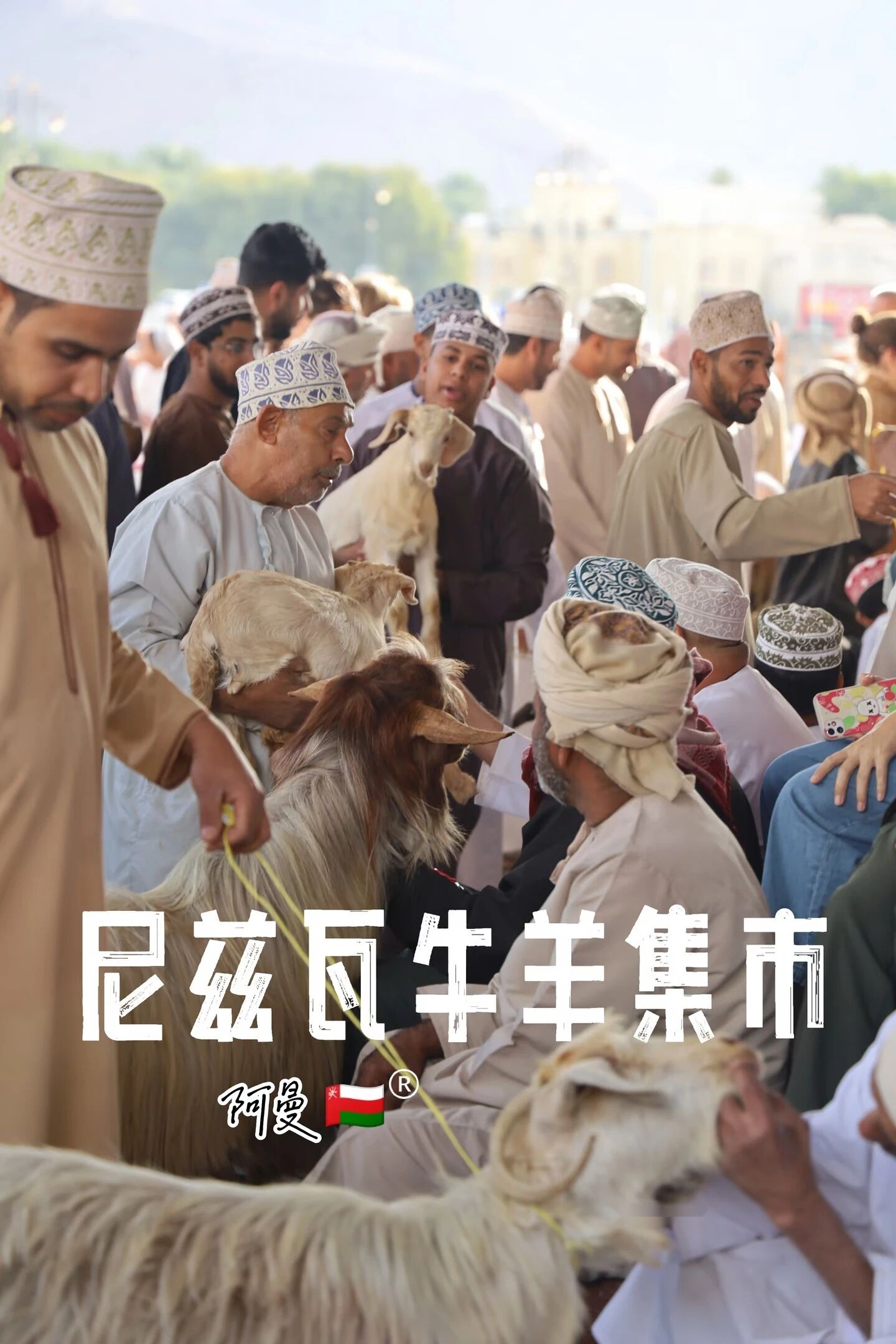
Nizwa served as the capital of Oman from the 6th to the 10th century and still holds onto its deep-rooted Islamic and Arabian traditions. The market continues to operate using farming and herding trade practices that are centuries old; it’s not just a place for business, but a major social hub where Bedouin people and local residents meet to connect and swap information.
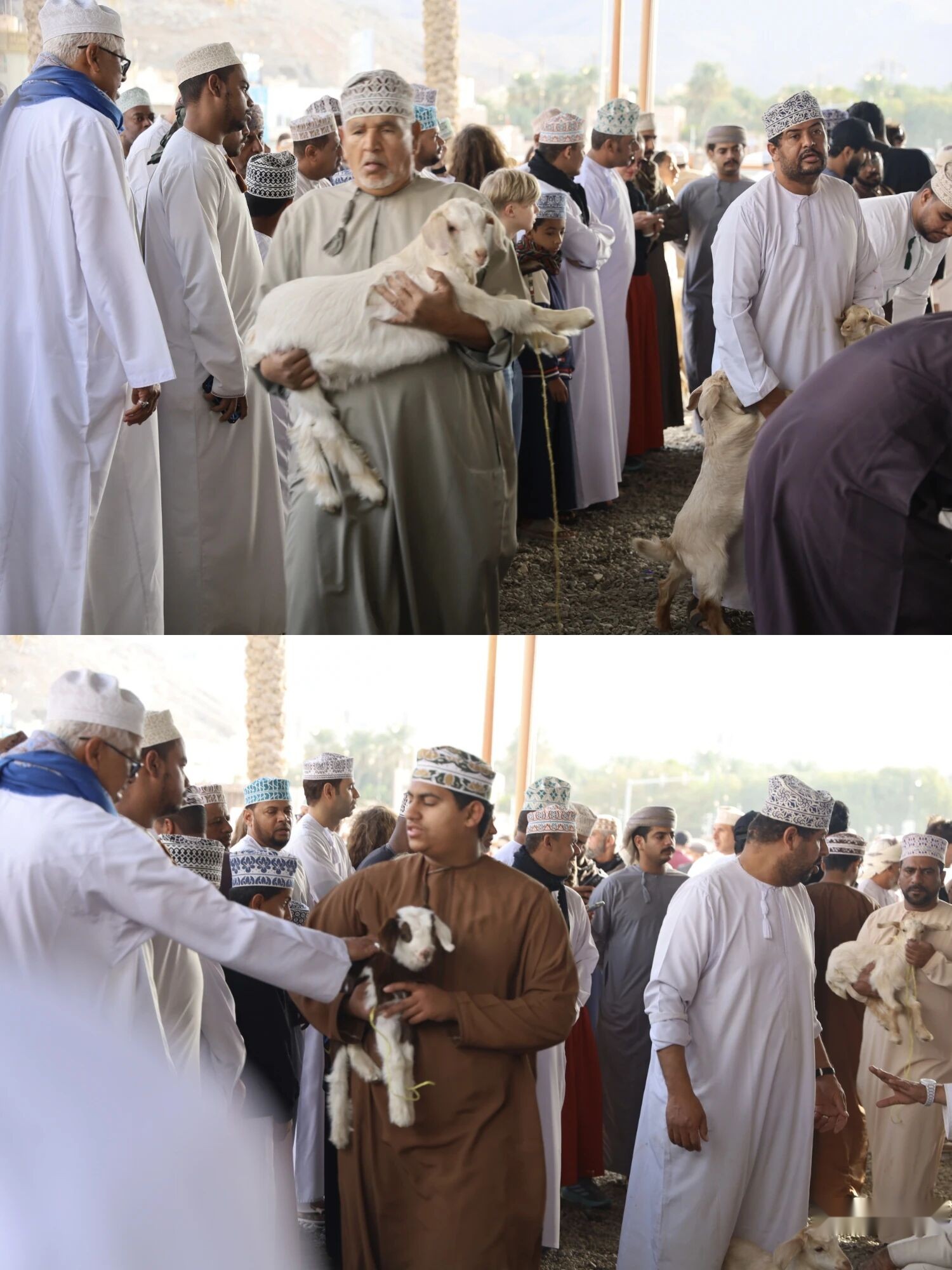
Since the livestock market only runs between 6:00 AM and 9:00 AM, we hit the road at 6:00 AM for a two-hour drive to Nizwa. We were so fortunate to catch this classic, high-energy scene. The trading happens in two concentric rings: sellers lead their goats around the inner loop while calling out their prices, and buyers in both the inner and outer circles jump in to take a closer look, inspect the animals, and shout out their bids. Once a deal is struck, the cash changes hands right there, and the seller exits the ring.
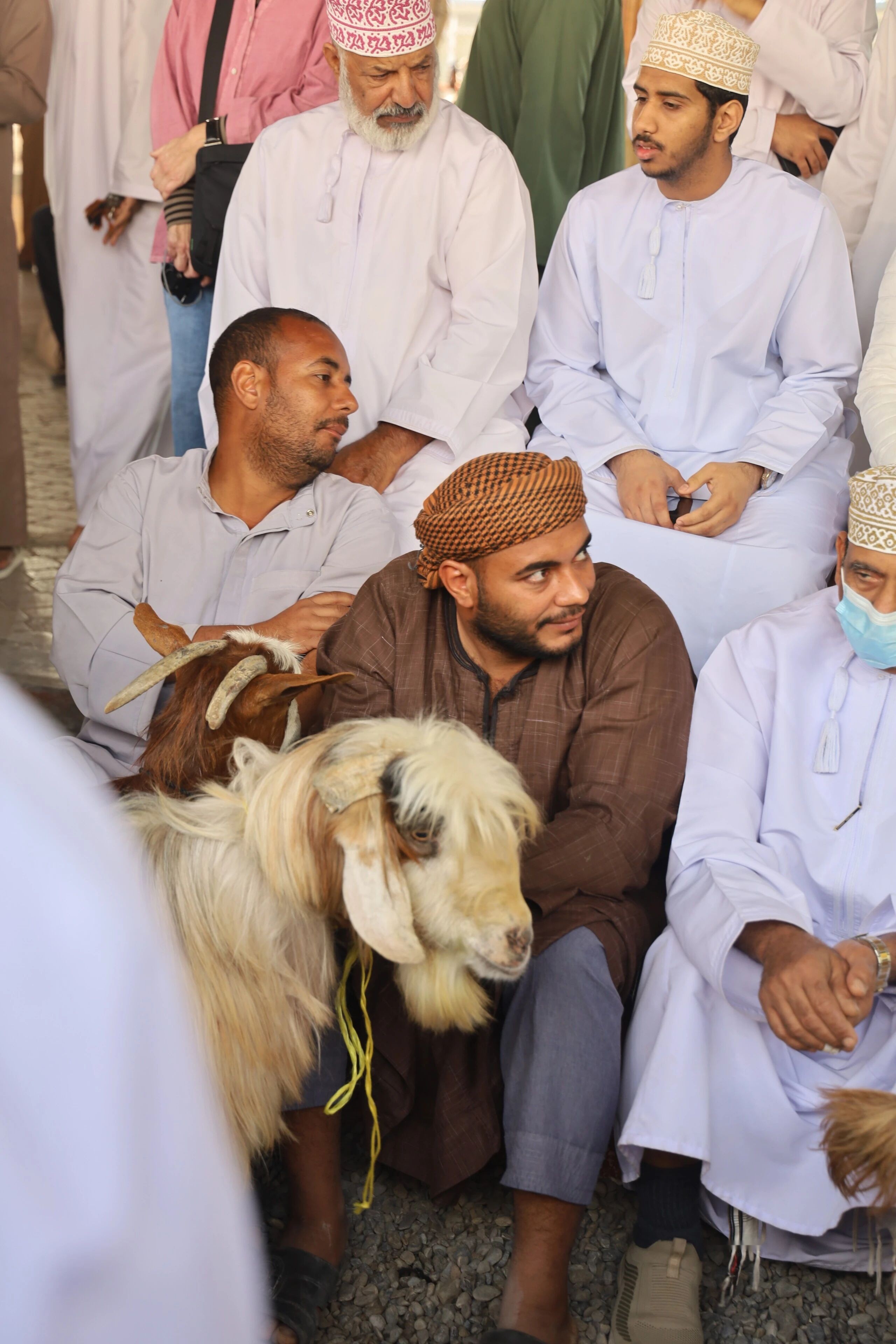
Watching the goats being traded felt pretty gentle and sweet—a lot of the time, the owners would carry the little goats in their arms as they walked, the animals letting out soft bleats. Things turned into a different vibe when the cows came out; it was a lot more intense, with the animals charging around the ring and owners putting their full strength into pulling them to keep things under control.
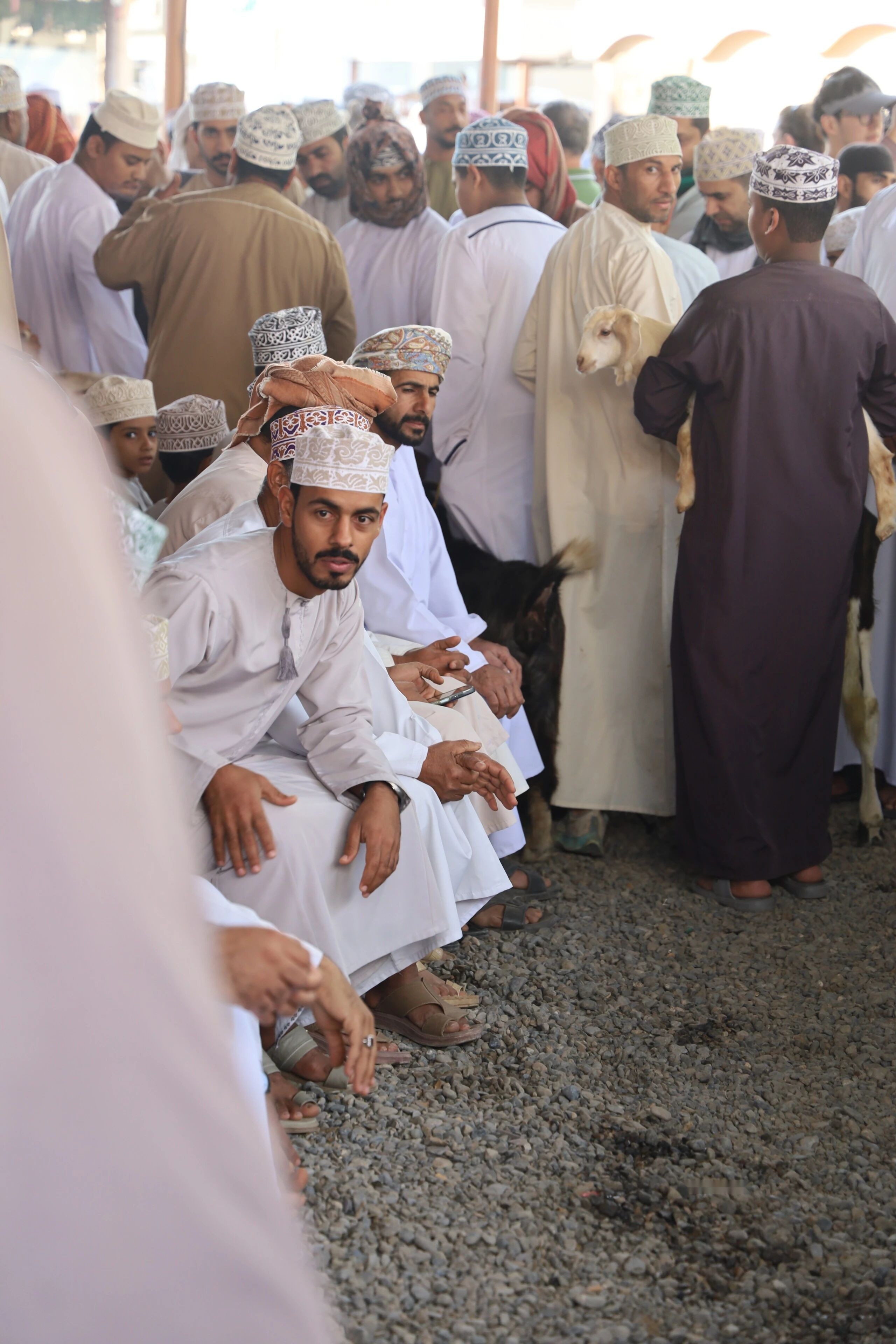
Beyond the animals, the Omani men wearing their traditional caps (kuma) added such a cool layer to the scene. It felt like we had walked straight into a movie set! I am absolutely obsessed with experiences that feel this rich in human connection and history.
Tips:
Timing
Fridays only: The main market is open every day, but the live livestock auction only happens on Fridays.
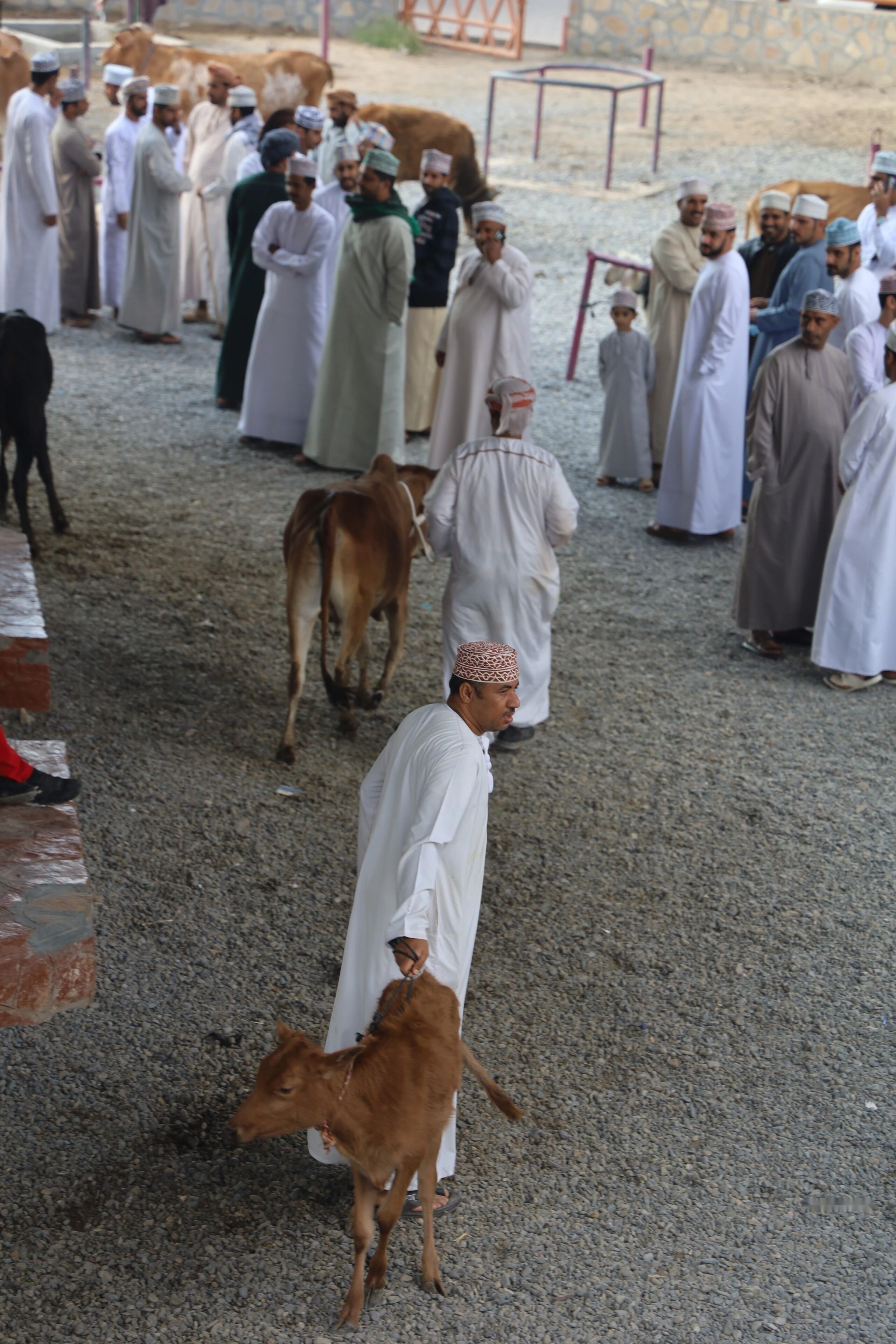
Farmers usually start unloading the goats and cows around sunrise. If you show up between 6:00 AM and 6:30 AM, you’ll catch the animals being crated and get to see the buyers inspecting their teeth and bone structure.
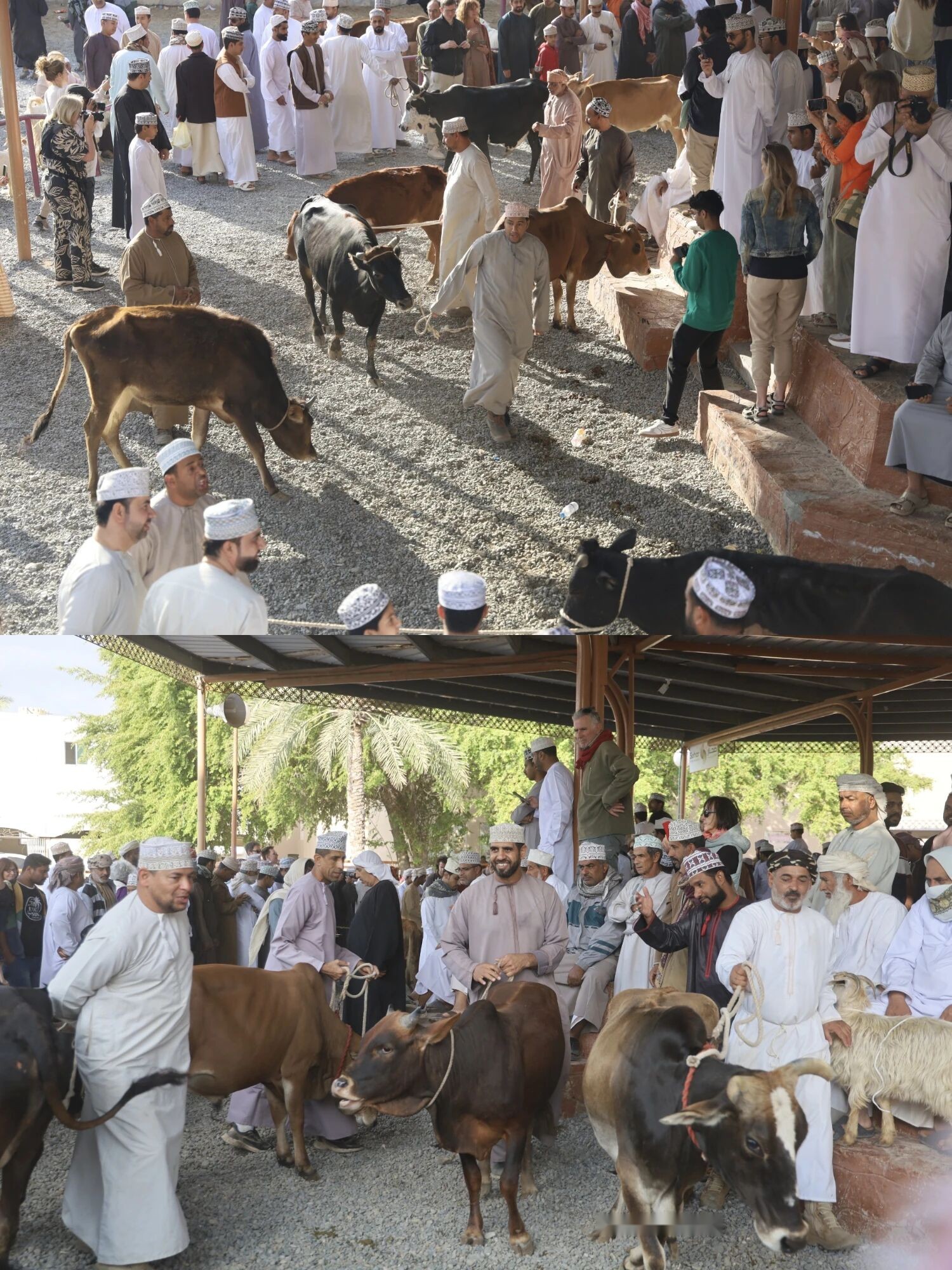
7:00 AM – 8:00 AM is the busiest part of the morning, filled with people herding goats, shouting out prices, and haggling with hand gestures in the circular arena.
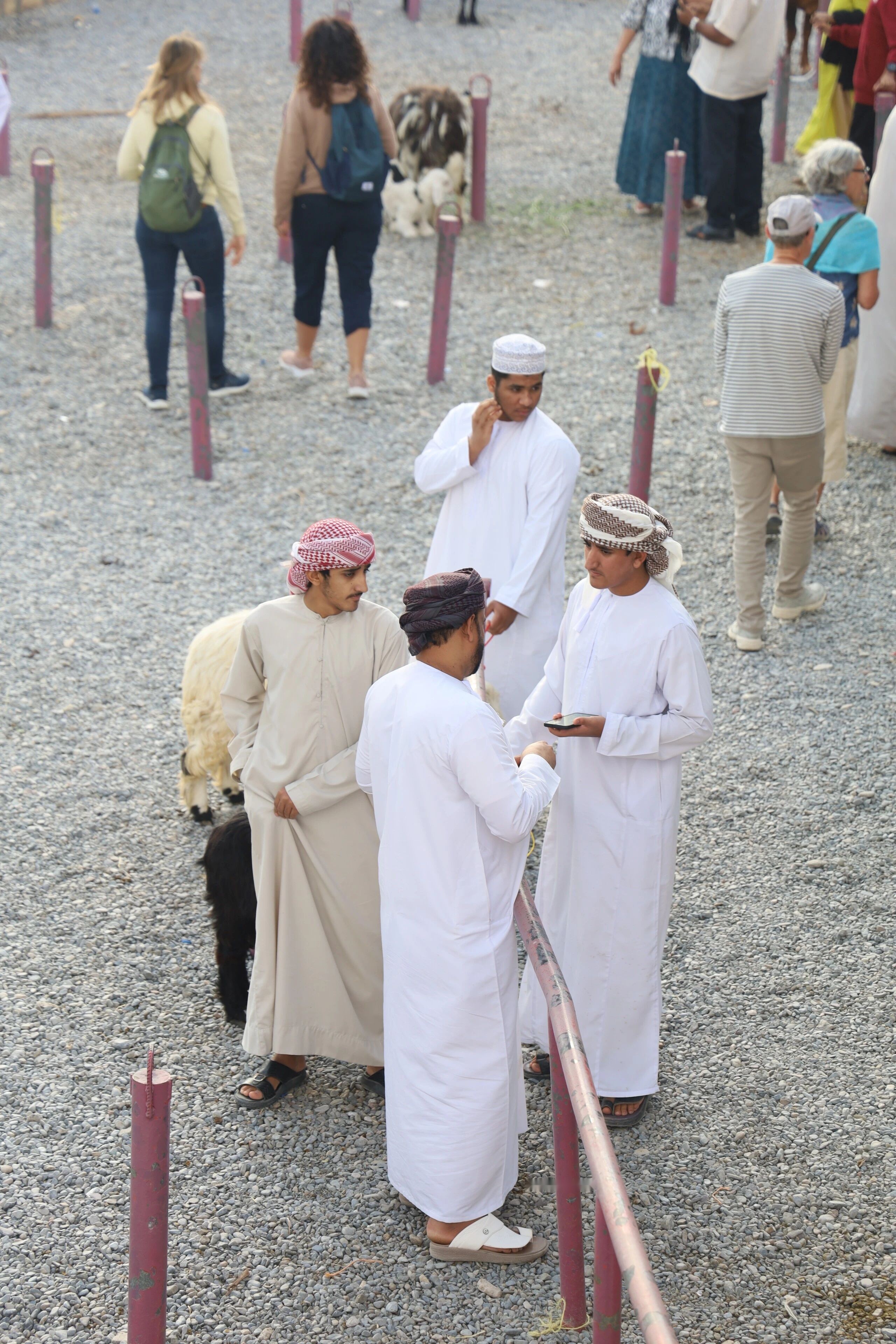
By 8:30 AM – 9:30 AM, the goat market starts winding down. Cows and camels usually show up a bit later or in smaller numbers, and by 9:30 AM, the place is pretty much empty.
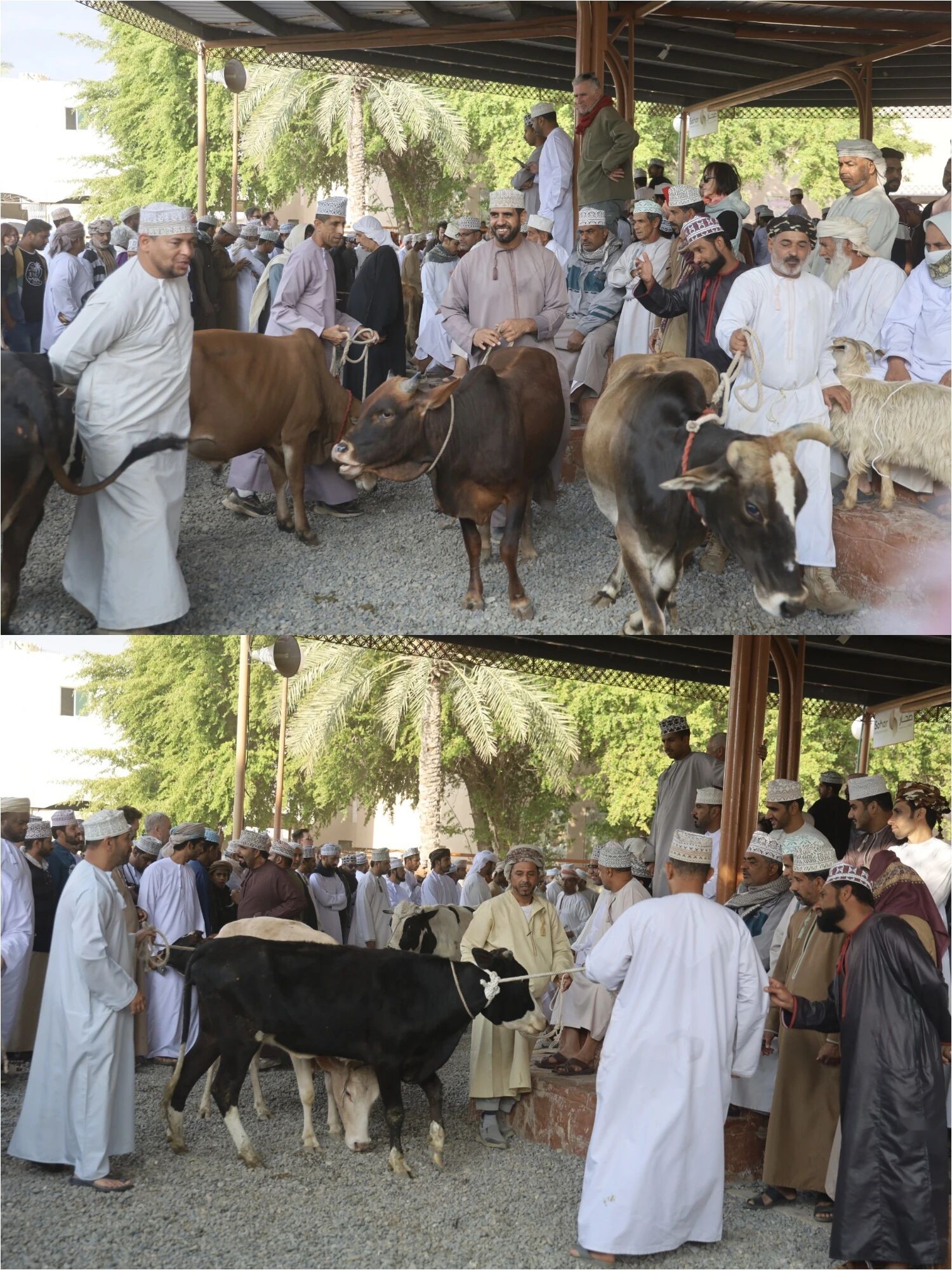
Best time to visit: October through March. Mornings are a super comfortable 20–25°C (68–77°F). If you go in the summer, you'll definitely want to get there even earlier.
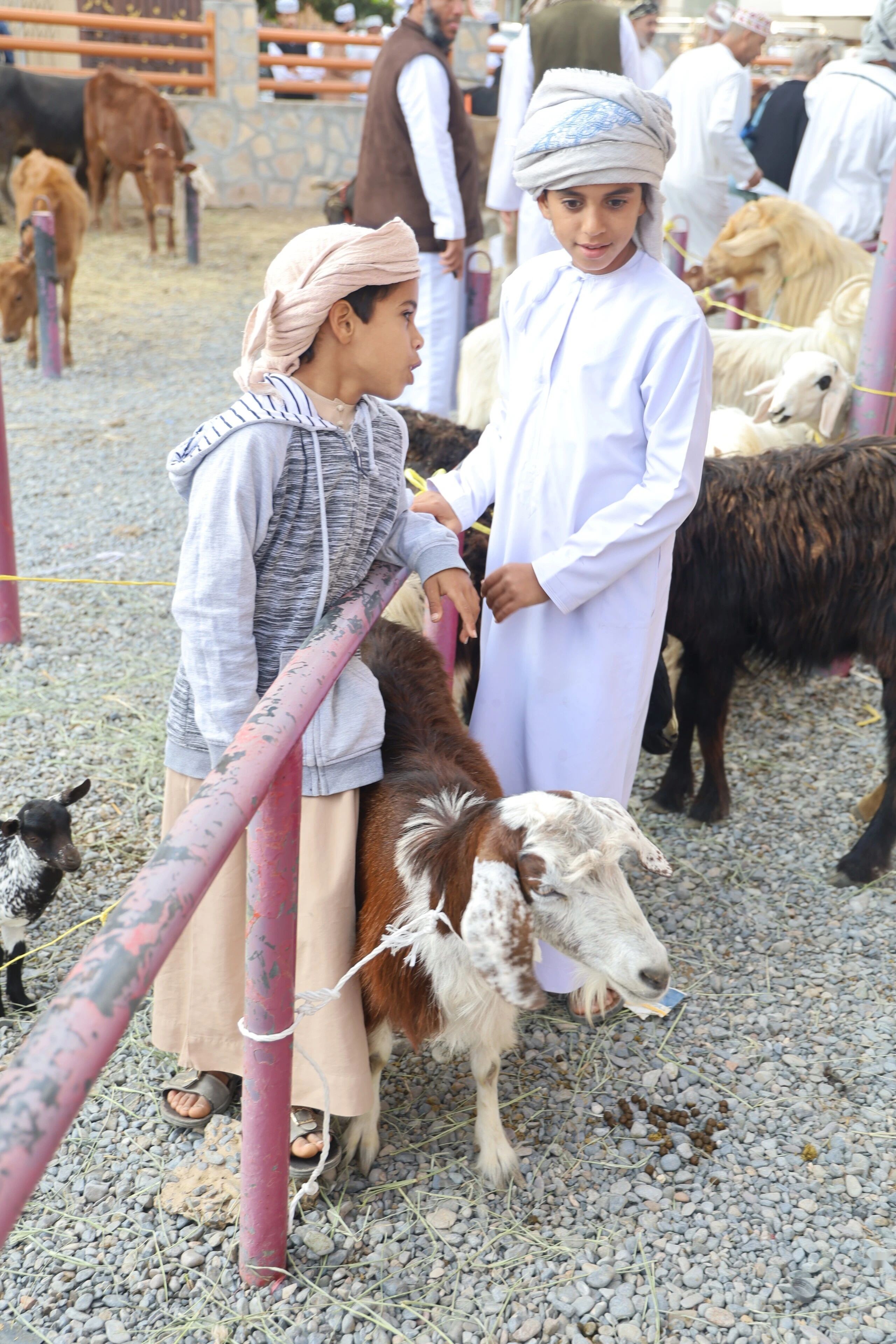
Location: The open lot just north of the Nizwa Souq, right next to the Nizwa Fort. There’s no gate and no ticket fee—just follow the sounds of the crowd and the smell of the livestock.
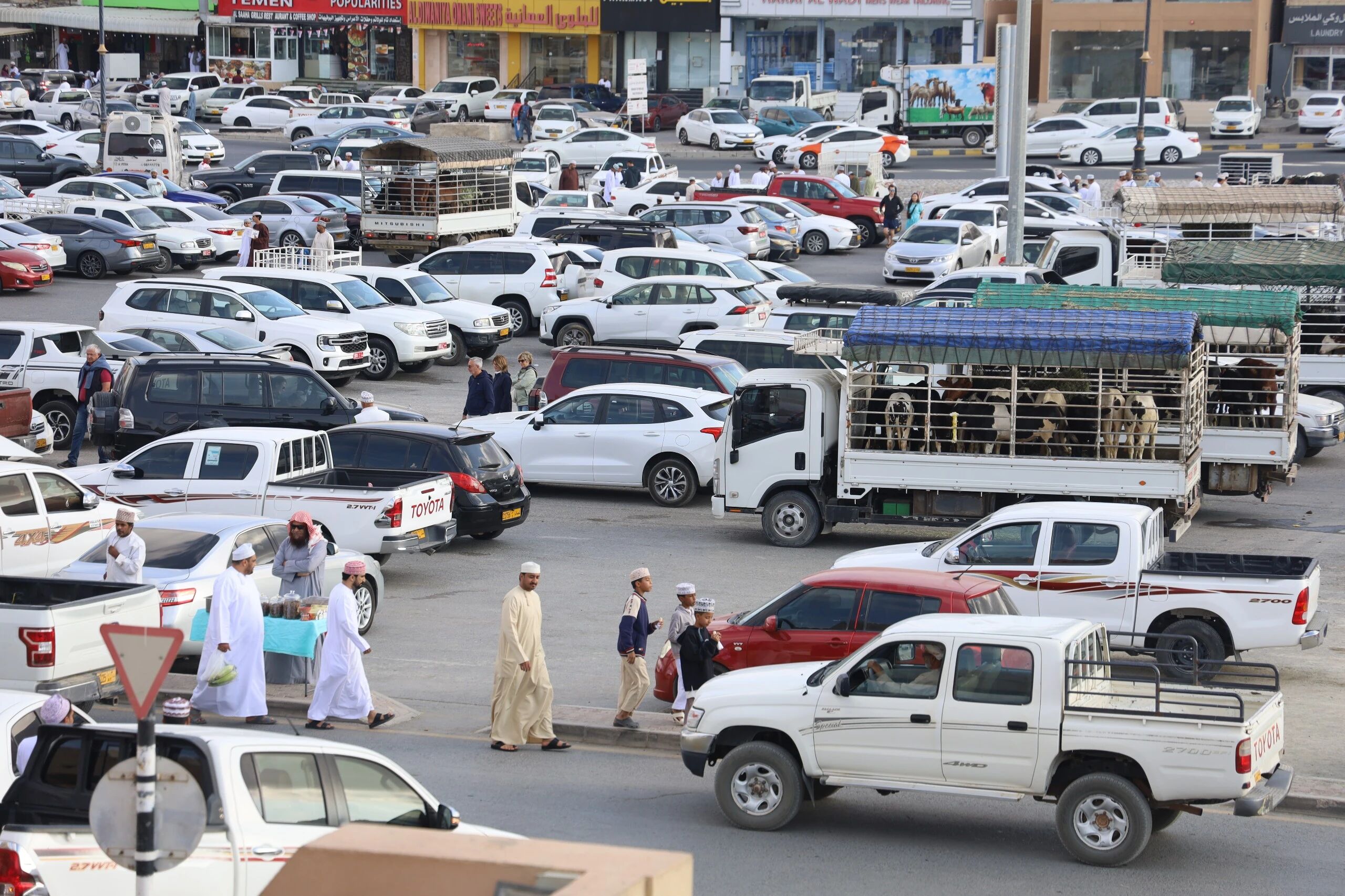
Getting there: If you're driving from Muscat, it takes about 1.5 to 2 hours. If you want to make it for the 7:00 AM peak, leave between 5:00 AM and 5:30 AM.
Pro tip: Stay in Nizwa on Thursday night and walk over to the market by 6:30 AM so you don't have to stress about parking. The parking lot is huge, but it fills up fast, which just shows you how popular this event is (see image 15).
Once you’re done at the livestock market, spend some time walking through the rest of the Nizwa Souq—it’s super fun and lively. Having some small change is handy, but we were able to use our cards for everything without any issues.
Check out these 14 documentary-style photos that take you straight into the heart of the traditional Friday morning livestock market in Nizwa, the ancient capital of Oman. You’ll get an up-close look at the centuries-old tradition of Bedouin herders and locals gathering for their unique circular walk-and-bid auctions, all set against a backdrop of authentic Arabian culture.
It wasn’t even planned, but we were lucky enough to be in Oman on a Friday, which is the only day this traditional livestock market happens in Nizwa. Seeing and experiencing this market culture, which has been going strong in the Arabian Peninsula for hundreds of years, was honestly one of the most unique experiences of our entire trip.
Nizwa served as the capital of Oman from the 6th to the 10th century and still holds onto its deep-rooted Islamic and Arabian traditions. The market continues to operate using farming and herding trade practices that are centuries old; it’s not just a place for business, but a major social hub where Bedouin people and local residents meet to connect and swap information.
Since the livestock market only runs between 6:00 AM and 9:00 AM, we hit the road at 6:00 AM for a two-hour drive to Nizwa. We were so fortunate to catch this classic, high-energy scene. The trading happens in two concentric rings: sellers lead their goats around the inner loop while calling out their prices, and buyers in both the inner and outer circles jump in to take a closer look, inspect the animals, and shout out their bids. Once a deal is struck, the cash changes hands right there, and the seller exits the ring.
Watching the goats being traded felt pretty gentle and sweet—a lot of the time, the owners would carry the little goats in their arms as they walked, the animals letting out soft bleats. Things turned into a different vibe when the cows came out; it was a lot more intense, with the animals charging around the ring and owners putting their full strength into pulling them to keep things under control.
Beyond the animals, the Omani men wearing their traditional caps (kuma) added such a cool layer to the scene. It felt like we had walked straight into a movie set! I am absolutely obsessed with experiences that feel this rich in human connection and history.
Tips:
Timing
Fridays only: The main market is open every day, but the live livestock auction only happens on Fridays.
Farmers usually start unloading the goats and cows around sunrise. If you show up between 6:00 AM and 6:30 AM, you’ll catch the animals being crated and get to see the buyers inspecting their teeth and bone structure.
7:00 AM – 8:00 AM is the busiest part of the morning, filled with people herding goats, shouting out prices, and haggling with hand gestures in the circular arena.
By 8:30 AM – 9:30 AM, the goat market starts winding down. Cows and camels usually show up a bit later or in smaller numbers, and by 9:30 AM, the place is pretty much empty.
Best time to visit: October through March. Mornings are a super comfortable 20–25°C (68–77°F). If you go in the summer, you'll definitely want to get there even earlier.
Location: The open lot just north of the Nizwa Souq, right next to the Nizwa Fort. There’s no gate and no ticket fee—just follow the sounds of the crowd and the smell of the livestock.
Getting there: If you're driving from Muscat, it takes about 1.5 to 2 hours. If you want to make it for the 7:00 AM peak, leave between 5:00 AM and 5:30 AM.
Pro tip: Stay in Nizwa on Thursday night and walk over to the market by 6:30 AM so you don't have to stress about parking. The parking lot is huge, but it fills up fast, which just shows you how popular this event is (see image 15).
Once you’re done at the livestock market, spend some time walking through the rest of the Nizwa Souq—it’s super fun and lively. Having some small change is handy, but we were able to use our cards for everything without any issues.
Nizwa Goat Market Guide: Experience the Authentic Friday Livestock Auction in Oman's Ancient Capital
Articles • Hasan09 posted the article • 0 comments • 42 views • 2026-10-30 01:12
[Internet Repost]
Check out these 14 documentary-style photos that take you straight into the heart of the traditional Friday morning livestock market in Nizwa, the ancient capital of Oman. You’ll get an up-close look at the centuries-old tradition of Bedouin herders and locals gathering for their unique circular walk-and-bid auctions, all set against a backdrop of authentic Arabian culture.
It wasn’t even planned, but we were lucky enough to be in Oman on a Friday, which is the only day this traditional livestock market happens in Nizwa. Seeing and experiencing this market culture, which has been going strong in the Arabian Peninsula for hundreds of years, was honestly one of the most unique experiences of our entire trip.
Nizwa served as the capital of Oman from the 6th to the 10th century and still holds onto its deep-rooted Islamic and Arabian traditions. The market continues to operate using farming and herding trade practices that are centuries old; it’s not just a place for business, but a major social hub where Bedouin people and local residents meet to connect and swap information.
Since the livestock market only runs between 6:00 AM and 9:00 AM, we hit the road at 6:00 AM for a two-hour drive to Nizwa. We were so fortunate to catch this classic, high-energy scene. The trading happens in two concentric rings: sellers lead their goats around the inner loop while calling out their prices, and buyers in both the inner and outer circles jump in to take a closer look, inspect the animals, and shout out their bids. Once a deal is struck, the cash changes hands right there, and the seller exits the ring.
Watching the goats being traded felt pretty gentle and sweet—a lot of the time, the owners would carry the little goats in their arms as they walked, the animals letting out soft bleats. Things turned into a different vibe when the cows came out; it was a lot more intense, with the animals charging around the ring and owners putting their full strength into pulling them to keep things under control.
Beyond the animals, the Omani men wearing their traditional caps (kuma) added such a cool layer to the scene. It felt like we had walked straight into a movie set! I am absolutely obsessed with experiences that feel this rich in human connection and history.
Tips:
Timing
Fridays only: The main market is open every day, but the live livestock auction only happens on Fridays.
Farmers usually start unloading the goats and cows around sunrise. If you show up between 6:00 AM and 6:30 AM, you’ll catch the animals being crated and get to see the buyers inspecting their teeth and bone structure.
7:00 AM – 8:00 AM is the busiest part of the morning, filled with people herding goats, shouting out prices, and haggling with hand gestures in the circular arena.
By 8:30 AM – 9:30 AM, the goat market starts winding down. Cows and camels usually show up a bit later or in smaller numbers, and by 9:30 AM, the place is pretty much empty.
Best time to visit: October through March. Mornings are a super comfortable 20–25°C (68–77°F). If you go in the summer, you'll definitely want to get there even earlier.
Location: The open lot just north of the Nizwa Souq, right next to the Nizwa Fort. There’s no gate and no ticket fee—just follow the sounds of the crowd and the smell of the livestock.
Getting there: If you're driving from Muscat, it takes about 1.5 to 2 hours. If you want to make it for the 7:00 AM peak, leave between 5:00 AM and 5:30 AM.
Pro tip: Stay in Nizwa on Thursday night and walk over to the market by 6:30 AM so you don't have to stress about parking. The parking lot is huge, but it fills up fast, which just shows you how popular this event is (see image 15).
Once you’re done at the livestock market, spend some time walking through the rest of the Nizwa Souq—it’s super fun and lively. Having some small change is handy, but we were able to use our cards for everything without any issues. view all
Check out these 14 documentary-style photos that take you straight into the heart of the traditional Friday morning livestock market in Nizwa, the ancient capital of Oman. You’ll get an up-close look at the centuries-old tradition of Bedouin herders and locals gathering for their unique circular walk-and-bid auctions, all set against a backdrop of authentic Arabian culture.
It wasn’t even planned, but we were lucky enough to be in Oman on a Friday, which is the only day this traditional livestock market happens in Nizwa. Seeing and experiencing this market culture, which has been going strong in the Arabian Peninsula for hundreds of years, was honestly one of the most unique experiences of our entire trip.
Nizwa served as the capital of Oman from the 6th to the 10th century and still holds onto its deep-rooted Islamic and Arabian traditions. The market continues to operate using farming and herding trade practices that are centuries old; it’s not just a place for business, but a major social hub where Bedouin people and local residents meet to connect and swap information.
Since the livestock market only runs between 6:00 AM and 9:00 AM, we hit the road at 6:00 AM for a two-hour drive to Nizwa. We were so fortunate to catch this classic, high-energy scene. The trading happens in two concentric rings: sellers lead their goats around the inner loop while calling out their prices, and buyers in both the inner and outer circles jump in to take a closer look, inspect the animals, and shout out their bids. Once a deal is struck, the cash changes hands right there, and the seller exits the ring.
Watching the goats being traded felt pretty gentle and sweet—a lot of the time, the owners would carry the little goats in their arms as they walked, the animals letting out soft bleats. Things turned into a different vibe when the cows came out; it was a lot more intense, with the animals charging around the ring and owners putting their full strength into pulling them to keep things under control.
Beyond the animals, the Omani men wearing their traditional caps (kuma) added such a cool layer to the scene. It felt like we had walked straight into a movie set! I am absolutely obsessed with experiences that feel this rich in human connection and history.
Tips:
Timing
Fridays only: The main market is open every day, but the live livestock auction only happens on Fridays.
Farmers usually start unloading the goats and cows around sunrise. If you show up between 6:00 AM and 6:30 AM, you’ll catch the animals being crated and get to see the buyers inspecting their teeth and bone structure.
7:00 AM – 8:00 AM is the busiest part of the morning, filled with people herding goats, shouting out prices, and haggling with hand gestures in the circular arena.
By 8:30 AM – 9:30 AM, the goat market starts winding down. Cows and camels usually show up a bit later or in smaller numbers, and by 9:30 AM, the place is pretty much empty.
Best time to visit: October through March. Mornings are a super comfortable 20–25°C (68–77°F). If you go in the summer, you'll definitely want to get there even earlier.
Location: The open lot just north of the Nizwa Souq, right next to the Nizwa Fort. There’s no gate and no ticket fee—just follow the sounds of the crowd and the smell of the livestock.
Getting there: If you're driving from Muscat, it takes about 1.5 to 2 hours. If you want to make it for the 7:00 AM peak, leave between 5:00 AM and 5:30 AM.
Pro tip: Stay in Nizwa on Thursday night and walk over to the market by 6:30 AM so you don't have to stress about parking. The parking lot is huge, but it fills up fast, which just shows you how popular this event is (see image 15).
Once you’re done at the livestock market, spend some time walking through the rest of the Nizwa Souq—it’s super fun and lively. Having some small change is handy, but we were able to use our cards for everything without any issues. view all
[Internet Repost]
Check out these 14 documentary-style photos that take you straight into the heart of the traditional Friday morning livestock market in Nizwa, the ancient capital of Oman. You’ll get an up-close look at the centuries-old tradition of Bedouin herders and locals gathering for their unique circular walk-and-bid auctions, all set against a backdrop of authentic Arabian culture.
It wasn’t even planned, but we were lucky enough to be in Oman on a Friday, which is the only day this traditional livestock market happens in Nizwa. Seeing and experiencing this market culture, which has been going strong in the Arabian Peninsula for hundreds of years, was honestly one of the most unique experiences of our entire trip.
Nizwa served as the capital of Oman from the 6th to the 10th century and still holds onto its deep-rooted Islamic and Arabian traditions. The market continues to operate using farming and herding trade practices that are centuries old; it’s not just a place for business, but a major social hub where Bedouin people and local residents meet to connect and swap information.
Since the livestock market only runs between 6:00 AM and 9:00 AM, we hit the road at 6:00 AM for a two-hour drive to Nizwa. We were so fortunate to catch this classic, high-energy scene. The trading happens in two concentric rings: sellers lead their goats around the inner loop while calling out their prices, and buyers in both the inner and outer circles jump in to take a closer look, inspect the animals, and shout out their bids. Once a deal is struck, the cash changes hands right there, and the seller exits the ring.
Watching the goats being traded felt pretty gentle and sweet—a lot of the time, the owners would carry the little goats in their arms as they walked, the animals letting out soft bleats. Things turned into a different vibe when the cows came out; it was a lot more intense, with the animals charging around the ring and owners putting their full strength into pulling them to keep things under control.
Beyond the animals, the Omani men wearing their traditional caps (kuma) added such a cool layer to the scene. It felt like we had walked straight into a movie set! I am absolutely obsessed with experiences that feel this rich in human connection and history.
Tips:
Timing
Fridays only: The main market is open every day, but the live livestock auction only happens on Fridays.
Farmers usually start unloading the goats and cows around sunrise. If you show up between 6:00 AM and 6:30 AM, you’ll catch the animals being crated and get to see the buyers inspecting their teeth and bone structure.
7:00 AM – 8:00 AM is the busiest part of the morning, filled with people herding goats, shouting out prices, and haggling with hand gestures in the circular arena.
By 8:30 AM – 9:30 AM, the goat market starts winding down. Cows and camels usually show up a bit later or in smaller numbers, and by 9:30 AM, the place is pretty much empty.
Best time to visit: October through March. Mornings are a super comfortable 20–25°C (68–77°F). If you go in the summer, you'll definitely want to get there even earlier.
Location: The open lot just north of the Nizwa Souq, right next to the Nizwa Fort. There’s no gate and no ticket fee—just follow the sounds of the crowd and the smell of the livestock.
Getting there: If you're driving from Muscat, it takes about 1.5 to 2 hours. If you want to make it for the 7:00 AM peak, leave between 5:00 AM and 5:30 AM.
Pro tip: Stay in Nizwa on Thursday night and walk over to the market by 6:30 AM so you don't have to stress about parking. The parking lot is huge, but it fills up fast, which just shows you how popular this event is (see image 15).
Once you’re done at the livestock market, spend some time walking through the rest of the Nizwa Souq—it’s super fun and lively. Having some small change is handy, but we were able to use our cards for everything without any issues.