

Northern Beijing
Beijing Northern Muslim Notes — Part 6
Articles • ali2007fr posted the article • 0 comments • 146 views • 2026-05-18 07:59
Summary: Beijing Muslim History: Old Halal Notes from the Northern City is presented here as a firsthand travel account in clear English, beginning with this scene: East City:. The account keeps its focus on Beijing Muslim History, Northern Beijing, Hui Muslims while preserving the names, places, food, and historical details from the Chinese source. This final block is 2 of 2.
Block 2 of 2
The restaurant has a professionally trained lamb slicer named Master Zhao Delu, who is nicknamed Zhao the One-Knife. He started at the shop in 1981 to learn how to debone, select, and slice lamb, and he has been doing this for over 20 years. He has his own unique skills. He chooses tender young lambs weighing 35 jin, then removes the thin membrane and tendons. After cooling the meat (known in the trade as cold-setting), the blood and meat blend together, making the red and white parts distinct before it can be used. Finally, he slices it into thin, even pieces that look beautiful with their alternating red and white colors. Dip thin slices of meat into a charcoal hot pot (huoguo) that smells of wood, letting the woody scent blend with the meat. The meat stays tender even after long cooking, and the thin slices do not break. Served with carefully prepared seasonings, friends and family sit around the table to enjoy the lively and grand atmosphere. The taste is fresh, fragrant, and wonderful. This is the traditional Beijing-style mutton hot pot (shuan yangrou) from Ruizhenhou.
The Sina blog "A Century of Ruizhenhou" by ruiren491112. The blogger, Chen Junyuan, was born in Beijing in 1949 and has lived there for generations.
One day, Lin Kaimo (noted by Wang Dongsi as a master of Go during the Republic of China era) and Xia Renhu (noted by Wang Dongsi as a famous scholar) were playing Go at Chunming Pavilion in Zhongshan Park. They played for so long that they missed dinner. When the game ended, they had to order a bowl of beef noodles at Ruizhenhou, located north of Chunming Pavilion, to satisfy their hunger. At that time, Ruizhenhou was quite famous and had a branch in Zhongshan Park that sold various noodles and snacks. Back then, the noodles at Ruizhenhou were much better than the California beef noodles popular today. They were hand-pulled noodles (chentiaomian) served hot, with a rich, thick broth and plenty of tender, fragrant meat. I don't remember the exact price per bowl, maybe 70 or 80 cents, but it was very popular.
Ruizhenhou is a halal restaurant that still exists today, located at the Dongsi intersection. In the past, it was famous for its deep-fried lamb tails (zha yangwei), crispy stir-fried mung bean jelly (jiao liu geza), braised meat strips (ba routiao), and stewed beef (men niurou).
Lingering Fragrance: Memories of the Capital by Zhou Shaoliang.
2. Kaorouwan inside Xuanwumen
Kaorouwan as described by Zhang Zhongxing.
I forget who I was with, but it was summer, and we went to Kaorouwan to try the grilled beef. The storefront was very simple, just one large room. To the south is the barbecue area with two grills side by side. They look like millstones, featuring a round platform about the size of a dining table with a foot-high iron ring in the center. A slightly raised iron grate sits on top of the ring. The grate is made of iron strips about a centimeter wide placed side by side. The gaps between them are packed with beef fat from constant use. Four rough benches are placed around the round platform for customers to stand at. To the north is a table holding bowls, chopsticks, chopped green onions, chopped cilantro, sesame paste (majiang), soy sauce, and other seasonings. There is also a cutting board for the beef, which holds the meat, knives, and plates. The man cutting the meat is a big guy around fifty years old, likely the shop owner, Mr. Wan. He is quite heavy and wears only a pair of thin trousers, which sit about an inch below his navel. The owner is very capable. Aside from a teenage boy who helps deliver meat and seasonings, he does everything himself, including seating customers and handling the bills. The meat is said to be hand-picked at the meat market early in the morning, and it is sliced well, thin and even. view all
Summary: Beijing Muslim History: Old Halal Notes from the Northern City is presented here as a firsthand travel account in clear English, beginning with this scene: East City:. The account keeps its focus on Beijing Muslim History, Northern Beijing, Hui Muslims while preserving the names, places, food, and historical details from the Chinese source. This final block is 2 of 2.
Block 2 of 2
The restaurant has a professionally trained lamb slicer named Master Zhao Delu, who is nicknamed Zhao the One-Knife. He started at the shop in 1981 to learn how to debone, select, and slice lamb, and he has been doing this for over 20 years. He has his own unique skills. He chooses tender young lambs weighing 35 jin, then removes the thin membrane and tendons. After cooling the meat (known in the trade as cold-setting), the blood and meat blend together, making the red and white parts distinct before it can be used. Finally, he slices it into thin, even pieces that look beautiful with their alternating red and white colors. Dip thin slices of meat into a charcoal hot pot (huoguo) that smells of wood, letting the woody scent blend with the meat. The meat stays tender even after long cooking, and the thin slices do not break. Served with carefully prepared seasonings, friends and family sit around the table to enjoy the lively and grand atmosphere. The taste is fresh, fragrant, and wonderful. This is the traditional Beijing-style mutton hot pot (shuan yangrou) from Ruizhenhou.
The Sina blog "A Century of Ruizhenhou" by ruiren491112. The blogger, Chen Junyuan, was born in Beijing in 1949 and has lived there for generations.
One day, Lin Kaimo (noted by Wang Dongsi as a master of Go during the Republic of China era) and Xia Renhu (noted by Wang Dongsi as a famous scholar) were playing Go at Chunming Pavilion in Zhongshan Park. They played for so long that they missed dinner. When the game ended, they had to order a bowl of beef noodles at Ruizhenhou, located north of Chunming Pavilion, to satisfy their hunger. At that time, Ruizhenhou was quite famous and had a branch in Zhongshan Park that sold various noodles and snacks. Back then, the noodles at Ruizhenhou were much better than the California beef noodles popular today. They were hand-pulled noodles (chentiaomian) served hot, with a rich, thick broth and plenty of tender, fragrant meat. I don't remember the exact price per bowl, maybe 70 or 80 cents, but it was very popular.
Ruizhenhou is a halal restaurant that still exists today, located at the Dongsi intersection. In the past, it was famous for its deep-fried lamb tails (zha yangwei), crispy stir-fried mung bean jelly (jiao liu geza), braised meat strips (ba routiao), and stewed beef (men niurou).
Lingering Fragrance: Memories of the Capital by Zhou Shaoliang.
2. Kaorouwan inside Xuanwumen
Kaorouwan as described by Zhang Zhongxing.
I forget who I was with, but it was summer, and we went to Kaorouwan to try the grilled beef. The storefront was very simple, just one large room. To the south is the barbecue area with two grills side by side. They look like millstones, featuring a round platform about the size of a dining table with a foot-high iron ring in the center. A slightly raised iron grate sits on top of the ring. The grate is made of iron strips about a centimeter wide placed side by side. The gaps between them are packed with beef fat from constant use. Four rough benches are placed around the round platform for customers to stand at. To the north is a table holding bowls, chopsticks, chopped green onions, chopped cilantro, sesame paste (majiang), soy sauce, and other seasonings. There is also a cutting board for the beef, which holds the meat, knives, and plates. The man cutting the meat is a big guy around fifty years old, likely the shop owner, Mr. Wan. He is quite heavy and wears only a pair of thin trousers, which sit about an inch below his navel. The owner is very capable. Aside from a teenage boy who helps deliver meat and seasonings, he does everything himself, including seating customers and handling the bills. The meat is said to be hand-picked at the meat market early in the morning, and it is sliced well, thin and even.
Beijing Muslim History: Old Halal Notes from the Northern City (Part 4 of 6) — Section 2 of 2 — Block 2 of 2
Articles • ali2007fr posted the article • 0 comments • 153 views • 2026-05-18 07:52
Summary: Beijing Muslim History: Old Halal Notes from the Northern City is presented here as a firsthand travel account in clear English, beginning with this scene: East City:. The account keeps its focus on Beijing Muslim History, Northern Beijing, Hui Muslims while preserving the names, places, food, and historical details from the Chinese source. This final block is 2 of 2.
Block 2 of 2
The restaurant has a professionally trained lamb slicer named Master Zhao Delu, who is nicknamed Zhao the One-Knife. He started at the shop in 1981 to learn how to debone, select, and slice lamb, and he has been doing this for over 20 years. He has his own unique skills. He chooses tender young lambs weighing 35 jin, then removes the thin membrane and tendons. After cooling the meat (known in the trade as cold-setting), the blood and meat blend together, making the red and white parts distinct before it can be used. Finally, he slices it into thin, even pieces that look beautiful with their alternating red and white colors. Dip thin slices of meat into a charcoal hot pot (huoguo) that smells of wood, letting the woody scent blend with the meat. The meat stays tender even after long cooking, and the thin slices do not break. Served with carefully prepared seasonings, friends and family sit around the table to enjoy the lively and grand atmosphere. The taste is fresh, fragrant, and wonderful. This is the traditional Beijing-style mutton hot pot (shuan yangrou) from Ruizhenhou.
The Sina blog "A Century of Ruizhenhou" by ruiren491112. The blogger, Chen Junyuan, was born in Beijing in 1949 and has lived there for generations.
One day, Lin Kaimo (noted by Wang Dongsi as a master of Go during the Republic of China era) and Xia Renhu (noted by Wang Dongsi as a famous scholar) were playing Go at Chunming Pavilion in Zhongshan Park. They played for so long that they missed dinner. When the game ended, they had to order a bowl of beef noodles at Ruizhenhou, located north of Chunming Pavilion, to satisfy their hunger. At that time, Ruizhenhou was quite famous and had a branch in Zhongshan Park that sold various noodles and snacks. Back then, the noodles at Ruizhenhou were much better than the California beef noodles popular today. They were hand-pulled noodles (chentiaomian) served hot, with a rich, thick broth and plenty of tender, fragrant meat. I don't remember the exact price per bowl, maybe 70 or 80 cents, but it was very popular.
Ruizhenhou is a halal restaurant that still exists today, located at the Dongsi intersection. In the past, it was famous for its deep-fried lamb tails (zha yangwei), crispy stir-fried mung bean jelly (jiao liu geza), braised meat strips (ba routiao), and stewed beef (men niurou).
Lingering Fragrance: Memories of the Capital by Zhou Shaoliang.
2. Kaorouwan inside Xuanwumen
Kaorouwan as described by Zhang Zhongxing.
I forget who I was with, but it was summer, and we went to Kaorouwan to try the grilled beef. The storefront was very simple, just one large room. To the south is the barbecue area with two grills side by side. They look like millstones, featuring a round platform about the size of a dining table with a foot-high iron ring in the center. A slightly raised iron grate sits on top of the ring. The grate is made of iron strips about a centimeter wide placed side by side. The gaps between them are packed with beef fat from constant use. Four rough benches are placed around the round platform for customers to stand at. To the north is a table holding bowls, chopsticks, chopped green onions, chopped cilantro, sesame paste (majiang), soy sauce, and other seasonings. There is also a cutting board for the beef, which holds the meat, knives, and plates. The man cutting the meat is a big guy around fifty years old, likely the shop owner, Mr. Wan. He is quite heavy and wears only a pair of thin trousers, which sit about an inch below his navel. The owner is very capable. Aside from a teenage boy who helps deliver meat and seasonings, he does everything himself, including seating customers and handling the bills. The meat is said to be hand-picked at the meat market early in the morning, and it is sliced well, thin and even. view all
Summary: Beijing Muslim History: Old Halal Notes from the Northern City is presented here as a firsthand travel account in clear English, beginning with this scene: East City:. The account keeps its focus on Beijing Muslim History, Northern Beijing, Hui Muslims while preserving the names, places, food, and historical details from the Chinese source. This final block is 2 of 2.
Block 2 of 2
The restaurant has a professionally trained lamb slicer named Master Zhao Delu, who is nicknamed Zhao the One-Knife. He started at the shop in 1981 to learn how to debone, select, and slice lamb, and he has been doing this for over 20 years. He has his own unique skills. He chooses tender young lambs weighing 35 jin, then removes the thin membrane and tendons. After cooling the meat (known in the trade as cold-setting), the blood and meat blend together, making the red and white parts distinct before it can be used. Finally, he slices it into thin, even pieces that look beautiful with their alternating red and white colors. Dip thin slices of meat into a charcoal hot pot (huoguo) that smells of wood, letting the woody scent blend with the meat. The meat stays tender even after long cooking, and the thin slices do not break. Served with carefully prepared seasonings, friends and family sit around the table to enjoy the lively and grand atmosphere. The taste is fresh, fragrant, and wonderful. This is the traditional Beijing-style mutton hot pot (shuan yangrou) from Ruizhenhou.
The Sina blog "A Century of Ruizhenhou" by ruiren491112. The blogger, Chen Junyuan, was born in Beijing in 1949 and has lived there for generations.
One day, Lin Kaimo (noted by Wang Dongsi as a master of Go during the Republic of China era) and Xia Renhu (noted by Wang Dongsi as a famous scholar) were playing Go at Chunming Pavilion in Zhongshan Park. They played for so long that they missed dinner. When the game ended, they had to order a bowl of beef noodles at Ruizhenhou, located north of Chunming Pavilion, to satisfy their hunger. At that time, Ruizhenhou was quite famous and had a branch in Zhongshan Park that sold various noodles and snacks. Back then, the noodles at Ruizhenhou were much better than the California beef noodles popular today. They were hand-pulled noodles (chentiaomian) served hot, with a rich, thick broth and plenty of tender, fragrant meat. I don't remember the exact price per bowl, maybe 70 or 80 cents, but it was very popular.
Ruizhenhou is a halal restaurant that still exists today, located at the Dongsi intersection. In the past, it was famous for its deep-fried lamb tails (zha yangwei), crispy stir-fried mung bean jelly (jiao liu geza), braised meat strips (ba routiao), and stewed beef (men niurou).
Lingering Fragrance: Memories of the Capital by Zhou Shaoliang.
2. Kaorouwan inside Xuanwumen
Kaorouwan as described by Zhang Zhongxing.
I forget who I was with, but it was summer, and we went to Kaorouwan to try the grilled beef. The storefront was very simple, just one large room. To the south is the barbecue area with two grills side by side. They look like millstones, featuring a round platform about the size of a dining table with a foot-high iron ring in the center. A slightly raised iron grate sits on top of the ring. The grate is made of iron strips about a centimeter wide placed side by side. The gaps between them are packed with beef fat from constant use. Four rough benches are placed around the round platform for customers to stand at. To the north is a table holding bowls, chopsticks, chopped green onions, chopped cilantro, sesame paste (majiang), soy sauce, and other seasonings. There is also a cutting board for the beef, which holds the meat, knives, and plates. The man cutting the meat is a big guy around fifty years old, likely the shop owner, Mr. Wan. He is quite heavy and wears only a pair of thin trousers, which sit about an inch below his navel. The owner is very capable. Aside from a teenage boy who helps deliver meat and seasonings, he does everything himself, including seating customers and handling the bills. The meat is said to be hand-picked at the meat market early in the morning, and it is sliced well, thin and even.
Beijing Muslim History: Old Halal Notes from the Northern City (Part 4 of 6) — Section 2 of 2
Articles • ali2007fr posted the article • 0 comments • 126 views • 2026-05-18 07:52
Summary: Beijing Muslim History: Old Halal Notes from the Northern City is presented here as a firsthand travel account in clear English, beginning with this scene: East City:. The account keeps its focus on Beijing Muslim History, Northern Beijing, Hui Muslims while preserving the names, places, food, and historical details from the Chinese source. This retry section is 2 of 2.
Section 2 of 2
When I was a teenager, I was an apprentice at Zengqingzhai near the Back Gate (Houmen, also known as Di'anmen)... What did we sell? They sold pastries, and in the summer, they sold river produce like lotus root, water caltrops, and eight-treasure lotus seed porridge (babao lianzi zhou). All this river food came from Zengqingzhai, and they also sold ice cream. That is what we made back home. Later, when I made ice cream in Jiuxianqiao, I used what I learned here. Where did we sell it? In the middle of Shichahai, they drove piles into the lake bed, laid down boards, and connected them to build several room-like structures. They sold everything there—all kinds of food like fried dough rings (youzhuozi), eight-treasure lotus seed porridge (babao lianzi zhou), fox nuts (jitoumi), gorgon fruit (qianshimi), lotus seed pods, and all sorts of lotus root, like white lotus root. It was all kinds of cold snacks, really: dried fruit (guozigan), sour plum drink (suanmeitang), ice cream, and shaved ice (xuehualao). I carried everything there on a shoulder pole and set up my stall.
Born in the South of the City: Businesses Run by Hui Muslims—as told by Man Hengliang. Written by Ding Yizhuang.
Xicheng District
1. Ruizhenhou inside Zhongshan Park
Century-old Ruizhenhou
Inside Zhongshan Park, there used to be an old antique shop called Ruizhenhou, which opened in 1917. The name Ruizhenhou has a specific meaning: Rui stands for good luck and the sweet olive flower (ruixiang). Zhen means rare treasures, pearls, jade, and gemstones. Hou means being tolerant and kind, and treating people with honesty. Business was very successful after it opened, and it quickly became famous throughout Beijing. To make it easier to host guests and discuss business, the owner added a tea area and served food in the shop. There is an accurate written record about this: In 1917, the Zhongshan Park Board of Directors built 18 high-ceilinged rooms between Chunming Hall and Shanglinchun, with corridors on the east and west sides, to rent out to shops. One of these was the Ruizhenhou antique shop, which was opened by Hui Muslims.
By 1950, this business was no longer doing well. Owner Ma You'an used his business sense to realize the park lacked a decent halal restaurant, so he turned his antique shop into one. He hired the famous chef Ma Deqi to run the kitchen, and his halal dishes, especially his braised beef (wei niurou), quickly became famous in Beijing. Ma Deqi learned from Chu Lianxiang (known in the industry as Chu Xiang), a master who pioneered Beijing halal cuisine. Chu Xiang was once a royal chef who combined traditional Hui Muslim stir-frying, roasting, and hot pot techniques with cooking styles from both northern and southern China to create a unique Beijing halal flavor. As the top student among Chu Xiang's eight main disciples, Ma Deqi mastered his teacher's skills. The grand banquets Ruizhenhou offered, such as the whole lamb feast (quanyang xi), fish maw feast (yudu xi), and shark fin feast (yuchi xi), were far beyond what ordinary restaurants could prepare. Soon after opening, the restaurant became as famous as the long-standing Han Chinese restaurant Laijinyuxuan, also located in Zhongshan Park, and was always packed with customers. Mr. Ma Lianliang's birthday was on the tenth day of the first lunar month. Every year on this day, he would visit Ruizhenhou. When he was happy, he would personally name his favorite dish 'duck paste bread' (ya ni mian bao) and always ordered it. Because of this, the reputation of Ruizhenhou restaurant grew stronger and stronger.
In the early 1960s, due to a shortage of beef and mutton, Ruizhenhou was forced to become a halal snack shop. Parents visiting Zhongshan Park would always stop by the snack bar to buy something for their children, even if it was just a piece of fried cake (zhagao). When the Cultural Revolution began, the halal snack shops closed down. In the early 1980s, to support ethnic policies, the former Dongcheng Catering Company worked to bring back the famous old brand Ruizhenhou Restaurant. They reopened it at its current location at 1 South Dongsisi Street in 1982 and renamed the halal shop Ruizhenhou Restaurant. Today, third-generation chefs continue to carry on the unique halal flavors of Ruizhenhou.
The restaurant has a professionally trained lamb slicer named Master Zhao Delu, who is nicknamed Zhao the One-Knife. He started at the shop in 1981 to learn how to debone, select, and slice lamb, and he has been doing this for over 20 years. He has his own unique skills. He chooses tender young lambs weighing 35 jin, then removes the thin membrane and tendons. After cooling the meat (known in the trade as cold-setting), the blood and meat blend together, making the red and white parts distinct before it can be used. Finally, he slices it into thin, even pieces that look beautiful with their alternating red and white colors. Dip thin slices of meat into a charcoal hot pot (huoguo) that smells of wood, letting the woody scent blend with the meat. The meat stays tender even after long cooking, and the thin slices do not break. Served with carefully prepared seasonings, friends and family sit around the table to enjoy the lively and grand atmosphere. The taste is fresh, fragrant, and wonderful. This is the traditional Beijing-style mutton hot pot (shuan yangrou) from Ruizhenhou.
The Sina blog "A Century of Ruizhenhou" by ruiren491112. The blogger, Chen Junyuan, was born in Beijing in 1949 and has lived there for generations.
One day, Lin Kaimo (noted by Wang Dongsi as a master of Go during the Republic of China era) and Xia Renhu (noted by Wang Dongsi as a famous scholar) were playing Go at Chunming Pavilion in Zhongshan Park. They played for so long that they missed dinner. When the game ended, they had to order a bowl of beef noodles at Ruizhenhou, located north of Chunming Pavilion, to satisfy their hunger. At that time, Ruizhenhou was quite famous and had a branch in Zhongshan Park that sold various noodles and snacks. Back then, the noodles at Ruizhenhou were much better than the California beef noodles popular today. They were hand-pulled noodles (chentiaomian) served hot, with a rich, thick broth and plenty of tender, fragrant meat. I don't remember the exact price per bowl, maybe 70 or 80 cents, but it was very popular.
Ruizhenhou is a halal restaurant that still exists today, located at the Dongsi intersection. In the past, it was famous for its deep-fried lamb tails (zha yangwei), crispy stir-fried mung bean jelly (jiao liu geza), braised meat strips (ba routiao), and stewed beef (men niurou).
Lingering Fragrance: Memories of the Capital by Zhou Shaoliang.
2. Kaorouwan inside Xuanwumen
Kaorouwan as described by Zhang Zhongxing.
I forget who I was with, but it was summer, and we went to Kaorouwan to try the grilled beef. The storefront was very simple, just one large room. To the south is the barbecue area with two grills side by side. They look like millstones, featuring a round platform about the size of a dining table with a foot-high iron ring in the center. A slightly raised iron grate sits on top of the ring. The grate is made of iron strips about a centimeter wide placed side by side. The gaps between them are packed with beef fat from constant use. Four rough benches are placed around the round platform for customers to stand at. To the north is a table holding bowls, chopsticks, chopped green onions, chopped cilantro, sesame paste (majiang), soy sauce, and other seasonings. There is also a cutting board for the beef, which holds the meat, knives, and plates. The man cutting the meat is a big guy around fifty years old, likely the shop owner, Mr. Wan. He is quite heavy and wears only a pair of thin trousers, which sit about an inch below his navel. The owner is very capable. Aside from a teenage boy who helps deliver meat and seasonings, he does everything himself, including seating customers and handling the bills. The meat is said to be hand-picked at the meat market early in the morning, and it is sliced well, thin and even. view all
Summary: Beijing Muslim History: Old Halal Notes from the Northern City is presented here as a firsthand travel account in clear English, beginning with this scene: East City:. The account keeps its focus on Beijing Muslim History, Northern Beijing, Hui Muslims while preserving the names, places, food, and historical details from the Chinese source. This retry section is 2 of 2.
Section 2 of 2
When I was a teenager, I was an apprentice at Zengqingzhai near the Back Gate (Houmen, also known as Di'anmen)... What did we sell? They sold pastries, and in the summer, they sold river produce like lotus root, water caltrops, and eight-treasure lotus seed porridge (babao lianzi zhou). All this river food came from Zengqingzhai, and they also sold ice cream. That is what we made back home. Later, when I made ice cream in Jiuxianqiao, I used what I learned here. Where did we sell it? In the middle of Shichahai, they drove piles into the lake bed, laid down boards, and connected them to build several room-like structures. They sold everything there—all kinds of food like fried dough rings (youzhuozi), eight-treasure lotus seed porridge (babao lianzi zhou), fox nuts (jitoumi), gorgon fruit (qianshimi), lotus seed pods, and all sorts of lotus root, like white lotus root. It was all kinds of cold snacks, really: dried fruit (guozigan), sour plum drink (suanmeitang), ice cream, and shaved ice (xuehualao). I carried everything there on a shoulder pole and set up my stall.
Born in the South of the City: Businesses Run by Hui Muslims—as told by Man Hengliang. Written by Ding Yizhuang.
Xicheng District
1. Ruizhenhou inside Zhongshan Park
Century-old Ruizhenhou
Inside Zhongshan Park, there used to be an old antique shop called Ruizhenhou, which opened in 1917. The name Ruizhenhou has a specific meaning: Rui stands for good luck and the sweet olive flower (ruixiang). Zhen means rare treasures, pearls, jade, and gemstones. Hou means being tolerant and kind, and treating people with honesty. Business was very successful after it opened, and it quickly became famous throughout Beijing. To make it easier to host guests and discuss business, the owner added a tea area and served food in the shop. There is an accurate written record about this: In 1917, the Zhongshan Park Board of Directors built 18 high-ceilinged rooms between Chunming Hall and Shanglinchun, with corridors on the east and west sides, to rent out to shops. One of these was the Ruizhenhou antique shop, which was opened by Hui Muslims.
By 1950, this business was no longer doing well. Owner Ma You'an used his business sense to realize the park lacked a decent halal restaurant, so he turned his antique shop into one. He hired the famous chef Ma Deqi to run the kitchen, and his halal dishes, especially his braised beef (wei niurou), quickly became famous in Beijing. Ma Deqi learned from Chu Lianxiang (known in the industry as Chu Xiang), a master who pioneered Beijing halal cuisine. Chu Xiang was once a royal chef who combined traditional Hui Muslim stir-frying, roasting, and hot pot techniques with cooking styles from both northern and southern China to create a unique Beijing halal flavor. As the top student among Chu Xiang's eight main disciples, Ma Deqi mastered his teacher's skills. The grand banquets Ruizhenhou offered, such as the whole lamb feast (quanyang xi), fish maw feast (yudu xi), and shark fin feast (yuchi xi), were far beyond what ordinary restaurants could prepare. Soon after opening, the restaurant became as famous as the long-standing Han Chinese restaurant Laijinyuxuan, also located in Zhongshan Park, and was always packed with customers. Mr. Ma Lianliang's birthday was on the tenth day of the first lunar month. Every year on this day, he would visit Ruizhenhou. When he was happy, he would personally name his favorite dish 'duck paste bread' (ya ni mian bao) and always ordered it. Because of this, the reputation of Ruizhenhou restaurant grew stronger and stronger.
In the early 1960s, due to a shortage of beef and mutton, Ruizhenhou was forced to become a halal snack shop. Parents visiting Zhongshan Park would always stop by the snack bar to buy something for their children, even if it was just a piece of fried cake (zhagao). When the Cultural Revolution began, the halal snack shops closed down. In the early 1980s, to support ethnic policies, the former Dongcheng Catering Company worked to bring back the famous old brand Ruizhenhou Restaurant. They reopened it at its current location at 1 South Dongsisi Street in 1982 and renamed the halal shop Ruizhenhou Restaurant. Today, third-generation chefs continue to carry on the unique halal flavors of Ruizhenhou.
The restaurant has a professionally trained lamb slicer named Master Zhao Delu, who is nicknamed Zhao the One-Knife. He started at the shop in 1981 to learn how to debone, select, and slice lamb, and he has been doing this for over 20 years. He has his own unique skills. He chooses tender young lambs weighing 35 jin, then removes the thin membrane and tendons. After cooling the meat (known in the trade as cold-setting), the blood and meat blend together, making the red and white parts distinct before it can be used. Finally, he slices it into thin, even pieces that look beautiful with their alternating red and white colors. Dip thin slices of meat into a charcoal hot pot (huoguo) that smells of wood, letting the woody scent blend with the meat. The meat stays tender even after long cooking, and the thin slices do not break. Served with carefully prepared seasonings, friends and family sit around the table to enjoy the lively and grand atmosphere. The taste is fresh, fragrant, and wonderful. This is the traditional Beijing-style mutton hot pot (shuan yangrou) from Ruizhenhou.
The Sina blog "A Century of Ruizhenhou" by ruiren491112. The blogger, Chen Junyuan, was born in Beijing in 1949 and has lived there for generations.
One day, Lin Kaimo (noted by Wang Dongsi as a master of Go during the Republic of China era) and Xia Renhu (noted by Wang Dongsi as a famous scholar) were playing Go at Chunming Pavilion in Zhongshan Park. They played for so long that they missed dinner. When the game ended, they had to order a bowl of beef noodles at Ruizhenhou, located north of Chunming Pavilion, to satisfy their hunger. At that time, Ruizhenhou was quite famous and had a branch in Zhongshan Park that sold various noodles and snacks. Back then, the noodles at Ruizhenhou were much better than the California beef noodles popular today. They were hand-pulled noodles (chentiaomian) served hot, with a rich, thick broth and plenty of tender, fragrant meat. I don't remember the exact price per bowl, maybe 70 or 80 cents, but it was very popular.
Ruizhenhou is a halal restaurant that still exists today, located at the Dongsi intersection. In the past, it was famous for its deep-fried lamb tails (zha yangwei), crispy stir-fried mung bean jelly (jiao liu geza), braised meat strips (ba routiao), and stewed beef (men niurou).
Lingering Fragrance: Memories of the Capital by Zhou Shaoliang.
2. Kaorouwan inside Xuanwumen
Kaorouwan as described by Zhang Zhongxing.
I forget who I was with, but it was summer, and we went to Kaorouwan to try the grilled beef. The storefront was very simple, just one large room. To the south is the barbecue area with two grills side by side. They look like millstones, featuring a round platform about the size of a dining table with a foot-high iron ring in the center. A slightly raised iron grate sits on top of the ring. The grate is made of iron strips about a centimeter wide placed side by side. The gaps between them are packed with beef fat from constant use. Four rough benches are placed around the round platform for customers to stand at. To the north is a table holding bowls, chopsticks, chopped green onions, chopped cilantro, sesame paste (majiang), soy sauce, and other seasonings. There is also a cutting board for the beef, which holds the meat, knives, and plates. The man cutting the meat is a big guy around fifty years old, likely the shop owner, Mr. Wan. He is quite heavy and wears only a pair of thin trousers, which sit about an inch below his navel. The owner is very capable. Aside from a teenage boy who helps deliver meat and seasonings, he does everything himself, including seating customers and handling the bills. The meat is said to be hand-picked at the meat market early in the morning, and it is sliced well, thin and even.
Beijing Muslim History: Old Halal Notes from the Northern City (Part 4 of 6)
Articles • ali2007fr posted the article • 0 comments • 200 views • 2026-05-18 07:52
Summary: Beijing Muslim History: Old Halal Notes from the Northern City is presented here as a firsthand travel account in clear English, beginning with this scene: East City:. The account keeps its focus on Beijing Muslim History, Northern Beijing, Hui Muslims while preserving the names, places, food, and historical details from the Chinese source. This is part 4 of 6.
Part 4 of 6
Yueshengzhai, also known as the "Old Ma Family Shop," has been famous in the capital since the Qianlong era for its beef and lamb cooked in a century-old broth that is constantly replenished. The recipe for the stewed meat is a closely guarded secret. People say back then, the aroma drifted into the palace, and even the Emperor would drool when he smelled it, so he specially bestowed a plaque to show his praise. Because it was located next to the Qing Dynasty Ministry of Revenue, the local people commonly called it "the stewed lamb on Hubu Street."
That day, just before the lamps were lit, Meng Zhang brought all his guests to the entrance of Yueshengzhai and found that it was already packed with diners.
As the crowd grew larger, someone inside the old shop shouted loudly, "The pot is open!" Then the windows in the courtyard were all opened at once, and along with a cloud of hot steam, that mouth-watering aroma filled the air. Then a worker dropped large chunks of lamb into a pot of hot oil. As it fried, he used a spoon to skim the foam off the top and tossed it into the stove, which immediately released a different kind of aroma.
He scooped the fried meat out and placed it on a cutting board, then—'Pop! Pop! Pop! '—he chopped it into pieces. You could hear the sizzling and see the crispy outside and tender inside. No one passing by could keep walking.
Children clapped and sang: 'Water buffalo, water buffalo, horns in front and head in back. Your mom and dad bought you fried lamb...' Adults held pots and bowls, rushing to buy some. Those who couldn't afford the meat just asked for two spoonfuls of lamb broth to pour over their noodles, stirred them with chopsticks, and slurped down a whole bowl.
Some rickshaw pullers even took steamed corn buns (wotou) out of their pockets and ate them dry while enjoying the scent filling the street. Before leaving with their rickshaws, they took a few deep breaths of the air to savor it one last time.
These hungry foreign tourists had never seen anything like this. They eagerly asked Mengzhang for food. Just then, the owner of Yueshengzhai came out and waved his hand, and the staff quickly set up tables and chairs. They brought out hot sesame flatbread with lamb (shaobing jia yangrou) and served it with a bowl of thin noodle soup (cu tang mian). Right there in the street, the foreigners started eating. They ate until they were completely stuffed, then held onto the corners of the tables to stand up. They burped and gave a thumbs-up to the front of the Yueshengzhai shop.
Mengzhang found the Japanese man in the crowd. The guy was busy munching on a sesame flatbread (shaobing). He looked a bit embarrassed as he used his meat-sauce-covered hand to pull a meal voucher from his pocket and hand it to Mengzhang. Right in front of him, Mengzhang slowly tore the Grand Hotel (Liuguo Fandian) meal voucher in half and put it back in his pocket. He said, 'I don't have time to take advantage of you!'
Three Generations of Baimen, Bai Ming, Yueshengzhai.
My great-great-grandfather started making spiced lamb (jiang yangrou), but it was during the Jiaqing reign of the Qing Dynasty that my ancestors Ma Yongxiang and Ma Yongfu truly perfected the five-spice spiced lamb (wuxiang jiang yangrou) and sold it across the country. At that time, my ancestors received help from doctors at the Imperial Hospital to improve the original recipe. They used cloves, amomum, cinnamon, and star anise as the main medicinal ingredients, adding soy sauce and salt for flavor. Spiced lamb (jiang yangrou) made with this proper recipe is not only delicious and nutritious, but it also helps stimulate the appetite and aids digestion. A good recipe needs careful, precise cooking techniques. To perfect his craft, my ancestor would often stay in the kitchen all night from the moment the lamb went into the pot until it was finished. After years of practice, he concluded that you must start with the right lamb, and the large white sheep from the West Pass (Xikou) are the best. Back then, these sheep were hard to find; they were either out of stock or too expensive for us to afford. Because of this, my ancestor and his team bought forty or fifty large white sheep from the West Pass, kept them in the backyard of Yueshengzhai, and assigned people to raise them carefully for our use. For our soy-sauce lamb, we only use the front half of the sheep. We have to cut it carefully based on the specific part of the meat; if the pieces are too small, they fall apart, but if they are too big, the flavor does not soak in, so you have to watch the meat as you cut. Second, the seasonings must be high quality. You must carefully select every spice, regardless of the cost, and only use the best raw ingredients. Third, controlling the heat is a key step. The cook must carefully watch how the meat color changes and how strong the fire is. Start by boiling it over high heat for about an hour. Once the pot boils and foam rises to the surface, keep skimming it off with a long-handled ladle, then switch to low heat to simmer for six or seven hours. Boiling over high heat removes gamey smells, impurities, and off-flavors, while simmering over low heat lets the flavors of the spices soak into the meat. Finally, add aged broth (laotang) to deepen the flavor of the meat. Aged broth is what we call leftover stock. After making braised lamb (jiang yangrou) each time, we save some of the thick liquid in a jar to add to the pot for the next batch, which is why our braised lamb is known for its century-old marinade. We are picky about more than just these steps; the tools we use must be wide pots and wide ladles. We especially insist on using only wide pots with three-line markings.
The season for making braised lamb (jiang yangrou) runs from autumn to spring, with the peak period during the three winter months. Every year, once summer arrives, braised lamb enters its off-season. To keep the business running in summer, my ancestor researched and developed a summer food called roasted lamb (shao yangrou). Beijingers love wheat-based foods like steamed buns (mantou), griddle-baked flatbread (laobing), and noodles, especially hand-pulled noodles (chen mian). How people eat noodles changes with the seasons; in winter, they eat hot noodles straight from the pot with soybean paste (zhajiangmian), braised sauce noodles (lumian), or hot soup noodles. After summer starts, people eat cold-water noodles (guoshuimian) to beat the heat, refresh their appetite, and add nutrition. The method for making braised lamb involves reducing the broth, while roasted lamb involves simmering it in a light sauce. Yueshengzhai makes its roasted lamb every day at noon and sells it in the afternoon. Locals use a big bowl, order less meat, and ask for more broth. They pour hot lamb bone broth (yangtang) over cold noodles, add shredded cucumber, and eat. The noodles are cool, the broth is warm, and the taste is fresh. It is a unique summer treat.
The famous old Beijing brand, Yueshengzhai Ma Family Shop. Ma Lin (Wang Dongsi: The author is the fifth-generation descendant of Yueshengzhai).
13. Fusheng Canteen in Dongdan.
For Chinese food, we ate at Xilaishun. For Western food, there was a halal place called Fusheng Canteen near Dongdan, started by a family from outside Hademen. Their Western food was excellent. Later, when my father got older, he only ate a little when we went out, not as much as I did. When I was quite young, I could order two dishes, like steak and fried salmon, plus a soup. Anyway, one day I would have this soup, the next day that soup, and I would eat appetizers and bread before that. I really ate a lot, plus desserts. In winter, I ate chestnut flour, which is all starch and sugar. I could really eat. Back then, the steaks were so big that we would order two for four people, so each person got half, which was just right.
On the east side of the road at Dongdan, there was the Star and Moon Restaurant (Xingyue Canting), which later turned into a bank branch. In the 1940s, when I was in middle school, I would ride my bike there all by myself to eat. I’d have the macaroni with tomato sauce and an ice cream, and that was it. I would just sign my name and have my family pay the bill later. That meal would probably cost over a hundred yuan today. That is why I feel like Western food today just doesn't taste right. It is a real shame that the Fusheng Canteen (Fusheng Shitang) didn't pass down its business, so it is gone forever.
Born in the South of the City (Sheng Zai Cheng Nan): Not Inferior to Men—Oral accounts by Li Bin and Xiao Cheng. Written by Ding Yizhuang (Note by Wang Dongsi: The narrator is the younger sister of the famous conductor Li Delun).
14. Zengqingzhai on Yiliu Hutong outside Di'anmen.
When I was a teenager, I was an apprentice at Zengqingzhai near the Back Gate (Houmen, also known as Di'anmen)... What did we sell? They sold pastries, and in the summer, they sold river produce like lotus root, water caltrops, and eight-treasure lotus seed porridge (babao lianzi zhou). All this river food came from Zengqingzhai, and they also sold ice cream. That is what we made back home. Later, when I made ice cream in Jiuxianqiao, I used what I learned here. Where did we sell it? In the middle of Shichahai, they drove piles into the lake bed, laid down boards, and connected them to build several room-like structures. They sold everything there—all kinds of food like fried dough rings (youzhuozi), eight-treasure lotus seed porridge (babao lianzi zhou), fox nuts (jitoumi), gorgon fruit (qianshimi), lotus seed pods, and all sorts of lotus root, like white lotus root. It was all kinds of cold snacks, really: dried fruit (guozigan), sour plum drink (suanmeitang), ice cream, and shaved ice (xuehualao). I carried everything there on a shoulder pole and set up my stall.
Born in the South of the City: Businesses Run by Hui Muslims—as told by Man Hengliang. Written by Ding Yizhuang.
Xicheng District
1. Ruizhenhou inside Zhongshan Park
Century-old Ruizhenhou
Inside Zhongshan Park, there used to be an old antique shop called Ruizhenhou, which opened in 1917. The name Ruizhenhou has a specific meaning: Rui stands for good luck and the sweet olive flower (ruixiang). Zhen means rare treasures, pearls, jade, and gemstones. Hou means being tolerant and kind, and treating people with honesty. Business was very successful after it opened, and it quickly became famous throughout Beijing. To make it easier to host guests and discuss business, the owner added a tea area and served food in the shop. There is an accurate written record about this: In 1917, the Zhongshan Park Board of Directors built 18 high-ceilinged rooms between Chunming Hall and Shanglinchun, with corridors on the east and west sides, to rent out to shops. One of these was the Ruizhenhou antique shop, which was opened by Hui Muslims.
By 1950, this business was no longer doing well. Owner Ma You'an used his business sense to realize the park lacked a decent halal restaurant, so he turned his antique shop into one. He hired the famous chef Ma Deqi to run the kitchen, and his halal dishes, especially his braised beef (wei niurou), quickly became famous in Beijing. Ma Deqi learned from Chu Lianxiang (known in the industry as Chu Xiang), a master who pioneered Beijing halal cuisine. Chu Xiang was once a royal chef who combined traditional Hui Muslim stir-frying, roasting, and hot pot techniques with cooking styles from both northern and southern China to create a unique Beijing halal flavor. As the top student among Chu Xiang's eight main disciples, Ma Deqi mastered his teacher's skills. The grand banquets Ruizhenhou offered, such as the whole lamb feast (quanyang xi), fish maw feast (yudu xi), and shark fin feast (yuchi xi), were far beyond what ordinary restaurants could prepare. Soon after opening, the restaurant became as famous as the long-standing Han Chinese restaurant Laijinyuxuan, also located in Zhongshan Park, and was always packed with customers. Mr. Ma Lianliang's birthday was on the tenth day of the first lunar month. Every year on this day, he would visit Ruizhenhou. When he was happy, he would personally name his favorite dish 'duck paste bread' (ya ni mian bao) and always ordered it. Because of this, the reputation of Ruizhenhou restaurant grew stronger and stronger.
In the early 1960s, due to a shortage of beef and mutton, Ruizhenhou was forced to become a halal snack shop. Parents visiting Zhongshan Park would always stop by the snack bar to buy something for their children, even if it was just a piece of fried cake (zhagao). When the Cultural Revolution began, the halal snack shops closed down. In the early 1980s, to support ethnic policies, the former Dongcheng Catering Company worked to bring back the famous old brand Ruizhenhou Restaurant. They reopened it at its current location at 1 South Dongsisi Street in 1982 and renamed the halal shop Ruizhenhou Restaurant. Today, third-generation chefs continue to carry on the unique halal flavors of Ruizhenhou.
The restaurant has a professionally trained lamb slicer named Master Zhao Delu, who is nicknamed Zhao the One-Knife. He started at the shop in 1981 to learn how to debone, select, and slice lamb, and he has been doing this for over 20 years. He has his own unique skills. He chooses tender young lambs weighing 35 jin, then removes the thin membrane and tendons. After cooling the meat (known in the trade as cold-setting), the blood and meat blend together, making the red and white parts distinct before it can be used. Finally, he slices it into thin, even pieces that look beautiful with their alternating red and white colors. Dip thin slices of meat into a charcoal hot pot (huoguo) that smells of wood, letting the woody scent blend with the meat. The meat stays tender even after long cooking, and the thin slices do not break. Served with carefully prepared seasonings, friends and family sit around the table to enjoy the lively and grand atmosphere. The taste is fresh, fragrant, and wonderful. This is the traditional Beijing-style mutton hot pot (shuan yangrou) from Ruizhenhou.
The Sina blog "A Century of Ruizhenhou" by ruiren491112. The blogger, Chen Junyuan, was born in Beijing in 1949 and has lived there for generations.
One day, Lin Kaimo (noted by Wang Dongsi as a master of Go during the Republic of China era) and Xia Renhu (noted by Wang Dongsi as a famous scholar) were playing Go at Chunming Pavilion in Zhongshan Park. They played for so long that they missed dinner. When the game ended, they had to order a bowl of beef noodles at Ruizhenhou, located north of Chunming Pavilion, to satisfy their hunger. At that time, Ruizhenhou was quite famous and had a branch in Zhongshan Park that sold various noodles and snacks. Back then, the noodles at Ruizhenhou were much better than the California beef noodles popular today. They were hand-pulled noodles (chentiaomian) served hot, with a rich, thick broth and plenty of tender, fragrant meat. I don't remember the exact price per bowl, maybe 70 or 80 cents, but it was very popular.
Ruizhenhou is a halal restaurant that still exists today, located at the Dongsi intersection. In the past, it was famous for its deep-fried lamb tails (zha yangwei), crispy stir-fried mung bean jelly (jiao liu geza), braised meat strips (ba routiao), and stewed beef (men niurou).
Lingering Fragrance: Memories of the Capital by Zhou Shaoliang.
2. Kaorouwan inside Xuanwumen
Kaorouwan as described by Zhang Zhongxing.
I forget who I was with, but it was summer, and we went to Kaorouwan to try the grilled beef. The storefront was very simple, just one large room. To the south is the barbecue area with two grills side by side. They look like millstones, featuring a round platform about the size of a dining table with a foot-high iron ring in the center. A slightly raised iron grate sits on top of the ring. The grate is made of iron strips about a centimeter wide placed side by side. The gaps between them are packed with beef fat from constant use. Four rough benches are placed around the round platform for customers to stand at. To the north is a table holding bowls, chopsticks, chopped green onions, chopped cilantro, sesame paste (majiang), soy sauce, and other seasonings. There is also a cutting board for the beef, which holds the meat, knives, and plates. The man cutting the meat is a big guy around fifty years old, likely the shop owner, Mr. Wan. He is quite heavy and wears only a pair of thin trousers, which sit about an inch below his navel. The owner is very capable. Aside from a teenage boy who helps deliver meat and seasonings, he does everything himself, including seating customers and handling the bills. The meat is said to be hand-picked at the meat market early in the morning, and it is sliced well, thin and even. view all
Summary: Beijing Muslim History: Old Halal Notes from the Northern City is presented here as a firsthand travel account in clear English, beginning with this scene: East City:. The account keeps its focus on Beijing Muslim History, Northern Beijing, Hui Muslims while preserving the names, places, food, and historical details from the Chinese source. This is part 4 of 6.
Part 4 of 6
Yueshengzhai, also known as the "Old Ma Family Shop," has been famous in the capital since the Qianlong era for its beef and lamb cooked in a century-old broth that is constantly replenished. The recipe for the stewed meat is a closely guarded secret. People say back then, the aroma drifted into the palace, and even the Emperor would drool when he smelled it, so he specially bestowed a plaque to show his praise. Because it was located next to the Qing Dynasty Ministry of Revenue, the local people commonly called it "the stewed lamb on Hubu Street."
That day, just before the lamps were lit, Meng Zhang brought all his guests to the entrance of Yueshengzhai and found that it was already packed with diners.
As the crowd grew larger, someone inside the old shop shouted loudly, "The pot is open!" Then the windows in the courtyard were all opened at once, and along with a cloud of hot steam, that mouth-watering aroma filled the air. Then a worker dropped large chunks of lamb into a pot of hot oil. As it fried, he used a spoon to skim the foam off the top and tossed it into the stove, which immediately released a different kind of aroma.
He scooped the fried meat out and placed it on a cutting board, then—'Pop! Pop! Pop! '—he chopped it into pieces. You could hear the sizzling and see the crispy outside and tender inside. No one passing by could keep walking.
Children clapped and sang: 'Water buffalo, water buffalo, horns in front and head in back. Your mom and dad bought you fried lamb...' Adults held pots and bowls, rushing to buy some. Those who couldn't afford the meat just asked for two spoonfuls of lamb broth to pour over their noodles, stirred them with chopsticks, and slurped down a whole bowl.
Some rickshaw pullers even took steamed corn buns (wotou) out of their pockets and ate them dry while enjoying the scent filling the street. Before leaving with their rickshaws, they took a few deep breaths of the air to savor it one last time.
These hungry foreign tourists had never seen anything like this. They eagerly asked Mengzhang for food. Just then, the owner of Yueshengzhai came out and waved his hand, and the staff quickly set up tables and chairs. They brought out hot sesame flatbread with lamb (shaobing jia yangrou) and served it with a bowl of thin noodle soup (cu tang mian). Right there in the street, the foreigners started eating. They ate until they were completely stuffed, then held onto the corners of the tables to stand up. They burped and gave a thumbs-up to the front of the Yueshengzhai shop.
Mengzhang found the Japanese man in the crowd. The guy was busy munching on a sesame flatbread (shaobing). He looked a bit embarrassed as he used his meat-sauce-covered hand to pull a meal voucher from his pocket and hand it to Mengzhang. Right in front of him, Mengzhang slowly tore the Grand Hotel (Liuguo Fandian) meal voucher in half and put it back in his pocket. He said, 'I don't have time to take advantage of you!'
Three Generations of Baimen, Bai Ming, Yueshengzhai.
My great-great-grandfather started making spiced lamb (jiang yangrou), but it was during the Jiaqing reign of the Qing Dynasty that my ancestors Ma Yongxiang and Ma Yongfu truly perfected the five-spice spiced lamb (wuxiang jiang yangrou) and sold it across the country. At that time, my ancestors received help from doctors at the Imperial Hospital to improve the original recipe. They used cloves, amomum, cinnamon, and star anise as the main medicinal ingredients, adding soy sauce and salt for flavor. Spiced lamb (jiang yangrou) made with this proper recipe is not only delicious and nutritious, but it also helps stimulate the appetite and aids digestion. A good recipe needs careful, precise cooking techniques. To perfect his craft, my ancestor would often stay in the kitchen all night from the moment the lamb went into the pot until it was finished. After years of practice, he concluded that you must start with the right lamb, and the large white sheep from the West Pass (Xikou) are the best. Back then, these sheep were hard to find; they were either out of stock or too expensive for us to afford. Because of this, my ancestor and his team bought forty or fifty large white sheep from the West Pass, kept them in the backyard of Yueshengzhai, and assigned people to raise them carefully for our use. For our soy-sauce lamb, we only use the front half of the sheep. We have to cut it carefully based on the specific part of the meat; if the pieces are too small, they fall apart, but if they are too big, the flavor does not soak in, so you have to watch the meat as you cut. Second, the seasonings must be high quality. You must carefully select every spice, regardless of the cost, and only use the best raw ingredients. Third, controlling the heat is a key step. The cook must carefully watch how the meat color changes and how strong the fire is. Start by boiling it over high heat for about an hour. Once the pot boils and foam rises to the surface, keep skimming it off with a long-handled ladle, then switch to low heat to simmer for six or seven hours. Boiling over high heat removes gamey smells, impurities, and off-flavors, while simmering over low heat lets the flavors of the spices soak into the meat. Finally, add aged broth (laotang) to deepen the flavor of the meat. Aged broth is what we call leftover stock. After making braised lamb (jiang yangrou) each time, we save some of the thick liquid in a jar to add to the pot for the next batch, which is why our braised lamb is known for its century-old marinade. We are picky about more than just these steps; the tools we use must be wide pots and wide ladles. We especially insist on using only wide pots with three-line markings.
The season for making braised lamb (jiang yangrou) runs from autumn to spring, with the peak period during the three winter months. Every year, once summer arrives, braised lamb enters its off-season. To keep the business running in summer, my ancestor researched and developed a summer food called roasted lamb (shao yangrou). Beijingers love wheat-based foods like steamed buns (mantou), griddle-baked flatbread (laobing), and noodles, especially hand-pulled noodles (chen mian). How people eat noodles changes with the seasons; in winter, they eat hot noodles straight from the pot with soybean paste (zhajiangmian), braised sauce noodles (lumian), or hot soup noodles. After summer starts, people eat cold-water noodles (guoshuimian) to beat the heat, refresh their appetite, and add nutrition. The method for making braised lamb involves reducing the broth, while roasted lamb involves simmering it in a light sauce. Yueshengzhai makes its roasted lamb every day at noon and sells it in the afternoon. Locals use a big bowl, order less meat, and ask for more broth. They pour hot lamb bone broth (yangtang) over cold noodles, add shredded cucumber, and eat. The noodles are cool, the broth is warm, and the taste is fresh. It is a unique summer treat.
The famous old Beijing brand, Yueshengzhai Ma Family Shop. Ma Lin (Wang Dongsi: The author is the fifth-generation descendant of Yueshengzhai).
13. Fusheng Canteen in Dongdan.
For Chinese food, we ate at Xilaishun. For Western food, there was a halal place called Fusheng Canteen near Dongdan, started by a family from outside Hademen. Their Western food was excellent. Later, when my father got older, he only ate a little when we went out, not as much as I did. When I was quite young, I could order two dishes, like steak and fried salmon, plus a soup. Anyway, one day I would have this soup, the next day that soup, and I would eat appetizers and bread before that. I really ate a lot, plus desserts. In winter, I ate chestnut flour, which is all starch and sugar. I could really eat. Back then, the steaks were so big that we would order two for four people, so each person got half, which was just right.
On the east side of the road at Dongdan, there was the Star and Moon Restaurant (Xingyue Canting), which later turned into a bank branch. In the 1940s, when I was in middle school, I would ride my bike there all by myself to eat. I’d have the macaroni with tomato sauce and an ice cream, and that was it. I would just sign my name and have my family pay the bill later. That meal would probably cost over a hundred yuan today. That is why I feel like Western food today just doesn't taste right. It is a real shame that the Fusheng Canteen (Fusheng Shitang) didn't pass down its business, so it is gone forever.
Born in the South of the City (Sheng Zai Cheng Nan): Not Inferior to Men—Oral accounts by Li Bin and Xiao Cheng. Written by Ding Yizhuang (Note by Wang Dongsi: The narrator is the younger sister of the famous conductor Li Delun).
14. Zengqingzhai on Yiliu Hutong outside Di'anmen.
When I was a teenager, I was an apprentice at Zengqingzhai near the Back Gate (Houmen, also known as Di'anmen)... What did we sell? They sold pastries, and in the summer, they sold river produce like lotus root, water caltrops, and eight-treasure lotus seed porridge (babao lianzi zhou). All this river food came from Zengqingzhai, and they also sold ice cream. That is what we made back home. Later, when I made ice cream in Jiuxianqiao, I used what I learned here. Where did we sell it? In the middle of Shichahai, they drove piles into the lake bed, laid down boards, and connected them to build several room-like structures. They sold everything there—all kinds of food like fried dough rings (youzhuozi), eight-treasure lotus seed porridge (babao lianzi zhou), fox nuts (jitoumi), gorgon fruit (qianshimi), lotus seed pods, and all sorts of lotus root, like white lotus root. It was all kinds of cold snacks, really: dried fruit (guozigan), sour plum drink (suanmeitang), ice cream, and shaved ice (xuehualao). I carried everything there on a shoulder pole and set up my stall.
Born in the South of the City: Businesses Run by Hui Muslims—as told by Man Hengliang. Written by Ding Yizhuang.
Xicheng District
1. Ruizhenhou inside Zhongshan Park
Century-old Ruizhenhou
Inside Zhongshan Park, there used to be an old antique shop called Ruizhenhou, which opened in 1917. The name Ruizhenhou has a specific meaning: Rui stands for good luck and the sweet olive flower (ruixiang). Zhen means rare treasures, pearls, jade, and gemstones. Hou means being tolerant and kind, and treating people with honesty. Business was very successful after it opened, and it quickly became famous throughout Beijing. To make it easier to host guests and discuss business, the owner added a tea area and served food in the shop. There is an accurate written record about this: In 1917, the Zhongshan Park Board of Directors built 18 high-ceilinged rooms between Chunming Hall and Shanglinchun, with corridors on the east and west sides, to rent out to shops. One of these was the Ruizhenhou antique shop, which was opened by Hui Muslims.
By 1950, this business was no longer doing well. Owner Ma You'an used his business sense to realize the park lacked a decent halal restaurant, so he turned his antique shop into one. He hired the famous chef Ma Deqi to run the kitchen, and his halal dishes, especially his braised beef (wei niurou), quickly became famous in Beijing. Ma Deqi learned from Chu Lianxiang (known in the industry as Chu Xiang), a master who pioneered Beijing halal cuisine. Chu Xiang was once a royal chef who combined traditional Hui Muslim stir-frying, roasting, and hot pot techniques with cooking styles from both northern and southern China to create a unique Beijing halal flavor. As the top student among Chu Xiang's eight main disciples, Ma Deqi mastered his teacher's skills. The grand banquets Ruizhenhou offered, such as the whole lamb feast (quanyang xi), fish maw feast (yudu xi), and shark fin feast (yuchi xi), were far beyond what ordinary restaurants could prepare. Soon after opening, the restaurant became as famous as the long-standing Han Chinese restaurant Laijinyuxuan, also located in Zhongshan Park, and was always packed with customers. Mr. Ma Lianliang's birthday was on the tenth day of the first lunar month. Every year on this day, he would visit Ruizhenhou. When he was happy, he would personally name his favorite dish 'duck paste bread' (ya ni mian bao) and always ordered it. Because of this, the reputation of Ruizhenhou restaurant grew stronger and stronger.
In the early 1960s, due to a shortage of beef and mutton, Ruizhenhou was forced to become a halal snack shop. Parents visiting Zhongshan Park would always stop by the snack bar to buy something for their children, even if it was just a piece of fried cake (zhagao). When the Cultural Revolution began, the halal snack shops closed down. In the early 1980s, to support ethnic policies, the former Dongcheng Catering Company worked to bring back the famous old brand Ruizhenhou Restaurant. They reopened it at its current location at 1 South Dongsisi Street in 1982 and renamed the halal shop Ruizhenhou Restaurant. Today, third-generation chefs continue to carry on the unique halal flavors of Ruizhenhou.
The restaurant has a professionally trained lamb slicer named Master Zhao Delu, who is nicknamed Zhao the One-Knife. He started at the shop in 1981 to learn how to debone, select, and slice lamb, and he has been doing this for over 20 years. He has his own unique skills. He chooses tender young lambs weighing 35 jin, then removes the thin membrane and tendons. After cooling the meat (known in the trade as cold-setting), the blood and meat blend together, making the red and white parts distinct before it can be used. Finally, he slices it into thin, even pieces that look beautiful with their alternating red and white colors. Dip thin slices of meat into a charcoal hot pot (huoguo) that smells of wood, letting the woody scent blend with the meat. The meat stays tender even after long cooking, and the thin slices do not break. Served with carefully prepared seasonings, friends and family sit around the table to enjoy the lively and grand atmosphere. The taste is fresh, fragrant, and wonderful. This is the traditional Beijing-style mutton hot pot (shuan yangrou) from Ruizhenhou.
The Sina blog "A Century of Ruizhenhou" by ruiren491112. The blogger, Chen Junyuan, was born in Beijing in 1949 and has lived there for generations.
One day, Lin Kaimo (noted by Wang Dongsi as a master of Go during the Republic of China era) and Xia Renhu (noted by Wang Dongsi as a famous scholar) were playing Go at Chunming Pavilion in Zhongshan Park. They played for so long that they missed dinner. When the game ended, they had to order a bowl of beef noodles at Ruizhenhou, located north of Chunming Pavilion, to satisfy their hunger. At that time, Ruizhenhou was quite famous and had a branch in Zhongshan Park that sold various noodles and snacks. Back then, the noodles at Ruizhenhou were much better than the California beef noodles popular today. They were hand-pulled noodles (chentiaomian) served hot, with a rich, thick broth and plenty of tender, fragrant meat. I don't remember the exact price per bowl, maybe 70 or 80 cents, but it was very popular.
Ruizhenhou is a halal restaurant that still exists today, located at the Dongsi intersection. In the past, it was famous for its deep-fried lamb tails (zha yangwei), crispy stir-fried mung bean jelly (jiao liu geza), braised meat strips (ba routiao), and stewed beef (men niurou).
Lingering Fragrance: Memories of the Capital by Zhou Shaoliang.
2. Kaorouwan inside Xuanwumen
Kaorouwan as described by Zhang Zhongxing.
I forget who I was with, but it was summer, and we went to Kaorouwan to try the grilled beef. The storefront was very simple, just one large room. To the south is the barbecue area with two grills side by side. They look like millstones, featuring a round platform about the size of a dining table with a foot-high iron ring in the center. A slightly raised iron grate sits on top of the ring. The grate is made of iron strips about a centimeter wide placed side by side. The gaps between them are packed with beef fat from constant use. Four rough benches are placed around the round platform for customers to stand at. To the north is a table holding bowls, chopsticks, chopped green onions, chopped cilantro, sesame paste (majiang), soy sauce, and other seasonings. There is also a cutting board for the beef, which holds the meat, knives, and plates. The man cutting the meat is a big guy around fifty years old, likely the shop owner, Mr. Wan. He is quite heavy and wears only a pair of thin trousers, which sit about an inch below his navel. The owner is very capable. Aside from a teenage boy who helps deliver meat and seasonings, he does everything himself, including seating customers and handling the bills. The meat is said to be hand-picked at the meat market early in the morning, and it is sliced well, thin and even.
Beijing Muslim History: Old Halal Notes from the Northern City (Part 4 of 6) — Section 2 of 2 — Block 1 of 2
Articles • ali2007fr posted the article • 0 comments • 154 views • 2026-05-18 07:50
Summary: Beijing Muslim History: Old Halal Notes from the Northern City is presented here as a firsthand travel account in clear English, beginning with this scene: East City:. The account keeps its focus on Beijing Muslim History, Northern Beijing, Hui Muslims while preserving the names, places, food, and historical details from the Chinese source. This public article combines adjacent translated blocks from the same source section.
Block 1 of 2
When I was a teenager, I was an apprentice at Zengqingzhai near the Back Gate (Houmen, also known as Di'anmen)... What did we sell? They sold pastries, and in the summer, they sold river produce like lotus root, water caltrops, and eight-treasure lotus seed porridge (babao lianzi zhou). All this river food came from Zengqingzhai, and they also sold ice cream. That is what we made back home. Later, when I made ice cream in Jiuxianqiao, I used what I learned here. Where did we sell it? In the middle of Shichahai, they drove piles into the lake bed, laid down boards, and connected them to build several room-like structures. They sold everything there—all kinds of food like fried dough rings (youzhuozi), eight-treasure lotus seed porridge (babao lianzi zhou), fox nuts (jitoumi), gorgon fruit (qianshimi), lotus seed pods, and all sorts of lotus root, like white lotus root. It was all kinds of cold snacks, really: dried fruit (guozigan), sour plum drink (suanmeitang), ice cream, and shaved ice (xuehualao). I carried everything there on a shoulder pole and set up my stall.
Born in the South of the City: Businesses Run by Hui Muslims—as told by Man Hengliang. Written by Ding Yizhuang.
Xicheng District
1. Ruizhenhou inside Zhongshan Park
Century-old Ruizhenhou
Inside Zhongshan Park, there used to be an old antique shop called Ruizhenhou, which opened in 1917. The name Ruizhenhou has a specific meaning: Rui stands for good luck and the sweet olive flower (ruixiang). Zhen means rare treasures, pearls, jade, and gemstones. Hou means being tolerant and kind, and treating people with honesty. Business was very successful after it opened, and it quickly became famous throughout Beijing. To make it easier to host guests and discuss business, the owner added a tea area and served food in the shop. There is an accurate written record about this: In 1917, the Zhongshan Park Board of Directors built 18 high-ceilinged rooms between Chunming Hall and Shanglinchun, with corridors on the east and west sides, to rent out to shops. One of these was the Ruizhenhou antique shop, which was opened by Hui Muslims.
By 1950, this business was no longer doing well. Owner Ma You'an used his business sense to realize the park lacked a decent halal restaurant, so he turned his antique shop into one. He hired the famous chef Ma Deqi to run the kitchen, and his halal dishes, especially his braised beef (wei niurou), quickly became famous in Beijing. Ma Deqi learned from Chu Lianxiang (known in the industry as Chu Xiang), a master who pioneered Beijing halal cuisine. Chu Xiang was once a royal chef who combined traditional Hui Muslim stir-frying, roasting, and hot pot techniques with cooking styles from both northern and southern China to create a unique Beijing halal flavor. As the top student among Chu Xiang's eight main disciples, Ma Deqi mastered his teacher's skills. The grand banquets Ruizhenhou offered, such as the whole lamb feast (quanyang xi), fish maw feast (yudu xi), and shark fin feast (yuchi xi), were far beyond what ordinary restaurants could prepare. Soon after opening, the restaurant became as famous as the long-standing Han Chinese restaurant Laijinyuxuan, also located in Zhongshan Park, and was always packed with customers. Mr. Ma Lianliang's birthday was on the tenth day of the first lunar month. Every year on this day, he would visit Ruizhenhou. When he was happy, he would personally name his favorite dish 'duck paste bread' (ya ni mian bao) and always ordered it. Because of this, the reputation of Ruizhenhou restaurant grew stronger and stronger.
In the early 1960s, due to a shortage of beef and mutton, Ruizhenhou was forced to become a halal snack shop. Parents visiting Zhongshan Park would always stop by the snack bar to buy something for their children, even if it was just a piece of fried cake (zhagao). When the Cultural Revolution began, the halal snack shops closed down. In the early 1980s, to support ethnic policies, the former Dongcheng Catering Company worked to bring back the famous old brand Ruizhenhou Restaurant. They reopened it at its current location at 1 South Dongsisi Street in 1982 and renamed the halal shop Ruizhenhou Restaurant. Today, third-generation chefs continue to carry on the unique halal flavors of Ruizhenhou.
The restaurant has a professionally trained lamb slicer named Master Zhao Delu, who is nicknamed Zhao the One-Knife. He started at the shop in 1981 to learn how to debone, select, and slice lamb, and he has been doing this for over 20 years. He has his own unique skills. He chooses tender young lambs weighing 35 jin, then removes the thin membrane and tendons. After cooling the meat (known in the trade as cold-setting), the blood and meat blend together, making the red and white parts distinct before it can be used. Finally, he slices it into thin, even pieces that look beautiful with their alternating red and white colors. Dip thin slices of meat into a charcoal hot pot (huoguo) that smells of wood, letting the woody scent blend with the meat. The meat stays tender even after long cooking, and the thin slices do not break. Served with carefully prepared seasonings, friends and family sit around the table to enjoy the lively and grand atmosphere. The taste is fresh, fragrant, and wonderful. This is the traditional Beijing-style mutton hot pot (shuan yangrou) from Ruizhenhou.
The Sina blog "A Century of Ruizhenhou" by ruiren491112. The blogger, Chen Junyuan, was born in Beijing in 1949 and has lived there for generations.
One day, Lin Kaimo (noted by Wang Dongsi as a master of Go during the Republic of China era) and Xia Renhu (noted by Wang Dongsi as a famous scholar) were playing Go at Chunming Pavilion in Zhongshan Park. They played for so long that they missed dinner. When the game ended, they had to order a bowl of beef noodles at Ruizhenhou, located north of Chunming Pavilion, to satisfy their hunger. At that time, Ruizhenhou was quite famous and had a branch in Zhongshan Park that sold various noodles and snacks. Back then, the noodles at Ruizhenhou were much better than the California beef noodles popular today. They were hand-pulled noodles (chentiaomian) served hot, with a rich, thick broth and plenty of tender, fragrant meat. I don't remember the exact price per bowl, maybe 70 or 80 cents, but it was very popular.
Ruizhenhou is a halal restaurant that still exists today, located at the Dongsi intersection. In the past, it was famous for its deep-fried lamb tails (zha yangwei), crispy stir-fried mung bean jelly (jiao liu geza), braised meat strips (ba routiao), and stewed beef (men niurou).
Lingering Fragrance: Memories of the Capital by Zhou Shaoliang.
2. Kaorouwan inside Xuanwumen
Kaorouwan as described by Zhang Zhongxing.
I forget who I was with, but it was summer, and we went to Kaorouwan to try the grilled beef. The storefront was very simple, just one large room. To the south is the barbecue area with two grills side by side. They look like millstones, featuring a round platform about the size of a dining table with a foot-high iron ring in the center. A slightly raised iron grate sits on top of the ring. The grate is made of iron strips about a centimeter wide placed side by side. The gaps between them are packed with beef fat from constant use. Four rough benches are placed around the round platform for customers to stand at. To the north is a table holding bowls, chopsticks, chopped green onions, chopped cilantro, sesame paste (majiang), soy sauce, and other seasonings. There is also a cutting board for the beef, which holds the meat, knives, and plates. The man cutting the meat is a big guy around fifty years old, likely the shop owner, Mr. Wan. He is quite heavy and wears only a pair of thin trousers, which sit about an inch below his navel. The owner is very capable. Aside from a teenage boy who helps deliver meat and seasonings, he does everything himself, including seating customers and handling the bills. The meat is said to be hand-picked at the meat market early in the morning, and it is sliced well, thin and even. view all
Summary: Beijing Muslim History: Old Halal Notes from the Northern City is presented here as a firsthand travel account in clear English, beginning with this scene: East City:. The account keeps its focus on Beijing Muslim History, Northern Beijing, Hui Muslims while preserving the names, places, food, and historical details from the Chinese source. This public article combines adjacent translated blocks from the same source section.
Block 1 of 2
When I was a teenager, I was an apprentice at Zengqingzhai near the Back Gate (Houmen, also known as Di'anmen)... What did we sell? They sold pastries, and in the summer, they sold river produce like lotus root, water caltrops, and eight-treasure lotus seed porridge (babao lianzi zhou). All this river food came from Zengqingzhai, and they also sold ice cream. That is what we made back home. Later, when I made ice cream in Jiuxianqiao, I used what I learned here. Where did we sell it? In the middle of Shichahai, they drove piles into the lake bed, laid down boards, and connected them to build several room-like structures. They sold everything there—all kinds of food like fried dough rings (youzhuozi), eight-treasure lotus seed porridge (babao lianzi zhou), fox nuts (jitoumi), gorgon fruit (qianshimi), lotus seed pods, and all sorts of lotus root, like white lotus root. It was all kinds of cold snacks, really: dried fruit (guozigan), sour plum drink (suanmeitang), ice cream, and shaved ice (xuehualao). I carried everything there on a shoulder pole and set up my stall.
Born in the South of the City: Businesses Run by Hui Muslims—as told by Man Hengliang. Written by Ding Yizhuang.
Xicheng District
1. Ruizhenhou inside Zhongshan Park
Century-old Ruizhenhou
Inside Zhongshan Park, there used to be an old antique shop called Ruizhenhou, which opened in 1917. The name Ruizhenhou has a specific meaning: Rui stands for good luck and the sweet olive flower (ruixiang). Zhen means rare treasures, pearls, jade, and gemstones. Hou means being tolerant and kind, and treating people with honesty. Business was very successful after it opened, and it quickly became famous throughout Beijing. To make it easier to host guests and discuss business, the owner added a tea area and served food in the shop. There is an accurate written record about this: In 1917, the Zhongshan Park Board of Directors built 18 high-ceilinged rooms between Chunming Hall and Shanglinchun, with corridors on the east and west sides, to rent out to shops. One of these was the Ruizhenhou antique shop, which was opened by Hui Muslims.
By 1950, this business was no longer doing well. Owner Ma You'an used his business sense to realize the park lacked a decent halal restaurant, so he turned his antique shop into one. He hired the famous chef Ma Deqi to run the kitchen, and his halal dishes, especially his braised beef (wei niurou), quickly became famous in Beijing. Ma Deqi learned from Chu Lianxiang (known in the industry as Chu Xiang), a master who pioneered Beijing halal cuisine. Chu Xiang was once a royal chef who combined traditional Hui Muslim stir-frying, roasting, and hot pot techniques with cooking styles from both northern and southern China to create a unique Beijing halal flavor. As the top student among Chu Xiang's eight main disciples, Ma Deqi mastered his teacher's skills. The grand banquets Ruizhenhou offered, such as the whole lamb feast (quanyang xi), fish maw feast (yudu xi), and shark fin feast (yuchi xi), were far beyond what ordinary restaurants could prepare. Soon after opening, the restaurant became as famous as the long-standing Han Chinese restaurant Laijinyuxuan, also located in Zhongshan Park, and was always packed with customers. Mr. Ma Lianliang's birthday was on the tenth day of the first lunar month. Every year on this day, he would visit Ruizhenhou. When he was happy, he would personally name his favorite dish 'duck paste bread' (ya ni mian bao) and always ordered it. Because of this, the reputation of Ruizhenhou restaurant grew stronger and stronger.
In the early 1960s, due to a shortage of beef and mutton, Ruizhenhou was forced to become a halal snack shop. Parents visiting Zhongshan Park would always stop by the snack bar to buy something for their children, even if it was just a piece of fried cake (zhagao). When the Cultural Revolution began, the halal snack shops closed down. In the early 1980s, to support ethnic policies, the former Dongcheng Catering Company worked to bring back the famous old brand Ruizhenhou Restaurant. They reopened it at its current location at 1 South Dongsisi Street in 1982 and renamed the halal shop Ruizhenhou Restaurant. Today, third-generation chefs continue to carry on the unique halal flavors of Ruizhenhou.
The restaurant has a professionally trained lamb slicer named Master Zhao Delu, who is nicknamed Zhao the One-Knife. He started at the shop in 1981 to learn how to debone, select, and slice lamb, and he has been doing this for over 20 years. He has his own unique skills. He chooses tender young lambs weighing 35 jin, then removes the thin membrane and tendons. After cooling the meat (known in the trade as cold-setting), the blood and meat blend together, making the red and white parts distinct before it can be used. Finally, he slices it into thin, even pieces that look beautiful with their alternating red and white colors. Dip thin slices of meat into a charcoal hot pot (huoguo) that smells of wood, letting the woody scent blend with the meat. The meat stays tender even after long cooking, and the thin slices do not break. Served with carefully prepared seasonings, friends and family sit around the table to enjoy the lively and grand atmosphere. The taste is fresh, fragrant, and wonderful. This is the traditional Beijing-style mutton hot pot (shuan yangrou) from Ruizhenhou.
The Sina blog "A Century of Ruizhenhou" by ruiren491112. The blogger, Chen Junyuan, was born in Beijing in 1949 and has lived there for generations.
One day, Lin Kaimo (noted by Wang Dongsi as a master of Go during the Republic of China era) and Xia Renhu (noted by Wang Dongsi as a famous scholar) were playing Go at Chunming Pavilion in Zhongshan Park. They played for so long that they missed dinner. When the game ended, they had to order a bowl of beef noodles at Ruizhenhou, located north of Chunming Pavilion, to satisfy their hunger. At that time, Ruizhenhou was quite famous and had a branch in Zhongshan Park that sold various noodles and snacks. Back then, the noodles at Ruizhenhou were much better than the California beef noodles popular today. They were hand-pulled noodles (chentiaomian) served hot, with a rich, thick broth and plenty of tender, fragrant meat. I don't remember the exact price per bowl, maybe 70 or 80 cents, but it was very popular.
Ruizhenhou is a halal restaurant that still exists today, located at the Dongsi intersection. In the past, it was famous for its deep-fried lamb tails (zha yangwei), crispy stir-fried mung bean jelly (jiao liu geza), braised meat strips (ba routiao), and stewed beef (men niurou).
Lingering Fragrance: Memories of the Capital by Zhou Shaoliang.
2. Kaorouwan inside Xuanwumen
Kaorouwan as described by Zhang Zhongxing.
I forget who I was with, but it was summer, and we went to Kaorouwan to try the grilled beef. The storefront was very simple, just one large room. To the south is the barbecue area with two grills side by side. They look like millstones, featuring a round platform about the size of a dining table with a foot-high iron ring in the center. A slightly raised iron grate sits on top of the ring. The grate is made of iron strips about a centimeter wide placed side by side. The gaps between them are packed with beef fat from constant use. Four rough benches are placed around the round platform for customers to stand at. To the north is a table holding bowls, chopsticks, chopped green onions, chopped cilantro, sesame paste (majiang), soy sauce, and other seasonings. There is also a cutting board for the beef, which holds the meat, knives, and plates. The man cutting the meat is a big guy around fifty years old, likely the shop owner, Mr. Wan. He is quite heavy and wears only a pair of thin trousers, which sit about an inch below his navel. The owner is very capable. Aside from a teenage boy who helps deliver meat and seasonings, he does everything himself, including seating customers and handling the bills. The meat is said to be hand-picked at the meat market early in the morning, and it is sliced well, thin and even.
Beijing Muslim History: Old Halal Notes from the Northern City (Part 4 of 6) — Section 1 of 2
Articles • ali2007fr posted the article • 0 comments • 162 views • 2026-05-18 07:44
Summary: Beijing Muslim History: Old Halal Notes from the Northern City is presented here as a firsthand travel account in clear English, beginning with this scene: East City:. The account keeps its focus on Beijing Muslim History, Northern Beijing, Hui Muslims while preserving the names, places, food, and historical details from the Chinese source. This retry section is 1 of 2.
Section 1 of 2
Yueshengzhai, also known as the "Old Ma Family Shop," has been famous in the capital since the Qianlong era for its beef and lamb cooked in a century-old broth that is constantly replenished. The recipe for the stewed meat is a closely guarded secret. People say back then, the aroma drifted into the palace, and even the Emperor would drool when he smelled it, so he specially bestowed a plaque to show his praise. Because it was located next to the Qing Dynasty Ministry of Revenue, the local people commonly called it "the stewed lamb on Hubu Street."
That day, just before the lamps were lit, Meng Zhang brought all his guests to the entrance of Yueshengzhai and found that it was already packed with diners.
As the crowd grew larger, someone inside the old shop shouted loudly, "The pot is open!" Then the windows in the courtyard were all opened at once, and along with a cloud of hot steam, that mouth-watering aroma filled the air. Then a worker dropped large chunks of lamb into a pot of hot oil. As it fried, he used a spoon to skim the foam off the top and tossed it into the stove, which immediately released a different kind of aroma.
He scooped the fried meat out and placed it on a cutting board, then—'Pop! Pop! Pop! '—he chopped it into pieces. You could hear the sizzling and see the crispy outside and tender inside. No one passing by could keep walking.
Children clapped and sang: 'Water buffalo, water buffalo, horns in front and head in back. Your mom and dad bought you fried lamb...' Adults held pots and bowls, rushing to buy some. Those who couldn't afford the meat just asked for two spoonfuls of lamb broth to pour over their noodles, stirred them with chopsticks, and slurped down a whole bowl.
Some rickshaw pullers even took steamed corn buns (wotou) out of their pockets and ate them dry while enjoying the scent filling the street. Before leaving with their rickshaws, they took a few deep breaths of the air to savor it one last time.
These hungry foreign tourists had never seen anything like this. They eagerly asked Mengzhang for food. Just then, the owner of Yueshengzhai came out and waved his hand, and the staff quickly set up tables and chairs. They brought out hot sesame flatbread with lamb (shaobing jia yangrou) and served it with a bowl of thin noodle soup (cu tang mian). Right there in the street, the foreigners started eating. They ate until they were completely stuffed, then held onto the corners of the tables to stand up. They burped and gave a thumbs-up to the front of the Yueshengzhai shop.
Mengzhang found the Japanese man in the crowd. The guy was busy munching on a sesame flatbread (shaobing). He looked a bit embarrassed as he used his meat-sauce-covered hand to pull a meal voucher from his pocket and hand it to Mengzhang. Right in front of him, Mengzhang slowly tore the Grand Hotel (Liuguo Fandian) meal voucher in half and put it back in his pocket. He said, 'I don't have time to take advantage of you!'
Three Generations of Baimen, Bai Ming, Yueshengzhai.
My great-great-grandfather started making spiced lamb (jiang yangrou), but it was during the Jiaqing reign of the Qing Dynasty that my ancestors Ma Yongxiang and Ma Yongfu truly perfected the five-spice spiced lamb (wuxiang jiang yangrou) and sold it across the country. At that time, my ancestors received help from doctors at the Imperial Hospital to improve the original recipe. They used cloves, amomum, cinnamon, and star anise as the main medicinal ingredients, adding soy sauce and salt for flavor. Spiced lamb (jiang yangrou) made with this proper recipe is not only delicious and nutritious, but it also helps stimulate the appetite and aids digestion. A good recipe needs careful, precise cooking techniques. To perfect his craft, my ancestor would often stay in the kitchen all night from the moment the lamb went into the pot until it was finished. After years of practice, he concluded that you must start with the right lamb, and the large white sheep from the West Pass (Xikou) are the best. Back then, these sheep were hard to find; they were either out of stock or too expensive for us to afford. Because of this, my ancestor and his team bought forty or fifty large white sheep from the West Pass, kept them in the backyard of Yueshengzhai, and assigned people to raise them carefully for our use. For our soy-sauce lamb, we only use the front half of the sheep. We have to cut it carefully based on the specific part of the meat; if the pieces are too small, they fall apart, but if they are too big, the flavor does not soak in, so you have to watch the meat as you cut. Second, the seasonings must be high quality. You must carefully select every spice, regardless of the cost, and only use the best raw ingredients. Third, controlling the heat is a key step. The cook must carefully watch how the meat color changes and how strong the fire is. Start by boiling it over high heat for about an hour. Once the pot boils and foam rises to the surface, keep skimming it off with a long-handled ladle, then switch to low heat to simmer for six or seven hours. Boiling over high heat removes gamey smells, impurities, and off-flavors, while simmering over low heat lets the flavors of the spices soak into the meat. Finally, add aged broth (laotang) to deepen the flavor of the meat. Aged broth is what we call leftover stock. After making braised lamb (jiang yangrou) each time, we save some of the thick liquid in a jar to add to the pot for the next batch, which is why our braised lamb is known for its century-old marinade. We are picky about more than just these steps; the tools we use must be wide pots and wide ladles. We especially insist on using only wide pots with three-line markings.
The season for making braised lamb (jiang yangrou) runs from autumn to spring, with the peak period during the three winter months. Every year, once summer arrives, braised lamb enters its off-season. To keep the business running in summer, my ancestor researched and developed a summer food called roasted lamb (shao yangrou). Beijingers love wheat-based foods like steamed buns (mantou), griddle-baked flatbread (laobing), and noodles, especially hand-pulled noodles (chen mian). How people eat noodles changes with the seasons; in winter, they eat hot noodles straight from the pot with soybean paste (zhajiangmian), braised sauce noodles (lumian), or hot soup noodles. After summer starts, people eat cold-water noodles (guoshuimian) to beat the heat, refresh their appetite, and add nutrition. The method for making braised lamb involves reducing the broth, while roasted lamb involves simmering it in a light sauce. Yueshengzhai makes its roasted lamb every day at noon and sells it in the afternoon. Locals use a big bowl, order less meat, and ask for more broth. They pour hot lamb bone broth (yangtang) over cold noodles, add shredded cucumber, and eat. The noodles are cool, the broth is warm, and the taste is fresh. It is a unique summer treat.
The famous old Beijing brand, Yueshengzhai Ma Family Shop. Ma Lin (Wang Dongsi: The author is the fifth-generation descendant of Yueshengzhai).
13. Fusheng Canteen in Dongdan.
For Chinese food, we ate at Xilaishun. For Western food, there was a halal place called Fusheng Canteen near Dongdan, started by a family from outside Hademen. Their Western food was excellent. Later, when my father got older, he only ate a little when we went out, not as much as I did. When I was quite young, I could order two dishes, like steak and fried salmon, plus a soup. Anyway, one day I would have this soup, the next day that soup, and I would eat appetizers and bread before that. I really ate a lot, plus desserts. In winter, I ate chestnut flour, which is all starch and sugar. I could really eat. Back then, the steaks were so big that we would order two for four people, so each person got half, which was just right.
On the east side of the road at Dongdan, there was the Star and Moon Restaurant (Xingyue Canting), which later turned into a bank branch. In the 1940s, when I was in middle school, I would ride my bike there all by myself to eat. I’d have the macaroni with tomato sauce and an ice cream, and that was it. I would just sign my name and have my family pay the bill later. That meal would probably cost over a hundred yuan today. That is why I feel like Western food today just doesn't taste right. It is a real shame that the Fusheng Canteen (Fusheng Shitang) didn't pass down its business, so it is gone forever.
Born in the South of the City (Sheng Zai Cheng Nan): Not Inferior to Men—Oral accounts by Li Bin and Xiao Cheng. Written by Ding Yizhuang (Note by Wang Dongsi: The narrator is the younger sister of the famous conductor Li Delun).
14. Zengqingzhai on Yiliu Hutong outside Di'anmen. view all
Summary: Beijing Muslim History: Old Halal Notes from the Northern City is presented here as a firsthand travel account in clear English, beginning with this scene: East City:. The account keeps its focus on Beijing Muslim History, Northern Beijing, Hui Muslims while preserving the names, places, food, and historical details from the Chinese source. This retry section is 1 of 2.
Section 1 of 2
Yueshengzhai, also known as the "Old Ma Family Shop," has been famous in the capital since the Qianlong era for its beef and lamb cooked in a century-old broth that is constantly replenished. The recipe for the stewed meat is a closely guarded secret. People say back then, the aroma drifted into the palace, and even the Emperor would drool when he smelled it, so he specially bestowed a plaque to show his praise. Because it was located next to the Qing Dynasty Ministry of Revenue, the local people commonly called it "the stewed lamb on Hubu Street."
That day, just before the lamps were lit, Meng Zhang brought all his guests to the entrance of Yueshengzhai and found that it was already packed with diners.
As the crowd grew larger, someone inside the old shop shouted loudly, "The pot is open!" Then the windows in the courtyard were all opened at once, and along with a cloud of hot steam, that mouth-watering aroma filled the air. Then a worker dropped large chunks of lamb into a pot of hot oil. As it fried, he used a spoon to skim the foam off the top and tossed it into the stove, which immediately released a different kind of aroma.
He scooped the fried meat out and placed it on a cutting board, then—'Pop! Pop! Pop! '—he chopped it into pieces. You could hear the sizzling and see the crispy outside and tender inside. No one passing by could keep walking.
Children clapped and sang: 'Water buffalo, water buffalo, horns in front and head in back. Your mom and dad bought you fried lamb...' Adults held pots and bowls, rushing to buy some. Those who couldn't afford the meat just asked for two spoonfuls of lamb broth to pour over their noodles, stirred them with chopsticks, and slurped down a whole bowl.
Some rickshaw pullers even took steamed corn buns (wotou) out of their pockets and ate them dry while enjoying the scent filling the street. Before leaving with their rickshaws, they took a few deep breaths of the air to savor it one last time.
These hungry foreign tourists had never seen anything like this. They eagerly asked Mengzhang for food. Just then, the owner of Yueshengzhai came out and waved his hand, and the staff quickly set up tables and chairs. They brought out hot sesame flatbread with lamb (shaobing jia yangrou) and served it with a bowl of thin noodle soup (cu tang mian). Right there in the street, the foreigners started eating. They ate until they were completely stuffed, then held onto the corners of the tables to stand up. They burped and gave a thumbs-up to the front of the Yueshengzhai shop.
Mengzhang found the Japanese man in the crowd. The guy was busy munching on a sesame flatbread (shaobing). He looked a bit embarrassed as he used his meat-sauce-covered hand to pull a meal voucher from his pocket and hand it to Mengzhang. Right in front of him, Mengzhang slowly tore the Grand Hotel (Liuguo Fandian) meal voucher in half and put it back in his pocket. He said, 'I don't have time to take advantage of you!'
Three Generations of Baimen, Bai Ming, Yueshengzhai.
My great-great-grandfather started making spiced lamb (jiang yangrou), but it was during the Jiaqing reign of the Qing Dynasty that my ancestors Ma Yongxiang and Ma Yongfu truly perfected the five-spice spiced lamb (wuxiang jiang yangrou) and sold it across the country. At that time, my ancestors received help from doctors at the Imperial Hospital to improve the original recipe. They used cloves, amomum, cinnamon, and star anise as the main medicinal ingredients, adding soy sauce and salt for flavor. Spiced lamb (jiang yangrou) made with this proper recipe is not only delicious and nutritious, but it also helps stimulate the appetite and aids digestion. A good recipe needs careful, precise cooking techniques. To perfect his craft, my ancestor would often stay in the kitchen all night from the moment the lamb went into the pot until it was finished. After years of practice, he concluded that you must start with the right lamb, and the large white sheep from the West Pass (Xikou) are the best. Back then, these sheep were hard to find; they were either out of stock or too expensive for us to afford. Because of this, my ancestor and his team bought forty or fifty large white sheep from the West Pass, kept them in the backyard of Yueshengzhai, and assigned people to raise them carefully for our use. For our soy-sauce lamb, we only use the front half of the sheep. We have to cut it carefully based on the specific part of the meat; if the pieces are too small, they fall apart, but if they are too big, the flavor does not soak in, so you have to watch the meat as you cut. Second, the seasonings must be high quality. You must carefully select every spice, regardless of the cost, and only use the best raw ingredients. Third, controlling the heat is a key step. The cook must carefully watch how the meat color changes and how strong the fire is. Start by boiling it over high heat for about an hour. Once the pot boils and foam rises to the surface, keep skimming it off with a long-handled ladle, then switch to low heat to simmer for six or seven hours. Boiling over high heat removes gamey smells, impurities, and off-flavors, while simmering over low heat lets the flavors of the spices soak into the meat. Finally, add aged broth (laotang) to deepen the flavor of the meat. Aged broth is what we call leftover stock. After making braised lamb (jiang yangrou) each time, we save some of the thick liquid in a jar to add to the pot for the next batch, which is why our braised lamb is known for its century-old marinade. We are picky about more than just these steps; the tools we use must be wide pots and wide ladles. We especially insist on using only wide pots with three-line markings.
The season for making braised lamb (jiang yangrou) runs from autumn to spring, with the peak period during the three winter months. Every year, once summer arrives, braised lamb enters its off-season. To keep the business running in summer, my ancestor researched and developed a summer food called roasted lamb (shao yangrou). Beijingers love wheat-based foods like steamed buns (mantou), griddle-baked flatbread (laobing), and noodles, especially hand-pulled noodles (chen mian). How people eat noodles changes with the seasons; in winter, they eat hot noodles straight from the pot with soybean paste (zhajiangmian), braised sauce noodles (lumian), or hot soup noodles. After summer starts, people eat cold-water noodles (guoshuimian) to beat the heat, refresh their appetite, and add nutrition. The method for making braised lamb involves reducing the broth, while roasted lamb involves simmering it in a light sauce. Yueshengzhai makes its roasted lamb every day at noon and sells it in the afternoon. Locals use a big bowl, order less meat, and ask for more broth. They pour hot lamb bone broth (yangtang) over cold noodles, add shredded cucumber, and eat. The noodles are cool, the broth is warm, and the taste is fresh. It is a unique summer treat.
The famous old Beijing brand, Yueshengzhai Ma Family Shop. Ma Lin (Wang Dongsi: The author is the fifth-generation descendant of Yueshengzhai).
13. Fusheng Canteen in Dongdan.
For Chinese food, we ate at Xilaishun. For Western food, there was a halal place called Fusheng Canteen near Dongdan, started by a family from outside Hademen. Their Western food was excellent. Later, when my father got older, he only ate a little when we went out, not as much as I did. When I was quite young, I could order two dishes, like steak and fried salmon, plus a soup. Anyway, one day I would have this soup, the next day that soup, and I would eat appetizers and bread before that. I really ate a lot, plus desserts. In winter, I ate chestnut flour, which is all starch and sugar. I could really eat. Back then, the steaks were so big that we would order two for four people, so each person got half, which was just right.
On the east side of the road at Dongdan, there was the Star and Moon Restaurant (Xingyue Canting), which later turned into a bank branch. In the 1940s, when I was in middle school, I would ride my bike there all by myself to eat. I’d have the macaroni with tomato sauce and an ice cream, and that was it. I would just sign my name and have my family pay the bill later. That meal would probably cost over a hundred yuan today. That is why I feel like Western food today just doesn't taste right. It is a real shame that the Fusheng Canteen (Fusheng Shitang) didn't pass down its business, so it is gone forever.
Born in the South of the City (Sheng Zai Cheng Nan): Not Inferior to Men—Oral accounts by Li Bin and Xiao Cheng. Written by Ding Yizhuang (Note by Wang Dongsi: The narrator is the younger sister of the famous conductor Li Delun).
14. Zengqingzhai on Yiliu Hutong outside Di'anmen.
Beijing Muslim History: Old Halal Notes from the Northern City (Part 6 of 6)
Articles • ali2007fr posted the article • 0 comments • 144 views • 2026-05-18 07:42
Summary: Beijing Muslim History: Old Halal Notes from the Northern City is presented here as a firsthand travel account in clear English, beginning with this scene: East City:. The account keeps its focus on Beijing Muslim History, Northern Beijing, Hui Muslims while preserving the names, places, food, and historical details from the Chinese source. This is part 6 of 6.
Part 6 of 6
In the past, Madian Street ran north to south along an ancient road from the Ming and Qing dynasties. On both sides of the main street, lamb trading shops stood side by side. A few eateries and grocery stores were mixed in between them. Madian also had East Back Street and West Back Street. These were mainly residential areas for merchants, though they also had a few lamb shops and supporting businesses like grain shops, duck shops, and food service shops (qinhang).
Because business in Madian was booming and many people passed through, the service industry, especially the restaurant business, was very successful. Before the liberation, the restaurant business was called the food service trade (qinhang). The various snacks in the Madian food service trade were especially famous in northern Beijing. According to the village elders, the main snacks in the Madian area include sheep head meat (yangtou rou), quick-boiled tripe (baodu), mung bean jelly (liangfen), kidney bean cakes (yundou bing), and millet porridge with sesame paste (miancha). Most businesses are small, usually operating from street stalls or mobile carts.
History and Culture Research of the Garden Road Area in Beijing
9. Hui Muslim snack shops inside Xizhimen.
The halal snack shop is right at the entrance of Xinkai Alley. Inside, there is a wide variety of food like fried cakes (zhagao), sugar-coated ear-shaped fritters (tangerza), fried dough cakes (youbing), and sesame flatbreads (shaobing) piled high in baskets. Dark brown bean flour meatballs (doumian wanzi) float in a large soup pot about one meter in diameter. A fire burns underneath, and steam rises from the pot, which looks like it holds enough food to feed a hundred people for a day. It costs one mao and one liang of food stamps for a big bowl. Drizzle on some sesame paste and vinegar, then add seasonings like MSG and chopped cilantro. It arrives steaming hot with the scent of bean flour, making your mouth water.
The bean flour meatballs are deep-fried and contain thick vermicelli noodles. They are neither sticky nor hard, just right, and taste as savory and crispy as a boiled egg yolk.
Because we arrived late, we got the last two bowls, and the server scooped up all the remaining meatballs floating on top for us. The short-haired server went to the back to rest, leaving the two of us as the only customers in the empty shop. After finishing the meatballs, we could go to the big pot ourselves to ladle out more soup.
When An Heping went to get more soup, he found that even though the meatballs were gone, the bottom of the pot was full of meatball bits that were just as crispy and charred as the whole ones. An was so excited he whispered this discovery to me, his eyes shining like Aladdin finding an endless treasure chest. This was a once-in-a-lifetime chance. While the server was away, we kept an eye on the back room and carefully used the bowl-sized iron ladle to scoop up bits from the pot.
We ate bowl after bowl like royalty, completely satisfying our cravings.
In those simple and hard times, ten cents was a huge luxury, but the ten cents we spent that day became the best value in history. That day was like a bright festival, forever printed in our memories. Sina Blog
Past Events at Xinei (40) - Hui Muslim Snack Shop, by blogger 'Forever Badaowan' view all
Summary: Beijing Muslim History: Old Halal Notes from the Northern City is presented here as a firsthand travel account in clear English, beginning with this scene: East City:. The account keeps its focus on Beijing Muslim History, Northern Beijing, Hui Muslims while preserving the names, places, food, and historical details from the Chinese source. This is part 6 of 6.
Part 6 of 6
In the past, Madian Street ran north to south along an ancient road from the Ming and Qing dynasties. On both sides of the main street, lamb trading shops stood side by side. A few eateries and grocery stores were mixed in between them. Madian also had East Back Street and West Back Street. These were mainly residential areas for merchants, though they also had a few lamb shops and supporting businesses like grain shops, duck shops, and food service shops (qinhang).
Because business in Madian was booming and many people passed through, the service industry, especially the restaurant business, was very successful. Before the liberation, the restaurant business was called the food service trade (qinhang). The various snacks in the Madian food service trade were especially famous in northern Beijing. According to the village elders, the main snacks in the Madian area include sheep head meat (yangtou rou), quick-boiled tripe (baodu), mung bean jelly (liangfen), kidney bean cakes (yundou bing), and millet porridge with sesame paste (miancha). Most businesses are small, usually operating from street stalls or mobile carts.
History and Culture Research of the Garden Road Area in Beijing
9. Hui Muslim snack shops inside Xizhimen.
The halal snack shop is right at the entrance of Xinkai Alley. Inside, there is a wide variety of food like fried cakes (zhagao), sugar-coated ear-shaped fritters (tangerza), fried dough cakes (youbing), and sesame flatbreads (shaobing) piled high in baskets. Dark brown bean flour meatballs (doumian wanzi) float in a large soup pot about one meter in diameter. A fire burns underneath, and steam rises from the pot, which looks like it holds enough food to feed a hundred people for a day. It costs one mao and one liang of food stamps for a big bowl. Drizzle on some sesame paste and vinegar, then add seasonings like MSG and chopped cilantro. It arrives steaming hot with the scent of bean flour, making your mouth water.
The bean flour meatballs are deep-fried and contain thick vermicelli noodles. They are neither sticky nor hard, just right, and taste as savory and crispy as a boiled egg yolk.
Because we arrived late, we got the last two bowls, and the server scooped up all the remaining meatballs floating on top for us. The short-haired server went to the back to rest, leaving the two of us as the only customers in the empty shop. After finishing the meatballs, we could go to the big pot ourselves to ladle out more soup.
When An Heping went to get more soup, he found that even though the meatballs were gone, the bottom of the pot was full of meatball bits that were just as crispy and charred as the whole ones. An was so excited he whispered this discovery to me, his eyes shining like Aladdin finding an endless treasure chest. This was a once-in-a-lifetime chance. While the server was away, we kept an eye on the back room and carefully used the bowl-sized iron ladle to scoop up bits from the pot.
We ate bowl after bowl like royalty, completely satisfying our cravings.
In those simple and hard times, ten cents was a huge luxury, but the ten cents we spent that day became the best value in history. That day was like a bright festival, forever printed in our memories. Sina Blog
Past Events at Xinei (40) - Hui Muslim Snack Shop, by blogger 'Forever Badaowan'
Beijing Muslim History: Old Halal Notes from the Northern City (Part 5 of 6)
Articles • ali2007fr posted the article • 0 comments • 160 views • 2026-05-18 07:42
Summary: Beijing Muslim History: Old Halal Notes from the Northern City is presented here as a firsthand travel account in clear English, beginning with this scene: East City:. The account keeps its focus on Beijing Muslim History, Northern Beijing, Hui Muslims while preserving the names, places, food, and historical details from the Chinese source. This is part 5 of 6.
Part 5 of 6
When we arrived, the shop owner pointed to the young waiter as soon as we walked in and said, "Two people, seat them over there." The waiter then asked how much we wanted to eat and immediately brought over the meat and seasonings. Following the Beijing custom, we put our right foot on the ground and rested our left foot on the bench, then used long bamboo chopsticks to dip the meat slices in seasoning and place them on the grill. The grill was heated by a type of pine wood that produced very little smoke and had a faint, pleasant scent. The grill was very hot, and the meat slices sizzled the moment they touched it. After flipping them a few times, they were ready to eat. We had a sip of white liquor (baijiu) with each bite of meat, which felt a bit like being in a Mongolian yurt beyond the Great Wall. Toward the end of the meal, we stopped drinking and were served sesame flatbread (shaobing). We ate the flatbread with the grilled meat and finished with a bowl of porridge, which left us completely full. After putting down our bowls and chopsticks, we heard the shop owner calculating the bill: so much for this and that, with each unit of ten copper coins called a diao, adding it all up to the final total. Even while calculating the bill, he kept his knife moving and continued to slice. I was very satisfied with this meal and will definitely want to come back again. Every visit is rewarding. Eating well is one thing, but it is even more interesting to watch the owner’s style. With his big belly exposed, he stays busy but never flustered, truly living up to the description of being open and at ease.
Fuxuan Suohua by Zhang Zhongxing
Kaorou Wan as described by Jin Shoushen.
The owner of Kaorou Wan, Old Wan the Fifth, originally ran a stall selling flatbreads (bing). Back in the days when it was popular to sell grilled meat (zhengpao rou) from small carts, the Wan family was already selling grilled meat on a round iron plate (zhizi kaorou). They set up their stall at the west entrance of An'er Hutong. As time passed and business grew, they set up a shed to sell the meat and expanded from one iron grill plate to two. Every day, carriages and horses filled the entrance, yet the shop remained just a shed. Kaorou Wan uses only high-quality young beef (kaorou wan specializes in beef), which makes the meat tender and delicious. Wan Laowu is very skilled. He hand-cuts about 100 jin of beef every day. He handles all the sales himself, cutting meat and calculating the bill at the same time. He is so focused that he never makes a mistake, even with the price of a single cucumber.
Life in Old Beijing by Jin Shoushen, Kaorou Wan.
Kaorou Wan uses fuel like pine cones and pine branches that give off a fragrant scent while grilling. The fire at Kaorou Wan burns bright, and you can smell the pine aroma from far away.
Inside Kaorou Wan, the tables have special iron grills (zhizi) where diners grill the meat as they eat. First, marinate the meat slices in a sauce made of ginger juice, soy sauce, shrimp sauce (luxiayou), tomato, and egg white. Then, grease the grill with sheep tail fat and heat it up. When you are ready to eat, spread the sliced green onions on the hot grill and start cooking the meat. When the meat is almost cooked, sprinkle on some chopped cilantro and flip the slices. The beef tastes best when it turns purple, and the lamb tastes best when it turns pinkish-white. It is tender, smooth, juicy, and lean without being dry.
Time-Honored Brand: Wang Hong, Kaorou Wan.
Kaorou Wan is famous and busy because they pick high-quality meat, slice it thinly, use a full range of seasonings, and make it taste delicious. Kaorou Wan sends people to the beef and mutton market in Madian outside Deshengmen to buy fat sheep from north of the pass. The way Kaorou Wan slices meat is a family skill. They require every slice to be three inches long, one inch wide, and as thin as paper. This way, the meat on the grill (zhizi) cooks through, making it easy for customers to chew and swallow. You cannot have barbecue without green onions. They are cut into half-inch diagonal pieces for customers to use while grilling. Each customer gets a blue-rimmed porcelain bowl in front of them, filled with seasonings like dark soy sauce, sesame oil, cooking wine, sugar, chopped green onions, minced ginger, minced garlic, and salt. Back then, Kaorouwan let customers grill their own meat. Each person held a pair of wooden chopsticks over a foot long, stood with one foot on a bench and the other on the ground, and ate while they grilled.
Beijing's Commercial Streets and Time-Honored Brands by Wang Yongbin, Kaorouwan in 1930.
On the east side of the street inside Xuanwumen, near Rongxian Hutong, there used to be a small shop (really just a food stall) that only sold grilled beef. This was the famous Kaorouwan. This Kaorouwan has many unique features. Although the restaurant is small, it has been family-run for six generations. When I was around twenty years old, back in about 1930, the person running the place was a man over forty. Following the custom of Hui Muslims, Beijingers respectfully called him Wanba, which means Master Wan. He had a large head, thick eyebrows, and bright, piercing eyes. He was short and sturdy, moved quickly, and had a sharp mind with great organizational skills. He was very strict about choosing meat and only used the chuck (shangnao). His meat-slicing technique was fast and skillful. He cut large, thin slices that were free of gristle and veins, making the meat incredibly tender and rich. The beef had a milky aroma and tasted delicious when grilled, which is why Kaorou Wan has kept its fame for so long.
Kaorou Wan was just a small shop with two gray sheds set up on the sidewalk by the road. It was divided into an inner and outer room. The inner room held two grilling plates (zhizi). Because so many people came to eat, they used extra-large ones, with a diameter of up to three feet, set over a fire basin with an iron ring. Below were large round tables, and each table could fit ten people standing around it. People eating the grilled meat had no seats. They would stand with one foot on a long bench. All the seasonings, meat, bowls, flatbreads (bing), and wine were placed on the edge of the round table. Diners held wooden chopsticks two feet long—as thick as rattan, otherwise you could not reach the grill through the crowd—and waved their arms to eat heartily. You can imagine how wild and rugged the scene was. Beef is sold by the bowl, with each full bowl weighing ten taels (liang) by the old scale, and half-bowls are also available. For an average adult, ten taels is enough, and those with a bigger appetite can just add half a bowl more. Condiments are sold individually, such as a small dish of green onions or soy sauce, and you can add or remove items like sesame flatbread (shaobing) as you like. You had to bring your own liquor at first, but later they started selling liquor too, at two taels per bowl. Back then, a full meal for one person cost five or six jiao, which was a big expense. An ordinary person could eat a simple meal at a small restaurant without liquor for less than two jiao, so spending five or six jiao on a meal was considered extravagant for most residents.
Every late autumn, the smell of roasted meat would drift through Xuanwumen Street, which was quite tempting. The customers were mostly working-class people and ordinary citizens; the wealthy and powerful never came here. Later, Kaorou Wan became famous. Wealthy and powerful families heard about it, came to taste the delicious roast beef, and spread the word. Soon, prominent figures arrived in cars with their servants, and even noblewomen dripping in jewelry came to visit. These people did not mind losing their status, squeezing in between sweaty, hungry men to eat roast meat with long wooden chopsticks. Master Wan was not moved by this. He did not consider setting up a private room, nor did he stand up to flatter or entertain them. He kept doing things his own way and treated everyone the same. This style was a valuable quality among small Beijing merchants at the time.
Kaorou Wan not only had excellent meat, but Master Wan also had a unique, simple, and meticulous style, skilled and refined techniques, a sharp mind, and an organized memory. These things left a deep impression in my observations and memories. Since he only had a small business with two gray sheds, he did not have many staff. Besides himself, I remember there were only two young assistants. They just ran back and forth, moved supplies, and washed the bowls and chopsticks. Besides keeping the accounts, greeting guests, and looking after their coats, his main job was standing at the counter to slice meat. He was so skilled at slicing meat that even when twenty people ate at once, he never ran out. When the place was packed and people were bumping into each other looking for seats, he kept his eyes and ears open. He muttered calculations, sliced meat without stopping, greeted guests, and made sure people were served in the order they arrived. This person arrived first, please sit over there. Please wait a moment, you arrived just after this person. While doing all this, he also collected money and nodded goodbye to guests. At the same time, he noticed if someone took the wrong umbrella or where someone else had hung their hat and coat. His calm and organized way of working was truly amazing.
Memories of Snacks: Jin Yunzhen
3. Hui Muslim beef and mutton shop inside Xuanwumen
To the east of Liaoyuan Department Store, there used to be a Hui Muslim beef and mutton shop. It was the first shop on the west side of the north entrance of Xuannei Street before it was torn down for road expansion. The door is on the north side. Through the glass window on the south side, you can see the owner selling goods with high-quality beef and mutton behind him. This Hui Muslim beef and mutton shop had unique features, the first being its name. Shops selling halal beef and mutton are called beef and mutton shops or mutton shops, never just meat shops. The second feature is how they sell the meat. All the beef and mutton for sale is hung up on hooks. The third feature is how customers ask for meat. When a customer comes to buy meat, the shopkeeper asks how they plan to cook it—stewed, braised, or flash-fried—and then selects the right cut for them. Fourth, the knife technique. When using the knife, the shopkeeper grips the handle with their thumb, middle, ring, and little fingers, while resting their index finger on the spine of the blade. Fifth, the packaging. In summer and autumn, they wrap the meat in fresh lotus leaves, and in winter and spring, they use dried lotus leaves before handing it to the customer to carry away.
This Hui Muslim beef and lamb shop sells homemade roasted lamb (shao yangrou) every day after 4:00 p.m., and you can smell the delicious aroma all around the neighborhood. You can spend two or three jiao to buy some roasted lamb and ask the shopkeeper to let you take a bottle of old broth (laotang) on credit, then go home and pour the stewed meat broth over noodles for a truly great dinner.
Memories of the shops at the Xidan Archway from 'Past Stories of Xicheng, Beijing 7'. Ma Enci
4. Youyishun Restaurant at the Xidan intersection inside Xuanwumen
Fried dough cakes (youbing) from Youyishun Snack Bar
At that time (Wang Dongsi: 1970s), Youyishun Snack Bar occupied four and a half storefronts. The dining area was spacious with over 20 square tables, seating more than 120 people at once. However, more breakfast customers stood to eat than sat down. Just the breakfast production and service staff numbered over 20 people. For breakfast, they fried four bags of flour (200 jin) into dough cakes. Four people working two frying pans had to make about 2,000 dough cakes. Because they opened four windows for sales, four long lines formed as soon as they opened the doors. With such high sales, they could not keep up if they fried the dough cakes to order. They had to fry 500 of them before opening. If they placed them in enamel trays, the poor airflow would make them soft. They used specially made rectangular wire racks and had to fry them a bit crispier to ensure they did not go limp or collapse. Deep-frying until crispy uses more oil, which naturally lowers the profit margin, but we choose lower profits to ensure quality. Business hours are from 6:00 to 13:00, with daily sales around 1,000 yuan, and 400 to 500 yuan of that is sold in just the first two hours of breakfast. The shop assistant has to collect food stamps and cash while handing goods to customers, a job that requires a quick mind and fast hands and feet. The shop assistants are all young women around 20 years old, and after two hours of busy work, they take turns resting for a moment, which they call catching their breath.
Beijing Cultural and Historical Data: Youyishun and Beijing Snacks. Ling Enyue (Wang Dongsi: The author was an employee at Youyishun in the 1970s).
5. Dong Siba's spiced lamb head (jiangyangtou) inside Deshengmen
For red-style sheep head (hongzuo yangtou), besides the roasted sheep head sold at mutton shops in summer, there is also soy-sauce sheep head (jiang yangtou). Braised lamb head (jiang yangtou) also comes from outside Deshengmen. The inventor was Dong Siba. His braised lamb head has a deep flavor, and the 'walnut meat' part is especially interesting. Dong set up his stall at the entrance of Yixing Wine Vat (now changed to Beiyixing) north of Guozishi inside Deshengmen. Over time, he gained many customers, and some even wanted to sell his goods wholesale. It gradually became a workshop for braised lamb head, where he not only sold it himself but also produced it in large quantities for others.
The Life of Old Beijingers by Jin Shushen
6. Xue Siba's steamed lamb (zhengyangrou) outside Deshengmen
Regarding steamed lamb (zheng yangrou), the 'Dumen Jilue' only says, 'Steamed lamb, meat stall on the east side of Madian Road outside Deshengmen.' This is correct, but it is not very detailed. The inventor of steamed lamb was Xue Sanba from the Daoguang era. He was a Hui Muslim who lived in Madian outside Deshengmen. It is still a secret recipe of the Xue family, located on the west side of Guanxiang Road in Deshengmen. There are imitations, but the taste is nowhere near as good as what the Xue family makes. To make steamed lamb, select the finest lamb and cut it into large squares. Coat the raw meat thoroughly with yellow bean paste (huangjiang), add Sichuan peppercorns and five-spice powder, and let it marinate in a jar for three days. Take it out and steam it until cooked. The flavor goes deep, and it melts in your mouth like cheese. The difference between the real and the fake is that the real one has bright, clear colors and no bits of lamb spilling out. The second point is that the saltiness is even because it is braised in sauce before being steamed; it is not too salty, yet it can stay fresh for a long time without spoiling. The third point is that it melts in your mouth and does not have the problem of having tough, fatty bits.
The Life of Old Beijingers by Jin Shushen
7. Yang's lamb stall (yangrouchuangzi) on Guanxiang Street at Deshengmen
The Yang Family Lamb Shop (Yangji Yangrou Chuangzi) does not have a large storefront. The two-room front is the business area, while the small courtyard and three rooms in the back are used for raising sheep, slaughtering sheep, and housing the shop staff. The storefront of the Yang Family Lamb Shop consists of two rooms. One room is where they sell the lamb, featuring a plain, unpainted wooden cutting board (baicha) about 7 feet long and 4 feet wide, placed right under the window. They open the window to start business. Customers cannot enter the shop and must stand outside the cutting board to buy meat. Because the butcher's block for cutting meat was long and wide, like a bed, people called lamb shops lamb beds (yangrou chuangzi). In the past, lamb shops in Beijing were all set up this way. Another part of the shop had a wooden door, and outside the window next to it sat an oil table with bamboo steamers holding steaming hot white flour lamb and cabbage buns (baizi).
This Yang's Lamb Bed also sold white flour lamb buns. They bought their sheep at the Madian Sheep Market on the north side of the Deshengmen gate. They went to the market every four or five days, bringing back about ten fat, big-tailed white sheep each time to keep in the backyard pen for a few days before slaughtering them. With a steady rotation of sheep in the pen, they never ran out of stock and always had fresh, tender meat from live sheep to slaughter.
On a normal day, they sold two sheep, but when autumn arrived, they were busiest and could sell three or four sheep a day. The white flour lamb and cabbage buns at Yang's Lamb Bed had thin skins, big fillings, plenty of meat, and a great taste. They were famous for a time, and with so many people buying them, they were sold out every day. Local residents love buying steamed buns (baozi) from Yang's Lamb Stall (Yangji Yangrou Chuangzi). Cart drivers, street vendors, and travelers passing through Deshengmen Gate also come here to buy a few to eat.
Beijing's Suburban Towns and Old Brands by Wang Yongbin.
8. The sheep market (yanghang) in Madian outside Deshengmen view all
Summary: Beijing Muslim History: Old Halal Notes from the Northern City is presented here as a firsthand travel account in clear English, beginning with this scene: East City:. The account keeps its focus on Beijing Muslim History, Northern Beijing, Hui Muslims while preserving the names, places, food, and historical details from the Chinese source. This is part 5 of 6.
Part 5 of 6
When we arrived, the shop owner pointed to the young waiter as soon as we walked in and said, "Two people, seat them over there." The waiter then asked how much we wanted to eat and immediately brought over the meat and seasonings. Following the Beijing custom, we put our right foot on the ground and rested our left foot on the bench, then used long bamboo chopsticks to dip the meat slices in seasoning and place them on the grill. The grill was heated by a type of pine wood that produced very little smoke and had a faint, pleasant scent. The grill was very hot, and the meat slices sizzled the moment they touched it. After flipping them a few times, they were ready to eat. We had a sip of white liquor (baijiu) with each bite of meat, which felt a bit like being in a Mongolian yurt beyond the Great Wall. Toward the end of the meal, we stopped drinking and were served sesame flatbread (shaobing). We ate the flatbread with the grilled meat and finished with a bowl of porridge, which left us completely full. After putting down our bowls and chopsticks, we heard the shop owner calculating the bill: so much for this and that, with each unit of ten copper coins called a diao, adding it all up to the final total. Even while calculating the bill, he kept his knife moving and continued to slice. I was very satisfied with this meal and will definitely want to come back again. Every visit is rewarding. Eating well is one thing, but it is even more interesting to watch the owner’s style. With his big belly exposed, he stays busy but never flustered, truly living up to the description of being open and at ease.
Fuxuan Suohua by Zhang Zhongxing
Kaorou Wan as described by Jin Shoushen.
The owner of Kaorou Wan, Old Wan the Fifth, originally ran a stall selling flatbreads (bing). Back in the days when it was popular to sell grilled meat (zhengpao rou) from small carts, the Wan family was already selling grilled meat on a round iron plate (zhizi kaorou). They set up their stall at the west entrance of An'er Hutong. As time passed and business grew, they set up a shed to sell the meat and expanded from one iron grill plate to two. Every day, carriages and horses filled the entrance, yet the shop remained just a shed. Kaorou Wan uses only high-quality young beef (kaorou wan specializes in beef), which makes the meat tender and delicious. Wan Laowu is very skilled. He hand-cuts about 100 jin of beef every day. He handles all the sales himself, cutting meat and calculating the bill at the same time. He is so focused that he never makes a mistake, even with the price of a single cucumber.
Life in Old Beijing by Jin Shoushen, Kaorou Wan.
Kaorou Wan uses fuel like pine cones and pine branches that give off a fragrant scent while grilling. The fire at Kaorou Wan burns bright, and you can smell the pine aroma from far away.
Inside Kaorou Wan, the tables have special iron grills (zhizi) where diners grill the meat as they eat. First, marinate the meat slices in a sauce made of ginger juice, soy sauce, shrimp sauce (luxiayou), tomato, and egg white. Then, grease the grill with sheep tail fat and heat it up. When you are ready to eat, spread the sliced green onions on the hot grill and start cooking the meat. When the meat is almost cooked, sprinkle on some chopped cilantro and flip the slices. The beef tastes best when it turns purple, and the lamb tastes best when it turns pinkish-white. It is tender, smooth, juicy, and lean without being dry.
Time-Honored Brand: Wang Hong, Kaorou Wan.
Kaorou Wan is famous and busy because they pick high-quality meat, slice it thinly, use a full range of seasonings, and make it taste delicious. Kaorou Wan sends people to the beef and mutton market in Madian outside Deshengmen to buy fat sheep from north of the pass. The way Kaorou Wan slices meat is a family skill. They require every slice to be three inches long, one inch wide, and as thin as paper. This way, the meat on the grill (zhizi) cooks through, making it easy for customers to chew and swallow. You cannot have barbecue without green onions. They are cut into half-inch diagonal pieces for customers to use while grilling. Each customer gets a blue-rimmed porcelain bowl in front of them, filled with seasonings like dark soy sauce, sesame oil, cooking wine, sugar, chopped green onions, minced ginger, minced garlic, and salt. Back then, Kaorouwan let customers grill their own meat. Each person held a pair of wooden chopsticks over a foot long, stood with one foot on a bench and the other on the ground, and ate while they grilled.
Beijing's Commercial Streets and Time-Honored Brands by Wang Yongbin, Kaorouwan in 1930.
On the east side of the street inside Xuanwumen, near Rongxian Hutong, there used to be a small shop (really just a food stall) that only sold grilled beef. This was the famous Kaorouwan. This Kaorouwan has many unique features. Although the restaurant is small, it has been family-run for six generations. When I was around twenty years old, back in about 1930, the person running the place was a man over forty. Following the custom of Hui Muslims, Beijingers respectfully called him Wanba, which means Master Wan. He had a large head, thick eyebrows, and bright, piercing eyes. He was short and sturdy, moved quickly, and had a sharp mind with great organizational skills. He was very strict about choosing meat and only used the chuck (shangnao). His meat-slicing technique was fast and skillful. He cut large, thin slices that were free of gristle and veins, making the meat incredibly tender and rich. The beef had a milky aroma and tasted delicious when grilled, which is why Kaorou Wan has kept its fame for so long.
Kaorou Wan was just a small shop with two gray sheds set up on the sidewalk by the road. It was divided into an inner and outer room. The inner room held two grilling plates (zhizi). Because so many people came to eat, they used extra-large ones, with a diameter of up to three feet, set over a fire basin with an iron ring. Below were large round tables, and each table could fit ten people standing around it. People eating the grilled meat had no seats. They would stand with one foot on a long bench. All the seasonings, meat, bowls, flatbreads (bing), and wine were placed on the edge of the round table. Diners held wooden chopsticks two feet long—as thick as rattan, otherwise you could not reach the grill through the crowd—and waved their arms to eat heartily. You can imagine how wild and rugged the scene was. Beef is sold by the bowl, with each full bowl weighing ten taels (liang) by the old scale, and half-bowls are also available. For an average adult, ten taels is enough, and those with a bigger appetite can just add half a bowl more. Condiments are sold individually, such as a small dish of green onions or soy sauce, and you can add or remove items like sesame flatbread (shaobing) as you like. You had to bring your own liquor at first, but later they started selling liquor too, at two taels per bowl. Back then, a full meal for one person cost five or six jiao, which was a big expense. An ordinary person could eat a simple meal at a small restaurant without liquor for less than two jiao, so spending five or six jiao on a meal was considered extravagant for most residents.
Every late autumn, the smell of roasted meat would drift through Xuanwumen Street, which was quite tempting. The customers were mostly working-class people and ordinary citizens; the wealthy and powerful never came here. Later, Kaorou Wan became famous. Wealthy and powerful families heard about it, came to taste the delicious roast beef, and spread the word. Soon, prominent figures arrived in cars with their servants, and even noblewomen dripping in jewelry came to visit. These people did not mind losing their status, squeezing in between sweaty, hungry men to eat roast meat with long wooden chopsticks. Master Wan was not moved by this. He did not consider setting up a private room, nor did he stand up to flatter or entertain them. He kept doing things his own way and treated everyone the same. This style was a valuable quality among small Beijing merchants at the time.
Kaorou Wan not only had excellent meat, but Master Wan also had a unique, simple, and meticulous style, skilled and refined techniques, a sharp mind, and an organized memory. These things left a deep impression in my observations and memories. Since he only had a small business with two gray sheds, he did not have many staff. Besides himself, I remember there were only two young assistants. They just ran back and forth, moved supplies, and washed the bowls and chopsticks. Besides keeping the accounts, greeting guests, and looking after their coats, his main job was standing at the counter to slice meat. He was so skilled at slicing meat that even when twenty people ate at once, he never ran out. When the place was packed and people were bumping into each other looking for seats, he kept his eyes and ears open. He muttered calculations, sliced meat without stopping, greeted guests, and made sure people were served in the order they arrived. This person arrived first, please sit over there. Please wait a moment, you arrived just after this person. While doing all this, he also collected money and nodded goodbye to guests. At the same time, he noticed if someone took the wrong umbrella or where someone else had hung their hat and coat. His calm and organized way of working was truly amazing.
Memories of Snacks: Jin Yunzhen
3. Hui Muslim beef and mutton shop inside Xuanwumen
To the east of Liaoyuan Department Store, there used to be a Hui Muslim beef and mutton shop. It was the first shop on the west side of the north entrance of Xuannei Street before it was torn down for road expansion. The door is on the north side. Through the glass window on the south side, you can see the owner selling goods with high-quality beef and mutton behind him. This Hui Muslim beef and mutton shop had unique features, the first being its name. Shops selling halal beef and mutton are called beef and mutton shops or mutton shops, never just meat shops. The second feature is how they sell the meat. All the beef and mutton for sale is hung up on hooks. The third feature is how customers ask for meat. When a customer comes to buy meat, the shopkeeper asks how they plan to cook it—stewed, braised, or flash-fried—and then selects the right cut for them. Fourth, the knife technique. When using the knife, the shopkeeper grips the handle with their thumb, middle, ring, and little fingers, while resting their index finger on the spine of the blade. Fifth, the packaging. In summer and autumn, they wrap the meat in fresh lotus leaves, and in winter and spring, they use dried lotus leaves before handing it to the customer to carry away.
This Hui Muslim beef and lamb shop sells homemade roasted lamb (shao yangrou) every day after 4:00 p.m., and you can smell the delicious aroma all around the neighborhood. You can spend two or three jiao to buy some roasted lamb and ask the shopkeeper to let you take a bottle of old broth (laotang) on credit, then go home and pour the stewed meat broth over noodles for a truly great dinner.
Memories of the shops at the Xidan Archway from 'Past Stories of Xicheng, Beijing 7'. Ma Enci
4. Youyishun Restaurant at the Xidan intersection inside Xuanwumen
Fried dough cakes (youbing) from Youyishun Snack Bar
At that time (Wang Dongsi: 1970s), Youyishun Snack Bar occupied four and a half storefronts. The dining area was spacious with over 20 square tables, seating more than 120 people at once. However, more breakfast customers stood to eat than sat down. Just the breakfast production and service staff numbered over 20 people. For breakfast, they fried four bags of flour (200 jin) into dough cakes. Four people working two frying pans had to make about 2,000 dough cakes. Because they opened four windows for sales, four long lines formed as soon as they opened the doors. With such high sales, they could not keep up if they fried the dough cakes to order. They had to fry 500 of them before opening. If they placed them in enamel trays, the poor airflow would make them soft. They used specially made rectangular wire racks and had to fry them a bit crispier to ensure they did not go limp or collapse. Deep-frying until crispy uses more oil, which naturally lowers the profit margin, but we choose lower profits to ensure quality. Business hours are from 6:00 to 13:00, with daily sales around 1,000 yuan, and 400 to 500 yuan of that is sold in just the first two hours of breakfast. The shop assistant has to collect food stamps and cash while handing goods to customers, a job that requires a quick mind and fast hands and feet. The shop assistants are all young women around 20 years old, and after two hours of busy work, they take turns resting for a moment, which they call catching their breath.
Beijing Cultural and Historical Data: Youyishun and Beijing Snacks. Ling Enyue (Wang Dongsi: The author was an employee at Youyishun in the 1970s).
5. Dong Siba's spiced lamb head (jiangyangtou) inside Deshengmen
For red-style sheep head (hongzuo yangtou), besides the roasted sheep head sold at mutton shops in summer, there is also soy-sauce sheep head (jiang yangtou). Braised lamb head (jiang yangtou) also comes from outside Deshengmen. The inventor was Dong Siba. His braised lamb head has a deep flavor, and the 'walnut meat' part is especially interesting. Dong set up his stall at the entrance of Yixing Wine Vat (now changed to Beiyixing) north of Guozishi inside Deshengmen. Over time, he gained many customers, and some even wanted to sell his goods wholesale. It gradually became a workshop for braised lamb head, where he not only sold it himself but also produced it in large quantities for others.
The Life of Old Beijingers by Jin Shushen
6. Xue Siba's steamed lamb (zhengyangrou) outside Deshengmen
Regarding steamed lamb (zheng yangrou), the 'Dumen Jilue' only says, 'Steamed lamb, meat stall on the east side of Madian Road outside Deshengmen.' This is correct, but it is not very detailed. The inventor of steamed lamb was Xue Sanba from the Daoguang era. He was a Hui Muslim who lived in Madian outside Deshengmen. It is still a secret recipe of the Xue family, located on the west side of Guanxiang Road in Deshengmen. There are imitations, but the taste is nowhere near as good as what the Xue family makes. To make steamed lamb, select the finest lamb and cut it into large squares. Coat the raw meat thoroughly with yellow bean paste (huangjiang), add Sichuan peppercorns and five-spice powder, and let it marinate in a jar for three days. Take it out and steam it until cooked. The flavor goes deep, and it melts in your mouth like cheese. The difference between the real and the fake is that the real one has bright, clear colors and no bits of lamb spilling out. The second point is that the saltiness is even because it is braised in sauce before being steamed; it is not too salty, yet it can stay fresh for a long time without spoiling. The third point is that it melts in your mouth and does not have the problem of having tough, fatty bits.
The Life of Old Beijingers by Jin Shushen
7. Yang's lamb stall (yangrouchuangzi) on Guanxiang Street at Deshengmen
The Yang Family Lamb Shop (Yangji Yangrou Chuangzi) does not have a large storefront. The two-room front is the business area, while the small courtyard and three rooms in the back are used for raising sheep, slaughtering sheep, and housing the shop staff. The storefront of the Yang Family Lamb Shop consists of two rooms. One room is where they sell the lamb, featuring a plain, unpainted wooden cutting board (baicha) about 7 feet long and 4 feet wide, placed right under the window. They open the window to start business. Customers cannot enter the shop and must stand outside the cutting board to buy meat. Because the butcher's block for cutting meat was long and wide, like a bed, people called lamb shops lamb beds (yangrou chuangzi). In the past, lamb shops in Beijing were all set up this way. Another part of the shop had a wooden door, and outside the window next to it sat an oil table with bamboo steamers holding steaming hot white flour lamb and cabbage buns (baizi).
This Yang's Lamb Bed also sold white flour lamb buns. They bought their sheep at the Madian Sheep Market on the north side of the Deshengmen gate. They went to the market every four or five days, bringing back about ten fat, big-tailed white sheep each time to keep in the backyard pen for a few days before slaughtering them. With a steady rotation of sheep in the pen, they never ran out of stock and always had fresh, tender meat from live sheep to slaughter.
On a normal day, they sold two sheep, but when autumn arrived, they were busiest and could sell three or four sheep a day. The white flour lamb and cabbage buns at Yang's Lamb Bed had thin skins, big fillings, plenty of meat, and a great taste. They were famous for a time, and with so many people buying them, they were sold out every day. Local residents love buying steamed buns (baozi) from Yang's Lamb Stall (Yangji Yangrou Chuangzi). Cart drivers, street vendors, and travelers passing through Deshengmen Gate also come here to buy a few to eat.
Beijing's Suburban Towns and Old Brands by Wang Yongbin.
8. The sheep market (yanghang) in Madian outside Deshengmen
Beijing Muslim History: Old Halal Notes from the Northern City (Part 3 of 6)
Articles • ali2007fr posted the article • 0 comments • 174 views • 2026-05-18 07:42
Summary: Beijing Muslim History: Old Halal Notes from the Northern City is presented here as a firsthand travel account in clear English, beginning with this scene: East City:. The account keeps its focus on Beijing Muslim History, Northern Beijing, Hui Muslims while preserving the names, places, food, and historical details from the Chinese source. This is part 3 of 6.
Part 3 of 6
The Zhang family used to sell fried tofu and fried meatballs. These were affordable, but they didn't stand out, so the family stopped the business for a while and started pulling rickshaws instead. They later reopened and focused on selling meat pies (roubing) filled with green onion and lamb. They chose high-quality ingredients and had great skills. Each pie weighed over a pound and was perfectly even in thickness. They cut and sold the pies fresh based on how much the customer wanted. The pies were cheap, delicious, and earned a great reputation. Although the shop was named Longdezhai, people usually just called it Meat Pie Zhang (Roubing Zhang).
Market Records: A History of Beijing Dong'an Market by Dong Shanyuan.
6. Baikui at Longfu Mosque
Lamb head meat (yangtou rou) from the old Bai Kui shop.
The old Bai Kui shop was right across from the Changong Cinema on Longfu Mosque Street. I was young back then, so I only ever bought their lamb head meat. Cooked sheep heads are piled up above a bubbling pot that is three feet wide, or more accurately, they are stacked on an iron grate sitting on top of the pot. When someone buys one, the elderly man selling the sheep heads quickly uses a small iron hook to grab one and place it on the scale, then asks after weighing it, "Do you want it deboned?" If you say yes, in the blink of an eye, the entire sheep face is spread out flat on the large wooden table like a sheet of paper. I have watched the old man's hands closely more than once, but I still cannot figure out how he peels the meat off the sheep head in one whole piece. If a customer wants it sliced thin, the old man will do that too, then sprinkle on some seasoned salt (jiaoyan), add a small sprig of cilantro, and wrap it all up in yellow straw paper. I still cannot forget the unique, clean fragrance of the sheep head from Baikui.
From "Past Events in Beijing" by Zhang Zheng, "Baikui's Roasted Lamb".
When people mention roasted lamb, everyone thinks of Baikui on Longfusi Street in Dongsi. Bai Kui's braised lamb (shao yangrou) is famous because there is a noodle shop right across the street. You can borrow a bowl from the noodle shop, buy some lamb shank (yang jianzi) or a pair of lamb trotters (yang ti'er) at Bai Kui, and ask for extra braised lamb broth. Take it back to the noodle shop to fill a bowl with noodles, cook them in the lamb broth, and it tastes better than any stir-fried noodle dish.
From "Cuisine of Eastern Beijing" by Wu Zhengge: Bai Kui's Five-Spice Braised Lamb (wuxiang shao yangrou).
It is a tradition to give away free broth when selling braised lamb. The broth is fresh and delicious, which customers really love. Braised lamb is best eaten with a hanging-oven flatbread (gualu shaobing). The favorite way to eat it is to add the lamb and broth to noodles with some shredded cucumber. Beijingers have a saying: "Braised lamb mixed with noodles is delicious in every bite."
When my father ran the business, he added stir-fried (pao), roasted, and hot pot lamb. For the stir-fried lamb, we set up a large griddle at the entrance. Customers would buy half a jin or four liang of lamb slices, stand around the griddle with one foot on a stool, and eat it as it was cooked. It was a very fun experience. Eating braised lamb or stir-fried lamb with a flatbread, followed by a bowl of lotus leaf porridge or millet porridge, is both a treat and very affordable. Bai Kui was one of the first restaurants in Beijing to serve hot pot lamb (shuan yangrou), and they hired master chefs to slice the meat. You must use pine and cypress wood to roast the meat. The roasted meat takes on the scent of the wood, which is a unique and special pleasure.
Selected Historical Materials of Dongcheng District, Beijing, Volume 1: Bai Kui's spiced roast lamb (wuxiang shaoyangrou). Hei Deliang (Wang Dongsi: The author was the manager of Bai Kui from 1942 to 1957).
Bai Kui's roast lamb (shaoyangrou).
Beijing roast lamb is rich, tender, and crispy. This cooking method is unique to Beijing and I have not seen it anywhere else. It is not suitable for home cooking. Only lamb restaurants and lamb stalls (yangrou chuangzi) specialize in this dish. A lamb stall (yangrou chuangzi) is a specific name for a lamb shop. In the past, most lamb shops in Beijing were run by Hui Muslims. They would slaughter sheep at the morning market, and the cutting board looked like a wooden bed, which is why they were called lamb stalls (yangrou chuangzi). These lamb stalls (yangrou chuangzi) are a daily necessity for residents, and you can find them on almost every street. Except for the very smallest shops, almost every place makes roasted lamb (shao yangrou) in the summer, though the quality varies quite a bit. The earliest famous shop for roasted lamb is Bai Kui in the East City, which everyone in old Beijing knows.
Bai Kui was a person's name, and he was a Hui Muslim. He opened the Dongchangshun Halal Restaurant on Longfu Mosque Street near Dongsi Pailou during the Qianlong era of the Qing Dynasty, so it has a history of over two hundred years. The shop became famous for its roasted whole lamb. Although it changed owners several times, it always kept the Bai Kui roasting technique, so the shop has always been called Bai Kui. This roasted lamb is famous first because the ingredients used are very carefully selected. People say they use over twenty kinds of spices like fennel and cardamom in the broth, adding them in specific amounts to their aged stock (laotang), which gives the lamb a rich and mellow flavor. The second reason is that they raise their own sheep. The meat is fatty and tender, and they only use castrated male sheep. It is not affected by the seasons, and the feed has its own special features, so it hits the market every February.
The roasted lamb (shao yangrou) at typical lamb stalls is not as fancy as the kind at Baikui, but every shop follows the tradition of using a master stock (laotang). Because of this, the roasted lamb always has a unique flavor that you just cannot make at home. A whole lamb (quanyang) means the entire animal is used, as if the whole thing goes into the pot, and it is sold at different prices based on the quality of the cut. The lamb head and lamb neck are not sold in small pieces; you have to buy the whole part. Lamb chops, lamb shanks, and lamb spine (yangxiezi—the spine with the meat and marrow left on) are sold in chunks and are not cut into smaller pieces. Lamb meat is the richest and most delicious part, and it can be cut into small pieces. Also, the heart, liver, tripe, spleen, and intestines are collectively called offal (zasui), which is mostly sold in small pieces at a cheaper price. You can buy a pair of lamb trotters for just two copper coins. The most flavorful part is the lamb head, which includes the brain, tongue, eyes, and ears; it is fun to cut it up yourself. Every part of the lamb is a seasonal summer treat, whether you eat it with drinks, stuff it into a sesame paste flatbread (shaobing), or mix it into noodles.
When buying roasted lamb, you can ask the seller to deep-fry it again, but they will only do it if you spend a certain amount; they won't do it for less than ten cents. Deep-fried roasted lamb is crispy on the outside and tender on the inside, making the rich, fatty flavor even better. The sellers also give away meat broth with your purchase. The broth is fresh and fragrant. If you buy more than ten copper coins' worth of meat or offal, you get a small bowl of broth, and the more you buy, the more you get. If you buy a whole lamb head or twenty to thirty cents' worth of roasted lamb, you can get half a pot of the original broth. Using this broth to pour over noodles or to cook tofu is the most delicious and affordable side dish, and it is a common meal for native Beijing families. Some laborers, after a long day of work, come to the steamed bun shop in the evening. They cook a pound of noodles, borrow a bowl, go to the lamb stall to buy twenty copper coins' worth of roasted lamb (about five cents), and ask for a bowl of broth to pour over the noodles. With a few cloves of garlic on the side, it makes for a very cheap, delicious, and filling dinner. Most families are small, so they often use this method for summer dinners. It saves money and effort, and it is very common.
Memories of Snacks: Jin Yunzhen
7. Baodu Man at Dongsi Pailou
The halal restaurant Baoduman is located north of the Dongsi Mosque, right where the original Yitiaolong hot pot halal restaurant used to be. It was founded during the Guangxu reign and was originally run by a man named Man, which is why it is called Baoduman. In 1956, it became a joint state-private enterprise and kept the name Baoduman. The original owner, Man Ba'er, still works at the shop and handles the main preparation process for the tripe (baodu). Among Hui Muslims, the term ba'er is like saying comrade, mister, or boss in standard Chinese. Someone named Ma is called Ma Ba'er, someone named Ha is called Ha Ba'er, and someone named Man is naturally called Man Ba'er. Han Chinese acquaintances call it by the same name too.
When you eat quick-boiled tripe (baodu), you do not need to ask for the dipping sauce. As soon as you sit down, they bring a portion for everyone. The sauce is similar to the one used for hot pot lamb (shuan yangrou), but it is simpler and has more sesame paste, making it quite thick. Quick-boiled tripe is a classic Beijing snack, and few people from the south eat it. Quick-boiled tripe is actually just the stomach of a sheep or cow. No matter how fancy the name sounds, it is always this same thing. Both cow tripe and sheep tripe have a part called stomach kernel (duren), but other parts have different names. Cow tripe includes leaf tripe (baiye) and thick head (houtou), while sheep tripe has even more varieties like loose tripe (sandan), board core (banxin), stomach board (duban), stomach ridge (duling), and mushroom head (mogutou). These many names come from the different parts of the stomach, and the prices vary accordingly. The best parts are the stomach kernel and mushroom head. People say you need the stomachs of several sheep to make just one plate of these. The stomach kernel is crunchy, and the mushroom head is tender. The stomach kernel is crunchy but easy to chew, unlike the loose tripe or leaf tripe, which are tough and often have to be swallowed whole. Because of this, the stomach kernel and mushroom head are more expensive. When eating quick-boiled tripe (baodu), start with a plate of omasum (sandan) to chew on, then follow it with a plate of tripe center (duren); that is what we call 'clearing the skies after rain'. The quick-boiled tripe at Baoduman is truly excellent, both crispy and tender. It might be because the owner, Man Ba'er, prepares it himself, so the heat is just right. Pair it with a hot sesame flatbread (shaobing), and it tastes absolutely delicious.
In the mid-1950s, Baoduman expanded into a two-story building. The ground floor still sold quick-boiled tripe and offal (zasui), keeping it very accessible; you could get full on two sesame flatbreads and a plate of tripe. The upstairs served mutton hot pot (shuan yangrou) and traditional halal dishes (jiaomen caicai). After the Cultural Revolution began, the Baoduman at Dongsi Pailou closed down. In the early 1980s, the Ruizhenhou Restaurant, which had moved from Zhongshan Park, opened in the original two-story building where the old Baoduman once stood.
After the Reform and Opening-up, the descendants of Baoduman reopened at 27 Shuru Hutong in Niujie. The full name of the shop is 'Old Baoduman Five-Spice Roasted Beef and Mutton' (Lao Baoduman Wuxiang Shao Niuyangrou); the shop front is as wide as the sign is long. The shop has two sections: one is a takeout window for cooked beef and lamb, and the other is for dining in. The restaurant is quite small with only three rooms, which were originally part of a three-bedroom apartment. Each room holds three or four tables. They do not serve many items, focusing mainly on tripe (baodu), sesame flatbread (shaobing), and braised beef and lamb.
The Baoduman blog by ruiren491112 on Sina. The blogger, Chen Junyuan, was born in Beijing in 1949 and has lived there for generations.
8. The mutton shop at the corner of West Kushuijing and Xinxian Hutong inside Chaoyangmen.
There is a lamb shop at the intersection of Xikushui Jing and Xinxian Hutong that sells breakfast. Early in the morning, you can hear the owner tapping a rolling pin from far away, followed by the mouth-watering smell of baking flatbread (shaobing). The owner's wife looks like a typical person from the Western Regions. My Last Century by Guan Geng
9. The sesame flatbread shop (shaobing) on West Kushuijing Hutong inside Chaoyangmen.
At the entrance of Xikushuijing Hutong, there is a sesame flatbread (shaobing) shop run by an elderly Hui Muslim. He starts his business every morning before dawn. When he makes the bread, he taps his rolling pin loudly and creates a unique patterned crust. The sesame flatbreads (shaobing) made by this elderly Hui Muslim have plenty of sesame seeds, many flaky layers, and a generous amount of sesame paste. You can smell the fresh bread from far away. It has been about sixty years, but I still cannot forget that smell. I cannot find this kind of sesame flatbread (shaobing) anywhere anymore.
The shop also fries dough fritters (yougui). These fritters are similar to the crispy rings (jiaoquan) we have today, but they are shaped into a fine, net-like pattern, which is different from the large fried dough sticks (youtiao) sold now. If you buy a sesame flatbread (shaobing) and stuff a fried dough fritter (yougui) inside, the flavor is beyond words. Sometimes you can also ask for thin crispy crackers (baocui), which are fried until they are crunchy and golden, making them taste even better. I do not know why I cannot find the old taste anymore. Maybe the ingredients have changed or the traditional techniques were lost.
My Last Century by Guan Geng
10. Dongdeshun Restaurant inside Chaoyangmen
The fried meat sesame flatbread (shaobing) at Dongdeshun Restaurant
People say that sesame flatbreads (shaobing) are sweet in the south and salty in the north. The fried meat sesame flatbread (shaobing) created by Dongdeshun Restaurant has the flavor of Beijing meat pie (roubing) and the salty aroma of a sesame flatbread (shaobing). Beijingers call it the "double wonder."
To make it, you shape dough from regular flour, spread on sesame paste, wrap in seasoned meat filling, coat it with sesame seeds, bake it over a fire, and then deep-fry it until cooked. It is crispy on the outside, tender on the inside, and perfectly balances meat and vegetables.
Braised lamb brains (bai shao yang nao) at Dongdeshun Restaurant.
Braised lamb brains is a signature dish by Chef Song Enzhi at Dongdeshun Restaurant.
Fresh lamb brains are rich in calcium, phosphorus, and iron, making them a healthy food that helps strengthen the brain and body.
To make it, take fresh lamb brains, blanch them in hot water, remove the membrane, boil them in water until 80% cooked, let them cool, and cut them into small diamond-shaped pieces. Heat chicken fat in a wok, then stir-fry ginger, green onion, garlic slices, and star anise over high heat until golden. Add chicken broth, lamb brains, salt, MSG, and starch. Toss everything together and serve on a blue-patterned plate. The dish is bright white, soft, and tender, making it a delicious and nourishing halal meal.
Collected Delicacies of Beijing Dongcheng, edited by Wei Lisen.
11. Deshengzhai on Jingshan East Street.
Not far east of the Second Campus of Peking University, on the north side of the road, is a restaurant called Deshengzhai. Deshengzhai is a restaurant for Hui Muslims that only serves beef and lamb dishes. The specialty at Deshengzhai is sesame flatbread (shaobing) with beef stew, which is what most students order. What left a clear impression wasn't the food, but a waiter who was about twenty years old. His surname was Yu, and the students all called him Little Yu. He was friendly and hardworking, but also very worldly. He could name almost every student who came in often. When he saw them from a distance, he would call them 'Mr.' and greet them with a nod, a bow, and a big smile, always finding something to talk about. If he had more time, he would be extra polite, saying that after graduation they would surely get promoted and become wealthy, or at the very least, become a bureau chief.
Fuxuan Suohua by Zhang Zhongxing
12. Yueshengzhai on Hubu Lane inside Qianmen.
A bet at Yueshengzhai.
One day, a Japanese acquaintance from the tourism bureau challenged Mengzhang to a bet. They would both take a group of foreign tourists out for a day of sightseeing and see if the guests chose to eat Chinese or Western food. The man boasted that if he lost, he would give a voucher for a ten-person meal at the Grand Hotel (Liuguo Fandian). If he won, Mengzhang had to bring all his guests to eat in his territory for a month.
Mengzhang was furious when he heard this and said, "Kid, you're getting cocky too early. That ten-person meal voucher is mine!"
However, Mengzhang was not confident, so he went to ask Ding Ziqing, the old manager of Donglaishun, for advice.
Ding Ziqing, whose courtesy name was Deshan, was the founder of Donglaishun. He was a very strategic man and a famous figure in the Beijing catering industry. After Meng Zhang explained why he was there, Shopkeeper Ding stroked his beard and said with a smile, "That is not hard at all." I will arrange a show for you that is guaranteed to be a hit. When it is time to eat, just bring your guests to the front of Yueshengzhai and leave the rest to me... view all
Summary: Beijing Muslim History: Old Halal Notes from the Northern City is presented here as a firsthand travel account in clear English, beginning with this scene: East City:. The account keeps its focus on Beijing Muslim History, Northern Beijing, Hui Muslims while preserving the names, places, food, and historical details from the Chinese source. This is part 3 of 6.
Part 3 of 6
The Zhang family used to sell fried tofu and fried meatballs. These were affordable, but they didn't stand out, so the family stopped the business for a while and started pulling rickshaws instead. They later reopened and focused on selling meat pies (roubing) filled with green onion and lamb. They chose high-quality ingredients and had great skills. Each pie weighed over a pound and was perfectly even in thickness. They cut and sold the pies fresh based on how much the customer wanted. The pies were cheap, delicious, and earned a great reputation. Although the shop was named Longdezhai, people usually just called it Meat Pie Zhang (Roubing Zhang).
Market Records: A History of Beijing Dong'an Market by Dong Shanyuan.
6. Baikui at Longfu Mosque
Lamb head meat (yangtou rou) from the old Bai Kui shop.
The old Bai Kui shop was right across from the Changong Cinema on Longfu Mosque Street. I was young back then, so I only ever bought their lamb head meat. Cooked sheep heads are piled up above a bubbling pot that is three feet wide, or more accurately, they are stacked on an iron grate sitting on top of the pot. When someone buys one, the elderly man selling the sheep heads quickly uses a small iron hook to grab one and place it on the scale, then asks after weighing it, "Do you want it deboned?" If you say yes, in the blink of an eye, the entire sheep face is spread out flat on the large wooden table like a sheet of paper. I have watched the old man's hands closely more than once, but I still cannot figure out how he peels the meat off the sheep head in one whole piece. If a customer wants it sliced thin, the old man will do that too, then sprinkle on some seasoned salt (jiaoyan), add a small sprig of cilantro, and wrap it all up in yellow straw paper. I still cannot forget the unique, clean fragrance of the sheep head from Baikui.
From "Past Events in Beijing" by Zhang Zheng, "Baikui's Roasted Lamb".
When people mention roasted lamb, everyone thinks of Baikui on Longfusi Street in Dongsi. Bai Kui's braised lamb (shao yangrou) is famous because there is a noodle shop right across the street. You can borrow a bowl from the noodle shop, buy some lamb shank (yang jianzi) or a pair of lamb trotters (yang ti'er) at Bai Kui, and ask for extra braised lamb broth. Take it back to the noodle shop to fill a bowl with noodles, cook them in the lamb broth, and it tastes better than any stir-fried noodle dish.
From "Cuisine of Eastern Beijing" by Wu Zhengge: Bai Kui's Five-Spice Braised Lamb (wuxiang shao yangrou).
It is a tradition to give away free broth when selling braised lamb. The broth is fresh and delicious, which customers really love. Braised lamb is best eaten with a hanging-oven flatbread (gualu shaobing). The favorite way to eat it is to add the lamb and broth to noodles with some shredded cucumber. Beijingers have a saying: "Braised lamb mixed with noodles is delicious in every bite."
When my father ran the business, he added stir-fried (pao), roasted, and hot pot lamb. For the stir-fried lamb, we set up a large griddle at the entrance. Customers would buy half a jin or four liang of lamb slices, stand around the griddle with one foot on a stool, and eat it as it was cooked. It was a very fun experience. Eating braised lamb or stir-fried lamb with a flatbread, followed by a bowl of lotus leaf porridge or millet porridge, is both a treat and very affordable. Bai Kui was one of the first restaurants in Beijing to serve hot pot lamb (shuan yangrou), and they hired master chefs to slice the meat. You must use pine and cypress wood to roast the meat. The roasted meat takes on the scent of the wood, which is a unique and special pleasure.
Selected Historical Materials of Dongcheng District, Beijing, Volume 1: Bai Kui's spiced roast lamb (wuxiang shaoyangrou). Hei Deliang (Wang Dongsi: The author was the manager of Bai Kui from 1942 to 1957).
Bai Kui's roast lamb (shaoyangrou).
Beijing roast lamb is rich, tender, and crispy. This cooking method is unique to Beijing and I have not seen it anywhere else. It is not suitable for home cooking. Only lamb restaurants and lamb stalls (yangrou chuangzi) specialize in this dish. A lamb stall (yangrou chuangzi) is a specific name for a lamb shop. In the past, most lamb shops in Beijing were run by Hui Muslims. They would slaughter sheep at the morning market, and the cutting board looked like a wooden bed, which is why they were called lamb stalls (yangrou chuangzi). These lamb stalls (yangrou chuangzi) are a daily necessity for residents, and you can find them on almost every street. Except for the very smallest shops, almost every place makes roasted lamb (shao yangrou) in the summer, though the quality varies quite a bit. The earliest famous shop for roasted lamb is Bai Kui in the East City, which everyone in old Beijing knows.
Bai Kui was a person's name, and he was a Hui Muslim. He opened the Dongchangshun Halal Restaurant on Longfu Mosque Street near Dongsi Pailou during the Qianlong era of the Qing Dynasty, so it has a history of over two hundred years. The shop became famous for its roasted whole lamb. Although it changed owners several times, it always kept the Bai Kui roasting technique, so the shop has always been called Bai Kui. This roasted lamb is famous first because the ingredients used are very carefully selected. People say they use over twenty kinds of spices like fennel and cardamom in the broth, adding them in specific amounts to their aged stock (laotang), which gives the lamb a rich and mellow flavor. The second reason is that they raise their own sheep. The meat is fatty and tender, and they only use castrated male sheep. It is not affected by the seasons, and the feed has its own special features, so it hits the market every February.
The roasted lamb (shao yangrou) at typical lamb stalls is not as fancy as the kind at Baikui, but every shop follows the tradition of using a master stock (laotang). Because of this, the roasted lamb always has a unique flavor that you just cannot make at home. A whole lamb (quanyang) means the entire animal is used, as if the whole thing goes into the pot, and it is sold at different prices based on the quality of the cut. The lamb head and lamb neck are not sold in small pieces; you have to buy the whole part. Lamb chops, lamb shanks, and lamb spine (yangxiezi—the spine with the meat and marrow left on) are sold in chunks and are not cut into smaller pieces. Lamb meat is the richest and most delicious part, and it can be cut into small pieces. Also, the heart, liver, tripe, spleen, and intestines are collectively called offal (zasui), which is mostly sold in small pieces at a cheaper price. You can buy a pair of lamb trotters for just two copper coins. The most flavorful part is the lamb head, which includes the brain, tongue, eyes, and ears; it is fun to cut it up yourself. Every part of the lamb is a seasonal summer treat, whether you eat it with drinks, stuff it into a sesame paste flatbread (shaobing), or mix it into noodles.
When buying roasted lamb, you can ask the seller to deep-fry it again, but they will only do it if you spend a certain amount; they won't do it for less than ten cents. Deep-fried roasted lamb is crispy on the outside and tender on the inside, making the rich, fatty flavor even better. The sellers also give away meat broth with your purchase. The broth is fresh and fragrant. If you buy more than ten copper coins' worth of meat or offal, you get a small bowl of broth, and the more you buy, the more you get. If you buy a whole lamb head or twenty to thirty cents' worth of roasted lamb, you can get half a pot of the original broth. Using this broth to pour over noodles or to cook tofu is the most delicious and affordable side dish, and it is a common meal for native Beijing families. Some laborers, after a long day of work, come to the steamed bun shop in the evening. They cook a pound of noodles, borrow a bowl, go to the lamb stall to buy twenty copper coins' worth of roasted lamb (about five cents), and ask for a bowl of broth to pour over the noodles. With a few cloves of garlic on the side, it makes for a very cheap, delicious, and filling dinner. Most families are small, so they often use this method for summer dinners. It saves money and effort, and it is very common.
Memories of Snacks: Jin Yunzhen
7. Baodu Man at Dongsi Pailou
The halal restaurant Baoduman is located north of the Dongsi Mosque, right where the original Yitiaolong hot pot halal restaurant used to be. It was founded during the Guangxu reign and was originally run by a man named Man, which is why it is called Baoduman. In 1956, it became a joint state-private enterprise and kept the name Baoduman. The original owner, Man Ba'er, still works at the shop and handles the main preparation process for the tripe (baodu). Among Hui Muslims, the term ba'er is like saying comrade, mister, or boss in standard Chinese. Someone named Ma is called Ma Ba'er, someone named Ha is called Ha Ba'er, and someone named Man is naturally called Man Ba'er. Han Chinese acquaintances call it by the same name too.
When you eat quick-boiled tripe (baodu), you do not need to ask for the dipping sauce. As soon as you sit down, they bring a portion for everyone. The sauce is similar to the one used for hot pot lamb (shuan yangrou), but it is simpler and has more sesame paste, making it quite thick. Quick-boiled tripe is a classic Beijing snack, and few people from the south eat it. Quick-boiled tripe is actually just the stomach of a sheep or cow. No matter how fancy the name sounds, it is always this same thing. Both cow tripe and sheep tripe have a part called stomach kernel (duren), but other parts have different names. Cow tripe includes leaf tripe (baiye) and thick head (houtou), while sheep tripe has even more varieties like loose tripe (sandan), board core (banxin), stomach board (duban), stomach ridge (duling), and mushroom head (mogutou). These many names come from the different parts of the stomach, and the prices vary accordingly. The best parts are the stomach kernel and mushroom head. People say you need the stomachs of several sheep to make just one plate of these. The stomach kernel is crunchy, and the mushroom head is tender. The stomach kernel is crunchy but easy to chew, unlike the loose tripe or leaf tripe, which are tough and often have to be swallowed whole. Because of this, the stomach kernel and mushroom head are more expensive. When eating quick-boiled tripe (baodu), start with a plate of omasum (sandan) to chew on, then follow it with a plate of tripe center (duren); that is what we call 'clearing the skies after rain'. The quick-boiled tripe at Baoduman is truly excellent, both crispy and tender. It might be because the owner, Man Ba'er, prepares it himself, so the heat is just right. Pair it with a hot sesame flatbread (shaobing), and it tastes absolutely delicious.
In the mid-1950s, Baoduman expanded into a two-story building. The ground floor still sold quick-boiled tripe and offal (zasui), keeping it very accessible; you could get full on two sesame flatbreads and a plate of tripe. The upstairs served mutton hot pot (shuan yangrou) and traditional halal dishes (jiaomen caicai). After the Cultural Revolution began, the Baoduman at Dongsi Pailou closed down. In the early 1980s, the Ruizhenhou Restaurant, which had moved from Zhongshan Park, opened in the original two-story building where the old Baoduman once stood.
After the Reform and Opening-up, the descendants of Baoduman reopened at 27 Shuru Hutong in Niujie. The full name of the shop is 'Old Baoduman Five-Spice Roasted Beef and Mutton' (Lao Baoduman Wuxiang Shao Niuyangrou); the shop front is as wide as the sign is long. The shop has two sections: one is a takeout window for cooked beef and lamb, and the other is for dining in. The restaurant is quite small with only three rooms, which were originally part of a three-bedroom apartment. Each room holds three or four tables. They do not serve many items, focusing mainly on tripe (baodu), sesame flatbread (shaobing), and braised beef and lamb.
The Baoduman blog by ruiren491112 on Sina. The blogger, Chen Junyuan, was born in Beijing in 1949 and has lived there for generations.
8. The mutton shop at the corner of West Kushuijing and Xinxian Hutong inside Chaoyangmen.
There is a lamb shop at the intersection of Xikushui Jing and Xinxian Hutong that sells breakfast. Early in the morning, you can hear the owner tapping a rolling pin from far away, followed by the mouth-watering smell of baking flatbread (shaobing). The owner's wife looks like a typical person from the Western Regions. My Last Century by Guan Geng
9. The sesame flatbread shop (shaobing) on West Kushuijing Hutong inside Chaoyangmen.
At the entrance of Xikushuijing Hutong, there is a sesame flatbread (shaobing) shop run by an elderly Hui Muslim. He starts his business every morning before dawn. When he makes the bread, he taps his rolling pin loudly and creates a unique patterned crust. The sesame flatbreads (shaobing) made by this elderly Hui Muslim have plenty of sesame seeds, many flaky layers, and a generous amount of sesame paste. You can smell the fresh bread from far away. It has been about sixty years, but I still cannot forget that smell. I cannot find this kind of sesame flatbread (shaobing) anywhere anymore.
The shop also fries dough fritters (yougui). These fritters are similar to the crispy rings (jiaoquan) we have today, but they are shaped into a fine, net-like pattern, which is different from the large fried dough sticks (youtiao) sold now. If you buy a sesame flatbread (shaobing) and stuff a fried dough fritter (yougui) inside, the flavor is beyond words. Sometimes you can also ask for thin crispy crackers (baocui), which are fried until they are crunchy and golden, making them taste even better. I do not know why I cannot find the old taste anymore. Maybe the ingredients have changed or the traditional techniques were lost.
My Last Century by Guan Geng
10. Dongdeshun Restaurant inside Chaoyangmen
The fried meat sesame flatbread (shaobing) at Dongdeshun Restaurant
People say that sesame flatbreads (shaobing) are sweet in the south and salty in the north. The fried meat sesame flatbread (shaobing) created by Dongdeshun Restaurant has the flavor of Beijing meat pie (roubing) and the salty aroma of a sesame flatbread (shaobing). Beijingers call it the "double wonder."
To make it, you shape dough from regular flour, spread on sesame paste, wrap in seasoned meat filling, coat it with sesame seeds, bake it over a fire, and then deep-fry it until cooked. It is crispy on the outside, tender on the inside, and perfectly balances meat and vegetables.
Braised lamb brains (bai shao yang nao) at Dongdeshun Restaurant.
Braised lamb brains is a signature dish by Chef Song Enzhi at Dongdeshun Restaurant.
Fresh lamb brains are rich in calcium, phosphorus, and iron, making them a healthy food that helps strengthen the brain and body.
To make it, take fresh lamb brains, blanch them in hot water, remove the membrane, boil them in water until 80% cooked, let them cool, and cut them into small diamond-shaped pieces. Heat chicken fat in a wok, then stir-fry ginger, green onion, garlic slices, and star anise over high heat until golden. Add chicken broth, lamb brains, salt, MSG, and starch. Toss everything together and serve on a blue-patterned plate. The dish is bright white, soft, and tender, making it a delicious and nourishing halal meal.
Collected Delicacies of Beijing Dongcheng, edited by Wei Lisen.
11. Deshengzhai on Jingshan East Street.
Not far east of the Second Campus of Peking University, on the north side of the road, is a restaurant called Deshengzhai. Deshengzhai is a restaurant for Hui Muslims that only serves beef and lamb dishes. The specialty at Deshengzhai is sesame flatbread (shaobing) with beef stew, which is what most students order. What left a clear impression wasn't the food, but a waiter who was about twenty years old. His surname was Yu, and the students all called him Little Yu. He was friendly and hardworking, but also very worldly. He could name almost every student who came in often. When he saw them from a distance, he would call them 'Mr.' and greet them with a nod, a bow, and a big smile, always finding something to talk about. If he had more time, he would be extra polite, saying that after graduation they would surely get promoted and become wealthy, or at the very least, become a bureau chief.
Fuxuan Suohua by Zhang Zhongxing
12. Yueshengzhai on Hubu Lane inside Qianmen.
A bet at Yueshengzhai.
One day, a Japanese acquaintance from the tourism bureau challenged Mengzhang to a bet. They would both take a group of foreign tourists out for a day of sightseeing and see if the guests chose to eat Chinese or Western food. The man boasted that if he lost, he would give a voucher for a ten-person meal at the Grand Hotel (Liuguo Fandian). If he won, Mengzhang had to bring all his guests to eat in his territory for a month.
Mengzhang was furious when he heard this and said, "Kid, you're getting cocky too early. That ten-person meal voucher is mine!"
However, Mengzhang was not confident, so he went to ask Ding Ziqing, the old manager of Donglaishun, for advice.
Ding Ziqing, whose courtesy name was Deshan, was the founder of Donglaishun. He was a very strategic man and a famous figure in the Beijing catering industry. After Meng Zhang explained why he was there, Shopkeeper Ding stroked his beard and said with a smile, "That is not hard at all." I will arrange a show for you that is guaranteed to be a hit. When it is time to eat, just bring your guests to the front of Yueshengzhai and leave the rest to me...
Beijing Muslim History: Old Halal Notes from the Northern City (Part 2 of 6)
Articles • ali2007fr posted the article • 0 comments • 176 views • 2026-05-18 07:42
Summary: Beijing Muslim History: Old Halal Notes from the Northern City is presented here as a firsthand travel account in clear English, beginning with this scene: East City:. The account keeps its focus on Beijing Muslim History, Northern Beijing, Hui Muslims while preserving the names, places, food, and historical details from the Chinese source. This is part 2 of 6.
Part 2 of 6
To ensure the quality of the pickles, we buy produce directly from farmers. We require specific quality standards and strict adherence to delivery seasons and times. For example, when making sweet garlic with osmanthus (guihua tangsuan), the garlic must be the purple-skinned, six-clove variety. Each bulb must be the size of a 'tiger's mouth' (the space between the thumb and index finger). It must come from places like Gaozhuang, Huangzhuang, or Landianchang in the Haidian District. The garlic must be harvested three days before the start of summer. To keep the garlic from drying out and the cloves from getting tough, we water the field one day before harvest. We pull the garlic from the ground at night while the soil is still damp. We deliver it to the Tianyishun processing plant at daybreak to ensure the best quality. Once the garlic arrives at the plant, workers immediately peel off two to three layers of skin. We put the garlic into vats right away. For every 100 jin of garlic, we use one jin of salt, diluted in water, and pour it into the vat until the water covers the garlic. After three days, we take the garlic out and put it into empty vats, with 300 jin per vat. We soak it in fresh cold water for another three days, changing the water once a day to remove the sharp, spicy taste. After three days, we take the garlic out and squeeze each bulb by hand to remove excess water. We put it into jars, preferably yellow wine jars. For every 100 jin of garlic, we add 40 jin of white sugar and five liang of salt, diluted in cold water, and pour it into the jar. Finally, we seal the jar tightly with oil paper and white cloth, then lay the jar on its side at about a 45-degree angle. Roll the garlic jar once every day and let the air out every three days, preferably at night. It will be ready to eat after one month.
We buy lettuce (wosun) during the summer solstice, specifically the green lettuce from Xiju Village in Fengtai District. This lettuce is green, crisp, and sweet, making the sweet sauce lettuce taste delicious.
We only buy cucumbers from Wuluju outside Andingmen around the time of the Limit of Heat (chushu), because the quality is best during this period. The loofah (sigua) must be emerald green, about six or seven inches long, and uniform in size. Do not pick the ones with big bellies. This variety makes for a crispy and sweet pickled cucumber when processed with sweet sauce.
During the White Dew (bailu) period, we buy iron-stem bell peppers (tieba shizijiao) from Shawo Village in the western suburbs. Once they reach the factory, we trim the stems, poke holes in them with bamboo skewers, and put them in cloth bags inside the sauce vat. Turn them three times a day, and they are ready to eat in ten days. These pickled iron-stem bell peppers are large and thick-fleshed. They are sweet, not spicy, and are a favorite pickle for Beijing households.
Sweet sauce radish is made using white radishes grown on the ground. The best ones are the "Er Yingzi" radishes (about five to six inches long and uniform in size) grown in Wangjiayuan in the eastern suburbs. White radishes from Shicun, Macun, and Puhuangyu in the southern suburbs are also very good. You must buy these radishes after the Autumn Equinox, not at any other time. To prepare them, sort out the large and small ones and pick only the medium-sized ones. Carefully remove the fibrous roots, wash them clean, and use five jin of salt per hundred jin of radishes to brine them, turning the vat four times over two days. After taking them out, use fifty jin of yellow soybean paste (huangjiang) for every hundred jin of radishes, turning them twice a day. After seven days, switch to seventy-five jin of sweet flour paste (tianmianjiang) and one jin of caramel coloring (tangse), continuing to turn them twice a day for about seven or eight days until finished.
For five-spice soy-sauce peanuts, the ingredients are peanuts grown in various counties in Hebei Province. The peanuts must be shelled by hand so the kernels stay large and uniform, without broken pieces or insect holes. To make it, soak the ingredients in boiling water first, then peel off the red skin by hand. For every 100 jin, use 60 jin of high-quality soy sauce and half a jin of five-spice seasoning (Sichuan peppercorn, star anise, fennel, cinnamon, licorice, and cloves). Add water and boil until 60 percent cooked for a crisp and delicious texture.
For sweet sauce walnut kernels (tianjiang taoren), the main ingredient is white walnut kernels from Shanxi, commonly known as lion's head (shizitou). To prepare, put the walnut kernels in a ceramic basin and soak them in boiling water twice for about 15 minutes. Use a bamboo skewer to peel off the thin skin, then put the kernels into a cloth bag and place them in a large jar. For every 100 jin of kernels, use 150 jin of sweet flour paste (tianmianjiang). Use a sauce rake to turn them twice every day, and they will be ready to take out of the jar after 20 days. After taking them out of the jar, add two liang of white sugar to every jin of walnut kernels, mix well, and they are ready for sale.
Famous Old Shops of Beijing: Tianyishun Halal Sauce Shop. Liu Yingjie (Wang Dongsi: The author was a long-time employee of Tianyishun from 1933 until retiring in 1974).
2. Xideshun Tripe King (Baodu Wang) at Dong'an Market
Beijing's quick-boiled tripe (baodu) is a halal snack. The stalls selling it are run by Hui Muslims. Each stall has a copper plaque with Arabic script and the four Chinese characters for 'Halal Hui Muslim' (Qingzhen Huihui). The tables and chairs in front are spotless, and even the small jars for seasonings are polished until they shine, which makes you feel comfortable. When you eat quick-boiled tripe, the seasoning is mixed on the spot, and the lamb tripe is sliced and boiled right when you order it. The Quick-Boiled Tripe King (Baodu Wang) in the open space in front of Runming Building at Beijing's Dong'an Market is very famous. The quality of quick-boiled tripe depends entirely on how it is dipped in boiling water. If you boil it too long, it gets tough and chewy. If you don't boil it long enough, it is also too tough to chew. The method is to use plenty of boiling water and only dip it briefly. It is all about getting the timing just right.
Cuisine of East Beijing by Wu Zhengge
Quick-Boiled Tripe King's own account
My father's name was Wang Fukui, and he was from Linqing, Shandong. My name is Wang Jinliang, and I was born in Beijing. My father came to Beijing when he was young to work as an apprentice at a mutton shop. Because he knew how to clean tripe, he later switched to making quick-boiled tripe (baodu). My father set up his stall at the same time as Ding Ziqing, the founder of Donglaishun. We all lived on Lumicang Hutong, including Ding Ziqing and his son Ding Futing. Ding Ziqing started his business selling yellow soil. He would pull a broken cart at the Chaoyangmen city gate and shout to sell coal soil, which was mixed into coal dust to make coal balls. Ding Ziqing started with a porridge stall and grew his business bigger and bigger. Later, he opened Donglaishun, Tianyishun, and Yongchangshun, and eventually his son Ding Futing opened Youyishun.
My father was hardworking, clean, and had a good temper when doing business. Customers would say, 'This old man is truly kind.' However, he was conservative in his thinking and had no desire to expand the business. By the time I can remember, my father had already earned enough money from his stall to buy a house. My father ran a stall at the Dongan Market. When I was a child, I helped him pick up tripe. We mostly went to a lamb shop on the north side of the road, opposite the sugar market outside Chaoyangmen. Chaonei Small Street was also full of lamb shops. We picked up goods from two shops. We didn't have to pay for the tripe right away; we settled the bill every nine days, which we called a nine-day cycle. I handled the pickup, and my father handled the payments.
Beef tripe (niu baiye) became popular starting with my father. Originally, those selling quick-boiled tripe (baodu) didn't have beef tripe; it was all lamb. But beef tripe is easier to chew, so anyone can eat it.
My father sold only the best cuts of tripe at Dongan Market, such as lamb tripe collar (yang du ling), lamb tripe leaves (yang sandan), tripe slab (duban), lamb tripe center (yang du ren), mushroom tip (mogujian), and esophagus (shixin). Besides his stall at Dongan Market, he also carried a shoulder pole to sell quick-boiled tripe at the sugar market outside the North Water Gate of Chaoyangmen. He would sell there until nine or ten in the morning, offering scraps and trimmings like tripe gourd (du hulu) and large grass sprouts (da caoya). His customers were poor people. He didn't separate the parts; he just grabbed a bowlful to sell, charging a few coins per bowl, and would come back with a few strings of cash. The money earned from that one trip was enough to feed our whole family for over ten days, so we could save all the money he made at Dongan Market.
By the time of the Japanese occupation, my father had saved enough to buy two houses by running his stall and living frugally. But he never wanted to open a shop. He said opening a shop meant hiring people and having high expenses, while carrying a shoulder pole meant he would never go hungry or thirsty.
From Cuixianzhai to Xideshun.
I am the third child in my family. Did you find out my nickname? That's right, it's Wang San'er. I have older sisters above me and younger sisters below me, seven girls in total. When we were little, my older sisters also helped out with the chores. When I was a child, I was beaten every single day and sent to apprentice at a lamb shop in Zongbu Hutong, near the south entrance of Chaonei Nanxiaojie, where I sold steamed fried dough (zheng'erzha) and steamed buns (baozi). The way Han Chinese sell steamed buns is different from how Hui Muslims call out their wares, and Hou Baolin got it quite right in his crosstalk performance. Hui Muslims call out their steamed buns like this: Hot lamb-filled buns here...
I was not born with the ambition to run a big business. One thing had a big impact on me. When I was around 20, Ding Ziqing, the manager of Donglaishun, held a wedding for his son Ding Futing at an inn outside Dongzhimen, and I went there with my father to give a gift, thinking about how he had once done business with my father, yet look at how successful his business became. The courtyard was huge. Under the eaves, there were gongs and drums everywhere, making a very lively noise, and celebratory banners hung all over the yard. We were poor, and the host kept fawning over the wealthy guests while ignoring us. From that moment on, I made up my mind that a person has to run a big business; running a small street stall just doesn't get you any respect.
When I was 20, an old man named Zhang who worked in the machine room at Peking Union Medical College Hospital used to come to my father's stall to eat tripe (baodu). He helped me get a job in the hospital's machine room, where I worked for two years. At first, I earned 12 yuan a month, and later it went up to 15 yuan. But a real man shouldn't just earn a fixed, limited wage. I left the hospital at 22 and went back to helping my father sell tripe. Look at that photo of me on a bicycle; it was taken when I was 22. After I quit the hospital, I sold that nice bike. If I had kept using it to pick up tripe, it would have been dripping water everywhere, and that would have been a shame for such a good bike. This photo was taken before I sold the bike.
I took over my father's business during the Japanese occupation. I was twenty-seven or twenty-eight then. I rented a space that used to be a barbershop. At first, I only wanted to sell tripe and named the shop 'Cuixianzhai' (Crispy and Fresh Studio), because tripe has to be both crispy and fresh. But later, I wanted to sell everything, so I turned it into a full restaurant. Once I made that change, I couldn't handle it anymore, and it closed down in less than a year. I rented the house to others to run a restaurant, but they lost money and closed down after two or three years. I took the house back and focused exclusively on tripe (baodu) for the second time, and that is when business finally picked up.
I ran the business from the time I was 30 until I was 40. Those ten years or so were the most successful period of my life. I started the Xideshun brand when I was 30. It was hard to register a new name during the Japanese puppet regime, so I bought the name from a sesame flatbread (shaobing) shop.
Famous people gathered at Xideshun.
Xideshun had four rooms in total. Two rooms faced the street, with one displaying the shop sign. There was a kitchen in the back, and three rooms were for guests. The room with the sign had three small square tables (sixian zhuo). The three rooms inside, including the kitchen, were separated from the outer room. Each inner room had four small square tables, making 11 tables in total, which could seat 44 people when full.
3. Jinshenglong Baodu Feng at Dong'an Market.
Not long after Dong'an Market opened, two Hui Muslims, one surnamed Wang and one surnamed Feng, set up tripe (baodu) stalls one after another. Although the two families were cousins and their skills were similar, the competition between them was fierce as each worked hard to create their own specialties and attract customers. Later, the tripe master Baodu Wang became famous first, and by the 1940s, he had grown his business into the Xideshun Lamb Restaurant, which occupied two storefronts. Baodu Feng, however, kept running a street stall until after the liberation, when he finally built a shed and hung up the Jinshenglong sign, continuing to specialize in tripe.
Selling tripe is hard work. Jinshenglong founder Feng Tianjie had his whole family, including his wife and children, working together. They bought the beef and lamb tripe from the slaughterhouses and lamb shops located between Chaoyang Gate and Dongbian Gate. The supply was not steady, and since every vendor competed to buy it, they often had to run around everywhere, begging others for stock and still coming up empty-handed. When they managed to buy tripe, they would get 40 to 50 pounds at most or 20 to 30 pounds at least, and with no transport, they had to carry it home in bamboo baskets on their arms, walking for miles. Cleaning the tripe was even tougher work. The Feng family lived in the slums of Nanheyan outside Chaoyangmen. There was a bitter water well nearby. For over thirty years, Feng Tianjie's wife went to the well almost every day with a bucket and a clay basin to wash tripe. She washed each piece of tripe seven times, turning it inside out three times and right side out four times, cleaning every leaf of the honeycomb tripe (baiye) thoroughly. In winter, the water was freezing cold, and her hands would turn red and swollen. Sometimes her shoes even froze to the well platform. After cleaning the tripe, she carried a basket and walked five or six miles to sell it at the Dong'an Market.
Quick-boiled tripe (baodu) must be fresh, the fresher the better. It was usually sold out the same day, within twenty-four hours. When the weather was warm, she had to keep the cleaned tripe on ice to stay fresh. In cold weather, she had to keep it from freezing. Because it was hard to store, the price changed. When supplies were low, she sold it sparingly, but when there was a lot or the weather was bad and customers were few, she had to sell it off cheaply. Every year after spring begins, there is less cattle and sheep slaughtering, so the season for quick-boiled tripe (baodu) slows down. In midsummer, lamb shops clear their counters and lamb stalls put away their carts. Sellers of quick-boiled tripe (baodu) have to close their pots and temporarily sell items like mung bean jelly (liangfen) and rice cakes (paigao) to get through the slow season.
Market Records: A History of Beijing Dong'an Market by Dong Shanyuan.
4. Tofu Pudding Ma (Doufunao Ma) at Dong'an Market
Tofu Pudding Ma (Doufunao Ma) is a family-run business. Ma Kuan originally carried his goods on a shoulder pole to sell them around the Xiagongfu area, running what was known as an eight-rope business. He entered the market after the 1940s and paid a high price to rent a prime spot of land. He opened Yuelaixuan, and because his tofu pudding (doufunao) was carefully made and delicious, he quickly earned a good reputation.
The Ma family's tofu pudding (doufunao) is made by grinding soy milk with a hand-cranked stone mill, filtering it through fine bean-cloth, and pressing the liquid out with a wooden bucket. He thought tofu made with brine had a strange smell, so he started burning gypsum himself to set the tofu. You must use low heat to burn the gypsum, and you have to get the timing just right. Every step, from soaking the soybeans to setting the tofu curd (doufunao), has strict requirements. The family stays very busy selling products made from about thirty to forty jin of soybeans every day.
Tofu curd must be topped with a good savory sauce (lu) to taste right. Yuelaixuan has always used lamb slices and button mushrooms (koumo) thickened with high-quality seasonings for their sauce, and every bowl served must contain both lamb and mushrooms, plus soy sauce, chili, or minced garlic for a fresh and delicious flavor. Served with hot sesame flatbread (shaobing) baked fresh to order, it makes for a tasty and affordable everyday meal.
Market Records: A History of Beijing Dong'an Market by Dong Shanyuan.
5. Meat Pie Zhang (Roubing Zhang) at Dong'an Market view all
Summary: Beijing Muslim History: Old Halal Notes from the Northern City is presented here as a firsthand travel account in clear English, beginning with this scene: East City:. The account keeps its focus on Beijing Muslim History, Northern Beijing, Hui Muslims while preserving the names, places, food, and historical details from the Chinese source. This is part 2 of 6.
Part 2 of 6
To ensure the quality of the pickles, we buy produce directly from farmers. We require specific quality standards and strict adherence to delivery seasons and times. For example, when making sweet garlic with osmanthus (guihua tangsuan), the garlic must be the purple-skinned, six-clove variety. Each bulb must be the size of a 'tiger's mouth' (the space between the thumb and index finger). It must come from places like Gaozhuang, Huangzhuang, or Landianchang in the Haidian District. The garlic must be harvested three days before the start of summer. To keep the garlic from drying out and the cloves from getting tough, we water the field one day before harvest. We pull the garlic from the ground at night while the soil is still damp. We deliver it to the Tianyishun processing plant at daybreak to ensure the best quality. Once the garlic arrives at the plant, workers immediately peel off two to three layers of skin. We put the garlic into vats right away. For every 100 jin of garlic, we use one jin of salt, diluted in water, and pour it into the vat until the water covers the garlic. After three days, we take the garlic out and put it into empty vats, with 300 jin per vat. We soak it in fresh cold water for another three days, changing the water once a day to remove the sharp, spicy taste. After three days, we take the garlic out and squeeze each bulb by hand to remove excess water. We put it into jars, preferably yellow wine jars. For every 100 jin of garlic, we add 40 jin of white sugar and five liang of salt, diluted in cold water, and pour it into the jar. Finally, we seal the jar tightly with oil paper and white cloth, then lay the jar on its side at about a 45-degree angle. Roll the garlic jar once every day and let the air out every three days, preferably at night. It will be ready to eat after one month.
We buy lettuce (wosun) during the summer solstice, specifically the green lettuce from Xiju Village in Fengtai District. This lettuce is green, crisp, and sweet, making the sweet sauce lettuce taste delicious.
We only buy cucumbers from Wuluju outside Andingmen around the time of the Limit of Heat (chushu), because the quality is best during this period. The loofah (sigua) must be emerald green, about six or seven inches long, and uniform in size. Do not pick the ones with big bellies. This variety makes for a crispy and sweet pickled cucumber when processed with sweet sauce.
During the White Dew (bailu) period, we buy iron-stem bell peppers (tieba shizijiao) from Shawo Village in the western suburbs. Once they reach the factory, we trim the stems, poke holes in them with bamboo skewers, and put them in cloth bags inside the sauce vat. Turn them three times a day, and they are ready to eat in ten days. These pickled iron-stem bell peppers are large and thick-fleshed. They are sweet, not spicy, and are a favorite pickle for Beijing households.
Sweet sauce radish is made using white radishes grown on the ground. The best ones are the "Er Yingzi" radishes (about five to six inches long and uniform in size) grown in Wangjiayuan in the eastern suburbs. White radishes from Shicun, Macun, and Puhuangyu in the southern suburbs are also very good. You must buy these radishes after the Autumn Equinox, not at any other time. To prepare them, sort out the large and small ones and pick only the medium-sized ones. Carefully remove the fibrous roots, wash them clean, and use five jin of salt per hundred jin of radishes to brine them, turning the vat four times over two days. After taking them out, use fifty jin of yellow soybean paste (huangjiang) for every hundred jin of radishes, turning them twice a day. After seven days, switch to seventy-five jin of sweet flour paste (tianmianjiang) and one jin of caramel coloring (tangse), continuing to turn them twice a day for about seven or eight days until finished.
For five-spice soy-sauce peanuts, the ingredients are peanuts grown in various counties in Hebei Province. The peanuts must be shelled by hand so the kernels stay large and uniform, without broken pieces or insect holes. To make it, soak the ingredients in boiling water first, then peel off the red skin by hand. For every 100 jin, use 60 jin of high-quality soy sauce and half a jin of five-spice seasoning (Sichuan peppercorn, star anise, fennel, cinnamon, licorice, and cloves). Add water and boil until 60 percent cooked for a crisp and delicious texture.
For sweet sauce walnut kernels (tianjiang taoren), the main ingredient is white walnut kernels from Shanxi, commonly known as lion's head (shizitou). To prepare, put the walnut kernels in a ceramic basin and soak them in boiling water twice for about 15 minutes. Use a bamboo skewer to peel off the thin skin, then put the kernels into a cloth bag and place them in a large jar. For every 100 jin of kernels, use 150 jin of sweet flour paste (tianmianjiang). Use a sauce rake to turn them twice every day, and they will be ready to take out of the jar after 20 days. After taking them out of the jar, add two liang of white sugar to every jin of walnut kernels, mix well, and they are ready for sale.
Famous Old Shops of Beijing: Tianyishun Halal Sauce Shop. Liu Yingjie (Wang Dongsi: The author was a long-time employee of Tianyishun from 1933 until retiring in 1974).
2. Xideshun Tripe King (Baodu Wang) at Dong'an Market
Beijing's quick-boiled tripe (baodu) is a halal snack. The stalls selling it are run by Hui Muslims. Each stall has a copper plaque with Arabic script and the four Chinese characters for 'Halal Hui Muslim' (Qingzhen Huihui). The tables and chairs in front are spotless, and even the small jars for seasonings are polished until they shine, which makes you feel comfortable. When you eat quick-boiled tripe, the seasoning is mixed on the spot, and the lamb tripe is sliced and boiled right when you order it. The Quick-Boiled Tripe King (Baodu Wang) in the open space in front of Runming Building at Beijing's Dong'an Market is very famous. The quality of quick-boiled tripe depends entirely on how it is dipped in boiling water. If you boil it too long, it gets tough and chewy. If you don't boil it long enough, it is also too tough to chew. The method is to use plenty of boiling water and only dip it briefly. It is all about getting the timing just right.
Cuisine of East Beijing by Wu Zhengge
Quick-Boiled Tripe King's own account
My father's name was Wang Fukui, and he was from Linqing, Shandong. My name is Wang Jinliang, and I was born in Beijing. My father came to Beijing when he was young to work as an apprentice at a mutton shop. Because he knew how to clean tripe, he later switched to making quick-boiled tripe (baodu). My father set up his stall at the same time as Ding Ziqing, the founder of Donglaishun. We all lived on Lumicang Hutong, including Ding Ziqing and his son Ding Futing. Ding Ziqing started his business selling yellow soil. He would pull a broken cart at the Chaoyangmen city gate and shout to sell coal soil, which was mixed into coal dust to make coal balls. Ding Ziqing started with a porridge stall and grew his business bigger and bigger. Later, he opened Donglaishun, Tianyishun, and Yongchangshun, and eventually his son Ding Futing opened Youyishun.
My father was hardworking, clean, and had a good temper when doing business. Customers would say, 'This old man is truly kind.' However, he was conservative in his thinking and had no desire to expand the business. By the time I can remember, my father had already earned enough money from his stall to buy a house. My father ran a stall at the Dongan Market. When I was a child, I helped him pick up tripe. We mostly went to a lamb shop on the north side of the road, opposite the sugar market outside Chaoyangmen. Chaonei Small Street was also full of lamb shops. We picked up goods from two shops. We didn't have to pay for the tripe right away; we settled the bill every nine days, which we called a nine-day cycle. I handled the pickup, and my father handled the payments.
Beef tripe (niu baiye) became popular starting with my father. Originally, those selling quick-boiled tripe (baodu) didn't have beef tripe; it was all lamb. But beef tripe is easier to chew, so anyone can eat it.
My father sold only the best cuts of tripe at Dongan Market, such as lamb tripe collar (yang du ling), lamb tripe leaves (yang sandan), tripe slab (duban), lamb tripe center (yang du ren), mushroom tip (mogujian), and esophagus (shixin). Besides his stall at Dongan Market, he also carried a shoulder pole to sell quick-boiled tripe at the sugar market outside the North Water Gate of Chaoyangmen. He would sell there until nine or ten in the morning, offering scraps and trimmings like tripe gourd (du hulu) and large grass sprouts (da caoya). His customers were poor people. He didn't separate the parts; he just grabbed a bowlful to sell, charging a few coins per bowl, and would come back with a few strings of cash. The money earned from that one trip was enough to feed our whole family for over ten days, so we could save all the money he made at Dongan Market.
By the time of the Japanese occupation, my father had saved enough to buy two houses by running his stall and living frugally. But he never wanted to open a shop. He said opening a shop meant hiring people and having high expenses, while carrying a shoulder pole meant he would never go hungry or thirsty.
From Cuixianzhai to Xideshun.
I am the third child in my family. Did you find out my nickname? That's right, it's Wang San'er. I have older sisters above me and younger sisters below me, seven girls in total. When we were little, my older sisters also helped out with the chores. When I was a child, I was beaten every single day and sent to apprentice at a lamb shop in Zongbu Hutong, near the south entrance of Chaonei Nanxiaojie, where I sold steamed fried dough (zheng'erzha) and steamed buns (baozi). The way Han Chinese sell steamed buns is different from how Hui Muslims call out their wares, and Hou Baolin got it quite right in his crosstalk performance. Hui Muslims call out their steamed buns like this: Hot lamb-filled buns here...
I was not born with the ambition to run a big business. One thing had a big impact on me. When I was around 20, Ding Ziqing, the manager of Donglaishun, held a wedding for his son Ding Futing at an inn outside Dongzhimen, and I went there with my father to give a gift, thinking about how he had once done business with my father, yet look at how successful his business became. The courtyard was huge. Under the eaves, there were gongs and drums everywhere, making a very lively noise, and celebratory banners hung all over the yard. We were poor, and the host kept fawning over the wealthy guests while ignoring us. From that moment on, I made up my mind that a person has to run a big business; running a small street stall just doesn't get you any respect.
When I was 20, an old man named Zhang who worked in the machine room at Peking Union Medical College Hospital used to come to my father's stall to eat tripe (baodu). He helped me get a job in the hospital's machine room, where I worked for two years. At first, I earned 12 yuan a month, and later it went up to 15 yuan. But a real man shouldn't just earn a fixed, limited wage. I left the hospital at 22 and went back to helping my father sell tripe. Look at that photo of me on a bicycle; it was taken when I was 22. After I quit the hospital, I sold that nice bike. If I had kept using it to pick up tripe, it would have been dripping water everywhere, and that would have been a shame for such a good bike. This photo was taken before I sold the bike.
I took over my father's business during the Japanese occupation. I was twenty-seven or twenty-eight then. I rented a space that used to be a barbershop. At first, I only wanted to sell tripe and named the shop 'Cuixianzhai' (Crispy and Fresh Studio), because tripe has to be both crispy and fresh. But later, I wanted to sell everything, so I turned it into a full restaurant. Once I made that change, I couldn't handle it anymore, and it closed down in less than a year. I rented the house to others to run a restaurant, but they lost money and closed down after two or three years. I took the house back and focused exclusively on tripe (baodu) for the second time, and that is when business finally picked up.
I ran the business from the time I was 30 until I was 40. Those ten years or so were the most successful period of my life. I started the Xideshun brand when I was 30. It was hard to register a new name during the Japanese puppet regime, so I bought the name from a sesame flatbread (shaobing) shop.
Famous people gathered at Xideshun.
Xideshun had four rooms in total. Two rooms faced the street, with one displaying the shop sign. There was a kitchen in the back, and three rooms were for guests. The room with the sign had three small square tables (sixian zhuo). The three rooms inside, including the kitchen, were separated from the outer room. Each inner room had four small square tables, making 11 tables in total, which could seat 44 people when full.
3. Jinshenglong Baodu Feng at Dong'an Market.
Not long after Dong'an Market opened, two Hui Muslims, one surnamed Wang and one surnamed Feng, set up tripe (baodu) stalls one after another. Although the two families were cousins and their skills were similar, the competition between them was fierce as each worked hard to create their own specialties and attract customers. Later, the tripe master Baodu Wang became famous first, and by the 1940s, he had grown his business into the Xideshun Lamb Restaurant, which occupied two storefronts. Baodu Feng, however, kept running a street stall until after the liberation, when he finally built a shed and hung up the Jinshenglong sign, continuing to specialize in tripe.
Selling tripe is hard work. Jinshenglong founder Feng Tianjie had his whole family, including his wife and children, working together. They bought the beef and lamb tripe from the slaughterhouses and lamb shops located between Chaoyang Gate and Dongbian Gate. The supply was not steady, and since every vendor competed to buy it, they often had to run around everywhere, begging others for stock and still coming up empty-handed. When they managed to buy tripe, they would get 40 to 50 pounds at most or 20 to 30 pounds at least, and with no transport, they had to carry it home in bamboo baskets on their arms, walking for miles. Cleaning the tripe was even tougher work. The Feng family lived in the slums of Nanheyan outside Chaoyangmen. There was a bitter water well nearby. For over thirty years, Feng Tianjie's wife went to the well almost every day with a bucket and a clay basin to wash tripe. She washed each piece of tripe seven times, turning it inside out three times and right side out four times, cleaning every leaf of the honeycomb tripe (baiye) thoroughly. In winter, the water was freezing cold, and her hands would turn red and swollen. Sometimes her shoes even froze to the well platform. After cleaning the tripe, she carried a basket and walked five or six miles to sell it at the Dong'an Market.
Quick-boiled tripe (baodu) must be fresh, the fresher the better. It was usually sold out the same day, within twenty-four hours. When the weather was warm, she had to keep the cleaned tripe on ice to stay fresh. In cold weather, she had to keep it from freezing. Because it was hard to store, the price changed. When supplies were low, she sold it sparingly, but when there was a lot or the weather was bad and customers were few, she had to sell it off cheaply. Every year after spring begins, there is less cattle and sheep slaughtering, so the season for quick-boiled tripe (baodu) slows down. In midsummer, lamb shops clear their counters and lamb stalls put away their carts. Sellers of quick-boiled tripe (baodu) have to close their pots and temporarily sell items like mung bean jelly (liangfen) and rice cakes (paigao) to get through the slow season.
Market Records: A History of Beijing Dong'an Market by Dong Shanyuan.
4. Tofu Pudding Ma (Doufunao Ma) at Dong'an Market
Tofu Pudding Ma (Doufunao Ma) is a family-run business. Ma Kuan originally carried his goods on a shoulder pole to sell them around the Xiagongfu area, running what was known as an eight-rope business. He entered the market after the 1940s and paid a high price to rent a prime spot of land. He opened Yuelaixuan, and because his tofu pudding (doufunao) was carefully made and delicious, he quickly earned a good reputation.
The Ma family's tofu pudding (doufunao) is made by grinding soy milk with a hand-cranked stone mill, filtering it through fine bean-cloth, and pressing the liquid out with a wooden bucket. He thought tofu made with brine had a strange smell, so he started burning gypsum himself to set the tofu. You must use low heat to burn the gypsum, and you have to get the timing just right. Every step, from soaking the soybeans to setting the tofu curd (doufunao), has strict requirements. The family stays very busy selling products made from about thirty to forty jin of soybeans every day.
Tofu curd must be topped with a good savory sauce (lu) to taste right. Yuelaixuan has always used lamb slices and button mushrooms (koumo) thickened with high-quality seasonings for their sauce, and every bowl served must contain both lamb and mushrooms, plus soy sauce, chili, or minced garlic for a fresh and delicious flavor. Served with hot sesame flatbread (shaobing) baked fresh to order, it makes for a tasty and affordable everyday meal.
Market Records: A History of Beijing Dong'an Market by Dong Shanyuan.
5. Meat Pie Zhang (Roubing Zhang) at Dong'an Market
Beijing Muslim History: Old Halal Notes from the Northern City (Part 1 of 6)
Articles • ali2007fr posted the article • 0 comments • 175 views • 2026-05-18 07:42
Summary: Beijing Muslim History: Old Halal Notes from the Northern City is presented here as a firsthand travel account in clear English, beginning with this scene: East City:. The account keeps its focus on Beijing Muslim History, Northern Beijing, Hui Muslims while preserving the names, places, food, and historical details from the Chinese source. This is part 1 of 6.
Part 1 of 6
East City:
1. Donglaishun at Dong'an Market (including the Tianyishun halal sauce shop (Tianyi Shun Qingzhen Jiangyuan))
2. Xideshun Tripe King (Baodu Wang) at Dong'an Market
3. Jinshenglong Tripe Feng (Baodu Feng) at Dong'an Market
4. Tofu Pudding Ma (Doufunao Ma) at Dong'an Market
5. Meat Pie Zhang (Roubing Zhang) at Dong'an Market
6. Baikui at Longfu Mosque
7. Baodu Man at Dongsi Pailou
8. The mutton shop at the corner of West Kushuijing and Xinxian Hutong inside Chaoyangmen.
9. The sesame flatbread shop (shaobing) on West Kushuijing Hutong inside Chaoyangmen.
10. Deshun Restaurant inside Chaoyangmen.
11. Deshengzhai on Jingshan East Street.
12. Yueshengzhai on Hubu Lane inside Qianmen.
13. Fusheng Canteen in Dongdan.
14. Zengqingzhai on Yiliu Hutong outside Di'anmen.
Xicheng District:
1. Ruizhenhou inside Zhongshan Park
2. Kaorouwan inside Xuanwumen
3. Hui Muslim beef and mutton shop inside Xuanwumen
4. Youyishun Restaurant at the Xidan intersection inside Xuanwumen
5. Dong Siba's spiced lamb head (jiangyangtou) inside Deshengmen
6. Xue Siba's steamed lamb (zhengyangrou) outside Deshengmen
7. Yang's lamb stall (yangrouchuangzi) on Guanxiang Street at Deshengmen
8. The sheep market (yanghang) in Madian outside Deshengmen
9. Hui Muslim snack shops inside Xizhimen.
Dongcheng District.
1. Donglaishun at Dong'an Market.
Donglaishun as described by Zhang Zhongxing.
In the early 1930s, I lived in the dormitory of the Third Campus of Peking University, located at Beiheyan outside Donghuamen. I would walk south from the school gate, turn east, and cross Dong'anmen Street to reach Dong'an Market. Donglaishun was on the east side inside the north gate of the market. It had two entrances facing north. The western entrance was the main shop, which had three floors. The eastern entrance was the budget section, which did not connect to the upper floors. There are many restaurants in the market, ranging from high-end ones like Senlong Restaurant and Wufangzhai to small shops like Junshan Restaurant and various food stalls. There must be about twenty of them. As poor students, we liked going to Donglaishun because it had two advantages: the food was good and cheap, and it suited both big and small budgets. Plus, the staff were especially friendly to diners.
Let's talk about their friendliness first. Right inside the door, there was always someone sitting in a long gown. People said he was the second manager. When he saw someone walking toward the door, he would immediately stand up, smile, bow slightly, and say, 'You're here! Please, come in!' Then he would turn inside and shout, 'How many people? Make some room!' You could choose to stay on the ground floor or go up to the second or third floor as you liked. The waiter would help you get seated, smiling broadly, and ask what you wanted to eat. Back then, it wasn't common to look at a menu; you had to call out the names of the dishes. When choosing dishes, the waiter would often offer his opinion on how to pair them for a better meal. Sometimes they even suggest you don't need to order too much, or if it's not enough, they help you add more quickly. Everything is friendly. After eating, you settle the bill, pay, and exchange polite words: "Are you taking this with you?" You usually leave a small tip, like two jiao, and the waiter shouts out: "A tip of two mao." The cashier and the kitchen staff call back in a long, drawn-out tone: "Thank you—." When you leave your seat and walk out, the two managers at the door stand up from afar. As you get close, they smile, bow slightly, and say: "See you this evening." (for lunch) or "See you tomorrow." (for dinner)
Plus, the food is high quality and inexpensive. Donglaishun started out by selling meat pies (xianbing) and porridge from a pushcart. Their years of experience taught them that the surest way to make money is to offer high-quality goods at low prices and win through high sales volume. They have always stuck to this tradition. Take their famous hot pot lamb (shuan yangrou) as an example. People say the sheep are bought from outside the Great Wall and kept at their own farm, where they are fed grain for a month before slaughter. This makes the meat fatty and tender, unlike sheep that only eat grass. The seasonings are also homemade, produced at the Tianyishun Sauce Shop located across from the north gate of the market. Because the ingredients are good and the preparation is meticulous, everything tastes great, whether it is a high-end dish or a simple one. Their hot pot lamb is the best in the city, no question. Other dishes like braised beef (wei niurou), stir-fried lamb (bao yangrou), honey-glazed fritters (tasimi), crispy horns (sujiao), spiced beef tendon (jiang jianzi), as well as everyday foods like beef pies (niurou bing), lamb dumplings (yangrou jiaozi), soybean paste noodles (zhajiangmian), and millet and bean porridge (xiaomi douzhou) all have their own unique flavors and keep customers satisfied. The prices are all fair. Some lower-priced items might not make much money, like the lamb dumplings (yangrou jiaozi). The quality is great, and ten of them cost only four cents. You probably couldn't even make them that cheaply at home.
For us poor students, the fact that prices can be high or low is a huge advantage. If you have guests, you can go up to the second or third floor, or even sit in a private booth or a small room. You can order a few dishes and some wine. Everyone leaves full and happy, and it only costs two or three yuan. If you are alone and only have twenty cents in your pocket, you can still walk in, eat twenty dumplings and drink a bowl of millet and bean porridge (xiaomi douzhou) for a total of nine cents. You can confidently pay with a ten-cent coin, hear a "Thank you!" Then you walk out, go to the Dangui Market, pick out a used book for ten cents, and happily head back to school.
Looking back at the time I lived at Beiheyan, I went to Donglaishun so many times. Most of the time I didn't go upstairs. I just ate ten cents' worth of lamb dumplings and millet and bean porridge. Usually, I still had enough money left to browse the Dangui Market and look for old books. When I did go upstairs, I was always with one or two classmates or friends, so we could try things like crispy horns (sujiao) and honey-drizzled pastries (tasimi). In autumn and winter, when I am by myself, I often like to go to the working-class section near the east door. They say the owner first got rich through hard manual labor, so even after becoming wealthy, he wanted to keep his roots to show he had not forgotten his humble beginnings, or as they put it, he had not forgotten his poor brothers. There is no one to greet you at this east door, probably because the working-class regulars have never been ones for formalities. Once inside, you see a row of long tables running north to south with benches on both sides. No one offers you a seat, so you just find one yourself. After you sit down, a server asks what you want to eat, whether it is flatbread (bing) or noodles (mian), and how much you want by weight, because the regulars need to know exactly how much they are getting. If you order fancy dishes, they will bring those out just the same. The interesting thing is that the customers and the staff are all very blunt with each other; when people are drinking and lively, they might glare or slam the table, sometimes even shouting, which makes you think of Jing Ke and Gao Jianli in the markets of Yan.
Fuxuan Suohua by Zhang Zhongxing
The big tent at Donglaishun
People who ate at Donglaishun were all wealthy. But the big tent downstairs at Donglaishun served poor, everyday people. They took the leftover scraps from the hot pot meat, stewed them into a savory sauce, and poured it over noodles. You could buy a big bowl for very little money, which satisfied both your cravings and your hunger.
My Last Century by Guan Geng
The storefront of Donglaishun
In the early years, around noon every day, bicycles, pedicabs, rickshaws, flatbed carts, motorcycles, and cars would all head toward the west entrance of Jinyu Hutong. They packed the road from the west entrance of the hutong to the Jixiang Theater so tightly you could barely move.
These people were all men, mostly Beijing locals between twenty and forty years old, who headed straight into the shop as soon as they got off the bus. Back then, Donglaishun had a cafeteria-style shop selling dumplings, meat pies (xianbing), and big bowls of lamb bone broth (yangtang) noodles with gravy, all made from the leftover scraps of the hot pot lamb, since the costs were already covered by the hot pot. But they knew how to run a business, selling the scraps again as meat pies and dumplings that were oily, stuffed full, and cheap. The diners came for exactly this: it satisfied their cravings and kept them full for a long time.
Past Beijing by Zhang Zheng, Donglaishun's Hot Pot Lamb.
Han Ziqi sat in a private booth upstairs at the Donglaishun restaurant at the north entrance of the Dongan Market on Wangfujing Street, with no heart to enjoy the snowy view outside, his eyes just staring blankly at the boiling water in the copper hot pot as if studying the tiny waves. After staring for a while, he lazily lifted his chopsticks, picked up a thin slice of lamb, swished it in the boiling water once, twice, three times, pulled it out at the perfect moment, dipped it into the bowl of sauce in front of him, and then put it in his mouth to chew slowly. He was actually very hungry, but he still kept up his habit of many years, never wolfing down his food or making rude smacking sounds. Eating is not just about filling your stomach; it is a pleasure, and you should not waste good food. Even in these times when food is scarce and prices are sky-high, he did not order cabbage or glass noodles, which are only good for filling space. He only asked for two plates of sliced meat and a small dish of pickled garlic (tangsuan). He ate a slice of meat, then took a bite of the garlic, slowly savoring the taste that was sweet within the spice and spicy within the sweet. He did not order alcohol. Alcohol is forbidden for Muslims, and he strictly followed this rule. Like many Hui Muslims, he did not smoke either. Even when he was deeply troubled, he never puffed on cigarettes or used alcohol to drown his sorrows. Aside from the jade and treasures he poured his heart into, his lifelong passion was the delicious food at halal restaurants. He was a regular at the Donglaishun restaurant. He knew everything about the place almost as well as he knew the Qizhenzhai shop he dedicated his life to, or the special arts and crafts import and export company where he worked later.
He chewed on the fresh, tasty slices of meat. Where is the most tender hot pot lamb? It has to be Donglaishun. The lamb here is incomparable to anywhere else because of its unique standards. They only use castrated sheep from West Ujimqin Banner in Inner Mongolia. After a period of careful pen-feeding, the sheep are slaughtered. They only take the cuts known as modang'er, shangnao'er, huanggua tiao'er, and the large and small sancha'er. From a sheep weighing forty to fifty jin, only thirteen jin of meat is suitable for use. After being frozen, the meat is sliced with incredible skill into pieces as thin and even as paper. When placed on a plate, the patterns on the plate are clearly visible through the meat. One jin of lamb at Donglaishun is sliced into more than eighty pieces. The seasonings used to enhance the flavor are very particular. They include sesame paste (zhima jiang), Shaoxing yellow wine (Shaoxing huangjiu), fermented bean curd (jiang doufu), pickled chive flowers (jiucai hua), chili oil, shrimp oil, chopped green onions, minced cilantro, and Donglaishun's special drizzling soy sauce (pulin jiangyou). The soup base in the pot is flavored with dried shrimp and dried mushrooms (koumo). This hot pot has a unique charm that is clear, fragrant, fresh, and delicious. It is intoxicating to eat, much like how the famous jade expert Han Ziqi would carefully examine a rare treasure. But at this moment, neither the art of looking nor the art of eating occupied his mind. His heart was like the boiling water, and he could not say what he was thinking. From Donglaishun to Qizhenzhai, he chewed on the history of others and his own. Donglaishun's first owner, Ding Deshan, whose courtesy name was Ziqing, was from Cang County, Hebei. He later moved to Erlizhuang outside Dongzhimen. Back in the day, he was not much wealthier than the penniless wanderer Xiao Qizi. He pushed a handcart of yellow soil into Beijing and sold it at a low price to flower growers to make a difficult living. Around 1903, he saw the potential of the busy Dong'an Market and borrowed money to set up a stall. He started by selling flour-based cakes, flatbreads (tiebingzi), and rice porridge, eventually growing into the Donglaishun Porridge Stall. After over a decade of hard work, he added stir-fried, roasted, and hot pot meats. The hot pot became the most famous, and after several expansions, the business became the leader in its field.
The Muslim Funeral by Huo Da
Condiments for Donglaishun hot pot lamb
For the soy sauce used in the hot pot lamb, they use a special dripped soy sauce (pulin jiangyou). Every summer when the soybean paste is sun-dried, they spread it on tin sheets and collect the oil that drips out. They then refine it with the right amount of licorice, cinnamon, and rock sugar. This is one of the main reasons Donglaishun hot pot lamb keeps its unique flavor. Also, when pickling chive flowers, they add a certain amount of sour pears to make the taste more sweet and tangy. The garlic used for pickled sugar garlic must be large six-clove garlic bulbs harvested two or three days before the Summer Solstice. It takes three months to prepare for sale, involving peeling, soaking in brine, packing and turning the jars, and releasing gas.
Famous Old Beijing Brands: Donglaishun Restaurant, known for its hot pot lamb. Ma Xiangyu
Tianyi Shun Halal Sauce Shop.
(Wang Dongsi: Tianyi Shun Sauce Shop and Donglai Shun were sister stores owned by the same proprietor.)
The west counter at Tianyi Shun sells groceries and seasonings, focusing on Beijing-style sweet pickled vegetables (jiang xiaocai). To make it easy for customers to browse and buy, the display counter for these pickles is placed in the center of the shop. The various pickles are displayed in blue-patterned porcelain jars, which look nice and make it easy for customers to choose. They also provide oil baskets (youlou) in different sizes so customers from out of town can carry them easily.
Tianyi Shun has always been careful about selecting ingredients and crafting products with precision. For example, the soybeans used for making sauce must be large, yellow, and high in oil content, sourced from Majuqiao and Panggezhuang. The production method is: soak 100 jin of soybeans until they expand, then steam them. Add 50 jin of white flour, crush and press the mixture, cut it into rectangular blocks, and stack them on indoor racks to ferment. After fermentation, brush off the fuzz and put them into jars. For every 100 jin of beans, add 50 jin of salt and 200 jin of water. This ratio is called 'one part yellow, two parts water, and half a part salt'. After the mixture breaks down, it is passed through a sieve. It is turned four times a day with a sauce rake (jiangpa) and must be sun-dried for a long time, from February to August, before it is finished. This sauce is called dog days sauce (fujiang), also known as natural sauce. When you use it to make fried sauce, it saves oil and does not stick to the bottom of the pot. It makes beef and lamb look bright and taste delicious, which is why over 70 percent of sauce-meat shops in Beijing choose it.
To make sweet flour sauce (tianmianjiang), steam buns (mantou) using white flour, but do not add baking soda. After fermenting, crush them and put them into a vat. Add 80 jin of water for every 100 jin of flour, adding the water gradually rather than all at once, until it reaches the consistency of thin porridge. Use a sauce rake to stir it four times a day until it turns purple-red by the start of autumn (liqiu). It tastes sweet and is the raw material for making sweet sauce pickles, and it is also an essential condiment for eating roast duck.
For small-mill sesame oil (xiaomo xiangyou), you must buy high-quality sesame grown in the dog days from places like Zhangjiawan in Tongzhou, Panggezhuang in Daxing, and Gu'an County. When making it, strictly control the heat and time to get a high oil yield and excellent color, aroma, and taste. view all
Summary: Beijing Muslim History: Old Halal Notes from the Northern City is presented here as a firsthand travel account in clear English, beginning with this scene: East City:. The account keeps its focus on Beijing Muslim History, Northern Beijing, Hui Muslims while preserving the names, places, food, and historical details from the Chinese source. This is part 1 of 6.
Part 1 of 6
East City:
1. Donglaishun at Dong'an Market (including the Tianyishun halal sauce shop (Tianyi Shun Qingzhen Jiangyuan))
2. Xideshun Tripe King (Baodu Wang) at Dong'an Market
3. Jinshenglong Tripe Feng (Baodu Feng) at Dong'an Market
4. Tofu Pudding Ma (Doufunao Ma) at Dong'an Market
5. Meat Pie Zhang (Roubing Zhang) at Dong'an Market
6. Baikui at Longfu Mosque
7. Baodu Man at Dongsi Pailou
8. The mutton shop at the corner of West Kushuijing and Xinxian Hutong inside Chaoyangmen.
9. The sesame flatbread shop (shaobing) on West Kushuijing Hutong inside Chaoyangmen.
10. Deshun Restaurant inside Chaoyangmen.
11. Deshengzhai on Jingshan East Street.
12. Yueshengzhai on Hubu Lane inside Qianmen.
13. Fusheng Canteen in Dongdan.
14. Zengqingzhai on Yiliu Hutong outside Di'anmen.
Xicheng District:
1. Ruizhenhou inside Zhongshan Park
2. Kaorouwan inside Xuanwumen
3. Hui Muslim beef and mutton shop inside Xuanwumen
4. Youyishun Restaurant at the Xidan intersection inside Xuanwumen
5. Dong Siba's spiced lamb head (jiangyangtou) inside Deshengmen
6. Xue Siba's steamed lamb (zhengyangrou) outside Deshengmen
7. Yang's lamb stall (yangrouchuangzi) on Guanxiang Street at Deshengmen
8. The sheep market (yanghang) in Madian outside Deshengmen
9. Hui Muslim snack shops inside Xizhimen.
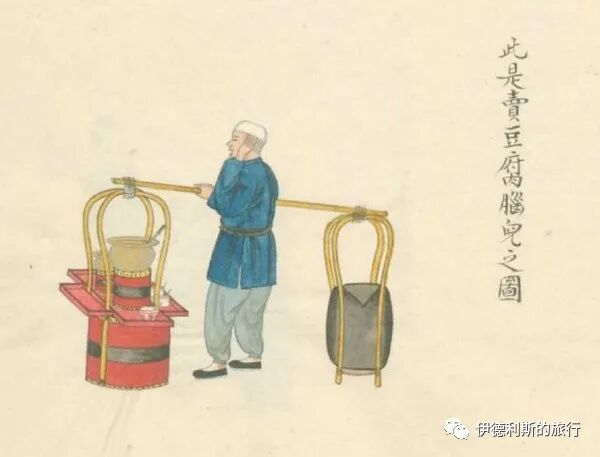
Dongcheng District.
1. Donglaishun at Dong'an Market.
Donglaishun as described by Zhang Zhongxing.
In the early 1930s, I lived in the dormitory of the Third Campus of Peking University, located at Beiheyan outside Donghuamen. I would walk south from the school gate, turn east, and cross Dong'anmen Street to reach Dong'an Market. Donglaishun was on the east side inside the north gate of the market. It had two entrances facing north. The western entrance was the main shop, which had three floors. The eastern entrance was the budget section, which did not connect to the upper floors. There are many restaurants in the market, ranging from high-end ones like Senlong Restaurant and Wufangzhai to small shops like Junshan Restaurant and various food stalls. There must be about twenty of them. As poor students, we liked going to Donglaishun because it had two advantages: the food was good and cheap, and it suited both big and small budgets. Plus, the staff were especially friendly to diners.
Let's talk about their friendliness first. Right inside the door, there was always someone sitting in a long gown. People said he was the second manager. When he saw someone walking toward the door, he would immediately stand up, smile, bow slightly, and say, 'You're here! Please, come in!' Then he would turn inside and shout, 'How many people? Make some room!' You could choose to stay on the ground floor or go up to the second or third floor as you liked. The waiter would help you get seated, smiling broadly, and ask what you wanted to eat. Back then, it wasn't common to look at a menu; you had to call out the names of the dishes. When choosing dishes, the waiter would often offer his opinion on how to pair them for a better meal. Sometimes they even suggest you don't need to order too much, or if it's not enough, they help you add more quickly. Everything is friendly. After eating, you settle the bill, pay, and exchange polite words: "Are you taking this with you?" You usually leave a small tip, like two jiao, and the waiter shouts out: "A tip of two mao." The cashier and the kitchen staff call back in a long, drawn-out tone: "Thank you—." When you leave your seat and walk out, the two managers at the door stand up from afar. As you get close, they smile, bow slightly, and say: "See you this evening." (for lunch) or "See you tomorrow." (for dinner)
Plus, the food is high quality and inexpensive. Donglaishun started out by selling meat pies (xianbing) and porridge from a pushcart. Their years of experience taught them that the surest way to make money is to offer high-quality goods at low prices and win through high sales volume. They have always stuck to this tradition. Take their famous hot pot lamb (shuan yangrou) as an example. People say the sheep are bought from outside the Great Wall and kept at their own farm, where they are fed grain for a month before slaughter. This makes the meat fatty and tender, unlike sheep that only eat grass. The seasonings are also homemade, produced at the Tianyishun Sauce Shop located across from the north gate of the market. Because the ingredients are good and the preparation is meticulous, everything tastes great, whether it is a high-end dish or a simple one. Their hot pot lamb is the best in the city, no question. Other dishes like braised beef (wei niurou), stir-fried lamb (bao yangrou), honey-glazed fritters (tasimi), crispy horns (sujiao), spiced beef tendon (jiang jianzi), as well as everyday foods like beef pies (niurou bing), lamb dumplings (yangrou jiaozi), soybean paste noodles (zhajiangmian), and millet and bean porridge (xiaomi douzhou) all have their own unique flavors and keep customers satisfied. The prices are all fair. Some lower-priced items might not make much money, like the lamb dumplings (yangrou jiaozi). The quality is great, and ten of them cost only four cents. You probably couldn't even make them that cheaply at home.
For us poor students, the fact that prices can be high or low is a huge advantage. If you have guests, you can go up to the second or third floor, or even sit in a private booth or a small room. You can order a few dishes and some wine. Everyone leaves full and happy, and it only costs two or three yuan. If you are alone and only have twenty cents in your pocket, you can still walk in, eat twenty dumplings and drink a bowl of millet and bean porridge (xiaomi douzhou) for a total of nine cents. You can confidently pay with a ten-cent coin, hear a "Thank you!" Then you walk out, go to the Dangui Market, pick out a used book for ten cents, and happily head back to school.
Looking back at the time I lived at Beiheyan, I went to Donglaishun so many times. Most of the time I didn't go upstairs. I just ate ten cents' worth of lamb dumplings and millet and bean porridge. Usually, I still had enough money left to browse the Dangui Market and look for old books. When I did go upstairs, I was always with one or two classmates or friends, so we could try things like crispy horns (sujiao) and honey-drizzled pastries (tasimi). In autumn and winter, when I am by myself, I often like to go to the working-class section near the east door. They say the owner first got rich through hard manual labor, so even after becoming wealthy, he wanted to keep his roots to show he had not forgotten his humble beginnings, or as they put it, he had not forgotten his poor brothers. There is no one to greet you at this east door, probably because the working-class regulars have never been ones for formalities. Once inside, you see a row of long tables running north to south with benches on both sides. No one offers you a seat, so you just find one yourself. After you sit down, a server asks what you want to eat, whether it is flatbread (bing) or noodles (mian), and how much you want by weight, because the regulars need to know exactly how much they are getting. If you order fancy dishes, they will bring those out just the same. The interesting thing is that the customers and the staff are all very blunt with each other; when people are drinking and lively, they might glare or slam the table, sometimes even shouting, which makes you think of Jing Ke and Gao Jianli in the markets of Yan.
Fuxuan Suohua by Zhang Zhongxing
The big tent at Donglaishun
People who ate at Donglaishun were all wealthy. But the big tent downstairs at Donglaishun served poor, everyday people. They took the leftover scraps from the hot pot meat, stewed them into a savory sauce, and poured it over noodles. You could buy a big bowl for very little money, which satisfied both your cravings and your hunger.
My Last Century by Guan Geng
The storefront of Donglaishun
In the early years, around noon every day, bicycles, pedicabs, rickshaws, flatbed carts, motorcycles, and cars would all head toward the west entrance of Jinyu Hutong. They packed the road from the west entrance of the hutong to the Jixiang Theater so tightly you could barely move.
These people were all men, mostly Beijing locals between twenty and forty years old, who headed straight into the shop as soon as they got off the bus. Back then, Donglaishun had a cafeteria-style shop selling dumplings, meat pies (xianbing), and big bowls of lamb bone broth (yangtang) noodles with gravy, all made from the leftover scraps of the hot pot lamb, since the costs were already covered by the hot pot. But they knew how to run a business, selling the scraps again as meat pies and dumplings that were oily, stuffed full, and cheap. The diners came for exactly this: it satisfied their cravings and kept them full for a long time.
Past Beijing by Zhang Zheng, Donglaishun's Hot Pot Lamb.
Han Ziqi sat in a private booth upstairs at the Donglaishun restaurant at the north entrance of the Dongan Market on Wangfujing Street, with no heart to enjoy the snowy view outside, his eyes just staring blankly at the boiling water in the copper hot pot as if studying the tiny waves. After staring for a while, he lazily lifted his chopsticks, picked up a thin slice of lamb, swished it in the boiling water once, twice, three times, pulled it out at the perfect moment, dipped it into the bowl of sauce in front of him, and then put it in his mouth to chew slowly. He was actually very hungry, but he still kept up his habit of many years, never wolfing down his food or making rude smacking sounds. Eating is not just about filling your stomach; it is a pleasure, and you should not waste good food. Even in these times when food is scarce and prices are sky-high, he did not order cabbage or glass noodles, which are only good for filling space. He only asked for two plates of sliced meat and a small dish of pickled garlic (tangsuan). He ate a slice of meat, then took a bite of the garlic, slowly savoring the taste that was sweet within the spice and spicy within the sweet. He did not order alcohol. Alcohol is forbidden for Muslims, and he strictly followed this rule. Like many Hui Muslims, he did not smoke either. Even when he was deeply troubled, he never puffed on cigarettes or used alcohol to drown his sorrows. Aside from the jade and treasures he poured his heart into, his lifelong passion was the delicious food at halal restaurants. He was a regular at the Donglaishun restaurant. He knew everything about the place almost as well as he knew the Qizhenzhai shop he dedicated his life to, or the special arts and crafts import and export company where he worked later.
He chewed on the fresh, tasty slices of meat. Where is the most tender hot pot lamb? It has to be Donglaishun. The lamb here is incomparable to anywhere else because of its unique standards. They only use castrated sheep from West Ujimqin Banner in Inner Mongolia. After a period of careful pen-feeding, the sheep are slaughtered. They only take the cuts known as modang'er, shangnao'er, huanggua tiao'er, and the large and small sancha'er. From a sheep weighing forty to fifty jin, only thirteen jin of meat is suitable for use. After being frozen, the meat is sliced with incredible skill into pieces as thin and even as paper. When placed on a plate, the patterns on the plate are clearly visible through the meat. One jin of lamb at Donglaishun is sliced into more than eighty pieces. The seasonings used to enhance the flavor are very particular. They include sesame paste (zhima jiang), Shaoxing yellow wine (Shaoxing huangjiu), fermented bean curd (jiang doufu), pickled chive flowers (jiucai hua), chili oil, shrimp oil, chopped green onions, minced cilantro, and Donglaishun's special drizzling soy sauce (pulin jiangyou). The soup base in the pot is flavored with dried shrimp and dried mushrooms (koumo). This hot pot has a unique charm that is clear, fragrant, fresh, and delicious. It is intoxicating to eat, much like how the famous jade expert Han Ziqi would carefully examine a rare treasure. But at this moment, neither the art of looking nor the art of eating occupied his mind. His heart was like the boiling water, and he could not say what he was thinking. From Donglaishun to Qizhenzhai, he chewed on the history of others and his own. Donglaishun's first owner, Ding Deshan, whose courtesy name was Ziqing, was from Cang County, Hebei. He later moved to Erlizhuang outside Dongzhimen. Back in the day, he was not much wealthier than the penniless wanderer Xiao Qizi. He pushed a handcart of yellow soil into Beijing and sold it at a low price to flower growers to make a difficult living. Around 1903, he saw the potential of the busy Dong'an Market and borrowed money to set up a stall. He started by selling flour-based cakes, flatbreads (tiebingzi), and rice porridge, eventually growing into the Donglaishun Porridge Stall. After over a decade of hard work, he added stir-fried, roasted, and hot pot meats. The hot pot became the most famous, and after several expansions, the business became the leader in its field.
The Muslim Funeral by Huo Da
Condiments for Donglaishun hot pot lamb
For the soy sauce used in the hot pot lamb, they use a special dripped soy sauce (pulin jiangyou). Every summer when the soybean paste is sun-dried, they spread it on tin sheets and collect the oil that drips out. They then refine it with the right amount of licorice, cinnamon, and rock sugar. This is one of the main reasons Donglaishun hot pot lamb keeps its unique flavor. Also, when pickling chive flowers, they add a certain amount of sour pears to make the taste more sweet and tangy. The garlic used for pickled sugar garlic must be large six-clove garlic bulbs harvested two or three days before the Summer Solstice. It takes three months to prepare for sale, involving peeling, soaking in brine, packing and turning the jars, and releasing gas.
Famous Old Beijing Brands: Donglaishun Restaurant, known for its hot pot lamb. Ma Xiangyu
Tianyi Shun Halal Sauce Shop.
(Wang Dongsi: Tianyi Shun Sauce Shop and Donglai Shun were sister stores owned by the same proprietor.)
The west counter at Tianyi Shun sells groceries and seasonings, focusing on Beijing-style sweet pickled vegetables (jiang xiaocai). To make it easy for customers to browse and buy, the display counter for these pickles is placed in the center of the shop. The various pickles are displayed in blue-patterned porcelain jars, which look nice and make it easy for customers to choose. They also provide oil baskets (youlou) in different sizes so customers from out of town can carry them easily.
Tianyi Shun has always been careful about selecting ingredients and crafting products with precision. For example, the soybeans used for making sauce must be large, yellow, and high in oil content, sourced from Majuqiao and Panggezhuang. The production method is: soak 100 jin of soybeans until they expand, then steam them. Add 50 jin of white flour, crush and press the mixture, cut it into rectangular blocks, and stack them on indoor racks to ferment. After fermentation, brush off the fuzz and put them into jars. For every 100 jin of beans, add 50 jin of salt and 200 jin of water. This ratio is called 'one part yellow, two parts water, and half a part salt'. After the mixture breaks down, it is passed through a sieve. It is turned four times a day with a sauce rake (jiangpa) and must be sun-dried for a long time, from February to August, before it is finished. This sauce is called dog days sauce (fujiang), also known as natural sauce. When you use it to make fried sauce, it saves oil and does not stick to the bottom of the pot. It makes beef and lamb look bright and taste delicious, which is why over 70 percent of sauce-meat shops in Beijing choose it.
To make sweet flour sauce (tianmianjiang), steam buns (mantou) using white flour, but do not add baking soda. After fermenting, crush them and put them into a vat. Add 80 jin of water for every 100 jin of flour, adding the water gradually rather than all at once, until it reaches the consistency of thin porridge. Use a sauce rake to stir it four times a day until it turns purple-red by the start of autumn (liqiu). It tastes sweet and is the raw material for making sweet sauce pickles, and it is also an essential condiment for eating roast duck.
For small-mill sesame oil (xiaomo xiangyou), you must buy high-quality sesame grown in the dog days from places like Zhangjiawan in Tongzhou, Panggezhuang in Daxing, and Gu'an County. When making it, strictly control the heat and time to get a high oil yield and excellent color, aroma, and taste.
Beijing Muslim History: Old Halal Notes from the Northern City
Articles • ali2007fr posted the article • 0 comments • 215 views • 2026-05-18 07:39
Summary: Beijing Muslim History: Old Halal Notes from the Northern City is presented here as a firsthand travel account in clear English, beginning with this scene: East City:. The account keeps its focus on Beijing Muslim History, Northern Beijing, Hui Muslims while preserving the names, places, food, and historical details from the Chinese source.
East City:
1. Donglaishun at Dong'an Market (including the Tianyishun halal sauce shop (Tianyi Shun Qingzhen Jiangyuan))
2. Xideshun Tripe King (Baodu Wang) at Dong'an Market
3. Jinshenglong Tripe Feng (Baodu Feng) at Dong'an Market
4. Tofu Pudding Ma (Doufunao Ma) at Dong'an Market
5. Meat Pie Zhang (Roubing Zhang) at Dong'an Market
6. Baikui at Longfu Mosque
7. Baodu Man at Dongsi Pailou
8. The mutton shop at the corner of West Kushuijing and Xinxian Hutong inside Chaoyangmen.
9. The sesame flatbread shop (shaobing) on West Kushuijing Hutong inside Chaoyangmen.
10. Deshun Restaurant inside Chaoyangmen.
11. Deshengzhai on Jingshan East Street.
12. Yueshengzhai on Hubu Lane inside Qianmen.
13. Fusheng Canteen in Dongdan.
14. Zengqingzhai on Yiliu Hutong outside Di'anmen.
Xicheng District:
1. Ruizhenhou inside Zhongshan Park
2. Kaorouwan inside Xuanwumen
3. Hui Muslim beef and mutton shop inside Xuanwumen
4. Youyishun Restaurant at the Xidan intersection inside Xuanwumen
5. Dong Siba's spiced lamb head (jiangyangtou) inside Deshengmen
6. Xue Siba's steamed lamb (zhengyangrou) outside Deshengmen
7. Yang's lamb stall (yangrouchuangzi) on Guanxiang Street at Deshengmen
8. The sheep market (yanghang) in Madian outside Deshengmen
9. Hui Muslim snack shops inside Xizhimen.
Dongcheng District.
1. Donglaishun at Dong'an Market.
Donglaishun as described by Zhang Zhongxing.
In the early 1930s, I lived in the dormitory of the Third Campus of Peking University, located at Beiheyan outside Donghuamen. I would walk south from the school gate, turn east, and cross Dong'anmen Street to reach Dong'an Market. Donglaishun was on the east side inside the north gate of the market. It had two entrances facing north. The western entrance was the main shop, which had three floors. The eastern entrance was the budget section, which did not connect to the upper floors. There are many restaurants in the market, ranging from high-end ones like Senlong Restaurant and Wufangzhai to small shops like Junshan Restaurant and various food stalls. There must be about twenty of them. As poor students, we liked going to Donglaishun because it had two advantages: the food was good and cheap, and it suited both big and small budgets. Plus, the staff were especially friendly to diners.
Let's talk about their friendliness first. Right inside the door, there was always someone sitting in a long gown. People said he was the second manager. When he saw someone walking toward the door, he would immediately stand up, smile, bow slightly, and say, 'You're here! Please, come in!' Then he would turn inside and shout, 'How many people? Make some room!' You could choose to stay on the ground floor or go up to the second or third floor as you liked. The waiter would help you get seated, smiling broadly, and ask what you wanted to eat. Back then, it wasn't common to look at a menu; you had to call out the names of the dishes. When choosing dishes, the waiter would often offer his opinion on how to pair them for a better meal. Sometimes they even suggest you don't need to order too much, or if it's not enough, they help you add more quickly. Everything is friendly. After eating, you settle the bill, pay, and exchange polite words: "Are you taking this with you?" You usually leave a small tip, like two jiao, and the waiter shouts out: "A tip of two mao." The cashier and the kitchen staff call back in a long, drawn-out tone: "Thank you—." When you leave your seat and walk out, the two managers at the door stand up from afar. As you get close, they smile, bow slightly, and say: "See you this evening." (for lunch) or "See you tomorrow." (for dinner)
Plus, the food is high quality and inexpensive. Donglaishun started out by selling meat pies (xianbing) and porridge from a pushcart. Their years of experience taught them that the surest way to make money is to offer high-quality goods at low prices and win through high sales volume. They have always stuck to this tradition. Take their famous hot pot lamb (shuan yangrou) as an example. People say the sheep are bought from outside the Great Wall and kept at their own farm, where they are fed grain for a month before slaughter. This makes the meat fatty and tender, unlike sheep that only eat grass. The seasonings are also homemade, produced at the Tianyishun Sauce Shop located across from the north gate of the market. Because the ingredients are good and the preparation is meticulous, everything tastes great, whether it is a high-end dish or a simple one. Their hot pot lamb is the best in the city, no question. Other dishes like braised beef (wei niurou), stir-fried lamb (bao yangrou), honey-glazed fritters (tasimi), crispy horns (sujiao), spiced beef tendon (jiang jianzi), as well as everyday foods like beef pies (niurou bing), lamb dumplings (yangrou jiaozi), soybean paste noodles (zhajiangmian), and millet and bean porridge (xiaomi douzhou) all have their own unique flavors and keep customers satisfied. The prices are all fair. Some lower-priced items might not make much money, like the lamb dumplings (yangrou jiaozi). The quality is great, and ten of them cost only four cents. You probably couldn't even make them that cheaply at home.
For us poor students, the fact that prices can be high or low is a huge advantage. If you have guests, you can go up to the second or third floor, or even sit in a private booth or a small room. You can order a few dishes and some wine. Everyone leaves full and happy, and it only costs two or three yuan. If you are alone and only have twenty cents in your pocket, you can still walk in, eat twenty dumplings and drink a bowl of millet and bean porridge (xiaomi douzhou) for a total of nine cents. You can confidently pay with a ten-cent coin, hear a "Thank you!" Then you walk out, go to the Dangui Market, pick out a used book for ten cents, and happily head back to school.
Looking back at the time I lived at Beiheyan, I went to Donglaishun so many times. Most of the time I didn't go upstairs. I just ate ten cents' worth of lamb dumplings and millet and bean porridge. Usually, I still had enough money left to browse the Dangui Market and look for old books. When I did go upstairs, I was always with one or two classmates or friends, so we could try things like crispy horns (sujiao) and honey-drizzled pastries (tasimi). In autumn and winter, when I am by myself, I often like to go to the working-class section near the east door. They say the owner first got rich through hard manual labor, so even after becoming wealthy, he wanted to keep his roots to show he had not forgotten his humble beginnings, or as they put it, he had not forgotten his poor brothers. There is no one to greet you at this east door, probably because the working-class regulars have never been ones for formalities. Once inside, you see a row of long tables running north to south with benches on both sides. No one offers you a seat, so you just find one yourself. After you sit down, a server asks what you want to eat, whether it is flatbread (bing) or noodles (mian), and how much you want by weight, because the regulars need to know exactly how much they are getting. If you order fancy dishes, they will bring those out just the same. The interesting thing is that the customers and the staff are all very blunt with each other; when people are drinking and lively, they might glare or slam the table, sometimes even shouting, which makes you think of Jing Ke and Gao Jianli in the markets of Yan.
Fuxuan Suohua by Zhang Zhongxing
The big tent at Donglaishun
People who ate at Donglaishun were all wealthy. But the big tent downstairs at Donglaishun served poor, everyday people. They took the leftover scraps from the hot pot meat, stewed them into a savory sauce, and poured it over noodles. You could buy a big bowl for very little money, which satisfied both your cravings and your hunger.
My Last Century by Guan Geng
The storefront of Donglaishun
In the early years, around noon every day, bicycles, pedicabs, rickshaws, flatbed carts, motorcycles, and cars would all head toward the west entrance of Jinyu Hutong. They packed the road from the west entrance of the hutong to the Jixiang Theater so tightly you could barely move.
These people were all men, mostly Beijing locals between twenty and forty years old, who headed straight into the shop as soon as they got off the bus. Back then, Donglaishun had a cafeteria-style shop selling dumplings, meat pies (xianbing), and big bowls of lamb bone broth (yangtang) noodles with gravy, all made from the leftover scraps of the hot pot lamb, since the costs were already covered by the hot pot. But they knew how to run a business, selling the scraps again as meat pies and dumplings that were oily, stuffed full, and cheap. The diners came for exactly this: it satisfied their cravings and kept them full for a long time.
Past Beijing by Zhang Zheng, Donglaishun's Hot Pot Lamb.
Han Ziqi sat in a private booth upstairs at the Donglaishun restaurant at the north entrance of the Dongan Market on Wangfujing Street, with no heart to enjoy the snowy view outside, his eyes just staring blankly at the boiling water in the copper hot pot as if studying the tiny waves. After staring for a while, he lazily lifted his chopsticks, picked up a thin slice of lamb, swished it in the boiling water once, twice, three times, pulled it out at the perfect moment, dipped it into the bowl of sauce in front of him, and then put it in his mouth to chew slowly. He was actually very hungry, but he still kept up his habit of many years, never wolfing down his food or making rude smacking sounds. Eating is not just about filling your stomach; it is a pleasure, and you should not waste good food. Even in these times when food is scarce and prices are sky-high, he did not order cabbage or glass noodles, which are only good for filling space. He only asked for two plates of sliced meat and a small dish of pickled garlic (tangsuan). He ate a slice of meat, then took a bite of the garlic, slowly savoring the taste that was sweet within the spice and spicy within the sweet. He did not order alcohol. Alcohol is forbidden for Muslims, and he strictly followed this rule. Like many Hui Muslims, he did not smoke either. Even when he was deeply troubled, he never puffed on cigarettes or used alcohol to drown his sorrows. Aside from the jade and treasures he poured his heart into, his lifelong passion was the delicious food at halal restaurants. He was a regular at the Donglaishun restaurant. He knew everything about the place almost as well as he knew the Qizhenzhai shop he dedicated his life to, or the special arts and crafts import and export company where he worked later.
He chewed on the fresh, tasty slices of meat. Where is the most tender hot pot lamb? It has to be Donglaishun. The lamb here is incomparable to anywhere else because of its unique standards. They only use castrated sheep from West Ujimqin Banner in Inner Mongolia. After a period of careful pen-feeding, the sheep are slaughtered. They only take the cuts known as modang'er, shangnao'er, huanggua tiao'er, and the large and small sancha'er. From a sheep weighing forty to fifty jin, only thirteen jin of meat is suitable for use. After being frozen, the meat is sliced with incredible skill into pieces as thin and even as paper. When placed on a plate, the patterns on the plate are clearly visible through the meat. One jin of lamb at Donglaishun is sliced into more than eighty pieces. The seasonings used to enhance the flavor are very particular. They include sesame paste (zhima jiang), Shaoxing yellow wine (Shaoxing huangjiu), fermented bean curd (jiang doufu), pickled chive flowers (jiucai hua), chili oil, shrimp oil, chopped green onions, minced cilantro, and Donglaishun's special drizzling soy sauce (pulin jiangyou). The soup base in the pot is flavored with dried shrimp and dried mushrooms (koumo). This hot pot has a unique charm that is clear, fragrant, fresh, and delicious. It is intoxicating to eat, much like how the famous jade expert Han Ziqi would carefully examine a rare treasure. But at this moment, neither the art of looking nor the art of eating occupied his mind. His heart was like the boiling water, and he could not say what he was thinking. From Donglaishun to Qizhenzhai, he chewed on the history of others and his own. Donglaishun's first owner, Ding Deshan, whose courtesy name was Ziqing, was from Cang County, Hebei. He later moved to Erlizhuang outside Dongzhimen. Back in the day, he was not much wealthier than the penniless wanderer Xiao Qizi. He pushed a handcart of yellow soil into Beijing and sold it at a low price to flower growers to make a difficult living. Around 1903, he saw the potential of the busy Dong'an Market and borrowed money to set up a stall. He started by selling flour-based cakes, flatbreads (tiebingzi), and rice porridge, eventually growing into the Donglaishun Porridge Stall. After over a decade of hard work, he added stir-fried, roasted, and hot pot meats. The hot pot became the most famous, and after several expansions, the business became the leader in its field.
The Muslim Funeral by Huo Da
Condiments for Donglaishun hot pot lamb
For the soy sauce used in the hot pot lamb, they use a special dripped soy sauce (pulin jiangyou). Every summer when the soybean paste is sun-dried, they spread it on tin sheets and collect the oil that drips out. They then refine it with the right amount of licorice, cinnamon, and rock sugar. This is one of the main reasons Donglaishun hot pot lamb keeps its unique flavor. Also, when pickling chive flowers, they add a certain amount of sour pears to make the taste more sweet and tangy. The garlic used for pickled sugar garlic must be large six-clove garlic bulbs harvested two or three days before the Summer Solstice. It takes three months to prepare for sale, involving peeling, soaking in brine, packing and turning the jars, and releasing gas.
Famous Old Beijing Brands: Donglaishun Restaurant, known for its hot pot lamb. Ma Xiangyu
Tianyi Shun Halal Sauce Shop.
(Wang Dongsi: Tianyi Shun Sauce Shop and Donglai Shun were sister stores owned by the same proprietor.)
The west counter at Tianyi Shun sells groceries and seasonings, focusing on Beijing-style sweet pickled vegetables (jiang xiaocai). To make it easy for customers to browse and buy, the display counter for these pickles is placed in the center of the shop. The various pickles are displayed in blue-patterned porcelain jars, which look nice and make it easy for customers to choose. They also provide oil baskets (youlou) in different sizes so customers from out of town can carry them easily.
Tianyi Shun has always been careful about selecting ingredients and crafting products with precision. For example, the soybeans used for making sauce must be large, yellow, and high in oil content, sourced from Majuqiao and Panggezhuang. The production method is: soak 100 jin of soybeans until they expand, then steam them. Add 50 jin of white flour, crush and press the mixture, cut it into rectangular blocks, and stack them on indoor racks to ferment. After fermentation, brush off the fuzz and put them into jars. For every 100 jin of beans, add 50 jin of salt and 200 jin of water. This ratio is called 'one part yellow, two parts water, and half a part salt'. After the mixture breaks down, it is passed through a sieve. It is turned four times a day with a sauce rake (jiangpa) and must be sun-dried for a long time, from February to August, before it is finished. This sauce is called dog days sauce (fujiang), also known as natural sauce. When you use it to make fried sauce, it saves oil and does not stick to the bottom of the pot. It makes beef and lamb look bright and taste delicious, which is why over 70 percent of sauce-meat shops in Beijing choose it.
To make sweet flour sauce (tianmianjiang), steam buns (mantou) using white flour, but do not add baking soda. After fermenting, crush them and put them into a vat. Add 80 jin of water for every 100 jin of flour, adding the water gradually rather than all at once, until it reaches the consistency of thin porridge. Use a sauce rake to stir it four times a day until it turns purple-red by the start of autumn (liqiu). It tastes sweet and is the raw material for making sweet sauce pickles, and it is also an essential condiment for eating roast duck.
For small-mill sesame oil (xiaomo xiangyou), you must buy high-quality sesame grown in the dog days from places like Zhangjiawan in Tongzhou, Panggezhuang in Daxing, and Gu'an County. When making it, strictly control the heat and time to get a high oil yield and excellent color, aroma, and taste.
To ensure the quality of the pickles, we buy produce directly from farmers. We require specific quality standards and strict adherence to delivery seasons and times. For example, when making sweet garlic with osmanthus (guihua tangsuan), the garlic must be the purple-skinned, six-clove variety. Each bulb must be the size of a 'tiger's mouth' (the space between the thumb and index finger). It must come from places like Gaozhuang, Huangzhuang, or Landianchang in the Haidian District. The garlic must be harvested three days before the start of summer. To keep the garlic from drying out and the cloves from getting tough, we water the field one day before harvest. We pull the garlic from the ground at night while the soil is still damp. We deliver it to the Tianyishun processing plant at daybreak to ensure the best quality. Once the garlic arrives at the plant, workers immediately peel off two to three layers of skin. We put the garlic into vats right away. For every 100 jin of garlic, we use one jin of salt, diluted in water, and pour it into the vat until the water covers the garlic. After three days, we take the garlic out and put it into empty vats, with 300 jin per vat. We soak it in fresh cold water for another three days, changing the water once a day to remove the sharp, spicy taste. After three days, we take the garlic out and squeeze each bulb by hand to remove excess water. We put it into jars, preferably yellow wine jars. For every 100 jin of garlic, we add 40 jin of white sugar and five liang of salt, diluted in cold water, and pour it into the jar. Finally, we seal the jar tightly with oil paper and white cloth, then lay the jar on its side at about a 45-degree angle. Roll the garlic jar once every day and let the air out every three days, preferably at night. It will be ready to eat after one month.
We buy lettuce (wosun) during the summer solstice, specifically the green lettuce from Xiju Village in Fengtai District. This lettuce is green, crisp, and sweet, making the sweet sauce lettuce taste delicious.
We only buy cucumbers from Wuluju outside Andingmen around the time of the Limit of Heat (chushu), because the quality is best during this period. The loofah (sigua) must be emerald green, about six or seven inches long, and uniform in size. Do not pick the ones with big bellies. This variety makes for a crispy and sweet pickled cucumber when processed with sweet sauce.
During the White Dew (bailu) period, we buy iron-stem bell peppers (tieba shizijiao) from Shawo Village in the western suburbs. Once they reach the factory, we trim the stems, poke holes in them with bamboo skewers, and put them in cloth bags inside the sauce vat. Turn them three times a day, and they are ready to eat in ten days. These pickled iron-stem bell peppers are large and thick-fleshed. They are sweet, not spicy, and are a favorite pickle for Beijing households.
Sweet sauce radish is made using white radishes grown on the ground. The best ones are the "Er Yingzi" radishes (about five to six inches long and uniform in size) grown in Wangjiayuan in the eastern suburbs. White radishes from Shicun, Macun, and Puhuangyu in the southern suburbs are also very good. You must buy these radishes after the Autumn Equinox, not at any other time. To prepare them, sort out the large and small ones and pick only the medium-sized ones. Carefully remove the fibrous roots, wash them clean, and use five jin of salt per hundred jin of radishes to brine them, turning the vat four times over two days. After taking them out, use fifty jin of yellow soybean paste (huangjiang) for every hundred jin of radishes, turning them twice a day. After seven days, switch to seventy-five jin of sweet flour paste (tianmianjiang) and one jin of caramel coloring (tangse), continuing to turn them twice a day for about seven or eight days until finished.
For five-spice soy-sauce peanuts, the ingredients are peanuts grown in various counties in Hebei Province. The peanuts must be shelled by hand so the kernels stay large and uniform, without broken pieces or insect holes. To make it, soak the ingredients in boiling water first, then peel off the red skin by hand. For every 100 jin, use 60 jin of high-quality soy sauce and half a jin of five-spice seasoning (Sichuan peppercorn, star anise, fennel, cinnamon, licorice, and cloves). Add water and boil until 60 percent cooked for a crisp and delicious texture.
For sweet sauce walnut kernels (tianjiang taoren), the main ingredient is white walnut kernels from Shanxi, commonly known as lion's head (shizitou). To prepare, put the walnut kernels in a ceramic basin and soak them in boiling water twice for about 15 minutes. Use a bamboo skewer to peel off the thin skin, then put the kernels into a cloth bag and place them in a large jar. For every 100 jin of kernels, use 150 jin of sweet flour paste (tianmianjiang). Use a sauce rake to turn them twice every day, and they will be ready to take out of the jar after 20 days. After taking them out of the jar, add two liang of white sugar to every jin of walnut kernels, mix well, and they are ready for sale.
Famous Old Shops of Beijing: Tianyishun Halal Sauce Shop. Liu Yingjie (Wang Dongsi: The author was a long-time employee of Tianyishun from 1933 until retiring in 1974).
2. Xideshun Tripe King (Baodu Wang) at Dong'an Market
Beijing's quick-boiled tripe (baodu) is a halal snack. The stalls selling it are run by Hui Muslims. Each stall has a copper plaque with Arabic script and the four Chinese characters for 'Halal Hui Muslim' (Qingzhen Huihui). The tables and chairs in front are spotless, and even the small jars for seasonings are polished until they shine, which makes you feel comfortable. When you eat quick-boiled tripe, the seasoning is mixed on the spot, and the lamb tripe is sliced and boiled right when you order it. The Quick-Boiled Tripe King (Baodu Wang) in the open space in front of Runming Building at Beijing's Dong'an Market is very famous. The quality of quick-boiled tripe depends entirely on how it is dipped in boiling water. If you boil it too long, it gets tough and chewy. If you don't boil it long enough, it is also too tough to chew. The method is to use plenty of boiling water and only dip it briefly. It is all about getting the timing just right.
Cuisine of East Beijing by Wu Zhengge
Quick-Boiled Tripe King's own account
My father's name was Wang Fukui, and he was from Linqing, Shandong. My name is Wang Jinliang, and I was born in Beijing. My father came to Beijing when he was young to work as an apprentice at a mutton shop. Because he knew how to clean tripe, he later switched to making quick-boiled tripe (baodu). My father set up his stall at the same time as Ding Ziqing, the founder of Donglaishun. We all lived on Lumicang Hutong, including Ding Ziqing and his son Ding Futing. Ding Ziqing started his business selling yellow soil. He would pull a broken cart at the Chaoyangmen city gate and shout to sell coal soil, which was mixed into coal dust to make coal balls. Ding Ziqing started with a porridge stall and grew his business bigger and bigger. Later, he opened Donglaishun, Tianyishun, and Yongchangshun, and eventually his son Ding Futing opened Youyishun.
My father was hardworking, clean, and had a good temper when doing business. Customers would say, 'This old man is truly kind.' However, he was conservative in his thinking and had no desire to expand the business. By the time I can remember, my father had already earned enough money from his stall to buy a house. My father ran a stall at the Dongan Market. When I was a child, I helped him pick up tripe. We mostly went to a lamb shop on the north side of the road, opposite the sugar market outside Chaoyangmen. Chaonei Small Street was also full of lamb shops. We picked up goods from two shops. We didn't have to pay for the tripe right away; we settled the bill every nine days, which we called a nine-day cycle. I handled the pickup, and my father handled the payments.
Beef tripe (niu baiye) became popular starting with my father. Originally, those selling quick-boiled tripe (baodu) didn't have beef tripe; it was all lamb. But beef tripe is easier to chew, so anyone can eat it.
My father sold only the best cuts of tripe at Dongan Market, such as lamb tripe collar (yang du ling), lamb tripe leaves (yang sandan), tripe slab (duban), lamb tripe center (yang du ren), mushroom tip (mogujian), and esophagus (shixin). Besides his stall at Dongan Market, he also carried a shoulder pole to sell quick-boiled tripe at the sugar market outside the North Water Gate of Chaoyangmen. He would sell there until nine or ten in the morning, offering scraps and trimmings like tripe gourd (du hulu) and large grass sprouts (da caoya). His customers were poor people. He didn't separate the parts; he just grabbed a bowlful to sell, charging a few coins per bowl, and would come back with a few strings of cash. The money earned from that one trip was enough to feed our whole family for over ten days, so we could save all the money he made at Dongan Market.
By the time of the Japanese occupation, my father had saved enough to buy two houses by running his stall and living frugally. But he never wanted to open a shop. He said opening a shop meant hiring people and having high expenses, while carrying a shoulder pole meant he would never go hungry or thirsty.
From Cuixianzhai to Xideshun.
I am the third child in my family. Did you find out my nickname? That's right, it's Wang San'er. I have older sisters above me and younger sisters below me, seven girls in total. When we were little, my older sisters also helped out with the chores. When I was a child, I was beaten every single day and sent to apprentice at a lamb shop in Zongbu Hutong, near the south entrance of Chaonei Nanxiaojie, where I sold steamed fried dough (zheng'erzha) and steamed buns (baozi). The way Han Chinese sell steamed buns is different from how Hui Muslims call out their wares, and Hou Baolin got it quite right in his crosstalk performance. Hui Muslims call out their steamed buns like this: Hot lamb-filled buns here...
I was not born with the ambition to run a big business. One thing had a big impact on me. When I was around 20, Ding Ziqing, the manager of Donglaishun, held a wedding for his son Ding Futing at an inn outside Dongzhimen, and I went there with my father to give a gift, thinking about how he had once done business with my father, yet look at how successful his business became. The courtyard was huge. Under the eaves, there were gongs and drums everywhere, making a very lively noise, and celebratory banners hung all over the yard. We were poor, and the host kept fawning over the wealthy guests while ignoring us. From that moment on, I made up my mind that a person has to run a big business; running a small street stall just doesn't get you any respect.
When I was 20, an old man named Zhang who worked in the machine room at Peking Union Medical College Hospital used to come to my father's stall to eat tripe (baodu). He helped me get a job in the hospital's machine room, where I worked for two years. At first, I earned 12 yuan a month, and later it went up to 15 yuan. But a real man shouldn't just earn a fixed, limited wage. I left the hospital at 22 and went back to helping my father sell tripe. Look at that photo of me on a bicycle; it was taken when I was 22. After I quit the hospital, I sold that nice bike. If I had kept using it to pick up tripe, it would have been dripping water everywhere, and that would have been a shame for such a good bike. This photo was taken before I sold the bike.
I took over my father's business during the Japanese occupation. I was twenty-seven or twenty-eight then. I rented a space that used to be a barbershop. At first, I only wanted to sell tripe and named the shop 'Cuixianzhai' (Crispy and Fresh Studio), because tripe has to be both crispy and fresh. But later, I wanted to sell everything, so I turned it into a full restaurant. Once I made that change, I couldn't handle it anymore, and it closed down in less than a year. I rented the house to others to run a restaurant, but they lost money and closed down after two or three years. I took the house back and focused exclusively on tripe (baodu) for the second time, and that is when business finally picked up.
I ran the business from the time I was 30 until I was 40. Those ten years or so were the most successful period of my life. I started the Xideshun brand when I was 30. It was hard to register a new name during the Japanese puppet regime, so I bought the name from a sesame flatbread (shaobing) shop.
Famous people gathered at Xideshun.
Xideshun had four rooms in total. Two rooms faced the street, with one displaying the shop sign. There was a kitchen in the back, and three rooms were for guests. The room with the sign had three small square tables (sixian zhuo). The three rooms inside, including the kitchen, were separated from the outer room. Each inner room had four small square tables, making 11 tables in total, which could seat 44 people when full.
3. Jinshenglong Baodu Feng at Dong'an Market.
Not long after Dong'an Market opened, two Hui Muslims, one surnamed Wang and one surnamed Feng, set up tripe (baodu) stalls one after another. Although the two families were cousins and their skills were similar, the competition between them was fierce as each worked hard to create their own specialties and attract customers. Later, the tripe master Baodu Wang became famous first, and by the 1940s, he had grown his business into the Xideshun Lamb Restaurant, which occupied two storefronts. Baodu Feng, however, kept running a street stall until after the liberation, when he finally built a shed and hung up the Jinshenglong sign, continuing to specialize in tripe.
Selling tripe is hard work. Jinshenglong founder Feng Tianjie had his whole family, including his wife and children, working together. They bought the beef and lamb tripe from the slaughterhouses and lamb shops located between Chaoyang Gate and Dongbian Gate. The supply was not steady, and since every vendor competed to buy it, they often had to run around everywhere, begging others for stock and still coming up empty-handed. When they managed to buy tripe, they would get 40 to 50 pounds at most or 20 to 30 pounds at least, and with no transport, they had to carry it home in bamboo baskets on their arms, walking for miles. Cleaning the tripe was even tougher work. The Feng family lived in the slums of Nanheyan outside Chaoyangmen. There was a bitter water well nearby. For over thirty years, Feng Tianjie's wife went to the well almost every day with a bucket and a clay basin to wash tripe. She washed each piece of tripe seven times, turning it inside out three times and right side out four times, cleaning every leaf of the honeycomb tripe (baiye) thoroughly. In winter, the water was freezing cold, and her hands would turn red and swollen. Sometimes her shoes even froze to the well platform. After cleaning the tripe, she carried a basket and walked five or six miles to sell it at the Dong'an Market.
Quick-boiled tripe (baodu) must be fresh, the fresher the better. It was usually sold out the same day, within twenty-four hours. When the weather was warm, she had to keep the cleaned tripe on ice to stay fresh. In cold weather, she had to keep it from freezing. Because it was hard to store, the price changed. When supplies were low, she sold it sparingly, but when there was a lot or the weather was bad and customers were few, she had to sell it off cheaply. Every year after spring begins, there is less cattle and sheep slaughtering, so the season for quick-boiled tripe (baodu) slows down. In midsummer, lamb shops clear their counters and lamb stalls put away their carts. Sellers of quick-boiled tripe (baodu) have to close their pots and temporarily sell items like mung bean jelly (liangfen) and rice cakes (paigao) to get through the slow season.
Market Records: A History of Beijing Dong'an Market by Dong Shanyuan.
4. Tofu Pudding Ma (Doufunao Ma) at Dong'an Market
Tofu Pudding Ma (Doufunao Ma) is a family-run business. Ma Kuan originally carried his goods on a shoulder pole to sell them around the Xiagongfu area, running what was known as an eight-rope business. He entered the market after the 1940s and paid a high price to rent a prime spot of land. He opened Yuelaixuan, and because his tofu pudding (doufunao) was carefully made and delicious, he quickly earned a good reputation.
The Ma family's tofu pudding (doufunao) is made by grinding soy milk with a hand-cranked stone mill, filtering it through fine bean-cloth, and pressing the liquid out with a wooden bucket. He thought tofu made with brine had a strange smell, so he started burning gypsum himself to set the tofu. You must use low heat to burn the gypsum, and you have to get the timing just right. Every step, from soaking the soybeans to setting the tofu curd (doufunao), has strict requirements. The family stays very busy selling products made from about thirty to forty jin of soybeans every day.
Tofu curd must be topped with a good savory sauce (lu) to taste right. Yuelaixuan has always used lamb slices and button mushrooms (koumo) thickened with high-quality seasonings for their sauce, and every bowl served must contain both lamb and mushrooms, plus soy sauce, chili, or minced garlic for a fresh and delicious flavor. Served with hot sesame flatbread (shaobing) baked fresh to order, it makes for a tasty and affordable everyday meal.
Market Records: A History of Beijing Dong'an Market by Dong Shanyuan.
5. Meat Pie Zhang (Roubing Zhang) at Dong'an Market
The Zhang family used to sell fried tofu and fried meatballs. These were affordable, but they didn't stand out, so the family stopped the business for a while and started pulling rickshaws instead. They later reopened and focused on selling meat pies (roubing) filled with green onion and lamb. They chose high-quality ingredients and had great skills. Each pie weighed over a pound and was perfectly even in thickness. They cut and sold the pies fresh based on how much the customer wanted. The pies were cheap, delicious, and earned a great reputation. Although the shop was named Longdezhai, people usually just called it Meat Pie Zhang (Roubing Zhang).
Market Records: A History of Beijing Dong'an Market by Dong Shanyuan.
6. Baikui at Longfu Mosque
Lamb head meat (yangtou rou) from the old Bai Kui shop.
The old Bai Kui shop was right across from the Changong Cinema on Longfu Mosque Street. I was young back then, so I only ever bought their lamb head meat. Cooked sheep heads are piled up above a bubbling pot that is three feet wide, or more accurately, they are stacked on an iron grate sitting on top of the pot. When someone buys one, the elderly man selling the sheep heads quickly uses a small iron hook to grab one and place it on the scale, then asks after weighing it, "Do you want it deboned?" If you say yes, in the blink of an eye, the entire sheep face is spread out flat on the large wooden table like a sheet of paper. I have watched the old man's hands closely more than once, but I still cannot figure out how he peels the meat off the sheep head in one whole piece. If a customer wants it sliced thin, the old man will do that too, then sprinkle on some seasoned salt (jiaoyan), add a small sprig of cilantro, and wrap it all up in yellow straw paper. I still cannot forget the unique, clean fragrance of the sheep head from Baikui.
From "Past Events in Beijing" by Zhang Zheng, "Baikui's Roasted Lamb".
When people mention roasted lamb, everyone thinks of Baikui on Longfusi Street in Dongsi. Bai Kui's braised lamb (shao yangrou) is famous because there is a noodle shop right across the street. You can borrow a bowl from the noodle shop, buy some lamb shank (yang jianzi) or a pair of lamb trotters (yang ti'er) at Bai Kui, and ask for extra braised lamb broth. Take it back to the noodle shop to fill a bowl with noodles, cook them in the lamb broth, and it tastes better than any stir-fried noodle dish.
From "Cuisine of Eastern Beijing" by Wu Zhengge: Bai Kui's Five-Spice Braised Lamb (wuxiang shao yangrou).
It is a tradition to give away free broth when selling braised lamb. The broth is fresh and delicious, which customers really love. Braised lamb is best eaten with a hanging-oven flatbread (gualu shaobing). The favorite way to eat it is to add the lamb and broth to noodles with some shredded cucumber. Beijingers have a saying: "Braised lamb mixed with noodles is delicious in every bite."
When my father ran the business, he added stir-fried (pao), roasted, and hot pot lamb. For the stir-fried lamb, we set up a large griddle at the entrance. Customers would buy half a jin or four liang of lamb slices, stand around the griddle with one foot on a stool, and eat it as it was cooked. It was a very fun experience. Eating braised lamb or stir-fried lamb with a flatbread, followed by a bowl of lotus leaf porridge or millet porridge, is both a treat and very affordable. Bai Kui was one of the first restaurants in Beijing to serve hot pot lamb (shuan yangrou), and they hired master chefs to slice the meat. You must use pine and cypress wood to roast the meat. The roasted meat takes on the scent of the wood, which is a unique and special pleasure.
Selected Historical Materials of Dongcheng District, Beijing, Volume 1: Bai Kui's spiced roast lamb (wuxiang shaoyangrou). Hei Deliang (Wang Dongsi: The author was the manager of Bai Kui from 1942 to 1957).
Bai Kui's roast lamb (shaoyangrou).
Beijing roast lamb is rich, tender, and crispy. This cooking method is unique to Beijing and I have not seen it anywhere else. It is not suitable for home cooking. Only lamb restaurants and lamb stalls (yangrou chuangzi) specialize in this dish. A lamb stall (yangrou chuangzi) is a specific name for a lamb shop. In the past, most lamb shops in Beijing were run by Hui Muslims. They would slaughter sheep at the morning market, and the cutting board looked like a wooden bed, which is why they were called lamb stalls (yangrou chuangzi). These lamb stalls (yangrou chuangzi) are a daily necessity for residents, and you can find them on almost every street. Except for the very smallest shops, almost every place makes roasted lamb (shao yangrou) in the summer, though the quality varies quite a bit. The earliest famous shop for roasted lamb is Bai Kui in the East City, which everyone in old Beijing knows.
Bai Kui was a person's name, and he was a Hui Muslim. He opened the Dongchangshun Halal Restaurant on Longfu Mosque Street near Dongsi Pailou during the Qianlong era of the Qing Dynasty, so it has a history of over two hundred years. The shop became famous for its roasted whole lamb. Although it changed owners several times, it always kept the Bai Kui roasting technique, so the shop has always been called Bai Kui. This roasted lamb is famous first because the ingredients used are very carefully selected. People say they use over twenty kinds of spices like fennel and cardamom in the broth, adding them in specific amounts to their aged stock (laotang), which gives the lamb a rich and mellow flavor. The second reason is that they raise their own sheep. The meat is fatty and tender, and they only use castrated male sheep. It is not affected by the seasons, and the feed has its own special features, so it hits the market every February.
The roasted lamb (shao yangrou) at typical lamb stalls is not as fancy as the kind at Baikui, but every shop follows the tradition of using a master stock (laotang). Because of this, the roasted lamb always has a unique flavor that you just cannot make at home. A whole lamb (quanyang) means the entire animal is used, as if the whole thing goes into the pot, and it is sold at different prices based on the quality of the cut. The lamb head and lamb neck are not sold in small pieces; you have to buy the whole part. Lamb chops, lamb shanks, and lamb spine (yangxiezi—the spine with the meat and marrow left on) are sold in chunks and are not cut into smaller pieces. Lamb meat is the richest and most delicious part, and it can be cut into small pieces. Also, the heart, liver, tripe, spleen, and intestines are collectively called offal (zasui), which is mostly sold in small pieces at a cheaper price. You can buy a pair of lamb trotters for just two copper coins. The most flavorful part is the lamb head, which includes the brain, tongue, eyes, and ears; it is fun to cut it up yourself. Every part of the lamb is a seasonal summer treat, whether you eat it with drinks, stuff it into a sesame paste flatbread (shaobing), or mix it into noodles.
When buying roasted lamb, you can ask the seller to deep-fry it again, but they will only do it if you spend a certain amount; they won't do it for less than ten cents. Deep-fried roasted lamb is crispy on the outside and tender on the inside, making the rich, fatty flavor even better. The sellers also give away meat broth with your purchase. The broth is fresh and fragrant. If you buy more than ten copper coins' worth of meat or offal, you get a small bowl of broth, and the more you buy, the more you get. If you buy a whole lamb head or twenty to thirty cents' worth of roasted lamb, you can get half a pot of the original broth. Using this broth to pour over noodles or to cook tofu is the most delicious and affordable side dish, and it is a common meal for native Beijing families. Some laborers, after a long day of work, come to the steamed bun shop in the evening. They cook a pound of noodles, borrow a bowl, go to the lamb stall to buy twenty copper coins' worth of roasted lamb (about five cents), and ask for a bowl of broth to pour over the noodles. With a few cloves of garlic on the side, it makes for a very cheap, delicious, and filling dinner. Most families are small, so they often use this method for summer dinners. It saves money and effort, and it is very common.
Memories of Snacks: Jin Yunzhen
7. Baodu Man at Dongsi Pailou
The halal restaurant Baoduman is located north of the Dongsi Mosque, right where the original Yitiaolong hot pot halal restaurant used to be. It was founded during the Guangxu reign and was originally run by a man named Man, which is why it is called Baoduman. In 1956, it became a joint state-private enterprise and kept the name Baoduman. The original owner, Man Ba'er, still works at the shop and handles the main preparation process for the tripe (baodu). Among Hui Muslims, the term ba'er is like saying comrade, mister, or boss in standard Chinese. Someone named Ma is called Ma Ba'er, someone named Ha is called Ha Ba'er, and someone named Man is naturally called Man Ba'er. Han Chinese acquaintances call it by the same name too.
When you eat quick-boiled tripe (baodu), you do not need to ask for the dipping sauce. As soon as you sit down, they bring a portion for everyone. The sauce is similar to the one used for hot pot lamb (shuan yangrou), but it is simpler and has more sesame paste, making it quite thick. Quick-boiled tripe is a classic Beijing snack, and few people from the south eat it. Quick-boiled tripe is actually just the stomach of a sheep or cow. No matter how fancy the name sounds, it is always this same thing. Both cow tripe and sheep tripe have a part called stomach kernel (duren), but other parts have different names. Cow tripe includes leaf tripe (baiye) and thick head (houtou), while sheep tripe has even more varieties like loose tripe (sandan), board core (banxin), stomach board (duban), stomach ridge (duling), and mushroom head (mogutou). These many names come from the different parts of the stomach, and the prices vary accordingly. The best parts are the stomach kernel and mushroom head. People say you need the stomachs of several sheep to make just one plate of these. The stomach kernel is crunchy, and the mushroom head is tender. The stomach kernel is crunchy but easy to chew, unlike the loose tripe or leaf tripe, which are tough and often have to be swallowed whole. Because of this, the stomach kernel and mushroom head are more expensive. When eating quick-boiled tripe (baodu), start with a plate of omasum (sandan) to chew on, then follow it with a plate of tripe center (duren); that is what we call 'clearing the skies after rain'. The quick-boiled tripe at Baoduman is truly excellent, both crispy and tender. It might be because the owner, Man Ba'er, prepares it himself, so the heat is just right. Pair it with a hot sesame flatbread (shaobing), and it tastes absolutely delicious.
In the mid-1950s, Baoduman expanded into a two-story building. The ground floor still sold quick-boiled tripe and offal (zasui), keeping it very accessible; you could get full on two sesame flatbreads and a plate of tripe. The upstairs served mutton hot pot (shuan yangrou) and traditional halal dishes (jiaomen caicai). After the Cultural Revolution began, the Baoduman at Dongsi Pailou closed down. In the early 1980s, the Ruizhenhou Restaurant, which had moved from Zhongshan Park, opened in the original two-story building where the old Baoduman once stood.
After the Reform and Opening-up, the descendants of Baoduman reopened at 27 Shuru Hutong in Niujie. The full name of the shop is 'Old Baoduman Five-Spice Roasted Beef and Mutton' (Lao Baoduman Wuxiang Shao Niuyangrou); the shop front is as wide as the sign is long. The shop has two sections: one is a takeout window for cooked beef and lamb, and the other is for dining in. The restaurant is quite small with only three rooms, which were originally part of a three-bedroom apartment. Each room holds three or four tables. They do not serve many items, focusing mainly on tripe (baodu), sesame flatbread (shaobing), and braised beef and lamb.
The Baoduman blog by ruiren491112 on Sina. The blogger, Chen Junyuan, was born in Beijing in 1949 and has lived there for generations.
8. The mutton shop at the corner of West Kushuijing and Xinxian Hutong inside Chaoyangmen.
There is a lamb shop at the intersection of Xikushui Jing and Xinxian Hutong that sells breakfast. Early in the morning, you can hear the owner tapping a rolling pin from far away, followed by the mouth-watering smell of baking flatbread (shaobing). The owner's wife looks like a typical person from the Western Regions. My Last Century by Guan Geng
9. The sesame flatbread shop (shaobing) on West Kushuijing Hutong inside Chaoyangmen.
At the entrance of Xikushuijing Hutong, there is a sesame flatbread (shaobing) shop run by an elderly Hui Muslim. He starts his business every morning before dawn. When he makes the bread, he taps his rolling pin loudly and creates a unique patterned crust. The sesame flatbreads (shaobing) made by this elderly Hui Muslim have plenty of sesame seeds, many flaky layers, and a generous amount of sesame paste. You can smell the fresh bread from far away. It has been about sixty years, but I still cannot forget that smell. I cannot find this kind of sesame flatbread (shaobing) anywhere anymore.
The shop also fries dough fritters (yougui). These fritters are similar to the crispy rings (jiaoquan) we have today, but they are shaped into a fine, net-like pattern, which is different from the large fried dough sticks (youtiao) sold now. If you buy a sesame flatbread (shaobing) and stuff a fried dough fritter (yougui) inside, the flavor is beyond words. Sometimes you can also ask for thin crispy crackers (baocui), which are fried until they are crunchy and golden, making them taste even better. I do not know why I cannot find the old taste anymore. Maybe the ingredients have changed or the traditional techniques were lost.
My Last Century by Guan Geng
10. Dongdeshun Restaurant inside Chaoyangmen
The fried meat sesame flatbread (shaobing) at Dongdeshun Restaurant
People say that sesame flatbreads (shaobing) are sweet in the south and salty in the north. The fried meat sesame flatbread (shaobing) created by Dongdeshun Restaurant has the flavor of Beijing meat pie (roubing) and the salty aroma of a sesame flatbread (shaobing). Beijingers call it the "double wonder."
To make it, you shape dough from regular flour, spread on sesame paste, wrap in seasoned meat filling, coat it with sesame seeds, bake it over a fire, and then deep-fry it until cooked. It is crispy on the outside, tender on the inside, and perfectly balances meat and vegetables.
Braised lamb brains (bai shao yang nao) at Dongdeshun Restaurant.
Braised lamb brains is a signature dish by Chef Song Enzhi at Dongdeshun Restaurant.
Fresh lamb brains are rich in calcium, phosphorus, and iron, making them a healthy food that helps strengthen the brain and body.
To make it, take fresh lamb brains, blanch them in hot water, remove the membrane, boil them in water until 80% cooked, let them cool, and cut them into small diamond-shaped pieces. Heat chicken fat in a wok, then stir-fry ginger, green onion, garlic slices, and star anise over high heat until golden. Add chicken broth, lamb brains, salt, MSG, and starch. Toss everything together and serve on a blue-patterned plate. The dish is bright white, soft, and tender, making it a delicious and nourishing halal meal.
Collected Delicacies of Beijing Dongcheng, edited by Wei Lisen.
11. Deshengzhai on Jingshan East Street.
Not far east of the Second Campus of Peking University, on the north side of the road, is a restaurant called Deshengzhai. Deshengzhai is a restaurant for Hui Muslims that only serves beef and lamb dishes. The specialty at Deshengzhai is sesame flatbread (shaobing) with beef stew, which is what most students order. What left a clear impression wasn't the food, but a waiter who was about twenty years old. His surname was Yu, and the students all called him Little Yu. He was friendly and hardworking, but also very worldly. He could name almost every student who came in often. When he saw them from a distance, he would call them 'Mr.' and greet them with a nod, a bow, and a big smile, always finding something to talk about. If he had more time, he would be extra polite, saying that after graduation they would surely get promoted and become wealthy, or at the very least, become a bureau chief.
Fuxuan Suohua by Zhang Zhongxing
12. Yueshengzhai on Hubu Lane inside Qianmen.
A bet at Yueshengzhai.
One day, a Japanese acquaintance from the tourism bureau challenged Mengzhang to a bet. They would both take a group of foreign tourists out for a day of sightseeing and see if the guests chose to eat Chinese or Western food. The man boasted that if he lost, he would give a voucher for a ten-person meal at the Grand Hotel (Liuguo Fandian). If he won, Mengzhang had to bring all his guests to eat in his territory for a month.
Mengzhang was furious when he heard this and said, "Kid, you're getting cocky too early. That ten-person meal voucher is mine!"
However, Mengzhang was not confident, so he went to ask Ding Ziqing, the old manager of Donglaishun, for advice.
Ding Ziqing, whose courtesy name was Deshan, was the founder of Donglaishun. He was a very strategic man and a famous figure in the Beijing catering industry. After Meng Zhang explained why he was there, Shopkeeper Ding stroked his beard and said with a smile, "That is not hard at all." I will arrange a show for you that is guaranteed to be a hit. When it is time to eat, just bring your guests to the front of Yueshengzhai and leave the rest to me...
Yueshengzhai, also known as the "Old Ma Family Shop," has been famous in the capital since the Qianlong era for its beef and lamb cooked in a century-old broth that is constantly replenished. The recipe for the stewed meat is a closely guarded secret. People say back then, the aroma drifted into the palace, and even the Emperor would drool when he smelled it, so he specially bestowed a plaque to show his praise. Because it was located next to the Qing Dynasty Ministry of Revenue, the local people commonly called it "the stewed lamb on Hubu Street."
That day, just before the lamps were lit, Meng Zhang brought all his guests to the entrance of Yueshengzhai and found that it was already packed with diners.
As the crowd grew larger, someone inside the old shop shouted loudly, "The pot is open!" Then the windows in the courtyard were all opened at once, and along with a cloud of hot steam, that mouth-watering aroma filled the air. Then a worker dropped large chunks of lamb into a pot of hot oil. As it fried, he used a spoon to skim the foam off the top and tossed it into the stove, which immediately released a different kind of aroma.
He scooped the fried meat out and placed it on a cutting board, then—'Pop! Pop! Pop! '—he chopped it into pieces. You could hear the sizzling and see the crispy outside and tender inside. No one passing by could keep walking.
Children clapped and sang: 'Water buffalo, water buffalo, horns in front and head in back. Your mom and dad bought you fried lamb...' Adults held pots and bowls, rushing to buy some. Those who couldn't afford the meat just asked for two spoonfuls of lamb broth to pour over their noodles, stirred them with chopsticks, and slurped down a whole bowl.
Some rickshaw pullers even took steamed corn buns (wotou) out of their pockets and ate them dry while enjoying the scent filling the street. Before leaving with their rickshaws, they took a few deep breaths of the air to savor it one last time.
These hungry foreign tourists had never seen anything like this. They eagerly asked Mengzhang for food. Just then, the owner of Yueshengzhai came out and waved his hand, and the staff quickly set up tables and chairs. They brought out hot sesame flatbread with lamb (shaobing jia yangrou) and served it with a bowl of thin noodle soup (cu tang mian). Right there in the street, the foreigners started eating. They ate until they were completely stuffed, then held onto the corners of the tables to stand up. They burped and gave a thumbs-up to the front of the Yueshengzhai shop.
Mengzhang found the Japanese man in the crowd. The guy was busy munching on a sesame flatbread (shaobing). He looked a bit embarrassed as he used his meat-sauce-covered hand to pull a meal voucher from his pocket and hand it to Mengzhang. Right in front of him, Mengzhang slowly tore the Grand Hotel (Liuguo Fandian) meal voucher in half and put it back in his pocket. He said, 'I don't have time to take advantage of you!'
Three Generations of Baimen, Bai Ming, Yueshengzhai.
My great-great-grandfather started making spiced lamb (jiang yangrou), but it was during the Jiaqing reign of the Qing Dynasty that my ancestors Ma Yongxiang and Ma Yongfu truly perfected the five-spice spiced lamb (wuxiang jiang yangrou) and sold it across the country. At that time, my ancestors received help from doctors at the Imperial Hospital to improve the original recipe. They used cloves, amomum, cinnamon, and star anise as the main medicinal ingredients, adding soy sauce and salt for flavor. Spiced lamb (jiang yangrou) made with this proper recipe is not only delicious and nutritious, but it also helps stimulate the appetite and aids digestion. A good recipe needs careful, precise cooking techniques. To perfect his craft, my ancestor would often stay in the kitchen all night from the moment the lamb went into the pot until it was finished. After years of practice, he concluded that you must start with the right lamb, and the large white sheep from the West Pass (Xikou) are the best. Back then, these sheep were hard to find; they were either out of stock or too expensive for us to afford. Because of this, my ancestor and his team bought forty or fifty large white sheep from the West Pass, kept them in the backyard of Yueshengzhai, and assigned people to raise them carefully for our use. For our soy-sauce lamb, we only use the front half of the sheep. We have to cut it carefully based on the specific part of the meat; if the pieces are too small, they fall apart, but if they are too big, the flavor does not soak in, so you have to watch the meat as you cut. Second, the seasonings must be high quality. You must carefully select every spice, regardless of the cost, and only use the best raw ingredients. Third, controlling the heat is a key step. The cook must carefully watch how the meat color changes and how strong the fire is. Start by boiling it over high heat for about an hour. Once the pot boils and foam rises to the surface, keep skimming it off with a long-handled ladle, then switch to low heat to simmer for six or seven hours. Boiling over high heat removes gamey smells, impurities, and off-flavors, while simmering over low heat lets the flavors of the spices soak into the meat. Finally, add aged broth (laotang) to deepen the flavor of the meat. Aged broth is what we call leftover stock. After making braised lamb (jiang yangrou) each time, we save some of the thick liquid in a jar to add to the pot for the next batch, which is why our braised lamb is known for its century-old marinade. We are picky about more than just these steps; the tools we use must be wide pots and wide ladles. We especially insist on using only wide pots with three-line markings.
The season for making braised lamb (jiang yangrou) runs from autumn to spring, with the peak period during the three winter months. Every year, once summer arrives, braised lamb enters its off-season. To keep the business running in summer, my ancestor researched and developed a summer food called roasted lamb (shao yangrou). Beijingers love wheat-based foods like steamed buns (mantou), griddle-baked flatbread (laobing), and noodles, especially hand-pulled noodles (chen mian). How people eat noodles changes with the seasons; in winter, they eat hot noodles straight from the pot with soybean paste (zhajiangmian), braised sauce noodles (lumian), or hot soup noodles. After summer starts, people eat cold-water noodles (guoshuimian) to beat the heat, refresh their appetite, and add nutrition. The method for making braised lamb involves reducing the broth, while roasted lamb involves simmering it in a light sauce. Yueshengzhai makes its roasted lamb every day at noon and sells it in the afternoon. Locals use a big bowl, order less meat, and ask for more broth. They pour hot lamb bone broth (yangtang) over cold noodles, add shredded cucumber, and eat. The noodles are cool, the broth is warm, and the taste is fresh. It is a unique summer treat.
The famous old Beijing brand, Yueshengzhai Ma Family Shop. Ma Lin (Wang Dongsi: The author is the fifth-generation descendant of Yueshengzhai).
13. Fusheng Canteen in Dongdan.
For Chinese food, we ate at Xilaishun. For Western food, there was a halal place called Fusheng Canteen near Dongdan, started by a family from outside Hademen. Their Western food was excellent. Later, when my father got older, he only ate a little when we went out, not as much as I did. When I was quite young, I could order two dishes, like steak and fried salmon, plus a soup. Anyway, one day I would have this soup, the next day that soup, and I would eat appetizers and bread before that. I really ate a lot, plus desserts. In winter, I ate chestnut flour, which is all starch and sugar. I could really eat. Back then, the steaks were so big that we would order two for four people, so each person got half, which was just right.
On the east side of the road at Dongdan, there was the Star and Moon Restaurant (Xingyue Canting), which later turned into a bank branch. In the 1940s, when I was in middle school, I would ride my bike there all by myself to eat. I’d have the macaroni with tomato sauce and an ice cream, and that was it. I would just sign my name and have my family pay the bill later. That meal would probably cost over a hundred yuan today. That is why I feel like Western food today just doesn't taste right. It is a real shame that the Fusheng Canteen (Fusheng Shitang) didn't pass down its business, so it is gone forever.
Born in the South of the City (Sheng Zai Cheng Nan): Not Inferior to Men—Oral accounts by Li Bin and Xiao Cheng. Written by Ding Yizhuang (Note by Wang Dongsi: The narrator is the younger sister of the famous conductor Li Delun).
14. Zengqingzhai on Yiliu Hutong outside Di'anmen.
When I was a teenager, I was an apprentice at Zengqingzhai near the Back Gate (Houmen, also known as Di'anmen)... What did we sell? They sold pastries, and in the summer, they sold river produce like lotus root, water caltrops, and eight-treasure lotus seed porridge (babao lianzi zhou). All this river food came from Zengqingzhai, and they also sold ice cream. That is what we made back home. Later, when I made ice cream in Jiuxianqiao, I used what I learned here. Where did we sell it? In the middle of Shichahai, they drove piles into the lake bed, laid down boards, and connected them to build several room-like structures. They sold everything there—all kinds of food like fried dough rings (youzhuozi), eight-treasure lotus seed porridge (babao lianzi zhou), fox nuts (jitoumi), gorgon fruit (qianshimi), lotus seed pods, and all sorts of lotus root, like white lotus root. It was all kinds of cold snacks, really: dried fruit (guozigan), sour plum drink (suanmeitang), ice cream, and shaved ice (xuehualao). I carried everything there on a shoulder pole and set up my stall.
Born in the South of the City: Businesses Run by Hui Muslims—as told by Man Hengliang. Written by Ding Yizhuang.
Xicheng District
1. Ruizhenhou inside Zhongshan Park
Century-old Ruizhenhou
Inside Zhongshan Park, there used to be an old antique shop called Ruizhenhou, which opened in 1917. The name Ruizhenhou has a specific meaning: Rui stands for good luck and the sweet olive flower (ruixiang). Zhen means rare treasures, pearls, jade, and gemstones. Hou means being tolerant and kind, and treating people with honesty. Business was very successful after it opened, and it quickly became famous throughout Beijing. To make it easier to host guests and discuss business, the owner added a tea area and served food in the shop. There is an accurate written record about this: In 1917, the Zhongshan Park Board of Directors built 18 high-ceilinged rooms between Chunming Hall and Shanglinchun, with corridors on the east and west sides, to rent out to shops. One of these was the Ruizhenhou antique shop, which was opened by Hui Muslims.
By 1950, this business was no longer doing well. Owner Ma You'an used his business sense to realize the park lacked a decent halal restaurant, so he turned his antique shop into one. He hired the famous chef Ma Deqi to run the kitchen, and his halal dishes, especially his braised beef (wei niurou), quickly became famous in Beijing. Ma Deqi learned from Chu Lianxiang (known in the industry as Chu Xiang), a master who pioneered Beijing halal cuisine. Chu Xiang was once a royal chef who combined traditional Hui Muslim stir-frying, roasting, and hot pot techniques with cooking styles from both northern and southern China to create a unique Beijing halal flavor. As the top student among Chu Xiang's eight main disciples, Ma Deqi mastered his teacher's skills. The grand banquets Ruizhenhou offered, such as the whole lamb feast (quanyang xi), fish maw feast (yudu xi), and shark fin feast (yuchi xi), were far beyond what ordinary restaurants could prepare. Soon after opening, the restaurant became as famous as the long-standing Han Chine view all
Summary: Beijing Muslim History: Old Halal Notes from the Northern City is presented here as a firsthand travel account in clear English, beginning with this scene: East City:. The account keeps its focus on Beijing Muslim History, Northern Beijing, Hui Muslims while preserving the names, places, food, and historical details from the Chinese source.
East City:
1. Donglaishun at Dong'an Market (including the Tianyishun halal sauce shop (Tianyi Shun Qingzhen Jiangyuan))
2. Xideshun Tripe King (Baodu Wang) at Dong'an Market
3. Jinshenglong Tripe Feng (Baodu Feng) at Dong'an Market
4. Tofu Pudding Ma (Doufunao Ma) at Dong'an Market
5. Meat Pie Zhang (Roubing Zhang) at Dong'an Market
6. Baikui at Longfu Mosque
7. Baodu Man at Dongsi Pailou
8. The mutton shop at the corner of West Kushuijing and Xinxian Hutong inside Chaoyangmen.
9. The sesame flatbread shop (shaobing) on West Kushuijing Hutong inside Chaoyangmen.
10. Deshun Restaurant inside Chaoyangmen.
11. Deshengzhai on Jingshan East Street.
12. Yueshengzhai on Hubu Lane inside Qianmen.
13. Fusheng Canteen in Dongdan.
14. Zengqingzhai on Yiliu Hutong outside Di'anmen.
Xicheng District:
1. Ruizhenhou inside Zhongshan Park
2. Kaorouwan inside Xuanwumen
3. Hui Muslim beef and mutton shop inside Xuanwumen
4. Youyishun Restaurant at the Xidan intersection inside Xuanwumen
5. Dong Siba's spiced lamb head (jiangyangtou) inside Deshengmen
6. Xue Siba's steamed lamb (zhengyangrou) outside Deshengmen
7. Yang's lamb stall (yangrouchuangzi) on Guanxiang Street at Deshengmen
8. The sheep market (yanghang) in Madian outside Deshengmen
9. Hui Muslim snack shops inside Xizhimen.
Dongcheng District.
1. Donglaishun at Dong'an Market.
Donglaishun as described by Zhang Zhongxing.
In the early 1930s, I lived in the dormitory of the Third Campus of Peking University, located at Beiheyan outside Donghuamen. I would walk south from the school gate, turn east, and cross Dong'anmen Street to reach Dong'an Market. Donglaishun was on the east side inside the north gate of the market. It had two entrances facing north. The western entrance was the main shop, which had three floors. The eastern entrance was the budget section, which did not connect to the upper floors. There are many restaurants in the market, ranging from high-end ones like Senlong Restaurant and Wufangzhai to small shops like Junshan Restaurant and various food stalls. There must be about twenty of them. As poor students, we liked going to Donglaishun because it had two advantages: the food was good and cheap, and it suited both big and small budgets. Plus, the staff were especially friendly to diners.
Let's talk about their friendliness first. Right inside the door, there was always someone sitting in a long gown. People said he was the second manager. When he saw someone walking toward the door, he would immediately stand up, smile, bow slightly, and say, 'You're here! Please, come in!' Then he would turn inside and shout, 'How many people? Make some room!' You could choose to stay on the ground floor or go up to the second or third floor as you liked. The waiter would help you get seated, smiling broadly, and ask what you wanted to eat. Back then, it wasn't common to look at a menu; you had to call out the names of the dishes. When choosing dishes, the waiter would often offer his opinion on how to pair them for a better meal. Sometimes they even suggest you don't need to order too much, or if it's not enough, they help you add more quickly. Everything is friendly. After eating, you settle the bill, pay, and exchange polite words: "Are you taking this with you?" You usually leave a small tip, like two jiao, and the waiter shouts out: "A tip of two mao." The cashier and the kitchen staff call back in a long, drawn-out tone: "Thank you—." When you leave your seat and walk out, the two managers at the door stand up from afar. As you get close, they smile, bow slightly, and say: "See you this evening." (for lunch) or "See you tomorrow." (for dinner)
Plus, the food is high quality and inexpensive. Donglaishun started out by selling meat pies (xianbing) and porridge from a pushcart. Their years of experience taught them that the surest way to make money is to offer high-quality goods at low prices and win through high sales volume. They have always stuck to this tradition. Take their famous hot pot lamb (shuan yangrou) as an example. People say the sheep are bought from outside the Great Wall and kept at their own farm, where they are fed grain for a month before slaughter. This makes the meat fatty and tender, unlike sheep that only eat grass. The seasonings are also homemade, produced at the Tianyishun Sauce Shop located across from the north gate of the market. Because the ingredients are good and the preparation is meticulous, everything tastes great, whether it is a high-end dish or a simple one. Their hot pot lamb is the best in the city, no question. Other dishes like braised beef (wei niurou), stir-fried lamb (bao yangrou), honey-glazed fritters (tasimi), crispy horns (sujiao), spiced beef tendon (jiang jianzi), as well as everyday foods like beef pies (niurou bing), lamb dumplings (yangrou jiaozi), soybean paste noodles (zhajiangmian), and millet and bean porridge (xiaomi douzhou) all have their own unique flavors and keep customers satisfied. The prices are all fair. Some lower-priced items might not make much money, like the lamb dumplings (yangrou jiaozi). The quality is great, and ten of them cost only four cents. You probably couldn't even make them that cheaply at home.
For us poor students, the fact that prices can be high or low is a huge advantage. If you have guests, you can go up to the second or third floor, or even sit in a private booth or a small room. You can order a few dishes and some wine. Everyone leaves full and happy, and it only costs two or three yuan. If you are alone and only have twenty cents in your pocket, you can still walk in, eat twenty dumplings and drink a bowl of millet and bean porridge (xiaomi douzhou) for a total of nine cents. You can confidently pay with a ten-cent coin, hear a "Thank you!" Then you walk out, go to the Dangui Market, pick out a used book for ten cents, and happily head back to school.
Looking back at the time I lived at Beiheyan, I went to Donglaishun so many times. Most of the time I didn't go upstairs. I just ate ten cents' worth of lamb dumplings and millet and bean porridge. Usually, I still had enough money left to browse the Dangui Market and look for old books. When I did go upstairs, I was always with one or two classmates or friends, so we could try things like crispy horns (sujiao) and honey-drizzled pastries (tasimi). In autumn and winter, when I am by myself, I often like to go to the working-class section near the east door. They say the owner first got rich through hard manual labor, so even after becoming wealthy, he wanted to keep his roots to show he had not forgotten his humble beginnings, or as they put it, he had not forgotten his poor brothers. There is no one to greet you at this east door, probably because the working-class regulars have never been ones for formalities. Once inside, you see a row of long tables running north to south with benches on both sides. No one offers you a seat, so you just find one yourself. After you sit down, a server asks what you want to eat, whether it is flatbread (bing) or noodles (mian), and how much you want by weight, because the regulars need to know exactly how much they are getting. If you order fancy dishes, they will bring those out just the same. The interesting thing is that the customers and the staff are all very blunt with each other; when people are drinking and lively, they might glare or slam the table, sometimes even shouting, which makes you think of Jing Ke and Gao Jianli in the markets of Yan.
Fuxuan Suohua by Zhang Zhongxing
The big tent at Donglaishun
People who ate at Donglaishun were all wealthy. But the big tent downstairs at Donglaishun served poor, everyday people. They took the leftover scraps from the hot pot meat, stewed them into a savory sauce, and poured it over noodles. You could buy a big bowl for very little money, which satisfied both your cravings and your hunger.
My Last Century by Guan Geng
The storefront of Donglaishun
In the early years, around noon every day, bicycles, pedicabs, rickshaws, flatbed carts, motorcycles, and cars would all head toward the west entrance of Jinyu Hutong. They packed the road from the west entrance of the hutong to the Jixiang Theater so tightly you could barely move.
These people were all men, mostly Beijing locals between twenty and forty years old, who headed straight into the shop as soon as they got off the bus. Back then, Donglaishun had a cafeteria-style shop selling dumplings, meat pies (xianbing), and big bowls of lamb bone broth (yangtang) noodles with gravy, all made from the leftover scraps of the hot pot lamb, since the costs were already covered by the hot pot. But they knew how to run a business, selling the scraps again as meat pies and dumplings that were oily, stuffed full, and cheap. The diners came for exactly this: it satisfied their cravings and kept them full for a long time.
Past Beijing by Zhang Zheng, Donglaishun's Hot Pot Lamb.
Han Ziqi sat in a private booth upstairs at the Donglaishun restaurant at the north entrance of the Dongan Market on Wangfujing Street, with no heart to enjoy the snowy view outside, his eyes just staring blankly at the boiling water in the copper hot pot as if studying the tiny waves. After staring for a while, he lazily lifted his chopsticks, picked up a thin slice of lamb, swished it in the boiling water once, twice, three times, pulled it out at the perfect moment, dipped it into the bowl of sauce in front of him, and then put it in his mouth to chew slowly. He was actually very hungry, but he still kept up his habit of many years, never wolfing down his food or making rude smacking sounds. Eating is not just about filling your stomach; it is a pleasure, and you should not waste good food. Even in these times when food is scarce and prices are sky-high, he did not order cabbage or glass noodles, which are only good for filling space. He only asked for two plates of sliced meat and a small dish of pickled garlic (tangsuan). He ate a slice of meat, then took a bite of the garlic, slowly savoring the taste that was sweet within the spice and spicy within the sweet. He did not order alcohol. Alcohol is forbidden for Muslims, and he strictly followed this rule. Like many Hui Muslims, he did not smoke either. Even when he was deeply troubled, he never puffed on cigarettes or used alcohol to drown his sorrows. Aside from the jade and treasures he poured his heart into, his lifelong passion was the delicious food at halal restaurants. He was a regular at the Donglaishun restaurant. He knew everything about the place almost as well as he knew the Qizhenzhai shop he dedicated his life to, or the special arts and crafts import and export company where he worked later.
He chewed on the fresh, tasty slices of meat. Where is the most tender hot pot lamb? It has to be Donglaishun. The lamb here is incomparable to anywhere else because of its unique standards. They only use castrated sheep from West Ujimqin Banner in Inner Mongolia. After a period of careful pen-feeding, the sheep are slaughtered. They only take the cuts known as modang'er, shangnao'er, huanggua tiao'er, and the large and small sancha'er. From a sheep weighing forty to fifty jin, only thirteen jin of meat is suitable for use. After being frozen, the meat is sliced with incredible skill into pieces as thin and even as paper. When placed on a plate, the patterns on the plate are clearly visible through the meat. One jin of lamb at Donglaishun is sliced into more than eighty pieces. The seasonings used to enhance the flavor are very particular. They include sesame paste (zhima jiang), Shaoxing yellow wine (Shaoxing huangjiu), fermented bean curd (jiang doufu), pickled chive flowers (jiucai hua), chili oil, shrimp oil, chopped green onions, minced cilantro, and Donglaishun's special drizzling soy sauce (pulin jiangyou). The soup base in the pot is flavored with dried shrimp and dried mushrooms (koumo). This hot pot has a unique charm that is clear, fragrant, fresh, and delicious. It is intoxicating to eat, much like how the famous jade expert Han Ziqi would carefully examine a rare treasure. But at this moment, neither the art of looking nor the art of eating occupied his mind. His heart was like the boiling water, and he could not say what he was thinking. From Donglaishun to Qizhenzhai, he chewed on the history of others and his own. Donglaishun's first owner, Ding Deshan, whose courtesy name was Ziqing, was from Cang County, Hebei. He later moved to Erlizhuang outside Dongzhimen. Back in the day, he was not much wealthier than the penniless wanderer Xiao Qizi. He pushed a handcart of yellow soil into Beijing and sold it at a low price to flower growers to make a difficult living. Around 1903, he saw the potential of the busy Dong'an Market and borrowed money to set up a stall. He started by selling flour-based cakes, flatbreads (tiebingzi), and rice porridge, eventually growing into the Donglaishun Porridge Stall. After over a decade of hard work, he added stir-fried, roasted, and hot pot meats. The hot pot became the most famous, and after several expansions, the business became the leader in its field.
The Muslim Funeral by Huo Da
Condiments for Donglaishun hot pot lamb
For the soy sauce used in the hot pot lamb, they use a special dripped soy sauce (pulin jiangyou). Every summer when the soybean paste is sun-dried, they spread it on tin sheets and collect the oil that drips out. They then refine it with the right amount of licorice, cinnamon, and rock sugar. This is one of the main reasons Donglaishun hot pot lamb keeps its unique flavor. Also, when pickling chive flowers, they add a certain amount of sour pears to make the taste more sweet and tangy. The garlic used for pickled sugar garlic must be large six-clove garlic bulbs harvested two or three days before the Summer Solstice. It takes three months to prepare for sale, involving peeling, soaking in brine, packing and turning the jars, and releasing gas.
Famous Old Beijing Brands: Donglaishun Restaurant, known for its hot pot lamb. Ma Xiangyu
Tianyi Shun Halal Sauce Shop.
(Wang Dongsi: Tianyi Shun Sauce Shop and Donglai Shun were sister stores owned by the same proprietor.)
The west counter at Tianyi Shun sells groceries and seasonings, focusing on Beijing-style sweet pickled vegetables (jiang xiaocai). To make it easy for customers to browse and buy, the display counter for these pickles is placed in the center of the shop. The various pickles are displayed in blue-patterned porcelain jars, which look nice and make it easy for customers to choose. They also provide oil baskets (youlou) in different sizes so customers from out of town can carry them easily.
Tianyi Shun has always been careful about selecting ingredients and crafting products with precision. For example, the soybeans used for making sauce must be large, yellow, and high in oil content, sourced from Majuqiao and Panggezhuang. The production method is: soak 100 jin of soybeans until they expand, then steam them. Add 50 jin of white flour, crush and press the mixture, cut it into rectangular blocks, and stack them on indoor racks to ferment. After fermentation, brush off the fuzz and put them into jars. For every 100 jin of beans, add 50 jin of salt and 200 jin of water. This ratio is called 'one part yellow, two parts water, and half a part salt'. After the mixture breaks down, it is passed through a sieve. It is turned four times a day with a sauce rake (jiangpa) and must be sun-dried for a long time, from February to August, before it is finished. This sauce is called dog days sauce (fujiang), also known as natural sauce. When you use it to make fried sauce, it saves oil and does not stick to the bottom of the pot. It makes beef and lamb look bright and taste delicious, which is why over 70 percent of sauce-meat shops in Beijing choose it.
To make sweet flour sauce (tianmianjiang), steam buns (mantou) using white flour, but do not add baking soda. After fermenting, crush them and put them into a vat. Add 80 jin of water for every 100 jin of flour, adding the water gradually rather than all at once, until it reaches the consistency of thin porridge. Use a sauce rake to stir it four times a day until it turns purple-red by the start of autumn (liqiu). It tastes sweet and is the raw material for making sweet sauce pickles, and it is also an essential condiment for eating roast duck.
For small-mill sesame oil (xiaomo xiangyou), you must buy high-quality sesame grown in the dog days from places like Zhangjiawan in Tongzhou, Panggezhuang in Daxing, and Gu'an County. When making it, strictly control the heat and time to get a high oil yield and excellent color, aroma, and taste.
To ensure the quality of the pickles, we buy produce directly from farmers. We require specific quality standards and strict adherence to delivery seasons and times. For example, when making sweet garlic with osmanthus (guihua tangsuan), the garlic must be the purple-skinned, six-clove variety. Each bulb must be the size of a 'tiger's mouth' (the space between the thumb and index finger). It must come from places like Gaozhuang, Huangzhuang, or Landianchang in the Haidian District. The garlic must be harvested three days before the start of summer. To keep the garlic from drying out and the cloves from getting tough, we water the field one day before harvest. We pull the garlic from the ground at night while the soil is still damp. We deliver it to the Tianyishun processing plant at daybreak to ensure the best quality. Once the garlic arrives at the plant, workers immediately peel off two to three layers of skin. We put the garlic into vats right away. For every 100 jin of garlic, we use one jin of salt, diluted in water, and pour it into the vat until the water covers the garlic. After three days, we take the garlic out and put it into empty vats, with 300 jin per vat. We soak it in fresh cold water for another three days, changing the water once a day to remove the sharp, spicy taste. After three days, we take the garlic out and squeeze each bulb by hand to remove excess water. We put it into jars, preferably yellow wine jars. For every 100 jin of garlic, we add 40 jin of white sugar and five liang of salt, diluted in cold water, and pour it into the jar. Finally, we seal the jar tightly with oil paper and white cloth, then lay the jar on its side at about a 45-degree angle. Roll the garlic jar once every day and let the air out every three days, preferably at night. It will be ready to eat after one month.
We buy lettuce (wosun) during the summer solstice, specifically the green lettuce from Xiju Village in Fengtai District. This lettuce is green, crisp, and sweet, making the sweet sauce lettuce taste delicious.
We only buy cucumbers from Wuluju outside Andingmen around the time of the Limit of Heat (chushu), because the quality is best during this period. The loofah (sigua) must be emerald green, about six or seven inches long, and uniform in size. Do not pick the ones with big bellies. This variety makes for a crispy and sweet pickled cucumber when processed with sweet sauce.
During the White Dew (bailu) period, we buy iron-stem bell peppers (tieba shizijiao) from Shawo Village in the western suburbs. Once they reach the factory, we trim the stems, poke holes in them with bamboo skewers, and put them in cloth bags inside the sauce vat. Turn them three times a day, and they are ready to eat in ten days. These pickled iron-stem bell peppers are large and thick-fleshed. They are sweet, not spicy, and are a favorite pickle for Beijing households.
Sweet sauce radish is made using white radishes grown on the ground. The best ones are the "Er Yingzi" radishes (about five to six inches long and uniform in size) grown in Wangjiayuan in the eastern suburbs. White radishes from Shicun, Macun, and Puhuangyu in the southern suburbs are also very good. You must buy these radishes after the Autumn Equinox, not at any other time. To prepare them, sort out the large and small ones and pick only the medium-sized ones. Carefully remove the fibrous roots, wash them clean, and use five jin of salt per hundred jin of radishes to brine them, turning the vat four times over two days. After taking them out, use fifty jin of yellow soybean paste (huangjiang) for every hundred jin of radishes, turning them twice a day. After seven days, switch to seventy-five jin of sweet flour paste (tianmianjiang) and one jin of caramel coloring (tangse), continuing to turn them twice a day for about seven or eight days until finished.
For five-spice soy-sauce peanuts, the ingredients are peanuts grown in various counties in Hebei Province. The peanuts must be shelled by hand so the kernels stay large and uniform, without broken pieces or insect holes. To make it, soak the ingredients in boiling water first, then peel off the red skin by hand. For every 100 jin, use 60 jin of high-quality soy sauce and half a jin of five-spice seasoning (Sichuan peppercorn, star anise, fennel, cinnamon, licorice, and cloves). Add water and boil until 60 percent cooked for a crisp and delicious texture.
For sweet sauce walnut kernels (tianjiang taoren), the main ingredient is white walnut kernels from Shanxi, commonly known as lion's head (shizitou). To prepare, put the walnut kernels in a ceramic basin and soak them in boiling water twice for about 15 minutes. Use a bamboo skewer to peel off the thin skin, then put the kernels into a cloth bag and place them in a large jar. For every 100 jin of kernels, use 150 jin of sweet flour paste (tianmianjiang). Use a sauce rake to turn them twice every day, and they will be ready to take out of the jar after 20 days. After taking them out of the jar, add two liang of white sugar to every jin of walnut kernels, mix well, and they are ready for sale.
Famous Old Shops of Beijing: Tianyishun Halal Sauce Shop. Liu Yingjie (Wang Dongsi: The author was a long-time employee of Tianyishun from 1933 until retiring in 1974).
2. Xideshun Tripe King (Baodu Wang) at Dong'an Market
Beijing's quick-boiled tripe (baodu) is a halal snack. The stalls selling it are run by Hui Muslims. Each stall has a copper plaque with Arabic script and the four Chinese characters for 'Halal Hui Muslim' (Qingzhen Huihui). The tables and chairs in front are spotless, and even the small jars for seasonings are polished until they shine, which makes you feel comfortable. When you eat quick-boiled tripe, the seasoning is mixed on the spot, and the lamb tripe is sliced and boiled right when you order it. The Quick-Boiled Tripe King (Baodu Wang) in the open space in front of Runming Building at Beijing's Dong'an Market is very famous. The quality of quick-boiled tripe depends entirely on how it is dipped in boiling water. If you boil it too long, it gets tough and chewy. If you don't boil it long enough, it is also too tough to chew. The method is to use plenty of boiling water and only dip it briefly. It is all about getting the timing just right.
Cuisine of East Beijing by Wu Zhengge
Quick-Boiled Tripe King's own account
My father's name was Wang Fukui, and he was from Linqing, Shandong. My name is Wang Jinliang, and I was born in Beijing. My father came to Beijing when he was young to work as an apprentice at a mutton shop. Because he knew how to clean tripe, he later switched to making quick-boiled tripe (baodu). My father set up his stall at the same time as Ding Ziqing, the founder of Donglaishun. We all lived on Lumicang Hutong, including Ding Ziqing and his son Ding Futing. Ding Ziqing started his business selling yellow soil. He would pull a broken cart at the Chaoyangmen city gate and shout to sell coal soil, which was mixed into coal dust to make coal balls. Ding Ziqing started with a porridge stall and grew his business bigger and bigger. Later, he opened Donglaishun, Tianyishun, and Yongchangshun, and eventually his son Ding Futing opened Youyishun.
My father was hardworking, clean, and had a good temper when doing business. Customers would say, 'This old man is truly kind.' However, he was conservative in his thinking and had no desire to expand the business. By the time I can remember, my father had already earned enough money from his stall to buy a house. My father ran a stall at the Dongan Market. When I was a child, I helped him pick up tripe. We mostly went to a lamb shop on the north side of the road, opposite the sugar market outside Chaoyangmen. Chaonei Small Street was also full of lamb shops. We picked up goods from two shops. We didn't have to pay for the tripe right away; we settled the bill every nine days, which we called a nine-day cycle. I handled the pickup, and my father handled the payments.
Beef tripe (niu baiye) became popular starting with my father. Originally, those selling quick-boiled tripe (baodu) didn't have beef tripe; it was all lamb. But beef tripe is easier to chew, so anyone can eat it.
My father sold only the best cuts of tripe at Dongan Market, such as lamb tripe collar (yang du ling), lamb tripe leaves (yang sandan), tripe slab (duban), lamb tripe center (yang du ren), mushroom tip (mogujian), and esophagus (shixin). Besides his stall at Dongan Market, he also carried a shoulder pole to sell quick-boiled tripe at the sugar market outside the North Water Gate of Chaoyangmen. He would sell there until nine or ten in the morning, offering scraps and trimmings like tripe gourd (du hulu) and large grass sprouts (da caoya). His customers were poor people. He didn't separate the parts; he just grabbed a bowlful to sell, charging a few coins per bowl, and would come back with a few strings of cash. The money earned from that one trip was enough to feed our whole family for over ten days, so we could save all the money he made at Dongan Market.
By the time of the Japanese occupation, my father had saved enough to buy two houses by running his stall and living frugally. But he never wanted to open a shop. He said opening a shop meant hiring people and having high expenses, while carrying a shoulder pole meant he would never go hungry or thirsty.
From Cuixianzhai to Xideshun.
I am the third child in my family. Did you find out my nickname? That's right, it's Wang San'er. I have older sisters above me and younger sisters below me, seven girls in total. When we were little, my older sisters also helped out with the chores. When I was a child, I was beaten every single day and sent to apprentice at a lamb shop in Zongbu Hutong, near the south entrance of Chaonei Nanxiaojie, where I sold steamed fried dough (zheng'erzha) and steamed buns (baozi). The way Han Chinese sell steamed buns is different from how Hui Muslims call out their wares, and Hou Baolin got it quite right in his crosstalk performance. Hui Muslims call out their steamed buns like this: Hot lamb-filled buns here...
I was not born with the ambition to run a big business. One thing had a big impact on me. When I was around 20, Ding Ziqing, the manager of Donglaishun, held a wedding for his son Ding Futing at an inn outside Dongzhimen, and I went there with my father to give a gift, thinking about how he had once done business with my father, yet look at how successful his business became. The courtyard was huge. Under the eaves, there were gongs and drums everywhere, making a very lively noise, and celebratory banners hung all over the yard. We were poor, and the host kept fawning over the wealthy guests while ignoring us. From that moment on, I made up my mind that a person has to run a big business; running a small street stall just doesn't get you any respect.
When I was 20, an old man named Zhang who worked in the machine room at Peking Union Medical College Hospital used to come to my father's stall to eat tripe (baodu). He helped me get a job in the hospital's machine room, where I worked for two years. At first, I earned 12 yuan a month, and later it went up to 15 yuan. But a real man shouldn't just earn a fixed, limited wage. I left the hospital at 22 and went back to helping my father sell tripe. Look at that photo of me on a bicycle; it was taken when I was 22. After I quit the hospital, I sold that nice bike. If I had kept using it to pick up tripe, it would have been dripping water everywhere, and that would have been a shame for such a good bike. This photo was taken before I sold the bike.
I took over my father's business during the Japanese occupation. I was twenty-seven or twenty-eight then. I rented a space that used to be a barbershop. At first, I only wanted to sell tripe and named the shop 'Cuixianzhai' (Crispy and Fresh Studio), because tripe has to be both crispy and fresh. But later, I wanted to sell everything, so I turned it into a full restaurant. Once I made that change, I couldn't handle it anymore, and it closed down in less than a year. I rented the house to others to run a restaurant, but they lost money and closed down after two or three years. I took the house back and focused exclusively on tripe (baodu) for the second time, and that is when business finally picked up.
I ran the business from the time I was 30 until I was 40. Those ten years or so were the most successful period of my life. I started the Xideshun brand when I was 30. It was hard to register a new name during the Japanese puppet regime, so I bought the name from a sesame flatbread (shaobing) shop.
Famous people gathered at Xideshun.
Xideshun had four rooms in total. Two rooms faced the street, with one displaying the shop sign. There was a kitchen in the back, and three rooms were for guests. The room with the sign had three small square tables (sixian zhuo). The three rooms inside, including the kitchen, were separated from the outer room. Each inner room had four small square tables, making 11 tables in total, which could seat 44 people when full.
3. Jinshenglong Baodu Feng at Dong'an Market.
Not long after Dong'an Market opened, two Hui Muslims, one surnamed Wang and one surnamed Feng, set up tripe (baodu) stalls one after another. Although the two families were cousins and their skills were similar, the competition between them was fierce as each worked hard to create their own specialties and attract customers. Later, the tripe master Baodu Wang became famous first, and by the 1940s, he had grown his business into the Xideshun Lamb Restaurant, which occupied two storefronts. Baodu Feng, however, kept running a street stall until after the liberation, when he finally built a shed and hung up the Jinshenglong sign, continuing to specialize in tripe.
Selling tripe is hard work. Jinshenglong founder Feng Tianjie had his whole family, including his wife and children, working together. They bought the beef and lamb tripe from the slaughterhouses and lamb shops located between Chaoyang Gate and Dongbian Gate. The supply was not steady, and since every vendor competed to buy it, they often had to run around everywhere, begging others for stock and still coming up empty-handed. When they managed to buy tripe, they would get 40 to 50 pounds at most or 20 to 30 pounds at least, and with no transport, they had to carry it home in bamboo baskets on their arms, walking for miles. Cleaning the tripe was even tougher work. The Feng family lived in the slums of Nanheyan outside Chaoyangmen. There was a bitter water well nearby. For over thirty years, Feng Tianjie's wife went to the well almost every day with a bucket and a clay basin to wash tripe. She washed each piece of tripe seven times, turning it inside out three times and right side out four times, cleaning every leaf of the honeycomb tripe (baiye) thoroughly. In winter, the water was freezing cold, and her hands would turn red and swollen. Sometimes her shoes even froze to the well platform. After cleaning the tripe, she carried a basket and walked five or six miles to sell it at the Dong'an Market.
Quick-boiled tripe (baodu) must be fresh, the fresher the better. It was usually sold out the same day, within twenty-four hours. When the weather was warm, she had to keep the cleaned tripe on ice to stay fresh. In cold weather, she had to keep it from freezing. Because it was hard to store, the price changed. When supplies were low, she sold it sparingly, but when there was a lot or the weather was bad and customers were few, she had to sell it off cheaply. Every year after spring begins, there is less cattle and sheep slaughtering, so the season for quick-boiled tripe (baodu) slows down. In midsummer, lamb shops clear their counters and lamb stalls put away their carts. Sellers of quick-boiled tripe (baodu) have to close their pots and temporarily sell items like mung bean jelly (liangfen) and rice cakes (paigao) to get through the slow season.
Market Records: A History of Beijing Dong'an Market by Dong Shanyuan.
4. Tofu Pudding Ma (Doufunao Ma) at Dong'an Market
Tofu Pudding Ma (Doufunao Ma) is a family-run business. Ma Kuan originally carried his goods on a shoulder pole to sell them around the Xiagongfu area, running what was known as an eight-rope business. He entered the market after the 1940s and paid a high price to rent a prime spot of land. He opened Yuelaixuan, and because his tofu pudding (doufunao) was carefully made and delicious, he quickly earned a good reputation.
The Ma family's tofu pudding (doufunao) is made by grinding soy milk with a hand-cranked stone mill, filtering it through fine bean-cloth, and pressing the liquid out with a wooden bucket. He thought tofu made with brine had a strange smell, so he started burning gypsum himself to set the tofu. You must use low heat to burn the gypsum, and you have to get the timing just right. Every step, from soaking the soybeans to setting the tofu curd (doufunao), has strict requirements. The family stays very busy selling products made from about thirty to forty jin of soybeans every day.
Tofu curd must be topped with a good savory sauce (lu) to taste right. Yuelaixuan has always used lamb slices and button mushrooms (koumo) thickened with high-quality seasonings for their sauce, and every bowl served must contain both lamb and mushrooms, plus soy sauce, chili, or minced garlic for a fresh and delicious flavor. Served with hot sesame flatbread (shaobing) baked fresh to order, it makes for a tasty and affordable everyday meal.
Market Records: A History of Beijing Dong'an Market by Dong Shanyuan.
5. Meat Pie Zhang (Roubing Zhang) at Dong'an Market
The Zhang family used to sell fried tofu and fried meatballs. These were affordable, but they didn't stand out, so the family stopped the business for a while and started pulling rickshaws instead. They later reopened and focused on selling meat pies (roubing) filled with green onion and lamb. They chose high-quality ingredients and had great skills. Each pie weighed over a pound and was perfectly even in thickness. They cut and sold the pies fresh based on how much the customer wanted. The pies were cheap, delicious, and earned a great reputation. Although the shop was named Longdezhai, people usually just called it Meat Pie Zhang (Roubing Zhang).
Market Records: A History of Beijing Dong'an Market by Dong Shanyuan.
6. Baikui at Longfu Mosque
Lamb head meat (yangtou rou) from the old Bai Kui shop.
The old Bai Kui shop was right across from the Changong Cinema on Longfu Mosque Street. I was young back then, so I only ever bought their lamb head meat. Cooked sheep heads are piled up above a bubbling pot that is three feet wide, or more accurately, they are stacked on an iron grate sitting on top of the pot. When someone buys one, the elderly man selling the sheep heads quickly uses a small iron hook to grab one and place it on the scale, then asks after weighing it, "Do you want it deboned?" If you say yes, in the blink of an eye, the entire sheep face is spread out flat on the large wooden table like a sheet of paper. I have watched the old man's hands closely more than once, but I still cannot figure out how he peels the meat off the sheep head in one whole piece. If a customer wants it sliced thin, the old man will do that too, then sprinkle on some seasoned salt (jiaoyan), add a small sprig of cilantro, and wrap it all up in yellow straw paper. I still cannot forget the unique, clean fragrance of the sheep head from Baikui.
From "Past Events in Beijing" by Zhang Zheng, "Baikui's Roasted Lamb".
When people mention roasted lamb, everyone thinks of Baikui on Longfusi Street in Dongsi. Bai Kui's braised lamb (shao yangrou) is famous because there is a noodle shop right across the street. You can borrow a bowl from the noodle shop, buy some lamb shank (yang jianzi) or a pair of lamb trotters (yang ti'er) at Bai Kui, and ask for extra braised lamb broth. Take it back to the noodle shop to fill a bowl with noodles, cook them in the lamb broth, and it tastes better than any stir-fried noodle dish.
From "Cuisine of Eastern Beijing" by Wu Zhengge: Bai Kui's Five-Spice Braised Lamb (wuxiang shao yangrou).
It is a tradition to give away free broth when selling braised lamb. The broth is fresh and delicious, which customers really love. Braised lamb is best eaten with a hanging-oven flatbread (gualu shaobing). The favorite way to eat it is to add the lamb and broth to noodles with some shredded cucumber. Beijingers have a saying: "Braised lamb mixed with noodles is delicious in every bite."
When my father ran the business, he added stir-fried (pao), roasted, and hot pot lamb. For the stir-fried lamb, we set up a large griddle at the entrance. Customers would buy half a jin or four liang of lamb slices, stand around the griddle with one foot on a stool, and eat it as it was cooked. It was a very fun experience. Eating braised lamb or stir-fried lamb with a flatbread, followed by a bowl of lotus leaf porridge or millet porridge, is both a treat and very affordable. Bai Kui was one of the first restaurants in Beijing to serve hot pot lamb (shuan yangrou), and they hired master chefs to slice the meat. You must use pine and cypress wood to roast the meat. The roasted meat takes on the scent of the wood, which is a unique and special pleasure.
Selected Historical Materials of Dongcheng District, Beijing, Volume 1: Bai Kui's spiced roast lamb (wuxiang shaoyangrou). Hei Deliang (Wang Dongsi: The author was the manager of Bai Kui from 1942 to 1957).
Bai Kui's roast lamb (shaoyangrou).
Beijing roast lamb is rich, tender, and crispy. This cooking method is unique to Beijing and I have not seen it anywhere else. It is not suitable for home cooking. Only lamb restaurants and lamb stalls (yangrou chuangzi) specialize in this dish. A lamb stall (yangrou chuangzi) is a specific name for a lamb shop. In the past, most lamb shops in Beijing were run by Hui Muslims. They would slaughter sheep at the morning market, and the cutting board looked like a wooden bed, which is why they were called lamb stalls (yangrou chuangzi). These lamb stalls (yangrou chuangzi) are a daily necessity for residents, and you can find them on almost every street. Except for the very smallest shops, almost every place makes roasted lamb (shao yangrou) in the summer, though the quality varies quite a bit. The earliest famous shop for roasted lamb is Bai Kui in the East City, which everyone in old Beijing knows.
Bai Kui was a person's name, and he was a Hui Muslim. He opened the Dongchangshun Halal Restaurant on Longfu Mosque Street near Dongsi Pailou during the Qianlong era of the Qing Dynasty, so it has a history of over two hundred years. The shop became famous for its roasted whole lamb. Although it changed owners several times, it always kept the Bai Kui roasting technique, so the shop has always been called Bai Kui. This roasted lamb is famous first because the ingredients used are very carefully selected. People say they use over twenty kinds of spices like fennel and cardamom in the broth, adding them in specific amounts to their aged stock (laotang), which gives the lamb a rich and mellow flavor. The second reason is that they raise their own sheep. The meat is fatty and tender, and they only use castrated male sheep. It is not affected by the seasons, and the feed has its own special features, so it hits the market every February.
The roasted lamb (shao yangrou) at typical lamb stalls is not as fancy as the kind at Baikui, but every shop follows the tradition of using a master stock (laotang). Because of this, the roasted lamb always has a unique flavor that you just cannot make at home. A whole lamb (quanyang) means the entire animal is used, as if the whole thing goes into the pot, and it is sold at different prices based on the quality of the cut. The lamb head and lamb neck are not sold in small pieces; you have to buy the whole part. Lamb chops, lamb shanks, and lamb spine (yangxiezi—the spine with the meat and marrow left on) are sold in chunks and are not cut into smaller pieces. Lamb meat is the richest and most delicious part, and it can be cut into small pieces. Also, the heart, liver, tripe, spleen, and intestines are collectively called offal (zasui), which is mostly sold in small pieces at a cheaper price. You can buy a pair of lamb trotters for just two copper coins. The most flavorful part is the lamb head, which includes the brain, tongue, eyes, and ears; it is fun to cut it up yourself. Every part of the lamb is a seasonal summer treat, whether you eat it with drinks, stuff it into a sesame paste flatbread (shaobing), or mix it into noodles.
When buying roasted lamb, you can ask the seller to deep-fry it again, but they will only do it if you spend a certain amount; they won't do it for less than ten cents. Deep-fried roasted lamb is crispy on the outside and tender on the inside, making the rich, fatty flavor even better. The sellers also give away meat broth with your purchase. The broth is fresh and fragrant. If you buy more than ten copper coins' worth of meat or offal, you get a small bowl of broth, and the more you buy, the more you get. If you buy a whole lamb head or twenty to thirty cents' worth of roasted lamb, you can get half a pot of the original broth. Using this broth to pour over noodles or to cook tofu is the most delicious and affordable side dish, and it is a common meal for native Beijing families. Some laborers, after a long day of work, come to the steamed bun shop in the evening. They cook a pound of noodles, borrow a bowl, go to the lamb stall to buy twenty copper coins' worth of roasted lamb (about five cents), and ask for a bowl of broth to pour over the noodles. With a few cloves of garlic on the side, it makes for a very cheap, delicious, and filling dinner. Most families are small, so they often use this method for summer dinners. It saves money and effort, and it is very common.
Memories of Snacks: Jin Yunzhen
7. Baodu Man at Dongsi Pailou
The halal restaurant Baoduman is located north of the Dongsi Mosque, right where the original Yitiaolong hot pot halal restaurant used to be. It was founded during the Guangxu reign and was originally run by a man named Man, which is why it is called Baoduman. In 1956, it became a joint state-private enterprise and kept the name Baoduman. The original owner, Man Ba'er, still works at the shop and handles the main preparation process for the tripe (baodu). Among Hui Muslims, the term ba'er is like saying comrade, mister, or boss in standard Chinese. Someone named Ma is called Ma Ba'er, someone named Ha is called Ha Ba'er, and someone named Man is naturally called Man Ba'er. Han Chinese acquaintances call it by the same name too.
When you eat quick-boiled tripe (baodu), you do not need to ask for the dipping sauce. As soon as you sit down, they bring a portion for everyone. The sauce is similar to the one used for hot pot lamb (shuan yangrou), but it is simpler and has more sesame paste, making it quite thick. Quick-boiled tripe is a classic Beijing snack, and few people from the south eat it. Quick-boiled tripe is actually just the stomach of a sheep or cow. No matter how fancy the name sounds, it is always this same thing. Both cow tripe and sheep tripe have a part called stomach kernel (duren), but other parts have different names. Cow tripe includes leaf tripe (baiye) and thick head (houtou), while sheep tripe has even more varieties like loose tripe (sandan), board core (banxin), stomach board (duban), stomach ridge (duling), and mushroom head (mogutou). These many names come from the different parts of the stomach, and the prices vary accordingly. The best parts are the stomach kernel and mushroom head. People say you need the stomachs of several sheep to make just one plate of these. The stomach kernel is crunchy, and the mushroom head is tender. The stomach kernel is crunchy but easy to chew, unlike the loose tripe or leaf tripe, which are tough and often have to be swallowed whole. Because of this, the stomach kernel and mushroom head are more expensive. When eating quick-boiled tripe (baodu), start with a plate of omasum (sandan) to chew on, then follow it with a plate of tripe center (duren); that is what we call 'clearing the skies after rain'. The quick-boiled tripe at Baoduman is truly excellent, both crispy and tender. It might be because the owner, Man Ba'er, prepares it himself, so the heat is just right. Pair it with a hot sesame flatbread (shaobing), and it tastes absolutely delicious.
In the mid-1950s, Baoduman expanded into a two-story building. The ground floor still sold quick-boiled tripe and offal (zasui), keeping it very accessible; you could get full on two sesame flatbreads and a plate of tripe. The upstairs served mutton hot pot (shuan yangrou) and traditional halal dishes (jiaomen caicai). After the Cultural Revolution began, the Baoduman at Dongsi Pailou closed down. In the early 1980s, the Ruizhenhou Restaurant, which had moved from Zhongshan Park, opened in the original two-story building where the old Baoduman once stood.
After the Reform and Opening-up, the descendants of Baoduman reopened at 27 Shuru Hutong in Niujie. The full name of the shop is 'Old Baoduman Five-Spice Roasted Beef and Mutton' (Lao Baoduman Wuxiang Shao Niuyangrou); the shop front is as wide as the sign is long. The shop has two sections: one is a takeout window for cooked beef and lamb, and the other is for dining in. The restaurant is quite small with only three rooms, which were originally part of a three-bedroom apartment. Each room holds three or four tables. They do not serve many items, focusing mainly on tripe (baodu), sesame flatbread (shaobing), and braised beef and lamb.
The Baoduman blog by ruiren491112 on Sina. The blogger, Chen Junyuan, was born in Beijing in 1949 and has lived there for generations.
8. The mutton shop at the corner of West Kushuijing and Xinxian Hutong inside Chaoyangmen.
There is a lamb shop at the intersection of Xikushui Jing and Xinxian Hutong that sells breakfast. Early in the morning, you can hear the owner tapping a rolling pin from far away, followed by the mouth-watering smell of baking flatbread (shaobing). The owner's wife looks like a typical person from the Western Regions. My Last Century by Guan Geng
9. The sesame flatbread shop (shaobing) on West Kushuijing Hutong inside Chaoyangmen.
At the entrance of Xikushuijing Hutong, there is a sesame flatbread (shaobing) shop run by an elderly Hui Muslim. He starts his business every morning before dawn. When he makes the bread, he taps his rolling pin loudly and creates a unique patterned crust. The sesame flatbreads (shaobing) made by this elderly Hui Muslim have plenty of sesame seeds, many flaky layers, and a generous amount of sesame paste. You can smell the fresh bread from far away. It has been about sixty years, but I still cannot forget that smell. I cannot find this kind of sesame flatbread (shaobing) anywhere anymore.
The shop also fries dough fritters (yougui). These fritters are similar to the crispy rings (jiaoquan) we have today, but they are shaped into a fine, net-like pattern, which is different from the large fried dough sticks (youtiao) sold now. If you buy a sesame flatbread (shaobing) and stuff a fried dough fritter (yougui) inside, the flavor is beyond words. Sometimes you can also ask for thin crispy crackers (baocui), which are fried until they are crunchy and golden, making them taste even better. I do not know why I cannot find the old taste anymore. Maybe the ingredients have changed or the traditional techniques were lost.
My Last Century by Guan Geng
10. Dongdeshun Restaurant inside Chaoyangmen
The fried meat sesame flatbread (shaobing) at Dongdeshun Restaurant
People say that sesame flatbreads (shaobing) are sweet in the south and salty in the north. The fried meat sesame flatbread (shaobing) created by Dongdeshun Restaurant has the flavor of Beijing meat pie (roubing) and the salty aroma of a sesame flatbread (shaobing). Beijingers call it the "double wonder."
To make it, you shape dough from regular flour, spread on sesame paste, wrap in seasoned meat filling, coat it with sesame seeds, bake it over a fire, and then deep-fry it until cooked. It is crispy on the outside, tender on the inside, and perfectly balances meat and vegetables.
Braised lamb brains (bai shao yang nao) at Dongdeshun Restaurant.
Braised lamb brains is a signature dish by Chef Song Enzhi at Dongdeshun Restaurant.
Fresh lamb brains are rich in calcium, phosphorus, and iron, making them a healthy food that helps strengthen the brain and body.
To make it, take fresh lamb brains, blanch them in hot water, remove the membrane, boil them in water until 80% cooked, let them cool, and cut them into small diamond-shaped pieces. Heat chicken fat in a wok, then stir-fry ginger, green onion, garlic slices, and star anise over high heat until golden. Add chicken broth, lamb brains, salt, MSG, and starch. Toss everything together and serve on a blue-patterned plate. The dish is bright white, soft, and tender, making it a delicious and nourishing halal meal.
Collected Delicacies of Beijing Dongcheng, edited by Wei Lisen.
11. Deshengzhai on Jingshan East Street.
Not far east of the Second Campus of Peking University, on the north side of the road, is a restaurant called Deshengzhai. Deshengzhai is a restaurant for Hui Muslims that only serves beef and lamb dishes. The specialty at Deshengzhai is sesame flatbread (shaobing) with beef stew, which is what most students order. What left a clear impression wasn't the food, but a waiter who was about twenty years old. His surname was Yu, and the students all called him Little Yu. He was friendly and hardworking, but also very worldly. He could name almost every student who came in often. When he saw them from a distance, he would call them 'Mr.' and greet them with a nod, a bow, and a big smile, always finding something to talk about. If he had more time, he would be extra polite, saying that after graduation they would surely get promoted and become wealthy, or at the very least, become a bureau chief.
Fuxuan Suohua by Zhang Zhongxing
12. Yueshengzhai on Hubu Lane inside Qianmen.
A bet at Yueshengzhai.
One day, a Japanese acquaintance from the tourism bureau challenged Mengzhang to a bet. They would both take a group of foreign tourists out for a day of sightseeing and see if the guests chose to eat Chinese or Western food. The man boasted that if he lost, he would give a voucher for a ten-person meal at the Grand Hotel (Liuguo Fandian). If he won, Mengzhang had to bring all his guests to eat in his territory for a month.
Mengzhang was furious when he heard this and said, "Kid, you're getting cocky too early. That ten-person meal voucher is mine!"
However, Mengzhang was not confident, so he went to ask Ding Ziqing, the old manager of Donglaishun, for advice.
Ding Ziqing, whose courtesy name was Deshan, was the founder of Donglaishun. He was a very strategic man and a famous figure in the Beijing catering industry. After Meng Zhang explained why he was there, Shopkeeper Ding stroked his beard and said with a smile, "That is not hard at all." I will arrange a show for you that is guaranteed to be a hit. When it is time to eat, just bring your guests to the front of Yueshengzhai and leave the rest to me...
Yueshengzhai, also known as the "Old Ma Family Shop," has been famous in the capital since the Qianlong era for its beef and lamb cooked in a century-old broth that is constantly replenished. The recipe for the stewed meat is a closely guarded secret. People say back then, the aroma drifted into the palace, and even the Emperor would drool when he smelled it, so he specially bestowed a plaque to show his praise. Because it was located next to the Qing Dynasty Ministry of Revenue, the local people commonly called it "the stewed lamb on Hubu Street."
That day, just before the lamps were lit, Meng Zhang brought all his guests to the entrance of Yueshengzhai and found that it was already packed with diners.
As the crowd grew larger, someone inside the old shop shouted loudly, "The pot is open!" Then the windows in the courtyard were all opened at once, and along with a cloud of hot steam, that mouth-watering aroma filled the air. Then a worker dropped large chunks of lamb into a pot of hot oil. As it fried, he used a spoon to skim the foam off the top and tossed it into the stove, which immediately released a different kind of aroma.
He scooped the fried meat out and placed it on a cutting board, then—'Pop! Pop! Pop! '—he chopped it into pieces. You could hear the sizzling and see the crispy outside and tender inside. No one passing by could keep walking.
Children clapped and sang: 'Water buffalo, water buffalo, horns in front and head in back. Your mom and dad bought you fried lamb...' Adults held pots and bowls, rushing to buy some. Those who couldn't afford the meat just asked for two spoonfuls of lamb broth to pour over their noodles, stirred them with chopsticks, and slurped down a whole bowl.
Some rickshaw pullers even took steamed corn buns (wotou) out of their pockets and ate them dry while enjoying the scent filling the street. Before leaving with their rickshaws, they took a few deep breaths of the air to savor it one last time.
These hungry foreign tourists had never seen anything like this. They eagerly asked Mengzhang for food. Just then, the owner of Yueshengzhai came out and waved his hand, and the staff quickly set up tables and chairs. They brought out hot sesame flatbread with lamb (shaobing jia yangrou) and served it with a bowl of thin noodle soup (cu tang mian). Right there in the street, the foreigners started eating. They ate until they were completely stuffed, then held onto the corners of the tables to stand up. They burped and gave a thumbs-up to the front of the Yueshengzhai shop.
Mengzhang found the Japanese man in the crowd. The guy was busy munching on a sesame flatbread (shaobing). He looked a bit embarrassed as he used his meat-sauce-covered hand to pull a meal voucher from his pocket and hand it to Mengzhang. Right in front of him, Mengzhang slowly tore the Grand Hotel (Liuguo Fandian) meal voucher in half and put it back in his pocket. He said, 'I don't have time to take advantage of you!'
Three Generations of Baimen, Bai Ming, Yueshengzhai.
My great-great-grandfather started making spiced lamb (jiang yangrou), but it was during the Jiaqing reign of the Qing Dynasty that my ancestors Ma Yongxiang and Ma Yongfu truly perfected the five-spice spiced lamb (wuxiang jiang yangrou) and sold it across the country. At that time, my ancestors received help from doctors at the Imperial Hospital to improve the original recipe. They used cloves, amomum, cinnamon, and star anise as the main medicinal ingredients, adding soy sauce and salt for flavor. Spiced lamb (jiang yangrou) made with this proper recipe is not only delicious and nutritious, but it also helps stimulate the appetite and aids digestion. A good recipe needs careful, precise cooking techniques. To perfect his craft, my ancestor would often stay in the kitchen all night from the moment the lamb went into the pot until it was finished. After years of practice, he concluded that you must start with the right lamb, and the large white sheep from the West Pass (Xikou) are the best. Back then, these sheep were hard to find; they were either out of stock or too expensive for us to afford. Because of this, my ancestor and his team bought forty or fifty large white sheep from the West Pass, kept them in the backyard of Yueshengzhai, and assigned people to raise them carefully for our use. For our soy-sauce lamb, we only use the front half of the sheep. We have to cut it carefully based on the specific part of the meat; if the pieces are too small, they fall apart, but if they are too big, the flavor does not soak in, so you have to watch the meat as you cut. Second, the seasonings must be high quality. You must carefully select every spice, regardless of the cost, and only use the best raw ingredients. Third, controlling the heat is a key step. The cook must carefully watch how the meat color changes and how strong the fire is. Start by boiling it over high heat for about an hour. Once the pot boils and foam rises to the surface, keep skimming it off with a long-handled ladle, then switch to low heat to simmer for six or seven hours. Boiling over high heat removes gamey smells, impurities, and off-flavors, while simmering over low heat lets the flavors of the spices soak into the meat. Finally, add aged broth (laotang) to deepen the flavor of the meat. Aged broth is what we call leftover stock. After making braised lamb (jiang yangrou) each time, we save some of the thick liquid in a jar to add to the pot for the next batch, which is why our braised lamb is known for its century-old marinade. We are picky about more than just these steps; the tools we use must be wide pots and wide ladles. We especially insist on using only wide pots with three-line markings.
The season for making braised lamb (jiang yangrou) runs from autumn to spring, with the peak period during the three winter months. Every year, once summer arrives, braised lamb enters its off-season. To keep the business running in summer, my ancestor researched and developed a summer food called roasted lamb (shao yangrou). Beijingers love wheat-based foods like steamed buns (mantou), griddle-baked flatbread (laobing), and noodles, especially hand-pulled noodles (chen mian). How people eat noodles changes with the seasons; in winter, they eat hot noodles straight from the pot with soybean paste (zhajiangmian), braised sauce noodles (lumian), or hot soup noodles. After summer starts, people eat cold-water noodles (guoshuimian) to beat the heat, refresh their appetite, and add nutrition. The method for making braised lamb involves reducing the broth, while roasted lamb involves simmering it in a light sauce. Yueshengzhai makes its roasted lamb every day at noon and sells it in the afternoon. Locals use a big bowl, order less meat, and ask for more broth. They pour hot lamb bone broth (yangtang) over cold noodles, add shredded cucumber, and eat. The noodles are cool, the broth is warm, and the taste is fresh. It is a unique summer treat.
The famous old Beijing brand, Yueshengzhai Ma Family Shop. Ma Lin (Wang Dongsi: The author is the fifth-generation descendant of Yueshengzhai).
13. Fusheng Canteen in Dongdan.
For Chinese food, we ate at Xilaishun. For Western food, there was a halal place called Fusheng Canteen near Dongdan, started by a family from outside Hademen. Their Western food was excellent. Later, when my father got older, he only ate a little when we went out, not as much as I did. When I was quite young, I could order two dishes, like steak and fried salmon, plus a soup. Anyway, one day I would have this soup, the next day that soup, and I would eat appetizers and bread before that. I really ate a lot, plus desserts. In winter, I ate chestnut flour, which is all starch and sugar. I could really eat. Back then, the steaks were so big that we would order two for four people, so each person got half, which was just right.
On the east side of the road at Dongdan, there was the Star and Moon Restaurant (Xingyue Canting), which later turned into a bank branch. In the 1940s, when I was in middle school, I would ride my bike there all by myself to eat. I’d have the macaroni with tomato sauce and an ice cream, and that was it. I would just sign my name and have my family pay the bill later. That meal would probably cost over a hundred yuan today. That is why I feel like Western food today just doesn't taste right. It is a real shame that the Fusheng Canteen (Fusheng Shitang) didn't pass down its business, so it is gone forever.
Born in the South of the City (Sheng Zai Cheng Nan): Not Inferior to Men—Oral accounts by Li Bin and Xiao Cheng. Written by Ding Yizhuang (Note by Wang Dongsi: The narrator is the younger sister of the famous conductor Li Delun).
14. Zengqingzhai on Yiliu Hutong outside Di'anmen.
When I was a teenager, I was an apprentice at Zengqingzhai near the Back Gate (Houmen, also known as Di'anmen)... What did we sell? They sold pastries, and in the summer, they sold river produce like lotus root, water caltrops, and eight-treasure lotus seed porridge (babao lianzi zhou). All this river food came from Zengqingzhai, and they also sold ice cream. That is what we made back home. Later, when I made ice cream in Jiuxianqiao, I used what I learned here. Where did we sell it? In the middle of Shichahai, they drove piles into the lake bed, laid down boards, and connected them to build several room-like structures. They sold everything there—all kinds of food like fried dough rings (youzhuozi), eight-treasure lotus seed porridge (babao lianzi zhou), fox nuts (jitoumi), gorgon fruit (qianshimi), lotus seed pods, and all sorts of lotus root, like white lotus root. It was all kinds of cold snacks, really: dried fruit (guozigan), sour plum drink (suanmeitang), ice cream, and shaved ice (xuehualao). I carried everything there on a shoulder pole and set up my stall.
Born in the South of the City: Businesses Run by Hui Muslims—as told by Man Hengliang. Written by Ding Yizhuang.
Xicheng District
1. Ruizhenhou inside Zhongshan Park
Century-old Ruizhenhou
Inside Zhongshan Park, there used to be an old antique shop called Ruizhenhou, which opened in 1917. The name Ruizhenhou has a specific meaning: Rui stands for good luck and the sweet olive flower (ruixiang). Zhen means rare treasures, pearls, jade, and gemstones. Hou means being tolerant and kind, and treating people with honesty. Business was very successful after it opened, and it quickly became famous throughout Beijing. To make it easier to host guests and discuss business, the owner added a tea area and served food in the shop. There is an accurate written record about this: In 1917, the Zhongshan Park Board of Directors built 18 high-ceilinged rooms between Chunming Hall and Shanglinchun, with corridors on the east and west sides, to rent out to shops. One of these was the Ruizhenhou antique shop, which was opened by Hui Muslims.
By 1950, this business was no longer doing well. Owner Ma You'an used his business sense to realize the park lacked a decent halal restaurant, so he turned his antique shop into one. He hired the famous chef Ma Deqi to run the kitchen, and his halal dishes, especially his braised beef (wei niurou), quickly became famous in Beijing. Ma Deqi learned from Chu Lianxiang (known in the industry as Chu Xiang), a master who pioneered Beijing halal cuisine. Chu Xiang was once a royal chef who combined traditional Hui Muslim stir-frying, roasting, and hot pot techniques with cooking styles from both northern and southern China to create a unique Beijing halal flavor. As the top student among Chu Xiang's eight main disciples, Ma Deqi mastered his teacher's skills. The grand banquets Ruizhenhou offered, such as the whole lamb feast (quanyang xi), fish maw feast (yudu xi), and shark fin feast (yuchi xi), were far beyond what ordinary restaurants could prepare. Soon after opening, the restaurant became as famous as the long-standing Han Chine
Beijing Northern Muslim Notes — Part 6
Articles • ali2007fr posted the article • 0 comments • 146 views • 2026-05-18 07:59
Summary: Beijing Muslim History: Old Halal Notes from the Northern City is presented here as a firsthand travel account in clear English, beginning with this scene: East City:. The account keeps its focus on Beijing Muslim History, Northern Beijing, Hui Muslims while preserving the names, places, food, and historical details from the Chinese source. This final block is 2 of 2.
Block 2 of 2
The restaurant has a professionally trained lamb slicer named Master Zhao Delu, who is nicknamed Zhao the One-Knife. He started at the shop in 1981 to learn how to debone, select, and slice lamb, and he has been doing this for over 20 years. He has his own unique skills. He chooses tender young lambs weighing 35 jin, then removes the thin membrane and tendons. After cooling the meat (known in the trade as cold-setting), the blood and meat blend together, making the red and white parts distinct before it can be used. Finally, he slices it into thin, even pieces that look beautiful with their alternating red and white colors. Dip thin slices of meat into a charcoal hot pot (huoguo) that smells of wood, letting the woody scent blend with the meat. The meat stays tender even after long cooking, and the thin slices do not break. Served with carefully prepared seasonings, friends and family sit around the table to enjoy the lively and grand atmosphere. The taste is fresh, fragrant, and wonderful. This is the traditional Beijing-style mutton hot pot (shuan yangrou) from Ruizhenhou.
The Sina blog "A Century of Ruizhenhou" by ruiren491112. The blogger, Chen Junyuan, was born in Beijing in 1949 and has lived there for generations.
One day, Lin Kaimo (noted by Wang Dongsi as a master of Go during the Republic of China era) and Xia Renhu (noted by Wang Dongsi as a famous scholar) were playing Go at Chunming Pavilion in Zhongshan Park. They played for so long that they missed dinner. When the game ended, they had to order a bowl of beef noodles at Ruizhenhou, located north of Chunming Pavilion, to satisfy their hunger. At that time, Ruizhenhou was quite famous and had a branch in Zhongshan Park that sold various noodles and snacks. Back then, the noodles at Ruizhenhou were much better than the California beef noodles popular today. They were hand-pulled noodles (chentiaomian) served hot, with a rich, thick broth and plenty of tender, fragrant meat. I don't remember the exact price per bowl, maybe 70 or 80 cents, but it was very popular.
Ruizhenhou is a halal restaurant that still exists today, located at the Dongsi intersection. In the past, it was famous for its deep-fried lamb tails (zha yangwei), crispy stir-fried mung bean jelly (jiao liu geza), braised meat strips (ba routiao), and stewed beef (men niurou).
Lingering Fragrance: Memories of the Capital by Zhou Shaoliang.
2. Kaorouwan inside Xuanwumen
Kaorouwan as described by Zhang Zhongxing.
I forget who I was with, but it was summer, and we went to Kaorouwan to try the grilled beef. The storefront was very simple, just one large room. To the south is the barbecue area with two grills side by side. They look like millstones, featuring a round platform about the size of a dining table with a foot-high iron ring in the center. A slightly raised iron grate sits on top of the ring. The grate is made of iron strips about a centimeter wide placed side by side. The gaps between them are packed with beef fat from constant use. Four rough benches are placed around the round platform for customers to stand at. To the north is a table holding bowls, chopsticks, chopped green onions, chopped cilantro, sesame paste (majiang), soy sauce, and other seasonings. There is also a cutting board for the beef, which holds the meat, knives, and plates. The man cutting the meat is a big guy around fifty years old, likely the shop owner, Mr. Wan. He is quite heavy and wears only a pair of thin trousers, which sit about an inch below his navel. The owner is very capable. Aside from a teenage boy who helps deliver meat and seasonings, he does everything himself, including seating customers and handling the bills. The meat is said to be hand-picked at the meat market early in the morning, and it is sliced well, thin and even. view all
Summary: Beijing Muslim History: Old Halal Notes from the Northern City is presented here as a firsthand travel account in clear English, beginning with this scene: East City:. The account keeps its focus on Beijing Muslim History, Northern Beijing, Hui Muslims while preserving the names, places, food, and historical details from the Chinese source. This final block is 2 of 2.
Block 2 of 2
The restaurant has a professionally trained lamb slicer named Master Zhao Delu, who is nicknamed Zhao the One-Knife. He started at the shop in 1981 to learn how to debone, select, and slice lamb, and he has been doing this for over 20 years. He has his own unique skills. He chooses tender young lambs weighing 35 jin, then removes the thin membrane and tendons. After cooling the meat (known in the trade as cold-setting), the blood and meat blend together, making the red and white parts distinct before it can be used. Finally, he slices it into thin, even pieces that look beautiful with their alternating red and white colors. Dip thin slices of meat into a charcoal hot pot (huoguo) that smells of wood, letting the woody scent blend with the meat. The meat stays tender even after long cooking, and the thin slices do not break. Served with carefully prepared seasonings, friends and family sit around the table to enjoy the lively and grand atmosphere. The taste is fresh, fragrant, and wonderful. This is the traditional Beijing-style mutton hot pot (shuan yangrou) from Ruizhenhou.
The Sina blog "A Century of Ruizhenhou" by ruiren491112. The blogger, Chen Junyuan, was born in Beijing in 1949 and has lived there for generations.
One day, Lin Kaimo (noted by Wang Dongsi as a master of Go during the Republic of China era) and Xia Renhu (noted by Wang Dongsi as a famous scholar) were playing Go at Chunming Pavilion in Zhongshan Park. They played for so long that they missed dinner. When the game ended, they had to order a bowl of beef noodles at Ruizhenhou, located north of Chunming Pavilion, to satisfy their hunger. At that time, Ruizhenhou was quite famous and had a branch in Zhongshan Park that sold various noodles and snacks. Back then, the noodles at Ruizhenhou were much better than the California beef noodles popular today. They were hand-pulled noodles (chentiaomian) served hot, with a rich, thick broth and plenty of tender, fragrant meat. I don't remember the exact price per bowl, maybe 70 or 80 cents, but it was very popular.
Ruizhenhou is a halal restaurant that still exists today, located at the Dongsi intersection. In the past, it was famous for its deep-fried lamb tails (zha yangwei), crispy stir-fried mung bean jelly (jiao liu geza), braised meat strips (ba routiao), and stewed beef (men niurou).
Lingering Fragrance: Memories of the Capital by Zhou Shaoliang.
2. Kaorouwan inside Xuanwumen
Kaorouwan as described by Zhang Zhongxing.
I forget who I was with, but it was summer, and we went to Kaorouwan to try the grilled beef. The storefront was very simple, just one large room. To the south is the barbecue area with two grills side by side. They look like millstones, featuring a round platform about the size of a dining table with a foot-high iron ring in the center. A slightly raised iron grate sits on top of the ring. The grate is made of iron strips about a centimeter wide placed side by side. The gaps between them are packed with beef fat from constant use. Four rough benches are placed around the round platform for customers to stand at. To the north is a table holding bowls, chopsticks, chopped green onions, chopped cilantro, sesame paste (majiang), soy sauce, and other seasonings. There is also a cutting board for the beef, which holds the meat, knives, and plates. The man cutting the meat is a big guy around fifty years old, likely the shop owner, Mr. Wan. He is quite heavy and wears only a pair of thin trousers, which sit about an inch below his navel. The owner is very capable. Aside from a teenage boy who helps deliver meat and seasonings, he does everything himself, including seating customers and handling the bills. The meat is said to be hand-picked at the meat market early in the morning, and it is sliced well, thin and even.
Beijing Muslim History: Old Halal Notes from the Northern City (Part 4 of 6) — Section 2 of 2 — Block 2 of 2
Articles • ali2007fr posted the article • 0 comments • 153 views • 2026-05-18 07:52
Summary: Beijing Muslim History: Old Halal Notes from the Northern City is presented here as a firsthand travel account in clear English, beginning with this scene: East City:. The account keeps its focus on Beijing Muslim History, Northern Beijing, Hui Muslims while preserving the names, places, food, and historical details from the Chinese source. This final block is 2 of 2.
Block 2 of 2
The restaurant has a professionally trained lamb slicer named Master Zhao Delu, who is nicknamed Zhao the One-Knife. He started at the shop in 1981 to learn how to debone, select, and slice lamb, and he has been doing this for over 20 years. He has his own unique skills. He chooses tender young lambs weighing 35 jin, then removes the thin membrane and tendons. After cooling the meat (known in the trade as cold-setting), the blood and meat blend together, making the red and white parts distinct before it can be used. Finally, he slices it into thin, even pieces that look beautiful with their alternating red and white colors. Dip thin slices of meat into a charcoal hot pot (huoguo) that smells of wood, letting the woody scent blend with the meat. The meat stays tender even after long cooking, and the thin slices do not break. Served with carefully prepared seasonings, friends and family sit around the table to enjoy the lively and grand atmosphere. The taste is fresh, fragrant, and wonderful. This is the traditional Beijing-style mutton hot pot (shuan yangrou) from Ruizhenhou.
The Sina blog "A Century of Ruizhenhou" by ruiren491112. The blogger, Chen Junyuan, was born in Beijing in 1949 and has lived there for generations.
One day, Lin Kaimo (noted by Wang Dongsi as a master of Go during the Republic of China era) and Xia Renhu (noted by Wang Dongsi as a famous scholar) were playing Go at Chunming Pavilion in Zhongshan Park. They played for so long that they missed dinner. When the game ended, they had to order a bowl of beef noodles at Ruizhenhou, located north of Chunming Pavilion, to satisfy their hunger. At that time, Ruizhenhou was quite famous and had a branch in Zhongshan Park that sold various noodles and snacks. Back then, the noodles at Ruizhenhou were much better than the California beef noodles popular today. They were hand-pulled noodles (chentiaomian) served hot, with a rich, thick broth and plenty of tender, fragrant meat. I don't remember the exact price per bowl, maybe 70 or 80 cents, but it was very popular.
Ruizhenhou is a halal restaurant that still exists today, located at the Dongsi intersection. In the past, it was famous for its deep-fried lamb tails (zha yangwei), crispy stir-fried mung bean jelly (jiao liu geza), braised meat strips (ba routiao), and stewed beef (men niurou).
Lingering Fragrance: Memories of the Capital by Zhou Shaoliang.
2. Kaorouwan inside Xuanwumen
Kaorouwan as described by Zhang Zhongxing.
I forget who I was with, but it was summer, and we went to Kaorouwan to try the grilled beef. The storefront was very simple, just one large room. To the south is the barbecue area with two grills side by side. They look like millstones, featuring a round platform about the size of a dining table with a foot-high iron ring in the center. A slightly raised iron grate sits on top of the ring. The grate is made of iron strips about a centimeter wide placed side by side. The gaps between them are packed with beef fat from constant use. Four rough benches are placed around the round platform for customers to stand at. To the north is a table holding bowls, chopsticks, chopped green onions, chopped cilantro, sesame paste (majiang), soy sauce, and other seasonings. There is also a cutting board for the beef, which holds the meat, knives, and plates. The man cutting the meat is a big guy around fifty years old, likely the shop owner, Mr. Wan. He is quite heavy and wears only a pair of thin trousers, which sit about an inch below his navel. The owner is very capable. Aside from a teenage boy who helps deliver meat and seasonings, he does everything himself, including seating customers and handling the bills. The meat is said to be hand-picked at the meat market early in the morning, and it is sliced well, thin and even. view all
Summary: Beijing Muslim History: Old Halal Notes from the Northern City is presented here as a firsthand travel account in clear English, beginning with this scene: East City:. The account keeps its focus on Beijing Muslim History, Northern Beijing, Hui Muslims while preserving the names, places, food, and historical details from the Chinese source. This final block is 2 of 2.
Block 2 of 2
The restaurant has a professionally trained lamb slicer named Master Zhao Delu, who is nicknamed Zhao the One-Knife. He started at the shop in 1981 to learn how to debone, select, and slice lamb, and he has been doing this for over 20 years. He has his own unique skills. He chooses tender young lambs weighing 35 jin, then removes the thin membrane and tendons. After cooling the meat (known in the trade as cold-setting), the blood and meat blend together, making the red and white parts distinct before it can be used. Finally, he slices it into thin, even pieces that look beautiful with their alternating red and white colors. Dip thin slices of meat into a charcoal hot pot (huoguo) that smells of wood, letting the woody scent blend with the meat. The meat stays tender even after long cooking, and the thin slices do not break. Served with carefully prepared seasonings, friends and family sit around the table to enjoy the lively and grand atmosphere. The taste is fresh, fragrant, and wonderful. This is the traditional Beijing-style mutton hot pot (shuan yangrou) from Ruizhenhou.
The Sina blog "A Century of Ruizhenhou" by ruiren491112. The blogger, Chen Junyuan, was born in Beijing in 1949 and has lived there for generations.
One day, Lin Kaimo (noted by Wang Dongsi as a master of Go during the Republic of China era) and Xia Renhu (noted by Wang Dongsi as a famous scholar) were playing Go at Chunming Pavilion in Zhongshan Park. They played for so long that they missed dinner. When the game ended, they had to order a bowl of beef noodles at Ruizhenhou, located north of Chunming Pavilion, to satisfy their hunger. At that time, Ruizhenhou was quite famous and had a branch in Zhongshan Park that sold various noodles and snacks. Back then, the noodles at Ruizhenhou were much better than the California beef noodles popular today. They were hand-pulled noodles (chentiaomian) served hot, with a rich, thick broth and plenty of tender, fragrant meat. I don't remember the exact price per bowl, maybe 70 or 80 cents, but it was very popular.
Ruizhenhou is a halal restaurant that still exists today, located at the Dongsi intersection. In the past, it was famous for its deep-fried lamb tails (zha yangwei), crispy stir-fried mung bean jelly (jiao liu geza), braised meat strips (ba routiao), and stewed beef (men niurou).
Lingering Fragrance: Memories of the Capital by Zhou Shaoliang.
2. Kaorouwan inside Xuanwumen
Kaorouwan as described by Zhang Zhongxing.
I forget who I was with, but it was summer, and we went to Kaorouwan to try the grilled beef. The storefront was very simple, just one large room. To the south is the barbecue area with two grills side by side. They look like millstones, featuring a round platform about the size of a dining table with a foot-high iron ring in the center. A slightly raised iron grate sits on top of the ring. The grate is made of iron strips about a centimeter wide placed side by side. The gaps between them are packed with beef fat from constant use. Four rough benches are placed around the round platform for customers to stand at. To the north is a table holding bowls, chopsticks, chopped green onions, chopped cilantro, sesame paste (majiang), soy sauce, and other seasonings. There is also a cutting board for the beef, which holds the meat, knives, and plates. The man cutting the meat is a big guy around fifty years old, likely the shop owner, Mr. Wan. He is quite heavy and wears only a pair of thin trousers, which sit about an inch below his navel. The owner is very capable. Aside from a teenage boy who helps deliver meat and seasonings, he does everything himself, including seating customers and handling the bills. The meat is said to be hand-picked at the meat market early in the morning, and it is sliced well, thin and even.
Beijing Muslim History: Old Halal Notes from the Northern City (Part 4 of 6) — Section 2 of 2
Articles • ali2007fr posted the article • 0 comments • 126 views • 2026-05-18 07:52
Summary: Beijing Muslim History: Old Halal Notes from the Northern City is presented here as a firsthand travel account in clear English, beginning with this scene: East City:. The account keeps its focus on Beijing Muslim History, Northern Beijing, Hui Muslims while preserving the names, places, food, and historical details from the Chinese source. This retry section is 2 of 2.
Section 2 of 2
When I was a teenager, I was an apprentice at Zengqingzhai near the Back Gate (Houmen, also known as Di'anmen)... What did we sell? They sold pastries, and in the summer, they sold river produce like lotus root, water caltrops, and eight-treasure lotus seed porridge (babao lianzi zhou). All this river food came from Zengqingzhai, and they also sold ice cream. That is what we made back home. Later, when I made ice cream in Jiuxianqiao, I used what I learned here. Where did we sell it? In the middle of Shichahai, they drove piles into the lake bed, laid down boards, and connected them to build several room-like structures. They sold everything there—all kinds of food like fried dough rings (youzhuozi), eight-treasure lotus seed porridge (babao lianzi zhou), fox nuts (jitoumi), gorgon fruit (qianshimi), lotus seed pods, and all sorts of lotus root, like white lotus root. It was all kinds of cold snacks, really: dried fruit (guozigan), sour plum drink (suanmeitang), ice cream, and shaved ice (xuehualao). I carried everything there on a shoulder pole and set up my stall.
Born in the South of the City: Businesses Run by Hui Muslims—as told by Man Hengliang. Written by Ding Yizhuang.
Xicheng District
1. Ruizhenhou inside Zhongshan Park
Century-old Ruizhenhou
Inside Zhongshan Park, there used to be an old antique shop called Ruizhenhou, which opened in 1917. The name Ruizhenhou has a specific meaning: Rui stands for good luck and the sweet olive flower (ruixiang). Zhen means rare treasures, pearls, jade, and gemstones. Hou means being tolerant and kind, and treating people with honesty. Business was very successful after it opened, and it quickly became famous throughout Beijing. To make it easier to host guests and discuss business, the owner added a tea area and served food in the shop. There is an accurate written record about this: In 1917, the Zhongshan Park Board of Directors built 18 high-ceilinged rooms between Chunming Hall and Shanglinchun, with corridors on the east and west sides, to rent out to shops. One of these was the Ruizhenhou antique shop, which was opened by Hui Muslims.
By 1950, this business was no longer doing well. Owner Ma You'an used his business sense to realize the park lacked a decent halal restaurant, so he turned his antique shop into one. He hired the famous chef Ma Deqi to run the kitchen, and his halal dishes, especially his braised beef (wei niurou), quickly became famous in Beijing. Ma Deqi learned from Chu Lianxiang (known in the industry as Chu Xiang), a master who pioneered Beijing halal cuisine. Chu Xiang was once a royal chef who combined traditional Hui Muslim stir-frying, roasting, and hot pot techniques with cooking styles from both northern and southern China to create a unique Beijing halal flavor. As the top student among Chu Xiang's eight main disciples, Ma Deqi mastered his teacher's skills. The grand banquets Ruizhenhou offered, such as the whole lamb feast (quanyang xi), fish maw feast (yudu xi), and shark fin feast (yuchi xi), were far beyond what ordinary restaurants could prepare. Soon after opening, the restaurant became as famous as the long-standing Han Chinese restaurant Laijinyuxuan, also located in Zhongshan Park, and was always packed with customers. Mr. Ma Lianliang's birthday was on the tenth day of the first lunar month. Every year on this day, he would visit Ruizhenhou. When he was happy, he would personally name his favorite dish 'duck paste bread' (ya ni mian bao) and always ordered it. Because of this, the reputation of Ruizhenhou restaurant grew stronger and stronger.
In the early 1960s, due to a shortage of beef and mutton, Ruizhenhou was forced to become a halal snack shop. Parents visiting Zhongshan Park would always stop by the snack bar to buy something for their children, even if it was just a piece of fried cake (zhagao). When the Cultural Revolution began, the halal snack shops closed down. In the early 1980s, to support ethnic policies, the former Dongcheng Catering Company worked to bring back the famous old brand Ruizhenhou Restaurant. They reopened it at its current location at 1 South Dongsisi Street in 1982 and renamed the halal shop Ruizhenhou Restaurant. Today, third-generation chefs continue to carry on the unique halal flavors of Ruizhenhou.
The restaurant has a professionally trained lamb slicer named Master Zhao Delu, who is nicknamed Zhao the One-Knife. He started at the shop in 1981 to learn how to debone, select, and slice lamb, and he has been doing this for over 20 years. He has his own unique skills. He chooses tender young lambs weighing 35 jin, then removes the thin membrane and tendons. After cooling the meat (known in the trade as cold-setting), the blood and meat blend together, making the red and white parts distinct before it can be used. Finally, he slices it into thin, even pieces that look beautiful with their alternating red and white colors. Dip thin slices of meat into a charcoal hot pot (huoguo) that smells of wood, letting the woody scent blend with the meat. The meat stays tender even after long cooking, and the thin slices do not break. Served with carefully prepared seasonings, friends and family sit around the table to enjoy the lively and grand atmosphere. The taste is fresh, fragrant, and wonderful. This is the traditional Beijing-style mutton hot pot (shuan yangrou) from Ruizhenhou.
The Sina blog "A Century of Ruizhenhou" by ruiren491112. The blogger, Chen Junyuan, was born in Beijing in 1949 and has lived there for generations.
One day, Lin Kaimo (noted by Wang Dongsi as a master of Go during the Republic of China era) and Xia Renhu (noted by Wang Dongsi as a famous scholar) were playing Go at Chunming Pavilion in Zhongshan Park. They played for so long that they missed dinner. When the game ended, they had to order a bowl of beef noodles at Ruizhenhou, located north of Chunming Pavilion, to satisfy their hunger. At that time, Ruizhenhou was quite famous and had a branch in Zhongshan Park that sold various noodles and snacks. Back then, the noodles at Ruizhenhou were much better than the California beef noodles popular today. They were hand-pulled noodles (chentiaomian) served hot, with a rich, thick broth and plenty of tender, fragrant meat. I don't remember the exact price per bowl, maybe 70 or 80 cents, but it was very popular.
Ruizhenhou is a halal restaurant that still exists today, located at the Dongsi intersection. In the past, it was famous for its deep-fried lamb tails (zha yangwei), crispy stir-fried mung bean jelly (jiao liu geza), braised meat strips (ba routiao), and stewed beef (men niurou).
Lingering Fragrance: Memories of the Capital by Zhou Shaoliang.
2. Kaorouwan inside Xuanwumen
Kaorouwan as described by Zhang Zhongxing.
I forget who I was with, but it was summer, and we went to Kaorouwan to try the grilled beef. The storefront was very simple, just one large room. To the south is the barbecue area with two grills side by side. They look like millstones, featuring a round platform about the size of a dining table with a foot-high iron ring in the center. A slightly raised iron grate sits on top of the ring. The grate is made of iron strips about a centimeter wide placed side by side. The gaps between them are packed with beef fat from constant use. Four rough benches are placed around the round platform for customers to stand at. To the north is a table holding bowls, chopsticks, chopped green onions, chopped cilantro, sesame paste (majiang), soy sauce, and other seasonings. There is also a cutting board for the beef, which holds the meat, knives, and plates. The man cutting the meat is a big guy around fifty years old, likely the shop owner, Mr. Wan. He is quite heavy and wears only a pair of thin trousers, which sit about an inch below his navel. The owner is very capable. Aside from a teenage boy who helps deliver meat and seasonings, he does everything himself, including seating customers and handling the bills. The meat is said to be hand-picked at the meat market early in the morning, and it is sliced well, thin and even. view all
Summary: Beijing Muslim History: Old Halal Notes from the Northern City is presented here as a firsthand travel account in clear English, beginning with this scene: East City:. The account keeps its focus on Beijing Muslim History, Northern Beijing, Hui Muslims while preserving the names, places, food, and historical details from the Chinese source. This retry section is 2 of 2.
Section 2 of 2
When I was a teenager, I was an apprentice at Zengqingzhai near the Back Gate (Houmen, also known as Di'anmen)... What did we sell? They sold pastries, and in the summer, they sold river produce like lotus root, water caltrops, and eight-treasure lotus seed porridge (babao lianzi zhou). All this river food came from Zengqingzhai, and they also sold ice cream. That is what we made back home. Later, when I made ice cream in Jiuxianqiao, I used what I learned here. Where did we sell it? In the middle of Shichahai, they drove piles into the lake bed, laid down boards, and connected them to build several room-like structures. They sold everything there—all kinds of food like fried dough rings (youzhuozi), eight-treasure lotus seed porridge (babao lianzi zhou), fox nuts (jitoumi), gorgon fruit (qianshimi), lotus seed pods, and all sorts of lotus root, like white lotus root. It was all kinds of cold snacks, really: dried fruit (guozigan), sour plum drink (suanmeitang), ice cream, and shaved ice (xuehualao). I carried everything there on a shoulder pole and set up my stall.
Born in the South of the City: Businesses Run by Hui Muslims—as told by Man Hengliang. Written by Ding Yizhuang.
Xicheng District
1. Ruizhenhou inside Zhongshan Park
Century-old Ruizhenhou
Inside Zhongshan Park, there used to be an old antique shop called Ruizhenhou, which opened in 1917. The name Ruizhenhou has a specific meaning: Rui stands for good luck and the sweet olive flower (ruixiang). Zhen means rare treasures, pearls, jade, and gemstones. Hou means being tolerant and kind, and treating people with honesty. Business was very successful after it opened, and it quickly became famous throughout Beijing. To make it easier to host guests and discuss business, the owner added a tea area and served food in the shop. There is an accurate written record about this: In 1917, the Zhongshan Park Board of Directors built 18 high-ceilinged rooms between Chunming Hall and Shanglinchun, with corridors on the east and west sides, to rent out to shops. One of these was the Ruizhenhou antique shop, which was opened by Hui Muslims.
By 1950, this business was no longer doing well. Owner Ma You'an used his business sense to realize the park lacked a decent halal restaurant, so he turned his antique shop into one. He hired the famous chef Ma Deqi to run the kitchen, and his halal dishes, especially his braised beef (wei niurou), quickly became famous in Beijing. Ma Deqi learned from Chu Lianxiang (known in the industry as Chu Xiang), a master who pioneered Beijing halal cuisine. Chu Xiang was once a royal chef who combined traditional Hui Muslim stir-frying, roasting, and hot pot techniques with cooking styles from both northern and southern China to create a unique Beijing halal flavor. As the top student among Chu Xiang's eight main disciples, Ma Deqi mastered his teacher's skills. The grand banquets Ruizhenhou offered, such as the whole lamb feast (quanyang xi), fish maw feast (yudu xi), and shark fin feast (yuchi xi), were far beyond what ordinary restaurants could prepare. Soon after opening, the restaurant became as famous as the long-standing Han Chinese restaurant Laijinyuxuan, also located in Zhongshan Park, and was always packed with customers. Mr. Ma Lianliang's birthday was on the tenth day of the first lunar month. Every year on this day, he would visit Ruizhenhou. When he was happy, he would personally name his favorite dish 'duck paste bread' (ya ni mian bao) and always ordered it. Because of this, the reputation of Ruizhenhou restaurant grew stronger and stronger.
In the early 1960s, due to a shortage of beef and mutton, Ruizhenhou was forced to become a halal snack shop. Parents visiting Zhongshan Park would always stop by the snack bar to buy something for their children, even if it was just a piece of fried cake (zhagao). When the Cultural Revolution began, the halal snack shops closed down. In the early 1980s, to support ethnic policies, the former Dongcheng Catering Company worked to bring back the famous old brand Ruizhenhou Restaurant. They reopened it at its current location at 1 South Dongsisi Street in 1982 and renamed the halal shop Ruizhenhou Restaurant. Today, third-generation chefs continue to carry on the unique halal flavors of Ruizhenhou.
The restaurant has a professionally trained lamb slicer named Master Zhao Delu, who is nicknamed Zhao the One-Knife. He started at the shop in 1981 to learn how to debone, select, and slice lamb, and he has been doing this for over 20 years. He has his own unique skills. He chooses tender young lambs weighing 35 jin, then removes the thin membrane and tendons. After cooling the meat (known in the trade as cold-setting), the blood and meat blend together, making the red and white parts distinct before it can be used. Finally, he slices it into thin, even pieces that look beautiful with their alternating red and white colors. Dip thin slices of meat into a charcoal hot pot (huoguo) that smells of wood, letting the woody scent blend with the meat. The meat stays tender even after long cooking, and the thin slices do not break. Served with carefully prepared seasonings, friends and family sit around the table to enjoy the lively and grand atmosphere. The taste is fresh, fragrant, and wonderful. This is the traditional Beijing-style mutton hot pot (shuan yangrou) from Ruizhenhou.
The Sina blog "A Century of Ruizhenhou" by ruiren491112. The blogger, Chen Junyuan, was born in Beijing in 1949 and has lived there for generations.
One day, Lin Kaimo (noted by Wang Dongsi as a master of Go during the Republic of China era) and Xia Renhu (noted by Wang Dongsi as a famous scholar) were playing Go at Chunming Pavilion in Zhongshan Park. They played for so long that they missed dinner. When the game ended, they had to order a bowl of beef noodles at Ruizhenhou, located north of Chunming Pavilion, to satisfy their hunger. At that time, Ruizhenhou was quite famous and had a branch in Zhongshan Park that sold various noodles and snacks. Back then, the noodles at Ruizhenhou were much better than the California beef noodles popular today. They were hand-pulled noodles (chentiaomian) served hot, with a rich, thick broth and plenty of tender, fragrant meat. I don't remember the exact price per bowl, maybe 70 or 80 cents, but it was very popular.
Ruizhenhou is a halal restaurant that still exists today, located at the Dongsi intersection. In the past, it was famous for its deep-fried lamb tails (zha yangwei), crispy stir-fried mung bean jelly (jiao liu geza), braised meat strips (ba routiao), and stewed beef (men niurou).
Lingering Fragrance: Memories of the Capital by Zhou Shaoliang.
2. Kaorouwan inside Xuanwumen
Kaorouwan as described by Zhang Zhongxing.
I forget who I was with, but it was summer, and we went to Kaorouwan to try the grilled beef. The storefront was very simple, just one large room. To the south is the barbecue area with two grills side by side. They look like millstones, featuring a round platform about the size of a dining table with a foot-high iron ring in the center. A slightly raised iron grate sits on top of the ring. The grate is made of iron strips about a centimeter wide placed side by side. The gaps between them are packed with beef fat from constant use. Four rough benches are placed around the round platform for customers to stand at. To the north is a table holding bowls, chopsticks, chopped green onions, chopped cilantro, sesame paste (majiang), soy sauce, and other seasonings. There is also a cutting board for the beef, which holds the meat, knives, and plates. The man cutting the meat is a big guy around fifty years old, likely the shop owner, Mr. Wan. He is quite heavy and wears only a pair of thin trousers, which sit about an inch below his navel. The owner is very capable. Aside from a teenage boy who helps deliver meat and seasonings, he does everything himself, including seating customers and handling the bills. The meat is said to be hand-picked at the meat market early in the morning, and it is sliced well, thin and even.
Beijing Muslim History: Old Halal Notes from the Northern City (Part 4 of 6)
Articles • ali2007fr posted the article • 0 comments • 200 views • 2026-05-18 07:52
Summary: Beijing Muslim History: Old Halal Notes from the Northern City is presented here as a firsthand travel account in clear English, beginning with this scene: East City:. The account keeps its focus on Beijing Muslim History, Northern Beijing, Hui Muslims while preserving the names, places, food, and historical details from the Chinese source. This is part 4 of 6.
Part 4 of 6
Yueshengzhai, also known as the "Old Ma Family Shop," has been famous in the capital since the Qianlong era for its beef and lamb cooked in a century-old broth that is constantly replenished. The recipe for the stewed meat is a closely guarded secret. People say back then, the aroma drifted into the palace, and even the Emperor would drool when he smelled it, so he specially bestowed a plaque to show his praise. Because it was located next to the Qing Dynasty Ministry of Revenue, the local people commonly called it "the stewed lamb on Hubu Street."
That day, just before the lamps were lit, Meng Zhang brought all his guests to the entrance of Yueshengzhai and found that it was already packed with diners.
As the crowd grew larger, someone inside the old shop shouted loudly, "The pot is open!" Then the windows in the courtyard were all opened at once, and along with a cloud of hot steam, that mouth-watering aroma filled the air. Then a worker dropped large chunks of lamb into a pot of hot oil. As it fried, he used a spoon to skim the foam off the top and tossed it into the stove, which immediately released a different kind of aroma.
He scooped the fried meat out and placed it on a cutting board, then—'Pop! Pop! Pop! '—he chopped it into pieces. You could hear the sizzling and see the crispy outside and tender inside. No one passing by could keep walking.
Children clapped and sang: 'Water buffalo, water buffalo, horns in front and head in back. Your mom and dad bought you fried lamb...' Adults held pots and bowls, rushing to buy some. Those who couldn't afford the meat just asked for two spoonfuls of lamb broth to pour over their noodles, stirred them with chopsticks, and slurped down a whole bowl.
Some rickshaw pullers even took steamed corn buns (wotou) out of their pockets and ate them dry while enjoying the scent filling the street. Before leaving with their rickshaws, they took a few deep breaths of the air to savor it one last time.
These hungry foreign tourists had never seen anything like this. They eagerly asked Mengzhang for food. Just then, the owner of Yueshengzhai came out and waved his hand, and the staff quickly set up tables and chairs. They brought out hot sesame flatbread with lamb (shaobing jia yangrou) and served it with a bowl of thin noodle soup (cu tang mian). Right there in the street, the foreigners started eating. They ate until they were completely stuffed, then held onto the corners of the tables to stand up. They burped and gave a thumbs-up to the front of the Yueshengzhai shop.
Mengzhang found the Japanese man in the crowd. The guy was busy munching on a sesame flatbread (shaobing). He looked a bit embarrassed as he used his meat-sauce-covered hand to pull a meal voucher from his pocket and hand it to Mengzhang. Right in front of him, Mengzhang slowly tore the Grand Hotel (Liuguo Fandian) meal voucher in half and put it back in his pocket. He said, 'I don't have time to take advantage of you!'
Three Generations of Baimen, Bai Ming, Yueshengzhai.
My great-great-grandfather started making spiced lamb (jiang yangrou), but it was during the Jiaqing reign of the Qing Dynasty that my ancestors Ma Yongxiang and Ma Yongfu truly perfected the five-spice spiced lamb (wuxiang jiang yangrou) and sold it across the country. At that time, my ancestors received help from doctors at the Imperial Hospital to improve the original recipe. They used cloves, amomum, cinnamon, and star anise as the main medicinal ingredients, adding soy sauce and salt for flavor. Spiced lamb (jiang yangrou) made with this proper recipe is not only delicious and nutritious, but it also helps stimulate the appetite and aids digestion. A good recipe needs careful, precise cooking techniques. To perfect his craft, my ancestor would often stay in the kitchen all night from the moment the lamb went into the pot until it was finished. After years of practice, he concluded that you must start with the right lamb, and the large white sheep from the West Pass (Xikou) are the best. Back then, these sheep were hard to find; they were either out of stock or too expensive for us to afford. Because of this, my ancestor and his team bought forty or fifty large white sheep from the West Pass, kept them in the backyard of Yueshengzhai, and assigned people to raise them carefully for our use. For our soy-sauce lamb, we only use the front half of the sheep. We have to cut it carefully based on the specific part of the meat; if the pieces are too small, they fall apart, but if they are too big, the flavor does not soak in, so you have to watch the meat as you cut. Second, the seasonings must be high quality. You must carefully select every spice, regardless of the cost, and only use the best raw ingredients. Third, controlling the heat is a key step. The cook must carefully watch how the meat color changes and how strong the fire is. Start by boiling it over high heat for about an hour. Once the pot boils and foam rises to the surface, keep skimming it off with a long-handled ladle, then switch to low heat to simmer for six or seven hours. Boiling over high heat removes gamey smells, impurities, and off-flavors, while simmering over low heat lets the flavors of the spices soak into the meat. Finally, add aged broth (laotang) to deepen the flavor of the meat. Aged broth is what we call leftover stock. After making braised lamb (jiang yangrou) each time, we save some of the thick liquid in a jar to add to the pot for the next batch, which is why our braised lamb is known for its century-old marinade. We are picky about more than just these steps; the tools we use must be wide pots and wide ladles. We especially insist on using only wide pots with three-line markings.
The season for making braised lamb (jiang yangrou) runs from autumn to spring, with the peak period during the three winter months. Every year, once summer arrives, braised lamb enters its off-season. To keep the business running in summer, my ancestor researched and developed a summer food called roasted lamb (shao yangrou). Beijingers love wheat-based foods like steamed buns (mantou), griddle-baked flatbread (laobing), and noodles, especially hand-pulled noodles (chen mian). How people eat noodles changes with the seasons; in winter, they eat hot noodles straight from the pot with soybean paste (zhajiangmian), braised sauce noodles (lumian), or hot soup noodles. After summer starts, people eat cold-water noodles (guoshuimian) to beat the heat, refresh their appetite, and add nutrition. The method for making braised lamb involves reducing the broth, while roasted lamb involves simmering it in a light sauce. Yueshengzhai makes its roasted lamb every day at noon and sells it in the afternoon. Locals use a big bowl, order less meat, and ask for more broth. They pour hot lamb bone broth (yangtang) over cold noodles, add shredded cucumber, and eat. The noodles are cool, the broth is warm, and the taste is fresh. It is a unique summer treat.
The famous old Beijing brand, Yueshengzhai Ma Family Shop. Ma Lin (Wang Dongsi: The author is the fifth-generation descendant of Yueshengzhai).
13. Fusheng Canteen in Dongdan.
For Chinese food, we ate at Xilaishun. For Western food, there was a halal place called Fusheng Canteen near Dongdan, started by a family from outside Hademen. Their Western food was excellent. Later, when my father got older, he only ate a little when we went out, not as much as I did. When I was quite young, I could order two dishes, like steak and fried salmon, plus a soup. Anyway, one day I would have this soup, the next day that soup, and I would eat appetizers and bread before that. I really ate a lot, plus desserts. In winter, I ate chestnut flour, which is all starch and sugar. I could really eat. Back then, the steaks were so big that we would order two for four people, so each person got half, which was just right.
On the east side of the road at Dongdan, there was the Star and Moon Restaurant (Xingyue Canting), which later turned into a bank branch. In the 1940s, when I was in middle school, I would ride my bike there all by myself to eat. I’d have the macaroni with tomato sauce and an ice cream, and that was it. I would just sign my name and have my family pay the bill later. That meal would probably cost over a hundred yuan today. That is why I feel like Western food today just doesn't taste right. It is a real shame that the Fusheng Canteen (Fusheng Shitang) didn't pass down its business, so it is gone forever.
Born in the South of the City (Sheng Zai Cheng Nan): Not Inferior to Men—Oral accounts by Li Bin and Xiao Cheng. Written by Ding Yizhuang (Note by Wang Dongsi: The narrator is the younger sister of the famous conductor Li Delun).
14. Zengqingzhai on Yiliu Hutong outside Di'anmen.
When I was a teenager, I was an apprentice at Zengqingzhai near the Back Gate (Houmen, also known as Di'anmen)... What did we sell? They sold pastries, and in the summer, they sold river produce like lotus root, water caltrops, and eight-treasure lotus seed porridge (babao lianzi zhou). All this river food came from Zengqingzhai, and they also sold ice cream. That is what we made back home. Later, when I made ice cream in Jiuxianqiao, I used what I learned here. Where did we sell it? In the middle of Shichahai, they drove piles into the lake bed, laid down boards, and connected them to build several room-like structures. They sold everything there—all kinds of food like fried dough rings (youzhuozi), eight-treasure lotus seed porridge (babao lianzi zhou), fox nuts (jitoumi), gorgon fruit (qianshimi), lotus seed pods, and all sorts of lotus root, like white lotus root. It was all kinds of cold snacks, really: dried fruit (guozigan), sour plum drink (suanmeitang), ice cream, and shaved ice (xuehualao). I carried everything there on a shoulder pole and set up my stall.
Born in the South of the City: Businesses Run by Hui Muslims—as told by Man Hengliang. Written by Ding Yizhuang.
Xicheng District
1. Ruizhenhou inside Zhongshan Park
Century-old Ruizhenhou
Inside Zhongshan Park, there used to be an old antique shop called Ruizhenhou, which opened in 1917. The name Ruizhenhou has a specific meaning: Rui stands for good luck and the sweet olive flower (ruixiang). Zhen means rare treasures, pearls, jade, and gemstones. Hou means being tolerant and kind, and treating people with honesty. Business was very successful after it opened, and it quickly became famous throughout Beijing. To make it easier to host guests and discuss business, the owner added a tea area and served food in the shop. There is an accurate written record about this: In 1917, the Zhongshan Park Board of Directors built 18 high-ceilinged rooms between Chunming Hall and Shanglinchun, with corridors on the east and west sides, to rent out to shops. One of these was the Ruizhenhou antique shop, which was opened by Hui Muslims.
By 1950, this business was no longer doing well. Owner Ma You'an used his business sense to realize the park lacked a decent halal restaurant, so he turned his antique shop into one. He hired the famous chef Ma Deqi to run the kitchen, and his halal dishes, especially his braised beef (wei niurou), quickly became famous in Beijing. Ma Deqi learned from Chu Lianxiang (known in the industry as Chu Xiang), a master who pioneered Beijing halal cuisine. Chu Xiang was once a royal chef who combined traditional Hui Muslim stir-frying, roasting, and hot pot techniques with cooking styles from both northern and southern China to create a unique Beijing halal flavor. As the top student among Chu Xiang's eight main disciples, Ma Deqi mastered his teacher's skills. The grand banquets Ruizhenhou offered, such as the whole lamb feast (quanyang xi), fish maw feast (yudu xi), and shark fin feast (yuchi xi), were far beyond what ordinary restaurants could prepare. Soon after opening, the restaurant became as famous as the long-standing Han Chinese restaurant Laijinyuxuan, also located in Zhongshan Park, and was always packed with customers. Mr. Ma Lianliang's birthday was on the tenth day of the first lunar month. Every year on this day, he would visit Ruizhenhou. When he was happy, he would personally name his favorite dish 'duck paste bread' (ya ni mian bao) and always ordered it. Because of this, the reputation of Ruizhenhou restaurant grew stronger and stronger.
In the early 1960s, due to a shortage of beef and mutton, Ruizhenhou was forced to become a halal snack shop. Parents visiting Zhongshan Park would always stop by the snack bar to buy something for their children, even if it was just a piece of fried cake (zhagao). When the Cultural Revolution began, the halal snack shops closed down. In the early 1980s, to support ethnic policies, the former Dongcheng Catering Company worked to bring back the famous old brand Ruizhenhou Restaurant. They reopened it at its current location at 1 South Dongsisi Street in 1982 and renamed the halal shop Ruizhenhou Restaurant. Today, third-generation chefs continue to carry on the unique halal flavors of Ruizhenhou.
The restaurant has a professionally trained lamb slicer named Master Zhao Delu, who is nicknamed Zhao the One-Knife. He started at the shop in 1981 to learn how to debone, select, and slice lamb, and he has been doing this for over 20 years. He has his own unique skills. He chooses tender young lambs weighing 35 jin, then removes the thin membrane and tendons. After cooling the meat (known in the trade as cold-setting), the blood and meat blend together, making the red and white parts distinct before it can be used. Finally, he slices it into thin, even pieces that look beautiful with their alternating red and white colors. Dip thin slices of meat into a charcoal hot pot (huoguo) that smells of wood, letting the woody scent blend with the meat. The meat stays tender even after long cooking, and the thin slices do not break. Served with carefully prepared seasonings, friends and family sit around the table to enjoy the lively and grand atmosphere. The taste is fresh, fragrant, and wonderful. This is the traditional Beijing-style mutton hot pot (shuan yangrou) from Ruizhenhou.
The Sina blog "A Century of Ruizhenhou" by ruiren491112. The blogger, Chen Junyuan, was born in Beijing in 1949 and has lived there for generations.
One day, Lin Kaimo (noted by Wang Dongsi as a master of Go during the Republic of China era) and Xia Renhu (noted by Wang Dongsi as a famous scholar) were playing Go at Chunming Pavilion in Zhongshan Park. They played for so long that they missed dinner. When the game ended, they had to order a bowl of beef noodles at Ruizhenhou, located north of Chunming Pavilion, to satisfy their hunger. At that time, Ruizhenhou was quite famous and had a branch in Zhongshan Park that sold various noodles and snacks. Back then, the noodles at Ruizhenhou were much better than the California beef noodles popular today. They were hand-pulled noodles (chentiaomian) served hot, with a rich, thick broth and plenty of tender, fragrant meat. I don't remember the exact price per bowl, maybe 70 or 80 cents, but it was very popular.
Ruizhenhou is a halal restaurant that still exists today, located at the Dongsi intersection. In the past, it was famous for its deep-fried lamb tails (zha yangwei), crispy stir-fried mung bean jelly (jiao liu geza), braised meat strips (ba routiao), and stewed beef (men niurou).
Lingering Fragrance: Memories of the Capital by Zhou Shaoliang.
2. Kaorouwan inside Xuanwumen
Kaorouwan as described by Zhang Zhongxing.
I forget who I was with, but it was summer, and we went to Kaorouwan to try the grilled beef. The storefront was very simple, just one large room. To the south is the barbecue area with two grills side by side. They look like millstones, featuring a round platform about the size of a dining table with a foot-high iron ring in the center. A slightly raised iron grate sits on top of the ring. The grate is made of iron strips about a centimeter wide placed side by side. The gaps between them are packed with beef fat from constant use. Four rough benches are placed around the round platform for customers to stand at. To the north is a table holding bowls, chopsticks, chopped green onions, chopped cilantro, sesame paste (majiang), soy sauce, and other seasonings. There is also a cutting board for the beef, which holds the meat, knives, and plates. The man cutting the meat is a big guy around fifty years old, likely the shop owner, Mr. Wan. He is quite heavy and wears only a pair of thin trousers, which sit about an inch below his navel. The owner is very capable. Aside from a teenage boy who helps deliver meat and seasonings, he does everything himself, including seating customers and handling the bills. The meat is said to be hand-picked at the meat market early in the morning, and it is sliced well, thin and even. view all
Summary: Beijing Muslim History: Old Halal Notes from the Northern City is presented here as a firsthand travel account in clear English, beginning with this scene: East City:. The account keeps its focus on Beijing Muslim History, Northern Beijing, Hui Muslims while preserving the names, places, food, and historical details from the Chinese source. This is part 4 of 6.
Part 4 of 6
Yueshengzhai, also known as the "Old Ma Family Shop," has been famous in the capital since the Qianlong era for its beef and lamb cooked in a century-old broth that is constantly replenished. The recipe for the stewed meat is a closely guarded secret. People say back then, the aroma drifted into the palace, and even the Emperor would drool when he smelled it, so he specially bestowed a plaque to show his praise. Because it was located next to the Qing Dynasty Ministry of Revenue, the local people commonly called it "the stewed lamb on Hubu Street."
That day, just before the lamps were lit, Meng Zhang brought all his guests to the entrance of Yueshengzhai and found that it was already packed with diners.
As the crowd grew larger, someone inside the old shop shouted loudly, "The pot is open!" Then the windows in the courtyard were all opened at once, and along with a cloud of hot steam, that mouth-watering aroma filled the air. Then a worker dropped large chunks of lamb into a pot of hot oil. As it fried, he used a spoon to skim the foam off the top and tossed it into the stove, which immediately released a different kind of aroma.
He scooped the fried meat out and placed it on a cutting board, then—'Pop! Pop! Pop! '—he chopped it into pieces. You could hear the sizzling and see the crispy outside and tender inside. No one passing by could keep walking.
Children clapped and sang: 'Water buffalo, water buffalo, horns in front and head in back. Your mom and dad bought you fried lamb...' Adults held pots and bowls, rushing to buy some. Those who couldn't afford the meat just asked for two spoonfuls of lamb broth to pour over their noodles, stirred them with chopsticks, and slurped down a whole bowl.
Some rickshaw pullers even took steamed corn buns (wotou) out of their pockets and ate them dry while enjoying the scent filling the street. Before leaving with their rickshaws, they took a few deep breaths of the air to savor it one last time.
These hungry foreign tourists had never seen anything like this. They eagerly asked Mengzhang for food. Just then, the owner of Yueshengzhai came out and waved his hand, and the staff quickly set up tables and chairs. They brought out hot sesame flatbread with lamb (shaobing jia yangrou) and served it with a bowl of thin noodle soup (cu tang mian). Right there in the street, the foreigners started eating. They ate until they were completely stuffed, then held onto the corners of the tables to stand up. They burped and gave a thumbs-up to the front of the Yueshengzhai shop.
Mengzhang found the Japanese man in the crowd. The guy was busy munching on a sesame flatbread (shaobing). He looked a bit embarrassed as he used his meat-sauce-covered hand to pull a meal voucher from his pocket and hand it to Mengzhang. Right in front of him, Mengzhang slowly tore the Grand Hotel (Liuguo Fandian) meal voucher in half and put it back in his pocket. He said, 'I don't have time to take advantage of you!'
Three Generations of Baimen, Bai Ming, Yueshengzhai.
My great-great-grandfather started making spiced lamb (jiang yangrou), but it was during the Jiaqing reign of the Qing Dynasty that my ancestors Ma Yongxiang and Ma Yongfu truly perfected the five-spice spiced lamb (wuxiang jiang yangrou) and sold it across the country. At that time, my ancestors received help from doctors at the Imperial Hospital to improve the original recipe. They used cloves, amomum, cinnamon, and star anise as the main medicinal ingredients, adding soy sauce and salt for flavor. Spiced lamb (jiang yangrou) made with this proper recipe is not only delicious and nutritious, but it also helps stimulate the appetite and aids digestion. A good recipe needs careful, precise cooking techniques. To perfect his craft, my ancestor would often stay in the kitchen all night from the moment the lamb went into the pot until it was finished. After years of practice, he concluded that you must start with the right lamb, and the large white sheep from the West Pass (Xikou) are the best. Back then, these sheep were hard to find; they were either out of stock or too expensive for us to afford. Because of this, my ancestor and his team bought forty or fifty large white sheep from the West Pass, kept them in the backyard of Yueshengzhai, and assigned people to raise them carefully for our use. For our soy-sauce lamb, we only use the front half of the sheep. We have to cut it carefully based on the specific part of the meat; if the pieces are too small, they fall apart, but if they are too big, the flavor does not soak in, so you have to watch the meat as you cut. Second, the seasonings must be high quality. You must carefully select every spice, regardless of the cost, and only use the best raw ingredients. Third, controlling the heat is a key step. The cook must carefully watch how the meat color changes and how strong the fire is. Start by boiling it over high heat for about an hour. Once the pot boils and foam rises to the surface, keep skimming it off with a long-handled ladle, then switch to low heat to simmer for six or seven hours. Boiling over high heat removes gamey smells, impurities, and off-flavors, while simmering over low heat lets the flavors of the spices soak into the meat. Finally, add aged broth (laotang) to deepen the flavor of the meat. Aged broth is what we call leftover stock. After making braised lamb (jiang yangrou) each time, we save some of the thick liquid in a jar to add to the pot for the next batch, which is why our braised lamb is known for its century-old marinade. We are picky about more than just these steps; the tools we use must be wide pots and wide ladles. We especially insist on using only wide pots with three-line markings.
The season for making braised lamb (jiang yangrou) runs from autumn to spring, with the peak period during the three winter months. Every year, once summer arrives, braised lamb enters its off-season. To keep the business running in summer, my ancestor researched and developed a summer food called roasted lamb (shao yangrou). Beijingers love wheat-based foods like steamed buns (mantou), griddle-baked flatbread (laobing), and noodles, especially hand-pulled noodles (chen mian). How people eat noodles changes with the seasons; in winter, they eat hot noodles straight from the pot with soybean paste (zhajiangmian), braised sauce noodles (lumian), or hot soup noodles. After summer starts, people eat cold-water noodles (guoshuimian) to beat the heat, refresh their appetite, and add nutrition. The method for making braised lamb involves reducing the broth, while roasted lamb involves simmering it in a light sauce. Yueshengzhai makes its roasted lamb every day at noon and sells it in the afternoon. Locals use a big bowl, order less meat, and ask for more broth. They pour hot lamb bone broth (yangtang) over cold noodles, add shredded cucumber, and eat. The noodles are cool, the broth is warm, and the taste is fresh. It is a unique summer treat.
The famous old Beijing brand, Yueshengzhai Ma Family Shop. Ma Lin (Wang Dongsi: The author is the fifth-generation descendant of Yueshengzhai).
13. Fusheng Canteen in Dongdan.
For Chinese food, we ate at Xilaishun. For Western food, there was a halal place called Fusheng Canteen near Dongdan, started by a family from outside Hademen. Their Western food was excellent. Later, when my father got older, he only ate a little when we went out, not as much as I did. When I was quite young, I could order two dishes, like steak and fried salmon, plus a soup. Anyway, one day I would have this soup, the next day that soup, and I would eat appetizers and bread before that. I really ate a lot, plus desserts. In winter, I ate chestnut flour, which is all starch and sugar. I could really eat. Back then, the steaks were so big that we would order two for four people, so each person got half, which was just right.
On the east side of the road at Dongdan, there was the Star and Moon Restaurant (Xingyue Canting), which later turned into a bank branch. In the 1940s, when I was in middle school, I would ride my bike there all by myself to eat. I’d have the macaroni with tomato sauce and an ice cream, and that was it. I would just sign my name and have my family pay the bill later. That meal would probably cost over a hundred yuan today. That is why I feel like Western food today just doesn't taste right. It is a real shame that the Fusheng Canteen (Fusheng Shitang) didn't pass down its business, so it is gone forever.
Born in the South of the City (Sheng Zai Cheng Nan): Not Inferior to Men—Oral accounts by Li Bin and Xiao Cheng. Written by Ding Yizhuang (Note by Wang Dongsi: The narrator is the younger sister of the famous conductor Li Delun).
14. Zengqingzhai on Yiliu Hutong outside Di'anmen.
When I was a teenager, I was an apprentice at Zengqingzhai near the Back Gate (Houmen, also known as Di'anmen)... What did we sell? They sold pastries, and in the summer, they sold river produce like lotus root, water caltrops, and eight-treasure lotus seed porridge (babao lianzi zhou). All this river food came from Zengqingzhai, and they also sold ice cream. That is what we made back home. Later, when I made ice cream in Jiuxianqiao, I used what I learned here. Where did we sell it? In the middle of Shichahai, they drove piles into the lake bed, laid down boards, and connected them to build several room-like structures. They sold everything there—all kinds of food like fried dough rings (youzhuozi), eight-treasure lotus seed porridge (babao lianzi zhou), fox nuts (jitoumi), gorgon fruit (qianshimi), lotus seed pods, and all sorts of lotus root, like white lotus root. It was all kinds of cold snacks, really: dried fruit (guozigan), sour plum drink (suanmeitang), ice cream, and shaved ice (xuehualao). I carried everything there on a shoulder pole and set up my stall.
Born in the South of the City: Businesses Run by Hui Muslims—as told by Man Hengliang. Written by Ding Yizhuang.
Xicheng District
1. Ruizhenhou inside Zhongshan Park
Century-old Ruizhenhou
Inside Zhongshan Park, there used to be an old antique shop called Ruizhenhou, which opened in 1917. The name Ruizhenhou has a specific meaning: Rui stands for good luck and the sweet olive flower (ruixiang). Zhen means rare treasures, pearls, jade, and gemstones. Hou means being tolerant and kind, and treating people with honesty. Business was very successful after it opened, and it quickly became famous throughout Beijing. To make it easier to host guests and discuss business, the owner added a tea area and served food in the shop. There is an accurate written record about this: In 1917, the Zhongshan Park Board of Directors built 18 high-ceilinged rooms between Chunming Hall and Shanglinchun, with corridors on the east and west sides, to rent out to shops. One of these was the Ruizhenhou antique shop, which was opened by Hui Muslims.
By 1950, this business was no longer doing well. Owner Ma You'an used his business sense to realize the park lacked a decent halal restaurant, so he turned his antique shop into one. He hired the famous chef Ma Deqi to run the kitchen, and his halal dishes, especially his braised beef (wei niurou), quickly became famous in Beijing. Ma Deqi learned from Chu Lianxiang (known in the industry as Chu Xiang), a master who pioneered Beijing halal cuisine. Chu Xiang was once a royal chef who combined traditional Hui Muslim stir-frying, roasting, and hot pot techniques with cooking styles from both northern and southern China to create a unique Beijing halal flavor. As the top student among Chu Xiang's eight main disciples, Ma Deqi mastered his teacher's skills. The grand banquets Ruizhenhou offered, such as the whole lamb feast (quanyang xi), fish maw feast (yudu xi), and shark fin feast (yuchi xi), were far beyond what ordinary restaurants could prepare. Soon after opening, the restaurant became as famous as the long-standing Han Chinese restaurant Laijinyuxuan, also located in Zhongshan Park, and was always packed with customers. Mr. Ma Lianliang's birthday was on the tenth day of the first lunar month. Every year on this day, he would visit Ruizhenhou. When he was happy, he would personally name his favorite dish 'duck paste bread' (ya ni mian bao) and always ordered it. Because of this, the reputation of Ruizhenhou restaurant grew stronger and stronger.
In the early 1960s, due to a shortage of beef and mutton, Ruizhenhou was forced to become a halal snack shop. Parents visiting Zhongshan Park would always stop by the snack bar to buy something for their children, even if it was just a piece of fried cake (zhagao). When the Cultural Revolution began, the halal snack shops closed down. In the early 1980s, to support ethnic policies, the former Dongcheng Catering Company worked to bring back the famous old brand Ruizhenhou Restaurant. They reopened it at its current location at 1 South Dongsisi Street in 1982 and renamed the halal shop Ruizhenhou Restaurant. Today, third-generation chefs continue to carry on the unique halal flavors of Ruizhenhou.
The restaurant has a professionally trained lamb slicer named Master Zhao Delu, who is nicknamed Zhao the One-Knife. He started at the shop in 1981 to learn how to debone, select, and slice lamb, and he has been doing this for over 20 years. He has his own unique skills. He chooses tender young lambs weighing 35 jin, then removes the thin membrane and tendons. After cooling the meat (known in the trade as cold-setting), the blood and meat blend together, making the red and white parts distinct before it can be used. Finally, he slices it into thin, even pieces that look beautiful with their alternating red and white colors. Dip thin slices of meat into a charcoal hot pot (huoguo) that smells of wood, letting the woody scent blend with the meat. The meat stays tender even after long cooking, and the thin slices do not break. Served with carefully prepared seasonings, friends and family sit around the table to enjoy the lively and grand atmosphere. The taste is fresh, fragrant, and wonderful. This is the traditional Beijing-style mutton hot pot (shuan yangrou) from Ruizhenhou.
The Sina blog "A Century of Ruizhenhou" by ruiren491112. The blogger, Chen Junyuan, was born in Beijing in 1949 and has lived there for generations.
One day, Lin Kaimo (noted by Wang Dongsi as a master of Go during the Republic of China era) and Xia Renhu (noted by Wang Dongsi as a famous scholar) were playing Go at Chunming Pavilion in Zhongshan Park. They played for so long that they missed dinner. When the game ended, they had to order a bowl of beef noodles at Ruizhenhou, located north of Chunming Pavilion, to satisfy their hunger. At that time, Ruizhenhou was quite famous and had a branch in Zhongshan Park that sold various noodles and snacks. Back then, the noodles at Ruizhenhou were much better than the California beef noodles popular today. They were hand-pulled noodles (chentiaomian) served hot, with a rich, thick broth and plenty of tender, fragrant meat. I don't remember the exact price per bowl, maybe 70 or 80 cents, but it was very popular.
Ruizhenhou is a halal restaurant that still exists today, located at the Dongsi intersection. In the past, it was famous for its deep-fried lamb tails (zha yangwei), crispy stir-fried mung bean jelly (jiao liu geza), braised meat strips (ba routiao), and stewed beef (men niurou).
Lingering Fragrance: Memories of the Capital by Zhou Shaoliang.
2. Kaorouwan inside Xuanwumen
Kaorouwan as described by Zhang Zhongxing.
I forget who I was with, but it was summer, and we went to Kaorouwan to try the grilled beef. The storefront was very simple, just one large room. To the south is the barbecue area with two grills side by side. They look like millstones, featuring a round platform about the size of a dining table with a foot-high iron ring in the center. A slightly raised iron grate sits on top of the ring. The grate is made of iron strips about a centimeter wide placed side by side. The gaps between them are packed with beef fat from constant use. Four rough benches are placed around the round platform for customers to stand at. To the north is a table holding bowls, chopsticks, chopped green onions, chopped cilantro, sesame paste (majiang), soy sauce, and other seasonings. There is also a cutting board for the beef, which holds the meat, knives, and plates. The man cutting the meat is a big guy around fifty years old, likely the shop owner, Mr. Wan. He is quite heavy and wears only a pair of thin trousers, which sit about an inch below his navel. The owner is very capable. Aside from a teenage boy who helps deliver meat and seasonings, he does everything himself, including seating customers and handling the bills. The meat is said to be hand-picked at the meat market early in the morning, and it is sliced well, thin and even.
Beijing Muslim History: Old Halal Notes from the Northern City (Part 4 of 6) — Section 2 of 2 — Block 1 of 2
Articles • ali2007fr posted the article • 0 comments • 154 views • 2026-05-18 07:50
Summary: Beijing Muslim History: Old Halal Notes from the Northern City is presented here as a firsthand travel account in clear English, beginning with this scene: East City:. The account keeps its focus on Beijing Muslim History, Northern Beijing, Hui Muslims while preserving the names, places, food, and historical details from the Chinese source. This public article combines adjacent translated blocks from the same source section.
Block 1 of 2
When I was a teenager, I was an apprentice at Zengqingzhai near the Back Gate (Houmen, also known as Di'anmen)... What did we sell? They sold pastries, and in the summer, they sold river produce like lotus root, water caltrops, and eight-treasure lotus seed porridge (babao lianzi zhou). All this river food came from Zengqingzhai, and they also sold ice cream. That is what we made back home. Later, when I made ice cream in Jiuxianqiao, I used what I learned here. Where did we sell it? In the middle of Shichahai, they drove piles into the lake bed, laid down boards, and connected them to build several room-like structures. They sold everything there—all kinds of food like fried dough rings (youzhuozi), eight-treasure lotus seed porridge (babao lianzi zhou), fox nuts (jitoumi), gorgon fruit (qianshimi), lotus seed pods, and all sorts of lotus root, like white lotus root. It was all kinds of cold snacks, really: dried fruit (guozigan), sour plum drink (suanmeitang), ice cream, and shaved ice (xuehualao). I carried everything there on a shoulder pole and set up my stall.
Born in the South of the City: Businesses Run by Hui Muslims—as told by Man Hengliang. Written by Ding Yizhuang.
Xicheng District
1. Ruizhenhou inside Zhongshan Park
Century-old Ruizhenhou
Inside Zhongshan Park, there used to be an old antique shop called Ruizhenhou, which opened in 1917. The name Ruizhenhou has a specific meaning: Rui stands for good luck and the sweet olive flower (ruixiang). Zhen means rare treasures, pearls, jade, and gemstones. Hou means being tolerant and kind, and treating people with honesty. Business was very successful after it opened, and it quickly became famous throughout Beijing. To make it easier to host guests and discuss business, the owner added a tea area and served food in the shop. There is an accurate written record about this: In 1917, the Zhongshan Park Board of Directors built 18 high-ceilinged rooms between Chunming Hall and Shanglinchun, with corridors on the east and west sides, to rent out to shops. One of these was the Ruizhenhou antique shop, which was opened by Hui Muslims.
By 1950, this business was no longer doing well. Owner Ma You'an used his business sense to realize the park lacked a decent halal restaurant, so he turned his antique shop into one. He hired the famous chef Ma Deqi to run the kitchen, and his halal dishes, especially his braised beef (wei niurou), quickly became famous in Beijing. Ma Deqi learned from Chu Lianxiang (known in the industry as Chu Xiang), a master who pioneered Beijing halal cuisine. Chu Xiang was once a royal chef who combined traditional Hui Muslim stir-frying, roasting, and hot pot techniques with cooking styles from both northern and southern China to create a unique Beijing halal flavor. As the top student among Chu Xiang's eight main disciples, Ma Deqi mastered his teacher's skills. The grand banquets Ruizhenhou offered, such as the whole lamb feast (quanyang xi), fish maw feast (yudu xi), and shark fin feast (yuchi xi), were far beyond what ordinary restaurants could prepare. Soon after opening, the restaurant became as famous as the long-standing Han Chinese restaurant Laijinyuxuan, also located in Zhongshan Park, and was always packed with customers. Mr. Ma Lianliang's birthday was on the tenth day of the first lunar month. Every year on this day, he would visit Ruizhenhou. When he was happy, he would personally name his favorite dish 'duck paste bread' (ya ni mian bao) and always ordered it. Because of this, the reputation of Ruizhenhou restaurant grew stronger and stronger.
In the early 1960s, due to a shortage of beef and mutton, Ruizhenhou was forced to become a halal snack shop. Parents visiting Zhongshan Park would always stop by the snack bar to buy something for their children, even if it was just a piece of fried cake (zhagao). When the Cultural Revolution began, the halal snack shops closed down. In the early 1980s, to support ethnic policies, the former Dongcheng Catering Company worked to bring back the famous old brand Ruizhenhou Restaurant. They reopened it at its current location at 1 South Dongsisi Street in 1982 and renamed the halal shop Ruizhenhou Restaurant. Today, third-generation chefs continue to carry on the unique halal flavors of Ruizhenhou.
The restaurant has a professionally trained lamb slicer named Master Zhao Delu, who is nicknamed Zhao the One-Knife. He started at the shop in 1981 to learn how to debone, select, and slice lamb, and he has been doing this for over 20 years. He has his own unique skills. He chooses tender young lambs weighing 35 jin, then removes the thin membrane and tendons. After cooling the meat (known in the trade as cold-setting), the blood and meat blend together, making the red and white parts distinct before it can be used. Finally, he slices it into thin, even pieces that look beautiful with their alternating red and white colors. Dip thin slices of meat into a charcoal hot pot (huoguo) that smells of wood, letting the woody scent blend with the meat. The meat stays tender even after long cooking, and the thin slices do not break. Served with carefully prepared seasonings, friends and family sit around the table to enjoy the lively and grand atmosphere. The taste is fresh, fragrant, and wonderful. This is the traditional Beijing-style mutton hot pot (shuan yangrou) from Ruizhenhou.
The Sina blog "A Century of Ruizhenhou" by ruiren491112. The blogger, Chen Junyuan, was born in Beijing in 1949 and has lived there for generations.
One day, Lin Kaimo (noted by Wang Dongsi as a master of Go during the Republic of China era) and Xia Renhu (noted by Wang Dongsi as a famous scholar) were playing Go at Chunming Pavilion in Zhongshan Park. They played for so long that they missed dinner. When the game ended, they had to order a bowl of beef noodles at Ruizhenhou, located north of Chunming Pavilion, to satisfy their hunger. At that time, Ruizhenhou was quite famous and had a branch in Zhongshan Park that sold various noodles and snacks. Back then, the noodles at Ruizhenhou were much better than the California beef noodles popular today. They were hand-pulled noodles (chentiaomian) served hot, with a rich, thick broth and plenty of tender, fragrant meat. I don't remember the exact price per bowl, maybe 70 or 80 cents, but it was very popular.
Ruizhenhou is a halal restaurant that still exists today, located at the Dongsi intersection. In the past, it was famous for its deep-fried lamb tails (zha yangwei), crispy stir-fried mung bean jelly (jiao liu geza), braised meat strips (ba routiao), and stewed beef (men niurou).
Lingering Fragrance: Memories of the Capital by Zhou Shaoliang.
2. Kaorouwan inside Xuanwumen
Kaorouwan as described by Zhang Zhongxing.
I forget who I was with, but it was summer, and we went to Kaorouwan to try the grilled beef. The storefront was very simple, just one large room. To the south is the barbecue area with two grills side by side. They look like millstones, featuring a round platform about the size of a dining table with a foot-high iron ring in the center. A slightly raised iron grate sits on top of the ring. The grate is made of iron strips about a centimeter wide placed side by side. The gaps between them are packed with beef fat from constant use. Four rough benches are placed around the round platform for customers to stand at. To the north is a table holding bowls, chopsticks, chopped green onions, chopped cilantro, sesame paste (majiang), soy sauce, and other seasonings. There is also a cutting board for the beef, which holds the meat, knives, and plates. The man cutting the meat is a big guy around fifty years old, likely the shop owner, Mr. Wan. He is quite heavy and wears only a pair of thin trousers, which sit about an inch below his navel. The owner is very capable. Aside from a teenage boy who helps deliver meat and seasonings, he does everything himself, including seating customers and handling the bills. The meat is said to be hand-picked at the meat market early in the morning, and it is sliced well, thin and even. view all
Summary: Beijing Muslim History: Old Halal Notes from the Northern City is presented here as a firsthand travel account in clear English, beginning with this scene: East City:. The account keeps its focus on Beijing Muslim History, Northern Beijing, Hui Muslims while preserving the names, places, food, and historical details from the Chinese source. This public article combines adjacent translated blocks from the same source section.
Block 1 of 2
When I was a teenager, I was an apprentice at Zengqingzhai near the Back Gate (Houmen, also known as Di'anmen)... What did we sell? They sold pastries, and in the summer, they sold river produce like lotus root, water caltrops, and eight-treasure lotus seed porridge (babao lianzi zhou). All this river food came from Zengqingzhai, and they also sold ice cream. That is what we made back home. Later, when I made ice cream in Jiuxianqiao, I used what I learned here. Where did we sell it? In the middle of Shichahai, they drove piles into the lake bed, laid down boards, and connected them to build several room-like structures. They sold everything there—all kinds of food like fried dough rings (youzhuozi), eight-treasure lotus seed porridge (babao lianzi zhou), fox nuts (jitoumi), gorgon fruit (qianshimi), lotus seed pods, and all sorts of lotus root, like white lotus root. It was all kinds of cold snacks, really: dried fruit (guozigan), sour plum drink (suanmeitang), ice cream, and shaved ice (xuehualao). I carried everything there on a shoulder pole and set up my stall.
Born in the South of the City: Businesses Run by Hui Muslims—as told by Man Hengliang. Written by Ding Yizhuang.
Xicheng District
1. Ruizhenhou inside Zhongshan Park
Century-old Ruizhenhou
Inside Zhongshan Park, there used to be an old antique shop called Ruizhenhou, which opened in 1917. The name Ruizhenhou has a specific meaning: Rui stands for good luck and the sweet olive flower (ruixiang). Zhen means rare treasures, pearls, jade, and gemstones. Hou means being tolerant and kind, and treating people with honesty. Business was very successful after it opened, and it quickly became famous throughout Beijing. To make it easier to host guests and discuss business, the owner added a tea area and served food in the shop. There is an accurate written record about this: In 1917, the Zhongshan Park Board of Directors built 18 high-ceilinged rooms between Chunming Hall and Shanglinchun, with corridors on the east and west sides, to rent out to shops. One of these was the Ruizhenhou antique shop, which was opened by Hui Muslims.
By 1950, this business was no longer doing well. Owner Ma You'an used his business sense to realize the park lacked a decent halal restaurant, so he turned his antique shop into one. He hired the famous chef Ma Deqi to run the kitchen, and his halal dishes, especially his braised beef (wei niurou), quickly became famous in Beijing. Ma Deqi learned from Chu Lianxiang (known in the industry as Chu Xiang), a master who pioneered Beijing halal cuisine. Chu Xiang was once a royal chef who combined traditional Hui Muslim stir-frying, roasting, and hot pot techniques with cooking styles from both northern and southern China to create a unique Beijing halal flavor. As the top student among Chu Xiang's eight main disciples, Ma Deqi mastered his teacher's skills. The grand banquets Ruizhenhou offered, such as the whole lamb feast (quanyang xi), fish maw feast (yudu xi), and shark fin feast (yuchi xi), were far beyond what ordinary restaurants could prepare. Soon after opening, the restaurant became as famous as the long-standing Han Chinese restaurant Laijinyuxuan, also located in Zhongshan Park, and was always packed with customers. Mr. Ma Lianliang's birthday was on the tenth day of the first lunar month. Every year on this day, he would visit Ruizhenhou. When he was happy, he would personally name his favorite dish 'duck paste bread' (ya ni mian bao) and always ordered it. Because of this, the reputation of Ruizhenhou restaurant grew stronger and stronger.
In the early 1960s, due to a shortage of beef and mutton, Ruizhenhou was forced to become a halal snack shop. Parents visiting Zhongshan Park would always stop by the snack bar to buy something for their children, even if it was just a piece of fried cake (zhagao). When the Cultural Revolution began, the halal snack shops closed down. In the early 1980s, to support ethnic policies, the former Dongcheng Catering Company worked to bring back the famous old brand Ruizhenhou Restaurant. They reopened it at its current location at 1 South Dongsisi Street in 1982 and renamed the halal shop Ruizhenhou Restaurant. Today, third-generation chefs continue to carry on the unique halal flavors of Ruizhenhou.
The restaurant has a professionally trained lamb slicer named Master Zhao Delu, who is nicknamed Zhao the One-Knife. He started at the shop in 1981 to learn how to debone, select, and slice lamb, and he has been doing this for over 20 years. He has his own unique skills. He chooses tender young lambs weighing 35 jin, then removes the thin membrane and tendons. After cooling the meat (known in the trade as cold-setting), the blood and meat blend together, making the red and white parts distinct before it can be used. Finally, he slices it into thin, even pieces that look beautiful with their alternating red and white colors. Dip thin slices of meat into a charcoal hot pot (huoguo) that smells of wood, letting the woody scent blend with the meat. The meat stays tender even after long cooking, and the thin slices do not break. Served with carefully prepared seasonings, friends and family sit around the table to enjoy the lively and grand atmosphere. The taste is fresh, fragrant, and wonderful. This is the traditional Beijing-style mutton hot pot (shuan yangrou) from Ruizhenhou.
The Sina blog "A Century of Ruizhenhou" by ruiren491112. The blogger, Chen Junyuan, was born in Beijing in 1949 and has lived there for generations.
One day, Lin Kaimo (noted by Wang Dongsi as a master of Go during the Republic of China era) and Xia Renhu (noted by Wang Dongsi as a famous scholar) were playing Go at Chunming Pavilion in Zhongshan Park. They played for so long that they missed dinner. When the game ended, they had to order a bowl of beef noodles at Ruizhenhou, located north of Chunming Pavilion, to satisfy their hunger. At that time, Ruizhenhou was quite famous and had a branch in Zhongshan Park that sold various noodles and snacks. Back then, the noodles at Ruizhenhou were much better than the California beef noodles popular today. They were hand-pulled noodles (chentiaomian) served hot, with a rich, thick broth and plenty of tender, fragrant meat. I don't remember the exact price per bowl, maybe 70 or 80 cents, but it was very popular.
Ruizhenhou is a halal restaurant that still exists today, located at the Dongsi intersection. In the past, it was famous for its deep-fried lamb tails (zha yangwei), crispy stir-fried mung bean jelly (jiao liu geza), braised meat strips (ba routiao), and stewed beef (men niurou).
Lingering Fragrance: Memories of the Capital by Zhou Shaoliang.
2. Kaorouwan inside Xuanwumen
Kaorouwan as described by Zhang Zhongxing.
I forget who I was with, but it was summer, and we went to Kaorouwan to try the grilled beef. The storefront was very simple, just one large room. To the south is the barbecue area with two grills side by side. They look like millstones, featuring a round platform about the size of a dining table with a foot-high iron ring in the center. A slightly raised iron grate sits on top of the ring. The grate is made of iron strips about a centimeter wide placed side by side. The gaps between them are packed with beef fat from constant use. Four rough benches are placed around the round platform for customers to stand at. To the north is a table holding bowls, chopsticks, chopped green onions, chopped cilantro, sesame paste (majiang), soy sauce, and other seasonings. There is also a cutting board for the beef, which holds the meat, knives, and plates. The man cutting the meat is a big guy around fifty years old, likely the shop owner, Mr. Wan. He is quite heavy and wears only a pair of thin trousers, which sit about an inch below his navel. The owner is very capable. Aside from a teenage boy who helps deliver meat and seasonings, he does everything himself, including seating customers and handling the bills. The meat is said to be hand-picked at the meat market early in the morning, and it is sliced well, thin and even.
Beijing Muslim History: Old Halal Notes from the Northern City (Part 4 of 6) — Section 1 of 2
Articles • ali2007fr posted the article • 0 comments • 162 views • 2026-05-18 07:44
Summary: Beijing Muslim History: Old Halal Notes from the Northern City is presented here as a firsthand travel account in clear English, beginning with this scene: East City:. The account keeps its focus on Beijing Muslim History, Northern Beijing, Hui Muslims while preserving the names, places, food, and historical details from the Chinese source. This retry section is 1 of 2.
Section 1 of 2
Yueshengzhai, also known as the "Old Ma Family Shop," has been famous in the capital since the Qianlong era for its beef and lamb cooked in a century-old broth that is constantly replenished. The recipe for the stewed meat is a closely guarded secret. People say back then, the aroma drifted into the palace, and even the Emperor would drool when he smelled it, so he specially bestowed a plaque to show his praise. Because it was located next to the Qing Dynasty Ministry of Revenue, the local people commonly called it "the stewed lamb on Hubu Street."
That day, just before the lamps were lit, Meng Zhang brought all his guests to the entrance of Yueshengzhai and found that it was already packed with diners.
As the crowd grew larger, someone inside the old shop shouted loudly, "The pot is open!" Then the windows in the courtyard were all opened at once, and along with a cloud of hot steam, that mouth-watering aroma filled the air. Then a worker dropped large chunks of lamb into a pot of hot oil. As it fried, he used a spoon to skim the foam off the top and tossed it into the stove, which immediately released a different kind of aroma.
He scooped the fried meat out and placed it on a cutting board, then—'Pop! Pop! Pop! '—he chopped it into pieces. You could hear the sizzling and see the crispy outside and tender inside. No one passing by could keep walking.
Children clapped and sang: 'Water buffalo, water buffalo, horns in front and head in back. Your mom and dad bought you fried lamb...' Adults held pots and bowls, rushing to buy some. Those who couldn't afford the meat just asked for two spoonfuls of lamb broth to pour over their noodles, stirred them with chopsticks, and slurped down a whole bowl.
Some rickshaw pullers even took steamed corn buns (wotou) out of their pockets and ate them dry while enjoying the scent filling the street. Before leaving with their rickshaws, they took a few deep breaths of the air to savor it one last time.
These hungry foreign tourists had never seen anything like this. They eagerly asked Mengzhang for food. Just then, the owner of Yueshengzhai came out and waved his hand, and the staff quickly set up tables and chairs. They brought out hot sesame flatbread with lamb (shaobing jia yangrou) and served it with a bowl of thin noodle soup (cu tang mian). Right there in the street, the foreigners started eating. They ate until they were completely stuffed, then held onto the corners of the tables to stand up. They burped and gave a thumbs-up to the front of the Yueshengzhai shop.
Mengzhang found the Japanese man in the crowd. The guy was busy munching on a sesame flatbread (shaobing). He looked a bit embarrassed as he used his meat-sauce-covered hand to pull a meal voucher from his pocket and hand it to Mengzhang. Right in front of him, Mengzhang slowly tore the Grand Hotel (Liuguo Fandian) meal voucher in half and put it back in his pocket. He said, 'I don't have time to take advantage of you!'
Three Generations of Baimen, Bai Ming, Yueshengzhai.
My great-great-grandfather started making spiced lamb (jiang yangrou), but it was during the Jiaqing reign of the Qing Dynasty that my ancestors Ma Yongxiang and Ma Yongfu truly perfected the five-spice spiced lamb (wuxiang jiang yangrou) and sold it across the country. At that time, my ancestors received help from doctors at the Imperial Hospital to improve the original recipe. They used cloves, amomum, cinnamon, and star anise as the main medicinal ingredients, adding soy sauce and salt for flavor. Spiced lamb (jiang yangrou) made with this proper recipe is not only delicious and nutritious, but it also helps stimulate the appetite and aids digestion. A good recipe needs careful, precise cooking techniques. To perfect his craft, my ancestor would often stay in the kitchen all night from the moment the lamb went into the pot until it was finished. After years of practice, he concluded that you must start with the right lamb, and the large white sheep from the West Pass (Xikou) are the best. Back then, these sheep were hard to find; they were either out of stock or too expensive for us to afford. Because of this, my ancestor and his team bought forty or fifty large white sheep from the West Pass, kept them in the backyard of Yueshengzhai, and assigned people to raise them carefully for our use. For our soy-sauce lamb, we only use the front half of the sheep. We have to cut it carefully based on the specific part of the meat; if the pieces are too small, they fall apart, but if they are too big, the flavor does not soak in, so you have to watch the meat as you cut. Second, the seasonings must be high quality. You must carefully select every spice, regardless of the cost, and only use the best raw ingredients. Third, controlling the heat is a key step. The cook must carefully watch how the meat color changes and how strong the fire is. Start by boiling it over high heat for about an hour. Once the pot boils and foam rises to the surface, keep skimming it off with a long-handled ladle, then switch to low heat to simmer for six or seven hours. Boiling over high heat removes gamey smells, impurities, and off-flavors, while simmering over low heat lets the flavors of the spices soak into the meat. Finally, add aged broth (laotang) to deepen the flavor of the meat. Aged broth is what we call leftover stock. After making braised lamb (jiang yangrou) each time, we save some of the thick liquid in a jar to add to the pot for the next batch, which is why our braised lamb is known for its century-old marinade. We are picky about more than just these steps; the tools we use must be wide pots and wide ladles. We especially insist on using only wide pots with three-line markings.
The season for making braised lamb (jiang yangrou) runs from autumn to spring, with the peak period during the three winter months. Every year, once summer arrives, braised lamb enters its off-season. To keep the business running in summer, my ancestor researched and developed a summer food called roasted lamb (shao yangrou). Beijingers love wheat-based foods like steamed buns (mantou), griddle-baked flatbread (laobing), and noodles, especially hand-pulled noodles (chen mian). How people eat noodles changes with the seasons; in winter, they eat hot noodles straight from the pot with soybean paste (zhajiangmian), braised sauce noodles (lumian), or hot soup noodles. After summer starts, people eat cold-water noodles (guoshuimian) to beat the heat, refresh their appetite, and add nutrition. The method for making braised lamb involves reducing the broth, while roasted lamb involves simmering it in a light sauce. Yueshengzhai makes its roasted lamb every day at noon and sells it in the afternoon. Locals use a big bowl, order less meat, and ask for more broth. They pour hot lamb bone broth (yangtang) over cold noodles, add shredded cucumber, and eat. The noodles are cool, the broth is warm, and the taste is fresh. It is a unique summer treat.
The famous old Beijing brand, Yueshengzhai Ma Family Shop. Ma Lin (Wang Dongsi: The author is the fifth-generation descendant of Yueshengzhai).
13. Fusheng Canteen in Dongdan.
For Chinese food, we ate at Xilaishun. For Western food, there was a halal place called Fusheng Canteen near Dongdan, started by a family from outside Hademen. Their Western food was excellent. Later, when my father got older, he only ate a little when we went out, not as much as I did. When I was quite young, I could order two dishes, like steak and fried salmon, plus a soup. Anyway, one day I would have this soup, the next day that soup, and I would eat appetizers and bread before that. I really ate a lot, plus desserts. In winter, I ate chestnut flour, which is all starch and sugar. I could really eat. Back then, the steaks were so big that we would order two for four people, so each person got half, which was just right.
On the east side of the road at Dongdan, there was the Star and Moon Restaurant (Xingyue Canting), which later turned into a bank branch. In the 1940s, when I was in middle school, I would ride my bike there all by myself to eat. I’d have the macaroni with tomato sauce and an ice cream, and that was it. I would just sign my name and have my family pay the bill later. That meal would probably cost over a hundred yuan today. That is why I feel like Western food today just doesn't taste right. It is a real shame that the Fusheng Canteen (Fusheng Shitang) didn't pass down its business, so it is gone forever.
Born in the South of the City (Sheng Zai Cheng Nan): Not Inferior to Men—Oral accounts by Li Bin and Xiao Cheng. Written by Ding Yizhuang (Note by Wang Dongsi: The narrator is the younger sister of the famous conductor Li Delun).
14. Zengqingzhai on Yiliu Hutong outside Di'anmen. view all
Summary: Beijing Muslim History: Old Halal Notes from the Northern City is presented here as a firsthand travel account in clear English, beginning with this scene: East City:. The account keeps its focus on Beijing Muslim History, Northern Beijing, Hui Muslims while preserving the names, places, food, and historical details from the Chinese source. This retry section is 1 of 2.
Section 1 of 2
Yueshengzhai, also known as the "Old Ma Family Shop," has been famous in the capital since the Qianlong era for its beef and lamb cooked in a century-old broth that is constantly replenished. The recipe for the stewed meat is a closely guarded secret. People say back then, the aroma drifted into the palace, and even the Emperor would drool when he smelled it, so he specially bestowed a plaque to show his praise. Because it was located next to the Qing Dynasty Ministry of Revenue, the local people commonly called it "the stewed lamb on Hubu Street."
That day, just before the lamps were lit, Meng Zhang brought all his guests to the entrance of Yueshengzhai and found that it was already packed with diners.
As the crowd grew larger, someone inside the old shop shouted loudly, "The pot is open!" Then the windows in the courtyard were all opened at once, and along with a cloud of hot steam, that mouth-watering aroma filled the air. Then a worker dropped large chunks of lamb into a pot of hot oil. As it fried, he used a spoon to skim the foam off the top and tossed it into the stove, which immediately released a different kind of aroma.
He scooped the fried meat out and placed it on a cutting board, then—'Pop! Pop! Pop! '—he chopped it into pieces. You could hear the sizzling and see the crispy outside and tender inside. No one passing by could keep walking.
Children clapped and sang: 'Water buffalo, water buffalo, horns in front and head in back. Your mom and dad bought you fried lamb...' Adults held pots and bowls, rushing to buy some. Those who couldn't afford the meat just asked for two spoonfuls of lamb broth to pour over their noodles, stirred them with chopsticks, and slurped down a whole bowl.
Some rickshaw pullers even took steamed corn buns (wotou) out of their pockets and ate them dry while enjoying the scent filling the street. Before leaving with their rickshaws, they took a few deep breaths of the air to savor it one last time.
These hungry foreign tourists had never seen anything like this. They eagerly asked Mengzhang for food. Just then, the owner of Yueshengzhai came out and waved his hand, and the staff quickly set up tables and chairs. They brought out hot sesame flatbread with lamb (shaobing jia yangrou) and served it with a bowl of thin noodle soup (cu tang mian). Right there in the street, the foreigners started eating. They ate until they were completely stuffed, then held onto the corners of the tables to stand up. They burped and gave a thumbs-up to the front of the Yueshengzhai shop.
Mengzhang found the Japanese man in the crowd. The guy was busy munching on a sesame flatbread (shaobing). He looked a bit embarrassed as he used his meat-sauce-covered hand to pull a meal voucher from his pocket and hand it to Mengzhang. Right in front of him, Mengzhang slowly tore the Grand Hotel (Liuguo Fandian) meal voucher in half and put it back in his pocket. He said, 'I don't have time to take advantage of you!'
Three Generations of Baimen, Bai Ming, Yueshengzhai.
My great-great-grandfather started making spiced lamb (jiang yangrou), but it was during the Jiaqing reign of the Qing Dynasty that my ancestors Ma Yongxiang and Ma Yongfu truly perfected the five-spice spiced lamb (wuxiang jiang yangrou) and sold it across the country. At that time, my ancestors received help from doctors at the Imperial Hospital to improve the original recipe. They used cloves, amomum, cinnamon, and star anise as the main medicinal ingredients, adding soy sauce and salt for flavor. Spiced lamb (jiang yangrou) made with this proper recipe is not only delicious and nutritious, but it also helps stimulate the appetite and aids digestion. A good recipe needs careful, precise cooking techniques. To perfect his craft, my ancestor would often stay in the kitchen all night from the moment the lamb went into the pot until it was finished. After years of practice, he concluded that you must start with the right lamb, and the large white sheep from the West Pass (Xikou) are the best. Back then, these sheep were hard to find; they were either out of stock or too expensive for us to afford. Because of this, my ancestor and his team bought forty or fifty large white sheep from the West Pass, kept them in the backyard of Yueshengzhai, and assigned people to raise them carefully for our use. For our soy-sauce lamb, we only use the front half of the sheep. We have to cut it carefully based on the specific part of the meat; if the pieces are too small, they fall apart, but if they are too big, the flavor does not soak in, so you have to watch the meat as you cut. Second, the seasonings must be high quality. You must carefully select every spice, regardless of the cost, and only use the best raw ingredients. Third, controlling the heat is a key step. The cook must carefully watch how the meat color changes and how strong the fire is. Start by boiling it over high heat for about an hour. Once the pot boils and foam rises to the surface, keep skimming it off with a long-handled ladle, then switch to low heat to simmer for six or seven hours. Boiling over high heat removes gamey smells, impurities, and off-flavors, while simmering over low heat lets the flavors of the spices soak into the meat. Finally, add aged broth (laotang) to deepen the flavor of the meat. Aged broth is what we call leftover stock. After making braised lamb (jiang yangrou) each time, we save some of the thick liquid in a jar to add to the pot for the next batch, which is why our braised lamb is known for its century-old marinade. We are picky about more than just these steps; the tools we use must be wide pots and wide ladles. We especially insist on using only wide pots with three-line markings.
The season for making braised lamb (jiang yangrou) runs from autumn to spring, with the peak period during the three winter months. Every year, once summer arrives, braised lamb enters its off-season. To keep the business running in summer, my ancestor researched and developed a summer food called roasted lamb (shao yangrou). Beijingers love wheat-based foods like steamed buns (mantou), griddle-baked flatbread (laobing), and noodles, especially hand-pulled noodles (chen mian). How people eat noodles changes with the seasons; in winter, they eat hot noodles straight from the pot with soybean paste (zhajiangmian), braised sauce noodles (lumian), or hot soup noodles. After summer starts, people eat cold-water noodles (guoshuimian) to beat the heat, refresh their appetite, and add nutrition. The method for making braised lamb involves reducing the broth, while roasted lamb involves simmering it in a light sauce. Yueshengzhai makes its roasted lamb every day at noon and sells it in the afternoon. Locals use a big bowl, order less meat, and ask for more broth. They pour hot lamb bone broth (yangtang) over cold noodles, add shredded cucumber, and eat. The noodles are cool, the broth is warm, and the taste is fresh. It is a unique summer treat.
The famous old Beijing brand, Yueshengzhai Ma Family Shop. Ma Lin (Wang Dongsi: The author is the fifth-generation descendant of Yueshengzhai).
13. Fusheng Canteen in Dongdan.
For Chinese food, we ate at Xilaishun. For Western food, there was a halal place called Fusheng Canteen near Dongdan, started by a family from outside Hademen. Their Western food was excellent. Later, when my father got older, he only ate a little when we went out, not as much as I did. When I was quite young, I could order two dishes, like steak and fried salmon, plus a soup. Anyway, one day I would have this soup, the next day that soup, and I would eat appetizers and bread before that. I really ate a lot, plus desserts. In winter, I ate chestnut flour, which is all starch and sugar. I could really eat. Back then, the steaks were so big that we would order two for four people, so each person got half, which was just right.
On the east side of the road at Dongdan, there was the Star and Moon Restaurant (Xingyue Canting), which later turned into a bank branch. In the 1940s, when I was in middle school, I would ride my bike there all by myself to eat. I’d have the macaroni with tomato sauce and an ice cream, and that was it. I would just sign my name and have my family pay the bill later. That meal would probably cost over a hundred yuan today. That is why I feel like Western food today just doesn't taste right. It is a real shame that the Fusheng Canteen (Fusheng Shitang) didn't pass down its business, so it is gone forever.
Born in the South of the City (Sheng Zai Cheng Nan): Not Inferior to Men—Oral accounts by Li Bin and Xiao Cheng. Written by Ding Yizhuang (Note by Wang Dongsi: The narrator is the younger sister of the famous conductor Li Delun).
14. Zengqingzhai on Yiliu Hutong outside Di'anmen.
Beijing Muslim History: Old Halal Notes from the Northern City (Part 6 of 6)
Articles • ali2007fr posted the article • 0 comments • 144 views • 2026-05-18 07:42
Summary: Beijing Muslim History: Old Halal Notes from the Northern City is presented here as a firsthand travel account in clear English, beginning with this scene: East City:. The account keeps its focus on Beijing Muslim History, Northern Beijing, Hui Muslims while preserving the names, places, food, and historical details from the Chinese source. This is part 6 of 6.
Part 6 of 6
In the past, Madian Street ran north to south along an ancient road from the Ming and Qing dynasties. On both sides of the main street, lamb trading shops stood side by side. A few eateries and grocery stores were mixed in between them. Madian also had East Back Street and West Back Street. These were mainly residential areas for merchants, though they also had a few lamb shops and supporting businesses like grain shops, duck shops, and food service shops (qinhang).
Because business in Madian was booming and many people passed through, the service industry, especially the restaurant business, was very successful. Before the liberation, the restaurant business was called the food service trade (qinhang). The various snacks in the Madian food service trade were especially famous in northern Beijing. According to the village elders, the main snacks in the Madian area include sheep head meat (yangtou rou), quick-boiled tripe (baodu), mung bean jelly (liangfen), kidney bean cakes (yundou bing), and millet porridge with sesame paste (miancha). Most businesses are small, usually operating from street stalls or mobile carts.
History and Culture Research of the Garden Road Area in Beijing
9. Hui Muslim snack shops inside Xizhimen.
The halal snack shop is right at the entrance of Xinkai Alley. Inside, there is a wide variety of food like fried cakes (zhagao), sugar-coated ear-shaped fritters (tangerza), fried dough cakes (youbing), and sesame flatbreads (shaobing) piled high in baskets. Dark brown bean flour meatballs (doumian wanzi) float in a large soup pot about one meter in diameter. A fire burns underneath, and steam rises from the pot, which looks like it holds enough food to feed a hundred people for a day. It costs one mao and one liang of food stamps for a big bowl. Drizzle on some sesame paste and vinegar, then add seasonings like MSG and chopped cilantro. It arrives steaming hot with the scent of bean flour, making your mouth water.
The bean flour meatballs are deep-fried and contain thick vermicelli noodles. They are neither sticky nor hard, just right, and taste as savory and crispy as a boiled egg yolk.
Because we arrived late, we got the last two bowls, and the server scooped up all the remaining meatballs floating on top for us. The short-haired server went to the back to rest, leaving the two of us as the only customers in the empty shop. After finishing the meatballs, we could go to the big pot ourselves to ladle out more soup.
When An Heping went to get more soup, he found that even though the meatballs were gone, the bottom of the pot was full of meatball bits that were just as crispy and charred as the whole ones. An was so excited he whispered this discovery to me, his eyes shining like Aladdin finding an endless treasure chest. This was a once-in-a-lifetime chance. While the server was away, we kept an eye on the back room and carefully used the bowl-sized iron ladle to scoop up bits from the pot.
We ate bowl after bowl like royalty, completely satisfying our cravings.
In those simple and hard times, ten cents was a huge luxury, but the ten cents we spent that day became the best value in history. That day was like a bright festival, forever printed in our memories. Sina Blog
Past Events at Xinei (40) - Hui Muslim Snack Shop, by blogger 'Forever Badaowan' view all
Summary: Beijing Muslim History: Old Halal Notes from the Northern City is presented here as a firsthand travel account in clear English, beginning with this scene: East City:. The account keeps its focus on Beijing Muslim History, Northern Beijing, Hui Muslims while preserving the names, places, food, and historical details from the Chinese source. This is part 6 of 6.
Part 6 of 6
In the past, Madian Street ran north to south along an ancient road from the Ming and Qing dynasties. On both sides of the main street, lamb trading shops stood side by side. A few eateries and grocery stores were mixed in between them. Madian also had East Back Street and West Back Street. These were mainly residential areas for merchants, though they also had a few lamb shops and supporting businesses like grain shops, duck shops, and food service shops (qinhang).
Because business in Madian was booming and many people passed through, the service industry, especially the restaurant business, was very successful. Before the liberation, the restaurant business was called the food service trade (qinhang). The various snacks in the Madian food service trade were especially famous in northern Beijing. According to the village elders, the main snacks in the Madian area include sheep head meat (yangtou rou), quick-boiled tripe (baodu), mung bean jelly (liangfen), kidney bean cakes (yundou bing), and millet porridge with sesame paste (miancha). Most businesses are small, usually operating from street stalls or mobile carts.
History and Culture Research of the Garden Road Area in Beijing
9. Hui Muslim snack shops inside Xizhimen.
The halal snack shop is right at the entrance of Xinkai Alley. Inside, there is a wide variety of food like fried cakes (zhagao), sugar-coated ear-shaped fritters (tangerza), fried dough cakes (youbing), and sesame flatbreads (shaobing) piled high in baskets. Dark brown bean flour meatballs (doumian wanzi) float in a large soup pot about one meter in diameter. A fire burns underneath, and steam rises from the pot, which looks like it holds enough food to feed a hundred people for a day. It costs one mao and one liang of food stamps for a big bowl. Drizzle on some sesame paste and vinegar, then add seasonings like MSG and chopped cilantro. It arrives steaming hot with the scent of bean flour, making your mouth water.
The bean flour meatballs are deep-fried and contain thick vermicelli noodles. They are neither sticky nor hard, just right, and taste as savory and crispy as a boiled egg yolk.
Because we arrived late, we got the last two bowls, and the server scooped up all the remaining meatballs floating on top for us. The short-haired server went to the back to rest, leaving the two of us as the only customers in the empty shop. After finishing the meatballs, we could go to the big pot ourselves to ladle out more soup.
When An Heping went to get more soup, he found that even though the meatballs were gone, the bottom of the pot was full of meatball bits that were just as crispy and charred as the whole ones. An was so excited he whispered this discovery to me, his eyes shining like Aladdin finding an endless treasure chest. This was a once-in-a-lifetime chance. While the server was away, we kept an eye on the back room and carefully used the bowl-sized iron ladle to scoop up bits from the pot.
We ate bowl after bowl like royalty, completely satisfying our cravings.
In those simple and hard times, ten cents was a huge luxury, but the ten cents we spent that day became the best value in history. That day was like a bright festival, forever printed in our memories. Sina Blog
Past Events at Xinei (40) - Hui Muslim Snack Shop, by blogger 'Forever Badaowan'
Beijing Muslim History: Old Halal Notes from the Northern City (Part 5 of 6)
Articles • ali2007fr posted the article • 0 comments • 160 views • 2026-05-18 07:42
Summary: Beijing Muslim History: Old Halal Notes from the Northern City is presented here as a firsthand travel account in clear English, beginning with this scene: East City:. The account keeps its focus on Beijing Muslim History, Northern Beijing, Hui Muslims while preserving the names, places, food, and historical details from the Chinese source. This is part 5 of 6.
Part 5 of 6
When we arrived, the shop owner pointed to the young waiter as soon as we walked in and said, "Two people, seat them over there." The waiter then asked how much we wanted to eat and immediately brought over the meat and seasonings. Following the Beijing custom, we put our right foot on the ground and rested our left foot on the bench, then used long bamboo chopsticks to dip the meat slices in seasoning and place them on the grill. The grill was heated by a type of pine wood that produced very little smoke and had a faint, pleasant scent. The grill was very hot, and the meat slices sizzled the moment they touched it. After flipping them a few times, they were ready to eat. We had a sip of white liquor (baijiu) with each bite of meat, which felt a bit like being in a Mongolian yurt beyond the Great Wall. Toward the end of the meal, we stopped drinking and were served sesame flatbread (shaobing). We ate the flatbread with the grilled meat and finished with a bowl of porridge, which left us completely full. After putting down our bowls and chopsticks, we heard the shop owner calculating the bill: so much for this and that, with each unit of ten copper coins called a diao, adding it all up to the final total. Even while calculating the bill, he kept his knife moving and continued to slice. I was very satisfied with this meal and will definitely want to come back again. Every visit is rewarding. Eating well is one thing, but it is even more interesting to watch the owner’s style. With his big belly exposed, he stays busy but never flustered, truly living up to the description of being open and at ease.
Fuxuan Suohua by Zhang Zhongxing
Kaorou Wan as described by Jin Shoushen.
The owner of Kaorou Wan, Old Wan the Fifth, originally ran a stall selling flatbreads (bing). Back in the days when it was popular to sell grilled meat (zhengpao rou) from small carts, the Wan family was already selling grilled meat on a round iron plate (zhizi kaorou). They set up their stall at the west entrance of An'er Hutong. As time passed and business grew, they set up a shed to sell the meat and expanded from one iron grill plate to two. Every day, carriages and horses filled the entrance, yet the shop remained just a shed. Kaorou Wan uses only high-quality young beef (kaorou wan specializes in beef), which makes the meat tender and delicious. Wan Laowu is very skilled. He hand-cuts about 100 jin of beef every day. He handles all the sales himself, cutting meat and calculating the bill at the same time. He is so focused that he never makes a mistake, even with the price of a single cucumber.
Life in Old Beijing by Jin Shoushen, Kaorou Wan.
Kaorou Wan uses fuel like pine cones and pine branches that give off a fragrant scent while grilling. The fire at Kaorou Wan burns bright, and you can smell the pine aroma from far away.
Inside Kaorou Wan, the tables have special iron grills (zhizi) where diners grill the meat as they eat. First, marinate the meat slices in a sauce made of ginger juice, soy sauce, shrimp sauce (luxiayou), tomato, and egg white. Then, grease the grill with sheep tail fat and heat it up. When you are ready to eat, spread the sliced green onions on the hot grill and start cooking the meat. When the meat is almost cooked, sprinkle on some chopped cilantro and flip the slices. The beef tastes best when it turns purple, and the lamb tastes best when it turns pinkish-white. It is tender, smooth, juicy, and lean without being dry.
Time-Honored Brand: Wang Hong, Kaorou Wan.
Kaorou Wan is famous and busy because they pick high-quality meat, slice it thinly, use a full range of seasonings, and make it taste delicious. Kaorou Wan sends people to the beef and mutton market in Madian outside Deshengmen to buy fat sheep from north of the pass. The way Kaorou Wan slices meat is a family skill. They require every slice to be three inches long, one inch wide, and as thin as paper. This way, the meat on the grill (zhizi) cooks through, making it easy for customers to chew and swallow. You cannot have barbecue without green onions. They are cut into half-inch diagonal pieces for customers to use while grilling. Each customer gets a blue-rimmed porcelain bowl in front of them, filled with seasonings like dark soy sauce, sesame oil, cooking wine, sugar, chopped green onions, minced ginger, minced garlic, and salt. Back then, Kaorouwan let customers grill their own meat. Each person held a pair of wooden chopsticks over a foot long, stood with one foot on a bench and the other on the ground, and ate while they grilled.
Beijing's Commercial Streets and Time-Honored Brands by Wang Yongbin, Kaorouwan in 1930.
On the east side of the street inside Xuanwumen, near Rongxian Hutong, there used to be a small shop (really just a food stall) that only sold grilled beef. This was the famous Kaorouwan. This Kaorouwan has many unique features. Although the restaurant is small, it has been family-run for six generations. When I was around twenty years old, back in about 1930, the person running the place was a man over forty. Following the custom of Hui Muslims, Beijingers respectfully called him Wanba, which means Master Wan. He had a large head, thick eyebrows, and bright, piercing eyes. He was short and sturdy, moved quickly, and had a sharp mind with great organizational skills. He was very strict about choosing meat and only used the chuck (shangnao). His meat-slicing technique was fast and skillful. He cut large, thin slices that were free of gristle and veins, making the meat incredibly tender and rich. The beef had a milky aroma and tasted delicious when grilled, which is why Kaorou Wan has kept its fame for so long.
Kaorou Wan was just a small shop with two gray sheds set up on the sidewalk by the road. It was divided into an inner and outer room. The inner room held two grilling plates (zhizi). Because so many people came to eat, they used extra-large ones, with a diameter of up to three feet, set over a fire basin with an iron ring. Below were large round tables, and each table could fit ten people standing around it. People eating the grilled meat had no seats. They would stand with one foot on a long bench. All the seasonings, meat, bowls, flatbreads (bing), and wine were placed on the edge of the round table. Diners held wooden chopsticks two feet long—as thick as rattan, otherwise you could not reach the grill through the crowd—and waved their arms to eat heartily. You can imagine how wild and rugged the scene was. Beef is sold by the bowl, with each full bowl weighing ten taels (liang) by the old scale, and half-bowls are also available. For an average adult, ten taels is enough, and those with a bigger appetite can just add half a bowl more. Condiments are sold individually, such as a small dish of green onions or soy sauce, and you can add or remove items like sesame flatbread (shaobing) as you like. You had to bring your own liquor at first, but later they started selling liquor too, at two taels per bowl. Back then, a full meal for one person cost five or six jiao, which was a big expense. An ordinary person could eat a simple meal at a small restaurant without liquor for less than two jiao, so spending five or six jiao on a meal was considered extravagant for most residents.
Every late autumn, the smell of roasted meat would drift through Xuanwumen Street, which was quite tempting. The customers were mostly working-class people and ordinary citizens; the wealthy and powerful never came here. Later, Kaorou Wan became famous. Wealthy and powerful families heard about it, came to taste the delicious roast beef, and spread the word. Soon, prominent figures arrived in cars with their servants, and even noblewomen dripping in jewelry came to visit. These people did not mind losing their status, squeezing in between sweaty, hungry men to eat roast meat with long wooden chopsticks. Master Wan was not moved by this. He did not consider setting up a private room, nor did he stand up to flatter or entertain them. He kept doing things his own way and treated everyone the same. This style was a valuable quality among small Beijing merchants at the time.
Kaorou Wan not only had excellent meat, but Master Wan also had a unique, simple, and meticulous style, skilled and refined techniques, a sharp mind, and an organized memory. These things left a deep impression in my observations and memories. Since he only had a small business with two gray sheds, he did not have many staff. Besides himself, I remember there were only two young assistants. They just ran back and forth, moved supplies, and washed the bowls and chopsticks. Besides keeping the accounts, greeting guests, and looking after their coats, his main job was standing at the counter to slice meat. He was so skilled at slicing meat that even when twenty people ate at once, he never ran out. When the place was packed and people were bumping into each other looking for seats, he kept his eyes and ears open. He muttered calculations, sliced meat without stopping, greeted guests, and made sure people were served in the order they arrived. This person arrived first, please sit over there. Please wait a moment, you arrived just after this person. While doing all this, he also collected money and nodded goodbye to guests. At the same time, he noticed if someone took the wrong umbrella or where someone else had hung their hat and coat. His calm and organized way of working was truly amazing.
Memories of Snacks: Jin Yunzhen
3. Hui Muslim beef and mutton shop inside Xuanwumen
To the east of Liaoyuan Department Store, there used to be a Hui Muslim beef and mutton shop. It was the first shop on the west side of the north entrance of Xuannei Street before it was torn down for road expansion. The door is on the north side. Through the glass window on the south side, you can see the owner selling goods with high-quality beef and mutton behind him. This Hui Muslim beef and mutton shop had unique features, the first being its name. Shops selling halal beef and mutton are called beef and mutton shops or mutton shops, never just meat shops. The second feature is how they sell the meat. All the beef and mutton for sale is hung up on hooks. The third feature is how customers ask for meat. When a customer comes to buy meat, the shopkeeper asks how they plan to cook it—stewed, braised, or flash-fried—and then selects the right cut for them. Fourth, the knife technique. When using the knife, the shopkeeper grips the handle with their thumb, middle, ring, and little fingers, while resting their index finger on the spine of the blade. Fifth, the packaging. In summer and autumn, they wrap the meat in fresh lotus leaves, and in winter and spring, they use dried lotus leaves before handing it to the customer to carry away.
This Hui Muslim beef and lamb shop sells homemade roasted lamb (shao yangrou) every day after 4:00 p.m., and you can smell the delicious aroma all around the neighborhood. You can spend two or three jiao to buy some roasted lamb and ask the shopkeeper to let you take a bottle of old broth (laotang) on credit, then go home and pour the stewed meat broth over noodles for a truly great dinner.
Memories of the shops at the Xidan Archway from 'Past Stories of Xicheng, Beijing 7'. Ma Enci
4. Youyishun Restaurant at the Xidan intersection inside Xuanwumen
Fried dough cakes (youbing) from Youyishun Snack Bar
At that time (Wang Dongsi: 1970s), Youyishun Snack Bar occupied four and a half storefronts. The dining area was spacious with over 20 square tables, seating more than 120 people at once. However, more breakfast customers stood to eat than sat down. Just the breakfast production and service staff numbered over 20 people. For breakfast, they fried four bags of flour (200 jin) into dough cakes. Four people working two frying pans had to make about 2,000 dough cakes. Because they opened four windows for sales, four long lines formed as soon as they opened the doors. With such high sales, they could not keep up if they fried the dough cakes to order. They had to fry 500 of them before opening. If they placed them in enamel trays, the poor airflow would make them soft. They used specially made rectangular wire racks and had to fry them a bit crispier to ensure they did not go limp or collapse. Deep-frying until crispy uses more oil, which naturally lowers the profit margin, but we choose lower profits to ensure quality. Business hours are from 6:00 to 13:00, with daily sales around 1,000 yuan, and 400 to 500 yuan of that is sold in just the first two hours of breakfast. The shop assistant has to collect food stamps and cash while handing goods to customers, a job that requires a quick mind and fast hands and feet. The shop assistants are all young women around 20 years old, and after two hours of busy work, they take turns resting for a moment, which they call catching their breath.
Beijing Cultural and Historical Data: Youyishun and Beijing Snacks. Ling Enyue (Wang Dongsi: The author was an employee at Youyishun in the 1970s).
5. Dong Siba's spiced lamb head (jiangyangtou) inside Deshengmen
For red-style sheep head (hongzuo yangtou), besides the roasted sheep head sold at mutton shops in summer, there is also soy-sauce sheep head (jiang yangtou). Braised lamb head (jiang yangtou) also comes from outside Deshengmen. The inventor was Dong Siba. His braised lamb head has a deep flavor, and the 'walnut meat' part is especially interesting. Dong set up his stall at the entrance of Yixing Wine Vat (now changed to Beiyixing) north of Guozishi inside Deshengmen. Over time, he gained many customers, and some even wanted to sell his goods wholesale. It gradually became a workshop for braised lamb head, where he not only sold it himself but also produced it in large quantities for others.
The Life of Old Beijingers by Jin Shushen
6. Xue Siba's steamed lamb (zhengyangrou) outside Deshengmen
Regarding steamed lamb (zheng yangrou), the 'Dumen Jilue' only says, 'Steamed lamb, meat stall on the east side of Madian Road outside Deshengmen.' This is correct, but it is not very detailed. The inventor of steamed lamb was Xue Sanba from the Daoguang era. He was a Hui Muslim who lived in Madian outside Deshengmen. It is still a secret recipe of the Xue family, located on the west side of Guanxiang Road in Deshengmen. There are imitations, but the taste is nowhere near as good as what the Xue family makes. To make steamed lamb, select the finest lamb and cut it into large squares. Coat the raw meat thoroughly with yellow bean paste (huangjiang), add Sichuan peppercorns and five-spice powder, and let it marinate in a jar for three days. Take it out and steam it until cooked. The flavor goes deep, and it melts in your mouth like cheese. The difference between the real and the fake is that the real one has bright, clear colors and no bits of lamb spilling out. The second point is that the saltiness is even because it is braised in sauce before being steamed; it is not too salty, yet it can stay fresh for a long time without spoiling. The third point is that it melts in your mouth and does not have the problem of having tough, fatty bits.
The Life of Old Beijingers by Jin Shushen
7. Yang's lamb stall (yangrouchuangzi) on Guanxiang Street at Deshengmen
The Yang Family Lamb Shop (Yangji Yangrou Chuangzi) does not have a large storefront. The two-room front is the business area, while the small courtyard and three rooms in the back are used for raising sheep, slaughtering sheep, and housing the shop staff. The storefront of the Yang Family Lamb Shop consists of two rooms. One room is where they sell the lamb, featuring a plain, unpainted wooden cutting board (baicha) about 7 feet long and 4 feet wide, placed right under the window. They open the window to start business. Customers cannot enter the shop and must stand outside the cutting board to buy meat. Because the butcher's block for cutting meat was long and wide, like a bed, people called lamb shops lamb beds (yangrou chuangzi). In the past, lamb shops in Beijing were all set up this way. Another part of the shop had a wooden door, and outside the window next to it sat an oil table with bamboo steamers holding steaming hot white flour lamb and cabbage buns (baizi).
This Yang's Lamb Bed also sold white flour lamb buns. They bought their sheep at the Madian Sheep Market on the north side of the Deshengmen gate. They went to the market every four or five days, bringing back about ten fat, big-tailed white sheep each time to keep in the backyard pen for a few days before slaughtering them. With a steady rotation of sheep in the pen, they never ran out of stock and always had fresh, tender meat from live sheep to slaughter.
On a normal day, they sold two sheep, but when autumn arrived, they were busiest and could sell three or four sheep a day. The white flour lamb and cabbage buns at Yang's Lamb Bed had thin skins, big fillings, plenty of meat, and a great taste. They were famous for a time, and with so many people buying them, they were sold out every day. Local residents love buying steamed buns (baozi) from Yang's Lamb Stall (Yangji Yangrou Chuangzi). Cart drivers, street vendors, and travelers passing through Deshengmen Gate also come here to buy a few to eat.
Beijing's Suburban Towns and Old Brands by Wang Yongbin.
8. The sheep market (yanghang) in Madian outside Deshengmen view all
Summary: Beijing Muslim History: Old Halal Notes from the Northern City is presented here as a firsthand travel account in clear English, beginning with this scene: East City:. The account keeps its focus on Beijing Muslim History, Northern Beijing, Hui Muslims while preserving the names, places, food, and historical details from the Chinese source. This is part 5 of 6.
Part 5 of 6
When we arrived, the shop owner pointed to the young waiter as soon as we walked in and said, "Two people, seat them over there." The waiter then asked how much we wanted to eat and immediately brought over the meat and seasonings. Following the Beijing custom, we put our right foot on the ground and rested our left foot on the bench, then used long bamboo chopsticks to dip the meat slices in seasoning and place them on the grill. The grill was heated by a type of pine wood that produced very little smoke and had a faint, pleasant scent. The grill was very hot, and the meat slices sizzled the moment they touched it. After flipping them a few times, they were ready to eat. We had a sip of white liquor (baijiu) with each bite of meat, which felt a bit like being in a Mongolian yurt beyond the Great Wall. Toward the end of the meal, we stopped drinking and were served sesame flatbread (shaobing). We ate the flatbread with the grilled meat and finished with a bowl of porridge, which left us completely full. After putting down our bowls and chopsticks, we heard the shop owner calculating the bill: so much for this and that, with each unit of ten copper coins called a diao, adding it all up to the final total. Even while calculating the bill, he kept his knife moving and continued to slice. I was very satisfied with this meal and will definitely want to come back again. Every visit is rewarding. Eating well is one thing, but it is even more interesting to watch the owner’s style. With his big belly exposed, he stays busy but never flustered, truly living up to the description of being open and at ease.
Fuxuan Suohua by Zhang Zhongxing
Kaorou Wan as described by Jin Shoushen.
The owner of Kaorou Wan, Old Wan the Fifth, originally ran a stall selling flatbreads (bing). Back in the days when it was popular to sell grilled meat (zhengpao rou) from small carts, the Wan family was already selling grilled meat on a round iron plate (zhizi kaorou). They set up their stall at the west entrance of An'er Hutong. As time passed and business grew, they set up a shed to sell the meat and expanded from one iron grill plate to two. Every day, carriages and horses filled the entrance, yet the shop remained just a shed. Kaorou Wan uses only high-quality young beef (kaorou wan specializes in beef), which makes the meat tender and delicious. Wan Laowu is very skilled. He hand-cuts about 100 jin of beef every day. He handles all the sales himself, cutting meat and calculating the bill at the same time. He is so focused that he never makes a mistake, even with the price of a single cucumber.
Life in Old Beijing by Jin Shoushen, Kaorou Wan.
Kaorou Wan uses fuel like pine cones and pine branches that give off a fragrant scent while grilling. The fire at Kaorou Wan burns bright, and you can smell the pine aroma from far away.
Inside Kaorou Wan, the tables have special iron grills (zhizi) where diners grill the meat as they eat. First, marinate the meat slices in a sauce made of ginger juice, soy sauce, shrimp sauce (luxiayou), tomato, and egg white. Then, grease the grill with sheep tail fat and heat it up. When you are ready to eat, spread the sliced green onions on the hot grill and start cooking the meat. When the meat is almost cooked, sprinkle on some chopped cilantro and flip the slices. The beef tastes best when it turns purple, and the lamb tastes best when it turns pinkish-white. It is tender, smooth, juicy, and lean without being dry.
Time-Honored Brand: Wang Hong, Kaorou Wan.
Kaorou Wan is famous and busy because they pick high-quality meat, slice it thinly, use a full range of seasonings, and make it taste delicious. Kaorou Wan sends people to the beef and mutton market in Madian outside Deshengmen to buy fat sheep from north of the pass. The way Kaorou Wan slices meat is a family skill. They require every slice to be three inches long, one inch wide, and as thin as paper. This way, the meat on the grill (zhizi) cooks through, making it easy for customers to chew and swallow. You cannot have barbecue without green onions. They are cut into half-inch diagonal pieces for customers to use while grilling. Each customer gets a blue-rimmed porcelain bowl in front of them, filled with seasonings like dark soy sauce, sesame oil, cooking wine, sugar, chopped green onions, minced ginger, minced garlic, and salt. Back then, Kaorouwan let customers grill their own meat. Each person held a pair of wooden chopsticks over a foot long, stood with one foot on a bench and the other on the ground, and ate while they grilled.
Beijing's Commercial Streets and Time-Honored Brands by Wang Yongbin, Kaorouwan in 1930.
On the east side of the street inside Xuanwumen, near Rongxian Hutong, there used to be a small shop (really just a food stall) that only sold grilled beef. This was the famous Kaorouwan. This Kaorouwan has many unique features. Although the restaurant is small, it has been family-run for six generations. When I was around twenty years old, back in about 1930, the person running the place was a man over forty. Following the custom of Hui Muslims, Beijingers respectfully called him Wanba, which means Master Wan. He had a large head, thick eyebrows, and bright, piercing eyes. He was short and sturdy, moved quickly, and had a sharp mind with great organizational skills. He was very strict about choosing meat and only used the chuck (shangnao). His meat-slicing technique was fast and skillful. He cut large, thin slices that were free of gristle and veins, making the meat incredibly tender and rich. The beef had a milky aroma and tasted delicious when grilled, which is why Kaorou Wan has kept its fame for so long.
Kaorou Wan was just a small shop with two gray sheds set up on the sidewalk by the road. It was divided into an inner and outer room. The inner room held two grilling plates (zhizi). Because so many people came to eat, they used extra-large ones, with a diameter of up to three feet, set over a fire basin with an iron ring. Below were large round tables, and each table could fit ten people standing around it. People eating the grilled meat had no seats. They would stand with one foot on a long bench. All the seasonings, meat, bowls, flatbreads (bing), and wine were placed on the edge of the round table. Diners held wooden chopsticks two feet long—as thick as rattan, otherwise you could not reach the grill through the crowd—and waved their arms to eat heartily. You can imagine how wild and rugged the scene was. Beef is sold by the bowl, with each full bowl weighing ten taels (liang) by the old scale, and half-bowls are also available. For an average adult, ten taels is enough, and those with a bigger appetite can just add half a bowl more. Condiments are sold individually, such as a small dish of green onions or soy sauce, and you can add or remove items like sesame flatbread (shaobing) as you like. You had to bring your own liquor at first, but later they started selling liquor too, at two taels per bowl. Back then, a full meal for one person cost five or six jiao, which was a big expense. An ordinary person could eat a simple meal at a small restaurant without liquor for less than two jiao, so spending five or six jiao on a meal was considered extravagant for most residents.
Every late autumn, the smell of roasted meat would drift through Xuanwumen Street, which was quite tempting. The customers were mostly working-class people and ordinary citizens; the wealthy and powerful never came here. Later, Kaorou Wan became famous. Wealthy and powerful families heard about it, came to taste the delicious roast beef, and spread the word. Soon, prominent figures arrived in cars with their servants, and even noblewomen dripping in jewelry came to visit. These people did not mind losing their status, squeezing in between sweaty, hungry men to eat roast meat with long wooden chopsticks. Master Wan was not moved by this. He did not consider setting up a private room, nor did he stand up to flatter or entertain them. He kept doing things his own way and treated everyone the same. This style was a valuable quality among small Beijing merchants at the time.
Kaorou Wan not only had excellent meat, but Master Wan also had a unique, simple, and meticulous style, skilled and refined techniques, a sharp mind, and an organized memory. These things left a deep impression in my observations and memories. Since he only had a small business with two gray sheds, he did not have many staff. Besides himself, I remember there were only two young assistants. They just ran back and forth, moved supplies, and washed the bowls and chopsticks. Besides keeping the accounts, greeting guests, and looking after their coats, his main job was standing at the counter to slice meat. He was so skilled at slicing meat that even when twenty people ate at once, he never ran out. When the place was packed and people were bumping into each other looking for seats, he kept his eyes and ears open. He muttered calculations, sliced meat without stopping, greeted guests, and made sure people were served in the order they arrived. This person arrived first, please sit over there. Please wait a moment, you arrived just after this person. While doing all this, he also collected money and nodded goodbye to guests. At the same time, he noticed if someone took the wrong umbrella or where someone else had hung their hat and coat. His calm and organized way of working was truly amazing.
Memories of Snacks: Jin Yunzhen
3. Hui Muslim beef and mutton shop inside Xuanwumen
To the east of Liaoyuan Department Store, there used to be a Hui Muslim beef and mutton shop. It was the first shop on the west side of the north entrance of Xuannei Street before it was torn down for road expansion. The door is on the north side. Through the glass window on the south side, you can see the owner selling goods with high-quality beef and mutton behind him. This Hui Muslim beef and mutton shop had unique features, the first being its name. Shops selling halal beef and mutton are called beef and mutton shops or mutton shops, never just meat shops. The second feature is how they sell the meat. All the beef and mutton for sale is hung up on hooks. The third feature is how customers ask for meat. When a customer comes to buy meat, the shopkeeper asks how they plan to cook it—stewed, braised, or flash-fried—and then selects the right cut for them. Fourth, the knife technique. When using the knife, the shopkeeper grips the handle with their thumb, middle, ring, and little fingers, while resting their index finger on the spine of the blade. Fifth, the packaging. In summer and autumn, they wrap the meat in fresh lotus leaves, and in winter and spring, they use dried lotus leaves before handing it to the customer to carry away.
This Hui Muslim beef and lamb shop sells homemade roasted lamb (shao yangrou) every day after 4:00 p.m., and you can smell the delicious aroma all around the neighborhood. You can spend two or three jiao to buy some roasted lamb and ask the shopkeeper to let you take a bottle of old broth (laotang) on credit, then go home and pour the stewed meat broth over noodles for a truly great dinner.
Memories of the shops at the Xidan Archway from 'Past Stories of Xicheng, Beijing 7'. Ma Enci
4. Youyishun Restaurant at the Xidan intersection inside Xuanwumen
Fried dough cakes (youbing) from Youyishun Snack Bar
At that time (Wang Dongsi: 1970s), Youyishun Snack Bar occupied four and a half storefronts. The dining area was spacious with over 20 square tables, seating more than 120 people at once. However, more breakfast customers stood to eat than sat down. Just the breakfast production and service staff numbered over 20 people. For breakfast, they fried four bags of flour (200 jin) into dough cakes. Four people working two frying pans had to make about 2,000 dough cakes. Because they opened four windows for sales, four long lines formed as soon as they opened the doors. With such high sales, they could not keep up if they fried the dough cakes to order. They had to fry 500 of them before opening. If they placed them in enamel trays, the poor airflow would make them soft. They used specially made rectangular wire racks and had to fry them a bit crispier to ensure they did not go limp or collapse. Deep-frying until crispy uses more oil, which naturally lowers the profit margin, but we choose lower profits to ensure quality. Business hours are from 6:00 to 13:00, with daily sales around 1,000 yuan, and 400 to 500 yuan of that is sold in just the first two hours of breakfast. The shop assistant has to collect food stamps and cash while handing goods to customers, a job that requires a quick mind and fast hands and feet. The shop assistants are all young women around 20 years old, and after two hours of busy work, they take turns resting for a moment, which they call catching their breath.
Beijing Cultural and Historical Data: Youyishun and Beijing Snacks. Ling Enyue (Wang Dongsi: The author was an employee at Youyishun in the 1970s).
5. Dong Siba's spiced lamb head (jiangyangtou) inside Deshengmen
For red-style sheep head (hongzuo yangtou), besides the roasted sheep head sold at mutton shops in summer, there is also soy-sauce sheep head (jiang yangtou). Braised lamb head (jiang yangtou) also comes from outside Deshengmen. The inventor was Dong Siba. His braised lamb head has a deep flavor, and the 'walnut meat' part is especially interesting. Dong set up his stall at the entrance of Yixing Wine Vat (now changed to Beiyixing) north of Guozishi inside Deshengmen. Over time, he gained many customers, and some even wanted to sell his goods wholesale. It gradually became a workshop for braised lamb head, where he not only sold it himself but also produced it in large quantities for others.
The Life of Old Beijingers by Jin Shushen
6. Xue Siba's steamed lamb (zhengyangrou) outside Deshengmen
Regarding steamed lamb (zheng yangrou), the 'Dumen Jilue' only says, 'Steamed lamb, meat stall on the east side of Madian Road outside Deshengmen.' This is correct, but it is not very detailed. The inventor of steamed lamb was Xue Sanba from the Daoguang era. He was a Hui Muslim who lived in Madian outside Deshengmen. It is still a secret recipe of the Xue family, located on the west side of Guanxiang Road in Deshengmen. There are imitations, but the taste is nowhere near as good as what the Xue family makes. To make steamed lamb, select the finest lamb and cut it into large squares. Coat the raw meat thoroughly with yellow bean paste (huangjiang), add Sichuan peppercorns and five-spice powder, and let it marinate in a jar for three days. Take it out and steam it until cooked. The flavor goes deep, and it melts in your mouth like cheese. The difference between the real and the fake is that the real one has bright, clear colors and no bits of lamb spilling out. The second point is that the saltiness is even because it is braised in sauce before being steamed; it is not too salty, yet it can stay fresh for a long time without spoiling. The third point is that it melts in your mouth and does not have the problem of having tough, fatty bits.
The Life of Old Beijingers by Jin Shushen
7. Yang's lamb stall (yangrouchuangzi) on Guanxiang Street at Deshengmen
The Yang Family Lamb Shop (Yangji Yangrou Chuangzi) does not have a large storefront. The two-room front is the business area, while the small courtyard and three rooms in the back are used for raising sheep, slaughtering sheep, and housing the shop staff. The storefront of the Yang Family Lamb Shop consists of two rooms. One room is where they sell the lamb, featuring a plain, unpainted wooden cutting board (baicha) about 7 feet long and 4 feet wide, placed right under the window. They open the window to start business. Customers cannot enter the shop and must stand outside the cutting board to buy meat. Because the butcher's block for cutting meat was long and wide, like a bed, people called lamb shops lamb beds (yangrou chuangzi). In the past, lamb shops in Beijing were all set up this way. Another part of the shop had a wooden door, and outside the window next to it sat an oil table with bamboo steamers holding steaming hot white flour lamb and cabbage buns (baizi).
This Yang's Lamb Bed also sold white flour lamb buns. They bought their sheep at the Madian Sheep Market on the north side of the Deshengmen gate. They went to the market every four or five days, bringing back about ten fat, big-tailed white sheep each time to keep in the backyard pen for a few days before slaughtering them. With a steady rotation of sheep in the pen, they never ran out of stock and always had fresh, tender meat from live sheep to slaughter.
On a normal day, they sold two sheep, but when autumn arrived, they were busiest and could sell three or four sheep a day. The white flour lamb and cabbage buns at Yang's Lamb Bed had thin skins, big fillings, plenty of meat, and a great taste. They were famous for a time, and with so many people buying them, they were sold out every day. Local residents love buying steamed buns (baozi) from Yang's Lamb Stall (Yangji Yangrou Chuangzi). Cart drivers, street vendors, and travelers passing through Deshengmen Gate also come here to buy a few to eat.
Beijing's Suburban Towns and Old Brands by Wang Yongbin.
8. The sheep market (yanghang) in Madian outside Deshengmen
Beijing Muslim History: Old Halal Notes from the Northern City (Part 3 of 6)
Articles • ali2007fr posted the article • 0 comments • 174 views • 2026-05-18 07:42
Summary: Beijing Muslim History: Old Halal Notes from the Northern City is presented here as a firsthand travel account in clear English, beginning with this scene: East City:. The account keeps its focus on Beijing Muslim History, Northern Beijing, Hui Muslims while preserving the names, places, food, and historical details from the Chinese source. This is part 3 of 6.
Part 3 of 6
The Zhang family used to sell fried tofu and fried meatballs. These were affordable, but they didn't stand out, so the family stopped the business for a while and started pulling rickshaws instead. They later reopened and focused on selling meat pies (roubing) filled with green onion and lamb. They chose high-quality ingredients and had great skills. Each pie weighed over a pound and was perfectly even in thickness. They cut and sold the pies fresh based on how much the customer wanted. The pies were cheap, delicious, and earned a great reputation. Although the shop was named Longdezhai, people usually just called it Meat Pie Zhang (Roubing Zhang).
Market Records: A History of Beijing Dong'an Market by Dong Shanyuan.
6. Baikui at Longfu Mosque
Lamb head meat (yangtou rou) from the old Bai Kui shop.
The old Bai Kui shop was right across from the Changong Cinema on Longfu Mosque Street. I was young back then, so I only ever bought their lamb head meat. Cooked sheep heads are piled up above a bubbling pot that is three feet wide, or more accurately, they are stacked on an iron grate sitting on top of the pot. When someone buys one, the elderly man selling the sheep heads quickly uses a small iron hook to grab one and place it on the scale, then asks after weighing it, "Do you want it deboned?" If you say yes, in the blink of an eye, the entire sheep face is spread out flat on the large wooden table like a sheet of paper. I have watched the old man's hands closely more than once, but I still cannot figure out how he peels the meat off the sheep head in one whole piece. If a customer wants it sliced thin, the old man will do that too, then sprinkle on some seasoned salt (jiaoyan), add a small sprig of cilantro, and wrap it all up in yellow straw paper. I still cannot forget the unique, clean fragrance of the sheep head from Baikui.
From "Past Events in Beijing" by Zhang Zheng, "Baikui's Roasted Lamb".
When people mention roasted lamb, everyone thinks of Baikui on Longfusi Street in Dongsi. Bai Kui's braised lamb (shao yangrou) is famous because there is a noodle shop right across the street. You can borrow a bowl from the noodle shop, buy some lamb shank (yang jianzi) or a pair of lamb trotters (yang ti'er) at Bai Kui, and ask for extra braised lamb broth. Take it back to the noodle shop to fill a bowl with noodles, cook them in the lamb broth, and it tastes better than any stir-fried noodle dish.
From "Cuisine of Eastern Beijing" by Wu Zhengge: Bai Kui's Five-Spice Braised Lamb (wuxiang shao yangrou).
It is a tradition to give away free broth when selling braised lamb. The broth is fresh and delicious, which customers really love. Braised lamb is best eaten with a hanging-oven flatbread (gualu shaobing). The favorite way to eat it is to add the lamb and broth to noodles with some shredded cucumber. Beijingers have a saying: "Braised lamb mixed with noodles is delicious in every bite."
When my father ran the business, he added stir-fried (pao), roasted, and hot pot lamb. For the stir-fried lamb, we set up a large griddle at the entrance. Customers would buy half a jin or four liang of lamb slices, stand around the griddle with one foot on a stool, and eat it as it was cooked. It was a very fun experience. Eating braised lamb or stir-fried lamb with a flatbread, followed by a bowl of lotus leaf porridge or millet porridge, is both a treat and very affordable. Bai Kui was one of the first restaurants in Beijing to serve hot pot lamb (shuan yangrou), and they hired master chefs to slice the meat. You must use pine and cypress wood to roast the meat. The roasted meat takes on the scent of the wood, which is a unique and special pleasure.
Selected Historical Materials of Dongcheng District, Beijing, Volume 1: Bai Kui's spiced roast lamb (wuxiang shaoyangrou). Hei Deliang (Wang Dongsi: The author was the manager of Bai Kui from 1942 to 1957).
Bai Kui's roast lamb (shaoyangrou).
Beijing roast lamb is rich, tender, and crispy. This cooking method is unique to Beijing and I have not seen it anywhere else. It is not suitable for home cooking. Only lamb restaurants and lamb stalls (yangrou chuangzi) specialize in this dish. A lamb stall (yangrou chuangzi) is a specific name for a lamb shop. In the past, most lamb shops in Beijing were run by Hui Muslims. They would slaughter sheep at the morning market, and the cutting board looked like a wooden bed, which is why they were called lamb stalls (yangrou chuangzi). These lamb stalls (yangrou chuangzi) are a daily necessity for residents, and you can find them on almost every street. Except for the very smallest shops, almost every place makes roasted lamb (shao yangrou) in the summer, though the quality varies quite a bit. The earliest famous shop for roasted lamb is Bai Kui in the East City, which everyone in old Beijing knows.
Bai Kui was a person's name, and he was a Hui Muslim. He opened the Dongchangshun Halal Restaurant on Longfu Mosque Street near Dongsi Pailou during the Qianlong era of the Qing Dynasty, so it has a history of over two hundred years. The shop became famous for its roasted whole lamb. Although it changed owners several times, it always kept the Bai Kui roasting technique, so the shop has always been called Bai Kui. This roasted lamb is famous first because the ingredients used are very carefully selected. People say they use over twenty kinds of spices like fennel and cardamom in the broth, adding them in specific amounts to their aged stock (laotang), which gives the lamb a rich and mellow flavor. The second reason is that they raise their own sheep. The meat is fatty and tender, and they only use castrated male sheep. It is not affected by the seasons, and the feed has its own special features, so it hits the market every February.
The roasted lamb (shao yangrou) at typical lamb stalls is not as fancy as the kind at Baikui, but every shop follows the tradition of using a master stock (laotang). Because of this, the roasted lamb always has a unique flavor that you just cannot make at home. A whole lamb (quanyang) means the entire animal is used, as if the whole thing goes into the pot, and it is sold at different prices based on the quality of the cut. The lamb head and lamb neck are not sold in small pieces; you have to buy the whole part. Lamb chops, lamb shanks, and lamb spine (yangxiezi—the spine with the meat and marrow left on) are sold in chunks and are not cut into smaller pieces. Lamb meat is the richest and most delicious part, and it can be cut into small pieces. Also, the heart, liver, tripe, spleen, and intestines are collectively called offal (zasui), which is mostly sold in small pieces at a cheaper price. You can buy a pair of lamb trotters for just two copper coins. The most flavorful part is the lamb head, which includes the brain, tongue, eyes, and ears; it is fun to cut it up yourself. Every part of the lamb is a seasonal summer treat, whether you eat it with drinks, stuff it into a sesame paste flatbread (shaobing), or mix it into noodles.
When buying roasted lamb, you can ask the seller to deep-fry it again, but they will only do it if you spend a certain amount; they won't do it for less than ten cents. Deep-fried roasted lamb is crispy on the outside and tender on the inside, making the rich, fatty flavor even better. The sellers also give away meat broth with your purchase. The broth is fresh and fragrant. If you buy more than ten copper coins' worth of meat or offal, you get a small bowl of broth, and the more you buy, the more you get. If you buy a whole lamb head or twenty to thirty cents' worth of roasted lamb, you can get half a pot of the original broth. Using this broth to pour over noodles or to cook tofu is the most delicious and affordable side dish, and it is a common meal for native Beijing families. Some laborers, after a long day of work, come to the steamed bun shop in the evening. They cook a pound of noodles, borrow a bowl, go to the lamb stall to buy twenty copper coins' worth of roasted lamb (about five cents), and ask for a bowl of broth to pour over the noodles. With a few cloves of garlic on the side, it makes for a very cheap, delicious, and filling dinner. Most families are small, so they often use this method for summer dinners. It saves money and effort, and it is very common.
Memories of Snacks: Jin Yunzhen
7. Baodu Man at Dongsi Pailou
The halal restaurant Baoduman is located north of the Dongsi Mosque, right where the original Yitiaolong hot pot halal restaurant used to be. It was founded during the Guangxu reign and was originally run by a man named Man, which is why it is called Baoduman. In 1956, it became a joint state-private enterprise and kept the name Baoduman. The original owner, Man Ba'er, still works at the shop and handles the main preparation process for the tripe (baodu). Among Hui Muslims, the term ba'er is like saying comrade, mister, or boss in standard Chinese. Someone named Ma is called Ma Ba'er, someone named Ha is called Ha Ba'er, and someone named Man is naturally called Man Ba'er. Han Chinese acquaintances call it by the same name too.
When you eat quick-boiled tripe (baodu), you do not need to ask for the dipping sauce. As soon as you sit down, they bring a portion for everyone. The sauce is similar to the one used for hot pot lamb (shuan yangrou), but it is simpler and has more sesame paste, making it quite thick. Quick-boiled tripe is a classic Beijing snack, and few people from the south eat it. Quick-boiled tripe is actually just the stomach of a sheep or cow. No matter how fancy the name sounds, it is always this same thing. Both cow tripe and sheep tripe have a part called stomach kernel (duren), but other parts have different names. Cow tripe includes leaf tripe (baiye) and thick head (houtou), while sheep tripe has even more varieties like loose tripe (sandan), board core (banxin), stomach board (duban), stomach ridge (duling), and mushroom head (mogutou). These many names come from the different parts of the stomach, and the prices vary accordingly. The best parts are the stomach kernel and mushroom head. People say you need the stomachs of several sheep to make just one plate of these. The stomach kernel is crunchy, and the mushroom head is tender. The stomach kernel is crunchy but easy to chew, unlike the loose tripe or leaf tripe, which are tough and often have to be swallowed whole. Because of this, the stomach kernel and mushroom head are more expensive. When eating quick-boiled tripe (baodu), start with a plate of omasum (sandan) to chew on, then follow it with a plate of tripe center (duren); that is what we call 'clearing the skies after rain'. The quick-boiled tripe at Baoduman is truly excellent, both crispy and tender. It might be because the owner, Man Ba'er, prepares it himself, so the heat is just right. Pair it with a hot sesame flatbread (shaobing), and it tastes absolutely delicious.
In the mid-1950s, Baoduman expanded into a two-story building. The ground floor still sold quick-boiled tripe and offal (zasui), keeping it very accessible; you could get full on two sesame flatbreads and a plate of tripe. The upstairs served mutton hot pot (shuan yangrou) and traditional halal dishes (jiaomen caicai). After the Cultural Revolution began, the Baoduman at Dongsi Pailou closed down. In the early 1980s, the Ruizhenhou Restaurant, which had moved from Zhongshan Park, opened in the original two-story building where the old Baoduman once stood.
After the Reform and Opening-up, the descendants of Baoduman reopened at 27 Shuru Hutong in Niujie. The full name of the shop is 'Old Baoduman Five-Spice Roasted Beef and Mutton' (Lao Baoduman Wuxiang Shao Niuyangrou); the shop front is as wide as the sign is long. The shop has two sections: one is a takeout window for cooked beef and lamb, and the other is for dining in. The restaurant is quite small with only three rooms, which were originally part of a three-bedroom apartment. Each room holds three or four tables. They do not serve many items, focusing mainly on tripe (baodu), sesame flatbread (shaobing), and braised beef and lamb.
The Baoduman blog by ruiren491112 on Sina. The blogger, Chen Junyuan, was born in Beijing in 1949 and has lived there for generations.
8. The mutton shop at the corner of West Kushuijing and Xinxian Hutong inside Chaoyangmen.
There is a lamb shop at the intersection of Xikushui Jing and Xinxian Hutong that sells breakfast. Early in the morning, you can hear the owner tapping a rolling pin from far away, followed by the mouth-watering smell of baking flatbread (shaobing). The owner's wife looks like a typical person from the Western Regions. My Last Century by Guan Geng
9. The sesame flatbread shop (shaobing) on West Kushuijing Hutong inside Chaoyangmen.
At the entrance of Xikushuijing Hutong, there is a sesame flatbread (shaobing) shop run by an elderly Hui Muslim. He starts his business every morning before dawn. When he makes the bread, he taps his rolling pin loudly and creates a unique patterned crust. The sesame flatbreads (shaobing) made by this elderly Hui Muslim have plenty of sesame seeds, many flaky layers, and a generous amount of sesame paste. You can smell the fresh bread from far away. It has been about sixty years, but I still cannot forget that smell. I cannot find this kind of sesame flatbread (shaobing) anywhere anymore.
The shop also fries dough fritters (yougui). These fritters are similar to the crispy rings (jiaoquan) we have today, but they are shaped into a fine, net-like pattern, which is different from the large fried dough sticks (youtiao) sold now. If you buy a sesame flatbread (shaobing) and stuff a fried dough fritter (yougui) inside, the flavor is beyond words. Sometimes you can also ask for thin crispy crackers (baocui), which are fried until they are crunchy and golden, making them taste even better. I do not know why I cannot find the old taste anymore. Maybe the ingredients have changed or the traditional techniques were lost.
My Last Century by Guan Geng
10. Dongdeshun Restaurant inside Chaoyangmen
The fried meat sesame flatbread (shaobing) at Dongdeshun Restaurant
People say that sesame flatbreads (shaobing) are sweet in the south and salty in the north. The fried meat sesame flatbread (shaobing) created by Dongdeshun Restaurant has the flavor of Beijing meat pie (roubing) and the salty aroma of a sesame flatbread (shaobing). Beijingers call it the "double wonder."
To make it, you shape dough from regular flour, spread on sesame paste, wrap in seasoned meat filling, coat it with sesame seeds, bake it over a fire, and then deep-fry it until cooked. It is crispy on the outside, tender on the inside, and perfectly balances meat and vegetables.
Braised lamb brains (bai shao yang nao) at Dongdeshun Restaurant.
Braised lamb brains is a signature dish by Chef Song Enzhi at Dongdeshun Restaurant.
Fresh lamb brains are rich in calcium, phosphorus, and iron, making them a healthy food that helps strengthen the brain and body.
To make it, take fresh lamb brains, blanch them in hot water, remove the membrane, boil them in water until 80% cooked, let them cool, and cut them into small diamond-shaped pieces. Heat chicken fat in a wok, then stir-fry ginger, green onion, garlic slices, and star anise over high heat until golden. Add chicken broth, lamb brains, salt, MSG, and starch. Toss everything together and serve on a blue-patterned plate. The dish is bright white, soft, and tender, making it a delicious and nourishing halal meal.
Collected Delicacies of Beijing Dongcheng, edited by Wei Lisen.
11. Deshengzhai on Jingshan East Street.
Not far east of the Second Campus of Peking University, on the north side of the road, is a restaurant called Deshengzhai. Deshengzhai is a restaurant for Hui Muslims that only serves beef and lamb dishes. The specialty at Deshengzhai is sesame flatbread (shaobing) with beef stew, which is what most students order. What left a clear impression wasn't the food, but a waiter who was about twenty years old. His surname was Yu, and the students all called him Little Yu. He was friendly and hardworking, but also very worldly. He could name almost every student who came in often. When he saw them from a distance, he would call them 'Mr.' and greet them with a nod, a bow, and a big smile, always finding something to talk about. If he had more time, he would be extra polite, saying that after graduation they would surely get promoted and become wealthy, or at the very least, become a bureau chief.
Fuxuan Suohua by Zhang Zhongxing
12. Yueshengzhai on Hubu Lane inside Qianmen.
A bet at Yueshengzhai.
One day, a Japanese acquaintance from the tourism bureau challenged Mengzhang to a bet. They would both take a group of foreign tourists out for a day of sightseeing and see if the guests chose to eat Chinese or Western food. The man boasted that if he lost, he would give a voucher for a ten-person meal at the Grand Hotel (Liuguo Fandian). If he won, Mengzhang had to bring all his guests to eat in his territory for a month.
Mengzhang was furious when he heard this and said, "Kid, you're getting cocky too early. That ten-person meal voucher is mine!"
However, Mengzhang was not confident, so he went to ask Ding Ziqing, the old manager of Donglaishun, for advice.
Ding Ziqing, whose courtesy name was Deshan, was the founder of Donglaishun. He was a very strategic man and a famous figure in the Beijing catering industry. After Meng Zhang explained why he was there, Shopkeeper Ding stroked his beard and said with a smile, "That is not hard at all." I will arrange a show for you that is guaranteed to be a hit. When it is time to eat, just bring your guests to the front of Yueshengzhai and leave the rest to me... view all
Summary: Beijing Muslim History: Old Halal Notes from the Northern City is presented here as a firsthand travel account in clear English, beginning with this scene: East City:. The account keeps its focus on Beijing Muslim History, Northern Beijing, Hui Muslims while preserving the names, places, food, and historical details from the Chinese source. This is part 3 of 6.
Part 3 of 6
The Zhang family used to sell fried tofu and fried meatballs. These were affordable, but they didn't stand out, so the family stopped the business for a while and started pulling rickshaws instead. They later reopened and focused on selling meat pies (roubing) filled with green onion and lamb. They chose high-quality ingredients and had great skills. Each pie weighed over a pound and was perfectly even in thickness. They cut and sold the pies fresh based on how much the customer wanted. The pies were cheap, delicious, and earned a great reputation. Although the shop was named Longdezhai, people usually just called it Meat Pie Zhang (Roubing Zhang).
Market Records: A History of Beijing Dong'an Market by Dong Shanyuan.
6. Baikui at Longfu Mosque
Lamb head meat (yangtou rou) from the old Bai Kui shop.
The old Bai Kui shop was right across from the Changong Cinema on Longfu Mosque Street. I was young back then, so I only ever bought their lamb head meat. Cooked sheep heads are piled up above a bubbling pot that is three feet wide, or more accurately, they are stacked on an iron grate sitting on top of the pot. When someone buys one, the elderly man selling the sheep heads quickly uses a small iron hook to grab one and place it on the scale, then asks after weighing it, "Do you want it deboned?" If you say yes, in the blink of an eye, the entire sheep face is spread out flat on the large wooden table like a sheet of paper. I have watched the old man's hands closely more than once, but I still cannot figure out how he peels the meat off the sheep head in one whole piece. If a customer wants it sliced thin, the old man will do that too, then sprinkle on some seasoned salt (jiaoyan), add a small sprig of cilantro, and wrap it all up in yellow straw paper. I still cannot forget the unique, clean fragrance of the sheep head from Baikui.
From "Past Events in Beijing" by Zhang Zheng, "Baikui's Roasted Lamb".
When people mention roasted lamb, everyone thinks of Baikui on Longfusi Street in Dongsi. Bai Kui's braised lamb (shao yangrou) is famous because there is a noodle shop right across the street. You can borrow a bowl from the noodle shop, buy some lamb shank (yang jianzi) or a pair of lamb trotters (yang ti'er) at Bai Kui, and ask for extra braised lamb broth. Take it back to the noodle shop to fill a bowl with noodles, cook them in the lamb broth, and it tastes better than any stir-fried noodle dish.
From "Cuisine of Eastern Beijing" by Wu Zhengge: Bai Kui's Five-Spice Braised Lamb (wuxiang shao yangrou).
It is a tradition to give away free broth when selling braised lamb. The broth is fresh and delicious, which customers really love. Braised lamb is best eaten with a hanging-oven flatbread (gualu shaobing). The favorite way to eat it is to add the lamb and broth to noodles with some shredded cucumber. Beijingers have a saying: "Braised lamb mixed with noodles is delicious in every bite."
When my father ran the business, he added stir-fried (pao), roasted, and hot pot lamb. For the stir-fried lamb, we set up a large griddle at the entrance. Customers would buy half a jin or four liang of lamb slices, stand around the griddle with one foot on a stool, and eat it as it was cooked. It was a very fun experience. Eating braised lamb or stir-fried lamb with a flatbread, followed by a bowl of lotus leaf porridge or millet porridge, is both a treat and very affordable. Bai Kui was one of the first restaurants in Beijing to serve hot pot lamb (shuan yangrou), and they hired master chefs to slice the meat. You must use pine and cypress wood to roast the meat. The roasted meat takes on the scent of the wood, which is a unique and special pleasure.
Selected Historical Materials of Dongcheng District, Beijing, Volume 1: Bai Kui's spiced roast lamb (wuxiang shaoyangrou). Hei Deliang (Wang Dongsi: The author was the manager of Bai Kui from 1942 to 1957).
Bai Kui's roast lamb (shaoyangrou).
Beijing roast lamb is rich, tender, and crispy. This cooking method is unique to Beijing and I have not seen it anywhere else. It is not suitable for home cooking. Only lamb restaurants and lamb stalls (yangrou chuangzi) specialize in this dish. A lamb stall (yangrou chuangzi) is a specific name for a lamb shop. In the past, most lamb shops in Beijing were run by Hui Muslims. They would slaughter sheep at the morning market, and the cutting board looked like a wooden bed, which is why they were called lamb stalls (yangrou chuangzi). These lamb stalls (yangrou chuangzi) are a daily necessity for residents, and you can find them on almost every street. Except for the very smallest shops, almost every place makes roasted lamb (shao yangrou) in the summer, though the quality varies quite a bit. The earliest famous shop for roasted lamb is Bai Kui in the East City, which everyone in old Beijing knows.
Bai Kui was a person's name, and he was a Hui Muslim. He opened the Dongchangshun Halal Restaurant on Longfu Mosque Street near Dongsi Pailou during the Qianlong era of the Qing Dynasty, so it has a history of over two hundred years. The shop became famous for its roasted whole lamb. Although it changed owners several times, it always kept the Bai Kui roasting technique, so the shop has always been called Bai Kui. This roasted lamb is famous first because the ingredients used are very carefully selected. People say they use over twenty kinds of spices like fennel and cardamom in the broth, adding them in specific amounts to their aged stock (laotang), which gives the lamb a rich and mellow flavor. The second reason is that they raise their own sheep. The meat is fatty and tender, and they only use castrated male sheep. It is not affected by the seasons, and the feed has its own special features, so it hits the market every February.
The roasted lamb (shao yangrou) at typical lamb stalls is not as fancy as the kind at Baikui, but every shop follows the tradition of using a master stock (laotang). Because of this, the roasted lamb always has a unique flavor that you just cannot make at home. A whole lamb (quanyang) means the entire animal is used, as if the whole thing goes into the pot, and it is sold at different prices based on the quality of the cut. The lamb head and lamb neck are not sold in small pieces; you have to buy the whole part. Lamb chops, lamb shanks, and lamb spine (yangxiezi—the spine with the meat and marrow left on) are sold in chunks and are not cut into smaller pieces. Lamb meat is the richest and most delicious part, and it can be cut into small pieces. Also, the heart, liver, tripe, spleen, and intestines are collectively called offal (zasui), which is mostly sold in small pieces at a cheaper price. You can buy a pair of lamb trotters for just two copper coins. The most flavorful part is the lamb head, which includes the brain, tongue, eyes, and ears; it is fun to cut it up yourself. Every part of the lamb is a seasonal summer treat, whether you eat it with drinks, stuff it into a sesame paste flatbread (shaobing), or mix it into noodles.
When buying roasted lamb, you can ask the seller to deep-fry it again, but they will only do it if you spend a certain amount; they won't do it for less than ten cents. Deep-fried roasted lamb is crispy on the outside and tender on the inside, making the rich, fatty flavor even better. The sellers also give away meat broth with your purchase. The broth is fresh and fragrant. If you buy more than ten copper coins' worth of meat or offal, you get a small bowl of broth, and the more you buy, the more you get. If you buy a whole lamb head or twenty to thirty cents' worth of roasted lamb, you can get half a pot of the original broth. Using this broth to pour over noodles or to cook tofu is the most delicious and affordable side dish, and it is a common meal for native Beijing families. Some laborers, after a long day of work, come to the steamed bun shop in the evening. They cook a pound of noodles, borrow a bowl, go to the lamb stall to buy twenty copper coins' worth of roasted lamb (about five cents), and ask for a bowl of broth to pour over the noodles. With a few cloves of garlic on the side, it makes for a very cheap, delicious, and filling dinner. Most families are small, so they often use this method for summer dinners. It saves money and effort, and it is very common.
Memories of Snacks: Jin Yunzhen
7. Baodu Man at Dongsi Pailou
The halal restaurant Baoduman is located north of the Dongsi Mosque, right where the original Yitiaolong hot pot halal restaurant used to be. It was founded during the Guangxu reign and was originally run by a man named Man, which is why it is called Baoduman. In 1956, it became a joint state-private enterprise and kept the name Baoduman. The original owner, Man Ba'er, still works at the shop and handles the main preparation process for the tripe (baodu). Among Hui Muslims, the term ba'er is like saying comrade, mister, or boss in standard Chinese. Someone named Ma is called Ma Ba'er, someone named Ha is called Ha Ba'er, and someone named Man is naturally called Man Ba'er. Han Chinese acquaintances call it by the same name too.
When you eat quick-boiled tripe (baodu), you do not need to ask for the dipping sauce. As soon as you sit down, they bring a portion for everyone. The sauce is similar to the one used for hot pot lamb (shuan yangrou), but it is simpler and has more sesame paste, making it quite thick. Quick-boiled tripe is a classic Beijing snack, and few people from the south eat it. Quick-boiled tripe is actually just the stomach of a sheep or cow. No matter how fancy the name sounds, it is always this same thing. Both cow tripe and sheep tripe have a part called stomach kernel (duren), but other parts have different names. Cow tripe includes leaf tripe (baiye) and thick head (houtou), while sheep tripe has even more varieties like loose tripe (sandan), board core (banxin), stomach board (duban), stomach ridge (duling), and mushroom head (mogutou). These many names come from the different parts of the stomach, and the prices vary accordingly. The best parts are the stomach kernel and mushroom head. People say you need the stomachs of several sheep to make just one plate of these. The stomach kernel is crunchy, and the mushroom head is tender. The stomach kernel is crunchy but easy to chew, unlike the loose tripe or leaf tripe, which are tough and often have to be swallowed whole. Because of this, the stomach kernel and mushroom head are more expensive. When eating quick-boiled tripe (baodu), start with a plate of omasum (sandan) to chew on, then follow it with a plate of tripe center (duren); that is what we call 'clearing the skies after rain'. The quick-boiled tripe at Baoduman is truly excellent, both crispy and tender. It might be because the owner, Man Ba'er, prepares it himself, so the heat is just right. Pair it with a hot sesame flatbread (shaobing), and it tastes absolutely delicious.
In the mid-1950s, Baoduman expanded into a two-story building. The ground floor still sold quick-boiled tripe and offal (zasui), keeping it very accessible; you could get full on two sesame flatbreads and a plate of tripe. The upstairs served mutton hot pot (shuan yangrou) and traditional halal dishes (jiaomen caicai). After the Cultural Revolution began, the Baoduman at Dongsi Pailou closed down. In the early 1980s, the Ruizhenhou Restaurant, which had moved from Zhongshan Park, opened in the original two-story building where the old Baoduman once stood.
After the Reform and Opening-up, the descendants of Baoduman reopened at 27 Shuru Hutong in Niujie. The full name of the shop is 'Old Baoduman Five-Spice Roasted Beef and Mutton' (Lao Baoduman Wuxiang Shao Niuyangrou); the shop front is as wide as the sign is long. The shop has two sections: one is a takeout window for cooked beef and lamb, and the other is for dining in. The restaurant is quite small with only three rooms, which were originally part of a three-bedroom apartment. Each room holds three or four tables. They do not serve many items, focusing mainly on tripe (baodu), sesame flatbread (shaobing), and braised beef and lamb.
The Baoduman blog by ruiren491112 on Sina. The blogger, Chen Junyuan, was born in Beijing in 1949 and has lived there for generations.
8. The mutton shop at the corner of West Kushuijing and Xinxian Hutong inside Chaoyangmen.
There is a lamb shop at the intersection of Xikushui Jing and Xinxian Hutong that sells breakfast. Early in the morning, you can hear the owner tapping a rolling pin from far away, followed by the mouth-watering smell of baking flatbread (shaobing). The owner's wife looks like a typical person from the Western Regions. My Last Century by Guan Geng
9. The sesame flatbread shop (shaobing) on West Kushuijing Hutong inside Chaoyangmen.
At the entrance of Xikushuijing Hutong, there is a sesame flatbread (shaobing) shop run by an elderly Hui Muslim. He starts his business every morning before dawn. When he makes the bread, he taps his rolling pin loudly and creates a unique patterned crust. The sesame flatbreads (shaobing) made by this elderly Hui Muslim have plenty of sesame seeds, many flaky layers, and a generous amount of sesame paste. You can smell the fresh bread from far away. It has been about sixty years, but I still cannot forget that smell. I cannot find this kind of sesame flatbread (shaobing) anywhere anymore.
The shop also fries dough fritters (yougui). These fritters are similar to the crispy rings (jiaoquan) we have today, but they are shaped into a fine, net-like pattern, which is different from the large fried dough sticks (youtiao) sold now. If you buy a sesame flatbread (shaobing) and stuff a fried dough fritter (yougui) inside, the flavor is beyond words. Sometimes you can also ask for thin crispy crackers (baocui), which are fried until they are crunchy and golden, making them taste even better. I do not know why I cannot find the old taste anymore. Maybe the ingredients have changed or the traditional techniques were lost.
My Last Century by Guan Geng
10. Dongdeshun Restaurant inside Chaoyangmen
The fried meat sesame flatbread (shaobing) at Dongdeshun Restaurant
People say that sesame flatbreads (shaobing) are sweet in the south and salty in the north. The fried meat sesame flatbread (shaobing) created by Dongdeshun Restaurant has the flavor of Beijing meat pie (roubing) and the salty aroma of a sesame flatbread (shaobing). Beijingers call it the "double wonder."
To make it, you shape dough from regular flour, spread on sesame paste, wrap in seasoned meat filling, coat it with sesame seeds, bake it over a fire, and then deep-fry it until cooked. It is crispy on the outside, tender on the inside, and perfectly balances meat and vegetables.
Braised lamb brains (bai shao yang nao) at Dongdeshun Restaurant.
Braised lamb brains is a signature dish by Chef Song Enzhi at Dongdeshun Restaurant.
Fresh lamb brains are rich in calcium, phosphorus, and iron, making them a healthy food that helps strengthen the brain and body.
To make it, take fresh lamb brains, blanch them in hot water, remove the membrane, boil them in water until 80% cooked, let them cool, and cut them into small diamond-shaped pieces. Heat chicken fat in a wok, then stir-fry ginger, green onion, garlic slices, and star anise over high heat until golden. Add chicken broth, lamb brains, salt, MSG, and starch. Toss everything together and serve on a blue-patterned plate. The dish is bright white, soft, and tender, making it a delicious and nourishing halal meal.
Collected Delicacies of Beijing Dongcheng, edited by Wei Lisen.
11. Deshengzhai on Jingshan East Street.
Not far east of the Second Campus of Peking University, on the north side of the road, is a restaurant called Deshengzhai. Deshengzhai is a restaurant for Hui Muslims that only serves beef and lamb dishes. The specialty at Deshengzhai is sesame flatbread (shaobing) with beef stew, which is what most students order. What left a clear impression wasn't the food, but a waiter who was about twenty years old. His surname was Yu, and the students all called him Little Yu. He was friendly and hardworking, but also very worldly. He could name almost every student who came in often. When he saw them from a distance, he would call them 'Mr.' and greet them with a nod, a bow, and a big smile, always finding something to talk about. If he had more time, he would be extra polite, saying that after graduation they would surely get promoted and become wealthy, or at the very least, become a bureau chief.
Fuxuan Suohua by Zhang Zhongxing
12. Yueshengzhai on Hubu Lane inside Qianmen.
A bet at Yueshengzhai.
One day, a Japanese acquaintance from the tourism bureau challenged Mengzhang to a bet. They would both take a group of foreign tourists out for a day of sightseeing and see if the guests chose to eat Chinese or Western food. The man boasted that if he lost, he would give a voucher for a ten-person meal at the Grand Hotel (Liuguo Fandian). If he won, Mengzhang had to bring all his guests to eat in his territory for a month.
Mengzhang was furious when he heard this and said, "Kid, you're getting cocky too early. That ten-person meal voucher is mine!"
However, Mengzhang was not confident, so he went to ask Ding Ziqing, the old manager of Donglaishun, for advice.
Ding Ziqing, whose courtesy name was Deshan, was the founder of Donglaishun. He was a very strategic man and a famous figure in the Beijing catering industry. After Meng Zhang explained why he was there, Shopkeeper Ding stroked his beard and said with a smile, "That is not hard at all." I will arrange a show for you that is guaranteed to be a hit. When it is time to eat, just bring your guests to the front of Yueshengzhai and leave the rest to me...
Beijing Muslim History: Old Halal Notes from the Northern City (Part 2 of 6)
Articles • ali2007fr posted the article • 0 comments • 176 views • 2026-05-18 07:42
Summary: Beijing Muslim History: Old Halal Notes from the Northern City is presented here as a firsthand travel account in clear English, beginning with this scene: East City:. The account keeps its focus on Beijing Muslim History, Northern Beijing, Hui Muslims while preserving the names, places, food, and historical details from the Chinese source. This is part 2 of 6.
Part 2 of 6
To ensure the quality of the pickles, we buy produce directly from farmers. We require specific quality standards and strict adherence to delivery seasons and times. For example, when making sweet garlic with osmanthus (guihua tangsuan), the garlic must be the purple-skinned, six-clove variety. Each bulb must be the size of a 'tiger's mouth' (the space between the thumb and index finger). It must come from places like Gaozhuang, Huangzhuang, or Landianchang in the Haidian District. The garlic must be harvested three days before the start of summer. To keep the garlic from drying out and the cloves from getting tough, we water the field one day before harvest. We pull the garlic from the ground at night while the soil is still damp. We deliver it to the Tianyishun processing plant at daybreak to ensure the best quality. Once the garlic arrives at the plant, workers immediately peel off two to three layers of skin. We put the garlic into vats right away. For every 100 jin of garlic, we use one jin of salt, diluted in water, and pour it into the vat until the water covers the garlic. After three days, we take the garlic out and put it into empty vats, with 300 jin per vat. We soak it in fresh cold water for another three days, changing the water once a day to remove the sharp, spicy taste. After three days, we take the garlic out and squeeze each bulb by hand to remove excess water. We put it into jars, preferably yellow wine jars. For every 100 jin of garlic, we add 40 jin of white sugar and five liang of salt, diluted in cold water, and pour it into the jar. Finally, we seal the jar tightly with oil paper and white cloth, then lay the jar on its side at about a 45-degree angle. Roll the garlic jar once every day and let the air out every three days, preferably at night. It will be ready to eat after one month.
We buy lettuce (wosun) during the summer solstice, specifically the green lettuce from Xiju Village in Fengtai District. This lettuce is green, crisp, and sweet, making the sweet sauce lettuce taste delicious.
We only buy cucumbers from Wuluju outside Andingmen around the time of the Limit of Heat (chushu), because the quality is best during this period. The loofah (sigua) must be emerald green, about six or seven inches long, and uniform in size. Do not pick the ones with big bellies. This variety makes for a crispy and sweet pickled cucumber when processed with sweet sauce.
During the White Dew (bailu) period, we buy iron-stem bell peppers (tieba shizijiao) from Shawo Village in the western suburbs. Once they reach the factory, we trim the stems, poke holes in them with bamboo skewers, and put them in cloth bags inside the sauce vat. Turn them three times a day, and they are ready to eat in ten days. These pickled iron-stem bell peppers are large and thick-fleshed. They are sweet, not spicy, and are a favorite pickle for Beijing households.
Sweet sauce radish is made using white radishes grown on the ground. The best ones are the "Er Yingzi" radishes (about five to six inches long and uniform in size) grown in Wangjiayuan in the eastern suburbs. White radishes from Shicun, Macun, and Puhuangyu in the southern suburbs are also very good. You must buy these radishes after the Autumn Equinox, not at any other time. To prepare them, sort out the large and small ones and pick only the medium-sized ones. Carefully remove the fibrous roots, wash them clean, and use five jin of salt per hundred jin of radishes to brine them, turning the vat four times over two days. After taking them out, use fifty jin of yellow soybean paste (huangjiang) for every hundred jin of radishes, turning them twice a day. After seven days, switch to seventy-five jin of sweet flour paste (tianmianjiang) and one jin of caramel coloring (tangse), continuing to turn them twice a day for about seven or eight days until finished.
For five-spice soy-sauce peanuts, the ingredients are peanuts grown in various counties in Hebei Province. The peanuts must be shelled by hand so the kernels stay large and uniform, without broken pieces or insect holes. To make it, soak the ingredients in boiling water first, then peel off the red skin by hand. For every 100 jin, use 60 jin of high-quality soy sauce and half a jin of five-spice seasoning (Sichuan peppercorn, star anise, fennel, cinnamon, licorice, and cloves). Add water and boil until 60 percent cooked for a crisp and delicious texture.
For sweet sauce walnut kernels (tianjiang taoren), the main ingredient is white walnut kernels from Shanxi, commonly known as lion's head (shizitou). To prepare, put the walnut kernels in a ceramic basin and soak them in boiling water twice for about 15 minutes. Use a bamboo skewer to peel off the thin skin, then put the kernels into a cloth bag and place them in a large jar. For every 100 jin of kernels, use 150 jin of sweet flour paste (tianmianjiang). Use a sauce rake to turn them twice every day, and they will be ready to take out of the jar after 20 days. After taking them out of the jar, add two liang of white sugar to every jin of walnut kernels, mix well, and they are ready for sale.
Famous Old Shops of Beijing: Tianyishun Halal Sauce Shop. Liu Yingjie (Wang Dongsi: The author was a long-time employee of Tianyishun from 1933 until retiring in 1974).
2. Xideshun Tripe King (Baodu Wang) at Dong'an Market
Beijing's quick-boiled tripe (baodu) is a halal snack. The stalls selling it are run by Hui Muslims. Each stall has a copper plaque with Arabic script and the four Chinese characters for 'Halal Hui Muslim' (Qingzhen Huihui). The tables and chairs in front are spotless, and even the small jars for seasonings are polished until they shine, which makes you feel comfortable. When you eat quick-boiled tripe, the seasoning is mixed on the spot, and the lamb tripe is sliced and boiled right when you order it. The Quick-Boiled Tripe King (Baodu Wang) in the open space in front of Runming Building at Beijing's Dong'an Market is very famous. The quality of quick-boiled tripe depends entirely on how it is dipped in boiling water. If you boil it too long, it gets tough and chewy. If you don't boil it long enough, it is also too tough to chew. The method is to use plenty of boiling water and only dip it briefly. It is all about getting the timing just right.
Cuisine of East Beijing by Wu Zhengge
Quick-Boiled Tripe King's own account
My father's name was Wang Fukui, and he was from Linqing, Shandong. My name is Wang Jinliang, and I was born in Beijing. My father came to Beijing when he was young to work as an apprentice at a mutton shop. Because he knew how to clean tripe, he later switched to making quick-boiled tripe (baodu). My father set up his stall at the same time as Ding Ziqing, the founder of Donglaishun. We all lived on Lumicang Hutong, including Ding Ziqing and his son Ding Futing. Ding Ziqing started his business selling yellow soil. He would pull a broken cart at the Chaoyangmen city gate and shout to sell coal soil, which was mixed into coal dust to make coal balls. Ding Ziqing started with a porridge stall and grew his business bigger and bigger. Later, he opened Donglaishun, Tianyishun, and Yongchangshun, and eventually his son Ding Futing opened Youyishun.
My father was hardworking, clean, and had a good temper when doing business. Customers would say, 'This old man is truly kind.' However, he was conservative in his thinking and had no desire to expand the business. By the time I can remember, my father had already earned enough money from his stall to buy a house. My father ran a stall at the Dongan Market. When I was a child, I helped him pick up tripe. We mostly went to a lamb shop on the north side of the road, opposite the sugar market outside Chaoyangmen. Chaonei Small Street was also full of lamb shops. We picked up goods from two shops. We didn't have to pay for the tripe right away; we settled the bill every nine days, which we called a nine-day cycle. I handled the pickup, and my father handled the payments.
Beef tripe (niu baiye) became popular starting with my father. Originally, those selling quick-boiled tripe (baodu) didn't have beef tripe; it was all lamb. But beef tripe is easier to chew, so anyone can eat it.
My father sold only the best cuts of tripe at Dongan Market, such as lamb tripe collar (yang du ling), lamb tripe leaves (yang sandan), tripe slab (duban), lamb tripe center (yang du ren), mushroom tip (mogujian), and esophagus (shixin). Besides his stall at Dongan Market, he also carried a shoulder pole to sell quick-boiled tripe at the sugar market outside the North Water Gate of Chaoyangmen. He would sell there until nine or ten in the morning, offering scraps and trimmings like tripe gourd (du hulu) and large grass sprouts (da caoya). His customers were poor people. He didn't separate the parts; he just grabbed a bowlful to sell, charging a few coins per bowl, and would come back with a few strings of cash. The money earned from that one trip was enough to feed our whole family for over ten days, so we could save all the money he made at Dongan Market.
By the time of the Japanese occupation, my father had saved enough to buy two houses by running his stall and living frugally. But he never wanted to open a shop. He said opening a shop meant hiring people and having high expenses, while carrying a shoulder pole meant he would never go hungry or thirsty.
From Cuixianzhai to Xideshun.
I am the third child in my family. Did you find out my nickname? That's right, it's Wang San'er. I have older sisters above me and younger sisters below me, seven girls in total. When we were little, my older sisters also helped out with the chores. When I was a child, I was beaten every single day and sent to apprentice at a lamb shop in Zongbu Hutong, near the south entrance of Chaonei Nanxiaojie, where I sold steamed fried dough (zheng'erzha) and steamed buns (baozi). The way Han Chinese sell steamed buns is different from how Hui Muslims call out their wares, and Hou Baolin got it quite right in his crosstalk performance. Hui Muslims call out their steamed buns like this: Hot lamb-filled buns here...
I was not born with the ambition to run a big business. One thing had a big impact on me. When I was around 20, Ding Ziqing, the manager of Donglaishun, held a wedding for his son Ding Futing at an inn outside Dongzhimen, and I went there with my father to give a gift, thinking about how he had once done business with my father, yet look at how successful his business became. The courtyard was huge. Under the eaves, there were gongs and drums everywhere, making a very lively noise, and celebratory banners hung all over the yard. We were poor, and the host kept fawning over the wealthy guests while ignoring us. From that moment on, I made up my mind that a person has to run a big business; running a small street stall just doesn't get you any respect.
When I was 20, an old man named Zhang who worked in the machine room at Peking Union Medical College Hospital used to come to my father's stall to eat tripe (baodu). He helped me get a job in the hospital's machine room, where I worked for two years. At first, I earned 12 yuan a month, and later it went up to 15 yuan. But a real man shouldn't just earn a fixed, limited wage. I left the hospital at 22 and went back to helping my father sell tripe. Look at that photo of me on a bicycle; it was taken when I was 22. After I quit the hospital, I sold that nice bike. If I had kept using it to pick up tripe, it would have been dripping water everywhere, and that would have been a shame for such a good bike. This photo was taken before I sold the bike.
I took over my father's business during the Japanese occupation. I was twenty-seven or twenty-eight then. I rented a space that used to be a barbershop. At first, I only wanted to sell tripe and named the shop 'Cuixianzhai' (Crispy and Fresh Studio), because tripe has to be both crispy and fresh. But later, I wanted to sell everything, so I turned it into a full restaurant. Once I made that change, I couldn't handle it anymore, and it closed down in less than a year. I rented the house to others to run a restaurant, but they lost money and closed down after two or three years. I took the house back and focused exclusively on tripe (baodu) for the second time, and that is when business finally picked up.
I ran the business from the time I was 30 until I was 40. Those ten years or so were the most successful period of my life. I started the Xideshun brand when I was 30. It was hard to register a new name during the Japanese puppet regime, so I bought the name from a sesame flatbread (shaobing) shop.
Famous people gathered at Xideshun.
Xideshun had four rooms in total. Two rooms faced the street, with one displaying the shop sign. There was a kitchen in the back, and three rooms were for guests. The room with the sign had three small square tables (sixian zhuo). The three rooms inside, including the kitchen, were separated from the outer room. Each inner room had four small square tables, making 11 tables in total, which could seat 44 people when full.
3. Jinshenglong Baodu Feng at Dong'an Market.
Not long after Dong'an Market opened, two Hui Muslims, one surnamed Wang and one surnamed Feng, set up tripe (baodu) stalls one after another. Although the two families were cousins and their skills were similar, the competition between them was fierce as each worked hard to create their own specialties and attract customers. Later, the tripe master Baodu Wang became famous first, and by the 1940s, he had grown his business into the Xideshun Lamb Restaurant, which occupied two storefronts. Baodu Feng, however, kept running a street stall until after the liberation, when he finally built a shed and hung up the Jinshenglong sign, continuing to specialize in tripe.
Selling tripe is hard work. Jinshenglong founder Feng Tianjie had his whole family, including his wife and children, working together. They bought the beef and lamb tripe from the slaughterhouses and lamb shops located between Chaoyang Gate and Dongbian Gate. The supply was not steady, and since every vendor competed to buy it, they often had to run around everywhere, begging others for stock and still coming up empty-handed. When they managed to buy tripe, they would get 40 to 50 pounds at most or 20 to 30 pounds at least, and with no transport, they had to carry it home in bamboo baskets on their arms, walking for miles. Cleaning the tripe was even tougher work. The Feng family lived in the slums of Nanheyan outside Chaoyangmen. There was a bitter water well nearby. For over thirty years, Feng Tianjie's wife went to the well almost every day with a bucket and a clay basin to wash tripe. She washed each piece of tripe seven times, turning it inside out three times and right side out four times, cleaning every leaf of the honeycomb tripe (baiye) thoroughly. In winter, the water was freezing cold, and her hands would turn red and swollen. Sometimes her shoes even froze to the well platform. After cleaning the tripe, she carried a basket and walked five or six miles to sell it at the Dong'an Market.
Quick-boiled tripe (baodu) must be fresh, the fresher the better. It was usually sold out the same day, within twenty-four hours. When the weather was warm, she had to keep the cleaned tripe on ice to stay fresh. In cold weather, she had to keep it from freezing. Because it was hard to store, the price changed. When supplies were low, she sold it sparingly, but when there was a lot or the weather was bad and customers were few, she had to sell it off cheaply. Every year after spring begins, there is less cattle and sheep slaughtering, so the season for quick-boiled tripe (baodu) slows down. In midsummer, lamb shops clear their counters and lamb stalls put away their carts. Sellers of quick-boiled tripe (baodu) have to close their pots and temporarily sell items like mung bean jelly (liangfen) and rice cakes (paigao) to get through the slow season.
Market Records: A History of Beijing Dong'an Market by Dong Shanyuan.
4. Tofu Pudding Ma (Doufunao Ma) at Dong'an Market
Tofu Pudding Ma (Doufunao Ma) is a family-run business. Ma Kuan originally carried his goods on a shoulder pole to sell them around the Xiagongfu area, running what was known as an eight-rope business. He entered the market after the 1940s and paid a high price to rent a prime spot of land. He opened Yuelaixuan, and because his tofu pudding (doufunao) was carefully made and delicious, he quickly earned a good reputation.
The Ma family's tofu pudding (doufunao) is made by grinding soy milk with a hand-cranked stone mill, filtering it through fine bean-cloth, and pressing the liquid out with a wooden bucket. He thought tofu made with brine had a strange smell, so he started burning gypsum himself to set the tofu. You must use low heat to burn the gypsum, and you have to get the timing just right. Every step, from soaking the soybeans to setting the tofu curd (doufunao), has strict requirements. The family stays very busy selling products made from about thirty to forty jin of soybeans every day.
Tofu curd must be topped with a good savory sauce (lu) to taste right. Yuelaixuan has always used lamb slices and button mushrooms (koumo) thickened with high-quality seasonings for their sauce, and every bowl served must contain both lamb and mushrooms, plus soy sauce, chili, or minced garlic for a fresh and delicious flavor. Served with hot sesame flatbread (shaobing) baked fresh to order, it makes for a tasty and affordable everyday meal.
Market Records: A History of Beijing Dong'an Market by Dong Shanyuan.
5. Meat Pie Zhang (Roubing Zhang) at Dong'an Market view all
Summary: Beijing Muslim History: Old Halal Notes from the Northern City is presented here as a firsthand travel account in clear English, beginning with this scene: East City:. The account keeps its focus on Beijing Muslim History, Northern Beijing, Hui Muslims while preserving the names, places, food, and historical details from the Chinese source. This is part 2 of 6.
Part 2 of 6
To ensure the quality of the pickles, we buy produce directly from farmers. We require specific quality standards and strict adherence to delivery seasons and times. For example, when making sweet garlic with osmanthus (guihua tangsuan), the garlic must be the purple-skinned, six-clove variety. Each bulb must be the size of a 'tiger's mouth' (the space between the thumb and index finger). It must come from places like Gaozhuang, Huangzhuang, or Landianchang in the Haidian District. The garlic must be harvested three days before the start of summer. To keep the garlic from drying out and the cloves from getting tough, we water the field one day before harvest. We pull the garlic from the ground at night while the soil is still damp. We deliver it to the Tianyishun processing plant at daybreak to ensure the best quality. Once the garlic arrives at the plant, workers immediately peel off two to three layers of skin. We put the garlic into vats right away. For every 100 jin of garlic, we use one jin of salt, diluted in water, and pour it into the vat until the water covers the garlic. After three days, we take the garlic out and put it into empty vats, with 300 jin per vat. We soak it in fresh cold water for another three days, changing the water once a day to remove the sharp, spicy taste. After three days, we take the garlic out and squeeze each bulb by hand to remove excess water. We put it into jars, preferably yellow wine jars. For every 100 jin of garlic, we add 40 jin of white sugar and five liang of salt, diluted in cold water, and pour it into the jar. Finally, we seal the jar tightly with oil paper and white cloth, then lay the jar on its side at about a 45-degree angle. Roll the garlic jar once every day and let the air out every three days, preferably at night. It will be ready to eat after one month.
We buy lettuce (wosun) during the summer solstice, specifically the green lettuce from Xiju Village in Fengtai District. This lettuce is green, crisp, and sweet, making the sweet sauce lettuce taste delicious.
We only buy cucumbers from Wuluju outside Andingmen around the time of the Limit of Heat (chushu), because the quality is best during this period. The loofah (sigua) must be emerald green, about six or seven inches long, and uniform in size. Do not pick the ones with big bellies. This variety makes for a crispy and sweet pickled cucumber when processed with sweet sauce.
During the White Dew (bailu) period, we buy iron-stem bell peppers (tieba shizijiao) from Shawo Village in the western suburbs. Once they reach the factory, we trim the stems, poke holes in them with bamboo skewers, and put them in cloth bags inside the sauce vat. Turn them three times a day, and they are ready to eat in ten days. These pickled iron-stem bell peppers are large and thick-fleshed. They are sweet, not spicy, and are a favorite pickle for Beijing households.
Sweet sauce radish is made using white radishes grown on the ground. The best ones are the "Er Yingzi" radishes (about five to six inches long and uniform in size) grown in Wangjiayuan in the eastern suburbs. White radishes from Shicun, Macun, and Puhuangyu in the southern suburbs are also very good. You must buy these radishes after the Autumn Equinox, not at any other time. To prepare them, sort out the large and small ones and pick only the medium-sized ones. Carefully remove the fibrous roots, wash them clean, and use five jin of salt per hundred jin of radishes to brine them, turning the vat four times over two days. After taking them out, use fifty jin of yellow soybean paste (huangjiang) for every hundred jin of radishes, turning them twice a day. After seven days, switch to seventy-five jin of sweet flour paste (tianmianjiang) and one jin of caramel coloring (tangse), continuing to turn them twice a day for about seven or eight days until finished.
For five-spice soy-sauce peanuts, the ingredients are peanuts grown in various counties in Hebei Province. The peanuts must be shelled by hand so the kernels stay large and uniform, without broken pieces or insect holes. To make it, soak the ingredients in boiling water first, then peel off the red skin by hand. For every 100 jin, use 60 jin of high-quality soy sauce and half a jin of five-spice seasoning (Sichuan peppercorn, star anise, fennel, cinnamon, licorice, and cloves). Add water and boil until 60 percent cooked for a crisp and delicious texture.
For sweet sauce walnut kernels (tianjiang taoren), the main ingredient is white walnut kernels from Shanxi, commonly known as lion's head (shizitou). To prepare, put the walnut kernels in a ceramic basin and soak them in boiling water twice for about 15 minutes. Use a bamboo skewer to peel off the thin skin, then put the kernels into a cloth bag and place them in a large jar. For every 100 jin of kernels, use 150 jin of sweet flour paste (tianmianjiang). Use a sauce rake to turn them twice every day, and they will be ready to take out of the jar after 20 days. After taking them out of the jar, add two liang of white sugar to every jin of walnut kernels, mix well, and they are ready for sale.
Famous Old Shops of Beijing: Tianyishun Halal Sauce Shop. Liu Yingjie (Wang Dongsi: The author was a long-time employee of Tianyishun from 1933 until retiring in 1974).
2. Xideshun Tripe King (Baodu Wang) at Dong'an Market
Beijing's quick-boiled tripe (baodu) is a halal snack. The stalls selling it are run by Hui Muslims. Each stall has a copper plaque with Arabic script and the four Chinese characters for 'Halal Hui Muslim' (Qingzhen Huihui). The tables and chairs in front are spotless, and even the small jars for seasonings are polished until they shine, which makes you feel comfortable. When you eat quick-boiled tripe, the seasoning is mixed on the spot, and the lamb tripe is sliced and boiled right when you order it. The Quick-Boiled Tripe King (Baodu Wang) in the open space in front of Runming Building at Beijing's Dong'an Market is very famous. The quality of quick-boiled tripe depends entirely on how it is dipped in boiling water. If you boil it too long, it gets tough and chewy. If you don't boil it long enough, it is also too tough to chew. The method is to use plenty of boiling water and only dip it briefly. It is all about getting the timing just right.
Cuisine of East Beijing by Wu Zhengge
Quick-Boiled Tripe King's own account
My father's name was Wang Fukui, and he was from Linqing, Shandong. My name is Wang Jinliang, and I was born in Beijing. My father came to Beijing when he was young to work as an apprentice at a mutton shop. Because he knew how to clean tripe, he later switched to making quick-boiled tripe (baodu). My father set up his stall at the same time as Ding Ziqing, the founder of Donglaishun. We all lived on Lumicang Hutong, including Ding Ziqing and his son Ding Futing. Ding Ziqing started his business selling yellow soil. He would pull a broken cart at the Chaoyangmen city gate and shout to sell coal soil, which was mixed into coal dust to make coal balls. Ding Ziqing started with a porridge stall and grew his business bigger and bigger. Later, he opened Donglaishun, Tianyishun, and Yongchangshun, and eventually his son Ding Futing opened Youyishun.
My father was hardworking, clean, and had a good temper when doing business. Customers would say, 'This old man is truly kind.' However, he was conservative in his thinking and had no desire to expand the business. By the time I can remember, my father had already earned enough money from his stall to buy a house. My father ran a stall at the Dongan Market. When I was a child, I helped him pick up tripe. We mostly went to a lamb shop on the north side of the road, opposite the sugar market outside Chaoyangmen. Chaonei Small Street was also full of lamb shops. We picked up goods from two shops. We didn't have to pay for the tripe right away; we settled the bill every nine days, which we called a nine-day cycle. I handled the pickup, and my father handled the payments.
Beef tripe (niu baiye) became popular starting with my father. Originally, those selling quick-boiled tripe (baodu) didn't have beef tripe; it was all lamb. But beef tripe is easier to chew, so anyone can eat it.
My father sold only the best cuts of tripe at Dongan Market, such as lamb tripe collar (yang du ling), lamb tripe leaves (yang sandan), tripe slab (duban), lamb tripe center (yang du ren), mushroom tip (mogujian), and esophagus (shixin). Besides his stall at Dongan Market, he also carried a shoulder pole to sell quick-boiled tripe at the sugar market outside the North Water Gate of Chaoyangmen. He would sell there until nine or ten in the morning, offering scraps and trimmings like tripe gourd (du hulu) and large grass sprouts (da caoya). His customers were poor people. He didn't separate the parts; he just grabbed a bowlful to sell, charging a few coins per bowl, and would come back with a few strings of cash. The money earned from that one trip was enough to feed our whole family for over ten days, so we could save all the money he made at Dongan Market.
By the time of the Japanese occupation, my father had saved enough to buy two houses by running his stall and living frugally. But he never wanted to open a shop. He said opening a shop meant hiring people and having high expenses, while carrying a shoulder pole meant he would never go hungry or thirsty.
From Cuixianzhai to Xideshun.
I am the third child in my family. Did you find out my nickname? That's right, it's Wang San'er. I have older sisters above me and younger sisters below me, seven girls in total. When we were little, my older sisters also helped out with the chores. When I was a child, I was beaten every single day and sent to apprentice at a lamb shop in Zongbu Hutong, near the south entrance of Chaonei Nanxiaojie, where I sold steamed fried dough (zheng'erzha) and steamed buns (baozi). The way Han Chinese sell steamed buns is different from how Hui Muslims call out their wares, and Hou Baolin got it quite right in his crosstalk performance. Hui Muslims call out their steamed buns like this: Hot lamb-filled buns here...
I was not born with the ambition to run a big business. One thing had a big impact on me. When I was around 20, Ding Ziqing, the manager of Donglaishun, held a wedding for his son Ding Futing at an inn outside Dongzhimen, and I went there with my father to give a gift, thinking about how he had once done business with my father, yet look at how successful his business became. The courtyard was huge. Under the eaves, there were gongs and drums everywhere, making a very lively noise, and celebratory banners hung all over the yard. We were poor, and the host kept fawning over the wealthy guests while ignoring us. From that moment on, I made up my mind that a person has to run a big business; running a small street stall just doesn't get you any respect.
When I was 20, an old man named Zhang who worked in the machine room at Peking Union Medical College Hospital used to come to my father's stall to eat tripe (baodu). He helped me get a job in the hospital's machine room, where I worked for two years. At first, I earned 12 yuan a month, and later it went up to 15 yuan. But a real man shouldn't just earn a fixed, limited wage. I left the hospital at 22 and went back to helping my father sell tripe. Look at that photo of me on a bicycle; it was taken when I was 22. After I quit the hospital, I sold that nice bike. If I had kept using it to pick up tripe, it would have been dripping water everywhere, and that would have been a shame for such a good bike. This photo was taken before I sold the bike.
I took over my father's business during the Japanese occupation. I was twenty-seven or twenty-eight then. I rented a space that used to be a barbershop. At first, I only wanted to sell tripe and named the shop 'Cuixianzhai' (Crispy and Fresh Studio), because tripe has to be both crispy and fresh. But later, I wanted to sell everything, so I turned it into a full restaurant. Once I made that change, I couldn't handle it anymore, and it closed down in less than a year. I rented the house to others to run a restaurant, but they lost money and closed down after two or three years. I took the house back and focused exclusively on tripe (baodu) for the second time, and that is when business finally picked up.
I ran the business from the time I was 30 until I was 40. Those ten years or so were the most successful period of my life. I started the Xideshun brand when I was 30. It was hard to register a new name during the Japanese puppet regime, so I bought the name from a sesame flatbread (shaobing) shop.
Famous people gathered at Xideshun.
Xideshun had four rooms in total. Two rooms faced the street, with one displaying the shop sign. There was a kitchen in the back, and three rooms were for guests. The room with the sign had three small square tables (sixian zhuo). The three rooms inside, including the kitchen, were separated from the outer room. Each inner room had four small square tables, making 11 tables in total, which could seat 44 people when full.
3. Jinshenglong Baodu Feng at Dong'an Market.
Not long after Dong'an Market opened, two Hui Muslims, one surnamed Wang and one surnamed Feng, set up tripe (baodu) stalls one after another. Although the two families were cousins and their skills were similar, the competition between them was fierce as each worked hard to create their own specialties and attract customers. Later, the tripe master Baodu Wang became famous first, and by the 1940s, he had grown his business into the Xideshun Lamb Restaurant, which occupied two storefronts. Baodu Feng, however, kept running a street stall until after the liberation, when he finally built a shed and hung up the Jinshenglong sign, continuing to specialize in tripe.
Selling tripe is hard work. Jinshenglong founder Feng Tianjie had his whole family, including his wife and children, working together. They bought the beef and lamb tripe from the slaughterhouses and lamb shops located between Chaoyang Gate and Dongbian Gate. The supply was not steady, and since every vendor competed to buy it, they often had to run around everywhere, begging others for stock and still coming up empty-handed. When they managed to buy tripe, they would get 40 to 50 pounds at most or 20 to 30 pounds at least, and with no transport, they had to carry it home in bamboo baskets on their arms, walking for miles. Cleaning the tripe was even tougher work. The Feng family lived in the slums of Nanheyan outside Chaoyangmen. There was a bitter water well nearby. For over thirty years, Feng Tianjie's wife went to the well almost every day with a bucket and a clay basin to wash tripe. She washed each piece of tripe seven times, turning it inside out three times and right side out four times, cleaning every leaf of the honeycomb tripe (baiye) thoroughly. In winter, the water was freezing cold, and her hands would turn red and swollen. Sometimes her shoes even froze to the well platform. After cleaning the tripe, she carried a basket and walked five or six miles to sell it at the Dong'an Market.
Quick-boiled tripe (baodu) must be fresh, the fresher the better. It was usually sold out the same day, within twenty-four hours. When the weather was warm, she had to keep the cleaned tripe on ice to stay fresh. In cold weather, she had to keep it from freezing. Because it was hard to store, the price changed. When supplies were low, she sold it sparingly, but when there was a lot or the weather was bad and customers were few, she had to sell it off cheaply. Every year after spring begins, there is less cattle and sheep slaughtering, so the season for quick-boiled tripe (baodu) slows down. In midsummer, lamb shops clear their counters and lamb stalls put away their carts. Sellers of quick-boiled tripe (baodu) have to close their pots and temporarily sell items like mung bean jelly (liangfen) and rice cakes (paigao) to get through the slow season.
Market Records: A History of Beijing Dong'an Market by Dong Shanyuan.
4. Tofu Pudding Ma (Doufunao Ma) at Dong'an Market
Tofu Pudding Ma (Doufunao Ma) is a family-run business. Ma Kuan originally carried his goods on a shoulder pole to sell them around the Xiagongfu area, running what was known as an eight-rope business. He entered the market after the 1940s and paid a high price to rent a prime spot of land. He opened Yuelaixuan, and because his tofu pudding (doufunao) was carefully made and delicious, he quickly earned a good reputation.
The Ma family's tofu pudding (doufunao) is made by grinding soy milk with a hand-cranked stone mill, filtering it through fine bean-cloth, and pressing the liquid out with a wooden bucket. He thought tofu made with brine had a strange smell, so he started burning gypsum himself to set the tofu. You must use low heat to burn the gypsum, and you have to get the timing just right. Every step, from soaking the soybeans to setting the tofu curd (doufunao), has strict requirements. The family stays very busy selling products made from about thirty to forty jin of soybeans every day.
Tofu curd must be topped with a good savory sauce (lu) to taste right. Yuelaixuan has always used lamb slices and button mushrooms (koumo) thickened with high-quality seasonings for their sauce, and every bowl served must contain both lamb and mushrooms, plus soy sauce, chili, or minced garlic for a fresh and delicious flavor. Served with hot sesame flatbread (shaobing) baked fresh to order, it makes for a tasty and affordable everyday meal.
Market Records: A History of Beijing Dong'an Market by Dong Shanyuan.
5. Meat Pie Zhang (Roubing Zhang) at Dong'an Market
Beijing Muslim History: Old Halal Notes from the Northern City (Part 1 of 6)
Articles • ali2007fr posted the article • 0 comments • 175 views • 2026-05-18 07:42
Summary: Beijing Muslim History: Old Halal Notes from the Northern City is presented here as a firsthand travel account in clear English, beginning with this scene: East City:. The account keeps its focus on Beijing Muslim History, Northern Beijing, Hui Muslims while preserving the names, places, food, and historical details from the Chinese source. This is part 1 of 6.
Part 1 of 6
East City:
1. Donglaishun at Dong'an Market (including the Tianyishun halal sauce shop (Tianyi Shun Qingzhen Jiangyuan))
2. Xideshun Tripe King (Baodu Wang) at Dong'an Market
3. Jinshenglong Tripe Feng (Baodu Feng) at Dong'an Market
4. Tofu Pudding Ma (Doufunao Ma) at Dong'an Market
5. Meat Pie Zhang (Roubing Zhang) at Dong'an Market
6. Baikui at Longfu Mosque
7. Baodu Man at Dongsi Pailou
8. The mutton shop at the corner of West Kushuijing and Xinxian Hutong inside Chaoyangmen.
9. The sesame flatbread shop (shaobing) on West Kushuijing Hutong inside Chaoyangmen.
10. Deshun Restaurant inside Chaoyangmen.
11. Deshengzhai on Jingshan East Street.
12. Yueshengzhai on Hubu Lane inside Qianmen.
13. Fusheng Canteen in Dongdan.
14. Zengqingzhai on Yiliu Hutong outside Di'anmen.
Xicheng District:
1. Ruizhenhou inside Zhongshan Park
2. Kaorouwan inside Xuanwumen
3. Hui Muslim beef and mutton shop inside Xuanwumen
4. Youyishun Restaurant at the Xidan intersection inside Xuanwumen
5. Dong Siba's spiced lamb head (jiangyangtou) inside Deshengmen
6. Xue Siba's steamed lamb (zhengyangrou) outside Deshengmen
7. Yang's lamb stall (yangrouchuangzi) on Guanxiang Street at Deshengmen
8. The sheep market (yanghang) in Madian outside Deshengmen
9. Hui Muslim snack shops inside Xizhimen.
Dongcheng District.
1. Donglaishun at Dong'an Market.
Donglaishun as described by Zhang Zhongxing.
In the early 1930s, I lived in the dormitory of the Third Campus of Peking University, located at Beiheyan outside Donghuamen. I would walk south from the school gate, turn east, and cross Dong'anmen Street to reach Dong'an Market. Donglaishun was on the east side inside the north gate of the market. It had two entrances facing north. The western entrance was the main shop, which had three floors. The eastern entrance was the budget section, which did not connect to the upper floors. There are many restaurants in the market, ranging from high-end ones like Senlong Restaurant and Wufangzhai to small shops like Junshan Restaurant and various food stalls. There must be about twenty of them. As poor students, we liked going to Donglaishun because it had two advantages: the food was good and cheap, and it suited both big and small budgets. Plus, the staff were especially friendly to diners.
Let's talk about their friendliness first. Right inside the door, there was always someone sitting in a long gown. People said he was the second manager. When he saw someone walking toward the door, he would immediately stand up, smile, bow slightly, and say, 'You're here! Please, come in!' Then he would turn inside and shout, 'How many people? Make some room!' You could choose to stay on the ground floor or go up to the second or third floor as you liked. The waiter would help you get seated, smiling broadly, and ask what you wanted to eat. Back then, it wasn't common to look at a menu; you had to call out the names of the dishes. When choosing dishes, the waiter would often offer his opinion on how to pair them for a better meal. Sometimes they even suggest you don't need to order too much, or if it's not enough, they help you add more quickly. Everything is friendly. After eating, you settle the bill, pay, and exchange polite words: "Are you taking this with you?" You usually leave a small tip, like two jiao, and the waiter shouts out: "A tip of two mao." The cashier and the kitchen staff call back in a long, drawn-out tone: "Thank you—." When you leave your seat and walk out, the two managers at the door stand up from afar. As you get close, they smile, bow slightly, and say: "See you this evening." (for lunch) or "See you tomorrow." (for dinner)
Plus, the food is high quality and inexpensive. Donglaishun started out by selling meat pies (xianbing) and porridge from a pushcart. Their years of experience taught them that the surest way to make money is to offer high-quality goods at low prices and win through high sales volume. They have always stuck to this tradition. Take their famous hot pot lamb (shuan yangrou) as an example. People say the sheep are bought from outside the Great Wall and kept at their own farm, where they are fed grain for a month before slaughter. This makes the meat fatty and tender, unlike sheep that only eat grass. The seasonings are also homemade, produced at the Tianyishun Sauce Shop located across from the north gate of the market. Because the ingredients are good and the preparation is meticulous, everything tastes great, whether it is a high-end dish or a simple one. Their hot pot lamb is the best in the city, no question. Other dishes like braised beef (wei niurou), stir-fried lamb (bao yangrou), honey-glazed fritters (tasimi), crispy horns (sujiao), spiced beef tendon (jiang jianzi), as well as everyday foods like beef pies (niurou bing), lamb dumplings (yangrou jiaozi), soybean paste noodles (zhajiangmian), and millet and bean porridge (xiaomi douzhou) all have their own unique flavors and keep customers satisfied. The prices are all fair. Some lower-priced items might not make much money, like the lamb dumplings (yangrou jiaozi). The quality is great, and ten of them cost only four cents. You probably couldn't even make them that cheaply at home.
For us poor students, the fact that prices can be high or low is a huge advantage. If you have guests, you can go up to the second or third floor, or even sit in a private booth or a small room. You can order a few dishes and some wine. Everyone leaves full and happy, and it only costs two or three yuan. If you are alone and only have twenty cents in your pocket, you can still walk in, eat twenty dumplings and drink a bowl of millet and bean porridge (xiaomi douzhou) for a total of nine cents. You can confidently pay with a ten-cent coin, hear a "Thank you!" Then you walk out, go to the Dangui Market, pick out a used book for ten cents, and happily head back to school.
Looking back at the time I lived at Beiheyan, I went to Donglaishun so many times. Most of the time I didn't go upstairs. I just ate ten cents' worth of lamb dumplings and millet and bean porridge. Usually, I still had enough money left to browse the Dangui Market and look for old books. When I did go upstairs, I was always with one or two classmates or friends, so we could try things like crispy horns (sujiao) and honey-drizzled pastries (tasimi). In autumn and winter, when I am by myself, I often like to go to the working-class section near the east door. They say the owner first got rich through hard manual labor, so even after becoming wealthy, he wanted to keep his roots to show he had not forgotten his humble beginnings, or as they put it, he had not forgotten his poor brothers. There is no one to greet you at this east door, probably because the working-class regulars have never been ones for formalities. Once inside, you see a row of long tables running north to south with benches on both sides. No one offers you a seat, so you just find one yourself. After you sit down, a server asks what you want to eat, whether it is flatbread (bing) or noodles (mian), and how much you want by weight, because the regulars need to know exactly how much they are getting. If you order fancy dishes, they will bring those out just the same. The interesting thing is that the customers and the staff are all very blunt with each other; when people are drinking and lively, they might glare or slam the table, sometimes even shouting, which makes you think of Jing Ke and Gao Jianli in the markets of Yan.
Fuxuan Suohua by Zhang Zhongxing
The big tent at Donglaishun
People who ate at Donglaishun were all wealthy. But the big tent downstairs at Donglaishun served poor, everyday people. They took the leftover scraps from the hot pot meat, stewed them into a savory sauce, and poured it over noodles. You could buy a big bowl for very little money, which satisfied both your cravings and your hunger.
My Last Century by Guan Geng
The storefront of Donglaishun
In the early years, around noon every day, bicycles, pedicabs, rickshaws, flatbed carts, motorcycles, and cars would all head toward the west entrance of Jinyu Hutong. They packed the road from the west entrance of the hutong to the Jixiang Theater so tightly you could barely move.
These people were all men, mostly Beijing locals between twenty and forty years old, who headed straight into the shop as soon as they got off the bus. Back then, Donglaishun had a cafeteria-style shop selling dumplings, meat pies (xianbing), and big bowls of lamb bone broth (yangtang) noodles with gravy, all made from the leftover scraps of the hot pot lamb, since the costs were already covered by the hot pot. But they knew how to run a business, selling the scraps again as meat pies and dumplings that were oily, stuffed full, and cheap. The diners came for exactly this: it satisfied their cravings and kept them full for a long time.
Past Beijing by Zhang Zheng, Donglaishun's Hot Pot Lamb.
Han Ziqi sat in a private booth upstairs at the Donglaishun restaurant at the north entrance of the Dongan Market on Wangfujing Street, with no heart to enjoy the snowy view outside, his eyes just staring blankly at the boiling water in the copper hot pot as if studying the tiny waves. After staring for a while, he lazily lifted his chopsticks, picked up a thin slice of lamb, swished it in the boiling water once, twice, three times, pulled it out at the perfect moment, dipped it into the bowl of sauce in front of him, and then put it in his mouth to chew slowly. He was actually very hungry, but he still kept up his habit of many years, never wolfing down his food or making rude smacking sounds. Eating is not just about filling your stomach; it is a pleasure, and you should not waste good food. Even in these times when food is scarce and prices are sky-high, he did not order cabbage or glass noodles, which are only good for filling space. He only asked for two plates of sliced meat and a small dish of pickled garlic (tangsuan). He ate a slice of meat, then took a bite of the garlic, slowly savoring the taste that was sweet within the spice and spicy within the sweet. He did not order alcohol. Alcohol is forbidden for Muslims, and he strictly followed this rule. Like many Hui Muslims, he did not smoke either. Even when he was deeply troubled, he never puffed on cigarettes or used alcohol to drown his sorrows. Aside from the jade and treasures he poured his heart into, his lifelong passion was the delicious food at halal restaurants. He was a regular at the Donglaishun restaurant. He knew everything about the place almost as well as he knew the Qizhenzhai shop he dedicated his life to, or the special arts and crafts import and export company where he worked later.
He chewed on the fresh, tasty slices of meat. Where is the most tender hot pot lamb? It has to be Donglaishun. The lamb here is incomparable to anywhere else because of its unique standards. They only use castrated sheep from West Ujimqin Banner in Inner Mongolia. After a period of careful pen-feeding, the sheep are slaughtered. They only take the cuts known as modang'er, shangnao'er, huanggua tiao'er, and the large and small sancha'er. From a sheep weighing forty to fifty jin, only thirteen jin of meat is suitable for use. After being frozen, the meat is sliced with incredible skill into pieces as thin and even as paper. When placed on a plate, the patterns on the plate are clearly visible through the meat. One jin of lamb at Donglaishun is sliced into more than eighty pieces. The seasonings used to enhance the flavor are very particular. They include sesame paste (zhima jiang), Shaoxing yellow wine (Shaoxing huangjiu), fermented bean curd (jiang doufu), pickled chive flowers (jiucai hua), chili oil, shrimp oil, chopped green onions, minced cilantro, and Donglaishun's special drizzling soy sauce (pulin jiangyou). The soup base in the pot is flavored with dried shrimp and dried mushrooms (koumo). This hot pot has a unique charm that is clear, fragrant, fresh, and delicious. It is intoxicating to eat, much like how the famous jade expert Han Ziqi would carefully examine a rare treasure. But at this moment, neither the art of looking nor the art of eating occupied his mind. His heart was like the boiling water, and he could not say what he was thinking. From Donglaishun to Qizhenzhai, he chewed on the history of others and his own. Donglaishun's first owner, Ding Deshan, whose courtesy name was Ziqing, was from Cang County, Hebei. He later moved to Erlizhuang outside Dongzhimen. Back in the day, he was not much wealthier than the penniless wanderer Xiao Qizi. He pushed a handcart of yellow soil into Beijing and sold it at a low price to flower growers to make a difficult living. Around 1903, he saw the potential of the busy Dong'an Market and borrowed money to set up a stall. He started by selling flour-based cakes, flatbreads (tiebingzi), and rice porridge, eventually growing into the Donglaishun Porridge Stall. After over a decade of hard work, he added stir-fried, roasted, and hot pot meats. The hot pot became the most famous, and after several expansions, the business became the leader in its field.
The Muslim Funeral by Huo Da
Condiments for Donglaishun hot pot lamb
For the soy sauce used in the hot pot lamb, they use a special dripped soy sauce (pulin jiangyou). Every summer when the soybean paste is sun-dried, they spread it on tin sheets and collect the oil that drips out. They then refine it with the right amount of licorice, cinnamon, and rock sugar. This is one of the main reasons Donglaishun hot pot lamb keeps its unique flavor. Also, when pickling chive flowers, they add a certain amount of sour pears to make the taste more sweet and tangy. The garlic used for pickled sugar garlic must be large six-clove garlic bulbs harvested two or three days before the Summer Solstice. It takes three months to prepare for sale, involving peeling, soaking in brine, packing and turning the jars, and releasing gas.
Famous Old Beijing Brands: Donglaishun Restaurant, known for its hot pot lamb. Ma Xiangyu
Tianyi Shun Halal Sauce Shop.
(Wang Dongsi: Tianyi Shun Sauce Shop and Donglai Shun were sister stores owned by the same proprietor.)
The west counter at Tianyi Shun sells groceries and seasonings, focusing on Beijing-style sweet pickled vegetables (jiang xiaocai). To make it easy for customers to browse and buy, the display counter for these pickles is placed in the center of the shop. The various pickles are displayed in blue-patterned porcelain jars, which look nice and make it easy for customers to choose. They also provide oil baskets (youlou) in different sizes so customers from out of town can carry them easily.
Tianyi Shun has always been careful about selecting ingredients and crafting products with precision. For example, the soybeans used for making sauce must be large, yellow, and high in oil content, sourced from Majuqiao and Panggezhuang. The production method is: soak 100 jin of soybeans until they expand, then steam them. Add 50 jin of white flour, crush and press the mixture, cut it into rectangular blocks, and stack them on indoor racks to ferment. After fermentation, brush off the fuzz and put them into jars. For every 100 jin of beans, add 50 jin of salt and 200 jin of water. This ratio is called 'one part yellow, two parts water, and half a part salt'. After the mixture breaks down, it is passed through a sieve. It is turned four times a day with a sauce rake (jiangpa) and must be sun-dried for a long time, from February to August, before it is finished. This sauce is called dog days sauce (fujiang), also known as natural sauce. When you use it to make fried sauce, it saves oil and does not stick to the bottom of the pot. It makes beef and lamb look bright and taste delicious, which is why over 70 percent of sauce-meat shops in Beijing choose it.
To make sweet flour sauce (tianmianjiang), steam buns (mantou) using white flour, but do not add baking soda. After fermenting, crush them and put them into a vat. Add 80 jin of water for every 100 jin of flour, adding the water gradually rather than all at once, until it reaches the consistency of thin porridge. Use a sauce rake to stir it four times a day until it turns purple-red by the start of autumn (liqiu). It tastes sweet and is the raw material for making sweet sauce pickles, and it is also an essential condiment for eating roast duck.
For small-mill sesame oil (xiaomo xiangyou), you must buy high-quality sesame grown in the dog days from places like Zhangjiawan in Tongzhou, Panggezhuang in Daxing, and Gu'an County. When making it, strictly control the heat and time to get a high oil yield and excellent color, aroma, and taste. view all
Summary: Beijing Muslim History: Old Halal Notes from the Northern City is presented here as a firsthand travel account in clear English, beginning with this scene: East City:. The account keeps its focus on Beijing Muslim History, Northern Beijing, Hui Muslims while preserving the names, places, food, and historical details from the Chinese source. This is part 1 of 6.
Part 1 of 6
East City:
1. Donglaishun at Dong'an Market (including the Tianyishun halal sauce shop (Tianyi Shun Qingzhen Jiangyuan))
2. Xideshun Tripe King (Baodu Wang) at Dong'an Market
3. Jinshenglong Tripe Feng (Baodu Feng) at Dong'an Market
4. Tofu Pudding Ma (Doufunao Ma) at Dong'an Market
5. Meat Pie Zhang (Roubing Zhang) at Dong'an Market
6. Baikui at Longfu Mosque
7. Baodu Man at Dongsi Pailou
8. The mutton shop at the corner of West Kushuijing and Xinxian Hutong inside Chaoyangmen.
9. The sesame flatbread shop (shaobing) on West Kushuijing Hutong inside Chaoyangmen.
10. Deshun Restaurant inside Chaoyangmen.
11. Deshengzhai on Jingshan East Street.
12. Yueshengzhai on Hubu Lane inside Qianmen.
13. Fusheng Canteen in Dongdan.
14. Zengqingzhai on Yiliu Hutong outside Di'anmen.
Xicheng District:
1. Ruizhenhou inside Zhongshan Park
2. Kaorouwan inside Xuanwumen
3. Hui Muslim beef and mutton shop inside Xuanwumen
4. Youyishun Restaurant at the Xidan intersection inside Xuanwumen
5. Dong Siba's spiced lamb head (jiangyangtou) inside Deshengmen
6. Xue Siba's steamed lamb (zhengyangrou) outside Deshengmen
7. Yang's lamb stall (yangrouchuangzi) on Guanxiang Street at Deshengmen
8. The sheep market (yanghang) in Madian outside Deshengmen
9. Hui Muslim snack shops inside Xizhimen.
Dongcheng District.
1. Donglaishun at Dong'an Market.
Donglaishun as described by Zhang Zhongxing.
In the early 1930s, I lived in the dormitory of the Third Campus of Peking University, located at Beiheyan outside Donghuamen. I would walk south from the school gate, turn east, and cross Dong'anmen Street to reach Dong'an Market. Donglaishun was on the east side inside the north gate of the market. It had two entrances facing north. The western entrance was the main shop, which had three floors. The eastern entrance was the budget section, which did not connect to the upper floors. There are many restaurants in the market, ranging from high-end ones like Senlong Restaurant and Wufangzhai to small shops like Junshan Restaurant and various food stalls. There must be about twenty of them. As poor students, we liked going to Donglaishun because it had two advantages: the food was good and cheap, and it suited both big and small budgets. Plus, the staff were especially friendly to diners.
Let's talk about their friendliness first. Right inside the door, there was always someone sitting in a long gown. People said he was the second manager. When he saw someone walking toward the door, he would immediately stand up, smile, bow slightly, and say, 'You're here! Please, come in!' Then he would turn inside and shout, 'How many people? Make some room!' You could choose to stay on the ground floor or go up to the second or third floor as you liked. The waiter would help you get seated, smiling broadly, and ask what you wanted to eat. Back then, it wasn't common to look at a menu; you had to call out the names of the dishes. When choosing dishes, the waiter would often offer his opinion on how to pair them for a better meal. Sometimes they even suggest you don't need to order too much, or if it's not enough, they help you add more quickly. Everything is friendly. After eating, you settle the bill, pay, and exchange polite words: "Are you taking this with you?" You usually leave a small tip, like two jiao, and the waiter shouts out: "A tip of two mao." The cashier and the kitchen staff call back in a long, drawn-out tone: "Thank you—." When you leave your seat and walk out, the two managers at the door stand up from afar. As you get close, they smile, bow slightly, and say: "See you this evening." (for lunch) or "See you tomorrow." (for dinner)
Plus, the food is high quality and inexpensive. Donglaishun started out by selling meat pies (xianbing) and porridge from a pushcart. Their years of experience taught them that the surest way to make money is to offer high-quality goods at low prices and win through high sales volume. They have always stuck to this tradition. Take their famous hot pot lamb (shuan yangrou) as an example. People say the sheep are bought from outside the Great Wall and kept at their own farm, where they are fed grain for a month before slaughter. This makes the meat fatty and tender, unlike sheep that only eat grass. The seasonings are also homemade, produced at the Tianyishun Sauce Shop located across from the north gate of the market. Because the ingredients are good and the preparation is meticulous, everything tastes great, whether it is a high-end dish or a simple one. Their hot pot lamb is the best in the city, no question. Other dishes like braised beef (wei niurou), stir-fried lamb (bao yangrou), honey-glazed fritters (tasimi), crispy horns (sujiao), spiced beef tendon (jiang jianzi), as well as everyday foods like beef pies (niurou bing), lamb dumplings (yangrou jiaozi), soybean paste noodles (zhajiangmian), and millet and bean porridge (xiaomi douzhou) all have their own unique flavors and keep customers satisfied. The prices are all fair. Some lower-priced items might not make much money, like the lamb dumplings (yangrou jiaozi). The quality is great, and ten of them cost only four cents. You probably couldn't even make them that cheaply at home.
For us poor students, the fact that prices can be high or low is a huge advantage. If you have guests, you can go up to the second or third floor, or even sit in a private booth or a small room. You can order a few dishes and some wine. Everyone leaves full and happy, and it only costs two or three yuan. If you are alone and only have twenty cents in your pocket, you can still walk in, eat twenty dumplings and drink a bowl of millet and bean porridge (xiaomi douzhou) for a total of nine cents. You can confidently pay with a ten-cent coin, hear a "Thank you!" Then you walk out, go to the Dangui Market, pick out a used book for ten cents, and happily head back to school.
Looking back at the time I lived at Beiheyan, I went to Donglaishun so many times. Most of the time I didn't go upstairs. I just ate ten cents' worth of lamb dumplings and millet and bean porridge. Usually, I still had enough money left to browse the Dangui Market and look for old books. When I did go upstairs, I was always with one or two classmates or friends, so we could try things like crispy horns (sujiao) and honey-drizzled pastries (tasimi). In autumn and winter, when I am by myself, I often like to go to the working-class section near the east door. They say the owner first got rich through hard manual labor, so even after becoming wealthy, he wanted to keep his roots to show he had not forgotten his humble beginnings, or as they put it, he had not forgotten his poor brothers. There is no one to greet you at this east door, probably because the working-class regulars have never been ones for formalities. Once inside, you see a row of long tables running north to south with benches on both sides. No one offers you a seat, so you just find one yourself. After you sit down, a server asks what you want to eat, whether it is flatbread (bing) or noodles (mian), and how much you want by weight, because the regulars need to know exactly how much they are getting. If you order fancy dishes, they will bring those out just the same. The interesting thing is that the customers and the staff are all very blunt with each other; when people are drinking and lively, they might glare or slam the table, sometimes even shouting, which makes you think of Jing Ke and Gao Jianli in the markets of Yan.
Fuxuan Suohua by Zhang Zhongxing
The big tent at Donglaishun
People who ate at Donglaishun were all wealthy. But the big tent downstairs at Donglaishun served poor, everyday people. They took the leftover scraps from the hot pot meat, stewed them into a savory sauce, and poured it over noodles. You could buy a big bowl for very little money, which satisfied both your cravings and your hunger.
My Last Century by Guan Geng
The storefront of Donglaishun
In the early years, around noon every day, bicycles, pedicabs, rickshaws, flatbed carts, motorcycles, and cars would all head toward the west entrance of Jinyu Hutong. They packed the road from the west entrance of the hutong to the Jixiang Theater so tightly you could barely move.
These people were all men, mostly Beijing locals between twenty and forty years old, who headed straight into the shop as soon as they got off the bus. Back then, Donglaishun had a cafeteria-style shop selling dumplings, meat pies (xianbing), and big bowls of lamb bone broth (yangtang) noodles with gravy, all made from the leftover scraps of the hot pot lamb, since the costs were already covered by the hot pot. But they knew how to run a business, selling the scraps again as meat pies and dumplings that were oily, stuffed full, and cheap. The diners came for exactly this: it satisfied their cravings and kept them full for a long time.
Past Beijing by Zhang Zheng, Donglaishun's Hot Pot Lamb.
Han Ziqi sat in a private booth upstairs at the Donglaishun restaurant at the north entrance of the Dongan Market on Wangfujing Street, with no heart to enjoy the snowy view outside, his eyes just staring blankly at the boiling water in the copper hot pot as if studying the tiny waves. After staring for a while, he lazily lifted his chopsticks, picked up a thin slice of lamb, swished it in the boiling water once, twice, three times, pulled it out at the perfect moment, dipped it into the bowl of sauce in front of him, and then put it in his mouth to chew slowly. He was actually very hungry, but he still kept up his habit of many years, never wolfing down his food or making rude smacking sounds. Eating is not just about filling your stomach; it is a pleasure, and you should not waste good food. Even in these times when food is scarce and prices are sky-high, he did not order cabbage or glass noodles, which are only good for filling space. He only asked for two plates of sliced meat and a small dish of pickled garlic (tangsuan). He ate a slice of meat, then took a bite of the garlic, slowly savoring the taste that was sweet within the spice and spicy within the sweet. He did not order alcohol. Alcohol is forbidden for Muslims, and he strictly followed this rule. Like many Hui Muslims, he did not smoke either. Even when he was deeply troubled, he never puffed on cigarettes or used alcohol to drown his sorrows. Aside from the jade and treasures he poured his heart into, his lifelong passion was the delicious food at halal restaurants. He was a regular at the Donglaishun restaurant. He knew everything about the place almost as well as he knew the Qizhenzhai shop he dedicated his life to, or the special arts and crafts import and export company where he worked later.
He chewed on the fresh, tasty slices of meat. Where is the most tender hot pot lamb? It has to be Donglaishun. The lamb here is incomparable to anywhere else because of its unique standards. They only use castrated sheep from West Ujimqin Banner in Inner Mongolia. After a period of careful pen-feeding, the sheep are slaughtered. They only take the cuts known as modang'er, shangnao'er, huanggua tiao'er, and the large and small sancha'er. From a sheep weighing forty to fifty jin, only thirteen jin of meat is suitable for use. After being frozen, the meat is sliced with incredible skill into pieces as thin and even as paper. When placed on a plate, the patterns on the plate are clearly visible through the meat. One jin of lamb at Donglaishun is sliced into more than eighty pieces. The seasonings used to enhance the flavor are very particular. They include sesame paste (zhima jiang), Shaoxing yellow wine (Shaoxing huangjiu), fermented bean curd (jiang doufu), pickled chive flowers (jiucai hua), chili oil, shrimp oil, chopped green onions, minced cilantro, and Donglaishun's special drizzling soy sauce (pulin jiangyou). The soup base in the pot is flavored with dried shrimp and dried mushrooms (koumo). This hot pot has a unique charm that is clear, fragrant, fresh, and delicious. It is intoxicating to eat, much like how the famous jade expert Han Ziqi would carefully examine a rare treasure. But at this moment, neither the art of looking nor the art of eating occupied his mind. His heart was like the boiling water, and he could not say what he was thinking. From Donglaishun to Qizhenzhai, he chewed on the history of others and his own. Donglaishun's first owner, Ding Deshan, whose courtesy name was Ziqing, was from Cang County, Hebei. He later moved to Erlizhuang outside Dongzhimen. Back in the day, he was not much wealthier than the penniless wanderer Xiao Qizi. He pushed a handcart of yellow soil into Beijing and sold it at a low price to flower growers to make a difficult living. Around 1903, he saw the potential of the busy Dong'an Market and borrowed money to set up a stall. He started by selling flour-based cakes, flatbreads (tiebingzi), and rice porridge, eventually growing into the Donglaishun Porridge Stall. After over a decade of hard work, he added stir-fried, roasted, and hot pot meats. The hot pot became the most famous, and after several expansions, the business became the leader in its field.
The Muslim Funeral by Huo Da
Condiments for Donglaishun hot pot lamb
For the soy sauce used in the hot pot lamb, they use a special dripped soy sauce (pulin jiangyou). Every summer when the soybean paste is sun-dried, they spread it on tin sheets and collect the oil that drips out. They then refine it with the right amount of licorice, cinnamon, and rock sugar. This is one of the main reasons Donglaishun hot pot lamb keeps its unique flavor. Also, when pickling chive flowers, they add a certain amount of sour pears to make the taste more sweet and tangy. The garlic used for pickled sugar garlic must be large six-clove garlic bulbs harvested two or three days before the Summer Solstice. It takes three months to prepare for sale, involving peeling, soaking in brine, packing and turning the jars, and releasing gas.
Famous Old Beijing Brands: Donglaishun Restaurant, known for its hot pot lamb. Ma Xiangyu
Tianyi Shun Halal Sauce Shop.
(Wang Dongsi: Tianyi Shun Sauce Shop and Donglai Shun were sister stores owned by the same proprietor.)
The west counter at Tianyi Shun sells groceries and seasonings, focusing on Beijing-style sweet pickled vegetables (jiang xiaocai). To make it easy for customers to browse and buy, the display counter for these pickles is placed in the center of the shop. The various pickles are displayed in blue-patterned porcelain jars, which look nice and make it easy for customers to choose. They also provide oil baskets (youlou) in different sizes so customers from out of town can carry them easily.
Tianyi Shun has always been careful about selecting ingredients and crafting products with precision. For example, the soybeans used for making sauce must be large, yellow, and high in oil content, sourced from Majuqiao and Panggezhuang. The production method is: soak 100 jin of soybeans until they expand, then steam them. Add 50 jin of white flour, crush and press the mixture, cut it into rectangular blocks, and stack them on indoor racks to ferment. After fermentation, brush off the fuzz and put them into jars. For every 100 jin of beans, add 50 jin of salt and 200 jin of water. This ratio is called 'one part yellow, two parts water, and half a part salt'. After the mixture breaks down, it is passed through a sieve. It is turned four times a day with a sauce rake (jiangpa) and must be sun-dried for a long time, from February to August, before it is finished. This sauce is called dog days sauce (fujiang), also known as natural sauce. When you use it to make fried sauce, it saves oil and does not stick to the bottom of the pot. It makes beef and lamb look bright and taste delicious, which is why over 70 percent of sauce-meat shops in Beijing choose it.
To make sweet flour sauce (tianmianjiang), steam buns (mantou) using white flour, but do not add baking soda. After fermenting, crush them and put them into a vat. Add 80 jin of water for every 100 jin of flour, adding the water gradually rather than all at once, until it reaches the consistency of thin porridge. Use a sauce rake to stir it four times a day until it turns purple-red by the start of autumn (liqiu). It tastes sweet and is the raw material for making sweet sauce pickles, and it is also an essential condiment for eating roast duck.
For small-mill sesame oil (xiaomo xiangyou), you must buy high-quality sesame grown in the dog days from places like Zhangjiawan in Tongzhou, Panggezhuang in Daxing, and Gu'an County. When making it, strictly control the heat and time to get a high oil yield and excellent color, aroma, and taste.
Beijing Muslim History: Old Halal Notes from the Northern City
Articles • ali2007fr posted the article • 0 comments • 215 views • 2026-05-18 07:39
Summary: Beijing Muslim History: Old Halal Notes from the Northern City is presented here as a firsthand travel account in clear English, beginning with this scene: East City:. The account keeps its focus on Beijing Muslim History, Northern Beijing, Hui Muslims while preserving the names, places, food, and historical details from the Chinese source.
East City:
1. Donglaishun at Dong'an Market (including the Tianyishun halal sauce shop (Tianyi Shun Qingzhen Jiangyuan))
2. Xideshun Tripe King (Baodu Wang) at Dong'an Market
3. Jinshenglong Tripe Feng (Baodu Feng) at Dong'an Market
4. Tofu Pudding Ma (Doufunao Ma) at Dong'an Market
5. Meat Pie Zhang (Roubing Zhang) at Dong'an Market
6. Baikui at Longfu Mosque
7. Baodu Man at Dongsi Pailou
8. The mutton shop at the corner of West Kushuijing and Xinxian Hutong inside Chaoyangmen.
9. The sesame flatbread shop (shaobing) on West Kushuijing Hutong inside Chaoyangmen.
10. Deshun Restaurant inside Chaoyangmen.
11. Deshengzhai on Jingshan East Street.
12. Yueshengzhai on Hubu Lane inside Qianmen.
13. Fusheng Canteen in Dongdan.
14. Zengqingzhai on Yiliu Hutong outside Di'anmen.
Xicheng District:
1. Ruizhenhou inside Zhongshan Park
2. Kaorouwan inside Xuanwumen
3. Hui Muslim beef and mutton shop inside Xuanwumen
4. Youyishun Restaurant at the Xidan intersection inside Xuanwumen
5. Dong Siba's spiced lamb head (jiangyangtou) inside Deshengmen
6. Xue Siba's steamed lamb (zhengyangrou) outside Deshengmen
7. Yang's lamb stall (yangrouchuangzi) on Guanxiang Street at Deshengmen
8. The sheep market (yanghang) in Madian outside Deshengmen
9. Hui Muslim snack shops inside Xizhimen.
Dongcheng District.
1. Donglaishun at Dong'an Market.
Donglaishun as described by Zhang Zhongxing.
In the early 1930s, I lived in the dormitory of the Third Campus of Peking University, located at Beiheyan outside Donghuamen. I would walk south from the school gate, turn east, and cross Dong'anmen Street to reach Dong'an Market. Donglaishun was on the east side inside the north gate of the market. It had two entrances facing north. The western entrance was the main shop, which had three floors. The eastern entrance was the budget section, which did not connect to the upper floors. There are many restaurants in the market, ranging from high-end ones like Senlong Restaurant and Wufangzhai to small shops like Junshan Restaurant and various food stalls. There must be about twenty of them. As poor students, we liked going to Donglaishun because it had two advantages: the food was good and cheap, and it suited both big and small budgets. Plus, the staff were especially friendly to diners.
Let's talk about their friendliness first. Right inside the door, there was always someone sitting in a long gown. People said he was the second manager. When he saw someone walking toward the door, he would immediately stand up, smile, bow slightly, and say, 'You're here! Please, come in!' Then he would turn inside and shout, 'How many people? Make some room!' You could choose to stay on the ground floor or go up to the second or third floor as you liked. The waiter would help you get seated, smiling broadly, and ask what you wanted to eat. Back then, it wasn't common to look at a menu; you had to call out the names of the dishes. When choosing dishes, the waiter would often offer his opinion on how to pair them for a better meal. Sometimes they even suggest you don't need to order too much, or if it's not enough, they help you add more quickly. Everything is friendly. After eating, you settle the bill, pay, and exchange polite words: "Are you taking this with you?" You usually leave a small tip, like two jiao, and the waiter shouts out: "A tip of two mao." The cashier and the kitchen staff call back in a long, drawn-out tone: "Thank you—." When you leave your seat and walk out, the two managers at the door stand up from afar. As you get close, they smile, bow slightly, and say: "See you this evening." (for lunch) or "See you tomorrow." (for dinner)
Plus, the food is high quality and inexpensive. Donglaishun started out by selling meat pies (xianbing) and porridge from a pushcart. Their years of experience taught them that the surest way to make money is to offer high-quality goods at low prices and win through high sales volume. They have always stuck to this tradition. Take their famous hot pot lamb (shuan yangrou) as an example. People say the sheep are bought from outside the Great Wall and kept at their own farm, where they are fed grain for a month before slaughter. This makes the meat fatty and tender, unlike sheep that only eat grass. The seasonings are also homemade, produced at the Tianyishun Sauce Shop located across from the north gate of the market. Because the ingredients are good and the preparation is meticulous, everything tastes great, whether it is a high-end dish or a simple one. Their hot pot lamb is the best in the city, no question. Other dishes like braised beef (wei niurou), stir-fried lamb (bao yangrou), honey-glazed fritters (tasimi), crispy horns (sujiao), spiced beef tendon (jiang jianzi), as well as everyday foods like beef pies (niurou bing), lamb dumplings (yangrou jiaozi), soybean paste noodles (zhajiangmian), and millet and bean porridge (xiaomi douzhou) all have their own unique flavors and keep customers satisfied. The prices are all fair. Some lower-priced items might not make much money, like the lamb dumplings (yangrou jiaozi). The quality is great, and ten of them cost only four cents. You probably couldn't even make them that cheaply at home.
For us poor students, the fact that prices can be high or low is a huge advantage. If you have guests, you can go up to the second or third floor, or even sit in a private booth or a small room. You can order a few dishes and some wine. Everyone leaves full and happy, and it only costs two or three yuan. If you are alone and only have twenty cents in your pocket, you can still walk in, eat twenty dumplings and drink a bowl of millet and bean porridge (xiaomi douzhou) for a total of nine cents. You can confidently pay with a ten-cent coin, hear a "Thank you!" Then you walk out, go to the Dangui Market, pick out a used book for ten cents, and happily head back to school.
Looking back at the time I lived at Beiheyan, I went to Donglaishun so many times. Most of the time I didn't go upstairs. I just ate ten cents' worth of lamb dumplings and millet and bean porridge. Usually, I still had enough money left to browse the Dangui Market and look for old books. When I did go upstairs, I was always with one or two classmates or friends, so we could try things like crispy horns (sujiao) and honey-drizzled pastries (tasimi). In autumn and winter, when I am by myself, I often like to go to the working-class section near the east door. They say the owner first got rich through hard manual labor, so even after becoming wealthy, he wanted to keep his roots to show he had not forgotten his humble beginnings, or as they put it, he had not forgotten his poor brothers. There is no one to greet you at this east door, probably because the working-class regulars have never been ones for formalities. Once inside, you see a row of long tables running north to south with benches on both sides. No one offers you a seat, so you just find one yourself. After you sit down, a server asks what you want to eat, whether it is flatbread (bing) or noodles (mian), and how much you want by weight, because the regulars need to know exactly how much they are getting. If you order fancy dishes, they will bring those out just the same. The interesting thing is that the customers and the staff are all very blunt with each other; when people are drinking and lively, they might glare or slam the table, sometimes even shouting, which makes you think of Jing Ke and Gao Jianli in the markets of Yan.
Fuxuan Suohua by Zhang Zhongxing
The big tent at Donglaishun
People who ate at Donglaishun were all wealthy. But the big tent downstairs at Donglaishun served poor, everyday people. They took the leftover scraps from the hot pot meat, stewed them into a savory sauce, and poured it over noodles. You could buy a big bowl for very little money, which satisfied both your cravings and your hunger.
My Last Century by Guan Geng
The storefront of Donglaishun
In the early years, around noon every day, bicycles, pedicabs, rickshaws, flatbed carts, motorcycles, and cars would all head toward the west entrance of Jinyu Hutong. They packed the road from the west entrance of the hutong to the Jixiang Theater so tightly you could barely move.
These people were all men, mostly Beijing locals between twenty and forty years old, who headed straight into the shop as soon as they got off the bus. Back then, Donglaishun had a cafeteria-style shop selling dumplings, meat pies (xianbing), and big bowls of lamb bone broth (yangtang) noodles with gravy, all made from the leftover scraps of the hot pot lamb, since the costs were already covered by the hot pot. But they knew how to run a business, selling the scraps again as meat pies and dumplings that were oily, stuffed full, and cheap. The diners came for exactly this: it satisfied their cravings and kept them full for a long time.
Past Beijing by Zhang Zheng, Donglaishun's Hot Pot Lamb.
Han Ziqi sat in a private booth upstairs at the Donglaishun restaurant at the north entrance of the Dongan Market on Wangfujing Street, with no heart to enjoy the snowy view outside, his eyes just staring blankly at the boiling water in the copper hot pot as if studying the tiny waves. After staring for a while, he lazily lifted his chopsticks, picked up a thin slice of lamb, swished it in the boiling water once, twice, three times, pulled it out at the perfect moment, dipped it into the bowl of sauce in front of him, and then put it in his mouth to chew slowly. He was actually very hungry, but he still kept up his habit of many years, never wolfing down his food or making rude smacking sounds. Eating is not just about filling your stomach; it is a pleasure, and you should not waste good food. Even in these times when food is scarce and prices are sky-high, he did not order cabbage or glass noodles, which are only good for filling space. He only asked for two plates of sliced meat and a small dish of pickled garlic (tangsuan). He ate a slice of meat, then took a bite of the garlic, slowly savoring the taste that was sweet within the spice and spicy within the sweet. He did not order alcohol. Alcohol is forbidden for Muslims, and he strictly followed this rule. Like many Hui Muslims, he did not smoke either. Even when he was deeply troubled, he never puffed on cigarettes or used alcohol to drown his sorrows. Aside from the jade and treasures he poured his heart into, his lifelong passion was the delicious food at halal restaurants. He was a regular at the Donglaishun restaurant. He knew everything about the place almost as well as he knew the Qizhenzhai shop he dedicated his life to, or the special arts and crafts import and export company where he worked later.
He chewed on the fresh, tasty slices of meat. Where is the most tender hot pot lamb? It has to be Donglaishun. The lamb here is incomparable to anywhere else because of its unique standards. They only use castrated sheep from West Ujimqin Banner in Inner Mongolia. After a period of careful pen-feeding, the sheep are slaughtered. They only take the cuts known as modang'er, shangnao'er, huanggua tiao'er, and the large and small sancha'er. From a sheep weighing forty to fifty jin, only thirteen jin of meat is suitable for use. After being frozen, the meat is sliced with incredible skill into pieces as thin and even as paper. When placed on a plate, the patterns on the plate are clearly visible through the meat. One jin of lamb at Donglaishun is sliced into more than eighty pieces. The seasonings used to enhance the flavor are very particular. They include sesame paste (zhima jiang), Shaoxing yellow wine (Shaoxing huangjiu), fermented bean curd (jiang doufu), pickled chive flowers (jiucai hua), chili oil, shrimp oil, chopped green onions, minced cilantro, and Donglaishun's special drizzling soy sauce (pulin jiangyou). The soup base in the pot is flavored with dried shrimp and dried mushrooms (koumo). This hot pot has a unique charm that is clear, fragrant, fresh, and delicious. It is intoxicating to eat, much like how the famous jade expert Han Ziqi would carefully examine a rare treasure. But at this moment, neither the art of looking nor the art of eating occupied his mind. His heart was like the boiling water, and he could not say what he was thinking. From Donglaishun to Qizhenzhai, he chewed on the history of others and his own. Donglaishun's first owner, Ding Deshan, whose courtesy name was Ziqing, was from Cang County, Hebei. He later moved to Erlizhuang outside Dongzhimen. Back in the day, he was not much wealthier than the penniless wanderer Xiao Qizi. He pushed a handcart of yellow soil into Beijing and sold it at a low price to flower growers to make a difficult living. Around 1903, he saw the potential of the busy Dong'an Market and borrowed money to set up a stall. He started by selling flour-based cakes, flatbreads (tiebingzi), and rice porridge, eventually growing into the Donglaishun Porridge Stall. After over a decade of hard work, he added stir-fried, roasted, and hot pot meats. The hot pot became the most famous, and after several expansions, the business became the leader in its field.
The Muslim Funeral by Huo Da
Condiments for Donglaishun hot pot lamb
For the soy sauce used in the hot pot lamb, they use a special dripped soy sauce (pulin jiangyou). Every summer when the soybean paste is sun-dried, they spread it on tin sheets and collect the oil that drips out. They then refine it with the right amount of licorice, cinnamon, and rock sugar. This is one of the main reasons Donglaishun hot pot lamb keeps its unique flavor. Also, when pickling chive flowers, they add a certain amount of sour pears to make the taste more sweet and tangy. The garlic used for pickled sugar garlic must be large six-clove garlic bulbs harvested two or three days before the Summer Solstice. It takes three months to prepare for sale, involving peeling, soaking in brine, packing and turning the jars, and releasing gas.
Famous Old Beijing Brands: Donglaishun Restaurant, known for its hot pot lamb. Ma Xiangyu
Tianyi Shun Halal Sauce Shop.
(Wang Dongsi: Tianyi Shun Sauce Shop and Donglai Shun were sister stores owned by the same proprietor.)
The west counter at Tianyi Shun sells groceries and seasonings, focusing on Beijing-style sweet pickled vegetables (jiang xiaocai). To make it easy for customers to browse and buy, the display counter for these pickles is placed in the center of the shop. The various pickles are displayed in blue-patterned porcelain jars, which look nice and make it easy for customers to choose. They also provide oil baskets (youlou) in different sizes so customers from out of town can carry them easily.
Tianyi Shun has always been careful about selecting ingredients and crafting products with precision. For example, the soybeans used for making sauce must be large, yellow, and high in oil content, sourced from Majuqiao and Panggezhuang. The production method is: soak 100 jin of soybeans until they expand, then steam them. Add 50 jin of white flour, crush and press the mixture, cut it into rectangular blocks, and stack them on indoor racks to ferment. After fermentation, brush off the fuzz and put them into jars. For every 100 jin of beans, add 50 jin of salt and 200 jin of water. This ratio is called 'one part yellow, two parts water, and half a part salt'. After the mixture breaks down, it is passed through a sieve. It is turned four times a day with a sauce rake (jiangpa) and must be sun-dried for a long time, from February to August, before it is finished. This sauce is called dog days sauce (fujiang), also known as natural sauce. When you use it to make fried sauce, it saves oil and does not stick to the bottom of the pot. It makes beef and lamb look bright and taste delicious, which is why over 70 percent of sauce-meat shops in Beijing choose it.
To make sweet flour sauce (tianmianjiang), steam buns (mantou) using white flour, but do not add baking soda. After fermenting, crush them and put them into a vat. Add 80 jin of water for every 100 jin of flour, adding the water gradually rather than all at once, until it reaches the consistency of thin porridge. Use a sauce rake to stir it four times a day until it turns purple-red by the start of autumn (liqiu). It tastes sweet and is the raw material for making sweet sauce pickles, and it is also an essential condiment for eating roast duck.
For small-mill sesame oil (xiaomo xiangyou), you must buy high-quality sesame grown in the dog days from places like Zhangjiawan in Tongzhou, Panggezhuang in Daxing, and Gu'an County. When making it, strictly control the heat and time to get a high oil yield and excellent color, aroma, and taste.
To ensure the quality of the pickles, we buy produce directly from farmers. We require specific quality standards and strict adherence to delivery seasons and times. For example, when making sweet garlic with osmanthus (guihua tangsuan), the garlic must be the purple-skinned, six-clove variety. Each bulb must be the size of a 'tiger's mouth' (the space between the thumb and index finger). It must come from places like Gaozhuang, Huangzhuang, or Landianchang in the Haidian District. The garlic must be harvested three days before the start of summer. To keep the garlic from drying out and the cloves from getting tough, we water the field one day before harvest. We pull the garlic from the ground at night while the soil is still damp. We deliver it to the Tianyishun processing plant at daybreak to ensure the best quality. Once the garlic arrives at the plant, workers immediately peel off two to three layers of skin. We put the garlic into vats right away. For every 100 jin of garlic, we use one jin of salt, diluted in water, and pour it into the vat until the water covers the garlic. After three days, we take the garlic out and put it into empty vats, with 300 jin per vat. We soak it in fresh cold water for another three days, changing the water once a day to remove the sharp, spicy taste. After three days, we take the garlic out and squeeze each bulb by hand to remove excess water. We put it into jars, preferably yellow wine jars. For every 100 jin of garlic, we add 40 jin of white sugar and five liang of salt, diluted in cold water, and pour it into the jar. Finally, we seal the jar tightly with oil paper and white cloth, then lay the jar on its side at about a 45-degree angle. Roll the garlic jar once every day and let the air out every three days, preferably at night. It will be ready to eat after one month.
We buy lettuce (wosun) during the summer solstice, specifically the green lettuce from Xiju Village in Fengtai District. This lettuce is green, crisp, and sweet, making the sweet sauce lettuce taste delicious.
We only buy cucumbers from Wuluju outside Andingmen around the time of the Limit of Heat (chushu), because the quality is best during this period. The loofah (sigua) must be emerald green, about six or seven inches long, and uniform in size. Do not pick the ones with big bellies. This variety makes for a crispy and sweet pickled cucumber when processed with sweet sauce.
During the White Dew (bailu) period, we buy iron-stem bell peppers (tieba shizijiao) from Shawo Village in the western suburbs. Once they reach the factory, we trim the stems, poke holes in them with bamboo skewers, and put them in cloth bags inside the sauce vat. Turn them three times a day, and they are ready to eat in ten days. These pickled iron-stem bell peppers are large and thick-fleshed. They are sweet, not spicy, and are a favorite pickle for Beijing households.
Sweet sauce radish is made using white radishes grown on the ground. The best ones are the "Er Yingzi" radishes (about five to six inches long and uniform in size) grown in Wangjiayuan in the eastern suburbs. White radishes from Shicun, Macun, and Puhuangyu in the southern suburbs are also very good. You must buy these radishes after the Autumn Equinox, not at any other time. To prepare them, sort out the large and small ones and pick only the medium-sized ones. Carefully remove the fibrous roots, wash them clean, and use five jin of salt per hundred jin of radishes to brine them, turning the vat four times over two days. After taking them out, use fifty jin of yellow soybean paste (huangjiang) for every hundred jin of radishes, turning them twice a day. After seven days, switch to seventy-five jin of sweet flour paste (tianmianjiang) and one jin of caramel coloring (tangse), continuing to turn them twice a day for about seven or eight days until finished.
For five-spice soy-sauce peanuts, the ingredients are peanuts grown in various counties in Hebei Province. The peanuts must be shelled by hand so the kernels stay large and uniform, without broken pieces or insect holes. To make it, soak the ingredients in boiling water first, then peel off the red skin by hand. For every 100 jin, use 60 jin of high-quality soy sauce and half a jin of five-spice seasoning (Sichuan peppercorn, star anise, fennel, cinnamon, licorice, and cloves). Add water and boil until 60 percent cooked for a crisp and delicious texture.
For sweet sauce walnut kernels (tianjiang taoren), the main ingredient is white walnut kernels from Shanxi, commonly known as lion's head (shizitou). To prepare, put the walnut kernels in a ceramic basin and soak them in boiling water twice for about 15 minutes. Use a bamboo skewer to peel off the thin skin, then put the kernels into a cloth bag and place them in a large jar. For every 100 jin of kernels, use 150 jin of sweet flour paste (tianmianjiang). Use a sauce rake to turn them twice every day, and they will be ready to take out of the jar after 20 days. After taking them out of the jar, add two liang of white sugar to every jin of walnut kernels, mix well, and they are ready for sale.
Famous Old Shops of Beijing: Tianyishun Halal Sauce Shop. Liu Yingjie (Wang Dongsi: The author was a long-time employee of Tianyishun from 1933 until retiring in 1974).
2. Xideshun Tripe King (Baodu Wang) at Dong'an Market
Beijing's quick-boiled tripe (baodu) is a halal snack. The stalls selling it are run by Hui Muslims. Each stall has a copper plaque with Arabic script and the four Chinese characters for 'Halal Hui Muslim' (Qingzhen Huihui). The tables and chairs in front are spotless, and even the small jars for seasonings are polished until they shine, which makes you feel comfortable. When you eat quick-boiled tripe, the seasoning is mixed on the spot, and the lamb tripe is sliced and boiled right when you order it. The Quick-Boiled Tripe King (Baodu Wang) in the open space in front of Runming Building at Beijing's Dong'an Market is very famous. The quality of quick-boiled tripe depends entirely on how it is dipped in boiling water. If you boil it too long, it gets tough and chewy. If you don't boil it long enough, it is also too tough to chew. The method is to use plenty of boiling water and only dip it briefly. It is all about getting the timing just right.
Cuisine of East Beijing by Wu Zhengge
Quick-Boiled Tripe King's own account
My father's name was Wang Fukui, and he was from Linqing, Shandong. My name is Wang Jinliang, and I was born in Beijing. My father came to Beijing when he was young to work as an apprentice at a mutton shop. Because he knew how to clean tripe, he later switched to making quick-boiled tripe (baodu). My father set up his stall at the same time as Ding Ziqing, the founder of Donglaishun. We all lived on Lumicang Hutong, including Ding Ziqing and his son Ding Futing. Ding Ziqing started his business selling yellow soil. He would pull a broken cart at the Chaoyangmen city gate and shout to sell coal soil, which was mixed into coal dust to make coal balls. Ding Ziqing started with a porridge stall and grew his business bigger and bigger. Later, he opened Donglaishun, Tianyishun, and Yongchangshun, and eventually his son Ding Futing opened Youyishun.
My father was hardworking, clean, and had a good temper when doing business. Customers would say, 'This old man is truly kind.' However, he was conservative in his thinking and had no desire to expand the business. By the time I can remember, my father had already earned enough money from his stall to buy a house. My father ran a stall at the Dongan Market. When I was a child, I helped him pick up tripe. We mostly went to a lamb shop on the north side of the road, opposite the sugar market outside Chaoyangmen. Chaonei Small Street was also full of lamb shops. We picked up goods from two shops. We didn't have to pay for the tripe right away; we settled the bill every nine days, which we called a nine-day cycle. I handled the pickup, and my father handled the payments.
Beef tripe (niu baiye) became popular starting with my father. Originally, those selling quick-boiled tripe (baodu) didn't have beef tripe; it was all lamb. But beef tripe is easier to chew, so anyone can eat it.
My father sold only the best cuts of tripe at Dongan Market, such as lamb tripe collar (yang du ling), lamb tripe leaves (yang sandan), tripe slab (duban), lamb tripe center (yang du ren), mushroom tip (mogujian), and esophagus (shixin). Besides his stall at Dongan Market, he also carried a shoulder pole to sell quick-boiled tripe at the sugar market outside the North Water Gate of Chaoyangmen. He would sell there until nine or ten in the morning, offering scraps and trimmings like tripe gourd (du hulu) and large grass sprouts (da caoya). His customers were poor people. He didn't separate the parts; he just grabbed a bowlful to sell, charging a few coins per bowl, and would come back with a few strings of cash. The money earned from that one trip was enough to feed our whole family for over ten days, so we could save all the money he made at Dongan Market.
By the time of the Japanese occupation, my father had saved enough to buy two houses by running his stall and living frugally. But he never wanted to open a shop. He said opening a shop meant hiring people and having high expenses, while carrying a shoulder pole meant he would never go hungry or thirsty.
From Cuixianzhai to Xideshun.
I am the third child in my family. Did you find out my nickname? That's right, it's Wang San'er. I have older sisters above me and younger sisters below me, seven girls in total. When we were little, my older sisters also helped out with the chores. When I was a child, I was beaten every single day and sent to apprentice at a lamb shop in Zongbu Hutong, near the south entrance of Chaonei Nanxiaojie, where I sold steamed fried dough (zheng'erzha) and steamed buns (baozi). The way Han Chinese sell steamed buns is different from how Hui Muslims call out their wares, and Hou Baolin got it quite right in his crosstalk performance. Hui Muslims call out their steamed buns like this: Hot lamb-filled buns here...
I was not born with the ambition to run a big business. One thing had a big impact on me. When I was around 20, Ding Ziqing, the manager of Donglaishun, held a wedding for his son Ding Futing at an inn outside Dongzhimen, and I went there with my father to give a gift, thinking about how he had once done business with my father, yet look at how successful his business became. The courtyard was huge. Under the eaves, there were gongs and drums everywhere, making a very lively noise, and celebratory banners hung all over the yard. We were poor, and the host kept fawning over the wealthy guests while ignoring us. From that moment on, I made up my mind that a person has to run a big business; running a small street stall just doesn't get you any respect.
When I was 20, an old man named Zhang who worked in the machine room at Peking Union Medical College Hospital used to come to my father's stall to eat tripe (baodu). He helped me get a job in the hospital's machine room, where I worked for two years. At first, I earned 12 yuan a month, and later it went up to 15 yuan. But a real man shouldn't just earn a fixed, limited wage. I left the hospital at 22 and went back to helping my father sell tripe. Look at that photo of me on a bicycle; it was taken when I was 22. After I quit the hospital, I sold that nice bike. If I had kept using it to pick up tripe, it would have been dripping water everywhere, and that would have been a shame for such a good bike. This photo was taken before I sold the bike.
I took over my father's business during the Japanese occupation. I was twenty-seven or twenty-eight then. I rented a space that used to be a barbershop. At first, I only wanted to sell tripe and named the shop 'Cuixianzhai' (Crispy and Fresh Studio), because tripe has to be both crispy and fresh. But later, I wanted to sell everything, so I turned it into a full restaurant. Once I made that change, I couldn't handle it anymore, and it closed down in less than a year. I rented the house to others to run a restaurant, but they lost money and closed down after two or three years. I took the house back and focused exclusively on tripe (baodu) for the second time, and that is when business finally picked up.
I ran the business from the time I was 30 until I was 40. Those ten years or so were the most successful period of my life. I started the Xideshun brand when I was 30. It was hard to register a new name during the Japanese puppet regime, so I bought the name from a sesame flatbread (shaobing) shop.
Famous people gathered at Xideshun.
Xideshun had four rooms in total. Two rooms faced the street, with one displaying the shop sign. There was a kitchen in the back, and three rooms were for guests. The room with the sign had three small square tables (sixian zhuo). The three rooms inside, including the kitchen, were separated from the outer room. Each inner room had four small square tables, making 11 tables in total, which could seat 44 people when full.
3. Jinshenglong Baodu Feng at Dong'an Market.
Not long after Dong'an Market opened, two Hui Muslims, one surnamed Wang and one surnamed Feng, set up tripe (baodu) stalls one after another. Although the two families were cousins and their skills were similar, the competition between them was fierce as each worked hard to create their own specialties and attract customers. Later, the tripe master Baodu Wang became famous first, and by the 1940s, he had grown his business into the Xideshun Lamb Restaurant, which occupied two storefronts. Baodu Feng, however, kept running a street stall until after the liberation, when he finally built a shed and hung up the Jinshenglong sign, continuing to specialize in tripe.
Selling tripe is hard work. Jinshenglong founder Feng Tianjie had his whole family, including his wife and children, working together. They bought the beef and lamb tripe from the slaughterhouses and lamb shops located between Chaoyang Gate and Dongbian Gate. The supply was not steady, and since every vendor competed to buy it, they often had to run around everywhere, begging others for stock and still coming up empty-handed. When they managed to buy tripe, they would get 40 to 50 pounds at most or 20 to 30 pounds at least, and with no transport, they had to carry it home in bamboo baskets on their arms, walking for miles. Cleaning the tripe was even tougher work. The Feng family lived in the slums of Nanheyan outside Chaoyangmen. There was a bitter water well nearby. For over thirty years, Feng Tianjie's wife went to the well almost every day with a bucket and a clay basin to wash tripe. She washed each piece of tripe seven times, turning it inside out three times and right side out four times, cleaning every leaf of the honeycomb tripe (baiye) thoroughly. In winter, the water was freezing cold, and her hands would turn red and swollen. Sometimes her shoes even froze to the well platform. After cleaning the tripe, she carried a basket and walked five or six miles to sell it at the Dong'an Market.
Quick-boiled tripe (baodu) must be fresh, the fresher the better. It was usually sold out the same day, within twenty-four hours. When the weather was warm, she had to keep the cleaned tripe on ice to stay fresh. In cold weather, she had to keep it from freezing. Because it was hard to store, the price changed. When supplies were low, she sold it sparingly, but when there was a lot or the weather was bad and customers were few, she had to sell it off cheaply. Every year after spring begins, there is less cattle and sheep slaughtering, so the season for quick-boiled tripe (baodu) slows down. In midsummer, lamb shops clear their counters and lamb stalls put away their carts. Sellers of quick-boiled tripe (baodu) have to close their pots and temporarily sell items like mung bean jelly (liangfen) and rice cakes (paigao) to get through the slow season.
Market Records: A History of Beijing Dong'an Market by Dong Shanyuan.
4. Tofu Pudding Ma (Doufunao Ma) at Dong'an Market
Tofu Pudding Ma (Doufunao Ma) is a family-run business. Ma Kuan originally carried his goods on a shoulder pole to sell them around the Xiagongfu area, running what was known as an eight-rope business. He entered the market after the 1940s and paid a high price to rent a prime spot of land. He opened Yuelaixuan, and because his tofu pudding (doufunao) was carefully made and delicious, he quickly earned a good reputation.
The Ma family's tofu pudding (doufunao) is made by grinding soy milk with a hand-cranked stone mill, filtering it through fine bean-cloth, and pressing the liquid out with a wooden bucket. He thought tofu made with brine had a strange smell, so he started burning gypsum himself to set the tofu. You must use low heat to burn the gypsum, and you have to get the timing just right. Every step, from soaking the soybeans to setting the tofu curd (doufunao), has strict requirements. The family stays very busy selling products made from about thirty to forty jin of soybeans every day.
Tofu curd must be topped with a good savory sauce (lu) to taste right. Yuelaixuan has always used lamb slices and button mushrooms (koumo) thickened with high-quality seasonings for their sauce, and every bowl served must contain both lamb and mushrooms, plus soy sauce, chili, or minced garlic for a fresh and delicious flavor. Served with hot sesame flatbread (shaobing) baked fresh to order, it makes for a tasty and affordable everyday meal.
Market Records: A History of Beijing Dong'an Market by Dong Shanyuan.
5. Meat Pie Zhang (Roubing Zhang) at Dong'an Market
The Zhang family used to sell fried tofu and fried meatballs. These were affordable, but they didn't stand out, so the family stopped the business for a while and started pulling rickshaws instead. They later reopened and focused on selling meat pies (roubing) filled with green onion and lamb. They chose high-quality ingredients and had great skills. Each pie weighed over a pound and was perfectly even in thickness. They cut and sold the pies fresh based on how much the customer wanted. The pies were cheap, delicious, and earned a great reputation. Although the shop was named Longdezhai, people usually just called it Meat Pie Zhang (Roubing Zhang).
Market Records: A History of Beijing Dong'an Market by Dong Shanyuan.
6. Baikui at Longfu Mosque
Lamb head meat (yangtou rou) from the old Bai Kui shop.
The old Bai Kui shop was right across from the Changong Cinema on Longfu Mosque Street. I was young back then, so I only ever bought their lamb head meat. Cooked sheep heads are piled up above a bubbling pot that is three feet wide, or more accurately, they are stacked on an iron grate sitting on top of the pot. When someone buys one, the elderly man selling the sheep heads quickly uses a small iron hook to grab one and place it on the scale, then asks after weighing it, "Do you want it deboned?" If you say yes, in the blink of an eye, the entire sheep face is spread out flat on the large wooden table like a sheet of paper. I have watched the old man's hands closely more than once, but I still cannot figure out how he peels the meat off the sheep head in one whole piece. If a customer wants it sliced thin, the old man will do that too, then sprinkle on some seasoned salt (jiaoyan), add a small sprig of cilantro, and wrap it all up in yellow straw paper. I still cannot forget the unique, clean fragrance of the sheep head from Baikui.
From "Past Events in Beijing" by Zhang Zheng, "Baikui's Roasted Lamb".
When people mention roasted lamb, everyone thinks of Baikui on Longfusi Street in Dongsi. Bai Kui's braised lamb (shao yangrou) is famous because there is a noodle shop right across the street. You can borrow a bowl from the noodle shop, buy some lamb shank (yang jianzi) or a pair of lamb trotters (yang ti'er) at Bai Kui, and ask for extra braised lamb broth. Take it back to the noodle shop to fill a bowl with noodles, cook them in the lamb broth, and it tastes better than any stir-fried noodle dish.
From "Cuisine of Eastern Beijing" by Wu Zhengge: Bai Kui's Five-Spice Braised Lamb (wuxiang shao yangrou).
It is a tradition to give away free broth when selling braised lamb. The broth is fresh and delicious, which customers really love. Braised lamb is best eaten with a hanging-oven flatbread (gualu shaobing). The favorite way to eat it is to add the lamb and broth to noodles with some shredded cucumber. Beijingers have a saying: "Braised lamb mixed with noodles is delicious in every bite."
When my father ran the business, he added stir-fried (pao), roasted, and hot pot lamb. For the stir-fried lamb, we set up a large griddle at the entrance. Customers would buy half a jin or four liang of lamb slices, stand around the griddle with one foot on a stool, and eat it as it was cooked. It was a very fun experience. Eating braised lamb or stir-fried lamb with a flatbread, followed by a bowl of lotus leaf porridge or millet porridge, is both a treat and very affordable. Bai Kui was one of the first restaurants in Beijing to serve hot pot lamb (shuan yangrou), and they hired master chefs to slice the meat. You must use pine and cypress wood to roast the meat. The roasted meat takes on the scent of the wood, which is a unique and special pleasure.
Selected Historical Materials of Dongcheng District, Beijing, Volume 1: Bai Kui's spiced roast lamb (wuxiang shaoyangrou). Hei Deliang (Wang Dongsi: The author was the manager of Bai Kui from 1942 to 1957).
Bai Kui's roast lamb (shaoyangrou).
Beijing roast lamb is rich, tender, and crispy. This cooking method is unique to Beijing and I have not seen it anywhere else. It is not suitable for home cooking. Only lamb restaurants and lamb stalls (yangrou chuangzi) specialize in this dish. A lamb stall (yangrou chuangzi) is a specific name for a lamb shop. In the past, most lamb shops in Beijing were run by Hui Muslims. They would slaughter sheep at the morning market, and the cutting board looked like a wooden bed, which is why they were called lamb stalls (yangrou chuangzi). These lamb stalls (yangrou chuangzi) are a daily necessity for residents, and you can find them on almost every street. Except for the very smallest shops, almost every place makes roasted lamb (shao yangrou) in the summer, though the quality varies quite a bit. The earliest famous shop for roasted lamb is Bai Kui in the East City, which everyone in old Beijing knows.
Bai Kui was a person's name, and he was a Hui Muslim. He opened the Dongchangshun Halal Restaurant on Longfu Mosque Street near Dongsi Pailou during the Qianlong era of the Qing Dynasty, so it has a history of over two hundred years. The shop became famous for its roasted whole lamb. Although it changed owners several times, it always kept the Bai Kui roasting technique, so the shop has always been called Bai Kui. This roasted lamb is famous first because the ingredients used are very carefully selected. People say they use over twenty kinds of spices like fennel and cardamom in the broth, adding them in specific amounts to their aged stock (laotang), which gives the lamb a rich and mellow flavor. The second reason is that they raise their own sheep. The meat is fatty and tender, and they only use castrated male sheep. It is not affected by the seasons, and the feed has its own special features, so it hits the market every February.
The roasted lamb (shao yangrou) at typical lamb stalls is not as fancy as the kind at Baikui, but every shop follows the tradition of using a master stock (laotang). Because of this, the roasted lamb always has a unique flavor that you just cannot make at home. A whole lamb (quanyang) means the entire animal is used, as if the whole thing goes into the pot, and it is sold at different prices based on the quality of the cut. The lamb head and lamb neck are not sold in small pieces; you have to buy the whole part. Lamb chops, lamb shanks, and lamb spine (yangxiezi—the spine with the meat and marrow left on) are sold in chunks and are not cut into smaller pieces. Lamb meat is the richest and most delicious part, and it can be cut into small pieces. Also, the heart, liver, tripe, spleen, and intestines are collectively called offal (zasui), which is mostly sold in small pieces at a cheaper price. You can buy a pair of lamb trotters for just two copper coins. The most flavorful part is the lamb head, which includes the brain, tongue, eyes, and ears; it is fun to cut it up yourself. Every part of the lamb is a seasonal summer treat, whether you eat it with drinks, stuff it into a sesame paste flatbread (shaobing), or mix it into noodles.
When buying roasted lamb, you can ask the seller to deep-fry it again, but they will only do it if you spend a certain amount; they won't do it for less than ten cents. Deep-fried roasted lamb is crispy on the outside and tender on the inside, making the rich, fatty flavor even better. The sellers also give away meat broth with your purchase. The broth is fresh and fragrant. If you buy more than ten copper coins' worth of meat or offal, you get a small bowl of broth, and the more you buy, the more you get. If you buy a whole lamb head or twenty to thirty cents' worth of roasted lamb, you can get half a pot of the original broth. Using this broth to pour over noodles or to cook tofu is the most delicious and affordable side dish, and it is a common meal for native Beijing families. Some laborers, after a long day of work, come to the steamed bun shop in the evening. They cook a pound of noodles, borrow a bowl, go to the lamb stall to buy twenty copper coins' worth of roasted lamb (about five cents), and ask for a bowl of broth to pour over the noodles. With a few cloves of garlic on the side, it makes for a very cheap, delicious, and filling dinner. Most families are small, so they often use this method for summer dinners. It saves money and effort, and it is very common.
Memories of Snacks: Jin Yunzhen
7. Baodu Man at Dongsi Pailou
The halal restaurant Baoduman is located north of the Dongsi Mosque, right where the original Yitiaolong hot pot halal restaurant used to be. It was founded during the Guangxu reign and was originally run by a man named Man, which is why it is called Baoduman. In 1956, it became a joint state-private enterprise and kept the name Baoduman. The original owner, Man Ba'er, still works at the shop and handles the main preparation process for the tripe (baodu). Among Hui Muslims, the term ba'er is like saying comrade, mister, or boss in standard Chinese. Someone named Ma is called Ma Ba'er, someone named Ha is called Ha Ba'er, and someone named Man is naturally called Man Ba'er. Han Chinese acquaintances call it by the same name too.
When you eat quick-boiled tripe (baodu), you do not need to ask for the dipping sauce. As soon as you sit down, they bring a portion for everyone. The sauce is similar to the one used for hot pot lamb (shuan yangrou), but it is simpler and has more sesame paste, making it quite thick. Quick-boiled tripe is a classic Beijing snack, and few people from the south eat it. Quick-boiled tripe is actually just the stomach of a sheep or cow. No matter how fancy the name sounds, it is always this same thing. Both cow tripe and sheep tripe have a part called stomach kernel (duren), but other parts have different names. Cow tripe includes leaf tripe (baiye) and thick head (houtou), while sheep tripe has even more varieties like loose tripe (sandan), board core (banxin), stomach board (duban), stomach ridge (duling), and mushroom head (mogutou). These many names come from the different parts of the stomach, and the prices vary accordingly. The best parts are the stomach kernel and mushroom head. People say you need the stomachs of several sheep to make just one plate of these. The stomach kernel is crunchy, and the mushroom head is tender. The stomach kernel is crunchy but easy to chew, unlike the loose tripe or leaf tripe, which are tough and often have to be swallowed whole. Because of this, the stomach kernel and mushroom head are more expensive. When eating quick-boiled tripe (baodu), start with a plate of omasum (sandan) to chew on, then follow it with a plate of tripe center (duren); that is what we call 'clearing the skies after rain'. The quick-boiled tripe at Baoduman is truly excellent, both crispy and tender. It might be because the owner, Man Ba'er, prepares it himself, so the heat is just right. Pair it with a hot sesame flatbread (shaobing), and it tastes absolutely delicious.
In the mid-1950s, Baoduman expanded into a two-story building. The ground floor still sold quick-boiled tripe and offal (zasui), keeping it very accessible; you could get full on two sesame flatbreads and a plate of tripe. The upstairs served mutton hot pot (shuan yangrou) and traditional halal dishes (jiaomen caicai). After the Cultural Revolution began, the Baoduman at Dongsi Pailou closed down. In the early 1980s, the Ruizhenhou Restaurant, which had moved from Zhongshan Park, opened in the original two-story building where the old Baoduman once stood.
After the Reform and Opening-up, the descendants of Baoduman reopened at 27 Shuru Hutong in Niujie. The full name of the shop is 'Old Baoduman Five-Spice Roasted Beef and Mutton' (Lao Baoduman Wuxiang Shao Niuyangrou); the shop front is as wide as the sign is long. The shop has two sections: one is a takeout window for cooked beef and lamb, and the other is for dining in. The restaurant is quite small with only three rooms, which were originally part of a three-bedroom apartment. Each room holds three or four tables. They do not serve many items, focusing mainly on tripe (baodu), sesame flatbread (shaobing), and braised beef and lamb.
The Baoduman blog by ruiren491112 on Sina. The blogger, Chen Junyuan, was born in Beijing in 1949 and has lived there for generations.
8. The mutton shop at the corner of West Kushuijing and Xinxian Hutong inside Chaoyangmen.
There is a lamb shop at the intersection of Xikushui Jing and Xinxian Hutong that sells breakfast. Early in the morning, you can hear the owner tapping a rolling pin from far away, followed by the mouth-watering smell of baking flatbread (shaobing). The owner's wife looks like a typical person from the Western Regions. My Last Century by Guan Geng
9. The sesame flatbread shop (shaobing) on West Kushuijing Hutong inside Chaoyangmen.
At the entrance of Xikushuijing Hutong, there is a sesame flatbread (shaobing) shop run by an elderly Hui Muslim. He starts his business every morning before dawn. When he makes the bread, he taps his rolling pin loudly and creates a unique patterned crust. The sesame flatbreads (shaobing) made by this elderly Hui Muslim have plenty of sesame seeds, many flaky layers, and a generous amount of sesame paste. You can smell the fresh bread from far away. It has been about sixty years, but I still cannot forget that smell. I cannot find this kind of sesame flatbread (shaobing) anywhere anymore.
The shop also fries dough fritters (yougui). These fritters are similar to the crispy rings (jiaoquan) we have today, but they are shaped into a fine, net-like pattern, which is different from the large fried dough sticks (youtiao) sold now. If you buy a sesame flatbread (shaobing) and stuff a fried dough fritter (yougui) inside, the flavor is beyond words. Sometimes you can also ask for thin crispy crackers (baocui), which are fried until they are crunchy and golden, making them taste even better. I do not know why I cannot find the old taste anymore. Maybe the ingredients have changed or the traditional techniques were lost.
My Last Century by Guan Geng
10. Dongdeshun Restaurant inside Chaoyangmen
The fried meat sesame flatbread (shaobing) at Dongdeshun Restaurant
People say that sesame flatbreads (shaobing) are sweet in the south and salty in the north. The fried meat sesame flatbread (shaobing) created by Dongdeshun Restaurant has the flavor of Beijing meat pie (roubing) and the salty aroma of a sesame flatbread (shaobing). Beijingers call it the "double wonder."
To make it, you shape dough from regular flour, spread on sesame paste, wrap in seasoned meat filling, coat it with sesame seeds, bake it over a fire, and then deep-fry it until cooked. It is crispy on the outside, tender on the inside, and perfectly balances meat and vegetables.
Braised lamb brains (bai shao yang nao) at Dongdeshun Restaurant.
Braised lamb brains is a signature dish by Chef Song Enzhi at Dongdeshun Restaurant.
Fresh lamb brains are rich in calcium, phosphorus, and iron, making them a healthy food that helps strengthen the brain and body.
To make it, take fresh lamb brains, blanch them in hot water, remove the membrane, boil them in water until 80% cooked, let them cool, and cut them into small diamond-shaped pieces. Heat chicken fat in a wok, then stir-fry ginger, green onion, garlic slices, and star anise over high heat until golden. Add chicken broth, lamb brains, salt, MSG, and starch. Toss everything together and serve on a blue-patterned plate. The dish is bright white, soft, and tender, making it a delicious and nourishing halal meal.
Collected Delicacies of Beijing Dongcheng, edited by Wei Lisen.
11. Deshengzhai on Jingshan East Street.
Not far east of the Second Campus of Peking University, on the north side of the road, is a restaurant called Deshengzhai. Deshengzhai is a restaurant for Hui Muslims that only serves beef and lamb dishes. The specialty at Deshengzhai is sesame flatbread (shaobing) with beef stew, which is what most students order. What left a clear impression wasn't the food, but a waiter who was about twenty years old. His surname was Yu, and the students all called him Little Yu. He was friendly and hardworking, but also very worldly. He could name almost every student who came in often. When he saw them from a distance, he would call them 'Mr.' and greet them with a nod, a bow, and a big smile, always finding something to talk about. If he had more time, he would be extra polite, saying that after graduation they would surely get promoted and become wealthy, or at the very least, become a bureau chief.
Fuxuan Suohua by Zhang Zhongxing
12. Yueshengzhai on Hubu Lane inside Qianmen.
A bet at Yueshengzhai.
One day, a Japanese acquaintance from the tourism bureau challenged Mengzhang to a bet. They would both take a group of foreign tourists out for a day of sightseeing and see if the guests chose to eat Chinese or Western food. The man boasted that if he lost, he would give a voucher for a ten-person meal at the Grand Hotel (Liuguo Fandian). If he won, Mengzhang had to bring all his guests to eat in his territory for a month.
Mengzhang was furious when he heard this and said, "Kid, you're getting cocky too early. That ten-person meal voucher is mine!"
However, Mengzhang was not confident, so he went to ask Ding Ziqing, the old manager of Donglaishun, for advice.
Ding Ziqing, whose courtesy name was Deshan, was the founder of Donglaishun. He was a very strategic man and a famous figure in the Beijing catering industry. After Meng Zhang explained why he was there, Shopkeeper Ding stroked his beard and said with a smile, "That is not hard at all." I will arrange a show for you that is guaranteed to be a hit. When it is time to eat, just bring your guests to the front of Yueshengzhai and leave the rest to me...
Yueshengzhai, also known as the "Old Ma Family Shop," has been famous in the capital since the Qianlong era for its beef and lamb cooked in a century-old broth that is constantly replenished. The recipe for the stewed meat is a closely guarded secret. People say back then, the aroma drifted into the palace, and even the Emperor would drool when he smelled it, so he specially bestowed a plaque to show his praise. Because it was located next to the Qing Dynasty Ministry of Revenue, the local people commonly called it "the stewed lamb on Hubu Street."
That day, just before the lamps were lit, Meng Zhang brought all his guests to the entrance of Yueshengzhai and found that it was already packed with diners.
As the crowd grew larger, someone inside the old shop shouted loudly, "The pot is open!" Then the windows in the courtyard were all opened at once, and along with a cloud of hot steam, that mouth-watering aroma filled the air. Then a worker dropped large chunks of lamb into a pot of hot oil. As it fried, he used a spoon to skim the foam off the top and tossed it into the stove, which immediately released a different kind of aroma.
He scooped the fried meat out and placed it on a cutting board, then—'Pop! Pop! Pop! '—he chopped it into pieces. You could hear the sizzling and see the crispy outside and tender inside. No one passing by could keep walking.
Children clapped and sang: 'Water buffalo, water buffalo, horns in front and head in back. Your mom and dad bought you fried lamb...' Adults held pots and bowls, rushing to buy some. Those who couldn't afford the meat just asked for two spoonfuls of lamb broth to pour over their noodles, stirred them with chopsticks, and slurped down a whole bowl.
Some rickshaw pullers even took steamed corn buns (wotou) out of their pockets and ate them dry while enjoying the scent filling the street. Before leaving with their rickshaws, they took a few deep breaths of the air to savor it one last time.
These hungry foreign tourists had never seen anything like this. They eagerly asked Mengzhang for food. Just then, the owner of Yueshengzhai came out and waved his hand, and the staff quickly set up tables and chairs. They brought out hot sesame flatbread with lamb (shaobing jia yangrou) and served it with a bowl of thin noodle soup (cu tang mian). Right there in the street, the foreigners started eating. They ate until they were completely stuffed, then held onto the corners of the tables to stand up. They burped and gave a thumbs-up to the front of the Yueshengzhai shop.
Mengzhang found the Japanese man in the crowd. The guy was busy munching on a sesame flatbread (shaobing). He looked a bit embarrassed as he used his meat-sauce-covered hand to pull a meal voucher from his pocket and hand it to Mengzhang. Right in front of him, Mengzhang slowly tore the Grand Hotel (Liuguo Fandian) meal voucher in half and put it back in his pocket. He said, 'I don't have time to take advantage of you!'
Three Generations of Baimen, Bai Ming, Yueshengzhai.
My great-great-grandfather started making spiced lamb (jiang yangrou), but it was during the Jiaqing reign of the Qing Dynasty that my ancestors Ma Yongxiang and Ma Yongfu truly perfected the five-spice spiced lamb (wuxiang jiang yangrou) and sold it across the country. At that time, my ancestors received help from doctors at the Imperial Hospital to improve the original recipe. They used cloves, amomum, cinnamon, and star anise as the main medicinal ingredients, adding soy sauce and salt for flavor. Spiced lamb (jiang yangrou) made with this proper recipe is not only delicious and nutritious, but it also helps stimulate the appetite and aids digestion. A good recipe needs careful, precise cooking techniques. To perfect his craft, my ancestor would often stay in the kitchen all night from the moment the lamb went into the pot until it was finished. After years of practice, he concluded that you must start with the right lamb, and the large white sheep from the West Pass (Xikou) are the best. Back then, these sheep were hard to find; they were either out of stock or too expensive for us to afford. Because of this, my ancestor and his team bought forty or fifty large white sheep from the West Pass, kept them in the backyard of Yueshengzhai, and assigned people to raise them carefully for our use. For our soy-sauce lamb, we only use the front half of the sheep. We have to cut it carefully based on the specific part of the meat; if the pieces are too small, they fall apart, but if they are too big, the flavor does not soak in, so you have to watch the meat as you cut. Second, the seasonings must be high quality. You must carefully select every spice, regardless of the cost, and only use the best raw ingredients. Third, controlling the heat is a key step. The cook must carefully watch how the meat color changes and how strong the fire is. Start by boiling it over high heat for about an hour. Once the pot boils and foam rises to the surface, keep skimming it off with a long-handled ladle, then switch to low heat to simmer for six or seven hours. Boiling over high heat removes gamey smells, impurities, and off-flavors, while simmering over low heat lets the flavors of the spices soak into the meat. Finally, add aged broth (laotang) to deepen the flavor of the meat. Aged broth is what we call leftover stock. After making braised lamb (jiang yangrou) each time, we save some of the thick liquid in a jar to add to the pot for the next batch, which is why our braised lamb is known for its century-old marinade. We are picky about more than just these steps; the tools we use must be wide pots and wide ladles. We especially insist on using only wide pots with three-line markings.
The season for making braised lamb (jiang yangrou) runs from autumn to spring, with the peak period during the three winter months. Every year, once summer arrives, braised lamb enters its off-season. To keep the business running in summer, my ancestor researched and developed a summer food called roasted lamb (shao yangrou). Beijingers love wheat-based foods like steamed buns (mantou), griddle-baked flatbread (laobing), and noodles, especially hand-pulled noodles (chen mian). How people eat noodles changes with the seasons; in winter, they eat hot noodles straight from the pot with soybean paste (zhajiangmian), braised sauce noodles (lumian), or hot soup noodles. After summer starts, people eat cold-water noodles (guoshuimian) to beat the heat, refresh their appetite, and add nutrition. The method for making braised lamb involves reducing the broth, while roasted lamb involves simmering it in a light sauce. Yueshengzhai makes its roasted lamb every day at noon and sells it in the afternoon. Locals use a big bowl, order less meat, and ask for more broth. They pour hot lamb bone broth (yangtang) over cold noodles, add shredded cucumber, and eat. The noodles are cool, the broth is warm, and the taste is fresh. It is a unique summer treat.
The famous old Beijing brand, Yueshengzhai Ma Family Shop. Ma Lin (Wang Dongsi: The author is the fifth-generation descendant of Yueshengzhai).
13. Fusheng Canteen in Dongdan.
For Chinese food, we ate at Xilaishun. For Western food, there was a halal place called Fusheng Canteen near Dongdan, started by a family from outside Hademen. Their Western food was excellent. Later, when my father got older, he only ate a little when we went out, not as much as I did. When I was quite young, I could order two dishes, like steak and fried salmon, plus a soup. Anyway, one day I would have this soup, the next day that soup, and I would eat appetizers and bread before that. I really ate a lot, plus desserts. In winter, I ate chestnut flour, which is all starch and sugar. I could really eat. Back then, the steaks were so big that we would order two for four people, so each person got half, which was just right.
On the east side of the road at Dongdan, there was the Star and Moon Restaurant (Xingyue Canting), which later turned into a bank branch. In the 1940s, when I was in middle school, I would ride my bike there all by myself to eat. I’d have the macaroni with tomato sauce and an ice cream, and that was it. I would just sign my name and have my family pay the bill later. That meal would probably cost over a hundred yuan today. That is why I feel like Western food today just doesn't taste right. It is a real shame that the Fusheng Canteen (Fusheng Shitang) didn't pass down its business, so it is gone forever.
Born in the South of the City (Sheng Zai Cheng Nan): Not Inferior to Men—Oral accounts by Li Bin and Xiao Cheng. Written by Ding Yizhuang (Note by Wang Dongsi: The narrator is the younger sister of the famous conductor Li Delun).
14. Zengqingzhai on Yiliu Hutong outside Di'anmen.
When I was a teenager, I was an apprentice at Zengqingzhai near the Back Gate (Houmen, also known as Di'anmen)... What did we sell? They sold pastries, and in the summer, they sold river produce like lotus root, water caltrops, and eight-treasure lotus seed porridge (babao lianzi zhou). All this river food came from Zengqingzhai, and they also sold ice cream. That is what we made back home. Later, when I made ice cream in Jiuxianqiao, I used what I learned here. Where did we sell it? In the middle of Shichahai, they drove piles into the lake bed, laid down boards, and connected them to build several room-like structures. They sold everything there—all kinds of food like fried dough rings (youzhuozi), eight-treasure lotus seed porridge (babao lianzi zhou), fox nuts (jitoumi), gorgon fruit (qianshimi), lotus seed pods, and all sorts of lotus root, like white lotus root. It was all kinds of cold snacks, really: dried fruit (guozigan), sour plum drink (suanmeitang), ice cream, and shaved ice (xuehualao). I carried everything there on a shoulder pole and set up my stall.
Born in the South of the City: Businesses Run by Hui Muslims—as told by Man Hengliang. Written by Ding Yizhuang.
Xicheng District
1. Ruizhenhou inside Zhongshan Park
Century-old Ruizhenhou
Inside Zhongshan Park, there used to be an old antique shop called Ruizhenhou, which opened in 1917. The name Ruizhenhou has a specific meaning: Rui stands for good luck and the sweet olive flower (ruixiang). Zhen means rare treasures, pearls, jade, and gemstones. Hou means being tolerant and kind, and treating people with honesty. Business was very successful after it opened, and it quickly became famous throughout Beijing. To make it easier to host guests and discuss business, the owner added a tea area and served food in the shop. There is an accurate written record about this: In 1917, the Zhongshan Park Board of Directors built 18 high-ceilinged rooms between Chunming Hall and Shanglinchun, with corridors on the east and west sides, to rent out to shops. One of these was the Ruizhenhou antique shop, which was opened by Hui Muslims.
By 1950, this business was no longer doing well. Owner Ma You'an used his business sense to realize the park lacked a decent halal restaurant, so he turned his antique shop into one. He hired the famous chef Ma Deqi to run the kitchen, and his halal dishes, especially his braised beef (wei niurou), quickly became famous in Beijing. Ma Deqi learned from Chu Lianxiang (known in the industry as Chu Xiang), a master who pioneered Beijing halal cuisine. Chu Xiang was once a royal chef who combined traditional Hui Muslim stir-frying, roasting, and hot pot techniques with cooking styles from both northern and southern China to create a unique Beijing halal flavor. As the top student among Chu Xiang's eight main disciples, Ma Deqi mastered his teacher's skills. The grand banquets Ruizhenhou offered, such as the whole lamb feast (quanyang xi), fish maw feast (yudu xi), and shark fin feast (yuchi xi), were far beyond what ordinary restaurants could prepare. Soon after opening, the restaurant became as famous as the long-standing Han Chine view all
Summary: Beijing Muslim History: Old Halal Notes from the Northern City is presented here as a firsthand travel account in clear English, beginning with this scene: East City:. The account keeps its focus on Beijing Muslim History, Northern Beijing, Hui Muslims while preserving the names, places, food, and historical details from the Chinese source.
East City:
1. Donglaishun at Dong'an Market (including the Tianyishun halal sauce shop (Tianyi Shun Qingzhen Jiangyuan))
2. Xideshun Tripe King (Baodu Wang) at Dong'an Market
3. Jinshenglong Tripe Feng (Baodu Feng) at Dong'an Market
4. Tofu Pudding Ma (Doufunao Ma) at Dong'an Market
5. Meat Pie Zhang (Roubing Zhang) at Dong'an Market
6. Baikui at Longfu Mosque
7. Baodu Man at Dongsi Pailou
8. The mutton shop at the corner of West Kushuijing and Xinxian Hutong inside Chaoyangmen.
9. The sesame flatbread shop (shaobing) on West Kushuijing Hutong inside Chaoyangmen.
10. Deshun Restaurant inside Chaoyangmen.
11. Deshengzhai on Jingshan East Street.
12. Yueshengzhai on Hubu Lane inside Qianmen.
13. Fusheng Canteen in Dongdan.
14. Zengqingzhai on Yiliu Hutong outside Di'anmen.
Xicheng District:
1. Ruizhenhou inside Zhongshan Park
2. Kaorouwan inside Xuanwumen
3. Hui Muslim beef and mutton shop inside Xuanwumen
4. Youyishun Restaurant at the Xidan intersection inside Xuanwumen
5. Dong Siba's spiced lamb head (jiangyangtou) inside Deshengmen
6. Xue Siba's steamed lamb (zhengyangrou) outside Deshengmen
7. Yang's lamb stall (yangrouchuangzi) on Guanxiang Street at Deshengmen
8. The sheep market (yanghang) in Madian outside Deshengmen
9. Hui Muslim snack shops inside Xizhimen.
Dongcheng District.
1. Donglaishun at Dong'an Market.
Donglaishun as described by Zhang Zhongxing.
In the early 1930s, I lived in the dormitory of the Third Campus of Peking University, located at Beiheyan outside Donghuamen. I would walk south from the school gate, turn east, and cross Dong'anmen Street to reach Dong'an Market. Donglaishun was on the east side inside the north gate of the market. It had two entrances facing north. The western entrance was the main shop, which had three floors. The eastern entrance was the budget section, which did not connect to the upper floors. There are many restaurants in the market, ranging from high-end ones like Senlong Restaurant and Wufangzhai to small shops like Junshan Restaurant and various food stalls. There must be about twenty of them. As poor students, we liked going to Donglaishun because it had two advantages: the food was good and cheap, and it suited both big and small budgets. Plus, the staff were especially friendly to diners.
Let's talk about their friendliness first. Right inside the door, there was always someone sitting in a long gown. People said he was the second manager. When he saw someone walking toward the door, he would immediately stand up, smile, bow slightly, and say, 'You're here! Please, come in!' Then he would turn inside and shout, 'How many people? Make some room!' You could choose to stay on the ground floor or go up to the second or third floor as you liked. The waiter would help you get seated, smiling broadly, and ask what you wanted to eat. Back then, it wasn't common to look at a menu; you had to call out the names of the dishes. When choosing dishes, the waiter would often offer his opinion on how to pair them for a better meal. Sometimes they even suggest you don't need to order too much, or if it's not enough, they help you add more quickly. Everything is friendly. After eating, you settle the bill, pay, and exchange polite words: "Are you taking this with you?" You usually leave a small tip, like two jiao, and the waiter shouts out: "A tip of two mao." The cashier and the kitchen staff call back in a long, drawn-out tone: "Thank you—." When you leave your seat and walk out, the two managers at the door stand up from afar. As you get close, they smile, bow slightly, and say: "See you this evening." (for lunch) or "See you tomorrow." (for dinner)
Plus, the food is high quality and inexpensive. Donglaishun started out by selling meat pies (xianbing) and porridge from a pushcart. Their years of experience taught them that the surest way to make money is to offer high-quality goods at low prices and win through high sales volume. They have always stuck to this tradition. Take their famous hot pot lamb (shuan yangrou) as an example. People say the sheep are bought from outside the Great Wall and kept at their own farm, where they are fed grain for a month before slaughter. This makes the meat fatty and tender, unlike sheep that only eat grass. The seasonings are also homemade, produced at the Tianyishun Sauce Shop located across from the north gate of the market. Because the ingredients are good and the preparation is meticulous, everything tastes great, whether it is a high-end dish or a simple one. Their hot pot lamb is the best in the city, no question. Other dishes like braised beef (wei niurou), stir-fried lamb (bao yangrou), honey-glazed fritters (tasimi), crispy horns (sujiao), spiced beef tendon (jiang jianzi), as well as everyday foods like beef pies (niurou bing), lamb dumplings (yangrou jiaozi), soybean paste noodles (zhajiangmian), and millet and bean porridge (xiaomi douzhou) all have their own unique flavors and keep customers satisfied. The prices are all fair. Some lower-priced items might not make much money, like the lamb dumplings (yangrou jiaozi). The quality is great, and ten of them cost only four cents. You probably couldn't even make them that cheaply at home.
For us poor students, the fact that prices can be high or low is a huge advantage. If you have guests, you can go up to the second or third floor, or even sit in a private booth or a small room. You can order a few dishes and some wine. Everyone leaves full and happy, and it only costs two or three yuan. If you are alone and only have twenty cents in your pocket, you can still walk in, eat twenty dumplings and drink a bowl of millet and bean porridge (xiaomi douzhou) for a total of nine cents. You can confidently pay with a ten-cent coin, hear a "Thank you!" Then you walk out, go to the Dangui Market, pick out a used book for ten cents, and happily head back to school.
Looking back at the time I lived at Beiheyan, I went to Donglaishun so many times. Most of the time I didn't go upstairs. I just ate ten cents' worth of lamb dumplings and millet and bean porridge. Usually, I still had enough money left to browse the Dangui Market and look for old books. When I did go upstairs, I was always with one or two classmates or friends, so we could try things like crispy horns (sujiao) and honey-drizzled pastries (tasimi). In autumn and winter, when I am by myself, I often like to go to the working-class section near the east door. They say the owner first got rich through hard manual labor, so even after becoming wealthy, he wanted to keep his roots to show he had not forgotten his humble beginnings, or as they put it, he had not forgotten his poor brothers. There is no one to greet you at this east door, probably because the working-class regulars have never been ones for formalities. Once inside, you see a row of long tables running north to south with benches on both sides. No one offers you a seat, so you just find one yourself. After you sit down, a server asks what you want to eat, whether it is flatbread (bing) or noodles (mian), and how much you want by weight, because the regulars need to know exactly how much they are getting. If you order fancy dishes, they will bring those out just the same. The interesting thing is that the customers and the staff are all very blunt with each other; when people are drinking and lively, they might glare or slam the table, sometimes even shouting, which makes you think of Jing Ke and Gao Jianli in the markets of Yan.
Fuxuan Suohua by Zhang Zhongxing
The big tent at Donglaishun
People who ate at Donglaishun were all wealthy. But the big tent downstairs at Donglaishun served poor, everyday people. They took the leftover scraps from the hot pot meat, stewed them into a savory sauce, and poured it over noodles. You could buy a big bowl for very little money, which satisfied both your cravings and your hunger.
My Last Century by Guan Geng
The storefront of Donglaishun
In the early years, around noon every day, bicycles, pedicabs, rickshaws, flatbed carts, motorcycles, and cars would all head toward the west entrance of Jinyu Hutong. They packed the road from the west entrance of the hutong to the Jixiang Theater so tightly you could barely move.
These people were all men, mostly Beijing locals between twenty and forty years old, who headed straight into the shop as soon as they got off the bus. Back then, Donglaishun had a cafeteria-style shop selling dumplings, meat pies (xianbing), and big bowls of lamb bone broth (yangtang) noodles with gravy, all made from the leftover scraps of the hot pot lamb, since the costs were already covered by the hot pot. But they knew how to run a business, selling the scraps again as meat pies and dumplings that were oily, stuffed full, and cheap. The diners came for exactly this: it satisfied their cravings and kept them full for a long time.
Past Beijing by Zhang Zheng, Donglaishun's Hot Pot Lamb.
Han Ziqi sat in a private booth upstairs at the Donglaishun restaurant at the north entrance of the Dongan Market on Wangfujing Street, with no heart to enjoy the snowy view outside, his eyes just staring blankly at the boiling water in the copper hot pot as if studying the tiny waves. After staring for a while, he lazily lifted his chopsticks, picked up a thin slice of lamb, swished it in the boiling water once, twice, three times, pulled it out at the perfect moment, dipped it into the bowl of sauce in front of him, and then put it in his mouth to chew slowly. He was actually very hungry, but he still kept up his habit of many years, never wolfing down his food or making rude smacking sounds. Eating is not just about filling your stomach; it is a pleasure, and you should not waste good food. Even in these times when food is scarce and prices are sky-high, he did not order cabbage or glass noodles, which are only good for filling space. He only asked for two plates of sliced meat and a small dish of pickled garlic (tangsuan). He ate a slice of meat, then took a bite of the garlic, slowly savoring the taste that was sweet within the spice and spicy within the sweet. He did not order alcohol. Alcohol is forbidden for Muslims, and he strictly followed this rule. Like many Hui Muslims, he did not smoke either. Even when he was deeply troubled, he never puffed on cigarettes or used alcohol to drown his sorrows. Aside from the jade and treasures he poured his heart into, his lifelong passion was the delicious food at halal restaurants. He was a regular at the Donglaishun restaurant. He knew everything about the place almost as well as he knew the Qizhenzhai shop he dedicated his life to, or the special arts and crafts import and export company where he worked later.
He chewed on the fresh, tasty slices of meat. Where is the most tender hot pot lamb? It has to be Donglaishun. The lamb here is incomparable to anywhere else because of its unique standards. They only use castrated sheep from West Ujimqin Banner in Inner Mongolia. After a period of careful pen-feeding, the sheep are slaughtered. They only take the cuts known as modang'er, shangnao'er, huanggua tiao'er, and the large and small sancha'er. From a sheep weighing forty to fifty jin, only thirteen jin of meat is suitable for use. After being frozen, the meat is sliced with incredible skill into pieces as thin and even as paper. When placed on a plate, the patterns on the plate are clearly visible through the meat. One jin of lamb at Donglaishun is sliced into more than eighty pieces. The seasonings used to enhance the flavor are very particular. They include sesame paste (zhima jiang), Shaoxing yellow wine (Shaoxing huangjiu), fermented bean curd (jiang doufu), pickled chive flowers (jiucai hua), chili oil, shrimp oil, chopped green onions, minced cilantro, and Donglaishun's special drizzling soy sauce (pulin jiangyou). The soup base in the pot is flavored with dried shrimp and dried mushrooms (koumo). This hot pot has a unique charm that is clear, fragrant, fresh, and delicious. It is intoxicating to eat, much like how the famous jade expert Han Ziqi would carefully examine a rare treasure. But at this moment, neither the art of looking nor the art of eating occupied his mind. His heart was like the boiling water, and he could not say what he was thinking. From Donglaishun to Qizhenzhai, he chewed on the history of others and his own. Donglaishun's first owner, Ding Deshan, whose courtesy name was Ziqing, was from Cang County, Hebei. He later moved to Erlizhuang outside Dongzhimen. Back in the day, he was not much wealthier than the penniless wanderer Xiao Qizi. He pushed a handcart of yellow soil into Beijing and sold it at a low price to flower growers to make a difficult living. Around 1903, he saw the potential of the busy Dong'an Market and borrowed money to set up a stall. He started by selling flour-based cakes, flatbreads (tiebingzi), and rice porridge, eventually growing into the Donglaishun Porridge Stall. After over a decade of hard work, he added stir-fried, roasted, and hot pot meats. The hot pot became the most famous, and after several expansions, the business became the leader in its field.
The Muslim Funeral by Huo Da
Condiments for Donglaishun hot pot lamb
For the soy sauce used in the hot pot lamb, they use a special dripped soy sauce (pulin jiangyou). Every summer when the soybean paste is sun-dried, they spread it on tin sheets and collect the oil that drips out. They then refine it with the right amount of licorice, cinnamon, and rock sugar. This is one of the main reasons Donglaishun hot pot lamb keeps its unique flavor. Also, when pickling chive flowers, they add a certain amount of sour pears to make the taste more sweet and tangy. The garlic used for pickled sugar garlic must be large six-clove garlic bulbs harvested two or three days before the Summer Solstice. It takes three months to prepare for sale, involving peeling, soaking in brine, packing and turning the jars, and releasing gas.
Famous Old Beijing Brands: Donglaishun Restaurant, known for its hot pot lamb. Ma Xiangyu
Tianyi Shun Halal Sauce Shop.
(Wang Dongsi: Tianyi Shun Sauce Shop and Donglai Shun were sister stores owned by the same proprietor.)
The west counter at Tianyi Shun sells groceries and seasonings, focusing on Beijing-style sweet pickled vegetables (jiang xiaocai). To make it easy for customers to browse and buy, the display counter for these pickles is placed in the center of the shop. The various pickles are displayed in blue-patterned porcelain jars, which look nice and make it easy for customers to choose. They also provide oil baskets (youlou) in different sizes so customers from out of town can carry them easily.
Tianyi Shun has always been careful about selecting ingredients and crafting products with precision. For example, the soybeans used for making sauce must be large, yellow, and high in oil content, sourced from Majuqiao and Panggezhuang. The production method is: soak 100 jin of soybeans until they expand, then steam them. Add 50 jin of white flour, crush and press the mixture, cut it into rectangular blocks, and stack them on indoor racks to ferment. After fermentation, brush off the fuzz and put them into jars. For every 100 jin of beans, add 50 jin of salt and 200 jin of water. This ratio is called 'one part yellow, two parts water, and half a part salt'. After the mixture breaks down, it is passed through a sieve. It is turned four times a day with a sauce rake (jiangpa) and must be sun-dried for a long time, from February to August, before it is finished. This sauce is called dog days sauce (fujiang), also known as natural sauce. When you use it to make fried sauce, it saves oil and does not stick to the bottom of the pot. It makes beef and lamb look bright and taste delicious, which is why over 70 percent of sauce-meat shops in Beijing choose it.
To make sweet flour sauce (tianmianjiang), steam buns (mantou) using white flour, but do not add baking soda. After fermenting, crush them and put them into a vat. Add 80 jin of water for every 100 jin of flour, adding the water gradually rather than all at once, until it reaches the consistency of thin porridge. Use a sauce rake to stir it four times a day until it turns purple-red by the start of autumn (liqiu). It tastes sweet and is the raw material for making sweet sauce pickles, and it is also an essential condiment for eating roast duck.
For small-mill sesame oil (xiaomo xiangyou), you must buy high-quality sesame grown in the dog days from places like Zhangjiawan in Tongzhou, Panggezhuang in Daxing, and Gu'an County. When making it, strictly control the heat and time to get a high oil yield and excellent color, aroma, and taste.
To ensure the quality of the pickles, we buy produce directly from farmers. We require specific quality standards and strict adherence to delivery seasons and times. For example, when making sweet garlic with osmanthus (guihua tangsuan), the garlic must be the purple-skinned, six-clove variety. Each bulb must be the size of a 'tiger's mouth' (the space between the thumb and index finger). It must come from places like Gaozhuang, Huangzhuang, or Landianchang in the Haidian District. The garlic must be harvested three days before the start of summer. To keep the garlic from drying out and the cloves from getting tough, we water the field one day before harvest. We pull the garlic from the ground at night while the soil is still damp. We deliver it to the Tianyishun processing plant at daybreak to ensure the best quality. Once the garlic arrives at the plant, workers immediately peel off two to three layers of skin. We put the garlic into vats right away. For every 100 jin of garlic, we use one jin of salt, diluted in water, and pour it into the vat until the water covers the garlic. After three days, we take the garlic out and put it into empty vats, with 300 jin per vat. We soak it in fresh cold water for another three days, changing the water once a day to remove the sharp, spicy taste. After three days, we take the garlic out and squeeze each bulb by hand to remove excess water. We put it into jars, preferably yellow wine jars. For every 100 jin of garlic, we add 40 jin of white sugar and five liang of salt, diluted in cold water, and pour it into the jar. Finally, we seal the jar tightly with oil paper and white cloth, then lay the jar on its side at about a 45-degree angle. Roll the garlic jar once every day and let the air out every three days, preferably at night. It will be ready to eat after one month.
We buy lettuce (wosun) during the summer solstice, specifically the green lettuce from Xiju Village in Fengtai District. This lettuce is green, crisp, and sweet, making the sweet sauce lettuce taste delicious.
We only buy cucumbers from Wuluju outside Andingmen around the time of the Limit of Heat (chushu), because the quality is best during this period. The loofah (sigua) must be emerald green, about six or seven inches long, and uniform in size. Do not pick the ones with big bellies. This variety makes for a crispy and sweet pickled cucumber when processed with sweet sauce.
During the White Dew (bailu) period, we buy iron-stem bell peppers (tieba shizijiao) from Shawo Village in the western suburbs. Once they reach the factory, we trim the stems, poke holes in them with bamboo skewers, and put them in cloth bags inside the sauce vat. Turn them three times a day, and they are ready to eat in ten days. These pickled iron-stem bell peppers are large and thick-fleshed. They are sweet, not spicy, and are a favorite pickle for Beijing households.
Sweet sauce radish is made using white radishes grown on the ground. The best ones are the "Er Yingzi" radishes (about five to six inches long and uniform in size) grown in Wangjiayuan in the eastern suburbs. White radishes from Shicun, Macun, and Puhuangyu in the southern suburbs are also very good. You must buy these radishes after the Autumn Equinox, not at any other time. To prepare them, sort out the large and small ones and pick only the medium-sized ones. Carefully remove the fibrous roots, wash them clean, and use five jin of salt per hundred jin of radishes to brine them, turning the vat four times over two days. After taking them out, use fifty jin of yellow soybean paste (huangjiang) for every hundred jin of radishes, turning them twice a day. After seven days, switch to seventy-five jin of sweet flour paste (tianmianjiang) and one jin of caramel coloring (tangse), continuing to turn them twice a day for about seven or eight days until finished.
For five-spice soy-sauce peanuts, the ingredients are peanuts grown in various counties in Hebei Province. The peanuts must be shelled by hand so the kernels stay large and uniform, without broken pieces or insect holes. To make it, soak the ingredients in boiling water first, then peel off the red skin by hand. For every 100 jin, use 60 jin of high-quality soy sauce and half a jin of five-spice seasoning (Sichuan peppercorn, star anise, fennel, cinnamon, licorice, and cloves). Add water and boil until 60 percent cooked for a crisp and delicious texture.
For sweet sauce walnut kernels (tianjiang taoren), the main ingredient is white walnut kernels from Shanxi, commonly known as lion's head (shizitou). To prepare, put the walnut kernels in a ceramic basin and soak them in boiling water twice for about 15 minutes. Use a bamboo skewer to peel off the thin skin, then put the kernels into a cloth bag and place them in a large jar. For every 100 jin of kernels, use 150 jin of sweet flour paste (tianmianjiang). Use a sauce rake to turn them twice every day, and they will be ready to take out of the jar after 20 days. After taking them out of the jar, add two liang of white sugar to every jin of walnut kernels, mix well, and they are ready for sale.
Famous Old Shops of Beijing: Tianyishun Halal Sauce Shop. Liu Yingjie (Wang Dongsi: The author was a long-time employee of Tianyishun from 1933 until retiring in 1974).
2. Xideshun Tripe King (Baodu Wang) at Dong'an Market
Beijing's quick-boiled tripe (baodu) is a halal snack. The stalls selling it are run by Hui Muslims. Each stall has a copper plaque with Arabic script and the four Chinese characters for 'Halal Hui Muslim' (Qingzhen Huihui). The tables and chairs in front are spotless, and even the small jars for seasonings are polished until they shine, which makes you feel comfortable. When you eat quick-boiled tripe, the seasoning is mixed on the spot, and the lamb tripe is sliced and boiled right when you order it. The Quick-Boiled Tripe King (Baodu Wang) in the open space in front of Runming Building at Beijing's Dong'an Market is very famous. The quality of quick-boiled tripe depends entirely on how it is dipped in boiling water. If you boil it too long, it gets tough and chewy. If you don't boil it long enough, it is also too tough to chew. The method is to use plenty of boiling water and only dip it briefly. It is all about getting the timing just right.
Cuisine of East Beijing by Wu Zhengge
Quick-Boiled Tripe King's own account
My father's name was Wang Fukui, and he was from Linqing, Shandong. My name is Wang Jinliang, and I was born in Beijing. My father came to Beijing when he was young to work as an apprentice at a mutton shop. Because he knew how to clean tripe, he later switched to making quick-boiled tripe (baodu). My father set up his stall at the same time as Ding Ziqing, the founder of Donglaishun. We all lived on Lumicang Hutong, including Ding Ziqing and his son Ding Futing. Ding Ziqing started his business selling yellow soil. He would pull a broken cart at the Chaoyangmen city gate and shout to sell coal soil, which was mixed into coal dust to make coal balls. Ding Ziqing started with a porridge stall and grew his business bigger and bigger. Later, he opened Donglaishun, Tianyishun, and Yongchangshun, and eventually his son Ding Futing opened Youyishun.
My father was hardworking, clean, and had a good temper when doing business. Customers would say, 'This old man is truly kind.' However, he was conservative in his thinking and had no desire to expand the business. By the time I can remember, my father had already earned enough money from his stall to buy a house. My father ran a stall at the Dongan Market. When I was a child, I helped him pick up tripe. We mostly went to a lamb shop on the north side of the road, opposite the sugar market outside Chaoyangmen. Chaonei Small Street was also full of lamb shops. We picked up goods from two shops. We didn't have to pay for the tripe right away; we settled the bill every nine days, which we called a nine-day cycle. I handled the pickup, and my father handled the payments.
Beef tripe (niu baiye) became popular starting with my father. Originally, those selling quick-boiled tripe (baodu) didn't have beef tripe; it was all lamb. But beef tripe is easier to chew, so anyone can eat it.
My father sold only the best cuts of tripe at Dongan Market, such as lamb tripe collar (yang du ling), lamb tripe leaves (yang sandan), tripe slab (duban), lamb tripe center (yang du ren), mushroom tip (mogujian), and esophagus (shixin). Besides his stall at Dongan Market, he also carried a shoulder pole to sell quick-boiled tripe at the sugar market outside the North Water Gate of Chaoyangmen. He would sell there until nine or ten in the morning, offering scraps and trimmings like tripe gourd (du hulu) and large grass sprouts (da caoya). His customers were poor people. He didn't separate the parts; he just grabbed a bowlful to sell, charging a few coins per bowl, and would come back with a few strings of cash. The money earned from that one trip was enough to feed our whole family for over ten days, so we could save all the money he made at Dongan Market.
By the time of the Japanese occupation, my father had saved enough to buy two houses by running his stall and living frugally. But he never wanted to open a shop. He said opening a shop meant hiring people and having high expenses, while carrying a shoulder pole meant he would never go hungry or thirsty.
From Cuixianzhai to Xideshun.
I am the third child in my family. Did you find out my nickname? That's right, it's Wang San'er. I have older sisters above me and younger sisters below me, seven girls in total. When we were little, my older sisters also helped out with the chores. When I was a child, I was beaten every single day and sent to apprentice at a lamb shop in Zongbu Hutong, near the south entrance of Chaonei Nanxiaojie, where I sold steamed fried dough (zheng'erzha) and steamed buns (baozi). The way Han Chinese sell steamed buns is different from how Hui Muslims call out their wares, and Hou Baolin got it quite right in his crosstalk performance. Hui Muslims call out their steamed buns like this: Hot lamb-filled buns here...
I was not born with the ambition to run a big business. One thing had a big impact on me. When I was around 20, Ding Ziqing, the manager of Donglaishun, held a wedding for his son Ding Futing at an inn outside Dongzhimen, and I went there with my father to give a gift, thinking about how he had once done business with my father, yet look at how successful his business became. The courtyard was huge. Under the eaves, there were gongs and drums everywhere, making a very lively noise, and celebratory banners hung all over the yard. We were poor, and the host kept fawning over the wealthy guests while ignoring us. From that moment on, I made up my mind that a person has to run a big business; running a small street stall just doesn't get you any respect.
When I was 20, an old man named Zhang who worked in the machine room at Peking Union Medical College Hospital used to come to my father's stall to eat tripe (baodu). He helped me get a job in the hospital's machine room, where I worked for two years. At first, I earned 12 yuan a month, and later it went up to 15 yuan. But a real man shouldn't just earn a fixed, limited wage. I left the hospital at 22 and went back to helping my father sell tripe. Look at that photo of me on a bicycle; it was taken when I was 22. After I quit the hospital, I sold that nice bike. If I had kept using it to pick up tripe, it would have been dripping water everywhere, and that would have been a shame for such a good bike. This photo was taken before I sold the bike.
I took over my father's business during the Japanese occupation. I was twenty-seven or twenty-eight then. I rented a space that used to be a barbershop. At first, I only wanted to sell tripe and named the shop 'Cuixianzhai' (Crispy and Fresh Studio), because tripe has to be both crispy and fresh. But later, I wanted to sell everything, so I turned it into a full restaurant. Once I made that change, I couldn't handle it anymore, and it closed down in less than a year. I rented the house to others to run a restaurant, but they lost money and closed down after two or three years. I took the house back and focused exclusively on tripe (baodu) for the second time, and that is when business finally picked up.
I ran the business from the time I was 30 until I was 40. Those ten years or so were the most successful period of my life. I started the Xideshun brand when I was 30. It was hard to register a new name during the Japanese puppet regime, so I bought the name from a sesame flatbread (shaobing) shop.
Famous people gathered at Xideshun.
Xideshun had four rooms in total. Two rooms faced the street, with one displaying the shop sign. There was a kitchen in the back, and three rooms were for guests. The room with the sign had three small square tables (sixian zhuo). The three rooms inside, including the kitchen, were separated from the outer room. Each inner room had four small square tables, making 11 tables in total, which could seat 44 people when full.
3. Jinshenglong Baodu Feng at Dong'an Market.
Not long after Dong'an Market opened, two Hui Muslims, one surnamed Wang and one surnamed Feng, set up tripe (baodu) stalls one after another. Although the two families were cousins and their skills were similar, the competition between them was fierce as each worked hard to create their own specialties and attract customers. Later, the tripe master Baodu Wang became famous first, and by the 1940s, he had grown his business into the Xideshun Lamb Restaurant, which occupied two storefronts. Baodu Feng, however, kept running a street stall until after the liberation, when he finally built a shed and hung up the Jinshenglong sign, continuing to specialize in tripe.
Selling tripe is hard work. Jinshenglong founder Feng Tianjie had his whole family, including his wife and children, working together. They bought the beef and lamb tripe from the slaughterhouses and lamb shops located between Chaoyang Gate and Dongbian Gate. The supply was not steady, and since every vendor competed to buy it, they often had to run around everywhere, begging others for stock and still coming up empty-handed. When they managed to buy tripe, they would get 40 to 50 pounds at most or 20 to 30 pounds at least, and with no transport, they had to carry it home in bamboo baskets on their arms, walking for miles. Cleaning the tripe was even tougher work. The Feng family lived in the slums of Nanheyan outside Chaoyangmen. There was a bitter water well nearby. For over thirty years, Feng Tianjie's wife went to the well almost every day with a bucket and a clay basin to wash tripe. She washed each piece of tripe seven times, turning it inside out three times and right side out four times, cleaning every leaf of the honeycomb tripe (baiye) thoroughly. In winter, the water was freezing cold, and her hands would turn red and swollen. Sometimes her shoes even froze to the well platform. After cleaning the tripe, she carried a basket and walked five or six miles to sell it at the Dong'an Market.
Quick-boiled tripe (baodu) must be fresh, the fresher the better. It was usually sold out the same day, within twenty-four hours. When the weather was warm, she had to keep the cleaned tripe on ice to stay fresh. In cold weather, she had to keep it from freezing. Because it was hard to store, the price changed. When supplies were low, she sold it sparingly, but when there was a lot or the weather was bad and customers were few, she had to sell it off cheaply. Every year after spring begins, there is less cattle and sheep slaughtering, so the season for quick-boiled tripe (baodu) slows down. In midsummer, lamb shops clear their counters and lamb stalls put away their carts. Sellers of quick-boiled tripe (baodu) have to close their pots and temporarily sell items like mung bean jelly (liangfen) and rice cakes (paigao) to get through the slow season.
Market Records: A History of Beijing Dong'an Market by Dong Shanyuan.
4. Tofu Pudding Ma (Doufunao Ma) at Dong'an Market
Tofu Pudding Ma (Doufunao Ma) is a family-run business. Ma Kuan originally carried his goods on a shoulder pole to sell them around the Xiagongfu area, running what was known as an eight-rope business. He entered the market after the 1940s and paid a high price to rent a prime spot of land. He opened Yuelaixuan, and because his tofu pudding (doufunao) was carefully made and delicious, he quickly earned a good reputation.
The Ma family's tofu pudding (doufunao) is made by grinding soy milk with a hand-cranked stone mill, filtering it through fine bean-cloth, and pressing the liquid out with a wooden bucket. He thought tofu made with brine had a strange smell, so he started burning gypsum himself to set the tofu. You must use low heat to burn the gypsum, and you have to get the timing just right. Every step, from soaking the soybeans to setting the tofu curd (doufunao), has strict requirements. The family stays very busy selling products made from about thirty to forty jin of soybeans every day.
Tofu curd must be topped with a good savory sauce (lu) to taste right. Yuelaixuan has always used lamb slices and button mushrooms (koumo) thickened with high-quality seasonings for their sauce, and every bowl served must contain both lamb and mushrooms, plus soy sauce, chili, or minced garlic for a fresh and delicious flavor. Served with hot sesame flatbread (shaobing) baked fresh to order, it makes for a tasty and affordable everyday meal.
Market Records: A History of Beijing Dong'an Market by Dong Shanyuan.
5. Meat Pie Zhang (Roubing Zhang) at Dong'an Market
The Zhang family used to sell fried tofu and fried meatballs. These were affordable, but they didn't stand out, so the family stopped the business for a while and started pulling rickshaws instead. They later reopened and focused on selling meat pies (roubing) filled with green onion and lamb. They chose high-quality ingredients and had great skills. Each pie weighed over a pound and was perfectly even in thickness. They cut and sold the pies fresh based on how much the customer wanted. The pies were cheap, delicious, and earned a great reputation. Although the shop was named Longdezhai, people usually just called it Meat Pie Zhang (Roubing Zhang).
Market Records: A History of Beijing Dong'an Market by Dong Shanyuan.
6. Baikui at Longfu Mosque
Lamb head meat (yangtou rou) from the old Bai Kui shop.
The old Bai Kui shop was right across from the Changong Cinema on Longfu Mosque Street. I was young back then, so I only ever bought their lamb head meat. Cooked sheep heads are piled up above a bubbling pot that is three feet wide, or more accurately, they are stacked on an iron grate sitting on top of the pot. When someone buys one, the elderly man selling the sheep heads quickly uses a small iron hook to grab one and place it on the scale, then asks after weighing it, "Do you want it deboned?" If you say yes, in the blink of an eye, the entire sheep face is spread out flat on the large wooden table like a sheet of paper. I have watched the old man's hands closely more than once, but I still cannot figure out how he peels the meat off the sheep head in one whole piece. If a customer wants it sliced thin, the old man will do that too, then sprinkle on some seasoned salt (jiaoyan), add a small sprig of cilantro, and wrap it all up in yellow straw paper. I still cannot forget the unique, clean fragrance of the sheep head from Baikui.
From "Past Events in Beijing" by Zhang Zheng, "Baikui's Roasted Lamb".
When people mention roasted lamb, everyone thinks of Baikui on Longfusi Street in Dongsi. Bai Kui's braised lamb (shao yangrou) is famous because there is a noodle shop right across the street. You can borrow a bowl from the noodle shop, buy some lamb shank (yang jianzi) or a pair of lamb trotters (yang ti'er) at Bai Kui, and ask for extra braised lamb broth. Take it back to the noodle shop to fill a bowl with noodles, cook them in the lamb broth, and it tastes better than any stir-fried noodle dish.
From "Cuisine of Eastern Beijing" by Wu Zhengge: Bai Kui's Five-Spice Braised Lamb (wuxiang shao yangrou).
It is a tradition to give away free broth when selling braised lamb. The broth is fresh and delicious, which customers really love. Braised lamb is best eaten with a hanging-oven flatbread (gualu shaobing). The favorite way to eat it is to add the lamb and broth to noodles with some shredded cucumber. Beijingers have a saying: "Braised lamb mixed with noodles is delicious in every bite."
When my father ran the business, he added stir-fried (pao), roasted, and hot pot lamb. For the stir-fried lamb, we set up a large griddle at the entrance. Customers would buy half a jin or four liang of lamb slices, stand around the griddle with one foot on a stool, and eat it as it was cooked. It was a very fun experience. Eating braised lamb or stir-fried lamb with a flatbread, followed by a bowl of lotus leaf porridge or millet porridge, is both a treat and very affordable. Bai Kui was one of the first restaurants in Beijing to serve hot pot lamb (shuan yangrou), and they hired master chefs to slice the meat. You must use pine and cypress wood to roast the meat. The roasted meat takes on the scent of the wood, which is a unique and special pleasure.
Selected Historical Materials of Dongcheng District, Beijing, Volume 1: Bai Kui's spiced roast lamb (wuxiang shaoyangrou). Hei Deliang (Wang Dongsi: The author was the manager of Bai Kui from 1942 to 1957).
Bai Kui's roast lamb (shaoyangrou).
Beijing roast lamb is rich, tender, and crispy. This cooking method is unique to Beijing and I have not seen it anywhere else. It is not suitable for home cooking. Only lamb restaurants and lamb stalls (yangrou chuangzi) specialize in this dish. A lamb stall (yangrou chuangzi) is a specific name for a lamb shop. In the past, most lamb shops in Beijing were run by Hui Muslims. They would slaughter sheep at the morning market, and the cutting board looked like a wooden bed, which is why they were called lamb stalls (yangrou chuangzi). These lamb stalls (yangrou chuangzi) are a daily necessity for residents, and you can find them on almost every street. Except for the very smallest shops, almost every place makes roasted lamb (shao yangrou) in the summer, though the quality varies quite a bit. The earliest famous shop for roasted lamb is Bai Kui in the East City, which everyone in old Beijing knows.
Bai Kui was a person's name, and he was a Hui Muslim. He opened the Dongchangshun Halal Restaurant on Longfu Mosque Street near Dongsi Pailou during the Qianlong era of the Qing Dynasty, so it has a history of over two hundred years. The shop became famous for its roasted whole lamb. Although it changed owners several times, it always kept the Bai Kui roasting technique, so the shop has always been called Bai Kui. This roasted lamb is famous first because the ingredients used are very carefully selected. People say they use over twenty kinds of spices like fennel and cardamom in the broth, adding them in specific amounts to their aged stock (laotang), which gives the lamb a rich and mellow flavor. The second reason is that they raise their own sheep. The meat is fatty and tender, and they only use castrated male sheep. It is not affected by the seasons, and the feed has its own special features, so it hits the market every February.
The roasted lamb (shao yangrou) at typical lamb stalls is not as fancy as the kind at Baikui, but every shop follows the tradition of using a master stock (laotang). Because of this, the roasted lamb always has a unique flavor that you just cannot make at home. A whole lamb (quanyang) means the entire animal is used, as if the whole thing goes into the pot, and it is sold at different prices based on the quality of the cut. The lamb head and lamb neck are not sold in small pieces; you have to buy the whole part. Lamb chops, lamb shanks, and lamb spine (yangxiezi—the spine with the meat and marrow left on) are sold in chunks and are not cut into smaller pieces. Lamb meat is the richest and most delicious part, and it can be cut into small pieces. Also, the heart, liver, tripe, spleen, and intestines are collectively called offal (zasui), which is mostly sold in small pieces at a cheaper price. You can buy a pair of lamb trotters for just two copper coins. The most flavorful part is the lamb head, which includes the brain, tongue, eyes, and ears; it is fun to cut it up yourself. Every part of the lamb is a seasonal summer treat, whether you eat it with drinks, stuff it into a sesame paste flatbread (shaobing), or mix it into noodles.
When buying roasted lamb, you can ask the seller to deep-fry it again, but they will only do it if you spend a certain amount; they won't do it for less than ten cents. Deep-fried roasted lamb is crispy on the outside and tender on the inside, making the rich, fatty flavor even better. The sellers also give away meat broth with your purchase. The broth is fresh and fragrant. If you buy more than ten copper coins' worth of meat or offal, you get a small bowl of broth, and the more you buy, the more you get. If you buy a whole lamb head or twenty to thirty cents' worth of roasted lamb, you can get half a pot of the original broth. Using this broth to pour over noodles or to cook tofu is the most delicious and affordable side dish, and it is a common meal for native Beijing families. Some laborers, after a long day of work, come to the steamed bun shop in the evening. They cook a pound of noodles, borrow a bowl, go to the lamb stall to buy twenty copper coins' worth of roasted lamb (about five cents), and ask for a bowl of broth to pour over the noodles. With a few cloves of garlic on the side, it makes for a very cheap, delicious, and filling dinner. Most families are small, so they often use this method for summer dinners. It saves money and effort, and it is very common.
Memories of Snacks: Jin Yunzhen
7. Baodu Man at Dongsi Pailou
The halal restaurant Baoduman is located north of the Dongsi Mosque, right where the original Yitiaolong hot pot halal restaurant used to be. It was founded during the Guangxu reign and was originally run by a man named Man, which is why it is called Baoduman. In 1956, it became a joint state-private enterprise and kept the name Baoduman. The original owner, Man Ba'er, still works at the shop and handles the main preparation process for the tripe (baodu). Among Hui Muslims, the term ba'er is like saying comrade, mister, or boss in standard Chinese. Someone named Ma is called Ma Ba'er, someone named Ha is called Ha Ba'er, and someone named Man is naturally called Man Ba'er. Han Chinese acquaintances call it by the same name too.
When you eat quick-boiled tripe (baodu), you do not need to ask for the dipping sauce. As soon as you sit down, they bring a portion for everyone. The sauce is similar to the one used for hot pot lamb (shuan yangrou), but it is simpler and has more sesame paste, making it quite thick. Quick-boiled tripe is a classic Beijing snack, and few people from the south eat it. Quick-boiled tripe is actually just the stomach of a sheep or cow. No matter how fancy the name sounds, it is always this same thing. Both cow tripe and sheep tripe have a part called stomach kernel (duren), but other parts have different names. Cow tripe includes leaf tripe (baiye) and thick head (houtou), while sheep tripe has even more varieties like loose tripe (sandan), board core (banxin), stomach board (duban), stomach ridge (duling), and mushroom head (mogutou). These many names come from the different parts of the stomach, and the prices vary accordingly. The best parts are the stomach kernel and mushroom head. People say you need the stomachs of several sheep to make just one plate of these. The stomach kernel is crunchy, and the mushroom head is tender. The stomach kernel is crunchy but easy to chew, unlike the loose tripe or leaf tripe, which are tough and often have to be swallowed whole. Because of this, the stomach kernel and mushroom head are more expensive. When eating quick-boiled tripe (baodu), start with a plate of omasum (sandan) to chew on, then follow it with a plate of tripe center (duren); that is what we call 'clearing the skies after rain'. The quick-boiled tripe at Baoduman is truly excellent, both crispy and tender. It might be because the owner, Man Ba'er, prepares it himself, so the heat is just right. Pair it with a hot sesame flatbread (shaobing), and it tastes absolutely delicious.
In the mid-1950s, Baoduman expanded into a two-story building. The ground floor still sold quick-boiled tripe and offal (zasui), keeping it very accessible; you could get full on two sesame flatbreads and a plate of tripe. The upstairs served mutton hot pot (shuan yangrou) and traditional halal dishes (jiaomen caicai). After the Cultural Revolution began, the Baoduman at Dongsi Pailou closed down. In the early 1980s, the Ruizhenhou Restaurant, which had moved from Zhongshan Park, opened in the original two-story building where the old Baoduman once stood.
After the Reform and Opening-up, the descendants of Baoduman reopened at 27 Shuru Hutong in Niujie. The full name of the shop is 'Old Baoduman Five-Spice Roasted Beef and Mutton' (Lao Baoduman Wuxiang Shao Niuyangrou); the shop front is as wide as the sign is long. The shop has two sections: one is a takeout window for cooked beef and lamb, and the other is for dining in. The restaurant is quite small with only three rooms, which were originally part of a three-bedroom apartment. Each room holds three or four tables. They do not serve many items, focusing mainly on tripe (baodu), sesame flatbread (shaobing), and braised beef and lamb.
The Baoduman blog by ruiren491112 on Sina. The blogger, Chen Junyuan, was born in Beijing in 1949 and has lived there for generations.
8. The mutton shop at the corner of West Kushuijing and Xinxian Hutong inside Chaoyangmen.
There is a lamb shop at the intersection of Xikushui Jing and Xinxian Hutong that sells breakfast. Early in the morning, you can hear the owner tapping a rolling pin from far away, followed by the mouth-watering smell of baking flatbread (shaobing). The owner's wife looks like a typical person from the Western Regions. My Last Century by Guan Geng
9. The sesame flatbread shop (shaobing) on West Kushuijing Hutong inside Chaoyangmen.
At the entrance of Xikushuijing Hutong, there is a sesame flatbread (shaobing) shop run by an elderly Hui Muslim. He starts his business every morning before dawn. When he makes the bread, he taps his rolling pin loudly and creates a unique patterned crust. The sesame flatbreads (shaobing) made by this elderly Hui Muslim have plenty of sesame seeds, many flaky layers, and a generous amount of sesame paste. You can smell the fresh bread from far away. It has been about sixty years, but I still cannot forget that smell. I cannot find this kind of sesame flatbread (shaobing) anywhere anymore.
The shop also fries dough fritters (yougui). These fritters are similar to the crispy rings (jiaoquan) we have today, but they are shaped into a fine, net-like pattern, which is different from the large fried dough sticks (youtiao) sold now. If you buy a sesame flatbread (shaobing) and stuff a fried dough fritter (yougui) inside, the flavor is beyond words. Sometimes you can also ask for thin crispy crackers (baocui), which are fried until they are crunchy and golden, making them taste even better. I do not know why I cannot find the old taste anymore. Maybe the ingredients have changed or the traditional techniques were lost.
My Last Century by Guan Geng
10. Dongdeshun Restaurant inside Chaoyangmen
The fried meat sesame flatbread (shaobing) at Dongdeshun Restaurant
People say that sesame flatbreads (shaobing) are sweet in the south and salty in the north. The fried meat sesame flatbread (shaobing) created by Dongdeshun Restaurant has the flavor of Beijing meat pie (roubing) and the salty aroma of a sesame flatbread (shaobing). Beijingers call it the "double wonder."
To make it, you shape dough from regular flour, spread on sesame paste, wrap in seasoned meat filling, coat it with sesame seeds, bake it over a fire, and then deep-fry it until cooked. It is crispy on the outside, tender on the inside, and perfectly balances meat and vegetables.
Braised lamb brains (bai shao yang nao) at Dongdeshun Restaurant.
Braised lamb brains is a signature dish by Chef Song Enzhi at Dongdeshun Restaurant.
Fresh lamb brains are rich in calcium, phosphorus, and iron, making them a healthy food that helps strengthen the brain and body.
To make it, take fresh lamb brains, blanch them in hot water, remove the membrane, boil them in water until 80% cooked, let them cool, and cut them into small diamond-shaped pieces. Heat chicken fat in a wok, then stir-fry ginger, green onion, garlic slices, and star anise over high heat until golden. Add chicken broth, lamb brains, salt, MSG, and starch. Toss everything together and serve on a blue-patterned plate. The dish is bright white, soft, and tender, making it a delicious and nourishing halal meal.
Collected Delicacies of Beijing Dongcheng, edited by Wei Lisen.
11. Deshengzhai on Jingshan East Street.
Not far east of the Second Campus of Peking University, on the north side of the road, is a restaurant called Deshengzhai. Deshengzhai is a restaurant for Hui Muslims that only serves beef and lamb dishes. The specialty at Deshengzhai is sesame flatbread (shaobing) with beef stew, which is what most students order. What left a clear impression wasn't the food, but a waiter who was about twenty years old. His surname was Yu, and the students all called him Little Yu. He was friendly and hardworking, but also very worldly. He could name almost every student who came in often. When he saw them from a distance, he would call them 'Mr.' and greet them with a nod, a bow, and a big smile, always finding something to talk about. If he had more time, he would be extra polite, saying that after graduation they would surely get promoted and become wealthy, or at the very least, become a bureau chief.
Fuxuan Suohua by Zhang Zhongxing
12. Yueshengzhai on Hubu Lane inside Qianmen.
A bet at Yueshengzhai.
One day, a Japanese acquaintance from the tourism bureau challenged Mengzhang to a bet. They would both take a group of foreign tourists out for a day of sightseeing and see if the guests chose to eat Chinese or Western food. The man boasted that if he lost, he would give a voucher for a ten-person meal at the Grand Hotel (Liuguo Fandian). If he won, Mengzhang had to bring all his guests to eat in his territory for a month.
Mengzhang was furious when he heard this and said, "Kid, you're getting cocky too early. That ten-person meal voucher is mine!"
However, Mengzhang was not confident, so he went to ask Ding Ziqing, the old manager of Donglaishun, for advice.
Ding Ziqing, whose courtesy name was Deshan, was the founder of Donglaishun. He was a very strategic man and a famous figure in the Beijing catering industry. After Meng Zhang explained why he was there, Shopkeeper Ding stroked his beard and said with a smile, "That is not hard at all." I will arrange a show for you that is guaranteed to be a hit. When it is time to eat, just bring your guests to the front of Yueshengzhai and leave the rest to me...
Yueshengzhai, also known as the "Old Ma Family Shop," has been famous in the capital since the Qianlong era for its beef and lamb cooked in a century-old broth that is constantly replenished. The recipe for the stewed meat is a closely guarded secret. People say back then, the aroma drifted into the palace, and even the Emperor would drool when he smelled it, so he specially bestowed a plaque to show his praise. Because it was located next to the Qing Dynasty Ministry of Revenue, the local people commonly called it "the stewed lamb on Hubu Street."
That day, just before the lamps were lit, Meng Zhang brought all his guests to the entrance of Yueshengzhai and found that it was already packed with diners.
As the crowd grew larger, someone inside the old shop shouted loudly, "The pot is open!" Then the windows in the courtyard were all opened at once, and along with a cloud of hot steam, that mouth-watering aroma filled the air. Then a worker dropped large chunks of lamb into a pot of hot oil. As it fried, he used a spoon to skim the foam off the top and tossed it into the stove, which immediately released a different kind of aroma.
He scooped the fried meat out and placed it on a cutting board, then—'Pop! Pop! Pop! '—he chopped it into pieces. You could hear the sizzling and see the crispy outside and tender inside. No one passing by could keep walking.
Children clapped and sang: 'Water buffalo, water buffalo, horns in front and head in back. Your mom and dad bought you fried lamb...' Adults held pots and bowls, rushing to buy some. Those who couldn't afford the meat just asked for two spoonfuls of lamb broth to pour over their noodles, stirred them with chopsticks, and slurped down a whole bowl.
Some rickshaw pullers even took steamed corn buns (wotou) out of their pockets and ate them dry while enjoying the scent filling the street. Before leaving with their rickshaws, they took a few deep breaths of the air to savor it one last time.
These hungry foreign tourists had never seen anything like this. They eagerly asked Mengzhang for food. Just then, the owner of Yueshengzhai came out and waved his hand, and the staff quickly set up tables and chairs. They brought out hot sesame flatbread with lamb (shaobing jia yangrou) and served it with a bowl of thin noodle soup (cu tang mian). Right there in the street, the foreigners started eating. They ate until they were completely stuffed, then held onto the corners of the tables to stand up. They burped and gave a thumbs-up to the front of the Yueshengzhai shop.
Mengzhang found the Japanese man in the crowd. The guy was busy munching on a sesame flatbread (shaobing). He looked a bit embarrassed as he used his meat-sauce-covered hand to pull a meal voucher from his pocket and hand it to Mengzhang. Right in front of him, Mengzhang slowly tore the Grand Hotel (Liuguo Fandian) meal voucher in half and put it back in his pocket. He said, 'I don't have time to take advantage of you!'
Three Generations of Baimen, Bai Ming, Yueshengzhai.
My great-great-grandfather started making spiced lamb (jiang yangrou), but it was during the Jiaqing reign of the Qing Dynasty that my ancestors Ma Yongxiang and Ma Yongfu truly perfected the five-spice spiced lamb (wuxiang jiang yangrou) and sold it across the country. At that time, my ancestors received help from doctors at the Imperial Hospital to improve the original recipe. They used cloves, amomum, cinnamon, and star anise as the main medicinal ingredients, adding soy sauce and salt for flavor. Spiced lamb (jiang yangrou) made with this proper recipe is not only delicious and nutritious, but it also helps stimulate the appetite and aids digestion. A good recipe needs careful, precise cooking techniques. To perfect his craft, my ancestor would often stay in the kitchen all night from the moment the lamb went into the pot until it was finished. After years of practice, he concluded that you must start with the right lamb, and the large white sheep from the West Pass (Xikou) are the best. Back then, these sheep were hard to find; they were either out of stock or too expensive for us to afford. Because of this, my ancestor and his team bought forty or fifty large white sheep from the West Pass, kept them in the backyard of Yueshengzhai, and assigned people to raise them carefully for our use. For our soy-sauce lamb, we only use the front half of the sheep. We have to cut it carefully based on the specific part of the meat; if the pieces are too small, they fall apart, but if they are too big, the flavor does not soak in, so you have to watch the meat as you cut. Second, the seasonings must be high quality. You must carefully select every spice, regardless of the cost, and only use the best raw ingredients. Third, controlling the heat is a key step. The cook must carefully watch how the meat color changes and how strong the fire is. Start by boiling it over high heat for about an hour. Once the pot boils and foam rises to the surface, keep skimming it off with a long-handled ladle, then switch to low heat to simmer for six or seven hours. Boiling over high heat removes gamey smells, impurities, and off-flavors, while simmering over low heat lets the flavors of the spices soak into the meat. Finally, add aged broth (laotang) to deepen the flavor of the meat. Aged broth is what we call leftover stock. After making braised lamb (jiang yangrou) each time, we save some of the thick liquid in a jar to add to the pot for the next batch, which is why our braised lamb is known for its century-old marinade. We are picky about more than just these steps; the tools we use must be wide pots and wide ladles. We especially insist on using only wide pots with three-line markings.
The season for making braised lamb (jiang yangrou) runs from autumn to spring, with the peak period during the three winter months. Every year, once summer arrives, braised lamb enters its off-season. To keep the business running in summer, my ancestor researched and developed a summer food called roasted lamb (shao yangrou). Beijingers love wheat-based foods like steamed buns (mantou), griddle-baked flatbread (laobing), and noodles, especially hand-pulled noodles (chen mian). How people eat noodles changes with the seasons; in winter, they eat hot noodles straight from the pot with soybean paste (zhajiangmian), braised sauce noodles (lumian), or hot soup noodles. After summer starts, people eat cold-water noodles (guoshuimian) to beat the heat, refresh their appetite, and add nutrition. The method for making braised lamb involves reducing the broth, while roasted lamb involves simmering it in a light sauce. Yueshengzhai makes its roasted lamb every day at noon and sells it in the afternoon. Locals use a big bowl, order less meat, and ask for more broth. They pour hot lamb bone broth (yangtang) over cold noodles, add shredded cucumber, and eat. The noodles are cool, the broth is warm, and the taste is fresh. It is a unique summer treat.
The famous old Beijing brand, Yueshengzhai Ma Family Shop. Ma Lin (Wang Dongsi: The author is the fifth-generation descendant of Yueshengzhai).
13. Fusheng Canteen in Dongdan.
For Chinese food, we ate at Xilaishun. For Western food, there was a halal place called Fusheng Canteen near Dongdan, started by a family from outside Hademen. Their Western food was excellent. Later, when my father got older, he only ate a little when we went out, not as much as I did. When I was quite young, I could order two dishes, like steak and fried salmon, plus a soup. Anyway, one day I would have this soup, the next day that soup, and I would eat appetizers and bread before that. I really ate a lot, plus desserts. In winter, I ate chestnut flour, which is all starch and sugar. I could really eat. Back then, the steaks were so big that we would order two for four people, so each person got half, which was just right.
On the east side of the road at Dongdan, there was the Star and Moon Restaurant (Xingyue Canting), which later turned into a bank branch. In the 1940s, when I was in middle school, I would ride my bike there all by myself to eat. I’d have the macaroni with tomato sauce and an ice cream, and that was it. I would just sign my name and have my family pay the bill later. That meal would probably cost over a hundred yuan today. That is why I feel like Western food today just doesn't taste right. It is a real shame that the Fusheng Canteen (Fusheng Shitang) didn't pass down its business, so it is gone forever.
Born in the South of the City (Sheng Zai Cheng Nan): Not Inferior to Men—Oral accounts by Li Bin and Xiao Cheng. Written by Ding Yizhuang (Note by Wang Dongsi: The narrator is the younger sister of the famous conductor Li Delun).
14. Zengqingzhai on Yiliu Hutong outside Di'anmen.
When I was a teenager, I was an apprentice at Zengqingzhai near the Back Gate (Houmen, also known as Di'anmen)... What did we sell? They sold pastries, and in the summer, they sold river produce like lotus root, water caltrops, and eight-treasure lotus seed porridge (babao lianzi zhou). All this river food came from Zengqingzhai, and they also sold ice cream. That is what we made back home. Later, when I made ice cream in Jiuxianqiao, I used what I learned here. Where did we sell it? In the middle of Shichahai, they drove piles into the lake bed, laid down boards, and connected them to build several room-like structures. They sold everything there—all kinds of food like fried dough rings (youzhuozi), eight-treasure lotus seed porridge (babao lianzi zhou), fox nuts (jitoumi), gorgon fruit (qianshimi), lotus seed pods, and all sorts of lotus root, like white lotus root. It was all kinds of cold snacks, really: dried fruit (guozigan), sour plum drink (suanmeitang), ice cream, and shaved ice (xuehualao). I carried everything there on a shoulder pole and set up my stall.
Born in the South of the City: Businesses Run by Hui Muslims—as told by Man Hengliang. Written by Ding Yizhuang.
Xicheng District
1. Ruizhenhou inside Zhongshan Park
Century-old Ruizhenhou
Inside Zhongshan Park, there used to be an old antique shop called Ruizhenhou, which opened in 1917. The name Ruizhenhou has a specific meaning: Rui stands for good luck and the sweet olive flower (ruixiang). Zhen means rare treasures, pearls, jade, and gemstones. Hou means being tolerant and kind, and treating people with honesty. Business was very successful after it opened, and it quickly became famous throughout Beijing. To make it easier to host guests and discuss business, the owner added a tea area and served food in the shop. There is an accurate written record about this: In 1917, the Zhongshan Park Board of Directors built 18 high-ceilinged rooms between Chunming Hall and Shanglinchun, with corridors on the east and west sides, to rent out to shops. One of these was the Ruizhenhou antique shop, which was opened by Hui Muslims.
By 1950, this business was no longer doing well. Owner Ma You'an used his business sense to realize the park lacked a decent halal restaurant, so he turned his antique shop into one. He hired the famous chef Ma Deqi to run the kitchen, and his halal dishes, especially his braised beef (wei niurou), quickly became famous in Beijing. Ma Deqi learned from Chu Lianxiang (known in the industry as Chu Xiang), a master who pioneered Beijing halal cuisine. Chu Xiang was once a royal chef who combined traditional Hui Muslim stir-frying, roasting, and hot pot techniques with cooking styles from both northern and southern China to create a unique Beijing halal flavor. As the top student among Chu Xiang's eight main disciples, Ma Deqi mastered his teacher's skills. The grand banquets Ruizhenhou offered, such as the whole lamb feast (quanyang xi), fish maw feast (yudu xi), and shark fin feast (yuchi xi), were far beyond what ordinary restaurants could prepare. Soon after opening, the restaurant became as famous as the long-standing Han Chine