

Northern China Food
Halal Food Guide: Northern China — Noodles, Hui Muslims and Local Flavor
Articles • ali2007fr posted the article • 0 comments • 137 views • 2026-05-18 01:28
Reposted from the web
Summary: Halal Food Guide: Northern China — Noodles, Hui Muslims and Local Flavor is presented here as a firsthand travel account in clear English, beginning with this scene: 12. Black goat oil-splashed mixed noodles (heishanyuguoyouroubanmian) from Toksun, Xinjiang; yellow noodles with roasted meat (huangmiankaorou) from Flaming Mountains; Hui Muslim home-style mixed noodles (banmian) from. The account keeps its focus on Northern China Food, Noodles, Halal Food while preserving the names, places, food, and historical details from the Chinese source.
1. Hand-rolled noodles (shouganmian) from Lingyuan, Liaoning; hand-rolled noodles (shouganmian) from Kaiyuan; cold noodles (lengmian) from Suizhong.
2. Stir-fried oat noodle cones (chaoyoumianwowo) from Zhangjiakou, Hebei.
3. Beijing's braised lamb with Sichuan peppercorn sauce noodles (shaoyangrouhuajiaocuanmian), beef noodles (niuroumian), soybean paste noodles (zhajiangmian), and sliced noodles (daoxiaomian) from Xiguanshi.
4. Shredded chicken cold noodles (jisiliangmian) from the Northwest Corner of Tianjin.
5. Cold broth oat noodles (liangtangyoumian) from Hohhot, Inner Mongolia.
6. Fermented bean paste noodles (jiangmiantiao) from Bo'ai, Henan; stir-fried broth noodles (qiangguomian) from Kaifeng.
7. Sliced noodles (daoxiaomian) from Datong, Shanxi; picked-tip noodles (tijianmian) from Taiyuan.
8. Beef pulled noodles (niurouchemiant) from Xixiang, Shaanxi; steamed noodles (zhengmian) from Ankang; lamb topping noodles (yangrousaozimian) from Shuhe.
9. Lamb and small dough flake soup (lianguoyangrouxiaojiupian) from Yinchuan, Ningxia.
10. Lentil sparrow-tongue noodles (biandouqueshemian) and riverside dough flakes (heyanmianpian) from Lanzhou, Gansu; old-style braised noodles (laolumian) from Linxia; old-style stir-fried dough flakes (laochaomianpian) from Dahejia; cold noodles (liangmian) from the Flower Festival (hua'erhui) at Songmingyan.
11. Fermented bean paste dough flakes (jiangshuimianpian) and lamb intestine noodles (yangchangmian) from Xining, Qinghai; meat sauce dry-mixed noodles (roujiangganbanmian) from Xunhua.
12. Black goat oil-splashed mixed noodles (heishanyuguoyouroubanmian) from Toksun, Xinjiang; yellow noodles with roasted meat (huangmiankaorou) from Flaming Mountains; Hui Muslim home-style mixed noodles (banmian) from Urumqi; bean noodles (doudoumian) and eggplant noodles (qiezimian) from Shanshan County; pigeon and turnip noodles (geziqiamgumian) from Yarkant; big bowl wild mushroom lamb soup noodles (dawanyemoguyangroutangfan) from Hami; wild mushroom mixed noodles (yemogubanmian) from Bayanbulak Town; stir-fried twisted fish noodles (baochaochouyumian) from Zhaosu.
1. Liaoning
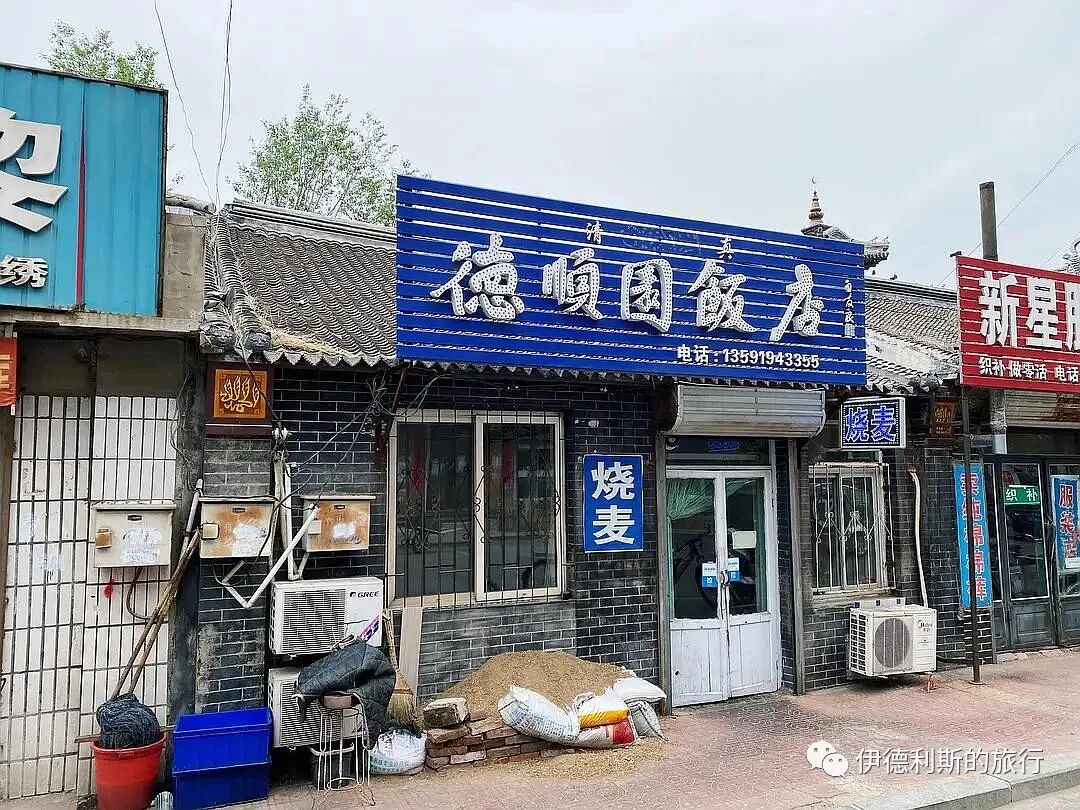
1. Hand-rolled noodles (shouganmian) from Lingyuan
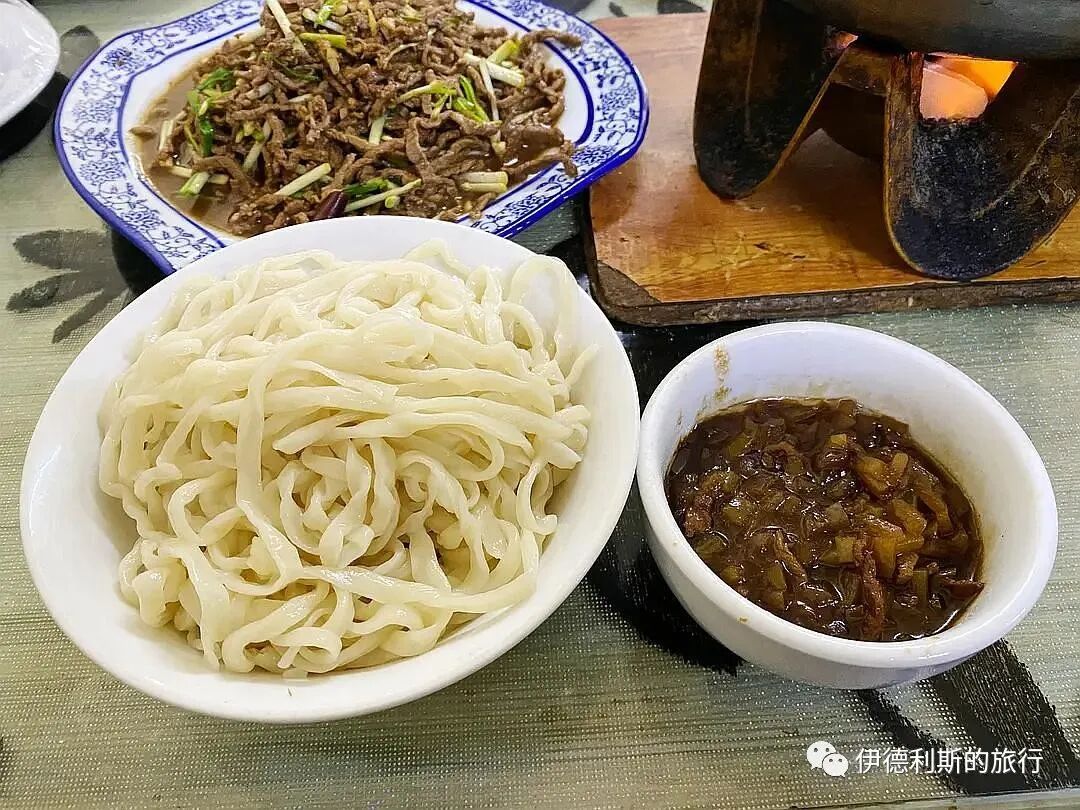
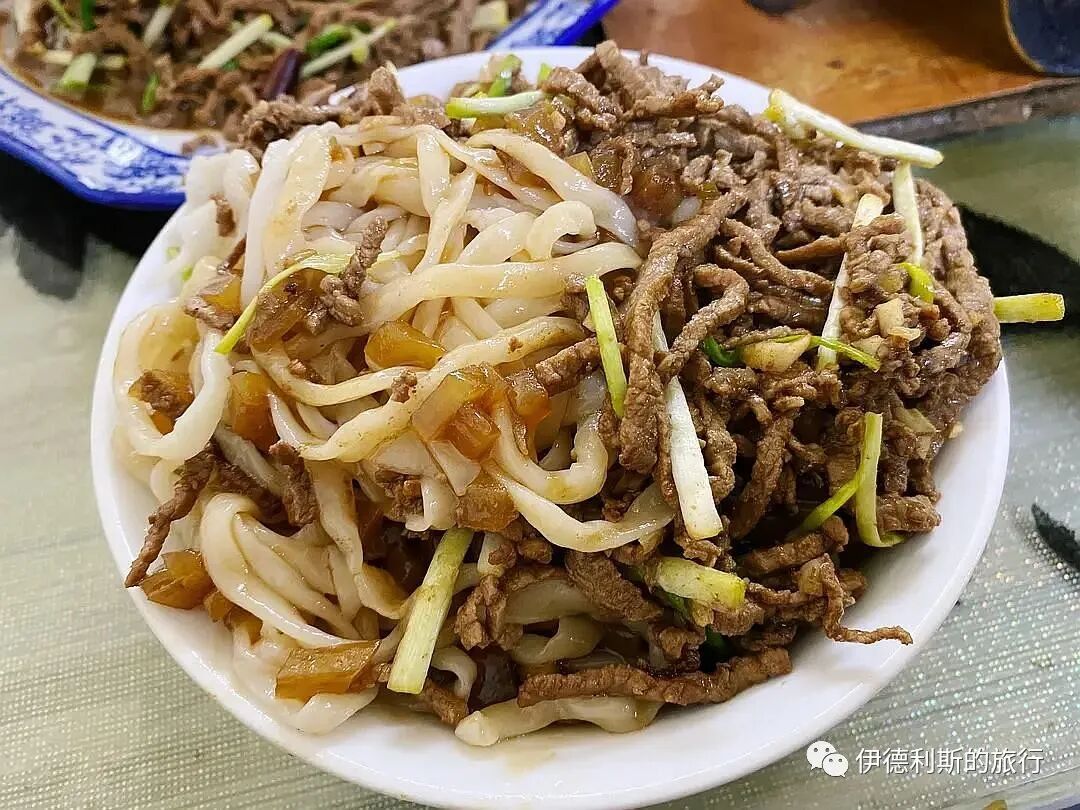
Lingyuan sits at the border of Hebei, Liaoning, and Inner Mongolia. It was originally called Tazigou. Since the Qianlong reign of the Qing Dynasty, Hui Muslims from Shandong and Hebei continuously traveled through the Great Wall gap at Xifengkou to reach the northeast. Lingyuan was their first stop after leaving the pass, and some Hui Muslims settled there. The Lingyuan mosque was built during the Qianlong reign. According to the stone tablet inside, Hui Muslim doctor Zhang Lichen and others cured the illness of a Mongol prince in the Harqin Left Banner. The prince then donated the land and money to build the Lingyuan mosque.
I stopped at a small eatery at the entrance of the Lingyuan mosque and ordered the owner's recommended stir-fried shredded meat with hand-rolled noodles (shouganmian). In the Northeast, the portions are truly large and affordable. A bowl of noodles only costs five yuan and is very satisfying.
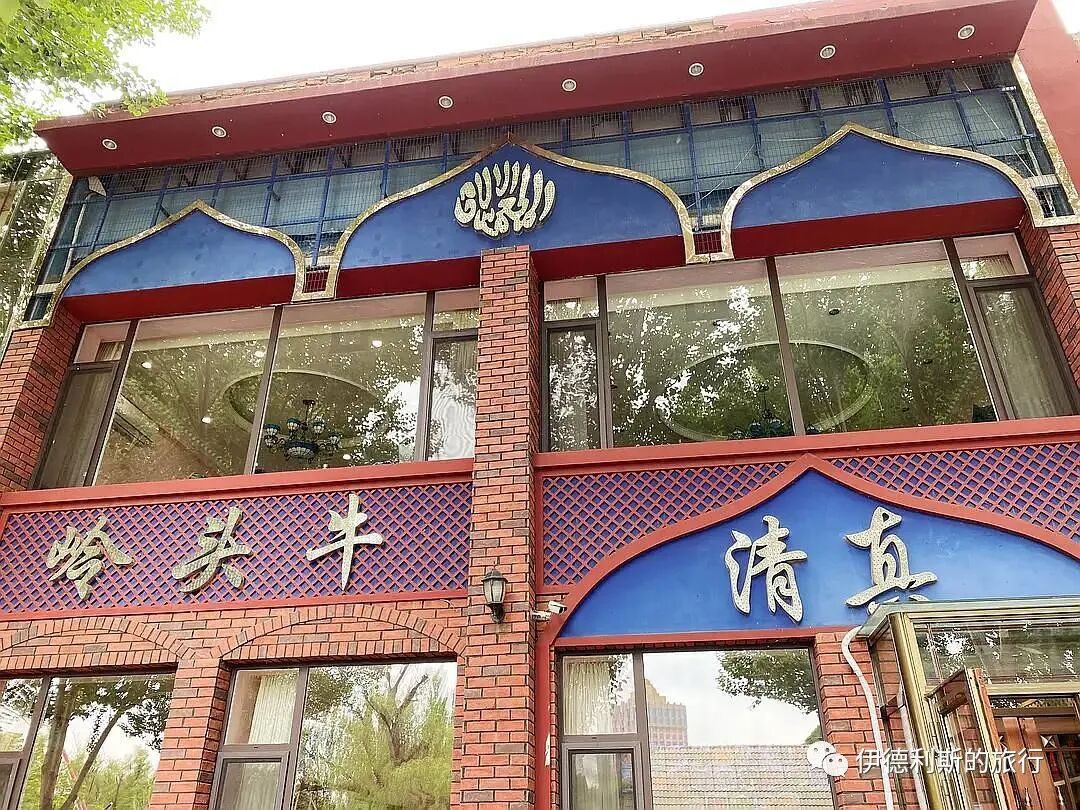
2. Hand-rolled noodles (shouganmian) from Kaiyuan
Most Hui Muslims in Kaiyuan migrated here during the Qing Dynasty's expansion into the Northeast. The Old City mosque was built in 1406 (the fourth year of the Yongle reign of the Ming Dynasty) and is the oldest mosque in the Northeast. We had a bowl of egg hand-rolled noodles (shouganmian) at Lingtou Niu next to Kaiyuan People's Park. It cost 8 yuan and was a very comfortable meal.
3. Cold noodles (lengmian) from Suizhong
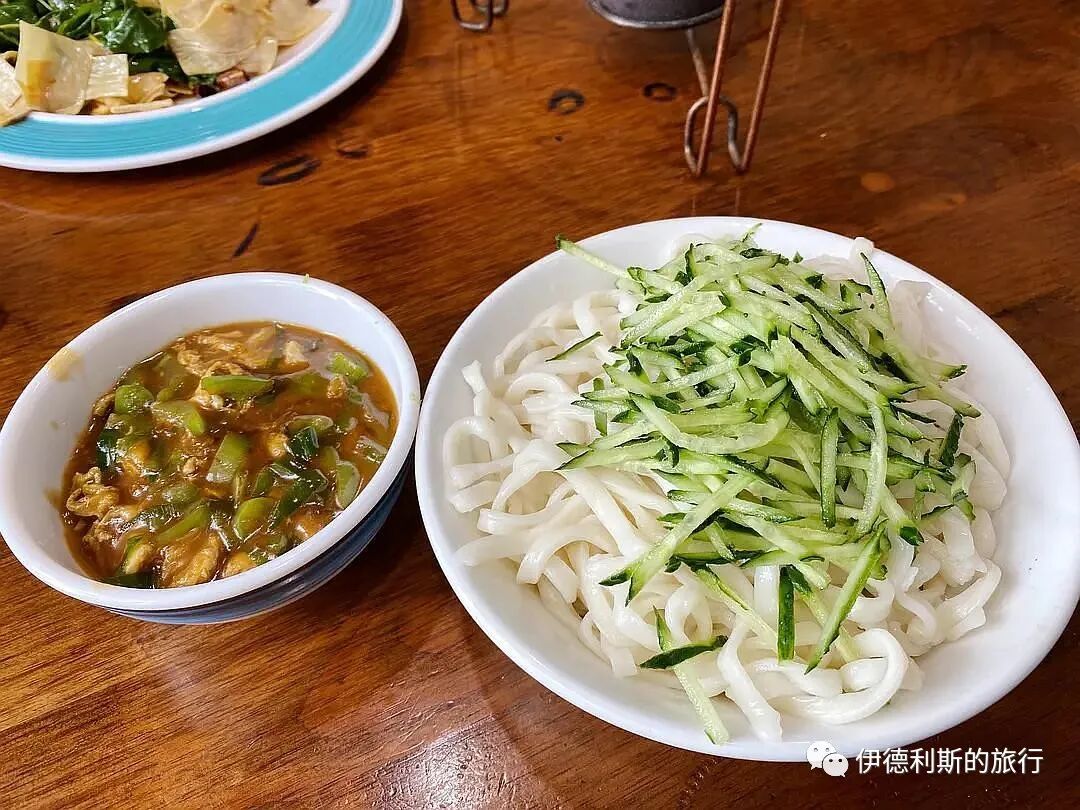
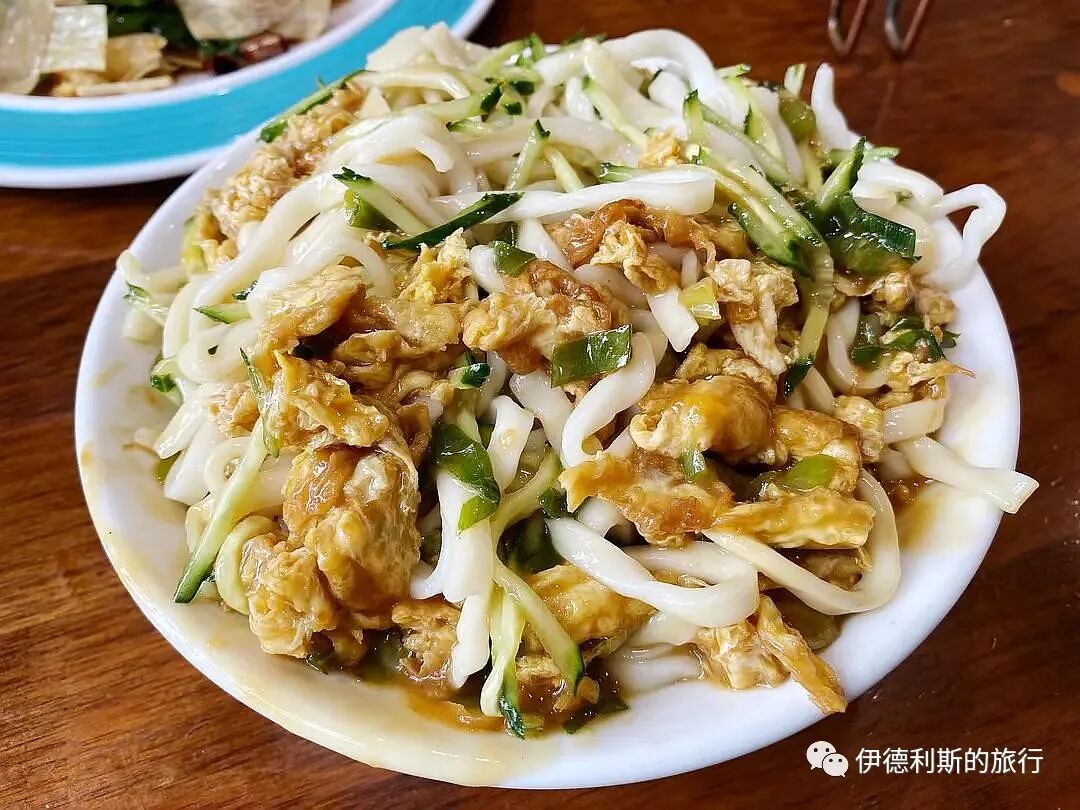
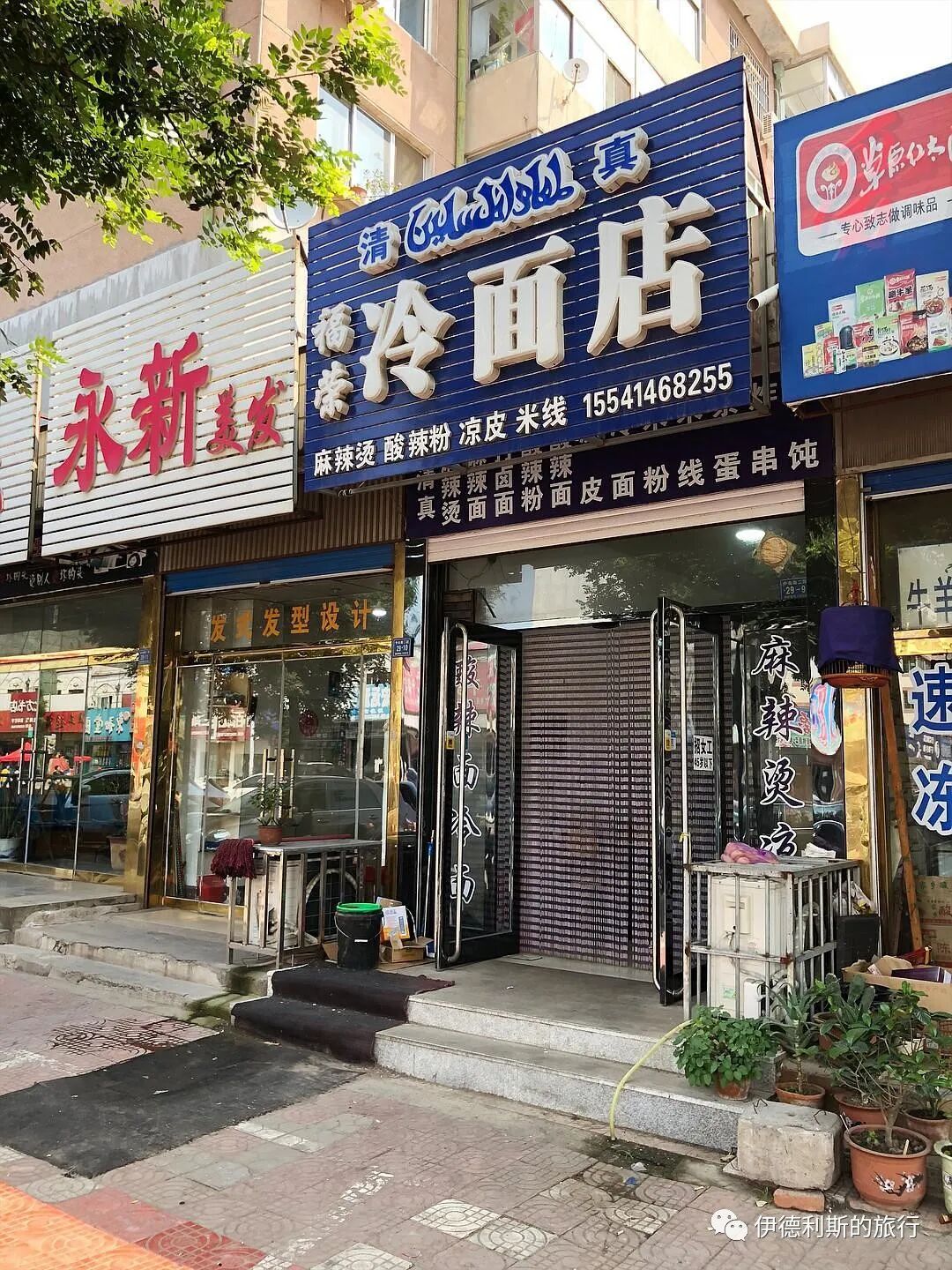
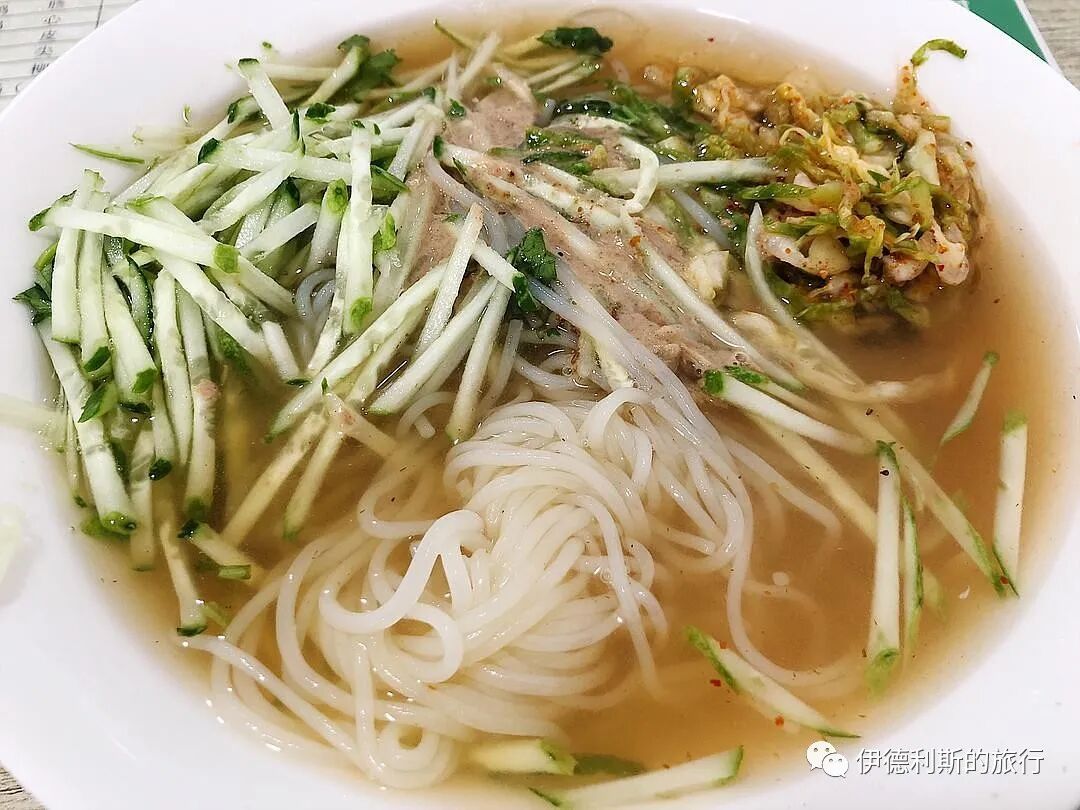
Suizhong is right next to Shanhai Pass and is the southwestern-most county in Liaoning. Starting in the 18th century, more than ten Hui Muslim families, including the Zhang, Ding, Li, and Jin families, moved to Suizhong from Hebei Province. The first mosque was built in 1737 (the second year of the Qianlong reign) below the Kuixing Pavilion in the southeast of Suizhong city. We ate local-style cold noodles (lengmian) in Suizhong; they were delicious, cheap, and perfect for cooling off.
2. Hebei
1. Stir-fried oat noodle cones (chao youmian wowo) in Zhangjiakou
The Xinhua Street Mosque in Zhangjiakou was originally called the Shenggou Mosque. It was built in 1863 (the second year of the Tongzhi reign) with funds raised by over eighty Hui Muslim families from Ningxia who came to Zhangjiakou for the camel trade, which is why it is also known as the Camel Workshop Mosque (Tuofang Qingzhensi). These Ningxia Hui Muslims were mainly from the Ma, Liu, Li, Du, Wu, Wang, and Ding families. They used camels to transport furs, silk, tea, and other goods for merchants, traveling between Inner Mongolia, Shanxi, Gansu, Mongolia, and Russia.
I ate stir-fried oat noodle cones at Binbin Snacks across from the Xinhua Street Mosque.
3. Beijing
1. Braised beef noodles, soybean paste noodles (zhajiangmian), and roasted lamb with Sichuan peppercorn sauce noodles (shao yangrou huajiao cuanmian) in Beijing
I had braised beef noodles, a small bowl of beef, and sweet and sour radish (tangcu xinlimei) at Baodu Xiaobaimao on Dongzhimen Inner Street. They gave such a huge portion of beef in the small bowl that it completely covered the noodles, which was so satisfying! I wasn't even hungry by the time night came.
I usually like to go to Liu's Men-ding (a type of pan-fried bun) at Hongmiao for their soybean paste noodles.
I ate roasted lamb with Sichuan peppercorn sauce noodles at the Drum Tower (Gulou) on Donggong Street. Beijingers often eat roasted lamb and make their own Sichuan peppercorn sauce, but it is rare to see them combined. I really love this way of eating it; it is very satisfying.
2. Sliced noodles (daoxiaomian) in Xiguanshi
The Hui Muslims of Xiguanshi came to Beijing in the early Ming Dynasty following the Prince of Yan on his northern campaign. Because they were near the main trade route from Beijing to Zhangjiakou and were skilled in martial arts, the Hui Muslims of Xiguanshi opened many security escort agencies outside Beijing's Qianmen Gate starting in the Qing Dynasty. They specialized in protecting merchants from the five northwestern provinces, primarily serving wealthy Shanxi merchants. People say the character Li Wuye, known for his magic slingshot in the story "Shigong An," was a Hui Muslim from Xiguanshi. The depictions of the archer Li Guoliang and the Dongguangyu Escort Agency outside Qianmen in the book "Yongzheng Jianxia Tu" vividly show the life of the Xiguanshi Hui Muslim escort agencies during the Qing Dynasty.
Because of their close ties with Shanxi, you can find halal sliced noodles and Bashang oat noodles in Xiguanshi that are hard to find in the city. We ate sliced noodles at an old shop in the village and also ordered beef tongue and meat-stuffed tripe (doubaorou). I had been craving sliced noodles ever since I had them in Datong, and I was finally able to eat them again.
4. Tianjin
1. Shredded chicken cold noodles (jisi liangmian) at the northwest corner.
I had a bowl of shredded chicken cold noodles with a childhood friend at Huancheng Noodle Restaurant, plus a plate of century egg with tofu (pidan doufu). It was very refreshing. Almost no other halal restaurant in Beijing makes cold noodles better than this one.
5. Inner Mongolia
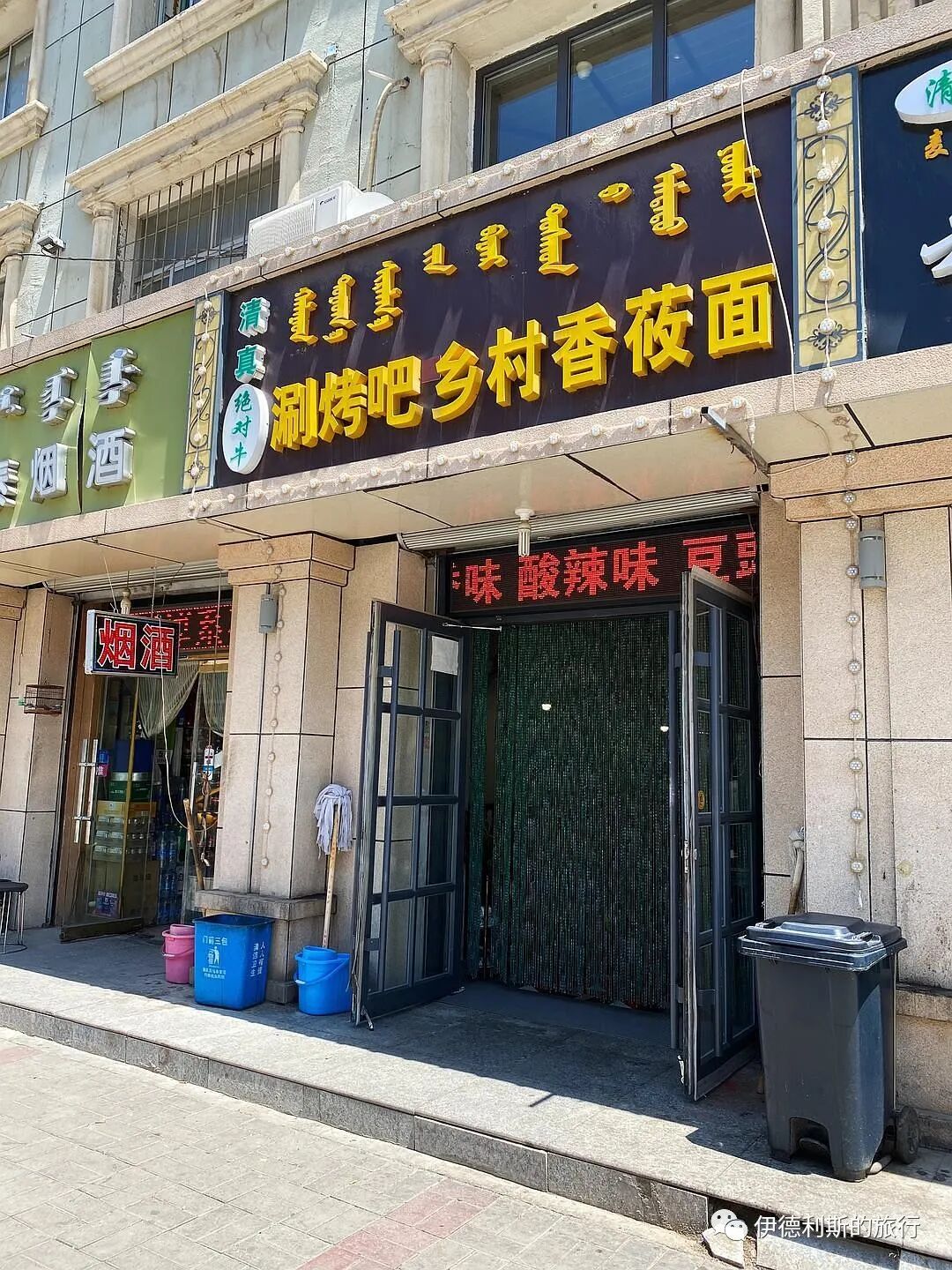
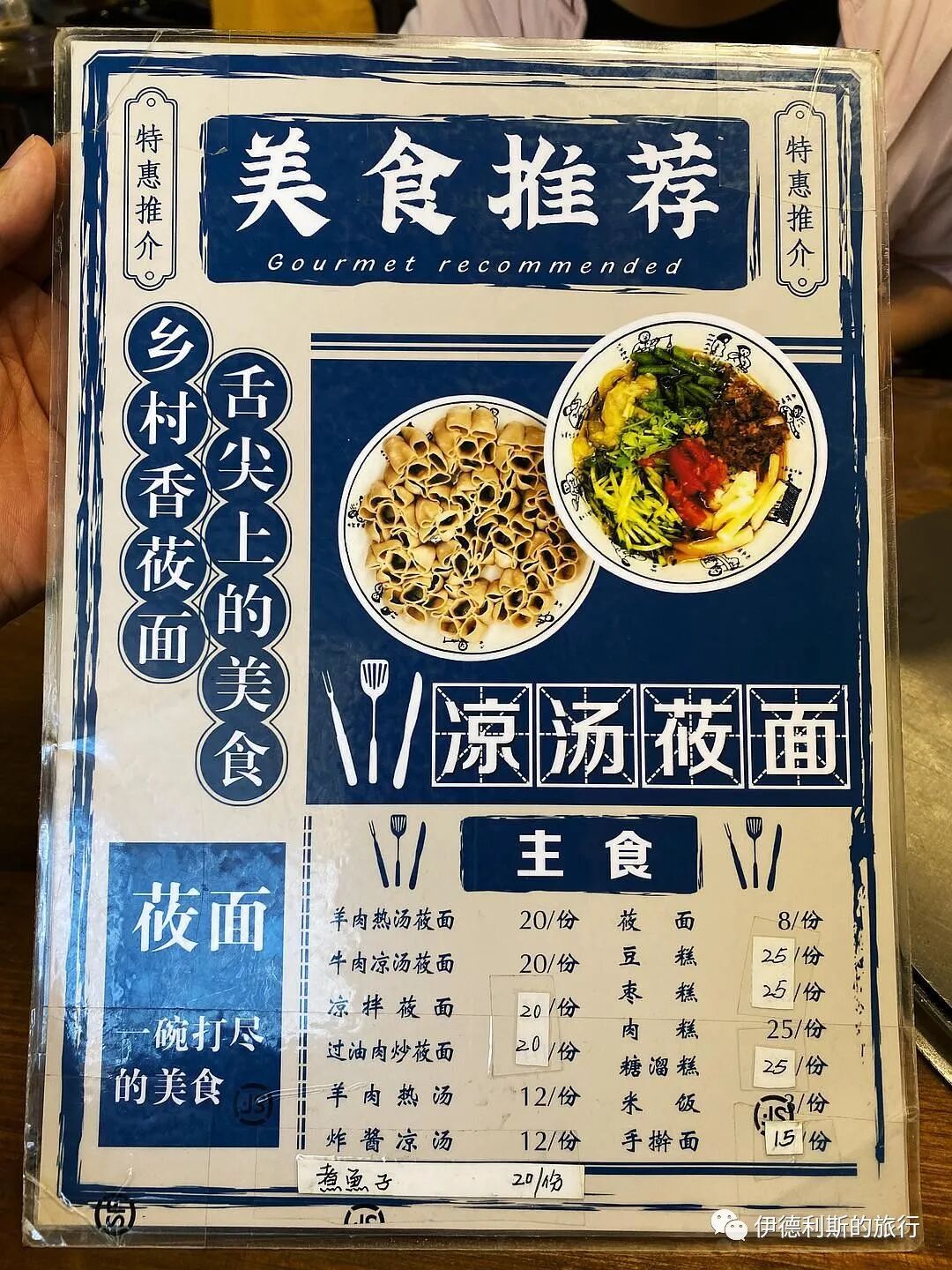
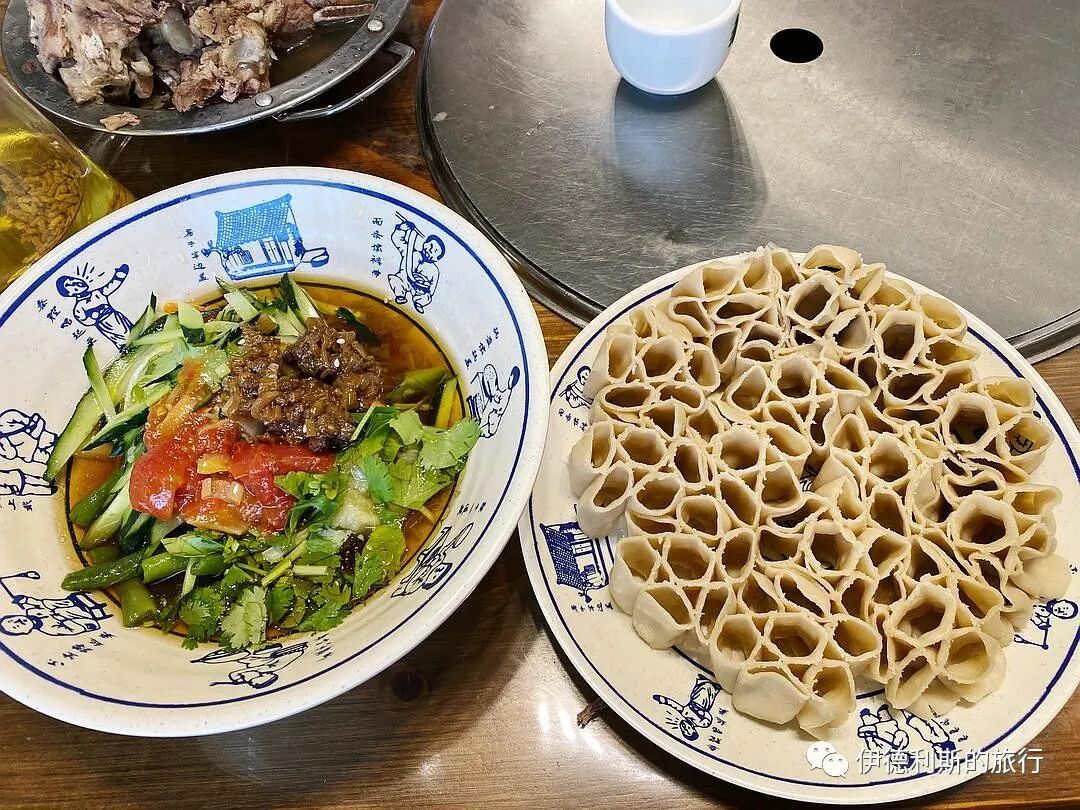
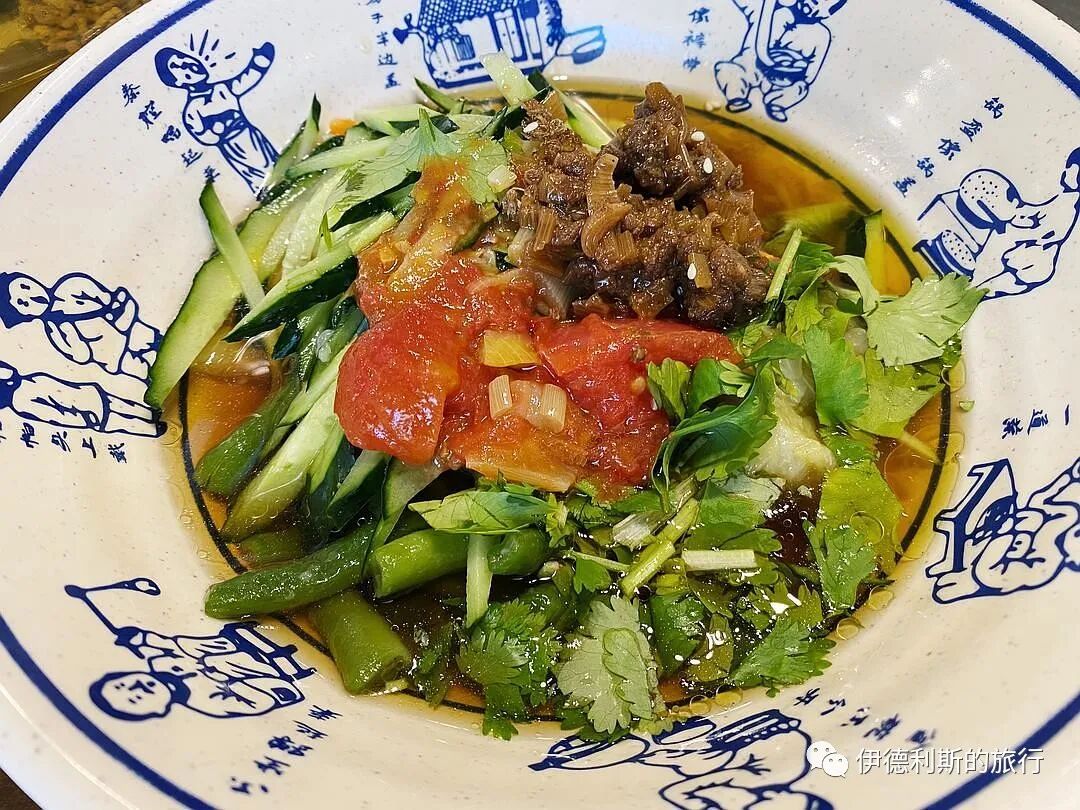
1. Cold broth oat noodles (liangtang youmian) in Hohhot.
I ate cold broth oat noodles at Xiangcunxiang Youmian on Niujie Street. They serve oat noodles four ways: with hot lamb broth, cold beef broth, mixed with vegetables, or stir-fried with meat. You can choose between oat noodle rolls (youmian wowo) or regular noodles. I find the cold broth version very satisfying in the summer. When eating, first pour vinegar and chili oil over the vegetables and fried sauce, mix it well, and then add the oat noodle rolls. It is very refreshing.
6. Henan
1. Fermented bean broth noodles (jiang miantiao) in Bo'ai.
The Xiguan Mosque in Bo'ai was built during the Yuan Dynasty and is known as the "First Mosque of Northern Henan." We ate the local specialty, fermented bean broth noodles. These are made by boiling the liquid squeezed out during tofu production into a broth, then adding soybeans, peanuts, celery, and crushed sesame paste. It tastes sour and fragrant, and it feels even better to eat in the summer.
2. Stir-fried broth noodles (qiangguo mian) in Kaifeng.
The Dongsimen Night Market in Kaifeng is at the intersection of Dongdajie Street and Jiefang Road. The market itself is small, but the atmosphere is great, with locals coming to eat and chat. We ate the classic stir-fried broth noodles at the night market.
7. Shanxi
1. Knife-cut noodles (daoxiao mian) in Datong.
The History of Yuan (Yuan Shi) records that in 1324, the first year of the Taiding era, the emperor ordered mosques to be built in Shangdu and Datong, granting 40,000 ingots of currency. This makes the Datong Mosque one of only two mosques from the Yuan Dynasty with official imperial records.
Yingze Street is a snack street in Datong with several halal restaurants. Most of the halal snacks here are only served in the morning, so it is best to come for breakfast. We ate knife-cut noodles with dried tofu and beef meatballs at Fengji Breakfast Shop. Datong's knife-cut noodles are probably the most famous. We tried them, and they lived up to their reputation; the texture of the noodles is excellent. People in Datong like to pair their knife-cut noodles with various braised meats and soy-sauce-marinated foods, which makes the flavor and texture very rich.
2. Poked noodles (tijian mian) in Taiyuan.
After the Ming Dynasty, Taiyuan gradually formed the "Ten Great Surnames of the Hui Muslims." During the Qing Dynasty, Taiyuan had over 100 local Hui Muslim households, plus more than 10 households of Hui Muslims who came from Suiyuan to do business, totaling five or six hundred people. After the Zhengtai Railway opened in 1907, the number of Hui Muslims coming to Taiyuan from Hebei increased significantly.
Yiqingyuan is a large halal restaurant in Taiyuan, where I ate hand-picked noodles (tijianmian). Shanxi has a truly rich variety of wheat-based foods. Hand-picked noodles (tijianmian) are made by using chopsticks to flick the dough into the pot. They are served with two types of sauce: meat gravy and tomato-egg sauce. This bowl of noodles only cost five yuan.
8. Shaanxi
1. Xixiang beef pulled noodles (che mian)
Xixiang County is located in the middle of the Hanzhong Basin in southern Shaanxi, nestled between the Qinling Mountains and the Bashan Mountains. The Muma River, a tributary of the Han River, flows through the county seat. Starting from the Ming Dynasty, Hui Muslims from Pingliang, Gansu, traveled to settle in Xixiang. During the Kangxi and Qianlong eras, the Hui Muslim population continued to grow. Local friends (dost) enthusiastically took us to eat.
Halal restaurants in Xixiang are mainly concentrated around the West Gate area. We ate the local specialty, braised beef pulled noodles (che mian), at an imam's (ahong) shop.
2. Ankang steamed noodles (zhengmian)
Ankang is the largest Muslim community in southern Shaanxi. Hui Muslims have lived there since the Ming Dynasty, and by the Republican era, seven mosques had been built. Ankang also has the richest halal food in southern Shaanxi.
In the morning, I ate steamed noodles (zhengmian) at Huang's Steamed Noodles, the most popular spot at the entrance of Gulou Street. Unlike the cold noodles (liangpi) in Xi'an which are seasoned with raw vinegar, Ankang steamed noodles (zhengmian) use boiled, cooked vinegar. Steamed noodles (zhengmian) usually include chili oil, but I didn't add any because I can't handle much spice.
3. Shuhe lamb mince noodles (saozimian)
Shuhe Ancient Town is the last town the Han River passes through before flowing from southern Shaanxi into Hubei. During the Ming and Qing dynasties, when Han River shipping was booming, it was an important commercial post. The town was filled with merchants and shops. Hui Muslims moved to Shuhe to settle during that time, and there are still several hundred households there today.
I ate lamb mince noodles (saozimian) on the street in Shuhe Town.
9. Ningxia
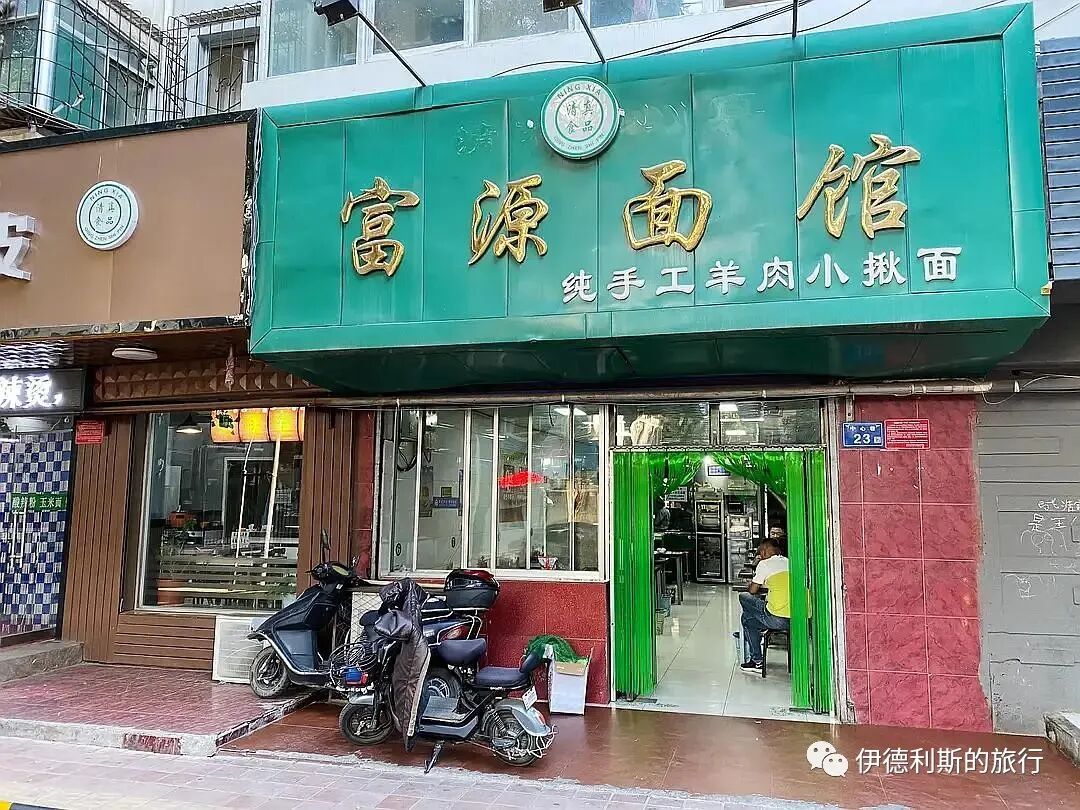
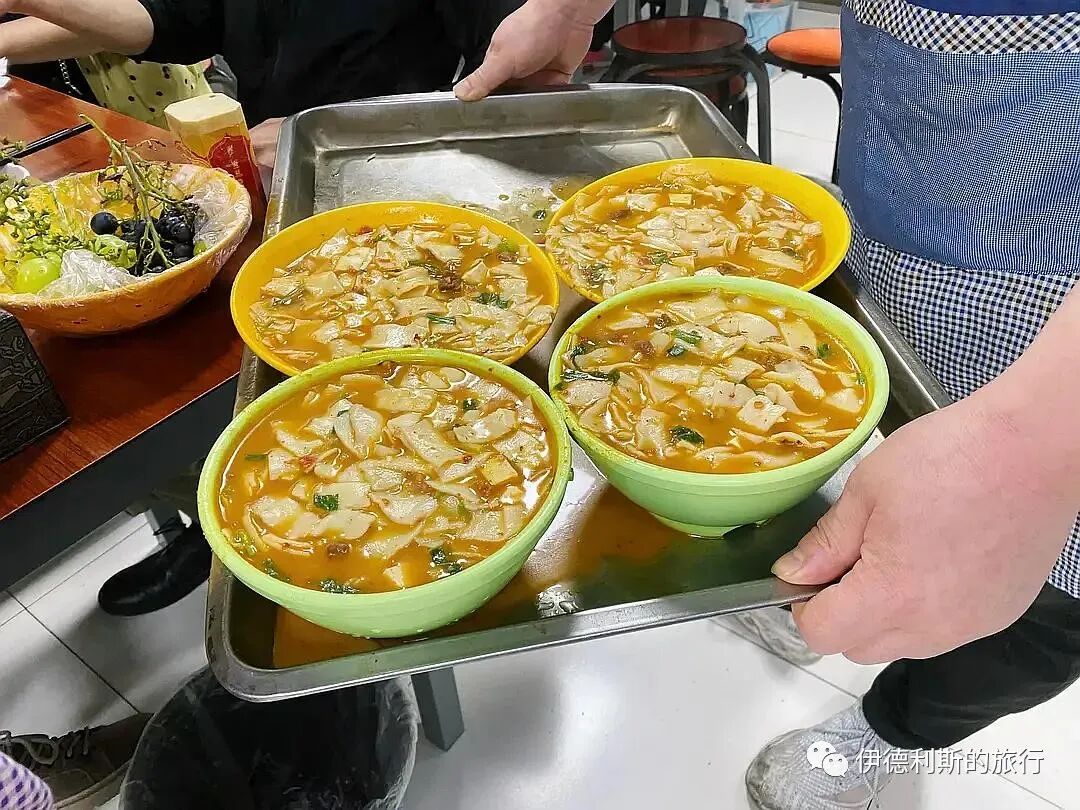
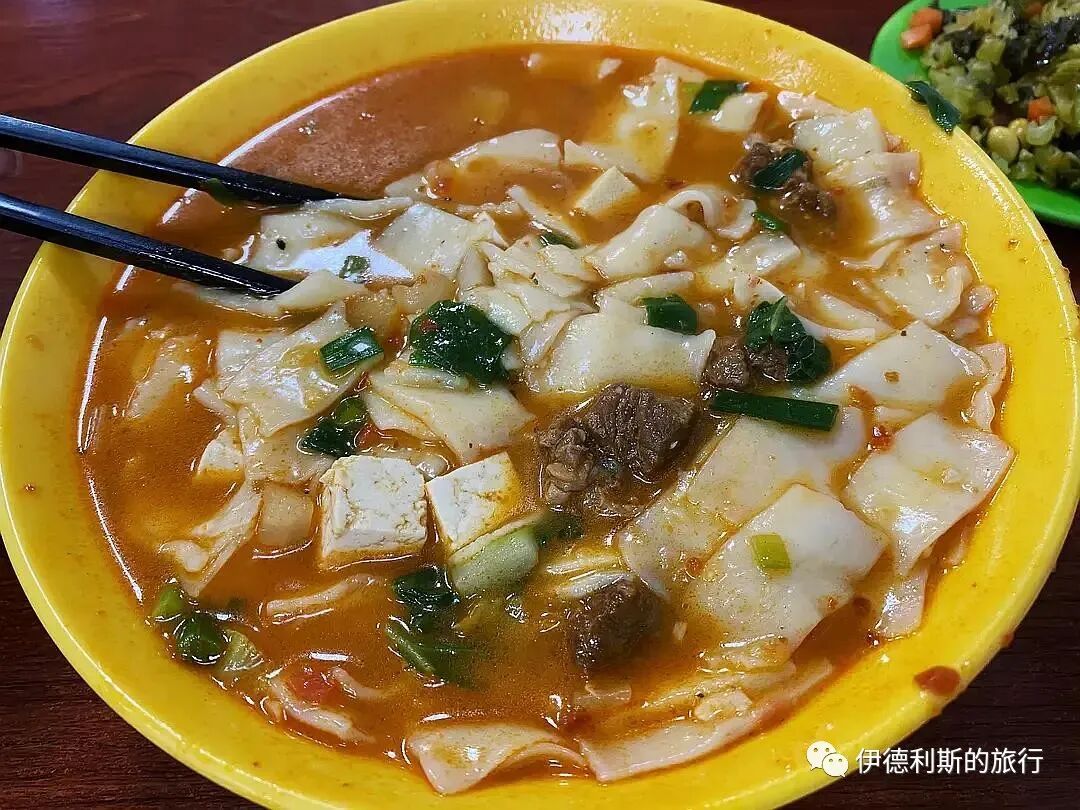
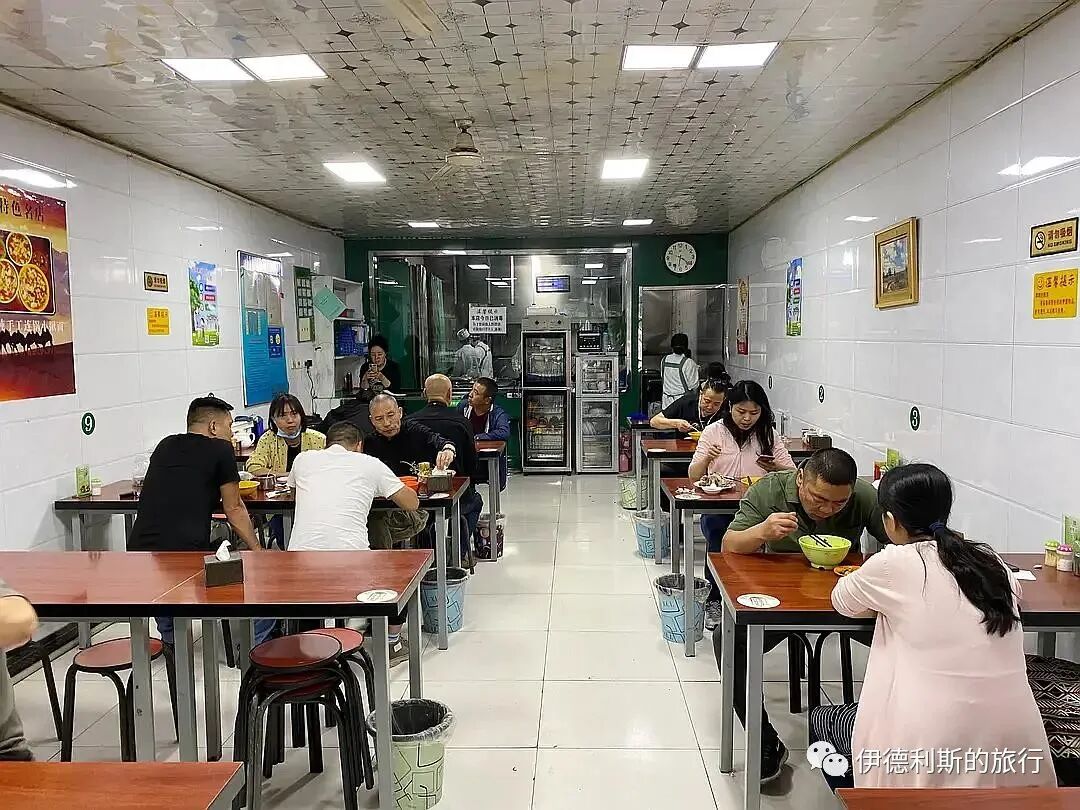
1. Yinchuan lamb pot-pinched noodles (xiao jiupian)
I ate lamb pot-pinched noodles (xiao jiupian) at Fuyuan Noodle Restaurant on Zhongxin Lane in Yinchuan. Lamb pot-pinched noodles (xiao jiupian) are made by three people pinching the dough into a large pot at the same time. Seeing the pieces of dough flying into the pot is quite a spectacular sight.
10. Gansu
1. Lanzhou mung bean sparrow-tongue noodles (biandou queshe mian) and river-bank noodle pieces (heyan mianpian)
After the 1980s, many Dongxiang people moved to Lanzhou to make a living, settling mostly in the Baishu Lane, Jiangouyan, and Shangxiyuan areas of Xiaoxihu. I had a small bowl of lentil sparrow-tongue noodles (biandou queshe mian) at Zhonghua Hand-Grabbed Lamb King in Jiangouyan. This place is very popular in Xiaoxihu. You have to share a table at noon, but the environment and service are great, and they refill your water often.
There are many restaurants side-by-side on Jiangouyan Street, and I also ate river-bank noodle slices (heyan mianpian) here. River-bank noodle slices originated in Guanghe County, Linxia. They evolved from stir-fried noodle slices (chao mianpian), but the flavor is much richer.
2. Linxia's old-style braised noodles (lao lu mian)
I ate old-style braised noodles in Linxia. The old-braised noodles were very rich and had a thick, hearty texture.
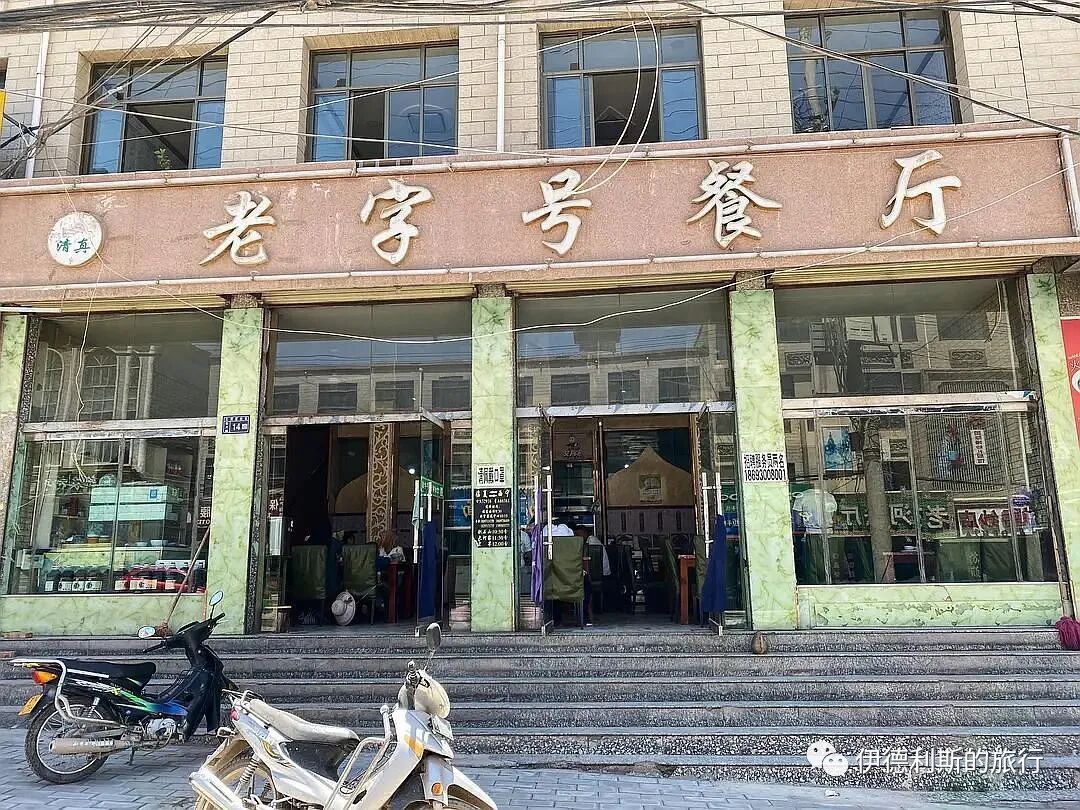
3. Dahejia's old-style stir-fried noodle slices (lao chao mianpian)
Dahejia is on the border of Gansu and Qinghai. Once you cross the Yellow River Bridge, you are in Minhe, Qinghai. People from the Bonan, Dongxiang, Salar, Han, Hui Muslims, and Tibetan ethnic groups live here. The town has many Dongxiang hand-grabbed lamb restaurants and Bonan waist-knife shops. We ate old-style stir-fried noodle slices here. My standard order whenever I visit the Hehuang region is hand-grabbed lamb (shouzhua) and noodle slices. This long-standing restaurant is crowded at noon. Most people eat cold noodles, but some order river-bank or old-style stir-fried noodles. Their kettles are filled with beef broth, and they put chopped green onions and salt in empty bowls so you can pour the broth and drink it right away.
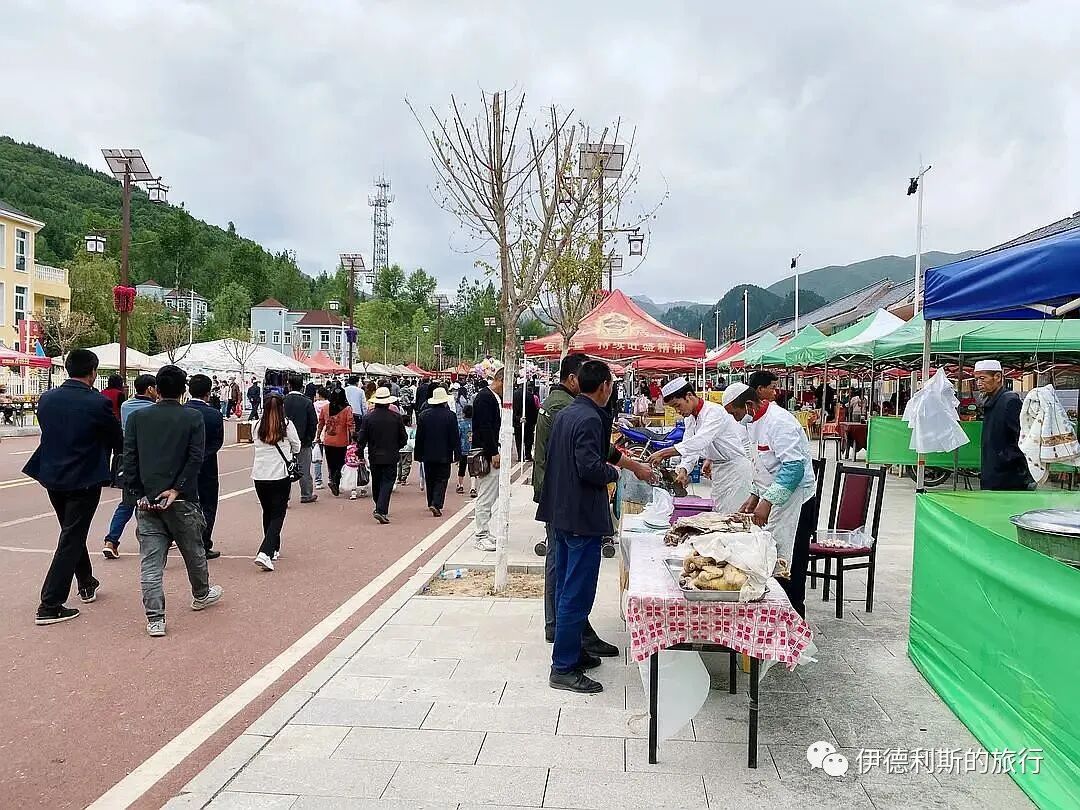
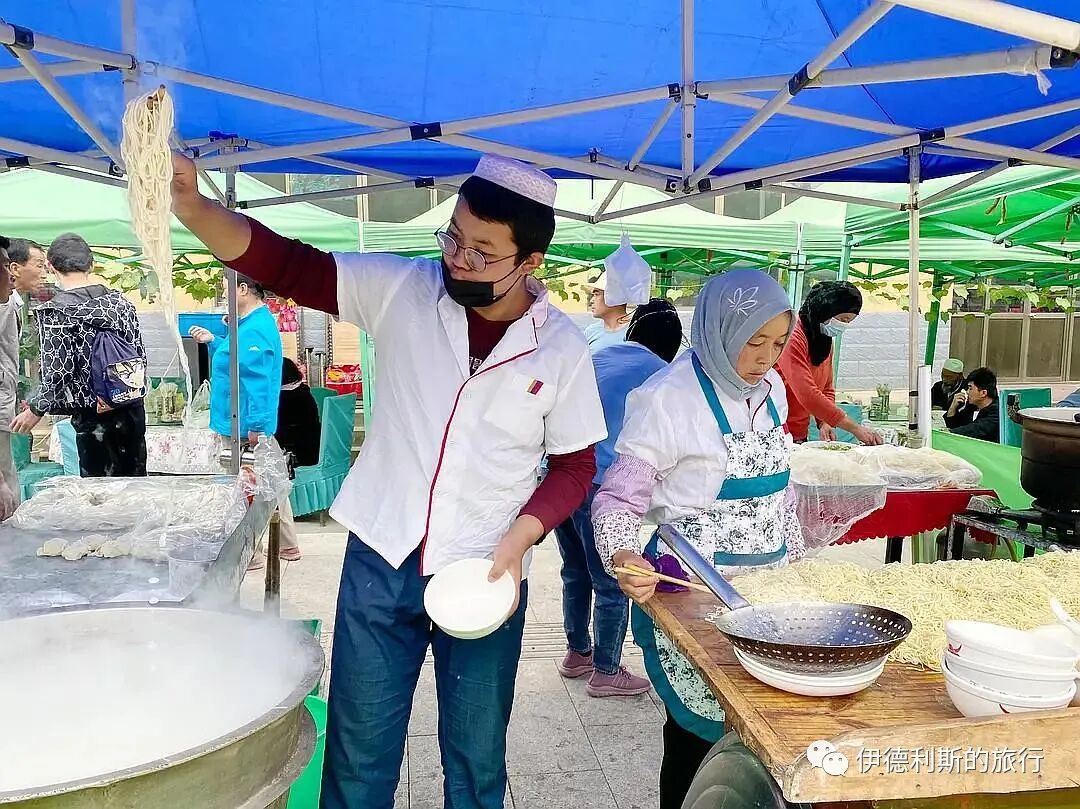
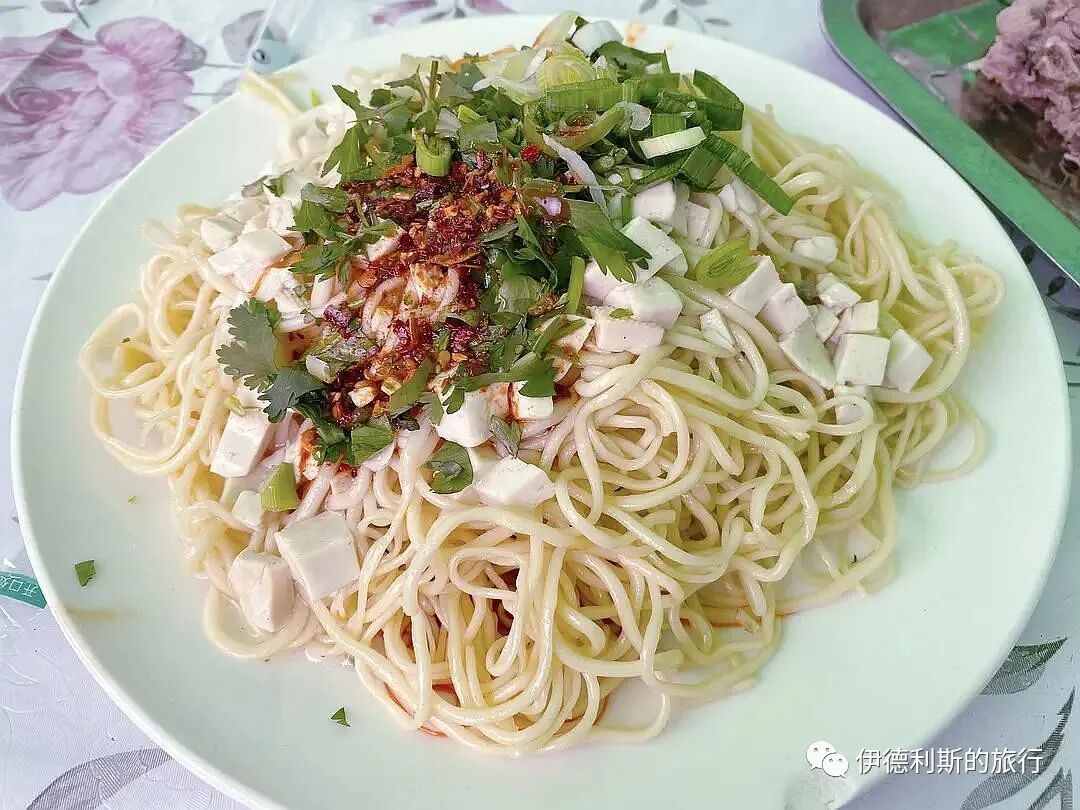
4. Tofu cold noodles (doufu liangmian) at the Songmingyan Flower Festival
Every year during the Flower Festival, the entrance to the Songmingyan scenic area turns into a big market. It is very lively and sells everything. Before going into the mountains to listen to the folk songs (hua'er), we ate tofu cold noodles at the entrance.
11. Qinghai
1. Xining's fermented vegetable noodle slices (jiangshui mianpian) and lamb intestine noodles (yangchang mian)
A local friend in Xining recommended Dongxiang Jinhai Hand-Grabbed Lamb on Yangjia Lane. We ate fermented vegetable noodle slices there, and the pickled radishes and eight-treasure tea (babao cha) were free. It turned out to be the best meal we had on this trip! It was cheap and delicious, and the service was excellent. Every two minutes, a waiter would come by with a kettle to ask if we needed more tea. Zaina Bu really liked the fermented vegetable broth (jiangshui) and basically drank it all in one go.
Nilo Food City on the fifth floor of Xining's Wangfujing department store gathers many local halal snacks. It is clean, hygienic, and cheap. We ate the Qinghai-style lamb intestine noodles.
2. Dry mixed noodles with meat sauce from Xunhua.
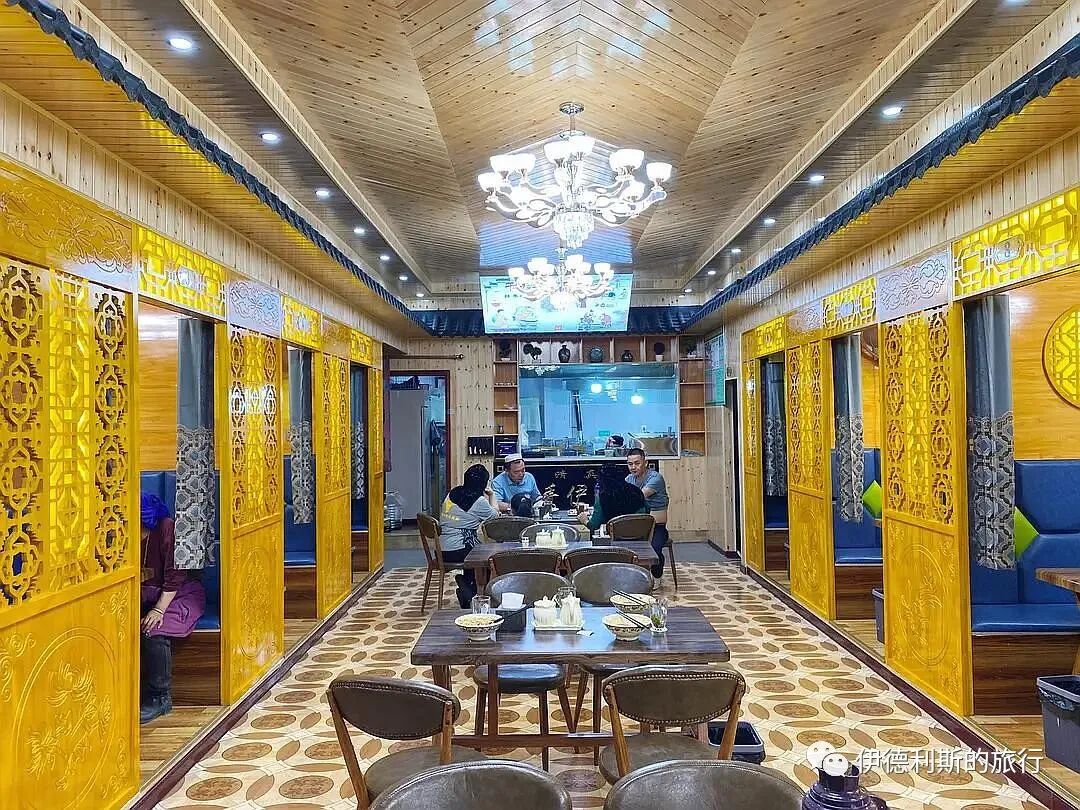
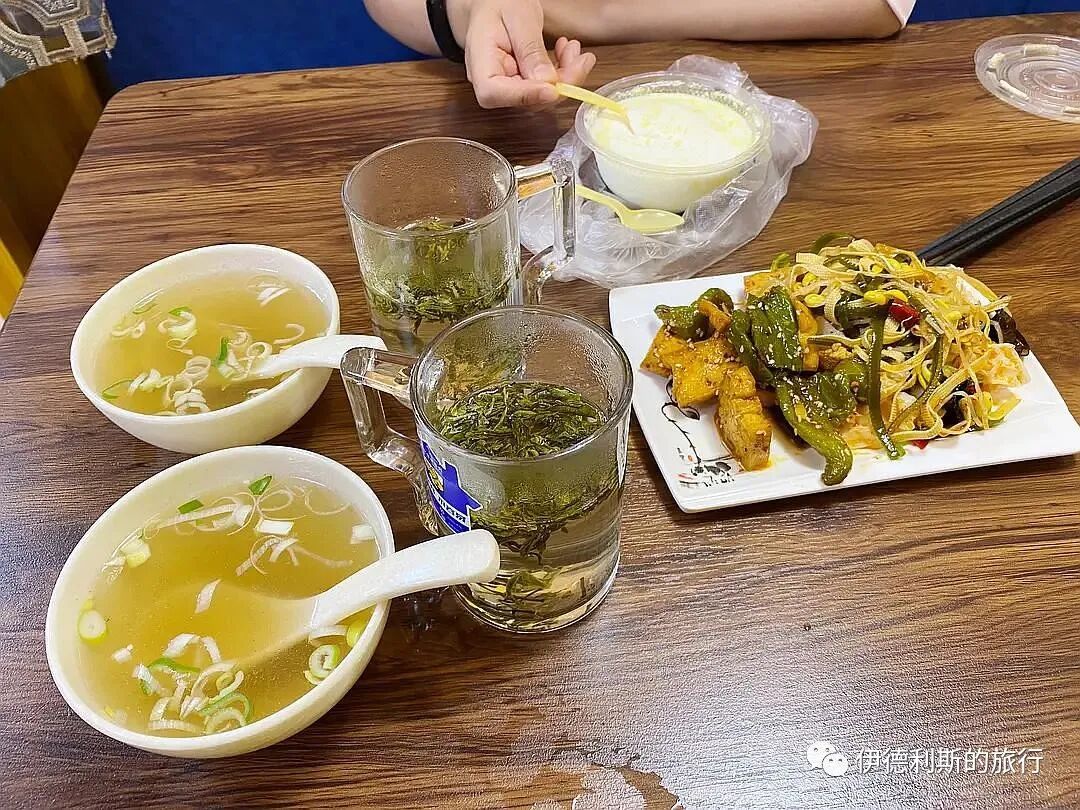
Here in Xunhua, even the beef noodle shops have small private rooms; the environment is really quite good. After ordering, they served meat broth and tea first, and we also ordered a platter of cold dishes. Besides the thread chili (xianlajiao), people in Xunhua also love eating tiger-skin chili (hupilajiao). While waiting for the bus earlier, I noticed the grandpas and grandmas shopping were all carrying a bag of tiger-skin chili.
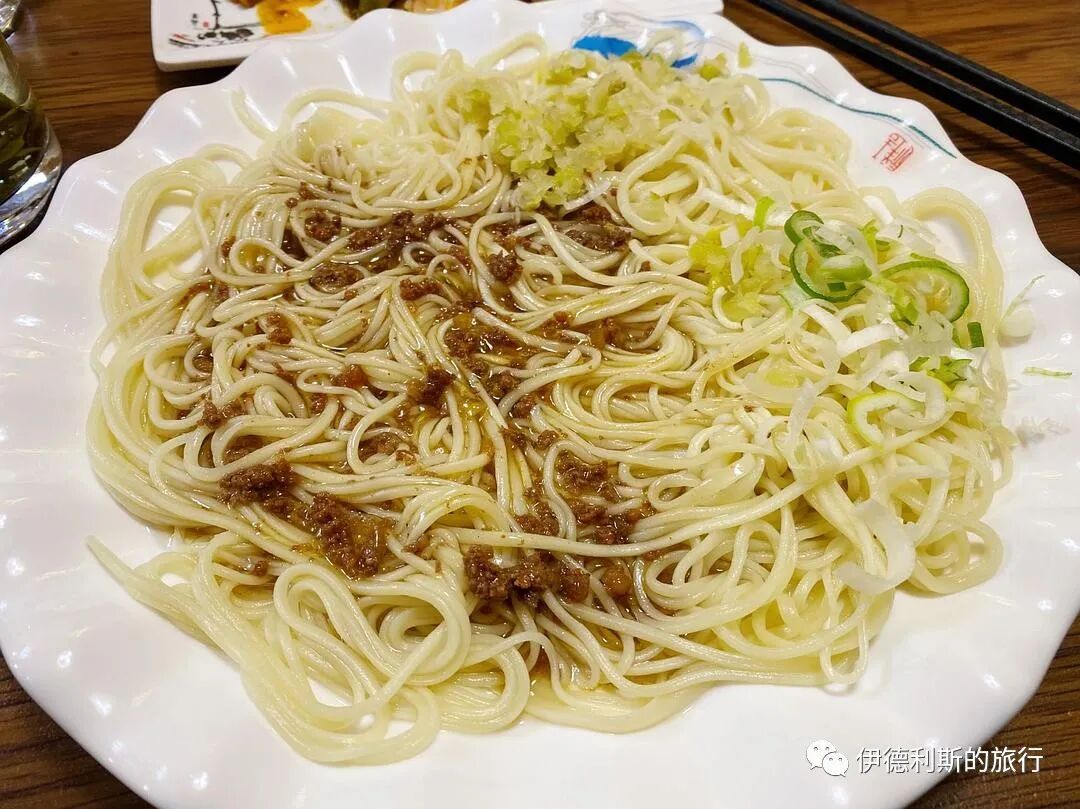
Dry-mixed noodles with meat sauce (roujiangganban) should be a specialty here in Qinghai. I had it before at a Salar restaurant in Beijing called A-Gong Noodle House, but this time it felt more authentic. The noodles were thin and chewy, the sauce was especially fragrant, and this meal cost less than twenty yuan, which is great value.
12. Xinjiang.
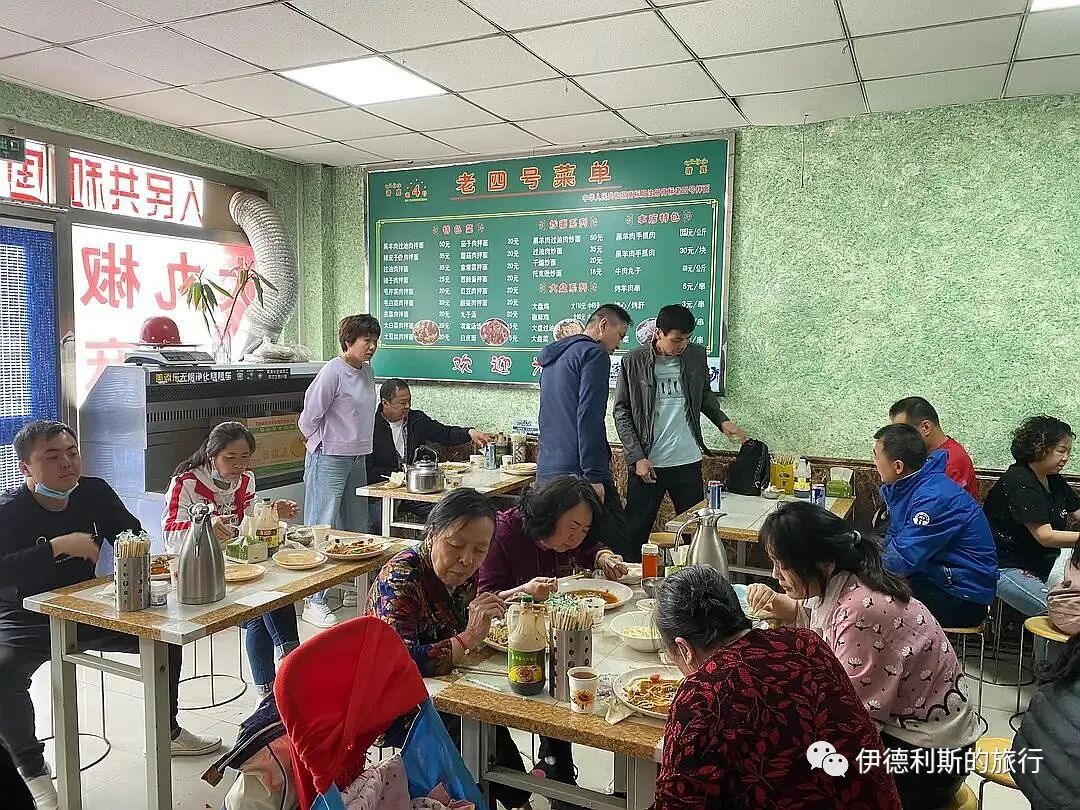
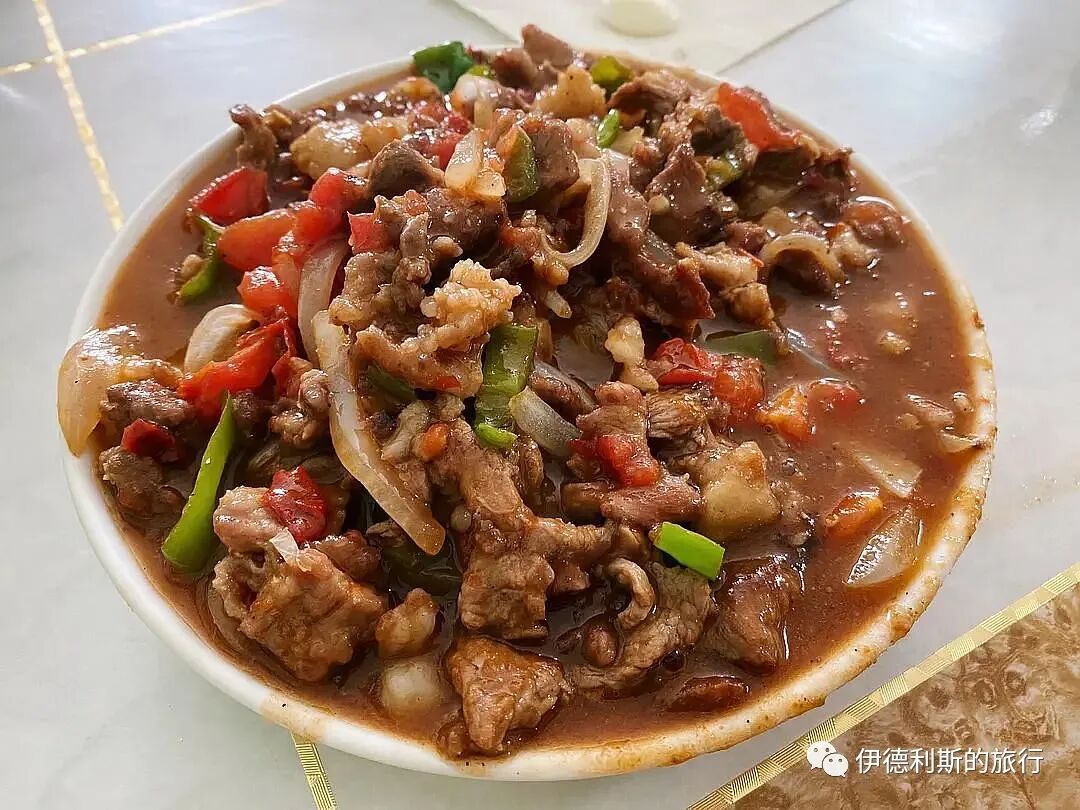
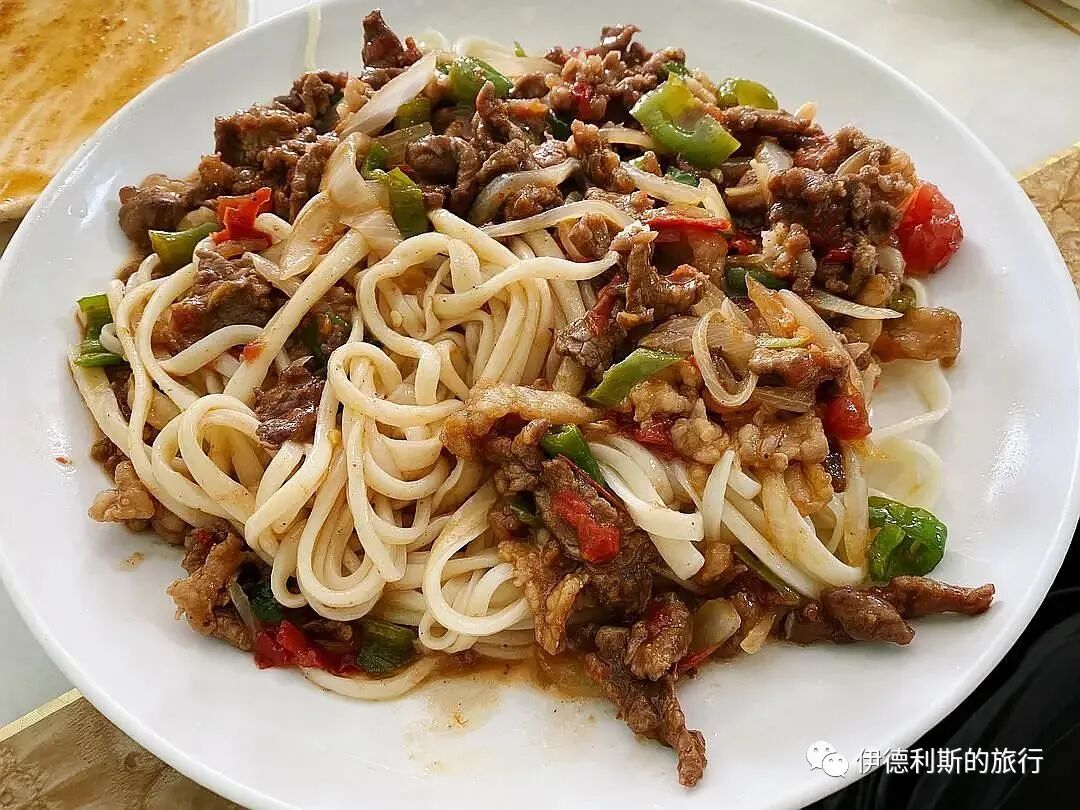
1. Black goat meat stir-fried with noodles (guoyou rou banmian) from Toksun.
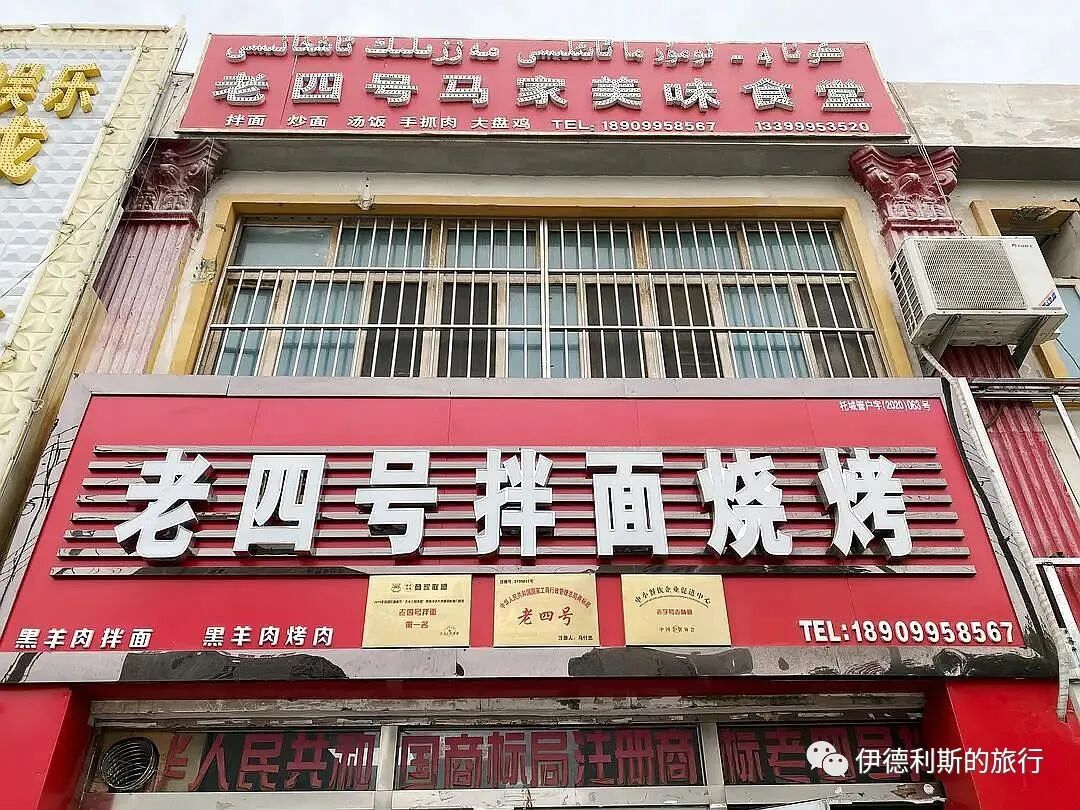
The most popular spot in Toksun town is Lao Si Hao. It is packed at meal times, with locals and people who traveled specifically from Turpan. Their specialty is black goat meat stir-fried with noodles. The black goat is a local specialty that lives on the cliffs of the Tianshan Mountains. It is much more expensive than regular lamb, but the taste and texture are truly different. I think it is much better.
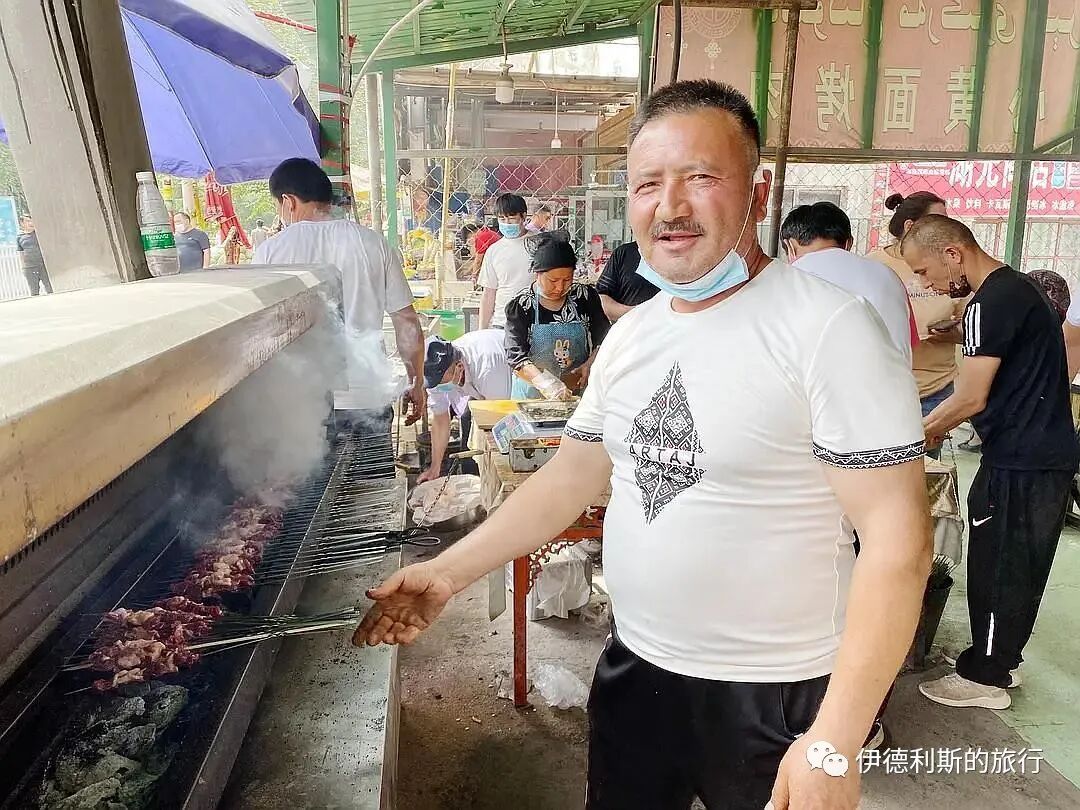
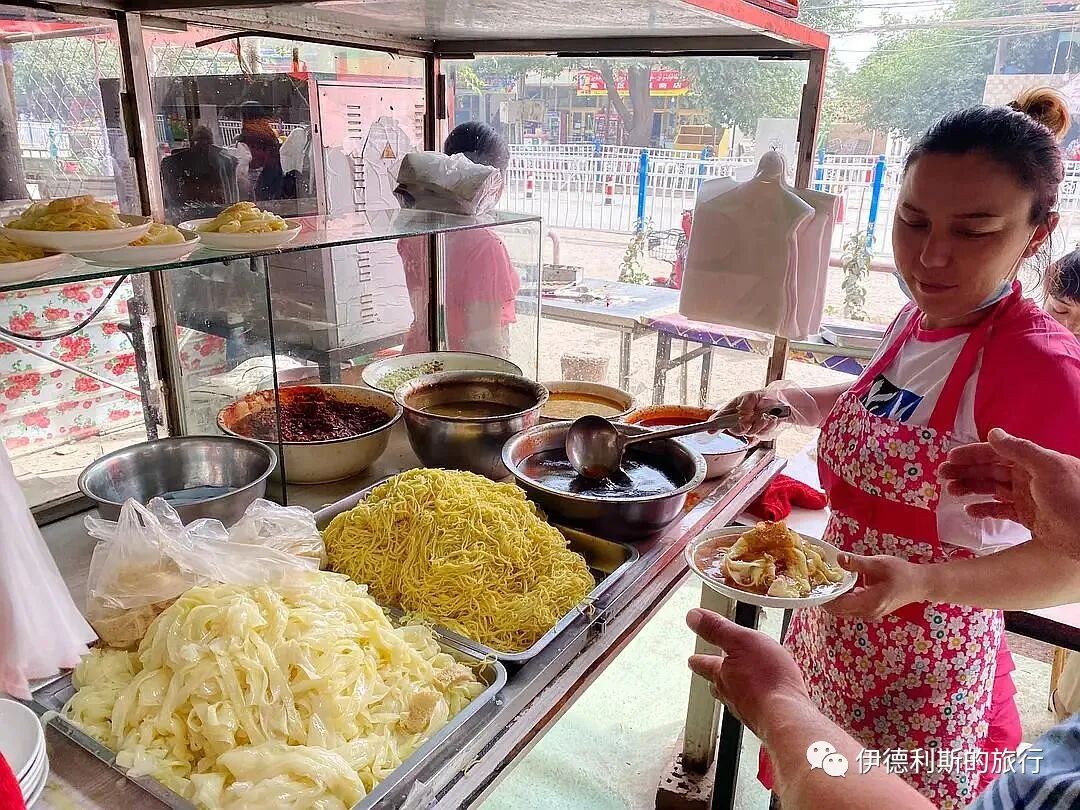
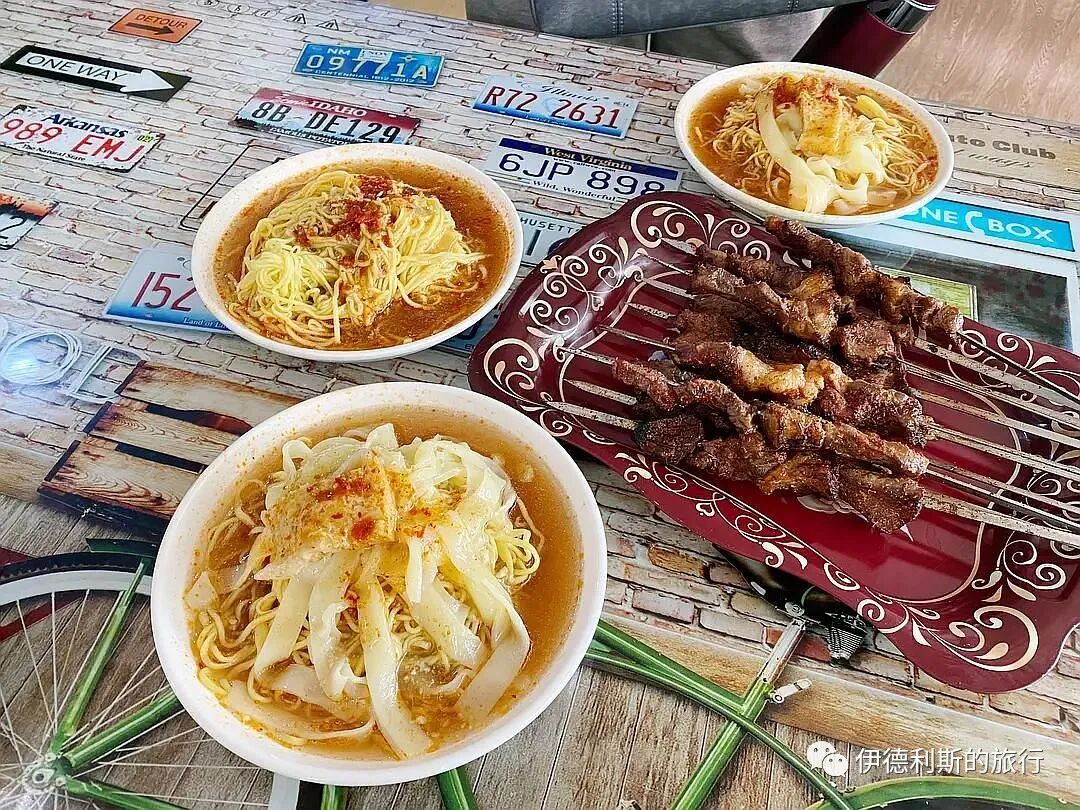
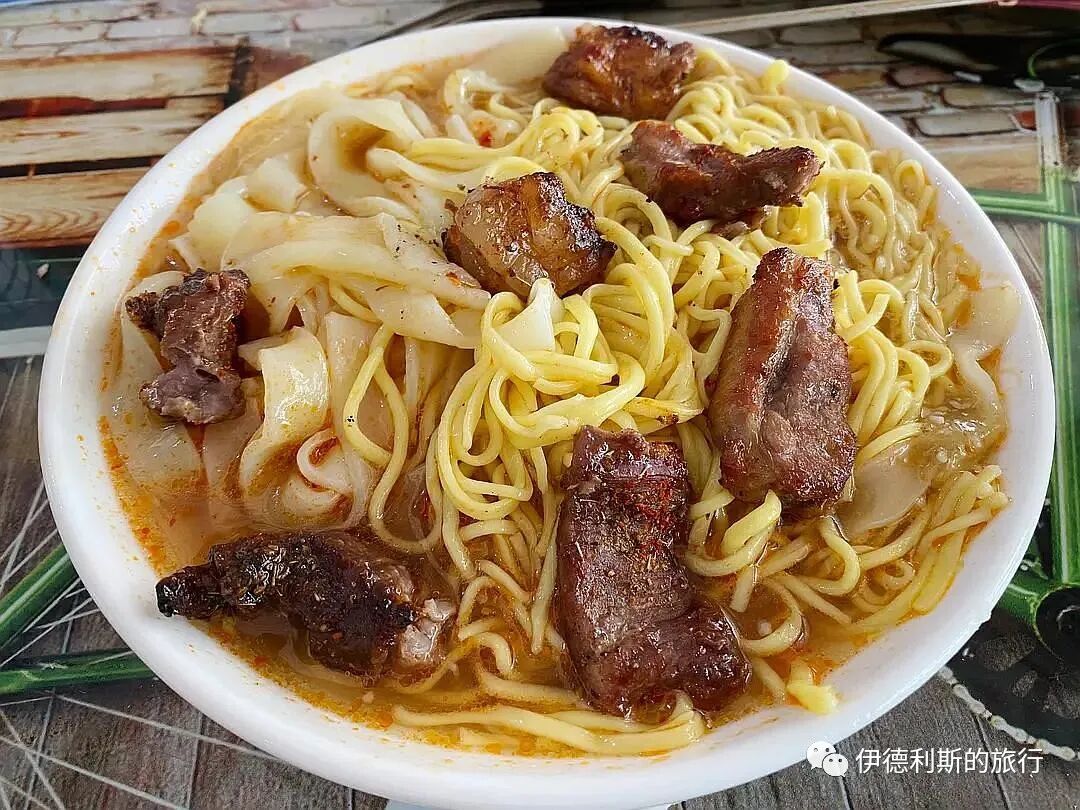
2. Yellow noodles (huangmian) with grilled meat from Flaming Mountain.
Eating yellow noodles with grilled meat in Flaming Mountain Town. Flaming Mountain Town is famous for its yellow noodles with grilled meat, and the whole street sells them. The most famous shop is called 'Flaming Mountain Famous Yellow Noodle and Grilled Meat Shop,' but it was fully booked when we arrived, so we ate at the place across the street. We ordered a mix of yellow noodles and cold starch noodles (liangpi). The grilled meat is taken off the skewers and placed on top of the yellow noodles. It is very refreshing in the summer and feels perfect for the climate of Flaming Mountain.
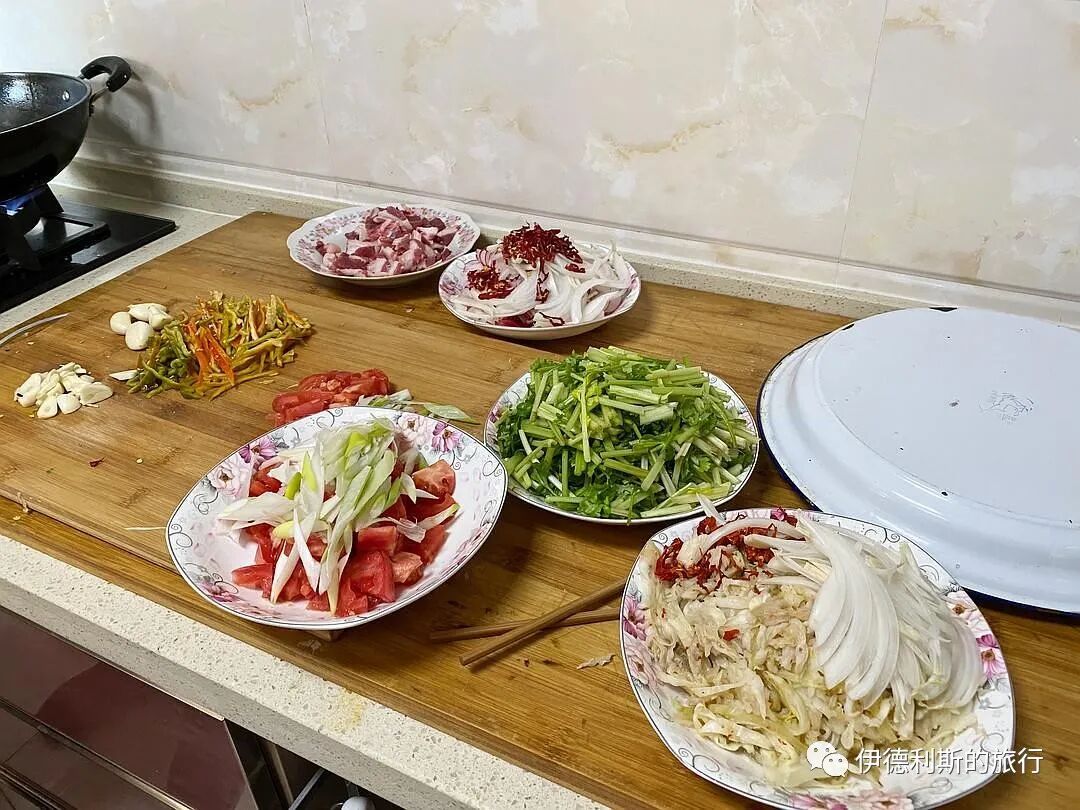
3. Home-style mixed noodles (banmian) from a Hui Muslim family in Urumqi.
Our first meal back in Urumqi featured four types of mixed noodles: celery with meat, onion (piyazi) with cherry radish, eggplant with meat, and pickled vegetables with meat. It was wonderful. This time, the hand-pulled noodles (latiaozi) were made using the coiled method, where the dough is rolled out and then coiled to rest.
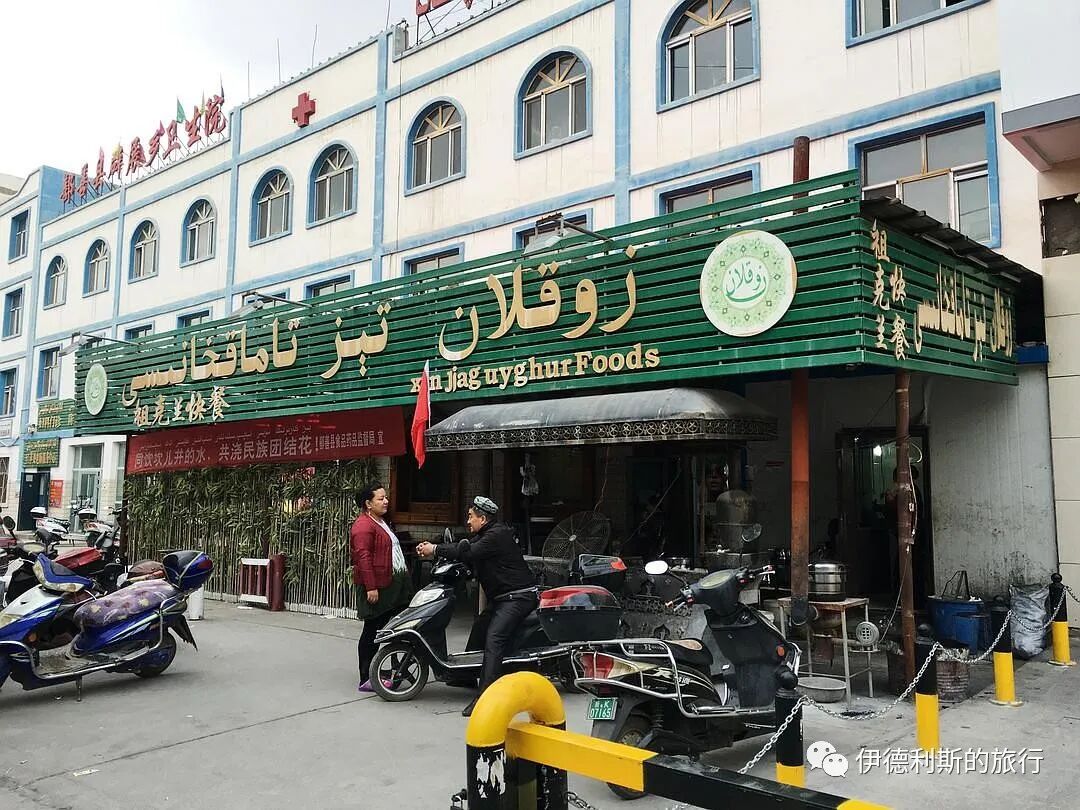
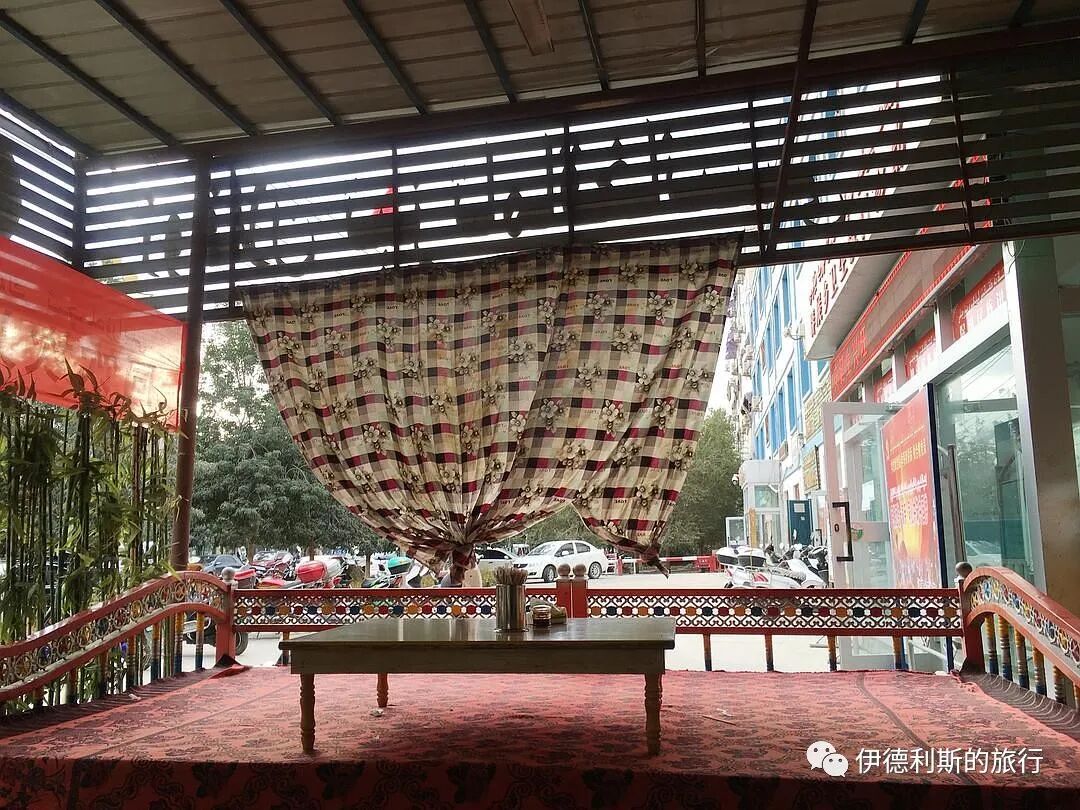
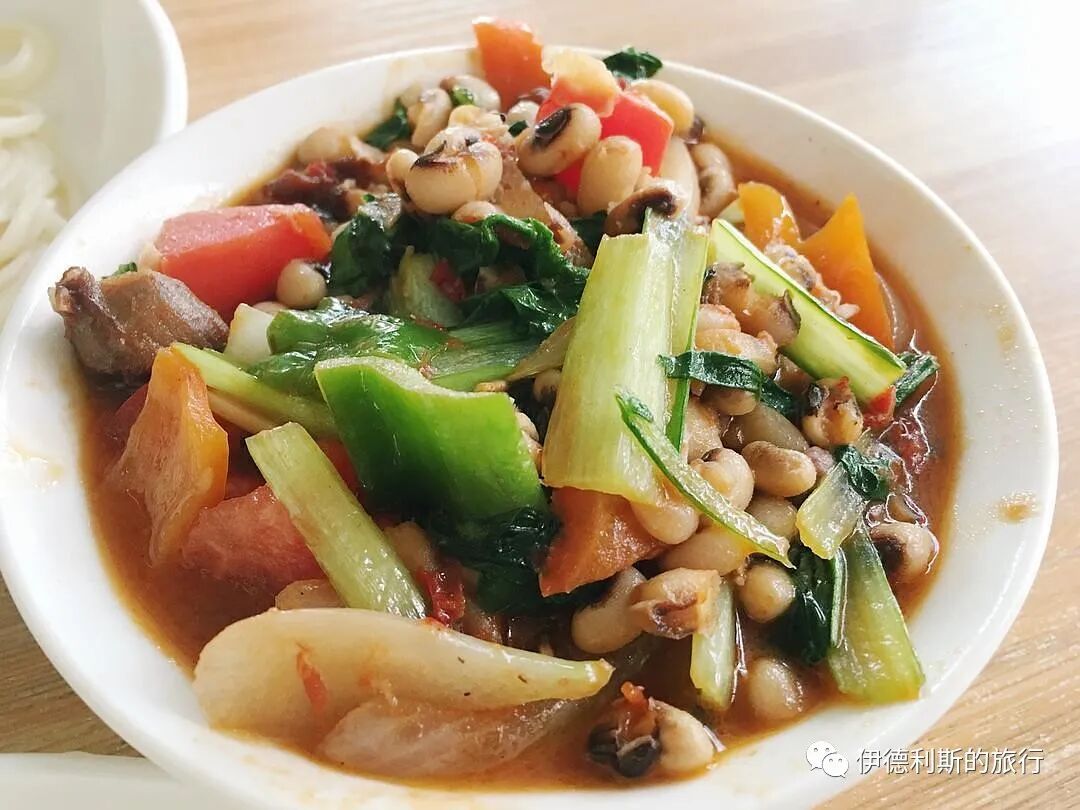
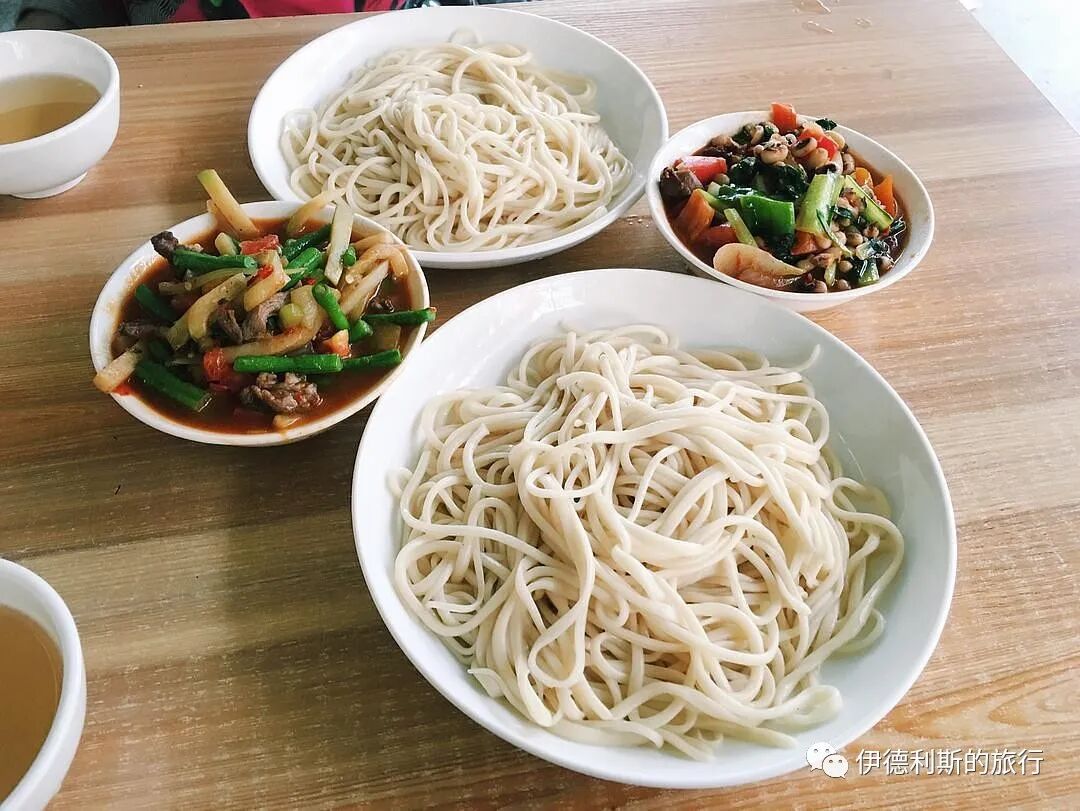
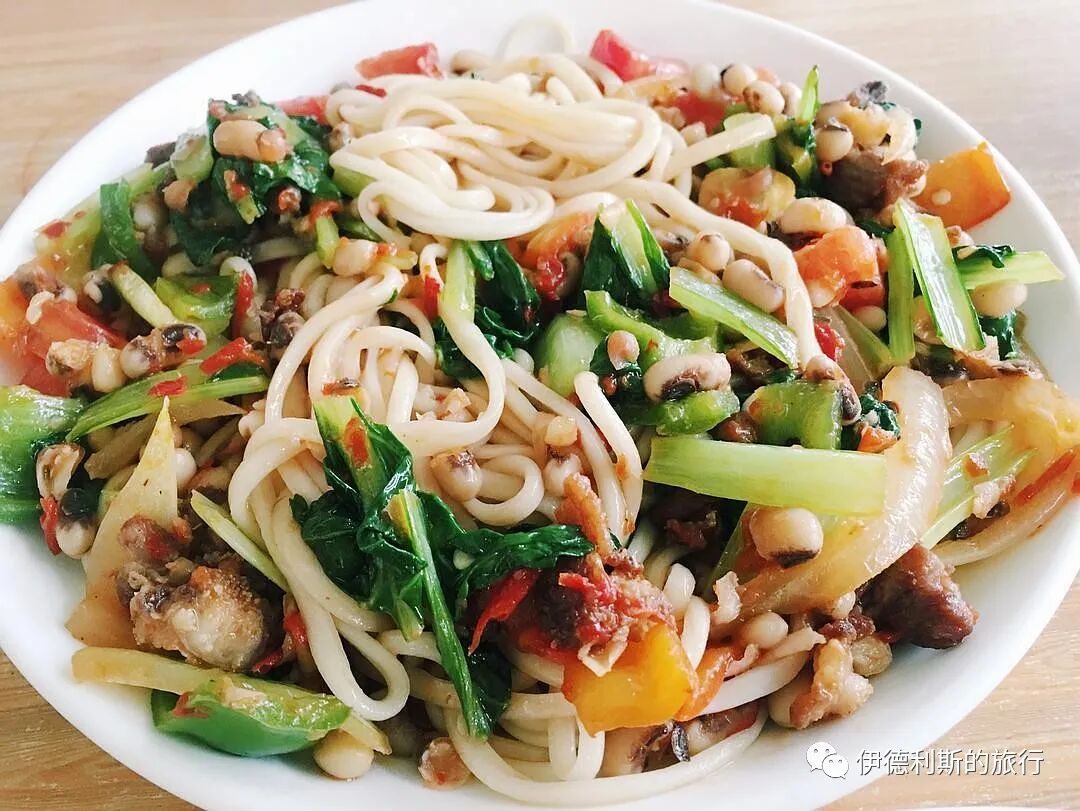
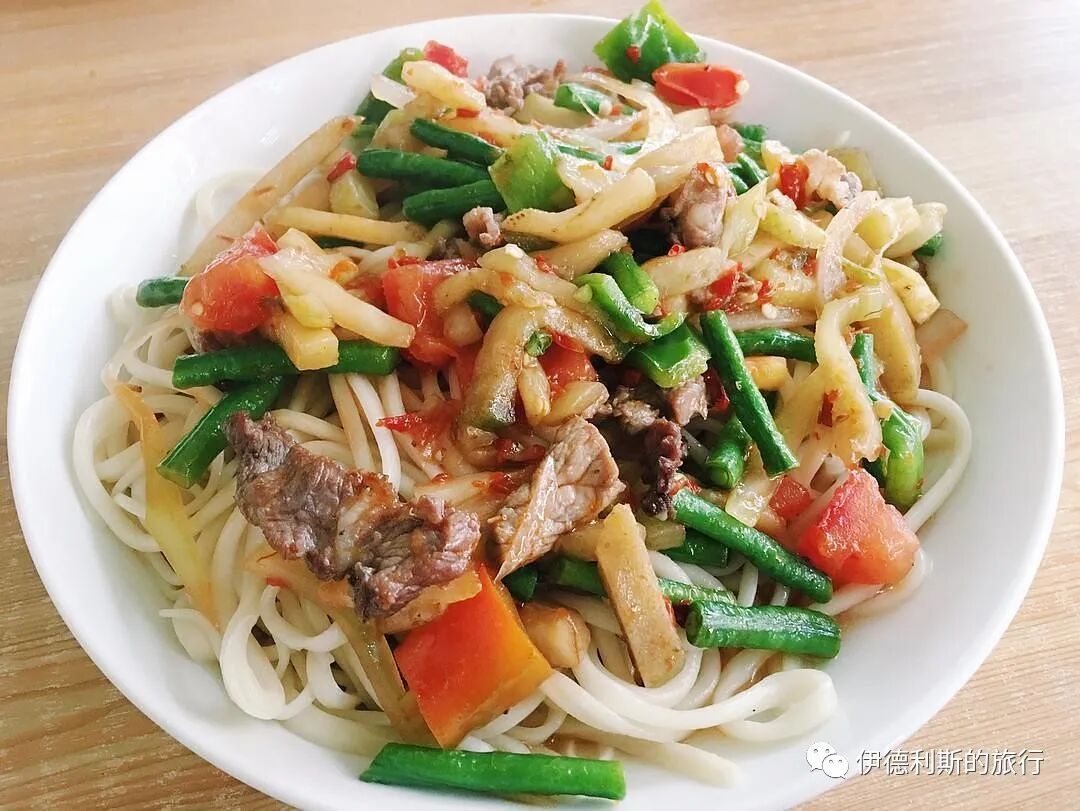
4. Bean noodles (doudou mian) and eggplant noodles from Shanshan County.
Eating bean noodles and eggplant noodles in Shanshan County, Turpan. People in Turpan really love beans, including bean soup rice (doudou tangfan), bean dumplings (doudou ququ'er), and bean mixed noodles.
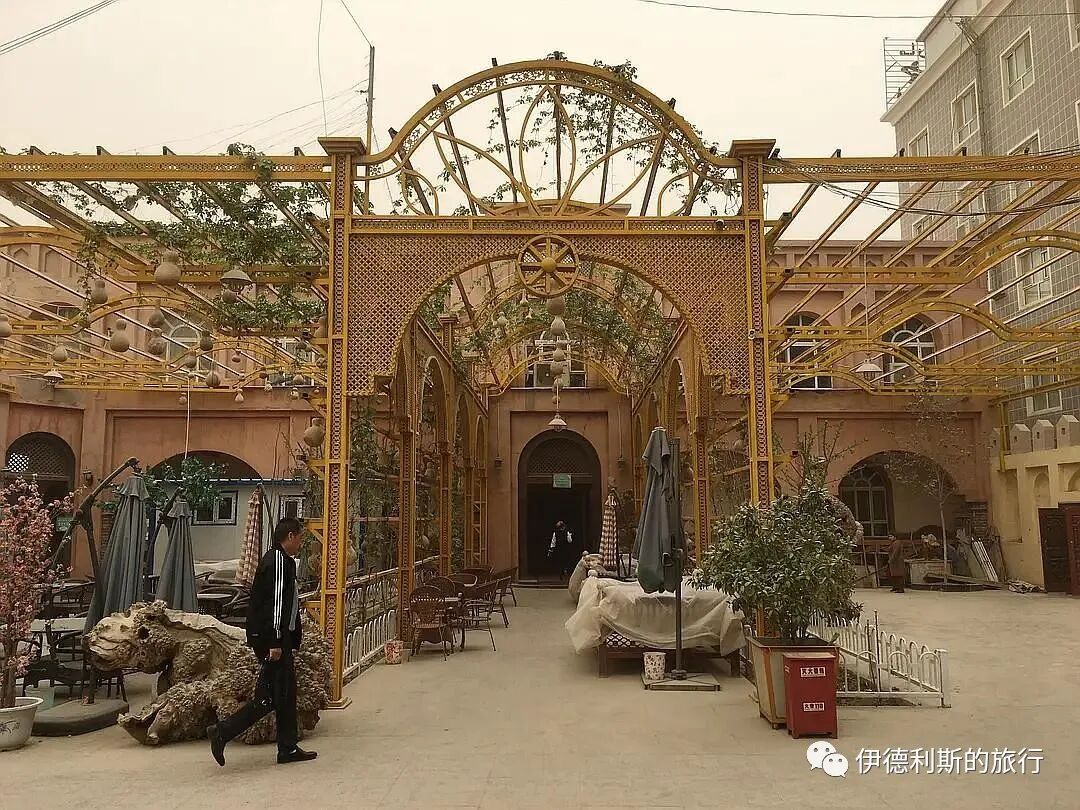
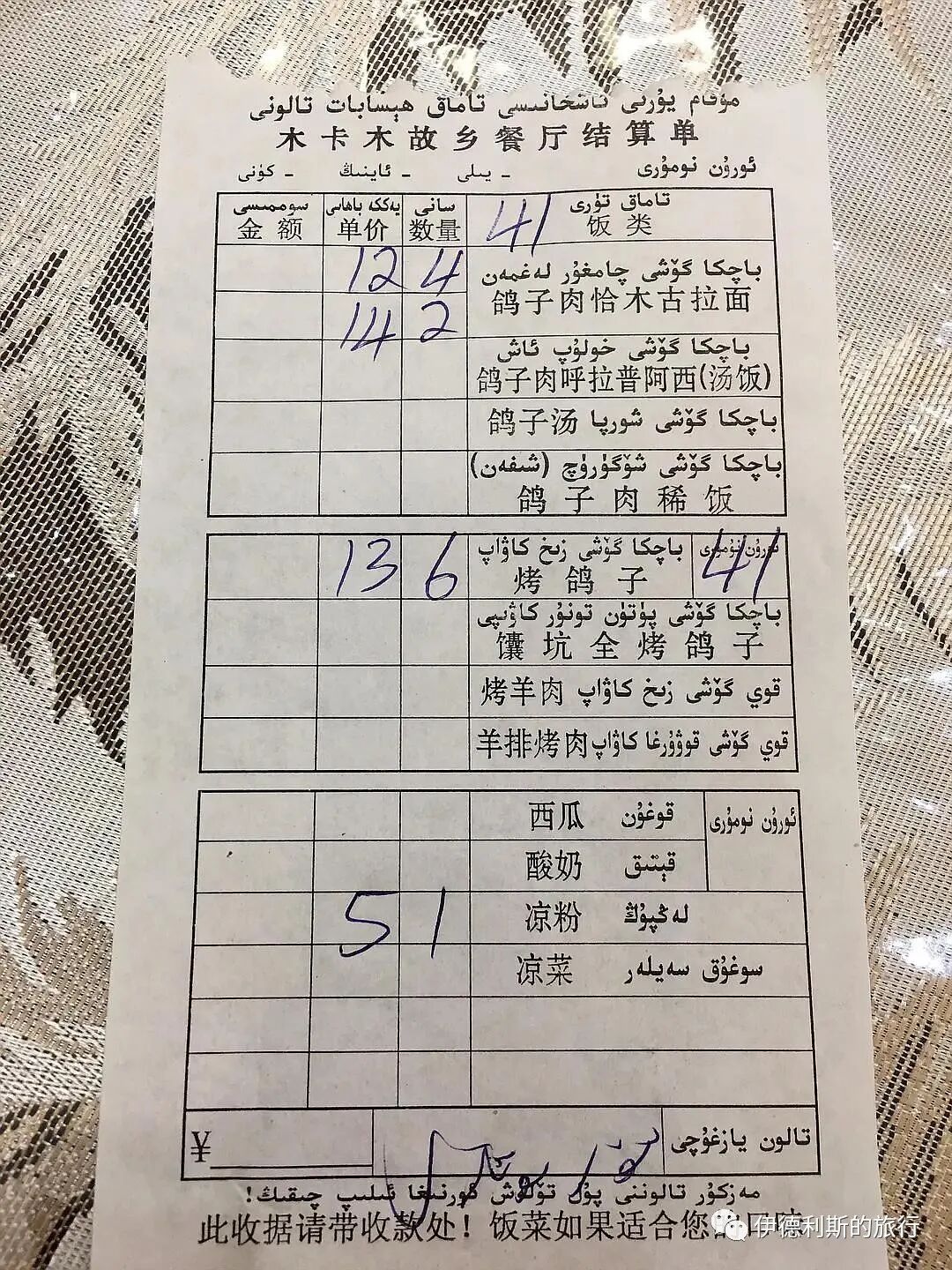
5. Pigeon and turnip (qiamagu) noodles from Yarkant (Shache).
We ate pigeon with the Yarkant Muqam Art Troupe at the 'Muqam Hometown Restaurant.' This is a famous place for eating pigeon in Yarkant.
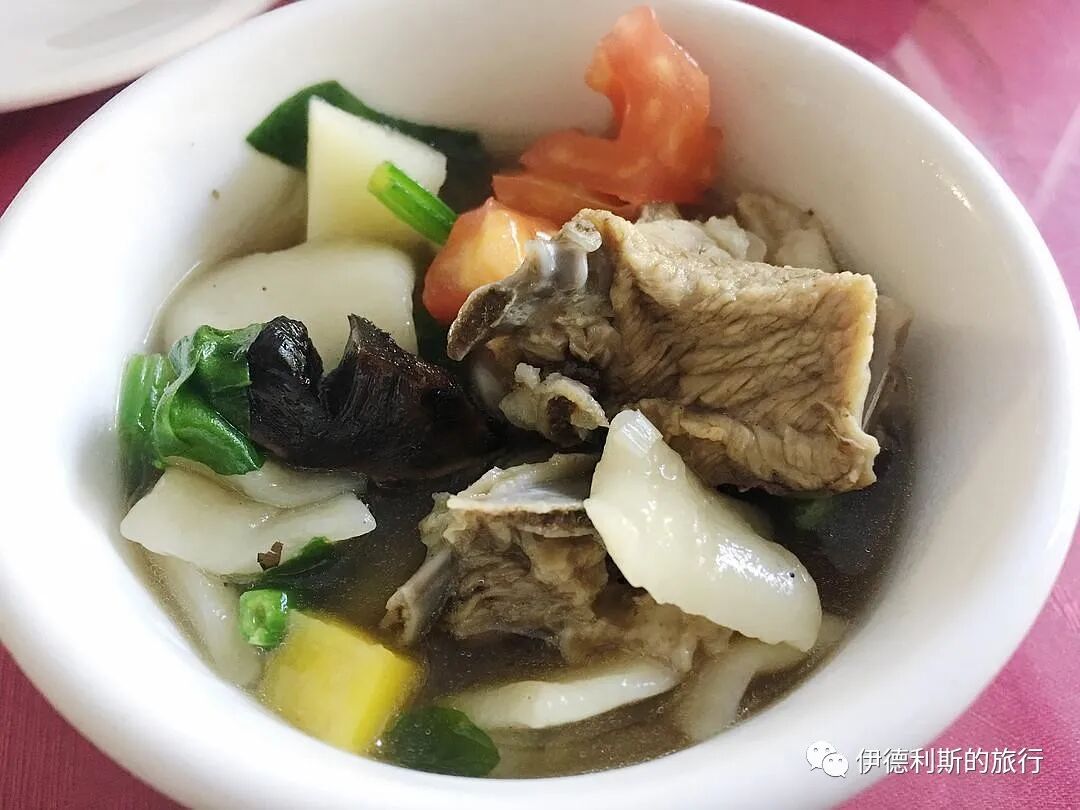
6. Large bowl of wild mushroom and lamb soup rice (tangfan) from Hami.
Eating Hui Muslim-style large bowl of wild mushroom and lamb soup rice in Hami. It is called a large bowl, but it is actually a large basin. When you order, the portion is based on the amount of lamb, with a minimum of half a kilogram, served with fried dough (youxiang) and various side dishes. This was my first time eating lamb soup with rice (yangrou tangfan) in such a generous portion, and it felt so warm and comfortable.
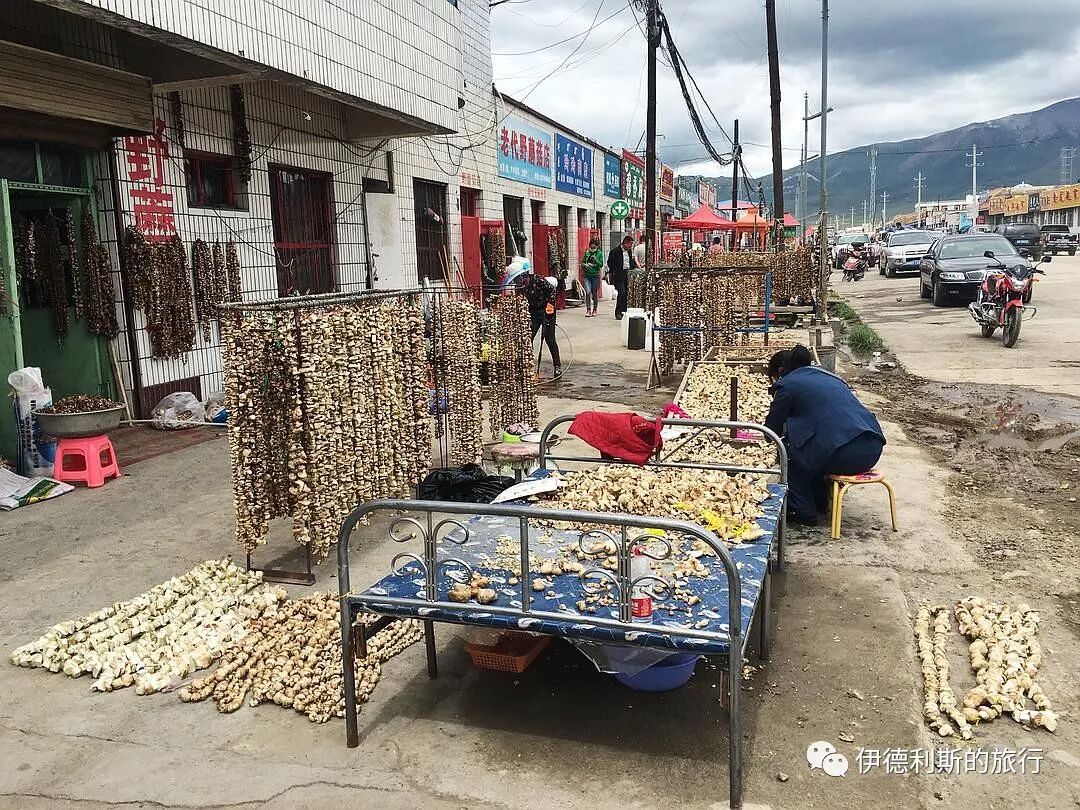
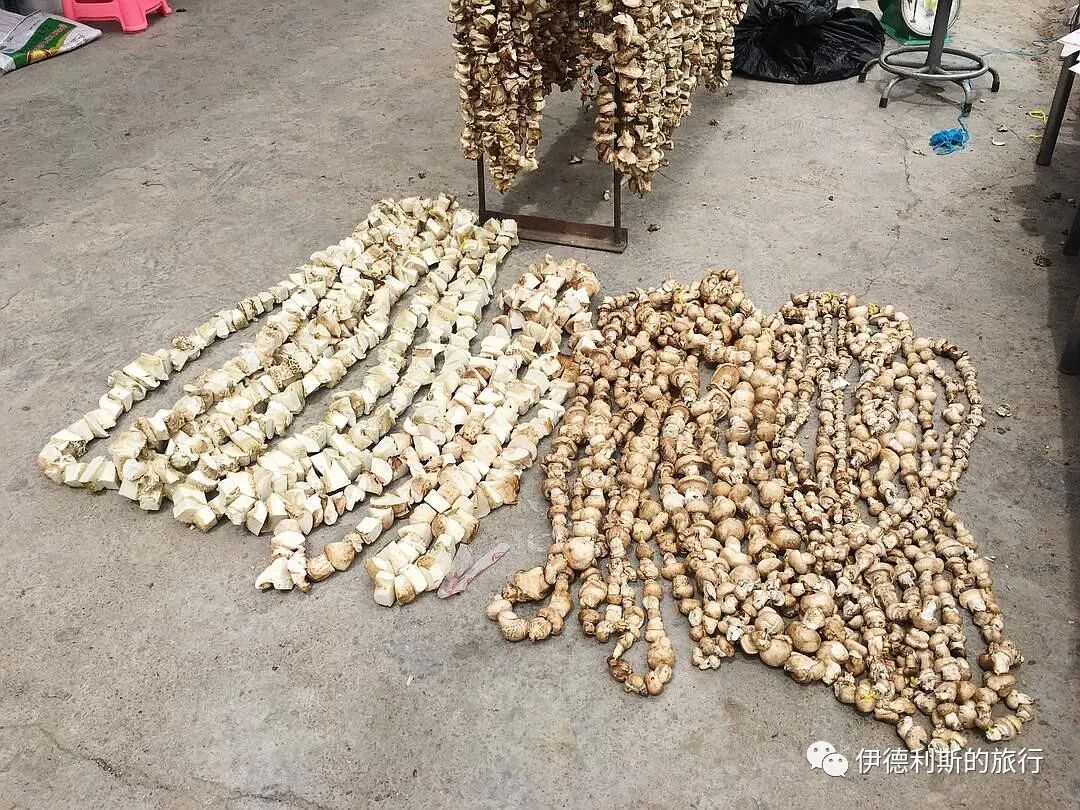
7. Wild mushroom noodles (banmian) in Bayanbulak Town.
I ate wild mushroom noodles in Bayanbulak Town, Bayingolin Prefecture. In the summer, the whole town is covered in wild mushrooms drying in the sun.
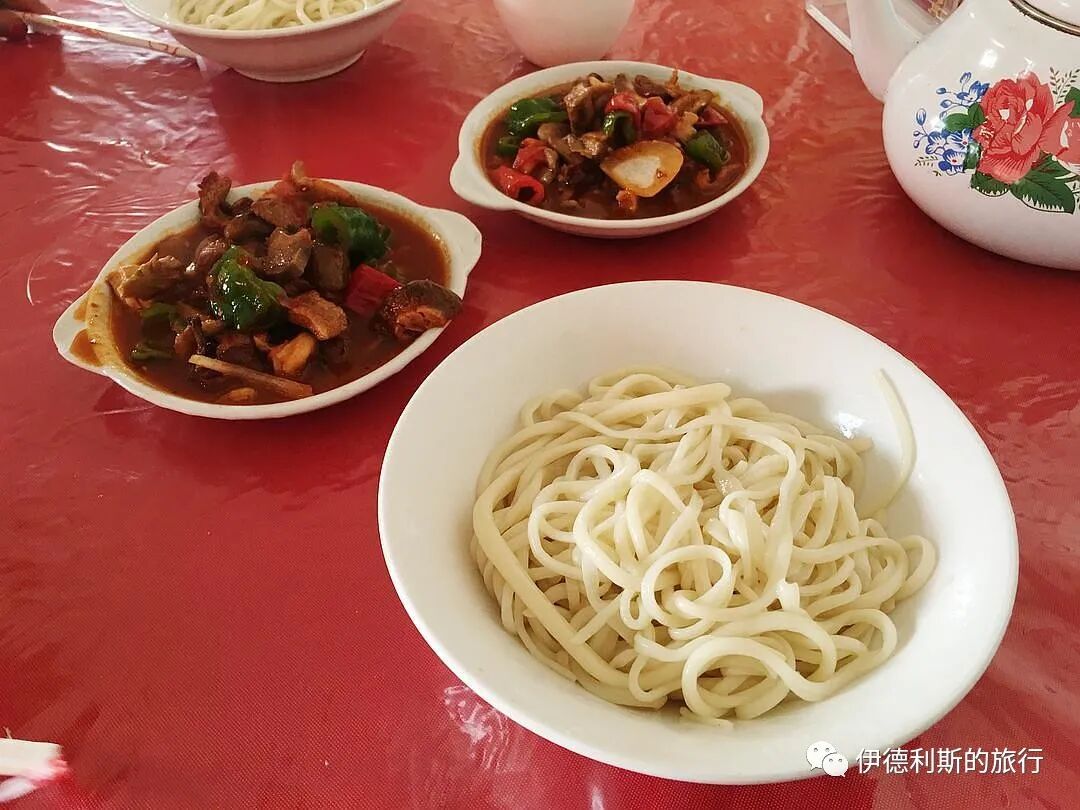
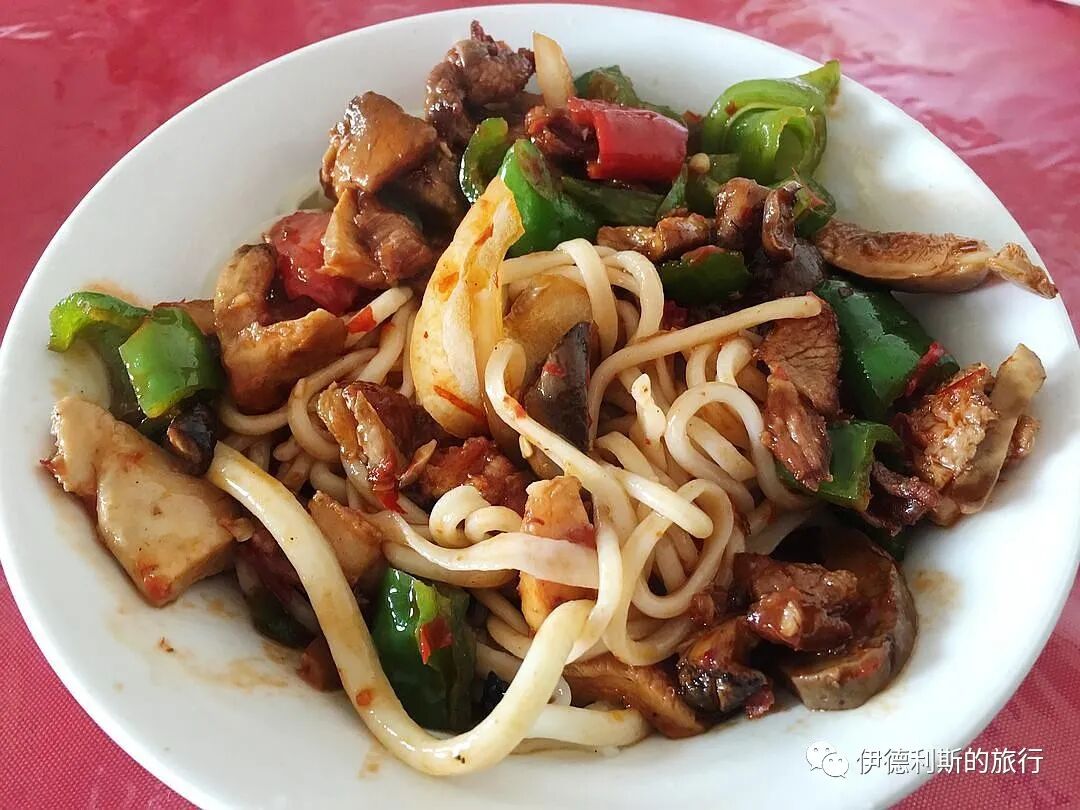
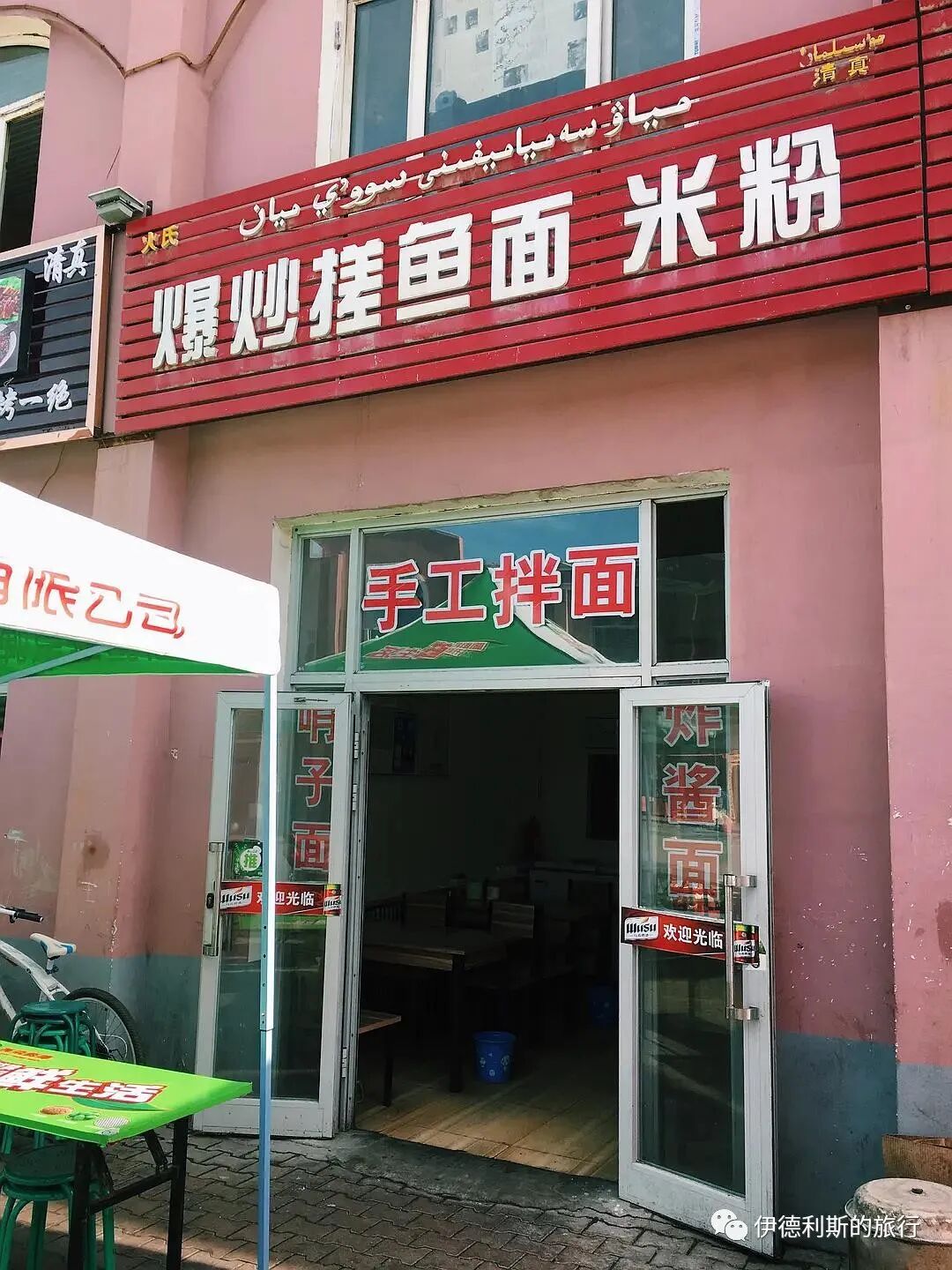
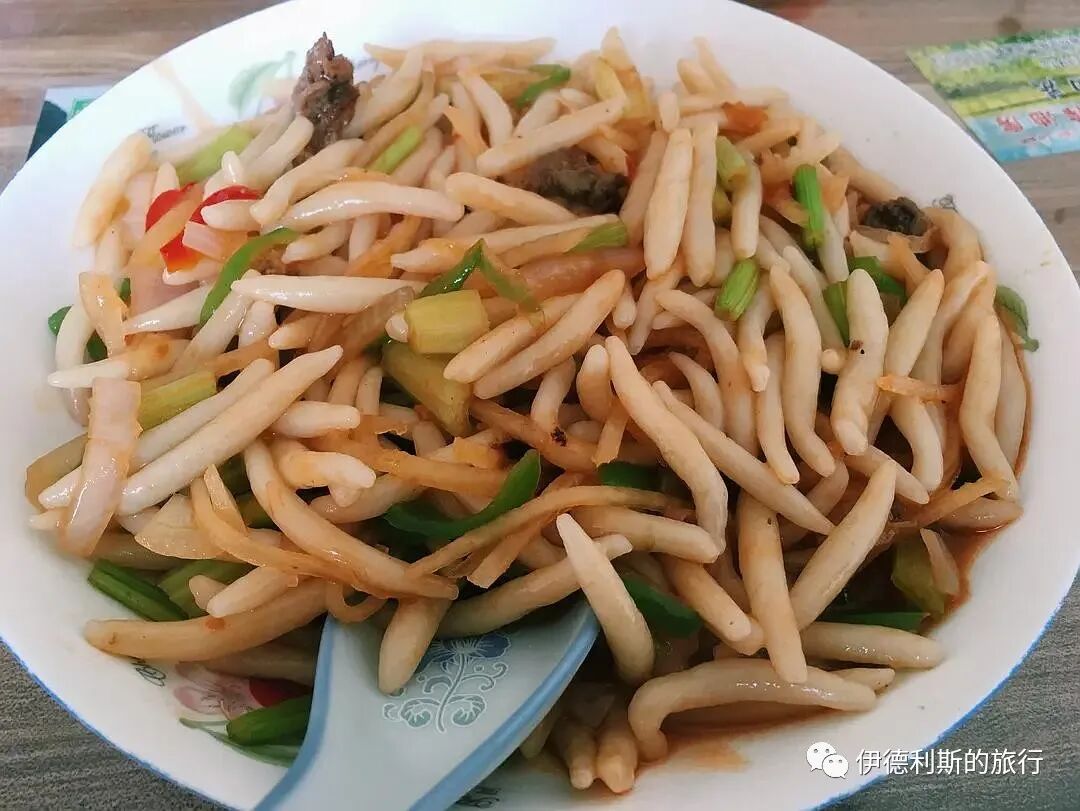
8. Stir-fried hand-rolled noodles (cuoyumian) in Zhaosu.
I had a plate of stir-fried hand-rolled noodles at the Zhaosu food street. The Huo surname among Hui Muslims comes from "Khwaja," which means "Hoja."
Ten view all
Summary: Halal Food Guide: Northern China — Noodles, Hui Muslims and Local Flavor is presented here as a firsthand travel account in clear English, beginning with this scene: 12. Black goat oil-splashed mixed noodles (heishanyuguoyouroubanmian) from Toksun, Xinjiang; yellow noodles with roasted meat (huangmiankaorou) from Flaming Mountains; Hui Muslim home-style mixed noodles (banmian) from. The account keeps its focus on Northern China Food, Noodles, Halal Food while preserving the names, places, food, and historical details from the Chinese source.
1. Hand-rolled noodles (shouganmian) from Lingyuan, Liaoning; hand-rolled noodles (shouganmian) from Kaiyuan; cold noodles (lengmian) from Suizhong.
2. Stir-fried oat noodle cones (chaoyoumianwowo) from Zhangjiakou, Hebei.
3. Beijing's braised lamb with Sichuan peppercorn sauce noodles (shaoyangrouhuajiaocuanmian), beef noodles (niuroumian), soybean paste noodles (zhajiangmian), and sliced noodles (daoxiaomian) from Xiguanshi.
4. Shredded chicken cold noodles (jisiliangmian) from the Northwest Corner of Tianjin.
5. Cold broth oat noodles (liangtangyoumian) from Hohhot, Inner Mongolia.
6. Fermented bean paste noodles (jiangmiantiao) from Bo'ai, Henan; stir-fried broth noodles (qiangguomian) from Kaifeng.
7. Sliced noodles (daoxiaomian) from Datong, Shanxi; picked-tip noodles (tijianmian) from Taiyuan.
8. Beef pulled noodles (niurouchemiant) from Xixiang, Shaanxi; steamed noodles (zhengmian) from Ankang; lamb topping noodles (yangrousaozimian) from Shuhe.
9. Lamb and small dough flake soup (lianguoyangrouxiaojiupian) from Yinchuan, Ningxia.
10. Lentil sparrow-tongue noodles (biandouqueshemian) and riverside dough flakes (heyanmianpian) from Lanzhou, Gansu; old-style braised noodles (laolumian) from Linxia; old-style stir-fried dough flakes (laochaomianpian) from Dahejia; cold noodles (liangmian) from the Flower Festival (hua'erhui) at Songmingyan.
11. Fermented bean paste dough flakes (jiangshuimianpian) and lamb intestine noodles (yangchangmian) from Xining, Qinghai; meat sauce dry-mixed noodles (roujiangganbanmian) from Xunhua.
12. Black goat oil-splashed mixed noodles (heishanyuguoyouroubanmian) from Toksun, Xinjiang; yellow noodles with roasted meat (huangmiankaorou) from Flaming Mountains; Hui Muslim home-style mixed noodles (banmian) from Urumqi; bean noodles (doudoumian) and eggplant noodles (qiezimian) from Shanshan County; pigeon and turnip noodles (geziqiamgumian) from Yarkant; big bowl wild mushroom lamb soup noodles (dawanyemoguyangroutangfan) from Hami; wild mushroom mixed noodles (yemogubanmian) from Bayanbulak Town; stir-fried twisted fish noodles (baochaochouyumian) from Zhaosu.
1. Liaoning
1. Hand-rolled noodles (shouganmian) from Lingyuan
Lingyuan sits at the border of Hebei, Liaoning, and Inner Mongolia. It was originally called Tazigou. Since the Qianlong reign of the Qing Dynasty, Hui Muslims from Shandong and Hebei continuously traveled through the Great Wall gap at Xifengkou to reach the northeast. Lingyuan was their first stop after leaving the pass, and some Hui Muslims settled there. The Lingyuan mosque was built during the Qianlong reign. According to the stone tablet inside, Hui Muslim doctor Zhang Lichen and others cured the illness of a Mongol prince in the Harqin Left Banner. The prince then donated the land and money to build the Lingyuan mosque.
I stopped at a small eatery at the entrance of the Lingyuan mosque and ordered the owner's recommended stir-fried shredded meat with hand-rolled noodles (shouganmian). In the Northeast, the portions are truly large and affordable. A bowl of noodles only costs five yuan and is very satisfying.
2. Hand-rolled noodles (shouganmian) from Kaiyuan
Most Hui Muslims in Kaiyuan migrated here during the Qing Dynasty's expansion into the Northeast. The Old City mosque was built in 1406 (the fourth year of the Yongle reign of the Ming Dynasty) and is the oldest mosque in the Northeast. We had a bowl of egg hand-rolled noodles (shouganmian) at Lingtou Niu next to Kaiyuan People's Park. It cost 8 yuan and was a very comfortable meal.
3. Cold noodles (lengmian) from Suizhong
Suizhong is right next to Shanhai Pass and is the southwestern-most county in Liaoning. Starting in the 18th century, more than ten Hui Muslim families, including the Zhang, Ding, Li, and Jin families, moved to Suizhong from Hebei Province. The first mosque was built in 1737 (the second year of the Qianlong reign) below the Kuixing Pavilion in the southeast of Suizhong city. We ate local-style cold noodles (lengmian) in Suizhong; they were delicious, cheap, and perfect for cooling off.
2. Hebei
1. Stir-fried oat noodle cones (chao youmian wowo) in Zhangjiakou
The Xinhua Street Mosque in Zhangjiakou was originally called the Shenggou Mosque. It was built in 1863 (the second year of the Tongzhi reign) with funds raised by over eighty Hui Muslim families from Ningxia who came to Zhangjiakou for the camel trade, which is why it is also known as the Camel Workshop Mosque (Tuofang Qingzhensi). These Ningxia Hui Muslims were mainly from the Ma, Liu, Li, Du, Wu, Wang, and Ding families. They used camels to transport furs, silk, tea, and other goods for merchants, traveling between Inner Mongolia, Shanxi, Gansu, Mongolia, and Russia.
I ate stir-fried oat noodle cones at Binbin Snacks across from the Xinhua Street Mosque.
3. Beijing
1. Braised beef noodles, soybean paste noodles (zhajiangmian), and roasted lamb with Sichuan peppercorn sauce noodles (shao yangrou huajiao cuanmian) in Beijing
I had braised beef noodles, a small bowl of beef, and sweet and sour radish (tangcu xinlimei) at Baodu Xiaobaimao on Dongzhimen Inner Street. They gave such a huge portion of beef in the small bowl that it completely covered the noodles, which was so satisfying! I wasn't even hungry by the time night came.
I usually like to go to Liu's Men-ding (a type of pan-fried bun) at Hongmiao for their soybean paste noodles.
I ate roasted lamb with Sichuan peppercorn sauce noodles at the Drum Tower (Gulou) on Donggong Street. Beijingers often eat roasted lamb and make their own Sichuan peppercorn sauce, but it is rare to see them combined. I really love this way of eating it; it is very satisfying.
2. Sliced noodles (daoxiaomian) in Xiguanshi
The Hui Muslims of Xiguanshi came to Beijing in the early Ming Dynasty following the Prince of Yan on his northern campaign. Because they were near the main trade route from Beijing to Zhangjiakou and were skilled in martial arts, the Hui Muslims of Xiguanshi opened many security escort agencies outside Beijing's Qianmen Gate starting in the Qing Dynasty. They specialized in protecting merchants from the five northwestern provinces, primarily serving wealthy Shanxi merchants. People say the character Li Wuye, known for his magic slingshot in the story "Shigong An," was a Hui Muslim from Xiguanshi. The depictions of the archer Li Guoliang and the Dongguangyu Escort Agency outside Qianmen in the book "Yongzheng Jianxia Tu" vividly show the life of the Xiguanshi Hui Muslim escort agencies during the Qing Dynasty.
Because of their close ties with Shanxi, you can find halal sliced noodles and Bashang oat noodles in Xiguanshi that are hard to find in the city. We ate sliced noodles at an old shop in the village and also ordered beef tongue and meat-stuffed tripe (doubaorou). I had been craving sliced noodles ever since I had them in Datong, and I was finally able to eat them again.
4. Tianjin
1. Shredded chicken cold noodles (jisi liangmian) at the northwest corner.
I had a bowl of shredded chicken cold noodles with a childhood friend at Huancheng Noodle Restaurant, plus a plate of century egg with tofu (pidan doufu). It was very refreshing. Almost no other halal restaurant in Beijing makes cold noodles better than this one.
5. Inner Mongolia
1. Cold broth oat noodles (liangtang youmian) in Hohhot.
I ate cold broth oat noodles at Xiangcunxiang Youmian on Niujie Street. They serve oat noodles four ways: with hot lamb broth, cold beef broth, mixed with vegetables, or stir-fried with meat. You can choose between oat noodle rolls (youmian wowo) or regular noodles. I find the cold broth version very satisfying in the summer. When eating, first pour vinegar and chili oil over the vegetables and fried sauce, mix it well, and then add the oat noodle rolls. It is very refreshing.
6. Henan
1. Fermented bean broth noodles (jiang miantiao) in Bo'ai.
The Xiguan Mosque in Bo'ai was built during the Yuan Dynasty and is known as the "First Mosque of Northern Henan." We ate the local specialty, fermented bean broth noodles. These are made by boiling the liquid squeezed out during tofu production into a broth, then adding soybeans, peanuts, celery, and crushed sesame paste. It tastes sour and fragrant, and it feels even better to eat in the summer.
2. Stir-fried broth noodles (qiangguo mian) in Kaifeng.
The Dongsimen Night Market in Kaifeng is at the intersection of Dongdajie Street and Jiefang Road. The market itself is small, but the atmosphere is great, with locals coming to eat and chat. We ate the classic stir-fried broth noodles at the night market.
7. Shanxi
1. Knife-cut noodles (daoxiao mian) in Datong.
The History of Yuan (Yuan Shi) records that in 1324, the first year of the Taiding era, the emperor ordered mosques to be built in Shangdu and Datong, granting 40,000 ingots of currency. This makes the Datong Mosque one of only two mosques from the Yuan Dynasty with official imperial records.
Yingze Street is a snack street in Datong with several halal restaurants. Most of the halal snacks here are only served in the morning, so it is best to come for breakfast. We ate knife-cut noodles with dried tofu and beef meatballs at Fengji Breakfast Shop. Datong's knife-cut noodles are probably the most famous. We tried them, and they lived up to their reputation; the texture of the noodles is excellent. People in Datong like to pair their knife-cut noodles with various braised meats and soy-sauce-marinated foods, which makes the flavor and texture very rich.
2. Poked noodles (tijian mian) in Taiyuan.
After the Ming Dynasty, Taiyuan gradually formed the "Ten Great Surnames of the Hui Muslims." During the Qing Dynasty, Taiyuan had over 100 local Hui Muslim households, plus more than 10 households of Hui Muslims who came from Suiyuan to do business, totaling five or six hundred people. After the Zhengtai Railway opened in 1907, the number of Hui Muslims coming to Taiyuan from Hebei increased significantly.
Yiqingyuan is a large halal restaurant in Taiyuan, where I ate hand-picked noodles (tijianmian). Shanxi has a truly rich variety of wheat-based foods. Hand-picked noodles (tijianmian) are made by using chopsticks to flick the dough into the pot. They are served with two types of sauce: meat gravy and tomato-egg sauce. This bowl of noodles only cost five yuan.
8. Shaanxi
1. Xixiang beef pulled noodles (che mian)
Xixiang County is located in the middle of the Hanzhong Basin in southern Shaanxi, nestled between the Qinling Mountains and the Bashan Mountains. The Muma River, a tributary of the Han River, flows through the county seat. Starting from the Ming Dynasty, Hui Muslims from Pingliang, Gansu, traveled to settle in Xixiang. During the Kangxi and Qianlong eras, the Hui Muslim population continued to grow. Local friends (dost) enthusiastically took us to eat.
Halal restaurants in Xixiang are mainly concentrated around the West Gate area. We ate the local specialty, braised beef pulled noodles (che mian), at an imam's (ahong) shop.
2. Ankang steamed noodles (zhengmian)
Ankang is the largest Muslim community in southern Shaanxi. Hui Muslims have lived there since the Ming Dynasty, and by the Republican era, seven mosques had been built. Ankang also has the richest halal food in southern Shaanxi.
In the morning, I ate steamed noodles (zhengmian) at Huang's Steamed Noodles, the most popular spot at the entrance of Gulou Street. Unlike the cold noodles (liangpi) in Xi'an which are seasoned with raw vinegar, Ankang steamed noodles (zhengmian) use boiled, cooked vinegar. Steamed noodles (zhengmian) usually include chili oil, but I didn't add any because I can't handle much spice.
3. Shuhe lamb mince noodles (saozimian)
Shuhe Ancient Town is the last town the Han River passes through before flowing from southern Shaanxi into Hubei. During the Ming and Qing dynasties, when Han River shipping was booming, it was an important commercial post. The town was filled with merchants and shops. Hui Muslims moved to Shuhe to settle during that time, and there are still several hundred households there today.
I ate lamb mince noodles (saozimian) on the street in Shuhe Town.
9. Ningxia
1. Yinchuan lamb pot-pinched noodles (xiao jiupian)
I ate lamb pot-pinched noodles (xiao jiupian) at Fuyuan Noodle Restaurant on Zhongxin Lane in Yinchuan. Lamb pot-pinched noodles (xiao jiupian) are made by three people pinching the dough into a large pot at the same time. Seeing the pieces of dough flying into the pot is quite a spectacular sight.
10. Gansu
1. Lanzhou mung bean sparrow-tongue noodles (biandou queshe mian) and river-bank noodle pieces (heyan mianpian)
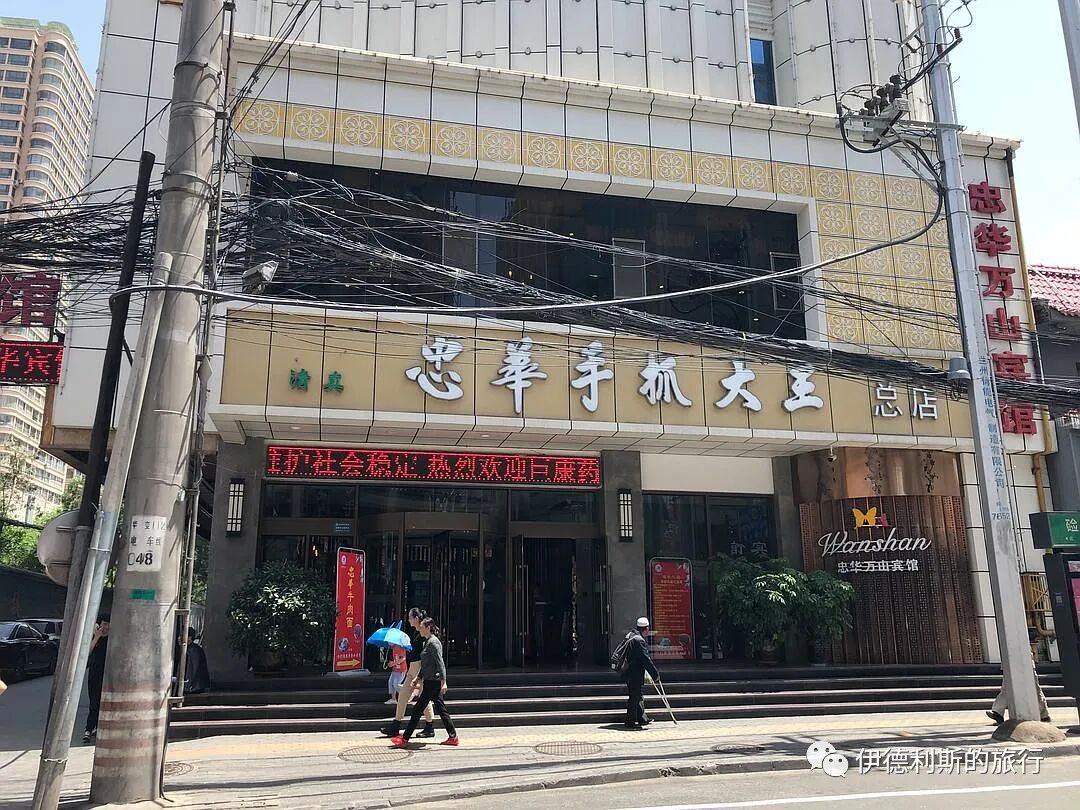
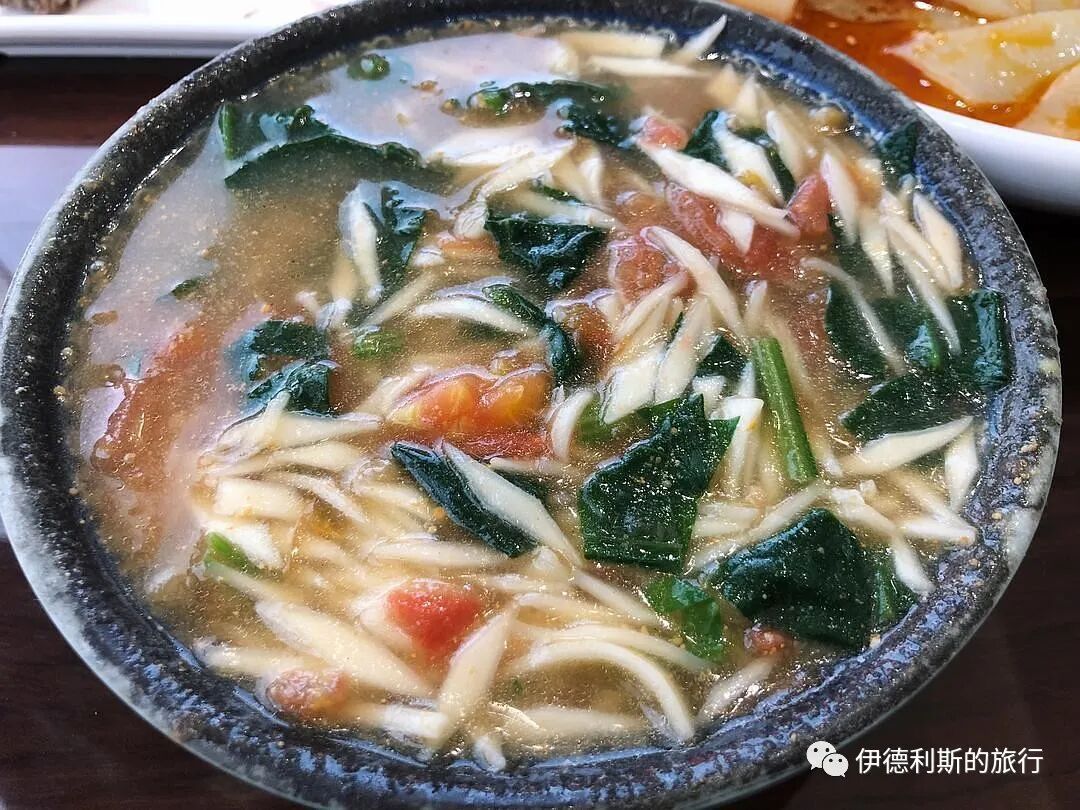
After the 1980s, many Dongxiang people moved to Lanzhou to make a living, settling mostly in the Baishu Lane, Jiangouyan, and Shangxiyuan areas of Xiaoxihu. I had a small bowl of lentil sparrow-tongue noodles (biandou queshe mian) at Zhonghua Hand-Grabbed Lamb King in Jiangouyan. This place is very popular in Xiaoxihu. You have to share a table at noon, but the environment and service are great, and they refill your water often.
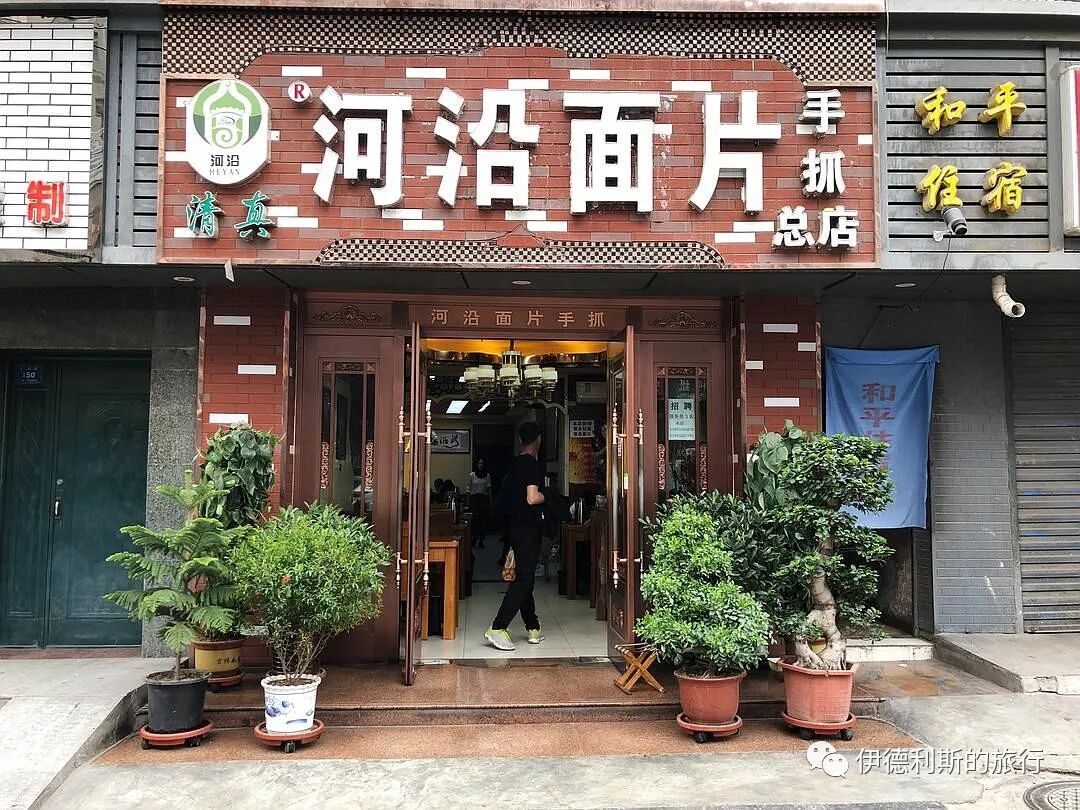
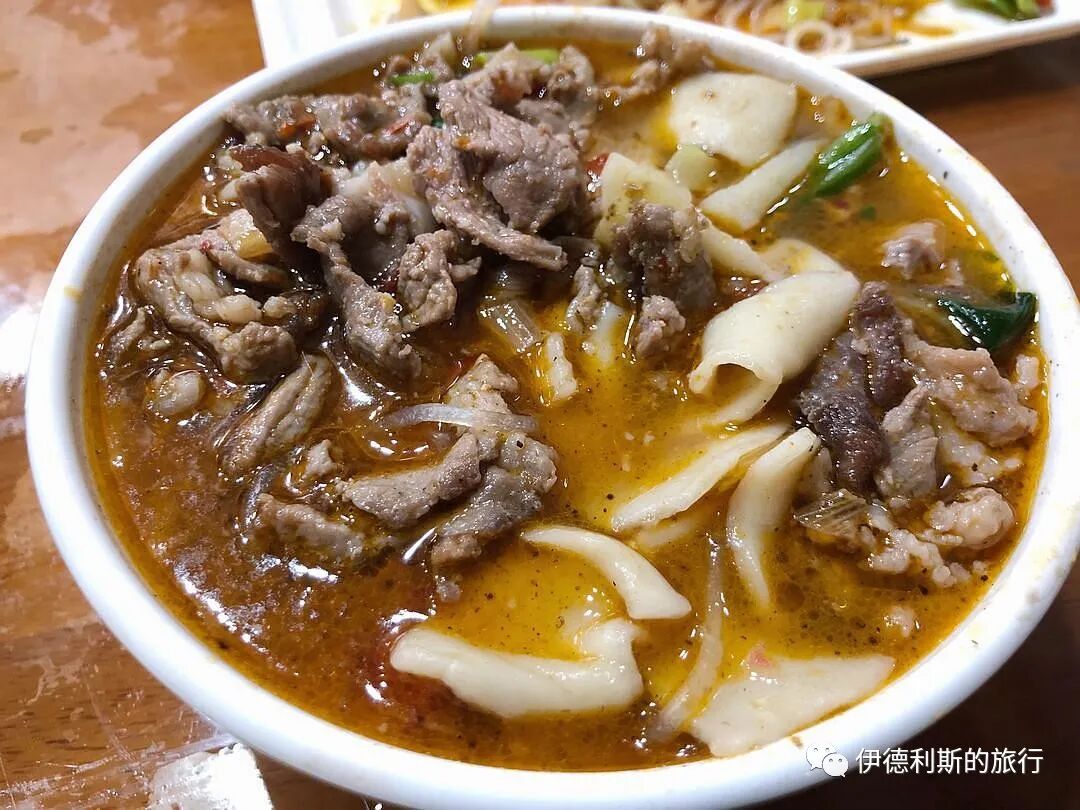
There are many restaurants side-by-side on Jiangouyan Street, and I also ate river-bank noodle slices (heyan mianpian) here. River-bank noodle slices originated in Guanghe County, Linxia. They evolved from stir-fried noodle slices (chao mianpian), but the flavor is much richer.
2. Linxia's old-style braised noodles (lao lu mian)
I ate old-style braised noodles in Linxia. The old-braised noodles were very rich and had a thick, hearty texture.
3. Dahejia's old-style stir-fried noodle slices (lao chao mianpian)
Dahejia is on the border of Gansu and Qinghai. Once you cross the Yellow River Bridge, you are in Minhe, Qinghai. People from the Bonan, Dongxiang, Salar, Han, Hui Muslims, and Tibetan ethnic groups live here. The town has many Dongxiang hand-grabbed lamb restaurants and Bonan waist-knife shops. We ate old-style stir-fried noodle slices here. My standard order whenever I visit the Hehuang region is hand-grabbed lamb (shouzhua) and noodle slices. This long-standing restaurant is crowded at noon. Most people eat cold noodles, but some order river-bank or old-style stir-fried noodles. Their kettles are filled with beef broth, and they put chopped green onions and salt in empty bowls so you can pour the broth and drink it right away.
4. Tofu cold noodles (doufu liangmian) at the Songmingyan Flower Festival
Every year during the Flower Festival, the entrance to the Songmingyan scenic area turns into a big market. It is very lively and sells everything. Before going into the mountains to listen to the folk songs (hua'er), we ate tofu cold noodles at the entrance.
11. Qinghai
1. Xining's fermented vegetable noodle slices (jiangshui mianpian) and lamb intestine noodles (yangchang mian)
A local friend in Xining recommended Dongxiang Jinhai Hand-Grabbed Lamb on Yangjia Lane. We ate fermented vegetable noodle slices there, and the pickled radishes and eight-treasure tea (babao cha) were free. It turned out to be the best meal we had on this trip! It was cheap and delicious, and the service was excellent. Every two minutes, a waiter would come by with a kettle to ask if we needed more tea. Zaina Bu really liked the fermented vegetable broth (jiangshui) and basically drank it all in one go.
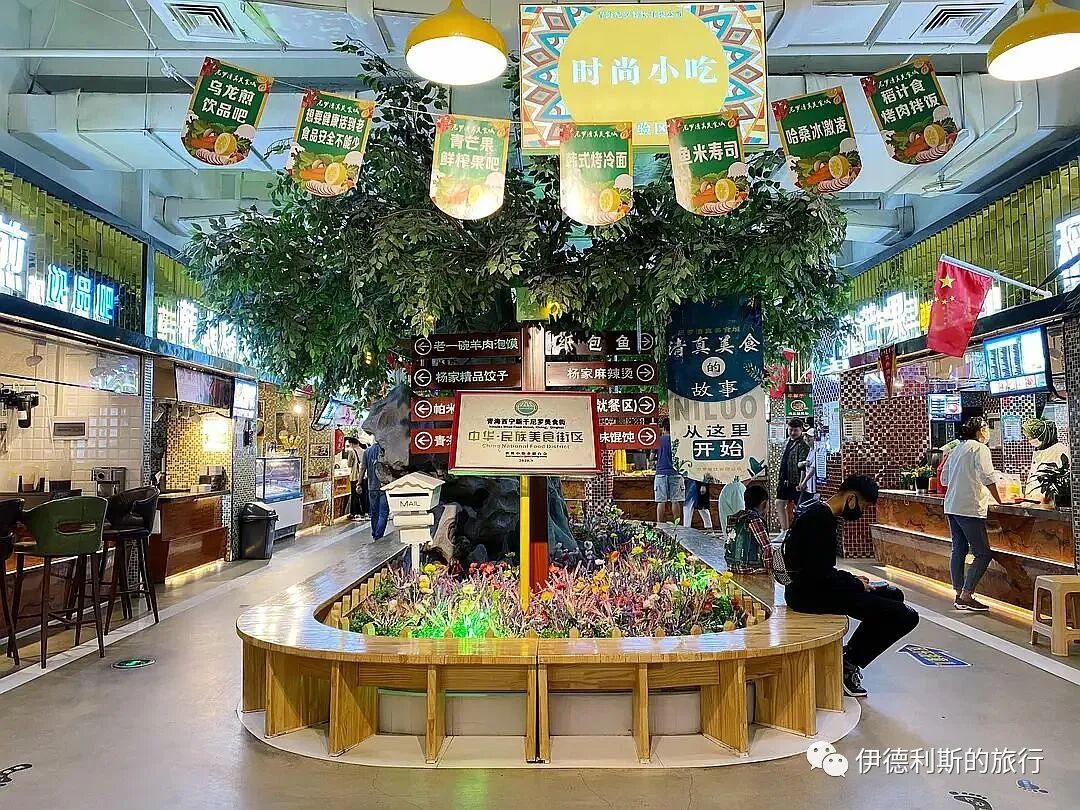
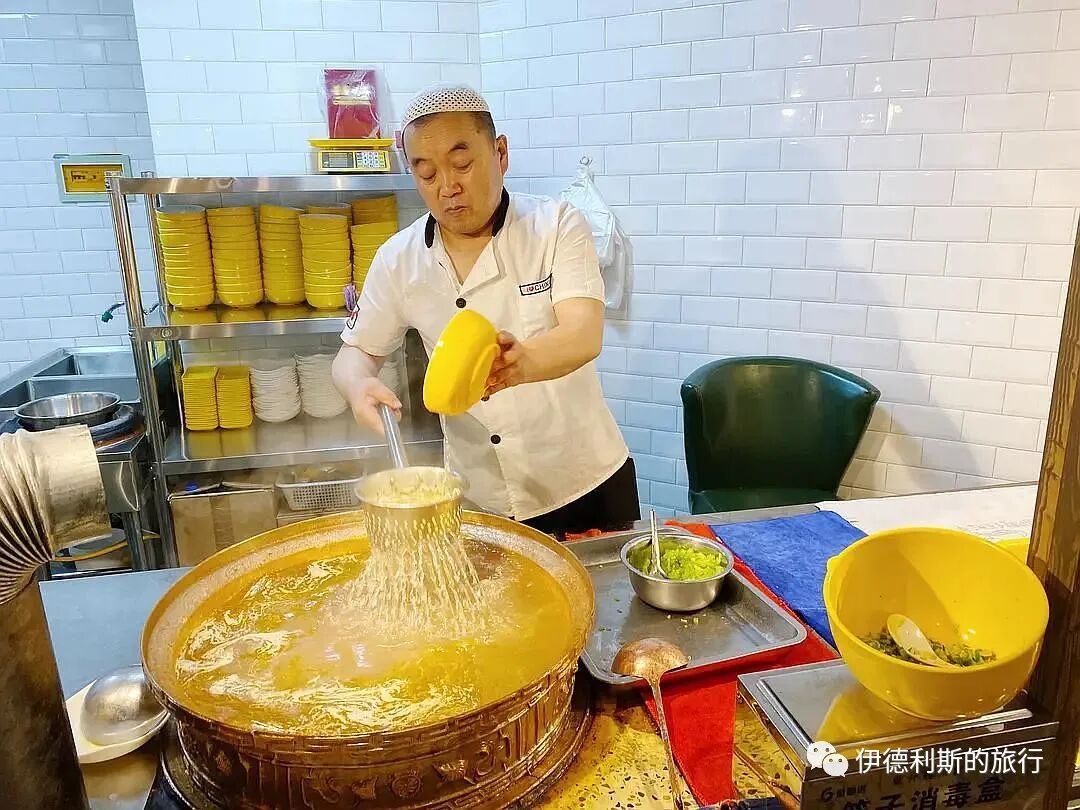
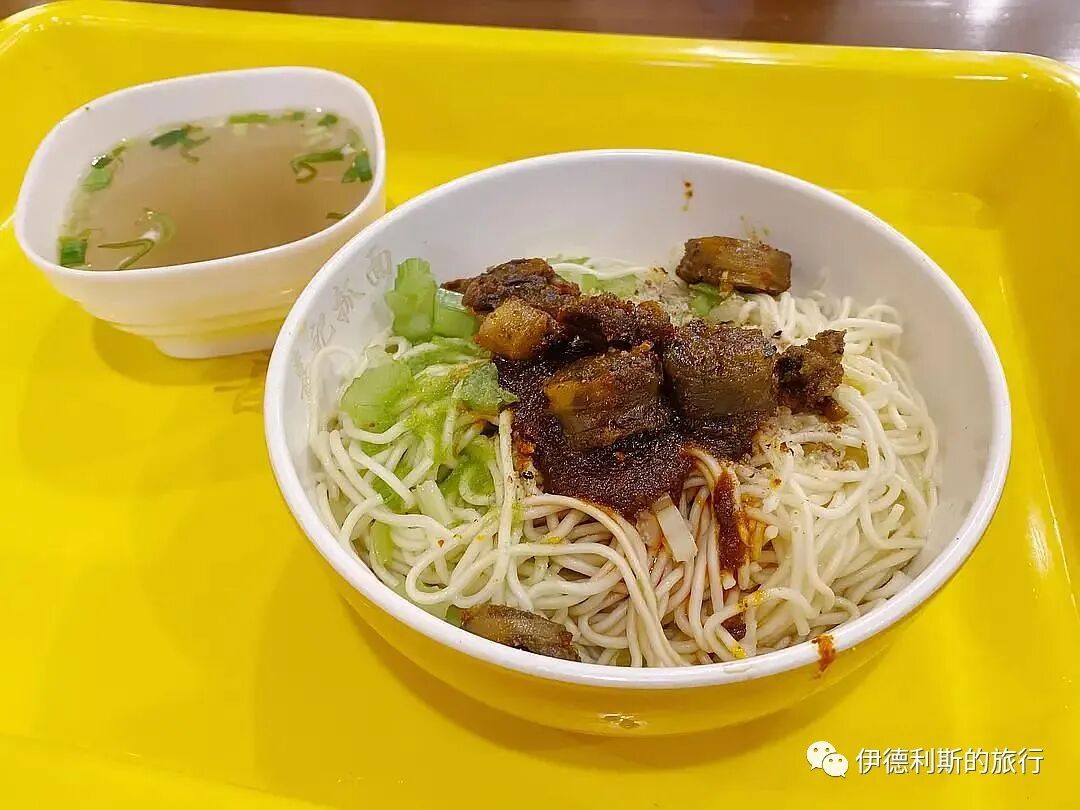
Nilo Food City on the fifth floor of Xining's Wangfujing department store gathers many local halal snacks. It is clean, hygienic, and cheap. We ate the Qinghai-style lamb intestine noodles.
2. Dry mixed noodles with meat sauce from Xunhua.
Here in Xunhua, even the beef noodle shops have small private rooms; the environment is really quite good. After ordering, they served meat broth and tea first, and we also ordered a platter of cold dishes. Besides the thread chili (xianlajiao), people in Xunhua also love eating tiger-skin chili (hupilajiao). While waiting for the bus earlier, I noticed the grandpas and grandmas shopping were all carrying a bag of tiger-skin chili.
Dry-mixed noodles with meat sauce (roujiangganban) should be a specialty here in Qinghai. I had it before at a Salar restaurant in Beijing called A-Gong Noodle House, but this time it felt more authentic. The noodles were thin and chewy, the sauce was especially fragrant, and this meal cost less than twenty yuan, which is great value.
12. Xinjiang.
1. Black goat meat stir-fried with noodles (guoyou rou banmian) from Toksun.
The most popular spot in Toksun town is Lao Si Hao. It is packed at meal times, with locals and people who traveled specifically from Turpan. Their specialty is black goat meat stir-fried with noodles. The black goat is a local specialty that lives on the cliffs of the Tianshan Mountains. It is much more expensive than regular lamb, but the taste and texture are truly different. I think it is much better.
2. Yellow noodles (huangmian) with grilled meat from Flaming Mountain.
Eating yellow noodles with grilled meat in Flaming Mountain Town. Flaming Mountain Town is famous for its yellow noodles with grilled meat, and the whole street sells them. The most famous shop is called 'Flaming Mountain Famous Yellow Noodle and Grilled Meat Shop,' but it was fully booked when we arrived, so we ate at the place across the street. We ordered a mix of yellow noodles and cold starch noodles (liangpi). The grilled meat is taken off the skewers and placed on top of the yellow noodles. It is very refreshing in the summer and feels perfect for the climate of Flaming Mountain.
3. Home-style mixed noodles (banmian) from a Hui Muslim family in Urumqi.
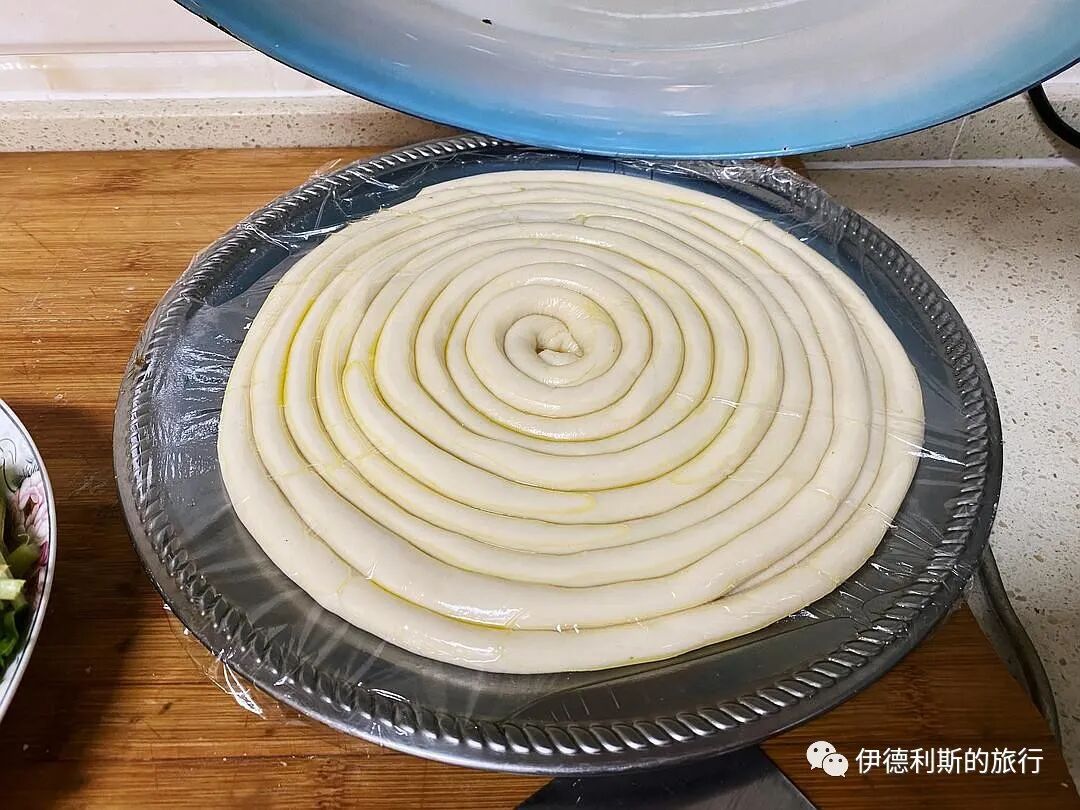
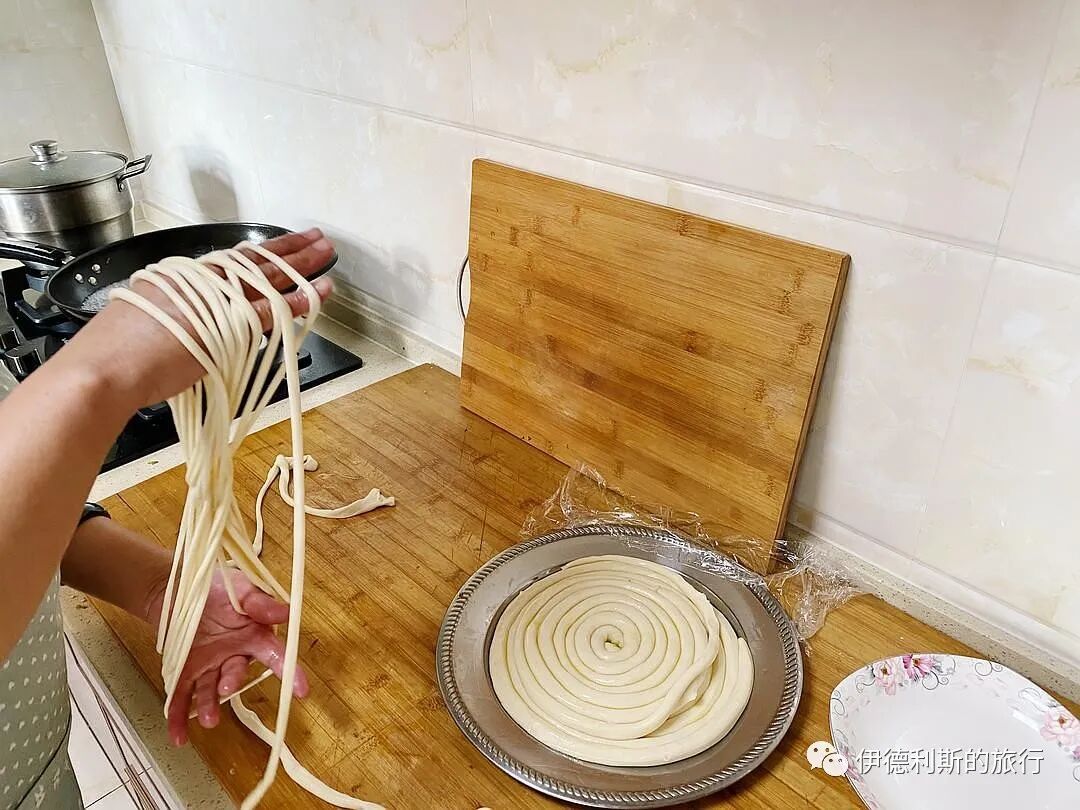
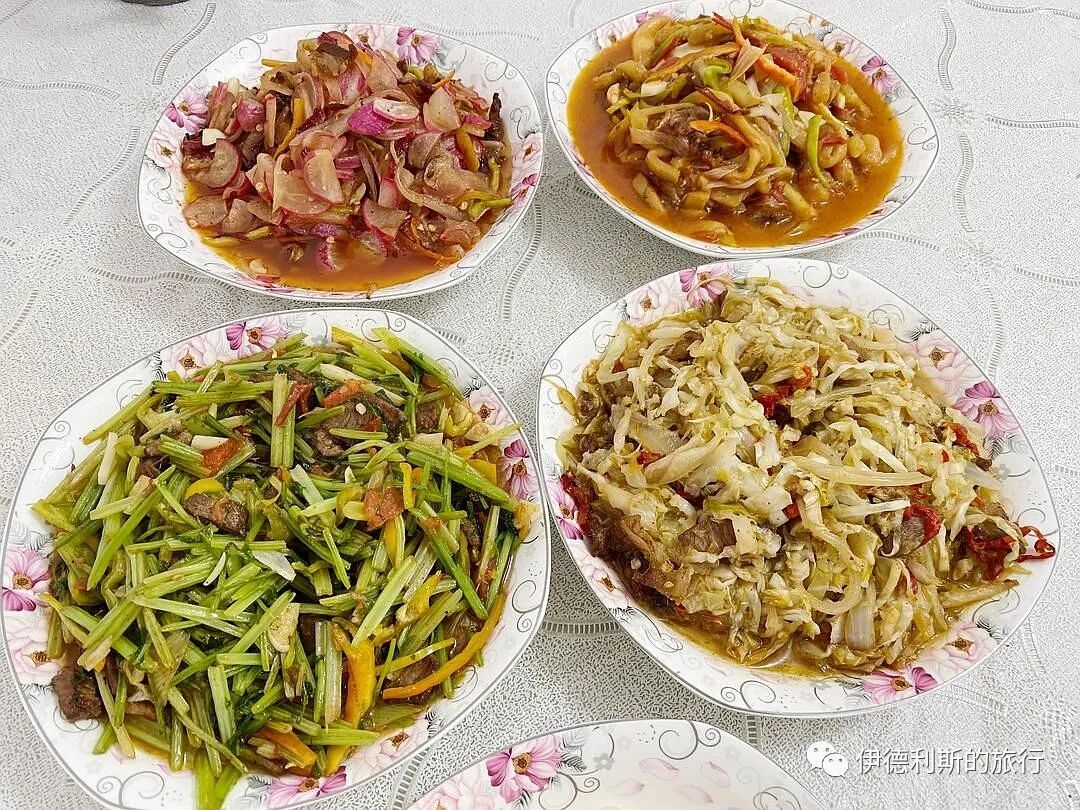
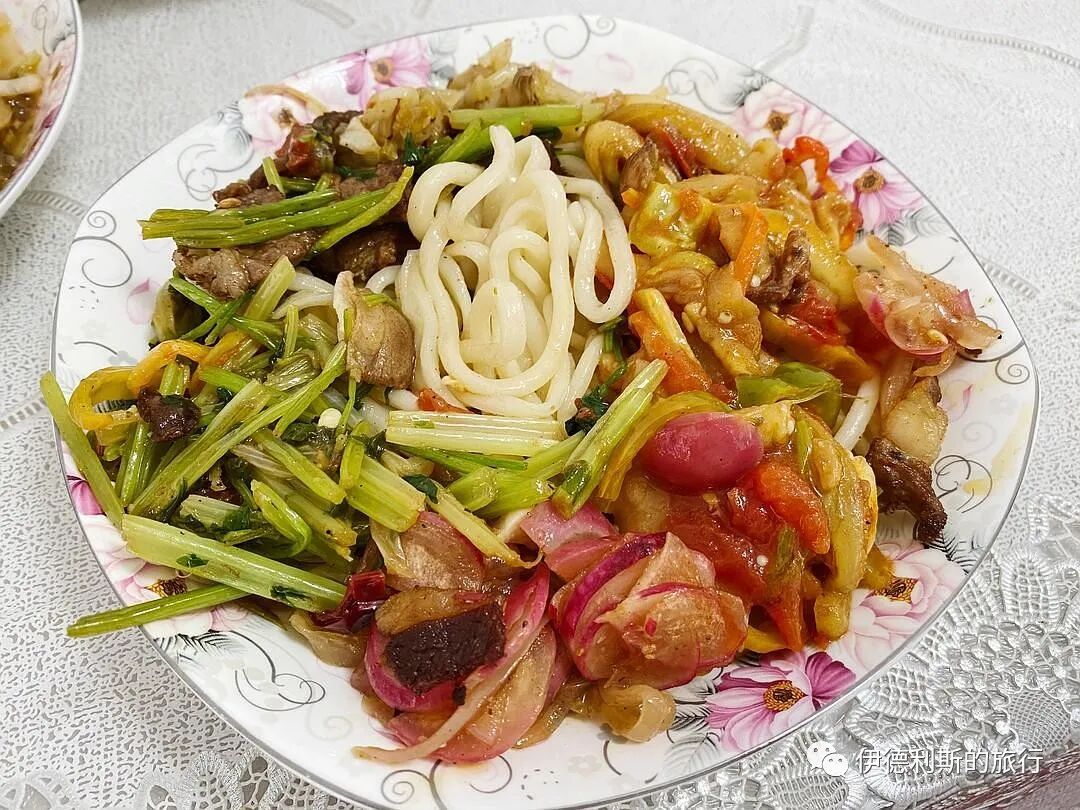
Our first meal back in Urumqi featured four types of mixed noodles: celery with meat, onion (piyazi) with cherry radish, eggplant with meat, and pickled vegetables with meat. It was wonderful. This time, the hand-pulled noodles (latiaozi) were made using the coiled method, where the dough is rolled out and then coiled to rest.
4. Bean noodles (doudou mian) and eggplant noodles from Shanshan County.
Eating bean noodles and eggplant noodles in Shanshan County, Turpan. People in Turpan really love beans, including bean soup rice (doudou tangfan), bean dumplings (doudou ququ'er), and bean mixed noodles.
5. Pigeon and turnip (qiamagu) noodles from Yarkant (Shache).
We ate pigeon with the Yarkant Muqam Art Troupe at the 'Muqam Hometown Restaurant.' This is a famous place for eating pigeon in Yarkant.
6. Large bowl of wild mushroom and lamb soup rice (tangfan) from Hami.
Eating Hui Muslim-style large bowl of wild mushroom and lamb soup rice in Hami. It is called a large bowl, but it is actually a large basin. When you order, the portion is based on the amount of lamb, with a minimum of half a kilogram, served with fried dough (youxiang) and various side dishes. This was my first time eating lamb soup with rice (yangrou tangfan) in such a generous portion, and it felt so warm and comfortable.
7. Wild mushroom noodles (banmian) in Bayanbulak Town.
I ate wild mushroom noodles in Bayanbulak Town, Bayingolin Prefecture. In the summer, the whole town is covered in wild mushrooms drying in the sun.
8. Stir-fried hand-rolled noodles (cuoyumian) in Zhaosu.
I had a plate of stir-fried hand-rolled noodles at the Zhaosu food street. The Huo surname among Hui Muslims comes from "Khwaja," which means "Hoja."
Ten view all
Reposted from the web
Summary: Halal Food Guide: Northern China — Noodles, Hui Muslims and Local Flavor is presented here as a firsthand travel account in clear English, beginning with this scene: 12. Black goat oil-splashed mixed noodles (heishanyuguoyouroubanmian) from Toksun, Xinjiang; yellow noodles with roasted meat (huangmiankaorou) from Flaming Mountains; Hui Muslim home-style mixed noodles (banmian) from. The account keeps its focus on Northern China Food, Noodles, Halal Food while preserving the names, places, food, and historical details from the Chinese source.
1. Hand-rolled noodles (shouganmian) from Lingyuan, Liaoning; hand-rolled noodles (shouganmian) from Kaiyuan; cold noodles (lengmian) from Suizhong.
2. Stir-fried oat noodle cones (chaoyoumianwowo) from Zhangjiakou, Hebei.
3. Beijing's braised lamb with Sichuan peppercorn sauce noodles (shaoyangrouhuajiaocuanmian), beef noodles (niuroumian), soybean paste noodles (zhajiangmian), and sliced noodles (daoxiaomian) from Xiguanshi.
4. Shredded chicken cold noodles (jisiliangmian) from the Northwest Corner of Tianjin.
5. Cold broth oat noodles (liangtangyoumian) from Hohhot, Inner Mongolia.
6. Fermented bean paste noodles (jiangmiantiao) from Bo'ai, Henan; stir-fried broth noodles (qiangguomian) from Kaifeng.
7. Sliced noodles (daoxiaomian) from Datong, Shanxi; picked-tip noodles (tijianmian) from Taiyuan.
8. Beef pulled noodles (niurouchemiant) from Xixiang, Shaanxi; steamed noodles (zhengmian) from Ankang; lamb topping noodles (yangrousaozimian) from Shuhe.
9. Lamb and small dough flake soup (lianguoyangrouxiaojiupian) from Yinchuan, Ningxia.
10. Lentil sparrow-tongue noodles (biandouqueshemian) and riverside dough flakes (heyanmianpian) from Lanzhou, Gansu; old-style braised noodles (laolumian) from Linxia; old-style stir-fried dough flakes (laochaomianpian) from Dahejia; cold noodles (liangmian) from the Flower Festival (hua'erhui) at Songmingyan.
11. Fermented bean paste dough flakes (jiangshuimianpian) and lamb intestine noodles (yangchangmian) from Xining, Qinghai; meat sauce dry-mixed noodles (roujiangganbanmian) from Xunhua.
12. Black goat oil-splashed mixed noodles (heishanyuguoyouroubanmian) from Toksun, Xinjiang; yellow noodles with roasted meat (huangmiankaorou) from Flaming Mountains; Hui Muslim home-style mixed noodles (banmian) from Urumqi; bean noodles (doudoumian) and eggplant noodles (qiezimian) from Shanshan County; pigeon and turnip noodles (geziqiamgumian) from Yarkant; big bowl wild mushroom lamb soup noodles (dawanyemoguyangroutangfan) from Hami; wild mushroom mixed noodles (yemogubanmian) from Bayanbulak Town; stir-fried twisted fish noodles (baochaochouyumian) from Zhaosu.
1. Liaoning
1. Hand-rolled noodles (shouganmian) from Lingyuan
Lingyuan sits at the border of Hebei, Liaoning, and Inner Mongolia. It was originally called Tazigou. Since the Qianlong reign of the Qing Dynasty, Hui Muslims from Shandong and Hebei continuously traveled through the Great Wall gap at Xifengkou to reach the northeast. Lingyuan was their first stop after leaving the pass, and some Hui Muslims settled there. The Lingyuan mosque was built during the Qianlong reign. According to the stone tablet inside, Hui Muslim doctor Zhang Lichen and others cured the illness of a Mongol prince in the Harqin Left Banner. The prince then donated the land and money to build the Lingyuan mosque.
I stopped at a small eatery at the entrance of the Lingyuan mosque and ordered the owner's recommended stir-fried shredded meat with hand-rolled noodles (shouganmian). In the Northeast, the portions are truly large and affordable. A bowl of noodles only costs five yuan and is very satisfying.
2. Hand-rolled noodles (shouganmian) from Kaiyuan
Most Hui Muslims in Kaiyuan migrated here during the Qing Dynasty's expansion into the Northeast. The Old City mosque was built in 1406 (the fourth year of the Yongle reign of the Ming Dynasty) and is the oldest mosque in the Northeast. We had a bowl of egg hand-rolled noodles (shouganmian) at Lingtou Niu next to Kaiyuan People's Park. It cost 8 yuan and was a very comfortable meal.
3. Cold noodles (lengmian) from Suizhong
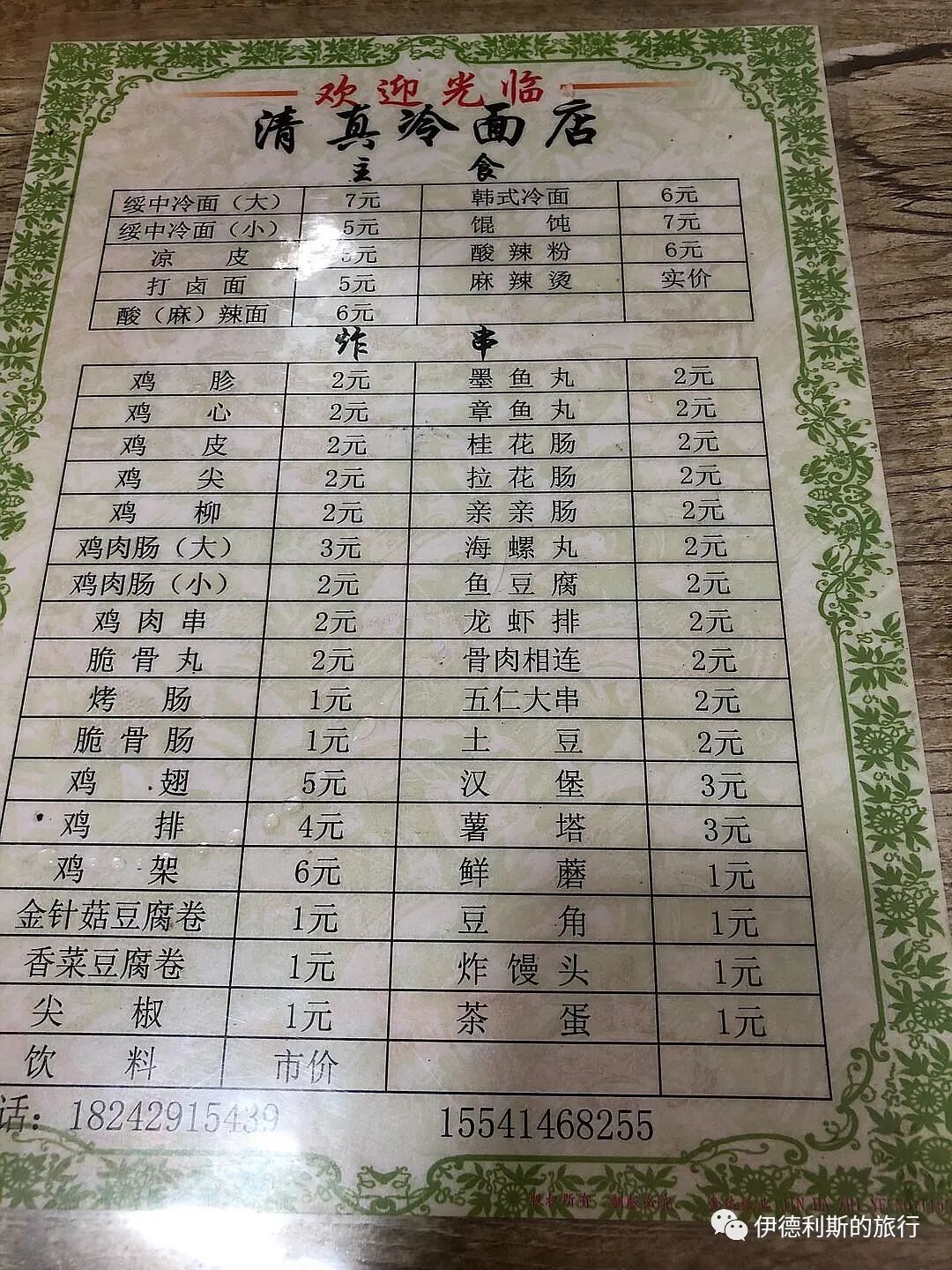
Suizhong is right next to Shanhai Pass and is the southwestern-most county in Liaoning. Starting in the 18th century, more than ten Hui Muslim families, including the Zhang, Ding, Li, and Jin families, moved to Suizhong from Hebei Province. The first mosque was built in 1737 (the second year of the Qianlong reign) below the Kuixing Pavilion in the southeast of Suizhong city. We ate local-style cold noodles (lengmian) in Suizhong; they were delicious, cheap, and perfect for cooling off.
2. Hebei
1. Stir-fried oat noodle cones (chao youmian wowo) in Zhangjiakou
The Xinhua Street Mosque in Zhangjiakou was originally called the Shenggou Mosque. It was built in 1863 (the second year of the Tongzhi reign) with funds raised by over eighty Hui Muslim families from Ningxia who came to Zhangjiakou for the camel trade, which is why it is also known as the Camel Workshop Mosque (Tuofang Qingzhensi). These Ningxia Hui Muslims were mainly from the Ma, Liu, Li, Du, Wu, Wang, and Ding families. They used camels to transport furs, silk, tea, and other goods for merchants, traveling between Inner Mongolia, Shanxi, Gansu, Mongolia, and Russia.
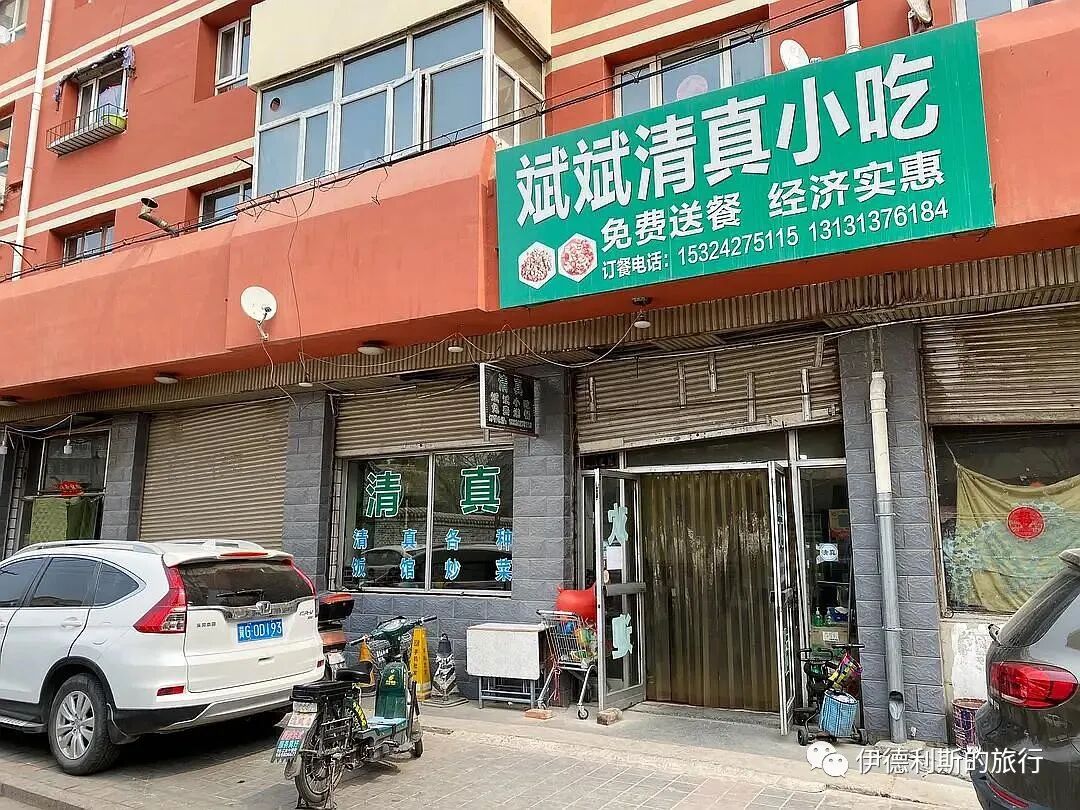
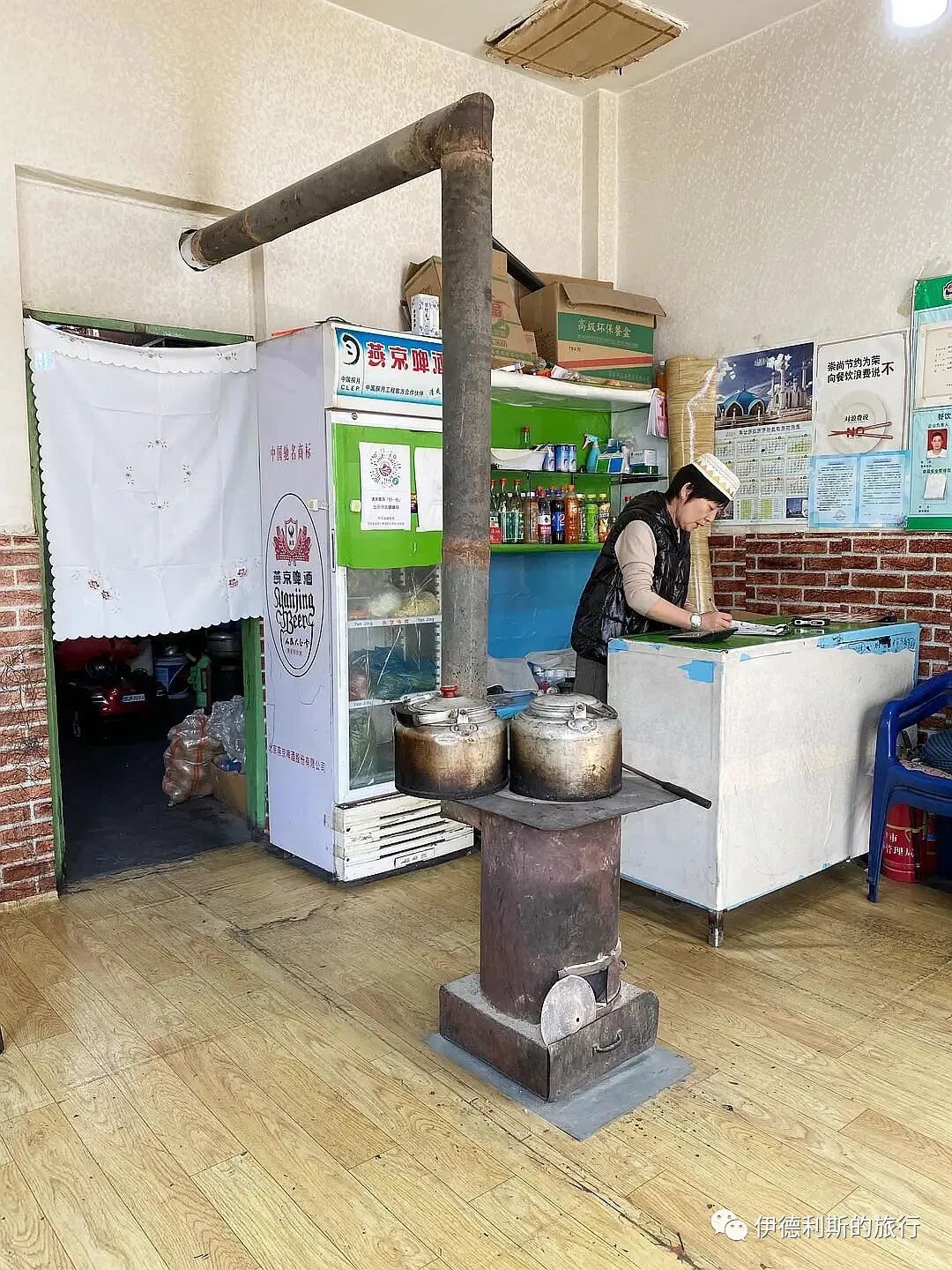
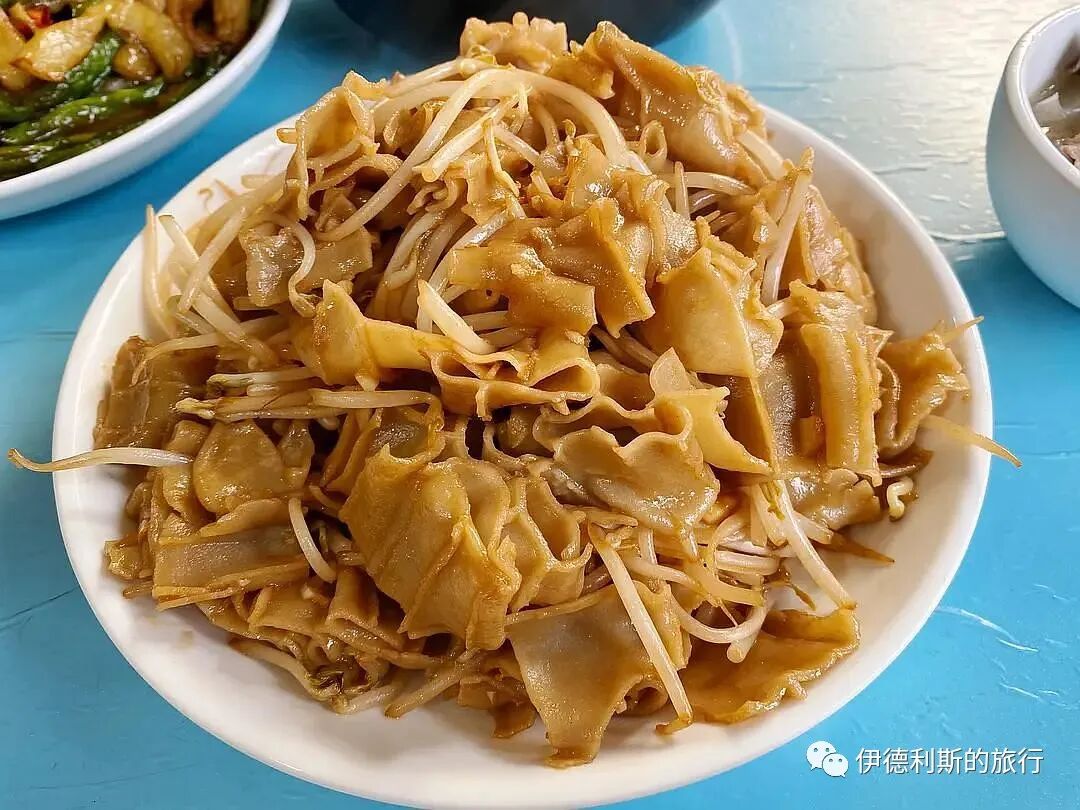
I ate stir-fried oat noodle cones at Binbin Snacks across from the Xinhua Street Mosque.
3. Beijing
1. Braised beef noodles, soybean paste noodles (zhajiangmian), and roasted lamb with Sichuan peppercorn sauce noodles (shao yangrou huajiao cuanmian) in Beijing
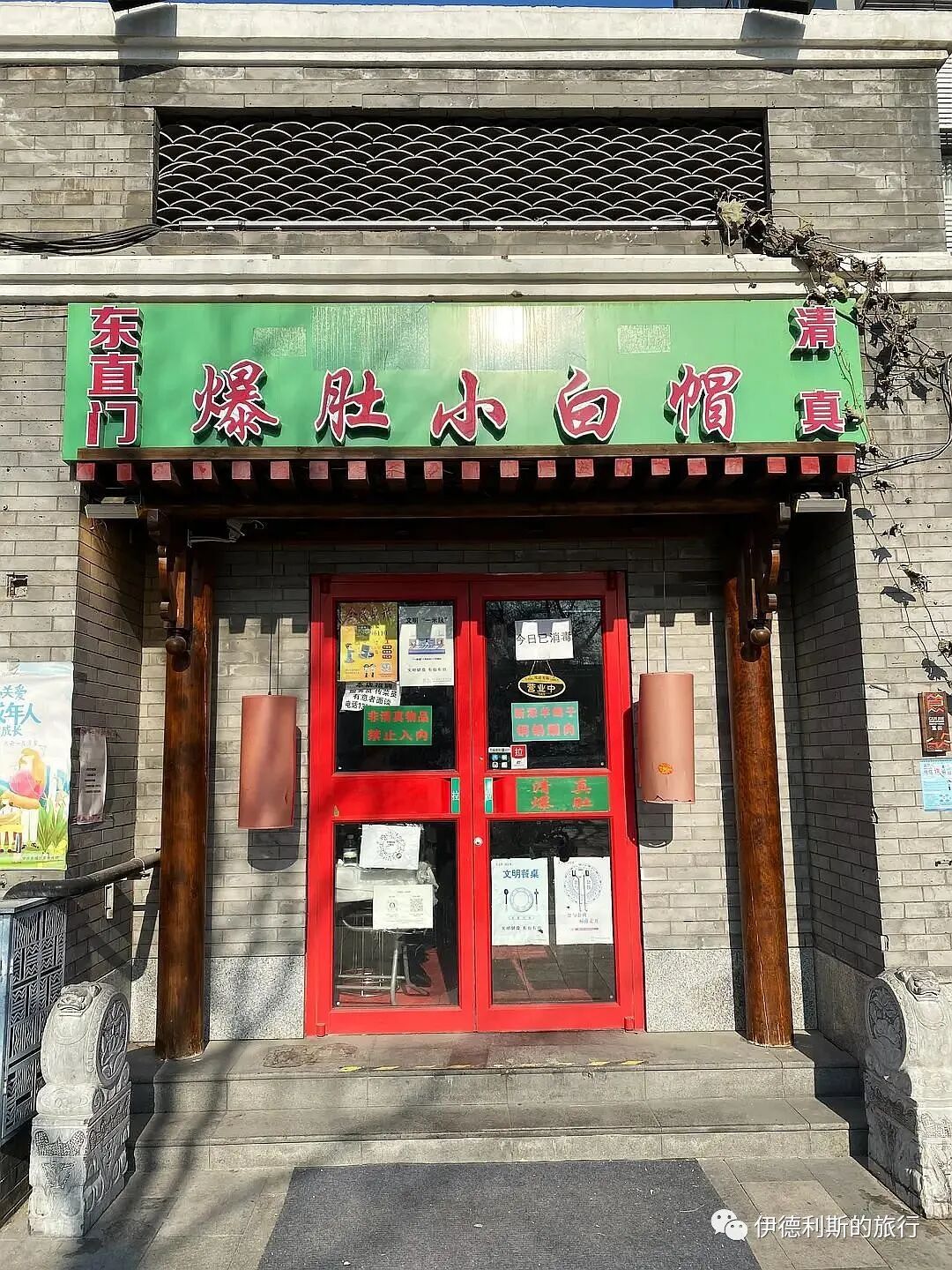
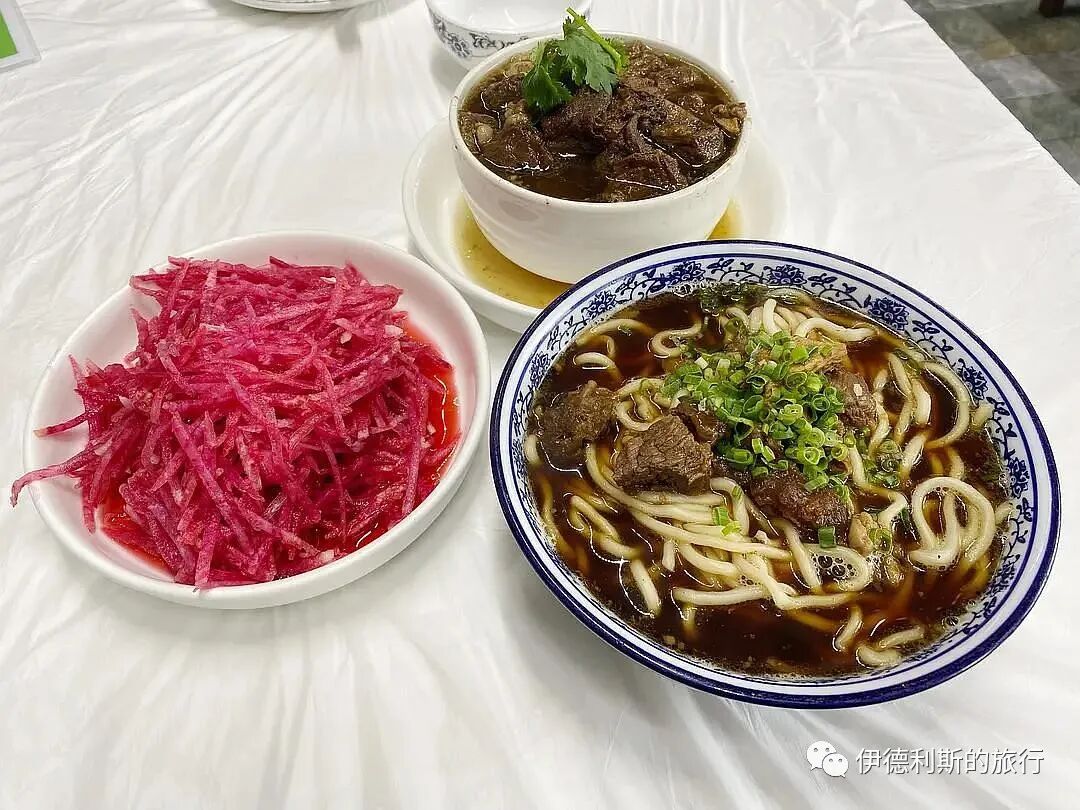
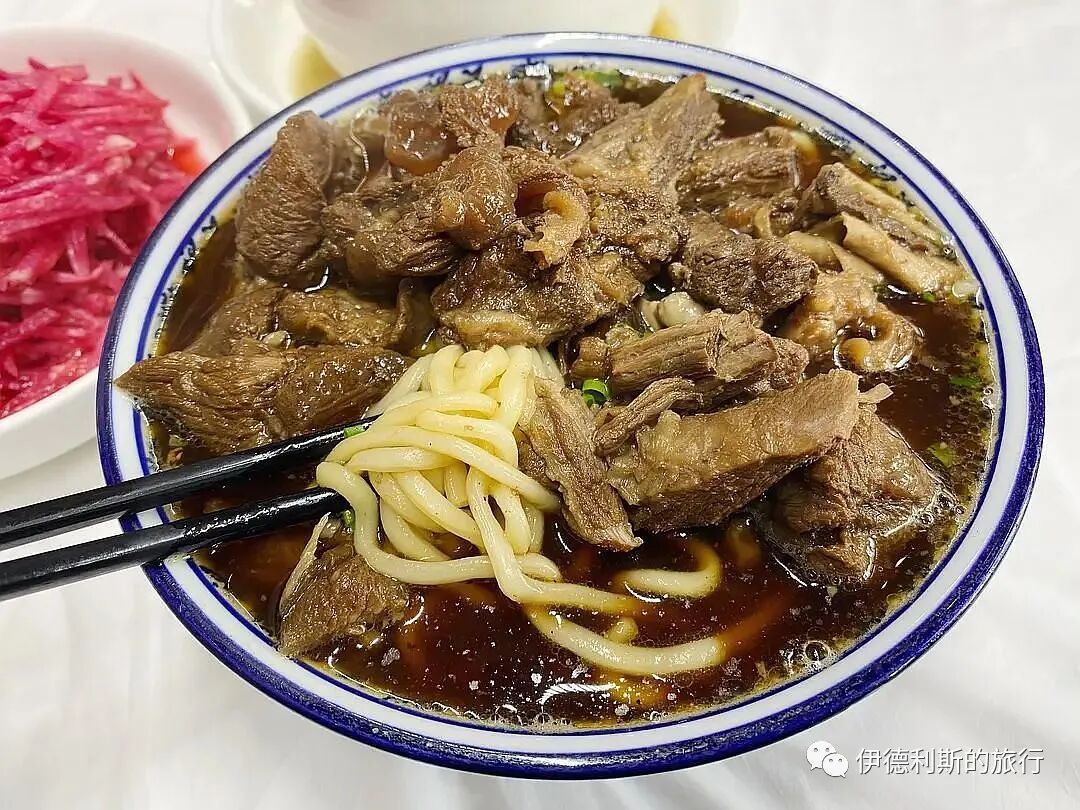
I had braised beef noodles, a small bowl of beef, and sweet and sour radish (tangcu xinlimei) at Baodu Xiaobaimao on Dongzhimen Inner Street. They gave such a huge portion of beef in the small bowl that it completely covered the noodles, which was so satisfying! I wasn't even hungry by the time night came.
I usually like to go to Liu's Men-ding (a type of pan-fried bun) at Hongmiao for their soybean paste noodles.
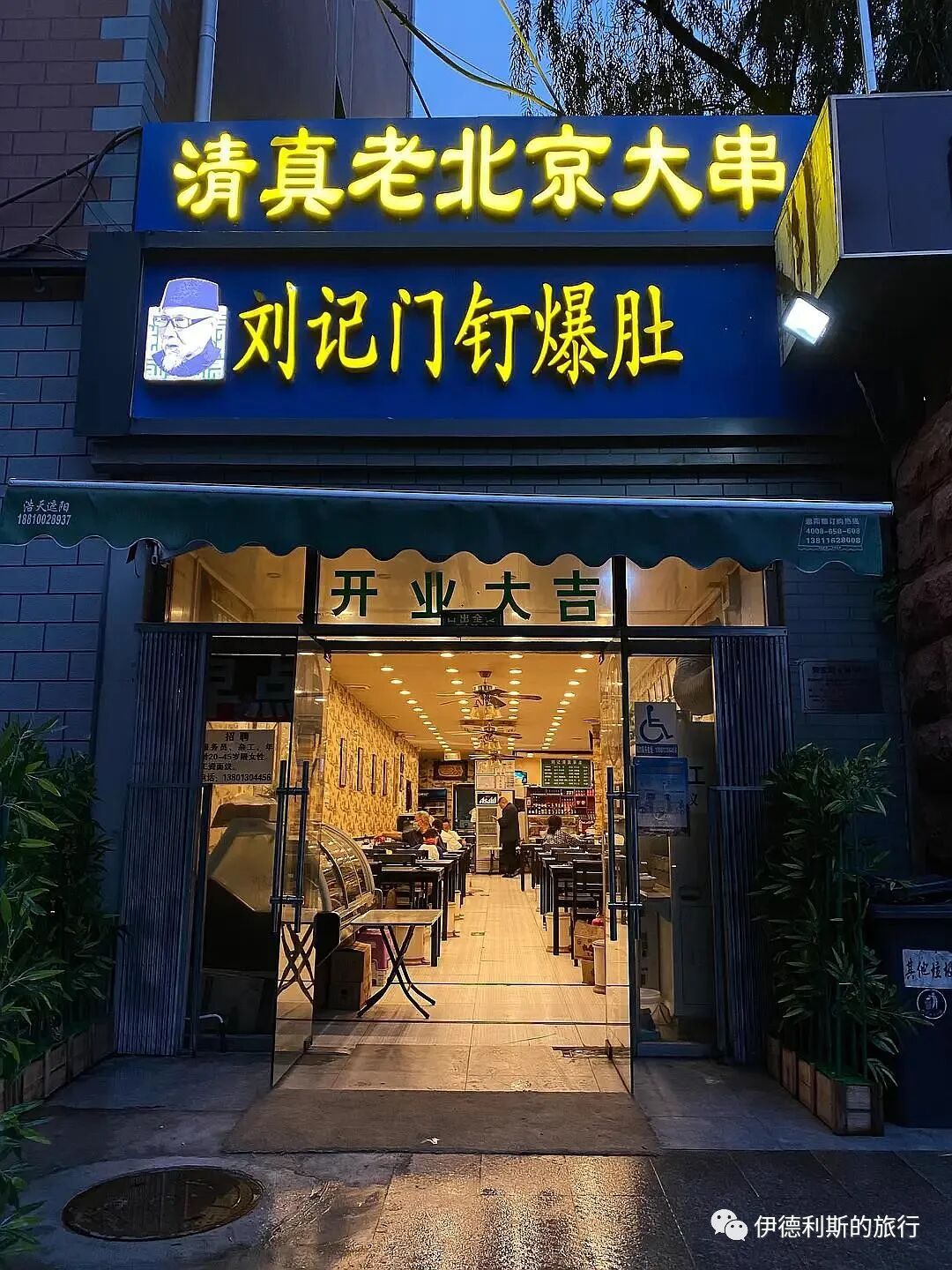
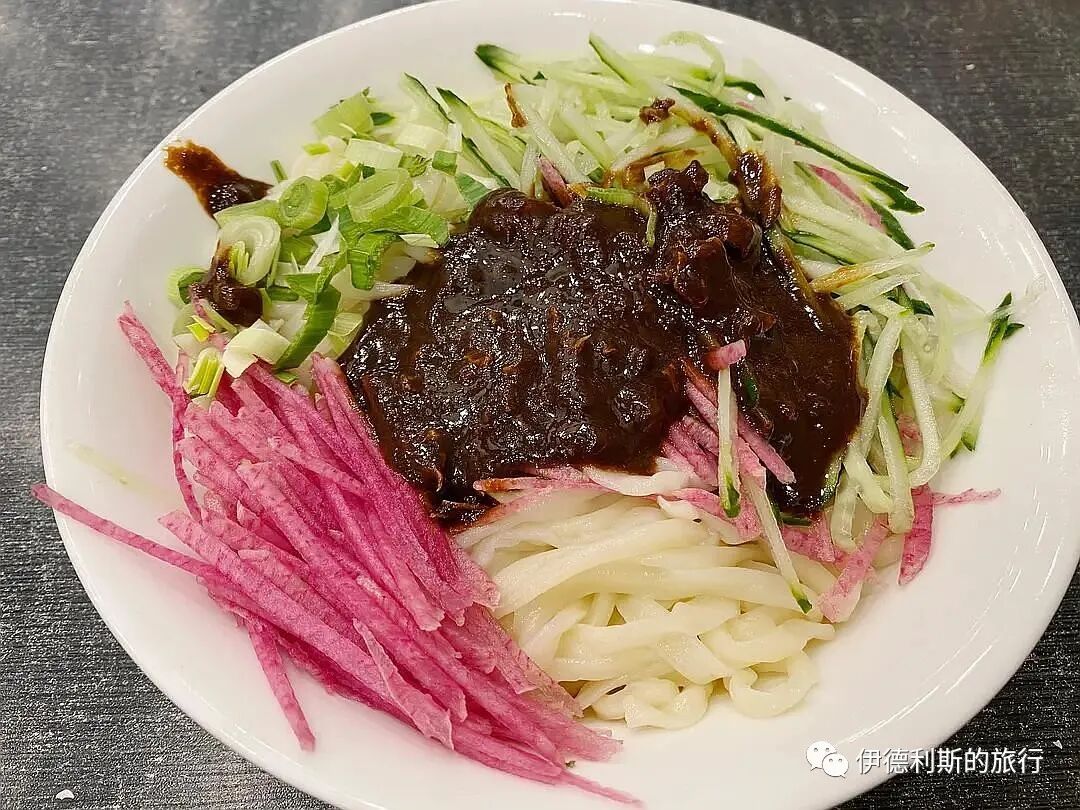
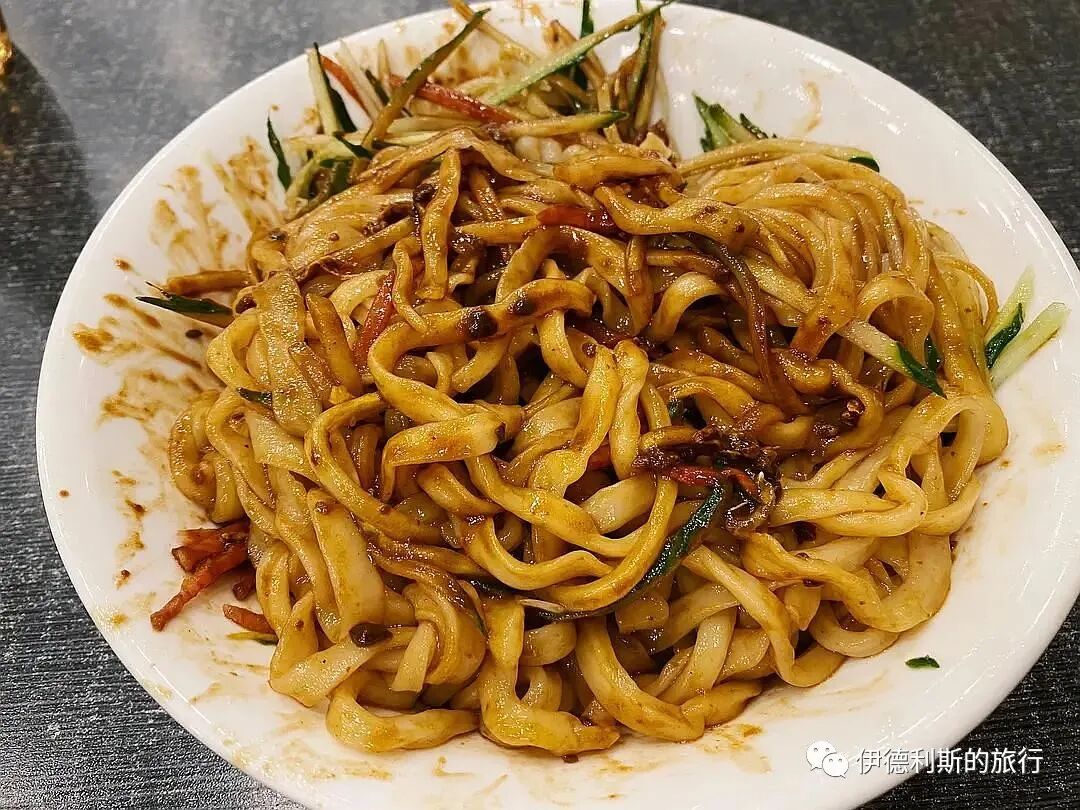
I ate roasted lamb with Sichuan peppercorn sauce noodles at the Drum Tower (Gulou) on Donggong Street. Beijingers often eat roasted lamb and make their own Sichuan peppercorn sauce, but it is rare to see them combined. I really love this way of eating it; it is very satisfying.
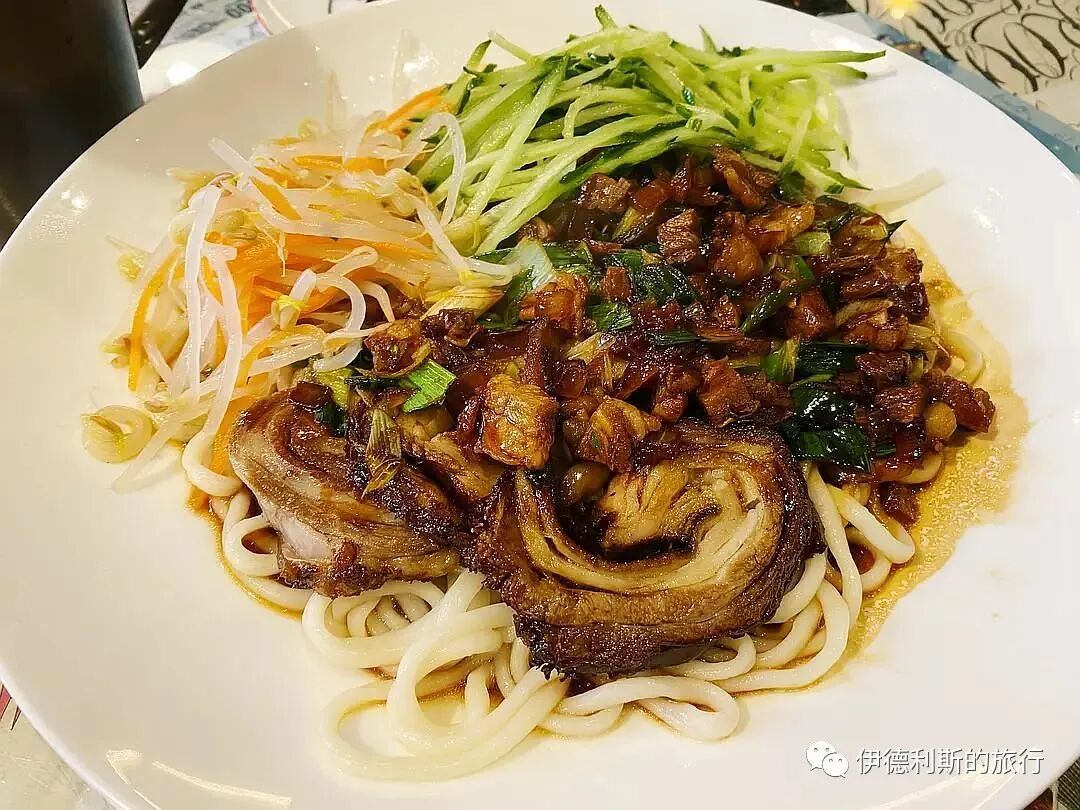
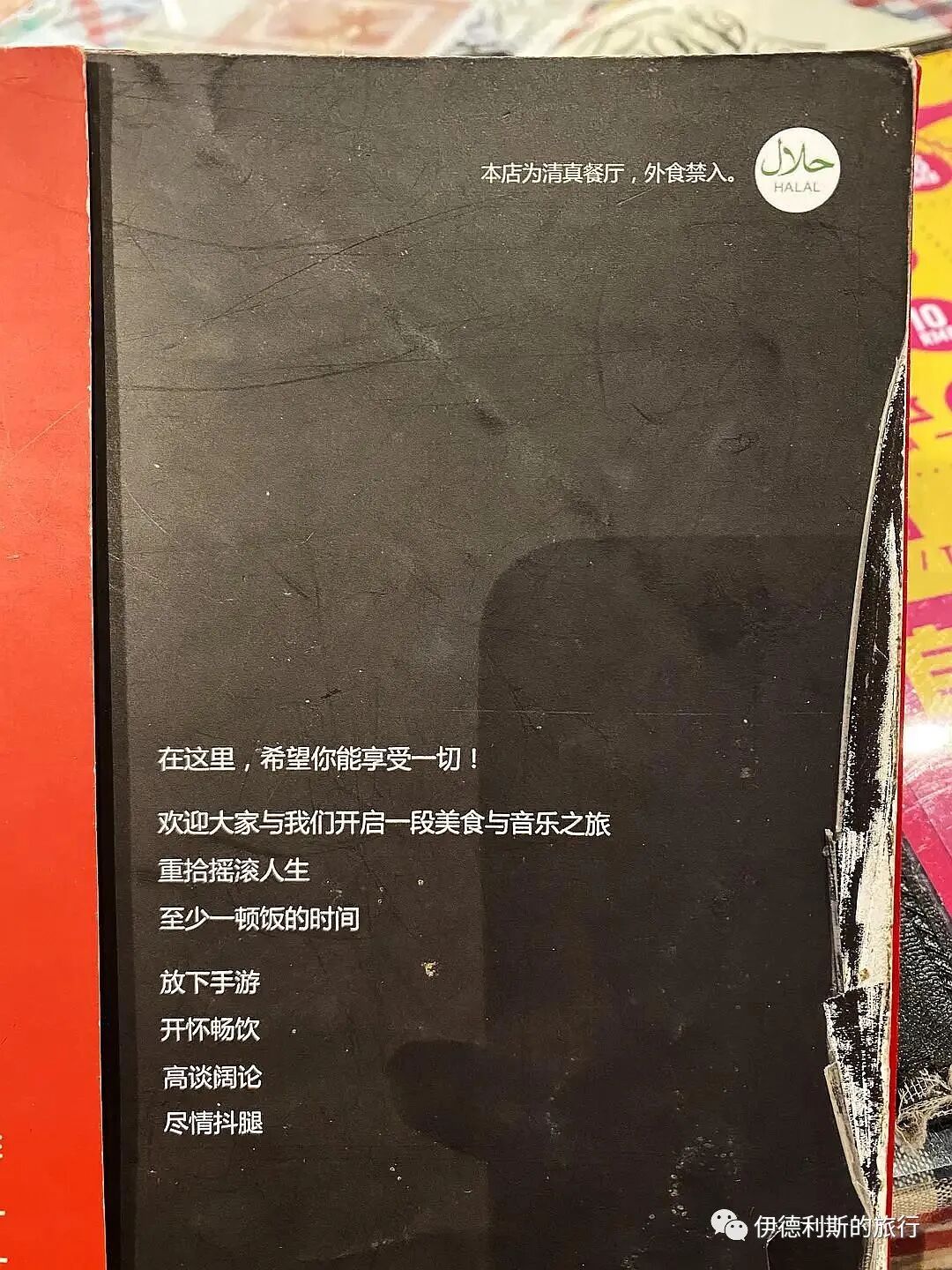
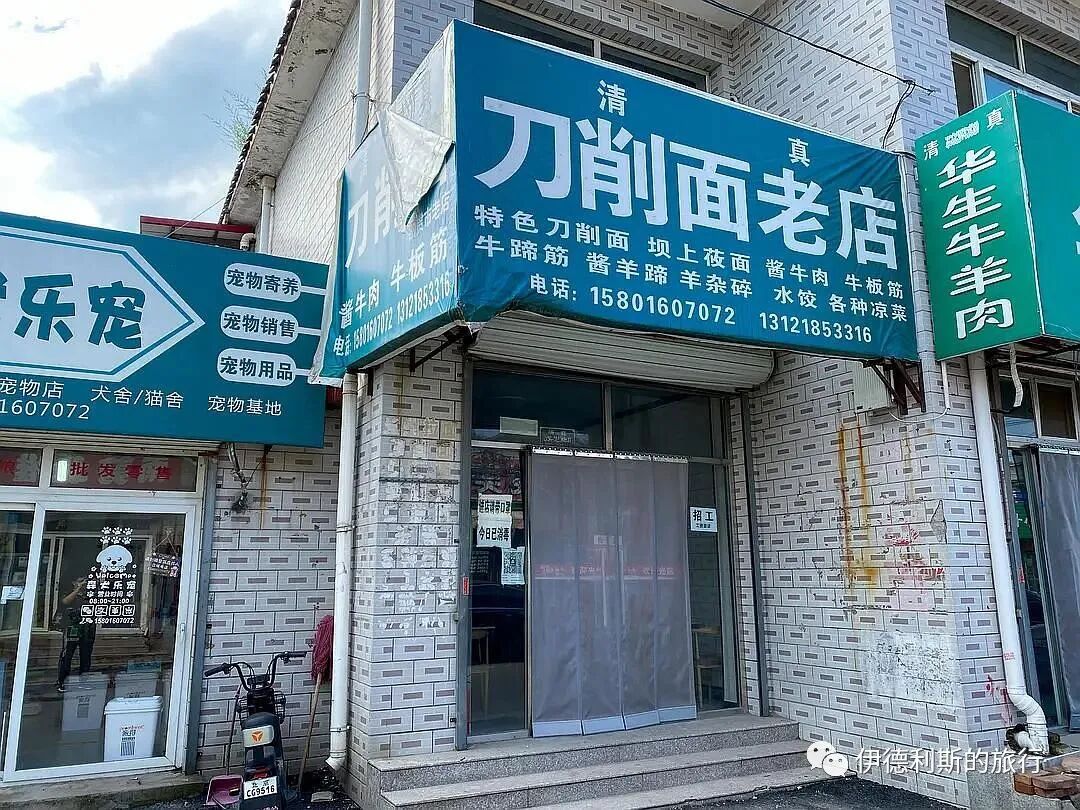
2. Sliced noodles (daoxiaomian) in Xiguanshi
The Hui Muslims of Xiguanshi came to Beijing in the early Ming Dynasty following the Prince of Yan on his northern campaign. Because they were near the main trade route from Beijing to Zhangjiakou and were skilled in martial arts, the Hui Muslims of Xiguanshi opened many security escort agencies outside Beijing's Qianmen Gate starting in the Qing Dynasty. They specialized in protecting merchants from the five northwestern provinces, primarily serving wealthy Shanxi merchants. People say the character Li Wuye, known for his magic slingshot in the story "Shigong An," was a Hui Muslim from Xiguanshi. The depictions of the archer Li Guoliang and the Dongguangyu Escort Agency outside Qianmen in the book "Yongzheng Jianxia Tu" vividly show the life of the Xiguanshi Hui Muslim escort agencies during the Qing Dynasty.
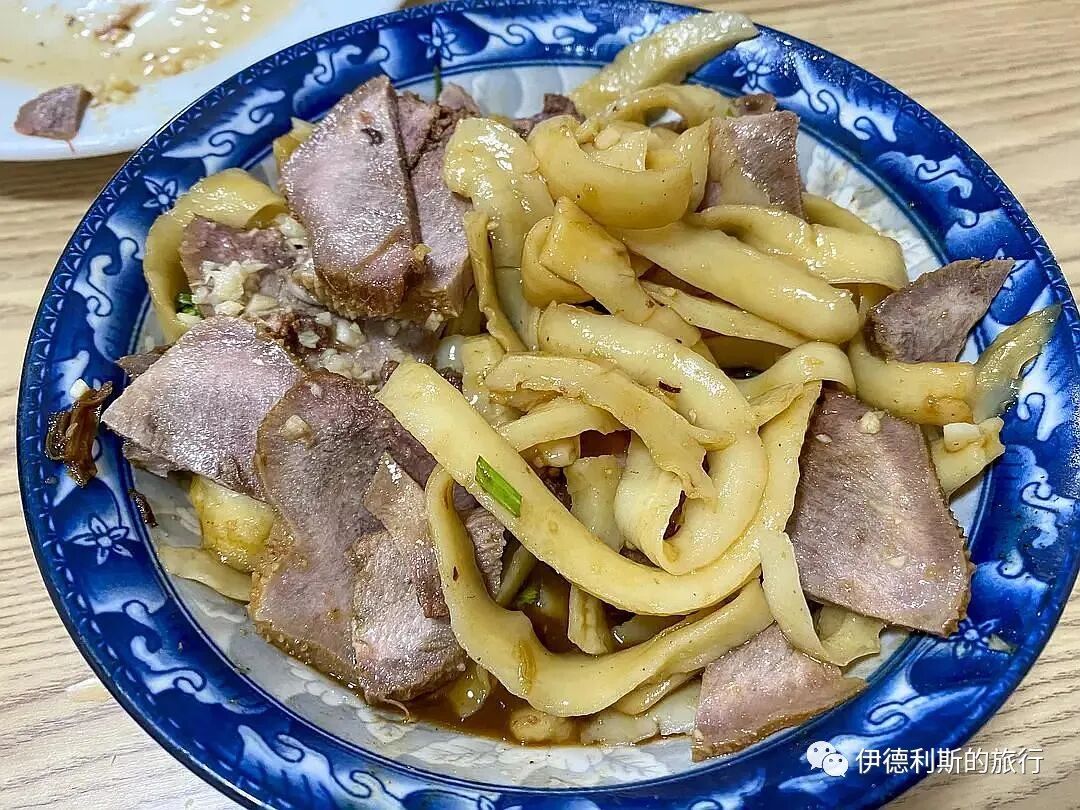
Because of their close ties with Shanxi, you can find halal sliced noodles and Bashang oat noodles in Xiguanshi that are hard to find in the city. We ate sliced noodles at an old shop in the village and also ordered beef tongue and meat-stuffed tripe (doubaorou). I had been craving sliced noodles ever since I had them in Datong, and I was finally able to eat them again.
4. Tianjin
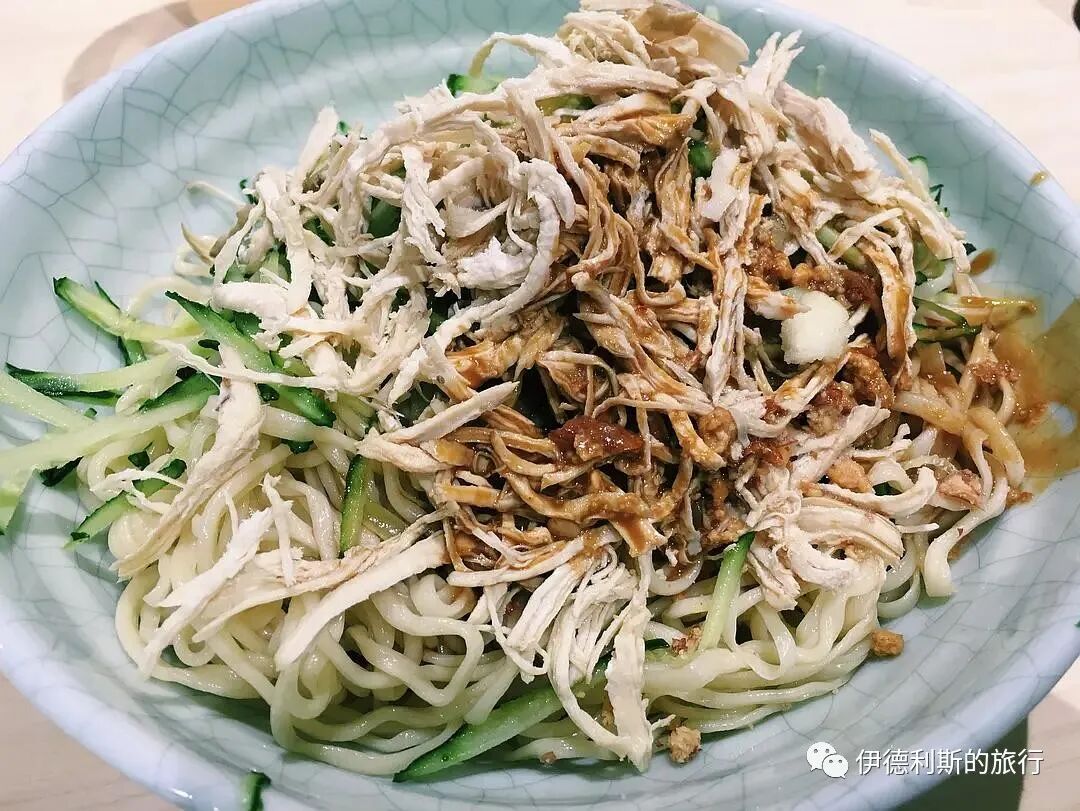
1. Shredded chicken cold noodles (jisi liangmian) at the northwest corner.
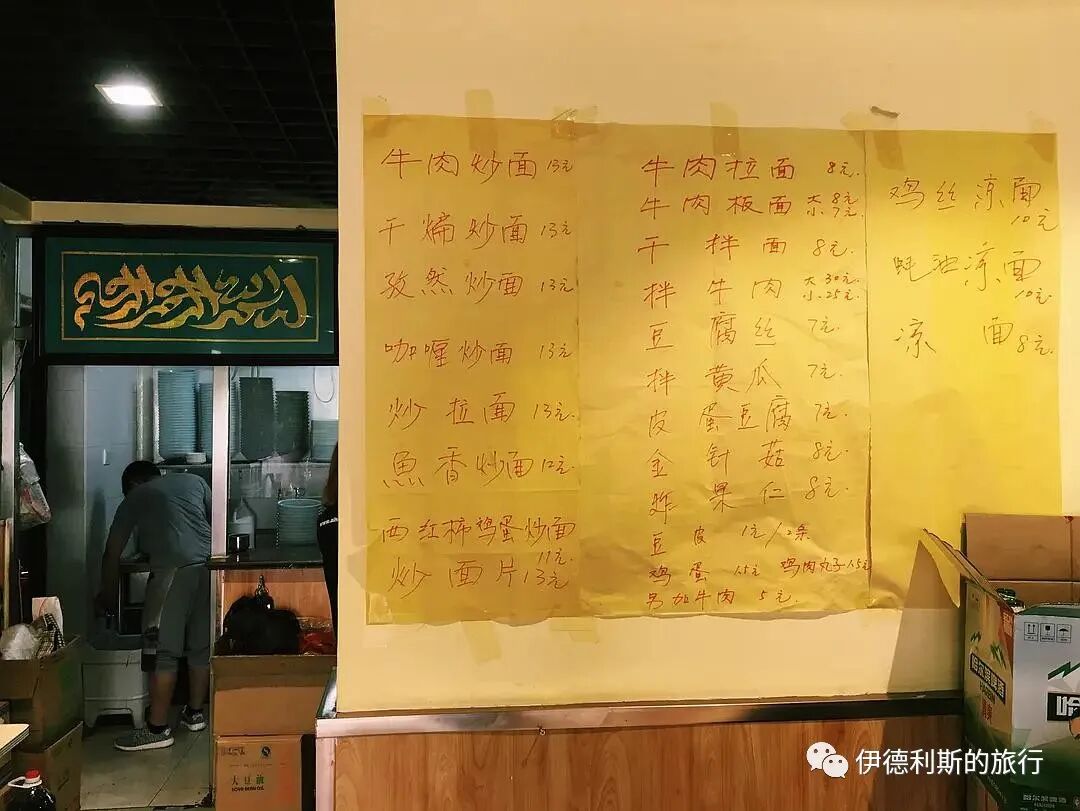
I had a bowl of shredded chicken cold noodles with a childhood friend at Huancheng Noodle Restaurant, plus a plate of century egg with tofu (pidan doufu). It was very refreshing. Almost no other halal restaurant in Beijing makes cold noodles better than this one.
5. Inner Mongolia
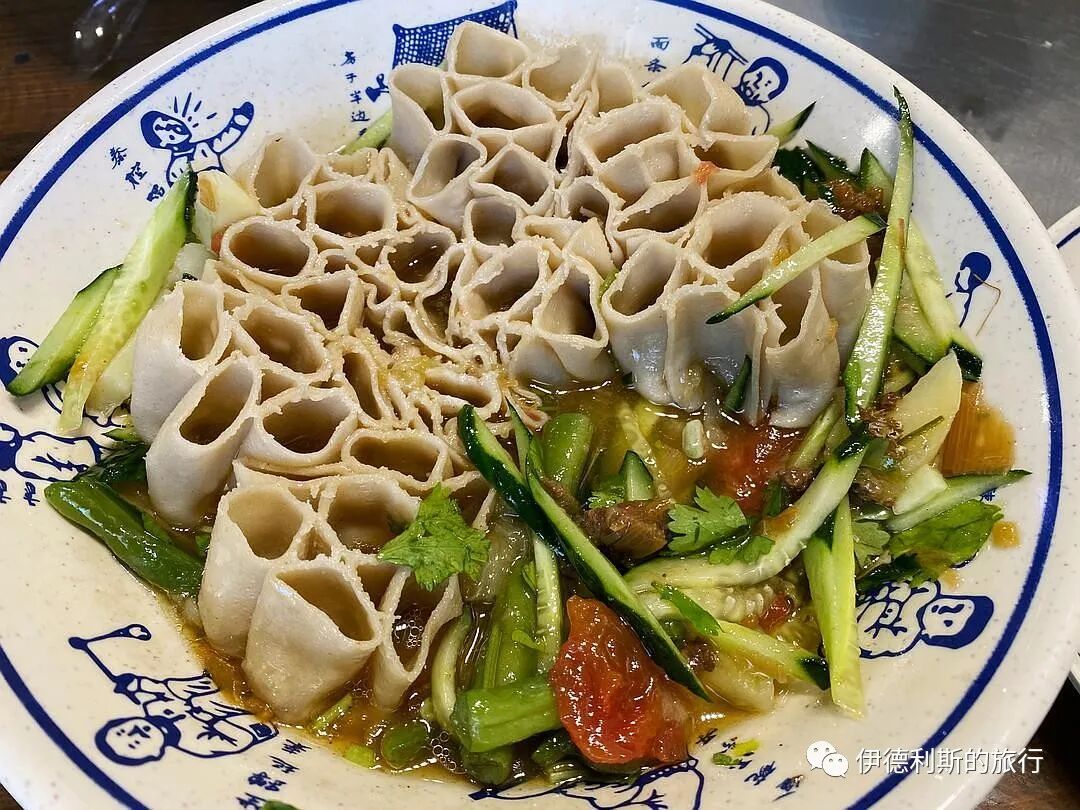
1. Cold broth oat noodles (liangtang youmian) in Hohhot.
I ate cold broth oat noodles at Xiangcunxiang Youmian on Niujie Street. They serve oat noodles four ways: with hot lamb broth, cold beef broth, mixed with vegetables, or stir-fried with meat. You can choose between oat noodle rolls (youmian wowo) or regular noodles. I find the cold broth version very satisfying in the summer. When eating, first pour vinegar and chili oil over the vegetables and fried sauce, mix it well, and then add the oat noodle rolls. It is very refreshing.
6. Henan
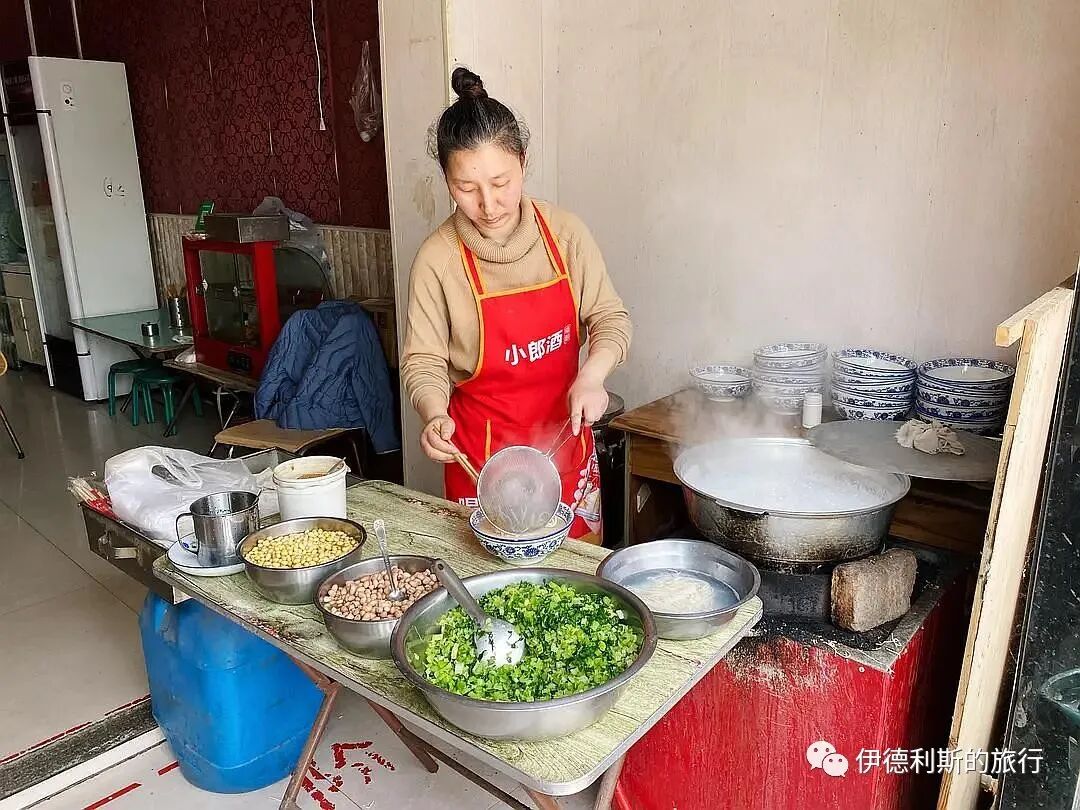
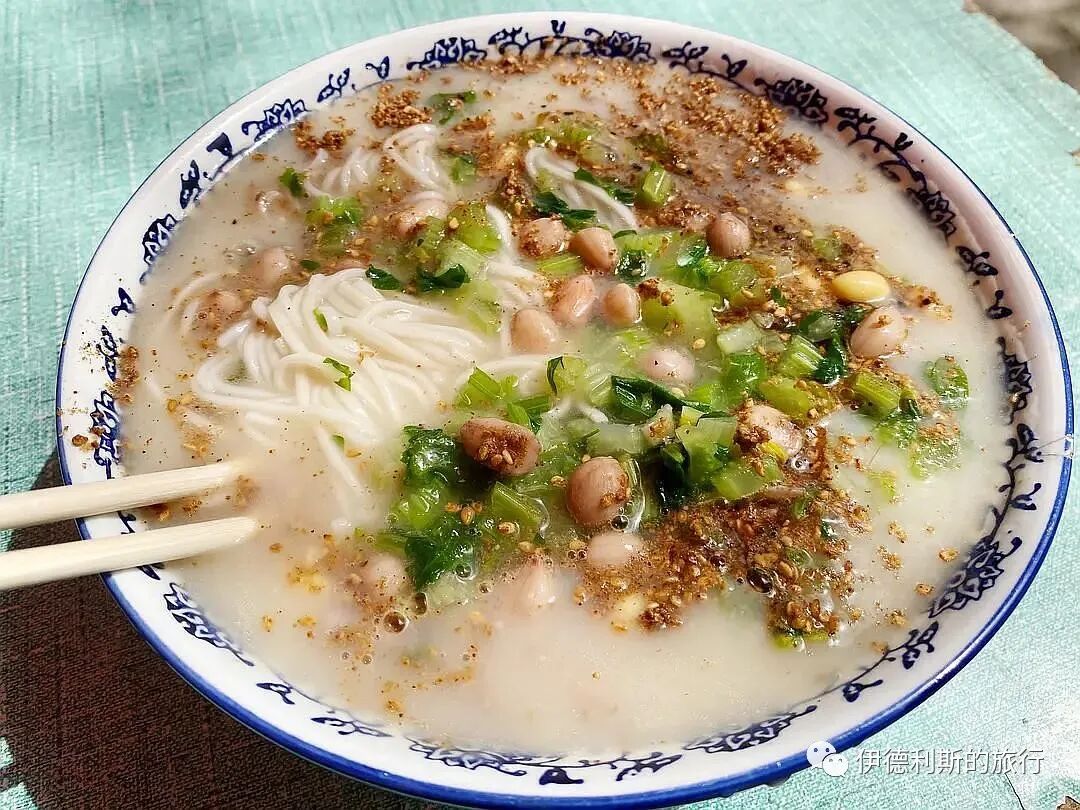
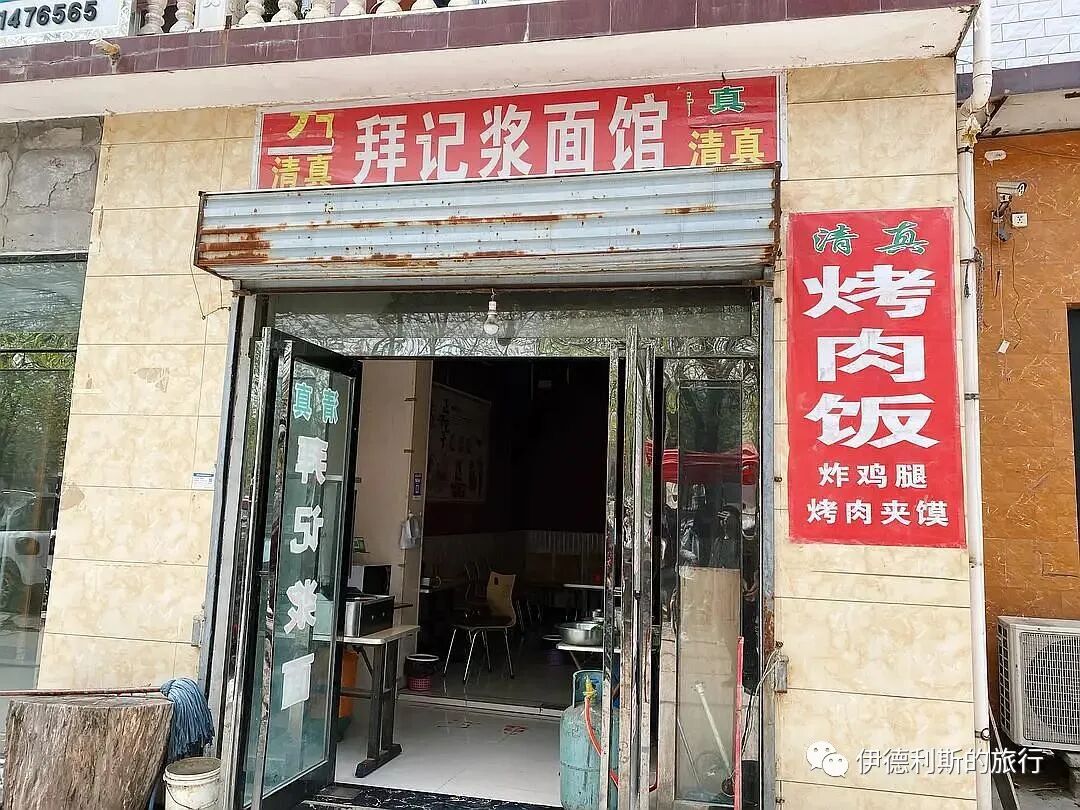
1. Fermented bean broth noodles (jiang miantiao) in Bo'ai.
The Xiguan Mosque in Bo'ai was built during the Yuan Dynasty and is known as the "First Mosque of Northern Henan." We ate the local specialty, fermented bean broth noodles. These are made by boiling the liquid squeezed out during tofu production into a broth, then adding soybeans, peanuts, celery, and crushed sesame paste. It tastes sour and fragrant, and it feels even better to eat in the summer.
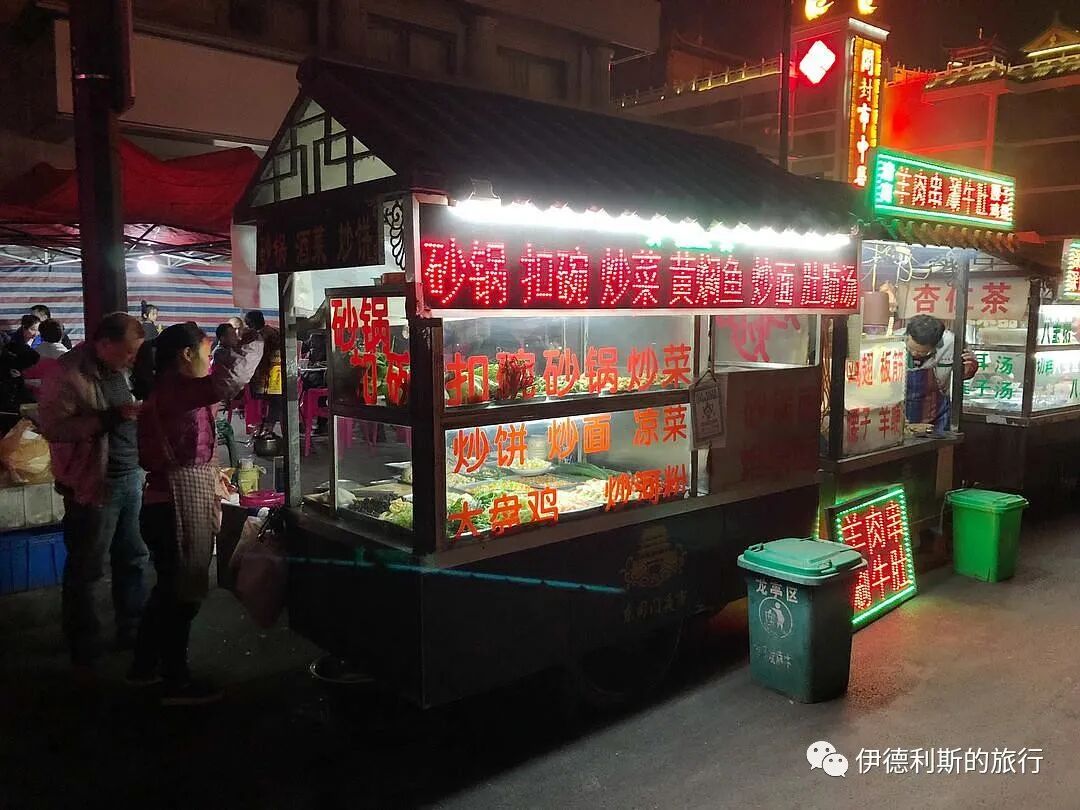
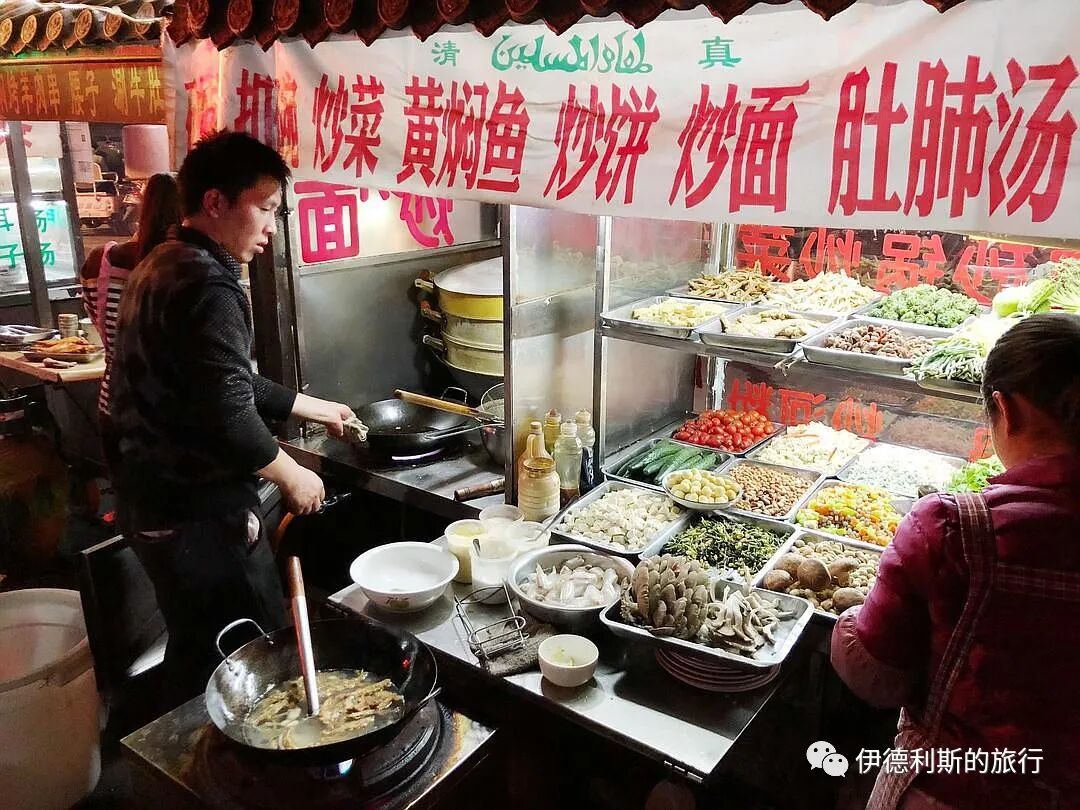
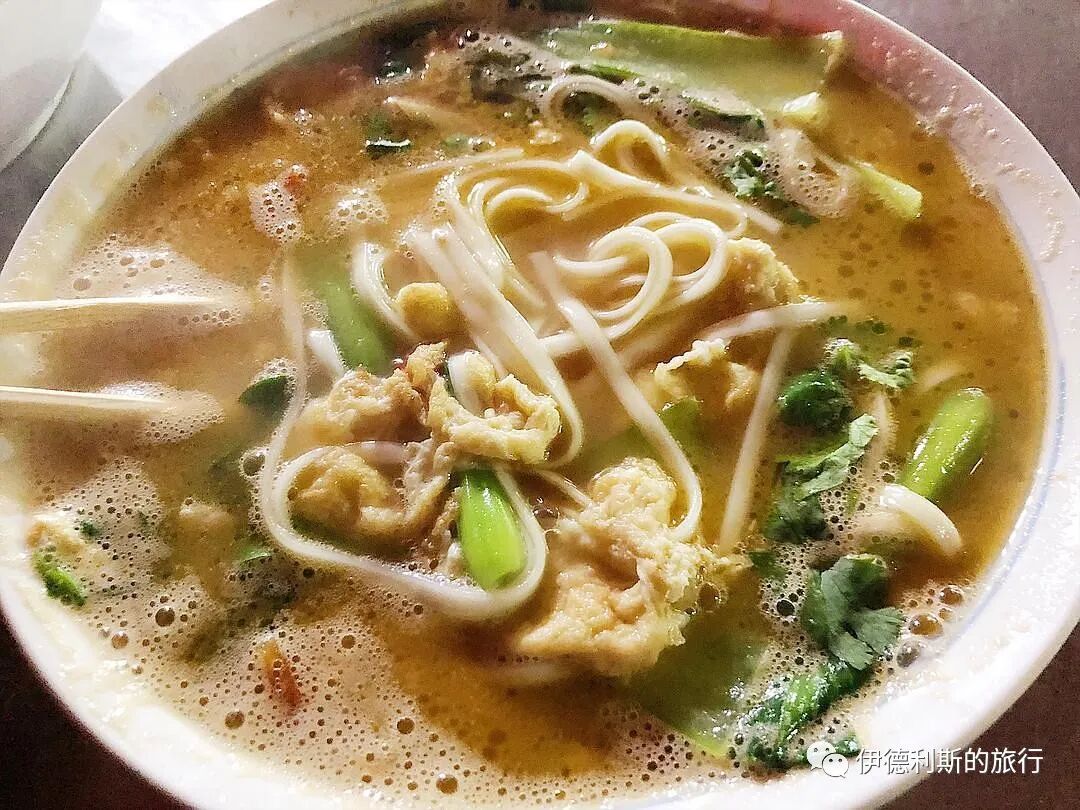
2. Stir-fried broth noodles (qiangguo mian) in Kaifeng.
The Dongsimen Night Market in Kaifeng is at the intersection of Dongdajie Street and Jiefang Road. The market itself is small, but the atmosphere is great, with locals coming to eat and chat. We ate the classic stir-fried broth noodles at the night market.
7. Shanxi
1. Knife-cut noodles (daoxiao mian) in Datong.
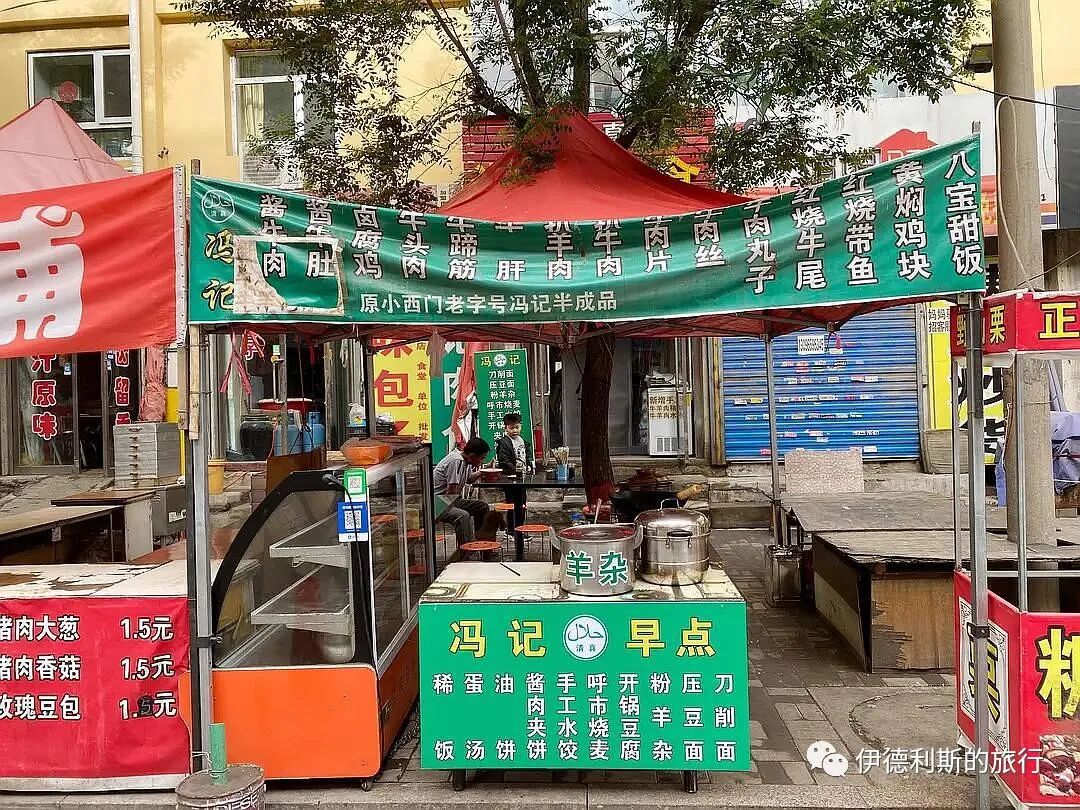
The History of Yuan (Yuan Shi) records that in 1324, the first year of the Taiding era, the emperor ordered mosques to be built in Shangdu and Datong, granting 40,000 ingots of currency. This makes the Datong Mosque one of only two mosques from the Yuan Dynasty with official imperial records.
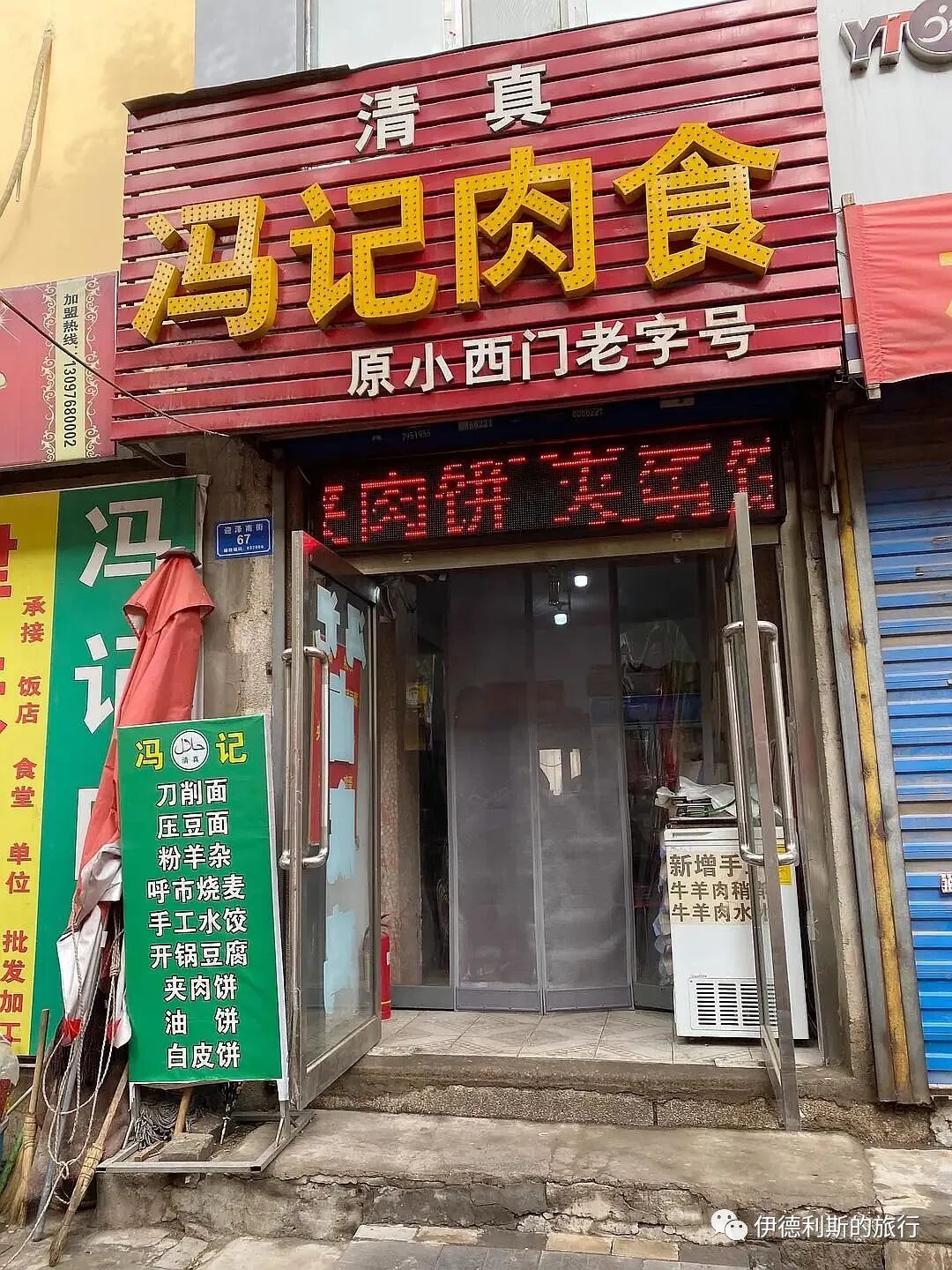
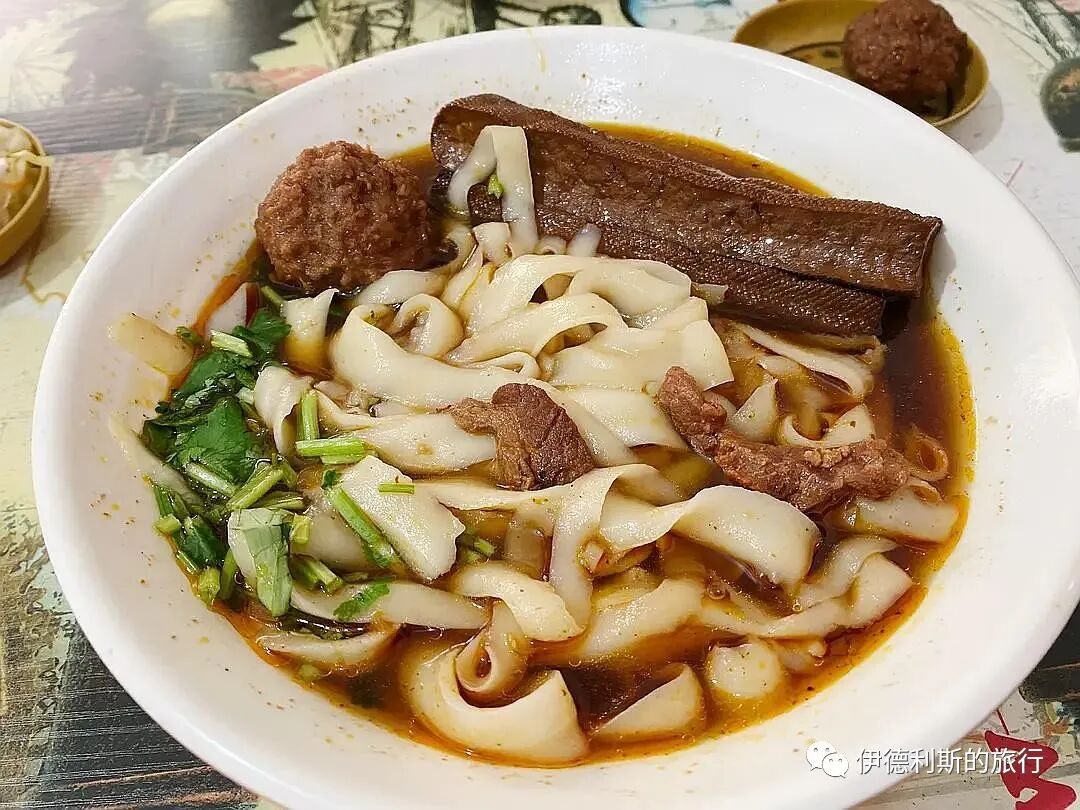
Yingze Street is a snack street in Datong with several halal restaurants. Most of the halal snacks here are only served in the morning, so it is best to come for breakfast. We ate knife-cut noodles with dried tofu and beef meatballs at Fengji Breakfast Shop. Datong's knife-cut noodles are probably the most famous. We tried them, and they lived up to their reputation; the texture of the noodles is excellent. People in Datong like to pair their knife-cut noodles with various braised meats and soy-sauce-marinated foods, which makes the flavor and texture very rich.
2. Poked noodles (tijian mian) in Taiyuan.
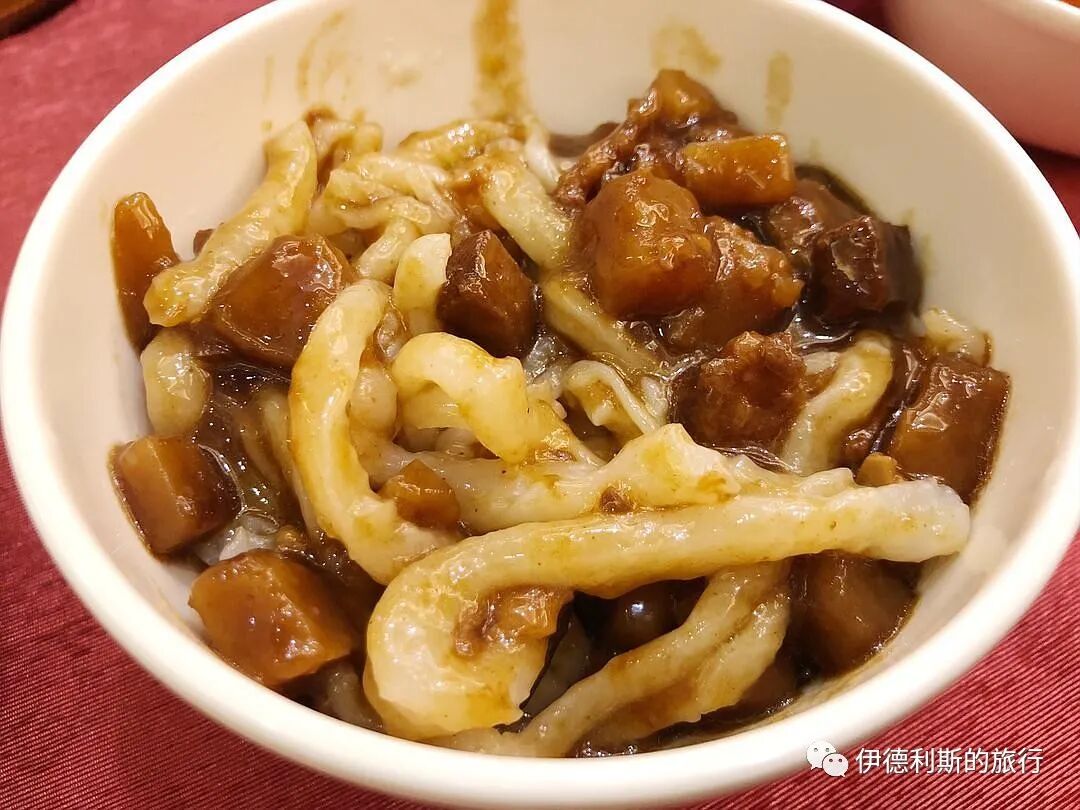
After the Ming Dynasty, Taiyuan gradually formed the "Ten Great Surnames of the Hui Muslims." During the Qing Dynasty, Taiyuan had over 100 local Hui Muslim households, plus more than 10 households of Hui Muslims who came from Suiyuan to do business, totaling five or six hundred people. After the Zhengtai Railway opened in 1907, the number of Hui Muslims coming to Taiyuan from Hebei increased significantly.
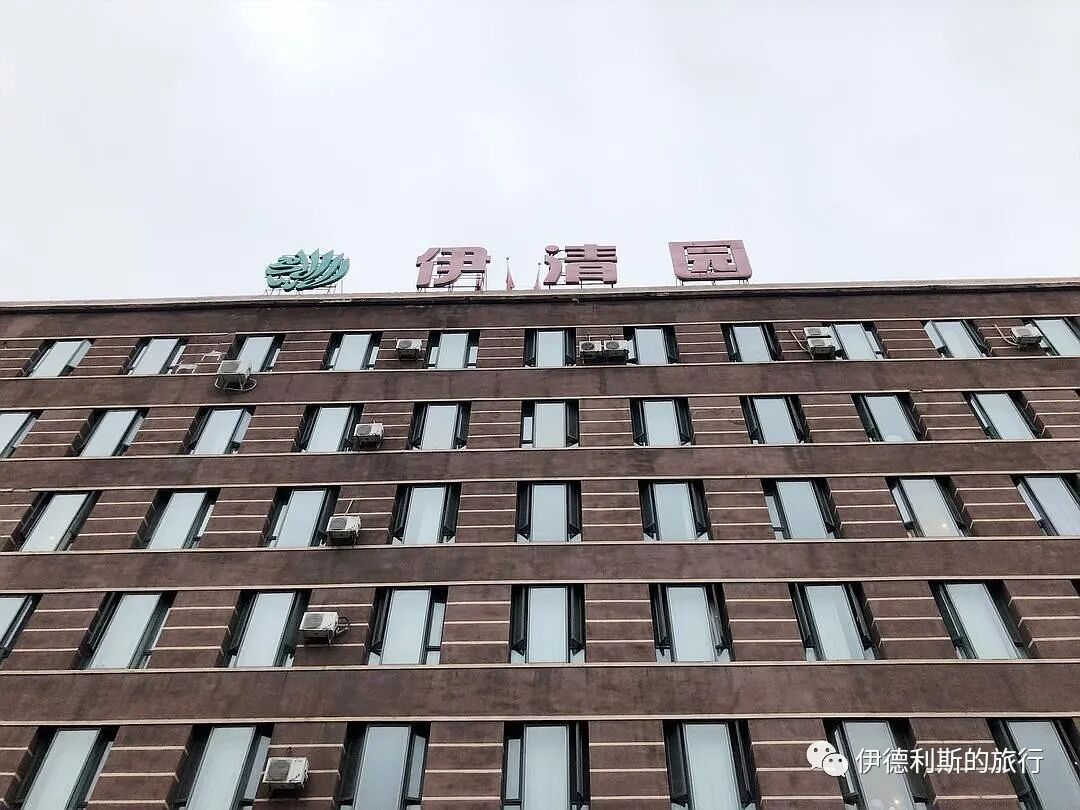
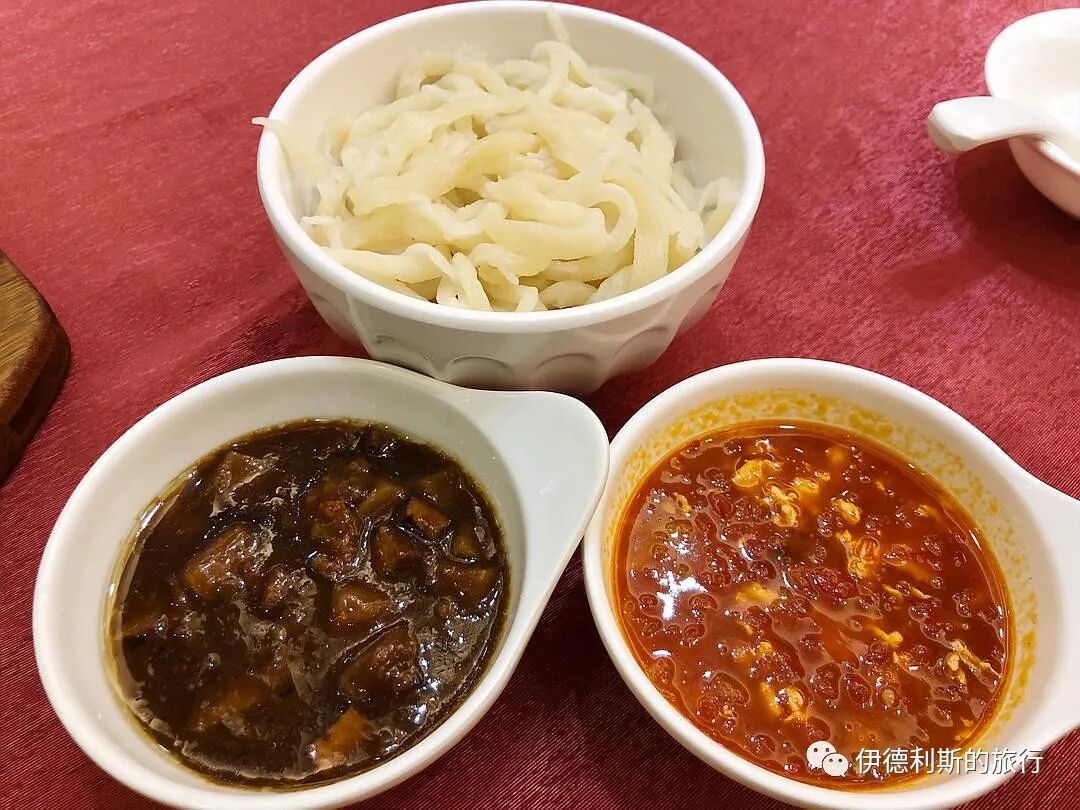
Yiqingyuan is a large halal restaurant in Taiyuan, where I ate hand-picked noodles (tijianmian). Shanxi has a truly rich variety of wheat-based foods. Hand-picked noodles (tijianmian) are made by using chopsticks to flick the dough into the pot. They are served with two types of sauce: meat gravy and tomato-egg sauce. This bowl of noodles only cost five yuan.
8. Shaanxi
1. Xixiang beef pulled noodles (che mian)
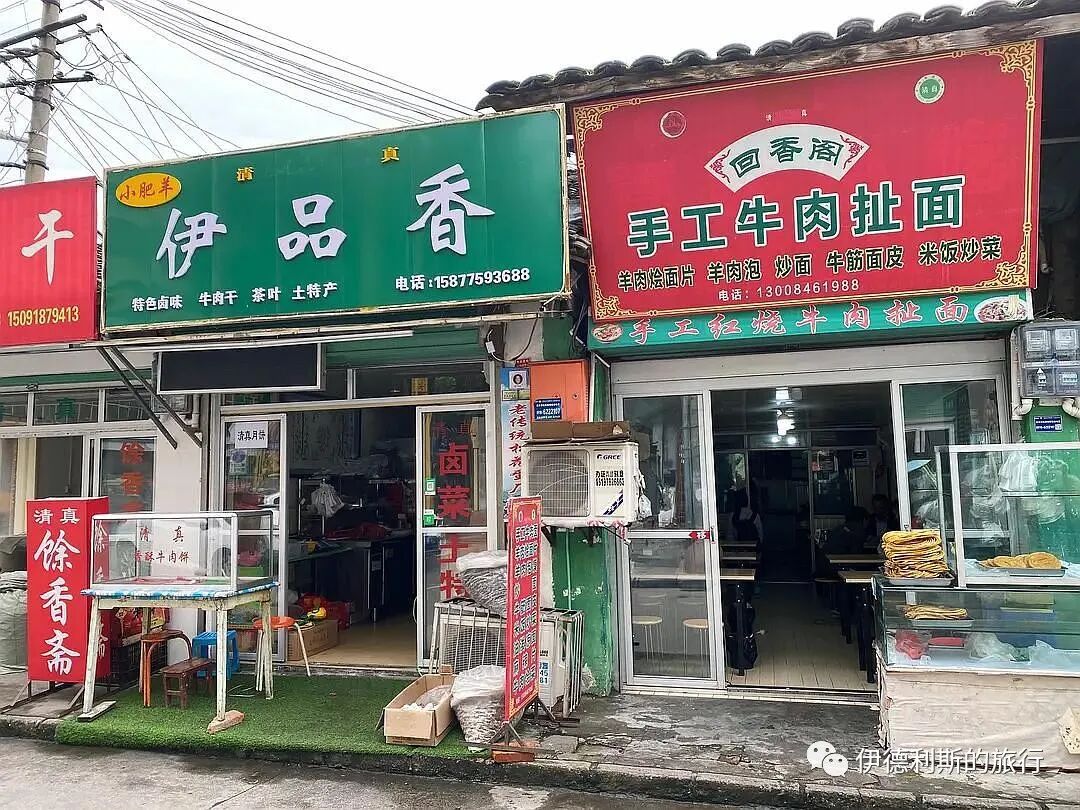
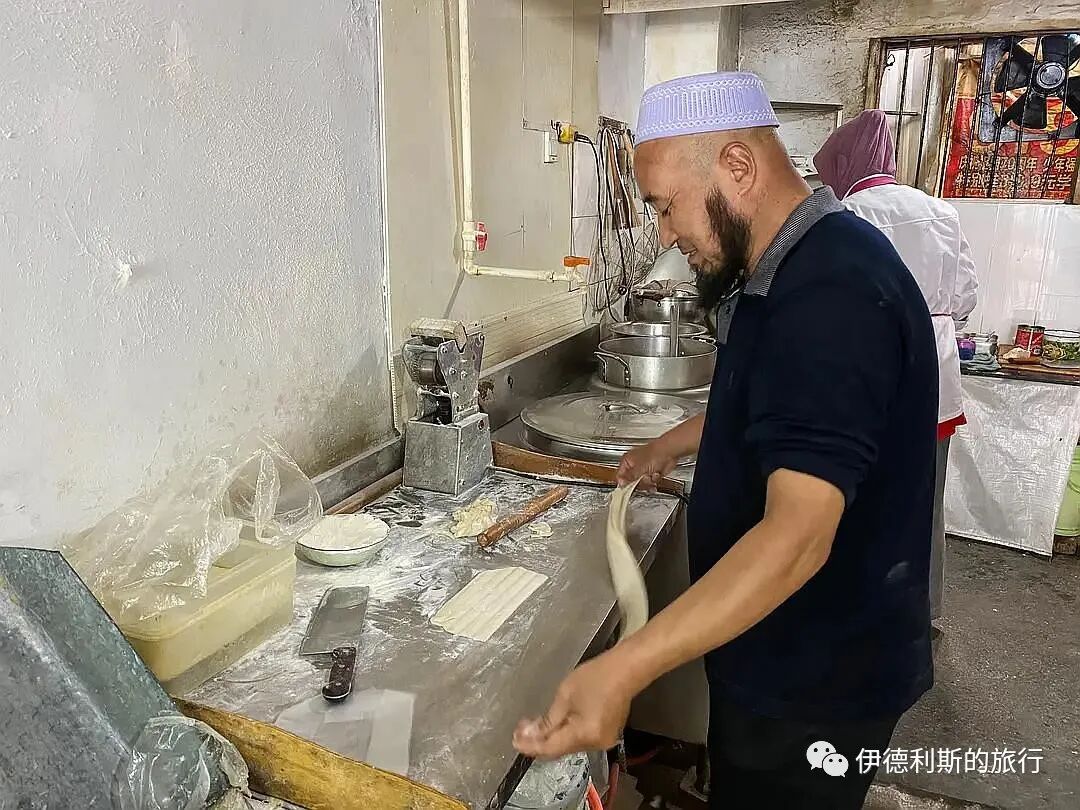
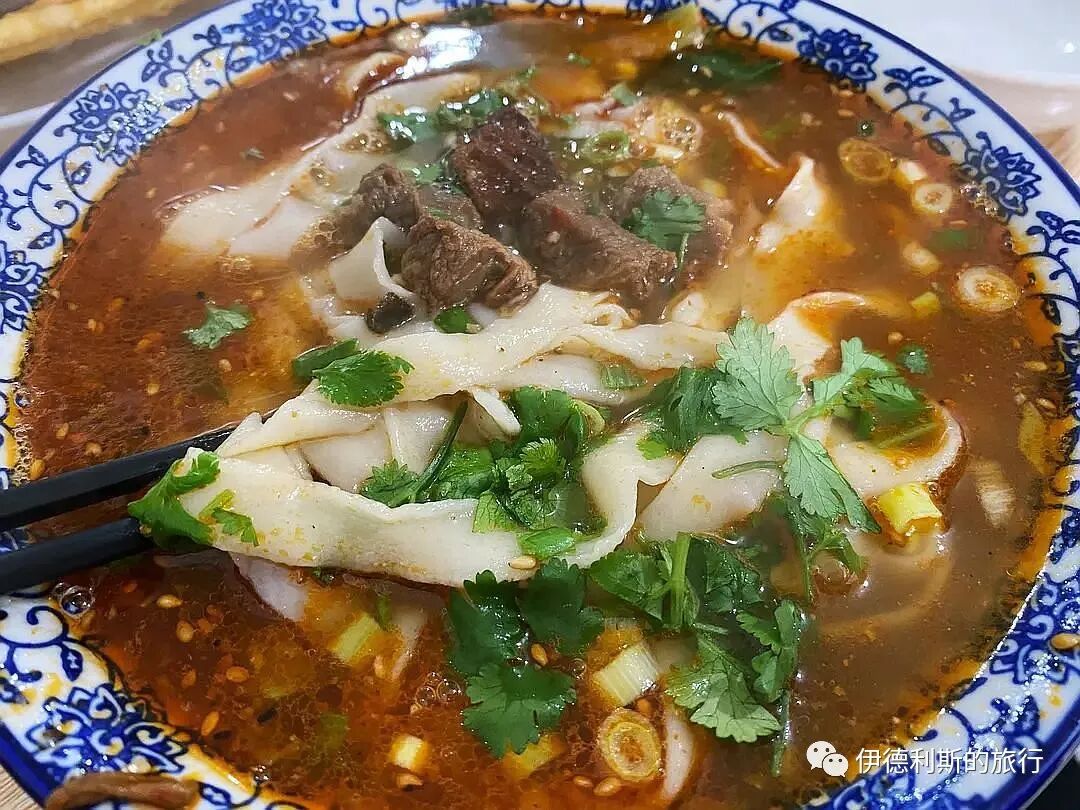
Xixiang County is located in the middle of the Hanzhong Basin in southern Shaanxi, nestled between the Qinling Mountains and the Bashan Mountains. The Muma River, a tributary of the Han River, flows through the county seat. Starting from the Ming Dynasty, Hui Muslims from Pingliang, Gansu, traveled to settle in Xixiang. During the Kangxi and Qianlong eras, the Hui Muslim population continued to grow. Local friends (dost) enthusiastically took us to eat.
Halal restaurants in Xixiang are mainly concentrated around the West Gate area. We ate the local specialty, braised beef pulled noodles (che mian), at an imam's (ahong) shop.
2. Ankang steamed noodles (zhengmian)
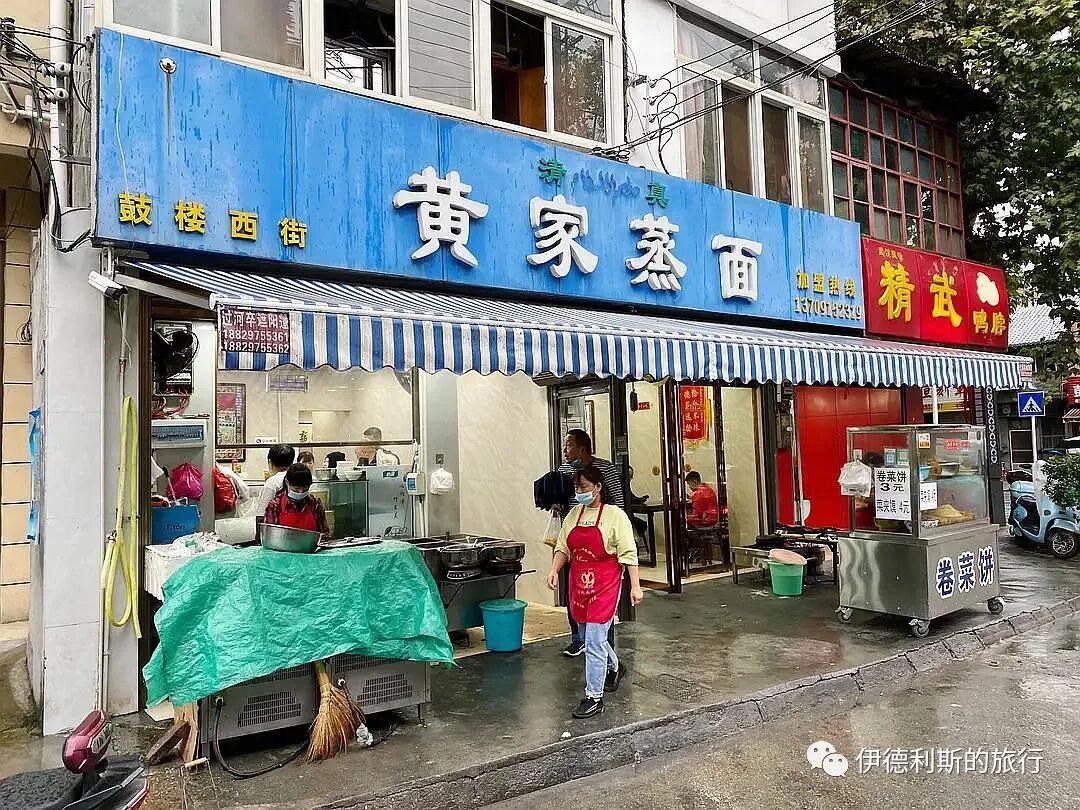
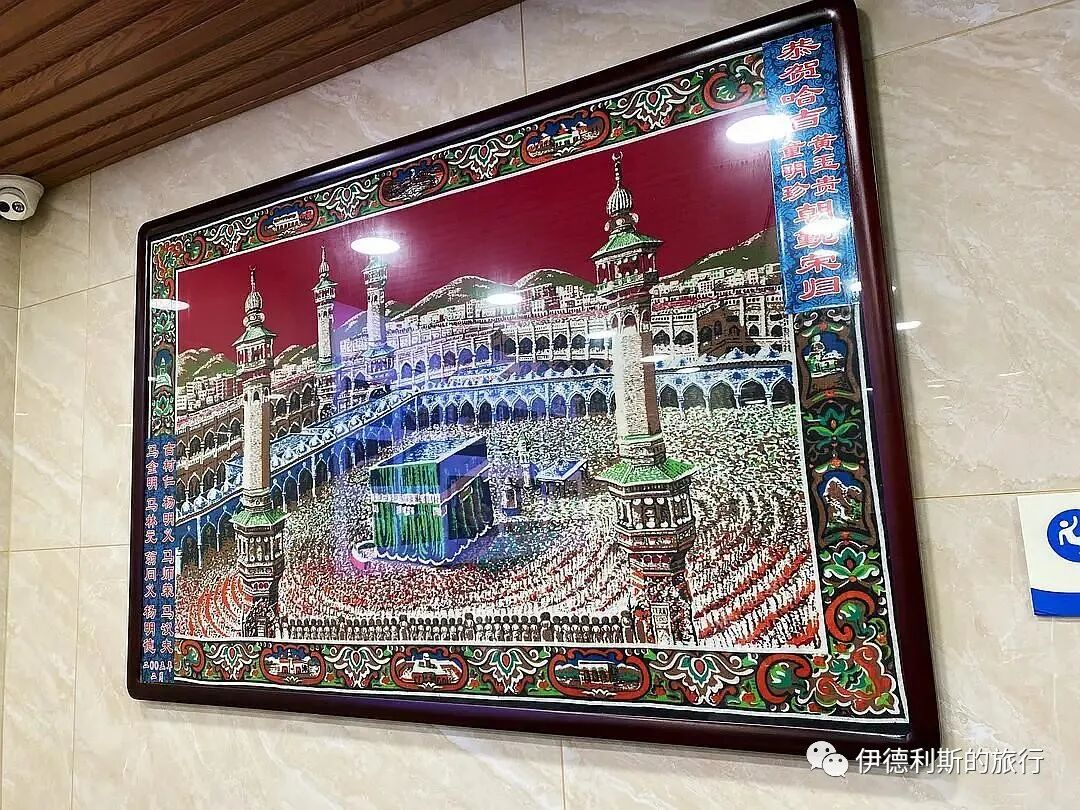
Ankang is the largest Muslim community in southern Shaanxi. Hui Muslims have lived there since the Ming Dynasty, and by the Republican era, seven mosques had been built. Ankang also has the richest halal food in southern Shaanxi.
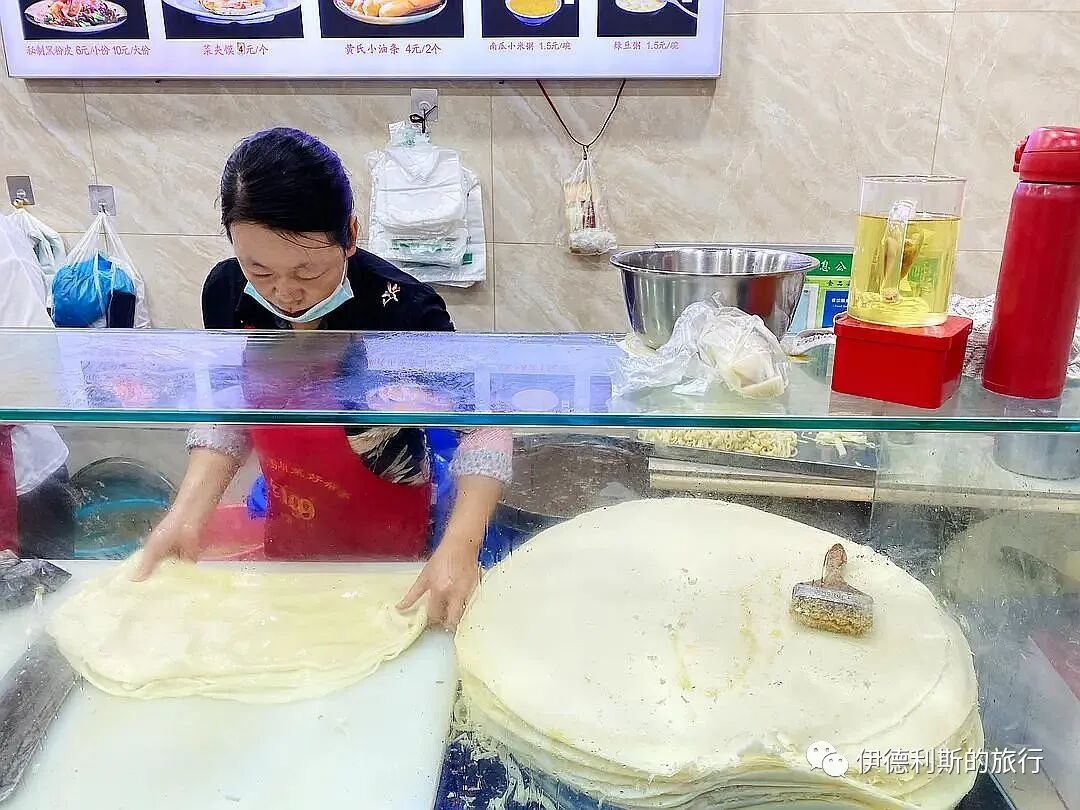
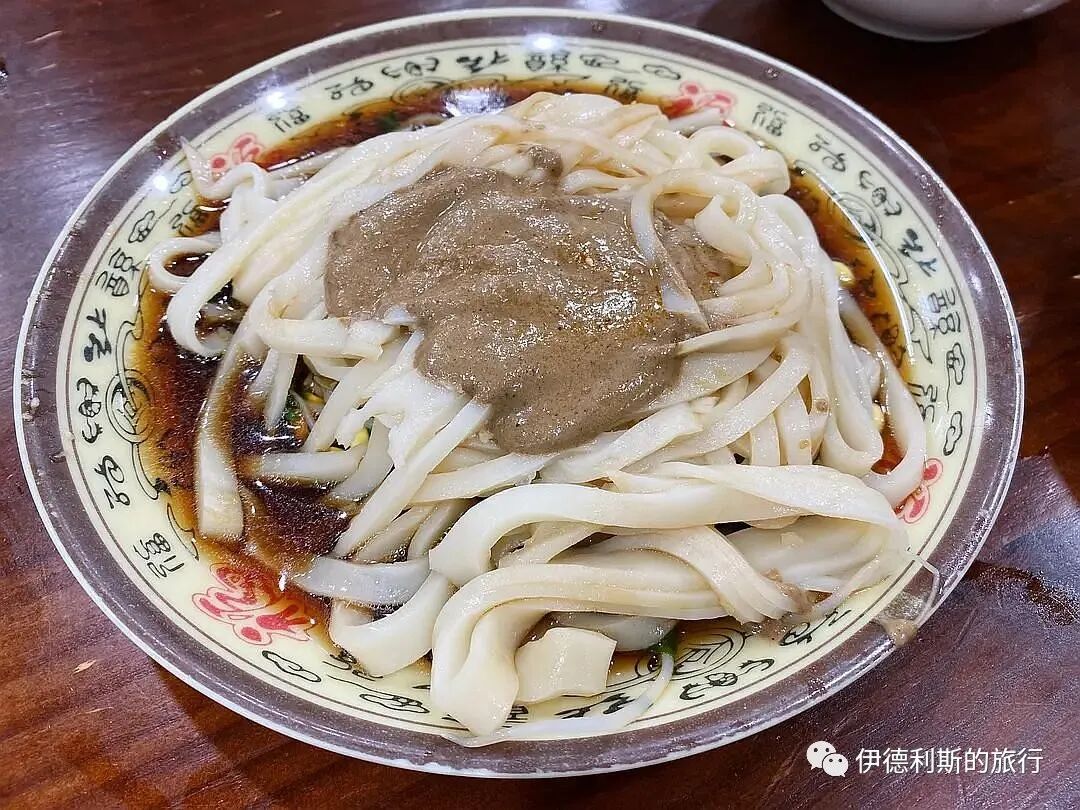
In the morning, I ate steamed noodles (zhengmian) at Huang's Steamed Noodles, the most popular spot at the entrance of Gulou Street. Unlike the cold noodles (liangpi) in Xi'an which are seasoned with raw vinegar, Ankang steamed noodles (zhengmian) use boiled, cooked vinegar. Steamed noodles (zhengmian) usually include chili oil, but I didn't add any because I can't handle much spice.
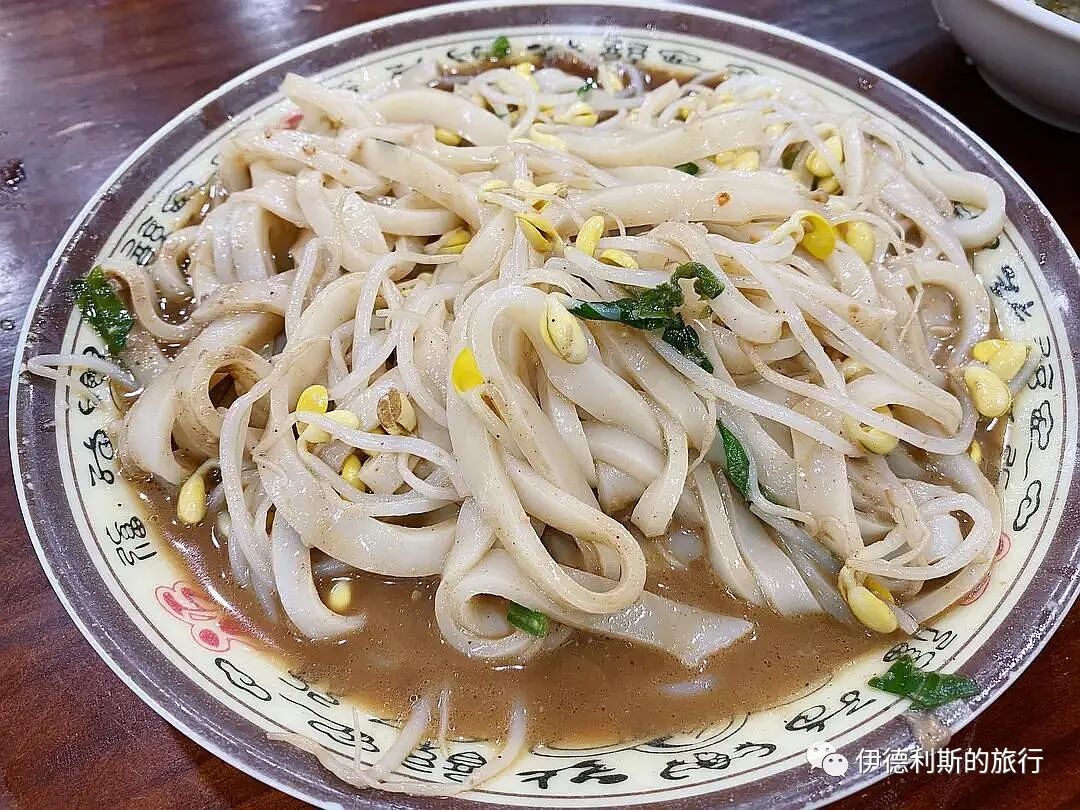
3. Shuhe lamb mince noodles (saozimian)
Shuhe Ancient Town is the last town the Han River passes through before flowing from southern Shaanxi into Hubei. During the Ming and Qing dynasties, when Han River shipping was booming, it was an important commercial post. The town was filled with merchants and shops. Hui Muslims moved to Shuhe to settle during that time, and there are still several hundred households there today.
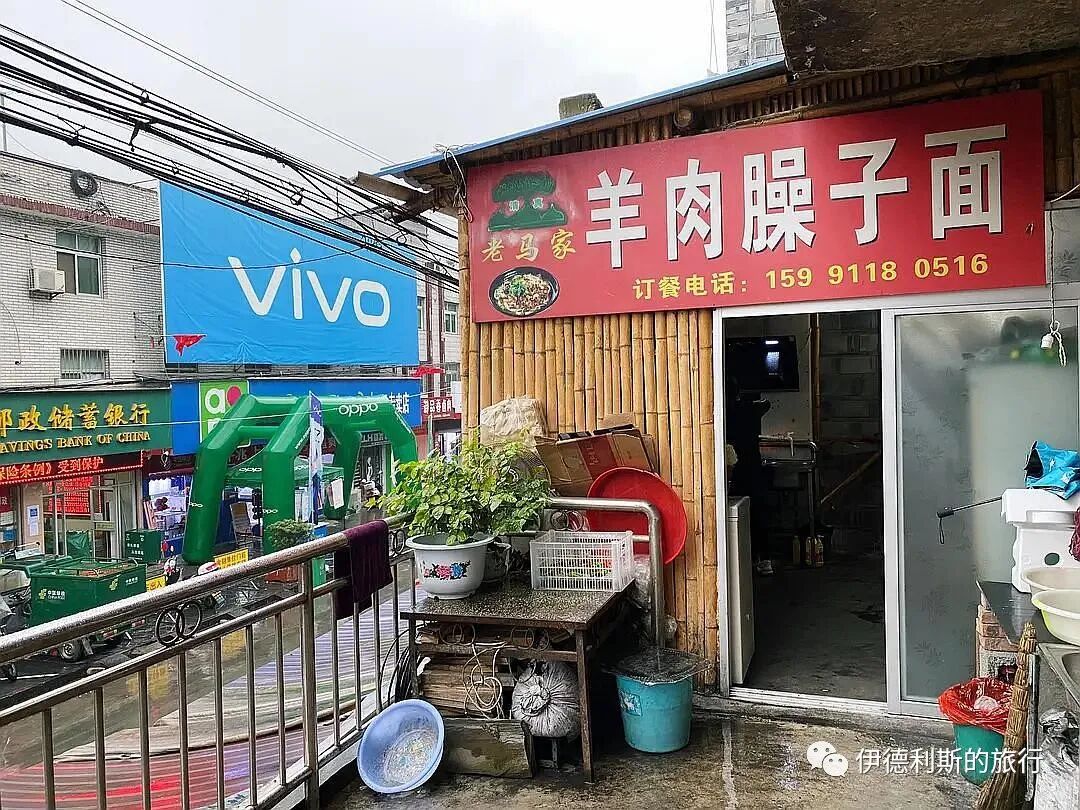
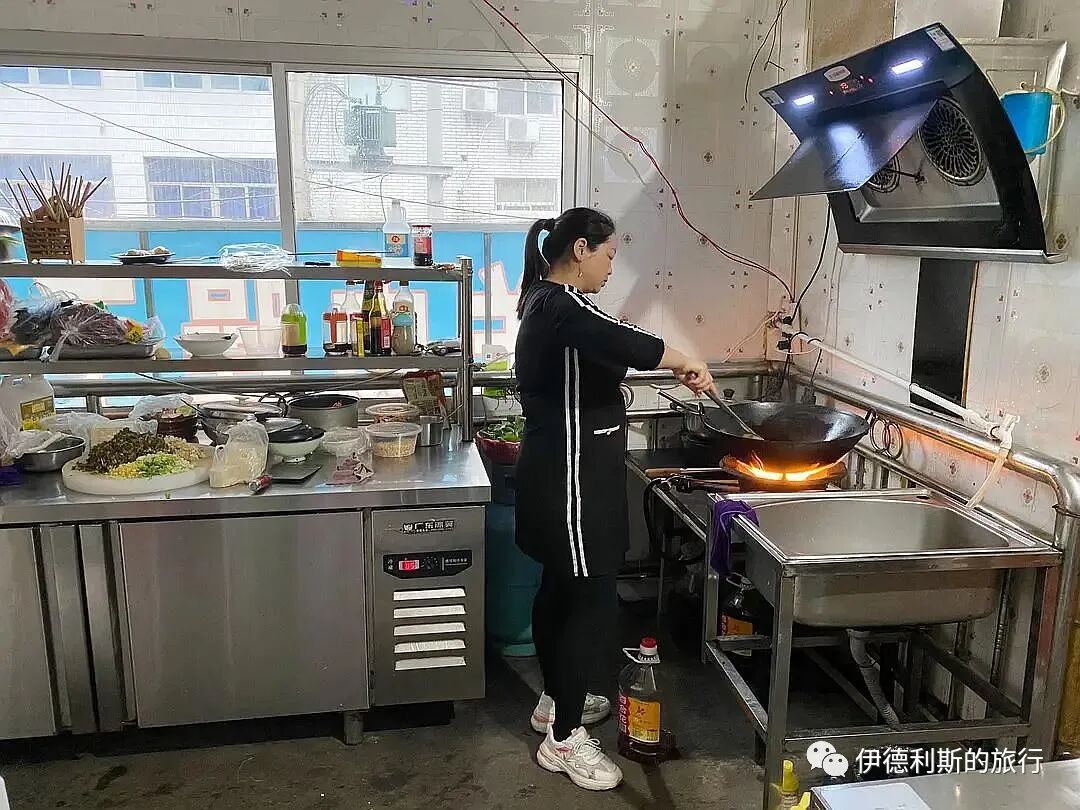
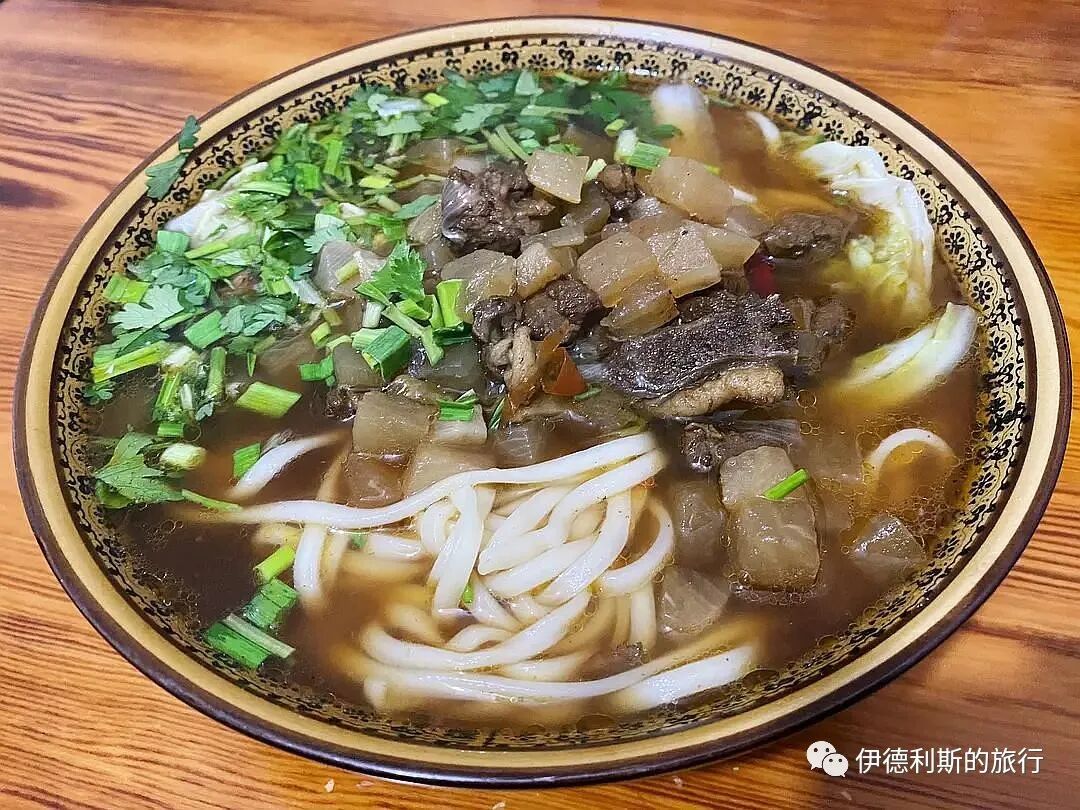
I ate lamb mince noodles (saozimian) on the street in Shuhe Town.
9. Ningxia
1. Yinchuan lamb pot-pinched noodles (xiao jiupian)
I ate lamb pot-pinched noodles (xiao jiupian) at Fuyuan Noodle Restaurant on Zhongxin Lane in Yinchuan. Lamb pot-pinched noodles (xiao jiupian) are made by three people pinching the dough into a large pot at the same time. Seeing the pieces of dough flying into the pot is quite a spectacular sight.
10. Gansu
1. Lanzhou mung bean sparrow-tongue noodles (biandou queshe mian) and river-bank noodle pieces (heyan mianpian)
After the 1980s, many Dongxiang people moved to Lanzhou to make a living, settling mostly in the Baishu Lane, Jiangouyan, and Shangxiyuan areas of Xiaoxihu. I had a small bowl of lentil sparrow-tongue noodles (biandou queshe mian) at Zhonghua Hand-Grabbed Lamb King in Jiangouyan. This place is very popular in Xiaoxihu. You have to share a table at noon, but the environment and service are great, and they refill your water often.
There are many restaurants side-by-side on Jiangouyan Street, and I also ate river-bank noodle slices (heyan mianpian) here. River-bank noodle slices originated in Guanghe County, Linxia. They evolved from stir-fried noodle slices (chao mianpian), but the flavor is much richer.
2. Linxia's old-style braised noodles (lao lu mian)
I ate old-style braised noodles in Linxia. The old-braised noodles were very rich and had a thick, hearty texture.
3. Dahejia's old-style stir-fried noodle slices (lao chao mianpian)
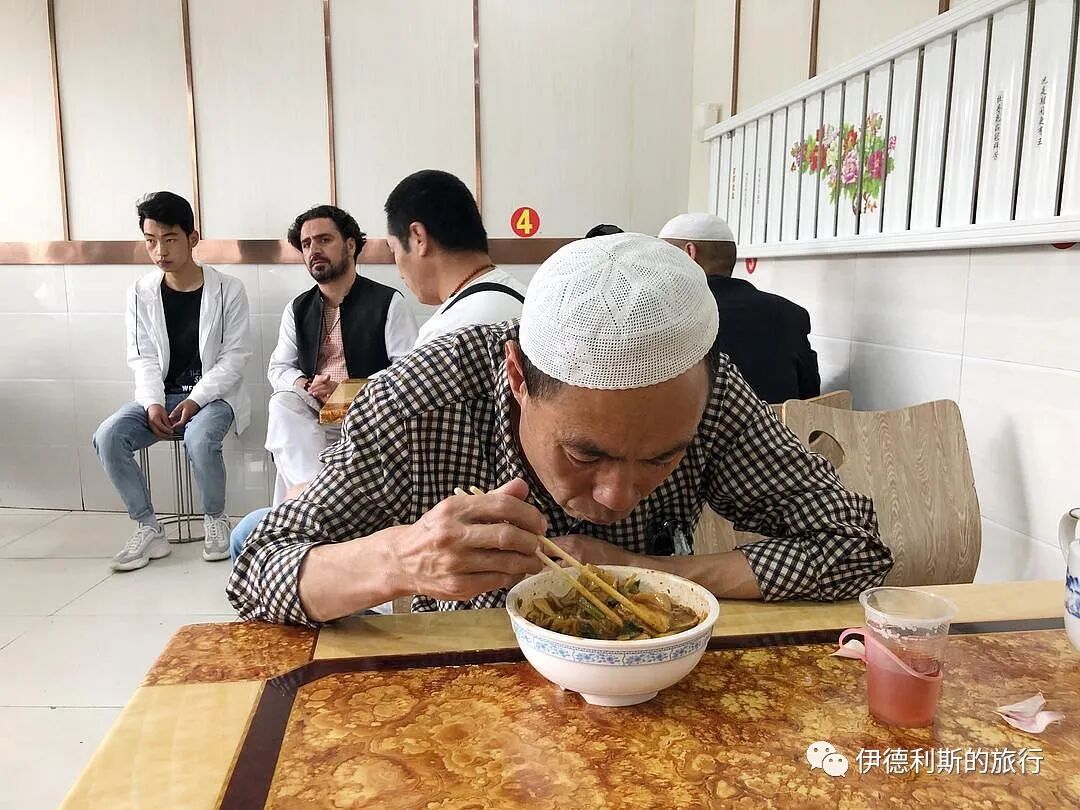
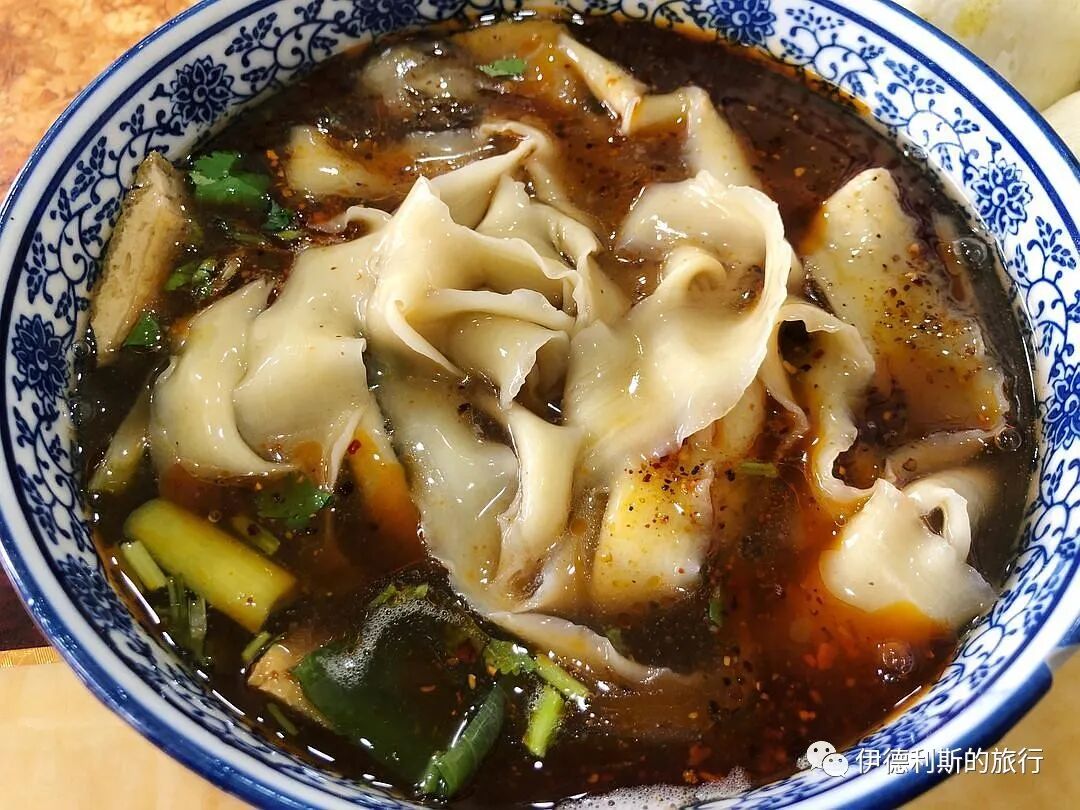
Dahejia is on the border of Gansu and Qinghai. Once you cross the Yellow River Bridge, you are in Minhe, Qinghai. People from the Bonan, Dongxiang, Salar, Han, Hui Muslims, and Tibetan ethnic groups live here. The town has many Dongxiang hand-grabbed lamb restaurants and Bonan waist-knife shops. We ate old-style stir-fried noodle slices here. My standard order whenever I visit the Hehuang region is hand-grabbed lamb (shouzhua) and noodle slices. This long-standing restaurant is crowded at noon. Most people eat cold noodles, but some order river-bank or old-style stir-fried noodles. Their kettles are filled with beef broth, and they put chopped green onions and salt in empty bowls so you can pour the broth and drink it right away.
4. Tofu cold noodles (doufu liangmian) at the Songmingyan Flower Festival
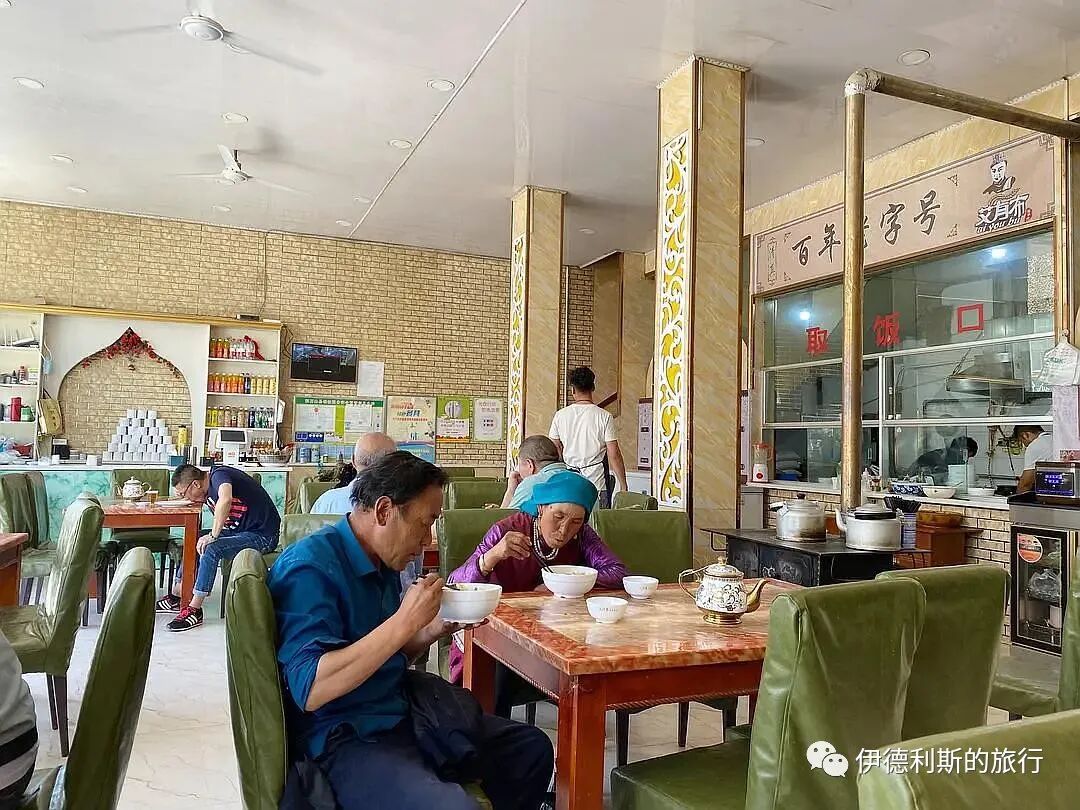
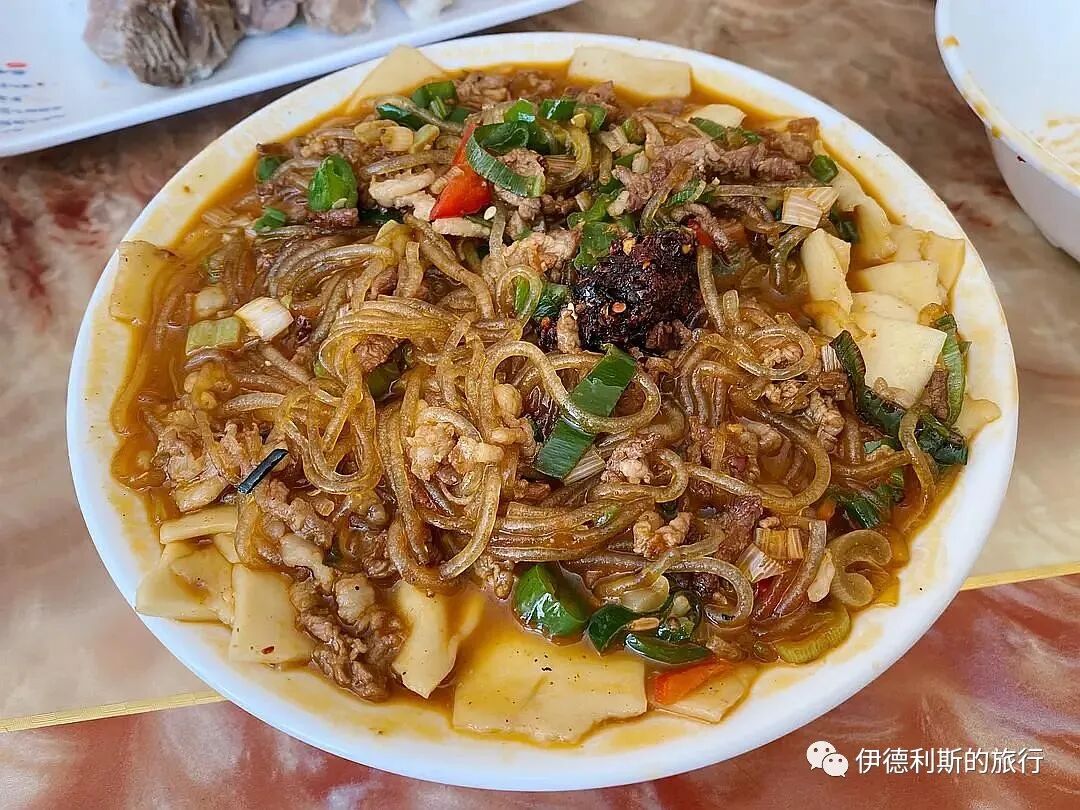
Every year during the Flower Festival, the entrance to the Songmingyan scenic area turns into a big market. It is very lively and sells everything. Before going into the mountains to listen to the folk songs (hua'er), we ate tofu cold noodles at the entrance.
11. Qinghai
1. Xining's fermented vegetable noodle slices (jiangshui mianpian) and lamb intestine noodles (yangchang mian)
A local friend in Xining recommended Dongxiang Jinhai Hand-Grabbed Lamb on Yangjia Lane. We ate fermented vegetable noodle slices there, and the pickled radishes and eight-treasure tea (babao cha) were free. It turned out to be the best meal we had on this trip! It was cheap and delicious, and the service was excellent. Every two minutes, a waiter would come by with a kettle to ask if we needed more tea. Zaina Bu really liked the fermented vegetable broth (jiangshui) and basically drank it all in one go.
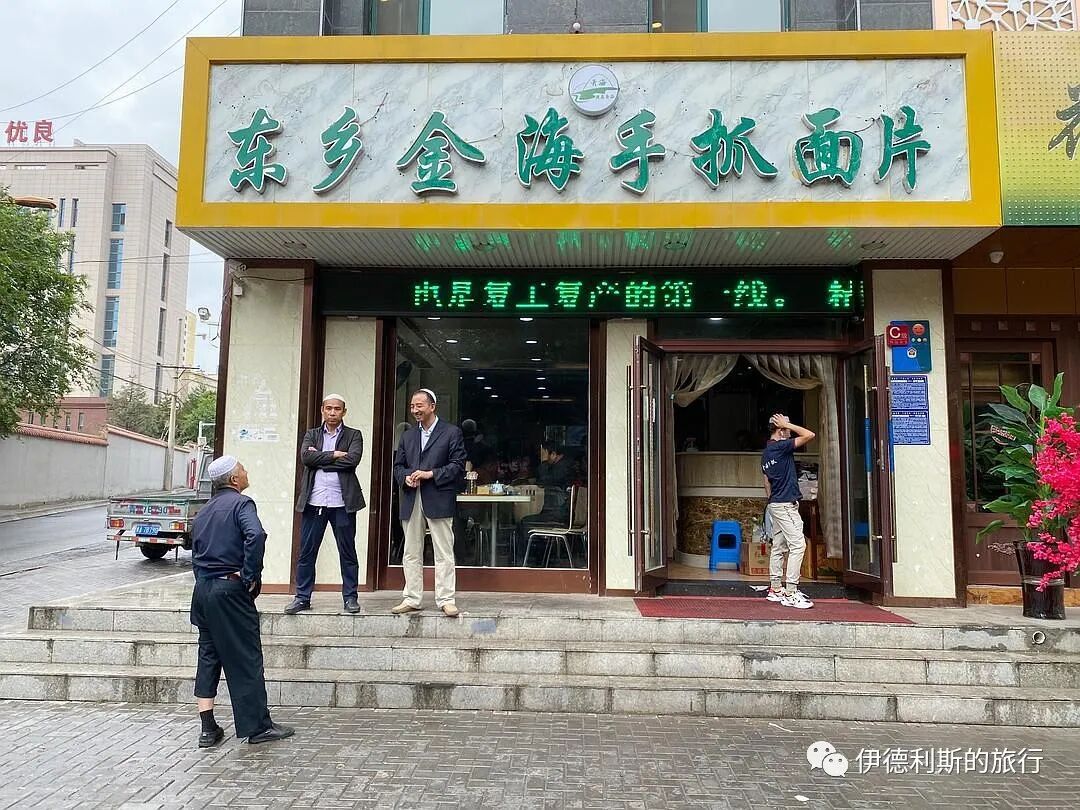
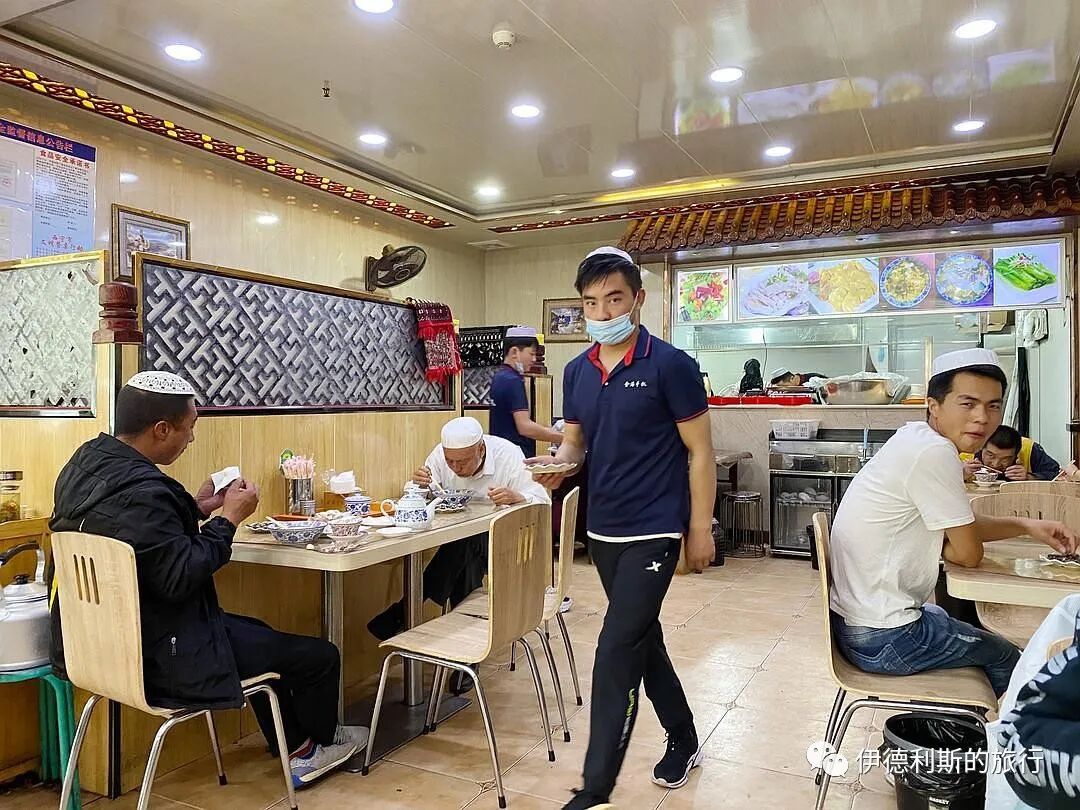
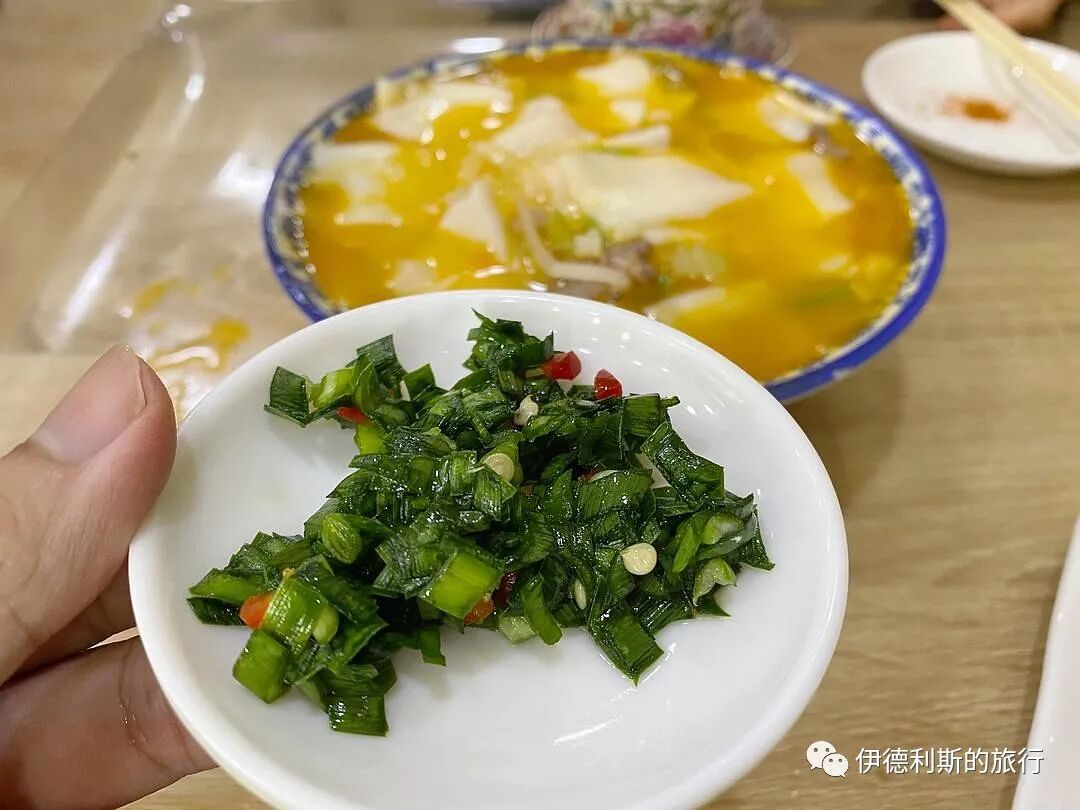
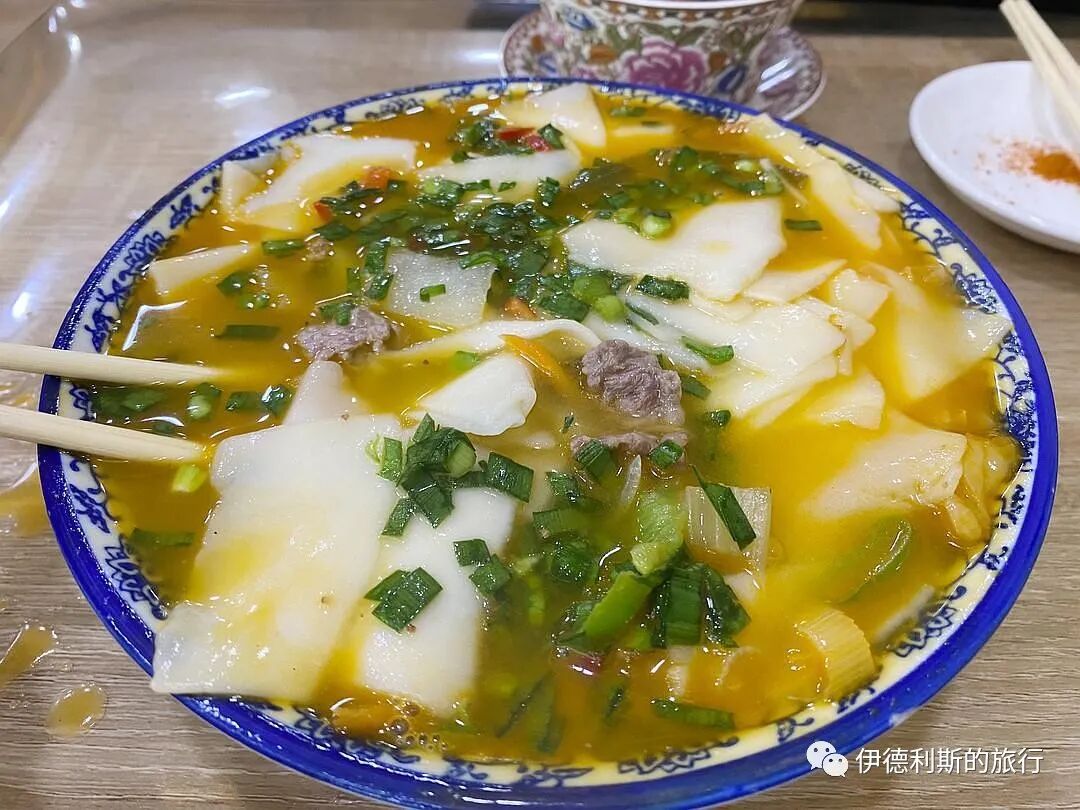
Nilo Food City on the fifth floor of Xining's Wangfujing department store gathers many local halal snacks. It is clean, hygienic, and cheap. We ate the Qinghai-style lamb intestine noodles.
2. Dry mixed noodles with meat sauce from Xunhua.
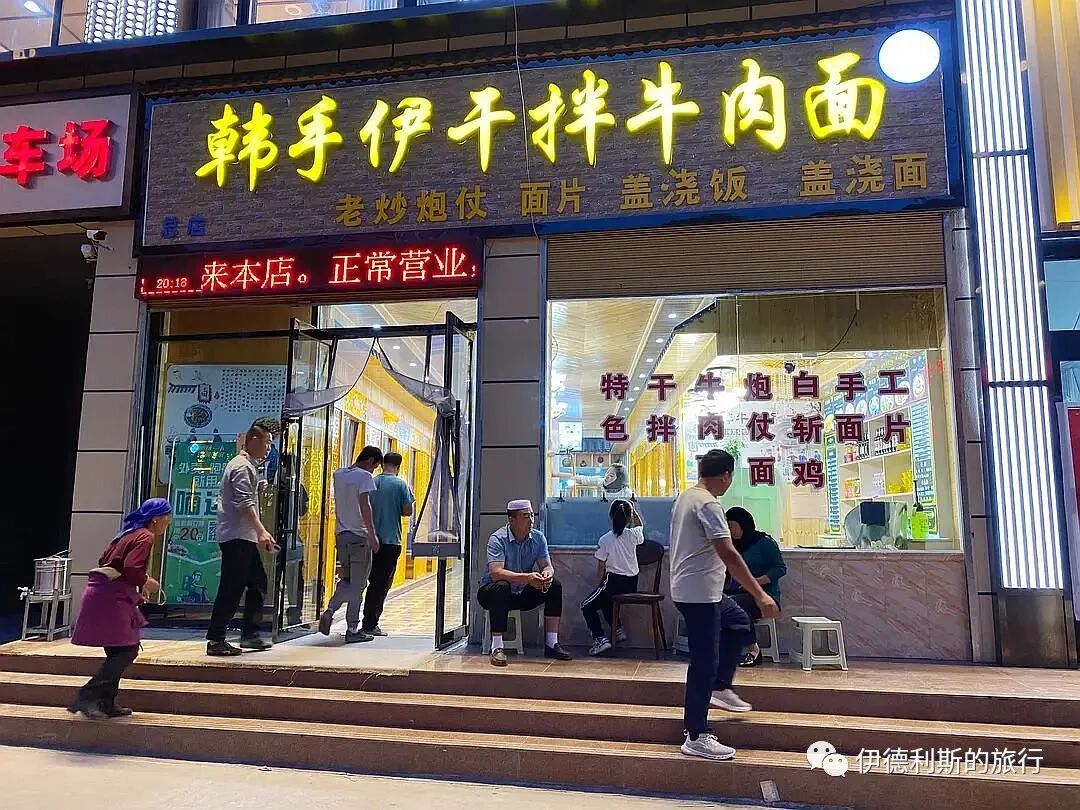
Here in Xunhua, even the beef noodle shops have small private rooms; the environment is really quite good. After ordering, they served meat broth and tea first, and we also ordered a platter of cold dishes. Besides the thread chili (xianlajiao), people in Xunhua also love eating tiger-skin chili (hupilajiao). While waiting for the bus earlier, I noticed the grandpas and grandmas shopping were all carrying a bag of tiger-skin chili.
Dry-mixed noodles with meat sauce (roujiangganban) should be a specialty here in Qinghai. I had it before at a Salar restaurant in Beijing called A-Gong Noodle House, but this time it felt more authentic. The noodles were thin and chewy, the sauce was especially fragrant, and this meal cost less than twenty yuan, which is great value.
12. Xinjiang.
1. Black goat meat stir-fried with noodles (guoyou rou banmian) from Toksun.
The most popular spot in Toksun town is Lao Si Hao. It is packed at meal times, with locals and people who traveled specifically from Turpan. Their specialty is black goat meat stir-fried with noodles. The black goat is a local specialty that lives on the cliffs of the Tianshan Mountains. It is much more expensive than regular lamb, but the taste and texture are truly different. I think it is much better.
2. Yellow noodles (huangmian) with grilled meat from Flaming Mountain.
Eating yellow noodles with grilled meat in Flaming Mountain Town. Flaming Mountain Town is famous for its yellow noodles with grilled meat, and the whole street sells them. The most famous shop is called 'Flaming Mountain Famous Yellow Noodle and Grilled Meat Shop,' but it was fully booked when we arrived, so we ate at the place across the street. We ordered a mix of yellow noodles and cold starch noodles (liangpi). The grilled meat is taken off the skewers and placed on top of the yellow noodles. It is very refreshing in the summer and feels perfect for the climate of Flaming Mountain.
3. Home-style mixed noodles (banmian) from a Hui Muslim family in Urumqi.
Our first meal back in Urumqi featured four types of mixed noodles: celery with meat, onion (piyazi) with cherry radish, eggplant with meat, and pickled vegetables with meat. It was wonderful. This time, the hand-pulled noodles (latiaozi) were made using the coiled method, where the dough is rolled out and then coiled to rest.
4. Bean noodles (doudou mian) and eggplant noodles from Shanshan County.
Eating bean noodles and eggplant noodles in Shanshan County, Turpan. People in Turpan really love beans, including bean soup rice (doudou tangfan), bean dumplings (doudou ququ'er), and bean mixed noodles.
5. Pigeon and turnip (qiamagu) noodles from Yarkant (Shache).
We ate pigeon with the Yarkant Muqam Art Troupe at the 'Muqam Hometown Restaurant.' This is a famous place for eating pigeon in Yarkant.
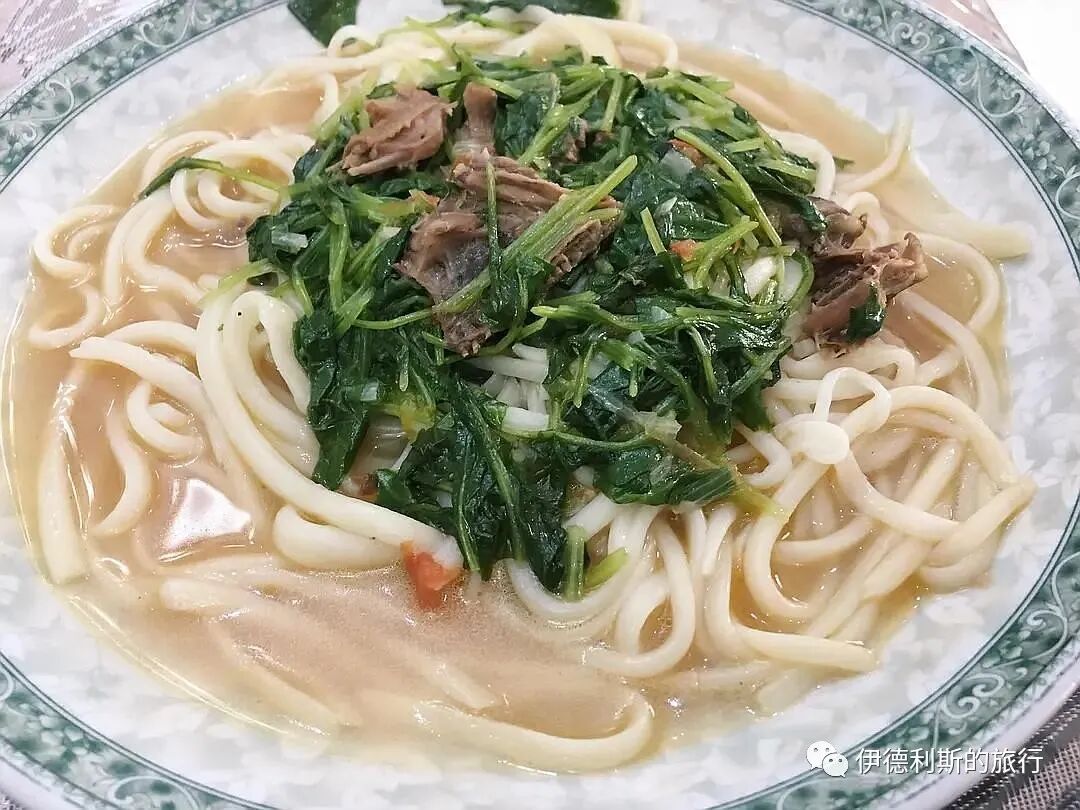
6. Large bowl of wild mushroom and lamb soup rice (tangfan) from Hami.
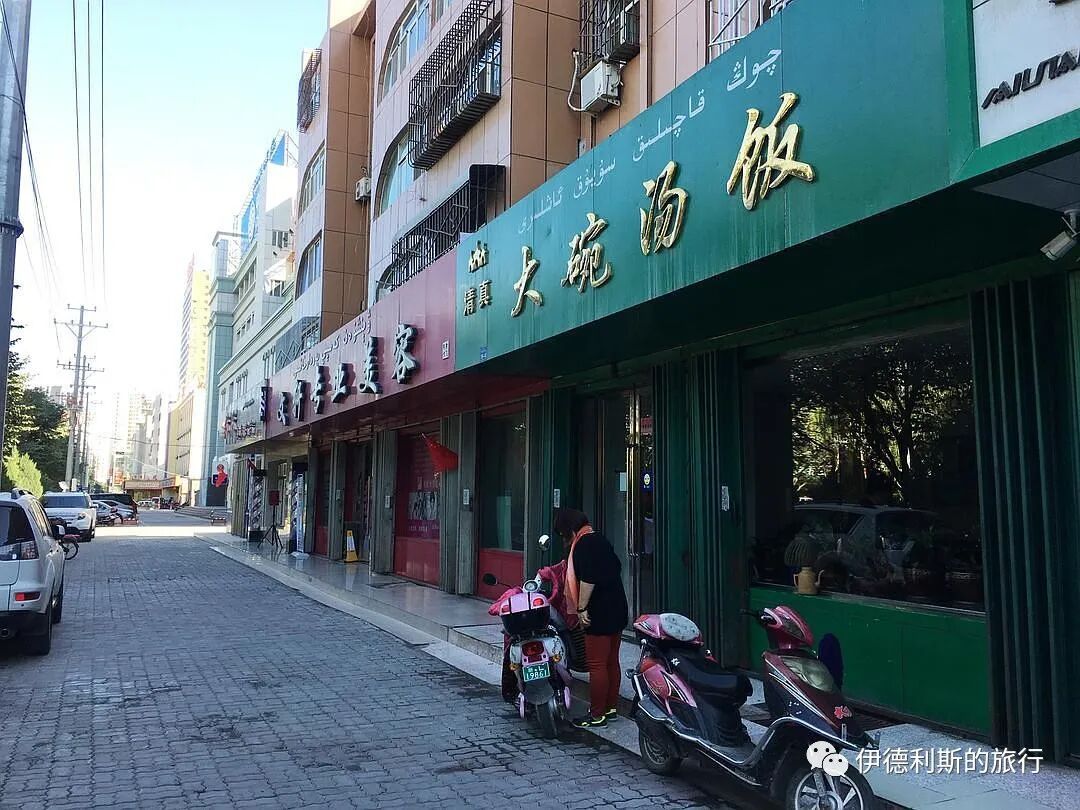
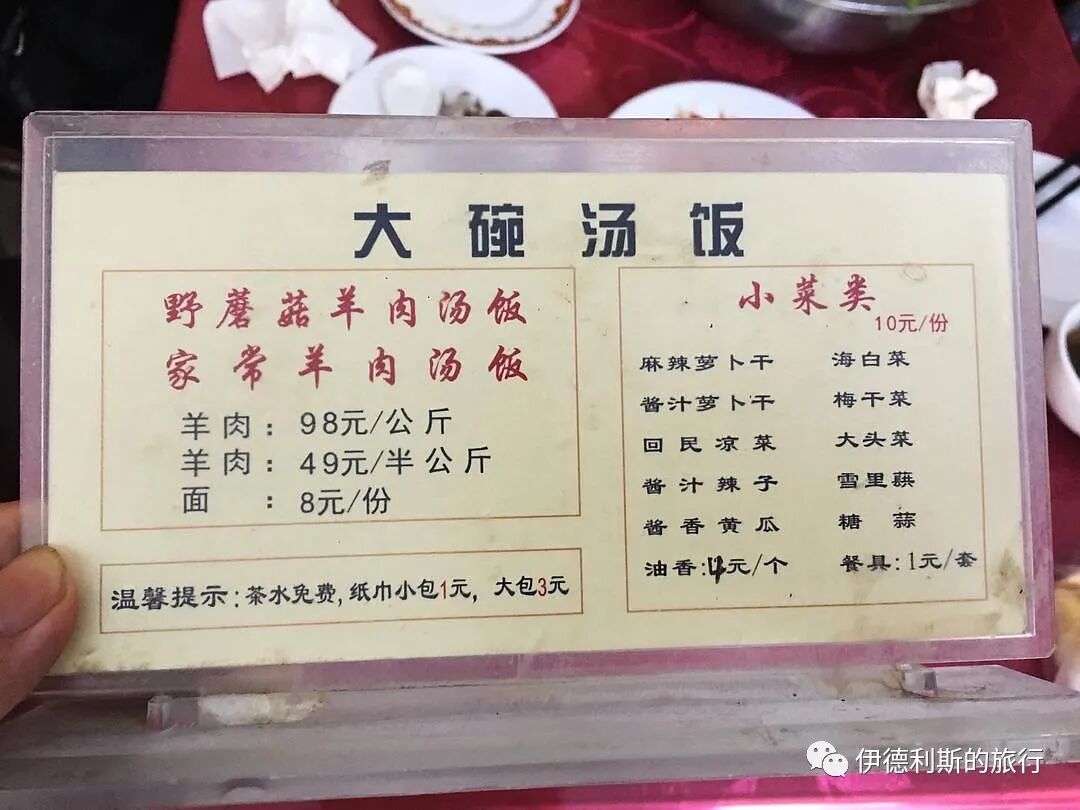
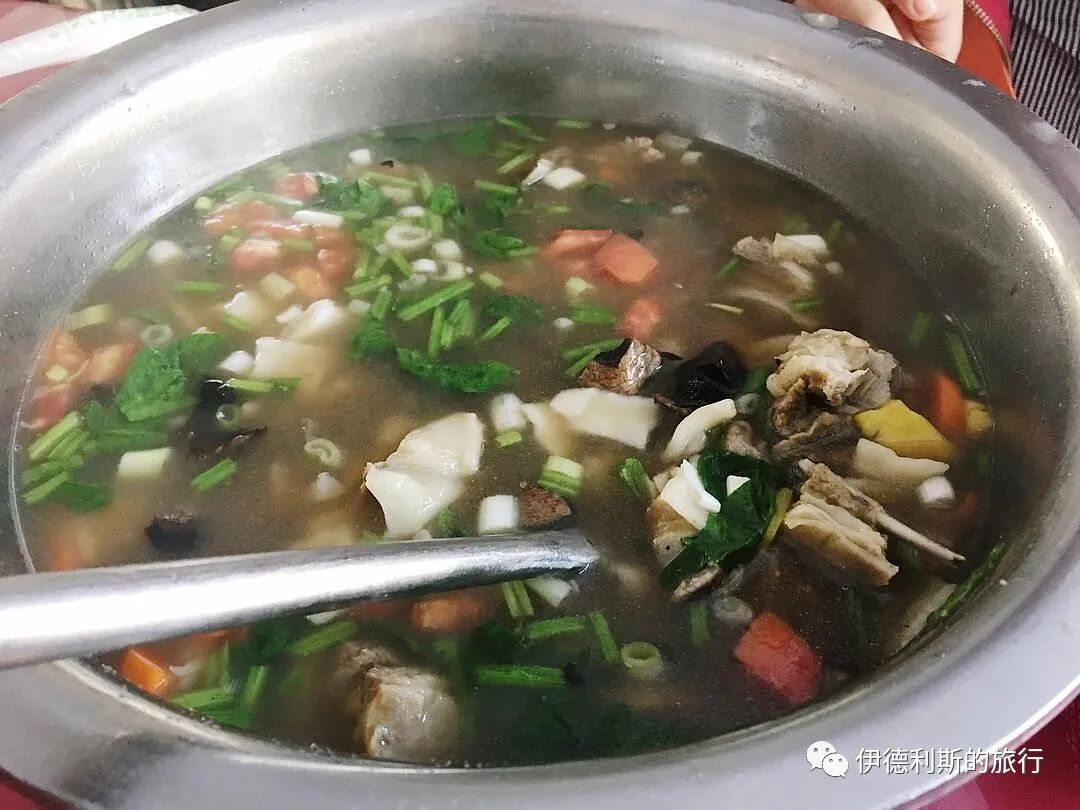
Eating Hui Muslim-style large bowl of wild mushroom and lamb soup rice in Hami. It is called a large bowl, but it is actually a large basin. When you order, the portion is based on the amount of lamb, with a minimum of half a kilogram, served with fried dough (youxiang) and various side dishes. This was my first time eating lamb soup with rice (yangrou tangfan) in such a generous portion, and it felt so warm and comfortable.
7. Wild mushroom noodles (banmian) in Bayanbulak Town.
I ate wild mushroom noodles in Bayanbulak Town, Bayingolin Prefecture. In the summer, the whole town is covered in wild mushrooms drying in the sun.
8. Stir-fried hand-rolled noodles (cuoyumian) in Zhaosu.
I had a plate of stir-fried hand-rolled noodles at the Zhaosu food street. The Huo surname among Hui Muslims comes from "Khwaja," which means "Hoja."
Ten
Summary: Halal Food Guide: Northern China — Noodles, Hui Muslims and Local Flavor is presented here as a firsthand travel account in clear English, beginning with this scene: 12. Black goat oil-splashed mixed noodles (heishanyuguoyouroubanmian) from Toksun, Xinjiang; yellow noodles with roasted meat (huangmiankaorou) from Flaming Mountains; Hui Muslim home-style mixed noodles (banmian) from. The account keeps its focus on Northern China Food, Noodles, Halal Food while preserving the names, places, food, and historical details from the Chinese source.
1. Hand-rolled noodles (shouganmian) from Lingyuan, Liaoning; hand-rolled noodles (shouganmian) from Kaiyuan; cold noodles (lengmian) from Suizhong.
2. Stir-fried oat noodle cones (chaoyoumianwowo) from Zhangjiakou, Hebei.
3. Beijing's braised lamb with Sichuan peppercorn sauce noodles (shaoyangrouhuajiaocuanmian), beef noodles (niuroumian), soybean paste noodles (zhajiangmian), and sliced noodles (daoxiaomian) from Xiguanshi.
4. Shredded chicken cold noodles (jisiliangmian) from the Northwest Corner of Tianjin.
5. Cold broth oat noodles (liangtangyoumian) from Hohhot, Inner Mongolia.
6. Fermented bean paste noodles (jiangmiantiao) from Bo'ai, Henan; stir-fried broth noodles (qiangguomian) from Kaifeng.
7. Sliced noodles (daoxiaomian) from Datong, Shanxi; picked-tip noodles (tijianmian) from Taiyuan.
8. Beef pulled noodles (niurouchemiant) from Xixiang, Shaanxi; steamed noodles (zhengmian) from Ankang; lamb topping noodles (yangrousaozimian) from Shuhe.
9. Lamb and small dough flake soup (lianguoyangrouxiaojiupian) from Yinchuan, Ningxia.
10. Lentil sparrow-tongue noodles (biandouqueshemian) and riverside dough flakes (heyanmianpian) from Lanzhou, Gansu; old-style braised noodles (laolumian) from Linxia; old-style stir-fried dough flakes (laochaomianpian) from Dahejia; cold noodles (liangmian) from the Flower Festival (hua'erhui) at Songmingyan.
11. Fermented bean paste dough flakes (jiangshuimianpian) and lamb intestine noodles (yangchangmian) from Xining, Qinghai; meat sauce dry-mixed noodles (roujiangganbanmian) from Xunhua.
12. Black goat oil-splashed mixed noodles (heishanyuguoyouroubanmian) from Toksun, Xinjiang; yellow noodles with roasted meat (huangmiankaorou) from Flaming Mountains; Hui Muslim home-style mixed noodles (banmian) from Urumqi; bean noodles (doudoumian) and eggplant noodles (qiezimian) from Shanshan County; pigeon and turnip noodles (geziqiamgumian) from Yarkant; big bowl wild mushroom lamb soup noodles (dawanyemoguyangroutangfan) from Hami; wild mushroom mixed noodles (yemogubanmian) from Bayanbulak Town; stir-fried twisted fish noodles (baochaochouyumian) from Zhaosu.
1. Liaoning
1. Hand-rolled noodles (shouganmian) from Lingyuan
Lingyuan sits at the border of Hebei, Liaoning, and Inner Mongolia. It was originally called Tazigou. Since the Qianlong reign of the Qing Dynasty, Hui Muslims from Shandong and Hebei continuously traveled through the Great Wall gap at Xifengkou to reach the northeast. Lingyuan was their first stop after leaving the pass, and some Hui Muslims settled there. The Lingyuan mosque was built during the Qianlong reign. According to the stone tablet inside, Hui Muslim doctor Zhang Lichen and others cured the illness of a Mongol prince in the Harqin Left Banner. The prince then donated the land and money to build the Lingyuan mosque.
I stopped at a small eatery at the entrance of the Lingyuan mosque and ordered the owner's recommended stir-fried shredded meat with hand-rolled noodles (shouganmian). In the Northeast, the portions are truly large and affordable. A bowl of noodles only costs five yuan and is very satisfying.
2. Hand-rolled noodles (shouganmian) from Kaiyuan
Most Hui Muslims in Kaiyuan migrated here during the Qing Dynasty's expansion into the Northeast. The Old City mosque was built in 1406 (the fourth year of the Yongle reign of the Ming Dynasty) and is the oldest mosque in the Northeast. We had a bowl of egg hand-rolled noodles (shouganmian) at Lingtou Niu next to Kaiyuan People's Park. It cost 8 yuan and was a very comfortable meal.
3. Cold noodles (lengmian) from Suizhong
Suizhong is right next to Shanhai Pass and is the southwestern-most county in Liaoning. Starting in the 18th century, more than ten Hui Muslim families, including the Zhang, Ding, Li, and Jin families, moved to Suizhong from Hebei Province. The first mosque was built in 1737 (the second year of the Qianlong reign) below the Kuixing Pavilion in the southeast of Suizhong city. We ate local-style cold noodles (lengmian) in Suizhong; they were delicious, cheap, and perfect for cooling off.
2. Hebei
1. Stir-fried oat noodle cones (chao youmian wowo) in Zhangjiakou
The Xinhua Street Mosque in Zhangjiakou was originally called the Shenggou Mosque. It was built in 1863 (the second year of the Tongzhi reign) with funds raised by over eighty Hui Muslim families from Ningxia who came to Zhangjiakou for the camel trade, which is why it is also known as the Camel Workshop Mosque (Tuofang Qingzhensi). These Ningxia Hui Muslims were mainly from the Ma, Liu, Li, Du, Wu, Wang, and Ding families. They used camels to transport furs, silk, tea, and other goods for merchants, traveling between Inner Mongolia, Shanxi, Gansu, Mongolia, and Russia.
I ate stir-fried oat noodle cones at Binbin Snacks across from the Xinhua Street Mosque.
3. Beijing
1. Braised beef noodles, soybean paste noodles (zhajiangmian), and roasted lamb with Sichuan peppercorn sauce noodles (shao yangrou huajiao cuanmian) in Beijing
I had braised beef noodles, a small bowl of beef, and sweet and sour radish (tangcu xinlimei) at Baodu Xiaobaimao on Dongzhimen Inner Street. They gave such a huge portion of beef in the small bowl that it completely covered the noodles, which was so satisfying! I wasn't even hungry by the time night came.
I usually like to go to Liu's Men-ding (a type of pan-fried bun) at Hongmiao for their soybean paste noodles.
I ate roasted lamb with Sichuan peppercorn sauce noodles at the Drum Tower (Gulou) on Donggong Street. Beijingers often eat roasted lamb and make their own Sichuan peppercorn sauce, but it is rare to see them combined. I really love this way of eating it; it is very satisfying.
2. Sliced noodles (daoxiaomian) in Xiguanshi
The Hui Muslims of Xiguanshi came to Beijing in the early Ming Dynasty following the Prince of Yan on his northern campaign. Because they were near the main trade route from Beijing to Zhangjiakou and were skilled in martial arts, the Hui Muslims of Xiguanshi opened many security escort agencies outside Beijing's Qianmen Gate starting in the Qing Dynasty. They specialized in protecting merchants from the five northwestern provinces, primarily serving wealthy Shanxi merchants. People say the character Li Wuye, known for his magic slingshot in the story "Shigong An," was a Hui Muslim from Xiguanshi. The depictions of the archer Li Guoliang and the Dongguangyu Escort Agency outside Qianmen in the book "Yongzheng Jianxia Tu" vividly show the life of the Xiguanshi Hui Muslim escort agencies during the Qing Dynasty.
Because of their close ties with Shanxi, you can find halal sliced noodles and Bashang oat noodles in Xiguanshi that are hard to find in the city. We ate sliced noodles at an old shop in the village and also ordered beef tongue and meat-stuffed tripe (doubaorou). I had been craving sliced noodles ever since I had them in Datong, and I was finally able to eat them again.
4. Tianjin
1. Shredded chicken cold noodles (jisi liangmian) at the northwest corner.
I had a bowl of shredded chicken cold noodles with a childhood friend at Huancheng Noodle Restaurant, plus a plate of century egg with tofu (pidan doufu). It was very refreshing. Almost no other halal restaurant in Beijing makes cold noodles better than this one.
5. Inner Mongolia
1. Cold broth oat noodles (liangtang youmian) in Hohhot.
I ate cold broth oat noodles at Xiangcunxiang Youmian on Niujie Street. They serve oat noodles four ways: with hot lamb broth, cold beef broth, mixed with vegetables, or stir-fried with meat. You can choose between oat noodle rolls (youmian wowo) or regular noodles. I find the cold broth version very satisfying in the summer. When eating, first pour vinegar and chili oil over the vegetables and fried sauce, mix it well, and then add the oat noodle rolls. It is very refreshing.
6. Henan
1. Fermented bean broth noodles (jiang miantiao) in Bo'ai.
The Xiguan Mosque in Bo'ai was built during the Yuan Dynasty and is known as the "First Mosque of Northern Henan." We ate the local specialty, fermented bean broth noodles. These are made by boiling the liquid squeezed out during tofu production into a broth, then adding soybeans, peanuts, celery, and crushed sesame paste. It tastes sour and fragrant, and it feels even better to eat in the summer.
2. Stir-fried broth noodles (qiangguo mian) in Kaifeng.
The Dongsimen Night Market in Kaifeng is at the intersection of Dongdajie Street and Jiefang Road. The market itself is small, but the atmosphere is great, with locals coming to eat and chat. We ate the classic stir-fried broth noodles at the night market.
7. Shanxi
1. Knife-cut noodles (daoxiao mian) in Datong.
The History of Yuan (Yuan Shi) records that in 1324, the first year of the Taiding era, the emperor ordered mosques to be built in Shangdu and Datong, granting 40,000 ingots of currency. This makes the Datong Mosque one of only two mosques from the Yuan Dynasty with official imperial records.
Yingze Street is a snack street in Datong with several halal restaurants. Most of the halal snacks here are only served in the morning, so it is best to come for breakfast. We ate knife-cut noodles with dried tofu and beef meatballs at Fengji Breakfast Shop. Datong's knife-cut noodles are probably the most famous. We tried them, and they lived up to their reputation; the texture of the noodles is excellent. People in Datong like to pair their knife-cut noodles with various braised meats and soy-sauce-marinated foods, which makes the flavor and texture very rich.
2. Poked noodles (tijian mian) in Taiyuan.
After the Ming Dynasty, Taiyuan gradually formed the "Ten Great Surnames of the Hui Muslims." During the Qing Dynasty, Taiyuan had over 100 local Hui Muslim households, plus more than 10 households of Hui Muslims who came from Suiyuan to do business, totaling five or six hundred people. After the Zhengtai Railway opened in 1907, the number of Hui Muslims coming to Taiyuan from Hebei increased significantly.
Yiqingyuan is a large halal restaurant in Taiyuan, where I ate hand-picked noodles (tijianmian). Shanxi has a truly rich variety of wheat-based foods. Hand-picked noodles (tijianmian) are made by using chopsticks to flick the dough into the pot. They are served with two types of sauce: meat gravy and tomato-egg sauce. This bowl of noodles only cost five yuan.
8. Shaanxi
1. Xixiang beef pulled noodles (che mian)
Xixiang County is located in the middle of the Hanzhong Basin in southern Shaanxi, nestled between the Qinling Mountains and the Bashan Mountains. The Muma River, a tributary of the Han River, flows through the county seat. Starting from the Ming Dynasty, Hui Muslims from Pingliang, Gansu, traveled to settle in Xixiang. During the Kangxi and Qianlong eras, the Hui Muslim population continued to grow. Local friends (dost) enthusiastically took us to eat.
Halal restaurants in Xixiang are mainly concentrated around the West Gate area. We ate the local specialty, braised beef pulled noodles (che mian), at an imam's (ahong) shop.
2. Ankang steamed noodles (zhengmian)
Ankang is the largest Muslim community in southern Shaanxi. Hui Muslims have lived there since the Ming Dynasty, and by the Republican era, seven mosques had been built. Ankang also has the richest halal food in southern Shaanxi.
In the morning, I ate steamed noodles (zhengmian) at Huang's Steamed Noodles, the most popular spot at the entrance of Gulou Street. Unlike the cold noodles (liangpi) in Xi'an which are seasoned with raw vinegar, Ankang steamed noodles (zhengmian) use boiled, cooked vinegar. Steamed noodles (zhengmian) usually include chili oil, but I didn't add any because I can't handle much spice.
3. Shuhe lamb mince noodles (saozimian)
Shuhe Ancient Town is the last town the Han River passes through before flowing from southern Shaanxi into Hubei. During the Ming and Qing dynasties, when Han River shipping was booming, it was an important commercial post. The town was filled with merchants and shops. Hui Muslims moved to Shuhe to settle during that time, and there are still several hundred households there today.
I ate lamb mince noodles (saozimian) on the street in Shuhe Town.
9. Ningxia
1. Yinchuan lamb pot-pinched noodles (xiao jiupian)
I ate lamb pot-pinched noodles (xiao jiupian) at Fuyuan Noodle Restaurant on Zhongxin Lane in Yinchuan. Lamb pot-pinched noodles (xiao jiupian) are made by three people pinching the dough into a large pot at the same time. Seeing the pieces of dough flying into the pot is quite a spectacular sight.
10. Gansu
1. Lanzhou mung bean sparrow-tongue noodles (biandou queshe mian) and river-bank noodle pieces (heyan mianpian)
After the 1980s, many Dongxiang people moved to Lanzhou to make a living, settling mostly in the Baishu Lane, Jiangouyan, and Shangxiyuan areas of Xiaoxihu. I had a small bowl of lentil sparrow-tongue noodles (biandou queshe mian) at Zhonghua Hand-Grabbed Lamb King in Jiangouyan. This place is very popular in Xiaoxihu. You have to share a table at noon, but the environment and service are great, and they refill your water often.
There are many restaurants side-by-side on Jiangouyan Street, and I also ate river-bank noodle slices (heyan mianpian) here. River-bank noodle slices originated in Guanghe County, Linxia. They evolved from stir-fried noodle slices (chao mianpian), but the flavor is much richer.
2. Linxia's old-style braised noodles (lao lu mian)
I ate old-style braised noodles in Linxia. The old-braised noodles were very rich and had a thick, hearty texture.
3. Dahejia's old-style stir-fried noodle slices (lao chao mianpian)
Dahejia is on the border of Gansu and Qinghai. Once you cross the Yellow River Bridge, you are in Minhe, Qinghai. People from the Bonan, Dongxiang, Salar, Han, Hui Muslims, and Tibetan ethnic groups live here. The town has many Dongxiang hand-grabbed lamb restaurants and Bonan waist-knife shops. We ate old-style stir-fried noodle slices here. My standard order whenever I visit the Hehuang region is hand-grabbed lamb (shouzhua) and noodle slices. This long-standing restaurant is crowded at noon. Most people eat cold noodles, but some order river-bank or old-style stir-fried noodles. Their kettles are filled with beef broth, and they put chopped green onions and salt in empty bowls so you can pour the broth and drink it right away.
4. Tofu cold noodles (doufu liangmian) at the Songmingyan Flower Festival
Every year during the Flower Festival, the entrance to the Songmingyan scenic area turns into a big market. It is very lively and sells everything. Before going into the mountains to listen to the folk songs (hua'er), we ate tofu cold noodles at the entrance.
11. Qinghai
1. Xining's fermented vegetable noodle slices (jiangshui mianpian) and lamb intestine noodles (yangchang mian)
A local friend in Xining recommended Dongxiang Jinhai Hand-Grabbed Lamb on Yangjia Lane. We ate fermented vegetable noodle slices there, and the pickled radishes and eight-treasure tea (babao cha) were free. It turned out to be the best meal we had on this trip! It was cheap and delicious, and the service was excellent. Every two minutes, a waiter would come by with a kettle to ask if we needed more tea. Zaina Bu really liked the fermented vegetable broth (jiangshui) and basically drank it all in one go.
Nilo Food City on the fifth floor of Xining's Wangfujing department store gathers many local halal snacks. It is clean, hygienic, and cheap. We ate the Qinghai-style lamb intestine noodles.
2. Dry mixed noodles with meat sauce from Xunhua.
Here in Xunhua, even the beef noodle shops have small private rooms; the environment is really quite good. After ordering, they served meat broth and tea first, and we also ordered a platter of cold dishes. Besides the thread chili (xianlajiao), people in Xunhua also love eating tiger-skin chili (hupilajiao). While waiting for the bus earlier, I noticed the grandpas and grandmas shopping were all carrying a bag of tiger-skin chili.
Dry-mixed noodles with meat sauce (roujiangganban) should be a specialty here in Qinghai. I had it before at a Salar restaurant in Beijing called A-Gong Noodle House, but this time it felt more authentic. The noodles were thin and chewy, the sauce was especially fragrant, and this meal cost less than twenty yuan, which is great value.
12. Xinjiang.
1. Black goat meat stir-fried with noodles (guoyou rou banmian) from Toksun.
The most popular spot in Toksun town is Lao Si Hao. It is packed at meal times, with locals and people who traveled specifically from Turpan. Their specialty is black goat meat stir-fried with noodles. The black goat is a local specialty that lives on the cliffs of the Tianshan Mountains. It is much more expensive than regular lamb, but the taste and texture are truly different. I think it is much better.
2. Yellow noodles (huangmian) with grilled meat from Flaming Mountain.
Eating yellow noodles with grilled meat in Flaming Mountain Town. Flaming Mountain Town is famous for its yellow noodles with grilled meat, and the whole street sells them. The most famous shop is called 'Flaming Mountain Famous Yellow Noodle and Grilled Meat Shop,' but it was fully booked when we arrived, so we ate at the place across the street. We ordered a mix of yellow noodles and cold starch noodles (liangpi). The grilled meat is taken off the skewers and placed on top of the yellow noodles. It is very refreshing in the summer and feels perfect for the climate of Flaming Mountain.
3. Home-style mixed noodles (banmian) from a Hui Muslim family in Urumqi.
Our first meal back in Urumqi featured four types of mixed noodles: celery with meat, onion (piyazi) with cherry radish, eggplant with meat, and pickled vegetables with meat. It was wonderful. This time, the hand-pulled noodles (latiaozi) were made using the coiled method, where the dough is rolled out and then coiled to rest.
4. Bean noodles (doudou mian) and eggplant noodles from Shanshan County.
Eating bean noodles and eggplant noodles in Shanshan County, Turpan. People in Turpan really love beans, including bean soup rice (doudou tangfan), bean dumplings (doudou ququ'er), and bean mixed noodles.
5. Pigeon and turnip (qiamagu) noodles from Yarkant (Shache).
We ate pigeon with the Yarkant Muqam Art Troupe at the 'Muqam Hometown Restaurant.' This is a famous place for eating pigeon in Yarkant.
6. Large bowl of wild mushroom and lamb soup rice (tangfan) from Hami.
Eating Hui Muslim-style large bowl of wild mushroom and lamb soup rice in Hami. It is called a large bowl, but it is actually a large basin. When you order, the portion is based on the amount of lamb, with a minimum of half a kilogram, served with fried dough (youxiang) and various side dishes. This was my first time eating lamb soup with rice (yangrou tangfan) in such a generous portion, and it felt so warm and comfortable.
7. Wild mushroom noodles (banmian) in Bayanbulak Town.
I ate wild mushroom noodles in Bayanbulak Town, Bayingolin Prefecture. In the summer, the whole town is covered in wild mushrooms drying in the sun.
8. Stir-fried hand-rolled noodles (cuoyumian) in Zhaosu.
I had a plate of stir-fried hand-rolled noodles at the Zhaosu food street. The Huo surname among Hui Muslims comes from "Khwaja," which means "Hoja."
Ten
Halal Food Guide: Northern China — Noodles, Hui Muslims and Local Flavor
Articles • ali2007fr posted the article • 0 comments • 137 views • 2026-05-18 01:28
Reposted from the web
Summary: Halal Food Guide: Northern China — Noodles, Hui Muslims and Local Flavor is presented here as a firsthand travel account in clear English, beginning with this scene: 12. Black goat oil-splashed mixed noodles (heishanyuguoyouroubanmian) from Toksun, Xinjiang; yellow noodles with roasted meat (huangmiankaorou) from Flaming Mountains; Hui Muslim home-style mixed noodles (banmian) from. The account keeps its focus on Northern China Food, Noodles, Halal Food while preserving the names, places, food, and historical details from the Chinese source.
1. Hand-rolled noodles (shouganmian) from Lingyuan, Liaoning; hand-rolled noodles (shouganmian) from Kaiyuan; cold noodles (lengmian) from Suizhong.
2. Stir-fried oat noodle cones (chaoyoumianwowo) from Zhangjiakou, Hebei.
3. Beijing's braised lamb with Sichuan peppercorn sauce noodles (shaoyangrouhuajiaocuanmian), beef noodles (niuroumian), soybean paste noodles (zhajiangmian), and sliced noodles (daoxiaomian) from Xiguanshi.
4. Shredded chicken cold noodles (jisiliangmian) from the Northwest Corner of Tianjin.
5. Cold broth oat noodles (liangtangyoumian) from Hohhot, Inner Mongolia.
6. Fermented bean paste noodles (jiangmiantiao) from Bo'ai, Henan; stir-fried broth noodles (qiangguomian) from Kaifeng.
7. Sliced noodles (daoxiaomian) from Datong, Shanxi; picked-tip noodles (tijianmian) from Taiyuan.
8. Beef pulled noodles (niurouchemiant) from Xixiang, Shaanxi; steamed noodles (zhengmian) from Ankang; lamb topping noodles (yangrousaozimian) from Shuhe.
9. Lamb and small dough flake soup (lianguoyangrouxiaojiupian) from Yinchuan, Ningxia.
10. Lentil sparrow-tongue noodles (biandouqueshemian) and riverside dough flakes (heyanmianpian) from Lanzhou, Gansu; old-style braised noodles (laolumian) from Linxia; old-style stir-fried dough flakes (laochaomianpian) from Dahejia; cold noodles (liangmian) from the Flower Festival (hua'erhui) at Songmingyan.
11. Fermented bean paste dough flakes (jiangshuimianpian) and lamb intestine noodles (yangchangmian) from Xining, Qinghai; meat sauce dry-mixed noodles (roujiangganbanmian) from Xunhua.
12. Black goat oil-splashed mixed noodles (heishanyuguoyouroubanmian) from Toksun, Xinjiang; yellow noodles with roasted meat (huangmiankaorou) from Flaming Mountains; Hui Muslim home-style mixed noodles (banmian) from Urumqi; bean noodles (doudoumian) and eggplant noodles (qiezimian) from Shanshan County; pigeon and turnip noodles (geziqiamgumian) from Yarkant; big bowl wild mushroom lamb soup noodles (dawanyemoguyangroutangfan) from Hami; wild mushroom mixed noodles (yemogubanmian) from Bayanbulak Town; stir-fried twisted fish noodles (baochaochouyumian) from Zhaosu.
1. Liaoning
1. Hand-rolled noodles (shouganmian) from Lingyuan
Lingyuan sits at the border of Hebei, Liaoning, and Inner Mongolia. It was originally called Tazigou. Since the Qianlong reign of the Qing Dynasty, Hui Muslims from Shandong and Hebei continuously traveled through the Great Wall gap at Xifengkou to reach the northeast. Lingyuan was their first stop after leaving the pass, and some Hui Muslims settled there. The Lingyuan mosque was built during the Qianlong reign. According to the stone tablet inside, Hui Muslim doctor Zhang Lichen and others cured the illness of a Mongol prince in the Harqin Left Banner. The prince then donated the land and money to build the Lingyuan mosque.
I stopped at a small eatery at the entrance of the Lingyuan mosque and ordered the owner's recommended stir-fried shredded meat with hand-rolled noodles (shouganmian). In the Northeast, the portions are truly large and affordable. A bowl of noodles only costs five yuan and is very satisfying.
2. Hand-rolled noodles (shouganmian) from Kaiyuan
Most Hui Muslims in Kaiyuan migrated here during the Qing Dynasty's expansion into the Northeast. The Old City mosque was built in 1406 (the fourth year of the Yongle reign of the Ming Dynasty) and is the oldest mosque in the Northeast. We had a bowl of egg hand-rolled noodles (shouganmian) at Lingtou Niu next to Kaiyuan People's Park. It cost 8 yuan and was a very comfortable meal.
3. Cold noodles (lengmian) from Suizhong
Suizhong is right next to Shanhai Pass and is the southwestern-most county in Liaoning. Starting in the 18th century, more than ten Hui Muslim families, including the Zhang, Ding, Li, and Jin families, moved to Suizhong from Hebei Province. The first mosque was built in 1737 (the second year of the Qianlong reign) below the Kuixing Pavilion in the southeast of Suizhong city. We ate local-style cold noodles (lengmian) in Suizhong; they were delicious, cheap, and perfect for cooling off.
2. Hebei
1. Stir-fried oat noodle cones (chao youmian wowo) in Zhangjiakou
The Xinhua Street Mosque in Zhangjiakou was originally called the Shenggou Mosque. It was built in 1863 (the second year of the Tongzhi reign) with funds raised by over eighty Hui Muslim families from Ningxia who came to Zhangjiakou for the camel trade, which is why it is also known as the Camel Workshop Mosque (Tuofang Qingzhensi). These Ningxia Hui Muslims were mainly from the Ma, Liu, Li, Du, Wu, Wang, and Ding families. They used camels to transport furs, silk, tea, and other goods for merchants, traveling between Inner Mongolia, Shanxi, Gansu, Mongolia, and Russia.
I ate stir-fried oat noodle cones at Binbin Snacks across from the Xinhua Street Mosque.
3. Beijing
1. Braised beef noodles, soybean paste noodles (zhajiangmian), and roasted lamb with Sichuan peppercorn sauce noodles (shao yangrou huajiao cuanmian) in Beijing
I had braised beef noodles, a small bowl of beef, and sweet and sour radish (tangcu xinlimei) at Baodu Xiaobaimao on Dongzhimen Inner Street. They gave such a huge portion of beef in the small bowl that it completely covered the noodles, which was so satisfying! I wasn't even hungry by the time night came.
I usually like to go to Liu's Men-ding (a type of pan-fried bun) at Hongmiao for their soybean paste noodles.
I ate roasted lamb with Sichuan peppercorn sauce noodles at the Drum Tower (Gulou) on Donggong Street. Beijingers often eat roasted lamb and make their own Sichuan peppercorn sauce, but it is rare to see them combined. I really love this way of eating it; it is very satisfying.
2. Sliced noodles (daoxiaomian) in Xiguanshi
The Hui Muslims of Xiguanshi came to Beijing in the early Ming Dynasty following the Prince of Yan on his northern campaign. Because they were near the main trade route from Beijing to Zhangjiakou and were skilled in martial arts, the Hui Muslims of Xiguanshi opened many security escort agencies outside Beijing's Qianmen Gate starting in the Qing Dynasty. They specialized in protecting merchants from the five northwestern provinces, primarily serving wealthy Shanxi merchants. People say the character Li Wuye, known for his magic slingshot in the story "Shigong An," was a Hui Muslim from Xiguanshi. The depictions of the archer Li Guoliang and the Dongguangyu Escort Agency outside Qianmen in the book "Yongzheng Jianxia Tu" vividly show the life of the Xiguanshi Hui Muslim escort agencies during the Qing Dynasty.
Because of their close ties with Shanxi, you can find halal sliced noodles and Bashang oat noodles in Xiguanshi that are hard to find in the city. We ate sliced noodles at an old shop in the village and also ordered beef tongue and meat-stuffed tripe (doubaorou). I had been craving sliced noodles ever since I had them in Datong, and I was finally able to eat them again.
4. Tianjin
1. Shredded chicken cold noodles (jisi liangmian) at the northwest corner.
I had a bowl of shredded chicken cold noodles with a childhood friend at Huancheng Noodle Restaurant, plus a plate of century egg with tofu (pidan doufu). It was very refreshing. Almost no other halal restaurant in Beijing makes cold noodles better than this one.
5. Inner Mongolia
1. Cold broth oat noodles (liangtang youmian) in Hohhot.
I ate cold broth oat noodles at Xiangcunxiang Youmian on Niujie Street. They serve oat noodles four ways: with hot lamb broth, cold beef broth, mixed with vegetables, or stir-fried with meat. You can choose between oat noodle rolls (youmian wowo) or regular noodles. I find the cold broth version very satisfying in the summer. When eating, first pour vinegar and chili oil over the vegetables and fried sauce, mix it well, and then add the oat noodle rolls. It is very refreshing.
6. Henan
1. Fermented bean broth noodles (jiang miantiao) in Bo'ai.
The Xiguan Mosque in Bo'ai was built during the Yuan Dynasty and is known as the "First Mosque of Northern Henan." We ate the local specialty, fermented bean broth noodles. These are made by boiling the liquid squeezed out during tofu production into a broth, then adding soybeans, peanuts, celery, and crushed sesame paste. It tastes sour and fragrant, and it feels even better to eat in the summer.
2. Stir-fried broth noodles (qiangguo mian) in Kaifeng.
The Dongsimen Night Market in Kaifeng is at the intersection of Dongdajie Street and Jiefang Road. The market itself is small, but the atmosphere is great, with locals coming to eat and chat. We ate the classic stir-fried broth noodles at the night market.
7. Shanxi
1. Knife-cut noodles (daoxiao mian) in Datong.
The History of Yuan (Yuan Shi) records that in 1324, the first year of the Taiding era, the emperor ordered mosques to be built in Shangdu and Datong, granting 40,000 ingots of currency. This makes the Datong Mosque one of only two mosques from the Yuan Dynasty with official imperial records.
Yingze Street is a snack street in Datong with several halal restaurants. Most of the halal snacks here are only served in the morning, so it is best to come for breakfast. We ate knife-cut noodles with dried tofu and beef meatballs at Fengji Breakfast Shop. Datong's knife-cut noodles are probably the most famous. We tried them, and they lived up to their reputation; the texture of the noodles is excellent. People in Datong like to pair their knife-cut noodles with various braised meats and soy-sauce-marinated foods, which makes the flavor and texture very rich.
2. Poked noodles (tijian mian) in Taiyuan.
After the Ming Dynasty, Taiyuan gradually formed the "Ten Great Surnames of the Hui Muslims." During the Qing Dynasty, Taiyuan had over 100 local Hui Muslim households, plus more than 10 households of Hui Muslims who came from Suiyuan to do business, totaling five or six hundred people. After the Zhengtai Railway opened in 1907, the number of Hui Muslims coming to Taiyuan from Hebei increased significantly.
Yiqingyuan is a large halal restaurant in Taiyuan, where I ate hand-picked noodles (tijianmian). Shanxi has a truly rich variety of wheat-based foods. Hand-picked noodles (tijianmian) are made by using chopsticks to flick the dough into the pot. They are served with two types of sauce: meat gravy and tomato-egg sauce. This bowl of noodles only cost five yuan.
8. Shaanxi
1. Xixiang beef pulled noodles (che mian)
Xixiang County is located in the middle of the Hanzhong Basin in southern Shaanxi, nestled between the Qinling Mountains and the Bashan Mountains. The Muma River, a tributary of the Han River, flows through the county seat. Starting from the Ming Dynasty, Hui Muslims from Pingliang, Gansu, traveled to settle in Xixiang. During the Kangxi and Qianlong eras, the Hui Muslim population continued to grow. Local friends (dost) enthusiastically took us to eat.
Halal restaurants in Xixiang are mainly concentrated around the West Gate area. We ate the local specialty, braised beef pulled noodles (che mian), at an imam's (ahong) shop.
2. Ankang steamed noodles (zhengmian)
Ankang is the largest Muslim community in southern Shaanxi. Hui Muslims have lived there since the Ming Dynasty, and by the Republican era, seven mosques had been built. Ankang also has the richest halal food in southern Shaanxi.
In the morning, I ate steamed noodles (zhengmian) at Huang's Steamed Noodles, the most popular spot at the entrance of Gulou Street. Unlike the cold noodles (liangpi) in Xi'an which are seasoned with raw vinegar, Ankang steamed noodles (zhengmian) use boiled, cooked vinegar. Steamed noodles (zhengmian) usually include chili oil, but I didn't add any because I can't handle much spice.
3. Shuhe lamb mince noodles (saozimian)
Shuhe Ancient Town is the last town the Han River passes through before flowing from southern Shaanxi into Hubei. During the Ming and Qing dynasties, when Han River shipping was booming, it was an important commercial post. The town was filled with merchants and shops. Hui Muslims moved to Shuhe to settle during that time, and there are still several hundred households there today.
I ate lamb mince noodles (saozimian) on the street in Shuhe Town.
9. Ningxia
1. Yinchuan lamb pot-pinched noodles (xiao jiupian)
I ate lamb pot-pinched noodles (xiao jiupian) at Fuyuan Noodle Restaurant on Zhongxin Lane in Yinchuan. Lamb pot-pinched noodles (xiao jiupian) are made by three people pinching the dough into a large pot at the same time. Seeing the pieces of dough flying into the pot is quite a spectacular sight.
10. Gansu
1. Lanzhou mung bean sparrow-tongue noodles (biandou queshe mian) and river-bank noodle pieces (heyan mianpian)
After the 1980s, many Dongxiang people moved to Lanzhou to make a living, settling mostly in the Baishu Lane, Jiangouyan, and Shangxiyuan areas of Xiaoxihu. I had a small bowl of lentil sparrow-tongue noodles (biandou queshe mian) at Zhonghua Hand-Grabbed Lamb King in Jiangouyan. This place is very popular in Xiaoxihu. You have to share a table at noon, but the environment and service are great, and they refill your water often.
There are many restaurants side-by-side on Jiangouyan Street, and I also ate river-bank noodle slices (heyan mianpian) here. River-bank noodle slices originated in Guanghe County, Linxia. They evolved from stir-fried noodle slices (chao mianpian), but the flavor is much richer.
2. Linxia's old-style braised noodles (lao lu mian)
I ate old-style braised noodles in Linxia. The old-braised noodles were very rich and had a thick, hearty texture.
3. Dahejia's old-style stir-fried noodle slices (lao chao mianpian)
Dahejia is on the border of Gansu and Qinghai. Once you cross the Yellow River Bridge, you are in Minhe, Qinghai. People from the Bonan, Dongxiang, Salar, Han, Hui Muslims, and Tibetan ethnic groups live here. The town has many Dongxiang hand-grabbed lamb restaurants and Bonan waist-knife shops. We ate old-style stir-fried noodle slices here. My standard order whenever I visit the Hehuang region is hand-grabbed lamb (shouzhua) and noodle slices. This long-standing restaurant is crowded at noon. Most people eat cold noodles, but some order river-bank or old-style stir-fried noodles. Their kettles are filled with beef broth, and they put chopped green onions and salt in empty bowls so you can pour the broth and drink it right away.
4. Tofu cold noodles (doufu liangmian) at the Songmingyan Flower Festival
Every year during the Flower Festival, the entrance to the Songmingyan scenic area turns into a big market. It is very lively and sells everything. Before going into the mountains to listen to the folk songs (hua'er), we ate tofu cold noodles at the entrance.
11. Qinghai
1. Xining's fermented vegetable noodle slices (jiangshui mianpian) and lamb intestine noodles (yangchang mian)
A local friend in Xining recommended Dongxiang Jinhai Hand-Grabbed Lamb on Yangjia Lane. We ate fermented vegetable noodle slices there, and the pickled radishes and eight-treasure tea (babao cha) were free. It turned out to be the best meal we had on this trip! It was cheap and delicious, and the service was excellent. Every two minutes, a waiter would come by with a kettle to ask if we needed more tea. Zaina Bu really liked the fermented vegetable broth (jiangshui) and basically drank it all in one go.
Nilo Food City on the fifth floor of Xining's Wangfujing department store gathers many local halal snacks. It is clean, hygienic, and cheap. We ate the Qinghai-style lamb intestine noodles.
2. Dry mixed noodles with meat sauce from Xunhua.
Here in Xunhua, even the beef noodle shops have small private rooms; the environment is really quite good. After ordering, they served meat broth and tea first, and we also ordered a platter of cold dishes. Besides the thread chili (xianlajiao), people in Xunhua also love eating tiger-skin chili (hupilajiao). While waiting for the bus earlier, I noticed the grandpas and grandmas shopping were all carrying a bag of tiger-skin chili.
Dry-mixed noodles with meat sauce (roujiangganban) should be a specialty here in Qinghai. I had it before at a Salar restaurant in Beijing called A-Gong Noodle House, but this time it felt more authentic. The noodles were thin and chewy, the sauce was especially fragrant, and this meal cost less than twenty yuan, which is great value.
12. Xinjiang.
1. Black goat meat stir-fried with noodles (guoyou rou banmian) from Toksun.
The most popular spot in Toksun town is Lao Si Hao. It is packed at meal times, with locals and people who traveled specifically from Turpan. Their specialty is black goat meat stir-fried with noodles. The black goat is a local specialty that lives on the cliffs of the Tianshan Mountains. It is much more expensive than regular lamb, but the taste and texture are truly different. I think it is much better.
2. Yellow noodles (huangmian) with grilled meat from Flaming Mountain.
Eating yellow noodles with grilled meat in Flaming Mountain Town. Flaming Mountain Town is famous for its yellow noodles with grilled meat, and the whole street sells them. The most famous shop is called 'Flaming Mountain Famous Yellow Noodle and Grilled Meat Shop,' but it was fully booked when we arrived, so we ate at the place across the street. We ordered a mix of yellow noodles and cold starch noodles (liangpi). The grilled meat is taken off the skewers and placed on top of the yellow noodles. It is very refreshing in the summer and feels perfect for the climate of Flaming Mountain.
3. Home-style mixed noodles (banmian) from a Hui Muslim family in Urumqi.
Our first meal back in Urumqi featured four types of mixed noodles: celery with meat, onion (piyazi) with cherry radish, eggplant with meat, and pickled vegetables with meat. It was wonderful. This time, the hand-pulled noodles (latiaozi) were made using the coiled method, where the dough is rolled out and then coiled to rest.
4. Bean noodles (doudou mian) and eggplant noodles from Shanshan County.
Eating bean noodles and eggplant noodles in Shanshan County, Turpan. People in Turpan really love beans, including bean soup rice (doudou tangfan), bean dumplings (doudou ququ'er), and bean mixed noodles.
5. Pigeon and turnip (qiamagu) noodles from Yarkant (Shache).
We ate pigeon with the Yarkant Muqam Art Troupe at the 'Muqam Hometown Restaurant.' This is a famous place for eating pigeon in Yarkant.
6. Large bowl of wild mushroom and lamb soup rice (tangfan) from Hami.
Eating Hui Muslim-style large bowl of wild mushroom and lamb soup rice in Hami. It is called a large bowl, but it is actually a large basin. When you order, the portion is based on the amount of lamb, with a minimum of half a kilogram, served with fried dough (youxiang) and various side dishes. This was my first time eating lamb soup with rice (yangrou tangfan) in such a generous portion, and it felt so warm and comfortable.
7. Wild mushroom noodles (banmian) in Bayanbulak Town.
I ate wild mushroom noodles in Bayanbulak Town, Bayingolin Prefecture. In the summer, the whole town is covered in wild mushrooms drying in the sun.
8. Stir-fried hand-rolled noodles (cuoyumian) in Zhaosu.
I had a plate of stir-fried hand-rolled noodles at the Zhaosu food street. The Huo surname among Hui Muslims comes from "Khwaja," which means "Hoja."
Ten view all
Summary: Halal Food Guide: Northern China — Noodles, Hui Muslims and Local Flavor is presented here as a firsthand travel account in clear English, beginning with this scene: 12. Black goat oil-splashed mixed noodles (heishanyuguoyouroubanmian) from Toksun, Xinjiang; yellow noodles with roasted meat (huangmiankaorou) from Flaming Mountains; Hui Muslim home-style mixed noodles (banmian) from. The account keeps its focus on Northern China Food, Noodles, Halal Food while preserving the names, places, food, and historical details from the Chinese source.
1. Hand-rolled noodles (shouganmian) from Lingyuan, Liaoning; hand-rolled noodles (shouganmian) from Kaiyuan; cold noodles (lengmian) from Suizhong.
2. Stir-fried oat noodle cones (chaoyoumianwowo) from Zhangjiakou, Hebei.
3. Beijing's braised lamb with Sichuan peppercorn sauce noodles (shaoyangrouhuajiaocuanmian), beef noodles (niuroumian), soybean paste noodles (zhajiangmian), and sliced noodles (daoxiaomian) from Xiguanshi.
4. Shredded chicken cold noodles (jisiliangmian) from the Northwest Corner of Tianjin.
5. Cold broth oat noodles (liangtangyoumian) from Hohhot, Inner Mongolia.
6. Fermented bean paste noodles (jiangmiantiao) from Bo'ai, Henan; stir-fried broth noodles (qiangguomian) from Kaifeng.
7. Sliced noodles (daoxiaomian) from Datong, Shanxi; picked-tip noodles (tijianmian) from Taiyuan.
8. Beef pulled noodles (niurouchemiant) from Xixiang, Shaanxi; steamed noodles (zhengmian) from Ankang; lamb topping noodles (yangrousaozimian) from Shuhe.
9. Lamb and small dough flake soup (lianguoyangrouxiaojiupian) from Yinchuan, Ningxia.
10. Lentil sparrow-tongue noodles (biandouqueshemian) and riverside dough flakes (heyanmianpian) from Lanzhou, Gansu; old-style braised noodles (laolumian) from Linxia; old-style stir-fried dough flakes (laochaomianpian) from Dahejia; cold noodles (liangmian) from the Flower Festival (hua'erhui) at Songmingyan.
11. Fermented bean paste dough flakes (jiangshuimianpian) and lamb intestine noodles (yangchangmian) from Xining, Qinghai; meat sauce dry-mixed noodles (roujiangganbanmian) from Xunhua.
12. Black goat oil-splashed mixed noodles (heishanyuguoyouroubanmian) from Toksun, Xinjiang; yellow noodles with roasted meat (huangmiankaorou) from Flaming Mountains; Hui Muslim home-style mixed noodles (banmian) from Urumqi; bean noodles (doudoumian) and eggplant noodles (qiezimian) from Shanshan County; pigeon and turnip noodles (geziqiamgumian) from Yarkant; big bowl wild mushroom lamb soup noodles (dawanyemoguyangroutangfan) from Hami; wild mushroom mixed noodles (yemogubanmian) from Bayanbulak Town; stir-fried twisted fish noodles (baochaochouyumian) from Zhaosu.
1. Liaoning
1. Hand-rolled noodles (shouganmian) from Lingyuan
Lingyuan sits at the border of Hebei, Liaoning, and Inner Mongolia. It was originally called Tazigou. Since the Qianlong reign of the Qing Dynasty, Hui Muslims from Shandong and Hebei continuously traveled through the Great Wall gap at Xifengkou to reach the northeast. Lingyuan was their first stop after leaving the pass, and some Hui Muslims settled there. The Lingyuan mosque was built during the Qianlong reign. According to the stone tablet inside, Hui Muslim doctor Zhang Lichen and others cured the illness of a Mongol prince in the Harqin Left Banner. The prince then donated the land and money to build the Lingyuan mosque.
I stopped at a small eatery at the entrance of the Lingyuan mosque and ordered the owner's recommended stir-fried shredded meat with hand-rolled noodles (shouganmian). In the Northeast, the portions are truly large and affordable. A bowl of noodles only costs five yuan and is very satisfying.
2. Hand-rolled noodles (shouganmian) from Kaiyuan
Most Hui Muslims in Kaiyuan migrated here during the Qing Dynasty's expansion into the Northeast. The Old City mosque was built in 1406 (the fourth year of the Yongle reign of the Ming Dynasty) and is the oldest mosque in the Northeast. We had a bowl of egg hand-rolled noodles (shouganmian) at Lingtou Niu next to Kaiyuan People's Park. It cost 8 yuan and was a very comfortable meal.
3. Cold noodles (lengmian) from Suizhong
Suizhong is right next to Shanhai Pass and is the southwestern-most county in Liaoning. Starting in the 18th century, more than ten Hui Muslim families, including the Zhang, Ding, Li, and Jin families, moved to Suizhong from Hebei Province. The first mosque was built in 1737 (the second year of the Qianlong reign) below the Kuixing Pavilion in the southeast of Suizhong city. We ate local-style cold noodles (lengmian) in Suizhong; they were delicious, cheap, and perfect for cooling off.
2. Hebei
1. Stir-fried oat noodle cones (chao youmian wowo) in Zhangjiakou
The Xinhua Street Mosque in Zhangjiakou was originally called the Shenggou Mosque. It was built in 1863 (the second year of the Tongzhi reign) with funds raised by over eighty Hui Muslim families from Ningxia who came to Zhangjiakou for the camel trade, which is why it is also known as the Camel Workshop Mosque (Tuofang Qingzhensi). These Ningxia Hui Muslims were mainly from the Ma, Liu, Li, Du, Wu, Wang, and Ding families. They used camels to transport furs, silk, tea, and other goods for merchants, traveling between Inner Mongolia, Shanxi, Gansu, Mongolia, and Russia.
I ate stir-fried oat noodle cones at Binbin Snacks across from the Xinhua Street Mosque.
3. Beijing
1. Braised beef noodles, soybean paste noodles (zhajiangmian), and roasted lamb with Sichuan peppercorn sauce noodles (shao yangrou huajiao cuanmian) in Beijing
I had braised beef noodles, a small bowl of beef, and sweet and sour radish (tangcu xinlimei) at Baodu Xiaobaimao on Dongzhimen Inner Street. They gave such a huge portion of beef in the small bowl that it completely covered the noodles, which was so satisfying! I wasn't even hungry by the time night came.
I usually like to go to Liu's Men-ding (a type of pan-fried bun) at Hongmiao for their soybean paste noodles.
I ate roasted lamb with Sichuan peppercorn sauce noodles at the Drum Tower (Gulou) on Donggong Street. Beijingers often eat roasted lamb and make their own Sichuan peppercorn sauce, but it is rare to see them combined. I really love this way of eating it; it is very satisfying.
2. Sliced noodles (daoxiaomian) in Xiguanshi
The Hui Muslims of Xiguanshi came to Beijing in the early Ming Dynasty following the Prince of Yan on his northern campaign. Because they were near the main trade route from Beijing to Zhangjiakou and were skilled in martial arts, the Hui Muslims of Xiguanshi opened many security escort agencies outside Beijing's Qianmen Gate starting in the Qing Dynasty. They specialized in protecting merchants from the five northwestern provinces, primarily serving wealthy Shanxi merchants. People say the character Li Wuye, known for his magic slingshot in the story "Shigong An," was a Hui Muslim from Xiguanshi. The depictions of the archer Li Guoliang and the Dongguangyu Escort Agency outside Qianmen in the book "Yongzheng Jianxia Tu" vividly show the life of the Xiguanshi Hui Muslim escort agencies during the Qing Dynasty.
Because of their close ties with Shanxi, you can find halal sliced noodles and Bashang oat noodles in Xiguanshi that are hard to find in the city. We ate sliced noodles at an old shop in the village and also ordered beef tongue and meat-stuffed tripe (doubaorou). I had been craving sliced noodles ever since I had them in Datong, and I was finally able to eat them again.
4. Tianjin
1. Shredded chicken cold noodles (jisi liangmian) at the northwest corner.
I had a bowl of shredded chicken cold noodles with a childhood friend at Huancheng Noodle Restaurant, plus a plate of century egg with tofu (pidan doufu). It was very refreshing. Almost no other halal restaurant in Beijing makes cold noodles better than this one.
5. Inner Mongolia
1. Cold broth oat noodles (liangtang youmian) in Hohhot.
I ate cold broth oat noodles at Xiangcunxiang Youmian on Niujie Street. They serve oat noodles four ways: with hot lamb broth, cold beef broth, mixed with vegetables, or stir-fried with meat. You can choose between oat noodle rolls (youmian wowo) or regular noodles. I find the cold broth version very satisfying in the summer. When eating, first pour vinegar and chili oil over the vegetables and fried sauce, mix it well, and then add the oat noodle rolls. It is very refreshing.
6. Henan
1. Fermented bean broth noodles (jiang miantiao) in Bo'ai.
The Xiguan Mosque in Bo'ai was built during the Yuan Dynasty and is known as the "First Mosque of Northern Henan." We ate the local specialty, fermented bean broth noodles. These are made by boiling the liquid squeezed out during tofu production into a broth, then adding soybeans, peanuts, celery, and crushed sesame paste. It tastes sour and fragrant, and it feels even better to eat in the summer.
2. Stir-fried broth noodles (qiangguo mian) in Kaifeng.
The Dongsimen Night Market in Kaifeng is at the intersection of Dongdajie Street and Jiefang Road. The market itself is small, but the atmosphere is great, with locals coming to eat and chat. We ate the classic stir-fried broth noodles at the night market.
7. Shanxi
1. Knife-cut noodles (daoxiao mian) in Datong.
The History of Yuan (Yuan Shi) records that in 1324, the first year of the Taiding era, the emperor ordered mosques to be built in Shangdu and Datong, granting 40,000 ingots of currency. This makes the Datong Mosque one of only two mosques from the Yuan Dynasty with official imperial records.
Yingze Street is a snack street in Datong with several halal restaurants. Most of the halal snacks here are only served in the morning, so it is best to come for breakfast. We ate knife-cut noodles with dried tofu and beef meatballs at Fengji Breakfast Shop. Datong's knife-cut noodles are probably the most famous. We tried them, and they lived up to their reputation; the texture of the noodles is excellent. People in Datong like to pair their knife-cut noodles with various braised meats and soy-sauce-marinated foods, which makes the flavor and texture very rich.
2. Poked noodles (tijian mian) in Taiyuan.
After the Ming Dynasty, Taiyuan gradually formed the "Ten Great Surnames of the Hui Muslims." During the Qing Dynasty, Taiyuan had over 100 local Hui Muslim households, plus more than 10 households of Hui Muslims who came from Suiyuan to do business, totaling five or six hundred people. After the Zhengtai Railway opened in 1907, the number of Hui Muslims coming to Taiyuan from Hebei increased significantly.
Yiqingyuan is a large halal restaurant in Taiyuan, where I ate hand-picked noodles (tijianmian). Shanxi has a truly rich variety of wheat-based foods. Hand-picked noodles (tijianmian) are made by using chopsticks to flick the dough into the pot. They are served with two types of sauce: meat gravy and tomato-egg sauce. This bowl of noodles only cost five yuan.
8. Shaanxi
1. Xixiang beef pulled noodles (che mian)
Xixiang County is located in the middle of the Hanzhong Basin in southern Shaanxi, nestled between the Qinling Mountains and the Bashan Mountains. The Muma River, a tributary of the Han River, flows through the county seat. Starting from the Ming Dynasty, Hui Muslims from Pingliang, Gansu, traveled to settle in Xixiang. During the Kangxi and Qianlong eras, the Hui Muslim population continued to grow. Local friends (dost) enthusiastically took us to eat.
Halal restaurants in Xixiang are mainly concentrated around the West Gate area. We ate the local specialty, braised beef pulled noodles (che mian), at an imam's (ahong) shop.
2. Ankang steamed noodles (zhengmian)
Ankang is the largest Muslim community in southern Shaanxi. Hui Muslims have lived there since the Ming Dynasty, and by the Republican era, seven mosques had been built. Ankang also has the richest halal food in southern Shaanxi.
In the morning, I ate steamed noodles (zhengmian) at Huang's Steamed Noodles, the most popular spot at the entrance of Gulou Street. Unlike the cold noodles (liangpi) in Xi'an which are seasoned with raw vinegar, Ankang steamed noodles (zhengmian) use boiled, cooked vinegar. Steamed noodles (zhengmian) usually include chili oil, but I didn't add any because I can't handle much spice.
3. Shuhe lamb mince noodles (saozimian)
Shuhe Ancient Town is the last town the Han River passes through before flowing from southern Shaanxi into Hubei. During the Ming and Qing dynasties, when Han River shipping was booming, it was an important commercial post. The town was filled with merchants and shops. Hui Muslims moved to Shuhe to settle during that time, and there are still several hundred households there today.
I ate lamb mince noodles (saozimian) on the street in Shuhe Town.
9. Ningxia
1. Yinchuan lamb pot-pinched noodles (xiao jiupian)
I ate lamb pot-pinched noodles (xiao jiupian) at Fuyuan Noodle Restaurant on Zhongxin Lane in Yinchuan. Lamb pot-pinched noodles (xiao jiupian) are made by three people pinching the dough into a large pot at the same time. Seeing the pieces of dough flying into the pot is quite a spectacular sight.
10. Gansu
1. Lanzhou mung bean sparrow-tongue noodles (biandou queshe mian) and river-bank noodle pieces (heyan mianpian)
After the 1980s, many Dongxiang people moved to Lanzhou to make a living, settling mostly in the Baishu Lane, Jiangouyan, and Shangxiyuan areas of Xiaoxihu. I had a small bowl of lentil sparrow-tongue noodles (biandou queshe mian) at Zhonghua Hand-Grabbed Lamb King in Jiangouyan. This place is very popular in Xiaoxihu. You have to share a table at noon, but the environment and service are great, and they refill your water often.
There are many restaurants side-by-side on Jiangouyan Street, and I also ate river-bank noodle slices (heyan mianpian) here. River-bank noodle slices originated in Guanghe County, Linxia. They evolved from stir-fried noodle slices (chao mianpian), but the flavor is much richer.
2. Linxia's old-style braised noodles (lao lu mian)
I ate old-style braised noodles in Linxia. The old-braised noodles were very rich and had a thick, hearty texture.
3. Dahejia's old-style stir-fried noodle slices (lao chao mianpian)
Dahejia is on the border of Gansu and Qinghai. Once you cross the Yellow River Bridge, you are in Minhe, Qinghai. People from the Bonan, Dongxiang, Salar, Han, Hui Muslims, and Tibetan ethnic groups live here. The town has many Dongxiang hand-grabbed lamb restaurants and Bonan waist-knife shops. We ate old-style stir-fried noodle slices here. My standard order whenever I visit the Hehuang region is hand-grabbed lamb (shouzhua) and noodle slices. This long-standing restaurant is crowded at noon. Most people eat cold noodles, but some order river-bank or old-style stir-fried noodles. Their kettles are filled with beef broth, and they put chopped green onions and salt in empty bowls so you can pour the broth and drink it right away.
4. Tofu cold noodles (doufu liangmian) at the Songmingyan Flower Festival
Every year during the Flower Festival, the entrance to the Songmingyan scenic area turns into a big market. It is very lively and sells everything. Before going into the mountains to listen to the folk songs (hua'er), we ate tofu cold noodles at the entrance.
11. Qinghai
1. Xining's fermented vegetable noodle slices (jiangshui mianpian) and lamb intestine noodles (yangchang mian)
A local friend in Xining recommended Dongxiang Jinhai Hand-Grabbed Lamb on Yangjia Lane. We ate fermented vegetable noodle slices there, and the pickled radishes and eight-treasure tea (babao cha) were free. It turned out to be the best meal we had on this trip! It was cheap and delicious, and the service was excellent. Every two minutes, a waiter would come by with a kettle to ask if we needed more tea. Zaina Bu really liked the fermented vegetable broth (jiangshui) and basically drank it all in one go.
Nilo Food City on the fifth floor of Xining's Wangfujing department store gathers many local halal snacks. It is clean, hygienic, and cheap. We ate the Qinghai-style lamb intestine noodles.
2. Dry mixed noodles with meat sauce from Xunhua.
Here in Xunhua, even the beef noodle shops have small private rooms; the environment is really quite good. After ordering, they served meat broth and tea first, and we also ordered a platter of cold dishes. Besides the thread chili (xianlajiao), people in Xunhua also love eating tiger-skin chili (hupilajiao). While waiting for the bus earlier, I noticed the grandpas and grandmas shopping were all carrying a bag of tiger-skin chili.
Dry-mixed noodles with meat sauce (roujiangganban) should be a specialty here in Qinghai. I had it before at a Salar restaurant in Beijing called A-Gong Noodle House, but this time it felt more authentic. The noodles were thin and chewy, the sauce was especially fragrant, and this meal cost less than twenty yuan, which is great value.
12. Xinjiang.
1. Black goat meat stir-fried with noodles (guoyou rou banmian) from Toksun.
The most popular spot in Toksun town is Lao Si Hao. It is packed at meal times, with locals and people who traveled specifically from Turpan. Their specialty is black goat meat stir-fried with noodles. The black goat is a local specialty that lives on the cliffs of the Tianshan Mountains. It is much more expensive than regular lamb, but the taste and texture are truly different. I think it is much better.
2. Yellow noodles (huangmian) with grilled meat from Flaming Mountain.
Eating yellow noodles with grilled meat in Flaming Mountain Town. Flaming Mountain Town is famous for its yellow noodles with grilled meat, and the whole street sells them. The most famous shop is called 'Flaming Mountain Famous Yellow Noodle and Grilled Meat Shop,' but it was fully booked when we arrived, so we ate at the place across the street. We ordered a mix of yellow noodles and cold starch noodles (liangpi). The grilled meat is taken off the skewers and placed on top of the yellow noodles. It is very refreshing in the summer and feels perfect for the climate of Flaming Mountain.
3. Home-style mixed noodles (banmian) from a Hui Muslim family in Urumqi.
Our first meal back in Urumqi featured four types of mixed noodles: celery with meat, onion (piyazi) with cherry radish, eggplant with meat, and pickled vegetables with meat. It was wonderful. This time, the hand-pulled noodles (latiaozi) were made using the coiled method, where the dough is rolled out and then coiled to rest.
4. Bean noodles (doudou mian) and eggplant noodles from Shanshan County.
Eating bean noodles and eggplant noodles in Shanshan County, Turpan. People in Turpan really love beans, including bean soup rice (doudou tangfan), bean dumplings (doudou ququ'er), and bean mixed noodles.
5. Pigeon and turnip (qiamagu) noodles from Yarkant (Shache).
We ate pigeon with the Yarkant Muqam Art Troupe at the 'Muqam Hometown Restaurant.' This is a famous place for eating pigeon in Yarkant.
6. Large bowl of wild mushroom and lamb soup rice (tangfan) from Hami.
Eating Hui Muslim-style large bowl of wild mushroom and lamb soup rice in Hami. It is called a large bowl, but it is actually a large basin. When you order, the portion is based on the amount of lamb, with a minimum of half a kilogram, served with fried dough (youxiang) and various side dishes. This was my first time eating lamb soup with rice (yangrou tangfan) in such a generous portion, and it felt so warm and comfortable.
7. Wild mushroom noodles (banmian) in Bayanbulak Town.
I ate wild mushroom noodles in Bayanbulak Town, Bayingolin Prefecture. In the summer, the whole town is covered in wild mushrooms drying in the sun.
8. Stir-fried hand-rolled noodles (cuoyumian) in Zhaosu.
I had a plate of stir-fried hand-rolled noodles at the Zhaosu food street. The Huo surname among Hui Muslims comes from "Khwaja," which means "Hoja."
Ten view all
Reposted from the web
Summary: Halal Food Guide: Northern China — Noodles, Hui Muslims and Local Flavor is presented here as a firsthand travel account in clear English, beginning with this scene: 12. Black goat oil-splashed mixed noodles (heishanyuguoyouroubanmian) from Toksun, Xinjiang; yellow noodles with roasted meat (huangmiankaorou) from Flaming Mountains; Hui Muslim home-style mixed noodles (banmian) from. The account keeps its focus on Northern China Food, Noodles, Halal Food while preserving the names, places, food, and historical details from the Chinese source.
1. Hand-rolled noodles (shouganmian) from Lingyuan, Liaoning; hand-rolled noodles (shouganmian) from Kaiyuan; cold noodles (lengmian) from Suizhong.
2. Stir-fried oat noodle cones (chaoyoumianwowo) from Zhangjiakou, Hebei.
3. Beijing's braised lamb with Sichuan peppercorn sauce noodles (shaoyangrouhuajiaocuanmian), beef noodles (niuroumian), soybean paste noodles (zhajiangmian), and sliced noodles (daoxiaomian) from Xiguanshi.
4. Shredded chicken cold noodles (jisiliangmian) from the Northwest Corner of Tianjin.
5. Cold broth oat noodles (liangtangyoumian) from Hohhot, Inner Mongolia.
6. Fermented bean paste noodles (jiangmiantiao) from Bo'ai, Henan; stir-fried broth noodles (qiangguomian) from Kaifeng.
7. Sliced noodles (daoxiaomian) from Datong, Shanxi; picked-tip noodles (tijianmian) from Taiyuan.
8. Beef pulled noodles (niurouchemiant) from Xixiang, Shaanxi; steamed noodles (zhengmian) from Ankang; lamb topping noodles (yangrousaozimian) from Shuhe.
9. Lamb and small dough flake soup (lianguoyangrouxiaojiupian) from Yinchuan, Ningxia.
10. Lentil sparrow-tongue noodles (biandouqueshemian) and riverside dough flakes (heyanmianpian) from Lanzhou, Gansu; old-style braised noodles (laolumian) from Linxia; old-style stir-fried dough flakes (laochaomianpian) from Dahejia; cold noodles (liangmian) from the Flower Festival (hua'erhui) at Songmingyan.
11. Fermented bean paste dough flakes (jiangshuimianpian) and lamb intestine noodles (yangchangmian) from Xining, Qinghai; meat sauce dry-mixed noodles (roujiangganbanmian) from Xunhua.
12. Black goat oil-splashed mixed noodles (heishanyuguoyouroubanmian) from Toksun, Xinjiang; yellow noodles with roasted meat (huangmiankaorou) from Flaming Mountains; Hui Muslim home-style mixed noodles (banmian) from Urumqi; bean noodles (doudoumian) and eggplant noodles (qiezimian) from Shanshan County; pigeon and turnip noodles (geziqiamgumian) from Yarkant; big bowl wild mushroom lamb soup noodles (dawanyemoguyangroutangfan) from Hami; wild mushroom mixed noodles (yemogubanmian) from Bayanbulak Town; stir-fried twisted fish noodles (baochaochouyumian) from Zhaosu.
1. Liaoning
1. Hand-rolled noodles (shouganmian) from Lingyuan
Lingyuan sits at the border of Hebei, Liaoning, and Inner Mongolia. It was originally called Tazigou. Since the Qianlong reign of the Qing Dynasty, Hui Muslims from Shandong and Hebei continuously traveled through the Great Wall gap at Xifengkou to reach the northeast. Lingyuan was their first stop after leaving the pass, and some Hui Muslims settled there. The Lingyuan mosque was built during the Qianlong reign. According to the stone tablet inside, Hui Muslim doctor Zhang Lichen and others cured the illness of a Mongol prince in the Harqin Left Banner. The prince then donated the land and money to build the Lingyuan mosque.
I stopped at a small eatery at the entrance of the Lingyuan mosque and ordered the owner's recommended stir-fried shredded meat with hand-rolled noodles (shouganmian). In the Northeast, the portions are truly large and affordable. A bowl of noodles only costs five yuan and is very satisfying.
2. Hand-rolled noodles (shouganmian) from Kaiyuan
Most Hui Muslims in Kaiyuan migrated here during the Qing Dynasty's expansion into the Northeast. The Old City mosque was built in 1406 (the fourth year of the Yongle reign of the Ming Dynasty) and is the oldest mosque in the Northeast. We had a bowl of egg hand-rolled noodles (shouganmian) at Lingtou Niu next to Kaiyuan People's Park. It cost 8 yuan and was a very comfortable meal.
3. Cold noodles (lengmian) from Suizhong
Suizhong is right next to Shanhai Pass and is the southwestern-most county in Liaoning. Starting in the 18th century, more than ten Hui Muslim families, including the Zhang, Ding, Li, and Jin families, moved to Suizhong from Hebei Province. The first mosque was built in 1737 (the second year of the Qianlong reign) below the Kuixing Pavilion in the southeast of Suizhong city. We ate local-style cold noodles (lengmian) in Suizhong; they were delicious, cheap, and perfect for cooling off.
2. Hebei
1. Stir-fried oat noodle cones (chao youmian wowo) in Zhangjiakou
The Xinhua Street Mosque in Zhangjiakou was originally called the Shenggou Mosque. It was built in 1863 (the second year of the Tongzhi reign) with funds raised by over eighty Hui Muslim families from Ningxia who came to Zhangjiakou for the camel trade, which is why it is also known as the Camel Workshop Mosque (Tuofang Qingzhensi). These Ningxia Hui Muslims were mainly from the Ma, Liu, Li, Du, Wu, Wang, and Ding families. They used camels to transport furs, silk, tea, and other goods for merchants, traveling between Inner Mongolia, Shanxi, Gansu, Mongolia, and Russia.
I ate stir-fried oat noodle cones at Binbin Snacks across from the Xinhua Street Mosque.
3. Beijing
1. Braised beef noodles, soybean paste noodles (zhajiangmian), and roasted lamb with Sichuan peppercorn sauce noodles (shao yangrou huajiao cuanmian) in Beijing
I had braised beef noodles, a small bowl of beef, and sweet and sour radish (tangcu xinlimei) at Baodu Xiaobaimao on Dongzhimen Inner Street. They gave such a huge portion of beef in the small bowl that it completely covered the noodles, which was so satisfying! I wasn't even hungry by the time night came.
I usually like to go to Liu's Men-ding (a type of pan-fried bun) at Hongmiao for their soybean paste noodles.
I ate roasted lamb with Sichuan peppercorn sauce noodles at the Drum Tower (Gulou) on Donggong Street. Beijingers often eat roasted lamb and make their own Sichuan peppercorn sauce, but it is rare to see them combined. I really love this way of eating it; it is very satisfying.
2. Sliced noodles (daoxiaomian) in Xiguanshi
The Hui Muslims of Xiguanshi came to Beijing in the early Ming Dynasty following the Prince of Yan on his northern campaign. Because they were near the main trade route from Beijing to Zhangjiakou and were skilled in martial arts, the Hui Muslims of Xiguanshi opened many security escort agencies outside Beijing's Qianmen Gate starting in the Qing Dynasty. They specialized in protecting merchants from the five northwestern provinces, primarily serving wealthy Shanxi merchants. People say the character Li Wuye, known for his magic slingshot in the story "Shigong An," was a Hui Muslim from Xiguanshi. The depictions of the archer Li Guoliang and the Dongguangyu Escort Agency outside Qianmen in the book "Yongzheng Jianxia Tu" vividly show the life of the Xiguanshi Hui Muslim escort agencies during the Qing Dynasty.
Because of their close ties with Shanxi, you can find halal sliced noodles and Bashang oat noodles in Xiguanshi that are hard to find in the city. We ate sliced noodles at an old shop in the village and also ordered beef tongue and meat-stuffed tripe (doubaorou). I had been craving sliced noodles ever since I had them in Datong, and I was finally able to eat them again.
4. Tianjin
1. Shredded chicken cold noodles (jisi liangmian) at the northwest corner.
I had a bowl of shredded chicken cold noodles with a childhood friend at Huancheng Noodle Restaurant, plus a plate of century egg with tofu (pidan doufu). It was very refreshing. Almost no other halal restaurant in Beijing makes cold noodles better than this one.
5. Inner Mongolia
1. Cold broth oat noodles (liangtang youmian) in Hohhot.
I ate cold broth oat noodles at Xiangcunxiang Youmian on Niujie Street. They serve oat noodles four ways: with hot lamb broth, cold beef broth, mixed with vegetables, or stir-fried with meat. You can choose between oat noodle rolls (youmian wowo) or regular noodles. I find the cold broth version very satisfying in the summer. When eating, first pour vinegar and chili oil over the vegetables and fried sauce, mix it well, and then add the oat noodle rolls. It is very refreshing.
6. Henan
1. Fermented bean broth noodles (jiang miantiao) in Bo'ai.
The Xiguan Mosque in Bo'ai was built during the Yuan Dynasty and is known as the "First Mosque of Northern Henan." We ate the local specialty, fermented bean broth noodles. These are made by boiling the liquid squeezed out during tofu production into a broth, then adding soybeans, peanuts, celery, and crushed sesame paste. It tastes sour and fragrant, and it feels even better to eat in the summer.
2. Stir-fried broth noodles (qiangguo mian) in Kaifeng.
The Dongsimen Night Market in Kaifeng is at the intersection of Dongdajie Street and Jiefang Road. The market itself is small, but the atmosphere is great, with locals coming to eat and chat. We ate the classic stir-fried broth noodles at the night market.
7. Shanxi
1. Knife-cut noodles (daoxiao mian) in Datong.
The History of Yuan (Yuan Shi) records that in 1324, the first year of the Taiding era, the emperor ordered mosques to be built in Shangdu and Datong, granting 40,000 ingots of currency. This makes the Datong Mosque one of only two mosques from the Yuan Dynasty with official imperial records.
Yingze Street is a snack street in Datong with several halal restaurants. Most of the halal snacks here are only served in the morning, so it is best to come for breakfast. We ate knife-cut noodles with dried tofu and beef meatballs at Fengji Breakfast Shop. Datong's knife-cut noodles are probably the most famous. We tried them, and they lived up to their reputation; the texture of the noodles is excellent. People in Datong like to pair their knife-cut noodles with various braised meats and soy-sauce-marinated foods, which makes the flavor and texture very rich.
2. Poked noodles (tijian mian) in Taiyuan.
After the Ming Dynasty, Taiyuan gradually formed the "Ten Great Surnames of the Hui Muslims." During the Qing Dynasty, Taiyuan had over 100 local Hui Muslim households, plus more than 10 households of Hui Muslims who came from Suiyuan to do business, totaling five or six hundred people. After the Zhengtai Railway opened in 1907, the number of Hui Muslims coming to Taiyuan from Hebei increased significantly.
Yiqingyuan is a large halal restaurant in Taiyuan, where I ate hand-picked noodles (tijianmian). Shanxi has a truly rich variety of wheat-based foods. Hand-picked noodles (tijianmian) are made by using chopsticks to flick the dough into the pot. They are served with two types of sauce: meat gravy and tomato-egg sauce. This bowl of noodles only cost five yuan.
8. Shaanxi
1. Xixiang beef pulled noodles (che mian)
Xixiang County is located in the middle of the Hanzhong Basin in southern Shaanxi, nestled between the Qinling Mountains and the Bashan Mountains. The Muma River, a tributary of the Han River, flows through the county seat. Starting from the Ming Dynasty, Hui Muslims from Pingliang, Gansu, traveled to settle in Xixiang. During the Kangxi and Qianlong eras, the Hui Muslim population continued to grow. Local friends (dost) enthusiastically took us to eat.
Halal restaurants in Xixiang are mainly concentrated around the West Gate area. We ate the local specialty, braised beef pulled noodles (che mian), at an imam's (ahong) shop.
2. Ankang steamed noodles (zhengmian)
Ankang is the largest Muslim community in southern Shaanxi. Hui Muslims have lived there since the Ming Dynasty, and by the Republican era, seven mosques had been built. Ankang also has the richest halal food in southern Shaanxi.
In the morning, I ate steamed noodles (zhengmian) at Huang's Steamed Noodles, the most popular spot at the entrance of Gulou Street. Unlike the cold noodles (liangpi) in Xi'an which are seasoned with raw vinegar, Ankang steamed noodles (zhengmian) use boiled, cooked vinegar. Steamed noodles (zhengmian) usually include chili oil, but I didn't add any because I can't handle much spice.
3. Shuhe lamb mince noodles (saozimian)
Shuhe Ancient Town is the last town the Han River passes through before flowing from southern Shaanxi into Hubei. During the Ming and Qing dynasties, when Han River shipping was booming, it was an important commercial post. The town was filled with merchants and shops. Hui Muslims moved to Shuhe to settle during that time, and there are still several hundred households there today.
I ate lamb mince noodles (saozimian) on the street in Shuhe Town.
9. Ningxia
1. Yinchuan lamb pot-pinched noodles (xiao jiupian)
I ate lamb pot-pinched noodles (xiao jiupian) at Fuyuan Noodle Restaurant on Zhongxin Lane in Yinchuan. Lamb pot-pinched noodles (xiao jiupian) are made by three people pinching the dough into a large pot at the same time. Seeing the pieces of dough flying into the pot is quite a spectacular sight.
10. Gansu
1. Lanzhou mung bean sparrow-tongue noodles (biandou queshe mian) and river-bank noodle pieces (heyan mianpian)
After the 1980s, many Dongxiang people moved to Lanzhou to make a living, settling mostly in the Baishu Lane, Jiangouyan, and Shangxiyuan areas of Xiaoxihu. I had a small bowl of lentil sparrow-tongue noodles (biandou queshe mian) at Zhonghua Hand-Grabbed Lamb King in Jiangouyan. This place is very popular in Xiaoxihu. You have to share a table at noon, but the environment and service are great, and they refill your water often.
There are many restaurants side-by-side on Jiangouyan Street, and I also ate river-bank noodle slices (heyan mianpian) here. River-bank noodle slices originated in Guanghe County, Linxia. They evolved from stir-fried noodle slices (chao mianpian), but the flavor is much richer.
2. Linxia's old-style braised noodles (lao lu mian)
I ate old-style braised noodles in Linxia. The old-braised noodles were very rich and had a thick, hearty texture.
3. Dahejia's old-style stir-fried noodle slices (lao chao mianpian)
Dahejia is on the border of Gansu and Qinghai. Once you cross the Yellow River Bridge, you are in Minhe, Qinghai. People from the Bonan, Dongxiang, Salar, Han, Hui Muslims, and Tibetan ethnic groups live here. The town has many Dongxiang hand-grabbed lamb restaurants and Bonan waist-knife shops. We ate old-style stir-fried noodle slices here. My standard order whenever I visit the Hehuang region is hand-grabbed lamb (shouzhua) and noodle slices. This long-standing restaurant is crowded at noon. Most people eat cold noodles, but some order river-bank or old-style stir-fried noodles. Their kettles are filled with beef broth, and they put chopped green onions and salt in empty bowls so you can pour the broth and drink it right away.
4. Tofu cold noodles (doufu liangmian) at the Songmingyan Flower Festival
Every year during the Flower Festival, the entrance to the Songmingyan scenic area turns into a big market. It is very lively and sells everything. Before going into the mountains to listen to the folk songs (hua'er), we ate tofu cold noodles at the entrance.
11. Qinghai
1. Xining's fermented vegetable noodle slices (jiangshui mianpian) and lamb intestine noodles (yangchang mian)
A local friend in Xining recommended Dongxiang Jinhai Hand-Grabbed Lamb on Yangjia Lane. We ate fermented vegetable noodle slices there, and the pickled radishes and eight-treasure tea (babao cha) were free. It turned out to be the best meal we had on this trip! It was cheap and delicious, and the service was excellent. Every two minutes, a waiter would come by with a kettle to ask if we needed more tea. Zaina Bu really liked the fermented vegetable broth (jiangshui) and basically drank it all in one go.
Nilo Food City on the fifth floor of Xining's Wangfujing department store gathers many local halal snacks. It is clean, hygienic, and cheap. We ate the Qinghai-style lamb intestine noodles.
2. Dry mixed noodles with meat sauce from Xunhua.
Here in Xunhua, even the beef noodle shops have small private rooms; the environment is really quite good. After ordering, they served meat broth and tea first, and we also ordered a platter of cold dishes. Besides the thread chili (xianlajiao), people in Xunhua also love eating tiger-skin chili (hupilajiao). While waiting for the bus earlier, I noticed the grandpas and grandmas shopping were all carrying a bag of tiger-skin chili.
Dry-mixed noodles with meat sauce (roujiangganban) should be a specialty here in Qinghai. I had it before at a Salar restaurant in Beijing called A-Gong Noodle House, but this time it felt more authentic. The noodles were thin and chewy, the sauce was especially fragrant, and this meal cost less than twenty yuan, which is great value.
12. Xinjiang.
1. Black goat meat stir-fried with noodles (guoyou rou banmian) from Toksun.
The most popular spot in Toksun town is Lao Si Hao. It is packed at meal times, with locals and people who traveled specifically from Turpan. Their specialty is black goat meat stir-fried with noodles. The black goat is a local specialty that lives on the cliffs of the Tianshan Mountains. It is much more expensive than regular lamb, but the taste and texture are truly different. I think it is much better.
2. Yellow noodles (huangmian) with grilled meat from Flaming Mountain.
Eating yellow noodles with grilled meat in Flaming Mountain Town. Flaming Mountain Town is famous for its yellow noodles with grilled meat, and the whole street sells them. The most famous shop is called 'Flaming Mountain Famous Yellow Noodle and Grilled Meat Shop,' but it was fully booked when we arrived, so we ate at the place across the street. We ordered a mix of yellow noodles and cold starch noodles (liangpi). The grilled meat is taken off the skewers and placed on top of the yellow noodles. It is very refreshing in the summer and feels perfect for the climate of Flaming Mountain.
3. Home-style mixed noodles (banmian) from a Hui Muslim family in Urumqi.
Our first meal back in Urumqi featured four types of mixed noodles: celery with meat, onion (piyazi) with cherry radish, eggplant with meat, and pickled vegetables with meat. It was wonderful. This time, the hand-pulled noodles (latiaozi) were made using the coiled method, where the dough is rolled out and then coiled to rest.
4. Bean noodles (doudou mian) and eggplant noodles from Shanshan County.
Eating bean noodles and eggplant noodles in Shanshan County, Turpan. People in Turpan really love beans, including bean soup rice (doudou tangfan), bean dumplings (doudou ququ'er), and bean mixed noodles.
5. Pigeon and turnip (qiamagu) noodles from Yarkant (Shache).
We ate pigeon with the Yarkant Muqam Art Troupe at the 'Muqam Hometown Restaurant.' This is a famous place for eating pigeon in Yarkant.
6. Large bowl of wild mushroom and lamb soup rice (tangfan) from Hami.
Eating Hui Muslim-style large bowl of wild mushroom and lamb soup rice in Hami. It is called a large bowl, but it is actually a large basin. When you order, the portion is based on the amount of lamb, with a minimum of half a kilogram, served with fried dough (youxiang) and various side dishes. This was my first time eating lamb soup with rice (yangrou tangfan) in such a generous portion, and it felt so warm and comfortable.
7. Wild mushroom noodles (banmian) in Bayanbulak Town.
I ate wild mushroom noodles in Bayanbulak Town, Bayingolin Prefecture. In the summer, the whole town is covered in wild mushrooms drying in the sun.
8. Stir-fried hand-rolled noodles (cuoyumian) in Zhaosu.
I had a plate of stir-fried hand-rolled noodles at the Zhaosu food street. The Huo surname among Hui Muslims comes from "Khwaja," which means "Hoja."
Ten
Summary: Halal Food Guide: Northern China — Noodles, Hui Muslims and Local Flavor is presented here as a firsthand travel account in clear English, beginning with this scene: 12. Black goat oil-splashed mixed noodles (heishanyuguoyouroubanmian) from Toksun, Xinjiang; yellow noodles with roasted meat (huangmiankaorou) from Flaming Mountains; Hui Muslim home-style mixed noodles (banmian) from. The account keeps its focus on Northern China Food, Noodles, Halal Food while preserving the names, places, food, and historical details from the Chinese source.
1. Hand-rolled noodles (shouganmian) from Lingyuan, Liaoning; hand-rolled noodles (shouganmian) from Kaiyuan; cold noodles (lengmian) from Suizhong.
2. Stir-fried oat noodle cones (chaoyoumianwowo) from Zhangjiakou, Hebei.
3. Beijing's braised lamb with Sichuan peppercorn sauce noodles (shaoyangrouhuajiaocuanmian), beef noodles (niuroumian), soybean paste noodles (zhajiangmian), and sliced noodles (daoxiaomian) from Xiguanshi.
4. Shredded chicken cold noodles (jisiliangmian) from the Northwest Corner of Tianjin.
5. Cold broth oat noodles (liangtangyoumian) from Hohhot, Inner Mongolia.
6. Fermented bean paste noodles (jiangmiantiao) from Bo'ai, Henan; stir-fried broth noodles (qiangguomian) from Kaifeng.
7. Sliced noodles (daoxiaomian) from Datong, Shanxi; picked-tip noodles (tijianmian) from Taiyuan.
8. Beef pulled noodles (niurouchemiant) from Xixiang, Shaanxi; steamed noodles (zhengmian) from Ankang; lamb topping noodles (yangrousaozimian) from Shuhe.
9. Lamb and small dough flake soup (lianguoyangrouxiaojiupian) from Yinchuan, Ningxia.
10. Lentil sparrow-tongue noodles (biandouqueshemian) and riverside dough flakes (heyanmianpian) from Lanzhou, Gansu; old-style braised noodles (laolumian) from Linxia; old-style stir-fried dough flakes (laochaomianpian) from Dahejia; cold noodles (liangmian) from the Flower Festival (hua'erhui) at Songmingyan.
11. Fermented bean paste dough flakes (jiangshuimianpian) and lamb intestine noodles (yangchangmian) from Xining, Qinghai; meat sauce dry-mixed noodles (roujiangganbanmian) from Xunhua.
12. Black goat oil-splashed mixed noodles (heishanyuguoyouroubanmian) from Toksun, Xinjiang; yellow noodles with roasted meat (huangmiankaorou) from Flaming Mountains; Hui Muslim home-style mixed noodles (banmian) from Urumqi; bean noodles (doudoumian) and eggplant noodles (qiezimian) from Shanshan County; pigeon and turnip noodles (geziqiamgumian) from Yarkant; big bowl wild mushroom lamb soup noodles (dawanyemoguyangroutangfan) from Hami; wild mushroom mixed noodles (yemogubanmian) from Bayanbulak Town; stir-fried twisted fish noodles (baochaochouyumian) from Zhaosu.
1. Liaoning
1. Hand-rolled noodles (shouganmian) from Lingyuan
Lingyuan sits at the border of Hebei, Liaoning, and Inner Mongolia. It was originally called Tazigou. Since the Qianlong reign of the Qing Dynasty, Hui Muslims from Shandong and Hebei continuously traveled through the Great Wall gap at Xifengkou to reach the northeast. Lingyuan was their first stop after leaving the pass, and some Hui Muslims settled there. The Lingyuan mosque was built during the Qianlong reign. According to the stone tablet inside, Hui Muslim doctor Zhang Lichen and others cured the illness of a Mongol prince in the Harqin Left Banner. The prince then donated the land and money to build the Lingyuan mosque.
I stopped at a small eatery at the entrance of the Lingyuan mosque and ordered the owner's recommended stir-fried shredded meat with hand-rolled noodles (shouganmian). In the Northeast, the portions are truly large and affordable. A bowl of noodles only costs five yuan and is very satisfying.
2. Hand-rolled noodles (shouganmian) from Kaiyuan
Most Hui Muslims in Kaiyuan migrated here during the Qing Dynasty's expansion into the Northeast. The Old City mosque was built in 1406 (the fourth year of the Yongle reign of the Ming Dynasty) and is the oldest mosque in the Northeast. We had a bowl of egg hand-rolled noodles (shouganmian) at Lingtou Niu next to Kaiyuan People's Park. It cost 8 yuan and was a very comfortable meal.
3. Cold noodles (lengmian) from Suizhong
Suizhong is right next to Shanhai Pass and is the southwestern-most county in Liaoning. Starting in the 18th century, more than ten Hui Muslim families, including the Zhang, Ding, Li, and Jin families, moved to Suizhong from Hebei Province. The first mosque was built in 1737 (the second year of the Qianlong reign) below the Kuixing Pavilion in the southeast of Suizhong city. We ate local-style cold noodles (lengmian) in Suizhong; they were delicious, cheap, and perfect for cooling off.
2. Hebei
1. Stir-fried oat noodle cones (chao youmian wowo) in Zhangjiakou
The Xinhua Street Mosque in Zhangjiakou was originally called the Shenggou Mosque. It was built in 1863 (the second year of the Tongzhi reign) with funds raised by over eighty Hui Muslim families from Ningxia who came to Zhangjiakou for the camel trade, which is why it is also known as the Camel Workshop Mosque (Tuofang Qingzhensi). These Ningxia Hui Muslims were mainly from the Ma, Liu, Li, Du, Wu, Wang, and Ding families. They used camels to transport furs, silk, tea, and other goods for merchants, traveling between Inner Mongolia, Shanxi, Gansu, Mongolia, and Russia.
I ate stir-fried oat noodle cones at Binbin Snacks across from the Xinhua Street Mosque.
3. Beijing
1. Braised beef noodles, soybean paste noodles (zhajiangmian), and roasted lamb with Sichuan peppercorn sauce noodles (shao yangrou huajiao cuanmian) in Beijing
I had braised beef noodles, a small bowl of beef, and sweet and sour radish (tangcu xinlimei) at Baodu Xiaobaimao on Dongzhimen Inner Street. They gave such a huge portion of beef in the small bowl that it completely covered the noodles, which was so satisfying! I wasn't even hungry by the time night came.
I usually like to go to Liu's Men-ding (a type of pan-fried bun) at Hongmiao for their soybean paste noodles.
I ate roasted lamb with Sichuan peppercorn sauce noodles at the Drum Tower (Gulou) on Donggong Street. Beijingers often eat roasted lamb and make their own Sichuan peppercorn sauce, but it is rare to see them combined. I really love this way of eating it; it is very satisfying.
2. Sliced noodles (daoxiaomian) in Xiguanshi
The Hui Muslims of Xiguanshi came to Beijing in the early Ming Dynasty following the Prince of Yan on his northern campaign. Because they were near the main trade route from Beijing to Zhangjiakou and were skilled in martial arts, the Hui Muslims of Xiguanshi opened many security escort agencies outside Beijing's Qianmen Gate starting in the Qing Dynasty. They specialized in protecting merchants from the five northwestern provinces, primarily serving wealthy Shanxi merchants. People say the character Li Wuye, known for his magic slingshot in the story "Shigong An," was a Hui Muslim from Xiguanshi. The depictions of the archer Li Guoliang and the Dongguangyu Escort Agency outside Qianmen in the book "Yongzheng Jianxia Tu" vividly show the life of the Xiguanshi Hui Muslim escort agencies during the Qing Dynasty.
Because of their close ties with Shanxi, you can find halal sliced noodles and Bashang oat noodles in Xiguanshi that are hard to find in the city. We ate sliced noodles at an old shop in the village and also ordered beef tongue and meat-stuffed tripe (doubaorou). I had been craving sliced noodles ever since I had them in Datong, and I was finally able to eat them again.
4. Tianjin
1. Shredded chicken cold noodles (jisi liangmian) at the northwest corner.
I had a bowl of shredded chicken cold noodles with a childhood friend at Huancheng Noodle Restaurant, plus a plate of century egg with tofu (pidan doufu). It was very refreshing. Almost no other halal restaurant in Beijing makes cold noodles better than this one.
5. Inner Mongolia
1. Cold broth oat noodles (liangtang youmian) in Hohhot.
I ate cold broth oat noodles at Xiangcunxiang Youmian on Niujie Street. They serve oat noodles four ways: with hot lamb broth, cold beef broth, mixed with vegetables, or stir-fried with meat. You can choose between oat noodle rolls (youmian wowo) or regular noodles. I find the cold broth version very satisfying in the summer. When eating, first pour vinegar and chili oil over the vegetables and fried sauce, mix it well, and then add the oat noodle rolls. It is very refreshing.
6. Henan
1. Fermented bean broth noodles (jiang miantiao) in Bo'ai.
The Xiguan Mosque in Bo'ai was built during the Yuan Dynasty and is known as the "First Mosque of Northern Henan." We ate the local specialty, fermented bean broth noodles. These are made by boiling the liquid squeezed out during tofu production into a broth, then adding soybeans, peanuts, celery, and crushed sesame paste. It tastes sour and fragrant, and it feels even better to eat in the summer.
2. Stir-fried broth noodles (qiangguo mian) in Kaifeng.
The Dongsimen Night Market in Kaifeng is at the intersection of Dongdajie Street and Jiefang Road. The market itself is small, but the atmosphere is great, with locals coming to eat and chat. We ate the classic stir-fried broth noodles at the night market.
7. Shanxi
1. Knife-cut noodles (daoxiao mian) in Datong.
The History of Yuan (Yuan Shi) records that in 1324, the first year of the Taiding era, the emperor ordered mosques to be built in Shangdu and Datong, granting 40,000 ingots of currency. This makes the Datong Mosque one of only two mosques from the Yuan Dynasty with official imperial records.
Yingze Street is a snack street in Datong with several halal restaurants. Most of the halal snacks here are only served in the morning, so it is best to come for breakfast. We ate knife-cut noodles with dried tofu and beef meatballs at Fengji Breakfast Shop. Datong's knife-cut noodles are probably the most famous. We tried them, and they lived up to their reputation; the texture of the noodles is excellent. People in Datong like to pair their knife-cut noodles with various braised meats and soy-sauce-marinated foods, which makes the flavor and texture very rich.
2. Poked noodles (tijian mian) in Taiyuan.
After the Ming Dynasty, Taiyuan gradually formed the "Ten Great Surnames of the Hui Muslims." During the Qing Dynasty, Taiyuan had over 100 local Hui Muslim households, plus more than 10 households of Hui Muslims who came from Suiyuan to do business, totaling five or six hundred people. After the Zhengtai Railway opened in 1907, the number of Hui Muslims coming to Taiyuan from Hebei increased significantly.
Yiqingyuan is a large halal restaurant in Taiyuan, where I ate hand-picked noodles (tijianmian). Shanxi has a truly rich variety of wheat-based foods. Hand-picked noodles (tijianmian) are made by using chopsticks to flick the dough into the pot. They are served with two types of sauce: meat gravy and tomato-egg sauce. This bowl of noodles only cost five yuan.
8. Shaanxi
1. Xixiang beef pulled noodles (che mian)
Xixiang County is located in the middle of the Hanzhong Basin in southern Shaanxi, nestled between the Qinling Mountains and the Bashan Mountains. The Muma River, a tributary of the Han River, flows through the county seat. Starting from the Ming Dynasty, Hui Muslims from Pingliang, Gansu, traveled to settle in Xixiang. During the Kangxi and Qianlong eras, the Hui Muslim population continued to grow. Local friends (dost) enthusiastically took us to eat.
Halal restaurants in Xixiang are mainly concentrated around the West Gate area. We ate the local specialty, braised beef pulled noodles (che mian), at an imam's (ahong) shop.
2. Ankang steamed noodles (zhengmian)
Ankang is the largest Muslim community in southern Shaanxi. Hui Muslims have lived there since the Ming Dynasty, and by the Republican era, seven mosques had been built. Ankang also has the richest halal food in southern Shaanxi.
In the morning, I ate steamed noodles (zhengmian) at Huang's Steamed Noodles, the most popular spot at the entrance of Gulou Street. Unlike the cold noodles (liangpi) in Xi'an which are seasoned with raw vinegar, Ankang steamed noodles (zhengmian) use boiled, cooked vinegar. Steamed noodles (zhengmian) usually include chili oil, but I didn't add any because I can't handle much spice.
3. Shuhe lamb mince noodles (saozimian)
Shuhe Ancient Town is the last town the Han River passes through before flowing from southern Shaanxi into Hubei. During the Ming and Qing dynasties, when Han River shipping was booming, it was an important commercial post. The town was filled with merchants and shops. Hui Muslims moved to Shuhe to settle during that time, and there are still several hundred households there today.
I ate lamb mince noodles (saozimian) on the street in Shuhe Town.
9. Ningxia
1. Yinchuan lamb pot-pinched noodles (xiao jiupian)
I ate lamb pot-pinched noodles (xiao jiupian) at Fuyuan Noodle Restaurant on Zhongxin Lane in Yinchuan. Lamb pot-pinched noodles (xiao jiupian) are made by three people pinching the dough into a large pot at the same time. Seeing the pieces of dough flying into the pot is quite a spectacular sight.
10. Gansu
1. Lanzhou mung bean sparrow-tongue noodles (biandou queshe mian) and river-bank noodle pieces (heyan mianpian)
After the 1980s, many Dongxiang people moved to Lanzhou to make a living, settling mostly in the Baishu Lane, Jiangouyan, and Shangxiyuan areas of Xiaoxihu. I had a small bowl of lentil sparrow-tongue noodles (biandou queshe mian) at Zhonghua Hand-Grabbed Lamb King in Jiangouyan. This place is very popular in Xiaoxihu. You have to share a table at noon, but the environment and service are great, and they refill your water often.
There are many restaurants side-by-side on Jiangouyan Street, and I also ate river-bank noodle slices (heyan mianpian) here. River-bank noodle slices originated in Guanghe County, Linxia. They evolved from stir-fried noodle slices (chao mianpian), but the flavor is much richer.
2. Linxia's old-style braised noodles (lao lu mian)
I ate old-style braised noodles in Linxia. The old-braised noodles were very rich and had a thick, hearty texture.
3. Dahejia's old-style stir-fried noodle slices (lao chao mianpian)
Dahejia is on the border of Gansu and Qinghai. Once you cross the Yellow River Bridge, you are in Minhe, Qinghai. People from the Bonan, Dongxiang, Salar, Han, Hui Muslims, and Tibetan ethnic groups live here. The town has many Dongxiang hand-grabbed lamb restaurants and Bonan waist-knife shops. We ate old-style stir-fried noodle slices here. My standard order whenever I visit the Hehuang region is hand-grabbed lamb (shouzhua) and noodle slices. This long-standing restaurant is crowded at noon. Most people eat cold noodles, but some order river-bank or old-style stir-fried noodles. Their kettles are filled with beef broth, and they put chopped green onions and salt in empty bowls so you can pour the broth and drink it right away.
4. Tofu cold noodles (doufu liangmian) at the Songmingyan Flower Festival
Every year during the Flower Festival, the entrance to the Songmingyan scenic area turns into a big market. It is very lively and sells everything. Before going into the mountains to listen to the folk songs (hua'er), we ate tofu cold noodles at the entrance.
11. Qinghai
1. Xining's fermented vegetable noodle slices (jiangshui mianpian) and lamb intestine noodles (yangchang mian)
A local friend in Xining recommended Dongxiang Jinhai Hand-Grabbed Lamb on Yangjia Lane. We ate fermented vegetable noodle slices there, and the pickled radishes and eight-treasure tea (babao cha) were free. It turned out to be the best meal we had on this trip! It was cheap and delicious, and the service was excellent. Every two minutes, a waiter would come by with a kettle to ask if we needed more tea. Zaina Bu really liked the fermented vegetable broth (jiangshui) and basically drank it all in one go.
Nilo Food City on the fifth floor of Xining's Wangfujing department store gathers many local halal snacks. It is clean, hygienic, and cheap. We ate the Qinghai-style lamb intestine noodles.
2. Dry mixed noodles with meat sauce from Xunhua.
Here in Xunhua, even the beef noodle shops have small private rooms; the environment is really quite good. After ordering, they served meat broth and tea first, and we also ordered a platter of cold dishes. Besides the thread chili (xianlajiao), people in Xunhua also love eating tiger-skin chili (hupilajiao). While waiting for the bus earlier, I noticed the grandpas and grandmas shopping were all carrying a bag of tiger-skin chili.
Dry-mixed noodles with meat sauce (roujiangganban) should be a specialty here in Qinghai. I had it before at a Salar restaurant in Beijing called A-Gong Noodle House, but this time it felt more authentic. The noodles were thin and chewy, the sauce was especially fragrant, and this meal cost less than twenty yuan, which is great value.
12. Xinjiang.
1. Black goat meat stir-fried with noodles (guoyou rou banmian) from Toksun.
The most popular spot in Toksun town is Lao Si Hao. It is packed at meal times, with locals and people who traveled specifically from Turpan. Their specialty is black goat meat stir-fried with noodles. The black goat is a local specialty that lives on the cliffs of the Tianshan Mountains. It is much more expensive than regular lamb, but the taste and texture are truly different. I think it is much better.
2. Yellow noodles (huangmian) with grilled meat from Flaming Mountain.
Eating yellow noodles with grilled meat in Flaming Mountain Town. Flaming Mountain Town is famous for its yellow noodles with grilled meat, and the whole street sells them. The most famous shop is called 'Flaming Mountain Famous Yellow Noodle and Grilled Meat Shop,' but it was fully booked when we arrived, so we ate at the place across the street. We ordered a mix of yellow noodles and cold starch noodles (liangpi). The grilled meat is taken off the skewers and placed on top of the yellow noodles. It is very refreshing in the summer and feels perfect for the climate of Flaming Mountain.
3. Home-style mixed noodles (banmian) from a Hui Muslim family in Urumqi.
Our first meal back in Urumqi featured four types of mixed noodles: celery with meat, onion (piyazi) with cherry radish, eggplant with meat, and pickled vegetables with meat. It was wonderful. This time, the hand-pulled noodles (latiaozi) were made using the coiled method, where the dough is rolled out and then coiled to rest.
4. Bean noodles (doudou mian) and eggplant noodles from Shanshan County.
Eating bean noodles and eggplant noodles in Shanshan County, Turpan. People in Turpan really love beans, including bean soup rice (doudou tangfan), bean dumplings (doudou ququ'er), and bean mixed noodles.
5. Pigeon and turnip (qiamagu) noodles from Yarkant (Shache).
We ate pigeon with the Yarkant Muqam Art Troupe at the 'Muqam Hometown Restaurant.' This is a famous place for eating pigeon in Yarkant.
6. Large bowl of wild mushroom and lamb soup rice (tangfan) from Hami.
Eating Hui Muslim-style large bowl of wild mushroom and lamb soup rice in Hami. It is called a large bowl, but it is actually a large basin. When you order, the portion is based on the amount of lamb, with a minimum of half a kilogram, served with fried dough (youxiang) and various side dishes. This was my first time eating lamb soup with rice (yangrou tangfan) in such a generous portion, and it felt so warm and comfortable.
7. Wild mushroom noodles (banmian) in Bayanbulak Town.
I ate wild mushroom noodles in Bayanbulak Town, Bayingolin Prefecture. In the summer, the whole town is covered in wild mushrooms drying in the sun.
8. Stir-fried hand-rolled noodles (cuoyumian) in Zhaosu.
I had a plate of stir-fried hand-rolled noodles at the Zhaosu food street. The Huo surname among Hui Muslims comes from "Khwaja," which means "Hoja."
Ten