

Northwest Corner Breakfast
Best Halal Breakfast in Tianjin: Authentic Northwest Corner Mosque Street Food and Traditional Snacks
Articles • Hasan09 posted the article • 0 comments • 12 views • 1 hours ago
Check out these 13 high-definition photos as we take you into Northwest Corner, the most famous Hui Muslim neighborhood in Tianjin. We are reviewing freshly fried, crispy-on-the-outside, tender-on-the-inside traditional doupi juanquan (bean curd skin vegetable rolls), and authentic halal double-layered miancha (millet porridge with sesame paste and salt) to experience the incomparable local charm of Tianjin’s halal breakfast scene.
The rain was picking up, but we didn't let that stop us—we kept on exploring.
A shop selling homemade Jiangbabaicai (eight-treasure pickles in soy sauce) was already open, with two eye-catching signs in the window reading "Tianjin Flavor" and "Tianjin Impression," practically shouting about the authentic local taste.
A street sign for the Northwest Corner special district stood along the road. The heavy rain seemed to keep most foodies away, leaving the streets nearly empty.
The entrance to the historic Qingzhen Nandasi (South Mosque) was missing its usual bustling crowd in the rain.
Even the shop where I had to wait in line for half an hour last time just to get a jianbing guozi (savory crepe with fried dough) had only a few scattered passersby.
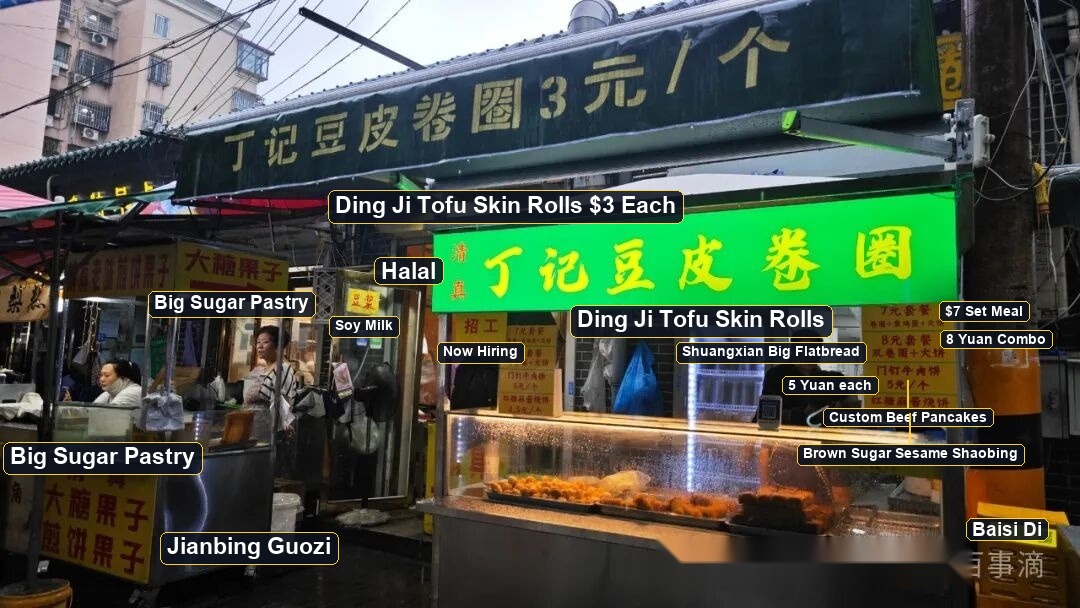
Relying on my memory, I made it to our first stop: Dingji Doupi Juanquan. Surprisingly, there was no long line in front of the window like there usually is.
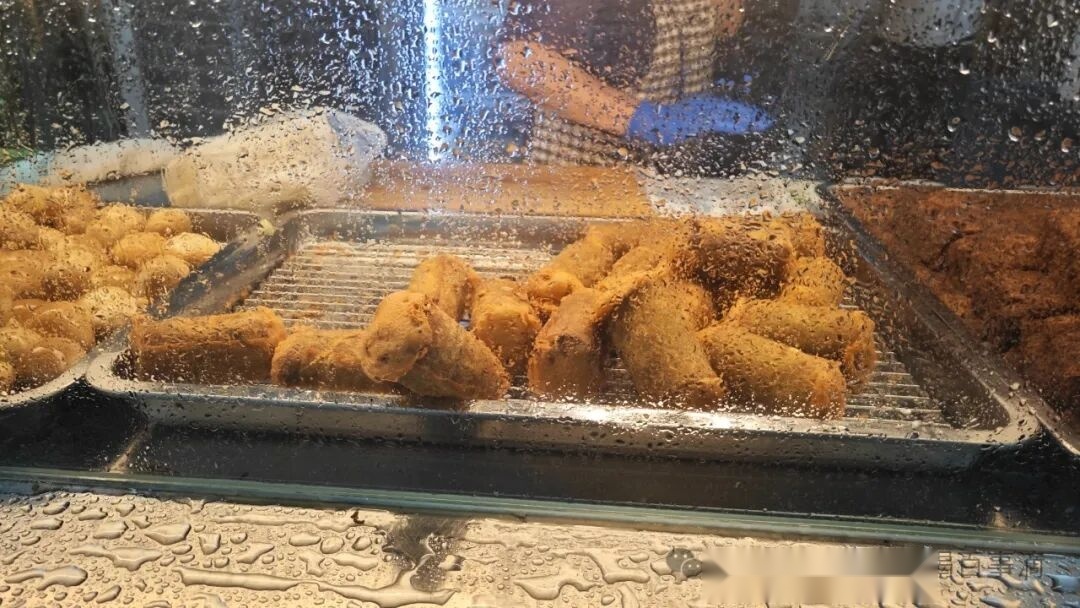
Through the rain-streaked glass, we could see the doupi juanquan, stewed eggs, and brown sugar sesame paste baked flatbreads neatly lined up on the cart.
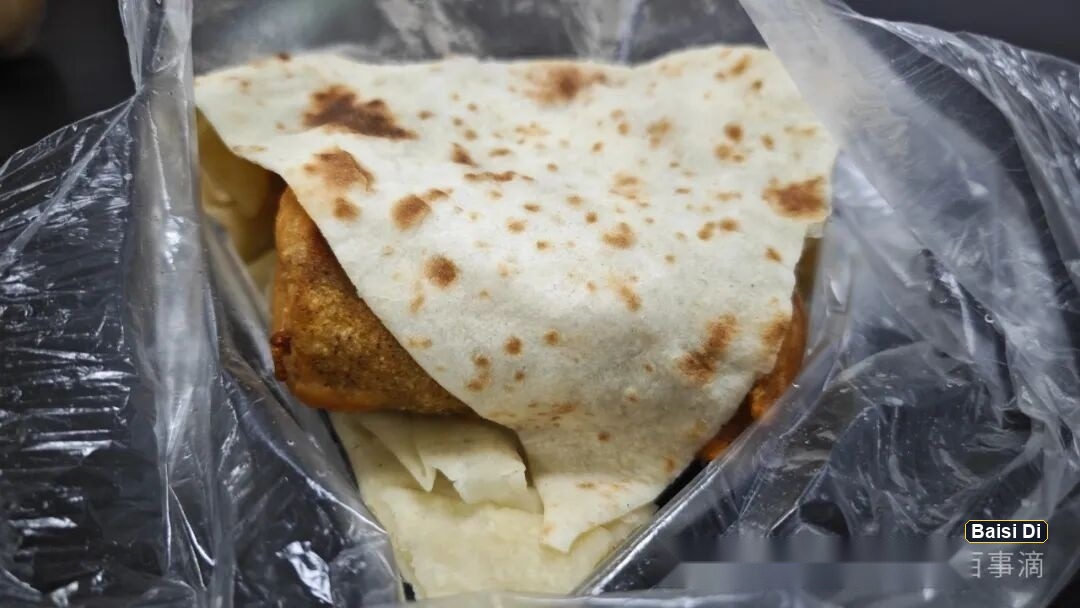
I ordered two of the 7-yuan combos, which come with a large flatbread wrapped around a bean curd skin roll.
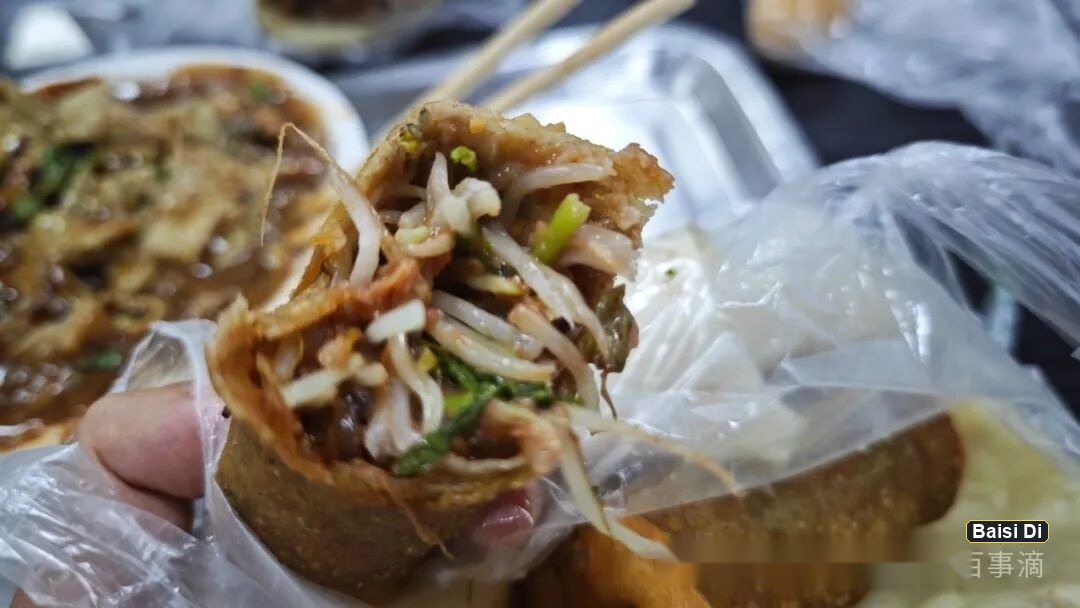
The fried outer skin was super crispy, and every bite was a pleasant surprise filled with bean sprouts, vermicelli, fermented bean curd, and cilantro—it had that perfect, satisfying, slightly sticky texture.
Our second stop was Qingzhen Zhengweizhai, a place famous for its guoba cai (mung bean pancake strips in savory gravy). Just a heads-up, they only serve this for breakfast from about 5:30 AM to 10:00 AM, so you’ll want to get there before 9:30 AM.
Guoba cai is made using the same crepes as jianbing guozi, cut into small strips and smothered in a rich, savory gravy. The pancake pieces are soft and tender, and the sauce is perfectly seasoned—it’s very filling and comforting. Locals absolutely love it, though it can be an acquired taste for visitors; I personally like eating mine with a vegetable roll.
Just then, Niu-ba brought back a bowl of double-layered miancha from a shop across the street—this is truly a one-of-a-kind Tianjin specialty. It starts with half a scoop of millet flour, layered with sesame paste and sesame salt, then topped with another layer of millet flour, sesame paste, and sesame salt. They really don't skimp on the ingredients! The thick layer of sesame and spiced salt on top smells incredible.
The porridge itself is silky smooth, savory, and rich, though it can get a bit heavy by the time you reach the bottom. If you’ve never tried it, I recommend starting with a small bowl. view all
Check out these 13 high-definition photos as we take you into Northwest Corner, the most famous Hui Muslim neighborhood in Tianjin. We are reviewing freshly fried, crispy-on-the-outside, tender-on-the-inside traditional doupi juanquan (bean curd skin vegetable rolls), and authentic halal double-layered miancha (millet porridge with sesame paste and salt) to experience the incomparable local charm of Tianjin’s halal breakfast scene.
The rain was picking up, but we didn't let that stop us—we kept on exploring.
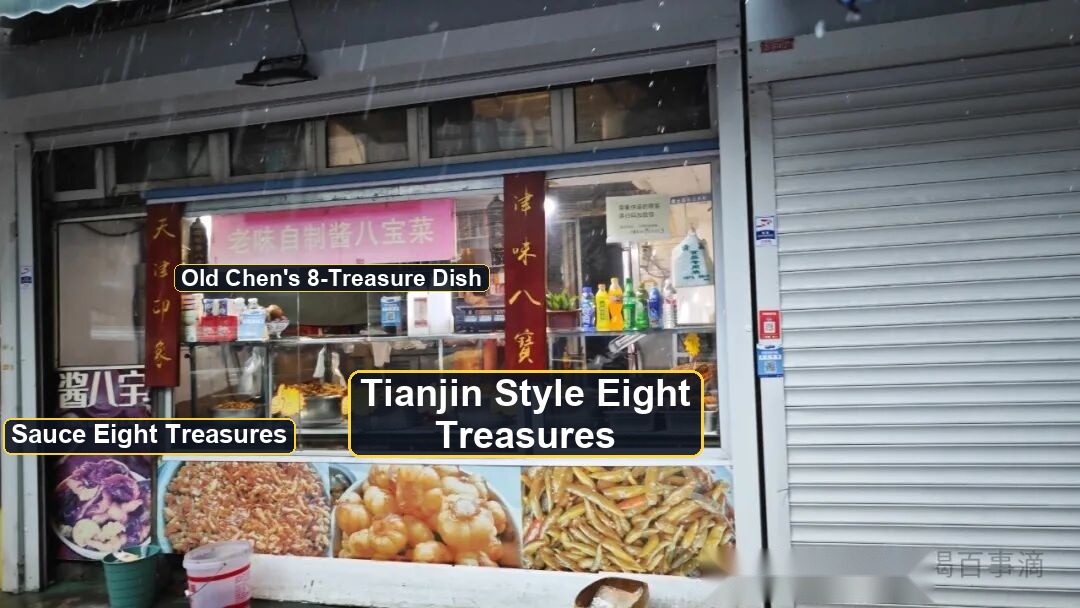
A shop selling homemade Jiangbabaicai (eight-treasure pickles in soy sauce) was already open, with two eye-catching signs in the window reading "Tianjin Flavor" and "Tianjin Impression," practically shouting about the authentic local taste.
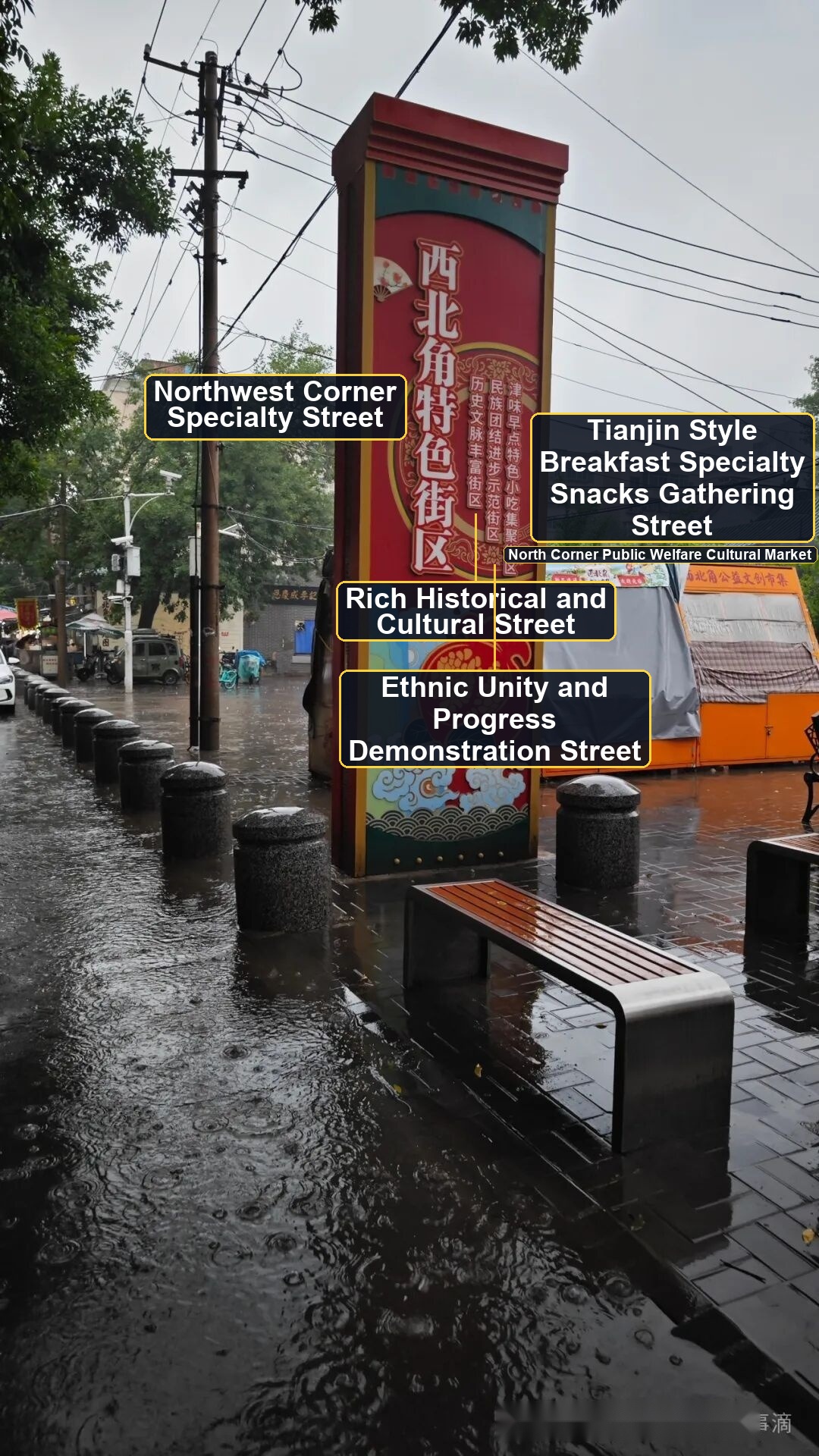
A street sign for the Northwest Corner special district stood along the road. The heavy rain seemed to keep most foodies away, leaving the streets nearly empty.
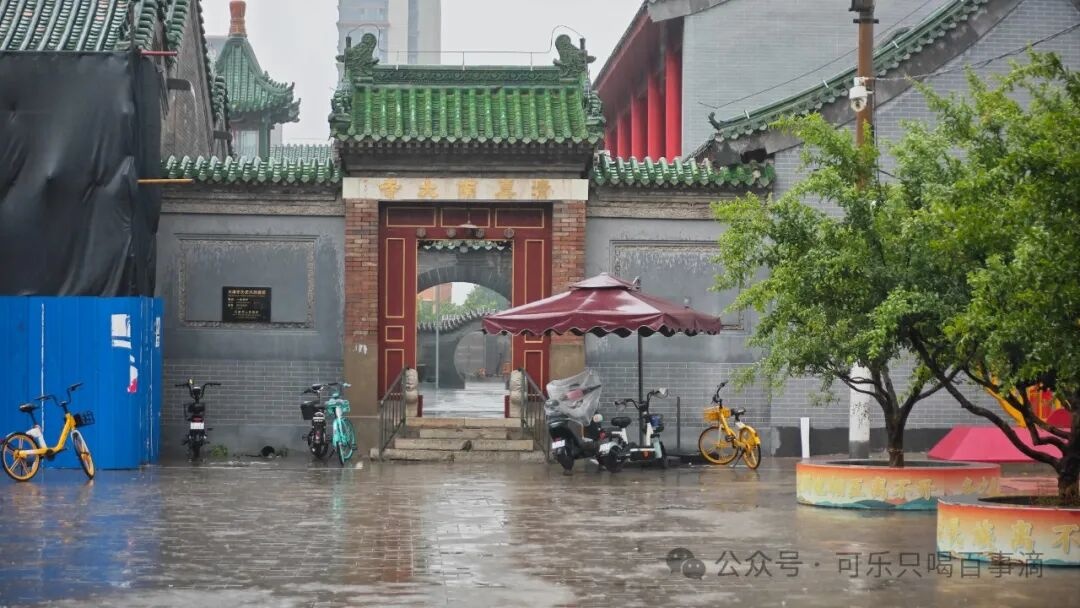
The entrance to the historic Qingzhen Nandasi (South Mosque) was missing its usual bustling crowd in the rain.
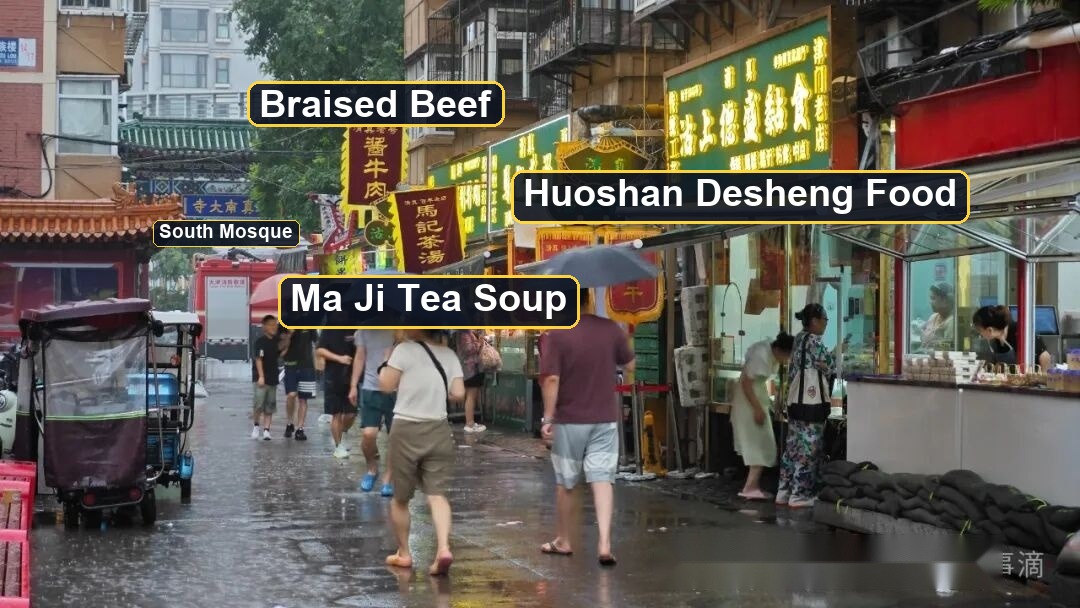
Even the shop where I had to wait in line for half an hour last time just to get a jianbing guozi (savory crepe with fried dough) had only a few scattered passersby.
Relying on my memory, I made it to our first stop: Dingji Doupi Juanquan. Surprisingly, there was no long line in front of the window like there usually is.
Through the rain-streaked glass, we could see the doupi juanquan, stewed eggs, and brown sugar sesame paste baked flatbreads neatly lined up on the cart.
I ordered two of the 7-yuan combos, which come with a large flatbread wrapped around a bean curd skin roll.
The fried outer skin was super crispy, and every bite was a pleasant surprise filled with bean sprouts, vermicelli, fermented bean curd, and cilantro—it had that perfect, satisfying, slightly sticky texture.
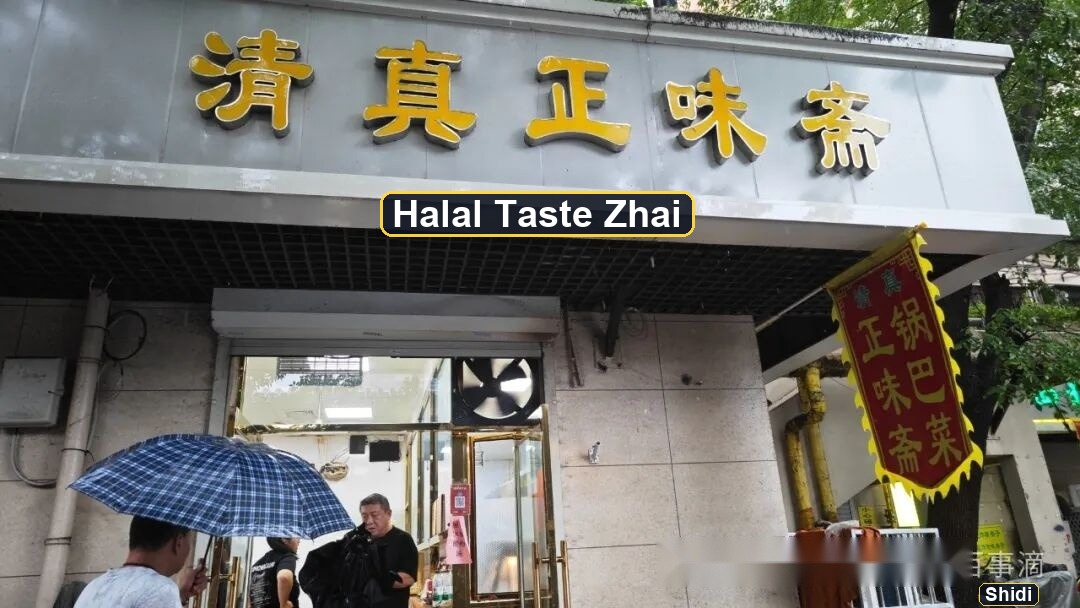
Our second stop was Qingzhen Zhengweizhai, a place famous for its guoba cai (mung bean pancake strips in savory gravy). Just a heads-up, they only serve this for breakfast from about 5:30 AM to 10:00 AM, so you’ll want to get there before 9:30 AM.
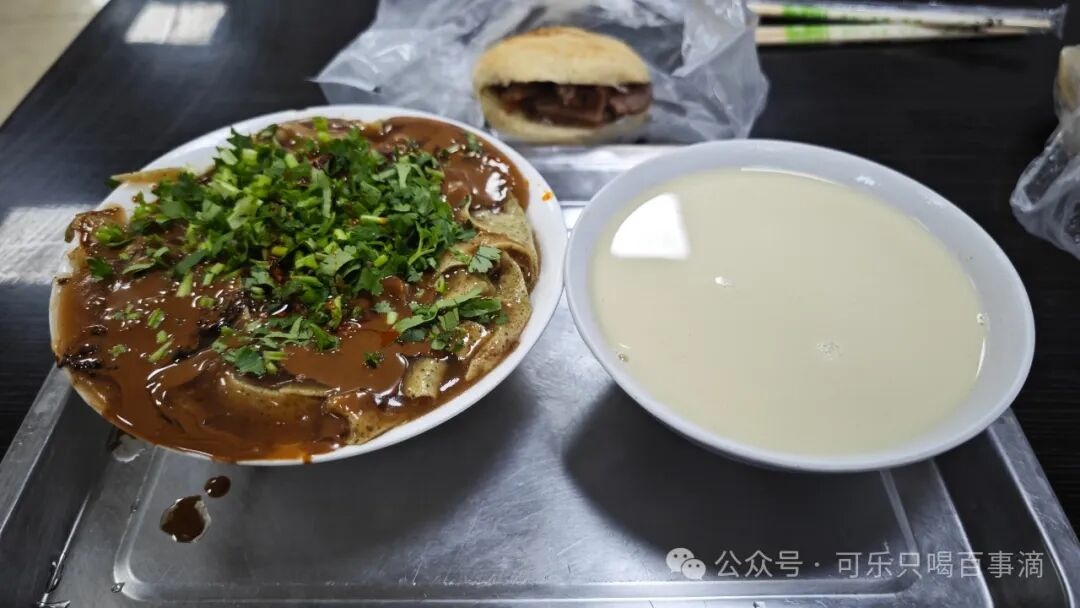
Guoba cai is made using the same crepes as jianbing guozi, cut into small strips and smothered in a rich, savory gravy. The pancake pieces are soft and tender, and the sauce is perfectly seasoned—it’s very filling and comforting. Locals absolutely love it, though it can be an acquired taste for visitors; I personally like eating mine with a vegetable roll.
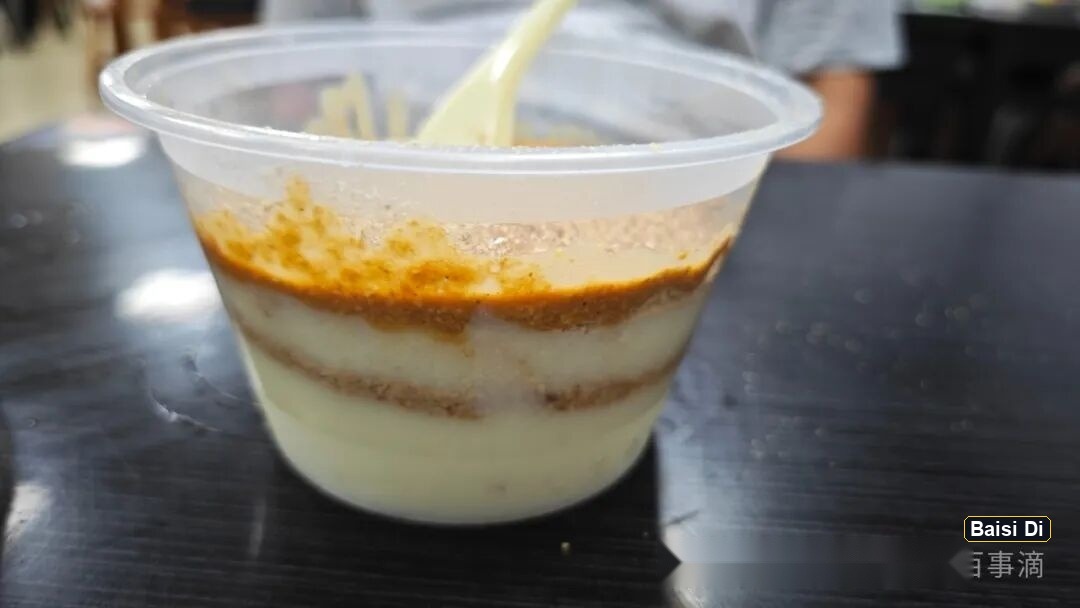
Just then, Niu-ba brought back a bowl of double-layered miancha from a shop across the street—this is truly a one-of-a-kind Tianjin specialty. It starts with half a scoop of millet flour, layered with sesame paste and sesame salt, then topped with another layer of millet flour, sesame paste, and sesame salt. They really don't skimp on the ingredients! The thick layer of sesame and spiced salt on top smells incredible.
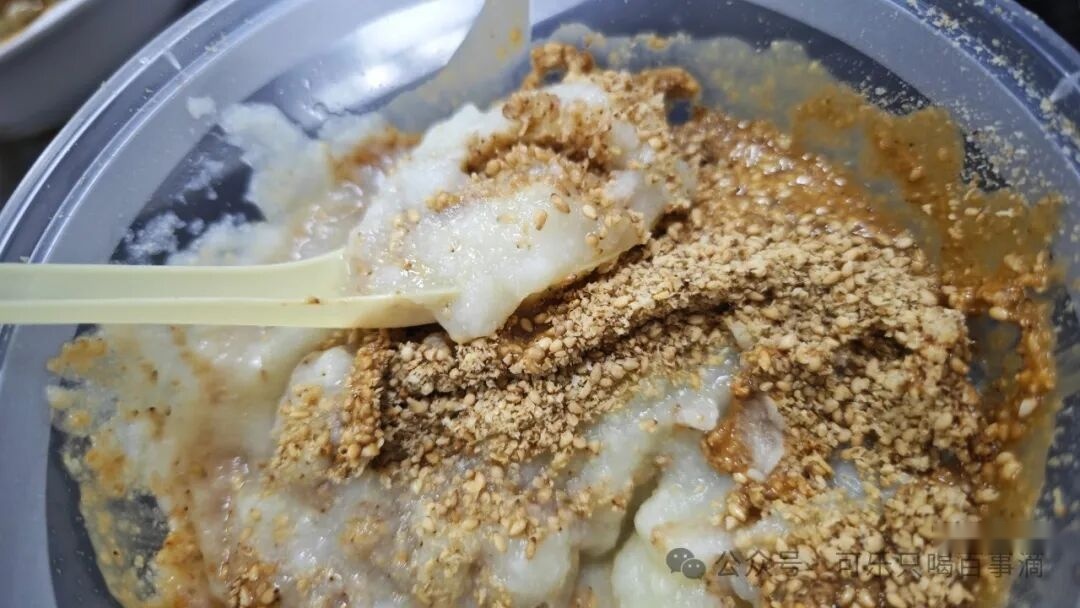
The porridge itself is silky smooth, savory, and rich, though it can get a bit heavy by the time you reach the bottom. If you’ve never tried it, I recommend starting with a small bowl.
The rain was picking up, but we didn't let that stop us—we kept on exploring.
A shop selling homemade Jiangbabaicai (eight-treasure pickles in soy sauce) was already open, with two eye-catching signs in the window reading "Tianjin Flavor" and "Tianjin Impression," practically shouting about the authentic local taste.
A street sign for the Northwest Corner special district stood along the road. The heavy rain seemed to keep most foodies away, leaving the streets nearly empty.
The entrance to the historic Qingzhen Nandasi (South Mosque) was missing its usual bustling crowd in the rain.
Even the shop where I had to wait in line for half an hour last time just to get a jianbing guozi (savory crepe with fried dough) had only a few scattered passersby.
Relying on my memory, I made it to our first stop: Dingji Doupi Juanquan. Surprisingly, there was no long line in front of the window like there usually is.
Through the rain-streaked glass, we could see the doupi juanquan, stewed eggs, and brown sugar sesame paste baked flatbreads neatly lined up on the cart.
I ordered two of the 7-yuan combos, which come with a large flatbread wrapped around a bean curd skin roll.
The fried outer skin was super crispy, and every bite was a pleasant surprise filled with bean sprouts, vermicelli, fermented bean curd, and cilantro—it had that perfect, satisfying, slightly sticky texture.
Our second stop was Qingzhen Zhengweizhai, a place famous for its guoba cai (mung bean pancake strips in savory gravy). Just a heads-up, they only serve this for breakfast from about 5:30 AM to 10:00 AM, so you’ll want to get there before 9:30 AM.
Guoba cai is made using the same crepes as jianbing guozi, cut into small strips and smothered in a rich, savory gravy. The pancake pieces are soft and tender, and the sauce is perfectly seasoned—it’s very filling and comforting. Locals absolutely love it, though it can be an acquired taste for visitors; I personally like eating mine with a vegetable roll.
Just then, Niu-ba brought back a bowl of double-layered miancha from a shop across the street—this is truly a one-of-a-kind Tianjin specialty. It starts with half a scoop of millet flour, layered with sesame paste and sesame salt, then topped with another layer of millet flour, sesame paste, and sesame salt. They really don't skimp on the ingredients! The thick layer of sesame and spiced salt on top smells incredible.
The porridge itself is silky smooth, savory, and rich, though it can get a bit heavy by the time you reach the bottom. If you’ve never tried it, I recommend starting with a small bowl.
Best Halal Breakfast in Tianjin: Authentic Northwest Corner Mosque Street Food and Traditional Snacks
Articles • Hasan09 posted the article • 0 comments • 12 views • 1 hours ago
Check out these 13 high-definition photos as we take you into Northwest Corner, the most famous Hui Muslim neighborhood in Tianjin. We are reviewing freshly fried, crispy-on-the-outside, tender-on-the-inside traditional doupi juanquan (bean curd skin vegetable rolls), and authentic halal double-layered miancha (millet porridge with sesame paste and salt) to experience the incomparable local charm of Tianjin’s halal breakfast scene.
The rain was picking up, but we didn't let that stop us—we kept on exploring.
A shop selling homemade Jiangbabaicai (eight-treasure pickles in soy sauce) was already open, with two eye-catching signs in the window reading "Tianjin Flavor" and "Tianjin Impression," practically shouting about the authentic local taste.
A street sign for the Northwest Corner special district stood along the road. The heavy rain seemed to keep most foodies away, leaving the streets nearly empty.
The entrance to the historic Qingzhen Nandasi (South Mosque) was missing its usual bustling crowd in the rain.
Even the shop where I had to wait in line for half an hour last time just to get a jianbing guozi (savory crepe with fried dough) had only a few scattered passersby.
Relying on my memory, I made it to our first stop: Dingji Doupi Juanquan. Surprisingly, there was no long line in front of the window like there usually is.
Through the rain-streaked glass, we could see the doupi juanquan, stewed eggs, and brown sugar sesame paste baked flatbreads neatly lined up on the cart.
I ordered two of the 7-yuan combos, which come with a large flatbread wrapped around a bean curd skin roll.
The fried outer skin was super crispy, and every bite was a pleasant surprise filled with bean sprouts, vermicelli, fermented bean curd, and cilantro—it had that perfect, satisfying, slightly sticky texture.
Our second stop was Qingzhen Zhengweizhai, a place famous for its guoba cai (mung bean pancake strips in savory gravy). Just a heads-up, they only serve this for breakfast from about 5:30 AM to 10:00 AM, so you’ll want to get there before 9:30 AM.
Guoba cai is made using the same crepes as jianbing guozi, cut into small strips and smothered in a rich, savory gravy. The pancake pieces are soft and tender, and the sauce is perfectly seasoned—it’s very filling and comforting. Locals absolutely love it, though it can be an acquired taste for visitors; I personally like eating mine with a vegetable roll.
Just then, Niu-ba brought back a bowl of double-layered miancha from a shop across the street—this is truly a one-of-a-kind Tianjin specialty. It starts with half a scoop of millet flour, layered with sesame paste and sesame salt, then topped with another layer of millet flour, sesame paste, and sesame salt. They really don't skimp on the ingredients! The thick layer of sesame and spiced salt on top smells incredible.
The porridge itself is silky smooth, savory, and rich, though it can get a bit heavy by the time you reach the bottom. If you’ve never tried it, I recommend starting with a small bowl. view all
The rain was picking up, but we didn't let that stop us—we kept on exploring.
A shop selling homemade Jiangbabaicai (eight-treasure pickles in soy sauce) was already open, with two eye-catching signs in the window reading "Tianjin Flavor" and "Tianjin Impression," practically shouting about the authentic local taste.
A street sign for the Northwest Corner special district stood along the road. The heavy rain seemed to keep most foodies away, leaving the streets nearly empty.
The entrance to the historic Qingzhen Nandasi (South Mosque) was missing its usual bustling crowd in the rain.
Even the shop where I had to wait in line for half an hour last time just to get a jianbing guozi (savory crepe with fried dough) had only a few scattered passersby.
Relying on my memory, I made it to our first stop: Dingji Doupi Juanquan. Surprisingly, there was no long line in front of the window like there usually is.
Through the rain-streaked glass, we could see the doupi juanquan, stewed eggs, and brown sugar sesame paste baked flatbreads neatly lined up on the cart.
I ordered two of the 7-yuan combos, which come with a large flatbread wrapped around a bean curd skin roll.
The fried outer skin was super crispy, and every bite was a pleasant surprise filled with bean sprouts, vermicelli, fermented bean curd, and cilantro—it had that perfect, satisfying, slightly sticky texture.
Our second stop was Qingzhen Zhengweizhai, a place famous for its guoba cai (mung bean pancake strips in savory gravy). Just a heads-up, they only serve this for breakfast from about 5:30 AM to 10:00 AM, so you’ll want to get there before 9:30 AM.
Guoba cai is made using the same crepes as jianbing guozi, cut into small strips and smothered in a rich, savory gravy. The pancake pieces are soft and tender, and the sauce is perfectly seasoned—it’s very filling and comforting. Locals absolutely love it, though it can be an acquired taste for visitors; I personally like eating mine with a vegetable roll.
Just then, Niu-ba brought back a bowl of double-layered miancha from a shop across the street—this is truly a one-of-a-kind Tianjin specialty. It starts with half a scoop of millet flour, layered with sesame paste and sesame salt, then topped with another layer of millet flour, sesame paste, and sesame salt. They really don't skimp on the ingredients! The thick layer of sesame and spiced salt on top smells incredible.
The porridge itself is silky smooth, savory, and rich, though it can get a bit heavy by the time you reach the bottom. If you’ve never tried it, I recommend starting with a small bowl. view all
Check out these 13 high-definition photos as we take you into Northwest Corner, the most famous Hui Muslim neighborhood in Tianjin. We are reviewing freshly fried, crispy-on-the-outside, tender-on-the-inside traditional doupi juanquan (bean curd skin vegetable rolls), and authentic halal double-layered miancha (millet porridge with sesame paste and salt) to experience the incomparable local charm of Tianjin’s halal breakfast scene.
The rain was picking up, but we didn't let that stop us—we kept on exploring.
A shop selling homemade Jiangbabaicai (eight-treasure pickles in soy sauce) was already open, with two eye-catching signs in the window reading "Tianjin Flavor" and "Tianjin Impression," practically shouting about the authentic local taste.
A street sign for the Northwest Corner special district stood along the road. The heavy rain seemed to keep most foodies away, leaving the streets nearly empty.
The entrance to the historic Qingzhen Nandasi (South Mosque) was missing its usual bustling crowd in the rain.
Even the shop where I had to wait in line for half an hour last time just to get a jianbing guozi (savory crepe with fried dough) had only a few scattered passersby.
Relying on my memory, I made it to our first stop: Dingji Doupi Juanquan. Surprisingly, there was no long line in front of the window like there usually is.
Through the rain-streaked glass, we could see the doupi juanquan, stewed eggs, and brown sugar sesame paste baked flatbreads neatly lined up on the cart.
I ordered two of the 7-yuan combos, which come with a large flatbread wrapped around a bean curd skin roll.
The fried outer skin was super crispy, and every bite was a pleasant surprise filled with bean sprouts, vermicelli, fermented bean curd, and cilantro—it had that perfect, satisfying, slightly sticky texture.
Our second stop was Qingzhen Zhengweizhai, a place famous for its guoba cai (mung bean pancake strips in savory gravy). Just a heads-up, they only serve this for breakfast from about 5:30 AM to 10:00 AM, so you’ll want to get there before 9:30 AM.
Guoba cai is made using the same crepes as jianbing guozi, cut into small strips and smothered in a rich, savory gravy. The pancake pieces are soft and tender, and the sauce is perfectly seasoned—it’s very filling and comforting. Locals absolutely love it, though it can be an acquired taste for visitors; I personally like eating mine with a vegetable roll.
Just then, Niu-ba brought back a bowl of double-layered miancha from a shop across the street—this is truly a one-of-a-kind Tianjin specialty. It starts with half a scoop of millet flour, layered with sesame paste and sesame salt, then topped with another layer of millet flour, sesame paste, and sesame salt. They really don't skimp on the ingredients! The thick layer of sesame and spiced salt on top smells incredible.
The porridge itself is silky smooth, savory, and rich, though it can get a bit heavy by the time you reach the bottom. If you’ve never tried it, I recommend starting with a small bowl.