

Oriental Art
Moscow Oriental Art Museum: Islamic Art, Central Asia and Muslim Heritage
Articles • ali2007fr posted the article • 0 comments • 157 views • 2026-05-18 06:54
Reposted from the web
Summary: Moscow Oriental Art Museum: Islamic Art, Central Asia and Muslim Heritage is presented here as a firsthand travel account in clear English, beginning with this scene: The museum's collection comes from many regions, including China, Japan, Korea, Southeast Asia, the Caucasus, Central Asia, Iran, and India. The account keeps its focus on Moscow Museum, Islamic Art, Oriental Art while preserving the names, places, food, and historical details from the Chinese source.
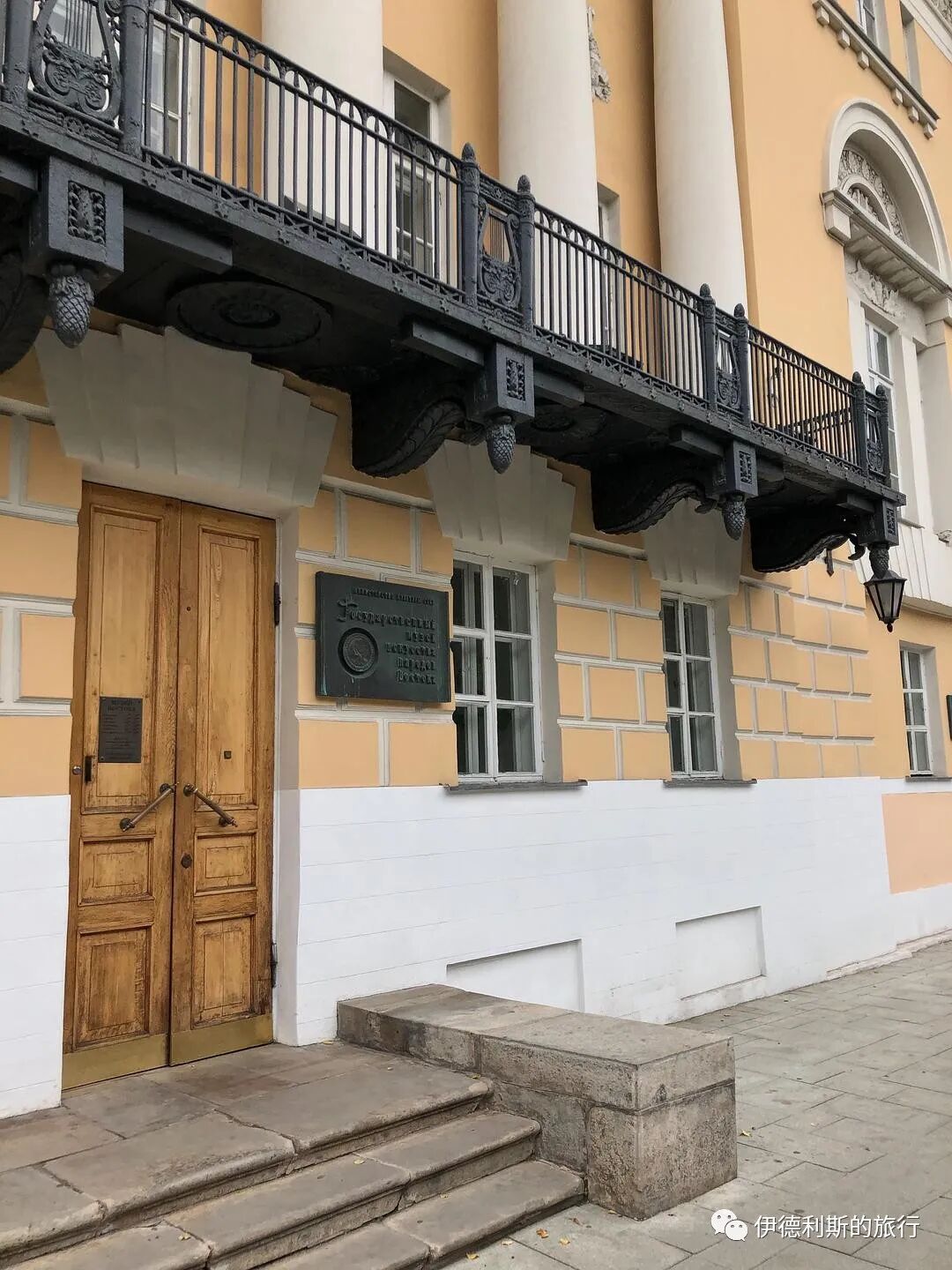
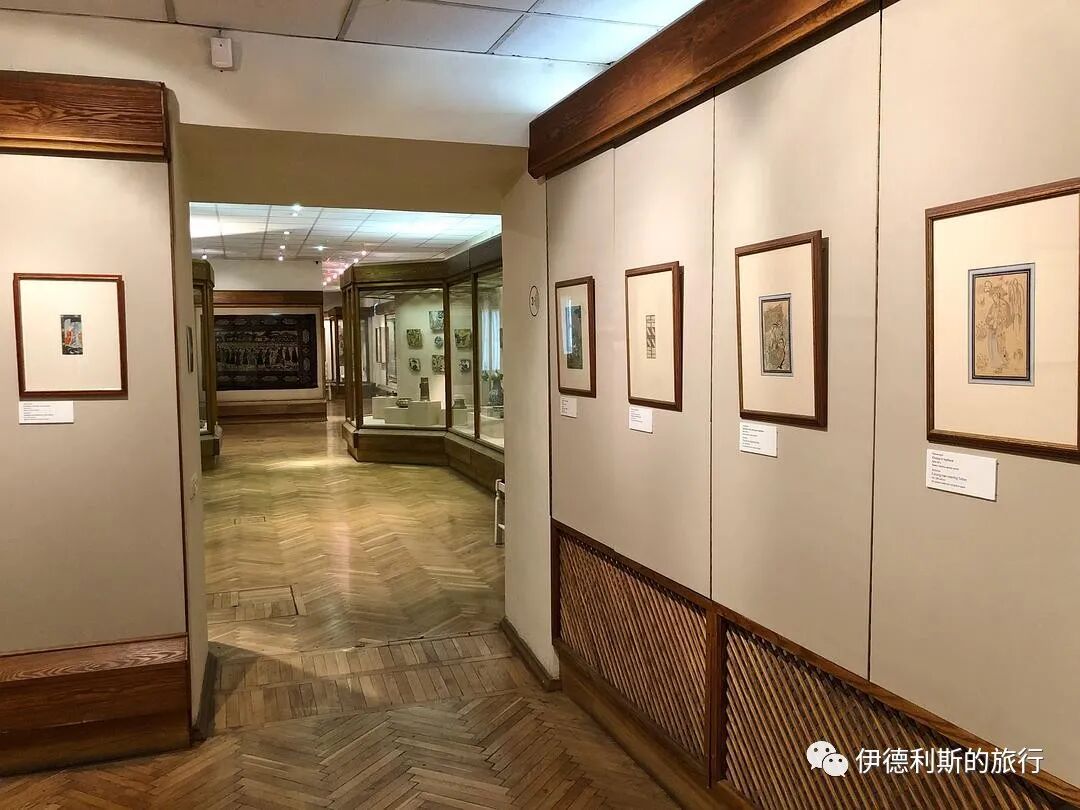
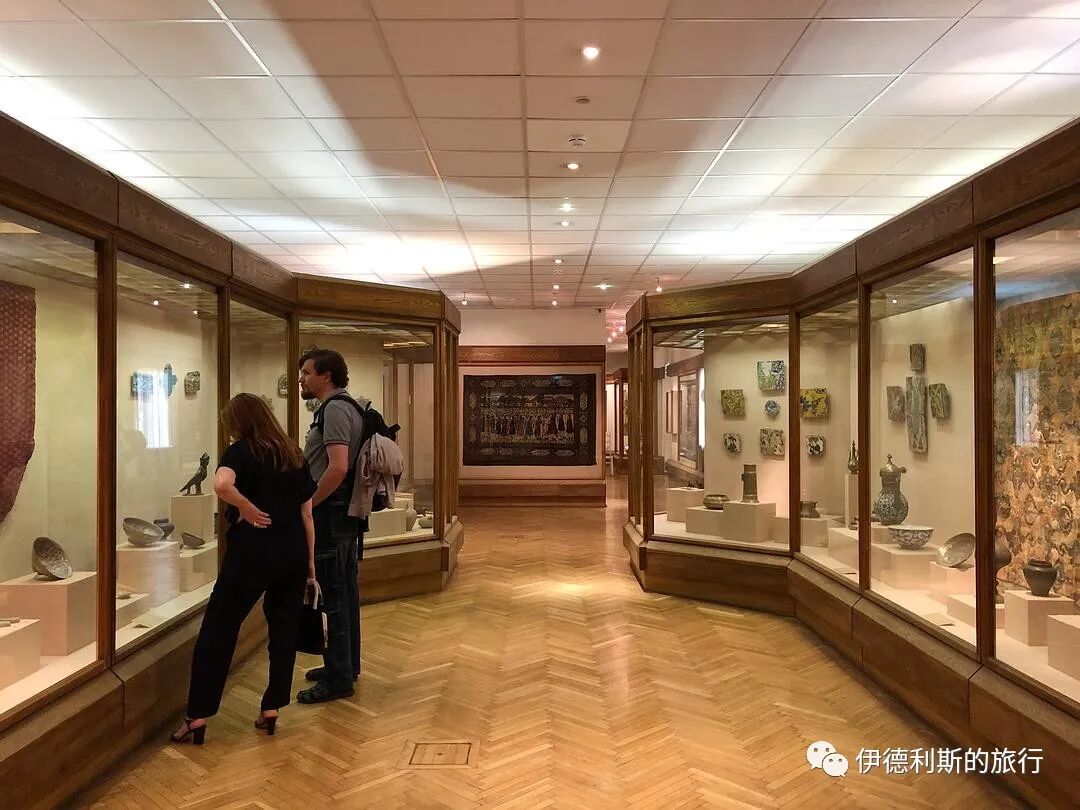
The museum's collection comes from many regions, including China, Japan, Korea, Southeast Asia, the Caucasus, Central Asia, Iran, and India. When the museum first opened, some items came from the Russian Museum of Decorative Arts, the Pushkin State Museum of Fine Arts, and the State Historical Museum in the 1920s, while others came from private collections. Art collector Pyotr Ivanovich Shchukin once owned a large number of Chinese, Iranian, and Indian artworks. After the October Revolution, these pieces were nationalized and transferred to the Museum of Oriental Art. Most of the Persian artifacts in the museum were donated by General Tardov in 1929. Since 1924, the museum has launched many expeditions to the Far East and collected a large number of artifacts. Today, the museum's new items mainly come from private donations and archaeological excavations.
1. Iran
1. Iranian porcelain
An Iranian ceramic plate from the 12th to 13th century.
After the 12th century began, the massive Seljuk Empire slowly declined and was finally destroyed by the Khwarazmian Empire in 1194. In 1221, the Khwarazmian Empire faced an invasion by the Mongol Empire, and by 1237, the Mongols occupied most of Iran. In 1256, Hulagu Khan was named Ilkhan, and Iran began to be ruled by the Ilkhanate.
Iranian ceramic tiles from the 13th to 14th century.
After 1335, the Ilkhanate fell into division until it was conquered by Timur in 1381, and Iran came under the rule of the Timurid Empire.
Iranian ceramic tiles from the 17th century, Safavid Dynasty (1501–1736).
Ceramic tiles from the 18th century, Safavid Dynasty (1501–1736) or Afsharid Dynasty (1736–1796).
2. Calligraphy and painting from the 18th century.
Entering the 18th century, Iran faced both internal troubles and external threats. The Russian Empire and the Ottoman Empire invaded Iran one after another. The Safavid dynasty, which had ruled Iran for over two hundred years, collapsed. Pashtuns from Afghanistan, Turkmens from Khorasan, and other tribes established the Hotaki dynasty (ruling Iran from 1722 to 1729), the Afsharid dynasty (1736-1796), and the Zand dynasty (1750-1794) in succession.
Although the Afsharid dynasty reached the largest territory in Iran since the Sasanian Empire in the 1730s, it soon fell into civil strife and turmoil. After 1750, the Zand dynasty brought a period of relative peace and prosperity to Iran.
In 1765, Karim Khan promoted art in the capital, Shiraz. This formed the unique Zand school of Iranian painting, which influenced the painting art of the Qajar dynasty in the 19th century.
Calligraphy written by Riza ad-Din Khan ibn Ibragim khan in 1706/7, during the final years of the Safavid dynasty.
18th-century Persian miniature painting.
3. 19th-century Persian miniature paintings
In the 19th century, Iran was ruled by the Qajar dynasty (1789-1925). The Qajars were a Turkic-speaking tribe from northern Iran, now part of the Turkmen people, and their rulers called themselves Shah. Peace returned to Iran in the 19th century, and art flourished as a result.
An illustration from the Persian epic Shahnameh shows the legendary hero Rostam fighting the White Demon (Div-e Sepid). In the Shahnameh, the White Demon is the leader of the demons in the Mazandaran region; he is huge and skilled at all kinds of magic. He destroyed the army of the Iranian King Kay Kavus by summoning hail, boulders, and tree trunks, then captured and imprisoned the king. In the end, the hero Rostam killed the White Demon to save the king, and he even turned the demon's head into a helmet to wear.
Inside the palace.
A Sufi performing the whirling dance ceremony.
An introduction to the turban (chantou).
The Sufi allegorical poem Salaman va Absal by the famous 15th-century Sufi poet Jami (Nūr ad-Dīn 'Abd ar-Rahmān Jāmī). The story appears to be about a prince who feels a physical attraction to his wet nurse, but it actually uses allegory to describe the key stages of Sufi spiritual practice.
A Qajar dynasty Shah in battle.
A page from a manuscript.
A young man wearing a turban (chantou).
Relaxing.
4. Qajar Dynasty portraits.
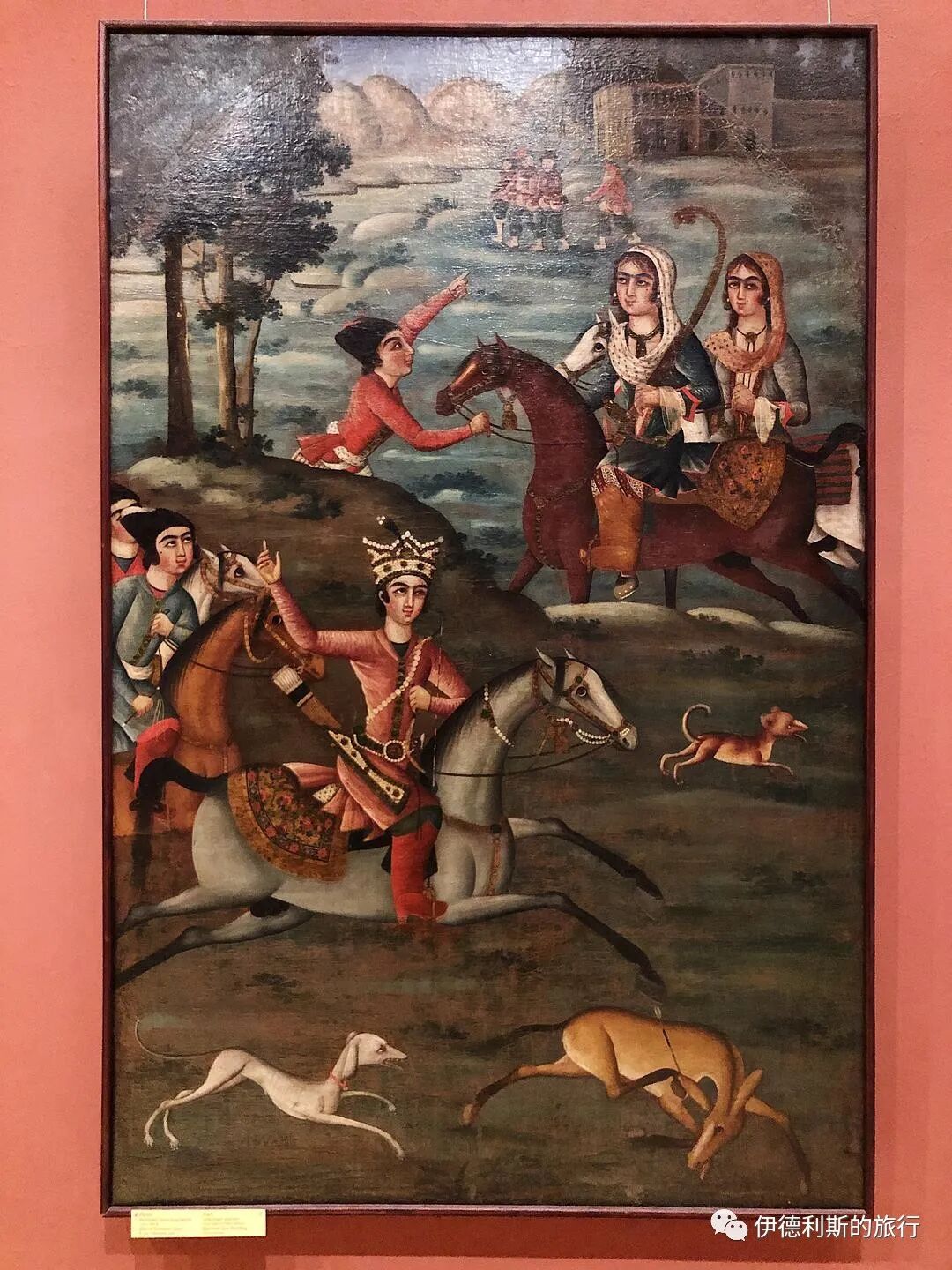
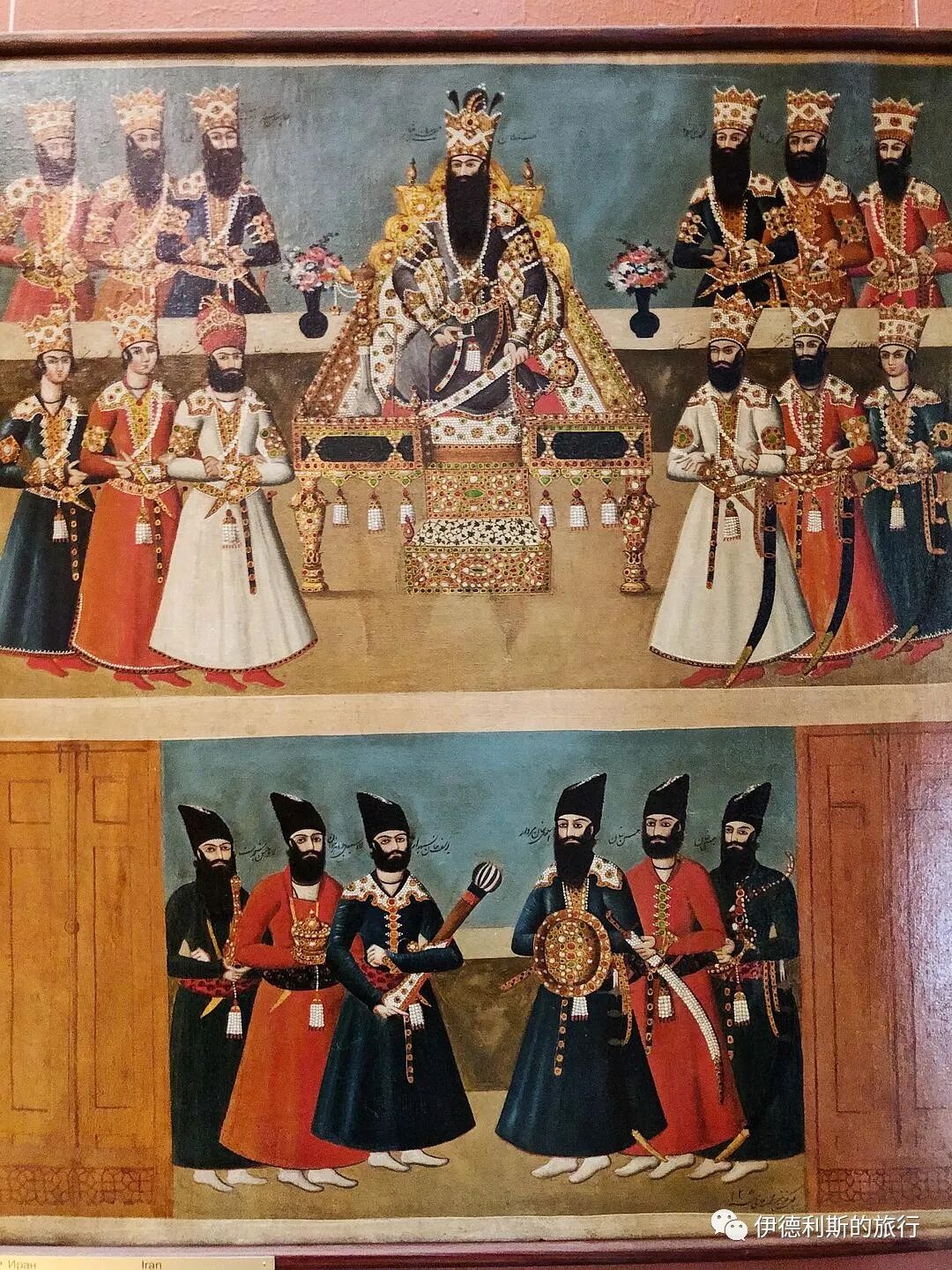
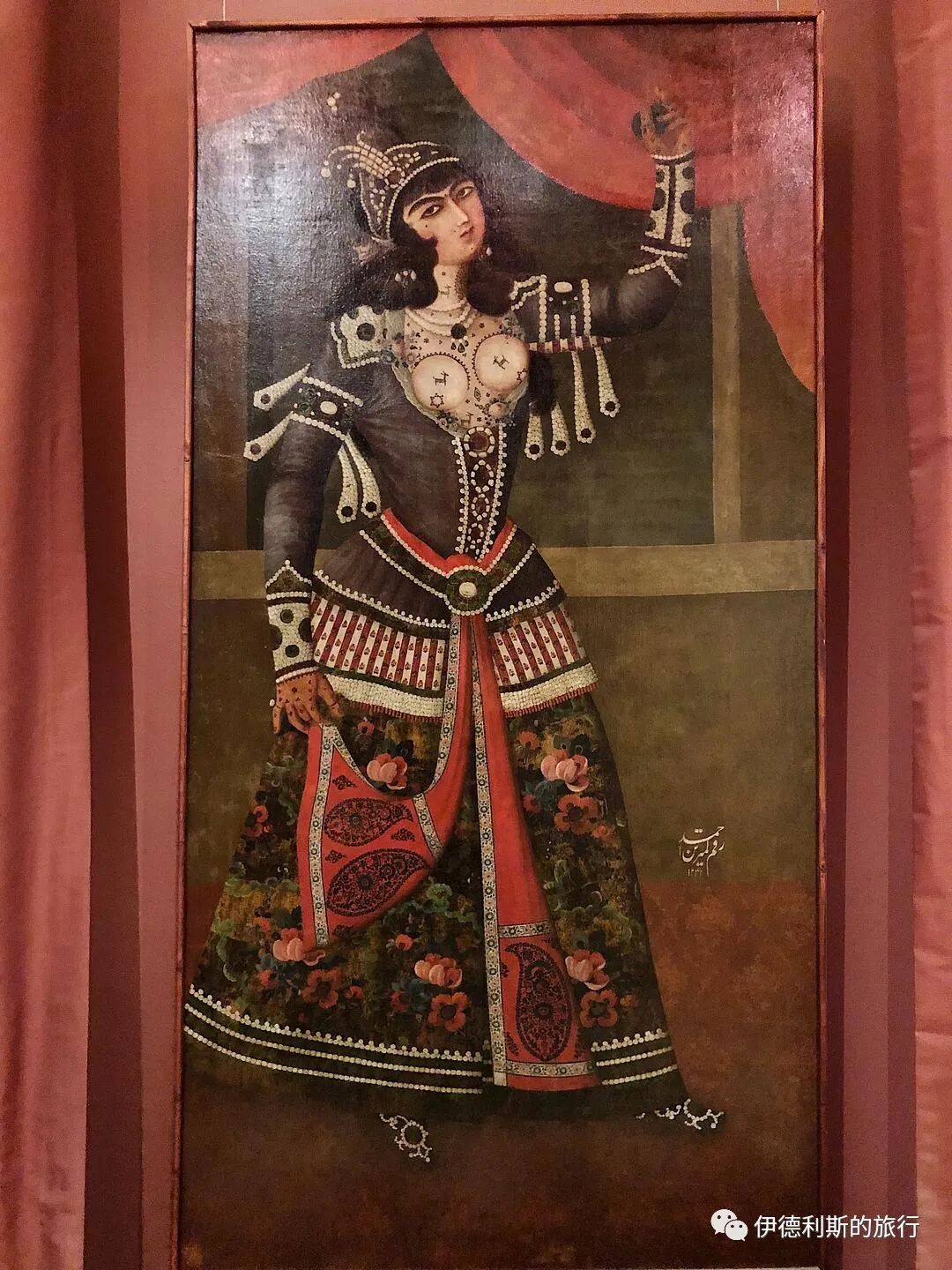
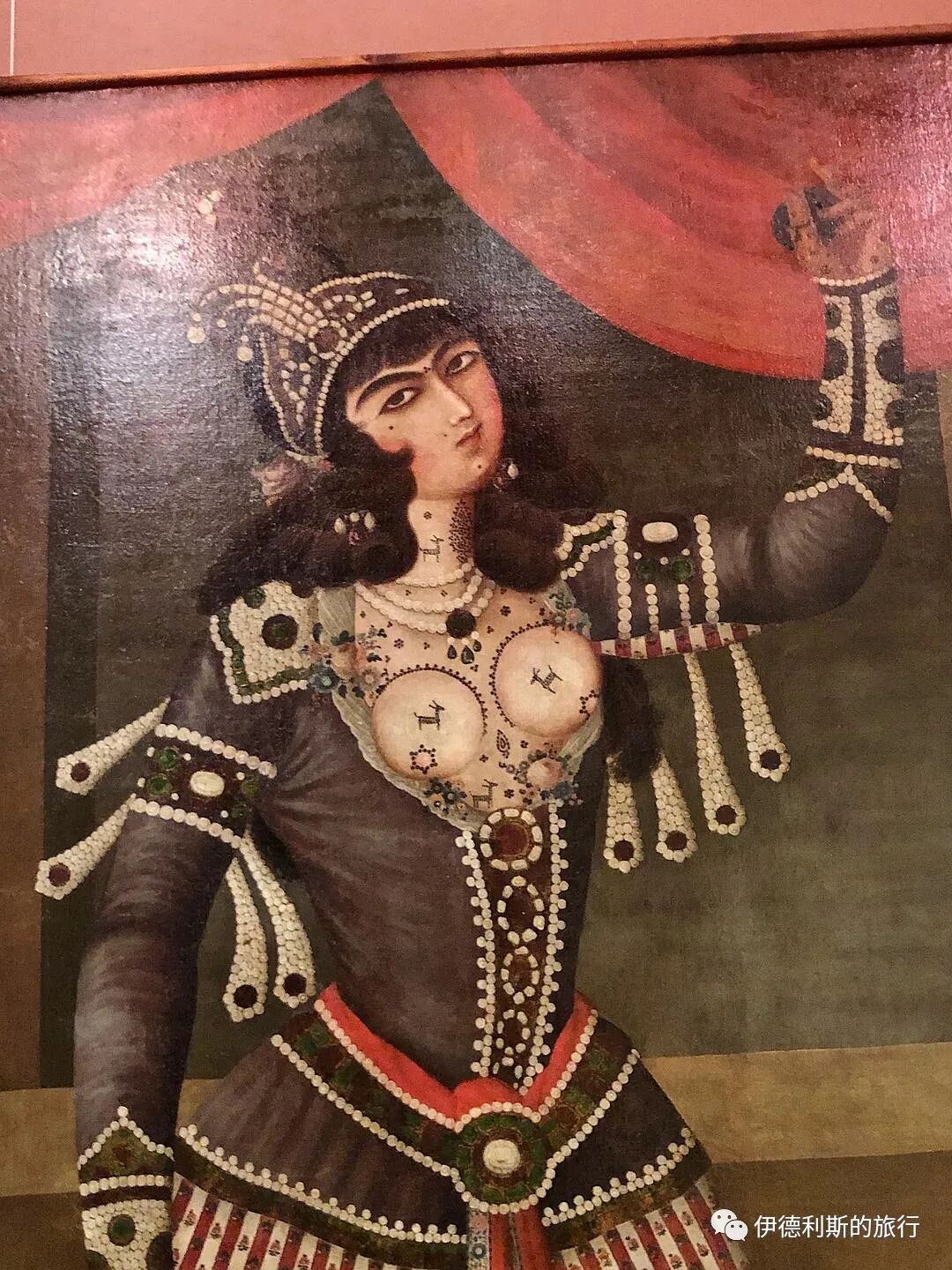
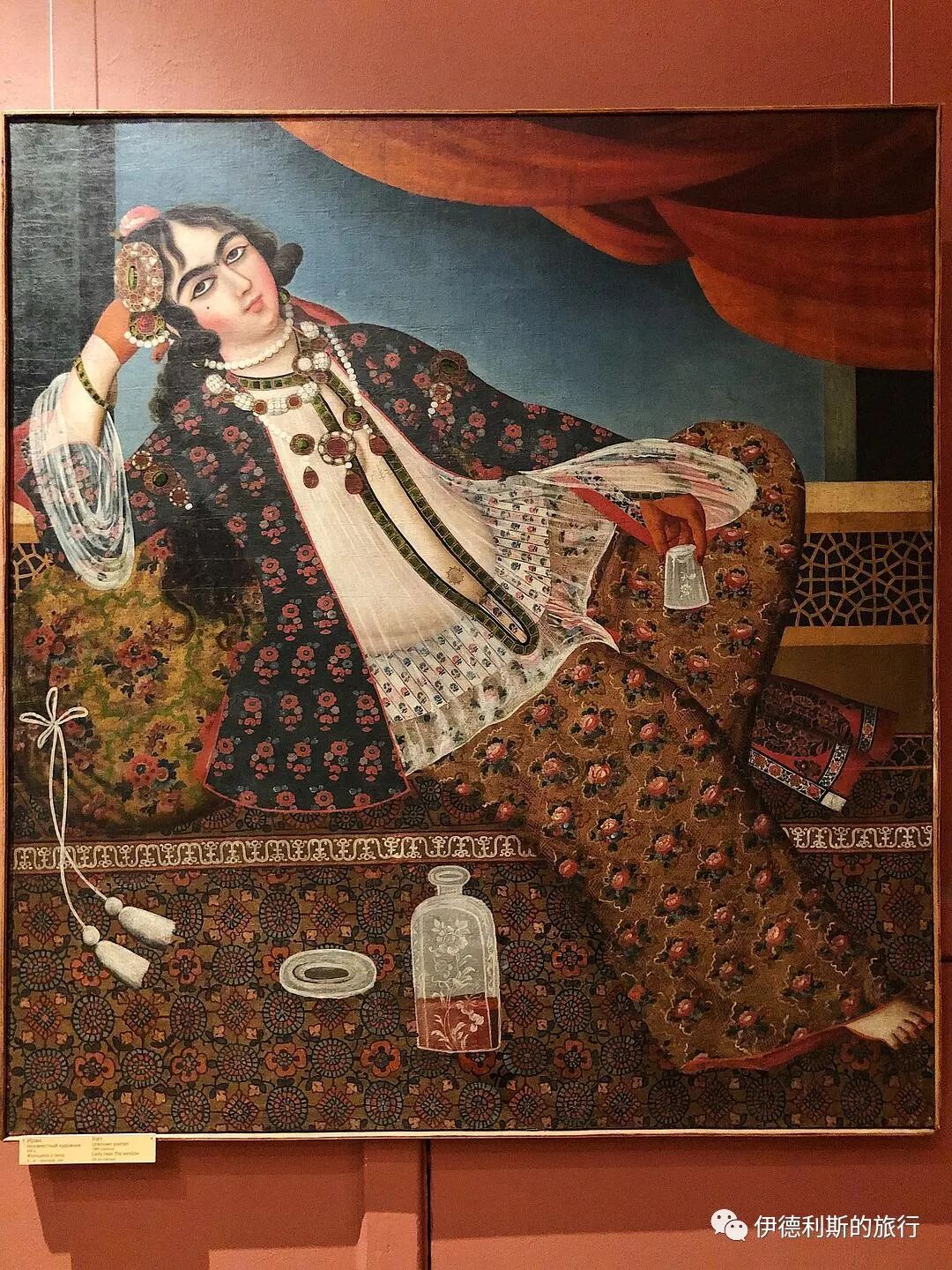
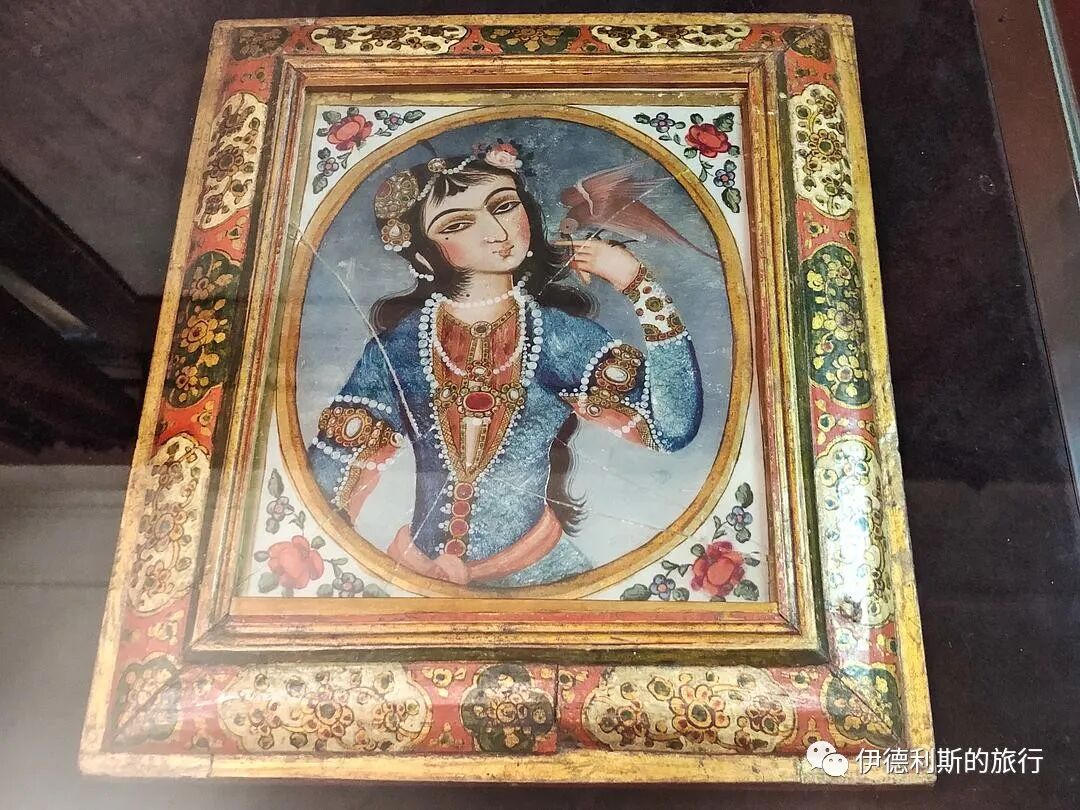
The Qajar Dynasty is famous for its unique portrait paintings. Qajar portraits were influenced by European realism in oil painting. They use many dark, rich, and saturated colors. The backgrounds are very realistic, but the people in the paintings still look stiff.
This early 19th-century painting shows Bahram V (reigned 420-438) while hunting. Bahram V was known as the Wild Ass (Gor). He was a 5th-century king of the Persian Sasanian Empire. He loved hunting and often appears in classic Persian literature.
Painted by Muhammad Ali in 1834, this shows the Qajar court with the Shah receiving his officials.
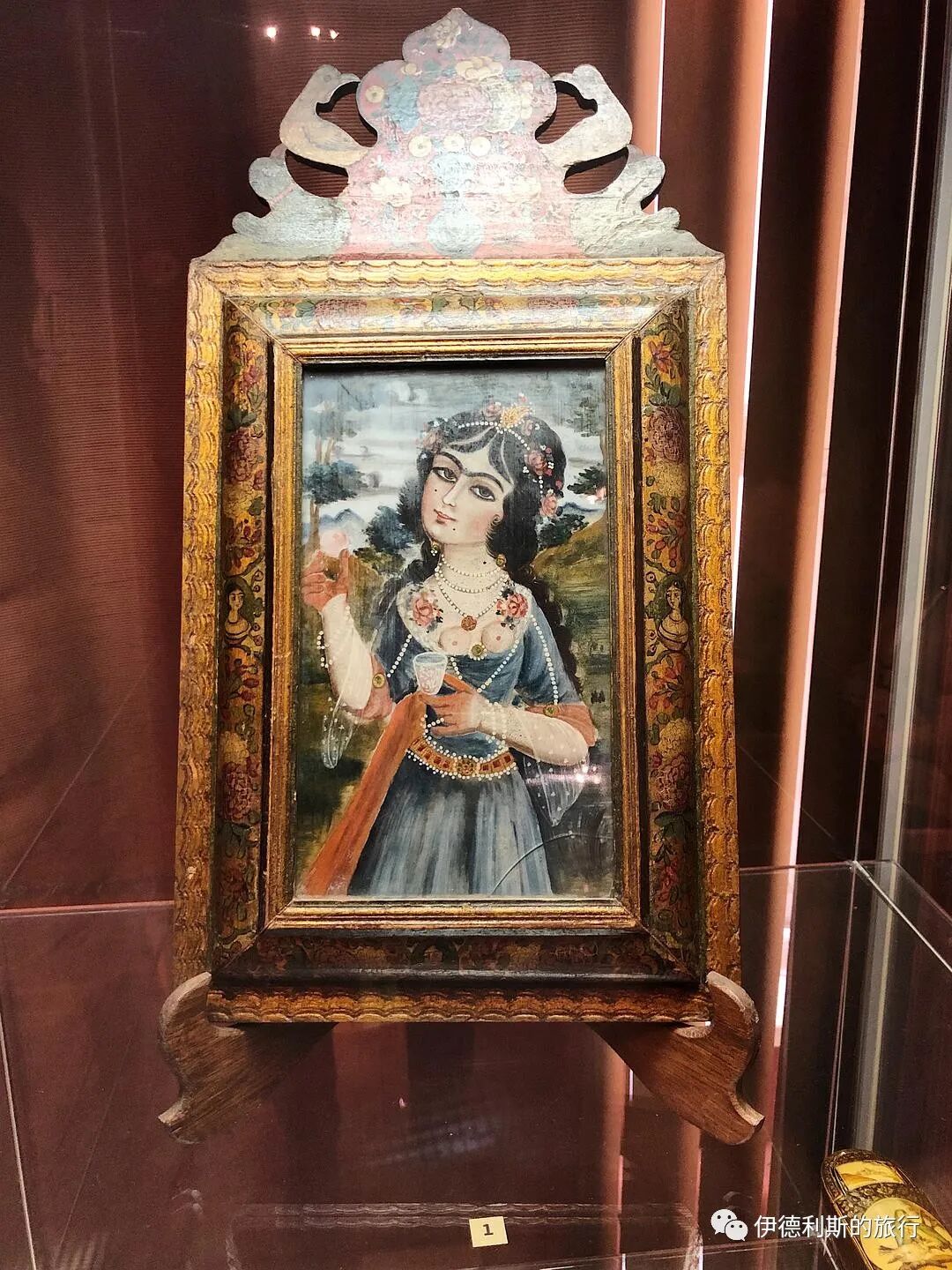
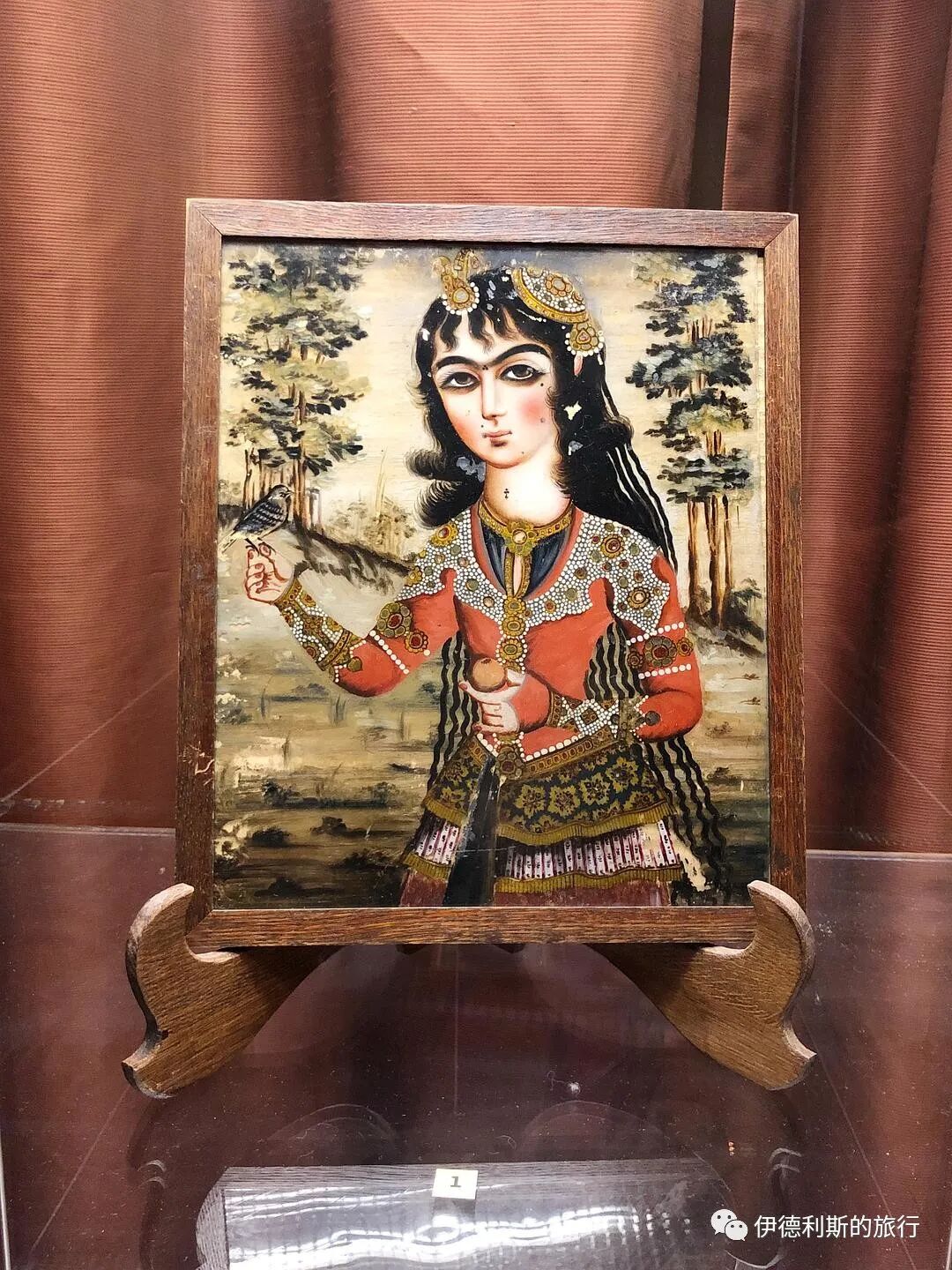
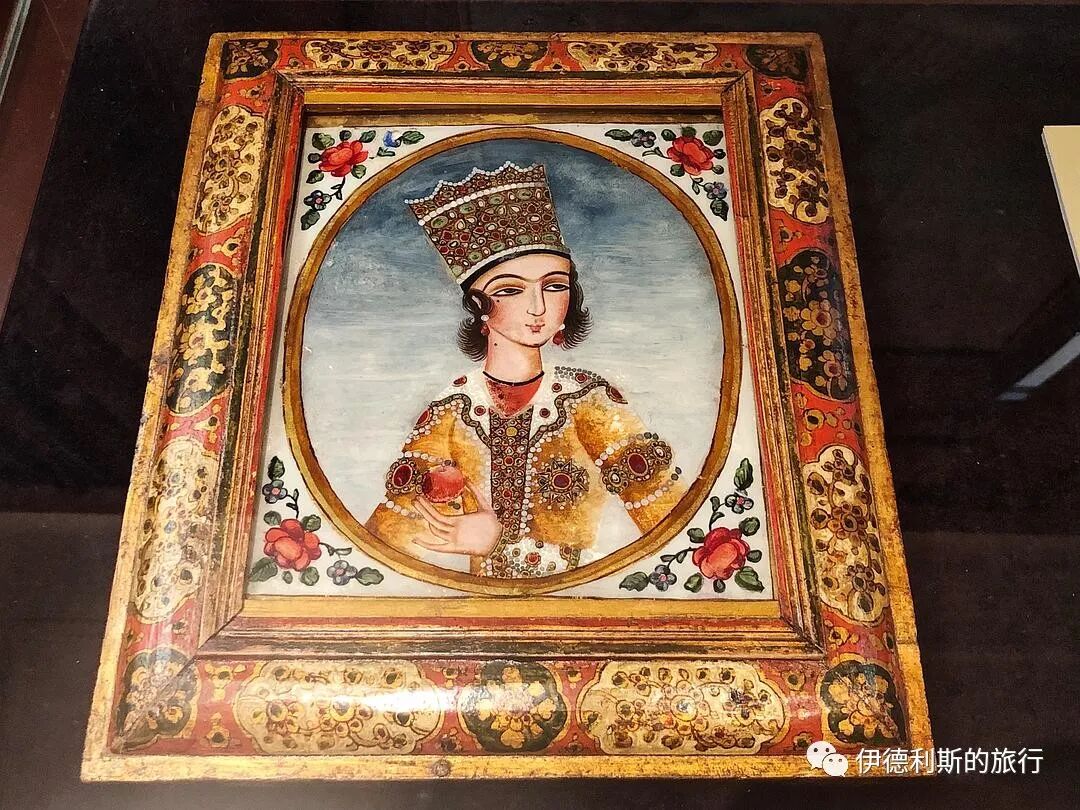
A woman in a garden, 19th century. Early Iranian portraits often blurred gender lines, making the bodies and faces of many beautiful men and women look very similar. It was not until the 19th century that women began to have more individualized features. In portraits of women from the Qajar dynasty, women often hold mirrors, fruit, or drinks, which usually represent beauty and pleasure in Persian poetry.
2. Clothing in Afghanistan and Pakistan
A 20th-century hat worn by the Pashtun people of Afghanistan.
A wool cap (pakol) worn by the Pashtun people in Khost Province, southeastern Afghanistan, which has a wider brim than the common version. The wool cap (pakol) originated from the flat hat (kausia) worn by the Macedonians in ancient Greece and later spread to Hellenistic Afghanistan during the eastern conquests of Alexander the Great. The word pakol comes from the Urdu language in the Chitral region on the border of Afghanistan and Pakistan, meaning round hat. The pakol also spread from Chitral across Afghanistan, Pakistan, and the Pamir region, becoming a hat people wear to keep warm in winter.
A Sindhi cap worn by Pashtuns in Afghanistan in the early 20th century. This cap with a front opening originated in the Sindh region of Pakistan. It later spread to Afghanistan through the Balochistan region and became popular among all Pashtuns during the 20th century.
A woman's dress worn by Pashtuns in Afghanistan in the early 20th century.
Clothing from the Kalasha people in the Parun Valley of eastern Afghanistan from the late 20th century, and trousers from the Kalasha people in northwestern Pakistan from the mid-20th century. The Kalasha people follow an animistic religion that comes from ancient India and speak Kalasha, a language in the Indo-Aryan branch.
Clothing worn by the Nuristanis of eastern Afghanistan. Nuristani culture is very similar to Kalasha culture. They also once followed an animistic religion from ancient India before converting to Islam in the 1890s.
A hat and coat worn by the Wakhi people in the Hunza Valley of northeastern Pakistan in the late 20th century. The Wakhi people are a branch of the Pamiri people. They live at the borders of Afghanistan, Pakistan, Tajikistan, and Taxkorgan in China, where they are classified as part of the Tajik ethnic group. The Wakhi people speak the Wakhi language, which belongs to the Eastern Iranian sub-branch, and they follow the Ismaili branch of Shia Islam.
A woman's hat worn by the Wakhi people in the Hunza Valley of northeastern Pakistan.
A jacket worn by the Pashayi people in eastern Afghanistan. The Pashayi people are a branch of the Indo-Aryan ethnic group and are one of the oldest ethnic groups in Afghanistan.
A robe from the eastern region of Afghanistan.
An Afghan hat from the early 20th century.
3. Siberian clothing
Clothing of the Nanai people on the north bank of the Heilongjiang River. The Nanai people are the Hezhen ethnic group, a Tungusic-speaking people living along the Heilongjiang River.
Clothing of the Nivkh people on the north bank of the Heilongjiang River. The Nivkh people live from the lower reaches of the Heilongjiang River to the river mouth and the northern part of Sakhalin Island, making a living by fishing, hunting, and raising dogs. The Nivkh language is a language isolate, sometimes grouped under Paleo-Siberian languages for convenience. After the Russo-Japanese War ended in 1905, the Nivkh people were divided into Russian and Japanese territories. During the Soviet era, the Russian language was forced upon the Nivkh people, and they were compelled to work on collective farms. Japan forced the Nivkh people to learn Japanese through the Japanization movement, making them stop their traditional customs and adopt Japanese ways of adopt Japanese ways. In 1945, the Soviet Union reclaimed Sakhalin Island, and some Nivkh people were forced to move to Hokkaido. Nivkh people in the Soviet Union were forced to live on collective farms until the Soviet Union collapsed in 1991.
Animal statues made from walrus ivory by the Chukchi people in the 1930s. The Chukchi people live in the Chukotka Autonomous Okrug in the far east of Siberia and are divided into two groups: the maritime Chukchi and the reindeer Chukchi. The Chukchi living along the coast survive by hunting marine mammals, while those living on the inland tundra migrate seasonally with their reindeer. According to molecular anthropology research, the Chukchi people are the Asian ethnic group most genetically similar to Native Americans.
After the 1920s, the Soviet Union established walrus ivory carving cooperatives in Chukchi villages like Uelen to specialize in this craft. Uelen village is the center of Chukchi walrus ivory carving art and houses the world's only walrus ivory carving museum. Archaeological digs in Uelen village uncovered a burial site dating from 500 BC to 1000 AD, where they found walrus ivory carvings from a thousand years ago.
The Dolgan people wear clothing paired with Evenki leather boots. The Dolgans are a Turkic-speaking people living in Siberia. The Dolgan language belongs to the Northern Turkic branch and is closest to the Yakut language. Dolgans are considered a Turkicized Tungusic group who likely switched to a Turkic language during the 18th century. Dolgans originally lived by hunting and herding reindeer, but they were forced to work on collective farms during the Soviet era.
The Evenks are a Tungusic-speaking group native to Siberia, living across Hulunbuir, Siberia, and Mongolia. Some Evenks hunt reindeer, while others raise cattle and horses.
A box lid belonging to the Yakut people. The Yakuts, also called the Sakha, live mainly in the Sakha Republic of Siberia. They speak the Yakut language, which belongs to the Northern Turkic branch, and traditionally make a living by herding horses, cattle, and reindeer.
4. Central Asian Clothing
A 19th-century robe from Central Asia.
A woman's dress from Tajikistan, dating from the 1950s to the 1960s.
An early 20th-century ikat dress (atlas) from Uzbekistan, featuring a 19th-century chest ornament from Bukhara.
Women's clothing from Tajikistan, dating to the early 20th century.
A man's robe from Bukhara, dating to the late 19th century.
A boy's robe from Bukhara, dating to the early 20th century.
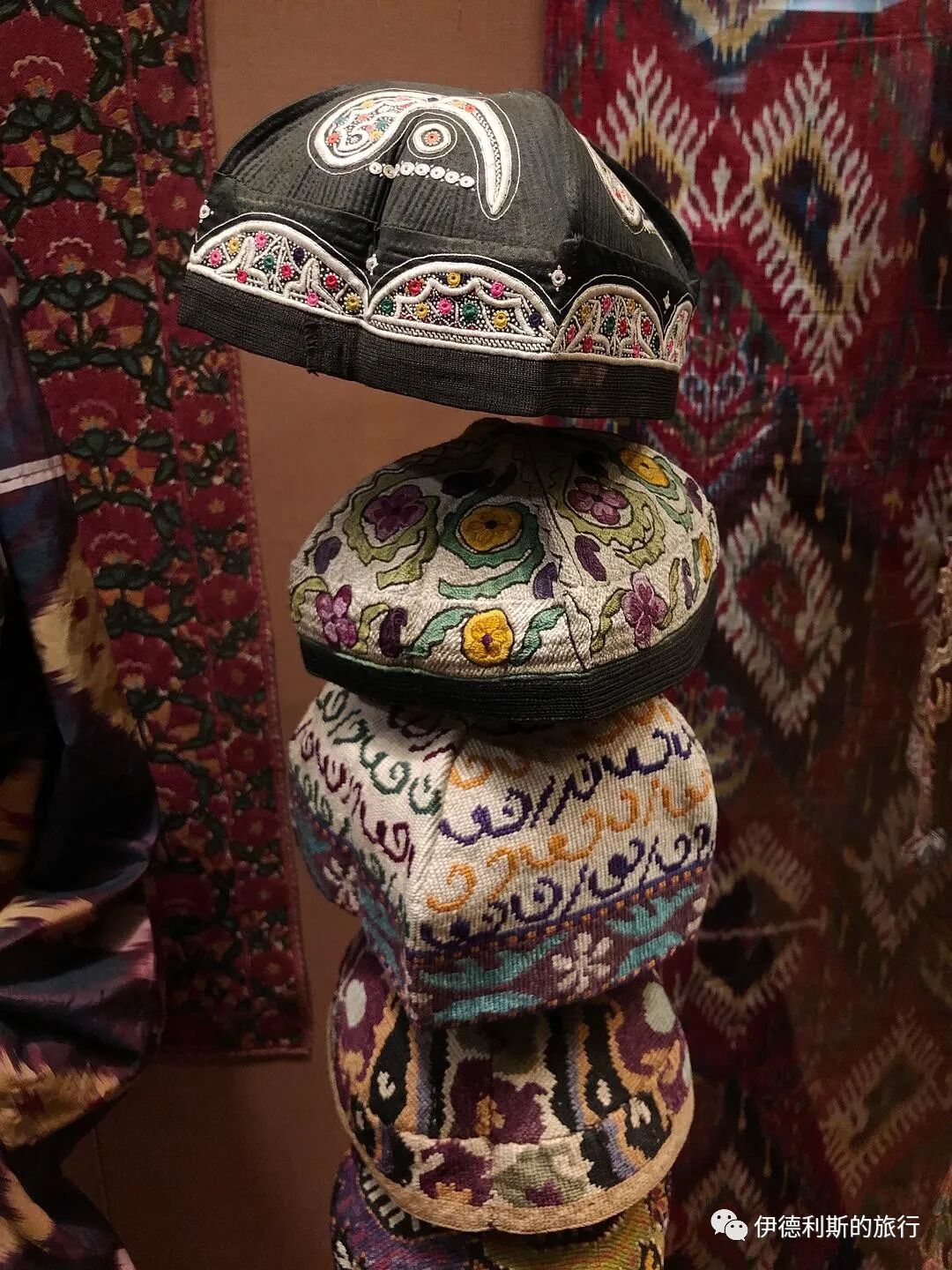
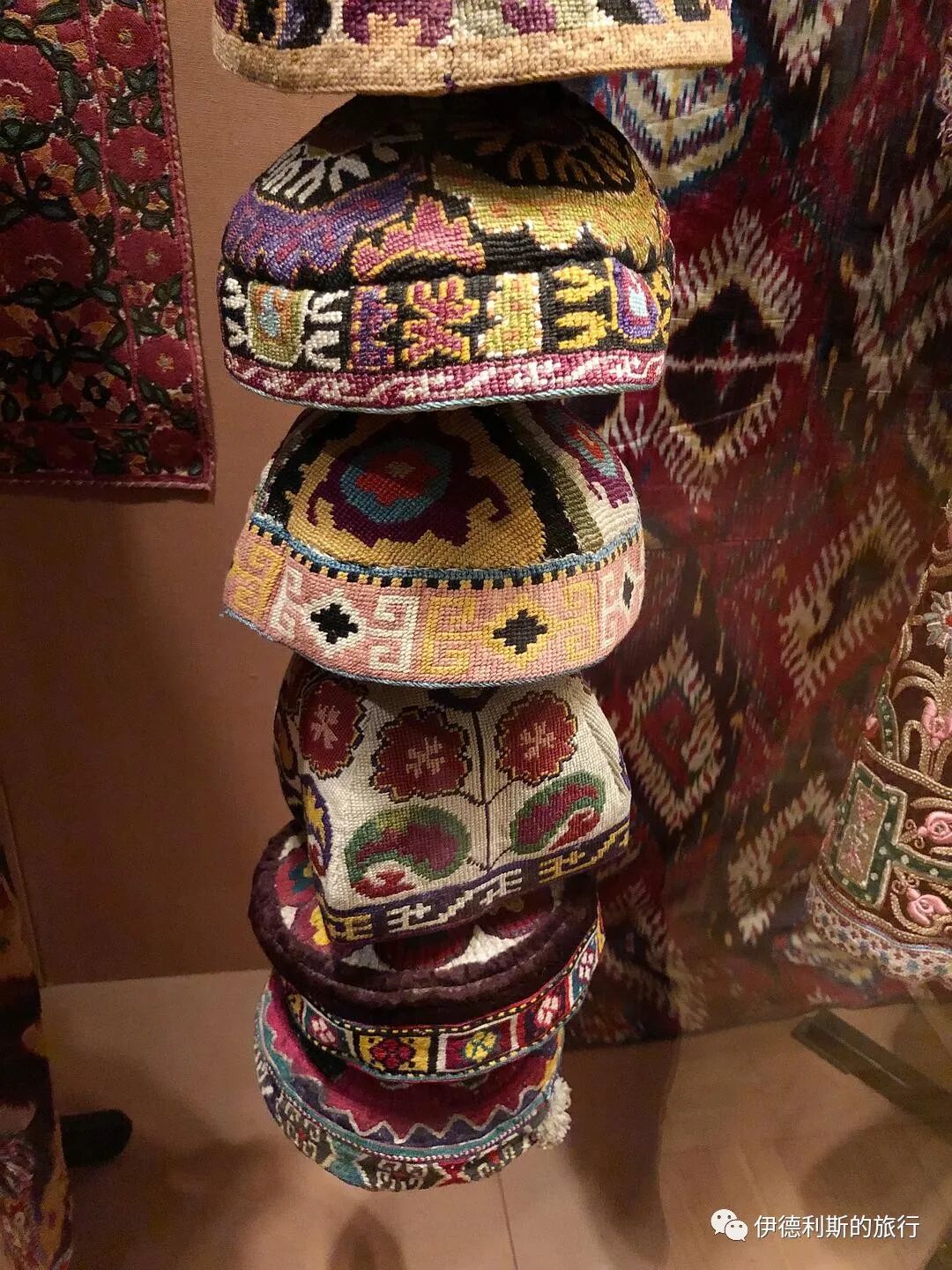
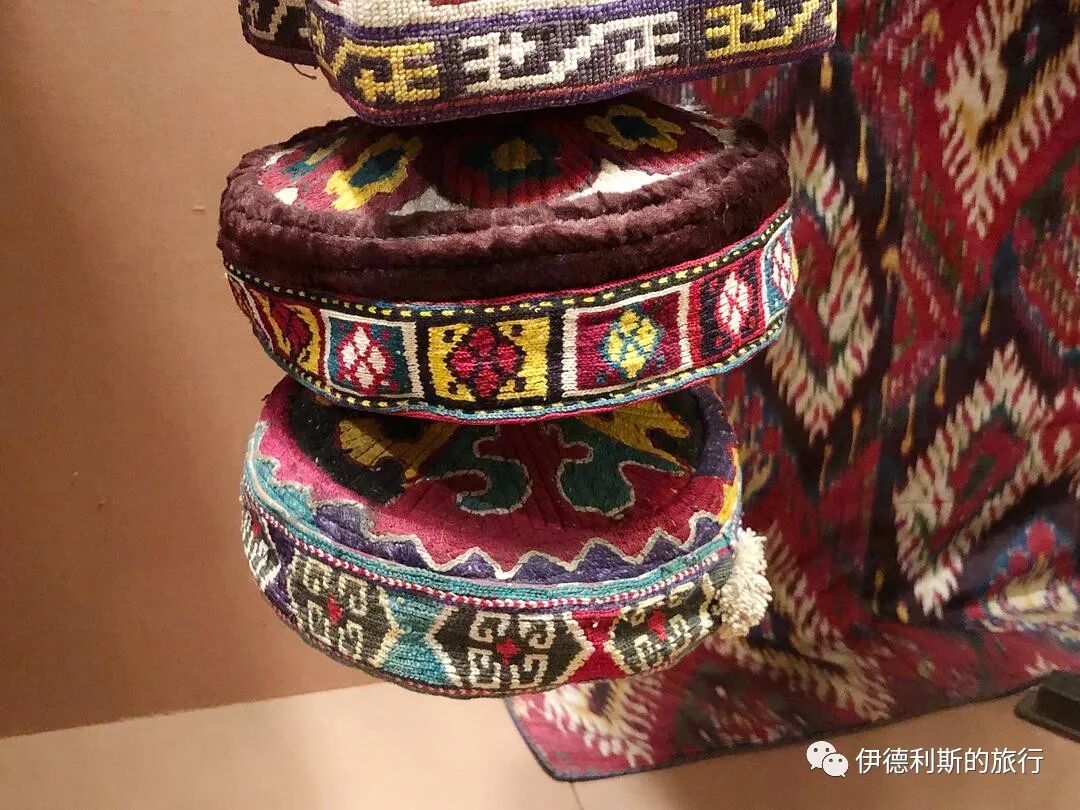
On the left is women's clothing from Bukhara in the early 20th century. In the middle is a 19th-century men's ikat robe (atlas) from Bukhara and a 19th-century belt from Shahrisabz. On the right are various hats from Uzbekistan and Tajikistan from the early 20th century. view all
Summary: Moscow Oriental Art Museum: Islamic Art, Central Asia and Muslim Heritage is presented here as a firsthand travel account in clear English, beginning with this scene: The museum's collection comes from many regions, including China, Japan, Korea, Southeast Asia, the Caucasus, Central Asia, Iran, and India. The account keeps its focus on Moscow Museum, Islamic Art, Oriental Art while preserving the names, places, food, and historical details from the Chinese source.
The museum's collection comes from many regions, including China, Japan, Korea, Southeast Asia, the Caucasus, Central Asia, Iran, and India. When the museum first opened, some items came from the Russian Museum of Decorative Arts, the Pushkin State Museum of Fine Arts, and the State Historical Museum in the 1920s, while others came from private collections. Art collector Pyotr Ivanovich Shchukin once owned a large number of Chinese, Iranian, and Indian artworks. After the October Revolution, these pieces were nationalized and transferred to the Museum of Oriental Art. Most of the Persian artifacts in the museum were donated by General Tardov in 1929. Since 1924, the museum has launched many expeditions to the Far East and collected a large number of artifacts. Today, the museum's new items mainly come from private donations and archaeological excavations.
1. Iran
1. Iranian porcelain
An Iranian ceramic plate from the 12th to 13th century.
After the 12th century began, the massive Seljuk Empire slowly declined and was finally destroyed by the Khwarazmian Empire in 1194. In 1221, the Khwarazmian Empire faced an invasion by the Mongol Empire, and by 1237, the Mongols occupied most of Iran. In 1256, Hulagu Khan was named Ilkhan, and Iran began to be ruled by the Ilkhanate.
Iranian ceramic tiles from the 13th to 14th century.
After 1335, the Ilkhanate fell into division until it was conquered by Timur in 1381, and Iran came under the rule of the Timurid Empire.
Iranian ceramic tiles from the 17th century, Safavid Dynasty (1501–1736).
Ceramic tiles from the 18th century, Safavid Dynasty (1501–1736) or Afsharid Dynasty (1736–1796).
2. Calligraphy and painting from the 18th century.
Entering the 18th century, Iran faced both internal troubles and external threats. The Russian Empire and the Ottoman Empire invaded Iran one after another. The Safavid dynasty, which had ruled Iran for over two hundred years, collapsed. Pashtuns from Afghanistan, Turkmens from Khorasan, and other tribes established the Hotaki dynasty (ruling Iran from 1722 to 1729), the Afsharid dynasty (1736-1796), and the Zand dynasty (1750-1794) in succession.
Although the Afsharid dynasty reached the largest territory in Iran since the Sasanian Empire in the 1730s, it soon fell into civil strife and turmoil. After 1750, the Zand dynasty brought a period of relative peace and prosperity to Iran.
In 1765, Karim Khan promoted art in the capital, Shiraz. This formed the unique Zand school of Iranian painting, which influenced the painting art of the Qajar dynasty in the 19th century.
Calligraphy written by Riza ad-Din Khan ibn Ibragim khan in 1706/7, during the final years of the Safavid dynasty.
18th-century Persian miniature painting.
3. 19th-century Persian miniature paintings
In the 19th century, Iran was ruled by the Qajar dynasty (1789-1925). The Qajars were a Turkic-speaking tribe from northern Iran, now part of the Turkmen people, and their rulers called themselves Shah. Peace returned to Iran in the 19th century, and art flourished as a result.
An illustration from the Persian epic Shahnameh shows the legendary hero Rostam fighting the White Demon (Div-e Sepid). In the Shahnameh, the White Demon is the leader of the demons in the Mazandaran region; he is huge and skilled at all kinds of magic. He destroyed the army of the Iranian King Kay Kavus by summoning hail, boulders, and tree trunks, then captured and imprisoned the king. In the end, the hero Rostam killed the White Demon to save the king, and he even turned the demon's head into a helmet to wear.
Inside the palace.
A Sufi performing the whirling dance ceremony.
An introduction to the turban (chantou).
The Sufi allegorical poem Salaman va Absal by the famous 15th-century Sufi poet Jami (Nūr ad-Dīn 'Abd ar-Rahmān Jāmī). The story appears to be about a prince who feels a physical attraction to his wet nurse, but it actually uses allegory to describe the key stages of Sufi spiritual practice.
A Qajar dynasty Shah in battle.
A page from a manuscript.
A young man wearing a turban (chantou).
Relaxing.
4. Qajar Dynasty portraits.
The Qajar Dynasty is famous for its unique portrait paintings. Qajar portraits were influenced by European realism in oil painting. They use many dark, rich, and saturated colors. The backgrounds are very realistic, but the people in the paintings still look stiff.
This early 19th-century painting shows Bahram V (reigned 420-438) while hunting. Bahram V was known as the Wild Ass (Gor). He was a 5th-century king of the Persian Sasanian Empire. He loved hunting and often appears in classic Persian literature.
Painted by Muhammad Ali in 1834, this shows the Qajar court with the Shah receiving his officials.
A woman in a garden, 19th century. Early Iranian portraits often blurred gender lines, making the bodies and faces of many beautiful men and women look very similar. It was not until the 19th century that women began to have more individualized features. In portraits of women from the Qajar dynasty, women often hold mirrors, fruit, or drinks, which usually represent beauty and pleasure in Persian poetry.
2. Clothing in Afghanistan and Pakistan
A 20th-century hat worn by the Pashtun people of Afghanistan.
A wool cap (pakol) worn by the Pashtun people in Khost Province, southeastern Afghanistan, which has a wider brim than the common version. The wool cap (pakol) originated from the flat hat (kausia) worn by the Macedonians in ancient Greece and later spread to Hellenistic Afghanistan during the eastern conquests of Alexander the Great. The word pakol comes from the Urdu language in the Chitral region on the border of Afghanistan and Pakistan, meaning round hat. The pakol also spread from Chitral across Afghanistan, Pakistan, and the Pamir region, becoming a hat people wear to keep warm in winter.
A Sindhi cap worn by Pashtuns in Afghanistan in the early 20th century. This cap with a front opening originated in the Sindh region of Pakistan. It later spread to Afghanistan through the Balochistan region and became popular among all Pashtuns during the 20th century.
A woman's dress worn by Pashtuns in Afghanistan in the early 20th century.
Clothing from the Kalasha people in the Parun Valley of eastern Afghanistan from the late 20th century, and trousers from the Kalasha people in northwestern Pakistan from the mid-20th century. The Kalasha people follow an animistic religion that comes from ancient India and speak Kalasha, a language in the Indo-Aryan branch.
Clothing worn by the Nuristanis of eastern Afghanistan. Nuristani culture is very similar to Kalasha culture. They also once followed an animistic religion from ancient India before converting to Islam in the 1890s.
A hat and coat worn by the Wakhi people in the Hunza Valley of northeastern Pakistan in the late 20th century. The Wakhi people are a branch of the Pamiri people. They live at the borders of Afghanistan, Pakistan, Tajikistan, and Taxkorgan in China, where they are classified as part of the Tajik ethnic group. The Wakhi people speak the Wakhi language, which belongs to the Eastern Iranian sub-branch, and they follow the Ismaili branch of Shia Islam.
A woman's hat worn by the Wakhi people in the Hunza Valley of northeastern Pakistan.
A jacket worn by the Pashayi people in eastern Afghanistan. The Pashayi people are a branch of the Indo-Aryan ethnic group and are one of the oldest ethnic groups in Afghanistan.
A robe from the eastern region of Afghanistan.
An Afghan hat from the early 20th century.
3. Siberian clothing
Clothing of the Nanai people on the north bank of the Heilongjiang River. The Nanai people are the Hezhen ethnic group, a Tungusic-speaking people living along the Heilongjiang River.
Clothing of the Nivkh people on the north bank of the Heilongjiang River. The Nivkh people live from the lower reaches of the Heilongjiang River to the river mouth and the northern part of Sakhalin Island, making a living by fishing, hunting, and raising dogs. The Nivkh language is a language isolate, sometimes grouped under Paleo-Siberian languages for convenience. After the Russo-Japanese War ended in 1905, the Nivkh people were divided into Russian and Japanese territories. During the Soviet era, the Russian language was forced upon the Nivkh people, and they were compelled to work on collective farms. Japan forced the Nivkh people to learn Japanese through the Japanization movement, making them stop their traditional customs and adopt Japanese ways of adopt Japanese ways. In 1945, the Soviet Union reclaimed Sakhalin Island, and some Nivkh people were forced to move to Hokkaido. Nivkh people in the Soviet Union were forced to live on collective farms until the Soviet Union collapsed in 1991.
Animal statues made from walrus ivory by the Chukchi people in the 1930s. The Chukchi people live in the Chukotka Autonomous Okrug in the far east of Siberia and are divided into two groups: the maritime Chukchi and the reindeer Chukchi. The Chukchi living along the coast survive by hunting marine mammals, while those living on the inland tundra migrate seasonally with their reindeer. According to molecular anthropology research, the Chukchi people are the Asian ethnic group most genetically similar to Native Americans.
After the 1920s, the Soviet Union established walrus ivory carving cooperatives in Chukchi villages like Uelen to specialize in this craft. Uelen village is the center of Chukchi walrus ivory carving art and houses the world's only walrus ivory carving museum. Archaeological digs in Uelen village uncovered a burial site dating from 500 BC to 1000 AD, where they found walrus ivory carvings from a thousand years ago.
The Dolgan people wear clothing paired with Evenki leather boots. The Dolgans are a Turkic-speaking people living in Siberia. The Dolgan language belongs to the Northern Turkic branch and is closest to the Yakut language. Dolgans are considered a Turkicized Tungusic group who likely switched to a Turkic language during the 18th century. Dolgans originally lived by hunting and herding reindeer, but they were forced to work on collective farms during the Soviet era.
The Evenks are a Tungusic-speaking group native to Siberia, living across Hulunbuir, Siberia, and Mongolia. Some Evenks hunt reindeer, while others raise cattle and horses.
A box lid belonging to the Yakut people. The Yakuts, also called the Sakha, live mainly in the Sakha Republic of Siberia. They speak the Yakut language, which belongs to the Northern Turkic branch, and traditionally make a living by herding horses, cattle, and reindeer.
4. Central Asian Clothing
A 19th-century robe from Central Asia.
A woman's dress from Tajikistan, dating from the 1950s to the 1960s.
An early 20th-century ikat dress (atlas) from Uzbekistan, featuring a 19th-century chest ornament from Bukhara.
Women's clothing from Tajikistan, dating to the early 20th century.
A man's robe from Bukhara, dating to the late 19th century.
A boy's robe from Bukhara, dating to the early 20th century.
On the left is women's clothing from Bukhara in the early 20th century. In the middle is a 19th-century men's ikat robe (atlas) from Bukhara and a 19th-century belt from Shahrisabz. On the right are various hats from Uzbekistan and Tajikistan from the early 20th century. view all
Reposted from the web
Summary: Moscow Oriental Art Museum: Islamic Art, Central Asia and Muslim Heritage is presented here as a firsthand travel account in clear English, beginning with this scene: The museum's collection comes from many regions, including China, Japan, Korea, Southeast Asia, the Caucasus, Central Asia, Iran, and India. The account keeps its focus on Moscow Museum, Islamic Art, Oriental Art while preserving the names, places, food, and historical details from the Chinese source.
The museum's collection comes from many regions, including China, Japan, Korea, Southeast Asia, the Caucasus, Central Asia, Iran, and India. When the museum first opened, some items came from the Russian Museum of Decorative Arts, the Pushkin State Museum of Fine Arts, and the State Historical Museum in the 1920s, while others came from private collections. Art collector Pyotr Ivanovich Shchukin once owned a large number of Chinese, Iranian, and Indian artworks. After the October Revolution, these pieces were nationalized and transferred to the Museum of Oriental Art. Most of the Persian artifacts in the museum were donated by General Tardov in 1929. Since 1924, the museum has launched many expeditions to the Far East and collected a large number of artifacts. Today, the museum's new items mainly come from private donations and archaeological excavations.
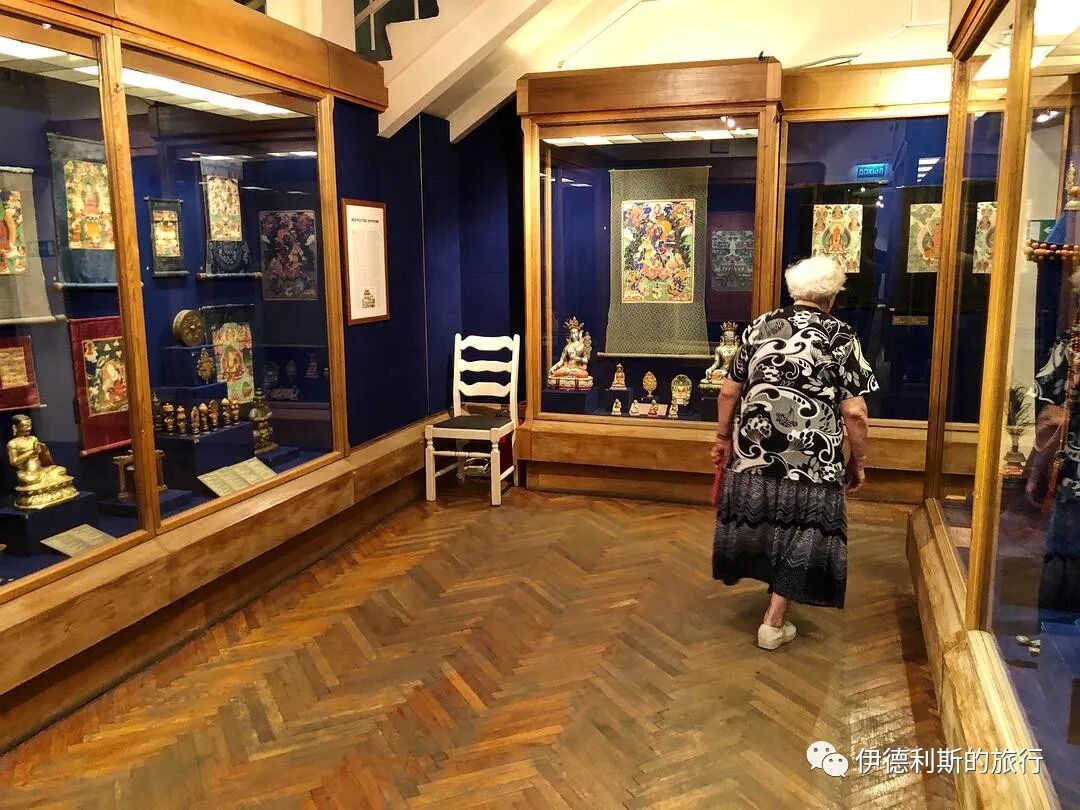
1. Iran
1. Iranian porcelain
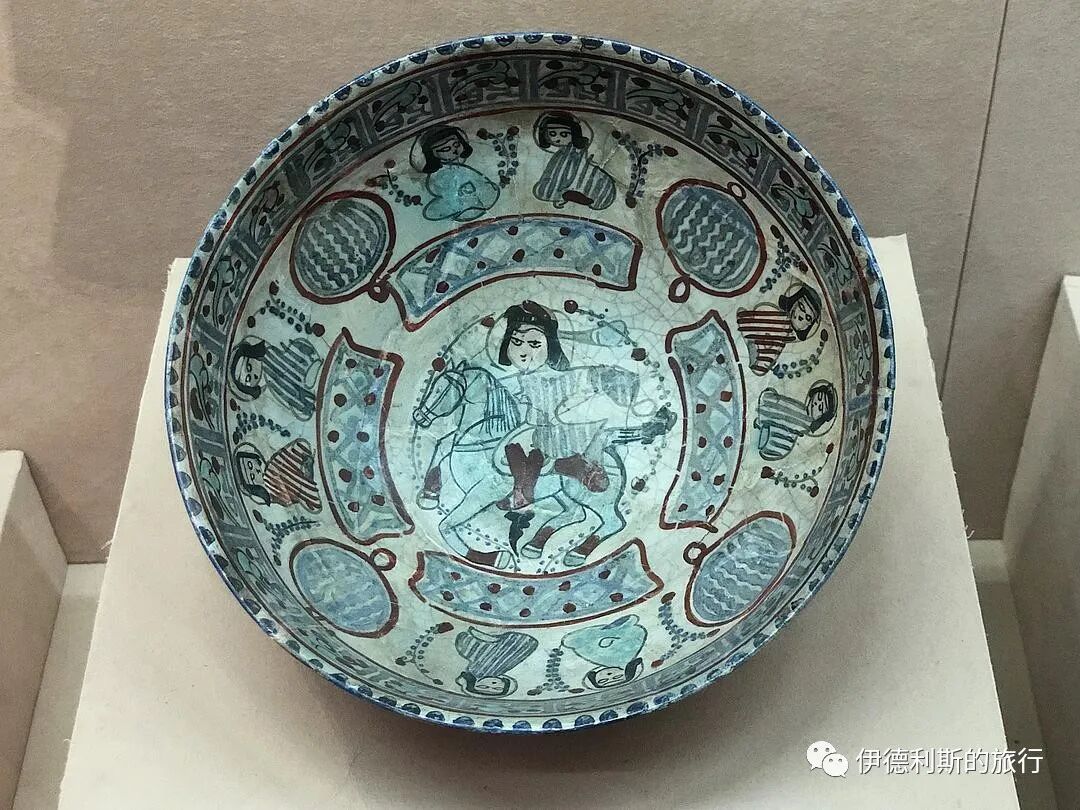
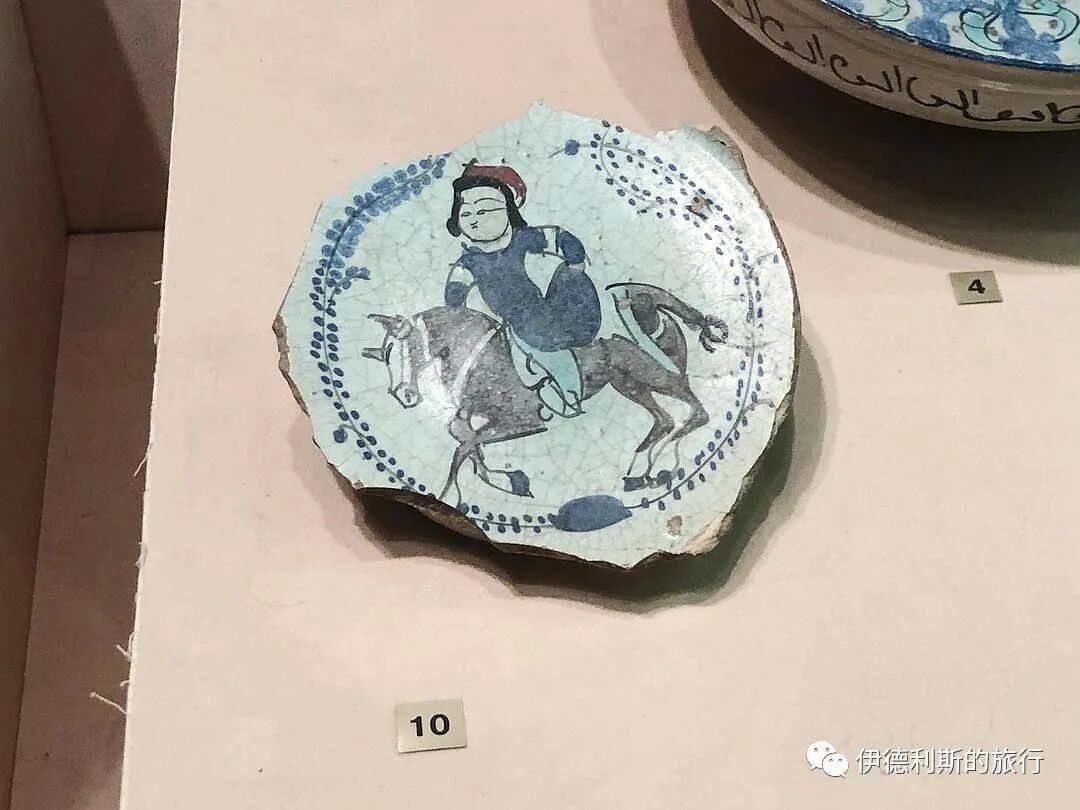
An Iranian ceramic plate from the 12th to 13th century.
After the 12th century began, the massive Seljuk Empire slowly declined and was finally destroyed by the Khwarazmian Empire in 1194. In 1221, the Khwarazmian Empire faced an invasion by the Mongol Empire, and by 1237, the Mongols occupied most of Iran. In 1256, Hulagu Khan was named Ilkhan, and Iran began to be ruled by the Ilkhanate.
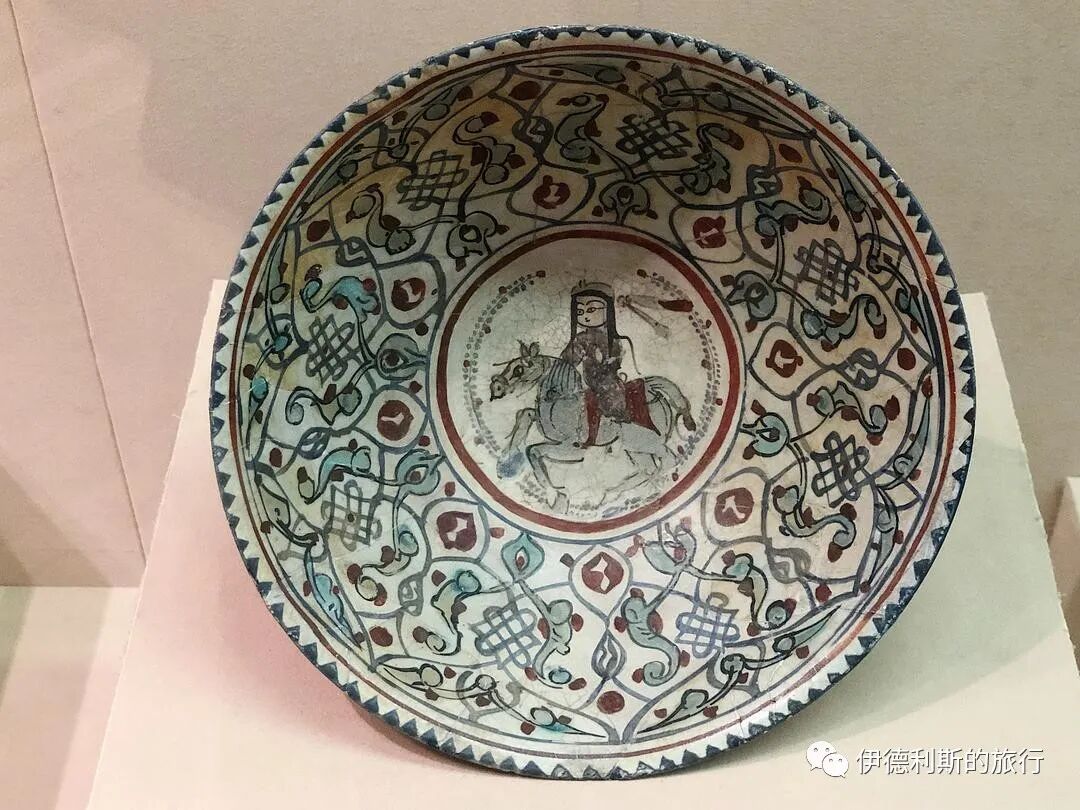
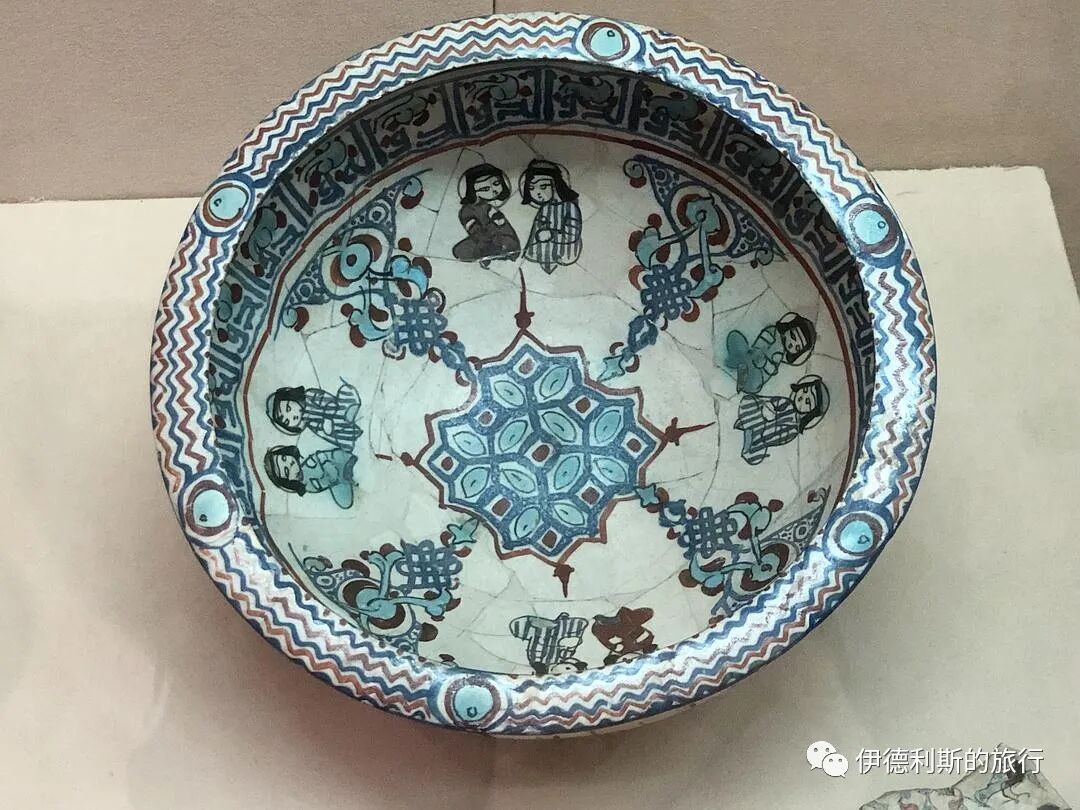
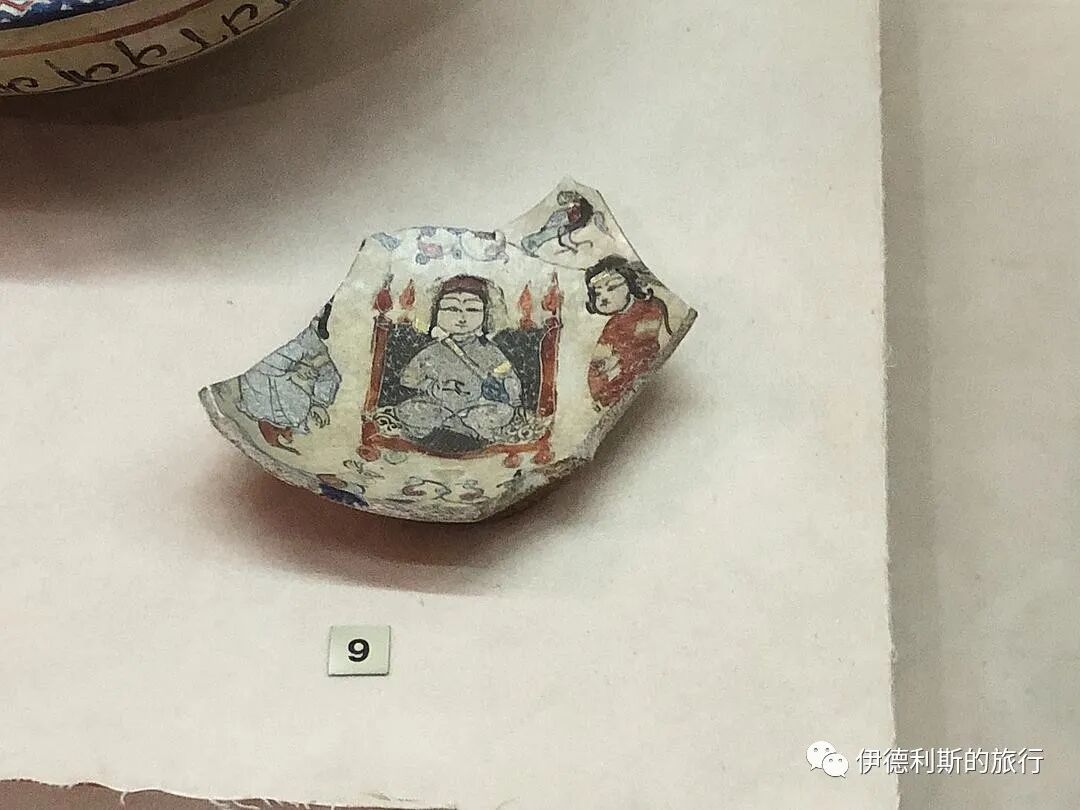
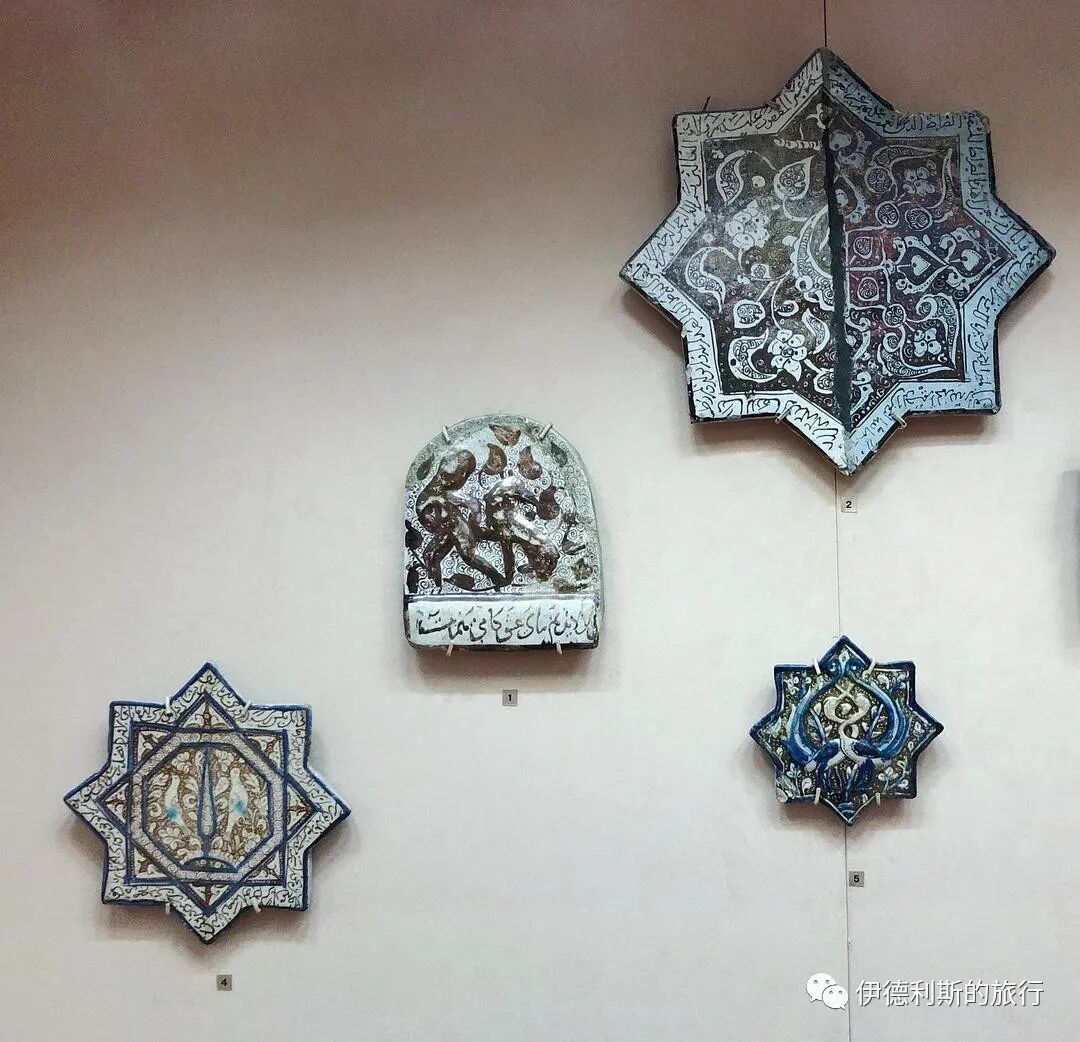
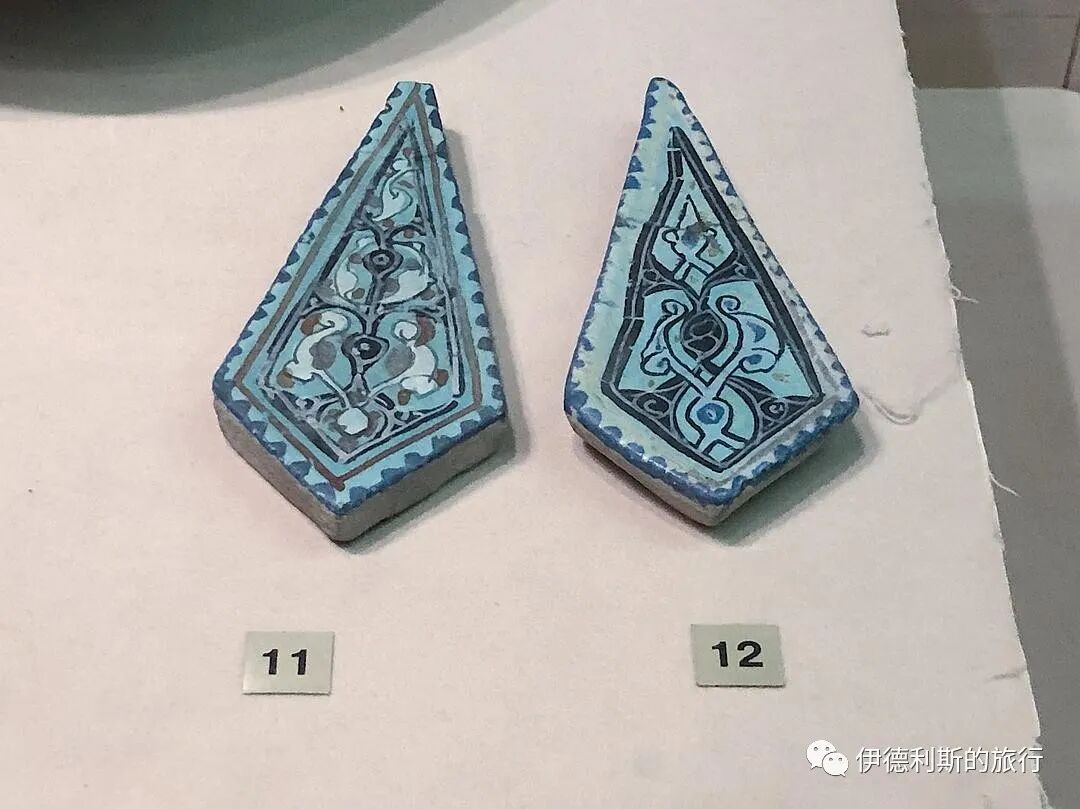
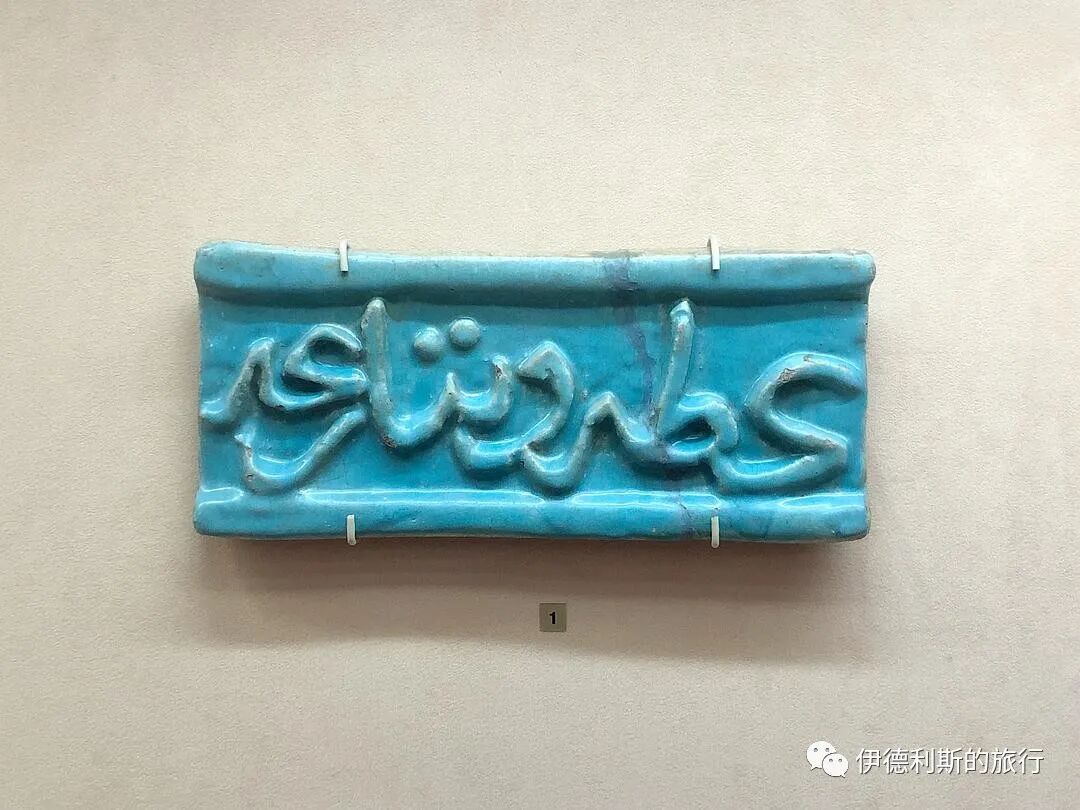
Iranian ceramic tiles from the 13th to 14th century.
After 1335, the Ilkhanate fell into division until it was conquered by Timur in 1381, and Iran came under the rule of the Timurid Empire.
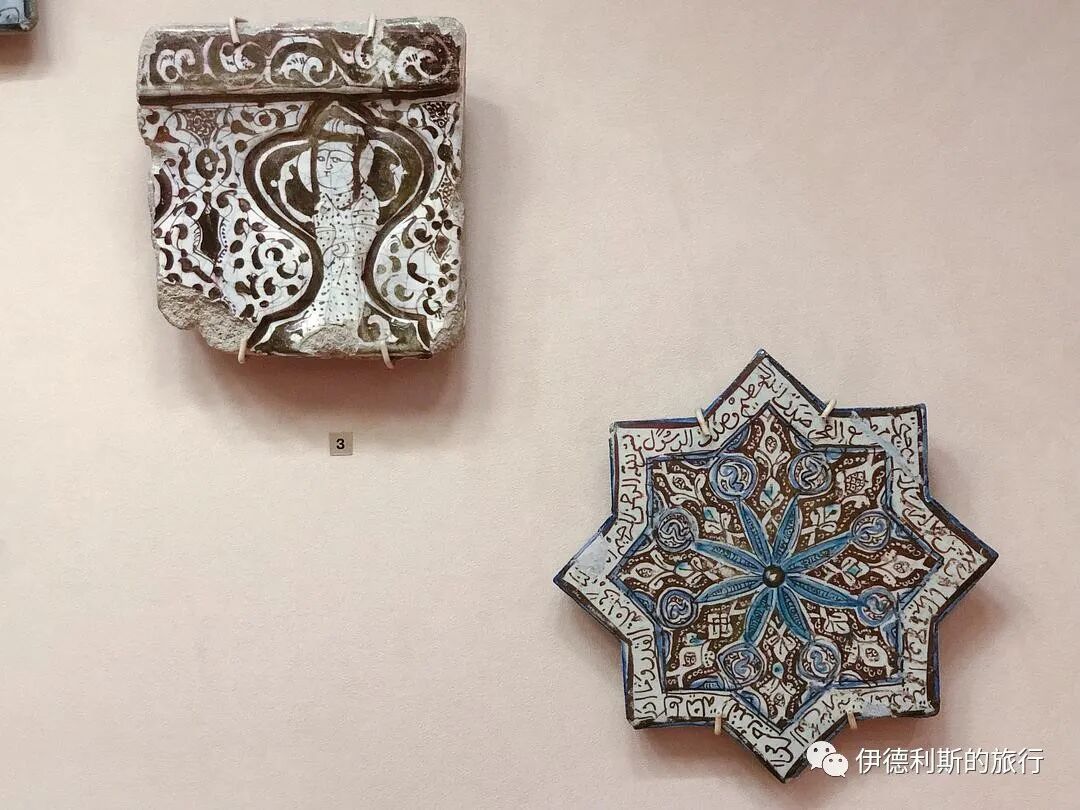
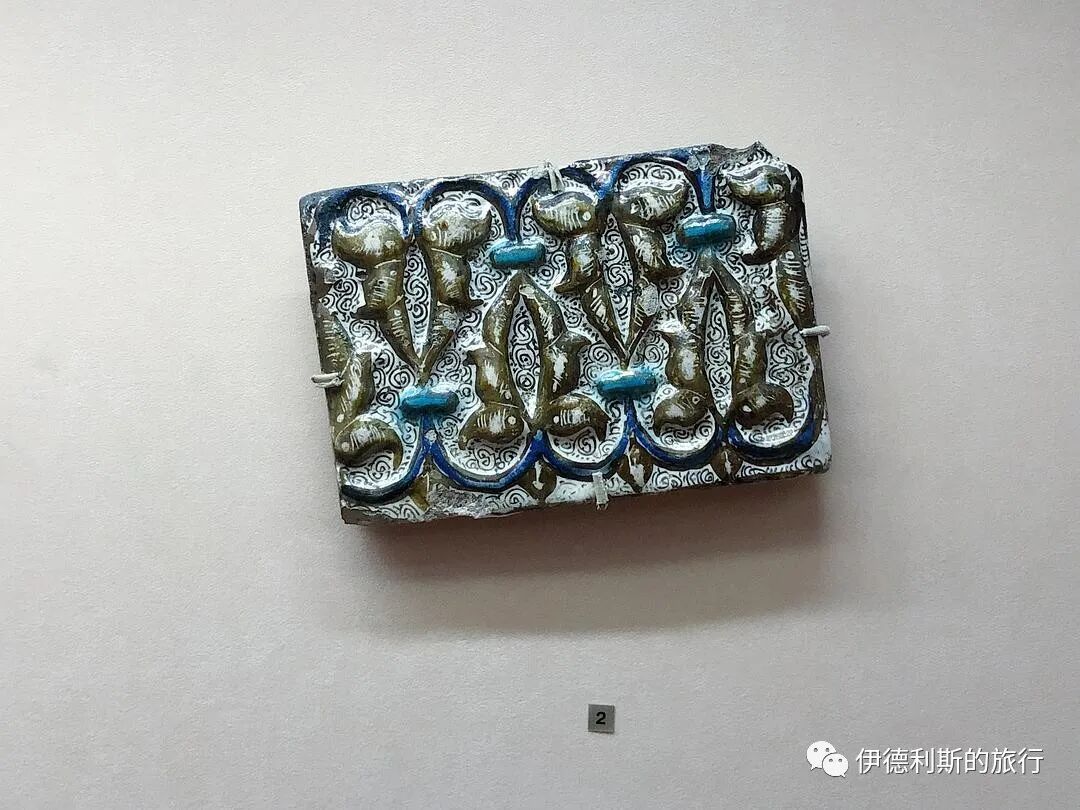
Iranian ceramic tiles from the 17th century, Safavid Dynasty (1501–1736).
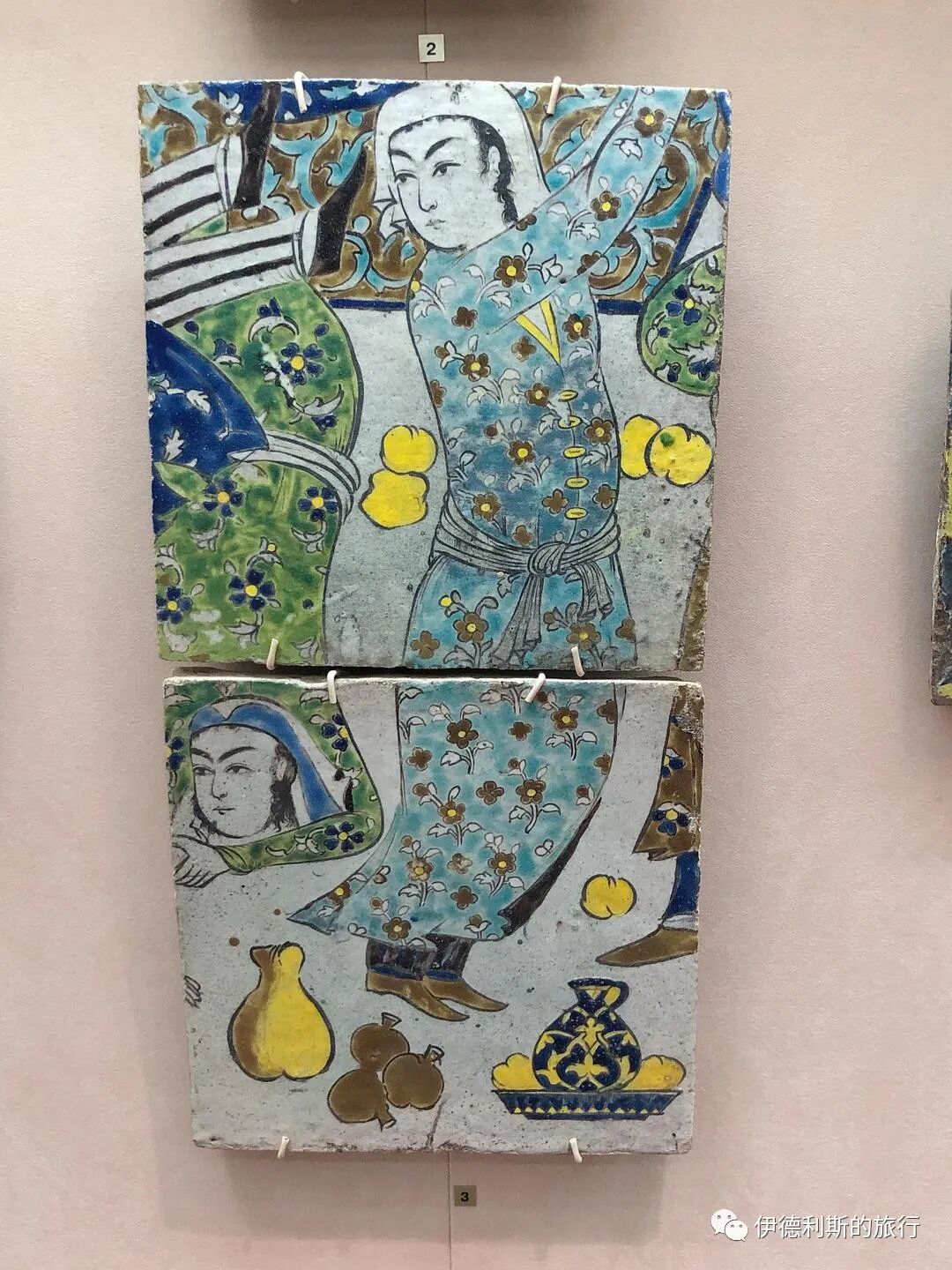
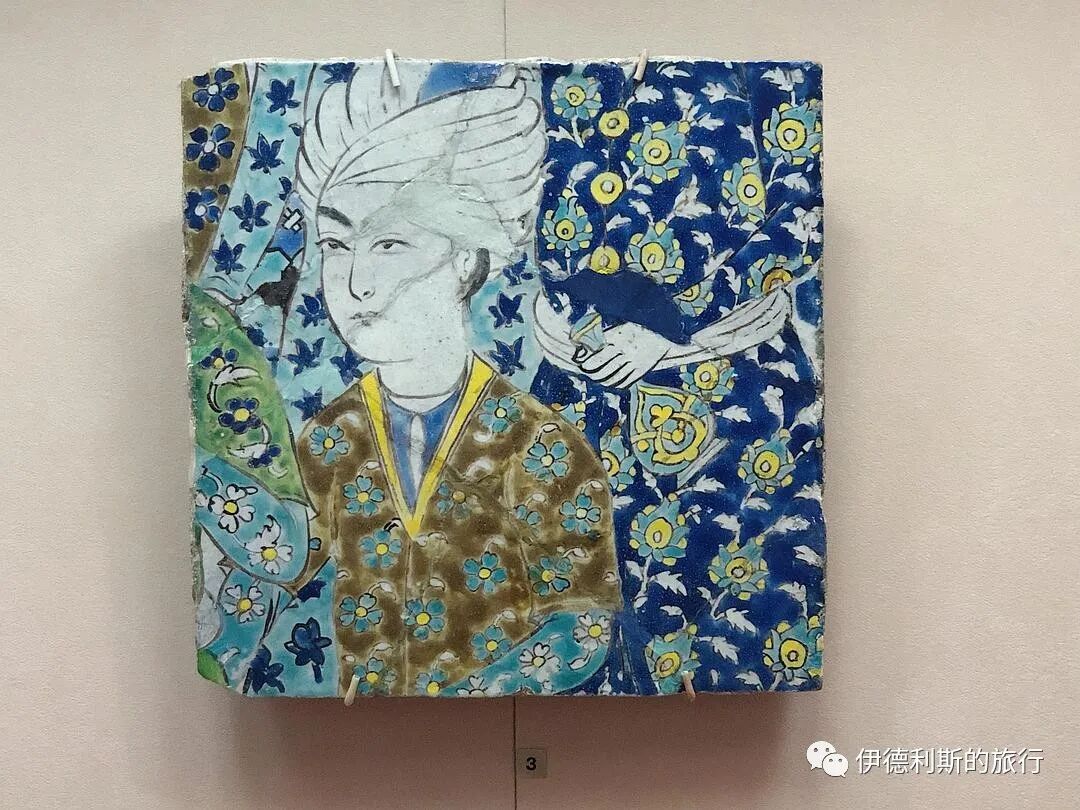
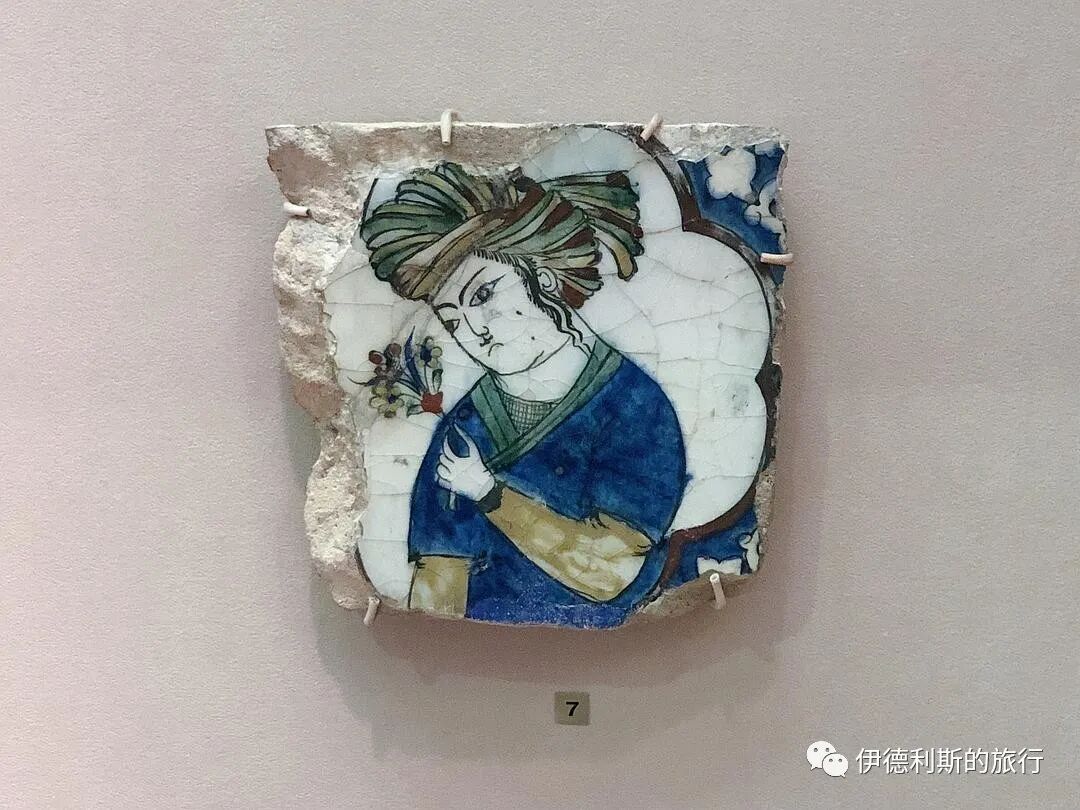
Ceramic tiles from the 18th century, Safavid Dynasty (1501–1736) or Afsharid Dynasty (1736–1796).
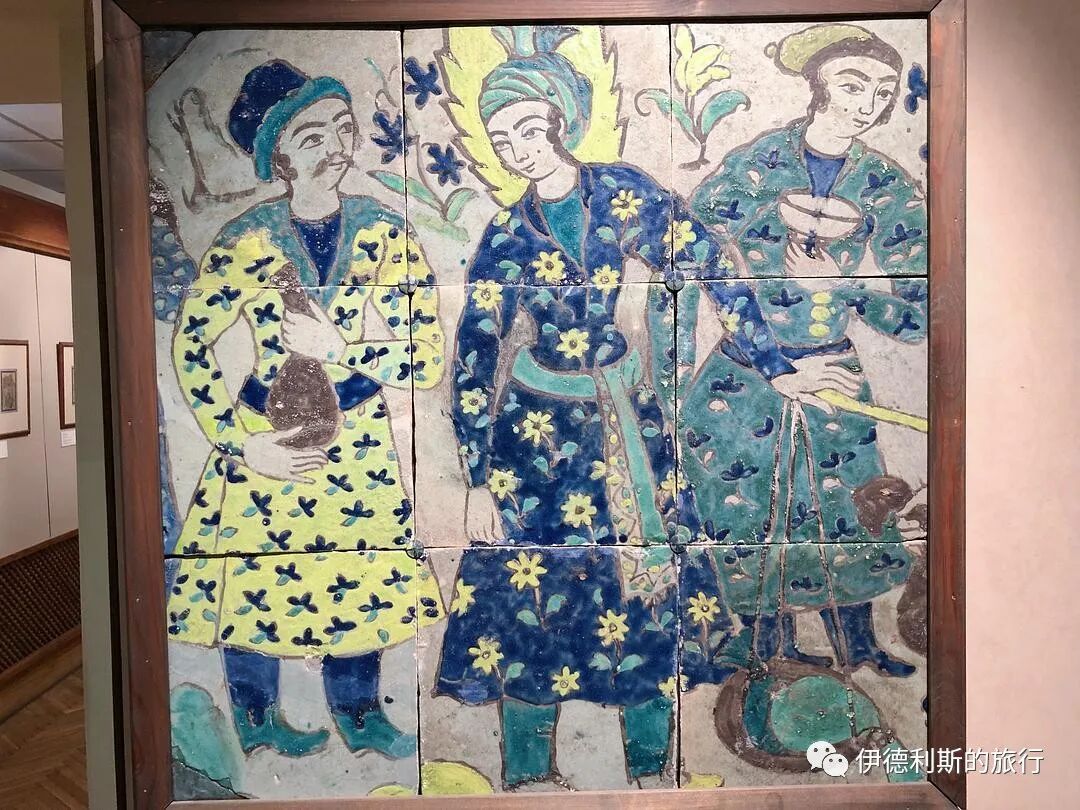
2. Calligraphy and painting from the 18th century.
Entering the 18th century, Iran faced both internal troubles and external threats. The Russian Empire and the Ottoman Empire invaded Iran one after another. The Safavid dynasty, which had ruled Iran for over two hundred years, collapsed. Pashtuns from Afghanistan, Turkmens from Khorasan, and other tribes established the Hotaki dynasty (ruling Iran from 1722 to 1729), the Afsharid dynasty (1736-1796), and the Zand dynasty (1750-1794) in succession.
Although the Afsharid dynasty reached the largest territory in Iran since the Sasanian Empire in the 1730s, it soon fell into civil strife and turmoil. After 1750, the Zand dynasty brought a period of relative peace and prosperity to Iran.
In 1765, Karim Khan promoted art in the capital, Shiraz. This formed the unique Zand school of Iranian painting, which influenced the painting art of the Qajar dynasty in the 19th century.
Calligraphy written by Riza ad-Din Khan ibn Ibragim khan in 1706/7, during the final years of the Safavid dynasty.
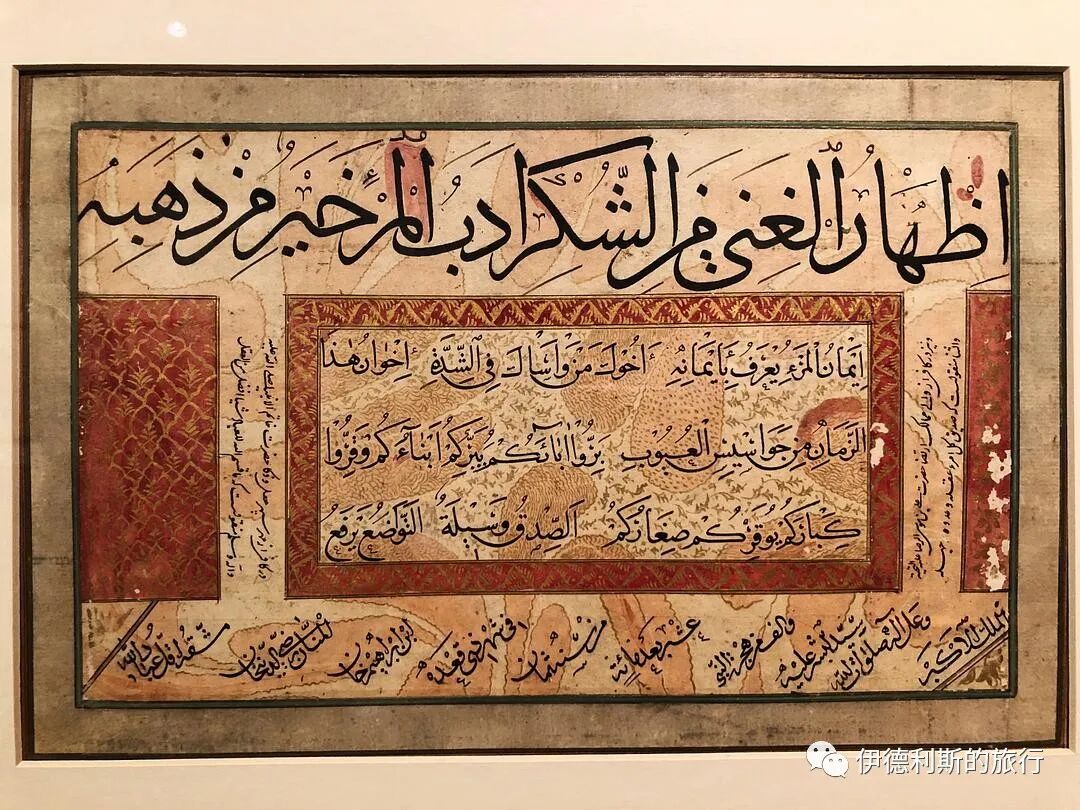
18th-century Persian miniature painting.
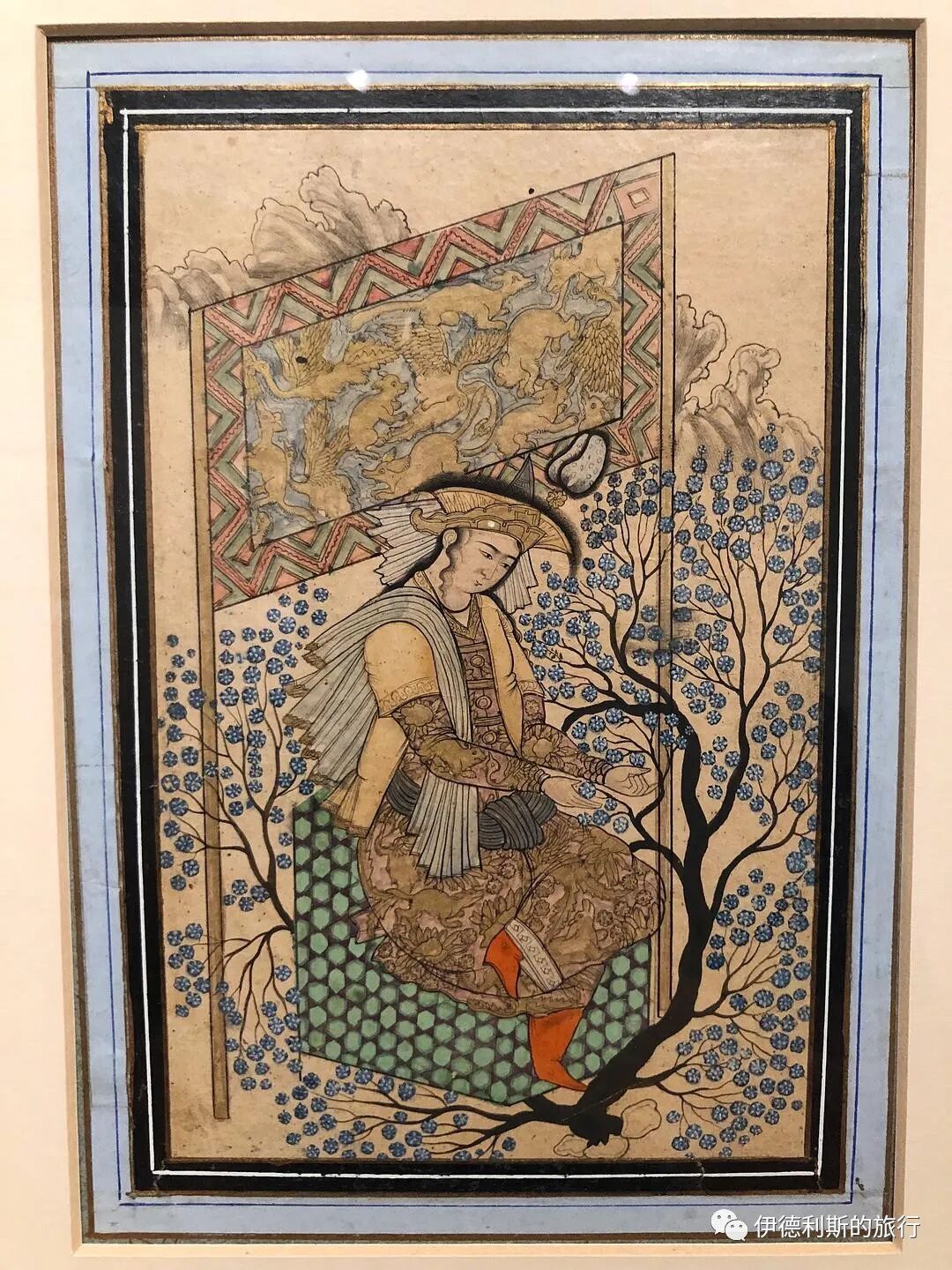
3. 19th-century Persian miniature paintings
In the 19th century, Iran was ruled by the Qajar dynasty (1789-1925). The Qajars were a Turkic-speaking tribe from northern Iran, now part of the Turkmen people, and their rulers called themselves Shah. Peace returned to Iran in the 19th century, and art flourished as a result.
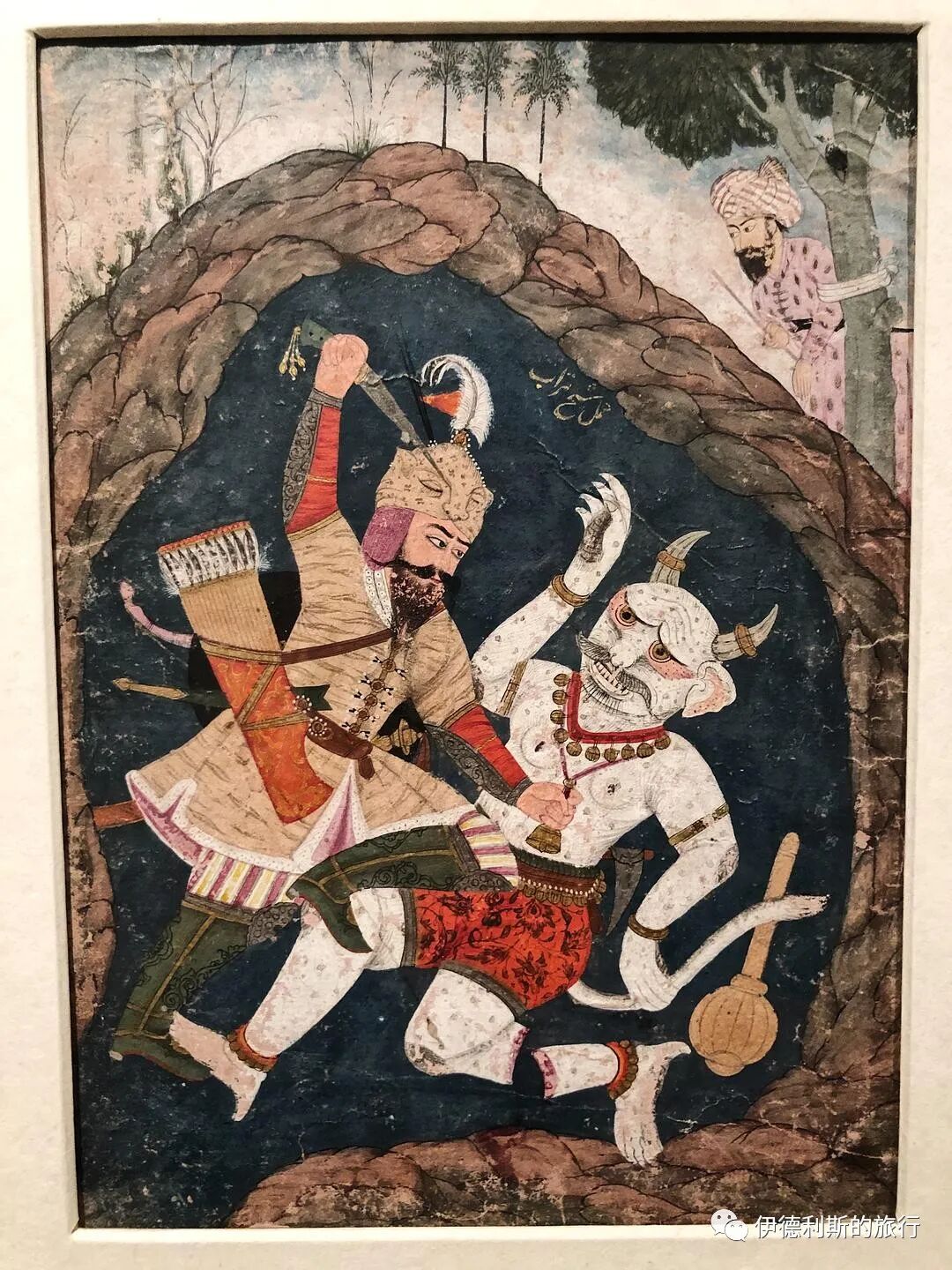
An illustration from the Persian epic Shahnameh shows the legendary hero Rostam fighting the White Demon (Div-e Sepid). In the Shahnameh, the White Demon is the leader of the demons in the Mazandaran region; he is huge and skilled at all kinds of magic. He destroyed the army of the Iranian King Kay Kavus by summoning hail, boulders, and tree trunks, then captured and imprisoned the king. In the end, the hero Rostam killed the White Demon to save the king, and he even turned the demon's head into a helmet to wear.
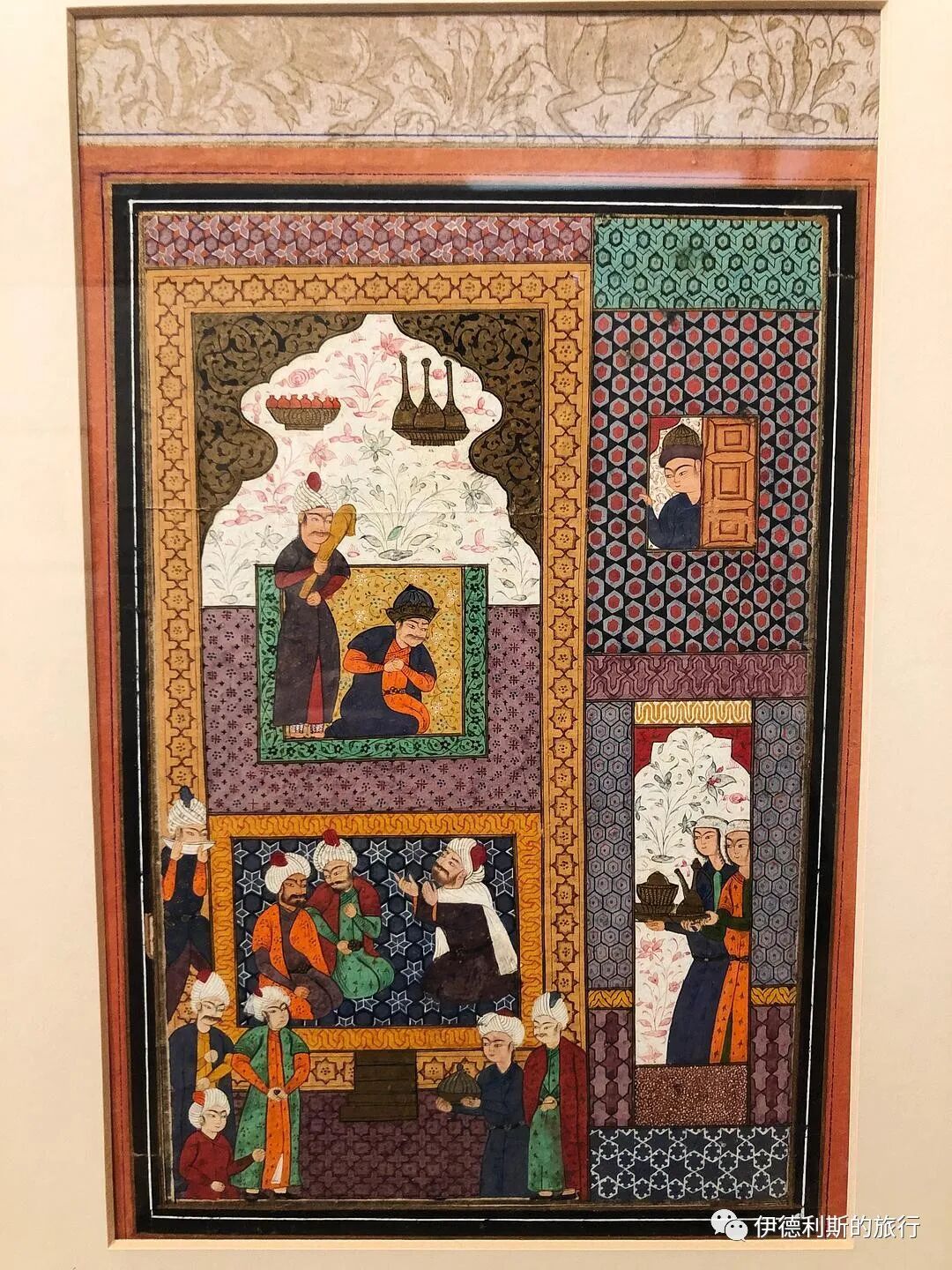
Inside the palace.
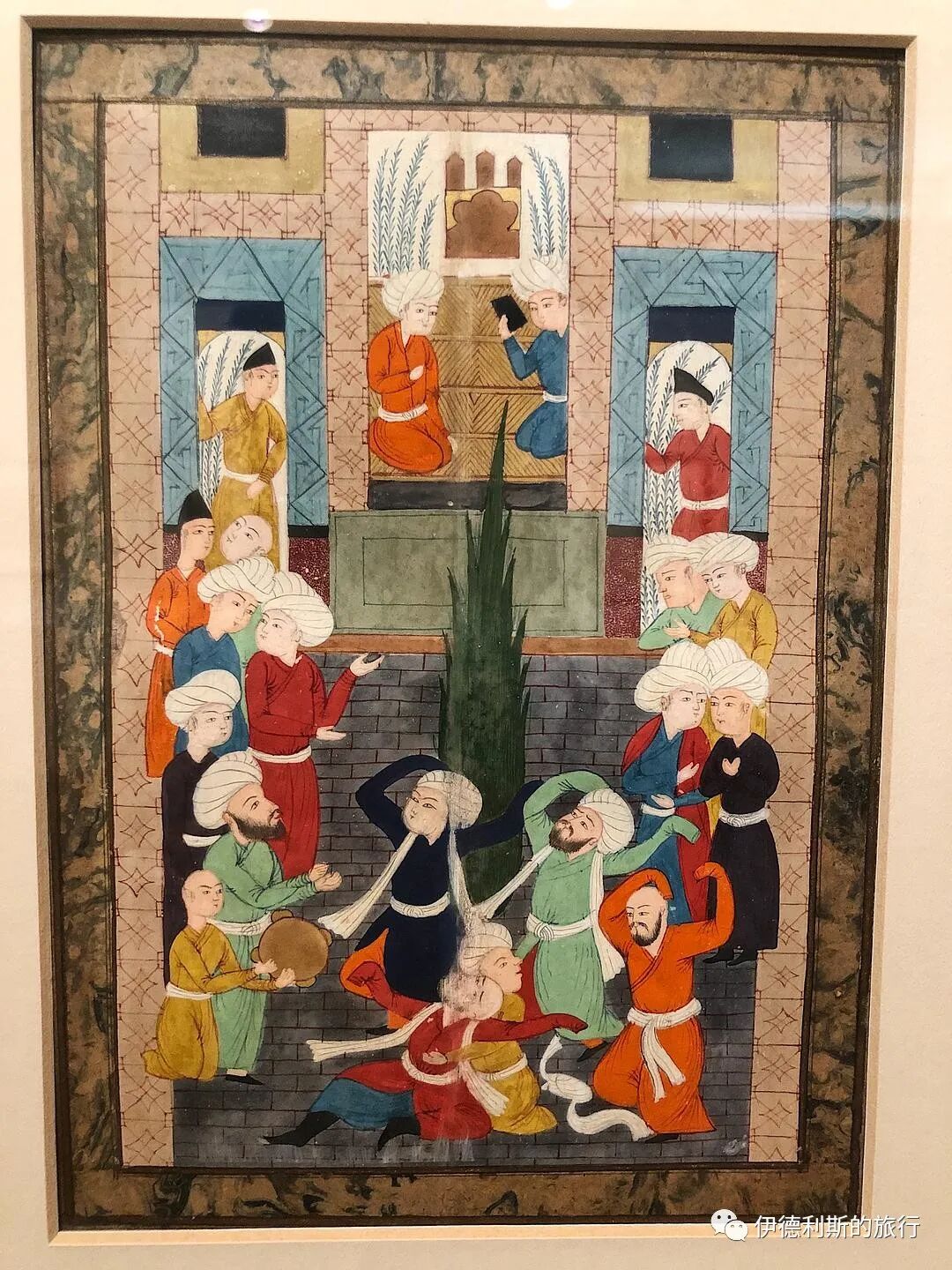
A Sufi performing the whirling dance ceremony.
An introduction to the turban (chantou).
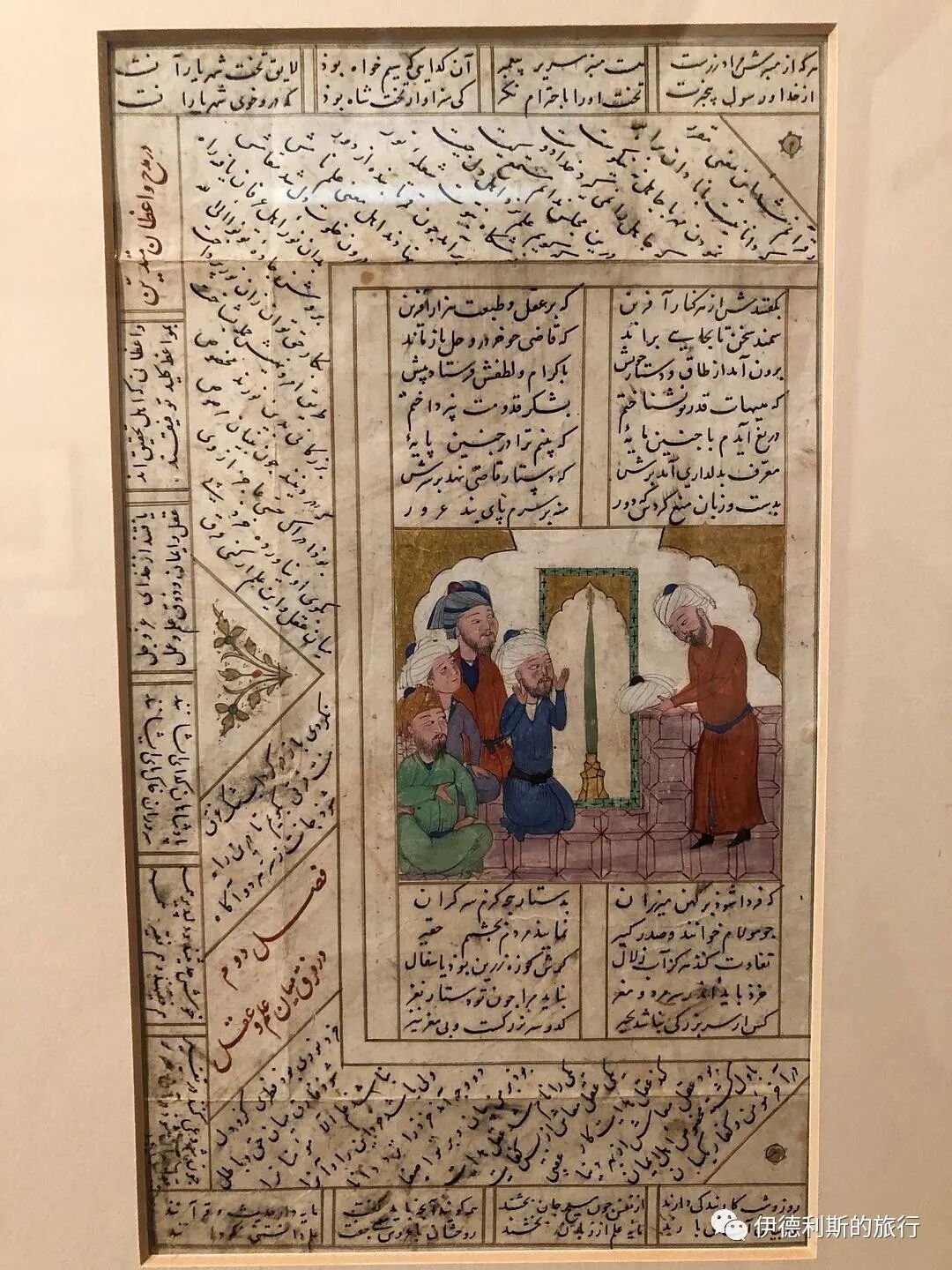
The Sufi allegorical poem Salaman va Absal by the famous 15th-century Sufi poet Jami (Nūr ad-Dīn 'Abd ar-Rahmān Jāmī). The story appears to be about a prince who feels a physical attraction to his wet nurse, but it actually uses allegory to describe the key stages of Sufi spiritual practice.
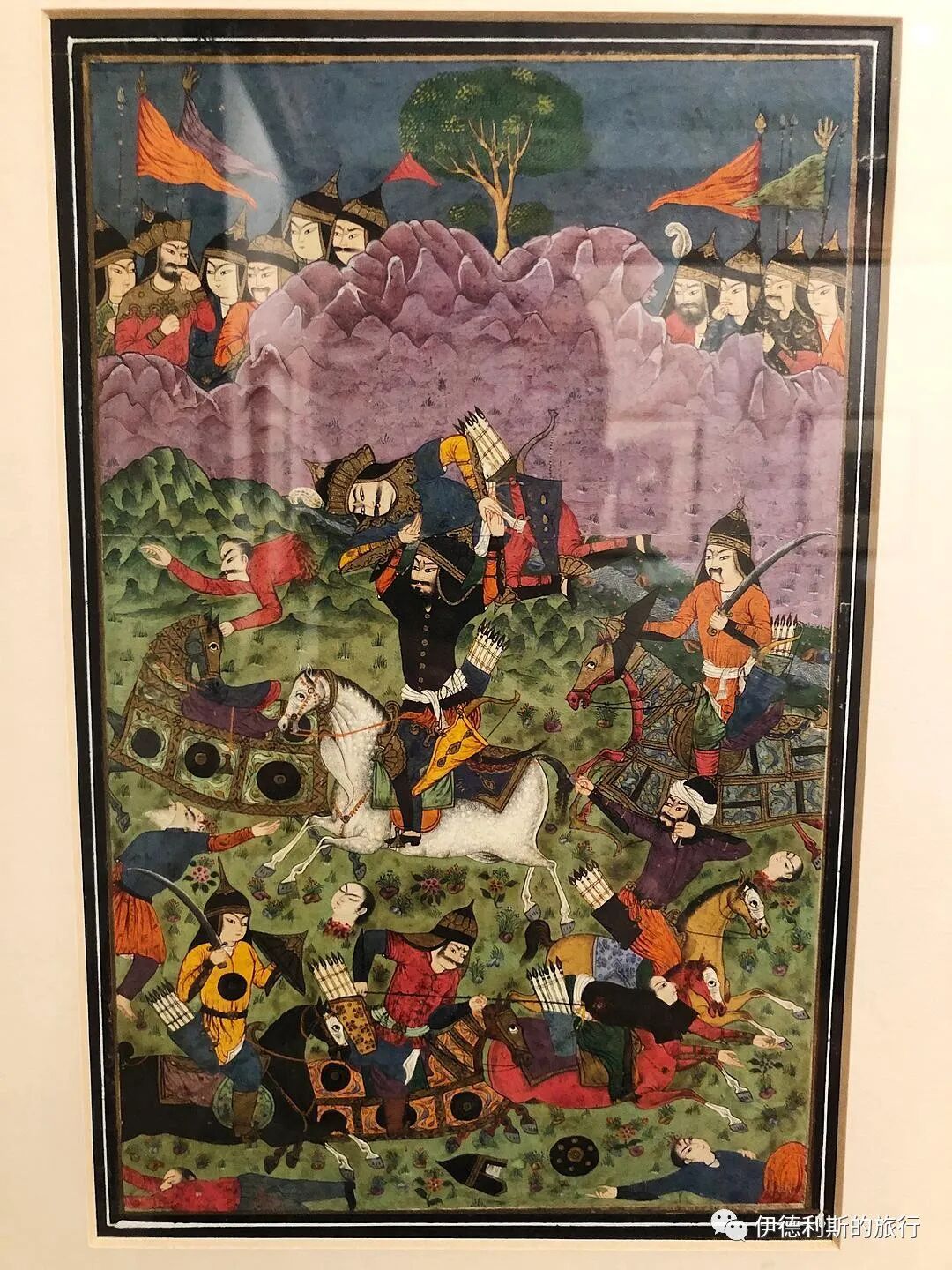
A Qajar dynasty Shah in battle.
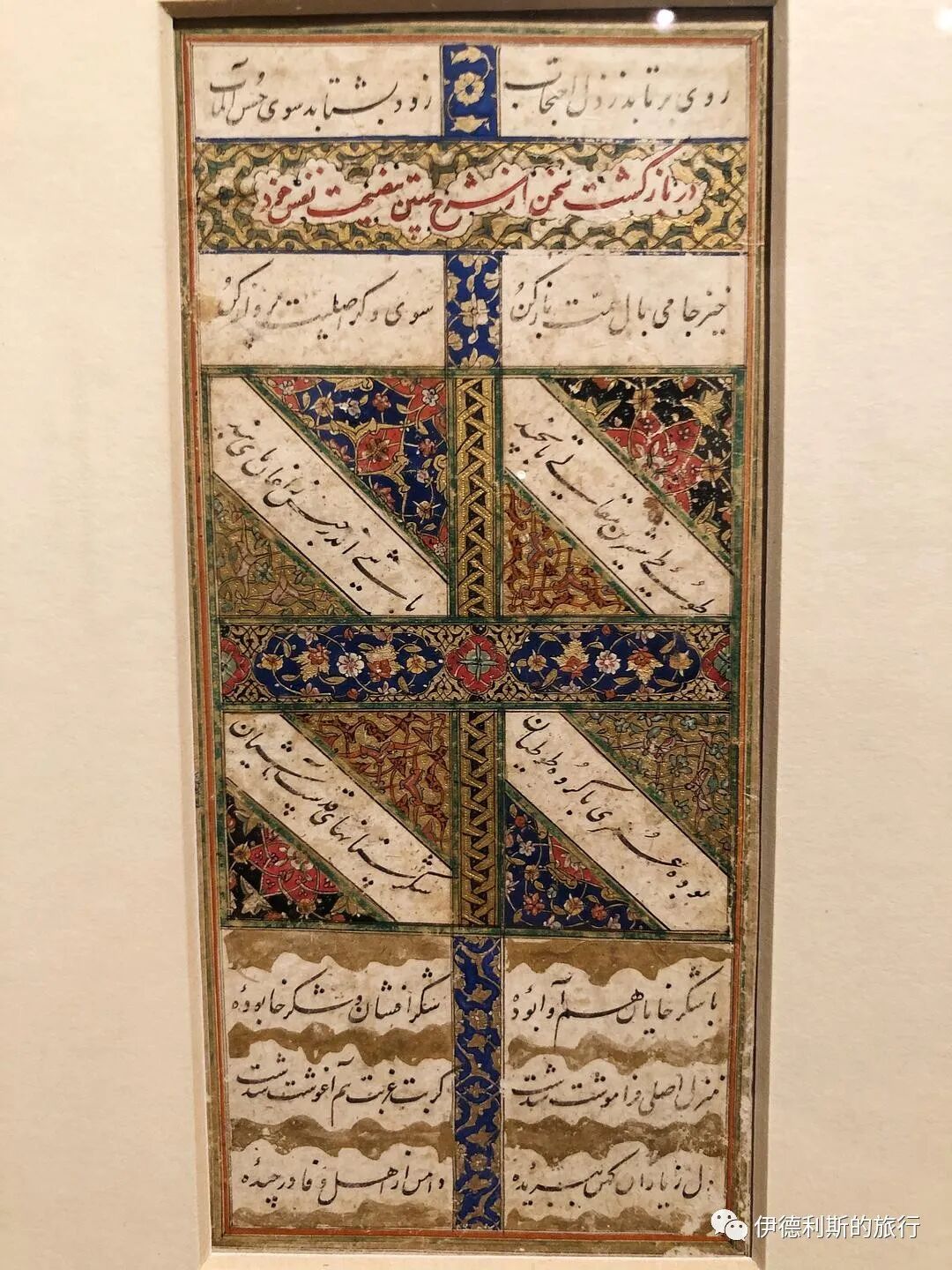
A page from a manuscript.
A young man wearing a turban (chantou).
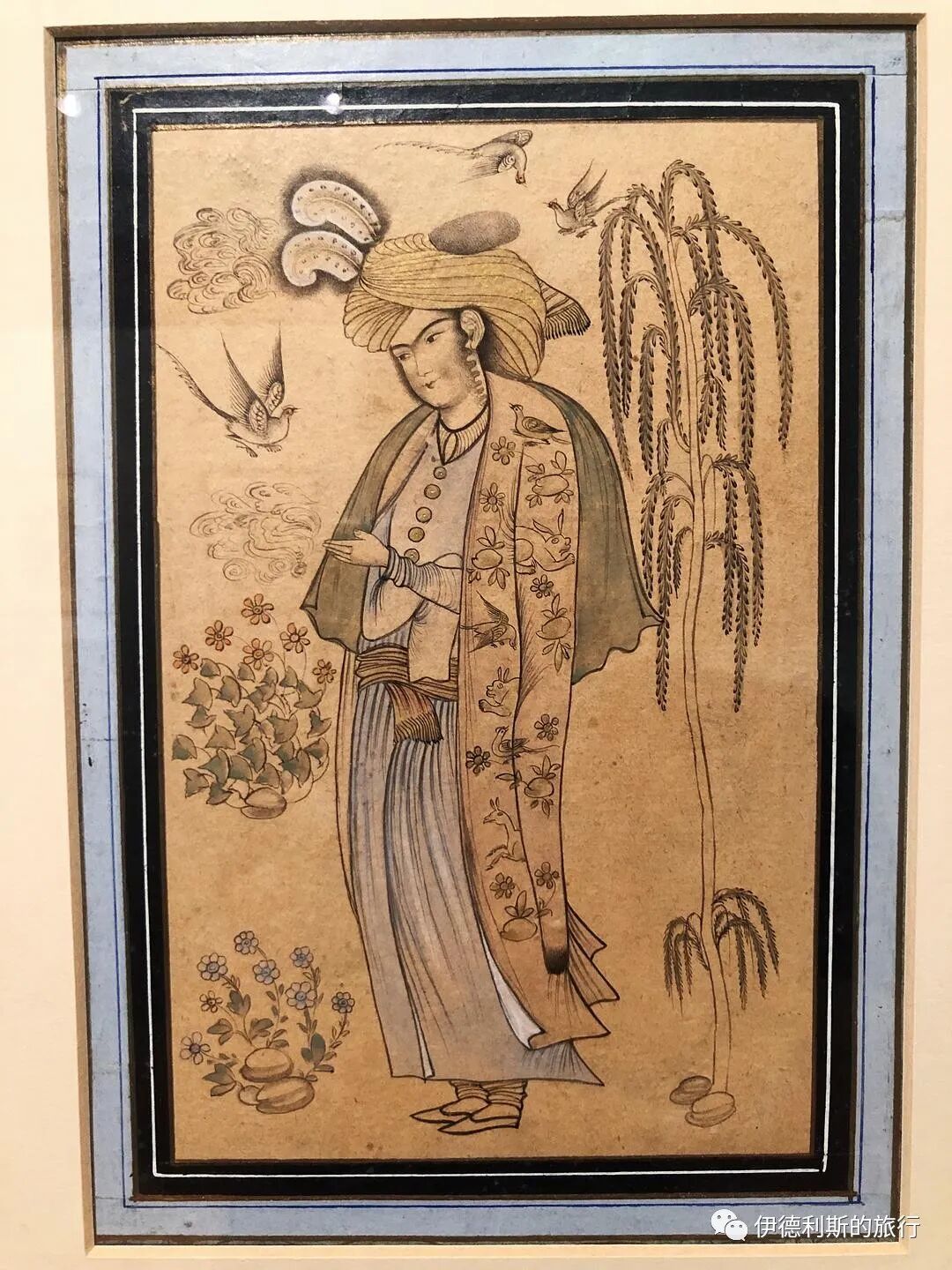
Relaxing.
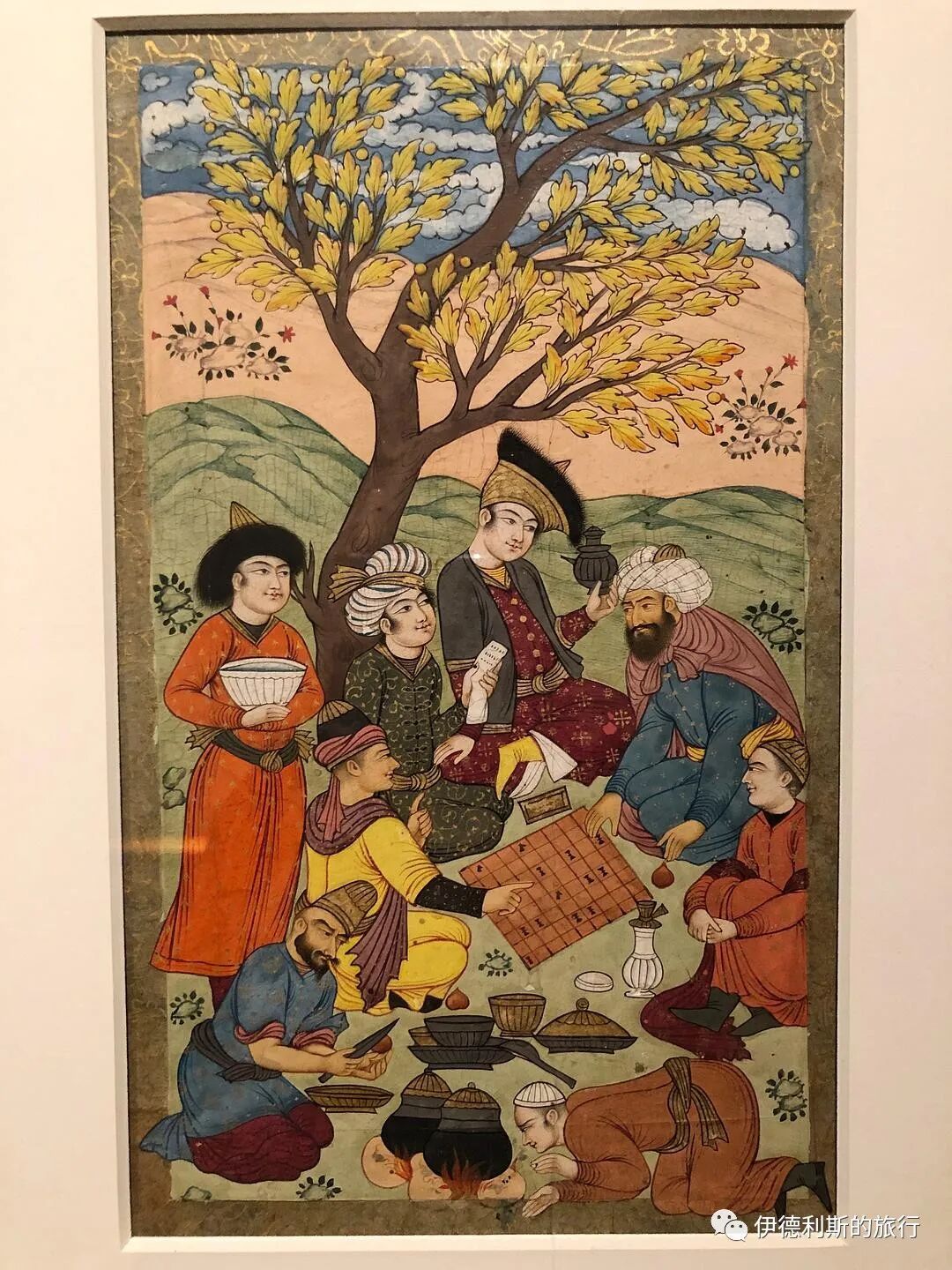
4. Qajar Dynasty portraits.
The Qajar Dynasty is famous for its unique portrait paintings. Qajar portraits were influenced by European realism in oil painting. They use many dark, rich, and saturated colors. The backgrounds are very realistic, but the people in the paintings still look stiff.
This early 19th-century painting shows Bahram V (reigned 420-438) while hunting. Bahram V was known as the Wild Ass (Gor). He was a 5th-century king of the Persian Sasanian Empire. He loved hunting and often appears in classic Persian literature.
Painted by Muhammad Ali in 1834, this shows the Qajar court with the Shah receiving his officials.
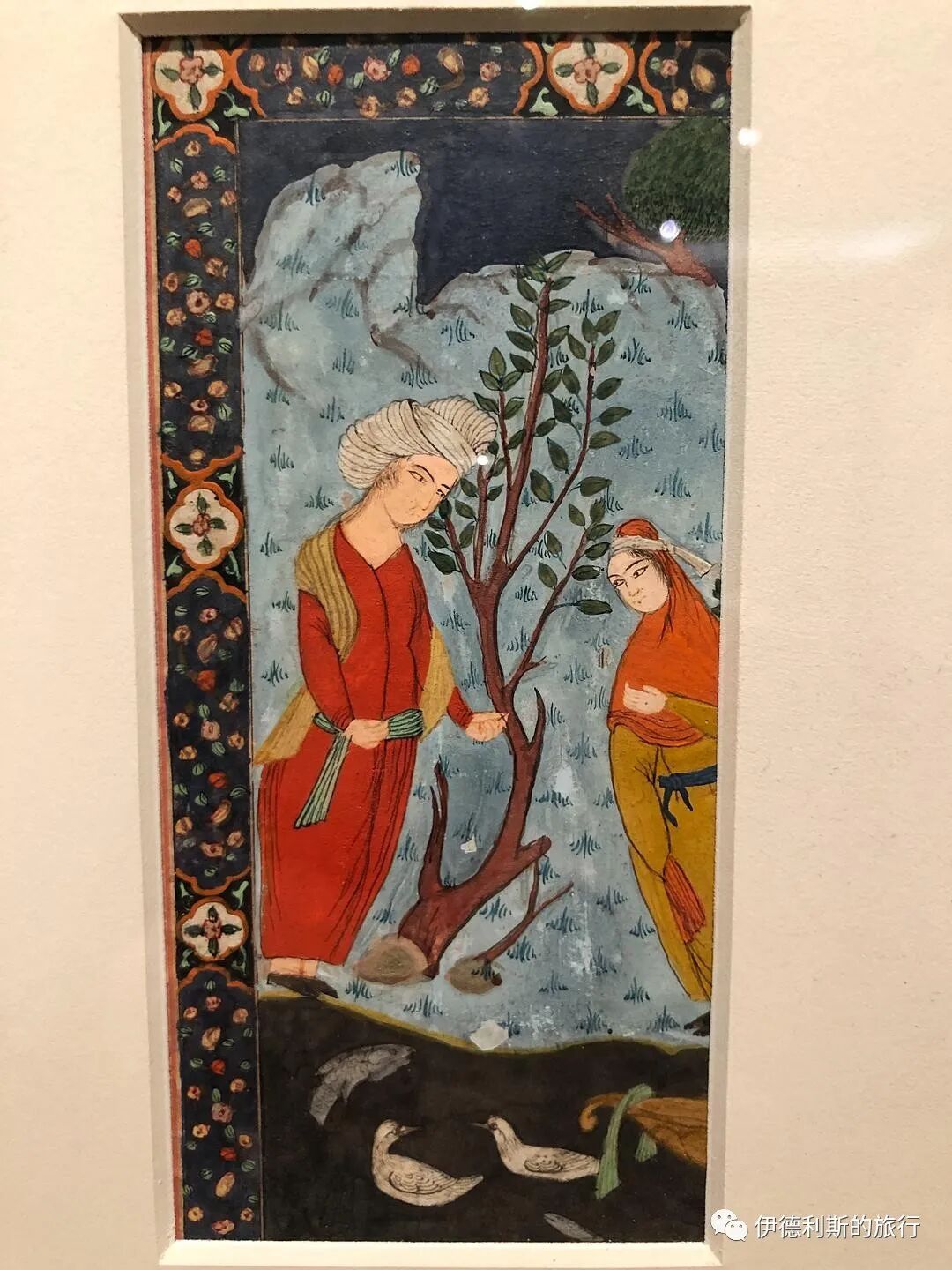
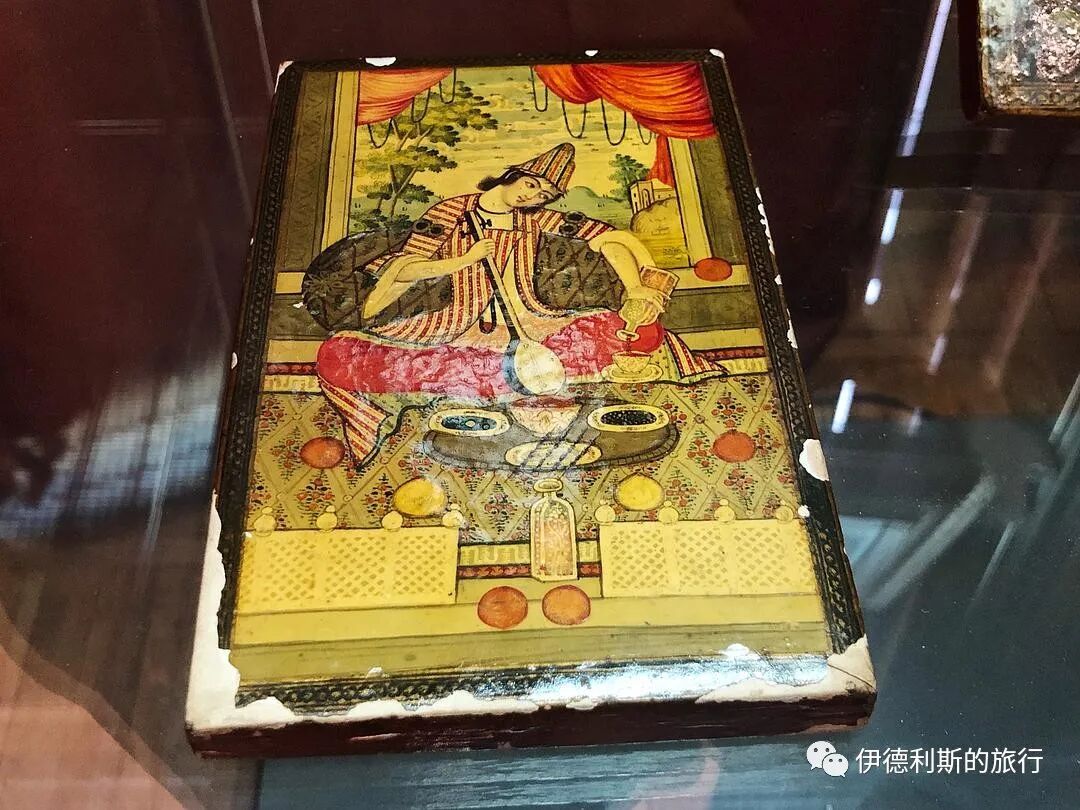
A woman in a garden, 19th century. Early Iranian portraits often blurred gender lines, making the bodies and faces of many beautiful men and women look very similar. It was not until the 19th century that women began to have more individualized features. In portraits of women from the Qajar dynasty, women often hold mirrors, fruit, or drinks, which usually represent beauty and pleasure in Persian poetry.
2. Clothing in Afghanistan and Pakistan
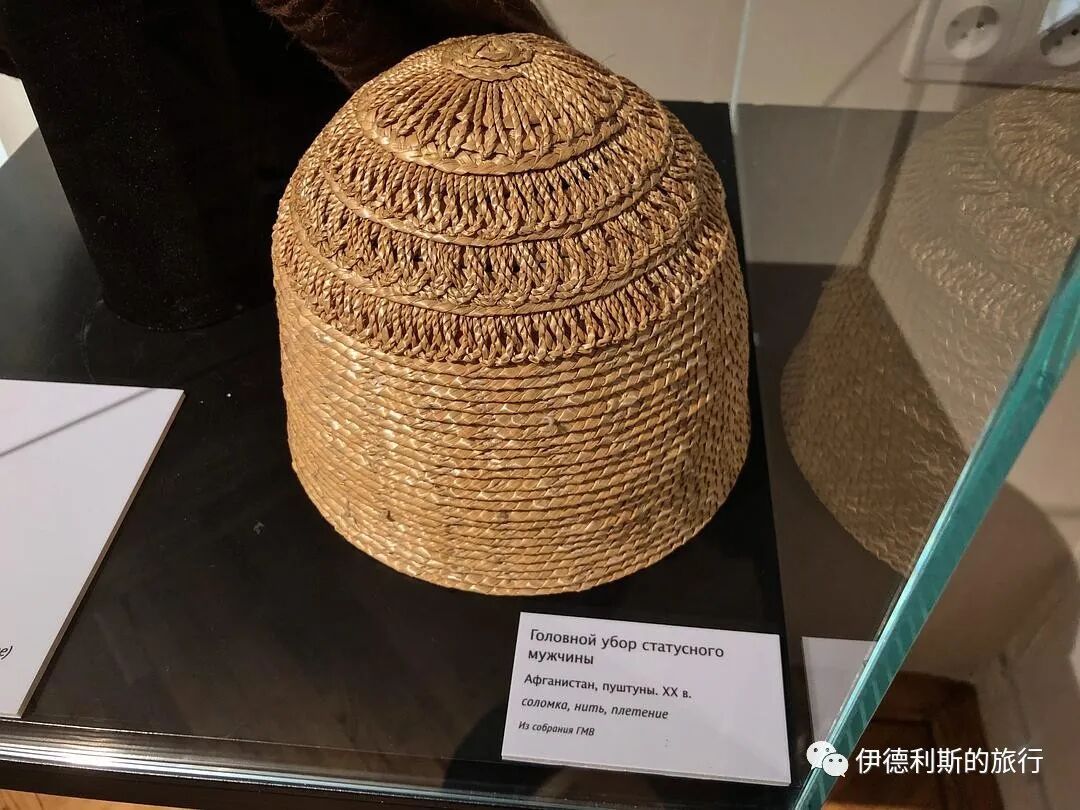
A 20th-century hat worn by the Pashtun people of Afghanistan.
A wool cap (pakol) worn by the Pashtun people in Khost Province, southeastern Afghanistan, which has a wider brim than the common version. The wool cap (pakol) originated from the flat hat (kausia) worn by the Macedonians in ancient Greece and later spread to Hellenistic Afghanistan during the eastern conquests of Alexander the Great. The word pakol comes from the Urdu language in the Chitral region on the border of Afghanistan and Pakistan, meaning round hat. The pakol also spread from Chitral across Afghanistan, Pakistan, and the Pamir region, becoming a hat people wear to keep warm in winter.
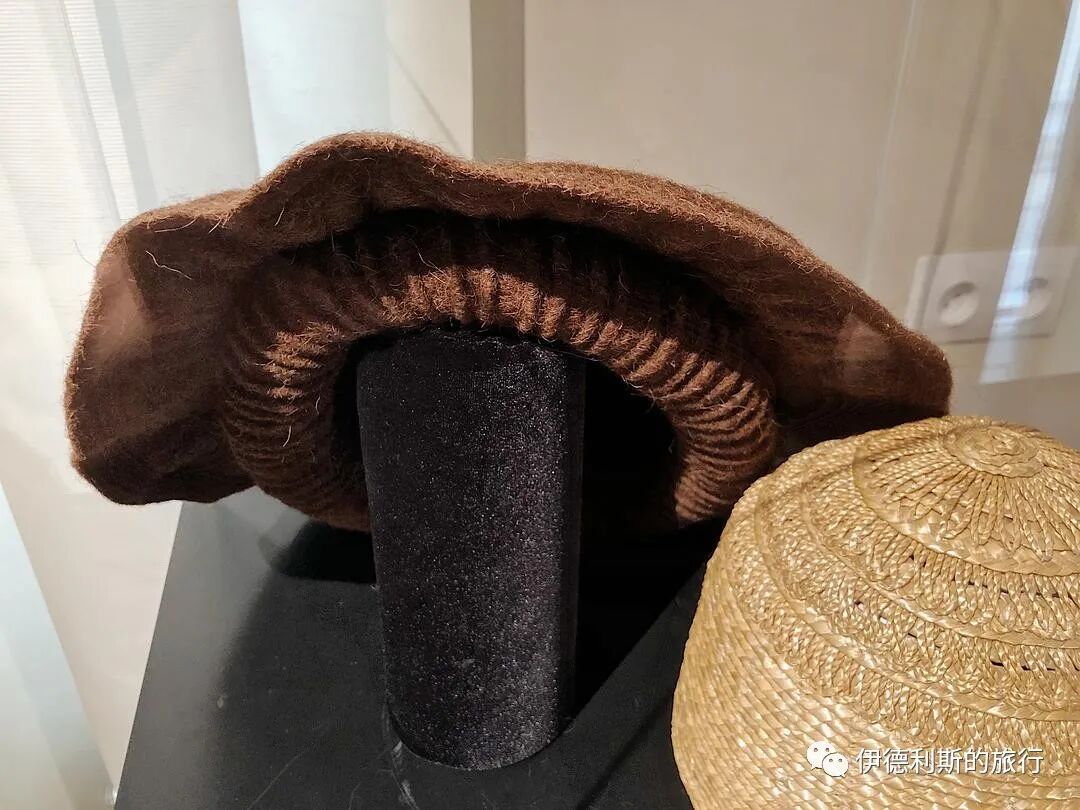
A Sindhi cap worn by Pashtuns in Afghanistan in the early 20th century. This cap with a front opening originated in the Sindh region of Pakistan. It later spread to Afghanistan through the Balochistan region and became popular among all Pashtuns during the 20th century.
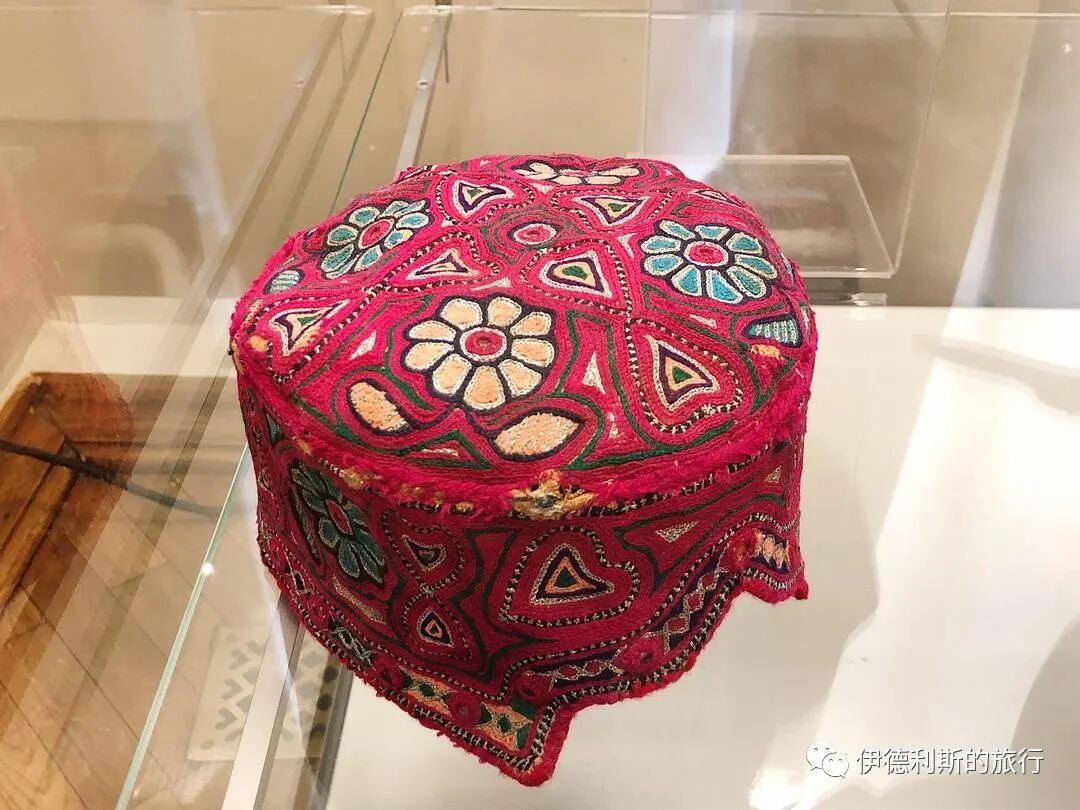
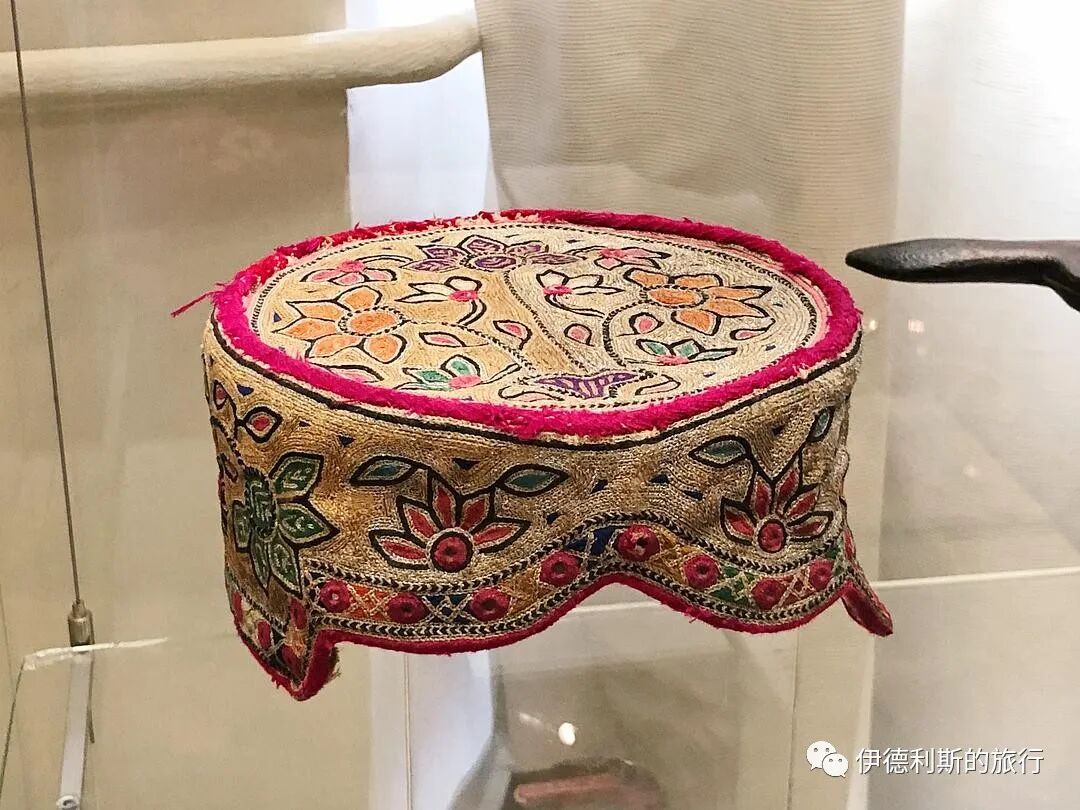
A woman's dress worn by Pashtuns in Afghanistan in the early 20th century.
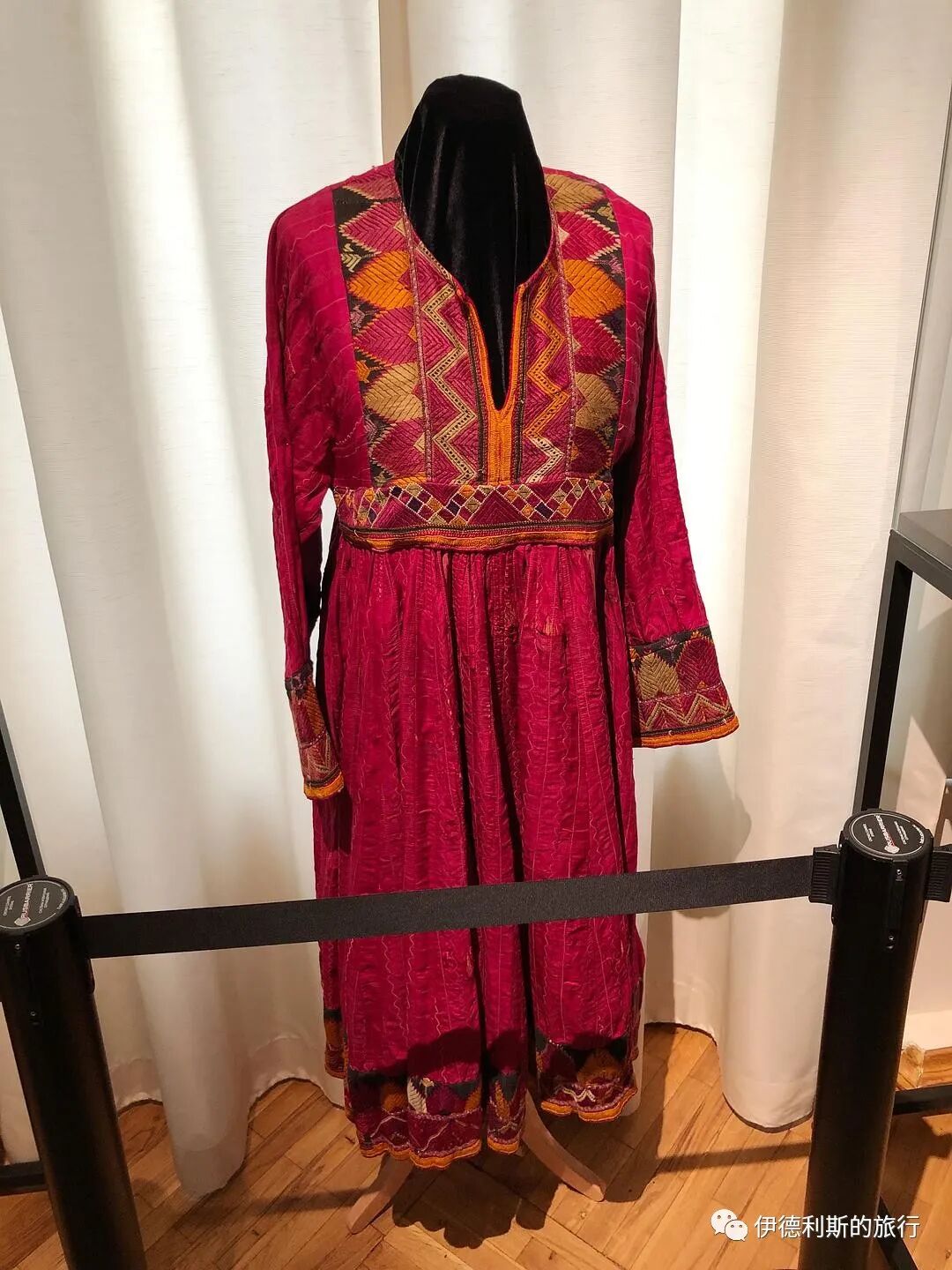
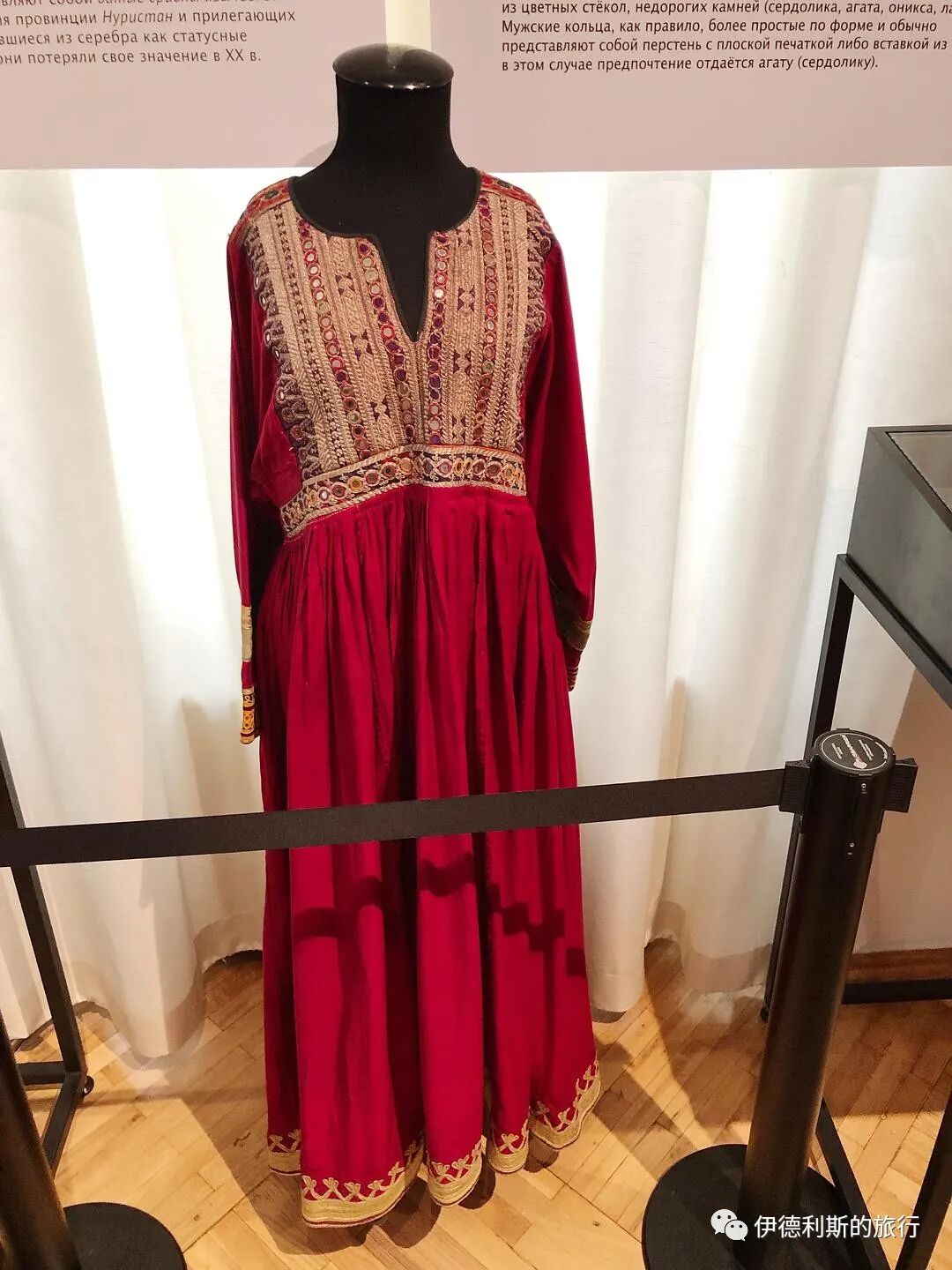
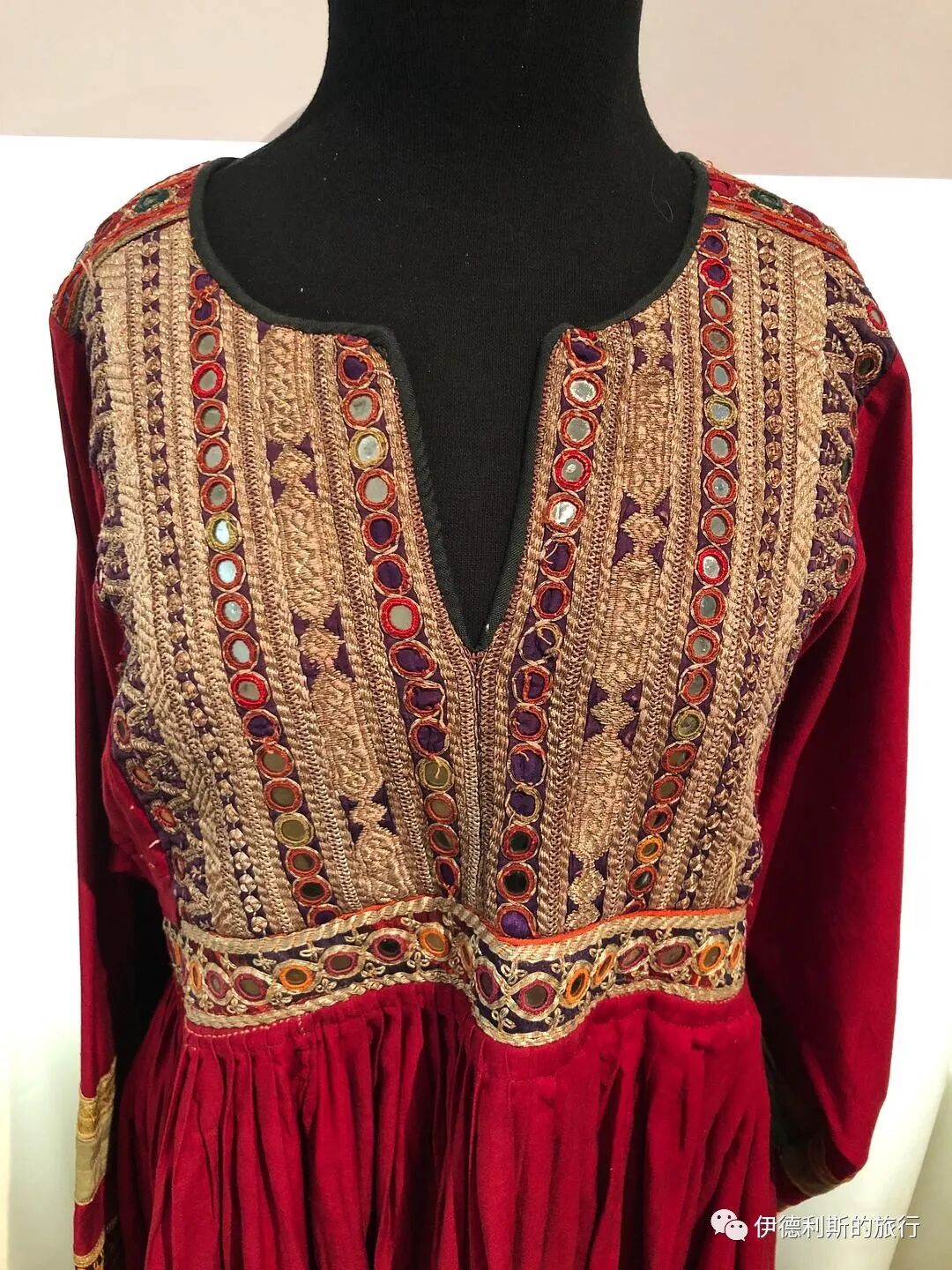
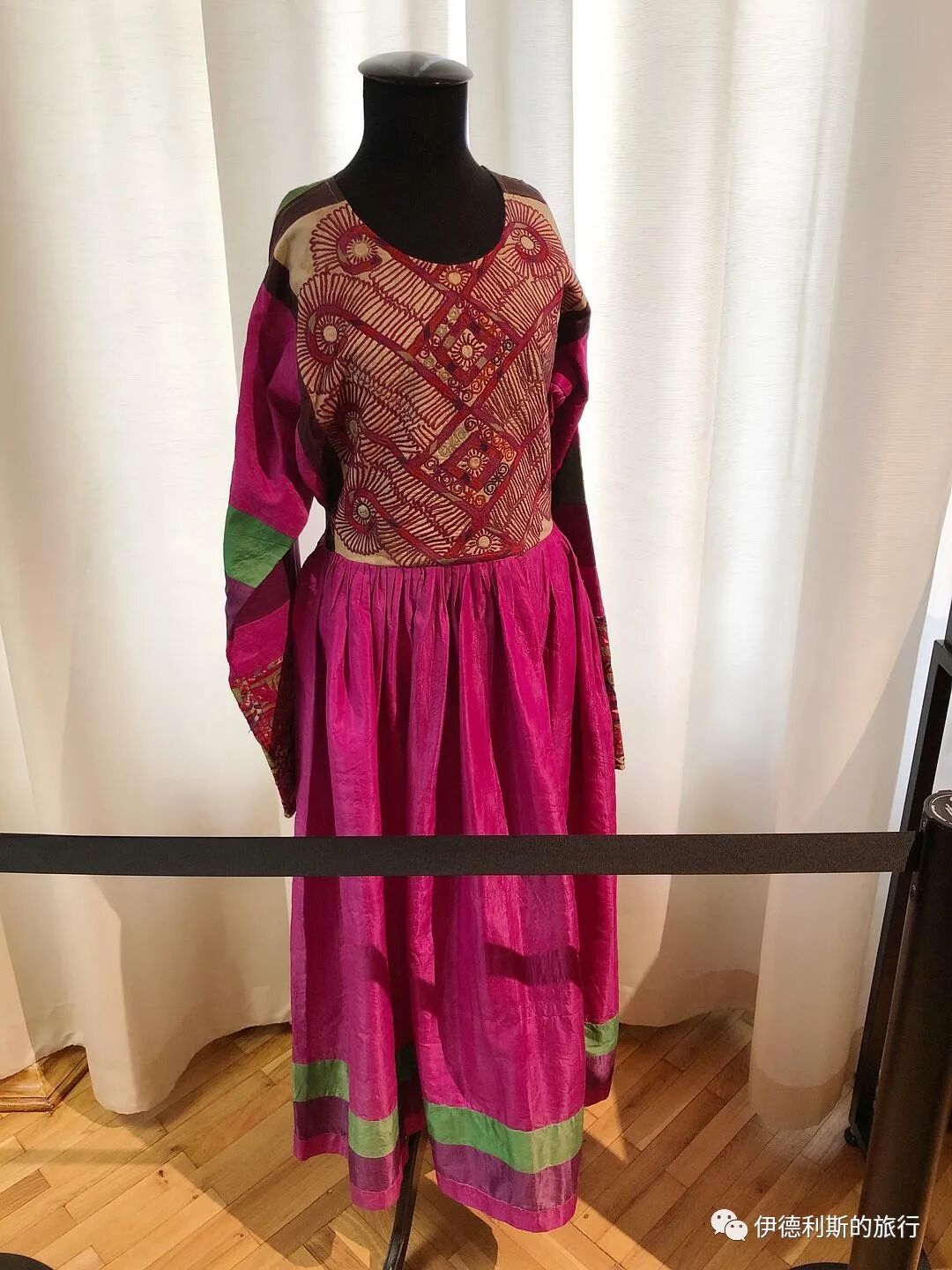
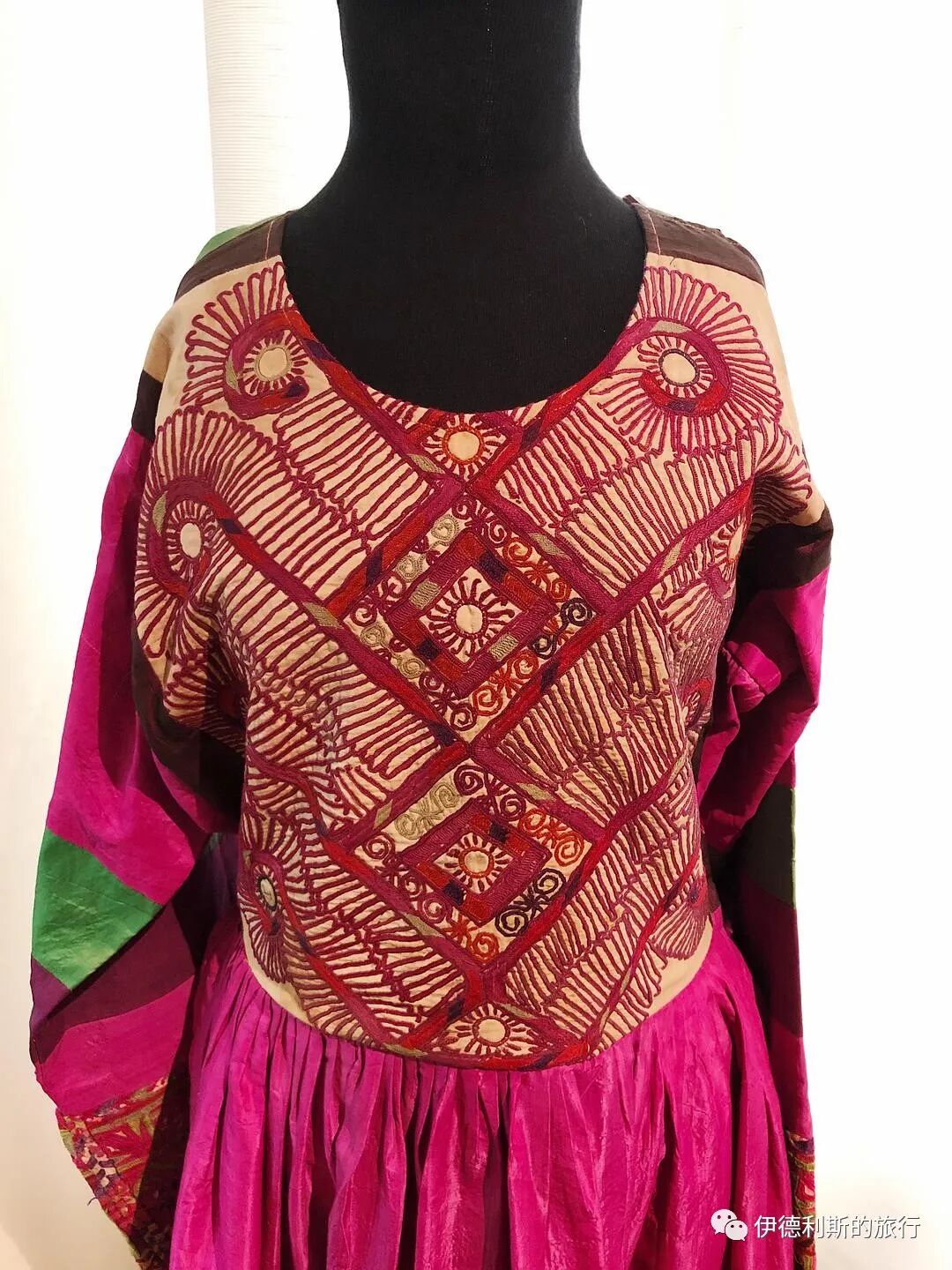
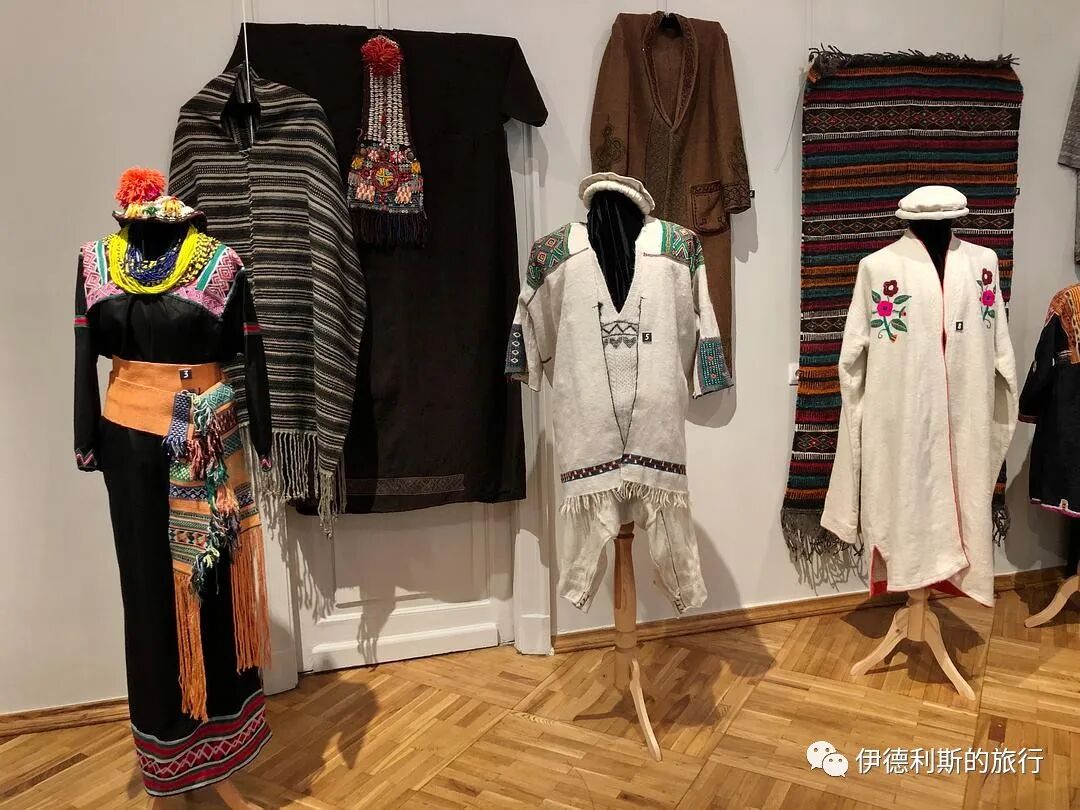
Clothing from the Kalasha people in the Parun Valley of eastern Afghanistan from the late 20th century, and trousers from the Kalasha people in northwestern Pakistan from the mid-20th century. The Kalasha people follow an animistic religion that comes from ancient India and speak Kalasha, a language in the Indo-Aryan branch.
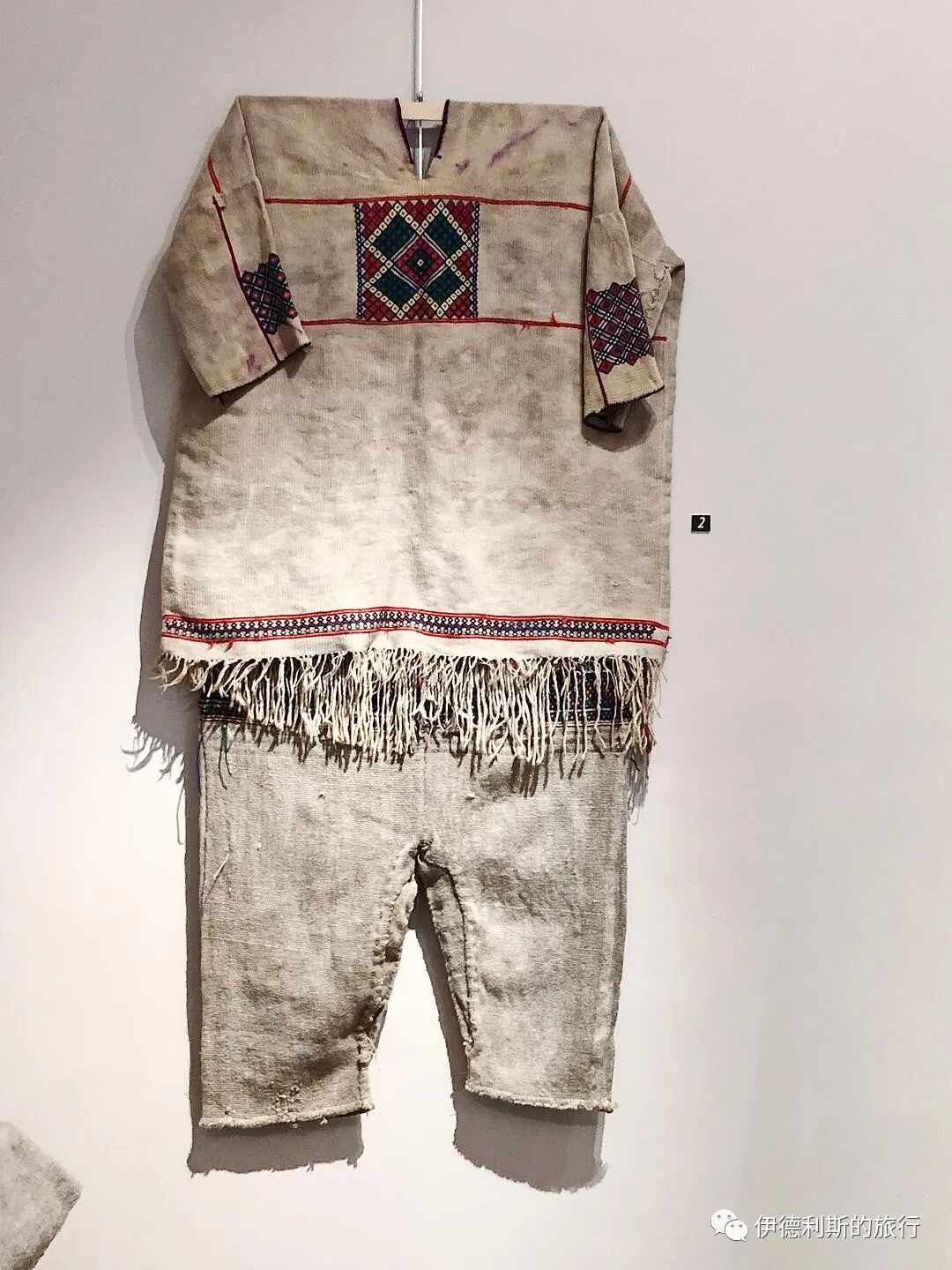
Clothing worn by the Nuristanis of eastern Afghanistan. Nuristani culture is very similar to Kalasha culture. They also once followed an animistic religion from ancient India before converting to Islam in the 1890s.
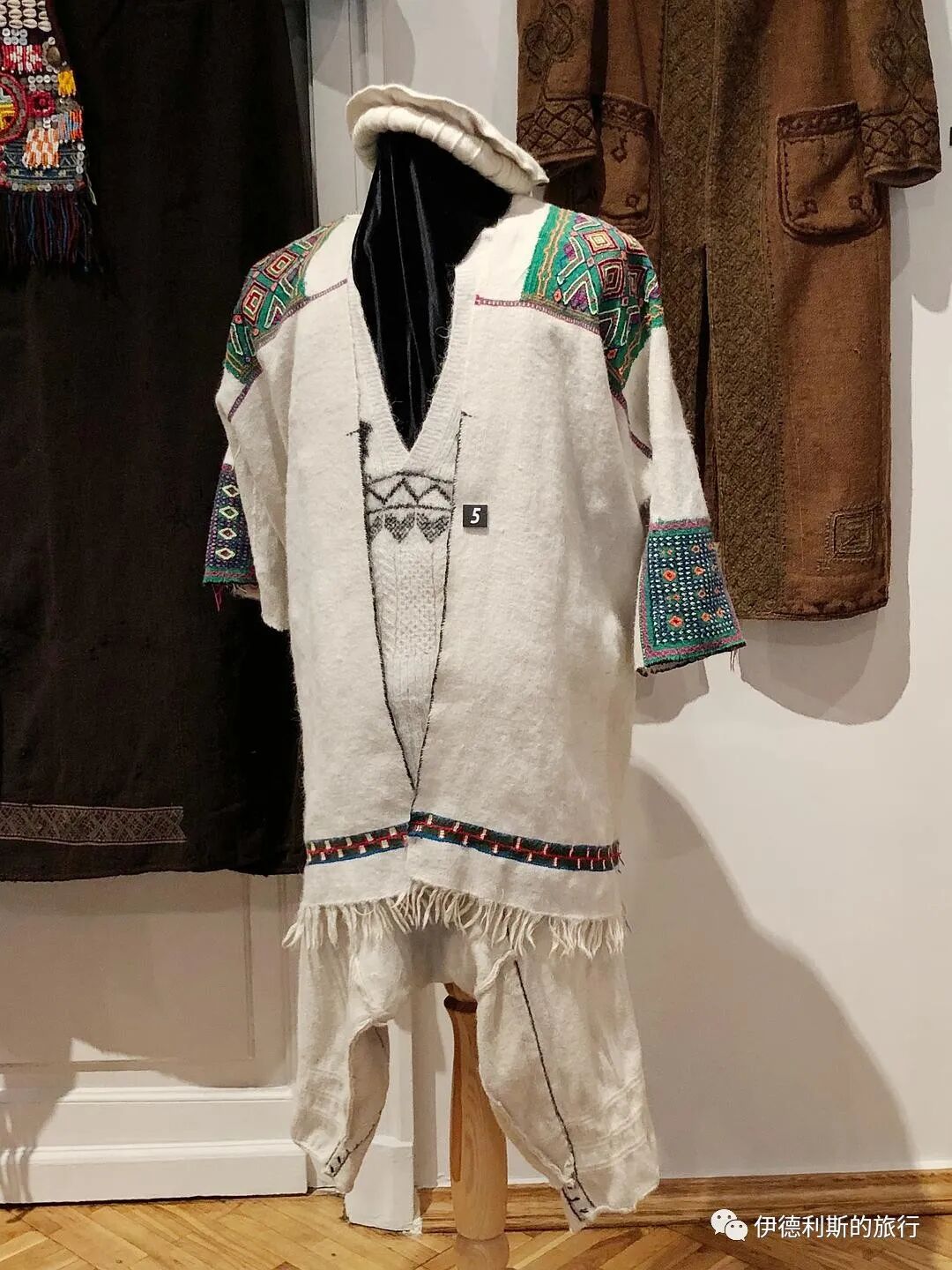
A hat and coat worn by the Wakhi people in the Hunza Valley of northeastern Pakistan in the late 20th century. The Wakhi people are a branch of the Pamiri people. They live at the borders of Afghanistan, Pakistan, Tajikistan, and Taxkorgan in China, where they are classified as part of the Tajik ethnic group. The Wakhi people speak the Wakhi language, which belongs to the Eastern Iranian sub-branch, and they follow the Ismaili branch of Shia Islam.
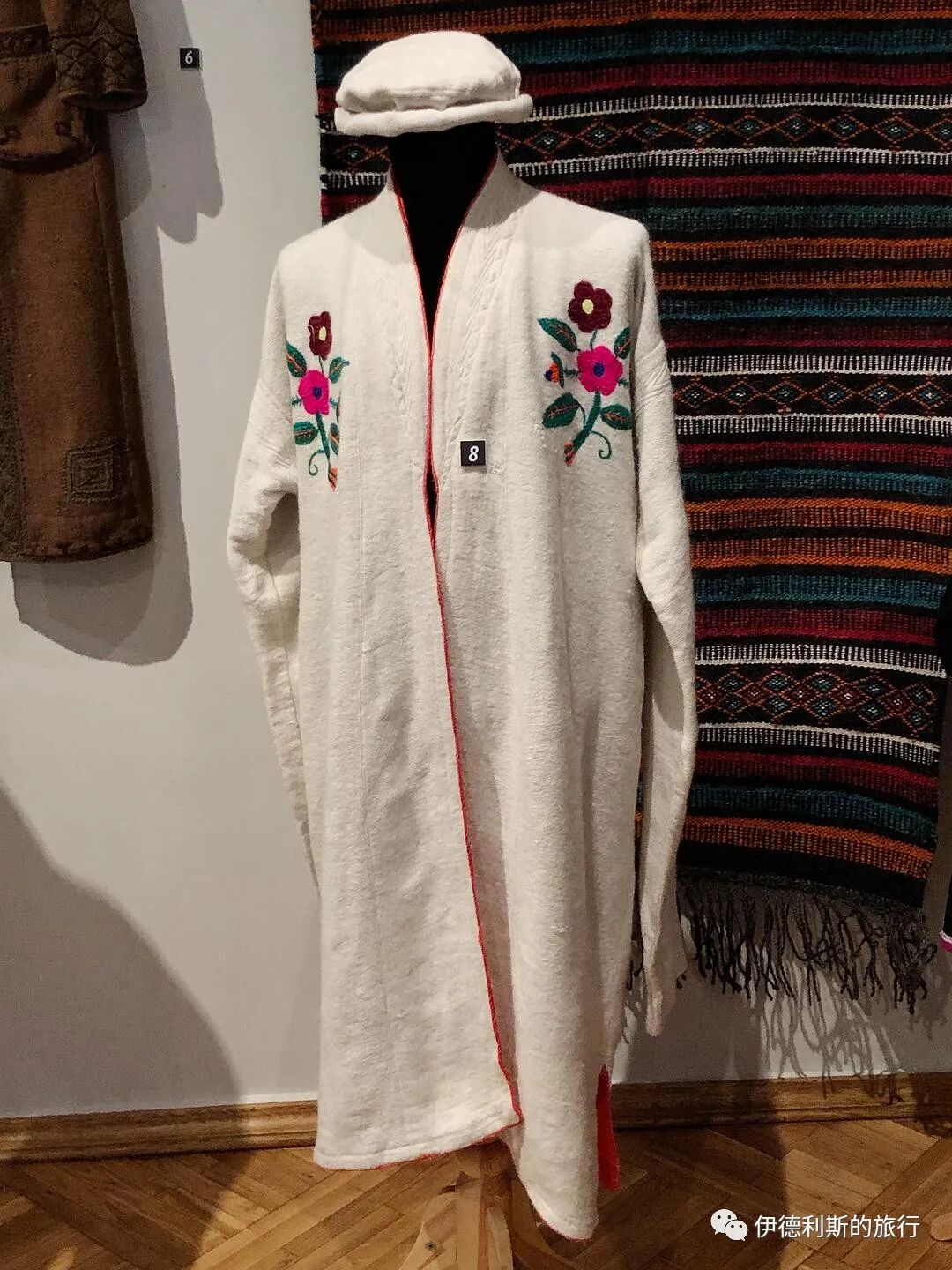
A woman's hat worn by the Wakhi people in the Hunza Valley of northeastern Pakistan.
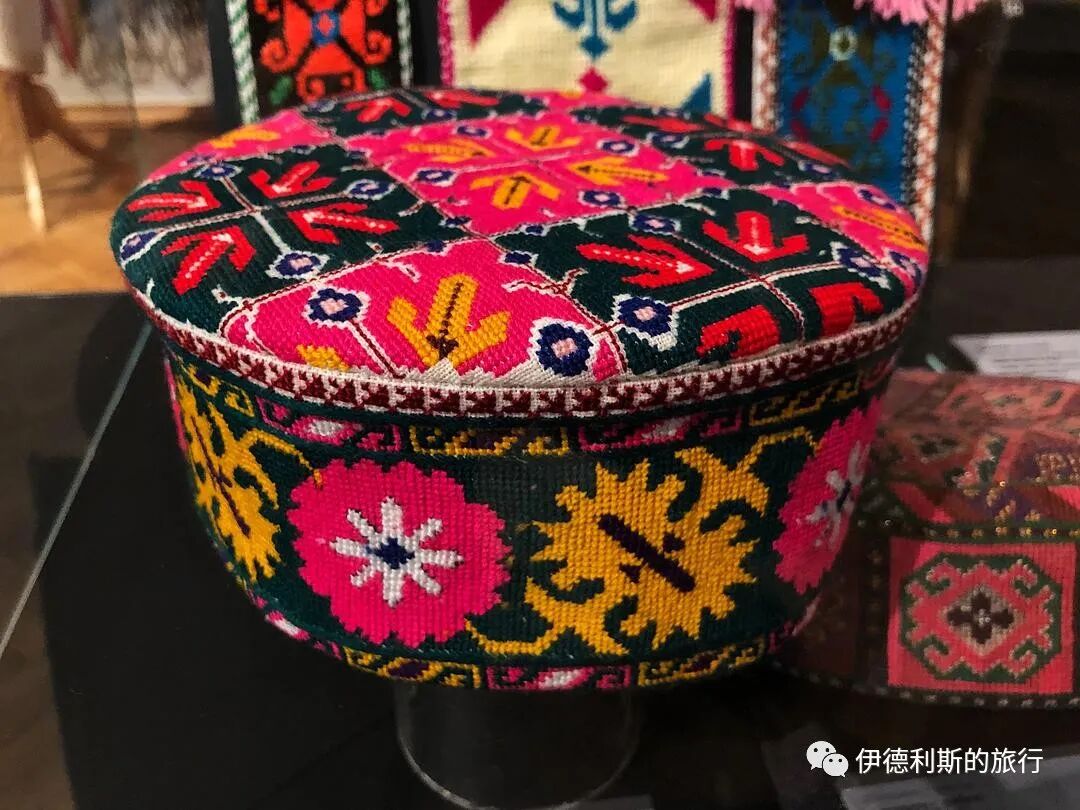
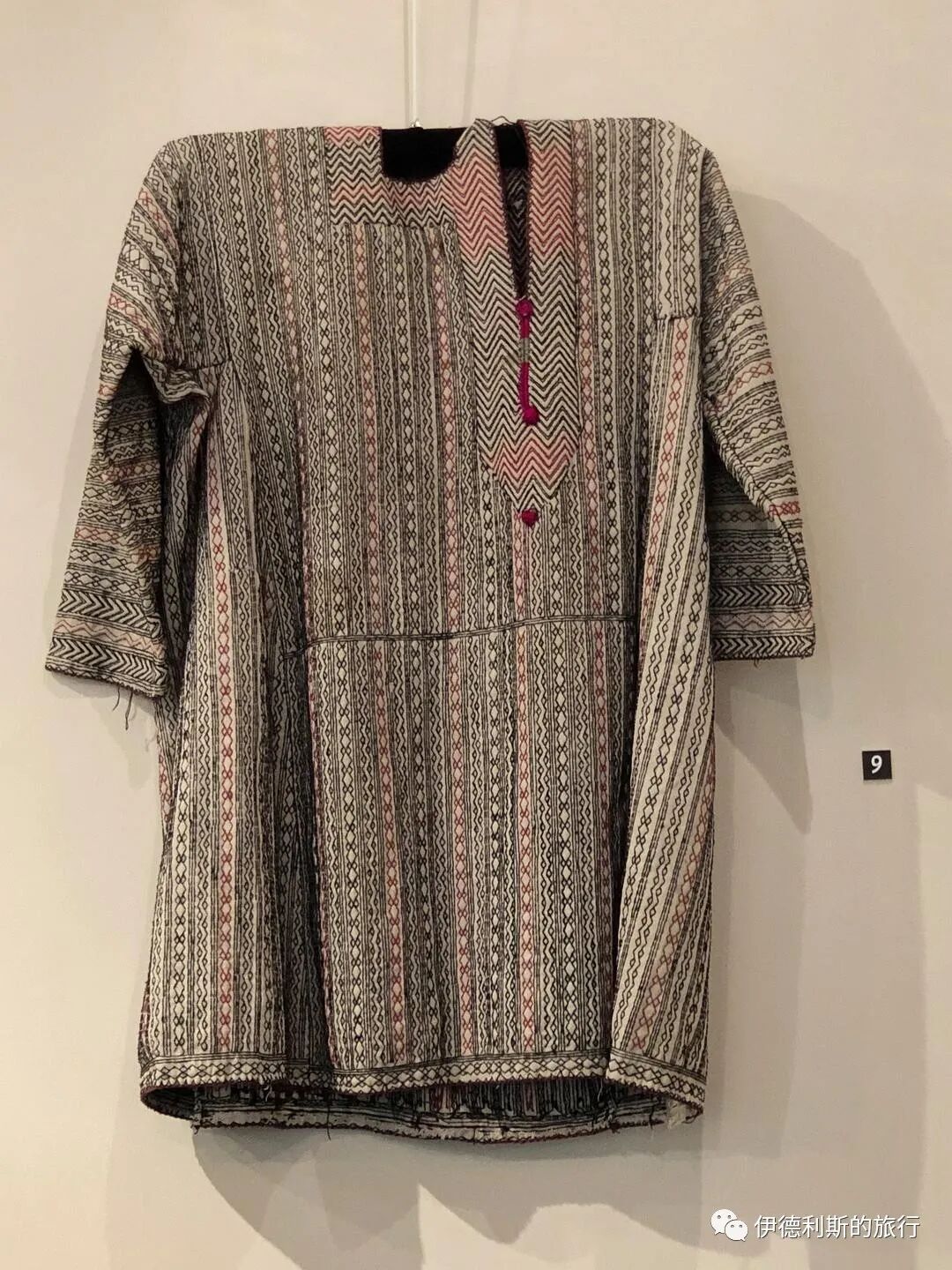
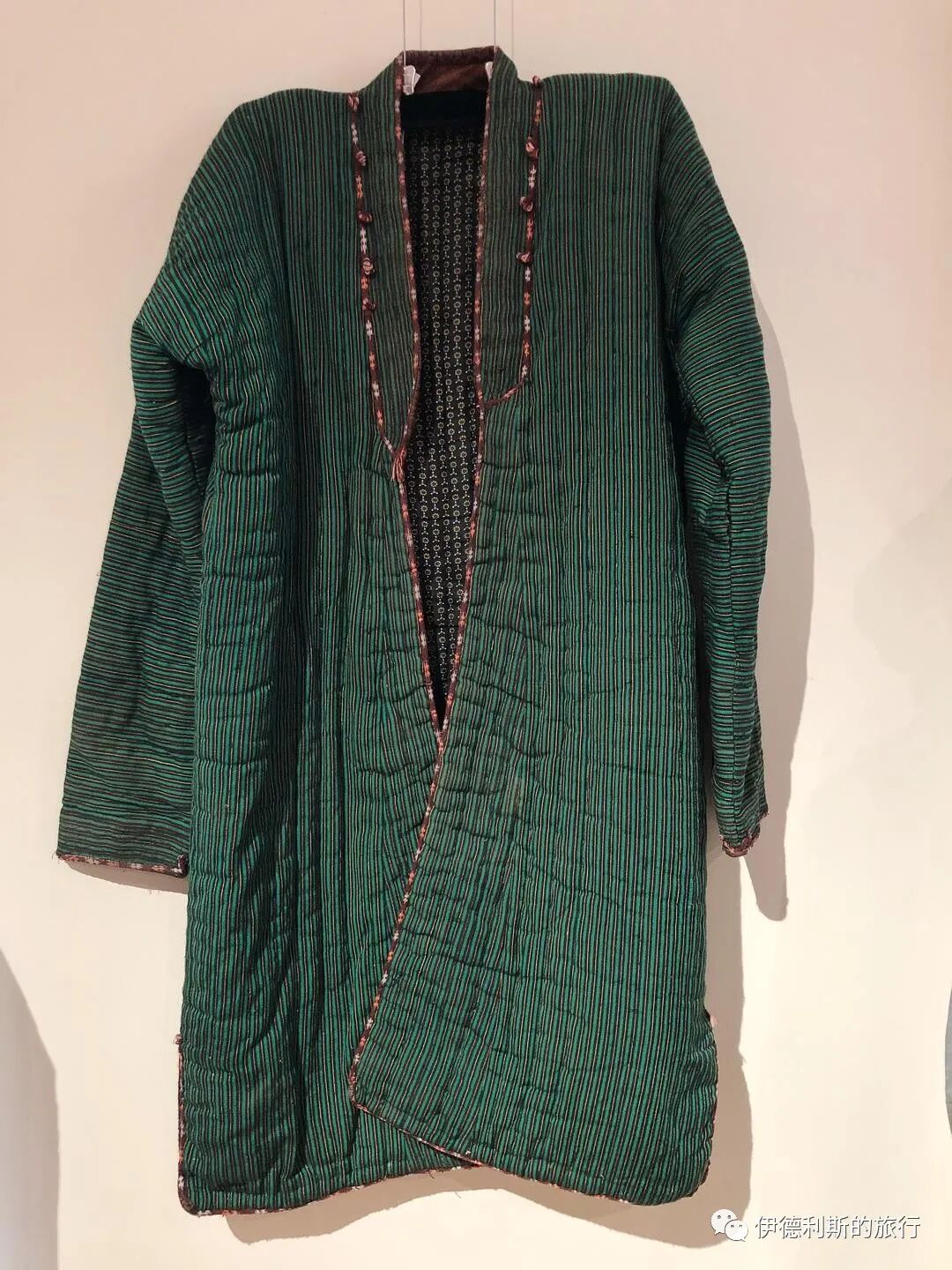
A jacket worn by the Pashayi people in eastern Afghanistan. The Pashayi people are a branch of the Indo-Aryan ethnic group and are one of the oldest ethnic groups in Afghanistan.
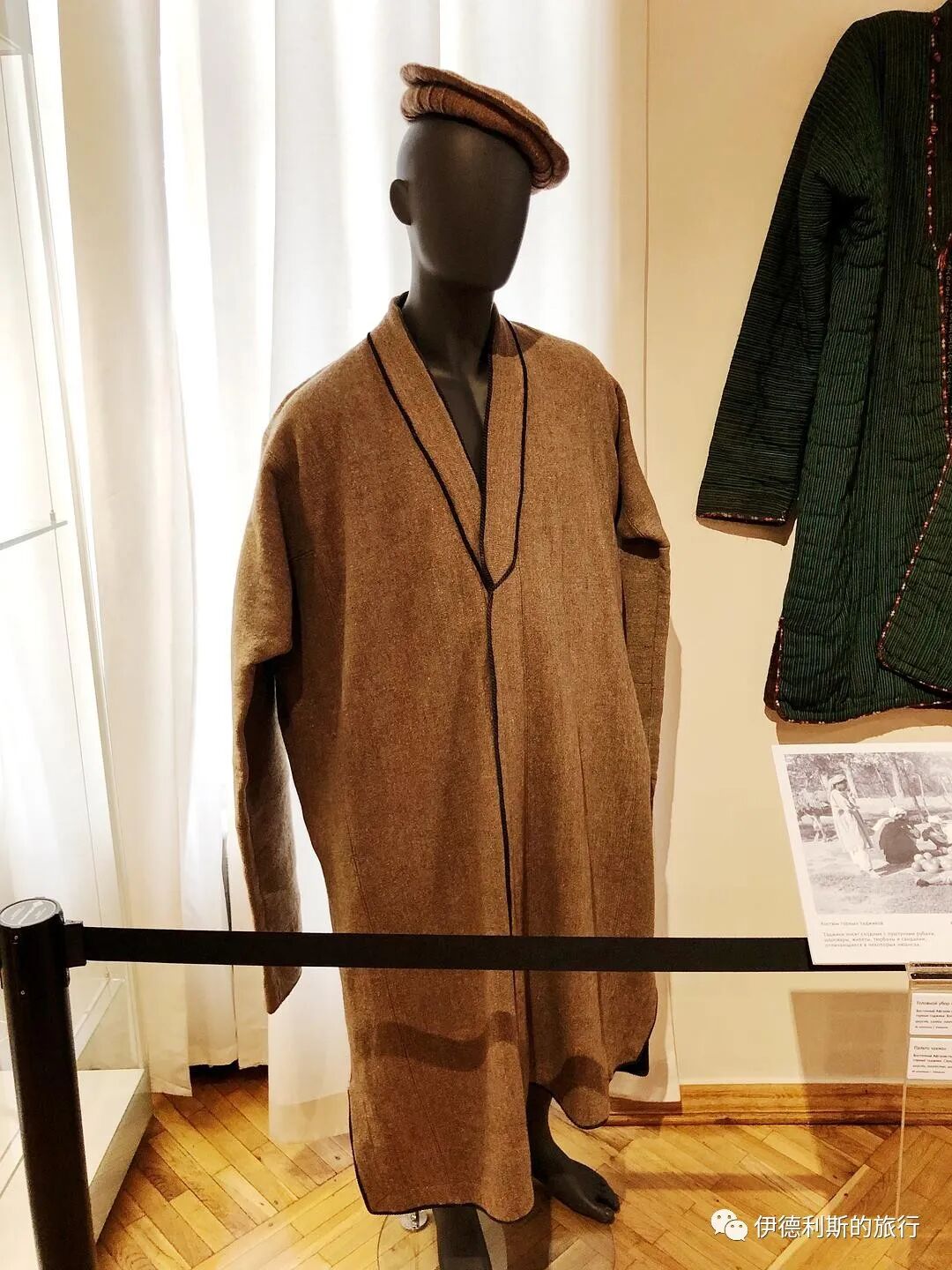
A robe from the eastern region of Afghanistan.
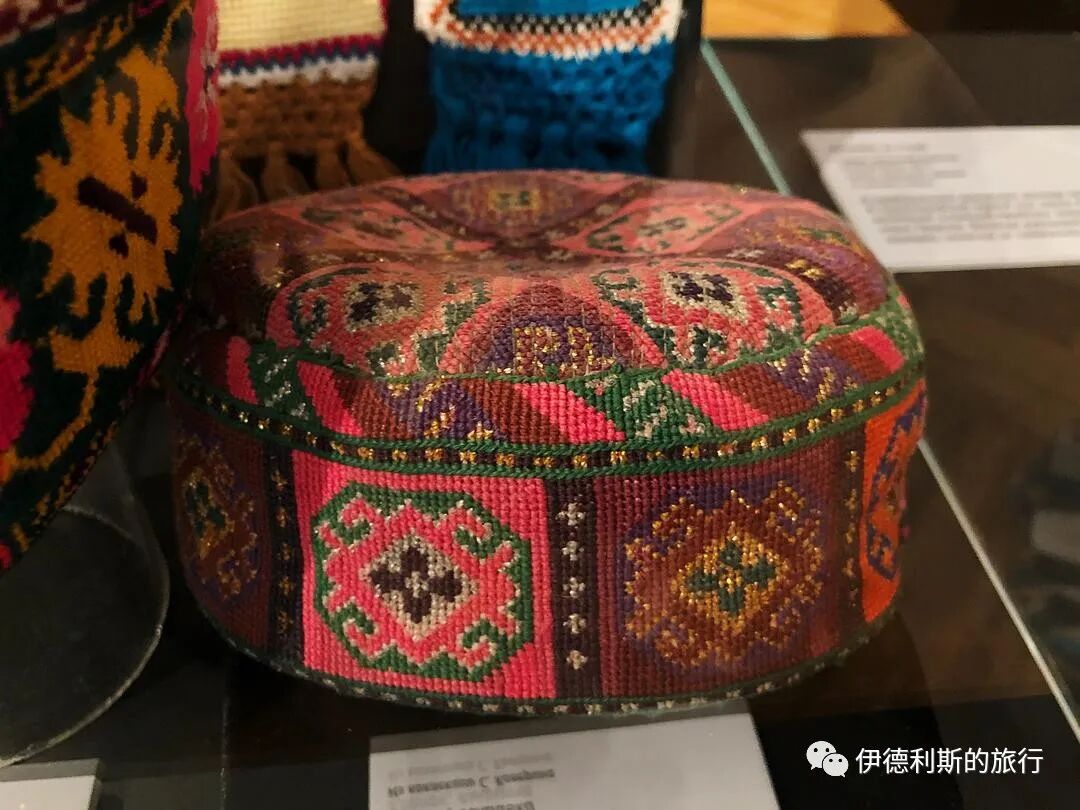
An Afghan hat from the early 20th century.
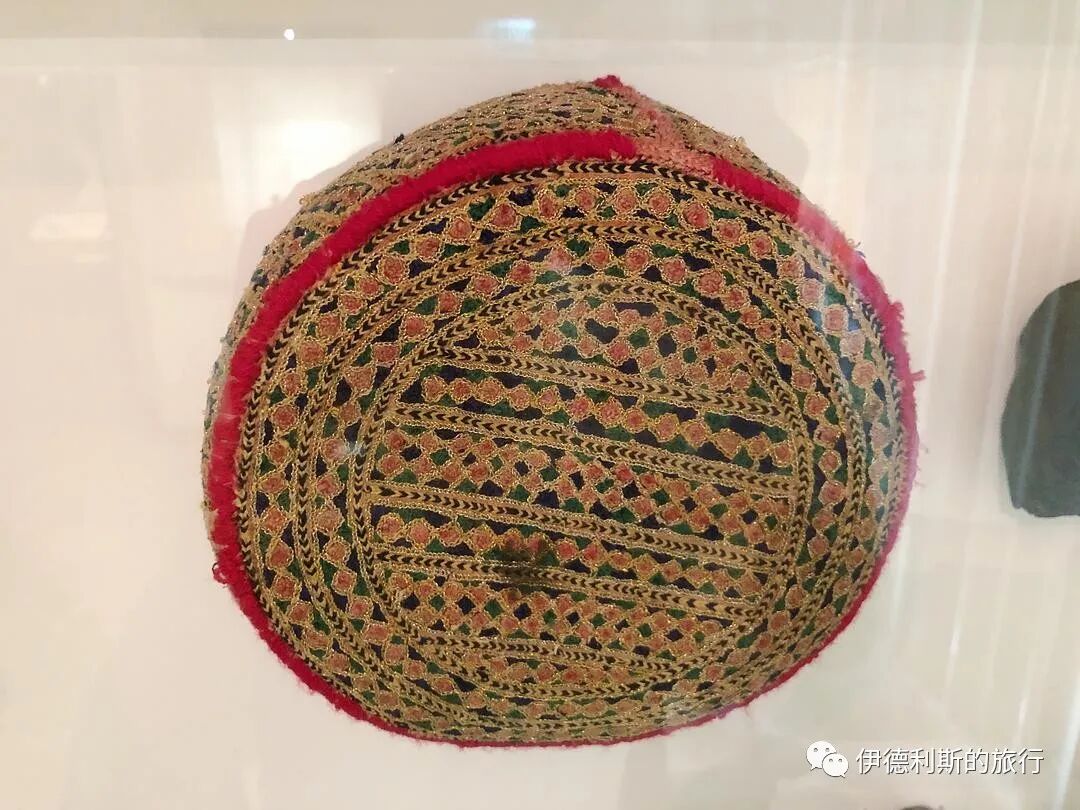
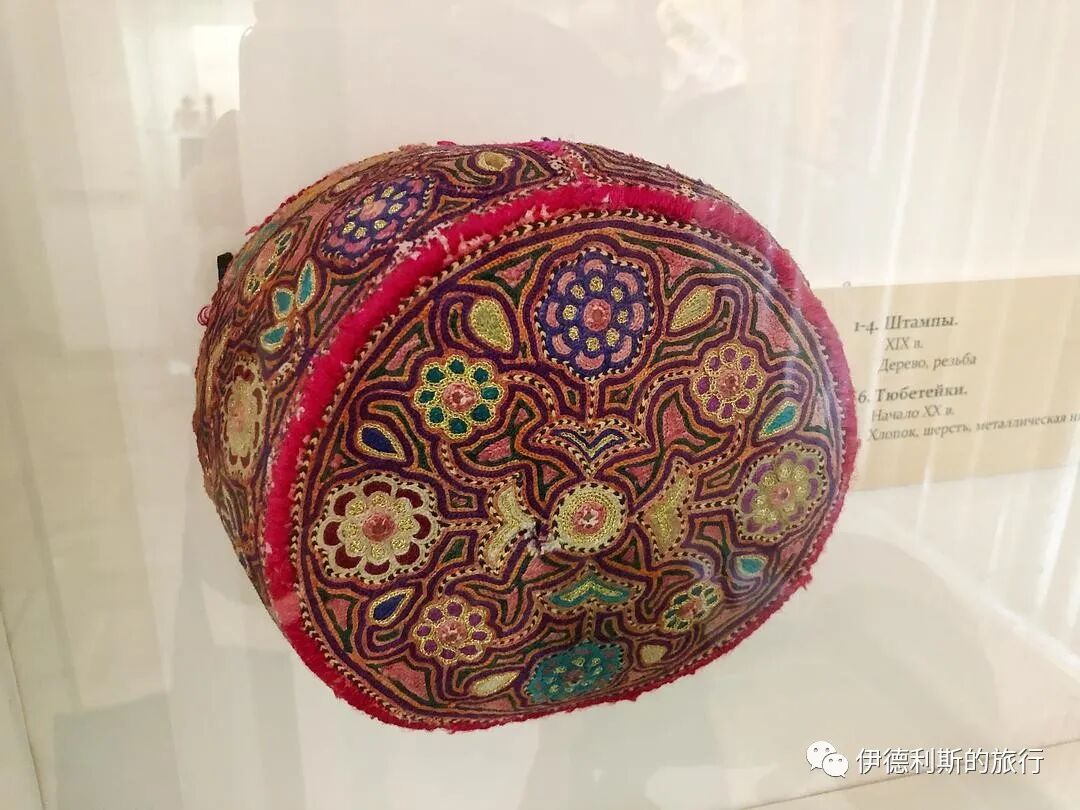
3. Siberian clothing
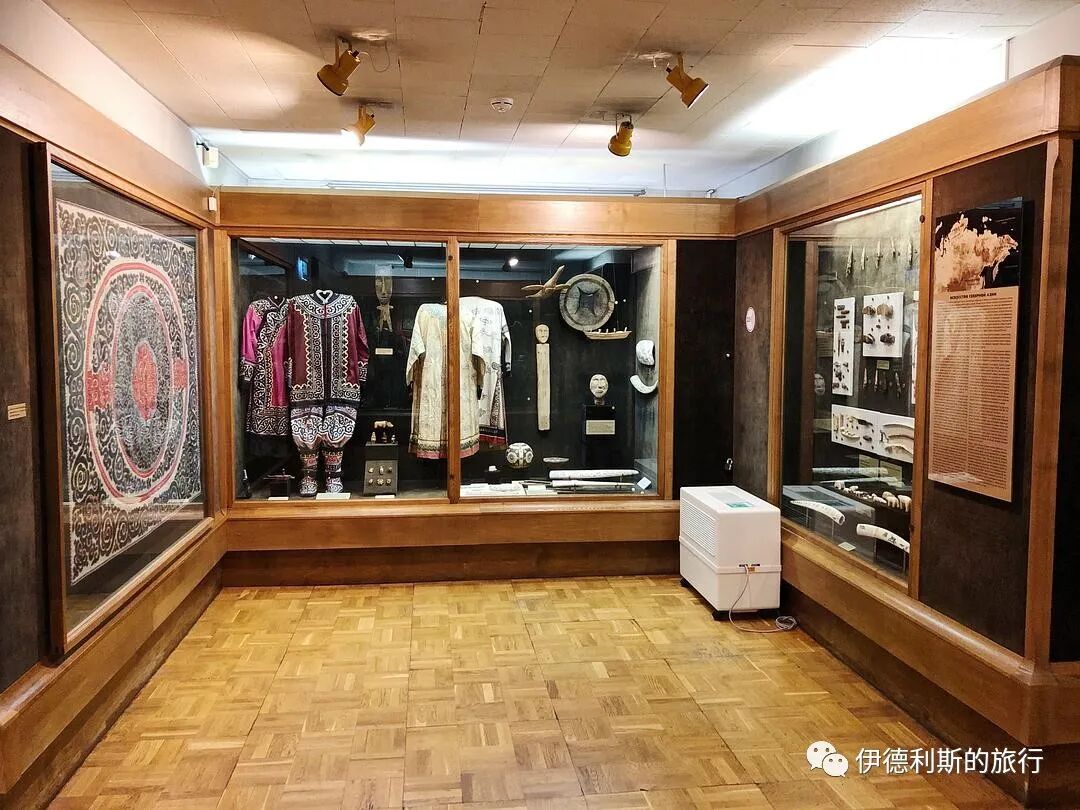
Clothing of the Nanai people on the north bank of the Heilongjiang River. The Nanai people are the Hezhen ethnic group, a Tungusic-speaking people living along the Heilongjiang River.
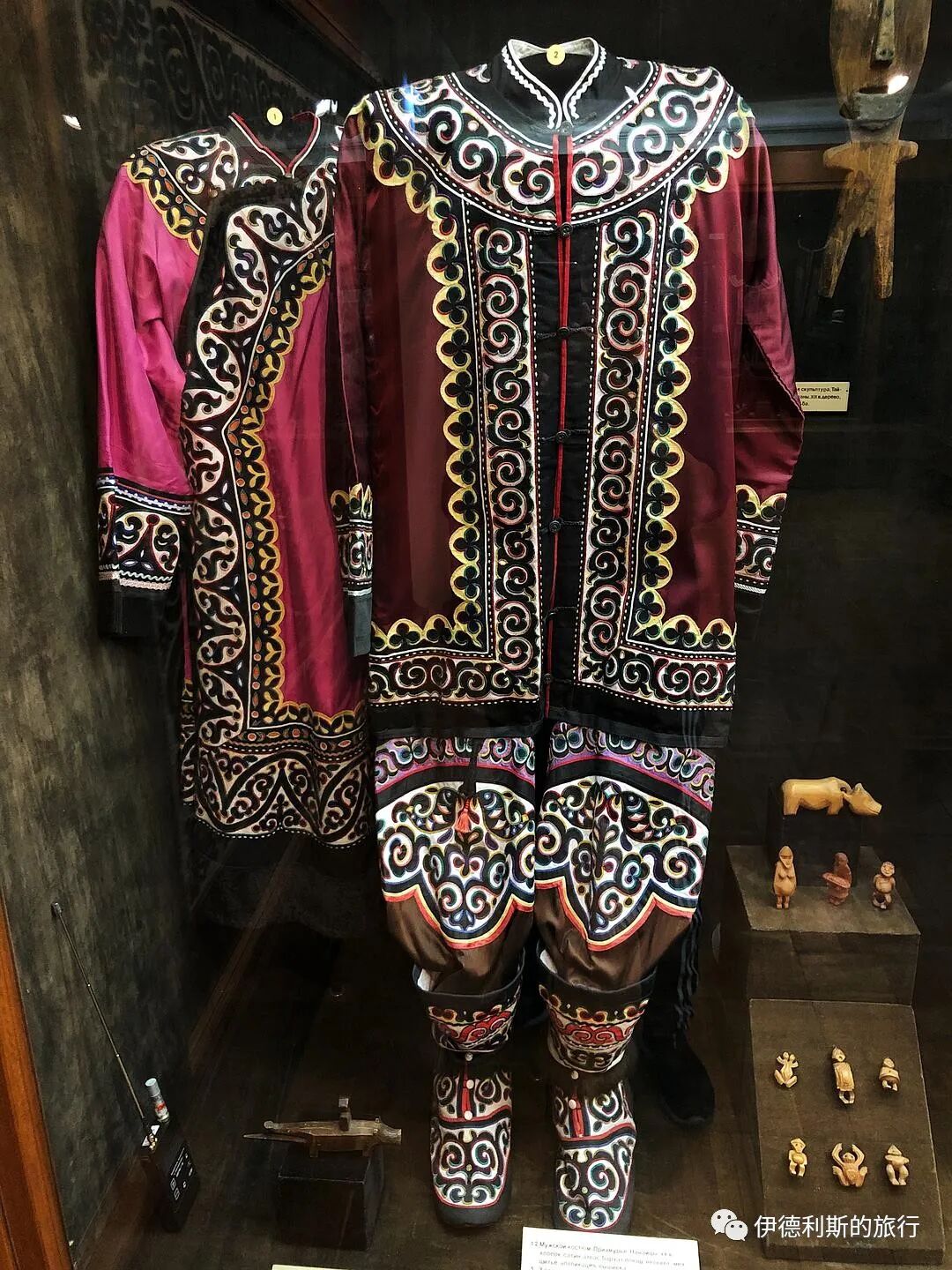
Clothing of the Nivkh people on the north bank of the Heilongjiang River. The Nivkh people live from the lower reaches of the Heilongjiang River to the river mouth and the northern part of Sakhalin Island, making a living by fishing, hunting, and raising dogs. The Nivkh language is a language isolate, sometimes grouped under Paleo-Siberian languages for convenience. After the Russo-Japanese War ended in 1905, the Nivkh people were divided into Russian and Japanese territories. During the Soviet era, the Russian language was forced upon the Nivkh people, and they were compelled to work on collective farms. Japan forced the Nivkh people to learn Japanese through the Japanization movement, making them stop their traditional customs and adopt Japanese ways of adopt Japanese ways. In 1945, the Soviet Union reclaimed Sakhalin Island, and some Nivkh people were forced to move to Hokkaido. Nivkh people in the Soviet Union were forced to live on collective farms until the Soviet Union collapsed in 1991.
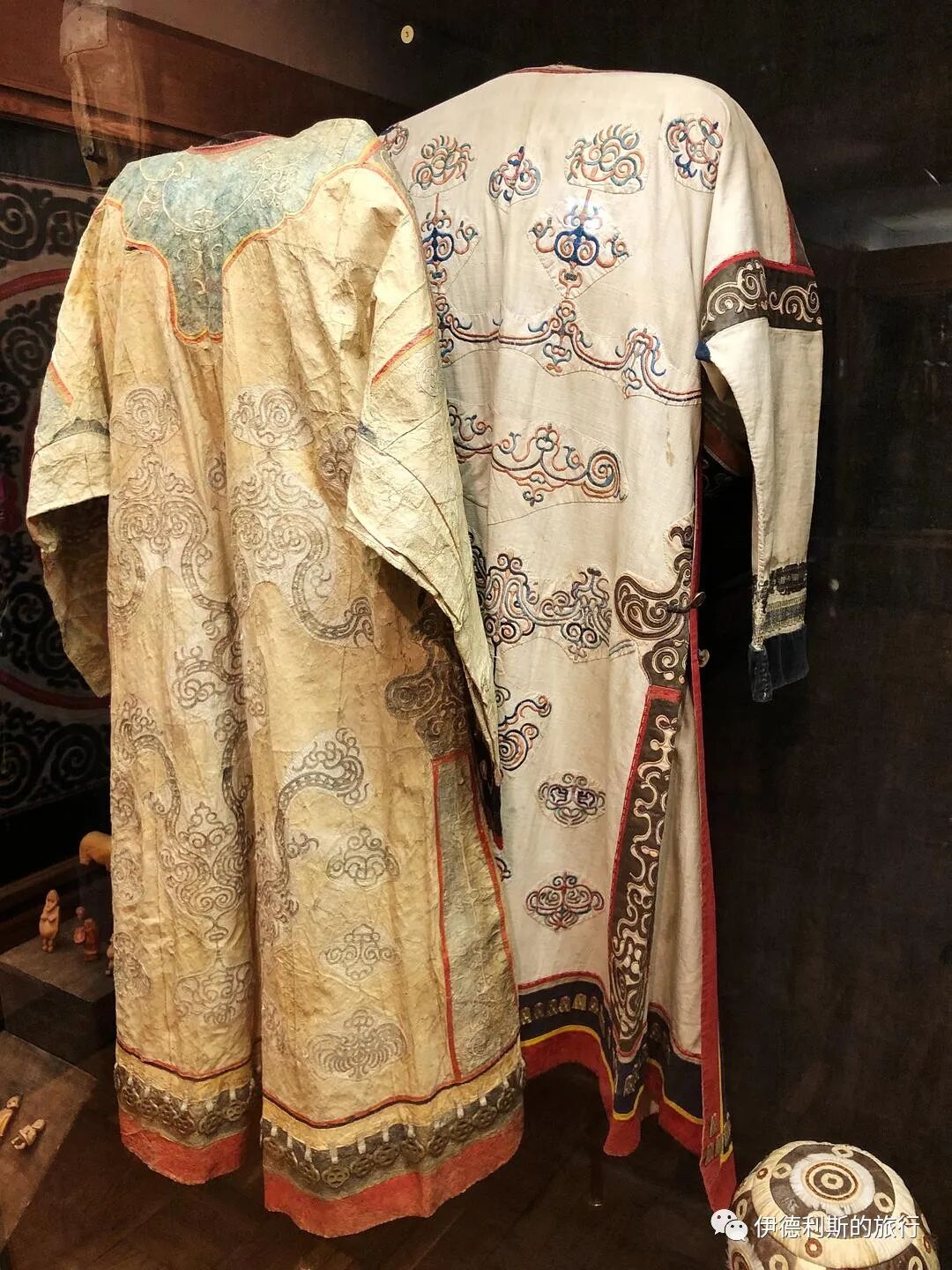
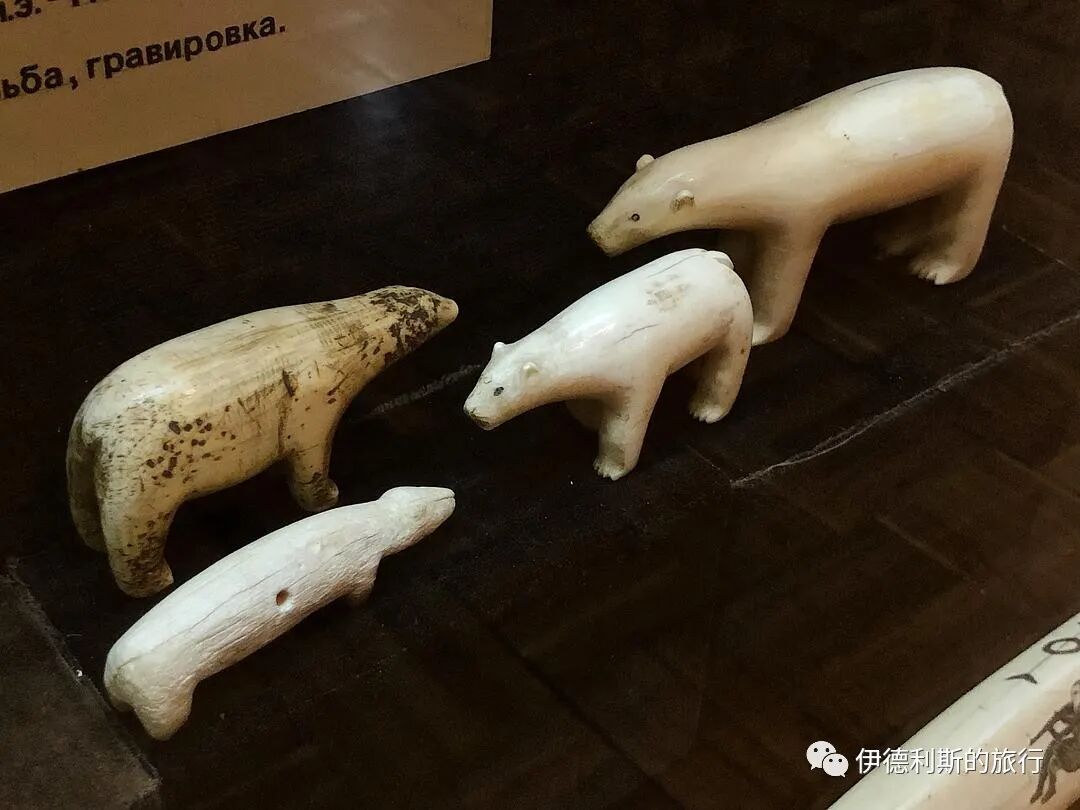
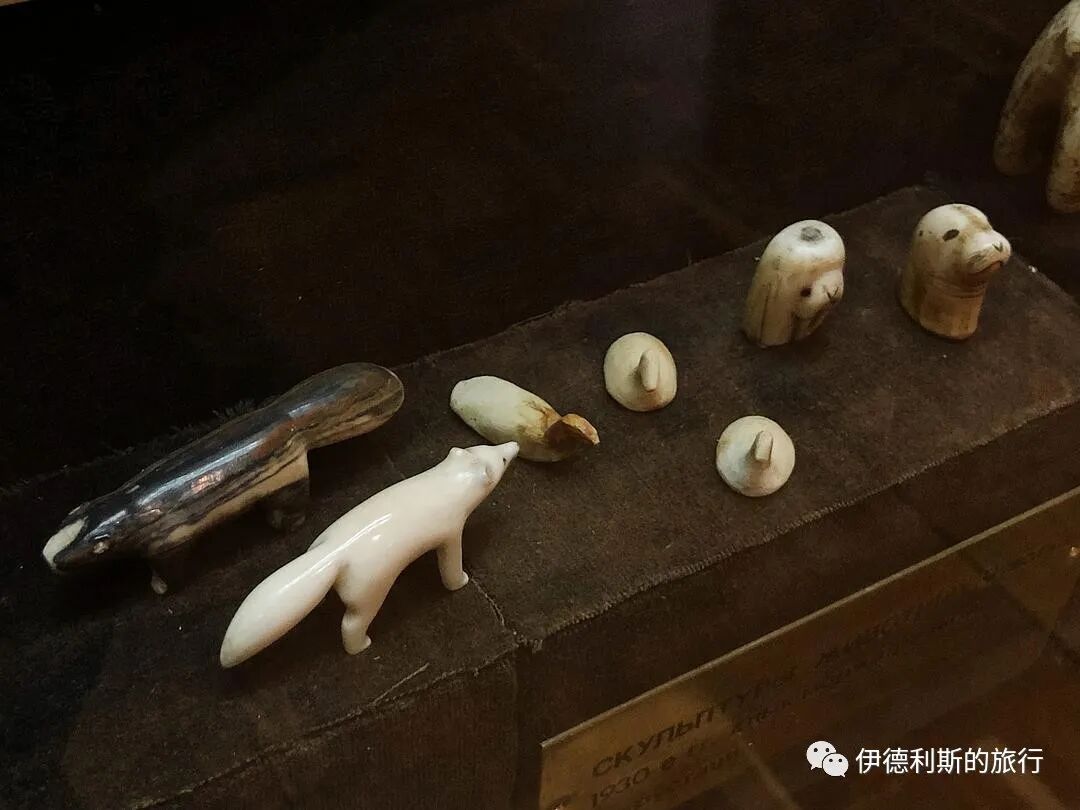
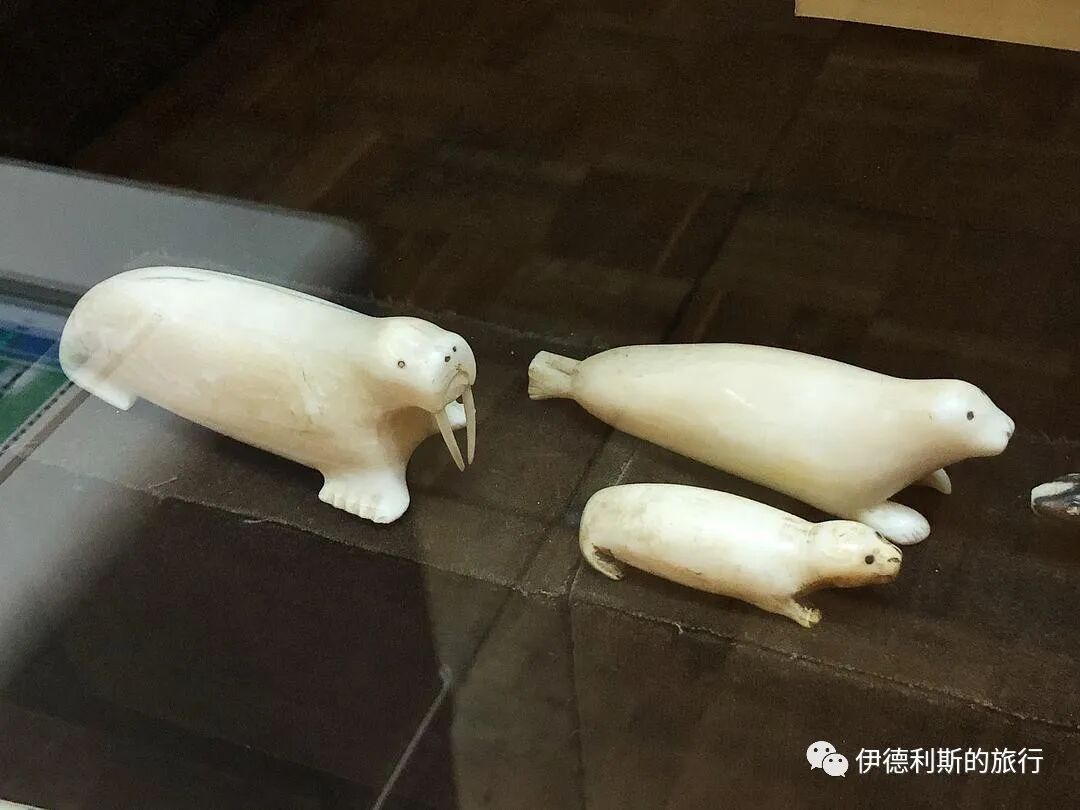
Animal statues made from walrus ivory by the Chukchi people in the 1930s. The Chukchi people live in the Chukotka Autonomous Okrug in the far east of Siberia and are divided into two groups: the maritime Chukchi and the reindeer Chukchi. The Chukchi living along the coast survive by hunting marine mammals, while those living on the inland tundra migrate seasonally with their reindeer. According to molecular anthropology research, the Chukchi people are the Asian ethnic group most genetically similar to Native Americans.
After the 1920s, the Soviet Union established walrus ivory carving cooperatives in Chukchi villages like Uelen to specialize in this craft. Uelen village is the center of Chukchi walrus ivory carving art and houses the world's only walrus ivory carving museum. Archaeological digs in Uelen village uncovered a burial site dating from 500 BC to 1000 AD, where they found walrus ivory carvings from a thousand years ago.
The Dolgan people wear clothing paired with Evenki leather boots. The Dolgans are a Turkic-speaking people living in Siberia. The Dolgan language belongs to the Northern Turkic branch and is closest to the Yakut language. Dolgans are considered a Turkicized Tungusic group who likely switched to a Turkic language during the 18th century. Dolgans originally lived by hunting and herding reindeer, but they were forced to work on collective farms during the Soviet era.
The Evenks are a Tungusic-speaking group native to Siberia, living across Hulunbuir, Siberia, and Mongolia. Some Evenks hunt reindeer, while others raise cattle and horses.
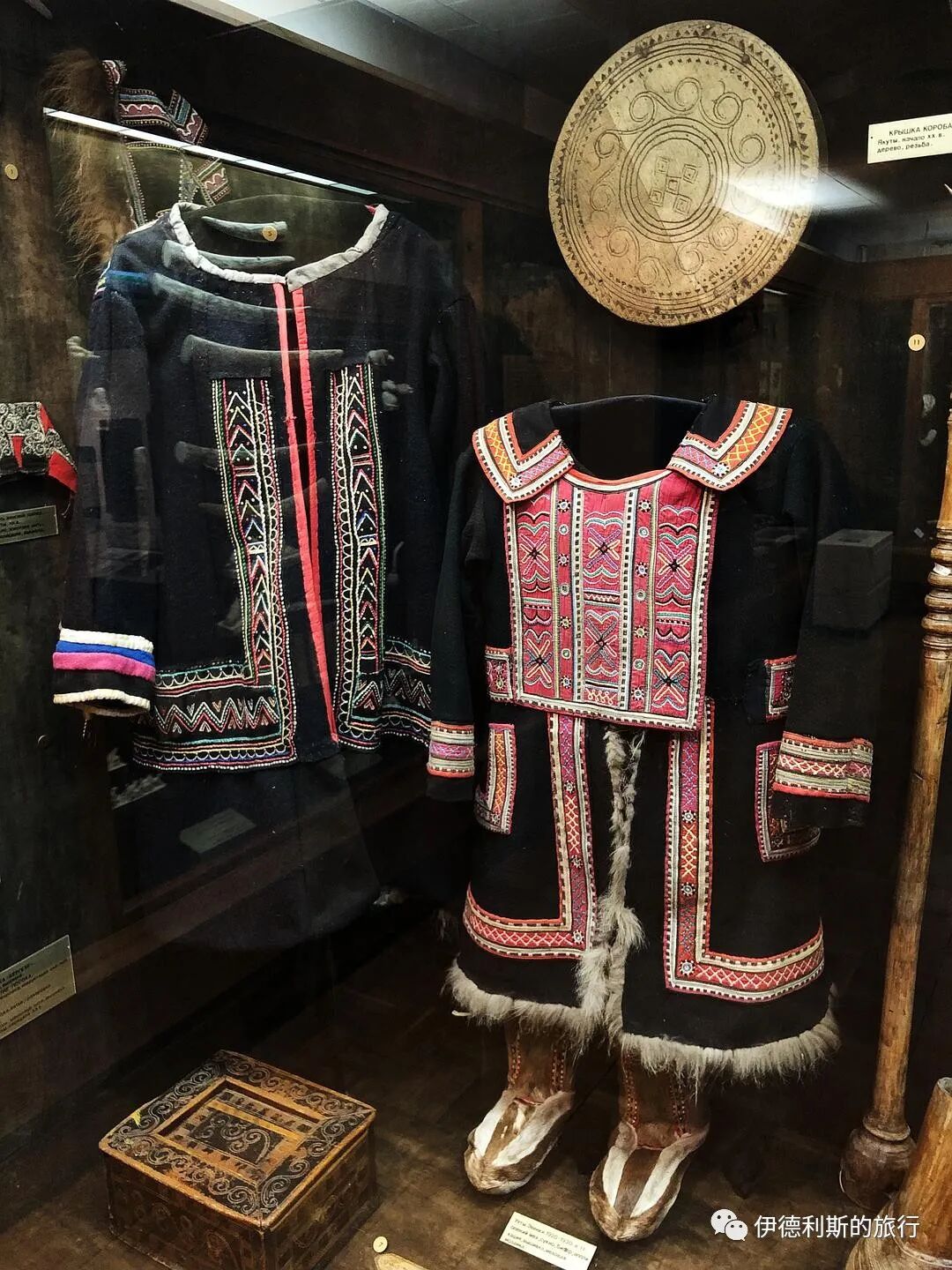
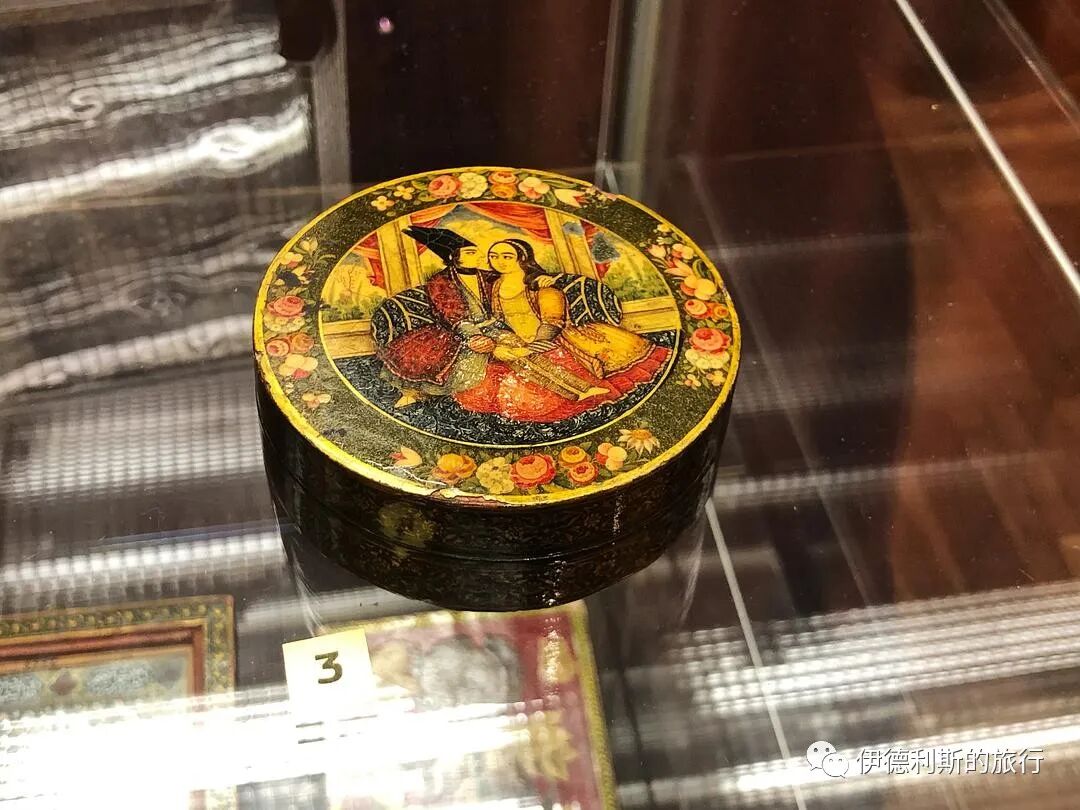
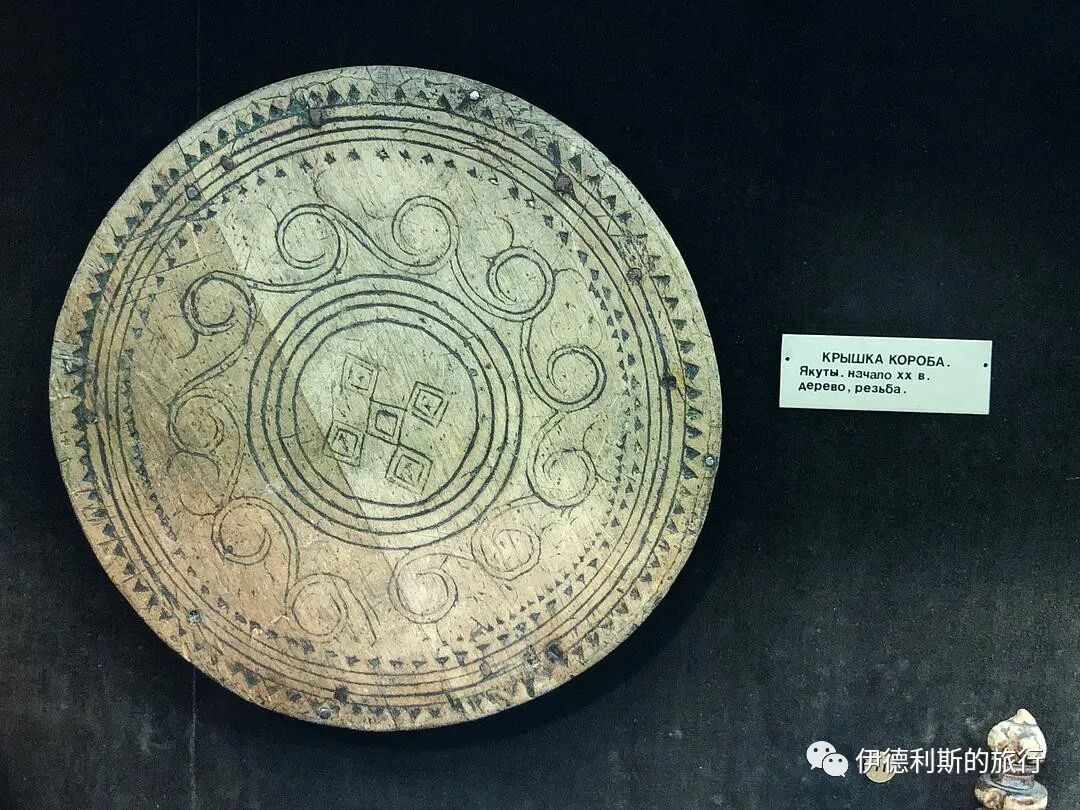
A box lid belonging to the Yakut people. The Yakuts, also called the Sakha, live mainly in the Sakha Republic of Siberia. They speak the Yakut language, which belongs to the Northern Turkic branch, and traditionally make a living by herding horses, cattle, and reindeer.
4. Central Asian Clothing
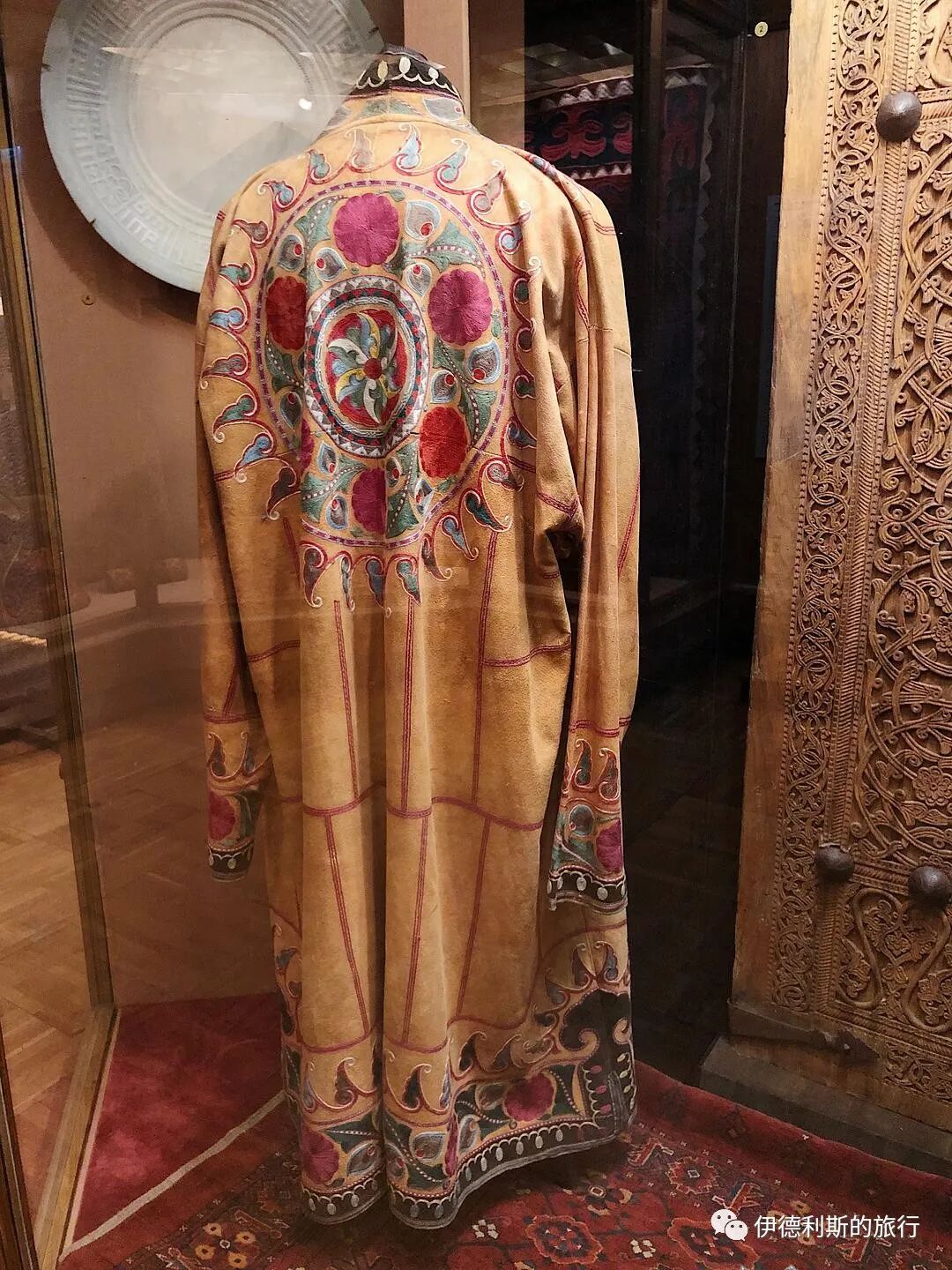
A 19th-century robe from Central Asia.
A woman's dress from Tajikistan, dating from the 1950s to the 1960s.
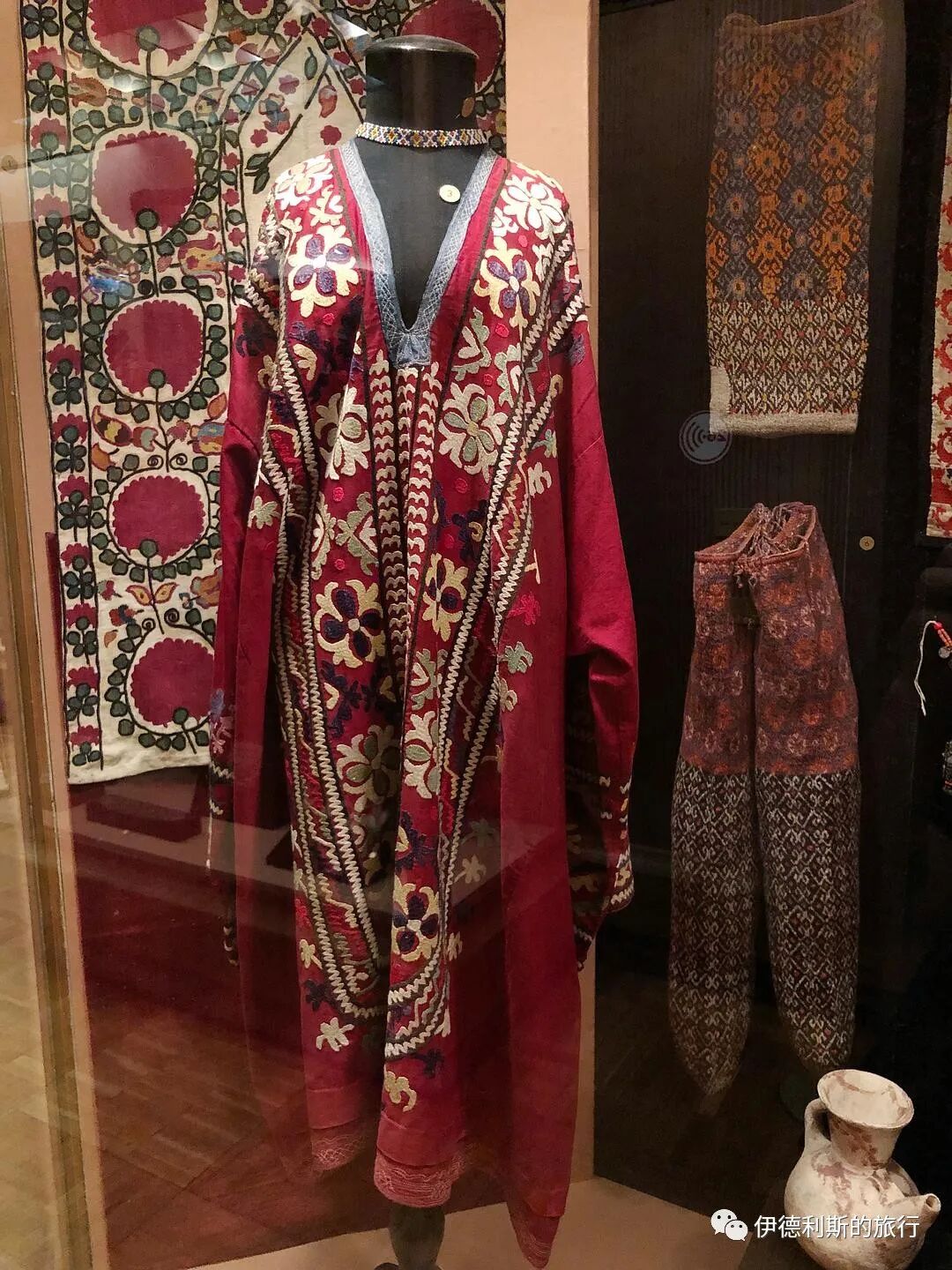
An early 20th-century ikat dress (atlas) from Uzbekistan, featuring a 19th-century chest ornament from Bukhara.
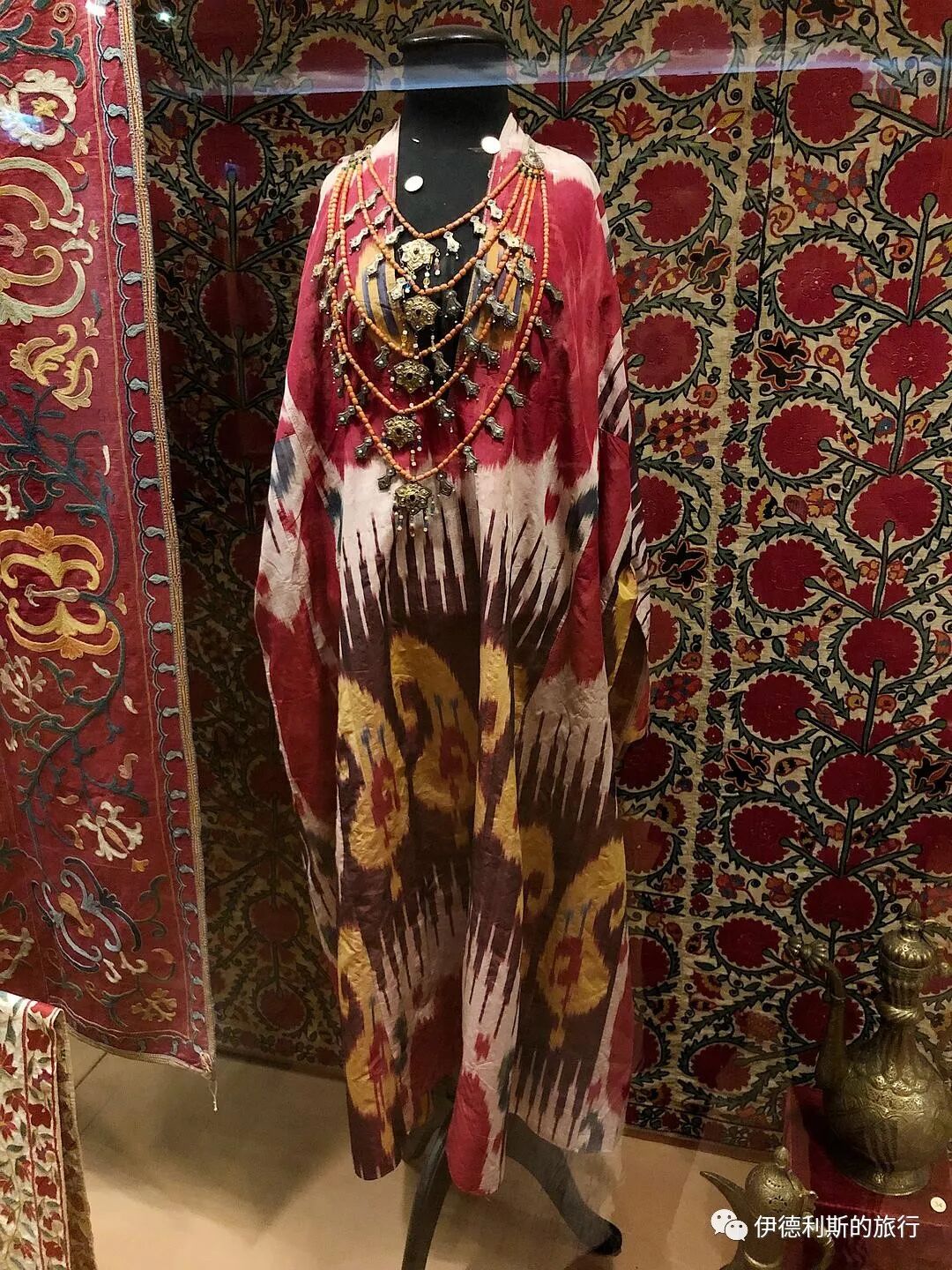
Women's clothing from Tajikistan, dating to the early 20th century.
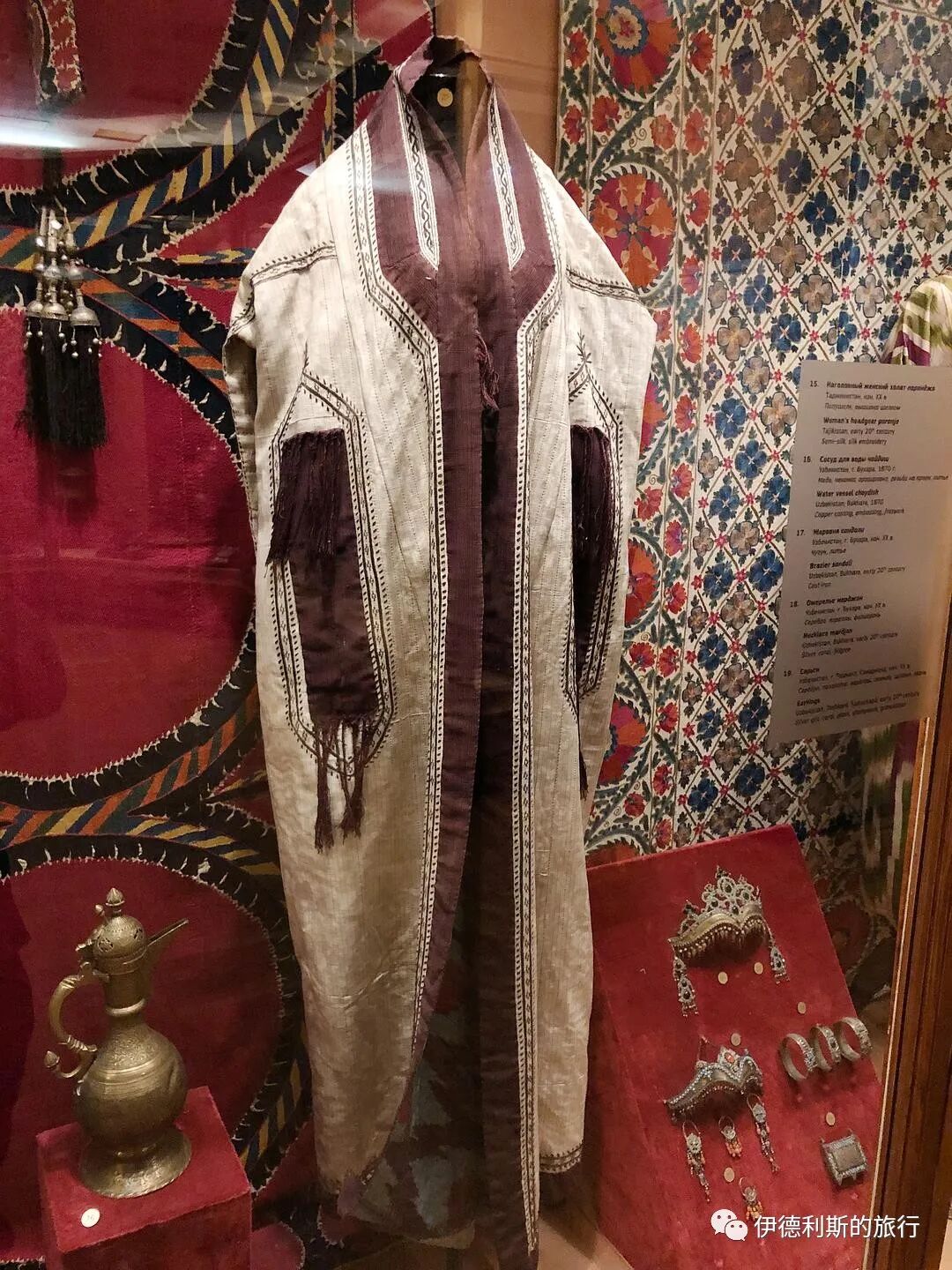
A man's robe from Bukhara, dating to the late 19th century.
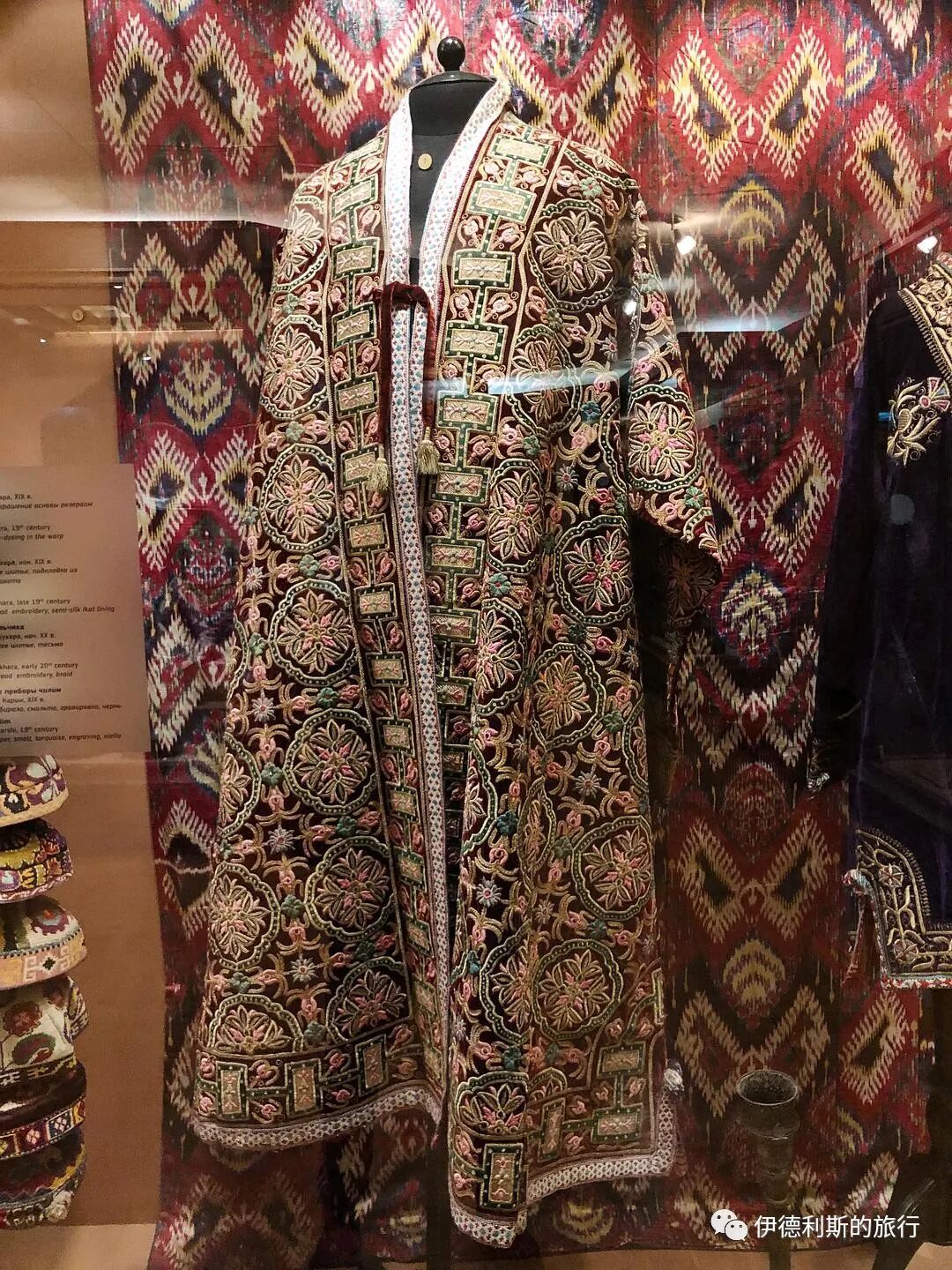
A boy's robe from Bukhara, dating to the early 20th century.
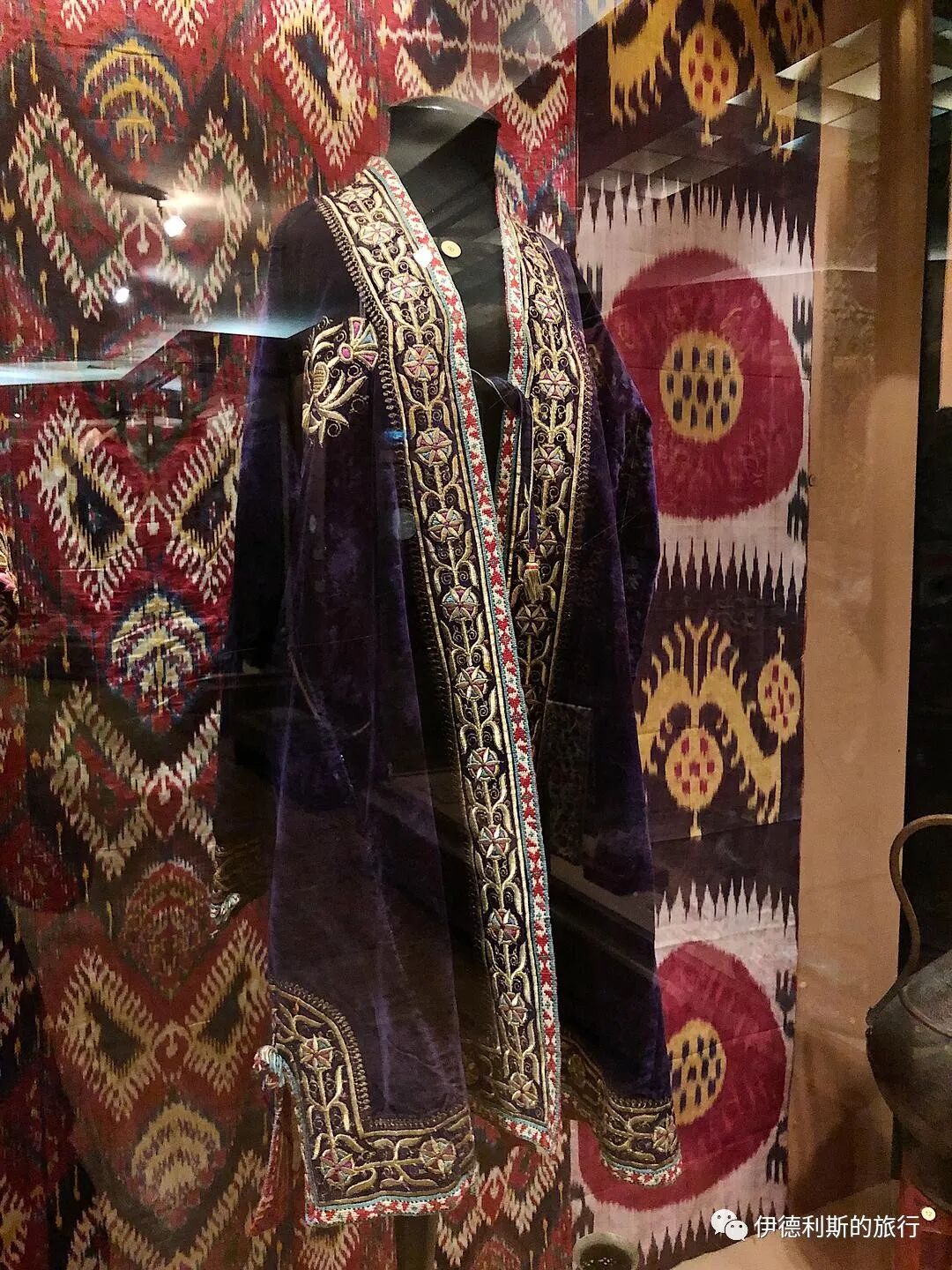
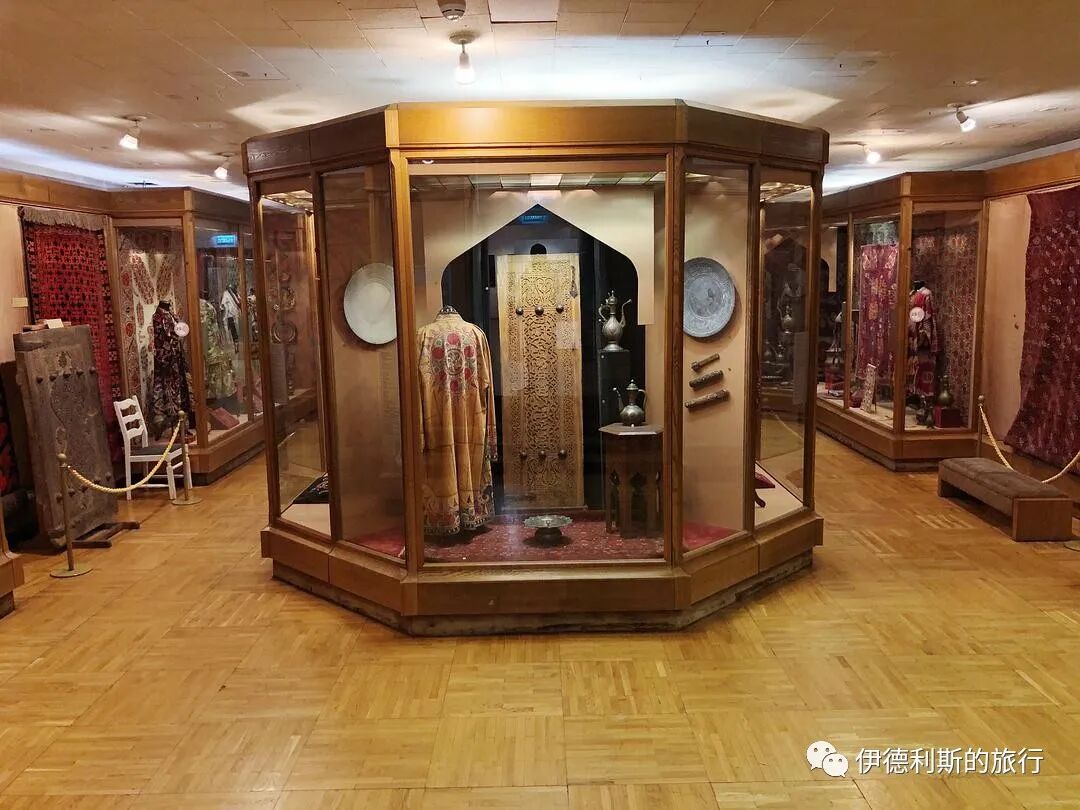
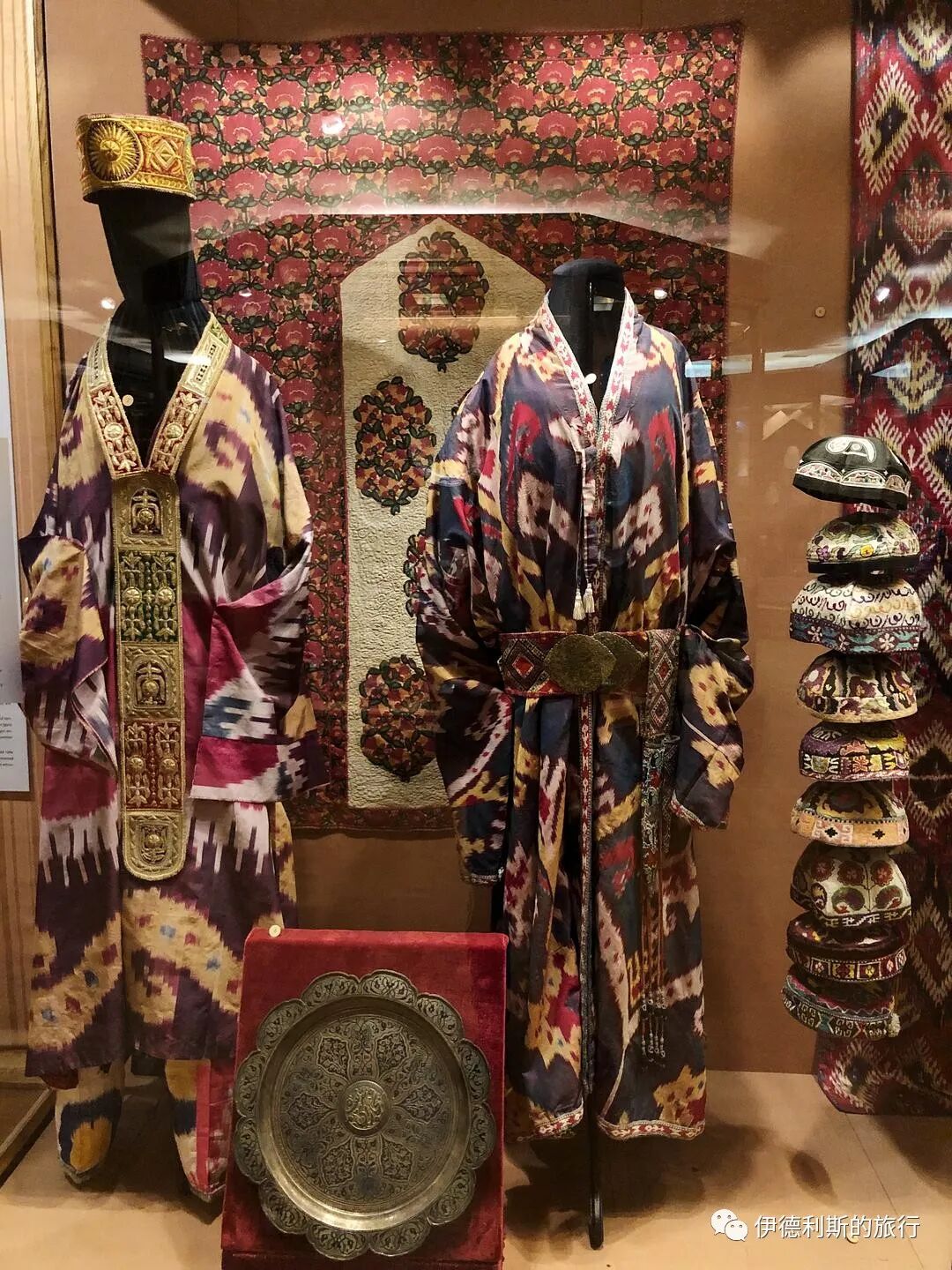
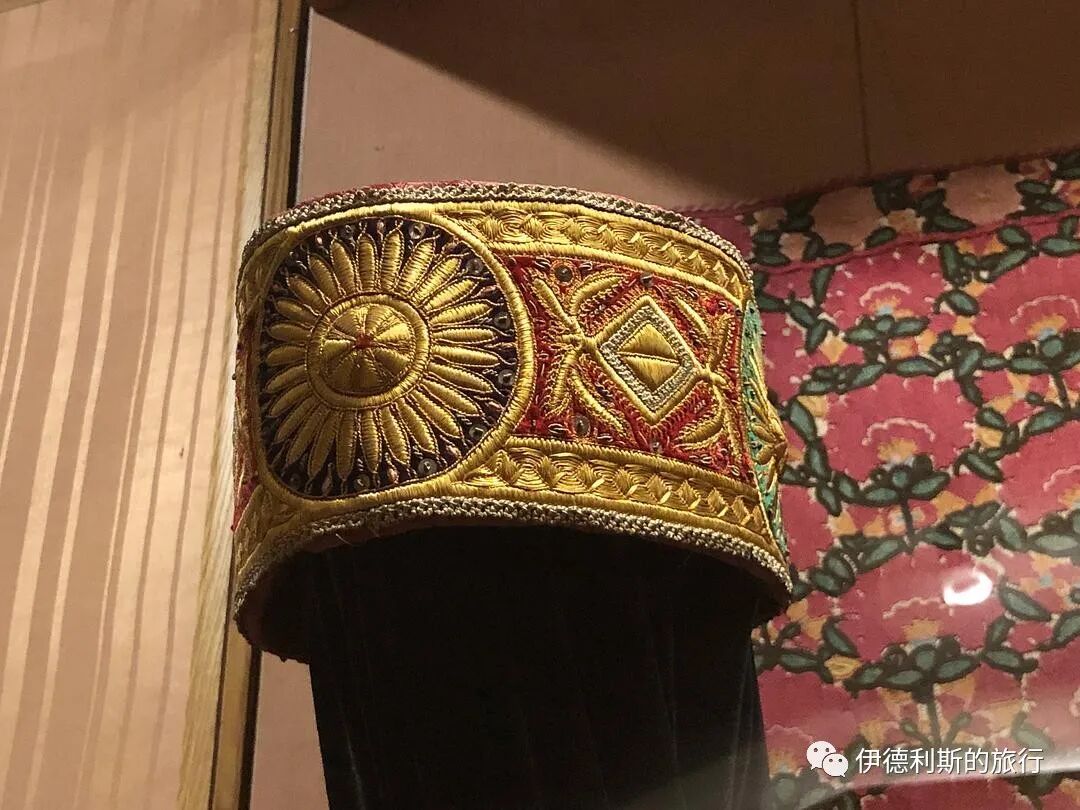
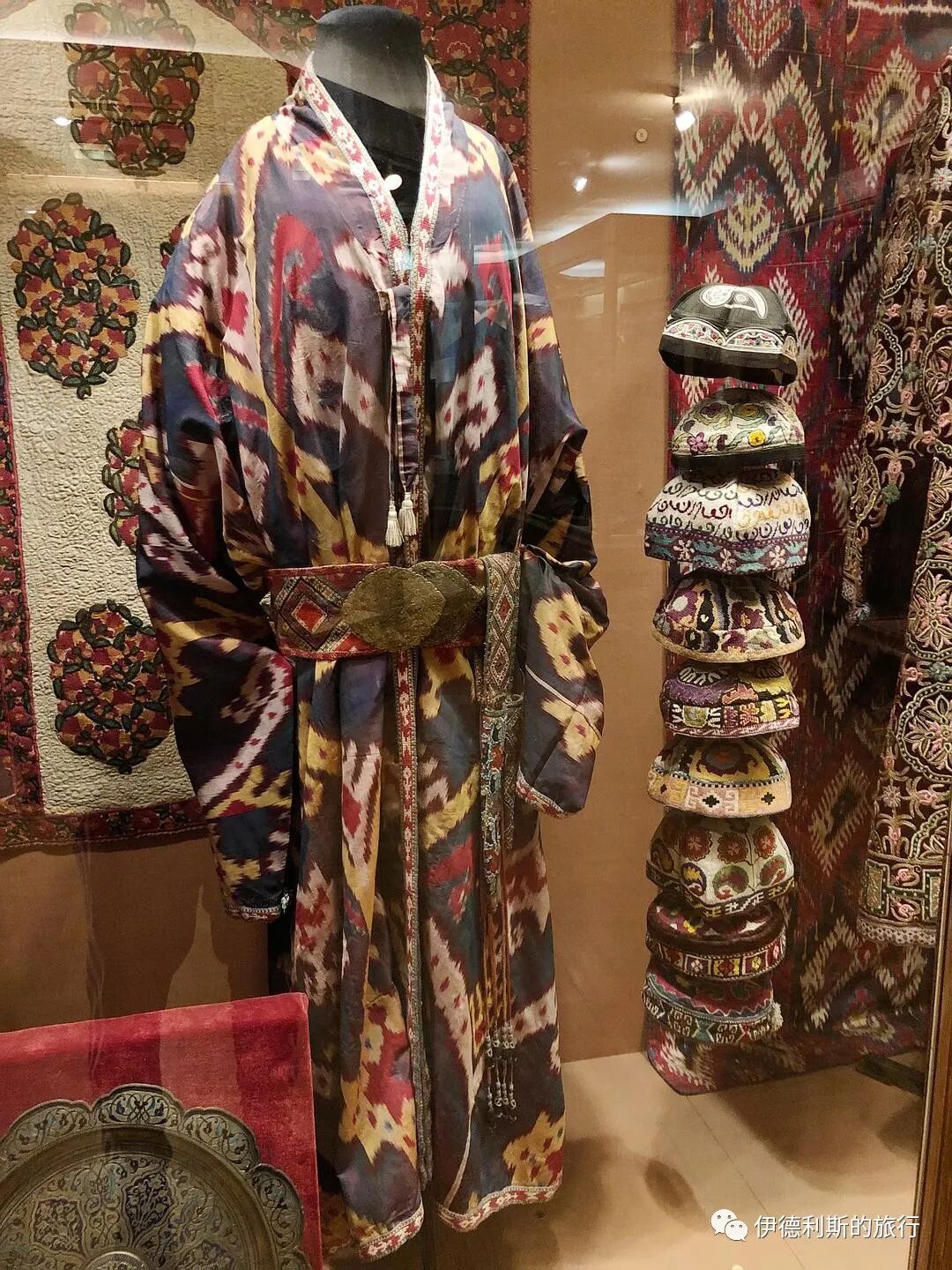
On the left is women's clothing from Bukhara in the early 20th century. In the middle is a 19th-century men's ikat robe (atlas) from Bukhara and a 19th-century belt from Shahrisabz. On the right are various hats from Uzbekistan and Tajikistan from the early 20th century.
Summary: Moscow Oriental Art Museum: Islamic Art, Central Asia and Muslim Heritage is presented here as a firsthand travel account in clear English, beginning with this scene: The museum's collection comes from many regions, including China, Japan, Korea, Southeast Asia, the Caucasus, Central Asia, Iran, and India. The account keeps its focus on Moscow Museum, Islamic Art, Oriental Art while preserving the names, places, food, and historical details from the Chinese source.
The museum's collection comes from many regions, including China, Japan, Korea, Southeast Asia, the Caucasus, Central Asia, Iran, and India. When the museum first opened, some items came from the Russian Museum of Decorative Arts, the Pushkin State Museum of Fine Arts, and the State Historical Museum in the 1920s, while others came from private collections. Art collector Pyotr Ivanovich Shchukin once owned a large number of Chinese, Iranian, and Indian artworks. After the October Revolution, these pieces were nationalized and transferred to the Museum of Oriental Art. Most of the Persian artifacts in the museum were donated by General Tardov in 1929. Since 1924, the museum has launched many expeditions to the Far East and collected a large number of artifacts. Today, the museum's new items mainly come from private donations and archaeological excavations.
1. Iran
1. Iranian porcelain
An Iranian ceramic plate from the 12th to 13th century.
After the 12th century began, the massive Seljuk Empire slowly declined and was finally destroyed by the Khwarazmian Empire in 1194. In 1221, the Khwarazmian Empire faced an invasion by the Mongol Empire, and by 1237, the Mongols occupied most of Iran. In 1256, Hulagu Khan was named Ilkhan, and Iran began to be ruled by the Ilkhanate.
Iranian ceramic tiles from the 13th to 14th century.
After 1335, the Ilkhanate fell into division until it was conquered by Timur in 1381, and Iran came under the rule of the Timurid Empire.
Iranian ceramic tiles from the 17th century, Safavid Dynasty (1501–1736).
Ceramic tiles from the 18th century, Safavid Dynasty (1501–1736) or Afsharid Dynasty (1736–1796).
2. Calligraphy and painting from the 18th century.
Entering the 18th century, Iran faced both internal troubles and external threats. The Russian Empire and the Ottoman Empire invaded Iran one after another. The Safavid dynasty, which had ruled Iran for over two hundred years, collapsed. Pashtuns from Afghanistan, Turkmens from Khorasan, and other tribes established the Hotaki dynasty (ruling Iran from 1722 to 1729), the Afsharid dynasty (1736-1796), and the Zand dynasty (1750-1794) in succession.
Although the Afsharid dynasty reached the largest territory in Iran since the Sasanian Empire in the 1730s, it soon fell into civil strife and turmoil. After 1750, the Zand dynasty brought a period of relative peace and prosperity to Iran.
In 1765, Karim Khan promoted art in the capital, Shiraz. This formed the unique Zand school of Iranian painting, which influenced the painting art of the Qajar dynasty in the 19th century.
Calligraphy written by Riza ad-Din Khan ibn Ibragim khan in 1706/7, during the final years of the Safavid dynasty.
18th-century Persian miniature painting.
3. 19th-century Persian miniature paintings
In the 19th century, Iran was ruled by the Qajar dynasty (1789-1925). The Qajars were a Turkic-speaking tribe from northern Iran, now part of the Turkmen people, and their rulers called themselves Shah. Peace returned to Iran in the 19th century, and art flourished as a result.
An illustration from the Persian epic Shahnameh shows the legendary hero Rostam fighting the White Demon (Div-e Sepid). In the Shahnameh, the White Demon is the leader of the demons in the Mazandaran region; he is huge and skilled at all kinds of magic. He destroyed the army of the Iranian King Kay Kavus by summoning hail, boulders, and tree trunks, then captured and imprisoned the king. In the end, the hero Rostam killed the White Demon to save the king, and he even turned the demon's head into a helmet to wear.
Inside the palace.
A Sufi performing the whirling dance ceremony.
An introduction to the turban (chantou).
The Sufi allegorical poem Salaman va Absal by the famous 15th-century Sufi poet Jami (Nūr ad-Dīn 'Abd ar-Rahmān Jāmī). The story appears to be about a prince who feels a physical attraction to his wet nurse, but it actually uses allegory to describe the key stages of Sufi spiritual practice.
A Qajar dynasty Shah in battle.
A page from a manuscript.
A young man wearing a turban (chantou).
Relaxing.
4. Qajar Dynasty portraits.
The Qajar Dynasty is famous for its unique portrait paintings. Qajar portraits were influenced by European realism in oil painting. They use many dark, rich, and saturated colors. The backgrounds are very realistic, but the people in the paintings still look stiff.
This early 19th-century painting shows Bahram V (reigned 420-438) while hunting. Bahram V was known as the Wild Ass (Gor). He was a 5th-century king of the Persian Sasanian Empire. He loved hunting and often appears in classic Persian literature.
Painted by Muhammad Ali in 1834, this shows the Qajar court with the Shah receiving his officials.
A woman in a garden, 19th century. Early Iranian portraits often blurred gender lines, making the bodies and faces of many beautiful men and women look very similar. It was not until the 19th century that women began to have more individualized features. In portraits of women from the Qajar dynasty, women often hold mirrors, fruit, or drinks, which usually represent beauty and pleasure in Persian poetry.
2. Clothing in Afghanistan and Pakistan
A 20th-century hat worn by the Pashtun people of Afghanistan.
A wool cap (pakol) worn by the Pashtun people in Khost Province, southeastern Afghanistan, which has a wider brim than the common version. The wool cap (pakol) originated from the flat hat (kausia) worn by the Macedonians in ancient Greece and later spread to Hellenistic Afghanistan during the eastern conquests of Alexander the Great. The word pakol comes from the Urdu language in the Chitral region on the border of Afghanistan and Pakistan, meaning round hat. The pakol also spread from Chitral across Afghanistan, Pakistan, and the Pamir region, becoming a hat people wear to keep warm in winter.
A Sindhi cap worn by Pashtuns in Afghanistan in the early 20th century. This cap with a front opening originated in the Sindh region of Pakistan. It later spread to Afghanistan through the Balochistan region and became popular among all Pashtuns during the 20th century.
A woman's dress worn by Pashtuns in Afghanistan in the early 20th century.
Clothing from the Kalasha people in the Parun Valley of eastern Afghanistan from the late 20th century, and trousers from the Kalasha people in northwestern Pakistan from the mid-20th century. The Kalasha people follow an animistic religion that comes from ancient India and speak Kalasha, a language in the Indo-Aryan branch.
Clothing worn by the Nuristanis of eastern Afghanistan. Nuristani culture is very similar to Kalasha culture. They also once followed an animistic religion from ancient India before converting to Islam in the 1890s.
A hat and coat worn by the Wakhi people in the Hunza Valley of northeastern Pakistan in the late 20th century. The Wakhi people are a branch of the Pamiri people. They live at the borders of Afghanistan, Pakistan, Tajikistan, and Taxkorgan in China, where they are classified as part of the Tajik ethnic group. The Wakhi people speak the Wakhi language, which belongs to the Eastern Iranian sub-branch, and they follow the Ismaili branch of Shia Islam.
A woman's hat worn by the Wakhi people in the Hunza Valley of northeastern Pakistan.
A jacket worn by the Pashayi people in eastern Afghanistan. The Pashayi people are a branch of the Indo-Aryan ethnic group and are one of the oldest ethnic groups in Afghanistan.
A robe from the eastern region of Afghanistan.
An Afghan hat from the early 20th century.
3. Siberian clothing
Clothing of the Nanai people on the north bank of the Heilongjiang River. The Nanai people are the Hezhen ethnic group, a Tungusic-speaking people living along the Heilongjiang River.
Clothing of the Nivkh people on the north bank of the Heilongjiang River. The Nivkh people live from the lower reaches of the Heilongjiang River to the river mouth and the northern part of Sakhalin Island, making a living by fishing, hunting, and raising dogs. The Nivkh language is a language isolate, sometimes grouped under Paleo-Siberian languages for convenience. After the Russo-Japanese War ended in 1905, the Nivkh people were divided into Russian and Japanese territories. During the Soviet era, the Russian language was forced upon the Nivkh people, and they were compelled to work on collective farms. Japan forced the Nivkh people to learn Japanese through the Japanization movement, making them stop their traditional customs and adopt Japanese ways of adopt Japanese ways. In 1945, the Soviet Union reclaimed Sakhalin Island, and some Nivkh people were forced to move to Hokkaido. Nivkh people in the Soviet Union were forced to live on collective farms until the Soviet Union collapsed in 1991.
Animal statues made from walrus ivory by the Chukchi people in the 1930s. The Chukchi people live in the Chukotka Autonomous Okrug in the far east of Siberia and are divided into two groups: the maritime Chukchi and the reindeer Chukchi. The Chukchi living along the coast survive by hunting marine mammals, while those living on the inland tundra migrate seasonally with their reindeer. According to molecular anthropology research, the Chukchi people are the Asian ethnic group most genetically similar to Native Americans.
After the 1920s, the Soviet Union established walrus ivory carving cooperatives in Chukchi villages like Uelen to specialize in this craft. Uelen village is the center of Chukchi walrus ivory carving art and houses the world's only walrus ivory carving museum. Archaeological digs in Uelen village uncovered a burial site dating from 500 BC to 1000 AD, where they found walrus ivory carvings from a thousand years ago.
The Dolgan people wear clothing paired with Evenki leather boots. The Dolgans are a Turkic-speaking people living in Siberia. The Dolgan language belongs to the Northern Turkic branch and is closest to the Yakut language. Dolgans are considered a Turkicized Tungusic group who likely switched to a Turkic language during the 18th century. Dolgans originally lived by hunting and herding reindeer, but they were forced to work on collective farms during the Soviet era.
The Evenks are a Tungusic-speaking group native to Siberia, living across Hulunbuir, Siberia, and Mongolia. Some Evenks hunt reindeer, while others raise cattle and horses.
A box lid belonging to the Yakut people. The Yakuts, also called the Sakha, live mainly in the Sakha Republic of Siberia. They speak the Yakut language, which belongs to the Northern Turkic branch, and traditionally make a living by herding horses, cattle, and reindeer.
4. Central Asian Clothing
A 19th-century robe from Central Asia.
A woman's dress from Tajikistan, dating from the 1950s to the 1960s.
An early 20th-century ikat dress (atlas) from Uzbekistan, featuring a 19th-century chest ornament from Bukhara.
Women's clothing from Tajikistan, dating to the early 20th century.
A man's robe from Bukhara, dating to the late 19th century.
A boy's robe from Bukhara, dating to the early 20th century.
On the left is women's clothing from Bukhara in the early 20th century. In the middle is a 19th-century men's ikat robe (atlas) from Bukhara and a 19th-century belt from Shahrisabz. On the right are various hats from Uzbekistan and Tajikistan from the early 20th century.
Moscow Oriental Art Museum: Islamic Art, Central Asia and Muslim Heritage
Articles • ali2007fr posted the article • 0 comments • 157 views • 2026-05-18 06:54
Reposted from the web
Summary: Moscow Oriental Art Museum: Islamic Art, Central Asia and Muslim Heritage is presented here as a firsthand travel account in clear English, beginning with this scene: The museum's collection comes from many regions, including China, Japan, Korea, Southeast Asia, the Caucasus, Central Asia, Iran, and India. The account keeps its focus on Moscow Museum, Islamic Art, Oriental Art while preserving the names, places, food, and historical details from the Chinese source.
The museum's collection comes from many regions, including China, Japan, Korea, Southeast Asia, the Caucasus, Central Asia, Iran, and India. When the museum first opened, some items came from the Russian Museum of Decorative Arts, the Pushkin State Museum of Fine Arts, and the State Historical Museum in the 1920s, while others came from private collections. Art collector Pyotr Ivanovich Shchukin once owned a large number of Chinese, Iranian, and Indian artworks. After the October Revolution, these pieces were nationalized and transferred to the Museum of Oriental Art. Most of the Persian artifacts in the museum were donated by General Tardov in 1929. Since 1924, the museum has launched many expeditions to the Far East and collected a large number of artifacts. Today, the museum's new items mainly come from private donations and archaeological excavations.
1. Iran
1. Iranian porcelain
An Iranian ceramic plate from the 12th to 13th century.
After the 12th century began, the massive Seljuk Empire slowly declined and was finally destroyed by the Khwarazmian Empire in 1194. In 1221, the Khwarazmian Empire faced an invasion by the Mongol Empire, and by 1237, the Mongols occupied most of Iran. In 1256, Hulagu Khan was named Ilkhan, and Iran began to be ruled by the Ilkhanate.
Iranian ceramic tiles from the 13th to 14th century.
After 1335, the Ilkhanate fell into division until it was conquered by Timur in 1381, and Iran came under the rule of the Timurid Empire.
Iranian ceramic tiles from the 17th century, Safavid Dynasty (1501–1736).
Ceramic tiles from the 18th century, Safavid Dynasty (1501–1736) or Afsharid Dynasty (1736–1796).
2. Calligraphy and painting from the 18th century.
Entering the 18th century, Iran faced both internal troubles and external threats. The Russian Empire and the Ottoman Empire invaded Iran one after another. The Safavid dynasty, which had ruled Iran for over two hundred years, collapsed. Pashtuns from Afghanistan, Turkmens from Khorasan, and other tribes established the Hotaki dynasty (ruling Iran from 1722 to 1729), the Afsharid dynasty (1736-1796), and the Zand dynasty (1750-1794) in succession.
Although the Afsharid dynasty reached the largest territory in Iran since the Sasanian Empire in the 1730s, it soon fell into civil strife and turmoil. After 1750, the Zand dynasty brought a period of relative peace and prosperity to Iran.
In 1765, Karim Khan promoted art in the capital, Shiraz. This formed the unique Zand school of Iranian painting, which influenced the painting art of the Qajar dynasty in the 19th century.
Calligraphy written by Riza ad-Din Khan ibn Ibragim khan in 1706/7, during the final years of the Safavid dynasty.
18th-century Persian miniature painting.
3. 19th-century Persian miniature paintings
In the 19th century, Iran was ruled by the Qajar dynasty (1789-1925). The Qajars were a Turkic-speaking tribe from northern Iran, now part of the Turkmen people, and their rulers called themselves Shah. Peace returned to Iran in the 19th century, and art flourished as a result.
An illustration from the Persian epic Shahnameh shows the legendary hero Rostam fighting the White Demon (Div-e Sepid). In the Shahnameh, the White Demon is the leader of the demons in the Mazandaran region; he is huge and skilled at all kinds of magic. He destroyed the army of the Iranian King Kay Kavus by summoning hail, boulders, and tree trunks, then captured and imprisoned the king. In the end, the hero Rostam killed the White Demon to save the king, and he even turned the demon's head into a helmet to wear.
Inside the palace.
A Sufi performing the whirling dance ceremony.
An introduction to the turban (chantou).
The Sufi allegorical poem Salaman va Absal by the famous 15th-century Sufi poet Jami (Nūr ad-Dīn 'Abd ar-Rahmān Jāmī). The story appears to be about a prince who feels a physical attraction to his wet nurse, but it actually uses allegory to describe the key stages of Sufi spiritual practice.
A Qajar dynasty Shah in battle.
A page from a manuscript.
A young man wearing a turban (chantou).
Relaxing.
4. Qajar Dynasty portraits.
The Qajar Dynasty is famous for its unique portrait paintings. Qajar portraits were influenced by European realism in oil painting. They use many dark, rich, and saturated colors. The backgrounds are very realistic, but the people in the paintings still look stiff.
This early 19th-century painting shows Bahram V (reigned 420-438) while hunting. Bahram V was known as the Wild Ass (Gor). He was a 5th-century king of the Persian Sasanian Empire. He loved hunting and often appears in classic Persian literature.
Painted by Muhammad Ali in 1834, this shows the Qajar court with the Shah receiving his officials.
A woman in a garden, 19th century. Early Iranian portraits often blurred gender lines, making the bodies and faces of many beautiful men and women look very similar. It was not until the 19th century that women began to have more individualized features. In portraits of women from the Qajar dynasty, women often hold mirrors, fruit, or drinks, which usually represent beauty and pleasure in Persian poetry.
2. Clothing in Afghanistan and Pakistan
A 20th-century hat worn by the Pashtun people of Afghanistan.
A wool cap (pakol) worn by the Pashtun people in Khost Province, southeastern Afghanistan, which has a wider brim than the common version. The wool cap (pakol) originated from the flat hat (kausia) worn by the Macedonians in ancient Greece and later spread to Hellenistic Afghanistan during the eastern conquests of Alexander the Great. The word pakol comes from the Urdu language in the Chitral region on the border of Afghanistan and Pakistan, meaning round hat. The pakol also spread from Chitral across Afghanistan, Pakistan, and the Pamir region, becoming a hat people wear to keep warm in winter.
A Sindhi cap worn by Pashtuns in Afghanistan in the early 20th century. This cap with a front opening originated in the Sindh region of Pakistan. It later spread to Afghanistan through the Balochistan region and became popular among all Pashtuns during the 20th century.
A woman's dress worn by Pashtuns in Afghanistan in the early 20th century.
Clothing from the Kalasha people in the Parun Valley of eastern Afghanistan from the late 20th century, and trousers from the Kalasha people in northwestern Pakistan from the mid-20th century. The Kalasha people follow an animistic religion that comes from ancient India and speak Kalasha, a language in the Indo-Aryan branch.
Clothing worn by the Nuristanis of eastern Afghanistan. Nuristani culture is very similar to Kalasha culture. They also once followed an animistic religion from ancient India before converting to Islam in the 1890s.
A hat and coat worn by the Wakhi people in the Hunza Valley of northeastern Pakistan in the late 20th century. The Wakhi people are a branch of the Pamiri people. They live at the borders of Afghanistan, Pakistan, Tajikistan, and Taxkorgan in China, where they are classified as part of the Tajik ethnic group. The Wakhi people speak the Wakhi language, which belongs to the Eastern Iranian sub-branch, and they follow the Ismaili branch of Shia Islam.
A woman's hat worn by the Wakhi people in the Hunza Valley of northeastern Pakistan.
A jacket worn by the Pashayi people in eastern Afghanistan. The Pashayi people are a branch of the Indo-Aryan ethnic group and are one of the oldest ethnic groups in Afghanistan.
A robe from the eastern region of Afghanistan.
An Afghan hat from the early 20th century.
3. Siberian clothing
Clothing of the Nanai people on the north bank of the Heilongjiang River. The Nanai people are the Hezhen ethnic group, a Tungusic-speaking people living along the Heilongjiang River.
Clothing of the Nivkh people on the north bank of the Heilongjiang River. The Nivkh people live from the lower reaches of the Heilongjiang River to the river mouth and the northern part of Sakhalin Island, making a living by fishing, hunting, and raising dogs. The Nivkh language is a language isolate, sometimes grouped under Paleo-Siberian languages for convenience. After the Russo-Japanese War ended in 1905, the Nivkh people were divided into Russian and Japanese territories. During the Soviet era, the Russian language was forced upon the Nivkh people, and they were compelled to work on collective farms. Japan forced the Nivkh people to learn Japanese through the Japanization movement, making them stop their traditional customs and adopt Japanese ways of adopt Japanese ways. In 1945, the Soviet Union reclaimed Sakhalin Island, and some Nivkh people were forced to move to Hokkaido. Nivkh people in the Soviet Union were forced to live on collective farms until the Soviet Union collapsed in 1991.
Animal statues made from walrus ivory by the Chukchi people in the 1930s. The Chukchi people live in the Chukotka Autonomous Okrug in the far east of Siberia and are divided into two groups: the maritime Chukchi and the reindeer Chukchi. The Chukchi living along the coast survive by hunting marine mammals, while those living on the inland tundra migrate seasonally with their reindeer. According to molecular anthropology research, the Chukchi people are the Asian ethnic group most genetically similar to Native Americans.
After the 1920s, the Soviet Union established walrus ivory carving cooperatives in Chukchi villages like Uelen to specialize in this craft. Uelen village is the center of Chukchi walrus ivory carving art and houses the world's only walrus ivory carving museum. Archaeological digs in Uelen village uncovered a burial site dating from 500 BC to 1000 AD, where they found walrus ivory carvings from a thousand years ago.
The Dolgan people wear clothing paired with Evenki leather boots. The Dolgans are a Turkic-speaking people living in Siberia. The Dolgan language belongs to the Northern Turkic branch and is closest to the Yakut language. Dolgans are considered a Turkicized Tungusic group who likely switched to a Turkic language during the 18th century. Dolgans originally lived by hunting and herding reindeer, but they were forced to work on collective farms during the Soviet era.
The Evenks are a Tungusic-speaking group native to Siberia, living across Hulunbuir, Siberia, and Mongolia. Some Evenks hunt reindeer, while others raise cattle and horses.
A box lid belonging to the Yakut people. The Yakuts, also called the Sakha, live mainly in the Sakha Republic of Siberia. They speak the Yakut language, which belongs to the Northern Turkic branch, and traditionally make a living by herding horses, cattle, and reindeer.
4. Central Asian Clothing
A 19th-century robe from Central Asia.
A woman's dress from Tajikistan, dating from the 1950s to the 1960s.
An early 20th-century ikat dress (atlas) from Uzbekistan, featuring a 19th-century chest ornament from Bukhara.
Women's clothing from Tajikistan, dating to the early 20th century.
A man's robe from Bukhara, dating to the late 19th century.
A boy's robe from Bukhara, dating to the early 20th century.
On the left is women's clothing from Bukhara in the early 20th century. In the middle is a 19th-century men's ikat robe (atlas) from Bukhara and a 19th-century belt from Shahrisabz. On the right are various hats from Uzbekistan and Tajikistan from the early 20th century. view all
Summary: Moscow Oriental Art Museum: Islamic Art, Central Asia and Muslim Heritage is presented here as a firsthand travel account in clear English, beginning with this scene: The museum's collection comes from many regions, including China, Japan, Korea, Southeast Asia, the Caucasus, Central Asia, Iran, and India. The account keeps its focus on Moscow Museum, Islamic Art, Oriental Art while preserving the names, places, food, and historical details from the Chinese source.
The museum's collection comes from many regions, including China, Japan, Korea, Southeast Asia, the Caucasus, Central Asia, Iran, and India. When the museum first opened, some items came from the Russian Museum of Decorative Arts, the Pushkin State Museum of Fine Arts, and the State Historical Museum in the 1920s, while others came from private collections. Art collector Pyotr Ivanovich Shchukin once owned a large number of Chinese, Iranian, and Indian artworks. After the October Revolution, these pieces were nationalized and transferred to the Museum of Oriental Art. Most of the Persian artifacts in the museum were donated by General Tardov in 1929. Since 1924, the museum has launched many expeditions to the Far East and collected a large number of artifacts. Today, the museum's new items mainly come from private donations and archaeological excavations.
1. Iran
1. Iranian porcelain
An Iranian ceramic plate from the 12th to 13th century.
After the 12th century began, the massive Seljuk Empire slowly declined and was finally destroyed by the Khwarazmian Empire in 1194. In 1221, the Khwarazmian Empire faced an invasion by the Mongol Empire, and by 1237, the Mongols occupied most of Iran. In 1256, Hulagu Khan was named Ilkhan, and Iran began to be ruled by the Ilkhanate.
Iranian ceramic tiles from the 13th to 14th century.
After 1335, the Ilkhanate fell into division until it was conquered by Timur in 1381, and Iran came under the rule of the Timurid Empire.
Iranian ceramic tiles from the 17th century, Safavid Dynasty (1501–1736).
Ceramic tiles from the 18th century, Safavid Dynasty (1501–1736) or Afsharid Dynasty (1736–1796).
2. Calligraphy and painting from the 18th century.
Entering the 18th century, Iran faced both internal troubles and external threats. The Russian Empire and the Ottoman Empire invaded Iran one after another. The Safavid dynasty, which had ruled Iran for over two hundred years, collapsed. Pashtuns from Afghanistan, Turkmens from Khorasan, and other tribes established the Hotaki dynasty (ruling Iran from 1722 to 1729), the Afsharid dynasty (1736-1796), and the Zand dynasty (1750-1794) in succession.
Although the Afsharid dynasty reached the largest territory in Iran since the Sasanian Empire in the 1730s, it soon fell into civil strife and turmoil. After 1750, the Zand dynasty brought a period of relative peace and prosperity to Iran.
In 1765, Karim Khan promoted art in the capital, Shiraz. This formed the unique Zand school of Iranian painting, which influenced the painting art of the Qajar dynasty in the 19th century.
Calligraphy written by Riza ad-Din Khan ibn Ibragim khan in 1706/7, during the final years of the Safavid dynasty.
18th-century Persian miniature painting.
3. 19th-century Persian miniature paintings
In the 19th century, Iran was ruled by the Qajar dynasty (1789-1925). The Qajars were a Turkic-speaking tribe from northern Iran, now part of the Turkmen people, and their rulers called themselves Shah. Peace returned to Iran in the 19th century, and art flourished as a result.
An illustration from the Persian epic Shahnameh shows the legendary hero Rostam fighting the White Demon (Div-e Sepid). In the Shahnameh, the White Demon is the leader of the demons in the Mazandaran region; he is huge and skilled at all kinds of magic. He destroyed the army of the Iranian King Kay Kavus by summoning hail, boulders, and tree trunks, then captured and imprisoned the king. In the end, the hero Rostam killed the White Demon to save the king, and he even turned the demon's head into a helmet to wear.
Inside the palace.
A Sufi performing the whirling dance ceremony.
An introduction to the turban (chantou).
The Sufi allegorical poem Salaman va Absal by the famous 15th-century Sufi poet Jami (Nūr ad-Dīn 'Abd ar-Rahmān Jāmī). The story appears to be about a prince who feels a physical attraction to his wet nurse, but it actually uses allegory to describe the key stages of Sufi spiritual practice.
A Qajar dynasty Shah in battle.
A page from a manuscript.
A young man wearing a turban (chantou).
Relaxing.
4. Qajar Dynasty portraits.
The Qajar Dynasty is famous for its unique portrait paintings. Qajar portraits were influenced by European realism in oil painting. They use many dark, rich, and saturated colors. The backgrounds are very realistic, but the people in the paintings still look stiff.
This early 19th-century painting shows Bahram V (reigned 420-438) while hunting. Bahram V was known as the Wild Ass (Gor). He was a 5th-century king of the Persian Sasanian Empire. He loved hunting and often appears in classic Persian literature.
Painted by Muhammad Ali in 1834, this shows the Qajar court with the Shah receiving his officials.
A woman in a garden, 19th century. Early Iranian portraits often blurred gender lines, making the bodies and faces of many beautiful men and women look very similar. It was not until the 19th century that women began to have more individualized features. In portraits of women from the Qajar dynasty, women often hold mirrors, fruit, or drinks, which usually represent beauty and pleasure in Persian poetry.
2. Clothing in Afghanistan and Pakistan
A 20th-century hat worn by the Pashtun people of Afghanistan.
A wool cap (pakol) worn by the Pashtun people in Khost Province, southeastern Afghanistan, which has a wider brim than the common version. The wool cap (pakol) originated from the flat hat (kausia) worn by the Macedonians in ancient Greece and later spread to Hellenistic Afghanistan during the eastern conquests of Alexander the Great. The word pakol comes from the Urdu language in the Chitral region on the border of Afghanistan and Pakistan, meaning round hat. The pakol also spread from Chitral across Afghanistan, Pakistan, and the Pamir region, becoming a hat people wear to keep warm in winter.
A Sindhi cap worn by Pashtuns in Afghanistan in the early 20th century. This cap with a front opening originated in the Sindh region of Pakistan. It later spread to Afghanistan through the Balochistan region and became popular among all Pashtuns during the 20th century.
A woman's dress worn by Pashtuns in Afghanistan in the early 20th century.
Clothing from the Kalasha people in the Parun Valley of eastern Afghanistan from the late 20th century, and trousers from the Kalasha people in northwestern Pakistan from the mid-20th century. The Kalasha people follow an animistic religion that comes from ancient India and speak Kalasha, a language in the Indo-Aryan branch.
Clothing worn by the Nuristanis of eastern Afghanistan. Nuristani culture is very similar to Kalasha culture. They also once followed an animistic religion from ancient India before converting to Islam in the 1890s.
A hat and coat worn by the Wakhi people in the Hunza Valley of northeastern Pakistan in the late 20th century. The Wakhi people are a branch of the Pamiri people. They live at the borders of Afghanistan, Pakistan, Tajikistan, and Taxkorgan in China, where they are classified as part of the Tajik ethnic group. The Wakhi people speak the Wakhi language, which belongs to the Eastern Iranian sub-branch, and they follow the Ismaili branch of Shia Islam.
A woman's hat worn by the Wakhi people in the Hunza Valley of northeastern Pakistan.
A jacket worn by the Pashayi people in eastern Afghanistan. The Pashayi people are a branch of the Indo-Aryan ethnic group and are one of the oldest ethnic groups in Afghanistan.
A robe from the eastern region of Afghanistan.
An Afghan hat from the early 20th century.
3. Siberian clothing
Clothing of the Nanai people on the north bank of the Heilongjiang River. The Nanai people are the Hezhen ethnic group, a Tungusic-speaking people living along the Heilongjiang River.
Clothing of the Nivkh people on the north bank of the Heilongjiang River. The Nivkh people live from the lower reaches of the Heilongjiang River to the river mouth and the northern part of Sakhalin Island, making a living by fishing, hunting, and raising dogs. The Nivkh language is a language isolate, sometimes grouped under Paleo-Siberian languages for convenience. After the Russo-Japanese War ended in 1905, the Nivkh people were divided into Russian and Japanese territories. During the Soviet era, the Russian language was forced upon the Nivkh people, and they were compelled to work on collective farms. Japan forced the Nivkh people to learn Japanese through the Japanization movement, making them stop their traditional customs and adopt Japanese ways of adopt Japanese ways. In 1945, the Soviet Union reclaimed Sakhalin Island, and some Nivkh people were forced to move to Hokkaido. Nivkh people in the Soviet Union were forced to live on collective farms until the Soviet Union collapsed in 1991.
Animal statues made from walrus ivory by the Chukchi people in the 1930s. The Chukchi people live in the Chukotka Autonomous Okrug in the far east of Siberia and are divided into two groups: the maritime Chukchi and the reindeer Chukchi. The Chukchi living along the coast survive by hunting marine mammals, while those living on the inland tundra migrate seasonally with their reindeer. According to molecular anthropology research, the Chukchi people are the Asian ethnic group most genetically similar to Native Americans.
After the 1920s, the Soviet Union established walrus ivory carving cooperatives in Chukchi villages like Uelen to specialize in this craft. Uelen village is the center of Chukchi walrus ivory carving art and houses the world's only walrus ivory carving museum. Archaeological digs in Uelen village uncovered a burial site dating from 500 BC to 1000 AD, where they found walrus ivory carvings from a thousand years ago.
The Dolgan people wear clothing paired with Evenki leather boots. The Dolgans are a Turkic-speaking people living in Siberia. The Dolgan language belongs to the Northern Turkic branch and is closest to the Yakut language. Dolgans are considered a Turkicized Tungusic group who likely switched to a Turkic language during the 18th century. Dolgans originally lived by hunting and herding reindeer, but they were forced to work on collective farms during the Soviet era.
The Evenks are a Tungusic-speaking group native to Siberia, living across Hulunbuir, Siberia, and Mongolia. Some Evenks hunt reindeer, while others raise cattle and horses.
A box lid belonging to the Yakut people. The Yakuts, also called the Sakha, live mainly in the Sakha Republic of Siberia. They speak the Yakut language, which belongs to the Northern Turkic branch, and traditionally make a living by herding horses, cattle, and reindeer.
4. Central Asian Clothing
A 19th-century robe from Central Asia.
A woman's dress from Tajikistan, dating from the 1950s to the 1960s.
An early 20th-century ikat dress (atlas) from Uzbekistan, featuring a 19th-century chest ornament from Bukhara.
Women's clothing from Tajikistan, dating to the early 20th century.
A man's robe from Bukhara, dating to the late 19th century.
A boy's robe from Bukhara, dating to the early 20th century.
On the left is women's clothing from Bukhara in the early 20th century. In the middle is a 19th-century men's ikat robe (atlas) from Bukhara and a 19th-century belt from Shahrisabz. On the right are various hats from Uzbekistan and Tajikistan from the early 20th century. view all
Reposted from the web
Summary: Moscow Oriental Art Museum: Islamic Art, Central Asia and Muslim Heritage is presented here as a firsthand travel account in clear English, beginning with this scene: The museum's collection comes from many regions, including China, Japan, Korea, Southeast Asia, the Caucasus, Central Asia, Iran, and India. The account keeps its focus on Moscow Museum, Islamic Art, Oriental Art while preserving the names, places, food, and historical details from the Chinese source.
The museum's collection comes from many regions, including China, Japan, Korea, Southeast Asia, the Caucasus, Central Asia, Iran, and India. When the museum first opened, some items came from the Russian Museum of Decorative Arts, the Pushkin State Museum of Fine Arts, and the State Historical Museum in the 1920s, while others came from private collections. Art collector Pyotr Ivanovich Shchukin once owned a large number of Chinese, Iranian, and Indian artworks. After the October Revolution, these pieces were nationalized and transferred to the Museum of Oriental Art. Most of the Persian artifacts in the museum were donated by General Tardov in 1929. Since 1924, the museum has launched many expeditions to the Far East and collected a large number of artifacts. Today, the museum's new items mainly come from private donations and archaeological excavations.
1. Iran
1. Iranian porcelain
An Iranian ceramic plate from the 12th to 13th century.
After the 12th century began, the massive Seljuk Empire slowly declined and was finally destroyed by the Khwarazmian Empire in 1194. In 1221, the Khwarazmian Empire faced an invasion by the Mongol Empire, and by 1237, the Mongols occupied most of Iran. In 1256, Hulagu Khan was named Ilkhan, and Iran began to be ruled by the Ilkhanate.
Iranian ceramic tiles from the 13th to 14th century.
After 1335, the Ilkhanate fell into division until it was conquered by Timur in 1381, and Iran came under the rule of the Timurid Empire.
Iranian ceramic tiles from the 17th century, Safavid Dynasty (1501–1736).
Ceramic tiles from the 18th century, Safavid Dynasty (1501–1736) or Afsharid Dynasty (1736–1796).
2. Calligraphy and painting from the 18th century.
Entering the 18th century, Iran faced both internal troubles and external threats. The Russian Empire and the Ottoman Empire invaded Iran one after another. The Safavid dynasty, which had ruled Iran for over two hundred years, collapsed. Pashtuns from Afghanistan, Turkmens from Khorasan, and other tribes established the Hotaki dynasty (ruling Iran from 1722 to 1729), the Afsharid dynasty (1736-1796), and the Zand dynasty (1750-1794) in succession.
Although the Afsharid dynasty reached the largest territory in Iran since the Sasanian Empire in the 1730s, it soon fell into civil strife and turmoil. After 1750, the Zand dynasty brought a period of relative peace and prosperity to Iran.
In 1765, Karim Khan promoted art in the capital, Shiraz. This formed the unique Zand school of Iranian painting, which influenced the painting art of the Qajar dynasty in the 19th century.
Calligraphy written by Riza ad-Din Khan ibn Ibragim khan in 1706/7, during the final years of the Safavid dynasty.
18th-century Persian miniature painting.
3. 19th-century Persian miniature paintings
In the 19th century, Iran was ruled by the Qajar dynasty (1789-1925). The Qajars were a Turkic-speaking tribe from northern Iran, now part of the Turkmen people, and their rulers called themselves Shah. Peace returned to Iran in the 19th century, and art flourished as a result.
An illustration from the Persian epic Shahnameh shows the legendary hero Rostam fighting the White Demon (Div-e Sepid). In the Shahnameh, the White Demon is the leader of the demons in the Mazandaran region; he is huge and skilled at all kinds of magic. He destroyed the army of the Iranian King Kay Kavus by summoning hail, boulders, and tree trunks, then captured and imprisoned the king. In the end, the hero Rostam killed the White Demon to save the king, and he even turned the demon's head into a helmet to wear.
Inside the palace.
A Sufi performing the whirling dance ceremony.
An introduction to the turban (chantou).
The Sufi allegorical poem Salaman va Absal by the famous 15th-century Sufi poet Jami (Nūr ad-Dīn 'Abd ar-Rahmān Jāmī). The story appears to be about a prince who feels a physical attraction to his wet nurse, but it actually uses allegory to describe the key stages of Sufi spiritual practice.
A Qajar dynasty Shah in battle.
A page from a manuscript.
A young man wearing a turban (chantou).
Relaxing.
4. Qajar Dynasty portraits.
The Qajar Dynasty is famous for its unique portrait paintings. Qajar portraits were influenced by European realism in oil painting. They use many dark, rich, and saturated colors. The backgrounds are very realistic, but the people in the paintings still look stiff.
This early 19th-century painting shows Bahram V (reigned 420-438) while hunting. Bahram V was known as the Wild Ass (Gor). He was a 5th-century king of the Persian Sasanian Empire. He loved hunting and often appears in classic Persian literature.
Painted by Muhammad Ali in 1834, this shows the Qajar court with the Shah receiving his officials.
A woman in a garden, 19th century. Early Iranian portraits often blurred gender lines, making the bodies and faces of many beautiful men and women look very similar. It was not until the 19th century that women began to have more individualized features. In portraits of women from the Qajar dynasty, women often hold mirrors, fruit, or drinks, which usually represent beauty and pleasure in Persian poetry.
2. Clothing in Afghanistan and Pakistan
A 20th-century hat worn by the Pashtun people of Afghanistan.
A wool cap (pakol) worn by the Pashtun people in Khost Province, southeastern Afghanistan, which has a wider brim than the common version. The wool cap (pakol) originated from the flat hat (kausia) worn by the Macedonians in ancient Greece and later spread to Hellenistic Afghanistan during the eastern conquests of Alexander the Great. The word pakol comes from the Urdu language in the Chitral region on the border of Afghanistan and Pakistan, meaning round hat. The pakol also spread from Chitral across Afghanistan, Pakistan, and the Pamir region, becoming a hat people wear to keep warm in winter.
A Sindhi cap worn by Pashtuns in Afghanistan in the early 20th century. This cap with a front opening originated in the Sindh region of Pakistan. It later spread to Afghanistan through the Balochistan region and became popular among all Pashtuns during the 20th century.
A woman's dress worn by Pashtuns in Afghanistan in the early 20th century.
Clothing from the Kalasha people in the Parun Valley of eastern Afghanistan from the late 20th century, and trousers from the Kalasha people in northwestern Pakistan from the mid-20th century. The Kalasha people follow an animistic religion that comes from ancient India and speak Kalasha, a language in the Indo-Aryan branch.
Clothing worn by the Nuristanis of eastern Afghanistan. Nuristani culture is very similar to Kalasha culture. They also once followed an animistic religion from ancient India before converting to Islam in the 1890s.
A hat and coat worn by the Wakhi people in the Hunza Valley of northeastern Pakistan in the late 20th century. The Wakhi people are a branch of the Pamiri people. They live at the borders of Afghanistan, Pakistan, Tajikistan, and Taxkorgan in China, where they are classified as part of the Tajik ethnic group. The Wakhi people speak the Wakhi language, which belongs to the Eastern Iranian sub-branch, and they follow the Ismaili branch of Shia Islam.
A woman's hat worn by the Wakhi people in the Hunza Valley of northeastern Pakistan.
A jacket worn by the Pashayi people in eastern Afghanistan. The Pashayi people are a branch of the Indo-Aryan ethnic group and are one of the oldest ethnic groups in Afghanistan.
A robe from the eastern region of Afghanistan.
An Afghan hat from the early 20th century.
3. Siberian clothing
Clothing of the Nanai people on the north bank of the Heilongjiang River. The Nanai people are the Hezhen ethnic group, a Tungusic-speaking people living along the Heilongjiang River.
Clothing of the Nivkh people on the north bank of the Heilongjiang River. The Nivkh people live from the lower reaches of the Heilongjiang River to the river mouth and the northern part of Sakhalin Island, making a living by fishing, hunting, and raising dogs. The Nivkh language is a language isolate, sometimes grouped under Paleo-Siberian languages for convenience. After the Russo-Japanese War ended in 1905, the Nivkh people were divided into Russian and Japanese territories. During the Soviet era, the Russian language was forced upon the Nivkh people, and they were compelled to work on collective farms. Japan forced the Nivkh people to learn Japanese through the Japanization movement, making them stop their traditional customs and adopt Japanese ways of adopt Japanese ways. In 1945, the Soviet Union reclaimed Sakhalin Island, and some Nivkh people were forced to move to Hokkaido. Nivkh people in the Soviet Union were forced to live on collective farms until the Soviet Union collapsed in 1991.
Animal statues made from walrus ivory by the Chukchi people in the 1930s. The Chukchi people live in the Chukotka Autonomous Okrug in the far east of Siberia and are divided into two groups: the maritime Chukchi and the reindeer Chukchi. The Chukchi living along the coast survive by hunting marine mammals, while those living on the inland tundra migrate seasonally with their reindeer. According to molecular anthropology research, the Chukchi people are the Asian ethnic group most genetically similar to Native Americans.
After the 1920s, the Soviet Union established walrus ivory carving cooperatives in Chukchi villages like Uelen to specialize in this craft. Uelen village is the center of Chukchi walrus ivory carving art and houses the world's only walrus ivory carving museum. Archaeological digs in Uelen village uncovered a burial site dating from 500 BC to 1000 AD, where they found walrus ivory carvings from a thousand years ago.
The Dolgan people wear clothing paired with Evenki leather boots. The Dolgans are a Turkic-speaking people living in Siberia. The Dolgan language belongs to the Northern Turkic branch and is closest to the Yakut language. Dolgans are considered a Turkicized Tungusic group who likely switched to a Turkic language during the 18th century. Dolgans originally lived by hunting and herding reindeer, but they were forced to work on collective farms during the Soviet era.
The Evenks are a Tungusic-speaking group native to Siberia, living across Hulunbuir, Siberia, and Mongolia. Some Evenks hunt reindeer, while others raise cattle and horses.
A box lid belonging to the Yakut people. The Yakuts, also called the Sakha, live mainly in the Sakha Republic of Siberia. They speak the Yakut language, which belongs to the Northern Turkic branch, and traditionally make a living by herding horses, cattle, and reindeer.
4. Central Asian Clothing
A 19th-century robe from Central Asia.
A woman's dress from Tajikistan, dating from the 1950s to the 1960s.
An early 20th-century ikat dress (atlas) from Uzbekistan, featuring a 19th-century chest ornament from Bukhara.
Women's clothing from Tajikistan, dating to the early 20th century.
A man's robe from Bukhara, dating to the late 19th century.
A boy's robe from Bukhara, dating to the early 20th century.
On the left is women's clothing from Bukhara in the early 20th century. In the middle is a 19th-century men's ikat robe (atlas) from Bukhara and a 19th-century belt from Shahrisabz. On the right are various hats from Uzbekistan and Tajikistan from the early 20th century.
Summary: Moscow Oriental Art Museum: Islamic Art, Central Asia and Muslim Heritage is presented here as a firsthand travel account in clear English, beginning with this scene: The museum's collection comes from many regions, including China, Japan, Korea, Southeast Asia, the Caucasus, Central Asia, Iran, and India. The account keeps its focus on Moscow Museum, Islamic Art, Oriental Art while preserving the names, places, food, and historical details from the Chinese source.
The museum's collection comes from many regions, including China, Japan, Korea, Southeast Asia, the Caucasus, Central Asia, Iran, and India. When the museum first opened, some items came from the Russian Museum of Decorative Arts, the Pushkin State Museum of Fine Arts, and the State Historical Museum in the 1920s, while others came from private collections. Art collector Pyotr Ivanovich Shchukin once owned a large number of Chinese, Iranian, and Indian artworks. After the October Revolution, these pieces were nationalized and transferred to the Museum of Oriental Art. Most of the Persian artifacts in the museum were donated by General Tardov in 1929. Since 1924, the museum has launched many expeditions to the Far East and collected a large number of artifacts. Today, the museum's new items mainly come from private donations and archaeological excavations.
1. Iran
1. Iranian porcelain
An Iranian ceramic plate from the 12th to 13th century.
After the 12th century began, the massive Seljuk Empire slowly declined and was finally destroyed by the Khwarazmian Empire in 1194. In 1221, the Khwarazmian Empire faced an invasion by the Mongol Empire, and by 1237, the Mongols occupied most of Iran. In 1256, Hulagu Khan was named Ilkhan, and Iran began to be ruled by the Ilkhanate.
Iranian ceramic tiles from the 13th to 14th century.
After 1335, the Ilkhanate fell into division until it was conquered by Timur in 1381, and Iran came under the rule of the Timurid Empire.
Iranian ceramic tiles from the 17th century, Safavid Dynasty (1501–1736).
Ceramic tiles from the 18th century, Safavid Dynasty (1501–1736) or Afsharid Dynasty (1736–1796).
2. Calligraphy and painting from the 18th century.
Entering the 18th century, Iran faced both internal troubles and external threats. The Russian Empire and the Ottoman Empire invaded Iran one after another. The Safavid dynasty, which had ruled Iran for over two hundred years, collapsed. Pashtuns from Afghanistan, Turkmens from Khorasan, and other tribes established the Hotaki dynasty (ruling Iran from 1722 to 1729), the Afsharid dynasty (1736-1796), and the Zand dynasty (1750-1794) in succession.
Although the Afsharid dynasty reached the largest territory in Iran since the Sasanian Empire in the 1730s, it soon fell into civil strife and turmoil. After 1750, the Zand dynasty brought a period of relative peace and prosperity to Iran.
In 1765, Karim Khan promoted art in the capital, Shiraz. This formed the unique Zand school of Iranian painting, which influenced the painting art of the Qajar dynasty in the 19th century.
Calligraphy written by Riza ad-Din Khan ibn Ibragim khan in 1706/7, during the final years of the Safavid dynasty.
18th-century Persian miniature painting.
3. 19th-century Persian miniature paintings
In the 19th century, Iran was ruled by the Qajar dynasty (1789-1925). The Qajars were a Turkic-speaking tribe from northern Iran, now part of the Turkmen people, and their rulers called themselves Shah. Peace returned to Iran in the 19th century, and art flourished as a result.
An illustration from the Persian epic Shahnameh shows the legendary hero Rostam fighting the White Demon (Div-e Sepid). In the Shahnameh, the White Demon is the leader of the demons in the Mazandaran region; he is huge and skilled at all kinds of magic. He destroyed the army of the Iranian King Kay Kavus by summoning hail, boulders, and tree trunks, then captured and imprisoned the king. In the end, the hero Rostam killed the White Demon to save the king, and he even turned the demon's head into a helmet to wear.
Inside the palace.
A Sufi performing the whirling dance ceremony.
An introduction to the turban (chantou).
The Sufi allegorical poem Salaman va Absal by the famous 15th-century Sufi poet Jami (Nūr ad-Dīn 'Abd ar-Rahmān Jāmī). The story appears to be about a prince who feels a physical attraction to his wet nurse, but it actually uses allegory to describe the key stages of Sufi spiritual practice.
A Qajar dynasty Shah in battle.
A page from a manuscript.
A young man wearing a turban (chantou).
Relaxing.
4. Qajar Dynasty portraits.
The Qajar Dynasty is famous for its unique portrait paintings. Qajar portraits were influenced by European realism in oil painting. They use many dark, rich, and saturated colors. The backgrounds are very realistic, but the people in the paintings still look stiff.
This early 19th-century painting shows Bahram V (reigned 420-438) while hunting. Bahram V was known as the Wild Ass (Gor). He was a 5th-century king of the Persian Sasanian Empire. He loved hunting and often appears in classic Persian literature.
Painted by Muhammad Ali in 1834, this shows the Qajar court with the Shah receiving his officials.
A woman in a garden, 19th century. Early Iranian portraits often blurred gender lines, making the bodies and faces of many beautiful men and women look very similar. It was not until the 19th century that women began to have more individualized features. In portraits of women from the Qajar dynasty, women often hold mirrors, fruit, or drinks, which usually represent beauty and pleasure in Persian poetry.
2. Clothing in Afghanistan and Pakistan
A 20th-century hat worn by the Pashtun people of Afghanistan.
A wool cap (pakol) worn by the Pashtun people in Khost Province, southeastern Afghanistan, which has a wider brim than the common version. The wool cap (pakol) originated from the flat hat (kausia) worn by the Macedonians in ancient Greece and later spread to Hellenistic Afghanistan during the eastern conquests of Alexander the Great. The word pakol comes from the Urdu language in the Chitral region on the border of Afghanistan and Pakistan, meaning round hat. The pakol also spread from Chitral across Afghanistan, Pakistan, and the Pamir region, becoming a hat people wear to keep warm in winter.
A Sindhi cap worn by Pashtuns in Afghanistan in the early 20th century. This cap with a front opening originated in the Sindh region of Pakistan. It later spread to Afghanistan through the Balochistan region and became popular among all Pashtuns during the 20th century.
A woman's dress worn by Pashtuns in Afghanistan in the early 20th century.
Clothing from the Kalasha people in the Parun Valley of eastern Afghanistan from the late 20th century, and trousers from the Kalasha people in northwestern Pakistan from the mid-20th century. The Kalasha people follow an animistic religion that comes from ancient India and speak Kalasha, a language in the Indo-Aryan branch.
Clothing worn by the Nuristanis of eastern Afghanistan. Nuristani culture is very similar to Kalasha culture. They also once followed an animistic religion from ancient India before converting to Islam in the 1890s.
A hat and coat worn by the Wakhi people in the Hunza Valley of northeastern Pakistan in the late 20th century. The Wakhi people are a branch of the Pamiri people. They live at the borders of Afghanistan, Pakistan, Tajikistan, and Taxkorgan in China, where they are classified as part of the Tajik ethnic group. The Wakhi people speak the Wakhi language, which belongs to the Eastern Iranian sub-branch, and they follow the Ismaili branch of Shia Islam.
A woman's hat worn by the Wakhi people in the Hunza Valley of northeastern Pakistan.
A jacket worn by the Pashayi people in eastern Afghanistan. The Pashayi people are a branch of the Indo-Aryan ethnic group and are one of the oldest ethnic groups in Afghanistan.
A robe from the eastern region of Afghanistan.
An Afghan hat from the early 20th century.
3. Siberian clothing
Clothing of the Nanai people on the north bank of the Heilongjiang River. The Nanai people are the Hezhen ethnic group, a Tungusic-speaking people living along the Heilongjiang River.
Clothing of the Nivkh people on the north bank of the Heilongjiang River. The Nivkh people live from the lower reaches of the Heilongjiang River to the river mouth and the northern part of Sakhalin Island, making a living by fishing, hunting, and raising dogs. The Nivkh language is a language isolate, sometimes grouped under Paleo-Siberian languages for convenience. After the Russo-Japanese War ended in 1905, the Nivkh people were divided into Russian and Japanese territories. During the Soviet era, the Russian language was forced upon the Nivkh people, and they were compelled to work on collective farms. Japan forced the Nivkh people to learn Japanese through the Japanization movement, making them stop their traditional customs and adopt Japanese ways of adopt Japanese ways. In 1945, the Soviet Union reclaimed Sakhalin Island, and some Nivkh people were forced to move to Hokkaido. Nivkh people in the Soviet Union were forced to live on collective farms until the Soviet Union collapsed in 1991.
Animal statues made from walrus ivory by the Chukchi people in the 1930s. The Chukchi people live in the Chukotka Autonomous Okrug in the far east of Siberia and are divided into two groups: the maritime Chukchi and the reindeer Chukchi. The Chukchi living along the coast survive by hunting marine mammals, while those living on the inland tundra migrate seasonally with their reindeer. According to molecular anthropology research, the Chukchi people are the Asian ethnic group most genetically similar to Native Americans.
After the 1920s, the Soviet Union established walrus ivory carving cooperatives in Chukchi villages like Uelen to specialize in this craft. Uelen village is the center of Chukchi walrus ivory carving art and houses the world's only walrus ivory carving museum. Archaeological digs in Uelen village uncovered a burial site dating from 500 BC to 1000 AD, where they found walrus ivory carvings from a thousand years ago.
The Dolgan people wear clothing paired with Evenki leather boots. The Dolgans are a Turkic-speaking people living in Siberia. The Dolgan language belongs to the Northern Turkic branch and is closest to the Yakut language. Dolgans are considered a Turkicized Tungusic group who likely switched to a Turkic language during the 18th century. Dolgans originally lived by hunting and herding reindeer, but they were forced to work on collective farms during the Soviet era.
The Evenks are a Tungusic-speaking group native to Siberia, living across Hulunbuir, Siberia, and Mongolia. Some Evenks hunt reindeer, while others raise cattle and horses.
A box lid belonging to the Yakut people. The Yakuts, also called the Sakha, live mainly in the Sakha Republic of Siberia. They speak the Yakut language, which belongs to the Northern Turkic branch, and traditionally make a living by herding horses, cattle, and reindeer.
4. Central Asian Clothing
A 19th-century robe from Central Asia.
A woman's dress from Tajikistan, dating from the 1950s to the 1960s.
An early 20th-century ikat dress (atlas) from Uzbekistan, featuring a 19th-century chest ornament from Bukhara.
Women's clothing from Tajikistan, dating to the early 20th century.
A man's robe from Bukhara, dating to the late 19th century.
A boy's robe from Bukhara, dating to the early 20th century.
On the left is women's clothing from Bukhara in the early 20th century. In the middle is a 19th-century men's ikat robe (atlas) from Bukhara and a 19th-century belt from Shahrisabz. On the right are various hats from Uzbekistan and Tajikistan from the early 20th century.