

Pakistani Food Beijing
Best Halal Food Beijing: Samosa Pakistani Food, Chaoshan Beef Hot Pot and Daxing Airport Xinjiang Noodles
Articles • yusuf908 posted the article • 0 comments • 244 views • 2026-05-24 00:17
Reposted from the web
Summary: This Beijing halal food guide maps issue 36 of the series, covering Samosa China-Pakistan restaurant, halal food verification, lamb hot pot, Chaoshan beef hot pot, Ningxia-style fine dining, and Xinjiang noodles at Daxing Airport.
Beijing Halal Food Map (36) is presented here as a firsthand travel account in clear English, beginning with this scene: I often get private messages from followers asking if a certain restaurant is halal. The account keeps its focus on Beijing Halal Food, Muslim Travel, Middle Eastern Food while preserving the names, places, food, and historical details from the Chinese source.
I often get private messages from followers asking if a certain restaurant is halal. Even when I post photos showing the halal sign hanging in the shop, a few people still feel uneasy and want to get to the bottom of it. I have talked about which foods are not halal according to the scriptures and teachings before. Once I see a business display a halal sign, I stop asking about the source of the ingredients. My reasoning is based on the following hadith:
Aisha (may Allah be pleased with her) reported that a group of people came to the Prophet (peace and blessings of Allah be upon him) and said, 'Some people (nomads from the countryside) bring us meat, and we do not know if they mentioned the name of Allah when slaughtering it.' The Prophet said, 'You mention the name of Allah over it and eat it.' Aisha said, 'Those people had only recently embraced the faith.' — Sahih al-Bukhari
This hadith contains a lot of information and gives clear guidance. Aisha did not trust the newcomers from the countryside and doubted the meat they brought. The Prophet did not tell Aisha to avoid eating it just because she had doubts, nor did he ask her to verify how the ingredients were slaughtered. This was to make life easier for Muslims so they do not have to struggle over food. Strictly speaking, unless you see the halal slaughter process with your own eyes, you have reason to doubt the meat provided by anyone. Even if the restaurant staff wears a headscarf and does not sell alcohol, it still does not prove that the ingredients they purchased are definitely halal. Even if the other party provides non-halal meat, it is their faith that is harmed, not the faith of the person who eats it by mistake. Otherwise, we would only be able to eat meat we slaughtered ourselves to feel at ease.
Of course, some people say that a restaurant selling alcohol is not halal. I am not here to defend restaurant owners who sell alcohol; they will receive their own reward. From the perspective of the scriptures and teachings, as a diner, there is no evidence that you cannot eat at a restaurant that serves alcohol. There is only a hadith mentioning not to sit at the same table as those drinking alcohol. Even regarding the issue of sitting at the same table as drinkers, Sheikh al-Qaradawi suggested that if the intention is to unite with others, then sitting at the same table without drinking is permissible. This is even different from just eating in the same restaurant. If we take it further, would it also be forbidden to be in the same building, on the same street, or even in the same city as someone who drinks? Life is not easy today. I hope we do not spend too much energy on food and drink, as there are more meaningful things to do.
1. SAMOSA China-Pakistan Friendship Restaurant
Samosa is a common fried triangular snack in Indian and Pakistani cuisine. The owner used to run another Indian-Pakistani buffet called ZamZam. This Samosa is located in Xibahe and still offers an 88-yuan buffet.
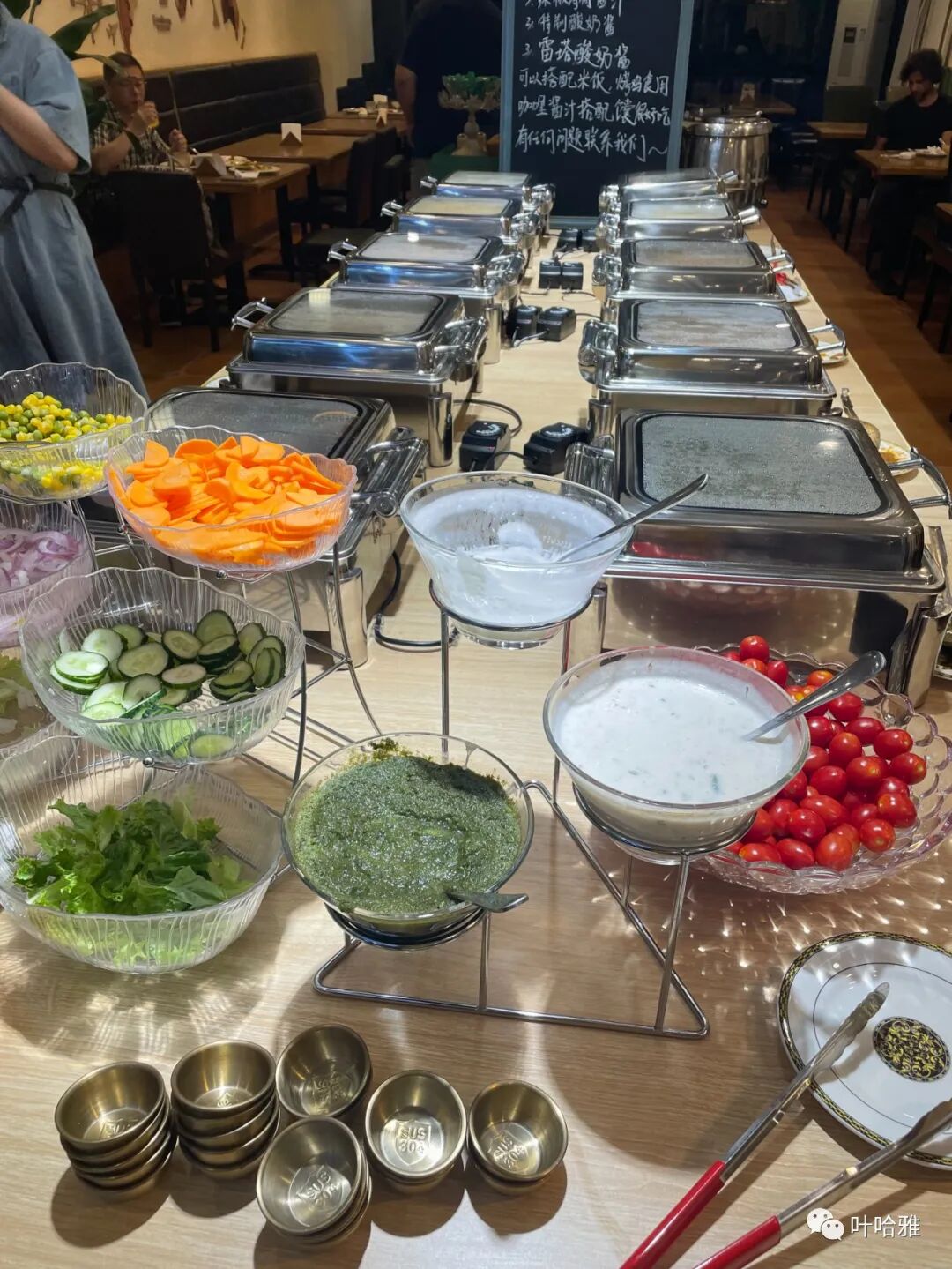
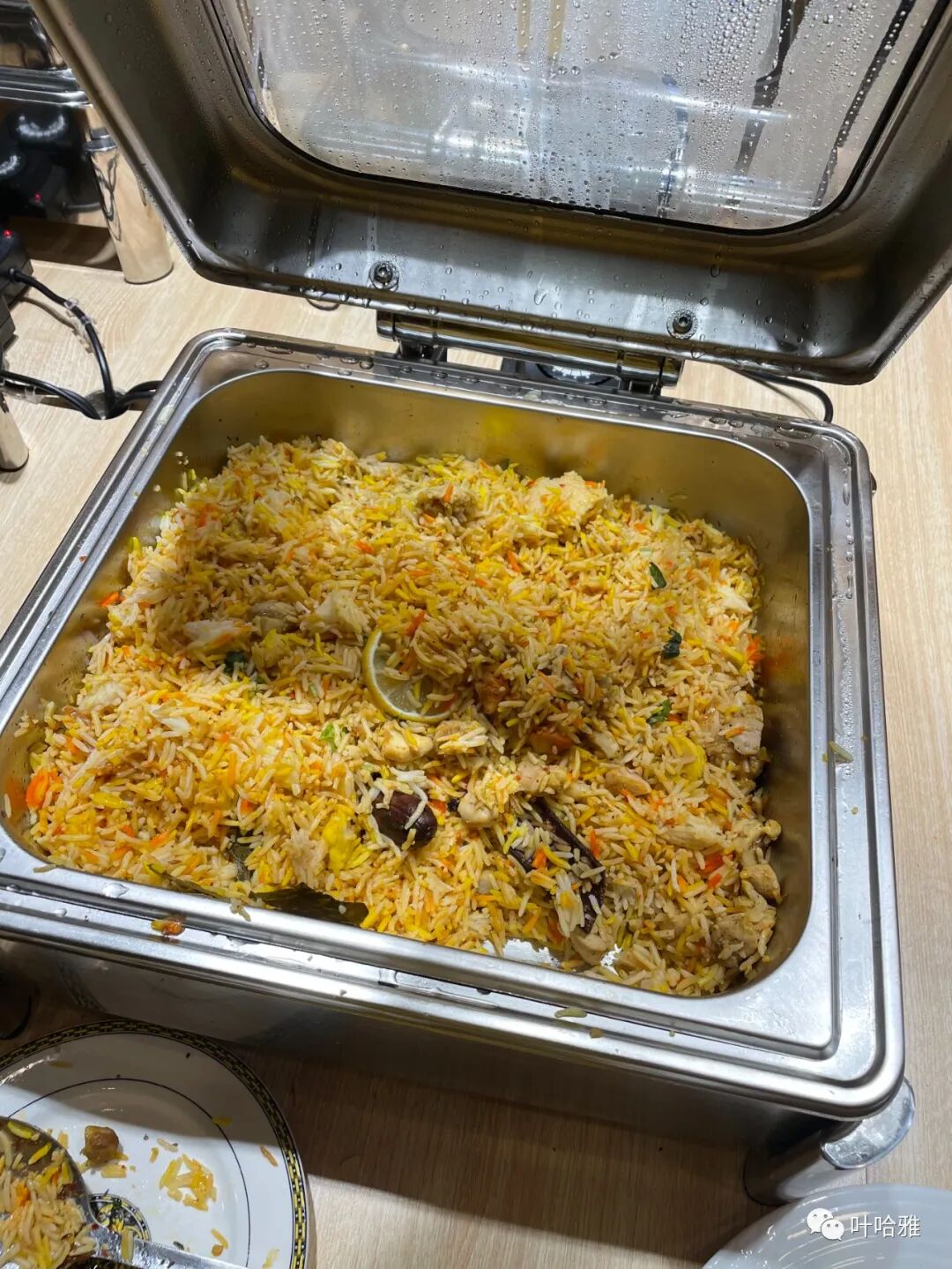
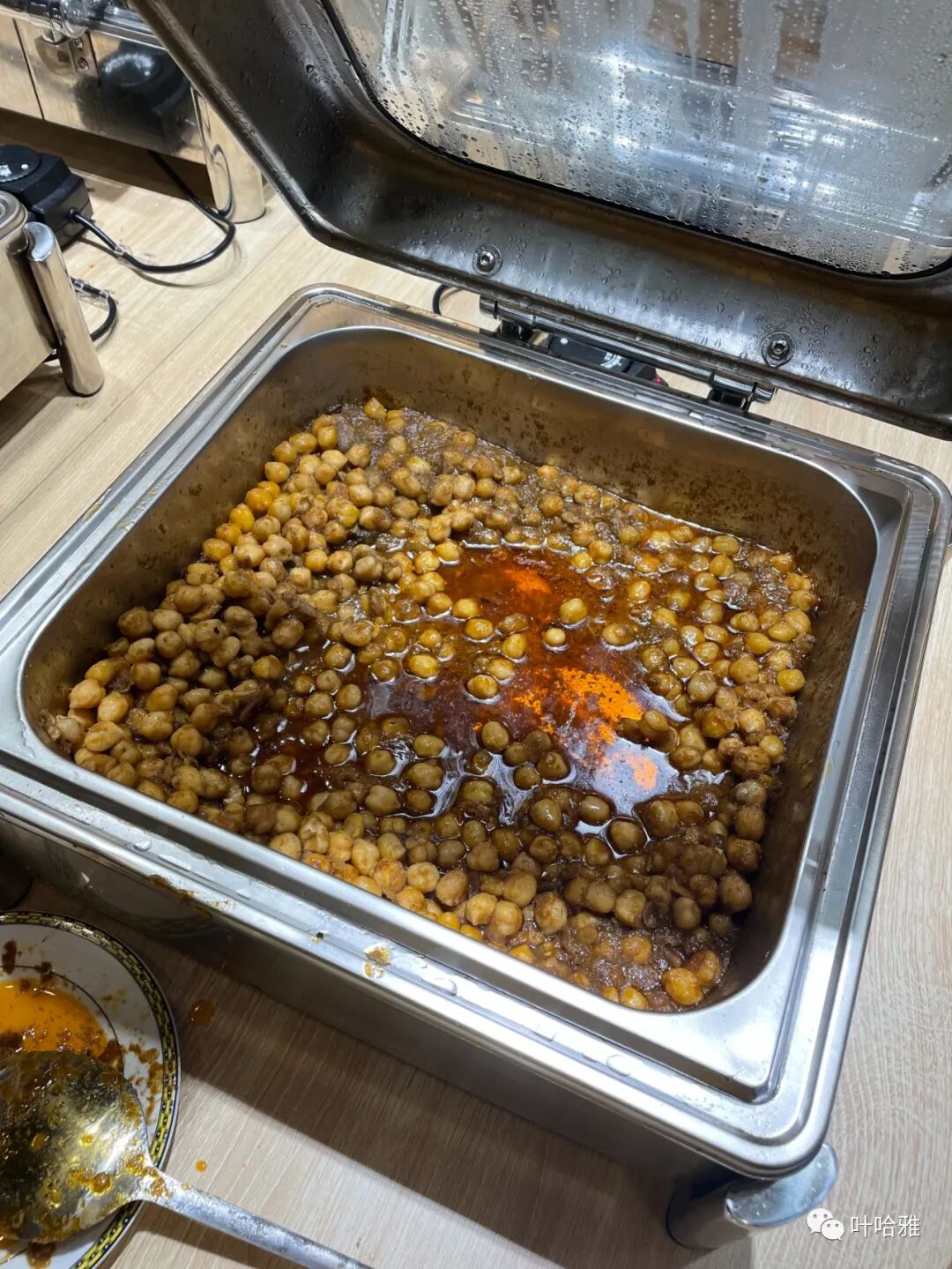
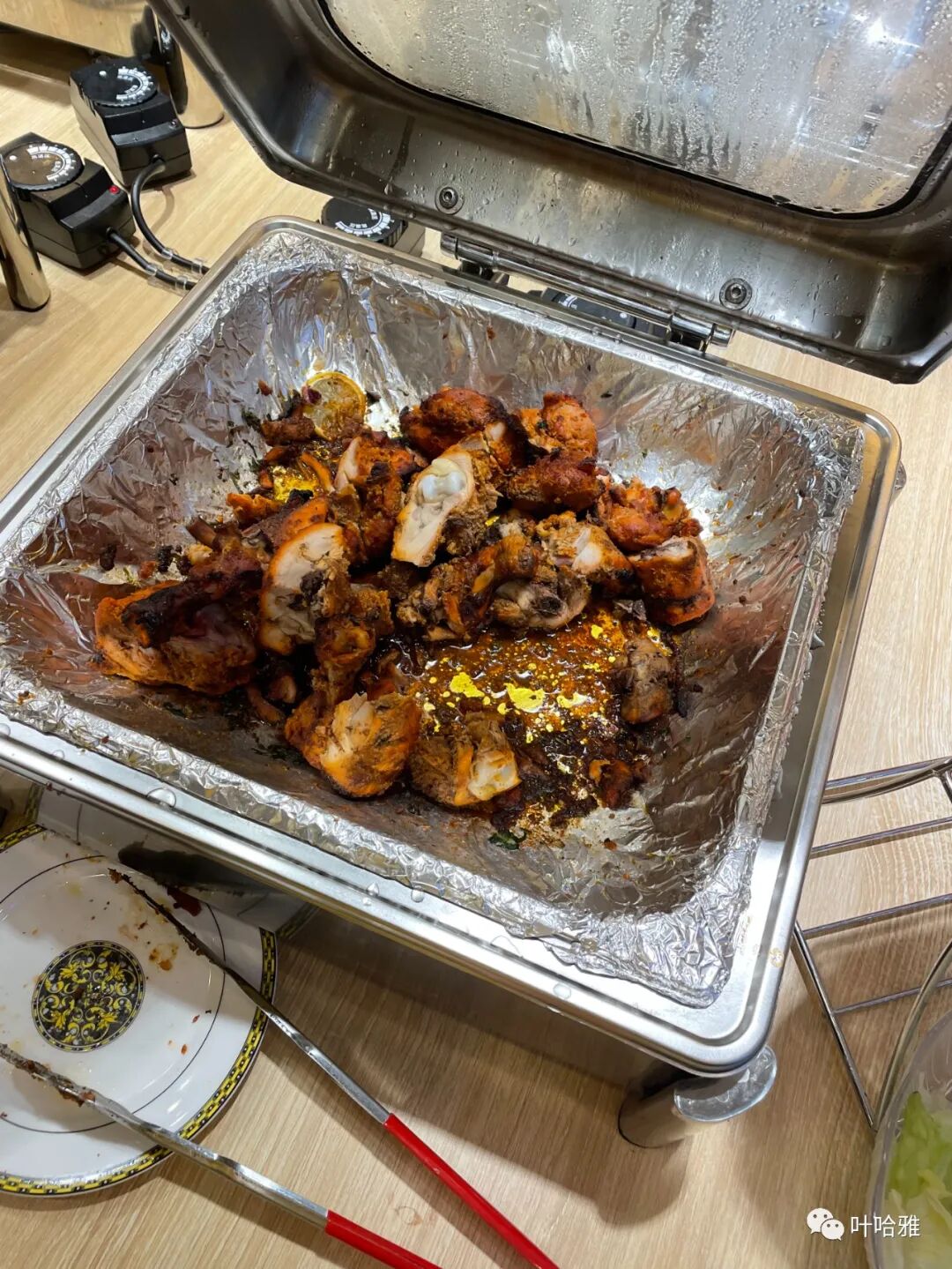
It just opened and is still in the trial phase. The variety of dishes is not huge, but they have all the essential Indian and Pakistani classics.
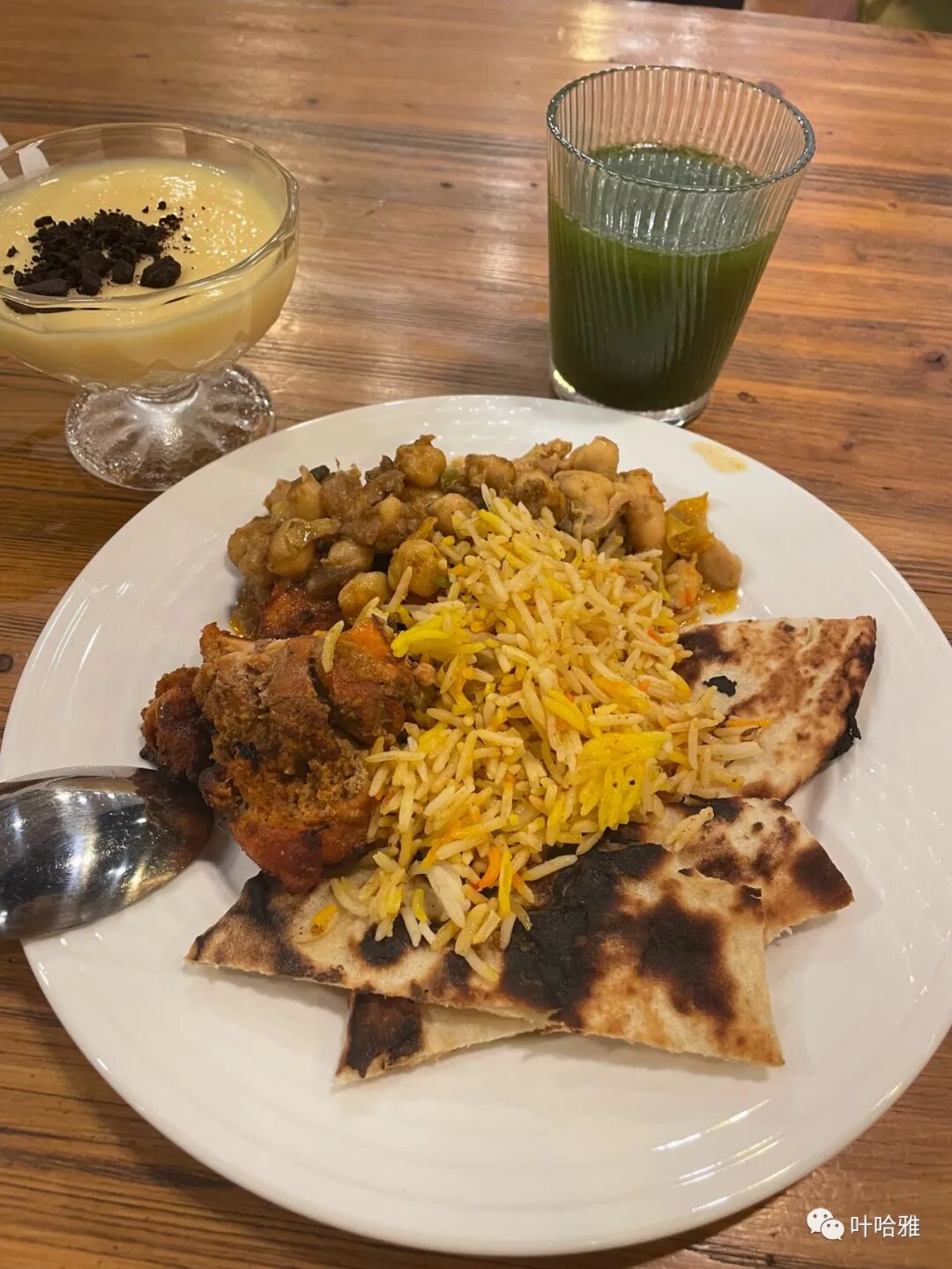
This is butter naan (naan) fresh out of the pan. It is one of my favorite Indian-Pakistani treats. I can eat a whole basket of bread with curry.
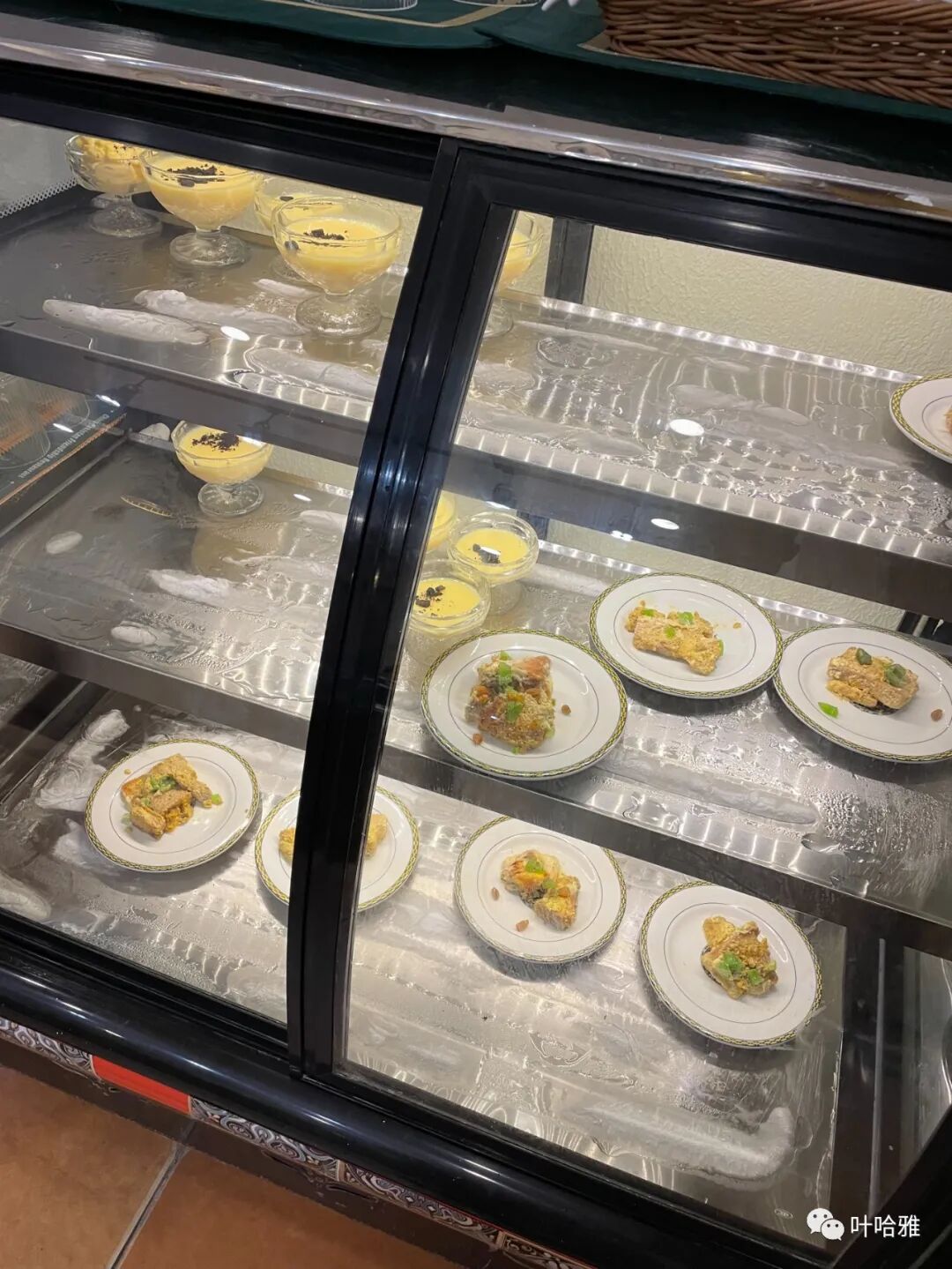
The buffet includes two desserts and three drinks. I like the green mint drink. The ingredients are high quality, the meat portions are generous, and everything is clean and hygienic.
2. Wanfu Halal Iron Pot Stew
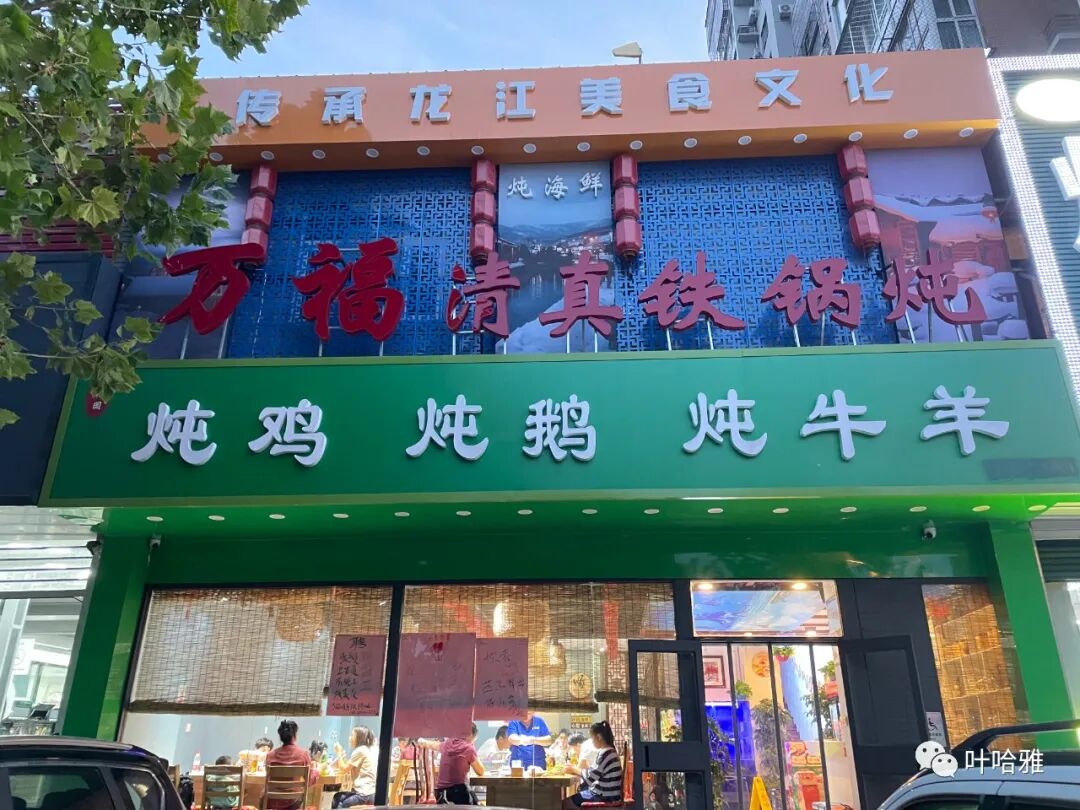
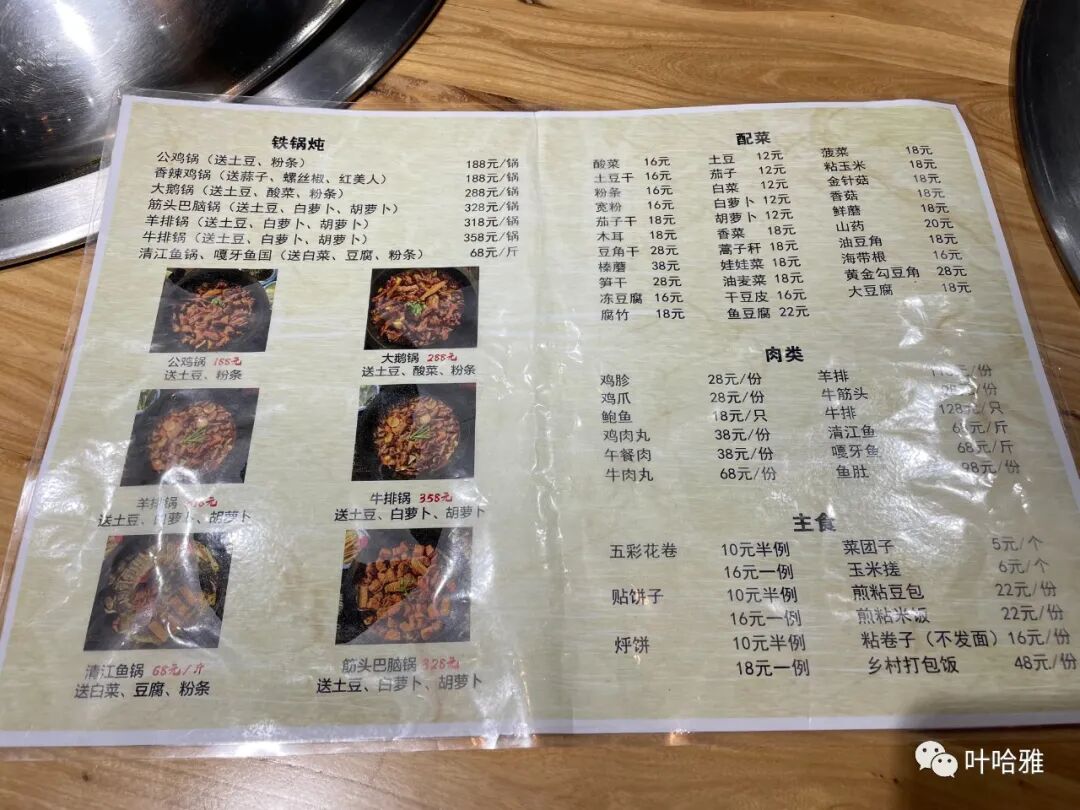
This Harbin-style iron pot stew in Daxing has been open for three months. Three of us ate a pot of beef tendon and brisket (jintoubabao). Aside from the small portions and high price, the taste was very good. I think it tastes better than Uncle Oyster's.
Besides iron pot stew, they also serve Northeast Chinese stir-fry. The biggest surprise was the sweet and sour pork (guobaorou), which comes in several styles.
This is called sticky roll (nianjuanzi). It is made without yeast. You put it into the pot and steam it for 15 minutes while the stew cooks. It is very fragrant.
The owner gave us stone-ground tofu on the house. They make the tofu themselves. With the sauce and seasonings, it feels like eating savory tofu pudding (doufunao), and it is delicious.
We added dried green beans and dried potatoes to the iron pot. These two ingredients taste even better stewed than when they are fresh.
The sweet and sour pork (guobaorou) made by Hui Muslims in Harbin is savory. Their version is crispy on the outside and tender on the inside. We finished a whole plate in no time. It is great to finally find authentic savory sweet and sour pork in Beijing again.
3. Tianqiao Lao Jin Hot Pot (Lao Jin Shuanrou)
Tianqiao Lao Jin Hot Pot opened a new branch at Hufangqiao. They now have two locations, with the other one on Jiaozihu Hutong in Niujie.
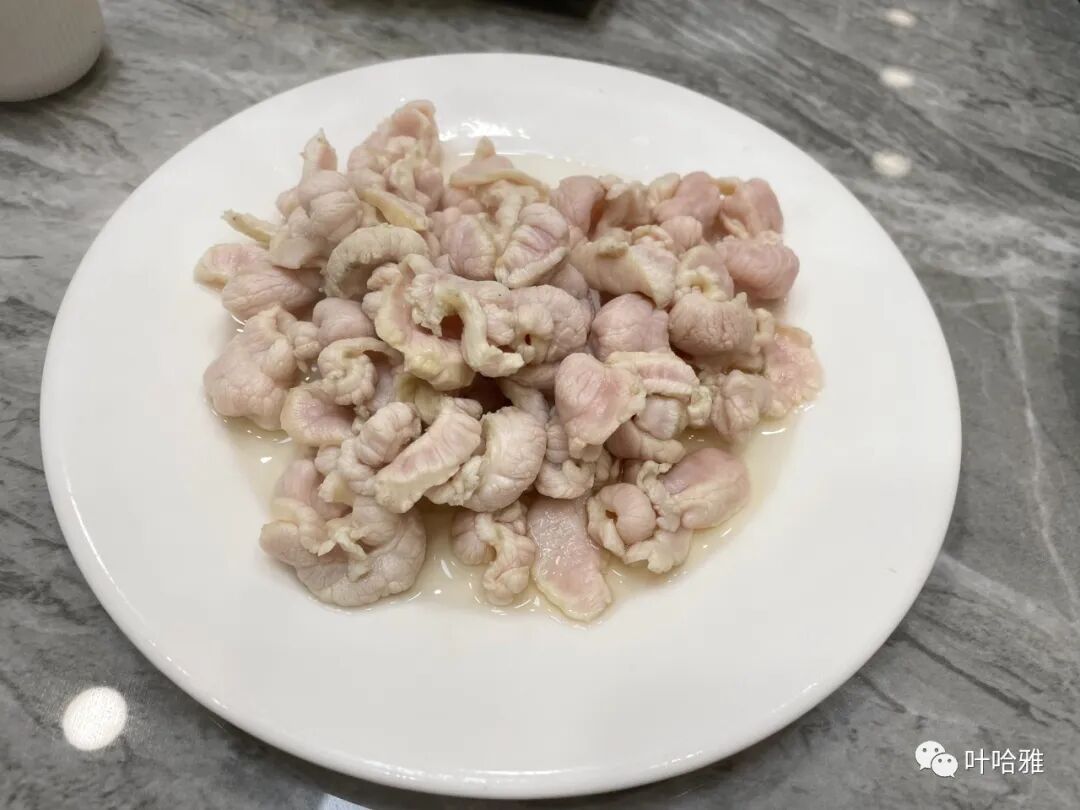
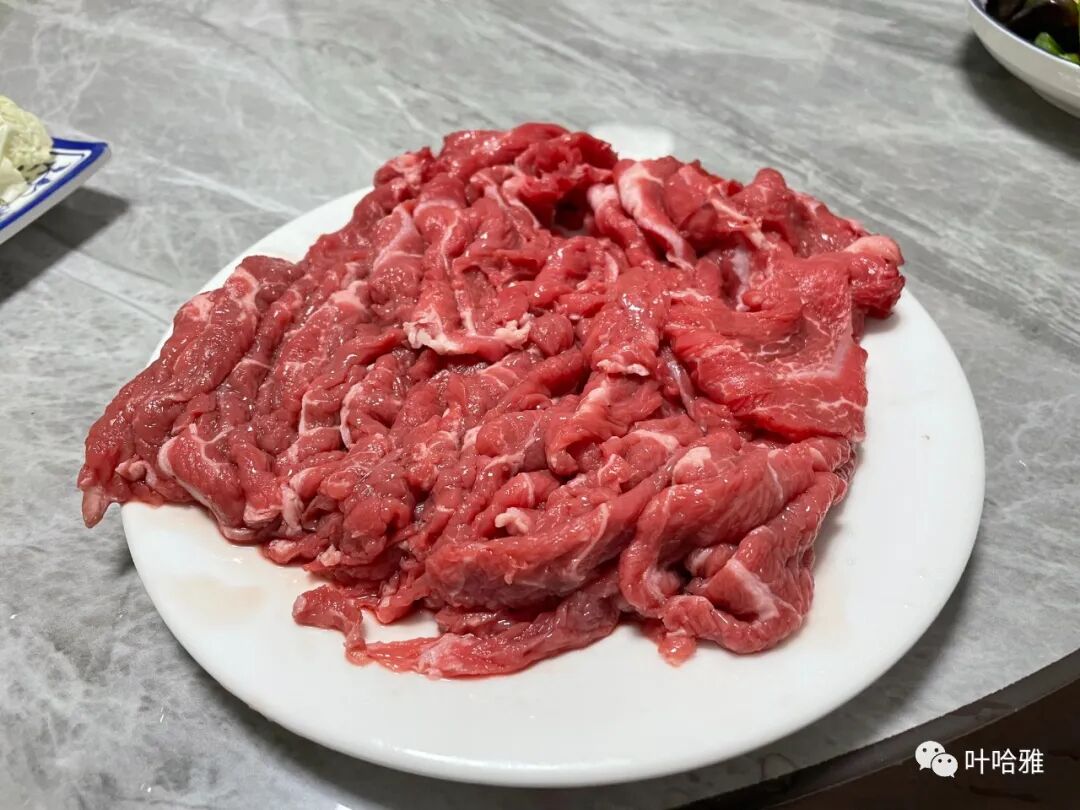
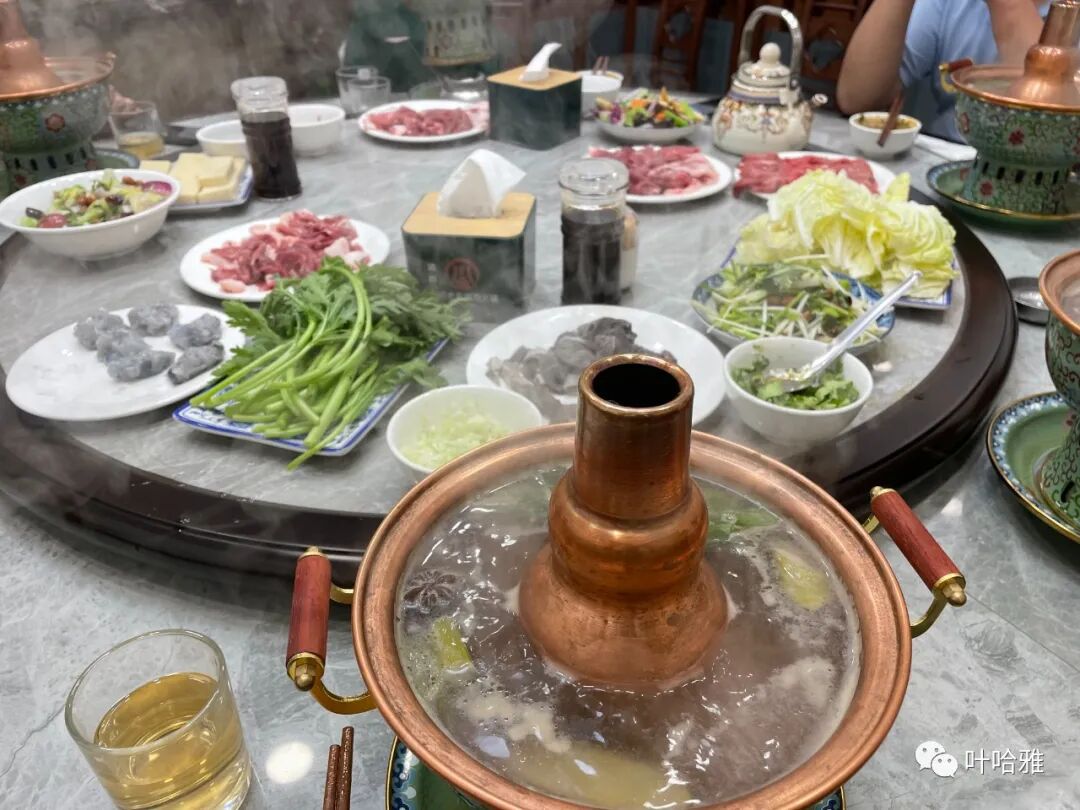
Lao Jin cooked the quick-boiled tripe (baodu) for us himself. Their cooking keeps the old Beijing Hui Muslim traditions, such as the way they slice the meat and their dipping sauce recipe. It is very different from modern hot pot styles.
4. Azerbaijan National Pavilion - Maiden Tower Restaurant
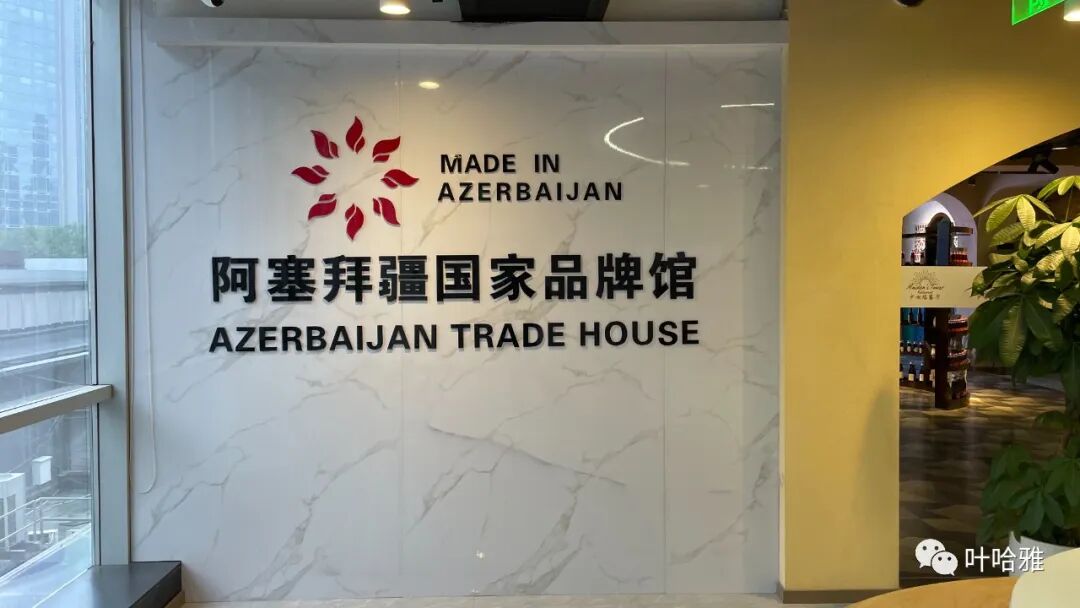
The Azerbaijan National Pavilion opened a new restaurant on the third floor called Maiden Tower, which is named after a famous tourist site in Azerbaijan.
The restaurant is inside the pavilion, so you can look at Azerbaijani handicrafts while you eat.
Many Azerbaijani chefs work abroad. Many of the Turkish restaurants we often visit are actually run by Azerbaijanis.
The dishes here suit our tastes well, including these snacks, which are also good for babies to eat.
Creamy eggplant rolls
Jelitme roasted chicken
Beef rice with chestnut and pomegranate sauce
Nut flatbread (jianguobing)
The restaurant is near Sanyuanqiao. It costs about 150 yuan per person, making it a good spot for business dinners and dates.
5. Yangzhilian Fusion Restaurant
This is a new place in the Hui Muslim village of Xueying, Daxing. They sell beef and lamb and also run a restaurant on the side.
Their lamb is really good. It is high quality, not gamey, and not greasy.
This is a hot pot made with lamb chops. After you finish the chops, you can cook vegetables in the broth. These are live vegetables, cut straight from the hydroponic tank, so they are incredibly fresh.
6. Yu
Shanfang Chaoshan Beef Restaurant
This shop near the Pingle Yuan subway station has seen at least three halal restaurants come and go, from Yinmadeng skewers to Qinghai pan-cooked dishes, and now this Chaoshan beef hot pot. Every place here has actually tasted good, so I hope this new style lasts a bit longer.
Every plate of meat comes with a label showing how many seconds to cook it.
This is the first halal restaurant in Beijing to serve Chaoshan beef hot pot, and you can even get stir-fried beef rice noodles (ganchao niuhe) here.
7. Jingyu Yanyan Halal Cuisine
A high-end restaurant opened by a Ningxia owner in the China World Trade Center, focusing on Beijing dishes and Ningxia specialties.
The complimentary lychees served before the meal are icy, sweet, and delicious.
The snack platter features one piece of each dessert, all made with great care.
Their signature roast duck is carved by the chef right in front of the guests, and it tastes great.
The lamb chops and cold dishes are Ningxia-style, and you can taste the excellent quality of the salt-lake lamb (tanyang).
For the main course, we chose the noodle soup slices (tangmianpian), which arrived in a large pot with a flavorful broth and plenty of ingredients.
The yogurt rice dumplings (suannai zongzi) and mango pomelo sago (yangzhi ganlu) are the desserts, though I prefer the yogurt rice dumplings.
The average cost is about 200 yuan per person, but the food quality is top-notch and the service is attentive, making it worth bringing a loved one here.
8. Yixiaomei Silk Road Cuisine
A Xinjiang restaurant at Daxing Airport, located next to the service desk on the second floor of the P1 parking garage, making it very easy to find.
The owner of this Xinjiang restaurant is from Xinjiang, and the chefs were brought here from Yili, Xinjiang.
You can eat authentic Yili mixed noodles (banmian) and yogurt here, because their yogurt is truly shipped in from Yili.
Even these steamed flower rolls (huajuan) are shipped from Yili. Since the airport restaurant cannot easily add new equipment, some dishes are hard to make. You might ask how I know these things come from Yili; it is because I just returned to Beijing from Yili, where I met the owner and the local elders who supply the yogurt and flower rolls.
The yellow noodles with grilled meat (huangmian kaorou) are very satisfying. I usually do not eat at the airport and prefer to save my appetite for after I land, but I am truly grateful (shukr) to be able to eat such authentic Xinjiang food at Daxing Airport now.
Show the Yixiaomei card below at the shop to get a 10% discount. Remember to save the image, friends (dosti), so you can enjoy good food when you fly out of Daxing Airport. view all
Summary: This Beijing halal food guide maps issue 36 of the series, covering Samosa China-Pakistan restaurant, halal food verification, lamb hot pot, Chaoshan beef hot pot, Ningxia-style fine dining, and Xinjiang noodles at Daxing Airport.
Beijing Halal Food Map (36) is presented here as a firsthand travel account in clear English, beginning with this scene: I often get private messages from followers asking if a certain restaurant is halal. The account keeps its focus on Beijing Halal Food, Muslim Travel, Middle Eastern Food while preserving the names, places, food, and historical details from the Chinese source.
I often get private messages from followers asking if a certain restaurant is halal. Even when I post photos showing the halal sign hanging in the shop, a few people still feel uneasy and want to get to the bottom of it. I have talked about which foods are not halal according to the scriptures and teachings before. Once I see a business display a halal sign, I stop asking about the source of the ingredients. My reasoning is based on the following hadith:
Aisha (may Allah be pleased with her) reported that a group of people came to the Prophet (peace and blessings of Allah be upon him) and said, 'Some people (nomads from the countryside) bring us meat, and we do not know if they mentioned the name of Allah when slaughtering it.' The Prophet said, 'You mention the name of Allah over it and eat it.' Aisha said, 'Those people had only recently embraced the faith.' — Sahih al-Bukhari
This hadith contains a lot of information and gives clear guidance. Aisha did not trust the newcomers from the countryside and doubted the meat they brought. The Prophet did not tell Aisha to avoid eating it just because she had doubts, nor did he ask her to verify how the ingredients were slaughtered. This was to make life easier for Muslims so they do not have to struggle over food. Strictly speaking, unless you see the halal slaughter process with your own eyes, you have reason to doubt the meat provided by anyone. Even if the restaurant staff wears a headscarf and does not sell alcohol, it still does not prove that the ingredients they purchased are definitely halal. Even if the other party provides non-halal meat, it is their faith that is harmed, not the faith of the person who eats it by mistake. Otherwise, we would only be able to eat meat we slaughtered ourselves to feel at ease.
Of course, some people say that a restaurant selling alcohol is not halal. I am not here to defend restaurant owners who sell alcohol; they will receive their own reward. From the perspective of the scriptures and teachings, as a diner, there is no evidence that you cannot eat at a restaurant that serves alcohol. There is only a hadith mentioning not to sit at the same table as those drinking alcohol. Even regarding the issue of sitting at the same table as drinkers, Sheikh al-Qaradawi suggested that if the intention is to unite with others, then sitting at the same table without drinking is permissible. This is even different from just eating in the same restaurant. If we take it further, would it also be forbidden to be in the same building, on the same street, or even in the same city as someone who drinks? Life is not easy today. I hope we do not spend too much energy on food and drink, as there are more meaningful things to do.
1. SAMOSA China-Pakistan Friendship Restaurant
Samosa is a common fried triangular snack in Indian and Pakistani cuisine. The owner used to run another Indian-Pakistani buffet called ZamZam. This Samosa is located in Xibahe and still offers an 88-yuan buffet.
It just opened and is still in the trial phase. The variety of dishes is not huge, but they have all the essential Indian and Pakistani classics.
This is butter naan (naan) fresh out of the pan. It is one of my favorite Indian-Pakistani treats. I can eat a whole basket of bread with curry.
The buffet includes two desserts and three drinks. I like the green mint drink. The ingredients are high quality, the meat portions are generous, and everything is clean and hygienic.
2. Wanfu Halal Iron Pot Stew
This Harbin-style iron pot stew in Daxing has been open for three months. Three of us ate a pot of beef tendon and brisket (jintoubabao). Aside from the small portions and high price, the taste was very good. I think it tastes better than Uncle Oyster's.
Besides iron pot stew, they also serve Northeast Chinese stir-fry. The biggest surprise was the sweet and sour pork (guobaorou), which comes in several styles.
This is called sticky roll (nianjuanzi). It is made without yeast. You put it into the pot and steam it for 15 minutes while the stew cooks. It is very fragrant.
The owner gave us stone-ground tofu on the house. They make the tofu themselves. With the sauce and seasonings, it feels like eating savory tofu pudding (doufunao), and it is delicious.
We added dried green beans and dried potatoes to the iron pot. These two ingredients taste even better stewed than when they are fresh.
The sweet and sour pork (guobaorou) made by Hui Muslims in Harbin is savory. Their version is crispy on the outside and tender on the inside. We finished a whole plate in no time. It is great to finally find authentic savory sweet and sour pork in Beijing again.
3. Tianqiao Lao Jin Hot Pot (Lao Jin Shuanrou)
Tianqiao Lao Jin Hot Pot opened a new branch at Hufangqiao. They now have two locations, with the other one on Jiaozihu Hutong in Niujie.
Lao Jin cooked the quick-boiled tripe (baodu) for us himself. Their cooking keeps the old Beijing Hui Muslim traditions, such as the way they slice the meat and their dipping sauce recipe. It is very different from modern hot pot styles.
4. Azerbaijan National Pavilion - Maiden Tower Restaurant
The Azerbaijan National Pavilion opened a new restaurant on the third floor called Maiden Tower, which is named after a famous tourist site in Azerbaijan.
The restaurant is inside the pavilion, so you can look at Azerbaijani handicrafts while you eat.
Many Azerbaijani chefs work abroad. Many of the Turkish restaurants we often visit are actually run by Azerbaijanis.
The dishes here suit our tastes well, including these snacks, which are also good for babies to eat.
Creamy eggplant rolls
Jelitme roasted chicken
Beef rice with chestnut and pomegranate sauce
Nut flatbread (jianguobing)
The restaurant is near Sanyuanqiao. It costs about 150 yuan per person, making it a good spot for business dinners and dates.
5. Yangzhilian Fusion Restaurant
This is a new place in the Hui Muslim village of Xueying, Daxing. They sell beef and lamb and also run a restaurant on the side.
Their lamb is really good. It is high quality, not gamey, and not greasy.
This is a hot pot made with lamb chops. After you finish the chops, you can cook vegetables in the broth. These are live vegetables, cut straight from the hydroponic tank, so they are incredibly fresh.
6. Yu
Shanfang Chaoshan Beef Restaurant
This shop near the Pingle Yuan subway station has seen at least three halal restaurants come and go, from Yinmadeng skewers to Qinghai pan-cooked dishes, and now this Chaoshan beef hot pot. Every place here has actually tasted good, so I hope this new style lasts a bit longer.
Every plate of meat comes with a label showing how many seconds to cook it.
This is the first halal restaurant in Beijing to serve Chaoshan beef hot pot, and you can even get stir-fried beef rice noodles (ganchao niuhe) here.
7. Jingyu Yanyan Halal Cuisine
A high-end restaurant opened by a Ningxia owner in the China World Trade Center, focusing on Beijing dishes and Ningxia specialties.
The complimentary lychees served before the meal are icy, sweet, and delicious.
The snack platter features one piece of each dessert, all made with great care.
Their signature roast duck is carved by the chef right in front of the guests, and it tastes great.
The lamb chops and cold dishes are Ningxia-style, and you can taste the excellent quality of the salt-lake lamb (tanyang).
For the main course, we chose the noodle soup slices (tangmianpian), which arrived in a large pot with a flavorful broth and plenty of ingredients.
The yogurt rice dumplings (suannai zongzi) and mango pomelo sago (yangzhi ganlu) are the desserts, though I prefer the yogurt rice dumplings.
The average cost is about 200 yuan per person, but the food quality is top-notch and the service is attentive, making it worth bringing a loved one here.
8. Yixiaomei Silk Road Cuisine
A Xinjiang restaurant at Daxing Airport, located next to the service desk on the second floor of the P1 parking garage, making it very easy to find.
The owner of this Xinjiang restaurant is from Xinjiang, and the chefs were brought here from Yili, Xinjiang.
You can eat authentic Yili mixed noodles (banmian) and yogurt here, because their yogurt is truly shipped in from Yili.
Even these steamed flower rolls (huajuan) are shipped from Yili. Since the airport restaurant cannot easily add new equipment, some dishes are hard to make. You might ask how I know these things come from Yili; it is because I just returned to Beijing from Yili, where I met the owner and the local elders who supply the yogurt and flower rolls.
The yellow noodles with grilled meat (huangmian kaorou) are very satisfying. I usually do not eat at the airport and prefer to save my appetite for after I land, but I am truly grateful (shukr) to be able to eat such authentic Xinjiang food at Daxing Airport now.
Show the Yixiaomei card below at the shop to get a 10% discount. Remember to save the image, friends (dosti), so you can enjoy good food when you fly out of Daxing Airport. view all
Reposted from the web
Summary: This Beijing halal food guide maps issue 36 of the series, covering Samosa China-Pakistan restaurant, halal food verification, lamb hot pot, Chaoshan beef hot pot, Ningxia-style fine dining, and Xinjiang noodles at Daxing Airport.
Beijing Halal Food Map (36) is presented here as a firsthand travel account in clear English, beginning with this scene: I often get private messages from followers asking if a certain restaurant is halal. The account keeps its focus on Beijing Halal Food, Muslim Travel, Middle Eastern Food while preserving the names, places, food, and historical details from the Chinese source.
I often get private messages from followers asking if a certain restaurant is halal. Even when I post photos showing the halal sign hanging in the shop, a few people still feel uneasy and want to get to the bottom of it. I have talked about which foods are not halal according to the scriptures and teachings before. Once I see a business display a halal sign, I stop asking about the source of the ingredients. My reasoning is based on the following hadith:
Aisha (may Allah be pleased with her) reported that a group of people came to the Prophet (peace and blessings of Allah be upon him) and said, 'Some people (nomads from the countryside) bring us meat, and we do not know if they mentioned the name of Allah when slaughtering it.' The Prophet said, 'You mention the name of Allah over it and eat it.' Aisha said, 'Those people had only recently embraced the faith.' — Sahih al-Bukhari
This hadith contains a lot of information and gives clear guidance. Aisha did not trust the newcomers from the countryside and doubted the meat they brought. The Prophet did not tell Aisha to avoid eating it just because she had doubts, nor did he ask her to verify how the ingredients were slaughtered. This was to make life easier for Muslims so they do not have to struggle over food. Strictly speaking, unless you see the halal slaughter process with your own eyes, you have reason to doubt the meat provided by anyone. Even if the restaurant staff wears a headscarf and does not sell alcohol, it still does not prove that the ingredients they purchased are definitely halal. Even if the other party provides non-halal meat, it is their faith that is harmed, not the faith of the person who eats it by mistake. Otherwise, we would only be able to eat meat we slaughtered ourselves to feel at ease.
Of course, some people say that a restaurant selling alcohol is not halal. I am not here to defend restaurant owners who sell alcohol; they will receive their own reward. From the perspective of the scriptures and teachings, as a diner, there is no evidence that you cannot eat at a restaurant that serves alcohol. There is only a hadith mentioning not to sit at the same table as those drinking alcohol. Even regarding the issue of sitting at the same table as drinkers, Sheikh al-Qaradawi suggested that if the intention is to unite with others, then sitting at the same table without drinking is permissible. This is even different from just eating in the same restaurant. If we take it further, would it also be forbidden to be in the same building, on the same street, or even in the same city as someone who drinks? Life is not easy today. I hope we do not spend too much energy on food and drink, as there are more meaningful things to do.
1. SAMOSA China-Pakistan Friendship Restaurant
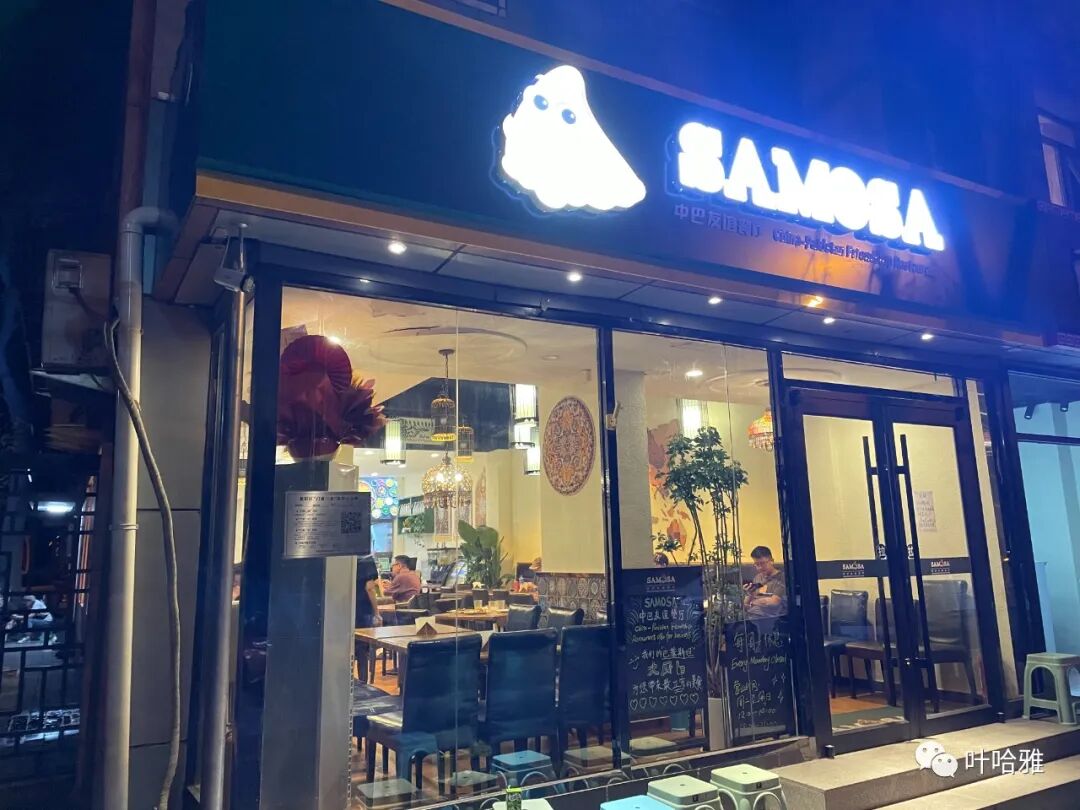
Samosa is a common fried triangular snack in Indian and Pakistani cuisine. The owner used to run another Indian-Pakistani buffet called ZamZam. This Samosa is located in Xibahe and still offers an 88-yuan buffet.
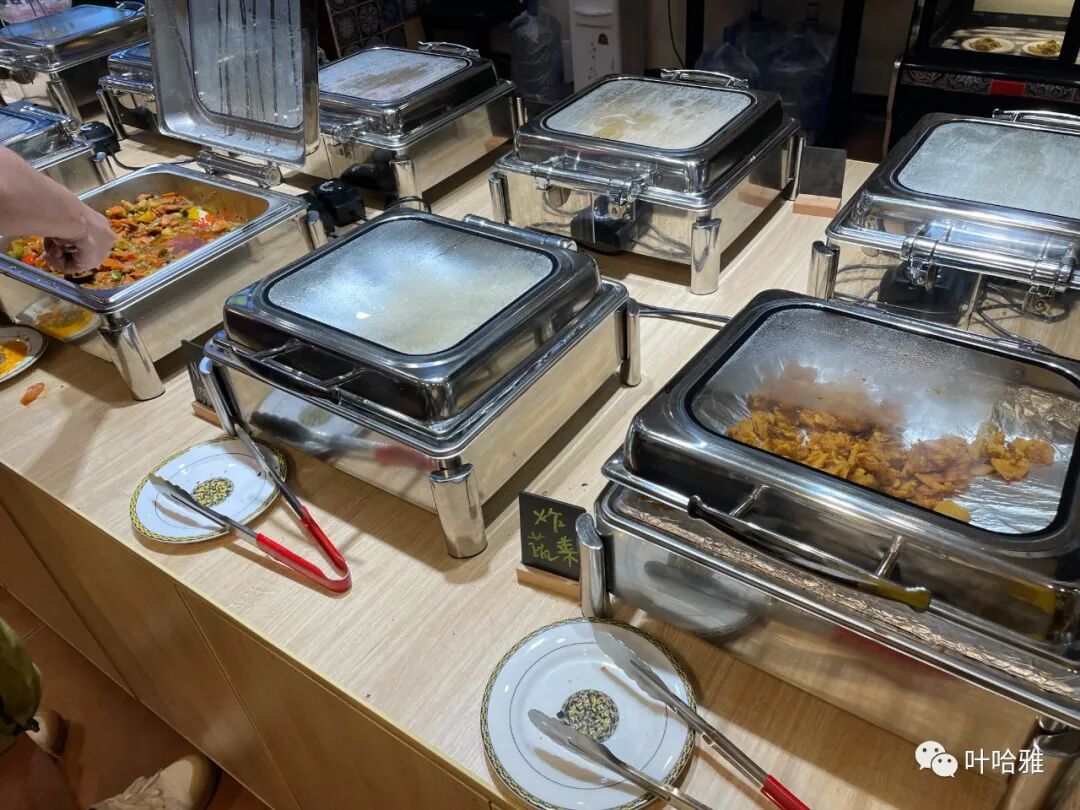
It just opened and is still in the trial phase. The variety of dishes is not huge, but they have all the essential Indian and Pakistani classics.
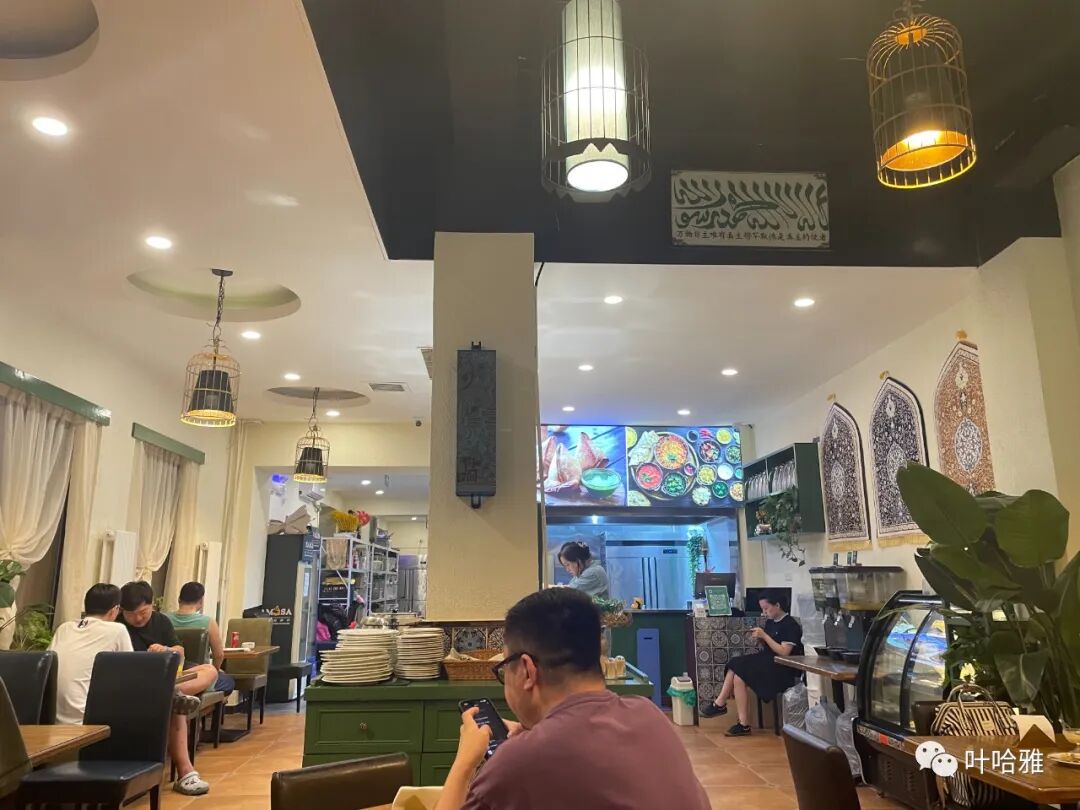
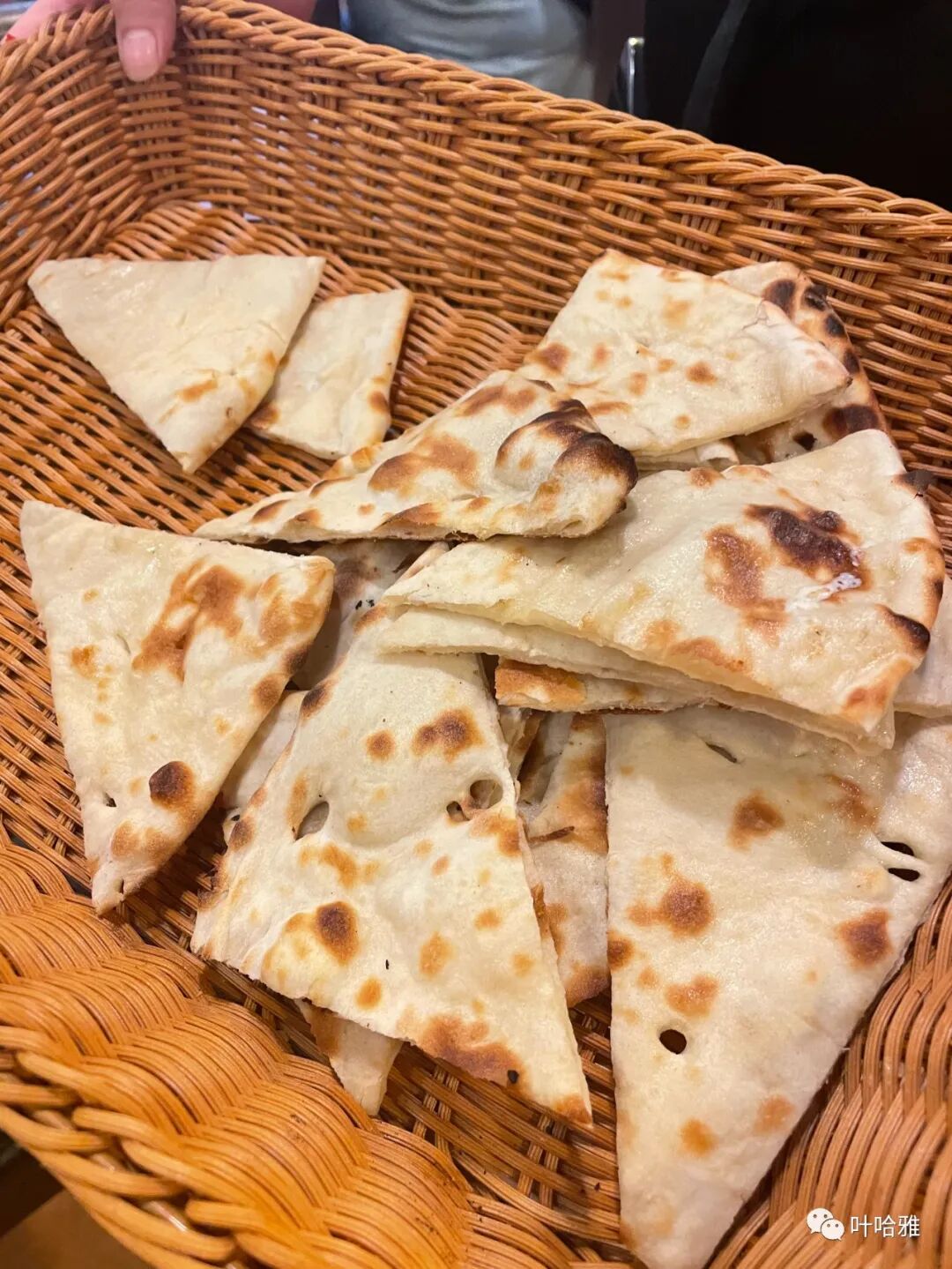
This is butter naan (naan) fresh out of the pan. It is one of my favorite Indian-Pakistani treats. I can eat a whole basket of bread with curry.
The buffet includes two desserts and three drinks. I like the green mint drink. The ingredients are high quality, the meat portions are generous, and everything is clean and hygienic.
2. Wanfu Halal Iron Pot Stew
This Harbin-style iron pot stew in Daxing has been open for three months. Three of us ate a pot of beef tendon and brisket (jintoubabao). Aside from the small portions and high price, the taste was very good. I think it tastes better than Uncle Oyster's.
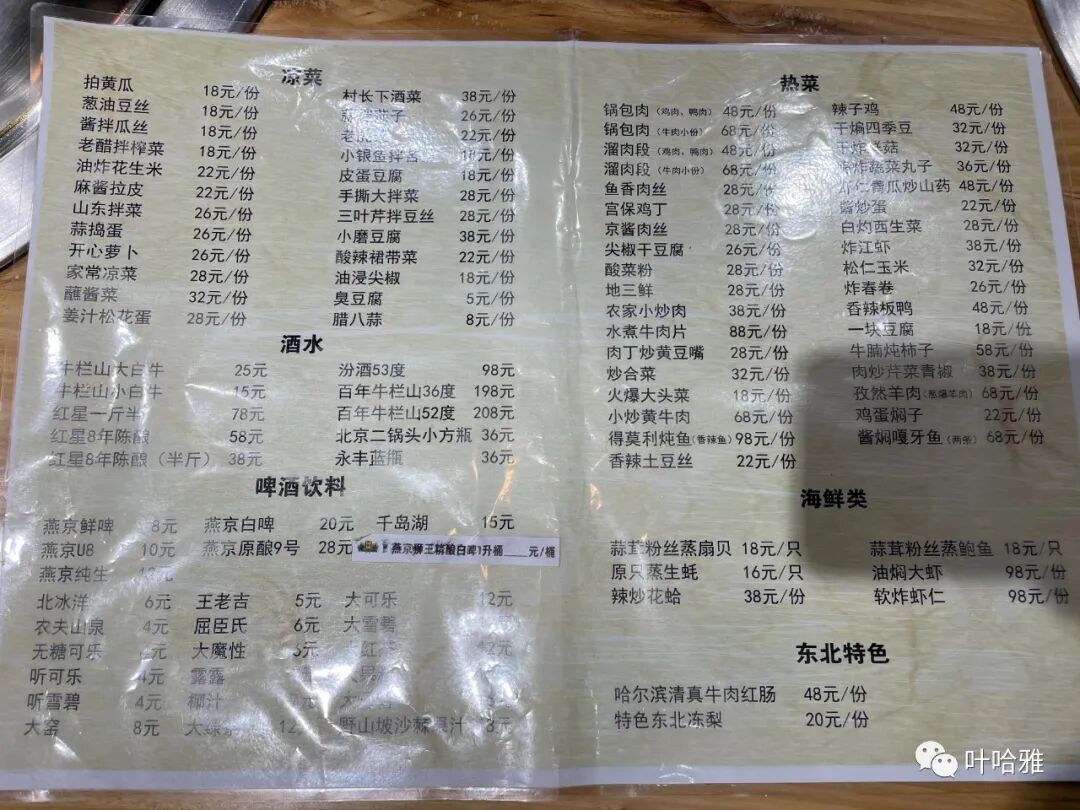
Besides iron pot stew, they also serve Northeast Chinese stir-fry. The biggest surprise was the sweet and sour pork (guobaorou), which comes in several styles.
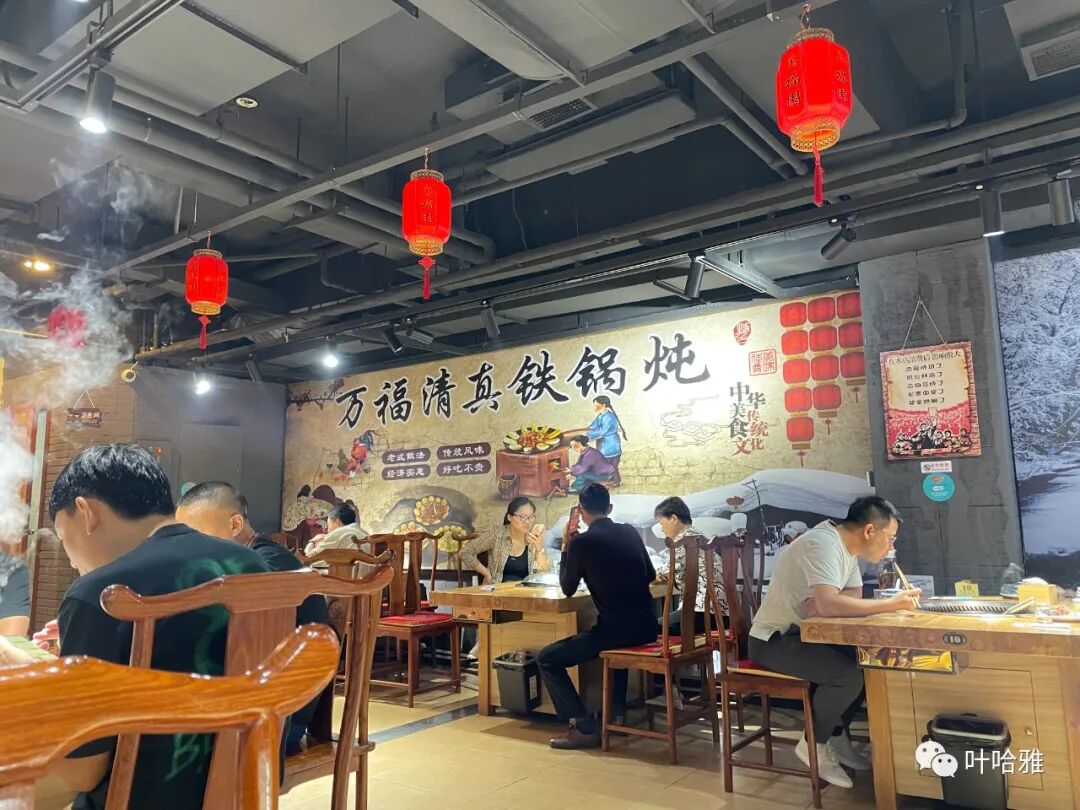
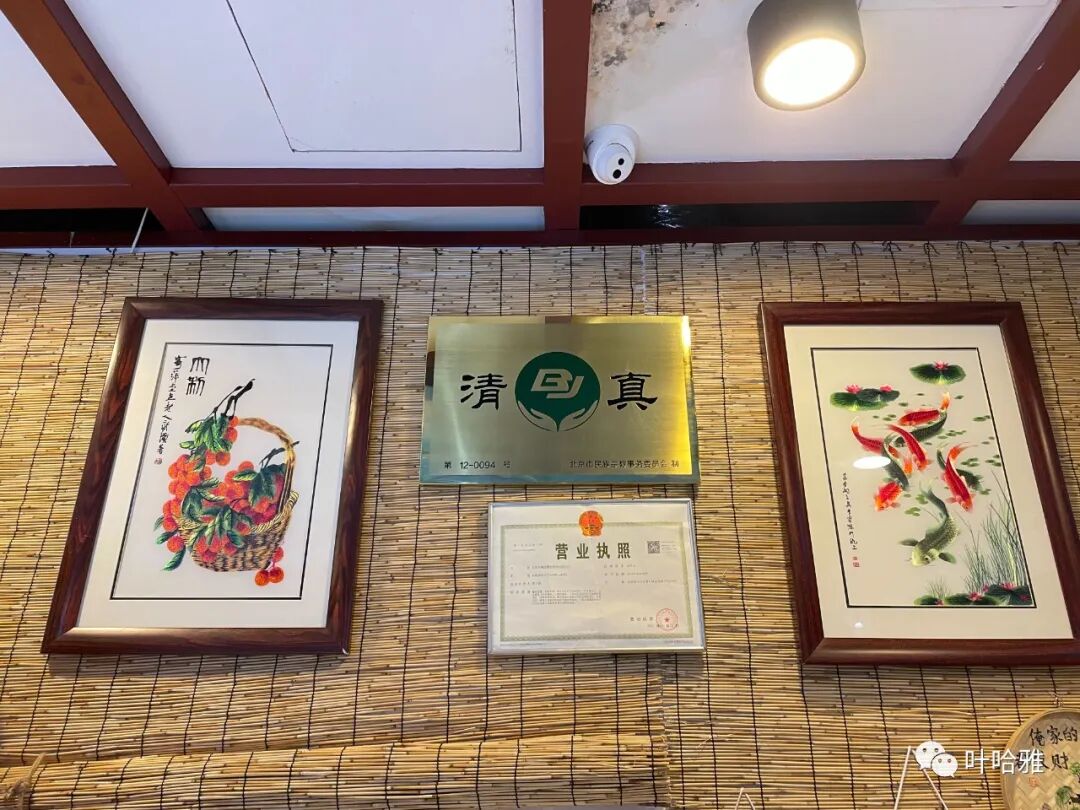
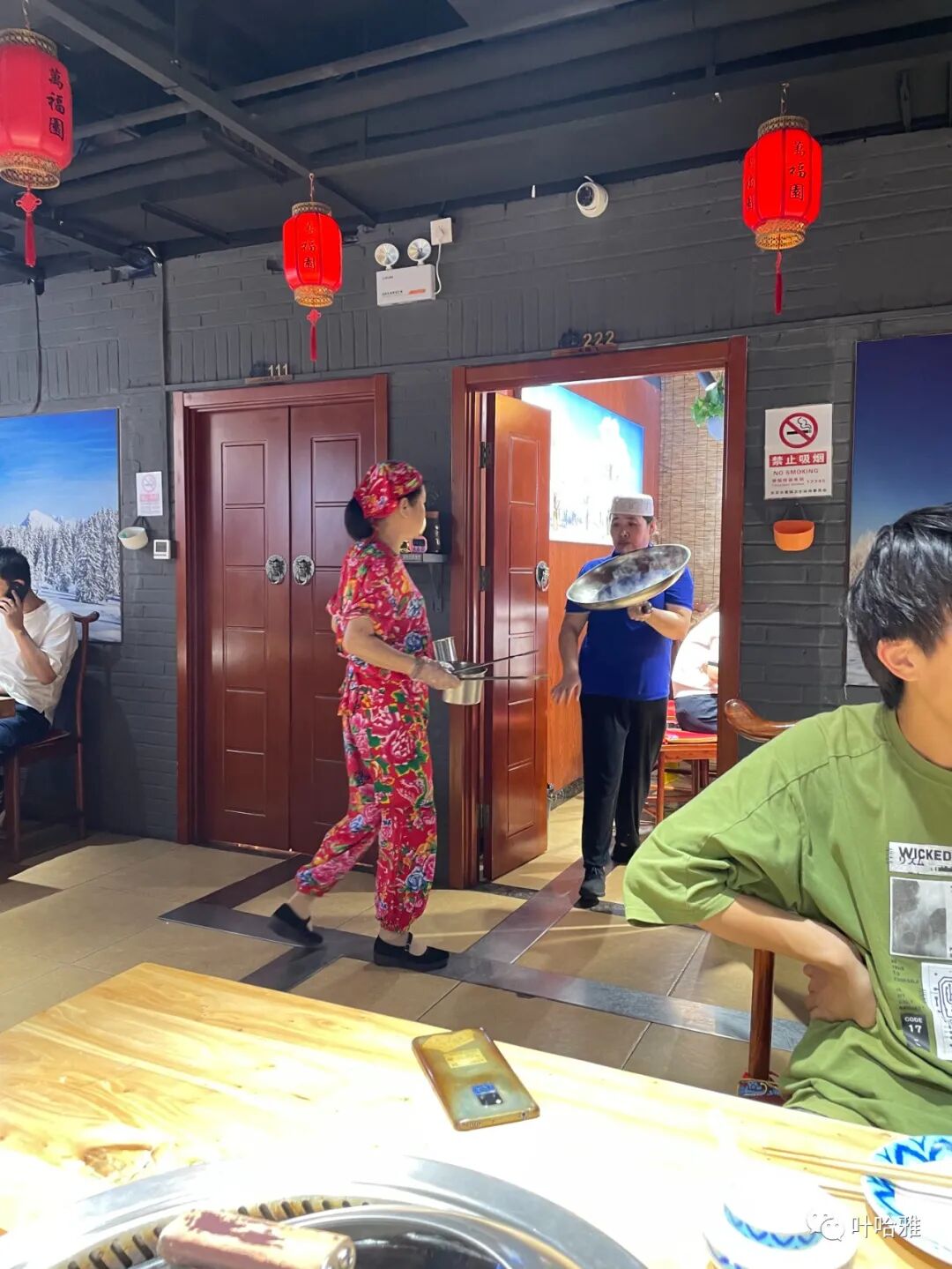
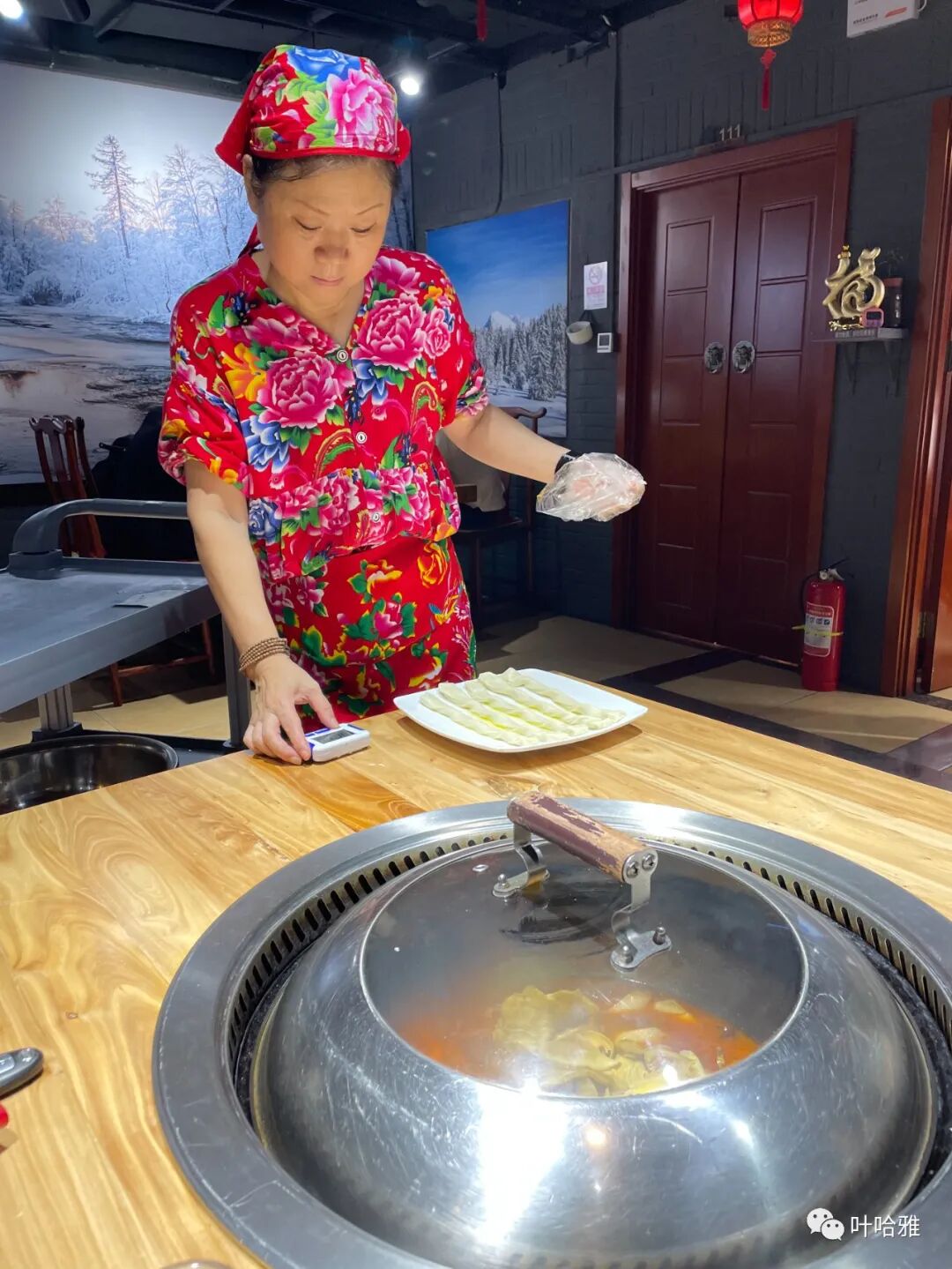
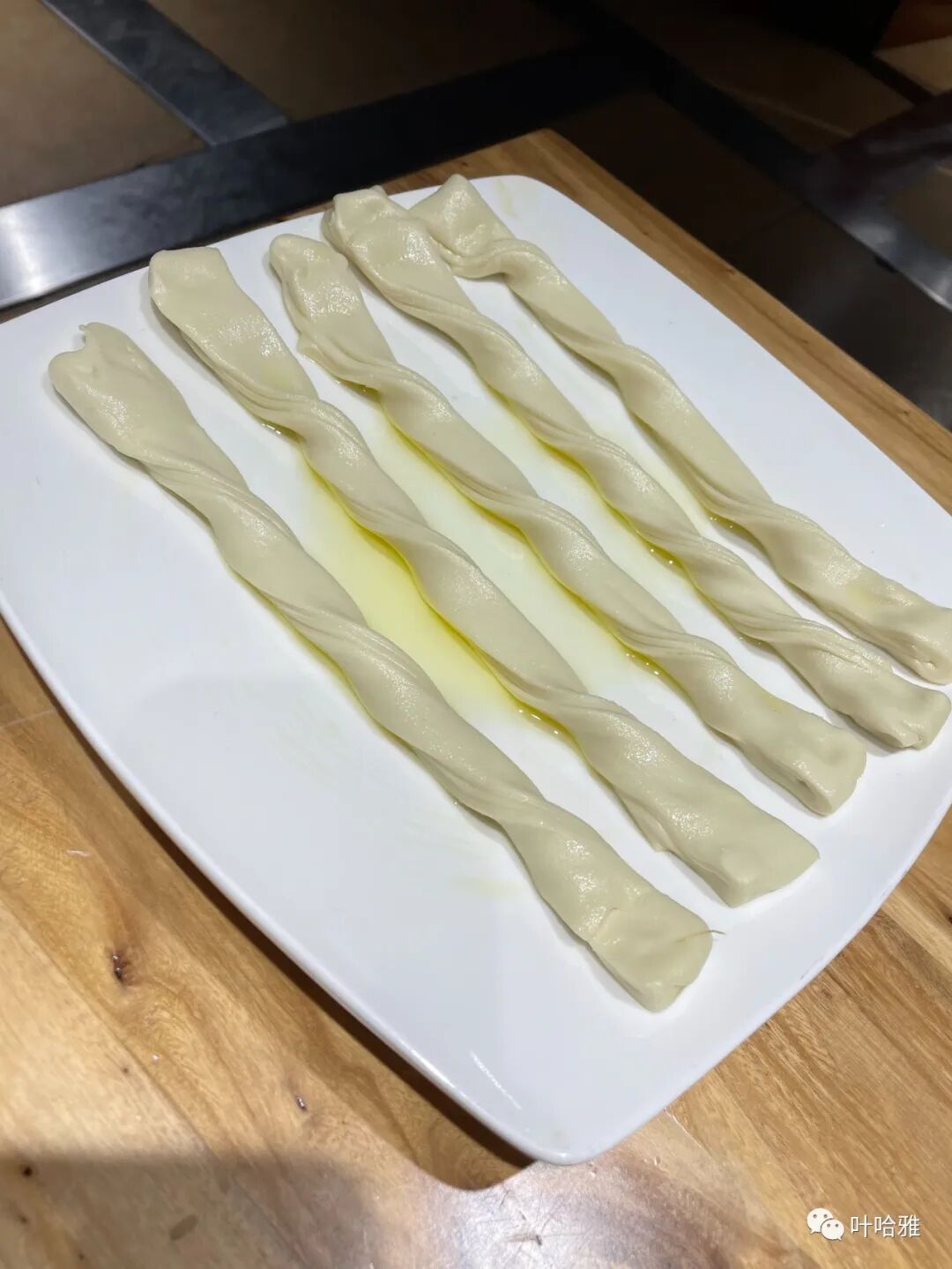
This is called sticky roll (nianjuanzi). It is made without yeast. You put it into the pot and steam it for 15 minutes while the stew cooks. It is very fragrant.
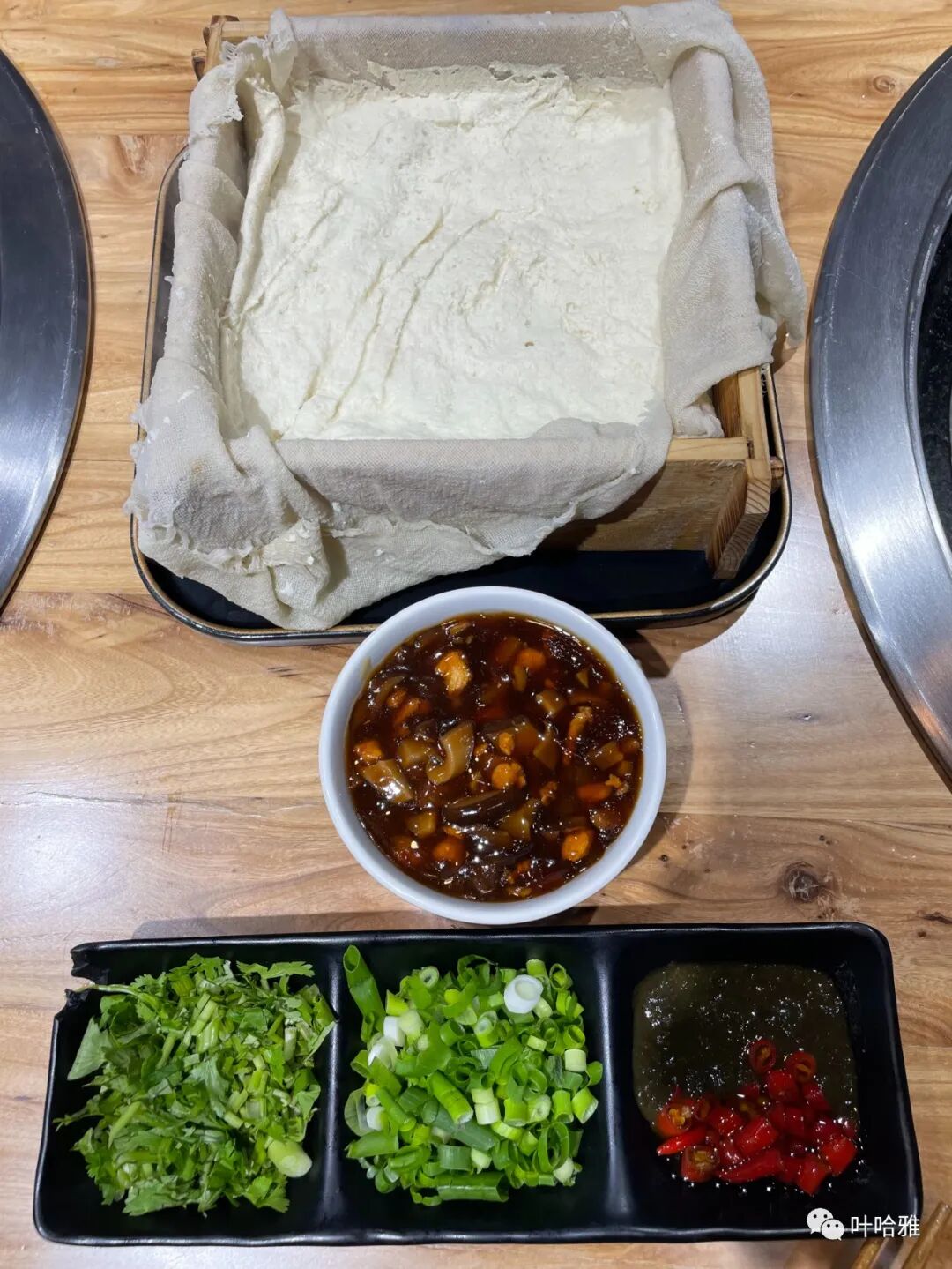
The owner gave us stone-ground tofu on the house. They make the tofu themselves. With the sauce and seasonings, it feels like eating savory tofu pudding (doufunao), and it is delicious.
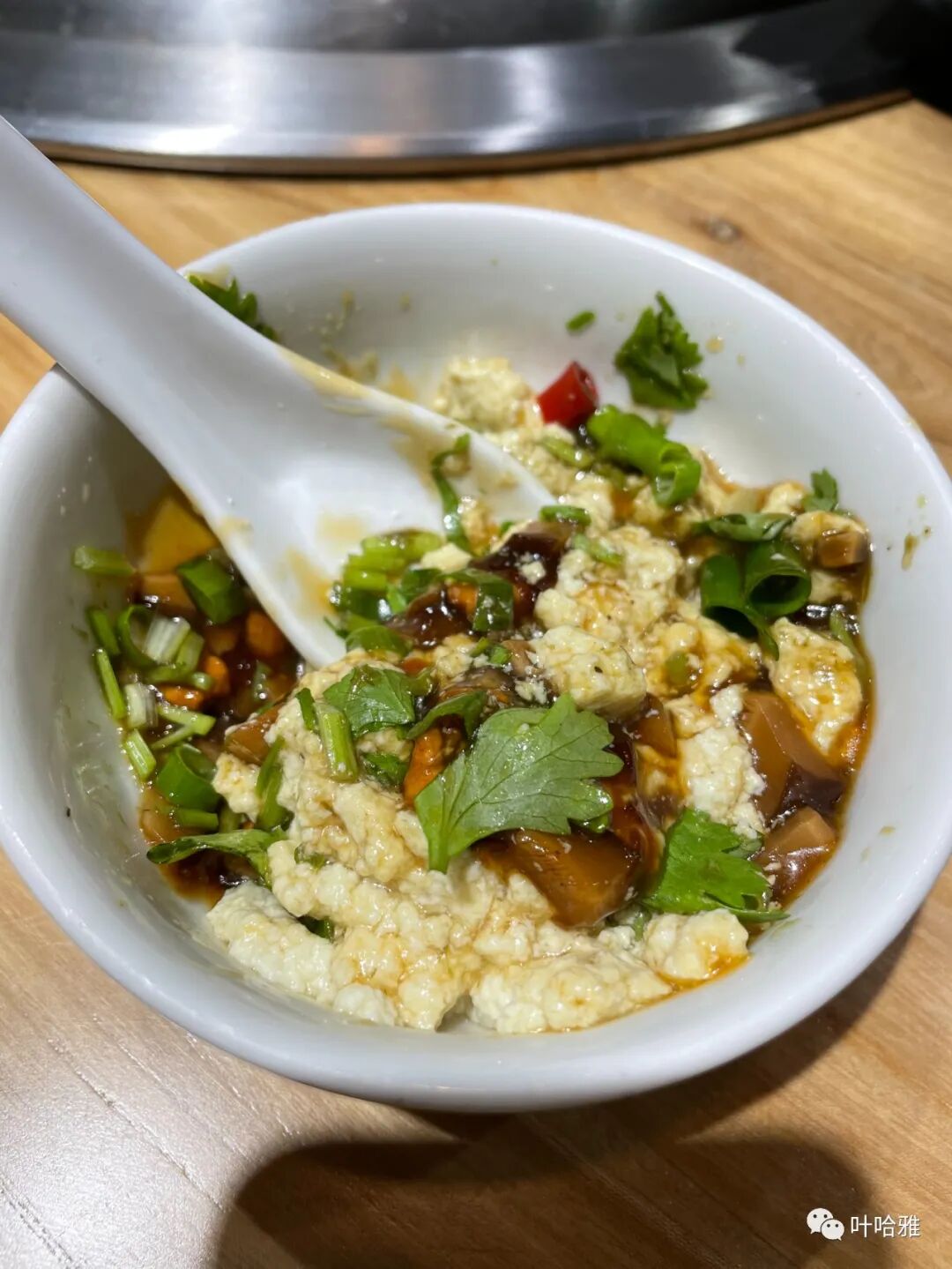
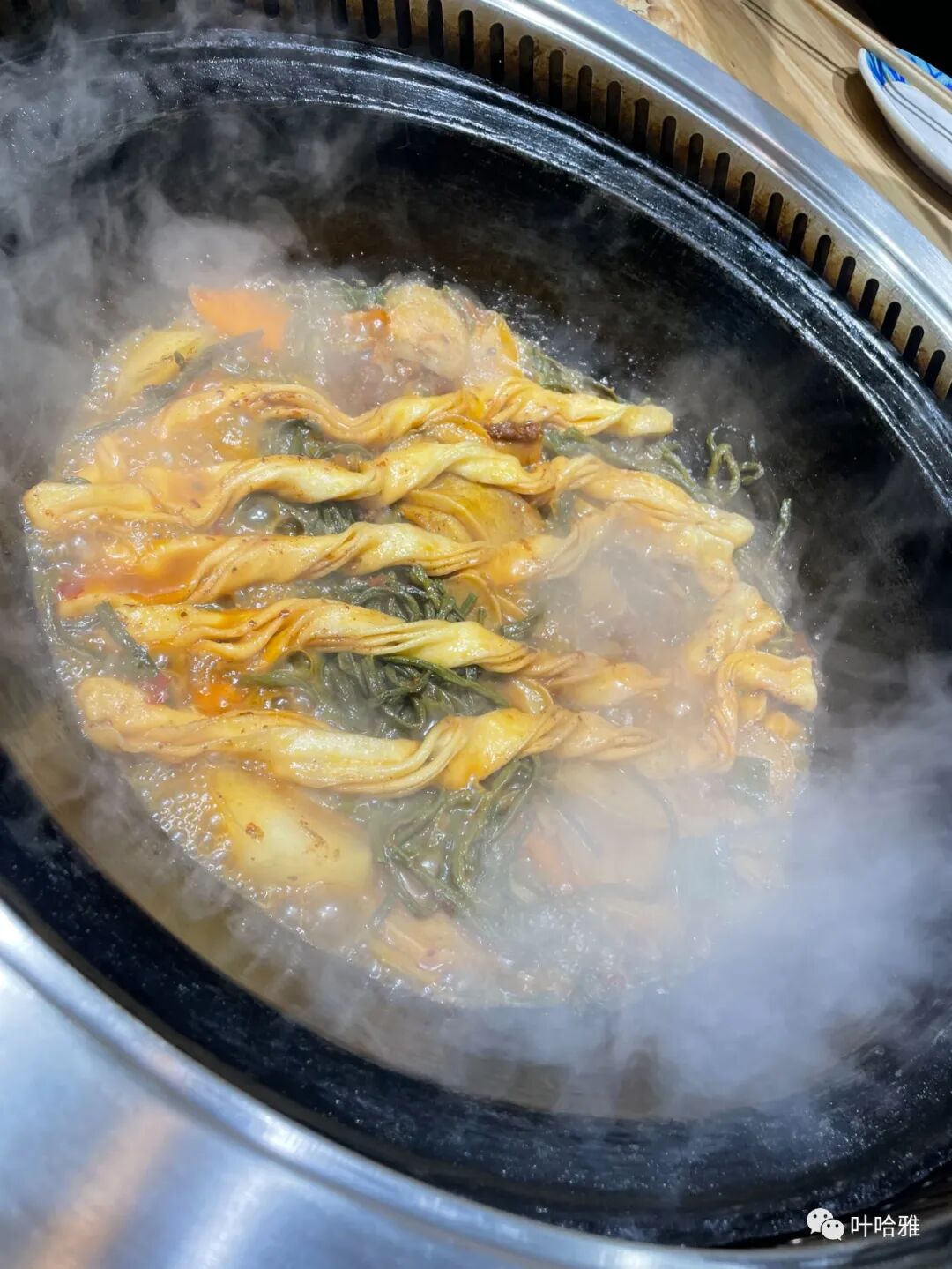
We added dried green beans and dried potatoes to the iron pot. These two ingredients taste even better stewed than when they are fresh.
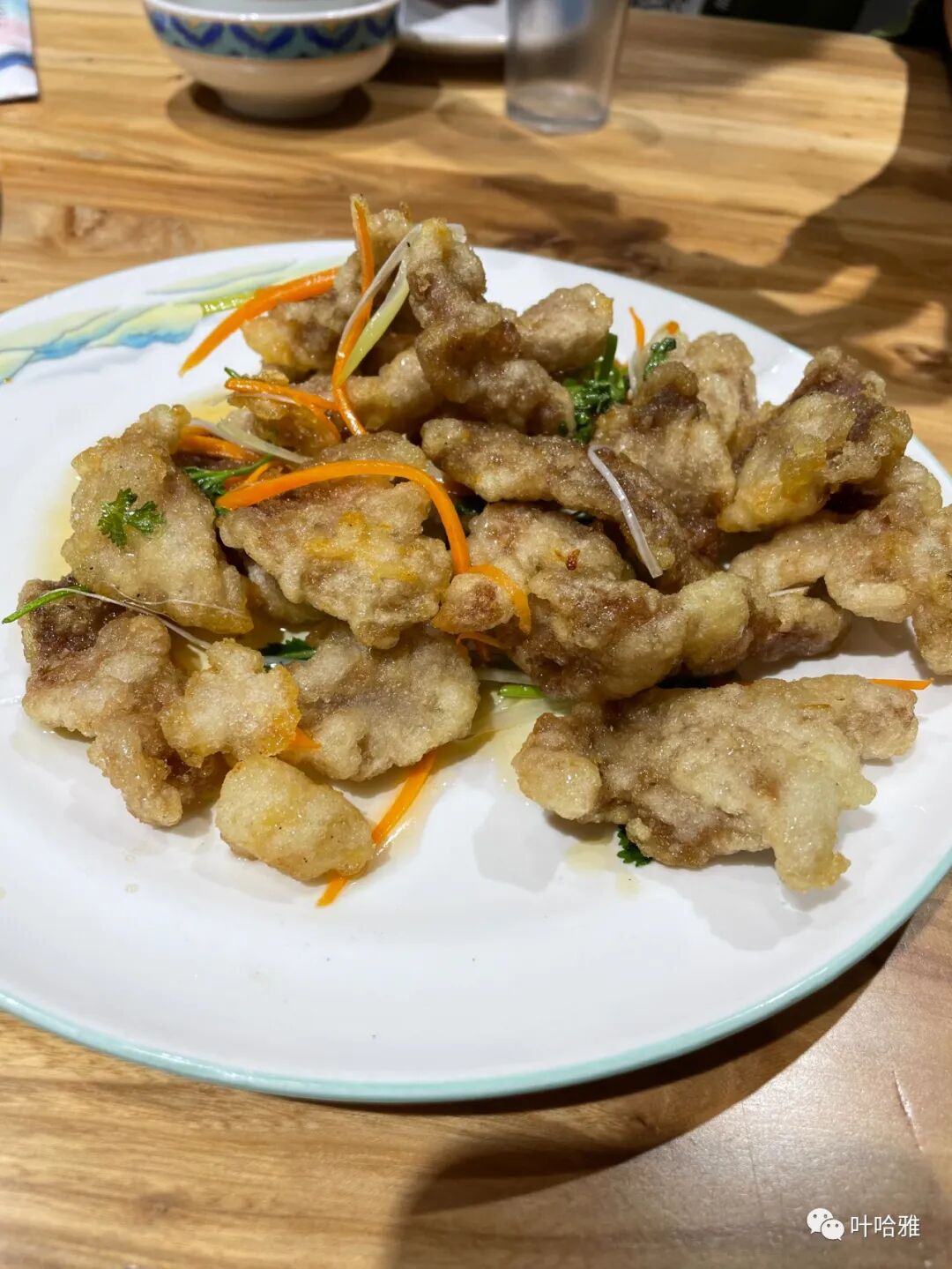
The sweet and sour pork (guobaorou) made by Hui Muslims in Harbin is savory. Their version is crispy on the outside and tender on the inside. We finished a whole plate in no time. It is great to finally find authentic savory sweet and sour pork in Beijing again.
3. Tianqiao Lao Jin Hot Pot (Lao Jin Shuanrou)
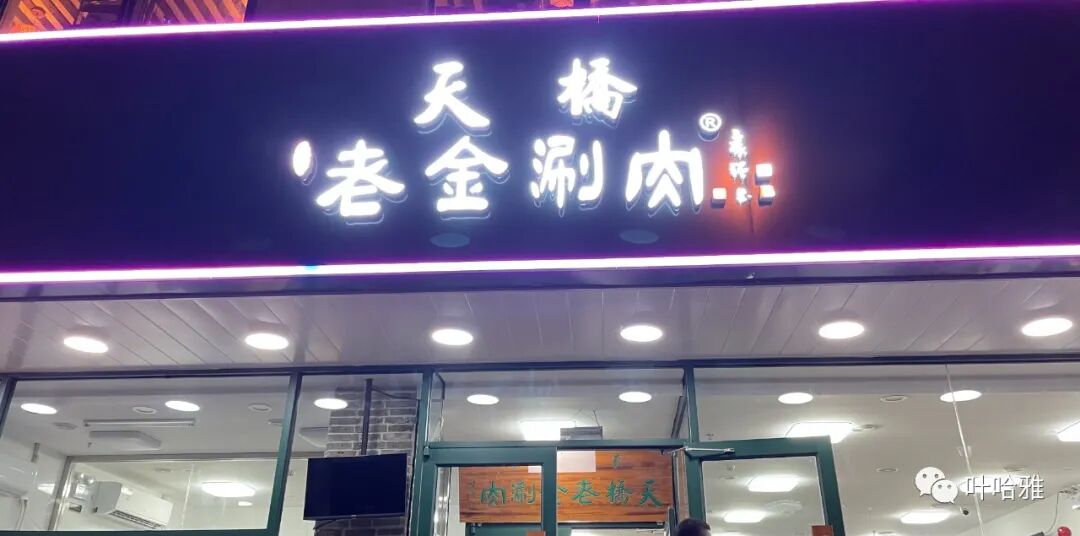
Tianqiao Lao Jin Hot Pot opened a new branch at Hufangqiao. They now have two locations, with the other one on Jiaozihu Hutong in Niujie.
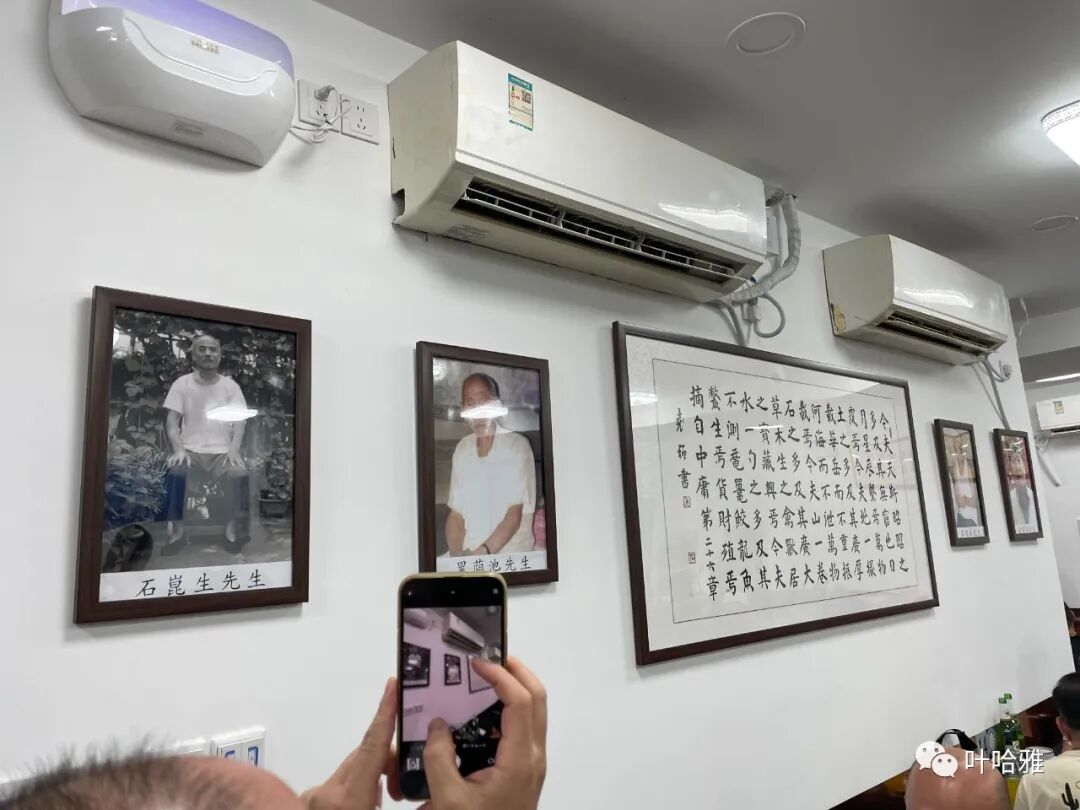
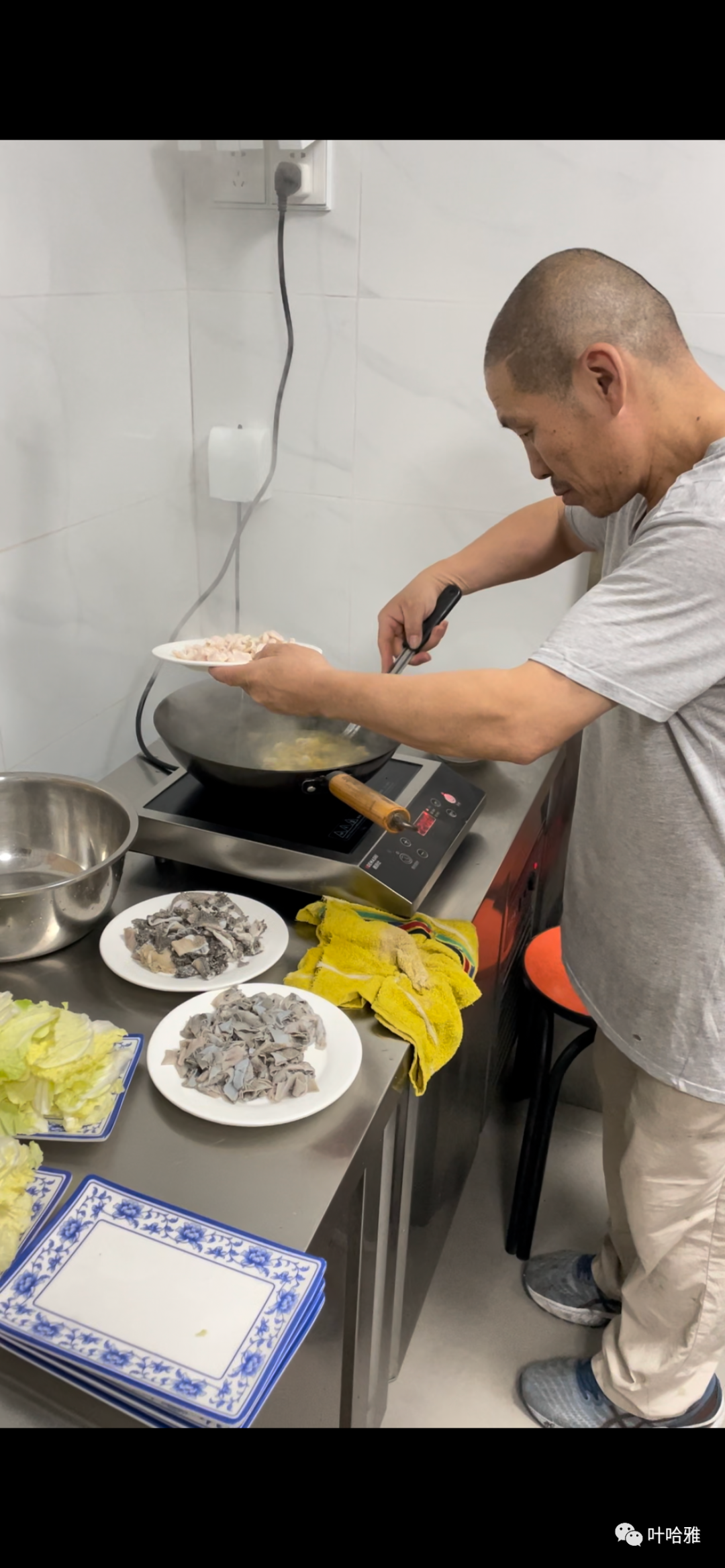
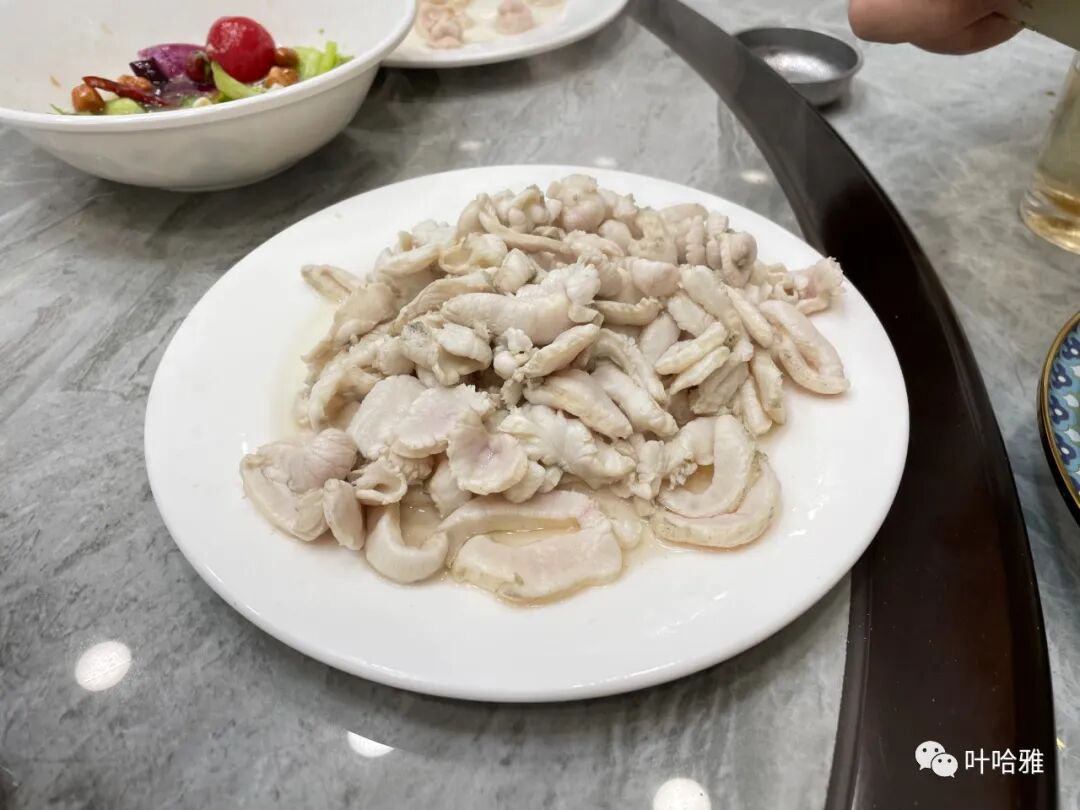
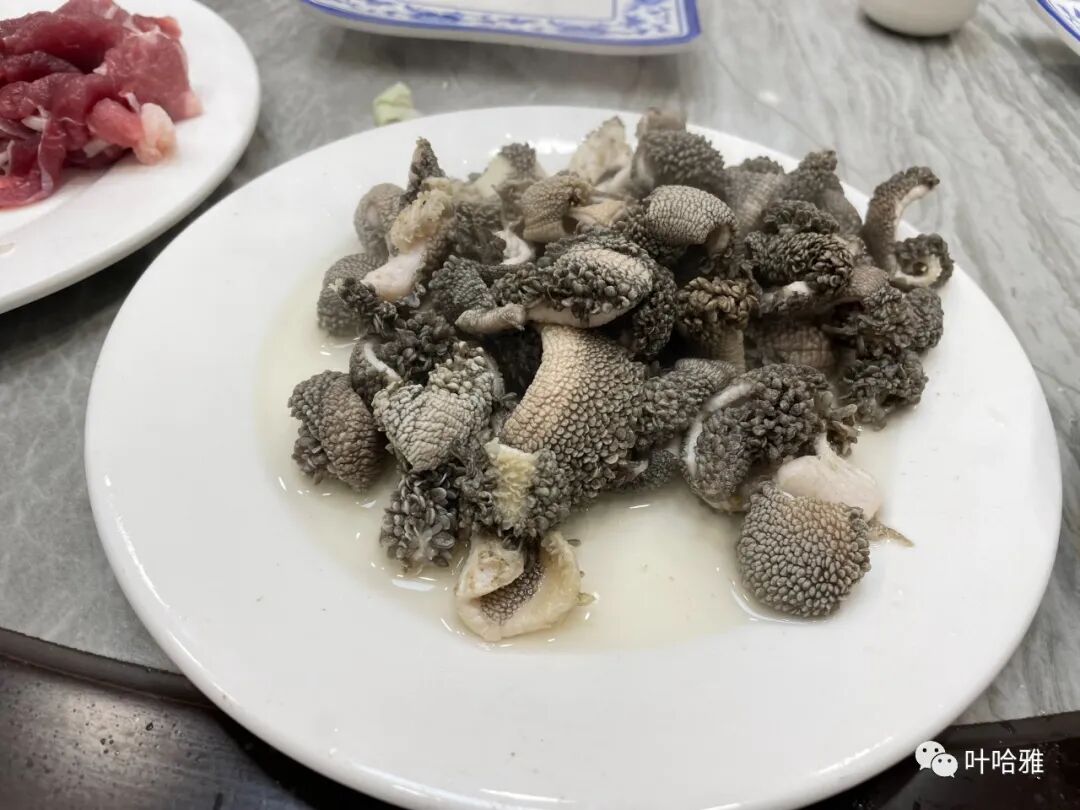
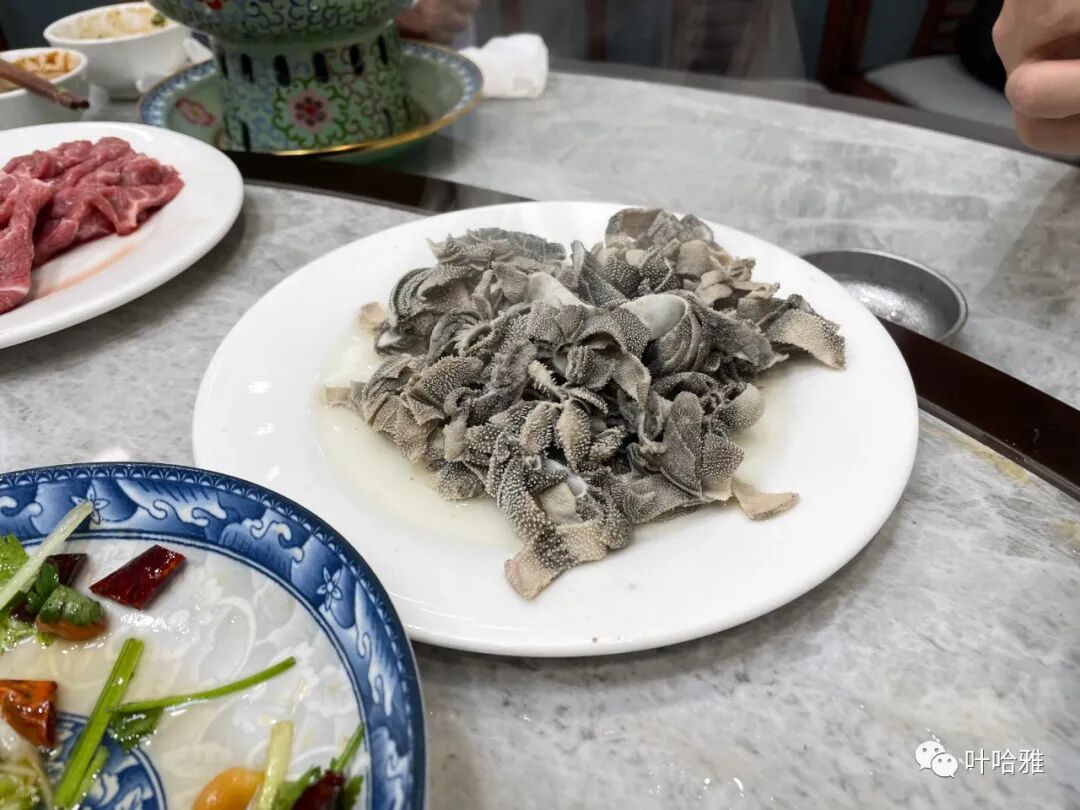
Lao Jin cooked the quick-boiled tripe (baodu) for us himself. Their cooking keeps the old Beijing Hui Muslim traditions, such as the way they slice the meat and their dipping sauce recipe. It is very different from modern hot pot styles.
4. Azerbaijan National Pavilion - Maiden Tower Restaurant
The Azerbaijan National Pavilion opened a new restaurant on the third floor called Maiden Tower, which is named after a famous tourist site in Azerbaijan.
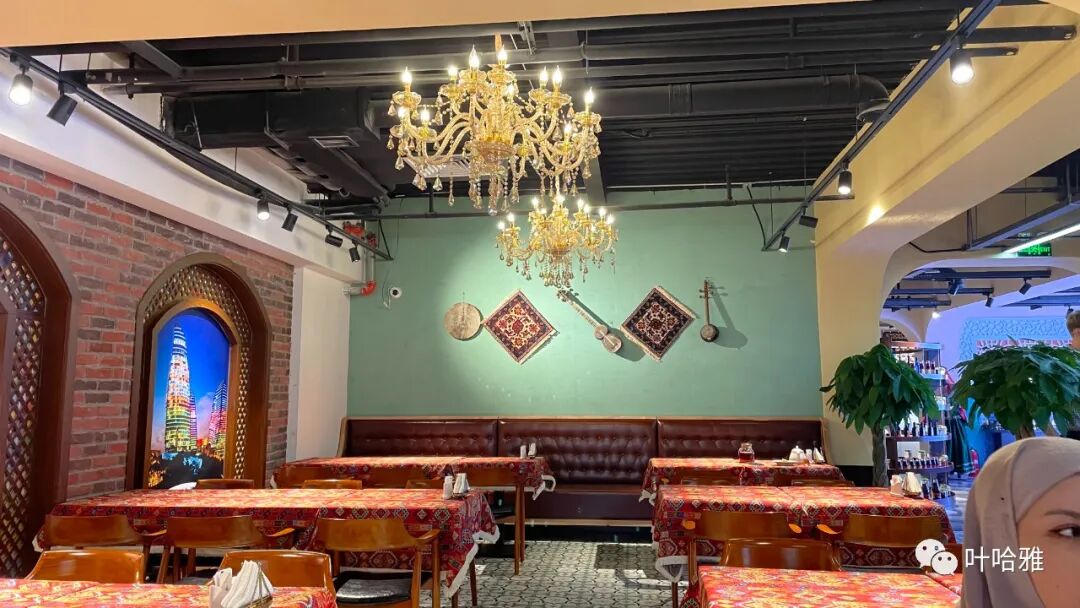
The restaurant is inside the pavilion, so you can look at Azerbaijani handicrafts while you eat.
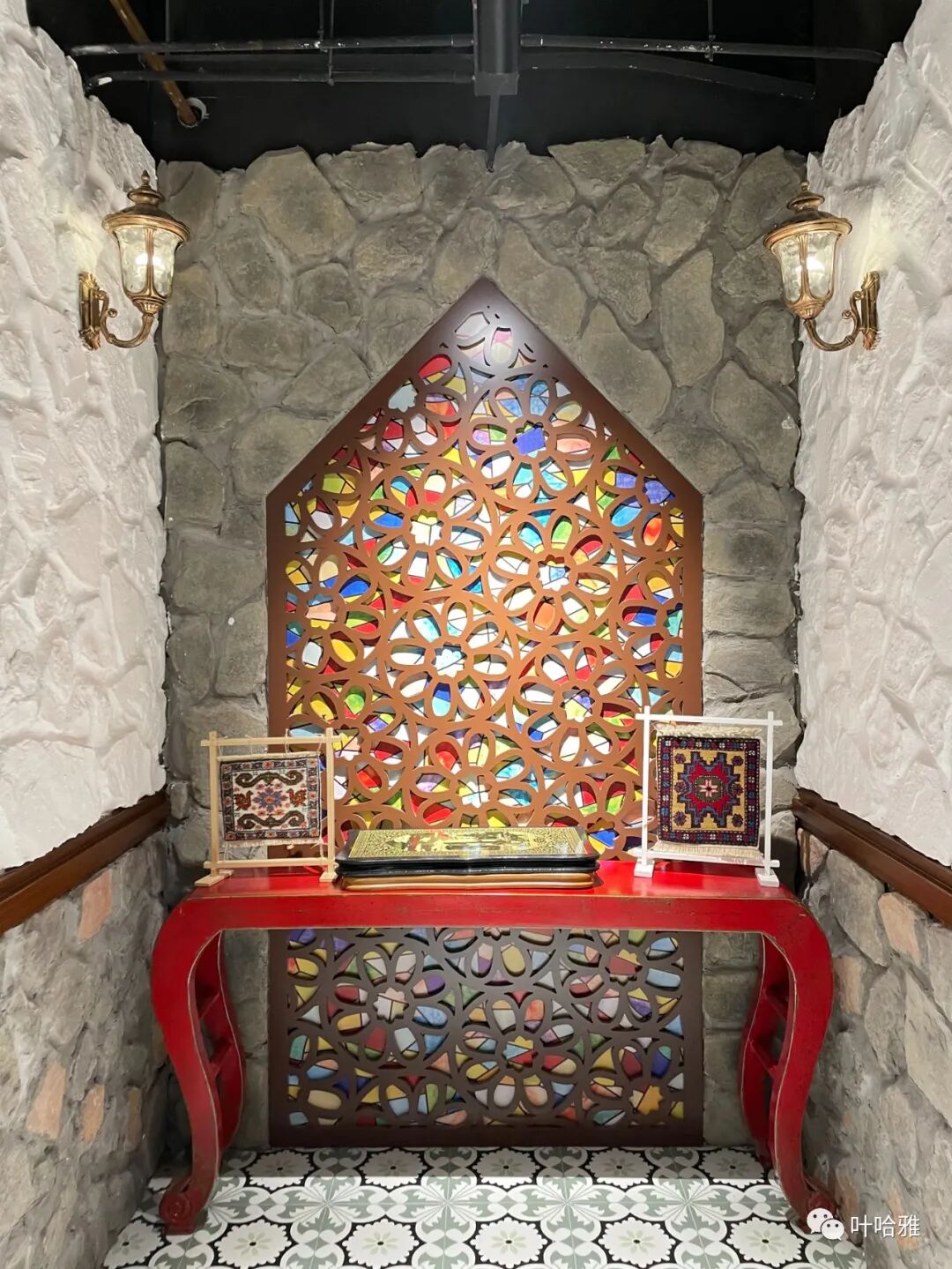
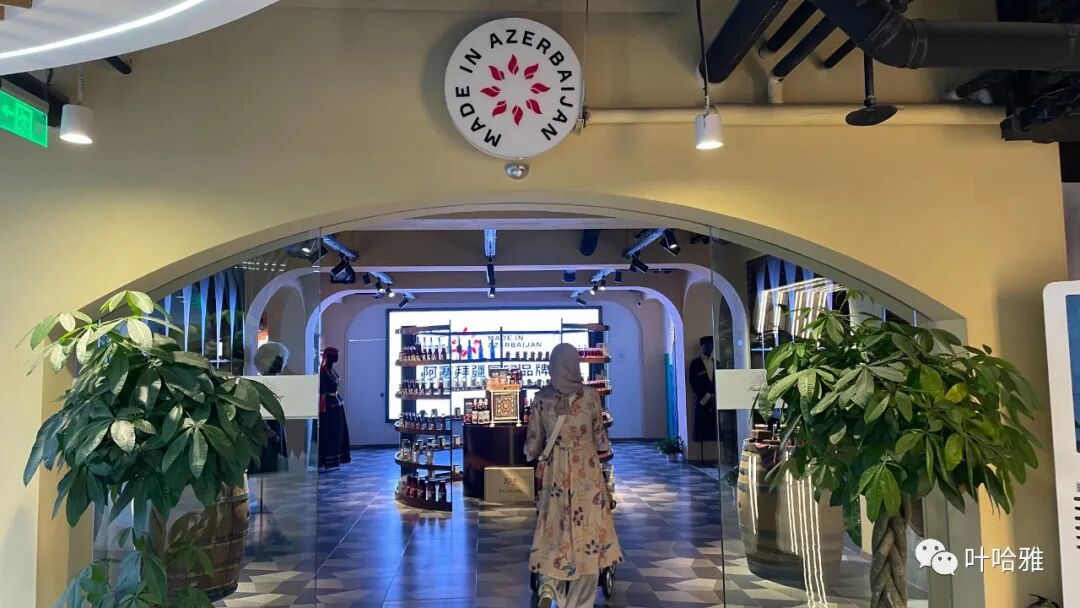
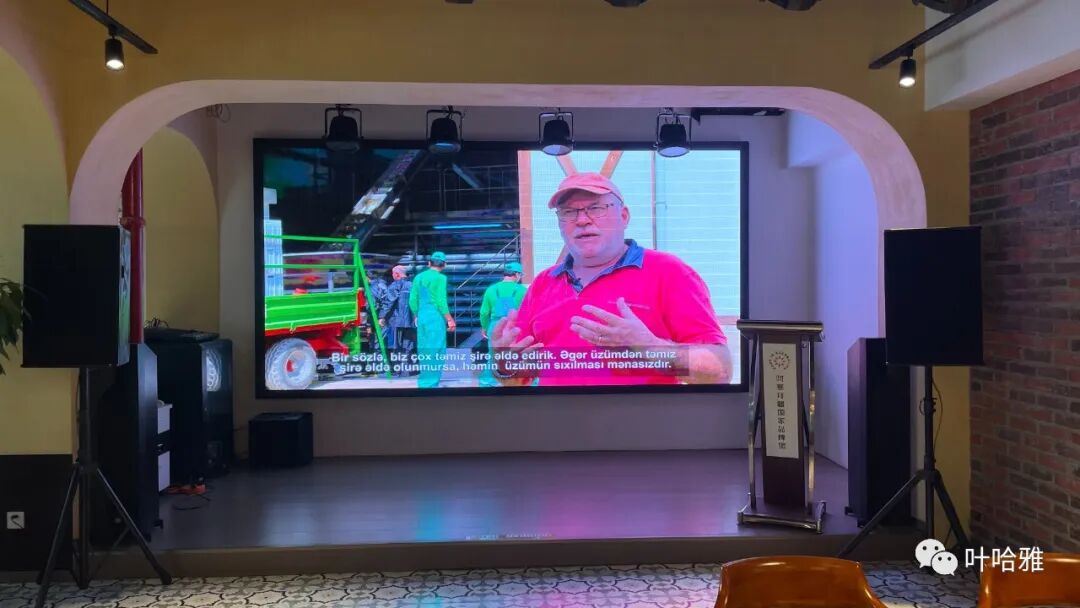
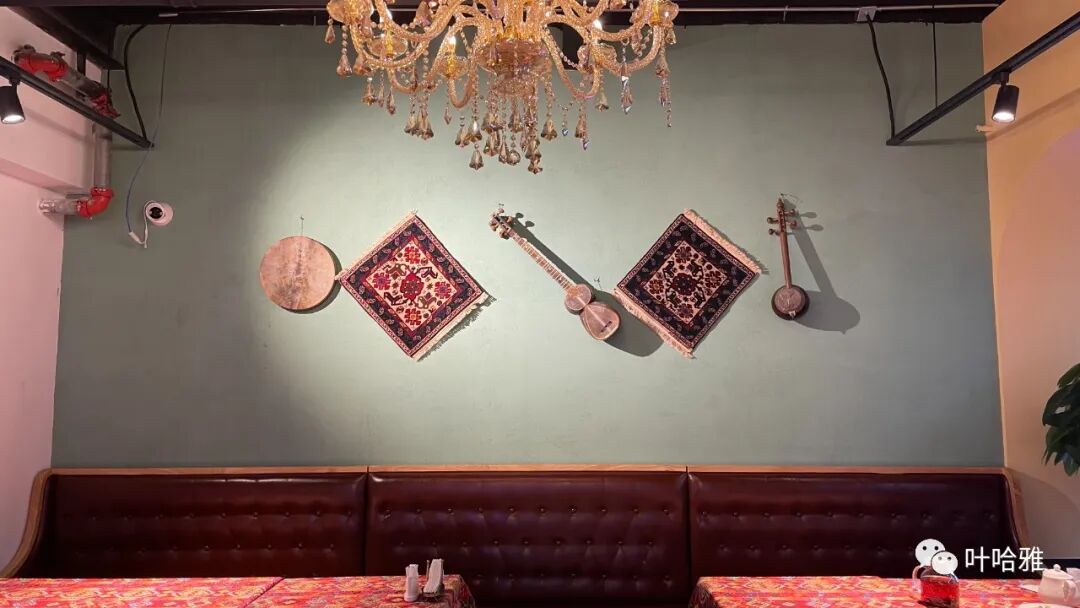
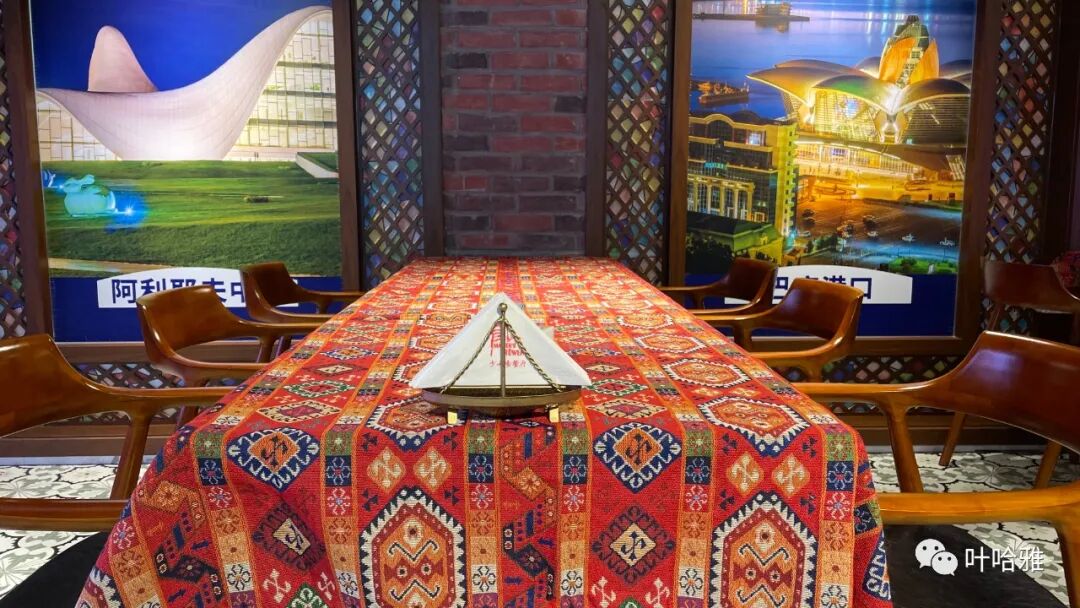
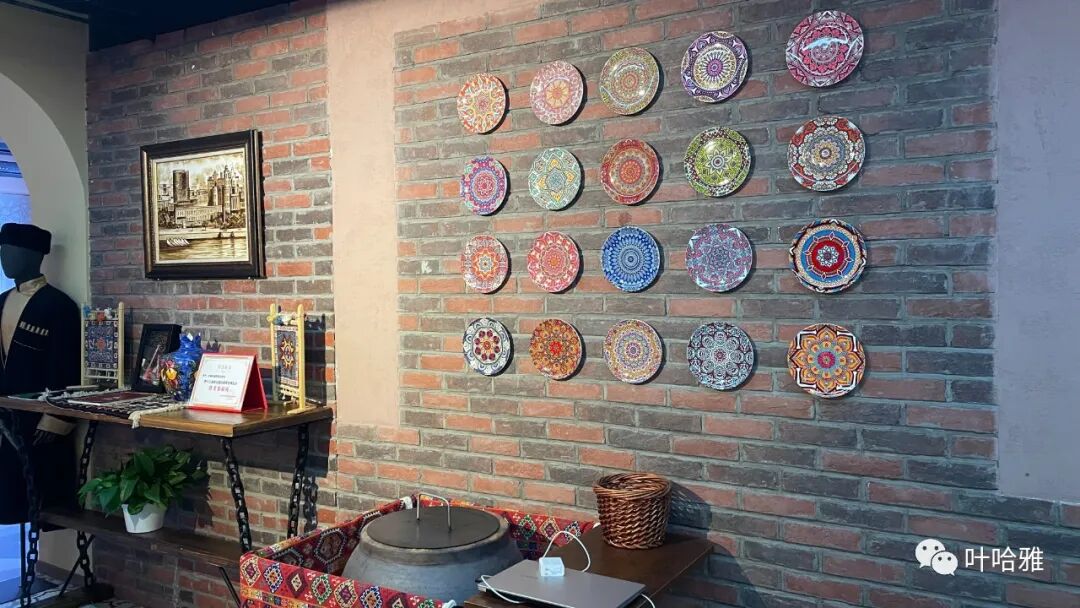
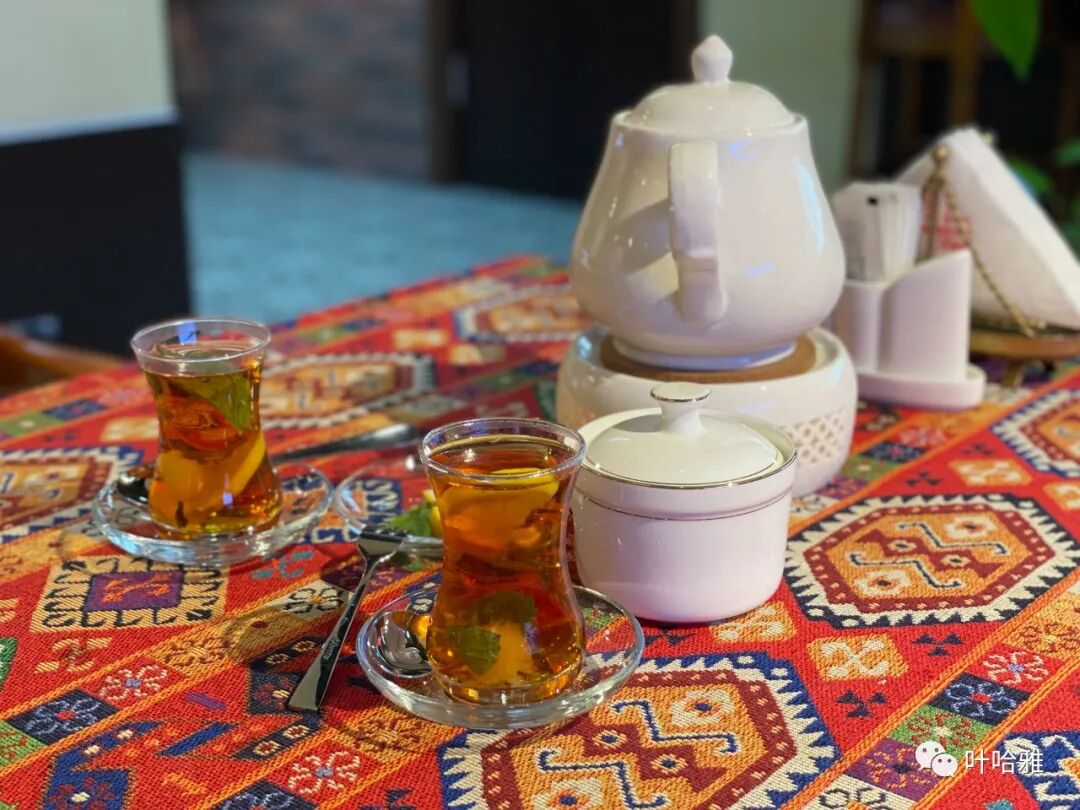
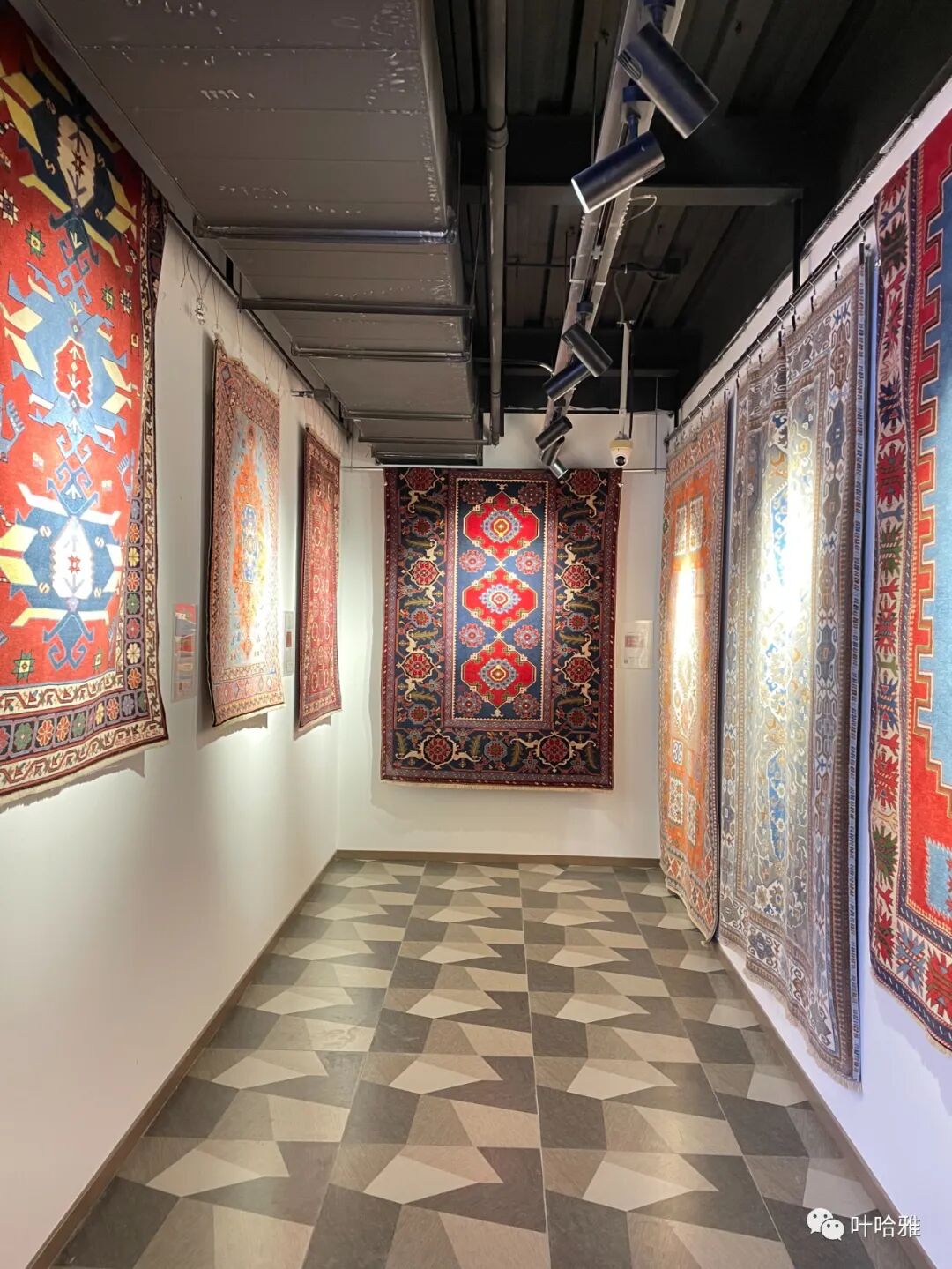
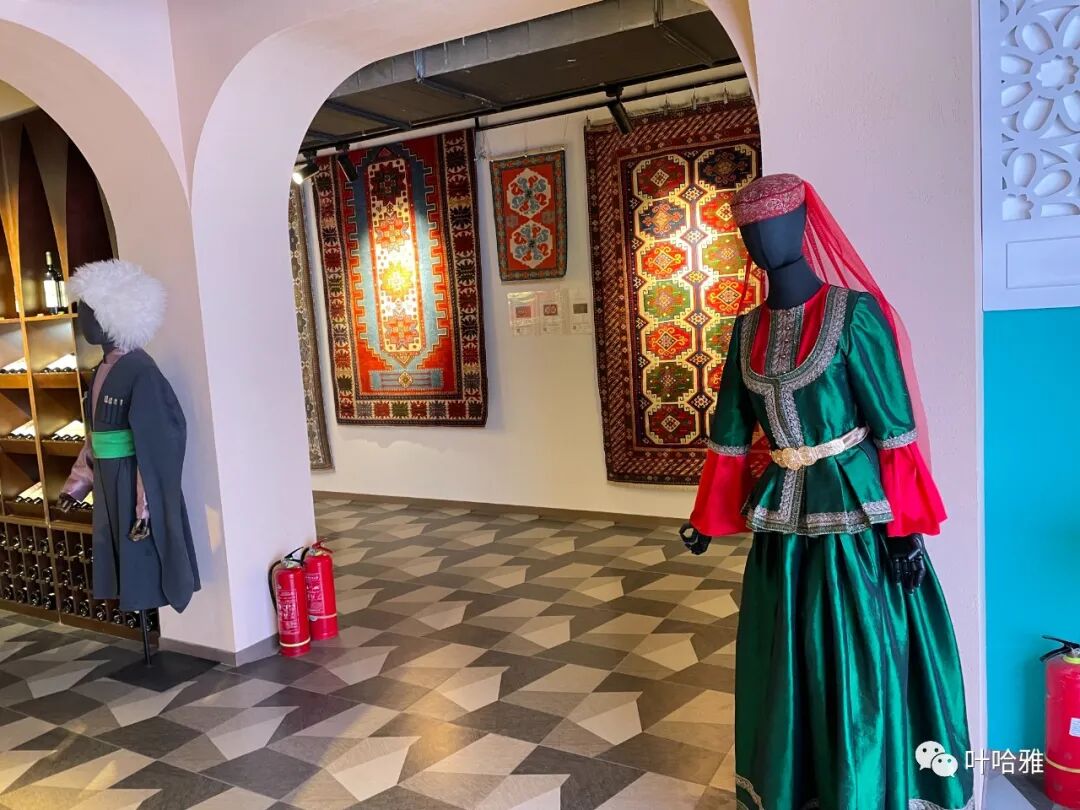
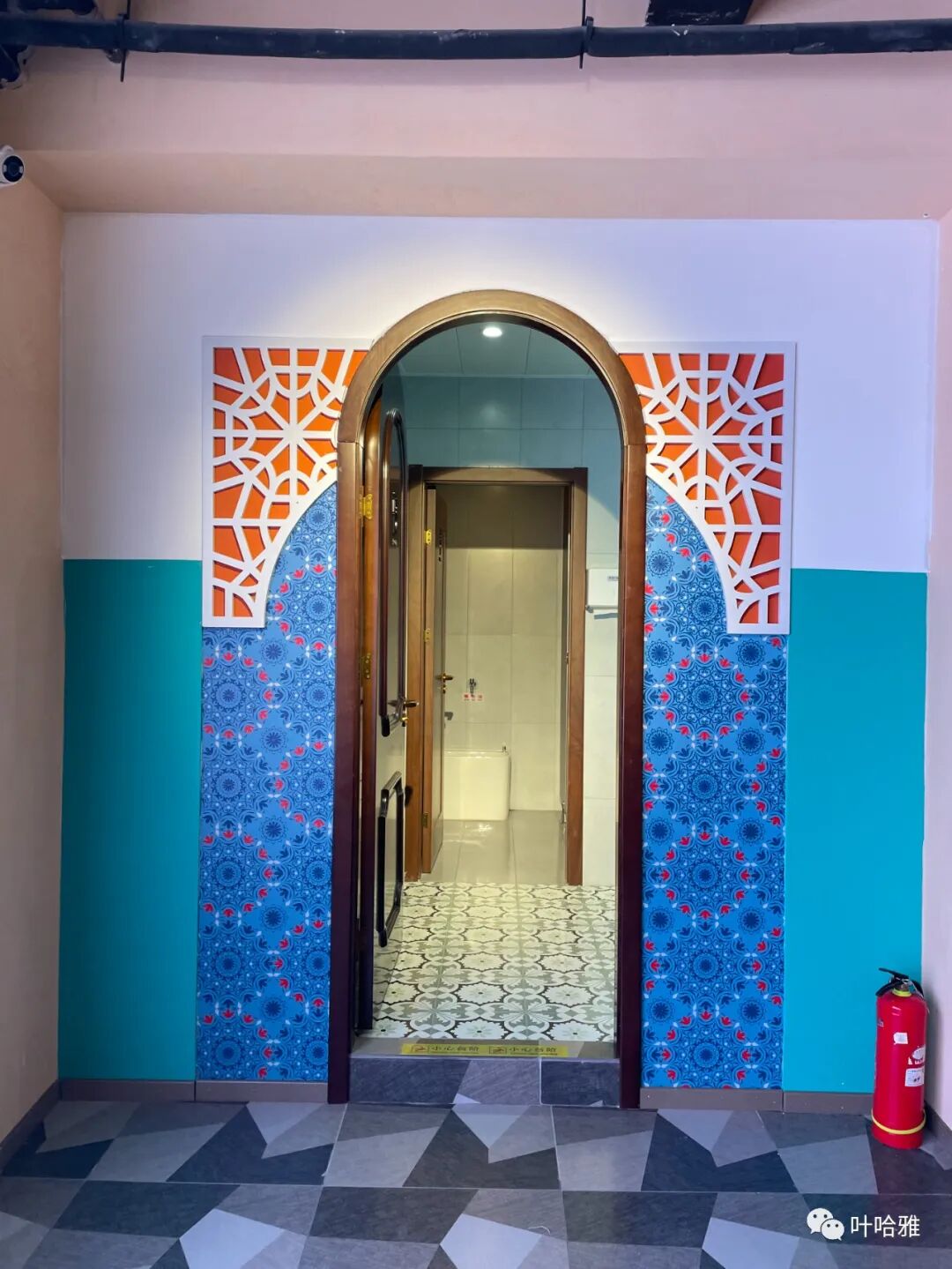
Many Azerbaijani chefs work abroad. Many of the Turkish restaurants we often visit are actually run by Azerbaijanis.
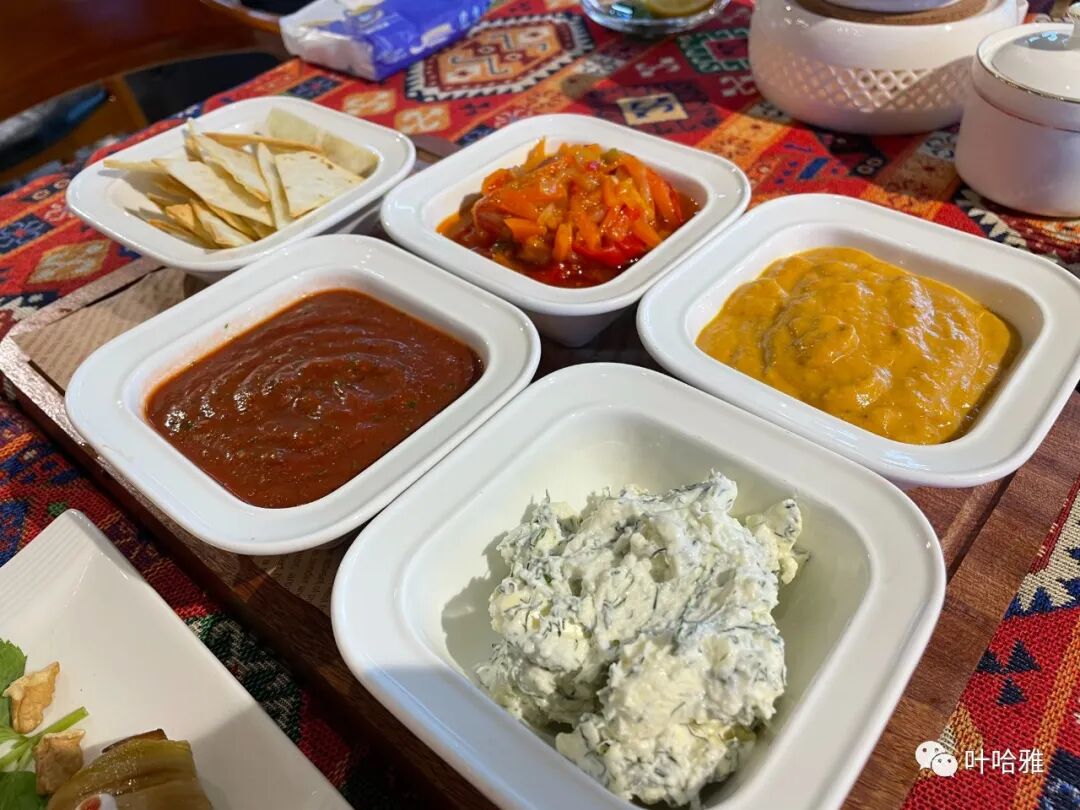
The dishes here suit our tastes well, including these snacks, which are also good for babies to eat.
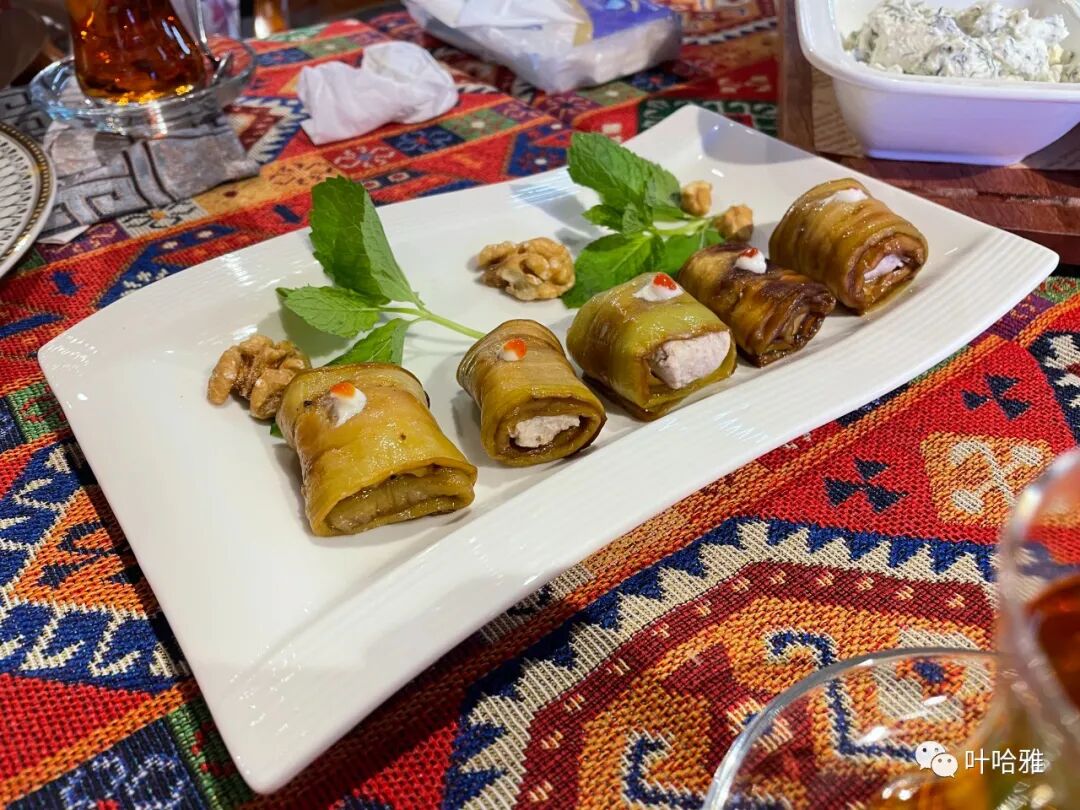
Creamy eggplant rolls
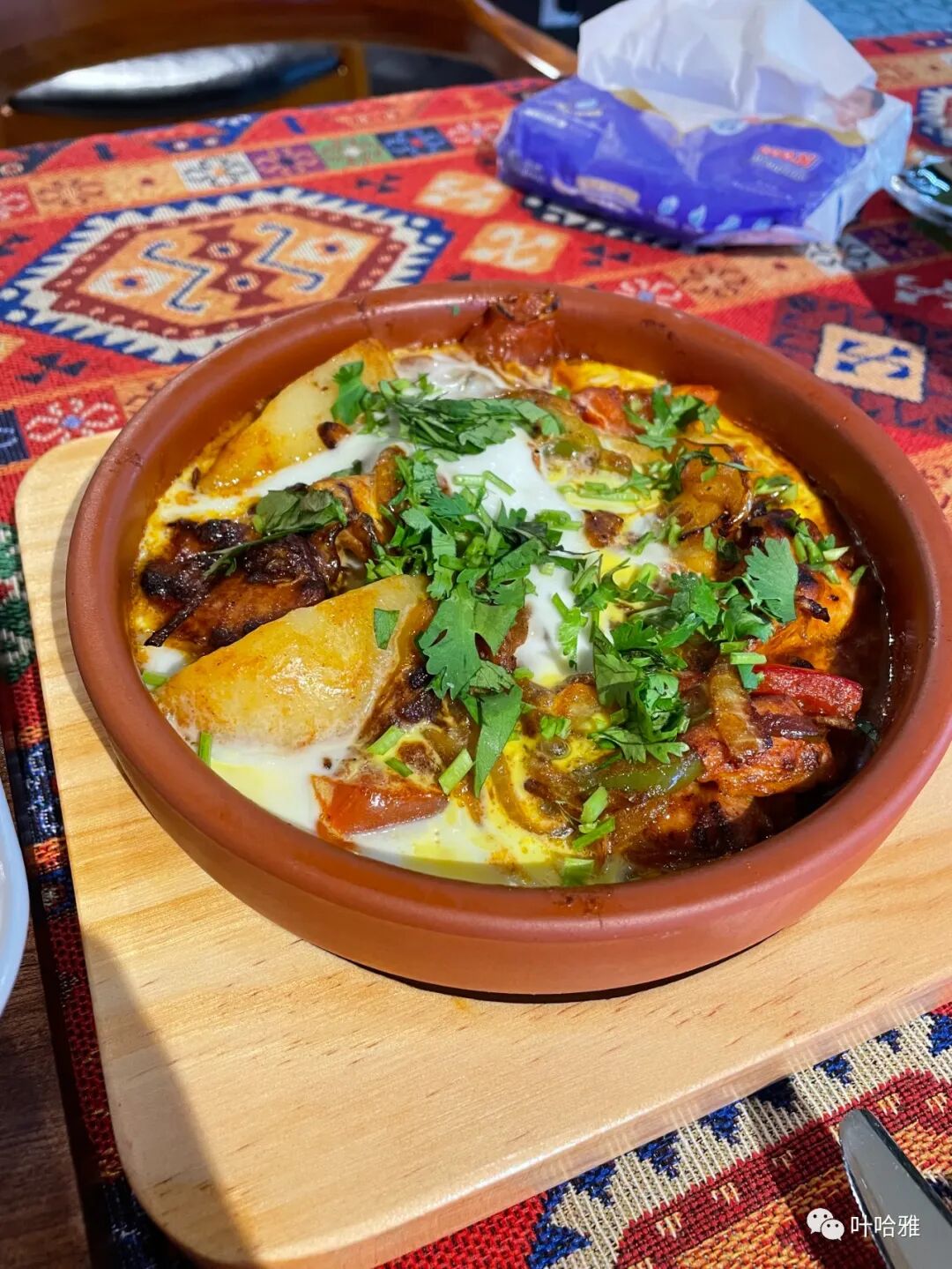
Jelitme roasted chicken
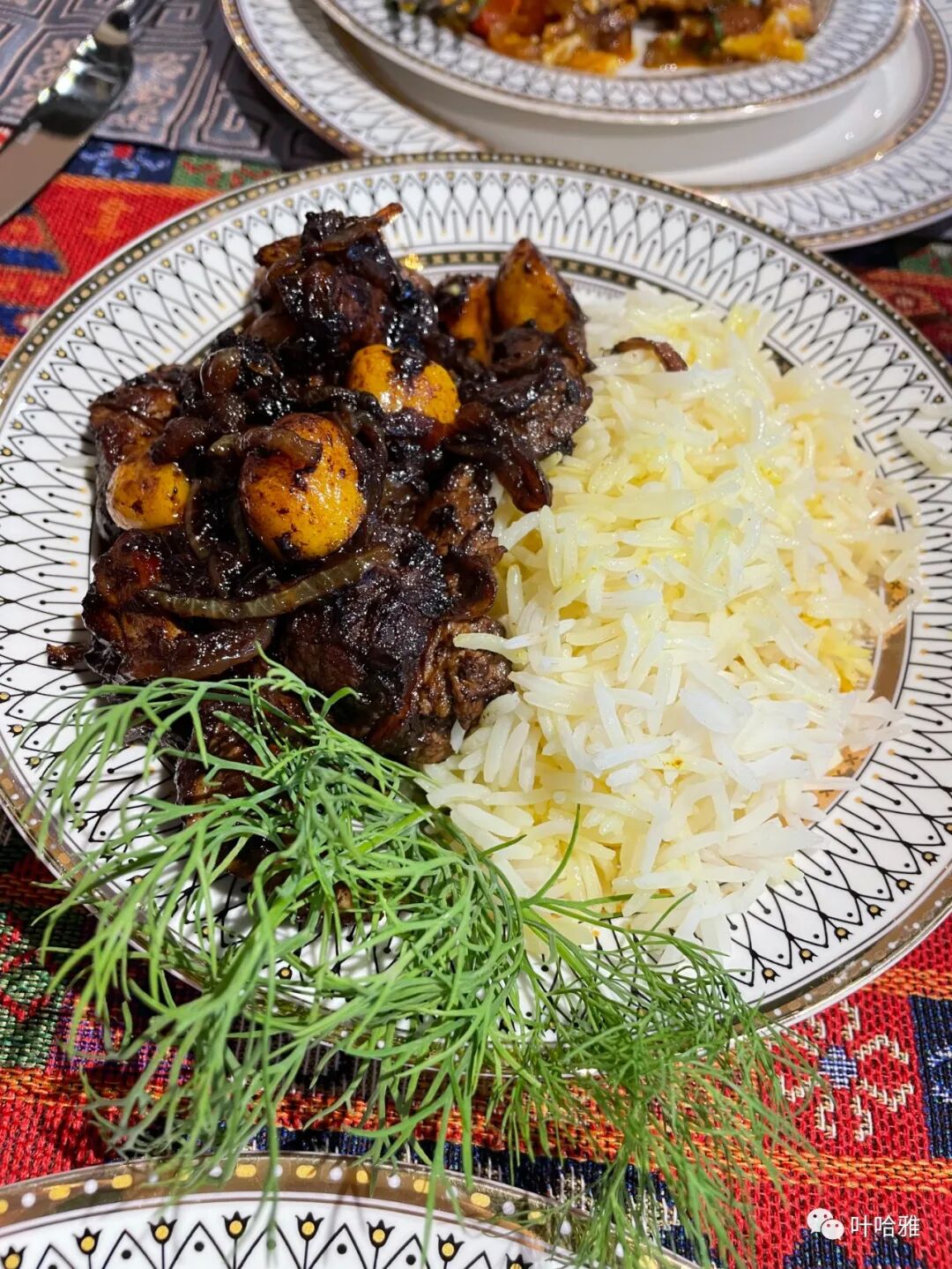
Beef rice with chestnut and pomegranate sauce
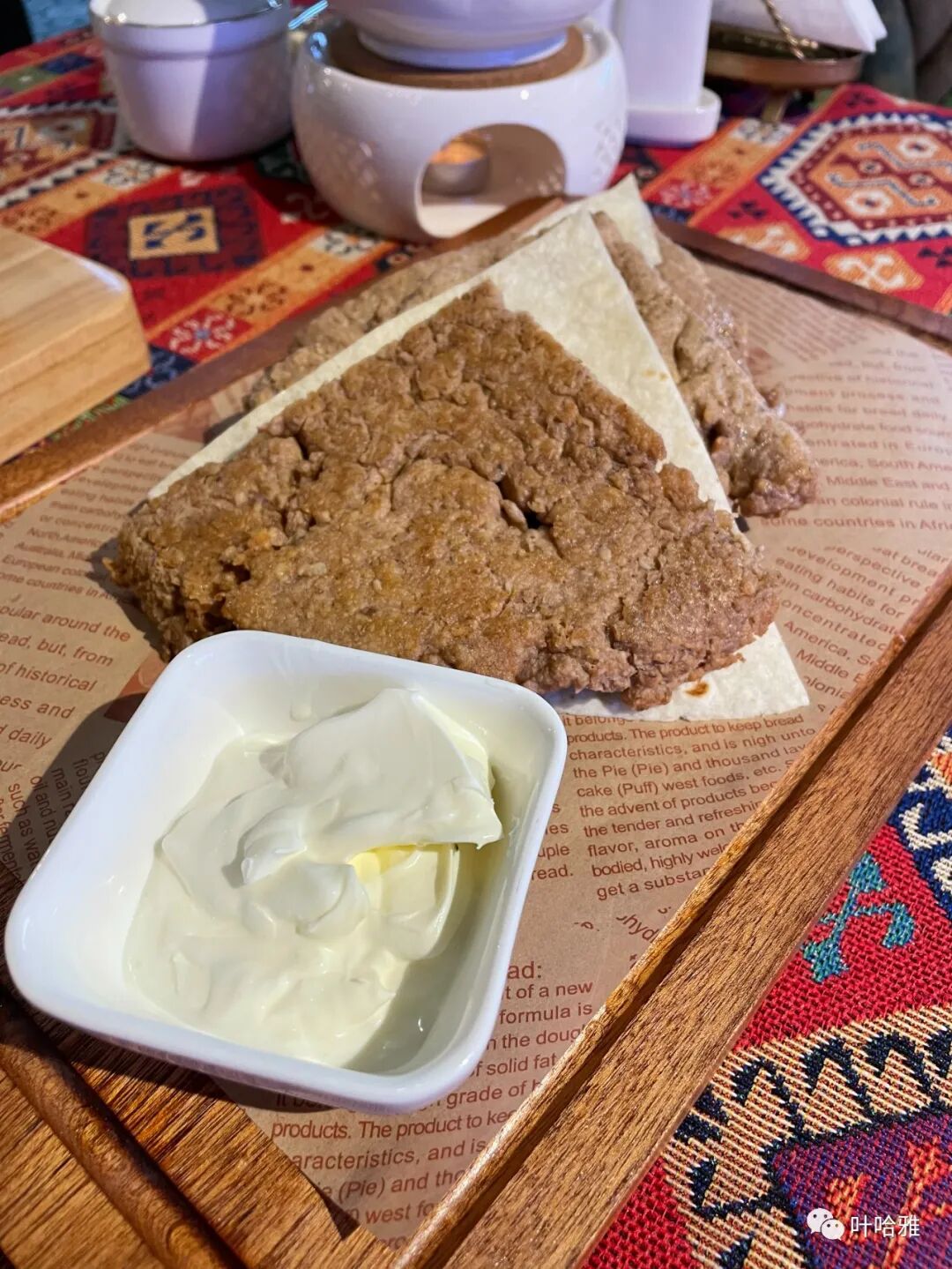
Nut flatbread (jianguobing)
The restaurant is near Sanyuanqiao. It costs about 150 yuan per person, making it a good spot for business dinners and dates.
5. Yangzhilian Fusion Restaurant
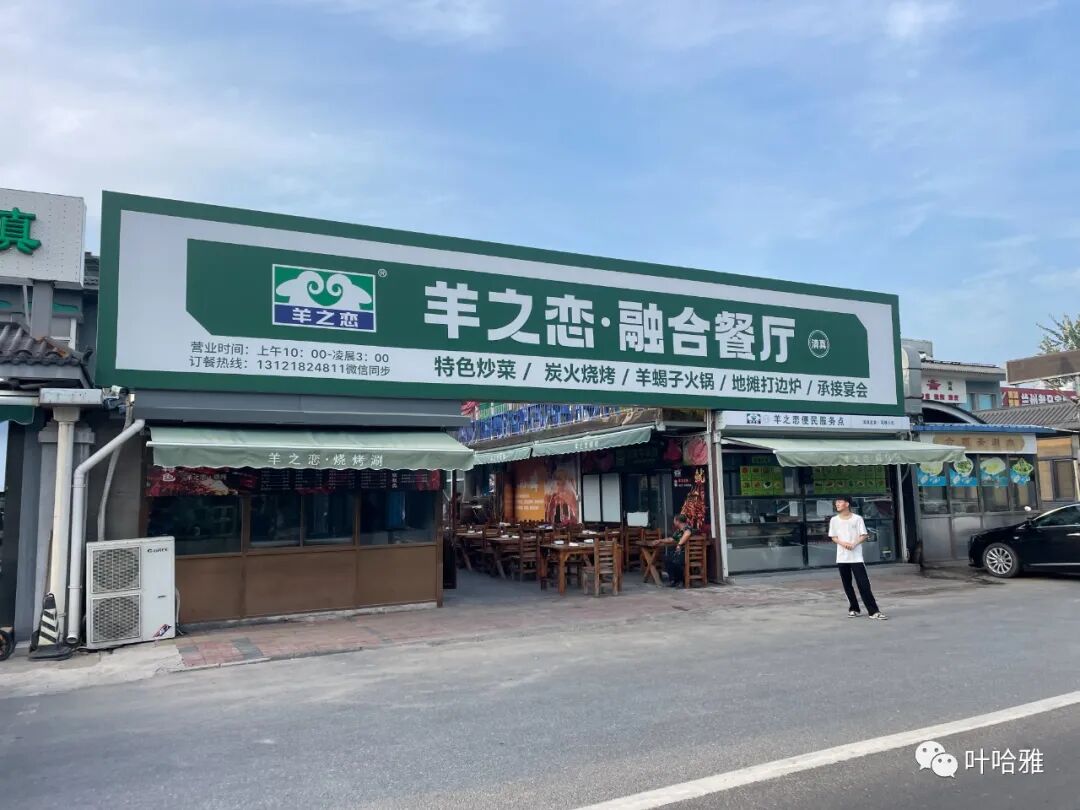
This is a new place in the Hui Muslim village of Xueying, Daxing. They sell beef and lamb and also run a restaurant on the side.
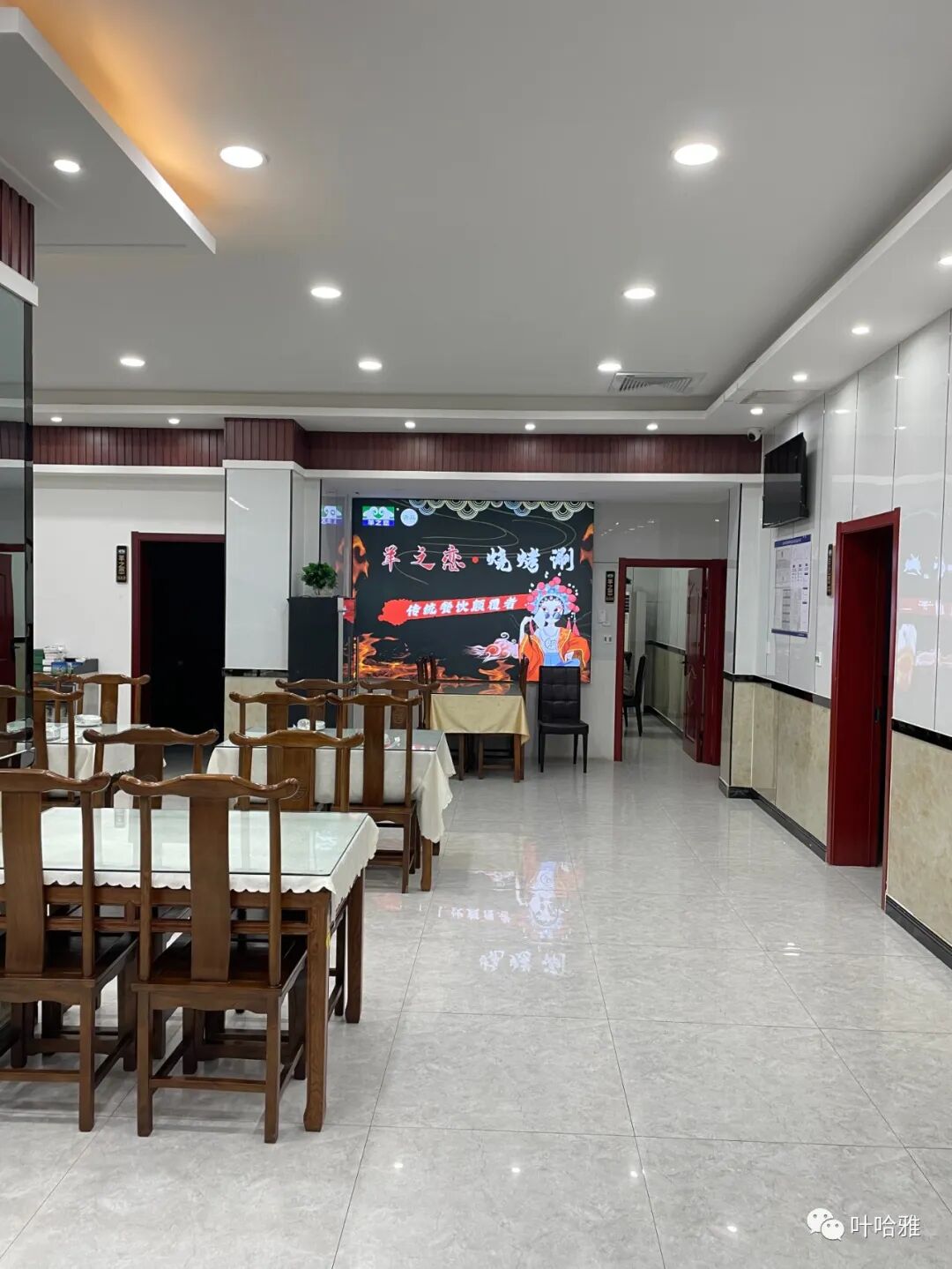
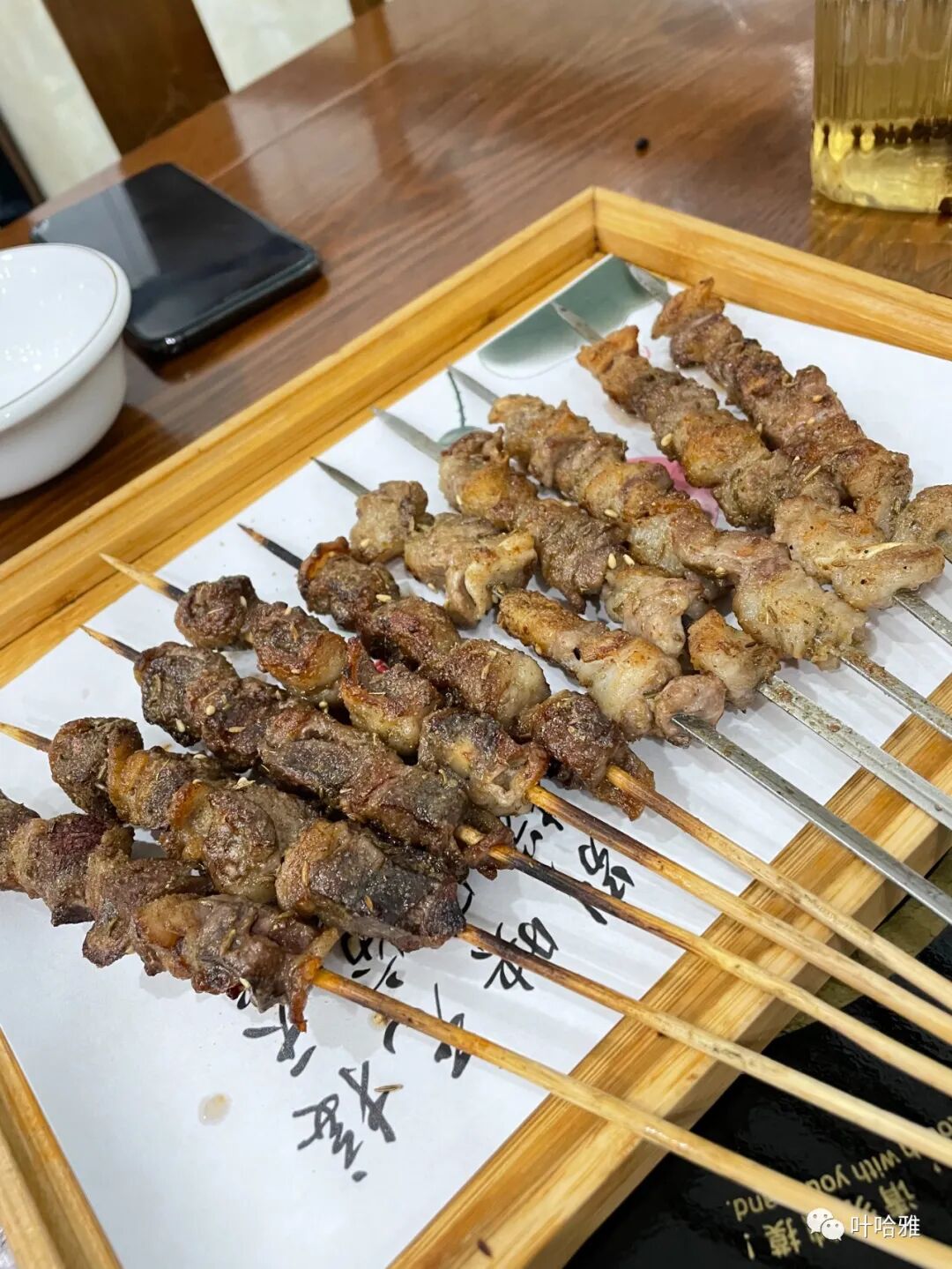
Their lamb is really good. It is high quality, not gamey, and not greasy.
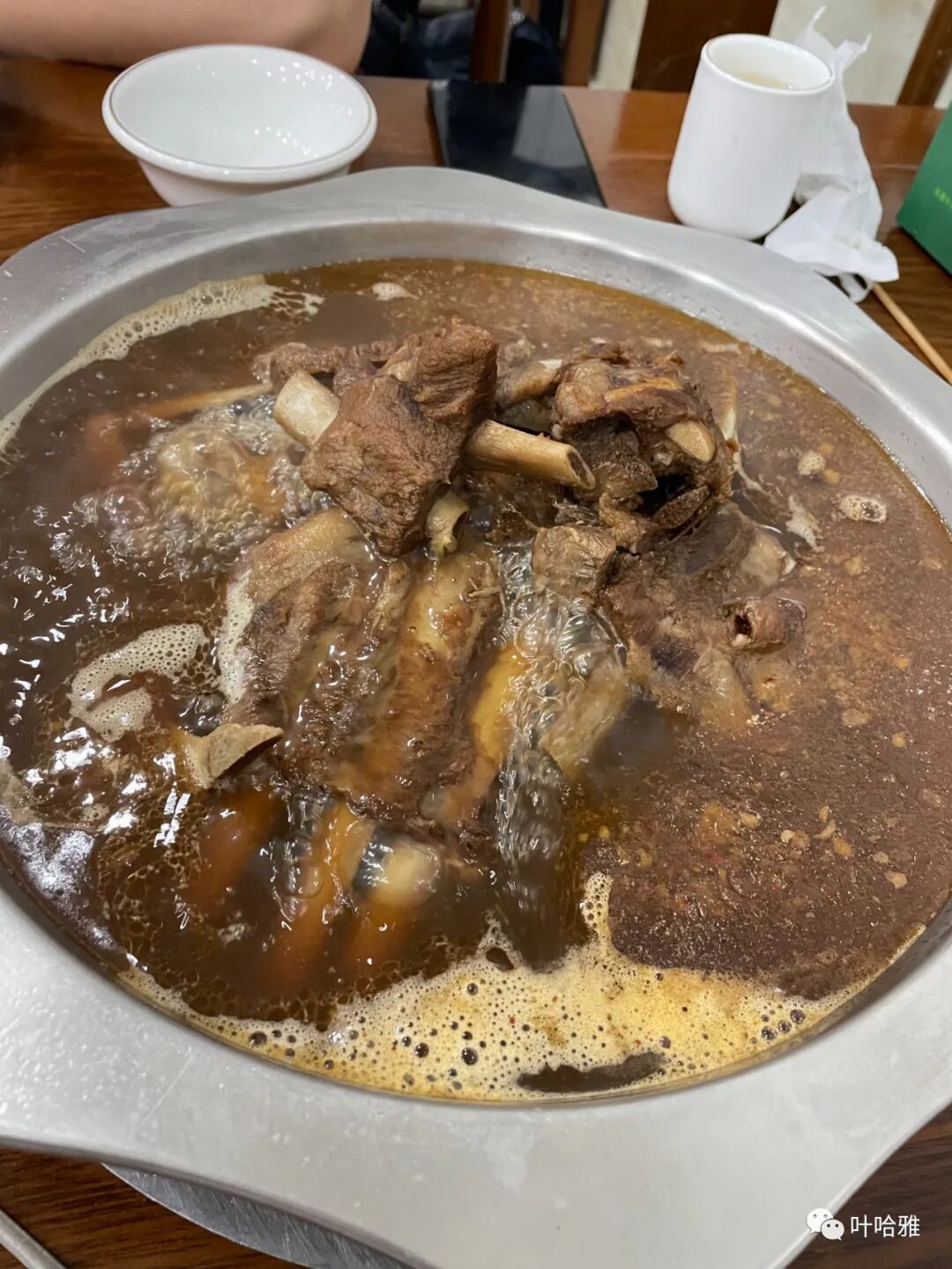
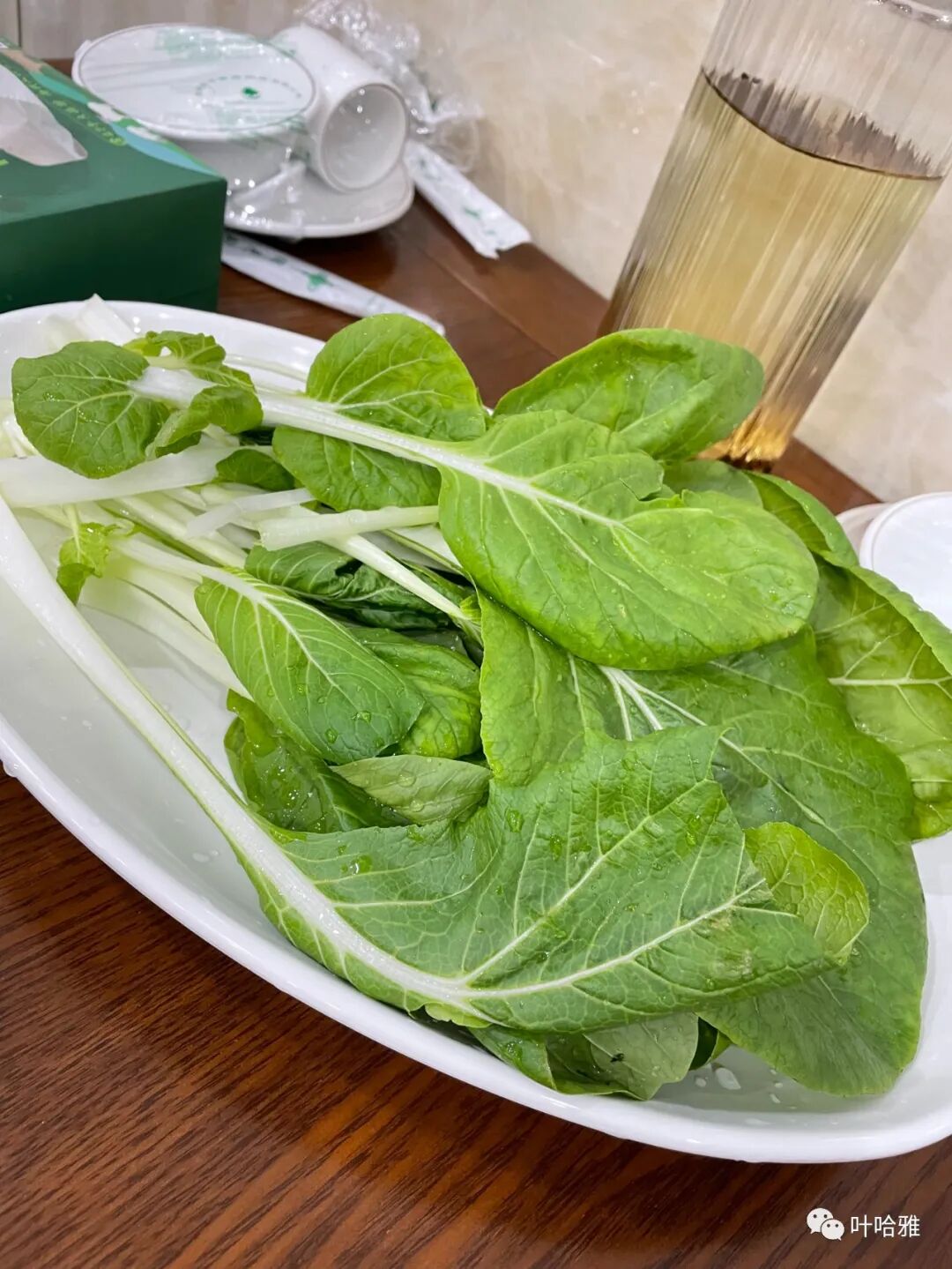
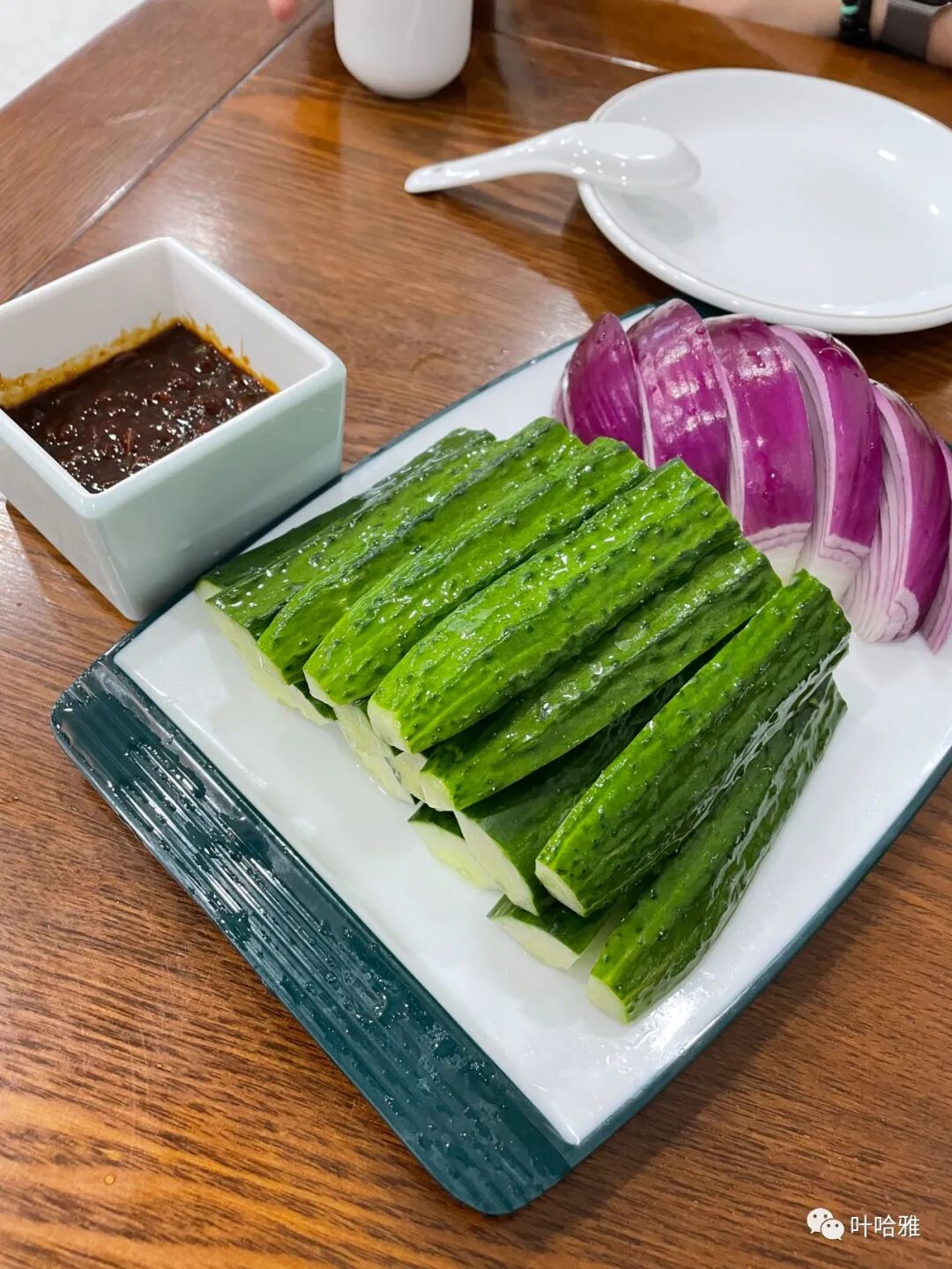
This is a hot pot made with lamb chops. After you finish the chops, you can cook vegetables in the broth. These are live vegetables, cut straight from the hydroponic tank, so they are incredibly fresh.
6. Yu
Shanfang Chaoshan Beef Restaurant
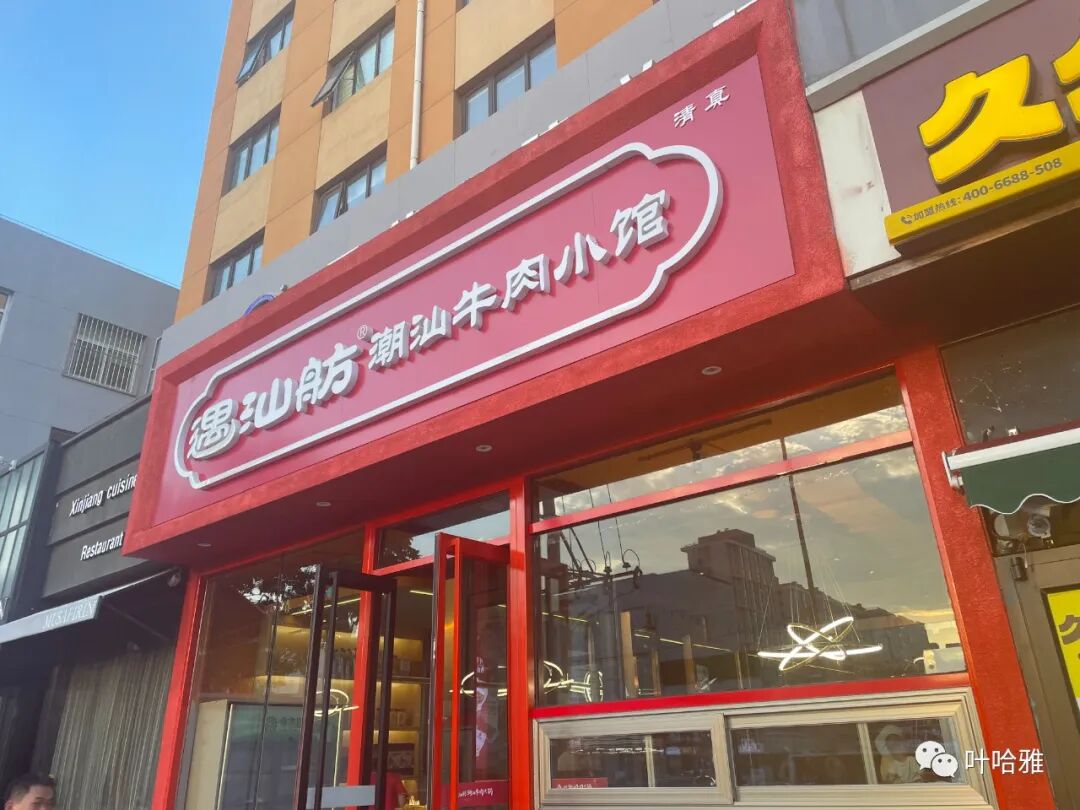
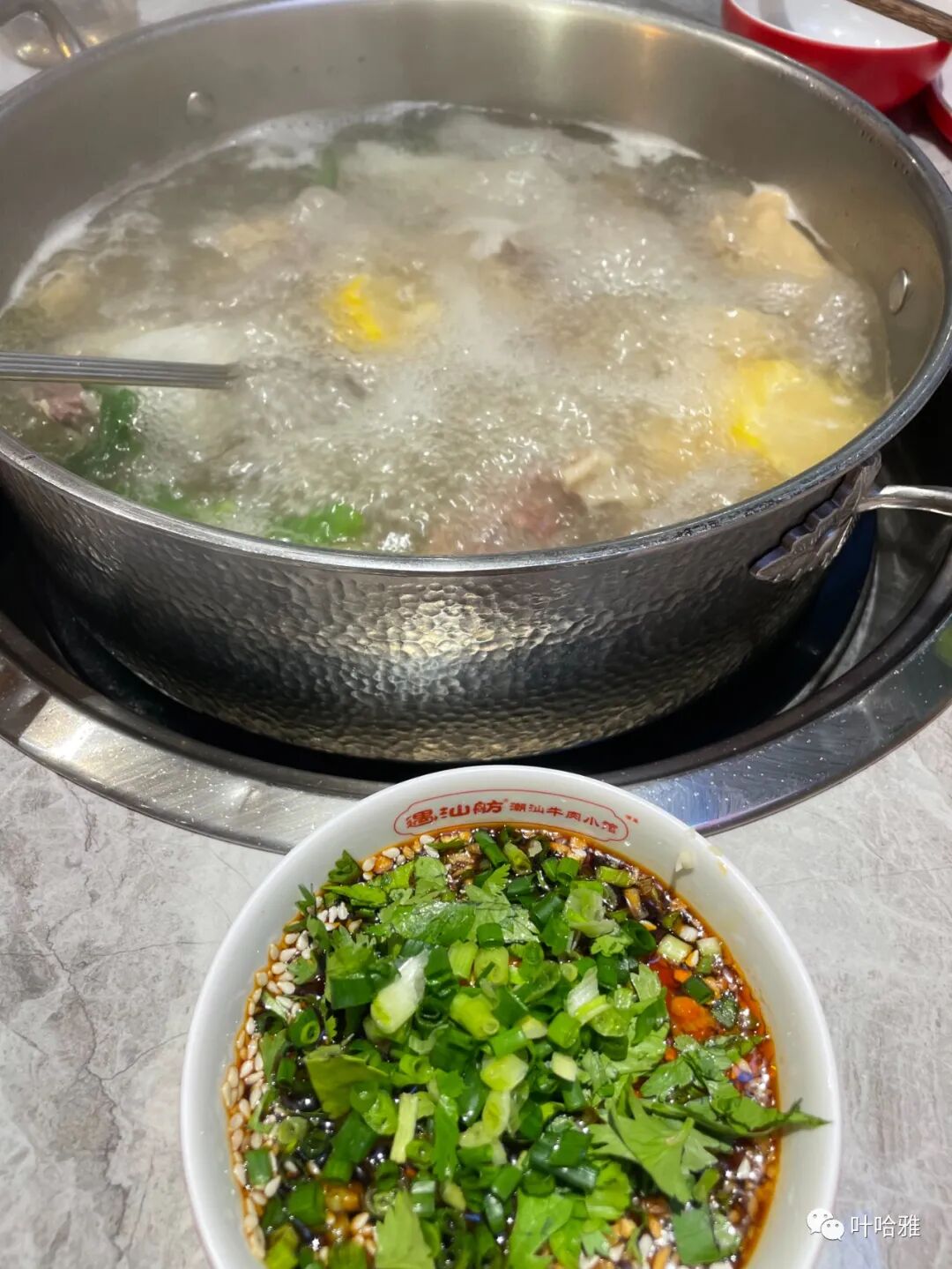
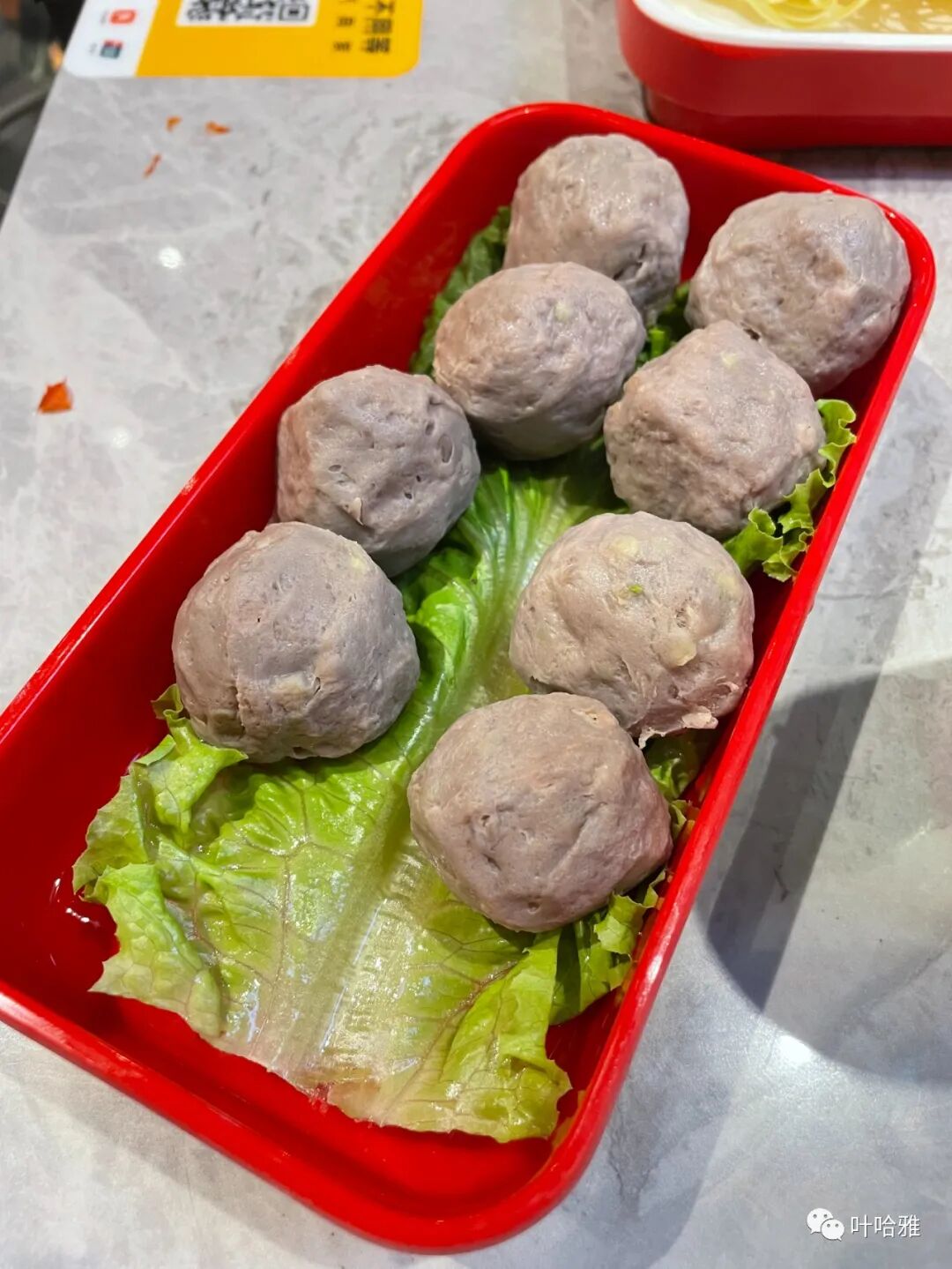
This shop near the Pingle Yuan subway station has seen at least three halal restaurants come and go, from Yinmadeng skewers to Qinghai pan-cooked dishes, and now this Chaoshan beef hot pot. Every place here has actually tasted good, so I hope this new style lasts a bit longer.
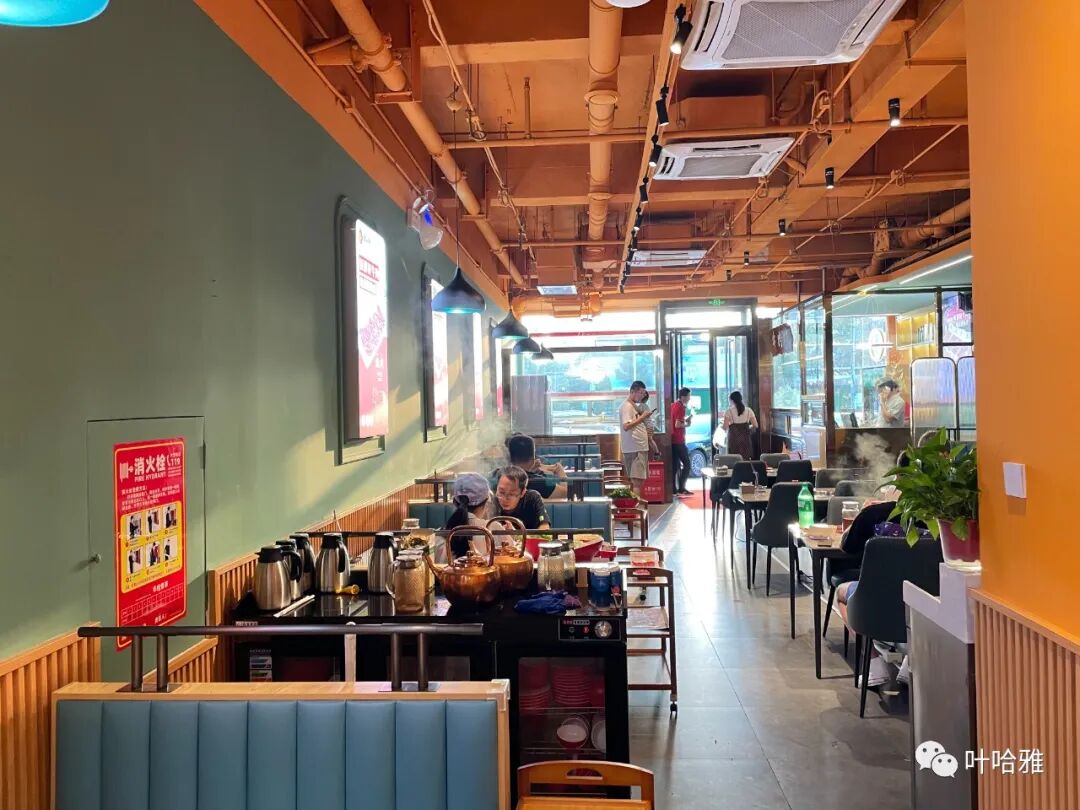
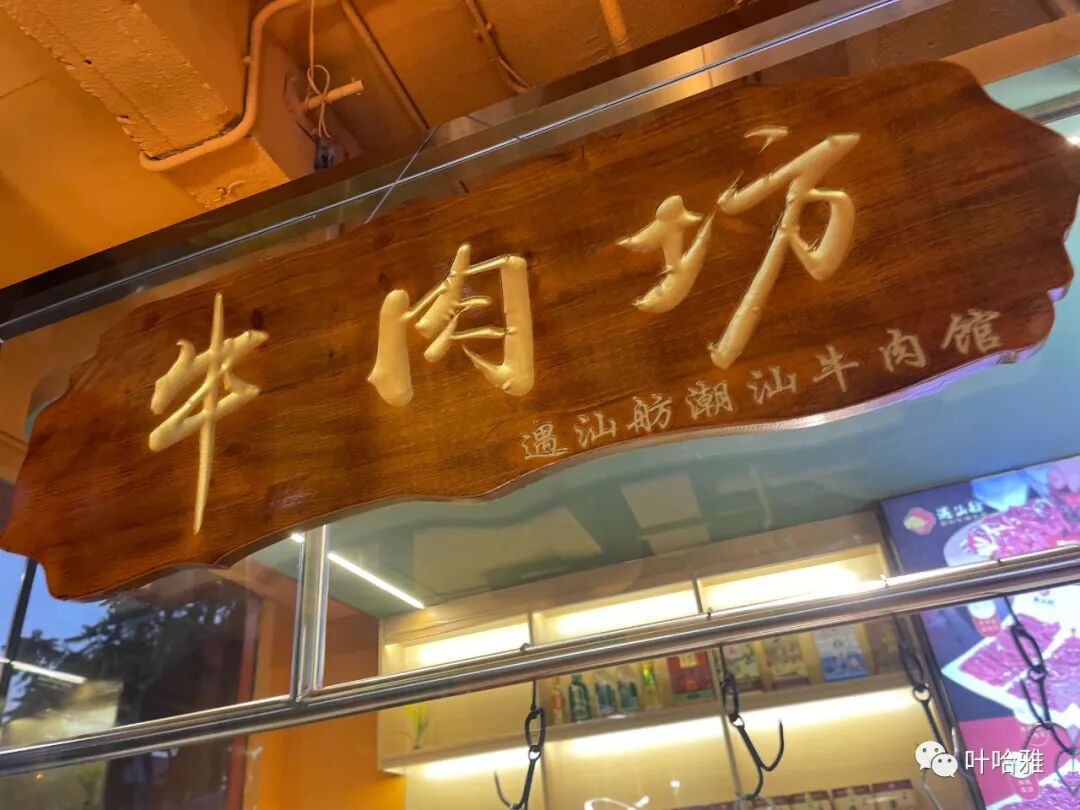
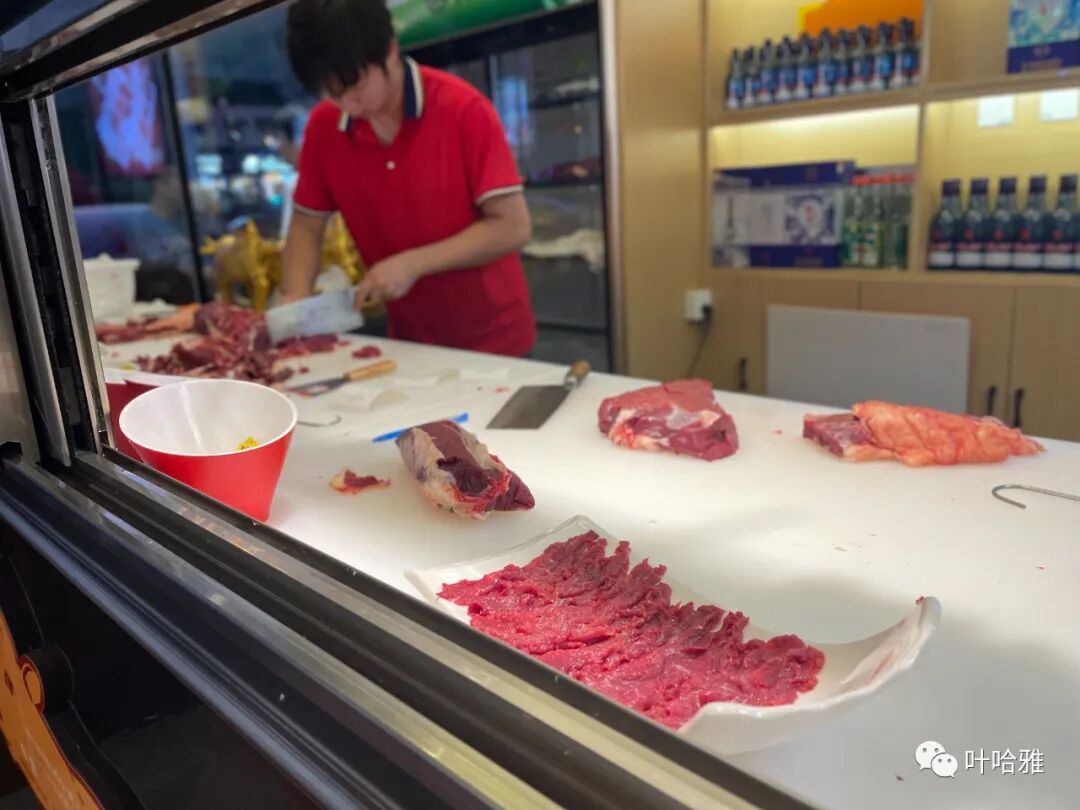
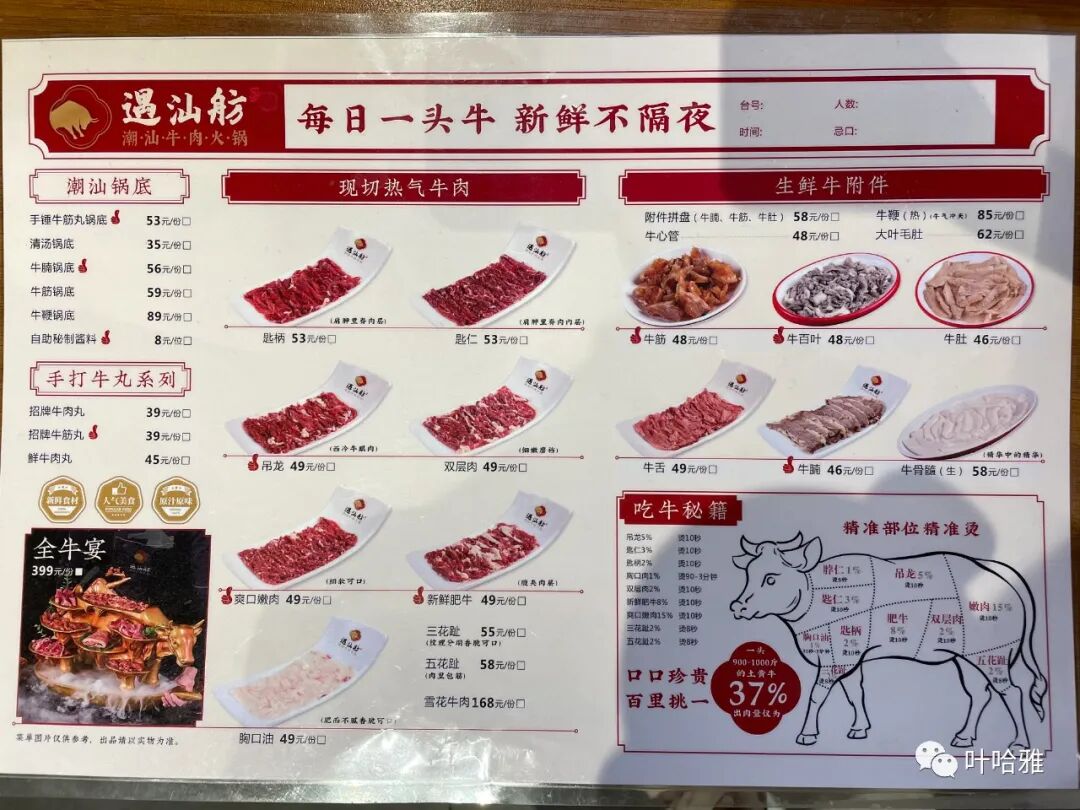
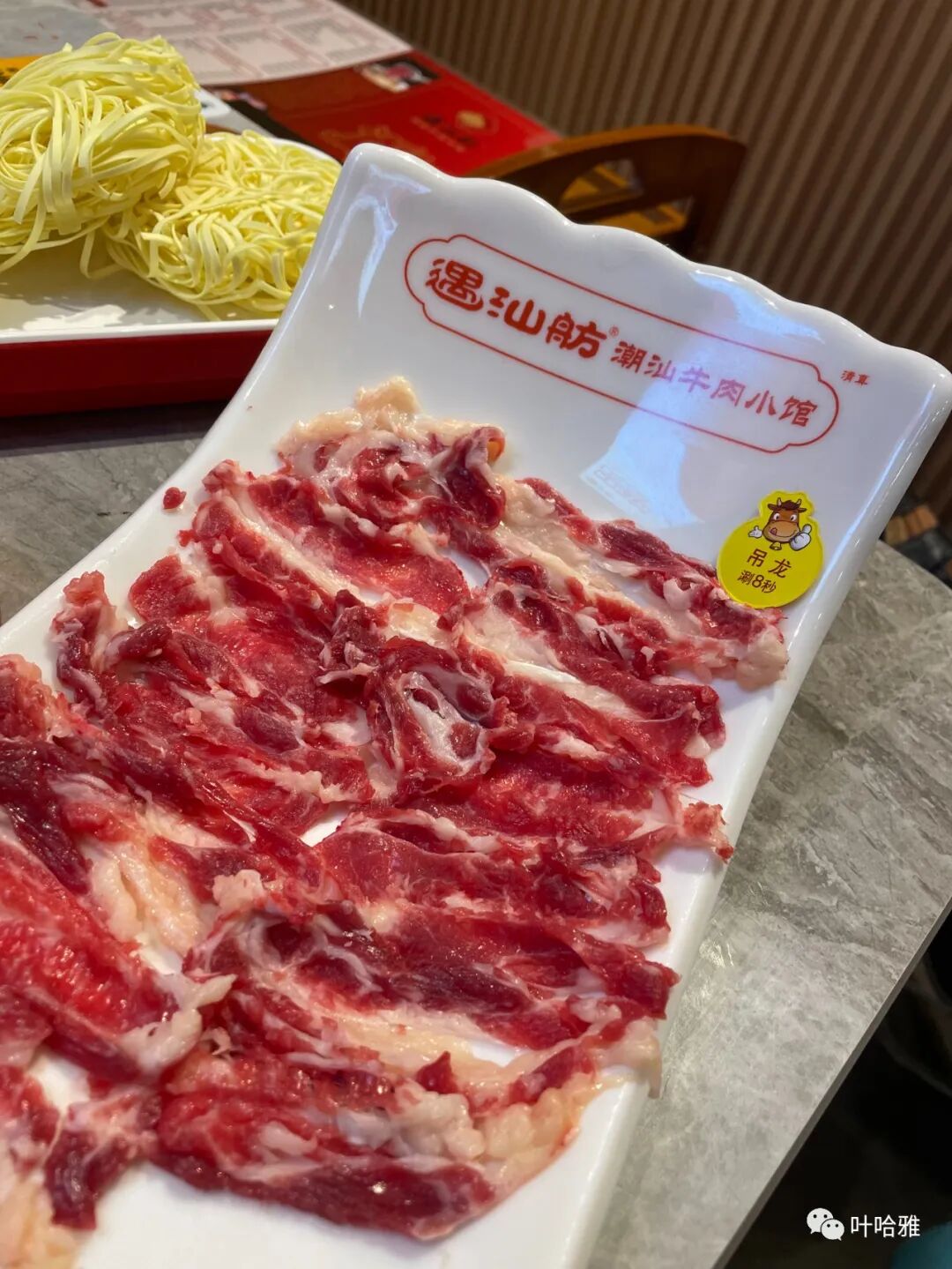
Every plate of meat comes with a label showing how many seconds to cook it.
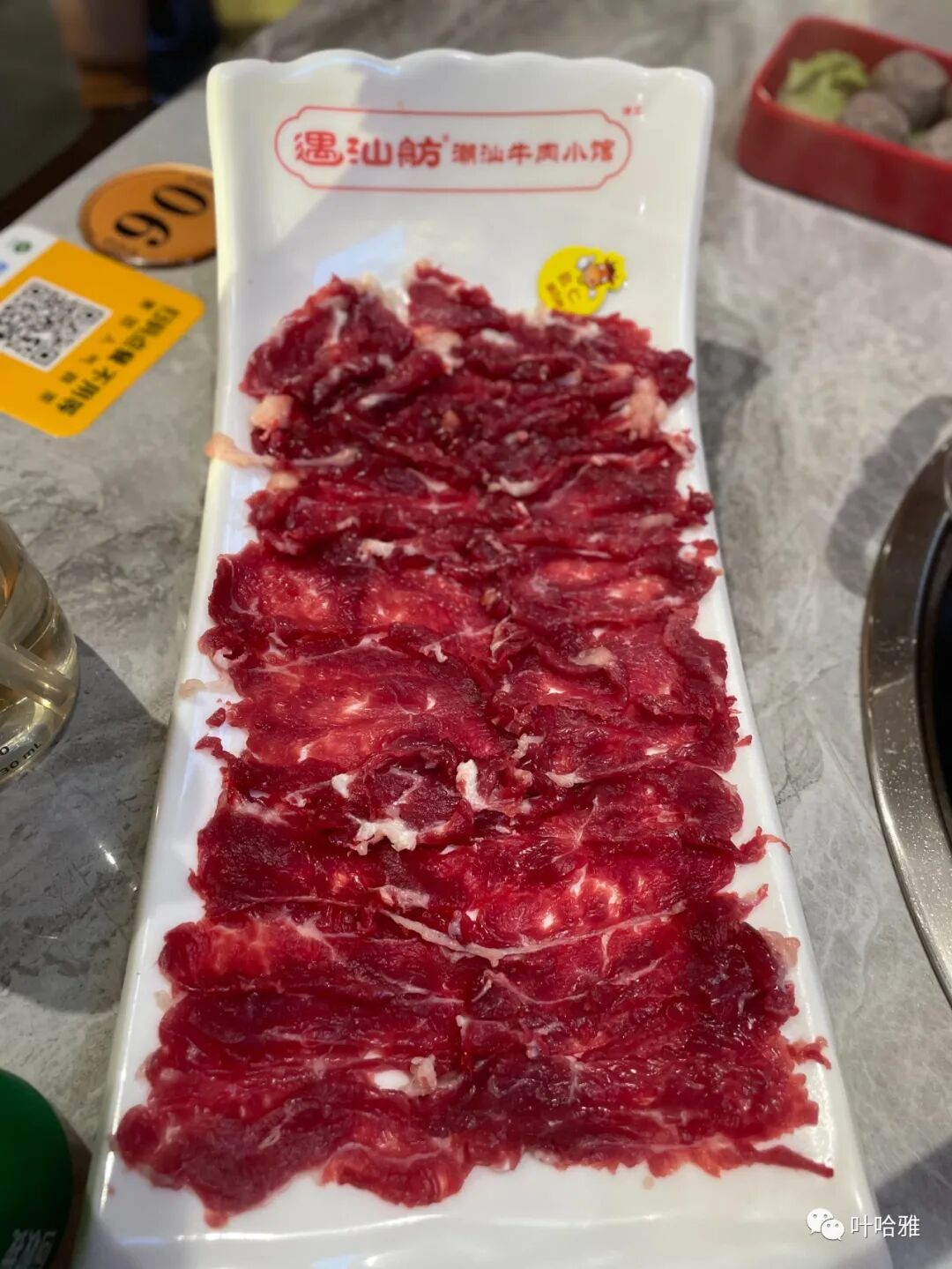
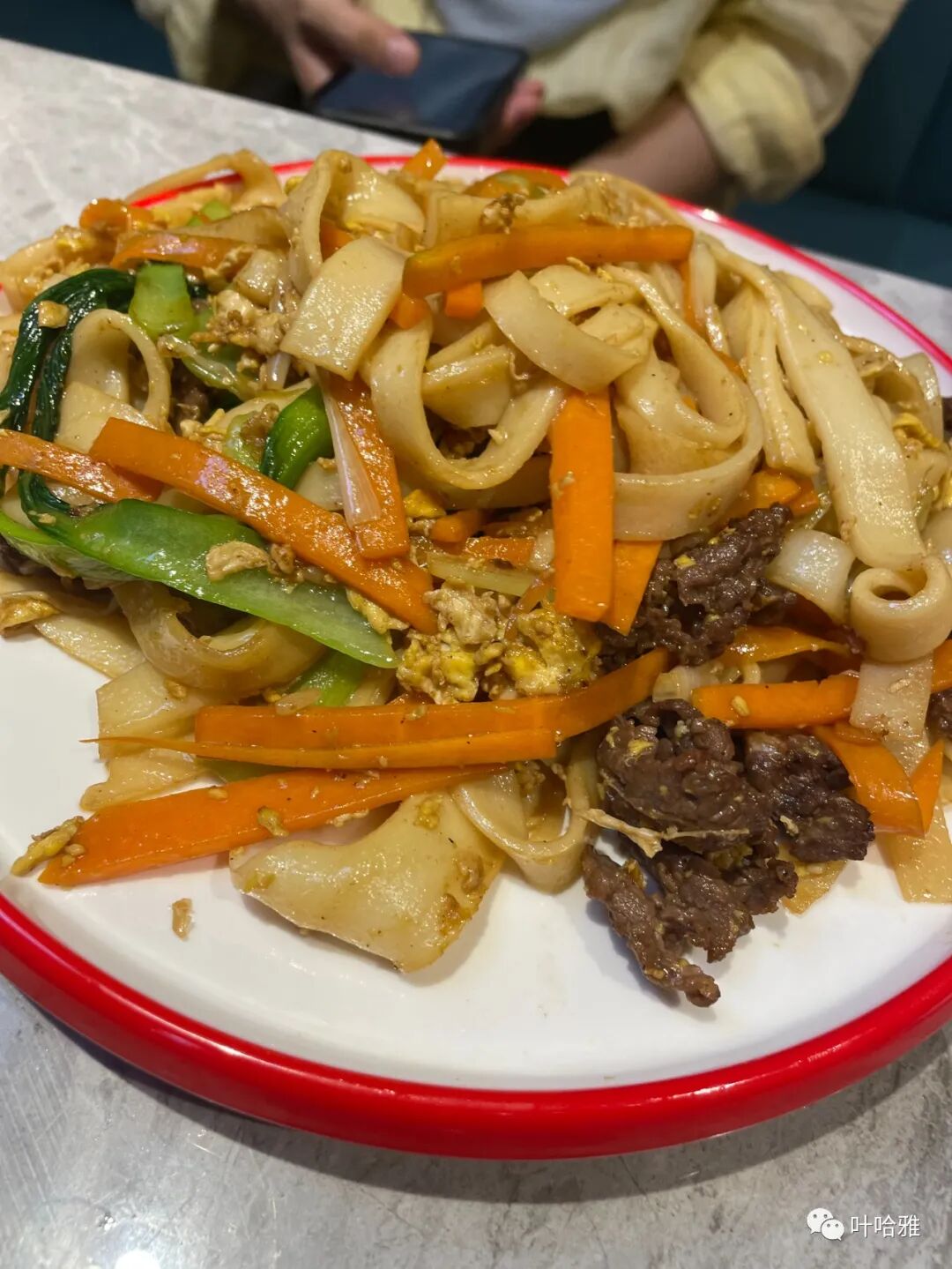
This is the first halal restaurant in Beijing to serve Chaoshan beef hot pot, and you can even get stir-fried beef rice noodles (ganchao niuhe) here.
7. Jingyu Yanyan Halal Cuisine

A high-end restaurant opened by a Ningxia owner in the China World Trade Center, focusing on Beijing dishes and Ningxia specialties.
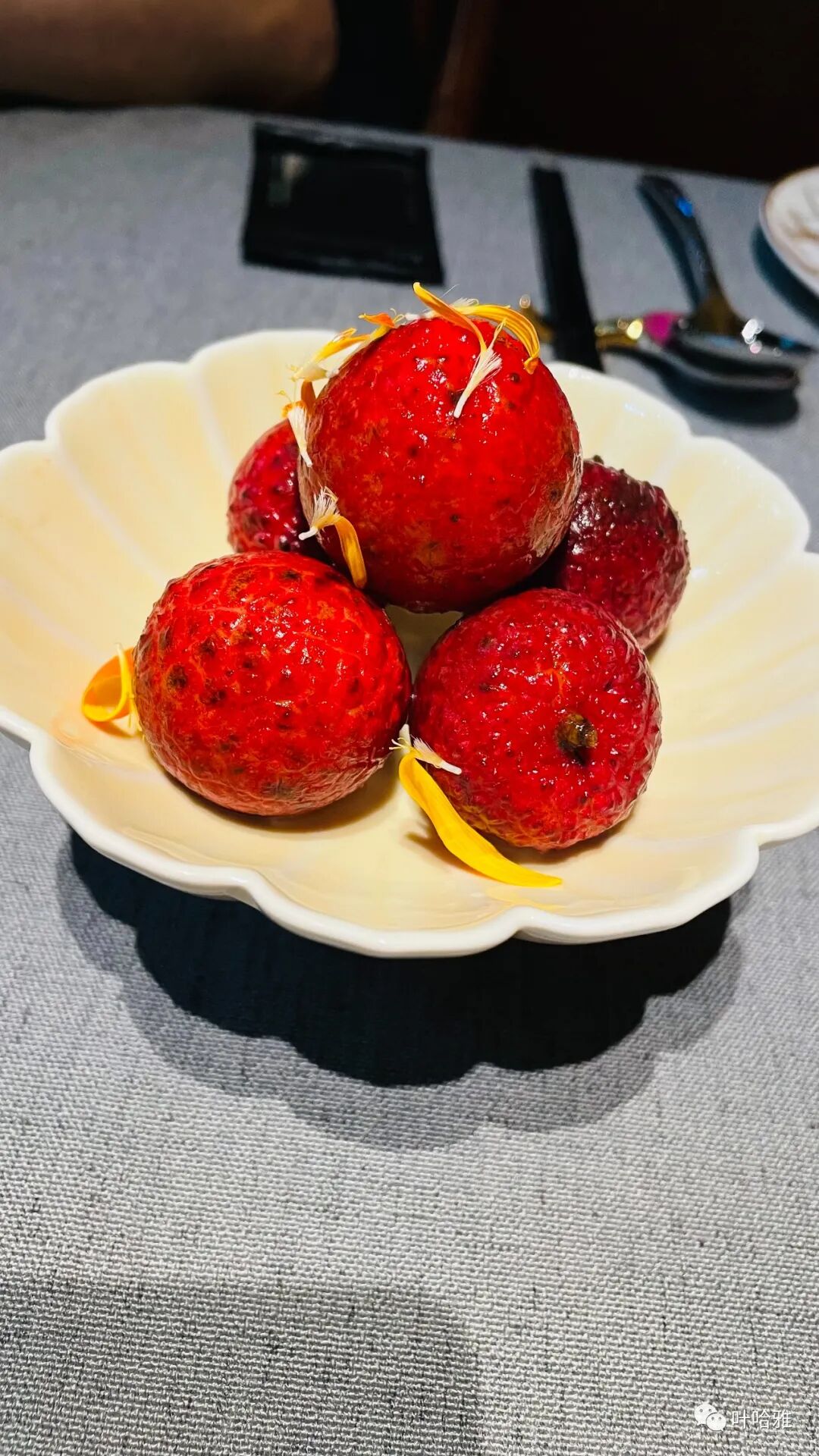
The complimentary lychees served before the meal are icy, sweet, and delicious.
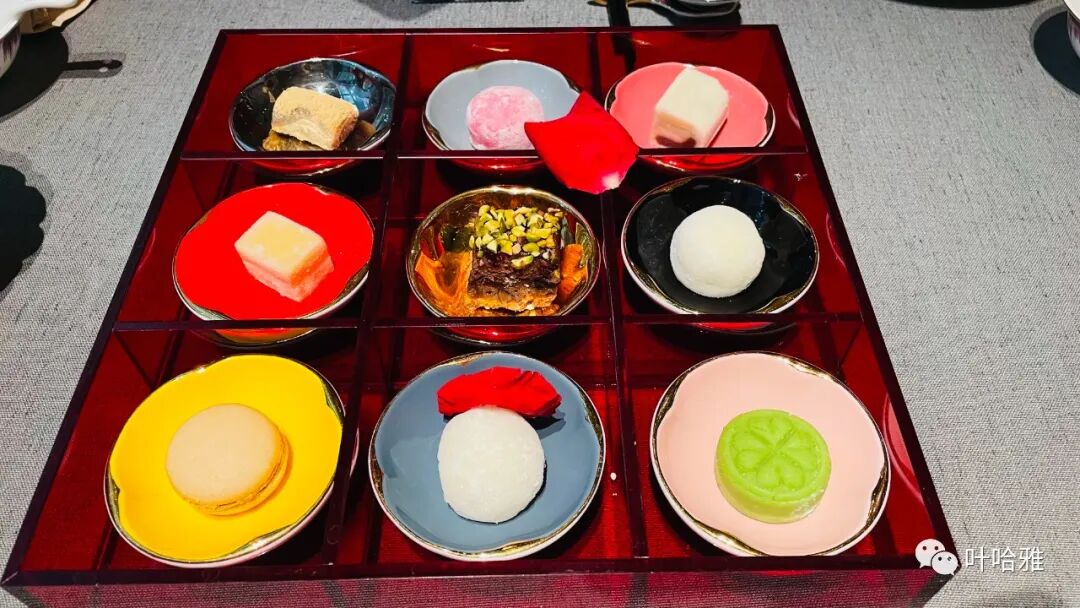
The snack platter features one piece of each dessert, all made with great care.
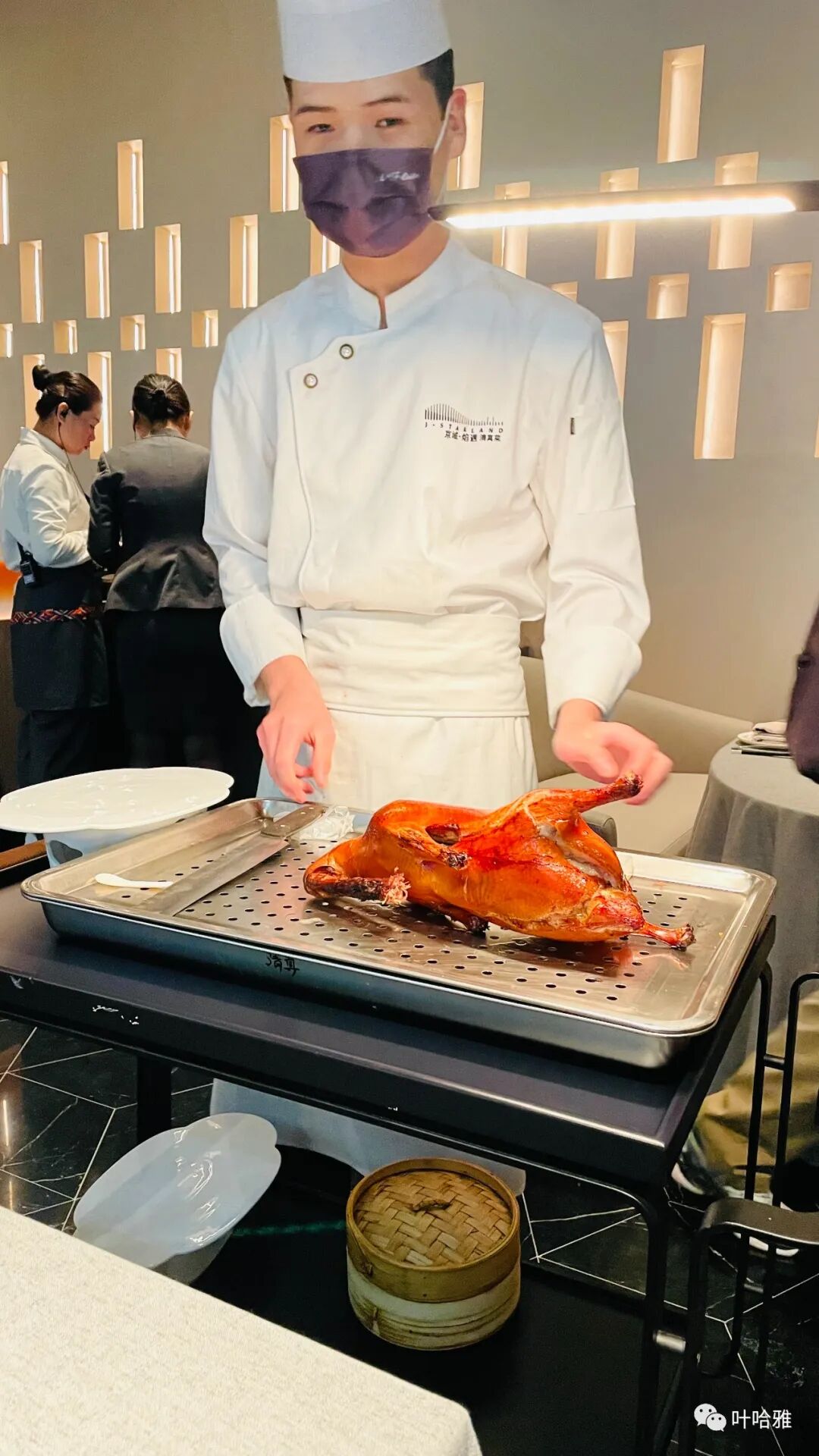
Their signature roast duck is carved by the chef right in front of the guests, and it tastes great.
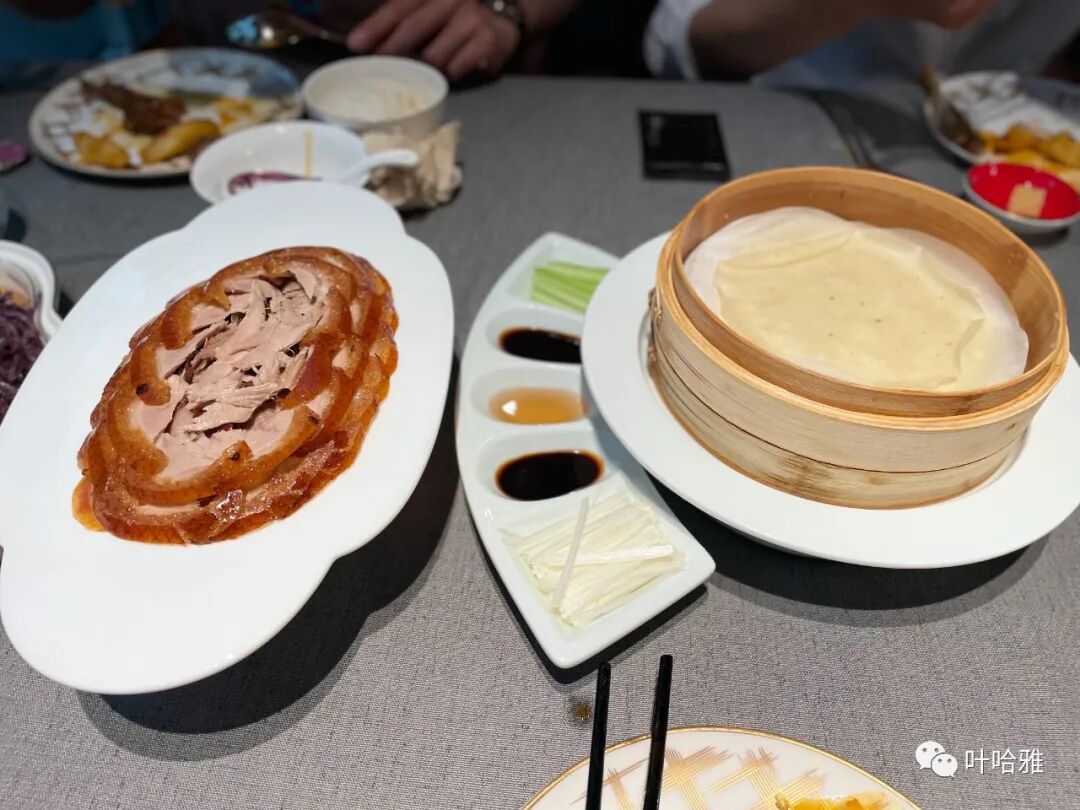
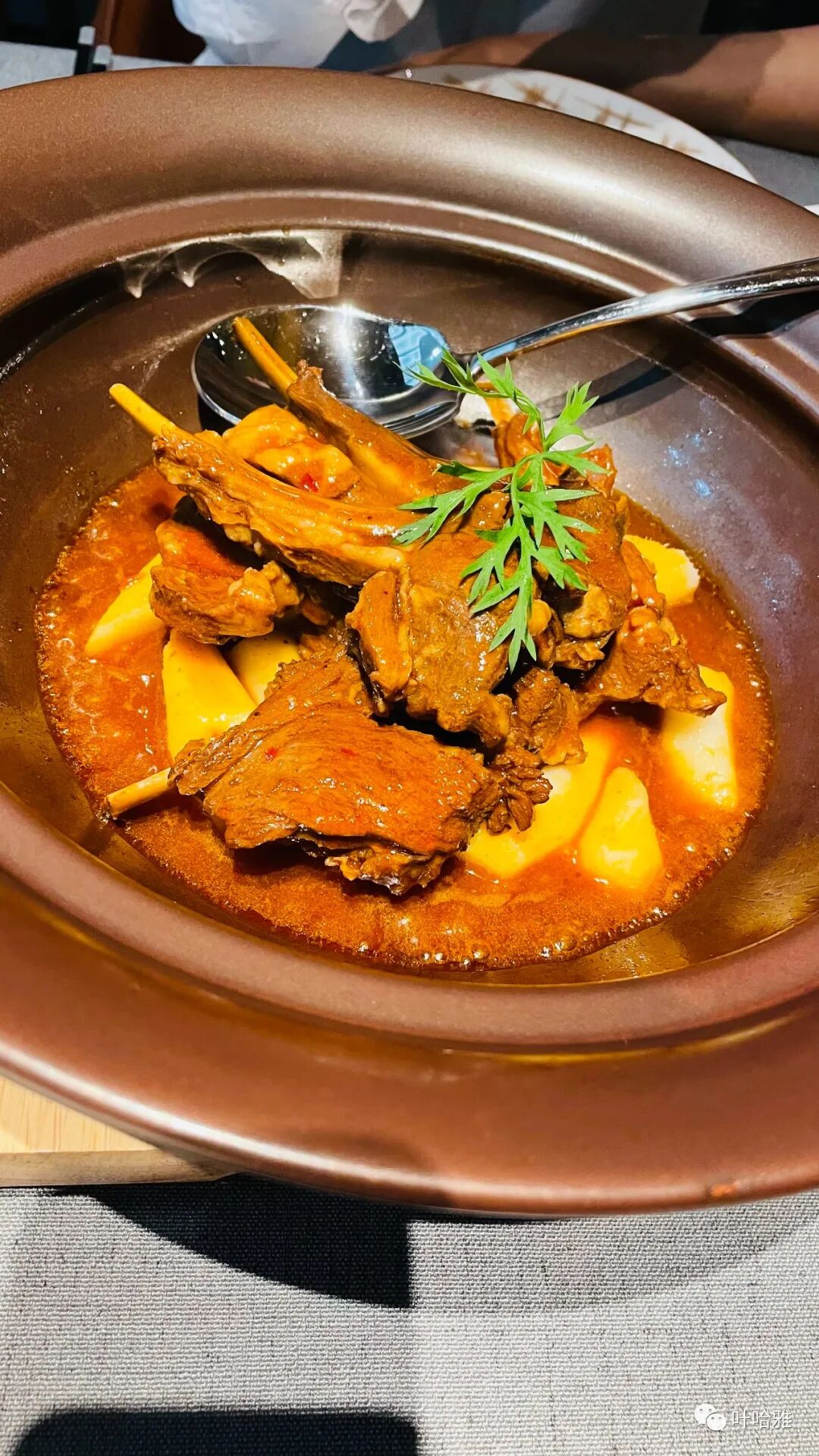
The lamb chops and cold dishes are Ningxia-style, and you can taste the excellent quality of the salt-lake lamb (tanyang).
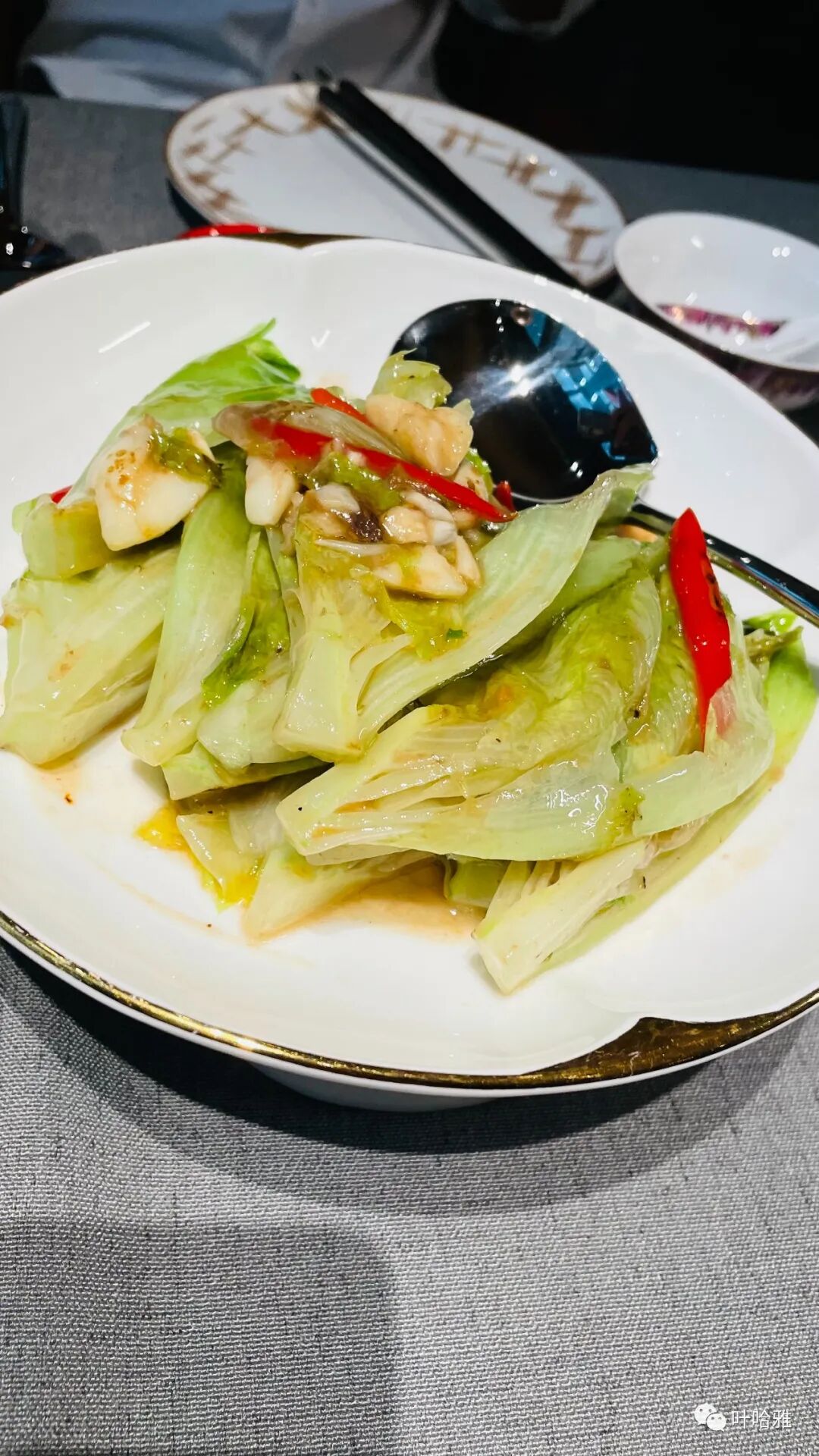
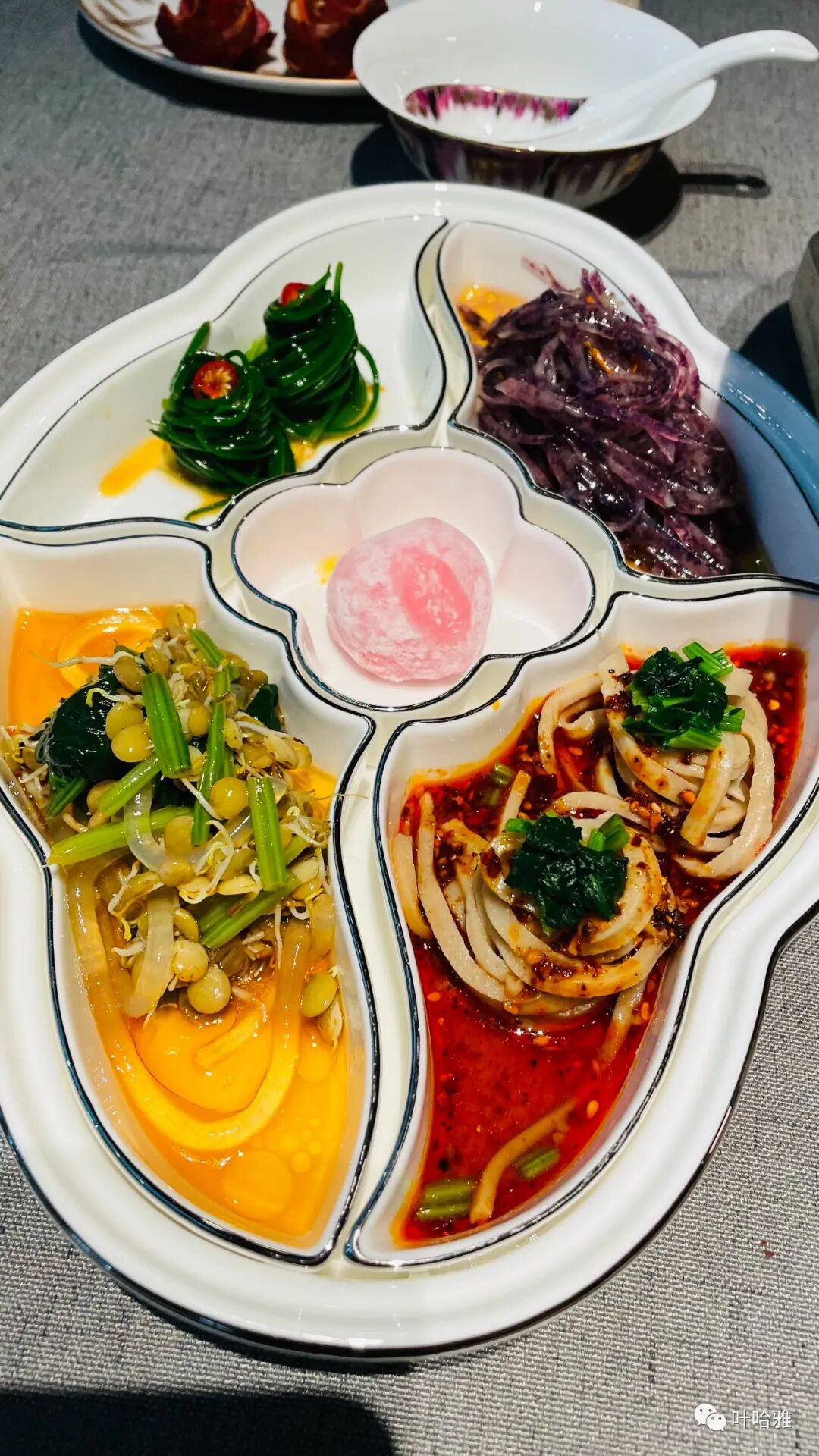
For the main course, we chose the noodle soup slices (tangmianpian), which arrived in a large pot with a flavorful broth and plenty of ingredients.
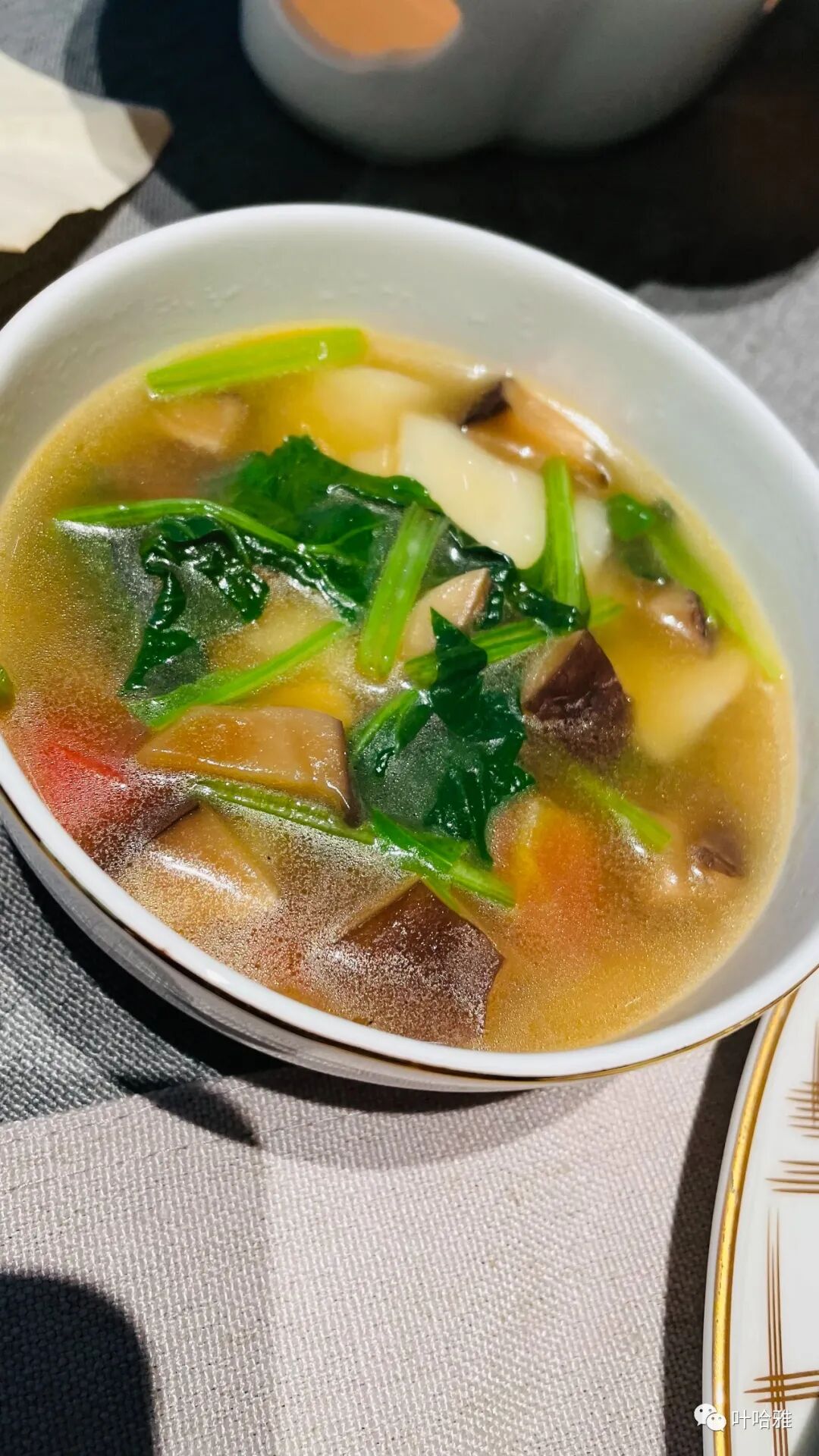
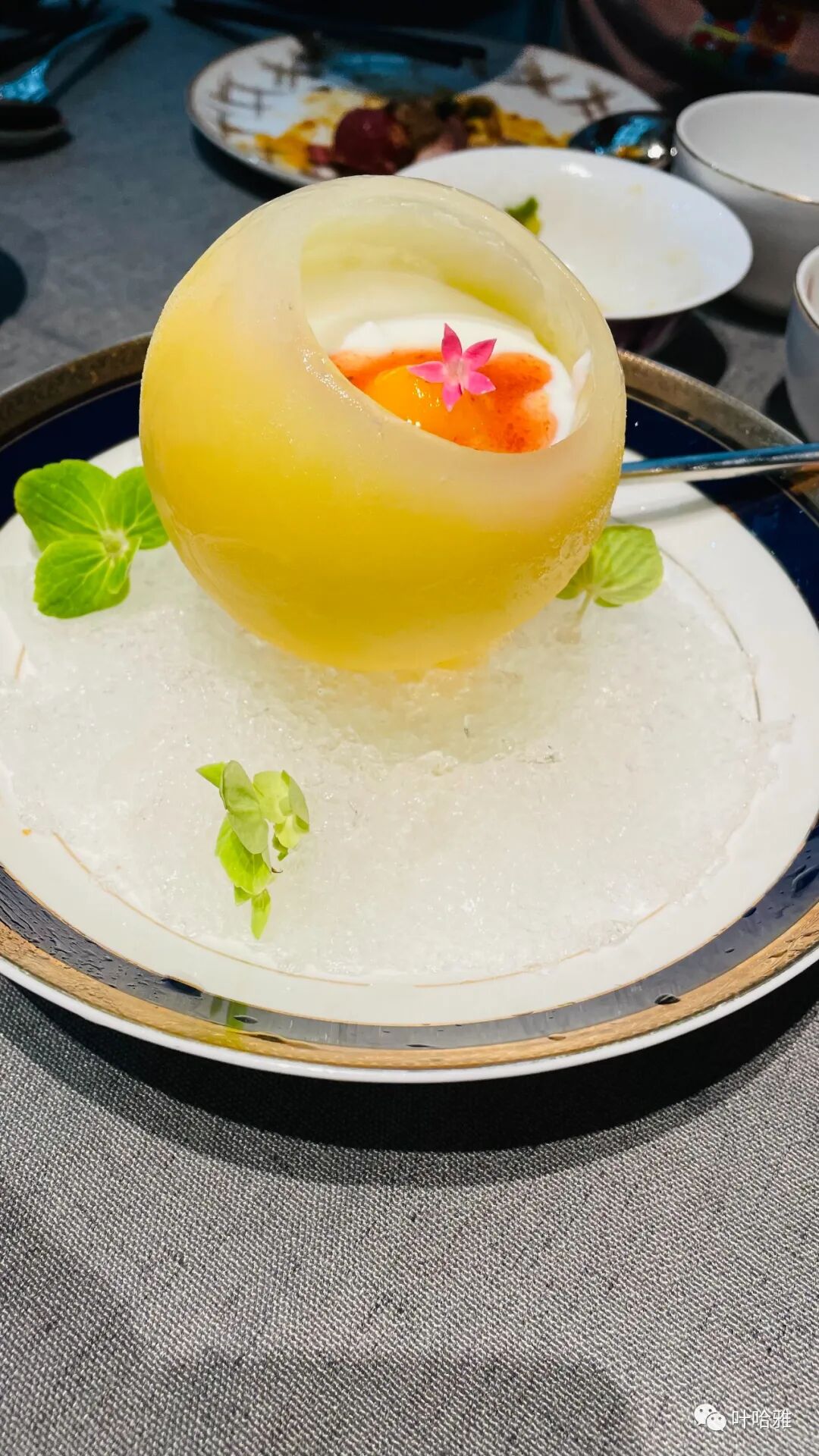
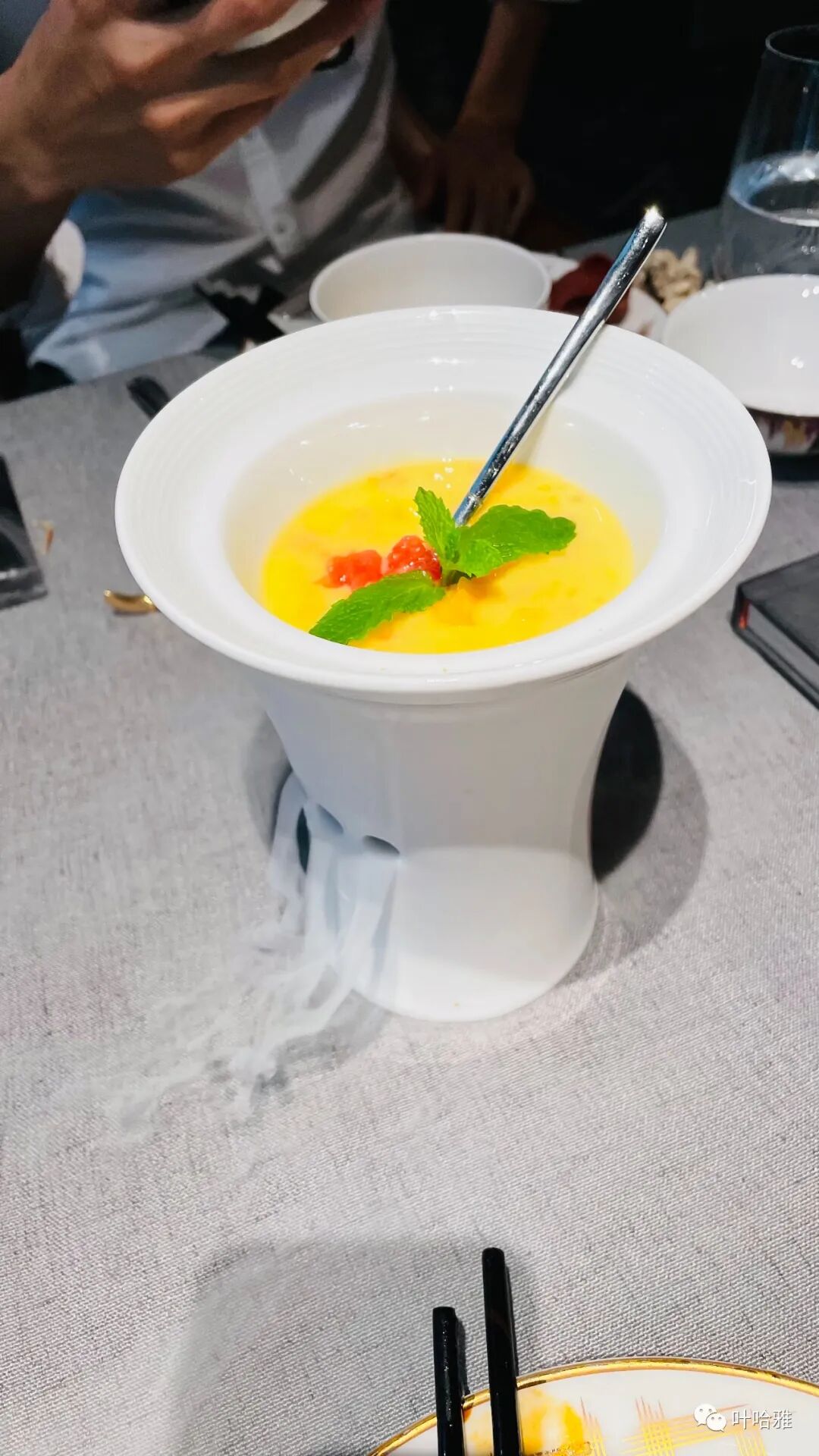
The yogurt rice dumplings (suannai zongzi) and mango pomelo sago (yangzhi ganlu) are the desserts, though I prefer the yogurt rice dumplings.
The average cost is about 200 yuan per person, but the food quality is top-notch and the service is attentive, making it worth bringing a loved one here.
8. Yixiaomei Silk Road Cuisine
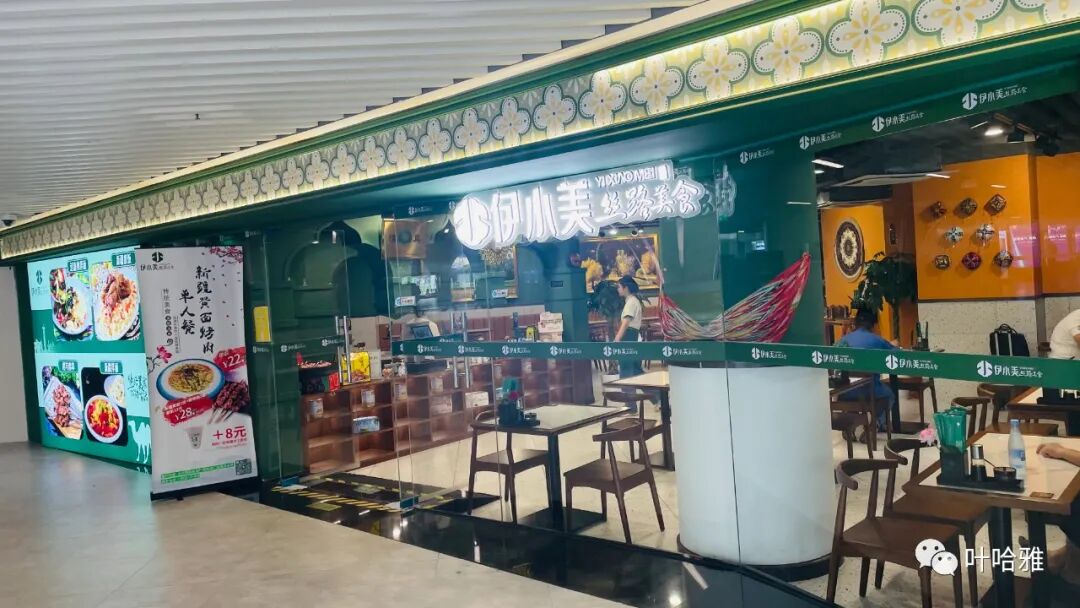
A Xinjiang restaurant at Daxing Airport, located next to the service desk on the second floor of the P1 parking garage, making it very easy to find.
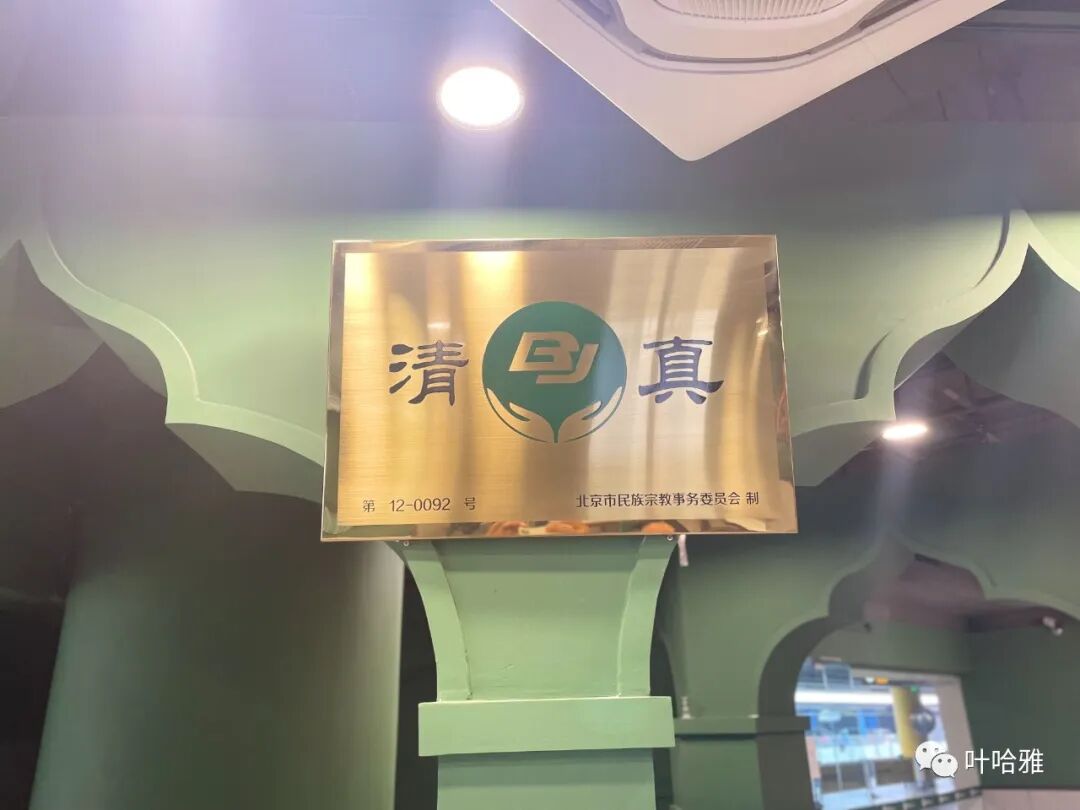
The owner of this Xinjiang restaurant is from Xinjiang, and the chefs were brought here from Yili, Xinjiang.
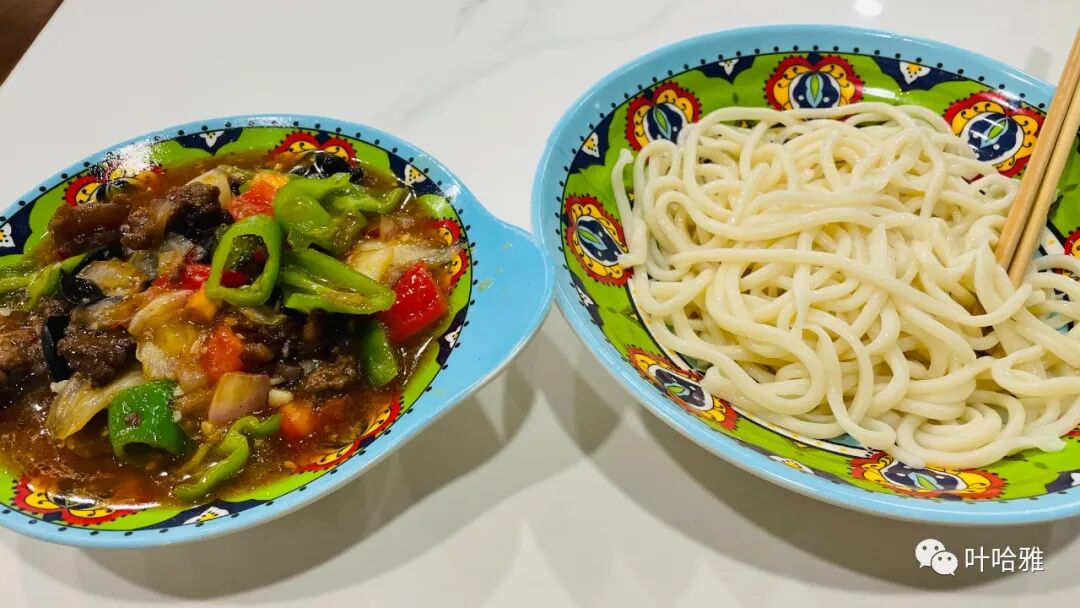
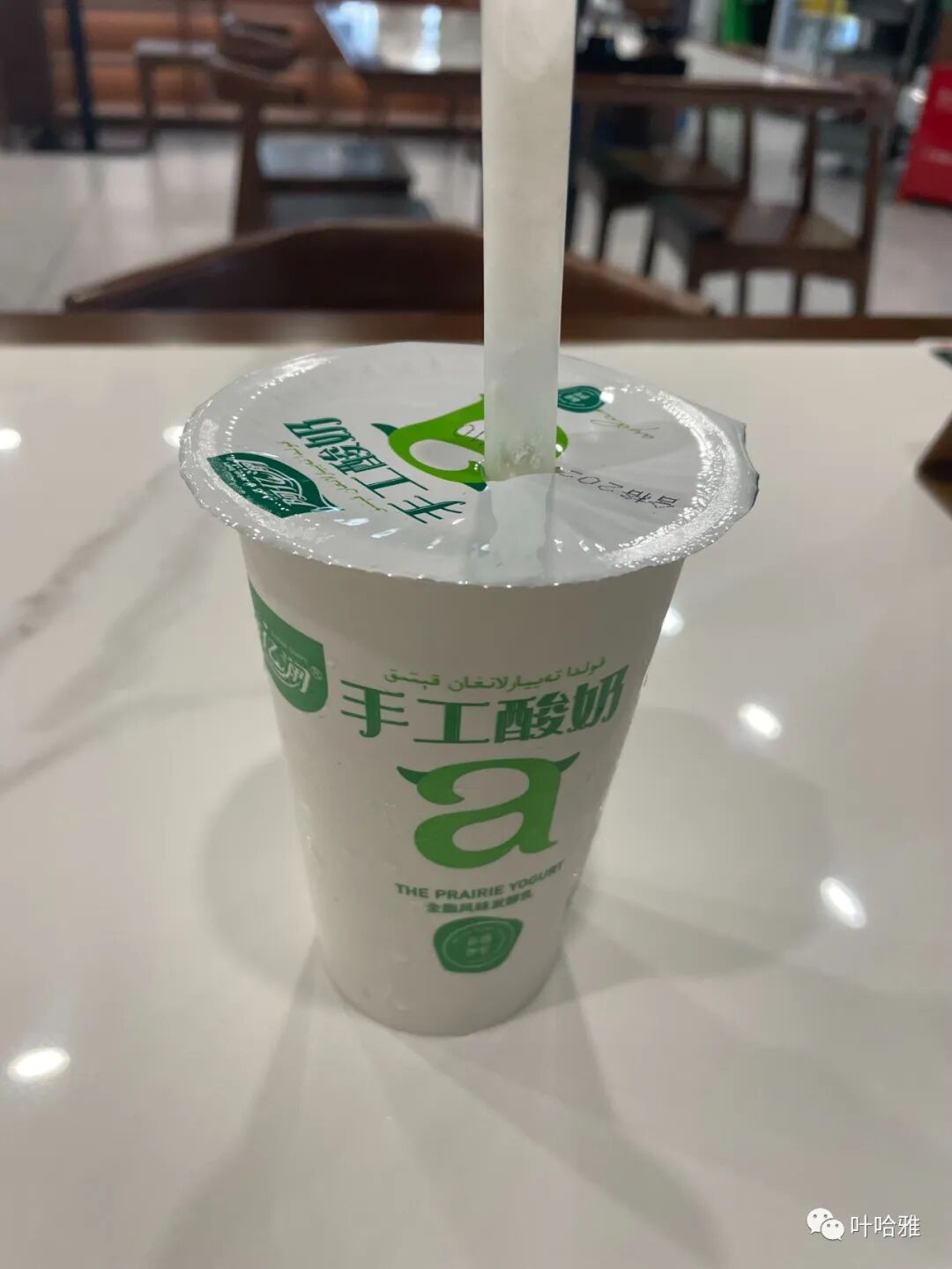
You can eat authentic Yili mixed noodles (banmian) and yogurt here, because their yogurt is truly shipped in from Yili.
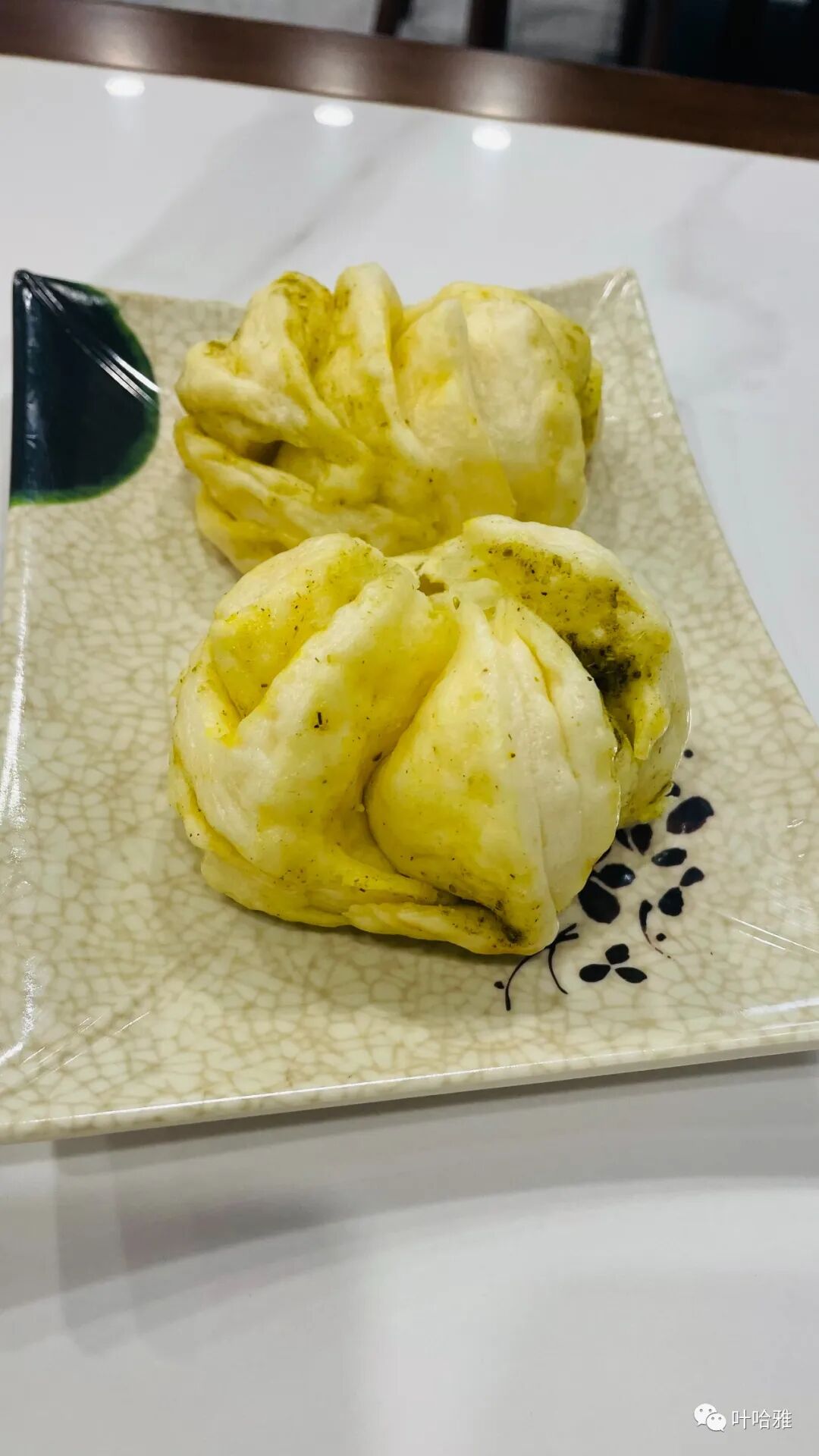
Even these steamed flower rolls (huajuan) are shipped from Yili. Since the airport restaurant cannot easily add new equipment, some dishes are hard to make. You might ask how I know these things come from Yili; it is because I just returned to Beijing from Yili, where I met the owner and the local elders who supply the yogurt and flower rolls.
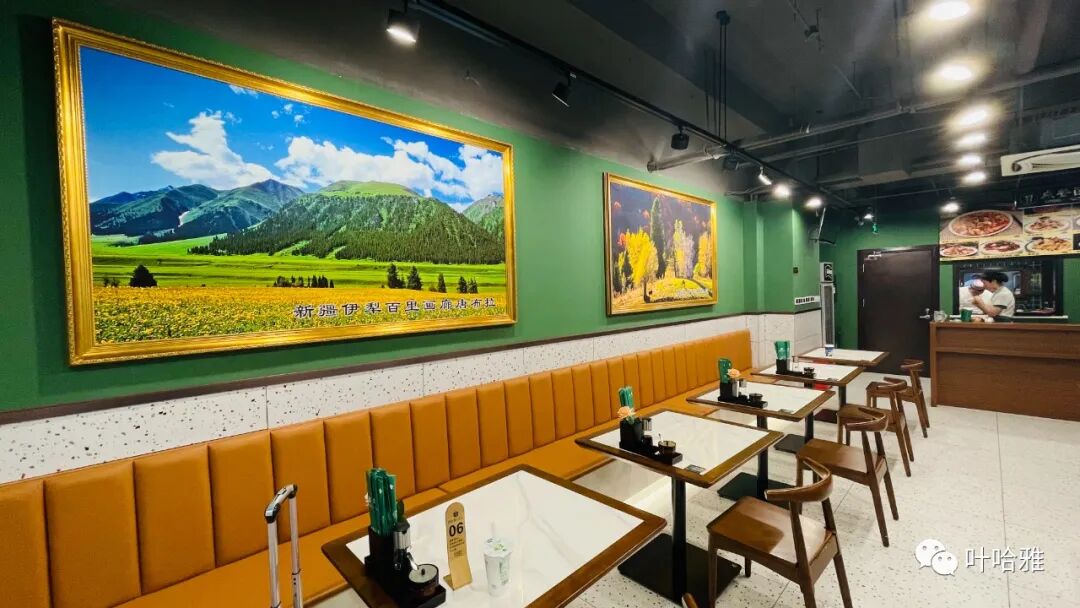
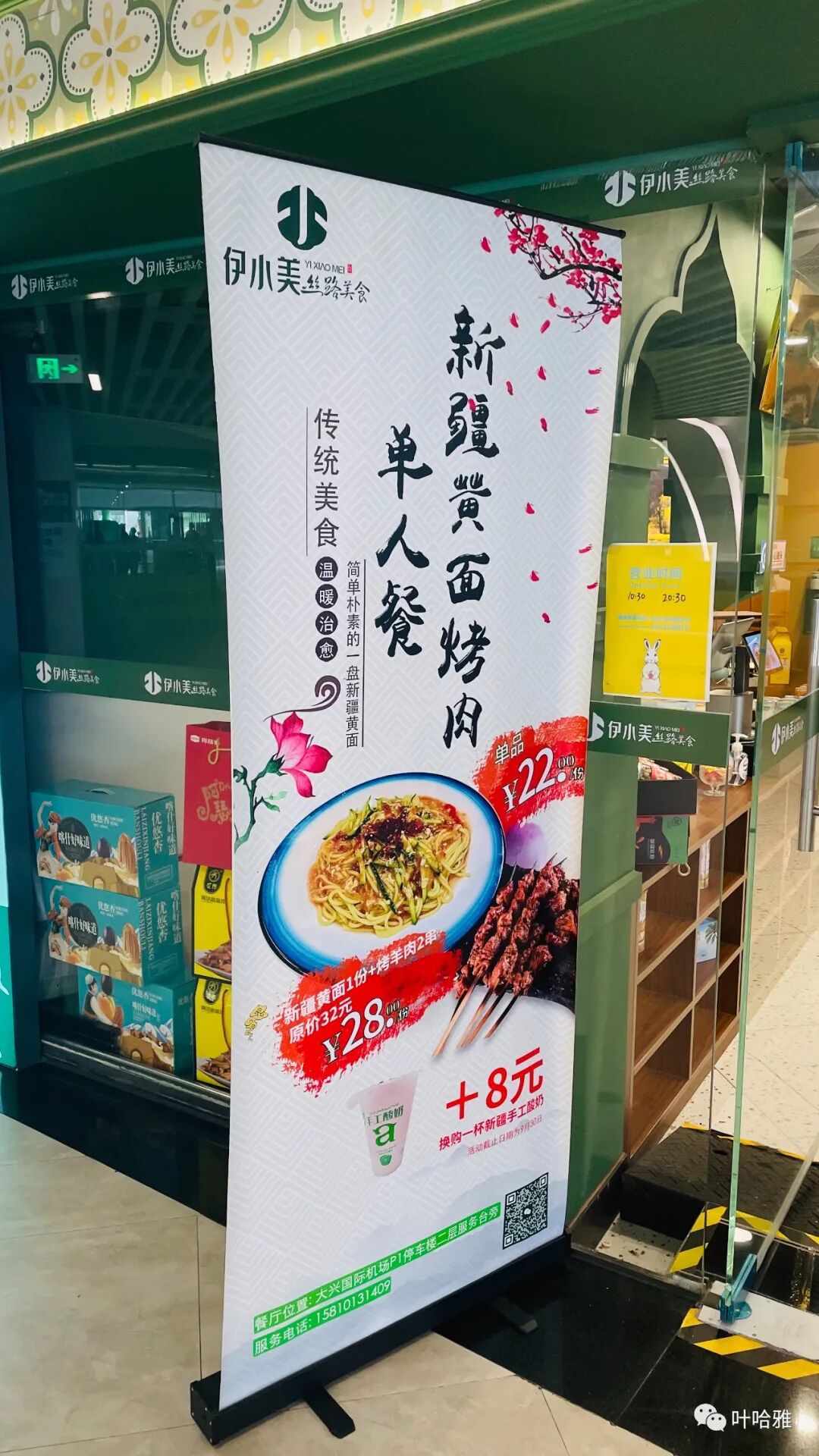
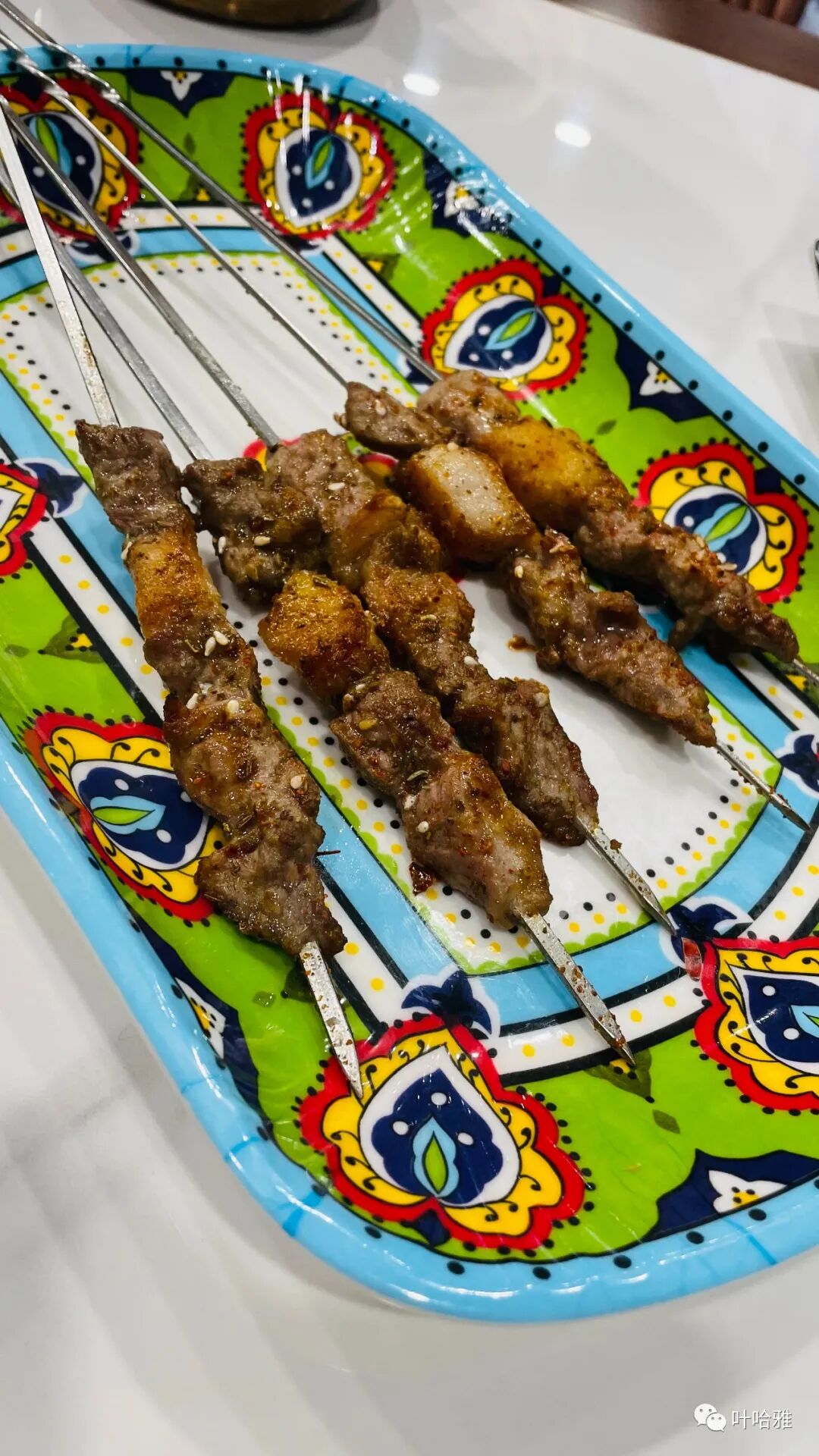
The yellow noodles with grilled meat (huangmian kaorou) are very satisfying. I usually do not eat at the airport and prefer to save my appetite for after I land, but I am truly grateful (shukr) to be able to eat such authentic Xinjiang food at Daxing Airport now.
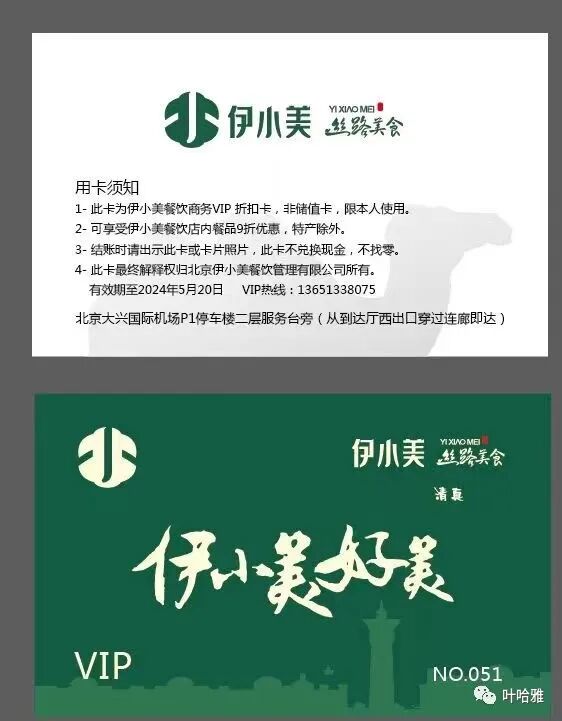
Show the Yixiaomei card below at the shop to get a 10% discount. Remember to save the image, friends (dosti), so you can enjoy good food when you fly out of Daxing Airport.
Summary: This Beijing halal food guide maps issue 36 of the series, covering Samosa China-Pakistan restaurant, halal food verification, lamb hot pot, Chaoshan beef hot pot, Ningxia-style fine dining, and Xinjiang noodles at Daxing Airport.
Beijing Halal Food Map (36) is presented here as a firsthand travel account in clear English, beginning with this scene: I often get private messages from followers asking if a certain restaurant is halal. The account keeps its focus on Beijing Halal Food, Muslim Travel, Middle Eastern Food while preserving the names, places, food, and historical details from the Chinese source.
I often get private messages from followers asking if a certain restaurant is halal. Even when I post photos showing the halal sign hanging in the shop, a few people still feel uneasy and want to get to the bottom of it. I have talked about which foods are not halal according to the scriptures and teachings before. Once I see a business display a halal sign, I stop asking about the source of the ingredients. My reasoning is based on the following hadith:
Aisha (may Allah be pleased with her) reported that a group of people came to the Prophet (peace and blessings of Allah be upon him) and said, 'Some people (nomads from the countryside) bring us meat, and we do not know if they mentioned the name of Allah when slaughtering it.' The Prophet said, 'You mention the name of Allah over it and eat it.' Aisha said, 'Those people had only recently embraced the faith.' — Sahih al-Bukhari
This hadith contains a lot of information and gives clear guidance. Aisha did not trust the newcomers from the countryside and doubted the meat they brought. The Prophet did not tell Aisha to avoid eating it just because she had doubts, nor did he ask her to verify how the ingredients were slaughtered. This was to make life easier for Muslims so they do not have to struggle over food. Strictly speaking, unless you see the halal slaughter process with your own eyes, you have reason to doubt the meat provided by anyone. Even if the restaurant staff wears a headscarf and does not sell alcohol, it still does not prove that the ingredients they purchased are definitely halal. Even if the other party provides non-halal meat, it is their faith that is harmed, not the faith of the person who eats it by mistake. Otherwise, we would only be able to eat meat we slaughtered ourselves to feel at ease.
Of course, some people say that a restaurant selling alcohol is not halal. I am not here to defend restaurant owners who sell alcohol; they will receive their own reward. From the perspective of the scriptures and teachings, as a diner, there is no evidence that you cannot eat at a restaurant that serves alcohol. There is only a hadith mentioning not to sit at the same table as those drinking alcohol. Even regarding the issue of sitting at the same table as drinkers, Sheikh al-Qaradawi suggested that if the intention is to unite with others, then sitting at the same table without drinking is permissible. This is even different from just eating in the same restaurant. If we take it further, would it also be forbidden to be in the same building, on the same street, or even in the same city as someone who drinks? Life is not easy today. I hope we do not spend too much energy on food and drink, as there are more meaningful things to do.
1. SAMOSA China-Pakistan Friendship Restaurant
Samosa is a common fried triangular snack in Indian and Pakistani cuisine. The owner used to run another Indian-Pakistani buffet called ZamZam. This Samosa is located in Xibahe and still offers an 88-yuan buffet.
It just opened and is still in the trial phase. The variety of dishes is not huge, but they have all the essential Indian and Pakistani classics.
This is butter naan (naan) fresh out of the pan. It is one of my favorite Indian-Pakistani treats. I can eat a whole basket of bread with curry.
The buffet includes two desserts and three drinks. I like the green mint drink. The ingredients are high quality, the meat portions are generous, and everything is clean and hygienic.
2. Wanfu Halal Iron Pot Stew
This Harbin-style iron pot stew in Daxing has been open for three months. Three of us ate a pot of beef tendon and brisket (jintoubabao). Aside from the small portions and high price, the taste was very good. I think it tastes better than Uncle Oyster's.
Besides iron pot stew, they also serve Northeast Chinese stir-fry. The biggest surprise was the sweet and sour pork (guobaorou), which comes in several styles.
This is called sticky roll (nianjuanzi). It is made without yeast. You put it into the pot and steam it for 15 minutes while the stew cooks. It is very fragrant.
The owner gave us stone-ground tofu on the house. They make the tofu themselves. With the sauce and seasonings, it feels like eating savory tofu pudding (doufunao), and it is delicious.
We added dried green beans and dried potatoes to the iron pot. These two ingredients taste even better stewed than when they are fresh.
The sweet and sour pork (guobaorou) made by Hui Muslims in Harbin is savory. Their version is crispy on the outside and tender on the inside. We finished a whole plate in no time. It is great to finally find authentic savory sweet and sour pork in Beijing again.
3. Tianqiao Lao Jin Hot Pot (Lao Jin Shuanrou)
Tianqiao Lao Jin Hot Pot opened a new branch at Hufangqiao. They now have two locations, with the other one on Jiaozihu Hutong in Niujie.
Lao Jin cooked the quick-boiled tripe (baodu) for us himself. Their cooking keeps the old Beijing Hui Muslim traditions, such as the way they slice the meat and their dipping sauce recipe. It is very different from modern hot pot styles.
4. Azerbaijan National Pavilion - Maiden Tower Restaurant
The Azerbaijan National Pavilion opened a new restaurant on the third floor called Maiden Tower, which is named after a famous tourist site in Azerbaijan.
The restaurant is inside the pavilion, so you can look at Azerbaijani handicrafts while you eat.
Many Azerbaijani chefs work abroad. Many of the Turkish restaurants we often visit are actually run by Azerbaijanis.
The dishes here suit our tastes well, including these snacks, which are also good for babies to eat.
Creamy eggplant rolls
Jelitme roasted chicken
Beef rice with chestnut and pomegranate sauce
Nut flatbread (jianguobing)
The restaurant is near Sanyuanqiao. It costs about 150 yuan per person, making it a good spot for business dinners and dates.
5. Yangzhilian Fusion Restaurant
This is a new place in the Hui Muslim village of Xueying, Daxing. They sell beef and lamb and also run a restaurant on the side.
Their lamb is really good. It is high quality, not gamey, and not greasy.
This is a hot pot made with lamb chops. After you finish the chops, you can cook vegetables in the broth. These are live vegetables, cut straight from the hydroponic tank, so they are incredibly fresh.
6. Yu
Shanfang Chaoshan Beef Restaurant
This shop near the Pingle Yuan subway station has seen at least three halal restaurants come and go, from Yinmadeng skewers to Qinghai pan-cooked dishes, and now this Chaoshan beef hot pot. Every place here has actually tasted good, so I hope this new style lasts a bit longer.
Every plate of meat comes with a label showing how many seconds to cook it.
This is the first halal restaurant in Beijing to serve Chaoshan beef hot pot, and you can even get stir-fried beef rice noodles (ganchao niuhe) here.
7. Jingyu Yanyan Halal Cuisine
A high-end restaurant opened by a Ningxia owner in the China World Trade Center, focusing on Beijing dishes and Ningxia specialties.
The complimentary lychees served before the meal are icy, sweet, and delicious.
The snack platter features one piece of each dessert, all made with great care.
Their signature roast duck is carved by the chef right in front of the guests, and it tastes great.
The lamb chops and cold dishes are Ningxia-style, and you can taste the excellent quality of the salt-lake lamb (tanyang).
For the main course, we chose the noodle soup slices (tangmianpian), which arrived in a large pot with a flavorful broth and plenty of ingredients.
The yogurt rice dumplings (suannai zongzi) and mango pomelo sago (yangzhi ganlu) are the desserts, though I prefer the yogurt rice dumplings.
The average cost is about 200 yuan per person, but the food quality is top-notch and the service is attentive, making it worth bringing a loved one here.
8. Yixiaomei Silk Road Cuisine
A Xinjiang restaurant at Daxing Airport, located next to the service desk on the second floor of the P1 parking garage, making it very easy to find.
The owner of this Xinjiang restaurant is from Xinjiang, and the chefs were brought here from Yili, Xinjiang.
You can eat authentic Yili mixed noodles (banmian) and yogurt here, because their yogurt is truly shipped in from Yili.
Even these steamed flower rolls (huajuan) are shipped from Yili. Since the airport restaurant cannot easily add new equipment, some dishes are hard to make. You might ask how I know these things come from Yili; it is because I just returned to Beijing from Yili, where I met the owner and the local elders who supply the yogurt and flower rolls.
The yellow noodles with grilled meat (huangmian kaorou) are very satisfying. I usually do not eat at the airport and prefer to save my appetite for after I land, but I am truly grateful (shukr) to be able to eat such authentic Xinjiang food at Daxing Airport now.
Show the Yixiaomei card below at the shop to get a 10% discount. Remember to save the image, friends (dosti), so you can enjoy good food when you fly out of Daxing Airport.
Best Halal Food Beijing: Samosa Pakistani Food, Chaoshan Beef Hot Pot and Daxing Airport Xinjiang Noodles
Articles • yusuf908 posted the article • 0 comments • 132 views • 2026-05-22 21:15
Reposted from the web
Summary: This Beijing halal food guide maps issue 36 of the series, covering Samosa China-Pakistan restaurant, halal food verification, lamb hot pot, Chaoshan beef hot pot, Ningxia-style fine dining, and Xinjiang noodles at Daxing Airport.
Beijing Halal Food Map (36) is presented here as a firsthand travel account in clear English, beginning with this scene: I often get private messages from followers asking if a certain restaurant is halal. The account keeps its focus on Beijing Halal Food, Muslim Travel, Middle Eastern Food while preserving the names, places, food, and historical details from the Chinese source.
I often get private messages from followers asking if a certain restaurant is halal. Even when I post photos showing the halal sign hanging in the shop, a few people still feel uneasy and want to get to the bottom of it. I have talked about which foods are not halal according to the scriptures and teachings before. Once I see a business display a halal sign, I stop asking about the source of the ingredients. My reasoning is based on the following hadith:
Aisha (may Allah be pleased with her) reported that a group of people came to the Prophet (peace and blessings of Allah be upon him) and said, 'Some people (nomads from the countryside) bring us meat, and we do not know if they mentioned the name of Allah when slaughtering it.' The Prophet said, 'You mention the name of Allah over it and eat it.' Aisha said, 'Those people had only recently embraced the faith.' — Sahih al-Bukhari
This hadith contains a lot of information and gives clear guidance. Aisha did not trust the newcomers from the countryside and doubted the meat they brought. The Prophet did not tell Aisha to avoid eating it just because she had doubts, nor did he ask her to verify how the ingredients were slaughtered. This was to make life easier for Muslims so they do not have to struggle over food. Strictly speaking, unless you see the halal slaughter process with your own eyes, you have reason to doubt the meat provided by anyone. Even if the restaurant staff wears a headscarf and does not sell alcohol, it still does not prove that the ingredients they purchased are definitely halal. Even if the other party provides non-halal meat, it is their faith that is harmed, not the faith of the person who eats it by mistake. Otherwise, we would only be able to eat meat we slaughtered ourselves to feel at ease.
Of course, some people say that a restaurant selling alcohol is not halal. I am not here to defend restaurant owners who sell alcohol; they will receive their own reward. From the perspective of the scriptures and teachings, as a diner, there is no evidence that you cannot eat at a restaurant that serves alcohol. There is only a hadith mentioning not to sit at the same table as those drinking alcohol. Even regarding the issue of sitting at the same table as drinkers, Sheikh al-Qaradawi suggested that if the intention is to unite with others, then sitting at the same table without drinking is permissible. This is even different from just eating in the same restaurant. If we take it further, would it also be forbidden to be in the same building, on the same street, or even in the same city as someone who drinks? Life is not easy today. I hope we do not spend too much energy on food and drink, as there are more meaningful things to do.
1. SAMOSA China-Pakistan Friendship Restaurant
Samosa is a common fried triangular snack in Indian and Pakistani cuisine. The owner used to run another Indian-Pakistani buffet called ZamZam. This Samosa is located in Xibahe and still offers an 88-yuan buffet.
It just opened and is still in the trial phase. The variety of dishes is not huge, but they have all the essential Indian and Pakistani classics.
This is butter naan (naan) fresh out of the pan. It is one of my favorite Indian-Pakistani treats. I can eat a whole basket of bread with curry.
The buffet includes two desserts and three drinks. I like the green mint drink. The ingredients are high quality, the meat portions are generous, and everything is clean and hygienic.
2. Wanfu Halal Iron Pot Stew
This Harbin-style iron pot stew in Daxing has been open for three months. Three of us ate a pot of beef tendon and brisket (jintoubabao). Aside from the small portions and high price, the taste was very good. I think it tastes better than Uncle Oyster's.
Besides iron pot stew, they also serve Northeast Chinese stir-fry. The biggest surprise was the sweet and sour pork (guobaorou), which comes in several styles.
This is called sticky roll (nianjuanzi). It is made without yeast. You put it into the pot and steam it for 15 minutes while the stew cooks. It is very fragrant.
The owner gave us stone-ground tofu on the house. They make the tofu themselves. With the sauce and seasonings, it feels like eating savory tofu pudding (doufunao), and it is delicious.
We added dried green beans and dried potatoes to the iron pot. These two ingredients taste even better stewed than when they are fresh.
The sweet and sour pork (guobaorou) made by Hui Muslims in Harbin is savory. Their version is crispy on the outside and tender on the inside. We finished a whole plate in no time. It is great to finally find authentic savory sweet and sour pork in Beijing again.
3. Tianqiao Lao Jin Hot Pot (Lao Jin Shuanrou)
Tianqiao Lao Jin Hot Pot opened a new branch at Hufangqiao. They now have two locations, with the other one on Jiaozihu Hutong in Niujie.
Lao Jin cooked the quick-boiled tripe (baodu) for us himself. Their cooking keeps the old Beijing Hui Muslim traditions, such as the way they slice the meat and their dipping sauce recipe. It is very different from modern hot pot styles.
4. Azerbaijan National Pavilion - Maiden Tower Restaurant
The Azerbaijan National Pavilion opened a new restaurant on the third floor called Maiden Tower, which is named after a famous tourist site in Azerbaijan.
The restaurant is inside the pavilion, so you can look at Azerbaijani handicrafts while you eat.
Many Azerbaijani chefs work abroad. Many of the Turkish restaurants we often visit are actually run by Azerbaijanis.
The dishes here suit our tastes well, including these snacks, which are also good for babies to eat.
Creamy eggplant rolls
Jelitme roasted chicken
Beef rice with chestnut and pomegranate sauce
Nut flatbread (jianguobing)
The restaurant is near Sanyuanqiao. It costs about 150 yuan per person, making it a good spot for business dinners and dates.
5. Yangzhilian Fusion Restaurant
This is a new place in the Hui Muslim village of Xueying, Daxing. They sell beef and lamb and also run a restaurant on the side.
Their lamb is really good. It is high quality, not gamey, and not greasy.
This is a hot pot made with lamb chops. After you finish the chops, you can cook vegetables in the broth. These are live vegetables, cut straight from the hydroponic tank, so they are incredibly fresh.
6. Yu
Shanfang Chaoshan Beef Restaurant
This shop near the Pingle Yuan subway station has seen at least three halal restaurants come and go, from Yinmadeng skewers to Qinghai pan-cooked dishes, and now this Chaoshan beef hot pot. Every place here has actually tasted good, so I hope this new style lasts a bit longer.
Every plate of meat comes with a label showing how many seconds to cook it.
This is the first halal restaurant in Beijing to serve Chaoshan beef hot pot, and you can even get stir-fried beef rice noodles (ganchao niuhe) here.
7. Jingyu Yanyan Halal Cuisine
A high-end restaurant opened by a Ningxia owner in the China World Trade Center, focusing on Beijing dishes and Ningxia specialties.
The complimentary lychees served before the meal are icy, sweet, and delicious.
The snack platter features one piece of each dessert, all made with great care.
Their signature roast duck is carved by the chef right in front of the guests, and it tastes great.
The lamb chops and cold dishes are Ningxia-style, and you can taste the excellent quality of the salt-lake lamb (tanyang).
For the main course, we chose the noodle soup slices (tangmianpian), which arrived in a large pot with a flavorful broth and plenty of ingredients.
The yogurt rice dumplings (suannai zongzi) and mango pomelo sago (yangzhi ganlu) are the desserts, though I prefer the yogurt rice dumplings.
The average cost is about 200 yuan per person, but the food quality is top-notch and the service is attentive, making it worth bringing a loved one here.
8. Yixiaomei Silk Road Cuisine
A Xinjiang restaurant at Daxing Airport, located next to the service desk on the second floor of the P1 parking garage, making it very easy to find.
The owner of this Xinjiang restaurant is from Xinjiang, and the chefs were brought here from Yili, Xinjiang.
You can eat authentic Yili mixed noodles (banmian) and yogurt here, because their yogurt is truly shipped in from Yili.
Even these steamed flower rolls (huajuan) are shipped from Yili. Since the airport restaurant cannot easily add new equipment, some dishes are hard to make. You might ask how I know these things come from Yili; it is because I just returned to Beijing from Yili, where I met the owner and the local elders who supply the yogurt and flower rolls.
The yellow noodles with grilled meat (huangmian kaorou) are very satisfying. I usually do not eat at the airport and prefer to save my appetite for after I land, but I am truly grateful (shukr) to be able to eat such authentic Xinjiang food at Daxing Airport now.
Show the Yixiaomei card below at the shop to get a 10% discount. Remember to save the image, friends (dosti), so you can enjoy good food when you fly out of Daxing Airport. view all
Summary: This Beijing halal food guide maps issue 36 of the series, covering Samosa China-Pakistan restaurant, halal food verification, lamb hot pot, Chaoshan beef hot pot, Ningxia-style fine dining, and Xinjiang noodles at Daxing Airport.
Beijing Halal Food Map (36) is presented here as a firsthand travel account in clear English, beginning with this scene: I often get private messages from followers asking if a certain restaurant is halal. The account keeps its focus on Beijing Halal Food, Muslim Travel, Middle Eastern Food while preserving the names, places, food, and historical details from the Chinese source.
I often get private messages from followers asking if a certain restaurant is halal. Even when I post photos showing the halal sign hanging in the shop, a few people still feel uneasy and want to get to the bottom of it. I have talked about which foods are not halal according to the scriptures and teachings before. Once I see a business display a halal sign, I stop asking about the source of the ingredients. My reasoning is based on the following hadith:
Aisha (may Allah be pleased with her) reported that a group of people came to the Prophet (peace and blessings of Allah be upon him) and said, 'Some people (nomads from the countryside) bring us meat, and we do not know if they mentioned the name of Allah when slaughtering it.' The Prophet said, 'You mention the name of Allah over it and eat it.' Aisha said, 'Those people had only recently embraced the faith.' — Sahih al-Bukhari
This hadith contains a lot of information and gives clear guidance. Aisha did not trust the newcomers from the countryside and doubted the meat they brought. The Prophet did not tell Aisha to avoid eating it just because she had doubts, nor did he ask her to verify how the ingredients were slaughtered. This was to make life easier for Muslims so they do not have to struggle over food. Strictly speaking, unless you see the halal slaughter process with your own eyes, you have reason to doubt the meat provided by anyone. Even if the restaurant staff wears a headscarf and does not sell alcohol, it still does not prove that the ingredients they purchased are definitely halal. Even if the other party provides non-halal meat, it is their faith that is harmed, not the faith of the person who eats it by mistake. Otherwise, we would only be able to eat meat we slaughtered ourselves to feel at ease.
Of course, some people say that a restaurant selling alcohol is not halal. I am not here to defend restaurant owners who sell alcohol; they will receive their own reward. From the perspective of the scriptures and teachings, as a diner, there is no evidence that you cannot eat at a restaurant that serves alcohol. There is only a hadith mentioning not to sit at the same table as those drinking alcohol. Even regarding the issue of sitting at the same table as drinkers, Sheikh al-Qaradawi suggested that if the intention is to unite with others, then sitting at the same table without drinking is permissible. This is even different from just eating in the same restaurant. If we take it further, would it also be forbidden to be in the same building, on the same street, or even in the same city as someone who drinks? Life is not easy today. I hope we do not spend too much energy on food and drink, as there are more meaningful things to do.
1. SAMOSA China-Pakistan Friendship Restaurant
Samosa is a common fried triangular snack in Indian and Pakistani cuisine. The owner used to run another Indian-Pakistani buffet called ZamZam. This Samosa is located in Xibahe and still offers an 88-yuan buffet.
It just opened and is still in the trial phase. The variety of dishes is not huge, but they have all the essential Indian and Pakistani classics.
This is butter naan (naan) fresh out of the pan. It is one of my favorite Indian-Pakistani treats. I can eat a whole basket of bread with curry.
The buffet includes two desserts and three drinks. I like the green mint drink. The ingredients are high quality, the meat portions are generous, and everything is clean and hygienic.
2. Wanfu Halal Iron Pot Stew
This Harbin-style iron pot stew in Daxing has been open for three months. Three of us ate a pot of beef tendon and brisket (jintoubabao). Aside from the small portions and high price, the taste was very good. I think it tastes better than Uncle Oyster's.
Besides iron pot stew, they also serve Northeast Chinese stir-fry. The biggest surprise was the sweet and sour pork (guobaorou), which comes in several styles.
This is called sticky roll (nianjuanzi). It is made without yeast. You put it into the pot and steam it for 15 minutes while the stew cooks. It is very fragrant.
The owner gave us stone-ground tofu on the house. They make the tofu themselves. With the sauce and seasonings, it feels like eating savory tofu pudding (doufunao), and it is delicious.
We added dried green beans and dried potatoes to the iron pot. These two ingredients taste even better stewed than when they are fresh.
The sweet and sour pork (guobaorou) made by Hui Muslims in Harbin is savory. Their version is crispy on the outside and tender on the inside. We finished a whole plate in no time. It is great to finally find authentic savory sweet and sour pork in Beijing again.
3. Tianqiao Lao Jin Hot Pot (Lao Jin Shuanrou)
Tianqiao Lao Jin Hot Pot opened a new branch at Hufangqiao. They now have two locations, with the other one on Jiaozihu Hutong in Niujie.
Lao Jin cooked the quick-boiled tripe (baodu) for us himself. Their cooking keeps the old Beijing Hui Muslim traditions, such as the way they slice the meat and their dipping sauce recipe. It is very different from modern hot pot styles.
4. Azerbaijan National Pavilion - Maiden Tower Restaurant
The Azerbaijan National Pavilion opened a new restaurant on the third floor called Maiden Tower, which is named after a famous tourist site in Azerbaijan.
The restaurant is inside the pavilion, so you can look at Azerbaijani handicrafts while you eat.
Many Azerbaijani chefs work abroad. Many of the Turkish restaurants we often visit are actually run by Azerbaijanis.
The dishes here suit our tastes well, including these snacks, which are also good for babies to eat.
Creamy eggplant rolls
Jelitme roasted chicken
Beef rice with chestnut and pomegranate sauce
Nut flatbread (jianguobing)
The restaurant is near Sanyuanqiao. It costs about 150 yuan per person, making it a good spot for business dinners and dates.
5. Yangzhilian Fusion Restaurant
This is a new place in the Hui Muslim village of Xueying, Daxing. They sell beef and lamb and also run a restaurant on the side.
Their lamb is really good. It is high quality, not gamey, and not greasy.
This is a hot pot made with lamb chops. After you finish the chops, you can cook vegetables in the broth. These are live vegetables, cut straight from the hydroponic tank, so they are incredibly fresh.
6. Yu
Shanfang Chaoshan Beef Restaurant
This shop near the Pingle Yuan subway station has seen at least three halal restaurants come and go, from Yinmadeng skewers to Qinghai pan-cooked dishes, and now this Chaoshan beef hot pot. Every place here has actually tasted good, so I hope this new style lasts a bit longer.
Every plate of meat comes with a label showing how many seconds to cook it.
This is the first halal restaurant in Beijing to serve Chaoshan beef hot pot, and you can even get stir-fried beef rice noodles (ganchao niuhe) here.
7. Jingyu Yanyan Halal Cuisine
A high-end restaurant opened by a Ningxia owner in the China World Trade Center, focusing on Beijing dishes and Ningxia specialties.
The complimentary lychees served before the meal are icy, sweet, and delicious.
The snack platter features one piece of each dessert, all made with great care.
Their signature roast duck is carved by the chef right in front of the guests, and it tastes great.
The lamb chops and cold dishes are Ningxia-style, and you can taste the excellent quality of the salt-lake lamb (tanyang).
For the main course, we chose the noodle soup slices (tangmianpian), which arrived in a large pot with a flavorful broth and plenty of ingredients.
The yogurt rice dumplings (suannai zongzi) and mango pomelo sago (yangzhi ganlu) are the desserts, though I prefer the yogurt rice dumplings.
The average cost is about 200 yuan per person, but the food quality is top-notch and the service is attentive, making it worth bringing a loved one here.
8. Yixiaomei Silk Road Cuisine
A Xinjiang restaurant at Daxing Airport, located next to the service desk on the second floor of the P1 parking garage, making it very easy to find.
The owner of this Xinjiang restaurant is from Xinjiang, and the chefs were brought here from Yili, Xinjiang.
You can eat authentic Yili mixed noodles (banmian) and yogurt here, because their yogurt is truly shipped in from Yili.
Even these steamed flower rolls (huajuan) are shipped from Yili. Since the airport restaurant cannot easily add new equipment, some dishes are hard to make. You might ask how I know these things come from Yili; it is because I just returned to Beijing from Yili, where I met the owner and the local elders who supply the yogurt and flower rolls.
The yellow noodles with grilled meat (huangmian kaorou) are very satisfying. I usually do not eat at the airport and prefer to save my appetite for after I land, but I am truly grateful (shukr) to be able to eat such authentic Xinjiang food at Daxing Airport now.
Show the Yixiaomei card below at the shop to get a 10% discount. Remember to save the image, friends (dosti), so you can enjoy good food when you fly out of Daxing Airport. view all
Reposted from the web
Summary: This Beijing halal food guide maps issue 36 of the series, covering Samosa China-Pakistan restaurant, halal food verification, lamb hot pot, Chaoshan beef hot pot, Ningxia-style fine dining, and Xinjiang noodles at Daxing Airport.
Beijing Halal Food Map (36) is presented here as a firsthand travel account in clear English, beginning with this scene: I often get private messages from followers asking if a certain restaurant is halal. The account keeps its focus on Beijing Halal Food, Muslim Travel, Middle Eastern Food while preserving the names, places, food, and historical details from the Chinese source.
I often get private messages from followers asking if a certain restaurant is halal. Even when I post photos showing the halal sign hanging in the shop, a few people still feel uneasy and want to get to the bottom of it. I have talked about which foods are not halal according to the scriptures and teachings before. Once I see a business display a halal sign, I stop asking about the source of the ingredients. My reasoning is based on the following hadith:
Aisha (may Allah be pleased with her) reported that a group of people came to the Prophet (peace and blessings of Allah be upon him) and said, 'Some people (nomads from the countryside) bring us meat, and we do not know if they mentioned the name of Allah when slaughtering it.' The Prophet said, 'You mention the name of Allah over it and eat it.' Aisha said, 'Those people had only recently embraced the faith.' — Sahih al-Bukhari
This hadith contains a lot of information and gives clear guidance. Aisha did not trust the newcomers from the countryside and doubted the meat they brought. The Prophet did not tell Aisha to avoid eating it just because she had doubts, nor did he ask her to verify how the ingredients were slaughtered. This was to make life easier for Muslims so they do not have to struggle over food. Strictly speaking, unless you see the halal slaughter process with your own eyes, you have reason to doubt the meat provided by anyone. Even if the restaurant staff wears a headscarf and does not sell alcohol, it still does not prove that the ingredients they purchased are definitely halal. Even if the other party provides non-halal meat, it is their faith that is harmed, not the faith of the person who eats it by mistake. Otherwise, we would only be able to eat meat we slaughtered ourselves to feel at ease.
Of course, some people say that a restaurant selling alcohol is not halal. I am not here to defend restaurant owners who sell alcohol; they will receive their own reward. From the perspective of the scriptures and teachings, as a diner, there is no evidence that you cannot eat at a restaurant that serves alcohol. There is only a hadith mentioning not to sit at the same table as those drinking alcohol. Even regarding the issue of sitting at the same table as drinkers, Sheikh al-Qaradawi suggested that if the intention is to unite with others, then sitting at the same table without drinking is permissible. This is even different from just eating in the same restaurant. If we take it further, would it also be forbidden to be in the same building, on the same street, or even in the same city as someone who drinks? Life is not easy today. I hope we do not spend too much energy on food and drink, as there are more meaningful things to do.
1. SAMOSA China-Pakistan Friendship Restaurant
Samosa is a common fried triangular snack in Indian and Pakistani cuisine. The owner used to run another Indian-Pakistani buffet called ZamZam. This Samosa is located in Xibahe and still offers an 88-yuan buffet.
It just opened and is still in the trial phase. The variety of dishes is not huge, but they have all the essential Indian and Pakistani classics.
This is butter naan (naan) fresh out of the pan. It is one of my favorite Indian-Pakistani treats. I can eat a whole basket of bread with curry.
The buffet includes two desserts and three drinks. I like the green mint drink. The ingredients are high quality, the meat portions are generous, and everything is clean and hygienic.
2. Wanfu Halal Iron Pot Stew
This Harbin-style iron pot stew in Daxing has been open for three months. Three of us ate a pot of beef tendon and brisket (jintoubabao). Aside from the small portions and high price, the taste was very good. I think it tastes better than Uncle Oyster's.
Besides iron pot stew, they also serve Northeast Chinese stir-fry. The biggest surprise was the sweet and sour pork (guobaorou), which comes in several styles.
This is called sticky roll (nianjuanzi). It is made without yeast. You put it into the pot and steam it for 15 minutes while the stew cooks. It is very fragrant.
The owner gave us stone-ground tofu on the house. They make the tofu themselves. With the sauce and seasonings, it feels like eating savory tofu pudding (doufunao), and it is delicious.
We added dried green beans and dried potatoes to the iron pot. These two ingredients taste even better stewed than when they are fresh.
The sweet and sour pork (guobaorou) made by Hui Muslims in Harbin is savory. Their version is crispy on the outside and tender on the inside. We finished a whole plate in no time. It is great to finally find authentic savory sweet and sour pork in Beijing again.
3. Tianqiao Lao Jin Hot Pot (Lao Jin Shuanrou)
Tianqiao Lao Jin Hot Pot opened a new branch at Hufangqiao. They now have two locations, with the other one on Jiaozihu Hutong in Niujie.
Lao Jin cooked the quick-boiled tripe (baodu) for us himself. Their cooking keeps the old Beijing Hui Muslim traditions, such as the way they slice the meat and their dipping sauce recipe. It is very different from modern hot pot styles.
4. Azerbaijan National Pavilion - Maiden Tower Restaurant
The Azerbaijan National Pavilion opened a new restaurant on the third floor called Maiden Tower, which is named after a famous tourist site in Azerbaijan.
The restaurant is inside the pavilion, so you can look at Azerbaijani handicrafts while you eat.
Many Azerbaijani chefs work abroad. Many of the Turkish restaurants we often visit are actually run by Azerbaijanis.
The dishes here suit our tastes well, including these snacks, which are also good for babies to eat.
Creamy eggplant rolls
Jelitme roasted chicken
Beef rice with chestnut and pomegranate sauce
Nut flatbread (jianguobing)
The restaurant is near Sanyuanqiao. It costs about 150 yuan per person, making it a good spot for business dinners and dates.
5. Yangzhilian Fusion Restaurant
This is a new place in the Hui Muslim village of Xueying, Daxing. They sell beef and lamb and also run a restaurant on the side.
Their lamb is really good. It is high quality, not gamey, and not greasy.
This is a hot pot made with lamb chops. After you finish the chops, you can cook vegetables in the broth. These are live vegetables, cut straight from the hydroponic tank, so they are incredibly fresh.
6. Yu
Shanfang Chaoshan Beef Restaurant
This shop near the Pingle Yuan subway station has seen at least three halal restaurants come and go, from Yinmadeng skewers to Qinghai pan-cooked dishes, and now this Chaoshan beef hot pot. Every place here has actually tasted good, so I hope this new style lasts a bit longer.
Every plate of meat comes with a label showing how many seconds to cook it.
This is the first halal restaurant in Beijing to serve Chaoshan beef hot pot, and you can even get stir-fried beef rice noodles (ganchao niuhe) here.
7. Jingyu Yanyan Halal Cuisine
A high-end restaurant opened by a Ningxia owner in the China World Trade Center, focusing on Beijing dishes and Ningxia specialties.
The complimentary lychees served before the meal are icy, sweet, and delicious.
The snack platter features one piece of each dessert, all made with great care.
Their signature roast duck is carved by the chef right in front of the guests, and it tastes great.
The lamb chops and cold dishes are Ningxia-style, and you can taste the excellent quality of the salt-lake lamb (tanyang).
For the main course, we chose the noodle soup slices (tangmianpian), which arrived in a large pot with a flavorful broth and plenty of ingredients.
The yogurt rice dumplings (suannai zongzi) and mango pomelo sago (yangzhi ganlu) are the desserts, though I prefer the yogurt rice dumplings.
The average cost is about 200 yuan per person, but the food quality is top-notch and the service is attentive, making it worth bringing a loved one here.
8. Yixiaomei Silk Road Cuisine
A Xinjiang restaurant at Daxing Airport, located next to the service desk on the second floor of the P1 parking garage, making it very easy to find.
The owner of this Xinjiang restaurant is from Xinjiang, and the chefs were brought here from Yili, Xinjiang.
You can eat authentic Yili mixed noodles (banmian) and yogurt here, because their yogurt is truly shipped in from Yili.
Even these steamed flower rolls (huajuan) are shipped from Yili. Since the airport restaurant cannot easily add new equipment, some dishes are hard to make. You might ask how I know these things come from Yili; it is because I just returned to Beijing from Yili, where I met the owner and the local elders who supply the yogurt and flower rolls.
The yellow noodles with grilled meat (huangmian kaorou) are very satisfying. I usually do not eat at the airport and prefer to save my appetite for after I land, but I am truly grateful (shukr) to be able to eat such authentic Xinjiang food at Daxing Airport now.
Show the Yixiaomei card below at the shop to get a 10% discount. Remember to save the image, friends (dosti), so you can enjoy good food when you fly out of Daxing Airport.
Summary: This Beijing halal food guide maps issue 36 of the series, covering Samosa China-Pakistan restaurant, halal food verification, lamb hot pot, Chaoshan beef hot pot, Ningxia-style fine dining, and Xinjiang noodles at Daxing Airport.
Beijing Halal Food Map (36) is presented here as a firsthand travel account in clear English, beginning with this scene: I often get private messages from followers asking if a certain restaurant is halal. The account keeps its focus on Beijing Halal Food, Muslim Travel, Middle Eastern Food while preserving the names, places, food, and historical details from the Chinese source.
I often get private messages from followers asking if a certain restaurant is halal. Even when I post photos showing the halal sign hanging in the shop, a few people still feel uneasy and want to get to the bottom of it. I have talked about which foods are not halal according to the scriptures and teachings before. Once I see a business display a halal sign, I stop asking about the source of the ingredients. My reasoning is based on the following hadith:
Aisha (may Allah be pleased with her) reported that a group of people came to the Prophet (peace and blessings of Allah be upon him) and said, 'Some people (nomads from the countryside) bring us meat, and we do not know if they mentioned the name of Allah when slaughtering it.' The Prophet said, 'You mention the name of Allah over it and eat it.' Aisha said, 'Those people had only recently embraced the faith.' — Sahih al-Bukhari
This hadith contains a lot of information and gives clear guidance. Aisha did not trust the newcomers from the countryside and doubted the meat they brought. The Prophet did not tell Aisha to avoid eating it just because she had doubts, nor did he ask her to verify how the ingredients were slaughtered. This was to make life easier for Muslims so they do not have to struggle over food. Strictly speaking, unless you see the halal slaughter process with your own eyes, you have reason to doubt the meat provided by anyone. Even if the restaurant staff wears a headscarf and does not sell alcohol, it still does not prove that the ingredients they purchased are definitely halal. Even if the other party provides non-halal meat, it is their faith that is harmed, not the faith of the person who eats it by mistake. Otherwise, we would only be able to eat meat we slaughtered ourselves to feel at ease.
Of course, some people say that a restaurant selling alcohol is not halal. I am not here to defend restaurant owners who sell alcohol; they will receive their own reward. From the perspective of the scriptures and teachings, as a diner, there is no evidence that you cannot eat at a restaurant that serves alcohol. There is only a hadith mentioning not to sit at the same table as those drinking alcohol. Even regarding the issue of sitting at the same table as drinkers, Sheikh al-Qaradawi suggested that if the intention is to unite with others, then sitting at the same table without drinking is permissible. This is even different from just eating in the same restaurant. If we take it further, would it also be forbidden to be in the same building, on the same street, or even in the same city as someone who drinks? Life is not easy today. I hope we do not spend too much energy on food and drink, as there are more meaningful things to do.
1. SAMOSA China-Pakistan Friendship Restaurant
Samosa is a common fried triangular snack in Indian and Pakistani cuisine. The owner used to run another Indian-Pakistani buffet called ZamZam. This Samosa is located in Xibahe and still offers an 88-yuan buffet.
It just opened and is still in the trial phase. The variety of dishes is not huge, but they have all the essential Indian and Pakistani classics.
This is butter naan (naan) fresh out of the pan. It is one of my favorite Indian-Pakistani treats. I can eat a whole basket of bread with curry.
The buffet includes two desserts and three drinks. I like the green mint drink. The ingredients are high quality, the meat portions are generous, and everything is clean and hygienic.
2. Wanfu Halal Iron Pot Stew
This Harbin-style iron pot stew in Daxing has been open for three months. Three of us ate a pot of beef tendon and brisket (jintoubabao). Aside from the small portions and high price, the taste was very good. I think it tastes better than Uncle Oyster's.
Besides iron pot stew, they also serve Northeast Chinese stir-fry. The biggest surprise was the sweet and sour pork (guobaorou), which comes in several styles.
This is called sticky roll (nianjuanzi). It is made without yeast. You put it into the pot and steam it for 15 minutes while the stew cooks. It is very fragrant.
The owner gave us stone-ground tofu on the house. They make the tofu themselves. With the sauce and seasonings, it feels like eating savory tofu pudding (doufunao), and it is delicious.
We added dried green beans and dried potatoes to the iron pot. These two ingredients taste even better stewed than when they are fresh.
The sweet and sour pork (guobaorou) made by Hui Muslims in Harbin is savory. Their version is crispy on the outside and tender on the inside. We finished a whole plate in no time. It is great to finally find authentic savory sweet and sour pork in Beijing again.
3. Tianqiao Lao Jin Hot Pot (Lao Jin Shuanrou)
Tianqiao Lao Jin Hot Pot opened a new branch at Hufangqiao. They now have two locations, with the other one on Jiaozihu Hutong in Niujie.
Lao Jin cooked the quick-boiled tripe (baodu) for us himself. Their cooking keeps the old Beijing Hui Muslim traditions, such as the way they slice the meat and their dipping sauce recipe. It is very different from modern hot pot styles.
4. Azerbaijan National Pavilion - Maiden Tower Restaurant
The Azerbaijan National Pavilion opened a new restaurant on the third floor called Maiden Tower, which is named after a famous tourist site in Azerbaijan.
The restaurant is inside the pavilion, so you can look at Azerbaijani handicrafts while you eat.
Many Azerbaijani chefs work abroad. Many of the Turkish restaurants we often visit are actually run by Azerbaijanis.
The dishes here suit our tastes well, including these snacks, which are also good for babies to eat.
Creamy eggplant rolls
Jelitme roasted chicken
Beef rice with chestnut and pomegranate sauce
Nut flatbread (jianguobing)
The restaurant is near Sanyuanqiao. It costs about 150 yuan per person, making it a good spot for business dinners and dates.
5. Yangzhilian Fusion Restaurant
This is a new place in the Hui Muslim village of Xueying, Daxing. They sell beef and lamb and also run a restaurant on the side.
Their lamb is really good. It is high quality, not gamey, and not greasy.
This is a hot pot made with lamb chops. After you finish the chops, you can cook vegetables in the broth. These are live vegetables, cut straight from the hydroponic tank, so they are incredibly fresh.
6. Yu
Shanfang Chaoshan Beef Restaurant
This shop near the Pingle Yuan subway station has seen at least three halal restaurants come and go, from Yinmadeng skewers to Qinghai pan-cooked dishes, and now this Chaoshan beef hot pot. Every place here has actually tasted good, so I hope this new style lasts a bit longer.
Every plate of meat comes with a label showing how many seconds to cook it.
This is the first halal restaurant in Beijing to serve Chaoshan beef hot pot, and you can even get stir-fried beef rice noodles (ganchao niuhe) here.
7. Jingyu Yanyan Halal Cuisine
A high-end restaurant opened by a Ningxia owner in the China World Trade Center, focusing on Beijing dishes and Ningxia specialties.
The complimentary lychees served before the meal are icy, sweet, and delicious.
The snack platter features one piece of each dessert, all made with great care.
Their signature roast duck is carved by the chef right in front of the guests, and it tastes great.
The lamb chops and cold dishes are Ningxia-style, and you can taste the excellent quality of the salt-lake lamb (tanyang).
For the main course, we chose the noodle soup slices (tangmianpian), which arrived in a large pot with a flavorful broth and plenty of ingredients.
The yogurt rice dumplings (suannai zongzi) and mango pomelo sago (yangzhi ganlu) are the desserts, though I prefer the yogurt rice dumplings.
The average cost is about 200 yuan per person, but the food quality is top-notch and the service is attentive, making it worth bringing a loved one here.
8. Yixiaomei Silk Road Cuisine
A Xinjiang restaurant at Daxing Airport, located next to the service desk on the second floor of the P1 parking garage, making it very easy to find.
The owner of this Xinjiang restaurant is from Xinjiang, and the chefs were brought here from Yili, Xinjiang.
You can eat authentic Yili mixed noodles (banmian) and yogurt here, because their yogurt is truly shipped in from Yili.
Even these steamed flower rolls (huajuan) are shipped from Yili. Since the airport restaurant cannot easily add new equipment, some dishes are hard to make. You might ask how I know these things come from Yili; it is because I just returned to Beijing from Yili, where I met the owner and the local elders who supply the yogurt and flower rolls.
The yellow noodles with grilled meat (huangmian kaorou) are very satisfying. I usually do not eat at the airport and prefer to save my appetite for after I land, but I am truly grateful (shukr) to be able to eat such authentic Xinjiang food at Daxing Airport now.
Show the Yixiaomei card below at the shop to get a 10% discount. Remember to save the image, friends (dosti), so you can enjoy good food when you fly out of Daxing Airport.
Best Halal Food Beijing: Samosa Pakistani Food, Chaoshan Beef Hot Pot and Daxing Airport Xinjiang Noodles
Articles • yusuf908 posted the article • 0 comments • 244 views • 2026-05-24 00:17
Reposted from the web
Summary: This Beijing halal food guide maps issue 36 of the series, covering Samosa China-Pakistan restaurant, halal food verification, lamb hot pot, Chaoshan beef hot pot, Ningxia-style fine dining, and Xinjiang noodles at Daxing Airport.
Beijing Halal Food Map (36) is presented here as a firsthand travel account in clear English, beginning with this scene: I often get private messages from followers asking if a certain restaurant is halal. The account keeps its focus on Beijing Halal Food, Muslim Travel, Middle Eastern Food while preserving the names, places, food, and historical details from the Chinese source.
I often get private messages from followers asking if a certain restaurant is halal. Even when I post photos showing the halal sign hanging in the shop, a few people still feel uneasy and want to get to the bottom of it. I have talked about which foods are not halal according to the scriptures and teachings before. Once I see a business display a halal sign, I stop asking about the source of the ingredients. My reasoning is based on the following hadith:
Aisha (may Allah be pleased with her) reported that a group of people came to the Prophet (peace and blessings of Allah be upon him) and said, 'Some people (nomads from the countryside) bring us meat, and we do not know if they mentioned the name of Allah when slaughtering it.' The Prophet said, 'You mention the name of Allah over it and eat it.' Aisha said, 'Those people had only recently embraced the faith.' — Sahih al-Bukhari
This hadith contains a lot of information and gives clear guidance. Aisha did not trust the newcomers from the countryside and doubted the meat they brought. The Prophet did not tell Aisha to avoid eating it just because she had doubts, nor did he ask her to verify how the ingredients were slaughtered. This was to make life easier for Muslims so they do not have to struggle over food. Strictly speaking, unless you see the halal slaughter process with your own eyes, you have reason to doubt the meat provided by anyone. Even if the restaurant staff wears a headscarf and does not sell alcohol, it still does not prove that the ingredients they purchased are definitely halal. Even if the other party provides non-halal meat, it is their faith that is harmed, not the faith of the person who eats it by mistake. Otherwise, we would only be able to eat meat we slaughtered ourselves to feel at ease.
Of course, some people say that a restaurant selling alcohol is not halal. I am not here to defend restaurant owners who sell alcohol; they will receive their own reward. From the perspective of the scriptures and teachings, as a diner, there is no evidence that you cannot eat at a restaurant that serves alcohol. There is only a hadith mentioning not to sit at the same table as those drinking alcohol. Even regarding the issue of sitting at the same table as drinkers, Sheikh al-Qaradawi suggested that if the intention is to unite with others, then sitting at the same table without drinking is permissible. This is even different from just eating in the same restaurant. If we take it further, would it also be forbidden to be in the same building, on the same street, or even in the same city as someone who drinks? Life is not easy today. I hope we do not spend too much energy on food and drink, as there are more meaningful things to do.
1. SAMOSA China-Pakistan Friendship Restaurant
Samosa is a common fried triangular snack in Indian and Pakistani cuisine. The owner used to run another Indian-Pakistani buffet called ZamZam. This Samosa is located in Xibahe and still offers an 88-yuan buffet.
It just opened and is still in the trial phase. The variety of dishes is not huge, but they have all the essential Indian and Pakistani classics.
This is butter naan (naan) fresh out of the pan. It is one of my favorite Indian-Pakistani treats. I can eat a whole basket of bread with curry.
The buffet includes two desserts and three drinks. I like the green mint drink. The ingredients are high quality, the meat portions are generous, and everything is clean and hygienic.
2. Wanfu Halal Iron Pot Stew
This Harbin-style iron pot stew in Daxing has been open for three months. Three of us ate a pot of beef tendon and brisket (jintoubabao). Aside from the small portions and high price, the taste was very good. I think it tastes better than Uncle Oyster's.
Besides iron pot stew, they also serve Northeast Chinese stir-fry. The biggest surprise was the sweet and sour pork (guobaorou), which comes in several styles.
This is called sticky roll (nianjuanzi). It is made without yeast. You put it into the pot and steam it for 15 minutes while the stew cooks. It is very fragrant.
The owner gave us stone-ground tofu on the house. They make the tofu themselves. With the sauce and seasonings, it feels like eating savory tofu pudding (doufunao), and it is delicious.
We added dried green beans and dried potatoes to the iron pot. These two ingredients taste even better stewed than when they are fresh.
The sweet and sour pork (guobaorou) made by Hui Muslims in Harbin is savory. Their version is crispy on the outside and tender on the inside. We finished a whole plate in no time. It is great to finally find authentic savory sweet and sour pork in Beijing again.
3. Tianqiao Lao Jin Hot Pot (Lao Jin Shuanrou)
Tianqiao Lao Jin Hot Pot opened a new branch at Hufangqiao. They now have two locations, with the other one on Jiaozihu Hutong in Niujie.
Lao Jin cooked the quick-boiled tripe (baodu) for us himself. Their cooking keeps the old Beijing Hui Muslim traditions, such as the way they slice the meat and their dipping sauce recipe. It is very different from modern hot pot styles.
4. Azerbaijan National Pavilion - Maiden Tower Restaurant
The Azerbaijan National Pavilion opened a new restaurant on the third floor called Maiden Tower, which is named after a famous tourist site in Azerbaijan.
The restaurant is inside the pavilion, so you can look at Azerbaijani handicrafts while you eat.
Many Azerbaijani chefs work abroad. Many of the Turkish restaurants we often visit are actually run by Azerbaijanis.
The dishes here suit our tastes well, including these snacks, which are also good for babies to eat.
Creamy eggplant rolls
Jelitme roasted chicken
Beef rice with chestnut and pomegranate sauce
Nut flatbread (jianguobing)
The restaurant is near Sanyuanqiao. It costs about 150 yuan per person, making it a good spot for business dinners and dates.
5. Yangzhilian Fusion Restaurant
This is a new place in the Hui Muslim village of Xueying, Daxing. They sell beef and lamb and also run a restaurant on the side.
Their lamb is really good. It is high quality, not gamey, and not greasy.
This is a hot pot made with lamb chops. After you finish the chops, you can cook vegetables in the broth. These are live vegetables, cut straight from the hydroponic tank, so they are incredibly fresh.
6. Yu
Shanfang Chaoshan Beef Restaurant
This shop near the Pingle Yuan subway station has seen at least three halal restaurants come and go, from Yinmadeng skewers to Qinghai pan-cooked dishes, and now this Chaoshan beef hot pot. Every place here has actually tasted good, so I hope this new style lasts a bit longer.
Every plate of meat comes with a label showing how many seconds to cook it.
This is the first halal restaurant in Beijing to serve Chaoshan beef hot pot, and you can even get stir-fried beef rice noodles (ganchao niuhe) here.
7. Jingyu Yanyan Halal Cuisine
A high-end restaurant opened by a Ningxia owner in the China World Trade Center, focusing on Beijing dishes and Ningxia specialties.
The complimentary lychees served before the meal are icy, sweet, and delicious.
The snack platter features one piece of each dessert, all made with great care.
Their signature roast duck is carved by the chef right in front of the guests, and it tastes great.
The lamb chops and cold dishes are Ningxia-style, and you can taste the excellent quality of the salt-lake lamb (tanyang).
For the main course, we chose the noodle soup slices (tangmianpian), which arrived in a large pot with a flavorful broth and plenty of ingredients.
The yogurt rice dumplings (suannai zongzi) and mango pomelo sago (yangzhi ganlu) are the desserts, though I prefer the yogurt rice dumplings.
The average cost is about 200 yuan per person, but the food quality is top-notch and the service is attentive, making it worth bringing a loved one here.
8. Yixiaomei Silk Road Cuisine
A Xinjiang restaurant at Daxing Airport, located next to the service desk on the second floor of the P1 parking garage, making it very easy to find.
The owner of this Xinjiang restaurant is from Xinjiang, and the chefs were brought here from Yili, Xinjiang.
You can eat authentic Yili mixed noodles (banmian) and yogurt here, because their yogurt is truly shipped in from Yili.
Even these steamed flower rolls (huajuan) are shipped from Yili. Since the airport restaurant cannot easily add new equipment, some dishes are hard to make. You might ask how I know these things come from Yili; it is because I just returned to Beijing from Yili, where I met the owner and the local elders who supply the yogurt and flower rolls.
The yellow noodles with grilled meat (huangmian kaorou) are very satisfying. I usually do not eat at the airport and prefer to save my appetite for after I land, but I am truly grateful (shukr) to be able to eat such authentic Xinjiang food at Daxing Airport now.
Show the Yixiaomei card below at the shop to get a 10% discount. Remember to save the image, friends (dosti), so you can enjoy good food when you fly out of Daxing Airport. view all
Summary: This Beijing halal food guide maps issue 36 of the series, covering Samosa China-Pakistan restaurant, halal food verification, lamb hot pot, Chaoshan beef hot pot, Ningxia-style fine dining, and Xinjiang noodles at Daxing Airport.
Beijing Halal Food Map (36) is presented here as a firsthand travel account in clear English, beginning with this scene: I often get private messages from followers asking if a certain restaurant is halal. The account keeps its focus on Beijing Halal Food, Muslim Travel, Middle Eastern Food while preserving the names, places, food, and historical details from the Chinese source.
I often get private messages from followers asking if a certain restaurant is halal. Even when I post photos showing the halal sign hanging in the shop, a few people still feel uneasy and want to get to the bottom of it. I have talked about which foods are not halal according to the scriptures and teachings before. Once I see a business display a halal sign, I stop asking about the source of the ingredients. My reasoning is based on the following hadith:
Aisha (may Allah be pleased with her) reported that a group of people came to the Prophet (peace and blessings of Allah be upon him) and said, 'Some people (nomads from the countryside) bring us meat, and we do not know if they mentioned the name of Allah when slaughtering it.' The Prophet said, 'You mention the name of Allah over it and eat it.' Aisha said, 'Those people had only recently embraced the faith.' — Sahih al-Bukhari
This hadith contains a lot of information and gives clear guidance. Aisha did not trust the newcomers from the countryside and doubted the meat they brought. The Prophet did not tell Aisha to avoid eating it just because she had doubts, nor did he ask her to verify how the ingredients were slaughtered. This was to make life easier for Muslims so they do not have to struggle over food. Strictly speaking, unless you see the halal slaughter process with your own eyes, you have reason to doubt the meat provided by anyone. Even if the restaurant staff wears a headscarf and does not sell alcohol, it still does not prove that the ingredients they purchased are definitely halal. Even if the other party provides non-halal meat, it is their faith that is harmed, not the faith of the person who eats it by mistake. Otherwise, we would only be able to eat meat we slaughtered ourselves to feel at ease.
Of course, some people say that a restaurant selling alcohol is not halal. I am not here to defend restaurant owners who sell alcohol; they will receive their own reward. From the perspective of the scriptures and teachings, as a diner, there is no evidence that you cannot eat at a restaurant that serves alcohol. There is only a hadith mentioning not to sit at the same table as those drinking alcohol. Even regarding the issue of sitting at the same table as drinkers, Sheikh al-Qaradawi suggested that if the intention is to unite with others, then sitting at the same table without drinking is permissible. This is even different from just eating in the same restaurant. If we take it further, would it also be forbidden to be in the same building, on the same street, or even in the same city as someone who drinks? Life is not easy today. I hope we do not spend too much energy on food and drink, as there are more meaningful things to do.
1. SAMOSA China-Pakistan Friendship Restaurant
Samosa is a common fried triangular snack in Indian and Pakistani cuisine. The owner used to run another Indian-Pakistani buffet called ZamZam. This Samosa is located in Xibahe and still offers an 88-yuan buffet.
It just opened and is still in the trial phase. The variety of dishes is not huge, but they have all the essential Indian and Pakistani classics.
This is butter naan (naan) fresh out of the pan. It is one of my favorite Indian-Pakistani treats. I can eat a whole basket of bread with curry.
The buffet includes two desserts and three drinks. I like the green mint drink. The ingredients are high quality, the meat portions are generous, and everything is clean and hygienic.
2. Wanfu Halal Iron Pot Stew
This Harbin-style iron pot stew in Daxing has been open for three months. Three of us ate a pot of beef tendon and brisket (jintoubabao). Aside from the small portions and high price, the taste was very good. I think it tastes better than Uncle Oyster's.
Besides iron pot stew, they also serve Northeast Chinese stir-fry. The biggest surprise was the sweet and sour pork (guobaorou), which comes in several styles.
This is called sticky roll (nianjuanzi). It is made without yeast. You put it into the pot and steam it for 15 minutes while the stew cooks. It is very fragrant.
The owner gave us stone-ground tofu on the house. They make the tofu themselves. With the sauce and seasonings, it feels like eating savory tofu pudding (doufunao), and it is delicious.
We added dried green beans and dried potatoes to the iron pot. These two ingredients taste even better stewed than when they are fresh.
The sweet and sour pork (guobaorou) made by Hui Muslims in Harbin is savory. Their version is crispy on the outside and tender on the inside. We finished a whole plate in no time. It is great to finally find authentic savory sweet and sour pork in Beijing again.
3. Tianqiao Lao Jin Hot Pot (Lao Jin Shuanrou)
Tianqiao Lao Jin Hot Pot opened a new branch at Hufangqiao. They now have two locations, with the other one on Jiaozihu Hutong in Niujie.
Lao Jin cooked the quick-boiled tripe (baodu) for us himself. Their cooking keeps the old Beijing Hui Muslim traditions, such as the way they slice the meat and their dipping sauce recipe. It is very different from modern hot pot styles.
4. Azerbaijan National Pavilion - Maiden Tower Restaurant
The Azerbaijan National Pavilion opened a new restaurant on the third floor called Maiden Tower, which is named after a famous tourist site in Azerbaijan.
The restaurant is inside the pavilion, so you can look at Azerbaijani handicrafts while you eat.
Many Azerbaijani chefs work abroad. Many of the Turkish restaurants we often visit are actually run by Azerbaijanis.
The dishes here suit our tastes well, including these snacks, which are also good for babies to eat.
Creamy eggplant rolls
Jelitme roasted chicken
Beef rice with chestnut and pomegranate sauce
Nut flatbread (jianguobing)
The restaurant is near Sanyuanqiao. It costs about 150 yuan per person, making it a good spot for business dinners and dates.
5. Yangzhilian Fusion Restaurant
This is a new place in the Hui Muslim village of Xueying, Daxing. They sell beef and lamb and also run a restaurant on the side.
Their lamb is really good. It is high quality, not gamey, and not greasy.
This is a hot pot made with lamb chops. After you finish the chops, you can cook vegetables in the broth. These are live vegetables, cut straight from the hydroponic tank, so they are incredibly fresh.
6. Yu
Shanfang Chaoshan Beef Restaurant
This shop near the Pingle Yuan subway station has seen at least three halal restaurants come and go, from Yinmadeng skewers to Qinghai pan-cooked dishes, and now this Chaoshan beef hot pot. Every place here has actually tasted good, so I hope this new style lasts a bit longer.
Every plate of meat comes with a label showing how many seconds to cook it.
This is the first halal restaurant in Beijing to serve Chaoshan beef hot pot, and you can even get stir-fried beef rice noodles (ganchao niuhe) here.
7. Jingyu Yanyan Halal Cuisine
A high-end restaurant opened by a Ningxia owner in the China World Trade Center, focusing on Beijing dishes and Ningxia specialties.
The complimentary lychees served before the meal are icy, sweet, and delicious.
The snack platter features one piece of each dessert, all made with great care.
Their signature roast duck is carved by the chef right in front of the guests, and it tastes great.
The lamb chops and cold dishes are Ningxia-style, and you can taste the excellent quality of the salt-lake lamb (tanyang).
For the main course, we chose the noodle soup slices (tangmianpian), which arrived in a large pot with a flavorful broth and plenty of ingredients.
The yogurt rice dumplings (suannai zongzi) and mango pomelo sago (yangzhi ganlu) are the desserts, though I prefer the yogurt rice dumplings.
The average cost is about 200 yuan per person, but the food quality is top-notch and the service is attentive, making it worth bringing a loved one here.
8. Yixiaomei Silk Road Cuisine
A Xinjiang restaurant at Daxing Airport, located next to the service desk on the second floor of the P1 parking garage, making it very easy to find.
The owner of this Xinjiang restaurant is from Xinjiang, and the chefs were brought here from Yili, Xinjiang.
You can eat authentic Yili mixed noodles (banmian) and yogurt here, because their yogurt is truly shipped in from Yili.
Even these steamed flower rolls (huajuan) are shipped from Yili. Since the airport restaurant cannot easily add new equipment, some dishes are hard to make. You might ask how I know these things come from Yili; it is because I just returned to Beijing from Yili, where I met the owner and the local elders who supply the yogurt and flower rolls.
The yellow noodles with grilled meat (huangmian kaorou) are very satisfying. I usually do not eat at the airport and prefer to save my appetite for after I land, but I am truly grateful (shukr) to be able to eat such authentic Xinjiang food at Daxing Airport now.
Show the Yixiaomei card below at the shop to get a 10% discount. Remember to save the image, friends (dosti), so you can enjoy good food when you fly out of Daxing Airport. view all
Reposted from the web
Summary: This Beijing halal food guide maps issue 36 of the series, covering Samosa China-Pakistan restaurant, halal food verification, lamb hot pot, Chaoshan beef hot pot, Ningxia-style fine dining, and Xinjiang noodles at Daxing Airport.
Beijing Halal Food Map (36) is presented here as a firsthand travel account in clear English, beginning with this scene: I often get private messages from followers asking if a certain restaurant is halal. The account keeps its focus on Beijing Halal Food, Muslim Travel, Middle Eastern Food while preserving the names, places, food, and historical details from the Chinese source.
I often get private messages from followers asking if a certain restaurant is halal. Even when I post photos showing the halal sign hanging in the shop, a few people still feel uneasy and want to get to the bottom of it. I have talked about which foods are not halal according to the scriptures and teachings before. Once I see a business display a halal sign, I stop asking about the source of the ingredients. My reasoning is based on the following hadith:
Aisha (may Allah be pleased with her) reported that a group of people came to the Prophet (peace and blessings of Allah be upon him) and said, 'Some people (nomads from the countryside) bring us meat, and we do not know if they mentioned the name of Allah when slaughtering it.' The Prophet said, 'You mention the name of Allah over it and eat it.' Aisha said, 'Those people had only recently embraced the faith.' — Sahih al-Bukhari
This hadith contains a lot of information and gives clear guidance. Aisha did not trust the newcomers from the countryside and doubted the meat they brought. The Prophet did not tell Aisha to avoid eating it just because she had doubts, nor did he ask her to verify how the ingredients were slaughtered. This was to make life easier for Muslims so they do not have to struggle over food. Strictly speaking, unless you see the halal slaughter process with your own eyes, you have reason to doubt the meat provided by anyone. Even if the restaurant staff wears a headscarf and does not sell alcohol, it still does not prove that the ingredients they purchased are definitely halal. Even if the other party provides non-halal meat, it is their faith that is harmed, not the faith of the person who eats it by mistake. Otherwise, we would only be able to eat meat we slaughtered ourselves to feel at ease.
Of course, some people say that a restaurant selling alcohol is not halal. I am not here to defend restaurant owners who sell alcohol; they will receive their own reward. From the perspective of the scriptures and teachings, as a diner, there is no evidence that you cannot eat at a restaurant that serves alcohol. There is only a hadith mentioning not to sit at the same table as those drinking alcohol. Even regarding the issue of sitting at the same table as drinkers, Sheikh al-Qaradawi suggested that if the intention is to unite with others, then sitting at the same table without drinking is permissible. This is even different from just eating in the same restaurant. If we take it further, would it also be forbidden to be in the same building, on the same street, or even in the same city as someone who drinks? Life is not easy today. I hope we do not spend too much energy on food and drink, as there are more meaningful things to do.
1. SAMOSA China-Pakistan Friendship Restaurant
Samosa is a common fried triangular snack in Indian and Pakistani cuisine. The owner used to run another Indian-Pakistani buffet called ZamZam. This Samosa is located in Xibahe and still offers an 88-yuan buffet.
It just opened and is still in the trial phase. The variety of dishes is not huge, but they have all the essential Indian and Pakistani classics.
This is butter naan (naan) fresh out of the pan. It is one of my favorite Indian-Pakistani treats. I can eat a whole basket of bread with curry.
The buffet includes two desserts and three drinks. I like the green mint drink. The ingredients are high quality, the meat portions are generous, and everything is clean and hygienic.
2. Wanfu Halal Iron Pot Stew
This Harbin-style iron pot stew in Daxing has been open for three months. Three of us ate a pot of beef tendon and brisket (jintoubabao). Aside from the small portions and high price, the taste was very good. I think it tastes better than Uncle Oyster's.
Besides iron pot stew, they also serve Northeast Chinese stir-fry. The biggest surprise was the sweet and sour pork (guobaorou), which comes in several styles.
This is called sticky roll (nianjuanzi). It is made without yeast. You put it into the pot and steam it for 15 minutes while the stew cooks. It is very fragrant.
The owner gave us stone-ground tofu on the house. They make the tofu themselves. With the sauce and seasonings, it feels like eating savory tofu pudding (doufunao), and it is delicious.
We added dried green beans and dried potatoes to the iron pot. These two ingredients taste even better stewed than when they are fresh.
The sweet and sour pork (guobaorou) made by Hui Muslims in Harbin is savory. Their version is crispy on the outside and tender on the inside. We finished a whole plate in no time. It is great to finally find authentic savory sweet and sour pork in Beijing again.
3. Tianqiao Lao Jin Hot Pot (Lao Jin Shuanrou)
Tianqiao Lao Jin Hot Pot opened a new branch at Hufangqiao. They now have two locations, with the other one on Jiaozihu Hutong in Niujie.
Lao Jin cooked the quick-boiled tripe (baodu) for us himself. Their cooking keeps the old Beijing Hui Muslim traditions, such as the way they slice the meat and their dipping sauce recipe. It is very different from modern hot pot styles.
4. Azerbaijan National Pavilion - Maiden Tower Restaurant
The Azerbaijan National Pavilion opened a new restaurant on the third floor called Maiden Tower, which is named after a famous tourist site in Azerbaijan.
The restaurant is inside the pavilion, so you can look at Azerbaijani handicrafts while you eat.
Many Azerbaijani chefs work abroad. Many of the Turkish restaurants we often visit are actually run by Azerbaijanis.
The dishes here suit our tastes well, including these snacks, which are also good for babies to eat.
Creamy eggplant rolls
Jelitme roasted chicken
Beef rice with chestnut and pomegranate sauce
Nut flatbread (jianguobing)
The restaurant is near Sanyuanqiao. It costs about 150 yuan per person, making it a good spot for business dinners and dates.
5. Yangzhilian Fusion Restaurant
This is a new place in the Hui Muslim village of Xueying, Daxing. They sell beef and lamb and also run a restaurant on the side.
Their lamb is really good. It is high quality, not gamey, and not greasy.
This is a hot pot made with lamb chops. After you finish the chops, you can cook vegetables in the broth. These are live vegetables, cut straight from the hydroponic tank, so they are incredibly fresh.
6. Yu
Shanfang Chaoshan Beef Restaurant
This shop near the Pingle Yuan subway station has seen at least three halal restaurants come and go, from Yinmadeng skewers to Qinghai pan-cooked dishes, and now this Chaoshan beef hot pot. Every place here has actually tasted good, so I hope this new style lasts a bit longer.
Every plate of meat comes with a label showing how many seconds to cook it.
This is the first halal restaurant in Beijing to serve Chaoshan beef hot pot, and you can even get stir-fried beef rice noodles (ganchao niuhe) here.
7. Jingyu Yanyan Halal Cuisine
A high-end restaurant opened by a Ningxia owner in the China World Trade Center, focusing on Beijing dishes and Ningxia specialties.
The complimentary lychees served before the meal are icy, sweet, and delicious.
The snack platter features one piece of each dessert, all made with great care.
Their signature roast duck is carved by the chef right in front of the guests, and it tastes great.
The lamb chops and cold dishes are Ningxia-style, and you can taste the excellent quality of the salt-lake lamb (tanyang).
For the main course, we chose the noodle soup slices (tangmianpian), which arrived in a large pot with a flavorful broth and plenty of ingredients.
The yogurt rice dumplings (suannai zongzi) and mango pomelo sago (yangzhi ganlu) are the desserts, though I prefer the yogurt rice dumplings.
The average cost is about 200 yuan per person, but the food quality is top-notch and the service is attentive, making it worth bringing a loved one here.
8. Yixiaomei Silk Road Cuisine
A Xinjiang restaurant at Daxing Airport, located next to the service desk on the second floor of the P1 parking garage, making it very easy to find.
The owner of this Xinjiang restaurant is from Xinjiang, and the chefs were brought here from Yili, Xinjiang.
You can eat authentic Yili mixed noodles (banmian) and yogurt here, because their yogurt is truly shipped in from Yili.
Even these steamed flower rolls (huajuan) are shipped from Yili. Since the airport restaurant cannot easily add new equipment, some dishes are hard to make. You might ask how I know these things come from Yili; it is because I just returned to Beijing from Yili, where I met the owner and the local elders who supply the yogurt and flower rolls.
The yellow noodles with grilled meat (huangmian kaorou) are very satisfying. I usually do not eat at the airport and prefer to save my appetite for after I land, but I am truly grateful (shukr) to be able to eat such authentic Xinjiang food at Daxing Airport now.
Show the Yixiaomei card below at the shop to get a 10% discount. Remember to save the image, friends (dosti), so you can enjoy good food when you fly out of Daxing Airport.
Summary: This Beijing halal food guide maps issue 36 of the series, covering Samosa China-Pakistan restaurant, halal food verification, lamb hot pot, Chaoshan beef hot pot, Ningxia-style fine dining, and Xinjiang noodles at Daxing Airport.
Beijing Halal Food Map (36) is presented here as a firsthand travel account in clear English, beginning with this scene: I often get private messages from followers asking if a certain restaurant is halal. The account keeps its focus on Beijing Halal Food, Muslim Travel, Middle Eastern Food while preserving the names, places, food, and historical details from the Chinese source.
I often get private messages from followers asking if a certain restaurant is halal. Even when I post photos showing the halal sign hanging in the shop, a few people still feel uneasy and want to get to the bottom of it. I have talked about which foods are not halal according to the scriptures and teachings before. Once I see a business display a halal sign, I stop asking about the source of the ingredients. My reasoning is based on the following hadith:
Aisha (may Allah be pleased with her) reported that a group of people came to the Prophet (peace and blessings of Allah be upon him) and said, 'Some people (nomads from the countryside) bring us meat, and we do not know if they mentioned the name of Allah when slaughtering it.' The Prophet said, 'You mention the name of Allah over it and eat it.' Aisha said, 'Those people had only recently embraced the faith.' — Sahih al-Bukhari
This hadith contains a lot of information and gives clear guidance. Aisha did not trust the newcomers from the countryside and doubted the meat they brought. The Prophet did not tell Aisha to avoid eating it just because she had doubts, nor did he ask her to verify how the ingredients were slaughtered. This was to make life easier for Muslims so they do not have to struggle over food. Strictly speaking, unless you see the halal slaughter process with your own eyes, you have reason to doubt the meat provided by anyone. Even if the restaurant staff wears a headscarf and does not sell alcohol, it still does not prove that the ingredients they purchased are definitely halal. Even if the other party provides non-halal meat, it is their faith that is harmed, not the faith of the person who eats it by mistake. Otherwise, we would only be able to eat meat we slaughtered ourselves to feel at ease.
Of course, some people say that a restaurant selling alcohol is not halal. I am not here to defend restaurant owners who sell alcohol; they will receive their own reward. From the perspective of the scriptures and teachings, as a diner, there is no evidence that you cannot eat at a restaurant that serves alcohol. There is only a hadith mentioning not to sit at the same table as those drinking alcohol. Even regarding the issue of sitting at the same table as drinkers, Sheikh al-Qaradawi suggested that if the intention is to unite with others, then sitting at the same table without drinking is permissible. This is even different from just eating in the same restaurant. If we take it further, would it also be forbidden to be in the same building, on the same street, or even in the same city as someone who drinks? Life is not easy today. I hope we do not spend too much energy on food and drink, as there are more meaningful things to do.
1. SAMOSA China-Pakistan Friendship Restaurant
Samosa is a common fried triangular snack in Indian and Pakistani cuisine. The owner used to run another Indian-Pakistani buffet called ZamZam. This Samosa is located in Xibahe and still offers an 88-yuan buffet.
It just opened and is still in the trial phase. The variety of dishes is not huge, but they have all the essential Indian and Pakistani classics.
This is butter naan (naan) fresh out of the pan. It is one of my favorite Indian-Pakistani treats. I can eat a whole basket of bread with curry.
The buffet includes two desserts and three drinks. I like the green mint drink. The ingredients are high quality, the meat portions are generous, and everything is clean and hygienic.
2. Wanfu Halal Iron Pot Stew
This Harbin-style iron pot stew in Daxing has been open for three months. Three of us ate a pot of beef tendon and brisket (jintoubabao). Aside from the small portions and high price, the taste was very good. I think it tastes better than Uncle Oyster's.
Besides iron pot stew, they also serve Northeast Chinese stir-fry. The biggest surprise was the sweet and sour pork (guobaorou), which comes in several styles.
This is called sticky roll (nianjuanzi). It is made without yeast. You put it into the pot and steam it for 15 minutes while the stew cooks. It is very fragrant.
The owner gave us stone-ground tofu on the house. They make the tofu themselves. With the sauce and seasonings, it feels like eating savory tofu pudding (doufunao), and it is delicious.
We added dried green beans and dried potatoes to the iron pot. These two ingredients taste even better stewed than when they are fresh.
The sweet and sour pork (guobaorou) made by Hui Muslims in Harbin is savory. Their version is crispy on the outside and tender on the inside. We finished a whole plate in no time. It is great to finally find authentic savory sweet and sour pork in Beijing again.
3. Tianqiao Lao Jin Hot Pot (Lao Jin Shuanrou)
Tianqiao Lao Jin Hot Pot opened a new branch at Hufangqiao. They now have two locations, with the other one on Jiaozihu Hutong in Niujie.
Lao Jin cooked the quick-boiled tripe (baodu) for us himself. Their cooking keeps the old Beijing Hui Muslim traditions, such as the way they slice the meat and their dipping sauce recipe. It is very different from modern hot pot styles.
4. Azerbaijan National Pavilion - Maiden Tower Restaurant
The Azerbaijan National Pavilion opened a new restaurant on the third floor called Maiden Tower, which is named after a famous tourist site in Azerbaijan.
The restaurant is inside the pavilion, so you can look at Azerbaijani handicrafts while you eat.
Many Azerbaijani chefs work abroad. Many of the Turkish restaurants we often visit are actually run by Azerbaijanis.
The dishes here suit our tastes well, including these snacks, which are also good for babies to eat.
Creamy eggplant rolls
Jelitme roasted chicken
Beef rice with chestnut and pomegranate sauce
Nut flatbread (jianguobing)
The restaurant is near Sanyuanqiao. It costs about 150 yuan per person, making it a good spot for business dinners and dates.
5. Yangzhilian Fusion Restaurant
This is a new place in the Hui Muslim village of Xueying, Daxing. They sell beef and lamb and also run a restaurant on the side.
Their lamb is really good. It is high quality, not gamey, and not greasy.
This is a hot pot made with lamb chops. After you finish the chops, you can cook vegetables in the broth. These are live vegetables, cut straight from the hydroponic tank, so they are incredibly fresh.
6. Yu
Shanfang Chaoshan Beef Restaurant
This shop near the Pingle Yuan subway station has seen at least three halal restaurants come and go, from Yinmadeng skewers to Qinghai pan-cooked dishes, and now this Chaoshan beef hot pot. Every place here has actually tasted good, so I hope this new style lasts a bit longer.
Every plate of meat comes with a label showing how many seconds to cook it.
This is the first halal restaurant in Beijing to serve Chaoshan beef hot pot, and you can even get stir-fried beef rice noodles (ganchao niuhe) here.
7. Jingyu Yanyan Halal Cuisine
A high-end restaurant opened by a Ningxia owner in the China World Trade Center, focusing on Beijing dishes and Ningxia specialties.
The complimentary lychees served before the meal are icy, sweet, and delicious.
The snack platter features one piece of each dessert, all made with great care.
Their signature roast duck is carved by the chef right in front of the guests, and it tastes great.
The lamb chops and cold dishes are Ningxia-style, and you can taste the excellent quality of the salt-lake lamb (tanyang).
For the main course, we chose the noodle soup slices (tangmianpian), which arrived in a large pot with a flavorful broth and plenty of ingredients.
The yogurt rice dumplings (suannai zongzi) and mango pomelo sago (yangzhi ganlu) are the desserts, though I prefer the yogurt rice dumplings.
The average cost is about 200 yuan per person, but the food quality is top-notch and the service is attentive, making it worth bringing a loved one here.
8. Yixiaomei Silk Road Cuisine
A Xinjiang restaurant at Daxing Airport, located next to the service desk on the second floor of the P1 parking garage, making it very easy to find.
The owner of this Xinjiang restaurant is from Xinjiang, and the chefs were brought here from Yili, Xinjiang.
You can eat authentic Yili mixed noodles (banmian) and yogurt here, because their yogurt is truly shipped in from Yili.
Even these steamed flower rolls (huajuan) are shipped from Yili. Since the airport restaurant cannot easily add new equipment, some dishes are hard to make. You might ask how I know these things come from Yili; it is because I just returned to Beijing from Yili, where I met the owner and the local elders who supply the yogurt and flower rolls.
The yellow noodles with grilled meat (huangmian kaorou) are very satisfying. I usually do not eat at the airport and prefer to save my appetite for after I land, but I am truly grateful (shukr) to be able to eat such authentic Xinjiang food at Daxing Airport now.
Show the Yixiaomei card below at the shop to get a 10% discount. Remember to save the image, friends (dosti), so you can enjoy good food when you fly out of Daxing Airport.
Best Halal Food Beijing: Samosa Pakistani Food, Chaoshan Beef Hot Pot and Daxing Airport Xinjiang Noodles
Articles • yusuf908 posted the article • 0 comments • 132 views • 2026-05-22 21:15
Reposted from the web
Summary: This Beijing halal food guide maps issue 36 of the series, covering Samosa China-Pakistan restaurant, halal food verification, lamb hot pot, Chaoshan beef hot pot, Ningxia-style fine dining, and Xinjiang noodles at Daxing Airport.
Beijing Halal Food Map (36) is presented here as a firsthand travel account in clear English, beginning with this scene: I often get private messages from followers asking if a certain restaurant is halal. The account keeps its focus on Beijing Halal Food, Muslim Travel, Middle Eastern Food while preserving the names, places, food, and historical details from the Chinese source.
I often get private messages from followers asking if a certain restaurant is halal. Even when I post photos showing the halal sign hanging in the shop, a few people still feel uneasy and want to get to the bottom of it. I have talked about which foods are not halal according to the scriptures and teachings before. Once I see a business display a halal sign, I stop asking about the source of the ingredients. My reasoning is based on the following hadith:
Aisha (may Allah be pleased with her) reported that a group of people came to the Prophet (peace and blessings of Allah be upon him) and said, 'Some people (nomads from the countryside) bring us meat, and we do not know if they mentioned the name of Allah when slaughtering it.' The Prophet said, 'You mention the name of Allah over it and eat it.' Aisha said, 'Those people had only recently embraced the faith.' — Sahih al-Bukhari
This hadith contains a lot of information and gives clear guidance. Aisha did not trust the newcomers from the countryside and doubted the meat they brought. The Prophet did not tell Aisha to avoid eating it just because she had doubts, nor did he ask her to verify how the ingredients were slaughtered. This was to make life easier for Muslims so they do not have to struggle over food. Strictly speaking, unless you see the halal slaughter process with your own eyes, you have reason to doubt the meat provided by anyone. Even if the restaurant staff wears a headscarf and does not sell alcohol, it still does not prove that the ingredients they purchased are definitely halal. Even if the other party provides non-halal meat, it is their faith that is harmed, not the faith of the person who eats it by mistake. Otherwise, we would only be able to eat meat we slaughtered ourselves to feel at ease.
Of course, some people say that a restaurant selling alcohol is not halal. I am not here to defend restaurant owners who sell alcohol; they will receive their own reward. From the perspective of the scriptures and teachings, as a diner, there is no evidence that you cannot eat at a restaurant that serves alcohol. There is only a hadith mentioning not to sit at the same table as those drinking alcohol. Even regarding the issue of sitting at the same table as drinkers, Sheikh al-Qaradawi suggested that if the intention is to unite with others, then sitting at the same table without drinking is permissible. This is even different from just eating in the same restaurant. If we take it further, would it also be forbidden to be in the same building, on the same street, or even in the same city as someone who drinks? Life is not easy today. I hope we do not spend too much energy on food and drink, as there are more meaningful things to do.
1. SAMOSA China-Pakistan Friendship Restaurant
Samosa is a common fried triangular snack in Indian and Pakistani cuisine. The owner used to run another Indian-Pakistani buffet called ZamZam. This Samosa is located in Xibahe and still offers an 88-yuan buffet.
It just opened and is still in the trial phase. The variety of dishes is not huge, but they have all the essential Indian and Pakistani classics.
This is butter naan (naan) fresh out of the pan. It is one of my favorite Indian-Pakistani treats. I can eat a whole basket of bread with curry.
The buffet includes two desserts and three drinks. I like the green mint drink. The ingredients are high quality, the meat portions are generous, and everything is clean and hygienic.
2. Wanfu Halal Iron Pot Stew
This Harbin-style iron pot stew in Daxing has been open for three months. Three of us ate a pot of beef tendon and brisket (jintoubabao). Aside from the small portions and high price, the taste was very good. I think it tastes better than Uncle Oyster's.
Besides iron pot stew, they also serve Northeast Chinese stir-fry. The biggest surprise was the sweet and sour pork (guobaorou), which comes in several styles.
This is called sticky roll (nianjuanzi). It is made without yeast. You put it into the pot and steam it for 15 minutes while the stew cooks. It is very fragrant.
The owner gave us stone-ground tofu on the house. They make the tofu themselves. With the sauce and seasonings, it feels like eating savory tofu pudding (doufunao), and it is delicious.
We added dried green beans and dried potatoes to the iron pot. These two ingredients taste even better stewed than when they are fresh.
The sweet and sour pork (guobaorou) made by Hui Muslims in Harbin is savory. Their version is crispy on the outside and tender on the inside. We finished a whole plate in no time. It is great to finally find authentic savory sweet and sour pork in Beijing again.
3. Tianqiao Lao Jin Hot Pot (Lao Jin Shuanrou)
Tianqiao Lao Jin Hot Pot opened a new branch at Hufangqiao. They now have two locations, with the other one on Jiaozihu Hutong in Niujie.
Lao Jin cooked the quick-boiled tripe (baodu) for us himself. Their cooking keeps the old Beijing Hui Muslim traditions, such as the way they slice the meat and their dipping sauce recipe. It is very different from modern hot pot styles.
4. Azerbaijan National Pavilion - Maiden Tower Restaurant
The Azerbaijan National Pavilion opened a new restaurant on the third floor called Maiden Tower, which is named after a famous tourist site in Azerbaijan.
The restaurant is inside the pavilion, so you can look at Azerbaijani handicrafts while you eat.
Many Azerbaijani chefs work abroad. Many of the Turkish restaurants we often visit are actually run by Azerbaijanis.
The dishes here suit our tastes well, including these snacks, which are also good for babies to eat.
Creamy eggplant rolls
Jelitme roasted chicken
Beef rice with chestnut and pomegranate sauce
Nut flatbread (jianguobing)
The restaurant is near Sanyuanqiao. It costs about 150 yuan per person, making it a good spot for business dinners and dates.
5. Yangzhilian Fusion Restaurant
This is a new place in the Hui Muslim village of Xueying, Daxing. They sell beef and lamb and also run a restaurant on the side.
Their lamb is really good. It is high quality, not gamey, and not greasy.
This is a hot pot made with lamb chops. After you finish the chops, you can cook vegetables in the broth. These are live vegetables, cut straight from the hydroponic tank, so they are incredibly fresh.
6. Yu
Shanfang Chaoshan Beef Restaurant
This shop near the Pingle Yuan subway station has seen at least three halal restaurants come and go, from Yinmadeng skewers to Qinghai pan-cooked dishes, and now this Chaoshan beef hot pot. Every place here has actually tasted good, so I hope this new style lasts a bit longer.
Every plate of meat comes with a label showing how many seconds to cook it.
This is the first halal restaurant in Beijing to serve Chaoshan beef hot pot, and you can even get stir-fried beef rice noodles (ganchao niuhe) here.
7. Jingyu Yanyan Halal Cuisine
A high-end restaurant opened by a Ningxia owner in the China World Trade Center, focusing on Beijing dishes and Ningxia specialties.
The complimentary lychees served before the meal are icy, sweet, and delicious.
The snack platter features one piece of each dessert, all made with great care.
Their signature roast duck is carved by the chef right in front of the guests, and it tastes great.
The lamb chops and cold dishes are Ningxia-style, and you can taste the excellent quality of the salt-lake lamb (tanyang).
For the main course, we chose the noodle soup slices (tangmianpian), which arrived in a large pot with a flavorful broth and plenty of ingredients.
The yogurt rice dumplings (suannai zongzi) and mango pomelo sago (yangzhi ganlu) are the desserts, though I prefer the yogurt rice dumplings.
The average cost is about 200 yuan per person, but the food quality is top-notch and the service is attentive, making it worth bringing a loved one here.
8. Yixiaomei Silk Road Cuisine
A Xinjiang restaurant at Daxing Airport, located next to the service desk on the second floor of the P1 parking garage, making it very easy to find.
The owner of this Xinjiang restaurant is from Xinjiang, and the chefs were brought here from Yili, Xinjiang.
You can eat authentic Yili mixed noodles (banmian) and yogurt here, because their yogurt is truly shipped in from Yili.
Even these steamed flower rolls (huajuan) are shipped from Yili. Since the airport restaurant cannot easily add new equipment, some dishes are hard to make. You might ask how I know these things come from Yili; it is because I just returned to Beijing from Yili, where I met the owner and the local elders who supply the yogurt and flower rolls.
The yellow noodles with grilled meat (huangmian kaorou) are very satisfying. I usually do not eat at the airport and prefer to save my appetite for after I land, but I am truly grateful (shukr) to be able to eat such authentic Xinjiang food at Daxing Airport now.
Show the Yixiaomei card below at the shop to get a 10% discount. Remember to save the image, friends (dosti), so you can enjoy good food when you fly out of Daxing Airport. view all
Summary: This Beijing halal food guide maps issue 36 of the series, covering Samosa China-Pakistan restaurant, halal food verification, lamb hot pot, Chaoshan beef hot pot, Ningxia-style fine dining, and Xinjiang noodles at Daxing Airport.
Beijing Halal Food Map (36) is presented here as a firsthand travel account in clear English, beginning with this scene: I often get private messages from followers asking if a certain restaurant is halal. The account keeps its focus on Beijing Halal Food, Muslim Travel, Middle Eastern Food while preserving the names, places, food, and historical details from the Chinese source.
I often get private messages from followers asking if a certain restaurant is halal. Even when I post photos showing the halal sign hanging in the shop, a few people still feel uneasy and want to get to the bottom of it. I have talked about which foods are not halal according to the scriptures and teachings before. Once I see a business display a halal sign, I stop asking about the source of the ingredients. My reasoning is based on the following hadith:
Aisha (may Allah be pleased with her) reported that a group of people came to the Prophet (peace and blessings of Allah be upon him) and said, 'Some people (nomads from the countryside) bring us meat, and we do not know if they mentioned the name of Allah when slaughtering it.' The Prophet said, 'You mention the name of Allah over it and eat it.' Aisha said, 'Those people had only recently embraced the faith.' — Sahih al-Bukhari
This hadith contains a lot of information and gives clear guidance. Aisha did not trust the newcomers from the countryside and doubted the meat they brought. The Prophet did not tell Aisha to avoid eating it just because she had doubts, nor did he ask her to verify how the ingredients were slaughtered. This was to make life easier for Muslims so they do not have to struggle over food. Strictly speaking, unless you see the halal slaughter process with your own eyes, you have reason to doubt the meat provided by anyone. Even if the restaurant staff wears a headscarf and does not sell alcohol, it still does not prove that the ingredients they purchased are definitely halal. Even if the other party provides non-halal meat, it is their faith that is harmed, not the faith of the person who eats it by mistake. Otherwise, we would only be able to eat meat we slaughtered ourselves to feel at ease.
Of course, some people say that a restaurant selling alcohol is not halal. I am not here to defend restaurant owners who sell alcohol; they will receive their own reward. From the perspective of the scriptures and teachings, as a diner, there is no evidence that you cannot eat at a restaurant that serves alcohol. There is only a hadith mentioning not to sit at the same table as those drinking alcohol. Even regarding the issue of sitting at the same table as drinkers, Sheikh al-Qaradawi suggested that if the intention is to unite with others, then sitting at the same table without drinking is permissible. This is even different from just eating in the same restaurant. If we take it further, would it also be forbidden to be in the same building, on the same street, or even in the same city as someone who drinks? Life is not easy today. I hope we do not spend too much energy on food and drink, as there are more meaningful things to do.
1. SAMOSA China-Pakistan Friendship Restaurant
Samosa is a common fried triangular snack in Indian and Pakistani cuisine. The owner used to run another Indian-Pakistani buffet called ZamZam. This Samosa is located in Xibahe and still offers an 88-yuan buffet.
It just opened and is still in the trial phase. The variety of dishes is not huge, but they have all the essential Indian and Pakistani classics.
This is butter naan (naan) fresh out of the pan. It is one of my favorite Indian-Pakistani treats. I can eat a whole basket of bread with curry.
The buffet includes two desserts and three drinks. I like the green mint drink. The ingredients are high quality, the meat portions are generous, and everything is clean and hygienic.
2. Wanfu Halal Iron Pot Stew
This Harbin-style iron pot stew in Daxing has been open for three months. Three of us ate a pot of beef tendon and brisket (jintoubabao). Aside from the small portions and high price, the taste was very good. I think it tastes better than Uncle Oyster's.
Besides iron pot stew, they also serve Northeast Chinese stir-fry. The biggest surprise was the sweet and sour pork (guobaorou), which comes in several styles.
This is called sticky roll (nianjuanzi). It is made without yeast. You put it into the pot and steam it for 15 minutes while the stew cooks. It is very fragrant.
The owner gave us stone-ground tofu on the house. They make the tofu themselves. With the sauce and seasonings, it feels like eating savory tofu pudding (doufunao), and it is delicious.
We added dried green beans and dried potatoes to the iron pot. These two ingredients taste even better stewed than when they are fresh.
The sweet and sour pork (guobaorou) made by Hui Muslims in Harbin is savory. Their version is crispy on the outside and tender on the inside. We finished a whole plate in no time. It is great to finally find authentic savory sweet and sour pork in Beijing again.
3. Tianqiao Lao Jin Hot Pot (Lao Jin Shuanrou)
Tianqiao Lao Jin Hot Pot opened a new branch at Hufangqiao. They now have two locations, with the other one on Jiaozihu Hutong in Niujie.
Lao Jin cooked the quick-boiled tripe (baodu) for us himself. Their cooking keeps the old Beijing Hui Muslim traditions, such as the way they slice the meat and their dipping sauce recipe. It is very different from modern hot pot styles.
4. Azerbaijan National Pavilion - Maiden Tower Restaurant
The Azerbaijan National Pavilion opened a new restaurant on the third floor called Maiden Tower, which is named after a famous tourist site in Azerbaijan.
The restaurant is inside the pavilion, so you can look at Azerbaijani handicrafts while you eat.
Many Azerbaijani chefs work abroad. Many of the Turkish restaurants we often visit are actually run by Azerbaijanis.
The dishes here suit our tastes well, including these snacks, which are also good for babies to eat.
Creamy eggplant rolls
Jelitme roasted chicken
Beef rice with chestnut and pomegranate sauce
Nut flatbread (jianguobing)
The restaurant is near Sanyuanqiao. It costs about 150 yuan per person, making it a good spot for business dinners and dates.
5. Yangzhilian Fusion Restaurant
This is a new place in the Hui Muslim village of Xueying, Daxing. They sell beef and lamb and also run a restaurant on the side.
Their lamb is really good. It is high quality, not gamey, and not greasy.
This is a hot pot made with lamb chops. After you finish the chops, you can cook vegetables in the broth. These are live vegetables, cut straight from the hydroponic tank, so they are incredibly fresh.
6. Yu
Shanfang Chaoshan Beef Restaurant
This shop near the Pingle Yuan subway station has seen at least three halal restaurants come and go, from Yinmadeng skewers to Qinghai pan-cooked dishes, and now this Chaoshan beef hot pot. Every place here has actually tasted good, so I hope this new style lasts a bit longer.
Every plate of meat comes with a label showing how many seconds to cook it.
This is the first halal restaurant in Beijing to serve Chaoshan beef hot pot, and you can even get stir-fried beef rice noodles (ganchao niuhe) here.
7. Jingyu Yanyan Halal Cuisine
A high-end restaurant opened by a Ningxia owner in the China World Trade Center, focusing on Beijing dishes and Ningxia specialties.
The complimentary lychees served before the meal are icy, sweet, and delicious.
The snack platter features one piece of each dessert, all made with great care.
Their signature roast duck is carved by the chef right in front of the guests, and it tastes great.
The lamb chops and cold dishes are Ningxia-style, and you can taste the excellent quality of the salt-lake lamb (tanyang).
For the main course, we chose the noodle soup slices (tangmianpian), which arrived in a large pot with a flavorful broth and plenty of ingredients.
The yogurt rice dumplings (suannai zongzi) and mango pomelo sago (yangzhi ganlu) are the desserts, though I prefer the yogurt rice dumplings.
The average cost is about 200 yuan per person, but the food quality is top-notch and the service is attentive, making it worth bringing a loved one here.
8. Yixiaomei Silk Road Cuisine
A Xinjiang restaurant at Daxing Airport, located next to the service desk on the second floor of the P1 parking garage, making it very easy to find.
The owner of this Xinjiang restaurant is from Xinjiang, and the chefs were brought here from Yili, Xinjiang.
You can eat authentic Yili mixed noodles (banmian) and yogurt here, because their yogurt is truly shipped in from Yili.
Even these steamed flower rolls (huajuan) are shipped from Yili. Since the airport restaurant cannot easily add new equipment, some dishes are hard to make. You might ask how I know these things come from Yili; it is because I just returned to Beijing from Yili, where I met the owner and the local elders who supply the yogurt and flower rolls.
The yellow noodles with grilled meat (huangmian kaorou) are very satisfying. I usually do not eat at the airport and prefer to save my appetite for after I land, but I am truly grateful (shukr) to be able to eat such authentic Xinjiang food at Daxing Airport now.
Show the Yixiaomei card below at the shop to get a 10% discount. Remember to save the image, friends (dosti), so you can enjoy good food when you fly out of Daxing Airport. view all
Reposted from the web
Summary: This Beijing halal food guide maps issue 36 of the series, covering Samosa China-Pakistan restaurant, halal food verification, lamb hot pot, Chaoshan beef hot pot, Ningxia-style fine dining, and Xinjiang noodles at Daxing Airport.
Beijing Halal Food Map (36) is presented here as a firsthand travel account in clear English, beginning with this scene: I often get private messages from followers asking if a certain restaurant is halal. The account keeps its focus on Beijing Halal Food, Muslim Travel, Middle Eastern Food while preserving the names, places, food, and historical details from the Chinese source.
I often get private messages from followers asking if a certain restaurant is halal. Even when I post photos showing the halal sign hanging in the shop, a few people still feel uneasy and want to get to the bottom of it. I have talked about which foods are not halal according to the scriptures and teachings before. Once I see a business display a halal sign, I stop asking about the source of the ingredients. My reasoning is based on the following hadith:
Aisha (may Allah be pleased with her) reported that a group of people came to the Prophet (peace and blessings of Allah be upon him) and said, 'Some people (nomads from the countryside) bring us meat, and we do not know if they mentioned the name of Allah when slaughtering it.' The Prophet said, 'You mention the name of Allah over it and eat it.' Aisha said, 'Those people had only recently embraced the faith.' — Sahih al-Bukhari
This hadith contains a lot of information and gives clear guidance. Aisha did not trust the newcomers from the countryside and doubted the meat they brought. The Prophet did not tell Aisha to avoid eating it just because she had doubts, nor did he ask her to verify how the ingredients were slaughtered. This was to make life easier for Muslims so they do not have to struggle over food. Strictly speaking, unless you see the halal slaughter process with your own eyes, you have reason to doubt the meat provided by anyone. Even if the restaurant staff wears a headscarf and does not sell alcohol, it still does not prove that the ingredients they purchased are definitely halal. Even if the other party provides non-halal meat, it is their faith that is harmed, not the faith of the person who eats it by mistake. Otherwise, we would only be able to eat meat we slaughtered ourselves to feel at ease.
Of course, some people say that a restaurant selling alcohol is not halal. I am not here to defend restaurant owners who sell alcohol; they will receive their own reward. From the perspective of the scriptures and teachings, as a diner, there is no evidence that you cannot eat at a restaurant that serves alcohol. There is only a hadith mentioning not to sit at the same table as those drinking alcohol. Even regarding the issue of sitting at the same table as drinkers, Sheikh al-Qaradawi suggested that if the intention is to unite with others, then sitting at the same table without drinking is permissible. This is even different from just eating in the same restaurant. If we take it further, would it also be forbidden to be in the same building, on the same street, or even in the same city as someone who drinks? Life is not easy today. I hope we do not spend too much energy on food and drink, as there are more meaningful things to do.
1. SAMOSA China-Pakistan Friendship Restaurant
Samosa is a common fried triangular snack in Indian and Pakistani cuisine. The owner used to run another Indian-Pakistani buffet called ZamZam. This Samosa is located in Xibahe and still offers an 88-yuan buffet.
It just opened and is still in the trial phase. The variety of dishes is not huge, but they have all the essential Indian and Pakistani classics.
This is butter naan (naan) fresh out of the pan. It is one of my favorite Indian-Pakistani treats. I can eat a whole basket of bread with curry.
The buffet includes two desserts and three drinks. I like the green mint drink. The ingredients are high quality, the meat portions are generous, and everything is clean and hygienic.
2. Wanfu Halal Iron Pot Stew
This Harbin-style iron pot stew in Daxing has been open for three months. Three of us ate a pot of beef tendon and brisket (jintoubabao). Aside from the small portions and high price, the taste was very good. I think it tastes better than Uncle Oyster's.
Besides iron pot stew, they also serve Northeast Chinese stir-fry. The biggest surprise was the sweet and sour pork (guobaorou), which comes in several styles.
This is called sticky roll (nianjuanzi). It is made without yeast. You put it into the pot and steam it for 15 minutes while the stew cooks. It is very fragrant.
The owner gave us stone-ground tofu on the house. They make the tofu themselves. With the sauce and seasonings, it feels like eating savory tofu pudding (doufunao), and it is delicious.
We added dried green beans and dried potatoes to the iron pot. These two ingredients taste even better stewed than when they are fresh.
The sweet and sour pork (guobaorou) made by Hui Muslims in Harbin is savory. Their version is crispy on the outside and tender on the inside. We finished a whole plate in no time. It is great to finally find authentic savory sweet and sour pork in Beijing again.
3. Tianqiao Lao Jin Hot Pot (Lao Jin Shuanrou)
Tianqiao Lao Jin Hot Pot opened a new branch at Hufangqiao. They now have two locations, with the other one on Jiaozihu Hutong in Niujie.
Lao Jin cooked the quick-boiled tripe (baodu) for us himself. Their cooking keeps the old Beijing Hui Muslim traditions, such as the way they slice the meat and their dipping sauce recipe. It is very different from modern hot pot styles.
4. Azerbaijan National Pavilion - Maiden Tower Restaurant
The Azerbaijan National Pavilion opened a new restaurant on the third floor called Maiden Tower, which is named after a famous tourist site in Azerbaijan.
The restaurant is inside the pavilion, so you can look at Azerbaijani handicrafts while you eat.
Many Azerbaijani chefs work abroad. Many of the Turkish restaurants we often visit are actually run by Azerbaijanis.
The dishes here suit our tastes well, including these snacks, which are also good for babies to eat.
Creamy eggplant rolls
Jelitme roasted chicken
Beef rice with chestnut and pomegranate sauce
Nut flatbread (jianguobing)
The restaurant is near Sanyuanqiao. It costs about 150 yuan per person, making it a good spot for business dinners and dates.
5. Yangzhilian Fusion Restaurant
This is a new place in the Hui Muslim village of Xueying, Daxing. They sell beef and lamb and also run a restaurant on the side.
Their lamb is really good. It is high quality, not gamey, and not greasy.
This is a hot pot made with lamb chops. After you finish the chops, you can cook vegetables in the broth. These are live vegetables, cut straight from the hydroponic tank, so they are incredibly fresh.
6. Yu
Shanfang Chaoshan Beef Restaurant
This shop near the Pingle Yuan subway station has seen at least three halal restaurants come and go, from Yinmadeng skewers to Qinghai pan-cooked dishes, and now this Chaoshan beef hot pot. Every place here has actually tasted good, so I hope this new style lasts a bit longer.
Every plate of meat comes with a label showing how many seconds to cook it.
This is the first halal restaurant in Beijing to serve Chaoshan beef hot pot, and you can even get stir-fried beef rice noodles (ganchao niuhe) here.
7. Jingyu Yanyan Halal Cuisine
A high-end restaurant opened by a Ningxia owner in the China World Trade Center, focusing on Beijing dishes and Ningxia specialties.
The complimentary lychees served before the meal are icy, sweet, and delicious.
The snack platter features one piece of each dessert, all made with great care.
Their signature roast duck is carved by the chef right in front of the guests, and it tastes great.
The lamb chops and cold dishes are Ningxia-style, and you can taste the excellent quality of the salt-lake lamb (tanyang).
For the main course, we chose the noodle soup slices (tangmianpian), which arrived in a large pot with a flavorful broth and plenty of ingredients.
The yogurt rice dumplings (suannai zongzi) and mango pomelo sago (yangzhi ganlu) are the desserts, though I prefer the yogurt rice dumplings.
The average cost is about 200 yuan per person, but the food quality is top-notch and the service is attentive, making it worth bringing a loved one here.
8. Yixiaomei Silk Road Cuisine
A Xinjiang restaurant at Daxing Airport, located next to the service desk on the second floor of the P1 parking garage, making it very easy to find.
The owner of this Xinjiang restaurant is from Xinjiang, and the chefs were brought here from Yili, Xinjiang.
You can eat authentic Yili mixed noodles (banmian) and yogurt here, because their yogurt is truly shipped in from Yili.
Even these steamed flower rolls (huajuan) are shipped from Yili. Since the airport restaurant cannot easily add new equipment, some dishes are hard to make. You might ask how I know these things come from Yili; it is because I just returned to Beijing from Yili, where I met the owner and the local elders who supply the yogurt and flower rolls.
The yellow noodles with grilled meat (huangmian kaorou) are very satisfying. I usually do not eat at the airport and prefer to save my appetite for after I land, but I am truly grateful (shukr) to be able to eat such authentic Xinjiang food at Daxing Airport now.
Show the Yixiaomei card below at the shop to get a 10% discount. Remember to save the image, friends (dosti), so you can enjoy good food when you fly out of Daxing Airport.
Summary: This Beijing halal food guide maps issue 36 of the series, covering Samosa China-Pakistan restaurant, halal food verification, lamb hot pot, Chaoshan beef hot pot, Ningxia-style fine dining, and Xinjiang noodles at Daxing Airport.
Beijing Halal Food Map (36) is presented here as a firsthand travel account in clear English, beginning with this scene: I often get private messages from followers asking if a certain restaurant is halal. The account keeps its focus on Beijing Halal Food, Muslim Travel, Middle Eastern Food while preserving the names, places, food, and historical details from the Chinese source.
I often get private messages from followers asking if a certain restaurant is halal. Even when I post photos showing the halal sign hanging in the shop, a few people still feel uneasy and want to get to the bottom of it. I have talked about which foods are not halal according to the scriptures and teachings before. Once I see a business display a halal sign, I stop asking about the source of the ingredients. My reasoning is based on the following hadith:
Aisha (may Allah be pleased with her) reported that a group of people came to the Prophet (peace and blessings of Allah be upon him) and said, 'Some people (nomads from the countryside) bring us meat, and we do not know if they mentioned the name of Allah when slaughtering it.' The Prophet said, 'You mention the name of Allah over it and eat it.' Aisha said, 'Those people had only recently embraced the faith.' — Sahih al-Bukhari
This hadith contains a lot of information and gives clear guidance. Aisha did not trust the newcomers from the countryside and doubted the meat they brought. The Prophet did not tell Aisha to avoid eating it just because she had doubts, nor did he ask her to verify how the ingredients were slaughtered. This was to make life easier for Muslims so they do not have to struggle over food. Strictly speaking, unless you see the halal slaughter process with your own eyes, you have reason to doubt the meat provided by anyone. Even if the restaurant staff wears a headscarf and does not sell alcohol, it still does not prove that the ingredients they purchased are definitely halal. Even if the other party provides non-halal meat, it is their faith that is harmed, not the faith of the person who eats it by mistake. Otherwise, we would only be able to eat meat we slaughtered ourselves to feel at ease.
Of course, some people say that a restaurant selling alcohol is not halal. I am not here to defend restaurant owners who sell alcohol; they will receive their own reward. From the perspective of the scriptures and teachings, as a diner, there is no evidence that you cannot eat at a restaurant that serves alcohol. There is only a hadith mentioning not to sit at the same table as those drinking alcohol. Even regarding the issue of sitting at the same table as drinkers, Sheikh al-Qaradawi suggested that if the intention is to unite with others, then sitting at the same table without drinking is permissible. This is even different from just eating in the same restaurant. If we take it further, would it also be forbidden to be in the same building, on the same street, or even in the same city as someone who drinks? Life is not easy today. I hope we do not spend too much energy on food and drink, as there are more meaningful things to do.
1. SAMOSA China-Pakistan Friendship Restaurant
Samosa is a common fried triangular snack in Indian and Pakistani cuisine. The owner used to run another Indian-Pakistani buffet called ZamZam. This Samosa is located in Xibahe and still offers an 88-yuan buffet.
It just opened and is still in the trial phase. The variety of dishes is not huge, but they have all the essential Indian and Pakistani classics.
This is butter naan (naan) fresh out of the pan. It is one of my favorite Indian-Pakistani treats. I can eat a whole basket of bread with curry.
The buffet includes two desserts and three drinks. I like the green mint drink. The ingredients are high quality, the meat portions are generous, and everything is clean and hygienic.
2. Wanfu Halal Iron Pot Stew
This Harbin-style iron pot stew in Daxing has been open for three months. Three of us ate a pot of beef tendon and brisket (jintoubabao). Aside from the small portions and high price, the taste was very good. I think it tastes better than Uncle Oyster's.
Besides iron pot stew, they also serve Northeast Chinese stir-fry. The biggest surprise was the sweet and sour pork (guobaorou), which comes in several styles.
This is called sticky roll (nianjuanzi). It is made without yeast. You put it into the pot and steam it for 15 minutes while the stew cooks. It is very fragrant.
The owner gave us stone-ground tofu on the house. They make the tofu themselves. With the sauce and seasonings, it feels like eating savory tofu pudding (doufunao), and it is delicious.
We added dried green beans and dried potatoes to the iron pot. These two ingredients taste even better stewed than when they are fresh.
The sweet and sour pork (guobaorou) made by Hui Muslims in Harbin is savory. Their version is crispy on the outside and tender on the inside. We finished a whole plate in no time. It is great to finally find authentic savory sweet and sour pork in Beijing again.
3. Tianqiao Lao Jin Hot Pot (Lao Jin Shuanrou)
Tianqiao Lao Jin Hot Pot opened a new branch at Hufangqiao. They now have two locations, with the other one on Jiaozihu Hutong in Niujie.
Lao Jin cooked the quick-boiled tripe (baodu) for us himself. Their cooking keeps the old Beijing Hui Muslim traditions, such as the way they slice the meat and their dipping sauce recipe. It is very different from modern hot pot styles.
4. Azerbaijan National Pavilion - Maiden Tower Restaurant
The Azerbaijan National Pavilion opened a new restaurant on the third floor called Maiden Tower, which is named after a famous tourist site in Azerbaijan.
The restaurant is inside the pavilion, so you can look at Azerbaijani handicrafts while you eat.
Many Azerbaijani chefs work abroad. Many of the Turkish restaurants we often visit are actually run by Azerbaijanis.
The dishes here suit our tastes well, including these snacks, which are also good for babies to eat.
Creamy eggplant rolls
Jelitme roasted chicken
Beef rice with chestnut and pomegranate sauce
Nut flatbread (jianguobing)
The restaurant is near Sanyuanqiao. It costs about 150 yuan per person, making it a good spot for business dinners and dates.
5. Yangzhilian Fusion Restaurant
This is a new place in the Hui Muslim village of Xueying, Daxing. They sell beef and lamb and also run a restaurant on the side.
Their lamb is really good. It is high quality, not gamey, and not greasy.
This is a hot pot made with lamb chops. After you finish the chops, you can cook vegetables in the broth. These are live vegetables, cut straight from the hydroponic tank, so they are incredibly fresh.
6. Yu
Shanfang Chaoshan Beef Restaurant
This shop near the Pingle Yuan subway station has seen at least three halal restaurants come and go, from Yinmadeng skewers to Qinghai pan-cooked dishes, and now this Chaoshan beef hot pot. Every place here has actually tasted good, so I hope this new style lasts a bit longer.
Every plate of meat comes with a label showing how many seconds to cook it.
This is the first halal restaurant in Beijing to serve Chaoshan beef hot pot, and you can even get stir-fried beef rice noodles (ganchao niuhe) here.
7. Jingyu Yanyan Halal Cuisine
A high-end restaurant opened by a Ningxia owner in the China World Trade Center, focusing on Beijing dishes and Ningxia specialties.
The complimentary lychees served before the meal are icy, sweet, and delicious.
The snack platter features one piece of each dessert, all made with great care.
Their signature roast duck is carved by the chef right in front of the guests, and it tastes great.
The lamb chops and cold dishes are Ningxia-style, and you can taste the excellent quality of the salt-lake lamb (tanyang).
For the main course, we chose the noodle soup slices (tangmianpian), which arrived in a large pot with a flavorful broth and plenty of ingredients.
The yogurt rice dumplings (suannai zongzi) and mango pomelo sago (yangzhi ganlu) are the desserts, though I prefer the yogurt rice dumplings.
The average cost is about 200 yuan per person, but the food quality is top-notch and the service is attentive, making it worth bringing a loved one here.
8. Yixiaomei Silk Road Cuisine
A Xinjiang restaurant at Daxing Airport, located next to the service desk on the second floor of the P1 parking garage, making it very easy to find.
The owner of this Xinjiang restaurant is from Xinjiang, and the chefs were brought here from Yili, Xinjiang.
You can eat authentic Yili mixed noodles (banmian) and yogurt here, because their yogurt is truly shipped in from Yili.
Even these steamed flower rolls (huajuan) are shipped from Yili. Since the airport restaurant cannot easily add new equipment, some dishes are hard to make. You might ask how I know these things come from Yili; it is because I just returned to Beijing from Yili, where I met the owner and the local elders who supply the yogurt and flower rolls.
The yellow noodles with grilled meat (huangmian kaorou) are very satisfying. I usually do not eat at the airport and prefer to save my appetite for after I land, but I am truly grateful (shukr) to be able to eat such authentic Xinjiang food at Daxing Airport now.
Show the Yixiaomei card below at the shop to get a 10% discount. Remember to save the image, friends (dosti), so you can enjoy good food when you fly out of Daxing Airport.