

Parenting
Islamic Guide: Ten Powerful Dua for Parents Praying for Children
Articles • ali2007fr posted the article • 0 comments • 250 views • 2026-05-20 22:08
Reposted from the web
Summary: This article gathers Quranic dua and prophetic guidance for parents asking Allah to bless, protect, guide, and strengthen their children. It covers dua for righteous offspring, pregnancy and childbirth, protection, guidance, gratitude, and forgiveness.
As parents, who doesn't want their children to be healthy, sensible, and well-behaved, becoming our pride and joy? Actually, making dua to Allah is the most powerful and direct secret weapon we have in our hands! You don't have to say it out loud; Allah knows everything we think and ask for in our hearts. He has promised that as long as we ask with a sincere heart, He will definitely respond. This article teaches us step-by-step how to pray sincerely for our children, helping them become the light of our eyes—those treasures who bring us endless joy and peace just by looking at them. Start learning now and pray well for your children! How to pray for children: Dua is the most powerful tool we have, a direct plea to Allah to use His almighty power on our behalf. Dua does not even need to be spoken aloud, because Allah sees the silent longings in our hearts. He promised to answer the duas of those who call upon Him (Quran 2:186) and assures us of His closeness. We are closest to Allah during prostration (sujood), and He descends to the lowest heaven when we perform the night dua (tahajjud) in the quiet of the night. But dua can be made at any time and in any place. The best dua is the most sincere one, coming from the deepest part of our hearts, where we admit our own weakness and plead to the All-Powerful. A comprehensive dua for children: Rabbana hab lana min azwajina wa dhurriyatina qurrata aʿyunin wa-jʿalna lil-muttaqina imama. Our Lord! Grant us from our wives and offspring comfort to our eyes and make us an example for the righteous. (Quran 25:74) This dua is for those who ask for the gift of children, wishing them to be the comfort and peace of our eyes (qurrata a’yun). This phrase means something fascinating and delightful, bringing deep peace and satisfaction. This phrase was used by Asiya (may Allah be pleased with her) to describe Musa (peace be upon him) to convince Pharaoh to adopt him: 'This baby is a comfort to my eyes and yours.' (Quran 28:9). When Allah mentioned returning the infant Musa (peace be upon him) to his mother for nursing, He used a similar phrase: 'So We returned you to your mother so that her eyes might be comforted and she would not grieve' (Quran 20:40). Allah includes 'and make us an example for the righteous' because we should hope our children become leaders in the Muslim community (ummah) through their worship and service. When we see our children performing pious deeds and showing excellent integrity, it brings a unique joy and comfort to our eyes. Whether they are the children we have now or the ones we hope to have, this is the most heartfelt prayer for righteous descendants. Praying for our children's success means wishing them the best outcome in the afterlife (akhira), and the conclusion of this prayer includes that wish. Dua for pregnancy and childbirth: In the Quran, we find a profound narrative about Maryam (peace be upon her) and Zakariya (peace be upon him). Maryam received blessings, and her provision went beyond any worldly explanation. She revealed to Zakariya (peace be upon him) that it was Allah who provided for her. Seeing this divine provision, Zakariya (peace be upon him), though advanced in age, felt inspired to make this dua for offspring: Rabbi hab li min ladunka dhurriyyatan tayyibatan innaka samee’u du’a. My Lord, grant me from Yourself a good descendant. You are indeed the Hearer of dua. (Quran 3:38) Zakariya (peace be upon him) and his wife were both past the age of childbearing. Even though it seemed impossible by biological standards, he left the 'how' and 'when' entirely to Allah. His prayer was answered, and his son Yahya (peace be upon him) was born. Allah later reminds us in the Quran: When Zakariya called to his Lord, 'My Lord!' Do not leave me childless, for You are the best of inheritors. So We answered his dua, granted him Yahya (peace be upon him), and enabled his wife to conceive. They truly raced to do good deeds, prayed to Us with hope and fear, and were humble before Us. (Quran 21:89) Rabbi laa tadharnee fardaan wa-anta khayru al-waaritheen. My Lord! Do not leave me childless, though You are the Best of Successors. Allah enabled Zakariya’s wife to conceive, showing that His power is beyond all natural laws. If Allah can make humans from a tiny drop of fluid (Quran 16:4), and all Allah needs to say is 'Be,' and it is (Quran 2:117), then such duas will surely be answered, and miracles will come to those who ask. Many of our prophets struggled with having children. Ibrahim (peace be upon him), the friend of Allah (Wali), was married for many years before having children. Ibrahim’s (peace be upon him) dua for offspring: Rabbi hab li min as-saaliheen. My Lord, grant me a righteous child. (Quran 37:100) Allah answered Ibrahim’s (peace be upon him) dua beautifully, granting him a descendant who would carry on the message of the One Creator. From his lineage came our beloved Prophet Muhammad (peace be upon him), the best of all humanity. We are his spiritual descendants, and our righteous actions are proof of the power of his dua. Dua to protect our children. Many things can harm our children. These include natural accidents like falling, human malice in the form of abuse or neglect, and even supernatural harm. The Prophet (peace be upon him) said: 'Recite the Chapter of Sincerity (Al-Ikhlas) and the two chapters of seeking refuge (Al-Falaq and An-Nas) three times in the morning and three times in the evening, and they will be enough to protect you from all harm.' (Jami` at-Tirmidhi, Hadith 3575). The Chapter of Sincerity (Surah al-Ikhlas) reaffirms the oneness of Allah, which is the foundation of firm faith. The Chapter of the Daybreak (Surah al-Falaq) asks for protection from external evils we cannot control—darkness, evil creatures, and harmful people. The Chapter of Mankind (Surah an-Nas) seeks refuge from internal threats, such as the insidious whispers of the devil (shaytan). Reading these chapters, along with the Opening Chapter (Surah al-Fatiha) and the Throne Verse (Ayat al-Kursi), with our children will form a divine barrier around them, if Allah wills. It is our duty to instill the habit of morning and evening remembrance of Allah (dhikr) in our children. These practices are more than just protective rituals. They are a legacy of faith and resilience that our children will carry into adulthood, strengthening their ability to resist the dangers of the world. Dua to protect our homes from evil and the devil (shaytan). The Prophet ﷺ said: "Do not turn your houses into graves. Indeed, the devil flees from a house where the Chapter of the Cow (Surah al-Baqarah) is recited. " (Sahih Muslim #780). He emphasized: "Whoever recites the last two verses of the Chapter of the Cow at night, that will be enough for him. " (Sahih al-Bukhari #5051). The Messenger (ﷺ) believes in what has been revealed to him from his Lord, and so do the believers. Amana ar-rasoolu bimaa unzila ilayhi min rabbihi wa-al-mu'minoon kullun aamana bi-llahi wa-mala'ikatihi wa-kutubihi wa-rusulihi laa nufarriqu bayna ahadin min rusulihi wa-qaloo sami'naa wa-ata'naa ghufraanaka rabbanaa wa-ilayka al-maseer. Laa yukallif Allahu nafsan illaa wus'ahaa lahaa maa kasabat 'alayhaa maa iktasabet rabbanaa laa tu'aakhidnaa in nasinaa aw akhta'naa rabbanaa wa-laa tahmil 'alaynaa isran kamaa hamaltahu 'alaa alladheena min qablinaa rabbanaa wa-laa tuhammilnaa maa laa ṭaaqata lanaa bihi wa'fu 'annaa wa-aghfir lanaa wa-arḥamnaa anta mawlanaa fa-ansurnaa 'alaa al-qawmi al-kaafireen. They all believe in Allah, His angels, His books, and His messengers. (They say): "We do not distinguish between any of His messengers." They say: "We hear and we obey." Our Lord! Grant us Your forgiveness! To You is the final destination. " Allah does not burden any soul beyond what it can bear. It will have the reward for what it has earned, and it will bear the consequence for what it has committed. (The believers pray): "Our Lord! Do not punish us if we forget or make a mistake. Our Lord! Do not lay upon us a burden like that which You laid upon those before us. Our Lord! Do not burden us with more than we can bear. Pardon us, forgive us, and have mercy on us. You are our only Protector. Help us against the disbelieving people. (Quran 2:285-286) Our homes are our shelters, and we should work to protect and nurture them so they become places of worship and salvation. Protecting our homes is essentially protecting our children. Imagine a home where parents often recite the Quran, filling the rooms with sacred verses instead of the noise of the television. Imagine copies of the Quran that are often touched, opened, and read, rather than gathering dust. Look forward to the angels visiting and inviting other angels to join our home study circles, creating an atmosphere familiar with the recitation and practice of the Quran. Dua for a sick child: The entire Quran is a form of healing, a shifaa. "We send down the Quran as a healing and mercy for the believers" (Quran 17:82). As parents and caregivers, we can recite any part of the Quran with sincere hope and intention, praying for Allah to heal our children. Reciting the Quran over a person is an essential part of ruqya, a practice used to treat jealousy, the evil eye, black magic, and physical illness. The Prophet ﷺ even allowed a companion (sahabi) to recite Surah Al-Fatiha over a non-Muslim chief to heal his physical illness (Sahih al-Bukhari #5007). While we should trust in the healing power of Allah's words, we must also recognize the importance of medical treatment. When we make dua for children with physical or intellectual disabilities, we must remember that their condition is divinely ordained, and this qadar is part of Allah's wisdom. Allah has chosen them to face this unique test, and has likewise chosen us to practice patience and unwavering support. To seek strength and comfort, let us recite this dua with our children: Allaahumma ‘aafinee fee badanee, Allaahumma ‘aafinee fee sam‘ee, Allaahumma ‘aafinee fee basaree, laa ilaaha illaa anta. Allaahumma innee a‘oodhu bika mina al-kufr wa-al-faqr, Allaahumma innee a‘oodhu bika min ‘adhaabi al-qabr, laa ilaaha illaa anta. O Allah! Grant me health in my body. O Allah! Grant me health in my hearing. O Allah! Grant me health in my sight. There is no god worthy of worship but You. O Allah! I seek refuge in You from disbelief and poverty. O Allah! I seek refuge in You from the punishment of the grave. There is no god worthy of worship but You. (Sunan Abi Dawud 5090) By teaching children how to worship and helping them grow their love for Allah, we nourish their hearts and enrich our own souls. Dua for children. The first dua mentioned in this article is comprehensive, including a dua for righteous children who pray devoutly. Also, Allah teaches in the Quran: Rabbanaa wa-aj‘alnaa muslimayn laka wa-min dhurriyyatinaa ummatan muslimatan laka wa-arinaa manaasikanaa wa-tub ‘alaynaa innaka anta at-tawwaab ar-raheem. Our Lord! Make us both fully submissive to You, and make from our descendants a nation submissive to You. Show us our rites of pilgrimage, and accept our repentance. Show us our rites of pilgrimage, and accept our repentance. You are the Ever-Relenting, the Most Merciful. (Quran 2:128) The best time to build a habit of prayer (salah) in children is when they are young. When you perform prayer (salah), let them play near you and take them to the mosque often, even if they do not know how to pray yet. Action must go hand in hand with dua. If our children are to love prayer, they must see that their parents value it. If we pray in a rush, dressed poorly, or with our minds elsewhere, they will copy that neglect. However, if we treat prayer with reverence and dignity, they will naturally copy that love and devotion. We must practice the behavior we want our children to adopt. We are their first role models, and they watch all our strengths and weaknesses. It is vital to read and love the Quran around them, perform our voluntary prayers (rakat), and enjoy family night prayers (qiyaam) together. Dua for children to seek wisdom. Teaching our children the importance and power of dua will inspire them to seek help from Allah themselves. Even Prophet Muhammad ﷺ was commanded by Allah to make this dua for his own wisdom and memory: Rabbi zidnee ‘ilmaa. My Lord! Increase me in knowledge. (Quran 20:114) We can sit with our children and recite this dua until it becomes their own. Teach them to make this specific dua before they start any learning, whether it is Islamic knowledge or academic studies. Instead of wishing them good luck on their exams, remind them of this dua and encourage them to recite it before they start. As they grow, this habit will become second nature, and there is no better dua for learning and seeking knowledge than those found in the Quran itself. Dua for a deceased child: According to most scholars, if a child passes away before reaching adulthood, they are granted paradise (jannah) because they are pure and without sin. There is no specific dua taught for such a child, as they have not accumulated any sins. Instead, we say: Allaahumma aj‘alhu lanaa faratan wa-salafan wa-ajran. O Allah! Make him a forerunner, a predecessor, and a reward for us. (Fortress of the Muslim #161) The best dua for the deceased and other duas can be found in the series 'For Those Left Behind': Allaahumma aghfir lahu wa-arḥamhu wa-‘aafihi wa-‘fu ‘anhu wa-akrim nuzulahu wa-wassi‘ mudkhalahu wa-aghhsilhu bil-maa’i wa-ath-thalji wa-al-barad wa-naqqihi mina al-khaṭaayaa kamaa naqqayta ath-thawba al-abyada mina ad-danas wa-abdilhu daaran khayran min daarihi wa-‘ahlan khayran min ahlihi wa-zawjan khayran min zawjihi wa-adkhilhu al-jannata wa-a‘idhhu min ‘adhaabi al-qabr aw min ‘adhaabi an-naar. O Allah! Forgive him, have mercy on him, grant him well-being, and pardon him. Honor his reception and widen his entrance. Wash him with water, snow, and hail. Cleanse him of his sins just as You cleanse a white garment of filth. Replace his home with a better home, his family with a better family, and his spouse with a better spouse. Admit him into paradise and protect him from the punishment of the grave and the punishment of the fire. (Sahih Muslim #963) Teaching our children to make dua: The power of dua is unmatched; it is a direct path to the infinite mercy and wisdom of Allah. By building the habit of making dua, we not only seek the help of Allah but also confirm our dependence on Him, strengthening our worship and solidifying the principle of monotheism (tawhid). In our dua, we find not only comfort but also strength. By teaching our children to make dua, we pass on the greatest legacy: a connection with their Creator, which will support them in this life and guide them toward the hereafter. view all
Summary: This article gathers Quranic dua and prophetic guidance for parents asking Allah to bless, protect, guide, and strengthen their children. It covers dua for righteous offspring, pregnancy and childbirth, protection, guidance, gratitude, and forgiveness.
As parents, who doesn't want their children to be healthy, sensible, and well-behaved, becoming our pride and joy? Actually, making dua to Allah is the most powerful and direct secret weapon we have in our hands! You don't have to say it out loud; Allah knows everything we think and ask for in our hearts. He has promised that as long as we ask with a sincere heart, He will definitely respond. This article teaches us step-by-step how to pray sincerely for our children, helping them become the light of our eyes—those treasures who bring us endless joy and peace just by looking at them. Start learning now and pray well for your children! How to pray for children: Dua is the most powerful tool we have, a direct plea to Allah to use His almighty power on our behalf. Dua does not even need to be spoken aloud, because Allah sees the silent longings in our hearts. He promised to answer the duas of those who call upon Him (Quran 2:186) and assures us of His closeness. We are closest to Allah during prostration (sujood), and He descends to the lowest heaven when we perform the night dua (tahajjud) in the quiet of the night. But dua can be made at any time and in any place. The best dua is the most sincere one, coming from the deepest part of our hearts, where we admit our own weakness and plead to the All-Powerful. A comprehensive dua for children: Rabbana hab lana min azwajina wa dhurriyatina qurrata aʿyunin wa-jʿalna lil-muttaqina imama. Our Lord! Grant us from our wives and offspring comfort to our eyes and make us an example for the righteous. (Quran 25:74) This dua is for those who ask for the gift of children, wishing them to be the comfort and peace of our eyes (qurrata a’yun). This phrase means something fascinating and delightful, bringing deep peace and satisfaction. This phrase was used by Asiya (may Allah be pleased with her) to describe Musa (peace be upon him) to convince Pharaoh to adopt him: 'This baby is a comfort to my eyes and yours.' (Quran 28:9). When Allah mentioned returning the infant Musa (peace be upon him) to his mother for nursing, He used a similar phrase: 'So We returned you to your mother so that her eyes might be comforted and she would not grieve' (Quran 20:40). Allah includes 'and make us an example for the righteous' because we should hope our children become leaders in the Muslim community (ummah) through their worship and service. When we see our children performing pious deeds and showing excellent integrity, it brings a unique joy and comfort to our eyes. Whether they are the children we have now or the ones we hope to have, this is the most heartfelt prayer for righteous descendants. Praying for our children's success means wishing them the best outcome in the afterlife (akhira), and the conclusion of this prayer includes that wish. Dua for pregnancy and childbirth: In the Quran, we find a profound narrative about Maryam (peace be upon her) and Zakariya (peace be upon him). Maryam received blessings, and her provision went beyond any worldly explanation. She revealed to Zakariya (peace be upon him) that it was Allah who provided for her. Seeing this divine provision, Zakariya (peace be upon him), though advanced in age, felt inspired to make this dua for offspring: Rabbi hab li min ladunka dhurriyyatan tayyibatan innaka samee’u du’a. My Lord, grant me from Yourself a good descendant. You are indeed the Hearer of dua. (Quran 3:38) Zakariya (peace be upon him) and his wife were both past the age of childbearing. Even though it seemed impossible by biological standards, he left the 'how' and 'when' entirely to Allah. His prayer was answered, and his son Yahya (peace be upon him) was born. Allah later reminds us in the Quran: When Zakariya called to his Lord, 'My Lord!' Do not leave me childless, for You are the best of inheritors. So We answered his dua, granted him Yahya (peace be upon him), and enabled his wife to conceive. They truly raced to do good deeds, prayed to Us with hope and fear, and were humble before Us. (Quran 21:89) Rabbi laa tadharnee fardaan wa-anta khayru al-waaritheen. My Lord! Do not leave me childless, though You are the Best of Successors. Allah enabled Zakariya’s wife to conceive, showing that His power is beyond all natural laws. If Allah can make humans from a tiny drop of fluid (Quran 16:4), and all Allah needs to say is 'Be,' and it is (Quran 2:117), then such duas will surely be answered, and miracles will come to those who ask. Many of our prophets struggled with having children. Ibrahim (peace be upon him), the friend of Allah (Wali), was married for many years before having children. Ibrahim’s (peace be upon him) dua for offspring: Rabbi hab li min as-saaliheen. My Lord, grant me a righteous child. (Quran 37:100) Allah answered Ibrahim’s (peace be upon him) dua beautifully, granting him a descendant who would carry on the message of the One Creator. From his lineage came our beloved Prophet Muhammad (peace be upon him), the best of all humanity. We are his spiritual descendants, and our righteous actions are proof of the power of his dua. Dua to protect our children. Many things can harm our children. These include natural accidents like falling, human malice in the form of abuse or neglect, and even supernatural harm. The Prophet (peace be upon him) said: 'Recite the Chapter of Sincerity (Al-Ikhlas) and the two chapters of seeking refuge (Al-Falaq and An-Nas) three times in the morning and three times in the evening, and they will be enough to protect you from all harm.' (Jami` at-Tirmidhi, Hadith 3575). The Chapter of Sincerity (Surah al-Ikhlas) reaffirms the oneness of Allah, which is the foundation of firm faith. The Chapter of the Daybreak (Surah al-Falaq) asks for protection from external evils we cannot control—darkness, evil creatures, and harmful people. The Chapter of Mankind (Surah an-Nas) seeks refuge from internal threats, such as the insidious whispers of the devil (shaytan). Reading these chapters, along with the Opening Chapter (Surah al-Fatiha) and the Throne Verse (Ayat al-Kursi), with our children will form a divine barrier around them, if Allah wills. It is our duty to instill the habit of morning and evening remembrance of Allah (dhikr) in our children. These practices are more than just protective rituals. They are a legacy of faith and resilience that our children will carry into adulthood, strengthening their ability to resist the dangers of the world. Dua to protect our homes from evil and the devil (shaytan). The Prophet ﷺ said: "Do not turn your houses into graves. Indeed, the devil flees from a house where the Chapter of the Cow (Surah al-Baqarah) is recited. " (Sahih Muslim #780). He emphasized: "Whoever recites the last two verses of the Chapter of the Cow at night, that will be enough for him. " (Sahih al-Bukhari #5051). The Messenger (ﷺ) believes in what has been revealed to him from his Lord, and so do the believers. Amana ar-rasoolu bimaa unzila ilayhi min rabbihi wa-al-mu'minoon kullun aamana bi-llahi wa-mala'ikatihi wa-kutubihi wa-rusulihi laa nufarriqu bayna ahadin min rusulihi wa-qaloo sami'naa wa-ata'naa ghufraanaka rabbanaa wa-ilayka al-maseer. Laa yukallif Allahu nafsan illaa wus'ahaa lahaa maa kasabat 'alayhaa maa iktasabet rabbanaa laa tu'aakhidnaa in nasinaa aw akhta'naa rabbanaa wa-laa tahmil 'alaynaa isran kamaa hamaltahu 'alaa alladheena min qablinaa rabbanaa wa-laa tuhammilnaa maa laa ṭaaqata lanaa bihi wa'fu 'annaa wa-aghfir lanaa wa-arḥamnaa anta mawlanaa fa-ansurnaa 'alaa al-qawmi al-kaafireen. They all believe in Allah, His angels, His books, and His messengers. (They say): "We do not distinguish between any of His messengers." They say: "We hear and we obey." Our Lord! Grant us Your forgiveness! To You is the final destination. " Allah does not burden any soul beyond what it can bear. It will have the reward for what it has earned, and it will bear the consequence for what it has committed. (The believers pray): "Our Lord! Do not punish us if we forget or make a mistake. Our Lord! Do not lay upon us a burden like that which You laid upon those before us. Our Lord! Do not burden us with more than we can bear. Pardon us, forgive us, and have mercy on us. You are our only Protector. Help us against the disbelieving people. (Quran 2:285-286) Our homes are our shelters, and we should work to protect and nurture them so they become places of worship and salvation. Protecting our homes is essentially protecting our children. Imagine a home where parents often recite the Quran, filling the rooms with sacred verses instead of the noise of the television. Imagine copies of the Quran that are often touched, opened, and read, rather than gathering dust. Look forward to the angels visiting and inviting other angels to join our home study circles, creating an atmosphere familiar with the recitation and practice of the Quran. Dua for a sick child: The entire Quran is a form of healing, a shifaa. "We send down the Quran as a healing and mercy for the believers" (Quran 17:82). As parents and caregivers, we can recite any part of the Quran with sincere hope and intention, praying for Allah to heal our children. Reciting the Quran over a person is an essential part of ruqya, a practice used to treat jealousy, the evil eye, black magic, and physical illness. The Prophet ﷺ even allowed a companion (sahabi) to recite Surah Al-Fatiha over a non-Muslim chief to heal his physical illness (Sahih al-Bukhari #5007). While we should trust in the healing power of Allah's words, we must also recognize the importance of medical treatment. When we make dua for children with physical or intellectual disabilities, we must remember that their condition is divinely ordained, and this qadar is part of Allah's wisdom. Allah has chosen them to face this unique test, and has likewise chosen us to practice patience and unwavering support. To seek strength and comfort, let us recite this dua with our children: Allaahumma ‘aafinee fee badanee, Allaahumma ‘aafinee fee sam‘ee, Allaahumma ‘aafinee fee basaree, laa ilaaha illaa anta. Allaahumma innee a‘oodhu bika mina al-kufr wa-al-faqr, Allaahumma innee a‘oodhu bika min ‘adhaabi al-qabr, laa ilaaha illaa anta. O Allah! Grant me health in my body. O Allah! Grant me health in my hearing. O Allah! Grant me health in my sight. There is no god worthy of worship but You. O Allah! I seek refuge in You from disbelief and poverty. O Allah! I seek refuge in You from the punishment of the grave. There is no god worthy of worship but You. (Sunan Abi Dawud 5090) By teaching children how to worship and helping them grow their love for Allah, we nourish their hearts and enrich our own souls. Dua for children. The first dua mentioned in this article is comprehensive, including a dua for righteous children who pray devoutly. Also, Allah teaches in the Quran: Rabbanaa wa-aj‘alnaa muslimayn laka wa-min dhurriyyatinaa ummatan muslimatan laka wa-arinaa manaasikanaa wa-tub ‘alaynaa innaka anta at-tawwaab ar-raheem. Our Lord! Make us both fully submissive to You, and make from our descendants a nation submissive to You. Show us our rites of pilgrimage, and accept our repentance. Show us our rites of pilgrimage, and accept our repentance. You are the Ever-Relenting, the Most Merciful. (Quran 2:128) The best time to build a habit of prayer (salah) in children is when they are young. When you perform prayer (salah), let them play near you and take them to the mosque often, even if they do not know how to pray yet. Action must go hand in hand with dua. If our children are to love prayer, they must see that their parents value it. If we pray in a rush, dressed poorly, or with our minds elsewhere, they will copy that neglect. However, if we treat prayer with reverence and dignity, they will naturally copy that love and devotion. We must practice the behavior we want our children to adopt. We are their first role models, and they watch all our strengths and weaknesses. It is vital to read and love the Quran around them, perform our voluntary prayers (rakat), and enjoy family night prayers (qiyaam) together. Dua for children to seek wisdom. Teaching our children the importance and power of dua will inspire them to seek help from Allah themselves. Even Prophet Muhammad ﷺ was commanded by Allah to make this dua for his own wisdom and memory: Rabbi zidnee ‘ilmaa. My Lord! Increase me in knowledge. (Quran 20:114) We can sit with our children and recite this dua until it becomes their own. Teach them to make this specific dua before they start any learning, whether it is Islamic knowledge or academic studies. Instead of wishing them good luck on their exams, remind them of this dua and encourage them to recite it before they start. As they grow, this habit will become second nature, and there is no better dua for learning and seeking knowledge than those found in the Quran itself. Dua for a deceased child: According to most scholars, if a child passes away before reaching adulthood, they are granted paradise (jannah) because they are pure and without sin. There is no specific dua taught for such a child, as they have not accumulated any sins. Instead, we say: Allaahumma aj‘alhu lanaa faratan wa-salafan wa-ajran. O Allah! Make him a forerunner, a predecessor, and a reward for us. (Fortress of the Muslim #161) The best dua for the deceased and other duas can be found in the series 'For Those Left Behind': Allaahumma aghfir lahu wa-arḥamhu wa-‘aafihi wa-‘fu ‘anhu wa-akrim nuzulahu wa-wassi‘ mudkhalahu wa-aghhsilhu bil-maa’i wa-ath-thalji wa-al-barad wa-naqqihi mina al-khaṭaayaa kamaa naqqayta ath-thawba al-abyada mina ad-danas wa-abdilhu daaran khayran min daarihi wa-‘ahlan khayran min ahlihi wa-zawjan khayran min zawjihi wa-adkhilhu al-jannata wa-a‘idhhu min ‘adhaabi al-qabr aw min ‘adhaabi an-naar. O Allah! Forgive him, have mercy on him, grant him well-being, and pardon him. Honor his reception and widen his entrance. Wash him with water, snow, and hail. Cleanse him of his sins just as You cleanse a white garment of filth. Replace his home with a better home, his family with a better family, and his spouse with a better spouse. Admit him into paradise and protect him from the punishment of the grave and the punishment of the fire. (Sahih Muslim #963) Teaching our children to make dua: The power of dua is unmatched; it is a direct path to the infinite mercy and wisdom of Allah. By building the habit of making dua, we not only seek the help of Allah but also confirm our dependence on Him, strengthening our worship and solidifying the principle of monotheism (tawhid). In our dua, we find not only comfort but also strength. By teaching our children to make dua, we pass on the greatest legacy: a connection with their Creator, which will support them in this life and guide them toward the hereafter. view all
Reposted from the web
Summary: This article gathers Quranic dua and prophetic guidance for parents asking Allah to bless, protect, guide, and strengthen their children. It covers dua for righteous offspring, pregnancy and childbirth, protection, guidance, gratitude, and forgiveness.
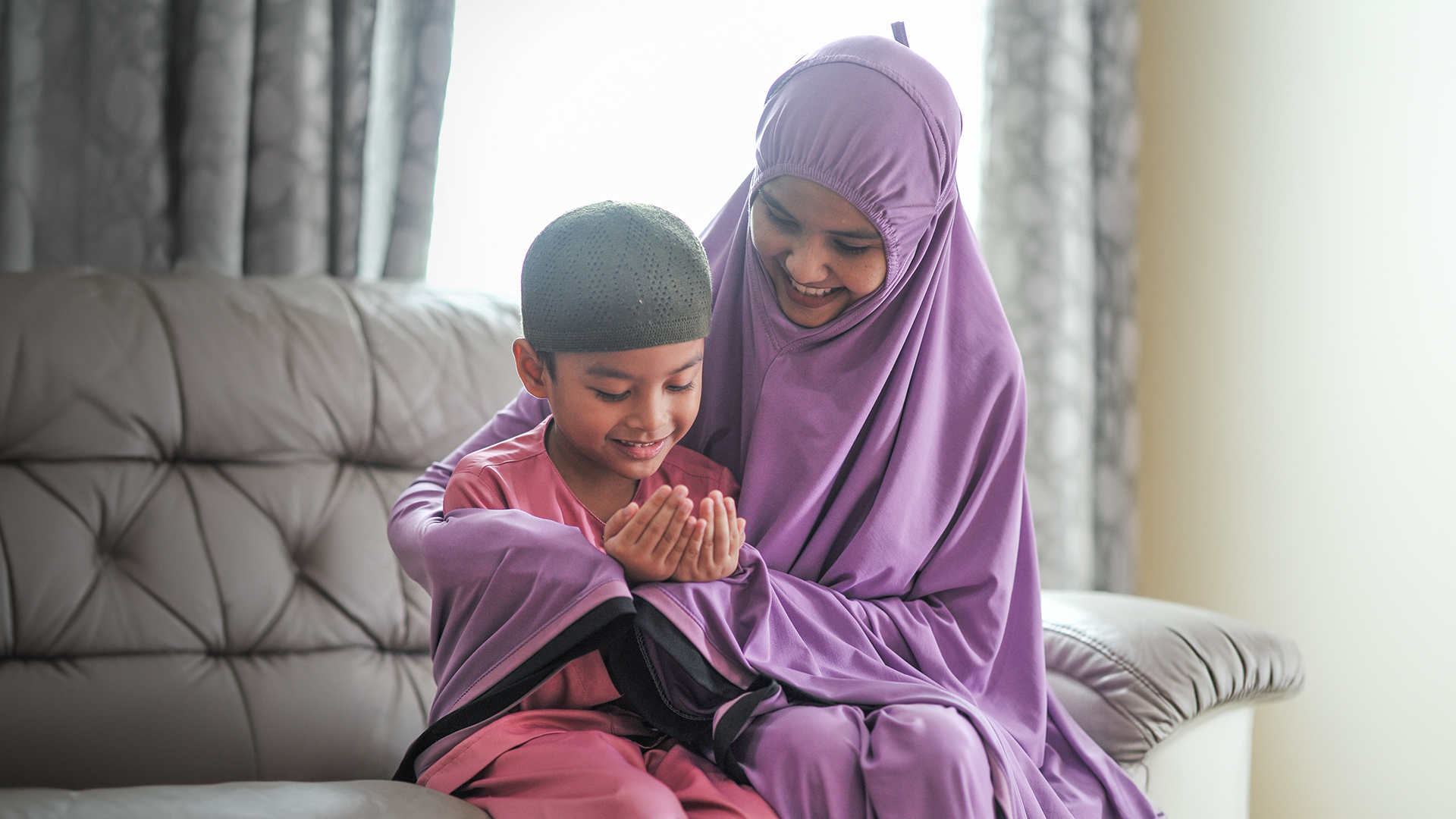
As parents, who doesn't want their children to be healthy, sensible, and well-behaved, becoming our pride and joy? Actually, making dua to Allah is the most powerful and direct secret weapon we have in our hands! You don't have to say it out loud; Allah knows everything we think and ask for in our hearts. He has promised that as long as we ask with a sincere heart, He will definitely respond. This article teaches us step-by-step how to pray sincerely for our children, helping them become the light of our eyes—those treasures who bring us endless joy and peace just by looking at them. Start learning now and pray well for your children! How to pray for children: Dua is the most powerful tool we have, a direct plea to Allah to use His almighty power on our behalf. Dua does not even need to be spoken aloud, because Allah sees the silent longings in our hearts. He promised to answer the duas of those who call upon Him (Quran 2:186) and assures us of His closeness. We are closest to Allah during prostration (sujood), and He descends to the lowest heaven when we perform the night dua (tahajjud) in the quiet of the night. But dua can be made at any time and in any place. The best dua is the most sincere one, coming from the deepest part of our hearts, where we admit our own weakness and plead to the All-Powerful. A comprehensive dua for children: Rabbana hab lana min azwajina wa dhurriyatina qurrata aʿyunin wa-jʿalna lil-muttaqina imama. Our Lord! Grant us from our wives and offspring comfort to our eyes and make us an example for the righteous. (Quran 25:74) This dua is for those who ask for the gift of children, wishing them to be the comfort and peace of our eyes (qurrata a’yun). This phrase means something fascinating and delightful, bringing deep peace and satisfaction. This phrase was used by Asiya (may Allah be pleased with her) to describe Musa (peace be upon him) to convince Pharaoh to adopt him: 'This baby is a comfort to my eyes and yours.' (Quran 28:9). When Allah mentioned returning the infant Musa (peace be upon him) to his mother for nursing, He used a similar phrase: 'So We returned you to your mother so that her eyes might be comforted and she would not grieve' (Quran 20:40). Allah includes 'and make us an example for the righteous' because we should hope our children become leaders in the Muslim community (ummah) through their worship and service. When we see our children performing pious deeds and showing excellent integrity, it brings a unique joy and comfort to our eyes. Whether they are the children we have now or the ones we hope to have, this is the most heartfelt prayer for righteous descendants. Praying for our children's success means wishing them the best outcome in the afterlife (akhira), and the conclusion of this prayer includes that wish. Dua for pregnancy and childbirth: In the Quran, we find a profound narrative about Maryam (peace be upon her) and Zakariya (peace be upon him). Maryam received blessings, and her provision went beyond any worldly explanation. She revealed to Zakariya (peace be upon him) that it was Allah who provided for her. Seeing this divine provision, Zakariya (peace be upon him), though advanced in age, felt inspired to make this dua for offspring: Rabbi hab li min ladunka dhurriyyatan tayyibatan innaka samee’u du’a. My Lord, grant me from Yourself a good descendant. You are indeed the Hearer of dua. (Quran 3:38) Zakariya (peace be upon him) and his wife were both past the age of childbearing. Even though it seemed impossible by biological standards, he left the 'how' and 'when' entirely to Allah. His prayer was answered, and his son Yahya (peace be upon him) was born. Allah later reminds us in the Quran: When Zakariya called to his Lord, 'My Lord!' Do not leave me childless, for You are the best of inheritors. So We answered his dua, granted him Yahya (peace be upon him), and enabled his wife to conceive. They truly raced to do good deeds, prayed to Us with hope and fear, and were humble before Us. (Quran 21:89) Rabbi laa tadharnee fardaan wa-anta khayru al-waaritheen. My Lord! Do not leave me childless, though You are the Best of Successors. Allah enabled Zakariya’s wife to conceive, showing that His power is beyond all natural laws. If Allah can make humans from a tiny drop of fluid (Quran 16:4), and all Allah needs to say is 'Be,' and it is (Quran 2:117), then such duas will surely be answered, and miracles will come to those who ask. Many of our prophets struggled with having children. Ibrahim (peace be upon him), the friend of Allah (Wali), was married for many years before having children. Ibrahim’s (peace be upon him) dua for offspring: Rabbi hab li min as-saaliheen. My Lord, grant me a righteous child. (Quran 37:100) Allah answered Ibrahim’s (peace be upon him) dua beautifully, granting him a descendant who would carry on the message of the One Creator. From his lineage came our beloved Prophet Muhammad (peace be upon him), the best of all humanity. We are his spiritual descendants, and our righteous actions are proof of the power of his dua. Dua to protect our children. Many things can harm our children. These include natural accidents like falling, human malice in the form of abuse or neglect, and even supernatural harm. The Prophet (peace be upon him) said: 'Recite the Chapter of Sincerity (Al-Ikhlas) and the two chapters of seeking refuge (Al-Falaq and An-Nas) three times in the morning and three times in the evening, and they will be enough to protect you from all harm.' (Jami` at-Tirmidhi, Hadith 3575). The Chapter of Sincerity (Surah al-Ikhlas) reaffirms the oneness of Allah, which is the foundation of firm faith. The Chapter of the Daybreak (Surah al-Falaq) asks for protection from external evils we cannot control—darkness, evil creatures, and harmful people. The Chapter of Mankind (Surah an-Nas) seeks refuge from internal threats, such as the insidious whispers of the devil (shaytan). Reading these chapters, along with the Opening Chapter (Surah al-Fatiha) and the Throne Verse (Ayat al-Kursi), with our children will form a divine barrier around them, if Allah wills. It is our duty to instill the habit of morning and evening remembrance of Allah (dhikr) in our children. These practices are more than just protective rituals. They are a legacy of faith and resilience that our children will carry into adulthood, strengthening their ability to resist the dangers of the world. Dua to protect our homes from evil and the devil (shaytan). The Prophet ﷺ said: "Do not turn your houses into graves. Indeed, the devil flees from a house where the Chapter of the Cow (Surah al-Baqarah) is recited. " (Sahih Muslim #780). He emphasized: "Whoever recites the last two verses of the Chapter of the Cow at night, that will be enough for him. " (Sahih al-Bukhari #5051). The Messenger (ﷺ) believes in what has been revealed to him from his Lord, and so do the believers. Amana ar-rasoolu bimaa unzila ilayhi min rabbihi wa-al-mu'minoon kullun aamana bi-llahi wa-mala'ikatihi wa-kutubihi wa-rusulihi laa nufarriqu bayna ahadin min rusulihi wa-qaloo sami'naa wa-ata'naa ghufraanaka rabbanaa wa-ilayka al-maseer. Laa yukallif Allahu nafsan illaa wus'ahaa lahaa maa kasabat 'alayhaa maa iktasabet rabbanaa laa tu'aakhidnaa in nasinaa aw akhta'naa rabbanaa wa-laa tahmil 'alaynaa isran kamaa hamaltahu 'alaa alladheena min qablinaa rabbanaa wa-laa tuhammilnaa maa laa ṭaaqata lanaa bihi wa'fu 'annaa wa-aghfir lanaa wa-arḥamnaa anta mawlanaa fa-ansurnaa 'alaa al-qawmi al-kaafireen. They all believe in Allah, His angels, His books, and His messengers. (They say): "We do not distinguish between any of His messengers." They say: "We hear and we obey." Our Lord! Grant us Your forgiveness! To You is the final destination. " Allah does not burden any soul beyond what it can bear. It will have the reward for what it has earned, and it will bear the consequence for what it has committed. (The believers pray): "Our Lord! Do not punish us if we forget or make a mistake. Our Lord! Do not lay upon us a burden like that which You laid upon those before us. Our Lord! Do not burden us with more than we can bear. Pardon us, forgive us, and have mercy on us. You are our only Protector. Help us against the disbelieving people. (Quran 2:285-286) Our homes are our shelters, and we should work to protect and nurture them so they become places of worship and salvation. Protecting our homes is essentially protecting our children. Imagine a home where parents often recite the Quran, filling the rooms with sacred verses instead of the noise of the television. Imagine copies of the Quran that are often touched, opened, and read, rather than gathering dust. Look forward to the angels visiting and inviting other angels to join our home study circles, creating an atmosphere familiar with the recitation and practice of the Quran. Dua for a sick child: The entire Quran is a form of healing, a shifaa. "We send down the Quran as a healing and mercy for the believers" (Quran 17:82). As parents and caregivers, we can recite any part of the Quran with sincere hope and intention, praying for Allah to heal our children. Reciting the Quran over a person is an essential part of ruqya, a practice used to treat jealousy, the evil eye, black magic, and physical illness. The Prophet ﷺ even allowed a companion (sahabi) to recite Surah Al-Fatiha over a non-Muslim chief to heal his physical illness (Sahih al-Bukhari #5007). While we should trust in the healing power of Allah's words, we must also recognize the importance of medical treatment. When we make dua for children with physical or intellectual disabilities, we must remember that their condition is divinely ordained, and this qadar is part of Allah's wisdom. Allah has chosen them to face this unique test, and has likewise chosen us to practice patience and unwavering support. To seek strength and comfort, let us recite this dua with our children: Allaahumma ‘aafinee fee badanee, Allaahumma ‘aafinee fee sam‘ee, Allaahumma ‘aafinee fee basaree, laa ilaaha illaa anta. Allaahumma innee a‘oodhu bika mina al-kufr wa-al-faqr, Allaahumma innee a‘oodhu bika min ‘adhaabi al-qabr, laa ilaaha illaa anta. O Allah! Grant me health in my body. O Allah! Grant me health in my hearing. O Allah! Grant me health in my sight. There is no god worthy of worship but You. O Allah! I seek refuge in You from disbelief and poverty. O Allah! I seek refuge in You from the punishment of the grave. There is no god worthy of worship but You. (Sunan Abi Dawud 5090) By teaching children how to worship and helping them grow their love for Allah, we nourish their hearts and enrich our own souls. Dua for children. The first dua mentioned in this article is comprehensive, including a dua for righteous children who pray devoutly. Also, Allah teaches in the Quran: Rabbanaa wa-aj‘alnaa muslimayn laka wa-min dhurriyyatinaa ummatan muslimatan laka wa-arinaa manaasikanaa wa-tub ‘alaynaa innaka anta at-tawwaab ar-raheem. Our Lord! Make us both fully submissive to You, and make from our descendants a nation submissive to You. Show us our rites of pilgrimage, and accept our repentance. Show us our rites of pilgrimage, and accept our repentance. You are the Ever-Relenting, the Most Merciful. (Quran 2:128) The best time to build a habit of prayer (salah) in children is when they are young. When you perform prayer (salah), let them play near you and take them to the mosque often, even if they do not know how to pray yet. Action must go hand in hand with dua. If our children are to love prayer, they must see that their parents value it. If we pray in a rush, dressed poorly, or with our minds elsewhere, they will copy that neglect. However, if we treat prayer with reverence and dignity, they will naturally copy that love and devotion. We must practice the behavior we want our children to adopt. We are their first role models, and they watch all our strengths and weaknesses. It is vital to read and love the Quran around them, perform our voluntary prayers (rakat), and enjoy family night prayers (qiyaam) together. Dua for children to seek wisdom. Teaching our children the importance and power of dua will inspire them to seek help from Allah themselves. Even Prophet Muhammad ﷺ was commanded by Allah to make this dua for his own wisdom and memory: Rabbi zidnee ‘ilmaa. My Lord! Increase me in knowledge. (Quran 20:114) We can sit with our children and recite this dua until it becomes their own. Teach them to make this specific dua before they start any learning, whether it is Islamic knowledge or academic studies. Instead of wishing them good luck on their exams, remind them of this dua and encourage them to recite it before they start. As they grow, this habit will become second nature, and there is no better dua for learning and seeking knowledge than those found in the Quran itself. Dua for a deceased child: According to most scholars, if a child passes away before reaching adulthood, they are granted paradise (jannah) because they are pure and without sin. There is no specific dua taught for such a child, as they have not accumulated any sins. Instead, we say: Allaahumma aj‘alhu lanaa faratan wa-salafan wa-ajran. O Allah! Make him a forerunner, a predecessor, and a reward for us. (Fortress of the Muslim #161) The best dua for the deceased and other duas can be found in the series 'For Those Left Behind': Allaahumma aghfir lahu wa-arḥamhu wa-‘aafihi wa-‘fu ‘anhu wa-akrim nuzulahu wa-wassi‘ mudkhalahu wa-aghhsilhu bil-maa’i wa-ath-thalji wa-al-barad wa-naqqihi mina al-khaṭaayaa kamaa naqqayta ath-thawba al-abyada mina ad-danas wa-abdilhu daaran khayran min daarihi wa-‘ahlan khayran min ahlihi wa-zawjan khayran min zawjihi wa-adkhilhu al-jannata wa-a‘idhhu min ‘adhaabi al-qabr aw min ‘adhaabi an-naar. O Allah! Forgive him, have mercy on him, grant him well-being, and pardon him. Honor his reception and widen his entrance. Wash him with water, snow, and hail. Cleanse him of his sins just as You cleanse a white garment of filth. Replace his home with a better home, his family with a better family, and his spouse with a better spouse. Admit him into paradise and protect him from the punishment of the grave and the punishment of the fire. (Sahih Muslim #963) Teaching our children to make dua: The power of dua is unmatched; it is a direct path to the infinite mercy and wisdom of Allah. By building the habit of making dua, we not only seek the help of Allah but also confirm our dependence on Him, strengthening our worship and solidifying the principle of monotheism (tawhid). In our dua, we find not only comfort but also strength. By teaching our children to make dua, we pass on the greatest legacy: a connection with their Creator, which will support them in this life and guide them toward the hereafter.
Summary: This article gathers Quranic dua and prophetic guidance for parents asking Allah to bless, protect, guide, and strengthen their children. It covers dua for righteous offspring, pregnancy and childbirth, protection, guidance, gratitude, and forgiveness.
As parents, who doesn't want their children to be healthy, sensible, and well-behaved, becoming our pride and joy? Actually, making dua to Allah is the most powerful and direct secret weapon we have in our hands! You don't have to say it out loud; Allah knows everything we think and ask for in our hearts. He has promised that as long as we ask with a sincere heart, He will definitely respond. This article teaches us step-by-step how to pray sincerely for our children, helping them become the light of our eyes—those treasures who bring us endless joy and peace just by looking at them. Start learning now and pray well for your children! How to pray for children: Dua is the most powerful tool we have, a direct plea to Allah to use His almighty power on our behalf. Dua does not even need to be spoken aloud, because Allah sees the silent longings in our hearts. He promised to answer the duas of those who call upon Him (Quran 2:186) and assures us of His closeness. We are closest to Allah during prostration (sujood), and He descends to the lowest heaven when we perform the night dua (tahajjud) in the quiet of the night. But dua can be made at any time and in any place. The best dua is the most sincere one, coming from the deepest part of our hearts, where we admit our own weakness and plead to the All-Powerful. A comprehensive dua for children: Rabbana hab lana min azwajina wa dhurriyatina qurrata aʿyunin wa-jʿalna lil-muttaqina imama. Our Lord! Grant us from our wives and offspring comfort to our eyes and make us an example for the righteous. (Quran 25:74) This dua is for those who ask for the gift of children, wishing them to be the comfort and peace of our eyes (qurrata a’yun). This phrase means something fascinating and delightful, bringing deep peace and satisfaction. This phrase was used by Asiya (may Allah be pleased with her) to describe Musa (peace be upon him) to convince Pharaoh to adopt him: 'This baby is a comfort to my eyes and yours.' (Quran 28:9). When Allah mentioned returning the infant Musa (peace be upon him) to his mother for nursing, He used a similar phrase: 'So We returned you to your mother so that her eyes might be comforted and she would not grieve' (Quran 20:40). Allah includes 'and make us an example for the righteous' because we should hope our children become leaders in the Muslim community (ummah) through their worship and service. When we see our children performing pious deeds and showing excellent integrity, it brings a unique joy and comfort to our eyes. Whether they are the children we have now or the ones we hope to have, this is the most heartfelt prayer for righteous descendants. Praying for our children's success means wishing them the best outcome in the afterlife (akhira), and the conclusion of this prayer includes that wish. Dua for pregnancy and childbirth: In the Quran, we find a profound narrative about Maryam (peace be upon her) and Zakariya (peace be upon him). Maryam received blessings, and her provision went beyond any worldly explanation. She revealed to Zakariya (peace be upon him) that it was Allah who provided for her. Seeing this divine provision, Zakariya (peace be upon him), though advanced in age, felt inspired to make this dua for offspring: Rabbi hab li min ladunka dhurriyyatan tayyibatan innaka samee’u du’a. My Lord, grant me from Yourself a good descendant. You are indeed the Hearer of dua. (Quran 3:38) Zakariya (peace be upon him) and his wife were both past the age of childbearing. Even though it seemed impossible by biological standards, he left the 'how' and 'when' entirely to Allah. His prayer was answered, and his son Yahya (peace be upon him) was born. Allah later reminds us in the Quran: When Zakariya called to his Lord, 'My Lord!' Do not leave me childless, for You are the best of inheritors. So We answered his dua, granted him Yahya (peace be upon him), and enabled his wife to conceive. They truly raced to do good deeds, prayed to Us with hope and fear, and were humble before Us. (Quran 21:89) Rabbi laa tadharnee fardaan wa-anta khayru al-waaritheen. My Lord! Do not leave me childless, though You are the Best of Successors. Allah enabled Zakariya’s wife to conceive, showing that His power is beyond all natural laws. If Allah can make humans from a tiny drop of fluid (Quran 16:4), and all Allah needs to say is 'Be,' and it is (Quran 2:117), then such duas will surely be answered, and miracles will come to those who ask. Many of our prophets struggled with having children. Ibrahim (peace be upon him), the friend of Allah (Wali), was married for many years before having children. Ibrahim’s (peace be upon him) dua for offspring: Rabbi hab li min as-saaliheen. My Lord, grant me a righteous child. (Quran 37:100) Allah answered Ibrahim’s (peace be upon him) dua beautifully, granting him a descendant who would carry on the message of the One Creator. From his lineage came our beloved Prophet Muhammad (peace be upon him), the best of all humanity. We are his spiritual descendants, and our righteous actions are proof of the power of his dua. Dua to protect our children. Many things can harm our children. These include natural accidents like falling, human malice in the form of abuse or neglect, and even supernatural harm. The Prophet (peace be upon him) said: 'Recite the Chapter of Sincerity (Al-Ikhlas) and the two chapters of seeking refuge (Al-Falaq and An-Nas) three times in the morning and three times in the evening, and they will be enough to protect you from all harm.' (Jami` at-Tirmidhi, Hadith 3575). The Chapter of Sincerity (Surah al-Ikhlas) reaffirms the oneness of Allah, which is the foundation of firm faith. The Chapter of the Daybreak (Surah al-Falaq) asks for protection from external evils we cannot control—darkness, evil creatures, and harmful people. The Chapter of Mankind (Surah an-Nas) seeks refuge from internal threats, such as the insidious whispers of the devil (shaytan). Reading these chapters, along with the Opening Chapter (Surah al-Fatiha) and the Throne Verse (Ayat al-Kursi), with our children will form a divine barrier around them, if Allah wills. It is our duty to instill the habit of morning and evening remembrance of Allah (dhikr) in our children. These practices are more than just protective rituals. They are a legacy of faith and resilience that our children will carry into adulthood, strengthening their ability to resist the dangers of the world. Dua to protect our homes from evil and the devil (shaytan). The Prophet ﷺ said: "Do not turn your houses into graves. Indeed, the devil flees from a house where the Chapter of the Cow (Surah al-Baqarah) is recited. " (Sahih Muslim #780). He emphasized: "Whoever recites the last two verses of the Chapter of the Cow at night, that will be enough for him. " (Sahih al-Bukhari #5051). The Messenger (ﷺ) believes in what has been revealed to him from his Lord, and so do the believers. Amana ar-rasoolu bimaa unzila ilayhi min rabbihi wa-al-mu'minoon kullun aamana bi-llahi wa-mala'ikatihi wa-kutubihi wa-rusulihi laa nufarriqu bayna ahadin min rusulihi wa-qaloo sami'naa wa-ata'naa ghufraanaka rabbanaa wa-ilayka al-maseer. Laa yukallif Allahu nafsan illaa wus'ahaa lahaa maa kasabat 'alayhaa maa iktasabet rabbanaa laa tu'aakhidnaa in nasinaa aw akhta'naa rabbanaa wa-laa tahmil 'alaynaa isran kamaa hamaltahu 'alaa alladheena min qablinaa rabbanaa wa-laa tuhammilnaa maa laa ṭaaqata lanaa bihi wa'fu 'annaa wa-aghfir lanaa wa-arḥamnaa anta mawlanaa fa-ansurnaa 'alaa al-qawmi al-kaafireen. They all believe in Allah, His angels, His books, and His messengers. (They say): "We do not distinguish between any of His messengers." They say: "We hear and we obey." Our Lord! Grant us Your forgiveness! To You is the final destination. " Allah does not burden any soul beyond what it can bear. It will have the reward for what it has earned, and it will bear the consequence for what it has committed. (The believers pray): "Our Lord! Do not punish us if we forget or make a mistake. Our Lord! Do not lay upon us a burden like that which You laid upon those before us. Our Lord! Do not burden us with more than we can bear. Pardon us, forgive us, and have mercy on us. You are our only Protector. Help us against the disbelieving people. (Quran 2:285-286) Our homes are our shelters, and we should work to protect and nurture them so they become places of worship and salvation. Protecting our homes is essentially protecting our children. Imagine a home where parents often recite the Quran, filling the rooms with sacred verses instead of the noise of the television. Imagine copies of the Quran that are often touched, opened, and read, rather than gathering dust. Look forward to the angels visiting and inviting other angels to join our home study circles, creating an atmosphere familiar with the recitation and practice of the Quran. Dua for a sick child: The entire Quran is a form of healing, a shifaa. "We send down the Quran as a healing and mercy for the believers" (Quran 17:82). As parents and caregivers, we can recite any part of the Quran with sincere hope and intention, praying for Allah to heal our children. Reciting the Quran over a person is an essential part of ruqya, a practice used to treat jealousy, the evil eye, black magic, and physical illness. The Prophet ﷺ even allowed a companion (sahabi) to recite Surah Al-Fatiha over a non-Muslim chief to heal his physical illness (Sahih al-Bukhari #5007). While we should trust in the healing power of Allah's words, we must also recognize the importance of medical treatment. When we make dua for children with physical or intellectual disabilities, we must remember that their condition is divinely ordained, and this qadar is part of Allah's wisdom. Allah has chosen them to face this unique test, and has likewise chosen us to practice patience and unwavering support. To seek strength and comfort, let us recite this dua with our children: Allaahumma ‘aafinee fee badanee, Allaahumma ‘aafinee fee sam‘ee, Allaahumma ‘aafinee fee basaree, laa ilaaha illaa anta. Allaahumma innee a‘oodhu bika mina al-kufr wa-al-faqr, Allaahumma innee a‘oodhu bika min ‘adhaabi al-qabr, laa ilaaha illaa anta. O Allah! Grant me health in my body. O Allah! Grant me health in my hearing. O Allah! Grant me health in my sight. There is no god worthy of worship but You. O Allah! I seek refuge in You from disbelief and poverty. O Allah! I seek refuge in You from the punishment of the grave. There is no god worthy of worship but You. (Sunan Abi Dawud 5090) By teaching children how to worship and helping them grow their love for Allah, we nourish their hearts and enrich our own souls. Dua for children. The first dua mentioned in this article is comprehensive, including a dua for righteous children who pray devoutly. Also, Allah teaches in the Quran: Rabbanaa wa-aj‘alnaa muslimayn laka wa-min dhurriyyatinaa ummatan muslimatan laka wa-arinaa manaasikanaa wa-tub ‘alaynaa innaka anta at-tawwaab ar-raheem. Our Lord! Make us both fully submissive to You, and make from our descendants a nation submissive to You. Show us our rites of pilgrimage, and accept our repentance. Show us our rites of pilgrimage, and accept our repentance. You are the Ever-Relenting, the Most Merciful. (Quran 2:128) The best time to build a habit of prayer (salah) in children is when they are young. When you perform prayer (salah), let them play near you and take them to the mosque often, even if they do not know how to pray yet. Action must go hand in hand with dua. If our children are to love prayer, they must see that their parents value it. If we pray in a rush, dressed poorly, or with our minds elsewhere, they will copy that neglect. However, if we treat prayer with reverence and dignity, they will naturally copy that love and devotion. We must practice the behavior we want our children to adopt. We are their first role models, and they watch all our strengths and weaknesses. It is vital to read and love the Quran around them, perform our voluntary prayers (rakat), and enjoy family night prayers (qiyaam) together. Dua for children to seek wisdom. Teaching our children the importance and power of dua will inspire them to seek help from Allah themselves. Even Prophet Muhammad ﷺ was commanded by Allah to make this dua for his own wisdom and memory: Rabbi zidnee ‘ilmaa. My Lord! Increase me in knowledge. (Quran 20:114) We can sit with our children and recite this dua until it becomes their own. Teach them to make this specific dua before they start any learning, whether it is Islamic knowledge or academic studies. Instead of wishing them good luck on their exams, remind them of this dua and encourage them to recite it before they start. As they grow, this habit will become second nature, and there is no better dua for learning and seeking knowledge than those found in the Quran itself. Dua for a deceased child: According to most scholars, if a child passes away before reaching adulthood, they are granted paradise (jannah) because they are pure and without sin. There is no specific dua taught for such a child, as they have not accumulated any sins. Instead, we say: Allaahumma aj‘alhu lanaa faratan wa-salafan wa-ajran. O Allah! Make him a forerunner, a predecessor, and a reward for us. (Fortress of the Muslim #161) The best dua for the deceased and other duas can be found in the series 'For Those Left Behind': Allaahumma aghfir lahu wa-arḥamhu wa-‘aafihi wa-‘fu ‘anhu wa-akrim nuzulahu wa-wassi‘ mudkhalahu wa-aghhsilhu bil-maa’i wa-ath-thalji wa-al-barad wa-naqqihi mina al-khaṭaayaa kamaa naqqayta ath-thawba al-abyada mina ad-danas wa-abdilhu daaran khayran min daarihi wa-‘ahlan khayran min ahlihi wa-zawjan khayran min zawjihi wa-adkhilhu al-jannata wa-a‘idhhu min ‘adhaabi al-qabr aw min ‘adhaabi an-naar. O Allah! Forgive him, have mercy on him, grant him well-being, and pardon him. Honor his reception and widen his entrance. Wash him with water, snow, and hail. Cleanse him of his sins just as You cleanse a white garment of filth. Replace his home with a better home, his family with a better family, and his spouse with a better spouse. Admit him into paradise and protect him from the punishment of the grave and the punishment of the fire. (Sahih Muslim #963) Teaching our children to make dua: The power of dua is unmatched; it is a direct path to the infinite mercy and wisdom of Allah. By building the habit of making dua, we not only seek the help of Allah but also confirm our dependence on Him, strengthening our worship and solidifying the principle of monotheism (tawhid). In our dua, we find not only comfort but also strength. By teaching our children to make dua, we pass on the greatest legacy: a connection with their Creator, which will support them in this life and guide them toward the hereafter.
Islamic Guide: Ten Powerful Dua for Parents Praying for Children
Articles • ali2007fr posted the article • 0 comments • 246 views • 2026-05-20 21:34
Reposted from the web
Summary: This article gathers Quranic dua and prophetic guidance for parents asking Allah to bless, protect, guide, and strengthen their children. It covers dua for righteous offspring, pregnancy and childbirth, protection, guidance, gratitude, and forgiveness.
As parents, who doesn't want their children to be healthy, sensible, and well-behaved, becoming our pride and joy? Actually, making dua to Allah is the most powerful and direct secret weapon we have in our hands! You don't have to say it out loud; Allah knows everything we think and ask for in our hearts. He has promised that as long as we ask with a sincere heart, He will definitely respond. This article teaches us step-by-step how to pray sincerely for our children, helping them become the light of our eyes—those treasures who bring us endless joy and peace just by looking at them. Start learning now and pray well for your children! How to pray for children: Dua is the most powerful tool we have, a direct plea to Allah to use His almighty power on our behalf. Dua does not even need to be spoken aloud, because Allah sees the silent longings in our hearts. He promised to answer the duas of those who call upon Him (Quran 2:186) and assures us of His closeness. We are closest to Allah during prostration (sujood), and He descends to the lowest heaven when we perform the night dua (tahajjud) in the quiet of the night. But dua can be made at any time and in any place. The best dua is the most sincere one, coming from the deepest part of our hearts, where we admit our own weakness and plead to the All-Powerful. A comprehensive dua for children: Rabbana hab lana min azwajina wa dhurriyatina qurrata aʿyunin wa-jʿalna lil-muttaqina imama. Our Lord! Grant us from our wives and offspring comfort to our eyes and make us an example for the righteous. (Quran 25:74) This dua is for those who ask for the gift of children, wishing them to be the comfort and peace of our eyes (qurrata a’yun). This phrase means something fascinating and delightful, bringing deep peace and satisfaction. This phrase was used by Asiya (may Allah be pleased with her) to describe Musa (peace be upon him) to convince Pharaoh to adopt him: 'This baby is a comfort to my eyes and yours.' (Quran 28:9). When Allah mentioned returning the infant Musa (peace be upon him) to his mother for nursing, He used a similar phrase: 'So We returned you to your mother so that her eyes might be comforted and she would not grieve' (Quran 20:40). Allah includes 'and make us an example for the righteous' because we should hope our children become leaders in the Muslim community (ummah) through their worship and service. When we see our children performing pious deeds and showing excellent integrity, it brings a unique joy and comfort to our eyes. Whether they are the children we have now or the ones we hope to have, this is the most heartfelt prayer for righteous descendants. Praying for our children's success means wishing them the best outcome in the afterlife (akhira), and the conclusion of this prayer includes that wish. Dua for pregnancy and childbirth: In the Quran, we find a profound narrative about Maryam (peace be upon her) and Zakariya (peace be upon him). Maryam received blessings, and her provision went beyond any worldly explanation. She revealed to Zakariya (peace be upon him) that it was Allah who provided for her. Seeing this divine provision, Zakariya (peace be upon him), though advanced in age, felt inspired to make this dua for offspring: Rabbi hab li min ladunka dhurriyyatan tayyibatan innaka samee’u du’a. My Lord, grant me from Yourself a good descendant. You are indeed the Hearer of dua. (Quran 3:38) Zakariya (peace be upon him) and his wife were both past the age of childbearing. Even though it seemed impossible by biological standards, he left the 'how' and 'when' entirely to Allah. His prayer was answered, and his son Yahya (peace be upon him) was born. Allah later reminds us in the Quran: When Zakariya called to his Lord, 'My Lord!' Do not leave me childless, for You are the best of inheritors. So We answered his dua, granted him Yahya (peace be upon him), and enabled his wife to conceive. They truly raced to do good deeds, prayed to Us with hope and fear, and were humble before Us. (Quran 21:89) Rabbi laa tadharnee fardaan wa-anta khayru al-waaritheen. My Lord! Do not leave me childless, though You are the Best of Successors. Allah enabled Zakariya’s wife to conceive, showing that His power is beyond all natural laws. If Allah can make humans from a tiny drop of fluid (Quran 16:4), and all Allah needs to say is 'Be,' and it is (Quran 2:117), then such duas will surely be answered, and miracles will come to those who ask. Many of our prophets struggled with having children. Ibrahim (peace be upon him), the friend of Allah (Wali), was married for many years before having children. Ibrahim’s (peace be upon him) dua for offspring: Rabbi hab li min as-saaliheen. My Lord, grant me a righteous child. (Quran 37:100) Allah answered Ibrahim’s (peace be upon him) dua beautifully, granting him a descendant who would carry on the message of the One Creator. From his lineage came our beloved Prophet Muhammad (peace be upon him), the best of all humanity. We are his spiritual descendants, and our righteous actions are proof of the power of his dua. Dua to protect our children. Many things can harm our children. These include natural accidents like falling, human malice in the form of abuse or neglect, and even supernatural harm. The Prophet (peace be upon him) said: 'Recite the Chapter of Sincerity (Al-Ikhlas) and the two chapters of seeking refuge (Al-Falaq and An-Nas) three times in the morning and three times in the evening, and they will be enough to protect you from all harm.' (Jami` at-Tirmidhi, Hadith 3575). The Chapter of Sincerity (Surah al-Ikhlas) reaffirms the oneness of Allah, which is the foundation of firm faith. The Chapter of the Daybreak (Surah al-Falaq) asks for protection from external evils we cannot control—darkness, evil creatures, and harmful people. The Chapter of Mankind (Surah an-Nas) seeks refuge from internal threats, such as the insidious whispers of the devil (shaytan). Reading these chapters, along with the Opening Chapter (Surah al-Fatiha) and the Throne Verse (Ayat al-Kursi), with our children will form a divine barrier around them, if Allah wills. It is our duty to instill the habit of morning and evening remembrance of Allah (dhikr) in our children. These practices are more than just protective rituals. They are a legacy of faith and resilience that our children will carry into adulthood, strengthening their ability to resist the dangers of the world. Dua to protect our homes from evil and the devil (shaytan). The Prophet ﷺ said: "Do not turn your houses into graves. Indeed, the devil flees from a house where the Chapter of the Cow (Surah al-Baqarah) is recited. " (Sahih Muslim #780). He emphasized: "Whoever recites the last two verses of the Chapter of the Cow at night, that will be enough for him. " (Sahih al-Bukhari #5051). The Messenger (ﷺ) believes in what has been revealed to him from his Lord, and so do the believers. Amana ar-rasoolu bimaa unzila ilayhi min rabbihi wa-al-mu'minoon kullun aamana bi-llahi wa-mala'ikatihi wa-kutubihi wa-rusulihi laa nufarriqu bayna ahadin min rusulihi wa-qaloo sami'naa wa-ata'naa ghufraanaka rabbanaa wa-ilayka al-maseer. Laa yukallif Allahu nafsan illaa wus'ahaa lahaa maa kasabat 'alayhaa maa iktasabet rabbanaa laa tu'aakhidnaa in nasinaa aw akhta'naa rabbanaa wa-laa tahmil 'alaynaa isran kamaa hamaltahu 'alaa alladheena min qablinaa rabbanaa wa-laa tuhammilnaa maa laa ṭaaqata lanaa bihi wa'fu 'annaa wa-aghfir lanaa wa-arḥamnaa anta mawlanaa fa-ansurnaa 'alaa al-qawmi al-kaafireen. They all believe in Allah, His angels, His books, and His messengers. (They say): "We do not distinguish between any of His messengers." They say: "We hear and we obey." Our Lord! Grant us Your forgiveness! To You is the final destination. " Allah does not burden any soul beyond what it can bear. It will have the reward for what it has earned, and it will bear the consequence for what it has committed. (The believers pray): "Our Lord! Do not punish us if we forget or make a mistake. Our Lord! Do not lay upon us a burden like that which You laid upon those before us. Our Lord! Do not burden us with more than we can bear. Pardon us, forgive us, and have mercy on us. You are our only Protector. Help us against the disbelieving people. (Quran 2:285-286) Our homes are our shelters, and we should work to protect and nurture them so they become places of worship and salvation. Protecting our homes is essentially protecting our children. Imagine a home where parents often recite the Quran, filling the rooms with sacred verses instead of the noise of the television. Imagine copies of the Quran that are often touched, opened, and read, rather than gathering dust. Look forward to the angels visiting and inviting other angels to join our home study circles, creating an atmosphere familiar with the recitation and practice of the Quran. Dua for a sick child: The entire Quran is a form of healing, a shifaa. "We send down the Quran as a healing and mercy for the believers" (Quran 17:82). As parents and caregivers, we can recite any part of the Quran with sincere hope and intention, praying for Allah to heal our children. Reciting the Quran over a person is an essential part of ruqya, a practice used to treat jealousy, the evil eye, black magic, and physical illness. The Prophet ﷺ even allowed a companion (sahabi) to recite Surah Al-Fatiha over a non-Muslim chief to heal his physical illness (Sahih al-Bukhari #5007). While we should trust in the healing power of Allah's words, we must also recognize the importance of medical treatment. When we make dua for children with physical or intellectual disabilities, we must remember that their condition is divinely ordained, and this qadar is part of Allah's wisdom. Allah has chosen them to face this unique test, and has likewise chosen us to practice patience and unwavering support. To seek strength and comfort, let us recite this dua with our children: Allaahumma ‘aafinee fee badanee, Allaahumma ‘aafinee fee sam‘ee, Allaahumma ‘aafinee fee basaree, laa ilaaha illaa anta. Allaahumma innee a‘oodhu bika mina al-kufr wa-al-faqr, Allaahumma innee a‘oodhu bika min ‘adhaabi al-qabr, laa ilaaha illaa anta. O Allah! Grant me health in my body. O Allah! Grant me health in my hearing. O Allah! Grant me health in my sight. There is no god worthy of worship but You. O Allah! I seek refuge in You from disbelief and poverty. O Allah! I seek refuge in You from the punishment of the grave. There is no god worthy of worship but You. (Sunan Abi Dawud 5090) By teaching children how to worship and helping them grow their love for Allah, we nourish their hearts and enrich our own souls. Dua for children. The first dua mentioned in this article is comprehensive, including a dua for righteous children who pray devoutly. Also, Allah teaches in the Quran: Rabbanaa wa-aj‘alnaa muslimayn laka wa-min dhurriyyatinaa ummatan muslimatan laka wa-arinaa manaasikanaa wa-tub ‘alaynaa innaka anta at-tawwaab ar-raheem. Our Lord! Make us both fully submissive to You, and make from our descendants a nation submissive to You. Show us our rites of pilgrimage, and accept our repentance. Show us our rites of pilgrimage, and accept our repentance. You are the Ever-Relenting, the Most Merciful. (Quran 2:128) The best time to build a habit of prayer (salah) in children is when they are young. When you perform prayer (salah), let them play near you and take them to the mosque often, even if they do not know how to pray yet. Action must go hand in hand with dua. If our children are to love prayer, they must see that their parents value it. If we pray in a rush, dressed poorly, or with our minds elsewhere, they will copy that neglect. However, if we treat prayer with reverence and dignity, they will naturally copy that love and devotion. We must practice the behavior we want our children to adopt. We are their first role models, and they watch all our strengths and weaknesses. It is vital to read and love the Quran around them, perform our voluntary prayers (rakat), and enjoy family night prayers (qiyaam) together. Dua for children to seek wisdom. Teaching our children the importance and power of dua will inspire them to seek help from Allah themselves. Even Prophet Muhammad ﷺ was commanded by Allah to make this dua for his own wisdom and memory: Rabbi zidnee ‘ilmaa. My Lord! Increase me in knowledge. (Quran 20:114) We can sit with our children and recite this dua until it becomes their own. Teach them to make this specific dua before they start any learning, whether it is Islamic knowledge or academic studies. Instead of wishing them good luck on their exams, remind them of this dua and encourage them to recite it before they start. As they grow, this habit will become second nature, and there is no better dua for learning and seeking knowledge than those found in the Quran itself. Dua for a deceased child: According to most scholars, if a child passes away before reaching adulthood, they are granted paradise (jannah) because they are pure and without sin. There is no specific dua taught for such a child, as they have not accumulated any sins. Instead, we say: Allaahumma aj‘alhu lanaa faratan wa-salafan wa-ajran. O Allah! Make him a forerunner, a predecessor, and a reward for us. (Fortress of the Muslim #161) The best dua for the deceased and other duas can be found in the series 'For Those Left Behind': Allaahumma aghfir lahu wa-arḥamhu wa-‘aafihi wa-‘fu ‘anhu wa-akrim nuzulahu wa-wassi‘ mudkhalahu wa-aghhsilhu bil-maa’i wa-ath-thalji wa-al-barad wa-naqqihi mina al-khaṭaayaa kamaa naqqayta ath-thawba al-abyada mina ad-danas wa-abdilhu daaran khayran min daarihi wa-‘ahlan khayran min ahlihi wa-zawjan khayran min zawjihi wa-adkhilhu al-jannata wa-a‘idhhu min ‘adhaabi al-qabr aw min ‘adhaabi an-naar. O Allah! Forgive him, have mercy on him, grant him well-being, and pardon him. Honor his reception and widen his entrance. Wash him with water, snow, and hail. Cleanse him of his sins just as You cleanse a white garment of filth. Replace his home with a better home, his family with a better family, and his spouse with a better spouse. Admit him into paradise and protect him from the punishment of the grave and the punishment of the fire. (Sahih Muslim #963) Teaching our children to make dua: The power of dua is unmatched; it is a direct path to the infinite mercy and wisdom of Allah. By building the habit of making dua, we not only seek the help of Allah but also confirm our dependence on Him, strengthening our worship and solidifying the principle of monotheism (tawhid). In our dua, we find not only comfort but also strength. By teaching our children to make dua, we pass on the greatest legacy: a connection with their Creator, which will support them in this life and guide them toward the hereafter. This article is adapted from: Coolness of My Eyes | Taraweeh Reflections | Dr. Omar Suleiman [a] How to Raise Muslim Children | Webinar Hadith 35 - Rights of People with Disabilities | 40 Hadith on Social Justice [c] Episode 3: The Best Dua for the Deceased | For Those Left Behind - Prophetic Duas for Relief and Protection - For more articles on parenting, please click here. view all
Summary: This article gathers Quranic dua and prophetic guidance for parents asking Allah to bless, protect, guide, and strengthen their children. It covers dua for righteous offspring, pregnancy and childbirth, protection, guidance, gratitude, and forgiveness.
As parents, who doesn't want their children to be healthy, sensible, and well-behaved, becoming our pride and joy? Actually, making dua to Allah is the most powerful and direct secret weapon we have in our hands! You don't have to say it out loud; Allah knows everything we think and ask for in our hearts. He has promised that as long as we ask with a sincere heart, He will definitely respond. This article teaches us step-by-step how to pray sincerely for our children, helping them become the light of our eyes—those treasures who bring us endless joy and peace just by looking at them. Start learning now and pray well for your children! How to pray for children: Dua is the most powerful tool we have, a direct plea to Allah to use His almighty power on our behalf. Dua does not even need to be spoken aloud, because Allah sees the silent longings in our hearts. He promised to answer the duas of those who call upon Him (Quran 2:186) and assures us of His closeness. We are closest to Allah during prostration (sujood), and He descends to the lowest heaven when we perform the night dua (tahajjud) in the quiet of the night. But dua can be made at any time and in any place. The best dua is the most sincere one, coming from the deepest part of our hearts, where we admit our own weakness and plead to the All-Powerful. A comprehensive dua for children: Rabbana hab lana min azwajina wa dhurriyatina qurrata aʿyunin wa-jʿalna lil-muttaqina imama. Our Lord! Grant us from our wives and offspring comfort to our eyes and make us an example for the righteous. (Quran 25:74) This dua is for those who ask for the gift of children, wishing them to be the comfort and peace of our eyes (qurrata a’yun). This phrase means something fascinating and delightful, bringing deep peace and satisfaction. This phrase was used by Asiya (may Allah be pleased with her) to describe Musa (peace be upon him) to convince Pharaoh to adopt him: 'This baby is a comfort to my eyes and yours.' (Quran 28:9). When Allah mentioned returning the infant Musa (peace be upon him) to his mother for nursing, He used a similar phrase: 'So We returned you to your mother so that her eyes might be comforted and she would not grieve' (Quran 20:40). Allah includes 'and make us an example for the righteous' because we should hope our children become leaders in the Muslim community (ummah) through their worship and service. When we see our children performing pious deeds and showing excellent integrity, it brings a unique joy and comfort to our eyes. Whether they are the children we have now or the ones we hope to have, this is the most heartfelt prayer for righteous descendants. Praying for our children's success means wishing them the best outcome in the afterlife (akhira), and the conclusion of this prayer includes that wish. Dua for pregnancy and childbirth: In the Quran, we find a profound narrative about Maryam (peace be upon her) and Zakariya (peace be upon him). Maryam received blessings, and her provision went beyond any worldly explanation. She revealed to Zakariya (peace be upon him) that it was Allah who provided for her. Seeing this divine provision, Zakariya (peace be upon him), though advanced in age, felt inspired to make this dua for offspring: Rabbi hab li min ladunka dhurriyyatan tayyibatan innaka samee’u du’a. My Lord, grant me from Yourself a good descendant. You are indeed the Hearer of dua. (Quran 3:38) Zakariya (peace be upon him) and his wife were both past the age of childbearing. Even though it seemed impossible by biological standards, he left the 'how' and 'when' entirely to Allah. His prayer was answered, and his son Yahya (peace be upon him) was born. Allah later reminds us in the Quran: When Zakariya called to his Lord, 'My Lord!' Do not leave me childless, for You are the best of inheritors. So We answered his dua, granted him Yahya (peace be upon him), and enabled his wife to conceive. They truly raced to do good deeds, prayed to Us with hope and fear, and were humble before Us. (Quran 21:89) Rabbi laa tadharnee fardaan wa-anta khayru al-waaritheen. My Lord! Do not leave me childless, though You are the Best of Successors. Allah enabled Zakariya’s wife to conceive, showing that His power is beyond all natural laws. If Allah can make humans from a tiny drop of fluid (Quran 16:4), and all Allah needs to say is 'Be,' and it is (Quran 2:117), then such duas will surely be answered, and miracles will come to those who ask. Many of our prophets struggled with having children. Ibrahim (peace be upon him), the friend of Allah (Wali), was married for many years before having children. Ibrahim’s (peace be upon him) dua for offspring: Rabbi hab li min as-saaliheen. My Lord, grant me a righteous child. (Quran 37:100) Allah answered Ibrahim’s (peace be upon him) dua beautifully, granting him a descendant who would carry on the message of the One Creator. From his lineage came our beloved Prophet Muhammad (peace be upon him), the best of all humanity. We are his spiritual descendants, and our righteous actions are proof of the power of his dua. Dua to protect our children. Many things can harm our children. These include natural accidents like falling, human malice in the form of abuse or neglect, and even supernatural harm. The Prophet (peace be upon him) said: 'Recite the Chapter of Sincerity (Al-Ikhlas) and the two chapters of seeking refuge (Al-Falaq and An-Nas) three times in the morning and three times in the evening, and they will be enough to protect you from all harm.' (Jami` at-Tirmidhi, Hadith 3575). The Chapter of Sincerity (Surah al-Ikhlas) reaffirms the oneness of Allah, which is the foundation of firm faith. The Chapter of the Daybreak (Surah al-Falaq) asks for protection from external evils we cannot control—darkness, evil creatures, and harmful people. The Chapter of Mankind (Surah an-Nas) seeks refuge from internal threats, such as the insidious whispers of the devil (shaytan). Reading these chapters, along with the Opening Chapter (Surah al-Fatiha) and the Throne Verse (Ayat al-Kursi), with our children will form a divine barrier around them, if Allah wills. It is our duty to instill the habit of morning and evening remembrance of Allah (dhikr) in our children. These practices are more than just protective rituals. They are a legacy of faith and resilience that our children will carry into adulthood, strengthening their ability to resist the dangers of the world. Dua to protect our homes from evil and the devil (shaytan). The Prophet ﷺ said: "Do not turn your houses into graves. Indeed, the devil flees from a house where the Chapter of the Cow (Surah al-Baqarah) is recited. " (Sahih Muslim #780). He emphasized: "Whoever recites the last two verses of the Chapter of the Cow at night, that will be enough for him. " (Sahih al-Bukhari #5051). The Messenger (ﷺ) believes in what has been revealed to him from his Lord, and so do the believers. Amana ar-rasoolu bimaa unzila ilayhi min rabbihi wa-al-mu'minoon kullun aamana bi-llahi wa-mala'ikatihi wa-kutubihi wa-rusulihi laa nufarriqu bayna ahadin min rusulihi wa-qaloo sami'naa wa-ata'naa ghufraanaka rabbanaa wa-ilayka al-maseer. Laa yukallif Allahu nafsan illaa wus'ahaa lahaa maa kasabat 'alayhaa maa iktasabet rabbanaa laa tu'aakhidnaa in nasinaa aw akhta'naa rabbanaa wa-laa tahmil 'alaynaa isran kamaa hamaltahu 'alaa alladheena min qablinaa rabbanaa wa-laa tuhammilnaa maa laa ṭaaqata lanaa bihi wa'fu 'annaa wa-aghfir lanaa wa-arḥamnaa anta mawlanaa fa-ansurnaa 'alaa al-qawmi al-kaafireen. They all believe in Allah, His angels, His books, and His messengers. (They say): "We do not distinguish between any of His messengers." They say: "We hear and we obey." Our Lord! Grant us Your forgiveness! To You is the final destination. " Allah does not burden any soul beyond what it can bear. It will have the reward for what it has earned, and it will bear the consequence for what it has committed. (The believers pray): "Our Lord! Do not punish us if we forget or make a mistake. Our Lord! Do not lay upon us a burden like that which You laid upon those before us. Our Lord! Do not burden us with more than we can bear. Pardon us, forgive us, and have mercy on us. You are our only Protector. Help us against the disbelieving people. (Quran 2:285-286) Our homes are our shelters, and we should work to protect and nurture them so they become places of worship and salvation. Protecting our homes is essentially protecting our children. Imagine a home where parents often recite the Quran, filling the rooms with sacred verses instead of the noise of the television. Imagine copies of the Quran that are often touched, opened, and read, rather than gathering dust. Look forward to the angels visiting and inviting other angels to join our home study circles, creating an atmosphere familiar with the recitation and practice of the Quran. Dua for a sick child: The entire Quran is a form of healing, a shifaa. "We send down the Quran as a healing and mercy for the believers" (Quran 17:82). As parents and caregivers, we can recite any part of the Quran with sincere hope and intention, praying for Allah to heal our children. Reciting the Quran over a person is an essential part of ruqya, a practice used to treat jealousy, the evil eye, black magic, and physical illness. The Prophet ﷺ even allowed a companion (sahabi) to recite Surah Al-Fatiha over a non-Muslim chief to heal his physical illness (Sahih al-Bukhari #5007). While we should trust in the healing power of Allah's words, we must also recognize the importance of medical treatment. When we make dua for children with physical or intellectual disabilities, we must remember that their condition is divinely ordained, and this qadar is part of Allah's wisdom. Allah has chosen them to face this unique test, and has likewise chosen us to practice patience and unwavering support. To seek strength and comfort, let us recite this dua with our children: Allaahumma ‘aafinee fee badanee, Allaahumma ‘aafinee fee sam‘ee, Allaahumma ‘aafinee fee basaree, laa ilaaha illaa anta. Allaahumma innee a‘oodhu bika mina al-kufr wa-al-faqr, Allaahumma innee a‘oodhu bika min ‘adhaabi al-qabr, laa ilaaha illaa anta. O Allah! Grant me health in my body. O Allah! Grant me health in my hearing. O Allah! Grant me health in my sight. There is no god worthy of worship but You. O Allah! I seek refuge in You from disbelief and poverty. O Allah! I seek refuge in You from the punishment of the grave. There is no god worthy of worship but You. (Sunan Abi Dawud 5090) By teaching children how to worship and helping them grow their love for Allah, we nourish their hearts and enrich our own souls. Dua for children. The first dua mentioned in this article is comprehensive, including a dua for righteous children who pray devoutly. Also, Allah teaches in the Quran: Rabbanaa wa-aj‘alnaa muslimayn laka wa-min dhurriyyatinaa ummatan muslimatan laka wa-arinaa manaasikanaa wa-tub ‘alaynaa innaka anta at-tawwaab ar-raheem. Our Lord! Make us both fully submissive to You, and make from our descendants a nation submissive to You. Show us our rites of pilgrimage, and accept our repentance. Show us our rites of pilgrimage, and accept our repentance. You are the Ever-Relenting, the Most Merciful. (Quran 2:128) The best time to build a habit of prayer (salah) in children is when they are young. When you perform prayer (salah), let them play near you and take them to the mosque often, even if they do not know how to pray yet. Action must go hand in hand with dua. If our children are to love prayer, they must see that their parents value it. If we pray in a rush, dressed poorly, or with our minds elsewhere, they will copy that neglect. However, if we treat prayer with reverence and dignity, they will naturally copy that love and devotion. We must practice the behavior we want our children to adopt. We are their first role models, and they watch all our strengths and weaknesses. It is vital to read and love the Quran around them, perform our voluntary prayers (rakat), and enjoy family night prayers (qiyaam) together. Dua for children to seek wisdom. Teaching our children the importance and power of dua will inspire them to seek help from Allah themselves. Even Prophet Muhammad ﷺ was commanded by Allah to make this dua for his own wisdom and memory: Rabbi zidnee ‘ilmaa. My Lord! Increase me in knowledge. (Quran 20:114) We can sit with our children and recite this dua until it becomes their own. Teach them to make this specific dua before they start any learning, whether it is Islamic knowledge or academic studies. Instead of wishing them good luck on their exams, remind them of this dua and encourage them to recite it before they start. As they grow, this habit will become second nature, and there is no better dua for learning and seeking knowledge than those found in the Quran itself. Dua for a deceased child: According to most scholars, if a child passes away before reaching adulthood, they are granted paradise (jannah) because they are pure and without sin. There is no specific dua taught for such a child, as they have not accumulated any sins. Instead, we say: Allaahumma aj‘alhu lanaa faratan wa-salafan wa-ajran. O Allah! Make him a forerunner, a predecessor, and a reward for us. (Fortress of the Muslim #161) The best dua for the deceased and other duas can be found in the series 'For Those Left Behind': Allaahumma aghfir lahu wa-arḥamhu wa-‘aafihi wa-‘fu ‘anhu wa-akrim nuzulahu wa-wassi‘ mudkhalahu wa-aghhsilhu bil-maa’i wa-ath-thalji wa-al-barad wa-naqqihi mina al-khaṭaayaa kamaa naqqayta ath-thawba al-abyada mina ad-danas wa-abdilhu daaran khayran min daarihi wa-‘ahlan khayran min ahlihi wa-zawjan khayran min zawjihi wa-adkhilhu al-jannata wa-a‘idhhu min ‘adhaabi al-qabr aw min ‘adhaabi an-naar. O Allah! Forgive him, have mercy on him, grant him well-being, and pardon him. Honor his reception and widen his entrance. Wash him with water, snow, and hail. Cleanse him of his sins just as You cleanse a white garment of filth. Replace his home with a better home, his family with a better family, and his spouse with a better spouse. Admit him into paradise and protect him from the punishment of the grave and the punishment of the fire. (Sahih Muslim #963) Teaching our children to make dua: The power of dua is unmatched; it is a direct path to the infinite mercy and wisdom of Allah. By building the habit of making dua, we not only seek the help of Allah but also confirm our dependence on Him, strengthening our worship and solidifying the principle of monotheism (tawhid). In our dua, we find not only comfort but also strength. By teaching our children to make dua, we pass on the greatest legacy: a connection with their Creator, which will support them in this life and guide them toward the hereafter. This article is adapted from: Coolness of My Eyes | Taraweeh Reflections | Dr. Omar Suleiman [a] How to Raise Muslim Children | Webinar Hadith 35 - Rights of People with Disabilities | 40 Hadith on Social Justice [c] Episode 3: The Best Dua for the Deceased | For Those Left Behind - Prophetic Duas for Relief and Protection - For more articles on parenting, please click here. view all
Reposted from the web
Summary: This article gathers Quranic dua and prophetic guidance for parents asking Allah to bless, protect, guide, and strengthen their children. It covers dua for righteous offspring, pregnancy and childbirth, protection, guidance, gratitude, and forgiveness.
As parents, who doesn't want their children to be healthy, sensible, and well-behaved, becoming our pride and joy? Actually, making dua to Allah is the most powerful and direct secret weapon we have in our hands! You don't have to say it out loud; Allah knows everything we think and ask for in our hearts. He has promised that as long as we ask with a sincere heart, He will definitely respond. This article teaches us step-by-step how to pray sincerely for our children, helping them become the light of our eyes—those treasures who bring us endless joy and peace just by looking at them. Start learning now and pray well for your children! How to pray for children: Dua is the most powerful tool we have, a direct plea to Allah to use His almighty power on our behalf. Dua does not even need to be spoken aloud, because Allah sees the silent longings in our hearts. He promised to answer the duas of those who call upon Him (Quran 2:186) and assures us of His closeness. We are closest to Allah during prostration (sujood), and He descends to the lowest heaven when we perform the night dua (tahajjud) in the quiet of the night. But dua can be made at any time and in any place. The best dua is the most sincere one, coming from the deepest part of our hearts, where we admit our own weakness and plead to the All-Powerful. A comprehensive dua for children: Rabbana hab lana min azwajina wa dhurriyatina qurrata aʿyunin wa-jʿalna lil-muttaqina imama. Our Lord! Grant us from our wives and offspring comfort to our eyes and make us an example for the righteous. (Quran 25:74) This dua is for those who ask for the gift of children, wishing them to be the comfort and peace of our eyes (qurrata a’yun). This phrase means something fascinating and delightful, bringing deep peace and satisfaction. This phrase was used by Asiya (may Allah be pleased with her) to describe Musa (peace be upon him) to convince Pharaoh to adopt him: 'This baby is a comfort to my eyes and yours.' (Quran 28:9). When Allah mentioned returning the infant Musa (peace be upon him) to his mother for nursing, He used a similar phrase: 'So We returned you to your mother so that her eyes might be comforted and she would not grieve' (Quran 20:40). Allah includes 'and make us an example for the righteous' because we should hope our children become leaders in the Muslim community (ummah) through their worship and service. When we see our children performing pious deeds and showing excellent integrity, it brings a unique joy and comfort to our eyes. Whether they are the children we have now or the ones we hope to have, this is the most heartfelt prayer for righteous descendants. Praying for our children's success means wishing them the best outcome in the afterlife (akhira), and the conclusion of this prayer includes that wish. Dua for pregnancy and childbirth: In the Quran, we find a profound narrative about Maryam (peace be upon her) and Zakariya (peace be upon him). Maryam received blessings, and her provision went beyond any worldly explanation. She revealed to Zakariya (peace be upon him) that it was Allah who provided for her. Seeing this divine provision, Zakariya (peace be upon him), though advanced in age, felt inspired to make this dua for offspring: Rabbi hab li min ladunka dhurriyyatan tayyibatan innaka samee’u du’a. My Lord, grant me from Yourself a good descendant. You are indeed the Hearer of dua. (Quran 3:38) Zakariya (peace be upon him) and his wife were both past the age of childbearing. Even though it seemed impossible by biological standards, he left the 'how' and 'when' entirely to Allah. His prayer was answered, and his son Yahya (peace be upon him) was born. Allah later reminds us in the Quran: When Zakariya called to his Lord, 'My Lord!' Do not leave me childless, for You are the best of inheritors. So We answered his dua, granted him Yahya (peace be upon him), and enabled his wife to conceive. They truly raced to do good deeds, prayed to Us with hope and fear, and were humble before Us. (Quran 21:89) Rabbi laa tadharnee fardaan wa-anta khayru al-waaritheen. My Lord! Do not leave me childless, though You are the Best of Successors. Allah enabled Zakariya’s wife to conceive, showing that His power is beyond all natural laws. If Allah can make humans from a tiny drop of fluid (Quran 16:4), and all Allah needs to say is 'Be,' and it is (Quran 2:117), then such duas will surely be answered, and miracles will come to those who ask. Many of our prophets struggled with having children. Ibrahim (peace be upon him), the friend of Allah (Wali), was married for many years before having children. Ibrahim’s (peace be upon him) dua for offspring: Rabbi hab li min as-saaliheen. My Lord, grant me a righteous child. (Quran 37:100) Allah answered Ibrahim’s (peace be upon him) dua beautifully, granting him a descendant who would carry on the message of the One Creator. From his lineage came our beloved Prophet Muhammad (peace be upon him), the best of all humanity. We are his spiritual descendants, and our righteous actions are proof of the power of his dua. Dua to protect our children. Many things can harm our children. These include natural accidents like falling, human malice in the form of abuse or neglect, and even supernatural harm. The Prophet (peace be upon him) said: 'Recite the Chapter of Sincerity (Al-Ikhlas) and the two chapters of seeking refuge (Al-Falaq and An-Nas) three times in the morning and three times in the evening, and they will be enough to protect you from all harm.' (Jami` at-Tirmidhi, Hadith 3575). The Chapter of Sincerity (Surah al-Ikhlas) reaffirms the oneness of Allah, which is the foundation of firm faith. The Chapter of the Daybreak (Surah al-Falaq) asks for protection from external evils we cannot control—darkness, evil creatures, and harmful people. The Chapter of Mankind (Surah an-Nas) seeks refuge from internal threats, such as the insidious whispers of the devil (shaytan). Reading these chapters, along with the Opening Chapter (Surah al-Fatiha) and the Throne Verse (Ayat al-Kursi), with our children will form a divine barrier around them, if Allah wills. It is our duty to instill the habit of morning and evening remembrance of Allah (dhikr) in our children. These practices are more than just protective rituals. They are a legacy of faith and resilience that our children will carry into adulthood, strengthening their ability to resist the dangers of the world. Dua to protect our homes from evil and the devil (shaytan). The Prophet ﷺ said: "Do not turn your houses into graves. Indeed, the devil flees from a house where the Chapter of the Cow (Surah al-Baqarah) is recited. " (Sahih Muslim #780). He emphasized: "Whoever recites the last two verses of the Chapter of the Cow at night, that will be enough for him. " (Sahih al-Bukhari #5051). The Messenger (ﷺ) believes in what has been revealed to him from his Lord, and so do the believers. Amana ar-rasoolu bimaa unzila ilayhi min rabbihi wa-al-mu'minoon kullun aamana bi-llahi wa-mala'ikatihi wa-kutubihi wa-rusulihi laa nufarriqu bayna ahadin min rusulihi wa-qaloo sami'naa wa-ata'naa ghufraanaka rabbanaa wa-ilayka al-maseer. Laa yukallif Allahu nafsan illaa wus'ahaa lahaa maa kasabat 'alayhaa maa iktasabet rabbanaa laa tu'aakhidnaa in nasinaa aw akhta'naa rabbanaa wa-laa tahmil 'alaynaa isran kamaa hamaltahu 'alaa alladheena min qablinaa rabbanaa wa-laa tuhammilnaa maa laa ṭaaqata lanaa bihi wa'fu 'annaa wa-aghfir lanaa wa-arḥamnaa anta mawlanaa fa-ansurnaa 'alaa al-qawmi al-kaafireen. They all believe in Allah, His angels, His books, and His messengers. (They say): "We do not distinguish between any of His messengers." They say: "We hear and we obey." Our Lord! Grant us Your forgiveness! To You is the final destination. " Allah does not burden any soul beyond what it can bear. It will have the reward for what it has earned, and it will bear the consequence for what it has committed. (The believers pray): "Our Lord! Do not punish us if we forget or make a mistake. Our Lord! Do not lay upon us a burden like that which You laid upon those before us. Our Lord! Do not burden us with more than we can bear. Pardon us, forgive us, and have mercy on us. You are our only Protector. Help us against the disbelieving people. (Quran 2:285-286) Our homes are our shelters, and we should work to protect and nurture them so they become places of worship and salvation. Protecting our homes is essentially protecting our children. Imagine a home where parents often recite the Quran, filling the rooms with sacred verses instead of the noise of the television. Imagine copies of the Quran that are often touched, opened, and read, rather than gathering dust. Look forward to the angels visiting and inviting other angels to join our home study circles, creating an atmosphere familiar with the recitation and practice of the Quran. Dua for a sick child: The entire Quran is a form of healing, a shifaa. "We send down the Quran as a healing and mercy for the believers" (Quran 17:82). As parents and caregivers, we can recite any part of the Quran with sincere hope and intention, praying for Allah to heal our children. Reciting the Quran over a person is an essential part of ruqya, a practice used to treat jealousy, the evil eye, black magic, and physical illness. The Prophet ﷺ even allowed a companion (sahabi) to recite Surah Al-Fatiha over a non-Muslim chief to heal his physical illness (Sahih al-Bukhari #5007). While we should trust in the healing power of Allah's words, we must also recognize the importance of medical treatment. When we make dua for children with physical or intellectual disabilities, we must remember that their condition is divinely ordained, and this qadar is part of Allah's wisdom. Allah has chosen them to face this unique test, and has likewise chosen us to practice patience and unwavering support. To seek strength and comfort, let us recite this dua with our children: Allaahumma ‘aafinee fee badanee, Allaahumma ‘aafinee fee sam‘ee, Allaahumma ‘aafinee fee basaree, laa ilaaha illaa anta. Allaahumma innee a‘oodhu bika mina al-kufr wa-al-faqr, Allaahumma innee a‘oodhu bika min ‘adhaabi al-qabr, laa ilaaha illaa anta. O Allah! Grant me health in my body. O Allah! Grant me health in my hearing. O Allah! Grant me health in my sight. There is no god worthy of worship but You. O Allah! I seek refuge in You from disbelief and poverty. O Allah! I seek refuge in You from the punishment of the grave. There is no god worthy of worship but You. (Sunan Abi Dawud 5090) By teaching children how to worship and helping them grow their love for Allah, we nourish their hearts and enrich our own souls. Dua for children. The first dua mentioned in this article is comprehensive, including a dua for righteous children who pray devoutly. Also, Allah teaches in the Quran: Rabbanaa wa-aj‘alnaa muslimayn laka wa-min dhurriyyatinaa ummatan muslimatan laka wa-arinaa manaasikanaa wa-tub ‘alaynaa innaka anta at-tawwaab ar-raheem. Our Lord! Make us both fully submissive to You, and make from our descendants a nation submissive to You. Show us our rites of pilgrimage, and accept our repentance. Show us our rites of pilgrimage, and accept our repentance. You are the Ever-Relenting, the Most Merciful. (Quran 2:128) The best time to build a habit of prayer (salah) in children is when they are young. When you perform prayer (salah), let them play near you and take them to the mosque often, even if they do not know how to pray yet. Action must go hand in hand with dua. If our children are to love prayer, they must see that their parents value it. If we pray in a rush, dressed poorly, or with our minds elsewhere, they will copy that neglect. However, if we treat prayer with reverence and dignity, they will naturally copy that love and devotion. We must practice the behavior we want our children to adopt. We are their first role models, and they watch all our strengths and weaknesses. It is vital to read and love the Quran around them, perform our voluntary prayers (rakat), and enjoy family night prayers (qiyaam) together. Dua for children to seek wisdom. Teaching our children the importance and power of dua will inspire them to seek help from Allah themselves. Even Prophet Muhammad ﷺ was commanded by Allah to make this dua for his own wisdom and memory: Rabbi zidnee ‘ilmaa. My Lord! Increase me in knowledge. (Quran 20:114) We can sit with our children and recite this dua until it becomes their own. Teach them to make this specific dua before they start any learning, whether it is Islamic knowledge or academic studies. Instead of wishing them good luck on their exams, remind them of this dua and encourage them to recite it before they start. As they grow, this habit will become second nature, and there is no better dua for learning and seeking knowledge than those found in the Quran itself. Dua for a deceased child: According to most scholars, if a child passes away before reaching adulthood, they are granted paradise (jannah) because they are pure and without sin. There is no specific dua taught for such a child, as they have not accumulated any sins. Instead, we say: Allaahumma aj‘alhu lanaa faratan wa-salafan wa-ajran. O Allah! Make him a forerunner, a predecessor, and a reward for us. (Fortress of the Muslim #161) The best dua for the deceased and other duas can be found in the series 'For Those Left Behind': Allaahumma aghfir lahu wa-arḥamhu wa-‘aafihi wa-‘fu ‘anhu wa-akrim nuzulahu wa-wassi‘ mudkhalahu wa-aghhsilhu bil-maa’i wa-ath-thalji wa-al-barad wa-naqqihi mina al-khaṭaayaa kamaa naqqayta ath-thawba al-abyada mina ad-danas wa-abdilhu daaran khayran min daarihi wa-‘ahlan khayran min ahlihi wa-zawjan khayran min zawjihi wa-adkhilhu al-jannata wa-a‘idhhu min ‘adhaabi al-qabr aw min ‘adhaabi an-naar. O Allah! Forgive him, have mercy on him, grant him well-being, and pardon him. Honor his reception and widen his entrance. Wash him with water, snow, and hail. Cleanse him of his sins just as You cleanse a white garment of filth. Replace his home with a better home, his family with a better family, and his spouse with a better spouse. Admit him into paradise and protect him from the punishment of the grave and the punishment of the fire. (Sahih Muslim #963) Teaching our children to make dua: The power of dua is unmatched; it is a direct path to the infinite mercy and wisdom of Allah. By building the habit of making dua, we not only seek the help of Allah but also confirm our dependence on Him, strengthening our worship and solidifying the principle of monotheism (tawhid). In our dua, we find not only comfort but also strength. By teaching our children to make dua, we pass on the greatest legacy: a connection with their Creator, which will support them in this life and guide them toward the hereafter. This article is adapted from: Coolness of My Eyes | Taraweeh Reflections | Dr. Omar Suleiman [a] How to Raise Muslim Children | Webinar Hadith 35 - Rights of People with Disabilities | 40 Hadith on Social Justice [c] Episode 3: The Best Dua for the Deceased | For Those Left Behind - Prophetic Duas for Relief and Protection - For more articles on parenting, please click here.
Summary: This article gathers Quranic dua and prophetic guidance for parents asking Allah to bless, protect, guide, and strengthen their children. It covers dua for righteous offspring, pregnancy and childbirth, protection, guidance, gratitude, and forgiveness.
As parents, who doesn't want their children to be healthy, sensible, and well-behaved, becoming our pride and joy? Actually, making dua to Allah is the most powerful and direct secret weapon we have in our hands! You don't have to say it out loud; Allah knows everything we think and ask for in our hearts. He has promised that as long as we ask with a sincere heart, He will definitely respond. This article teaches us step-by-step how to pray sincerely for our children, helping them become the light of our eyes—those treasures who bring us endless joy and peace just by looking at them. Start learning now and pray well for your children! How to pray for children: Dua is the most powerful tool we have, a direct plea to Allah to use His almighty power on our behalf. Dua does not even need to be spoken aloud, because Allah sees the silent longings in our hearts. He promised to answer the duas of those who call upon Him (Quran 2:186) and assures us of His closeness. We are closest to Allah during prostration (sujood), and He descends to the lowest heaven when we perform the night dua (tahajjud) in the quiet of the night. But dua can be made at any time and in any place. The best dua is the most sincere one, coming from the deepest part of our hearts, where we admit our own weakness and plead to the All-Powerful. A comprehensive dua for children: Rabbana hab lana min azwajina wa dhurriyatina qurrata aʿyunin wa-jʿalna lil-muttaqina imama. Our Lord! Grant us from our wives and offspring comfort to our eyes and make us an example for the righteous. (Quran 25:74) This dua is for those who ask for the gift of children, wishing them to be the comfort and peace of our eyes (qurrata a’yun). This phrase means something fascinating and delightful, bringing deep peace and satisfaction. This phrase was used by Asiya (may Allah be pleased with her) to describe Musa (peace be upon him) to convince Pharaoh to adopt him: 'This baby is a comfort to my eyes and yours.' (Quran 28:9). When Allah mentioned returning the infant Musa (peace be upon him) to his mother for nursing, He used a similar phrase: 'So We returned you to your mother so that her eyes might be comforted and she would not grieve' (Quran 20:40). Allah includes 'and make us an example for the righteous' because we should hope our children become leaders in the Muslim community (ummah) through their worship and service. When we see our children performing pious deeds and showing excellent integrity, it brings a unique joy and comfort to our eyes. Whether they are the children we have now or the ones we hope to have, this is the most heartfelt prayer for righteous descendants. Praying for our children's success means wishing them the best outcome in the afterlife (akhira), and the conclusion of this prayer includes that wish. Dua for pregnancy and childbirth: In the Quran, we find a profound narrative about Maryam (peace be upon her) and Zakariya (peace be upon him). Maryam received blessings, and her provision went beyond any worldly explanation. She revealed to Zakariya (peace be upon him) that it was Allah who provided for her. Seeing this divine provision, Zakariya (peace be upon him), though advanced in age, felt inspired to make this dua for offspring: Rabbi hab li min ladunka dhurriyyatan tayyibatan innaka samee’u du’a. My Lord, grant me from Yourself a good descendant. You are indeed the Hearer of dua. (Quran 3:38) Zakariya (peace be upon him) and his wife were both past the age of childbearing. Even though it seemed impossible by biological standards, he left the 'how' and 'when' entirely to Allah. His prayer was answered, and his son Yahya (peace be upon him) was born. Allah later reminds us in the Quran: When Zakariya called to his Lord, 'My Lord!' Do not leave me childless, for You are the best of inheritors. So We answered his dua, granted him Yahya (peace be upon him), and enabled his wife to conceive. They truly raced to do good deeds, prayed to Us with hope and fear, and were humble before Us. (Quran 21:89) Rabbi laa tadharnee fardaan wa-anta khayru al-waaritheen. My Lord! Do not leave me childless, though You are the Best of Successors. Allah enabled Zakariya’s wife to conceive, showing that His power is beyond all natural laws. If Allah can make humans from a tiny drop of fluid (Quran 16:4), and all Allah needs to say is 'Be,' and it is (Quran 2:117), then such duas will surely be answered, and miracles will come to those who ask. Many of our prophets struggled with having children. Ibrahim (peace be upon him), the friend of Allah (Wali), was married for many years before having children. Ibrahim’s (peace be upon him) dua for offspring: Rabbi hab li min as-saaliheen. My Lord, grant me a righteous child. (Quran 37:100) Allah answered Ibrahim’s (peace be upon him) dua beautifully, granting him a descendant who would carry on the message of the One Creator. From his lineage came our beloved Prophet Muhammad (peace be upon him), the best of all humanity. We are his spiritual descendants, and our righteous actions are proof of the power of his dua. Dua to protect our children. Many things can harm our children. These include natural accidents like falling, human malice in the form of abuse or neglect, and even supernatural harm. The Prophet (peace be upon him) said: 'Recite the Chapter of Sincerity (Al-Ikhlas) and the two chapters of seeking refuge (Al-Falaq and An-Nas) three times in the morning and three times in the evening, and they will be enough to protect you from all harm.' (Jami` at-Tirmidhi, Hadith 3575). The Chapter of Sincerity (Surah al-Ikhlas) reaffirms the oneness of Allah, which is the foundation of firm faith. The Chapter of the Daybreak (Surah al-Falaq) asks for protection from external evils we cannot control—darkness, evil creatures, and harmful people. The Chapter of Mankind (Surah an-Nas) seeks refuge from internal threats, such as the insidious whispers of the devil (shaytan). Reading these chapters, along with the Opening Chapter (Surah al-Fatiha) and the Throne Verse (Ayat al-Kursi), with our children will form a divine barrier around them, if Allah wills. It is our duty to instill the habit of morning and evening remembrance of Allah (dhikr) in our children. These practices are more than just protective rituals. They are a legacy of faith and resilience that our children will carry into adulthood, strengthening their ability to resist the dangers of the world. Dua to protect our homes from evil and the devil (shaytan). The Prophet ﷺ said: "Do not turn your houses into graves. Indeed, the devil flees from a house where the Chapter of the Cow (Surah al-Baqarah) is recited. " (Sahih Muslim #780). He emphasized: "Whoever recites the last two verses of the Chapter of the Cow at night, that will be enough for him. " (Sahih al-Bukhari #5051). The Messenger (ﷺ) believes in what has been revealed to him from his Lord, and so do the believers. Amana ar-rasoolu bimaa unzila ilayhi min rabbihi wa-al-mu'minoon kullun aamana bi-llahi wa-mala'ikatihi wa-kutubihi wa-rusulihi laa nufarriqu bayna ahadin min rusulihi wa-qaloo sami'naa wa-ata'naa ghufraanaka rabbanaa wa-ilayka al-maseer. Laa yukallif Allahu nafsan illaa wus'ahaa lahaa maa kasabat 'alayhaa maa iktasabet rabbanaa laa tu'aakhidnaa in nasinaa aw akhta'naa rabbanaa wa-laa tahmil 'alaynaa isran kamaa hamaltahu 'alaa alladheena min qablinaa rabbanaa wa-laa tuhammilnaa maa laa ṭaaqata lanaa bihi wa'fu 'annaa wa-aghfir lanaa wa-arḥamnaa anta mawlanaa fa-ansurnaa 'alaa al-qawmi al-kaafireen. They all believe in Allah, His angels, His books, and His messengers. (They say): "We do not distinguish between any of His messengers." They say: "We hear and we obey." Our Lord! Grant us Your forgiveness! To You is the final destination. " Allah does not burden any soul beyond what it can bear. It will have the reward for what it has earned, and it will bear the consequence for what it has committed. (The believers pray): "Our Lord! Do not punish us if we forget or make a mistake. Our Lord! Do not lay upon us a burden like that which You laid upon those before us. Our Lord! Do not burden us with more than we can bear. Pardon us, forgive us, and have mercy on us. You are our only Protector. Help us against the disbelieving people. (Quran 2:285-286) Our homes are our shelters, and we should work to protect and nurture them so they become places of worship and salvation. Protecting our homes is essentially protecting our children. Imagine a home where parents often recite the Quran, filling the rooms with sacred verses instead of the noise of the television. Imagine copies of the Quran that are often touched, opened, and read, rather than gathering dust. Look forward to the angels visiting and inviting other angels to join our home study circles, creating an atmosphere familiar with the recitation and practice of the Quran. Dua for a sick child: The entire Quran is a form of healing, a shifaa. "We send down the Quran as a healing and mercy for the believers" (Quran 17:82). As parents and caregivers, we can recite any part of the Quran with sincere hope and intention, praying for Allah to heal our children. Reciting the Quran over a person is an essential part of ruqya, a practice used to treat jealousy, the evil eye, black magic, and physical illness. The Prophet ﷺ even allowed a companion (sahabi) to recite Surah Al-Fatiha over a non-Muslim chief to heal his physical illness (Sahih al-Bukhari #5007). While we should trust in the healing power of Allah's words, we must also recognize the importance of medical treatment. When we make dua for children with physical or intellectual disabilities, we must remember that their condition is divinely ordained, and this qadar is part of Allah's wisdom. Allah has chosen them to face this unique test, and has likewise chosen us to practice patience and unwavering support. To seek strength and comfort, let us recite this dua with our children: Allaahumma ‘aafinee fee badanee, Allaahumma ‘aafinee fee sam‘ee, Allaahumma ‘aafinee fee basaree, laa ilaaha illaa anta. Allaahumma innee a‘oodhu bika mina al-kufr wa-al-faqr, Allaahumma innee a‘oodhu bika min ‘adhaabi al-qabr, laa ilaaha illaa anta. O Allah! Grant me health in my body. O Allah! Grant me health in my hearing. O Allah! Grant me health in my sight. There is no god worthy of worship but You. O Allah! I seek refuge in You from disbelief and poverty. O Allah! I seek refuge in You from the punishment of the grave. There is no god worthy of worship but You. (Sunan Abi Dawud 5090) By teaching children how to worship and helping them grow their love for Allah, we nourish their hearts and enrich our own souls. Dua for children. The first dua mentioned in this article is comprehensive, including a dua for righteous children who pray devoutly. Also, Allah teaches in the Quran: Rabbanaa wa-aj‘alnaa muslimayn laka wa-min dhurriyyatinaa ummatan muslimatan laka wa-arinaa manaasikanaa wa-tub ‘alaynaa innaka anta at-tawwaab ar-raheem. Our Lord! Make us both fully submissive to You, and make from our descendants a nation submissive to You. Show us our rites of pilgrimage, and accept our repentance. Show us our rites of pilgrimage, and accept our repentance. You are the Ever-Relenting, the Most Merciful. (Quran 2:128) The best time to build a habit of prayer (salah) in children is when they are young. When you perform prayer (salah), let them play near you and take them to the mosque often, even if they do not know how to pray yet. Action must go hand in hand with dua. If our children are to love prayer, they must see that their parents value it. If we pray in a rush, dressed poorly, or with our minds elsewhere, they will copy that neglect. However, if we treat prayer with reverence and dignity, they will naturally copy that love and devotion. We must practice the behavior we want our children to adopt. We are their first role models, and they watch all our strengths and weaknesses. It is vital to read and love the Quran around them, perform our voluntary prayers (rakat), and enjoy family night prayers (qiyaam) together. Dua for children to seek wisdom. Teaching our children the importance and power of dua will inspire them to seek help from Allah themselves. Even Prophet Muhammad ﷺ was commanded by Allah to make this dua for his own wisdom and memory: Rabbi zidnee ‘ilmaa. My Lord! Increase me in knowledge. (Quran 20:114) We can sit with our children and recite this dua until it becomes their own. Teach them to make this specific dua before they start any learning, whether it is Islamic knowledge or academic studies. Instead of wishing them good luck on their exams, remind them of this dua and encourage them to recite it before they start. As they grow, this habit will become second nature, and there is no better dua for learning and seeking knowledge than those found in the Quran itself. Dua for a deceased child: According to most scholars, if a child passes away before reaching adulthood, they are granted paradise (jannah) because they are pure and without sin. There is no specific dua taught for such a child, as they have not accumulated any sins. Instead, we say: Allaahumma aj‘alhu lanaa faratan wa-salafan wa-ajran. O Allah! Make him a forerunner, a predecessor, and a reward for us. (Fortress of the Muslim #161) The best dua for the deceased and other duas can be found in the series 'For Those Left Behind': Allaahumma aghfir lahu wa-arḥamhu wa-‘aafihi wa-‘fu ‘anhu wa-akrim nuzulahu wa-wassi‘ mudkhalahu wa-aghhsilhu bil-maa’i wa-ath-thalji wa-al-barad wa-naqqihi mina al-khaṭaayaa kamaa naqqayta ath-thawba al-abyada mina ad-danas wa-abdilhu daaran khayran min daarihi wa-‘ahlan khayran min ahlihi wa-zawjan khayran min zawjihi wa-adkhilhu al-jannata wa-a‘idhhu min ‘adhaabi al-qabr aw min ‘adhaabi an-naar. O Allah! Forgive him, have mercy on him, grant him well-being, and pardon him. Honor his reception and widen his entrance. Wash him with water, snow, and hail. Cleanse him of his sins just as You cleanse a white garment of filth. Replace his home with a better home, his family with a better family, and his spouse with a better spouse. Admit him into paradise and protect him from the punishment of the grave and the punishment of the fire. (Sahih Muslim #963) Teaching our children to make dua: The power of dua is unmatched; it is a direct path to the infinite mercy and wisdom of Allah. By building the habit of making dua, we not only seek the help of Allah but also confirm our dependence on Him, strengthening our worship and solidifying the principle of monotheism (tawhid). In our dua, we find not only comfort but also strength. By teaching our children to make dua, we pass on the greatest legacy: a connection with their Creator, which will support them in this life and guide them toward the hereafter. This article is adapted from: Coolness of My Eyes | Taraweeh Reflections | Dr. Omar Suleiman [a] How to Raise Muslim Children | Webinar Hadith 35 - Rights of People with Disabilities | 40 Hadith on Social Justice [c] Episode 3: The Best Dua for the Deceased | For Those Left Behind - Prophetic Duas for Relief and Protection - For more articles on parenting, please click here.
Islamic Guide: Ten Powerful Dua for Parents Praying for Children
Articles • ali2007fr posted the article • 0 comments • 250 views • 2026-05-20 22:08
Reposted from the web
Summary: This article gathers Quranic dua and prophetic guidance for parents asking Allah to bless, protect, guide, and strengthen their children. It covers dua for righteous offspring, pregnancy and childbirth, protection, guidance, gratitude, and forgiveness.
As parents, who doesn't want their children to be healthy, sensible, and well-behaved, becoming our pride and joy? Actually, making dua to Allah is the most powerful and direct secret weapon we have in our hands! You don't have to say it out loud; Allah knows everything we think and ask for in our hearts. He has promised that as long as we ask with a sincere heart, He will definitely respond. This article teaches us step-by-step how to pray sincerely for our children, helping them become the light of our eyes—those treasures who bring us endless joy and peace just by looking at them. Start learning now and pray well for your children! How to pray for children: Dua is the most powerful tool we have, a direct plea to Allah to use His almighty power on our behalf. Dua does not even need to be spoken aloud, because Allah sees the silent longings in our hearts. He promised to answer the duas of those who call upon Him (Quran 2:186) and assures us of His closeness. We are closest to Allah during prostration (sujood), and He descends to the lowest heaven when we perform the night dua (tahajjud) in the quiet of the night. But dua can be made at any time and in any place. The best dua is the most sincere one, coming from the deepest part of our hearts, where we admit our own weakness and plead to the All-Powerful. A comprehensive dua for children: Rabbana hab lana min azwajina wa dhurriyatina qurrata aʿyunin wa-jʿalna lil-muttaqina imama. Our Lord! Grant us from our wives and offspring comfort to our eyes and make us an example for the righteous. (Quran 25:74) This dua is for those who ask for the gift of children, wishing them to be the comfort and peace of our eyes (qurrata a’yun). This phrase means something fascinating and delightful, bringing deep peace and satisfaction. This phrase was used by Asiya (may Allah be pleased with her) to describe Musa (peace be upon him) to convince Pharaoh to adopt him: 'This baby is a comfort to my eyes and yours.' (Quran 28:9). When Allah mentioned returning the infant Musa (peace be upon him) to his mother for nursing, He used a similar phrase: 'So We returned you to your mother so that her eyes might be comforted and she would not grieve' (Quran 20:40). Allah includes 'and make us an example for the righteous' because we should hope our children become leaders in the Muslim community (ummah) through their worship and service. When we see our children performing pious deeds and showing excellent integrity, it brings a unique joy and comfort to our eyes. Whether they are the children we have now or the ones we hope to have, this is the most heartfelt prayer for righteous descendants. Praying for our children's success means wishing them the best outcome in the afterlife (akhira), and the conclusion of this prayer includes that wish. Dua for pregnancy and childbirth: In the Quran, we find a profound narrative about Maryam (peace be upon her) and Zakariya (peace be upon him). Maryam received blessings, and her provision went beyond any worldly explanation. She revealed to Zakariya (peace be upon him) that it was Allah who provided for her. Seeing this divine provision, Zakariya (peace be upon him), though advanced in age, felt inspired to make this dua for offspring: Rabbi hab li min ladunka dhurriyyatan tayyibatan innaka samee’u du’a. My Lord, grant me from Yourself a good descendant. You are indeed the Hearer of dua. (Quran 3:38) Zakariya (peace be upon him) and his wife were both past the age of childbearing. Even though it seemed impossible by biological standards, he left the 'how' and 'when' entirely to Allah. His prayer was answered, and his son Yahya (peace be upon him) was born. Allah later reminds us in the Quran: When Zakariya called to his Lord, 'My Lord!' Do not leave me childless, for You are the best of inheritors. So We answered his dua, granted him Yahya (peace be upon him), and enabled his wife to conceive. They truly raced to do good deeds, prayed to Us with hope and fear, and were humble before Us. (Quran 21:89) Rabbi laa tadharnee fardaan wa-anta khayru al-waaritheen. My Lord! Do not leave me childless, though You are the Best of Successors. Allah enabled Zakariya’s wife to conceive, showing that His power is beyond all natural laws. If Allah can make humans from a tiny drop of fluid (Quran 16:4), and all Allah needs to say is 'Be,' and it is (Quran 2:117), then such duas will surely be answered, and miracles will come to those who ask. Many of our prophets struggled with having children. Ibrahim (peace be upon him), the friend of Allah (Wali), was married for many years before having children. Ibrahim’s (peace be upon him) dua for offspring: Rabbi hab li min as-saaliheen. My Lord, grant me a righteous child. (Quran 37:100) Allah answered Ibrahim’s (peace be upon him) dua beautifully, granting him a descendant who would carry on the message of the One Creator. From his lineage came our beloved Prophet Muhammad (peace be upon him), the best of all humanity. We are his spiritual descendants, and our righteous actions are proof of the power of his dua. Dua to protect our children. Many things can harm our children. These include natural accidents like falling, human malice in the form of abuse or neglect, and even supernatural harm. The Prophet (peace be upon him) said: 'Recite the Chapter of Sincerity (Al-Ikhlas) and the two chapters of seeking refuge (Al-Falaq and An-Nas) three times in the morning and three times in the evening, and they will be enough to protect you from all harm.' (Jami` at-Tirmidhi, Hadith 3575). The Chapter of Sincerity (Surah al-Ikhlas) reaffirms the oneness of Allah, which is the foundation of firm faith. The Chapter of the Daybreak (Surah al-Falaq) asks for protection from external evils we cannot control—darkness, evil creatures, and harmful people. The Chapter of Mankind (Surah an-Nas) seeks refuge from internal threats, such as the insidious whispers of the devil (shaytan). Reading these chapters, along with the Opening Chapter (Surah al-Fatiha) and the Throne Verse (Ayat al-Kursi), with our children will form a divine barrier around them, if Allah wills. It is our duty to instill the habit of morning and evening remembrance of Allah (dhikr) in our children. These practices are more than just protective rituals. They are a legacy of faith and resilience that our children will carry into adulthood, strengthening their ability to resist the dangers of the world. Dua to protect our homes from evil and the devil (shaytan). The Prophet ﷺ said: "Do not turn your houses into graves. Indeed, the devil flees from a house where the Chapter of the Cow (Surah al-Baqarah) is recited. " (Sahih Muslim #780). He emphasized: "Whoever recites the last two verses of the Chapter of the Cow at night, that will be enough for him. " (Sahih al-Bukhari #5051). The Messenger (ﷺ) believes in what has been revealed to him from his Lord, and so do the believers. Amana ar-rasoolu bimaa unzila ilayhi min rabbihi wa-al-mu'minoon kullun aamana bi-llahi wa-mala'ikatihi wa-kutubihi wa-rusulihi laa nufarriqu bayna ahadin min rusulihi wa-qaloo sami'naa wa-ata'naa ghufraanaka rabbanaa wa-ilayka al-maseer. Laa yukallif Allahu nafsan illaa wus'ahaa lahaa maa kasabat 'alayhaa maa iktasabet rabbanaa laa tu'aakhidnaa in nasinaa aw akhta'naa rabbanaa wa-laa tahmil 'alaynaa isran kamaa hamaltahu 'alaa alladheena min qablinaa rabbanaa wa-laa tuhammilnaa maa laa ṭaaqata lanaa bihi wa'fu 'annaa wa-aghfir lanaa wa-arḥamnaa anta mawlanaa fa-ansurnaa 'alaa al-qawmi al-kaafireen. They all believe in Allah, His angels, His books, and His messengers. (They say): "We do not distinguish between any of His messengers." They say: "We hear and we obey." Our Lord! Grant us Your forgiveness! To You is the final destination. " Allah does not burden any soul beyond what it can bear. It will have the reward for what it has earned, and it will bear the consequence for what it has committed. (The believers pray): "Our Lord! Do not punish us if we forget or make a mistake. Our Lord! Do not lay upon us a burden like that which You laid upon those before us. Our Lord! Do not burden us with more than we can bear. Pardon us, forgive us, and have mercy on us. You are our only Protector. Help us against the disbelieving people. (Quran 2:285-286) Our homes are our shelters, and we should work to protect and nurture them so they become places of worship and salvation. Protecting our homes is essentially protecting our children. Imagine a home where parents often recite the Quran, filling the rooms with sacred verses instead of the noise of the television. Imagine copies of the Quran that are often touched, opened, and read, rather than gathering dust. Look forward to the angels visiting and inviting other angels to join our home study circles, creating an atmosphere familiar with the recitation and practice of the Quran. Dua for a sick child: The entire Quran is a form of healing, a shifaa. "We send down the Quran as a healing and mercy for the believers" (Quran 17:82). As parents and caregivers, we can recite any part of the Quran with sincere hope and intention, praying for Allah to heal our children. Reciting the Quran over a person is an essential part of ruqya, a practice used to treat jealousy, the evil eye, black magic, and physical illness. The Prophet ﷺ even allowed a companion (sahabi) to recite Surah Al-Fatiha over a non-Muslim chief to heal his physical illness (Sahih al-Bukhari #5007). While we should trust in the healing power of Allah's words, we must also recognize the importance of medical treatment. When we make dua for children with physical or intellectual disabilities, we must remember that their condition is divinely ordained, and this qadar is part of Allah's wisdom. Allah has chosen them to face this unique test, and has likewise chosen us to practice patience and unwavering support. To seek strength and comfort, let us recite this dua with our children: Allaahumma ‘aafinee fee badanee, Allaahumma ‘aafinee fee sam‘ee, Allaahumma ‘aafinee fee basaree, laa ilaaha illaa anta. Allaahumma innee a‘oodhu bika mina al-kufr wa-al-faqr, Allaahumma innee a‘oodhu bika min ‘adhaabi al-qabr, laa ilaaha illaa anta. O Allah! Grant me health in my body. O Allah! Grant me health in my hearing. O Allah! Grant me health in my sight. There is no god worthy of worship but You. O Allah! I seek refuge in You from disbelief and poverty. O Allah! I seek refuge in You from the punishment of the grave. There is no god worthy of worship but You. (Sunan Abi Dawud 5090) By teaching children how to worship and helping them grow their love for Allah, we nourish their hearts and enrich our own souls. Dua for children. The first dua mentioned in this article is comprehensive, including a dua for righteous children who pray devoutly. Also, Allah teaches in the Quran: Rabbanaa wa-aj‘alnaa muslimayn laka wa-min dhurriyyatinaa ummatan muslimatan laka wa-arinaa manaasikanaa wa-tub ‘alaynaa innaka anta at-tawwaab ar-raheem. Our Lord! Make us both fully submissive to You, and make from our descendants a nation submissive to You. Show us our rites of pilgrimage, and accept our repentance. Show us our rites of pilgrimage, and accept our repentance. You are the Ever-Relenting, the Most Merciful. (Quran 2:128) The best time to build a habit of prayer (salah) in children is when they are young. When you perform prayer (salah), let them play near you and take them to the mosque often, even if they do not know how to pray yet. Action must go hand in hand with dua. If our children are to love prayer, they must see that their parents value it. If we pray in a rush, dressed poorly, or with our minds elsewhere, they will copy that neglect. However, if we treat prayer with reverence and dignity, they will naturally copy that love and devotion. We must practice the behavior we want our children to adopt. We are their first role models, and they watch all our strengths and weaknesses. It is vital to read and love the Quran around them, perform our voluntary prayers (rakat), and enjoy family night prayers (qiyaam) together. Dua for children to seek wisdom. Teaching our children the importance and power of dua will inspire them to seek help from Allah themselves. Even Prophet Muhammad ﷺ was commanded by Allah to make this dua for his own wisdom and memory: Rabbi zidnee ‘ilmaa. My Lord! Increase me in knowledge. (Quran 20:114) We can sit with our children and recite this dua until it becomes their own. Teach them to make this specific dua before they start any learning, whether it is Islamic knowledge or academic studies. Instead of wishing them good luck on their exams, remind them of this dua and encourage them to recite it before they start. As they grow, this habit will become second nature, and there is no better dua for learning and seeking knowledge than those found in the Quran itself. Dua for a deceased child: According to most scholars, if a child passes away before reaching adulthood, they are granted paradise (jannah) because they are pure and without sin. There is no specific dua taught for such a child, as they have not accumulated any sins. Instead, we say: Allaahumma aj‘alhu lanaa faratan wa-salafan wa-ajran. O Allah! Make him a forerunner, a predecessor, and a reward for us. (Fortress of the Muslim #161) The best dua for the deceased and other duas can be found in the series 'For Those Left Behind': Allaahumma aghfir lahu wa-arḥamhu wa-‘aafihi wa-‘fu ‘anhu wa-akrim nuzulahu wa-wassi‘ mudkhalahu wa-aghhsilhu bil-maa’i wa-ath-thalji wa-al-barad wa-naqqihi mina al-khaṭaayaa kamaa naqqayta ath-thawba al-abyada mina ad-danas wa-abdilhu daaran khayran min daarihi wa-‘ahlan khayran min ahlihi wa-zawjan khayran min zawjihi wa-adkhilhu al-jannata wa-a‘idhhu min ‘adhaabi al-qabr aw min ‘adhaabi an-naar. O Allah! Forgive him, have mercy on him, grant him well-being, and pardon him. Honor his reception and widen his entrance. Wash him with water, snow, and hail. Cleanse him of his sins just as You cleanse a white garment of filth. Replace his home with a better home, his family with a better family, and his spouse with a better spouse. Admit him into paradise and protect him from the punishment of the grave and the punishment of the fire. (Sahih Muslim #963) Teaching our children to make dua: The power of dua is unmatched; it is a direct path to the infinite mercy and wisdom of Allah. By building the habit of making dua, we not only seek the help of Allah but also confirm our dependence on Him, strengthening our worship and solidifying the principle of monotheism (tawhid). In our dua, we find not only comfort but also strength. By teaching our children to make dua, we pass on the greatest legacy: a connection with their Creator, which will support them in this life and guide them toward the hereafter. view all
Summary: This article gathers Quranic dua and prophetic guidance for parents asking Allah to bless, protect, guide, and strengthen their children. It covers dua for righteous offspring, pregnancy and childbirth, protection, guidance, gratitude, and forgiveness.
As parents, who doesn't want their children to be healthy, sensible, and well-behaved, becoming our pride and joy? Actually, making dua to Allah is the most powerful and direct secret weapon we have in our hands! You don't have to say it out loud; Allah knows everything we think and ask for in our hearts. He has promised that as long as we ask with a sincere heart, He will definitely respond. This article teaches us step-by-step how to pray sincerely for our children, helping them become the light of our eyes—those treasures who bring us endless joy and peace just by looking at them. Start learning now and pray well for your children! How to pray for children: Dua is the most powerful tool we have, a direct plea to Allah to use His almighty power on our behalf. Dua does not even need to be spoken aloud, because Allah sees the silent longings in our hearts. He promised to answer the duas of those who call upon Him (Quran 2:186) and assures us of His closeness. We are closest to Allah during prostration (sujood), and He descends to the lowest heaven when we perform the night dua (tahajjud) in the quiet of the night. But dua can be made at any time and in any place. The best dua is the most sincere one, coming from the deepest part of our hearts, where we admit our own weakness and plead to the All-Powerful. A comprehensive dua for children: Rabbana hab lana min azwajina wa dhurriyatina qurrata aʿyunin wa-jʿalna lil-muttaqina imama. Our Lord! Grant us from our wives and offspring comfort to our eyes and make us an example for the righteous. (Quran 25:74) This dua is for those who ask for the gift of children, wishing them to be the comfort and peace of our eyes (qurrata a’yun). This phrase means something fascinating and delightful, bringing deep peace and satisfaction. This phrase was used by Asiya (may Allah be pleased with her) to describe Musa (peace be upon him) to convince Pharaoh to adopt him: 'This baby is a comfort to my eyes and yours.' (Quran 28:9). When Allah mentioned returning the infant Musa (peace be upon him) to his mother for nursing, He used a similar phrase: 'So We returned you to your mother so that her eyes might be comforted and she would not grieve' (Quran 20:40). Allah includes 'and make us an example for the righteous' because we should hope our children become leaders in the Muslim community (ummah) through their worship and service. When we see our children performing pious deeds and showing excellent integrity, it brings a unique joy and comfort to our eyes. Whether they are the children we have now or the ones we hope to have, this is the most heartfelt prayer for righteous descendants. Praying for our children's success means wishing them the best outcome in the afterlife (akhira), and the conclusion of this prayer includes that wish. Dua for pregnancy and childbirth: In the Quran, we find a profound narrative about Maryam (peace be upon her) and Zakariya (peace be upon him). Maryam received blessings, and her provision went beyond any worldly explanation. She revealed to Zakariya (peace be upon him) that it was Allah who provided for her. Seeing this divine provision, Zakariya (peace be upon him), though advanced in age, felt inspired to make this dua for offspring: Rabbi hab li min ladunka dhurriyyatan tayyibatan innaka samee’u du’a. My Lord, grant me from Yourself a good descendant. You are indeed the Hearer of dua. (Quran 3:38) Zakariya (peace be upon him) and his wife were both past the age of childbearing. Even though it seemed impossible by biological standards, he left the 'how' and 'when' entirely to Allah. His prayer was answered, and his son Yahya (peace be upon him) was born. Allah later reminds us in the Quran: When Zakariya called to his Lord, 'My Lord!' Do not leave me childless, for You are the best of inheritors. So We answered his dua, granted him Yahya (peace be upon him), and enabled his wife to conceive. They truly raced to do good deeds, prayed to Us with hope and fear, and were humble before Us. (Quran 21:89) Rabbi laa tadharnee fardaan wa-anta khayru al-waaritheen. My Lord! Do not leave me childless, though You are the Best of Successors. Allah enabled Zakariya’s wife to conceive, showing that His power is beyond all natural laws. If Allah can make humans from a tiny drop of fluid (Quran 16:4), and all Allah needs to say is 'Be,' and it is (Quran 2:117), then such duas will surely be answered, and miracles will come to those who ask. Many of our prophets struggled with having children. Ibrahim (peace be upon him), the friend of Allah (Wali), was married for many years before having children. Ibrahim’s (peace be upon him) dua for offspring: Rabbi hab li min as-saaliheen. My Lord, grant me a righteous child. (Quran 37:100) Allah answered Ibrahim’s (peace be upon him) dua beautifully, granting him a descendant who would carry on the message of the One Creator. From his lineage came our beloved Prophet Muhammad (peace be upon him), the best of all humanity. We are his spiritual descendants, and our righteous actions are proof of the power of his dua. Dua to protect our children. Many things can harm our children. These include natural accidents like falling, human malice in the form of abuse or neglect, and even supernatural harm. The Prophet (peace be upon him) said: 'Recite the Chapter of Sincerity (Al-Ikhlas) and the two chapters of seeking refuge (Al-Falaq and An-Nas) three times in the morning and three times in the evening, and they will be enough to protect you from all harm.' (Jami` at-Tirmidhi, Hadith 3575). The Chapter of Sincerity (Surah al-Ikhlas) reaffirms the oneness of Allah, which is the foundation of firm faith. The Chapter of the Daybreak (Surah al-Falaq) asks for protection from external evils we cannot control—darkness, evil creatures, and harmful people. The Chapter of Mankind (Surah an-Nas) seeks refuge from internal threats, such as the insidious whispers of the devil (shaytan). Reading these chapters, along with the Opening Chapter (Surah al-Fatiha) and the Throne Verse (Ayat al-Kursi), with our children will form a divine barrier around them, if Allah wills. It is our duty to instill the habit of morning and evening remembrance of Allah (dhikr) in our children. These practices are more than just protective rituals. They are a legacy of faith and resilience that our children will carry into adulthood, strengthening their ability to resist the dangers of the world. Dua to protect our homes from evil and the devil (shaytan). The Prophet ﷺ said: "Do not turn your houses into graves. Indeed, the devil flees from a house where the Chapter of the Cow (Surah al-Baqarah) is recited. " (Sahih Muslim #780). He emphasized: "Whoever recites the last two verses of the Chapter of the Cow at night, that will be enough for him. " (Sahih al-Bukhari #5051). The Messenger (ﷺ) believes in what has been revealed to him from his Lord, and so do the believers. Amana ar-rasoolu bimaa unzila ilayhi min rabbihi wa-al-mu'minoon kullun aamana bi-llahi wa-mala'ikatihi wa-kutubihi wa-rusulihi laa nufarriqu bayna ahadin min rusulihi wa-qaloo sami'naa wa-ata'naa ghufraanaka rabbanaa wa-ilayka al-maseer. Laa yukallif Allahu nafsan illaa wus'ahaa lahaa maa kasabat 'alayhaa maa iktasabet rabbanaa laa tu'aakhidnaa in nasinaa aw akhta'naa rabbanaa wa-laa tahmil 'alaynaa isran kamaa hamaltahu 'alaa alladheena min qablinaa rabbanaa wa-laa tuhammilnaa maa laa ṭaaqata lanaa bihi wa'fu 'annaa wa-aghfir lanaa wa-arḥamnaa anta mawlanaa fa-ansurnaa 'alaa al-qawmi al-kaafireen. They all believe in Allah, His angels, His books, and His messengers. (They say): "We do not distinguish between any of His messengers." They say: "We hear and we obey." Our Lord! Grant us Your forgiveness! To You is the final destination. " Allah does not burden any soul beyond what it can bear. It will have the reward for what it has earned, and it will bear the consequence for what it has committed. (The believers pray): "Our Lord! Do not punish us if we forget or make a mistake. Our Lord! Do not lay upon us a burden like that which You laid upon those before us. Our Lord! Do not burden us with more than we can bear. Pardon us, forgive us, and have mercy on us. You are our only Protector. Help us against the disbelieving people. (Quran 2:285-286) Our homes are our shelters, and we should work to protect and nurture them so they become places of worship and salvation. Protecting our homes is essentially protecting our children. Imagine a home where parents often recite the Quran, filling the rooms with sacred verses instead of the noise of the television. Imagine copies of the Quran that are often touched, opened, and read, rather than gathering dust. Look forward to the angels visiting and inviting other angels to join our home study circles, creating an atmosphere familiar with the recitation and practice of the Quran. Dua for a sick child: The entire Quran is a form of healing, a shifaa. "We send down the Quran as a healing and mercy for the believers" (Quran 17:82). As parents and caregivers, we can recite any part of the Quran with sincere hope and intention, praying for Allah to heal our children. Reciting the Quran over a person is an essential part of ruqya, a practice used to treat jealousy, the evil eye, black magic, and physical illness. The Prophet ﷺ even allowed a companion (sahabi) to recite Surah Al-Fatiha over a non-Muslim chief to heal his physical illness (Sahih al-Bukhari #5007). While we should trust in the healing power of Allah's words, we must also recognize the importance of medical treatment. When we make dua for children with physical or intellectual disabilities, we must remember that their condition is divinely ordained, and this qadar is part of Allah's wisdom. Allah has chosen them to face this unique test, and has likewise chosen us to practice patience and unwavering support. To seek strength and comfort, let us recite this dua with our children: Allaahumma ‘aafinee fee badanee, Allaahumma ‘aafinee fee sam‘ee, Allaahumma ‘aafinee fee basaree, laa ilaaha illaa anta. Allaahumma innee a‘oodhu bika mina al-kufr wa-al-faqr, Allaahumma innee a‘oodhu bika min ‘adhaabi al-qabr, laa ilaaha illaa anta. O Allah! Grant me health in my body. O Allah! Grant me health in my hearing. O Allah! Grant me health in my sight. There is no god worthy of worship but You. O Allah! I seek refuge in You from disbelief and poverty. O Allah! I seek refuge in You from the punishment of the grave. There is no god worthy of worship but You. (Sunan Abi Dawud 5090) By teaching children how to worship and helping them grow their love for Allah, we nourish their hearts and enrich our own souls. Dua for children. The first dua mentioned in this article is comprehensive, including a dua for righteous children who pray devoutly. Also, Allah teaches in the Quran: Rabbanaa wa-aj‘alnaa muslimayn laka wa-min dhurriyyatinaa ummatan muslimatan laka wa-arinaa manaasikanaa wa-tub ‘alaynaa innaka anta at-tawwaab ar-raheem. Our Lord! Make us both fully submissive to You, and make from our descendants a nation submissive to You. Show us our rites of pilgrimage, and accept our repentance. Show us our rites of pilgrimage, and accept our repentance. You are the Ever-Relenting, the Most Merciful. (Quran 2:128) The best time to build a habit of prayer (salah) in children is when they are young. When you perform prayer (salah), let them play near you and take them to the mosque often, even if they do not know how to pray yet. Action must go hand in hand with dua. If our children are to love prayer, they must see that their parents value it. If we pray in a rush, dressed poorly, or with our minds elsewhere, they will copy that neglect. However, if we treat prayer with reverence and dignity, they will naturally copy that love and devotion. We must practice the behavior we want our children to adopt. We are their first role models, and they watch all our strengths and weaknesses. It is vital to read and love the Quran around them, perform our voluntary prayers (rakat), and enjoy family night prayers (qiyaam) together. Dua for children to seek wisdom. Teaching our children the importance and power of dua will inspire them to seek help from Allah themselves. Even Prophet Muhammad ﷺ was commanded by Allah to make this dua for his own wisdom and memory: Rabbi zidnee ‘ilmaa. My Lord! Increase me in knowledge. (Quran 20:114) We can sit with our children and recite this dua until it becomes their own. Teach them to make this specific dua before they start any learning, whether it is Islamic knowledge or academic studies. Instead of wishing them good luck on their exams, remind them of this dua and encourage them to recite it before they start. As they grow, this habit will become second nature, and there is no better dua for learning and seeking knowledge than those found in the Quran itself. Dua for a deceased child: According to most scholars, if a child passes away before reaching adulthood, they are granted paradise (jannah) because they are pure and without sin. There is no specific dua taught for such a child, as they have not accumulated any sins. Instead, we say: Allaahumma aj‘alhu lanaa faratan wa-salafan wa-ajran. O Allah! Make him a forerunner, a predecessor, and a reward for us. (Fortress of the Muslim #161) The best dua for the deceased and other duas can be found in the series 'For Those Left Behind': Allaahumma aghfir lahu wa-arḥamhu wa-‘aafihi wa-‘fu ‘anhu wa-akrim nuzulahu wa-wassi‘ mudkhalahu wa-aghhsilhu bil-maa’i wa-ath-thalji wa-al-barad wa-naqqihi mina al-khaṭaayaa kamaa naqqayta ath-thawba al-abyada mina ad-danas wa-abdilhu daaran khayran min daarihi wa-‘ahlan khayran min ahlihi wa-zawjan khayran min zawjihi wa-adkhilhu al-jannata wa-a‘idhhu min ‘adhaabi al-qabr aw min ‘adhaabi an-naar. O Allah! Forgive him, have mercy on him, grant him well-being, and pardon him. Honor his reception and widen his entrance. Wash him with water, snow, and hail. Cleanse him of his sins just as You cleanse a white garment of filth. Replace his home with a better home, his family with a better family, and his spouse with a better spouse. Admit him into paradise and protect him from the punishment of the grave and the punishment of the fire. (Sahih Muslim #963) Teaching our children to make dua: The power of dua is unmatched; it is a direct path to the infinite mercy and wisdom of Allah. By building the habit of making dua, we not only seek the help of Allah but also confirm our dependence on Him, strengthening our worship and solidifying the principle of monotheism (tawhid). In our dua, we find not only comfort but also strength. By teaching our children to make dua, we pass on the greatest legacy: a connection with their Creator, which will support them in this life and guide them toward the hereafter. view all
Reposted from the web
Summary: This article gathers Quranic dua and prophetic guidance for parents asking Allah to bless, protect, guide, and strengthen their children. It covers dua for righteous offspring, pregnancy and childbirth, protection, guidance, gratitude, and forgiveness.
As parents, who doesn't want their children to be healthy, sensible, and well-behaved, becoming our pride and joy? Actually, making dua to Allah is the most powerful and direct secret weapon we have in our hands! You don't have to say it out loud; Allah knows everything we think and ask for in our hearts. He has promised that as long as we ask with a sincere heart, He will definitely respond. This article teaches us step-by-step how to pray sincerely for our children, helping them become the light of our eyes—those treasures who bring us endless joy and peace just by looking at them. Start learning now and pray well for your children! How to pray for children: Dua is the most powerful tool we have, a direct plea to Allah to use His almighty power on our behalf. Dua does not even need to be spoken aloud, because Allah sees the silent longings in our hearts. He promised to answer the duas of those who call upon Him (Quran 2:186) and assures us of His closeness. We are closest to Allah during prostration (sujood), and He descends to the lowest heaven when we perform the night dua (tahajjud) in the quiet of the night. But dua can be made at any time and in any place. The best dua is the most sincere one, coming from the deepest part of our hearts, where we admit our own weakness and plead to the All-Powerful. A comprehensive dua for children: Rabbana hab lana min azwajina wa dhurriyatina qurrata aʿyunin wa-jʿalna lil-muttaqina imama. Our Lord! Grant us from our wives and offspring comfort to our eyes and make us an example for the righteous. (Quran 25:74) This dua is for those who ask for the gift of children, wishing them to be the comfort and peace of our eyes (qurrata a’yun). This phrase means something fascinating and delightful, bringing deep peace and satisfaction. This phrase was used by Asiya (may Allah be pleased with her) to describe Musa (peace be upon him) to convince Pharaoh to adopt him: 'This baby is a comfort to my eyes and yours.' (Quran 28:9). When Allah mentioned returning the infant Musa (peace be upon him) to his mother for nursing, He used a similar phrase: 'So We returned you to your mother so that her eyes might be comforted and she would not grieve' (Quran 20:40). Allah includes 'and make us an example for the righteous' because we should hope our children become leaders in the Muslim community (ummah) through their worship and service. When we see our children performing pious deeds and showing excellent integrity, it brings a unique joy and comfort to our eyes. Whether they are the children we have now or the ones we hope to have, this is the most heartfelt prayer for righteous descendants. Praying for our children's success means wishing them the best outcome in the afterlife (akhira), and the conclusion of this prayer includes that wish. Dua for pregnancy and childbirth: In the Quran, we find a profound narrative about Maryam (peace be upon her) and Zakariya (peace be upon him). Maryam received blessings, and her provision went beyond any worldly explanation. She revealed to Zakariya (peace be upon him) that it was Allah who provided for her. Seeing this divine provision, Zakariya (peace be upon him), though advanced in age, felt inspired to make this dua for offspring: Rabbi hab li min ladunka dhurriyyatan tayyibatan innaka samee’u du’a. My Lord, grant me from Yourself a good descendant. You are indeed the Hearer of dua. (Quran 3:38) Zakariya (peace be upon him) and his wife were both past the age of childbearing. Even though it seemed impossible by biological standards, he left the 'how' and 'when' entirely to Allah. His prayer was answered, and his son Yahya (peace be upon him) was born. Allah later reminds us in the Quran: When Zakariya called to his Lord, 'My Lord!' Do not leave me childless, for You are the best of inheritors. So We answered his dua, granted him Yahya (peace be upon him), and enabled his wife to conceive. They truly raced to do good deeds, prayed to Us with hope and fear, and were humble before Us. (Quran 21:89) Rabbi laa tadharnee fardaan wa-anta khayru al-waaritheen. My Lord! Do not leave me childless, though You are the Best of Successors. Allah enabled Zakariya’s wife to conceive, showing that His power is beyond all natural laws. If Allah can make humans from a tiny drop of fluid (Quran 16:4), and all Allah needs to say is 'Be,' and it is (Quran 2:117), then such duas will surely be answered, and miracles will come to those who ask. Many of our prophets struggled with having children. Ibrahim (peace be upon him), the friend of Allah (Wali), was married for many years before having children. Ibrahim’s (peace be upon him) dua for offspring: Rabbi hab li min as-saaliheen. My Lord, grant me a righteous child. (Quran 37:100) Allah answered Ibrahim’s (peace be upon him) dua beautifully, granting him a descendant who would carry on the message of the One Creator. From his lineage came our beloved Prophet Muhammad (peace be upon him), the best of all humanity. We are his spiritual descendants, and our righteous actions are proof of the power of his dua. Dua to protect our children. Many things can harm our children. These include natural accidents like falling, human malice in the form of abuse or neglect, and even supernatural harm. The Prophet (peace be upon him) said: 'Recite the Chapter of Sincerity (Al-Ikhlas) and the two chapters of seeking refuge (Al-Falaq and An-Nas) three times in the morning and three times in the evening, and they will be enough to protect you from all harm.' (Jami` at-Tirmidhi, Hadith 3575). The Chapter of Sincerity (Surah al-Ikhlas) reaffirms the oneness of Allah, which is the foundation of firm faith. The Chapter of the Daybreak (Surah al-Falaq) asks for protection from external evils we cannot control—darkness, evil creatures, and harmful people. The Chapter of Mankind (Surah an-Nas) seeks refuge from internal threats, such as the insidious whispers of the devil (shaytan). Reading these chapters, along with the Opening Chapter (Surah al-Fatiha) and the Throne Verse (Ayat al-Kursi), with our children will form a divine barrier around them, if Allah wills. It is our duty to instill the habit of morning and evening remembrance of Allah (dhikr) in our children. These practices are more than just protective rituals. They are a legacy of faith and resilience that our children will carry into adulthood, strengthening their ability to resist the dangers of the world. Dua to protect our homes from evil and the devil (shaytan). The Prophet ﷺ said: "Do not turn your houses into graves. Indeed, the devil flees from a house where the Chapter of the Cow (Surah al-Baqarah) is recited. " (Sahih Muslim #780). He emphasized: "Whoever recites the last two verses of the Chapter of the Cow at night, that will be enough for him. " (Sahih al-Bukhari #5051). The Messenger (ﷺ) believes in what has been revealed to him from his Lord, and so do the believers. Amana ar-rasoolu bimaa unzila ilayhi min rabbihi wa-al-mu'minoon kullun aamana bi-llahi wa-mala'ikatihi wa-kutubihi wa-rusulihi laa nufarriqu bayna ahadin min rusulihi wa-qaloo sami'naa wa-ata'naa ghufraanaka rabbanaa wa-ilayka al-maseer. Laa yukallif Allahu nafsan illaa wus'ahaa lahaa maa kasabat 'alayhaa maa iktasabet rabbanaa laa tu'aakhidnaa in nasinaa aw akhta'naa rabbanaa wa-laa tahmil 'alaynaa isran kamaa hamaltahu 'alaa alladheena min qablinaa rabbanaa wa-laa tuhammilnaa maa laa ṭaaqata lanaa bihi wa'fu 'annaa wa-aghfir lanaa wa-arḥamnaa anta mawlanaa fa-ansurnaa 'alaa al-qawmi al-kaafireen. They all believe in Allah, His angels, His books, and His messengers. (They say): "We do not distinguish between any of His messengers." They say: "We hear and we obey." Our Lord! Grant us Your forgiveness! To You is the final destination. " Allah does not burden any soul beyond what it can bear. It will have the reward for what it has earned, and it will bear the consequence for what it has committed. (The believers pray): "Our Lord! Do not punish us if we forget or make a mistake. Our Lord! Do not lay upon us a burden like that which You laid upon those before us. Our Lord! Do not burden us with more than we can bear. Pardon us, forgive us, and have mercy on us. You are our only Protector. Help us against the disbelieving people. (Quran 2:285-286) Our homes are our shelters, and we should work to protect and nurture them so they become places of worship and salvation. Protecting our homes is essentially protecting our children. Imagine a home where parents often recite the Quran, filling the rooms with sacred verses instead of the noise of the television. Imagine copies of the Quran that are often touched, opened, and read, rather than gathering dust. Look forward to the angels visiting and inviting other angels to join our home study circles, creating an atmosphere familiar with the recitation and practice of the Quran. Dua for a sick child: The entire Quran is a form of healing, a shifaa. "We send down the Quran as a healing and mercy for the believers" (Quran 17:82). As parents and caregivers, we can recite any part of the Quran with sincere hope and intention, praying for Allah to heal our children. Reciting the Quran over a person is an essential part of ruqya, a practice used to treat jealousy, the evil eye, black magic, and physical illness. The Prophet ﷺ even allowed a companion (sahabi) to recite Surah Al-Fatiha over a non-Muslim chief to heal his physical illness (Sahih al-Bukhari #5007). While we should trust in the healing power of Allah's words, we must also recognize the importance of medical treatment. When we make dua for children with physical or intellectual disabilities, we must remember that their condition is divinely ordained, and this qadar is part of Allah's wisdom. Allah has chosen them to face this unique test, and has likewise chosen us to practice patience and unwavering support. To seek strength and comfort, let us recite this dua with our children: Allaahumma ‘aafinee fee badanee, Allaahumma ‘aafinee fee sam‘ee, Allaahumma ‘aafinee fee basaree, laa ilaaha illaa anta. Allaahumma innee a‘oodhu bika mina al-kufr wa-al-faqr, Allaahumma innee a‘oodhu bika min ‘adhaabi al-qabr, laa ilaaha illaa anta. O Allah! Grant me health in my body. O Allah! Grant me health in my hearing. O Allah! Grant me health in my sight. There is no god worthy of worship but You. O Allah! I seek refuge in You from disbelief and poverty. O Allah! I seek refuge in You from the punishment of the grave. There is no god worthy of worship but You. (Sunan Abi Dawud 5090) By teaching children how to worship and helping them grow their love for Allah, we nourish their hearts and enrich our own souls. Dua for children. The first dua mentioned in this article is comprehensive, including a dua for righteous children who pray devoutly. Also, Allah teaches in the Quran: Rabbanaa wa-aj‘alnaa muslimayn laka wa-min dhurriyyatinaa ummatan muslimatan laka wa-arinaa manaasikanaa wa-tub ‘alaynaa innaka anta at-tawwaab ar-raheem. Our Lord! Make us both fully submissive to You, and make from our descendants a nation submissive to You. Show us our rites of pilgrimage, and accept our repentance. Show us our rites of pilgrimage, and accept our repentance. You are the Ever-Relenting, the Most Merciful. (Quran 2:128) The best time to build a habit of prayer (salah) in children is when they are young. When you perform prayer (salah), let them play near you and take them to the mosque often, even if they do not know how to pray yet. Action must go hand in hand with dua. If our children are to love prayer, they must see that their parents value it. If we pray in a rush, dressed poorly, or with our minds elsewhere, they will copy that neglect. However, if we treat prayer with reverence and dignity, they will naturally copy that love and devotion. We must practice the behavior we want our children to adopt. We are their first role models, and they watch all our strengths and weaknesses. It is vital to read and love the Quran around them, perform our voluntary prayers (rakat), and enjoy family night prayers (qiyaam) together. Dua for children to seek wisdom. Teaching our children the importance and power of dua will inspire them to seek help from Allah themselves. Even Prophet Muhammad ﷺ was commanded by Allah to make this dua for his own wisdom and memory: Rabbi zidnee ‘ilmaa. My Lord! Increase me in knowledge. (Quran 20:114) We can sit with our children and recite this dua until it becomes their own. Teach them to make this specific dua before they start any learning, whether it is Islamic knowledge or academic studies. Instead of wishing them good luck on their exams, remind them of this dua and encourage them to recite it before they start. As they grow, this habit will become second nature, and there is no better dua for learning and seeking knowledge than those found in the Quran itself. Dua for a deceased child: According to most scholars, if a child passes away before reaching adulthood, they are granted paradise (jannah) because they are pure and without sin. There is no specific dua taught for such a child, as they have not accumulated any sins. Instead, we say: Allaahumma aj‘alhu lanaa faratan wa-salafan wa-ajran. O Allah! Make him a forerunner, a predecessor, and a reward for us. (Fortress of the Muslim #161) The best dua for the deceased and other duas can be found in the series 'For Those Left Behind': Allaahumma aghfir lahu wa-arḥamhu wa-‘aafihi wa-‘fu ‘anhu wa-akrim nuzulahu wa-wassi‘ mudkhalahu wa-aghhsilhu bil-maa’i wa-ath-thalji wa-al-barad wa-naqqihi mina al-khaṭaayaa kamaa naqqayta ath-thawba al-abyada mina ad-danas wa-abdilhu daaran khayran min daarihi wa-‘ahlan khayran min ahlihi wa-zawjan khayran min zawjihi wa-adkhilhu al-jannata wa-a‘idhhu min ‘adhaabi al-qabr aw min ‘adhaabi an-naar. O Allah! Forgive him, have mercy on him, grant him well-being, and pardon him. Honor his reception and widen his entrance. Wash him with water, snow, and hail. Cleanse him of his sins just as You cleanse a white garment of filth. Replace his home with a better home, his family with a better family, and his spouse with a better spouse. Admit him into paradise and protect him from the punishment of the grave and the punishment of the fire. (Sahih Muslim #963) Teaching our children to make dua: The power of dua is unmatched; it is a direct path to the infinite mercy and wisdom of Allah. By building the habit of making dua, we not only seek the help of Allah but also confirm our dependence on Him, strengthening our worship and solidifying the principle of monotheism (tawhid). In our dua, we find not only comfort but also strength. By teaching our children to make dua, we pass on the greatest legacy: a connection with their Creator, which will support them in this life and guide them toward the hereafter.
Summary: This article gathers Quranic dua and prophetic guidance for parents asking Allah to bless, protect, guide, and strengthen their children. It covers dua for righteous offspring, pregnancy and childbirth, protection, guidance, gratitude, and forgiveness.
As parents, who doesn't want their children to be healthy, sensible, and well-behaved, becoming our pride and joy? Actually, making dua to Allah is the most powerful and direct secret weapon we have in our hands! You don't have to say it out loud; Allah knows everything we think and ask for in our hearts. He has promised that as long as we ask with a sincere heart, He will definitely respond. This article teaches us step-by-step how to pray sincerely for our children, helping them become the light of our eyes—those treasures who bring us endless joy and peace just by looking at them. Start learning now and pray well for your children! How to pray for children: Dua is the most powerful tool we have, a direct plea to Allah to use His almighty power on our behalf. Dua does not even need to be spoken aloud, because Allah sees the silent longings in our hearts. He promised to answer the duas of those who call upon Him (Quran 2:186) and assures us of His closeness. We are closest to Allah during prostration (sujood), and He descends to the lowest heaven when we perform the night dua (tahajjud) in the quiet of the night. But dua can be made at any time and in any place. The best dua is the most sincere one, coming from the deepest part of our hearts, where we admit our own weakness and plead to the All-Powerful. A comprehensive dua for children: Rabbana hab lana min azwajina wa dhurriyatina qurrata aʿyunin wa-jʿalna lil-muttaqina imama. Our Lord! Grant us from our wives and offspring comfort to our eyes and make us an example for the righteous. (Quran 25:74) This dua is for those who ask for the gift of children, wishing them to be the comfort and peace of our eyes (qurrata a’yun). This phrase means something fascinating and delightful, bringing deep peace and satisfaction. This phrase was used by Asiya (may Allah be pleased with her) to describe Musa (peace be upon him) to convince Pharaoh to adopt him: 'This baby is a comfort to my eyes and yours.' (Quran 28:9). When Allah mentioned returning the infant Musa (peace be upon him) to his mother for nursing, He used a similar phrase: 'So We returned you to your mother so that her eyes might be comforted and she would not grieve' (Quran 20:40). Allah includes 'and make us an example for the righteous' because we should hope our children become leaders in the Muslim community (ummah) through their worship and service. When we see our children performing pious deeds and showing excellent integrity, it brings a unique joy and comfort to our eyes. Whether they are the children we have now or the ones we hope to have, this is the most heartfelt prayer for righteous descendants. Praying for our children's success means wishing them the best outcome in the afterlife (akhira), and the conclusion of this prayer includes that wish. Dua for pregnancy and childbirth: In the Quran, we find a profound narrative about Maryam (peace be upon her) and Zakariya (peace be upon him). Maryam received blessings, and her provision went beyond any worldly explanation. She revealed to Zakariya (peace be upon him) that it was Allah who provided for her. Seeing this divine provision, Zakariya (peace be upon him), though advanced in age, felt inspired to make this dua for offspring: Rabbi hab li min ladunka dhurriyyatan tayyibatan innaka samee’u du’a. My Lord, grant me from Yourself a good descendant. You are indeed the Hearer of dua. (Quran 3:38) Zakariya (peace be upon him) and his wife were both past the age of childbearing. Even though it seemed impossible by biological standards, he left the 'how' and 'when' entirely to Allah. His prayer was answered, and his son Yahya (peace be upon him) was born. Allah later reminds us in the Quran: When Zakariya called to his Lord, 'My Lord!' Do not leave me childless, for You are the best of inheritors. So We answered his dua, granted him Yahya (peace be upon him), and enabled his wife to conceive. They truly raced to do good deeds, prayed to Us with hope and fear, and were humble before Us. (Quran 21:89) Rabbi laa tadharnee fardaan wa-anta khayru al-waaritheen. My Lord! Do not leave me childless, though You are the Best of Successors. Allah enabled Zakariya’s wife to conceive, showing that His power is beyond all natural laws. If Allah can make humans from a tiny drop of fluid (Quran 16:4), and all Allah needs to say is 'Be,' and it is (Quran 2:117), then such duas will surely be answered, and miracles will come to those who ask. Many of our prophets struggled with having children. Ibrahim (peace be upon him), the friend of Allah (Wali), was married for many years before having children. Ibrahim’s (peace be upon him) dua for offspring: Rabbi hab li min as-saaliheen. My Lord, grant me a righteous child. (Quran 37:100) Allah answered Ibrahim’s (peace be upon him) dua beautifully, granting him a descendant who would carry on the message of the One Creator. From his lineage came our beloved Prophet Muhammad (peace be upon him), the best of all humanity. We are his spiritual descendants, and our righteous actions are proof of the power of his dua. Dua to protect our children. Many things can harm our children. These include natural accidents like falling, human malice in the form of abuse or neglect, and even supernatural harm. The Prophet (peace be upon him) said: 'Recite the Chapter of Sincerity (Al-Ikhlas) and the two chapters of seeking refuge (Al-Falaq and An-Nas) three times in the morning and three times in the evening, and they will be enough to protect you from all harm.' (Jami` at-Tirmidhi, Hadith 3575). The Chapter of Sincerity (Surah al-Ikhlas) reaffirms the oneness of Allah, which is the foundation of firm faith. The Chapter of the Daybreak (Surah al-Falaq) asks for protection from external evils we cannot control—darkness, evil creatures, and harmful people. The Chapter of Mankind (Surah an-Nas) seeks refuge from internal threats, such as the insidious whispers of the devil (shaytan). Reading these chapters, along with the Opening Chapter (Surah al-Fatiha) and the Throne Verse (Ayat al-Kursi), with our children will form a divine barrier around them, if Allah wills. It is our duty to instill the habit of morning and evening remembrance of Allah (dhikr) in our children. These practices are more than just protective rituals. They are a legacy of faith and resilience that our children will carry into adulthood, strengthening their ability to resist the dangers of the world. Dua to protect our homes from evil and the devil (shaytan). The Prophet ﷺ said: "Do not turn your houses into graves. Indeed, the devil flees from a house where the Chapter of the Cow (Surah al-Baqarah) is recited. " (Sahih Muslim #780). He emphasized: "Whoever recites the last two verses of the Chapter of the Cow at night, that will be enough for him. " (Sahih al-Bukhari #5051). The Messenger (ﷺ) believes in what has been revealed to him from his Lord, and so do the believers. Amana ar-rasoolu bimaa unzila ilayhi min rabbihi wa-al-mu'minoon kullun aamana bi-llahi wa-mala'ikatihi wa-kutubihi wa-rusulihi laa nufarriqu bayna ahadin min rusulihi wa-qaloo sami'naa wa-ata'naa ghufraanaka rabbanaa wa-ilayka al-maseer. Laa yukallif Allahu nafsan illaa wus'ahaa lahaa maa kasabat 'alayhaa maa iktasabet rabbanaa laa tu'aakhidnaa in nasinaa aw akhta'naa rabbanaa wa-laa tahmil 'alaynaa isran kamaa hamaltahu 'alaa alladheena min qablinaa rabbanaa wa-laa tuhammilnaa maa laa ṭaaqata lanaa bihi wa'fu 'annaa wa-aghfir lanaa wa-arḥamnaa anta mawlanaa fa-ansurnaa 'alaa al-qawmi al-kaafireen. They all believe in Allah, His angels, His books, and His messengers. (They say): "We do not distinguish between any of His messengers." They say: "We hear and we obey." Our Lord! Grant us Your forgiveness! To You is the final destination. " Allah does not burden any soul beyond what it can bear. It will have the reward for what it has earned, and it will bear the consequence for what it has committed. (The believers pray): "Our Lord! Do not punish us if we forget or make a mistake. Our Lord! Do not lay upon us a burden like that which You laid upon those before us. Our Lord! Do not burden us with more than we can bear. Pardon us, forgive us, and have mercy on us. You are our only Protector. Help us against the disbelieving people. (Quran 2:285-286) Our homes are our shelters, and we should work to protect and nurture them so they become places of worship and salvation. Protecting our homes is essentially protecting our children. Imagine a home where parents often recite the Quran, filling the rooms with sacred verses instead of the noise of the television. Imagine copies of the Quran that are often touched, opened, and read, rather than gathering dust. Look forward to the angels visiting and inviting other angels to join our home study circles, creating an atmosphere familiar with the recitation and practice of the Quran. Dua for a sick child: The entire Quran is a form of healing, a shifaa. "We send down the Quran as a healing and mercy for the believers" (Quran 17:82). As parents and caregivers, we can recite any part of the Quran with sincere hope and intention, praying for Allah to heal our children. Reciting the Quran over a person is an essential part of ruqya, a practice used to treat jealousy, the evil eye, black magic, and physical illness. The Prophet ﷺ even allowed a companion (sahabi) to recite Surah Al-Fatiha over a non-Muslim chief to heal his physical illness (Sahih al-Bukhari #5007). While we should trust in the healing power of Allah's words, we must also recognize the importance of medical treatment. When we make dua for children with physical or intellectual disabilities, we must remember that their condition is divinely ordained, and this qadar is part of Allah's wisdom. Allah has chosen them to face this unique test, and has likewise chosen us to practice patience and unwavering support. To seek strength and comfort, let us recite this dua with our children: Allaahumma ‘aafinee fee badanee, Allaahumma ‘aafinee fee sam‘ee, Allaahumma ‘aafinee fee basaree, laa ilaaha illaa anta. Allaahumma innee a‘oodhu bika mina al-kufr wa-al-faqr, Allaahumma innee a‘oodhu bika min ‘adhaabi al-qabr, laa ilaaha illaa anta. O Allah! Grant me health in my body. O Allah! Grant me health in my hearing. O Allah! Grant me health in my sight. There is no god worthy of worship but You. O Allah! I seek refuge in You from disbelief and poverty. O Allah! I seek refuge in You from the punishment of the grave. There is no god worthy of worship but You. (Sunan Abi Dawud 5090) By teaching children how to worship and helping them grow their love for Allah, we nourish their hearts and enrich our own souls. Dua for children. The first dua mentioned in this article is comprehensive, including a dua for righteous children who pray devoutly. Also, Allah teaches in the Quran: Rabbanaa wa-aj‘alnaa muslimayn laka wa-min dhurriyyatinaa ummatan muslimatan laka wa-arinaa manaasikanaa wa-tub ‘alaynaa innaka anta at-tawwaab ar-raheem. Our Lord! Make us both fully submissive to You, and make from our descendants a nation submissive to You. Show us our rites of pilgrimage, and accept our repentance. Show us our rites of pilgrimage, and accept our repentance. You are the Ever-Relenting, the Most Merciful. (Quran 2:128) The best time to build a habit of prayer (salah) in children is when they are young. When you perform prayer (salah), let them play near you and take them to the mosque often, even if they do not know how to pray yet. Action must go hand in hand with dua. If our children are to love prayer, they must see that their parents value it. If we pray in a rush, dressed poorly, or with our minds elsewhere, they will copy that neglect. However, if we treat prayer with reverence and dignity, they will naturally copy that love and devotion. We must practice the behavior we want our children to adopt. We are their first role models, and they watch all our strengths and weaknesses. It is vital to read and love the Quran around them, perform our voluntary prayers (rakat), and enjoy family night prayers (qiyaam) together. Dua for children to seek wisdom. Teaching our children the importance and power of dua will inspire them to seek help from Allah themselves. Even Prophet Muhammad ﷺ was commanded by Allah to make this dua for his own wisdom and memory: Rabbi zidnee ‘ilmaa. My Lord! Increase me in knowledge. (Quran 20:114) We can sit with our children and recite this dua until it becomes their own. Teach them to make this specific dua before they start any learning, whether it is Islamic knowledge or academic studies. Instead of wishing them good luck on their exams, remind them of this dua and encourage them to recite it before they start. As they grow, this habit will become second nature, and there is no better dua for learning and seeking knowledge than those found in the Quran itself. Dua for a deceased child: According to most scholars, if a child passes away before reaching adulthood, they are granted paradise (jannah) because they are pure and without sin. There is no specific dua taught for such a child, as they have not accumulated any sins. Instead, we say: Allaahumma aj‘alhu lanaa faratan wa-salafan wa-ajran. O Allah! Make him a forerunner, a predecessor, and a reward for us. (Fortress of the Muslim #161) The best dua for the deceased and other duas can be found in the series 'For Those Left Behind': Allaahumma aghfir lahu wa-arḥamhu wa-‘aafihi wa-‘fu ‘anhu wa-akrim nuzulahu wa-wassi‘ mudkhalahu wa-aghhsilhu bil-maa’i wa-ath-thalji wa-al-barad wa-naqqihi mina al-khaṭaayaa kamaa naqqayta ath-thawba al-abyada mina ad-danas wa-abdilhu daaran khayran min daarihi wa-‘ahlan khayran min ahlihi wa-zawjan khayran min zawjihi wa-adkhilhu al-jannata wa-a‘idhhu min ‘adhaabi al-qabr aw min ‘adhaabi an-naar. O Allah! Forgive him, have mercy on him, grant him well-being, and pardon him. Honor his reception and widen his entrance. Wash him with water, snow, and hail. Cleanse him of his sins just as You cleanse a white garment of filth. Replace his home with a better home, his family with a better family, and his spouse with a better spouse. Admit him into paradise and protect him from the punishment of the grave and the punishment of the fire. (Sahih Muslim #963) Teaching our children to make dua: The power of dua is unmatched; it is a direct path to the infinite mercy and wisdom of Allah. By building the habit of making dua, we not only seek the help of Allah but also confirm our dependence on Him, strengthening our worship and solidifying the principle of monotheism (tawhid). In our dua, we find not only comfort but also strength. By teaching our children to make dua, we pass on the greatest legacy: a connection with their Creator, which will support them in this life and guide them toward the hereafter.
Islamic Guide: Ten Powerful Dua for Parents Praying for Children
Articles • ali2007fr posted the article • 0 comments • 246 views • 2026-05-20 21:34
Reposted from the web
Summary: This article gathers Quranic dua and prophetic guidance for parents asking Allah to bless, protect, guide, and strengthen their children. It covers dua for righteous offspring, pregnancy and childbirth, protection, guidance, gratitude, and forgiveness.
As parents, who doesn't want their children to be healthy, sensible, and well-behaved, becoming our pride and joy? Actually, making dua to Allah is the most powerful and direct secret weapon we have in our hands! You don't have to say it out loud; Allah knows everything we think and ask for in our hearts. He has promised that as long as we ask with a sincere heart, He will definitely respond. This article teaches us step-by-step how to pray sincerely for our children, helping them become the light of our eyes—those treasures who bring us endless joy and peace just by looking at them. Start learning now and pray well for your children! How to pray for children: Dua is the most powerful tool we have, a direct plea to Allah to use His almighty power on our behalf. Dua does not even need to be spoken aloud, because Allah sees the silent longings in our hearts. He promised to answer the duas of those who call upon Him (Quran 2:186) and assures us of His closeness. We are closest to Allah during prostration (sujood), and He descends to the lowest heaven when we perform the night dua (tahajjud) in the quiet of the night. But dua can be made at any time and in any place. The best dua is the most sincere one, coming from the deepest part of our hearts, where we admit our own weakness and plead to the All-Powerful. A comprehensive dua for children: Rabbana hab lana min azwajina wa dhurriyatina qurrata aʿyunin wa-jʿalna lil-muttaqina imama. Our Lord! Grant us from our wives and offspring comfort to our eyes and make us an example for the righteous. (Quran 25:74) This dua is for those who ask for the gift of children, wishing them to be the comfort and peace of our eyes (qurrata a’yun). This phrase means something fascinating and delightful, bringing deep peace and satisfaction. This phrase was used by Asiya (may Allah be pleased with her) to describe Musa (peace be upon him) to convince Pharaoh to adopt him: 'This baby is a comfort to my eyes and yours.' (Quran 28:9). When Allah mentioned returning the infant Musa (peace be upon him) to his mother for nursing, He used a similar phrase: 'So We returned you to your mother so that her eyes might be comforted and she would not grieve' (Quran 20:40). Allah includes 'and make us an example for the righteous' because we should hope our children become leaders in the Muslim community (ummah) through their worship and service. When we see our children performing pious deeds and showing excellent integrity, it brings a unique joy and comfort to our eyes. Whether they are the children we have now or the ones we hope to have, this is the most heartfelt prayer for righteous descendants. Praying for our children's success means wishing them the best outcome in the afterlife (akhira), and the conclusion of this prayer includes that wish. Dua for pregnancy and childbirth: In the Quran, we find a profound narrative about Maryam (peace be upon her) and Zakariya (peace be upon him). Maryam received blessings, and her provision went beyond any worldly explanation. She revealed to Zakariya (peace be upon him) that it was Allah who provided for her. Seeing this divine provision, Zakariya (peace be upon him), though advanced in age, felt inspired to make this dua for offspring: Rabbi hab li min ladunka dhurriyyatan tayyibatan innaka samee’u du’a. My Lord, grant me from Yourself a good descendant. You are indeed the Hearer of dua. (Quran 3:38) Zakariya (peace be upon him) and his wife were both past the age of childbearing. Even though it seemed impossible by biological standards, he left the 'how' and 'when' entirely to Allah. His prayer was answered, and his son Yahya (peace be upon him) was born. Allah later reminds us in the Quran: When Zakariya called to his Lord, 'My Lord!' Do not leave me childless, for You are the best of inheritors. So We answered his dua, granted him Yahya (peace be upon him), and enabled his wife to conceive. They truly raced to do good deeds, prayed to Us with hope and fear, and were humble before Us. (Quran 21:89) Rabbi laa tadharnee fardaan wa-anta khayru al-waaritheen. My Lord! Do not leave me childless, though You are the Best of Successors. Allah enabled Zakariya’s wife to conceive, showing that His power is beyond all natural laws. If Allah can make humans from a tiny drop of fluid (Quran 16:4), and all Allah needs to say is 'Be,' and it is (Quran 2:117), then such duas will surely be answered, and miracles will come to those who ask. Many of our prophets struggled with having children. Ibrahim (peace be upon him), the friend of Allah (Wali), was married for many years before having children. Ibrahim’s (peace be upon him) dua for offspring: Rabbi hab li min as-saaliheen. My Lord, grant me a righteous child. (Quran 37:100) Allah answered Ibrahim’s (peace be upon him) dua beautifully, granting him a descendant who would carry on the message of the One Creator. From his lineage came our beloved Prophet Muhammad (peace be upon him), the best of all humanity. We are his spiritual descendants, and our righteous actions are proof of the power of his dua. Dua to protect our children. Many things can harm our children. These include natural accidents like falling, human malice in the form of abuse or neglect, and even supernatural harm. The Prophet (peace be upon him) said: 'Recite the Chapter of Sincerity (Al-Ikhlas) and the two chapters of seeking refuge (Al-Falaq and An-Nas) three times in the morning and three times in the evening, and they will be enough to protect you from all harm.' (Jami` at-Tirmidhi, Hadith 3575). The Chapter of Sincerity (Surah al-Ikhlas) reaffirms the oneness of Allah, which is the foundation of firm faith. The Chapter of the Daybreak (Surah al-Falaq) asks for protection from external evils we cannot control—darkness, evil creatures, and harmful people. The Chapter of Mankind (Surah an-Nas) seeks refuge from internal threats, such as the insidious whispers of the devil (shaytan). Reading these chapters, along with the Opening Chapter (Surah al-Fatiha) and the Throne Verse (Ayat al-Kursi), with our children will form a divine barrier around them, if Allah wills. It is our duty to instill the habit of morning and evening remembrance of Allah (dhikr) in our children. These practices are more than just protective rituals. They are a legacy of faith and resilience that our children will carry into adulthood, strengthening their ability to resist the dangers of the world. Dua to protect our homes from evil and the devil (shaytan). The Prophet ﷺ said: "Do not turn your houses into graves. Indeed, the devil flees from a house where the Chapter of the Cow (Surah al-Baqarah) is recited. " (Sahih Muslim #780). He emphasized: "Whoever recites the last two verses of the Chapter of the Cow at night, that will be enough for him. " (Sahih al-Bukhari #5051). The Messenger (ﷺ) believes in what has been revealed to him from his Lord, and so do the believers. Amana ar-rasoolu bimaa unzila ilayhi min rabbihi wa-al-mu'minoon kullun aamana bi-llahi wa-mala'ikatihi wa-kutubihi wa-rusulihi laa nufarriqu bayna ahadin min rusulihi wa-qaloo sami'naa wa-ata'naa ghufraanaka rabbanaa wa-ilayka al-maseer. Laa yukallif Allahu nafsan illaa wus'ahaa lahaa maa kasabat 'alayhaa maa iktasabet rabbanaa laa tu'aakhidnaa in nasinaa aw akhta'naa rabbanaa wa-laa tahmil 'alaynaa isran kamaa hamaltahu 'alaa alladheena min qablinaa rabbanaa wa-laa tuhammilnaa maa laa ṭaaqata lanaa bihi wa'fu 'annaa wa-aghfir lanaa wa-arḥamnaa anta mawlanaa fa-ansurnaa 'alaa al-qawmi al-kaafireen. They all believe in Allah, His angels, His books, and His messengers. (They say): "We do not distinguish between any of His messengers." They say: "We hear and we obey." Our Lord! Grant us Your forgiveness! To You is the final destination. " Allah does not burden any soul beyond what it can bear. It will have the reward for what it has earned, and it will bear the consequence for what it has committed. (The believers pray): "Our Lord! Do not punish us if we forget or make a mistake. Our Lord! Do not lay upon us a burden like that which You laid upon those before us. Our Lord! Do not burden us with more than we can bear. Pardon us, forgive us, and have mercy on us. You are our only Protector. Help us against the disbelieving people. (Quran 2:285-286) Our homes are our shelters, and we should work to protect and nurture them so they become places of worship and salvation. Protecting our homes is essentially protecting our children. Imagine a home where parents often recite the Quran, filling the rooms with sacred verses instead of the noise of the television. Imagine copies of the Quran that are often touched, opened, and read, rather than gathering dust. Look forward to the angels visiting and inviting other angels to join our home study circles, creating an atmosphere familiar with the recitation and practice of the Quran. Dua for a sick child: The entire Quran is a form of healing, a shifaa. "We send down the Quran as a healing and mercy for the believers" (Quran 17:82). As parents and caregivers, we can recite any part of the Quran with sincere hope and intention, praying for Allah to heal our children. Reciting the Quran over a person is an essential part of ruqya, a practice used to treat jealousy, the evil eye, black magic, and physical illness. The Prophet ﷺ even allowed a companion (sahabi) to recite Surah Al-Fatiha over a non-Muslim chief to heal his physical illness (Sahih al-Bukhari #5007). While we should trust in the healing power of Allah's words, we must also recognize the importance of medical treatment. When we make dua for children with physical or intellectual disabilities, we must remember that their condition is divinely ordained, and this qadar is part of Allah's wisdom. Allah has chosen them to face this unique test, and has likewise chosen us to practice patience and unwavering support. To seek strength and comfort, let us recite this dua with our children: Allaahumma ‘aafinee fee badanee, Allaahumma ‘aafinee fee sam‘ee, Allaahumma ‘aafinee fee basaree, laa ilaaha illaa anta. Allaahumma innee a‘oodhu bika mina al-kufr wa-al-faqr, Allaahumma innee a‘oodhu bika min ‘adhaabi al-qabr, laa ilaaha illaa anta. O Allah! Grant me health in my body. O Allah! Grant me health in my hearing. O Allah! Grant me health in my sight. There is no god worthy of worship but You. O Allah! I seek refuge in You from disbelief and poverty. O Allah! I seek refuge in You from the punishment of the grave. There is no god worthy of worship but You. (Sunan Abi Dawud 5090) By teaching children how to worship and helping them grow their love for Allah, we nourish their hearts and enrich our own souls. Dua for children. The first dua mentioned in this article is comprehensive, including a dua for righteous children who pray devoutly. Also, Allah teaches in the Quran: Rabbanaa wa-aj‘alnaa muslimayn laka wa-min dhurriyyatinaa ummatan muslimatan laka wa-arinaa manaasikanaa wa-tub ‘alaynaa innaka anta at-tawwaab ar-raheem. Our Lord! Make us both fully submissive to You, and make from our descendants a nation submissive to You. Show us our rites of pilgrimage, and accept our repentance. Show us our rites of pilgrimage, and accept our repentance. You are the Ever-Relenting, the Most Merciful. (Quran 2:128) The best time to build a habit of prayer (salah) in children is when they are young. When you perform prayer (salah), let them play near you and take them to the mosque often, even if they do not know how to pray yet. Action must go hand in hand with dua. If our children are to love prayer, they must see that their parents value it. If we pray in a rush, dressed poorly, or with our minds elsewhere, they will copy that neglect. However, if we treat prayer with reverence and dignity, they will naturally copy that love and devotion. We must practice the behavior we want our children to adopt. We are their first role models, and they watch all our strengths and weaknesses. It is vital to read and love the Quran around them, perform our voluntary prayers (rakat), and enjoy family night prayers (qiyaam) together. Dua for children to seek wisdom. Teaching our children the importance and power of dua will inspire them to seek help from Allah themselves. Even Prophet Muhammad ﷺ was commanded by Allah to make this dua for his own wisdom and memory: Rabbi zidnee ‘ilmaa. My Lord! Increase me in knowledge. (Quran 20:114) We can sit with our children and recite this dua until it becomes their own. Teach them to make this specific dua before they start any learning, whether it is Islamic knowledge or academic studies. Instead of wishing them good luck on their exams, remind them of this dua and encourage them to recite it before they start. As they grow, this habit will become second nature, and there is no better dua for learning and seeking knowledge than those found in the Quran itself. Dua for a deceased child: According to most scholars, if a child passes away before reaching adulthood, they are granted paradise (jannah) because they are pure and without sin. There is no specific dua taught for such a child, as they have not accumulated any sins. Instead, we say: Allaahumma aj‘alhu lanaa faratan wa-salafan wa-ajran. O Allah! Make him a forerunner, a predecessor, and a reward for us. (Fortress of the Muslim #161) The best dua for the deceased and other duas can be found in the series 'For Those Left Behind': Allaahumma aghfir lahu wa-arḥamhu wa-‘aafihi wa-‘fu ‘anhu wa-akrim nuzulahu wa-wassi‘ mudkhalahu wa-aghhsilhu bil-maa’i wa-ath-thalji wa-al-barad wa-naqqihi mina al-khaṭaayaa kamaa naqqayta ath-thawba al-abyada mina ad-danas wa-abdilhu daaran khayran min daarihi wa-‘ahlan khayran min ahlihi wa-zawjan khayran min zawjihi wa-adkhilhu al-jannata wa-a‘idhhu min ‘adhaabi al-qabr aw min ‘adhaabi an-naar. O Allah! Forgive him, have mercy on him, grant him well-being, and pardon him. Honor his reception and widen his entrance. Wash him with water, snow, and hail. Cleanse him of his sins just as You cleanse a white garment of filth. Replace his home with a better home, his family with a better family, and his spouse with a better spouse. Admit him into paradise and protect him from the punishment of the grave and the punishment of the fire. (Sahih Muslim #963) Teaching our children to make dua: The power of dua is unmatched; it is a direct path to the infinite mercy and wisdom of Allah. By building the habit of making dua, we not only seek the help of Allah but also confirm our dependence on Him, strengthening our worship and solidifying the principle of monotheism (tawhid). In our dua, we find not only comfort but also strength. By teaching our children to make dua, we pass on the greatest legacy: a connection with their Creator, which will support them in this life and guide them toward the hereafter. This article is adapted from: Coolness of My Eyes | Taraweeh Reflections | Dr. Omar Suleiman [a] How to Raise Muslim Children | Webinar Hadith 35 - Rights of People with Disabilities | 40 Hadith on Social Justice [c] Episode 3: The Best Dua for the Deceased | For Those Left Behind - Prophetic Duas for Relief and Protection - For more articles on parenting, please click here. view all
Summary: This article gathers Quranic dua and prophetic guidance for parents asking Allah to bless, protect, guide, and strengthen their children. It covers dua for righteous offspring, pregnancy and childbirth, protection, guidance, gratitude, and forgiveness.
As parents, who doesn't want their children to be healthy, sensible, and well-behaved, becoming our pride and joy? Actually, making dua to Allah is the most powerful and direct secret weapon we have in our hands! You don't have to say it out loud; Allah knows everything we think and ask for in our hearts. He has promised that as long as we ask with a sincere heart, He will definitely respond. This article teaches us step-by-step how to pray sincerely for our children, helping them become the light of our eyes—those treasures who bring us endless joy and peace just by looking at them. Start learning now and pray well for your children! How to pray for children: Dua is the most powerful tool we have, a direct plea to Allah to use His almighty power on our behalf. Dua does not even need to be spoken aloud, because Allah sees the silent longings in our hearts. He promised to answer the duas of those who call upon Him (Quran 2:186) and assures us of His closeness. We are closest to Allah during prostration (sujood), and He descends to the lowest heaven when we perform the night dua (tahajjud) in the quiet of the night. But dua can be made at any time and in any place. The best dua is the most sincere one, coming from the deepest part of our hearts, where we admit our own weakness and plead to the All-Powerful. A comprehensive dua for children: Rabbana hab lana min azwajina wa dhurriyatina qurrata aʿyunin wa-jʿalna lil-muttaqina imama. Our Lord! Grant us from our wives and offspring comfort to our eyes and make us an example for the righteous. (Quran 25:74) This dua is for those who ask for the gift of children, wishing them to be the comfort and peace of our eyes (qurrata a’yun). This phrase means something fascinating and delightful, bringing deep peace and satisfaction. This phrase was used by Asiya (may Allah be pleased with her) to describe Musa (peace be upon him) to convince Pharaoh to adopt him: 'This baby is a comfort to my eyes and yours.' (Quran 28:9). When Allah mentioned returning the infant Musa (peace be upon him) to his mother for nursing, He used a similar phrase: 'So We returned you to your mother so that her eyes might be comforted and she would not grieve' (Quran 20:40). Allah includes 'and make us an example for the righteous' because we should hope our children become leaders in the Muslim community (ummah) through their worship and service. When we see our children performing pious deeds and showing excellent integrity, it brings a unique joy and comfort to our eyes. Whether they are the children we have now or the ones we hope to have, this is the most heartfelt prayer for righteous descendants. Praying for our children's success means wishing them the best outcome in the afterlife (akhira), and the conclusion of this prayer includes that wish. Dua for pregnancy and childbirth: In the Quran, we find a profound narrative about Maryam (peace be upon her) and Zakariya (peace be upon him). Maryam received blessings, and her provision went beyond any worldly explanation. She revealed to Zakariya (peace be upon him) that it was Allah who provided for her. Seeing this divine provision, Zakariya (peace be upon him), though advanced in age, felt inspired to make this dua for offspring: Rabbi hab li min ladunka dhurriyyatan tayyibatan innaka samee’u du’a. My Lord, grant me from Yourself a good descendant. You are indeed the Hearer of dua. (Quran 3:38) Zakariya (peace be upon him) and his wife were both past the age of childbearing. Even though it seemed impossible by biological standards, he left the 'how' and 'when' entirely to Allah. His prayer was answered, and his son Yahya (peace be upon him) was born. Allah later reminds us in the Quran: When Zakariya called to his Lord, 'My Lord!' Do not leave me childless, for You are the best of inheritors. So We answered his dua, granted him Yahya (peace be upon him), and enabled his wife to conceive. They truly raced to do good deeds, prayed to Us with hope and fear, and were humble before Us. (Quran 21:89) Rabbi laa tadharnee fardaan wa-anta khayru al-waaritheen. My Lord! Do not leave me childless, though You are the Best of Successors. Allah enabled Zakariya’s wife to conceive, showing that His power is beyond all natural laws. If Allah can make humans from a tiny drop of fluid (Quran 16:4), and all Allah needs to say is 'Be,' and it is (Quran 2:117), then such duas will surely be answered, and miracles will come to those who ask. Many of our prophets struggled with having children. Ibrahim (peace be upon him), the friend of Allah (Wali), was married for many years before having children. Ibrahim’s (peace be upon him) dua for offspring: Rabbi hab li min as-saaliheen. My Lord, grant me a righteous child. (Quran 37:100) Allah answered Ibrahim’s (peace be upon him) dua beautifully, granting him a descendant who would carry on the message of the One Creator. From his lineage came our beloved Prophet Muhammad (peace be upon him), the best of all humanity. We are his spiritual descendants, and our righteous actions are proof of the power of his dua. Dua to protect our children. Many things can harm our children. These include natural accidents like falling, human malice in the form of abuse or neglect, and even supernatural harm. The Prophet (peace be upon him) said: 'Recite the Chapter of Sincerity (Al-Ikhlas) and the two chapters of seeking refuge (Al-Falaq and An-Nas) three times in the morning and three times in the evening, and they will be enough to protect you from all harm.' (Jami` at-Tirmidhi, Hadith 3575). The Chapter of Sincerity (Surah al-Ikhlas) reaffirms the oneness of Allah, which is the foundation of firm faith. The Chapter of the Daybreak (Surah al-Falaq) asks for protection from external evils we cannot control—darkness, evil creatures, and harmful people. The Chapter of Mankind (Surah an-Nas) seeks refuge from internal threats, such as the insidious whispers of the devil (shaytan). Reading these chapters, along with the Opening Chapter (Surah al-Fatiha) and the Throne Verse (Ayat al-Kursi), with our children will form a divine barrier around them, if Allah wills. It is our duty to instill the habit of morning and evening remembrance of Allah (dhikr) in our children. These practices are more than just protective rituals. They are a legacy of faith and resilience that our children will carry into adulthood, strengthening their ability to resist the dangers of the world. Dua to protect our homes from evil and the devil (shaytan). The Prophet ﷺ said: "Do not turn your houses into graves. Indeed, the devil flees from a house where the Chapter of the Cow (Surah al-Baqarah) is recited. " (Sahih Muslim #780). He emphasized: "Whoever recites the last two verses of the Chapter of the Cow at night, that will be enough for him. " (Sahih al-Bukhari #5051). The Messenger (ﷺ) believes in what has been revealed to him from his Lord, and so do the believers. Amana ar-rasoolu bimaa unzila ilayhi min rabbihi wa-al-mu'minoon kullun aamana bi-llahi wa-mala'ikatihi wa-kutubihi wa-rusulihi laa nufarriqu bayna ahadin min rusulihi wa-qaloo sami'naa wa-ata'naa ghufraanaka rabbanaa wa-ilayka al-maseer. Laa yukallif Allahu nafsan illaa wus'ahaa lahaa maa kasabat 'alayhaa maa iktasabet rabbanaa laa tu'aakhidnaa in nasinaa aw akhta'naa rabbanaa wa-laa tahmil 'alaynaa isran kamaa hamaltahu 'alaa alladheena min qablinaa rabbanaa wa-laa tuhammilnaa maa laa ṭaaqata lanaa bihi wa'fu 'annaa wa-aghfir lanaa wa-arḥamnaa anta mawlanaa fa-ansurnaa 'alaa al-qawmi al-kaafireen. They all believe in Allah, His angels, His books, and His messengers. (They say): "We do not distinguish between any of His messengers." They say: "We hear and we obey." Our Lord! Grant us Your forgiveness! To You is the final destination. " Allah does not burden any soul beyond what it can bear. It will have the reward for what it has earned, and it will bear the consequence for what it has committed. (The believers pray): "Our Lord! Do not punish us if we forget or make a mistake. Our Lord! Do not lay upon us a burden like that which You laid upon those before us. Our Lord! Do not burden us with more than we can bear. Pardon us, forgive us, and have mercy on us. You are our only Protector. Help us against the disbelieving people. (Quran 2:285-286) Our homes are our shelters, and we should work to protect and nurture them so they become places of worship and salvation. Protecting our homes is essentially protecting our children. Imagine a home where parents often recite the Quran, filling the rooms with sacred verses instead of the noise of the television. Imagine copies of the Quran that are often touched, opened, and read, rather than gathering dust. Look forward to the angels visiting and inviting other angels to join our home study circles, creating an atmosphere familiar with the recitation and practice of the Quran. Dua for a sick child: The entire Quran is a form of healing, a shifaa. "We send down the Quran as a healing and mercy for the believers" (Quran 17:82). As parents and caregivers, we can recite any part of the Quran with sincere hope and intention, praying for Allah to heal our children. Reciting the Quran over a person is an essential part of ruqya, a practice used to treat jealousy, the evil eye, black magic, and physical illness. The Prophet ﷺ even allowed a companion (sahabi) to recite Surah Al-Fatiha over a non-Muslim chief to heal his physical illness (Sahih al-Bukhari #5007). While we should trust in the healing power of Allah's words, we must also recognize the importance of medical treatment. When we make dua for children with physical or intellectual disabilities, we must remember that their condition is divinely ordained, and this qadar is part of Allah's wisdom. Allah has chosen them to face this unique test, and has likewise chosen us to practice patience and unwavering support. To seek strength and comfort, let us recite this dua with our children: Allaahumma ‘aafinee fee badanee, Allaahumma ‘aafinee fee sam‘ee, Allaahumma ‘aafinee fee basaree, laa ilaaha illaa anta. Allaahumma innee a‘oodhu bika mina al-kufr wa-al-faqr, Allaahumma innee a‘oodhu bika min ‘adhaabi al-qabr, laa ilaaha illaa anta. O Allah! Grant me health in my body. O Allah! Grant me health in my hearing. O Allah! Grant me health in my sight. There is no god worthy of worship but You. O Allah! I seek refuge in You from disbelief and poverty. O Allah! I seek refuge in You from the punishment of the grave. There is no god worthy of worship but You. (Sunan Abi Dawud 5090) By teaching children how to worship and helping them grow their love for Allah, we nourish their hearts and enrich our own souls. Dua for children. The first dua mentioned in this article is comprehensive, including a dua for righteous children who pray devoutly. Also, Allah teaches in the Quran: Rabbanaa wa-aj‘alnaa muslimayn laka wa-min dhurriyyatinaa ummatan muslimatan laka wa-arinaa manaasikanaa wa-tub ‘alaynaa innaka anta at-tawwaab ar-raheem. Our Lord! Make us both fully submissive to You, and make from our descendants a nation submissive to You. Show us our rites of pilgrimage, and accept our repentance. Show us our rites of pilgrimage, and accept our repentance. You are the Ever-Relenting, the Most Merciful. (Quran 2:128) The best time to build a habit of prayer (salah) in children is when they are young. When you perform prayer (salah), let them play near you and take them to the mosque often, even if they do not know how to pray yet. Action must go hand in hand with dua. If our children are to love prayer, they must see that their parents value it. If we pray in a rush, dressed poorly, or with our minds elsewhere, they will copy that neglect. However, if we treat prayer with reverence and dignity, they will naturally copy that love and devotion. We must practice the behavior we want our children to adopt. We are their first role models, and they watch all our strengths and weaknesses. It is vital to read and love the Quran around them, perform our voluntary prayers (rakat), and enjoy family night prayers (qiyaam) together. Dua for children to seek wisdom. Teaching our children the importance and power of dua will inspire them to seek help from Allah themselves. Even Prophet Muhammad ﷺ was commanded by Allah to make this dua for his own wisdom and memory: Rabbi zidnee ‘ilmaa. My Lord! Increase me in knowledge. (Quran 20:114) We can sit with our children and recite this dua until it becomes their own. Teach them to make this specific dua before they start any learning, whether it is Islamic knowledge or academic studies. Instead of wishing them good luck on their exams, remind them of this dua and encourage them to recite it before they start. As they grow, this habit will become second nature, and there is no better dua for learning and seeking knowledge than those found in the Quran itself. Dua for a deceased child: According to most scholars, if a child passes away before reaching adulthood, they are granted paradise (jannah) because they are pure and without sin. There is no specific dua taught for such a child, as they have not accumulated any sins. Instead, we say: Allaahumma aj‘alhu lanaa faratan wa-salafan wa-ajran. O Allah! Make him a forerunner, a predecessor, and a reward for us. (Fortress of the Muslim #161) The best dua for the deceased and other duas can be found in the series 'For Those Left Behind': Allaahumma aghfir lahu wa-arḥamhu wa-‘aafihi wa-‘fu ‘anhu wa-akrim nuzulahu wa-wassi‘ mudkhalahu wa-aghhsilhu bil-maa’i wa-ath-thalji wa-al-barad wa-naqqihi mina al-khaṭaayaa kamaa naqqayta ath-thawba al-abyada mina ad-danas wa-abdilhu daaran khayran min daarihi wa-‘ahlan khayran min ahlihi wa-zawjan khayran min zawjihi wa-adkhilhu al-jannata wa-a‘idhhu min ‘adhaabi al-qabr aw min ‘adhaabi an-naar. O Allah! Forgive him, have mercy on him, grant him well-being, and pardon him. Honor his reception and widen his entrance. Wash him with water, snow, and hail. Cleanse him of his sins just as You cleanse a white garment of filth. Replace his home with a better home, his family with a better family, and his spouse with a better spouse. Admit him into paradise and protect him from the punishment of the grave and the punishment of the fire. (Sahih Muslim #963) Teaching our children to make dua: The power of dua is unmatched; it is a direct path to the infinite mercy and wisdom of Allah. By building the habit of making dua, we not only seek the help of Allah but also confirm our dependence on Him, strengthening our worship and solidifying the principle of monotheism (tawhid). In our dua, we find not only comfort but also strength. By teaching our children to make dua, we pass on the greatest legacy: a connection with their Creator, which will support them in this life and guide them toward the hereafter. This article is adapted from: Coolness of My Eyes | Taraweeh Reflections | Dr. Omar Suleiman [a] How to Raise Muslim Children | Webinar Hadith 35 - Rights of People with Disabilities | 40 Hadith on Social Justice [c] Episode 3: The Best Dua for the Deceased | For Those Left Behind - Prophetic Duas for Relief and Protection - For more articles on parenting, please click here. view all
Reposted from the web
Summary: This article gathers Quranic dua and prophetic guidance for parents asking Allah to bless, protect, guide, and strengthen their children. It covers dua for righteous offspring, pregnancy and childbirth, protection, guidance, gratitude, and forgiveness.
As parents, who doesn't want their children to be healthy, sensible, and well-behaved, becoming our pride and joy? Actually, making dua to Allah is the most powerful and direct secret weapon we have in our hands! You don't have to say it out loud; Allah knows everything we think and ask for in our hearts. He has promised that as long as we ask with a sincere heart, He will definitely respond. This article teaches us step-by-step how to pray sincerely for our children, helping them become the light of our eyes—those treasures who bring us endless joy and peace just by looking at them. Start learning now and pray well for your children! How to pray for children: Dua is the most powerful tool we have, a direct plea to Allah to use His almighty power on our behalf. Dua does not even need to be spoken aloud, because Allah sees the silent longings in our hearts. He promised to answer the duas of those who call upon Him (Quran 2:186) and assures us of His closeness. We are closest to Allah during prostration (sujood), and He descends to the lowest heaven when we perform the night dua (tahajjud) in the quiet of the night. But dua can be made at any time and in any place. The best dua is the most sincere one, coming from the deepest part of our hearts, where we admit our own weakness and plead to the All-Powerful. A comprehensive dua for children: Rabbana hab lana min azwajina wa dhurriyatina qurrata aʿyunin wa-jʿalna lil-muttaqina imama. Our Lord! Grant us from our wives and offspring comfort to our eyes and make us an example for the righteous. (Quran 25:74) This dua is for those who ask for the gift of children, wishing them to be the comfort and peace of our eyes (qurrata a’yun). This phrase means something fascinating and delightful, bringing deep peace and satisfaction. This phrase was used by Asiya (may Allah be pleased with her) to describe Musa (peace be upon him) to convince Pharaoh to adopt him: 'This baby is a comfort to my eyes and yours.' (Quran 28:9). When Allah mentioned returning the infant Musa (peace be upon him) to his mother for nursing, He used a similar phrase: 'So We returned you to your mother so that her eyes might be comforted and she would not grieve' (Quran 20:40). Allah includes 'and make us an example for the righteous' because we should hope our children become leaders in the Muslim community (ummah) through their worship and service. When we see our children performing pious deeds and showing excellent integrity, it brings a unique joy and comfort to our eyes. Whether they are the children we have now or the ones we hope to have, this is the most heartfelt prayer for righteous descendants. Praying for our children's success means wishing them the best outcome in the afterlife (akhira), and the conclusion of this prayer includes that wish. Dua for pregnancy and childbirth: In the Quran, we find a profound narrative about Maryam (peace be upon her) and Zakariya (peace be upon him). Maryam received blessings, and her provision went beyond any worldly explanation. She revealed to Zakariya (peace be upon him) that it was Allah who provided for her. Seeing this divine provision, Zakariya (peace be upon him), though advanced in age, felt inspired to make this dua for offspring: Rabbi hab li min ladunka dhurriyyatan tayyibatan innaka samee’u du’a. My Lord, grant me from Yourself a good descendant. You are indeed the Hearer of dua. (Quran 3:38) Zakariya (peace be upon him) and his wife were both past the age of childbearing. Even though it seemed impossible by biological standards, he left the 'how' and 'when' entirely to Allah. His prayer was answered, and his son Yahya (peace be upon him) was born. Allah later reminds us in the Quran: When Zakariya called to his Lord, 'My Lord!' Do not leave me childless, for You are the best of inheritors. So We answered his dua, granted him Yahya (peace be upon him), and enabled his wife to conceive. They truly raced to do good deeds, prayed to Us with hope and fear, and were humble before Us. (Quran 21:89) Rabbi laa tadharnee fardaan wa-anta khayru al-waaritheen. My Lord! Do not leave me childless, though You are the Best of Successors. Allah enabled Zakariya’s wife to conceive, showing that His power is beyond all natural laws. If Allah can make humans from a tiny drop of fluid (Quran 16:4), and all Allah needs to say is 'Be,' and it is (Quran 2:117), then such duas will surely be answered, and miracles will come to those who ask. Many of our prophets struggled with having children. Ibrahim (peace be upon him), the friend of Allah (Wali), was married for many years before having children. Ibrahim’s (peace be upon him) dua for offspring: Rabbi hab li min as-saaliheen. My Lord, grant me a righteous child. (Quran 37:100) Allah answered Ibrahim’s (peace be upon him) dua beautifully, granting him a descendant who would carry on the message of the One Creator. From his lineage came our beloved Prophet Muhammad (peace be upon him), the best of all humanity. We are his spiritual descendants, and our righteous actions are proof of the power of his dua. Dua to protect our children. Many things can harm our children. These include natural accidents like falling, human malice in the form of abuse or neglect, and even supernatural harm. The Prophet (peace be upon him) said: 'Recite the Chapter of Sincerity (Al-Ikhlas) and the two chapters of seeking refuge (Al-Falaq and An-Nas) three times in the morning and three times in the evening, and they will be enough to protect you from all harm.' (Jami` at-Tirmidhi, Hadith 3575). The Chapter of Sincerity (Surah al-Ikhlas) reaffirms the oneness of Allah, which is the foundation of firm faith. The Chapter of the Daybreak (Surah al-Falaq) asks for protection from external evils we cannot control—darkness, evil creatures, and harmful people. The Chapter of Mankind (Surah an-Nas) seeks refuge from internal threats, such as the insidious whispers of the devil (shaytan). Reading these chapters, along with the Opening Chapter (Surah al-Fatiha) and the Throne Verse (Ayat al-Kursi), with our children will form a divine barrier around them, if Allah wills. It is our duty to instill the habit of morning and evening remembrance of Allah (dhikr) in our children. These practices are more than just protective rituals. They are a legacy of faith and resilience that our children will carry into adulthood, strengthening their ability to resist the dangers of the world. Dua to protect our homes from evil and the devil (shaytan). The Prophet ﷺ said: "Do not turn your houses into graves. Indeed, the devil flees from a house where the Chapter of the Cow (Surah al-Baqarah) is recited. " (Sahih Muslim #780). He emphasized: "Whoever recites the last two verses of the Chapter of the Cow at night, that will be enough for him. " (Sahih al-Bukhari #5051). The Messenger (ﷺ) believes in what has been revealed to him from his Lord, and so do the believers. Amana ar-rasoolu bimaa unzila ilayhi min rabbihi wa-al-mu'minoon kullun aamana bi-llahi wa-mala'ikatihi wa-kutubihi wa-rusulihi laa nufarriqu bayna ahadin min rusulihi wa-qaloo sami'naa wa-ata'naa ghufraanaka rabbanaa wa-ilayka al-maseer. Laa yukallif Allahu nafsan illaa wus'ahaa lahaa maa kasabat 'alayhaa maa iktasabet rabbanaa laa tu'aakhidnaa in nasinaa aw akhta'naa rabbanaa wa-laa tahmil 'alaynaa isran kamaa hamaltahu 'alaa alladheena min qablinaa rabbanaa wa-laa tuhammilnaa maa laa ṭaaqata lanaa bihi wa'fu 'annaa wa-aghfir lanaa wa-arḥamnaa anta mawlanaa fa-ansurnaa 'alaa al-qawmi al-kaafireen. They all believe in Allah, His angels, His books, and His messengers. (They say): "We do not distinguish between any of His messengers." They say: "We hear and we obey." Our Lord! Grant us Your forgiveness! To You is the final destination. " Allah does not burden any soul beyond what it can bear. It will have the reward for what it has earned, and it will bear the consequence for what it has committed. (The believers pray): "Our Lord! Do not punish us if we forget or make a mistake. Our Lord! Do not lay upon us a burden like that which You laid upon those before us. Our Lord! Do not burden us with more than we can bear. Pardon us, forgive us, and have mercy on us. You are our only Protector. Help us against the disbelieving people. (Quran 2:285-286) Our homes are our shelters, and we should work to protect and nurture them so they become places of worship and salvation. Protecting our homes is essentially protecting our children. Imagine a home where parents often recite the Quran, filling the rooms with sacred verses instead of the noise of the television. Imagine copies of the Quran that are often touched, opened, and read, rather than gathering dust. Look forward to the angels visiting and inviting other angels to join our home study circles, creating an atmosphere familiar with the recitation and practice of the Quran. Dua for a sick child: The entire Quran is a form of healing, a shifaa. "We send down the Quran as a healing and mercy for the believers" (Quran 17:82). As parents and caregivers, we can recite any part of the Quran with sincere hope and intention, praying for Allah to heal our children. Reciting the Quran over a person is an essential part of ruqya, a practice used to treat jealousy, the evil eye, black magic, and physical illness. The Prophet ﷺ even allowed a companion (sahabi) to recite Surah Al-Fatiha over a non-Muslim chief to heal his physical illness (Sahih al-Bukhari #5007). While we should trust in the healing power of Allah's words, we must also recognize the importance of medical treatment. When we make dua for children with physical or intellectual disabilities, we must remember that their condition is divinely ordained, and this qadar is part of Allah's wisdom. Allah has chosen them to face this unique test, and has likewise chosen us to practice patience and unwavering support. To seek strength and comfort, let us recite this dua with our children: Allaahumma ‘aafinee fee badanee, Allaahumma ‘aafinee fee sam‘ee, Allaahumma ‘aafinee fee basaree, laa ilaaha illaa anta. Allaahumma innee a‘oodhu bika mina al-kufr wa-al-faqr, Allaahumma innee a‘oodhu bika min ‘adhaabi al-qabr, laa ilaaha illaa anta. O Allah! Grant me health in my body. O Allah! Grant me health in my hearing. O Allah! Grant me health in my sight. There is no god worthy of worship but You. O Allah! I seek refuge in You from disbelief and poverty. O Allah! I seek refuge in You from the punishment of the grave. There is no god worthy of worship but You. (Sunan Abi Dawud 5090) By teaching children how to worship and helping them grow their love for Allah, we nourish their hearts and enrich our own souls. Dua for children. The first dua mentioned in this article is comprehensive, including a dua for righteous children who pray devoutly. Also, Allah teaches in the Quran: Rabbanaa wa-aj‘alnaa muslimayn laka wa-min dhurriyyatinaa ummatan muslimatan laka wa-arinaa manaasikanaa wa-tub ‘alaynaa innaka anta at-tawwaab ar-raheem. Our Lord! Make us both fully submissive to You, and make from our descendants a nation submissive to You. Show us our rites of pilgrimage, and accept our repentance. Show us our rites of pilgrimage, and accept our repentance. You are the Ever-Relenting, the Most Merciful. (Quran 2:128) The best time to build a habit of prayer (salah) in children is when they are young. When you perform prayer (salah), let them play near you and take them to the mosque often, even if they do not know how to pray yet. Action must go hand in hand with dua. If our children are to love prayer, they must see that their parents value it. If we pray in a rush, dressed poorly, or with our minds elsewhere, they will copy that neglect. However, if we treat prayer with reverence and dignity, they will naturally copy that love and devotion. We must practice the behavior we want our children to adopt. We are their first role models, and they watch all our strengths and weaknesses. It is vital to read and love the Quran around them, perform our voluntary prayers (rakat), and enjoy family night prayers (qiyaam) together. Dua for children to seek wisdom. Teaching our children the importance and power of dua will inspire them to seek help from Allah themselves. Even Prophet Muhammad ﷺ was commanded by Allah to make this dua for his own wisdom and memory: Rabbi zidnee ‘ilmaa. My Lord! Increase me in knowledge. (Quran 20:114) We can sit with our children and recite this dua until it becomes their own. Teach them to make this specific dua before they start any learning, whether it is Islamic knowledge or academic studies. Instead of wishing them good luck on their exams, remind them of this dua and encourage them to recite it before they start. As they grow, this habit will become second nature, and there is no better dua for learning and seeking knowledge than those found in the Quran itself. Dua for a deceased child: According to most scholars, if a child passes away before reaching adulthood, they are granted paradise (jannah) because they are pure and without sin. There is no specific dua taught for such a child, as they have not accumulated any sins. Instead, we say: Allaahumma aj‘alhu lanaa faratan wa-salafan wa-ajran. O Allah! Make him a forerunner, a predecessor, and a reward for us. (Fortress of the Muslim #161) The best dua for the deceased and other duas can be found in the series 'For Those Left Behind': Allaahumma aghfir lahu wa-arḥamhu wa-‘aafihi wa-‘fu ‘anhu wa-akrim nuzulahu wa-wassi‘ mudkhalahu wa-aghhsilhu bil-maa’i wa-ath-thalji wa-al-barad wa-naqqihi mina al-khaṭaayaa kamaa naqqayta ath-thawba al-abyada mina ad-danas wa-abdilhu daaran khayran min daarihi wa-‘ahlan khayran min ahlihi wa-zawjan khayran min zawjihi wa-adkhilhu al-jannata wa-a‘idhhu min ‘adhaabi al-qabr aw min ‘adhaabi an-naar. O Allah! Forgive him, have mercy on him, grant him well-being, and pardon him. Honor his reception and widen his entrance. Wash him with water, snow, and hail. Cleanse him of his sins just as You cleanse a white garment of filth. Replace his home with a better home, his family with a better family, and his spouse with a better spouse. Admit him into paradise and protect him from the punishment of the grave and the punishment of the fire. (Sahih Muslim #963) Teaching our children to make dua: The power of dua is unmatched; it is a direct path to the infinite mercy and wisdom of Allah. By building the habit of making dua, we not only seek the help of Allah but also confirm our dependence on Him, strengthening our worship and solidifying the principle of monotheism (tawhid). In our dua, we find not only comfort but also strength. By teaching our children to make dua, we pass on the greatest legacy: a connection with their Creator, which will support them in this life and guide them toward the hereafter. This article is adapted from: Coolness of My Eyes | Taraweeh Reflections | Dr. Omar Suleiman [a] How to Raise Muslim Children | Webinar Hadith 35 - Rights of People with Disabilities | 40 Hadith on Social Justice [c] Episode 3: The Best Dua for the Deceased | For Those Left Behind - Prophetic Duas for Relief and Protection - For more articles on parenting, please click here.
Summary: This article gathers Quranic dua and prophetic guidance for parents asking Allah to bless, protect, guide, and strengthen their children. It covers dua for righteous offspring, pregnancy and childbirth, protection, guidance, gratitude, and forgiveness.
As parents, who doesn't want their children to be healthy, sensible, and well-behaved, becoming our pride and joy? Actually, making dua to Allah is the most powerful and direct secret weapon we have in our hands! You don't have to say it out loud; Allah knows everything we think and ask for in our hearts. He has promised that as long as we ask with a sincere heart, He will definitely respond. This article teaches us step-by-step how to pray sincerely for our children, helping them become the light of our eyes—those treasures who bring us endless joy and peace just by looking at them. Start learning now and pray well for your children! How to pray for children: Dua is the most powerful tool we have, a direct plea to Allah to use His almighty power on our behalf. Dua does not even need to be spoken aloud, because Allah sees the silent longings in our hearts. He promised to answer the duas of those who call upon Him (Quran 2:186) and assures us of His closeness. We are closest to Allah during prostration (sujood), and He descends to the lowest heaven when we perform the night dua (tahajjud) in the quiet of the night. But dua can be made at any time and in any place. The best dua is the most sincere one, coming from the deepest part of our hearts, where we admit our own weakness and plead to the All-Powerful. A comprehensive dua for children: Rabbana hab lana min azwajina wa dhurriyatina qurrata aʿyunin wa-jʿalna lil-muttaqina imama. Our Lord! Grant us from our wives and offspring comfort to our eyes and make us an example for the righteous. (Quran 25:74) This dua is for those who ask for the gift of children, wishing them to be the comfort and peace of our eyes (qurrata a’yun). This phrase means something fascinating and delightful, bringing deep peace and satisfaction. This phrase was used by Asiya (may Allah be pleased with her) to describe Musa (peace be upon him) to convince Pharaoh to adopt him: 'This baby is a comfort to my eyes and yours.' (Quran 28:9). When Allah mentioned returning the infant Musa (peace be upon him) to his mother for nursing, He used a similar phrase: 'So We returned you to your mother so that her eyes might be comforted and she would not grieve' (Quran 20:40). Allah includes 'and make us an example for the righteous' because we should hope our children become leaders in the Muslim community (ummah) through their worship and service. When we see our children performing pious deeds and showing excellent integrity, it brings a unique joy and comfort to our eyes. Whether they are the children we have now or the ones we hope to have, this is the most heartfelt prayer for righteous descendants. Praying for our children's success means wishing them the best outcome in the afterlife (akhira), and the conclusion of this prayer includes that wish. Dua for pregnancy and childbirth: In the Quran, we find a profound narrative about Maryam (peace be upon her) and Zakariya (peace be upon him). Maryam received blessings, and her provision went beyond any worldly explanation. She revealed to Zakariya (peace be upon him) that it was Allah who provided for her. Seeing this divine provision, Zakariya (peace be upon him), though advanced in age, felt inspired to make this dua for offspring: Rabbi hab li min ladunka dhurriyyatan tayyibatan innaka samee’u du’a. My Lord, grant me from Yourself a good descendant. You are indeed the Hearer of dua. (Quran 3:38) Zakariya (peace be upon him) and his wife were both past the age of childbearing. Even though it seemed impossible by biological standards, he left the 'how' and 'when' entirely to Allah. His prayer was answered, and his son Yahya (peace be upon him) was born. Allah later reminds us in the Quran: When Zakariya called to his Lord, 'My Lord!' Do not leave me childless, for You are the best of inheritors. So We answered his dua, granted him Yahya (peace be upon him), and enabled his wife to conceive. They truly raced to do good deeds, prayed to Us with hope and fear, and were humble before Us. (Quran 21:89) Rabbi laa tadharnee fardaan wa-anta khayru al-waaritheen. My Lord! Do not leave me childless, though You are the Best of Successors. Allah enabled Zakariya’s wife to conceive, showing that His power is beyond all natural laws. If Allah can make humans from a tiny drop of fluid (Quran 16:4), and all Allah needs to say is 'Be,' and it is (Quran 2:117), then such duas will surely be answered, and miracles will come to those who ask. Many of our prophets struggled with having children. Ibrahim (peace be upon him), the friend of Allah (Wali), was married for many years before having children. Ibrahim’s (peace be upon him) dua for offspring: Rabbi hab li min as-saaliheen. My Lord, grant me a righteous child. (Quran 37:100) Allah answered Ibrahim’s (peace be upon him) dua beautifully, granting him a descendant who would carry on the message of the One Creator. From his lineage came our beloved Prophet Muhammad (peace be upon him), the best of all humanity. We are his spiritual descendants, and our righteous actions are proof of the power of his dua. Dua to protect our children. Many things can harm our children. These include natural accidents like falling, human malice in the form of abuse or neglect, and even supernatural harm. The Prophet (peace be upon him) said: 'Recite the Chapter of Sincerity (Al-Ikhlas) and the two chapters of seeking refuge (Al-Falaq and An-Nas) three times in the morning and three times in the evening, and they will be enough to protect you from all harm.' (Jami` at-Tirmidhi, Hadith 3575). The Chapter of Sincerity (Surah al-Ikhlas) reaffirms the oneness of Allah, which is the foundation of firm faith. The Chapter of the Daybreak (Surah al-Falaq) asks for protection from external evils we cannot control—darkness, evil creatures, and harmful people. The Chapter of Mankind (Surah an-Nas) seeks refuge from internal threats, such as the insidious whispers of the devil (shaytan). Reading these chapters, along with the Opening Chapter (Surah al-Fatiha) and the Throne Verse (Ayat al-Kursi), with our children will form a divine barrier around them, if Allah wills. It is our duty to instill the habit of morning and evening remembrance of Allah (dhikr) in our children. These practices are more than just protective rituals. They are a legacy of faith and resilience that our children will carry into adulthood, strengthening their ability to resist the dangers of the world. Dua to protect our homes from evil and the devil (shaytan). The Prophet ﷺ said: "Do not turn your houses into graves. Indeed, the devil flees from a house where the Chapter of the Cow (Surah al-Baqarah) is recited. " (Sahih Muslim #780). He emphasized: "Whoever recites the last two verses of the Chapter of the Cow at night, that will be enough for him. " (Sahih al-Bukhari #5051). The Messenger (ﷺ) believes in what has been revealed to him from his Lord, and so do the believers. Amana ar-rasoolu bimaa unzila ilayhi min rabbihi wa-al-mu'minoon kullun aamana bi-llahi wa-mala'ikatihi wa-kutubihi wa-rusulihi laa nufarriqu bayna ahadin min rusulihi wa-qaloo sami'naa wa-ata'naa ghufraanaka rabbanaa wa-ilayka al-maseer. Laa yukallif Allahu nafsan illaa wus'ahaa lahaa maa kasabat 'alayhaa maa iktasabet rabbanaa laa tu'aakhidnaa in nasinaa aw akhta'naa rabbanaa wa-laa tahmil 'alaynaa isran kamaa hamaltahu 'alaa alladheena min qablinaa rabbanaa wa-laa tuhammilnaa maa laa ṭaaqata lanaa bihi wa'fu 'annaa wa-aghfir lanaa wa-arḥamnaa anta mawlanaa fa-ansurnaa 'alaa al-qawmi al-kaafireen. They all believe in Allah, His angels, His books, and His messengers. (They say): "We do not distinguish between any of His messengers." They say: "We hear and we obey." Our Lord! Grant us Your forgiveness! To You is the final destination. " Allah does not burden any soul beyond what it can bear. It will have the reward for what it has earned, and it will bear the consequence for what it has committed. (The believers pray): "Our Lord! Do not punish us if we forget or make a mistake. Our Lord! Do not lay upon us a burden like that which You laid upon those before us. Our Lord! Do not burden us with more than we can bear. Pardon us, forgive us, and have mercy on us. You are our only Protector. Help us against the disbelieving people. (Quran 2:285-286) Our homes are our shelters, and we should work to protect and nurture them so they become places of worship and salvation. Protecting our homes is essentially protecting our children. Imagine a home where parents often recite the Quran, filling the rooms with sacred verses instead of the noise of the television. Imagine copies of the Quran that are often touched, opened, and read, rather than gathering dust. Look forward to the angels visiting and inviting other angels to join our home study circles, creating an atmosphere familiar with the recitation and practice of the Quran. Dua for a sick child: The entire Quran is a form of healing, a shifaa. "We send down the Quran as a healing and mercy for the believers" (Quran 17:82). As parents and caregivers, we can recite any part of the Quran with sincere hope and intention, praying for Allah to heal our children. Reciting the Quran over a person is an essential part of ruqya, a practice used to treat jealousy, the evil eye, black magic, and physical illness. The Prophet ﷺ even allowed a companion (sahabi) to recite Surah Al-Fatiha over a non-Muslim chief to heal his physical illness (Sahih al-Bukhari #5007). While we should trust in the healing power of Allah's words, we must also recognize the importance of medical treatment. When we make dua for children with physical or intellectual disabilities, we must remember that their condition is divinely ordained, and this qadar is part of Allah's wisdom. Allah has chosen them to face this unique test, and has likewise chosen us to practice patience and unwavering support. To seek strength and comfort, let us recite this dua with our children: Allaahumma ‘aafinee fee badanee, Allaahumma ‘aafinee fee sam‘ee, Allaahumma ‘aafinee fee basaree, laa ilaaha illaa anta. Allaahumma innee a‘oodhu bika mina al-kufr wa-al-faqr, Allaahumma innee a‘oodhu bika min ‘adhaabi al-qabr, laa ilaaha illaa anta. O Allah! Grant me health in my body. O Allah! Grant me health in my hearing. O Allah! Grant me health in my sight. There is no god worthy of worship but You. O Allah! I seek refuge in You from disbelief and poverty. O Allah! I seek refuge in You from the punishment of the grave. There is no god worthy of worship but You. (Sunan Abi Dawud 5090) By teaching children how to worship and helping them grow their love for Allah, we nourish their hearts and enrich our own souls. Dua for children. The first dua mentioned in this article is comprehensive, including a dua for righteous children who pray devoutly. Also, Allah teaches in the Quran: Rabbanaa wa-aj‘alnaa muslimayn laka wa-min dhurriyyatinaa ummatan muslimatan laka wa-arinaa manaasikanaa wa-tub ‘alaynaa innaka anta at-tawwaab ar-raheem. Our Lord! Make us both fully submissive to You, and make from our descendants a nation submissive to You. Show us our rites of pilgrimage, and accept our repentance. Show us our rites of pilgrimage, and accept our repentance. You are the Ever-Relenting, the Most Merciful. (Quran 2:128) The best time to build a habit of prayer (salah) in children is when they are young. When you perform prayer (salah), let them play near you and take them to the mosque often, even if they do not know how to pray yet. Action must go hand in hand with dua. If our children are to love prayer, they must see that their parents value it. If we pray in a rush, dressed poorly, or with our minds elsewhere, they will copy that neglect. However, if we treat prayer with reverence and dignity, they will naturally copy that love and devotion. We must practice the behavior we want our children to adopt. We are their first role models, and they watch all our strengths and weaknesses. It is vital to read and love the Quran around them, perform our voluntary prayers (rakat), and enjoy family night prayers (qiyaam) together. Dua for children to seek wisdom. Teaching our children the importance and power of dua will inspire them to seek help from Allah themselves. Even Prophet Muhammad ﷺ was commanded by Allah to make this dua for his own wisdom and memory: Rabbi zidnee ‘ilmaa. My Lord! Increase me in knowledge. (Quran 20:114) We can sit with our children and recite this dua until it becomes their own. Teach them to make this specific dua before they start any learning, whether it is Islamic knowledge or academic studies. Instead of wishing them good luck on their exams, remind them of this dua and encourage them to recite it before they start. As they grow, this habit will become second nature, and there is no better dua for learning and seeking knowledge than those found in the Quran itself. Dua for a deceased child: According to most scholars, if a child passes away before reaching adulthood, they are granted paradise (jannah) because they are pure and without sin. There is no specific dua taught for such a child, as they have not accumulated any sins. Instead, we say: Allaahumma aj‘alhu lanaa faratan wa-salafan wa-ajran. O Allah! Make him a forerunner, a predecessor, and a reward for us. (Fortress of the Muslim #161) The best dua for the deceased and other duas can be found in the series 'For Those Left Behind': Allaahumma aghfir lahu wa-arḥamhu wa-‘aafihi wa-‘fu ‘anhu wa-akrim nuzulahu wa-wassi‘ mudkhalahu wa-aghhsilhu bil-maa’i wa-ath-thalji wa-al-barad wa-naqqihi mina al-khaṭaayaa kamaa naqqayta ath-thawba al-abyada mina ad-danas wa-abdilhu daaran khayran min daarihi wa-‘ahlan khayran min ahlihi wa-zawjan khayran min zawjihi wa-adkhilhu al-jannata wa-a‘idhhu min ‘adhaabi al-qabr aw min ‘adhaabi an-naar. O Allah! Forgive him, have mercy on him, grant him well-being, and pardon him. Honor his reception and widen his entrance. Wash him with water, snow, and hail. Cleanse him of his sins just as You cleanse a white garment of filth. Replace his home with a better home, his family with a better family, and his spouse with a better spouse. Admit him into paradise and protect him from the punishment of the grave and the punishment of the fire. (Sahih Muslim #963) Teaching our children to make dua: The power of dua is unmatched; it is a direct path to the infinite mercy and wisdom of Allah. By building the habit of making dua, we not only seek the help of Allah but also confirm our dependence on Him, strengthening our worship and solidifying the principle of monotheism (tawhid). In our dua, we find not only comfort but also strength. By teaching our children to make dua, we pass on the greatest legacy: a connection with their Creator, which will support them in this life and guide them toward the hereafter. This article is adapted from: Coolness of My Eyes | Taraweeh Reflections | Dr. Omar Suleiman [a] How to Raise Muslim Children | Webinar Hadith 35 - Rights of People with Disabilities | 40 Hadith on Social Justice [c] Episode 3: The Best Dua for the Deceased | For Those Left Behind - Prophetic Duas for Relief and Protection - For more articles on parenting, please click here.