

Penang Halal Food
Halal Food Guide: Penang — Chinese Halal Food and Muslim Streets
Articles • ali2007fr posted the article • 0 comments • 160 views • 2026-05-17 21:54
Reposted from the web
Summary: Halal Food Guide: Penang — Chinese Halal Food and Muslim Streets is presented here as a firsthand travel account in clear English, beginning with this scene: Penang, Malaysia, is a city where Chinese, Malay, and Indian people live together. The account keeps its focus on Penang Halal Food, Chinese Muslim Food, Malaysia Travel while preserving the names, places, food, and historical details from the Chinese source.
Penang, Malaysia, is a city where Chinese, Malay, and Indian people live together. Here, you can find halal food made by many different groups, including Teochew people, Peranakan (Baba Nyonya) people, Hui Muslims, Jawi Peranakan people, and Tamil Muslim (Mamak) people. I will now introduce the halal Chinese food I ate in Penang.
1. Bee Hwa Cafe
Bee Hwa Cafe is a Teochew-style Chinese halal restaurant that only uses halal ingredients. The staff includes both Teochew Chinese and Malay women wearing headscarves. Many local Malay people love coming here to try halal Chinese-style food.
We ate the classic Malaysian Chinese stir-fried rice noodles (char kway teow) and white curry noodles (curry mee) at their place.
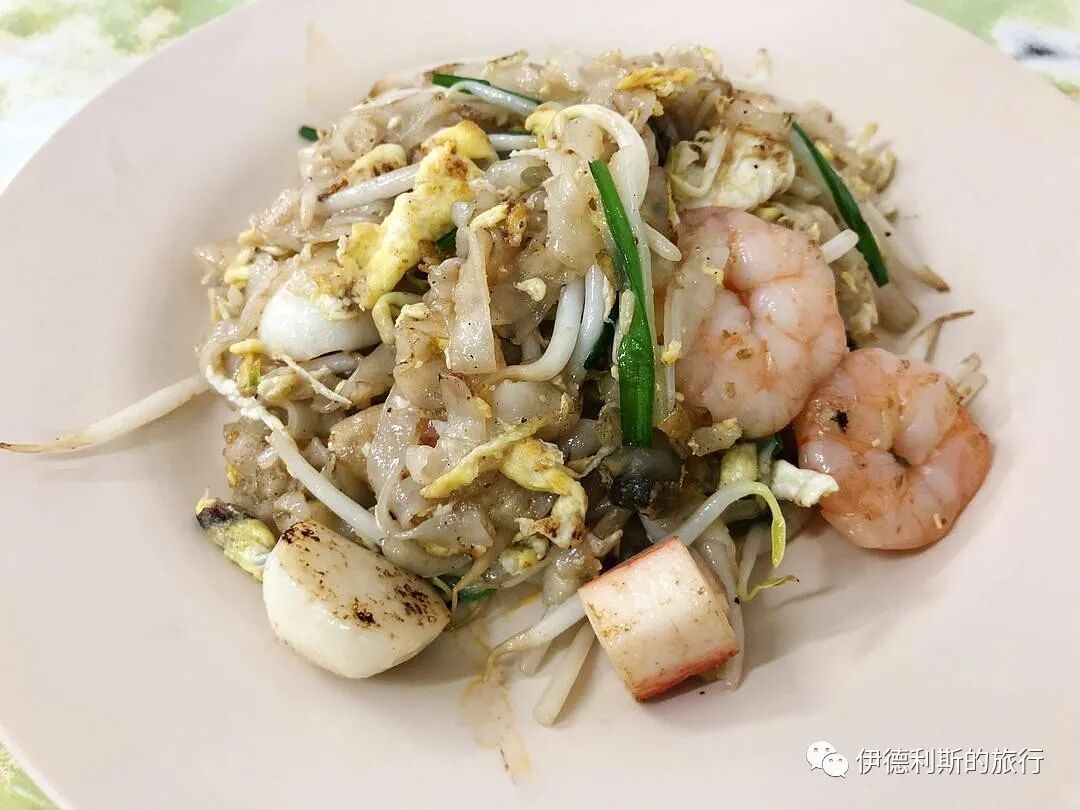
Stir-fried rice noodles (char kway teow) are a signature dish for the Chinese community in Penang, much like the beef chow fun found in Cantonese cooking. Although the dish comes from the old hometown of Teochew, it has developed its own local style after being passed down through generations. The stir-fried rice noodles in Penang are wider and thicker, and they are seasoned mainly with fish sauce and soy sauce, which gives them a lighter color. They also add shrimp, fish balls, crab sticks, bean sprouts, chives, and eggs, but since this shop is halal, they do not use lard or Chinese sausage.
White curry noodles are made with coconut milk and curry, making them slightly spicy. They include shrimp, fried tofu, eggs, wood ear mushrooms, and mint leaves. You can choose your own noodles, so we picked a mix of half yellow noodles and half rice vermicelli.
2. Pastry Culture Workshop
Pastry Culture Workshop (Kuih Culture) is a shop that sells halal Nyonya cakes (Nyonya Kuih). The owner is Yan Guoxing, a Chinese man from Penang. Yan Guoxing met his wife in 1980 and learned that her family specialized in making and wholesaling Nyonya cakes. Because he loved these cakes, he started learning how to make them in 1984. His wife's family originally kept their Nyonya cake recipes a secret. As a son-in-law, Yan Guoxing was accepted into the family and spent a year as an apprentice before he finally learned how to make the cakes.
Baba Nyonya, also called Straits-born Chinese (Peranakan), refers to the descendants of Chinese people who settled in places like Malacca, Penang, and Singapore starting in the 15th century and married local people. The men are called Baba and the women are called Nyonya. Although the Peranakan (Nyonya) people are a minority group, their Nyonya cakes (kuih) are loved by all the different communities on the Malay Peninsula. The best thing about Nyonya cakes is how they use plant juices like pandan leaf, butterfly pea flower, roselle, and ramie leaf (daun rami) to color them, giving the cakes a variety of bright colors and floral scents.
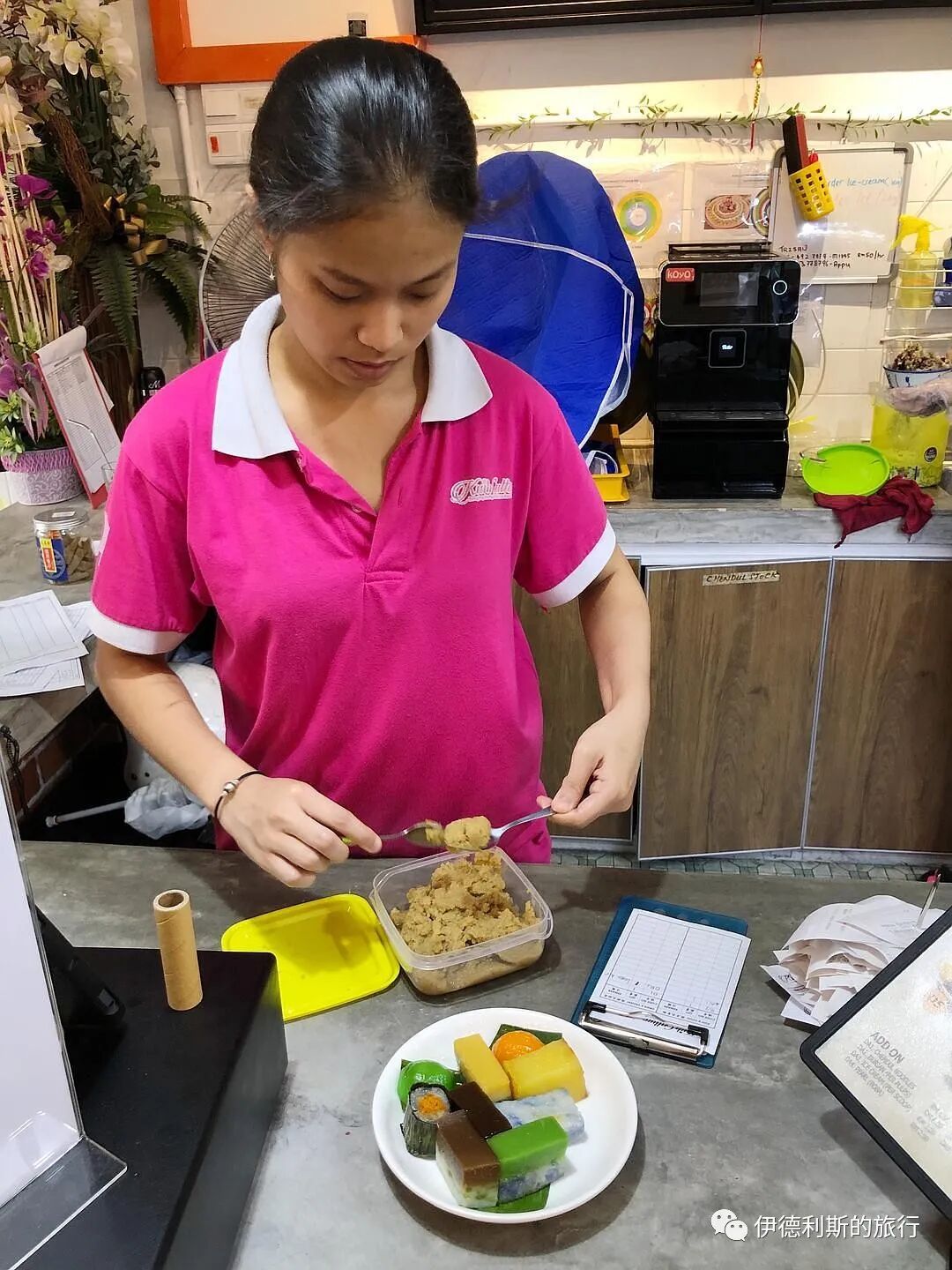
Among the Nyonya cakes we tasted, the red one on the far left is the famous red tortoise cake (ang koo), which is a must-have offering for Chinese people in Southeast Asia during religious ceremonies. In the past, the Peranakan people did not say a baby's gender directly, but used the shape of the red tortoise cake to show it; the tortoise shape meant a boy, and the peach shape meant a girl.
To the right of the red tortoise cake is the yellow baked cassava cake (kuih bingka ubi), the green one on the far right is the pandan coconut milk cake (kuih talam), and the green round one at the bottom is the palm sugar rice cake (kuih kosui).
The shop assistant spreads coconut jam (kaya) on top of blue flower sticky rice cake (pulut tai tai). Coconut jam (kaya) is made from coconut milk, pandan leaves, palm sugar, and eggs.
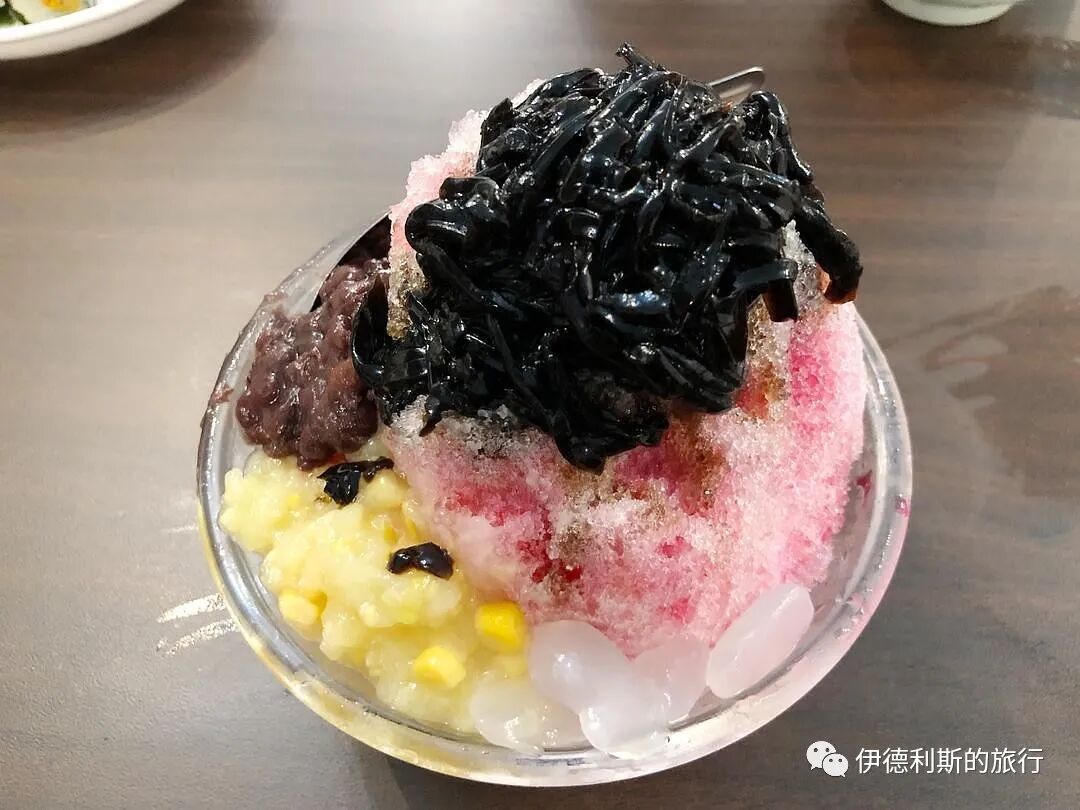
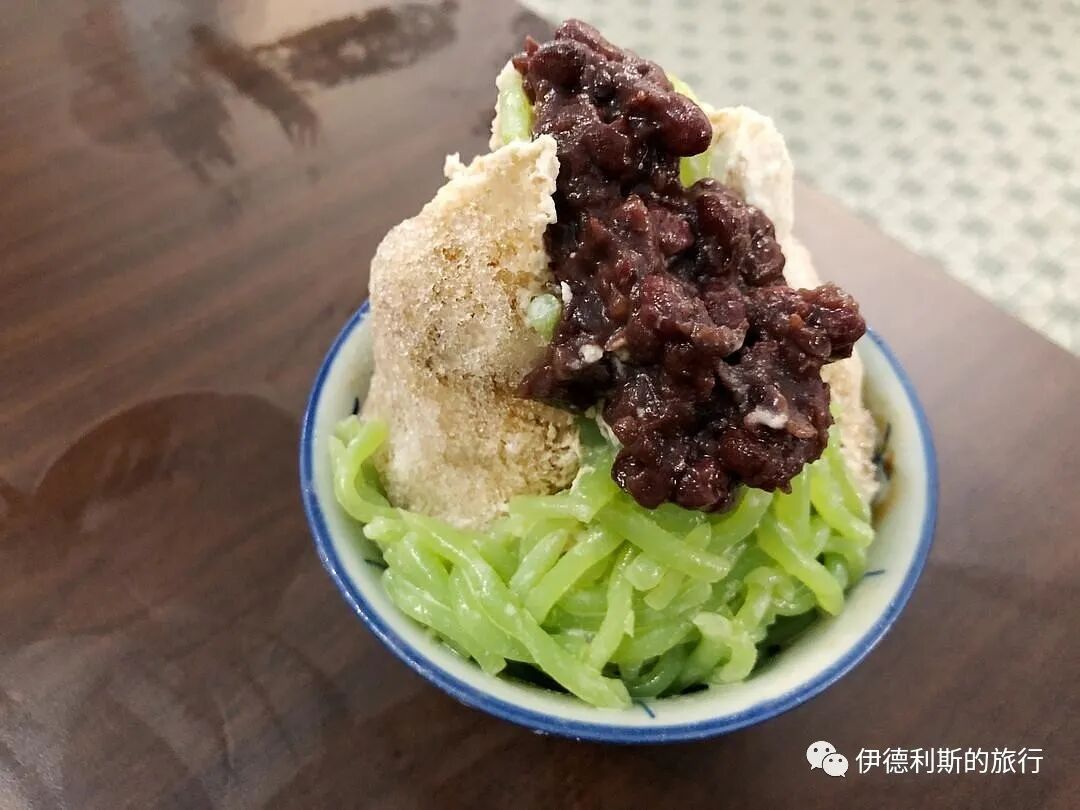
We also ate Nanyang-style shaved ice with green jelly noodles (cendol) and red bean ice. Shaved ice with green jelly noodles (cendol) comes from Chaozhou. It is made by adding green noodles made from pandan leaves and sticky rice to shaved ice, then pouring coconut milk, palm sugar, and red beans over it.
3. Liu's Restaurant
The biggest surprise of this trip to Penang was finding a restaurant run by Hui Muslims and enjoying a delicious Nanyang Hui Muslim feast.
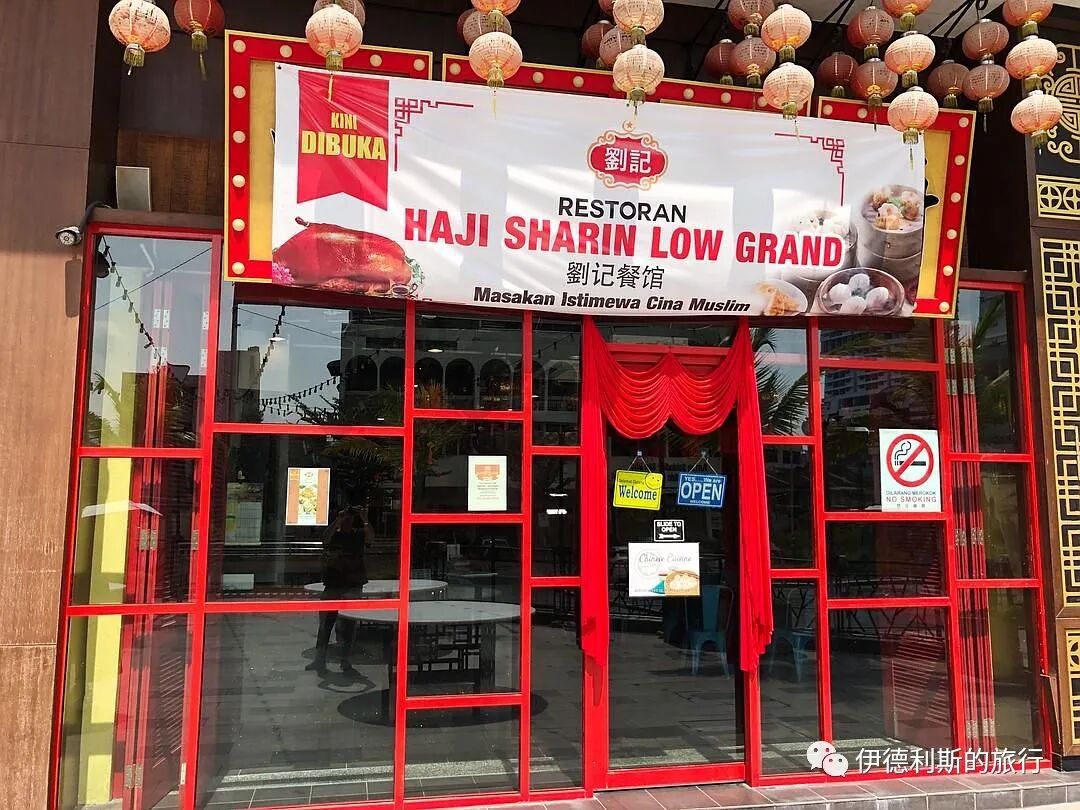
This restaurant, Restoran Haji Sharin Low Grand, is the largest Hui Muslim restaurant chain in Nanyang. It has over 17 branches across Malaysia and Indonesia, with the main branch in Kuala Lumpur. The founder is a Hui Muslim named Tuan Haji Sharin Low.
We ordered Nyonya flower crab, Teochew-style steamed grouper, Liu's claypot tofu, and vermicelli soup (mianxianhu). Everything was delicious. The meal featured a mix of local Nyonya, Teochew, and Minnan cooking styles, all using halal ingredients. It was a true cultural fusion.
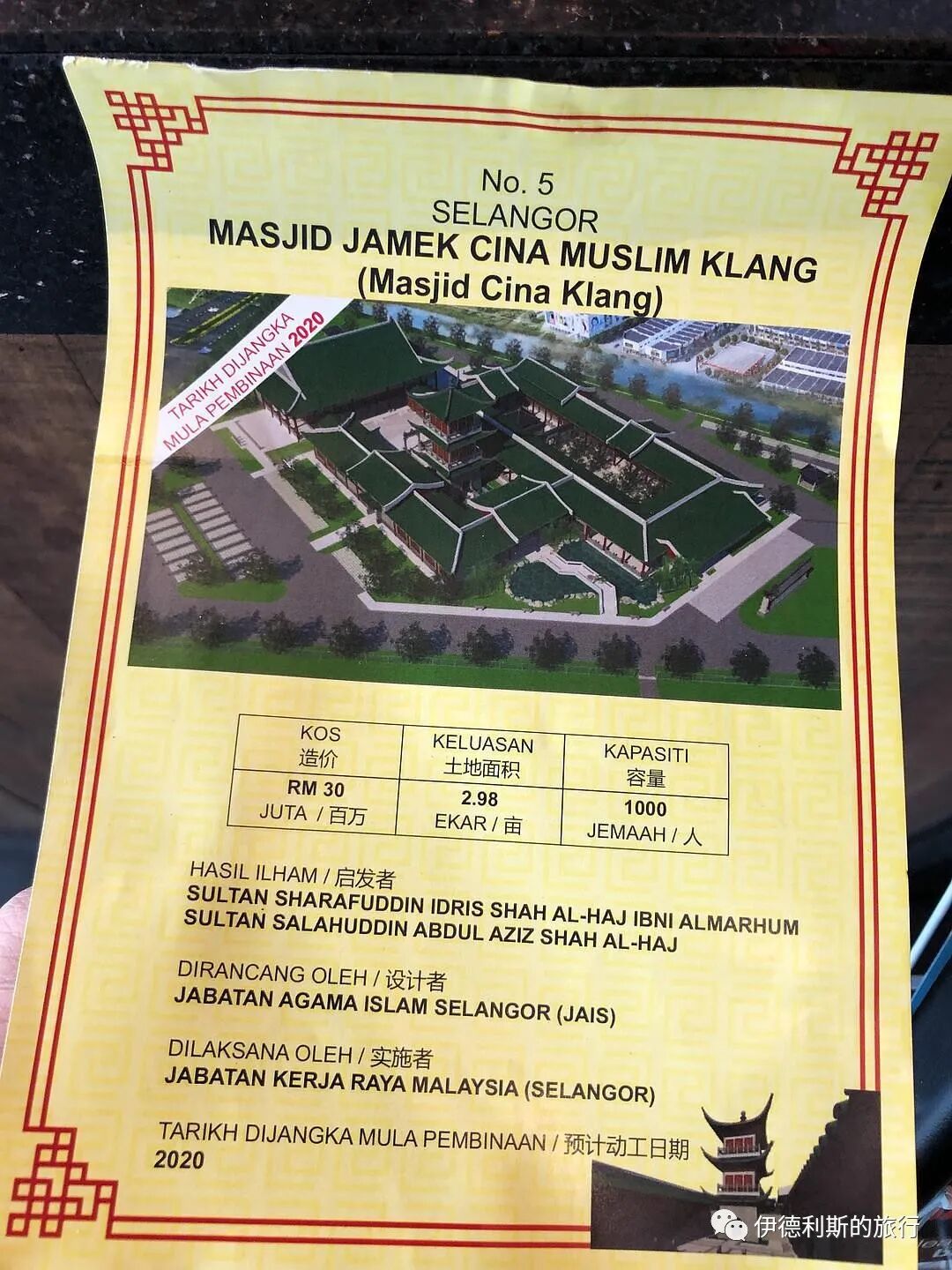
After eating, we chatted with the owner. She is a local Hui Muslim. I was very excited to finally meet and talk with members of this group, whom I had previously only read about in news and academic papers. The owner was very welcoming and invited us to visit again. We also learned that a local mosque for Hui Muslims in Penang was about to start construction (we visited in 2019), which will give the local Hui Muslims a social center.
The restaurant has membership application forms for the Malaysian Chinese Muslim Association (MACMA). MACMA started in 1994 to clear up the misunderstanding among Malaysian Chinese that Islam is only for Malays and that Chinese people cannot be Muslim. It also helps Malay Muslims learn about Chinese culture. The association works to help Malaysian Chinese Muslims solve various problems and provides guidance for new converts. The association offers free "Understanding Islam" classes in the evening. They teach in both English and Chinese, and everyone is welcome to attend. view all
Summary: Halal Food Guide: Penang — Chinese Halal Food and Muslim Streets is presented here as a firsthand travel account in clear English, beginning with this scene: Penang, Malaysia, is a city where Chinese, Malay, and Indian people live together. The account keeps its focus on Penang Halal Food, Chinese Muslim Food, Malaysia Travel while preserving the names, places, food, and historical details from the Chinese source.
Penang, Malaysia, is a city where Chinese, Malay, and Indian people live together. Here, you can find halal food made by many different groups, including Teochew people, Peranakan (Baba Nyonya) people, Hui Muslims, Jawi Peranakan people, and Tamil Muslim (Mamak) people. I will now introduce the halal Chinese food I ate in Penang.
1. Bee Hwa Cafe
Bee Hwa Cafe is a Teochew-style Chinese halal restaurant that only uses halal ingredients. The staff includes both Teochew Chinese and Malay women wearing headscarves. Many local Malay people love coming here to try halal Chinese-style food.
We ate the classic Malaysian Chinese stir-fried rice noodles (char kway teow) and white curry noodles (curry mee) at their place.
Stir-fried rice noodles (char kway teow) are a signature dish for the Chinese community in Penang, much like the beef chow fun found in Cantonese cooking. Although the dish comes from the old hometown of Teochew, it has developed its own local style after being passed down through generations. The stir-fried rice noodles in Penang are wider and thicker, and they are seasoned mainly with fish sauce and soy sauce, which gives them a lighter color. They also add shrimp, fish balls, crab sticks, bean sprouts, chives, and eggs, but since this shop is halal, they do not use lard or Chinese sausage.
White curry noodles are made with coconut milk and curry, making them slightly spicy. They include shrimp, fried tofu, eggs, wood ear mushrooms, and mint leaves. You can choose your own noodles, so we picked a mix of half yellow noodles and half rice vermicelli.
2. Pastry Culture Workshop
Pastry Culture Workshop (Kuih Culture) is a shop that sells halal Nyonya cakes (Nyonya Kuih). The owner is Yan Guoxing, a Chinese man from Penang. Yan Guoxing met his wife in 1980 and learned that her family specialized in making and wholesaling Nyonya cakes. Because he loved these cakes, he started learning how to make them in 1984. His wife's family originally kept their Nyonya cake recipes a secret. As a son-in-law, Yan Guoxing was accepted into the family and spent a year as an apprentice before he finally learned how to make the cakes.
Baba Nyonya, also called Straits-born Chinese (Peranakan), refers to the descendants of Chinese people who settled in places like Malacca, Penang, and Singapore starting in the 15th century and married local people. The men are called Baba and the women are called Nyonya. Although the Peranakan (Nyonya) people are a minority group, their Nyonya cakes (kuih) are loved by all the different communities on the Malay Peninsula. The best thing about Nyonya cakes is how they use plant juices like pandan leaf, butterfly pea flower, roselle, and ramie leaf (daun rami) to color them, giving the cakes a variety of bright colors and floral scents.
Among the Nyonya cakes we tasted, the red one on the far left is the famous red tortoise cake (ang koo), which is a must-have offering for Chinese people in Southeast Asia during religious ceremonies. In the past, the Peranakan people did not say a baby's gender directly, but used the shape of the red tortoise cake to show it; the tortoise shape meant a boy, and the peach shape meant a girl.
To the right of the red tortoise cake is the yellow baked cassava cake (kuih bingka ubi), the green one on the far right is the pandan coconut milk cake (kuih talam), and the green round one at the bottom is the palm sugar rice cake (kuih kosui).
The shop assistant spreads coconut jam (kaya) on top of blue flower sticky rice cake (pulut tai tai). Coconut jam (kaya) is made from coconut milk, pandan leaves, palm sugar, and eggs.
We also ate Nanyang-style shaved ice with green jelly noodles (cendol) and red bean ice. Shaved ice with green jelly noodles (cendol) comes from Chaozhou. It is made by adding green noodles made from pandan leaves and sticky rice to shaved ice, then pouring coconut milk, palm sugar, and red beans over it.
3. Liu's Restaurant
The biggest surprise of this trip to Penang was finding a restaurant run by Hui Muslims and enjoying a delicious Nanyang Hui Muslim feast.
This restaurant, Restoran Haji Sharin Low Grand, is the largest Hui Muslim restaurant chain in Nanyang. It has over 17 branches across Malaysia and Indonesia, with the main branch in Kuala Lumpur. The founder is a Hui Muslim named Tuan Haji Sharin Low.
We ordered Nyonya flower crab, Teochew-style steamed grouper, Liu's claypot tofu, and vermicelli soup (mianxianhu). Everything was delicious. The meal featured a mix of local Nyonya, Teochew, and Minnan cooking styles, all using halal ingredients. It was a true cultural fusion.
After eating, we chatted with the owner. She is a local Hui Muslim. I was very excited to finally meet and talk with members of this group, whom I had previously only read about in news and academic papers. The owner was very welcoming and invited us to visit again. We also learned that a local mosque for Hui Muslims in Penang was about to start construction (we visited in 2019), which will give the local Hui Muslims a social center.
The restaurant has membership application forms for the Malaysian Chinese Muslim Association (MACMA). MACMA started in 1994 to clear up the misunderstanding among Malaysian Chinese that Islam is only for Malays and that Chinese people cannot be Muslim. It also helps Malay Muslims learn about Chinese culture. The association works to help Malaysian Chinese Muslims solve various problems and provides guidance for new converts. The association offers free "Understanding Islam" classes in the evening. They teach in both English and Chinese, and everyone is welcome to attend. view all
Reposted from the web
Summary: Halal Food Guide: Penang — Chinese Halal Food and Muslim Streets is presented here as a firsthand travel account in clear English, beginning with this scene: Penang, Malaysia, is a city where Chinese, Malay, and Indian people live together. The account keeps its focus on Penang Halal Food, Chinese Muslim Food, Malaysia Travel while preserving the names, places, food, and historical details from the Chinese source.
Penang, Malaysia, is a city where Chinese, Malay, and Indian people live together. Here, you can find halal food made by many different groups, including Teochew people, Peranakan (Baba Nyonya) people, Hui Muslims, Jawi Peranakan people, and Tamil Muslim (Mamak) people. I will now introduce the halal Chinese food I ate in Penang.
1. Bee Hwa Cafe
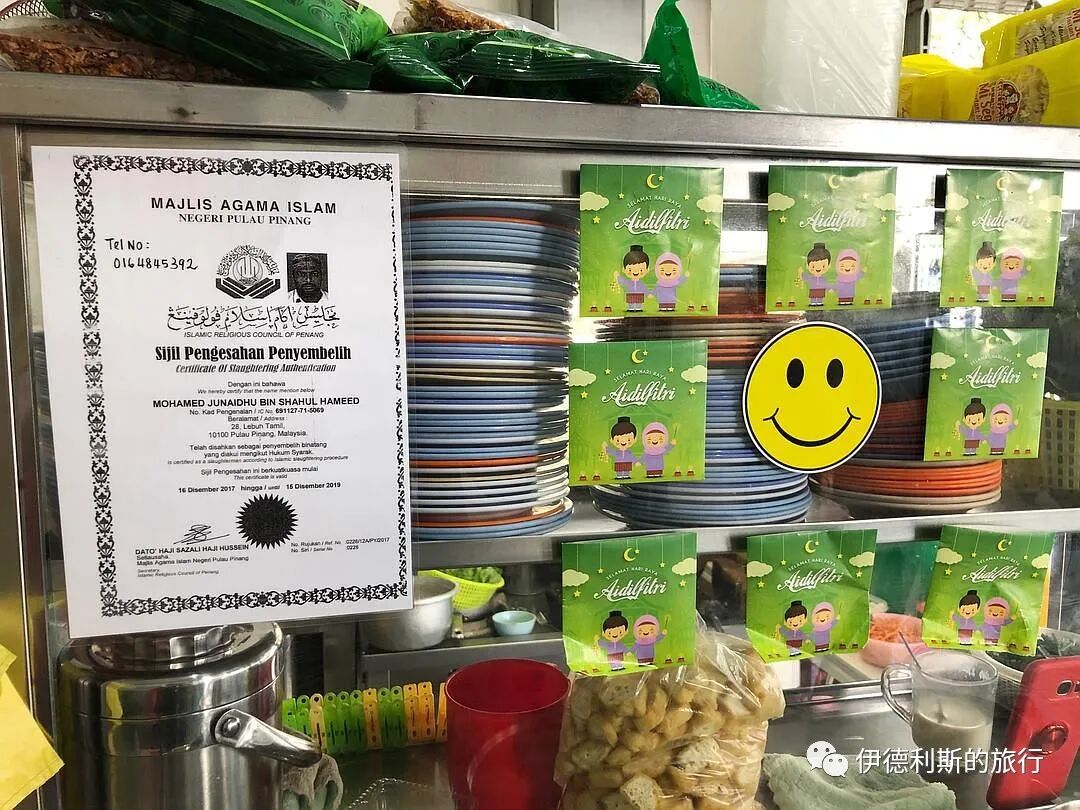
Bee Hwa Cafe is a Teochew-style Chinese halal restaurant that only uses halal ingredients. The staff includes both Teochew Chinese and Malay women wearing headscarves. Many local Malay people love coming here to try halal Chinese-style food.
We ate the classic Malaysian Chinese stir-fried rice noodles (char kway teow) and white curry noodles (curry mee) at their place.
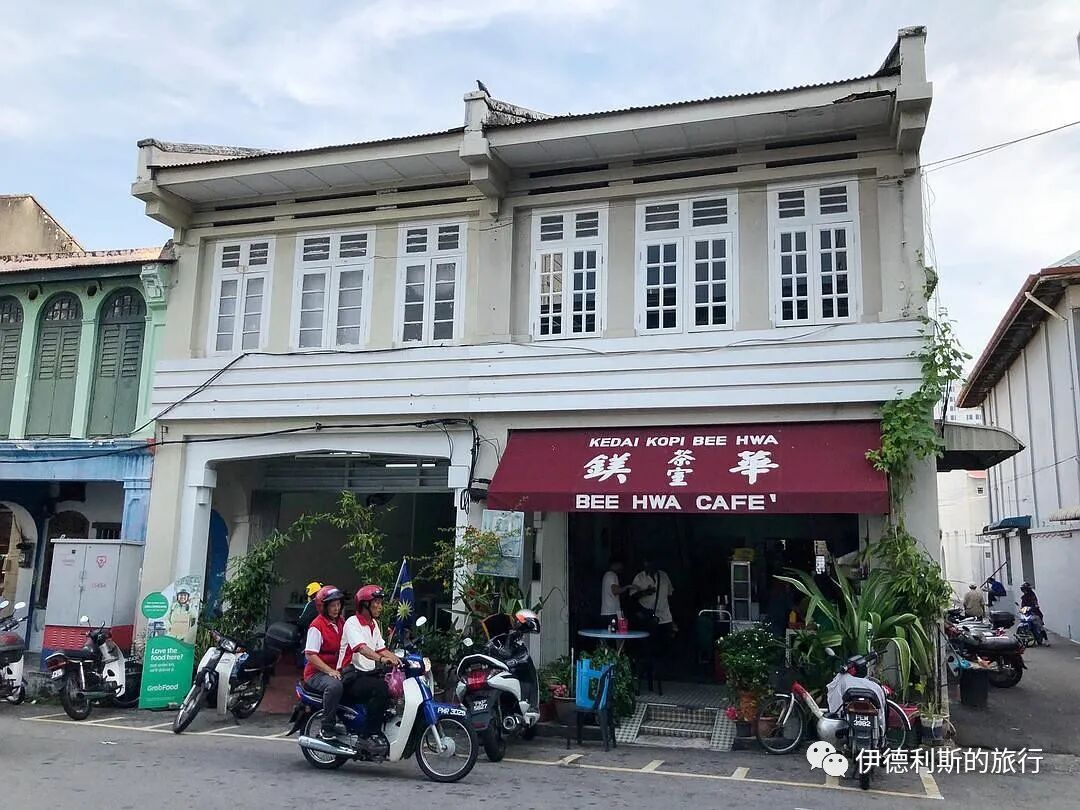
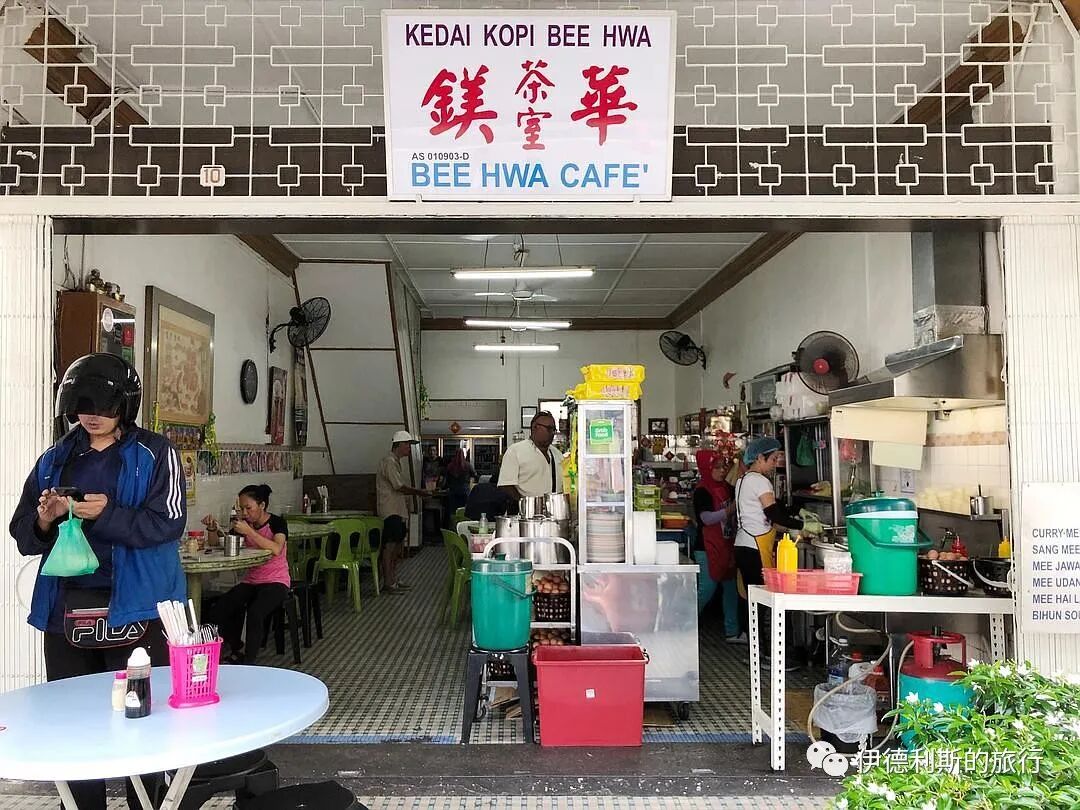
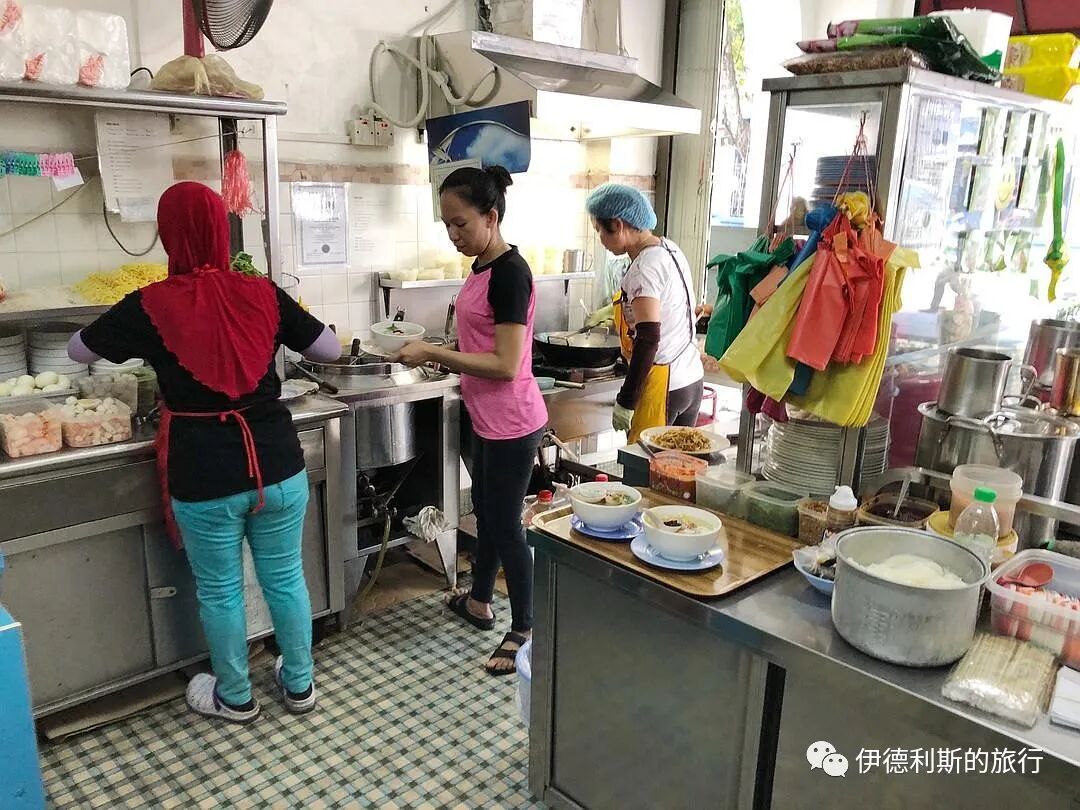
Stir-fried rice noodles (char kway teow) are a signature dish for the Chinese community in Penang, much like the beef chow fun found in Cantonese cooking. Although the dish comes from the old hometown of Teochew, it has developed its own local style after being passed down through generations. The stir-fried rice noodles in Penang are wider and thicker, and they are seasoned mainly with fish sauce and soy sauce, which gives them a lighter color. They also add shrimp, fish balls, crab sticks, bean sprouts, chives, and eggs, but since this shop is halal, they do not use lard or Chinese sausage.
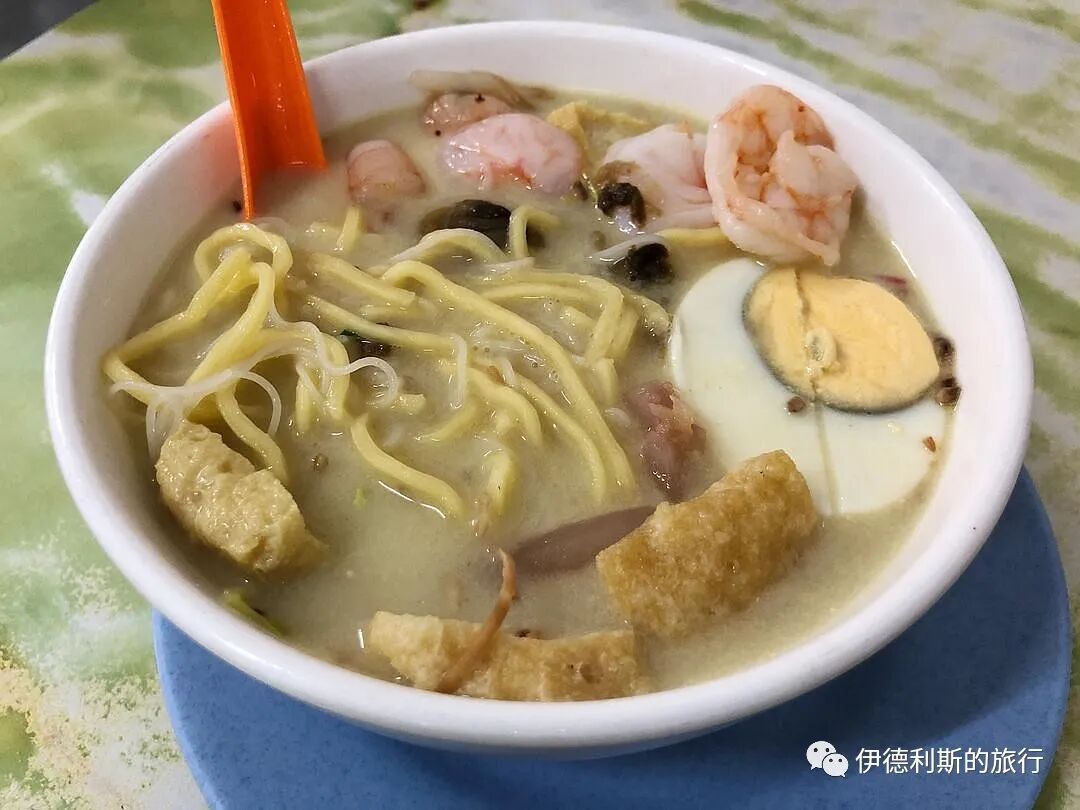
White curry noodles are made with coconut milk and curry, making them slightly spicy. They include shrimp, fried tofu, eggs, wood ear mushrooms, and mint leaves. You can choose your own noodles, so we picked a mix of half yellow noodles and half rice vermicelli.
2. Pastry Culture Workshop
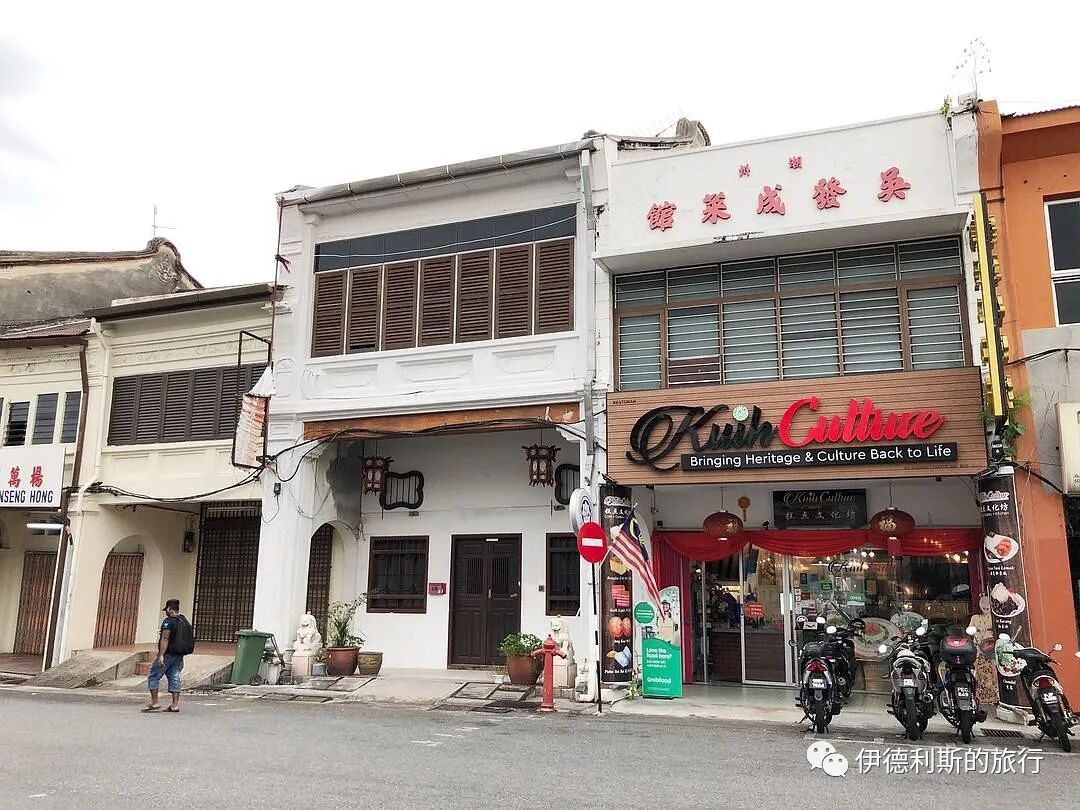
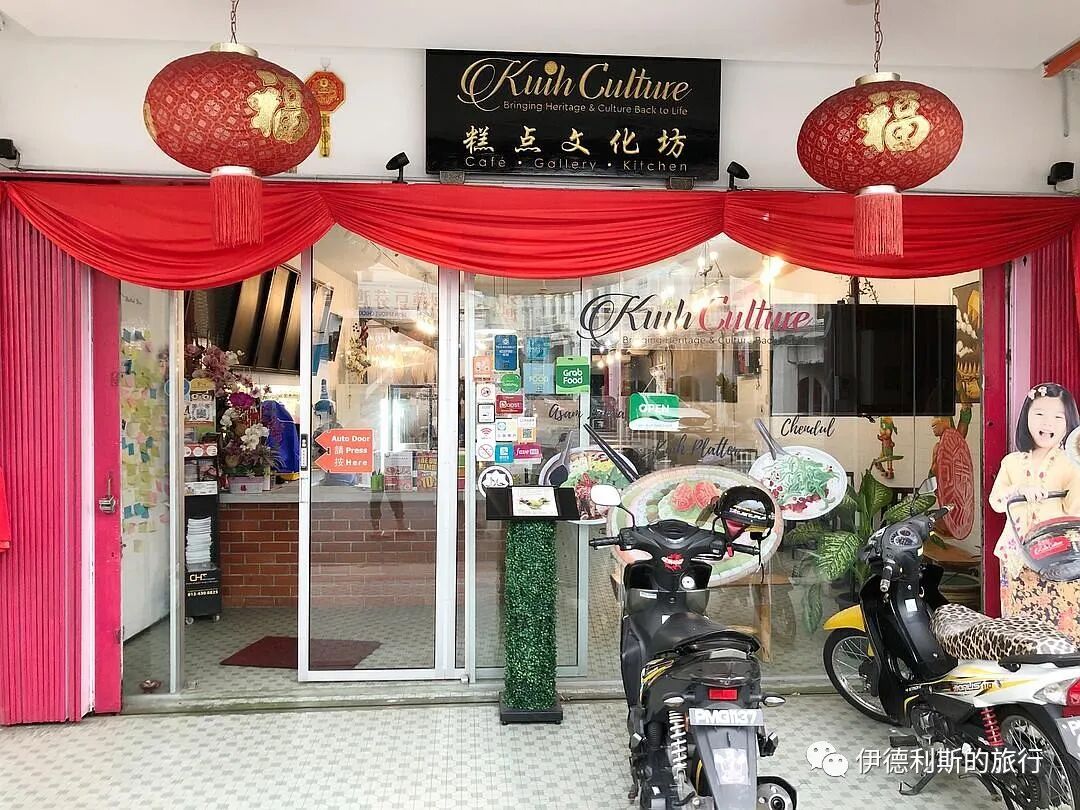
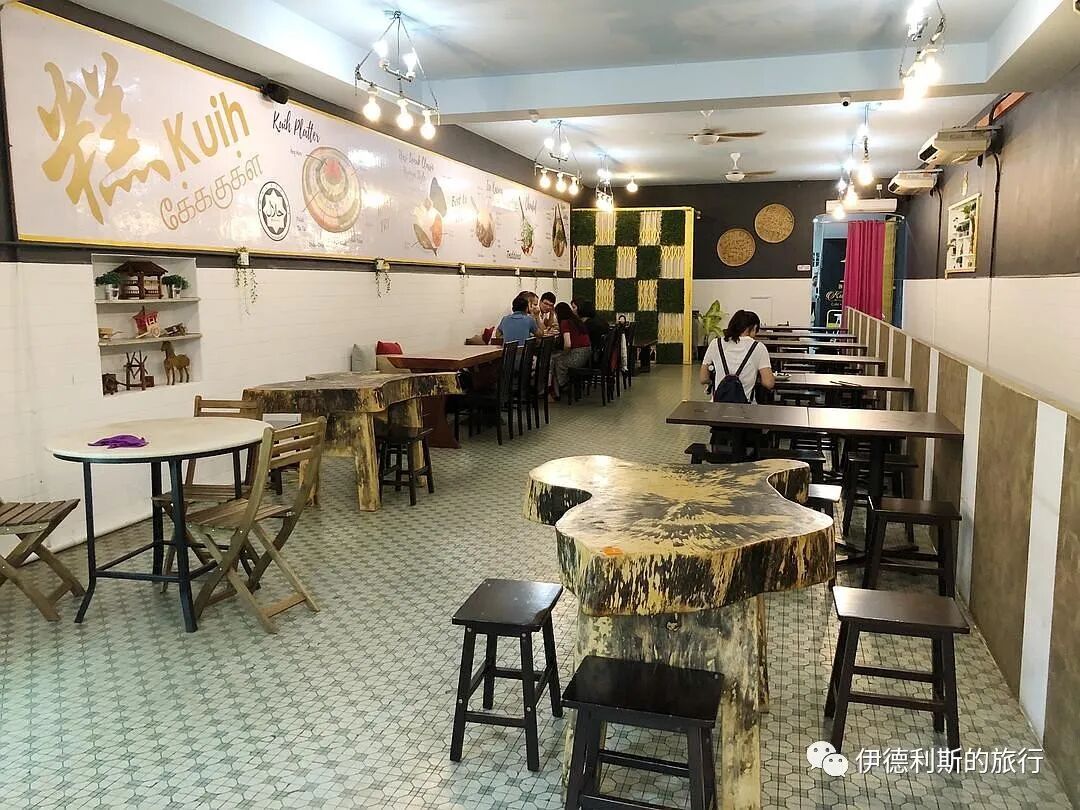
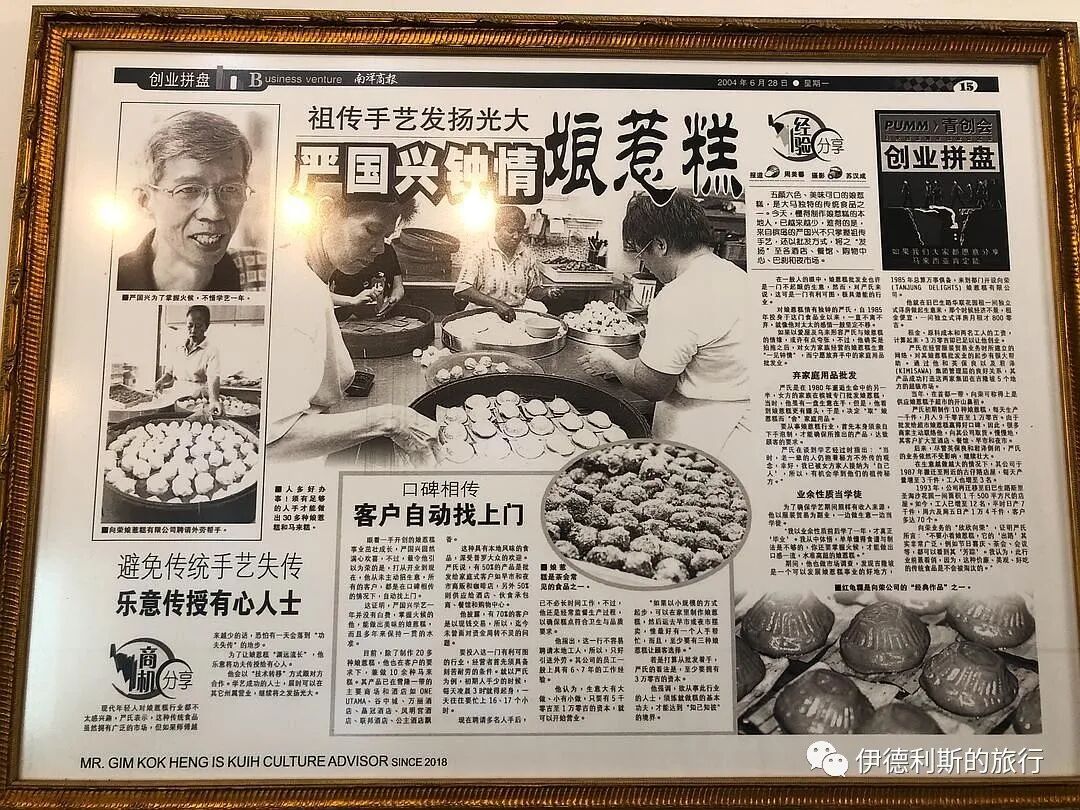
Pastry Culture Workshop (Kuih Culture) is a shop that sells halal Nyonya cakes (Nyonya Kuih). The owner is Yan Guoxing, a Chinese man from Penang. Yan Guoxing met his wife in 1980 and learned that her family specialized in making and wholesaling Nyonya cakes. Because he loved these cakes, he started learning how to make them in 1984. His wife's family originally kept their Nyonya cake recipes a secret. As a son-in-law, Yan Guoxing was accepted into the family and spent a year as an apprentice before he finally learned how to make the cakes.
Baba Nyonya, also called Straits-born Chinese (Peranakan), refers to the descendants of Chinese people who settled in places like Malacca, Penang, and Singapore starting in the 15th century and married local people. The men are called Baba and the women are called Nyonya. Although the Peranakan (Nyonya) people are a minority group, their Nyonya cakes (kuih) are loved by all the different communities on the Malay Peninsula. The best thing about Nyonya cakes is how they use plant juices like pandan leaf, butterfly pea flower, roselle, and ramie leaf (daun rami) to color them, giving the cakes a variety of bright colors and floral scents.
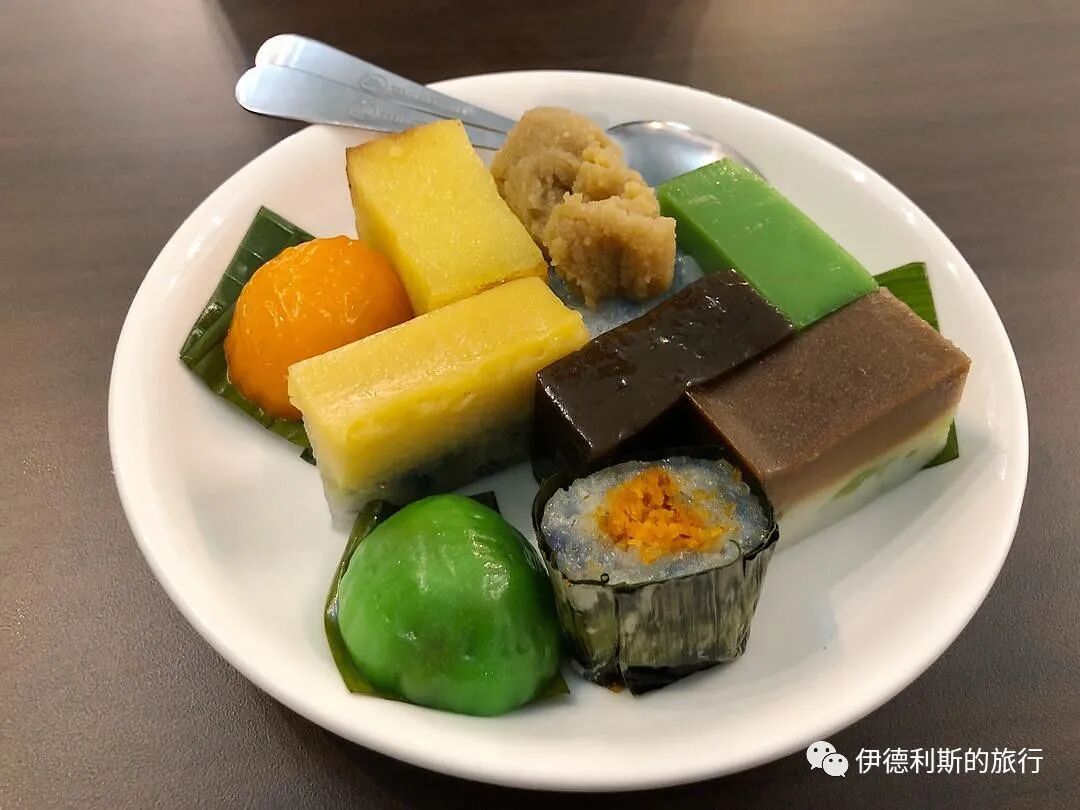
Among the Nyonya cakes we tasted, the red one on the far left is the famous red tortoise cake (ang koo), which is a must-have offering for Chinese people in Southeast Asia during religious ceremonies. In the past, the Peranakan people did not say a baby's gender directly, but used the shape of the red tortoise cake to show it; the tortoise shape meant a boy, and the peach shape meant a girl.
To the right of the red tortoise cake is the yellow baked cassava cake (kuih bingka ubi), the green one on the far right is the pandan coconut milk cake (kuih talam), and the green round one at the bottom is the palm sugar rice cake (kuih kosui).
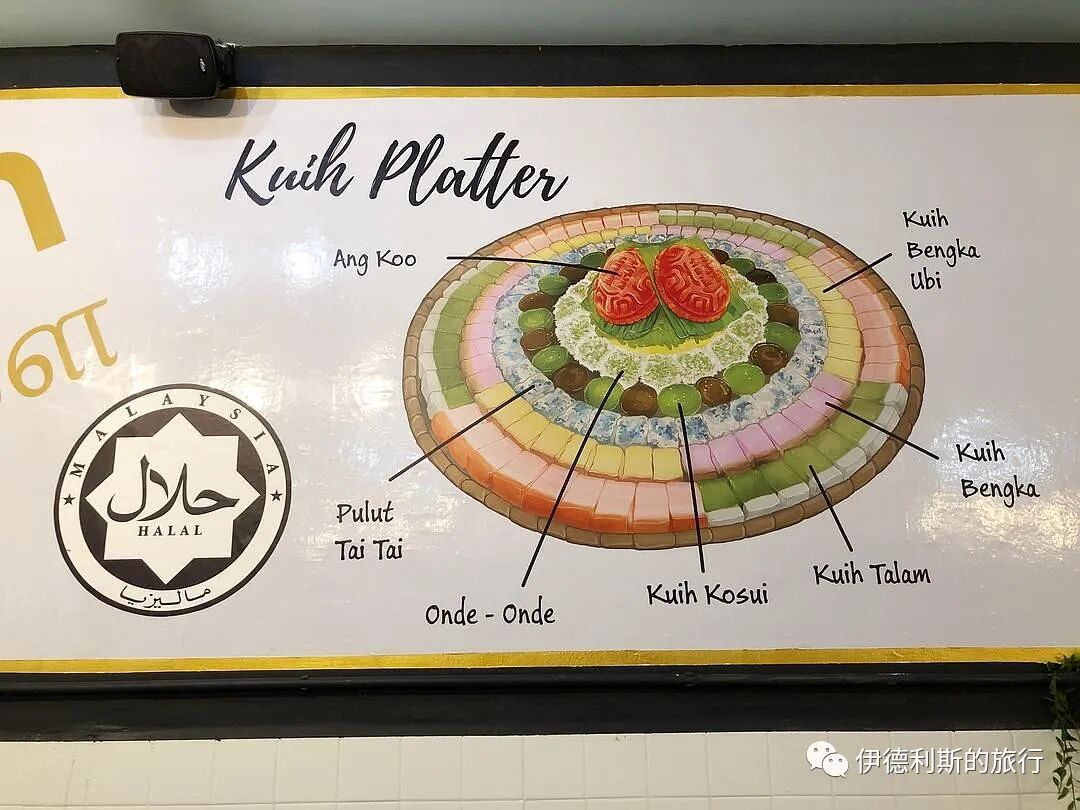
The shop assistant spreads coconut jam (kaya) on top of blue flower sticky rice cake (pulut tai tai). Coconut jam (kaya) is made from coconut milk, pandan leaves, palm sugar, and eggs.
We also ate Nanyang-style shaved ice with green jelly noodles (cendol) and red bean ice. Shaved ice with green jelly noodles (cendol) comes from Chaozhou. It is made by adding green noodles made from pandan leaves and sticky rice to shaved ice, then pouring coconut milk, palm sugar, and red beans over it.
3. Liu's Restaurant
The biggest surprise of this trip to Penang was finding a restaurant run by Hui Muslims and enjoying a delicious Nanyang Hui Muslim feast.
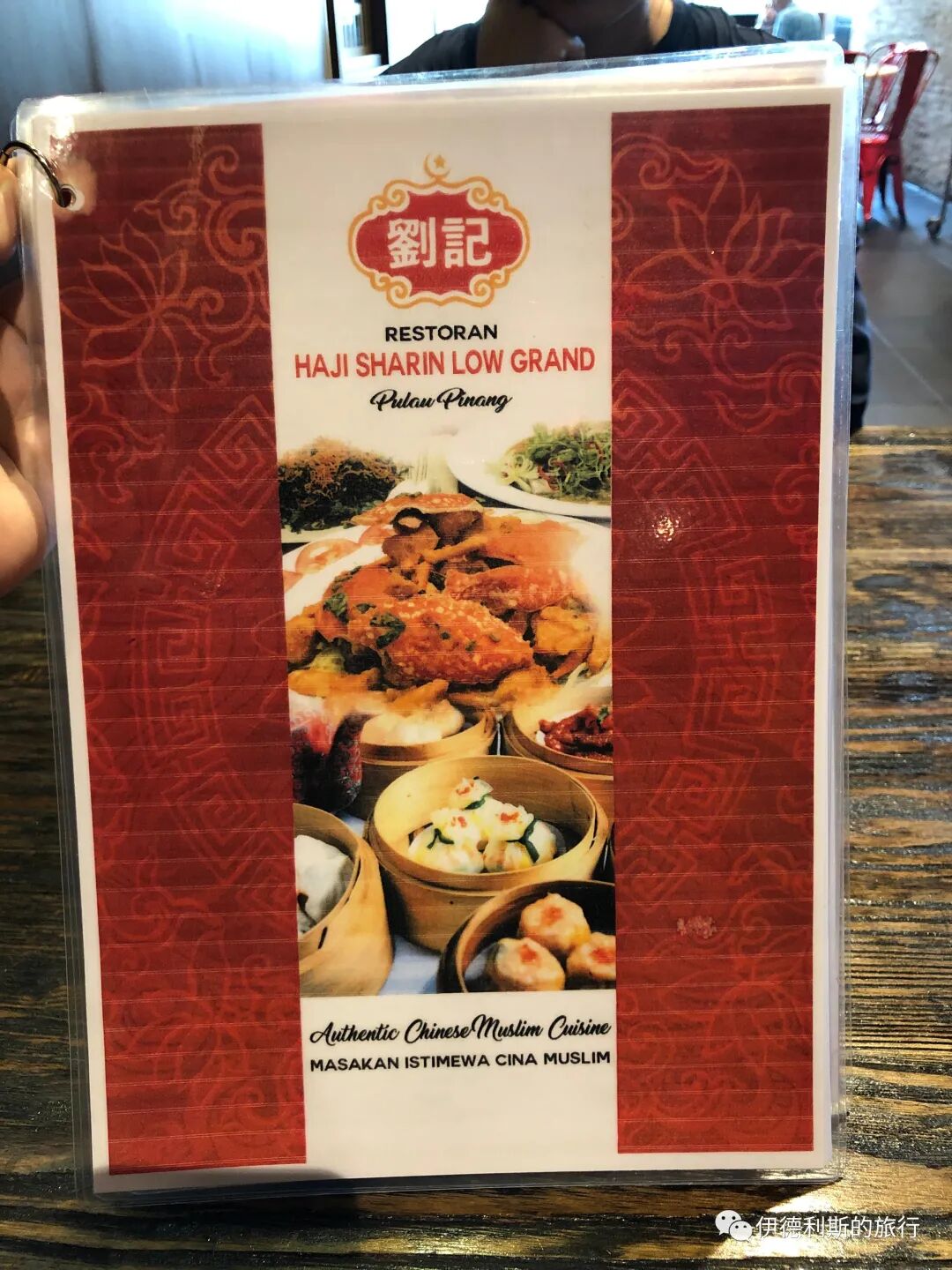
This restaurant, Restoran Haji Sharin Low Grand, is the largest Hui Muslim restaurant chain in Nanyang. It has over 17 branches across Malaysia and Indonesia, with the main branch in Kuala Lumpur. The founder is a Hui Muslim named Tuan Haji Sharin Low.
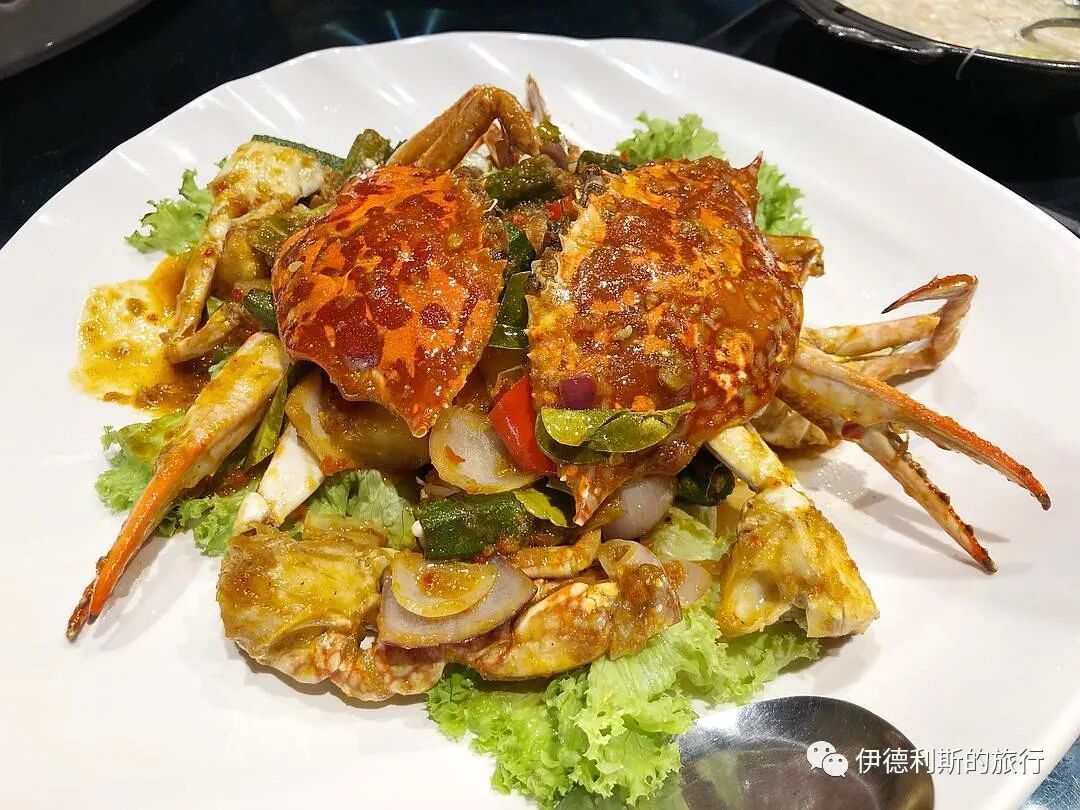
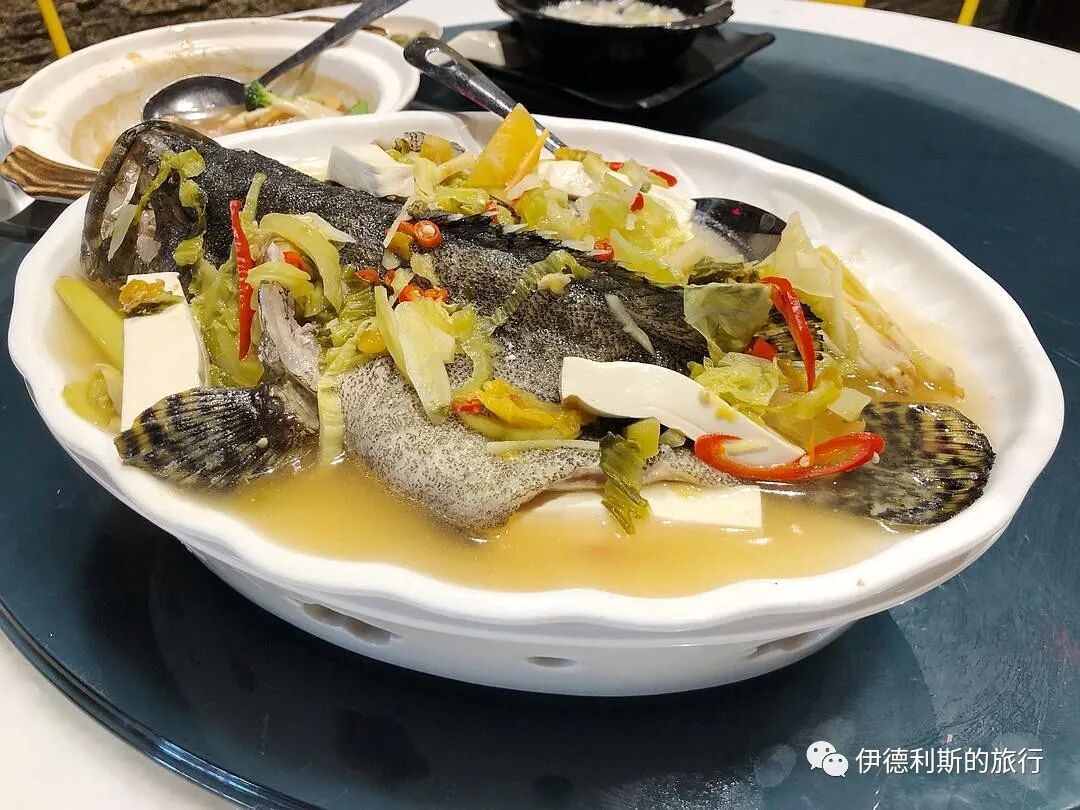
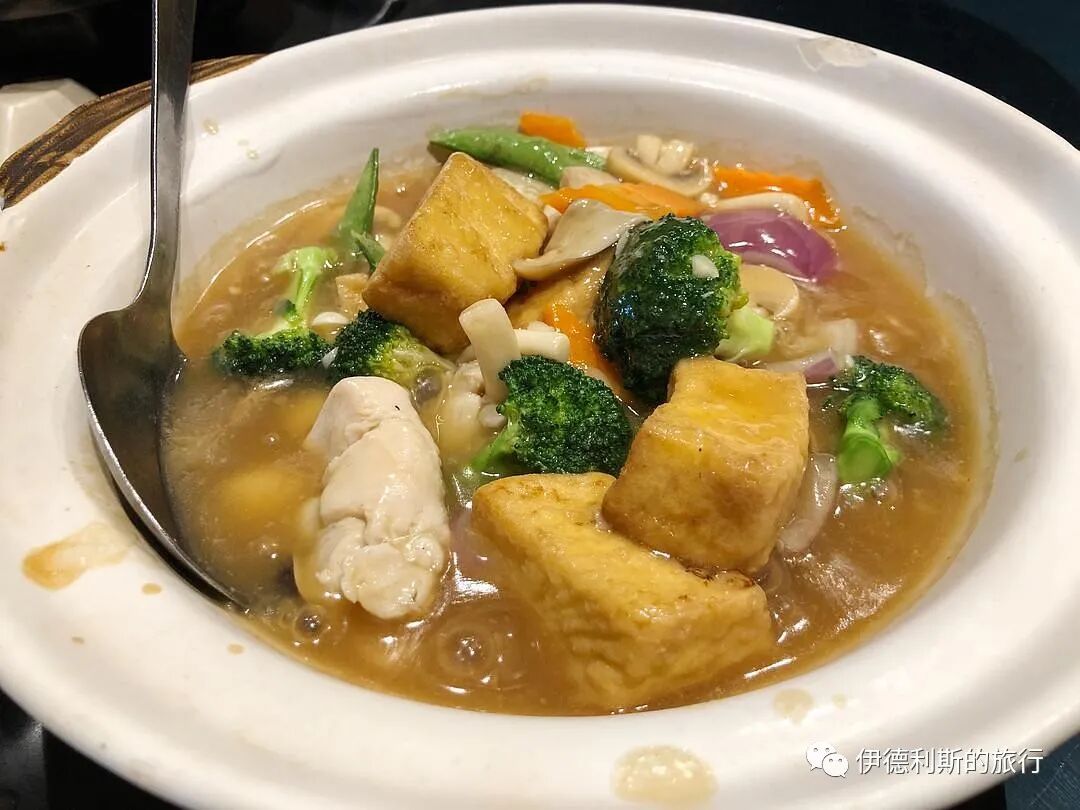
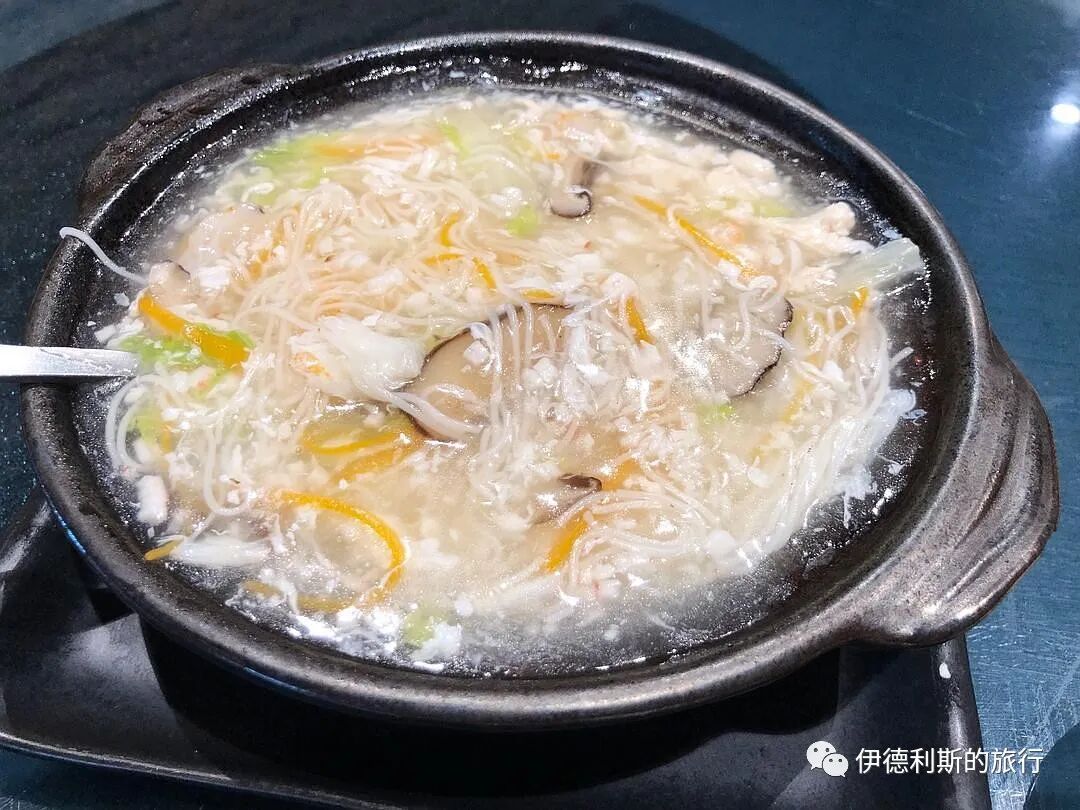
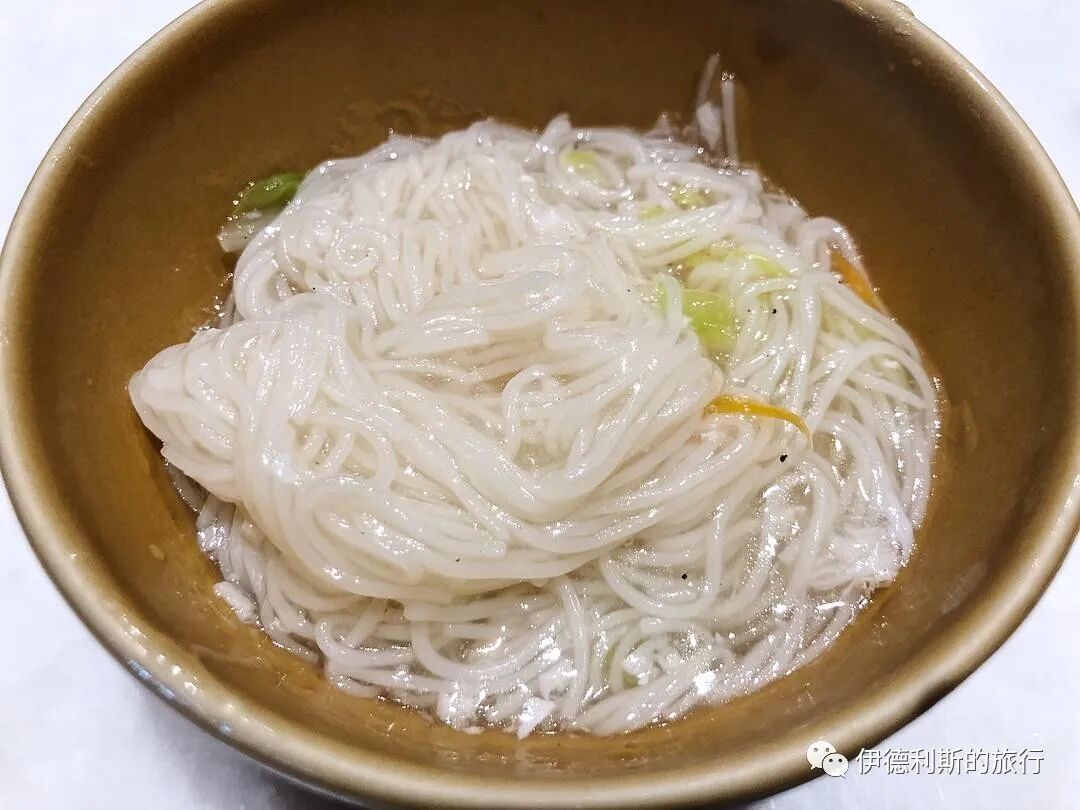
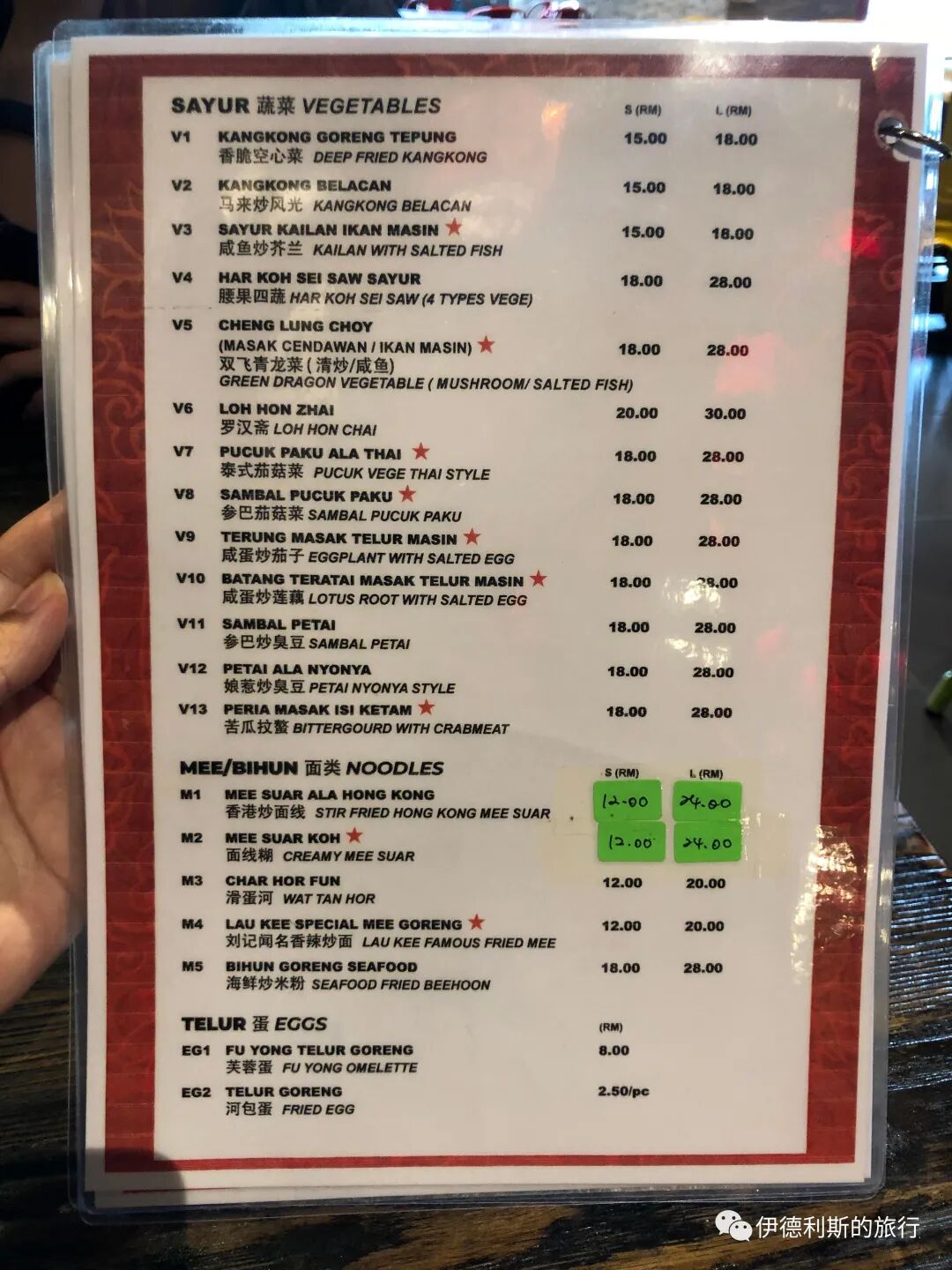
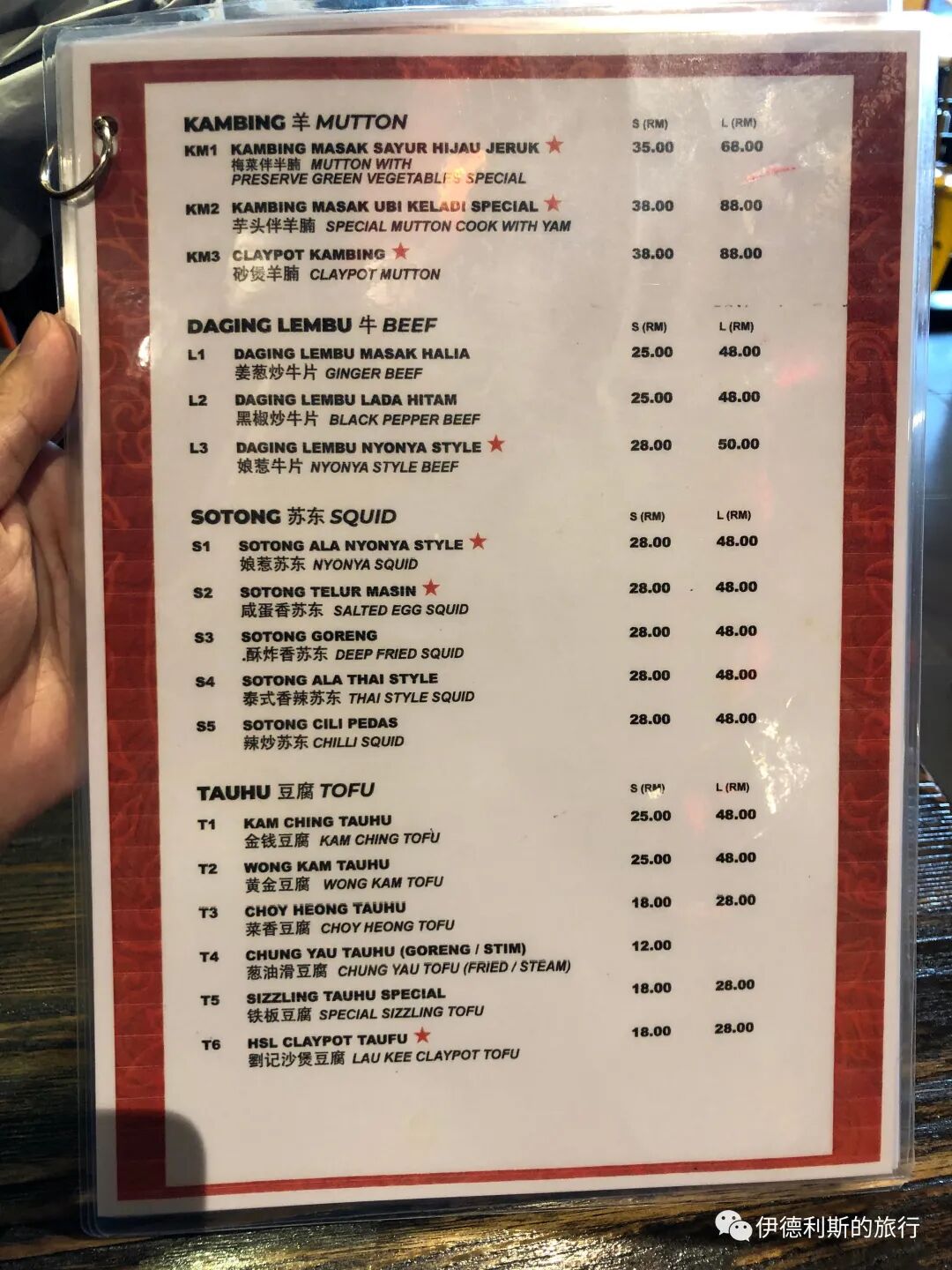
We ordered Nyonya flower crab, Teochew-style steamed grouper, Liu's claypot tofu, and vermicelli soup (mianxianhu). Everything was delicious. The meal featured a mix of local Nyonya, Teochew, and Minnan cooking styles, all using halal ingredients. It was a true cultural fusion.
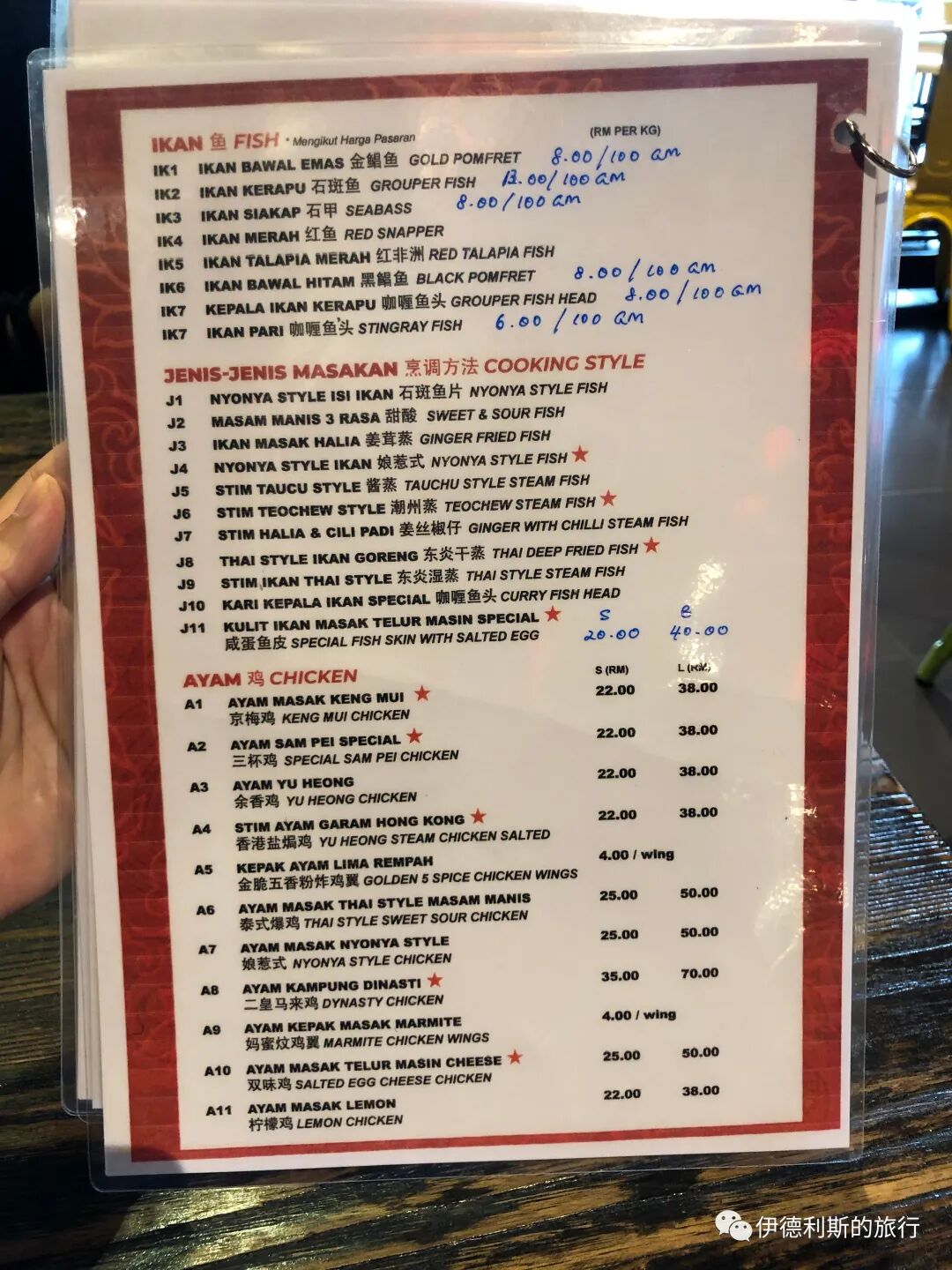
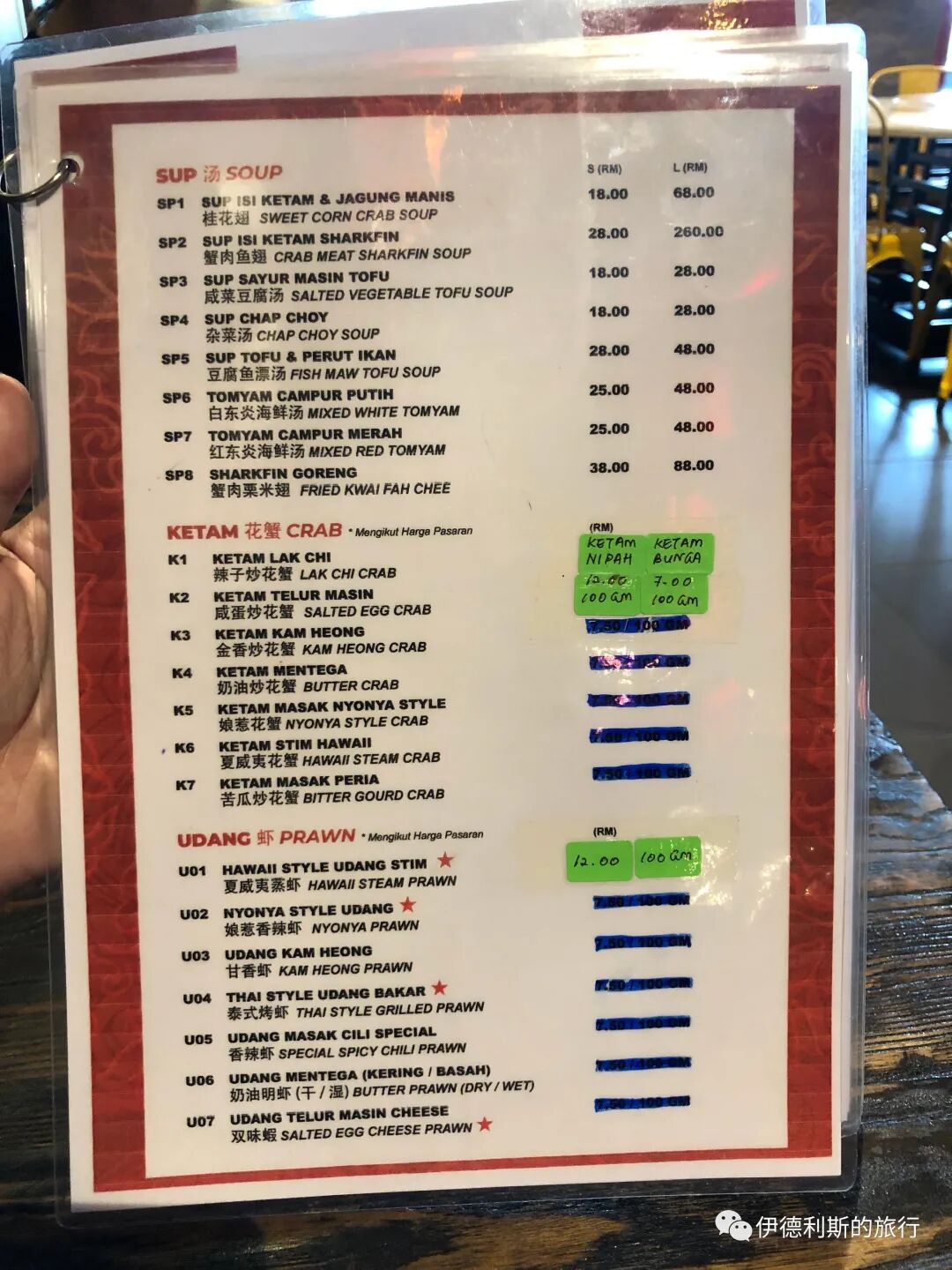
After eating, we chatted with the owner. She is a local Hui Muslim. I was very excited to finally meet and talk with members of this group, whom I had previously only read about in news and academic papers. The owner was very welcoming and invited us to visit again. We also learned that a local mosque for Hui Muslims in Penang was about to start construction (we visited in 2019), which will give the local Hui Muslims a social center.
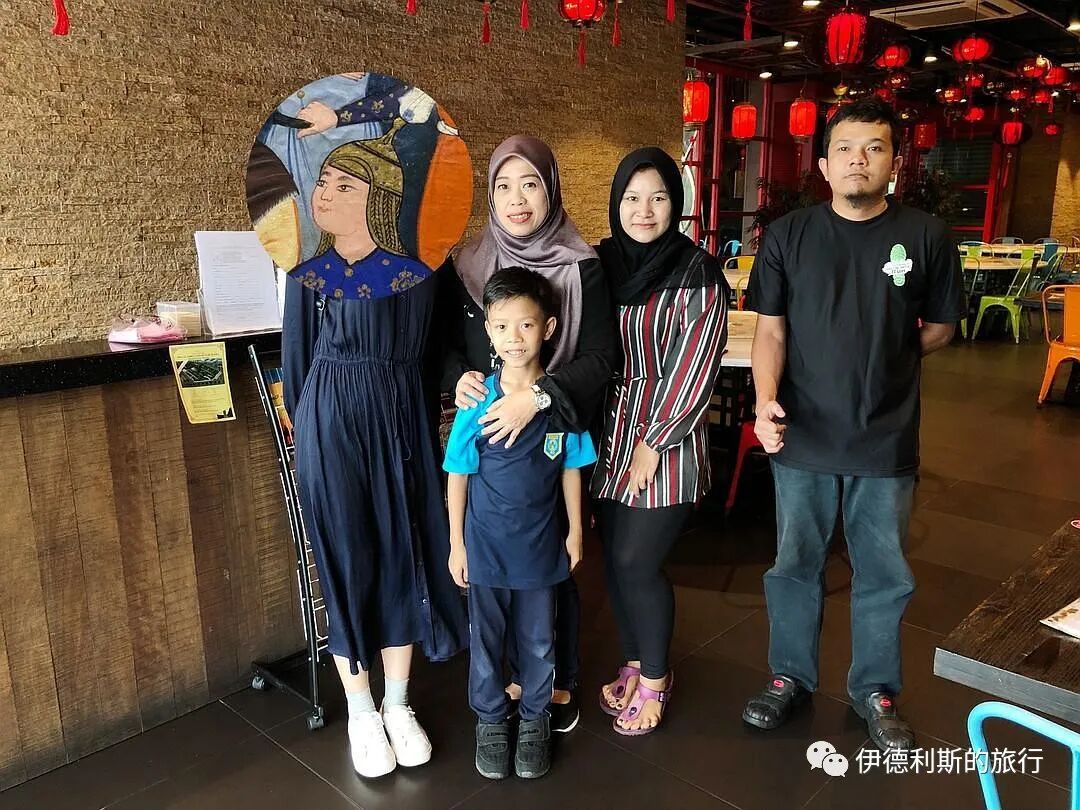
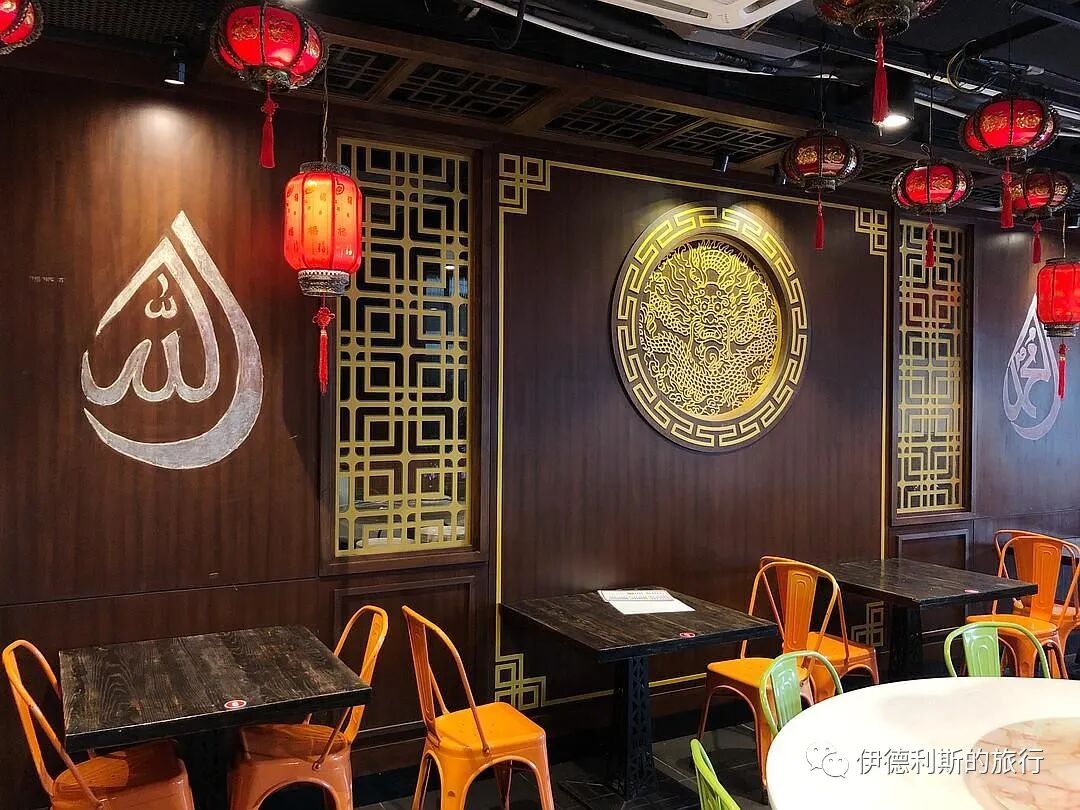
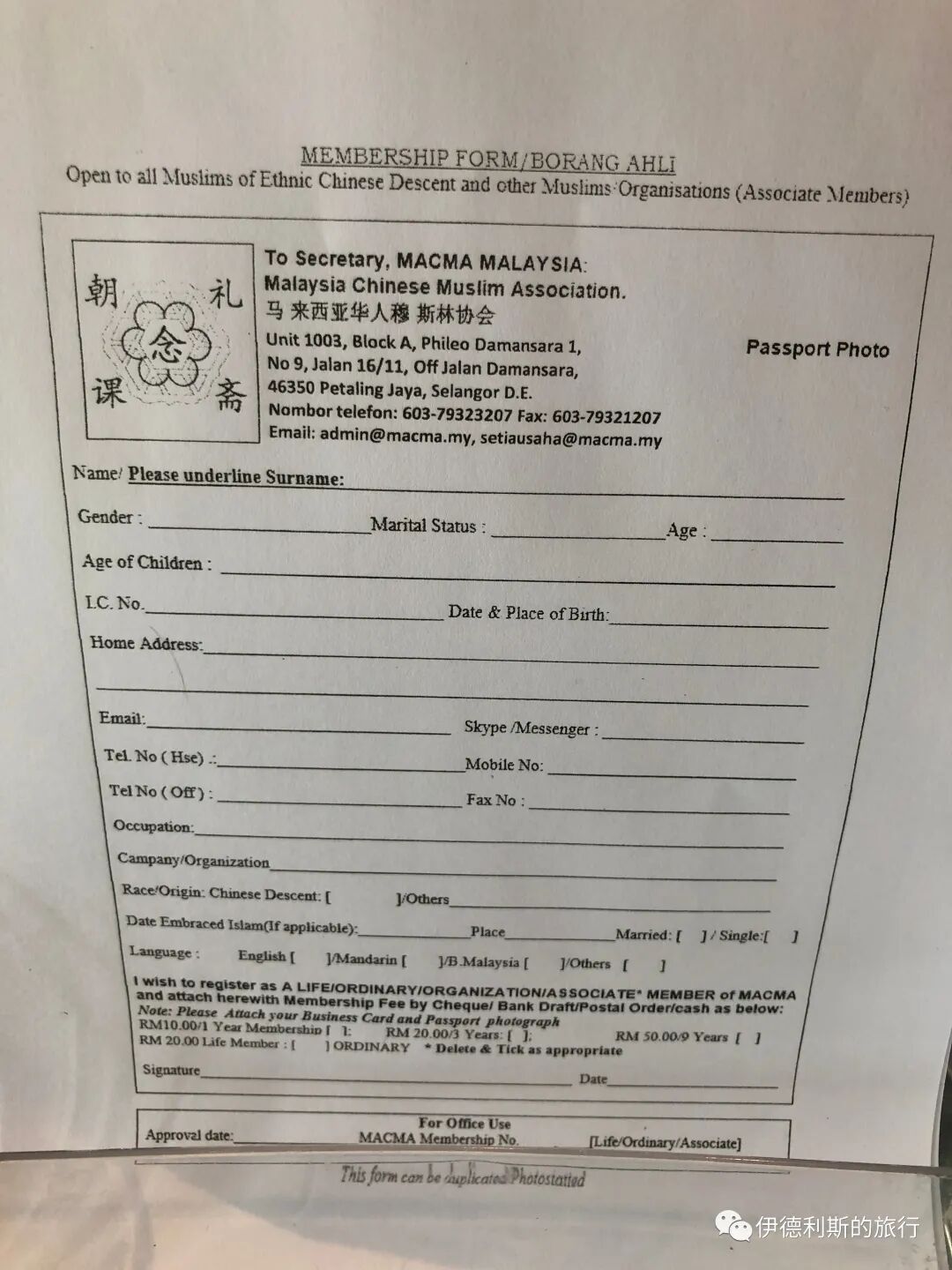
The restaurant has membership application forms for the Malaysian Chinese Muslim Association (MACMA). MACMA started in 1994 to clear up the misunderstanding among Malaysian Chinese that Islam is only for Malays and that Chinese people cannot be Muslim. It also helps Malay Muslims learn about Chinese culture. The association works to help Malaysian Chinese Muslims solve various problems and provides guidance for new converts. The association offers free "Understanding Islam" classes in the evening. They teach in both English and Chinese, and everyone is welcome to attend.
Summary: Halal Food Guide: Penang — Chinese Halal Food and Muslim Streets is presented here as a firsthand travel account in clear English, beginning with this scene: Penang, Malaysia, is a city where Chinese, Malay, and Indian people live together. The account keeps its focus on Penang Halal Food, Chinese Muslim Food, Malaysia Travel while preserving the names, places, food, and historical details from the Chinese source.
Penang, Malaysia, is a city where Chinese, Malay, and Indian people live together. Here, you can find halal food made by many different groups, including Teochew people, Peranakan (Baba Nyonya) people, Hui Muslims, Jawi Peranakan people, and Tamil Muslim (Mamak) people. I will now introduce the halal Chinese food I ate in Penang.
1. Bee Hwa Cafe
Bee Hwa Cafe is a Teochew-style Chinese halal restaurant that only uses halal ingredients. The staff includes both Teochew Chinese and Malay women wearing headscarves. Many local Malay people love coming here to try halal Chinese-style food.
We ate the classic Malaysian Chinese stir-fried rice noodles (char kway teow) and white curry noodles (curry mee) at their place.
Stir-fried rice noodles (char kway teow) are a signature dish for the Chinese community in Penang, much like the beef chow fun found in Cantonese cooking. Although the dish comes from the old hometown of Teochew, it has developed its own local style after being passed down through generations. The stir-fried rice noodles in Penang are wider and thicker, and they are seasoned mainly with fish sauce and soy sauce, which gives them a lighter color. They also add shrimp, fish balls, crab sticks, bean sprouts, chives, and eggs, but since this shop is halal, they do not use lard or Chinese sausage.
White curry noodles are made with coconut milk and curry, making them slightly spicy. They include shrimp, fried tofu, eggs, wood ear mushrooms, and mint leaves. You can choose your own noodles, so we picked a mix of half yellow noodles and half rice vermicelli.
2. Pastry Culture Workshop
Pastry Culture Workshop (Kuih Culture) is a shop that sells halal Nyonya cakes (Nyonya Kuih). The owner is Yan Guoxing, a Chinese man from Penang. Yan Guoxing met his wife in 1980 and learned that her family specialized in making and wholesaling Nyonya cakes. Because he loved these cakes, he started learning how to make them in 1984. His wife's family originally kept their Nyonya cake recipes a secret. As a son-in-law, Yan Guoxing was accepted into the family and spent a year as an apprentice before he finally learned how to make the cakes.
Baba Nyonya, also called Straits-born Chinese (Peranakan), refers to the descendants of Chinese people who settled in places like Malacca, Penang, and Singapore starting in the 15th century and married local people. The men are called Baba and the women are called Nyonya. Although the Peranakan (Nyonya) people are a minority group, their Nyonya cakes (kuih) are loved by all the different communities on the Malay Peninsula. The best thing about Nyonya cakes is how they use plant juices like pandan leaf, butterfly pea flower, roselle, and ramie leaf (daun rami) to color them, giving the cakes a variety of bright colors and floral scents.
Among the Nyonya cakes we tasted, the red one on the far left is the famous red tortoise cake (ang koo), which is a must-have offering for Chinese people in Southeast Asia during religious ceremonies. In the past, the Peranakan people did not say a baby's gender directly, but used the shape of the red tortoise cake to show it; the tortoise shape meant a boy, and the peach shape meant a girl.
To the right of the red tortoise cake is the yellow baked cassava cake (kuih bingka ubi), the green one on the far right is the pandan coconut milk cake (kuih talam), and the green round one at the bottom is the palm sugar rice cake (kuih kosui).
The shop assistant spreads coconut jam (kaya) on top of blue flower sticky rice cake (pulut tai tai). Coconut jam (kaya) is made from coconut milk, pandan leaves, palm sugar, and eggs.
We also ate Nanyang-style shaved ice with green jelly noodles (cendol) and red bean ice. Shaved ice with green jelly noodles (cendol) comes from Chaozhou. It is made by adding green noodles made from pandan leaves and sticky rice to shaved ice, then pouring coconut milk, palm sugar, and red beans over it.
3. Liu's Restaurant
The biggest surprise of this trip to Penang was finding a restaurant run by Hui Muslims and enjoying a delicious Nanyang Hui Muslim feast.
This restaurant, Restoran Haji Sharin Low Grand, is the largest Hui Muslim restaurant chain in Nanyang. It has over 17 branches across Malaysia and Indonesia, with the main branch in Kuala Lumpur. The founder is a Hui Muslim named Tuan Haji Sharin Low.
We ordered Nyonya flower crab, Teochew-style steamed grouper, Liu's claypot tofu, and vermicelli soup (mianxianhu). Everything was delicious. The meal featured a mix of local Nyonya, Teochew, and Minnan cooking styles, all using halal ingredients. It was a true cultural fusion.
After eating, we chatted with the owner. She is a local Hui Muslim. I was very excited to finally meet and talk with members of this group, whom I had previously only read about in news and academic papers. The owner was very welcoming and invited us to visit again. We also learned that a local mosque for Hui Muslims in Penang was about to start construction (we visited in 2019), which will give the local Hui Muslims a social center.
The restaurant has membership application forms for the Malaysian Chinese Muslim Association (MACMA). MACMA started in 1994 to clear up the misunderstanding among Malaysian Chinese that Islam is only for Malays and that Chinese people cannot be Muslim. It also helps Malay Muslims learn about Chinese culture. The association works to help Malaysian Chinese Muslims solve various problems and provides guidance for new converts. The association offers free "Understanding Islam" classes in the evening. They teach in both English and Chinese, and everyone is welcome to attend.
Halal Food Guide: Penang — Chinese Halal Food and Muslim Streets
Articles • ali2007fr posted the article • 0 comments • 160 views • 2026-05-17 21:54
Reposted from the web
Summary: Halal Food Guide: Penang — Chinese Halal Food and Muslim Streets is presented here as a firsthand travel account in clear English, beginning with this scene: Penang, Malaysia, is a city where Chinese, Malay, and Indian people live together. The account keeps its focus on Penang Halal Food, Chinese Muslim Food, Malaysia Travel while preserving the names, places, food, and historical details from the Chinese source.
Penang, Malaysia, is a city where Chinese, Malay, and Indian people live together. Here, you can find halal food made by many different groups, including Teochew people, Peranakan (Baba Nyonya) people, Hui Muslims, Jawi Peranakan people, and Tamil Muslim (Mamak) people. I will now introduce the halal Chinese food I ate in Penang.
1. Bee Hwa Cafe
Bee Hwa Cafe is a Teochew-style Chinese halal restaurant that only uses halal ingredients. The staff includes both Teochew Chinese and Malay women wearing headscarves. Many local Malay people love coming here to try halal Chinese-style food.
We ate the classic Malaysian Chinese stir-fried rice noodles (char kway teow) and white curry noodles (curry mee) at their place.
Stir-fried rice noodles (char kway teow) are a signature dish for the Chinese community in Penang, much like the beef chow fun found in Cantonese cooking. Although the dish comes from the old hometown of Teochew, it has developed its own local style after being passed down through generations. The stir-fried rice noodles in Penang are wider and thicker, and they are seasoned mainly with fish sauce and soy sauce, which gives them a lighter color. They also add shrimp, fish balls, crab sticks, bean sprouts, chives, and eggs, but since this shop is halal, they do not use lard or Chinese sausage.
White curry noodles are made with coconut milk and curry, making them slightly spicy. They include shrimp, fried tofu, eggs, wood ear mushrooms, and mint leaves. You can choose your own noodles, so we picked a mix of half yellow noodles and half rice vermicelli.
2. Pastry Culture Workshop
Pastry Culture Workshop (Kuih Culture) is a shop that sells halal Nyonya cakes (Nyonya Kuih). The owner is Yan Guoxing, a Chinese man from Penang. Yan Guoxing met his wife in 1980 and learned that her family specialized in making and wholesaling Nyonya cakes. Because he loved these cakes, he started learning how to make them in 1984. His wife's family originally kept their Nyonya cake recipes a secret. As a son-in-law, Yan Guoxing was accepted into the family and spent a year as an apprentice before he finally learned how to make the cakes.
Baba Nyonya, also called Straits-born Chinese (Peranakan), refers to the descendants of Chinese people who settled in places like Malacca, Penang, and Singapore starting in the 15th century and married local people. The men are called Baba and the women are called Nyonya. Although the Peranakan (Nyonya) people are a minority group, their Nyonya cakes (kuih) are loved by all the different communities on the Malay Peninsula. The best thing about Nyonya cakes is how they use plant juices like pandan leaf, butterfly pea flower, roselle, and ramie leaf (daun rami) to color them, giving the cakes a variety of bright colors and floral scents.
Among the Nyonya cakes we tasted, the red one on the far left is the famous red tortoise cake (ang koo), which is a must-have offering for Chinese people in Southeast Asia during religious ceremonies. In the past, the Peranakan people did not say a baby's gender directly, but used the shape of the red tortoise cake to show it; the tortoise shape meant a boy, and the peach shape meant a girl.
To the right of the red tortoise cake is the yellow baked cassava cake (kuih bingka ubi), the green one on the far right is the pandan coconut milk cake (kuih talam), and the green round one at the bottom is the palm sugar rice cake (kuih kosui).
The shop assistant spreads coconut jam (kaya) on top of blue flower sticky rice cake (pulut tai tai). Coconut jam (kaya) is made from coconut milk, pandan leaves, palm sugar, and eggs.
We also ate Nanyang-style shaved ice with green jelly noodles (cendol) and red bean ice. Shaved ice with green jelly noodles (cendol) comes from Chaozhou. It is made by adding green noodles made from pandan leaves and sticky rice to shaved ice, then pouring coconut milk, palm sugar, and red beans over it.
3. Liu's Restaurant
The biggest surprise of this trip to Penang was finding a restaurant run by Hui Muslims and enjoying a delicious Nanyang Hui Muslim feast.
This restaurant, Restoran Haji Sharin Low Grand, is the largest Hui Muslim restaurant chain in Nanyang. It has over 17 branches across Malaysia and Indonesia, with the main branch in Kuala Lumpur. The founder is a Hui Muslim named Tuan Haji Sharin Low.
We ordered Nyonya flower crab, Teochew-style steamed grouper, Liu's claypot tofu, and vermicelli soup (mianxianhu). Everything was delicious. The meal featured a mix of local Nyonya, Teochew, and Minnan cooking styles, all using halal ingredients. It was a true cultural fusion.
After eating, we chatted with the owner. She is a local Hui Muslim. I was very excited to finally meet and talk with members of this group, whom I had previously only read about in news and academic papers. The owner was very welcoming and invited us to visit again. We also learned that a local mosque for Hui Muslims in Penang was about to start construction (we visited in 2019), which will give the local Hui Muslims a social center.
The restaurant has membership application forms for the Malaysian Chinese Muslim Association (MACMA). MACMA started in 1994 to clear up the misunderstanding among Malaysian Chinese that Islam is only for Malays and that Chinese people cannot be Muslim. It also helps Malay Muslims learn about Chinese culture. The association works to help Malaysian Chinese Muslims solve various problems and provides guidance for new converts. The association offers free "Understanding Islam" classes in the evening. They teach in both English and Chinese, and everyone is welcome to attend. view all
Summary: Halal Food Guide: Penang — Chinese Halal Food and Muslim Streets is presented here as a firsthand travel account in clear English, beginning with this scene: Penang, Malaysia, is a city where Chinese, Malay, and Indian people live together. The account keeps its focus on Penang Halal Food, Chinese Muslim Food, Malaysia Travel while preserving the names, places, food, and historical details from the Chinese source.
Penang, Malaysia, is a city where Chinese, Malay, and Indian people live together. Here, you can find halal food made by many different groups, including Teochew people, Peranakan (Baba Nyonya) people, Hui Muslims, Jawi Peranakan people, and Tamil Muslim (Mamak) people. I will now introduce the halal Chinese food I ate in Penang.
1. Bee Hwa Cafe
Bee Hwa Cafe is a Teochew-style Chinese halal restaurant that only uses halal ingredients. The staff includes both Teochew Chinese and Malay women wearing headscarves. Many local Malay people love coming here to try halal Chinese-style food.
We ate the classic Malaysian Chinese stir-fried rice noodles (char kway teow) and white curry noodles (curry mee) at their place.
Stir-fried rice noodles (char kway teow) are a signature dish for the Chinese community in Penang, much like the beef chow fun found in Cantonese cooking. Although the dish comes from the old hometown of Teochew, it has developed its own local style after being passed down through generations. The stir-fried rice noodles in Penang are wider and thicker, and they are seasoned mainly with fish sauce and soy sauce, which gives them a lighter color. They also add shrimp, fish balls, crab sticks, bean sprouts, chives, and eggs, but since this shop is halal, they do not use lard or Chinese sausage.
White curry noodles are made with coconut milk and curry, making them slightly spicy. They include shrimp, fried tofu, eggs, wood ear mushrooms, and mint leaves. You can choose your own noodles, so we picked a mix of half yellow noodles and half rice vermicelli.
2. Pastry Culture Workshop
Pastry Culture Workshop (Kuih Culture) is a shop that sells halal Nyonya cakes (Nyonya Kuih). The owner is Yan Guoxing, a Chinese man from Penang. Yan Guoxing met his wife in 1980 and learned that her family specialized in making and wholesaling Nyonya cakes. Because he loved these cakes, he started learning how to make them in 1984. His wife's family originally kept their Nyonya cake recipes a secret. As a son-in-law, Yan Guoxing was accepted into the family and spent a year as an apprentice before he finally learned how to make the cakes.
Baba Nyonya, also called Straits-born Chinese (Peranakan), refers to the descendants of Chinese people who settled in places like Malacca, Penang, and Singapore starting in the 15th century and married local people. The men are called Baba and the women are called Nyonya. Although the Peranakan (Nyonya) people are a minority group, their Nyonya cakes (kuih) are loved by all the different communities on the Malay Peninsula. The best thing about Nyonya cakes is how they use plant juices like pandan leaf, butterfly pea flower, roselle, and ramie leaf (daun rami) to color them, giving the cakes a variety of bright colors and floral scents.
Among the Nyonya cakes we tasted, the red one on the far left is the famous red tortoise cake (ang koo), which is a must-have offering for Chinese people in Southeast Asia during religious ceremonies. In the past, the Peranakan people did not say a baby's gender directly, but used the shape of the red tortoise cake to show it; the tortoise shape meant a boy, and the peach shape meant a girl.
To the right of the red tortoise cake is the yellow baked cassava cake (kuih bingka ubi), the green one on the far right is the pandan coconut milk cake (kuih talam), and the green round one at the bottom is the palm sugar rice cake (kuih kosui).
The shop assistant spreads coconut jam (kaya) on top of blue flower sticky rice cake (pulut tai tai). Coconut jam (kaya) is made from coconut milk, pandan leaves, palm sugar, and eggs.
We also ate Nanyang-style shaved ice with green jelly noodles (cendol) and red bean ice. Shaved ice with green jelly noodles (cendol) comes from Chaozhou. It is made by adding green noodles made from pandan leaves and sticky rice to shaved ice, then pouring coconut milk, palm sugar, and red beans over it.
3. Liu's Restaurant
The biggest surprise of this trip to Penang was finding a restaurant run by Hui Muslims and enjoying a delicious Nanyang Hui Muslim feast.
This restaurant, Restoran Haji Sharin Low Grand, is the largest Hui Muslim restaurant chain in Nanyang. It has over 17 branches across Malaysia and Indonesia, with the main branch in Kuala Lumpur. The founder is a Hui Muslim named Tuan Haji Sharin Low.
We ordered Nyonya flower crab, Teochew-style steamed grouper, Liu's claypot tofu, and vermicelli soup (mianxianhu). Everything was delicious. The meal featured a mix of local Nyonya, Teochew, and Minnan cooking styles, all using halal ingredients. It was a true cultural fusion.
After eating, we chatted with the owner. She is a local Hui Muslim. I was very excited to finally meet and talk with members of this group, whom I had previously only read about in news and academic papers. The owner was very welcoming and invited us to visit again. We also learned that a local mosque for Hui Muslims in Penang was about to start construction (we visited in 2019), which will give the local Hui Muslims a social center.
The restaurant has membership application forms for the Malaysian Chinese Muslim Association (MACMA). MACMA started in 1994 to clear up the misunderstanding among Malaysian Chinese that Islam is only for Malays and that Chinese people cannot be Muslim. It also helps Malay Muslims learn about Chinese culture. The association works to help Malaysian Chinese Muslims solve various problems and provides guidance for new converts. The association offers free "Understanding Islam" classes in the evening. They teach in both English and Chinese, and everyone is welcome to attend. view all
Reposted from the web
Summary: Halal Food Guide: Penang — Chinese Halal Food and Muslim Streets is presented here as a firsthand travel account in clear English, beginning with this scene: Penang, Malaysia, is a city where Chinese, Malay, and Indian people live together. The account keeps its focus on Penang Halal Food, Chinese Muslim Food, Malaysia Travel while preserving the names, places, food, and historical details from the Chinese source.
Penang, Malaysia, is a city where Chinese, Malay, and Indian people live together. Here, you can find halal food made by many different groups, including Teochew people, Peranakan (Baba Nyonya) people, Hui Muslims, Jawi Peranakan people, and Tamil Muslim (Mamak) people. I will now introduce the halal Chinese food I ate in Penang.
1. Bee Hwa Cafe
Bee Hwa Cafe is a Teochew-style Chinese halal restaurant that only uses halal ingredients. The staff includes both Teochew Chinese and Malay women wearing headscarves. Many local Malay people love coming here to try halal Chinese-style food.
We ate the classic Malaysian Chinese stir-fried rice noodles (char kway teow) and white curry noodles (curry mee) at their place.
Stir-fried rice noodles (char kway teow) are a signature dish for the Chinese community in Penang, much like the beef chow fun found in Cantonese cooking. Although the dish comes from the old hometown of Teochew, it has developed its own local style after being passed down through generations. The stir-fried rice noodles in Penang are wider and thicker, and they are seasoned mainly with fish sauce and soy sauce, which gives them a lighter color. They also add shrimp, fish balls, crab sticks, bean sprouts, chives, and eggs, but since this shop is halal, they do not use lard or Chinese sausage.
White curry noodles are made with coconut milk and curry, making them slightly spicy. They include shrimp, fried tofu, eggs, wood ear mushrooms, and mint leaves. You can choose your own noodles, so we picked a mix of half yellow noodles and half rice vermicelli.
2. Pastry Culture Workshop
Pastry Culture Workshop (Kuih Culture) is a shop that sells halal Nyonya cakes (Nyonya Kuih). The owner is Yan Guoxing, a Chinese man from Penang. Yan Guoxing met his wife in 1980 and learned that her family specialized in making and wholesaling Nyonya cakes. Because he loved these cakes, he started learning how to make them in 1984. His wife's family originally kept their Nyonya cake recipes a secret. As a son-in-law, Yan Guoxing was accepted into the family and spent a year as an apprentice before he finally learned how to make the cakes.
Baba Nyonya, also called Straits-born Chinese (Peranakan), refers to the descendants of Chinese people who settled in places like Malacca, Penang, and Singapore starting in the 15th century and married local people. The men are called Baba and the women are called Nyonya. Although the Peranakan (Nyonya) people are a minority group, their Nyonya cakes (kuih) are loved by all the different communities on the Malay Peninsula. The best thing about Nyonya cakes is how they use plant juices like pandan leaf, butterfly pea flower, roselle, and ramie leaf (daun rami) to color them, giving the cakes a variety of bright colors and floral scents.
Among the Nyonya cakes we tasted, the red one on the far left is the famous red tortoise cake (ang koo), which is a must-have offering for Chinese people in Southeast Asia during religious ceremonies. In the past, the Peranakan people did not say a baby's gender directly, but used the shape of the red tortoise cake to show it; the tortoise shape meant a boy, and the peach shape meant a girl.
To the right of the red tortoise cake is the yellow baked cassava cake (kuih bingka ubi), the green one on the far right is the pandan coconut milk cake (kuih talam), and the green round one at the bottom is the palm sugar rice cake (kuih kosui).
The shop assistant spreads coconut jam (kaya) on top of blue flower sticky rice cake (pulut tai tai). Coconut jam (kaya) is made from coconut milk, pandan leaves, palm sugar, and eggs.
We also ate Nanyang-style shaved ice with green jelly noodles (cendol) and red bean ice. Shaved ice with green jelly noodles (cendol) comes from Chaozhou. It is made by adding green noodles made from pandan leaves and sticky rice to shaved ice, then pouring coconut milk, palm sugar, and red beans over it.
3. Liu's Restaurant
The biggest surprise of this trip to Penang was finding a restaurant run by Hui Muslims and enjoying a delicious Nanyang Hui Muslim feast.
This restaurant, Restoran Haji Sharin Low Grand, is the largest Hui Muslim restaurant chain in Nanyang. It has over 17 branches across Malaysia and Indonesia, with the main branch in Kuala Lumpur. The founder is a Hui Muslim named Tuan Haji Sharin Low.
We ordered Nyonya flower crab, Teochew-style steamed grouper, Liu's claypot tofu, and vermicelli soup (mianxianhu). Everything was delicious. The meal featured a mix of local Nyonya, Teochew, and Minnan cooking styles, all using halal ingredients. It was a true cultural fusion.
After eating, we chatted with the owner. She is a local Hui Muslim. I was very excited to finally meet and talk with members of this group, whom I had previously only read about in news and academic papers. The owner was very welcoming and invited us to visit again. We also learned that a local mosque for Hui Muslims in Penang was about to start construction (we visited in 2019), which will give the local Hui Muslims a social center.
The restaurant has membership application forms for the Malaysian Chinese Muslim Association (MACMA). MACMA started in 1994 to clear up the misunderstanding among Malaysian Chinese that Islam is only for Malays and that Chinese people cannot be Muslim. It also helps Malay Muslims learn about Chinese culture. The association works to help Malaysian Chinese Muslims solve various problems and provides guidance for new converts. The association offers free "Understanding Islam" classes in the evening. They teach in both English and Chinese, and everyone is welcome to attend.
Summary: Halal Food Guide: Penang — Chinese Halal Food and Muslim Streets is presented here as a firsthand travel account in clear English, beginning with this scene: Penang, Malaysia, is a city where Chinese, Malay, and Indian people live together. The account keeps its focus on Penang Halal Food, Chinese Muslim Food, Malaysia Travel while preserving the names, places, food, and historical details from the Chinese source.
Penang, Malaysia, is a city where Chinese, Malay, and Indian people live together. Here, you can find halal food made by many different groups, including Teochew people, Peranakan (Baba Nyonya) people, Hui Muslims, Jawi Peranakan people, and Tamil Muslim (Mamak) people. I will now introduce the halal Chinese food I ate in Penang.
1. Bee Hwa Cafe
Bee Hwa Cafe is a Teochew-style Chinese halal restaurant that only uses halal ingredients. The staff includes both Teochew Chinese and Malay women wearing headscarves. Many local Malay people love coming here to try halal Chinese-style food.
We ate the classic Malaysian Chinese stir-fried rice noodles (char kway teow) and white curry noodles (curry mee) at their place.
Stir-fried rice noodles (char kway teow) are a signature dish for the Chinese community in Penang, much like the beef chow fun found in Cantonese cooking. Although the dish comes from the old hometown of Teochew, it has developed its own local style after being passed down through generations. The stir-fried rice noodles in Penang are wider and thicker, and they are seasoned mainly with fish sauce and soy sauce, which gives them a lighter color. They also add shrimp, fish balls, crab sticks, bean sprouts, chives, and eggs, but since this shop is halal, they do not use lard or Chinese sausage.
White curry noodles are made with coconut milk and curry, making them slightly spicy. They include shrimp, fried tofu, eggs, wood ear mushrooms, and mint leaves. You can choose your own noodles, so we picked a mix of half yellow noodles and half rice vermicelli.
2. Pastry Culture Workshop
Pastry Culture Workshop (Kuih Culture) is a shop that sells halal Nyonya cakes (Nyonya Kuih). The owner is Yan Guoxing, a Chinese man from Penang. Yan Guoxing met his wife in 1980 and learned that her family specialized in making and wholesaling Nyonya cakes. Because he loved these cakes, he started learning how to make them in 1984. His wife's family originally kept their Nyonya cake recipes a secret. As a son-in-law, Yan Guoxing was accepted into the family and spent a year as an apprentice before he finally learned how to make the cakes.
Baba Nyonya, also called Straits-born Chinese (Peranakan), refers to the descendants of Chinese people who settled in places like Malacca, Penang, and Singapore starting in the 15th century and married local people. The men are called Baba and the women are called Nyonya. Although the Peranakan (Nyonya) people are a minority group, their Nyonya cakes (kuih) are loved by all the different communities on the Malay Peninsula. The best thing about Nyonya cakes is how they use plant juices like pandan leaf, butterfly pea flower, roselle, and ramie leaf (daun rami) to color them, giving the cakes a variety of bright colors and floral scents.
Among the Nyonya cakes we tasted, the red one on the far left is the famous red tortoise cake (ang koo), which is a must-have offering for Chinese people in Southeast Asia during religious ceremonies. In the past, the Peranakan people did not say a baby's gender directly, but used the shape of the red tortoise cake to show it; the tortoise shape meant a boy, and the peach shape meant a girl.
To the right of the red tortoise cake is the yellow baked cassava cake (kuih bingka ubi), the green one on the far right is the pandan coconut milk cake (kuih talam), and the green round one at the bottom is the palm sugar rice cake (kuih kosui).
The shop assistant spreads coconut jam (kaya) on top of blue flower sticky rice cake (pulut tai tai). Coconut jam (kaya) is made from coconut milk, pandan leaves, palm sugar, and eggs.
We also ate Nanyang-style shaved ice with green jelly noodles (cendol) and red bean ice. Shaved ice with green jelly noodles (cendol) comes from Chaozhou. It is made by adding green noodles made from pandan leaves and sticky rice to shaved ice, then pouring coconut milk, palm sugar, and red beans over it.
3. Liu's Restaurant
The biggest surprise of this trip to Penang was finding a restaurant run by Hui Muslims and enjoying a delicious Nanyang Hui Muslim feast.
This restaurant, Restoran Haji Sharin Low Grand, is the largest Hui Muslim restaurant chain in Nanyang. It has over 17 branches across Malaysia and Indonesia, with the main branch in Kuala Lumpur. The founder is a Hui Muslim named Tuan Haji Sharin Low.
We ordered Nyonya flower crab, Teochew-style steamed grouper, Liu's claypot tofu, and vermicelli soup (mianxianhu). Everything was delicious. The meal featured a mix of local Nyonya, Teochew, and Minnan cooking styles, all using halal ingredients. It was a true cultural fusion.
After eating, we chatted with the owner. She is a local Hui Muslim. I was very excited to finally meet and talk with members of this group, whom I had previously only read about in news and academic papers. The owner was very welcoming and invited us to visit again. We also learned that a local mosque for Hui Muslims in Penang was about to start construction (we visited in 2019), which will give the local Hui Muslims a social center.
The restaurant has membership application forms for the Malaysian Chinese Muslim Association (MACMA). MACMA started in 1994 to clear up the misunderstanding among Malaysian Chinese that Islam is only for Malays and that Chinese people cannot be Muslim. It also helps Malay Muslims learn about Chinese culture. The association works to help Malaysian Chinese Muslims solve various problems and provides guidance for new converts. The association offers free "Understanding Islam" classes in the evening. They teach in both English and Chinese, and everyone is welcome to attend.