

Penang Malays
Halal Travel Guide: Penang — Malay Muslims, Mosques and Local History
Articles • ali2007fr posted the article • 0 comments • 151 views • 2026-05-17 22:15
Reposted from the web
Summary: Penang — Malay Muslims, Mosques and Local History is presented here as a firsthand travel account in clear English, beginning with this scene: The Malay people (Melayu) are a group of Austronesian-speaking Muslims living in the Malay Archipelago, who emerged during the Malacca Sultanate in the 15th century. The account keeps its focus on Penang Malays, Malay Muslims, Muslim Heritage while preserving the names, places, food, and historical details from the Chinese source.
The Malay people (Melayu) are a group of Austronesian-speaking Muslims living in the Malay Archipelago, who emerged during the Malacca Sultanate in the 15th century. After the British took control of the Malay Peninsula in the 19th century, many Austronesian-speaking Muslim groups like the Acehnese, Banjar, Bugis, and Javanese moved to Malaya to settle down. Because they shared the same faith, similar physical features, and related languages, they gradually identified with Malay culture over two or three generations.
Although the Malay people have developed for hundreds of years, discussions about a Malay national identity only began in the early 20th century, leading to different schools of Malay nationalism. Article 160 of the 1957 Constitution of the Federation of Malaya officially defined a Malay person as someone who professes the Islamic religion, habitually speaks the Malay language, and conforms to Malay customs and culture. Born in the Federation of Malaya or Singapore before Independence Day (August 31, 1957), or having either parent born in the Federation of Malaya or Singapore, or being a resident of the Federation or Singapore on Independence Day, or being a descendant of any of these people. After this, all Malay-speaking Muslim groups within Malaysia were classified as Malay.
Today in Penang, you can still experience the diverse cultural atmosphere of the Malay people. Here you can visit a mosque built by the Acehnese 200 years ago, eat unique food from the Jawi Peranakan community, and listen to the music of the legendary Penang Malay singer P. Ramlee.
Lagenda Cafe
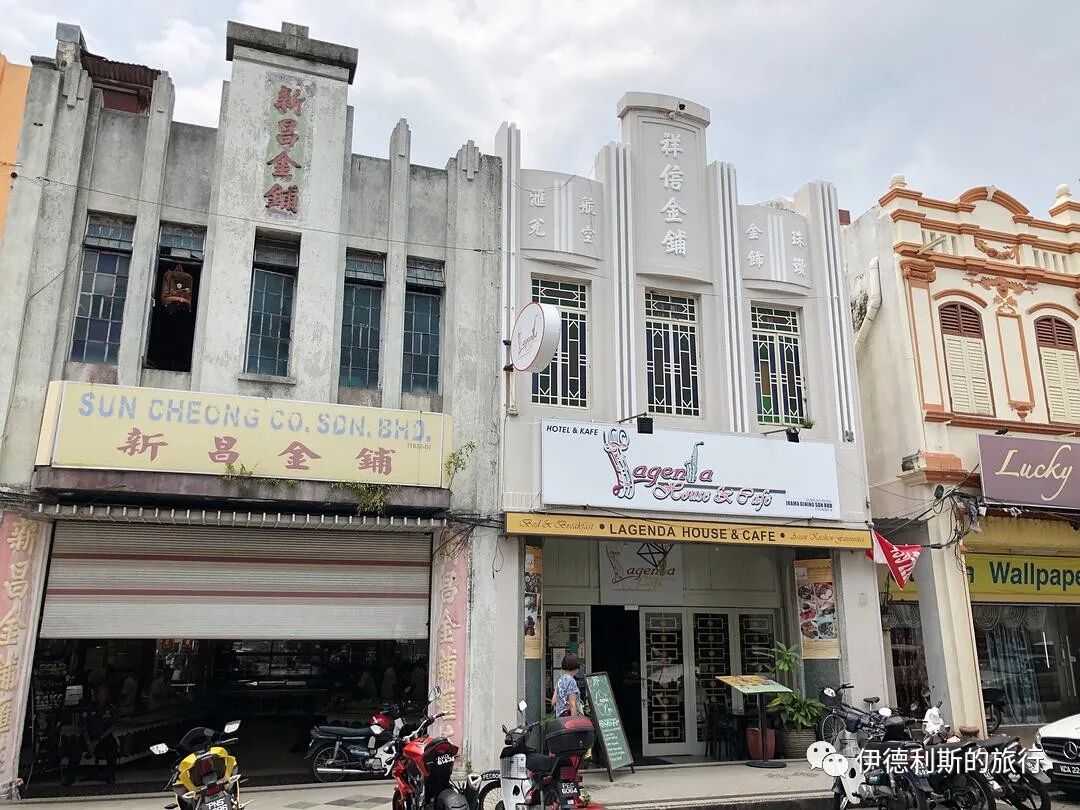
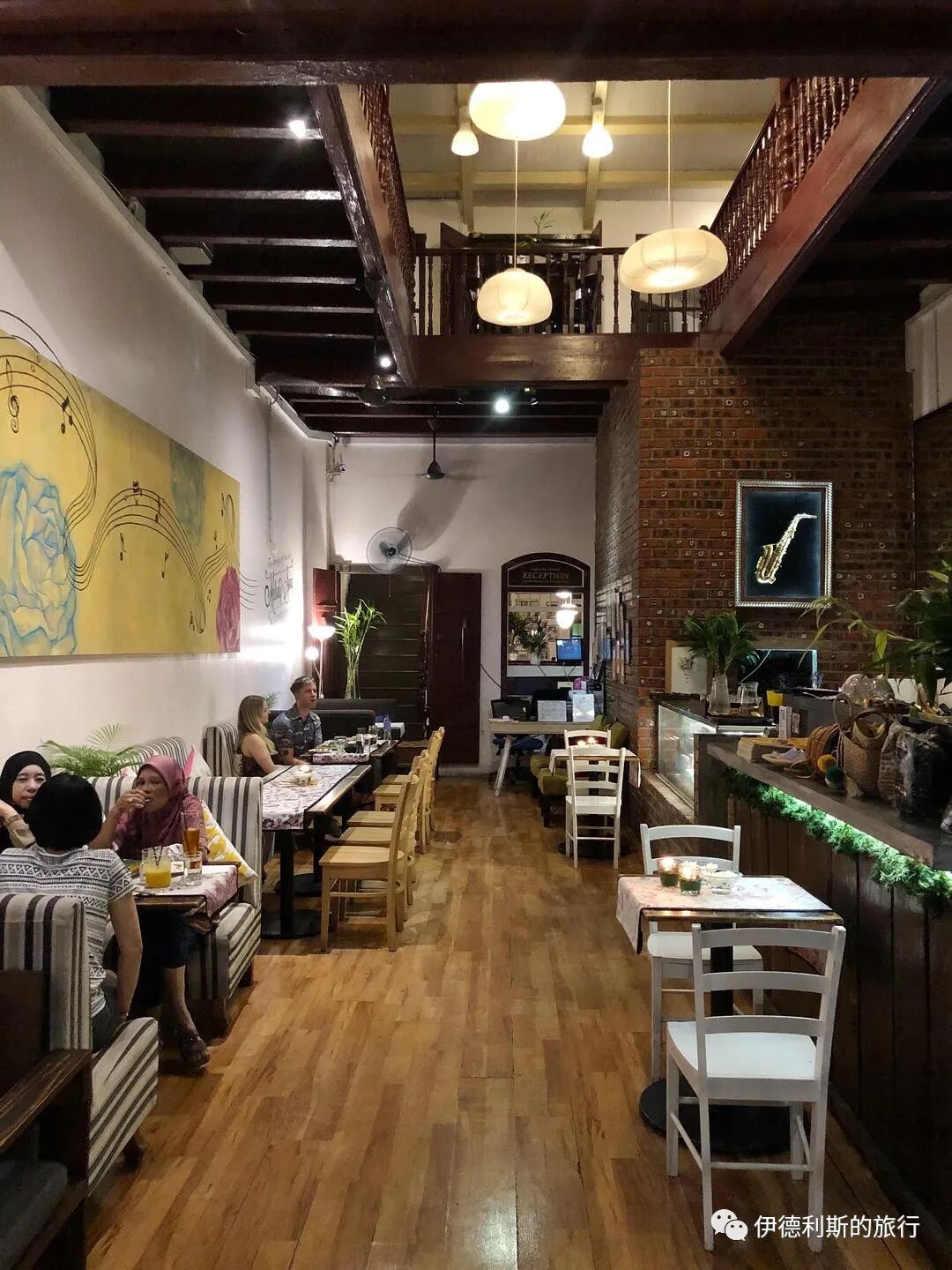
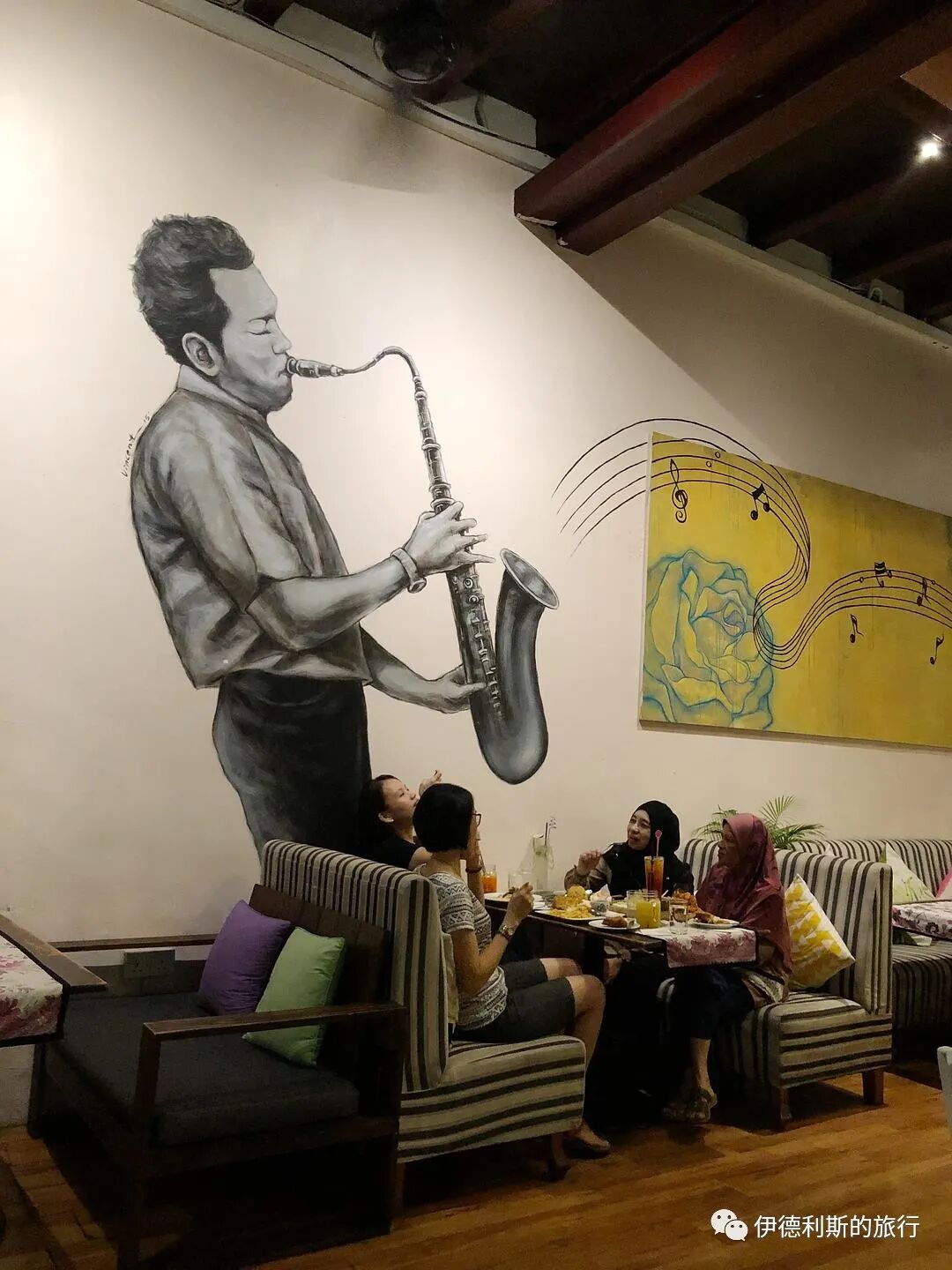
Lagenda Cafe is a themed restaurant honoring the godfather of Malay film music, P. Ramlee (1929-1973), and it plays his classic songs on a loop. P. Ramlee is a legend among the Malay community in Penang, and people still remember him even though he passed away many years ago. P. Ramlee was born Teuku Zakaria. His father was a sailor from the Aceh region in northern Sumatra, Indonesia, who later settled in Penang. P. Ramlee starred in 66 films, directed 35 movies, and wrote 250 songs. He was a key figure during the golden age of Malaysia from the 1950s to the early 1960s and was an icon in the entertainment industries of Singapore, Malaysia, and Indonesia.
Lagenda Cafe specializes in Malay and Indonesian food. We ordered gado-gado (gado-gado) and chicken satay (satay ji rou chuan).
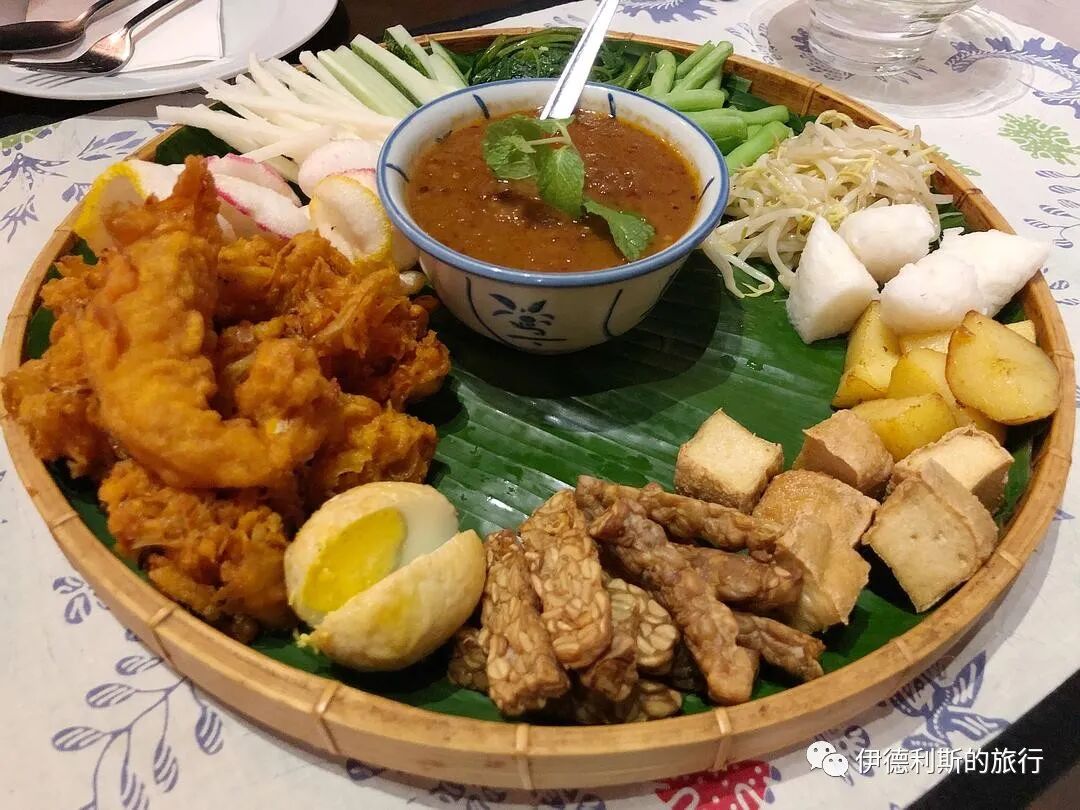
Gado-gado is a salad that started on Java Island. The name gado-gado means "mix," so it includes many different foods. Our version had cucumber, sweet radish, shrimp crackers, vegetable tempura, shrimp tempura, egg, wheat grain strips, fried tofu, fried potato, rice cake, bean sprouts, and long beans. Then you dip it in gado-gado sauce made from fried peanuts, palm sugar, garlic, chili, tamarind, and lime juice.
Chicken satay is also a dish from Java Island. People say Javanese street vendors developed it in the 18th century from Indian kebabs brought by Indian Muslim traders, and it became part of Malay food in Penang in the 19th century. Meat skewers are usually marinated in turmeric, sweet soy sauce, or coconut oil before grilling, then dipped in satay sauce when eaten. Satay sauce is mainly made of roasted peanuts, and usually includes peanut butter, coconut milk, turmeric, soy sauce, galangal, garlic, chili, and various spices.
This drink is called Asam Boi & Guava Tea. It is made with lime, mint, black tea, sour plum, and fresh-pressed guava juice. It is very refreshing and smooth.
Jawi House Cafe Gallery
In Penang and Malaysia, there is a unique group called Jawi Peranakan. This refers to a Malay-speaking Muslim community formed by the intermarriage of Indian Muslim men—also including those of Arab and Persian descent—with Malay Muslim women. Jawi is the Arabic word for Southeast Asian Muslim, and Peranakan is the Malay word for local-born. Before the 1860s, the vast majority of Indian Muslims who came to Penang were men.
When the Jawi Peranakan community married, they did not prioritize the other person's ethnic group, but looked first at their wealth and status. Because of this, after the mid-19th century, the Jawi Peranakan had become the elite class of British Malaya. The Jawi Peranakan community placed great importance on a British-style education, so many of them held positions in the colonial government. At the same time, the Jawi Peranakan community also valued cultural development, and the first Malay-language newspaper was founded by them.
After the 20th century, as the British Empire declined, the Jawi Peranakan community began to blend into the Malay population. Today, the government counts most Jawi Peranakan as Malay. Even so, the Jawi Peranakan community still works hard to pass on their unique culture, which shows in their architecture, clothing, jewelry, and food.
Today, the best place in Penang to experience Jawi Peranakan culture is the Jawi House Cafe Gallery. This building started as a Straits Eclectic-style Chinese shophouse built in the 1860s with Malay-style decorations, and it later served as an Indian Muslim coppersmith shop. The shop is on Armenian Street (Lebuh Armenian), originally called Malay Lane, which was the first area where the Jawi Peranakan community settled. In 2012, the Karim family, who have Punjabi roots and have lived in Penang for six generations, opened Jawi House here to serve the most authentic Jawi Peranakan food.
We ate prawn fritters (cucur udang), lemuni leaf rice (nasi lemuni), and Jawi chicken curry. We also drank Penang nutmeg juice and Arabian sherbet, and finished with sago pudding for dessert.
Cucur udang is made by coating shrimp and green onions in batter, deep-frying them, and dipping them in peanut sauce. In Malay, 'cucur' means a deep-fried fritter and 'udang' means shrimp.
Nasi lemuni is rice cooked with coconut milk, lemongrass, and blue lemuni flowers, served with crispy fried anchovies and spicy sambal sauce. In the past, Lemuni rice (nasi lemuni) was a traditional food for Malay women during their postpartum recovery period, as it was said to help improve blood circulation.
Jawi chicken curry is the Jawi Peranakan version of chicken curry. As a mixed-heritage community, Jawi Peranakan curry is a blend of both Indian and Malay curry styles.
Nutmeg is the English name for the spice, and this drink is a Penang specialty made with honey and lemon, giving it a sweet and sour taste.
The word sherbet comes from the Persian word sharbat, which means a non-alcoholic sugar drink. In medieval Arabia, people loved to add syrup and honey to their sharbat to make it sweeter. They also liked to add ingredients like almonds, lemon, apple, pomegranate, tamarind, dates, sumac, musk, and mint. Spread by Arabs and Persians, the drink sharbat is now popular across West Asia, South Asia, and the Malay Archipelago, especially during Ramadan. The Arabian sherbet at Jawi House is made with rose syrup, mallow nuts, gum arabic, and basil seeds, giving it a very rich flavor.
The signature Jawi Peranakan version of sago pudding is topped with coconut cream and thick palm sugar syrup, then sprinkled with crushed peanuts for a refined taste.
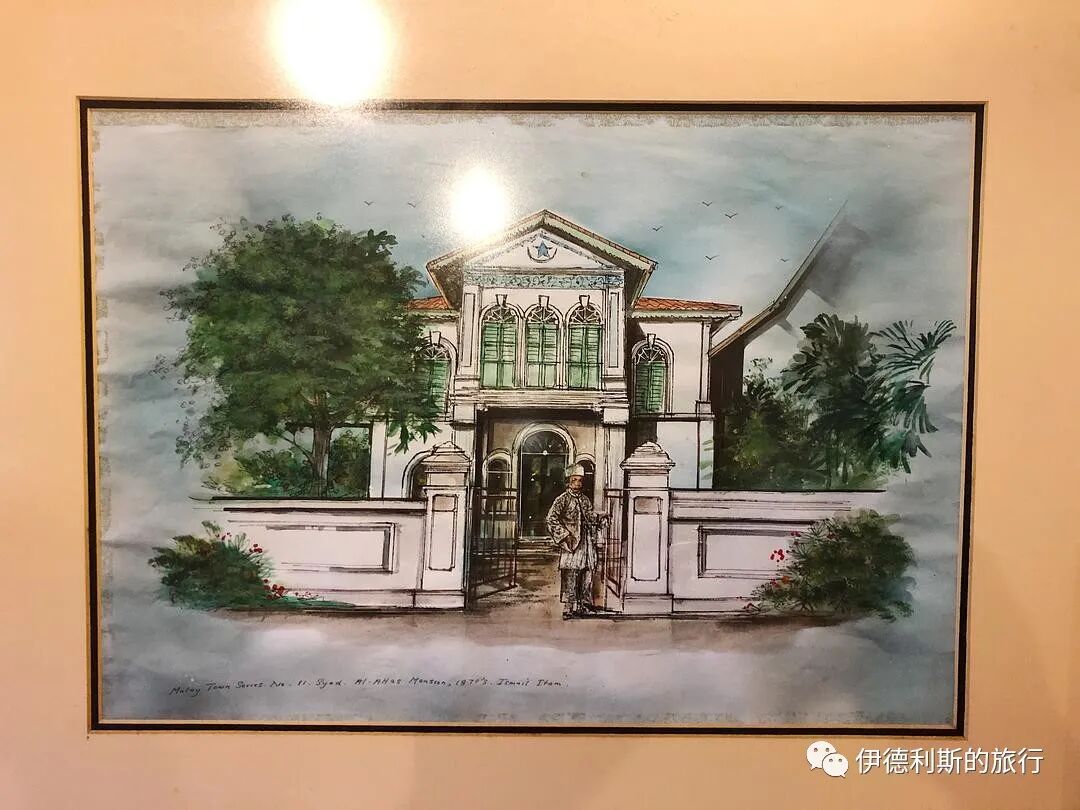
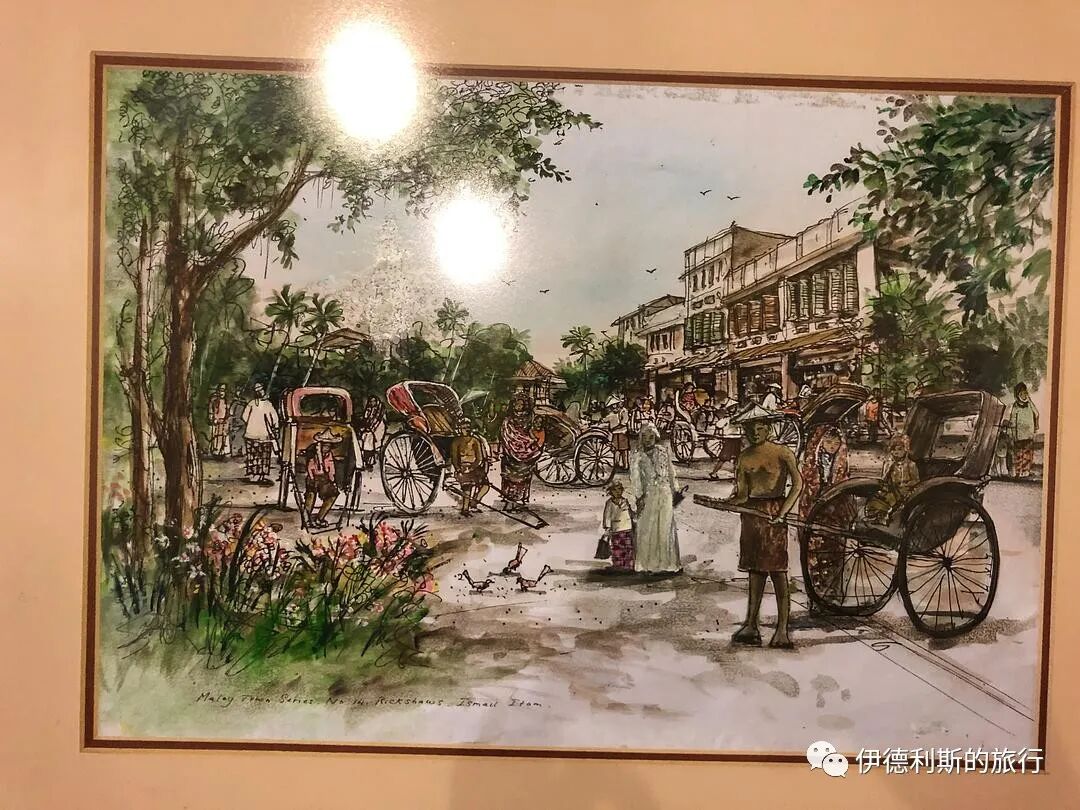
Jawi House displays a collection of old photos of Jawi Peranakan life in Penang, along with paintings of the local Muslim community.
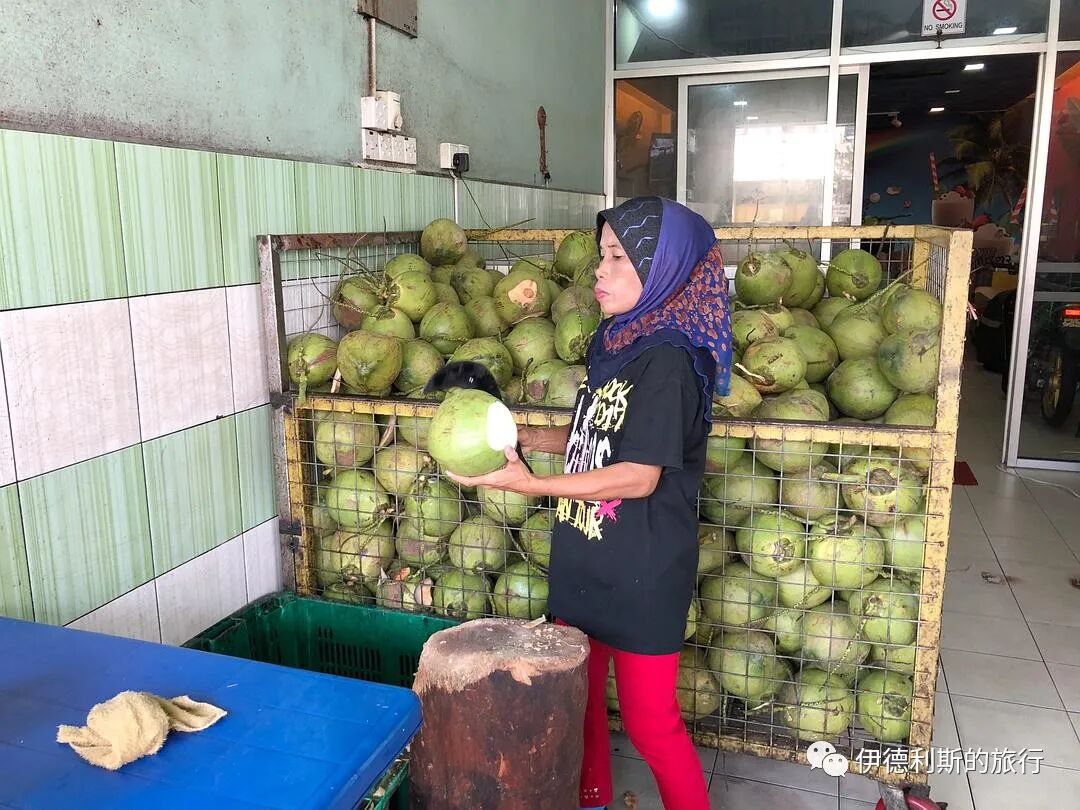
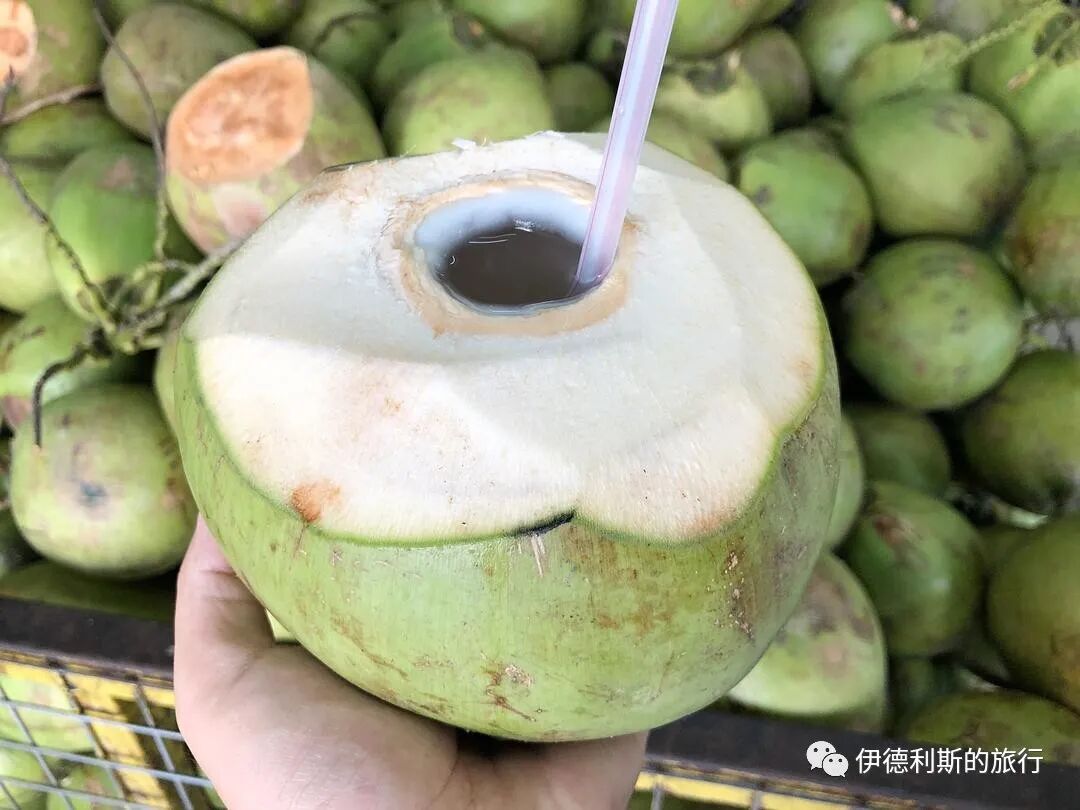
A coconut shop on a street in Penang.
ALI NASI LEMAK coconut milk rice (nasi lemak)
I ate coconut milk rice (nasi lemak) at ALI NASI LEMAK in the Sri Weld Food Court in Penang. Coconut milk rice is fragrant Malay rice cooked with coconut milk and pandan leaves. It is known as Malaysia's national dish and is popular across the Malay Archipelago and southern Thailand.
Traditional coconut milk rice is wrapped in a banana leaf and served with spicy chili paste (sambal), dried anchovies, peanuts, and eggs. Spicy chili paste is a traditional Southeast Asian sauce that started in Indonesia. It is made by stir-frying fermented shrimp paste (belacan) with chili peppers and various seasonings. The sambal sauce at this place was incredibly spicy; it really burned my lips first and then hit my throat.
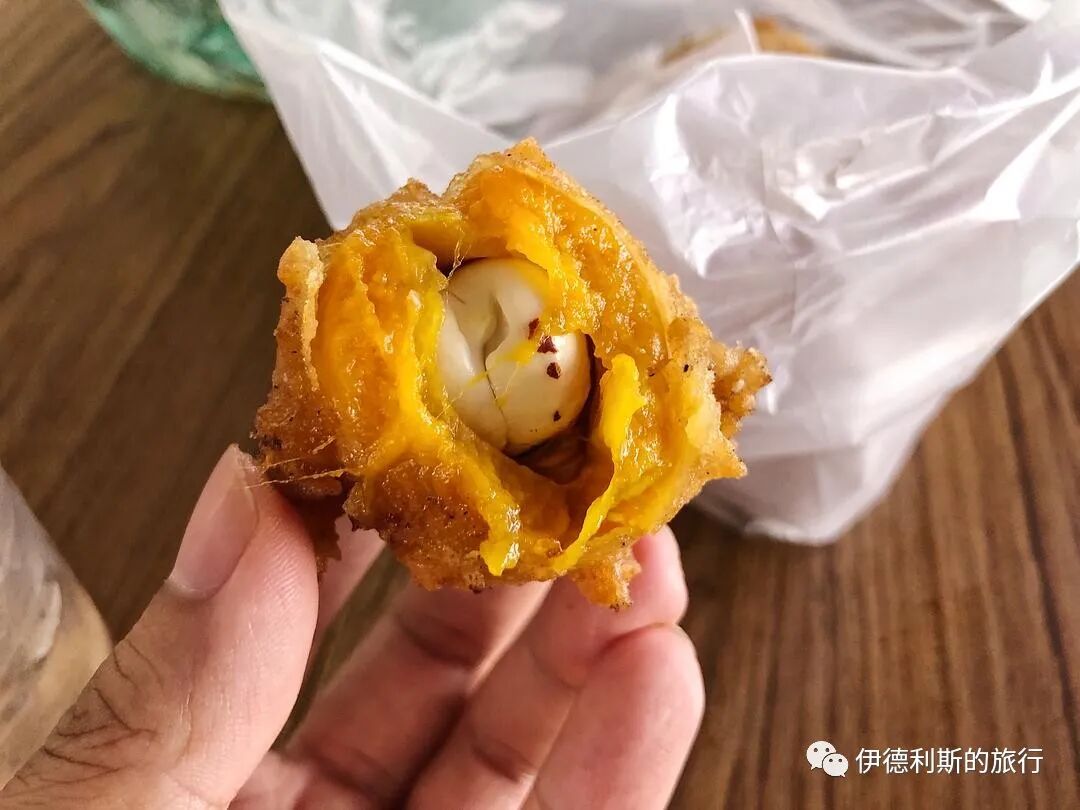
Then I had some fried jackfruit next door. Small jackfruit (cempedak) is similar to regular jackfruit, but it is sweeter and has a smoother, softer texture.
Acheen Street Mosque: 1808
Acheen Street Mosque (Masjid Melayu Lebuh Acheh) was built by the Acehnese in 1808, and the area around the mosque is the oldest Muslim community in Penang. The Acehnese are a Muslim ethnic group speaking an Austronesian language who live on the northernmost tip of Sumatra. They founded the Aceh Sultanate in 1499 and saw it flourish during the 17th century. In the late 18th and early 19th centuries, the first Chinese Kapitan of Penang, Koh Lay Huan, built a strong relationship with the Aceh Sultanate, which started the pepper trade between Aceh and Penang.
In 1791, an Acehnese pepper merchant and nobleman of Arab descent named Tengku Syed Hussain Al-Aidid moved from Aceh to Penang. He established the first Muslim settlement in Penang near what is now Aceh Street, and after that, many Muslim merchants from the Malay Archipelago, India, and Arabia arrived. In 1808, Tengku Syed Hussain donated money and land to build a mosque. The first imam of the mosque was Sheikh Omar Basheer Al-Khalilee, and his son, Sheikh Zakaria, later took over the position. Sheikh Zakaria became the first Mufti (legal scholar) of Penang in 1888.
After Tengku Hussain died in the mid-19th century, the Muslim community on Acheen Street continued to thrive and became known as the second Jeddah (the port city that serves as the gateway to Mecca). Every year during the Hajj season, pilgrims from all over would pack the Acheen Street community before boarding ships in Penang to travel to Mecca. This busy scene lasted until the Malaysian Hajj Pilgrims Fund Board (Lembaga Tabung Haji) was established in the 1970s.
In 1913, the British colonial government passed the Malay Reservation Act, which officially defined a "Malay" for the first time as anyone who belonged to the Malay race, habitually spoke the Malay language or "any other Malay language," and practiced Islam. This meant that Austronesian-speaking Muslim groups who moved to Malaya from other parts of the Malay Archipelago were counted as 'other Malays' in statistics, a group that included the Acehnese in Penang. First-generation Penang Acehnese usually kept their immigrant identity. However, because the Acehnese and Malays share similar physical features, languages, and the same faith, most Penang Acehnese accepted a 'Malay' identity by the second or third generation and blended into Malay culture.
The courtyard of the Aceh Mosque still holds four early houses from the Aceh Street Muslim community: the home of Syed Mohamad Al-Habshee, the Al-Mashoor Quran school, the home of the first mufti Sheikh Zakaria, and the home of Syed Abdul Hamid AL-Haddad.
There is also the tomb of the mosque's founder, Tengku Syed Hussain Al-Aidid, which features a tombstone in the classic Acehnese style.
The Penang Islamic Museum under renovation.
It was a real shame that the Penang Islamic Museum was closed for renovations during my visit. This building is a Straits-style house built by an Acehnese Muslim pepper merchant in the 1860s.
Malay artifacts in the Penang Museum
The Penang Museum has a gallery that displays artifacts from the Malay people of Penang.
Arabic calligraphy
A Quran in the Nanyang style.
The Malay dagger (keris) is a wavy-bladed short sword popular across the Malay Archipelago. The keris started in Java and spread to the Malay Peninsula in the 15th century as the Majapahit Empire expanded. During wartime, warriors used the keris as a backup weapon alongside their spears, while civilians carried one for self-defense whenever they went out. After firearms arrived in the 16th century, the keris became less practical and was used more as part of ceremonial dress or kept as a family heirloom.
Old photos of Malay people in Penang
A Penang Malay dressing table
Wedding bed
Dressing box
Seal view all
Summary: Penang — Malay Muslims, Mosques and Local History is presented here as a firsthand travel account in clear English, beginning with this scene: The Malay people (Melayu) are a group of Austronesian-speaking Muslims living in the Malay Archipelago, who emerged during the Malacca Sultanate in the 15th century. The account keeps its focus on Penang Malays, Malay Muslims, Muslim Heritage while preserving the names, places, food, and historical details from the Chinese source.
The Malay people (Melayu) are a group of Austronesian-speaking Muslims living in the Malay Archipelago, who emerged during the Malacca Sultanate in the 15th century. After the British took control of the Malay Peninsula in the 19th century, many Austronesian-speaking Muslim groups like the Acehnese, Banjar, Bugis, and Javanese moved to Malaya to settle down. Because they shared the same faith, similar physical features, and related languages, they gradually identified with Malay culture over two or three generations.
Although the Malay people have developed for hundreds of years, discussions about a Malay national identity only began in the early 20th century, leading to different schools of Malay nationalism. Article 160 of the 1957 Constitution of the Federation of Malaya officially defined a Malay person as someone who professes the Islamic religion, habitually speaks the Malay language, and conforms to Malay customs and culture. Born in the Federation of Malaya or Singapore before Independence Day (August 31, 1957), or having either parent born in the Federation of Malaya or Singapore, or being a resident of the Federation or Singapore on Independence Day, or being a descendant of any of these people. After this, all Malay-speaking Muslim groups within Malaysia were classified as Malay.
Today in Penang, you can still experience the diverse cultural atmosphere of the Malay people. Here you can visit a mosque built by the Acehnese 200 years ago, eat unique food from the Jawi Peranakan community, and listen to the music of the legendary Penang Malay singer P. Ramlee.
Lagenda Cafe
Lagenda Cafe is a themed restaurant honoring the godfather of Malay film music, P. Ramlee (1929-1973), and it plays his classic songs on a loop. P. Ramlee is a legend among the Malay community in Penang, and people still remember him even though he passed away many years ago. P. Ramlee was born Teuku Zakaria. His father was a sailor from the Aceh region in northern Sumatra, Indonesia, who later settled in Penang. P. Ramlee starred in 66 films, directed 35 movies, and wrote 250 songs. He was a key figure during the golden age of Malaysia from the 1950s to the early 1960s and was an icon in the entertainment industries of Singapore, Malaysia, and Indonesia.
Lagenda Cafe specializes in Malay and Indonesian food. We ordered gado-gado (gado-gado) and chicken satay (satay ji rou chuan).
Gado-gado is a salad that started on Java Island. The name gado-gado means "mix," so it includes many different foods. Our version had cucumber, sweet radish, shrimp crackers, vegetable tempura, shrimp tempura, egg, wheat grain strips, fried tofu, fried potato, rice cake, bean sprouts, and long beans. Then you dip it in gado-gado sauce made from fried peanuts, palm sugar, garlic, chili, tamarind, and lime juice.
Chicken satay is also a dish from Java Island. People say Javanese street vendors developed it in the 18th century from Indian kebabs brought by Indian Muslim traders, and it became part of Malay food in Penang in the 19th century. Meat skewers are usually marinated in turmeric, sweet soy sauce, or coconut oil before grilling, then dipped in satay sauce when eaten. Satay sauce is mainly made of roasted peanuts, and usually includes peanut butter, coconut milk, turmeric, soy sauce, galangal, garlic, chili, and various spices.
This drink is called Asam Boi & Guava Tea. It is made with lime, mint, black tea, sour plum, and fresh-pressed guava juice. It is very refreshing and smooth.
Jawi House Cafe Gallery
In Penang and Malaysia, there is a unique group called Jawi Peranakan. This refers to a Malay-speaking Muslim community formed by the intermarriage of Indian Muslim men—also including those of Arab and Persian descent—with Malay Muslim women. Jawi is the Arabic word for Southeast Asian Muslim, and Peranakan is the Malay word for local-born. Before the 1860s, the vast majority of Indian Muslims who came to Penang were men.
When the Jawi Peranakan community married, they did not prioritize the other person's ethnic group, but looked first at their wealth and status. Because of this, after the mid-19th century, the Jawi Peranakan had become the elite class of British Malaya. The Jawi Peranakan community placed great importance on a British-style education, so many of them held positions in the colonial government. At the same time, the Jawi Peranakan community also valued cultural development, and the first Malay-language newspaper was founded by them.
After the 20th century, as the British Empire declined, the Jawi Peranakan community began to blend into the Malay population. Today, the government counts most Jawi Peranakan as Malay. Even so, the Jawi Peranakan community still works hard to pass on their unique culture, which shows in their architecture, clothing, jewelry, and food.
Today, the best place in Penang to experience Jawi Peranakan culture is the Jawi House Cafe Gallery. This building started as a Straits Eclectic-style Chinese shophouse built in the 1860s with Malay-style decorations, and it later served as an Indian Muslim coppersmith shop. The shop is on Armenian Street (Lebuh Armenian), originally called Malay Lane, which was the first area where the Jawi Peranakan community settled. In 2012, the Karim family, who have Punjabi roots and have lived in Penang for six generations, opened Jawi House here to serve the most authentic Jawi Peranakan food.
We ate prawn fritters (cucur udang), lemuni leaf rice (nasi lemuni), and Jawi chicken curry. We also drank Penang nutmeg juice and Arabian sherbet, and finished with sago pudding for dessert.
Cucur udang is made by coating shrimp and green onions in batter, deep-frying them, and dipping them in peanut sauce. In Malay, 'cucur' means a deep-fried fritter and 'udang' means shrimp.
Nasi lemuni is rice cooked with coconut milk, lemongrass, and blue lemuni flowers, served with crispy fried anchovies and spicy sambal sauce. In the past, Lemuni rice (nasi lemuni) was a traditional food for Malay women during their postpartum recovery period, as it was said to help improve blood circulation.
Jawi chicken curry is the Jawi Peranakan version of chicken curry. As a mixed-heritage community, Jawi Peranakan curry is a blend of both Indian and Malay curry styles.
Nutmeg is the English name for the spice, and this drink is a Penang specialty made with honey and lemon, giving it a sweet and sour taste.
The word sherbet comes from the Persian word sharbat, which means a non-alcoholic sugar drink. In medieval Arabia, people loved to add syrup and honey to their sharbat to make it sweeter. They also liked to add ingredients like almonds, lemon, apple, pomegranate, tamarind, dates, sumac, musk, and mint. Spread by Arabs and Persians, the drink sharbat is now popular across West Asia, South Asia, and the Malay Archipelago, especially during Ramadan. The Arabian sherbet at Jawi House is made with rose syrup, mallow nuts, gum arabic, and basil seeds, giving it a very rich flavor.
The signature Jawi Peranakan version of sago pudding is topped with coconut cream and thick palm sugar syrup, then sprinkled with crushed peanuts for a refined taste.
Jawi House displays a collection of old photos of Jawi Peranakan life in Penang, along with paintings of the local Muslim community.
A coconut shop on a street in Penang.
ALI NASI LEMAK coconut milk rice (nasi lemak)
I ate coconut milk rice (nasi lemak) at ALI NASI LEMAK in the Sri Weld Food Court in Penang. Coconut milk rice is fragrant Malay rice cooked with coconut milk and pandan leaves. It is known as Malaysia's national dish and is popular across the Malay Archipelago and southern Thailand.
Traditional coconut milk rice is wrapped in a banana leaf and served with spicy chili paste (sambal), dried anchovies, peanuts, and eggs. Spicy chili paste is a traditional Southeast Asian sauce that started in Indonesia. It is made by stir-frying fermented shrimp paste (belacan) with chili peppers and various seasonings. The sambal sauce at this place was incredibly spicy; it really burned my lips first and then hit my throat.
Then I had some fried jackfruit next door. Small jackfruit (cempedak) is similar to regular jackfruit, but it is sweeter and has a smoother, softer texture.
Acheen Street Mosque: 1808
Acheen Street Mosque (Masjid Melayu Lebuh Acheh) was built by the Acehnese in 1808, and the area around the mosque is the oldest Muslim community in Penang. The Acehnese are a Muslim ethnic group speaking an Austronesian language who live on the northernmost tip of Sumatra. They founded the Aceh Sultanate in 1499 and saw it flourish during the 17th century. In the late 18th and early 19th centuries, the first Chinese Kapitan of Penang, Koh Lay Huan, built a strong relationship with the Aceh Sultanate, which started the pepper trade between Aceh and Penang.
In 1791, an Acehnese pepper merchant and nobleman of Arab descent named Tengku Syed Hussain Al-Aidid moved from Aceh to Penang. He established the first Muslim settlement in Penang near what is now Aceh Street, and after that, many Muslim merchants from the Malay Archipelago, India, and Arabia arrived. In 1808, Tengku Syed Hussain donated money and land to build a mosque. The first imam of the mosque was Sheikh Omar Basheer Al-Khalilee, and his son, Sheikh Zakaria, later took over the position. Sheikh Zakaria became the first Mufti (legal scholar) of Penang in 1888.
After Tengku Hussain died in the mid-19th century, the Muslim community on Acheen Street continued to thrive and became known as the second Jeddah (the port city that serves as the gateway to Mecca). Every year during the Hajj season, pilgrims from all over would pack the Acheen Street community before boarding ships in Penang to travel to Mecca. This busy scene lasted until the Malaysian Hajj Pilgrims Fund Board (Lembaga Tabung Haji) was established in the 1970s.
In 1913, the British colonial government passed the Malay Reservation Act, which officially defined a "Malay" for the first time as anyone who belonged to the Malay race, habitually spoke the Malay language or "any other Malay language," and practiced Islam. This meant that Austronesian-speaking Muslim groups who moved to Malaya from other parts of the Malay Archipelago were counted as 'other Malays' in statistics, a group that included the Acehnese in Penang. First-generation Penang Acehnese usually kept their immigrant identity. However, because the Acehnese and Malays share similar physical features, languages, and the same faith, most Penang Acehnese accepted a 'Malay' identity by the second or third generation and blended into Malay culture.
The courtyard of the Aceh Mosque still holds four early houses from the Aceh Street Muslim community: the home of Syed Mohamad Al-Habshee, the Al-Mashoor Quran school, the home of the first mufti Sheikh Zakaria, and the home of Syed Abdul Hamid AL-Haddad.
There is also the tomb of the mosque's founder, Tengku Syed Hussain Al-Aidid, which features a tombstone in the classic Acehnese style.
The Penang Islamic Museum under renovation.
It was a real shame that the Penang Islamic Museum was closed for renovations during my visit. This building is a Straits-style house built by an Acehnese Muslim pepper merchant in the 1860s.
Malay artifacts in the Penang Museum
The Penang Museum has a gallery that displays artifacts from the Malay people of Penang.
Arabic calligraphy
A Quran in the Nanyang style.
The Malay dagger (keris) is a wavy-bladed short sword popular across the Malay Archipelago. The keris started in Java and spread to the Malay Peninsula in the 15th century as the Majapahit Empire expanded. During wartime, warriors used the keris as a backup weapon alongside their spears, while civilians carried one for self-defense whenever they went out. After firearms arrived in the 16th century, the keris became less practical and was used more as part of ceremonial dress or kept as a family heirloom.
Old photos of Malay people in Penang
A Penang Malay dressing table
Wedding bed
Dressing box
Seal view all
Reposted from the web
Summary: Penang — Malay Muslims, Mosques and Local History is presented here as a firsthand travel account in clear English, beginning with this scene: The Malay people (Melayu) are a group of Austronesian-speaking Muslims living in the Malay Archipelago, who emerged during the Malacca Sultanate in the 15th century. The account keeps its focus on Penang Malays, Malay Muslims, Muslim Heritage while preserving the names, places, food, and historical details from the Chinese source.
The Malay people (Melayu) are a group of Austronesian-speaking Muslims living in the Malay Archipelago, who emerged during the Malacca Sultanate in the 15th century. After the British took control of the Malay Peninsula in the 19th century, many Austronesian-speaking Muslim groups like the Acehnese, Banjar, Bugis, and Javanese moved to Malaya to settle down. Because they shared the same faith, similar physical features, and related languages, they gradually identified with Malay culture over two or three generations.
Although the Malay people have developed for hundreds of years, discussions about a Malay national identity only began in the early 20th century, leading to different schools of Malay nationalism. Article 160 of the 1957 Constitution of the Federation of Malaya officially defined a Malay person as someone who professes the Islamic religion, habitually speaks the Malay language, and conforms to Malay customs and culture. Born in the Federation of Malaya or Singapore before Independence Day (August 31, 1957), or having either parent born in the Federation of Malaya or Singapore, or being a resident of the Federation or Singapore on Independence Day, or being a descendant of any of these people. After this, all Malay-speaking Muslim groups within Malaysia were classified as Malay.
Today in Penang, you can still experience the diverse cultural atmosphere of the Malay people. Here you can visit a mosque built by the Acehnese 200 years ago, eat unique food from the Jawi Peranakan community, and listen to the music of the legendary Penang Malay singer P. Ramlee.
Lagenda Cafe
Lagenda Cafe is a themed restaurant honoring the godfather of Malay film music, P. Ramlee (1929-1973), and it plays his classic songs on a loop. P. Ramlee is a legend among the Malay community in Penang, and people still remember him even though he passed away many years ago. P. Ramlee was born Teuku Zakaria. His father was a sailor from the Aceh region in northern Sumatra, Indonesia, who later settled in Penang. P. Ramlee starred in 66 films, directed 35 movies, and wrote 250 songs. He was a key figure during the golden age of Malaysia from the 1950s to the early 1960s and was an icon in the entertainment industries of Singapore, Malaysia, and Indonesia.
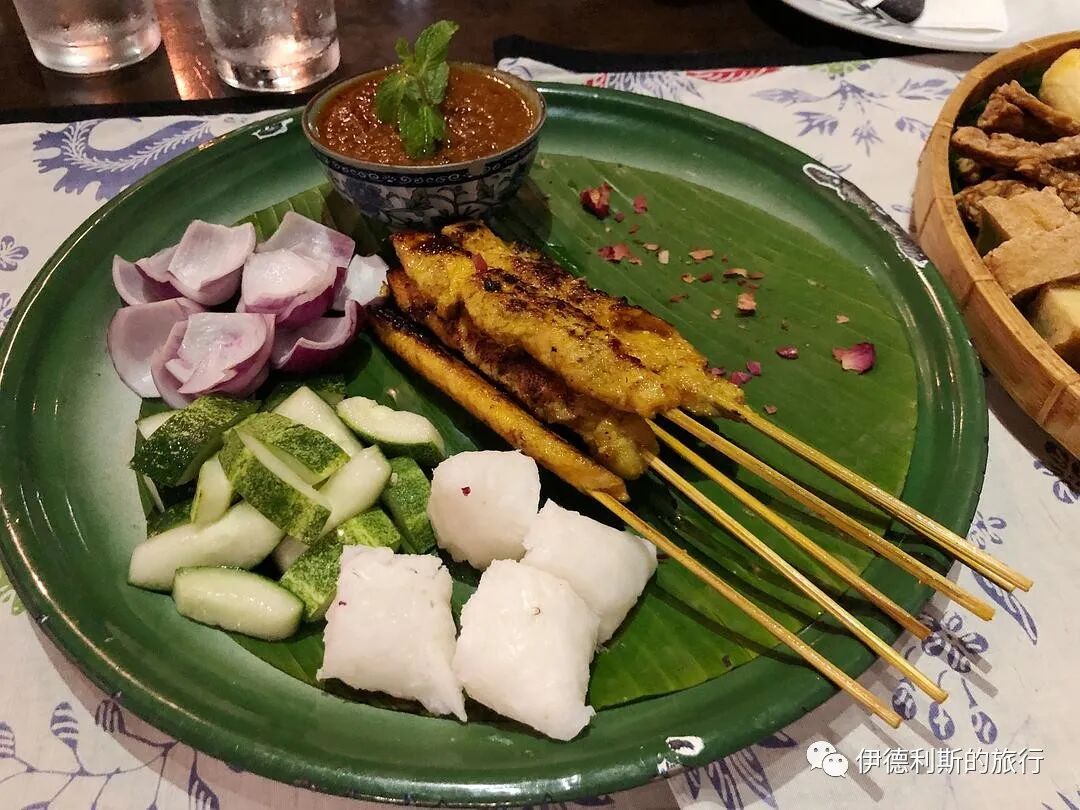
Lagenda Cafe specializes in Malay and Indonesian food. We ordered gado-gado (gado-gado) and chicken satay (satay ji rou chuan).
Gado-gado is a salad that started on Java Island. The name gado-gado means "mix," so it includes many different foods. Our version had cucumber, sweet radish, shrimp crackers, vegetable tempura, shrimp tempura, egg, wheat grain strips, fried tofu, fried potato, rice cake, bean sprouts, and long beans. Then you dip it in gado-gado sauce made from fried peanuts, palm sugar, garlic, chili, tamarind, and lime juice.
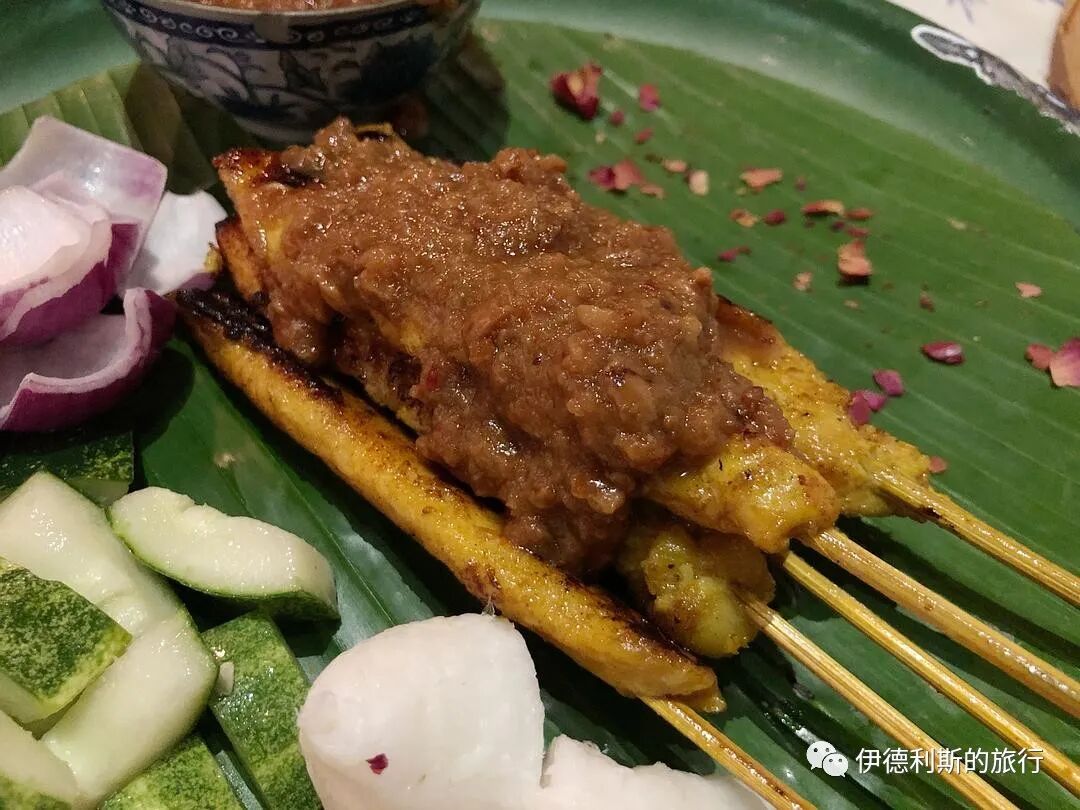
Chicken satay is also a dish from Java Island. People say Javanese street vendors developed it in the 18th century from Indian kebabs brought by Indian Muslim traders, and it became part of Malay food in Penang in the 19th century. Meat skewers are usually marinated in turmeric, sweet soy sauce, or coconut oil before grilling, then dipped in satay sauce when eaten. Satay sauce is mainly made of roasted peanuts, and usually includes peanut butter, coconut milk, turmeric, soy sauce, galangal, garlic, chili, and various spices.
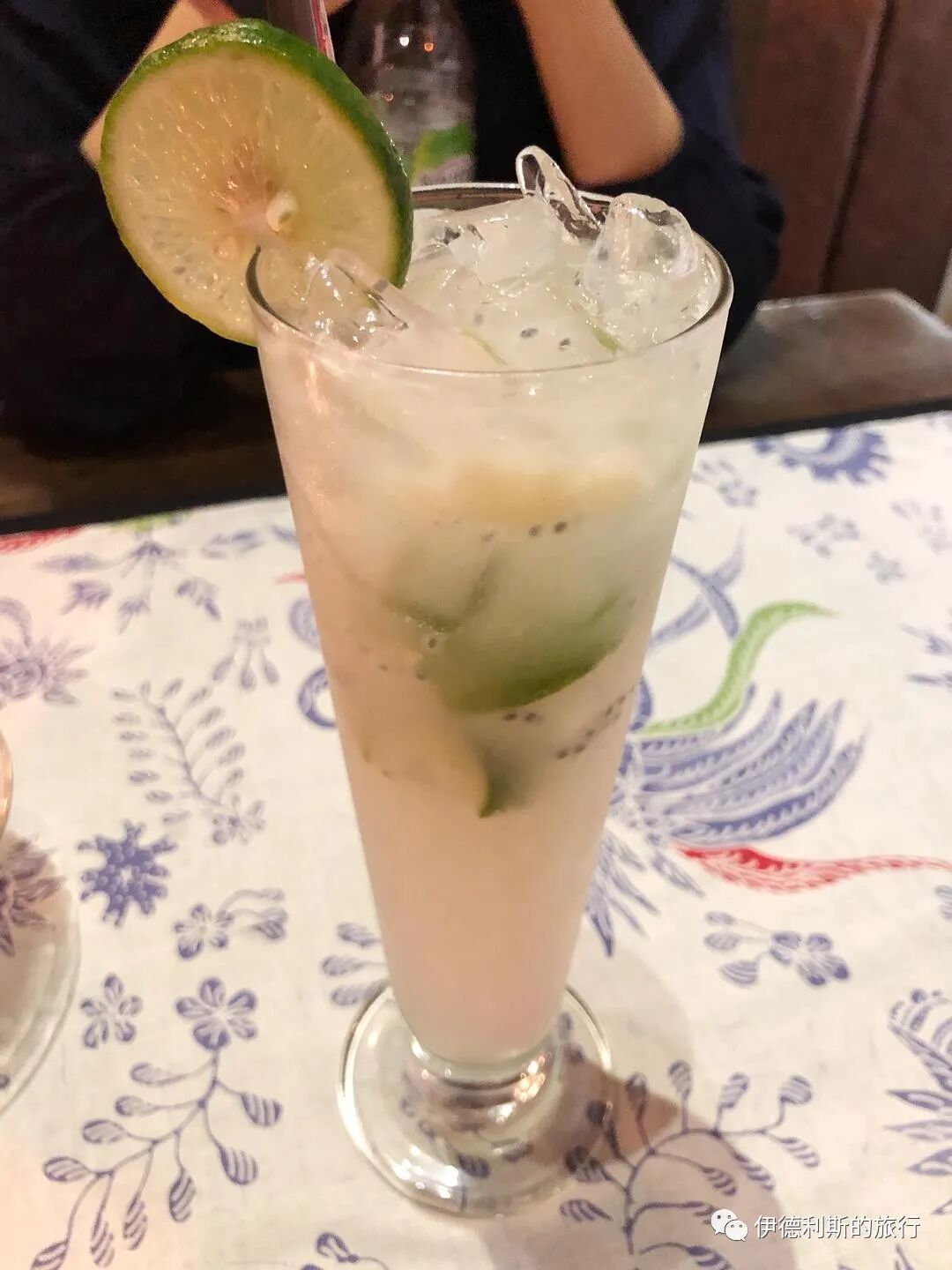
This drink is called Asam Boi & Guava Tea. It is made with lime, mint, black tea, sour plum, and fresh-pressed guava juice. It is very refreshing and smooth.
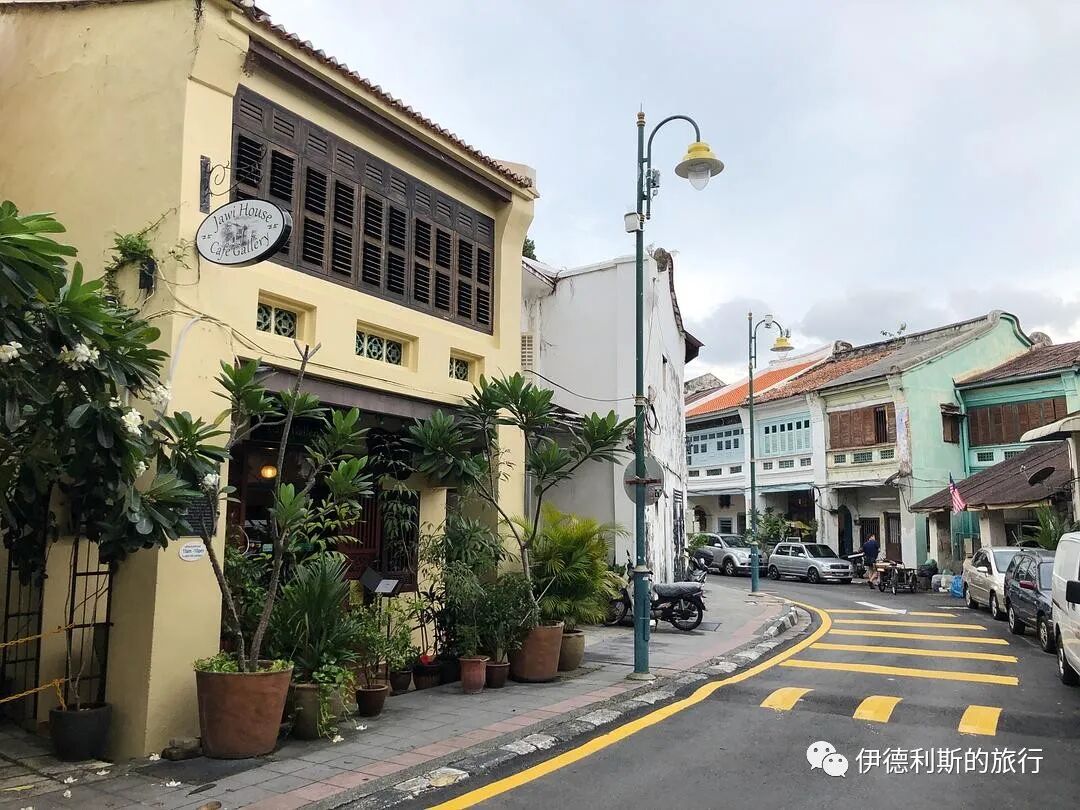
Jawi House Cafe Gallery
In Penang and Malaysia, there is a unique group called Jawi Peranakan. This refers to a Malay-speaking Muslim community formed by the intermarriage of Indian Muslim men—also including those of Arab and Persian descent—with Malay Muslim women. Jawi is the Arabic word for Southeast Asian Muslim, and Peranakan is the Malay word for local-born. Before the 1860s, the vast majority of Indian Muslims who came to Penang were men.
When the Jawi Peranakan community married, they did not prioritize the other person's ethnic group, but looked first at their wealth and status. Because of this, after the mid-19th century, the Jawi Peranakan had become the elite class of British Malaya. The Jawi Peranakan community placed great importance on a British-style education, so many of them held positions in the colonial government. At the same time, the Jawi Peranakan community also valued cultural development, and the first Malay-language newspaper was founded by them.
After the 20th century, as the British Empire declined, the Jawi Peranakan community began to blend into the Malay population. Today, the government counts most Jawi Peranakan as Malay. Even so, the Jawi Peranakan community still works hard to pass on their unique culture, which shows in their architecture, clothing, jewelry, and food.
Today, the best place in Penang to experience Jawi Peranakan culture is the Jawi House Cafe Gallery. This building started as a Straits Eclectic-style Chinese shophouse built in the 1860s with Malay-style decorations, and it later served as an Indian Muslim coppersmith shop. The shop is on Armenian Street (Lebuh Armenian), originally called Malay Lane, which was the first area where the Jawi Peranakan community settled. In 2012, the Karim family, who have Punjabi roots and have lived in Penang for six generations, opened Jawi House here to serve the most authentic Jawi Peranakan food.
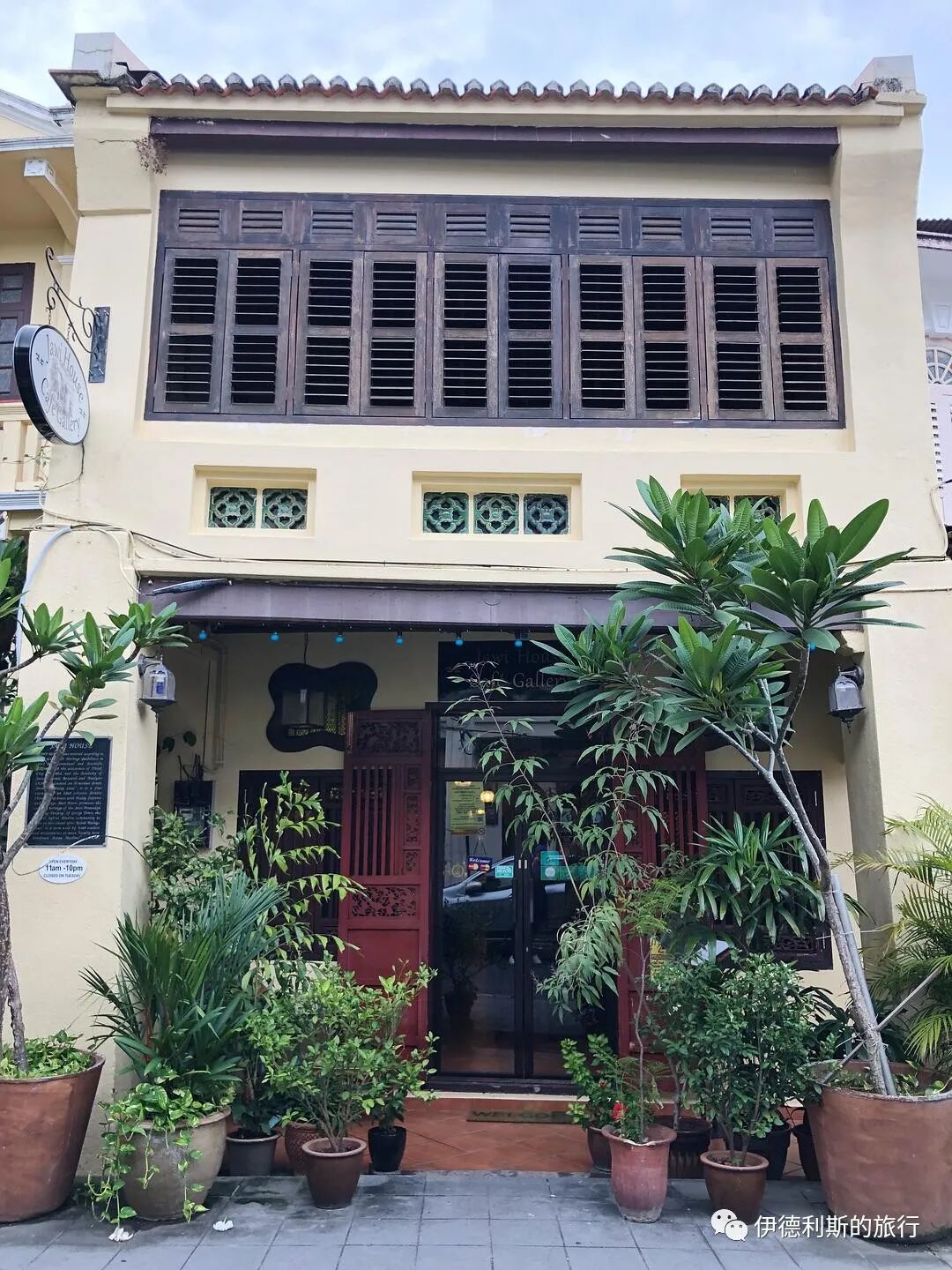
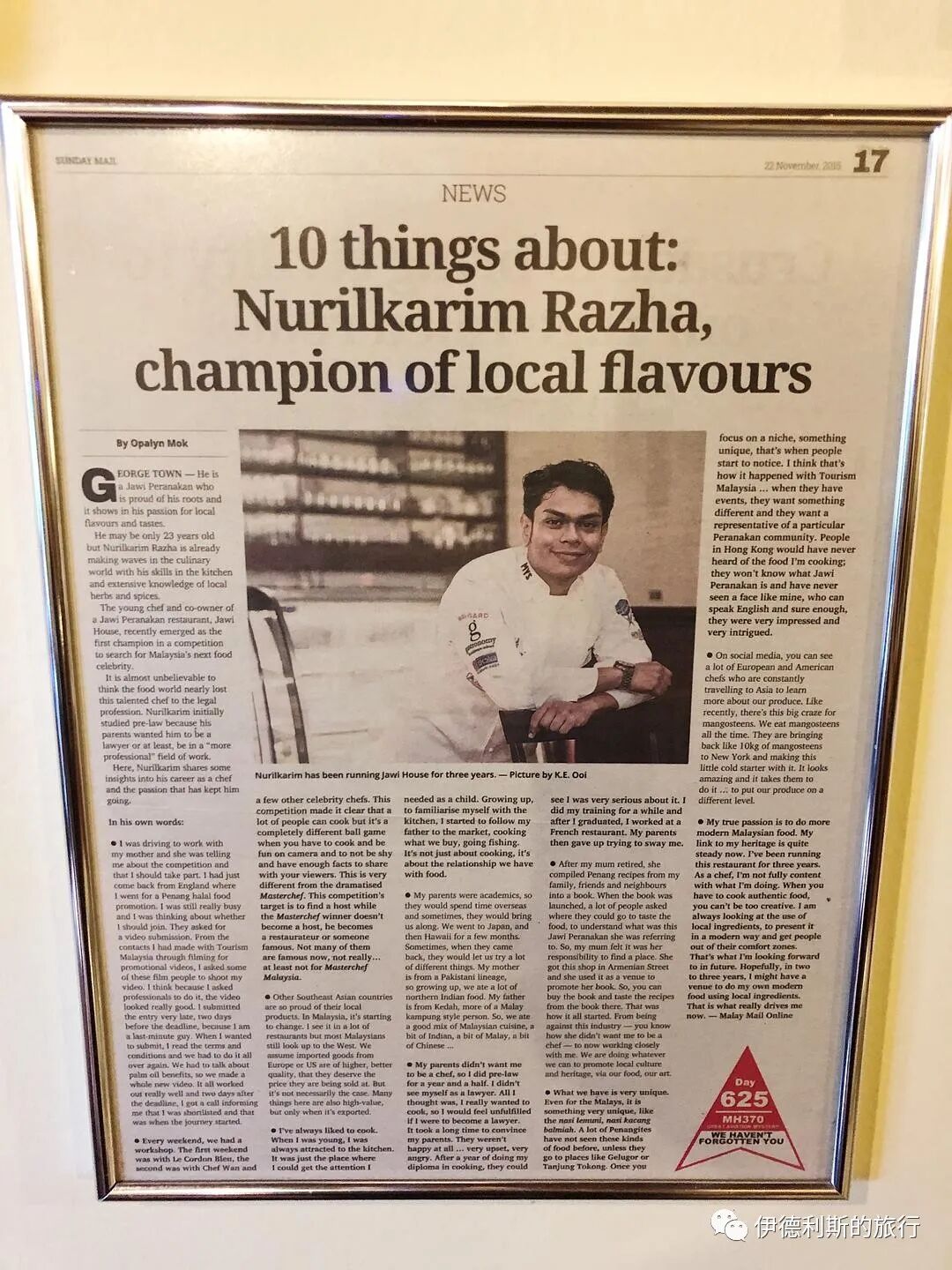
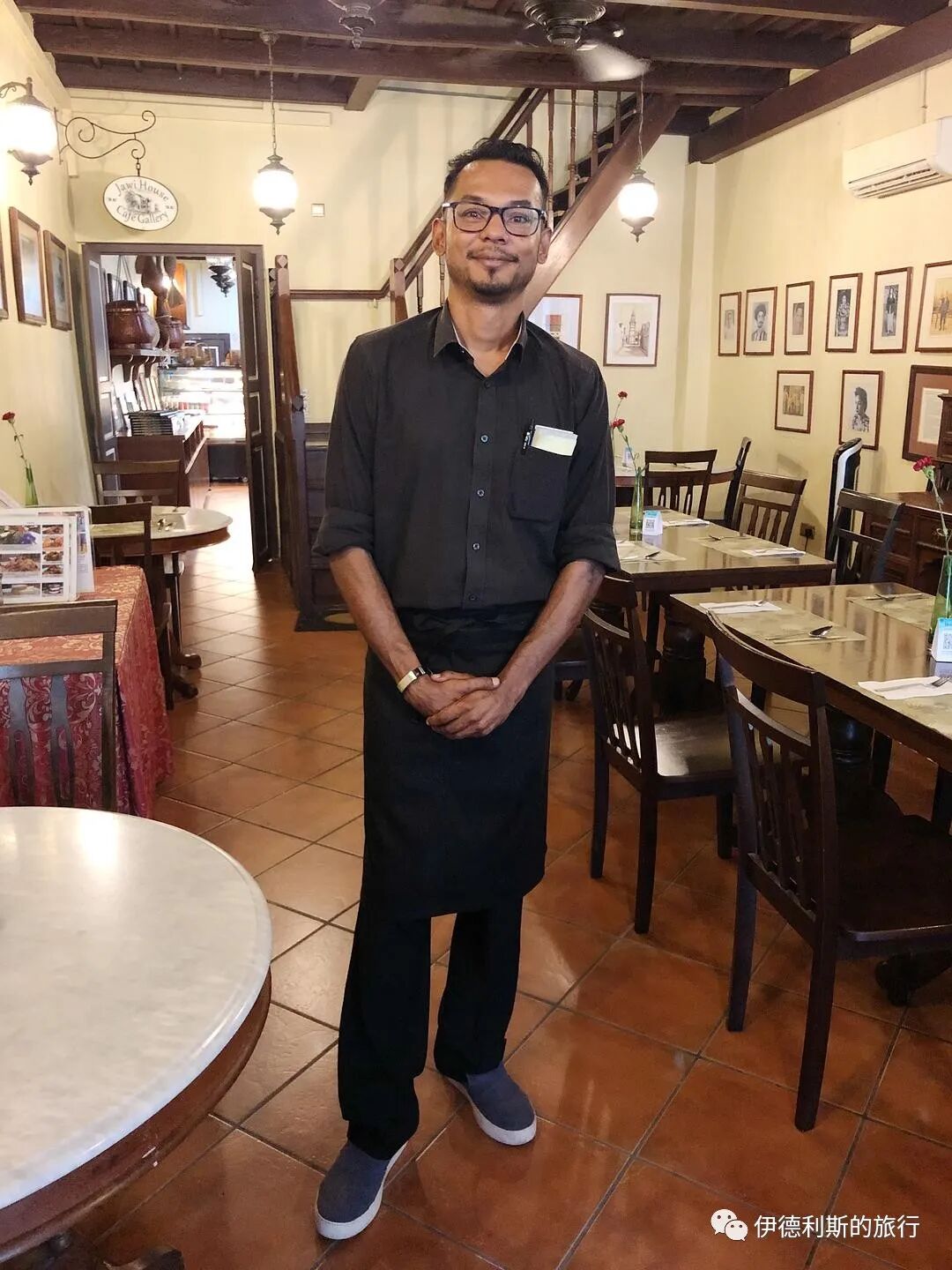
We ate prawn fritters (cucur udang), lemuni leaf rice (nasi lemuni), and Jawi chicken curry. We also drank Penang nutmeg juice and Arabian sherbet, and finished with sago pudding for dessert.
Cucur udang is made by coating shrimp and green onions in batter, deep-frying them, and dipping them in peanut sauce. In Malay, 'cucur' means a deep-fried fritter and 'udang' means shrimp.
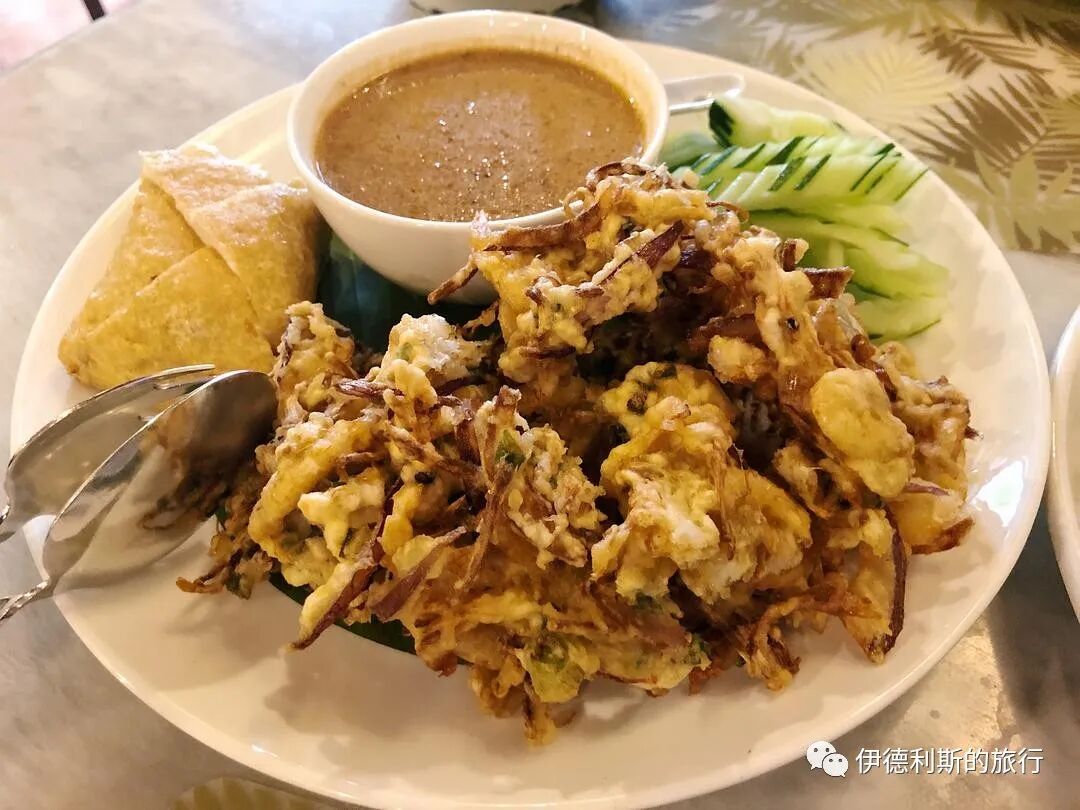
Nasi lemuni is rice cooked with coconut milk, lemongrass, and blue lemuni flowers, served with crispy fried anchovies and spicy sambal sauce. In the past, Lemuni rice (nasi lemuni) was a traditional food for Malay women during their postpartum recovery period, as it was said to help improve blood circulation.
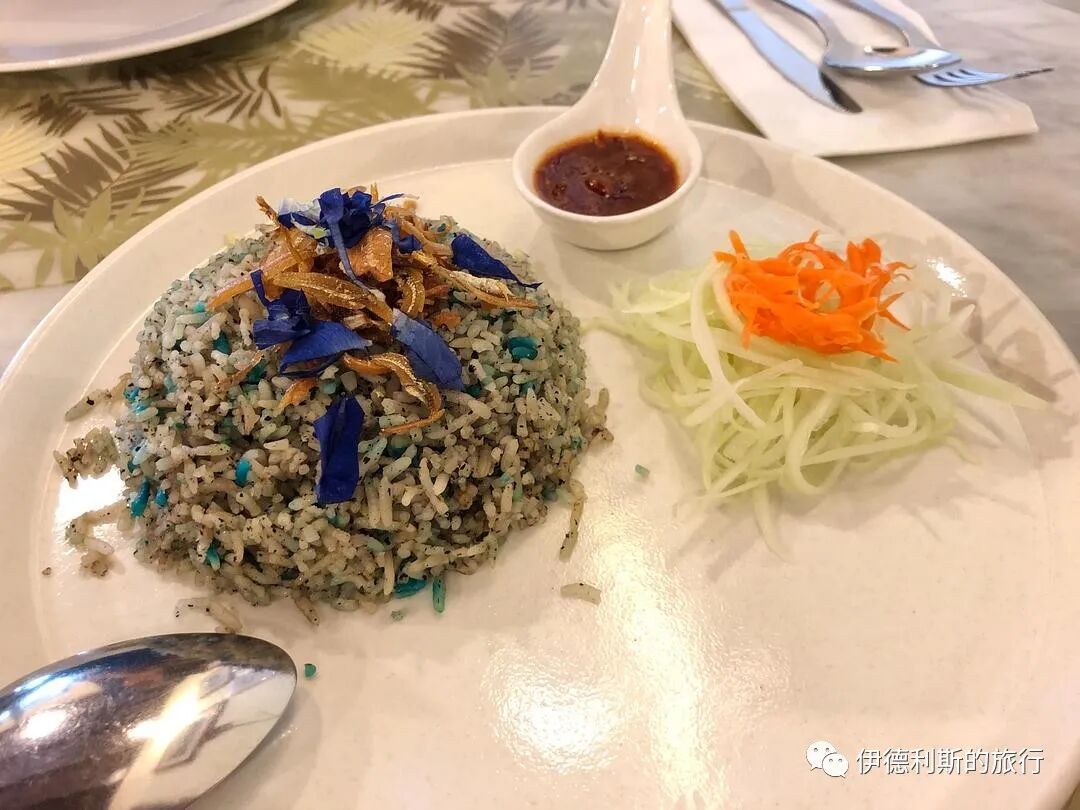
Jawi chicken curry is the Jawi Peranakan version of chicken curry. As a mixed-heritage community, Jawi Peranakan curry is a blend of both Indian and Malay curry styles.
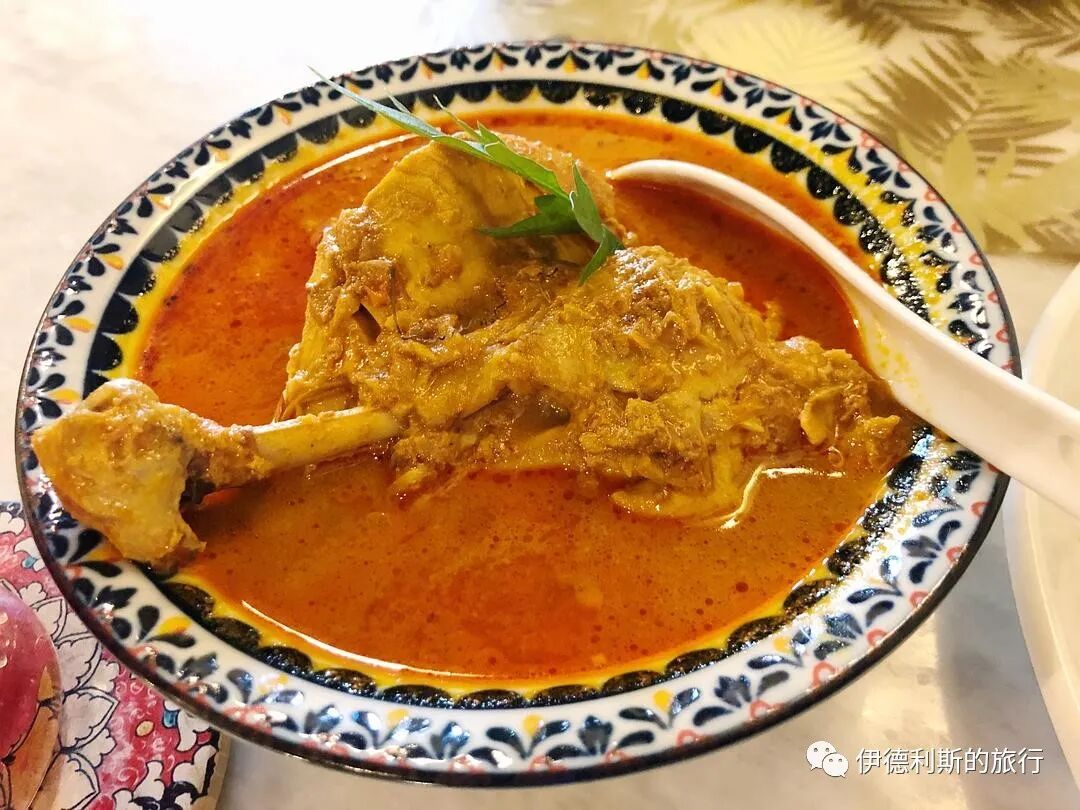
Nutmeg is the English name for the spice, and this drink is a Penang specialty made with honey and lemon, giving it a sweet and sour taste.
The word sherbet comes from the Persian word sharbat, which means a non-alcoholic sugar drink. In medieval Arabia, people loved to add syrup and honey to their sharbat to make it sweeter. They also liked to add ingredients like almonds, lemon, apple, pomegranate, tamarind, dates, sumac, musk, and mint. Spread by Arabs and Persians, the drink sharbat is now popular across West Asia, South Asia, and the Malay Archipelago, especially during Ramadan. The Arabian sherbet at Jawi House is made with rose syrup, mallow nuts, gum arabic, and basil seeds, giving it a very rich flavor.
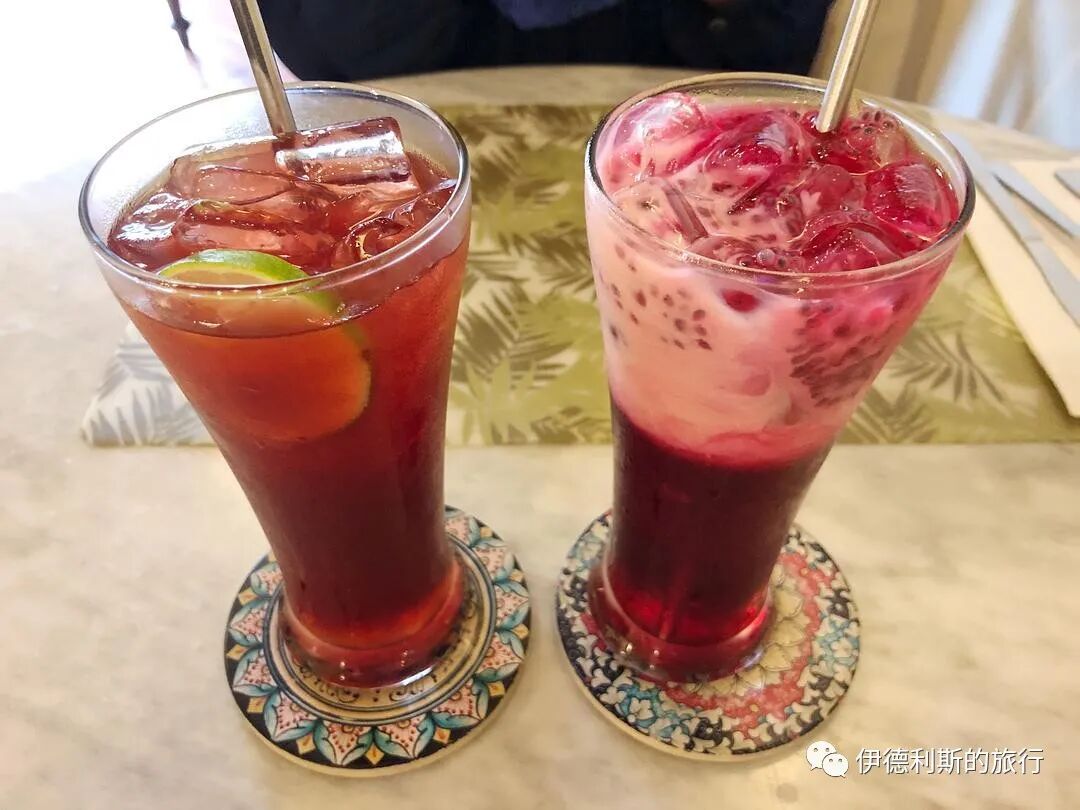
The signature Jawi Peranakan version of sago pudding is topped with coconut cream and thick palm sugar syrup, then sprinkled with crushed peanuts for a refined taste.
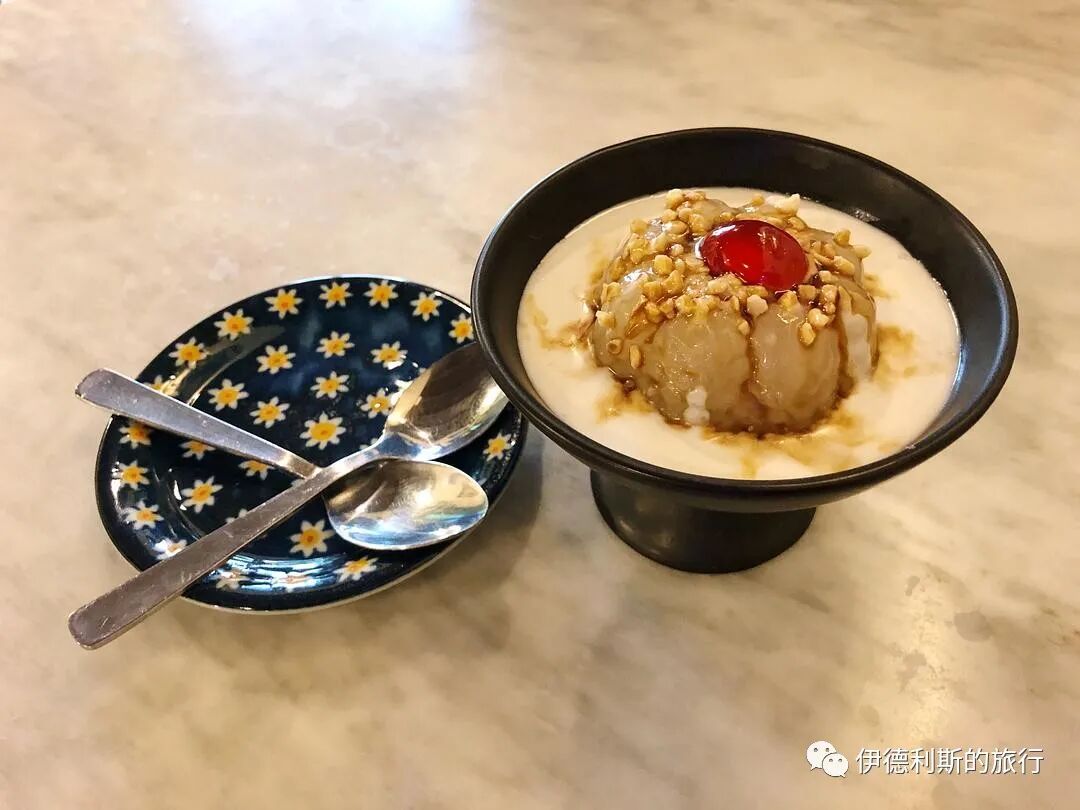
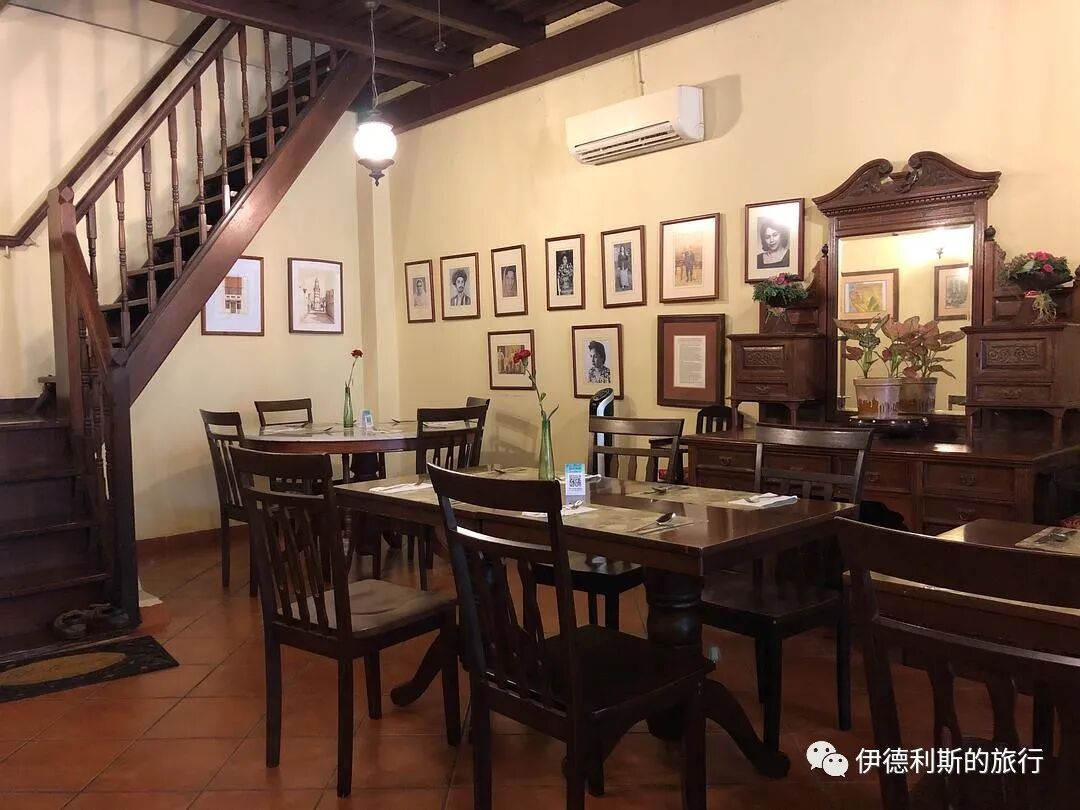
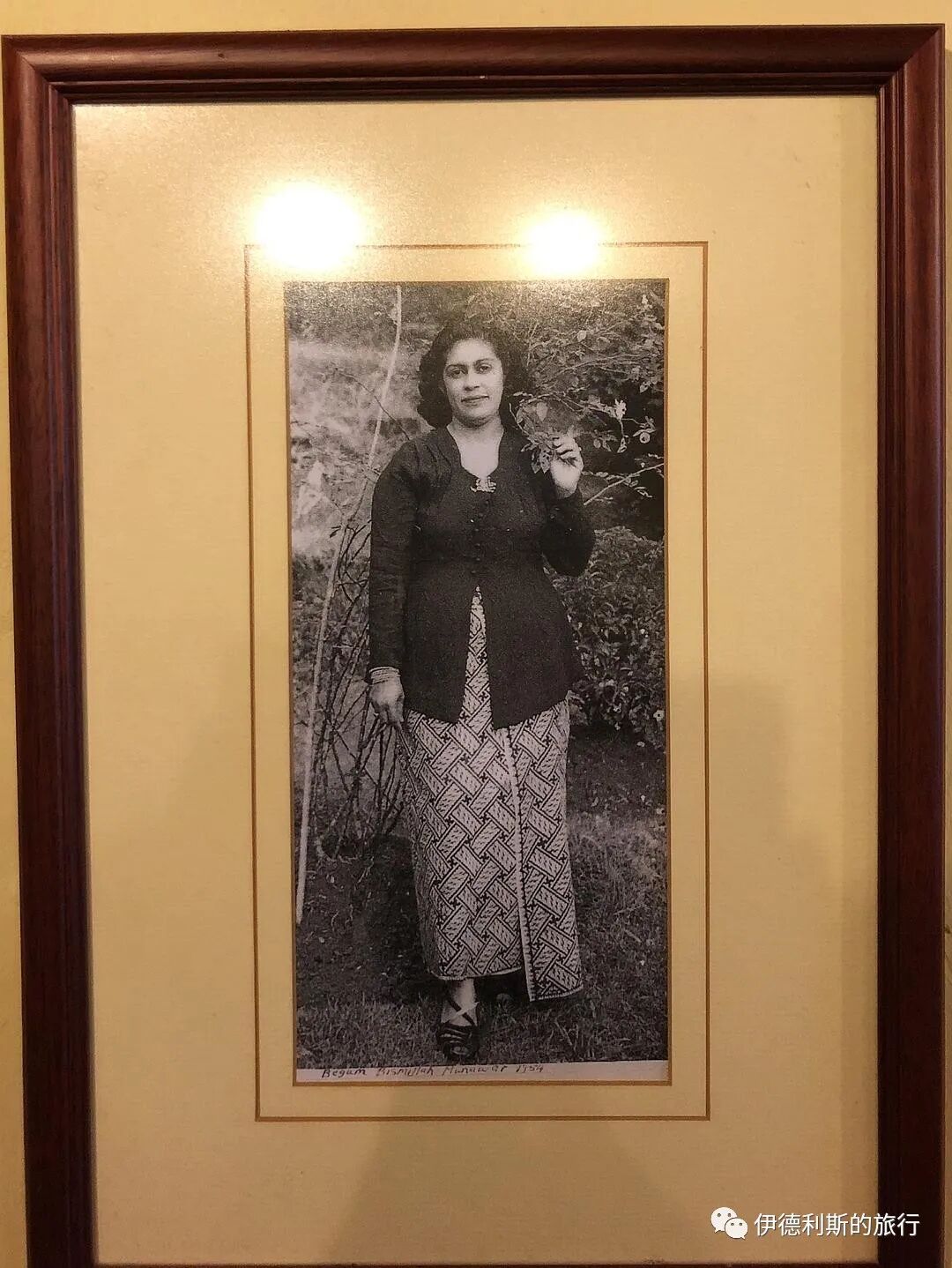
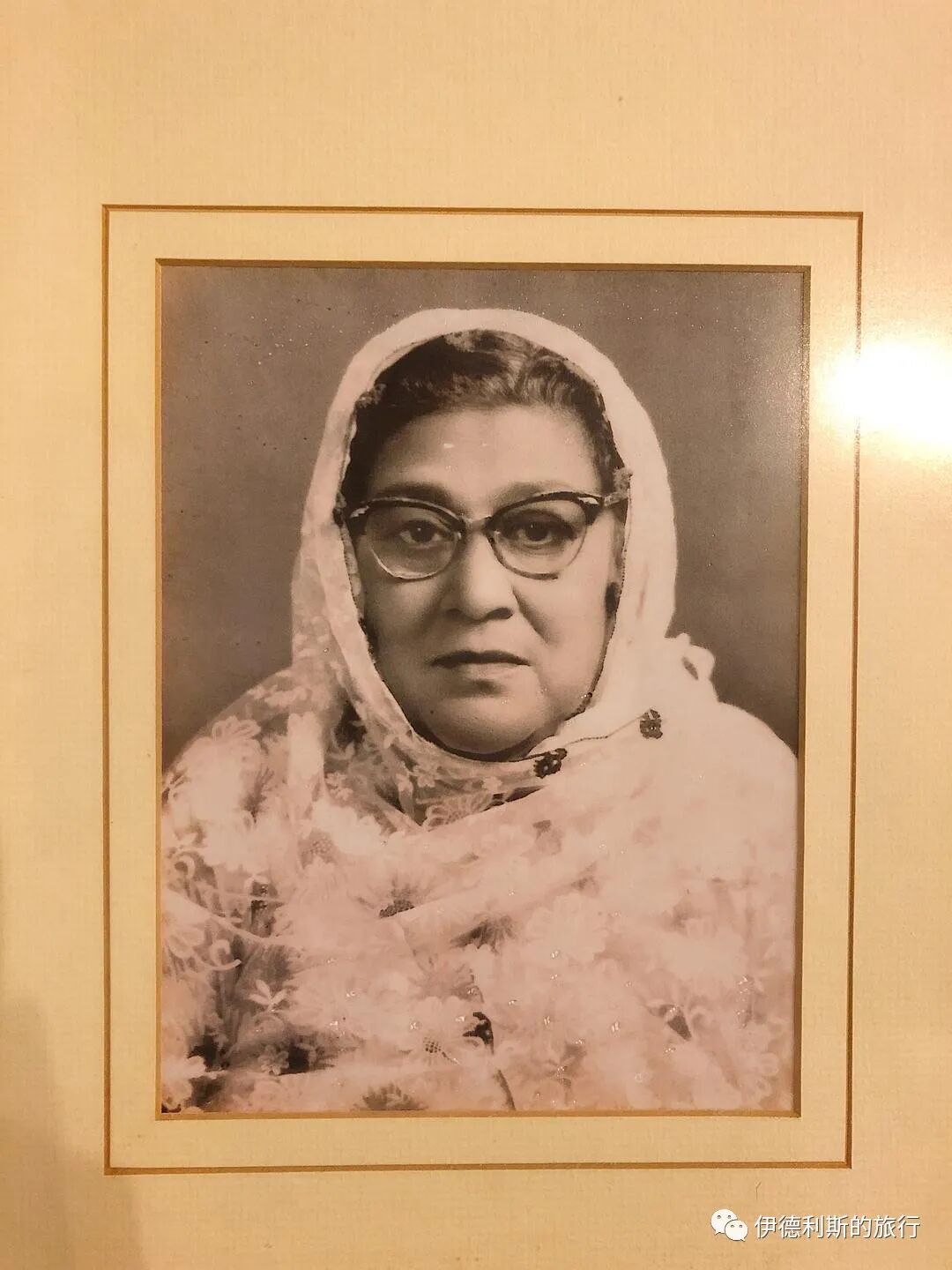
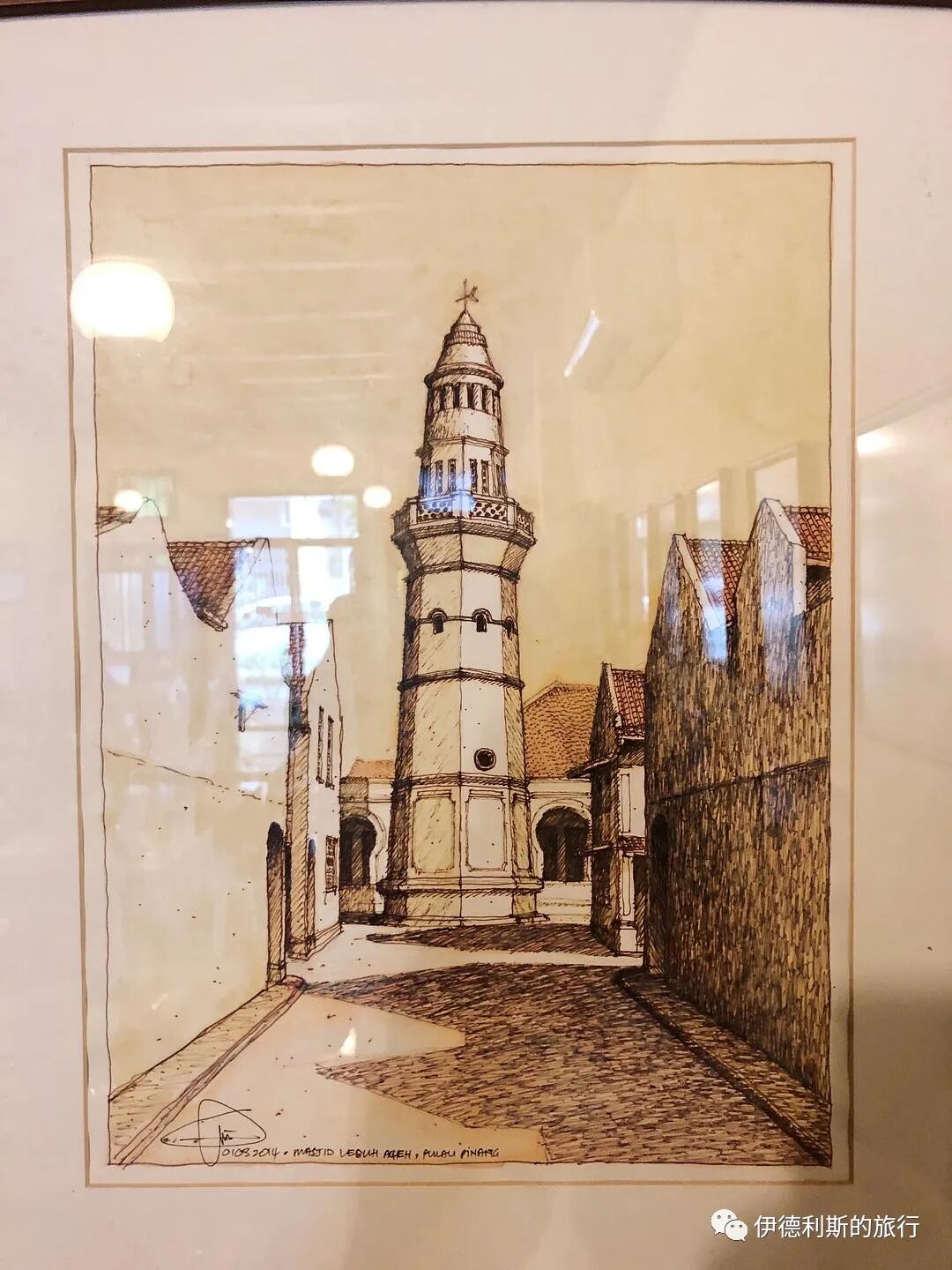
Jawi House displays a collection of old photos of Jawi Peranakan life in Penang, along with paintings of the local Muslim community.
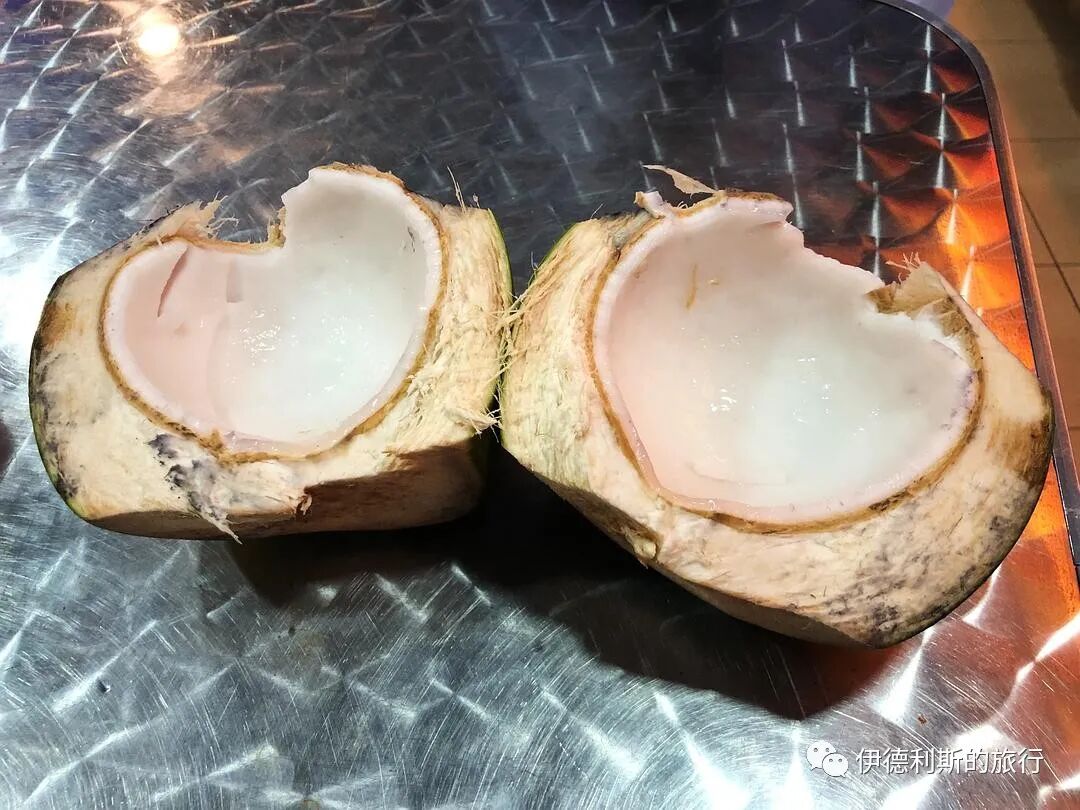
A coconut shop on a street in Penang.
ALI NASI LEMAK coconut milk rice (nasi lemak)
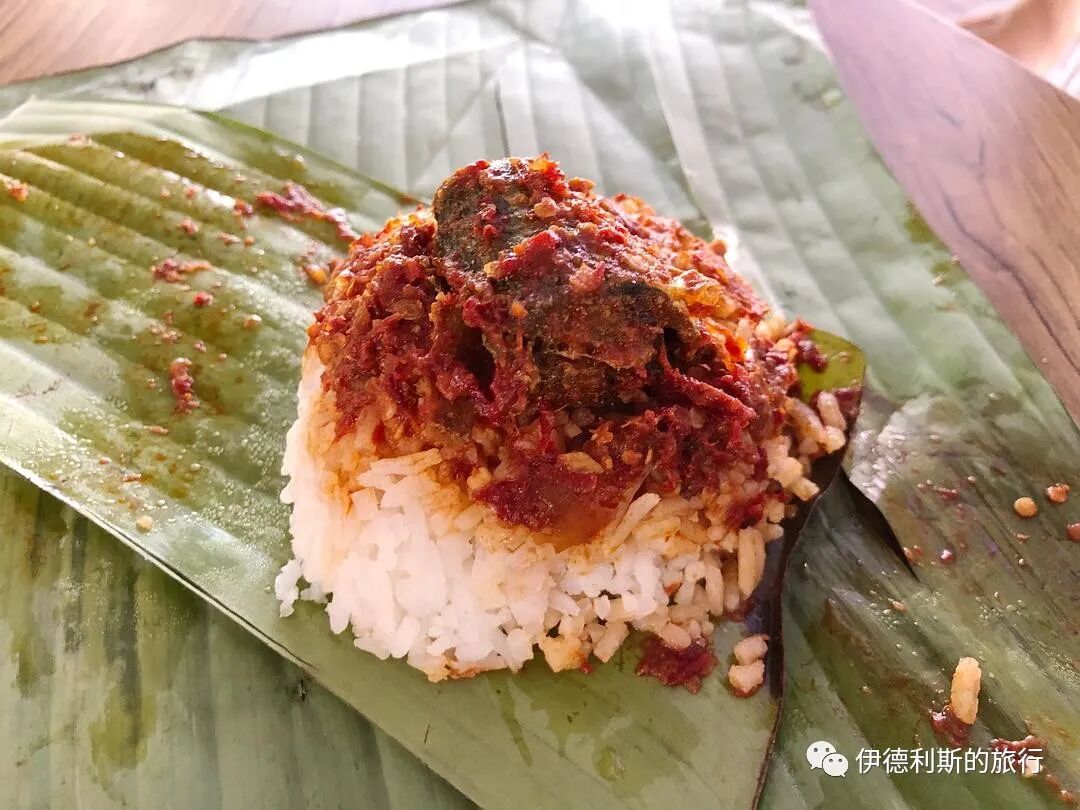
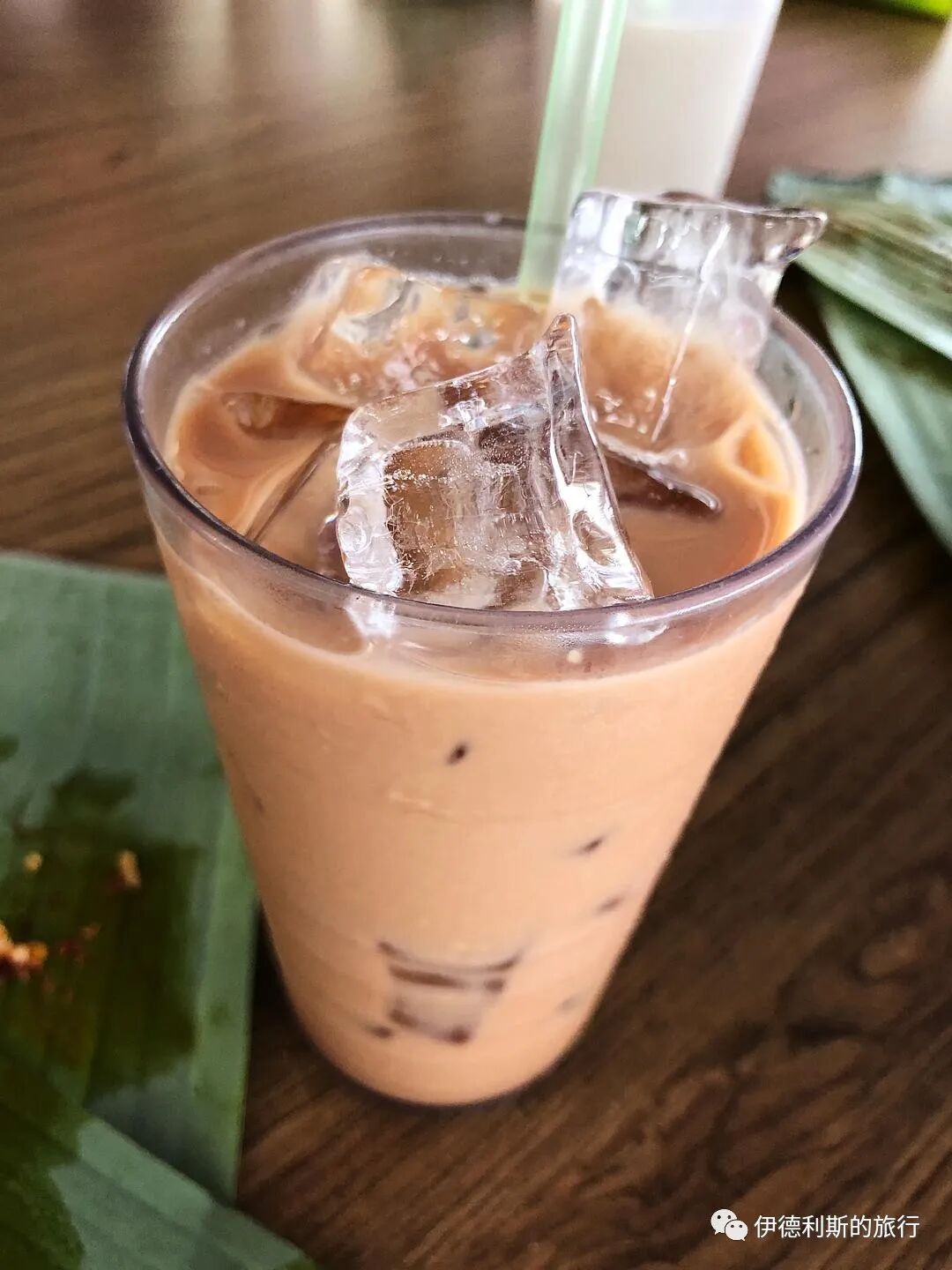
I ate coconut milk rice (nasi lemak) at ALI NASI LEMAK in the Sri Weld Food Court in Penang. Coconut milk rice is fragrant Malay rice cooked with coconut milk and pandan leaves. It is known as Malaysia's national dish and is popular across the Malay Archipelago and southern Thailand.
Traditional coconut milk rice is wrapped in a banana leaf and served with spicy chili paste (sambal), dried anchovies, peanuts, and eggs. Spicy chili paste is a traditional Southeast Asian sauce that started in Indonesia. It is made by stir-frying fermented shrimp paste (belacan) with chili peppers and various seasonings. The sambal sauce at this place was incredibly spicy; it really burned my lips first and then hit my throat.
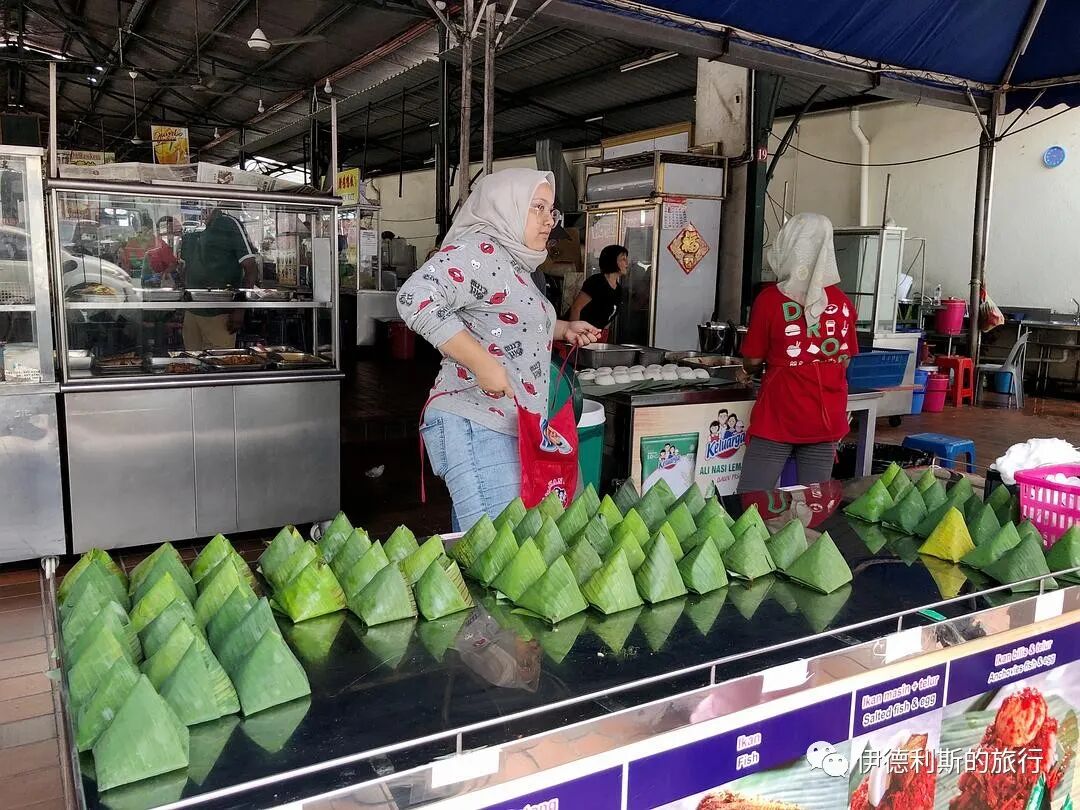
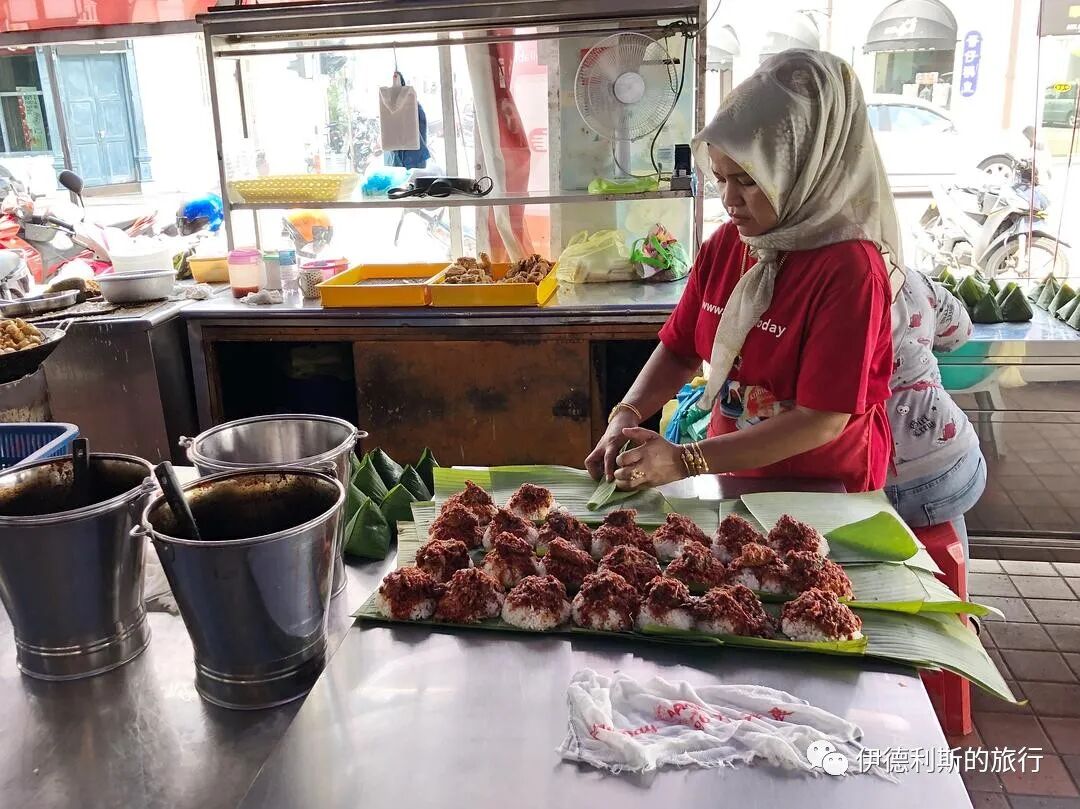
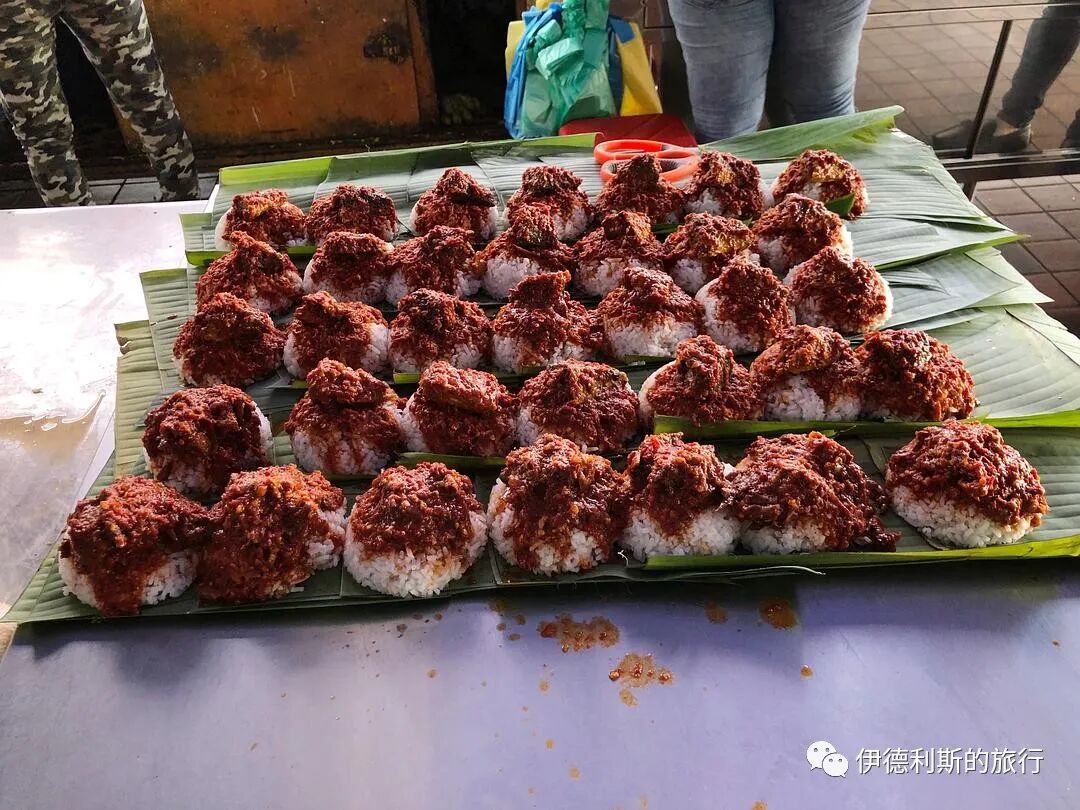
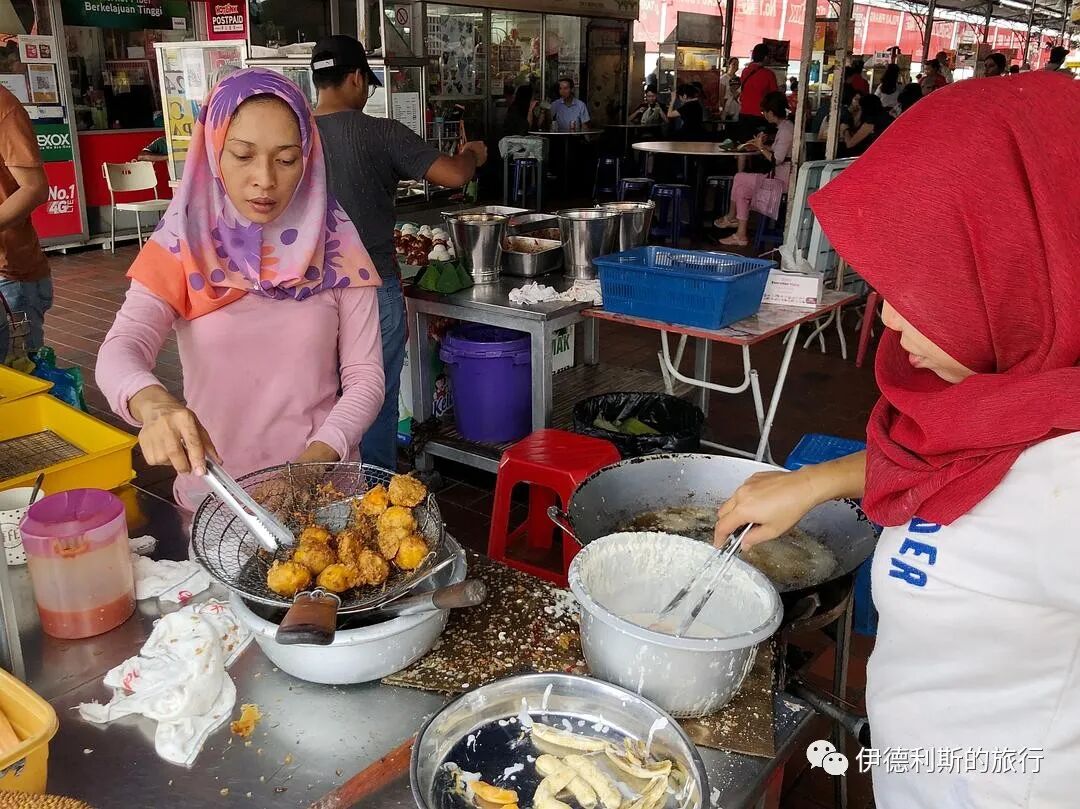
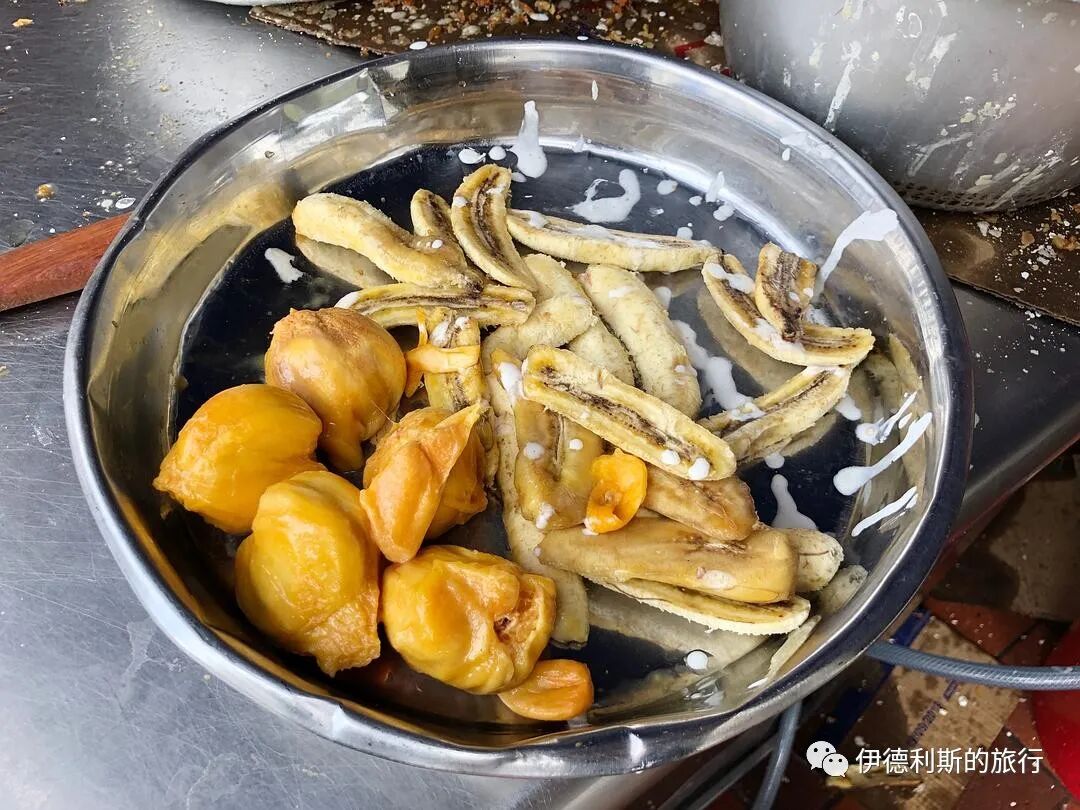
Then I had some fried jackfruit next door. Small jackfruit (cempedak) is similar to regular jackfruit, but it is sweeter and has a smoother, softer texture.
Acheen Street Mosque: 1808
Acheen Street Mosque (Masjid Melayu Lebuh Acheh) was built by the Acehnese in 1808, and the area around the mosque is the oldest Muslim community in Penang. The Acehnese are a Muslim ethnic group speaking an Austronesian language who live on the northernmost tip of Sumatra. They founded the Aceh Sultanate in 1499 and saw it flourish during the 17th century. In the late 18th and early 19th centuries, the first Chinese Kapitan of Penang, Koh Lay Huan, built a strong relationship with the Aceh Sultanate, which started the pepper trade between Aceh and Penang.
In 1791, an Acehnese pepper merchant and nobleman of Arab descent named Tengku Syed Hussain Al-Aidid moved from Aceh to Penang. He established the first Muslim settlement in Penang near what is now Aceh Street, and after that, many Muslim merchants from the Malay Archipelago, India, and Arabia arrived. In 1808, Tengku Syed Hussain donated money and land to build a mosque. The first imam of the mosque was Sheikh Omar Basheer Al-Khalilee, and his son, Sheikh Zakaria, later took over the position. Sheikh Zakaria became the first Mufti (legal scholar) of Penang in 1888.
After Tengku Hussain died in the mid-19th century, the Muslim community on Acheen Street continued to thrive and became known as the second Jeddah (the port city that serves as the gateway to Mecca). Every year during the Hajj season, pilgrims from all over would pack the Acheen Street community before boarding ships in Penang to travel to Mecca. This busy scene lasted until the Malaysian Hajj Pilgrims Fund Board (Lembaga Tabung Haji) was established in the 1970s.
In 1913, the British colonial government passed the Malay Reservation Act, which officially defined a "Malay" for the first time as anyone who belonged to the Malay race, habitually spoke the Malay language or "any other Malay language," and practiced Islam. This meant that Austronesian-speaking Muslim groups who moved to Malaya from other parts of the Malay Archipelago were counted as 'other Malays' in statistics, a group that included the Acehnese in Penang. First-generation Penang Acehnese usually kept their immigrant identity. However, because the Acehnese and Malays share similar physical features, languages, and the same faith, most Penang Acehnese accepted a 'Malay' identity by the second or third generation and blended into Malay culture.
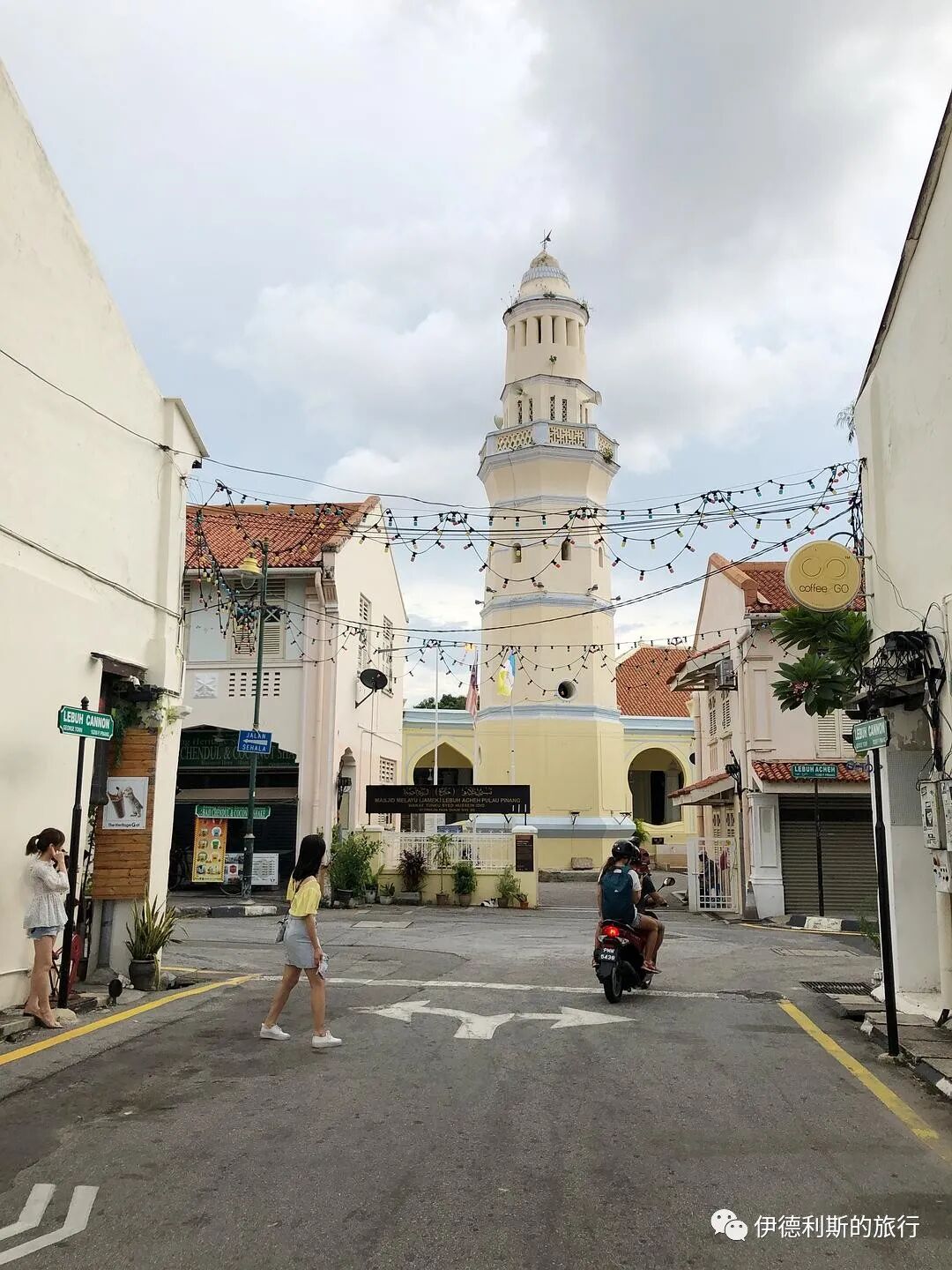
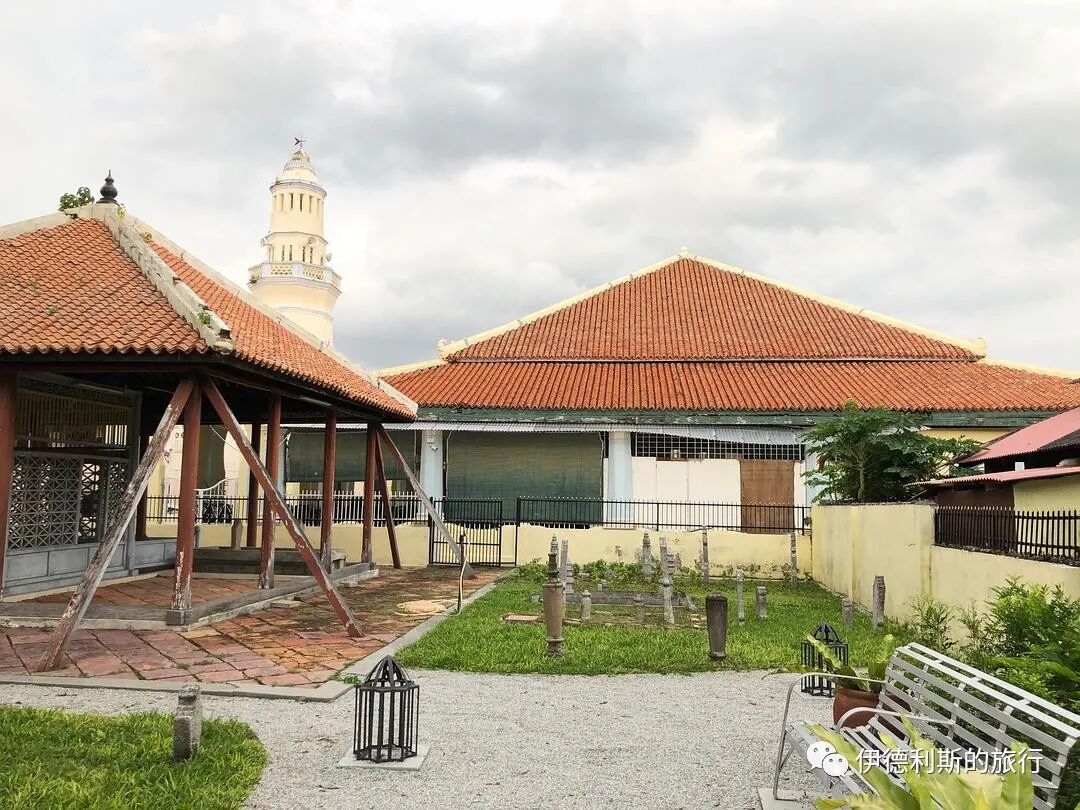
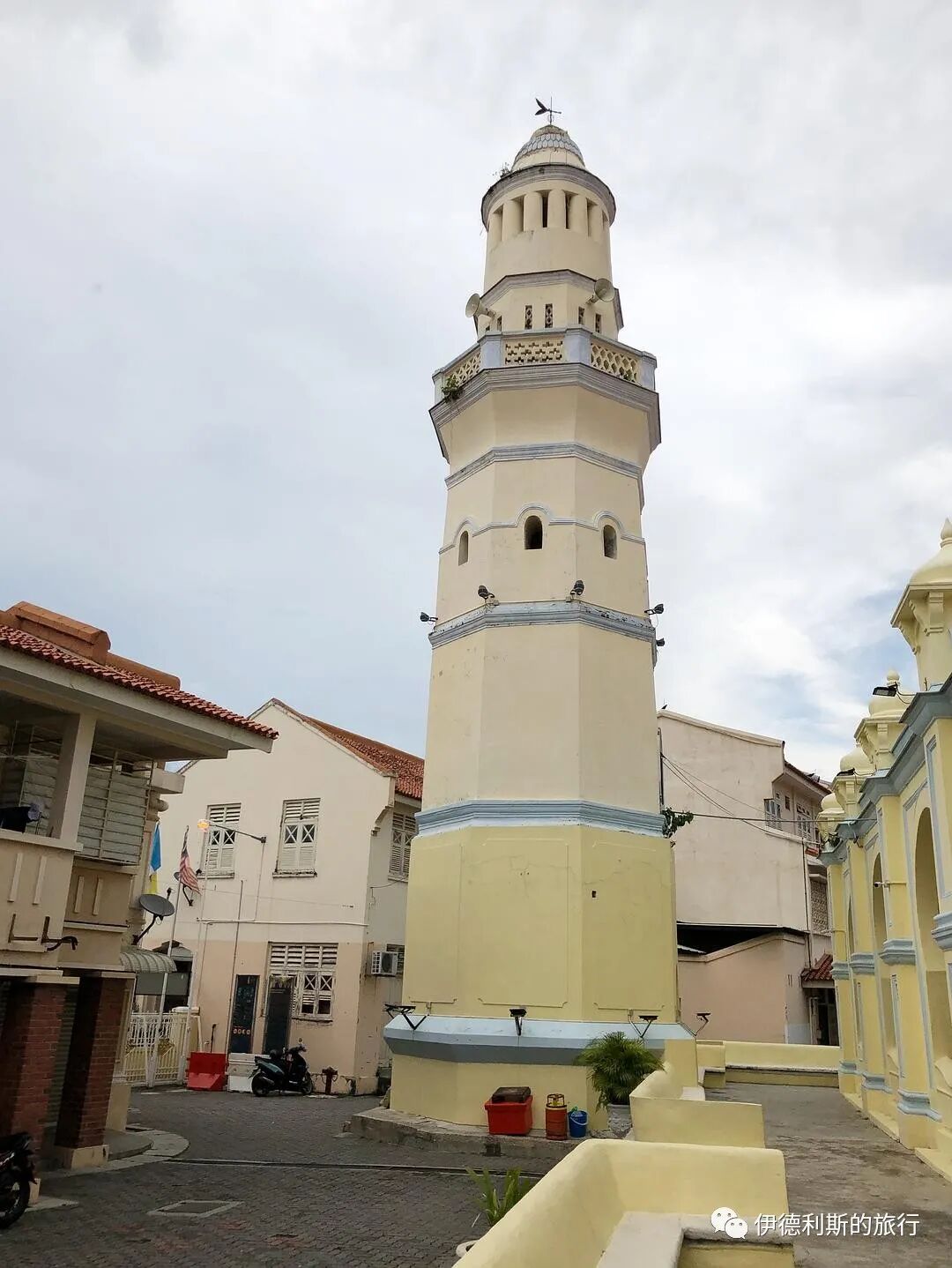
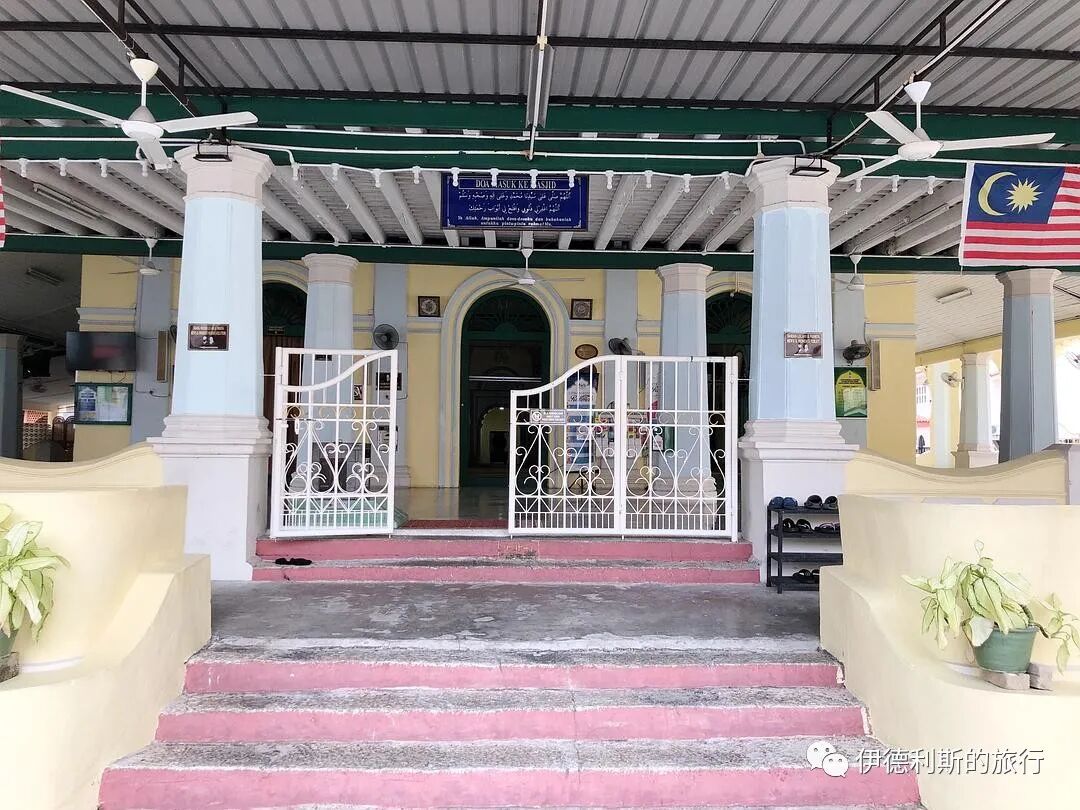
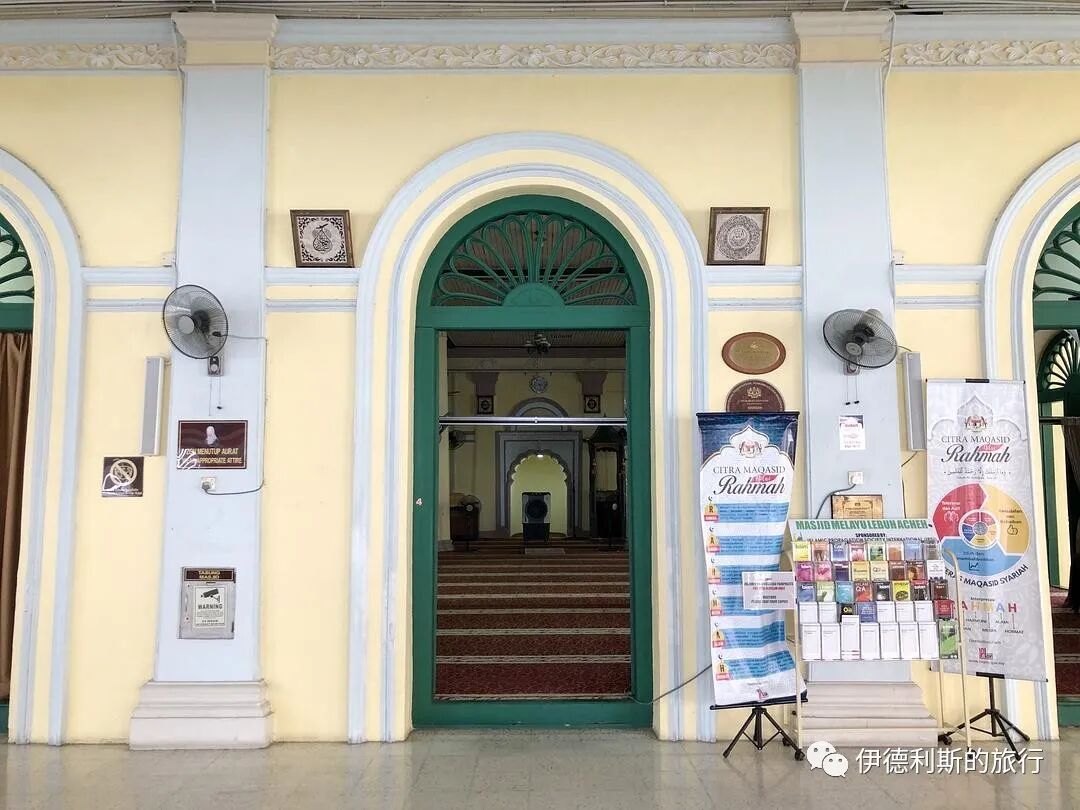
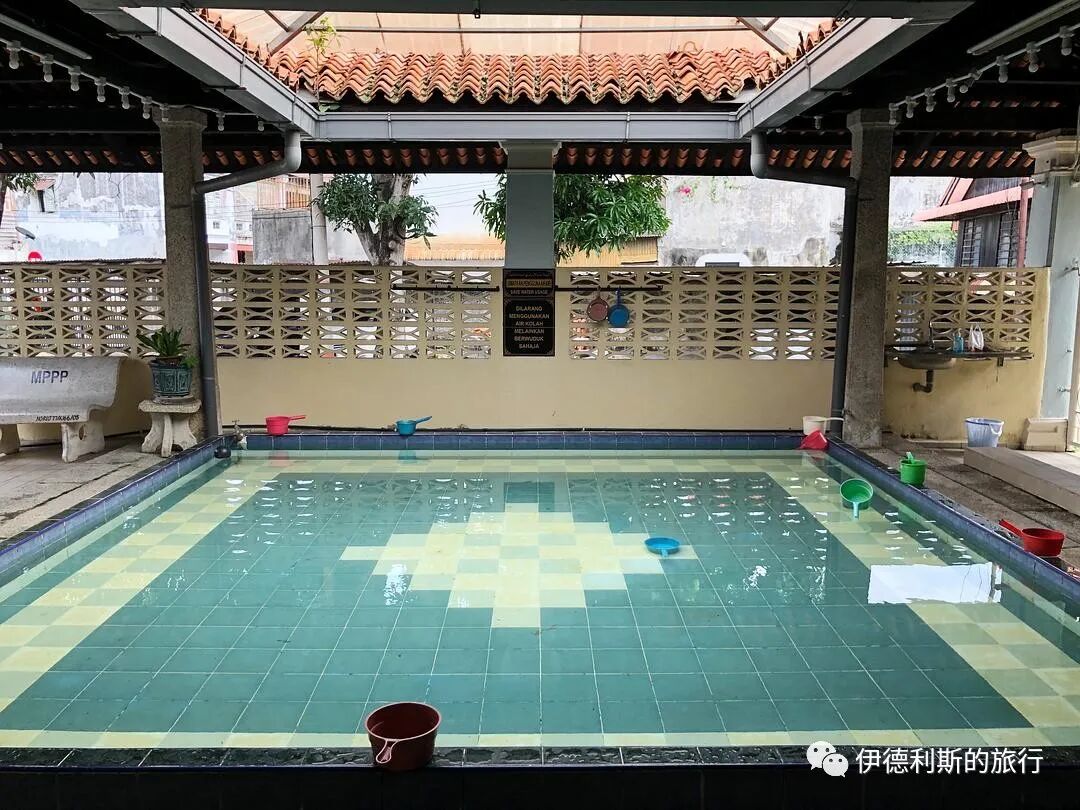
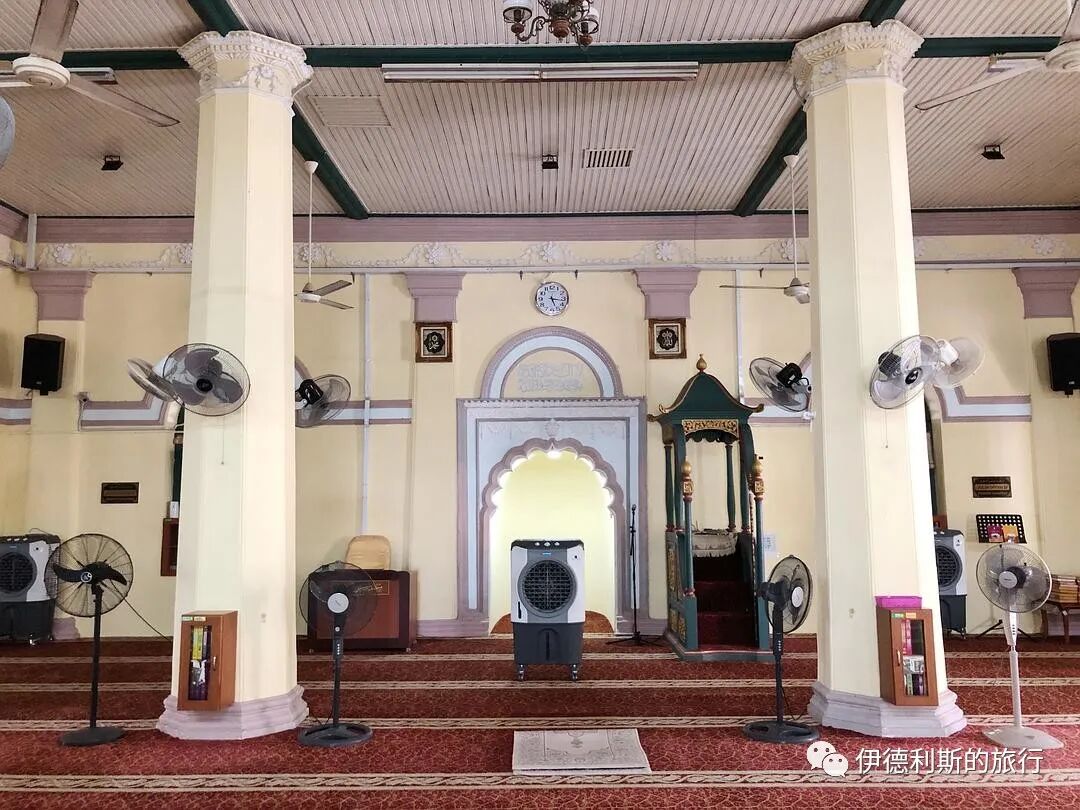
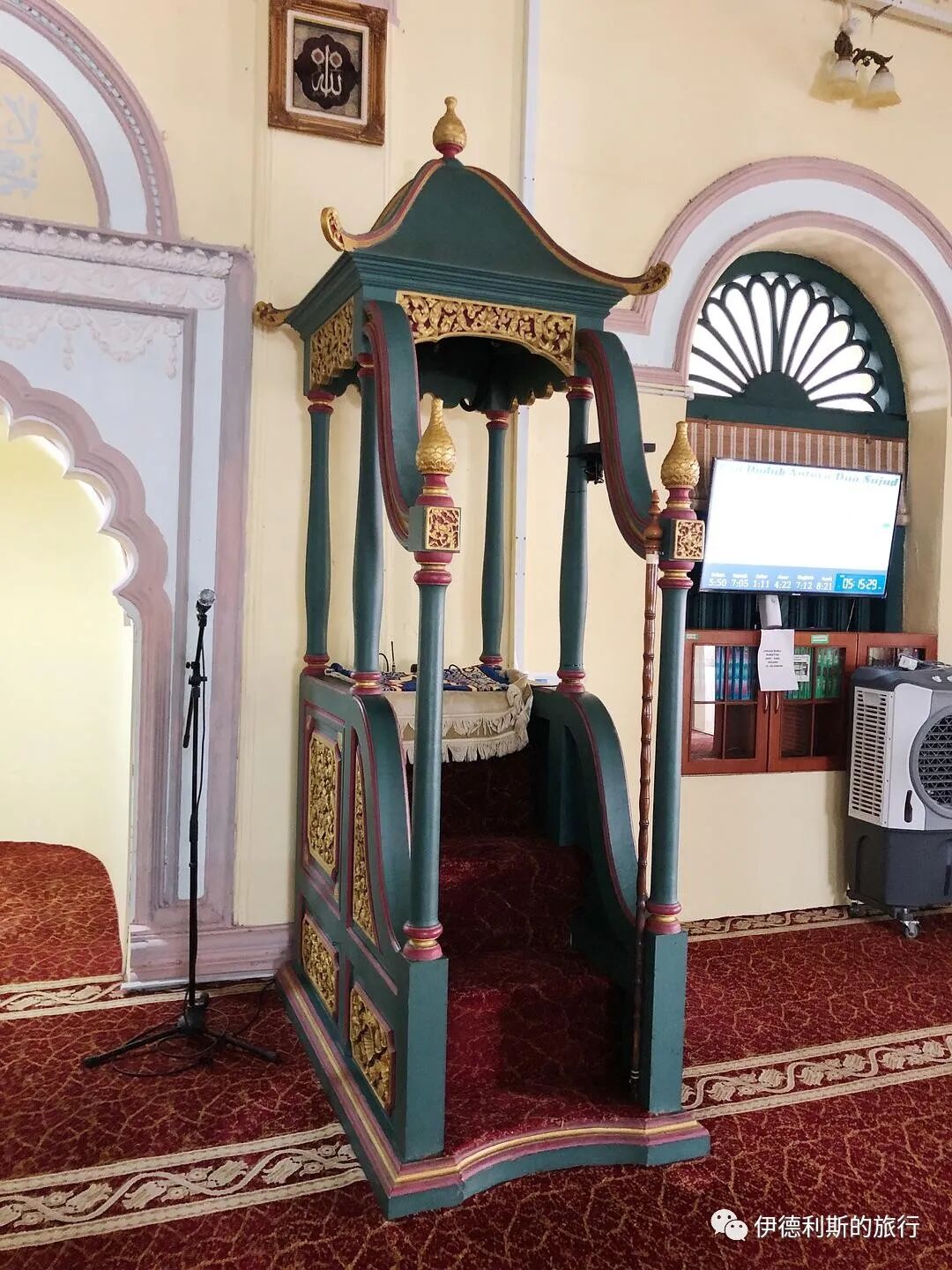
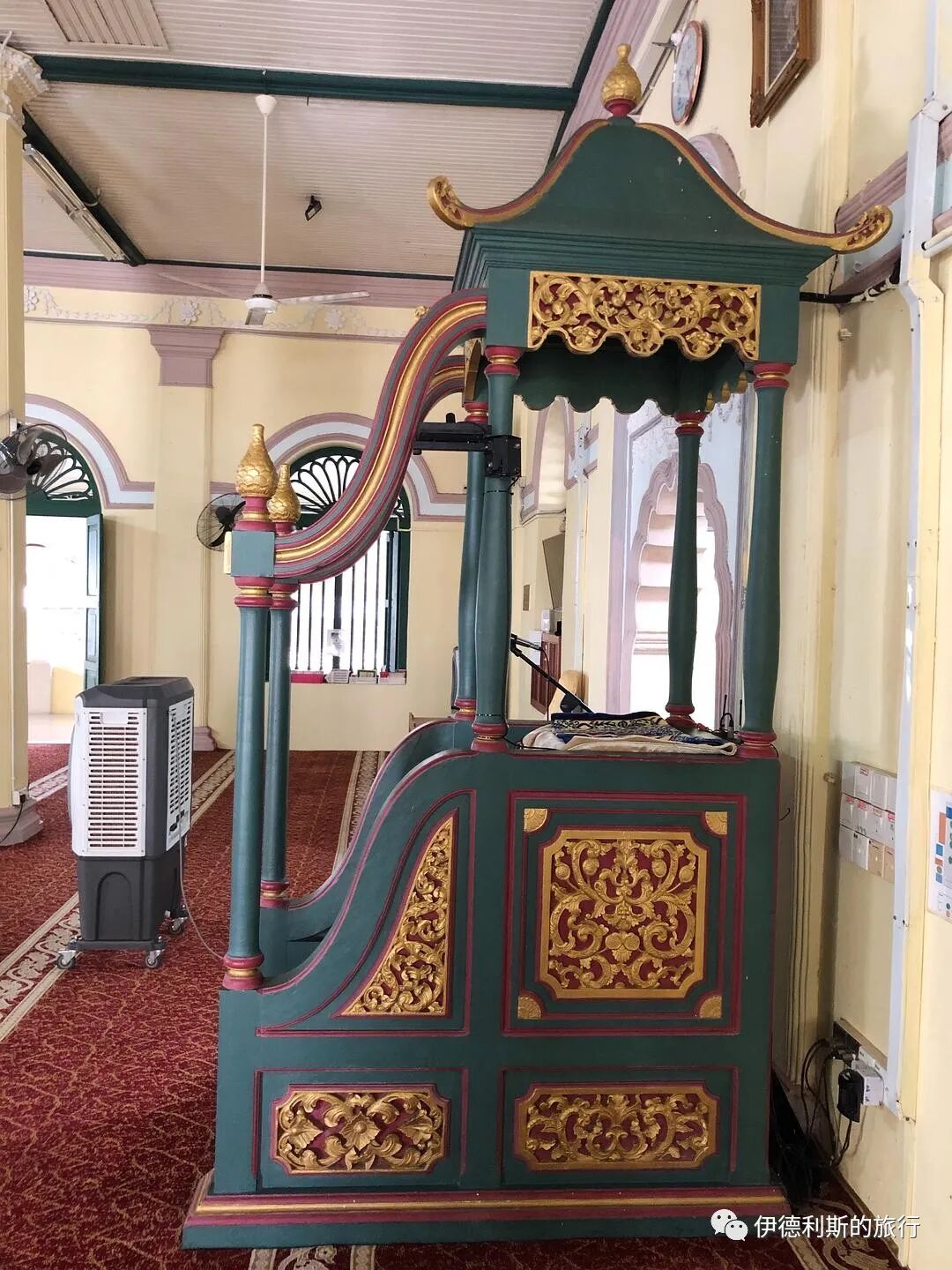
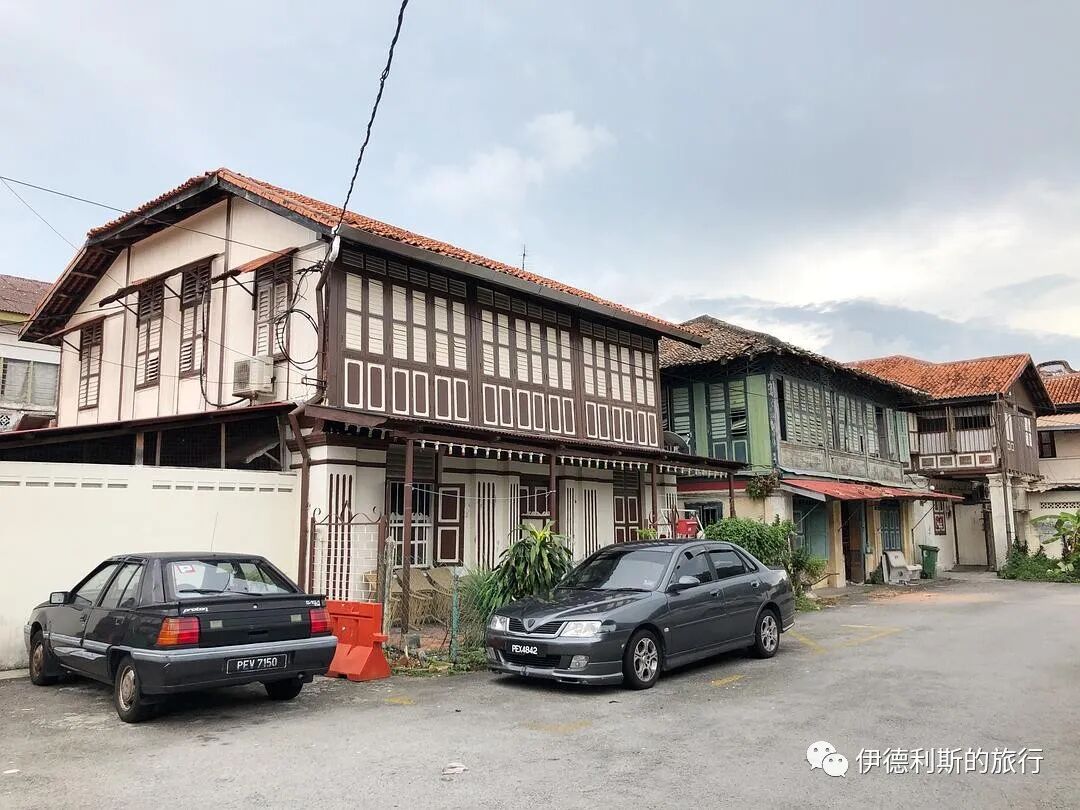
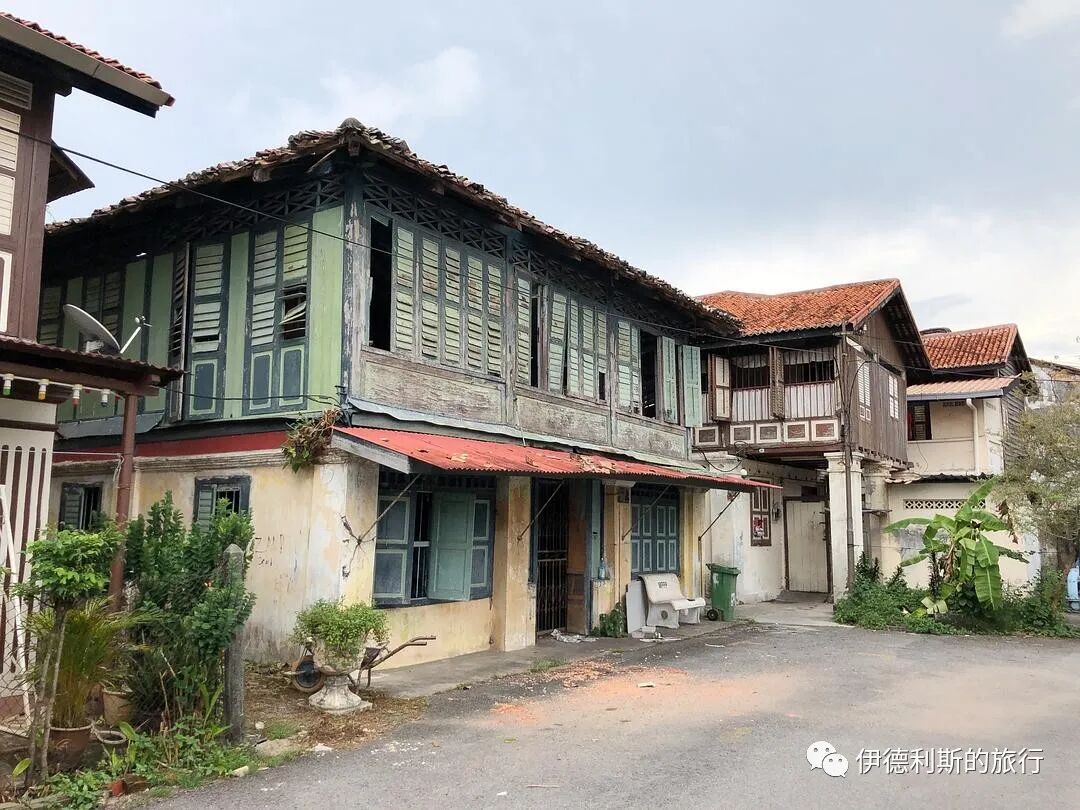
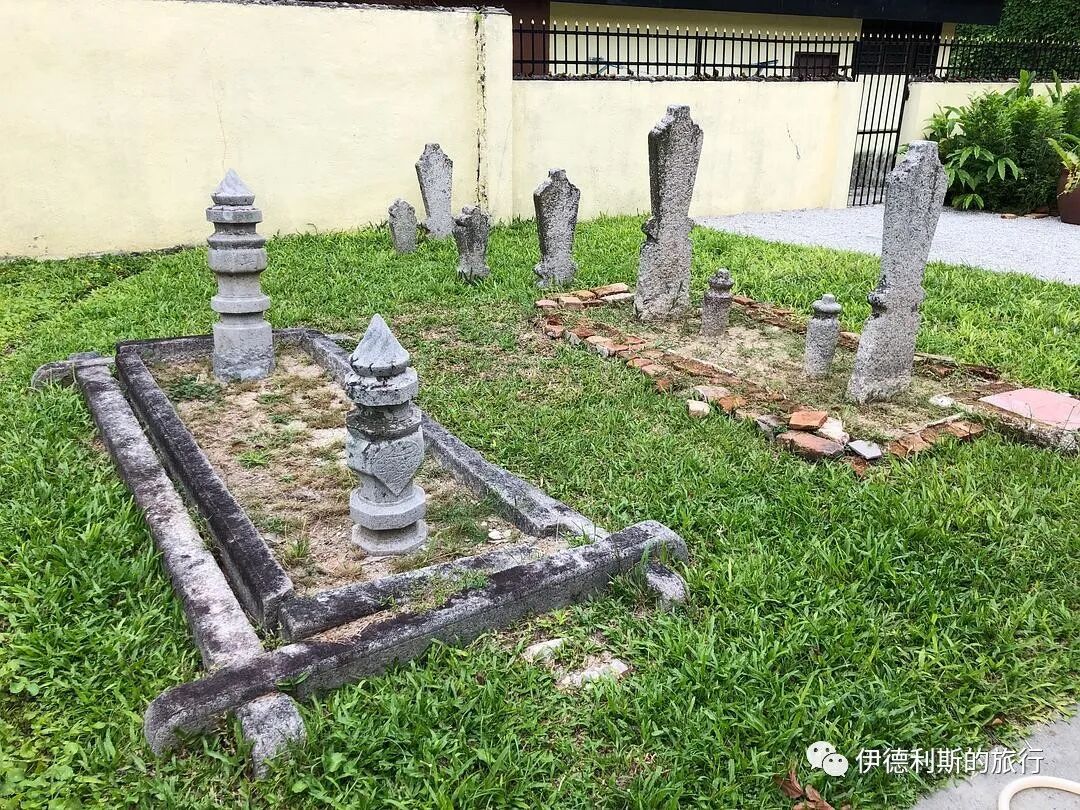
The courtyard of the Aceh Mosque still holds four early houses from the Aceh Street Muslim community: the home of Syed Mohamad Al-Habshee, the Al-Mashoor Quran school, the home of the first mufti Sheikh Zakaria, and the home of Syed Abdul Hamid AL-Haddad.
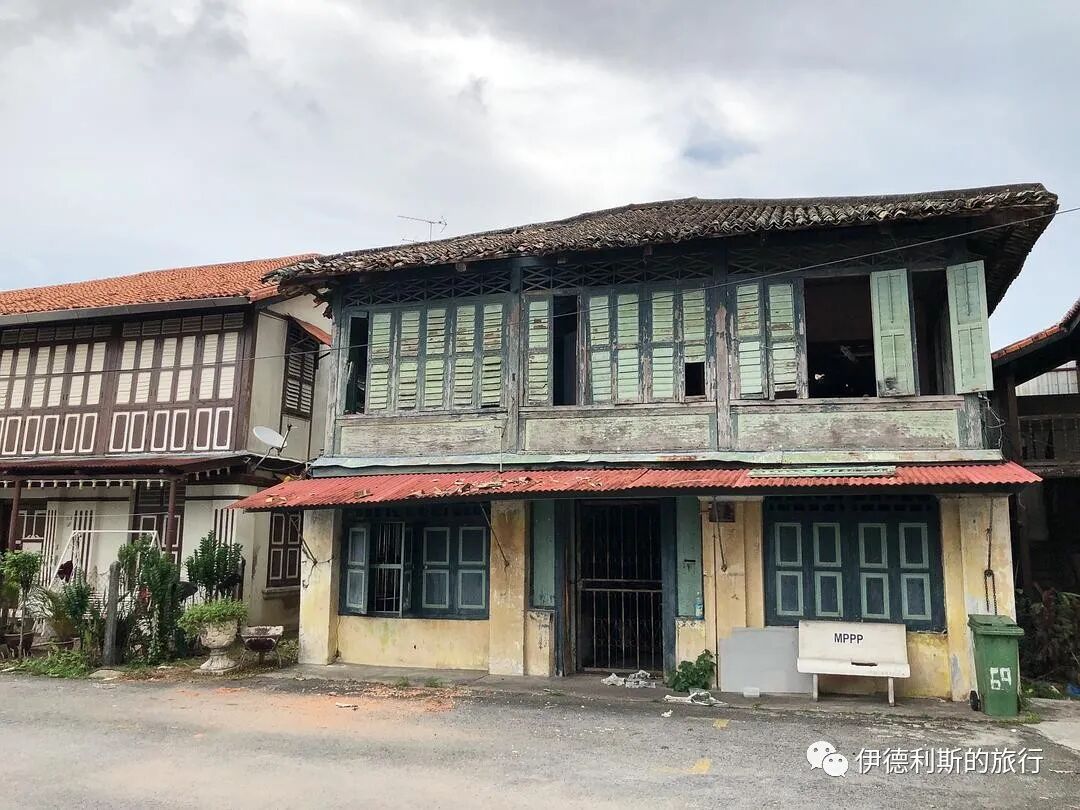
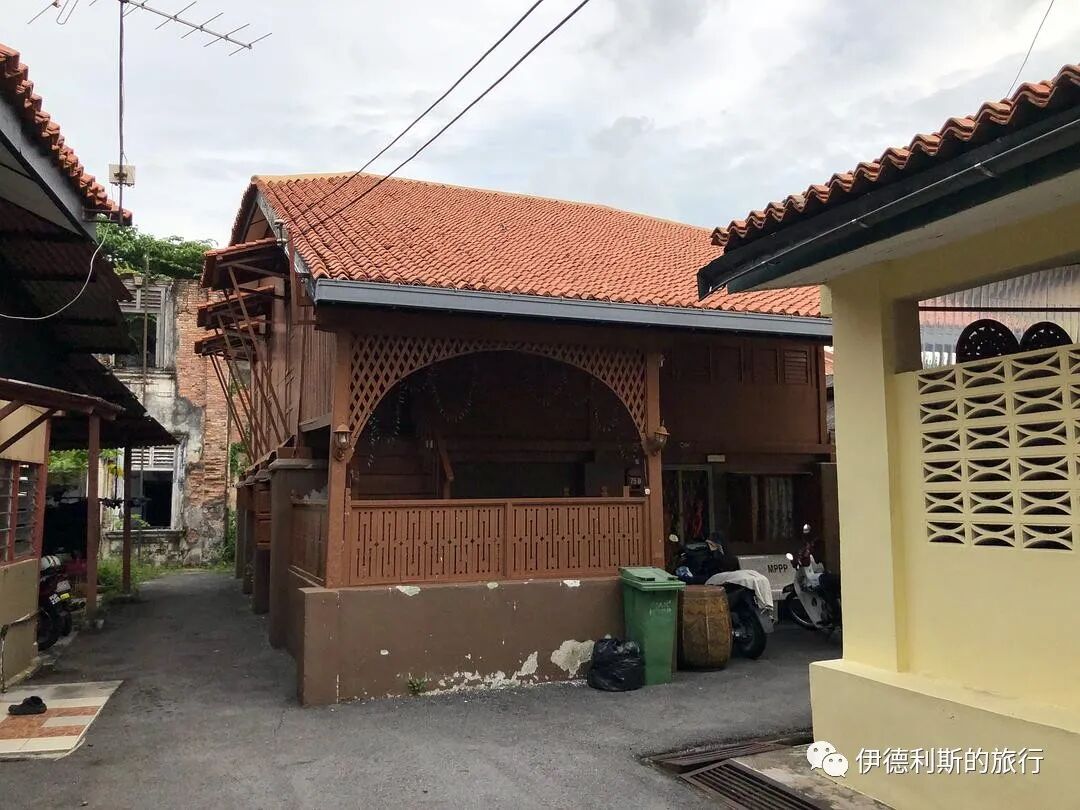
There is also the tomb of the mosque's founder, Tengku Syed Hussain Al-Aidid, which features a tombstone in the classic Acehnese style.
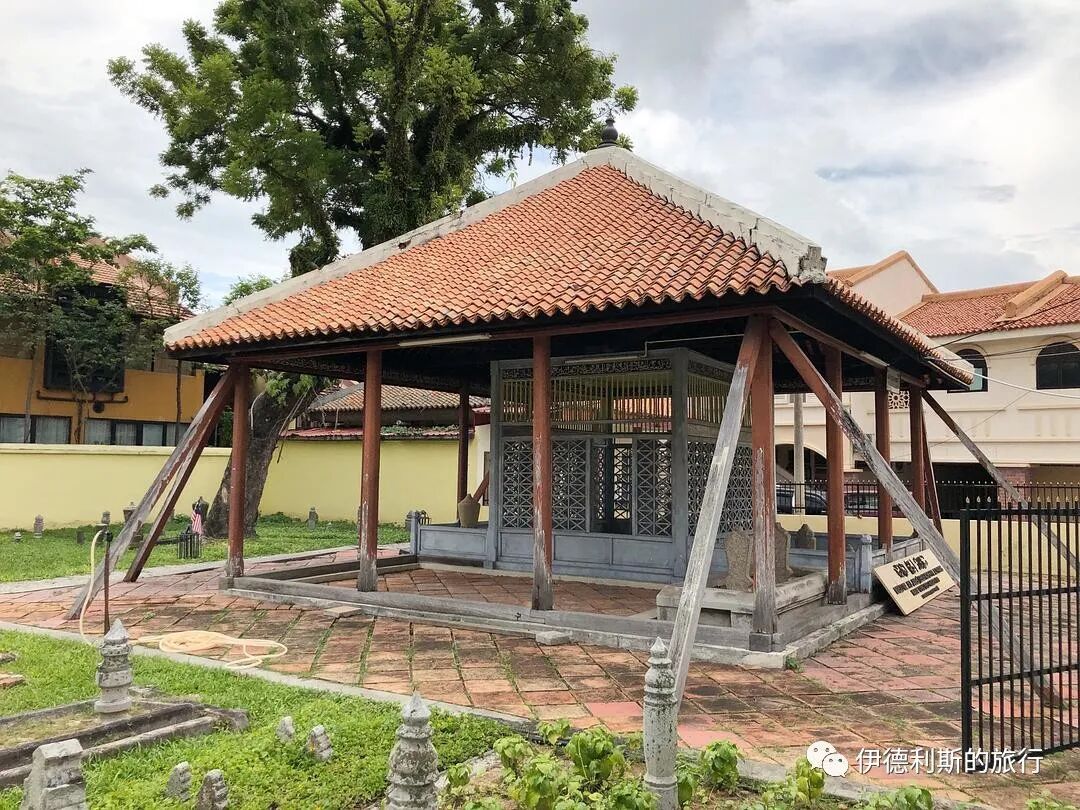
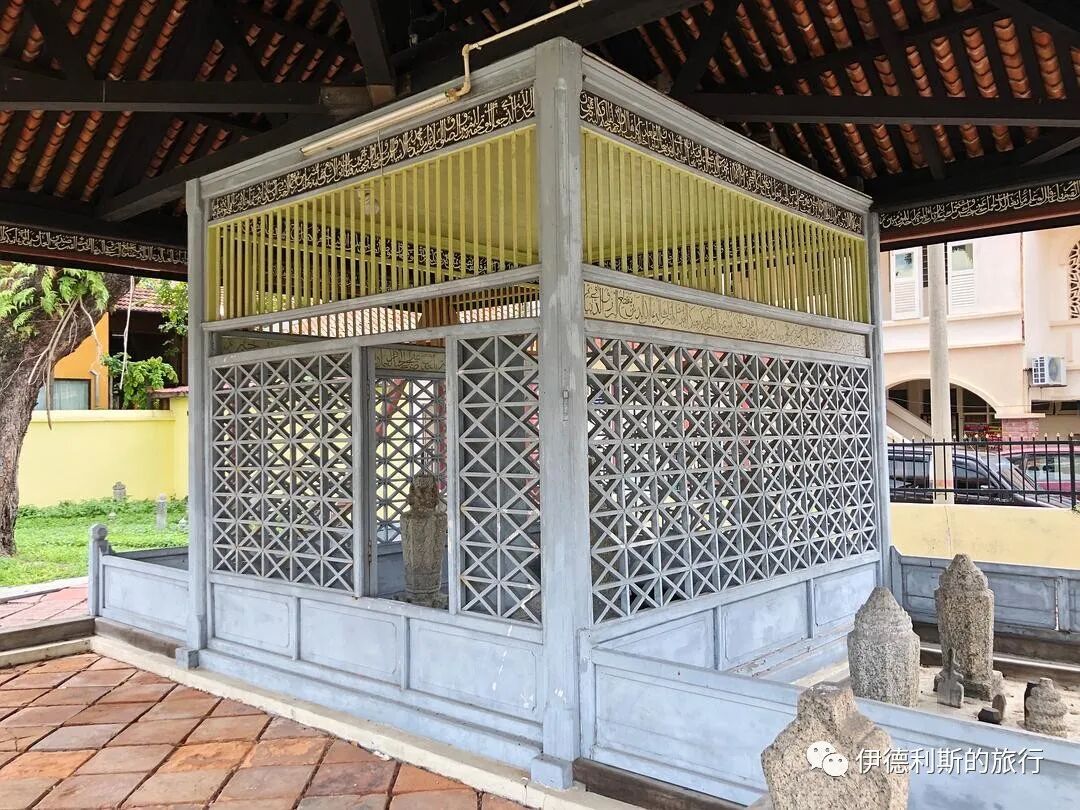
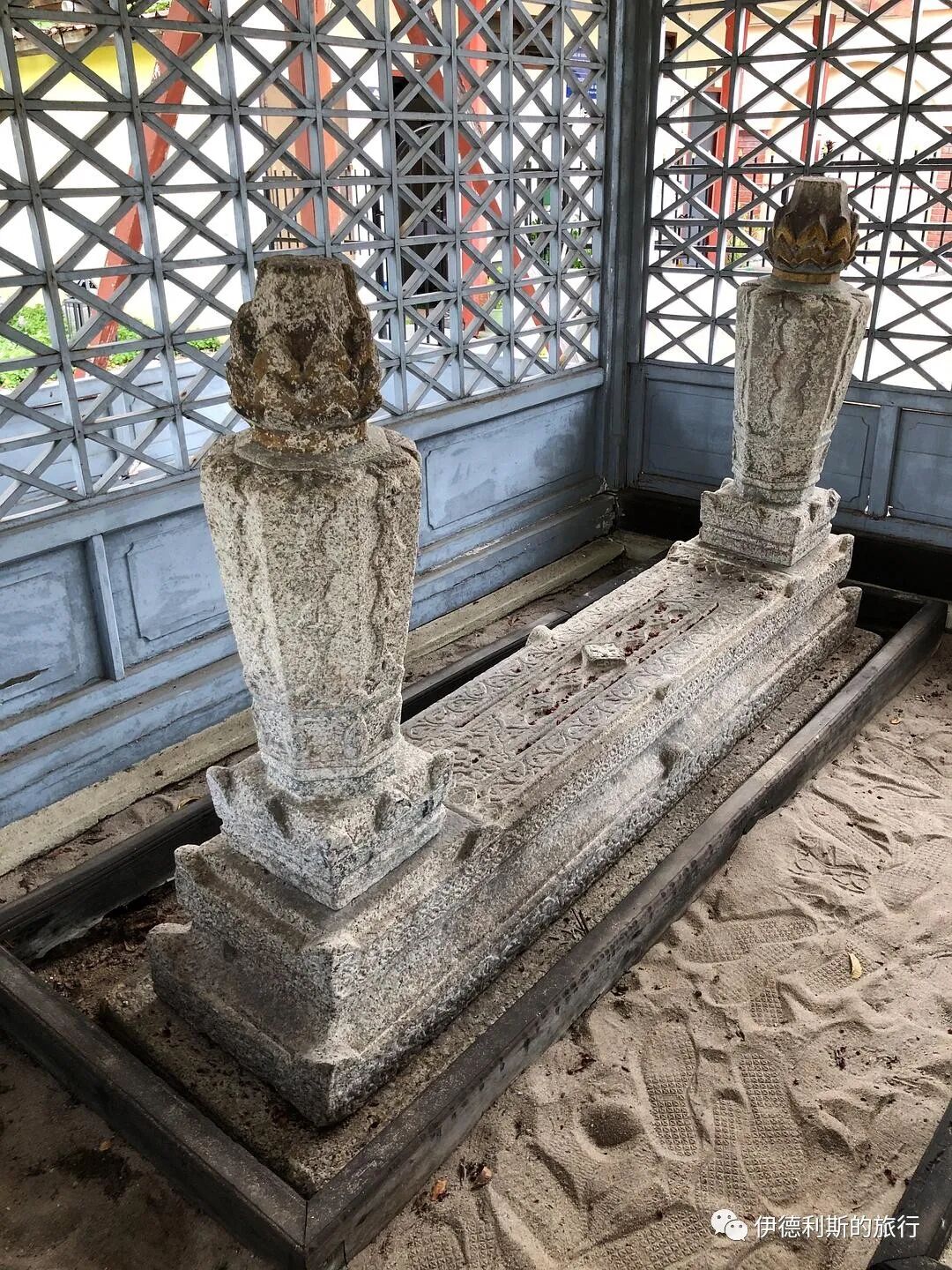
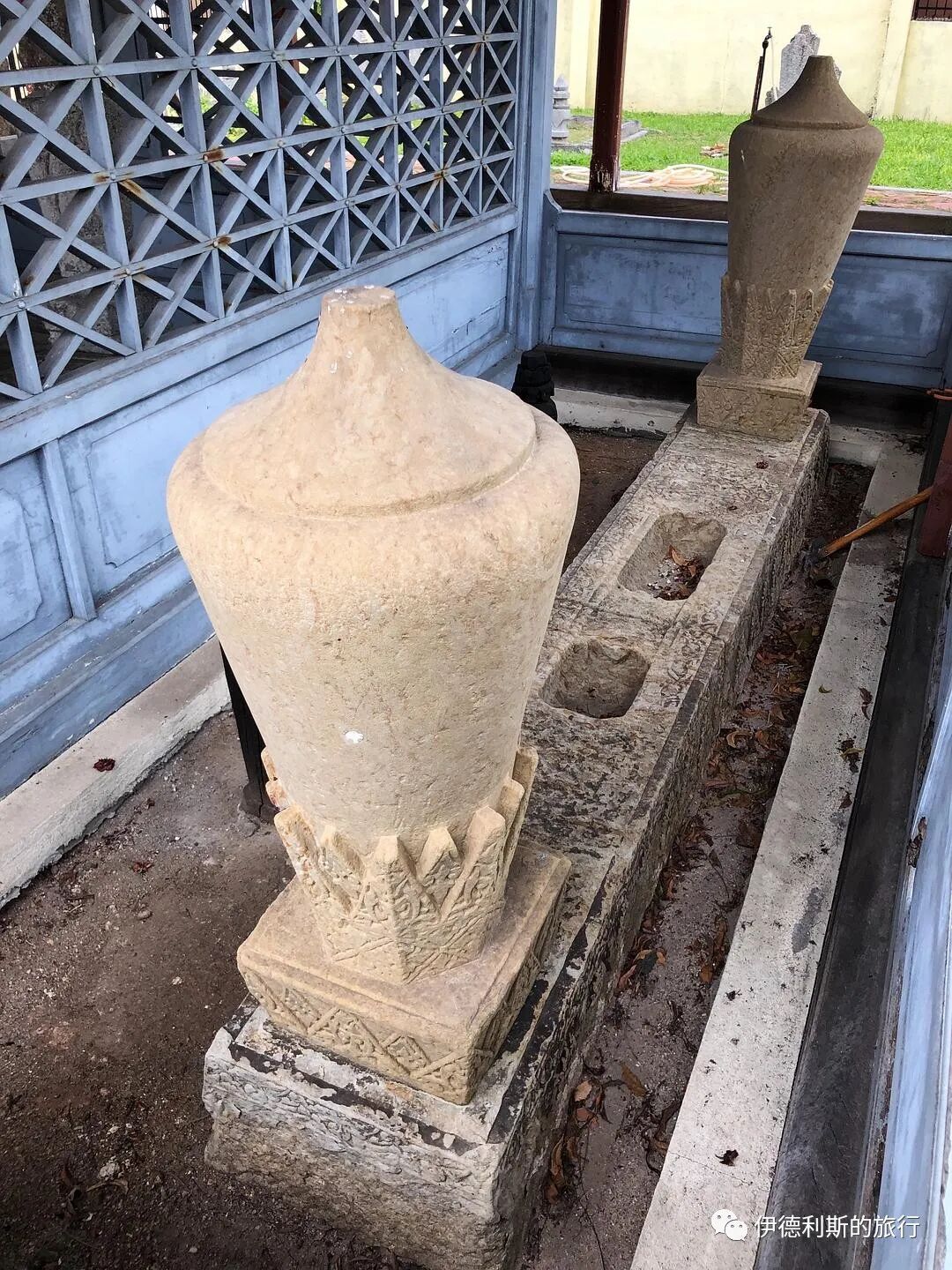
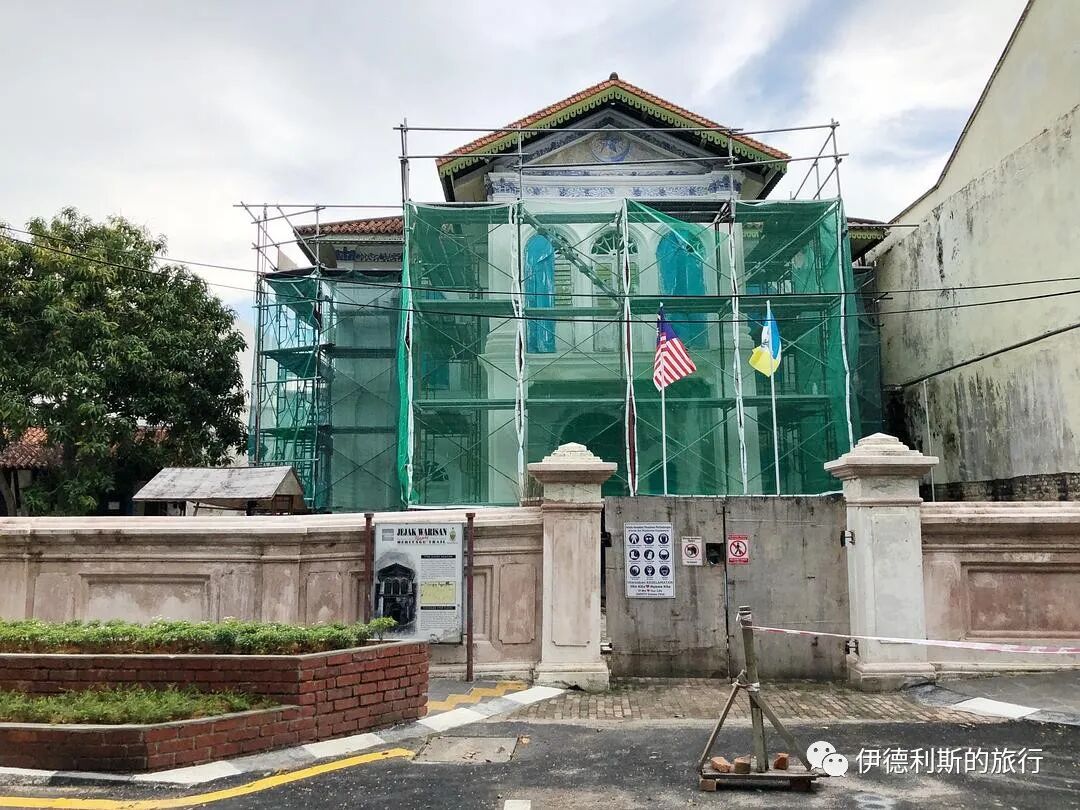
The Penang Islamic Museum under renovation.
It was a real shame that the Penang Islamic Museum was closed for renovations during my visit. This building is a Straits-style house built by an Acehnese Muslim pepper merchant in the 1860s.
Malay artifacts in the Penang Museum
The Penang Museum has a gallery that displays artifacts from the Malay people of Penang.
Arabic calligraphy
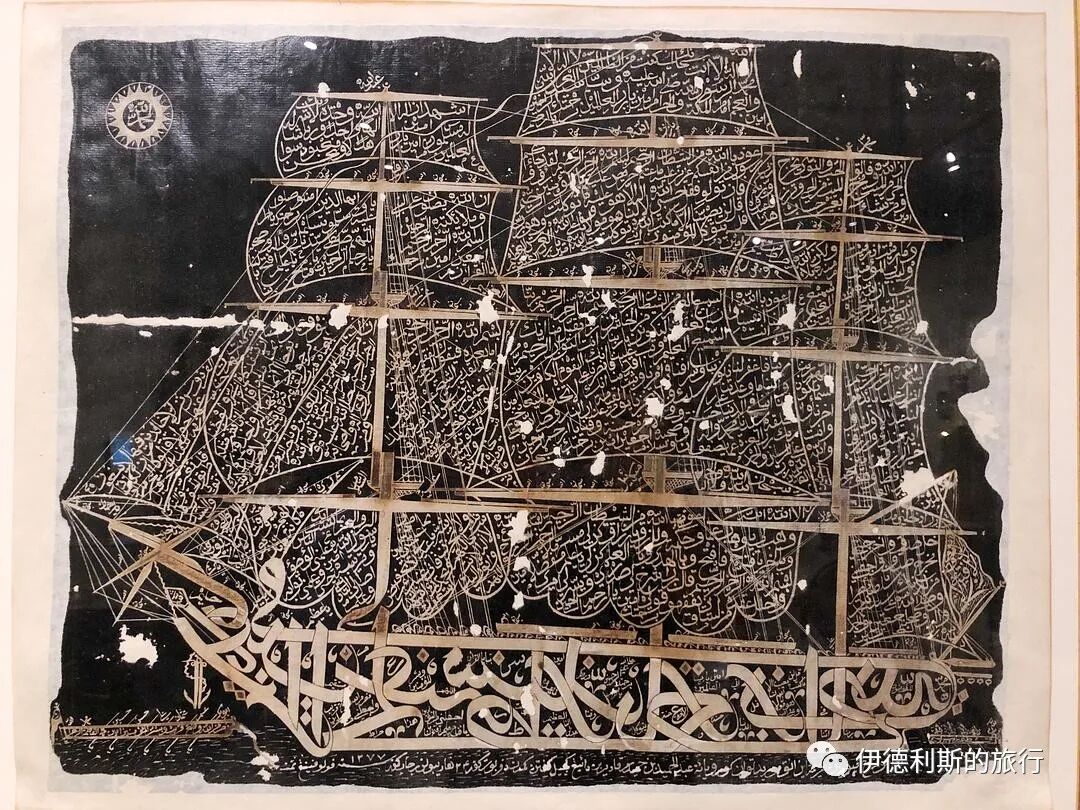
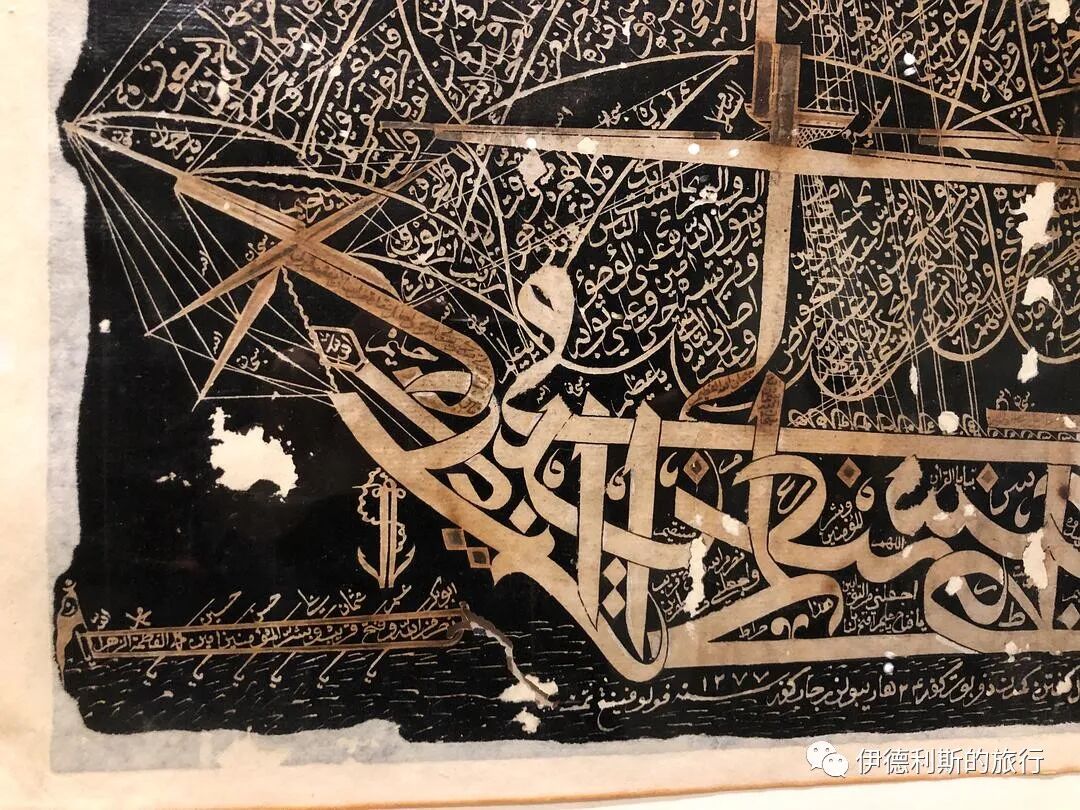
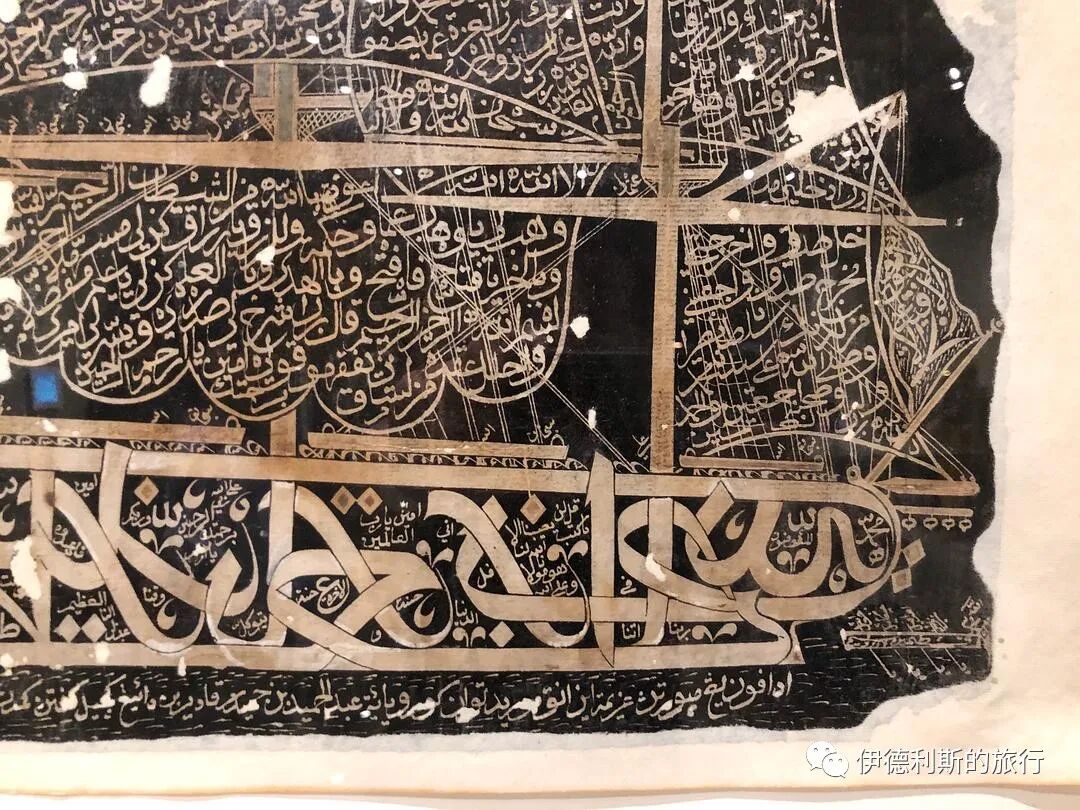
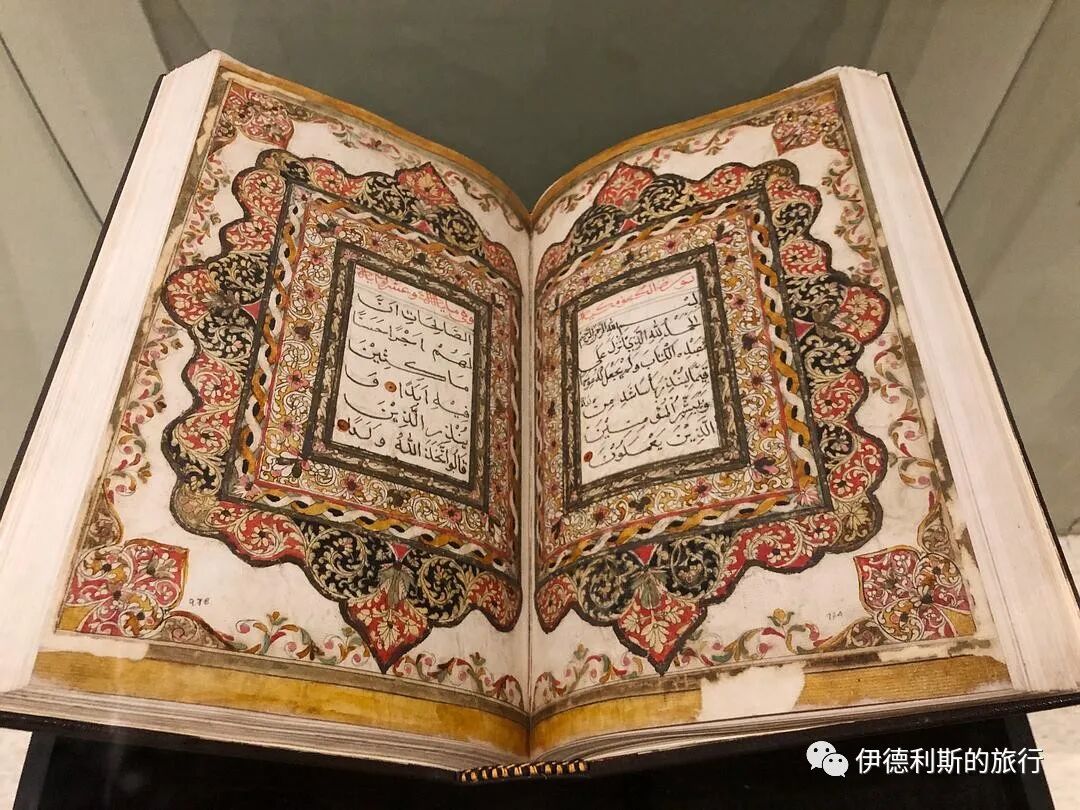
A Quran in the Nanyang style.
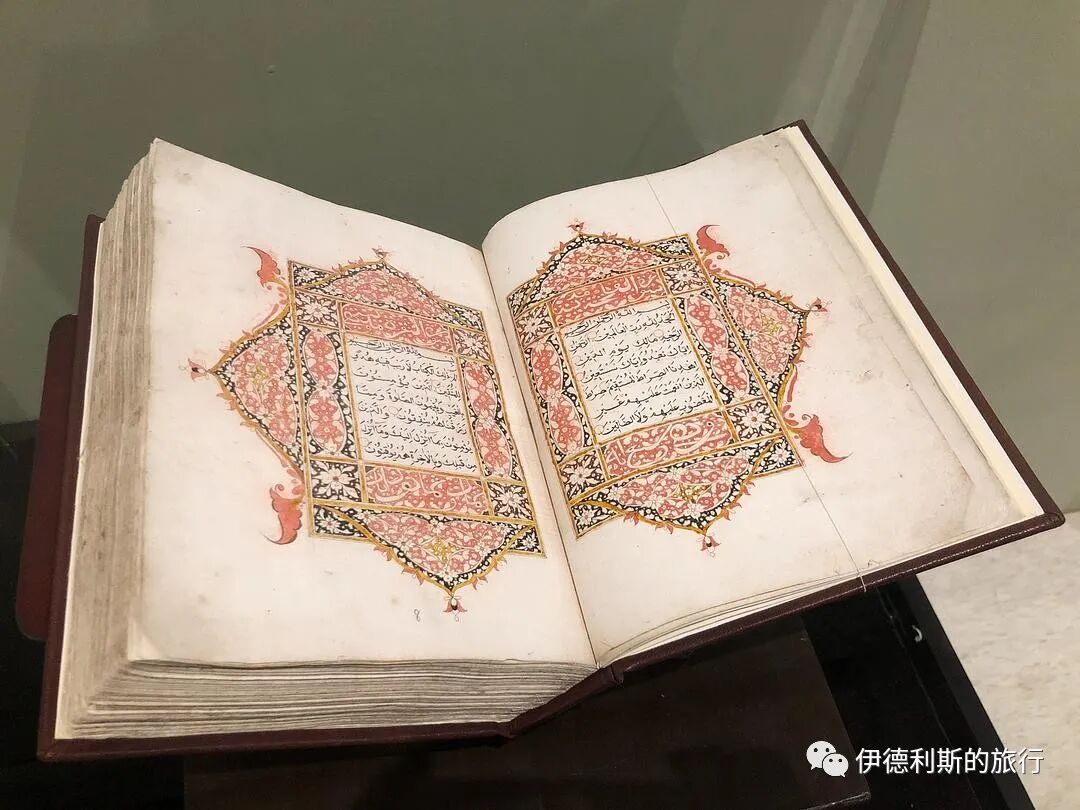
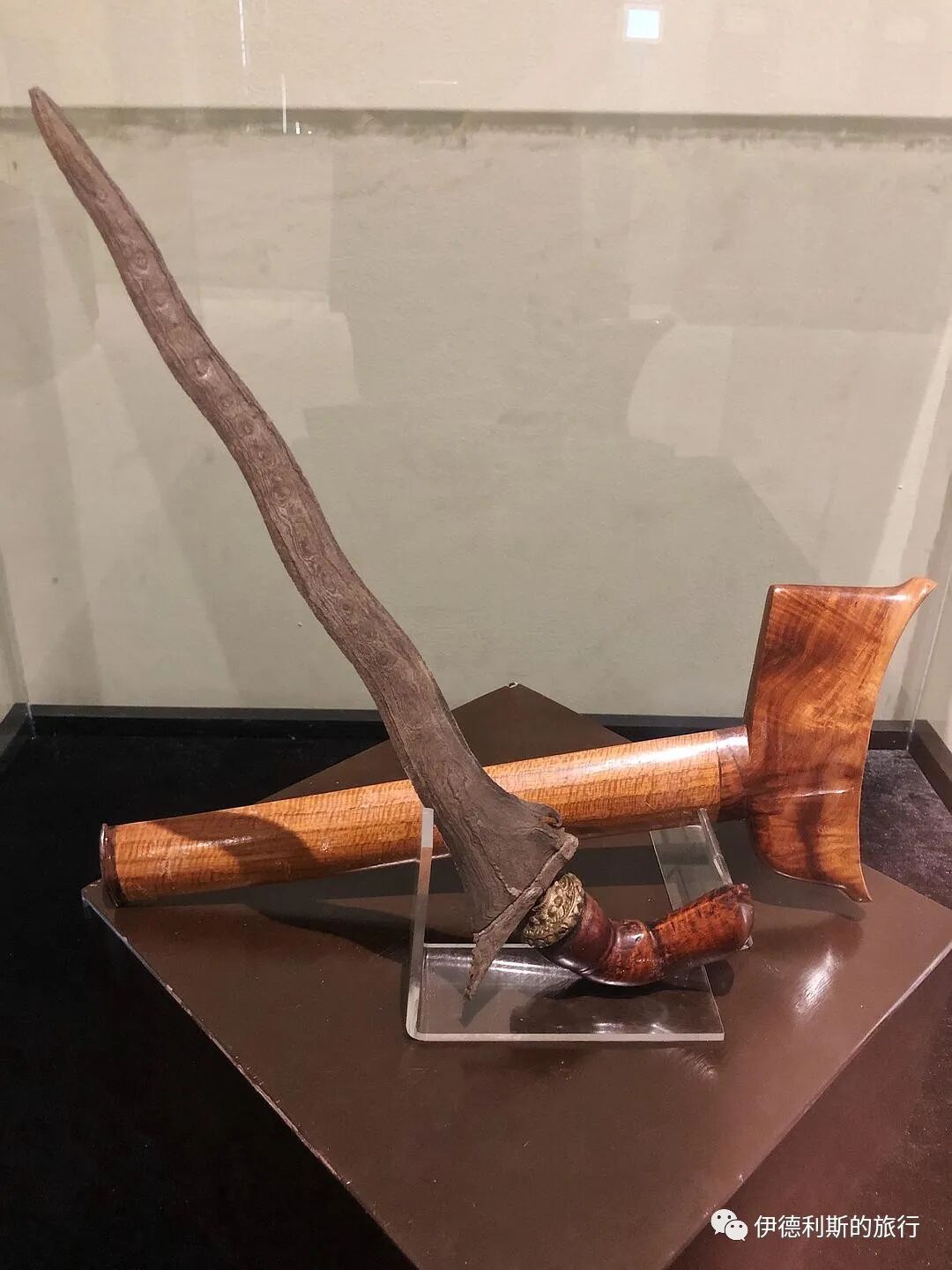
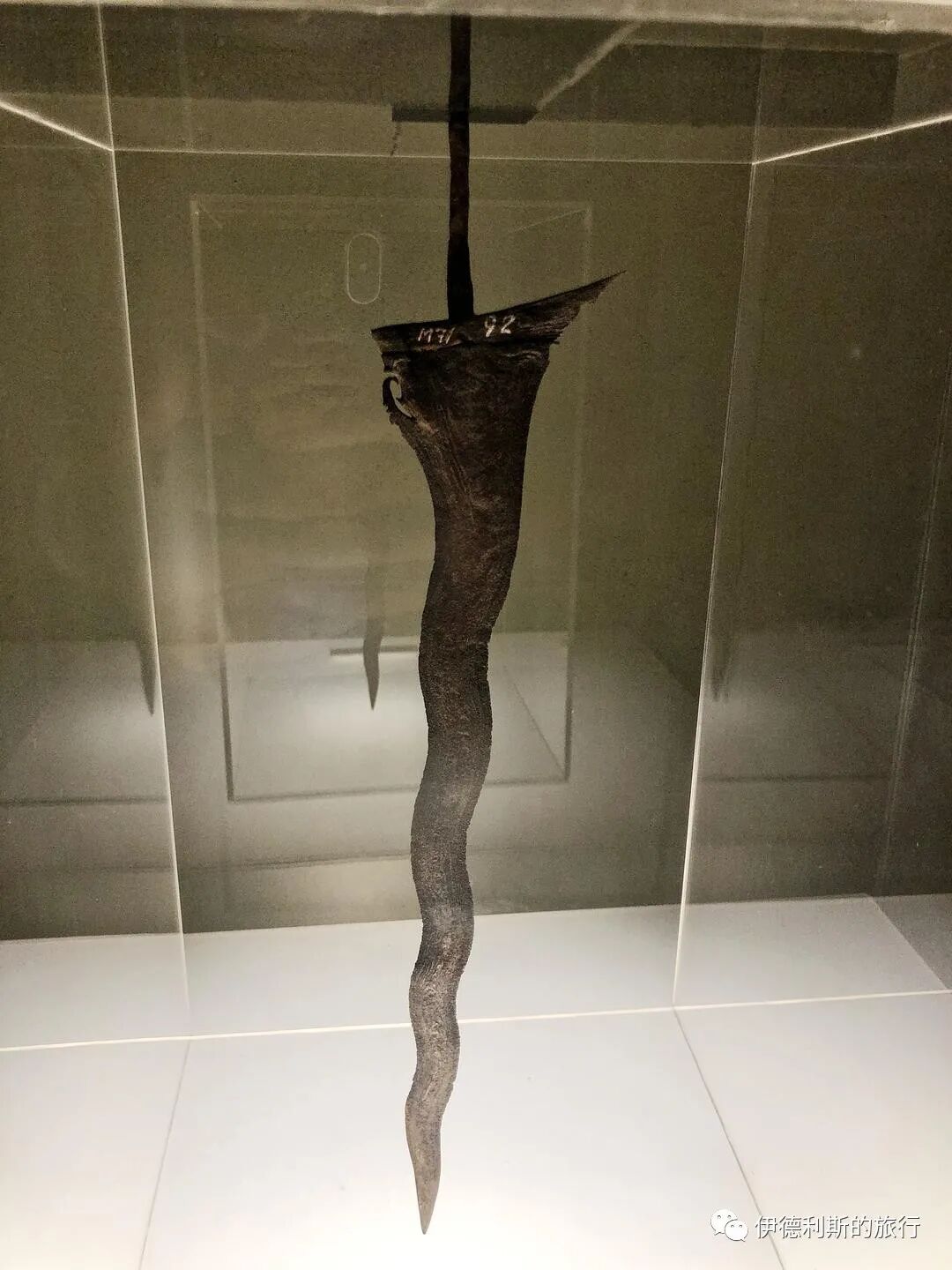
The Malay dagger (keris) is a wavy-bladed short sword popular across the Malay Archipelago. The keris started in Java and spread to the Malay Peninsula in the 15th century as the Majapahit Empire expanded. During wartime, warriors used the keris as a backup weapon alongside their spears, while civilians carried one for self-defense whenever they went out. After firearms arrived in the 16th century, the keris became less practical and was used more as part of ceremonial dress or kept as a family heirloom.
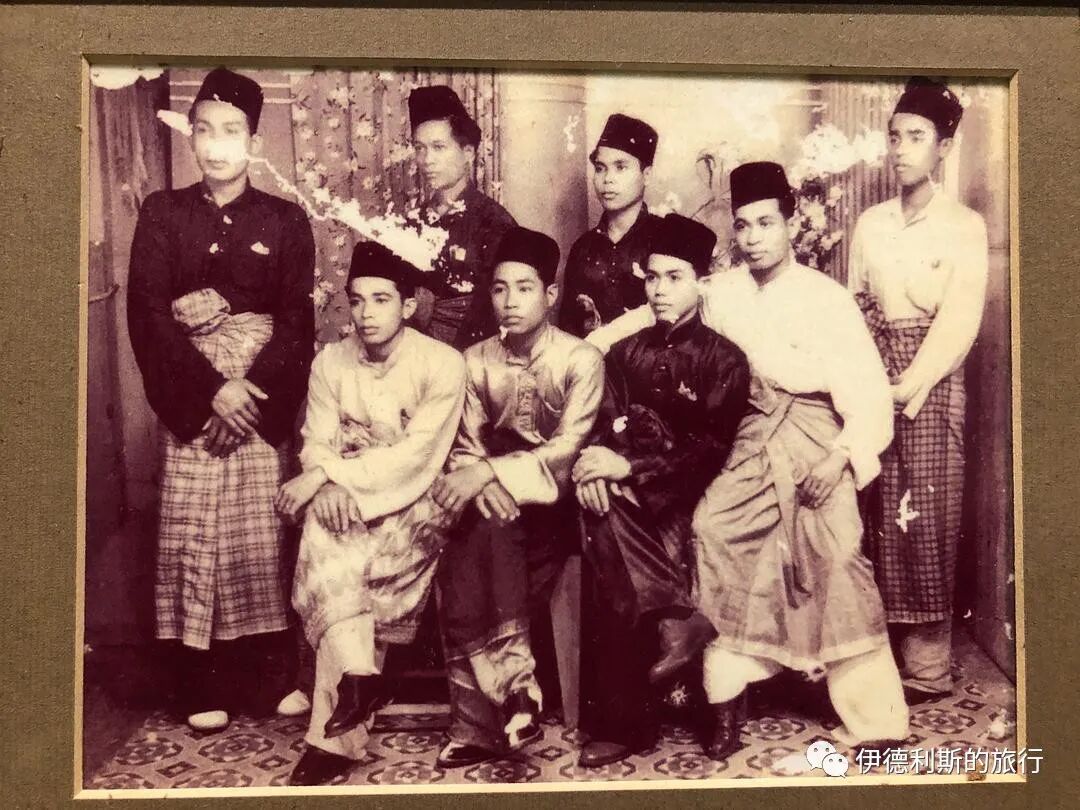
Old photos of Malay people in Penang
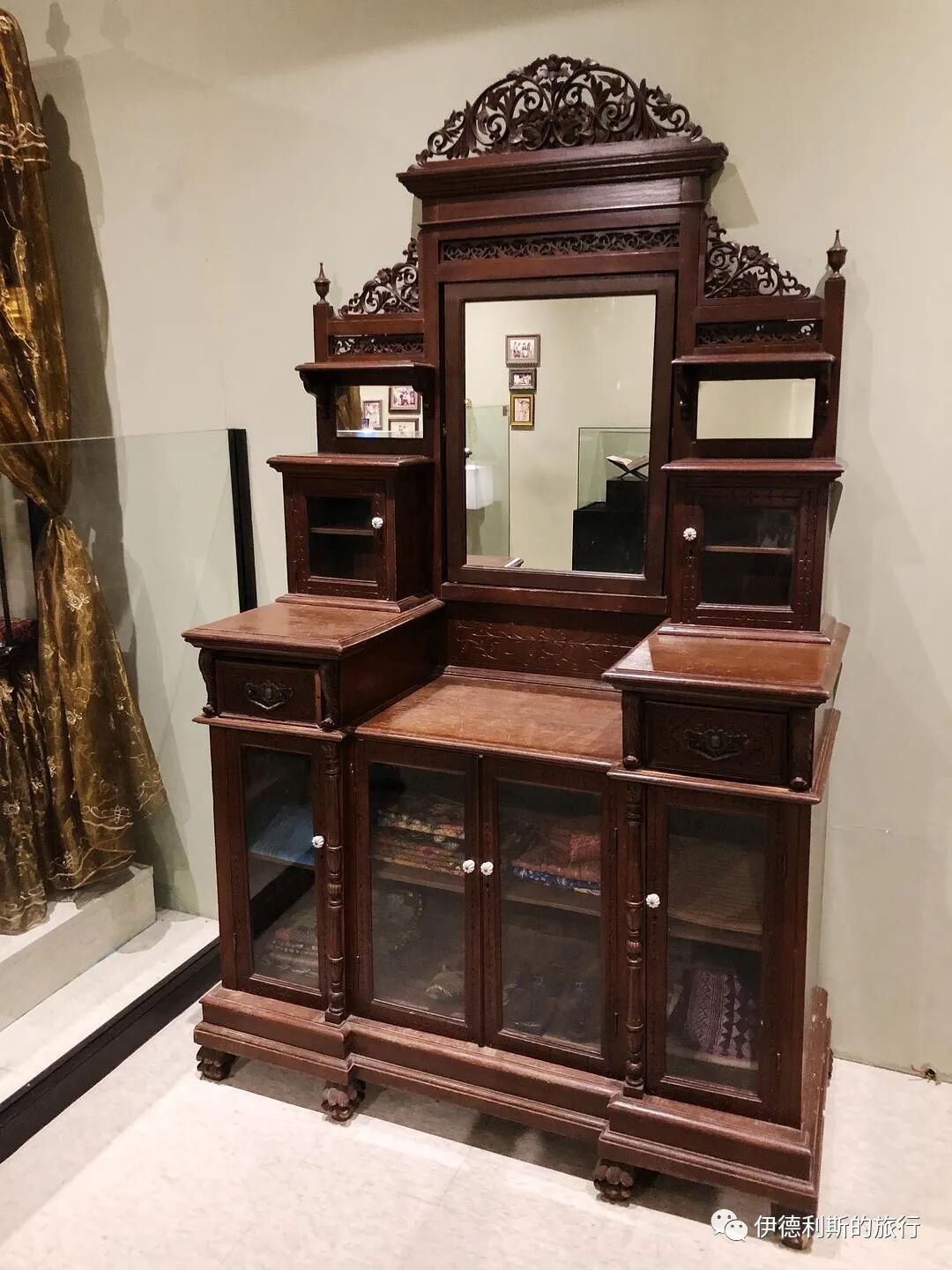
A Penang Malay dressing table
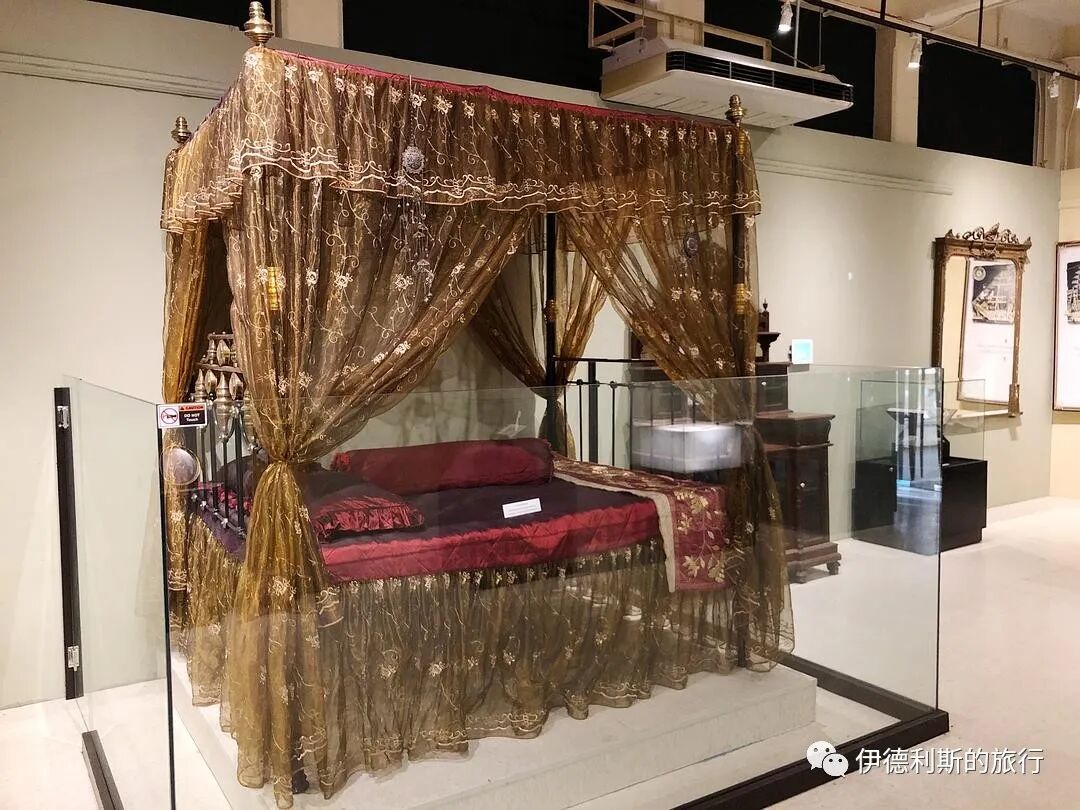
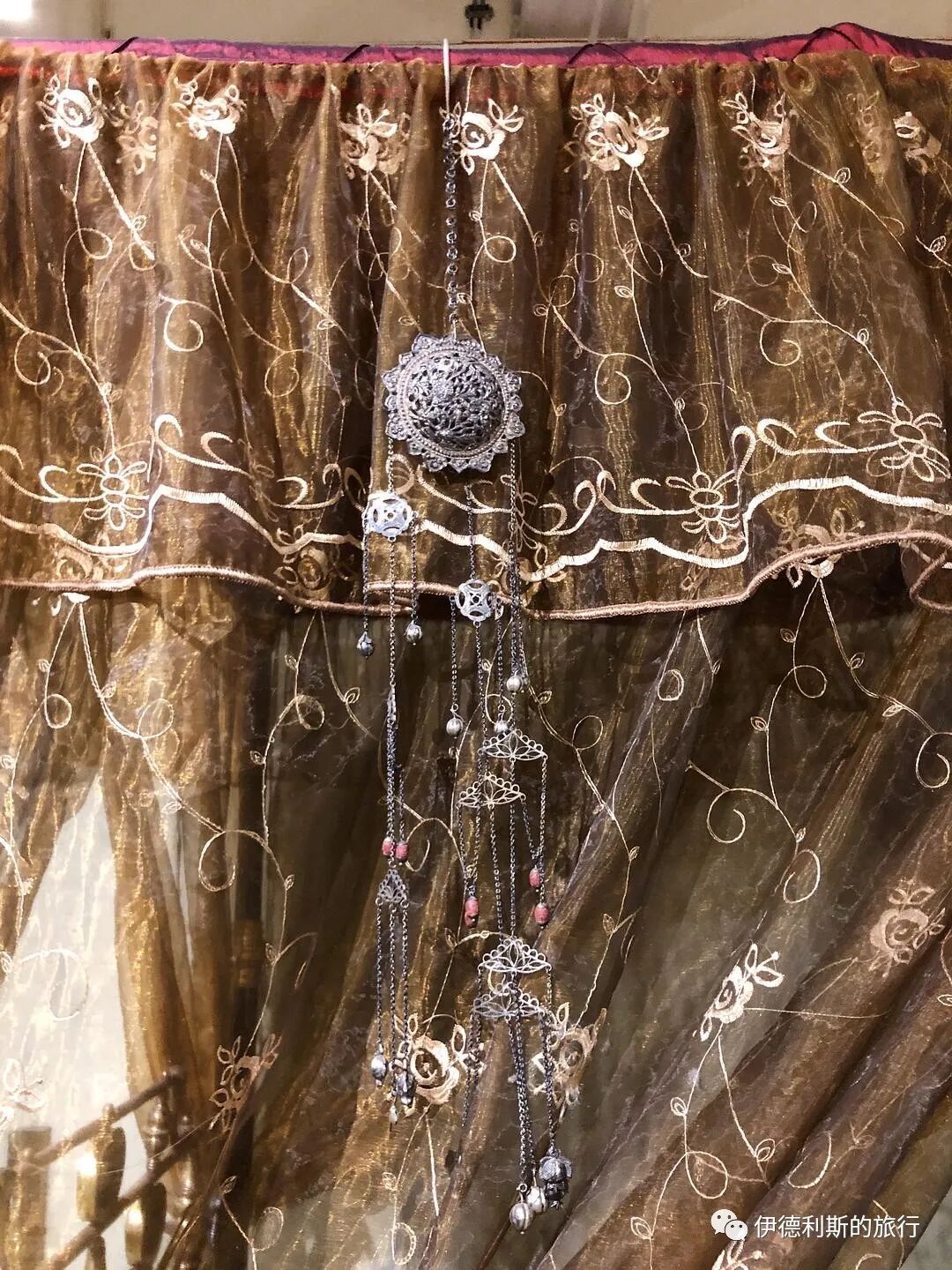
Wedding bed
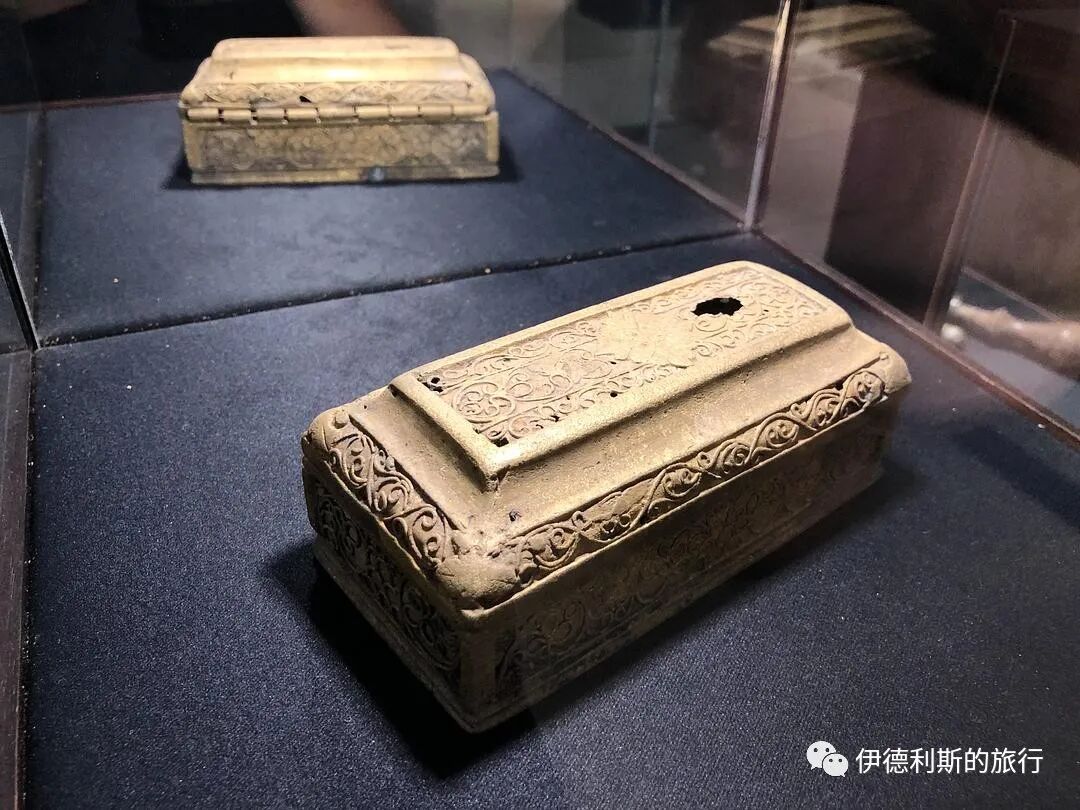
Dressing box
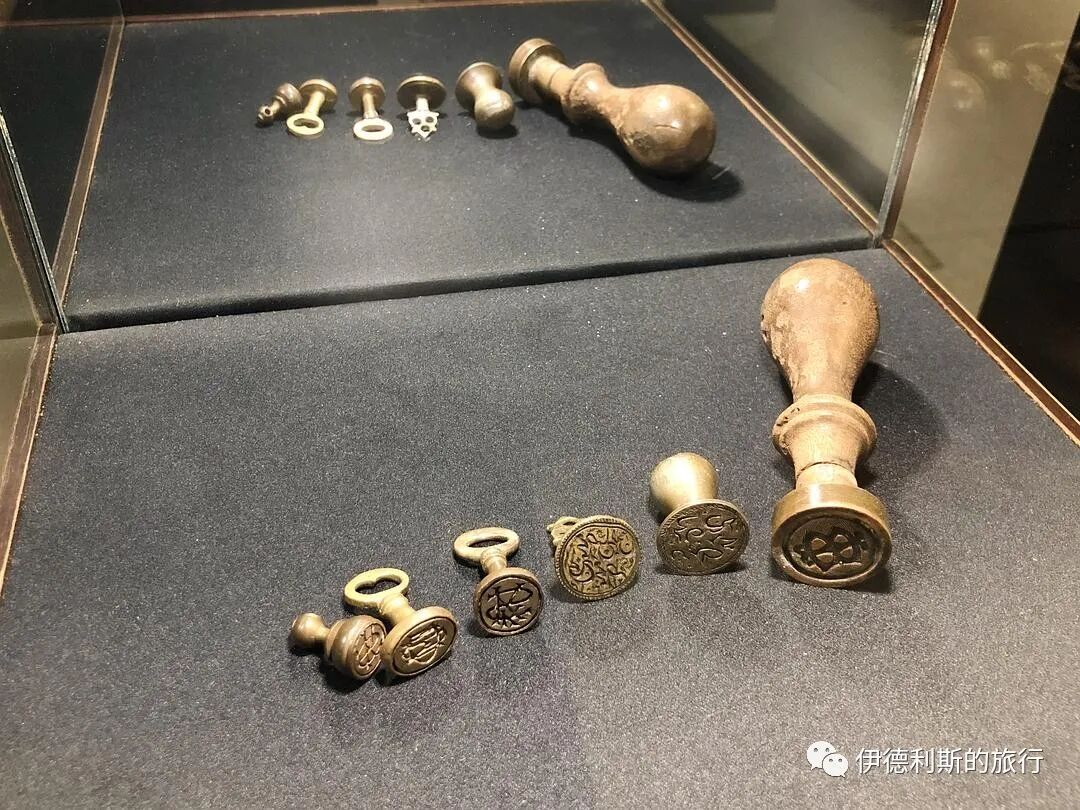
Seal
Summary: Penang — Malay Muslims, Mosques and Local History is presented here as a firsthand travel account in clear English, beginning with this scene: The Malay people (Melayu) are a group of Austronesian-speaking Muslims living in the Malay Archipelago, who emerged during the Malacca Sultanate in the 15th century. The account keeps its focus on Penang Malays, Malay Muslims, Muslim Heritage while preserving the names, places, food, and historical details from the Chinese source.
The Malay people (Melayu) are a group of Austronesian-speaking Muslims living in the Malay Archipelago, who emerged during the Malacca Sultanate in the 15th century. After the British took control of the Malay Peninsula in the 19th century, many Austronesian-speaking Muslim groups like the Acehnese, Banjar, Bugis, and Javanese moved to Malaya to settle down. Because they shared the same faith, similar physical features, and related languages, they gradually identified with Malay culture over two or three generations.
Although the Malay people have developed for hundreds of years, discussions about a Malay national identity only began in the early 20th century, leading to different schools of Malay nationalism. Article 160 of the 1957 Constitution of the Federation of Malaya officially defined a Malay person as someone who professes the Islamic religion, habitually speaks the Malay language, and conforms to Malay customs and culture. Born in the Federation of Malaya or Singapore before Independence Day (August 31, 1957), or having either parent born in the Federation of Malaya or Singapore, or being a resident of the Federation or Singapore on Independence Day, or being a descendant of any of these people. After this, all Malay-speaking Muslim groups within Malaysia were classified as Malay.
Today in Penang, you can still experience the diverse cultural atmosphere of the Malay people. Here you can visit a mosque built by the Acehnese 200 years ago, eat unique food from the Jawi Peranakan community, and listen to the music of the legendary Penang Malay singer P. Ramlee.
Lagenda Cafe
Lagenda Cafe is a themed restaurant honoring the godfather of Malay film music, P. Ramlee (1929-1973), and it plays his classic songs on a loop. P. Ramlee is a legend among the Malay community in Penang, and people still remember him even though he passed away many years ago. P. Ramlee was born Teuku Zakaria. His father was a sailor from the Aceh region in northern Sumatra, Indonesia, who later settled in Penang. P. Ramlee starred in 66 films, directed 35 movies, and wrote 250 songs. He was a key figure during the golden age of Malaysia from the 1950s to the early 1960s and was an icon in the entertainment industries of Singapore, Malaysia, and Indonesia.
Lagenda Cafe specializes in Malay and Indonesian food. We ordered gado-gado (gado-gado) and chicken satay (satay ji rou chuan).
Gado-gado is a salad that started on Java Island. The name gado-gado means "mix," so it includes many different foods. Our version had cucumber, sweet radish, shrimp crackers, vegetable tempura, shrimp tempura, egg, wheat grain strips, fried tofu, fried potato, rice cake, bean sprouts, and long beans. Then you dip it in gado-gado sauce made from fried peanuts, palm sugar, garlic, chili, tamarind, and lime juice.
Chicken satay is also a dish from Java Island. People say Javanese street vendors developed it in the 18th century from Indian kebabs brought by Indian Muslim traders, and it became part of Malay food in Penang in the 19th century. Meat skewers are usually marinated in turmeric, sweet soy sauce, or coconut oil before grilling, then dipped in satay sauce when eaten. Satay sauce is mainly made of roasted peanuts, and usually includes peanut butter, coconut milk, turmeric, soy sauce, galangal, garlic, chili, and various spices.
This drink is called Asam Boi & Guava Tea. It is made with lime, mint, black tea, sour plum, and fresh-pressed guava juice. It is very refreshing and smooth.
Jawi House Cafe Gallery
In Penang and Malaysia, there is a unique group called Jawi Peranakan. This refers to a Malay-speaking Muslim community formed by the intermarriage of Indian Muslim men—also including those of Arab and Persian descent—with Malay Muslim women. Jawi is the Arabic word for Southeast Asian Muslim, and Peranakan is the Malay word for local-born. Before the 1860s, the vast majority of Indian Muslims who came to Penang were men.
When the Jawi Peranakan community married, they did not prioritize the other person's ethnic group, but looked first at their wealth and status. Because of this, after the mid-19th century, the Jawi Peranakan had become the elite class of British Malaya. The Jawi Peranakan community placed great importance on a British-style education, so many of them held positions in the colonial government. At the same time, the Jawi Peranakan community also valued cultural development, and the first Malay-language newspaper was founded by them.
After the 20th century, as the British Empire declined, the Jawi Peranakan community began to blend into the Malay population. Today, the government counts most Jawi Peranakan as Malay. Even so, the Jawi Peranakan community still works hard to pass on their unique culture, which shows in their architecture, clothing, jewelry, and food.
Today, the best place in Penang to experience Jawi Peranakan culture is the Jawi House Cafe Gallery. This building started as a Straits Eclectic-style Chinese shophouse built in the 1860s with Malay-style decorations, and it later served as an Indian Muslim coppersmith shop. The shop is on Armenian Street (Lebuh Armenian), originally called Malay Lane, which was the first area where the Jawi Peranakan community settled. In 2012, the Karim family, who have Punjabi roots and have lived in Penang for six generations, opened Jawi House here to serve the most authentic Jawi Peranakan food.
We ate prawn fritters (cucur udang), lemuni leaf rice (nasi lemuni), and Jawi chicken curry. We also drank Penang nutmeg juice and Arabian sherbet, and finished with sago pudding for dessert.
Cucur udang is made by coating shrimp and green onions in batter, deep-frying them, and dipping them in peanut sauce. In Malay, 'cucur' means a deep-fried fritter and 'udang' means shrimp.
Nasi lemuni is rice cooked with coconut milk, lemongrass, and blue lemuni flowers, served with crispy fried anchovies and spicy sambal sauce. In the past, Lemuni rice (nasi lemuni) was a traditional food for Malay women during their postpartum recovery period, as it was said to help improve blood circulation.
Jawi chicken curry is the Jawi Peranakan version of chicken curry. As a mixed-heritage community, Jawi Peranakan curry is a blend of both Indian and Malay curry styles.
Nutmeg is the English name for the spice, and this drink is a Penang specialty made with honey and lemon, giving it a sweet and sour taste.
The word sherbet comes from the Persian word sharbat, which means a non-alcoholic sugar drink. In medieval Arabia, people loved to add syrup and honey to their sharbat to make it sweeter. They also liked to add ingredients like almonds, lemon, apple, pomegranate, tamarind, dates, sumac, musk, and mint. Spread by Arabs and Persians, the drink sharbat is now popular across West Asia, South Asia, and the Malay Archipelago, especially during Ramadan. The Arabian sherbet at Jawi House is made with rose syrup, mallow nuts, gum arabic, and basil seeds, giving it a very rich flavor.
The signature Jawi Peranakan version of sago pudding is topped with coconut cream and thick palm sugar syrup, then sprinkled with crushed peanuts for a refined taste.
Jawi House displays a collection of old photos of Jawi Peranakan life in Penang, along with paintings of the local Muslim community.
A coconut shop on a street in Penang.
ALI NASI LEMAK coconut milk rice (nasi lemak)
I ate coconut milk rice (nasi lemak) at ALI NASI LEMAK in the Sri Weld Food Court in Penang. Coconut milk rice is fragrant Malay rice cooked with coconut milk and pandan leaves. It is known as Malaysia's national dish and is popular across the Malay Archipelago and southern Thailand.
Traditional coconut milk rice is wrapped in a banana leaf and served with spicy chili paste (sambal), dried anchovies, peanuts, and eggs. Spicy chili paste is a traditional Southeast Asian sauce that started in Indonesia. It is made by stir-frying fermented shrimp paste (belacan) with chili peppers and various seasonings. The sambal sauce at this place was incredibly spicy; it really burned my lips first and then hit my throat.
Then I had some fried jackfruit next door. Small jackfruit (cempedak) is similar to regular jackfruit, but it is sweeter and has a smoother, softer texture.
Acheen Street Mosque: 1808
Acheen Street Mosque (Masjid Melayu Lebuh Acheh) was built by the Acehnese in 1808, and the area around the mosque is the oldest Muslim community in Penang. The Acehnese are a Muslim ethnic group speaking an Austronesian language who live on the northernmost tip of Sumatra. They founded the Aceh Sultanate in 1499 and saw it flourish during the 17th century. In the late 18th and early 19th centuries, the first Chinese Kapitan of Penang, Koh Lay Huan, built a strong relationship with the Aceh Sultanate, which started the pepper trade between Aceh and Penang.
In 1791, an Acehnese pepper merchant and nobleman of Arab descent named Tengku Syed Hussain Al-Aidid moved from Aceh to Penang. He established the first Muslim settlement in Penang near what is now Aceh Street, and after that, many Muslim merchants from the Malay Archipelago, India, and Arabia arrived. In 1808, Tengku Syed Hussain donated money and land to build a mosque. The first imam of the mosque was Sheikh Omar Basheer Al-Khalilee, and his son, Sheikh Zakaria, later took over the position. Sheikh Zakaria became the first Mufti (legal scholar) of Penang in 1888.
After Tengku Hussain died in the mid-19th century, the Muslim community on Acheen Street continued to thrive and became known as the second Jeddah (the port city that serves as the gateway to Mecca). Every year during the Hajj season, pilgrims from all over would pack the Acheen Street community before boarding ships in Penang to travel to Mecca. This busy scene lasted until the Malaysian Hajj Pilgrims Fund Board (Lembaga Tabung Haji) was established in the 1970s.
In 1913, the British colonial government passed the Malay Reservation Act, which officially defined a "Malay" for the first time as anyone who belonged to the Malay race, habitually spoke the Malay language or "any other Malay language," and practiced Islam. This meant that Austronesian-speaking Muslim groups who moved to Malaya from other parts of the Malay Archipelago were counted as 'other Malays' in statistics, a group that included the Acehnese in Penang. First-generation Penang Acehnese usually kept their immigrant identity. However, because the Acehnese and Malays share similar physical features, languages, and the same faith, most Penang Acehnese accepted a 'Malay' identity by the second or third generation and blended into Malay culture.
The courtyard of the Aceh Mosque still holds four early houses from the Aceh Street Muslim community: the home of Syed Mohamad Al-Habshee, the Al-Mashoor Quran school, the home of the first mufti Sheikh Zakaria, and the home of Syed Abdul Hamid AL-Haddad.
There is also the tomb of the mosque's founder, Tengku Syed Hussain Al-Aidid, which features a tombstone in the classic Acehnese style.
The Penang Islamic Museum under renovation.
It was a real shame that the Penang Islamic Museum was closed for renovations during my visit. This building is a Straits-style house built by an Acehnese Muslim pepper merchant in the 1860s.
Malay artifacts in the Penang Museum
The Penang Museum has a gallery that displays artifacts from the Malay people of Penang.
Arabic calligraphy
A Quran in the Nanyang style.
The Malay dagger (keris) is a wavy-bladed short sword popular across the Malay Archipelago. The keris started in Java and spread to the Malay Peninsula in the 15th century as the Majapahit Empire expanded. During wartime, warriors used the keris as a backup weapon alongside their spears, while civilians carried one for self-defense whenever they went out. After firearms arrived in the 16th century, the keris became less practical and was used more as part of ceremonial dress or kept as a family heirloom.
Old photos of Malay people in Penang
A Penang Malay dressing table
Wedding bed
Dressing box
Seal
Halal Travel Guide: Penang — Malay Muslims, Mosques and Local History
Articles • ali2007fr posted the article • 0 comments • 154 views • 2026-05-17 21:58
Reposted from the web
Summary: Penang — Malay Muslims, Mosques and Local History is presented here as a firsthand travel account in clear English, beginning with this scene: The Malay people (Melayu) are a group of Austronesian-speaking Muslims living in the Malay Archipelago, who emerged during the Malacca Sultanate in the 15th century. The account keeps its focus on Penang Malays, Malay Muslims, Muslim Heritage while preserving the names, places, food, and historical details from the Chinese source.
The Malay people (Melayu) are a group of Austronesian-speaking Muslims living in the Malay Archipelago, who emerged during the Malacca Sultanate in the 15th century. After the British took control of the Malay Peninsula in the 19th century, many Austronesian-speaking Muslim groups like the Acehnese, Banjar, Bugis, and Javanese moved to Malaya to settle down. Because they shared the same faith, similar physical features, and related languages, they gradually identified with Malay culture over two or three generations.
Although the Malay people have developed for hundreds of years, discussions about a Malay national identity only began in the early 20th century, leading to different schools of Malay nationalism. Article 160 of the 1957 Constitution of the Federation of Malaya officially defined a Malay person as someone who professes the Islamic religion, habitually speaks the Malay language, and conforms to Malay customs and culture. Born in the Federation of Malaya or Singapore before Independence Day (August 31, 1957), or having either parent born in the Federation of Malaya or Singapore, or being a resident of the Federation or Singapore on Independence Day, or being a descendant of any of these people. After this, all Malay-speaking Muslim groups within Malaysia were classified as Malay.
Today in Penang, you can still experience the diverse cultural atmosphere of the Malay people. Here you can visit a mosque built by the Acehnese 200 years ago, eat unique food from the Jawi Peranakan community, and listen to the music of the legendary Penang Malay singer P. Ramlee.
Lagenda Cafe
Lagenda Cafe is a themed restaurant honoring the godfather of Malay film music, P. Ramlee (1929-1973), and it plays his classic songs on a loop. P. Ramlee is a legend among the Malay community in Penang, and people still remember him even though he passed away many years ago. P. Ramlee was born Teuku Zakaria. His father was a sailor from the Aceh region in northern Sumatra, Indonesia, who later settled in Penang. P. Ramlee starred in 66 films, directed 35 movies, and wrote 250 songs. He was a key figure during the golden age of Malaysia from the 1950s to the early 1960s and was an icon in the entertainment industries of Singapore, Malaysia, and Indonesia.
Lagenda Cafe specializes in Malay and Indonesian food. We ordered gado-gado (gado-gado) and chicken satay (satay ji rou chuan).
Gado-gado is a salad that started on Java Island. The name gado-gado means "mix," so it includes many different foods. Our version had cucumber, sweet radish, shrimp crackers, vegetable tempura, shrimp tempura, egg, wheat grain strips, fried tofu, fried potato, rice cake, bean sprouts, and long beans. Then you dip it in gado-gado sauce made from fried peanuts, palm sugar, garlic, chili, tamarind, and lime juice.
Chicken satay is also a dish from Java Island. People say Javanese street vendors developed it in the 18th century from Indian kebabs brought by Indian Muslim traders, and it became part of Malay food in Penang in the 19th century. Meat skewers are usually marinated in turmeric, sweet soy sauce, or coconut oil before grilling, then dipped in satay sauce when eaten. Satay sauce is mainly made of roasted peanuts, and usually includes peanut butter, coconut milk, turmeric, soy sauce, galangal, garlic, chili, and various spices.
This drink is called Asam Boi & Guava Tea. It is made with lime, mint, black tea, sour plum, and fresh-pressed guava juice. It is very refreshing and smooth.
Jawi House Cafe Gallery
In Penang and Malaysia, there is a unique group called Jawi Peranakan. This refers to a Malay-speaking Muslim community formed by the intermarriage of Indian Muslim men—also including those of Arab and Persian descent—with Malay Muslim women. Jawi is the Arabic word for Southeast Asian Muslim, and Peranakan is the Malay word for local-born. Before the 1860s, the vast majority of Indian Muslims who came to Penang were men.
When the Jawi Peranakan community married, they did not prioritize the other person's ethnic group, but looked first at their wealth and status. Because of this, after the mid-19th century, the Jawi Peranakan had become the elite class of British Malaya. The Jawi Peranakan community placed great importance on a British-style education, so many of them held positions in the colonial government. At the same time, the Jawi Peranakan community also valued cultural development, and the first Malay-language newspaper was founded by them.
After the 20th century, as the British Empire declined, the Jawi Peranakan community began to blend into the Malay population. Today, the government counts most Jawi Peranakan as Malay. Even so, the Jawi Peranakan community still works hard to pass on their unique culture, which shows in their architecture, clothing, jewelry, and food.
Today, the best place in Penang to experience Jawi Peranakan culture is the Jawi House Cafe Gallery. This building started as a Straits Eclectic-style Chinese shophouse built in the 1860s with Malay-style decorations, and it later served as an Indian Muslim coppersmith shop. The shop is on Armenian Street (Lebuh Armenian), originally called Malay Lane, which was the first area where the Jawi Peranakan community settled. In 2012, the Karim family, who have Punjabi roots and have lived in Penang for six generations, opened Jawi House here to serve the most authentic Jawi Peranakan food.
We ate prawn fritters (cucur udang), lemuni leaf rice (nasi lemuni), and Jawi chicken curry. We also drank Penang nutmeg juice and Arabian sherbet, and finished with sago pudding for dessert.
Cucur udang is made by coating shrimp and green onions in batter, deep-frying them, and dipping them in peanut sauce. In Malay, 'cucur' means a deep-fried fritter and 'udang' means shrimp.
Nasi lemuni is rice cooked with coconut milk, lemongrass, and blue lemuni flowers, served with crispy fried anchovies and spicy sambal sauce. In the past, Lemuni rice (nasi lemuni) was a traditional food for Malay women during their postpartum recovery period, as it was said to help improve blood circulation.
Jawi chicken curry is the Jawi Peranakan version of chicken curry. As a mixed-heritage community, Jawi Peranakan curry is a blend of both Indian and Malay curry styles.
Nutmeg is the English name for the spice, and this drink is a Penang specialty made with honey and lemon, giving it a sweet and sour taste.
The word sherbet comes from the Persian word sharbat, which means a non-alcoholic sugar drink. In medieval Arabia, people loved to add syrup and honey to their sharbat to make it sweeter. They also liked to add ingredients like almonds, lemon, apple, pomegranate, tamarind, dates, sumac, musk, and mint. Spread by Arabs and Persians, the drink sharbat is now popular across West Asia, South Asia, and the Malay Archipelago, especially during Ramadan. The Arabian sherbet at Jawi House is made with rose syrup, mallow nuts, gum arabic, and basil seeds, giving it a very rich flavor.
The signature Jawi Peranakan version of sago pudding is topped with coconut cream and thick palm sugar syrup, then sprinkled with crushed peanuts for a refined taste.
Jawi House displays a collection of old photos of Jawi Peranakan life in Penang, along with paintings of the local Muslim community.
A coconut shop on a street in Penang.
ALI NASI LEMAK coconut milk rice (nasi lemak)
I ate coconut milk rice (nasi lemak) at ALI NASI LEMAK in the Sri Weld Food Court in Penang. Coconut milk rice is fragrant Malay rice cooked with coconut milk and pandan leaves. It is known as Malaysia's national dish and is popular across the Malay Archipelago and southern Thailand.
Traditional coconut milk rice is wrapped in a banana leaf and served with spicy chili paste (sambal), dried anchovies, peanuts, and eggs. Spicy chili paste is a traditional Southeast Asian sauce that started in Indonesia. It is made by stir-frying fermented shrimp paste (belacan) with chili peppers and various seasonings. The sambal sauce at this place was incredibly spicy; it really burned my lips first and then hit my throat.
Then I had some fried jackfruit next door. Small jackfruit (cempedak) is similar to regular jackfruit, but it is sweeter and has a smoother, softer texture.
Acheen Street Mosque: 1808
Acheen Street Mosque (Masjid Melayu Lebuh Acheh) was built by the Acehnese in 1808, and the area around the mosque is the oldest Muslim community in Penang. The Acehnese are a Muslim ethnic group speaking an Austronesian language who live on the northernmost tip of Sumatra. They founded the Aceh Sultanate in 1499 and saw it flourish during the 17th century. In the late 18th and early 19th centuries, the first Chinese Kapitan of Penang, Koh Lay Huan, built a strong relationship with the Aceh Sultanate, which started the pepper trade between Aceh and Penang.
In 1791, an Acehnese pepper merchant and nobleman of Arab descent named Tengku Syed Hussain Al-Aidid moved from Aceh to Penang. He established the first Muslim settlement in Penang near what is now Aceh Street, and after that, many Muslim merchants from the Malay Archipelago, India, and Arabia arrived. In 1808, Tengku Syed Hussain donated money and land to build a mosque. The first imam of the mosque was Sheikh Omar Basheer Al-Khalilee, and his son, Sheikh Zakaria, later took over the position. Sheikh Zakaria became the first Mufti (legal scholar) of Penang in 1888.
After Tengku Hussain died in the mid-19th century, the Muslim community on Acheen Street continued to thrive and became known as the second Jeddah (the port city that serves as the gateway to Mecca). Every year during the Hajj season, pilgrims from all over would pack the Acheen Street community before boarding ships in Penang to travel to Mecca. This busy scene lasted until the Malaysian Hajj Pilgrims Fund Board (Lembaga Tabung Haji) was established in the 1970s.
In 1913, the British colonial government passed the Malay Reservation Act, which officially defined a "Malay" for the first time as anyone who belonged to the Malay race, habitually spoke the Malay language or "any other Malay language," and practiced Islam. This meant that Austronesian-speaking Muslim groups who moved to Malaya from other parts of the Malay Archipelago were counted as 'other Malays' in statistics, a group that included the Acehnese in Penang. First-generation Penang Acehnese usually kept their immigrant identity. However, because the Acehnese and Malays share similar physical features, languages, and the same faith, most Penang Acehnese accepted a 'Malay' identity by the second or third generation and blended into Malay culture.
The courtyard of the Aceh Mosque still holds four early houses from the Aceh Street Muslim community: the home of Syed Mohamad Al-Habshee, the Al-Mashoor Quran school, the home of the first mufti Sheikh Zakaria, and the home of Syed Abdul Hamid AL-Haddad.
There is also the tomb of the mosque's founder, Tengku Syed Hussain Al-Aidid, which features a tombstone in the classic Acehnese style.
The Penang Islamic Museum under renovation.
It was a real shame that the Penang Islamic Museum was closed for renovations during my visit. This building is a Straits-style house built by an Acehnese Muslim pepper merchant in the 1860s.
Malay artifacts in the Penang Museum
The Penang Museum has a gallery that displays artifacts from the Malay people of Penang.
Arabic calligraphy
A Quran in the Nanyang style.
The Malay dagger (keris) is a wavy-bladed short sword popular across the Malay Archipelago. The keris started in Java and spread to the Malay Peninsula in the 15th century as the Majapahit Empire expanded. During wartime, warriors used the keris as a backup weapon alongside their spears, while civilians carried one for self-defense whenever they went out. After firearms arrived in the 16th century, the keris became less practical and was used more as part of ceremonial dress or kept as a family heirloom.
Old photos of Malay people in Penang
A Penang Malay dressing table
Wedding bed
Dressing box
Seal view all
Summary: Penang — Malay Muslims, Mosques and Local History is presented here as a firsthand travel account in clear English, beginning with this scene: The Malay people (Melayu) are a group of Austronesian-speaking Muslims living in the Malay Archipelago, who emerged during the Malacca Sultanate in the 15th century. The account keeps its focus on Penang Malays, Malay Muslims, Muslim Heritage while preserving the names, places, food, and historical details from the Chinese source.
The Malay people (Melayu) are a group of Austronesian-speaking Muslims living in the Malay Archipelago, who emerged during the Malacca Sultanate in the 15th century. After the British took control of the Malay Peninsula in the 19th century, many Austronesian-speaking Muslim groups like the Acehnese, Banjar, Bugis, and Javanese moved to Malaya to settle down. Because they shared the same faith, similar physical features, and related languages, they gradually identified with Malay culture over two or three generations.
Although the Malay people have developed for hundreds of years, discussions about a Malay national identity only began in the early 20th century, leading to different schools of Malay nationalism. Article 160 of the 1957 Constitution of the Federation of Malaya officially defined a Malay person as someone who professes the Islamic religion, habitually speaks the Malay language, and conforms to Malay customs and culture. Born in the Federation of Malaya or Singapore before Independence Day (August 31, 1957), or having either parent born in the Federation of Malaya or Singapore, or being a resident of the Federation or Singapore on Independence Day, or being a descendant of any of these people. After this, all Malay-speaking Muslim groups within Malaysia were classified as Malay.
Today in Penang, you can still experience the diverse cultural atmosphere of the Malay people. Here you can visit a mosque built by the Acehnese 200 years ago, eat unique food from the Jawi Peranakan community, and listen to the music of the legendary Penang Malay singer P. Ramlee.
Lagenda Cafe
Lagenda Cafe is a themed restaurant honoring the godfather of Malay film music, P. Ramlee (1929-1973), and it plays his classic songs on a loop. P. Ramlee is a legend among the Malay community in Penang, and people still remember him even though he passed away many years ago. P. Ramlee was born Teuku Zakaria. His father was a sailor from the Aceh region in northern Sumatra, Indonesia, who later settled in Penang. P. Ramlee starred in 66 films, directed 35 movies, and wrote 250 songs. He was a key figure during the golden age of Malaysia from the 1950s to the early 1960s and was an icon in the entertainment industries of Singapore, Malaysia, and Indonesia.
Lagenda Cafe specializes in Malay and Indonesian food. We ordered gado-gado (gado-gado) and chicken satay (satay ji rou chuan).
Gado-gado is a salad that started on Java Island. The name gado-gado means "mix," so it includes many different foods. Our version had cucumber, sweet radish, shrimp crackers, vegetable tempura, shrimp tempura, egg, wheat grain strips, fried tofu, fried potato, rice cake, bean sprouts, and long beans. Then you dip it in gado-gado sauce made from fried peanuts, palm sugar, garlic, chili, tamarind, and lime juice.
Chicken satay is also a dish from Java Island. People say Javanese street vendors developed it in the 18th century from Indian kebabs brought by Indian Muslim traders, and it became part of Malay food in Penang in the 19th century. Meat skewers are usually marinated in turmeric, sweet soy sauce, or coconut oil before grilling, then dipped in satay sauce when eaten. Satay sauce is mainly made of roasted peanuts, and usually includes peanut butter, coconut milk, turmeric, soy sauce, galangal, garlic, chili, and various spices.
This drink is called Asam Boi & Guava Tea. It is made with lime, mint, black tea, sour plum, and fresh-pressed guava juice. It is very refreshing and smooth.
Jawi House Cafe Gallery
In Penang and Malaysia, there is a unique group called Jawi Peranakan. This refers to a Malay-speaking Muslim community formed by the intermarriage of Indian Muslim men—also including those of Arab and Persian descent—with Malay Muslim women. Jawi is the Arabic word for Southeast Asian Muslim, and Peranakan is the Malay word for local-born. Before the 1860s, the vast majority of Indian Muslims who came to Penang were men.
When the Jawi Peranakan community married, they did not prioritize the other person's ethnic group, but looked first at their wealth and status. Because of this, after the mid-19th century, the Jawi Peranakan had become the elite class of British Malaya. The Jawi Peranakan community placed great importance on a British-style education, so many of them held positions in the colonial government. At the same time, the Jawi Peranakan community also valued cultural development, and the first Malay-language newspaper was founded by them.
After the 20th century, as the British Empire declined, the Jawi Peranakan community began to blend into the Malay population. Today, the government counts most Jawi Peranakan as Malay. Even so, the Jawi Peranakan community still works hard to pass on their unique culture, which shows in their architecture, clothing, jewelry, and food.
Today, the best place in Penang to experience Jawi Peranakan culture is the Jawi House Cafe Gallery. This building started as a Straits Eclectic-style Chinese shophouse built in the 1860s with Malay-style decorations, and it later served as an Indian Muslim coppersmith shop. The shop is on Armenian Street (Lebuh Armenian), originally called Malay Lane, which was the first area where the Jawi Peranakan community settled. In 2012, the Karim family, who have Punjabi roots and have lived in Penang for six generations, opened Jawi House here to serve the most authentic Jawi Peranakan food.
We ate prawn fritters (cucur udang), lemuni leaf rice (nasi lemuni), and Jawi chicken curry. We also drank Penang nutmeg juice and Arabian sherbet, and finished with sago pudding for dessert.
Cucur udang is made by coating shrimp and green onions in batter, deep-frying them, and dipping them in peanut sauce. In Malay, 'cucur' means a deep-fried fritter and 'udang' means shrimp.
Nasi lemuni is rice cooked with coconut milk, lemongrass, and blue lemuni flowers, served with crispy fried anchovies and spicy sambal sauce. In the past, Lemuni rice (nasi lemuni) was a traditional food for Malay women during their postpartum recovery period, as it was said to help improve blood circulation.
Jawi chicken curry is the Jawi Peranakan version of chicken curry. As a mixed-heritage community, Jawi Peranakan curry is a blend of both Indian and Malay curry styles.
Nutmeg is the English name for the spice, and this drink is a Penang specialty made with honey and lemon, giving it a sweet and sour taste.
The word sherbet comes from the Persian word sharbat, which means a non-alcoholic sugar drink. In medieval Arabia, people loved to add syrup and honey to their sharbat to make it sweeter. They also liked to add ingredients like almonds, lemon, apple, pomegranate, tamarind, dates, sumac, musk, and mint. Spread by Arabs and Persians, the drink sharbat is now popular across West Asia, South Asia, and the Malay Archipelago, especially during Ramadan. The Arabian sherbet at Jawi House is made with rose syrup, mallow nuts, gum arabic, and basil seeds, giving it a very rich flavor.
The signature Jawi Peranakan version of sago pudding is topped with coconut cream and thick palm sugar syrup, then sprinkled with crushed peanuts for a refined taste.
Jawi House displays a collection of old photos of Jawi Peranakan life in Penang, along with paintings of the local Muslim community.
A coconut shop on a street in Penang.
ALI NASI LEMAK coconut milk rice (nasi lemak)
I ate coconut milk rice (nasi lemak) at ALI NASI LEMAK in the Sri Weld Food Court in Penang. Coconut milk rice is fragrant Malay rice cooked with coconut milk and pandan leaves. It is known as Malaysia's national dish and is popular across the Malay Archipelago and southern Thailand.
Traditional coconut milk rice is wrapped in a banana leaf and served with spicy chili paste (sambal), dried anchovies, peanuts, and eggs. Spicy chili paste is a traditional Southeast Asian sauce that started in Indonesia. It is made by stir-frying fermented shrimp paste (belacan) with chili peppers and various seasonings. The sambal sauce at this place was incredibly spicy; it really burned my lips first and then hit my throat.
Then I had some fried jackfruit next door. Small jackfruit (cempedak) is similar to regular jackfruit, but it is sweeter and has a smoother, softer texture.
Acheen Street Mosque: 1808
Acheen Street Mosque (Masjid Melayu Lebuh Acheh) was built by the Acehnese in 1808, and the area around the mosque is the oldest Muslim community in Penang. The Acehnese are a Muslim ethnic group speaking an Austronesian language who live on the northernmost tip of Sumatra. They founded the Aceh Sultanate in 1499 and saw it flourish during the 17th century. In the late 18th and early 19th centuries, the first Chinese Kapitan of Penang, Koh Lay Huan, built a strong relationship with the Aceh Sultanate, which started the pepper trade between Aceh and Penang.
In 1791, an Acehnese pepper merchant and nobleman of Arab descent named Tengku Syed Hussain Al-Aidid moved from Aceh to Penang. He established the first Muslim settlement in Penang near what is now Aceh Street, and after that, many Muslim merchants from the Malay Archipelago, India, and Arabia arrived. In 1808, Tengku Syed Hussain donated money and land to build a mosque. The first imam of the mosque was Sheikh Omar Basheer Al-Khalilee, and his son, Sheikh Zakaria, later took over the position. Sheikh Zakaria became the first Mufti (legal scholar) of Penang in 1888.
After Tengku Hussain died in the mid-19th century, the Muslim community on Acheen Street continued to thrive and became known as the second Jeddah (the port city that serves as the gateway to Mecca). Every year during the Hajj season, pilgrims from all over would pack the Acheen Street community before boarding ships in Penang to travel to Mecca. This busy scene lasted until the Malaysian Hajj Pilgrims Fund Board (Lembaga Tabung Haji) was established in the 1970s.
In 1913, the British colonial government passed the Malay Reservation Act, which officially defined a "Malay" for the first time as anyone who belonged to the Malay race, habitually spoke the Malay language or "any other Malay language," and practiced Islam. This meant that Austronesian-speaking Muslim groups who moved to Malaya from other parts of the Malay Archipelago were counted as 'other Malays' in statistics, a group that included the Acehnese in Penang. First-generation Penang Acehnese usually kept their immigrant identity. However, because the Acehnese and Malays share similar physical features, languages, and the same faith, most Penang Acehnese accepted a 'Malay' identity by the second or third generation and blended into Malay culture.
The courtyard of the Aceh Mosque still holds four early houses from the Aceh Street Muslim community: the home of Syed Mohamad Al-Habshee, the Al-Mashoor Quran school, the home of the first mufti Sheikh Zakaria, and the home of Syed Abdul Hamid AL-Haddad.
There is also the tomb of the mosque's founder, Tengku Syed Hussain Al-Aidid, which features a tombstone in the classic Acehnese style.
The Penang Islamic Museum under renovation.
It was a real shame that the Penang Islamic Museum was closed for renovations during my visit. This building is a Straits-style house built by an Acehnese Muslim pepper merchant in the 1860s.
Malay artifacts in the Penang Museum
The Penang Museum has a gallery that displays artifacts from the Malay people of Penang.
Arabic calligraphy
A Quran in the Nanyang style.
The Malay dagger (keris) is a wavy-bladed short sword popular across the Malay Archipelago. The keris started in Java and spread to the Malay Peninsula in the 15th century as the Majapahit Empire expanded. During wartime, warriors used the keris as a backup weapon alongside their spears, while civilians carried one for self-defense whenever they went out. After firearms arrived in the 16th century, the keris became less practical and was used more as part of ceremonial dress or kept as a family heirloom.
Old photos of Malay people in Penang
A Penang Malay dressing table
Wedding bed
Dressing box
Seal view all
Reposted from the web
Summary: Penang — Malay Muslims, Mosques and Local History is presented here as a firsthand travel account in clear English, beginning with this scene: The Malay people (Melayu) are a group of Austronesian-speaking Muslims living in the Malay Archipelago, who emerged during the Malacca Sultanate in the 15th century. The account keeps its focus on Penang Malays, Malay Muslims, Muslim Heritage while preserving the names, places, food, and historical details from the Chinese source.
The Malay people (Melayu) are a group of Austronesian-speaking Muslims living in the Malay Archipelago, who emerged during the Malacca Sultanate in the 15th century. After the British took control of the Malay Peninsula in the 19th century, many Austronesian-speaking Muslim groups like the Acehnese, Banjar, Bugis, and Javanese moved to Malaya to settle down. Because they shared the same faith, similar physical features, and related languages, they gradually identified with Malay culture over two or three generations.
Although the Malay people have developed for hundreds of years, discussions about a Malay national identity only began in the early 20th century, leading to different schools of Malay nationalism. Article 160 of the 1957 Constitution of the Federation of Malaya officially defined a Malay person as someone who professes the Islamic religion, habitually speaks the Malay language, and conforms to Malay customs and culture. Born in the Federation of Malaya or Singapore before Independence Day (August 31, 1957), or having either parent born in the Federation of Malaya or Singapore, or being a resident of the Federation or Singapore on Independence Day, or being a descendant of any of these people. After this, all Malay-speaking Muslim groups within Malaysia were classified as Malay.
Today in Penang, you can still experience the diverse cultural atmosphere of the Malay people. Here you can visit a mosque built by the Acehnese 200 years ago, eat unique food from the Jawi Peranakan community, and listen to the music of the legendary Penang Malay singer P. Ramlee.
Lagenda Cafe
Lagenda Cafe is a themed restaurant honoring the godfather of Malay film music, P. Ramlee (1929-1973), and it plays his classic songs on a loop. P. Ramlee is a legend among the Malay community in Penang, and people still remember him even though he passed away many years ago. P. Ramlee was born Teuku Zakaria. His father was a sailor from the Aceh region in northern Sumatra, Indonesia, who later settled in Penang. P. Ramlee starred in 66 films, directed 35 movies, and wrote 250 songs. He was a key figure during the golden age of Malaysia from the 1950s to the early 1960s and was an icon in the entertainment industries of Singapore, Malaysia, and Indonesia.
Lagenda Cafe specializes in Malay and Indonesian food. We ordered gado-gado (gado-gado) and chicken satay (satay ji rou chuan).
Gado-gado is a salad that started on Java Island. The name gado-gado means "mix," so it includes many different foods. Our version had cucumber, sweet radish, shrimp crackers, vegetable tempura, shrimp tempura, egg, wheat grain strips, fried tofu, fried potato, rice cake, bean sprouts, and long beans. Then you dip it in gado-gado sauce made from fried peanuts, palm sugar, garlic, chili, tamarind, and lime juice.
Chicken satay is also a dish from Java Island. People say Javanese street vendors developed it in the 18th century from Indian kebabs brought by Indian Muslim traders, and it became part of Malay food in Penang in the 19th century. Meat skewers are usually marinated in turmeric, sweet soy sauce, or coconut oil before grilling, then dipped in satay sauce when eaten. Satay sauce is mainly made of roasted peanuts, and usually includes peanut butter, coconut milk, turmeric, soy sauce, galangal, garlic, chili, and various spices.
This drink is called Asam Boi & Guava Tea. It is made with lime, mint, black tea, sour plum, and fresh-pressed guava juice. It is very refreshing and smooth.
Jawi House Cafe Gallery
In Penang and Malaysia, there is a unique group called Jawi Peranakan. This refers to a Malay-speaking Muslim community formed by the intermarriage of Indian Muslim men—also including those of Arab and Persian descent—with Malay Muslim women. Jawi is the Arabic word for Southeast Asian Muslim, and Peranakan is the Malay word for local-born. Before the 1860s, the vast majority of Indian Muslims who came to Penang were men.
When the Jawi Peranakan community married, they did not prioritize the other person's ethnic group, but looked first at their wealth and status. Because of this, after the mid-19th century, the Jawi Peranakan had become the elite class of British Malaya. The Jawi Peranakan community placed great importance on a British-style education, so many of them held positions in the colonial government. At the same time, the Jawi Peranakan community also valued cultural development, and the first Malay-language newspaper was founded by them.
After the 20th century, as the British Empire declined, the Jawi Peranakan community began to blend into the Malay population. Today, the government counts most Jawi Peranakan as Malay. Even so, the Jawi Peranakan community still works hard to pass on their unique culture, which shows in their architecture, clothing, jewelry, and food.
Today, the best place in Penang to experience Jawi Peranakan culture is the Jawi House Cafe Gallery. This building started as a Straits Eclectic-style Chinese shophouse built in the 1860s with Malay-style decorations, and it later served as an Indian Muslim coppersmith shop. The shop is on Armenian Street (Lebuh Armenian), originally called Malay Lane, which was the first area where the Jawi Peranakan community settled. In 2012, the Karim family, who have Punjabi roots and have lived in Penang for six generations, opened Jawi House here to serve the most authentic Jawi Peranakan food.
We ate prawn fritters (cucur udang), lemuni leaf rice (nasi lemuni), and Jawi chicken curry. We also drank Penang nutmeg juice and Arabian sherbet, and finished with sago pudding for dessert.
Cucur udang is made by coating shrimp and green onions in batter, deep-frying them, and dipping them in peanut sauce. In Malay, 'cucur' means a deep-fried fritter and 'udang' means shrimp.
Nasi lemuni is rice cooked with coconut milk, lemongrass, and blue lemuni flowers, served with crispy fried anchovies and spicy sambal sauce. In the past, Lemuni rice (nasi lemuni) was a traditional food for Malay women during their postpartum recovery period, as it was said to help improve blood circulation.
Jawi chicken curry is the Jawi Peranakan version of chicken curry. As a mixed-heritage community, Jawi Peranakan curry is a blend of both Indian and Malay curry styles.
Nutmeg is the English name for the spice, and this drink is a Penang specialty made with honey and lemon, giving it a sweet and sour taste.
The word sherbet comes from the Persian word sharbat, which means a non-alcoholic sugar drink. In medieval Arabia, people loved to add syrup and honey to their sharbat to make it sweeter. They also liked to add ingredients like almonds, lemon, apple, pomegranate, tamarind, dates, sumac, musk, and mint. Spread by Arabs and Persians, the drink sharbat is now popular across West Asia, South Asia, and the Malay Archipelago, especially during Ramadan. The Arabian sherbet at Jawi House is made with rose syrup, mallow nuts, gum arabic, and basil seeds, giving it a very rich flavor.
The signature Jawi Peranakan version of sago pudding is topped with coconut cream and thick palm sugar syrup, then sprinkled with crushed peanuts for a refined taste.
Jawi House displays a collection of old photos of Jawi Peranakan life in Penang, along with paintings of the local Muslim community.
A coconut shop on a street in Penang.
ALI NASI LEMAK coconut milk rice (nasi lemak)
I ate coconut milk rice (nasi lemak) at ALI NASI LEMAK in the Sri Weld Food Court in Penang. Coconut milk rice is fragrant Malay rice cooked with coconut milk and pandan leaves. It is known as Malaysia's national dish and is popular across the Malay Archipelago and southern Thailand.
Traditional coconut milk rice is wrapped in a banana leaf and served with spicy chili paste (sambal), dried anchovies, peanuts, and eggs. Spicy chili paste is a traditional Southeast Asian sauce that started in Indonesia. It is made by stir-frying fermented shrimp paste (belacan) with chili peppers and various seasonings. The sambal sauce at this place was incredibly spicy; it really burned my lips first and then hit my throat.
Then I had some fried jackfruit next door. Small jackfruit (cempedak) is similar to regular jackfruit, but it is sweeter and has a smoother, softer texture.
Acheen Street Mosque: 1808
Acheen Street Mosque (Masjid Melayu Lebuh Acheh) was built by the Acehnese in 1808, and the area around the mosque is the oldest Muslim community in Penang. The Acehnese are a Muslim ethnic group speaking an Austronesian language who live on the northernmost tip of Sumatra. They founded the Aceh Sultanate in 1499 and saw it flourish during the 17th century. In the late 18th and early 19th centuries, the first Chinese Kapitan of Penang, Koh Lay Huan, built a strong relationship with the Aceh Sultanate, which started the pepper trade between Aceh and Penang.
In 1791, an Acehnese pepper merchant and nobleman of Arab descent named Tengku Syed Hussain Al-Aidid moved from Aceh to Penang. He established the first Muslim settlement in Penang near what is now Aceh Street, and after that, many Muslim merchants from the Malay Archipelago, India, and Arabia arrived. In 1808, Tengku Syed Hussain donated money and land to build a mosque. The first imam of the mosque was Sheikh Omar Basheer Al-Khalilee, and his son, Sheikh Zakaria, later took over the position. Sheikh Zakaria became the first Mufti (legal scholar) of Penang in 1888.
After Tengku Hussain died in the mid-19th century, the Muslim community on Acheen Street continued to thrive and became known as the second Jeddah (the port city that serves as the gateway to Mecca). Every year during the Hajj season, pilgrims from all over would pack the Acheen Street community before boarding ships in Penang to travel to Mecca. This busy scene lasted until the Malaysian Hajj Pilgrims Fund Board (Lembaga Tabung Haji) was established in the 1970s.
In 1913, the British colonial government passed the Malay Reservation Act, which officially defined a "Malay" for the first time as anyone who belonged to the Malay race, habitually spoke the Malay language or "any other Malay language," and practiced Islam. This meant that Austronesian-speaking Muslim groups who moved to Malaya from other parts of the Malay Archipelago were counted as 'other Malays' in statistics, a group that included the Acehnese in Penang. First-generation Penang Acehnese usually kept their immigrant identity. However, because the Acehnese and Malays share similar physical features, languages, and the same faith, most Penang Acehnese accepted a 'Malay' identity by the second or third generation and blended into Malay culture.
The courtyard of the Aceh Mosque still holds four early houses from the Aceh Street Muslim community: the home of Syed Mohamad Al-Habshee, the Al-Mashoor Quran school, the home of the first mufti Sheikh Zakaria, and the home of Syed Abdul Hamid AL-Haddad.
There is also the tomb of the mosque's founder, Tengku Syed Hussain Al-Aidid, which features a tombstone in the classic Acehnese style.
The Penang Islamic Museum under renovation.
It was a real shame that the Penang Islamic Museum was closed for renovations during my visit. This building is a Straits-style house built by an Acehnese Muslim pepper merchant in the 1860s.
Malay artifacts in the Penang Museum
The Penang Museum has a gallery that displays artifacts from the Malay people of Penang.
Arabic calligraphy
A Quran in the Nanyang style.
The Malay dagger (keris) is a wavy-bladed short sword popular across the Malay Archipelago. The keris started in Java and spread to the Malay Peninsula in the 15th century as the Majapahit Empire expanded. During wartime, warriors used the keris as a backup weapon alongside their spears, while civilians carried one for self-defense whenever they went out. After firearms arrived in the 16th century, the keris became less practical and was used more as part of ceremonial dress or kept as a family heirloom.
Old photos of Malay people in Penang
A Penang Malay dressing table
Wedding bed
Dressing box
Seal
Summary: Penang — Malay Muslims, Mosques and Local History is presented here as a firsthand travel account in clear English, beginning with this scene: The Malay people (Melayu) are a group of Austronesian-speaking Muslims living in the Malay Archipelago, who emerged during the Malacca Sultanate in the 15th century. The account keeps its focus on Penang Malays, Malay Muslims, Muslim Heritage while preserving the names, places, food, and historical details from the Chinese source.
The Malay people (Melayu) are a group of Austronesian-speaking Muslims living in the Malay Archipelago, who emerged during the Malacca Sultanate in the 15th century. After the British took control of the Malay Peninsula in the 19th century, many Austronesian-speaking Muslim groups like the Acehnese, Banjar, Bugis, and Javanese moved to Malaya to settle down. Because they shared the same faith, similar physical features, and related languages, they gradually identified with Malay culture over two or three generations.
Although the Malay people have developed for hundreds of years, discussions about a Malay national identity only began in the early 20th century, leading to different schools of Malay nationalism. Article 160 of the 1957 Constitution of the Federation of Malaya officially defined a Malay person as someone who professes the Islamic religion, habitually speaks the Malay language, and conforms to Malay customs and culture. Born in the Federation of Malaya or Singapore before Independence Day (August 31, 1957), or having either parent born in the Federation of Malaya or Singapore, or being a resident of the Federation or Singapore on Independence Day, or being a descendant of any of these people. After this, all Malay-speaking Muslim groups within Malaysia were classified as Malay.
Today in Penang, you can still experience the diverse cultural atmosphere of the Malay people. Here you can visit a mosque built by the Acehnese 200 years ago, eat unique food from the Jawi Peranakan community, and listen to the music of the legendary Penang Malay singer P. Ramlee.
Lagenda Cafe
Lagenda Cafe is a themed restaurant honoring the godfather of Malay film music, P. Ramlee (1929-1973), and it plays his classic songs on a loop. P. Ramlee is a legend among the Malay community in Penang, and people still remember him even though he passed away many years ago. P. Ramlee was born Teuku Zakaria. His father was a sailor from the Aceh region in northern Sumatra, Indonesia, who later settled in Penang. P. Ramlee starred in 66 films, directed 35 movies, and wrote 250 songs. He was a key figure during the golden age of Malaysia from the 1950s to the early 1960s and was an icon in the entertainment industries of Singapore, Malaysia, and Indonesia.
Lagenda Cafe specializes in Malay and Indonesian food. We ordered gado-gado (gado-gado) and chicken satay (satay ji rou chuan).
Gado-gado is a salad that started on Java Island. The name gado-gado means "mix," so it includes many different foods. Our version had cucumber, sweet radish, shrimp crackers, vegetable tempura, shrimp tempura, egg, wheat grain strips, fried tofu, fried potato, rice cake, bean sprouts, and long beans. Then you dip it in gado-gado sauce made from fried peanuts, palm sugar, garlic, chili, tamarind, and lime juice.
Chicken satay is also a dish from Java Island. People say Javanese street vendors developed it in the 18th century from Indian kebabs brought by Indian Muslim traders, and it became part of Malay food in Penang in the 19th century. Meat skewers are usually marinated in turmeric, sweet soy sauce, or coconut oil before grilling, then dipped in satay sauce when eaten. Satay sauce is mainly made of roasted peanuts, and usually includes peanut butter, coconut milk, turmeric, soy sauce, galangal, garlic, chili, and various spices.
This drink is called Asam Boi & Guava Tea. It is made with lime, mint, black tea, sour plum, and fresh-pressed guava juice. It is very refreshing and smooth.
Jawi House Cafe Gallery
In Penang and Malaysia, there is a unique group called Jawi Peranakan. This refers to a Malay-speaking Muslim community formed by the intermarriage of Indian Muslim men—also including those of Arab and Persian descent—with Malay Muslim women. Jawi is the Arabic word for Southeast Asian Muslim, and Peranakan is the Malay word for local-born. Before the 1860s, the vast majority of Indian Muslims who came to Penang were men.
When the Jawi Peranakan community married, they did not prioritize the other person's ethnic group, but looked first at their wealth and status. Because of this, after the mid-19th century, the Jawi Peranakan had become the elite class of British Malaya. The Jawi Peranakan community placed great importance on a British-style education, so many of them held positions in the colonial government. At the same time, the Jawi Peranakan community also valued cultural development, and the first Malay-language newspaper was founded by them.
After the 20th century, as the British Empire declined, the Jawi Peranakan community began to blend into the Malay population. Today, the government counts most Jawi Peranakan as Malay. Even so, the Jawi Peranakan community still works hard to pass on their unique culture, which shows in their architecture, clothing, jewelry, and food.
Today, the best place in Penang to experience Jawi Peranakan culture is the Jawi House Cafe Gallery. This building started as a Straits Eclectic-style Chinese shophouse built in the 1860s with Malay-style decorations, and it later served as an Indian Muslim coppersmith shop. The shop is on Armenian Street (Lebuh Armenian), originally called Malay Lane, which was the first area where the Jawi Peranakan community settled. In 2012, the Karim family, who have Punjabi roots and have lived in Penang for six generations, opened Jawi House here to serve the most authentic Jawi Peranakan food.
We ate prawn fritters (cucur udang), lemuni leaf rice (nasi lemuni), and Jawi chicken curry. We also drank Penang nutmeg juice and Arabian sherbet, and finished with sago pudding for dessert.
Cucur udang is made by coating shrimp and green onions in batter, deep-frying them, and dipping them in peanut sauce. In Malay, 'cucur' means a deep-fried fritter and 'udang' means shrimp.
Nasi lemuni is rice cooked with coconut milk, lemongrass, and blue lemuni flowers, served with crispy fried anchovies and spicy sambal sauce. In the past, Lemuni rice (nasi lemuni) was a traditional food for Malay women during their postpartum recovery period, as it was said to help improve blood circulation.
Jawi chicken curry is the Jawi Peranakan version of chicken curry. As a mixed-heritage community, Jawi Peranakan curry is a blend of both Indian and Malay curry styles.
Nutmeg is the English name for the spice, and this drink is a Penang specialty made with honey and lemon, giving it a sweet and sour taste.
The word sherbet comes from the Persian word sharbat, which means a non-alcoholic sugar drink. In medieval Arabia, people loved to add syrup and honey to their sharbat to make it sweeter. They also liked to add ingredients like almonds, lemon, apple, pomegranate, tamarind, dates, sumac, musk, and mint. Spread by Arabs and Persians, the drink sharbat is now popular across West Asia, South Asia, and the Malay Archipelago, especially during Ramadan. The Arabian sherbet at Jawi House is made with rose syrup, mallow nuts, gum arabic, and basil seeds, giving it a very rich flavor.
The signature Jawi Peranakan version of sago pudding is topped with coconut cream and thick palm sugar syrup, then sprinkled with crushed peanuts for a refined taste.
Jawi House displays a collection of old photos of Jawi Peranakan life in Penang, along with paintings of the local Muslim community.
A coconut shop on a street in Penang.
ALI NASI LEMAK coconut milk rice (nasi lemak)
I ate coconut milk rice (nasi lemak) at ALI NASI LEMAK in the Sri Weld Food Court in Penang. Coconut milk rice is fragrant Malay rice cooked with coconut milk and pandan leaves. It is known as Malaysia's national dish and is popular across the Malay Archipelago and southern Thailand.
Traditional coconut milk rice is wrapped in a banana leaf and served with spicy chili paste (sambal), dried anchovies, peanuts, and eggs. Spicy chili paste is a traditional Southeast Asian sauce that started in Indonesia. It is made by stir-frying fermented shrimp paste (belacan) with chili peppers and various seasonings. The sambal sauce at this place was incredibly spicy; it really burned my lips first and then hit my throat.
Then I had some fried jackfruit next door. Small jackfruit (cempedak) is similar to regular jackfruit, but it is sweeter and has a smoother, softer texture.
Acheen Street Mosque: 1808
Acheen Street Mosque (Masjid Melayu Lebuh Acheh) was built by the Acehnese in 1808, and the area around the mosque is the oldest Muslim community in Penang. The Acehnese are a Muslim ethnic group speaking an Austronesian language who live on the northernmost tip of Sumatra. They founded the Aceh Sultanate in 1499 and saw it flourish during the 17th century. In the late 18th and early 19th centuries, the first Chinese Kapitan of Penang, Koh Lay Huan, built a strong relationship with the Aceh Sultanate, which started the pepper trade between Aceh and Penang.
In 1791, an Acehnese pepper merchant and nobleman of Arab descent named Tengku Syed Hussain Al-Aidid moved from Aceh to Penang. He established the first Muslim settlement in Penang near what is now Aceh Street, and after that, many Muslim merchants from the Malay Archipelago, India, and Arabia arrived. In 1808, Tengku Syed Hussain donated money and land to build a mosque. The first imam of the mosque was Sheikh Omar Basheer Al-Khalilee, and his son, Sheikh Zakaria, later took over the position. Sheikh Zakaria became the first Mufti (legal scholar) of Penang in 1888.
After Tengku Hussain died in the mid-19th century, the Muslim community on Acheen Street continued to thrive and became known as the second Jeddah (the port city that serves as the gateway to Mecca). Every year during the Hajj season, pilgrims from all over would pack the Acheen Street community before boarding ships in Penang to travel to Mecca. This busy scene lasted until the Malaysian Hajj Pilgrims Fund Board (Lembaga Tabung Haji) was established in the 1970s.
In 1913, the British colonial government passed the Malay Reservation Act, which officially defined a "Malay" for the first time as anyone who belonged to the Malay race, habitually spoke the Malay language or "any other Malay language," and practiced Islam. This meant that Austronesian-speaking Muslim groups who moved to Malaya from other parts of the Malay Archipelago were counted as 'other Malays' in statistics, a group that included the Acehnese in Penang. First-generation Penang Acehnese usually kept their immigrant identity. However, because the Acehnese and Malays share similar physical features, languages, and the same faith, most Penang Acehnese accepted a 'Malay' identity by the second or third generation and blended into Malay culture.
The courtyard of the Aceh Mosque still holds four early houses from the Aceh Street Muslim community: the home of Syed Mohamad Al-Habshee, the Al-Mashoor Quran school, the home of the first mufti Sheikh Zakaria, and the home of Syed Abdul Hamid AL-Haddad.
There is also the tomb of the mosque's founder, Tengku Syed Hussain Al-Aidid, which features a tombstone in the classic Acehnese style.
The Penang Islamic Museum under renovation.
It was a real shame that the Penang Islamic Museum was closed for renovations during my visit. This building is a Straits-style house built by an Acehnese Muslim pepper merchant in the 1860s.
Malay artifacts in the Penang Museum
The Penang Museum has a gallery that displays artifacts from the Malay people of Penang.
Arabic calligraphy
A Quran in the Nanyang style.
The Malay dagger (keris) is a wavy-bladed short sword popular across the Malay Archipelago. The keris started in Java and spread to the Malay Peninsula in the 15th century as the Majapahit Empire expanded. During wartime, warriors used the keris as a backup weapon alongside their spears, while civilians carried one for self-defense whenever they went out. After firearms arrived in the 16th century, the keris became less practical and was used more as part of ceremonial dress or kept as a family heirloom.
Old photos of Malay people in Penang
A Penang Malay dressing table
Wedding bed
Dressing box
Seal
Halal Travel Guide: Penang — Malay Muslims, Mosques and Local History
Articles • ali2007fr posted the article • 0 comments • 151 views • 2026-05-17 22:15
Reposted from the web
Summary: Penang — Malay Muslims, Mosques and Local History is presented here as a firsthand travel account in clear English, beginning with this scene: The Malay people (Melayu) are a group of Austronesian-speaking Muslims living in the Malay Archipelago, who emerged during the Malacca Sultanate in the 15th century. The account keeps its focus on Penang Malays, Malay Muslims, Muslim Heritage while preserving the names, places, food, and historical details from the Chinese source.
The Malay people (Melayu) are a group of Austronesian-speaking Muslims living in the Malay Archipelago, who emerged during the Malacca Sultanate in the 15th century. After the British took control of the Malay Peninsula in the 19th century, many Austronesian-speaking Muslim groups like the Acehnese, Banjar, Bugis, and Javanese moved to Malaya to settle down. Because they shared the same faith, similar physical features, and related languages, they gradually identified with Malay culture over two or three generations.
Although the Malay people have developed for hundreds of years, discussions about a Malay national identity only began in the early 20th century, leading to different schools of Malay nationalism. Article 160 of the 1957 Constitution of the Federation of Malaya officially defined a Malay person as someone who professes the Islamic religion, habitually speaks the Malay language, and conforms to Malay customs and culture. Born in the Federation of Malaya or Singapore before Independence Day (August 31, 1957), or having either parent born in the Federation of Malaya or Singapore, or being a resident of the Federation or Singapore on Independence Day, or being a descendant of any of these people. After this, all Malay-speaking Muslim groups within Malaysia were classified as Malay.
Today in Penang, you can still experience the diverse cultural atmosphere of the Malay people. Here you can visit a mosque built by the Acehnese 200 years ago, eat unique food from the Jawi Peranakan community, and listen to the music of the legendary Penang Malay singer P. Ramlee.
Lagenda Cafe
Lagenda Cafe is a themed restaurant honoring the godfather of Malay film music, P. Ramlee (1929-1973), and it plays his classic songs on a loop. P. Ramlee is a legend among the Malay community in Penang, and people still remember him even though he passed away many years ago. P. Ramlee was born Teuku Zakaria. His father was a sailor from the Aceh region in northern Sumatra, Indonesia, who later settled in Penang. P. Ramlee starred in 66 films, directed 35 movies, and wrote 250 songs. He was a key figure during the golden age of Malaysia from the 1950s to the early 1960s and was an icon in the entertainment industries of Singapore, Malaysia, and Indonesia.
Lagenda Cafe specializes in Malay and Indonesian food. We ordered gado-gado (gado-gado) and chicken satay (satay ji rou chuan).
Gado-gado is a salad that started on Java Island. The name gado-gado means "mix," so it includes many different foods. Our version had cucumber, sweet radish, shrimp crackers, vegetable tempura, shrimp tempura, egg, wheat grain strips, fried tofu, fried potato, rice cake, bean sprouts, and long beans. Then you dip it in gado-gado sauce made from fried peanuts, palm sugar, garlic, chili, tamarind, and lime juice.
Chicken satay is also a dish from Java Island. People say Javanese street vendors developed it in the 18th century from Indian kebabs brought by Indian Muslim traders, and it became part of Malay food in Penang in the 19th century. Meat skewers are usually marinated in turmeric, sweet soy sauce, or coconut oil before grilling, then dipped in satay sauce when eaten. Satay sauce is mainly made of roasted peanuts, and usually includes peanut butter, coconut milk, turmeric, soy sauce, galangal, garlic, chili, and various spices.
This drink is called Asam Boi & Guava Tea. It is made with lime, mint, black tea, sour plum, and fresh-pressed guava juice. It is very refreshing and smooth.
Jawi House Cafe Gallery
In Penang and Malaysia, there is a unique group called Jawi Peranakan. This refers to a Malay-speaking Muslim community formed by the intermarriage of Indian Muslim men—also including those of Arab and Persian descent—with Malay Muslim women. Jawi is the Arabic word for Southeast Asian Muslim, and Peranakan is the Malay word for local-born. Before the 1860s, the vast majority of Indian Muslims who came to Penang were men.
When the Jawi Peranakan community married, they did not prioritize the other person's ethnic group, but looked first at their wealth and status. Because of this, after the mid-19th century, the Jawi Peranakan had become the elite class of British Malaya. The Jawi Peranakan community placed great importance on a British-style education, so many of them held positions in the colonial government. At the same time, the Jawi Peranakan community also valued cultural development, and the first Malay-language newspaper was founded by them.
After the 20th century, as the British Empire declined, the Jawi Peranakan community began to blend into the Malay population. Today, the government counts most Jawi Peranakan as Malay. Even so, the Jawi Peranakan community still works hard to pass on their unique culture, which shows in their architecture, clothing, jewelry, and food.
Today, the best place in Penang to experience Jawi Peranakan culture is the Jawi House Cafe Gallery. This building started as a Straits Eclectic-style Chinese shophouse built in the 1860s with Malay-style decorations, and it later served as an Indian Muslim coppersmith shop. The shop is on Armenian Street (Lebuh Armenian), originally called Malay Lane, which was the first area where the Jawi Peranakan community settled. In 2012, the Karim family, who have Punjabi roots and have lived in Penang for six generations, opened Jawi House here to serve the most authentic Jawi Peranakan food.
We ate prawn fritters (cucur udang), lemuni leaf rice (nasi lemuni), and Jawi chicken curry. We also drank Penang nutmeg juice and Arabian sherbet, and finished with sago pudding for dessert.
Cucur udang is made by coating shrimp and green onions in batter, deep-frying them, and dipping them in peanut sauce. In Malay, 'cucur' means a deep-fried fritter and 'udang' means shrimp.
Nasi lemuni is rice cooked with coconut milk, lemongrass, and blue lemuni flowers, served with crispy fried anchovies and spicy sambal sauce. In the past, Lemuni rice (nasi lemuni) was a traditional food for Malay women during their postpartum recovery period, as it was said to help improve blood circulation.
Jawi chicken curry is the Jawi Peranakan version of chicken curry. As a mixed-heritage community, Jawi Peranakan curry is a blend of both Indian and Malay curry styles.
Nutmeg is the English name for the spice, and this drink is a Penang specialty made with honey and lemon, giving it a sweet and sour taste.
The word sherbet comes from the Persian word sharbat, which means a non-alcoholic sugar drink. In medieval Arabia, people loved to add syrup and honey to their sharbat to make it sweeter. They also liked to add ingredients like almonds, lemon, apple, pomegranate, tamarind, dates, sumac, musk, and mint. Spread by Arabs and Persians, the drink sharbat is now popular across West Asia, South Asia, and the Malay Archipelago, especially during Ramadan. The Arabian sherbet at Jawi House is made with rose syrup, mallow nuts, gum arabic, and basil seeds, giving it a very rich flavor.
The signature Jawi Peranakan version of sago pudding is topped with coconut cream and thick palm sugar syrup, then sprinkled with crushed peanuts for a refined taste.
Jawi House displays a collection of old photos of Jawi Peranakan life in Penang, along with paintings of the local Muslim community.
A coconut shop on a street in Penang.
ALI NASI LEMAK coconut milk rice (nasi lemak)
I ate coconut milk rice (nasi lemak) at ALI NASI LEMAK in the Sri Weld Food Court in Penang. Coconut milk rice is fragrant Malay rice cooked with coconut milk and pandan leaves. It is known as Malaysia's national dish and is popular across the Malay Archipelago and southern Thailand.
Traditional coconut milk rice is wrapped in a banana leaf and served with spicy chili paste (sambal), dried anchovies, peanuts, and eggs. Spicy chili paste is a traditional Southeast Asian sauce that started in Indonesia. It is made by stir-frying fermented shrimp paste (belacan) with chili peppers and various seasonings. The sambal sauce at this place was incredibly spicy; it really burned my lips first and then hit my throat.
Then I had some fried jackfruit next door. Small jackfruit (cempedak) is similar to regular jackfruit, but it is sweeter and has a smoother, softer texture.
Acheen Street Mosque: 1808
Acheen Street Mosque (Masjid Melayu Lebuh Acheh) was built by the Acehnese in 1808, and the area around the mosque is the oldest Muslim community in Penang. The Acehnese are a Muslim ethnic group speaking an Austronesian language who live on the northernmost tip of Sumatra. They founded the Aceh Sultanate in 1499 and saw it flourish during the 17th century. In the late 18th and early 19th centuries, the first Chinese Kapitan of Penang, Koh Lay Huan, built a strong relationship with the Aceh Sultanate, which started the pepper trade between Aceh and Penang.
In 1791, an Acehnese pepper merchant and nobleman of Arab descent named Tengku Syed Hussain Al-Aidid moved from Aceh to Penang. He established the first Muslim settlement in Penang near what is now Aceh Street, and after that, many Muslim merchants from the Malay Archipelago, India, and Arabia arrived. In 1808, Tengku Syed Hussain donated money and land to build a mosque. The first imam of the mosque was Sheikh Omar Basheer Al-Khalilee, and his son, Sheikh Zakaria, later took over the position. Sheikh Zakaria became the first Mufti (legal scholar) of Penang in 1888.
After Tengku Hussain died in the mid-19th century, the Muslim community on Acheen Street continued to thrive and became known as the second Jeddah (the port city that serves as the gateway to Mecca). Every year during the Hajj season, pilgrims from all over would pack the Acheen Street community before boarding ships in Penang to travel to Mecca. This busy scene lasted until the Malaysian Hajj Pilgrims Fund Board (Lembaga Tabung Haji) was established in the 1970s.
In 1913, the British colonial government passed the Malay Reservation Act, which officially defined a "Malay" for the first time as anyone who belonged to the Malay race, habitually spoke the Malay language or "any other Malay language," and practiced Islam. This meant that Austronesian-speaking Muslim groups who moved to Malaya from other parts of the Malay Archipelago were counted as 'other Malays' in statistics, a group that included the Acehnese in Penang. First-generation Penang Acehnese usually kept their immigrant identity. However, because the Acehnese and Malays share similar physical features, languages, and the same faith, most Penang Acehnese accepted a 'Malay' identity by the second or third generation and blended into Malay culture.
The courtyard of the Aceh Mosque still holds four early houses from the Aceh Street Muslim community: the home of Syed Mohamad Al-Habshee, the Al-Mashoor Quran school, the home of the first mufti Sheikh Zakaria, and the home of Syed Abdul Hamid AL-Haddad.
There is also the tomb of the mosque's founder, Tengku Syed Hussain Al-Aidid, which features a tombstone in the classic Acehnese style.
The Penang Islamic Museum under renovation.
It was a real shame that the Penang Islamic Museum was closed for renovations during my visit. This building is a Straits-style house built by an Acehnese Muslim pepper merchant in the 1860s.
Malay artifacts in the Penang Museum
The Penang Museum has a gallery that displays artifacts from the Malay people of Penang.
Arabic calligraphy
A Quran in the Nanyang style.
The Malay dagger (keris) is a wavy-bladed short sword popular across the Malay Archipelago. The keris started in Java and spread to the Malay Peninsula in the 15th century as the Majapahit Empire expanded. During wartime, warriors used the keris as a backup weapon alongside their spears, while civilians carried one for self-defense whenever they went out. After firearms arrived in the 16th century, the keris became less practical and was used more as part of ceremonial dress or kept as a family heirloom.
Old photos of Malay people in Penang
A Penang Malay dressing table
Wedding bed
Dressing box
Seal view all
Summary: Penang — Malay Muslims, Mosques and Local History is presented here as a firsthand travel account in clear English, beginning with this scene: The Malay people (Melayu) are a group of Austronesian-speaking Muslims living in the Malay Archipelago, who emerged during the Malacca Sultanate in the 15th century. The account keeps its focus on Penang Malays, Malay Muslims, Muslim Heritage while preserving the names, places, food, and historical details from the Chinese source.
The Malay people (Melayu) are a group of Austronesian-speaking Muslims living in the Malay Archipelago, who emerged during the Malacca Sultanate in the 15th century. After the British took control of the Malay Peninsula in the 19th century, many Austronesian-speaking Muslim groups like the Acehnese, Banjar, Bugis, and Javanese moved to Malaya to settle down. Because they shared the same faith, similar physical features, and related languages, they gradually identified with Malay culture over two or three generations.
Although the Malay people have developed for hundreds of years, discussions about a Malay national identity only began in the early 20th century, leading to different schools of Malay nationalism. Article 160 of the 1957 Constitution of the Federation of Malaya officially defined a Malay person as someone who professes the Islamic religion, habitually speaks the Malay language, and conforms to Malay customs and culture. Born in the Federation of Malaya or Singapore before Independence Day (August 31, 1957), or having either parent born in the Federation of Malaya or Singapore, or being a resident of the Federation or Singapore on Independence Day, or being a descendant of any of these people. After this, all Malay-speaking Muslim groups within Malaysia were classified as Malay.
Today in Penang, you can still experience the diverse cultural atmosphere of the Malay people. Here you can visit a mosque built by the Acehnese 200 years ago, eat unique food from the Jawi Peranakan community, and listen to the music of the legendary Penang Malay singer P. Ramlee.
Lagenda Cafe
Lagenda Cafe is a themed restaurant honoring the godfather of Malay film music, P. Ramlee (1929-1973), and it plays his classic songs on a loop. P. Ramlee is a legend among the Malay community in Penang, and people still remember him even though he passed away many years ago. P. Ramlee was born Teuku Zakaria. His father was a sailor from the Aceh region in northern Sumatra, Indonesia, who later settled in Penang. P. Ramlee starred in 66 films, directed 35 movies, and wrote 250 songs. He was a key figure during the golden age of Malaysia from the 1950s to the early 1960s and was an icon in the entertainment industries of Singapore, Malaysia, and Indonesia.
Lagenda Cafe specializes in Malay and Indonesian food. We ordered gado-gado (gado-gado) and chicken satay (satay ji rou chuan).
Gado-gado is a salad that started on Java Island. The name gado-gado means "mix," so it includes many different foods. Our version had cucumber, sweet radish, shrimp crackers, vegetable tempura, shrimp tempura, egg, wheat grain strips, fried tofu, fried potato, rice cake, bean sprouts, and long beans. Then you dip it in gado-gado sauce made from fried peanuts, palm sugar, garlic, chili, tamarind, and lime juice.
Chicken satay is also a dish from Java Island. People say Javanese street vendors developed it in the 18th century from Indian kebabs brought by Indian Muslim traders, and it became part of Malay food in Penang in the 19th century. Meat skewers are usually marinated in turmeric, sweet soy sauce, or coconut oil before grilling, then dipped in satay sauce when eaten. Satay sauce is mainly made of roasted peanuts, and usually includes peanut butter, coconut milk, turmeric, soy sauce, galangal, garlic, chili, and various spices.
This drink is called Asam Boi & Guava Tea. It is made with lime, mint, black tea, sour plum, and fresh-pressed guava juice. It is very refreshing and smooth.
Jawi House Cafe Gallery
In Penang and Malaysia, there is a unique group called Jawi Peranakan. This refers to a Malay-speaking Muslim community formed by the intermarriage of Indian Muslim men—also including those of Arab and Persian descent—with Malay Muslim women. Jawi is the Arabic word for Southeast Asian Muslim, and Peranakan is the Malay word for local-born. Before the 1860s, the vast majority of Indian Muslims who came to Penang were men.
When the Jawi Peranakan community married, they did not prioritize the other person's ethnic group, but looked first at their wealth and status. Because of this, after the mid-19th century, the Jawi Peranakan had become the elite class of British Malaya. The Jawi Peranakan community placed great importance on a British-style education, so many of them held positions in the colonial government. At the same time, the Jawi Peranakan community also valued cultural development, and the first Malay-language newspaper was founded by them.
After the 20th century, as the British Empire declined, the Jawi Peranakan community began to blend into the Malay population. Today, the government counts most Jawi Peranakan as Malay. Even so, the Jawi Peranakan community still works hard to pass on their unique culture, which shows in their architecture, clothing, jewelry, and food.
Today, the best place in Penang to experience Jawi Peranakan culture is the Jawi House Cafe Gallery. This building started as a Straits Eclectic-style Chinese shophouse built in the 1860s with Malay-style decorations, and it later served as an Indian Muslim coppersmith shop. The shop is on Armenian Street (Lebuh Armenian), originally called Malay Lane, which was the first area where the Jawi Peranakan community settled. In 2012, the Karim family, who have Punjabi roots and have lived in Penang for six generations, opened Jawi House here to serve the most authentic Jawi Peranakan food.
We ate prawn fritters (cucur udang), lemuni leaf rice (nasi lemuni), and Jawi chicken curry. We also drank Penang nutmeg juice and Arabian sherbet, and finished with sago pudding for dessert.
Cucur udang is made by coating shrimp and green onions in batter, deep-frying them, and dipping them in peanut sauce. In Malay, 'cucur' means a deep-fried fritter and 'udang' means shrimp.
Nasi lemuni is rice cooked with coconut milk, lemongrass, and blue lemuni flowers, served with crispy fried anchovies and spicy sambal sauce. In the past, Lemuni rice (nasi lemuni) was a traditional food for Malay women during their postpartum recovery period, as it was said to help improve blood circulation.
Jawi chicken curry is the Jawi Peranakan version of chicken curry. As a mixed-heritage community, Jawi Peranakan curry is a blend of both Indian and Malay curry styles.
Nutmeg is the English name for the spice, and this drink is a Penang specialty made with honey and lemon, giving it a sweet and sour taste.
The word sherbet comes from the Persian word sharbat, which means a non-alcoholic sugar drink. In medieval Arabia, people loved to add syrup and honey to their sharbat to make it sweeter. They also liked to add ingredients like almonds, lemon, apple, pomegranate, tamarind, dates, sumac, musk, and mint. Spread by Arabs and Persians, the drink sharbat is now popular across West Asia, South Asia, and the Malay Archipelago, especially during Ramadan. The Arabian sherbet at Jawi House is made with rose syrup, mallow nuts, gum arabic, and basil seeds, giving it a very rich flavor.
The signature Jawi Peranakan version of sago pudding is topped with coconut cream and thick palm sugar syrup, then sprinkled with crushed peanuts for a refined taste.
Jawi House displays a collection of old photos of Jawi Peranakan life in Penang, along with paintings of the local Muslim community.
A coconut shop on a street in Penang.
ALI NASI LEMAK coconut milk rice (nasi lemak)
I ate coconut milk rice (nasi lemak) at ALI NASI LEMAK in the Sri Weld Food Court in Penang. Coconut milk rice is fragrant Malay rice cooked with coconut milk and pandan leaves. It is known as Malaysia's national dish and is popular across the Malay Archipelago and southern Thailand.
Traditional coconut milk rice is wrapped in a banana leaf and served with spicy chili paste (sambal), dried anchovies, peanuts, and eggs. Spicy chili paste is a traditional Southeast Asian sauce that started in Indonesia. It is made by stir-frying fermented shrimp paste (belacan) with chili peppers and various seasonings. The sambal sauce at this place was incredibly spicy; it really burned my lips first and then hit my throat.
Then I had some fried jackfruit next door. Small jackfruit (cempedak) is similar to regular jackfruit, but it is sweeter and has a smoother, softer texture.
Acheen Street Mosque: 1808
Acheen Street Mosque (Masjid Melayu Lebuh Acheh) was built by the Acehnese in 1808, and the area around the mosque is the oldest Muslim community in Penang. The Acehnese are a Muslim ethnic group speaking an Austronesian language who live on the northernmost tip of Sumatra. They founded the Aceh Sultanate in 1499 and saw it flourish during the 17th century. In the late 18th and early 19th centuries, the first Chinese Kapitan of Penang, Koh Lay Huan, built a strong relationship with the Aceh Sultanate, which started the pepper trade between Aceh and Penang.
In 1791, an Acehnese pepper merchant and nobleman of Arab descent named Tengku Syed Hussain Al-Aidid moved from Aceh to Penang. He established the first Muslim settlement in Penang near what is now Aceh Street, and after that, many Muslim merchants from the Malay Archipelago, India, and Arabia arrived. In 1808, Tengku Syed Hussain donated money and land to build a mosque. The first imam of the mosque was Sheikh Omar Basheer Al-Khalilee, and his son, Sheikh Zakaria, later took over the position. Sheikh Zakaria became the first Mufti (legal scholar) of Penang in 1888.
After Tengku Hussain died in the mid-19th century, the Muslim community on Acheen Street continued to thrive and became known as the second Jeddah (the port city that serves as the gateway to Mecca). Every year during the Hajj season, pilgrims from all over would pack the Acheen Street community before boarding ships in Penang to travel to Mecca. This busy scene lasted until the Malaysian Hajj Pilgrims Fund Board (Lembaga Tabung Haji) was established in the 1970s.
In 1913, the British colonial government passed the Malay Reservation Act, which officially defined a "Malay" for the first time as anyone who belonged to the Malay race, habitually spoke the Malay language or "any other Malay language," and practiced Islam. This meant that Austronesian-speaking Muslim groups who moved to Malaya from other parts of the Malay Archipelago were counted as 'other Malays' in statistics, a group that included the Acehnese in Penang. First-generation Penang Acehnese usually kept their immigrant identity. However, because the Acehnese and Malays share similar physical features, languages, and the same faith, most Penang Acehnese accepted a 'Malay' identity by the second or third generation and blended into Malay culture.
The courtyard of the Aceh Mosque still holds four early houses from the Aceh Street Muslim community: the home of Syed Mohamad Al-Habshee, the Al-Mashoor Quran school, the home of the first mufti Sheikh Zakaria, and the home of Syed Abdul Hamid AL-Haddad.
There is also the tomb of the mosque's founder, Tengku Syed Hussain Al-Aidid, which features a tombstone in the classic Acehnese style.
The Penang Islamic Museum under renovation.
It was a real shame that the Penang Islamic Museum was closed for renovations during my visit. This building is a Straits-style house built by an Acehnese Muslim pepper merchant in the 1860s.
Malay artifacts in the Penang Museum
The Penang Museum has a gallery that displays artifacts from the Malay people of Penang.
Arabic calligraphy
A Quran in the Nanyang style.
The Malay dagger (keris) is a wavy-bladed short sword popular across the Malay Archipelago. The keris started in Java and spread to the Malay Peninsula in the 15th century as the Majapahit Empire expanded. During wartime, warriors used the keris as a backup weapon alongside their spears, while civilians carried one for self-defense whenever they went out. After firearms arrived in the 16th century, the keris became less practical and was used more as part of ceremonial dress or kept as a family heirloom.
Old photos of Malay people in Penang
A Penang Malay dressing table
Wedding bed
Dressing box
Seal view all
Reposted from the web
Summary: Penang — Malay Muslims, Mosques and Local History is presented here as a firsthand travel account in clear English, beginning with this scene: The Malay people (Melayu) are a group of Austronesian-speaking Muslims living in the Malay Archipelago, who emerged during the Malacca Sultanate in the 15th century. The account keeps its focus on Penang Malays, Malay Muslims, Muslim Heritage while preserving the names, places, food, and historical details from the Chinese source.
The Malay people (Melayu) are a group of Austronesian-speaking Muslims living in the Malay Archipelago, who emerged during the Malacca Sultanate in the 15th century. After the British took control of the Malay Peninsula in the 19th century, many Austronesian-speaking Muslim groups like the Acehnese, Banjar, Bugis, and Javanese moved to Malaya to settle down. Because they shared the same faith, similar physical features, and related languages, they gradually identified with Malay culture over two or three generations.
Although the Malay people have developed for hundreds of years, discussions about a Malay national identity only began in the early 20th century, leading to different schools of Malay nationalism. Article 160 of the 1957 Constitution of the Federation of Malaya officially defined a Malay person as someone who professes the Islamic religion, habitually speaks the Malay language, and conforms to Malay customs and culture. Born in the Federation of Malaya or Singapore before Independence Day (August 31, 1957), or having either parent born in the Federation of Malaya or Singapore, or being a resident of the Federation or Singapore on Independence Day, or being a descendant of any of these people. After this, all Malay-speaking Muslim groups within Malaysia were classified as Malay.
Today in Penang, you can still experience the diverse cultural atmosphere of the Malay people. Here you can visit a mosque built by the Acehnese 200 years ago, eat unique food from the Jawi Peranakan community, and listen to the music of the legendary Penang Malay singer P. Ramlee.
Lagenda Cafe
Lagenda Cafe is a themed restaurant honoring the godfather of Malay film music, P. Ramlee (1929-1973), and it plays his classic songs on a loop. P. Ramlee is a legend among the Malay community in Penang, and people still remember him even though he passed away many years ago. P. Ramlee was born Teuku Zakaria. His father was a sailor from the Aceh region in northern Sumatra, Indonesia, who later settled in Penang. P. Ramlee starred in 66 films, directed 35 movies, and wrote 250 songs. He was a key figure during the golden age of Malaysia from the 1950s to the early 1960s and was an icon in the entertainment industries of Singapore, Malaysia, and Indonesia.
Lagenda Cafe specializes in Malay and Indonesian food. We ordered gado-gado (gado-gado) and chicken satay (satay ji rou chuan).
Gado-gado is a salad that started on Java Island. The name gado-gado means "mix," so it includes many different foods. Our version had cucumber, sweet radish, shrimp crackers, vegetable tempura, shrimp tempura, egg, wheat grain strips, fried tofu, fried potato, rice cake, bean sprouts, and long beans. Then you dip it in gado-gado sauce made from fried peanuts, palm sugar, garlic, chili, tamarind, and lime juice.
Chicken satay is also a dish from Java Island. People say Javanese street vendors developed it in the 18th century from Indian kebabs brought by Indian Muslim traders, and it became part of Malay food in Penang in the 19th century. Meat skewers are usually marinated in turmeric, sweet soy sauce, or coconut oil before grilling, then dipped in satay sauce when eaten. Satay sauce is mainly made of roasted peanuts, and usually includes peanut butter, coconut milk, turmeric, soy sauce, galangal, garlic, chili, and various spices.
This drink is called Asam Boi & Guava Tea. It is made with lime, mint, black tea, sour plum, and fresh-pressed guava juice. It is very refreshing and smooth.
Jawi House Cafe Gallery
In Penang and Malaysia, there is a unique group called Jawi Peranakan. This refers to a Malay-speaking Muslim community formed by the intermarriage of Indian Muslim men—also including those of Arab and Persian descent—with Malay Muslim women. Jawi is the Arabic word for Southeast Asian Muslim, and Peranakan is the Malay word for local-born. Before the 1860s, the vast majority of Indian Muslims who came to Penang were men.
When the Jawi Peranakan community married, they did not prioritize the other person's ethnic group, but looked first at their wealth and status. Because of this, after the mid-19th century, the Jawi Peranakan had become the elite class of British Malaya. The Jawi Peranakan community placed great importance on a British-style education, so many of them held positions in the colonial government. At the same time, the Jawi Peranakan community also valued cultural development, and the first Malay-language newspaper was founded by them.
After the 20th century, as the British Empire declined, the Jawi Peranakan community began to blend into the Malay population. Today, the government counts most Jawi Peranakan as Malay. Even so, the Jawi Peranakan community still works hard to pass on their unique culture, which shows in their architecture, clothing, jewelry, and food.
Today, the best place in Penang to experience Jawi Peranakan culture is the Jawi House Cafe Gallery. This building started as a Straits Eclectic-style Chinese shophouse built in the 1860s with Malay-style decorations, and it later served as an Indian Muslim coppersmith shop. The shop is on Armenian Street (Lebuh Armenian), originally called Malay Lane, which was the first area where the Jawi Peranakan community settled. In 2012, the Karim family, who have Punjabi roots and have lived in Penang for six generations, opened Jawi House here to serve the most authentic Jawi Peranakan food.
We ate prawn fritters (cucur udang), lemuni leaf rice (nasi lemuni), and Jawi chicken curry. We also drank Penang nutmeg juice and Arabian sherbet, and finished with sago pudding for dessert.
Cucur udang is made by coating shrimp and green onions in batter, deep-frying them, and dipping them in peanut sauce. In Malay, 'cucur' means a deep-fried fritter and 'udang' means shrimp.
Nasi lemuni is rice cooked with coconut milk, lemongrass, and blue lemuni flowers, served with crispy fried anchovies and spicy sambal sauce. In the past, Lemuni rice (nasi lemuni) was a traditional food for Malay women during their postpartum recovery period, as it was said to help improve blood circulation.
Jawi chicken curry is the Jawi Peranakan version of chicken curry. As a mixed-heritage community, Jawi Peranakan curry is a blend of both Indian and Malay curry styles.
Nutmeg is the English name for the spice, and this drink is a Penang specialty made with honey and lemon, giving it a sweet and sour taste.
The word sherbet comes from the Persian word sharbat, which means a non-alcoholic sugar drink. In medieval Arabia, people loved to add syrup and honey to their sharbat to make it sweeter. They also liked to add ingredients like almonds, lemon, apple, pomegranate, tamarind, dates, sumac, musk, and mint. Spread by Arabs and Persians, the drink sharbat is now popular across West Asia, South Asia, and the Malay Archipelago, especially during Ramadan. The Arabian sherbet at Jawi House is made with rose syrup, mallow nuts, gum arabic, and basil seeds, giving it a very rich flavor.
The signature Jawi Peranakan version of sago pudding is topped with coconut cream and thick palm sugar syrup, then sprinkled with crushed peanuts for a refined taste.
Jawi House displays a collection of old photos of Jawi Peranakan life in Penang, along with paintings of the local Muslim community.
A coconut shop on a street in Penang.
ALI NASI LEMAK coconut milk rice (nasi lemak)
I ate coconut milk rice (nasi lemak) at ALI NASI LEMAK in the Sri Weld Food Court in Penang. Coconut milk rice is fragrant Malay rice cooked with coconut milk and pandan leaves. It is known as Malaysia's national dish and is popular across the Malay Archipelago and southern Thailand.
Traditional coconut milk rice is wrapped in a banana leaf and served with spicy chili paste (sambal), dried anchovies, peanuts, and eggs. Spicy chili paste is a traditional Southeast Asian sauce that started in Indonesia. It is made by stir-frying fermented shrimp paste (belacan) with chili peppers and various seasonings. The sambal sauce at this place was incredibly spicy; it really burned my lips first and then hit my throat.
Then I had some fried jackfruit next door. Small jackfruit (cempedak) is similar to regular jackfruit, but it is sweeter and has a smoother, softer texture.
Acheen Street Mosque: 1808
Acheen Street Mosque (Masjid Melayu Lebuh Acheh) was built by the Acehnese in 1808, and the area around the mosque is the oldest Muslim community in Penang. The Acehnese are a Muslim ethnic group speaking an Austronesian language who live on the northernmost tip of Sumatra. They founded the Aceh Sultanate in 1499 and saw it flourish during the 17th century. In the late 18th and early 19th centuries, the first Chinese Kapitan of Penang, Koh Lay Huan, built a strong relationship with the Aceh Sultanate, which started the pepper trade between Aceh and Penang.
In 1791, an Acehnese pepper merchant and nobleman of Arab descent named Tengku Syed Hussain Al-Aidid moved from Aceh to Penang. He established the first Muslim settlement in Penang near what is now Aceh Street, and after that, many Muslim merchants from the Malay Archipelago, India, and Arabia arrived. In 1808, Tengku Syed Hussain donated money and land to build a mosque. The first imam of the mosque was Sheikh Omar Basheer Al-Khalilee, and his son, Sheikh Zakaria, later took over the position. Sheikh Zakaria became the first Mufti (legal scholar) of Penang in 1888.
After Tengku Hussain died in the mid-19th century, the Muslim community on Acheen Street continued to thrive and became known as the second Jeddah (the port city that serves as the gateway to Mecca). Every year during the Hajj season, pilgrims from all over would pack the Acheen Street community before boarding ships in Penang to travel to Mecca. This busy scene lasted until the Malaysian Hajj Pilgrims Fund Board (Lembaga Tabung Haji) was established in the 1970s.
In 1913, the British colonial government passed the Malay Reservation Act, which officially defined a "Malay" for the first time as anyone who belonged to the Malay race, habitually spoke the Malay language or "any other Malay language," and practiced Islam. This meant that Austronesian-speaking Muslim groups who moved to Malaya from other parts of the Malay Archipelago were counted as 'other Malays' in statistics, a group that included the Acehnese in Penang. First-generation Penang Acehnese usually kept their immigrant identity. However, because the Acehnese and Malays share similar physical features, languages, and the same faith, most Penang Acehnese accepted a 'Malay' identity by the second or third generation and blended into Malay culture.
The courtyard of the Aceh Mosque still holds four early houses from the Aceh Street Muslim community: the home of Syed Mohamad Al-Habshee, the Al-Mashoor Quran school, the home of the first mufti Sheikh Zakaria, and the home of Syed Abdul Hamid AL-Haddad.
There is also the tomb of the mosque's founder, Tengku Syed Hussain Al-Aidid, which features a tombstone in the classic Acehnese style.
The Penang Islamic Museum under renovation.
It was a real shame that the Penang Islamic Museum was closed for renovations during my visit. This building is a Straits-style house built by an Acehnese Muslim pepper merchant in the 1860s.
Malay artifacts in the Penang Museum
The Penang Museum has a gallery that displays artifacts from the Malay people of Penang.
Arabic calligraphy
A Quran in the Nanyang style.
The Malay dagger (keris) is a wavy-bladed short sword popular across the Malay Archipelago. The keris started in Java and spread to the Malay Peninsula in the 15th century as the Majapahit Empire expanded. During wartime, warriors used the keris as a backup weapon alongside their spears, while civilians carried one for self-defense whenever they went out. After firearms arrived in the 16th century, the keris became less practical and was used more as part of ceremonial dress or kept as a family heirloom.
Old photos of Malay people in Penang
A Penang Malay dressing table
Wedding bed
Dressing box
Seal
Summary: Penang — Malay Muslims, Mosques and Local History is presented here as a firsthand travel account in clear English, beginning with this scene: The Malay people (Melayu) are a group of Austronesian-speaking Muslims living in the Malay Archipelago, who emerged during the Malacca Sultanate in the 15th century. The account keeps its focus on Penang Malays, Malay Muslims, Muslim Heritage while preserving the names, places, food, and historical details from the Chinese source.
The Malay people (Melayu) are a group of Austronesian-speaking Muslims living in the Malay Archipelago, who emerged during the Malacca Sultanate in the 15th century. After the British took control of the Malay Peninsula in the 19th century, many Austronesian-speaking Muslim groups like the Acehnese, Banjar, Bugis, and Javanese moved to Malaya to settle down. Because they shared the same faith, similar physical features, and related languages, they gradually identified with Malay culture over two or three generations.
Although the Malay people have developed for hundreds of years, discussions about a Malay national identity only began in the early 20th century, leading to different schools of Malay nationalism. Article 160 of the 1957 Constitution of the Federation of Malaya officially defined a Malay person as someone who professes the Islamic religion, habitually speaks the Malay language, and conforms to Malay customs and culture. Born in the Federation of Malaya or Singapore before Independence Day (August 31, 1957), or having either parent born in the Federation of Malaya or Singapore, or being a resident of the Federation or Singapore on Independence Day, or being a descendant of any of these people. After this, all Malay-speaking Muslim groups within Malaysia were classified as Malay.
Today in Penang, you can still experience the diverse cultural atmosphere of the Malay people. Here you can visit a mosque built by the Acehnese 200 years ago, eat unique food from the Jawi Peranakan community, and listen to the music of the legendary Penang Malay singer P. Ramlee.
Lagenda Cafe
Lagenda Cafe is a themed restaurant honoring the godfather of Malay film music, P. Ramlee (1929-1973), and it plays his classic songs on a loop. P. Ramlee is a legend among the Malay community in Penang, and people still remember him even though he passed away many years ago. P. Ramlee was born Teuku Zakaria. His father was a sailor from the Aceh region in northern Sumatra, Indonesia, who later settled in Penang. P. Ramlee starred in 66 films, directed 35 movies, and wrote 250 songs. He was a key figure during the golden age of Malaysia from the 1950s to the early 1960s and was an icon in the entertainment industries of Singapore, Malaysia, and Indonesia.
Lagenda Cafe specializes in Malay and Indonesian food. We ordered gado-gado (gado-gado) and chicken satay (satay ji rou chuan).
Gado-gado is a salad that started on Java Island. The name gado-gado means "mix," so it includes many different foods. Our version had cucumber, sweet radish, shrimp crackers, vegetable tempura, shrimp tempura, egg, wheat grain strips, fried tofu, fried potato, rice cake, bean sprouts, and long beans. Then you dip it in gado-gado sauce made from fried peanuts, palm sugar, garlic, chili, tamarind, and lime juice.
Chicken satay is also a dish from Java Island. People say Javanese street vendors developed it in the 18th century from Indian kebabs brought by Indian Muslim traders, and it became part of Malay food in Penang in the 19th century. Meat skewers are usually marinated in turmeric, sweet soy sauce, or coconut oil before grilling, then dipped in satay sauce when eaten. Satay sauce is mainly made of roasted peanuts, and usually includes peanut butter, coconut milk, turmeric, soy sauce, galangal, garlic, chili, and various spices.
This drink is called Asam Boi & Guava Tea. It is made with lime, mint, black tea, sour plum, and fresh-pressed guava juice. It is very refreshing and smooth.
Jawi House Cafe Gallery
In Penang and Malaysia, there is a unique group called Jawi Peranakan. This refers to a Malay-speaking Muslim community formed by the intermarriage of Indian Muslim men—also including those of Arab and Persian descent—with Malay Muslim women. Jawi is the Arabic word for Southeast Asian Muslim, and Peranakan is the Malay word for local-born. Before the 1860s, the vast majority of Indian Muslims who came to Penang were men.
When the Jawi Peranakan community married, they did not prioritize the other person's ethnic group, but looked first at their wealth and status. Because of this, after the mid-19th century, the Jawi Peranakan had become the elite class of British Malaya. The Jawi Peranakan community placed great importance on a British-style education, so many of them held positions in the colonial government. At the same time, the Jawi Peranakan community also valued cultural development, and the first Malay-language newspaper was founded by them.
After the 20th century, as the British Empire declined, the Jawi Peranakan community began to blend into the Malay population. Today, the government counts most Jawi Peranakan as Malay. Even so, the Jawi Peranakan community still works hard to pass on their unique culture, which shows in their architecture, clothing, jewelry, and food.
Today, the best place in Penang to experience Jawi Peranakan culture is the Jawi House Cafe Gallery. This building started as a Straits Eclectic-style Chinese shophouse built in the 1860s with Malay-style decorations, and it later served as an Indian Muslim coppersmith shop. The shop is on Armenian Street (Lebuh Armenian), originally called Malay Lane, which was the first area where the Jawi Peranakan community settled. In 2012, the Karim family, who have Punjabi roots and have lived in Penang for six generations, opened Jawi House here to serve the most authentic Jawi Peranakan food.
We ate prawn fritters (cucur udang), lemuni leaf rice (nasi lemuni), and Jawi chicken curry. We also drank Penang nutmeg juice and Arabian sherbet, and finished with sago pudding for dessert.
Cucur udang is made by coating shrimp and green onions in batter, deep-frying them, and dipping them in peanut sauce. In Malay, 'cucur' means a deep-fried fritter and 'udang' means shrimp.
Nasi lemuni is rice cooked with coconut milk, lemongrass, and blue lemuni flowers, served with crispy fried anchovies and spicy sambal sauce. In the past, Lemuni rice (nasi lemuni) was a traditional food for Malay women during their postpartum recovery period, as it was said to help improve blood circulation.
Jawi chicken curry is the Jawi Peranakan version of chicken curry. As a mixed-heritage community, Jawi Peranakan curry is a blend of both Indian and Malay curry styles.
Nutmeg is the English name for the spice, and this drink is a Penang specialty made with honey and lemon, giving it a sweet and sour taste.
The word sherbet comes from the Persian word sharbat, which means a non-alcoholic sugar drink. In medieval Arabia, people loved to add syrup and honey to their sharbat to make it sweeter. They also liked to add ingredients like almonds, lemon, apple, pomegranate, tamarind, dates, sumac, musk, and mint. Spread by Arabs and Persians, the drink sharbat is now popular across West Asia, South Asia, and the Malay Archipelago, especially during Ramadan. The Arabian sherbet at Jawi House is made with rose syrup, mallow nuts, gum arabic, and basil seeds, giving it a very rich flavor.
The signature Jawi Peranakan version of sago pudding is topped with coconut cream and thick palm sugar syrup, then sprinkled with crushed peanuts for a refined taste.
Jawi House displays a collection of old photos of Jawi Peranakan life in Penang, along with paintings of the local Muslim community.
A coconut shop on a street in Penang.
ALI NASI LEMAK coconut milk rice (nasi lemak)
I ate coconut milk rice (nasi lemak) at ALI NASI LEMAK in the Sri Weld Food Court in Penang. Coconut milk rice is fragrant Malay rice cooked with coconut milk and pandan leaves. It is known as Malaysia's national dish and is popular across the Malay Archipelago and southern Thailand.
Traditional coconut milk rice is wrapped in a banana leaf and served with spicy chili paste (sambal), dried anchovies, peanuts, and eggs. Spicy chili paste is a traditional Southeast Asian sauce that started in Indonesia. It is made by stir-frying fermented shrimp paste (belacan) with chili peppers and various seasonings. The sambal sauce at this place was incredibly spicy; it really burned my lips first and then hit my throat.
Then I had some fried jackfruit next door. Small jackfruit (cempedak) is similar to regular jackfruit, but it is sweeter and has a smoother, softer texture.
Acheen Street Mosque: 1808
Acheen Street Mosque (Masjid Melayu Lebuh Acheh) was built by the Acehnese in 1808, and the area around the mosque is the oldest Muslim community in Penang. The Acehnese are a Muslim ethnic group speaking an Austronesian language who live on the northernmost tip of Sumatra. They founded the Aceh Sultanate in 1499 and saw it flourish during the 17th century. In the late 18th and early 19th centuries, the first Chinese Kapitan of Penang, Koh Lay Huan, built a strong relationship with the Aceh Sultanate, which started the pepper trade between Aceh and Penang.
In 1791, an Acehnese pepper merchant and nobleman of Arab descent named Tengku Syed Hussain Al-Aidid moved from Aceh to Penang. He established the first Muslim settlement in Penang near what is now Aceh Street, and after that, many Muslim merchants from the Malay Archipelago, India, and Arabia arrived. In 1808, Tengku Syed Hussain donated money and land to build a mosque. The first imam of the mosque was Sheikh Omar Basheer Al-Khalilee, and his son, Sheikh Zakaria, later took over the position. Sheikh Zakaria became the first Mufti (legal scholar) of Penang in 1888.
After Tengku Hussain died in the mid-19th century, the Muslim community on Acheen Street continued to thrive and became known as the second Jeddah (the port city that serves as the gateway to Mecca). Every year during the Hajj season, pilgrims from all over would pack the Acheen Street community before boarding ships in Penang to travel to Mecca. This busy scene lasted until the Malaysian Hajj Pilgrims Fund Board (Lembaga Tabung Haji) was established in the 1970s.
In 1913, the British colonial government passed the Malay Reservation Act, which officially defined a "Malay" for the first time as anyone who belonged to the Malay race, habitually spoke the Malay language or "any other Malay language," and practiced Islam. This meant that Austronesian-speaking Muslim groups who moved to Malaya from other parts of the Malay Archipelago were counted as 'other Malays' in statistics, a group that included the Acehnese in Penang. First-generation Penang Acehnese usually kept their immigrant identity. However, because the Acehnese and Malays share similar physical features, languages, and the same faith, most Penang Acehnese accepted a 'Malay' identity by the second or third generation and blended into Malay culture.
The courtyard of the Aceh Mosque still holds four early houses from the Aceh Street Muslim community: the home of Syed Mohamad Al-Habshee, the Al-Mashoor Quran school, the home of the first mufti Sheikh Zakaria, and the home of Syed Abdul Hamid AL-Haddad.
There is also the tomb of the mosque's founder, Tengku Syed Hussain Al-Aidid, which features a tombstone in the classic Acehnese style.
The Penang Islamic Museum under renovation.
It was a real shame that the Penang Islamic Museum was closed for renovations during my visit. This building is a Straits-style house built by an Acehnese Muslim pepper merchant in the 1860s.
Malay artifacts in the Penang Museum
The Penang Museum has a gallery that displays artifacts from the Malay people of Penang.
Arabic calligraphy
A Quran in the Nanyang style.
The Malay dagger (keris) is a wavy-bladed short sword popular across the Malay Archipelago. The keris started in Java and spread to the Malay Peninsula in the 15th century as the Majapahit Empire expanded. During wartime, warriors used the keris as a backup weapon alongside their spears, while civilians carried one for self-defense whenever they went out. After firearms arrived in the 16th century, the keris became less practical and was used more as part of ceremonial dress or kept as a family heirloom.
Old photos of Malay people in Penang
A Penang Malay dressing table
Wedding bed
Dressing box
Seal
Halal Travel Guide: Penang — Malay Muslims, Mosques and Local History
Articles • ali2007fr posted the article • 0 comments • 154 views • 2026-05-17 21:58
Reposted from the web
Summary: Penang — Malay Muslims, Mosques and Local History is presented here as a firsthand travel account in clear English, beginning with this scene: The Malay people (Melayu) are a group of Austronesian-speaking Muslims living in the Malay Archipelago, who emerged during the Malacca Sultanate in the 15th century. The account keeps its focus on Penang Malays, Malay Muslims, Muslim Heritage while preserving the names, places, food, and historical details from the Chinese source.
The Malay people (Melayu) are a group of Austronesian-speaking Muslims living in the Malay Archipelago, who emerged during the Malacca Sultanate in the 15th century. After the British took control of the Malay Peninsula in the 19th century, many Austronesian-speaking Muslim groups like the Acehnese, Banjar, Bugis, and Javanese moved to Malaya to settle down. Because they shared the same faith, similar physical features, and related languages, they gradually identified with Malay culture over two or three generations.
Although the Malay people have developed for hundreds of years, discussions about a Malay national identity only began in the early 20th century, leading to different schools of Malay nationalism. Article 160 of the 1957 Constitution of the Federation of Malaya officially defined a Malay person as someone who professes the Islamic religion, habitually speaks the Malay language, and conforms to Malay customs and culture. Born in the Federation of Malaya or Singapore before Independence Day (August 31, 1957), or having either parent born in the Federation of Malaya or Singapore, or being a resident of the Federation or Singapore on Independence Day, or being a descendant of any of these people. After this, all Malay-speaking Muslim groups within Malaysia were classified as Malay.
Today in Penang, you can still experience the diverse cultural atmosphere of the Malay people. Here you can visit a mosque built by the Acehnese 200 years ago, eat unique food from the Jawi Peranakan community, and listen to the music of the legendary Penang Malay singer P. Ramlee.
Lagenda Cafe
Lagenda Cafe is a themed restaurant honoring the godfather of Malay film music, P. Ramlee (1929-1973), and it plays his classic songs on a loop. P. Ramlee is a legend among the Malay community in Penang, and people still remember him even though he passed away many years ago. P. Ramlee was born Teuku Zakaria. His father was a sailor from the Aceh region in northern Sumatra, Indonesia, who later settled in Penang. P. Ramlee starred in 66 films, directed 35 movies, and wrote 250 songs. He was a key figure during the golden age of Malaysia from the 1950s to the early 1960s and was an icon in the entertainment industries of Singapore, Malaysia, and Indonesia.
Lagenda Cafe specializes in Malay and Indonesian food. We ordered gado-gado (gado-gado) and chicken satay (satay ji rou chuan).
Gado-gado is a salad that started on Java Island. The name gado-gado means "mix," so it includes many different foods. Our version had cucumber, sweet radish, shrimp crackers, vegetable tempura, shrimp tempura, egg, wheat grain strips, fried tofu, fried potato, rice cake, bean sprouts, and long beans. Then you dip it in gado-gado sauce made from fried peanuts, palm sugar, garlic, chili, tamarind, and lime juice.
Chicken satay is also a dish from Java Island. People say Javanese street vendors developed it in the 18th century from Indian kebabs brought by Indian Muslim traders, and it became part of Malay food in Penang in the 19th century. Meat skewers are usually marinated in turmeric, sweet soy sauce, or coconut oil before grilling, then dipped in satay sauce when eaten. Satay sauce is mainly made of roasted peanuts, and usually includes peanut butter, coconut milk, turmeric, soy sauce, galangal, garlic, chili, and various spices.
This drink is called Asam Boi & Guava Tea. It is made with lime, mint, black tea, sour plum, and fresh-pressed guava juice. It is very refreshing and smooth.
Jawi House Cafe Gallery
In Penang and Malaysia, there is a unique group called Jawi Peranakan. This refers to a Malay-speaking Muslim community formed by the intermarriage of Indian Muslim men—also including those of Arab and Persian descent—with Malay Muslim women. Jawi is the Arabic word for Southeast Asian Muslim, and Peranakan is the Malay word for local-born. Before the 1860s, the vast majority of Indian Muslims who came to Penang were men.
When the Jawi Peranakan community married, they did not prioritize the other person's ethnic group, but looked first at their wealth and status. Because of this, after the mid-19th century, the Jawi Peranakan had become the elite class of British Malaya. The Jawi Peranakan community placed great importance on a British-style education, so many of them held positions in the colonial government. At the same time, the Jawi Peranakan community also valued cultural development, and the first Malay-language newspaper was founded by them.
After the 20th century, as the British Empire declined, the Jawi Peranakan community began to blend into the Malay population. Today, the government counts most Jawi Peranakan as Malay. Even so, the Jawi Peranakan community still works hard to pass on their unique culture, which shows in their architecture, clothing, jewelry, and food.
Today, the best place in Penang to experience Jawi Peranakan culture is the Jawi House Cafe Gallery. This building started as a Straits Eclectic-style Chinese shophouse built in the 1860s with Malay-style decorations, and it later served as an Indian Muslim coppersmith shop. The shop is on Armenian Street (Lebuh Armenian), originally called Malay Lane, which was the first area where the Jawi Peranakan community settled. In 2012, the Karim family, who have Punjabi roots and have lived in Penang for six generations, opened Jawi House here to serve the most authentic Jawi Peranakan food.
We ate prawn fritters (cucur udang), lemuni leaf rice (nasi lemuni), and Jawi chicken curry. We also drank Penang nutmeg juice and Arabian sherbet, and finished with sago pudding for dessert.
Cucur udang is made by coating shrimp and green onions in batter, deep-frying them, and dipping them in peanut sauce. In Malay, 'cucur' means a deep-fried fritter and 'udang' means shrimp.
Nasi lemuni is rice cooked with coconut milk, lemongrass, and blue lemuni flowers, served with crispy fried anchovies and spicy sambal sauce. In the past, Lemuni rice (nasi lemuni) was a traditional food for Malay women during their postpartum recovery period, as it was said to help improve blood circulation.
Jawi chicken curry is the Jawi Peranakan version of chicken curry. As a mixed-heritage community, Jawi Peranakan curry is a blend of both Indian and Malay curry styles.
Nutmeg is the English name for the spice, and this drink is a Penang specialty made with honey and lemon, giving it a sweet and sour taste.
The word sherbet comes from the Persian word sharbat, which means a non-alcoholic sugar drink. In medieval Arabia, people loved to add syrup and honey to their sharbat to make it sweeter. They also liked to add ingredients like almonds, lemon, apple, pomegranate, tamarind, dates, sumac, musk, and mint. Spread by Arabs and Persians, the drink sharbat is now popular across West Asia, South Asia, and the Malay Archipelago, especially during Ramadan. The Arabian sherbet at Jawi House is made with rose syrup, mallow nuts, gum arabic, and basil seeds, giving it a very rich flavor.
The signature Jawi Peranakan version of sago pudding is topped with coconut cream and thick palm sugar syrup, then sprinkled with crushed peanuts for a refined taste.
Jawi House displays a collection of old photos of Jawi Peranakan life in Penang, along with paintings of the local Muslim community.
A coconut shop on a street in Penang.
ALI NASI LEMAK coconut milk rice (nasi lemak)
I ate coconut milk rice (nasi lemak) at ALI NASI LEMAK in the Sri Weld Food Court in Penang. Coconut milk rice is fragrant Malay rice cooked with coconut milk and pandan leaves. It is known as Malaysia's national dish and is popular across the Malay Archipelago and southern Thailand.
Traditional coconut milk rice is wrapped in a banana leaf and served with spicy chili paste (sambal), dried anchovies, peanuts, and eggs. Spicy chili paste is a traditional Southeast Asian sauce that started in Indonesia. It is made by stir-frying fermented shrimp paste (belacan) with chili peppers and various seasonings. The sambal sauce at this place was incredibly spicy; it really burned my lips first and then hit my throat.
Then I had some fried jackfruit next door. Small jackfruit (cempedak) is similar to regular jackfruit, but it is sweeter and has a smoother, softer texture.
Acheen Street Mosque: 1808
Acheen Street Mosque (Masjid Melayu Lebuh Acheh) was built by the Acehnese in 1808, and the area around the mosque is the oldest Muslim community in Penang. The Acehnese are a Muslim ethnic group speaking an Austronesian language who live on the northernmost tip of Sumatra. They founded the Aceh Sultanate in 1499 and saw it flourish during the 17th century. In the late 18th and early 19th centuries, the first Chinese Kapitan of Penang, Koh Lay Huan, built a strong relationship with the Aceh Sultanate, which started the pepper trade between Aceh and Penang.
In 1791, an Acehnese pepper merchant and nobleman of Arab descent named Tengku Syed Hussain Al-Aidid moved from Aceh to Penang. He established the first Muslim settlement in Penang near what is now Aceh Street, and after that, many Muslim merchants from the Malay Archipelago, India, and Arabia arrived. In 1808, Tengku Syed Hussain donated money and land to build a mosque. The first imam of the mosque was Sheikh Omar Basheer Al-Khalilee, and his son, Sheikh Zakaria, later took over the position. Sheikh Zakaria became the first Mufti (legal scholar) of Penang in 1888.
After Tengku Hussain died in the mid-19th century, the Muslim community on Acheen Street continued to thrive and became known as the second Jeddah (the port city that serves as the gateway to Mecca). Every year during the Hajj season, pilgrims from all over would pack the Acheen Street community before boarding ships in Penang to travel to Mecca. This busy scene lasted until the Malaysian Hajj Pilgrims Fund Board (Lembaga Tabung Haji) was established in the 1970s.
In 1913, the British colonial government passed the Malay Reservation Act, which officially defined a "Malay" for the first time as anyone who belonged to the Malay race, habitually spoke the Malay language or "any other Malay language," and practiced Islam. This meant that Austronesian-speaking Muslim groups who moved to Malaya from other parts of the Malay Archipelago were counted as 'other Malays' in statistics, a group that included the Acehnese in Penang. First-generation Penang Acehnese usually kept their immigrant identity. However, because the Acehnese and Malays share similar physical features, languages, and the same faith, most Penang Acehnese accepted a 'Malay' identity by the second or third generation and blended into Malay culture.
The courtyard of the Aceh Mosque still holds four early houses from the Aceh Street Muslim community: the home of Syed Mohamad Al-Habshee, the Al-Mashoor Quran school, the home of the first mufti Sheikh Zakaria, and the home of Syed Abdul Hamid AL-Haddad.
There is also the tomb of the mosque's founder, Tengku Syed Hussain Al-Aidid, which features a tombstone in the classic Acehnese style.
The Penang Islamic Museum under renovation.
It was a real shame that the Penang Islamic Museum was closed for renovations during my visit. This building is a Straits-style house built by an Acehnese Muslim pepper merchant in the 1860s.
Malay artifacts in the Penang Museum
The Penang Museum has a gallery that displays artifacts from the Malay people of Penang.
Arabic calligraphy
A Quran in the Nanyang style.
The Malay dagger (keris) is a wavy-bladed short sword popular across the Malay Archipelago. The keris started in Java and spread to the Malay Peninsula in the 15th century as the Majapahit Empire expanded. During wartime, warriors used the keris as a backup weapon alongside their spears, while civilians carried one for self-defense whenever they went out. After firearms arrived in the 16th century, the keris became less practical and was used more as part of ceremonial dress or kept as a family heirloom.
Old photos of Malay people in Penang
A Penang Malay dressing table
Wedding bed
Dressing box
Seal view all
Summary: Penang — Malay Muslims, Mosques and Local History is presented here as a firsthand travel account in clear English, beginning with this scene: The Malay people (Melayu) are a group of Austronesian-speaking Muslims living in the Malay Archipelago, who emerged during the Malacca Sultanate in the 15th century. The account keeps its focus on Penang Malays, Malay Muslims, Muslim Heritage while preserving the names, places, food, and historical details from the Chinese source.
The Malay people (Melayu) are a group of Austronesian-speaking Muslims living in the Malay Archipelago, who emerged during the Malacca Sultanate in the 15th century. After the British took control of the Malay Peninsula in the 19th century, many Austronesian-speaking Muslim groups like the Acehnese, Banjar, Bugis, and Javanese moved to Malaya to settle down. Because they shared the same faith, similar physical features, and related languages, they gradually identified with Malay culture over two or three generations.
Although the Malay people have developed for hundreds of years, discussions about a Malay national identity only began in the early 20th century, leading to different schools of Malay nationalism. Article 160 of the 1957 Constitution of the Federation of Malaya officially defined a Malay person as someone who professes the Islamic religion, habitually speaks the Malay language, and conforms to Malay customs and culture. Born in the Federation of Malaya or Singapore before Independence Day (August 31, 1957), or having either parent born in the Federation of Malaya or Singapore, or being a resident of the Federation or Singapore on Independence Day, or being a descendant of any of these people. After this, all Malay-speaking Muslim groups within Malaysia were classified as Malay.
Today in Penang, you can still experience the diverse cultural atmosphere of the Malay people. Here you can visit a mosque built by the Acehnese 200 years ago, eat unique food from the Jawi Peranakan community, and listen to the music of the legendary Penang Malay singer P. Ramlee.
Lagenda Cafe
Lagenda Cafe is a themed restaurant honoring the godfather of Malay film music, P. Ramlee (1929-1973), and it plays his classic songs on a loop. P. Ramlee is a legend among the Malay community in Penang, and people still remember him even though he passed away many years ago. P. Ramlee was born Teuku Zakaria. His father was a sailor from the Aceh region in northern Sumatra, Indonesia, who later settled in Penang. P. Ramlee starred in 66 films, directed 35 movies, and wrote 250 songs. He was a key figure during the golden age of Malaysia from the 1950s to the early 1960s and was an icon in the entertainment industries of Singapore, Malaysia, and Indonesia.
Lagenda Cafe specializes in Malay and Indonesian food. We ordered gado-gado (gado-gado) and chicken satay (satay ji rou chuan).
Gado-gado is a salad that started on Java Island. The name gado-gado means "mix," so it includes many different foods. Our version had cucumber, sweet radish, shrimp crackers, vegetable tempura, shrimp tempura, egg, wheat grain strips, fried tofu, fried potato, rice cake, bean sprouts, and long beans. Then you dip it in gado-gado sauce made from fried peanuts, palm sugar, garlic, chili, tamarind, and lime juice.
Chicken satay is also a dish from Java Island. People say Javanese street vendors developed it in the 18th century from Indian kebabs brought by Indian Muslim traders, and it became part of Malay food in Penang in the 19th century. Meat skewers are usually marinated in turmeric, sweet soy sauce, or coconut oil before grilling, then dipped in satay sauce when eaten. Satay sauce is mainly made of roasted peanuts, and usually includes peanut butter, coconut milk, turmeric, soy sauce, galangal, garlic, chili, and various spices.
This drink is called Asam Boi & Guava Tea. It is made with lime, mint, black tea, sour plum, and fresh-pressed guava juice. It is very refreshing and smooth.
Jawi House Cafe Gallery
In Penang and Malaysia, there is a unique group called Jawi Peranakan. This refers to a Malay-speaking Muslim community formed by the intermarriage of Indian Muslim men—also including those of Arab and Persian descent—with Malay Muslim women. Jawi is the Arabic word for Southeast Asian Muslim, and Peranakan is the Malay word for local-born. Before the 1860s, the vast majority of Indian Muslims who came to Penang were men.
When the Jawi Peranakan community married, they did not prioritize the other person's ethnic group, but looked first at their wealth and status. Because of this, after the mid-19th century, the Jawi Peranakan had become the elite class of British Malaya. The Jawi Peranakan community placed great importance on a British-style education, so many of them held positions in the colonial government. At the same time, the Jawi Peranakan community also valued cultural development, and the first Malay-language newspaper was founded by them.
After the 20th century, as the British Empire declined, the Jawi Peranakan community began to blend into the Malay population. Today, the government counts most Jawi Peranakan as Malay. Even so, the Jawi Peranakan community still works hard to pass on their unique culture, which shows in their architecture, clothing, jewelry, and food.
Today, the best place in Penang to experience Jawi Peranakan culture is the Jawi House Cafe Gallery. This building started as a Straits Eclectic-style Chinese shophouse built in the 1860s with Malay-style decorations, and it later served as an Indian Muslim coppersmith shop. The shop is on Armenian Street (Lebuh Armenian), originally called Malay Lane, which was the first area where the Jawi Peranakan community settled. In 2012, the Karim family, who have Punjabi roots and have lived in Penang for six generations, opened Jawi House here to serve the most authentic Jawi Peranakan food.
We ate prawn fritters (cucur udang), lemuni leaf rice (nasi lemuni), and Jawi chicken curry. We also drank Penang nutmeg juice and Arabian sherbet, and finished with sago pudding for dessert.
Cucur udang is made by coating shrimp and green onions in batter, deep-frying them, and dipping them in peanut sauce. In Malay, 'cucur' means a deep-fried fritter and 'udang' means shrimp.
Nasi lemuni is rice cooked with coconut milk, lemongrass, and blue lemuni flowers, served with crispy fried anchovies and spicy sambal sauce. In the past, Lemuni rice (nasi lemuni) was a traditional food for Malay women during their postpartum recovery period, as it was said to help improve blood circulation.
Jawi chicken curry is the Jawi Peranakan version of chicken curry. As a mixed-heritage community, Jawi Peranakan curry is a blend of both Indian and Malay curry styles.
Nutmeg is the English name for the spice, and this drink is a Penang specialty made with honey and lemon, giving it a sweet and sour taste.
The word sherbet comes from the Persian word sharbat, which means a non-alcoholic sugar drink. In medieval Arabia, people loved to add syrup and honey to their sharbat to make it sweeter. They also liked to add ingredients like almonds, lemon, apple, pomegranate, tamarind, dates, sumac, musk, and mint. Spread by Arabs and Persians, the drink sharbat is now popular across West Asia, South Asia, and the Malay Archipelago, especially during Ramadan. The Arabian sherbet at Jawi House is made with rose syrup, mallow nuts, gum arabic, and basil seeds, giving it a very rich flavor.
The signature Jawi Peranakan version of sago pudding is topped with coconut cream and thick palm sugar syrup, then sprinkled with crushed peanuts for a refined taste.
Jawi House displays a collection of old photos of Jawi Peranakan life in Penang, along with paintings of the local Muslim community.
A coconut shop on a street in Penang.
ALI NASI LEMAK coconut milk rice (nasi lemak)
I ate coconut milk rice (nasi lemak) at ALI NASI LEMAK in the Sri Weld Food Court in Penang. Coconut milk rice is fragrant Malay rice cooked with coconut milk and pandan leaves. It is known as Malaysia's national dish and is popular across the Malay Archipelago and southern Thailand.
Traditional coconut milk rice is wrapped in a banana leaf and served with spicy chili paste (sambal), dried anchovies, peanuts, and eggs. Spicy chili paste is a traditional Southeast Asian sauce that started in Indonesia. It is made by stir-frying fermented shrimp paste (belacan) with chili peppers and various seasonings. The sambal sauce at this place was incredibly spicy; it really burned my lips first and then hit my throat.
Then I had some fried jackfruit next door. Small jackfruit (cempedak) is similar to regular jackfruit, but it is sweeter and has a smoother, softer texture.
Acheen Street Mosque: 1808
Acheen Street Mosque (Masjid Melayu Lebuh Acheh) was built by the Acehnese in 1808, and the area around the mosque is the oldest Muslim community in Penang. The Acehnese are a Muslim ethnic group speaking an Austronesian language who live on the northernmost tip of Sumatra. They founded the Aceh Sultanate in 1499 and saw it flourish during the 17th century. In the late 18th and early 19th centuries, the first Chinese Kapitan of Penang, Koh Lay Huan, built a strong relationship with the Aceh Sultanate, which started the pepper trade between Aceh and Penang.
In 1791, an Acehnese pepper merchant and nobleman of Arab descent named Tengku Syed Hussain Al-Aidid moved from Aceh to Penang. He established the first Muslim settlement in Penang near what is now Aceh Street, and after that, many Muslim merchants from the Malay Archipelago, India, and Arabia arrived. In 1808, Tengku Syed Hussain donated money and land to build a mosque. The first imam of the mosque was Sheikh Omar Basheer Al-Khalilee, and his son, Sheikh Zakaria, later took over the position. Sheikh Zakaria became the first Mufti (legal scholar) of Penang in 1888.
After Tengku Hussain died in the mid-19th century, the Muslim community on Acheen Street continued to thrive and became known as the second Jeddah (the port city that serves as the gateway to Mecca). Every year during the Hajj season, pilgrims from all over would pack the Acheen Street community before boarding ships in Penang to travel to Mecca. This busy scene lasted until the Malaysian Hajj Pilgrims Fund Board (Lembaga Tabung Haji) was established in the 1970s.
In 1913, the British colonial government passed the Malay Reservation Act, which officially defined a "Malay" for the first time as anyone who belonged to the Malay race, habitually spoke the Malay language or "any other Malay language," and practiced Islam. This meant that Austronesian-speaking Muslim groups who moved to Malaya from other parts of the Malay Archipelago were counted as 'other Malays' in statistics, a group that included the Acehnese in Penang. First-generation Penang Acehnese usually kept their immigrant identity. However, because the Acehnese and Malays share similar physical features, languages, and the same faith, most Penang Acehnese accepted a 'Malay' identity by the second or third generation and blended into Malay culture.
The courtyard of the Aceh Mosque still holds four early houses from the Aceh Street Muslim community: the home of Syed Mohamad Al-Habshee, the Al-Mashoor Quran school, the home of the first mufti Sheikh Zakaria, and the home of Syed Abdul Hamid AL-Haddad.
There is also the tomb of the mosque's founder, Tengku Syed Hussain Al-Aidid, which features a tombstone in the classic Acehnese style.
The Penang Islamic Museum under renovation.
It was a real shame that the Penang Islamic Museum was closed for renovations during my visit. This building is a Straits-style house built by an Acehnese Muslim pepper merchant in the 1860s.
Malay artifacts in the Penang Museum
The Penang Museum has a gallery that displays artifacts from the Malay people of Penang.
Arabic calligraphy
A Quran in the Nanyang style.
The Malay dagger (keris) is a wavy-bladed short sword popular across the Malay Archipelago. The keris started in Java and spread to the Malay Peninsula in the 15th century as the Majapahit Empire expanded. During wartime, warriors used the keris as a backup weapon alongside their spears, while civilians carried one for self-defense whenever they went out. After firearms arrived in the 16th century, the keris became less practical and was used more as part of ceremonial dress or kept as a family heirloom.
Old photos of Malay people in Penang
A Penang Malay dressing table
Wedding bed
Dressing box
Seal view all
Reposted from the web
Summary: Penang — Malay Muslims, Mosques and Local History is presented here as a firsthand travel account in clear English, beginning with this scene: The Malay people (Melayu) are a group of Austronesian-speaking Muslims living in the Malay Archipelago, who emerged during the Malacca Sultanate in the 15th century. The account keeps its focus on Penang Malays, Malay Muslims, Muslim Heritage while preserving the names, places, food, and historical details from the Chinese source.
The Malay people (Melayu) are a group of Austronesian-speaking Muslims living in the Malay Archipelago, who emerged during the Malacca Sultanate in the 15th century. After the British took control of the Malay Peninsula in the 19th century, many Austronesian-speaking Muslim groups like the Acehnese, Banjar, Bugis, and Javanese moved to Malaya to settle down. Because they shared the same faith, similar physical features, and related languages, they gradually identified with Malay culture over two or three generations.
Although the Malay people have developed for hundreds of years, discussions about a Malay national identity only began in the early 20th century, leading to different schools of Malay nationalism. Article 160 of the 1957 Constitution of the Federation of Malaya officially defined a Malay person as someone who professes the Islamic religion, habitually speaks the Malay language, and conforms to Malay customs and culture. Born in the Federation of Malaya or Singapore before Independence Day (August 31, 1957), or having either parent born in the Federation of Malaya or Singapore, or being a resident of the Federation or Singapore on Independence Day, or being a descendant of any of these people. After this, all Malay-speaking Muslim groups within Malaysia were classified as Malay.
Today in Penang, you can still experience the diverse cultural atmosphere of the Malay people. Here you can visit a mosque built by the Acehnese 200 years ago, eat unique food from the Jawi Peranakan community, and listen to the music of the legendary Penang Malay singer P. Ramlee.
Lagenda Cafe
Lagenda Cafe is a themed restaurant honoring the godfather of Malay film music, P. Ramlee (1929-1973), and it plays his classic songs on a loop. P. Ramlee is a legend among the Malay community in Penang, and people still remember him even though he passed away many years ago. P. Ramlee was born Teuku Zakaria. His father was a sailor from the Aceh region in northern Sumatra, Indonesia, who later settled in Penang. P. Ramlee starred in 66 films, directed 35 movies, and wrote 250 songs. He was a key figure during the golden age of Malaysia from the 1950s to the early 1960s and was an icon in the entertainment industries of Singapore, Malaysia, and Indonesia.
Lagenda Cafe specializes in Malay and Indonesian food. We ordered gado-gado (gado-gado) and chicken satay (satay ji rou chuan).
Gado-gado is a salad that started on Java Island. The name gado-gado means "mix," so it includes many different foods. Our version had cucumber, sweet radish, shrimp crackers, vegetable tempura, shrimp tempura, egg, wheat grain strips, fried tofu, fried potato, rice cake, bean sprouts, and long beans. Then you dip it in gado-gado sauce made from fried peanuts, palm sugar, garlic, chili, tamarind, and lime juice.
Chicken satay is also a dish from Java Island. People say Javanese street vendors developed it in the 18th century from Indian kebabs brought by Indian Muslim traders, and it became part of Malay food in Penang in the 19th century. Meat skewers are usually marinated in turmeric, sweet soy sauce, or coconut oil before grilling, then dipped in satay sauce when eaten. Satay sauce is mainly made of roasted peanuts, and usually includes peanut butter, coconut milk, turmeric, soy sauce, galangal, garlic, chili, and various spices.
This drink is called Asam Boi & Guava Tea. It is made with lime, mint, black tea, sour plum, and fresh-pressed guava juice. It is very refreshing and smooth.
Jawi House Cafe Gallery
In Penang and Malaysia, there is a unique group called Jawi Peranakan. This refers to a Malay-speaking Muslim community formed by the intermarriage of Indian Muslim men—also including those of Arab and Persian descent—with Malay Muslim women. Jawi is the Arabic word for Southeast Asian Muslim, and Peranakan is the Malay word for local-born. Before the 1860s, the vast majority of Indian Muslims who came to Penang were men.
When the Jawi Peranakan community married, they did not prioritize the other person's ethnic group, but looked first at their wealth and status. Because of this, after the mid-19th century, the Jawi Peranakan had become the elite class of British Malaya. The Jawi Peranakan community placed great importance on a British-style education, so many of them held positions in the colonial government. At the same time, the Jawi Peranakan community also valued cultural development, and the first Malay-language newspaper was founded by them.
After the 20th century, as the British Empire declined, the Jawi Peranakan community began to blend into the Malay population. Today, the government counts most Jawi Peranakan as Malay. Even so, the Jawi Peranakan community still works hard to pass on their unique culture, which shows in their architecture, clothing, jewelry, and food.
Today, the best place in Penang to experience Jawi Peranakan culture is the Jawi House Cafe Gallery. This building started as a Straits Eclectic-style Chinese shophouse built in the 1860s with Malay-style decorations, and it later served as an Indian Muslim coppersmith shop. The shop is on Armenian Street (Lebuh Armenian), originally called Malay Lane, which was the first area where the Jawi Peranakan community settled. In 2012, the Karim family, who have Punjabi roots and have lived in Penang for six generations, opened Jawi House here to serve the most authentic Jawi Peranakan food.
We ate prawn fritters (cucur udang), lemuni leaf rice (nasi lemuni), and Jawi chicken curry. We also drank Penang nutmeg juice and Arabian sherbet, and finished with sago pudding for dessert.
Cucur udang is made by coating shrimp and green onions in batter, deep-frying them, and dipping them in peanut sauce. In Malay, 'cucur' means a deep-fried fritter and 'udang' means shrimp.
Nasi lemuni is rice cooked with coconut milk, lemongrass, and blue lemuni flowers, served with crispy fried anchovies and spicy sambal sauce. In the past, Lemuni rice (nasi lemuni) was a traditional food for Malay women during their postpartum recovery period, as it was said to help improve blood circulation.
Jawi chicken curry is the Jawi Peranakan version of chicken curry. As a mixed-heritage community, Jawi Peranakan curry is a blend of both Indian and Malay curry styles.
Nutmeg is the English name for the spice, and this drink is a Penang specialty made with honey and lemon, giving it a sweet and sour taste.
The word sherbet comes from the Persian word sharbat, which means a non-alcoholic sugar drink. In medieval Arabia, people loved to add syrup and honey to their sharbat to make it sweeter. They also liked to add ingredients like almonds, lemon, apple, pomegranate, tamarind, dates, sumac, musk, and mint. Spread by Arabs and Persians, the drink sharbat is now popular across West Asia, South Asia, and the Malay Archipelago, especially during Ramadan. The Arabian sherbet at Jawi House is made with rose syrup, mallow nuts, gum arabic, and basil seeds, giving it a very rich flavor.
The signature Jawi Peranakan version of sago pudding is topped with coconut cream and thick palm sugar syrup, then sprinkled with crushed peanuts for a refined taste.
Jawi House displays a collection of old photos of Jawi Peranakan life in Penang, along with paintings of the local Muslim community.
A coconut shop on a street in Penang.
ALI NASI LEMAK coconut milk rice (nasi lemak)
I ate coconut milk rice (nasi lemak) at ALI NASI LEMAK in the Sri Weld Food Court in Penang. Coconut milk rice is fragrant Malay rice cooked with coconut milk and pandan leaves. It is known as Malaysia's national dish and is popular across the Malay Archipelago and southern Thailand.
Traditional coconut milk rice is wrapped in a banana leaf and served with spicy chili paste (sambal), dried anchovies, peanuts, and eggs. Spicy chili paste is a traditional Southeast Asian sauce that started in Indonesia. It is made by stir-frying fermented shrimp paste (belacan) with chili peppers and various seasonings. The sambal sauce at this place was incredibly spicy; it really burned my lips first and then hit my throat.
Then I had some fried jackfruit next door. Small jackfruit (cempedak) is similar to regular jackfruit, but it is sweeter and has a smoother, softer texture.
Acheen Street Mosque: 1808
Acheen Street Mosque (Masjid Melayu Lebuh Acheh) was built by the Acehnese in 1808, and the area around the mosque is the oldest Muslim community in Penang. The Acehnese are a Muslim ethnic group speaking an Austronesian language who live on the northernmost tip of Sumatra. They founded the Aceh Sultanate in 1499 and saw it flourish during the 17th century. In the late 18th and early 19th centuries, the first Chinese Kapitan of Penang, Koh Lay Huan, built a strong relationship with the Aceh Sultanate, which started the pepper trade between Aceh and Penang.
In 1791, an Acehnese pepper merchant and nobleman of Arab descent named Tengku Syed Hussain Al-Aidid moved from Aceh to Penang. He established the first Muslim settlement in Penang near what is now Aceh Street, and after that, many Muslim merchants from the Malay Archipelago, India, and Arabia arrived. In 1808, Tengku Syed Hussain donated money and land to build a mosque. The first imam of the mosque was Sheikh Omar Basheer Al-Khalilee, and his son, Sheikh Zakaria, later took over the position. Sheikh Zakaria became the first Mufti (legal scholar) of Penang in 1888.
After Tengku Hussain died in the mid-19th century, the Muslim community on Acheen Street continued to thrive and became known as the second Jeddah (the port city that serves as the gateway to Mecca). Every year during the Hajj season, pilgrims from all over would pack the Acheen Street community before boarding ships in Penang to travel to Mecca. This busy scene lasted until the Malaysian Hajj Pilgrims Fund Board (Lembaga Tabung Haji) was established in the 1970s.
In 1913, the British colonial government passed the Malay Reservation Act, which officially defined a "Malay" for the first time as anyone who belonged to the Malay race, habitually spoke the Malay language or "any other Malay language," and practiced Islam. This meant that Austronesian-speaking Muslim groups who moved to Malaya from other parts of the Malay Archipelago were counted as 'other Malays' in statistics, a group that included the Acehnese in Penang. First-generation Penang Acehnese usually kept their immigrant identity. However, because the Acehnese and Malays share similar physical features, languages, and the same faith, most Penang Acehnese accepted a 'Malay' identity by the second or third generation and blended into Malay culture.
The courtyard of the Aceh Mosque still holds four early houses from the Aceh Street Muslim community: the home of Syed Mohamad Al-Habshee, the Al-Mashoor Quran school, the home of the first mufti Sheikh Zakaria, and the home of Syed Abdul Hamid AL-Haddad.
There is also the tomb of the mosque's founder, Tengku Syed Hussain Al-Aidid, which features a tombstone in the classic Acehnese style.
The Penang Islamic Museum under renovation.
It was a real shame that the Penang Islamic Museum was closed for renovations during my visit. This building is a Straits-style house built by an Acehnese Muslim pepper merchant in the 1860s.
Malay artifacts in the Penang Museum
The Penang Museum has a gallery that displays artifacts from the Malay people of Penang.
Arabic calligraphy
A Quran in the Nanyang style.
The Malay dagger (keris) is a wavy-bladed short sword popular across the Malay Archipelago. The keris started in Java and spread to the Malay Peninsula in the 15th century as the Majapahit Empire expanded. During wartime, warriors used the keris as a backup weapon alongside their spears, while civilians carried one for self-defense whenever they went out. After firearms arrived in the 16th century, the keris became less practical and was used more as part of ceremonial dress or kept as a family heirloom.
Old photos of Malay people in Penang
A Penang Malay dressing table
Wedding bed
Dressing box
Seal
Summary: Penang — Malay Muslims, Mosques and Local History is presented here as a firsthand travel account in clear English, beginning with this scene: The Malay people (Melayu) are a group of Austronesian-speaking Muslims living in the Malay Archipelago, who emerged during the Malacca Sultanate in the 15th century. The account keeps its focus on Penang Malays, Malay Muslims, Muslim Heritage while preserving the names, places, food, and historical details from the Chinese source.
The Malay people (Melayu) are a group of Austronesian-speaking Muslims living in the Malay Archipelago, who emerged during the Malacca Sultanate in the 15th century. After the British took control of the Malay Peninsula in the 19th century, many Austronesian-speaking Muslim groups like the Acehnese, Banjar, Bugis, and Javanese moved to Malaya to settle down. Because they shared the same faith, similar physical features, and related languages, they gradually identified with Malay culture over two or three generations.
Although the Malay people have developed for hundreds of years, discussions about a Malay national identity only began in the early 20th century, leading to different schools of Malay nationalism. Article 160 of the 1957 Constitution of the Federation of Malaya officially defined a Malay person as someone who professes the Islamic religion, habitually speaks the Malay language, and conforms to Malay customs and culture. Born in the Federation of Malaya or Singapore before Independence Day (August 31, 1957), or having either parent born in the Federation of Malaya or Singapore, or being a resident of the Federation or Singapore on Independence Day, or being a descendant of any of these people. After this, all Malay-speaking Muslim groups within Malaysia were classified as Malay.
Today in Penang, you can still experience the diverse cultural atmosphere of the Malay people. Here you can visit a mosque built by the Acehnese 200 years ago, eat unique food from the Jawi Peranakan community, and listen to the music of the legendary Penang Malay singer P. Ramlee.
Lagenda Cafe
Lagenda Cafe is a themed restaurant honoring the godfather of Malay film music, P. Ramlee (1929-1973), and it plays his classic songs on a loop. P. Ramlee is a legend among the Malay community in Penang, and people still remember him even though he passed away many years ago. P. Ramlee was born Teuku Zakaria. His father was a sailor from the Aceh region in northern Sumatra, Indonesia, who later settled in Penang. P. Ramlee starred in 66 films, directed 35 movies, and wrote 250 songs. He was a key figure during the golden age of Malaysia from the 1950s to the early 1960s and was an icon in the entertainment industries of Singapore, Malaysia, and Indonesia.
Lagenda Cafe specializes in Malay and Indonesian food. We ordered gado-gado (gado-gado) and chicken satay (satay ji rou chuan).
Gado-gado is a salad that started on Java Island. The name gado-gado means "mix," so it includes many different foods. Our version had cucumber, sweet radish, shrimp crackers, vegetable tempura, shrimp tempura, egg, wheat grain strips, fried tofu, fried potato, rice cake, bean sprouts, and long beans. Then you dip it in gado-gado sauce made from fried peanuts, palm sugar, garlic, chili, tamarind, and lime juice.
Chicken satay is also a dish from Java Island. People say Javanese street vendors developed it in the 18th century from Indian kebabs brought by Indian Muslim traders, and it became part of Malay food in Penang in the 19th century. Meat skewers are usually marinated in turmeric, sweet soy sauce, or coconut oil before grilling, then dipped in satay sauce when eaten. Satay sauce is mainly made of roasted peanuts, and usually includes peanut butter, coconut milk, turmeric, soy sauce, galangal, garlic, chili, and various spices.
This drink is called Asam Boi & Guava Tea. It is made with lime, mint, black tea, sour plum, and fresh-pressed guava juice. It is very refreshing and smooth.
Jawi House Cafe Gallery
In Penang and Malaysia, there is a unique group called Jawi Peranakan. This refers to a Malay-speaking Muslim community formed by the intermarriage of Indian Muslim men—also including those of Arab and Persian descent—with Malay Muslim women. Jawi is the Arabic word for Southeast Asian Muslim, and Peranakan is the Malay word for local-born. Before the 1860s, the vast majority of Indian Muslims who came to Penang were men.
When the Jawi Peranakan community married, they did not prioritize the other person's ethnic group, but looked first at their wealth and status. Because of this, after the mid-19th century, the Jawi Peranakan had become the elite class of British Malaya. The Jawi Peranakan community placed great importance on a British-style education, so many of them held positions in the colonial government. At the same time, the Jawi Peranakan community also valued cultural development, and the first Malay-language newspaper was founded by them.
After the 20th century, as the British Empire declined, the Jawi Peranakan community began to blend into the Malay population. Today, the government counts most Jawi Peranakan as Malay. Even so, the Jawi Peranakan community still works hard to pass on their unique culture, which shows in their architecture, clothing, jewelry, and food.
Today, the best place in Penang to experience Jawi Peranakan culture is the Jawi House Cafe Gallery. This building started as a Straits Eclectic-style Chinese shophouse built in the 1860s with Malay-style decorations, and it later served as an Indian Muslim coppersmith shop. The shop is on Armenian Street (Lebuh Armenian), originally called Malay Lane, which was the first area where the Jawi Peranakan community settled. In 2012, the Karim family, who have Punjabi roots and have lived in Penang for six generations, opened Jawi House here to serve the most authentic Jawi Peranakan food.
We ate prawn fritters (cucur udang), lemuni leaf rice (nasi lemuni), and Jawi chicken curry. We also drank Penang nutmeg juice and Arabian sherbet, and finished with sago pudding for dessert.
Cucur udang is made by coating shrimp and green onions in batter, deep-frying them, and dipping them in peanut sauce. In Malay, 'cucur' means a deep-fried fritter and 'udang' means shrimp.
Nasi lemuni is rice cooked with coconut milk, lemongrass, and blue lemuni flowers, served with crispy fried anchovies and spicy sambal sauce. In the past, Lemuni rice (nasi lemuni) was a traditional food for Malay women during their postpartum recovery period, as it was said to help improve blood circulation.
Jawi chicken curry is the Jawi Peranakan version of chicken curry. As a mixed-heritage community, Jawi Peranakan curry is a blend of both Indian and Malay curry styles.
Nutmeg is the English name for the spice, and this drink is a Penang specialty made with honey and lemon, giving it a sweet and sour taste.
The word sherbet comes from the Persian word sharbat, which means a non-alcoholic sugar drink. In medieval Arabia, people loved to add syrup and honey to their sharbat to make it sweeter. They also liked to add ingredients like almonds, lemon, apple, pomegranate, tamarind, dates, sumac, musk, and mint. Spread by Arabs and Persians, the drink sharbat is now popular across West Asia, South Asia, and the Malay Archipelago, especially during Ramadan. The Arabian sherbet at Jawi House is made with rose syrup, mallow nuts, gum arabic, and basil seeds, giving it a very rich flavor.
The signature Jawi Peranakan version of sago pudding is topped with coconut cream and thick palm sugar syrup, then sprinkled with crushed peanuts for a refined taste.
Jawi House displays a collection of old photos of Jawi Peranakan life in Penang, along with paintings of the local Muslim community.
A coconut shop on a street in Penang.
ALI NASI LEMAK coconut milk rice (nasi lemak)
I ate coconut milk rice (nasi lemak) at ALI NASI LEMAK in the Sri Weld Food Court in Penang. Coconut milk rice is fragrant Malay rice cooked with coconut milk and pandan leaves. It is known as Malaysia's national dish and is popular across the Malay Archipelago and southern Thailand.
Traditional coconut milk rice is wrapped in a banana leaf and served with spicy chili paste (sambal), dried anchovies, peanuts, and eggs. Spicy chili paste is a traditional Southeast Asian sauce that started in Indonesia. It is made by stir-frying fermented shrimp paste (belacan) with chili peppers and various seasonings. The sambal sauce at this place was incredibly spicy; it really burned my lips first and then hit my throat.
Then I had some fried jackfruit next door. Small jackfruit (cempedak) is similar to regular jackfruit, but it is sweeter and has a smoother, softer texture.
Acheen Street Mosque: 1808
Acheen Street Mosque (Masjid Melayu Lebuh Acheh) was built by the Acehnese in 1808, and the area around the mosque is the oldest Muslim community in Penang. The Acehnese are a Muslim ethnic group speaking an Austronesian language who live on the northernmost tip of Sumatra. They founded the Aceh Sultanate in 1499 and saw it flourish during the 17th century. In the late 18th and early 19th centuries, the first Chinese Kapitan of Penang, Koh Lay Huan, built a strong relationship with the Aceh Sultanate, which started the pepper trade between Aceh and Penang.
In 1791, an Acehnese pepper merchant and nobleman of Arab descent named Tengku Syed Hussain Al-Aidid moved from Aceh to Penang. He established the first Muslim settlement in Penang near what is now Aceh Street, and after that, many Muslim merchants from the Malay Archipelago, India, and Arabia arrived. In 1808, Tengku Syed Hussain donated money and land to build a mosque. The first imam of the mosque was Sheikh Omar Basheer Al-Khalilee, and his son, Sheikh Zakaria, later took over the position. Sheikh Zakaria became the first Mufti (legal scholar) of Penang in 1888.
After Tengku Hussain died in the mid-19th century, the Muslim community on Acheen Street continued to thrive and became known as the second Jeddah (the port city that serves as the gateway to Mecca). Every year during the Hajj season, pilgrims from all over would pack the Acheen Street community before boarding ships in Penang to travel to Mecca. This busy scene lasted until the Malaysian Hajj Pilgrims Fund Board (Lembaga Tabung Haji) was established in the 1970s.
In 1913, the British colonial government passed the Malay Reservation Act, which officially defined a "Malay" for the first time as anyone who belonged to the Malay race, habitually spoke the Malay language or "any other Malay language," and practiced Islam. This meant that Austronesian-speaking Muslim groups who moved to Malaya from other parts of the Malay Archipelago were counted as 'other Malays' in statistics, a group that included the Acehnese in Penang. First-generation Penang Acehnese usually kept their immigrant identity. However, because the Acehnese and Malays share similar physical features, languages, and the same faith, most Penang Acehnese accepted a 'Malay' identity by the second or third generation and blended into Malay culture.
The courtyard of the Aceh Mosque still holds four early houses from the Aceh Street Muslim community: the home of Syed Mohamad Al-Habshee, the Al-Mashoor Quran school, the home of the first mufti Sheikh Zakaria, and the home of Syed Abdul Hamid AL-Haddad.
There is also the tomb of the mosque's founder, Tengku Syed Hussain Al-Aidid, which features a tombstone in the classic Acehnese style.
The Penang Islamic Museum under renovation.
It was a real shame that the Penang Islamic Museum was closed for renovations during my visit. This building is a Straits-style house built by an Acehnese Muslim pepper merchant in the 1860s.
Malay artifacts in the Penang Museum
The Penang Museum has a gallery that displays artifacts from the Malay people of Penang.
Arabic calligraphy
A Quran in the Nanyang style.
The Malay dagger (keris) is a wavy-bladed short sword popular across the Malay Archipelago. The keris started in Java and spread to the Malay Peninsula in the 15th century as the Majapahit Empire expanded. During wartime, warriors used the keris as a backup weapon alongside their spears, while civilians carried one for self-defense whenever they went out. After firearms arrived in the 16th century, the keris became less practical and was used more as part of ceremonial dress or kept as a family heirloom.
Old photos of Malay people in Penang
A Penang Malay dressing table
Wedding bed
Dressing box
Seal