

Poi Kalyan Complex
Bukhara Travel Guide: Poi Kalyan Complex - Explore Ancient Minaret, Grand Mosque & Madrasa by Day & Dazzling Night
Articles • Hasan09 posted the article • 0 comments • 4 views • 38 minutes ago
Get ready to explore Uzbekistan's iconic Bukhara Old City and its famous Poi Kalyan Complex! This article, with 20 high-definition, real-life panoramic photos, dives deep into the 1121-built Kalyan Minaret from the Karakhanid Dynasty, the grand Kalyan Mosque, and the Mir-i-Arab Madrasa (Islamic seminary) with its twin green domes from the Shaybanid Dynasty. We're capturing the timeless charm of this Central Asian Silk Road gem, both by day and under its dazzling night lights.
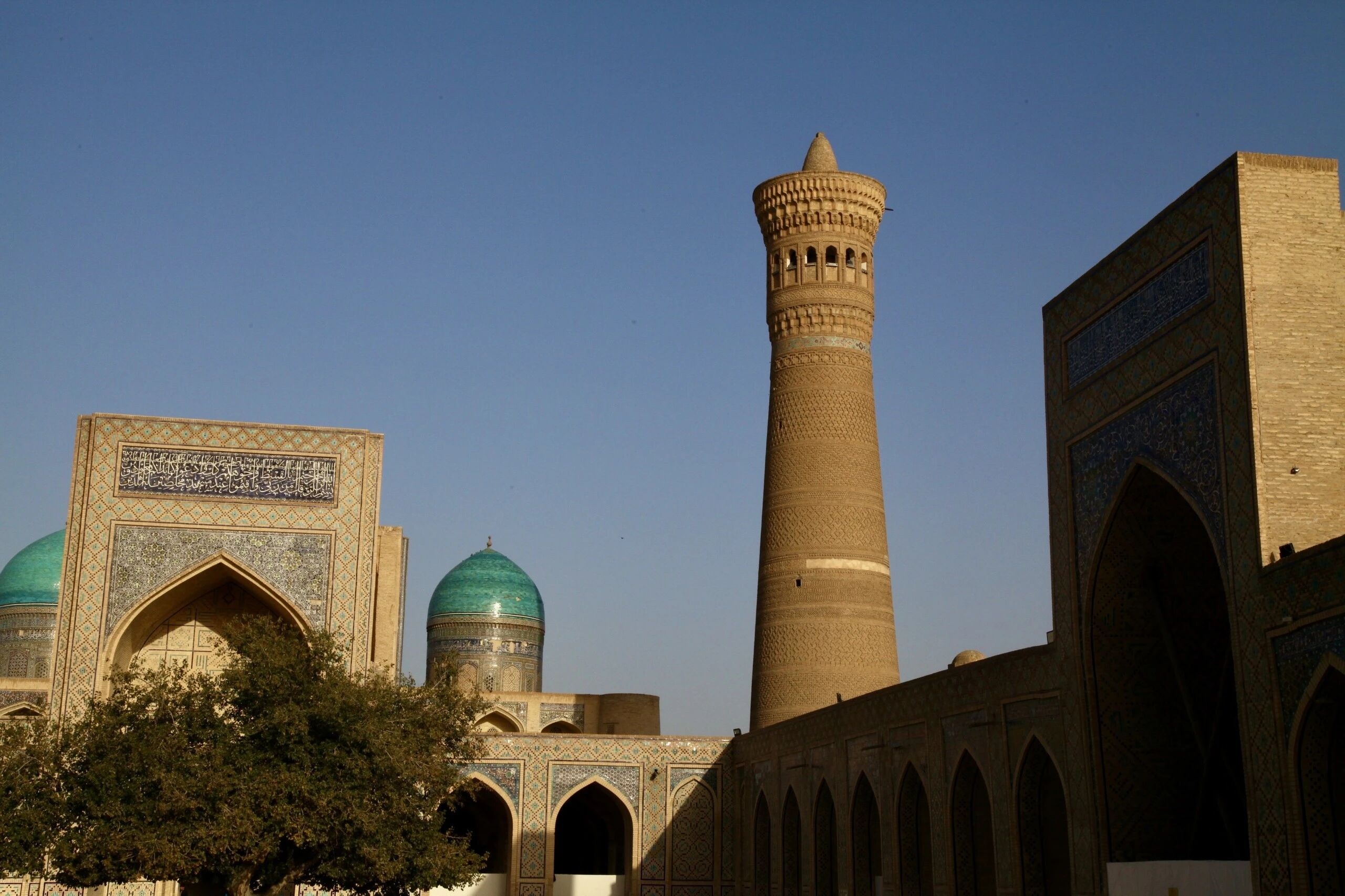
Deep inside Bukhara's Old City, you'll find a small square framed by three incredible structures: the Kalyan Minaret, the Kalyan Mosque, and the Mir-i-Arab Madrasa. This is easily Bukhara's most iconic landmark. It's called the Poi Kalyan Complex, which in Persian literally means 'at the foot of the Great One.'
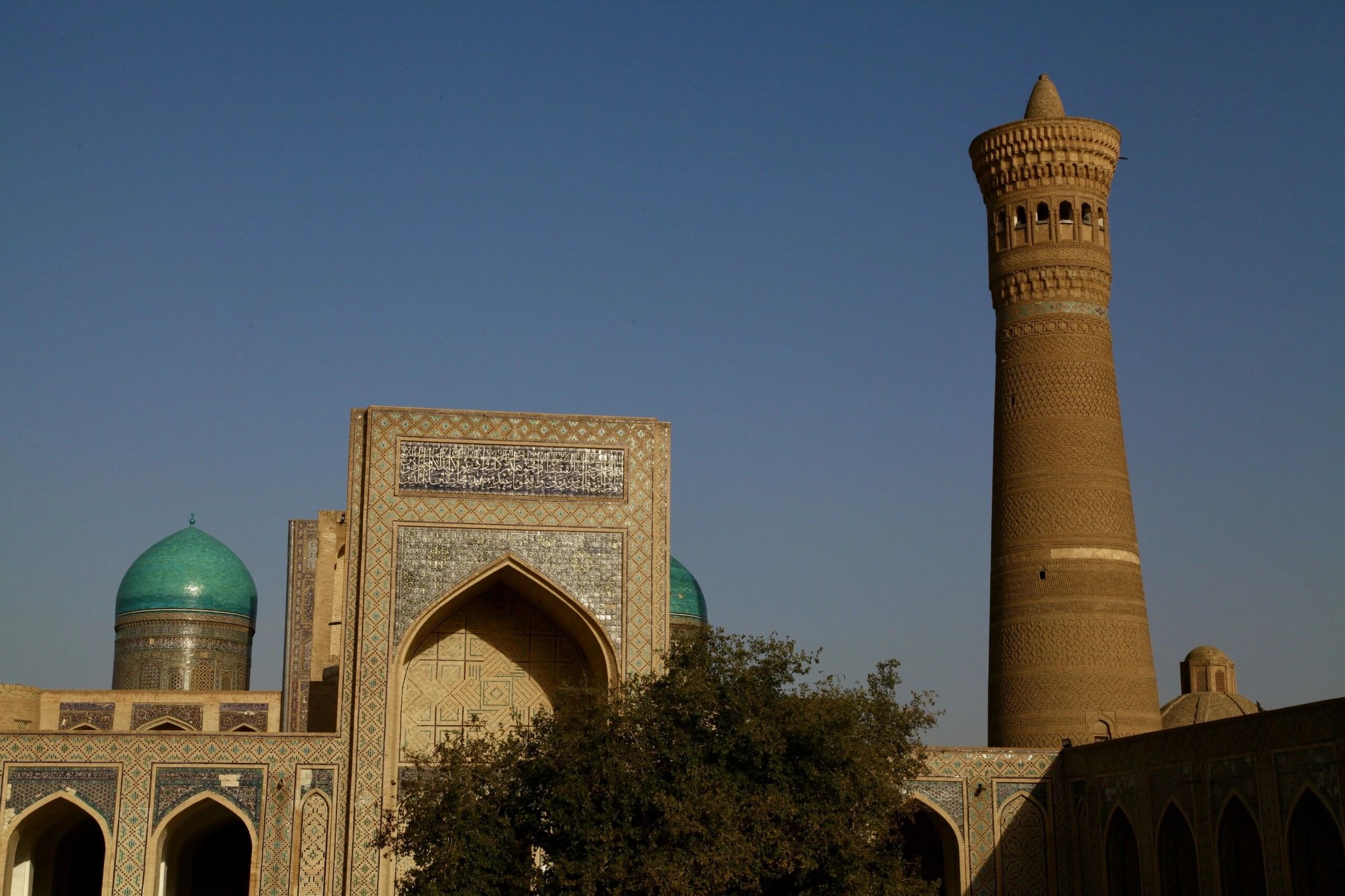
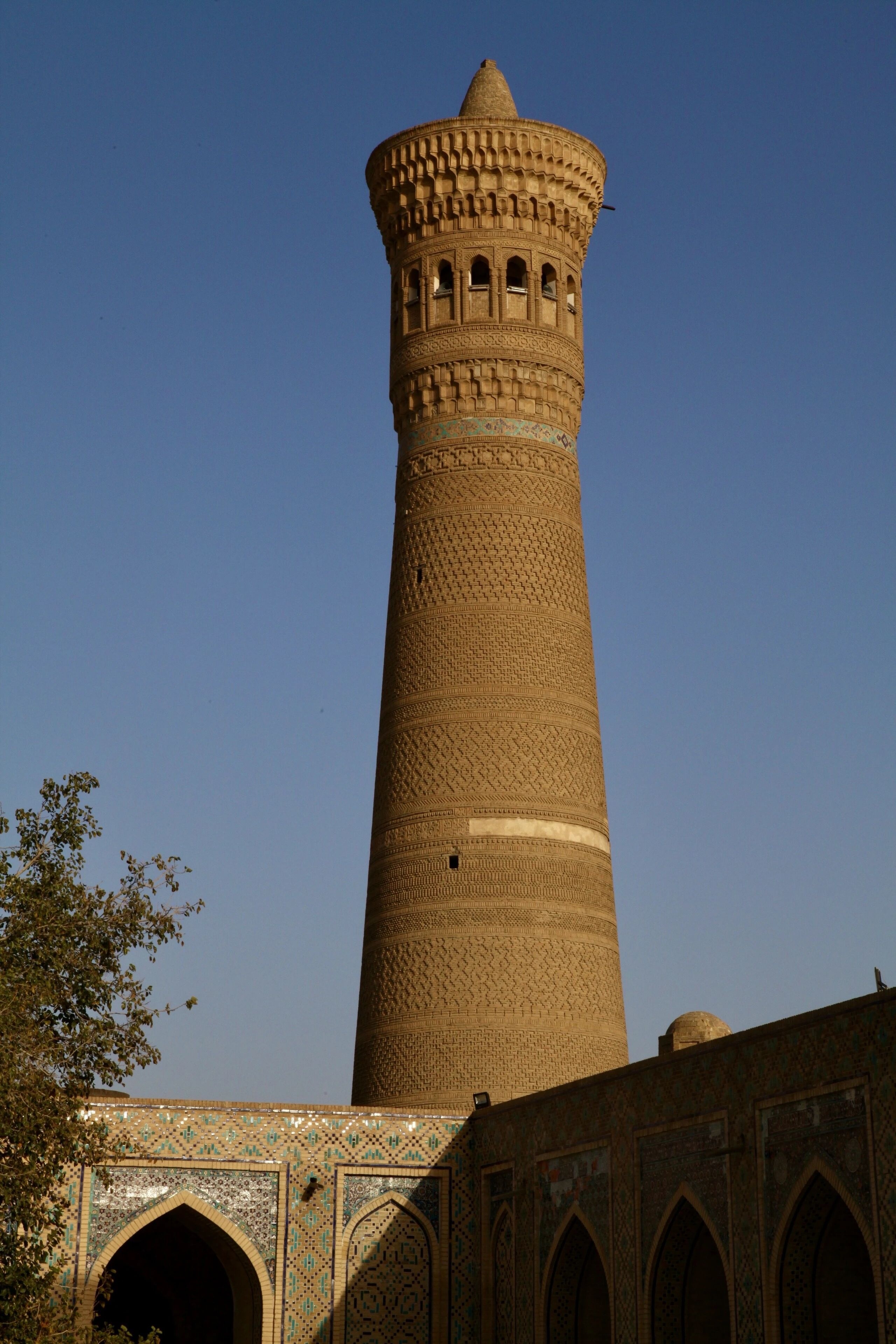
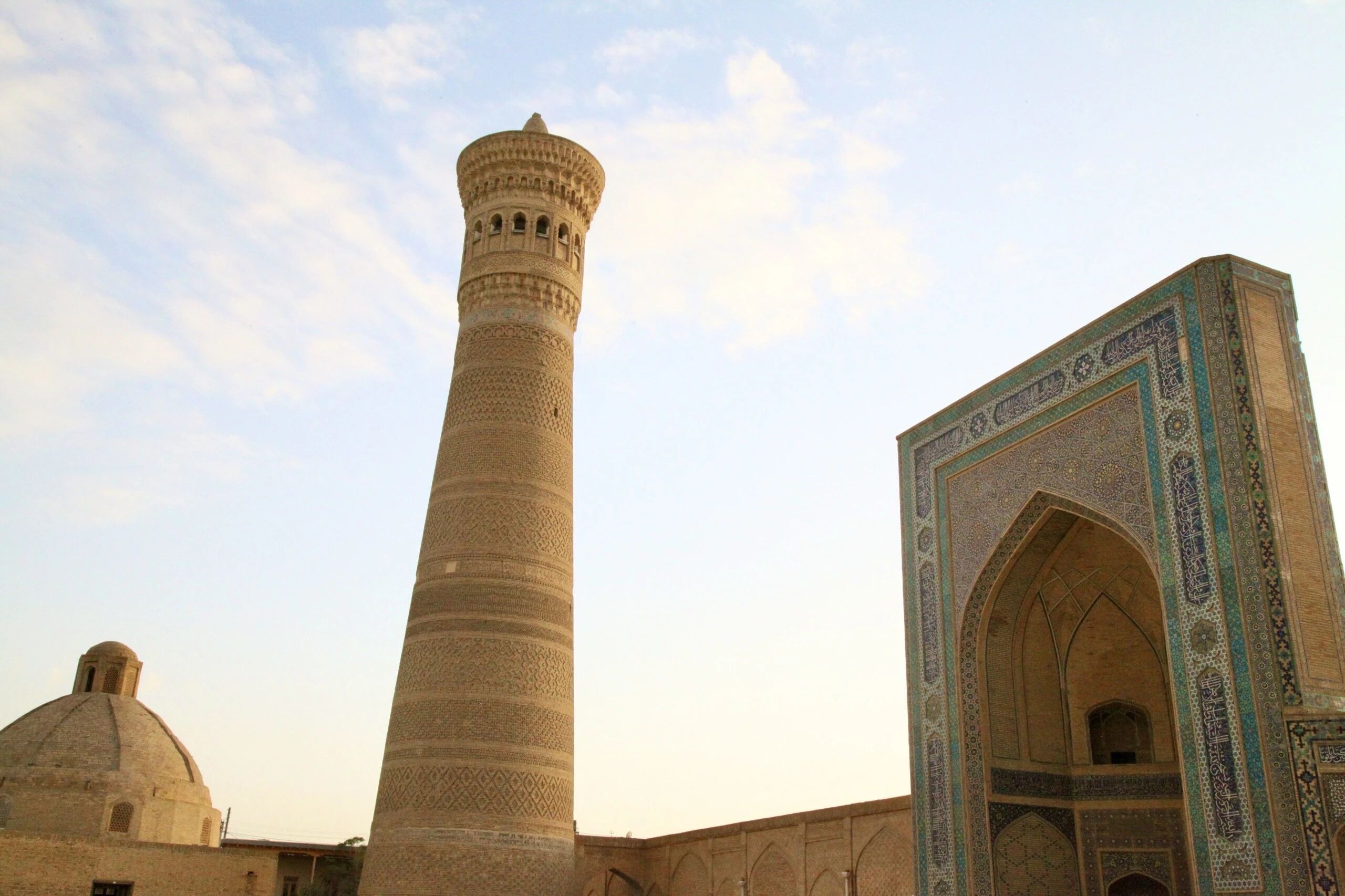
You can spot the Kalyan Minaret from a distance. It's one of Bukhara's oldest buildings, and its reddish tower, covered in intricate mosaic patterns, really stands out in the old city.
The Kalyan Mosque was originally commissioned by Arslan Khan, the 'Lion Khan' of the Karakhanid Dynasty, back in 1121. It was so incredibly grand that Genghis Khan mistakenly thought it was a khan's palace and ordered it burned down. What you see today is a reconstruction from the 16th century.
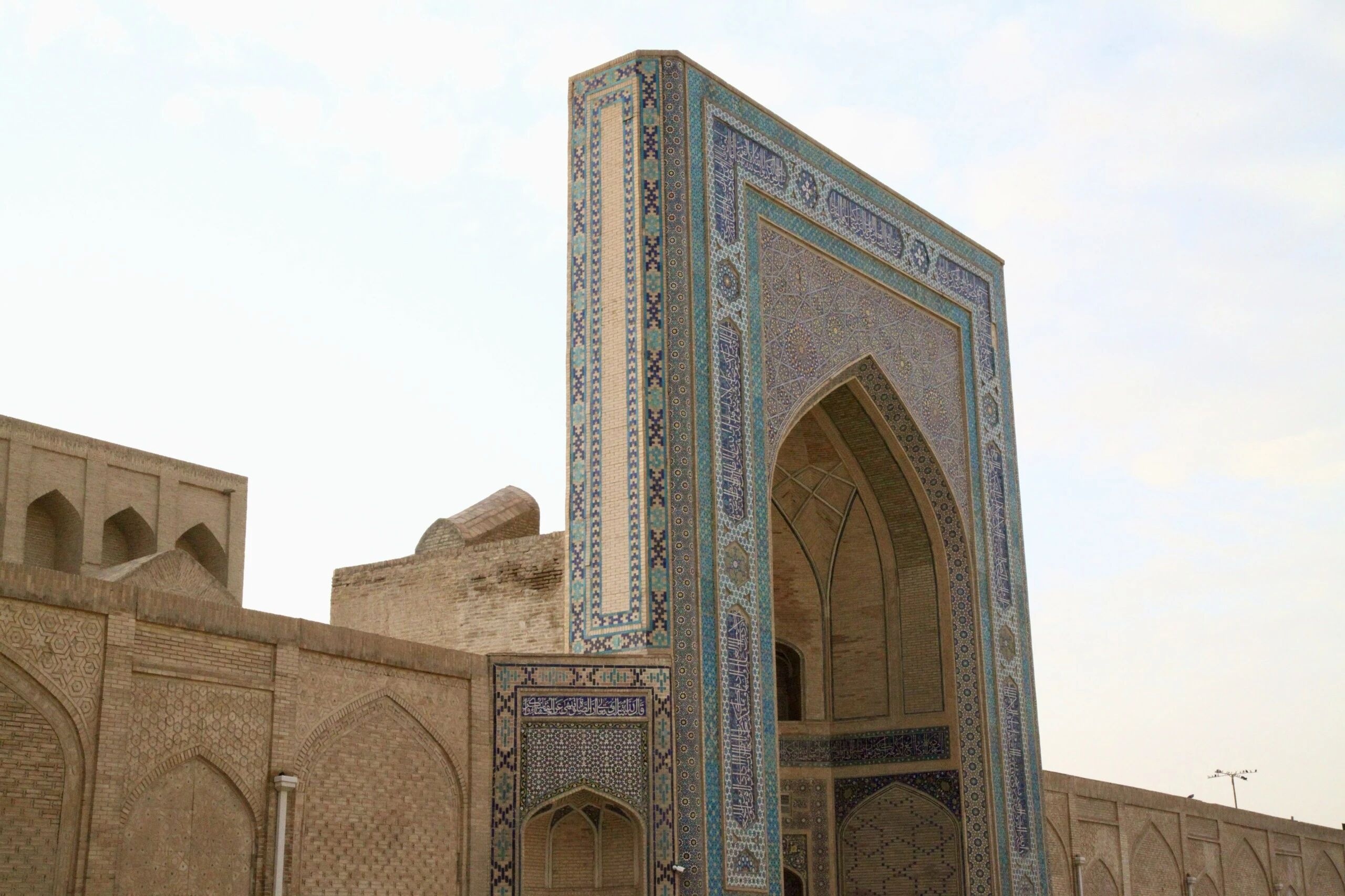
The grand mosque is built with sturdy blue bricks, polished and glazed, adorned with beautiful patterns. Its wide, rectangular courtyard is flanked by quiet arched corridors made of closely connected arches. Inside the main dua hall, the dominant color is white, with no overly flashy decorations; it feels solemn and simple. The only vibrant elements are the colorful floral tiles embedded in the arch facing Mecca. The hall can accommodate 12,000 people for dua simultaneously. When we visited at sunset, we saw locals prostrating in prayer, and the place was bustling with people.
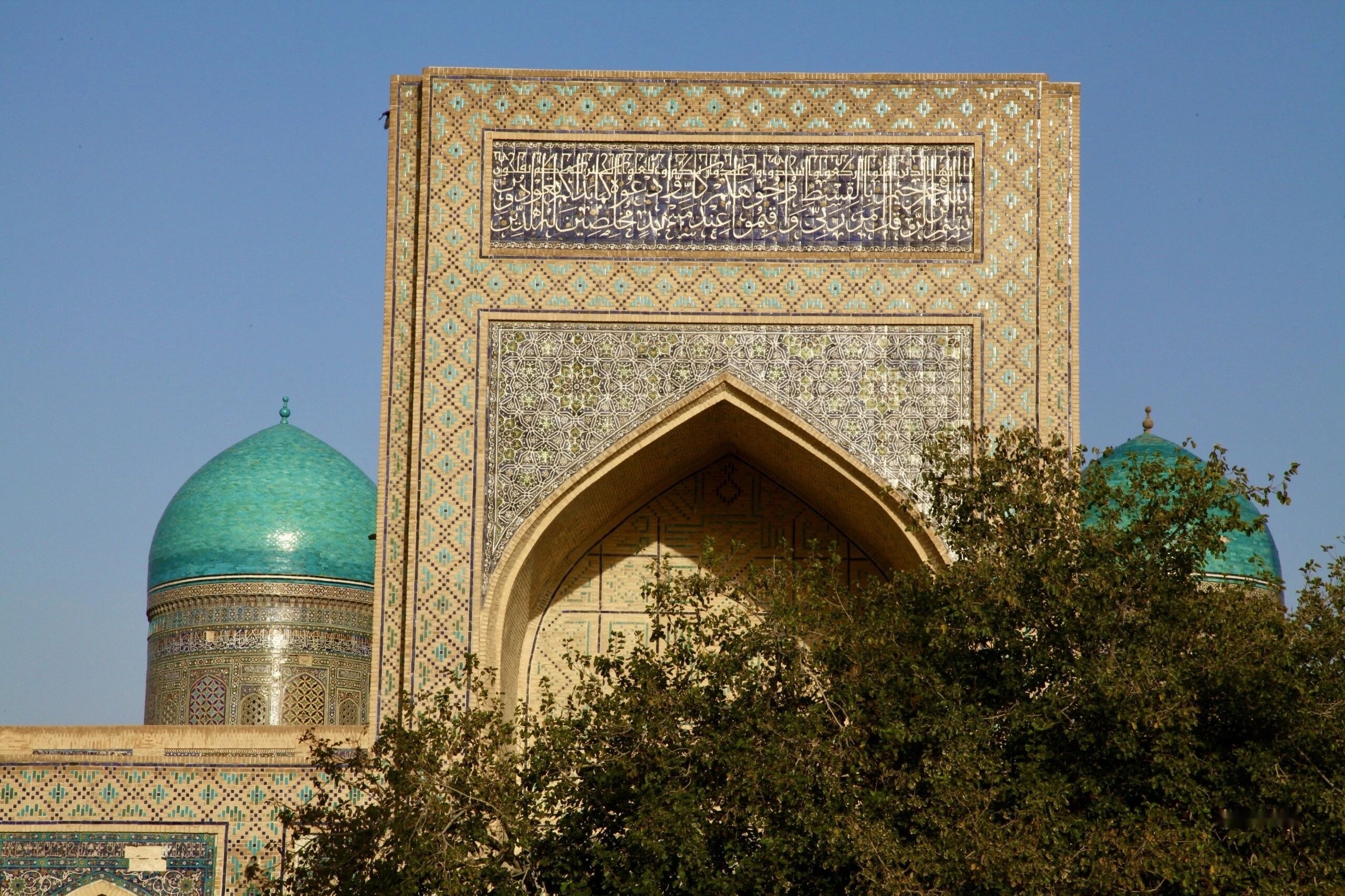
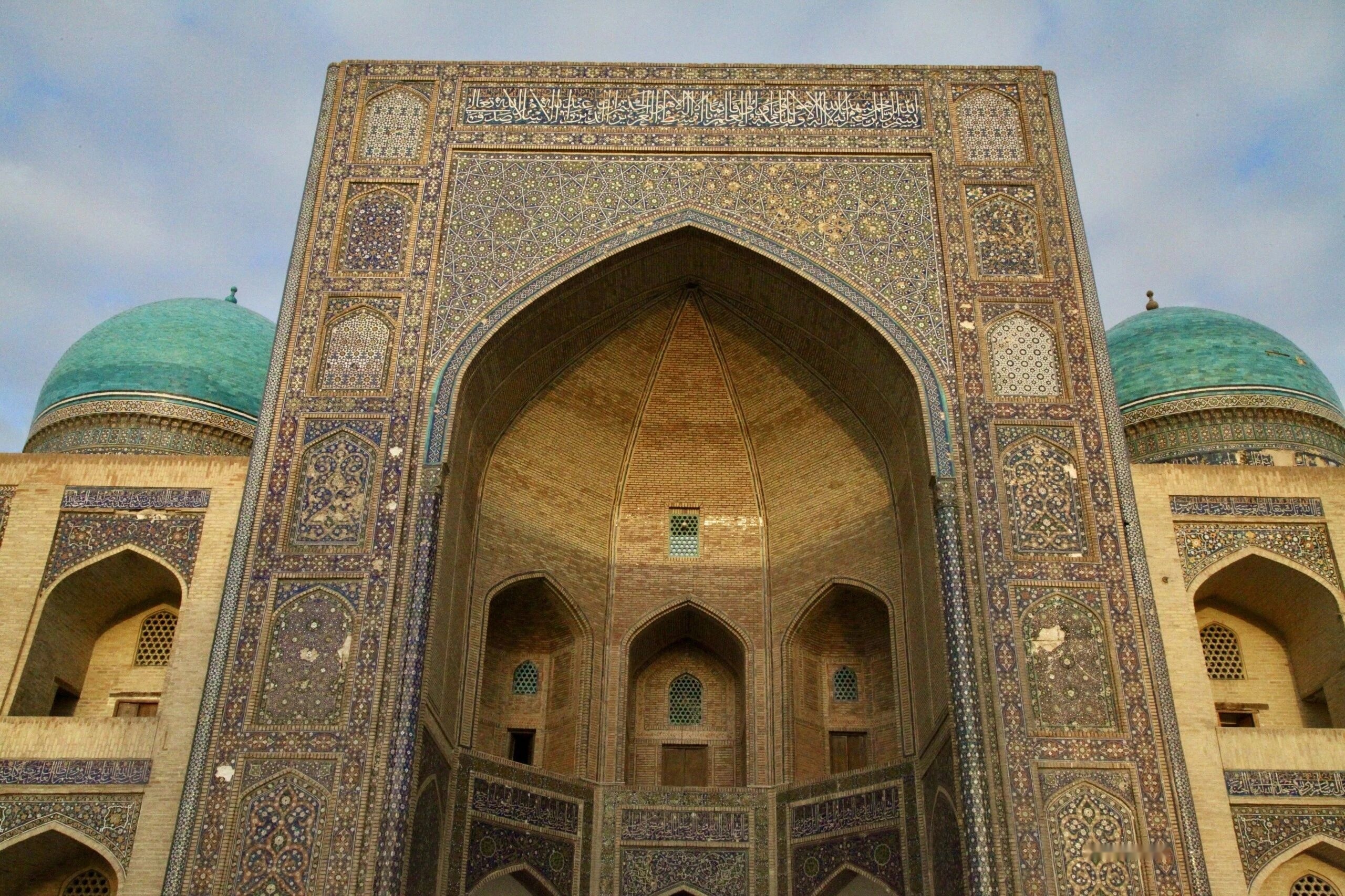
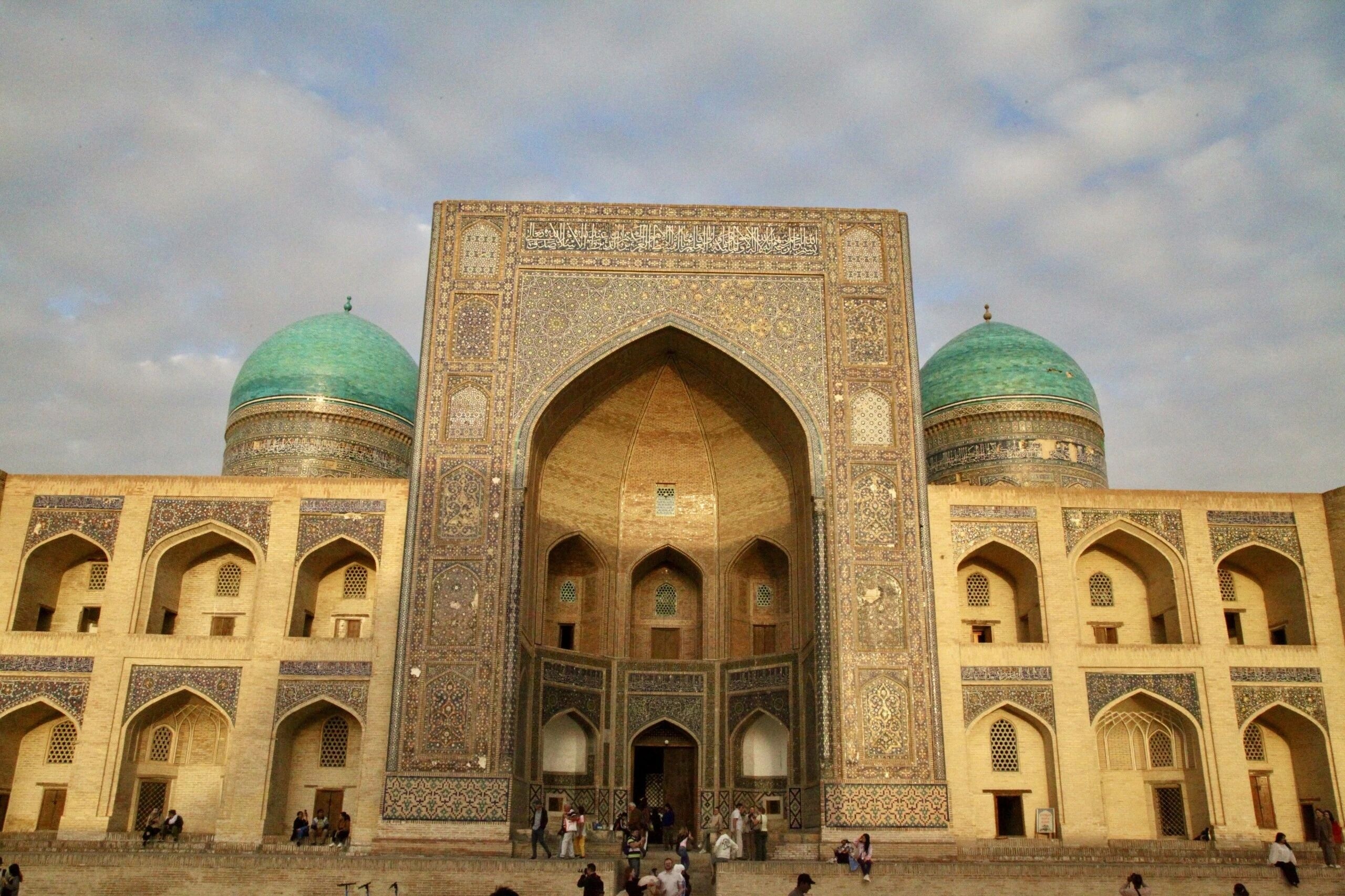
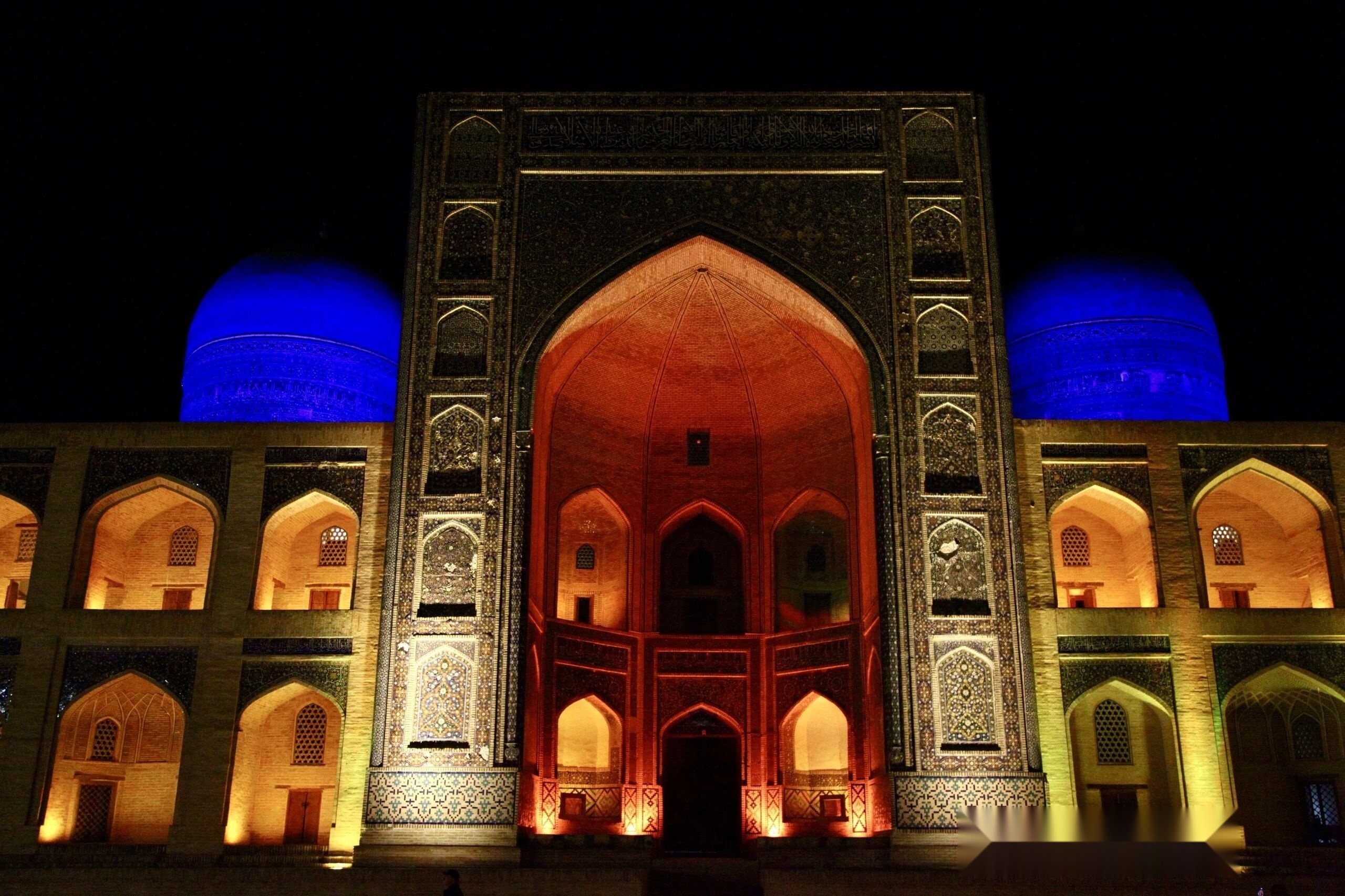
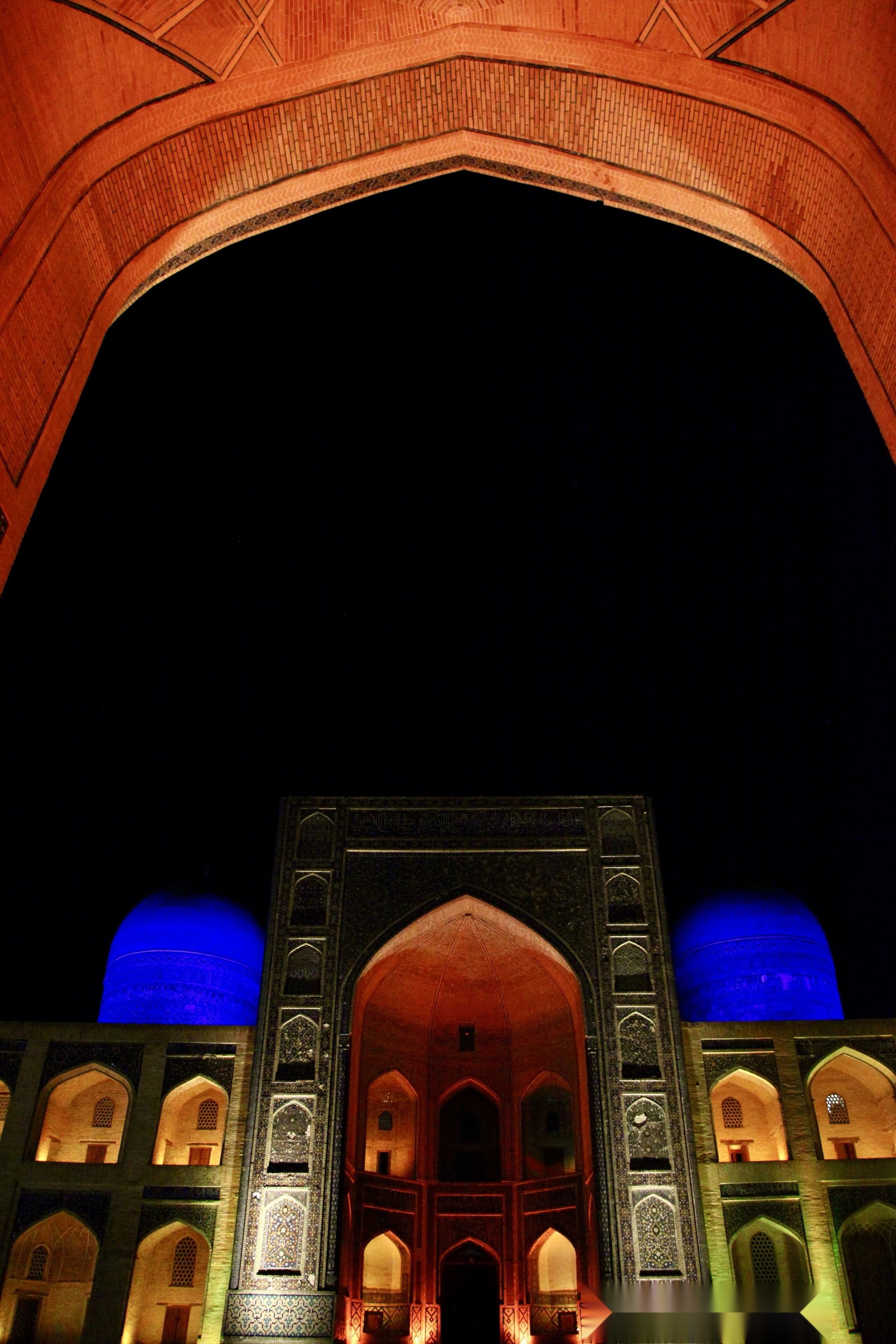
Right across from the grand mosque, the Mir-i-Arab Madrasa was built in 1530. It was commissioned by Ubaydullah Khan of the Shaybanid Dynasty for his spiritual mentor, Abdullah Yamani. It features two massive, iconic green domes and ornate arches. They say students still study there today, making it the only continuously operating Islamic madrasa in Central Asia.
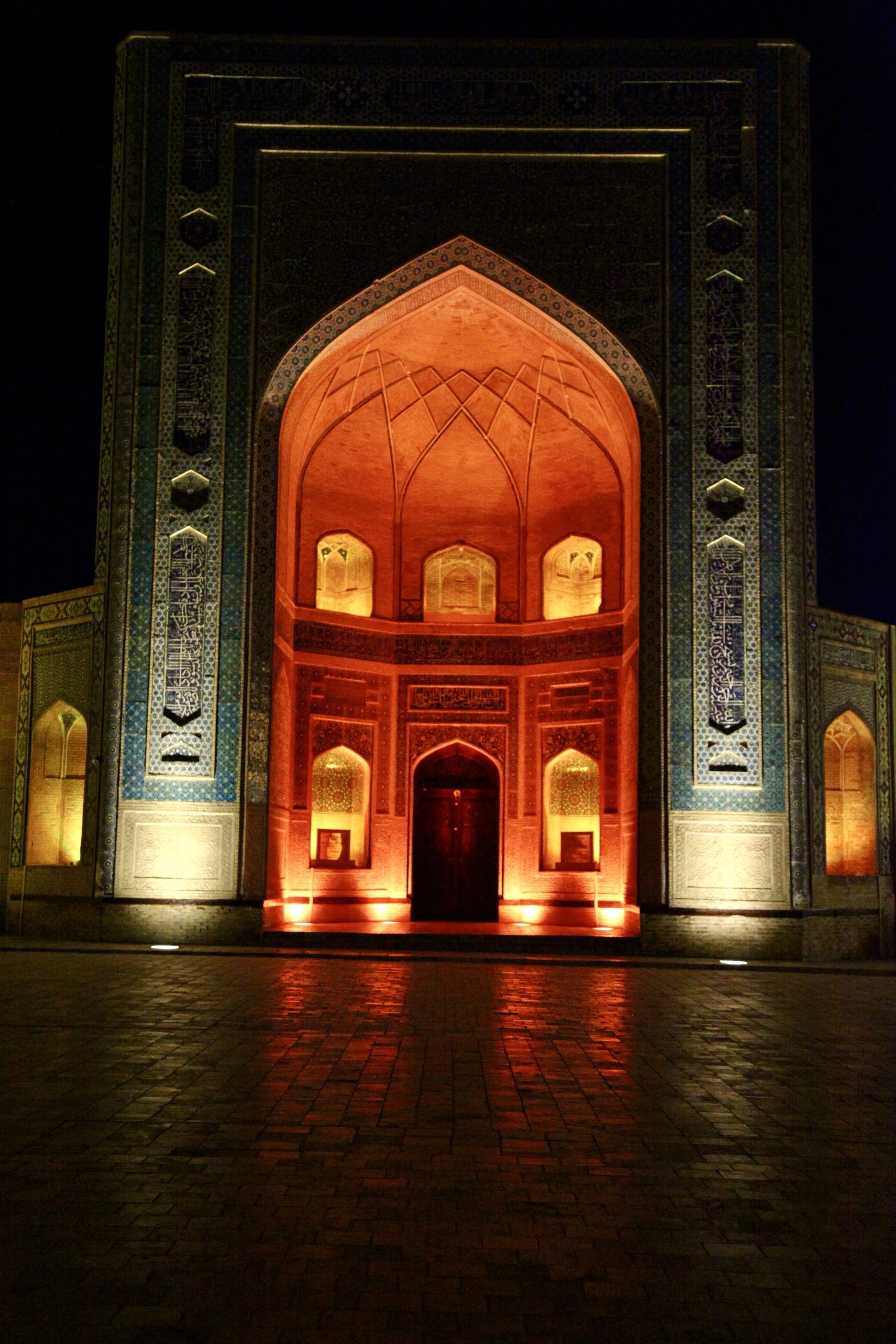
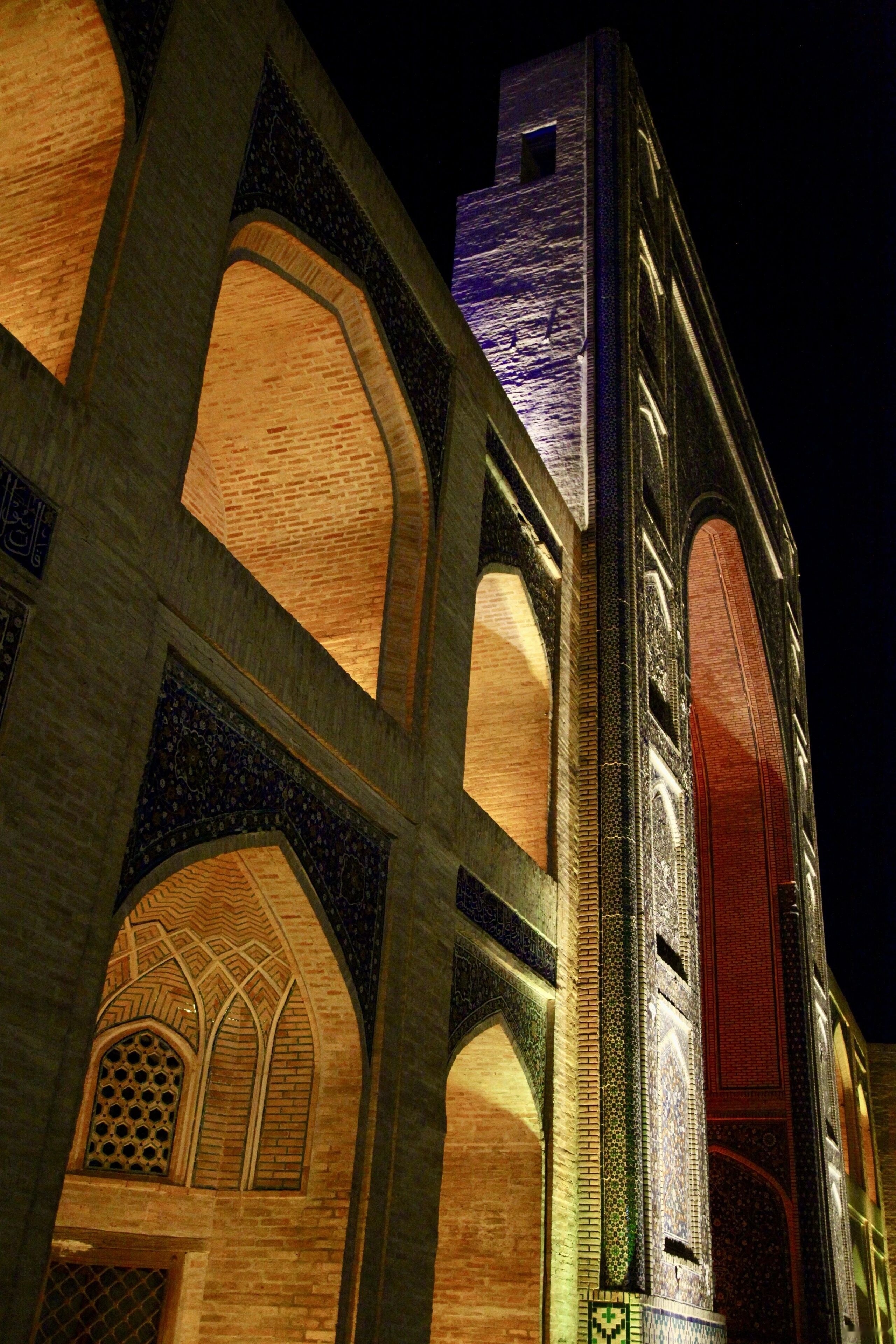
As the sun slowly set, casting a warm glow over the square, the entire complex felt even more sacred and majestic. We stayed until it was completely dark and the lights came on, transforming the square entirely. The minaret looked even more towering under the lights, with warm yellow hues washing up from its base. The intricately arranged geometric patterns and Arabic inscriptions on its body revealed the 'secrets of time' they held, visible in the night. The massive dome and repeating arched porticoes of the Kalyan Mosque were precisely outlined by the lights, while the elaborate carvings on the madrasa's entrance and walls became clearly visible under the soft illumination. Blue-green tiles shimmered under the lights, creating a cool-warm contrast with the earthy yellow brick walls, exuding a beauty that blends ancient charm with refined elegance. These lights gave the sturdy buildings, which looked solid during the day, a dreamlike, three-dimensional quality at night. They didn't just showcase the architecture; they brought its soul back to life. view all
Get ready to explore Uzbekistan's iconic Bukhara Old City and its famous Poi Kalyan Complex! This article, with 20 high-definition, real-life panoramic photos, dives deep into the 1121-built Kalyan Minaret from the Karakhanid Dynasty, the grand Kalyan Mosque, and the Mir-i-Arab Madrasa (Islamic seminary) with its twin green domes from the Shaybanid Dynasty. We're capturing the timeless charm of this Central Asian Silk Road gem, both by day and under its dazzling night lights.
Deep inside Bukhara's Old City, you'll find a small square framed by three incredible structures: the Kalyan Minaret, the Kalyan Mosque, and the Mir-i-Arab Madrasa. This is easily Bukhara's most iconic landmark. It's called the Poi Kalyan Complex, which in Persian literally means 'at the foot of the Great One.'
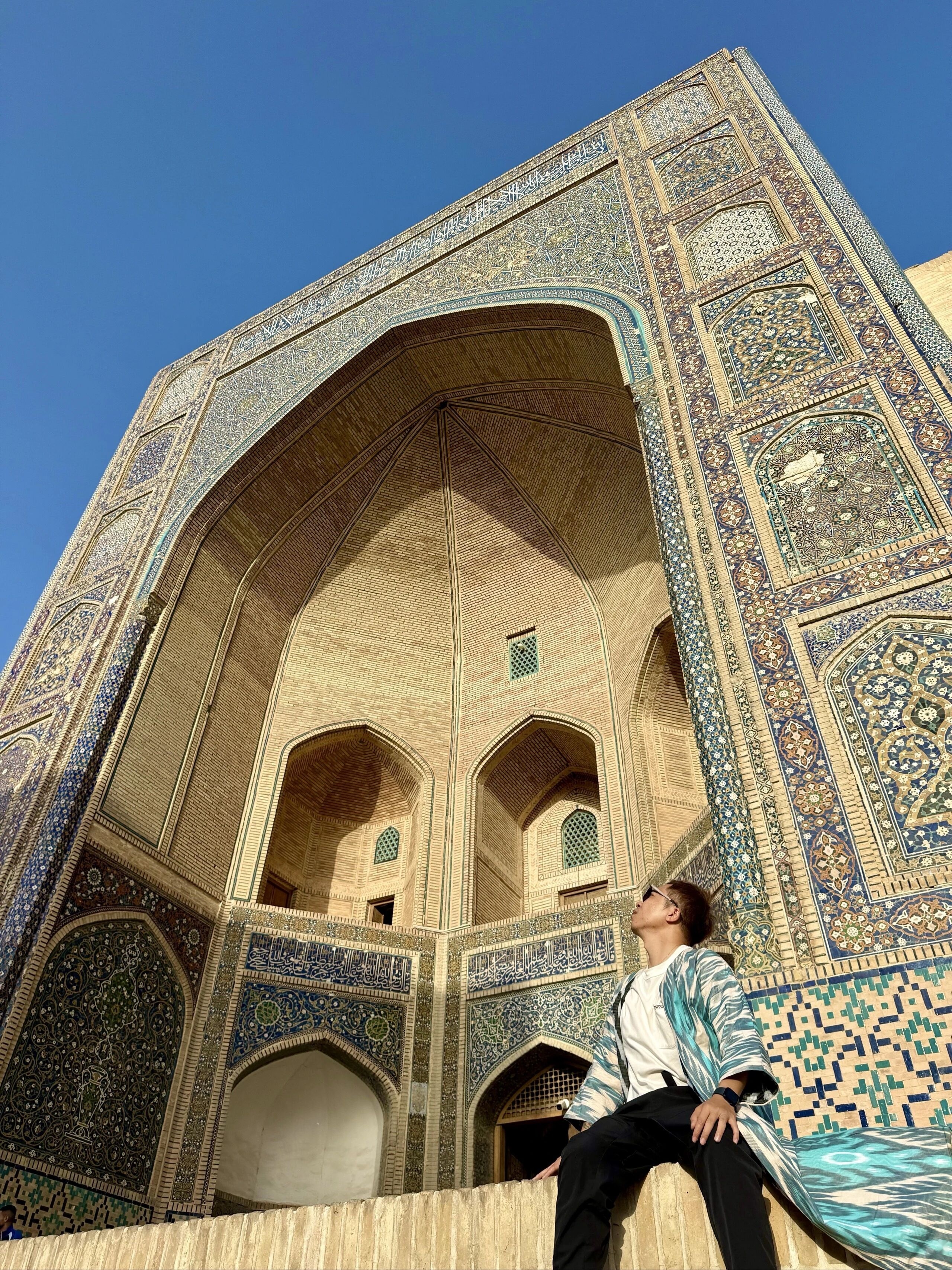
You can spot the Kalyan Minaret from a distance. It's one of Bukhara's oldest buildings, and its reddish tower, covered in intricate mosaic patterns, really stands out in the old city.
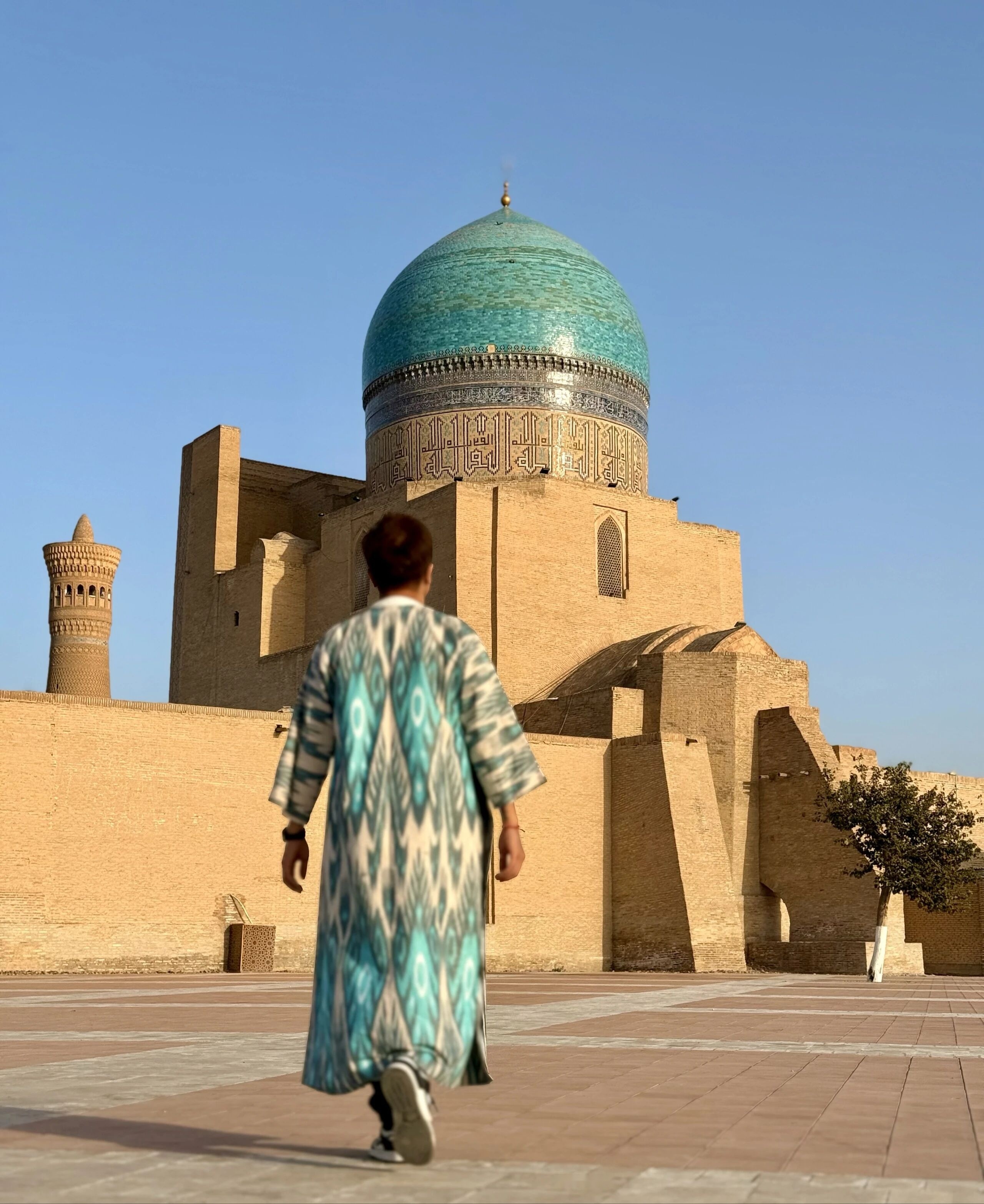
The Kalyan Mosque was originally commissioned by Arslan Khan, the 'Lion Khan' of the Karakhanid Dynasty, back in 1121. It was so incredibly grand that Genghis Khan mistakenly thought it was a khan's palace and ordered it burned down. What you see today is a reconstruction from the 16th century.
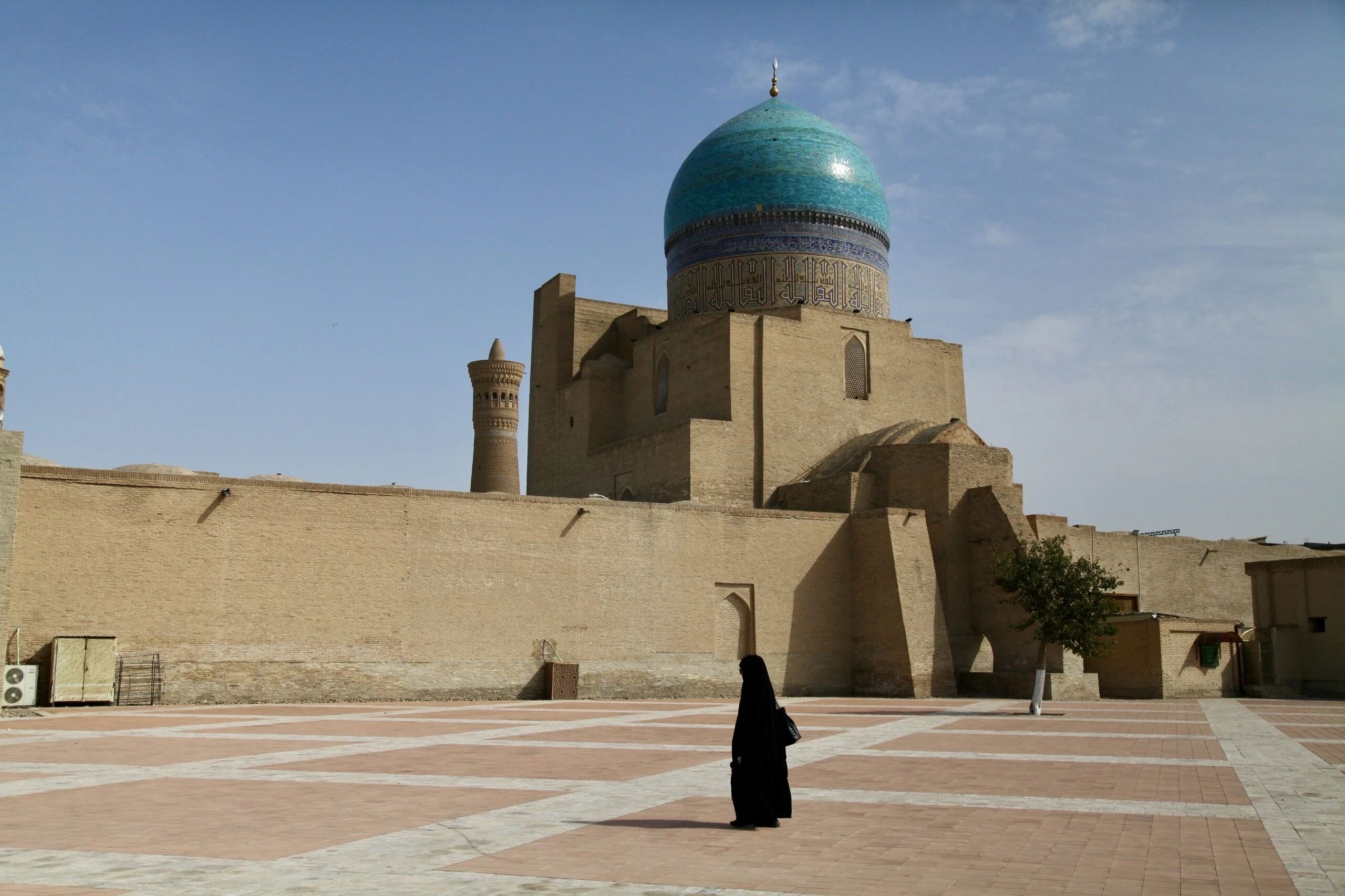
The grand mosque is built with sturdy blue bricks, polished and glazed, adorned with beautiful patterns. Its wide, rectangular courtyard is flanked by quiet arched corridors made of closely connected arches. Inside the main dua hall, the dominant color is white, with no overly flashy decorations; it feels solemn and simple. The only vibrant elements are the colorful floral tiles embedded in the arch facing Mecca. The hall can accommodate 12,000 people for dua simultaneously. When we visited at sunset, we saw locals prostrating in prayer, and the place was bustling with people.
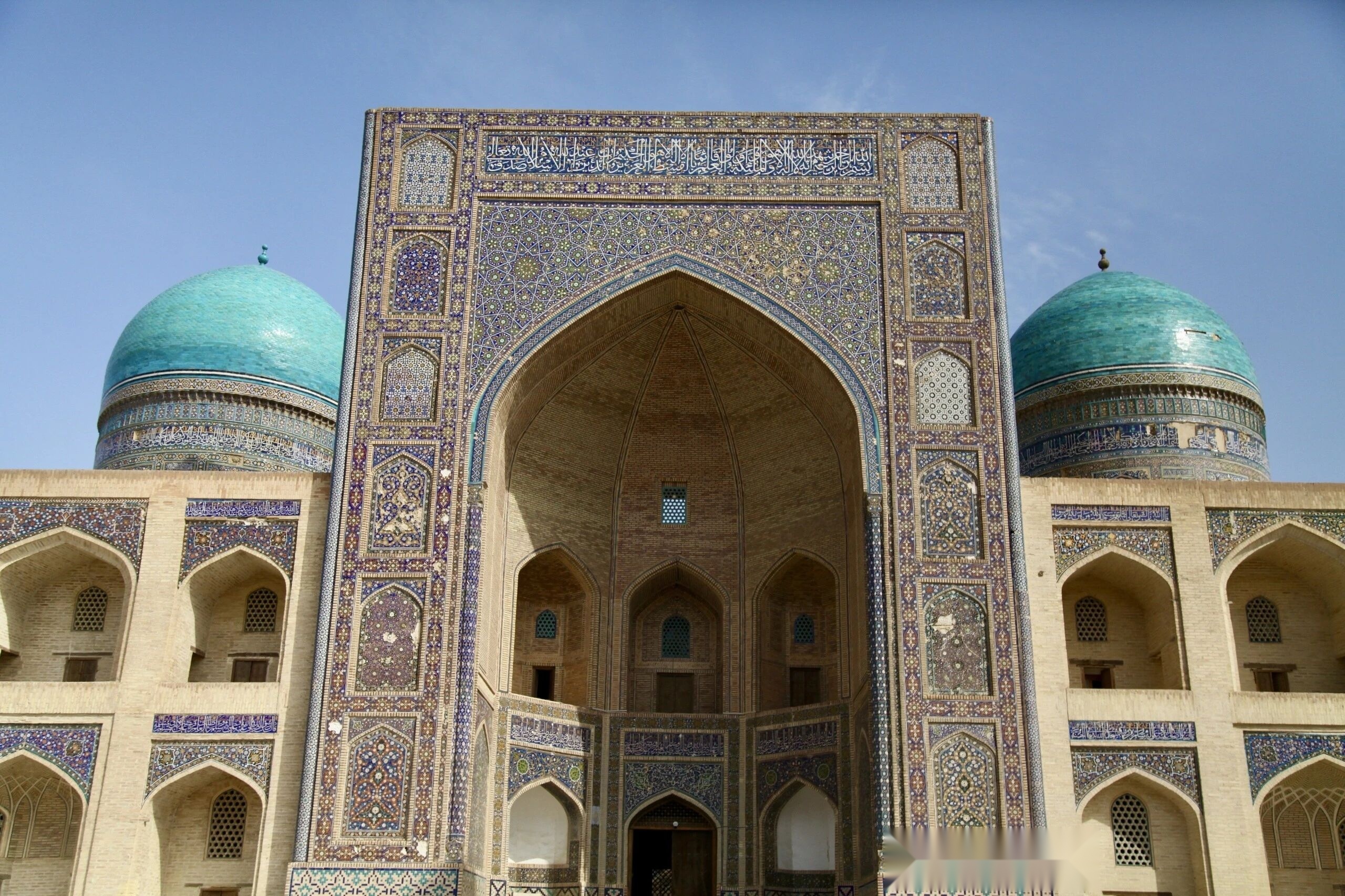
Right across from the grand mosque, the Mir-i-Arab Madrasa was built in 1530. It was commissioned by Ubaydullah Khan of the Shaybanid Dynasty for his spiritual mentor, Abdullah Yamani. It features two massive, iconic green domes and ornate arches. They say students still study there today, making it the only continuously operating Islamic madrasa in Central Asia.
As the sun slowly set, casting a warm glow over the square, the entire complex felt even more sacred and majestic. We stayed until it was completely dark and the lights came on, transforming the square entirely. The minaret looked even more towering under the lights, with warm yellow hues washing up from its base. The intricately arranged geometric patterns and Arabic inscriptions on its body revealed the 'secrets of time' they held, visible in the night. The massive dome and repeating arched porticoes of the Kalyan Mosque were precisely outlined by the lights, while the elaborate carvings on the madrasa's entrance and walls became clearly visible under the soft illumination. Blue-green tiles shimmered under the lights, creating a cool-warm contrast with the earthy yellow brick walls, exuding a beauty that blends ancient charm with refined elegance. These lights gave the sturdy buildings, which looked solid during the day, a dreamlike, three-dimensional quality at night. They didn't just showcase the architecture; they brought its soul back to life.
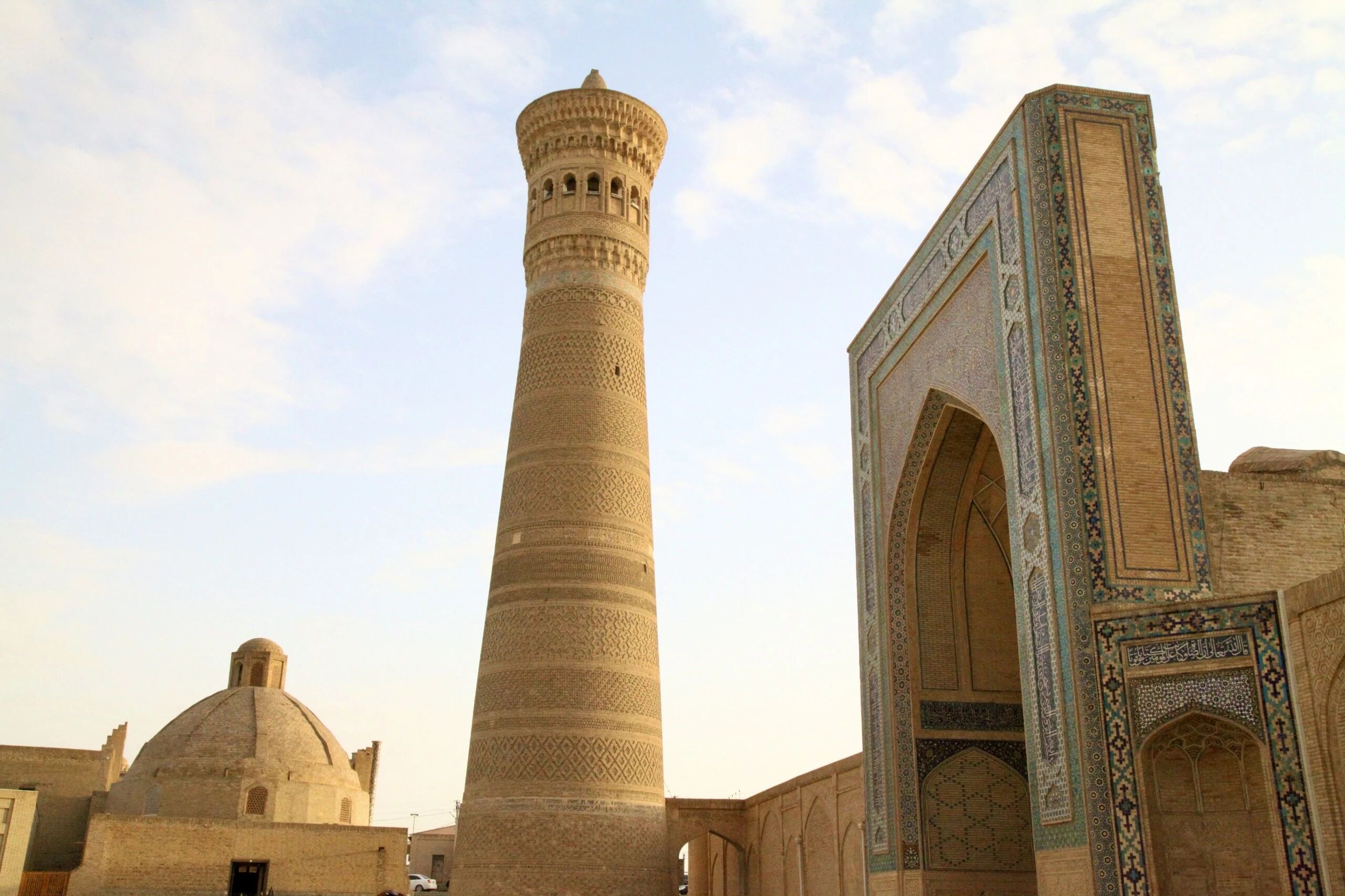
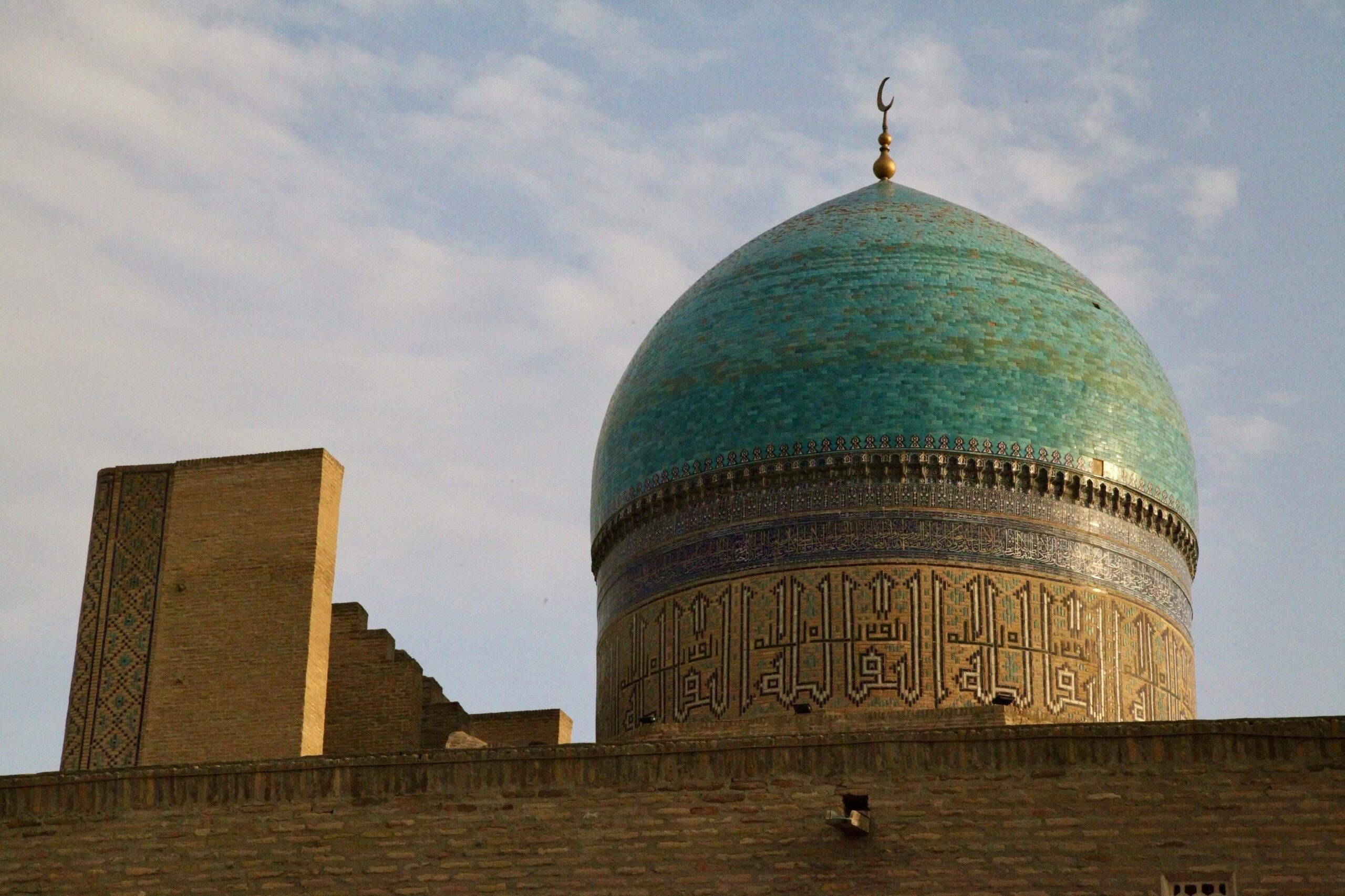
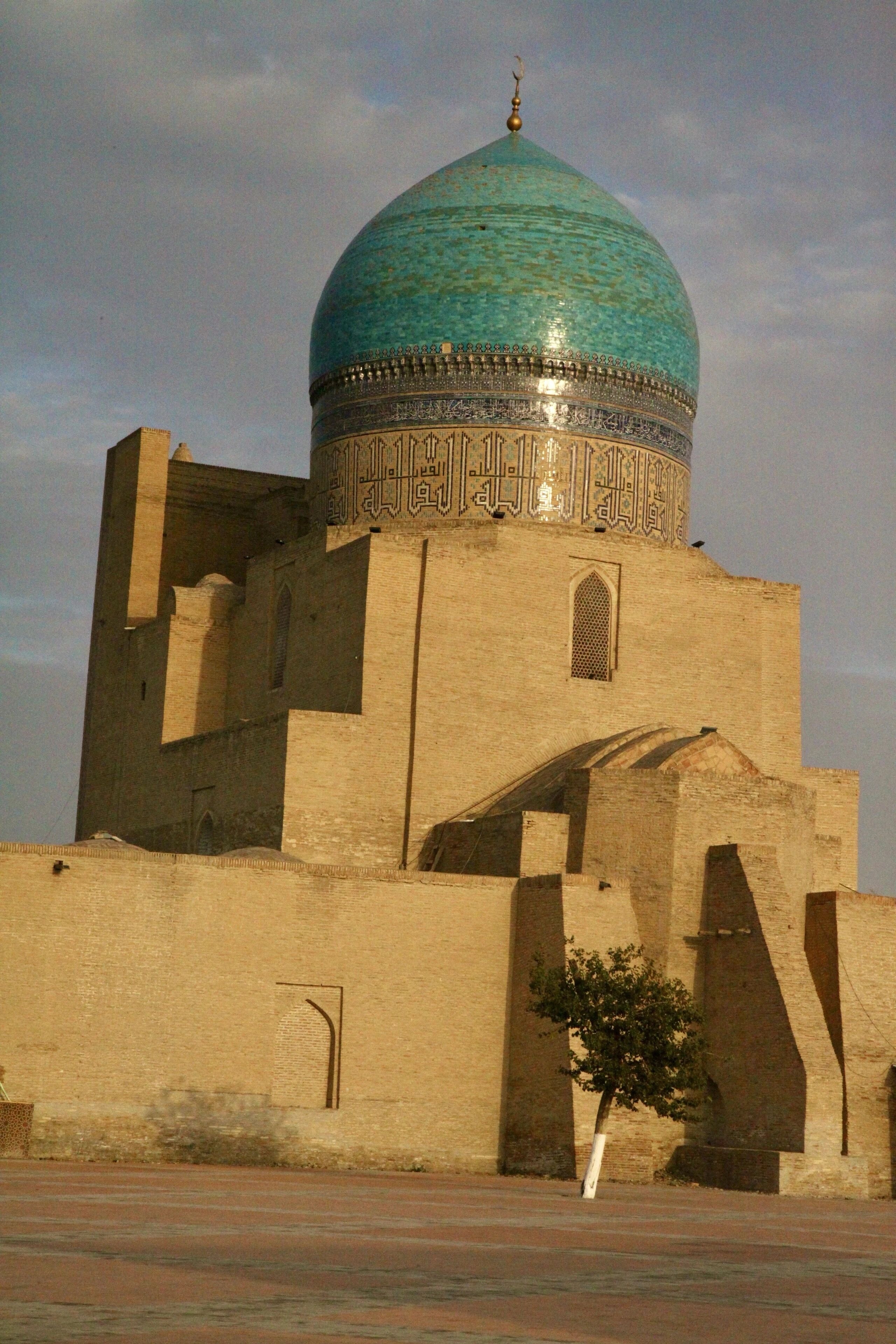
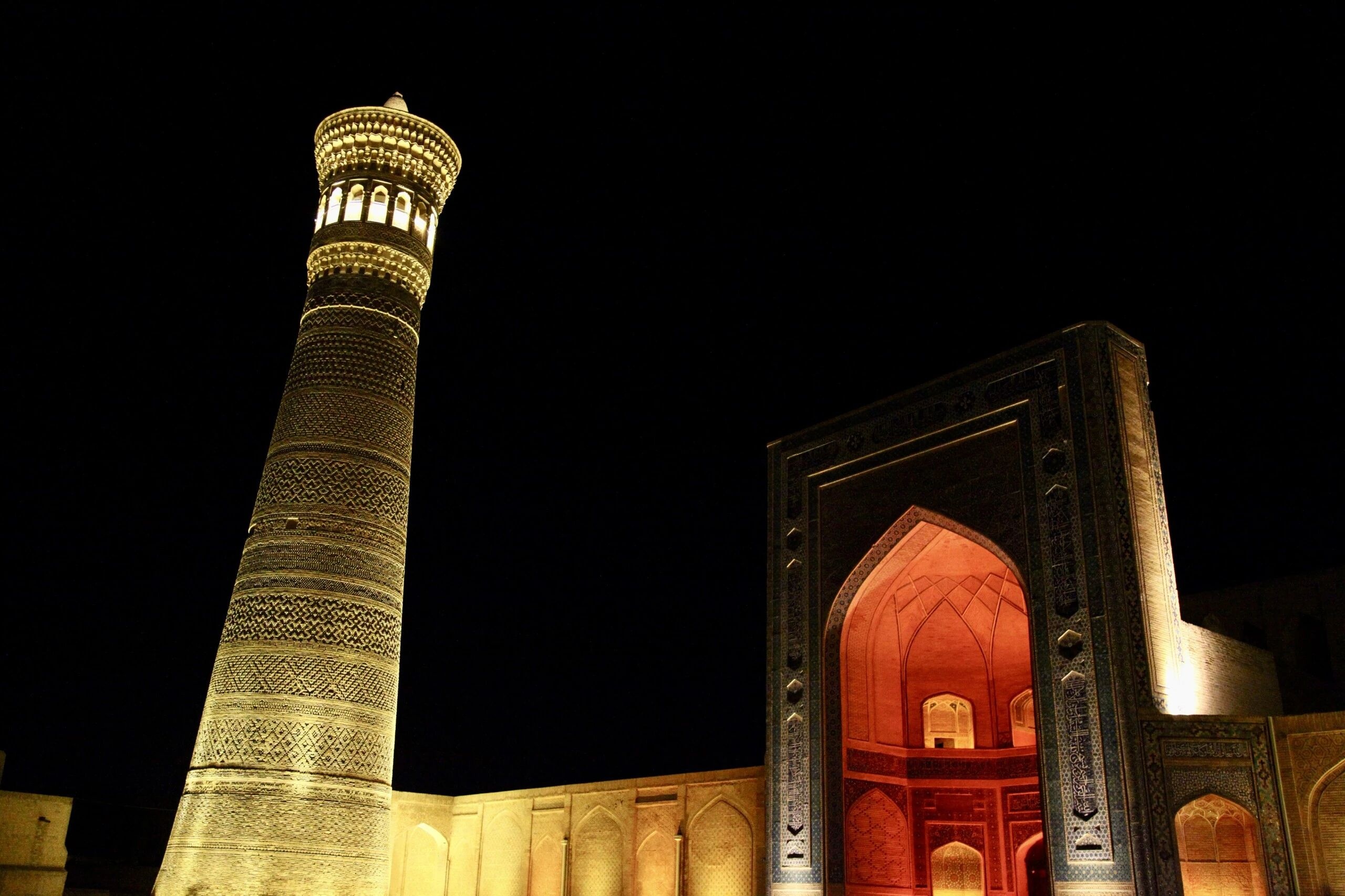
Deep inside Bukhara's Old City, you'll find a small square framed by three incredible structures: the Kalyan Minaret, the Kalyan Mosque, and the Mir-i-Arab Madrasa. This is easily Bukhara's most iconic landmark. It's called the Poi Kalyan Complex, which in Persian literally means 'at the foot of the Great One.'
You can spot the Kalyan Minaret from a distance. It's one of Bukhara's oldest buildings, and its reddish tower, covered in intricate mosaic patterns, really stands out in the old city.
The Kalyan Mosque was originally commissioned by Arslan Khan, the 'Lion Khan' of the Karakhanid Dynasty, back in 1121. It was so incredibly grand that Genghis Khan mistakenly thought it was a khan's palace and ordered it burned down. What you see today is a reconstruction from the 16th century.
The grand mosque is built with sturdy blue bricks, polished and glazed, adorned with beautiful patterns. Its wide, rectangular courtyard is flanked by quiet arched corridors made of closely connected arches. Inside the main dua hall, the dominant color is white, with no overly flashy decorations; it feels solemn and simple. The only vibrant elements are the colorful floral tiles embedded in the arch facing Mecca. The hall can accommodate 12,000 people for dua simultaneously. When we visited at sunset, we saw locals prostrating in prayer, and the place was bustling with people.
Right across from the grand mosque, the Mir-i-Arab Madrasa was built in 1530. It was commissioned by Ubaydullah Khan of the Shaybanid Dynasty for his spiritual mentor, Abdullah Yamani. It features two massive, iconic green domes and ornate arches. They say students still study there today, making it the only continuously operating Islamic madrasa in Central Asia.
As the sun slowly set, casting a warm glow over the square, the entire complex felt even more sacred and majestic. We stayed until it was completely dark and the lights came on, transforming the square entirely. The minaret looked even more towering under the lights, with warm yellow hues washing up from its base. The intricately arranged geometric patterns and Arabic inscriptions on its body revealed the 'secrets of time' they held, visible in the night. The massive dome and repeating arched porticoes of the Kalyan Mosque were precisely outlined by the lights, while the elaborate carvings on the madrasa's entrance and walls became clearly visible under the soft illumination. Blue-green tiles shimmered under the lights, creating a cool-warm contrast with the earthy yellow brick walls, exuding a beauty that blends ancient charm with refined elegance. These lights gave the sturdy buildings, which looked solid during the day, a dreamlike, three-dimensional quality at night. They didn't just showcase the architecture; they brought its soul back to life.
Bukhara Travel Guide: Poi Kalyan Complex - Explore Ancient Minaret, Grand Mosque & Madrasa by Day & Dazzling Night
Articles • Hasan09 posted the article • 0 comments • 4 views • 38 minutes ago
Get ready to explore Uzbekistan's iconic Bukhara Old City and its famous Poi Kalyan Complex! This article, with 20 high-definition, real-life panoramic photos, dives deep into the 1121-built Kalyan Minaret from the Karakhanid Dynasty, the grand Kalyan Mosque, and the Mir-i-Arab Madrasa (Islamic seminary) with its twin green domes from the Shaybanid Dynasty. We're capturing the timeless charm of this Central Asian Silk Road gem, both by day and under its dazzling night lights.
Deep inside Bukhara's Old City, you'll find a small square framed by three incredible structures: the Kalyan Minaret, the Kalyan Mosque, and the Mir-i-Arab Madrasa. This is easily Bukhara's most iconic landmark. It's called the Poi Kalyan Complex, which in Persian literally means 'at the foot of the Great One.'
You can spot the Kalyan Minaret from a distance. It's one of Bukhara's oldest buildings, and its reddish tower, covered in intricate mosaic patterns, really stands out in the old city.
The Kalyan Mosque was originally commissioned by Arslan Khan, the 'Lion Khan' of the Karakhanid Dynasty, back in 1121. It was so incredibly grand that Genghis Khan mistakenly thought it was a khan's palace and ordered it burned down. What you see today is a reconstruction from the 16th century.
The grand mosque is built with sturdy blue bricks, polished and glazed, adorned with beautiful patterns. Its wide, rectangular courtyard is flanked by quiet arched corridors made of closely connected arches. Inside the main dua hall, the dominant color is white, with no overly flashy decorations; it feels solemn and simple. The only vibrant elements are the colorful floral tiles embedded in the arch facing Mecca. The hall can accommodate 12,000 people for dua simultaneously. When we visited at sunset, we saw locals prostrating in prayer, and the place was bustling with people.
Right across from the grand mosque, the Mir-i-Arab Madrasa was built in 1530. It was commissioned by Ubaydullah Khan of the Shaybanid Dynasty for his spiritual mentor, Abdullah Yamani. It features two massive, iconic green domes and ornate arches. They say students still study there today, making it the only continuously operating Islamic madrasa in Central Asia.
As the sun slowly set, casting a warm glow over the square, the entire complex felt even more sacred and majestic. We stayed until it was completely dark and the lights came on, transforming the square entirely. The minaret looked even more towering under the lights, with warm yellow hues washing up from its base. The intricately arranged geometric patterns and Arabic inscriptions on its body revealed the 'secrets of time' they held, visible in the night. The massive dome and repeating arched porticoes of the Kalyan Mosque were precisely outlined by the lights, while the elaborate carvings on the madrasa's entrance and walls became clearly visible under the soft illumination. Blue-green tiles shimmered under the lights, creating a cool-warm contrast with the earthy yellow brick walls, exuding a beauty that blends ancient charm with refined elegance. These lights gave the sturdy buildings, which looked solid during the day, a dreamlike, three-dimensional quality at night. They didn't just showcase the architecture; they brought its soul back to life. view all
Deep inside Bukhara's Old City, you'll find a small square framed by three incredible structures: the Kalyan Minaret, the Kalyan Mosque, and the Mir-i-Arab Madrasa. This is easily Bukhara's most iconic landmark. It's called the Poi Kalyan Complex, which in Persian literally means 'at the foot of the Great One.'
You can spot the Kalyan Minaret from a distance. It's one of Bukhara's oldest buildings, and its reddish tower, covered in intricate mosaic patterns, really stands out in the old city.
The Kalyan Mosque was originally commissioned by Arslan Khan, the 'Lion Khan' of the Karakhanid Dynasty, back in 1121. It was so incredibly grand that Genghis Khan mistakenly thought it was a khan's palace and ordered it burned down. What you see today is a reconstruction from the 16th century.
The grand mosque is built with sturdy blue bricks, polished and glazed, adorned with beautiful patterns. Its wide, rectangular courtyard is flanked by quiet arched corridors made of closely connected arches. Inside the main dua hall, the dominant color is white, with no overly flashy decorations; it feels solemn and simple. The only vibrant elements are the colorful floral tiles embedded in the arch facing Mecca. The hall can accommodate 12,000 people for dua simultaneously. When we visited at sunset, we saw locals prostrating in prayer, and the place was bustling with people.
Right across from the grand mosque, the Mir-i-Arab Madrasa was built in 1530. It was commissioned by Ubaydullah Khan of the Shaybanid Dynasty for his spiritual mentor, Abdullah Yamani. It features two massive, iconic green domes and ornate arches. They say students still study there today, making it the only continuously operating Islamic madrasa in Central Asia.
As the sun slowly set, casting a warm glow over the square, the entire complex felt even more sacred and majestic. We stayed until it was completely dark and the lights came on, transforming the square entirely. The minaret looked even more towering under the lights, with warm yellow hues washing up from its base. The intricately arranged geometric patterns and Arabic inscriptions on its body revealed the 'secrets of time' they held, visible in the night. The massive dome and repeating arched porticoes of the Kalyan Mosque were precisely outlined by the lights, while the elaborate carvings on the madrasa's entrance and walls became clearly visible under the soft illumination. Blue-green tiles shimmered under the lights, creating a cool-warm contrast with the earthy yellow brick walls, exuding a beauty that blends ancient charm with refined elegance. These lights gave the sturdy buildings, which looked solid during the day, a dreamlike, three-dimensional quality at night. They didn't just showcase the architecture; they brought its soul back to life. view all
Get ready to explore Uzbekistan's iconic Bukhara Old City and its famous Poi Kalyan Complex! This article, with 20 high-definition, real-life panoramic photos, dives deep into the 1121-built Kalyan Minaret from the Karakhanid Dynasty, the grand Kalyan Mosque, and the Mir-i-Arab Madrasa (Islamic seminary) with its twin green domes from the Shaybanid Dynasty. We're capturing the timeless charm of this Central Asian Silk Road gem, both by day and under its dazzling night lights.
Deep inside Bukhara's Old City, you'll find a small square framed by three incredible structures: the Kalyan Minaret, the Kalyan Mosque, and the Mir-i-Arab Madrasa. This is easily Bukhara's most iconic landmark. It's called the Poi Kalyan Complex, which in Persian literally means 'at the foot of the Great One.'
You can spot the Kalyan Minaret from a distance. It's one of Bukhara's oldest buildings, and its reddish tower, covered in intricate mosaic patterns, really stands out in the old city.
The Kalyan Mosque was originally commissioned by Arslan Khan, the 'Lion Khan' of the Karakhanid Dynasty, back in 1121. It was so incredibly grand that Genghis Khan mistakenly thought it was a khan's palace and ordered it burned down. What you see today is a reconstruction from the 16th century.
The grand mosque is built with sturdy blue bricks, polished and glazed, adorned with beautiful patterns. Its wide, rectangular courtyard is flanked by quiet arched corridors made of closely connected arches. Inside the main dua hall, the dominant color is white, with no overly flashy decorations; it feels solemn and simple. The only vibrant elements are the colorful floral tiles embedded in the arch facing Mecca. The hall can accommodate 12,000 people for dua simultaneously. When we visited at sunset, we saw locals prostrating in prayer, and the place was bustling with people.
Right across from the grand mosque, the Mir-i-Arab Madrasa was built in 1530. It was commissioned by Ubaydullah Khan of the Shaybanid Dynasty for his spiritual mentor, Abdullah Yamani. It features two massive, iconic green domes and ornate arches. They say students still study there today, making it the only continuously operating Islamic madrasa in Central Asia.
As the sun slowly set, casting a warm glow over the square, the entire complex felt even more sacred and majestic. We stayed until it was completely dark and the lights came on, transforming the square entirely. The minaret looked even more towering under the lights, with warm yellow hues washing up from its base. The intricately arranged geometric patterns and Arabic inscriptions on its body revealed the 'secrets of time' they held, visible in the night. The massive dome and repeating arched porticoes of the Kalyan Mosque were precisely outlined by the lights, while the elaborate carvings on the madrasa's entrance and walls became clearly visible under the soft illumination. Blue-green tiles shimmered under the lights, creating a cool-warm contrast with the earthy yellow brick walls, exuding a beauty that blends ancient charm with refined elegance. These lights gave the sturdy buildings, which looked solid during the day, a dreamlike, three-dimensional quality at night. They didn't just showcase the architecture; they brought its soul back to life.