

Prayer Space
Muslim Travel Guide Singapore: Underground Mosque, Bencoolen Area and Hidden Prayer Space
Articles • Hasan09 posted the article • 0 comments • 327 views • 2026-05-24 01:47
Reposted from the web
Summary: This Singapore Muslim travel guide explains the author's visit to an underground mosque and why such a mosque exists in the city. It preserves the personal opening, site details, and hidden prayer-space context from the source.
When I hear about underground mosques, I immediately think of a magazine I read as a kid. It talked about a country in Central Asia during the Soviet era where people dug a hole in the ground and propped it up with a few wooden beams to escape religious suppression.
People would sneak inside to perform namaz. But this mosque in Singapore is different. The mosque owned property in the business district. After signing an agreement with United Overseas Bank (UOB), both sides decided the mosque would trade its above-ground property for part of the space on the first basement level of the UOB building to use as a mosque.
The brief history of the mosque (Image 7) shows a bit of pride, saying that I probably haven't seen many mosques built underground.
After visiting the South Indian gongbei, Thian Hock Keng Mosque, and Al-Abrar Mosque, I walked toward Boat Quay. Before long, I saw the entrance to the underground mosque (Image 1). Honestly, it looks a bit like a subway entrance or an underground parking garage for an apartment complex.
But there is a sign for the mosque next to it, so it is not easy to mistake.
The first time I went there, I almost walked straight into the entrance for the women's prayer hall. That is because this mosque has separate entrances for men and women. The entrance on Boat Quay leads to the men's prayer hall, and the entrance on Chulia Street leads to the women's prayer hall.
I went to the men's prayer hall. After walking down the stairs, there is a place to perform wudu in the entryway, and there are also restrooms. Performing wudu is very convenient.
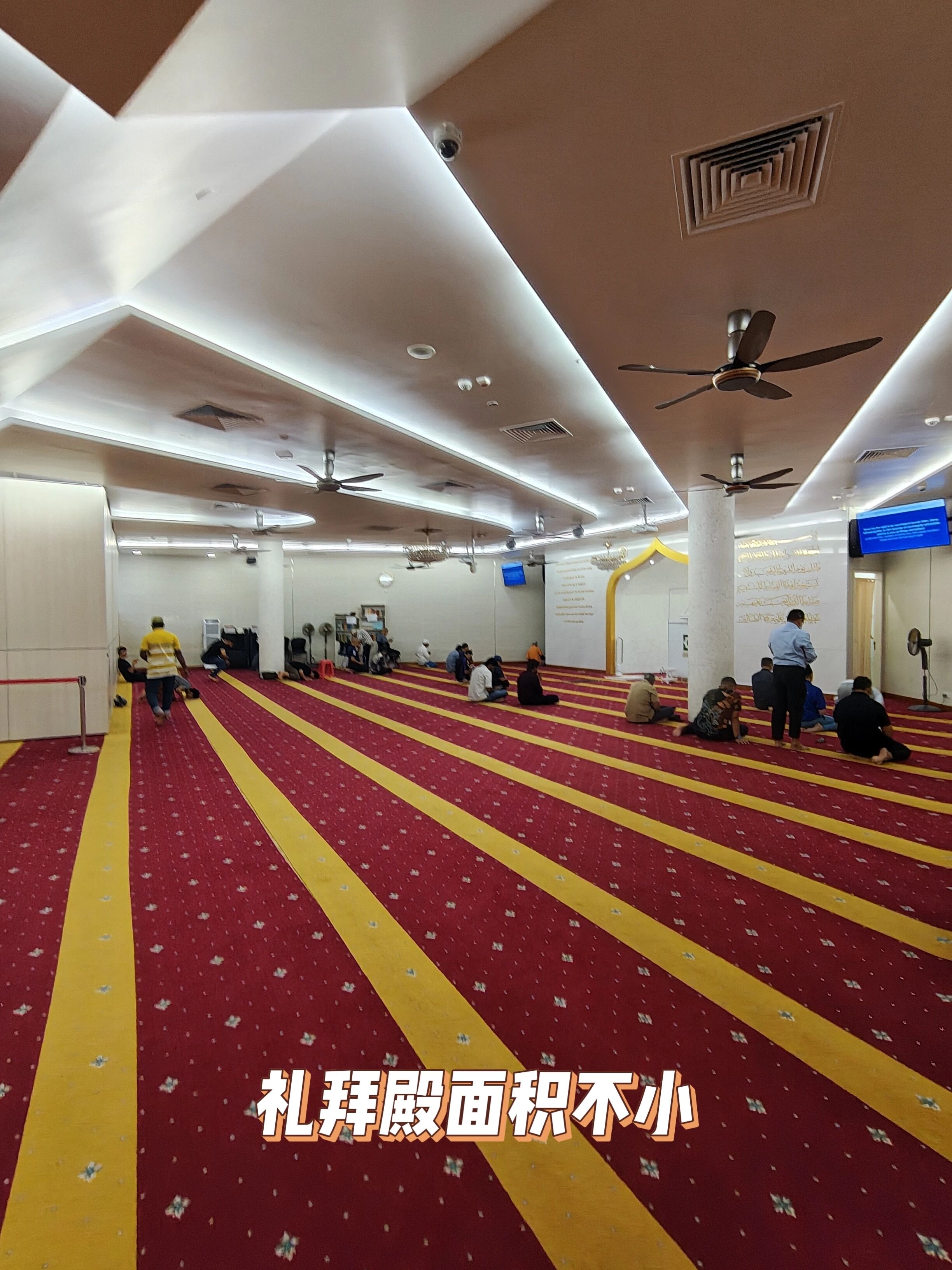
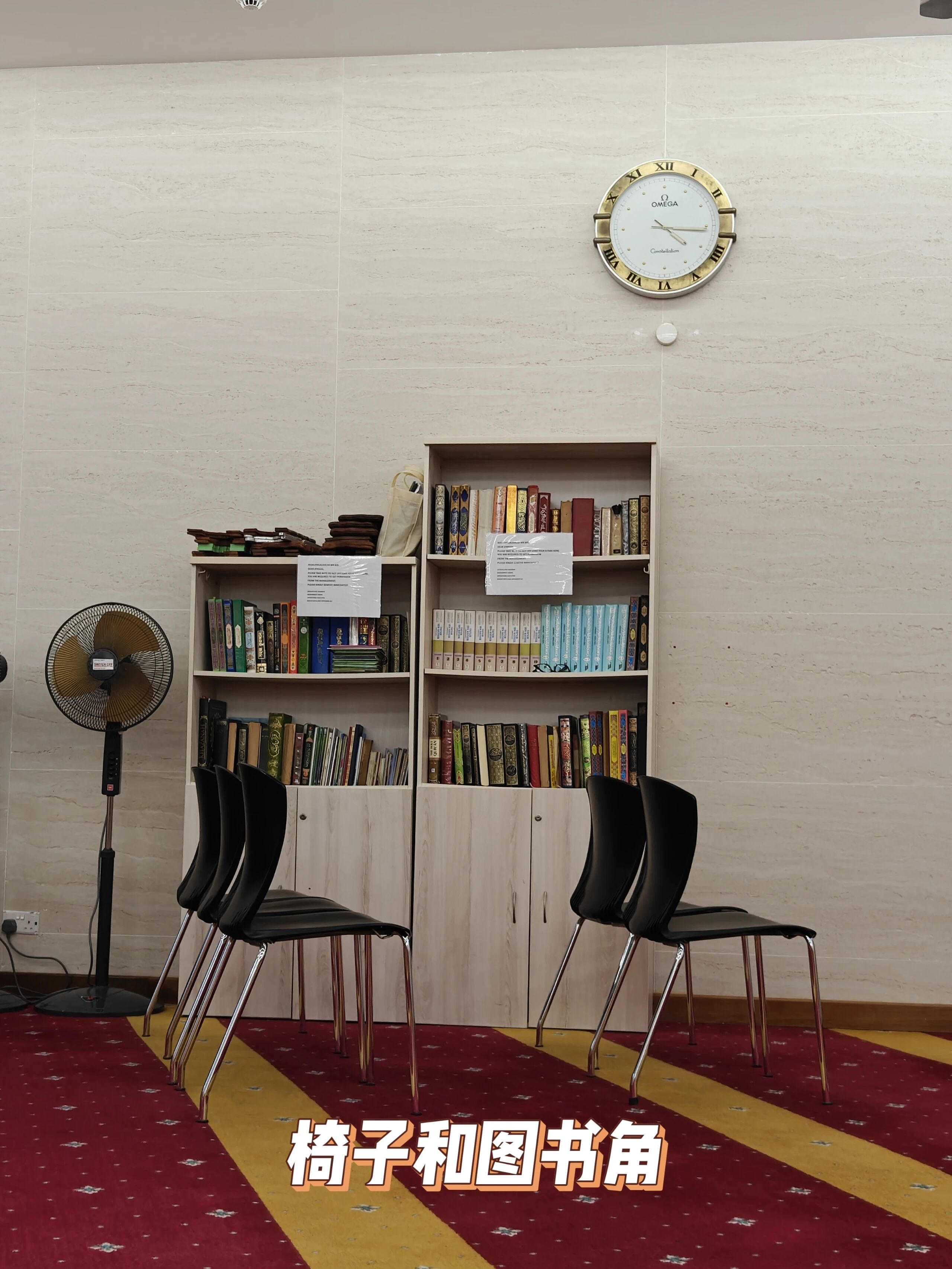
After finishing wudu and entering the prayer hall, I found that the space is actually quite large and can hold a lot of people. The facilities are complete, and the interior decor is simple and elegant, making the space look clean and tidy.
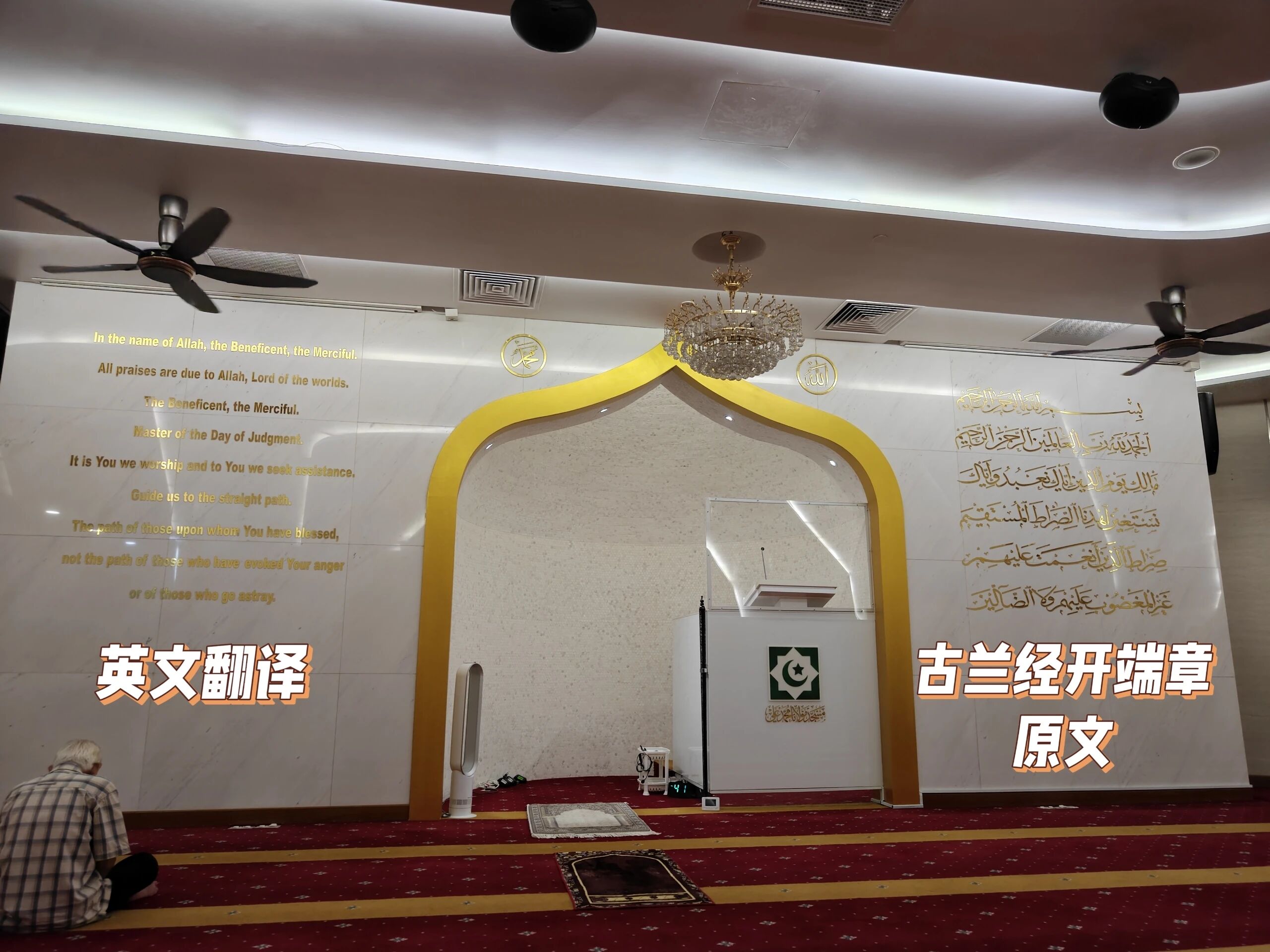
The front wall features the first chapter of the Quran, known as the Opening (Al-Fatiha). Interestingly, the wall of the Al-Abrar Mosque I visited last time also displayed this same chapter.
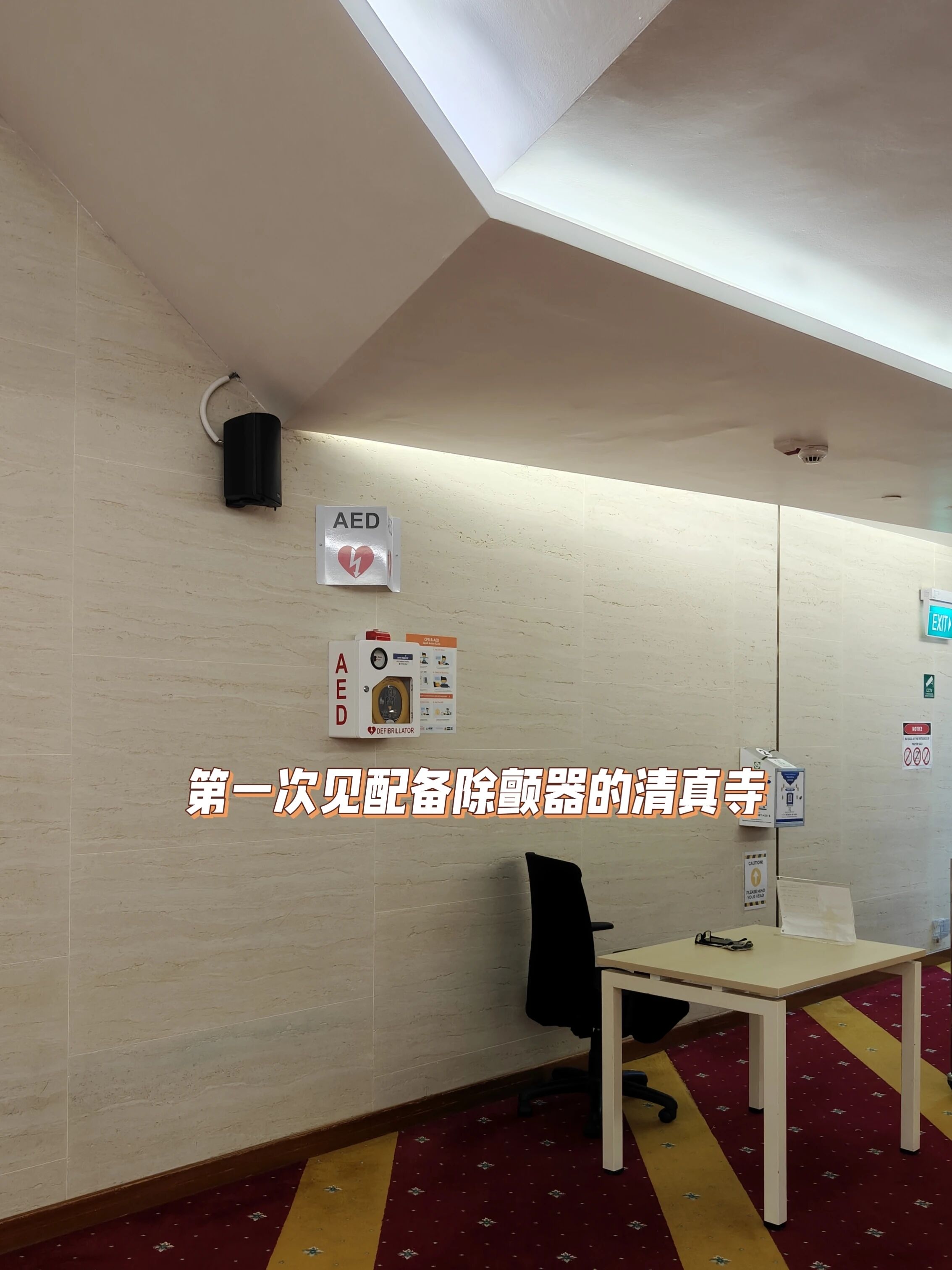
The prayer hall is well air-conditioned and even equipped with a defibrillator (Image 12) to help patients suffering from cardiac arrest. This is the first time I have seen a mosque equipped with a heart defibrillator.
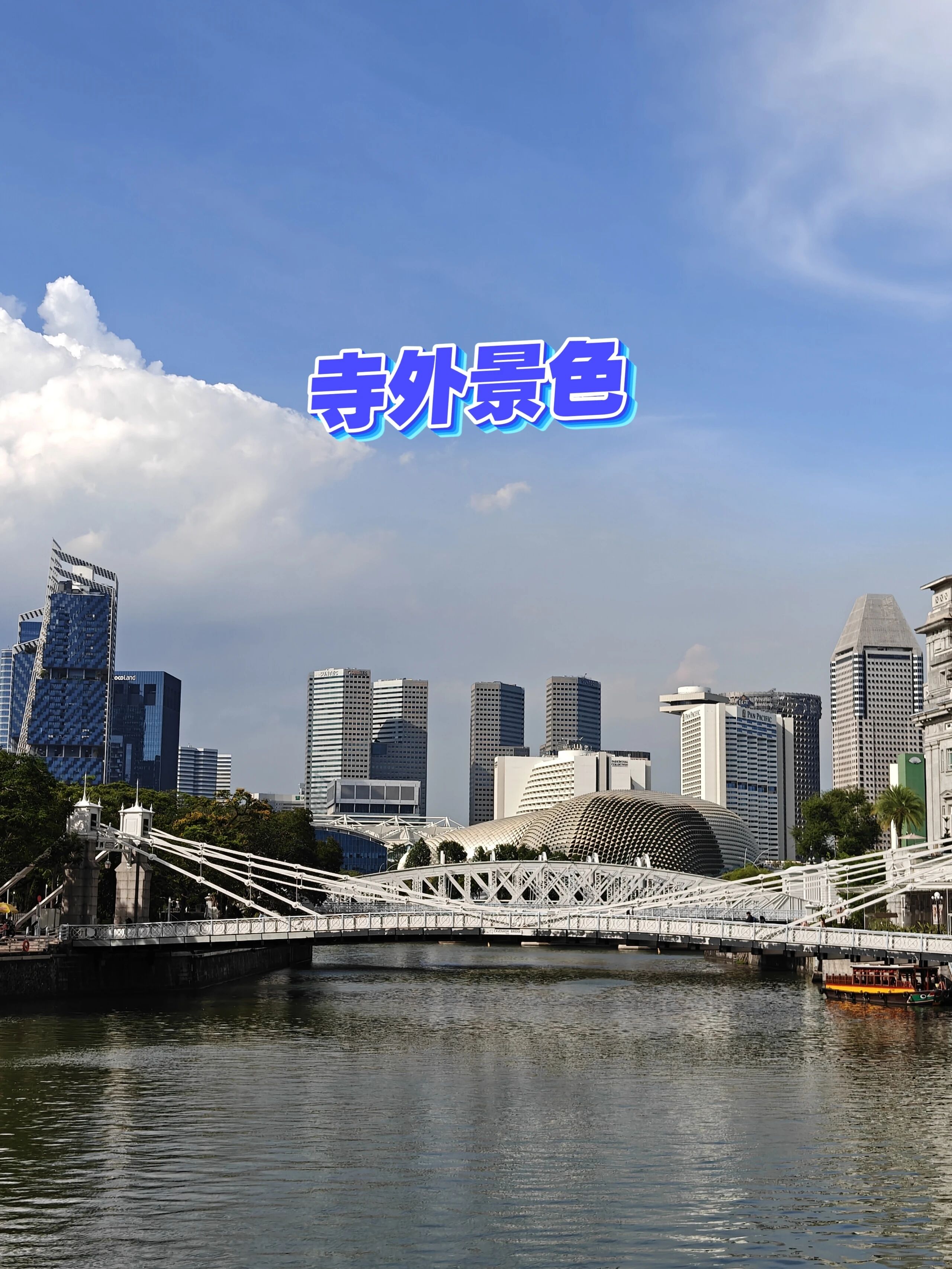
Once you leave, you are right at Boat Quay, where you can enjoy the waterfront view. Across the river is the Asian Civilisations Museum, which has a floor dedicated to religious exhibits, including a separate section for Islam.
I took photos of this last time, but unfortunately, they were lost. I wanted to take them again, but parts of the museum are currently under renovation, so the Islamic exhibit is temporarily closed. I will have to wait for another chance to show it to you all. view all
Summary: This Singapore Muslim travel guide explains the author's visit to an underground mosque and why such a mosque exists in the city. It preserves the personal opening, site details, and hidden prayer-space context from the source.
When I hear about underground mosques, I immediately think of a magazine I read as a kid. It talked about a country in Central Asia during the Soviet era where people dug a hole in the ground and propped it up with a few wooden beams to escape religious suppression.
People would sneak inside to perform namaz. But this mosque in Singapore is different. The mosque owned property in the business district. After signing an agreement with United Overseas Bank (UOB), both sides decided the mosque would trade its above-ground property for part of the space on the first basement level of the UOB building to use as a mosque.
The brief history of the mosque (Image 7) shows a bit of pride, saying that I probably haven't seen many mosques built underground.
After visiting the South Indian gongbei, Thian Hock Keng Mosque, and Al-Abrar Mosque, I walked toward Boat Quay. Before long, I saw the entrance to the underground mosque (Image 1). Honestly, it looks a bit like a subway entrance or an underground parking garage for an apartment complex.
But there is a sign for the mosque next to it, so it is not easy to mistake.
The first time I went there, I almost walked straight into the entrance for the women's prayer hall. That is because this mosque has separate entrances for men and women. The entrance on Boat Quay leads to the men's prayer hall, and the entrance on Chulia Street leads to the women's prayer hall.
I went to the men's prayer hall. After walking down the stairs, there is a place to perform wudu in the entryway, and there are also restrooms. Performing wudu is very convenient.
After finishing wudu and entering the prayer hall, I found that the space is actually quite large and can hold a lot of people. The facilities are complete, and the interior decor is simple and elegant, making the space look clean and tidy.
The front wall features the first chapter of the Quran, known as the Opening (Al-Fatiha). Interestingly, the wall of the Al-Abrar Mosque I visited last time also displayed this same chapter.
The prayer hall is well air-conditioned and even equipped with a defibrillator (Image 12) to help patients suffering from cardiac arrest. This is the first time I have seen a mosque equipped with a heart defibrillator.
Once you leave, you are right at Boat Quay, where you can enjoy the waterfront view. Across the river is the Asian Civilisations Museum, which has a floor dedicated to religious exhibits, including a separate section for Islam.
I took photos of this last time, but unfortunately, they were lost. I wanted to take them again, but parts of the museum are currently under renovation, so the Islamic exhibit is temporarily closed. I will have to wait for another chance to show it to you all. view all
Reposted from the web
Summary: This Singapore Muslim travel guide explains the author's visit to an underground mosque and why such a mosque exists in the city. It preserves the personal opening, site details, and hidden prayer-space context from the source.
When I hear about underground mosques, I immediately think of a magazine I read as a kid. It talked about a country in Central Asia during the Soviet era where people dug a hole in the ground and propped it up with a few wooden beams to escape religious suppression.
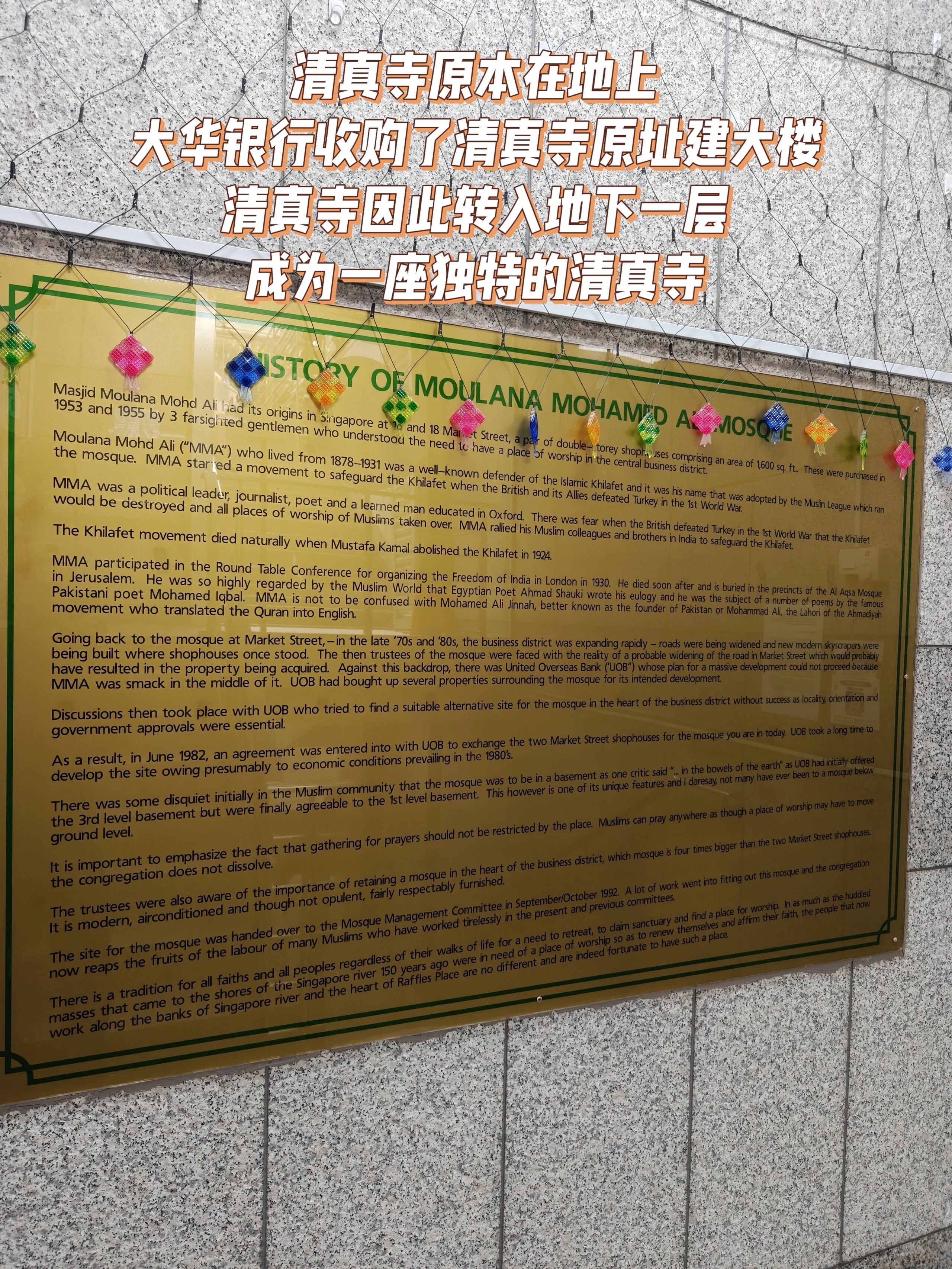
People would sneak inside to perform namaz. But this mosque in Singapore is different. The mosque owned property in the business district. After signing an agreement with United Overseas Bank (UOB), both sides decided the mosque would trade its above-ground property for part of the space on the first basement level of the UOB building to use as a mosque.
The brief history of the mosque (Image 7) shows a bit of pride, saying that I probably haven't seen many mosques built underground.
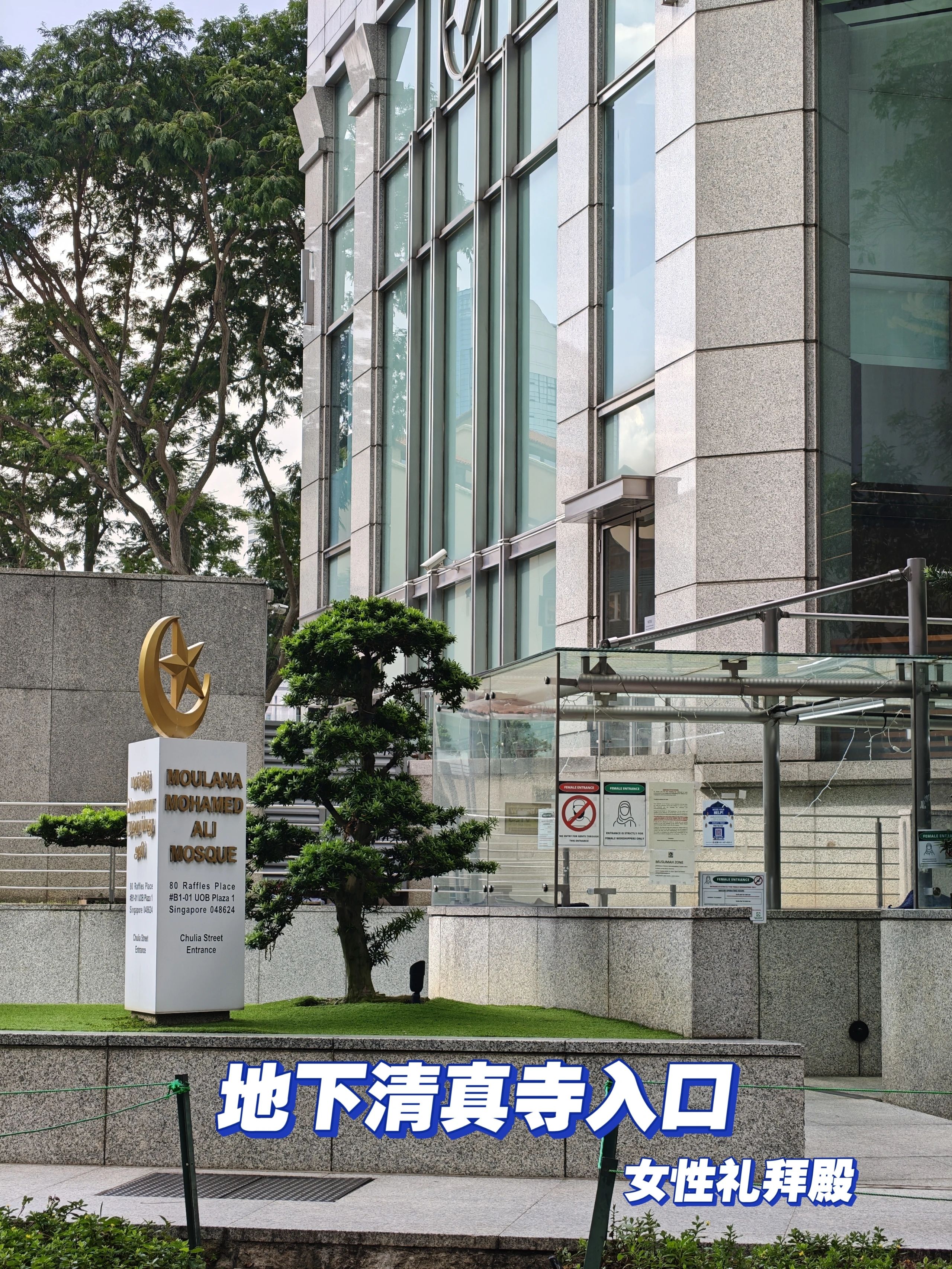
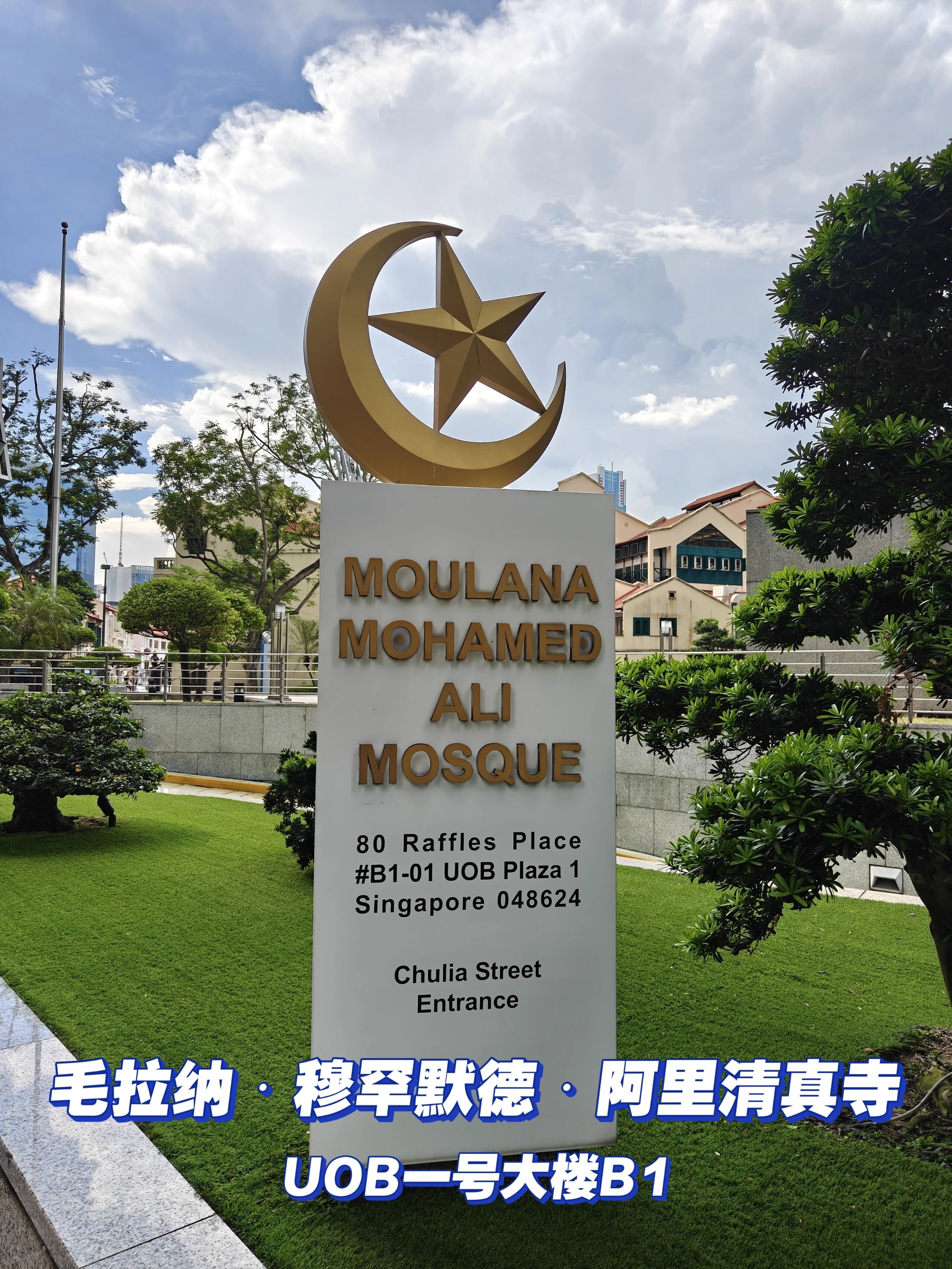
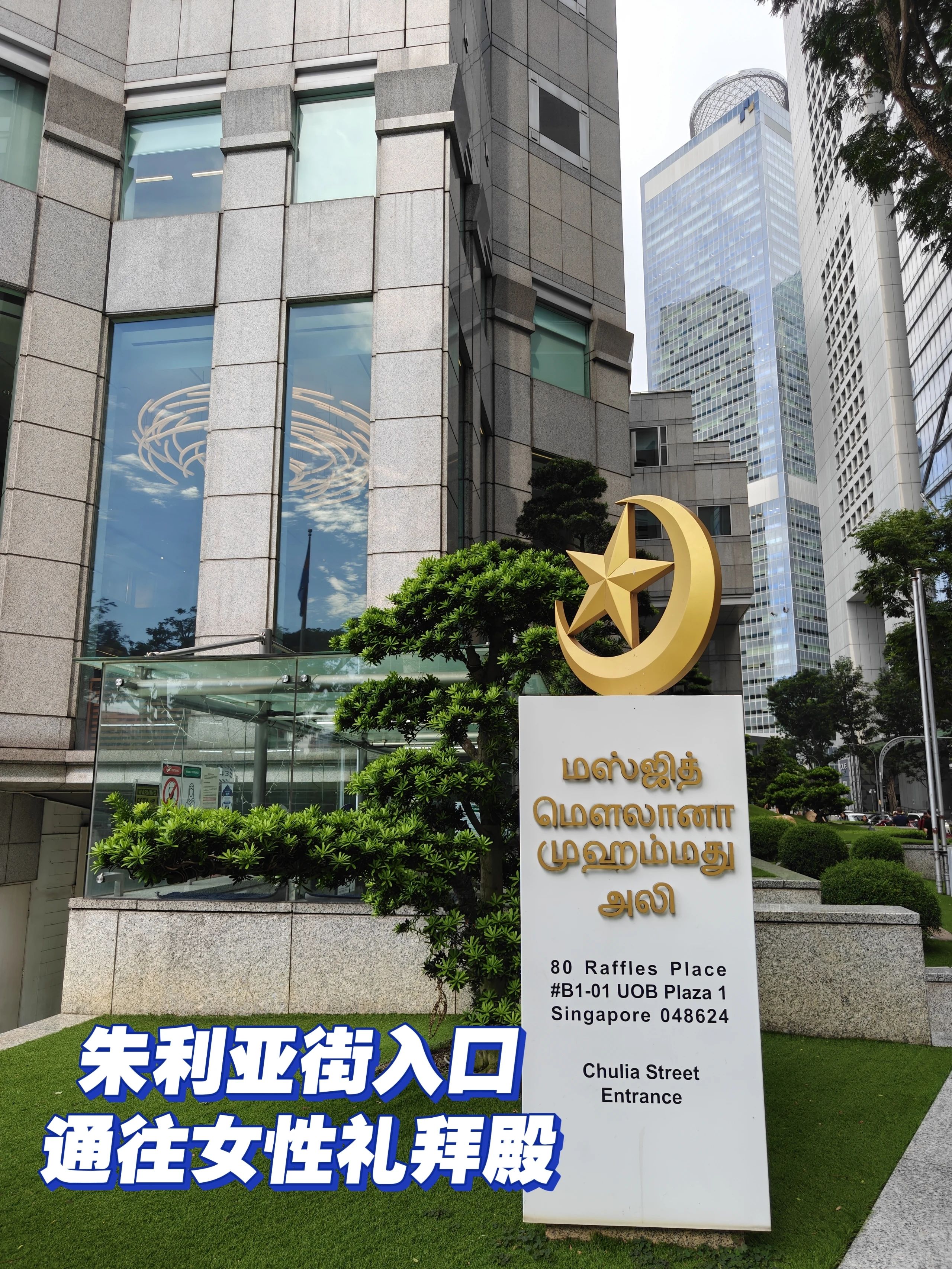
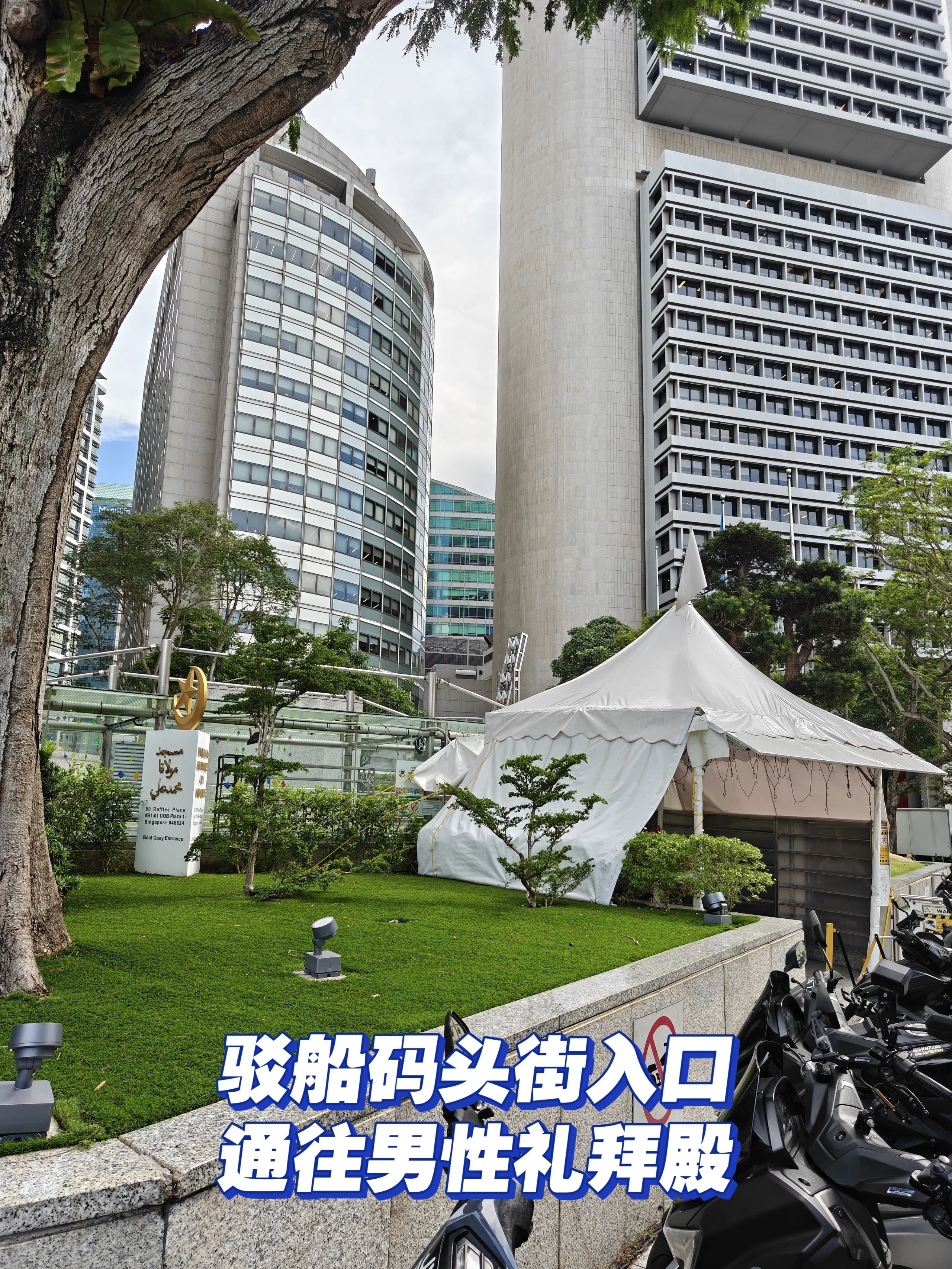
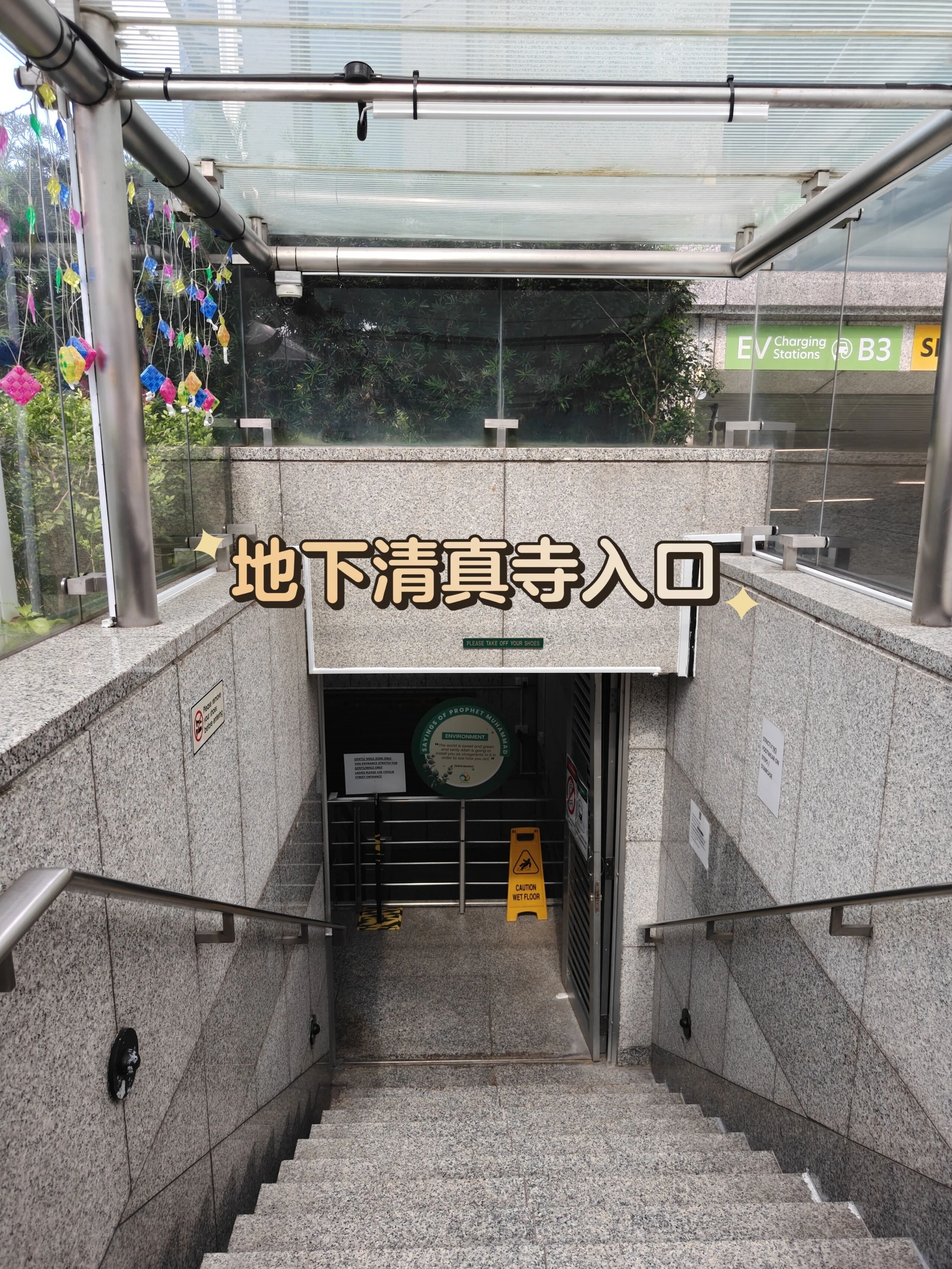
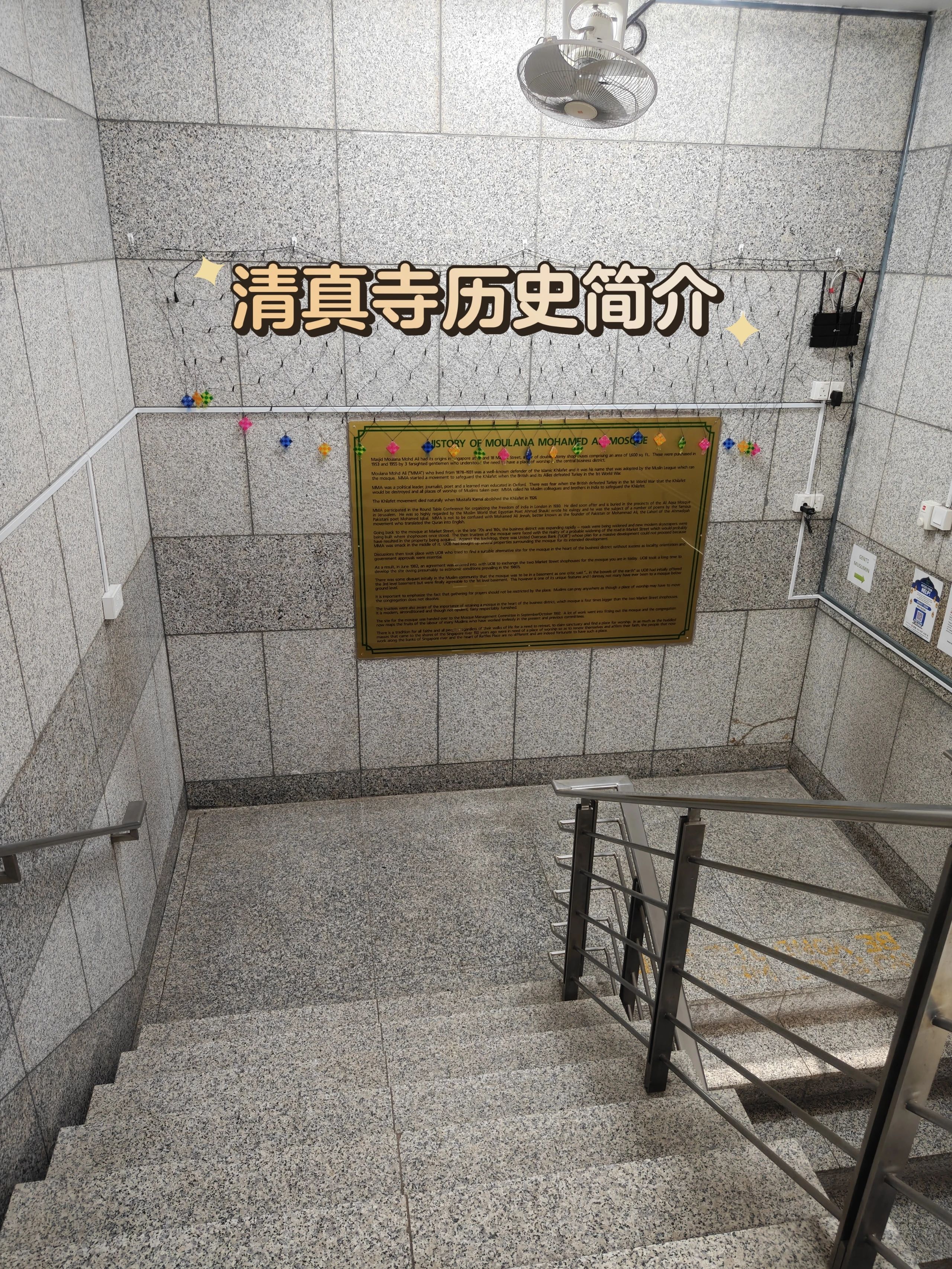
After visiting the South Indian gongbei, Thian Hock Keng Mosque, and Al-Abrar Mosque, I walked toward Boat Quay. Before long, I saw the entrance to the underground mosque (Image 1). Honestly, it looks a bit like a subway entrance or an underground parking garage for an apartment complex.
But there is a sign for the mosque next to it, so it is not easy to mistake.
The first time I went there, I almost walked straight into the entrance for the women's prayer hall. That is because this mosque has separate entrances for men and women. The entrance on Boat Quay leads to the men's prayer hall, and the entrance on Chulia Street leads to the women's prayer hall.
I went to the men's prayer hall. After walking down the stairs, there is a place to perform wudu in the entryway, and there are also restrooms. Performing wudu is very convenient.
After finishing wudu and entering the prayer hall, I found that the space is actually quite large and can hold a lot of people. The facilities are complete, and the interior decor is simple and elegant, making the space look clean and tidy.
The front wall features the first chapter of the Quran, known as the Opening (Al-Fatiha). Interestingly, the wall of the Al-Abrar Mosque I visited last time also displayed this same chapter.
The prayer hall is well air-conditioned and even equipped with a defibrillator (Image 12) to help patients suffering from cardiac arrest. This is the first time I have seen a mosque equipped with a heart defibrillator.
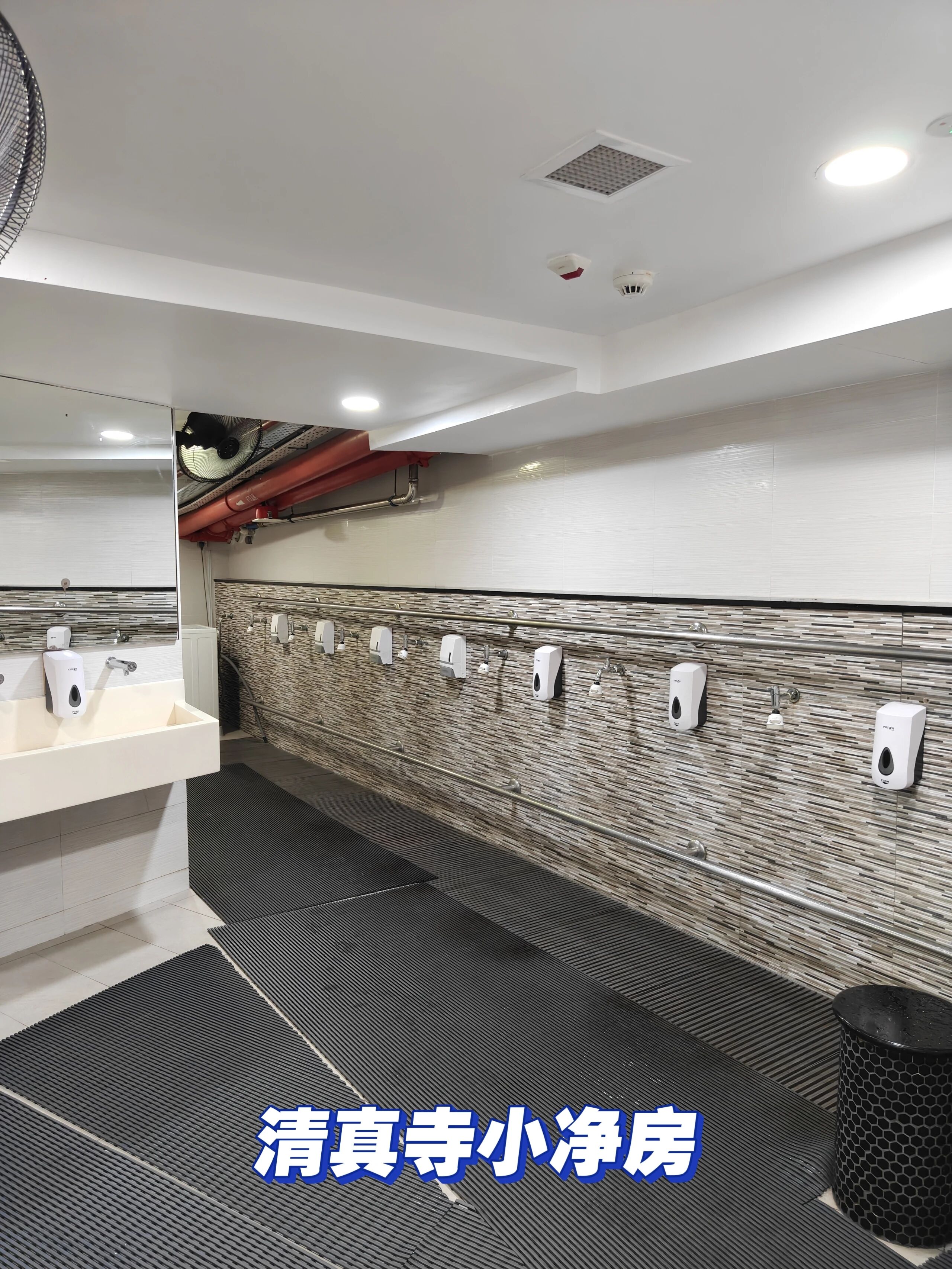
Once you leave, you are right at Boat Quay, where you can enjoy the waterfront view. Across the river is the Asian Civilisations Museum, which has a floor dedicated to religious exhibits, including a separate section for Islam.
I took photos of this last time, but unfortunately, they were lost. I wanted to take them again, but parts of the museum are currently under renovation, so the Islamic exhibit is temporarily closed. I will have to wait for another chance to show it to you all.
Summary: This Singapore Muslim travel guide explains the author's visit to an underground mosque and why such a mosque exists in the city. It preserves the personal opening, site details, and hidden prayer-space context from the source.
When I hear about underground mosques, I immediately think of a magazine I read as a kid. It talked about a country in Central Asia during the Soviet era where people dug a hole in the ground and propped it up with a few wooden beams to escape religious suppression.
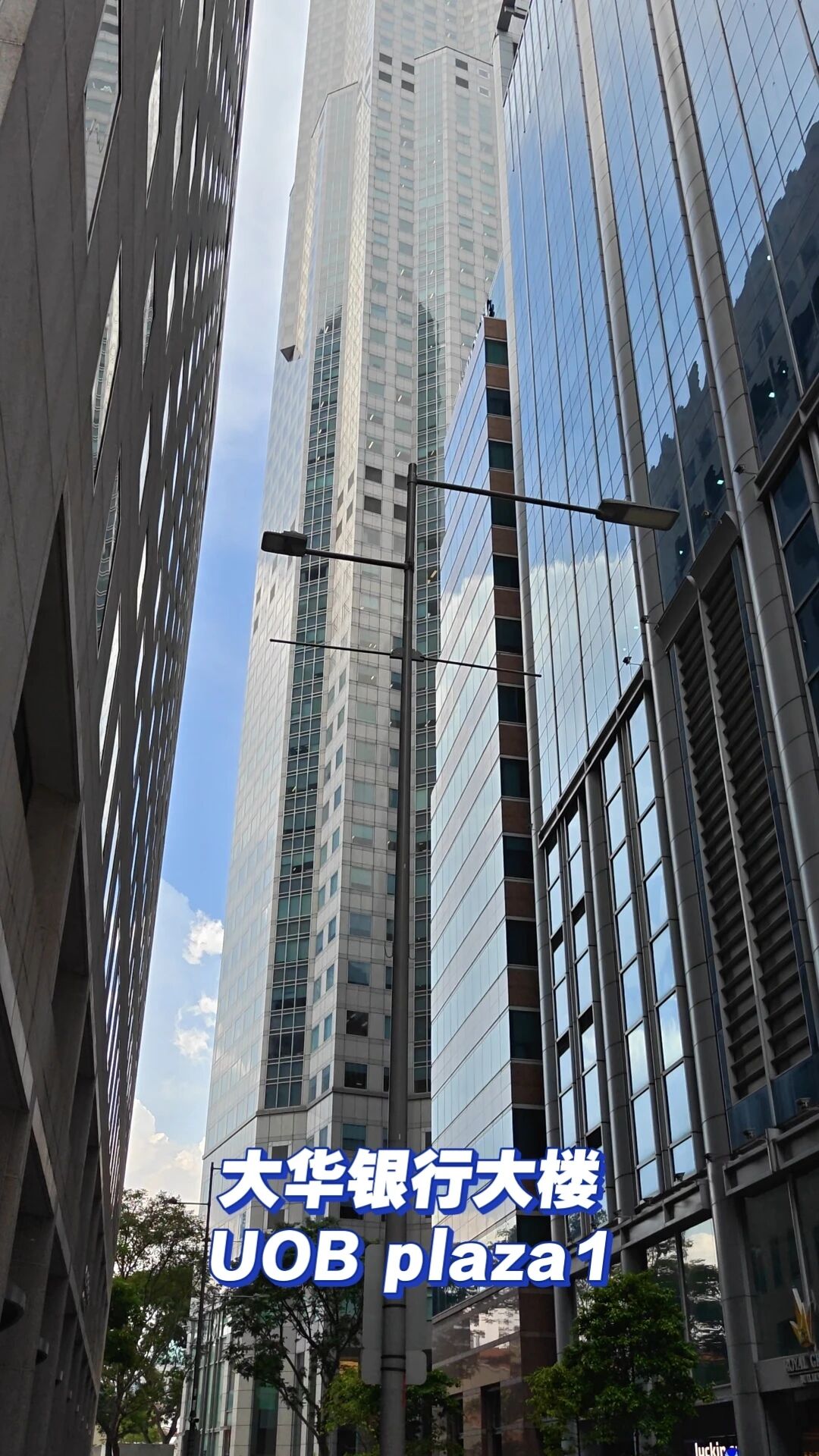
People would sneak inside to perform namaz. But this mosque in Singapore is different. The mosque owned property in the business district. After signing an agreement with United Overseas Bank (UOB), both sides decided the mosque would trade its above-ground property for part of the space on the first basement level of the UOB building to use as a mosque.
The brief history of the mosque (Image 7) shows a bit of pride, saying that I probably haven't seen many mosques built underground.
After visiting the South Indian gongbei, Thian Hock Keng Mosque, and Al-Abrar Mosque, I walked toward Boat Quay. Before long, I saw the entrance to the underground mosque (Image 1). Honestly, it looks a bit like a subway entrance or an underground parking garage for an apartment complex.
But there is a sign for the mosque next to it, so it is not easy to mistake.
The first time I went there, I almost walked straight into the entrance for the women's prayer hall. That is because this mosque has separate entrances for men and women. The entrance on Boat Quay leads to the men's prayer hall, and the entrance on Chulia Street leads to the women's prayer hall.
I went to the men's prayer hall. After walking down the stairs, there is a place to perform wudu in the entryway, and there are also restrooms. Performing wudu is very convenient.
After finishing wudu and entering the prayer hall, I found that the space is actually quite large and can hold a lot of people. The facilities are complete, and the interior decor is simple and elegant, making the space look clean and tidy.
The front wall features the first chapter of the Quran, known as the Opening (Al-Fatiha). Interestingly, the wall of the Al-Abrar Mosque I visited last time also displayed this same chapter.
The prayer hall is well air-conditioned and even equipped with a defibrillator (Image 12) to help patients suffering from cardiac arrest. This is the first time I have seen a mosque equipped with a heart defibrillator.
Once you leave, you are right at Boat Quay, where you can enjoy the waterfront view. Across the river is the Asian Civilisations Museum, which has a floor dedicated to religious exhibits, including a separate section for Islam.
I took photos of this last time, but unfortunately, they were lost. I wanted to take them again, but parts of the museum are currently under renovation, so the Islamic exhibit is temporarily closed. I will have to wait for another chance to show it to you all.
Muslim Travel Guide Singapore: Underground Mosque, Bencoolen Area and Hidden Prayer Space
Articles • Hasan09 posted the article • 0 comments • 327 views • 2026-05-24 01:47
Reposted from the web
Summary: This Singapore Muslim travel guide explains the author's visit to an underground mosque and why such a mosque exists in the city. It preserves the personal opening, site details, and hidden prayer-space context from the source.
When I hear about underground mosques, I immediately think of a magazine I read as a kid. It talked about a country in Central Asia during the Soviet era where people dug a hole in the ground and propped it up with a few wooden beams to escape religious suppression.
People would sneak inside to perform namaz. But this mosque in Singapore is different. The mosque owned property in the business district. After signing an agreement with United Overseas Bank (UOB), both sides decided the mosque would trade its above-ground property for part of the space on the first basement level of the UOB building to use as a mosque.
The brief history of the mosque (Image 7) shows a bit of pride, saying that I probably haven't seen many mosques built underground.
After visiting the South Indian gongbei, Thian Hock Keng Mosque, and Al-Abrar Mosque, I walked toward Boat Quay. Before long, I saw the entrance to the underground mosque (Image 1). Honestly, it looks a bit like a subway entrance or an underground parking garage for an apartment complex.
But there is a sign for the mosque next to it, so it is not easy to mistake.
The first time I went there, I almost walked straight into the entrance for the women's prayer hall. That is because this mosque has separate entrances for men and women. The entrance on Boat Quay leads to the men's prayer hall, and the entrance on Chulia Street leads to the women's prayer hall.
I went to the men's prayer hall. After walking down the stairs, there is a place to perform wudu in the entryway, and there are also restrooms. Performing wudu is very convenient.
After finishing wudu and entering the prayer hall, I found that the space is actually quite large and can hold a lot of people. The facilities are complete, and the interior decor is simple and elegant, making the space look clean and tidy.
The front wall features the first chapter of the Quran, known as the Opening (Al-Fatiha). Interestingly, the wall of the Al-Abrar Mosque I visited last time also displayed this same chapter.
The prayer hall is well air-conditioned and even equipped with a defibrillator (Image 12) to help patients suffering from cardiac arrest. This is the first time I have seen a mosque equipped with a heart defibrillator.
Once you leave, you are right at Boat Quay, where you can enjoy the waterfront view. Across the river is the Asian Civilisations Museum, which has a floor dedicated to religious exhibits, including a separate section for Islam.
I took photos of this last time, but unfortunately, they were lost. I wanted to take them again, but parts of the museum are currently under renovation, so the Islamic exhibit is temporarily closed. I will have to wait for another chance to show it to you all. view all
Summary: This Singapore Muslim travel guide explains the author's visit to an underground mosque and why such a mosque exists in the city. It preserves the personal opening, site details, and hidden prayer-space context from the source.
When I hear about underground mosques, I immediately think of a magazine I read as a kid. It talked about a country in Central Asia during the Soviet era where people dug a hole in the ground and propped it up with a few wooden beams to escape religious suppression.
People would sneak inside to perform namaz. But this mosque in Singapore is different. The mosque owned property in the business district. After signing an agreement with United Overseas Bank (UOB), both sides decided the mosque would trade its above-ground property for part of the space on the first basement level of the UOB building to use as a mosque.
The brief history of the mosque (Image 7) shows a bit of pride, saying that I probably haven't seen many mosques built underground.
After visiting the South Indian gongbei, Thian Hock Keng Mosque, and Al-Abrar Mosque, I walked toward Boat Quay. Before long, I saw the entrance to the underground mosque (Image 1). Honestly, it looks a bit like a subway entrance or an underground parking garage for an apartment complex.
But there is a sign for the mosque next to it, so it is not easy to mistake.
The first time I went there, I almost walked straight into the entrance for the women's prayer hall. That is because this mosque has separate entrances for men and women. The entrance on Boat Quay leads to the men's prayer hall, and the entrance on Chulia Street leads to the women's prayer hall.
I went to the men's prayer hall. After walking down the stairs, there is a place to perform wudu in the entryway, and there are also restrooms. Performing wudu is very convenient.
After finishing wudu and entering the prayer hall, I found that the space is actually quite large and can hold a lot of people. The facilities are complete, and the interior decor is simple and elegant, making the space look clean and tidy.
The front wall features the first chapter of the Quran, known as the Opening (Al-Fatiha). Interestingly, the wall of the Al-Abrar Mosque I visited last time also displayed this same chapter.
The prayer hall is well air-conditioned and even equipped with a defibrillator (Image 12) to help patients suffering from cardiac arrest. This is the first time I have seen a mosque equipped with a heart defibrillator.
Once you leave, you are right at Boat Quay, where you can enjoy the waterfront view. Across the river is the Asian Civilisations Museum, which has a floor dedicated to religious exhibits, including a separate section for Islam.
I took photos of this last time, but unfortunately, they were lost. I wanted to take them again, but parts of the museum are currently under renovation, so the Islamic exhibit is temporarily closed. I will have to wait for another chance to show it to you all. view all
Reposted from the web
Summary: This Singapore Muslim travel guide explains the author's visit to an underground mosque and why such a mosque exists in the city. It preserves the personal opening, site details, and hidden prayer-space context from the source.
When I hear about underground mosques, I immediately think of a magazine I read as a kid. It talked about a country in Central Asia during the Soviet era where people dug a hole in the ground and propped it up with a few wooden beams to escape religious suppression.
People would sneak inside to perform namaz. But this mosque in Singapore is different. The mosque owned property in the business district. After signing an agreement with United Overseas Bank (UOB), both sides decided the mosque would trade its above-ground property for part of the space on the first basement level of the UOB building to use as a mosque.
The brief history of the mosque (Image 7) shows a bit of pride, saying that I probably haven't seen many mosques built underground.
After visiting the South Indian gongbei, Thian Hock Keng Mosque, and Al-Abrar Mosque, I walked toward Boat Quay. Before long, I saw the entrance to the underground mosque (Image 1). Honestly, it looks a bit like a subway entrance or an underground parking garage for an apartment complex.
But there is a sign for the mosque next to it, so it is not easy to mistake.
The first time I went there, I almost walked straight into the entrance for the women's prayer hall. That is because this mosque has separate entrances for men and women. The entrance on Boat Quay leads to the men's prayer hall, and the entrance on Chulia Street leads to the women's prayer hall.
I went to the men's prayer hall. After walking down the stairs, there is a place to perform wudu in the entryway, and there are also restrooms. Performing wudu is very convenient.
After finishing wudu and entering the prayer hall, I found that the space is actually quite large and can hold a lot of people. The facilities are complete, and the interior decor is simple and elegant, making the space look clean and tidy.
The front wall features the first chapter of the Quran, known as the Opening (Al-Fatiha). Interestingly, the wall of the Al-Abrar Mosque I visited last time also displayed this same chapter.
The prayer hall is well air-conditioned and even equipped with a defibrillator (Image 12) to help patients suffering from cardiac arrest. This is the first time I have seen a mosque equipped with a heart defibrillator.
Once you leave, you are right at Boat Quay, where you can enjoy the waterfront view. Across the river is the Asian Civilisations Museum, which has a floor dedicated to religious exhibits, including a separate section for Islam.
I took photos of this last time, but unfortunately, they were lost. I wanted to take them again, but parts of the museum are currently under renovation, so the Islamic exhibit is temporarily closed. I will have to wait for another chance to show it to you all.
Summary: This Singapore Muslim travel guide explains the author's visit to an underground mosque and why such a mosque exists in the city. It preserves the personal opening, site details, and hidden prayer-space context from the source.
When I hear about underground mosques, I immediately think of a magazine I read as a kid. It talked about a country in Central Asia during the Soviet era where people dug a hole in the ground and propped it up with a few wooden beams to escape religious suppression.
People would sneak inside to perform namaz. But this mosque in Singapore is different. The mosque owned property in the business district. After signing an agreement with United Overseas Bank (UOB), both sides decided the mosque would trade its above-ground property for part of the space on the first basement level of the UOB building to use as a mosque.
The brief history of the mosque (Image 7) shows a bit of pride, saying that I probably haven't seen many mosques built underground.
After visiting the South Indian gongbei, Thian Hock Keng Mosque, and Al-Abrar Mosque, I walked toward Boat Quay. Before long, I saw the entrance to the underground mosque (Image 1). Honestly, it looks a bit like a subway entrance or an underground parking garage for an apartment complex.
But there is a sign for the mosque next to it, so it is not easy to mistake.
The first time I went there, I almost walked straight into the entrance for the women's prayer hall. That is because this mosque has separate entrances for men and women. The entrance on Boat Quay leads to the men's prayer hall, and the entrance on Chulia Street leads to the women's prayer hall.
I went to the men's prayer hall. After walking down the stairs, there is a place to perform wudu in the entryway, and there are also restrooms. Performing wudu is very convenient.
After finishing wudu and entering the prayer hall, I found that the space is actually quite large and can hold a lot of people. The facilities are complete, and the interior decor is simple and elegant, making the space look clean and tidy.
The front wall features the first chapter of the Quran, known as the Opening (Al-Fatiha). Interestingly, the wall of the Al-Abrar Mosque I visited last time also displayed this same chapter.
The prayer hall is well air-conditioned and even equipped with a defibrillator (Image 12) to help patients suffering from cardiac arrest. This is the first time I have seen a mosque equipped with a heart defibrillator.
Once you leave, you are right at Boat Quay, where you can enjoy the waterfront view. Across the river is the Asian Civilisations Museum, which has a floor dedicated to religious exhibits, including a separate section for Islam.
I took photos of this last time, but unfortunately, they were lost. I wanted to take them again, but parts of the museum are currently under renovation, so the Islamic exhibit is temporarily closed. I will have to wait for another chance to show it to you all.