

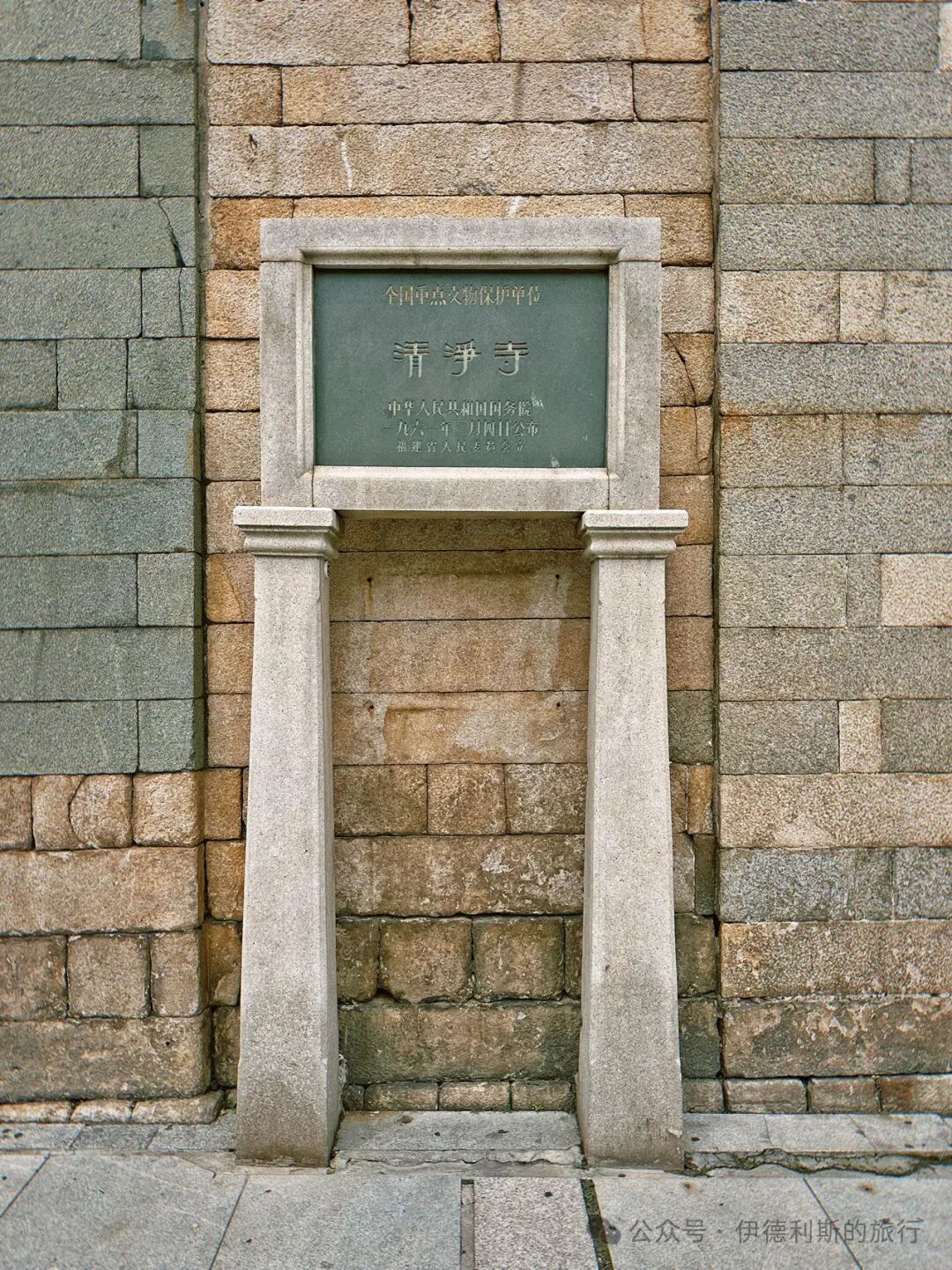
Qingjing Mosque
Islamic History Guide: Quanzhou Qingjing Mosque - A Thousand Years of Muslim Heritage
Articles • ali2007fr posted the article • 0 comments • 307 views • 2026-05-19 10:02
Reposted from the web
Summary: Islamic History Guide: Quanzhou Qingjing Mosque - A Thousand Years of Muslim Heritage is presented here as a firsthand travel account in clear, natural English. The account focuses on Quanzhou, Qingjing Mosque, Islamic History while preserving the names, places, food, photos, and historical details from the Chinese source.
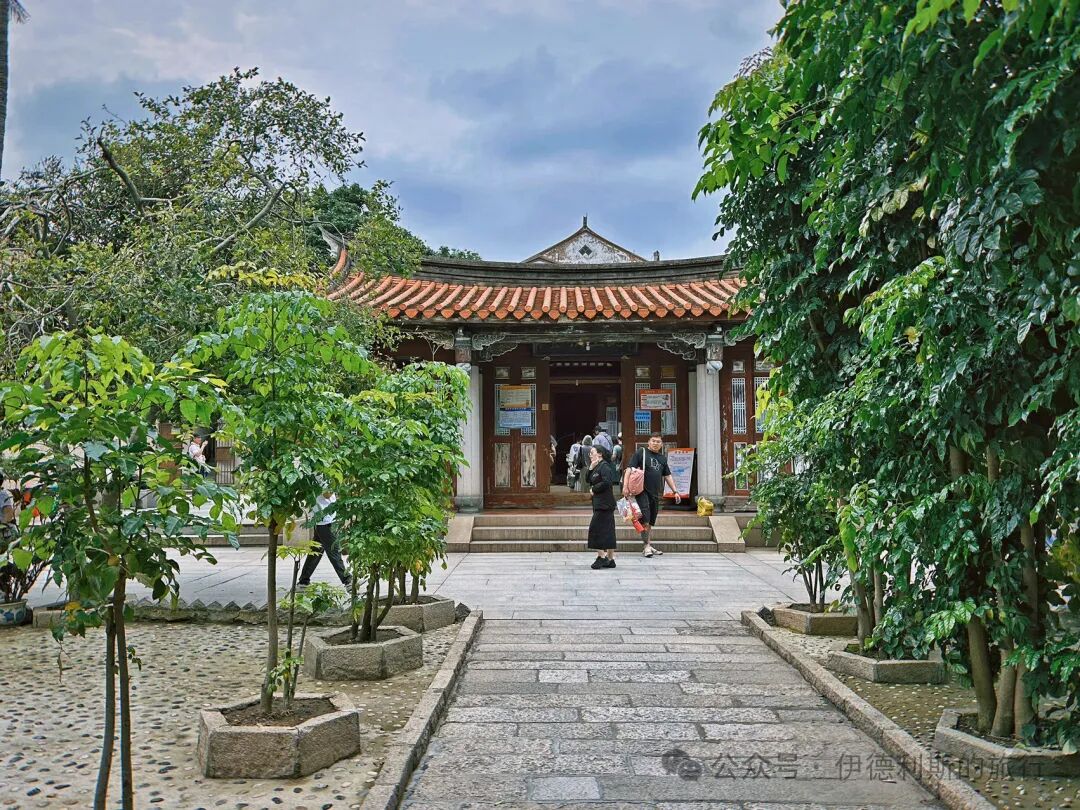
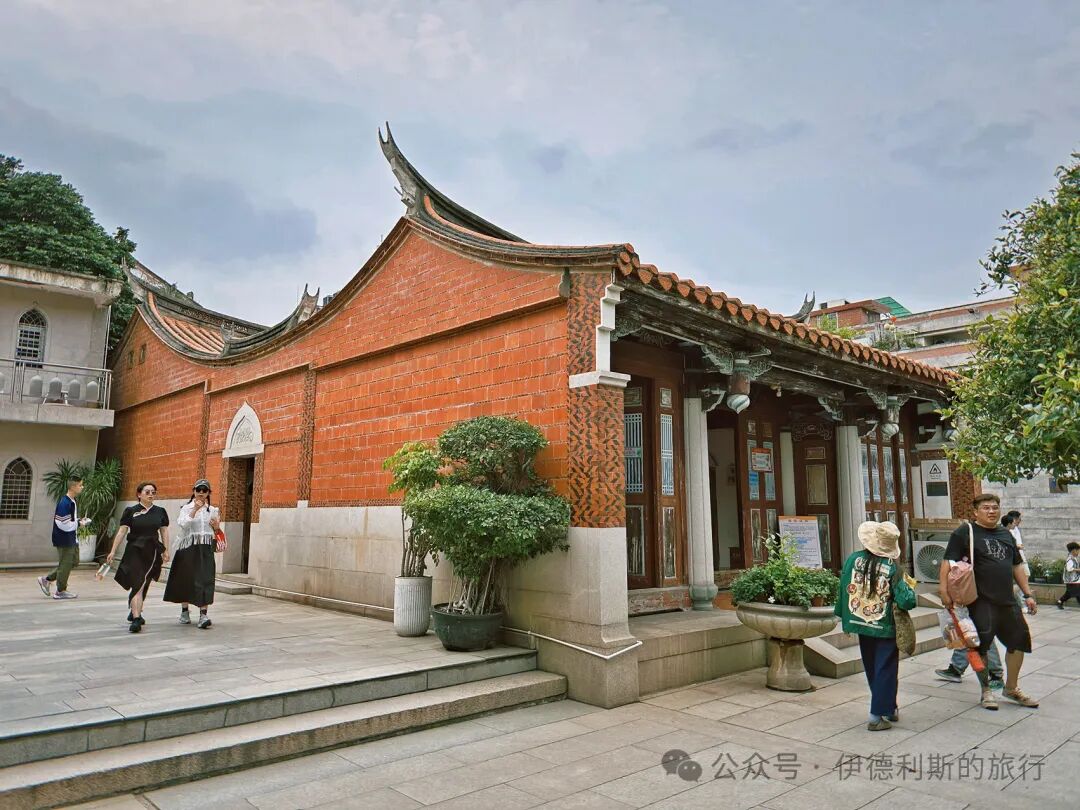
I arrived in Quanzhou at night and went straight to the Qingjing Mosque to pray. Imam Ma at the Qingjing Mosque is from Hualong, Qinghai. During the day, he leads namaz in the main hall donated by Oman, but after the tourist area closes, he leads prayers in the smaller Mingshan Hall.
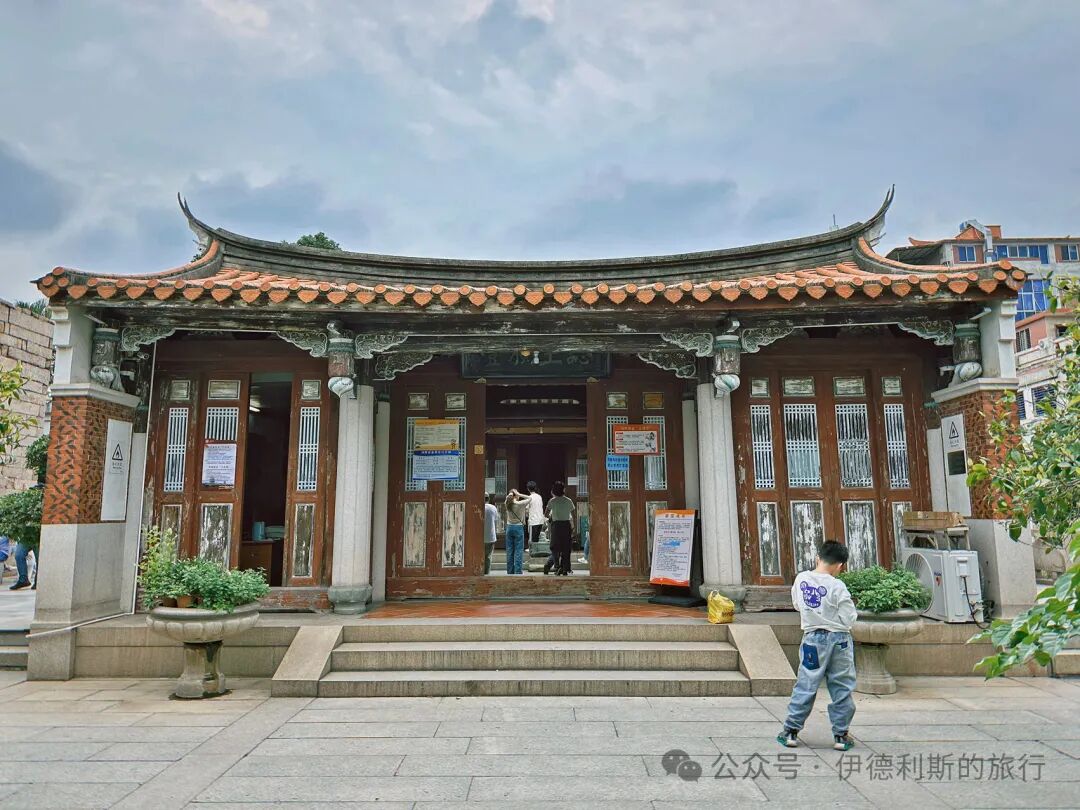
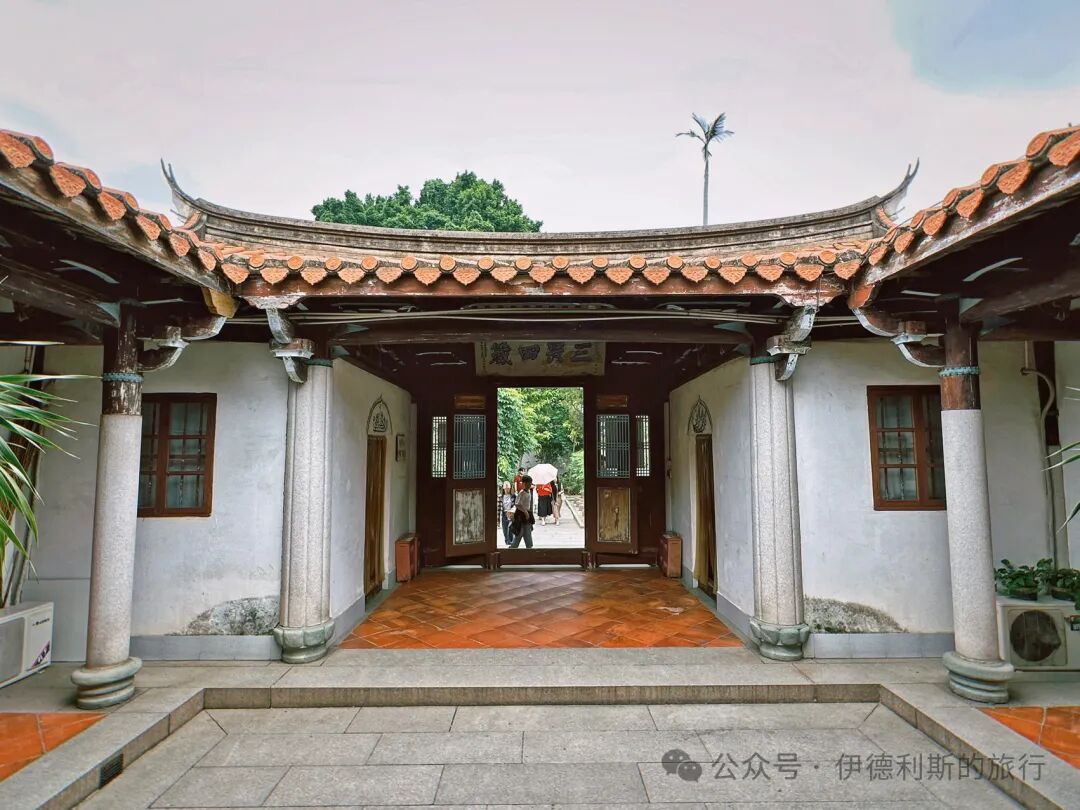
Mingshan Hall was first built in 1567 (the first year of the Longqing reign of the Ming Dynasty). After the roof of the main hall of the Qingjing Mosque collapsed in the early Qing Dynasty, Mingshan Hall became the place for worship. In 1818 (the 23rd year of the Jiaqing reign), Ma Jianji, a military commander from Sichuan stationed in Quanzhou, rebuilt Mingshan Hall in the traditional architectural style of southern Fujian. In 1871 (the 10th year of the Tongzhi reign), Jiang Changgui, the military commander for Fujian Province, rebuilt Mingshan Hall again.
During the Tongzhi reign, Jiang Changgui collected many stone tablets with Arabic inscriptions from the Yuan Dynasty in Quanzhou and embedded them into the walls of Mingshan Hall. These stone tablets were not removed until the major renovation of Mingshan Hall in the spring of 1983. Many of these tablets are Yuan Dynasty tombstones. The people buried there came from places like Tabriz and Tehran in Iran, Adana in Turkey, Nablus in Palestine, and Khwarezm in Uzbekistan.
Mingshan Hall sits just north of Bagua Ditch, which served as the city moat for Quanzhou during the Five Dynasties and Northern Song periods. A granite stone bridge from the Song Dynasty originally crossed the ditch, but it was rebuilt in 1998 when Bagua Ditch was widened.
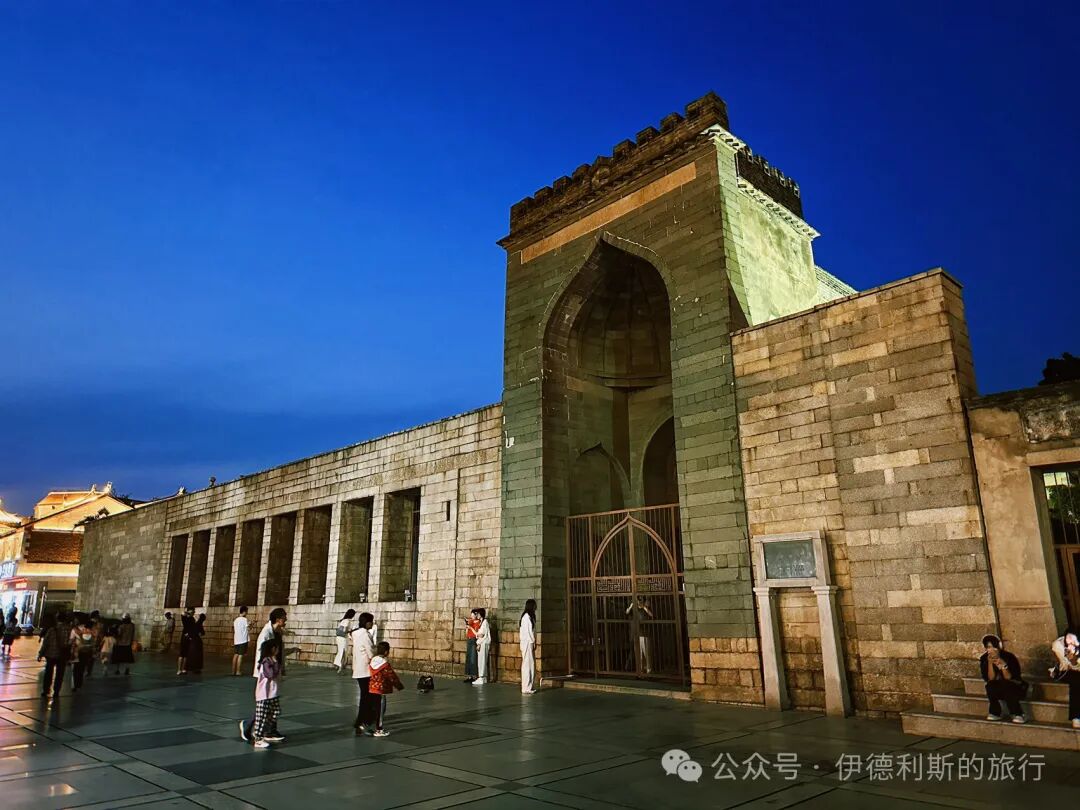
Night view of Qingjing Mosque.
The next morning, I continued exploring Qingjing Mosque.
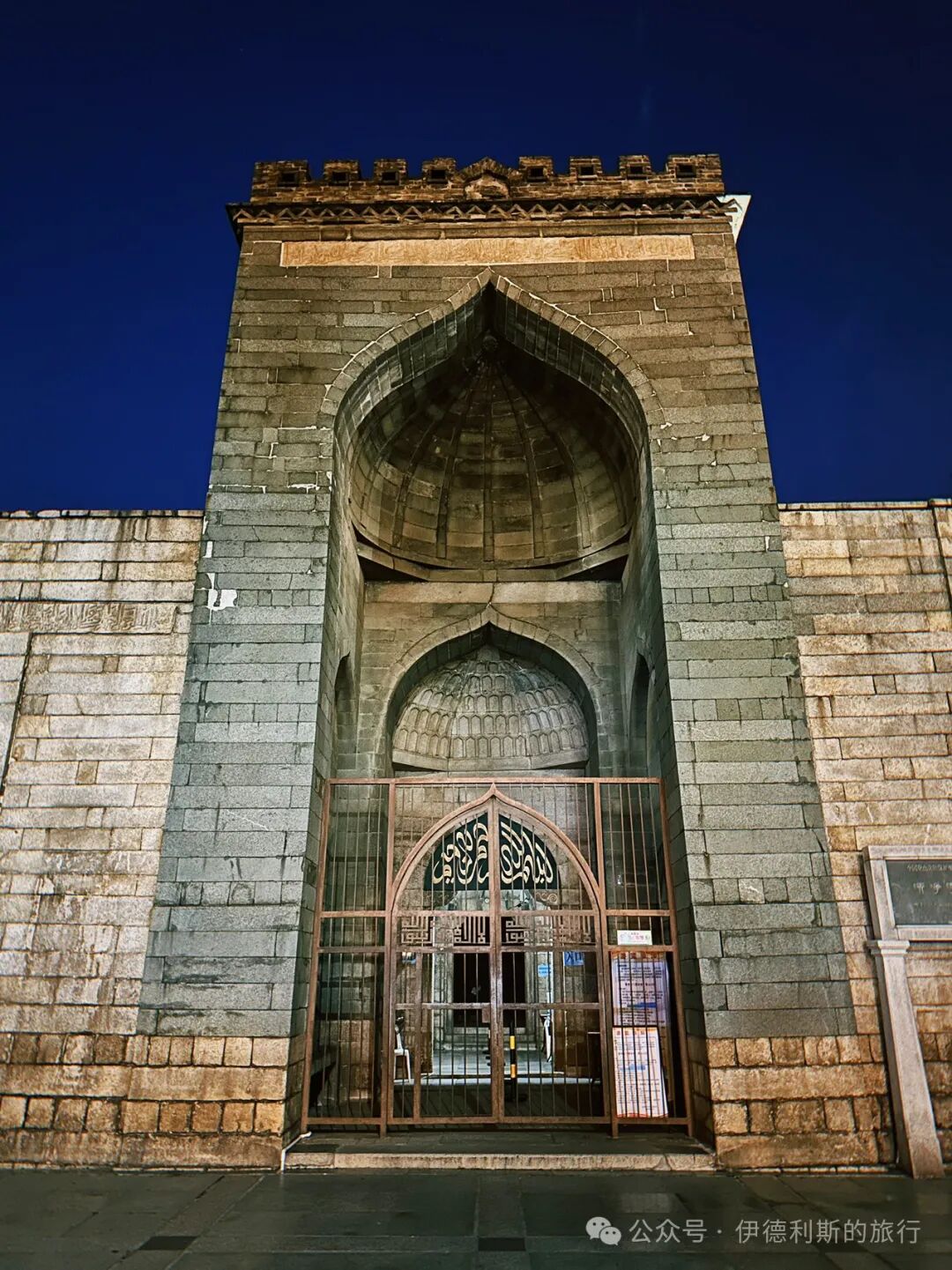
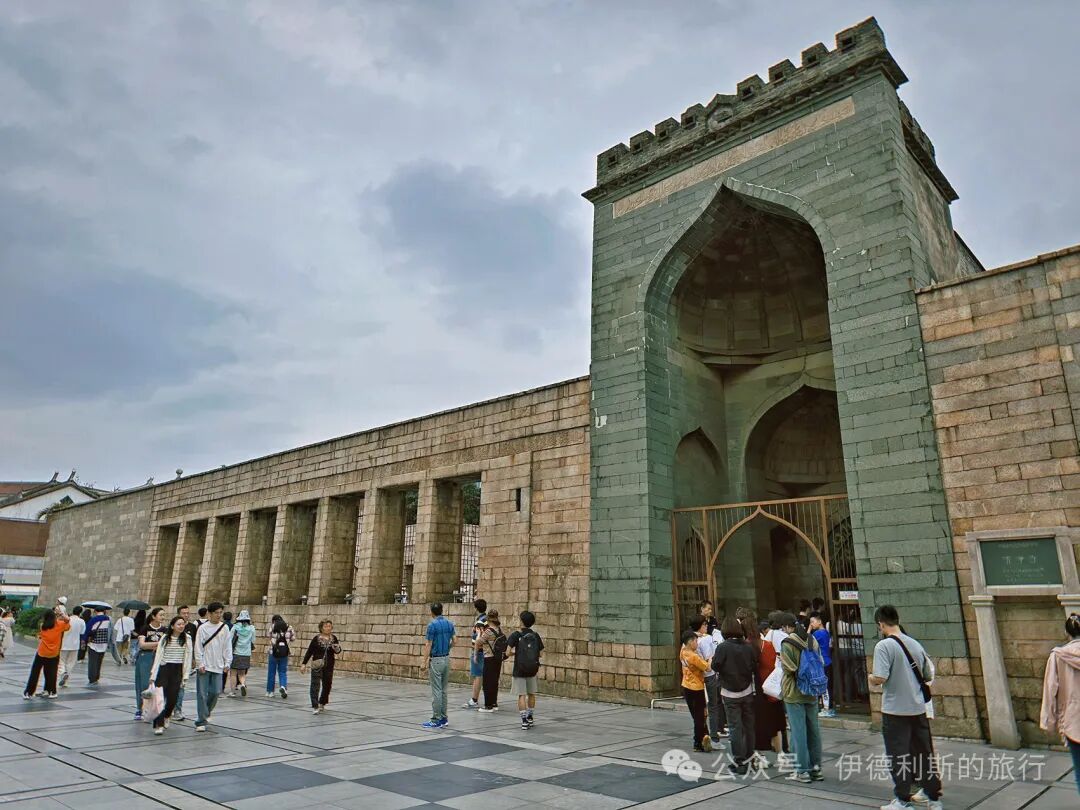
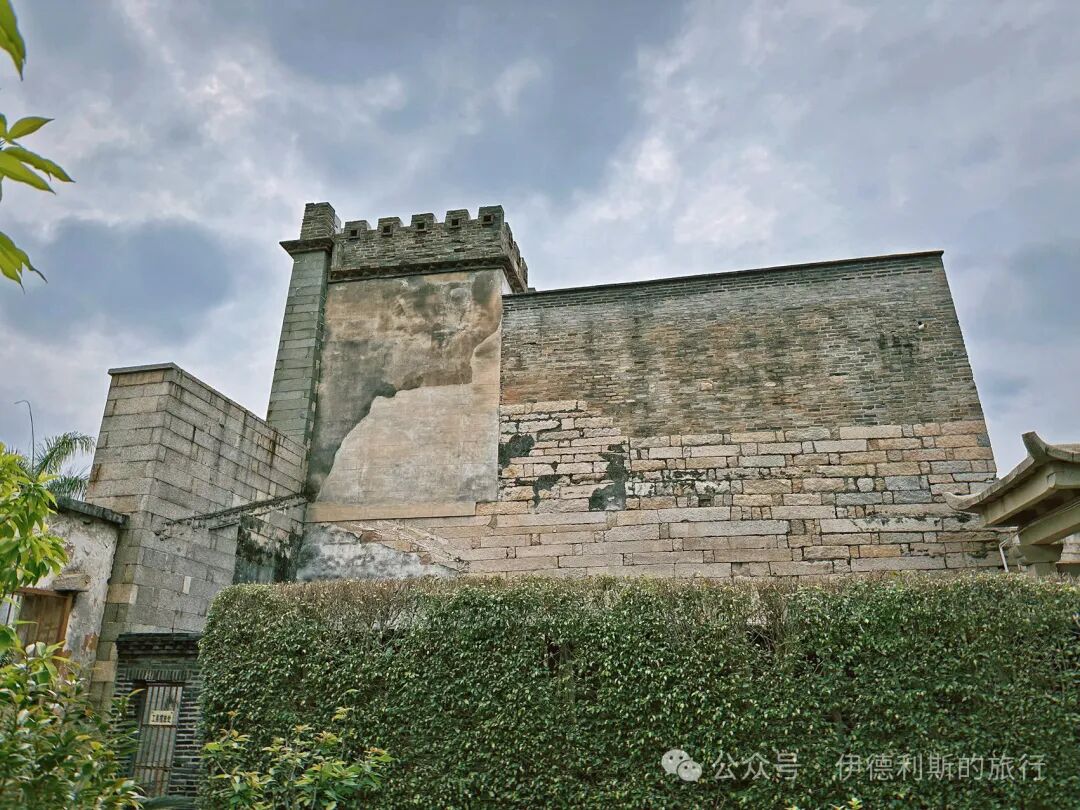
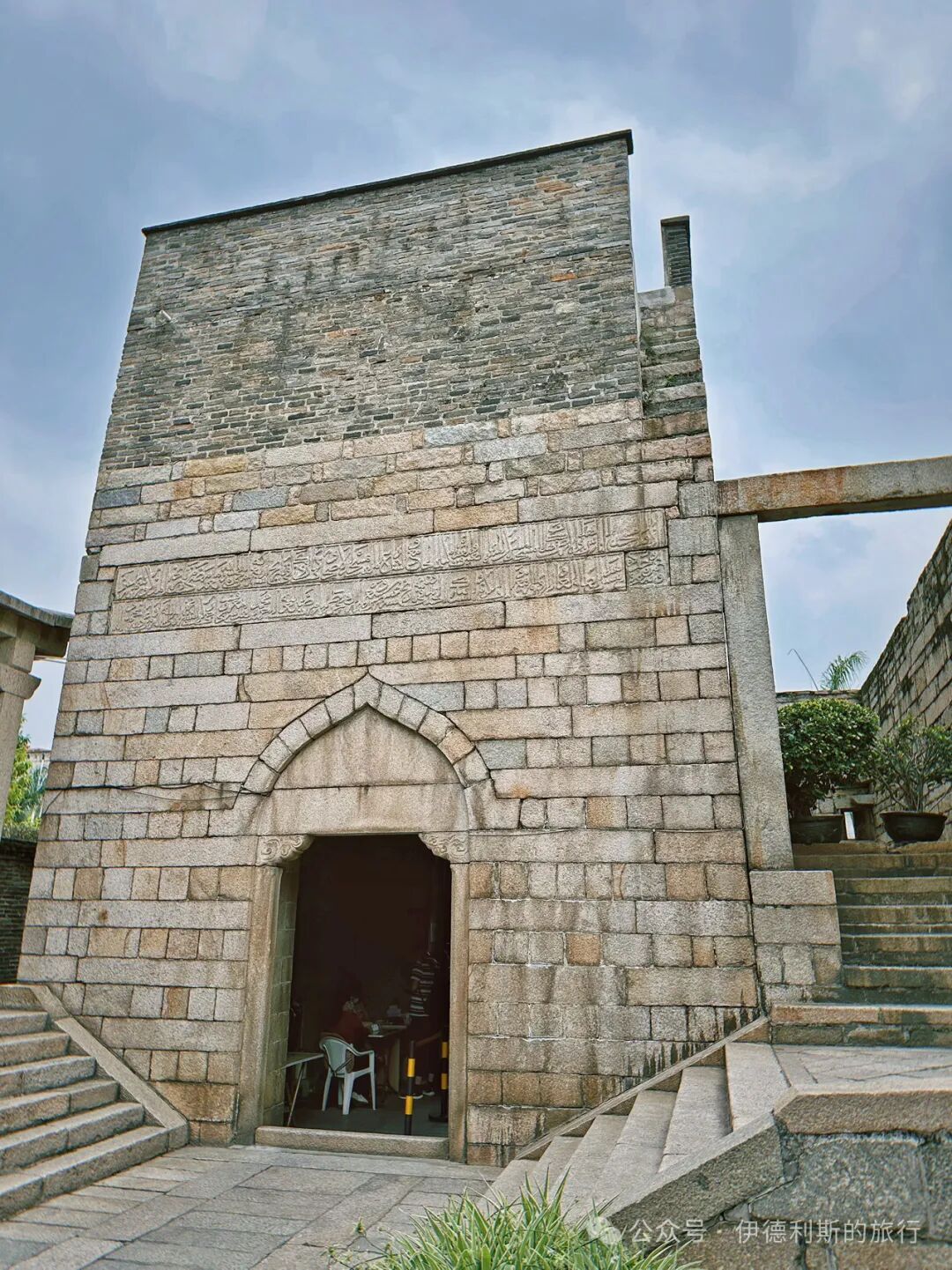
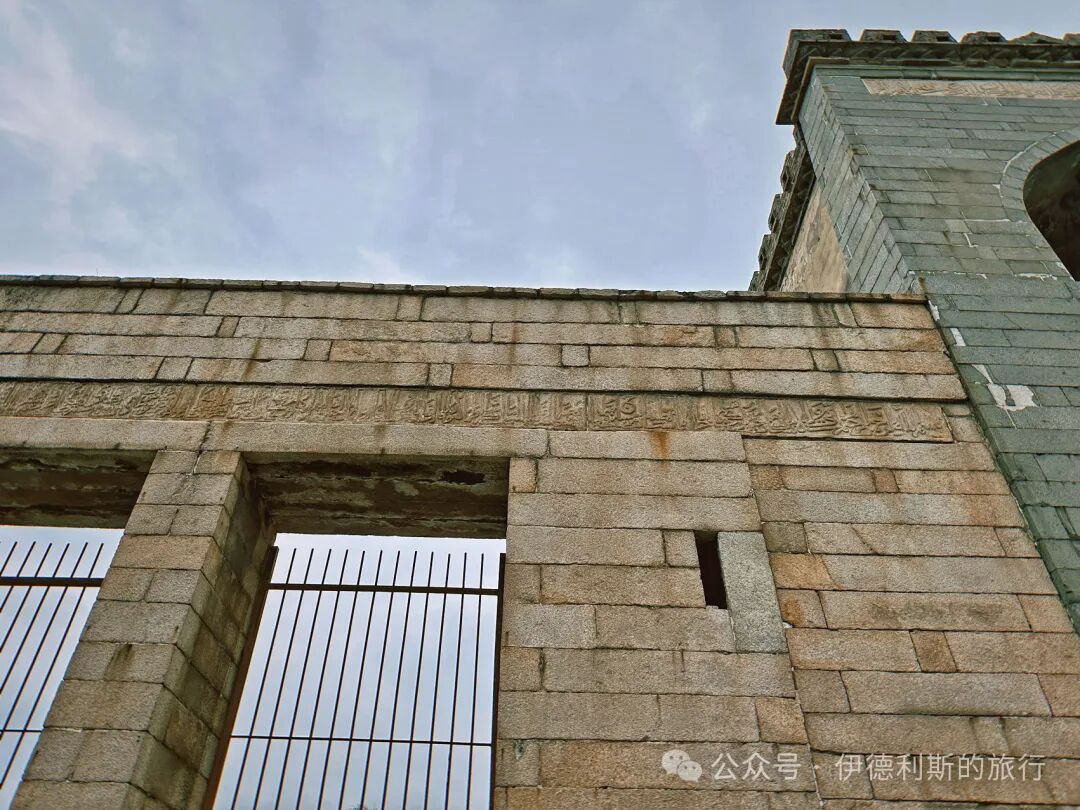
The gate tower of Qingjing Mosque is built from diabase and white granite, with Quranic verses (3:18-19) carved into the front.
The moon-sighting platform at the top of the gate is where people used to look for the new moon during Ramadan. When the local Muslim community was still active in Quanzhou, they hung three large lanterns on the gate every Ramadan. A large palace lantern hung in the center of the pointed arch, inscribed with the words 'Islam' in both Chinese and Arabic. Two long, oval-shaped government-style lanterns hung on either side, with the left one reading 'Ancient Faith of the Hui Muslims' and the right one reading 'Ancient Qingzhen Qilin Mosque'. Every night, the names of household heads are listed on a round plaque inside the mosque, and each family takes turns lighting the lamps.
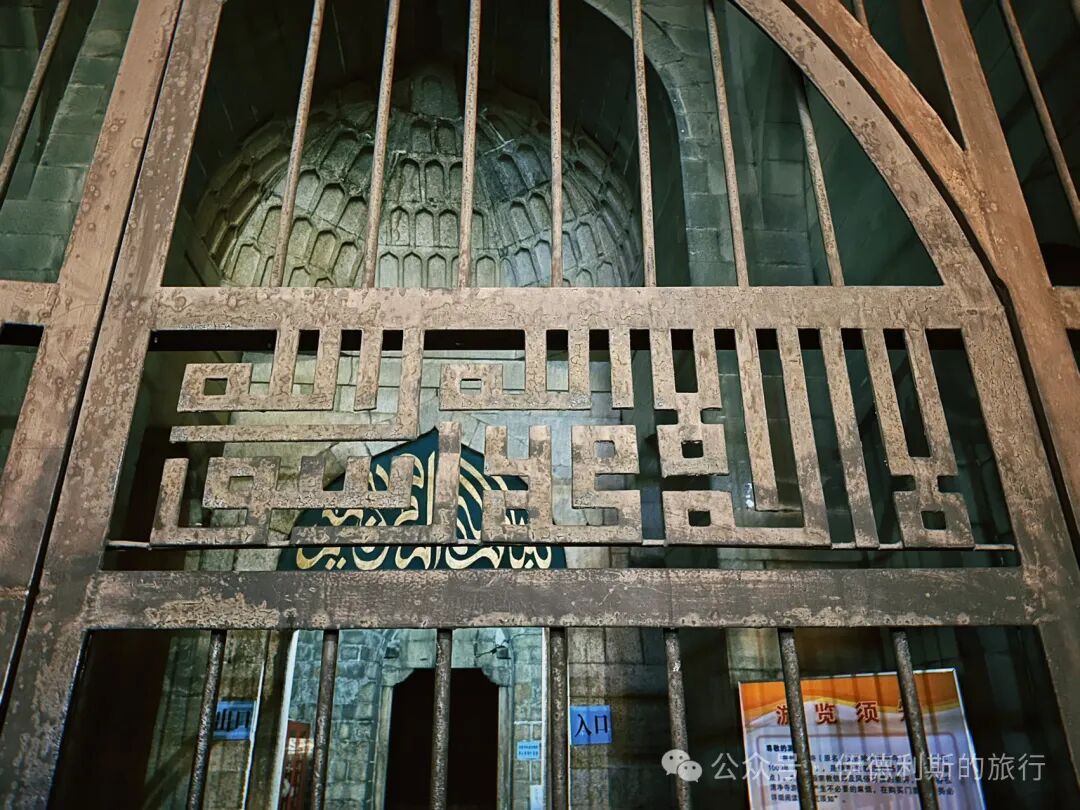
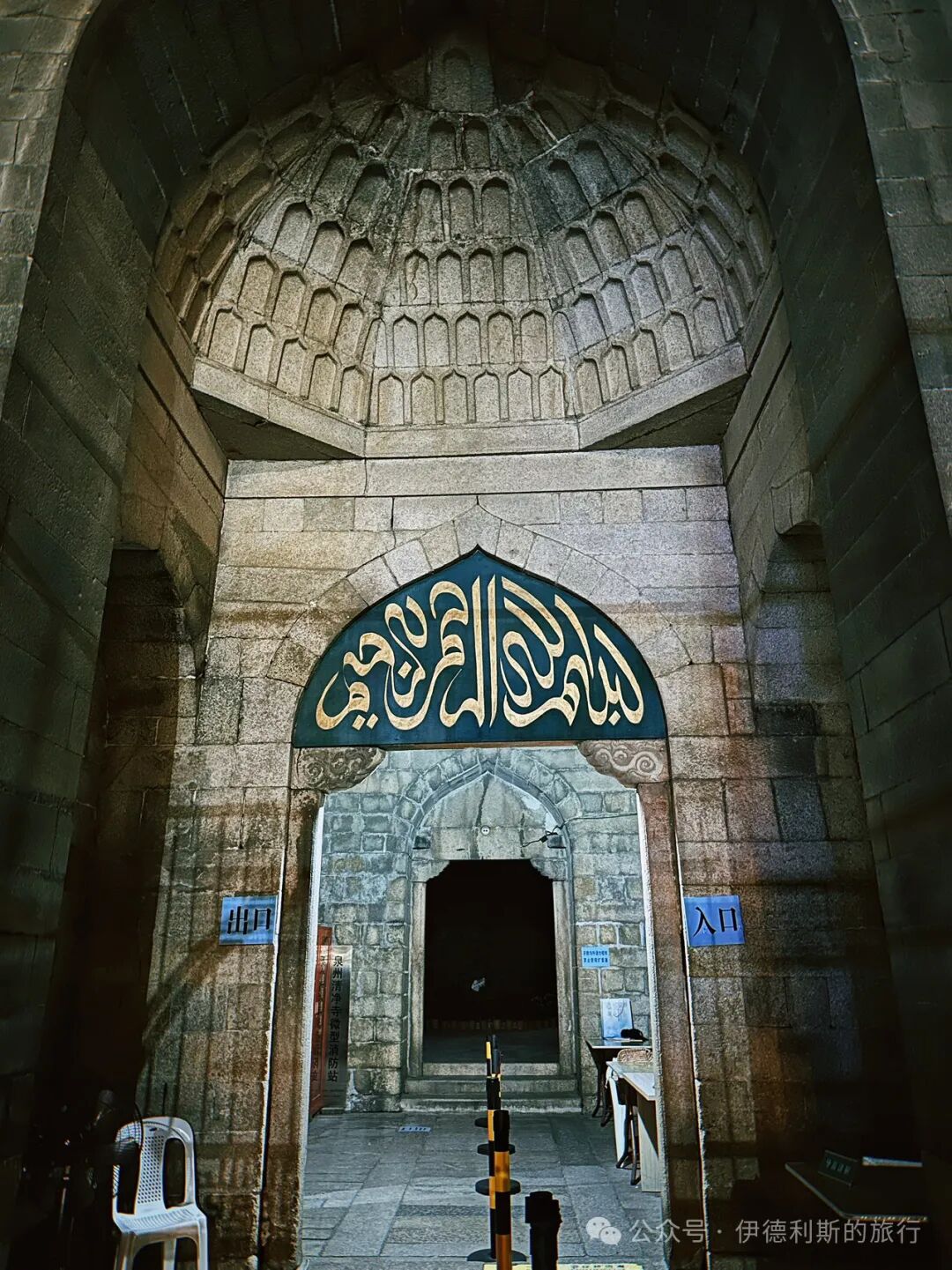
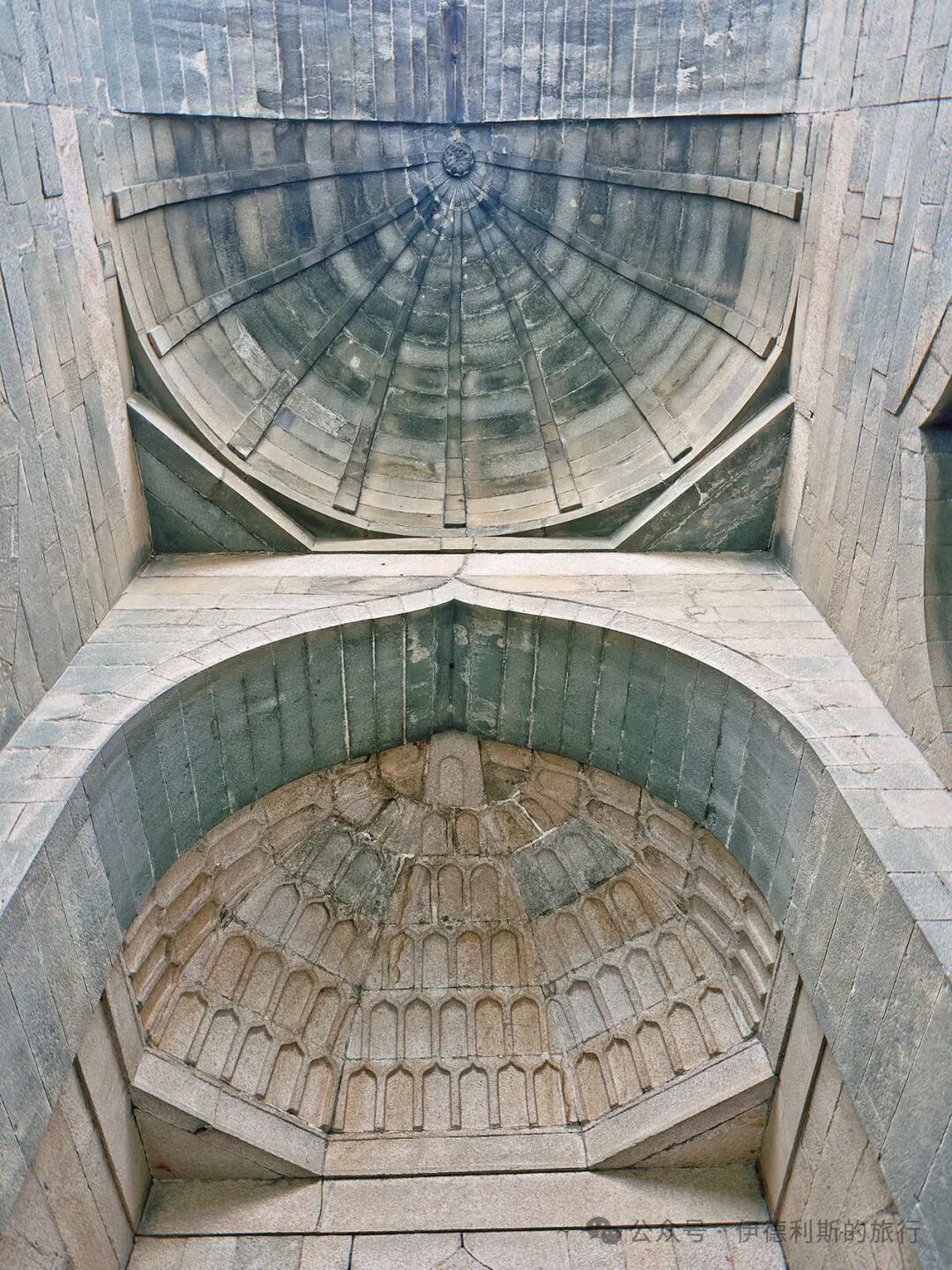
The inside of the main gate is made of three layers of arches. The outer layer is a pointed arch. At the top, there is an open hanging lotus flower carved from diabase. Below it are sixteen layers of curved stone blocks that get higher and narrower until they meet at the lotus. The middle arch is made of five fan-shaped white granite blocks with turtle-back patterns. There are foundation stones underneath, and the inner layer is a dome. On the stone walls on both sides of each layer, there is a pair of pointed-arch niches (yaokan).
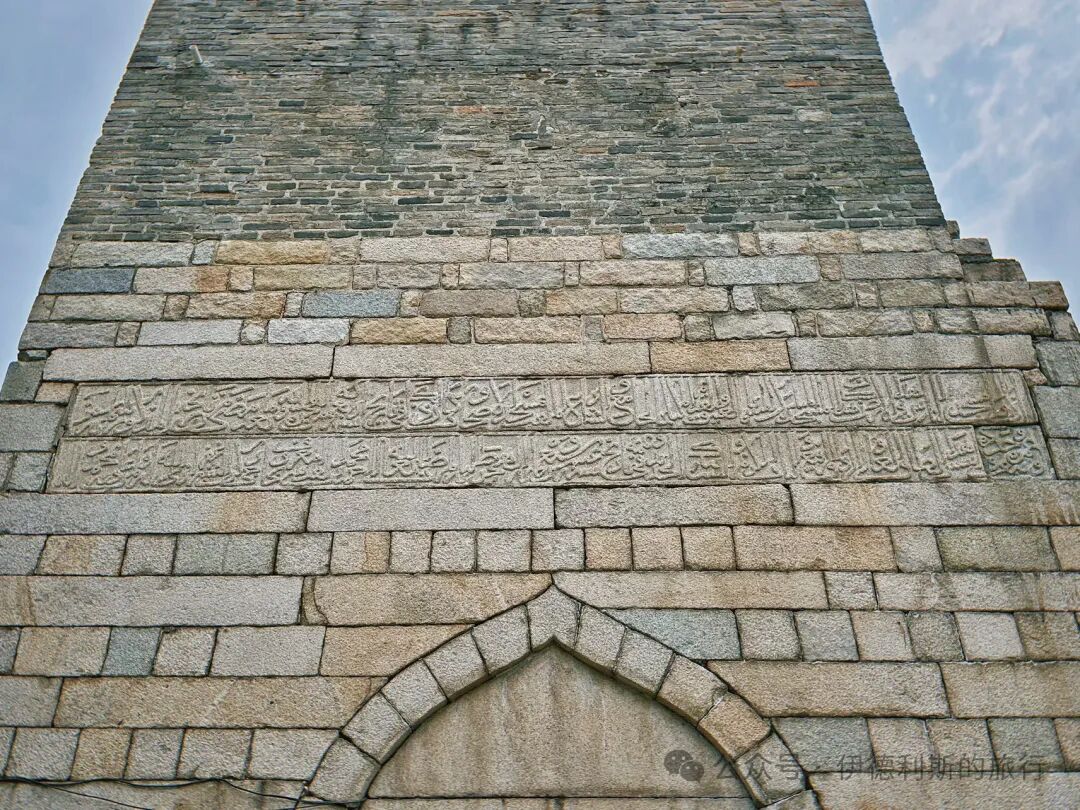
Above the back of the main gate, there are two lines of Arabic inscriptions carved into white granite. They record that the Qingjing Mosque was first built in 1009 and rebuilt by Ahmad in 1310. This is also where the mosque's original name, Ashab Mosque, or "Mosque of the Holy Companions," is mentioned. Professor Ma Jian translated it in 1956 as follows:
"This mosque is the first holy mosque for the followers of Islam residing in this country." It is the oldest and most authentic, revered by all, and thus named the Mosque of the Holy Friend (Shengyou zhi Si), built in the year 400 of the Hijri calendar. Three hundred years later, in the year 710 of the Hijri calendar, a pilgrim from Jerusalem named Muhammad, also known as Shiraz (Shelashi), had a son named Ahmad who funded the renovation of this holy mosque. The dome above the main gate, the roof, the golden gate corridor, and the doors and windows were all made brand new to honor Allah. They offer dua to Allah and the Prophet Muhammad and his family, asking for their forgiveness in the future.
The inscription mentions two place names, one being al-Quds, which is the Arabic name for Jerusalem. The other is Shiraz, an ancient city in southern Iran.
The east side of the main gate originally held a minaret (bangke ta), but it was blown down by a strong wind in 1687 (the 26th year of the Kangxi reign) and has not been repaired since.
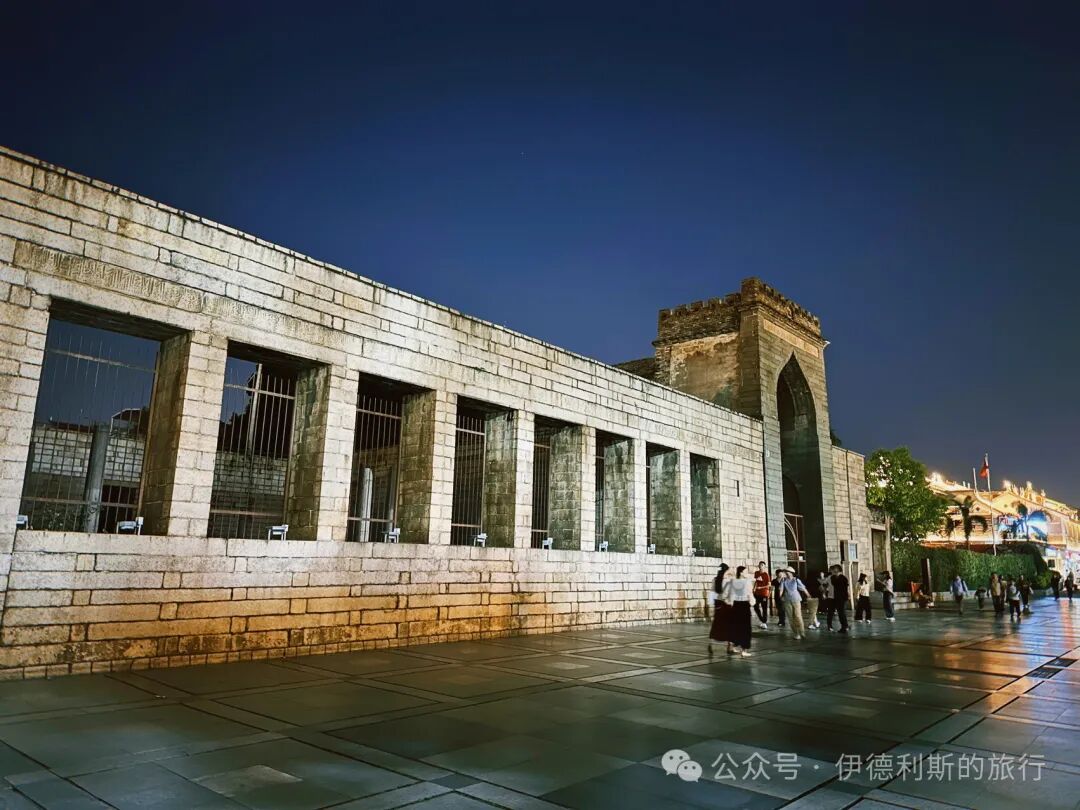
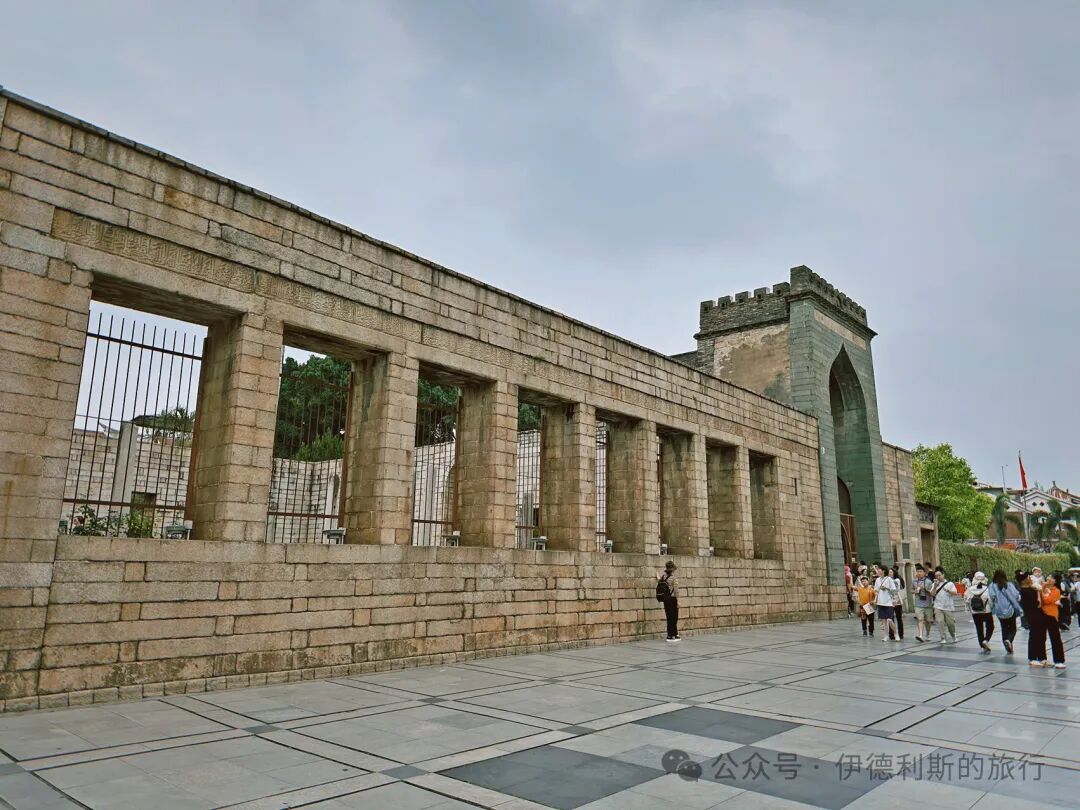
To the west of the main gate is the south wall of the main prayer hall, where eight square windows were added during the Wanli period of the Ming Dynasty. The upper part is carved with 19 meters of scripture, containing the entire 76th chapter of the Quran.
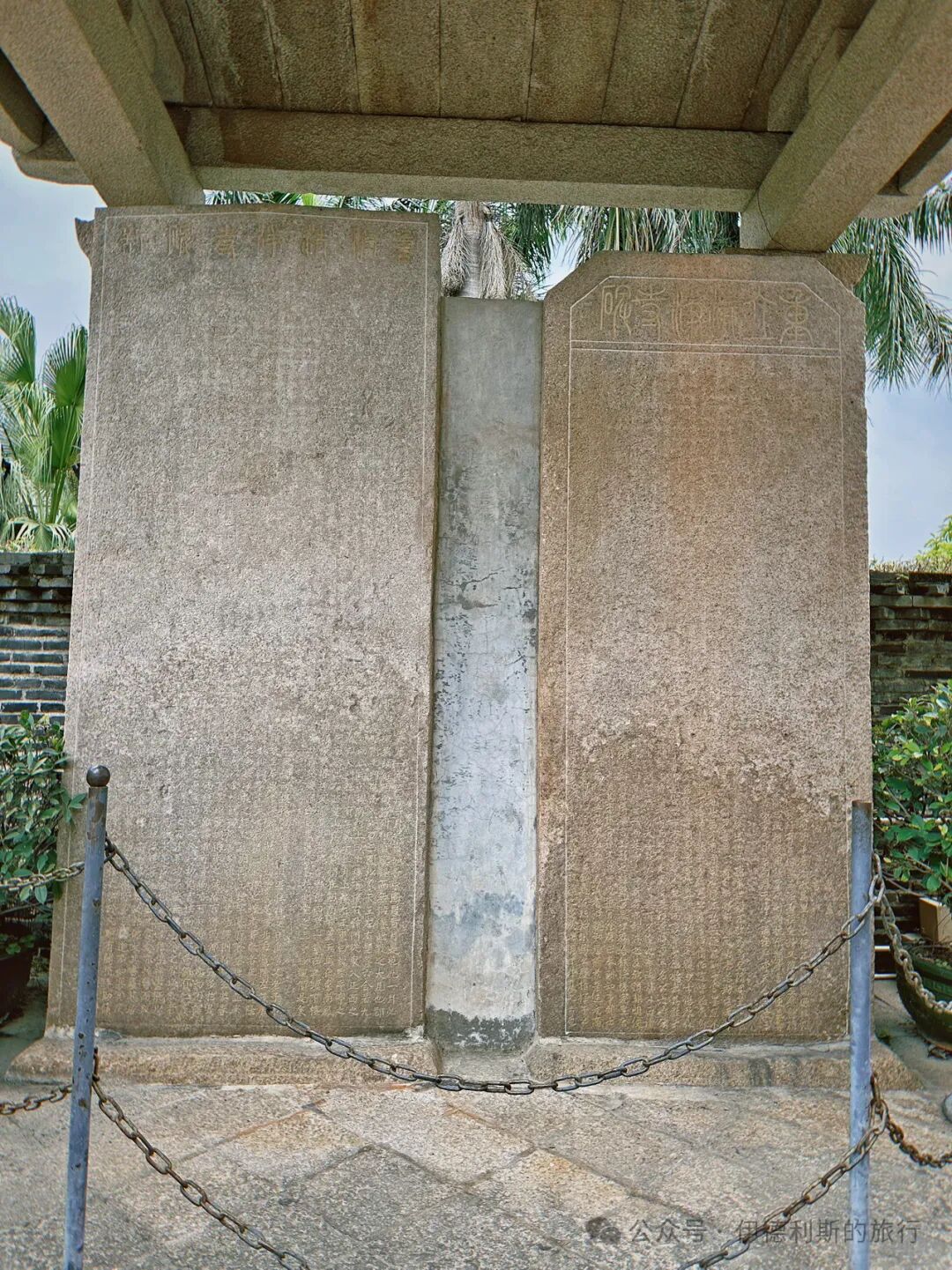
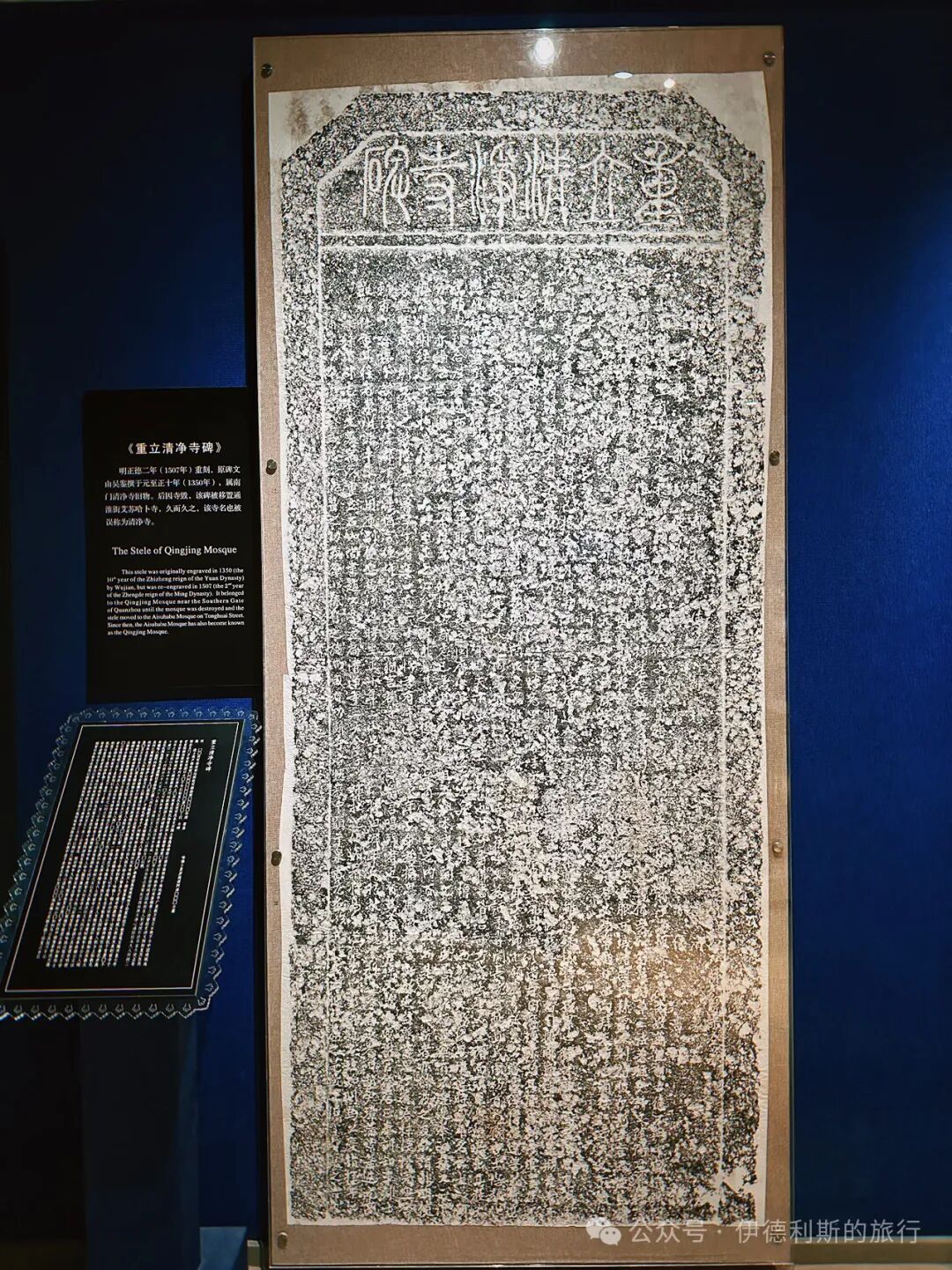
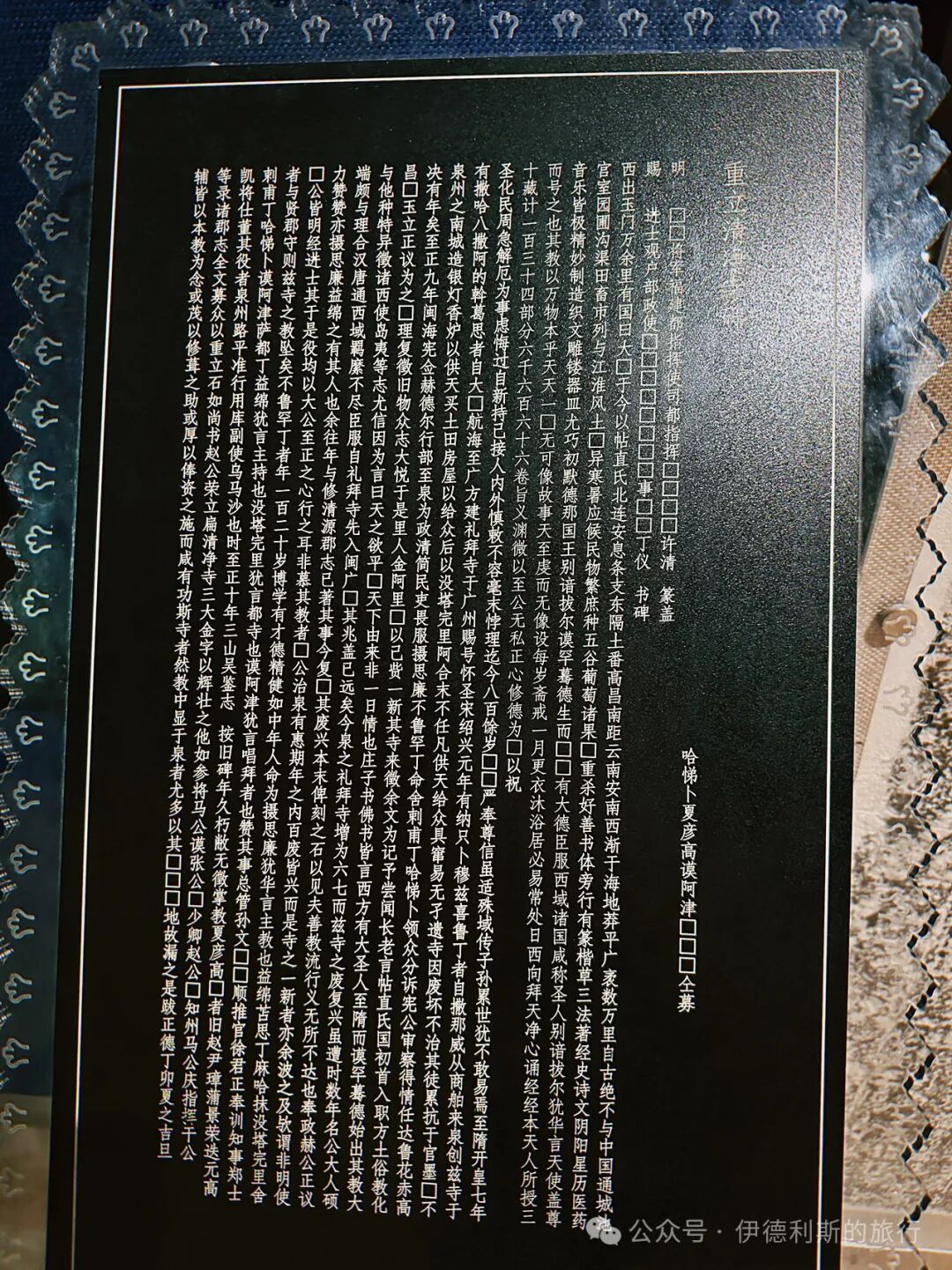
Inside the main gate of the Qingjing Mosque, on the east side, stand two stone tablets from the Ming Dynasty. The first one, the Stele for the Re-establishment of Qingjing Mosque (Chongli Qingjing Si Bei), was originally written by Wu Jian in 1350 (the tenth year of the Zhizheng era of the Yuan Dynasty) and kept in the Qingjing Mosque, which was built in 1131 (the first year of the Shaoxing era of the Southern Song Dynasty) in the south of Quanzhou city. The Qingjing Mosque was destroyed at the end of the Yuan Dynasty, and the stone tablet was moved to the Shengyou Mosque in the east of the city. When the Shengyou Mosque was renovated in 1507 (the second year of the Zhengde era of the Ming Dynasty), the inscription was re-carved. Over time, the Shengyou Mosque was renamed the Qingjing Mosque.
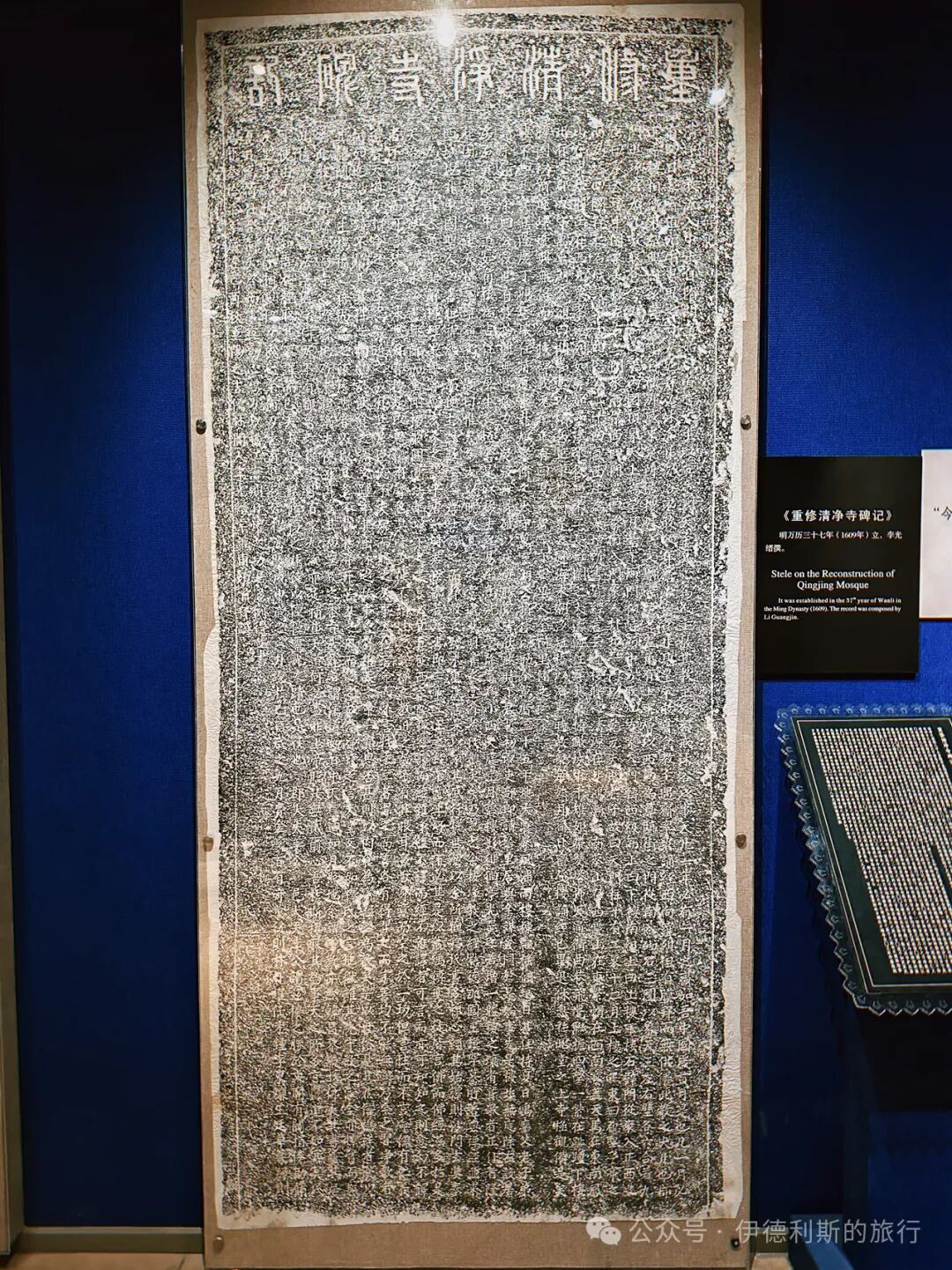
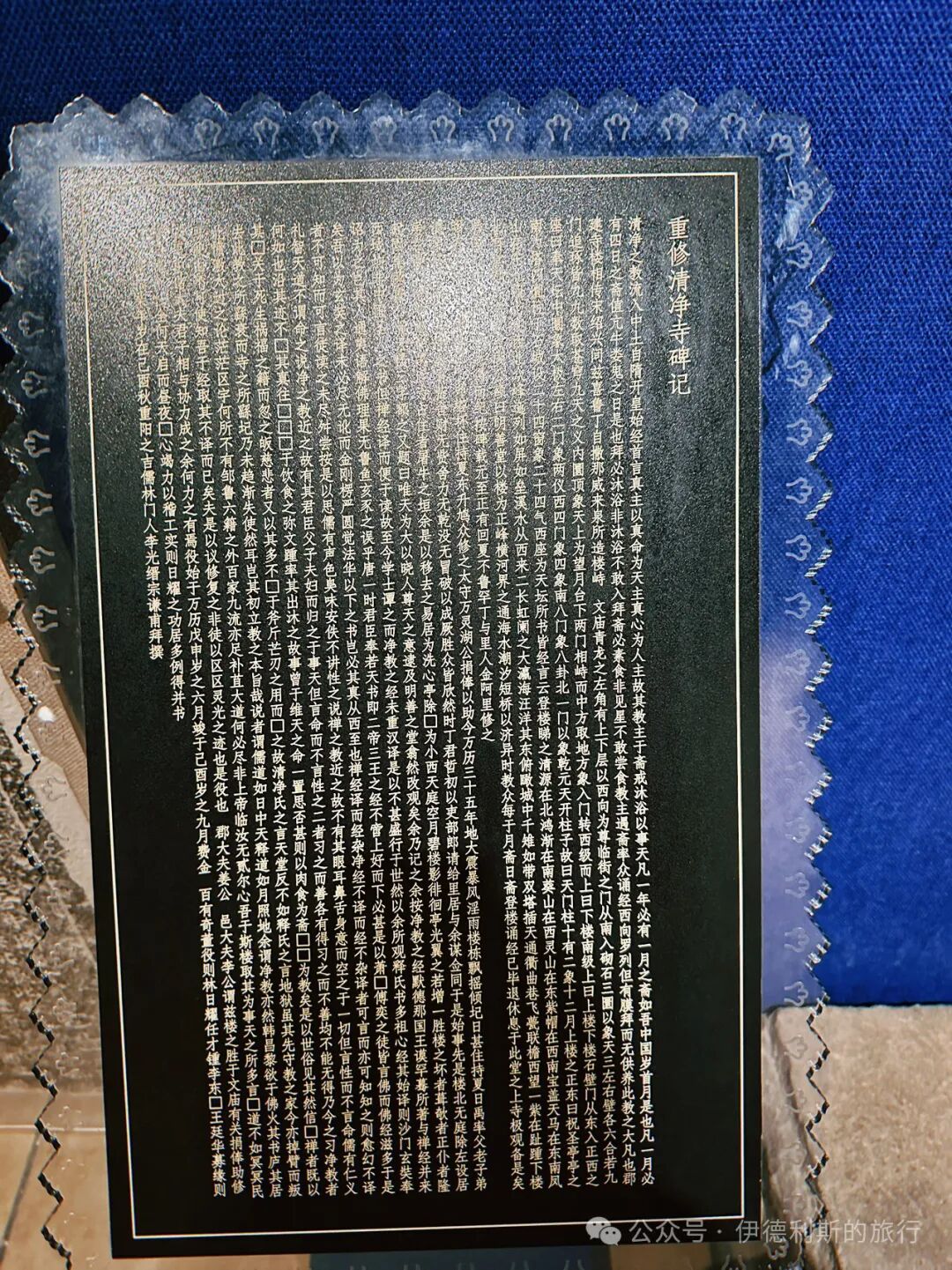
The second tablet is the Record of the Renovation of Qingjing Mosque (Chongxiu Qingjing Si Beiji), written by Li Guangjin in 1609 (the 37th year of the Wanli era of the Ming Dynasty).
Rubbings of these two stone tablets are also on display at the Quanzhou Maritime Museum. The Stele for the Re-establishment of Qingjing Mosque mentions the construction process of the Song and Yuan Dynasty Qingjing Mosque, which no longer exists: In the first year of the Shaoxing era of the Song Dynasty, a man named Nazhibu Muzhiluding came to Quanzhou from Sanawi on a merchant ship and founded this mosque in the south of Quanzhou city. It mentions that 'Sanawi' is the ancient Iranian port of Siraf on the north shore of the Persian Gulf.
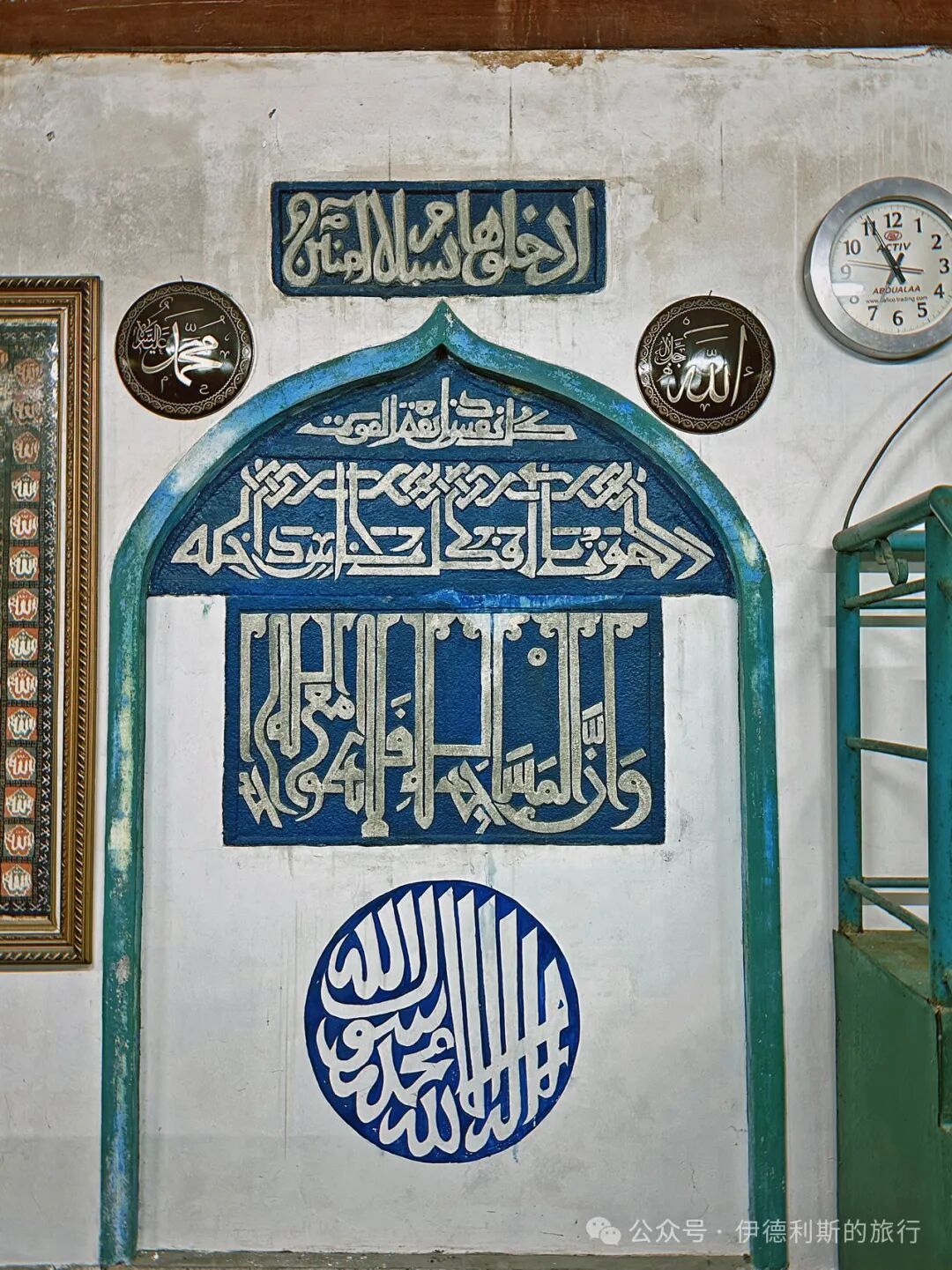
Turn left after entering the main gate to reach the entrance of the prayer hall. Above the entrance, inside a pointed arch, are three lines of white granite carvings featuring verses from the Quran (2:125, 127).
Inside the prayer hall, the qibla wall has seven pointed-arch niches. The middle one, the mihrab known as the 'Altar of Heaven' (Fengtiantan), is the largest. Above the niches is a 13.2-meter-long stone carving entirely covered in Quranic verses. In the old days, Hui Muslims in Quanzhou called the 27th night of Ramadan, the 'Night of Power' (Laylat al-Qadr), the 'Night of Twenty-Eight.' On this day, every Hui Muslim family would prepare food. That evening, they would light a pair of large red candles on both sides of the mihrab Altar of Heaven to symbolize that the revelation of the scripture is brilliant and glorious.
Archaeological excavations of the prayer hall foundation in 1987 uncovered Yuan dynasty floor tiles, drainage ditches, and wall foundations 1.6 meters below the surface in the southwest corner. A row of Southern Song dynasty floor tiles was also found in the northwest corner.
Since the roof of the prayer hall collapsed in the early Qing dynasty, it is now impossible to know what its original shape was. According to the Ming dynasty Wanli era 'Stele Record of the Renovation of Qingjing Mosque,' it states: 'There are twelve pillars, representing the twelve months.' Based on the stone pillars and column bases remaining in the hall today, it seems they could not have supported an overly massive dome.
Mingshan Hall is full of tourists during the day.
Inside the Mingshan Hall courtyard sits an exquisite Song Dynasty incense burner featuring a lotus flower rising from the water (chushui lianhua). The incense burner was originally inside the main hall of the Qingjing Mosque. It was moved to Mingshan Hall after the main hall's roof collapsed in the early Qing Dynasty.
The Qingjing Mosque also preserves a thousand-year-old stone well from the Song Dynasty.
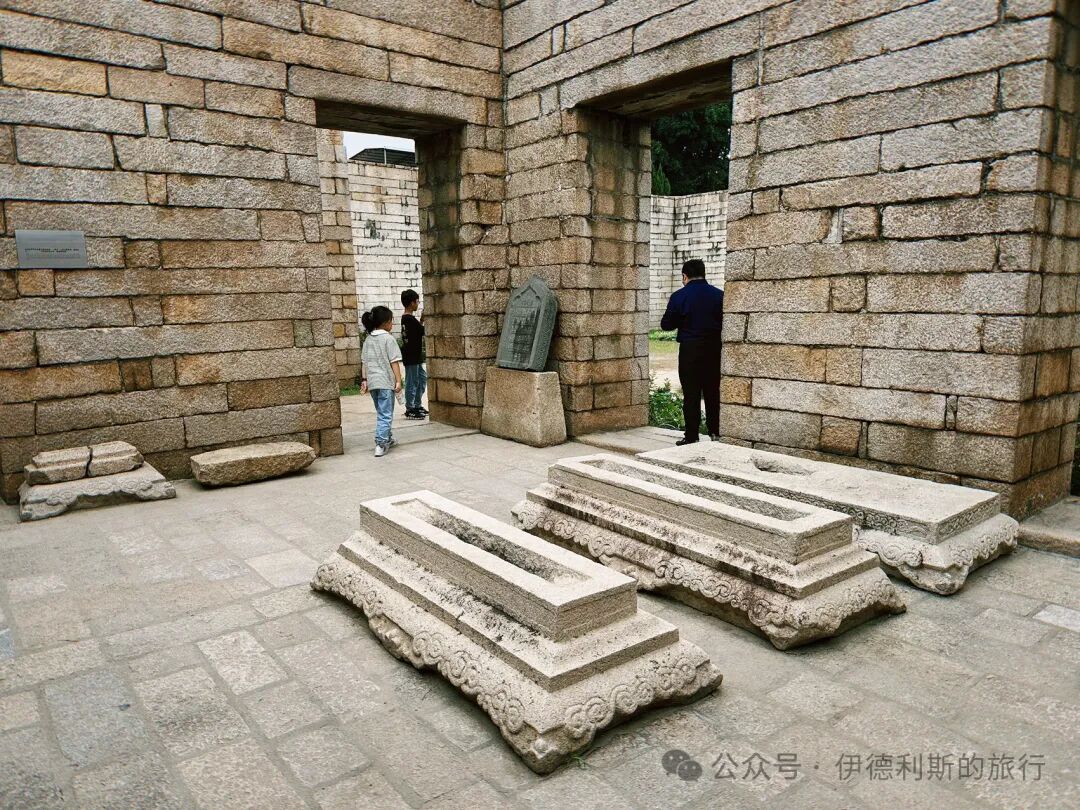
Tonghuai Street, where the Qingjing Mosque is located, was the site of Quanzhou's foreign quarter (fanfang) during the Song and Yuan dynasties, and many people were buried nearby after they passed away. In the 1950s, three stone tombs with Sumeru-style pedestals (xumizuo) were discovered under a house at the intersection of Tonghuai Street and Jiangwu Lane. Many more of these stone tombs were unearthed between 1995 and 1998 when Tonghuai Street was widened. Haji Huang Runqiu, an imam at the Qingjing Mosque, collected some of these tombs and their components to keep inside the mosque. This is how the Sumeru-style stone tombs currently kept at the Qingjing Mosque came to be there.
The Sumeru-style stone tombs at the Qingjing Mosque range from two to five layers high. All the top stones are missing, and the bottom layers all feature six ruyi-shaped feet.
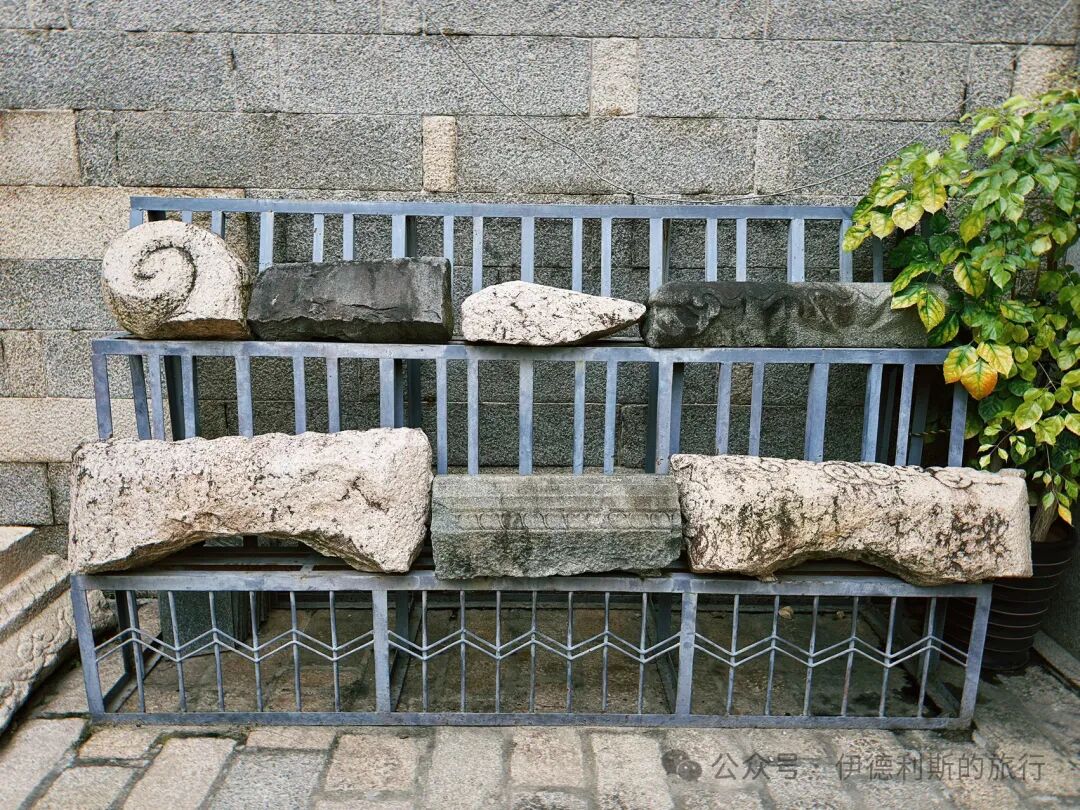
In the spring of 1983, the Qingjing Mosque underwent major renovations. Twelve Hui Muslim families who had lived inside the mosque since the Kangxi era moved out, and a collection of stone tablets was discovered in the walls and underground of the Mingshan Hall. When I visited in 2017, most of these stone carvings were displayed on the west side of the main hall. When I returned in 2024, most of them had been moved elsewhere for preservation.
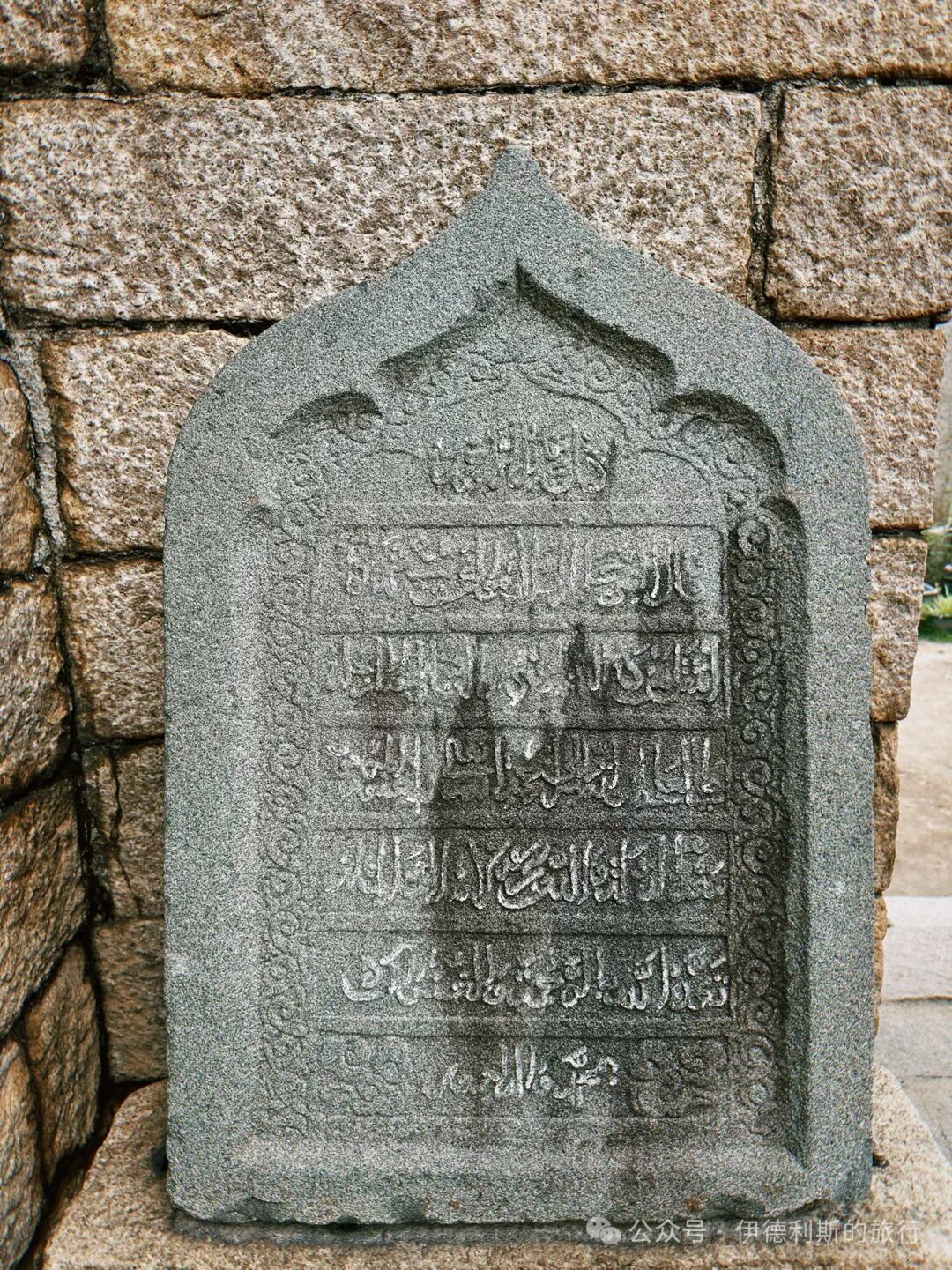
The only tombstone currently kept inside the Qingjing Mosque was dug up from a garden belonging to a family named Pu in the late Qing Dynasty. It was moved to the mosque and built into the south side of the west wall of the Mingshan Hall. The tombstone is similar to the Yuan Dynasty Arabic tombstones at the Puhaddin Cemetery in Yangzhou and is considered one of the most exquisite ancient Arabic tombstones in Quanzhou. The person buried there was named Ahmed, who passed away in 1362.
The Pu family in Quanzhou are descendants of Pu Shougeng. After the Ming Dynasty, most of them left the faith or changed their surnames, and only one branch still lives on the former site of Pu Shougeng's residence. According to the Genealogy of the Pu Family in the South Gate of Quanzhou, Pu Shougeng had two sons, Shiwen and Shisi. Shisi was promoted to an official in the Hanlin Academy in 1284 and built the Baiguo Garden inside the south gate of Quanzhou city for his own enjoyment. Huayuantou has always been an old place name in the south of Quanzhou city.
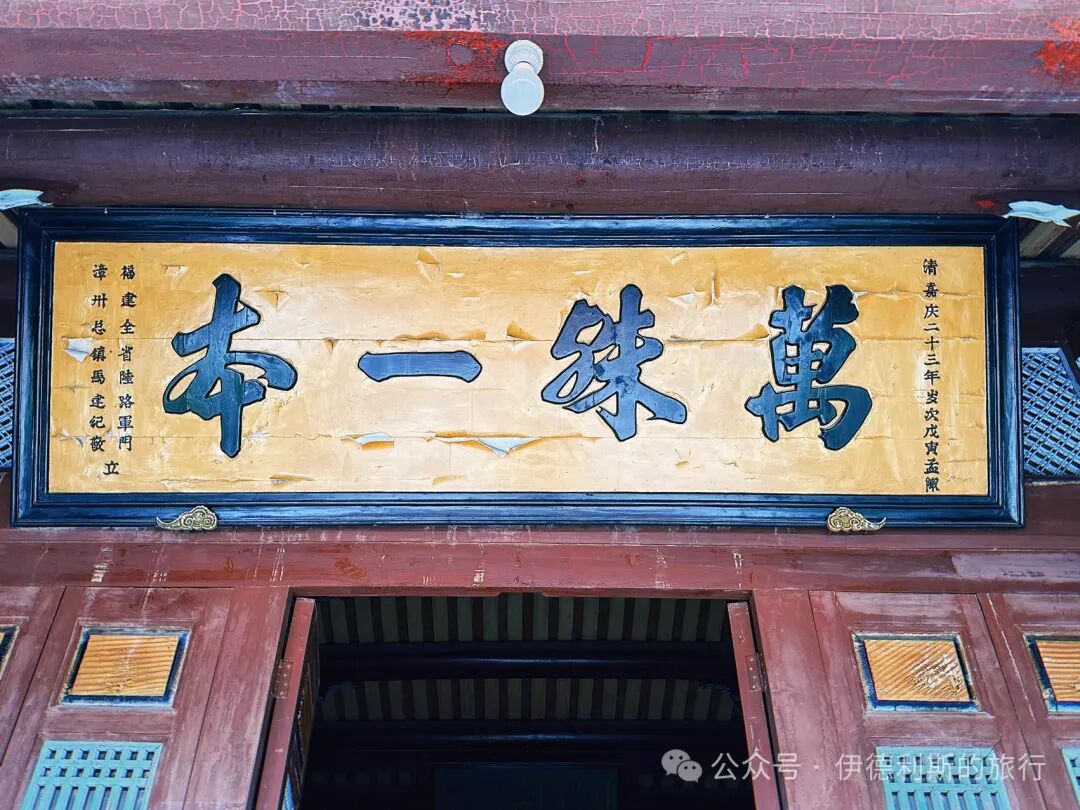
Three plaques hang inside Mingshan Hall.
In the 23rd year of the Jiaqing reign of the Qing dynasty, Ma Jianji, the commander of the Fujian provincial land forces and general of Zhangzhou, dedicated the plaque reading "Ten Thousand Differences, One Origin" (Wanshu Yiben).
Ma Jianji was a Hui Muslim from Sichuan. While serving in Fujian during the Qing Jiaqing period, he renovated the Qingjing Mosque and the Lingshan Sacred Tomb, and he also carved an inscription on the Wind-Moving Rock at Lingshan.
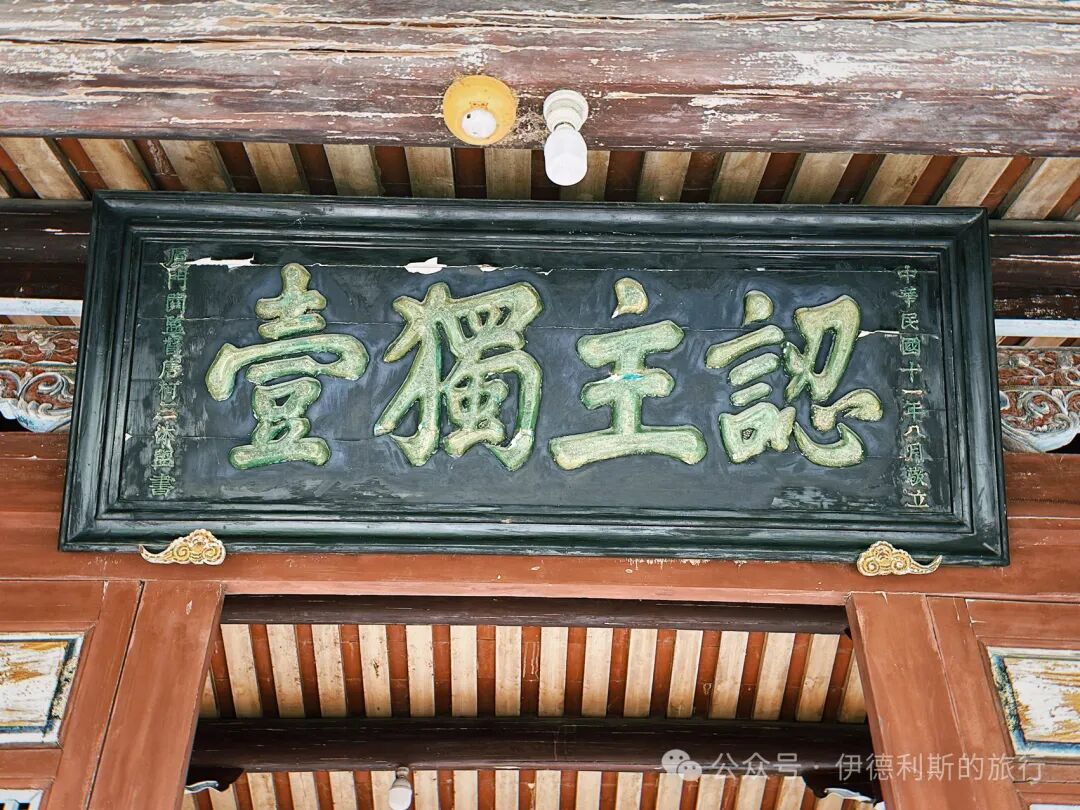
In the 11th year of the Republic of China, Xiamen Superintendent Tang Kesan wrote the plaque reading "Recognize the Oneness of Allah" (Renzhu Duyi).
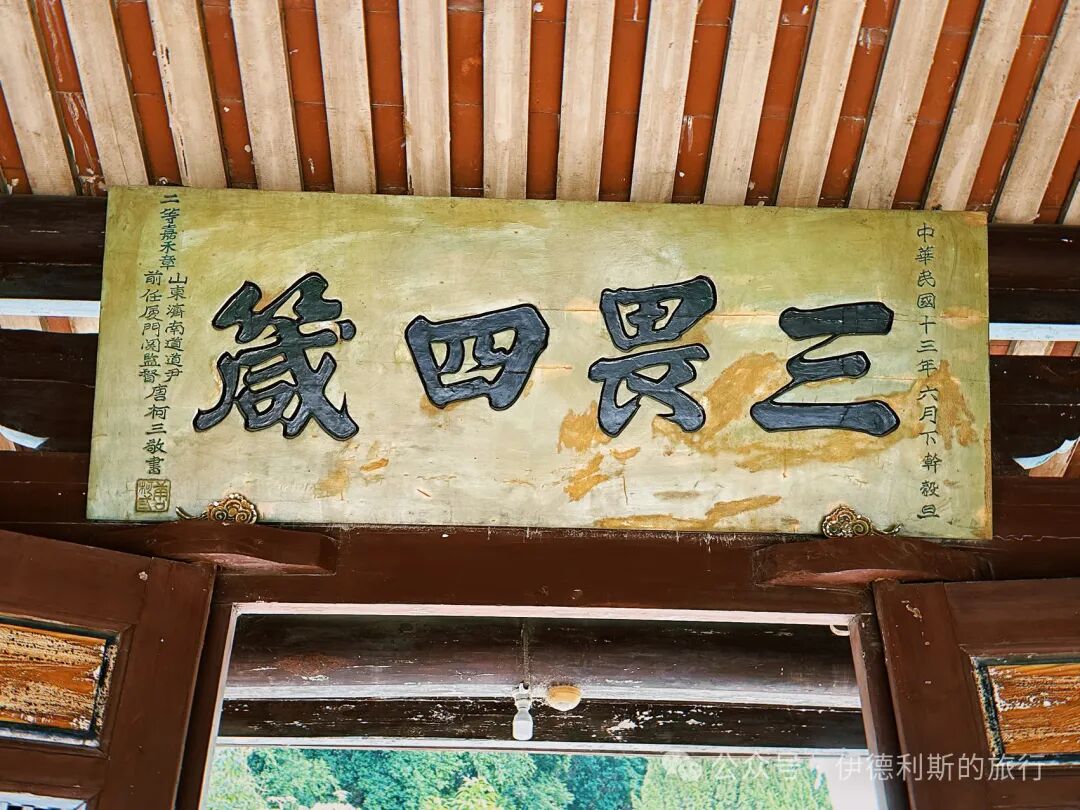
In the 13th year of the Republic of China, Tang Kesan, a recipient of the Second Class Order of the Golden Grain and former Xiamen Customs Superintendent, dedicated the plaque reading "Three Fears and Four Admonitions" (Sanwei Sizhen). The original plaques were destroyed between the 1960s and 1970s, and the ones currently on display are replicas.
Tang Kesan was a Hui Muslim from Shandong. He graduated from the Imperial University of Peking in the late Qing dynasty and became a social activist and educator during the Republican era. He served as the principal of Chengda Normal School and made significant contributions to the faith. In 1919, Tang Kesan became the Xiamen Customs Superintendent and donated funds to renovate the Qingjing Mosque during his tenure. In 1936, Tang Kesan appointed Imam Zhang Yuguang to lead the Qingjing Mosque. He started a religious study class and an adult literacy night school inside the mosque. In 1940, the Qingjing Mosque opened the Chengda Normal School Affiliated Primary School, later renamed the Qingzhen National School. It sent three groups of local Hui Muslim youth from Quanzhou to study at the Chengda Normal School in Guangxi.
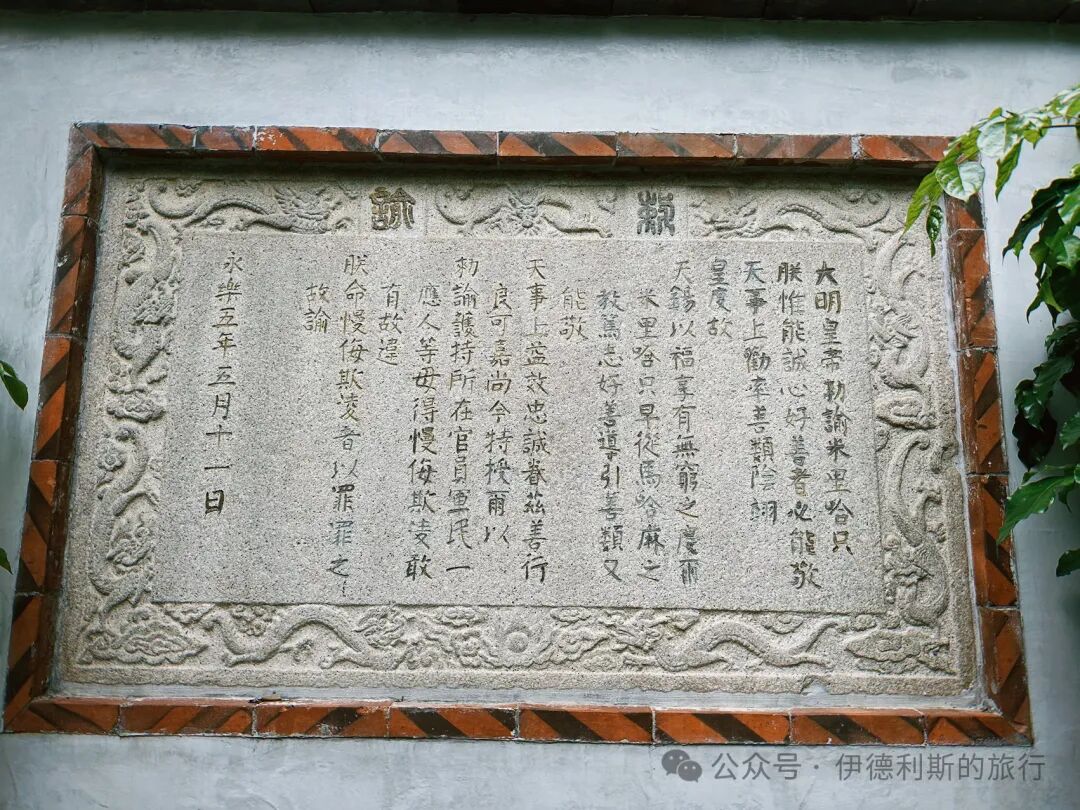
The Qingjing Mosque keeps a white granite stele of the Ming Dynasty Yongle Imperial Edict. It is a copy of the edict issued by the Yongle Emperor, Zhu Di, to Mir Haji in 1407, the fifth year of the Yongle reign. The word 'Mir' refers to 'Amir,' meaning leader, and 'Haji' refers to someone who has made the pilgrimage to the Hejaz. Because of this, the actual name of the person who received the edict does not appear.
The original edict was found in 1956 at the home of Lan Xiaoyang, the hereditary imam of the Puhading Tomb in Yangzhou, and is now kept at the Cultural Palace of Nationalities in Beijing. This edict provided great protection for the faith, so the mosque in Fuzhou also made a copy of it, just like the one in Quanzhou.
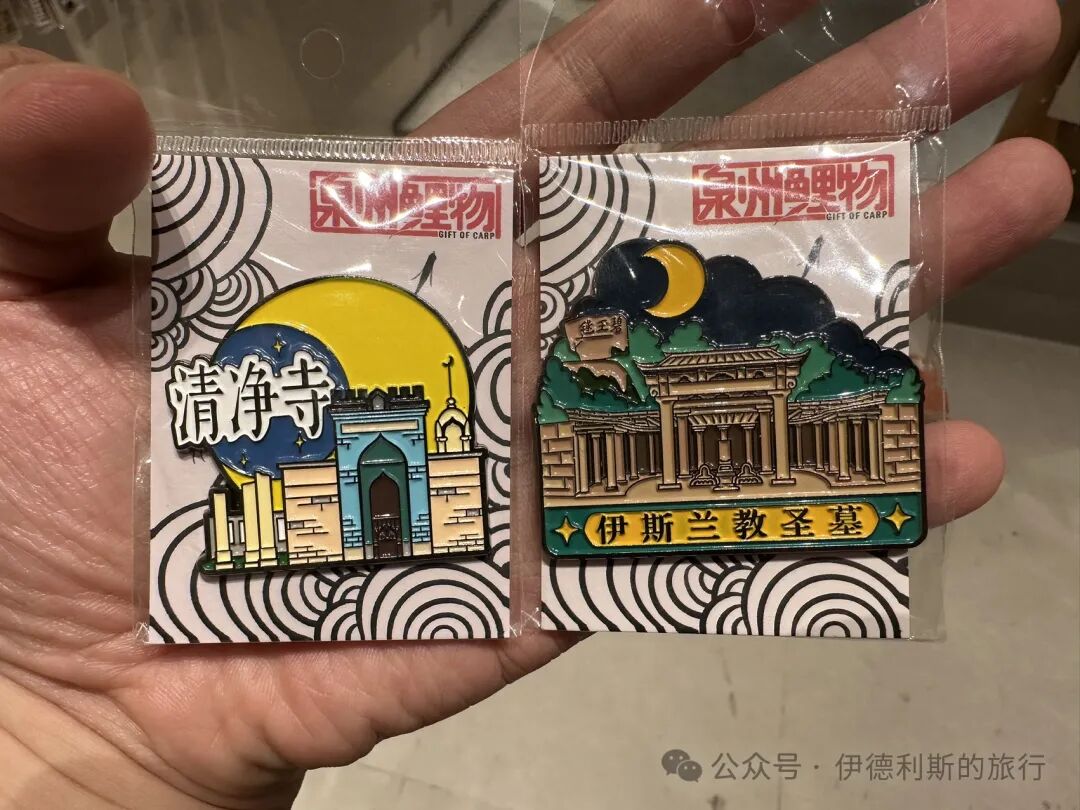
I bought some magnets at the Quanzhou Liwu shop featuring the Qingjing Mosque and the Lingshan Sacred Tomb. I think the designs are beautiful and worth collecting. view all
Summary: Islamic History Guide: Quanzhou Qingjing Mosque - A Thousand Years of Muslim Heritage is presented here as a firsthand travel account in clear, natural English. The account focuses on Quanzhou, Qingjing Mosque, Islamic History while preserving the names, places, food, photos, and historical details from the Chinese source.
I arrived in Quanzhou at night and went straight to the Qingjing Mosque to pray. Imam Ma at the Qingjing Mosque is from Hualong, Qinghai. During the day, he leads namaz in the main hall donated by Oman, but after the tourist area closes, he leads prayers in the smaller Mingshan Hall.
Mingshan Hall was first built in 1567 (the first year of the Longqing reign of the Ming Dynasty). After the roof of the main hall of the Qingjing Mosque collapsed in the early Qing Dynasty, Mingshan Hall became the place for worship. In 1818 (the 23rd year of the Jiaqing reign), Ma Jianji, a military commander from Sichuan stationed in Quanzhou, rebuilt Mingshan Hall in the traditional architectural style of southern Fujian. In 1871 (the 10th year of the Tongzhi reign), Jiang Changgui, the military commander for Fujian Province, rebuilt Mingshan Hall again.
During the Tongzhi reign, Jiang Changgui collected many stone tablets with Arabic inscriptions from the Yuan Dynasty in Quanzhou and embedded them into the walls of Mingshan Hall. These stone tablets were not removed until the major renovation of Mingshan Hall in the spring of 1983. Many of these tablets are Yuan Dynasty tombstones. The people buried there came from places like Tabriz and Tehran in Iran, Adana in Turkey, Nablus in Palestine, and Khwarezm in Uzbekistan.
Mingshan Hall sits just north of Bagua Ditch, which served as the city moat for Quanzhou during the Five Dynasties and Northern Song periods. A granite stone bridge from the Song Dynasty originally crossed the ditch, but it was rebuilt in 1998 when Bagua Ditch was widened.
Night view of Qingjing Mosque.
The next morning, I continued exploring Qingjing Mosque.
The gate tower of Qingjing Mosque is built from diabase and white granite, with Quranic verses (3:18-19) carved into the front.
The moon-sighting platform at the top of the gate is where people used to look for the new moon during Ramadan. When the local Muslim community was still active in Quanzhou, they hung three large lanterns on the gate every Ramadan. A large palace lantern hung in the center of the pointed arch, inscribed with the words 'Islam' in both Chinese and Arabic. Two long, oval-shaped government-style lanterns hung on either side, with the left one reading 'Ancient Faith of the Hui Muslims' and the right one reading 'Ancient Qingzhen Qilin Mosque'. Every night, the names of household heads are listed on a round plaque inside the mosque, and each family takes turns lighting the lamps.
The inside of the main gate is made of three layers of arches. The outer layer is a pointed arch. At the top, there is an open hanging lotus flower carved from diabase. Below it are sixteen layers of curved stone blocks that get higher and narrower until they meet at the lotus. The middle arch is made of five fan-shaped white granite blocks with turtle-back patterns. There are foundation stones underneath, and the inner layer is a dome. On the stone walls on both sides of each layer, there is a pair of pointed-arch niches (yaokan).
Above the back of the main gate, there are two lines of Arabic inscriptions carved into white granite. They record that the Qingjing Mosque was first built in 1009 and rebuilt by Ahmad in 1310. This is also where the mosque's original name, Ashab Mosque, or "Mosque of the Holy Companions," is mentioned. Professor Ma Jian translated it in 1956 as follows:
"This mosque is the first holy mosque for the followers of Islam residing in this country." It is the oldest and most authentic, revered by all, and thus named the Mosque of the Holy Friend (Shengyou zhi Si), built in the year 400 of the Hijri calendar. Three hundred years later, in the year 710 of the Hijri calendar, a pilgrim from Jerusalem named Muhammad, also known as Shiraz (Shelashi), had a son named Ahmad who funded the renovation of this holy mosque. The dome above the main gate, the roof, the golden gate corridor, and the doors and windows were all made brand new to honor Allah. They offer dua to Allah and the Prophet Muhammad and his family, asking for their forgiveness in the future.
The inscription mentions two place names, one being al-Quds, which is the Arabic name for Jerusalem. The other is Shiraz, an ancient city in southern Iran.
The east side of the main gate originally held a minaret (bangke ta), but it was blown down by a strong wind in 1687 (the 26th year of the Kangxi reign) and has not been repaired since.
To the west of the main gate is the south wall of the main prayer hall, where eight square windows were added during the Wanli period of the Ming Dynasty. The upper part is carved with 19 meters of scripture, containing the entire 76th chapter of the Quran.
Inside the main gate of the Qingjing Mosque, on the east side, stand two stone tablets from the Ming Dynasty. The first one, the Stele for the Re-establishment of Qingjing Mosque (Chongli Qingjing Si Bei), was originally written by Wu Jian in 1350 (the tenth year of the Zhizheng era of the Yuan Dynasty) and kept in the Qingjing Mosque, which was built in 1131 (the first year of the Shaoxing era of the Southern Song Dynasty) in the south of Quanzhou city. The Qingjing Mosque was destroyed at the end of the Yuan Dynasty, and the stone tablet was moved to the Shengyou Mosque in the east of the city. When the Shengyou Mosque was renovated in 1507 (the second year of the Zhengde era of the Ming Dynasty), the inscription was re-carved. Over time, the Shengyou Mosque was renamed the Qingjing Mosque.
The second tablet is the Record of the Renovation of Qingjing Mosque (Chongxiu Qingjing Si Beiji), written by Li Guangjin in 1609 (the 37th year of the Wanli era of the Ming Dynasty).
Rubbings of these two stone tablets are also on display at the Quanzhou Maritime Museum. The Stele for the Re-establishment of Qingjing Mosque mentions the construction process of the Song and Yuan Dynasty Qingjing Mosque, which no longer exists: In the first year of the Shaoxing era of the Song Dynasty, a man named Nazhibu Muzhiluding came to Quanzhou from Sanawi on a merchant ship and founded this mosque in the south of Quanzhou city. It mentions that 'Sanawi' is the ancient Iranian port of Siraf on the north shore of the Persian Gulf.
Turn left after entering the main gate to reach the entrance of the prayer hall. Above the entrance, inside a pointed arch, are three lines of white granite carvings featuring verses from the Quran (2:125, 127).
Inside the prayer hall, the qibla wall has seven pointed-arch niches. The middle one, the mihrab known as the 'Altar of Heaven' (Fengtiantan), is the largest. Above the niches is a 13.2-meter-long stone carving entirely covered in Quranic verses. In the old days, Hui Muslims in Quanzhou called the 27th night of Ramadan, the 'Night of Power' (Laylat al-Qadr), the 'Night of Twenty-Eight.' On this day, every Hui Muslim family would prepare food. That evening, they would light a pair of large red candles on both sides of the mihrab Altar of Heaven to symbolize that the revelation of the scripture is brilliant and glorious.
Archaeological excavations of the prayer hall foundation in 1987 uncovered Yuan dynasty floor tiles, drainage ditches, and wall foundations 1.6 meters below the surface in the southwest corner. A row of Southern Song dynasty floor tiles was also found in the northwest corner.
Since the roof of the prayer hall collapsed in the early Qing dynasty, it is now impossible to know what its original shape was. According to the Ming dynasty Wanli era 'Stele Record of the Renovation of Qingjing Mosque,' it states: 'There are twelve pillars, representing the twelve months.' Based on the stone pillars and column bases remaining in the hall today, it seems they could not have supported an overly massive dome.
Mingshan Hall is full of tourists during the day.
Inside the Mingshan Hall courtyard sits an exquisite Song Dynasty incense burner featuring a lotus flower rising from the water (chushui lianhua). The incense burner was originally inside the main hall of the Qingjing Mosque. It was moved to Mingshan Hall after the main hall's roof collapsed in the early Qing Dynasty.
The Qingjing Mosque also preserves a thousand-year-old stone well from the Song Dynasty.
Tonghuai Street, where the Qingjing Mosque is located, was the site of Quanzhou's foreign quarter (fanfang) during the Song and Yuan dynasties, and many people were buried nearby after they passed away. In the 1950s, three stone tombs with Sumeru-style pedestals (xumizuo) were discovered under a house at the intersection of Tonghuai Street and Jiangwu Lane. Many more of these stone tombs were unearthed between 1995 and 1998 when Tonghuai Street was widened. Haji Huang Runqiu, an imam at the Qingjing Mosque, collected some of these tombs and their components to keep inside the mosque. This is how the Sumeru-style stone tombs currently kept at the Qingjing Mosque came to be there.
The Sumeru-style stone tombs at the Qingjing Mosque range from two to five layers high. All the top stones are missing, and the bottom layers all feature six ruyi-shaped feet.
In the spring of 1983, the Qingjing Mosque underwent major renovations. Twelve Hui Muslim families who had lived inside the mosque since the Kangxi era moved out, and a collection of stone tablets was discovered in the walls and underground of the Mingshan Hall. When I visited in 2017, most of these stone carvings were displayed on the west side of the main hall. When I returned in 2024, most of them had been moved elsewhere for preservation.
The only tombstone currently kept inside the Qingjing Mosque was dug up from a garden belonging to a family named Pu in the late Qing Dynasty. It was moved to the mosque and built into the south side of the west wall of the Mingshan Hall. The tombstone is similar to the Yuan Dynasty Arabic tombstones at the Puhaddin Cemetery in Yangzhou and is considered one of the most exquisite ancient Arabic tombstones in Quanzhou. The person buried there was named Ahmed, who passed away in 1362.
The Pu family in Quanzhou are descendants of Pu Shougeng. After the Ming Dynasty, most of them left the faith or changed their surnames, and only one branch still lives on the former site of Pu Shougeng's residence. According to the Genealogy of the Pu Family in the South Gate of Quanzhou, Pu Shougeng had two sons, Shiwen and Shisi. Shisi was promoted to an official in the Hanlin Academy in 1284 and built the Baiguo Garden inside the south gate of Quanzhou city for his own enjoyment. Huayuantou has always been an old place name in the south of Quanzhou city.
Three plaques hang inside Mingshan Hall.
In the 23rd year of the Jiaqing reign of the Qing dynasty, Ma Jianji, the commander of the Fujian provincial land forces and general of Zhangzhou, dedicated the plaque reading "Ten Thousand Differences, One Origin" (Wanshu Yiben).
Ma Jianji was a Hui Muslim from Sichuan. While serving in Fujian during the Qing Jiaqing period, he renovated the Qingjing Mosque and the Lingshan Sacred Tomb, and he also carved an inscription on the Wind-Moving Rock at Lingshan.
In the 11th year of the Republic of China, Xiamen Superintendent Tang Kesan wrote the plaque reading "Recognize the Oneness of Allah" (Renzhu Duyi).
In the 13th year of the Republic of China, Tang Kesan, a recipient of the Second Class Order of the Golden Grain and former Xiamen Customs Superintendent, dedicated the plaque reading "Three Fears and Four Admonitions" (Sanwei Sizhen). The original plaques were destroyed between the 1960s and 1970s, and the ones currently on display are replicas.
Tang Kesan was a Hui Muslim from Shandong. He graduated from the Imperial University of Peking in the late Qing dynasty and became a social activist and educator during the Republican era. He served as the principal of Chengda Normal School and made significant contributions to the faith. In 1919, Tang Kesan became the Xiamen Customs Superintendent and donated funds to renovate the Qingjing Mosque during his tenure. In 1936, Tang Kesan appointed Imam Zhang Yuguang to lead the Qingjing Mosque. He started a religious study class and an adult literacy night school inside the mosque. In 1940, the Qingjing Mosque opened the Chengda Normal School Affiliated Primary School, later renamed the Qingzhen National School. It sent three groups of local Hui Muslim youth from Quanzhou to study at the Chengda Normal School in Guangxi.
The Qingjing Mosque keeps a white granite stele of the Ming Dynasty Yongle Imperial Edict. It is a copy of the edict issued by the Yongle Emperor, Zhu Di, to Mir Haji in 1407, the fifth year of the Yongle reign. The word 'Mir' refers to 'Amir,' meaning leader, and 'Haji' refers to someone who has made the pilgrimage to the Hejaz. Because of this, the actual name of the person who received the edict does not appear.
The original edict was found in 1956 at the home of Lan Xiaoyang, the hereditary imam of the Puhading Tomb in Yangzhou, and is now kept at the Cultural Palace of Nationalities in Beijing. This edict provided great protection for the faith, so the mosque in Fuzhou also made a copy of it, just like the one in Quanzhou.
I bought some magnets at the Quanzhou Liwu shop featuring the Qingjing Mosque and the Lingshan Sacred Tomb. I think the designs are beautiful and worth collecting. view all
Reposted from the web
Summary: Islamic History Guide: Quanzhou Qingjing Mosque - A Thousand Years of Muslim Heritage is presented here as a firsthand travel account in clear, natural English. The account focuses on Quanzhou, Qingjing Mosque, Islamic History while preserving the names, places, food, photos, and historical details from the Chinese source.
I arrived in Quanzhou at night and went straight to the Qingjing Mosque to pray. Imam Ma at the Qingjing Mosque is from Hualong, Qinghai. During the day, he leads namaz in the main hall donated by Oman, but after the tourist area closes, he leads prayers in the smaller Mingshan Hall.
Mingshan Hall was first built in 1567 (the first year of the Longqing reign of the Ming Dynasty). After the roof of the main hall of the Qingjing Mosque collapsed in the early Qing Dynasty, Mingshan Hall became the place for worship. In 1818 (the 23rd year of the Jiaqing reign), Ma Jianji, a military commander from Sichuan stationed in Quanzhou, rebuilt Mingshan Hall in the traditional architectural style of southern Fujian. In 1871 (the 10th year of the Tongzhi reign), Jiang Changgui, the military commander for Fujian Province, rebuilt Mingshan Hall again.
During the Tongzhi reign, Jiang Changgui collected many stone tablets with Arabic inscriptions from the Yuan Dynasty in Quanzhou and embedded them into the walls of Mingshan Hall. These stone tablets were not removed until the major renovation of Mingshan Hall in the spring of 1983. Many of these tablets are Yuan Dynasty tombstones. The people buried there came from places like Tabriz and Tehran in Iran, Adana in Turkey, Nablus in Palestine, and Khwarezm in Uzbekistan.
Mingshan Hall sits just north of Bagua Ditch, which served as the city moat for Quanzhou during the Five Dynasties and Northern Song periods. A granite stone bridge from the Song Dynasty originally crossed the ditch, but it was rebuilt in 1998 when Bagua Ditch was widened.
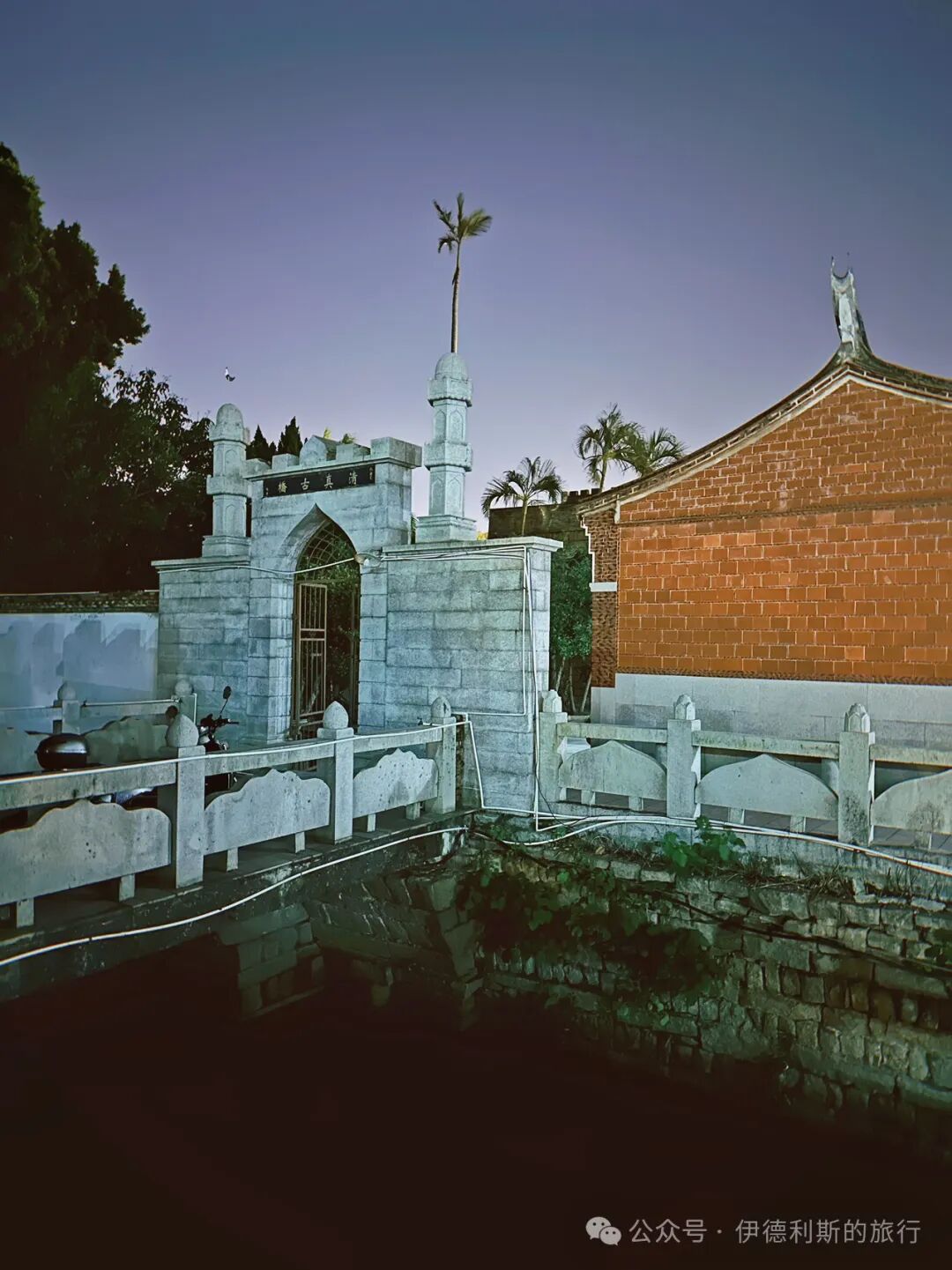
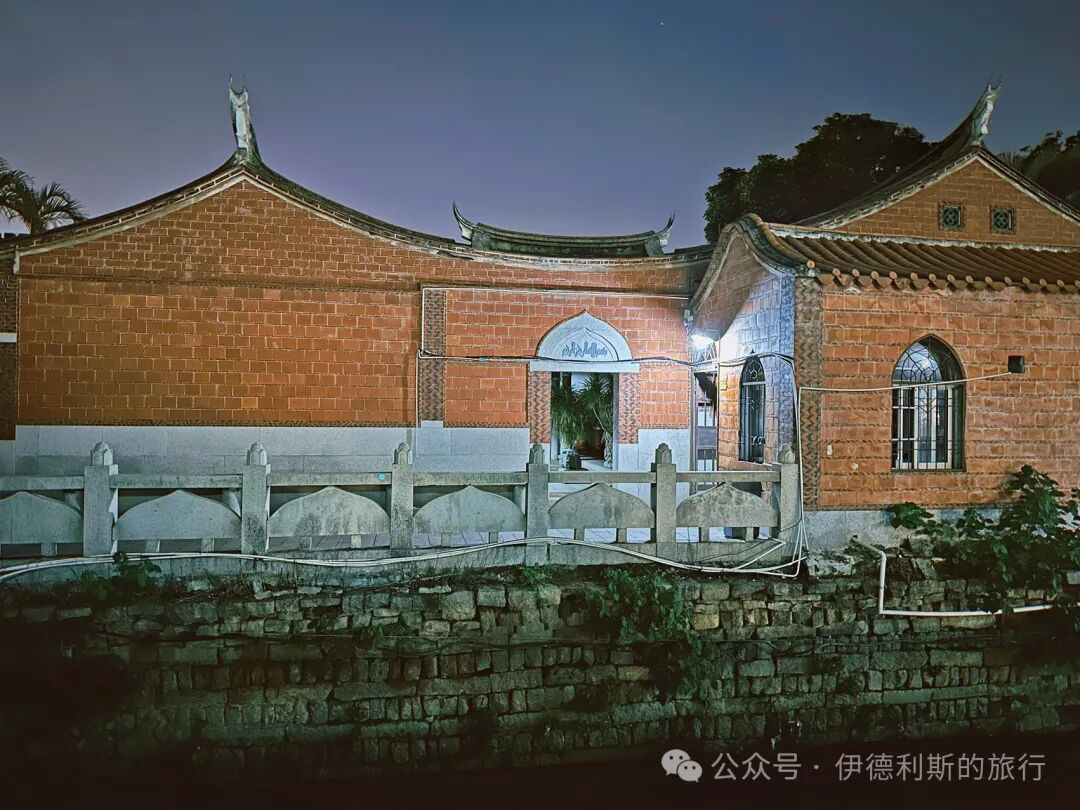
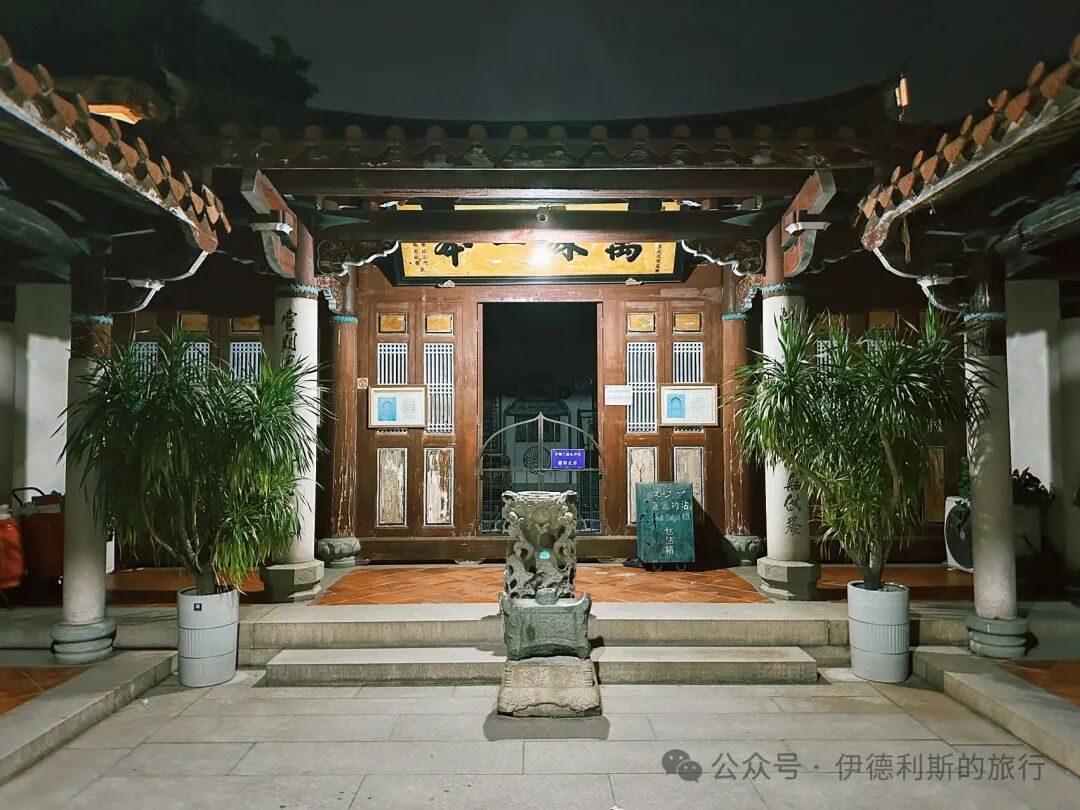
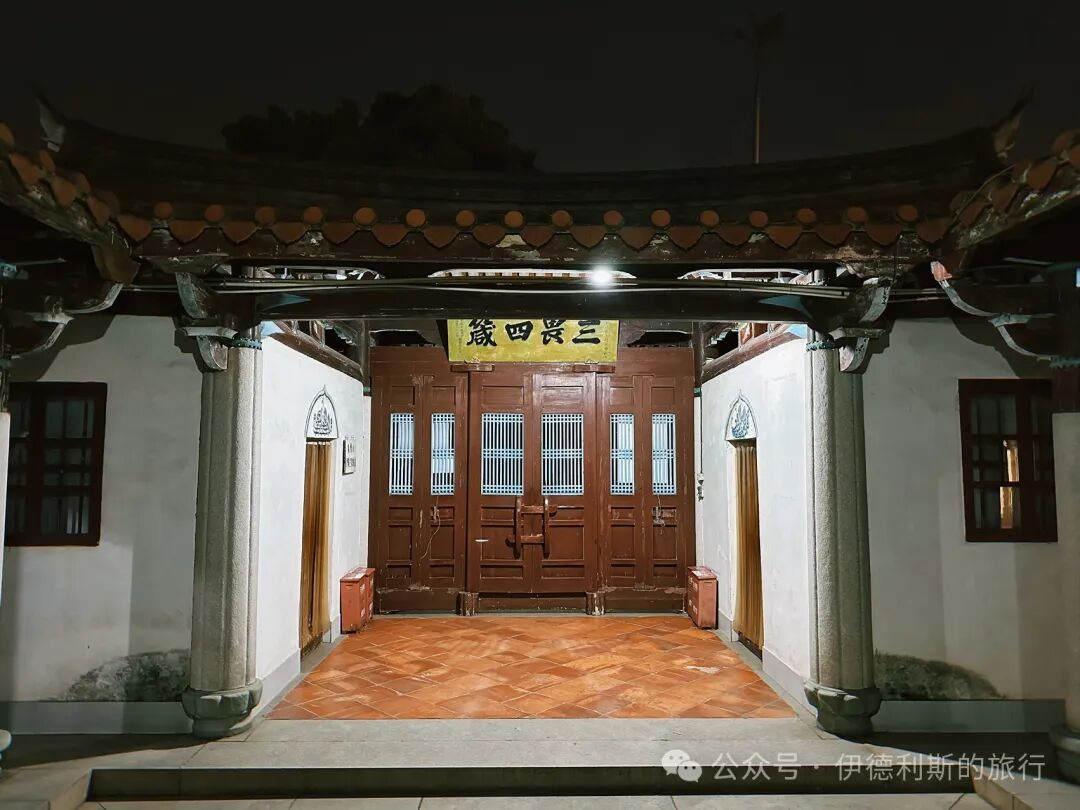
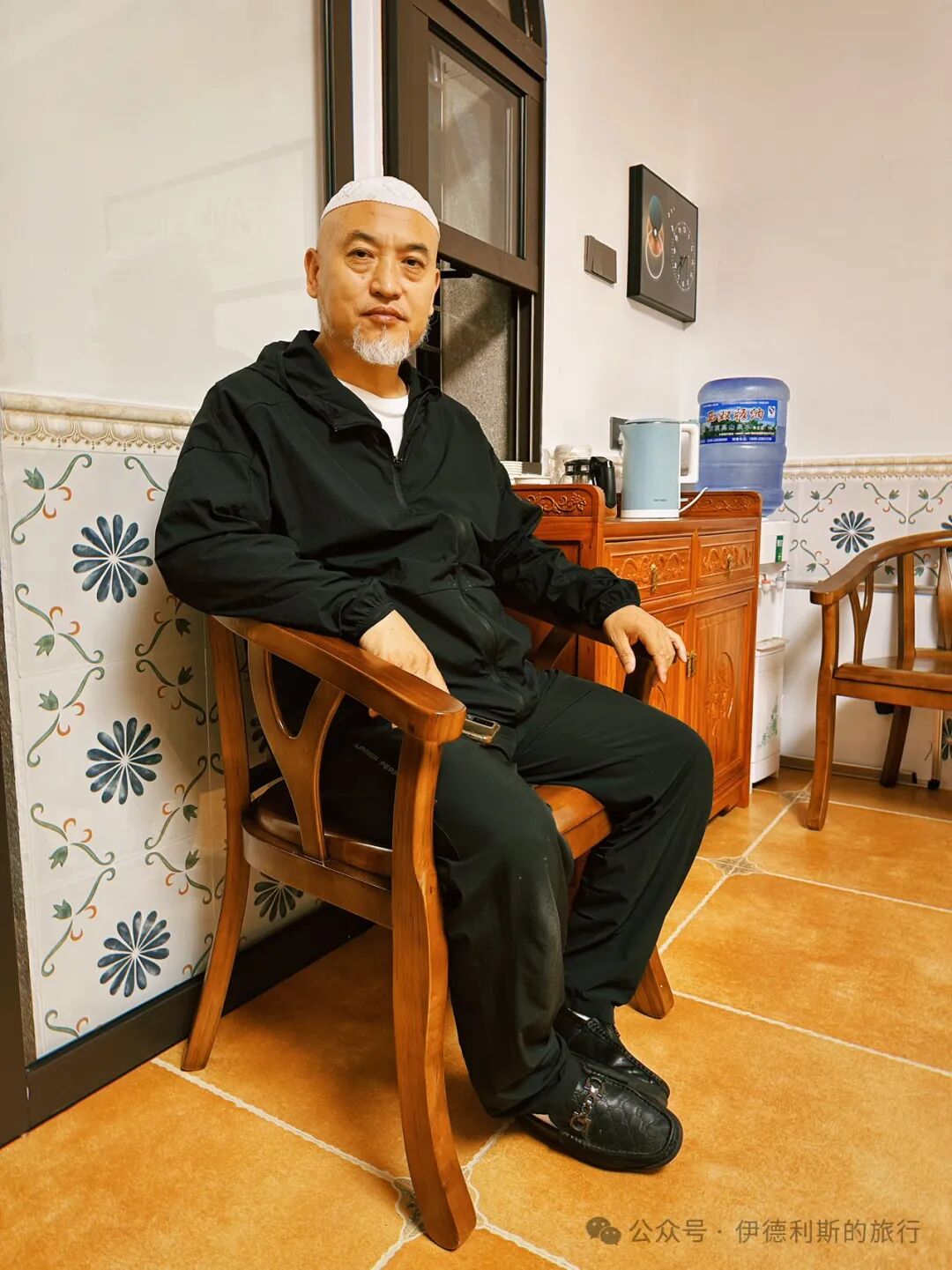
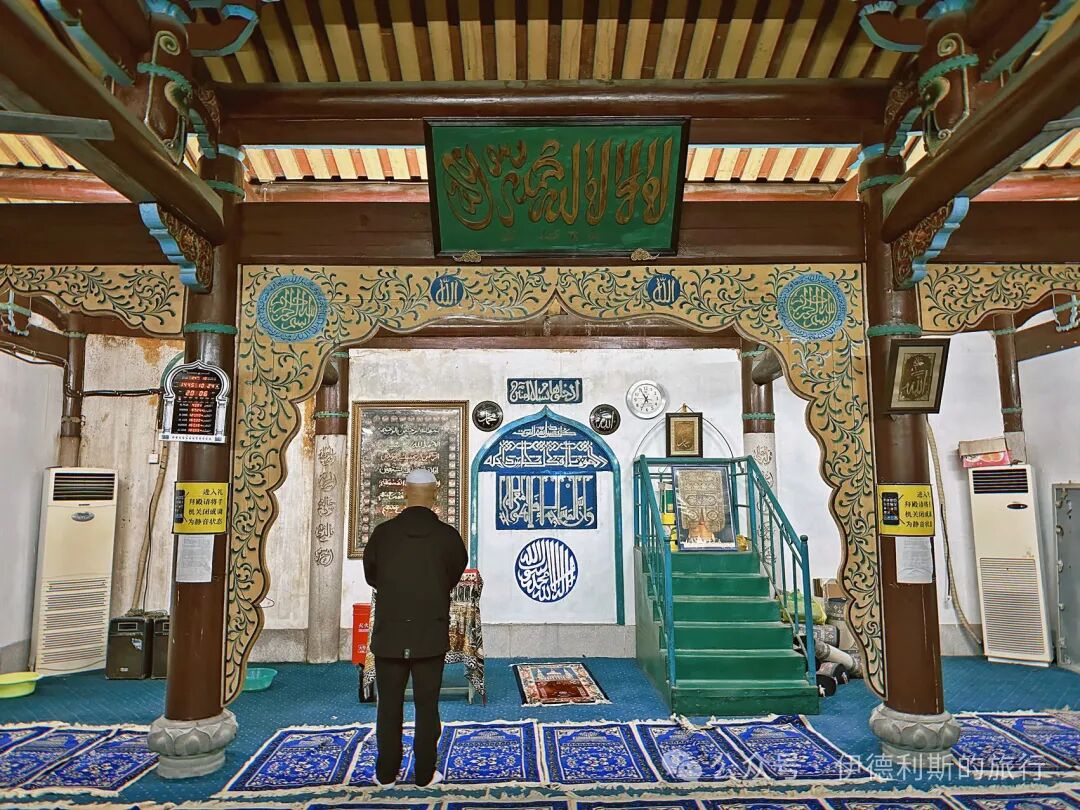
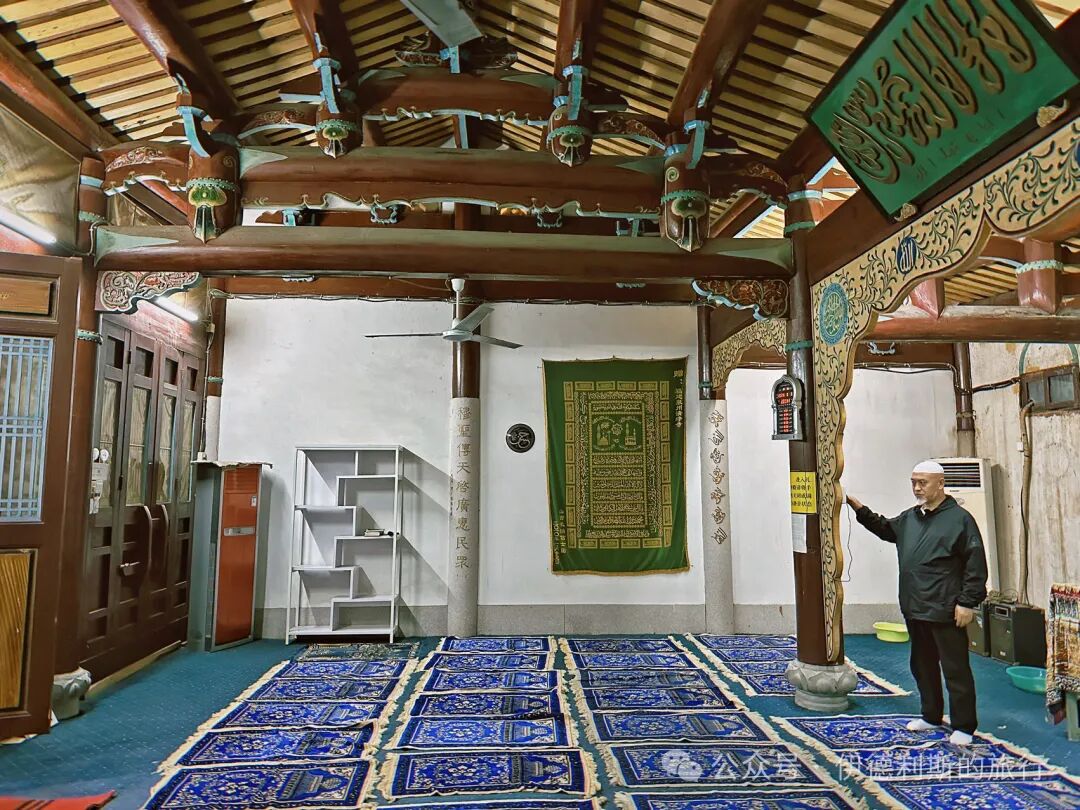
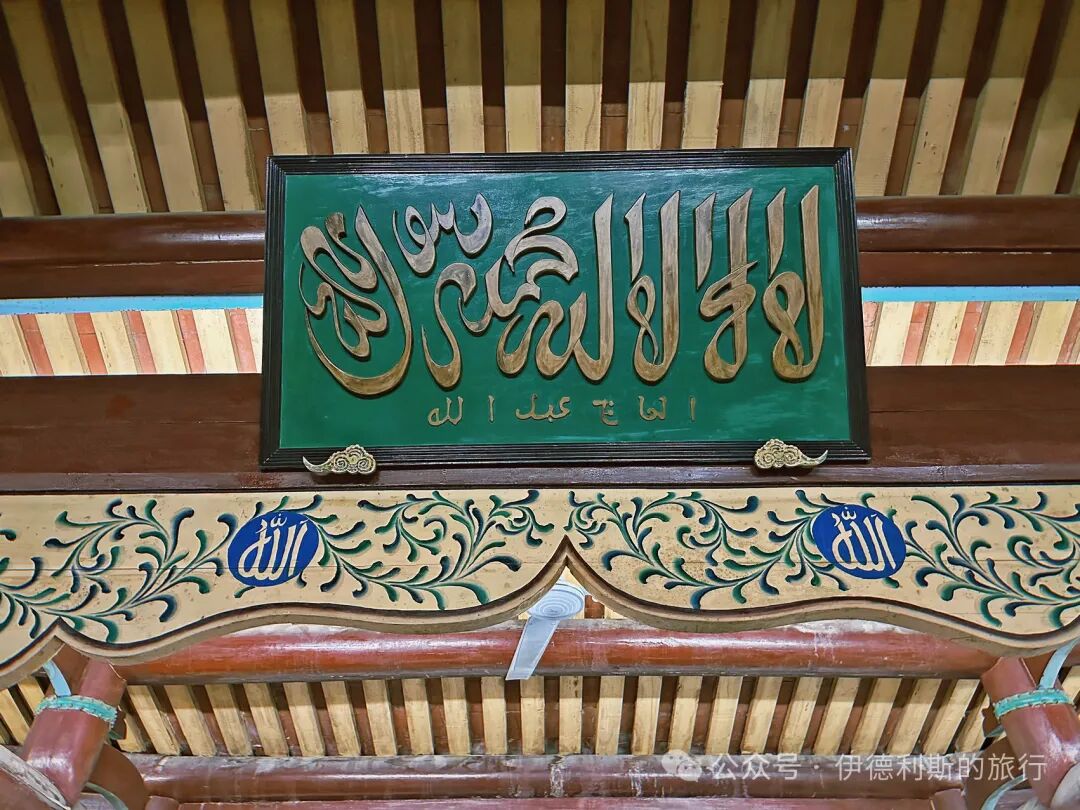
Night view of Qingjing Mosque.
The next morning, I continued exploring Qingjing Mosque.
The gate tower of Qingjing Mosque is built from diabase and white granite, with Quranic verses (3:18-19) carved into the front.
The moon-sighting platform at the top of the gate is where people used to look for the new moon during Ramadan. When the local Muslim community was still active in Quanzhou, they hung three large lanterns on the gate every Ramadan. A large palace lantern hung in the center of the pointed arch, inscribed with the words 'Islam' in both Chinese and Arabic. Two long, oval-shaped government-style lanterns hung on either side, with the left one reading 'Ancient Faith of the Hui Muslims' and the right one reading 'Ancient Qingzhen Qilin Mosque'. Every night, the names of household heads are listed on a round plaque inside the mosque, and each family takes turns lighting the lamps.
The inside of the main gate is made of three layers of arches. The outer layer is a pointed arch. At the top, there is an open hanging lotus flower carved from diabase. Below it are sixteen layers of curved stone blocks that get higher and narrower until they meet at the lotus. The middle arch is made of five fan-shaped white granite blocks with turtle-back patterns. There are foundation stones underneath, and the inner layer is a dome. On the stone walls on both sides of each layer, there is a pair of pointed-arch niches (yaokan).
Above the back of the main gate, there are two lines of Arabic inscriptions carved into white granite. They record that the Qingjing Mosque was first built in 1009 and rebuilt by Ahmad in 1310. This is also where the mosque's original name, Ashab Mosque, or "Mosque of the Holy Companions," is mentioned. Professor Ma Jian translated it in 1956 as follows:
"This mosque is the first holy mosque for the followers of Islam residing in this country." It is the oldest and most authentic, revered by all, and thus named the Mosque of the Holy Friend (Shengyou zhi Si), built in the year 400 of the Hijri calendar. Three hundred years later, in the year 710 of the Hijri calendar, a pilgrim from Jerusalem named Muhammad, also known as Shiraz (Shelashi), had a son named Ahmad who funded the renovation of this holy mosque. The dome above the main gate, the roof, the golden gate corridor, and the doors and windows were all made brand new to honor Allah. They offer dua to Allah and the Prophet Muhammad and his family, asking for their forgiveness in the future.
The inscription mentions two place names, one being al-Quds, which is the Arabic name for Jerusalem. The other is Shiraz, an ancient city in southern Iran.
The east side of the main gate originally held a minaret (bangke ta), but it was blown down by a strong wind in 1687 (the 26th year of the Kangxi reign) and has not been repaired since.
To the west of the main gate is the south wall of the main prayer hall, where eight square windows were added during the Wanli period of the Ming Dynasty. The upper part is carved with 19 meters of scripture, containing the entire 76th chapter of the Quran.
Inside the main gate of the Qingjing Mosque, on the east side, stand two stone tablets from the Ming Dynasty. The first one, the Stele for the Re-establishment of Qingjing Mosque (Chongli Qingjing Si Bei), was originally written by Wu Jian in 1350 (the tenth year of the Zhizheng era of the Yuan Dynasty) and kept in the Qingjing Mosque, which was built in 1131 (the first year of the Shaoxing era of the Southern Song Dynasty) in the south of Quanzhou city. The Qingjing Mosque was destroyed at the end of the Yuan Dynasty, and the stone tablet was moved to the Shengyou Mosque in the east of the city. When the Shengyou Mosque was renovated in 1507 (the second year of the Zhengde era of the Ming Dynasty), the inscription was re-carved. Over time, the Shengyou Mosque was renamed the Qingjing Mosque.
The second tablet is the Record of the Renovation of Qingjing Mosque (Chongxiu Qingjing Si Beiji), written by Li Guangjin in 1609 (the 37th year of the Wanli era of the Ming Dynasty).
Rubbings of these two stone tablets are also on display at the Quanzhou Maritime Museum. The Stele for the Re-establishment of Qingjing Mosque mentions the construction process of the Song and Yuan Dynasty Qingjing Mosque, which no longer exists: In the first year of the Shaoxing era of the Song Dynasty, a man named Nazhibu Muzhiluding came to Quanzhou from Sanawi on a merchant ship and founded this mosque in the south of Quanzhou city. It mentions that 'Sanawi' is the ancient Iranian port of Siraf on the north shore of the Persian Gulf.
Turn left after entering the main gate to reach the entrance of the prayer hall. Above the entrance, inside a pointed arch, are three lines of white granite carvings featuring verses from the Quran (2:125, 127).
Inside the prayer hall, the qibla wall has seven pointed-arch niches. The middle one, the mihrab known as the 'Altar of Heaven' (Fengtiantan), is the largest. Above the niches is a 13.2-meter-long stone carving entirely covered in Quranic verses. In the old days, Hui Muslims in Quanzhou called the 27th night of Ramadan, the 'Night of Power' (Laylat al-Qadr), the 'Night of Twenty-Eight.' On this day, every Hui Muslim family would prepare food. That evening, they would light a pair of large red candles on both sides of the mihrab Altar of Heaven to symbolize that the revelation of the scripture is brilliant and glorious.
Archaeological excavations of the prayer hall foundation in 1987 uncovered Yuan dynasty floor tiles, drainage ditches, and wall foundations 1.6 meters below the surface in the southwest corner. A row of Southern Song dynasty floor tiles was also found in the northwest corner.
Since the roof of the prayer hall collapsed in the early Qing dynasty, it is now impossible to know what its original shape was. According to the Ming dynasty Wanli era 'Stele Record of the Renovation of Qingjing Mosque,' it states: 'There are twelve pillars, representing the twelve months.' Based on the stone pillars and column bases remaining in the hall today, it seems they could not have supported an overly massive dome.
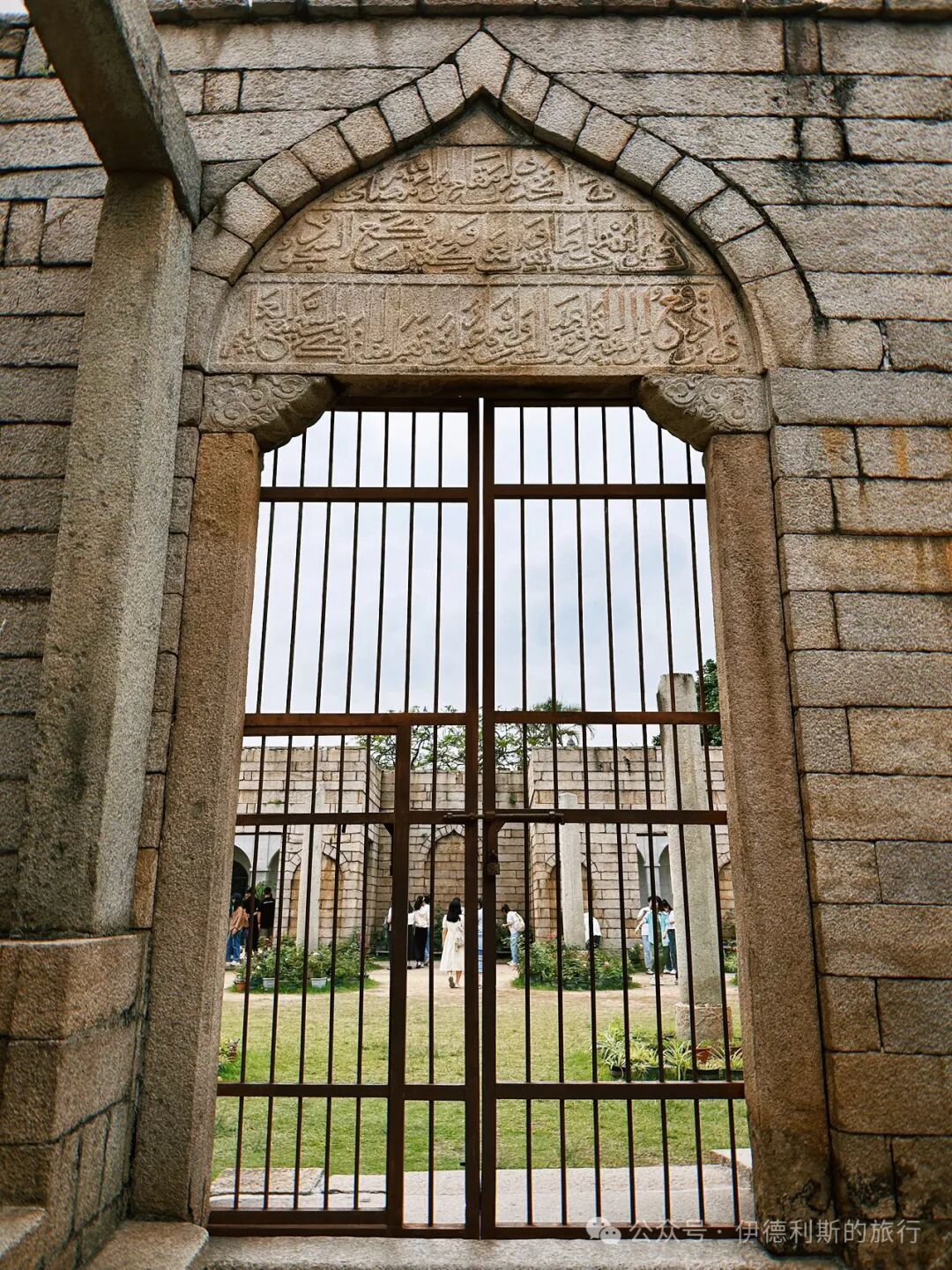
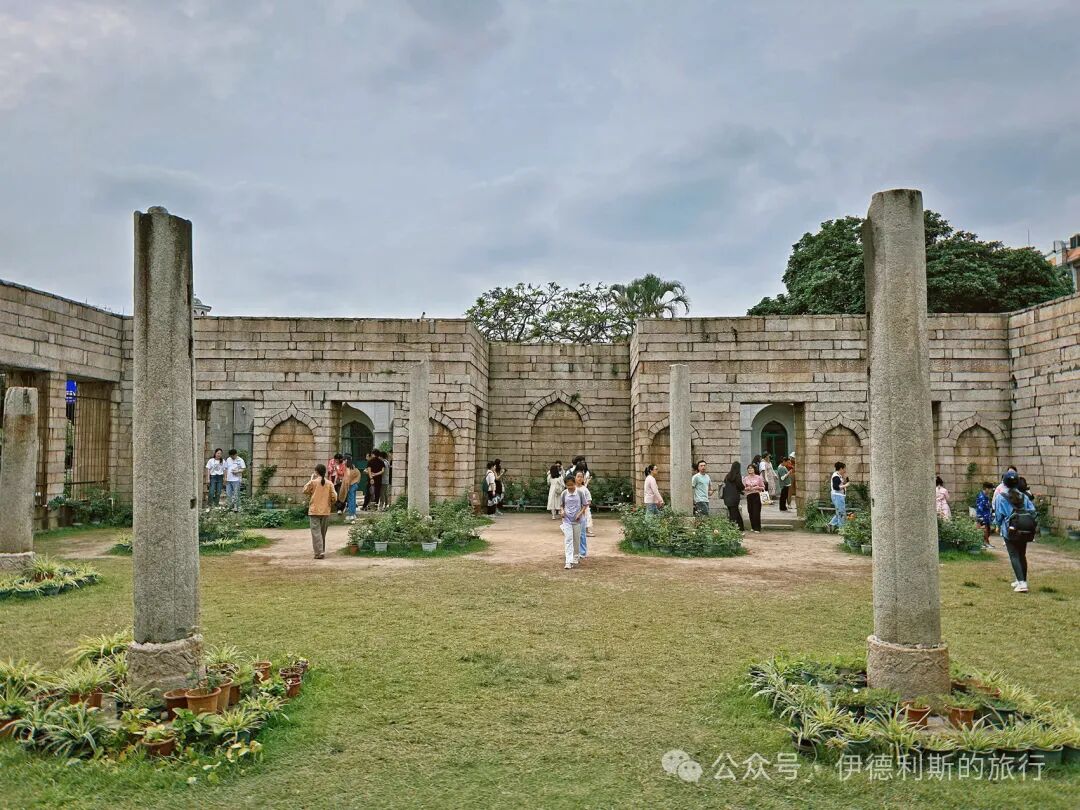
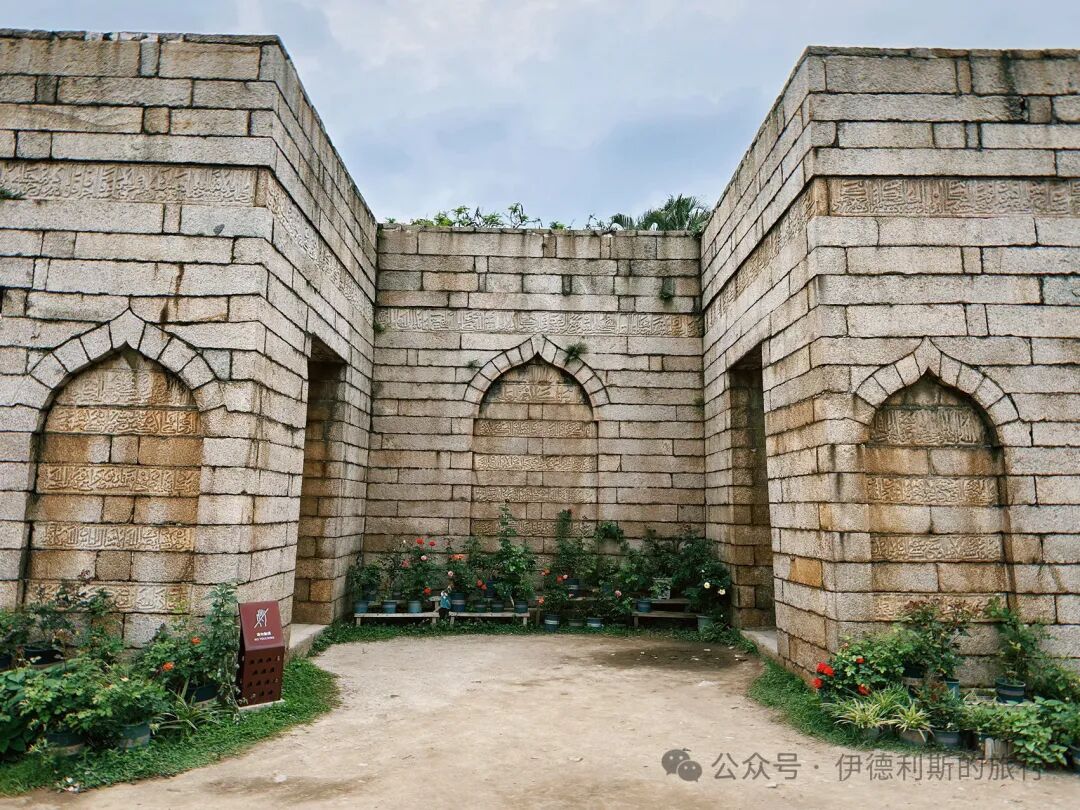
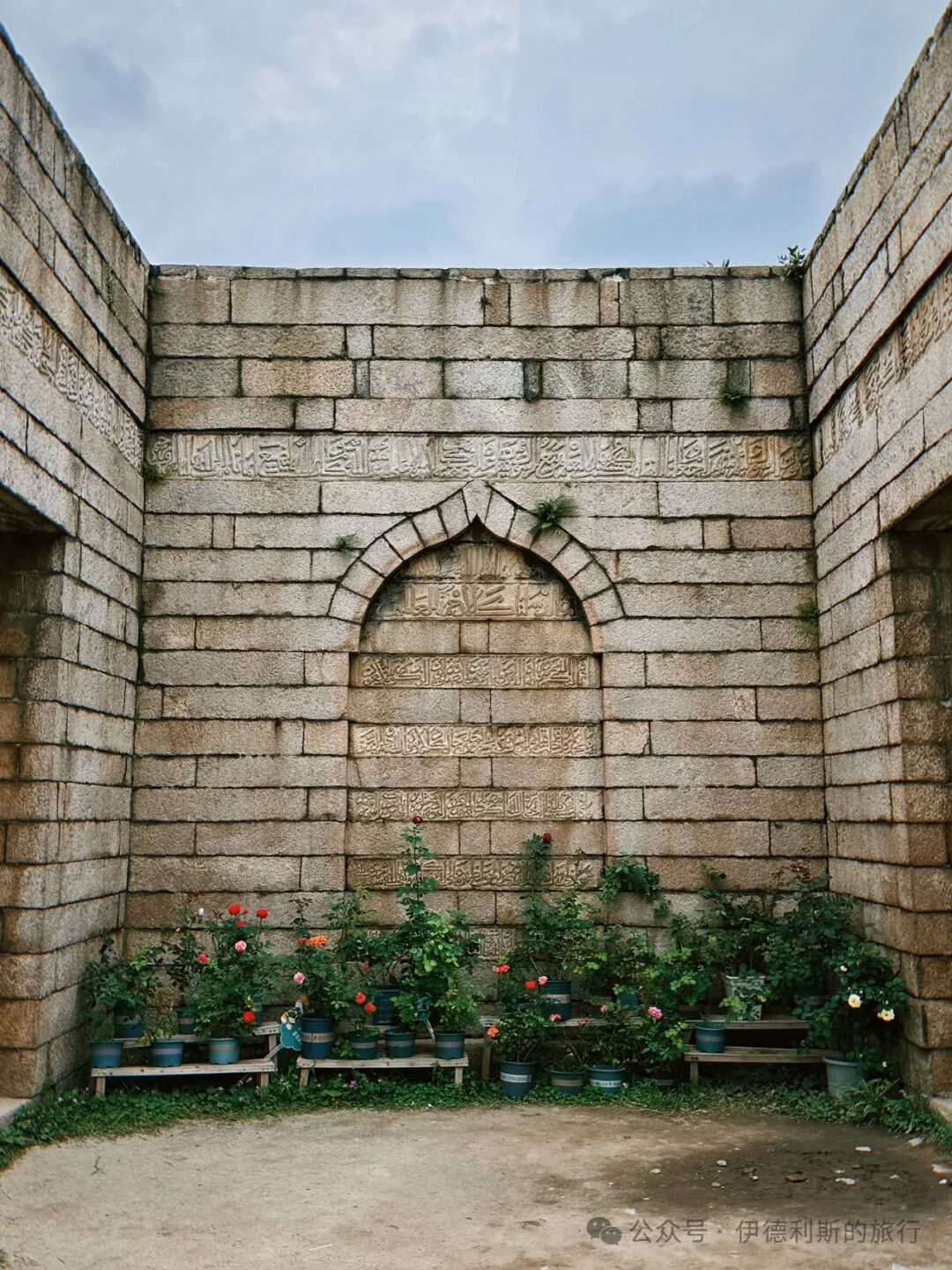
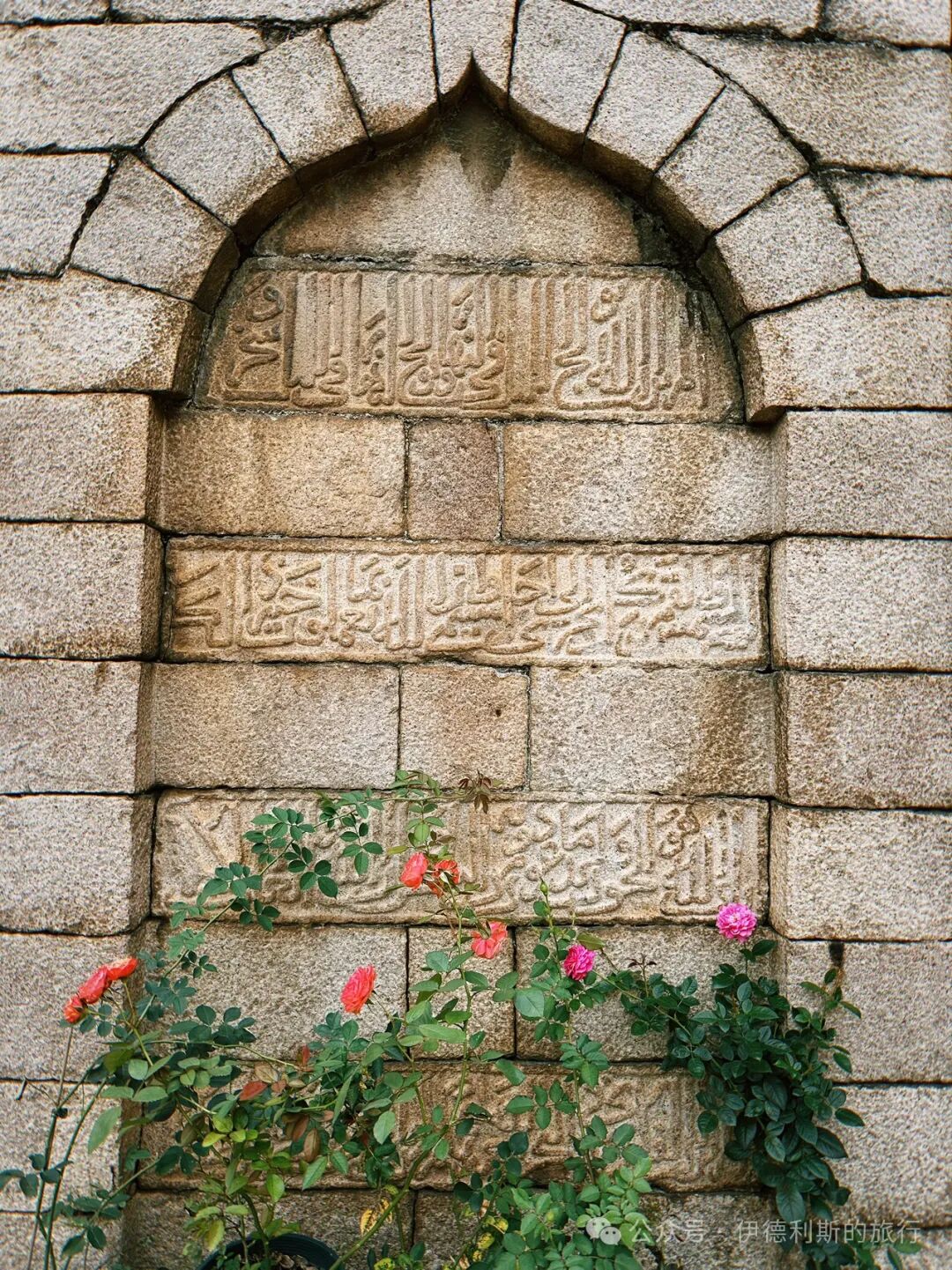
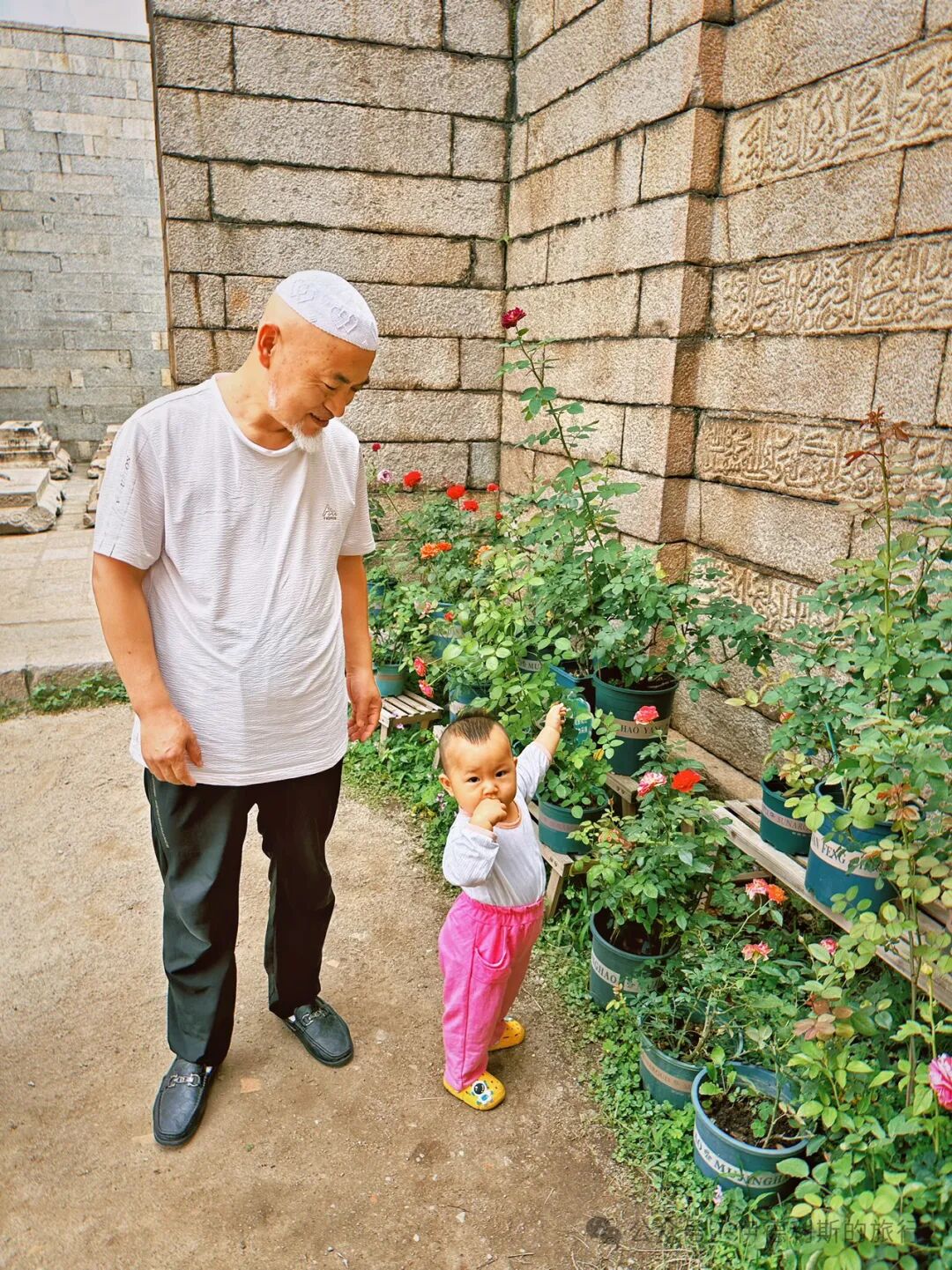
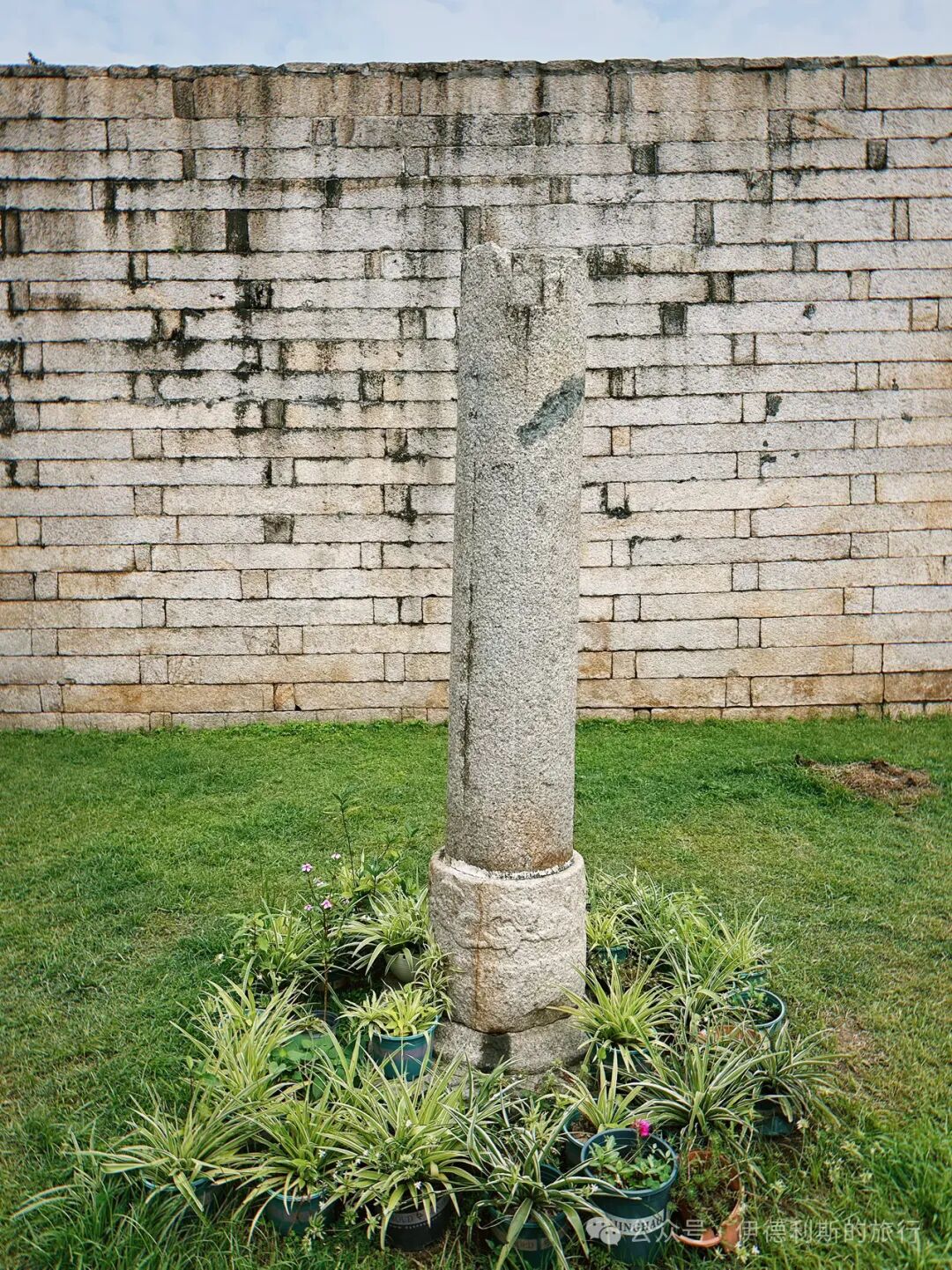
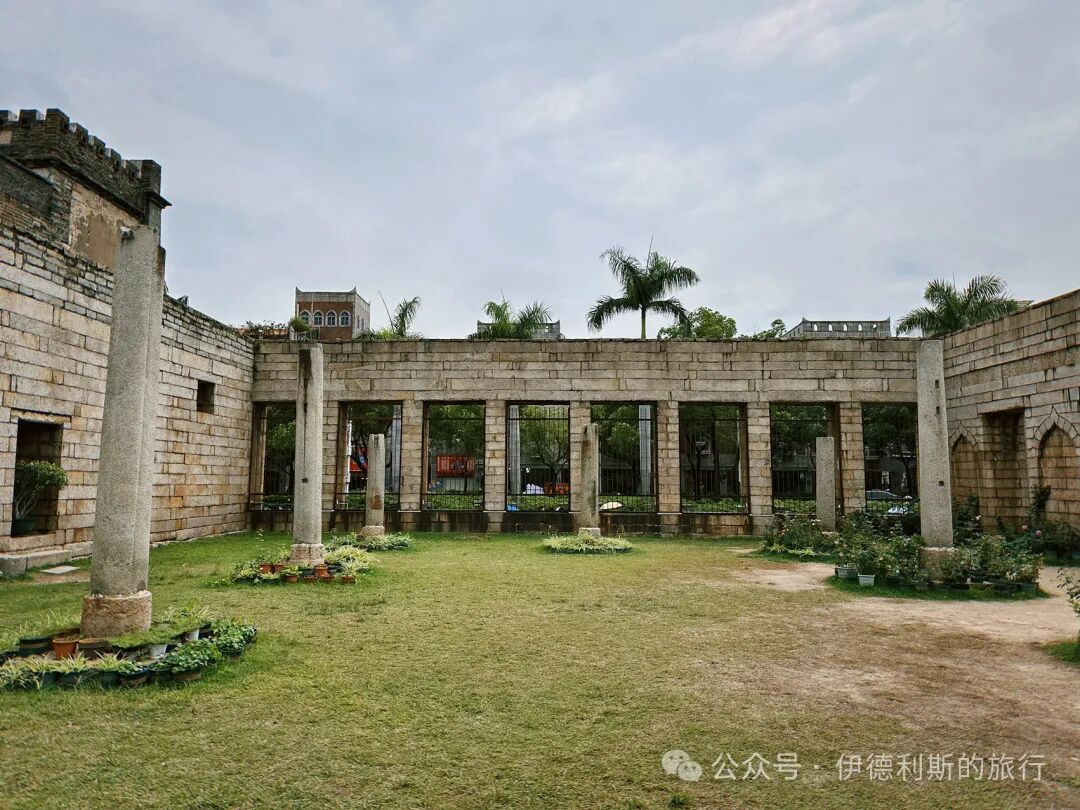
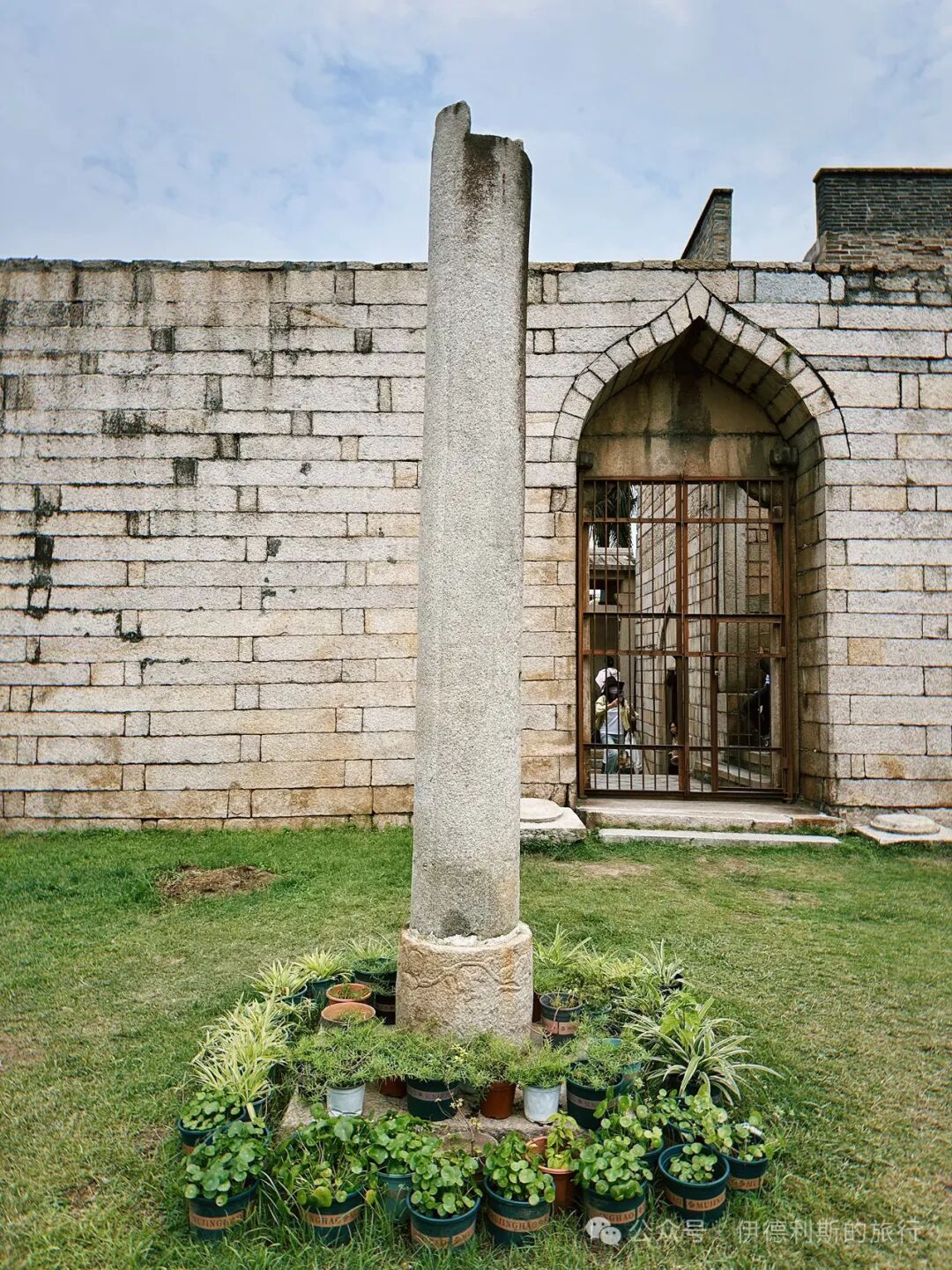
Mingshan Hall is full of tourists during the day.
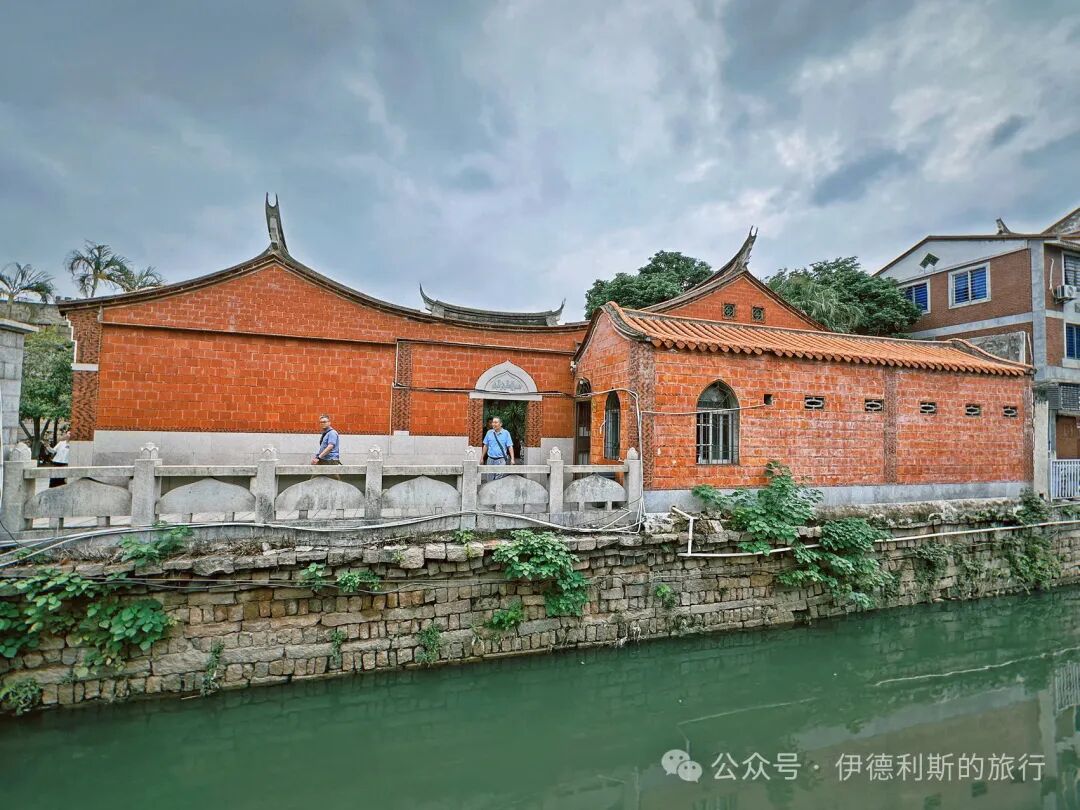
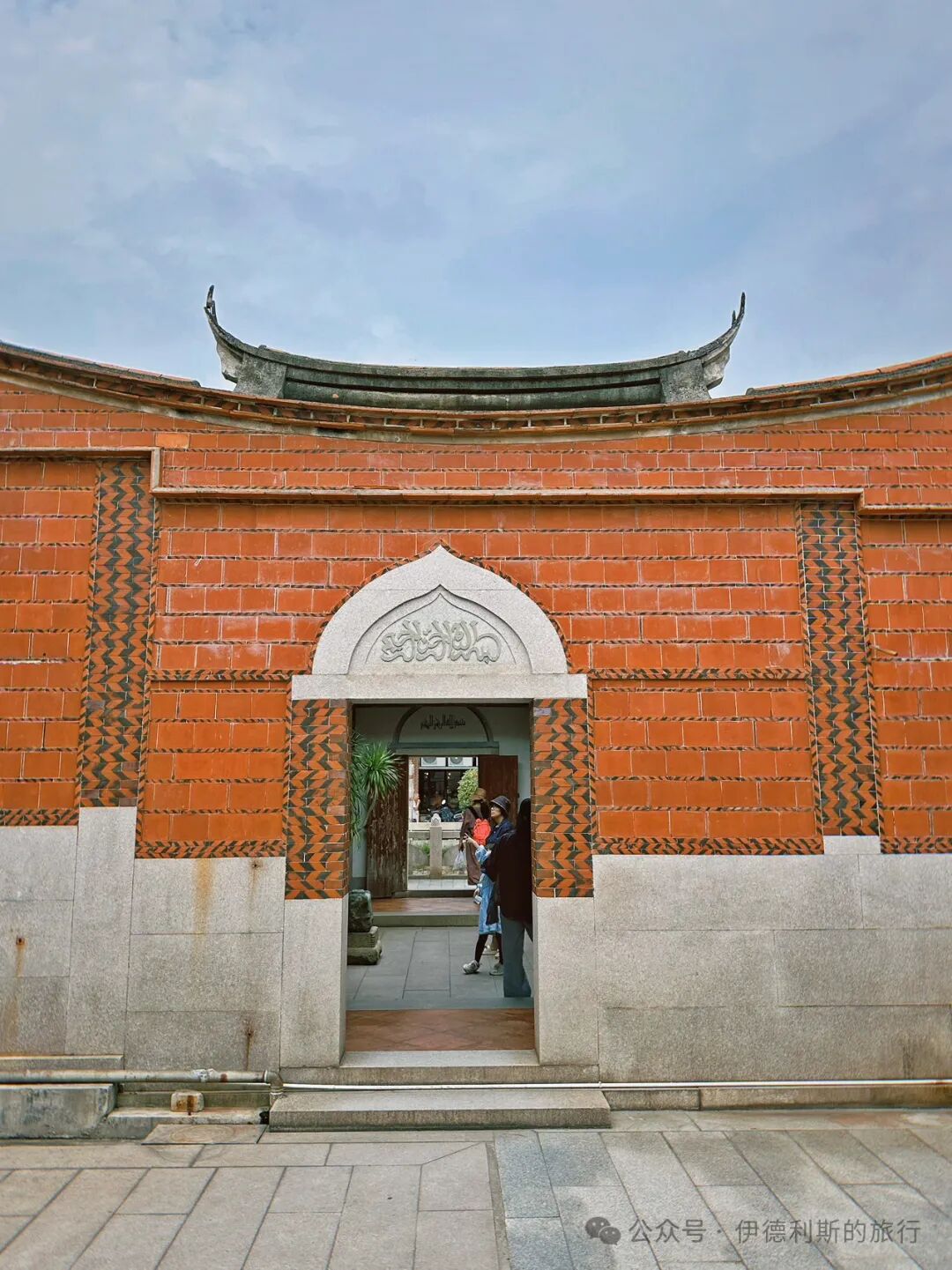
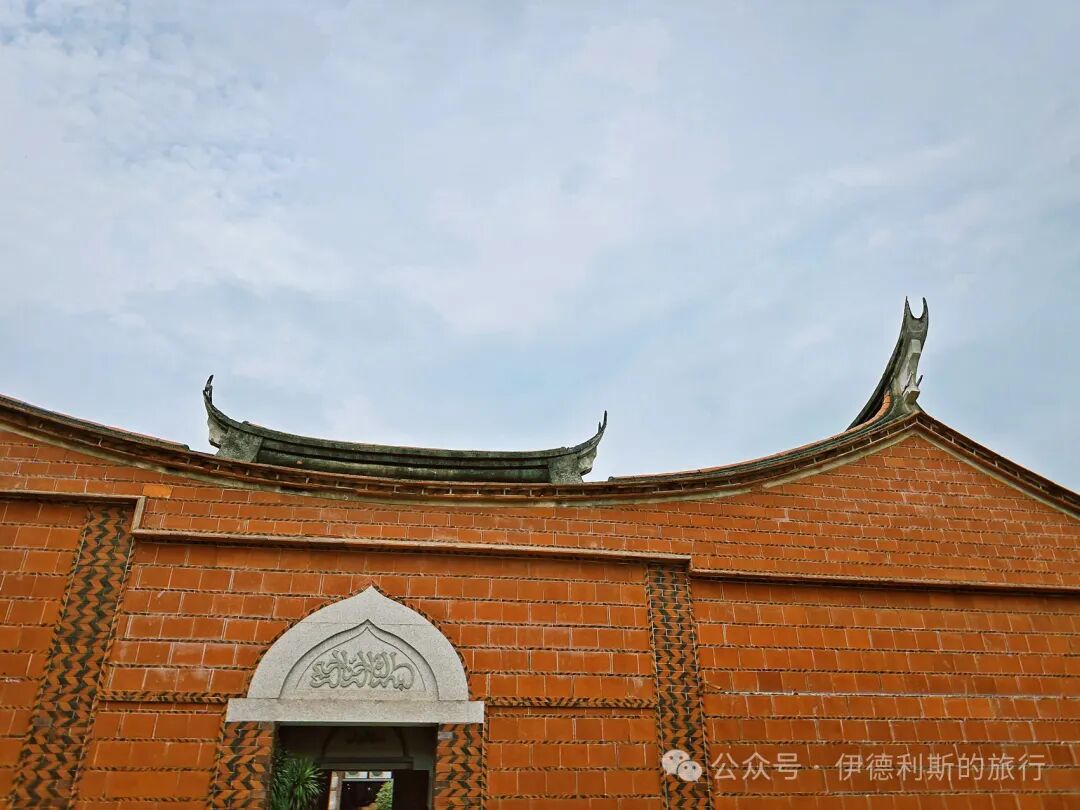
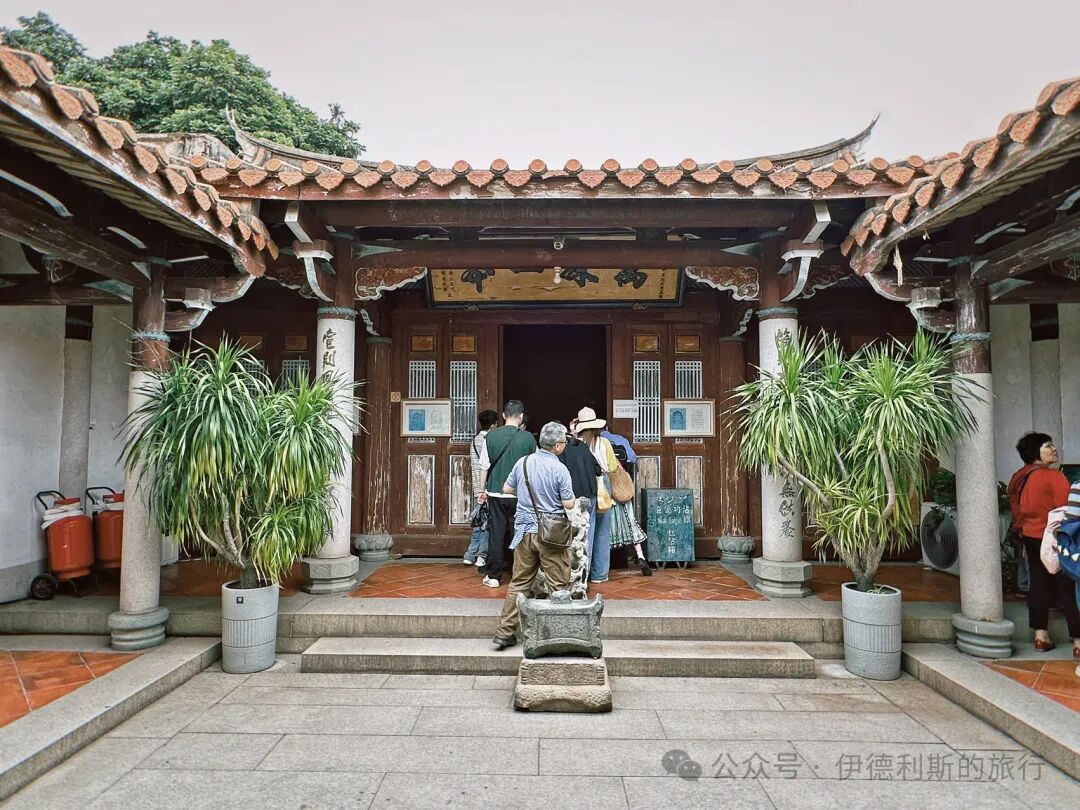
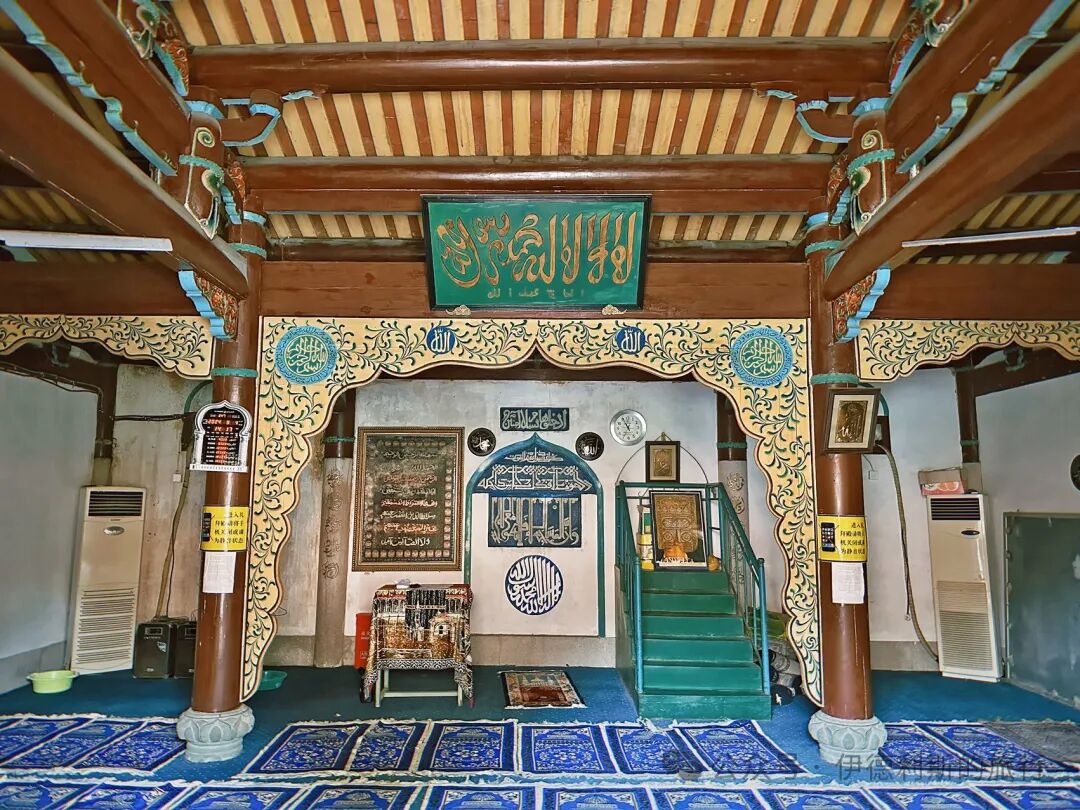
Inside the Mingshan Hall courtyard sits an exquisite Song Dynasty incense burner featuring a lotus flower rising from the water (chushui lianhua). The incense burner was originally inside the main hall of the Qingjing Mosque. It was moved to Mingshan Hall after the main hall's roof collapsed in the early Qing Dynasty.
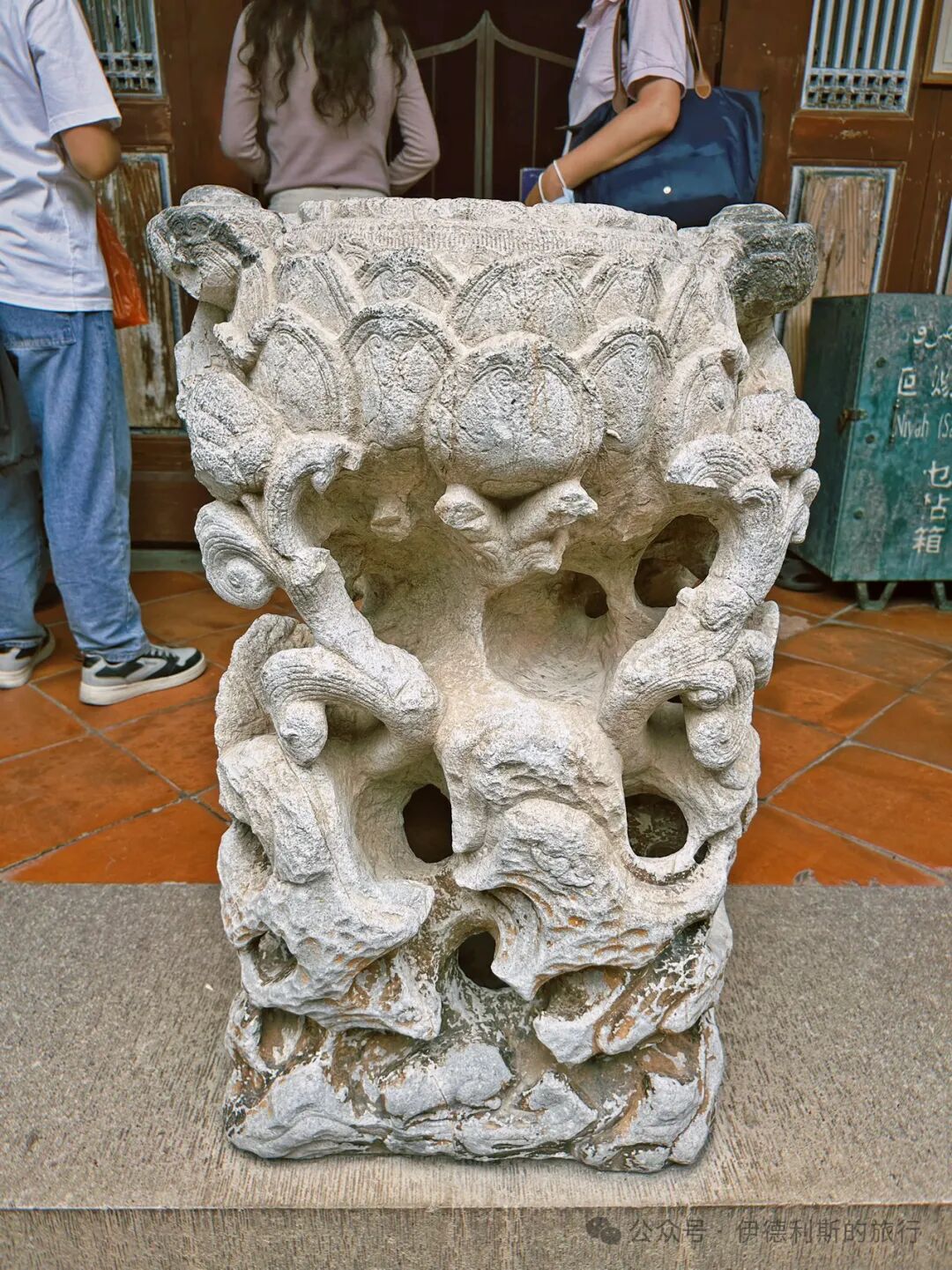
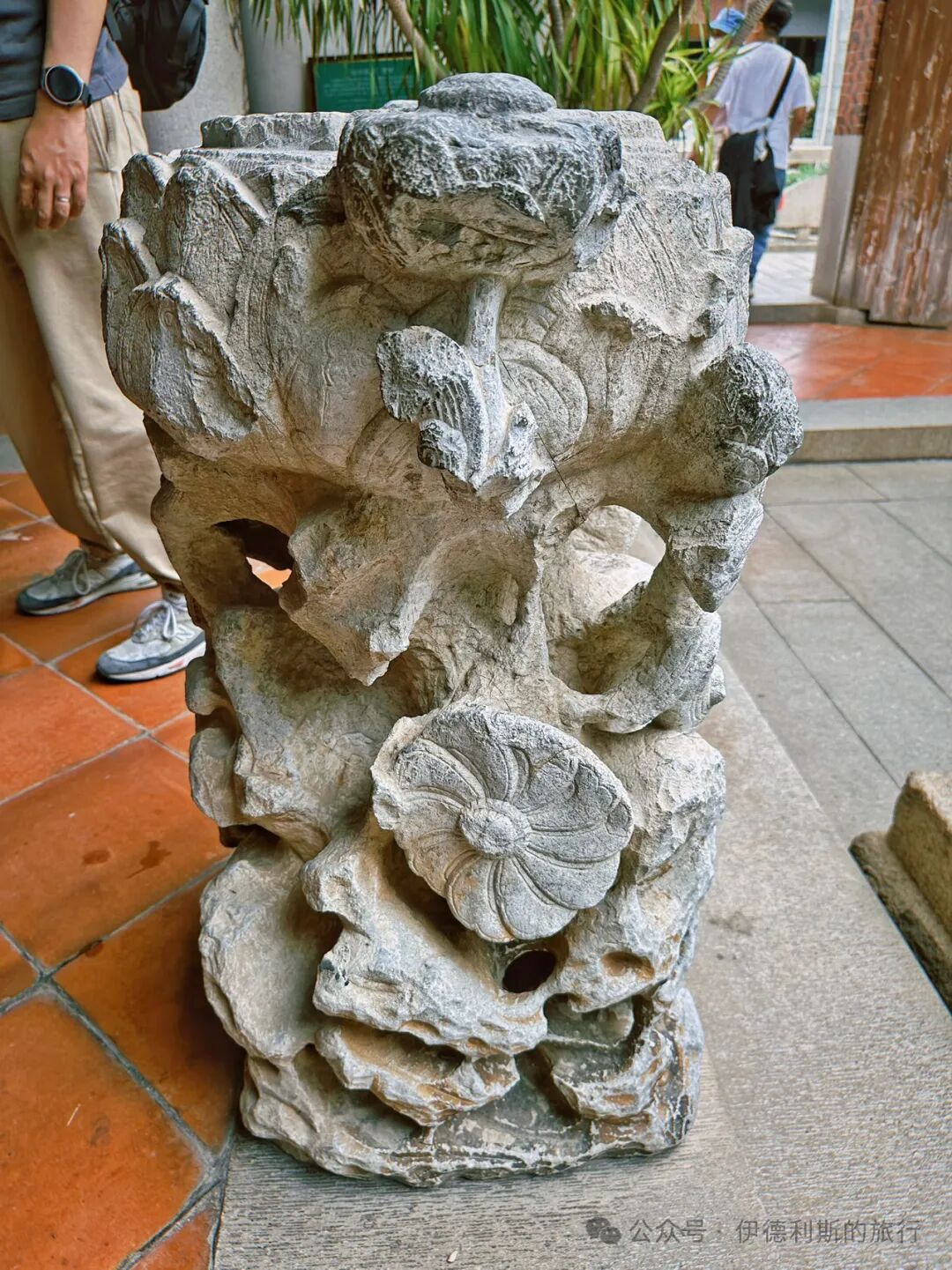
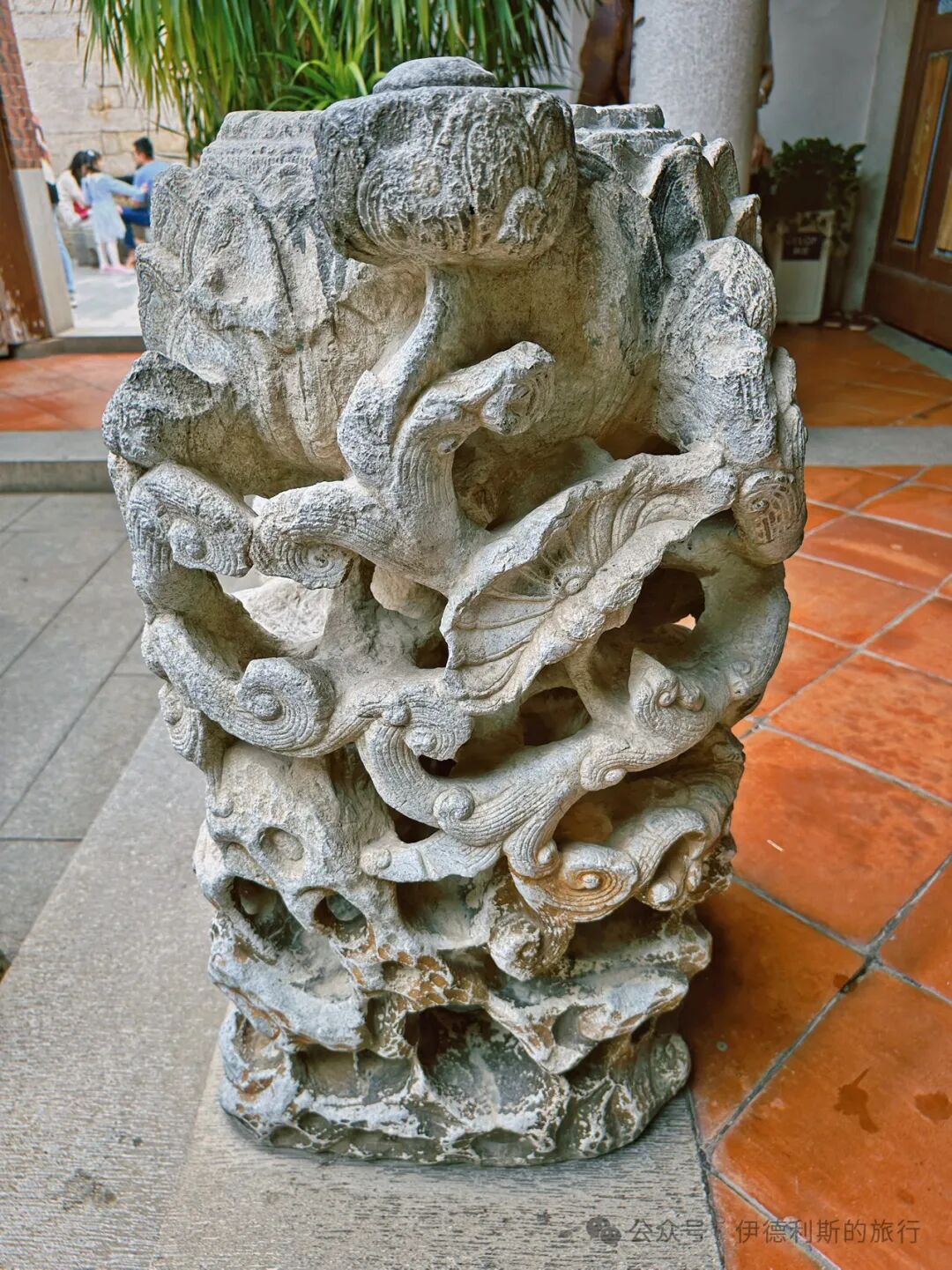
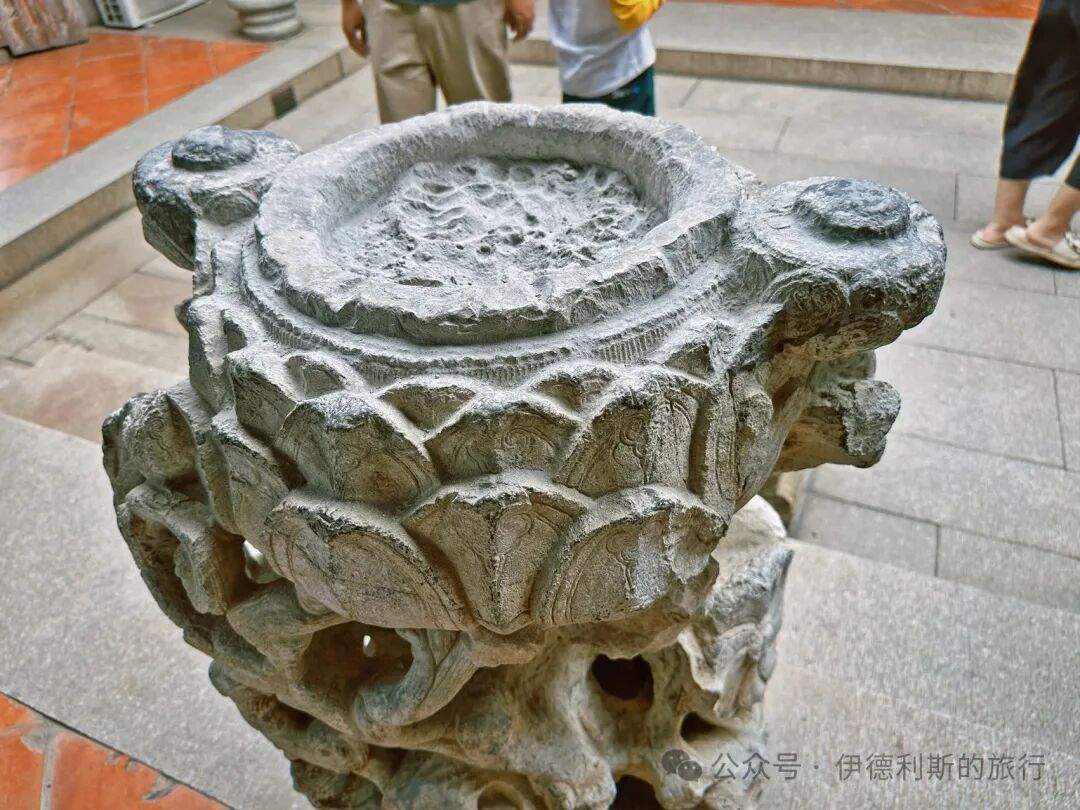
The Qingjing Mosque also preserves a thousand-year-old stone well from the Song Dynasty.
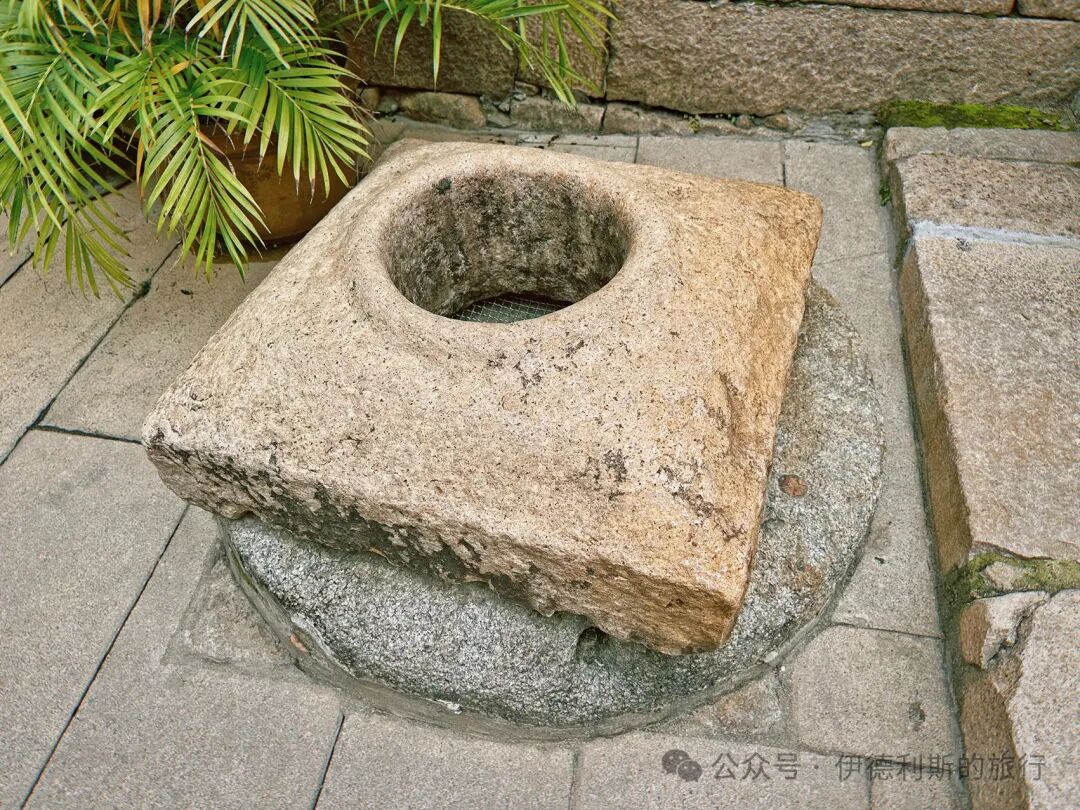
Tonghuai Street, where the Qingjing Mosque is located, was the site of Quanzhou's foreign quarter (fanfang) during the Song and Yuan dynasties, and many people were buried nearby after they passed away. In the 1950s, three stone tombs with Sumeru-style pedestals (xumizuo) were discovered under a house at the intersection of Tonghuai Street and Jiangwu Lane. Many more of these stone tombs were unearthed between 1995 and 1998 when Tonghuai Street was widened. Haji Huang Runqiu, an imam at the Qingjing Mosque, collected some of these tombs and their components to keep inside the mosque. This is how the Sumeru-style stone tombs currently kept at the Qingjing Mosque came to be there.
The Sumeru-style stone tombs at the Qingjing Mosque range from two to five layers high. All the top stones are missing, and the bottom layers all feature six ruyi-shaped feet.
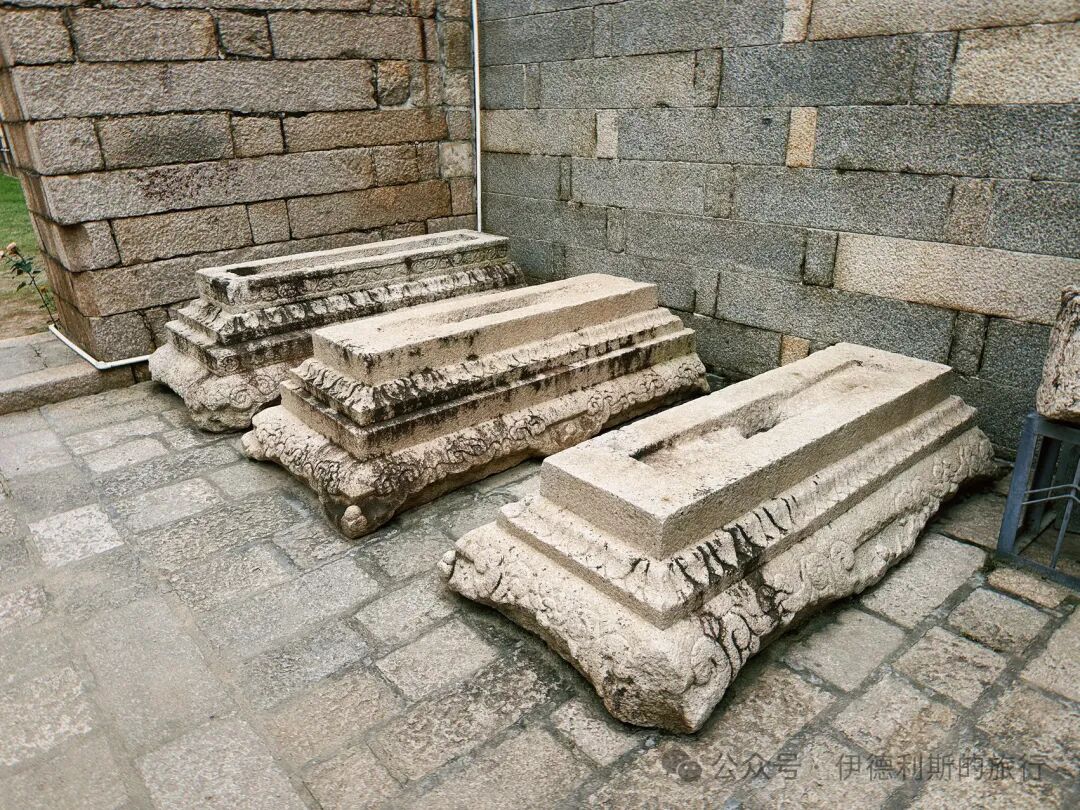
In the spring of 1983, the Qingjing Mosque underwent major renovations. Twelve Hui Muslim families who had lived inside the mosque since the Kangxi era moved out, and a collection of stone tablets was discovered in the walls and underground of the Mingshan Hall. When I visited in 2017, most of these stone carvings were displayed on the west side of the main hall. When I returned in 2024, most of them had been moved elsewhere for preservation.
The only tombstone currently kept inside the Qingjing Mosque was dug up from a garden belonging to a family named Pu in the late Qing Dynasty. It was moved to the mosque and built into the south side of the west wall of the Mingshan Hall. The tombstone is similar to the Yuan Dynasty Arabic tombstones at the Puhaddin Cemetery in Yangzhou and is considered one of the most exquisite ancient Arabic tombstones in Quanzhou. The person buried there was named Ahmed, who passed away in 1362.
The Pu family in Quanzhou are descendants of Pu Shougeng. After the Ming Dynasty, most of them left the faith or changed their surnames, and only one branch still lives on the former site of Pu Shougeng's residence. According to the Genealogy of the Pu Family in the South Gate of Quanzhou, Pu Shougeng had two sons, Shiwen and Shisi. Shisi was promoted to an official in the Hanlin Academy in 1284 and built the Baiguo Garden inside the south gate of Quanzhou city for his own enjoyment. Huayuantou has always been an old place name in the south of Quanzhou city.
Three plaques hang inside Mingshan Hall.
In the 23rd year of the Jiaqing reign of the Qing dynasty, Ma Jianji, the commander of the Fujian provincial land forces and general of Zhangzhou, dedicated the plaque reading "Ten Thousand Differences, One Origin" (Wanshu Yiben).
Ma Jianji was a Hui Muslim from Sichuan. While serving in Fujian during the Qing Jiaqing period, he renovated the Qingjing Mosque and the Lingshan Sacred Tomb, and he also carved an inscription on the Wind-Moving Rock at Lingshan.
In the 11th year of the Republic of China, Xiamen Superintendent Tang Kesan wrote the plaque reading "Recognize the Oneness of Allah" (Renzhu Duyi).
In the 13th year of the Republic of China, Tang Kesan, a recipient of the Second Class Order of the Golden Grain and former Xiamen Customs Superintendent, dedicated the plaque reading "Three Fears and Four Admonitions" (Sanwei Sizhen). The original plaques were destroyed between the 1960s and 1970s, and the ones currently on display are replicas.
Tang Kesan was a Hui Muslim from Shandong. He graduated from the Imperial University of Peking in the late Qing dynasty and became a social activist and educator during the Republican era. He served as the principal of Chengda Normal School and made significant contributions to the faith. In 1919, Tang Kesan became the Xiamen Customs Superintendent and donated funds to renovate the Qingjing Mosque during his tenure. In 1936, Tang Kesan appointed Imam Zhang Yuguang to lead the Qingjing Mosque. He started a religious study class and an adult literacy night school inside the mosque. In 1940, the Qingjing Mosque opened the Chengda Normal School Affiliated Primary School, later renamed the Qingzhen National School. It sent three groups of local Hui Muslim youth from Quanzhou to study at the Chengda Normal School in Guangxi.
The Qingjing Mosque keeps a white granite stele of the Ming Dynasty Yongle Imperial Edict. It is a copy of the edict issued by the Yongle Emperor, Zhu Di, to Mir Haji in 1407, the fifth year of the Yongle reign. The word 'Mir' refers to 'Amir,' meaning leader, and 'Haji' refers to someone who has made the pilgrimage to the Hejaz. Because of this, the actual name of the person who received the edict does not appear.
The original edict was found in 1956 at the home of Lan Xiaoyang, the hereditary imam of the Puhading Tomb in Yangzhou, and is now kept at the Cultural Palace of Nationalities in Beijing. This edict provided great protection for the faith, so the mosque in Fuzhou also made a copy of it, just like the one in Quanzhou.
I bought some magnets at the Quanzhou Liwu shop featuring the Qingjing Mosque and the Lingshan Sacred Tomb. I think the designs are beautiful and worth collecting.
Summary: Islamic History Guide: Quanzhou Qingjing Mosque - A Thousand Years of Muslim Heritage is presented here as a firsthand travel account in clear, natural English. The account focuses on Quanzhou, Qingjing Mosque, Islamic History while preserving the names, places, food, photos, and historical details from the Chinese source.
I arrived in Quanzhou at night and went straight to the Qingjing Mosque to pray. Imam Ma at the Qingjing Mosque is from Hualong, Qinghai. During the day, he leads namaz in the main hall donated by Oman, but after the tourist area closes, he leads prayers in the smaller Mingshan Hall.
Mingshan Hall was first built in 1567 (the first year of the Longqing reign of the Ming Dynasty). After the roof of the main hall of the Qingjing Mosque collapsed in the early Qing Dynasty, Mingshan Hall became the place for worship. In 1818 (the 23rd year of the Jiaqing reign), Ma Jianji, a military commander from Sichuan stationed in Quanzhou, rebuilt Mingshan Hall in the traditional architectural style of southern Fujian. In 1871 (the 10th year of the Tongzhi reign), Jiang Changgui, the military commander for Fujian Province, rebuilt Mingshan Hall again.
During the Tongzhi reign, Jiang Changgui collected many stone tablets with Arabic inscriptions from the Yuan Dynasty in Quanzhou and embedded them into the walls of Mingshan Hall. These stone tablets were not removed until the major renovation of Mingshan Hall in the spring of 1983. Many of these tablets are Yuan Dynasty tombstones. The people buried there came from places like Tabriz and Tehran in Iran, Adana in Turkey, Nablus in Palestine, and Khwarezm in Uzbekistan.
Mingshan Hall sits just north of Bagua Ditch, which served as the city moat for Quanzhou during the Five Dynasties and Northern Song periods. A granite stone bridge from the Song Dynasty originally crossed the ditch, but it was rebuilt in 1998 when Bagua Ditch was widened.
Night view of Qingjing Mosque.
The next morning, I continued exploring Qingjing Mosque.
The gate tower of Qingjing Mosque is built from diabase and white granite, with Quranic verses (3:18-19) carved into the front.
The moon-sighting platform at the top of the gate is where people used to look for the new moon during Ramadan. When the local Muslim community was still active in Quanzhou, they hung three large lanterns on the gate every Ramadan. A large palace lantern hung in the center of the pointed arch, inscribed with the words 'Islam' in both Chinese and Arabic. Two long, oval-shaped government-style lanterns hung on either side, with the left one reading 'Ancient Faith of the Hui Muslims' and the right one reading 'Ancient Qingzhen Qilin Mosque'. Every night, the names of household heads are listed on a round plaque inside the mosque, and each family takes turns lighting the lamps.
The inside of the main gate is made of three layers of arches. The outer layer is a pointed arch. At the top, there is an open hanging lotus flower carved from diabase. Below it are sixteen layers of curved stone blocks that get higher and narrower until they meet at the lotus. The middle arch is made of five fan-shaped white granite blocks with turtle-back patterns. There are foundation stones underneath, and the inner layer is a dome. On the stone walls on both sides of each layer, there is a pair of pointed-arch niches (yaokan).
Above the back of the main gate, there are two lines of Arabic inscriptions carved into white granite. They record that the Qingjing Mosque was first built in 1009 and rebuilt by Ahmad in 1310. This is also where the mosque's original name, Ashab Mosque, or "Mosque of the Holy Companions," is mentioned. Professor Ma Jian translated it in 1956 as follows:
"This mosque is the first holy mosque for the followers of Islam residing in this country." It is the oldest and most authentic, revered by all, and thus named the Mosque of the Holy Friend (Shengyou zhi Si), built in the year 400 of the Hijri calendar. Three hundred years later, in the year 710 of the Hijri calendar, a pilgrim from Jerusalem named Muhammad, also known as Shiraz (Shelashi), had a son named Ahmad who funded the renovation of this holy mosque. The dome above the main gate, the roof, the golden gate corridor, and the doors and windows were all made brand new to honor Allah. They offer dua to Allah and the Prophet Muhammad and his family, asking for their forgiveness in the future.
The inscription mentions two place names, one being al-Quds, which is the Arabic name for Jerusalem. The other is Shiraz, an ancient city in southern Iran.
The east side of the main gate originally held a minaret (bangke ta), but it was blown down by a strong wind in 1687 (the 26th year of the Kangxi reign) and has not been repaired since.
To the west of the main gate is the south wall of the main prayer hall, where eight square windows were added during the Wanli period of the Ming Dynasty. The upper part is carved with 19 meters of scripture, containing the entire 76th chapter of the Quran.
Inside the main gate of the Qingjing Mosque, on the east side, stand two stone tablets from the Ming Dynasty. The first one, the Stele for the Re-establishment of Qingjing Mosque (Chongli Qingjing Si Bei), was originally written by Wu Jian in 1350 (the tenth year of the Zhizheng era of the Yuan Dynasty) and kept in the Qingjing Mosque, which was built in 1131 (the first year of the Shaoxing era of the Southern Song Dynasty) in the south of Quanzhou city. The Qingjing Mosque was destroyed at the end of the Yuan Dynasty, and the stone tablet was moved to the Shengyou Mosque in the east of the city. When the Shengyou Mosque was renovated in 1507 (the second year of the Zhengde era of the Ming Dynasty), the inscription was re-carved. Over time, the Shengyou Mosque was renamed the Qingjing Mosque.
The second tablet is the Record of the Renovation of Qingjing Mosque (Chongxiu Qingjing Si Beiji), written by Li Guangjin in 1609 (the 37th year of the Wanli era of the Ming Dynasty).
Rubbings of these two stone tablets are also on display at the Quanzhou Maritime Museum. The Stele for the Re-establishment of Qingjing Mosque mentions the construction process of the Song and Yuan Dynasty Qingjing Mosque, which no longer exists: In the first year of the Shaoxing era of the Song Dynasty, a man named Nazhibu Muzhiluding came to Quanzhou from Sanawi on a merchant ship and founded this mosque in the south of Quanzhou city. It mentions that 'Sanawi' is the ancient Iranian port of Siraf on the north shore of the Persian Gulf.
Turn left after entering the main gate to reach the entrance of the prayer hall. Above the entrance, inside a pointed arch, are three lines of white granite carvings featuring verses from the Quran (2:125, 127).
Inside the prayer hall, the qibla wall has seven pointed-arch niches. The middle one, the mihrab known as the 'Altar of Heaven' (Fengtiantan), is the largest. Above the niches is a 13.2-meter-long stone carving entirely covered in Quranic verses. In the old days, Hui Muslims in Quanzhou called the 27th night of Ramadan, the 'Night of Power' (Laylat al-Qadr), the 'Night of Twenty-Eight.' On this day, every Hui Muslim family would prepare food. That evening, they would light a pair of large red candles on both sides of the mihrab Altar of Heaven to symbolize that the revelation of the scripture is brilliant and glorious.
Archaeological excavations of the prayer hall foundation in 1987 uncovered Yuan dynasty floor tiles, drainage ditches, and wall foundations 1.6 meters below the surface in the southwest corner. A row of Southern Song dynasty floor tiles was also found in the northwest corner.
Since the roof of the prayer hall collapsed in the early Qing dynasty, it is now impossible to know what its original shape was. According to the Ming dynasty Wanli era 'Stele Record of the Renovation of Qingjing Mosque,' it states: 'There are twelve pillars, representing the twelve months.' Based on the stone pillars and column bases remaining in the hall today, it seems they could not have supported an overly massive dome.
Mingshan Hall is full of tourists during the day.
Inside the Mingshan Hall courtyard sits an exquisite Song Dynasty incense burner featuring a lotus flower rising from the water (chushui lianhua). The incense burner was originally inside the main hall of the Qingjing Mosque. It was moved to Mingshan Hall after the main hall's roof collapsed in the early Qing Dynasty.
The Qingjing Mosque also preserves a thousand-year-old stone well from the Song Dynasty.
Tonghuai Street, where the Qingjing Mosque is located, was the site of Quanzhou's foreign quarter (fanfang) during the Song and Yuan dynasties, and many people were buried nearby after they passed away. In the 1950s, three stone tombs with Sumeru-style pedestals (xumizuo) were discovered under a house at the intersection of Tonghuai Street and Jiangwu Lane. Many more of these stone tombs were unearthed between 1995 and 1998 when Tonghuai Street was widened. Haji Huang Runqiu, an imam at the Qingjing Mosque, collected some of these tombs and their components to keep inside the mosque. This is how the Sumeru-style stone tombs currently kept at the Qingjing Mosque came to be there.
The Sumeru-style stone tombs at the Qingjing Mosque range from two to five layers high. All the top stones are missing, and the bottom layers all feature six ruyi-shaped feet.
In the spring of 1983, the Qingjing Mosque underwent major renovations. Twelve Hui Muslim families who had lived inside the mosque since the Kangxi era moved out, and a collection of stone tablets was discovered in the walls and underground of the Mingshan Hall. When I visited in 2017, most of these stone carvings were displayed on the west side of the main hall. When I returned in 2024, most of them had been moved elsewhere for preservation.
The only tombstone currently kept inside the Qingjing Mosque was dug up from a garden belonging to a family named Pu in the late Qing Dynasty. It was moved to the mosque and built into the south side of the west wall of the Mingshan Hall. The tombstone is similar to the Yuan Dynasty Arabic tombstones at the Puhaddin Cemetery in Yangzhou and is considered one of the most exquisite ancient Arabic tombstones in Quanzhou. The person buried there was named Ahmed, who passed away in 1362.
The Pu family in Quanzhou are descendants of Pu Shougeng. After the Ming Dynasty, most of them left the faith or changed their surnames, and only one branch still lives on the former site of Pu Shougeng's residence. According to the Genealogy of the Pu Family in the South Gate of Quanzhou, Pu Shougeng had two sons, Shiwen and Shisi. Shisi was promoted to an official in the Hanlin Academy in 1284 and built the Baiguo Garden inside the south gate of Quanzhou city for his own enjoyment. Huayuantou has always been an old place name in the south of Quanzhou city.
Three plaques hang inside Mingshan Hall.
In the 23rd year of the Jiaqing reign of the Qing dynasty, Ma Jianji, the commander of the Fujian provincial land forces and general of Zhangzhou, dedicated the plaque reading "Ten Thousand Differences, One Origin" (Wanshu Yiben).
Ma Jianji was a Hui Muslim from Sichuan. While serving in Fujian during the Qing Jiaqing period, he renovated the Qingjing Mosque and the Lingshan Sacred Tomb, and he also carved an inscription on the Wind-Moving Rock at Lingshan.
In the 11th year of the Republic of China, Xiamen Superintendent Tang Kesan wrote the plaque reading "Recognize the Oneness of Allah" (Renzhu Duyi).
In the 13th year of the Republic of China, Tang Kesan, a recipient of the Second Class Order of the Golden Grain and former Xiamen Customs Superintendent, dedicated the plaque reading "Three Fears and Four Admonitions" (Sanwei Sizhen). The original plaques were destroyed between the 1960s and 1970s, and the ones currently on display are replicas.
Tang Kesan was a Hui Muslim from Shandong. He graduated from the Imperial University of Peking in the late Qing dynasty and became a social activist and educator during the Republican era. He served as the principal of Chengda Normal School and made significant contributions to the faith. In 1919, Tang Kesan became the Xiamen Customs Superintendent and donated funds to renovate the Qingjing Mosque during his tenure. In 1936, Tang Kesan appointed Imam Zhang Yuguang to lead the Qingjing Mosque. He started a religious study class and an adult literacy night school inside the mosque. In 1940, the Qingjing Mosque opened the Chengda Normal School Affiliated Primary School, later renamed the Qingzhen National School. It sent three groups of local Hui Muslim youth from Quanzhou to study at the Chengda Normal School in Guangxi.
The Qingjing Mosque keeps a white granite stele of the Ming Dynasty Yongle Imperial Edict. It is a copy of the edict issued by the Yongle Emperor, Zhu Di, to Mir Haji in 1407, the fifth year of the Yongle reign. The word 'Mir' refers to 'Amir,' meaning leader, and 'Haji' refers to someone who has made the pilgrimage to the Hejaz. Because of this, the actual name of the person who received the edict does not appear.
The original edict was found in 1956 at the home of Lan Xiaoyang, the hereditary imam of the Puhading Tomb in Yangzhou, and is now kept at the Cultural Palace of Nationalities in Beijing. This edict provided great protection for the faith, so the mosque in Fuzhou also made a copy of it, just like the one in Quanzhou.
I bought some magnets at the Quanzhou Liwu shop featuring the Qingjing Mosque and the Lingshan Sacred Tomb. I think the designs are beautiful and worth collecting.
Islamic History Guide: Quanzhou Qingjing Mosque - A Thousand Years of Muslim Heritage
Articles • ali2007fr posted the article • 0 comments • 307 views • 2026-05-19 10:02
Reposted from the web
Summary: Islamic History Guide: Quanzhou Qingjing Mosque - A Thousand Years of Muslim Heritage is presented here as a firsthand travel account in clear, natural English. The account focuses on Quanzhou, Qingjing Mosque, Islamic History while preserving the names, places, food, photos, and historical details from the Chinese source.
I arrived in Quanzhou at night and went straight to the Qingjing Mosque to pray. Imam Ma at the Qingjing Mosque is from Hualong, Qinghai. During the day, he leads namaz in the main hall donated by Oman, but after the tourist area closes, he leads prayers in the smaller Mingshan Hall.
Mingshan Hall was first built in 1567 (the first year of the Longqing reign of the Ming Dynasty). After the roof of the main hall of the Qingjing Mosque collapsed in the early Qing Dynasty, Mingshan Hall became the place for worship. In 1818 (the 23rd year of the Jiaqing reign), Ma Jianji, a military commander from Sichuan stationed in Quanzhou, rebuilt Mingshan Hall in the traditional architectural style of southern Fujian. In 1871 (the 10th year of the Tongzhi reign), Jiang Changgui, the military commander for Fujian Province, rebuilt Mingshan Hall again.
During the Tongzhi reign, Jiang Changgui collected many stone tablets with Arabic inscriptions from the Yuan Dynasty in Quanzhou and embedded them into the walls of Mingshan Hall. These stone tablets were not removed until the major renovation of Mingshan Hall in the spring of 1983. Many of these tablets are Yuan Dynasty tombstones. The people buried there came from places like Tabriz and Tehran in Iran, Adana in Turkey, Nablus in Palestine, and Khwarezm in Uzbekistan.
Mingshan Hall sits just north of Bagua Ditch, which served as the city moat for Quanzhou during the Five Dynasties and Northern Song periods. A granite stone bridge from the Song Dynasty originally crossed the ditch, but it was rebuilt in 1998 when Bagua Ditch was widened.
Night view of Qingjing Mosque.
The next morning, I continued exploring Qingjing Mosque.
The gate tower of Qingjing Mosque is built from diabase and white granite, with Quranic verses (3:18-19) carved into the front.
The moon-sighting platform at the top of the gate is where people used to look for the new moon during Ramadan. When the local Muslim community was still active in Quanzhou, they hung three large lanterns on the gate every Ramadan. A large palace lantern hung in the center of the pointed arch, inscribed with the words 'Islam' in both Chinese and Arabic. Two long, oval-shaped government-style lanterns hung on either side, with the left one reading 'Ancient Faith of the Hui Muslims' and the right one reading 'Ancient Qingzhen Qilin Mosque'. Every night, the names of household heads are listed on a round plaque inside the mosque, and each family takes turns lighting the lamps.
The inside of the main gate is made of three layers of arches. The outer layer is a pointed arch. At the top, there is an open hanging lotus flower carved from diabase. Below it are sixteen layers of curved stone blocks that get higher and narrower until they meet at the lotus. The middle arch is made of five fan-shaped white granite blocks with turtle-back patterns. There are foundation stones underneath, and the inner layer is a dome. On the stone walls on both sides of each layer, there is a pair of pointed-arch niches (yaokan).
Above the back of the main gate, there are two lines of Arabic inscriptions carved into white granite. They record that the Qingjing Mosque was first built in 1009 and rebuilt by Ahmad in 1310. This is also where the mosque's original name, Ashab Mosque, or "Mosque of the Holy Companions," is mentioned. Professor Ma Jian translated it in 1956 as follows:
"This mosque is the first holy mosque for the followers of Islam residing in this country." It is the oldest and most authentic, revered by all, and thus named the Mosque of the Holy Friend (Shengyou zhi Si), built in the year 400 of the Hijri calendar. Three hundred years later, in the year 710 of the Hijri calendar, a pilgrim from Jerusalem named Muhammad, also known as Shiraz (Shelashi), had a son named Ahmad who funded the renovation of this holy mosque. The dome above the main gate, the roof, the golden gate corridor, and the doors and windows were all made brand new to honor Allah. They offer dua to Allah and the Prophet Muhammad and his family, asking for their forgiveness in the future.
The inscription mentions two place names, one being al-Quds, which is the Arabic name for Jerusalem. The other is Shiraz, an ancient city in southern Iran.
The east side of the main gate originally held a minaret (bangke ta), but it was blown down by a strong wind in 1687 (the 26th year of the Kangxi reign) and has not been repaired since.
To the west of the main gate is the south wall of the main prayer hall, where eight square windows were added during the Wanli period of the Ming Dynasty. The upper part is carved with 19 meters of scripture, containing the entire 76th chapter of the Quran.
Inside the main gate of the Qingjing Mosque, on the east side, stand two stone tablets from the Ming Dynasty. The first one, the Stele for the Re-establishment of Qingjing Mosque (Chongli Qingjing Si Bei), was originally written by Wu Jian in 1350 (the tenth year of the Zhizheng era of the Yuan Dynasty) and kept in the Qingjing Mosque, which was built in 1131 (the first year of the Shaoxing era of the Southern Song Dynasty) in the south of Quanzhou city. The Qingjing Mosque was destroyed at the end of the Yuan Dynasty, and the stone tablet was moved to the Shengyou Mosque in the east of the city. When the Shengyou Mosque was renovated in 1507 (the second year of the Zhengde era of the Ming Dynasty), the inscription was re-carved. Over time, the Shengyou Mosque was renamed the Qingjing Mosque.
The second tablet is the Record of the Renovation of Qingjing Mosque (Chongxiu Qingjing Si Beiji), written by Li Guangjin in 1609 (the 37th year of the Wanli era of the Ming Dynasty).
Rubbings of these two stone tablets are also on display at the Quanzhou Maritime Museum. The Stele for the Re-establishment of Qingjing Mosque mentions the construction process of the Song and Yuan Dynasty Qingjing Mosque, which no longer exists: In the first year of the Shaoxing era of the Song Dynasty, a man named Nazhibu Muzhiluding came to Quanzhou from Sanawi on a merchant ship and founded this mosque in the south of Quanzhou city. It mentions that 'Sanawi' is the ancient Iranian port of Siraf on the north shore of the Persian Gulf.
Turn left after entering the main gate to reach the entrance of the prayer hall. Above the entrance, inside a pointed arch, are three lines of white granite carvings featuring verses from the Quran (2:125, 127).
Inside the prayer hall, the qibla wall has seven pointed-arch niches. The middle one, the mihrab known as the 'Altar of Heaven' (Fengtiantan), is the largest. Above the niches is a 13.2-meter-long stone carving entirely covered in Quranic verses. In the old days, Hui Muslims in Quanzhou called the 27th night of Ramadan, the 'Night of Power' (Laylat al-Qadr), the 'Night of Twenty-Eight.' On this day, every Hui Muslim family would prepare food. That evening, they would light a pair of large red candles on both sides of the mihrab Altar of Heaven to symbolize that the revelation of the scripture is brilliant and glorious.
Archaeological excavations of the prayer hall foundation in 1987 uncovered Yuan dynasty floor tiles, drainage ditches, and wall foundations 1.6 meters below the surface in the southwest corner. A row of Southern Song dynasty floor tiles was also found in the northwest corner.
Since the roof of the prayer hall collapsed in the early Qing dynasty, it is now impossible to know what its original shape was. According to the Ming dynasty Wanli era 'Stele Record of the Renovation of Qingjing Mosque,' it states: 'There are twelve pillars, representing the twelve months.' Based on the stone pillars and column bases remaining in the hall today, it seems they could not have supported an overly massive dome.
Mingshan Hall is full of tourists during the day.
Inside the Mingshan Hall courtyard sits an exquisite Song Dynasty incense burner featuring a lotus flower rising from the water (chushui lianhua). The incense burner was originally inside the main hall of the Qingjing Mosque. It was moved to Mingshan Hall after the main hall's roof collapsed in the early Qing Dynasty.
The Qingjing Mosque also preserves a thousand-year-old stone well from the Song Dynasty.
Tonghuai Street, where the Qingjing Mosque is located, was the site of Quanzhou's foreign quarter (fanfang) during the Song and Yuan dynasties, and many people were buried nearby after they passed away. In the 1950s, three stone tombs with Sumeru-style pedestals (xumizuo) were discovered under a house at the intersection of Tonghuai Street and Jiangwu Lane. Many more of these stone tombs were unearthed between 1995 and 1998 when Tonghuai Street was widened. Haji Huang Runqiu, an imam at the Qingjing Mosque, collected some of these tombs and their components to keep inside the mosque. This is how the Sumeru-style stone tombs currently kept at the Qingjing Mosque came to be there.
The Sumeru-style stone tombs at the Qingjing Mosque range from two to five layers high. All the top stones are missing, and the bottom layers all feature six ruyi-shaped feet.
In the spring of 1983, the Qingjing Mosque underwent major renovations. Twelve Hui Muslim families who had lived inside the mosque since the Kangxi era moved out, and a collection of stone tablets was discovered in the walls and underground of the Mingshan Hall. When I visited in 2017, most of these stone carvings were displayed on the west side of the main hall. When I returned in 2024, most of them had been moved elsewhere for preservation.
The only tombstone currently kept inside the Qingjing Mosque was dug up from a garden belonging to a family named Pu in the late Qing Dynasty. It was moved to the mosque and built into the south side of the west wall of the Mingshan Hall. The tombstone is similar to the Yuan Dynasty Arabic tombstones at the Puhaddin Cemetery in Yangzhou and is considered one of the most exquisite ancient Arabic tombstones in Quanzhou. The person buried there was named Ahmed, who passed away in 1362.
The Pu family in Quanzhou are descendants of Pu Shougeng. After the Ming Dynasty, most of them left the faith or changed their surnames, and only one branch still lives on the former site of Pu Shougeng's residence. According to the Genealogy of the Pu Family in the South Gate of Quanzhou, Pu Shougeng had two sons, Shiwen and Shisi. Shisi was promoted to an official in the Hanlin Academy in 1284 and built the Baiguo Garden inside the south gate of Quanzhou city for his own enjoyment. Huayuantou has always been an old place name in the south of Quanzhou city.
Three plaques hang inside Mingshan Hall.
In the 23rd year of the Jiaqing reign of the Qing dynasty, Ma Jianji, the commander of the Fujian provincial land forces and general of Zhangzhou, dedicated the plaque reading "Ten Thousand Differences, One Origin" (Wanshu Yiben).
Ma Jianji was a Hui Muslim from Sichuan. While serving in Fujian during the Qing Jiaqing period, he renovated the Qingjing Mosque and the Lingshan Sacred Tomb, and he also carved an inscription on the Wind-Moving Rock at Lingshan.
In the 11th year of the Republic of China, Xiamen Superintendent Tang Kesan wrote the plaque reading "Recognize the Oneness of Allah" (Renzhu Duyi).
In the 13th year of the Republic of China, Tang Kesan, a recipient of the Second Class Order of the Golden Grain and former Xiamen Customs Superintendent, dedicated the plaque reading "Three Fears and Four Admonitions" (Sanwei Sizhen). The original plaques were destroyed between the 1960s and 1970s, and the ones currently on display are replicas.
Tang Kesan was a Hui Muslim from Shandong. He graduated from the Imperial University of Peking in the late Qing dynasty and became a social activist and educator during the Republican era. He served as the principal of Chengda Normal School and made significant contributions to the faith. In 1919, Tang Kesan became the Xiamen Customs Superintendent and donated funds to renovate the Qingjing Mosque during his tenure. In 1936, Tang Kesan appointed Imam Zhang Yuguang to lead the Qingjing Mosque. He started a religious study class and an adult literacy night school inside the mosque. In 1940, the Qingjing Mosque opened the Chengda Normal School Affiliated Primary School, later renamed the Qingzhen National School. It sent three groups of local Hui Muslim youth from Quanzhou to study at the Chengda Normal School in Guangxi.
The Qingjing Mosque keeps a white granite stele of the Ming Dynasty Yongle Imperial Edict. It is a copy of the edict issued by the Yongle Emperor, Zhu Di, to Mir Haji in 1407, the fifth year of the Yongle reign. The word 'Mir' refers to 'Amir,' meaning leader, and 'Haji' refers to someone who has made the pilgrimage to the Hejaz. Because of this, the actual name of the person who received the edict does not appear.
The original edict was found in 1956 at the home of Lan Xiaoyang, the hereditary imam of the Puhading Tomb in Yangzhou, and is now kept at the Cultural Palace of Nationalities in Beijing. This edict provided great protection for the faith, so the mosque in Fuzhou also made a copy of it, just like the one in Quanzhou.
I bought some magnets at the Quanzhou Liwu shop featuring the Qingjing Mosque and the Lingshan Sacred Tomb. I think the designs are beautiful and worth collecting. view all
Summary: Islamic History Guide: Quanzhou Qingjing Mosque - A Thousand Years of Muslim Heritage is presented here as a firsthand travel account in clear, natural English. The account focuses on Quanzhou, Qingjing Mosque, Islamic History while preserving the names, places, food, photos, and historical details from the Chinese source.
I arrived in Quanzhou at night and went straight to the Qingjing Mosque to pray. Imam Ma at the Qingjing Mosque is from Hualong, Qinghai. During the day, he leads namaz in the main hall donated by Oman, but after the tourist area closes, he leads prayers in the smaller Mingshan Hall.
Mingshan Hall was first built in 1567 (the first year of the Longqing reign of the Ming Dynasty). After the roof of the main hall of the Qingjing Mosque collapsed in the early Qing Dynasty, Mingshan Hall became the place for worship. In 1818 (the 23rd year of the Jiaqing reign), Ma Jianji, a military commander from Sichuan stationed in Quanzhou, rebuilt Mingshan Hall in the traditional architectural style of southern Fujian. In 1871 (the 10th year of the Tongzhi reign), Jiang Changgui, the military commander for Fujian Province, rebuilt Mingshan Hall again.
During the Tongzhi reign, Jiang Changgui collected many stone tablets with Arabic inscriptions from the Yuan Dynasty in Quanzhou and embedded them into the walls of Mingshan Hall. These stone tablets were not removed until the major renovation of Mingshan Hall in the spring of 1983. Many of these tablets are Yuan Dynasty tombstones. The people buried there came from places like Tabriz and Tehran in Iran, Adana in Turkey, Nablus in Palestine, and Khwarezm in Uzbekistan.
Mingshan Hall sits just north of Bagua Ditch, which served as the city moat for Quanzhou during the Five Dynasties and Northern Song periods. A granite stone bridge from the Song Dynasty originally crossed the ditch, but it was rebuilt in 1998 when Bagua Ditch was widened.
Night view of Qingjing Mosque.
The next morning, I continued exploring Qingjing Mosque.
The gate tower of Qingjing Mosque is built from diabase and white granite, with Quranic verses (3:18-19) carved into the front.
The moon-sighting platform at the top of the gate is where people used to look for the new moon during Ramadan. When the local Muslim community was still active in Quanzhou, they hung three large lanterns on the gate every Ramadan. A large palace lantern hung in the center of the pointed arch, inscribed with the words 'Islam' in both Chinese and Arabic. Two long, oval-shaped government-style lanterns hung on either side, with the left one reading 'Ancient Faith of the Hui Muslims' and the right one reading 'Ancient Qingzhen Qilin Mosque'. Every night, the names of household heads are listed on a round plaque inside the mosque, and each family takes turns lighting the lamps.
The inside of the main gate is made of three layers of arches. The outer layer is a pointed arch. At the top, there is an open hanging lotus flower carved from diabase. Below it are sixteen layers of curved stone blocks that get higher and narrower until they meet at the lotus. The middle arch is made of five fan-shaped white granite blocks with turtle-back patterns. There are foundation stones underneath, and the inner layer is a dome. On the stone walls on both sides of each layer, there is a pair of pointed-arch niches (yaokan).
Above the back of the main gate, there are two lines of Arabic inscriptions carved into white granite. They record that the Qingjing Mosque was first built in 1009 and rebuilt by Ahmad in 1310. This is also where the mosque's original name, Ashab Mosque, or "Mosque of the Holy Companions," is mentioned. Professor Ma Jian translated it in 1956 as follows:
"This mosque is the first holy mosque for the followers of Islam residing in this country." It is the oldest and most authentic, revered by all, and thus named the Mosque of the Holy Friend (Shengyou zhi Si), built in the year 400 of the Hijri calendar. Three hundred years later, in the year 710 of the Hijri calendar, a pilgrim from Jerusalem named Muhammad, also known as Shiraz (Shelashi), had a son named Ahmad who funded the renovation of this holy mosque. The dome above the main gate, the roof, the golden gate corridor, and the doors and windows were all made brand new to honor Allah. They offer dua to Allah and the Prophet Muhammad and his family, asking for their forgiveness in the future.
The inscription mentions two place names, one being al-Quds, which is the Arabic name for Jerusalem. The other is Shiraz, an ancient city in southern Iran.
The east side of the main gate originally held a minaret (bangke ta), but it was blown down by a strong wind in 1687 (the 26th year of the Kangxi reign) and has not been repaired since.
To the west of the main gate is the south wall of the main prayer hall, where eight square windows were added during the Wanli period of the Ming Dynasty. The upper part is carved with 19 meters of scripture, containing the entire 76th chapter of the Quran.
Inside the main gate of the Qingjing Mosque, on the east side, stand two stone tablets from the Ming Dynasty. The first one, the Stele for the Re-establishment of Qingjing Mosque (Chongli Qingjing Si Bei), was originally written by Wu Jian in 1350 (the tenth year of the Zhizheng era of the Yuan Dynasty) and kept in the Qingjing Mosque, which was built in 1131 (the first year of the Shaoxing era of the Southern Song Dynasty) in the south of Quanzhou city. The Qingjing Mosque was destroyed at the end of the Yuan Dynasty, and the stone tablet was moved to the Shengyou Mosque in the east of the city. When the Shengyou Mosque was renovated in 1507 (the second year of the Zhengde era of the Ming Dynasty), the inscription was re-carved. Over time, the Shengyou Mosque was renamed the Qingjing Mosque.
The second tablet is the Record of the Renovation of Qingjing Mosque (Chongxiu Qingjing Si Beiji), written by Li Guangjin in 1609 (the 37th year of the Wanli era of the Ming Dynasty).
Rubbings of these two stone tablets are also on display at the Quanzhou Maritime Museum. The Stele for the Re-establishment of Qingjing Mosque mentions the construction process of the Song and Yuan Dynasty Qingjing Mosque, which no longer exists: In the first year of the Shaoxing era of the Song Dynasty, a man named Nazhibu Muzhiluding came to Quanzhou from Sanawi on a merchant ship and founded this mosque in the south of Quanzhou city. It mentions that 'Sanawi' is the ancient Iranian port of Siraf on the north shore of the Persian Gulf.
Turn left after entering the main gate to reach the entrance of the prayer hall. Above the entrance, inside a pointed arch, are three lines of white granite carvings featuring verses from the Quran (2:125, 127).
Inside the prayer hall, the qibla wall has seven pointed-arch niches. The middle one, the mihrab known as the 'Altar of Heaven' (Fengtiantan), is the largest. Above the niches is a 13.2-meter-long stone carving entirely covered in Quranic verses. In the old days, Hui Muslims in Quanzhou called the 27th night of Ramadan, the 'Night of Power' (Laylat al-Qadr), the 'Night of Twenty-Eight.' On this day, every Hui Muslim family would prepare food. That evening, they would light a pair of large red candles on both sides of the mihrab Altar of Heaven to symbolize that the revelation of the scripture is brilliant and glorious.
Archaeological excavations of the prayer hall foundation in 1987 uncovered Yuan dynasty floor tiles, drainage ditches, and wall foundations 1.6 meters below the surface in the southwest corner. A row of Southern Song dynasty floor tiles was also found in the northwest corner.
Since the roof of the prayer hall collapsed in the early Qing dynasty, it is now impossible to know what its original shape was. According to the Ming dynasty Wanli era 'Stele Record of the Renovation of Qingjing Mosque,' it states: 'There are twelve pillars, representing the twelve months.' Based on the stone pillars and column bases remaining in the hall today, it seems they could not have supported an overly massive dome.
Mingshan Hall is full of tourists during the day.
Inside the Mingshan Hall courtyard sits an exquisite Song Dynasty incense burner featuring a lotus flower rising from the water (chushui lianhua). The incense burner was originally inside the main hall of the Qingjing Mosque. It was moved to Mingshan Hall after the main hall's roof collapsed in the early Qing Dynasty.
The Qingjing Mosque also preserves a thousand-year-old stone well from the Song Dynasty.
Tonghuai Street, where the Qingjing Mosque is located, was the site of Quanzhou's foreign quarter (fanfang) during the Song and Yuan dynasties, and many people were buried nearby after they passed away. In the 1950s, three stone tombs with Sumeru-style pedestals (xumizuo) were discovered under a house at the intersection of Tonghuai Street and Jiangwu Lane. Many more of these stone tombs were unearthed between 1995 and 1998 when Tonghuai Street was widened. Haji Huang Runqiu, an imam at the Qingjing Mosque, collected some of these tombs and their components to keep inside the mosque. This is how the Sumeru-style stone tombs currently kept at the Qingjing Mosque came to be there.
The Sumeru-style stone tombs at the Qingjing Mosque range from two to five layers high. All the top stones are missing, and the bottom layers all feature six ruyi-shaped feet.
In the spring of 1983, the Qingjing Mosque underwent major renovations. Twelve Hui Muslim families who had lived inside the mosque since the Kangxi era moved out, and a collection of stone tablets was discovered in the walls and underground of the Mingshan Hall. When I visited in 2017, most of these stone carvings were displayed on the west side of the main hall. When I returned in 2024, most of them had been moved elsewhere for preservation.
The only tombstone currently kept inside the Qingjing Mosque was dug up from a garden belonging to a family named Pu in the late Qing Dynasty. It was moved to the mosque and built into the south side of the west wall of the Mingshan Hall. The tombstone is similar to the Yuan Dynasty Arabic tombstones at the Puhaddin Cemetery in Yangzhou and is considered one of the most exquisite ancient Arabic tombstones in Quanzhou. The person buried there was named Ahmed, who passed away in 1362.
The Pu family in Quanzhou are descendants of Pu Shougeng. After the Ming Dynasty, most of them left the faith or changed their surnames, and only one branch still lives on the former site of Pu Shougeng's residence. According to the Genealogy of the Pu Family in the South Gate of Quanzhou, Pu Shougeng had two sons, Shiwen and Shisi. Shisi was promoted to an official in the Hanlin Academy in 1284 and built the Baiguo Garden inside the south gate of Quanzhou city for his own enjoyment. Huayuantou has always been an old place name in the south of Quanzhou city.
Three plaques hang inside Mingshan Hall.
In the 23rd year of the Jiaqing reign of the Qing dynasty, Ma Jianji, the commander of the Fujian provincial land forces and general of Zhangzhou, dedicated the plaque reading "Ten Thousand Differences, One Origin" (Wanshu Yiben).
Ma Jianji was a Hui Muslim from Sichuan. While serving in Fujian during the Qing Jiaqing period, he renovated the Qingjing Mosque and the Lingshan Sacred Tomb, and he also carved an inscription on the Wind-Moving Rock at Lingshan.
In the 11th year of the Republic of China, Xiamen Superintendent Tang Kesan wrote the plaque reading "Recognize the Oneness of Allah" (Renzhu Duyi).
In the 13th year of the Republic of China, Tang Kesan, a recipient of the Second Class Order of the Golden Grain and former Xiamen Customs Superintendent, dedicated the plaque reading "Three Fears and Four Admonitions" (Sanwei Sizhen). The original plaques were destroyed between the 1960s and 1970s, and the ones currently on display are replicas.
Tang Kesan was a Hui Muslim from Shandong. He graduated from the Imperial University of Peking in the late Qing dynasty and became a social activist and educator during the Republican era. He served as the principal of Chengda Normal School and made significant contributions to the faith. In 1919, Tang Kesan became the Xiamen Customs Superintendent and donated funds to renovate the Qingjing Mosque during his tenure. In 1936, Tang Kesan appointed Imam Zhang Yuguang to lead the Qingjing Mosque. He started a religious study class and an adult literacy night school inside the mosque. In 1940, the Qingjing Mosque opened the Chengda Normal School Affiliated Primary School, later renamed the Qingzhen National School. It sent three groups of local Hui Muslim youth from Quanzhou to study at the Chengda Normal School in Guangxi.
The Qingjing Mosque keeps a white granite stele of the Ming Dynasty Yongle Imperial Edict. It is a copy of the edict issued by the Yongle Emperor, Zhu Di, to Mir Haji in 1407, the fifth year of the Yongle reign. The word 'Mir' refers to 'Amir,' meaning leader, and 'Haji' refers to someone who has made the pilgrimage to the Hejaz. Because of this, the actual name of the person who received the edict does not appear.
The original edict was found in 1956 at the home of Lan Xiaoyang, the hereditary imam of the Puhading Tomb in Yangzhou, and is now kept at the Cultural Palace of Nationalities in Beijing. This edict provided great protection for the faith, so the mosque in Fuzhou also made a copy of it, just like the one in Quanzhou.
I bought some magnets at the Quanzhou Liwu shop featuring the Qingjing Mosque and the Lingshan Sacred Tomb. I think the designs are beautiful and worth collecting. view all
Reposted from the web
Summary: Islamic History Guide: Quanzhou Qingjing Mosque - A Thousand Years of Muslim Heritage is presented here as a firsthand travel account in clear, natural English. The account focuses on Quanzhou, Qingjing Mosque, Islamic History while preserving the names, places, food, photos, and historical details from the Chinese source.
I arrived in Quanzhou at night and went straight to the Qingjing Mosque to pray. Imam Ma at the Qingjing Mosque is from Hualong, Qinghai. During the day, he leads namaz in the main hall donated by Oman, but after the tourist area closes, he leads prayers in the smaller Mingshan Hall.
Mingshan Hall was first built in 1567 (the first year of the Longqing reign of the Ming Dynasty). After the roof of the main hall of the Qingjing Mosque collapsed in the early Qing Dynasty, Mingshan Hall became the place for worship. In 1818 (the 23rd year of the Jiaqing reign), Ma Jianji, a military commander from Sichuan stationed in Quanzhou, rebuilt Mingshan Hall in the traditional architectural style of southern Fujian. In 1871 (the 10th year of the Tongzhi reign), Jiang Changgui, the military commander for Fujian Province, rebuilt Mingshan Hall again.
During the Tongzhi reign, Jiang Changgui collected many stone tablets with Arabic inscriptions from the Yuan Dynasty in Quanzhou and embedded them into the walls of Mingshan Hall. These stone tablets were not removed until the major renovation of Mingshan Hall in the spring of 1983. Many of these tablets are Yuan Dynasty tombstones. The people buried there came from places like Tabriz and Tehran in Iran, Adana in Turkey, Nablus in Palestine, and Khwarezm in Uzbekistan.
Mingshan Hall sits just north of Bagua Ditch, which served as the city moat for Quanzhou during the Five Dynasties and Northern Song periods. A granite stone bridge from the Song Dynasty originally crossed the ditch, but it was rebuilt in 1998 when Bagua Ditch was widened.
Night view of Qingjing Mosque.
The next morning, I continued exploring Qingjing Mosque.
The gate tower of Qingjing Mosque is built from diabase and white granite, with Quranic verses (3:18-19) carved into the front.
The moon-sighting platform at the top of the gate is where people used to look for the new moon during Ramadan. When the local Muslim community was still active in Quanzhou, they hung three large lanterns on the gate every Ramadan. A large palace lantern hung in the center of the pointed arch, inscribed with the words 'Islam' in both Chinese and Arabic. Two long, oval-shaped government-style lanterns hung on either side, with the left one reading 'Ancient Faith of the Hui Muslims' and the right one reading 'Ancient Qingzhen Qilin Mosque'. Every night, the names of household heads are listed on a round plaque inside the mosque, and each family takes turns lighting the lamps.
The inside of the main gate is made of three layers of arches. The outer layer is a pointed arch. At the top, there is an open hanging lotus flower carved from diabase. Below it are sixteen layers of curved stone blocks that get higher and narrower until they meet at the lotus. The middle arch is made of five fan-shaped white granite blocks with turtle-back patterns. There are foundation stones underneath, and the inner layer is a dome. On the stone walls on both sides of each layer, there is a pair of pointed-arch niches (yaokan).
Above the back of the main gate, there are two lines of Arabic inscriptions carved into white granite. They record that the Qingjing Mosque was first built in 1009 and rebuilt by Ahmad in 1310. This is also where the mosque's original name, Ashab Mosque, or "Mosque of the Holy Companions," is mentioned. Professor Ma Jian translated it in 1956 as follows:
"This mosque is the first holy mosque for the followers of Islam residing in this country." It is the oldest and most authentic, revered by all, and thus named the Mosque of the Holy Friend (Shengyou zhi Si), built in the year 400 of the Hijri calendar. Three hundred years later, in the year 710 of the Hijri calendar, a pilgrim from Jerusalem named Muhammad, also known as Shiraz (Shelashi), had a son named Ahmad who funded the renovation of this holy mosque. The dome above the main gate, the roof, the golden gate corridor, and the doors and windows were all made brand new to honor Allah. They offer dua to Allah and the Prophet Muhammad and his family, asking for their forgiveness in the future.
The inscription mentions two place names, one being al-Quds, which is the Arabic name for Jerusalem. The other is Shiraz, an ancient city in southern Iran.
The east side of the main gate originally held a minaret (bangke ta), but it was blown down by a strong wind in 1687 (the 26th year of the Kangxi reign) and has not been repaired since.
To the west of the main gate is the south wall of the main prayer hall, where eight square windows were added during the Wanli period of the Ming Dynasty. The upper part is carved with 19 meters of scripture, containing the entire 76th chapter of the Quran.
Inside the main gate of the Qingjing Mosque, on the east side, stand two stone tablets from the Ming Dynasty. The first one, the Stele for the Re-establishment of Qingjing Mosque (Chongli Qingjing Si Bei), was originally written by Wu Jian in 1350 (the tenth year of the Zhizheng era of the Yuan Dynasty) and kept in the Qingjing Mosque, which was built in 1131 (the first year of the Shaoxing era of the Southern Song Dynasty) in the south of Quanzhou city. The Qingjing Mosque was destroyed at the end of the Yuan Dynasty, and the stone tablet was moved to the Shengyou Mosque in the east of the city. When the Shengyou Mosque was renovated in 1507 (the second year of the Zhengde era of the Ming Dynasty), the inscription was re-carved. Over time, the Shengyou Mosque was renamed the Qingjing Mosque.
The second tablet is the Record of the Renovation of Qingjing Mosque (Chongxiu Qingjing Si Beiji), written by Li Guangjin in 1609 (the 37th year of the Wanli era of the Ming Dynasty).
Rubbings of these two stone tablets are also on display at the Quanzhou Maritime Museum. The Stele for the Re-establishment of Qingjing Mosque mentions the construction process of the Song and Yuan Dynasty Qingjing Mosque, which no longer exists: In the first year of the Shaoxing era of the Song Dynasty, a man named Nazhibu Muzhiluding came to Quanzhou from Sanawi on a merchant ship and founded this mosque in the south of Quanzhou city. It mentions that 'Sanawi' is the ancient Iranian port of Siraf on the north shore of the Persian Gulf.
Turn left after entering the main gate to reach the entrance of the prayer hall. Above the entrance, inside a pointed arch, are three lines of white granite carvings featuring verses from the Quran (2:125, 127).
Inside the prayer hall, the qibla wall has seven pointed-arch niches. The middle one, the mihrab known as the 'Altar of Heaven' (Fengtiantan), is the largest. Above the niches is a 13.2-meter-long stone carving entirely covered in Quranic verses. In the old days, Hui Muslims in Quanzhou called the 27th night of Ramadan, the 'Night of Power' (Laylat al-Qadr), the 'Night of Twenty-Eight.' On this day, every Hui Muslim family would prepare food. That evening, they would light a pair of large red candles on both sides of the mihrab Altar of Heaven to symbolize that the revelation of the scripture is brilliant and glorious.
Archaeological excavations of the prayer hall foundation in 1987 uncovered Yuan dynasty floor tiles, drainage ditches, and wall foundations 1.6 meters below the surface in the southwest corner. A row of Southern Song dynasty floor tiles was also found in the northwest corner.
Since the roof of the prayer hall collapsed in the early Qing dynasty, it is now impossible to know what its original shape was. According to the Ming dynasty Wanli era 'Stele Record of the Renovation of Qingjing Mosque,' it states: 'There are twelve pillars, representing the twelve months.' Based on the stone pillars and column bases remaining in the hall today, it seems they could not have supported an overly massive dome.
Mingshan Hall is full of tourists during the day.
Inside the Mingshan Hall courtyard sits an exquisite Song Dynasty incense burner featuring a lotus flower rising from the water (chushui lianhua). The incense burner was originally inside the main hall of the Qingjing Mosque. It was moved to Mingshan Hall after the main hall's roof collapsed in the early Qing Dynasty.
The Qingjing Mosque also preserves a thousand-year-old stone well from the Song Dynasty.
Tonghuai Street, where the Qingjing Mosque is located, was the site of Quanzhou's foreign quarter (fanfang) during the Song and Yuan dynasties, and many people were buried nearby after they passed away. In the 1950s, three stone tombs with Sumeru-style pedestals (xumizuo) were discovered under a house at the intersection of Tonghuai Street and Jiangwu Lane. Many more of these stone tombs were unearthed between 1995 and 1998 when Tonghuai Street was widened. Haji Huang Runqiu, an imam at the Qingjing Mosque, collected some of these tombs and their components to keep inside the mosque. This is how the Sumeru-style stone tombs currently kept at the Qingjing Mosque came to be there.
The Sumeru-style stone tombs at the Qingjing Mosque range from two to five layers high. All the top stones are missing, and the bottom layers all feature six ruyi-shaped feet.
In the spring of 1983, the Qingjing Mosque underwent major renovations. Twelve Hui Muslim families who had lived inside the mosque since the Kangxi era moved out, and a collection of stone tablets was discovered in the walls and underground of the Mingshan Hall. When I visited in 2017, most of these stone carvings were displayed on the west side of the main hall. When I returned in 2024, most of them had been moved elsewhere for preservation.
The only tombstone currently kept inside the Qingjing Mosque was dug up from a garden belonging to a family named Pu in the late Qing Dynasty. It was moved to the mosque and built into the south side of the west wall of the Mingshan Hall. The tombstone is similar to the Yuan Dynasty Arabic tombstones at the Puhaddin Cemetery in Yangzhou and is considered one of the most exquisite ancient Arabic tombstones in Quanzhou. The person buried there was named Ahmed, who passed away in 1362.
The Pu family in Quanzhou are descendants of Pu Shougeng. After the Ming Dynasty, most of them left the faith or changed their surnames, and only one branch still lives on the former site of Pu Shougeng's residence. According to the Genealogy of the Pu Family in the South Gate of Quanzhou, Pu Shougeng had two sons, Shiwen and Shisi. Shisi was promoted to an official in the Hanlin Academy in 1284 and built the Baiguo Garden inside the south gate of Quanzhou city for his own enjoyment. Huayuantou has always been an old place name in the south of Quanzhou city.
Three plaques hang inside Mingshan Hall.
In the 23rd year of the Jiaqing reign of the Qing dynasty, Ma Jianji, the commander of the Fujian provincial land forces and general of Zhangzhou, dedicated the plaque reading "Ten Thousand Differences, One Origin" (Wanshu Yiben).
Ma Jianji was a Hui Muslim from Sichuan. While serving in Fujian during the Qing Jiaqing period, he renovated the Qingjing Mosque and the Lingshan Sacred Tomb, and he also carved an inscription on the Wind-Moving Rock at Lingshan.
In the 11th year of the Republic of China, Xiamen Superintendent Tang Kesan wrote the plaque reading "Recognize the Oneness of Allah" (Renzhu Duyi).
In the 13th year of the Republic of China, Tang Kesan, a recipient of the Second Class Order of the Golden Grain and former Xiamen Customs Superintendent, dedicated the plaque reading "Three Fears and Four Admonitions" (Sanwei Sizhen). The original plaques were destroyed between the 1960s and 1970s, and the ones currently on display are replicas.
Tang Kesan was a Hui Muslim from Shandong. He graduated from the Imperial University of Peking in the late Qing dynasty and became a social activist and educator during the Republican era. He served as the principal of Chengda Normal School and made significant contributions to the faith. In 1919, Tang Kesan became the Xiamen Customs Superintendent and donated funds to renovate the Qingjing Mosque during his tenure. In 1936, Tang Kesan appointed Imam Zhang Yuguang to lead the Qingjing Mosque. He started a religious study class and an adult literacy night school inside the mosque. In 1940, the Qingjing Mosque opened the Chengda Normal School Affiliated Primary School, later renamed the Qingzhen National School. It sent three groups of local Hui Muslim youth from Quanzhou to study at the Chengda Normal School in Guangxi.
The Qingjing Mosque keeps a white granite stele of the Ming Dynasty Yongle Imperial Edict. It is a copy of the edict issued by the Yongle Emperor, Zhu Di, to Mir Haji in 1407, the fifth year of the Yongle reign. The word 'Mir' refers to 'Amir,' meaning leader, and 'Haji' refers to someone who has made the pilgrimage to the Hejaz. Because of this, the actual name of the person who received the edict does not appear.
The original edict was found in 1956 at the home of Lan Xiaoyang, the hereditary imam of the Puhading Tomb in Yangzhou, and is now kept at the Cultural Palace of Nationalities in Beijing. This edict provided great protection for the faith, so the mosque in Fuzhou also made a copy of it, just like the one in Quanzhou.
I bought some magnets at the Quanzhou Liwu shop featuring the Qingjing Mosque and the Lingshan Sacred Tomb. I think the designs are beautiful and worth collecting.
Summary: Islamic History Guide: Quanzhou Qingjing Mosque - A Thousand Years of Muslim Heritage is presented here as a firsthand travel account in clear, natural English. The account focuses on Quanzhou, Qingjing Mosque, Islamic History while preserving the names, places, food, photos, and historical details from the Chinese source.
I arrived in Quanzhou at night and went straight to the Qingjing Mosque to pray. Imam Ma at the Qingjing Mosque is from Hualong, Qinghai. During the day, he leads namaz in the main hall donated by Oman, but after the tourist area closes, he leads prayers in the smaller Mingshan Hall.
Mingshan Hall was first built in 1567 (the first year of the Longqing reign of the Ming Dynasty). After the roof of the main hall of the Qingjing Mosque collapsed in the early Qing Dynasty, Mingshan Hall became the place for worship. In 1818 (the 23rd year of the Jiaqing reign), Ma Jianji, a military commander from Sichuan stationed in Quanzhou, rebuilt Mingshan Hall in the traditional architectural style of southern Fujian. In 1871 (the 10th year of the Tongzhi reign), Jiang Changgui, the military commander for Fujian Province, rebuilt Mingshan Hall again.
During the Tongzhi reign, Jiang Changgui collected many stone tablets with Arabic inscriptions from the Yuan Dynasty in Quanzhou and embedded them into the walls of Mingshan Hall. These stone tablets were not removed until the major renovation of Mingshan Hall in the spring of 1983. Many of these tablets are Yuan Dynasty tombstones. The people buried there came from places like Tabriz and Tehran in Iran, Adana in Turkey, Nablus in Palestine, and Khwarezm in Uzbekistan.
Mingshan Hall sits just north of Bagua Ditch, which served as the city moat for Quanzhou during the Five Dynasties and Northern Song periods. A granite stone bridge from the Song Dynasty originally crossed the ditch, but it was rebuilt in 1998 when Bagua Ditch was widened.
Night view of Qingjing Mosque.
The next morning, I continued exploring Qingjing Mosque.
The gate tower of Qingjing Mosque is built from diabase and white granite, with Quranic verses (3:18-19) carved into the front.
The moon-sighting platform at the top of the gate is where people used to look for the new moon during Ramadan. When the local Muslim community was still active in Quanzhou, they hung three large lanterns on the gate every Ramadan. A large palace lantern hung in the center of the pointed arch, inscribed with the words 'Islam' in both Chinese and Arabic. Two long, oval-shaped government-style lanterns hung on either side, with the left one reading 'Ancient Faith of the Hui Muslims' and the right one reading 'Ancient Qingzhen Qilin Mosque'. Every night, the names of household heads are listed on a round plaque inside the mosque, and each family takes turns lighting the lamps.
The inside of the main gate is made of three layers of arches. The outer layer is a pointed arch. At the top, there is an open hanging lotus flower carved from diabase. Below it are sixteen layers of curved stone blocks that get higher and narrower until they meet at the lotus. The middle arch is made of five fan-shaped white granite blocks with turtle-back patterns. There are foundation stones underneath, and the inner layer is a dome. On the stone walls on both sides of each layer, there is a pair of pointed-arch niches (yaokan).
Above the back of the main gate, there are two lines of Arabic inscriptions carved into white granite. They record that the Qingjing Mosque was first built in 1009 and rebuilt by Ahmad in 1310. This is also where the mosque's original name, Ashab Mosque, or "Mosque of the Holy Companions," is mentioned. Professor Ma Jian translated it in 1956 as follows:
"This mosque is the first holy mosque for the followers of Islam residing in this country." It is the oldest and most authentic, revered by all, and thus named the Mosque of the Holy Friend (Shengyou zhi Si), built in the year 400 of the Hijri calendar. Three hundred years later, in the year 710 of the Hijri calendar, a pilgrim from Jerusalem named Muhammad, also known as Shiraz (Shelashi), had a son named Ahmad who funded the renovation of this holy mosque. The dome above the main gate, the roof, the golden gate corridor, and the doors and windows were all made brand new to honor Allah. They offer dua to Allah and the Prophet Muhammad and his family, asking for their forgiveness in the future.
The inscription mentions two place names, one being al-Quds, which is the Arabic name for Jerusalem. The other is Shiraz, an ancient city in southern Iran.
The east side of the main gate originally held a minaret (bangke ta), but it was blown down by a strong wind in 1687 (the 26th year of the Kangxi reign) and has not been repaired since.
To the west of the main gate is the south wall of the main prayer hall, where eight square windows were added during the Wanli period of the Ming Dynasty. The upper part is carved with 19 meters of scripture, containing the entire 76th chapter of the Quran.
Inside the main gate of the Qingjing Mosque, on the east side, stand two stone tablets from the Ming Dynasty. The first one, the Stele for the Re-establishment of Qingjing Mosque (Chongli Qingjing Si Bei), was originally written by Wu Jian in 1350 (the tenth year of the Zhizheng era of the Yuan Dynasty) and kept in the Qingjing Mosque, which was built in 1131 (the first year of the Shaoxing era of the Southern Song Dynasty) in the south of Quanzhou city. The Qingjing Mosque was destroyed at the end of the Yuan Dynasty, and the stone tablet was moved to the Shengyou Mosque in the east of the city. When the Shengyou Mosque was renovated in 1507 (the second year of the Zhengde era of the Ming Dynasty), the inscription was re-carved. Over time, the Shengyou Mosque was renamed the Qingjing Mosque.
The second tablet is the Record of the Renovation of Qingjing Mosque (Chongxiu Qingjing Si Beiji), written by Li Guangjin in 1609 (the 37th year of the Wanli era of the Ming Dynasty).
Rubbings of these two stone tablets are also on display at the Quanzhou Maritime Museum. The Stele for the Re-establishment of Qingjing Mosque mentions the construction process of the Song and Yuan Dynasty Qingjing Mosque, which no longer exists: In the first year of the Shaoxing era of the Song Dynasty, a man named Nazhibu Muzhiluding came to Quanzhou from Sanawi on a merchant ship and founded this mosque in the south of Quanzhou city. It mentions that 'Sanawi' is the ancient Iranian port of Siraf on the north shore of the Persian Gulf.
Turn left after entering the main gate to reach the entrance of the prayer hall. Above the entrance, inside a pointed arch, are three lines of white granite carvings featuring verses from the Quran (2:125, 127).
Inside the prayer hall, the qibla wall has seven pointed-arch niches. The middle one, the mihrab known as the 'Altar of Heaven' (Fengtiantan), is the largest. Above the niches is a 13.2-meter-long stone carving entirely covered in Quranic verses. In the old days, Hui Muslims in Quanzhou called the 27th night of Ramadan, the 'Night of Power' (Laylat al-Qadr), the 'Night of Twenty-Eight.' On this day, every Hui Muslim family would prepare food. That evening, they would light a pair of large red candles on both sides of the mihrab Altar of Heaven to symbolize that the revelation of the scripture is brilliant and glorious.
Archaeological excavations of the prayer hall foundation in 1987 uncovered Yuan dynasty floor tiles, drainage ditches, and wall foundations 1.6 meters below the surface in the southwest corner. A row of Southern Song dynasty floor tiles was also found in the northwest corner.
Since the roof of the prayer hall collapsed in the early Qing dynasty, it is now impossible to know what its original shape was. According to the Ming dynasty Wanli era 'Stele Record of the Renovation of Qingjing Mosque,' it states: 'There are twelve pillars, representing the twelve months.' Based on the stone pillars and column bases remaining in the hall today, it seems they could not have supported an overly massive dome.
Mingshan Hall is full of tourists during the day.
Inside the Mingshan Hall courtyard sits an exquisite Song Dynasty incense burner featuring a lotus flower rising from the water (chushui lianhua). The incense burner was originally inside the main hall of the Qingjing Mosque. It was moved to Mingshan Hall after the main hall's roof collapsed in the early Qing Dynasty.
The Qingjing Mosque also preserves a thousand-year-old stone well from the Song Dynasty.
Tonghuai Street, where the Qingjing Mosque is located, was the site of Quanzhou's foreign quarter (fanfang) during the Song and Yuan dynasties, and many people were buried nearby after they passed away. In the 1950s, three stone tombs with Sumeru-style pedestals (xumizuo) were discovered under a house at the intersection of Tonghuai Street and Jiangwu Lane. Many more of these stone tombs were unearthed between 1995 and 1998 when Tonghuai Street was widened. Haji Huang Runqiu, an imam at the Qingjing Mosque, collected some of these tombs and their components to keep inside the mosque. This is how the Sumeru-style stone tombs currently kept at the Qingjing Mosque came to be there.
The Sumeru-style stone tombs at the Qingjing Mosque range from two to five layers high. All the top stones are missing, and the bottom layers all feature six ruyi-shaped feet.
In the spring of 1983, the Qingjing Mosque underwent major renovations. Twelve Hui Muslim families who had lived inside the mosque since the Kangxi era moved out, and a collection of stone tablets was discovered in the walls and underground of the Mingshan Hall. When I visited in 2017, most of these stone carvings were displayed on the west side of the main hall. When I returned in 2024, most of them had been moved elsewhere for preservation.
The only tombstone currently kept inside the Qingjing Mosque was dug up from a garden belonging to a family named Pu in the late Qing Dynasty. It was moved to the mosque and built into the south side of the west wall of the Mingshan Hall. The tombstone is similar to the Yuan Dynasty Arabic tombstones at the Puhaddin Cemetery in Yangzhou and is considered one of the most exquisite ancient Arabic tombstones in Quanzhou. The person buried there was named Ahmed, who passed away in 1362.
The Pu family in Quanzhou are descendants of Pu Shougeng. After the Ming Dynasty, most of them left the faith or changed their surnames, and only one branch still lives on the former site of Pu Shougeng's residence. According to the Genealogy of the Pu Family in the South Gate of Quanzhou, Pu Shougeng had two sons, Shiwen and Shisi. Shisi was promoted to an official in the Hanlin Academy in 1284 and built the Baiguo Garden inside the south gate of Quanzhou city for his own enjoyment. Huayuantou has always been an old place name in the south of Quanzhou city.
Three plaques hang inside Mingshan Hall.
In the 23rd year of the Jiaqing reign of the Qing dynasty, Ma Jianji, the commander of the Fujian provincial land forces and general of Zhangzhou, dedicated the plaque reading "Ten Thousand Differences, One Origin" (Wanshu Yiben).
Ma Jianji was a Hui Muslim from Sichuan. While serving in Fujian during the Qing Jiaqing period, he renovated the Qingjing Mosque and the Lingshan Sacred Tomb, and he also carved an inscription on the Wind-Moving Rock at Lingshan.
In the 11th year of the Republic of China, Xiamen Superintendent Tang Kesan wrote the plaque reading "Recognize the Oneness of Allah" (Renzhu Duyi).
In the 13th year of the Republic of China, Tang Kesan, a recipient of the Second Class Order of the Golden Grain and former Xiamen Customs Superintendent, dedicated the plaque reading "Three Fears and Four Admonitions" (Sanwei Sizhen). The original plaques were destroyed between the 1960s and 1970s, and the ones currently on display are replicas.
Tang Kesan was a Hui Muslim from Shandong. He graduated from the Imperial University of Peking in the late Qing dynasty and became a social activist and educator during the Republican era. He served as the principal of Chengda Normal School and made significant contributions to the faith. In 1919, Tang Kesan became the Xiamen Customs Superintendent and donated funds to renovate the Qingjing Mosque during his tenure. In 1936, Tang Kesan appointed Imam Zhang Yuguang to lead the Qingjing Mosque. He started a religious study class and an adult literacy night school inside the mosque. In 1940, the Qingjing Mosque opened the Chengda Normal School Affiliated Primary School, later renamed the Qingzhen National School. It sent three groups of local Hui Muslim youth from Quanzhou to study at the Chengda Normal School in Guangxi.
The Qingjing Mosque keeps a white granite stele of the Ming Dynasty Yongle Imperial Edict. It is a copy of the edict issued by the Yongle Emperor, Zhu Di, to Mir Haji in 1407, the fifth year of the Yongle reign. The word 'Mir' refers to 'Amir,' meaning leader, and 'Haji' refers to someone who has made the pilgrimage to the Hejaz. Because of this, the actual name of the person who received the edict does not appear.
The original edict was found in 1956 at the home of Lan Xiaoyang, the hereditary imam of the Puhading Tomb in Yangzhou, and is now kept at the Cultural Palace of Nationalities in Beijing. This edict provided great protection for the faith, so the mosque in Fuzhou also made a copy of it, just like the one in Quanzhou.
I bought some magnets at the Quanzhou Liwu shop featuring the Qingjing Mosque and the Lingshan Sacred Tomb. I think the designs are beautiful and worth collecting.