

Qunut Nazilah
Muslim Knowledge Guide in the Muslim World: Qunut Nazilah Dua for Oppressed Muslims in War
Articles • yusuf908 posted the article • 0 comments • 219 views • 2026-05-22 10:11
Reposted from the web
Summary: Muslim Knowledge Guide in the Muslim World: Qunut Nazilah dua for Oppressed Muslims in War is presented here as a clear English Islamic knowledge article for Muslim readers, starting with this scene: Abu Dawud reported from Sahl b. Sa'd that the Prophet said, "Two times for dua are never or seldom turned down: at the time of the call to prayer and at the time of fighting when people are locked in battle." In another version of the. It keeps the original names, Quran and hadith references, dua, photographs, and religious context while focusing on Qunut Nazilah, dua, Muslim World.
Abu Dawud reported from Sahl b. Sa'd that the Prophet said, "Two times for dua are never or seldom turned down: at the time of the call to prayer and at the time of fighting when people are locked in battle." In another version of the hadith from the same companion, "Two times the gates of heaven open and the dua of someone is rarely rejected: when the call to prayer sounds and when standing in battle ranks for the cause of Allah." While Muslims must exert every worldly effort to reach their goals and support their causes, they also hold deep faith in the spiritual power of dua and constant reliance on Allah's support. This spiritual strength shows clearly during moments of conflict and fear. Part of our belief in the unseen is the concept of the "soldiers of Allah," a Quranic term that shows how Allah helps believers through angels or natural events.
Belief and sincerity help bring about divine support that can lead to miracles. When the soldiers of Talut (King Saul) faced the threat of Goliath and his huge army, they had already passed a test where they were told not to drink from a river despite their thirst. Talut reminded them of Allah's universal rule (sunna): "How often has a small force, with Allah's permission, defeated a larger army!" Allah is with those who are steadfast." Talut did not say this while relying only on mystical feelings; instead, his reliance on Allah was based on careful planning and thought. He spoke these words after leading his army into action and testing his soldiers' commitment and discipline. In the critical moment of battle, all that remained for him was dua.
In this moment, Talut and his soldiers earnestly asked for Allah's support: "Our Lord, pour patience on us, make us stand firm, and help us against the disbelievers." Seeing the sincerity of Talut's small army after they endured many challenges, Allah gave them victory. The Quran emphasizes that this triumph happened only "with Allah's permission." After telling this story, Allah reminds us of another universal sunna: "If Allah did not drive some back by means of others, the earth would be completely corrupt, but Allah is gracious to all."
The sunna of Allah continues throughout history. Centuries later, Prophet Muhammad and his companions were in a similar situation during the Battle of Badr. They had just over 300 men, were poorly armed, and faced an army of 1,000. Even though the Prophet had the heavy responsibility of leading the army and overseeing the battle, many reports highlight his intense dua during the conflict. Witnesses saw him face the direction to prayer (qibla), hands outstretched, wearing his upper and lower garments, and imploring:
O Allah, accomplish for me what You have promised to me. O Allah, fulfill what You have promised! O Allah, if this small band of Muslims is defeated, Your worship will cease on earth.
The Prophet fervently asked Allah, continuing his dua until his upper garment slipped from his shoulders. Abu Bakr al-Siddiq, may Allah be pleased with him, came to him, picked up the garment, and put it back on him. Hugging him from behind, Abu Bakr reassured him: "O Prophet of Allah, your prayer to your Lord is enough, for He will fulfill what He has promised you." Then Allah revealed these words: "When you implored your Lord for assistance, He answered, 'I will reinforce you with a thousand angels in succession.' Allah made this a message of hope to reassure your hearts: help comes only from Allah, He is Almighty and All-Wise."
In the version of this event by al-Bukhari, the Prophet is reported to have said,
O Allah! I ask You for the fulfillment of Your covenant and promise. O Allah! If You will for the believers to be destroyed, You will never be worshiped after today.
Abu Bakr caught him by the hand and said, "This is enough, O Messenger of Allah! You have asked Allah intensely." The Prophet was wearing his armor at that time. He went out, saying: "Their forces will be routed and they will turn tail and flee. But the Hour is their appointed time-the Hour is more severe and bitter."
The Prophet was also heard saying,
O Allah, this is the Quraysh, who have come with their arrogance and pride, opposing and denying Your Messenger. O Allah, grant me the victory You promised. O Allah, make them perish this morning.
Concerned for his companions, he was also heard saying, "O Allah, they are on foot, provide mounts for them; O Allah, they are naked, clothe them; O Allah, they are hungry, provide food for them."
ʿAlī ibn Abī Ṭālib, may Allah be pleased with him, said,
On the day of Badr, I fought for a while, then I hurried to see how the Messenger of Allah was doing. I found him in prostration, saying, "O Ever-Living, O Sustainer!" He repeated these words (yā Ḥayy yā Qayyūm) and said nothing more. I returned to the battle, then came back, and he was still in prostration, saying the same words. I went back to fight, then returned, and he was still saying that. Then Allah granted him victory.
Scholars have thought a lot about the reactions of the Prophet and Abū Bakr during this critical moment. Some emphasize the Prophet's fear (khawf) at that time, while Abū Bakr showed hope (rajāʾ). Both are good, but Abū Bakr's response does not mean he had more confidence in Allah's promise than the Prophet. The Prophet was deeply concerned about his companions, especially as they faced their first big fight against enemies, and he worried about the future of the entire ummah. This concern shows in his dua: "If You will to destroy the believers, You will never be worshiped after today." The Prophet also made extensive dua, not just to express his concerns but to give confidence to his companions. Seeing the Prophet's fervent dua likely reassured them, as they knew his dua holds great weight with Allah.
Abū Bakr's reaction was also a response to the Prophet's visible exhaustion, showing he understood the Prophet's deep concern. A report says the Prophet spent the entire night before the battle in fervent dua, which shows how serious the moment was.
At the same time, the Prophet was known for his great courage. ʿAlī b. Abī Ṭālib (rA) said they used to seek shelter by staying close to the Prophet during the Battle of Badr, as he stood closest to the enemy. That day, the Prophet was one of the most formidable people. Abū al-Qāsim al-Suhaylī (d. 581/1185) described the balance of working hard while relying on Allah.
The Prophet saw the angels fighting steadily, with Gabriel (Jibrīl) covered in dust. The allies of Allah (anṣār Allah) fought without fear of death. Jihad has two forms: physical jihad with the sword and spiritual jihad through dua. It is a sunna for the imam to stay behind the army, not fighting with them. Everyone worked hard, and no one rested from the two struggles. The allies of Allah and His angels worked intensely without resting. The party of Allah and their enemies both stayed firm.
Hadith compilers included chapters on dua against enemies to be defeated and shaken. During the Battle of the Confederates (aḥzāb), when Arab tribes surrounded Medina to destroy the Muslim community, the Prophet prayed, "O Allah, Revealer of the Book, Swift to account, defeat the Confederates. O Allah, defeat them and shake them."
Even though they were outnumbered and faced betrayal from neighbors, the Prophet and his companions won a great victory from Allah without a full-scale battle. It was still called a battle to remember Allah's soldiers, including the angels, the wind, and the sincerity, hard work, and dua of the believers.
The Legislation of the dua of Calamities in Prayer (Qunūt al-Nawāzil)
In 4/625, a few months after 70 companions died in the battle of Uḥud, about 80 other companions known as the qurrāʾ (master Qur'an memorizers and reciters) were killed by trickery in two expeditions: al-Rajīʿ (a well eight miles from Asfan) and Biʾr Maʿūna (a well in Hijaz whose exact location is not clear). The Prophet sent these 80 companions after some non-Muslim tribes asked for people to teach them the Qur'an and the basics of Islam.
Al-Rajīʿ is the story of a plot by the ʿAḍal and Qārra tribes, who killed eight of the Prophet's ten envoys and gave the other two to Quraysh, who killed them for revenge. Before hearing about al-Rajīʿ, the Prophet sent 70 companions to the Arab leader Mālik b. ʿĀmir, who asked for qurrāʾ to teach his people. Mālik did not become Muslim but wanted to learn more about Islam. The Prophet was hesitant to send so many companions to Najd, where he had many enemies, but he honored the protection (jiwār) promised by Mālik. Mālik's nephew, ʿĀmir b. al-Ṭufayl, dishonorably called his allies to kill the group while they camped at the well of Maʿūna. Sixty-nine of them were killed. Only one injured survivor made it back to Medina, where he died a couple of years later.
Many supernatural wonders (karāmāt) that these companions experienced are documented in prophetic biography (sīra) literature. Their deaths saddened the Prophet. Anas, may Allah be pleased with him, said,
I never saw the Messenger of Allah in so much grief for a small army as I saw him for those 70 men called qurrāʾ who were killed at the well of Maʿūna. He invoked curses for a full month upon their murderers.
The Prophet made dua against the people who plotted the tragedy at the well of Maʿūna by name. He made dua against ʿĀmr ibn al-Ṭufayl, who threatened the Prophet, for thirty days, saying, "O Allah, protect me from ʿĀmr ibn al-Ṭufayl as You will, and send upon him a punishment that will destroy him."
In another version, the Prophet said, "O Allah, protect me from ʿĀmr ibn al-Ṭufayl and guide his people." Allah then sent a plague to ʿĀmr that killed him.
Many other hadiths record the Prophet's sorrow and his dua against those tribes. His companion Khufāf b. Īmāʾ narrated,
The Prophet of Allah bowed down (performed rukūʿ) and, after raising his head, said: "The tribe of Ghifār, Allah has forgiven them. The tribe of Aslam, Allah has granted them safety. The tribe of ʿUsayya has disobeyed Allah and His Messenger. O Allah, invoke your curse upon the tribes of Liḥyān, Riʿl, and Dhakwan." Then, he prostrated.
The Prophet's prayer lasted for a month. Anas reported: "The Prophet performed the supplication of devotion (qunūt) for one month after rising from the bowing position (rukūʿ). He prayed against some Arab tribes, then he stopped."
The Prophet also performed qunūt during other disasters. When the Quraysh tribe stopped a group of companions from moving to Medina and tortured them, the Prophet felt their pain deeply. He could not help them directly, so he turned to Allah. He said their names, prayed for their release, and asked for divine justice against the Quraysh. Abū Hurayra reported,
When the Prophet raised his head from the final unit of prayer (rakʿah) of the dawn prayer (Fajr), he said: "O Allah, protect al-Walīd ibn al-Walīd, Salama ibn Hishām, ʿAyyāsh b. Abī Rabīʿa, and all those oppressed in Mecca. O Allah, tighten Your grip on the tribe of Muḍar, and give them years like the years of Prophet Joseph (Yūsuf)."
The Prophet's qunūt showed his deep sadness for his companions, not a lack of faith. As the Shāfiʿī legal expert al-Isnawī (died 772/1370) explained, the Prophet performed qunūt to stop the killers and help the Muslims by asking for replacements for those brave Quran reciters (qurrāʾ) who died. Scholars also say that performing qunūt during disasters (qunūt al-nawāzil) does not go against seeking martyrdom (shahāda). It is a way to ask Allah for help against oppression.
It is important to know that while the Prophet prayed against the Quraysh at times, he also prayed for them at other times. He changed his prayers based on the situation. The famous hadith master Imam al-Bukhārī (died 256/870) had a chapter on praying against polytheists, but he also had a chapter on praying for them to find guidance. The scholar Ibn Ḥajar al-ʿAsqalānī (died 852/1449) noted that al-Bukhārī was very careful. The Prophet prayed against enemies when they were very harmful, but he prayed for them when there was hope they might change.
How to Perform Qunūt al-Nawāzil
We have already looked at the power of dua through the Prophet's life and the Quran, especially during hard times. Now we will explain how to perform qunūt al-nawāzil and look at the different legal views.
In Arabic, qunūt means praise, dua (praying for or against someone), obedience, and humility. In Islamic law, it means a specific prayer (dhikr) where you praise Allah and make dua during namaz. Scholars have different opinions on when to do it, but it is generally recommended or allowed in the dawn (fajr) and odd-numbered (witr) prayers, and during any prayer when a disaster hits the Muslims.
Jurists have different views on qunūt al-nawāzil. The Mālikī school does not see it as a sunna, but the Ḥanafī, Shāfiʾī, and Ḥanbalī schools allow or recommend it. They disagree on which prayers to use it in, whether to say it out loud or quietly, and whether to do it before or after bowing (rukūʿ). The Shāfiʿī school is the most flexible, and their rules are as follows.
The Shāfiʿī school recommends qunūt al-nawāzil in all required prayers. The scholar Imam al-Nawawī (died 766/1277) said: "When a disaster like an enemy attack, drought, sickness, or other harm hits the Muslims, they should perform qunūt in all required prayers." This includes the Friday prayer. It is allowed but not recommended in extra (sunna) prayers, and it is disliked (makrūh) in funeral prayers.
Shāfiʿī scholars did not say a 'disaster' must affect all Muslims. They said it is a sunnah even if it affects just one Muslim, as long as that person is important to the whole community, like a scholar or a brave leader. Also, you do not have to be the one affected to perform it; Muslims everywhere should do it to show they care and to help each other. You can also perform qunūt al-nawāzil if there is a threat from an enemy, even if that enemy is Muslim. You do not need permission from leaders to do this sunna.
In the Shāfiʿī school, you perform qunūt after rising from bowing (rukūʿ). You can do it alone or in a group. There is no specific prayer text for qunūt al-nawāzil. You should follow the Prophet's example by asking Allah to end the disaster, help the oppressed, and stop the oppressors. If you are in a group, the dua should be a reasonable length so people do not get tired. If the group agrees, you can make it longer.
Like all dua, how you hold your hands depends on what you are asking for. If you want to remove a disaster, turn the backs of your hands toward the sky. If you are asking for something to be given to you, hold your palms up toward the sky. Because of the seriousness of the disaster, it is recommended to say the dua out loud, whether you are praying alone or in a group, and whether the prayer is usually said out loud or silently.
Performing qunūt al-nawāzil in a group shows that Muslims care for each other. The Prophet said: "The believers in their mutual kindness, compassion, and sympathy are like one body. When one of the limbs suffers, the whole body responds to it with wakefulness and fever." Prostration (sujūd) is the best time for dua, but qunūt is done after bowing (rukūʿ). Ibn Ḥajar al-ʿAsqalānī says this is because qunūt is a group act. Even if the followers (maʾmūm) just say "āmīn" to the imam's dua, the group prayer helps the dua be accepted. Muslims today still use qunūt al-nawāzil to show they care for oppressed Muslims everywhere.
Some Examples of dua in Qunūt al-Nawāzil:
O Allah, we ask for Your help and guidance. We ask for Your forgiveness and turn to You in repentance. We believe in You and trust You completely. We praise You for all Your goodness. We are grateful and try not to be ungrateful for Your blessings. We turn away from those who reject You.
O Allah, we worship only You, and to You we pray and prostrate. We work for You and strive in Your worship. We hope for Your mercy and fear Your punishment, for Your punishment surely hits the disbelievers.
O Allah, protect us, show us mercy, give us victory, and take away our distress and the distress of all Muslims. Protect us and all Muslims from the evils of disasters in this life and in our religion. Guide us to what is right, and guide those whose guidance brings good to the Muslims. Save us from destruction, and let those whose removal brings benefit to the Muslims face it. O Allah, shower us with Your mercy, kindness, health, and blessings, and do not keep Your favors from us.
O Allah, take away from us and from the Muslims all harm, disasters, oppression, injustice, and all kinds of sickness, bad paths, and ignorance, whether we see them or not. O Allah, save the weak, the distressed, and the oppressed among the Muslims. Provide for them, protect them, support them, care for them, guide them, and help them succeed in what You love.
O Allah, grant us and them success in what is ordained, and turn away from us and them the evil of tyrants, oppressors, corruptors, and those who help them. O Allah, act quickly, without delay, in well-being and safety through Your mercy, O Most Merciful of the merciful. view all
Summary: Muslim Knowledge Guide in the Muslim World: Qunut Nazilah dua for Oppressed Muslims in War is presented here as a clear English Islamic knowledge article for Muslim readers, starting with this scene: Abu Dawud reported from Sahl b. Sa'd that the Prophet said, "Two times for dua are never or seldom turned down: at the time of the call to prayer and at the time of fighting when people are locked in battle." In another version of the. It keeps the original names, Quran and hadith references, dua, photographs, and religious context while focusing on Qunut Nazilah, dua, Muslim World.
Abu Dawud reported from Sahl b. Sa'd that the Prophet said, "Two times for dua are never or seldom turned down: at the time of the call to prayer and at the time of fighting when people are locked in battle." In another version of the hadith from the same companion, "Two times the gates of heaven open and the dua of someone is rarely rejected: when the call to prayer sounds and when standing in battle ranks for the cause of Allah." While Muslims must exert every worldly effort to reach their goals and support their causes, they also hold deep faith in the spiritual power of dua and constant reliance on Allah's support. This spiritual strength shows clearly during moments of conflict and fear. Part of our belief in the unseen is the concept of the "soldiers of Allah," a Quranic term that shows how Allah helps believers through angels or natural events.
Belief and sincerity help bring about divine support that can lead to miracles. When the soldiers of Talut (King Saul) faced the threat of Goliath and his huge army, they had already passed a test where they were told not to drink from a river despite their thirst. Talut reminded them of Allah's universal rule (sunna): "How often has a small force, with Allah's permission, defeated a larger army!" Allah is with those who are steadfast." Talut did not say this while relying only on mystical feelings; instead, his reliance on Allah was based on careful planning and thought. He spoke these words after leading his army into action and testing his soldiers' commitment and discipline. In the critical moment of battle, all that remained for him was dua.
In this moment, Talut and his soldiers earnestly asked for Allah's support: "Our Lord, pour patience on us, make us stand firm, and help us against the disbelievers." Seeing the sincerity of Talut's small army after they endured many challenges, Allah gave them victory. The Quran emphasizes that this triumph happened only "with Allah's permission." After telling this story, Allah reminds us of another universal sunna: "If Allah did not drive some back by means of others, the earth would be completely corrupt, but Allah is gracious to all."
The sunna of Allah continues throughout history. Centuries later, Prophet Muhammad and his companions were in a similar situation during the Battle of Badr. They had just over 300 men, were poorly armed, and faced an army of 1,000. Even though the Prophet had the heavy responsibility of leading the army and overseeing the battle, many reports highlight his intense dua during the conflict. Witnesses saw him face the direction to prayer (qibla), hands outstretched, wearing his upper and lower garments, and imploring:
O Allah, accomplish for me what You have promised to me. O Allah, fulfill what You have promised! O Allah, if this small band of Muslims is defeated, Your worship will cease on earth.
The Prophet fervently asked Allah, continuing his dua until his upper garment slipped from his shoulders. Abu Bakr al-Siddiq, may Allah be pleased with him, came to him, picked up the garment, and put it back on him. Hugging him from behind, Abu Bakr reassured him: "O Prophet of Allah, your prayer to your Lord is enough, for He will fulfill what He has promised you." Then Allah revealed these words: "When you implored your Lord for assistance, He answered, 'I will reinforce you with a thousand angels in succession.' Allah made this a message of hope to reassure your hearts: help comes only from Allah, He is Almighty and All-Wise."
In the version of this event by al-Bukhari, the Prophet is reported to have said,
O Allah! I ask You for the fulfillment of Your covenant and promise. O Allah! If You will for the believers to be destroyed, You will never be worshiped after today.
Abu Bakr caught him by the hand and said, "This is enough, O Messenger of Allah! You have asked Allah intensely." The Prophet was wearing his armor at that time. He went out, saying: "Their forces will be routed and they will turn tail and flee. But the Hour is their appointed time-the Hour is more severe and bitter."
The Prophet was also heard saying,
O Allah, this is the Quraysh, who have come with their arrogance and pride, opposing and denying Your Messenger. O Allah, grant me the victory You promised. O Allah, make them perish this morning.
Concerned for his companions, he was also heard saying, "O Allah, they are on foot, provide mounts for them; O Allah, they are naked, clothe them; O Allah, they are hungry, provide food for them."
ʿAlī ibn Abī Ṭālib, may Allah be pleased with him, said,
On the day of Badr, I fought for a while, then I hurried to see how the Messenger of Allah was doing. I found him in prostration, saying, "O Ever-Living, O Sustainer!" He repeated these words (yā Ḥayy yā Qayyūm) and said nothing more. I returned to the battle, then came back, and he was still in prostration, saying the same words. I went back to fight, then returned, and he was still saying that. Then Allah granted him victory.
Scholars have thought a lot about the reactions of the Prophet and Abū Bakr during this critical moment. Some emphasize the Prophet's fear (khawf) at that time, while Abū Bakr showed hope (rajāʾ). Both are good, but Abū Bakr's response does not mean he had more confidence in Allah's promise than the Prophet. The Prophet was deeply concerned about his companions, especially as they faced their first big fight against enemies, and he worried about the future of the entire ummah. This concern shows in his dua: "If You will to destroy the believers, You will never be worshiped after today." The Prophet also made extensive dua, not just to express his concerns but to give confidence to his companions. Seeing the Prophet's fervent dua likely reassured them, as they knew his dua holds great weight with Allah.
Abū Bakr's reaction was also a response to the Prophet's visible exhaustion, showing he understood the Prophet's deep concern. A report says the Prophet spent the entire night before the battle in fervent dua, which shows how serious the moment was.
At the same time, the Prophet was known for his great courage. ʿAlī b. Abī Ṭālib (rA) said they used to seek shelter by staying close to the Prophet during the Battle of Badr, as he stood closest to the enemy. That day, the Prophet was one of the most formidable people. Abū al-Qāsim al-Suhaylī (d. 581/1185) described the balance of working hard while relying on Allah.
The Prophet saw the angels fighting steadily, with Gabriel (Jibrīl) covered in dust. The allies of Allah (anṣār Allah) fought without fear of death. Jihad has two forms: physical jihad with the sword and spiritual jihad through dua. It is a sunna for the imam to stay behind the army, not fighting with them. Everyone worked hard, and no one rested from the two struggles. The allies of Allah and His angels worked intensely without resting. The party of Allah and their enemies both stayed firm.
Hadith compilers included chapters on dua against enemies to be defeated and shaken. During the Battle of the Confederates (aḥzāb), when Arab tribes surrounded Medina to destroy the Muslim community, the Prophet prayed, "O Allah, Revealer of the Book, Swift to account, defeat the Confederates. O Allah, defeat them and shake them."
Even though they were outnumbered and faced betrayal from neighbors, the Prophet and his companions won a great victory from Allah without a full-scale battle. It was still called a battle to remember Allah's soldiers, including the angels, the wind, and the sincerity, hard work, and dua of the believers.
The Legislation of the dua of Calamities in Prayer (Qunūt al-Nawāzil)
In 4/625, a few months after 70 companions died in the battle of Uḥud, about 80 other companions known as the qurrāʾ (master Qur'an memorizers and reciters) were killed by trickery in two expeditions: al-Rajīʿ (a well eight miles from Asfan) and Biʾr Maʿūna (a well in Hijaz whose exact location is not clear). The Prophet sent these 80 companions after some non-Muslim tribes asked for people to teach them the Qur'an and the basics of Islam.
Al-Rajīʿ is the story of a plot by the ʿAḍal and Qārra tribes, who killed eight of the Prophet's ten envoys and gave the other two to Quraysh, who killed them for revenge. Before hearing about al-Rajīʿ, the Prophet sent 70 companions to the Arab leader Mālik b. ʿĀmir, who asked for qurrāʾ to teach his people. Mālik did not become Muslim but wanted to learn more about Islam. The Prophet was hesitant to send so many companions to Najd, where he had many enemies, but he honored the protection (jiwār) promised by Mālik. Mālik's nephew, ʿĀmir b. al-Ṭufayl, dishonorably called his allies to kill the group while they camped at the well of Maʿūna. Sixty-nine of them were killed. Only one injured survivor made it back to Medina, where he died a couple of years later.
Many supernatural wonders (karāmāt) that these companions experienced are documented in prophetic biography (sīra) literature. Their deaths saddened the Prophet. Anas, may Allah be pleased with him, said,
I never saw the Messenger of Allah in so much grief for a small army as I saw him for those 70 men called qurrāʾ who were killed at the well of Maʿūna. He invoked curses for a full month upon their murderers.
The Prophet made dua against the people who plotted the tragedy at the well of Maʿūna by name. He made dua against ʿĀmr ibn al-Ṭufayl, who threatened the Prophet, for thirty days, saying, "O Allah, protect me from ʿĀmr ibn al-Ṭufayl as You will, and send upon him a punishment that will destroy him."
In another version, the Prophet said, "O Allah, protect me from ʿĀmr ibn al-Ṭufayl and guide his people." Allah then sent a plague to ʿĀmr that killed him.
Many other hadiths record the Prophet's sorrow and his dua against those tribes. His companion Khufāf b. Īmāʾ narrated,
The Prophet of Allah bowed down (performed rukūʿ) and, after raising his head, said: "The tribe of Ghifār, Allah has forgiven them. The tribe of Aslam, Allah has granted them safety. The tribe of ʿUsayya has disobeyed Allah and His Messenger. O Allah, invoke your curse upon the tribes of Liḥyān, Riʿl, and Dhakwan." Then, he prostrated.
The Prophet's prayer lasted for a month. Anas reported: "The Prophet performed the supplication of devotion (qunūt) for one month after rising from the bowing position (rukūʿ). He prayed against some Arab tribes, then he stopped."
The Prophet also performed qunūt during other disasters. When the Quraysh tribe stopped a group of companions from moving to Medina and tortured them, the Prophet felt their pain deeply. He could not help them directly, so he turned to Allah. He said their names, prayed for their release, and asked for divine justice against the Quraysh. Abū Hurayra reported,
When the Prophet raised his head from the final unit of prayer (rakʿah) of the dawn prayer (Fajr), he said: "O Allah, protect al-Walīd ibn al-Walīd, Salama ibn Hishām, ʿAyyāsh b. Abī Rabīʿa, and all those oppressed in Mecca. O Allah, tighten Your grip on the tribe of Muḍar, and give them years like the years of Prophet Joseph (Yūsuf)."
The Prophet's qunūt showed his deep sadness for his companions, not a lack of faith. As the Shāfiʿī legal expert al-Isnawī (died 772/1370) explained, the Prophet performed qunūt to stop the killers and help the Muslims by asking for replacements for those brave Quran reciters (qurrāʾ) who died. Scholars also say that performing qunūt during disasters (qunūt al-nawāzil) does not go against seeking martyrdom (shahāda). It is a way to ask Allah for help against oppression.
It is important to know that while the Prophet prayed against the Quraysh at times, he also prayed for them at other times. He changed his prayers based on the situation. The famous hadith master Imam al-Bukhārī (died 256/870) had a chapter on praying against polytheists, but he also had a chapter on praying for them to find guidance. The scholar Ibn Ḥajar al-ʿAsqalānī (died 852/1449) noted that al-Bukhārī was very careful. The Prophet prayed against enemies when they were very harmful, but he prayed for them when there was hope they might change.
How to Perform Qunūt al-Nawāzil
We have already looked at the power of dua through the Prophet's life and the Quran, especially during hard times. Now we will explain how to perform qunūt al-nawāzil and look at the different legal views.
In Arabic, qunūt means praise, dua (praying for or against someone), obedience, and humility. In Islamic law, it means a specific prayer (dhikr) where you praise Allah and make dua during namaz. Scholars have different opinions on when to do it, but it is generally recommended or allowed in the dawn (fajr) and odd-numbered (witr) prayers, and during any prayer when a disaster hits the Muslims.
Jurists have different views on qunūt al-nawāzil. The Mālikī school does not see it as a sunna, but the Ḥanafī, Shāfiʾī, and Ḥanbalī schools allow or recommend it. They disagree on which prayers to use it in, whether to say it out loud or quietly, and whether to do it before or after bowing (rukūʿ). The Shāfiʿī school is the most flexible, and their rules are as follows.
The Shāfiʿī school recommends qunūt al-nawāzil in all required prayers. The scholar Imam al-Nawawī (died 766/1277) said: "When a disaster like an enemy attack, drought, sickness, or other harm hits the Muslims, they should perform qunūt in all required prayers." This includes the Friday prayer. It is allowed but not recommended in extra (sunna) prayers, and it is disliked (makrūh) in funeral prayers.
Shāfiʿī scholars did not say a 'disaster' must affect all Muslims. They said it is a sunnah even if it affects just one Muslim, as long as that person is important to the whole community, like a scholar or a brave leader. Also, you do not have to be the one affected to perform it; Muslims everywhere should do it to show they care and to help each other. You can also perform qunūt al-nawāzil if there is a threat from an enemy, even if that enemy is Muslim. You do not need permission from leaders to do this sunna.
In the Shāfiʿī school, you perform qunūt after rising from bowing (rukūʿ). You can do it alone or in a group. There is no specific prayer text for qunūt al-nawāzil. You should follow the Prophet's example by asking Allah to end the disaster, help the oppressed, and stop the oppressors. If you are in a group, the dua should be a reasonable length so people do not get tired. If the group agrees, you can make it longer.
Like all dua, how you hold your hands depends on what you are asking for. If you want to remove a disaster, turn the backs of your hands toward the sky. If you are asking for something to be given to you, hold your palms up toward the sky. Because of the seriousness of the disaster, it is recommended to say the dua out loud, whether you are praying alone or in a group, and whether the prayer is usually said out loud or silently.
Performing qunūt al-nawāzil in a group shows that Muslims care for each other. The Prophet said: "The believers in their mutual kindness, compassion, and sympathy are like one body. When one of the limbs suffers, the whole body responds to it with wakefulness and fever." Prostration (sujūd) is the best time for dua, but qunūt is done after bowing (rukūʿ). Ibn Ḥajar al-ʿAsqalānī says this is because qunūt is a group act. Even if the followers (maʾmūm) just say "āmīn" to the imam's dua, the group prayer helps the dua be accepted. Muslims today still use qunūt al-nawāzil to show they care for oppressed Muslims everywhere.
Some Examples of dua in Qunūt al-Nawāzil:
O Allah, we ask for Your help and guidance. We ask for Your forgiveness and turn to You in repentance. We believe in You and trust You completely. We praise You for all Your goodness. We are grateful and try not to be ungrateful for Your blessings. We turn away from those who reject You.
O Allah, we worship only You, and to You we pray and prostrate. We work for You and strive in Your worship. We hope for Your mercy and fear Your punishment, for Your punishment surely hits the disbelievers.
O Allah, protect us, show us mercy, give us victory, and take away our distress and the distress of all Muslims. Protect us and all Muslims from the evils of disasters in this life and in our religion. Guide us to what is right, and guide those whose guidance brings good to the Muslims. Save us from destruction, and let those whose removal brings benefit to the Muslims face it. O Allah, shower us with Your mercy, kindness, health, and blessings, and do not keep Your favors from us.
O Allah, take away from us and from the Muslims all harm, disasters, oppression, injustice, and all kinds of sickness, bad paths, and ignorance, whether we see them or not. O Allah, save the weak, the distressed, and the oppressed among the Muslims. Provide for them, protect them, support them, care for them, guide them, and help them succeed in what You love.
O Allah, grant us and them success in what is ordained, and turn away from us and them the evil of tyrants, oppressors, corruptors, and those who help them. O Allah, act quickly, without delay, in well-being and safety through Your mercy, O Most Merciful of the merciful. view all
Reposted from the web
Summary: Muslim Knowledge Guide in the Muslim World: Qunut Nazilah dua for Oppressed Muslims in War is presented here as a clear English Islamic knowledge article for Muslim readers, starting with this scene: Abu Dawud reported from Sahl b. Sa'd that the Prophet said, "Two times for dua are never or seldom turned down: at the time of the call to prayer and at the time of fighting when people are locked in battle." In another version of the. It keeps the original names, Quran and hadith references, dua, photographs, and religious context while focusing on Qunut Nazilah, dua, Muslim World.
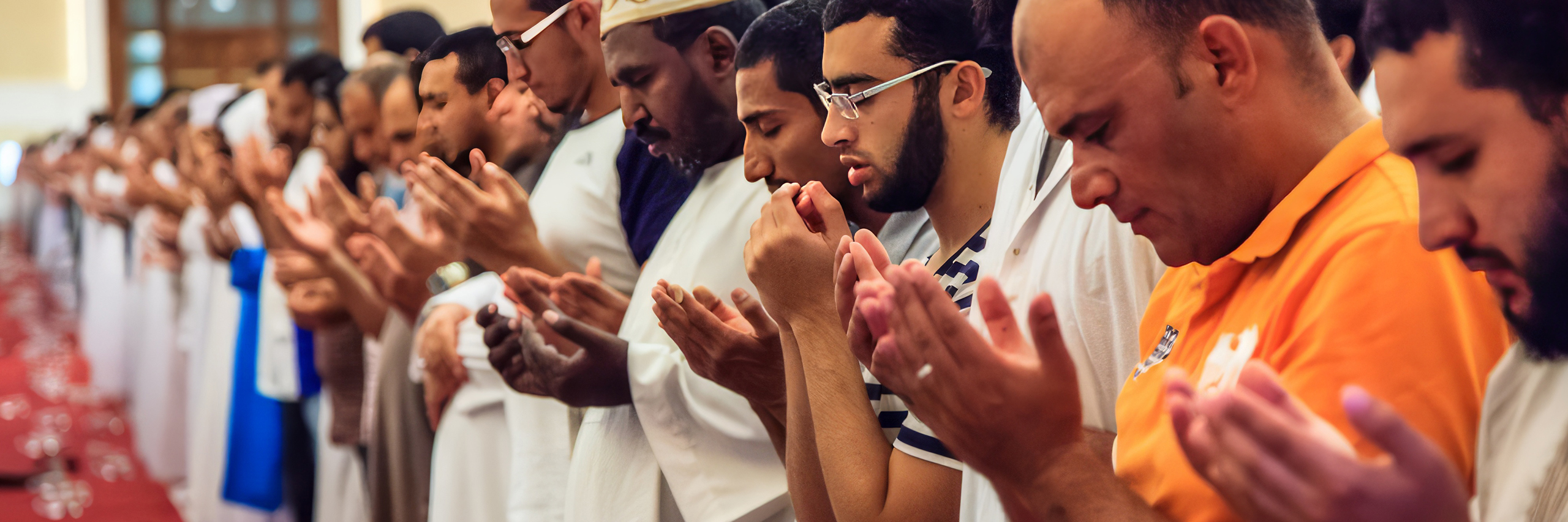
Abu Dawud reported from Sahl b. Sa'd that the Prophet said, "Two times for dua are never or seldom turned down: at the time of the call to prayer and at the time of fighting when people are locked in battle." In another version of the hadith from the same companion, "Two times the gates of heaven open and the dua of someone is rarely rejected: when the call to prayer sounds and when standing in battle ranks for the cause of Allah." While Muslims must exert every worldly effort to reach their goals and support their causes, they also hold deep faith in the spiritual power of dua and constant reliance on Allah's support. This spiritual strength shows clearly during moments of conflict and fear. Part of our belief in the unseen is the concept of the "soldiers of Allah," a Quranic term that shows how Allah helps believers through angels or natural events.
Belief and sincerity help bring about divine support that can lead to miracles. When the soldiers of Talut (King Saul) faced the threat of Goliath and his huge army, they had already passed a test where they were told not to drink from a river despite their thirst. Talut reminded them of Allah's universal rule (sunna): "How often has a small force, with Allah's permission, defeated a larger army!" Allah is with those who are steadfast." Talut did not say this while relying only on mystical feelings; instead, his reliance on Allah was based on careful planning and thought. He spoke these words after leading his army into action and testing his soldiers' commitment and discipline. In the critical moment of battle, all that remained for him was dua.
In this moment, Talut and his soldiers earnestly asked for Allah's support: "Our Lord, pour patience on us, make us stand firm, and help us against the disbelievers." Seeing the sincerity of Talut's small army after they endured many challenges, Allah gave them victory. The Quran emphasizes that this triumph happened only "with Allah's permission." After telling this story, Allah reminds us of another universal sunna: "If Allah did not drive some back by means of others, the earth would be completely corrupt, but Allah is gracious to all."
The sunna of Allah continues throughout history. Centuries later, Prophet Muhammad and his companions were in a similar situation during the Battle of Badr. They had just over 300 men, were poorly armed, and faced an army of 1,000. Even though the Prophet had the heavy responsibility of leading the army and overseeing the battle, many reports highlight his intense dua during the conflict. Witnesses saw him face the direction to prayer (qibla), hands outstretched, wearing his upper and lower garments, and imploring:
O Allah, accomplish for me what You have promised to me. O Allah, fulfill what You have promised! O Allah, if this small band of Muslims is defeated, Your worship will cease on earth.
The Prophet fervently asked Allah, continuing his dua until his upper garment slipped from his shoulders. Abu Bakr al-Siddiq, may Allah be pleased with him, came to him, picked up the garment, and put it back on him. Hugging him from behind, Abu Bakr reassured him: "O Prophet of Allah, your prayer to your Lord is enough, for He will fulfill what He has promised you." Then Allah revealed these words: "When you implored your Lord for assistance, He answered, 'I will reinforce you with a thousand angels in succession.' Allah made this a message of hope to reassure your hearts: help comes only from Allah, He is Almighty and All-Wise."
In the version of this event by al-Bukhari, the Prophet is reported to have said,
O Allah! I ask You for the fulfillment of Your covenant and promise. O Allah! If You will for the believers to be destroyed, You will never be worshiped after today.
Abu Bakr caught him by the hand and said, "This is enough, O Messenger of Allah! You have asked Allah intensely." The Prophet was wearing his armor at that time. He went out, saying: "Their forces will be routed and they will turn tail and flee. But the Hour is their appointed time-the Hour is more severe and bitter."
The Prophet was also heard saying,
O Allah, this is the Quraysh, who have come with their arrogance and pride, opposing and denying Your Messenger. O Allah, grant me the victory You promised. O Allah, make them perish this morning.
Concerned for his companions, he was also heard saying, "O Allah, they are on foot, provide mounts for them; O Allah, they are naked, clothe them; O Allah, they are hungry, provide food for them."
ʿAlī ibn Abī Ṭālib, may Allah be pleased with him, said,
On the day of Badr, I fought for a while, then I hurried to see how the Messenger of Allah was doing. I found him in prostration, saying, "O Ever-Living, O Sustainer!" He repeated these words (yā Ḥayy yā Qayyūm) and said nothing more. I returned to the battle, then came back, and he was still in prostration, saying the same words. I went back to fight, then returned, and he was still saying that. Then Allah granted him victory.
Scholars have thought a lot about the reactions of the Prophet and Abū Bakr during this critical moment. Some emphasize the Prophet's fear (khawf) at that time, while Abū Bakr showed hope (rajāʾ). Both are good, but Abū Bakr's response does not mean he had more confidence in Allah's promise than the Prophet. The Prophet was deeply concerned about his companions, especially as they faced their first big fight against enemies, and he worried about the future of the entire ummah. This concern shows in his dua: "If You will to destroy the believers, You will never be worshiped after today." The Prophet also made extensive dua, not just to express his concerns but to give confidence to his companions. Seeing the Prophet's fervent dua likely reassured them, as they knew his dua holds great weight with Allah.
Abū Bakr's reaction was also a response to the Prophet's visible exhaustion, showing he understood the Prophet's deep concern. A report says the Prophet spent the entire night before the battle in fervent dua, which shows how serious the moment was.
At the same time, the Prophet was known for his great courage. ʿAlī b. Abī Ṭālib (rA) said they used to seek shelter by staying close to the Prophet during the Battle of Badr, as he stood closest to the enemy. That day, the Prophet was one of the most formidable people. Abū al-Qāsim al-Suhaylī (d. 581/1185) described the balance of working hard while relying on Allah.
The Prophet saw the angels fighting steadily, with Gabriel (Jibrīl) covered in dust. The allies of Allah (anṣār Allah) fought without fear of death. Jihad has two forms: physical jihad with the sword and spiritual jihad through dua. It is a sunna for the imam to stay behind the army, not fighting with them. Everyone worked hard, and no one rested from the two struggles. The allies of Allah and His angels worked intensely without resting. The party of Allah and their enemies both stayed firm.
Hadith compilers included chapters on dua against enemies to be defeated and shaken. During the Battle of the Confederates (aḥzāb), when Arab tribes surrounded Medina to destroy the Muslim community, the Prophet prayed, "O Allah, Revealer of the Book, Swift to account, defeat the Confederates. O Allah, defeat them and shake them."
Even though they were outnumbered and faced betrayal from neighbors, the Prophet and his companions won a great victory from Allah without a full-scale battle. It was still called a battle to remember Allah's soldiers, including the angels, the wind, and the sincerity, hard work, and dua of the believers.
The Legislation of the dua of Calamities in Prayer (Qunūt al-Nawāzil)
In 4/625, a few months after 70 companions died in the battle of Uḥud, about 80 other companions known as the qurrāʾ (master Qur'an memorizers and reciters) were killed by trickery in two expeditions: al-Rajīʿ (a well eight miles from Asfan) and Biʾr Maʿūna (a well in Hijaz whose exact location is not clear). The Prophet sent these 80 companions after some non-Muslim tribes asked for people to teach them the Qur'an and the basics of Islam.
Al-Rajīʿ is the story of a plot by the ʿAḍal and Qārra tribes, who killed eight of the Prophet's ten envoys and gave the other two to Quraysh, who killed them for revenge. Before hearing about al-Rajīʿ, the Prophet sent 70 companions to the Arab leader Mālik b. ʿĀmir, who asked for qurrāʾ to teach his people. Mālik did not become Muslim but wanted to learn more about Islam. The Prophet was hesitant to send so many companions to Najd, where he had many enemies, but he honored the protection (jiwār) promised by Mālik. Mālik's nephew, ʿĀmir b. al-Ṭufayl, dishonorably called his allies to kill the group while they camped at the well of Maʿūna. Sixty-nine of them were killed. Only one injured survivor made it back to Medina, where he died a couple of years later.
Many supernatural wonders (karāmāt) that these companions experienced are documented in prophetic biography (sīra) literature. Their deaths saddened the Prophet. Anas, may Allah be pleased with him, said,
I never saw the Messenger of Allah in so much grief for a small army as I saw him for those 70 men called qurrāʾ who were killed at the well of Maʿūna. He invoked curses for a full month upon their murderers.
The Prophet made dua against the people who plotted the tragedy at the well of Maʿūna by name. He made dua against ʿĀmr ibn al-Ṭufayl, who threatened the Prophet, for thirty days, saying, "O Allah, protect me from ʿĀmr ibn al-Ṭufayl as You will, and send upon him a punishment that will destroy him."
In another version, the Prophet said, "O Allah, protect me from ʿĀmr ibn al-Ṭufayl and guide his people." Allah then sent a plague to ʿĀmr that killed him.
Many other hadiths record the Prophet's sorrow and his dua against those tribes. His companion Khufāf b. Īmāʾ narrated,
The Prophet of Allah bowed down (performed rukūʿ) and, after raising his head, said: "The tribe of Ghifār, Allah has forgiven them. The tribe of Aslam, Allah has granted them safety. The tribe of ʿUsayya has disobeyed Allah and His Messenger. O Allah, invoke your curse upon the tribes of Liḥyān, Riʿl, and Dhakwan." Then, he prostrated.
The Prophet's prayer lasted for a month. Anas reported: "The Prophet performed the supplication of devotion (qunūt) for one month after rising from the bowing position (rukūʿ). He prayed against some Arab tribes, then he stopped."
The Prophet also performed qunūt during other disasters. When the Quraysh tribe stopped a group of companions from moving to Medina and tortured them, the Prophet felt their pain deeply. He could not help them directly, so he turned to Allah. He said their names, prayed for their release, and asked for divine justice against the Quraysh. Abū Hurayra reported,
When the Prophet raised his head from the final unit of prayer (rakʿah) of the dawn prayer (Fajr), he said: "O Allah, protect al-Walīd ibn al-Walīd, Salama ibn Hishām, ʿAyyāsh b. Abī Rabīʿa, and all those oppressed in Mecca. O Allah, tighten Your grip on the tribe of Muḍar, and give them years like the years of Prophet Joseph (Yūsuf)."
The Prophet's qunūt showed his deep sadness for his companions, not a lack of faith. As the Shāfiʿī legal expert al-Isnawī (died 772/1370) explained, the Prophet performed qunūt to stop the killers and help the Muslims by asking for replacements for those brave Quran reciters (qurrāʾ) who died. Scholars also say that performing qunūt during disasters (qunūt al-nawāzil) does not go against seeking martyrdom (shahāda). It is a way to ask Allah for help against oppression.
It is important to know that while the Prophet prayed against the Quraysh at times, he also prayed for them at other times. He changed his prayers based on the situation. The famous hadith master Imam al-Bukhārī (died 256/870) had a chapter on praying against polytheists, but he also had a chapter on praying for them to find guidance. The scholar Ibn Ḥajar al-ʿAsqalānī (died 852/1449) noted that al-Bukhārī was very careful. The Prophet prayed against enemies when they were very harmful, but he prayed for them when there was hope they might change.
How to Perform Qunūt al-Nawāzil
We have already looked at the power of dua through the Prophet's life and the Quran, especially during hard times. Now we will explain how to perform qunūt al-nawāzil and look at the different legal views.
In Arabic, qunūt means praise, dua (praying for or against someone), obedience, and humility. In Islamic law, it means a specific prayer (dhikr) where you praise Allah and make dua during namaz. Scholars have different opinions on when to do it, but it is generally recommended or allowed in the dawn (fajr) and odd-numbered (witr) prayers, and during any prayer when a disaster hits the Muslims.
Jurists have different views on qunūt al-nawāzil. The Mālikī school does not see it as a sunna, but the Ḥanafī, Shāfiʾī, and Ḥanbalī schools allow or recommend it. They disagree on which prayers to use it in, whether to say it out loud or quietly, and whether to do it before or after bowing (rukūʿ). The Shāfiʿī school is the most flexible, and their rules are as follows.
The Shāfiʿī school recommends qunūt al-nawāzil in all required prayers. The scholar Imam al-Nawawī (died 766/1277) said: "When a disaster like an enemy attack, drought, sickness, or other harm hits the Muslims, they should perform qunūt in all required prayers." This includes the Friday prayer. It is allowed but not recommended in extra (sunna) prayers, and it is disliked (makrūh) in funeral prayers.
Shāfiʿī scholars did not say a 'disaster' must affect all Muslims. They said it is a sunnah even if it affects just one Muslim, as long as that person is important to the whole community, like a scholar or a brave leader. Also, you do not have to be the one affected to perform it; Muslims everywhere should do it to show they care and to help each other. You can also perform qunūt al-nawāzil if there is a threat from an enemy, even if that enemy is Muslim. You do not need permission from leaders to do this sunna.
In the Shāfiʿī school, you perform qunūt after rising from bowing (rukūʿ). You can do it alone or in a group. There is no specific prayer text for qunūt al-nawāzil. You should follow the Prophet's example by asking Allah to end the disaster, help the oppressed, and stop the oppressors. If you are in a group, the dua should be a reasonable length so people do not get tired. If the group agrees, you can make it longer.
Like all dua, how you hold your hands depends on what you are asking for. If you want to remove a disaster, turn the backs of your hands toward the sky. If you are asking for something to be given to you, hold your palms up toward the sky. Because of the seriousness of the disaster, it is recommended to say the dua out loud, whether you are praying alone or in a group, and whether the prayer is usually said out loud or silently.
Performing qunūt al-nawāzil in a group shows that Muslims care for each other. The Prophet said: "The believers in their mutual kindness, compassion, and sympathy are like one body. When one of the limbs suffers, the whole body responds to it with wakefulness and fever." Prostration (sujūd) is the best time for dua, but qunūt is done after bowing (rukūʿ). Ibn Ḥajar al-ʿAsqalānī says this is because qunūt is a group act. Even if the followers (maʾmūm) just say "āmīn" to the imam's dua, the group prayer helps the dua be accepted. Muslims today still use qunūt al-nawāzil to show they care for oppressed Muslims everywhere.
Some Examples of dua in Qunūt al-Nawāzil:
O Allah, we ask for Your help and guidance. We ask for Your forgiveness and turn to You in repentance. We believe in You and trust You completely. We praise You for all Your goodness. We are grateful and try not to be ungrateful for Your blessings. We turn away from those who reject You.
O Allah, we worship only You, and to You we pray and prostrate. We work for You and strive in Your worship. We hope for Your mercy and fear Your punishment, for Your punishment surely hits the disbelievers.
O Allah, protect us, show us mercy, give us victory, and take away our distress and the distress of all Muslims. Protect us and all Muslims from the evils of disasters in this life and in our religion. Guide us to what is right, and guide those whose guidance brings good to the Muslims. Save us from destruction, and let those whose removal brings benefit to the Muslims face it. O Allah, shower us with Your mercy, kindness, health, and blessings, and do not keep Your favors from us.
O Allah, take away from us and from the Muslims all harm, disasters, oppression, injustice, and all kinds of sickness, bad paths, and ignorance, whether we see them or not. O Allah, save the weak, the distressed, and the oppressed among the Muslims. Provide for them, protect them, support them, care for them, guide them, and help them succeed in what You love.
O Allah, grant us and them success in what is ordained, and turn away from us and them the evil of tyrants, oppressors, corruptors, and those who help them. O Allah, act quickly, without delay, in well-being and safety through Your mercy, O Most Merciful of the merciful.
Summary: Muslim Knowledge Guide in the Muslim World: Qunut Nazilah dua for Oppressed Muslims in War is presented here as a clear English Islamic knowledge article for Muslim readers, starting with this scene: Abu Dawud reported from Sahl b. Sa'd that the Prophet said, "Two times for dua are never or seldom turned down: at the time of the call to prayer and at the time of fighting when people are locked in battle." In another version of the. It keeps the original names, Quran and hadith references, dua, photographs, and religious context while focusing on Qunut Nazilah, dua, Muslim World.
Abu Dawud reported from Sahl b. Sa'd that the Prophet said, "Two times for dua are never or seldom turned down: at the time of the call to prayer and at the time of fighting when people are locked in battle." In another version of the hadith from the same companion, "Two times the gates of heaven open and the dua of someone is rarely rejected: when the call to prayer sounds and when standing in battle ranks for the cause of Allah." While Muslims must exert every worldly effort to reach their goals and support their causes, they also hold deep faith in the spiritual power of dua and constant reliance on Allah's support. This spiritual strength shows clearly during moments of conflict and fear. Part of our belief in the unseen is the concept of the "soldiers of Allah," a Quranic term that shows how Allah helps believers through angels or natural events.
Belief and sincerity help bring about divine support that can lead to miracles. When the soldiers of Talut (King Saul) faced the threat of Goliath and his huge army, they had already passed a test where they were told not to drink from a river despite their thirst. Talut reminded them of Allah's universal rule (sunna): "How often has a small force, with Allah's permission, defeated a larger army!" Allah is with those who are steadfast." Talut did not say this while relying only on mystical feelings; instead, his reliance on Allah was based on careful planning and thought. He spoke these words after leading his army into action and testing his soldiers' commitment and discipline. In the critical moment of battle, all that remained for him was dua.
In this moment, Talut and his soldiers earnestly asked for Allah's support: "Our Lord, pour patience on us, make us stand firm, and help us against the disbelievers." Seeing the sincerity of Talut's small army after they endured many challenges, Allah gave them victory. The Quran emphasizes that this triumph happened only "with Allah's permission." After telling this story, Allah reminds us of another universal sunna: "If Allah did not drive some back by means of others, the earth would be completely corrupt, but Allah is gracious to all."
The sunna of Allah continues throughout history. Centuries later, Prophet Muhammad and his companions were in a similar situation during the Battle of Badr. They had just over 300 men, were poorly armed, and faced an army of 1,000. Even though the Prophet had the heavy responsibility of leading the army and overseeing the battle, many reports highlight his intense dua during the conflict. Witnesses saw him face the direction to prayer (qibla), hands outstretched, wearing his upper and lower garments, and imploring:
O Allah, accomplish for me what You have promised to me. O Allah, fulfill what You have promised! O Allah, if this small band of Muslims is defeated, Your worship will cease on earth.
The Prophet fervently asked Allah, continuing his dua until his upper garment slipped from his shoulders. Abu Bakr al-Siddiq, may Allah be pleased with him, came to him, picked up the garment, and put it back on him. Hugging him from behind, Abu Bakr reassured him: "O Prophet of Allah, your prayer to your Lord is enough, for He will fulfill what He has promised you." Then Allah revealed these words: "When you implored your Lord for assistance, He answered, 'I will reinforce you with a thousand angels in succession.' Allah made this a message of hope to reassure your hearts: help comes only from Allah, He is Almighty and All-Wise."
In the version of this event by al-Bukhari, the Prophet is reported to have said,
O Allah! I ask You for the fulfillment of Your covenant and promise. O Allah! If You will for the believers to be destroyed, You will never be worshiped after today.
Abu Bakr caught him by the hand and said, "This is enough, O Messenger of Allah! You have asked Allah intensely." The Prophet was wearing his armor at that time. He went out, saying: "Their forces will be routed and they will turn tail and flee. But the Hour is their appointed time-the Hour is more severe and bitter."
The Prophet was also heard saying,
O Allah, this is the Quraysh, who have come with their arrogance and pride, opposing and denying Your Messenger. O Allah, grant me the victory You promised. O Allah, make them perish this morning.
Concerned for his companions, he was also heard saying, "O Allah, they are on foot, provide mounts for them; O Allah, they are naked, clothe them; O Allah, they are hungry, provide food for them."
ʿAlī ibn Abī Ṭālib, may Allah be pleased with him, said,
On the day of Badr, I fought for a while, then I hurried to see how the Messenger of Allah was doing. I found him in prostration, saying, "O Ever-Living, O Sustainer!" He repeated these words (yā Ḥayy yā Qayyūm) and said nothing more. I returned to the battle, then came back, and he was still in prostration, saying the same words. I went back to fight, then returned, and he was still saying that. Then Allah granted him victory.
Scholars have thought a lot about the reactions of the Prophet and Abū Bakr during this critical moment. Some emphasize the Prophet's fear (khawf) at that time, while Abū Bakr showed hope (rajāʾ). Both are good, but Abū Bakr's response does not mean he had more confidence in Allah's promise than the Prophet. The Prophet was deeply concerned about his companions, especially as they faced their first big fight against enemies, and he worried about the future of the entire ummah. This concern shows in his dua: "If You will to destroy the believers, You will never be worshiped after today." The Prophet also made extensive dua, not just to express his concerns but to give confidence to his companions. Seeing the Prophet's fervent dua likely reassured them, as they knew his dua holds great weight with Allah.
Abū Bakr's reaction was also a response to the Prophet's visible exhaustion, showing he understood the Prophet's deep concern. A report says the Prophet spent the entire night before the battle in fervent dua, which shows how serious the moment was.
At the same time, the Prophet was known for his great courage. ʿAlī b. Abī Ṭālib (rA) said they used to seek shelter by staying close to the Prophet during the Battle of Badr, as he stood closest to the enemy. That day, the Prophet was one of the most formidable people. Abū al-Qāsim al-Suhaylī (d. 581/1185) described the balance of working hard while relying on Allah.
The Prophet saw the angels fighting steadily, with Gabriel (Jibrīl) covered in dust. The allies of Allah (anṣār Allah) fought without fear of death. Jihad has two forms: physical jihad with the sword and spiritual jihad through dua. It is a sunna for the imam to stay behind the army, not fighting with them. Everyone worked hard, and no one rested from the two struggles. The allies of Allah and His angels worked intensely without resting. The party of Allah and their enemies both stayed firm.
Hadith compilers included chapters on dua against enemies to be defeated and shaken. During the Battle of the Confederates (aḥzāb), when Arab tribes surrounded Medina to destroy the Muslim community, the Prophet prayed, "O Allah, Revealer of the Book, Swift to account, defeat the Confederates. O Allah, defeat them and shake them."
Even though they were outnumbered and faced betrayal from neighbors, the Prophet and his companions won a great victory from Allah without a full-scale battle. It was still called a battle to remember Allah's soldiers, including the angels, the wind, and the sincerity, hard work, and dua of the believers.
The Legislation of the dua of Calamities in Prayer (Qunūt al-Nawāzil)
In 4/625, a few months after 70 companions died in the battle of Uḥud, about 80 other companions known as the qurrāʾ (master Qur'an memorizers and reciters) were killed by trickery in two expeditions: al-Rajīʿ (a well eight miles from Asfan) and Biʾr Maʿūna (a well in Hijaz whose exact location is not clear). The Prophet sent these 80 companions after some non-Muslim tribes asked for people to teach them the Qur'an and the basics of Islam.
Al-Rajīʿ is the story of a plot by the ʿAḍal and Qārra tribes, who killed eight of the Prophet's ten envoys and gave the other two to Quraysh, who killed them for revenge. Before hearing about al-Rajīʿ, the Prophet sent 70 companions to the Arab leader Mālik b. ʿĀmir, who asked for qurrāʾ to teach his people. Mālik did not become Muslim but wanted to learn more about Islam. The Prophet was hesitant to send so many companions to Najd, where he had many enemies, but he honored the protection (jiwār) promised by Mālik. Mālik's nephew, ʿĀmir b. al-Ṭufayl, dishonorably called his allies to kill the group while they camped at the well of Maʿūna. Sixty-nine of them were killed. Only one injured survivor made it back to Medina, where he died a couple of years later.
Many supernatural wonders (karāmāt) that these companions experienced are documented in prophetic biography (sīra) literature. Their deaths saddened the Prophet. Anas, may Allah be pleased with him, said,
I never saw the Messenger of Allah in so much grief for a small army as I saw him for those 70 men called qurrāʾ who were killed at the well of Maʿūna. He invoked curses for a full month upon their murderers.
The Prophet made dua against the people who plotted the tragedy at the well of Maʿūna by name. He made dua against ʿĀmr ibn al-Ṭufayl, who threatened the Prophet, for thirty days, saying, "O Allah, protect me from ʿĀmr ibn al-Ṭufayl as You will, and send upon him a punishment that will destroy him."
In another version, the Prophet said, "O Allah, protect me from ʿĀmr ibn al-Ṭufayl and guide his people." Allah then sent a plague to ʿĀmr that killed him.
Many other hadiths record the Prophet's sorrow and his dua against those tribes. His companion Khufāf b. Īmāʾ narrated,
The Prophet of Allah bowed down (performed rukūʿ) and, after raising his head, said: "The tribe of Ghifār, Allah has forgiven them. The tribe of Aslam, Allah has granted them safety. The tribe of ʿUsayya has disobeyed Allah and His Messenger. O Allah, invoke your curse upon the tribes of Liḥyān, Riʿl, and Dhakwan." Then, he prostrated.
The Prophet's prayer lasted for a month. Anas reported: "The Prophet performed the supplication of devotion (qunūt) for one month after rising from the bowing position (rukūʿ). He prayed against some Arab tribes, then he stopped."
The Prophet also performed qunūt during other disasters. When the Quraysh tribe stopped a group of companions from moving to Medina and tortured them, the Prophet felt their pain deeply. He could not help them directly, so he turned to Allah. He said their names, prayed for their release, and asked for divine justice against the Quraysh. Abū Hurayra reported,
When the Prophet raised his head from the final unit of prayer (rakʿah) of the dawn prayer (Fajr), he said: "O Allah, protect al-Walīd ibn al-Walīd, Salama ibn Hishām, ʿAyyāsh b. Abī Rabīʿa, and all those oppressed in Mecca. O Allah, tighten Your grip on the tribe of Muḍar, and give them years like the years of Prophet Joseph (Yūsuf)."
The Prophet's qunūt showed his deep sadness for his companions, not a lack of faith. As the Shāfiʿī legal expert al-Isnawī (died 772/1370) explained, the Prophet performed qunūt to stop the killers and help the Muslims by asking for replacements for those brave Quran reciters (qurrāʾ) who died. Scholars also say that performing qunūt during disasters (qunūt al-nawāzil) does not go against seeking martyrdom (shahāda). It is a way to ask Allah for help against oppression.
It is important to know that while the Prophet prayed against the Quraysh at times, he also prayed for them at other times. He changed his prayers based on the situation. The famous hadith master Imam al-Bukhārī (died 256/870) had a chapter on praying against polytheists, but he also had a chapter on praying for them to find guidance. The scholar Ibn Ḥajar al-ʿAsqalānī (died 852/1449) noted that al-Bukhārī was very careful. The Prophet prayed against enemies when they were very harmful, but he prayed for them when there was hope they might change.
How to Perform Qunūt al-Nawāzil
We have already looked at the power of dua through the Prophet's life and the Quran, especially during hard times. Now we will explain how to perform qunūt al-nawāzil and look at the different legal views.
In Arabic, qunūt means praise, dua (praying for or against someone), obedience, and humility. In Islamic law, it means a specific prayer (dhikr) where you praise Allah and make dua during namaz. Scholars have different opinions on when to do it, but it is generally recommended or allowed in the dawn (fajr) and odd-numbered (witr) prayers, and during any prayer when a disaster hits the Muslims.
Jurists have different views on qunūt al-nawāzil. The Mālikī school does not see it as a sunna, but the Ḥanafī, Shāfiʾī, and Ḥanbalī schools allow or recommend it. They disagree on which prayers to use it in, whether to say it out loud or quietly, and whether to do it before or after bowing (rukūʿ). The Shāfiʿī school is the most flexible, and their rules are as follows.
The Shāfiʿī school recommends qunūt al-nawāzil in all required prayers. The scholar Imam al-Nawawī (died 766/1277) said: "When a disaster like an enemy attack, drought, sickness, or other harm hits the Muslims, they should perform qunūt in all required prayers." This includes the Friday prayer. It is allowed but not recommended in extra (sunna) prayers, and it is disliked (makrūh) in funeral prayers.
Shāfiʿī scholars did not say a 'disaster' must affect all Muslims. They said it is a sunnah even if it affects just one Muslim, as long as that person is important to the whole community, like a scholar or a brave leader. Also, you do not have to be the one affected to perform it; Muslims everywhere should do it to show they care and to help each other. You can also perform qunūt al-nawāzil if there is a threat from an enemy, even if that enemy is Muslim. You do not need permission from leaders to do this sunna.
In the Shāfiʿī school, you perform qunūt after rising from bowing (rukūʿ). You can do it alone or in a group. There is no specific prayer text for qunūt al-nawāzil. You should follow the Prophet's example by asking Allah to end the disaster, help the oppressed, and stop the oppressors. If you are in a group, the dua should be a reasonable length so people do not get tired. If the group agrees, you can make it longer.
Like all dua, how you hold your hands depends on what you are asking for. If you want to remove a disaster, turn the backs of your hands toward the sky. If you are asking for something to be given to you, hold your palms up toward the sky. Because of the seriousness of the disaster, it is recommended to say the dua out loud, whether you are praying alone or in a group, and whether the prayer is usually said out loud or silently.
Performing qunūt al-nawāzil in a group shows that Muslims care for each other. The Prophet said: "The believers in their mutual kindness, compassion, and sympathy are like one body. When one of the limbs suffers, the whole body responds to it with wakefulness and fever." Prostration (sujūd) is the best time for dua, but qunūt is done after bowing (rukūʿ). Ibn Ḥajar al-ʿAsqalānī says this is because qunūt is a group act. Even if the followers (maʾmūm) just say "āmīn" to the imam's dua, the group prayer helps the dua be accepted. Muslims today still use qunūt al-nawāzil to show they care for oppressed Muslims everywhere.
Some Examples of dua in Qunūt al-Nawāzil:
O Allah, we ask for Your help and guidance. We ask for Your forgiveness and turn to You in repentance. We believe in You and trust You completely. We praise You for all Your goodness. We are grateful and try not to be ungrateful for Your blessings. We turn away from those who reject You.
O Allah, we worship only You, and to You we pray and prostrate. We work for You and strive in Your worship. We hope for Your mercy and fear Your punishment, for Your punishment surely hits the disbelievers.
O Allah, protect us, show us mercy, give us victory, and take away our distress and the distress of all Muslims. Protect us and all Muslims from the evils of disasters in this life and in our religion. Guide us to what is right, and guide those whose guidance brings good to the Muslims. Save us from destruction, and let those whose removal brings benefit to the Muslims face it. O Allah, shower us with Your mercy, kindness, health, and blessings, and do not keep Your favors from us.
O Allah, take away from us and from the Muslims all harm, disasters, oppression, injustice, and all kinds of sickness, bad paths, and ignorance, whether we see them or not. O Allah, save the weak, the distressed, and the oppressed among the Muslims. Provide for them, protect them, support them, care for them, guide them, and help them succeed in what You love.
O Allah, grant us and them success in what is ordained, and turn away from us and them the evil of tyrants, oppressors, corruptors, and those who help them. O Allah, act quickly, without delay, in well-being and safety through Your mercy, O Most Merciful of the merciful.
Muslim Knowledge Guide in the Muslim World: Qunut Nazilah Dua for Oppressed Muslims in War
Articles • yusuf908 posted the article • 0 comments • 219 views • 2026-05-22 10:11
Reposted from the web
Summary: Muslim Knowledge Guide in the Muslim World: Qunut Nazilah dua for Oppressed Muslims in War is presented here as a clear English Islamic knowledge article for Muslim readers, starting with this scene: Abu Dawud reported from Sahl b. Sa'd that the Prophet said, "Two times for dua are never or seldom turned down: at the time of the call to prayer and at the time of fighting when people are locked in battle." In another version of the. It keeps the original names, Quran and hadith references, dua, photographs, and religious context while focusing on Qunut Nazilah, dua, Muslim World.
Abu Dawud reported from Sahl b. Sa'd that the Prophet said, "Two times for dua are never or seldom turned down: at the time of the call to prayer and at the time of fighting when people are locked in battle." In another version of the hadith from the same companion, "Two times the gates of heaven open and the dua of someone is rarely rejected: when the call to prayer sounds and when standing in battle ranks for the cause of Allah." While Muslims must exert every worldly effort to reach their goals and support their causes, they also hold deep faith in the spiritual power of dua and constant reliance on Allah's support. This spiritual strength shows clearly during moments of conflict and fear. Part of our belief in the unseen is the concept of the "soldiers of Allah," a Quranic term that shows how Allah helps believers through angels or natural events.
Belief and sincerity help bring about divine support that can lead to miracles. When the soldiers of Talut (King Saul) faced the threat of Goliath and his huge army, they had already passed a test where they were told not to drink from a river despite their thirst. Talut reminded them of Allah's universal rule (sunna): "How often has a small force, with Allah's permission, defeated a larger army!" Allah is with those who are steadfast." Talut did not say this while relying only on mystical feelings; instead, his reliance on Allah was based on careful planning and thought. He spoke these words after leading his army into action and testing his soldiers' commitment and discipline. In the critical moment of battle, all that remained for him was dua.
In this moment, Talut and his soldiers earnestly asked for Allah's support: "Our Lord, pour patience on us, make us stand firm, and help us against the disbelievers." Seeing the sincerity of Talut's small army after they endured many challenges, Allah gave them victory. The Quran emphasizes that this triumph happened only "with Allah's permission." After telling this story, Allah reminds us of another universal sunna: "If Allah did not drive some back by means of others, the earth would be completely corrupt, but Allah is gracious to all."
The sunna of Allah continues throughout history. Centuries later, Prophet Muhammad and his companions were in a similar situation during the Battle of Badr. They had just over 300 men, were poorly armed, and faced an army of 1,000. Even though the Prophet had the heavy responsibility of leading the army and overseeing the battle, many reports highlight his intense dua during the conflict. Witnesses saw him face the direction to prayer (qibla), hands outstretched, wearing his upper and lower garments, and imploring:
O Allah, accomplish for me what You have promised to me. O Allah, fulfill what You have promised! O Allah, if this small band of Muslims is defeated, Your worship will cease on earth.
The Prophet fervently asked Allah, continuing his dua until his upper garment slipped from his shoulders. Abu Bakr al-Siddiq, may Allah be pleased with him, came to him, picked up the garment, and put it back on him. Hugging him from behind, Abu Bakr reassured him: "O Prophet of Allah, your prayer to your Lord is enough, for He will fulfill what He has promised you." Then Allah revealed these words: "When you implored your Lord for assistance, He answered, 'I will reinforce you with a thousand angels in succession.' Allah made this a message of hope to reassure your hearts: help comes only from Allah, He is Almighty and All-Wise."
In the version of this event by al-Bukhari, the Prophet is reported to have said,
O Allah! I ask You for the fulfillment of Your covenant and promise. O Allah! If You will for the believers to be destroyed, You will never be worshiped after today.
Abu Bakr caught him by the hand and said, "This is enough, O Messenger of Allah! You have asked Allah intensely." The Prophet was wearing his armor at that time. He went out, saying: "Their forces will be routed and they will turn tail and flee. But the Hour is their appointed time-the Hour is more severe and bitter."
The Prophet was also heard saying,
O Allah, this is the Quraysh, who have come with their arrogance and pride, opposing and denying Your Messenger. O Allah, grant me the victory You promised. O Allah, make them perish this morning.
Concerned for his companions, he was also heard saying, "O Allah, they are on foot, provide mounts for them; O Allah, they are naked, clothe them; O Allah, they are hungry, provide food for them."
ʿAlī ibn Abī Ṭālib, may Allah be pleased with him, said,
On the day of Badr, I fought for a while, then I hurried to see how the Messenger of Allah was doing. I found him in prostration, saying, "O Ever-Living, O Sustainer!" He repeated these words (yā Ḥayy yā Qayyūm) and said nothing more. I returned to the battle, then came back, and he was still in prostration, saying the same words. I went back to fight, then returned, and he was still saying that. Then Allah granted him victory.
Scholars have thought a lot about the reactions of the Prophet and Abū Bakr during this critical moment. Some emphasize the Prophet's fear (khawf) at that time, while Abū Bakr showed hope (rajāʾ). Both are good, but Abū Bakr's response does not mean he had more confidence in Allah's promise than the Prophet. The Prophet was deeply concerned about his companions, especially as they faced their first big fight against enemies, and he worried about the future of the entire ummah. This concern shows in his dua: "If You will to destroy the believers, You will never be worshiped after today." The Prophet also made extensive dua, not just to express his concerns but to give confidence to his companions. Seeing the Prophet's fervent dua likely reassured them, as they knew his dua holds great weight with Allah.
Abū Bakr's reaction was also a response to the Prophet's visible exhaustion, showing he understood the Prophet's deep concern. A report says the Prophet spent the entire night before the battle in fervent dua, which shows how serious the moment was.
At the same time, the Prophet was known for his great courage. ʿAlī b. Abī Ṭālib (rA) said they used to seek shelter by staying close to the Prophet during the Battle of Badr, as he stood closest to the enemy. That day, the Prophet was one of the most formidable people. Abū al-Qāsim al-Suhaylī (d. 581/1185) described the balance of working hard while relying on Allah.
The Prophet saw the angels fighting steadily, with Gabriel (Jibrīl) covered in dust. The allies of Allah (anṣār Allah) fought without fear of death. Jihad has two forms: physical jihad with the sword and spiritual jihad through dua. It is a sunna for the imam to stay behind the army, not fighting with them. Everyone worked hard, and no one rested from the two struggles. The allies of Allah and His angels worked intensely without resting. The party of Allah and their enemies both stayed firm.
Hadith compilers included chapters on dua against enemies to be defeated and shaken. During the Battle of the Confederates (aḥzāb), when Arab tribes surrounded Medina to destroy the Muslim community, the Prophet prayed, "O Allah, Revealer of the Book, Swift to account, defeat the Confederates. O Allah, defeat them and shake them."
Even though they were outnumbered and faced betrayal from neighbors, the Prophet and his companions won a great victory from Allah without a full-scale battle. It was still called a battle to remember Allah's soldiers, including the angels, the wind, and the sincerity, hard work, and dua of the believers.
The Legislation of the dua of Calamities in Prayer (Qunūt al-Nawāzil)
In 4/625, a few months after 70 companions died in the battle of Uḥud, about 80 other companions known as the qurrāʾ (master Qur'an memorizers and reciters) were killed by trickery in two expeditions: al-Rajīʿ (a well eight miles from Asfan) and Biʾr Maʿūna (a well in Hijaz whose exact location is not clear). The Prophet sent these 80 companions after some non-Muslim tribes asked for people to teach them the Qur'an and the basics of Islam.
Al-Rajīʿ is the story of a plot by the ʿAḍal and Qārra tribes, who killed eight of the Prophet's ten envoys and gave the other two to Quraysh, who killed them for revenge. Before hearing about al-Rajīʿ, the Prophet sent 70 companions to the Arab leader Mālik b. ʿĀmir, who asked for qurrāʾ to teach his people. Mālik did not become Muslim but wanted to learn more about Islam. The Prophet was hesitant to send so many companions to Najd, where he had many enemies, but he honored the protection (jiwār) promised by Mālik. Mālik's nephew, ʿĀmir b. al-Ṭufayl, dishonorably called his allies to kill the group while they camped at the well of Maʿūna. Sixty-nine of them were killed. Only one injured survivor made it back to Medina, where he died a couple of years later.
Many supernatural wonders (karāmāt) that these companions experienced are documented in prophetic biography (sīra) literature. Their deaths saddened the Prophet. Anas, may Allah be pleased with him, said,
I never saw the Messenger of Allah in so much grief for a small army as I saw him for those 70 men called qurrāʾ who were killed at the well of Maʿūna. He invoked curses for a full month upon their murderers.
The Prophet made dua against the people who plotted the tragedy at the well of Maʿūna by name. He made dua against ʿĀmr ibn al-Ṭufayl, who threatened the Prophet, for thirty days, saying, "O Allah, protect me from ʿĀmr ibn al-Ṭufayl as You will, and send upon him a punishment that will destroy him."
In another version, the Prophet said, "O Allah, protect me from ʿĀmr ibn al-Ṭufayl and guide his people." Allah then sent a plague to ʿĀmr that killed him.
Many other hadiths record the Prophet's sorrow and his dua against those tribes. His companion Khufāf b. Īmāʾ narrated,
The Prophet of Allah bowed down (performed rukūʿ) and, after raising his head, said: "The tribe of Ghifār, Allah has forgiven them. The tribe of Aslam, Allah has granted them safety. The tribe of ʿUsayya has disobeyed Allah and His Messenger. O Allah, invoke your curse upon the tribes of Liḥyān, Riʿl, and Dhakwan." Then, he prostrated.
The Prophet's prayer lasted for a month. Anas reported: "The Prophet performed the supplication of devotion (qunūt) for one month after rising from the bowing position (rukūʿ). He prayed against some Arab tribes, then he stopped."
The Prophet also performed qunūt during other disasters. When the Quraysh tribe stopped a group of companions from moving to Medina and tortured them, the Prophet felt their pain deeply. He could not help them directly, so he turned to Allah. He said their names, prayed for their release, and asked for divine justice against the Quraysh. Abū Hurayra reported,
When the Prophet raised his head from the final unit of prayer (rakʿah) of the dawn prayer (Fajr), he said: "O Allah, protect al-Walīd ibn al-Walīd, Salama ibn Hishām, ʿAyyāsh b. Abī Rabīʿa, and all those oppressed in Mecca. O Allah, tighten Your grip on the tribe of Muḍar, and give them years like the years of Prophet Joseph (Yūsuf)."
The Prophet's qunūt showed his deep sadness for his companions, not a lack of faith. As the Shāfiʿī legal expert al-Isnawī (died 772/1370) explained, the Prophet performed qunūt to stop the killers and help the Muslims by asking for replacements for those brave Quran reciters (qurrāʾ) who died. Scholars also say that performing qunūt during disasters (qunūt al-nawāzil) does not go against seeking martyrdom (shahāda). It is a way to ask Allah for help against oppression.
It is important to know that while the Prophet prayed against the Quraysh at times, he also prayed for them at other times. He changed his prayers based on the situation. The famous hadith master Imam al-Bukhārī (died 256/870) had a chapter on praying against polytheists, but he also had a chapter on praying for them to find guidance. The scholar Ibn Ḥajar al-ʿAsqalānī (died 852/1449) noted that al-Bukhārī was very careful. The Prophet prayed against enemies when they were very harmful, but he prayed for them when there was hope they might change.
How to Perform Qunūt al-Nawāzil
We have already looked at the power of dua through the Prophet's life and the Quran, especially during hard times. Now we will explain how to perform qunūt al-nawāzil and look at the different legal views.
In Arabic, qunūt means praise, dua (praying for or against someone), obedience, and humility. In Islamic law, it means a specific prayer (dhikr) where you praise Allah and make dua during namaz. Scholars have different opinions on when to do it, but it is generally recommended or allowed in the dawn (fajr) and odd-numbered (witr) prayers, and during any prayer when a disaster hits the Muslims.
Jurists have different views on qunūt al-nawāzil. The Mālikī school does not see it as a sunna, but the Ḥanafī, Shāfiʾī, and Ḥanbalī schools allow or recommend it. They disagree on which prayers to use it in, whether to say it out loud or quietly, and whether to do it before or after bowing (rukūʿ). The Shāfiʿī school is the most flexible, and their rules are as follows.
The Shāfiʿī school recommends qunūt al-nawāzil in all required prayers. The scholar Imam al-Nawawī (died 766/1277) said: "When a disaster like an enemy attack, drought, sickness, or other harm hits the Muslims, they should perform qunūt in all required prayers." This includes the Friday prayer. It is allowed but not recommended in extra (sunna) prayers, and it is disliked (makrūh) in funeral prayers.
Shāfiʿī scholars did not say a 'disaster' must affect all Muslims. They said it is a sunnah even if it affects just one Muslim, as long as that person is important to the whole community, like a scholar or a brave leader. Also, you do not have to be the one affected to perform it; Muslims everywhere should do it to show they care and to help each other. You can also perform qunūt al-nawāzil if there is a threat from an enemy, even if that enemy is Muslim. You do not need permission from leaders to do this sunna.
In the Shāfiʿī school, you perform qunūt after rising from bowing (rukūʿ). You can do it alone or in a group. There is no specific prayer text for qunūt al-nawāzil. You should follow the Prophet's example by asking Allah to end the disaster, help the oppressed, and stop the oppressors. If you are in a group, the dua should be a reasonable length so people do not get tired. If the group agrees, you can make it longer.
Like all dua, how you hold your hands depends on what you are asking for. If you want to remove a disaster, turn the backs of your hands toward the sky. If you are asking for something to be given to you, hold your palms up toward the sky. Because of the seriousness of the disaster, it is recommended to say the dua out loud, whether you are praying alone or in a group, and whether the prayer is usually said out loud or silently.
Performing qunūt al-nawāzil in a group shows that Muslims care for each other. The Prophet said: "The believers in their mutual kindness, compassion, and sympathy are like one body. When one of the limbs suffers, the whole body responds to it with wakefulness and fever." Prostration (sujūd) is the best time for dua, but qunūt is done after bowing (rukūʿ). Ibn Ḥajar al-ʿAsqalānī says this is because qunūt is a group act. Even if the followers (maʾmūm) just say "āmīn" to the imam's dua, the group prayer helps the dua be accepted. Muslims today still use qunūt al-nawāzil to show they care for oppressed Muslims everywhere.
Some Examples of dua in Qunūt al-Nawāzil:
O Allah, we ask for Your help and guidance. We ask for Your forgiveness and turn to You in repentance. We believe in You and trust You completely. We praise You for all Your goodness. We are grateful and try not to be ungrateful for Your blessings. We turn away from those who reject You.
O Allah, we worship only You, and to You we pray and prostrate. We work for You and strive in Your worship. We hope for Your mercy and fear Your punishment, for Your punishment surely hits the disbelievers.
O Allah, protect us, show us mercy, give us victory, and take away our distress and the distress of all Muslims. Protect us and all Muslims from the evils of disasters in this life and in our religion. Guide us to what is right, and guide those whose guidance brings good to the Muslims. Save us from destruction, and let those whose removal brings benefit to the Muslims face it. O Allah, shower us with Your mercy, kindness, health, and blessings, and do not keep Your favors from us.
O Allah, take away from us and from the Muslims all harm, disasters, oppression, injustice, and all kinds of sickness, bad paths, and ignorance, whether we see them or not. O Allah, save the weak, the distressed, and the oppressed among the Muslims. Provide for them, protect them, support them, care for them, guide them, and help them succeed in what You love.
O Allah, grant us and them success in what is ordained, and turn away from us and them the evil of tyrants, oppressors, corruptors, and those who help them. O Allah, act quickly, without delay, in well-being and safety through Your mercy, O Most Merciful of the merciful. view all
Summary: Muslim Knowledge Guide in the Muslim World: Qunut Nazilah dua for Oppressed Muslims in War is presented here as a clear English Islamic knowledge article for Muslim readers, starting with this scene: Abu Dawud reported from Sahl b. Sa'd that the Prophet said, "Two times for dua are never or seldom turned down: at the time of the call to prayer and at the time of fighting when people are locked in battle." In another version of the. It keeps the original names, Quran and hadith references, dua, photographs, and religious context while focusing on Qunut Nazilah, dua, Muslim World.
Abu Dawud reported from Sahl b. Sa'd that the Prophet said, "Two times for dua are never or seldom turned down: at the time of the call to prayer and at the time of fighting when people are locked in battle." In another version of the hadith from the same companion, "Two times the gates of heaven open and the dua of someone is rarely rejected: when the call to prayer sounds and when standing in battle ranks for the cause of Allah." While Muslims must exert every worldly effort to reach their goals and support their causes, they also hold deep faith in the spiritual power of dua and constant reliance on Allah's support. This spiritual strength shows clearly during moments of conflict and fear. Part of our belief in the unseen is the concept of the "soldiers of Allah," a Quranic term that shows how Allah helps believers through angels or natural events.
Belief and sincerity help bring about divine support that can lead to miracles. When the soldiers of Talut (King Saul) faced the threat of Goliath and his huge army, they had already passed a test where they were told not to drink from a river despite their thirst. Talut reminded them of Allah's universal rule (sunna): "How often has a small force, with Allah's permission, defeated a larger army!" Allah is with those who are steadfast." Talut did not say this while relying only on mystical feelings; instead, his reliance on Allah was based on careful planning and thought. He spoke these words after leading his army into action and testing his soldiers' commitment and discipline. In the critical moment of battle, all that remained for him was dua.
In this moment, Talut and his soldiers earnestly asked for Allah's support: "Our Lord, pour patience on us, make us stand firm, and help us against the disbelievers." Seeing the sincerity of Talut's small army after they endured many challenges, Allah gave them victory. The Quran emphasizes that this triumph happened only "with Allah's permission." After telling this story, Allah reminds us of another universal sunna: "If Allah did not drive some back by means of others, the earth would be completely corrupt, but Allah is gracious to all."
The sunna of Allah continues throughout history. Centuries later, Prophet Muhammad and his companions were in a similar situation during the Battle of Badr. They had just over 300 men, were poorly armed, and faced an army of 1,000. Even though the Prophet had the heavy responsibility of leading the army and overseeing the battle, many reports highlight his intense dua during the conflict. Witnesses saw him face the direction to prayer (qibla), hands outstretched, wearing his upper and lower garments, and imploring:
O Allah, accomplish for me what You have promised to me. O Allah, fulfill what You have promised! O Allah, if this small band of Muslims is defeated, Your worship will cease on earth.
The Prophet fervently asked Allah, continuing his dua until his upper garment slipped from his shoulders. Abu Bakr al-Siddiq, may Allah be pleased with him, came to him, picked up the garment, and put it back on him. Hugging him from behind, Abu Bakr reassured him: "O Prophet of Allah, your prayer to your Lord is enough, for He will fulfill what He has promised you." Then Allah revealed these words: "When you implored your Lord for assistance, He answered, 'I will reinforce you with a thousand angels in succession.' Allah made this a message of hope to reassure your hearts: help comes only from Allah, He is Almighty and All-Wise."
In the version of this event by al-Bukhari, the Prophet is reported to have said,
O Allah! I ask You for the fulfillment of Your covenant and promise. O Allah! If You will for the believers to be destroyed, You will never be worshiped after today.
Abu Bakr caught him by the hand and said, "This is enough, O Messenger of Allah! You have asked Allah intensely." The Prophet was wearing his armor at that time. He went out, saying: "Their forces will be routed and they will turn tail and flee. But the Hour is their appointed time-the Hour is more severe and bitter."
The Prophet was also heard saying,
O Allah, this is the Quraysh, who have come with their arrogance and pride, opposing and denying Your Messenger. O Allah, grant me the victory You promised. O Allah, make them perish this morning.
Concerned for his companions, he was also heard saying, "O Allah, they are on foot, provide mounts for them; O Allah, they are naked, clothe them; O Allah, they are hungry, provide food for them."
ʿAlī ibn Abī Ṭālib, may Allah be pleased with him, said,
On the day of Badr, I fought for a while, then I hurried to see how the Messenger of Allah was doing. I found him in prostration, saying, "O Ever-Living, O Sustainer!" He repeated these words (yā Ḥayy yā Qayyūm) and said nothing more. I returned to the battle, then came back, and he was still in prostration, saying the same words. I went back to fight, then returned, and he was still saying that. Then Allah granted him victory.
Scholars have thought a lot about the reactions of the Prophet and Abū Bakr during this critical moment. Some emphasize the Prophet's fear (khawf) at that time, while Abū Bakr showed hope (rajāʾ). Both are good, but Abū Bakr's response does not mean he had more confidence in Allah's promise than the Prophet. The Prophet was deeply concerned about his companions, especially as they faced their first big fight against enemies, and he worried about the future of the entire ummah. This concern shows in his dua: "If You will to destroy the believers, You will never be worshiped after today." The Prophet also made extensive dua, not just to express his concerns but to give confidence to his companions. Seeing the Prophet's fervent dua likely reassured them, as they knew his dua holds great weight with Allah.
Abū Bakr's reaction was also a response to the Prophet's visible exhaustion, showing he understood the Prophet's deep concern. A report says the Prophet spent the entire night before the battle in fervent dua, which shows how serious the moment was.
At the same time, the Prophet was known for his great courage. ʿAlī b. Abī Ṭālib (rA) said they used to seek shelter by staying close to the Prophet during the Battle of Badr, as he stood closest to the enemy. That day, the Prophet was one of the most formidable people. Abū al-Qāsim al-Suhaylī (d. 581/1185) described the balance of working hard while relying on Allah.
The Prophet saw the angels fighting steadily, with Gabriel (Jibrīl) covered in dust. The allies of Allah (anṣār Allah) fought without fear of death. Jihad has two forms: physical jihad with the sword and spiritual jihad through dua. It is a sunna for the imam to stay behind the army, not fighting with them. Everyone worked hard, and no one rested from the two struggles. The allies of Allah and His angels worked intensely without resting. The party of Allah and their enemies both stayed firm.
Hadith compilers included chapters on dua against enemies to be defeated and shaken. During the Battle of the Confederates (aḥzāb), when Arab tribes surrounded Medina to destroy the Muslim community, the Prophet prayed, "O Allah, Revealer of the Book, Swift to account, defeat the Confederates. O Allah, defeat them and shake them."
Even though they were outnumbered and faced betrayal from neighbors, the Prophet and his companions won a great victory from Allah without a full-scale battle. It was still called a battle to remember Allah's soldiers, including the angels, the wind, and the sincerity, hard work, and dua of the believers.
The Legislation of the dua of Calamities in Prayer (Qunūt al-Nawāzil)
In 4/625, a few months after 70 companions died in the battle of Uḥud, about 80 other companions known as the qurrāʾ (master Qur'an memorizers and reciters) were killed by trickery in two expeditions: al-Rajīʿ (a well eight miles from Asfan) and Biʾr Maʿūna (a well in Hijaz whose exact location is not clear). The Prophet sent these 80 companions after some non-Muslim tribes asked for people to teach them the Qur'an and the basics of Islam.
Al-Rajīʿ is the story of a plot by the ʿAḍal and Qārra tribes, who killed eight of the Prophet's ten envoys and gave the other two to Quraysh, who killed them for revenge. Before hearing about al-Rajīʿ, the Prophet sent 70 companions to the Arab leader Mālik b. ʿĀmir, who asked for qurrāʾ to teach his people. Mālik did not become Muslim but wanted to learn more about Islam. The Prophet was hesitant to send so many companions to Najd, where he had many enemies, but he honored the protection (jiwār) promised by Mālik. Mālik's nephew, ʿĀmir b. al-Ṭufayl, dishonorably called his allies to kill the group while they camped at the well of Maʿūna. Sixty-nine of them were killed. Only one injured survivor made it back to Medina, where he died a couple of years later.
Many supernatural wonders (karāmāt) that these companions experienced are documented in prophetic biography (sīra) literature. Their deaths saddened the Prophet. Anas, may Allah be pleased with him, said,
I never saw the Messenger of Allah in so much grief for a small army as I saw him for those 70 men called qurrāʾ who were killed at the well of Maʿūna. He invoked curses for a full month upon their murderers.
The Prophet made dua against the people who plotted the tragedy at the well of Maʿūna by name. He made dua against ʿĀmr ibn al-Ṭufayl, who threatened the Prophet, for thirty days, saying, "O Allah, protect me from ʿĀmr ibn al-Ṭufayl as You will, and send upon him a punishment that will destroy him."
In another version, the Prophet said, "O Allah, protect me from ʿĀmr ibn al-Ṭufayl and guide his people." Allah then sent a plague to ʿĀmr that killed him.
Many other hadiths record the Prophet's sorrow and his dua against those tribes. His companion Khufāf b. Īmāʾ narrated,
The Prophet of Allah bowed down (performed rukūʿ) and, after raising his head, said: "The tribe of Ghifār, Allah has forgiven them. The tribe of Aslam, Allah has granted them safety. The tribe of ʿUsayya has disobeyed Allah and His Messenger. O Allah, invoke your curse upon the tribes of Liḥyān, Riʿl, and Dhakwan." Then, he prostrated.
The Prophet's prayer lasted for a month. Anas reported: "The Prophet performed the supplication of devotion (qunūt) for one month after rising from the bowing position (rukūʿ). He prayed against some Arab tribes, then he stopped."
The Prophet also performed qunūt during other disasters. When the Quraysh tribe stopped a group of companions from moving to Medina and tortured them, the Prophet felt their pain deeply. He could not help them directly, so he turned to Allah. He said their names, prayed for their release, and asked for divine justice against the Quraysh. Abū Hurayra reported,
When the Prophet raised his head from the final unit of prayer (rakʿah) of the dawn prayer (Fajr), he said: "O Allah, protect al-Walīd ibn al-Walīd, Salama ibn Hishām, ʿAyyāsh b. Abī Rabīʿa, and all those oppressed in Mecca. O Allah, tighten Your grip on the tribe of Muḍar, and give them years like the years of Prophet Joseph (Yūsuf)."
The Prophet's qunūt showed his deep sadness for his companions, not a lack of faith. As the Shāfiʿī legal expert al-Isnawī (died 772/1370) explained, the Prophet performed qunūt to stop the killers and help the Muslims by asking for replacements for those brave Quran reciters (qurrāʾ) who died. Scholars also say that performing qunūt during disasters (qunūt al-nawāzil) does not go against seeking martyrdom (shahāda). It is a way to ask Allah for help against oppression.
It is important to know that while the Prophet prayed against the Quraysh at times, he also prayed for them at other times. He changed his prayers based on the situation. The famous hadith master Imam al-Bukhārī (died 256/870) had a chapter on praying against polytheists, but he also had a chapter on praying for them to find guidance. The scholar Ibn Ḥajar al-ʿAsqalānī (died 852/1449) noted that al-Bukhārī was very careful. The Prophet prayed against enemies when they were very harmful, but he prayed for them when there was hope they might change.
How to Perform Qunūt al-Nawāzil
We have already looked at the power of dua through the Prophet's life and the Quran, especially during hard times. Now we will explain how to perform qunūt al-nawāzil and look at the different legal views.
In Arabic, qunūt means praise, dua (praying for or against someone), obedience, and humility. In Islamic law, it means a specific prayer (dhikr) where you praise Allah and make dua during namaz. Scholars have different opinions on when to do it, but it is generally recommended or allowed in the dawn (fajr) and odd-numbered (witr) prayers, and during any prayer when a disaster hits the Muslims.
Jurists have different views on qunūt al-nawāzil. The Mālikī school does not see it as a sunna, but the Ḥanafī, Shāfiʾī, and Ḥanbalī schools allow or recommend it. They disagree on which prayers to use it in, whether to say it out loud or quietly, and whether to do it before or after bowing (rukūʿ). The Shāfiʿī school is the most flexible, and their rules are as follows.
The Shāfiʿī school recommends qunūt al-nawāzil in all required prayers. The scholar Imam al-Nawawī (died 766/1277) said: "When a disaster like an enemy attack, drought, sickness, or other harm hits the Muslims, they should perform qunūt in all required prayers." This includes the Friday prayer. It is allowed but not recommended in extra (sunna) prayers, and it is disliked (makrūh) in funeral prayers.
Shāfiʿī scholars did not say a 'disaster' must affect all Muslims. They said it is a sunnah even if it affects just one Muslim, as long as that person is important to the whole community, like a scholar or a brave leader. Also, you do not have to be the one affected to perform it; Muslims everywhere should do it to show they care and to help each other. You can also perform qunūt al-nawāzil if there is a threat from an enemy, even if that enemy is Muslim. You do not need permission from leaders to do this sunna.
In the Shāfiʿī school, you perform qunūt after rising from bowing (rukūʿ). You can do it alone or in a group. There is no specific prayer text for qunūt al-nawāzil. You should follow the Prophet's example by asking Allah to end the disaster, help the oppressed, and stop the oppressors. If you are in a group, the dua should be a reasonable length so people do not get tired. If the group agrees, you can make it longer.
Like all dua, how you hold your hands depends on what you are asking for. If you want to remove a disaster, turn the backs of your hands toward the sky. If you are asking for something to be given to you, hold your palms up toward the sky. Because of the seriousness of the disaster, it is recommended to say the dua out loud, whether you are praying alone or in a group, and whether the prayer is usually said out loud or silently.
Performing qunūt al-nawāzil in a group shows that Muslims care for each other. The Prophet said: "The believers in their mutual kindness, compassion, and sympathy are like one body. When one of the limbs suffers, the whole body responds to it with wakefulness and fever." Prostration (sujūd) is the best time for dua, but qunūt is done after bowing (rukūʿ). Ibn Ḥajar al-ʿAsqalānī says this is because qunūt is a group act. Even if the followers (maʾmūm) just say "āmīn" to the imam's dua, the group prayer helps the dua be accepted. Muslims today still use qunūt al-nawāzil to show they care for oppressed Muslims everywhere.
Some Examples of dua in Qunūt al-Nawāzil:
O Allah, we ask for Your help and guidance. We ask for Your forgiveness and turn to You in repentance. We believe in You and trust You completely. We praise You for all Your goodness. We are grateful and try not to be ungrateful for Your blessings. We turn away from those who reject You.
O Allah, we worship only You, and to You we pray and prostrate. We work for You and strive in Your worship. We hope for Your mercy and fear Your punishment, for Your punishment surely hits the disbelievers.
O Allah, protect us, show us mercy, give us victory, and take away our distress and the distress of all Muslims. Protect us and all Muslims from the evils of disasters in this life and in our religion. Guide us to what is right, and guide those whose guidance brings good to the Muslims. Save us from destruction, and let those whose removal brings benefit to the Muslims face it. O Allah, shower us with Your mercy, kindness, health, and blessings, and do not keep Your favors from us.
O Allah, take away from us and from the Muslims all harm, disasters, oppression, injustice, and all kinds of sickness, bad paths, and ignorance, whether we see them or not. O Allah, save the weak, the distressed, and the oppressed among the Muslims. Provide for them, protect them, support them, care for them, guide them, and help them succeed in what You love.
O Allah, grant us and them success in what is ordained, and turn away from us and them the evil of tyrants, oppressors, corruptors, and those who help them. O Allah, act quickly, without delay, in well-being and safety through Your mercy, O Most Merciful of the merciful. view all
Reposted from the web
Summary: Muslim Knowledge Guide in the Muslim World: Qunut Nazilah dua for Oppressed Muslims in War is presented here as a clear English Islamic knowledge article for Muslim readers, starting with this scene: Abu Dawud reported from Sahl b. Sa'd that the Prophet said, "Two times for dua are never or seldom turned down: at the time of the call to prayer and at the time of fighting when people are locked in battle." In another version of the. It keeps the original names, Quran and hadith references, dua, photographs, and religious context while focusing on Qunut Nazilah, dua, Muslim World.
Abu Dawud reported from Sahl b. Sa'd that the Prophet said, "Two times for dua are never or seldom turned down: at the time of the call to prayer and at the time of fighting when people are locked in battle." In another version of the hadith from the same companion, "Two times the gates of heaven open and the dua of someone is rarely rejected: when the call to prayer sounds and when standing in battle ranks for the cause of Allah." While Muslims must exert every worldly effort to reach their goals and support their causes, they also hold deep faith in the spiritual power of dua and constant reliance on Allah's support. This spiritual strength shows clearly during moments of conflict and fear. Part of our belief in the unseen is the concept of the "soldiers of Allah," a Quranic term that shows how Allah helps believers through angels or natural events.
Belief and sincerity help bring about divine support that can lead to miracles. When the soldiers of Talut (King Saul) faced the threat of Goliath and his huge army, they had already passed a test where they were told not to drink from a river despite their thirst. Talut reminded them of Allah's universal rule (sunna): "How often has a small force, with Allah's permission, defeated a larger army!" Allah is with those who are steadfast." Talut did not say this while relying only on mystical feelings; instead, his reliance on Allah was based on careful planning and thought. He spoke these words after leading his army into action and testing his soldiers' commitment and discipline. In the critical moment of battle, all that remained for him was dua.
In this moment, Talut and his soldiers earnestly asked for Allah's support: "Our Lord, pour patience on us, make us stand firm, and help us against the disbelievers." Seeing the sincerity of Talut's small army after they endured many challenges, Allah gave them victory. The Quran emphasizes that this triumph happened only "with Allah's permission." After telling this story, Allah reminds us of another universal sunna: "If Allah did not drive some back by means of others, the earth would be completely corrupt, but Allah is gracious to all."
The sunna of Allah continues throughout history. Centuries later, Prophet Muhammad and his companions were in a similar situation during the Battle of Badr. They had just over 300 men, were poorly armed, and faced an army of 1,000. Even though the Prophet had the heavy responsibility of leading the army and overseeing the battle, many reports highlight his intense dua during the conflict. Witnesses saw him face the direction to prayer (qibla), hands outstretched, wearing his upper and lower garments, and imploring:
O Allah, accomplish for me what You have promised to me. O Allah, fulfill what You have promised! O Allah, if this small band of Muslims is defeated, Your worship will cease on earth.
The Prophet fervently asked Allah, continuing his dua until his upper garment slipped from his shoulders. Abu Bakr al-Siddiq, may Allah be pleased with him, came to him, picked up the garment, and put it back on him. Hugging him from behind, Abu Bakr reassured him: "O Prophet of Allah, your prayer to your Lord is enough, for He will fulfill what He has promised you." Then Allah revealed these words: "When you implored your Lord for assistance, He answered, 'I will reinforce you with a thousand angels in succession.' Allah made this a message of hope to reassure your hearts: help comes only from Allah, He is Almighty and All-Wise."
In the version of this event by al-Bukhari, the Prophet is reported to have said,
O Allah! I ask You for the fulfillment of Your covenant and promise. O Allah! If You will for the believers to be destroyed, You will never be worshiped after today.
Abu Bakr caught him by the hand and said, "This is enough, O Messenger of Allah! You have asked Allah intensely." The Prophet was wearing his armor at that time. He went out, saying: "Their forces will be routed and they will turn tail and flee. But the Hour is their appointed time-the Hour is more severe and bitter."
The Prophet was also heard saying,
O Allah, this is the Quraysh, who have come with their arrogance and pride, opposing and denying Your Messenger. O Allah, grant me the victory You promised. O Allah, make them perish this morning.
Concerned for his companions, he was also heard saying, "O Allah, they are on foot, provide mounts for them; O Allah, they are naked, clothe them; O Allah, they are hungry, provide food for them."
ʿAlī ibn Abī Ṭālib, may Allah be pleased with him, said,
On the day of Badr, I fought for a while, then I hurried to see how the Messenger of Allah was doing. I found him in prostration, saying, "O Ever-Living, O Sustainer!" He repeated these words (yā Ḥayy yā Qayyūm) and said nothing more. I returned to the battle, then came back, and he was still in prostration, saying the same words. I went back to fight, then returned, and he was still saying that. Then Allah granted him victory.
Scholars have thought a lot about the reactions of the Prophet and Abū Bakr during this critical moment. Some emphasize the Prophet's fear (khawf) at that time, while Abū Bakr showed hope (rajāʾ). Both are good, but Abū Bakr's response does not mean he had more confidence in Allah's promise than the Prophet. The Prophet was deeply concerned about his companions, especially as they faced their first big fight against enemies, and he worried about the future of the entire ummah. This concern shows in his dua: "If You will to destroy the believers, You will never be worshiped after today." The Prophet also made extensive dua, not just to express his concerns but to give confidence to his companions. Seeing the Prophet's fervent dua likely reassured them, as they knew his dua holds great weight with Allah.
Abū Bakr's reaction was also a response to the Prophet's visible exhaustion, showing he understood the Prophet's deep concern. A report says the Prophet spent the entire night before the battle in fervent dua, which shows how serious the moment was.
At the same time, the Prophet was known for his great courage. ʿAlī b. Abī Ṭālib (rA) said they used to seek shelter by staying close to the Prophet during the Battle of Badr, as he stood closest to the enemy. That day, the Prophet was one of the most formidable people. Abū al-Qāsim al-Suhaylī (d. 581/1185) described the balance of working hard while relying on Allah.
The Prophet saw the angels fighting steadily, with Gabriel (Jibrīl) covered in dust. The allies of Allah (anṣār Allah) fought without fear of death. Jihad has two forms: physical jihad with the sword and spiritual jihad through dua. It is a sunna for the imam to stay behind the army, not fighting with them. Everyone worked hard, and no one rested from the two struggles. The allies of Allah and His angels worked intensely without resting. The party of Allah and their enemies both stayed firm.
Hadith compilers included chapters on dua against enemies to be defeated and shaken. During the Battle of the Confederates (aḥzāb), when Arab tribes surrounded Medina to destroy the Muslim community, the Prophet prayed, "O Allah, Revealer of the Book, Swift to account, defeat the Confederates. O Allah, defeat them and shake them."
Even though they were outnumbered and faced betrayal from neighbors, the Prophet and his companions won a great victory from Allah without a full-scale battle. It was still called a battle to remember Allah's soldiers, including the angels, the wind, and the sincerity, hard work, and dua of the believers.
The Legislation of the dua of Calamities in Prayer (Qunūt al-Nawāzil)
In 4/625, a few months after 70 companions died in the battle of Uḥud, about 80 other companions known as the qurrāʾ (master Qur'an memorizers and reciters) were killed by trickery in two expeditions: al-Rajīʿ (a well eight miles from Asfan) and Biʾr Maʿūna (a well in Hijaz whose exact location is not clear). The Prophet sent these 80 companions after some non-Muslim tribes asked for people to teach them the Qur'an and the basics of Islam.
Al-Rajīʿ is the story of a plot by the ʿAḍal and Qārra tribes, who killed eight of the Prophet's ten envoys and gave the other two to Quraysh, who killed them for revenge. Before hearing about al-Rajīʿ, the Prophet sent 70 companions to the Arab leader Mālik b. ʿĀmir, who asked for qurrāʾ to teach his people. Mālik did not become Muslim but wanted to learn more about Islam. The Prophet was hesitant to send so many companions to Najd, where he had many enemies, but he honored the protection (jiwār) promised by Mālik. Mālik's nephew, ʿĀmir b. al-Ṭufayl, dishonorably called his allies to kill the group while they camped at the well of Maʿūna. Sixty-nine of them were killed. Only one injured survivor made it back to Medina, where he died a couple of years later.
Many supernatural wonders (karāmāt) that these companions experienced are documented in prophetic biography (sīra) literature. Their deaths saddened the Prophet. Anas, may Allah be pleased with him, said,
I never saw the Messenger of Allah in so much grief for a small army as I saw him for those 70 men called qurrāʾ who were killed at the well of Maʿūna. He invoked curses for a full month upon their murderers.
The Prophet made dua against the people who plotted the tragedy at the well of Maʿūna by name. He made dua against ʿĀmr ibn al-Ṭufayl, who threatened the Prophet, for thirty days, saying, "O Allah, protect me from ʿĀmr ibn al-Ṭufayl as You will, and send upon him a punishment that will destroy him."
In another version, the Prophet said, "O Allah, protect me from ʿĀmr ibn al-Ṭufayl and guide his people." Allah then sent a plague to ʿĀmr that killed him.
Many other hadiths record the Prophet's sorrow and his dua against those tribes. His companion Khufāf b. Īmāʾ narrated,
The Prophet of Allah bowed down (performed rukūʿ) and, after raising his head, said: "The tribe of Ghifār, Allah has forgiven them. The tribe of Aslam, Allah has granted them safety. The tribe of ʿUsayya has disobeyed Allah and His Messenger. O Allah, invoke your curse upon the tribes of Liḥyān, Riʿl, and Dhakwan." Then, he prostrated.
The Prophet's prayer lasted for a month. Anas reported: "The Prophet performed the supplication of devotion (qunūt) for one month after rising from the bowing position (rukūʿ). He prayed against some Arab tribes, then he stopped."
The Prophet also performed qunūt during other disasters. When the Quraysh tribe stopped a group of companions from moving to Medina and tortured them, the Prophet felt their pain deeply. He could not help them directly, so he turned to Allah. He said their names, prayed for their release, and asked for divine justice against the Quraysh. Abū Hurayra reported,
When the Prophet raised his head from the final unit of prayer (rakʿah) of the dawn prayer (Fajr), he said: "O Allah, protect al-Walīd ibn al-Walīd, Salama ibn Hishām, ʿAyyāsh b. Abī Rabīʿa, and all those oppressed in Mecca. O Allah, tighten Your grip on the tribe of Muḍar, and give them years like the years of Prophet Joseph (Yūsuf)."
The Prophet's qunūt showed his deep sadness for his companions, not a lack of faith. As the Shāfiʿī legal expert al-Isnawī (died 772/1370) explained, the Prophet performed qunūt to stop the killers and help the Muslims by asking for replacements for those brave Quran reciters (qurrāʾ) who died. Scholars also say that performing qunūt during disasters (qunūt al-nawāzil) does not go against seeking martyrdom (shahāda). It is a way to ask Allah for help against oppression.
It is important to know that while the Prophet prayed against the Quraysh at times, he also prayed for them at other times. He changed his prayers based on the situation. The famous hadith master Imam al-Bukhārī (died 256/870) had a chapter on praying against polytheists, but he also had a chapter on praying for them to find guidance. The scholar Ibn Ḥajar al-ʿAsqalānī (died 852/1449) noted that al-Bukhārī was very careful. The Prophet prayed against enemies when they were very harmful, but he prayed for them when there was hope they might change.
How to Perform Qunūt al-Nawāzil
We have already looked at the power of dua through the Prophet's life and the Quran, especially during hard times. Now we will explain how to perform qunūt al-nawāzil and look at the different legal views.
In Arabic, qunūt means praise, dua (praying for or against someone), obedience, and humility. In Islamic law, it means a specific prayer (dhikr) where you praise Allah and make dua during namaz. Scholars have different opinions on when to do it, but it is generally recommended or allowed in the dawn (fajr) and odd-numbered (witr) prayers, and during any prayer when a disaster hits the Muslims.
Jurists have different views on qunūt al-nawāzil. The Mālikī school does not see it as a sunna, but the Ḥanafī, Shāfiʾī, and Ḥanbalī schools allow or recommend it. They disagree on which prayers to use it in, whether to say it out loud or quietly, and whether to do it before or after bowing (rukūʿ). The Shāfiʿī school is the most flexible, and their rules are as follows.
The Shāfiʿī school recommends qunūt al-nawāzil in all required prayers. The scholar Imam al-Nawawī (died 766/1277) said: "When a disaster like an enemy attack, drought, sickness, or other harm hits the Muslims, they should perform qunūt in all required prayers." This includes the Friday prayer. It is allowed but not recommended in extra (sunna) prayers, and it is disliked (makrūh) in funeral prayers.
Shāfiʿī scholars did not say a 'disaster' must affect all Muslims. They said it is a sunnah even if it affects just one Muslim, as long as that person is important to the whole community, like a scholar or a brave leader. Also, you do not have to be the one affected to perform it; Muslims everywhere should do it to show they care and to help each other. You can also perform qunūt al-nawāzil if there is a threat from an enemy, even if that enemy is Muslim. You do not need permission from leaders to do this sunna.
In the Shāfiʿī school, you perform qunūt after rising from bowing (rukūʿ). You can do it alone or in a group. There is no specific prayer text for qunūt al-nawāzil. You should follow the Prophet's example by asking Allah to end the disaster, help the oppressed, and stop the oppressors. If you are in a group, the dua should be a reasonable length so people do not get tired. If the group agrees, you can make it longer.
Like all dua, how you hold your hands depends on what you are asking for. If you want to remove a disaster, turn the backs of your hands toward the sky. If you are asking for something to be given to you, hold your palms up toward the sky. Because of the seriousness of the disaster, it is recommended to say the dua out loud, whether you are praying alone or in a group, and whether the prayer is usually said out loud or silently.
Performing qunūt al-nawāzil in a group shows that Muslims care for each other. The Prophet said: "The believers in their mutual kindness, compassion, and sympathy are like one body. When one of the limbs suffers, the whole body responds to it with wakefulness and fever." Prostration (sujūd) is the best time for dua, but qunūt is done after bowing (rukūʿ). Ibn Ḥajar al-ʿAsqalānī says this is because qunūt is a group act. Even if the followers (maʾmūm) just say "āmīn" to the imam's dua, the group prayer helps the dua be accepted. Muslims today still use qunūt al-nawāzil to show they care for oppressed Muslims everywhere.
Some Examples of dua in Qunūt al-Nawāzil:
O Allah, we ask for Your help and guidance. We ask for Your forgiveness and turn to You in repentance. We believe in You and trust You completely. We praise You for all Your goodness. We are grateful and try not to be ungrateful for Your blessings. We turn away from those who reject You.
O Allah, we worship only You, and to You we pray and prostrate. We work for You and strive in Your worship. We hope for Your mercy and fear Your punishment, for Your punishment surely hits the disbelievers.
O Allah, protect us, show us mercy, give us victory, and take away our distress and the distress of all Muslims. Protect us and all Muslims from the evils of disasters in this life and in our religion. Guide us to what is right, and guide those whose guidance brings good to the Muslims. Save us from destruction, and let those whose removal brings benefit to the Muslims face it. O Allah, shower us with Your mercy, kindness, health, and blessings, and do not keep Your favors from us.
O Allah, take away from us and from the Muslims all harm, disasters, oppression, injustice, and all kinds of sickness, bad paths, and ignorance, whether we see them or not. O Allah, save the weak, the distressed, and the oppressed among the Muslims. Provide for them, protect them, support them, care for them, guide them, and help them succeed in what You love.
O Allah, grant us and them success in what is ordained, and turn away from us and them the evil of tyrants, oppressors, corruptors, and those who help them. O Allah, act quickly, without delay, in well-being and safety through Your mercy, O Most Merciful of the merciful.
Summary: Muslim Knowledge Guide in the Muslim World: Qunut Nazilah dua for Oppressed Muslims in War is presented here as a clear English Islamic knowledge article for Muslim readers, starting with this scene: Abu Dawud reported from Sahl b. Sa'd that the Prophet said, "Two times for dua are never or seldom turned down: at the time of the call to prayer and at the time of fighting when people are locked in battle." In another version of the. It keeps the original names, Quran and hadith references, dua, photographs, and religious context while focusing on Qunut Nazilah, dua, Muslim World.
Abu Dawud reported from Sahl b. Sa'd that the Prophet said, "Two times for dua are never or seldom turned down: at the time of the call to prayer and at the time of fighting when people are locked in battle." In another version of the hadith from the same companion, "Two times the gates of heaven open and the dua of someone is rarely rejected: when the call to prayer sounds and when standing in battle ranks for the cause of Allah." While Muslims must exert every worldly effort to reach their goals and support their causes, they also hold deep faith in the spiritual power of dua and constant reliance on Allah's support. This spiritual strength shows clearly during moments of conflict and fear. Part of our belief in the unseen is the concept of the "soldiers of Allah," a Quranic term that shows how Allah helps believers through angels or natural events.
Belief and sincerity help bring about divine support that can lead to miracles. When the soldiers of Talut (King Saul) faced the threat of Goliath and his huge army, they had already passed a test where they were told not to drink from a river despite their thirst. Talut reminded them of Allah's universal rule (sunna): "How often has a small force, with Allah's permission, defeated a larger army!" Allah is with those who are steadfast." Talut did not say this while relying only on mystical feelings; instead, his reliance on Allah was based on careful planning and thought. He spoke these words after leading his army into action and testing his soldiers' commitment and discipline. In the critical moment of battle, all that remained for him was dua.
In this moment, Talut and his soldiers earnestly asked for Allah's support: "Our Lord, pour patience on us, make us stand firm, and help us against the disbelievers." Seeing the sincerity of Talut's small army after they endured many challenges, Allah gave them victory. The Quran emphasizes that this triumph happened only "with Allah's permission." After telling this story, Allah reminds us of another universal sunna: "If Allah did not drive some back by means of others, the earth would be completely corrupt, but Allah is gracious to all."
The sunna of Allah continues throughout history. Centuries later, Prophet Muhammad and his companions were in a similar situation during the Battle of Badr. They had just over 300 men, were poorly armed, and faced an army of 1,000. Even though the Prophet had the heavy responsibility of leading the army and overseeing the battle, many reports highlight his intense dua during the conflict. Witnesses saw him face the direction to prayer (qibla), hands outstretched, wearing his upper and lower garments, and imploring:
O Allah, accomplish for me what You have promised to me. O Allah, fulfill what You have promised! O Allah, if this small band of Muslims is defeated, Your worship will cease on earth.
The Prophet fervently asked Allah, continuing his dua until his upper garment slipped from his shoulders. Abu Bakr al-Siddiq, may Allah be pleased with him, came to him, picked up the garment, and put it back on him. Hugging him from behind, Abu Bakr reassured him: "O Prophet of Allah, your prayer to your Lord is enough, for He will fulfill what He has promised you." Then Allah revealed these words: "When you implored your Lord for assistance, He answered, 'I will reinforce you with a thousand angels in succession.' Allah made this a message of hope to reassure your hearts: help comes only from Allah, He is Almighty and All-Wise."
In the version of this event by al-Bukhari, the Prophet is reported to have said,
O Allah! I ask You for the fulfillment of Your covenant and promise. O Allah! If You will for the believers to be destroyed, You will never be worshiped after today.
Abu Bakr caught him by the hand and said, "This is enough, O Messenger of Allah! You have asked Allah intensely." The Prophet was wearing his armor at that time. He went out, saying: "Their forces will be routed and they will turn tail and flee. But the Hour is their appointed time-the Hour is more severe and bitter."
The Prophet was also heard saying,
O Allah, this is the Quraysh, who have come with their arrogance and pride, opposing and denying Your Messenger. O Allah, grant me the victory You promised. O Allah, make them perish this morning.
Concerned for his companions, he was also heard saying, "O Allah, they are on foot, provide mounts for them; O Allah, they are naked, clothe them; O Allah, they are hungry, provide food for them."
ʿAlī ibn Abī Ṭālib, may Allah be pleased with him, said,
On the day of Badr, I fought for a while, then I hurried to see how the Messenger of Allah was doing. I found him in prostration, saying, "O Ever-Living, O Sustainer!" He repeated these words (yā Ḥayy yā Qayyūm) and said nothing more. I returned to the battle, then came back, and he was still in prostration, saying the same words. I went back to fight, then returned, and he was still saying that. Then Allah granted him victory.
Scholars have thought a lot about the reactions of the Prophet and Abū Bakr during this critical moment. Some emphasize the Prophet's fear (khawf) at that time, while Abū Bakr showed hope (rajāʾ). Both are good, but Abū Bakr's response does not mean he had more confidence in Allah's promise than the Prophet. The Prophet was deeply concerned about his companions, especially as they faced their first big fight against enemies, and he worried about the future of the entire ummah. This concern shows in his dua: "If You will to destroy the believers, You will never be worshiped after today." The Prophet also made extensive dua, not just to express his concerns but to give confidence to his companions. Seeing the Prophet's fervent dua likely reassured them, as they knew his dua holds great weight with Allah.
Abū Bakr's reaction was also a response to the Prophet's visible exhaustion, showing he understood the Prophet's deep concern. A report says the Prophet spent the entire night before the battle in fervent dua, which shows how serious the moment was.
At the same time, the Prophet was known for his great courage. ʿAlī b. Abī Ṭālib (rA) said they used to seek shelter by staying close to the Prophet during the Battle of Badr, as he stood closest to the enemy. That day, the Prophet was one of the most formidable people. Abū al-Qāsim al-Suhaylī (d. 581/1185) described the balance of working hard while relying on Allah.
The Prophet saw the angels fighting steadily, with Gabriel (Jibrīl) covered in dust. The allies of Allah (anṣār Allah) fought without fear of death. Jihad has two forms: physical jihad with the sword and spiritual jihad through dua. It is a sunna for the imam to stay behind the army, not fighting with them. Everyone worked hard, and no one rested from the two struggles. The allies of Allah and His angels worked intensely without resting. The party of Allah and their enemies both stayed firm.
Hadith compilers included chapters on dua against enemies to be defeated and shaken. During the Battle of the Confederates (aḥzāb), when Arab tribes surrounded Medina to destroy the Muslim community, the Prophet prayed, "O Allah, Revealer of the Book, Swift to account, defeat the Confederates. O Allah, defeat them and shake them."
Even though they were outnumbered and faced betrayal from neighbors, the Prophet and his companions won a great victory from Allah without a full-scale battle. It was still called a battle to remember Allah's soldiers, including the angels, the wind, and the sincerity, hard work, and dua of the believers.
The Legislation of the dua of Calamities in Prayer (Qunūt al-Nawāzil)
In 4/625, a few months after 70 companions died in the battle of Uḥud, about 80 other companions known as the qurrāʾ (master Qur'an memorizers and reciters) were killed by trickery in two expeditions: al-Rajīʿ (a well eight miles from Asfan) and Biʾr Maʿūna (a well in Hijaz whose exact location is not clear). The Prophet sent these 80 companions after some non-Muslim tribes asked for people to teach them the Qur'an and the basics of Islam.
Al-Rajīʿ is the story of a plot by the ʿAḍal and Qārra tribes, who killed eight of the Prophet's ten envoys and gave the other two to Quraysh, who killed them for revenge. Before hearing about al-Rajīʿ, the Prophet sent 70 companions to the Arab leader Mālik b. ʿĀmir, who asked for qurrāʾ to teach his people. Mālik did not become Muslim but wanted to learn more about Islam. The Prophet was hesitant to send so many companions to Najd, where he had many enemies, but he honored the protection (jiwār) promised by Mālik. Mālik's nephew, ʿĀmir b. al-Ṭufayl, dishonorably called his allies to kill the group while they camped at the well of Maʿūna. Sixty-nine of them were killed. Only one injured survivor made it back to Medina, where he died a couple of years later.
Many supernatural wonders (karāmāt) that these companions experienced are documented in prophetic biography (sīra) literature. Their deaths saddened the Prophet. Anas, may Allah be pleased with him, said,
I never saw the Messenger of Allah in so much grief for a small army as I saw him for those 70 men called qurrāʾ who were killed at the well of Maʿūna. He invoked curses for a full month upon their murderers.
The Prophet made dua against the people who plotted the tragedy at the well of Maʿūna by name. He made dua against ʿĀmr ibn al-Ṭufayl, who threatened the Prophet, for thirty days, saying, "O Allah, protect me from ʿĀmr ibn al-Ṭufayl as You will, and send upon him a punishment that will destroy him."
In another version, the Prophet said, "O Allah, protect me from ʿĀmr ibn al-Ṭufayl and guide his people." Allah then sent a plague to ʿĀmr that killed him.
Many other hadiths record the Prophet's sorrow and his dua against those tribes. His companion Khufāf b. Īmāʾ narrated,
The Prophet of Allah bowed down (performed rukūʿ) and, after raising his head, said: "The tribe of Ghifār, Allah has forgiven them. The tribe of Aslam, Allah has granted them safety. The tribe of ʿUsayya has disobeyed Allah and His Messenger. O Allah, invoke your curse upon the tribes of Liḥyān, Riʿl, and Dhakwan." Then, he prostrated.
The Prophet's prayer lasted for a month. Anas reported: "The Prophet performed the supplication of devotion (qunūt) for one month after rising from the bowing position (rukūʿ). He prayed against some Arab tribes, then he stopped."
The Prophet also performed qunūt during other disasters. When the Quraysh tribe stopped a group of companions from moving to Medina and tortured them, the Prophet felt their pain deeply. He could not help them directly, so he turned to Allah. He said their names, prayed for their release, and asked for divine justice against the Quraysh. Abū Hurayra reported,
When the Prophet raised his head from the final unit of prayer (rakʿah) of the dawn prayer (Fajr), he said: "O Allah, protect al-Walīd ibn al-Walīd, Salama ibn Hishām, ʿAyyāsh b. Abī Rabīʿa, and all those oppressed in Mecca. O Allah, tighten Your grip on the tribe of Muḍar, and give them years like the years of Prophet Joseph (Yūsuf)."
The Prophet's qunūt showed his deep sadness for his companions, not a lack of faith. As the Shāfiʿī legal expert al-Isnawī (died 772/1370) explained, the Prophet performed qunūt to stop the killers and help the Muslims by asking for replacements for those brave Quran reciters (qurrāʾ) who died. Scholars also say that performing qunūt during disasters (qunūt al-nawāzil) does not go against seeking martyrdom (shahāda). It is a way to ask Allah for help against oppression.
It is important to know that while the Prophet prayed against the Quraysh at times, he also prayed for them at other times. He changed his prayers based on the situation. The famous hadith master Imam al-Bukhārī (died 256/870) had a chapter on praying against polytheists, but he also had a chapter on praying for them to find guidance. The scholar Ibn Ḥajar al-ʿAsqalānī (died 852/1449) noted that al-Bukhārī was very careful. The Prophet prayed against enemies when they were very harmful, but he prayed for them when there was hope they might change.
How to Perform Qunūt al-Nawāzil
We have already looked at the power of dua through the Prophet's life and the Quran, especially during hard times. Now we will explain how to perform qunūt al-nawāzil and look at the different legal views.
In Arabic, qunūt means praise, dua (praying for or against someone), obedience, and humility. In Islamic law, it means a specific prayer (dhikr) where you praise Allah and make dua during namaz. Scholars have different opinions on when to do it, but it is generally recommended or allowed in the dawn (fajr) and odd-numbered (witr) prayers, and during any prayer when a disaster hits the Muslims.
Jurists have different views on qunūt al-nawāzil. The Mālikī school does not see it as a sunna, but the Ḥanafī, Shāfiʾī, and Ḥanbalī schools allow or recommend it. They disagree on which prayers to use it in, whether to say it out loud or quietly, and whether to do it before or after bowing (rukūʿ). The Shāfiʿī school is the most flexible, and their rules are as follows.
The Shāfiʿī school recommends qunūt al-nawāzil in all required prayers. The scholar Imam al-Nawawī (died 766/1277) said: "When a disaster like an enemy attack, drought, sickness, or other harm hits the Muslims, they should perform qunūt in all required prayers." This includes the Friday prayer. It is allowed but not recommended in extra (sunna) prayers, and it is disliked (makrūh) in funeral prayers.
Shāfiʿī scholars did not say a 'disaster' must affect all Muslims. They said it is a sunnah even if it affects just one Muslim, as long as that person is important to the whole community, like a scholar or a brave leader. Also, you do not have to be the one affected to perform it; Muslims everywhere should do it to show they care and to help each other. You can also perform qunūt al-nawāzil if there is a threat from an enemy, even if that enemy is Muslim. You do not need permission from leaders to do this sunna.
In the Shāfiʿī school, you perform qunūt after rising from bowing (rukūʿ). You can do it alone or in a group. There is no specific prayer text for qunūt al-nawāzil. You should follow the Prophet's example by asking Allah to end the disaster, help the oppressed, and stop the oppressors. If you are in a group, the dua should be a reasonable length so people do not get tired. If the group agrees, you can make it longer.
Like all dua, how you hold your hands depends on what you are asking for. If you want to remove a disaster, turn the backs of your hands toward the sky. If you are asking for something to be given to you, hold your palms up toward the sky. Because of the seriousness of the disaster, it is recommended to say the dua out loud, whether you are praying alone or in a group, and whether the prayer is usually said out loud or silently.
Performing qunūt al-nawāzil in a group shows that Muslims care for each other. The Prophet said: "The believers in their mutual kindness, compassion, and sympathy are like one body. When one of the limbs suffers, the whole body responds to it with wakefulness and fever." Prostration (sujūd) is the best time for dua, but qunūt is done after bowing (rukūʿ). Ibn Ḥajar al-ʿAsqalānī says this is because qunūt is a group act. Even if the followers (maʾmūm) just say "āmīn" to the imam's dua, the group prayer helps the dua be accepted. Muslims today still use qunūt al-nawāzil to show they care for oppressed Muslims everywhere.
Some Examples of dua in Qunūt al-Nawāzil:
O Allah, we ask for Your help and guidance. We ask for Your forgiveness and turn to You in repentance. We believe in You and trust You completely. We praise You for all Your goodness. We are grateful and try not to be ungrateful for Your blessings. We turn away from those who reject You.
O Allah, we worship only You, and to You we pray and prostrate. We work for You and strive in Your worship. We hope for Your mercy and fear Your punishment, for Your punishment surely hits the disbelievers.
O Allah, protect us, show us mercy, give us victory, and take away our distress and the distress of all Muslims. Protect us and all Muslims from the evils of disasters in this life and in our religion. Guide us to what is right, and guide those whose guidance brings good to the Muslims. Save us from destruction, and let those whose removal brings benefit to the Muslims face it. O Allah, shower us with Your mercy, kindness, health, and blessings, and do not keep Your favors from us.
O Allah, take away from us and from the Muslims all harm, disasters, oppression, injustice, and all kinds of sickness, bad paths, and ignorance, whether we see them or not. O Allah, save the weak, the distressed, and the oppressed among the Muslims. Provide for them, protect them, support them, care for them, guide them, and help them succeed in what You love.
O Allah, grant us and them success in what is ordained, and turn away from us and them the evil of tyrants, oppressors, corruptors, and those who help them. O Allah, act quickly, without delay, in well-being and safety through Your mercy, O Most Merciful of the merciful.