

Safavid Iran
Islamic World in 1550: Africa, Ottoman Lands and Safavid Iran
Articles • ali2007fr posted the article • 0 comments • 234 views • 2026-05-18 09:20
Reposted from the web
Summary: Islamic World in 1550: Africa, Ottoman Lands and Safavid Iran is presented here as a firsthand travel account in clear English, beginning with this scene: I started staying home in mid-November. I wanted to use this time to do things I had always planned, so I decided to take an online tour of the Islamic world. The account keeps its focus on Islamic World, Ottoman History, Safavid Iran while preserving the names, places, food, and historical details from the Chinese source.
I started staying home in mid-November. I wanted to use this time to do things I had always planned, so I decided to take an online tour of the Islamic world. I chose the year 1550 because my previous travels abroad showed me that many interesting things really happened in the Islamic world during the first half of the 16th century. During my travels, I saw the Ottoman Empire reaching its peak under Suleiman the Magnificent, the Crimean Khanate building a new capital in a valley, the Kazan Khanate about to be conquered by Tsarist Russia, the Bukhara and Yarkent Khanates just being established, the Sur Empire in Afghanistan sweeping through northern India to conquer the Mughal Empire, and the island of Java in Indonesia forming a unique Javanese Islamic culture under the influence of Sufi missionaries. This gave me an idea to see exactly which Islamic countries existed in 1550 and what was happening in them.
After researching, I found that in 1550 there were at least 50 Islamic countries and regimes spanning Africa, West Asia, Central Asia, South Asia, and Southeast Asia, each with its own distinct cultural traditions and history. Out of these 50 countries and regimes, I will detail 9 that I have visited before, including the Ottoman Empire, the Crimean Khanate, the Kazan Khanate, the Bukhara Khanate, the Yarkent Khanate, the Sur Empire, the Golconda Sultanate, the Banten Sultanate, and the Demak Sultanate. I hope this online trip helps everyone imagine the atmosphere of the Islamic world in 1550.
Besides these 50 countries, there are other Islamic nations I did not include this time, and I hope to find more information about them in the future.
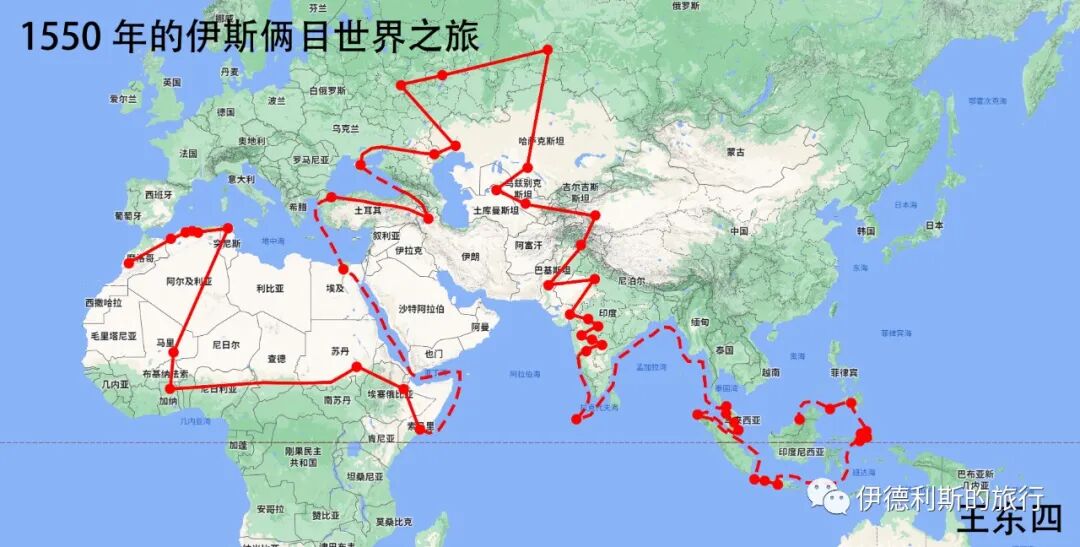
Let me briefly introduce the travel route for this trip:
Our journey starts in Morocco in the far northwest of Africa, moves east into Algeria and Tunisia, and then heads south across the Sahara Desert into the savanna. Then we will cross the African continent to the east, enter the Nile River basin, and arrive at the Somali Peninsula by the Indian Ocean. We will sail north, pass through the Gulf of Aden and the Red Sea to reach Egypt, cross the Mediterranean to Istanbul, and then head east to Iran. This is the first part.
In the second part, we will visit 12 countries ruled by the descendants of Genghis Khan. We start from the Crimean Peninsula, head east to the Volga Delta, go north to the Ryazan region of Russia, and then east to the city of Kazan on the Volga River. We continue east to the Irtysh River, then south to the Kazakh steppe, east into the Transoxiana region, cross the Tianshan Mountains into southern Xinjiang, pass through the Pamir Plateau into Kashmir, and finally enter the Sindh region of Pakistan.
In the third part, we will experience the Islamic culture of South Asia. We first arrive in Delhi, then head south into Gujarat and central India. Next, we will enter the Deccan Plateau, visit the 5 sultanates on the plateau, and finally arrive in the Maldives by boat.
In the fourth part, we will cross the Bay of Bengal to Southeast Asia. We first enter the Pattani region of Thailand, then head south along the Malay Peninsula, pass by 3 sultanates founded by princes of Malacca, and then take a boat past Sumatra and Java to visit the most unique Islamic culture there. Then we come to the Spice Islands in eastern Indonesia to see the influence of the Portuguese and Spanish, and finally arrive in Brunei and the southern Philippines. Our 1550 world Islamic tour ends here.
General Table of Contents
The Vast African Continent
1. Saadi Sultanate of Morocco (1510-1659)
2. Kingdom of Tlemcen in Algeria (1235-1556)
3. Ottoman Regency of Algiers in Algeria (1516-1830)
4. Kingdom of Beni Abbas in Algeria (1510-1872)
5. Kingdom of Kuku in Algeria (1515-1638)
6. Hafsid Dynasty of Tunisia (1229-1574)
7. Songhai Empire in West Africa (1464-1591)
8. Mali Empire in West Africa (1230-1672)
9. Funj Sultanate of Sudan (1504-1821)
10. Adal Sultanate in Ethiopia (1415-1577)
11. Ajuran Sultanate in Somalia (13th century-late 17th century)
Ottoman Empire spanning Europe, Asia, and Africa (1299-1922)
12. Ottoman Egypt Province (1517-1867)
13. Istanbul, capital of the Ottoman Empire (1453-1922)
14. Safavid Dynasty in Iran (1501-1736)
Legacy of the Mongol Empire
15. Crimean Khanate in Ukraine (1441-1783)
16. Astrakhan Khanate in Russia (1466-1556)
17. Nogai Khanate in Russia and Kazakhstan (1440-1634)
18. Qasim Khanate in Russia (1452-1681)
19. Kazan Khanate in Russia (1438-1552)
20. Sibir Khanate in Russia (1468-1598)
21. Kazakh Khanate in Kazakhstan (1465-1587)
22. Khanate of Khiva in Turkmenistan (1511-1920)
23. Khanate of Bukhara in Uzbekistan (1500-1785)
24. Yarkent Khanate in China (1514-1680)
25. Haidar in Kashmir (1540-1550)
26. Arghun Dynasty in Afghanistan and Pakistan (1520-1591)
27. Sur Dynasty that swept through northern India (1538-1556)
Legacy of the Delhi Sultanate
28. Gujarat Sultanate in western India (1407-1573)
29. Khandesh Sultanate in central India (1382-1601)
Five Deccan Sultanates
30. Berar Sultanate on the Deccan Plateau (1490-1572)
31. Ahmadnagar Sultanate on the Deccan Plateau (1490-1636)
32. Bidar Sultanate on the Deccan Plateau (1492-1619)
33. Golconda Sultanate on the Deccan Plateau (1518-1687)
34. Bijapur Sultanate on the Deccan Plateau (1490-1686)
35. Maldive Sultanate in the Indian Ocean (1153-1968)
36. Pattani Sultanate in Thailand (1457? -1902)
The legacy of the Malacca Sultanate.
37. Perak Sultanate in Malaysia (1528–present).
38. Pahang Sultanate in Malaysia (1470–1623).
39. Johor Sultanate in Malaysia (1528–present).
Sultanates of Indonesia.
40. Aceh Sultanate in Indonesia (1496–1903).
41. Banten Sultanate in Indonesia (1527–1813).
42. Cirebon Sultanate in Indonesia (1447–1679).
43. Demak Sultanate in Indonesia (1475–1568).
The four sultanates of the Spice Islands.
44. Ternate Sultanate in Indonesia (1486–1914).
45. Tidore Sultanate in Indonesia (1450–1967).
46. Jailolo Sultanate in Indonesia (late 15th century–1832).
47. Bacan Sultanate in Indonesia (late 15th century–1965).
48. Maguindanao Sultanate in the Philippines (1520–1905).
49. Sulu Sultanate in the Philippines (1457–1915).
50. Brunei Sultanate in Brunei (1368–1888).
1. Saadi Sultanate of Morocco (1510-1659)
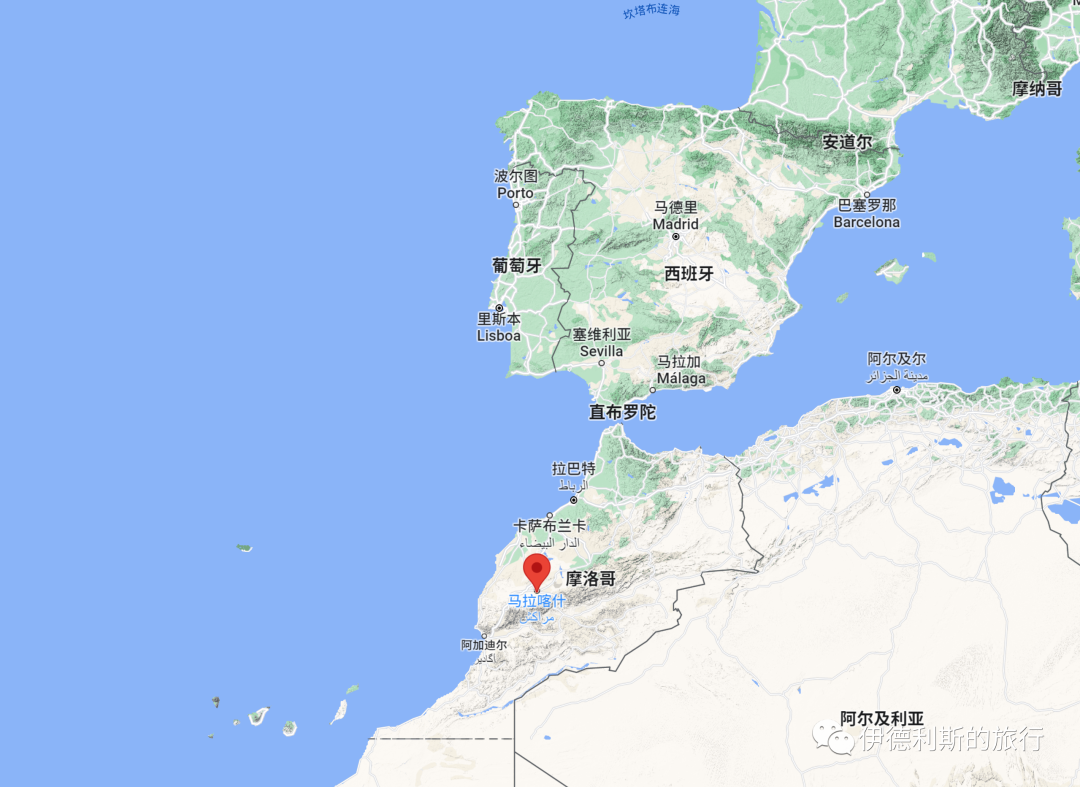
Our journey through the Islamic world begins in the ancient city of Marrakesh, Morocco.
The sultans of the Saadi Sultanate claimed to be descendants of Imam Hassan, the grandson of the Prophet. They established their sultanate in southern Morocco in the early 16th century to resist the Portuguese invasion. They made Marrakesh their capital in 1524, drove the Portuguese out of Morocco in 1541, and then attacked the Wattasid dynasty of the northern Berber people, capturing their capital, Fez, in 1549.
By 1550, the eastward expansion of the Saadi Sultanate caused friction with the Ottoman Empire. At this time, the Ottoman Empire had already expanded into Algeria and was actively preparing for war against the Saadi Sultanate.
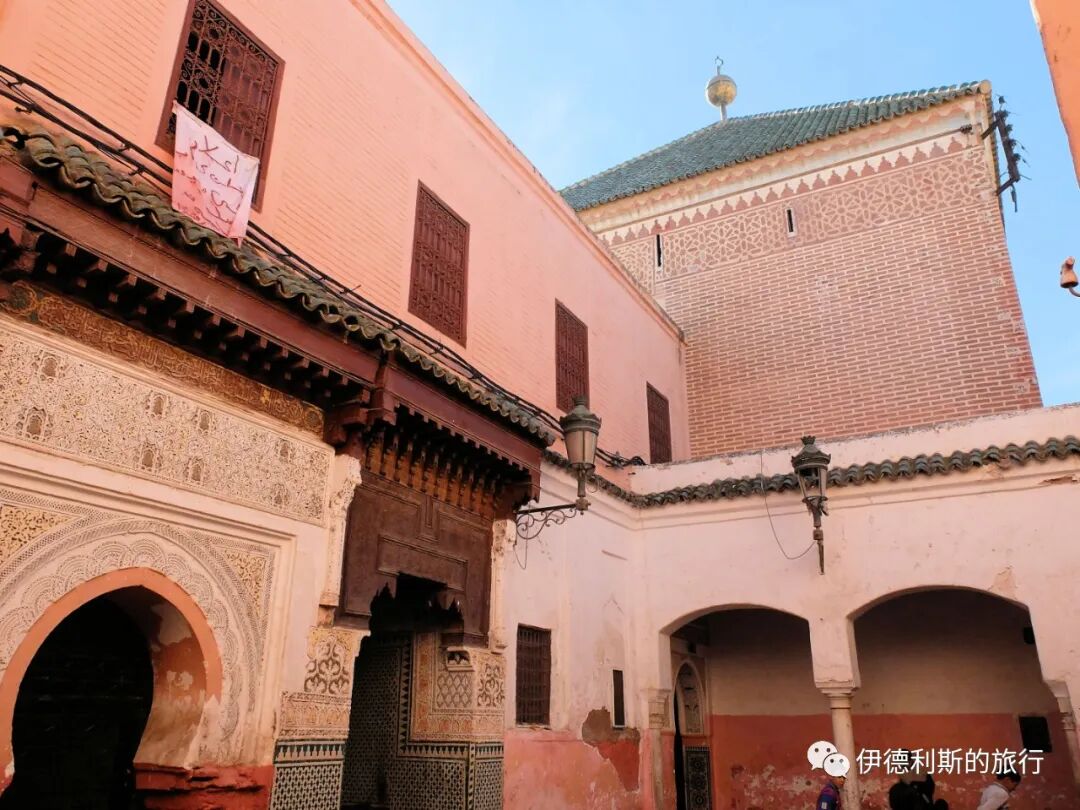
Under Saadi rule, Marrakesh became a commercial hub connecting the Maghreb, the Mediterranean, and sub-Saharan Africa. Today, the city of Marrakesh preserves the gongbei (zawiya) complex of the Sufi sheikh Sidi Muhammad Ben Sliman al-Jazuli, which was built in 1524. Jazuli was highly respected by the Saadi family, so when they made Marrakesh their capital in 1524, they moved his gongbei into the city.
The north side of the tomb of Sidi Muhammad Ben Slimane al-Jazuli, photographed by Robert Prazeres in 2014.
The location of the city of Marrakesh.
2. Kingdom of Tlemcen in Algeria (1235-1556)
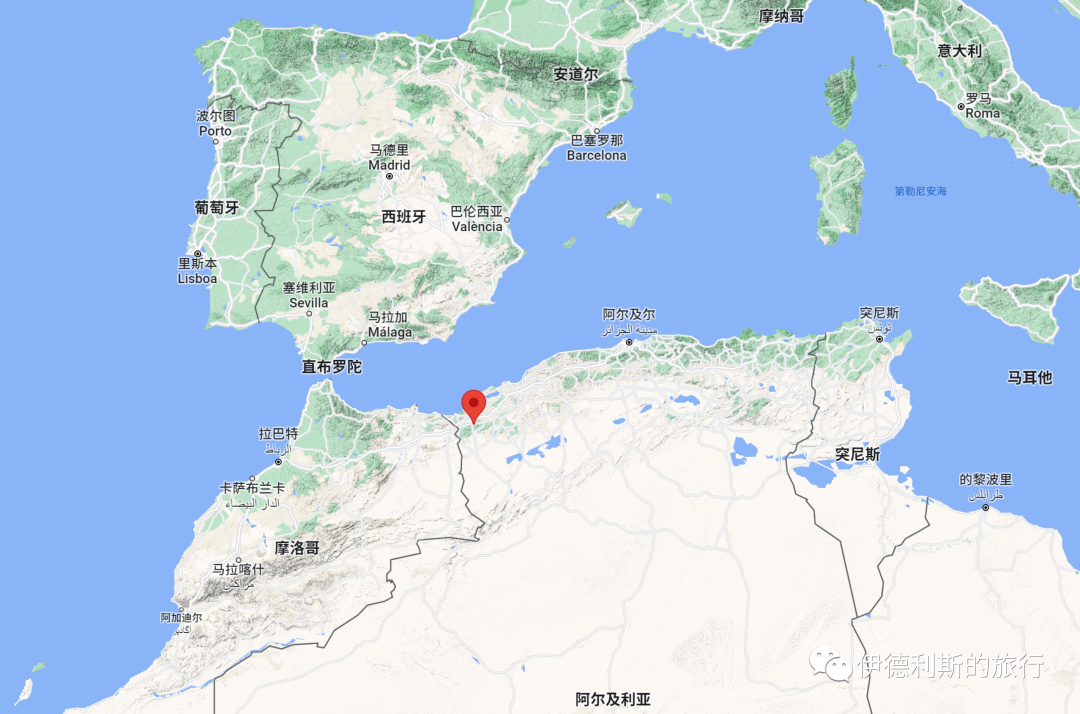
We head east from Morocco to the city of Tlemcen in northwestern Algeria.
In the early 16th century, Algeria was ruled by the Tlemcen Kingdom, which was established by the Berbers. At this time, the Tlemcen Kingdom was very weak and was fought over repeatedly by Spain and the Ottomans.
In June 1550, the Saadi Sultanate of Morocco captured the capital of the Tlemcen Kingdom without a fight and decided to continue pushing eastward.
The location of Tlemcen city.
3. Ottoman Regency of Algiers in Algeria (1516-1830)
Let us continue east to Algiers, which was under the control of Ottoman pirates.
In 1516, the Ottoman pirate brothers Barbarossa (Red Beard) captured Algiers from Spanish rule and used it as a pirate base to fight against Spain repeatedly. In 1545, Red Beard was called to Istanbul to retire, and his son Hasan Pasha became the Ottoman governor of Algiers. Hasan Pasha captured Tlemcen in 1545, but it was taken back two years later. In 1548, Ottoman Sultan Suleiman the Magnificent removed him from office and replaced him with the Ottoman naval commander Dragut.
In 1550, Dragut was leading the Ottoman navy on raids across the Mediterranean. That year, he attacked Mediterranean coastal regions including Tunisia, Sardinia, Corsica, Genoa in Italy, and Spain. In September, Dragut was trapped in a lagoon in Tunisia by the fleet of the Knights of Malta. He escaped by quickly digging a canal and laying down greased wooden planks to drag all his ships out of the lagoon, successfully sailing back to Istanbul.
The Death of Dragut, painted by Maltese artist Giuseppe Calì in 1867.
Today in Algiers, you can see the Safir mosque, built in 1534 by Safar bin Abdullah, a general in the Barbarossa fleet. The mosque features Ottoman architectural style.
Photo by Brahimpic in 2014.
The location of Algiers.
4. Kingdom of Beni Abbas in Algeria (1510-1872)
In the mountains east of Algiers, there were two small states established by the Berbers.
The Kingdom of Beni Abbas was a small state of the Kabyle Berbers in the mountains of northern Algeria. It held a key strategic position on the trade route between the Mediterranean and the Sahara Desert. In the 16th century, the Kingdom of Beni Abbas attracted many Andalusians, Christians, and Jews fleeing Spain and Algiers, which enriched the kingdom's cultural diversity.
In 1550, the Ottoman Empire sent troops to attack the Kingdom of Beni Abbas twice, but they were repelled, so the Ottomans signed a treaty with them.
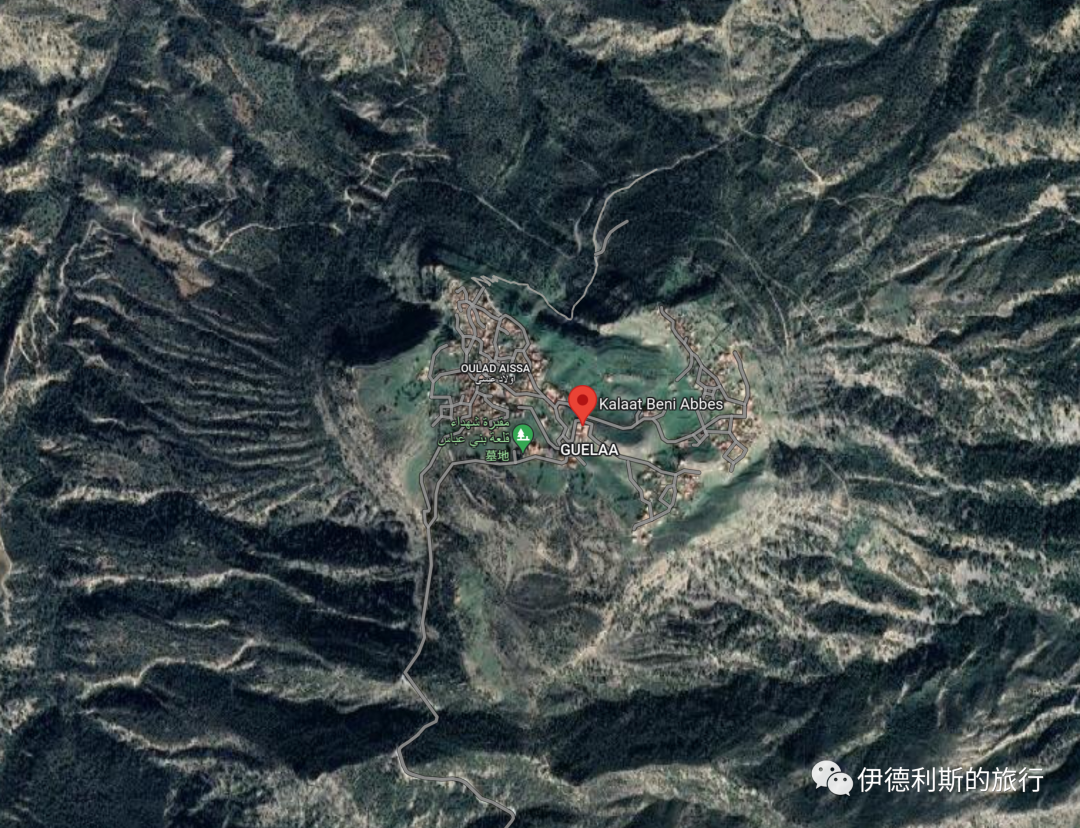
The location of the capital, Kalâa of Ait Abbas.
5. Kingdom of Kuku in Algeria (1515-1638)
The Kingdom of Kuku was another state established by the Kabyle Berbers in the mountains of northern Algeria. It was located east of Algiers and was a rival to the Kingdom of Beni Abbas.
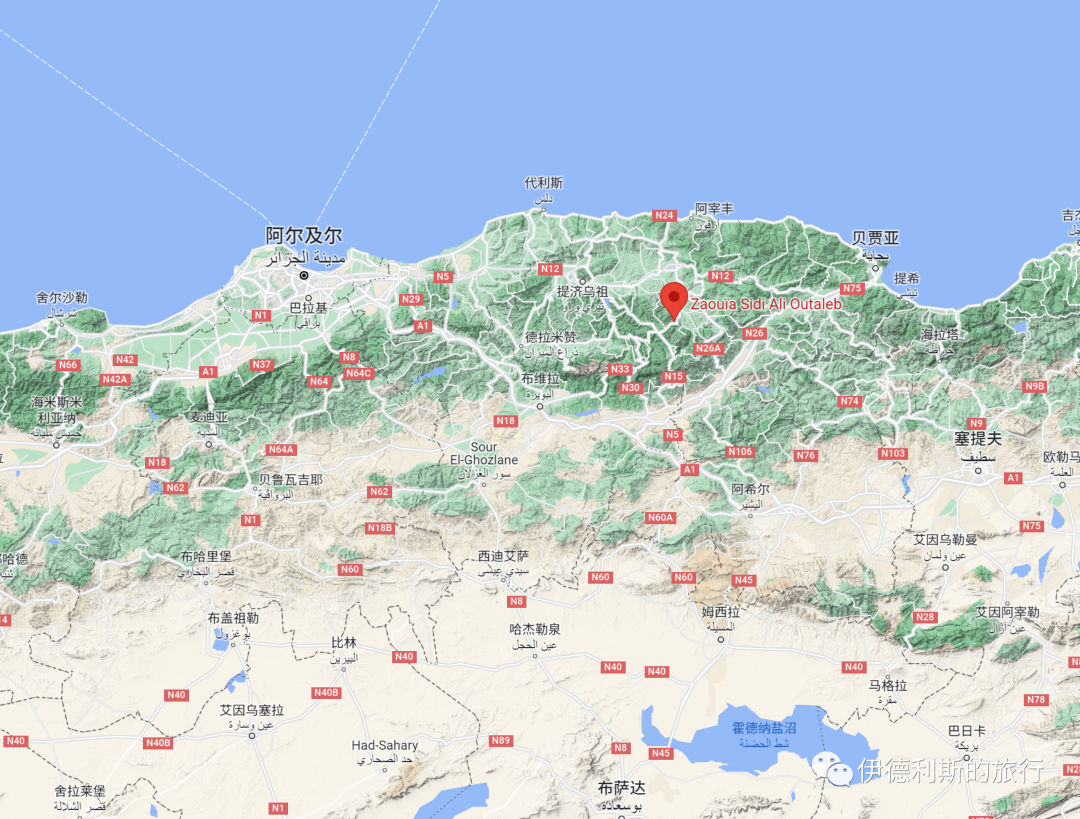
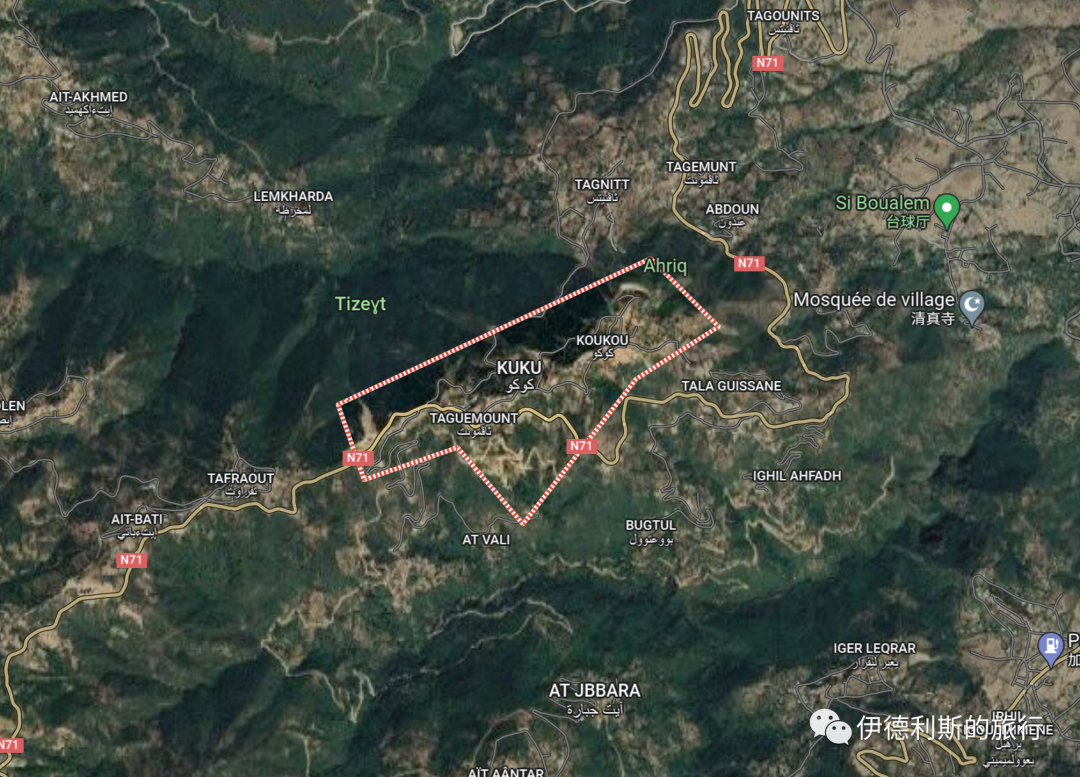
The location of Kuku city.
6. Hafsid Dynasty of Tunisia (1229-1574)
Continue east along the North African coast to reach the city of Tunis.
The Hafsid dynasty was a Berber dynasty that was also caught up in the repeated struggles between Spain and the Ottomans in the early 16th century.
In 1550, the Hafsid dynasty was a vassal state of Spain. They were not completely conquered by the Ottoman Empire until 1573.
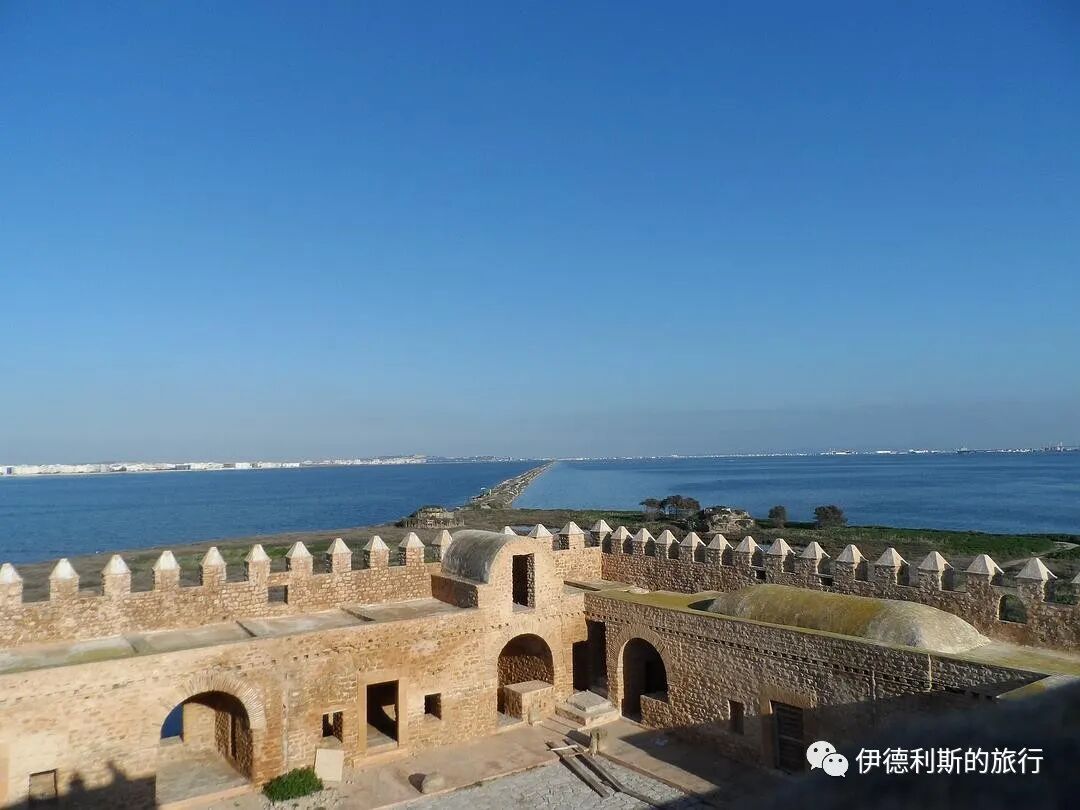
Santiago Chikly castle, rebuilt by the Spanish in Tunis between 1546 and 1550. Photo by Imanis in 2013.
The location of Tunis.
7. Songhai Empire in West Africa (1464-1591)
Let us head south along the ancient trade routes across the vast Sahara Desert to reach the ancient city of Gao in Mali.
The Songhai Empire was established by the Songhai people of West Africa. It was located in the semi-arid region between the Sahara Desert and the savanna. At its peak, it was one of the largest countries in Africa, with Timbuktu and Djenné as its main cities.
In 1550, the emperor ruling the Songhai Empire was Askia Daoud (reigned 1549–1582). Under his rule, the Songhai Empire enjoyed peace at home, expanded its borders, and saw its economy thrive. At that time, Timbuktu was the center of Islamic culture in Africa, placing great importance on education and preserving a vast collection of book manuscripts.
The capital of the Songhai Empire was located in Gao, Mali, where the tomb of the Songhai emperor Askia Muhammad I, who died in 1538, stands. It was named a UNESCO World Heritage site in 2004. People say the mud and wood used for this tomb were brought back from Mecca by the emperor himself after his hajj.
The Tomb of Askia, photographed by Our Place for the World Heritage website in 2007.
The location of Gao, the capital of the Songhai Empire.
8. Mali Empire in West Africa (1230-1672)
Let us continue south into the savanna to visit the mysterious Mali Empire.
The Mali Empire was once the largest empire in West Africa, though it was gradually replaced by the Songhai Empire from the north after the 16th century. The economic focus of the Mali Empire shifted from trans-Saharan trade to commerce in coastal regions.
In 1545, the Songhai Empire invaded the capital of the Mali Empire, but they did not actually take control of it. By 1550, the Mali Empire still held onto a certain amount of territory. That year, they attacked a trade center in southern Ghana and seized the gold there.
The region attacked by the Mali Empire in 1550.
9. Funj Sultanate of Sudan (1504-1821)
This time, we will travel a long distance across the African continent to reach Sudan on the upper Nile.
The Funj Sultanate was a state established by the Funj people on the upper Nile. Due to the spread of Sufism along the upper Nile in the 16th century, the founder of the Funj Kingdom, Amara Dunqas, became a Muslim. However, the Funj people still kept many local customs and Christian rituals, gradually forming a unique Sudanese folk Islamic tradition.
To counter the expansion of the Ottoman Empire, the Funj Sultanate formed an alliance with the Ethiopian Empire in the early 16th century and exported horses and camels to them.
Sennar, the capital of the Funj Sultanate.
10. Adal Sultanate in Ethiopia (1415-1577)
Let us continue east into the ancient Ethiopian city of Harar.
The Adal Sultanate was located east of the Funj Sultanate on the northern Somali Peninsula and served as a commercial and political partner to the Ottoman Empire. Between 1529 and 1543, with help from the Ottoman Empire, the Adal Sultanate fought an 11-year war against the Ethiopian Kingdom, which eventually weakened both sides.
In 1550, the Adal Sultanate was ruled by Nur ibn Mujahid, who built a city wall with five gates in the capital, Harar. This walled city, known as Harar Jugol, was named a UNESCO World Heritage site in 2006. Harar is located in eastern Ethiopia and served as the capital of the Adal Sultanate from 1520 to 1577. Historically, this city has been an important African commercial and Islamic center, connecting trade routes from Ethiopia to the Somali Peninsula, the Arabian Peninsula, and the heart of Asia.
The Harar city wall, photographed by Sailko in 2018.
The location of the city of Harar.
11. Ajuran Sultanate in Somalia (13th century-late 17th century)
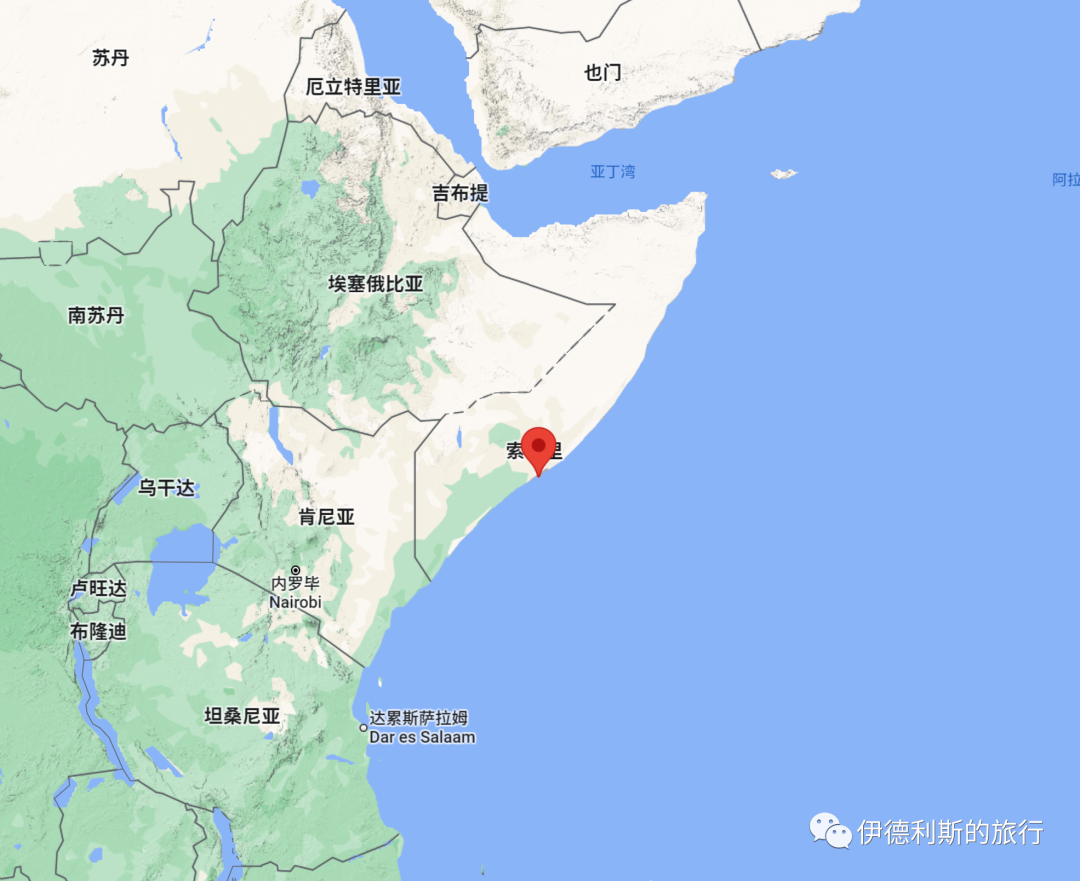
We continue south to the port city of Mogadishu on the Indian Ocean.
The Ajuran Sultanate was located on the Somali Peninsula, south of the Adal Sultanate. It held a key position in North Indian Ocean trade, with ships traveling between East Asia, South Asia, Europe, and Africa, leaving behind many ancient monuments in Somalia.
As a maritime nation, the Ajuran Sultanate not only allied with the Ottoman Empire but also maintained friendly relations with the Ming Dynasty. They were the first African country to send envoys to the Ming Dynasty.
In the early 16th century, the wealthiest Indian Ocean port city in the Sultanate was Mogadishu, which is the current capital of Somalia. According to the 16th-century Andalusian traveler Leo Africanus, the people of Mogadishu at that time had olive skin, wore white robes and white turbans, and used Arabic as their common language. Mogadishu had stone walls and was equipped with muskets and cannons imported from the Ottoman Empire.
The location of Mogadishu city.
Ottoman Empire spanning Europe, Asia, and Africa (1299-1922)
Let us take a ship from the Indian Ocean port of Mogadishu, sail north along the Somali Peninsula, enter the Red Sea from the Gulf of Aden, and arrive in Cairo, Egypt, under Ottoman rule.
12. Ottoman Egypt Province (1517-1867)
In 1517, the Ottoman Empire conquered the Mamluk Sultanate, which had ruled Egypt for over two hundred years. Although they appointed a series of Egyptian governors, the political structure and cultural arts still continued the traditions of the Mamluk period. In early 16th-century Cairo, Mamluk and Ottoman architectural styles began to merge.
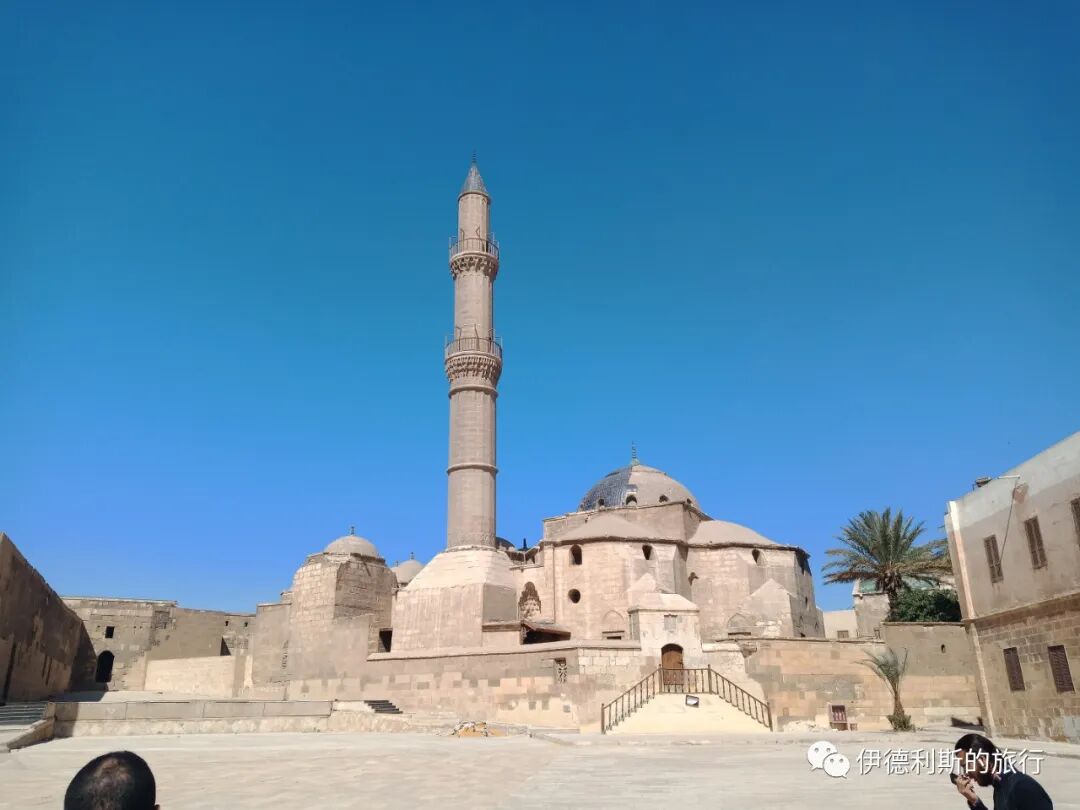
In 1528, the Egyptian governor Hadım Suleiman Pasha built the Suleiman Pasha Mosque for the Ottoman Janissaries stationed in the Cairo Citadel. This was the first Ottoman-style mosque in Egypt.
Suleiman Pasha Mosque photographed by Houssam_Daowd_102 in 2019.
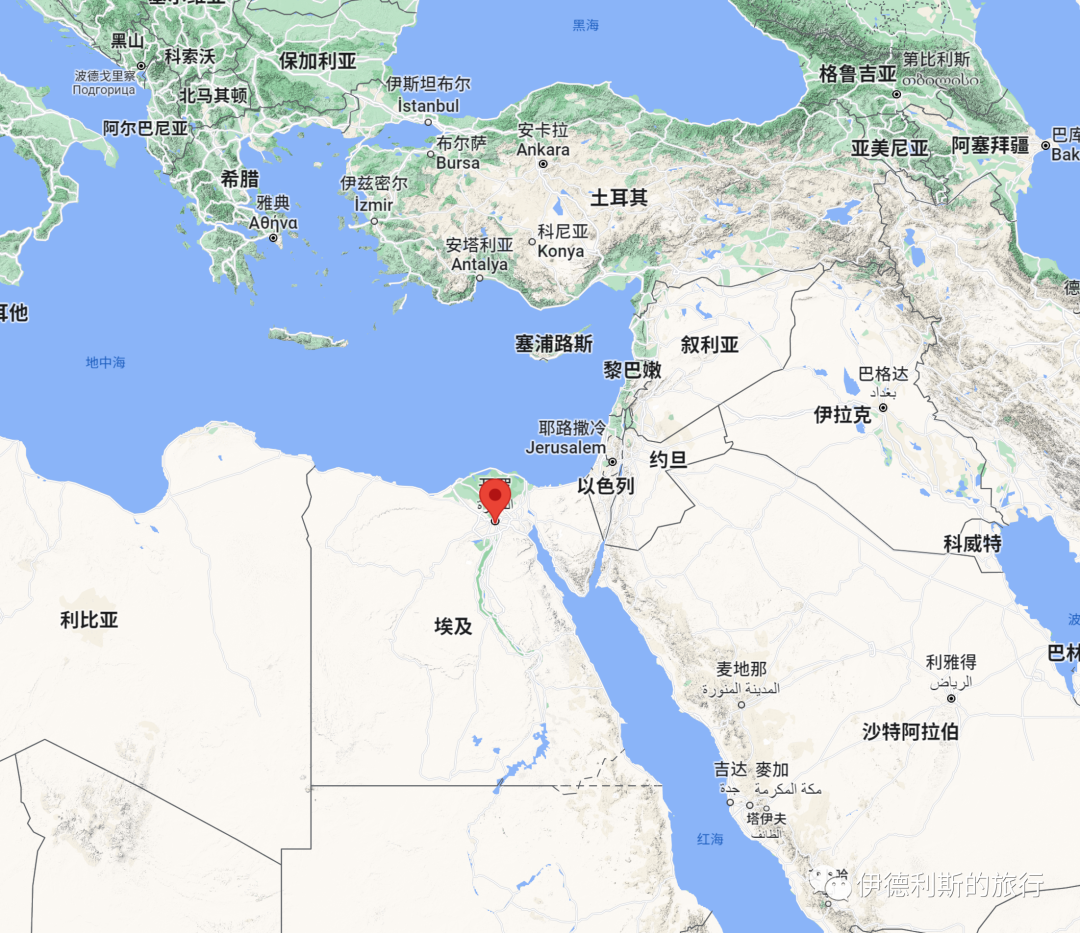
The location of Cairo.
13. Istanbul, capital of the Ottoman Empire (1453-1922)
We cross the Mediterranean Sea and arrive at Istanbul, the capital of the Ottoman Empire. At that time, the eastern Mediterranean had become an inland sea for the Ottoman Empire.
In the first half of the 16th century, the Ottoman Empire entered its Golden Age under the rule of Suleiman the Magnificent (reigned 1520-1566). Ottoman territory continued to expand. They besieged Vienna twice in 1529 and 1532, captured Baghdad in 1535, and defeated the Portuguese to control the Red Sea in 1538.
Meanwhile, under the patronage of Suleiman the Magnificent, various talented craftsmen and artists came to the Ottoman court, leading to great cultural prosperity. Mimar Sinan, the court architect for Suleiman the Magnificent, built a series of structures in Istanbul that became the best witnesses of that era.
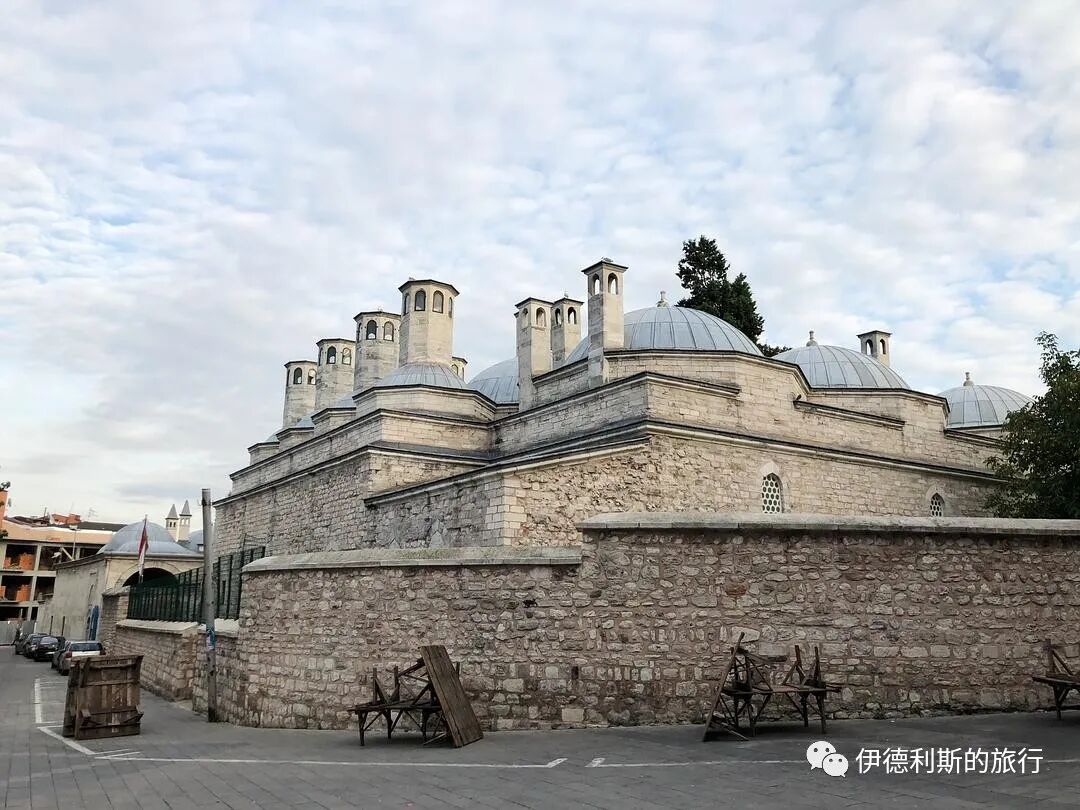
The Haseki Hürrem Sultan Complex (Haseki Hürrem Sultan Külliyesi) was commissioned by Suleiman the Magnificent's wife, Hürrem Sultan, and built by Mimar Sinan in 1539. It was the first complex built by Mimar Sinan after he became the royal architect. Hürrem Sultan, known as Roxelana, was the first empress in Ottoman history to receive the title of 'Haseki Sultan' (the Sultan's favorite). She is also known as the most powerful and controversial woman in Ottoman history.
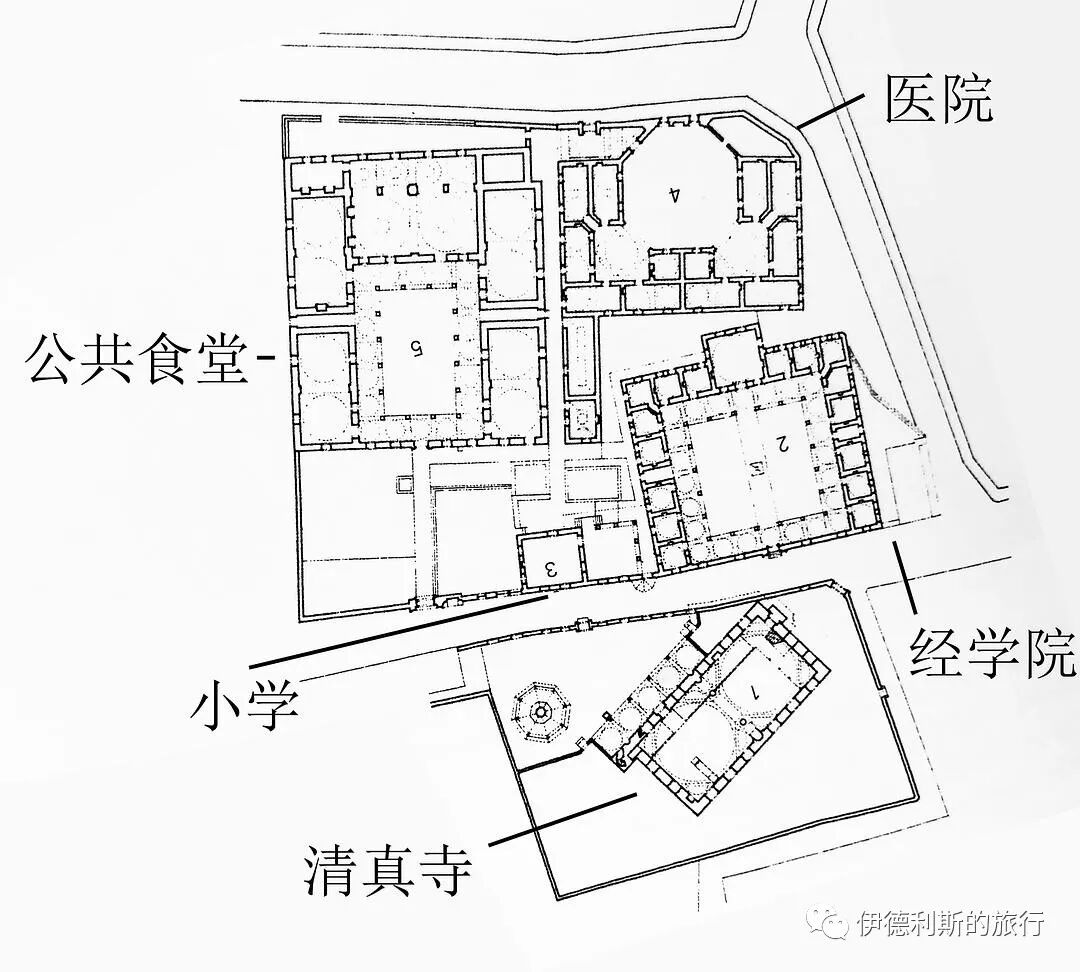
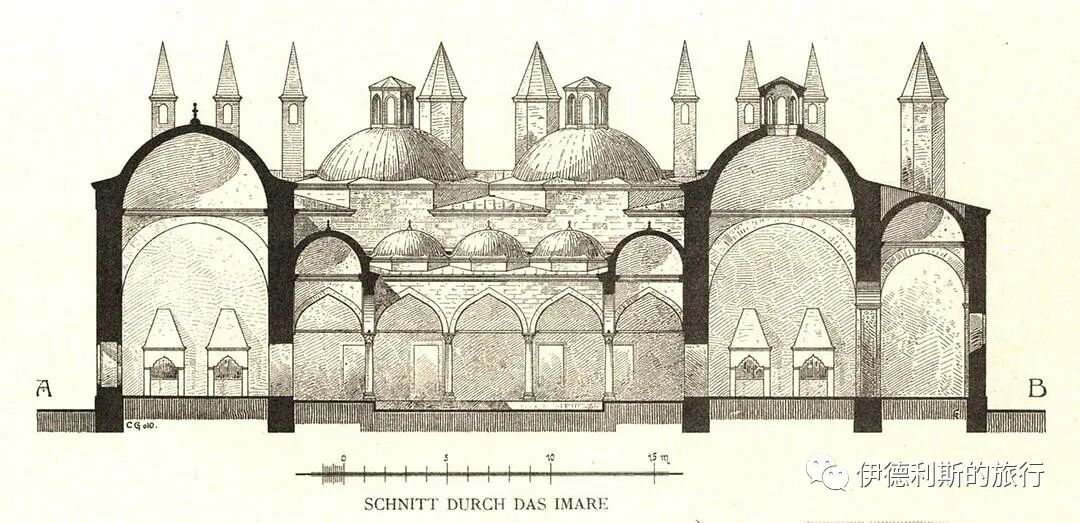
After becoming empress, Hürrem Sultan began building a series of public structures, the first of which was this empress complex. The complex includes a Friday mosque (Jumu'ah mosque), a public kitchen (imaret), a religious school (madrasa), an elementary school (mektep), and a hospital (darüssifa). The mosque was completed in 1539, the religious school and kitchen were finished the following year, and the hospital was not completed until 1550. When designing the entire complex, Sinan arranged the different buildings at various angles, leaving only narrow passages or gaps between them. This arrangement created rich perspective effects that almost never appeared in his later works.
The mosque (1539) is at the southernmost part of the complex, separated from the other parts by a narrow alley. The mosque was originally a simple, traditional single-dome, single-minaret structure made of alternating brick and stone. The porch is supported by six marble columns holding up five small domes. The mosque was expanded in 1612, growing from a single dome to a double dome, which doubled its area. The mosque has no tiles, and the current paintings were added later. During this period, Sinan had not yet started to innovate in mosque architecture.
The madrasa (1540) is directly opposite the mosque and consists of sixteen student rooms and a large lecture hall arranged in a rectangle.
The primary school (1540) is known as the most beautiful primary school built by Mimar Sinan.
The hospital (1550) is in the far north and was built by Hurrem Sultan specifically for women. The hospital courtyard is octagonal, with rooms on three sides and windows facing the street on the fourth side. The two arched gateways (iwan) at the corners of the octagonal courtyard and the dome foreshadowed Sinan's later development of arches and domes.
A diagram of the public kitchen published by Cornelius Gurlitt in 1912.
The Mihrimah Sultan Complex (Mihrimah Sultan Külliyesi) was commissioned in 1543 by Mihrimah Sultan, the daughter of Suleiman the Magnificent and Hurrem Sultan, and built by Mimar Sinan. It is the second complex by Mimar Sinan in Istanbul that still stands today.
Mihrimah Sultan was the wife of the Grand Vizier Rustem Pasha and is known as the most powerful princess in the history of the Ottoman Empire.
The entire complex is cleverly built on a slope extending to the coast. It includes a mosque, a madrasa, a guesthouse, a canteen, a primary school, and some later tombs. The guesthouse and canteen were destroyed by fire in 1772.
The Mihrimah Sultan Mosque is the first semi-domed mosque designed by Mimar Sinan. The mosque consists of one main dome and three semi-domes. This shape expands the interior space, making people feel like they are under the dome as soon as they enter the main hall. Although the mosque itself has limited depth, this design increases the sense of openness. Mimar Sinan added a T-shaped canopy in front of the porch to soften the hardness of the entrance facade.
A diagram of the mosque published by Cornelius Gurlitt in 1912.
The madrasa consists of sixteen student rooms and a large lecture hall in a rectangle. It is now a hospital, and the integrity of the cultural heritage has been damaged.
The Sehzade Complex (Sehzade Külliye) is located on the third hill of the old city of Istanbul. Built between 1543 and 1548, it is considered Mimar Sinan's most important early work and his first masterpiece.
The complex was built by Suleiman the Magnificent to commemorate his beloved son, Prince Mehmed (Sehzade Mehmed), who died young. Prince Mehmed was the son of Suleiman the Magnificent and Hurrem Sultan. He was favored from a young age and was the most likely heir, but he sadly died of smallpox (some say murder) in 1543. After the prince died, Suleiman the Magnificent was heartbroken. Traditionally, princes were buried in Bursa, but the Sultan decided to commission Mimar Sinan to build a tomb for the prince in Istanbul and match it with a complex.
The Sehzade Complex was the first work Mimar Sinan was directly commissioned to build by Suleiman the Magnificent. It was also his most ambitious early work, with a much grander scale and more decoration than his previous projects.
The complex includes a mosque, five tombs, a madrasa, a guesthouse, a hostel, a public canteen, and a primary school. These buildings are freely distributed on flat ground without a deliberate attempt at symmetry. the mosque is not a single unit with the other buildings; the other structures are distributed in the gardens or streets surrounding the mosque.
The mosque (1543-1548) is the second semi-domed mosque designed by Mimar Sinan, consisting of one main dome and four semi-domes. This is both an improvement on Sinan's previous work, the Mihrimah Sultan Mosque with its three semi-domes, and a reinterpretation of designs by predecessors like the Fatih Mosque (1471) and the Bayezid II Mosque (1506). This design isolates the four pillars supporting the central dome, creating a more stunning visual effect. The interior of the mosque is a square that unfolds along a central vertical axis. When people enter, they can immediately feel the dominance of the central dome. the porches on the walls on both sides of the mosque are a bold innovation, which also foreshadows the future direction of Ottoman mosque development. This design softens the flanks of the building and hides the buttresses, allowing the facade to blend in more perfectly. The design of the Sehzade Mosque had gradually moved away from the traditional Ottoman mosque model and began to move toward Sinan's own unique style.
A diagram of the mosque published by Cornelius Gurlitt in 1912.
The Tomb of Prince Mehmed (1543) sits southeast of the mosque. It has an octagonal structure, Persian inscriptions at the entrance, and Cuerda Seca tiles inside.
The madrasa (1546) is outside the garden on the north side of the mosque. It forms a rectangle surrounded by a gallery, with 21 student rooms and one large lecture hall on three sides. The fountain in the middle of the courtyard still keeps its Seljuk-era (11th to 13th century) tomb tower (kumbet) structure.
The public kitchen (1543-1548) is across the street east of the mosque. It consists of two buildings, each with six domes and a courtyard in the middle.
The octagonal tomb of Hüsrev Paşa is in the west of Istanbul. It is known as one of the most beautiful tombs built by Mimar Sinan. Hüsrev Paşa was a vizier of the Ottoman Empire. People called him the Mad Hüsrev Paşa because he had a bad temper. Hüsrev Paşa was born in Bosnia in 1495 and came from the famous Sokollu family. He became the governor of Egypt in 1535 and the Second Vizier in 1538. In 1544, Hüsrev Paşa lost the race for Grand Vizier to Rüstem Paşa. He died of illness shortly after, and Mimar Sinan built his tomb.
The Yavuz Sultan Selim Medrese is in the west of Istanbul. Suleiman the Magnificent commissioned Mimar Sinan to build it, and it is named after the Sultan's father, Selim I. The madrasa consists of 20 student rooms on three sides and one large lecture hall. In 1563, the lecture hall was turned into a prayer hall, and a minaret (banketa) was added. The minaret is now destroyed, and the madrasa has become a hospital.
The Rüstem Paşa Medrese is not far northeast of the Grand Bazaar in Istanbul and was built in 1550. This madrasa is Mimar Sinan's new take on the famous Büyük Ağa Medrese in Amasya, which was built in 1488. The Büyük Ağa Medrese was the first octagonal madrasa in Turkey. Mimar Sinan kept the internal octagonal courtyard but changed the outside to a rectangle, which was a further development in Ottoman madrasa architecture.
14. Safavid Dynasty in Iran (1501-1736)
We headed east from Istanbul, passed through several Kurdish emirates, and arrived in Tabriz in northwestern Iran.
The Safavid dynasty is considered the most important dynasty in Iran since the Sassanid Empire. The Safavid dynasty made Twelver Shia Islam the state religion, which was a major event in Islamic history. The rulers of the Safavid dynasty claimed to be descendants of the Prophet Muhammad, but historians believe they were Turkified Iranians from Iranian Kurdistan.
In 1501, Ismail I captured Tabriz, the capital of the Aq Qoyunlu, and made it the capital of the Safavid dynasty. Tabriz is now the capital of East Azerbaijan Province, and most of its residents are Azerbaijanis.
In 1550, the Safavid dynasty was ruled by Tahmasp I and was in a break between two large-scale wars with the Ottoman Empire. Between 1532 and 1555, the Ottoman Empire led by Suleiman the Magnificent and the Safavid dynasty led by Tahmasp I fought a 23-year war. Between 1548 and 1549, the Safavid dynasty used a scorched-earth policy to level Armenia, but the Ottoman army still pushed deep into the Iranian interior. After occupying the Safavid capital of Tabriz, the Ottoman army looted Hamadan, Qom, and Kashan, reaching as far as Isfahan. Tahmasp I chose not to fight the Ottoman army head-on, and the Ottoman army was forced to retreat because they ran out of food and supplies. Shortly after this in 1555, to avoid attacks from the Ottoman Empire, the Safavid dynasty moved its capital from Tabriz in the northwest to Qazvin, which was further inland.
A miniature painting of Tahmasp I painted in Qazvin, Iran, in 1575.
The location of Tabriz.
That is all for the first part. In the next post, we will visit 12 Islamic countries ruled by the descendants of Genghis Khan. view all
Summary: Islamic World in 1550: Africa, Ottoman Lands and Safavid Iran is presented here as a firsthand travel account in clear English, beginning with this scene: I started staying home in mid-November. I wanted to use this time to do things I had always planned, so I decided to take an online tour of the Islamic world. The account keeps its focus on Islamic World, Ottoman History, Safavid Iran while preserving the names, places, food, and historical details from the Chinese source.
I started staying home in mid-November. I wanted to use this time to do things I had always planned, so I decided to take an online tour of the Islamic world. I chose the year 1550 because my previous travels abroad showed me that many interesting things really happened in the Islamic world during the first half of the 16th century. During my travels, I saw the Ottoman Empire reaching its peak under Suleiman the Magnificent, the Crimean Khanate building a new capital in a valley, the Kazan Khanate about to be conquered by Tsarist Russia, the Bukhara and Yarkent Khanates just being established, the Sur Empire in Afghanistan sweeping through northern India to conquer the Mughal Empire, and the island of Java in Indonesia forming a unique Javanese Islamic culture under the influence of Sufi missionaries. This gave me an idea to see exactly which Islamic countries existed in 1550 and what was happening in them.
After researching, I found that in 1550 there were at least 50 Islamic countries and regimes spanning Africa, West Asia, Central Asia, South Asia, and Southeast Asia, each with its own distinct cultural traditions and history. Out of these 50 countries and regimes, I will detail 9 that I have visited before, including the Ottoman Empire, the Crimean Khanate, the Kazan Khanate, the Bukhara Khanate, the Yarkent Khanate, the Sur Empire, the Golconda Sultanate, the Banten Sultanate, and the Demak Sultanate. I hope this online trip helps everyone imagine the atmosphere of the Islamic world in 1550.
Besides these 50 countries, there are other Islamic nations I did not include this time, and I hope to find more information about them in the future.
Let me briefly introduce the travel route for this trip:
Our journey starts in Morocco in the far northwest of Africa, moves east into Algeria and Tunisia, and then heads south across the Sahara Desert into the savanna. Then we will cross the African continent to the east, enter the Nile River basin, and arrive at the Somali Peninsula by the Indian Ocean. We will sail north, pass through the Gulf of Aden and the Red Sea to reach Egypt, cross the Mediterranean to Istanbul, and then head east to Iran. This is the first part.
In the second part, we will visit 12 countries ruled by the descendants of Genghis Khan. We start from the Crimean Peninsula, head east to the Volga Delta, go north to the Ryazan region of Russia, and then east to the city of Kazan on the Volga River. We continue east to the Irtysh River, then south to the Kazakh steppe, east into the Transoxiana region, cross the Tianshan Mountains into southern Xinjiang, pass through the Pamir Plateau into Kashmir, and finally enter the Sindh region of Pakistan.
In the third part, we will experience the Islamic culture of South Asia. We first arrive in Delhi, then head south into Gujarat and central India. Next, we will enter the Deccan Plateau, visit the 5 sultanates on the plateau, and finally arrive in the Maldives by boat.
In the fourth part, we will cross the Bay of Bengal to Southeast Asia. We first enter the Pattani region of Thailand, then head south along the Malay Peninsula, pass by 3 sultanates founded by princes of Malacca, and then take a boat past Sumatra and Java to visit the most unique Islamic culture there. Then we come to the Spice Islands in eastern Indonesia to see the influence of the Portuguese and Spanish, and finally arrive in Brunei and the southern Philippines. Our 1550 world Islamic tour ends here.
General Table of Contents
The Vast African Continent
1. Saadi Sultanate of Morocco (1510-1659)
2. Kingdom of Tlemcen in Algeria (1235-1556)
3. Ottoman Regency of Algiers in Algeria (1516-1830)
4. Kingdom of Beni Abbas in Algeria (1510-1872)
5. Kingdom of Kuku in Algeria (1515-1638)
6. Hafsid Dynasty of Tunisia (1229-1574)
7. Songhai Empire in West Africa (1464-1591)
8. Mali Empire in West Africa (1230-1672)
9. Funj Sultanate of Sudan (1504-1821)
10. Adal Sultanate in Ethiopia (1415-1577)
11. Ajuran Sultanate in Somalia (13th century-late 17th century)
Ottoman Empire spanning Europe, Asia, and Africa (1299-1922)
12. Ottoman Egypt Province (1517-1867)
13. Istanbul, capital of the Ottoman Empire (1453-1922)
14. Safavid Dynasty in Iran (1501-1736)
Legacy of the Mongol Empire
15. Crimean Khanate in Ukraine (1441-1783)
16. Astrakhan Khanate in Russia (1466-1556)
17. Nogai Khanate in Russia and Kazakhstan (1440-1634)
18. Qasim Khanate in Russia (1452-1681)
19. Kazan Khanate in Russia (1438-1552)
20. Sibir Khanate in Russia (1468-1598)
21. Kazakh Khanate in Kazakhstan (1465-1587)
22. Khanate of Khiva in Turkmenistan (1511-1920)
23. Khanate of Bukhara in Uzbekistan (1500-1785)
24. Yarkent Khanate in China (1514-1680)
25. Haidar in Kashmir (1540-1550)
26. Arghun Dynasty in Afghanistan and Pakistan (1520-1591)
27. Sur Dynasty that swept through northern India (1538-1556)
Legacy of the Delhi Sultanate
28. Gujarat Sultanate in western India (1407-1573)
29. Khandesh Sultanate in central India (1382-1601)
Five Deccan Sultanates
30. Berar Sultanate on the Deccan Plateau (1490-1572)
31. Ahmadnagar Sultanate on the Deccan Plateau (1490-1636)
32. Bidar Sultanate on the Deccan Plateau (1492-1619)
33. Golconda Sultanate on the Deccan Plateau (1518-1687)
34. Bijapur Sultanate on the Deccan Plateau (1490-1686)
35. Maldive Sultanate in the Indian Ocean (1153-1968)
36. Pattani Sultanate in Thailand (1457? -1902)
The legacy of the Malacca Sultanate.
37. Perak Sultanate in Malaysia (1528–present).
38. Pahang Sultanate in Malaysia (1470–1623).
39. Johor Sultanate in Malaysia (1528–present).
Sultanates of Indonesia.
40. Aceh Sultanate in Indonesia (1496–1903).
41. Banten Sultanate in Indonesia (1527–1813).
42. Cirebon Sultanate in Indonesia (1447–1679).
43. Demak Sultanate in Indonesia (1475–1568).
The four sultanates of the Spice Islands.
44. Ternate Sultanate in Indonesia (1486–1914).
45. Tidore Sultanate in Indonesia (1450–1967).
46. Jailolo Sultanate in Indonesia (late 15th century–1832).
47. Bacan Sultanate in Indonesia (late 15th century–1965).
48. Maguindanao Sultanate in the Philippines (1520–1905).
49. Sulu Sultanate in the Philippines (1457–1915).
50. Brunei Sultanate in Brunei (1368–1888).
1. Saadi Sultanate of Morocco (1510-1659)
Our journey through the Islamic world begins in the ancient city of Marrakesh, Morocco.
The sultans of the Saadi Sultanate claimed to be descendants of Imam Hassan, the grandson of the Prophet. They established their sultanate in southern Morocco in the early 16th century to resist the Portuguese invasion. They made Marrakesh their capital in 1524, drove the Portuguese out of Morocco in 1541, and then attacked the Wattasid dynasty of the northern Berber people, capturing their capital, Fez, in 1549.
By 1550, the eastward expansion of the Saadi Sultanate caused friction with the Ottoman Empire. At this time, the Ottoman Empire had already expanded into Algeria and was actively preparing for war against the Saadi Sultanate.
Under Saadi rule, Marrakesh became a commercial hub connecting the Maghreb, the Mediterranean, and sub-Saharan Africa. Today, the city of Marrakesh preserves the gongbei (zawiya) complex of the Sufi sheikh Sidi Muhammad Ben Sliman al-Jazuli, which was built in 1524. Jazuli was highly respected by the Saadi family, so when they made Marrakesh their capital in 1524, they moved his gongbei into the city.
The north side of the tomb of Sidi Muhammad Ben Slimane al-Jazuli, photographed by Robert Prazeres in 2014.
The location of the city of Marrakesh.
2. Kingdom of Tlemcen in Algeria (1235-1556)
We head east from Morocco to the city of Tlemcen in northwestern Algeria.
In the early 16th century, Algeria was ruled by the Tlemcen Kingdom, which was established by the Berbers. At this time, the Tlemcen Kingdom was very weak and was fought over repeatedly by Spain and the Ottomans.
In June 1550, the Saadi Sultanate of Morocco captured the capital of the Tlemcen Kingdom without a fight and decided to continue pushing eastward.
The location of Tlemcen city.
3. Ottoman Regency of Algiers in Algeria (1516-1830)
Let us continue east to Algiers, which was under the control of Ottoman pirates.
In 1516, the Ottoman pirate brothers Barbarossa (Red Beard) captured Algiers from Spanish rule and used it as a pirate base to fight against Spain repeatedly. In 1545, Red Beard was called to Istanbul to retire, and his son Hasan Pasha became the Ottoman governor of Algiers. Hasan Pasha captured Tlemcen in 1545, but it was taken back two years later. In 1548, Ottoman Sultan Suleiman the Magnificent removed him from office and replaced him with the Ottoman naval commander Dragut.
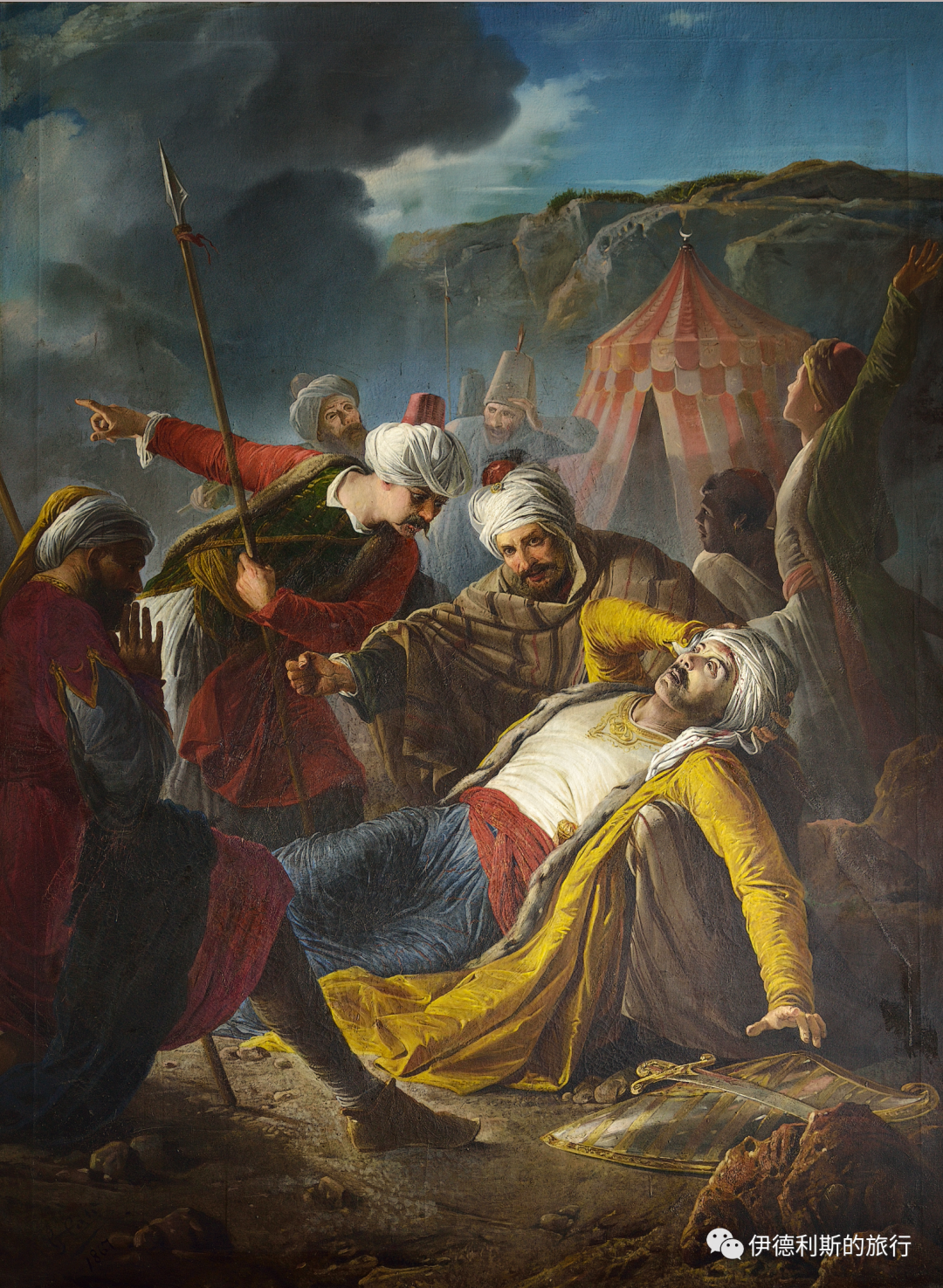
In 1550, Dragut was leading the Ottoman navy on raids across the Mediterranean. That year, he attacked Mediterranean coastal regions including Tunisia, Sardinia, Corsica, Genoa in Italy, and Spain. In September, Dragut was trapped in a lagoon in Tunisia by the fleet of the Knights of Malta. He escaped by quickly digging a canal and laying down greased wooden planks to drag all his ships out of the lagoon, successfully sailing back to Istanbul.
The Death of Dragut, painted by Maltese artist Giuseppe Calì in 1867.
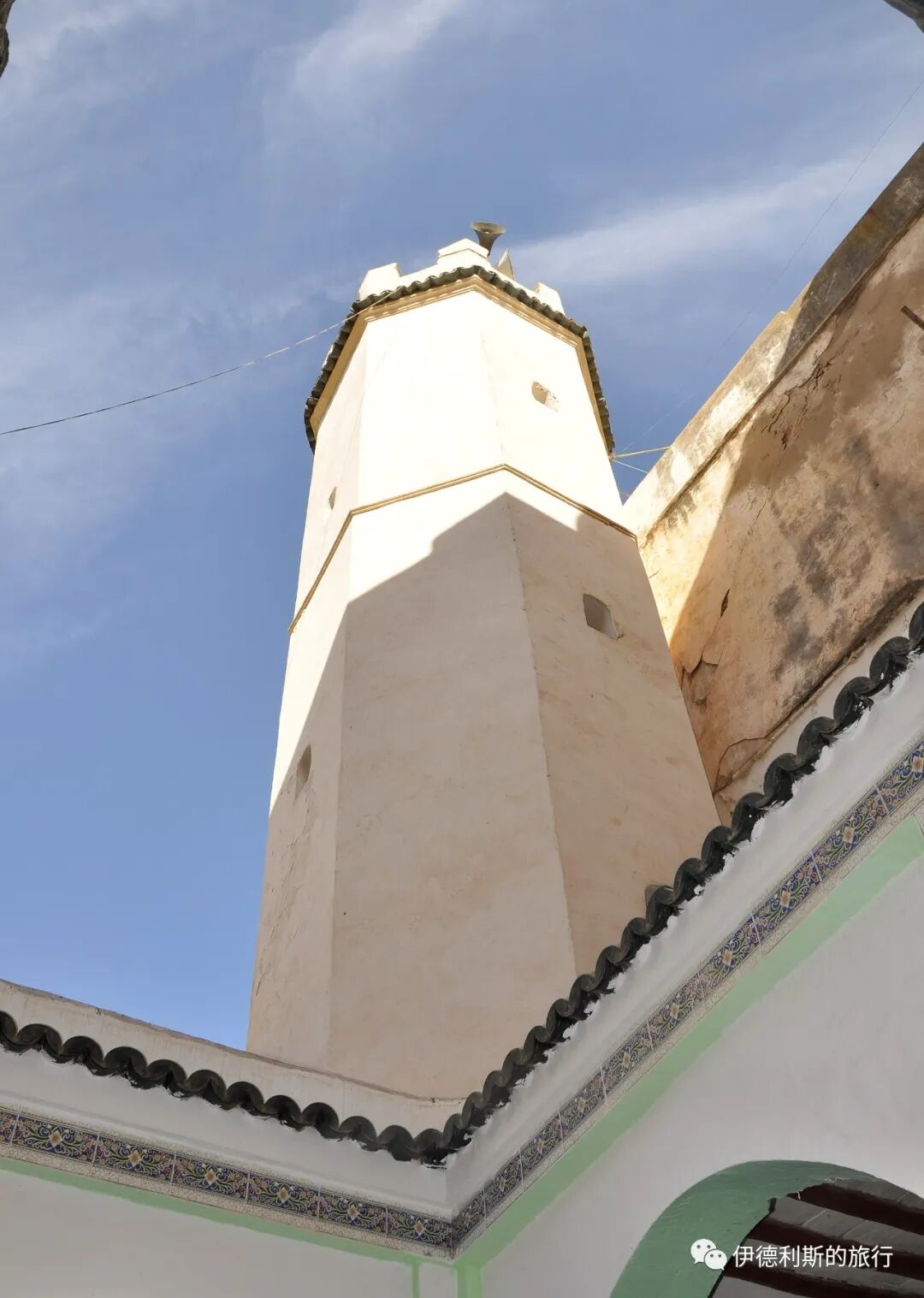
Today in Algiers, you can see the Safir mosque, built in 1534 by Safar bin Abdullah, a general in the Barbarossa fleet. The mosque features Ottoman architectural style.
Photo by Brahimpic in 2014.
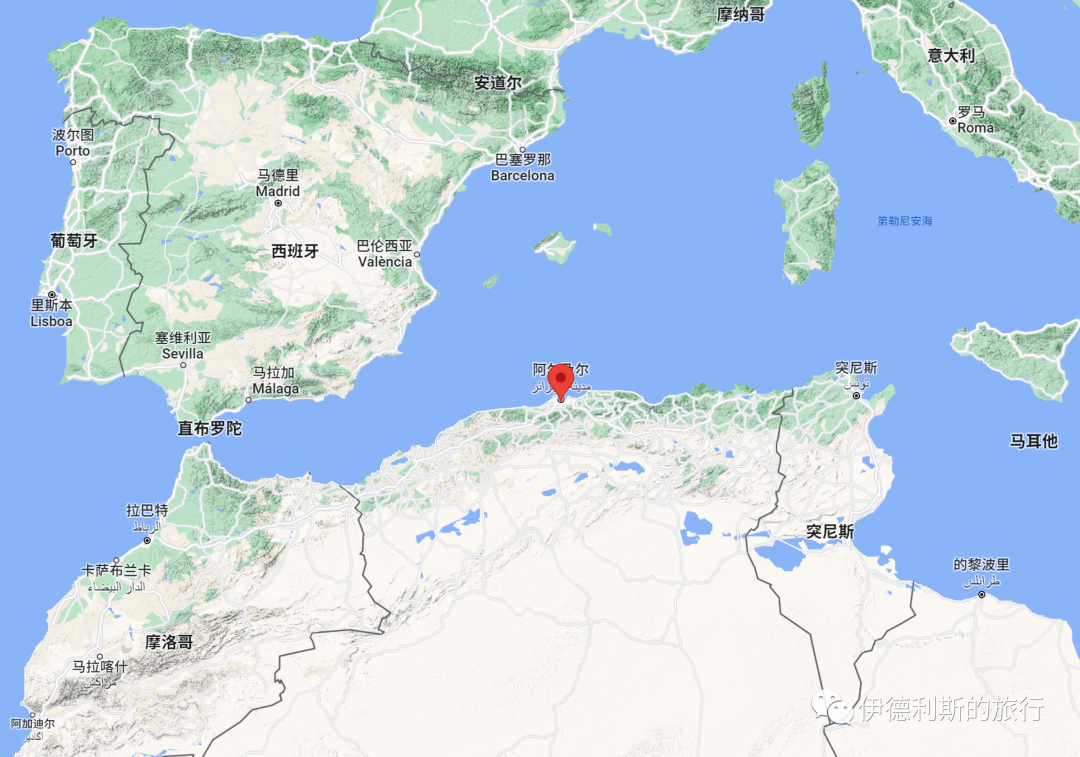
The location of Algiers.
4. Kingdom of Beni Abbas in Algeria (1510-1872)
In the mountains east of Algiers, there were two small states established by the Berbers.
The Kingdom of Beni Abbas was a small state of the Kabyle Berbers in the mountains of northern Algeria. It held a key strategic position on the trade route between the Mediterranean and the Sahara Desert. In the 16th century, the Kingdom of Beni Abbas attracted many Andalusians, Christians, and Jews fleeing Spain and Algiers, which enriched the kingdom's cultural diversity.
In 1550, the Ottoman Empire sent troops to attack the Kingdom of Beni Abbas twice, but they were repelled, so the Ottomans signed a treaty with them.
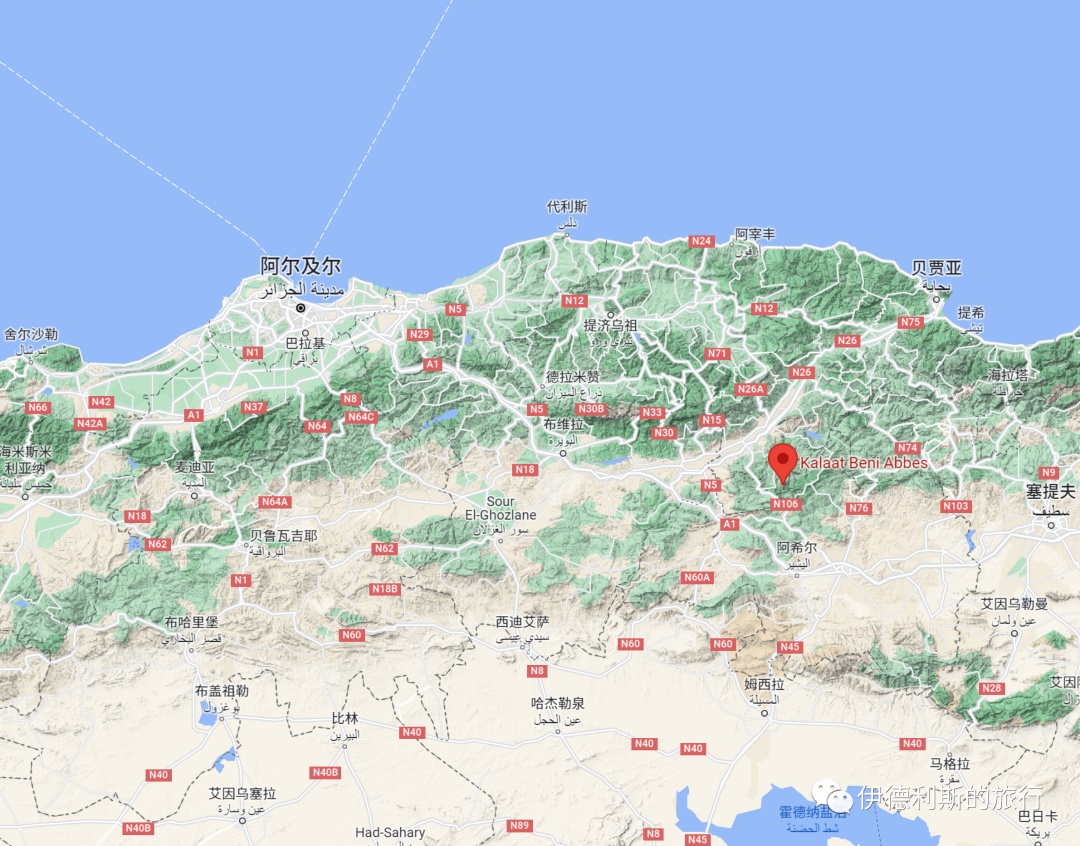
The location of the capital, Kalâa of Ait Abbas.
5. Kingdom of Kuku in Algeria (1515-1638)
The Kingdom of Kuku was another state established by the Kabyle Berbers in the mountains of northern Algeria. It was located east of Algiers and was a rival to the Kingdom of Beni Abbas.
The location of Kuku city.
6. Hafsid Dynasty of Tunisia (1229-1574)
Continue east along the North African coast to reach the city of Tunis.
The Hafsid dynasty was a Berber dynasty that was also caught up in the repeated struggles between Spain and the Ottomans in the early 16th century.
In 1550, the Hafsid dynasty was a vassal state of Spain. They were not completely conquered by the Ottoman Empire until 1573.
Santiago Chikly castle, rebuilt by the Spanish in Tunis between 1546 and 1550. Photo by Imanis in 2013.
The location of Tunis.
7. Songhai Empire in West Africa (1464-1591)
Let us head south along the ancient trade routes across the vast Sahara Desert to reach the ancient city of Gao in Mali.
The Songhai Empire was established by the Songhai people of West Africa. It was located in the semi-arid region between the Sahara Desert and the savanna. At its peak, it was one of the largest countries in Africa, with Timbuktu and Djenné as its main cities.
In 1550, the emperor ruling the Songhai Empire was Askia Daoud (reigned 1549–1582). Under his rule, the Songhai Empire enjoyed peace at home, expanded its borders, and saw its economy thrive. At that time, Timbuktu was the center of Islamic culture in Africa, placing great importance on education and preserving a vast collection of book manuscripts.
The capital of the Songhai Empire was located in Gao, Mali, where the tomb of the Songhai emperor Askia Muhammad I, who died in 1538, stands. It was named a UNESCO World Heritage site in 2004. People say the mud and wood used for this tomb were brought back from Mecca by the emperor himself after his hajj.
The Tomb of Askia, photographed by Our Place for the World Heritage website in 2007.
The location of Gao, the capital of the Songhai Empire.
8. Mali Empire in West Africa (1230-1672)
Let us continue south into the savanna to visit the mysterious Mali Empire.
The Mali Empire was once the largest empire in West Africa, though it was gradually replaced by the Songhai Empire from the north after the 16th century. The economic focus of the Mali Empire shifted from trans-Saharan trade to commerce in coastal regions.
In 1545, the Songhai Empire invaded the capital of the Mali Empire, but they did not actually take control of it. By 1550, the Mali Empire still held onto a certain amount of territory. That year, they attacked a trade center in southern Ghana and seized the gold there.
The region attacked by the Mali Empire in 1550.
9. Funj Sultanate of Sudan (1504-1821)
This time, we will travel a long distance across the African continent to reach Sudan on the upper Nile.
The Funj Sultanate was a state established by the Funj people on the upper Nile. Due to the spread of Sufism along the upper Nile in the 16th century, the founder of the Funj Kingdom, Amara Dunqas, became a Muslim. However, the Funj people still kept many local customs and Christian rituals, gradually forming a unique Sudanese folk Islamic tradition.
To counter the expansion of the Ottoman Empire, the Funj Sultanate formed an alliance with the Ethiopian Empire in the early 16th century and exported horses and camels to them.
Sennar, the capital of the Funj Sultanate.
10. Adal Sultanate in Ethiopia (1415-1577)
Let us continue east into the ancient Ethiopian city of Harar.
The Adal Sultanate was located east of the Funj Sultanate on the northern Somali Peninsula and served as a commercial and political partner to the Ottoman Empire. Between 1529 and 1543, with help from the Ottoman Empire, the Adal Sultanate fought an 11-year war against the Ethiopian Kingdom, which eventually weakened both sides.
In 1550, the Adal Sultanate was ruled by Nur ibn Mujahid, who built a city wall with five gates in the capital, Harar. This walled city, known as Harar Jugol, was named a UNESCO World Heritage site in 2006. Harar is located in eastern Ethiopia and served as the capital of the Adal Sultanate from 1520 to 1577. Historically, this city has been an important African commercial and Islamic center, connecting trade routes from Ethiopia to the Somali Peninsula, the Arabian Peninsula, and the heart of Asia.
The Harar city wall, photographed by Sailko in 2018.
The location of the city of Harar.
11. Ajuran Sultanate in Somalia (13th century-late 17th century)
We continue south to the port city of Mogadishu on the Indian Ocean.
The Ajuran Sultanate was located on the Somali Peninsula, south of the Adal Sultanate. It held a key position in North Indian Ocean trade, with ships traveling between East Asia, South Asia, Europe, and Africa, leaving behind many ancient monuments in Somalia.
As a maritime nation, the Ajuran Sultanate not only allied with the Ottoman Empire but also maintained friendly relations with the Ming Dynasty. They were the first African country to send envoys to the Ming Dynasty.
In the early 16th century, the wealthiest Indian Ocean port city in the Sultanate was Mogadishu, which is the current capital of Somalia. According to the 16th-century Andalusian traveler Leo Africanus, the people of Mogadishu at that time had olive skin, wore white robes and white turbans, and used Arabic as their common language. Mogadishu had stone walls and was equipped with muskets and cannons imported from the Ottoman Empire.
The location of Mogadishu city.
Ottoman Empire spanning Europe, Asia, and Africa (1299-1922)
Let us take a ship from the Indian Ocean port of Mogadishu, sail north along the Somali Peninsula, enter the Red Sea from the Gulf of Aden, and arrive in Cairo, Egypt, under Ottoman rule.
12. Ottoman Egypt Province (1517-1867)
In 1517, the Ottoman Empire conquered the Mamluk Sultanate, which had ruled Egypt for over two hundred years. Although they appointed a series of Egyptian governors, the political structure and cultural arts still continued the traditions of the Mamluk period. In early 16th-century Cairo, Mamluk and Ottoman architectural styles began to merge.
In 1528, the Egyptian governor Hadım Suleiman Pasha built the Suleiman Pasha Mosque for the Ottoman Janissaries stationed in the Cairo Citadel. This was the first Ottoman-style mosque in Egypt.
Suleiman Pasha Mosque photographed by Houssam_Daowd_102 in 2019.
The location of Cairo.
13. Istanbul, capital of the Ottoman Empire (1453-1922)
We cross the Mediterranean Sea and arrive at Istanbul, the capital of the Ottoman Empire. At that time, the eastern Mediterranean had become an inland sea for the Ottoman Empire.
In the first half of the 16th century, the Ottoman Empire entered its Golden Age under the rule of Suleiman the Magnificent (reigned 1520-1566). Ottoman territory continued to expand. They besieged Vienna twice in 1529 and 1532, captured Baghdad in 1535, and defeated the Portuguese to control the Red Sea in 1538.
Meanwhile, under the patronage of Suleiman the Magnificent, various talented craftsmen and artists came to the Ottoman court, leading to great cultural prosperity. Mimar Sinan, the court architect for Suleiman the Magnificent, built a series of structures in Istanbul that became the best witnesses of that era.
The Haseki Hürrem Sultan Complex (Haseki Hürrem Sultan Külliyesi) was commissioned by Suleiman the Magnificent's wife, Hürrem Sultan, and built by Mimar Sinan in 1539. It was the first complex built by Mimar Sinan after he became the royal architect. Hürrem Sultan, known as Roxelana, was the first empress in Ottoman history to receive the title of 'Haseki Sultan' (the Sultan's favorite). She is also known as the most powerful and controversial woman in Ottoman history.
After becoming empress, Hürrem Sultan began building a series of public structures, the first of which was this empress complex. The complex includes a Friday mosque (Jumu'ah mosque), a public kitchen (imaret), a religious school (madrasa), an elementary school (mektep), and a hospital (darüssifa). The mosque was completed in 1539, the religious school and kitchen were finished the following year, and the hospital was not completed until 1550. When designing the entire complex, Sinan arranged the different buildings at various angles, leaving only narrow passages or gaps between them. This arrangement created rich perspective effects that almost never appeared in his later works.
The mosque (1539) is at the southernmost part of the complex, separated from the other parts by a narrow alley. The mosque was originally a simple, traditional single-dome, single-minaret structure made of alternating brick and stone. The porch is supported by six marble columns holding up five small domes. The mosque was expanded in 1612, growing from a single dome to a double dome, which doubled its area. The mosque has no tiles, and the current paintings were added later. During this period, Sinan had not yet started to innovate in mosque architecture.
The madrasa (1540) is directly opposite the mosque and consists of sixteen student rooms and a large lecture hall arranged in a rectangle.
The primary school (1540) is known as the most beautiful primary school built by Mimar Sinan.
The hospital (1550) is in the far north and was built by Hurrem Sultan specifically for women. The hospital courtyard is octagonal, with rooms on three sides and windows facing the street on the fourth side. The two arched gateways (iwan) at the corners of the octagonal courtyard and the dome foreshadowed Sinan's later development of arches and domes.
A diagram of the public kitchen published by Cornelius Gurlitt in 1912.
The Mihrimah Sultan Complex (Mihrimah Sultan Külliyesi) was commissioned in 1543 by Mihrimah Sultan, the daughter of Suleiman the Magnificent and Hurrem Sultan, and built by Mimar Sinan. It is the second complex by Mimar Sinan in Istanbul that still stands today.
Mihrimah Sultan was the wife of the Grand Vizier Rustem Pasha and is known as the most powerful princess in the history of the Ottoman Empire.
The entire complex is cleverly built on a slope extending to the coast. It includes a mosque, a madrasa, a guesthouse, a canteen, a primary school, and some later tombs. The guesthouse and canteen were destroyed by fire in 1772.
The Mihrimah Sultan Mosque is the first semi-domed mosque designed by Mimar Sinan. The mosque consists of one main dome and three semi-domes. This shape expands the interior space, making people feel like they are under the dome as soon as they enter the main hall. Although the mosque itself has limited depth, this design increases the sense of openness. Mimar Sinan added a T-shaped canopy in front of the porch to soften the hardness of the entrance facade.
A diagram of the mosque published by Cornelius Gurlitt in 1912.
The madrasa consists of sixteen student rooms and a large lecture hall in a rectangle. It is now a hospital, and the integrity of the cultural heritage has been damaged.
The Sehzade Complex (Sehzade Külliye) is located on the third hill of the old city of Istanbul. Built between 1543 and 1548, it is considered Mimar Sinan's most important early work and his first masterpiece.
The complex was built by Suleiman the Magnificent to commemorate his beloved son, Prince Mehmed (Sehzade Mehmed), who died young. Prince Mehmed was the son of Suleiman the Magnificent and Hurrem Sultan. He was favored from a young age and was the most likely heir, but he sadly died of smallpox (some say murder) in 1543. After the prince died, Suleiman the Magnificent was heartbroken. Traditionally, princes were buried in Bursa, but the Sultan decided to commission Mimar Sinan to build a tomb for the prince in Istanbul and match it with a complex.
The Sehzade Complex was the first work Mimar Sinan was directly commissioned to build by Suleiman the Magnificent. It was also his most ambitious early work, with a much grander scale and more decoration than his previous projects.
The complex includes a mosque, five tombs, a madrasa, a guesthouse, a hostel, a public canteen, and a primary school. These buildings are freely distributed on flat ground without a deliberate attempt at symmetry. the mosque is not a single unit with the other buildings; the other structures are distributed in the gardens or streets surrounding the mosque.
The mosque (1543-1548) is the second semi-domed mosque designed by Mimar Sinan, consisting of one main dome and four semi-domes. This is both an improvement on Sinan's previous work, the Mihrimah Sultan Mosque with its three semi-domes, and a reinterpretation of designs by predecessors like the Fatih Mosque (1471) and the Bayezid II Mosque (1506). This design isolates the four pillars supporting the central dome, creating a more stunning visual effect. The interior of the mosque is a square that unfolds along a central vertical axis. When people enter, they can immediately feel the dominance of the central dome. the porches on the walls on both sides of the mosque are a bold innovation, which also foreshadows the future direction of Ottoman mosque development. This design softens the flanks of the building and hides the buttresses, allowing the facade to blend in more perfectly. The design of the Sehzade Mosque had gradually moved away from the traditional Ottoman mosque model and began to move toward Sinan's own unique style.
A diagram of the mosque published by Cornelius Gurlitt in 1912.
The Tomb of Prince Mehmed (1543) sits southeast of the mosque. It has an octagonal structure, Persian inscriptions at the entrance, and Cuerda Seca tiles inside.
The madrasa (1546) is outside the garden on the north side of the mosque. It forms a rectangle surrounded by a gallery, with 21 student rooms and one large lecture hall on three sides. The fountain in the middle of the courtyard still keeps its Seljuk-era (11th to 13th century) tomb tower (kumbet) structure.
The public kitchen (1543-1548) is across the street east of the mosque. It consists of two buildings, each with six domes and a courtyard in the middle.
The octagonal tomb of Hüsrev Paşa is in the west of Istanbul. It is known as one of the most beautiful tombs built by Mimar Sinan. Hüsrev Paşa was a vizier of the Ottoman Empire. People called him the Mad Hüsrev Paşa because he had a bad temper. Hüsrev Paşa was born in Bosnia in 1495 and came from the famous Sokollu family. He became the governor of Egypt in 1535 and the Second Vizier in 1538. In 1544, Hüsrev Paşa lost the race for Grand Vizier to Rüstem Paşa. He died of illness shortly after, and Mimar Sinan built his tomb.
The Yavuz Sultan Selim Medrese is in the west of Istanbul. Suleiman the Magnificent commissioned Mimar Sinan to build it, and it is named after the Sultan's father, Selim I. The madrasa consists of 20 student rooms on three sides and one large lecture hall. In 1563, the lecture hall was turned into a prayer hall, and a minaret (banketa) was added. The minaret is now destroyed, and the madrasa has become a hospital.
The Rüstem Paşa Medrese is not far northeast of the Grand Bazaar in Istanbul and was built in 1550. This madrasa is Mimar Sinan's new take on the famous Büyük Ağa Medrese in Amasya, which was built in 1488. The Büyük Ağa Medrese was the first octagonal madrasa in Turkey. Mimar Sinan kept the internal octagonal courtyard but changed the outside to a rectangle, which was a further development in Ottoman madrasa architecture.
14. Safavid Dynasty in Iran (1501-1736)
We headed east from Istanbul, passed through several Kurdish emirates, and arrived in Tabriz in northwestern Iran.
The Safavid dynasty is considered the most important dynasty in Iran since the Sassanid Empire. The Safavid dynasty made Twelver Shia Islam the state religion, which was a major event in Islamic history. The rulers of the Safavid dynasty claimed to be descendants of the Prophet Muhammad, but historians believe they were Turkified Iranians from Iranian Kurdistan.
In 1501, Ismail I captured Tabriz, the capital of the Aq Qoyunlu, and made it the capital of the Safavid dynasty. Tabriz is now the capital of East Azerbaijan Province, and most of its residents are Azerbaijanis.
In 1550, the Safavid dynasty was ruled by Tahmasp I and was in a break between two large-scale wars with the Ottoman Empire. Between 1532 and 1555, the Ottoman Empire led by Suleiman the Magnificent and the Safavid dynasty led by Tahmasp I fought a 23-year war. Between 1548 and 1549, the Safavid dynasty used a scorched-earth policy to level Armenia, but the Ottoman army still pushed deep into the Iranian interior. After occupying the Safavid capital of Tabriz, the Ottoman army looted Hamadan, Qom, and Kashan, reaching as far as Isfahan. Tahmasp I chose not to fight the Ottoman army head-on, and the Ottoman army was forced to retreat because they ran out of food and supplies. Shortly after this in 1555, to avoid attacks from the Ottoman Empire, the Safavid dynasty moved its capital from Tabriz in the northwest to Qazvin, which was further inland.
A miniature painting of Tahmasp I painted in Qazvin, Iran, in 1575.
The location of Tabriz.
That is all for the first part. In the next post, we will visit 12 Islamic countries ruled by the descendants of Genghis Khan. view all
Reposted from the web
Summary: Islamic World in 1550: Africa, Ottoman Lands and Safavid Iran is presented here as a firsthand travel account in clear English, beginning with this scene: I started staying home in mid-November. I wanted to use this time to do things I had always planned, so I decided to take an online tour of the Islamic world. The account keeps its focus on Islamic World, Ottoman History, Safavid Iran while preserving the names, places, food, and historical details from the Chinese source.
I started staying home in mid-November. I wanted to use this time to do things I had always planned, so I decided to take an online tour of the Islamic world. I chose the year 1550 because my previous travels abroad showed me that many interesting things really happened in the Islamic world during the first half of the 16th century. During my travels, I saw the Ottoman Empire reaching its peak under Suleiman the Magnificent, the Crimean Khanate building a new capital in a valley, the Kazan Khanate about to be conquered by Tsarist Russia, the Bukhara and Yarkent Khanates just being established, the Sur Empire in Afghanistan sweeping through northern India to conquer the Mughal Empire, and the island of Java in Indonesia forming a unique Javanese Islamic culture under the influence of Sufi missionaries. This gave me an idea to see exactly which Islamic countries existed in 1550 and what was happening in them.
After researching, I found that in 1550 there were at least 50 Islamic countries and regimes spanning Africa, West Asia, Central Asia, South Asia, and Southeast Asia, each with its own distinct cultural traditions and history. Out of these 50 countries and regimes, I will detail 9 that I have visited before, including the Ottoman Empire, the Crimean Khanate, the Kazan Khanate, the Bukhara Khanate, the Yarkent Khanate, the Sur Empire, the Golconda Sultanate, the Banten Sultanate, and the Demak Sultanate. I hope this online trip helps everyone imagine the atmosphere of the Islamic world in 1550.
Besides these 50 countries, there are other Islamic nations I did not include this time, and I hope to find more information about them in the future.
Let me briefly introduce the travel route for this trip:
Our journey starts in Morocco in the far northwest of Africa, moves east into Algeria and Tunisia, and then heads south across the Sahara Desert into the savanna. Then we will cross the African continent to the east, enter the Nile River basin, and arrive at the Somali Peninsula by the Indian Ocean. We will sail north, pass through the Gulf of Aden and the Red Sea to reach Egypt, cross the Mediterranean to Istanbul, and then head east to Iran. This is the first part.
In the second part, we will visit 12 countries ruled by the descendants of Genghis Khan. We start from the Crimean Peninsula, head east to the Volga Delta, go north to the Ryazan region of Russia, and then east to the city of Kazan on the Volga River. We continue east to the Irtysh River, then south to the Kazakh steppe, east into the Transoxiana region, cross the Tianshan Mountains into southern Xinjiang, pass through the Pamir Plateau into Kashmir, and finally enter the Sindh region of Pakistan.
In the third part, we will experience the Islamic culture of South Asia. We first arrive in Delhi, then head south into Gujarat and central India. Next, we will enter the Deccan Plateau, visit the 5 sultanates on the plateau, and finally arrive in the Maldives by boat.
In the fourth part, we will cross the Bay of Bengal to Southeast Asia. We first enter the Pattani region of Thailand, then head south along the Malay Peninsula, pass by 3 sultanates founded by princes of Malacca, and then take a boat past Sumatra and Java to visit the most unique Islamic culture there. Then we come to the Spice Islands in eastern Indonesia to see the influence of the Portuguese and Spanish, and finally arrive in Brunei and the southern Philippines. Our 1550 world Islamic tour ends here.
General Table of Contents
The Vast African Continent
1. Saadi Sultanate of Morocco (1510-1659)
2. Kingdom of Tlemcen in Algeria (1235-1556)
3. Ottoman Regency of Algiers in Algeria (1516-1830)
4. Kingdom of Beni Abbas in Algeria (1510-1872)
5. Kingdom of Kuku in Algeria (1515-1638)
6. Hafsid Dynasty of Tunisia (1229-1574)
7. Songhai Empire in West Africa (1464-1591)
8. Mali Empire in West Africa (1230-1672)
9. Funj Sultanate of Sudan (1504-1821)
10. Adal Sultanate in Ethiopia (1415-1577)
11. Ajuran Sultanate in Somalia (13th century-late 17th century)
Ottoman Empire spanning Europe, Asia, and Africa (1299-1922)
12. Ottoman Egypt Province (1517-1867)
13. Istanbul, capital of the Ottoman Empire (1453-1922)
14. Safavid Dynasty in Iran (1501-1736)
Legacy of the Mongol Empire
15. Crimean Khanate in Ukraine (1441-1783)
16. Astrakhan Khanate in Russia (1466-1556)
17. Nogai Khanate in Russia and Kazakhstan (1440-1634)
18. Qasim Khanate in Russia (1452-1681)
19. Kazan Khanate in Russia (1438-1552)
20. Sibir Khanate in Russia (1468-1598)
21. Kazakh Khanate in Kazakhstan (1465-1587)
22. Khanate of Khiva in Turkmenistan (1511-1920)
23. Khanate of Bukhara in Uzbekistan (1500-1785)
24. Yarkent Khanate in China (1514-1680)
25. Haidar in Kashmir (1540-1550)
26. Arghun Dynasty in Afghanistan and Pakistan (1520-1591)
27. Sur Dynasty that swept through northern India (1538-1556)
Legacy of the Delhi Sultanate
28. Gujarat Sultanate in western India (1407-1573)
29. Khandesh Sultanate in central India (1382-1601)
Five Deccan Sultanates
30. Berar Sultanate on the Deccan Plateau (1490-1572)
31. Ahmadnagar Sultanate on the Deccan Plateau (1490-1636)
32. Bidar Sultanate on the Deccan Plateau (1492-1619)
33. Golconda Sultanate on the Deccan Plateau (1518-1687)
34. Bijapur Sultanate on the Deccan Plateau (1490-1686)
35. Maldive Sultanate in the Indian Ocean (1153-1968)
36. Pattani Sultanate in Thailand (1457? -1902)
The legacy of the Malacca Sultanate.
37. Perak Sultanate in Malaysia (1528–present).
38. Pahang Sultanate in Malaysia (1470–1623).
39. Johor Sultanate in Malaysia (1528–present).
Sultanates of Indonesia.
40. Aceh Sultanate in Indonesia (1496–1903).
41. Banten Sultanate in Indonesia (1527–1813).
42. Cirebon Sultanate in Indonesia (1447–1679).
43. Demak Sultanate in Indonesia (1475–1568).
The four sultanates of the Spice Islands.
44. Ternate Sultanate in Indonesia (1486–1914).
45. Tidore Sultanate in Indonesia (1450–1967).
46. Jailolo Sultanate in Indonesia (late 15th century–1832).
47. Bacan Sultanate in Indonesia (late 15th century–1965).
48. Maguindanao Sultanate in the Philippines (1520–1905).
49. Sulu Sultanate in the Philippines (1457–1915).
50. Brunei Sultanate in Brunei (1368–1888).
1. Saadi Sultanate of Morocco (1510-1659)
Our journey through the Islamic world begins in the ancient city of Marrakesh, Morocco.
The sultans of the Saadi Sultanate claimed to be descendants of Imam Hassan, the grandson of the Prophet. They established their sultanate in southern Morocco in the early 16th century to resist the Portuguese invasion. They made Marrakesh their capital in 1524, drove the Portuguese out of Morocco in 1541, and then attacked the Wattasid dynasty of the northern Berber people, capturing their capital, Fez, in 1549.
By 1550, the eastward expansion of the Saadi Sultanate caused friction with the Ottoman Empire. At this time, the Ottoman Empire had already expanded into Algeria and was actively preparing for war against the Saadi Sultanate.
Under Saadi rule, Marrakesh became a commercial hub connecting the Maghreb, the Mediterranean, and sub-Saharan Africa. Today, the city of Marrakesh preserves the gongbei (zawiya) complex of the Sufi sheikh Sidi Muhammad Ben Sliman al-Jazuli, which was built in 1524. Jazuli was highly respected by the Saadi family, so when they made Marrakesh their capital in 1524, they moved his gongbei into the city.
The north side of the tomb of Sidi Muhammad Ben Slimane al-Jazuli, photographed by Robert Prazeres in 2014.
The location of the city of Marrakesh.
2. Kingdom of Tlemcen in Algeria (1235-1556)
We head east from Morocco to the city of Tlemcen in northwestern Algeria.
In the early 16th century, Algeria was ruled by the Tlemcen Kingdom, which was established by the Berbers. At this time, the Tlemcen Kingdom was very weak and was fought over repeatedly by Spain and the Ottomans.
In June 1550, the Saadi Sultanate of Morocco captured the capital of the Tlemcen Kingdom without a fight and decided to continue pushing eastward.
The location of Tlemcen city.
3. Ottoman Regency of Algiers in Algeria (1516-1830)
Let us continue east to Algiers, which was under the control of Ottoman pirates.
In 1516, the Ottoman pirate brothers Barbarossa (Red Beard) captured Algiers from Spanish rule and used it as a pirate base to fight against Spain repeatedly. In 1545, Red Beard was called to Istanbul to retire, and his son Hasan Pasha became the Ottoman governor of Algiers. Hasan Pasha captured Tlemcen in 1545, but it was taken back two years later. In 1548, Ottoman Sultan Suleiman the Magnificent removed him from office and replaced him with the Ottoman naval commander Dragut.
In 1550, Dragut was leading the Ottoman navy on raids across the Mediterranean. That year, he attacked Mediterranean coastal regions including Tunisia, Sardinia, Corsica, Genoa in Italy, and Spain. In September, Dragut was trapped in a lagoon in Tunisia by the fleet of the Knights of Malta. He escaped by quickly digging a canal and laying down greased wooden planks to drag all his ships out of the lagoon, successfully sailing back to Istanbul.
The Death of Dragut, painted by Maltese artist Giuseppe Calì in 1867.
Today in Algiers, you can see the Safir mosque, built in 1534 by Safar bin Abdullah, a general in the Barbarossa fleet. The mosque features Ottoman architectural style.
Photo by Brahimpic in 2014.
The location of Algiers.
4. Kingdom of Beni Abbas in Algeria (1510-1872)
In the mountains east of Algiers, there were two small states established by the Berbers.
The Kingdom of Beni Abbas was a small state of the Kabyle Berbers in the mountains of northern Algeria. It held a key strategic position on the trade route between the Mediterranean and the Sahara Desert. In the 16th century, the Kingdom of Beni Abbas attracted many Andalusians, Christians, and Jews fleeing Spain and Algiers, which enriched the kingdom's cultural diversity.
In 1550, the Ottoman Empire sent troops to attack the Kingdom of Beni Abbas twice, but they were repelled, so the Ottomans signed a treaty with them.
The location of the capital, Kalâa of Ait Abbas.
5. Kingdom of Kuku in Algeria (1515-1638)
The Kingdom of Kuku was another state established by the Kabyle Berbers in the mountains of northern Algeria. It was located east of Algiers and was a rival to the Kingdom of Beni Abbas.
The location of Kuku city.
6. Hafsid Dynasty of Tunisia (1229-1574)
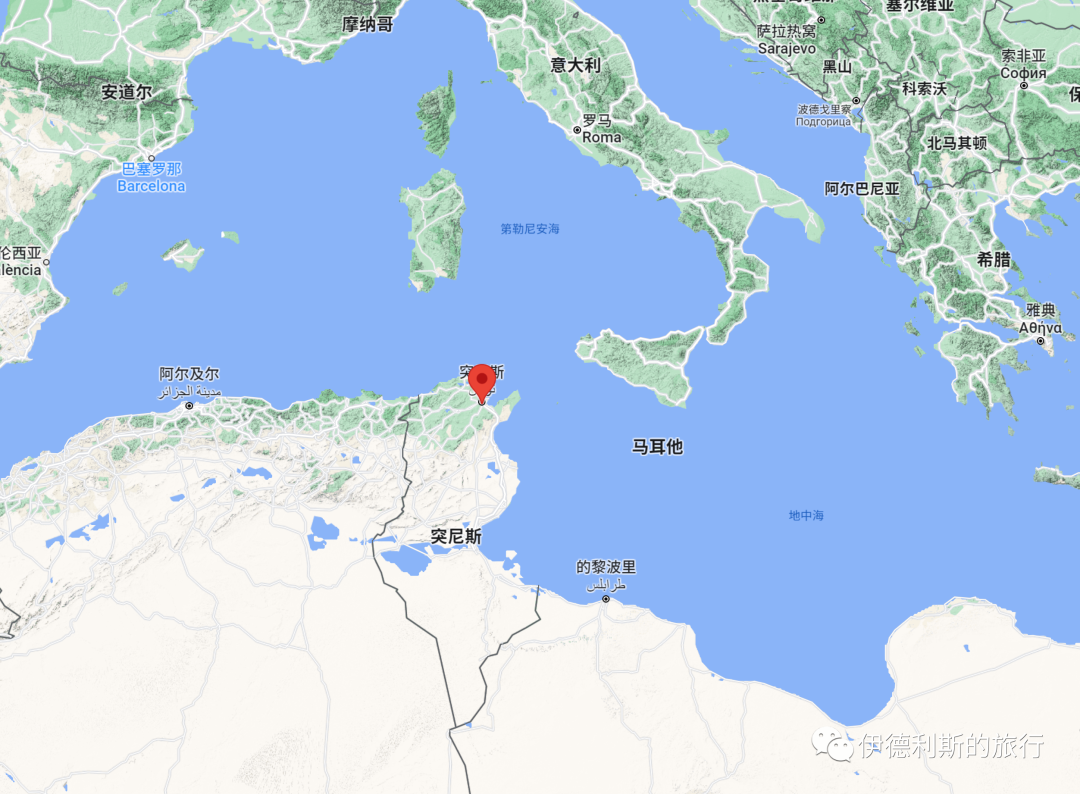
Continue east along the North African coast to reach the city of Tunis.
The Hafsid dynasty was a Berber dynasty that was also caught up in the repeated struggles between Spain and the Ottomans in the early 16th century.
In 1550, the Hafsid dynasty was a vassal state of Spain. They were not completely conquered by the Ottoman Empire until 1573.
Santiago Chikly castle, rebuilt by the Spanish in Tunis between 1546 and 1550. Photo by Imanis in 2013.
The location of Tunis.
7. Songhai Empire in West Africa (1464-1591)
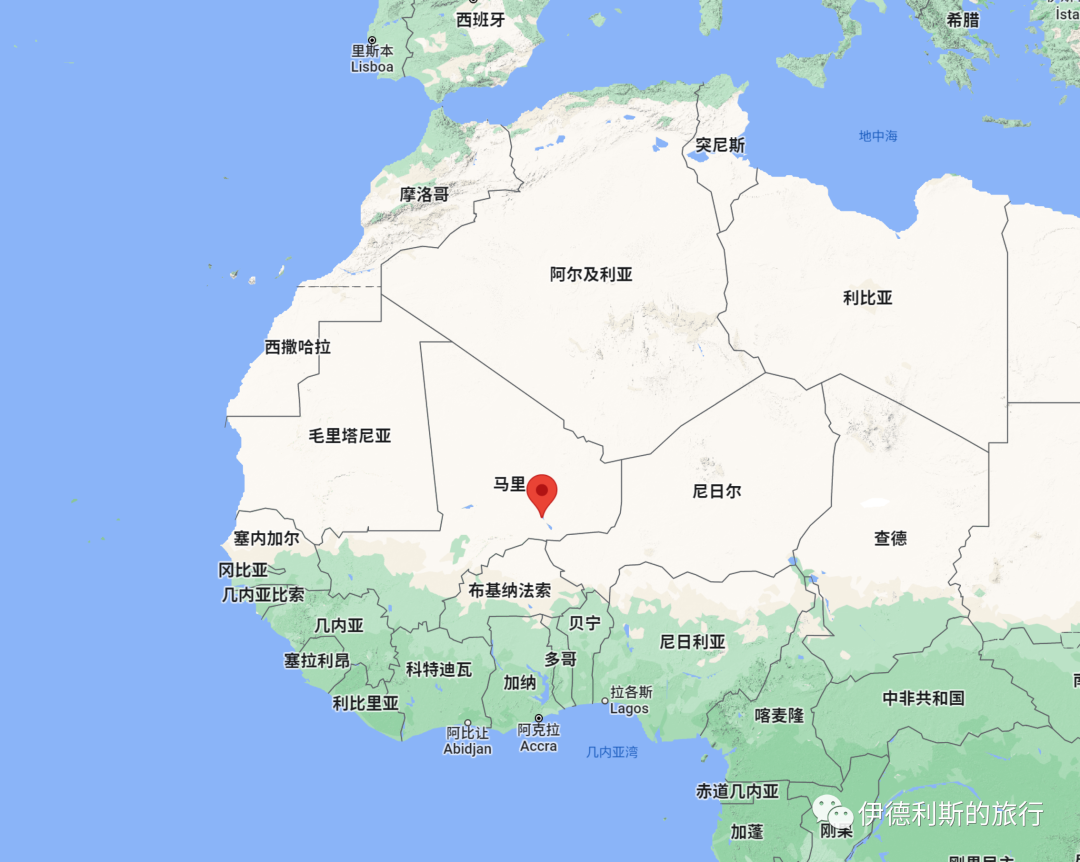
Let us head south along the ancient trade routes across the vast Sahara Desert to reach the ancient city of Gao in Mali.
The Songhai Empire was established by the Songhai people of West Africa. It was located in the semi-arid region between the Sahara Desert and the savanna. At its peak, it was one of the largest countries in Africa, with Timbuktu and Djenné as its main cities.
In 1550, the emperor ruling the Songhai Empire was Askia Daoud (reigned 1549–1582). Under his rule, the Songhai Empire enjoyed peace at home, expanded its borders, and saw its economy thrive. At that time, Timbuktu was the center of Islamic culture in Africa, placing great importance on education and preserving a vast collection of book manuscripts.
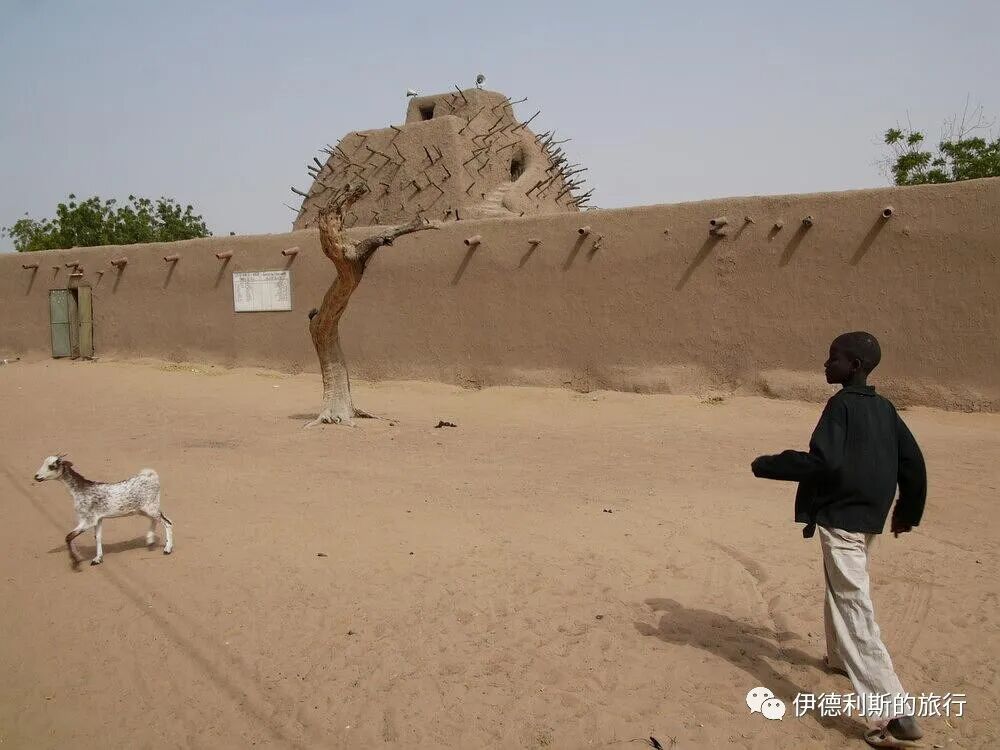
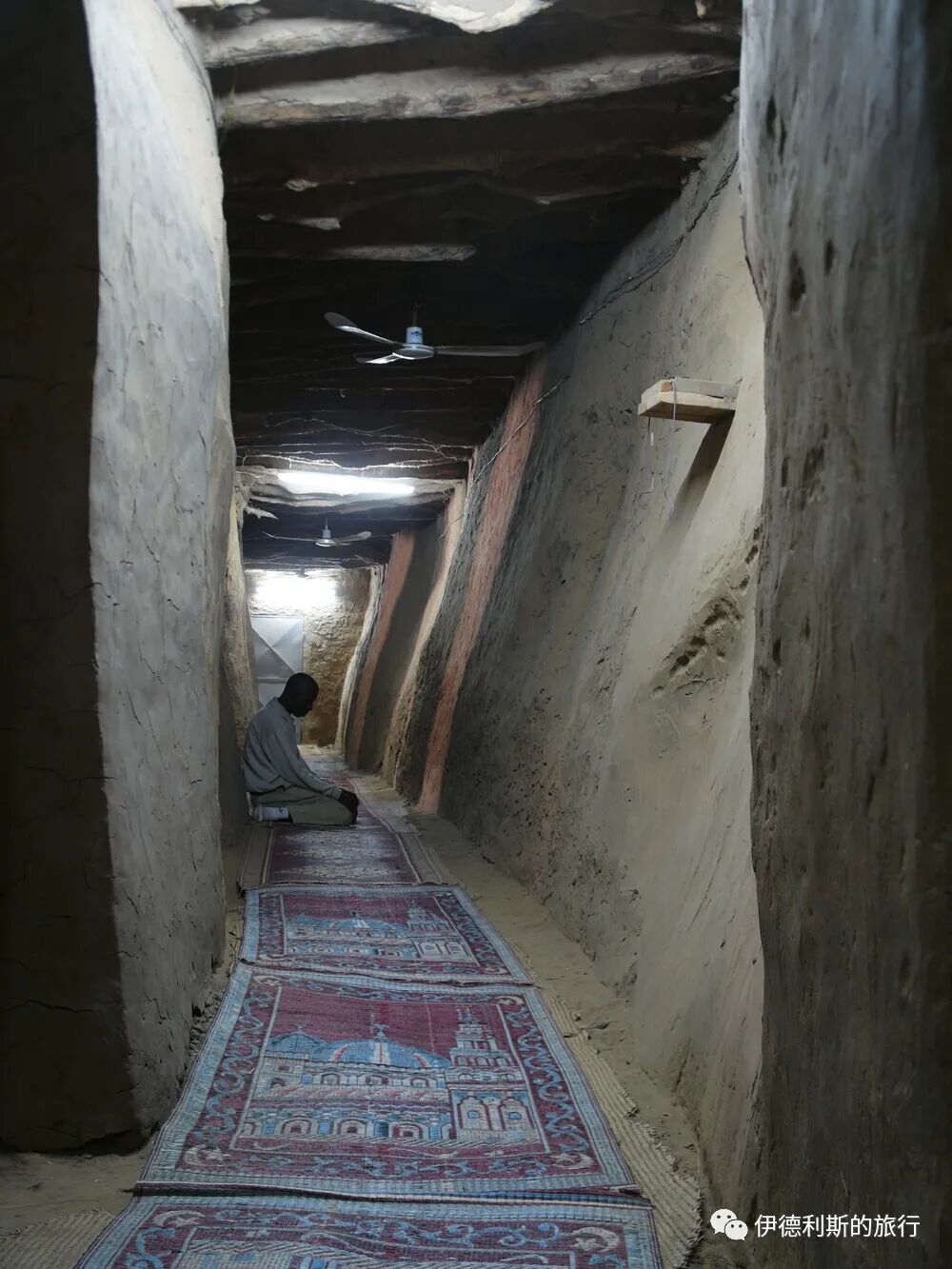
The capital of the Songhai Empire was located in Gao, Mali, where the tomb of the Songhai emperor Askia Muhammad I, who died in 1538, stands. It was named a UNESCO World Heritage site in 2004. People say the mud and wood used for this tomb were brought back from Mecca by the emperor himself after his hajj.
The Tomb of Askia, photographed by Our Place for the World Heritage website in 2007.
The location of Gao, the capital of the Songhai Empire.
8. Mali Empire in West Africa (1230-1672)
Let us continue south into the savanna to visit the mysterious Mali Empire.
The Mali Empire was once the largest empire in West Africa, though it was gradually replaced by the Songhai Empire from the north after the 16th century. The economic focus of the Mali Empire shifted from trans-Saharan trade to commerce in coastal regions.
In 1545, the Songhai Empire invaded the capital of the Mali Empire, but they did not actually take control of it. By 1550, the Mali Empire still held onto a certain amount of territory. That year, they attacked a trade center in southern Ghana and seized the gold there.
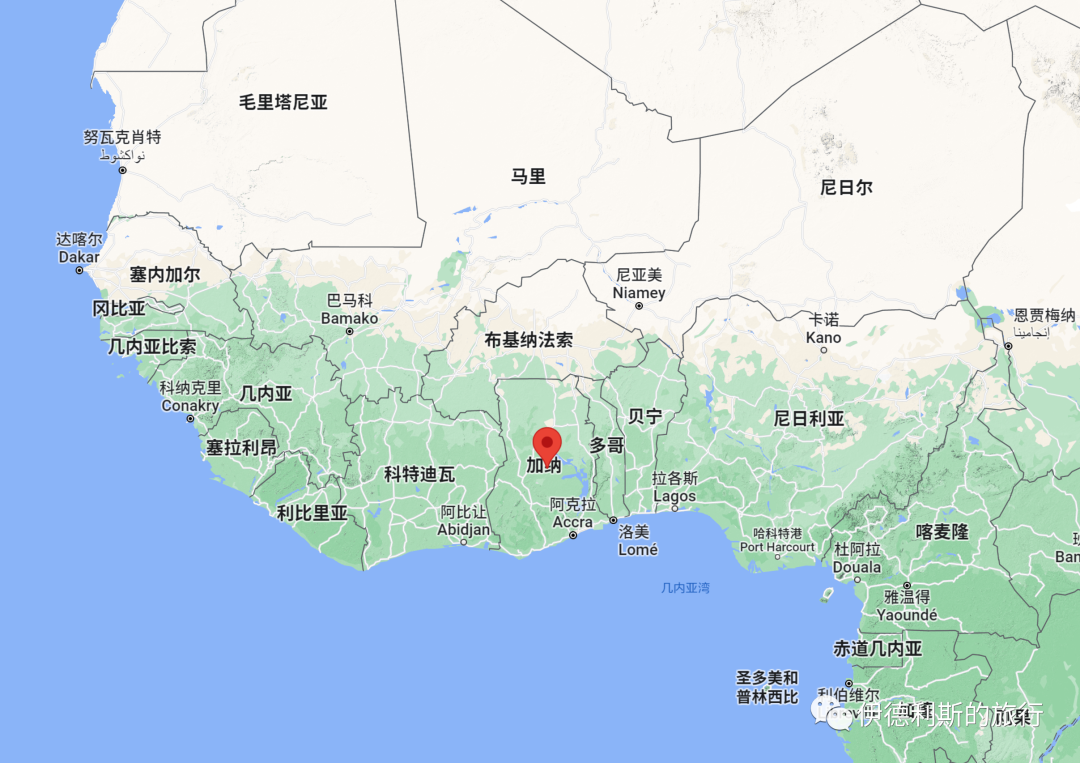
The region attacked by the Mali Empire in 1550.
9. Funj Sultanate of Sudan (1504-1821)
This time, we will travel a long distance across the African continent to reach Sudan on the upper Nile.
The Funj Sultanate was a state established by the Funj people on the upper Nile. Due to the spread of Sufism along the upper Nile in the 16th century, the founder of the Funj Kingdom, Amara Dunqas, became a Muslim. However, the Funj people still kept many local customs and Christian rituals, gradually forming a unique Sudanese folk Islamic tradition.
To counter the expansion of the Ottoman Empire, the Funj Sultanate formed an alliance with the Ethiopian Empire in the early 16th century and exported horses and camels to them.
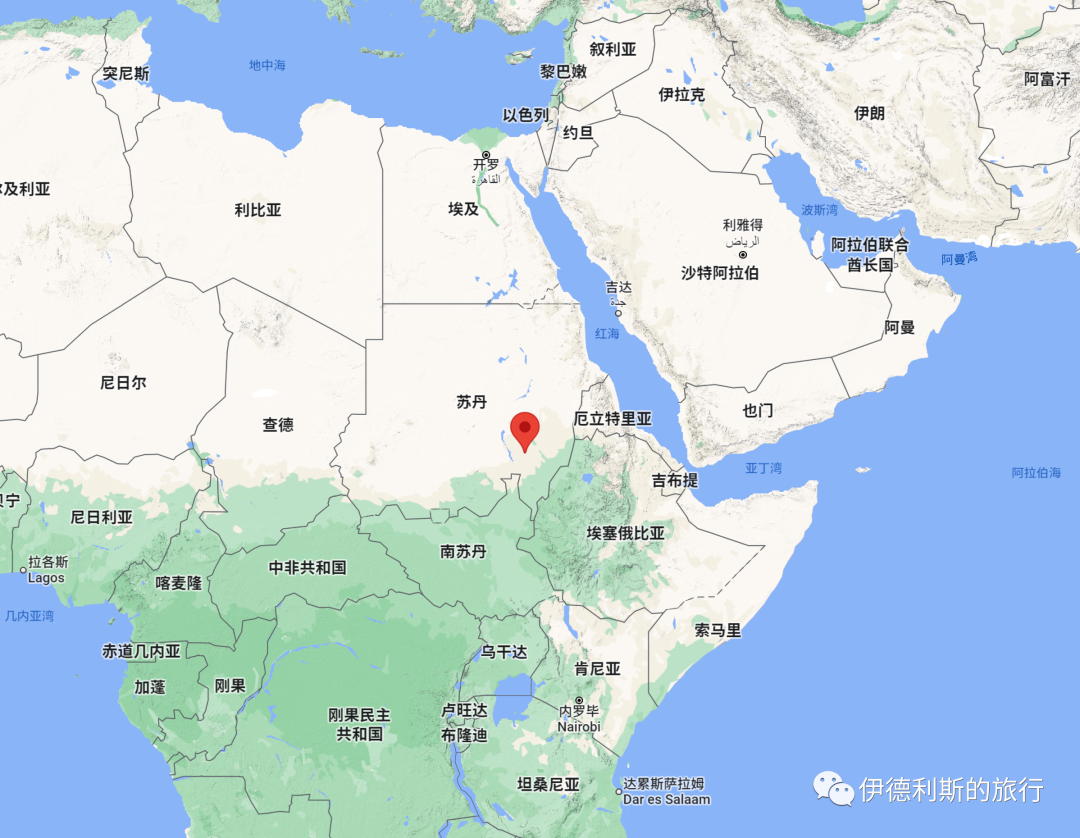
Sennar, the capital of the Funj Sultanate.
10. Adal Sultanate in Ethiopia (1415-1577)
Let us continue east into the ancient Ethiopian city of Harar.
The Adal Sultanate was located east of the Funj Sultanate on the northern Somali Peninsula and served as a commercial and political partner to the Ottoman Empire. Between 1529 and 1543, with help from the Ottoman Empire, the Adal Sultanate fought an 11-year war against the Ethiopian Kingdom, which eventually weakened both sides.
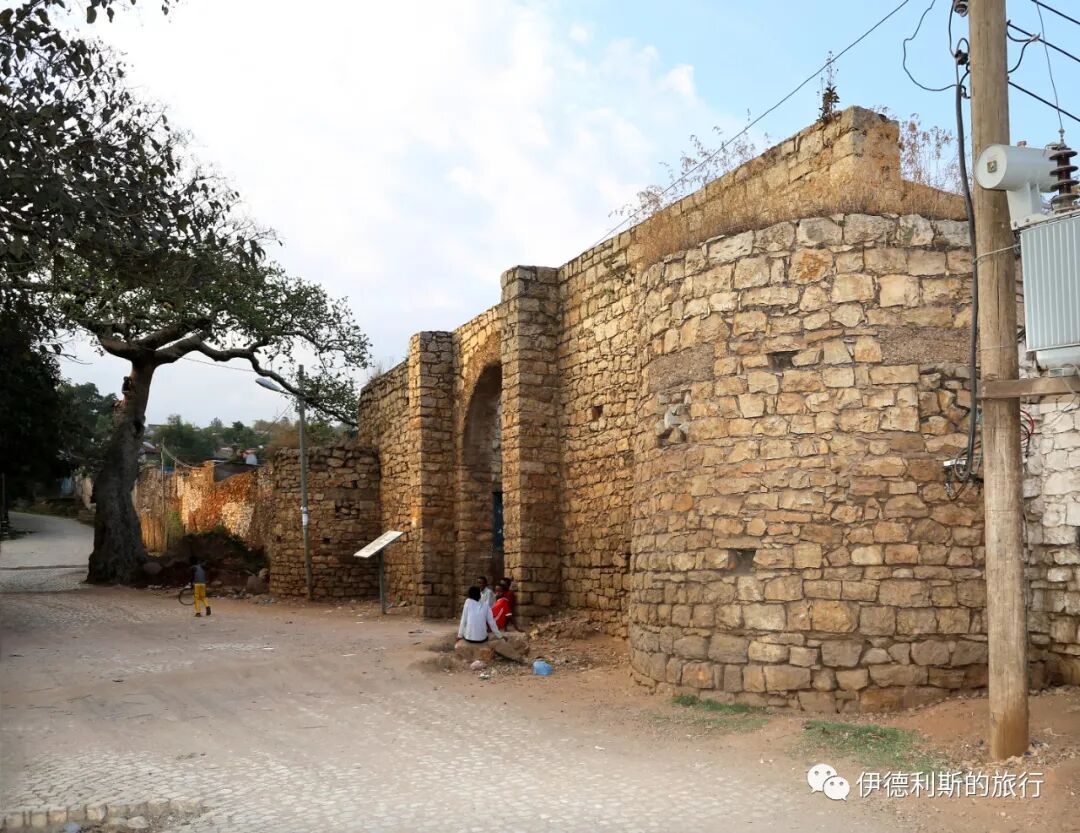
In 1550, the Adal Sultanate was ruled by Nur ibn Mujahid, who built a city wall with five gates in the capital, Harar. This walled city, known as Harar Jugol, was named a UNESCO World Heritage site in 2006. Harar is located in eastern Ethiopia and served as the capital of the Adal Sultanate from 1520 to 1577. Historically, this city has been an important African commercial and Islamic center, connecting trade routes from Ethiopia to the Somali Peninsula, the Arabian Peninsula, and the heart of Asia.
The Harar city wall, photographed by Sailko in 2018.
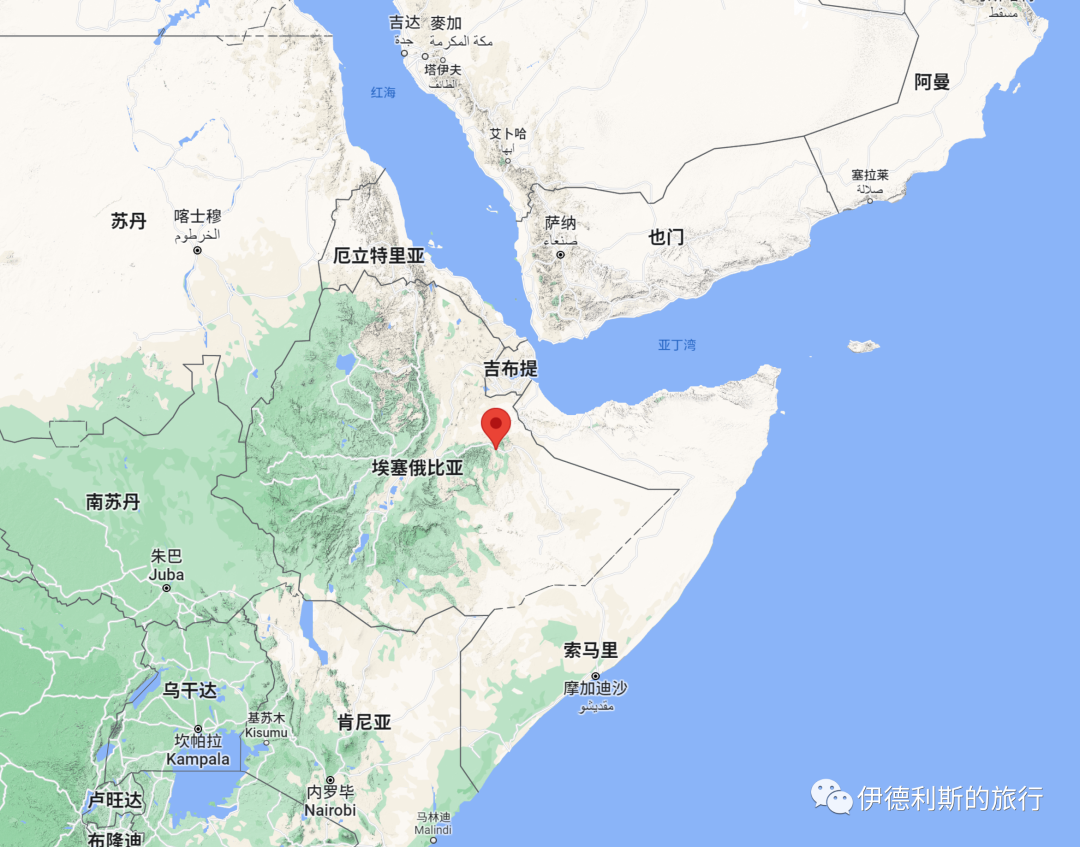
The location of the city of Harar.
11. Ajuran Sultanate in Somalia (13th century-late 17th century)
We continue south to the port city of Mogadishu on the Indian Ocean.
The Ajuran Sultanate was located on the Somali Peninsula, south of the Adal Sultanate. It held a key position in North Indian Ocean trade, with ships traveling between East Asia, South Asia, Europe, and Africa, leaving behind many ancient monuments in Somalia.
As a maritime nation, the Ajuran Sultanate not only allied with the Ottoman Empire but also maintained friendly relations with the Ming Dynasty. They were the first African country to send envoys to the Ming Dynasty.
In the early 16th century, the wealthiest Indian Ocean port city in the Sultanate was Mogadishu, which is the current capital of Somalia. According to the 16th-century Andalusian traveler Leo Africanus, the people of Mogadishu at that time had olive skin, wore white robes and white turbans, and used Arabic as their common language. Mogadishu had stone walls and was equipped with muskets and cannons imported from the Ottoman Empire.
The location of Mogadishu city.
Ottoman Empire spanning Europe, Asia, and Africa (1299-1922)
Let us take a ship from the Indian Ocean port of Mogadishu, sail north along the Somali Peninsula, enter the Red Sea from the Gulf of Aden, and arrive in Cairo, Egypt, under Ottoman rule.
12. Ottoman Egypt Province (1517-1867)
In 1517, the Ottoman Empire conquered the Mamluk Sultanate, which had ruled Egypt for over two hundred years. Although they appointed a series of Egyptian governors, the political structure and cultural arts still continued the traditions of the Mamluk period. In early 16th-century Cairo, Mamluk and Ottoman architectural styles began to merge.
In 1528, the Egyptian governor Hadım Suleiman Pasha built the Suleiman Pasha Mosque for the Ottoman Janissaries stationed in the Cairo Citadel. This was the first Ottoman-style mosque in Egypt.
Suleiman Pasha Mosque photographed by Houssam_Daowd_102 in 2019.
The location of Cairo.
13. Istanbul, capital of the Ottoman Empire (1453-1922)
We cross the Mediterranean Sea and arrive at Istanbul, the capital of the Ottoman Empire. At that time, the eastern Mediterranean had become an inland sea for the Ottoman Empire.
In the first half of the 16th century, the Ottoman Empire entered its Golden Age under the rule of Suleiman the Magnificent (reigned 1520-1566). Ottoman territory continued to expand. They besieged Vienna twice in 1529 and 1532, captured Baghdad in 1535, and defeated the Portuguese to control the Red Sea in 1538.
Meanwhile, under the patronage of Suleiman the Magnificent, various talented craftsmen and artists came to the Ottoman court, leading to great cultural prosperity. Mimar Sinan, the court architect for Suleiman the Magnificent, built a series of structures in Istanbul that became the best witnesses of that era.
The Haseki Hürrem Sultan Complex (Haseki Hürrem Sultan Külliyesi) was commissioned by Suleiman the Magnificent's wife, Hürrem Sultan, and built by Mimar Sinan in 1539. It was the first complex built by Mimar Sinan after he became the royal architect. Hürrem Sultan, known as Roxelana, was the first empress in Ottoman history to receive the title of 'Haseki Sultan' (the Sultan's favorite). She is also known as the most powerful and controversial woman in Ottoman history.
After becoming empress, Hürrem Sultan began building a series of public structures, the first of which was this empress complex. The complex includes a Friday mosque (Jumu'ah mosque), a public kitchen (imaret), a religious school (madrasa), an elementary school (mektep), and a hospital (darüssifa). The mosque was completed in 1539, the religious school and kitchen were finished the following year, and the hospital was not completed until 1550. When designing the entire complex, Sinan arranged the different buildings at various angles, leaving only narrow passages or gaps between them. This arrangement created rich perspective effects that almost never appeared in his later works.
The mosque (1539) is at the southernmost part of the complex, separated from the other parts by a narrow alley. The mosque was originally a simple, traditional single-dome, single-minaret structure made of alternating brick and stone. The porch is supported by six marble columns holding up five small domes. The mosque was expanded in 1612, growing from a single dome to a double dome, which doubled its area. The mosque has no tiles, and the current paintings were added later. During this period, Sinan had not yet started to innovate in mosque architecture.
The madrasa (1540) is directly opposite the mosque and consists of sixteen student rooms and a large lecture hall arranged in a rectangle.
The primary school (1540) is known as the most beautiful primary school built by Mimar Sinan.
The hospital (1550) is in the far north and was built by Hurrem Sultan specifically for women. The hospital courtyard is octagonal, with rooms on three sides and windows facing the street on the fourth side. The two arched gateways (iwan) at the corners of the octagonal courtyard and the dome foreshadowed Sinan's later development of arches and domes.
A diagram of the public kitchen published by Cornelius Gurlitt in 1912.
The Mihrimah Sultan Complex (Mihrimah Sultan Külliyesi) was commissioned in 1543 by Mihrimah Sultan, the daughter of Suleiman the Magnificent and Hurrem Sultan, and built by Mimar Sinan. It is the second complex by Mimar Sinan in Istanbul that still stands today.
Mihrimah Sultan was the wife of the Grand Vizier Rustem Pasha and is known as the most powerful princess in the history of the Ottoman Empire.
The entire complex is cleverly built on a slope extending to the coast. It includes a mosque, a madrasa, a guesthouse, a canteen, a primary school, and some later tombs. The guesthouse and canteen were destroyed by fire in 1772.
The Mihrimah Sultan Mosque is the first semi-domed mosque designed by Mimar Sinan. The mosque consists of one main dome and three semi-domes. This shape expands the interior space, making people feel like they are under the dome as soon as they enter the main hall. Although the mosque itself has limited depth, this design increases the sense of openness. Mimar Sinan added a T-shaped canopy in front of the porch to soften the hardness of the entrance facade.
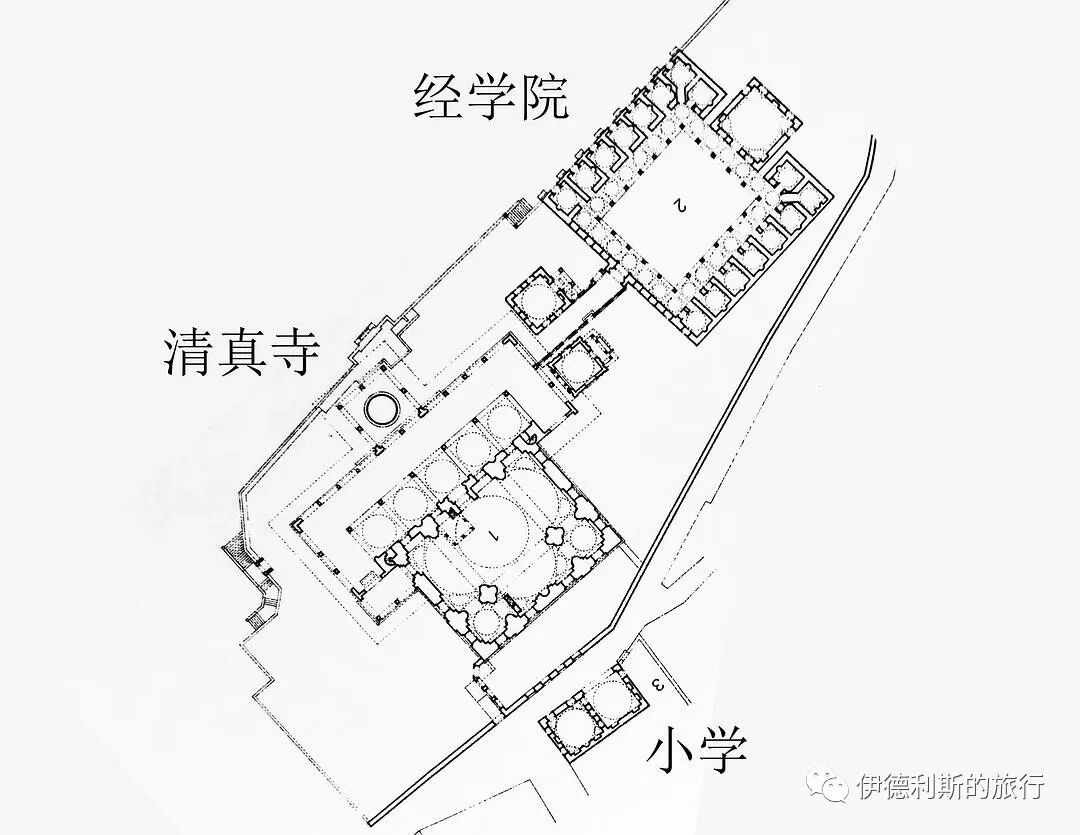
A diagram of the mosque published by Cornelius Gurlitt in 1912.
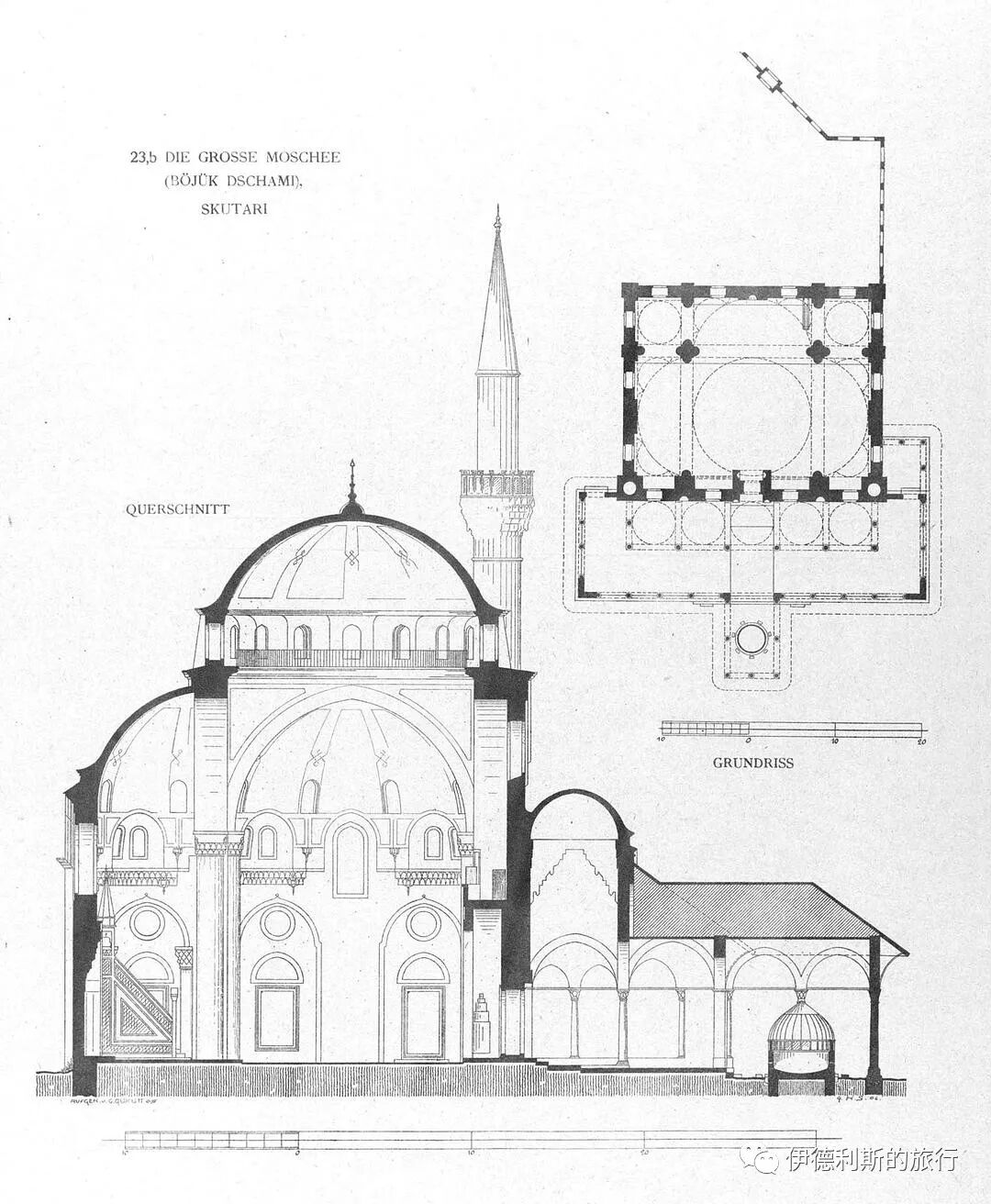
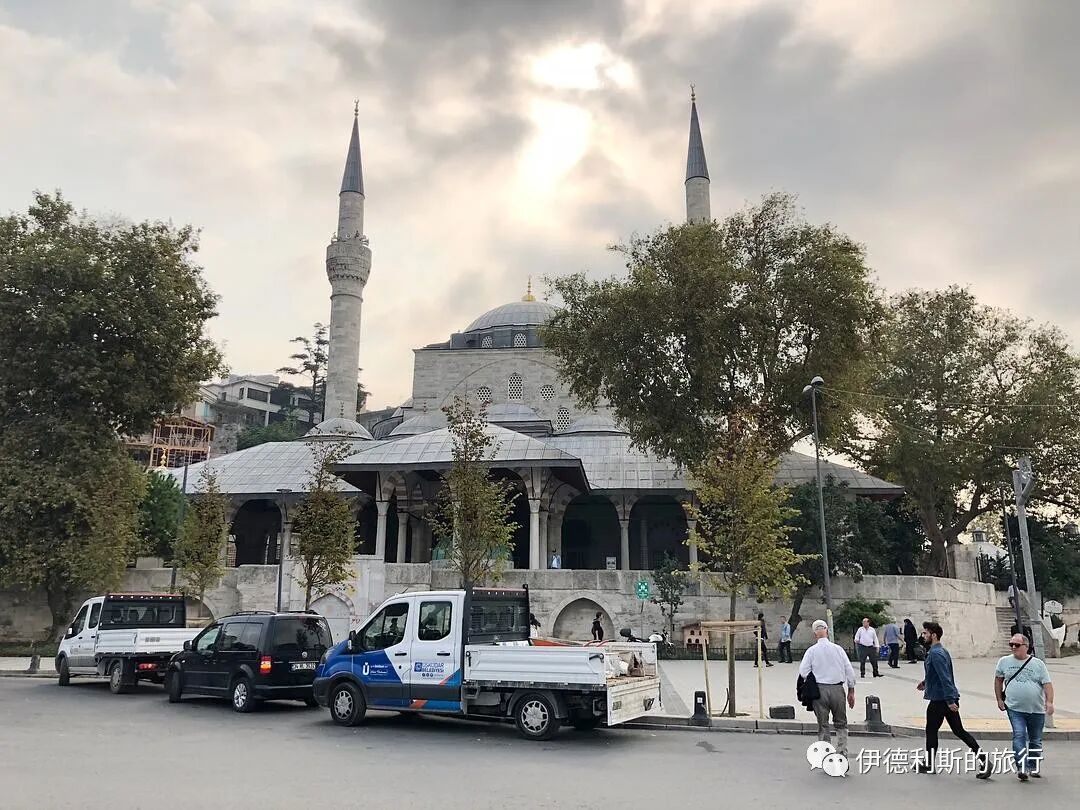
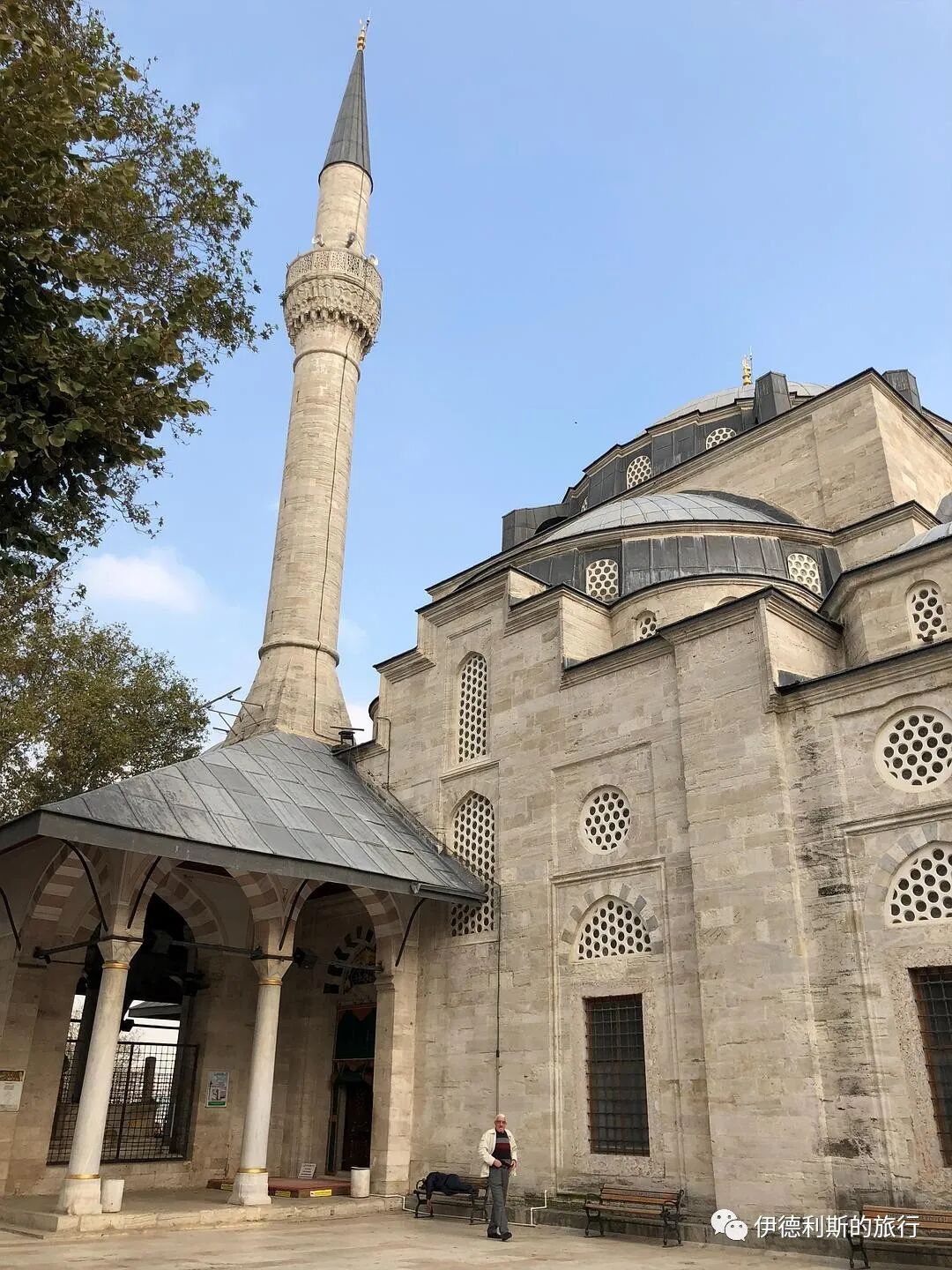
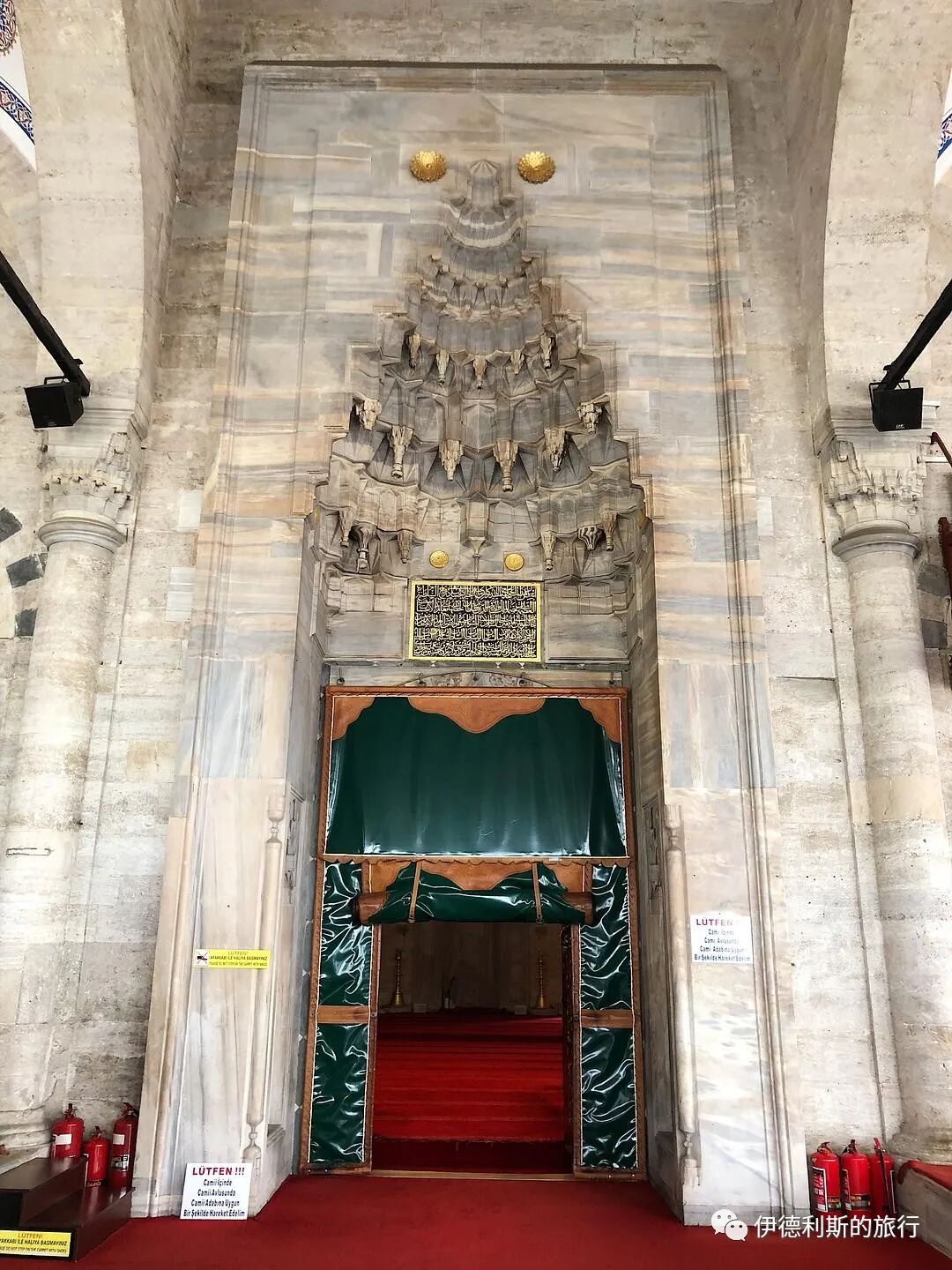
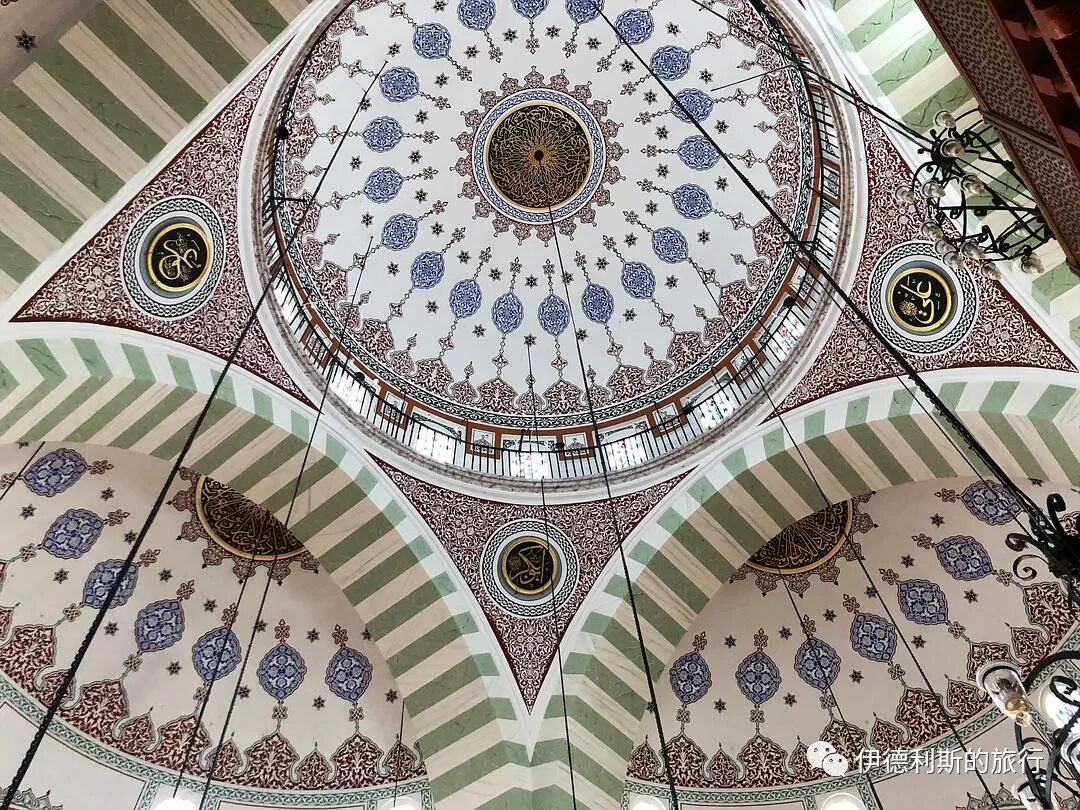
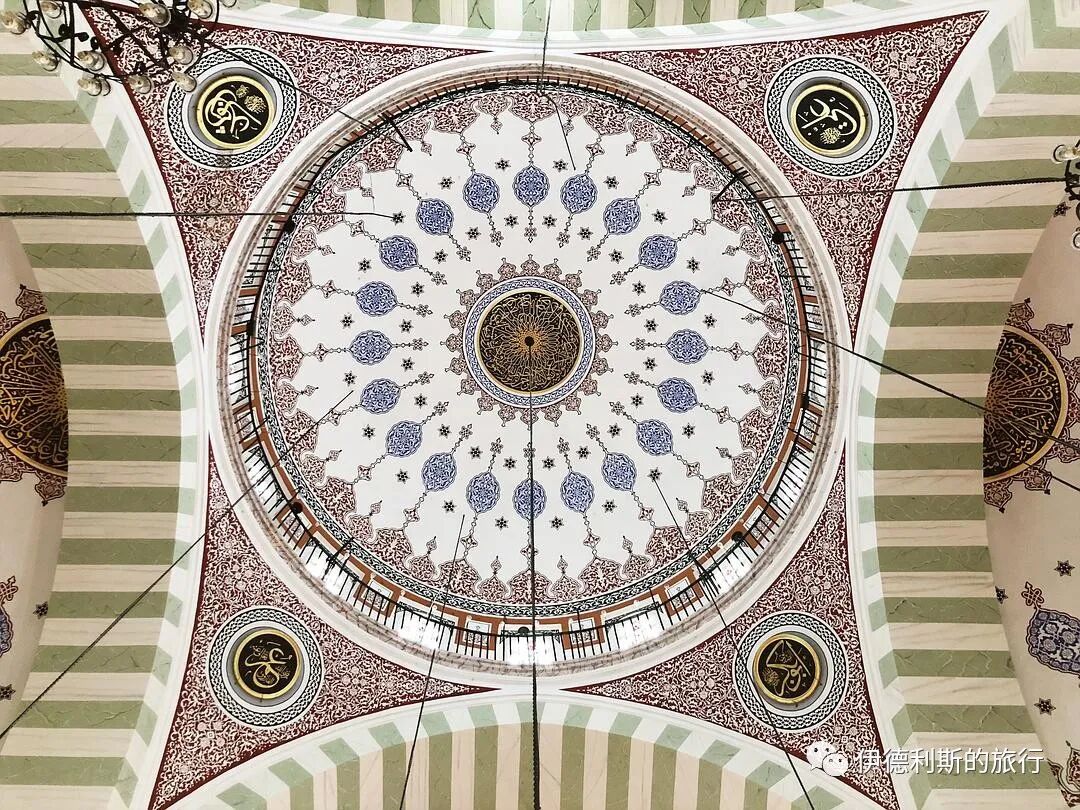
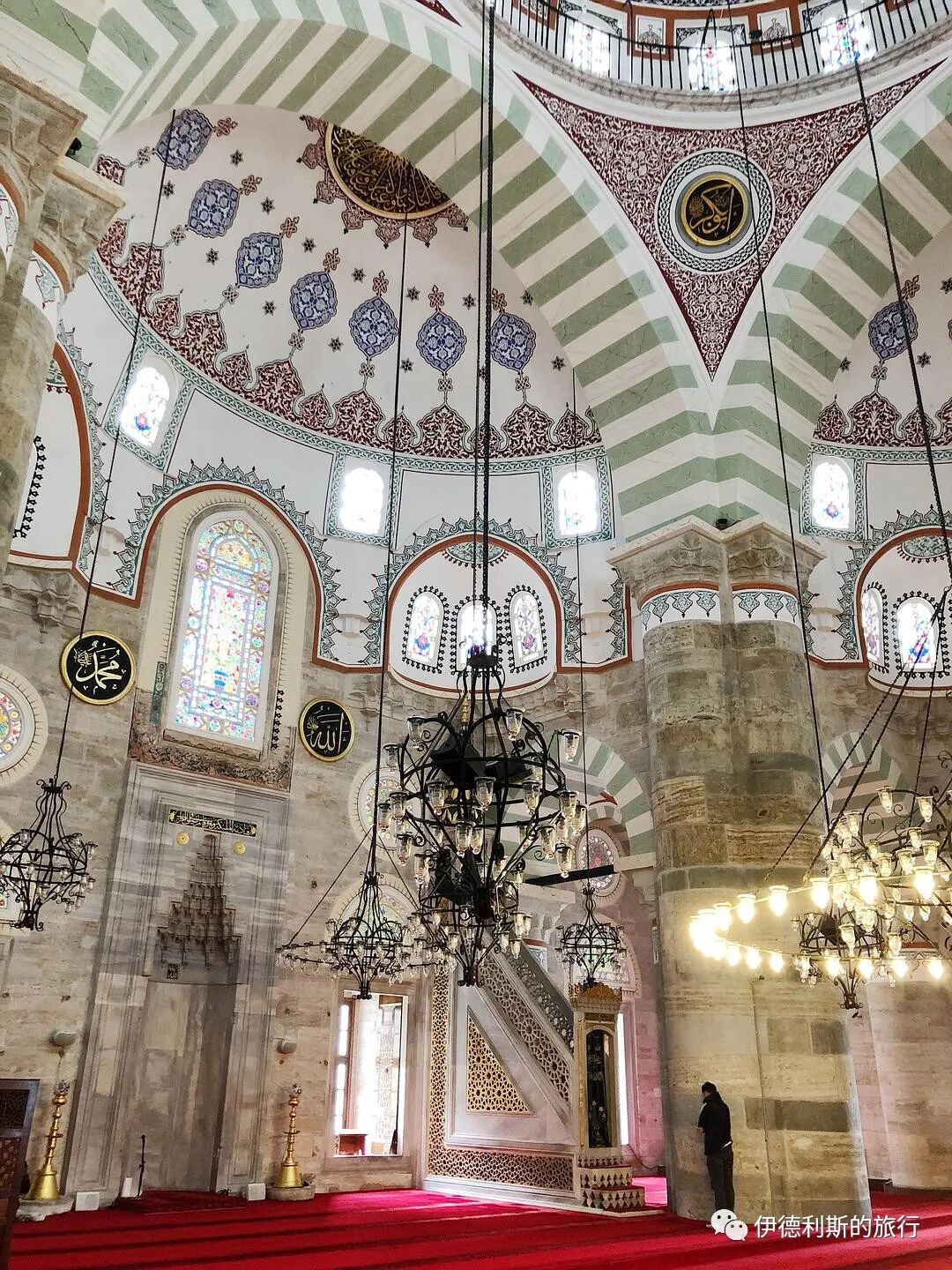
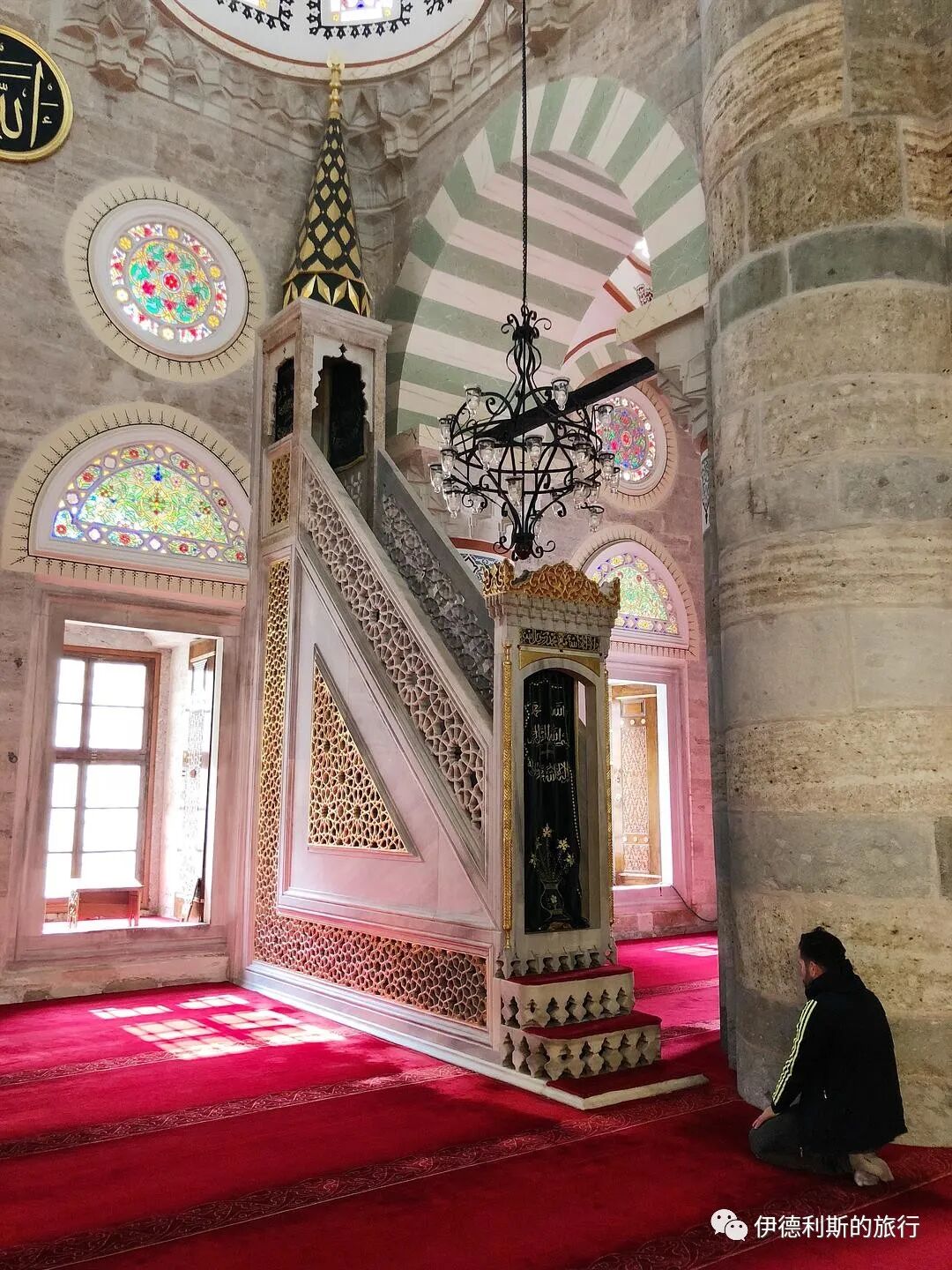
The madrasa consists of sixteen student rooms and a large lecture hall in a rectangle. It is now a hospital, and the integrity of the cultural heritage has been damaged.
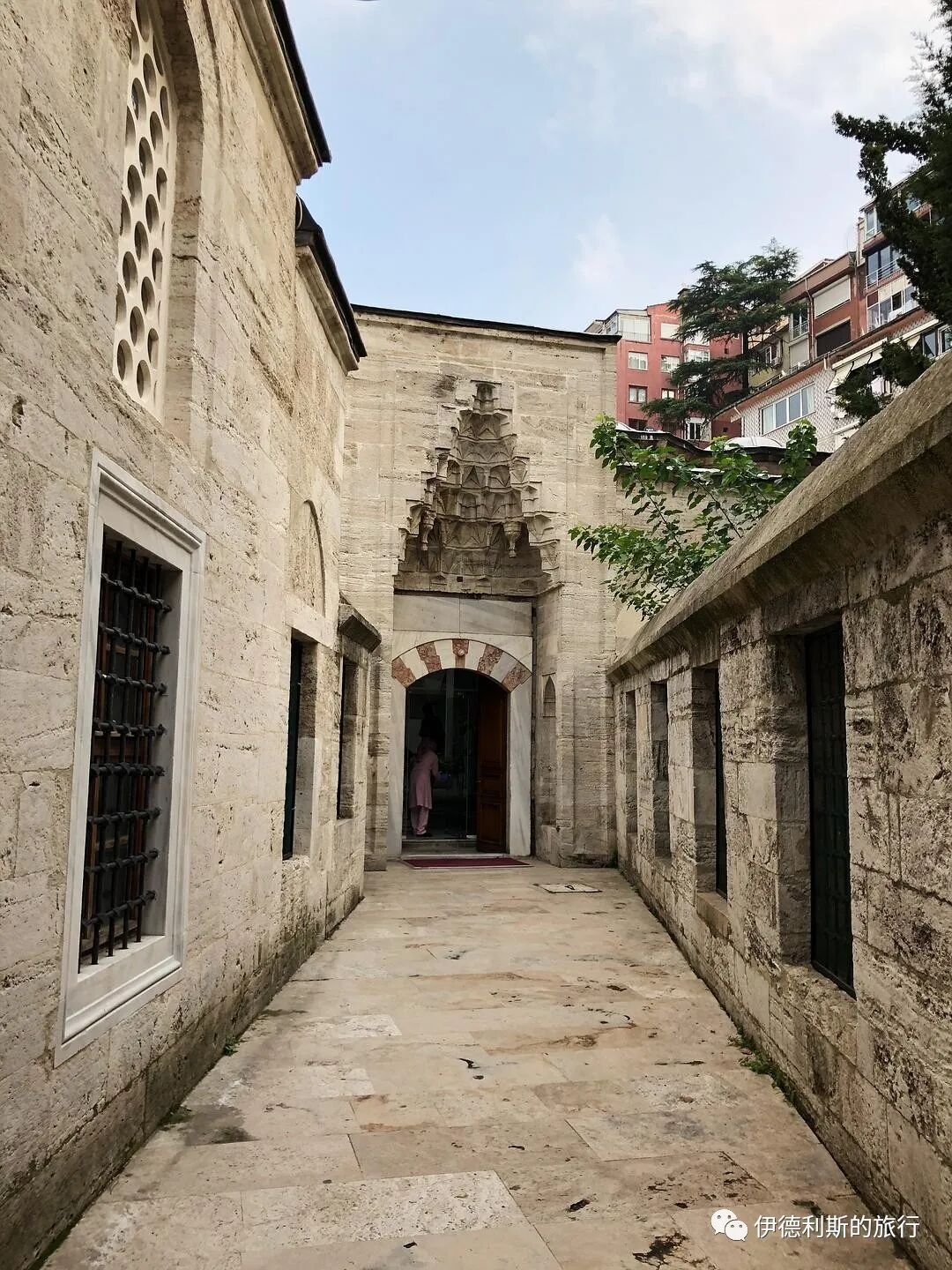
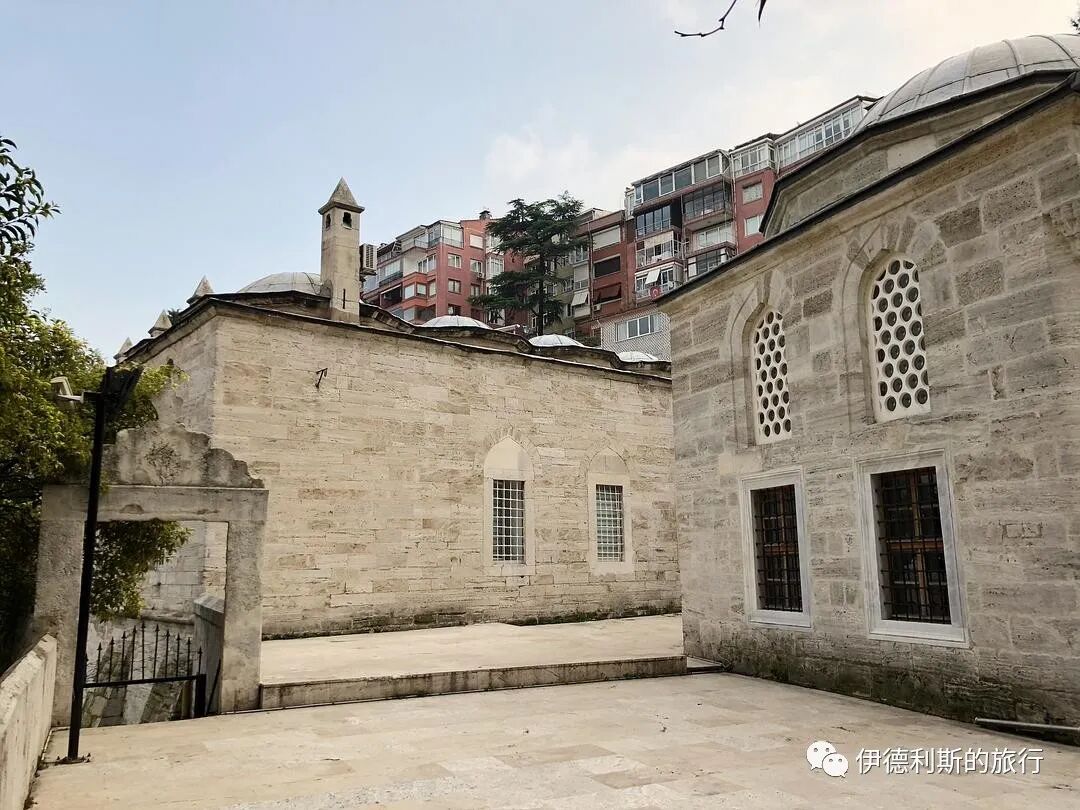
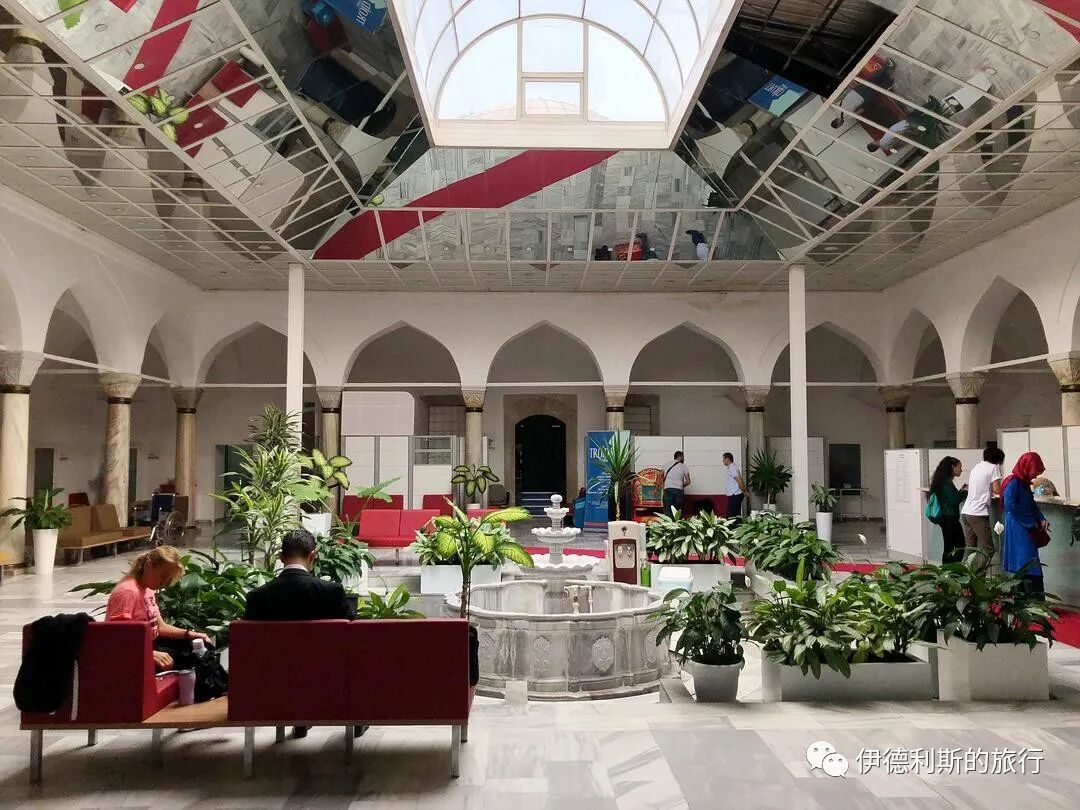
The Sehzade Complex (Sehzade Külliye) is located on the third hill of the old city of Istanbul. Built between 1543 and 1548, it is considered Mimar Sinan's most important early work and his first masterpiece.
The complex was built by Suleiman the Magnificent to commemorate his beloved son, Prince Mehmed (Sehzade Mehmed), who died young. Prince Mehmed was the son of Suleiman the Magnificent and Hurrem Sultan. He was favored from a young age and was the most likely heir, but he sadly died of smallpox (some say murder) in 1543. After the prince died, Suleiman the Magnificent was heartbroken. Traditionally, princes were buried in Bursa, but the Sultan decided to commission Mimar Sinan to build a tomb for the prince in Istanbul and match it with a complex.
The Sehzade Complex was the first work Mimar Sinan was directly commissioned to build by Suleiman the Magnificent. It was also his most ambitious early work, with a much grander scale and more decoration than his previous projects.
The complex includes a mosque, five tombs, a madrasa, a guesthouse, a hostel, a public canteen, and a primary school. These buildings are freely distributed on flat ground without a deliberate attempt at symmetry. the mosque is not a single unit with the other buildings; the other structures are distributed in the gardens or streets surrounding the mosque.
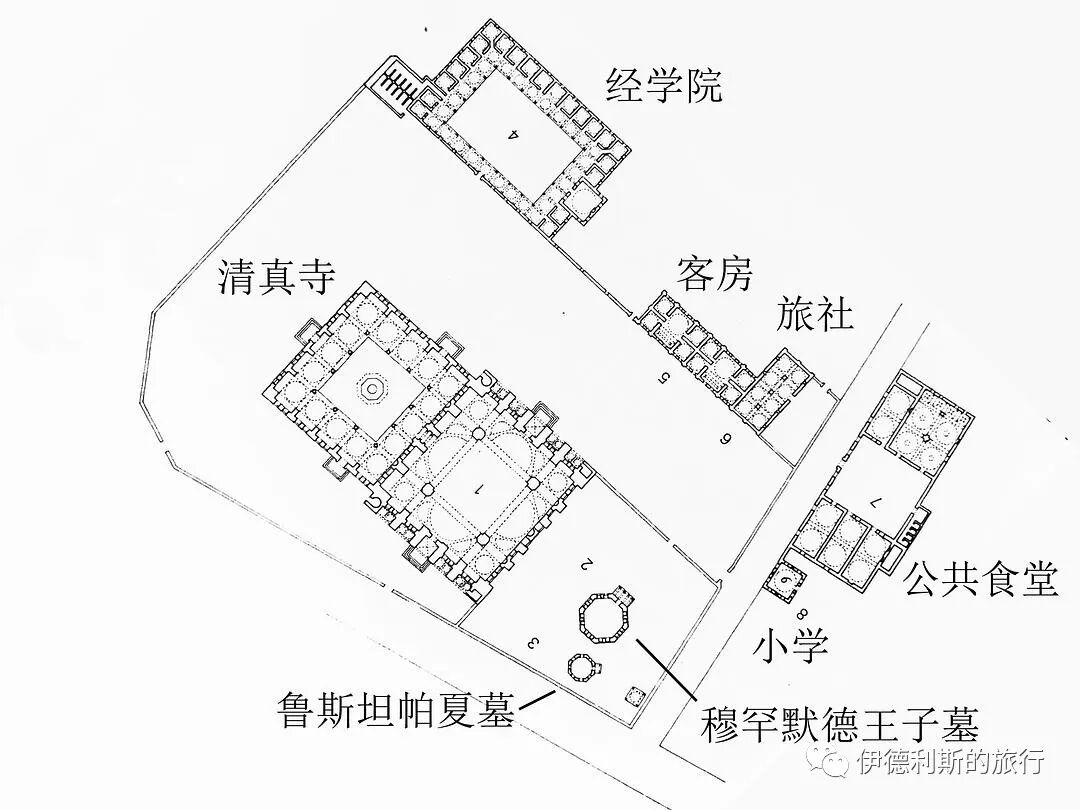
The mosque (1543-1548) is the second semi-domed mosque designed by Mimar Sinan, consisting of one main dome and four semi-domes. This is both an improvement on Sinan's previous work, the Mihrimah Sultan Mosque with its three semi-domes, and a reinterpretation of designs by predecessors like the Fatih Mosque (1471) and the Bayezid II Mosque (1506). This design isolates the four pillars supporting the central dome, creating a more stunning visual effect. The interior of the mosque is a square that unfolds along a central vertical axis. When people enter, they can immediately feel the dominance of the central dome. the porches on the walls on both sides of the mosque are a bold innovation, which also foreshadows the future direction of Ottoman mosque development. This design softens the flanks of the building and hides the buttresses, allowing the facade to blend in more perfectly. The design of the Sehzade Mosque had gradually moved away from the traditional Ottoman mosque model and began to move toward Sinan's own unique style.
A diagram of the mosque published by Cornelius Gurlitt in 1912.
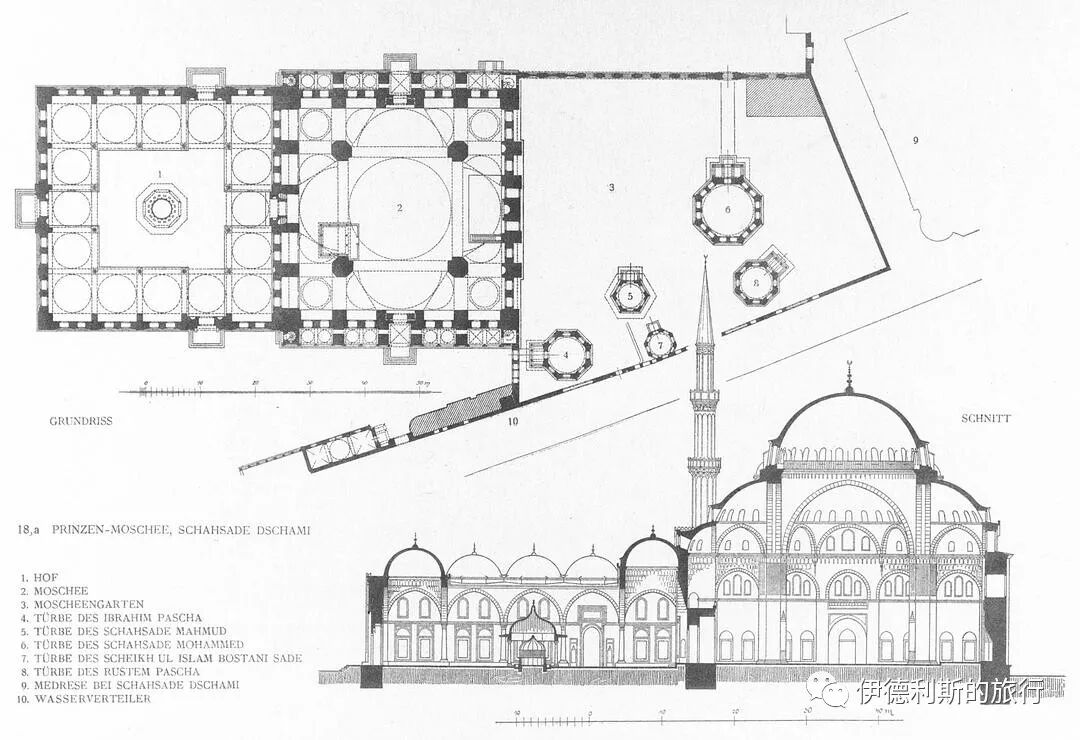
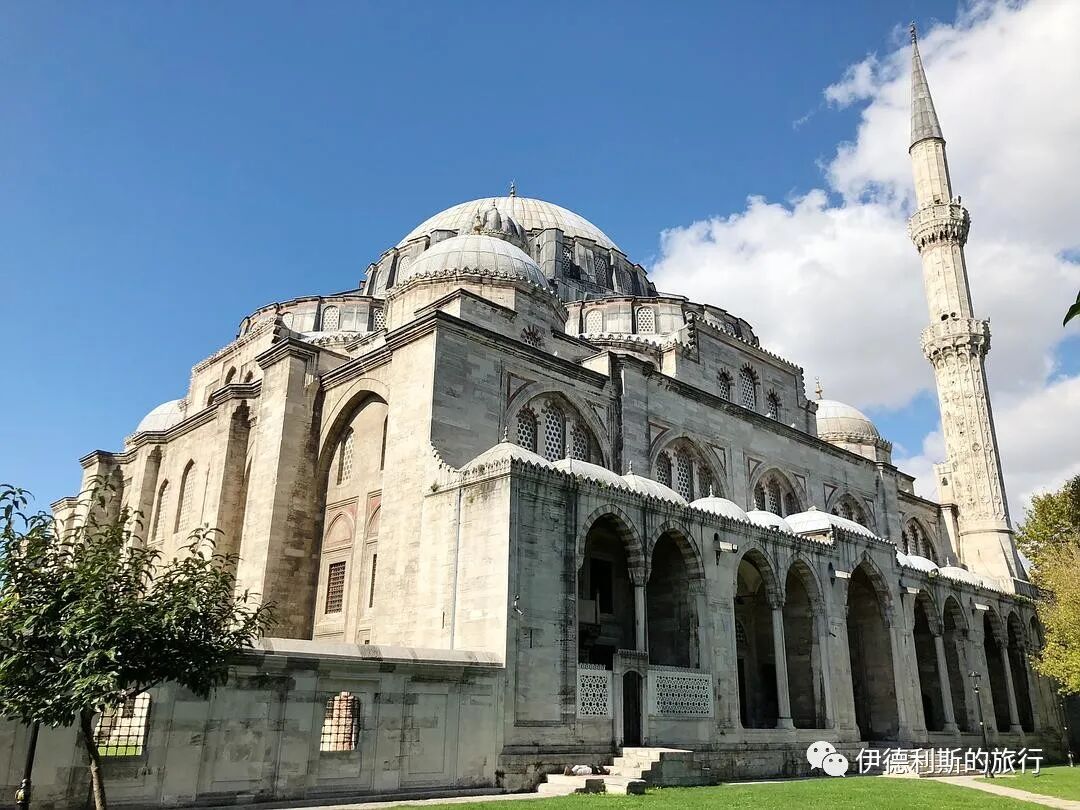
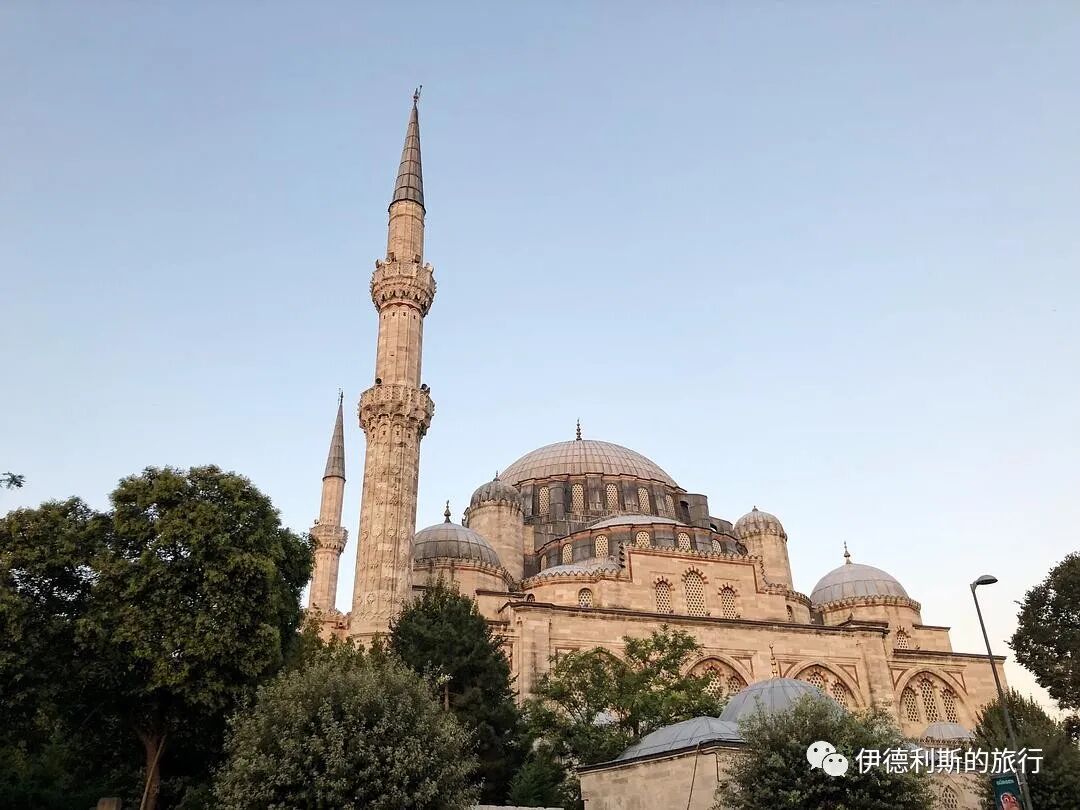
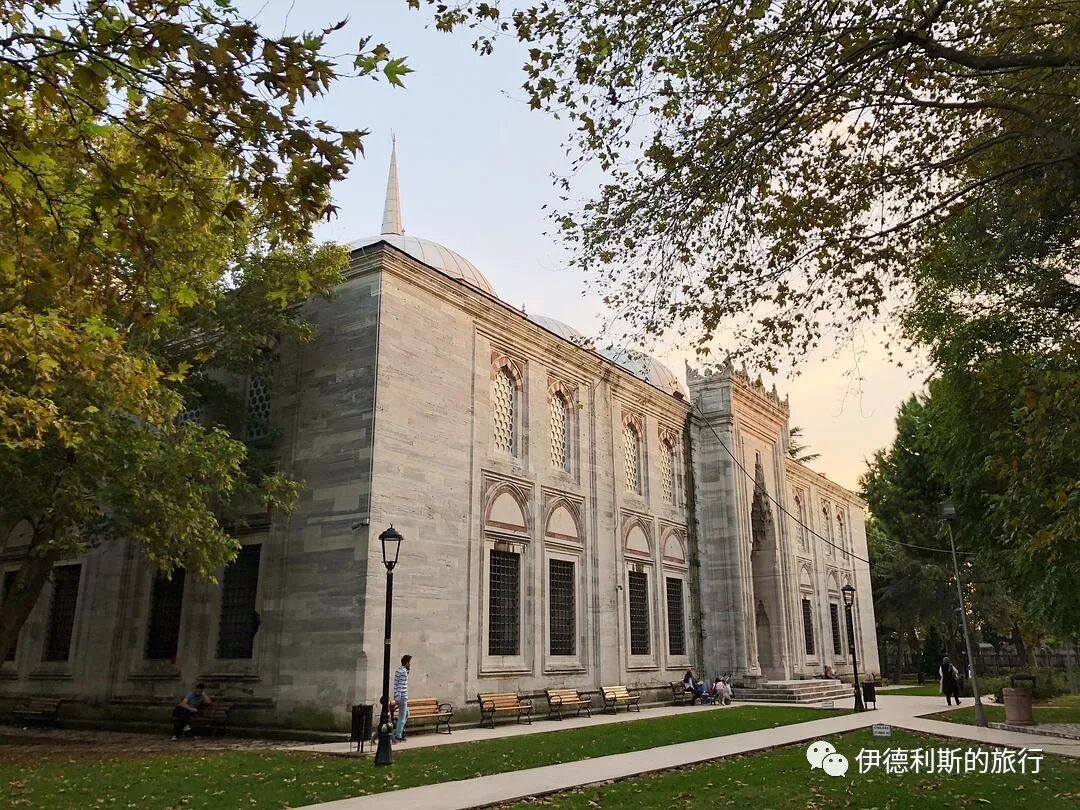
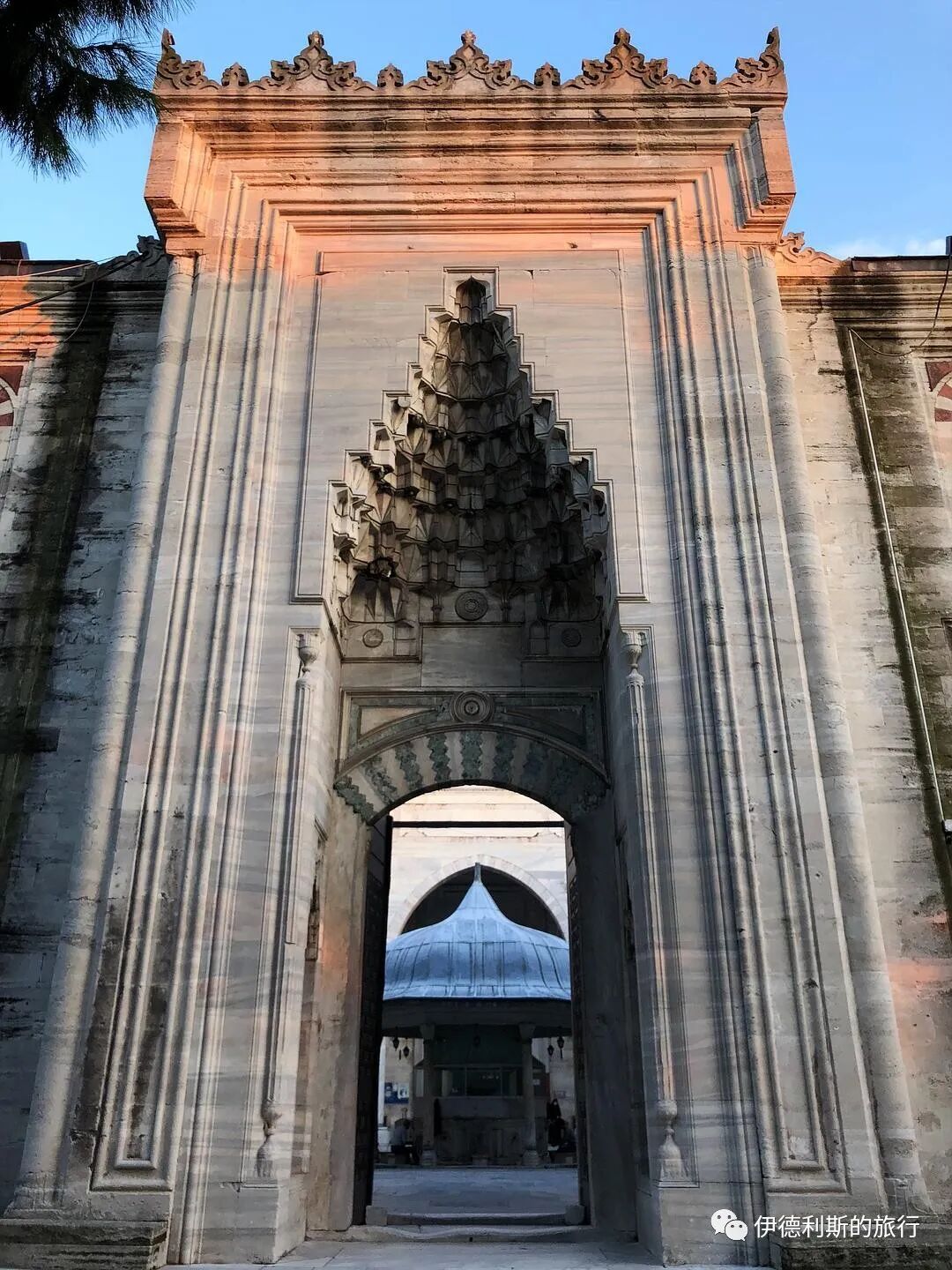
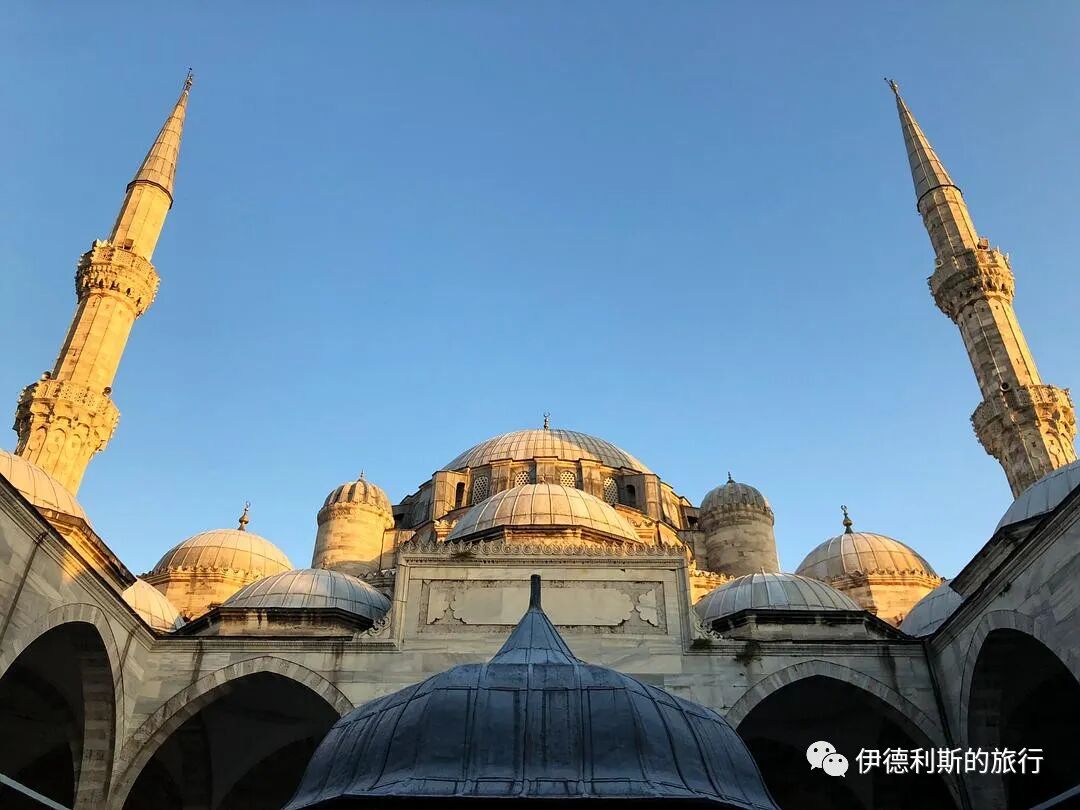
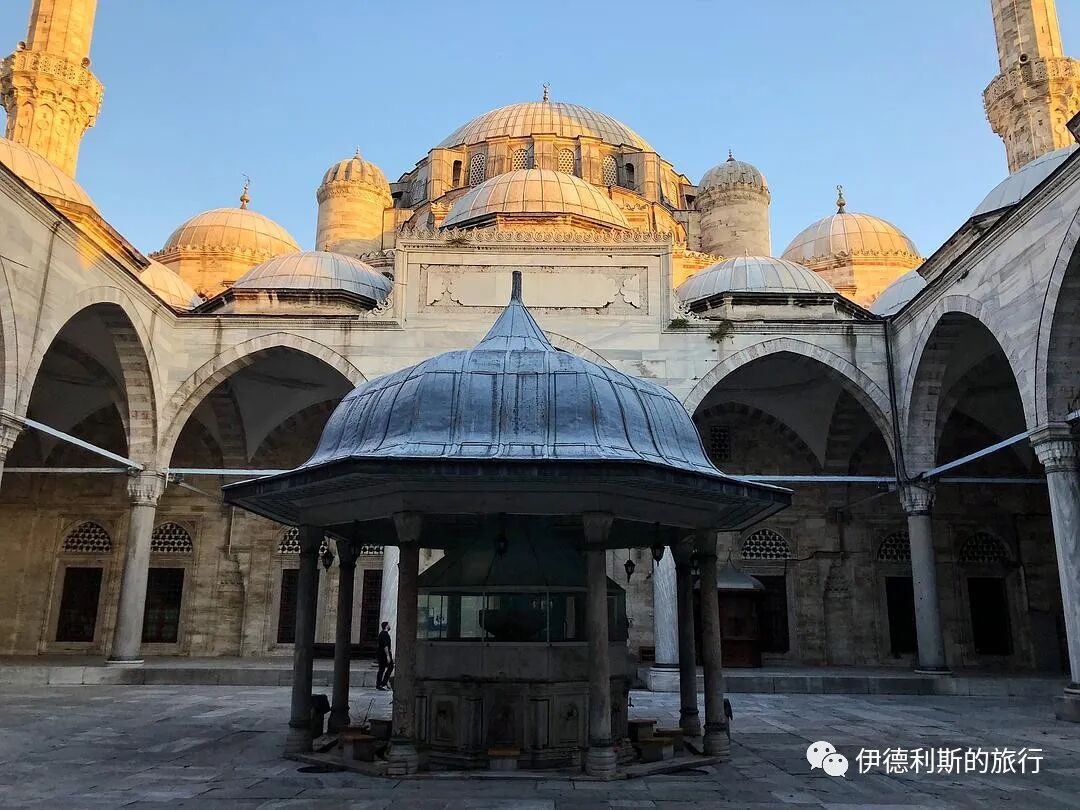
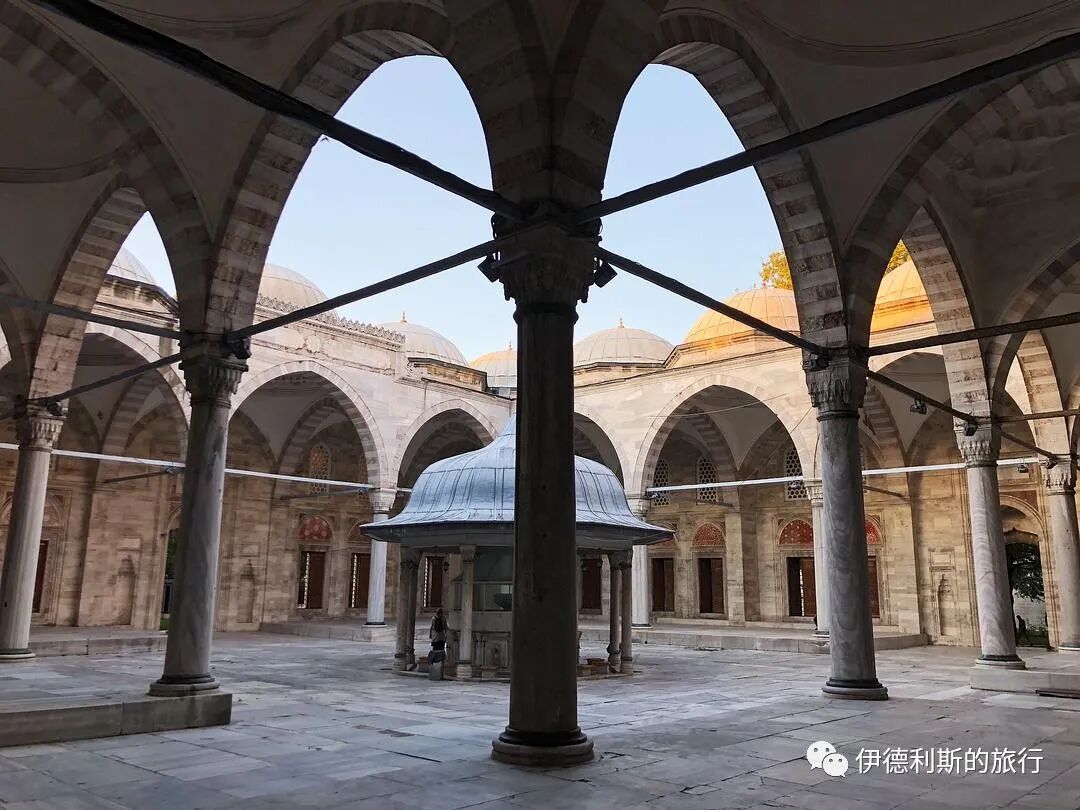
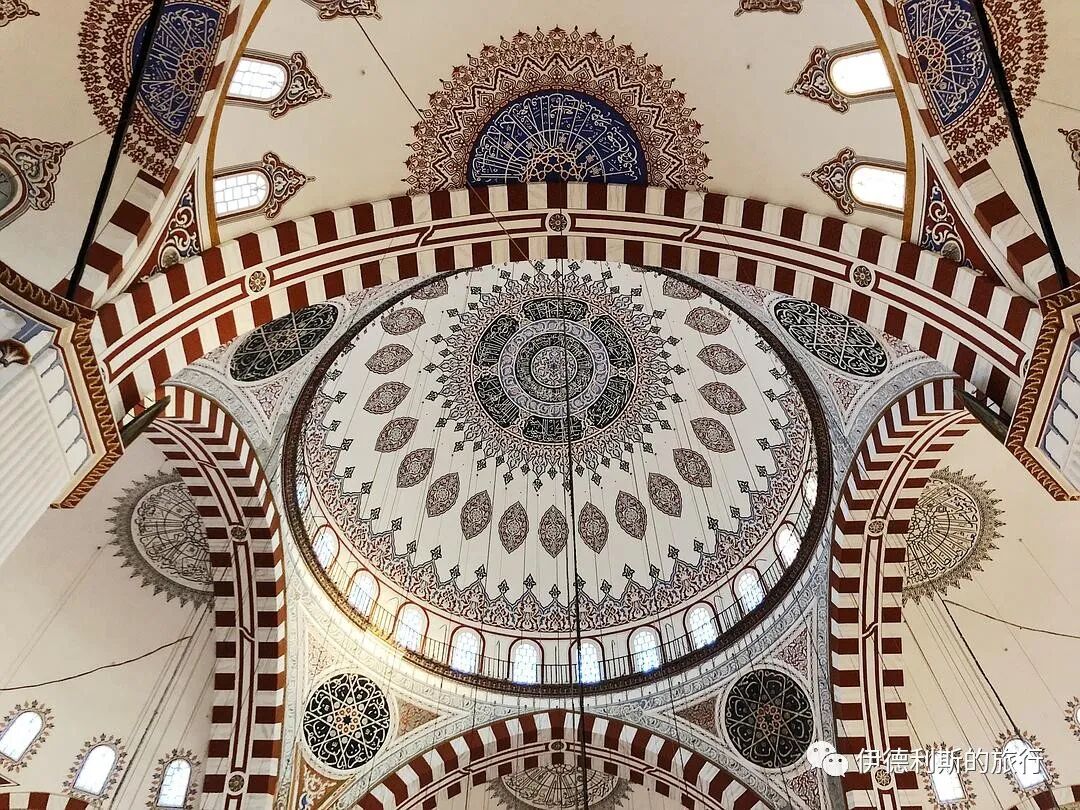
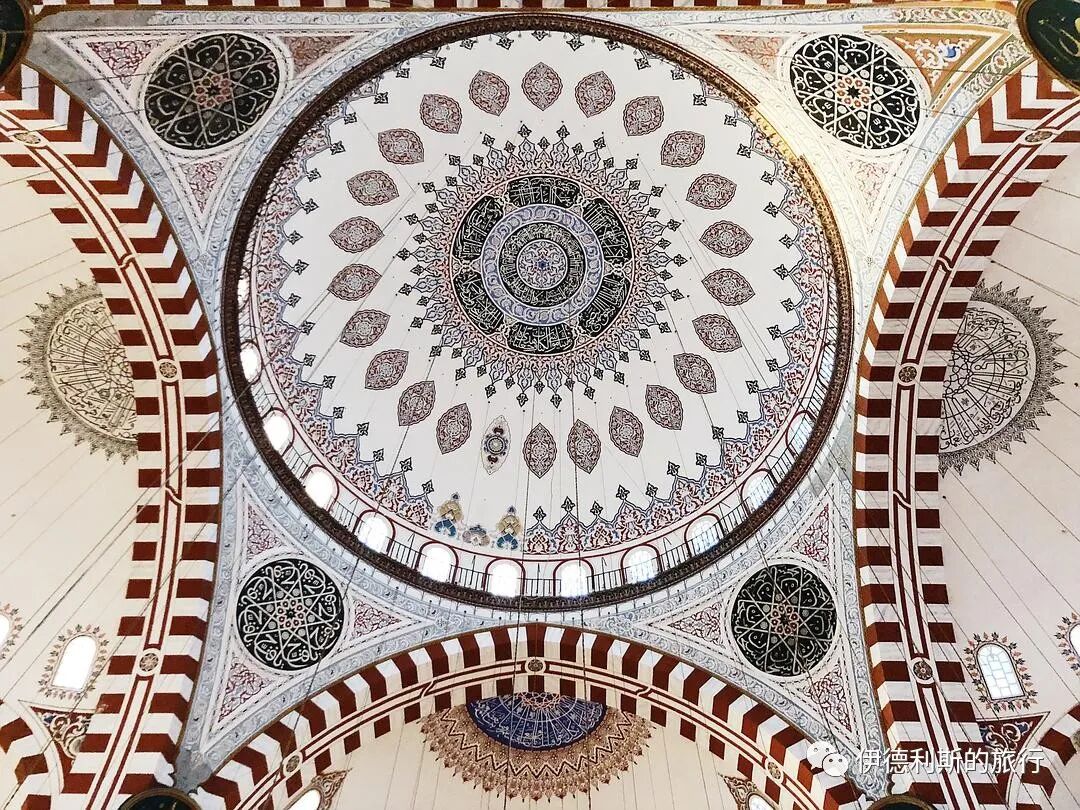
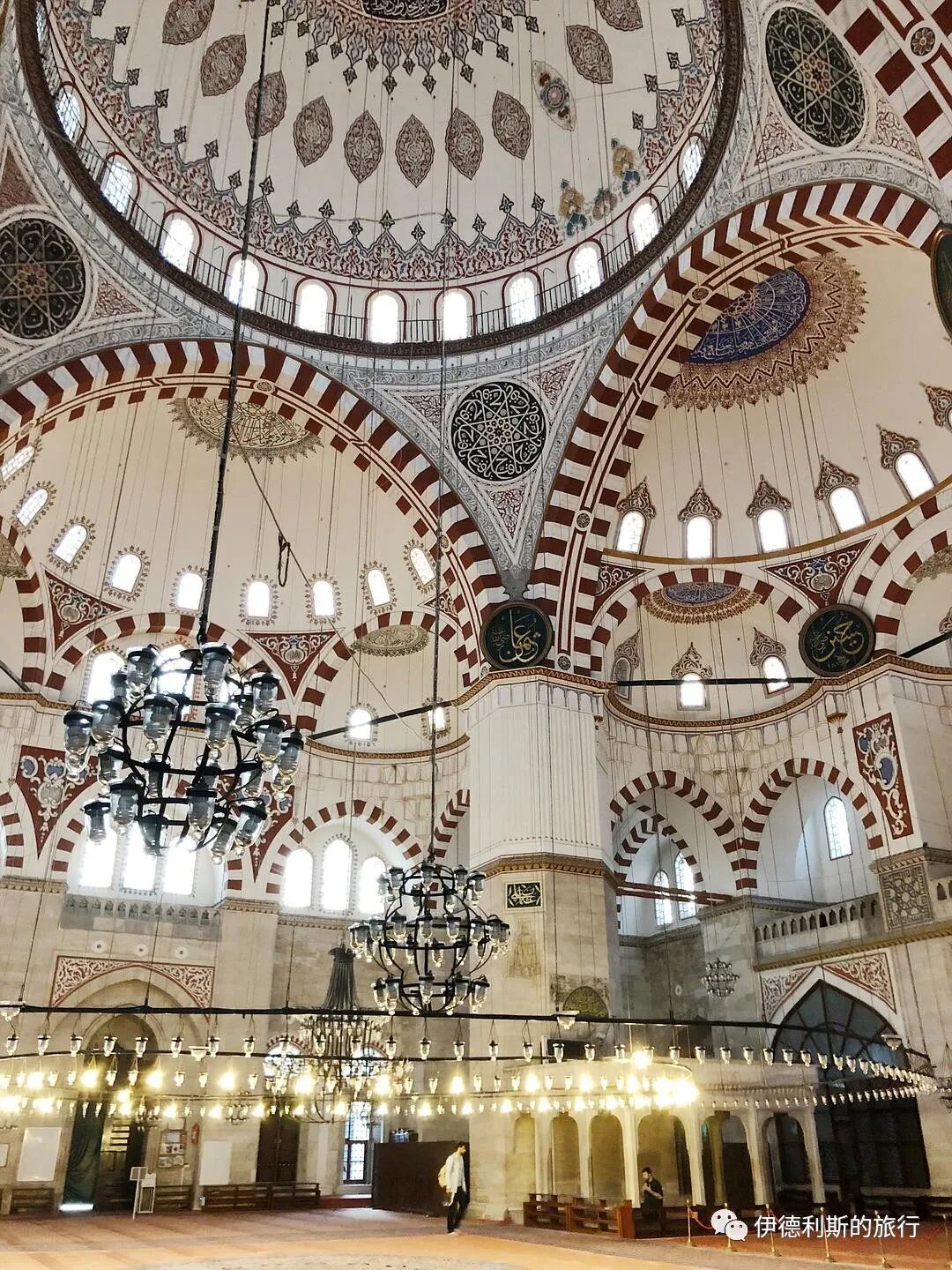
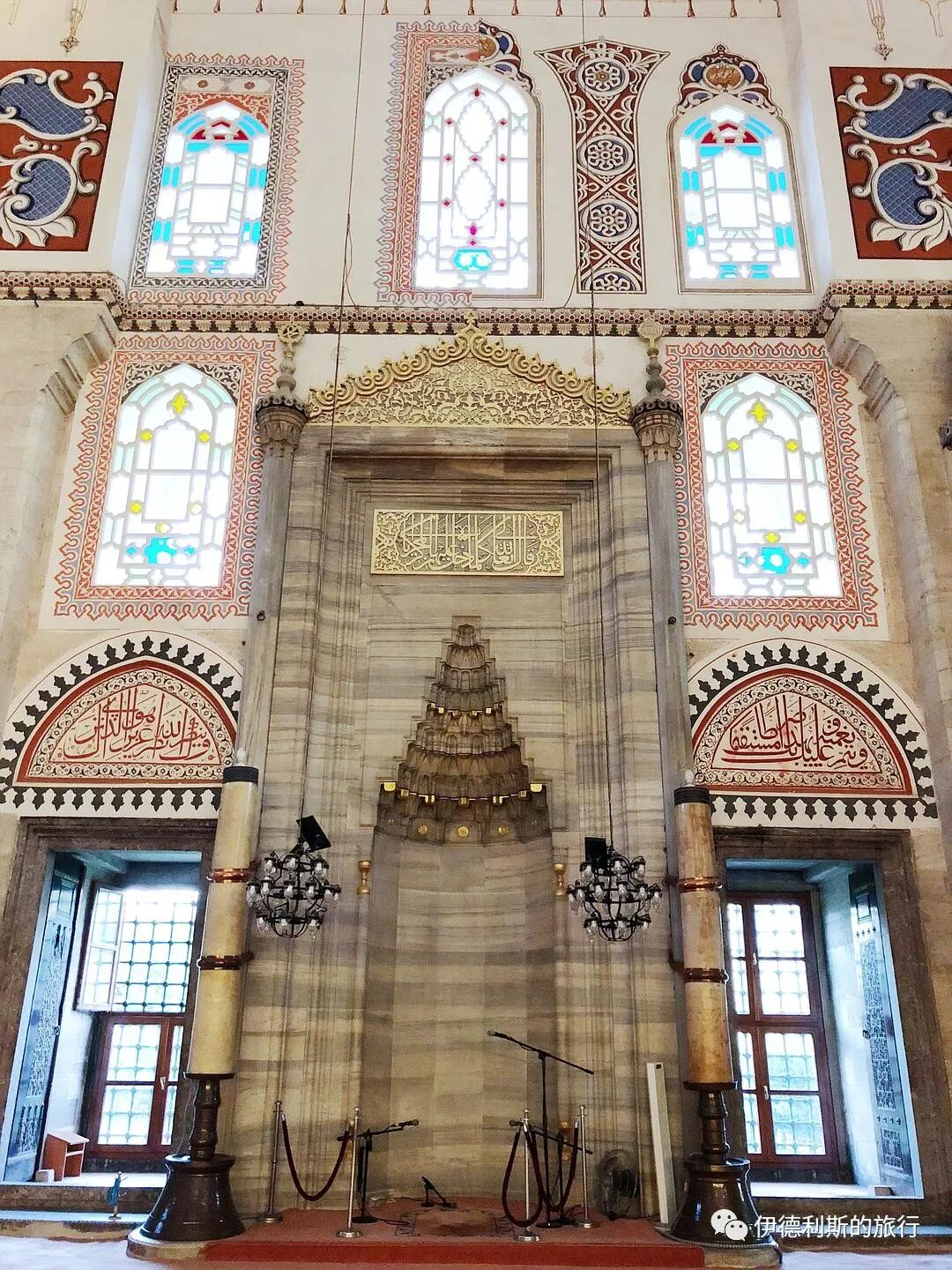
The Tomb of Prince Mehmed (1543) sits southeast of the mosque. It has an octagonal structure, Persian inscriptions at the entrance, and Cuerda Seca tiles inside.
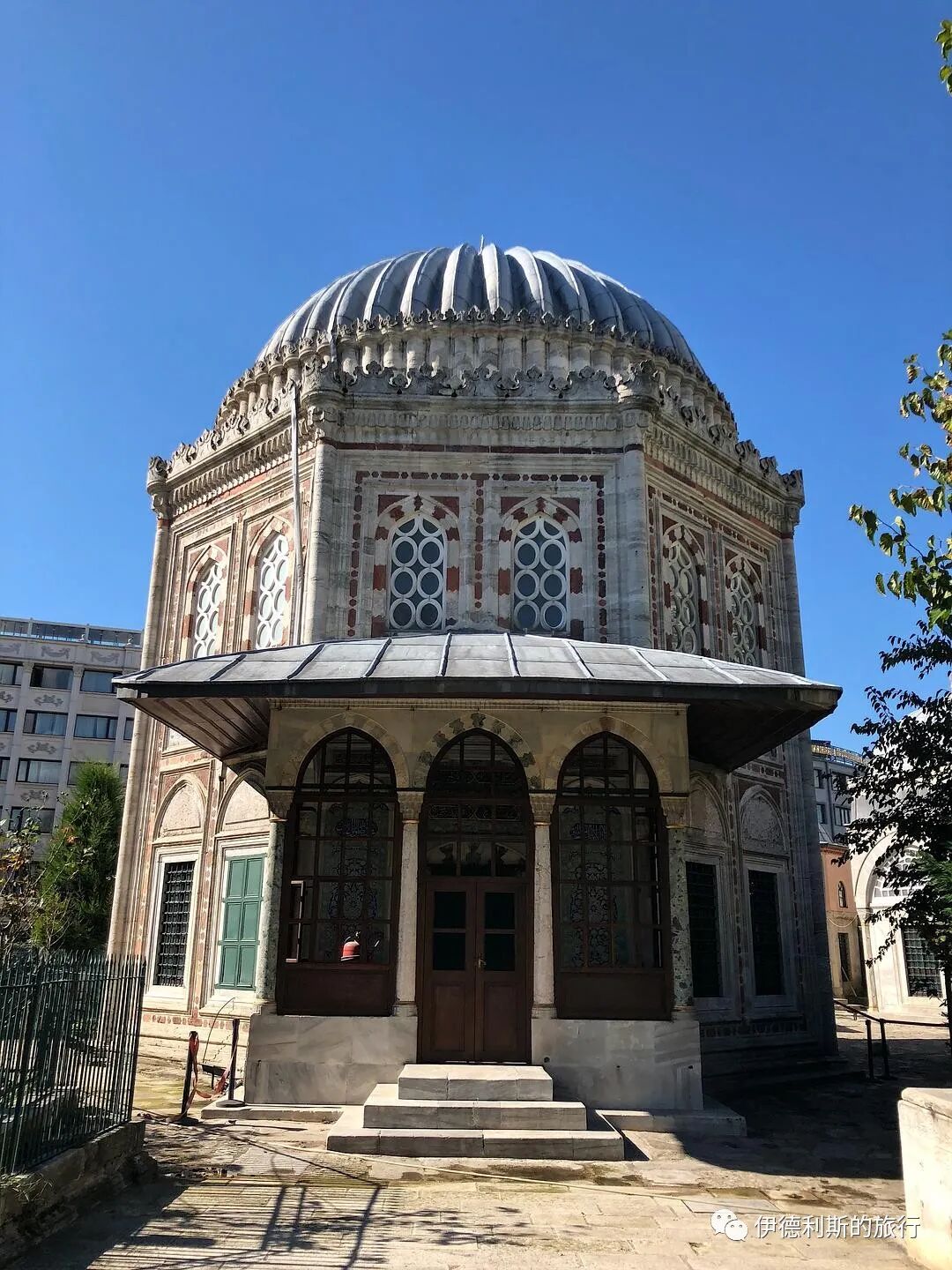
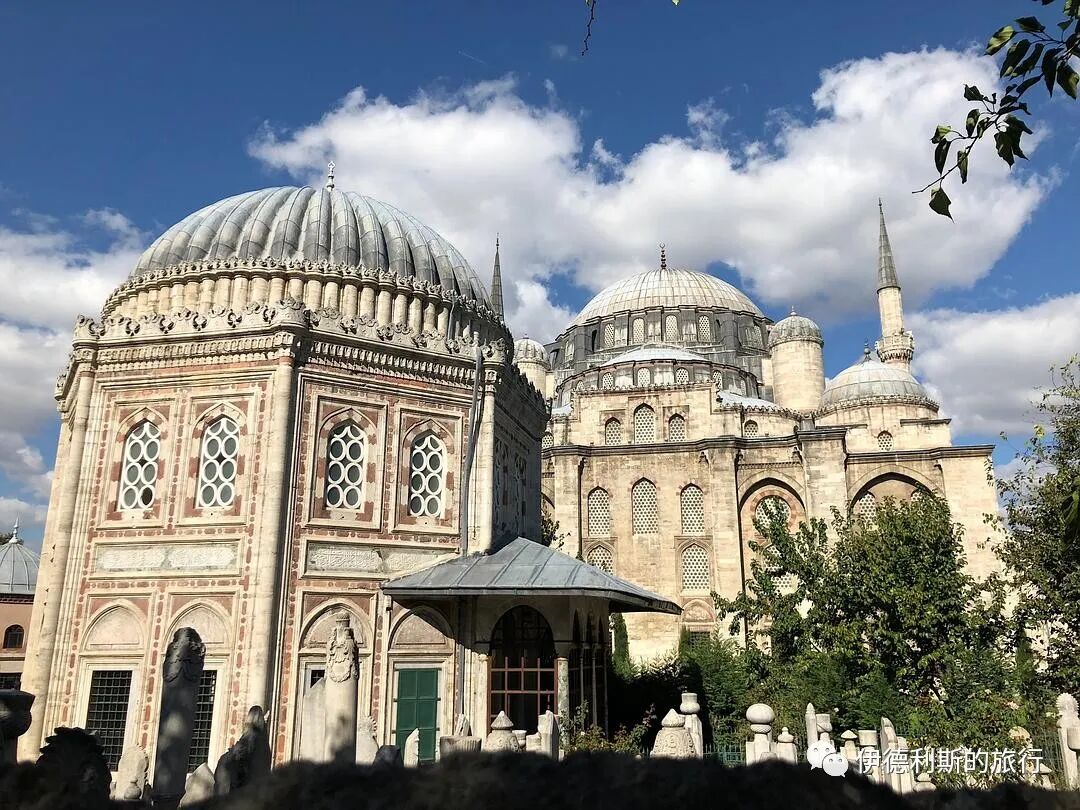
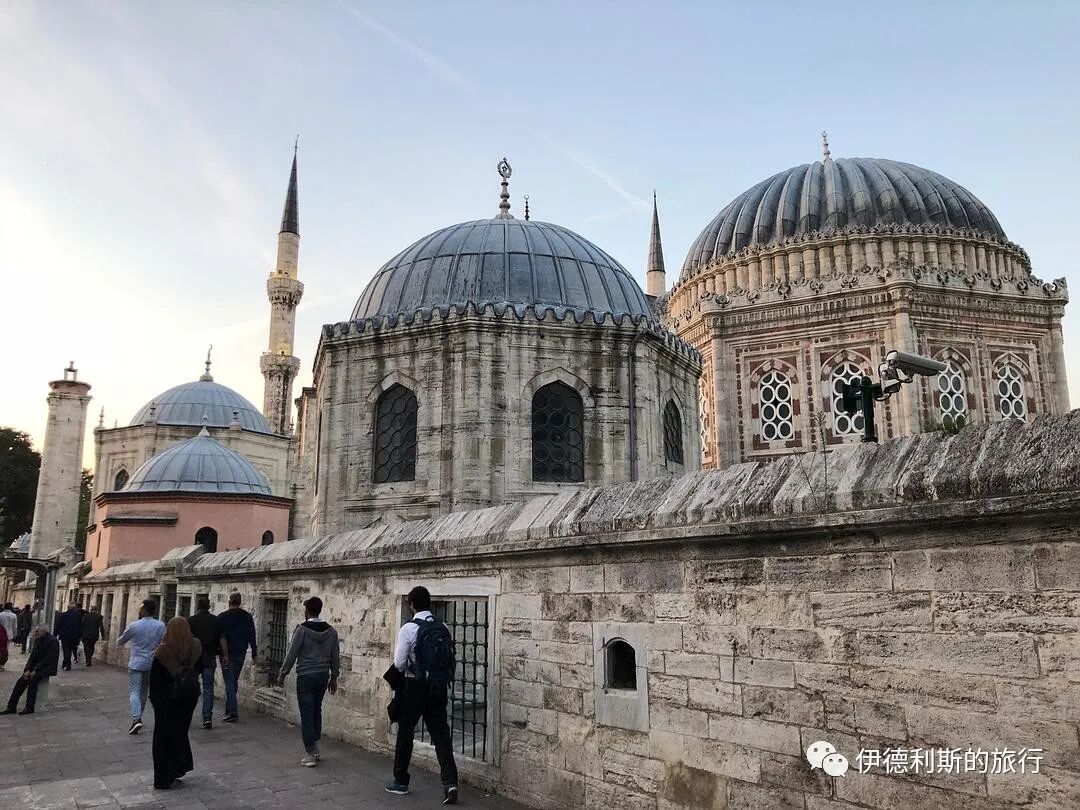
The madrasa (1546) is outside the garden on the north side of the mosque. It forms a rectangle surrounded by a gallery, with 21 student rooms and one large lecture hall on three sides. The fountain in the middle of the courtyard still keeps its Seljuk-era (11th to 13th century) tomb tower (kumbet) structure.
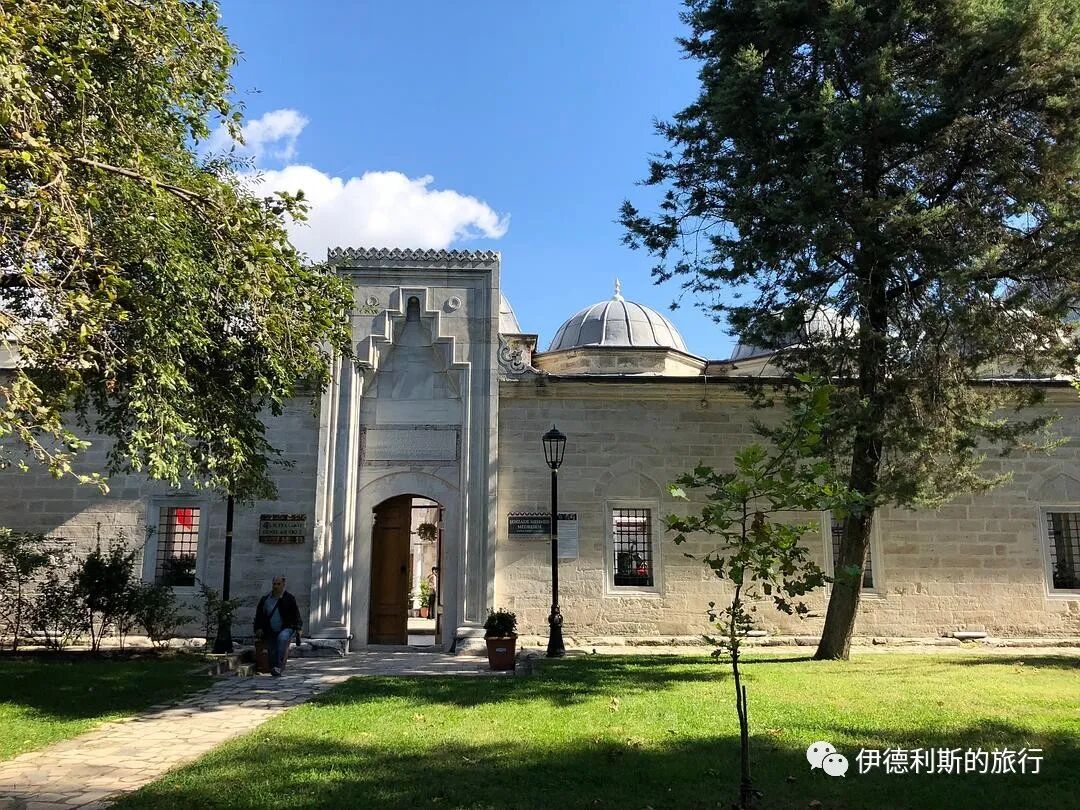
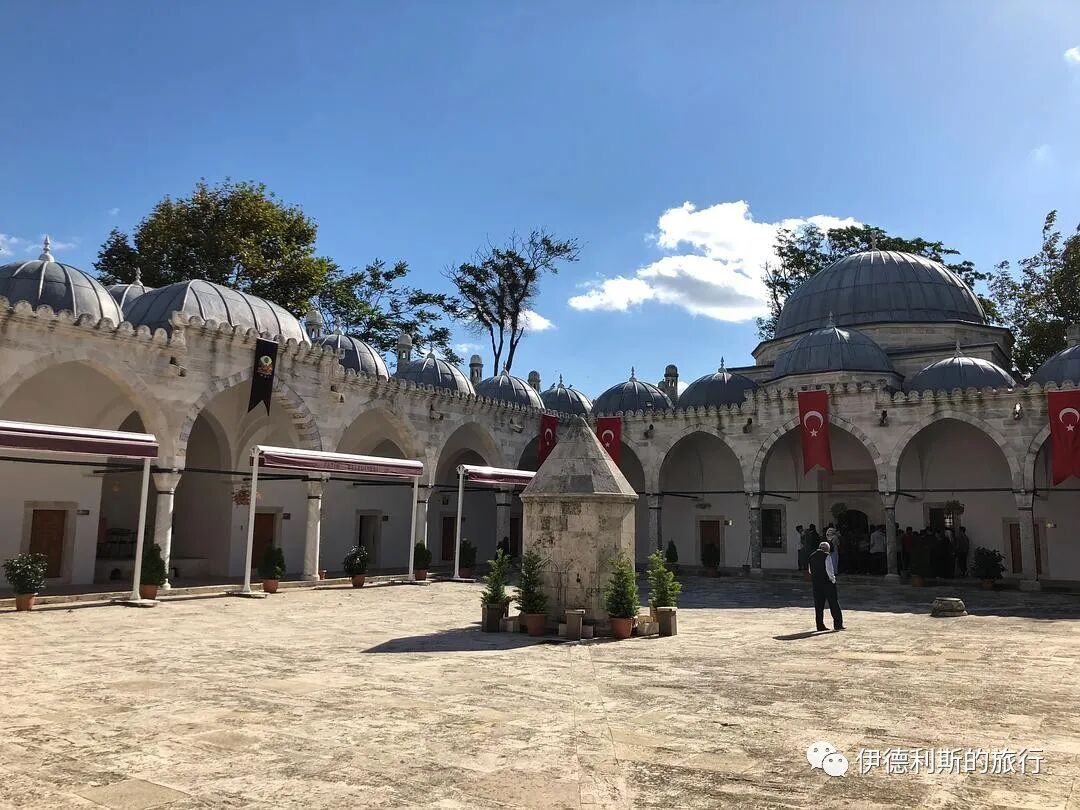
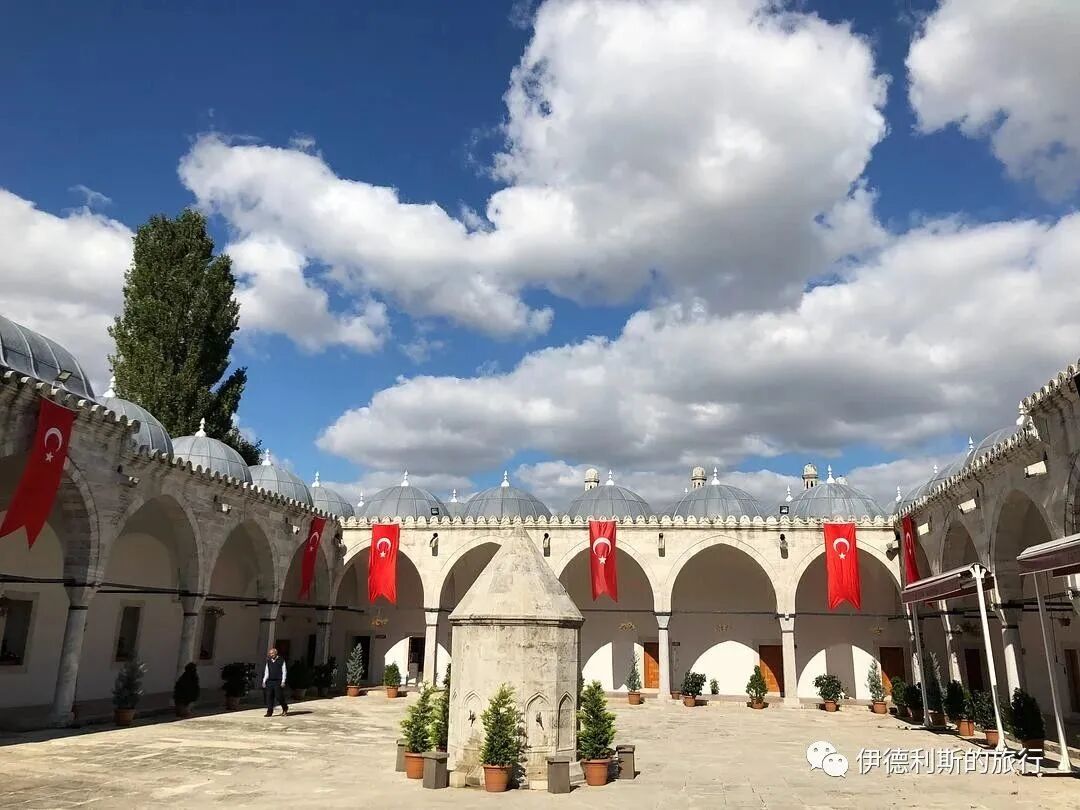
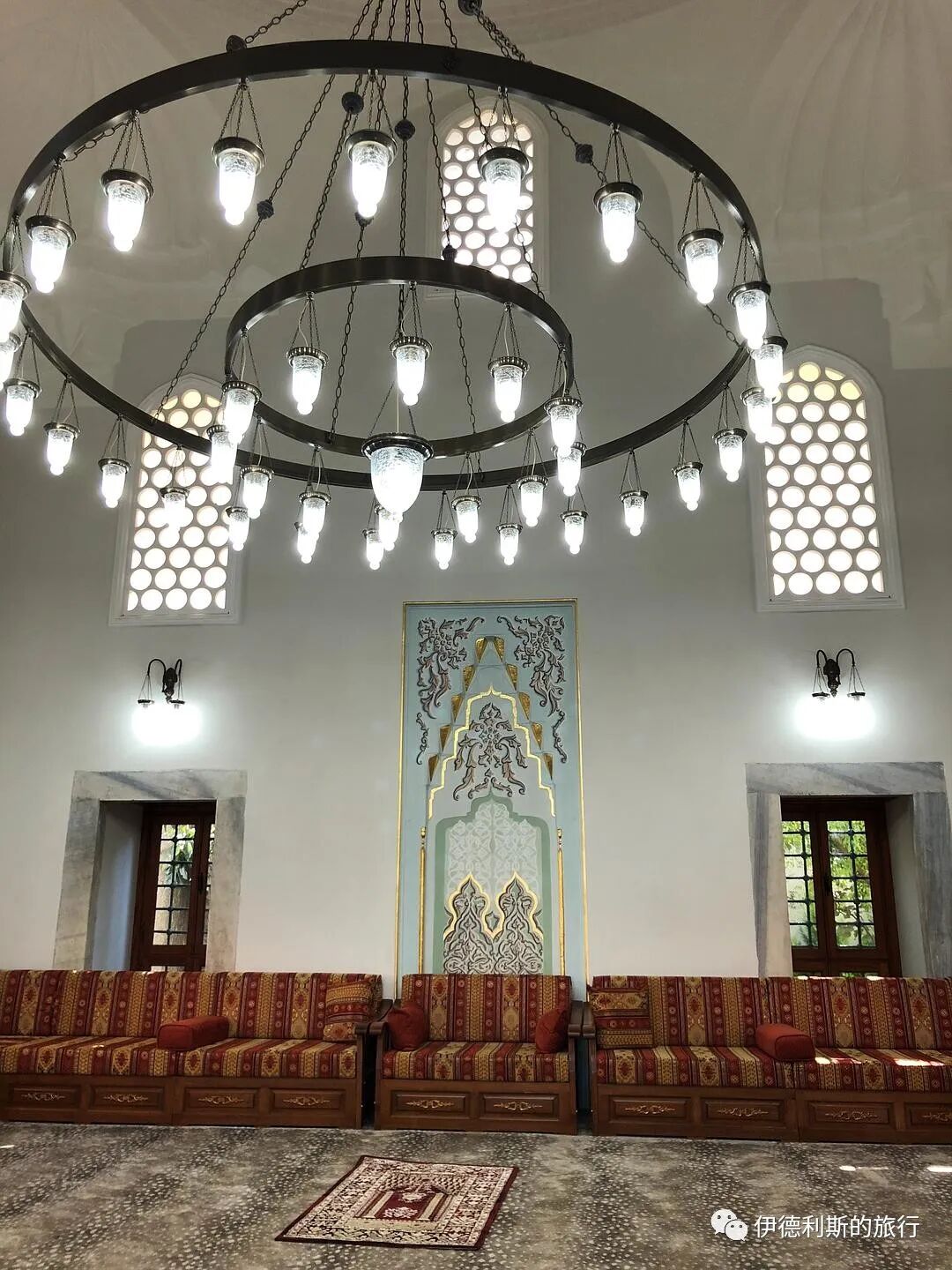
The public kitchen (1543-1548) is across the street east of the mosque. It consists of two buildings, each with six domes and a courtyard in the middle.
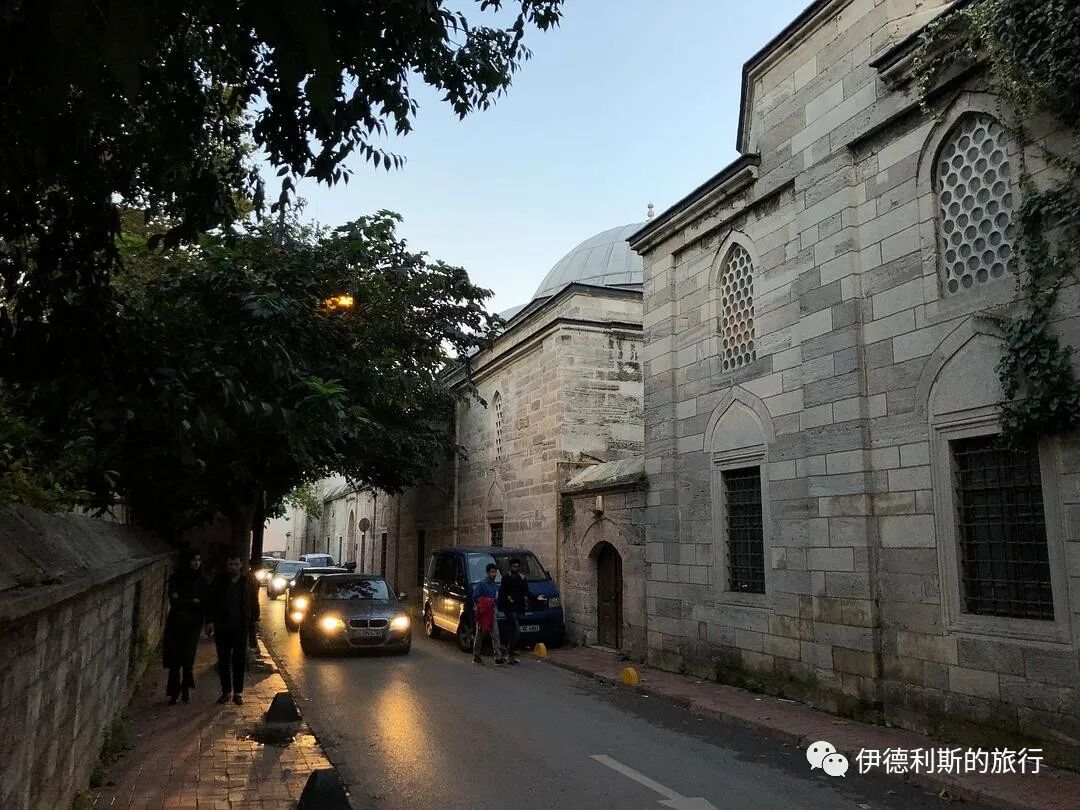
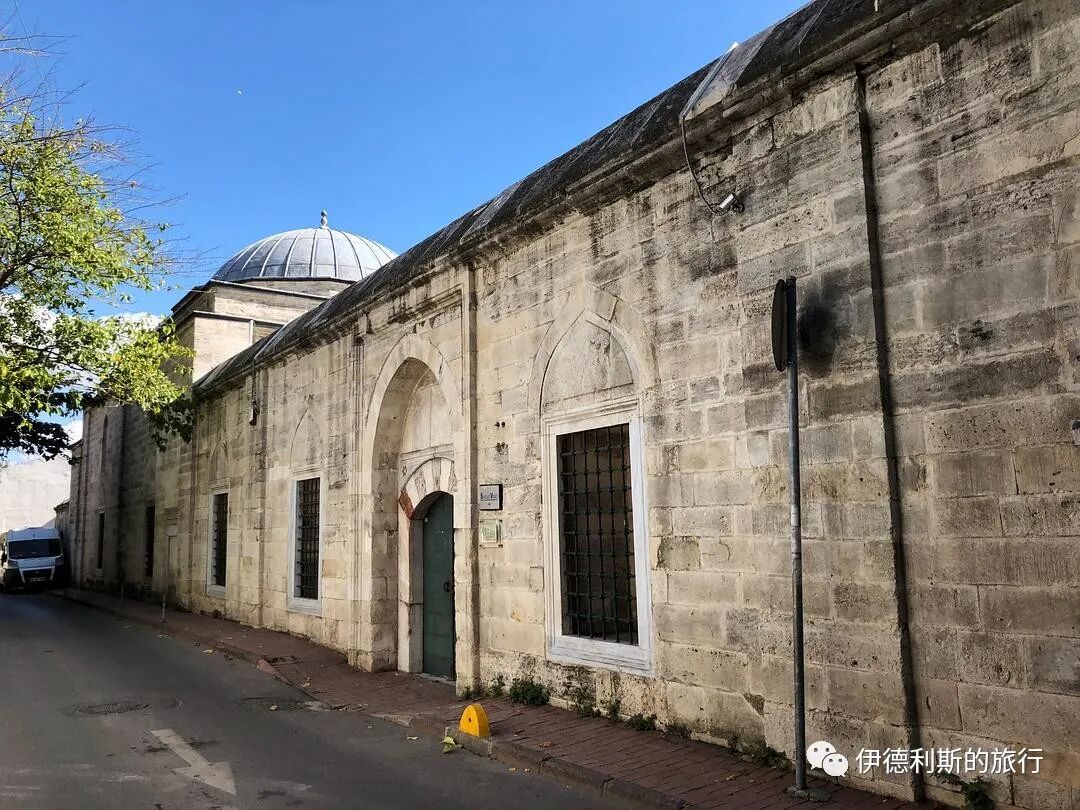
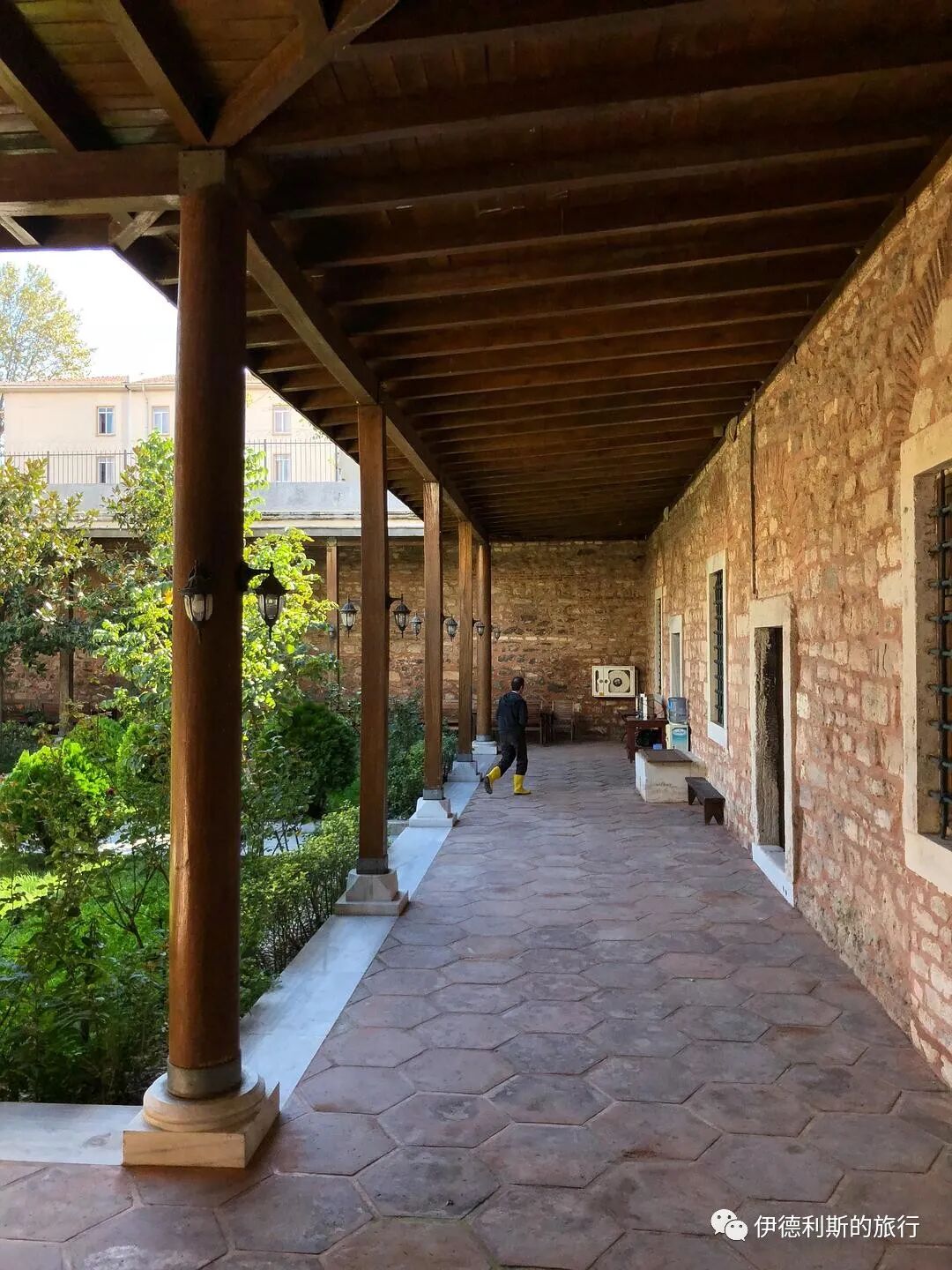
The octagonal tomb of Hüsrev Paşa is in the west of Istanbul. It is known as one of the most beautiful tombs built by Mimar Sinan. Hüsrev Paşa was a vizier of the Ottoman Empire. People called him the Mad Hüsrev Paşa because he had a bad temper. Hüsrev Paşa was born in Bosnia in 1495 and came from the famous Sokollu family. He became the governor of Egypt in 1535 and the Second Vizier in 1538. In 1544, Hüsrev Paşa lost the race for Grand Vizier to Rüstem Paşa. He died of illness shortly after, and Mimar Sinan built his tomb.
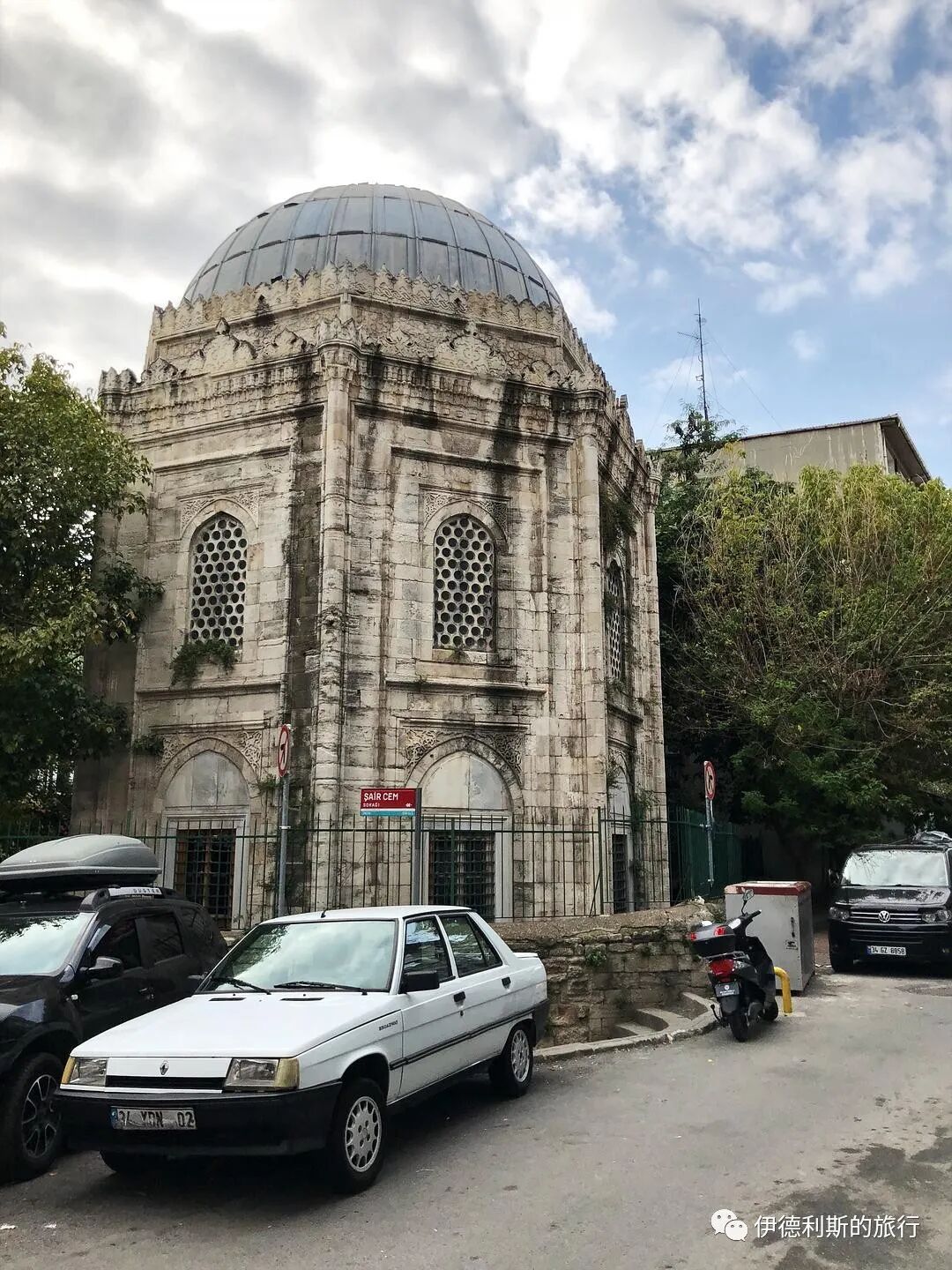
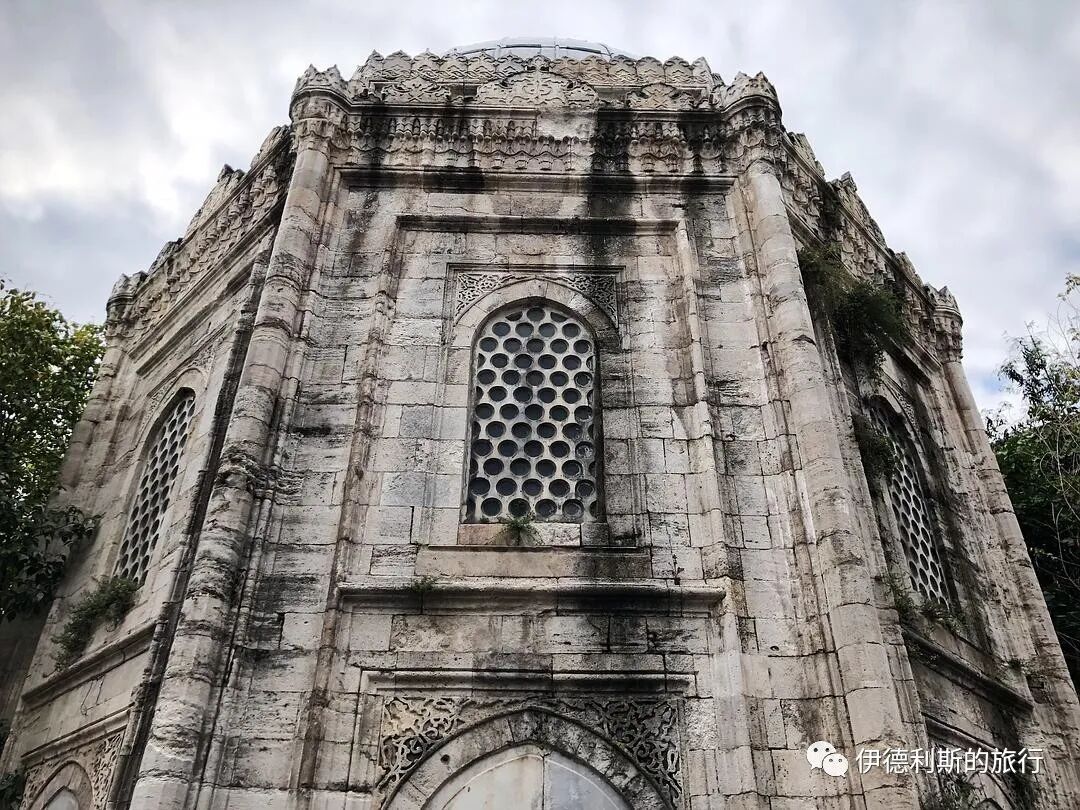
The Yavuz Sultan Selim Medrese is in the west of Istanbul. Suleiman the Magnificent commissioned Mimar Sinan to build it, and it is named after the Sultan's father, Selim I. The madrasa consists of 20 student rooms on three sides and one large lecture hall. In 1563, the lecture hall was turned into a prayer hall, and a minaret (banketa) was added. The minaret is now destroyed, and the madrasa has become a hospital.
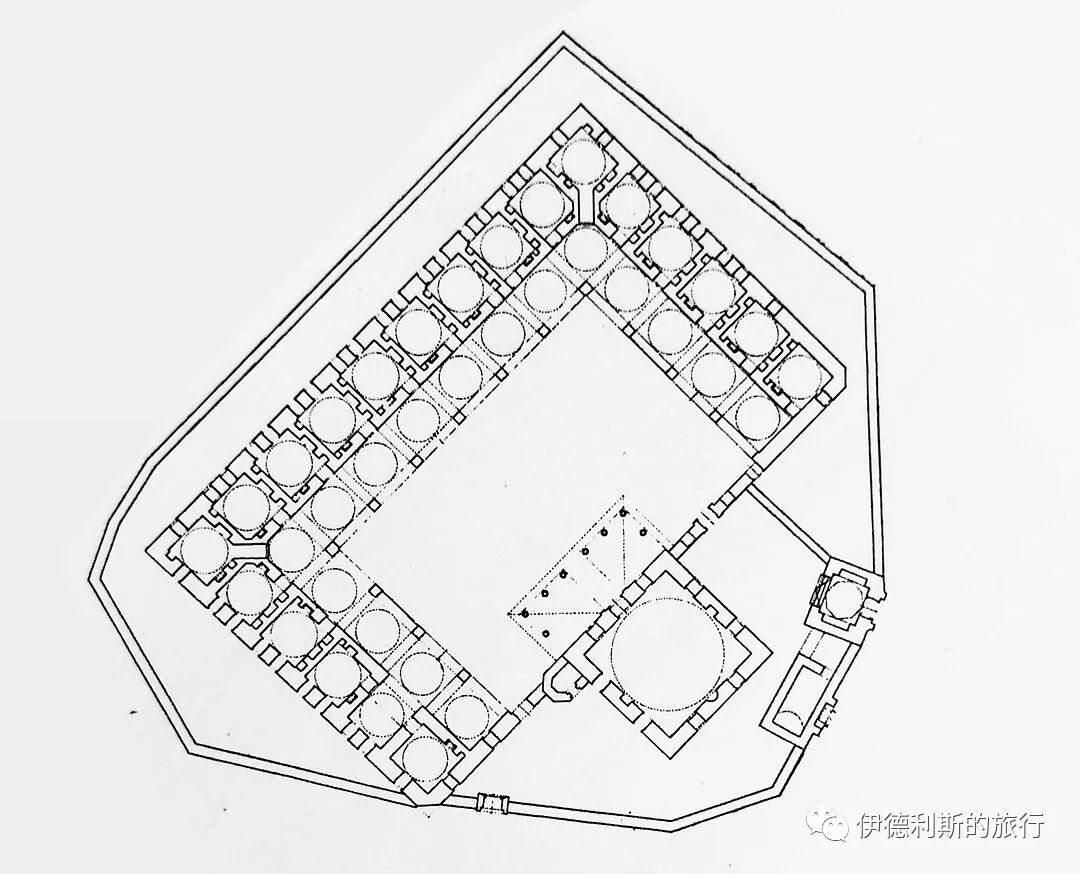
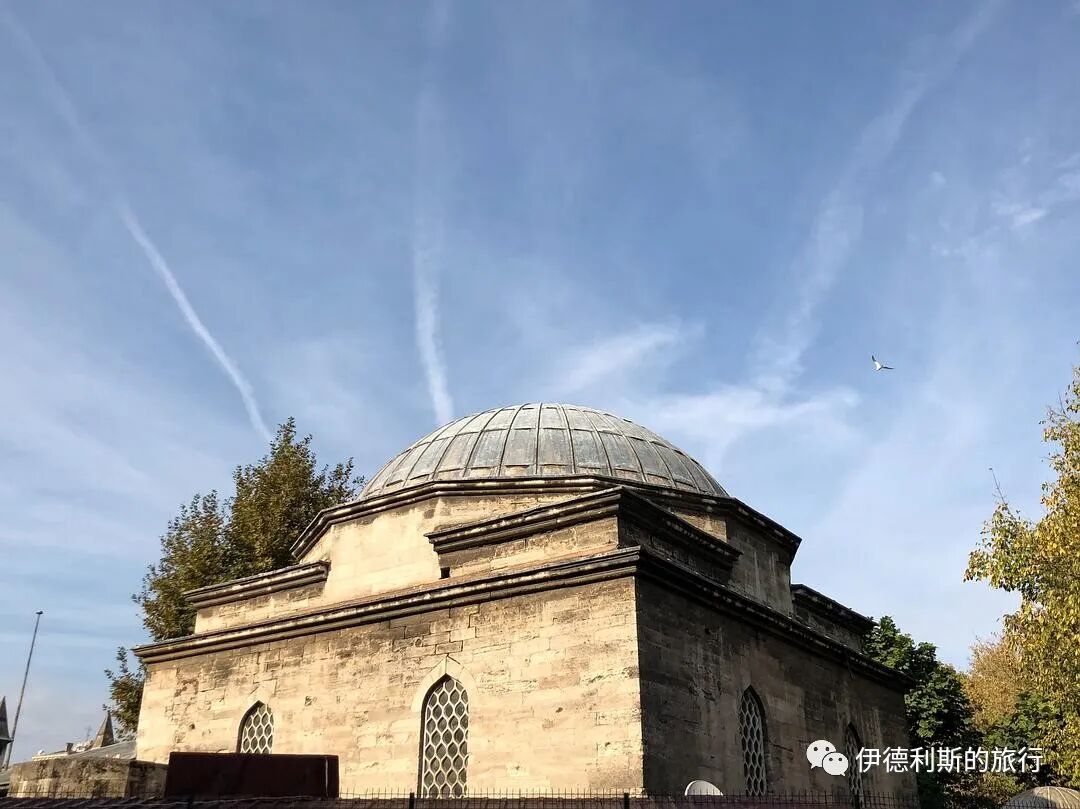
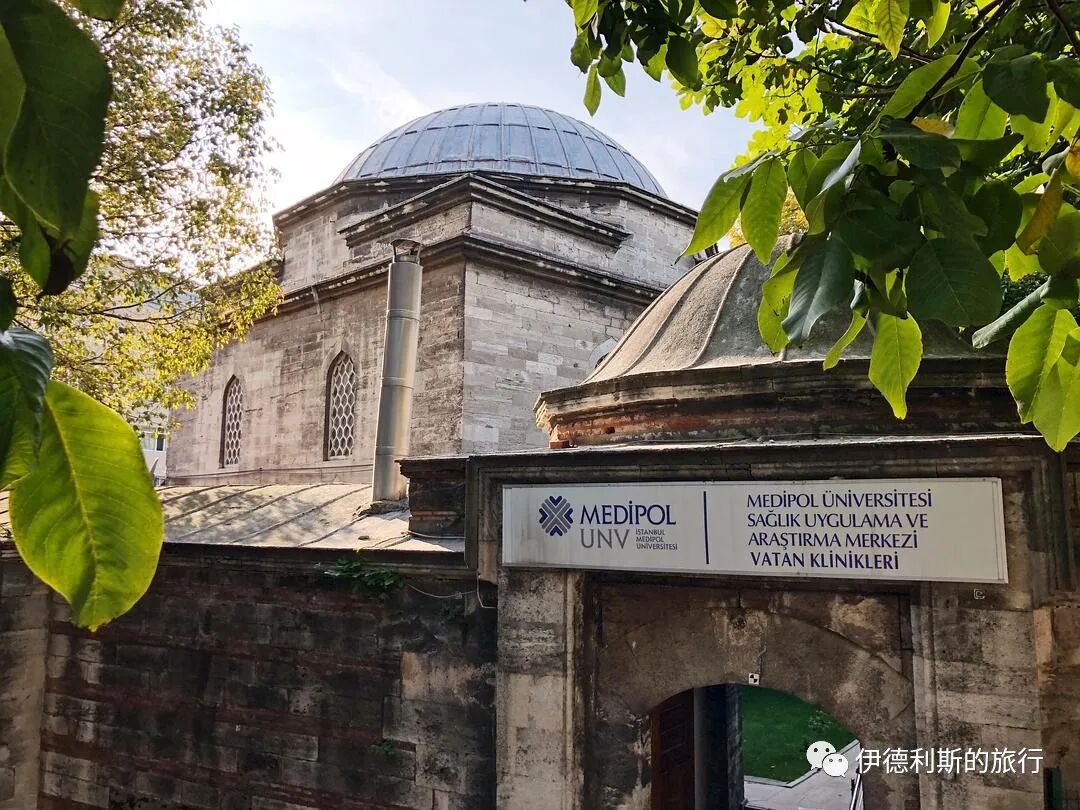
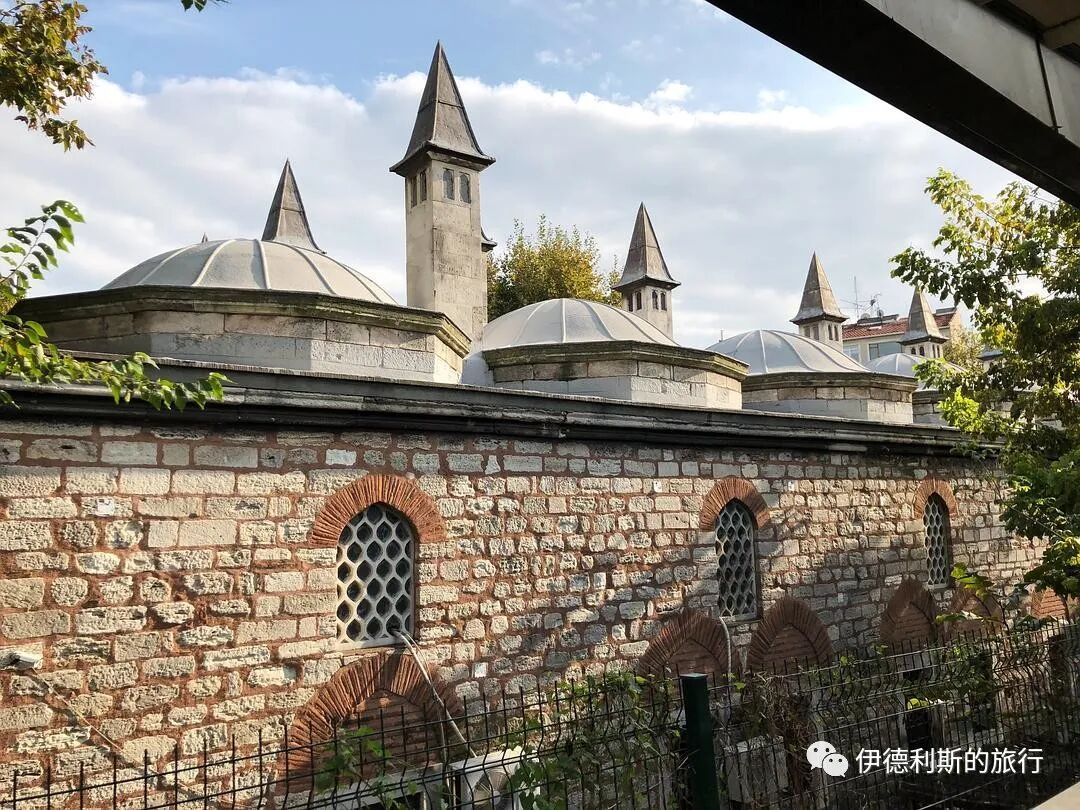
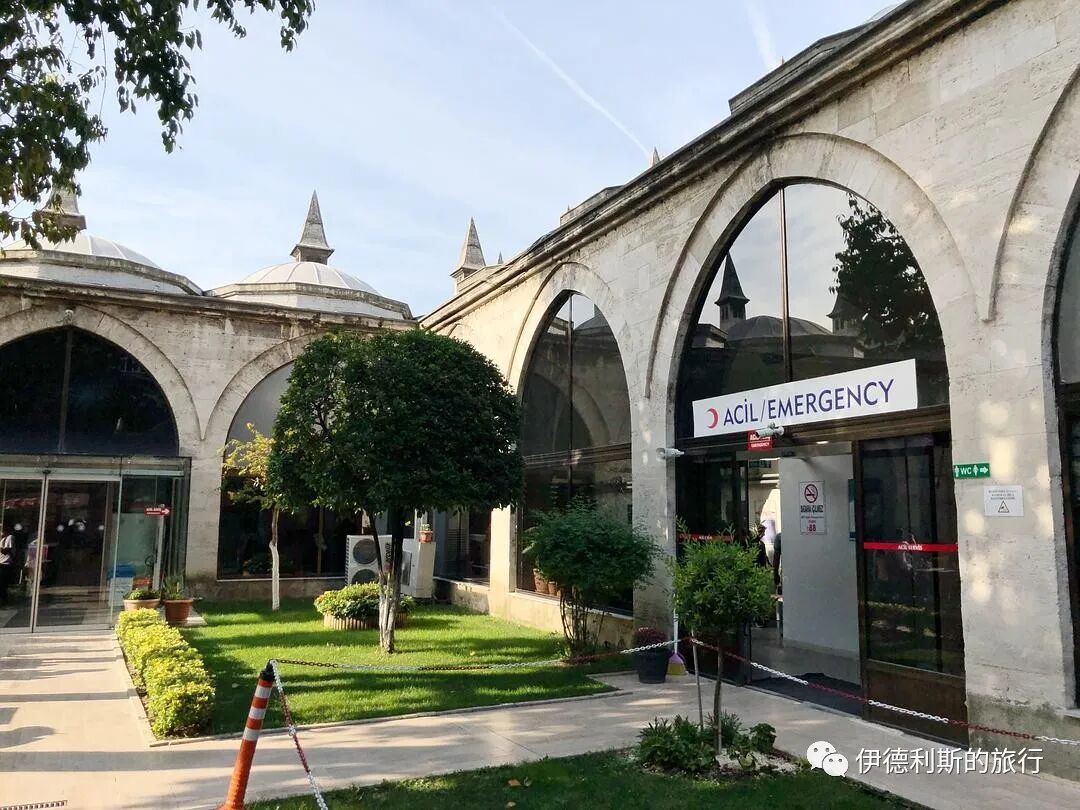
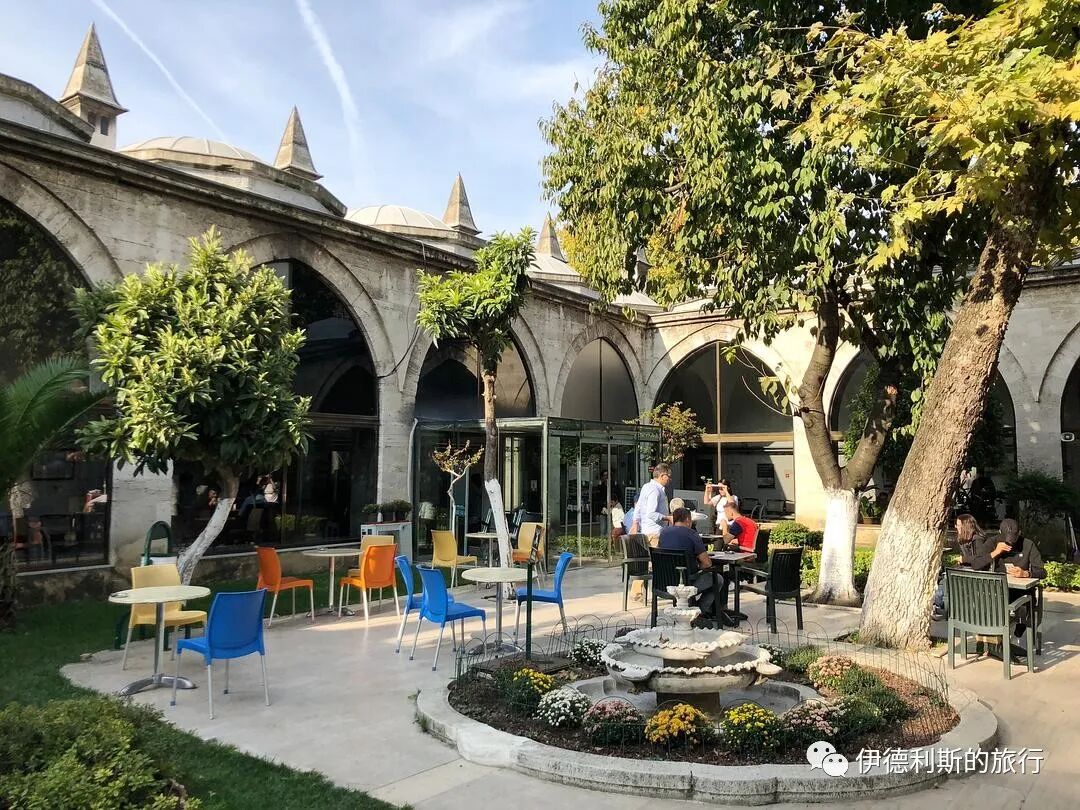
The Rüstem Paşa Medrese is not far northeast of the Grand Bazaar in Istanbul and was built in 1550. This madrasa is Mimar Sinan's new take on the famous Büyük Ağa Medrese in Amasya, which was built in 1488. The Büyük Ağa Medrese was the first octagonal madrasa in Turkey. Mimar Sinan kept the internal octagonal courtyard but changed the outside to a rectangle, which was a further development in Ottoman madrasa architecture.
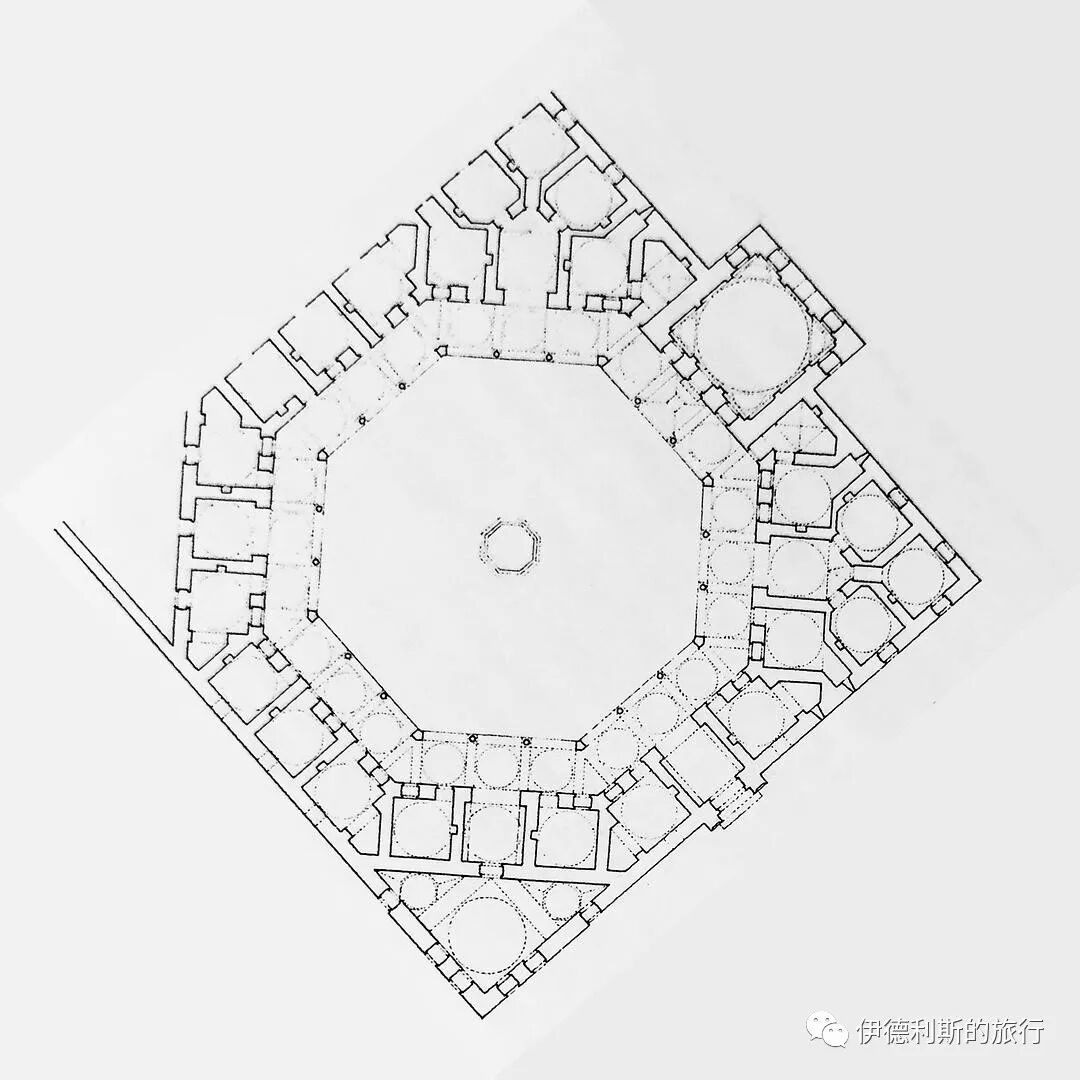
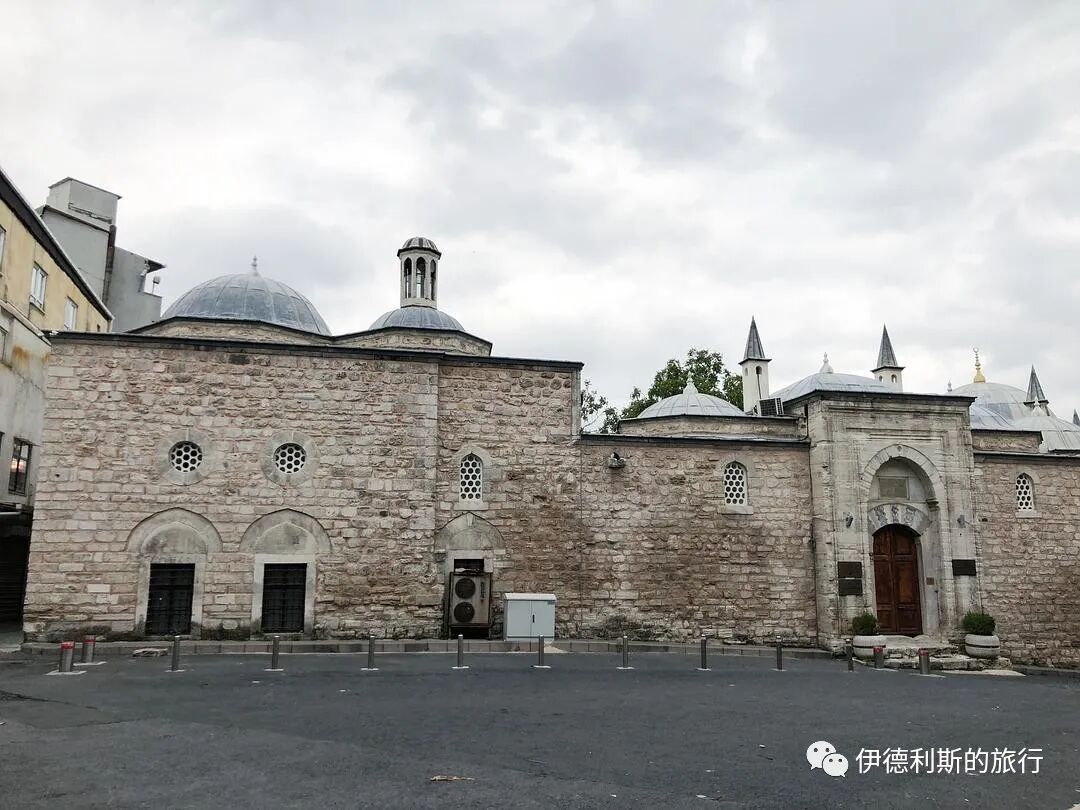
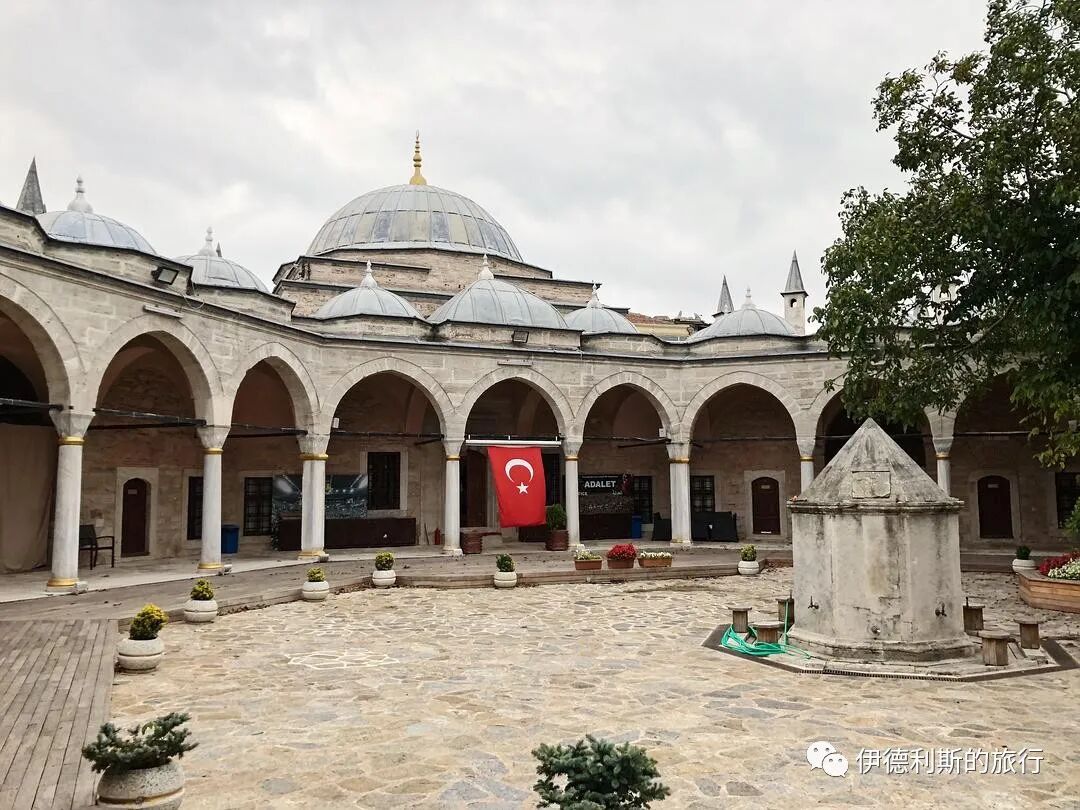
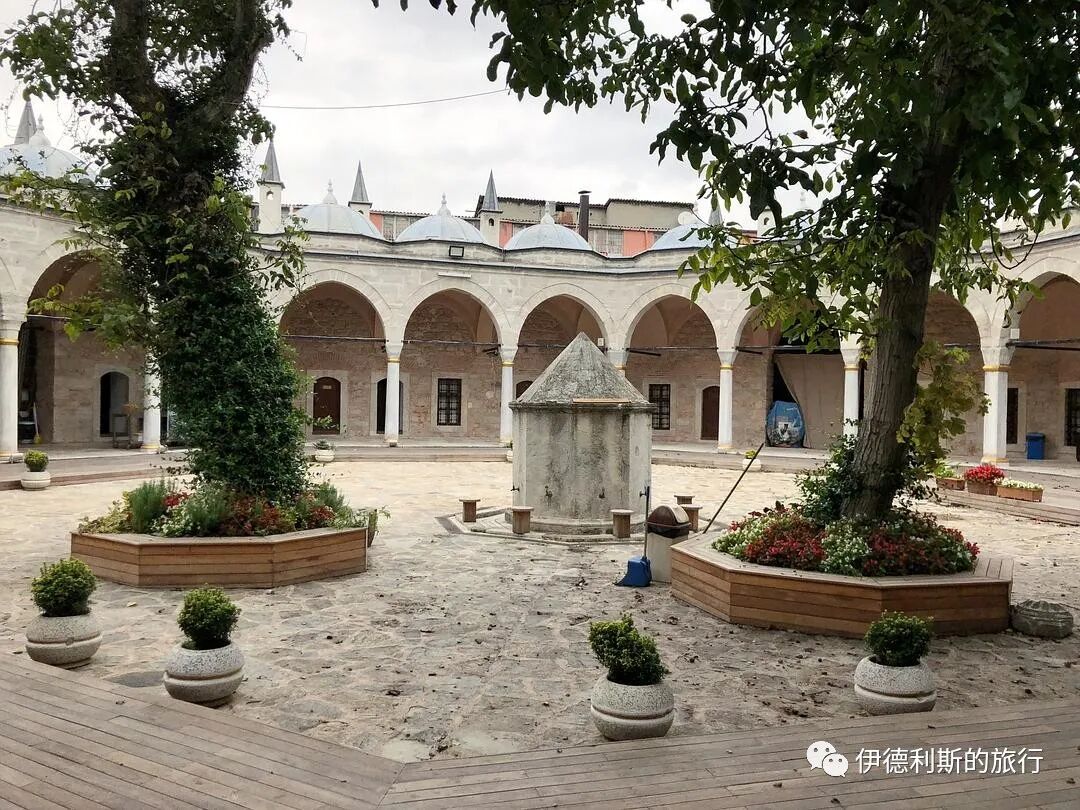
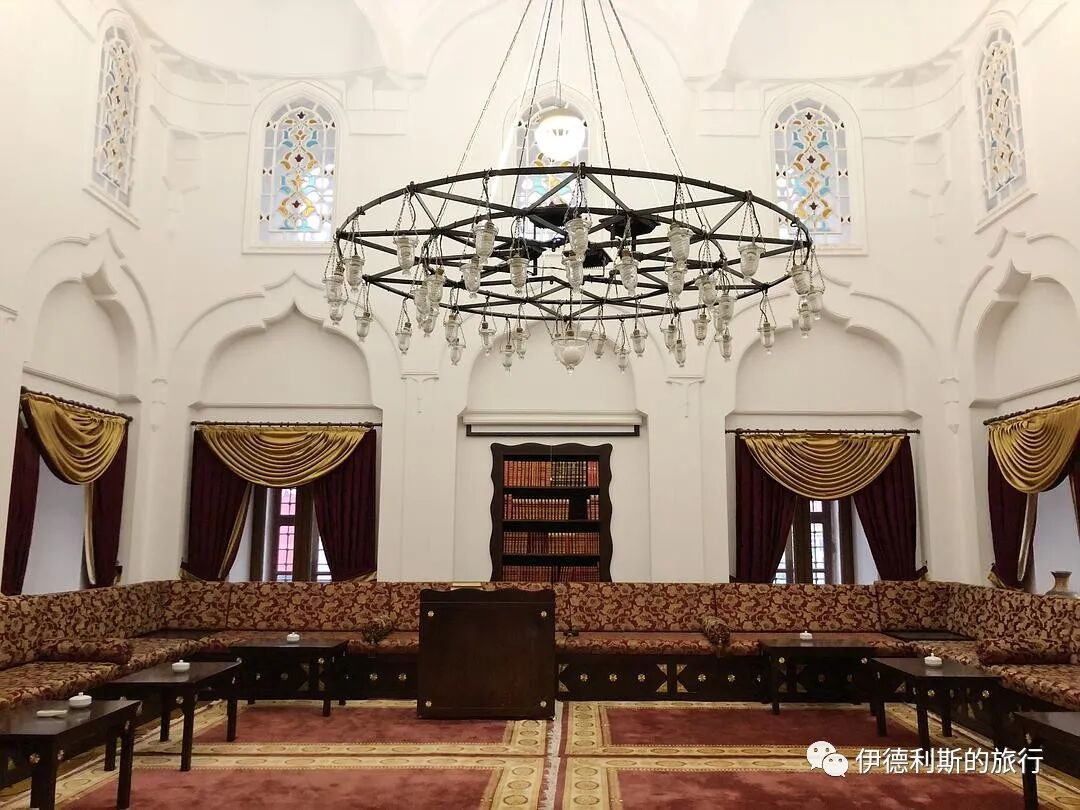
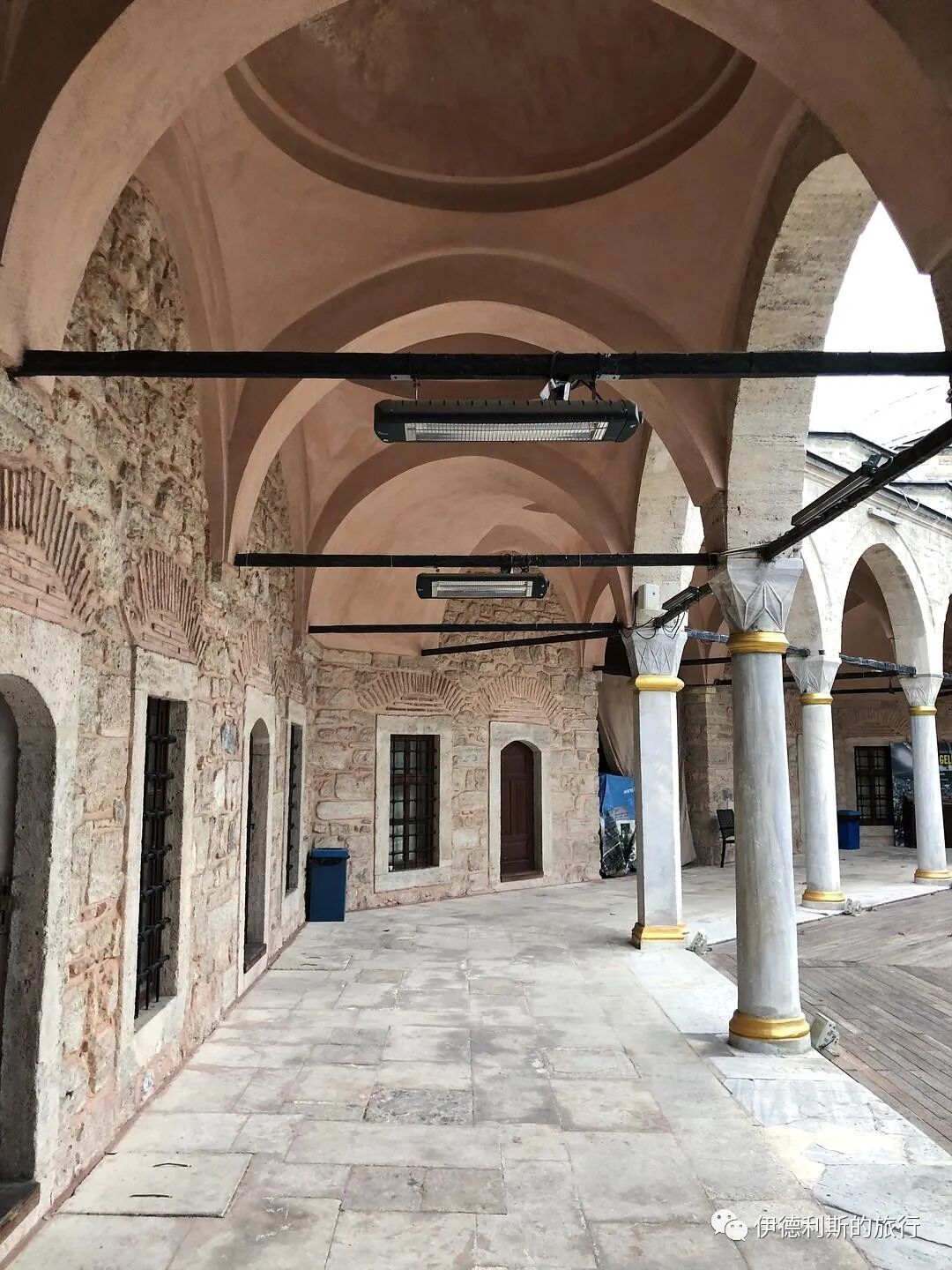
14. Safavid Dynasty in Iran (1501-1736)
We headed east from Istanbul, passed through several Kurdish emirates, and arrived in Tabriz in northwestern Iran.
The Safavid dynasty is considered the most important dynasty in Iran since the Sassanid Empire. The Safavid dynasty made Twelver Shia Islam the state religion, which was a major event in Islamic history. The rulers of the Safavid dynasty claimed to be descendants of the Prophet Muhammad, but historians believe they were Turkified Iranians from Iranian Kurdistan.
In 1501, Ismail I captured Tabriz, the capital of the Aq Qoyunlu, and made it the capital of the Safavid dynasty. Tabriz is now the capital of East Azerbaijan Province, and most of its residents are Azerbaijanis.
In 1550, the Safavid dynasty was ruled by Tahmasp I and was in a break between two large-scale wars with the Ottoman Empire. Between 1532 and 1555, the Ottoman Empire led by Suleiman the Magnificent and the Safavid dynasty led by Tahmasp I fought a 23-year war. Between 1548 and 1549, the Safavid dynasty used a scorched-earth policy to level Armenia, but the Ottoman army still pushed deep into the Iranian interior. After occupying the Safavid capital of Tabriz, the Ottoman army looted Hamadan, Qom, and Kashan, reaching as far as Isfahan. Tahmasp I chose not to fight the Ottoman army head-on, and the Ottoman army was forced to retreat because they ran out of food and supplies. Shortly after this in 1555, to avoid attacks from the Ottoman Empire, the Safavid dynasty moved its capital from Tabriz in the northwest to Qazvin, which was further inland.
A miniature painting of Tahmasp I painted in Qazvin, Iran, in 1575.
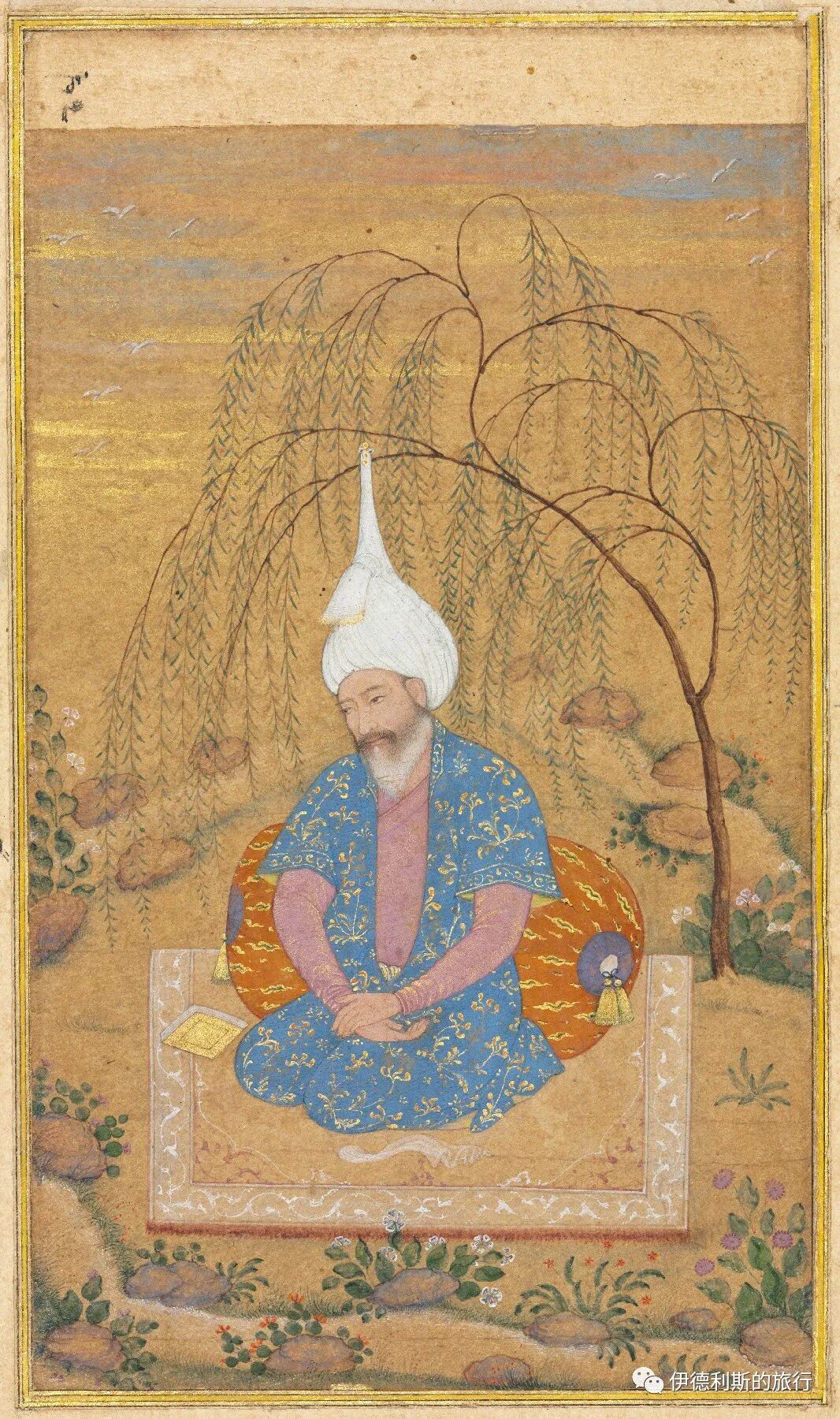
The location of Tabriz.
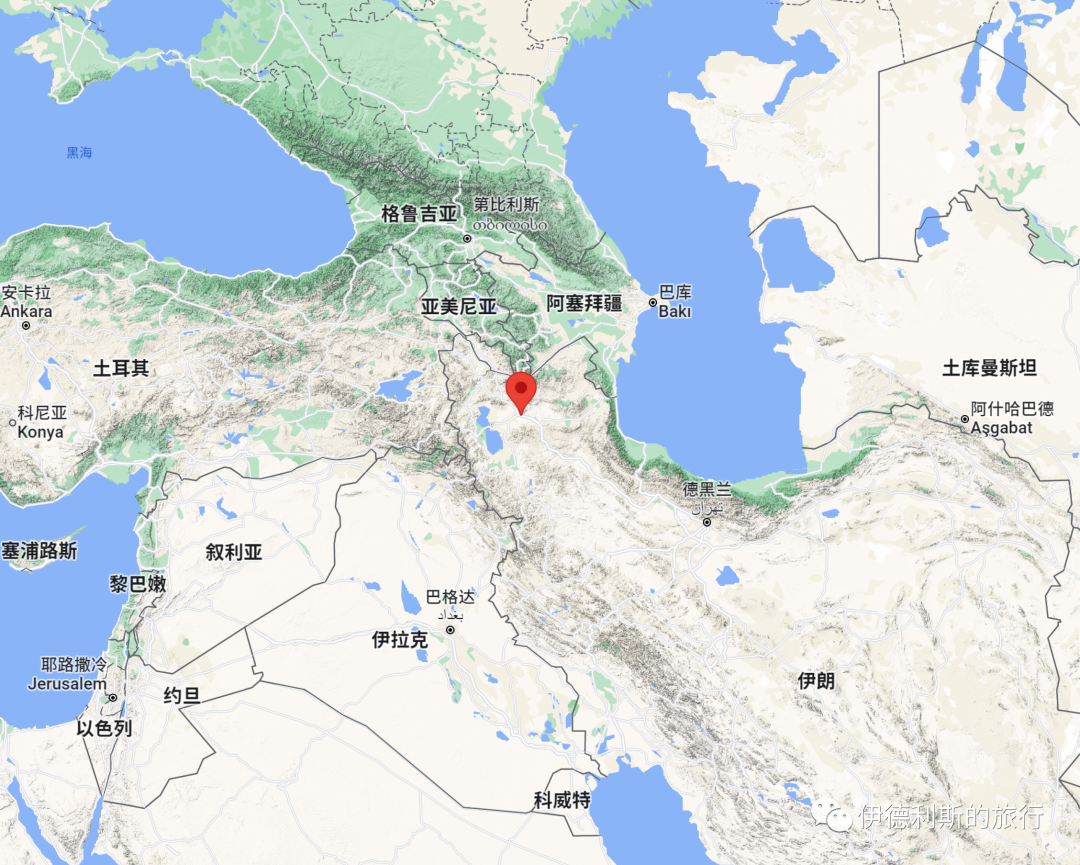
That is all for the first part. In the next post, we will visit 12 Islamic countries ruled by the descendants of Genghis Khan.
Summary: Islamic World in 1550: Africa, Ottoman Lands and Safavid Iran is presented here as a firsthand travel account in clear English, beginning with this scene: I started staying home in mid-November. I wanted to use this time to do things I had always planned, so I decided to take an online tour of the Islamic world. The account keeps its focus on Islamic World, Ottoman History, Safavid Iran while preserving the names, places, food, and historical details from the Chinese source.
I started staying home in mid-November. I wanted to use this time to do things I had always planned, so I decided to take an online tour of the Islamic world. I chose the year 1550 because my previous travels abroad showed me that many interesting things really happened in the Islamic world during the first half of the 16th century. During my travels, I saw the Ottoman Empire reaching its peak under Suleiman the Magnificent, the Crimean Khanate building a new capital in a valley, the Kazan Khanate about to be conquered by Tsarist Russia, the Bukhara and Yarkent Khanates just being established, the Sur Empire in Afghanistan sweeping through northern India to conquer the Mughal Empire, and the island of Java in Indonesia forming a unique Javanese Islamic culture under the influence of Sufi missionaries. This gave me an idea to see exactly which Islamic countries existed in 1550 and what was happening in them.
After researching, I found that in 1550 there were at least 50 Islamic countries and regimes spanning Africa, West Asia, Central Asia, South Asia, and Southeast Asia, each with its own distinct cultural traditions and history. Out of these 50 countries and regimes, I will detail 9 that I have visited before, including the Ottoman Empire, the Crimean Khanate, the Kazan Khanate, the Bukhara Khanate, the Yarkent Khanate, the Sur Empire, the Golconda Sultanate, the Banten Sultanate, and the Demak Sultanate. I hope this online trip helps everyone imagine the atmosphere of the Islamic world in 1550.
Besides these 50 countries, there are other Islamic nations I did not include this time, and I hope to find more information about them in the future.
Let me briefly introduce the travel route for this trip:
Our journey starts in Morocco in the far northwest of Africa, moves east into Algeria and Tunisia, and then heads south across the Sahara Desert into the savanna. Then we will cross the African continent to the east, enter the Nile River basin, and arrive at the Somali Peninsula by the Indian Ocean. We will sail north, pass through the Gulf of Aden and the Red Sea to reach Egypt, cross the Mediterranean to Istanbul, and then head east to Iran. This is the first part.
In the second part, we will visit 12 countries ruled by the descendants of Genghis Khan. We start from the Crimean Peninsula, head east to the Volga Delta, go north to the Ryazan region of Russia, and then east to the city of Kazan on the Volga River. We continue east to the Irtysh River, then south to the Kazakh steppe, east into the Transoxiana region, cross the Tianshan Mountains into southern Xinjiang, pass through the Pamir Plateau into Kashmir, and finally enter the Sindh region of Pakistan.
In the third part, we will experience the Islamic culture of South Asia. We first arrive in Delhi, then head south into Gujarat and central India. Next, we will enter the Deccan Plateau, visit the 5 sultanates on the plateau, and finally arrive in the Maldives by boat.
In the fourth part, we will cross the Bay of Bengal to Southeast Asia. We first enter the Pattani region of Thailand, then head south along the Malay Peninsula, pass by 3 sultanates founded by princes of Malacca, and then take a boat past Sumatra and Java to visit the most unique Islamic culture there. Then we come to the Spice Islands in eastern Indonesia to see the influence of the Portuguese and Spanish, and finally arrive in Brunei and the southern Philippines. Our 1550 world Islamic tour ends here.
General Table of Contents
The Vast African Continent
1. Saadi Sultanate of Morocco (1510-1659)
2. Kingdom of Tlemcen in Algeria (1235-1556)
3. Ottoman Regency of Algiers in Algeria (1516-1830)
4. Kingdom of Beni Abbas in Algeria (1510-1872)
5. Kingdom of Kuku in Algeria (1515-1638)
6. Hafsid Dynasty of Tunisia (1229-1574)
7. Songhai Empire in West Africa (1464-1591)
8. Mali Empire in West Africa (1230-1672)
9. Funj Sultanate of Sudan (1504-1821)
10. Adal Sultanate in Ethiopia (1415-1577)
11. Ajuran Sultanate in Somalia (13th century-late 17th century)
Ottoman Empire spanning Europe, Asia, and Africa (1299-1922)
12. Ottoman Egypt Province (1517-1867)
13. Istanbul, capital of the Ottoman Empire (1453-1922)
14. Safavid Dynasty in Iran (1501-1736)
Legacy of the Mongol Empire
15. Crimean Khanate in Ukraine (1441-1783)
16. Astrakhan Khanate in Russia (1466-1556)
17. Nogai Khanate in Russia and Kazakhstan (1440-1634)
18. Qasim Khanate in Russia (1452-1681)
19. Kazan Khanate in Russia (1438-1552)
20. Sibir Khanate in Russia (1468-1598)
21. Kazakh Khanate in Kazakhstan (1465-1587)
22. Khanate of Khiva in Turkmenistan (1511-1920)
23. Khanate of Bukhara in Uzbekistan (1500-1785)
24. Yarkent Khanate in China (1514-1680)
25. Haidar in Kashmir (1540-1550)
26. Arghun Dynasty in Afghanistan and Pakistan (1520-1591)
27. Sur Dynasty that swept through northern India (1538-1556)
Legacy of the Delhi Sultanate
28. Gujarat Sultanate in western India (1407-1573)
29. Khandesh Sultanate in central India (1382-1601)
Five Deccan Sultanates
30. Berar Sultanate on the Deccan Plateau (1490-1572)
31. Ahmadnagar Sultanate on the Deccan Plateau (1490-1636)
32. Bidar Sultanate on the Deccan Plateau (1492-1619)
33. Golconda Sultanate on the Deccan Plateau (1518-1687)
34. Bijapur Sultanate on the Deccan Plateau (1490-1686)
35. Maldive Sultanate in the Indian Ocean (1153-1968)
36. Pattani Sultanate in Thailand (1457? -1902)
The legacy of the Malacca Sultanate.
37. Perak Sultanate in Malaysia (1528–present).
38. Pahang Sultanate in Malaysia (1470–1623).
39. Johor Sultanate in Malaysia (1528–present).
Sultanates of Indonesia.
40. Aceh Sultanate in Indonesia (1496–1903).
41. Banten Sultanate in Indonesia (1527–1813).
42. Cirebon Sultanate in Indonesia (1447–1679).
43. Demak Sultanate in Indonesia (1475–1568).
The four sultanates of the Spice Islands.
44. Ternate Sultanate in Indonesia (1486–1914).
45. Tidore Sultanate in Indonesia (1450–1967).
46. Jailolo Sultanate in Indonesia (late 15th century–1832).
47. Bacan Sultanate in Indonesia (late 15th century–1965).
48. Maguindanao Sultanate in the Philippines (1520–1905).
49. Sulu Sultanate in the Philippines (1457–1915).
50. Brunei Sultanate in Brunei (1368–1888).
1. Saadi Sultanate of Morocco (1510-1659)
Our journey through the Islamic world begins in the ancient city of Marrakesh, Morocco.
The sultans of the Saadi Sultanate claimed to be descendants of Imam Hassan, the grandson of the Prophet. They established their sultanate in southern Morocco in the early 16th century to resist the Portuguese invasion. They made Marrakesh their capital in 1524, drove the Portuguese out of Morocco in 1541, and then attacked the Wattasid dynasty of the northern Berber people, capturing their capital, Fez, in 1549.
By 1550, the eastward expansion of the Saadi Sultanate caused friction with the Ottoman Empire. At this time, the Ottoman Empire had already expanded into Algeria and was actively preparing for war against the Saadi Sultanate.
Under Saadi rule, Marrakesh became a commercial hub connecting the Maghreb, the Mediterranean, and sub-Saharan Africa. Today, the city of Marrakesh preserves the gongbei (zawiya) complex of the Sufi sheikh Sidi Muhammad Ben Sliman al-Jazuli, which was built in 1524. Jazuli was highly respected by the Saadi family, so when they made Marrakesh their capital in 1524, they moved his gongbei into the city.
The north side of the tomb of Sidi Muhammad Ben Slimane al-Jazuli, photographed by Robert Prazeres in 2014.
The location of the city of Marrakesh.
2. Kingdom of Tlemcen in Algeria (1235-1556)
We head east from Morocco to the city of Tlemcen in northwestern Algeria.
In the early 16th century, Algeria was ruled by the Tlemcen Kingdom, which was established by the Berbers. At this time, the Tlemcen Kingdom was very weak and was fought over repeatedly by Spain and the Ottomans.
In June 1550, the Saadi Sultanate of Morocco captured the capital of the Tlemcen Kingdom without a fight and decided to continue pushing eastward.
The location of Tlemcen city.
3. Ottoman Regency of Algiers in Algeria (1516-1830)
Let us continue east to Algiers, which was under the control of Ottoman pirates.
In 1516, the Ottoman pirate brothers Barbarossa (Red Beard) captured Algiers from Spanish rule and used it as a pirate base to fight against Spain repeatedly. In 1545, Red Beard was called to Istanbul to retire, and his son Hasan Pasha became the Ottoman governor of Algiers. Hasan Pasha captured Tlemcen in 1545, but it was taken back two years later. In 1548, Ottoman Sultan Suleiman the Magnificent removed him from office and replaced him with the Ottoman naval commander Dragut.
In 1550, Dragut was leading the Ottoman navy on raids across the Mediterranean. That year, he attacked Mediterranean coastal regions including Tunisia, Sardinia, Corsica, Genoa in Italy, and Spain. In September, Dragut was trapped in a lagoon in Tunisia by the fleet of the Knights of Malta. He escaped by quickly digging a canal and laying down greased wooden planks to drag all his ships out of the lagoon, successfully sailing back to Istanbul.
The Death of Dragut, painted by Maltese artist Giuseppe Calì in 1867.
Today in Algiers, you can see the Safir mosque, built in 1534 by Safar bin Abdullah, a general in the Barbarossa fleet. The mosque features Ottoman architectural style.
Photo by Brahimpic in 2014.
The location of Algiers.
4. Kingdom of Beni Abbas in Algeria (1510-1872)
In the mountains east of Algiers, there were two small states established by the Berbers.
The Kingdom of Beni Abbas was a small state of the Kabyle Berbers in the mountains of northern Algeria. It held a key strategic position on the trade route between the Mediterranean and the Sahara Desert. In the 16th century, the Kingdom of Beni Abbas attracted many Andalusians, Christians, and Jews fleeing Spain and Algiers, which enriched the kingdom's cultural diversity.
In 1550, the Ottoman Empire sent troops to attack the Kingdom of Beni Abbas twice, but they were repelled, so the Ottomans signed a treaty with them.
The location of the capital, Kalâa of Ait Abbas.
5. Kingdom of Kuku in Algeria (1515-1638)
The Kingdom of Kuku was another state established by the Kabyle Berbers in the mountains of northern Algeria. It was located east of Algiers and was a rival to the Kingdom of Beni Abbas.
The location of Kuku city.
6. Hafsid Dynasty of Tunisia (1229-1574)
Continue east along the North African coast to reach the city of Tunis.
The Hafsid dynasty was a Berber dynasty that was also caught up in the repeated struggles between Spain and the Ottomans in the early 16th century.
In 1550, the Hafsid dynasty was a vassal state of Spain. They were not completely conquered by the Ottoman Empire until 1573.
Santiago Chikly castle, rebuilt by the Spanish in Tunis between 1546 and 1550. Photo by Imanis in 2013.
The location of Tunis.
7. Songhai Empire in West Africa (1464-1591)
Let us head south along the ancient trade routes across the vast Sahara Desert to reach the ancient city of Gao in Mali.
The Songhai Empire was established by the Songhai people of West Africa. It was located in the semi-arid region between the Sahara Desert and the savanna. At its peak, it was one of the largest countries in Africa, with Timbuktu and Djenné as its main cities.
In 1550, the emperor ruling the Songhai Empire was Askia Daoud (reigned 1549–1582). Under his rule, the Songhai Empire enjoyed peace at home, expanded its borders, and saw its economy thrive. At that time, Timbuktu was the center of Islamic culture in Africa, placing great importance on education and preserving a vast collection of book manuscripts.
The capital of the Songhai Empire was located in Gao, Mali, where the tomb of the Songhai emperor Askia Muhammad I, who died in 1538, stands. It was named a UNESCO World Heritage site in 2004. People say the mud and wood used for this tomb were brought back from Mecca by the emperor himself after his hajj.
The Tomb of Askia, photographed by Our Place for the World Heritage website in 2007.
The location of Gao, the capital of the Songhai Empire.
8. Mali Empire in West Africa (1230-1672)
Let us continue south into the savanna to visit the mysterious Mali Empire.
The Mali Empire was once the largest empire in West Africa, though it was gradually replaced by the Songhai Empire from the north after the 16th century. The economic focus of the Mali Empire shifted from trans-Saharan trade to commerce in coastal regions.
In 1545, the Songhai Empire invaded the capital of the Mali Empire, but they did not actually take control of it. By 1550, the Mali Empire still held onto a certain amount of territory. That year, they attacked a trade center in southern Ghana and seized the gold there.
The region attacked by the Mali Empire in 1550.
9. Funj Sultanate of Sudan (1504-1821)
This time, we will travel a long distance across the African continent to reach Sudan on the upper Nile.
The Funj Sultanate was a state established by the Funj people on the upper Nile. Due to the spread of Sufism along the upper Nile in the 16th century, the founder of the Funj Kingdom, Amara Dunqas, became a Muslim. However, the Funj people still kept many local customs and Christian rituals, gradually forming a unique Sudanese folk Islamic tradition.
To counter the expansion of the Ottoman Empire, the Funj Sultanate formed an alliance with the Ethiopian Empire in the early 16th century and exported horses and camels to them.
Sennar, the capital of the Funj Sultanate.
10. Adal Sultanate in Ethiopia (1415-1577)
Let us continue east into the ancient Ethiopian city of Harar.
The Adal Sultanate was located east of the Funj Sultanate on the northern Somali Peninsula and served as a commercial and political partner to the Ottoman Empire. Between 1529 and 1543, with help from the Ottoman Empire, the Adal Sultanate fought an 11-year war against the Ethiopian Kingdom, which eventually weakened both sides.
In 1550, the Adal Sultanate was ruled by Nur ibn Mujahid, who built a city wall with five gates in the capital, Harar. This walled city, known as Harar Jugol, was named a UNESCO World Heritage site in 2006. Harar is located in eastern Ethiopia and served as the capital of the Adal Sultanate from 1520 to 1577. Historically, this city has been an important African commercial and Islamic center, connecting trade routes from Ethiopia to the Somali Peninsula, the Arabian Peninsula, and the heart of Asia.
The Harar city wall, photographed by Sailko in 2018.
The location of the city of Harar.
11. Ajuran Sultanate in Somalia (13th century-late 17th century)
We continue south to the port city of Mogadishu on the Indian Ocean.
The Ajuran Sultanate was located on the Somali Peninsula, south of the Adal Sultanate. It held a key position in North Indian Ocean trade, with ships traveling between East Asia, South Asia, Europe, and Africa, leaving behind many ancient monuments in Somalia.
As a maritime nation, the Ajuran Sultanate not only allied with the Ottoman Empire but also maintained friendly relations with the Ming Dynasty. They were the first African country to send envoys to the Ming Dynasty.
In the early 16th century, the wealthiest Indian Ocean port city in the Sultanate was Mogadishu, which is the current capital of Somalia. According to the 16th-century Andalusian traveler Leo Africanus, the people of Mogadishu at that time had olive skin, wore white robes and white turbans, and used Arabic as their common language. Mogadishu had stone walls and was equipped with muskets and cannons imported from the Ottoman Empire.
The location of Mogadishu city.
Ottoman Empire spanning Europe, Asia, and Africa (1299-1922)
Let us take a ship from the Indian Ocean port of Mogadishu, sail north along the Somali Peninsula, enter the Red Sea from the Gulf of Aden, and arrive in Cairo, Egypt, under Ottoman rule.
12. Ottoman Egypt Province (1517-1867)
In 1517, the Ottoman Empire conquered the Mamluk Sultanate, which had ruled Egypt for over two hundred years. Although they appointed a series of Egyptian governors, the political structure and cultural arts still continued the traditions of the Mamluk period. In early 16th-century Cairo, Mamluk and Ottoman architectural styles began to merge.
In 1528, the Egyptian governor Hadım Suleiman Pasha built the Suleiman Pasha Mosque for the Ottoman Janissaries stationed in the Cairo Citadel. This was the first Ottoman-style mosque in Egypt.
Suleiman Pasha Mosque photographed by Houssam_Daowd_102 in 2019.
The location of Cairo.
13. Istanbul, capital of the Ottoman Empire (1453-1922)
We cross the Mediterranean Sea and arrive at Istanbul, the capital of the Ottoman Empire. At that time, the eastern Mediterranean had become an inland sea for the Ottoman Empire.
In the first half of the 16th century, the Ottoman Empire entered its Golden Age under the rule of Suleiman the Magnificent (reigned 1520-1566). Ottoman territory continued to expand. They besieged Vienna twice in 1529 and 1532, captured Baghdad in 1535, and defeated the Portuguese to control the Red Sea in 1538.
Meanwhile, under the patronage of Suleiman the Magnificent, various talented craftsmen and artists came to the Ottoman court, leading to great cultural prosperity. Mimar Sinan, the court architect for Suleiman the Magnificent, built a series of structures in Istanbul that became the best witnesses of that era.
The Haseki Hürrem Sultan Complex (Haseki Hürrem Sultan Külliyesi) was commissioned by Suleiman the Magnificent's wife, Hürrem Sultan, and built by Mimar Sinan in 1539. It was the first complex built by Mimar Sinan after he became the royal architect. Hürrem Sultan, known as Roxelana, was the first empress in Ottoman history to receive the title of 'Haseki Sultan' (the Sultan's favorite). She is also known as the most powerful and controversial woman in Ottoman history.
After becoming empress, Hürrem Sultan began building a series of public structures, the first of which was this empress complex. The complex includes a Friday mosque (Jumu'ah mosque), a public kitchen (imaret), a religious school (madrasa), an elementary school (mektep), and a hospital (darüssifa). The mosque was completed in 1539, the religious school and kitchen were finished the following year, and the hospital was not completed until 1550. When designing the entire complex, Sinan arranged the different buildings at various angles, leaving only narrow passages or gaps between them. This arrangement created rich perspective effects that almost never appeared in his later works.
The mosque (1539) is at the southernmost part of the complex, separated from the other parts by a narrow alley. The mosque was originally a simple, traditional single-dome, single-minaret structure made of alternating brick and stone. The porch is supported by six marble columns holding up five small domes. The mosque was expanded in 1612, growing from a single dome to a double dome, which doubled its area. The mosque has no tiles, and the current paintings were added later. During this period, Sinan had not yet started to innovate in mosque architecture.
The madrasa (1540) is directly opposite the mosque and consists of sixteen student rooms and a large lecture hall arranged in a rectangle.
The primary school (1540) is known as the most beautiful primary school built by Mimar Sinan.
The hospital (1550) is in the far north and was built by Hurrem Sultan specifically for women. The hospital courtyard is octagonal, with rooms on three sides and windows facing the street on the fourth side. The two arched gateways (iwan) at the corners of the octagonal courtyard and the dome foreshadowed Sinan's later development of arches and domes.
A diagram of the public kitchen published by Cornelius Gurlitt in 1912.
The Mihrimah Sultan Complex (Mihrimah Sultan Külliyesi) was commissioned in 1543 by Mihrimah Sultan, the daughter of Suleiman the Magnificent and Hurrem Sultan, and built by Mimar Sinan. It is the second complex by Mimar Sinan in Istanbul that still stands today.
Mihrimah Sultan was the wife of the Grand Vizier Rustem Pasha and is known as the most powerful princess in the history of the Ottoman Empire.
The entire complex is cleverly built on a slope extending to the coast. It includes a mosque, a madrasa, a guesthouse, a canteen, a primary school, and some later tombs. The guesthouse and canteen were destroyed by fire in 1772.
The Mihrimah Sultan Mosque is the first semi-domed mosque designed by Mimar Sinan. The mosque consists of one main dome and three semi-domes. This shape expands the interior space, making people feel like they are under the dome as soon as they enter the main hall. Although the mosque itself has limited depth, this design increases the sense of openness. Mimar Sinan added a T-shaped canopy in front of the porch to soften the hardness of the entrance facade.
A diagram of the mosque published by Cornelius Gurlitt in 1912.
The madrasa consists of sixteen student rooms and a large lecture hall in a rectangle. It is now a hospital, and the integrity of the cultural heritage has been damaged.
The Sehzade Complex (Sehzade Külliye) is located on the third hill of the old city of Istanbul. Built between 1543 and 1548, it is considered Mimar Sinan's most important early work and his first masterpiece.
The complex was built by Suleiman the Magnificent to commemorate his beloved son, Prince Mehmed (Sehzade Mehmed), who died young. Prince Mehmed was the son of Suleiman the Magnificent and Hurrem Sultan. He was favored from a young age and was the most likely heir, but he sadly died of smallpox (some say murder) in 1543. After the prince died, Suleiman the Magnificent was heartbroken. Traditionally, princes were buried in Bursa, but the Sultan decided to commission Mimar Sinan to build a tomb for the prince in Istanbul and match it with a complex.
The Sehzade Complex was the first work Mimar Sinan was directly commissioned to build by Suleiman the Magnificent. It was also his most ambitious early work, with a much grander scale and more decoration than his previous projects.
The complex includes a mosque, five tombs, a madrasa, a guesthouse, a hostel, a public canteen, and a primary school. These buildings are freely distributed on flat ground without a deliberate attempt at symmetry. the mosque is not a single unit with the other buildings; the other structures are distributed in the gardens or streets surrounding the mosque.
The mosque (1543-1548) is the second semi-domed mosque designed by Mimar Sinan, consisting of one main dome and four semi-domes. This is both an improvement on Sinan's previous work, the Mihrimah Sultan Mosque with its three semi-domes, and a reinterpretation of designs by predecessors like the Fatih Mosque (1471) and the Bayezid II Mosque (1506). This design isolates the four pillars supporting the central dome, creating a more stunning visual effect. The interior of the mosque is a square that unfolds along a central vertical axis. When people enter, they can immediately feel the dominance of the central dome. the porches on the walls on both sides of the mosque are a bold innovation, which also foreshadows the future direction of Ottoman mosque development. This design softens the flanks of the building and hides the buttresses, allowing the facade to blend in more perfectly. The design of the Sehzade Mosque had gradually moved away from the traditional Ottoman mosque model and began to move toward Sinan's own unique style.
A diagram of the mosque published by Cornelius Gurlitt in 1912.
The Tomb of Prince Mehmed (1543) sits southeast of the mosque. It has an octagonal structure, Persian inscriptions at the entrance, and Cuerda Seca tiles inside.
The madrasa (1546) is outside the garden on the north side of the mosque. It forms a rectangle surrounded by a gallery, with 21 student rooms and one large lecture hall on three sides. The fountain in the middle of the courtyard still keeps its Seljuk-era (11th to 13th century) tomb tower (kumbet) structure.
The public kitchen (1543-1548) is across the street east of the mosque. It consists of two buildings, each with six domes and a courtyard in the middle.
The octagonal tomb of Hüsrev Paşa is in the west of Istanbul. It is known as one of the most beautiful tombs built by Mimar Sinan. Hüsrev Paşa was a vizier of the Ottoman Empire. People called him the Mad Hüsrev Paşa because he had a bad temper. Hüsrev Paşa was born in Bosnia in 1495 and came from the famous Sokollu family. He became the governor of Egypt in 1535 and the Second Vizier in 1538. In 1544, Hüsrev Paşa lost the race for Grand Vizier to Rüstem Paşa. He died of illness shortly after, and Mimar Sinan built his tomb.
The Yavuz Sultan Selim Medrese is in the west of Istanbul. Suleiman the Magnificent commissioned Mimar Sinan to build it, and it is named after the Sultan's father, Selim I. The madrasa consists of 20 student rooms on three sides and one large lecture hall. In 1563, the lecture hall was turned into a prayer hall, and a minaret (banketa) was added. The minaret is now destroyed, and the madrasa has become a hospital.
The Rüstem Paşa Medrese is not far northeast of the Grand Bazaar in Istanbul and was built in 1550. This madrasa is Mimar Sinan's new take on the famous Büyük Ağa Medrese in Amasya, which was built in 1488. The Büyük Ağa Medrese was the first octagonal madrasa in Turkey. Mimar Sinan kept the internal octagonal courtyard but changed the outside to a rectangle, which was a further development in Ottoman madrasa architecture.
14. Safavid Dynasty in Iran (1501-1736)
We headed east from Istanbul, passed through several Kurdish emirates, and arrived in Tabriz in northwestern Iran.
The Safavid dynasty is considered the most important dynasty in Iran since the Sassanid Empire. The Safavid dynasty made Twelver Shia Islam the state religion, which was a major event in Islamic history. The rulers of the Safavid dynasty claimed to be descendants of the Prophet Muhammad, but historians believe they were Turkified Iranians from Iranian Kurdistan.
In 1501, Ismail I captured Tabriz, the capital of the Aq Qoyunlu, and made it the capital of the Safavid dynasty. Tabriz is now the capital of East Azerbaijan Province, and most of its residents are Azerbaijanis.
In 1550, the Safavid dynasty was ruled by Tahmasp I and was in a break between two large-scale wars with the Ottoman Empire. Between 1532 and 1555, the Ottoman Empire led by Suleiman the Magnificent and the Safavid dynasty led by Tahmasp I fought a 23-year war. Between 1548 and 1549, the Safavid dynasty used a scorched-earth policy to level Armenia, but the Ottoman army still pushed deep into the Iranian interior. After occupying the Safavid capital of Tabriz, the Ottoman army looted Hamadan, Qom, and Kashan, reaching as far as Isfahan. Tahmasp I chose not to fight the Ottoman army head-on, and the Ottoman army was forced to retreat because they ran out of food and supplies. Shortly after this in 1555, to avoid attacks from the Ottoman Empire, the Safavid dynasty moved its capital from Tabriz in the northwest to Qazvin, which was further inland.
A miniature painting of Tahmasp I painted in Qazvin, Iran, in 1575.
The location of Tabriz.
That is all for the first part. In the next post, we will visit 12 Islamic countries ruled by the descendants of Genghis Khan.
Islamic World in 1550: Africa, Ottoman Lands and Safavid Iran
Articles • ali2007fr posted the article • 0 comments • 234 views • 2026-05-18 09:20
Reposted from the web
Summary: Islamic World in 1550: Africa, Ottoman Lands and Safavid Iran is presented here as a firsthand travel account in clear English, beginning with this scene: I started staying home in mid-November. I wanted to use this time to do things I had always planned, so I decided to take an online tour of the Islamic world. The account keeps its focus on Islamic World, Ottoman History, Safavid Iran while preserving the names, places, food, and historical details from the Chinese source.
I started staying home in mid-November. I wanted to use this time to do things I had always planned, so I decided to take an online tour of the Islamic world. I chose the year 1550 because my previous travels abroad showed me that many interesting things really happened in the Islamic world during the first half of the 16th century. During my travels, I saw the Ottoman Empire reaching its peak under Suleiman the Magnificent, the Crimean Khanate building a new capital in a valley, the Kazan Khanate about to be conquered by Tsarist Russia, the Bukhara and Yarkent Khanates just being established, the Sur Empire in Afghanistan sweeping through northern India to conquer the Mughal Empire, and the island of Java in Indonesia forming a unique Javanese Islamic culture under the influence of Sufi missionaries. This gave me an idea to see exactly which Islamic countries existed in 1550 and what was happening in them.
After researching, I found that in 1550 there were at least 50 Islamic countries and regimes spanning Africa, West Asia, Central Asia, South Asia, and Southeast Asia, each with its own distinct cultural traditions and history. Out of these 50 countries and regimes, I will detail 9 that I have visited before, including the Ottoman Empire, the Crimean Khanate, the Kazan Khanate, the Bukhara Khanate, the Yarkent Khanate, the Sur Empire, the Golconda Sultanate, the Banten Sultanate, and the Demak Sultanate. I hope this online trip helps everyone imagine the atmosphere of the Islamic world in 1550.
Besides these 50 countries, there are other Islamic nations I did not include this time, and I hope to find more information about them in the future.
Let me briefly introduce the travel route for this trip:
Our journey starts in Morocco in the far northwest of Africa, moves east into Algeria and Tunisia, and then heads south across the Sahara Desert into the savanna. Then we will cross the African continent to the east, enter the Nile River basin, and arrive at the Somali Peninsula by the Indian Ocean. We will sail north, pass through the Gulf of Aden and the Red Sea to reach Egypt, cross the Mediterranean to Istanbul, and then head east to Iran. This is the first part.
In the second part, we will visit 12 countries ruled by the descendants of Genghis Khan. We start from the Crimean Peninsula, head east to the Volga Delta, go north to the Ryazan region of Russia, and then east to the city of Kazan on the Volga River. We continue east to the Irtysh River, then south to the Kazakh steppe, east into the Transoxiana region, cross the Tianshan Mountains into southern Xinjiang, pass through the Pamir Plateau into Kashmir, and finally enter the Sindh region of Pakistan.
In the third part, we will experience the Islamic culture of South Asia. We first arrive in Delhi, then head south into Gujarat and central India. Next, we will enter the Deccan Plateau, visit the 5 sultanates on the plateau, and finally arrive in the Maldives by boat.
In the fourth part, we will cross the Bay of Bengal to Southeast Asia. We first enter the Pattani region of Thailand, then head south along the Malay Peninsula, pass by 3 sultanates founded by princes of Malacca, and then take a boat past Sumatra and Java to visit the most unique Islamic culture there. Then we come to the Spice Islands in eastern Indonesia to see the influence of the Portuguese and Spanish, and finally arrive in Brunei and the southern Philippines. Our 1550 world Islamic tour ends here.
General Table of Contents
The Vast African Continent
1. Saadi Sultanate of Morocco (1510-1659)
2. Kingdom of Tlemcen in Algeria (1235-1556)
3. Ottoman Regency of Algiers in Algeria (1516-1830)
4. Kingdom of Beni Abbas in Algeria (1510-1872)
5. Kingdom of Kuku in Algeria (1515-1638)
6. Hafsid Dynasty of Tunisia (1229-1574)
7. Songhai Empire in West Africa (1464-1591)
8. Mali Empire in West Africa (1230-1672)
9. Funj Sultanate of Sudan (1504-1821)
10. Adal Sultanate in Ethiopia (1415-1577)
11. Ajuran Sultanate in Somalia (13th century-late 17th century)
Ottoman Empire spanning Europe, Asia, and Africa (1299-1922)
12. Ottoman Egypt Province (1517-1867)
13. Istanbul, capital of the Ottoman Empire (1453-1922)
14. Safavid Dynasty in Iran (1501-1736)
Legacy of the Mongol Empire
15. Crimean Khanate in Ukraine (1441-1783)
16. Astrakhan Khanate in Russia (1466-1556)
17. Nogai Khanate in Russia and Kazakhstan (1440-1634)
18. Qasim Khanate in Russia (1452-1681)
19. Kazan Khanate in Russia (1438-1552)
20. Sibir Khanate in Russia (1468-1598)
21. Kazakh Khanate in Kazakhstan (1465-1587)
22. Khanate of Khiva in Turkmenistan (1511-1920)
23. Khanate of Bukhara in Uzbekistan (1500-1785)
24. Yarkent Khanate in China (1514-1680)
25. Haidar in Kashmir (1540-1550)
26. Arghun Dynasty in Afghanistan and Pakistan (1520-1591)
27. Sur Dynasty that swept through northern India (1538-1556)
Legacy of the Delhi Sultanate
28. Gujarat Sultanate in western India (1407-1573)
29. Khandesh Sultanate in central India (1382-1601)
Five Deccan Sultanates
30. Berar Sultanate on the Deccan Plateau (1490-1572)
31. Ahmadnagar Sultanate on the Deccan Plateau (1490-1636)
32. Bidar Sultanate on the Deccan Plateau (1492-1619)
33. Golconda Sultanate on the Deccan Plateau (1518-1687)
34. Bijapur Sultanate on the Deccan Plateau (1490-1686)
35. Maldive Sultanate in the Indian Ocean (1153-1968)
36. Pattani Sultanate in Thailand (1457? -1902)
The legacy of the Malacca Sultanate.
37. Perak Sultanate in Malaysia (1528–present).
38. Pahang Sultanate in Malaysia (1470–1623).
39. Johor Sultanate in Malaysia (1528–present).
Sultanates of Indonesia.
40. Aceh Sultanate in Indonesia (1496–1903).
41. Banten Sultanate in Indonesia (1527–1813).
42. Cirebon Sultanate in Indonesia (1447–1679).
43. Demak Sultanate in Indonesia (1475–1568).
The four sultanates of the Spice Islands.
44. Ternate Sultanate in Indonesia (1486–1914).
45. Tidore Sultanate in Indonesia (1450–1967).
46. Jailolo Sultanate in Indonesia (late 15th century–1832).
47. Bacan Sultanate in Indonesia (late 15th century–1965).
48. Maguindanao Sultanate in the Philippines (1520–1905).
49. Sulu Sultanate in the Philippines (1457–1915).
50. Brunei Sultanate in Brunei (1368–1888).
1. Saadi Sultanate of Morocco (1510-1659)
Our journey through the Islamic world begins in the ancient city of Marrakesh, Morocco.
The sultans of the Saadi Sultanate claimed to be descendants of Imam Hassan, the grandson of the Prophet. They established their sultanate in southern Morocco in the early 16th century to resist the Portuguese invasion. They made Marrakesh their capital in 1524, drove the Portuguese out of Morocco in 1541, and then attacked the Wattasid dynasty of the northern Berber people, capturing their capital, Fez, in 1549.
By 1550, the eastward expansion of the Saadi Sultanate caused friction with the Ottoman Empire. At this time, the Ottoman Empire had already expanded into Algeria and was actively preparing for war against the Saadi Sultanate.
Under Saadi rule, Marrakesh became a commercial hub connecting the Maghreb, the Mediterranean, and sub-Saharan Africa. Today, the city of Marrakesh preserves the gongbei (zawiya) complex of the Sufi sheikh Sidi Muhammad Ben Sliman al-Jazuli, which was built in 1524. Jazuli was highly respected by the Saadi family, so when they made Marrakesh their capital in 1524, they moved his gongbei into the city.
The north side of the tomb of Sidi Muhammad Ben Slimane al-Jazuli, photographed by Robert Prazeres in 2014.
The location of the city of Marrakesh.
2. Kingdom of Tlemcen in Algeria (1235-1556)
We head east from Morocco to the city of Tlemcen in northwestern Algeria.
In the early 16th century, Algeria was ruled by the Tlemcen Kingdom, which was established by the Berbers. At this time, the Tlemcen Kingdom was very weak and was fought over repeatedly by Spain and the Ottomans.
In June 1550, the Saadi Sultanate of Morocco captured the capital of the Tlemcen Kingdom without a fight and decided to continue pushing eastward.
The location of Tlemcen city.
3. Ottoman Regency of Algiers in Algeria (1516-1830)
Let us continue east to Algiers, which was under the control of Ottoman pirates.
In 1516, the Ottoman pirate brothers Barbarossa (Red Beard) captured Algiers from Spanish rule and used it as a pirate base to fight against Spain repeatedly. In 1545, Red Beard was called to Istanbul to retire, and his son Hasan Pasha became the Ottoman governor of Algiers. Hasan Pasha captured Tlemcen in 1545, but it was taken back two years later. In 1548, Ottoman Sultan Suleiman the Magnificent removed him from office and replaced him with the Ottoman naval commander Dragut.
In 1550, Dragut was leading the Ottoman navy on raids across the Mediterranean. That year, he attacked Mediterranean coastal regions including Tunisia, Sardinia, Corsica, Genoa in Italy, and Spain. In September, Dragut was trapped in a lagoon in Tunisia by the fleet of the Knights of Malta. He escaped by quickly digging a canal and laying down greased wooden planks to drag all his ships out of the lagoon, successfully sailing back to Istanbul.
The Death of Dragut, painted by Maltese artist Giuseppe Calì in 1867.
Today in Algiers, you can see the Safir mosque, built in 1534 by Safar bin Abdullah, a general in the Barbarossa fleet. The mosque features Ottoman architectural style.
Photo by Brahimpic in 2014.
The location of Algiers.
4. Kingdom of Beni Abbas in Algeria (1510-1872)
In the mountains east of Algiers, there were two small states established by the Berbers.
The Kingdom of Beni Abbas was a small state of the Kabyle Berbers in the mountains of northern Algeria. It held a key strategic position on the trade route between the Mediterranean and the Sahara Desert. In the 16th century, the Kingdom of Beni Abbas attracted many Andalusians, Christians, and Jews fleeing Spain and Algiers, which enriched the kingdom's cultural diversity.
In 1550, the Ottoman Empire sent troops to attack the Kingdom of Beni Abbas twice, but they were repelled, so the Ottomans signed a treaty with them.
The location of the capital, Kalâa of Ait Abbas.
5. Kingdom of Kuku in Algeria (1515-1638)
The Kingdom of Kuku was another state established by the Kabyle Berbers in the mountains of northern Algeria. It was located east of Algiers and was a rival to the Kingdom of Beni Abbas.
The location of Kuku city.
6. Hafsid Dynasty of Tunisia (1229-1574)
Continue east along the North African coast to reach the city of Tunis.
The Hafsid dynasty was a Berber dynasty that was also caught up in the repeated struggles between Spain and the Ottomans in the early 16th century.
In 1550, the Hafsid dynasty was a vassal state of Spain. They were not completely conquered by the Ottoman Empire until 1573.
Santiago Chikly castle, rebuilt by the Spanish in Tunis between 1546 and 1550. Photo by Imanis in 2013.
The location of Tunis.
7. Songhai Empire in West Africa (1464-1591)
Let us head south along the ancient trade routes across the vast Sahara Desert to reach the ancient city of Gao in Mali.
The Songhai Empire was established by the Songhai people of West Africa. It was located in the semi-arid region between the Sahara Desert and the savanna. At its peak, it was one of the largest countries in Africa, with Timbuktu and Djenné as its main cities.
In 1550, the emperor ruling the Songhai Empire was Askia Daoud (reigned 1549–1582). Under his rule, the Songhai Empire enjoyed peace at home, expanded its borders, and saw its economy thrive. At that time, Timbuktu was the center of Islamic culture in Africa, placing great importance on education and preserving a vast collection of book manuscripts.
The capital of the Songhai Empire was located in Gao, Mali, where the tomb of the Songhai emperor Askia Muhammad I, who died in 1538, stands. It was named a UNESCO World Heritage site in 2004. People say the mud and wood used for this tomb were brought back from Mecca by the emperor himself after his hajj.
The Tomb of Askia, photographed by Our Place for the World Heritage website in 2007.
The location of Gao, the capital of the Songhai Empire.
8. Mali Empire in West Africa (1230-1672)
Let us continue south into the savanna to visit the mysterious Mali Empire.
The Mali Empire was once the largest empire in West Africa, though it was gradually replaced by the Songhai Empire from the north after the 16th century. The economic focus of the Mali Empire shifted from trans-Saharan trade to commerce in coastal regions.
In 1545, the Songhai Empire invaded the capital of the Mali Empire, but they did not actually take control of it. By 1550, the Mali Empire still held onto a certain amount of territory. That year, they attacked a trade center in southern Ghana and seized the gold there.
The region attacked by the Mali Empire in 1550.
9. Funj Sultanate of Sudan (1504-1821)
This time, we will travel a long distance across the African continent to reach Sudan on the upper Nile.
The Funj Sultanate was a state established by the Funj people on the upper Nile. Due to the spread of Sufism along the upper Nile in the 16th century, the founder of the Funj Kingdom, Amara Dunqas, became a Muslim. However, the Funj people still kept many local customs and Christian rituals, gradually forming a unique Sudanese folk Islamic tradition.
To counter the expansion of the Ottoman Empire, the Funj Sultanate formed an alliance with the Ethiopian Empire in the early 16th century and exported horses and camels to them.
Sennar, the capital of the Funj Sultanate.
10. Adal Sultanate in Ethiopia (1415-1577)
Let us continue east into the ancient Ethiopian city of Harar.
The Adal Sultanate was located east of the Funj Sultanate on the northern Somali Peninsula and served as a commercial and political partner to the Ottoman Empire. Between 1529 and 1543, with help from the Ottoman Empire, the Adal Sultanate fought an 11-year war against the Ethiopian Kingdom, which eventually weakened both sides.
In 1550, the Adal Sultanate was ruled by Nur ibn Mujahid, who built a city wall with five gates in the capital, Harar. This walled city, known as Harar Jugol, was named a UNESCO World Heritage site in 2006. Harar is located in eastern Ethiopia and served as the capital of the Adal Sultanate from 1520 to 1577. Historically, this city has been an important African commercial and Islamic center, connecting trade routes from Ethiopia to the Somali Peninsula, the Arabian Peninsula, and the heart of Asia.
The Harar city wall, photographed by Sailko in 2018.
The location of the city of Harar.
11. Ajuran Sultanate in Somalia (13th century-late 17th century)
We continue south to the port city of Mogadishu on the Indian Ocean.
The Ajuran Sultanate was located on the Somali Peninsula, south of the Adal Sultanate. It held a key position in North Indian Ocean trade, with ships traveling between East Asia, South Asia, Europe, and Africa, leaving behind many ancient monuments in Somalia.
As a maritime nation, the Ajuran Sultanate not only allied with the Ottoman Empire but also maintained friendly relations with the Ming Dynasty. They were the first African country to send envoys to the Ming Dynasty.
In the early 16th century, the wealthiest Indian Ocean port city in the Sultanate was Mogadishu, which is the current capital of Somalia. According to the 16th-century Andalusian traveler Leo Africanus, the people of Mogadishu at that time had olive skin, wore white robes and white turbans, and used Arabic as their common language. Mogadishu had stone walls and was equipped with muskets and cannons imported from the Ottoman Empire.
The location of Mogadishu city.
Ottoman Empire spanning Europe, Asia, and Africa (1299-1922)
Let us take a ship from the Indian Ocean port of Mogadishu, sail north along the Somali Peninsula, enter the Red Sea from the Gulf of Aden, and arrive in Cairo, Egypt, under Ottoman rule.
12. Ottoman Egypt Province (1517-1867)
In 1517, the Ottoman Empire conquered the Mamluk Sultanate, which had ruled Egypt for over two hundred years. Although they appointed a series of Egyptian governors, the political structure and cultural arts still continued the traditions of the Mamluk period. In early 16th-century Cairo, Mamluk and Ottoman architectural styles began to merge.
In 1528, the Egyptian governor Hadım Suleiman Pasha built the Suleiman Pasha Mosque for the Ottoman Janissaries stationed in the Cairo Citadel. This was the first Ottoman-style mosque in Egypt.
Suleiman Pasha Mosque photographed by Houssam_Daowd_102 in 2019.
The location of Cairo.
13. Istanbul, capital of the Ottoman Empire (1453-1922)
We cross the Mediterranean Sea and arrive at Istanbul, the capital of the Ottoman Empire. At that time, the eastern Mediterranean had become an inland sea for the Ottoman Empire.
In the first half of the 16th century, the Ottoman Empire entered its Golden Age under the rule of Suleiman the Magnificent (reigned 1520-1566). Ottoman territory continued to expand. They besieged Vienna twice in 1529 and 1532, captured Baghdad in 1535, and defeated the Portuguese to control the Red Sea in 1538.
Meanwhile, under the patronage of Suleiman the Magnificent, various talented craftsmen and artists came to the Ottoman court, leading to great cultural prosperity. Mimar Sinan, the court architect for Suleiman the Magnificent, built a series of structures in Istanbul that became the best witnesses of that era.
The Haseki Hürrem Sultan Complex (Haseki Hürrem Sultan Külliyesi) was commissioned by Suleiman the Magnificent's wife, Hürrem Sultan, and built by Mimar Sinan in 1539. It was the first complex built by Mimar Sinan after he became the royal architect. Hürrem Sultan, known as Roxelana, was the first empress in Ottoman history to receive the title of 'Haseki Sultan' (the Sultan's favorite). She is also known as the most powerful and controversial woman in Ottoman history.
After becoming empress, Hürrem Sultan began building a series of public structures, the first of which was this empress complex. The complex includes a Friday mosque (Jumu'ah mosque), a public kitchen (imaret), a religious school (madrasa), an elementary school (mektep), and a hospital (darüssifa). The mosque was completed in 1539, the religious school and kitchen were finished the following year, and the hospital was not completed until 1550. When designing the entire complex, Sinan arranged the different buildings at various angles, leaving only narrow passages or gaps between them. This arrangement created rich perspective effects that almost never appeared in his later works.
The mosque (1539) is at the southernmost part of the complex, separated from the other parts by a narrow alley. The mosque was originally a simple, traditional single-dome, single-minaret structure made of alternating brick and stone. The porch is supported by six marble columns holding up five small domes. The mosque was expanded in 1612, growing from a single dome to a double dome, which doubled its area. The mosque has no tiles, and the current paintings were added later. During this period, Sinan had not yet started to innovate in mosque architecture.
The madrasa (1540) is directly opposite the mosque and consists of sixteen student rooms and a large lecture hall arranged in a rectangle.
The primary school (1540) is known as the most beautiful primary school built by Mimar Sinan.
The hospital (1550) is in the far north and was built by Hurrem Sultan specifically for women. The hospital courtyard is octagonal, with rooms on three sides and windows facing the street on the fourth side. The two arched gateways (iwan) at the corners of the octagonal courtyard and the dome foreshadowed Sinan's later development of arches and domes.
A diagram of the public kitchen published by Cornelius Gurlitt in 1912.
The Mihrimah Sultan Complex (Mihrimah Sultan Külliyesi) was commissioned in 1543 by Mihrimah Sultan, the daughter of Suleiman the Magnificent and Hurrem Sultan, and built by Mimar Sinan. It is the second complex by Mimar Sinan in Istanbul that still stands today.
Mihrimah Sultan was the wife of the Grand Vizier Rustem Pasha and is known as the most powerful princess in the history of the Ottoman Empire.
The entire complex is cleverly built on a slope extending to the coast. It includes a mosque, a madrasa, a guesthouse, a canteen, a primary school, and some later tombs. The guesthouse and canteen were destroyed by fire in 1772.
The Mihrimah Sultan Mosque is the first semi-domed mosque designed by Mimar Sinan. The mosque consists of one main dome and three semi-domes. This shape expands the interior space, making people feel like they are under the dome as soon as they enter the main hall. Although the mosque itself has limited depth, this design increases the sense of openness. Mimar Sinan added a T-shaped canopy in front of the porch to soften the hardness of the entrance facade.
A diagram of the mosque published by Cornelius Gurlitt in 1912.
The madrasa consists of sixteen student rooms and a large lecture hall in a rectangle. It is now a hospital, and the integrity of the cultural heritage has been damaged.
The Sehzade Complex (Sehzade Külliye) is located on the third hill of the old city of Istanbul. Built between 1543 and 1548, it is considered Mimar Sinan's most important early work and his first masterpiece.
The complex was built by Suleiman the Magnificent to commemorate his beloved son, Prince Mehmed (Sehzade Mehmed), who died young. Prince Mehmed was the son of Suleiman the Magnificent and Hurrem Sultan. He was favored from a young age and was the most likely heir, but he sadly died of smallpox (some say murder) in 1543. After the prince died, Suleiman the Magnificent was heartbroken. Traditionally, princes were buried in Bursa, but the Sultan decided to commission Mimar Sinan to build a tomb for the prince in Istanbul and match it with a complex.
The Sehzade Complex was the first work Mimar Sinan was directly commissioned to build by Suleiman the Magnificent. It was also his most ambitious early work, with a much grander scale and more decoration than his previous projects.
The complex includes a mosque, five tombs, a madrasa, a guesthouse, a hostel, a public canteen, and a primary school. These buildings are freely distributed on flat ground without a deliberate attempt at symmetry. the mosque is not a single unit with the other buildings; the other structures are distributed in the gardens or streets surrounding the mosque.
The mosque (1543-1548) is the second semi-domed mosque designed by Mimar Sinan, consisting of one main dome and four semi-domes. This is both an improvement on Sinan's previous work, the Mihrimah Sultan Mosque with its three semi-domes, and a reinterpretation of designs by predecessors like the Fatih Mosque (1471) and the Bayezid II Mosque (1506). This design isolates the four pillars supporting the central dome, creating a more stunning visual effect. The interior of the mosque is a square that unfolds along a central vertical axis. When people enter, they can immediately feel the dominance of the central dome. the porches on the walls on both sides of the mosque are a bold innovation, which also foreshadows the future direction of Ottoman mosque development. This design softens the flanks of the building and hides the buttresses, allowing the facade to blend in more perfectly. The design of the Sehzade Mosque had gradually moved away from the traditional Ottoman mosque model and began to move toward Sinan's own unique style.
A diagram of the mosque published by Cornelius Gurlitt in 1912.
The Tomb of Prince Mehmed (1543) sits southeast of the mosque. It has an octagonal structure, Persian inscriptions at the entrance, and Cuerda Seca tiles inside.
The madrasa (1546) is outside the garden on the north side of the mosque. It forms a rectangle surrounded by a gallery, with 21 student rooms and one large lecture hall on three sides. The fountain in the middle of the courtyard still keeps its Seljuk-era (11th to 13th century) tomb tower (kumbet) structure.
The public kitchen (1543-1548) is across the street east of the mosque. It consists of two buildings, each with six domes and a courtyard in the middle.
The octagonal tomb of Hüsrev Paşa is in the west of Istanbul. It is known as one of the most beautiful tombs built by Mimar Sinan. Hüsrev Paşa was a vizier of the Ottoman Empire. People called him the Mad Hüsrev Paşa because he had a bad temper. Hüsrev Paşa was born in Bosnia in 1495 and came from the famous Sokollu family. He became the governor of Egypt in 1535 and the Second Vizier in 1538. In 1544, Hüsrev Paşa lost the race for Grand Vizier to Rüstem Paşa. He died of illness shortly after, and Mimar Sinan built his tomb.
The Yavuz Sultan Selim Medrese is in the west of Istanbul. Suleiman the Magnificent commissioned Mimar Sinan to build it, and it is named after the Sultan's father, Selim I. The madrasa consists of 20 student rooms on three sides and one large lecture hall. In 1563, the lecture hall was turned into a prayer hall, and a minaret (banketa) was added. The minaret is now destroyed, and the madrasa has become a hospital.
The Rüstem Paşa Medrese is not far northeast of the Grand Bazaar in Istanbul and was built in 1550. This madrasa is Mimar Sinan's new take on the famous Büyük Ağa Medrese in Amasya, which was built in 1488. The Büyük Ağa Medrese was the first octagonal madrasa in Turkey. Mimar Sinan kept the internal octagonal courtyard but changed the outside to a rectangle, which was a further development in Ottoman madrasa architecture.
14. Safavid Dynasty in Iran (1501-1736)
We headed east from Istanbul, passed through several Kurdish emirates, and arrived in Tabriz in northwestern Iran.
The Safavid dynasty is considered the most important dynasty in Iran since the Sassanid Empire. The Safavid dynasty made Twelver Shia Islam the state religion, which was a major event in Islamic history. The rulers of the Safavid dynasty claimed to be descendants of the Prophet Muhammad, but historians believe they were Turkified Iranians from Iranian Kurdistan.
In 1501, Ismail I captured Tabriz, the capital of the Aq Qoyunlu, and made it the capital of the Safavid dynasty. Tabriz is now the capital of East Azerbaijan Province, and most of its residents are Azerbaijanis.
In 1550, the Safavid dynasty was ruled by Tahmasp I and was in a break between two large-scale wars with the Ottoman Empire. Between 1532 and 1555, the Ottoman Empire led by Suleiman the Magnificent and the Safavid dynasty led by Tahmasp I fought a 23-year war. Between 1548 and 1549, the Safavid dynasty used a scorched-earth policy to level Armenia, but the Ottoman army still pushed deep into the Iranian interior. After occupying the Safavid capital of Tabriz, the Ottoman army looted Hamadan, Qom, and Kashan, reaching as far as Isfahan. Tahmasp I chose not to fight the Ottoman army head-on, and the Ottoman army was forced to retreat because they ran out of food and supplies. Shortly after this in 1555, to avoid attacks from the Ottoman Empire, the Safavid dynasty moved its capital from Tabriz in the northwest to Qazvin, which was further inland.
A miniature painting of Tahmasp I painted in Qazvin, Iran, in 1575.
The location of Tabriz.
That is all for the first part. In the next post, we will visit 12 Islamic countries ruled by the descendants of Genghis Khan. view all
Summary: Islamic World in 1550: Africa, Ottoman Lands and Safavid Iran is presented here as a firsthand travel account in clear English, beginning with this scene: I started staying home in mid-November. I wanted to use this time to do things I had always planned, so I decided to take an online tour of the Islamic world. The account keeps its focus on Islamic World, Ottoman History, Safavid Iran while preserving the names, places, food, and historical details from the Chinese source.
I started staying home in mid-November. I wanted to use this time to do things I had always planned, so I decided to take an online tour of the Islamic world. I chose the year 1550 because my previous travels abroad showed me that many interesting things really happened in the Islamic world during the first half of the 16th century. During my travels, I saw the Ottoman Empire reaching its peak under Suleiman the Magnificent, the Crimean Khanate building a new capital in a valley, the Kazan Khanate about to be conquered by Tsarist Russia, the Bukhara and Yarkent Khanates just being established, the Sur Empire in Afghanistan sweeping through northern India to conquer the Mughal Empire, and the island of Java in Indonesia forming a unique Javanese Islamic culture under the influence of Sufi missionaries. This gave me an idea to see exactly which Islamic countries existed in 1550 and what was happening in them.
After researching, I found that in 1550 there were at least 50 Islamic countries and regimes spanning Africa, West Asia, Central Asia, South Asia, and Southeast Asia, each with its own distinct cultural traditions and history. Out of these 50 countries and regimes, I will detail 9 that I have visited before, including the Ottoman Empire, the Crimean Khanate, the Kazan Khanate, the Bukhara Khanate, the Yarkent Khanate, the Sur Empire, the Golconda Sultanate, the Banten Sultanate, and the Demak Sultanate. I hope this online trip helps everyone imagine the atmosphere of the Islamic world in 1550.
Besides these 50 countries, there are other Islamic nations I did not include this time, and I hope to find more information about them in the future.
Let me briefly introduce the travel route for this trip:
Our journey starts in Morocco in the far northwest of Africa, moves east into Algeria and Tunisia, and then heads south across the Sahara Desert into the savanna. Then we will cross the African continent to the east, enter the Nile River basin, and arrive at the Somali Peninsula by the Indian Ocean. We will sail north, pass through the Gulf of Aden and the Red Sea to reach Egypt, cross the Mediterranean to Istanbul, and then head east to Iran. This is the first part.
In the second part, we will visit 12 countries ruled by the descendants of Genghis Khan. We start from the Crimean Peninsula, head east to the Volga Delta, go north to the Ryazan region of Russia, and then east to the city of Kazan on the Volga River. We continue east to the Irtysh River, then south to the Kazakh steppe, east into the Transoxiana region, cross the Tianshan Mountains into southern Xinjiang, pass through the Pamir Plateau into Kashmir, and finally enter the Sindh region of Pakistan.
In the third part, we will experience the Islamic culture of South Asia. We first arrive in Delhi, then head south into Gujarat and central India. Next, we will enter the Deccan Plateau, visit the 5 sultanates on the plateau, and finally arrive in the Maldives by boat.
In the fourth part, we will cross the Bay of Bengal to Southeast Asia. We first enter the Pattani region of Thailand, then head south along the Malay Peninsula, pass by 3 sultanates founded by princes of Malacca, and then take a boat past Sumatra and Java to visit the most unique Islamic culture there. Then we come to the Spice Islands in eastern Indonesia to see the influence of the Portuguese and Spanish, and finally arrive in Brunei and the southern Philippines. Our 1550 world Islamic tour ends here.
General Table of Contents
The Vast African Continent
1. Saadi Sultanate of Morocco (1510-1659)
2. Kingdom of Tlemcen in Algeria (1235-1556)
3. Ottoman Regency of Algiers in Algeria (1516-1830)
4. Kingdom of Beni Abbas in Algeria (1510-1872)
5. Kingdom of Kuku in Algeria (1515-1638)
6. Hafsid Dynasty of Tunisia (1229-1574)
7. Songhai Empire in West Africa (1464-1591)
8. Mali Empire in West Africa (1230-1672)
9. Funj Sultanate of Sudan (1504-1821)
10. Adal Sultanate in Ethiopia (1415-1577)
11. Ajuran Sultanate in Somalia (13th century-late 17th century)
Ottoman Empire spanning Europe, Asia, and Africa (1299-1922)
12. Ottoman Egypt Province (1517-1867)
13. Istanbul, capital of the Ottoman Empire (1453-1922)
14. Safavid Dynasty in Iran (1501-1736)
Legacy of the Mongol Empire
15. Crimean Khanate in Ukraine (1441-1783)
16. Astrakhan Khanate in Russia (1466-1556)
17. Nogai Khanate in Russia and Kazakhstan (1440-1634)
18. Qasim Khanate in Russia (1452-1681)
19. Kazan Khanate in Russia (1438-1552)
20. Sibir Khanate in Russia (1468-1598)
21. Kazakh Khanate in Kazakhstan (1465-1587)
22. Khanate of Khiva in Turkmenistan (1511-1920)
23. Khanate of Bukhara in Uzbekistan (1500-1785)
24. Yarkent Khanate in China (1514-1680)
25. Haidar in Kashmir (1540-1550)
26. Arghun Dynasty in Afghanistan and Pakistan (1520-1591)
27. Sur Dynasty that swept through northern India (1538-1556)
Legacy of the Delhi Sultanate
28. Gujarat Sultanate in western India (1407-1573)
29. Khandesh Sultanate in central India (1382-1601)
Five Deccan Sultanates
30. Berar Sultanate on the Deccan Plateau (1490-1572)
31. Ahmadnagar Sultanate on the Deccan Plateau (1490-1636)
32. Bidar Sultanate on the Deccan Plateau (1492-1619)
33. Golconda Sultanate on the Deccan Plateau (1518-1687)
34. Bijapur Sultanate on the Deccan Plateau (1490-1686)
35. Maldive Sultanate in the Indian Ocean (1153-1968)
36. Pattani Sultanate in Thailand (1457? -1902)
The legacy of the Malacca Sultanate.
37. Perak Sultanate in Malaysia (1528–present).
38. Pahang Sultanate in Malaysia (1470–1623).
39. Johor Sultanate in Malaysia (1528–present).
Sultanates of Indonesia.
40. Aceh Sultanate in Indonesia (1496–1903).
41. Banten Sultanate in Indonesia (1527–1813).
42. Cirebon Sultanate in Indonesia (1447–1679).
43. Demak Sultanate in Indonesia (1475–1568).
The four sultanates of the Spice Islands.
44. Ternate Sultanate in Indonesia (1486–1914).
45. Tidore Sultanate in Indonesia (1450–1967).
46. Jailolo Sultanate in Indonesia (late 15th century–1832).
47. Bacan Sultanate in Indonesia (late 15th century–1965).
48. Maguindanao Sultanate in the Philippines (1520–1905).
49. Sulu Sultanate in the Philippines (1457–1915).
50. Brunei Sultanate in Brunei (1368–1888).
1. Saadi Sultanate of Morocco (1510-1659)
Our journey through the Islamic world begins in the ancient city of Marrakesh, Morocco.
The sultans of the Saadi Sultanate claimed to be descendants of Imam Hassan, the grandson of the Prophet. They established their sultanate in southern Morocco in the early 16th century to resist the Portuguese invasion. They made Marrakesh their capital in 1524, drove the Portuguese out of Morocco in 1541, and then attacked the Wattasid dynasty of the northern Berber people, capturing their capital, Fez, in 1549.
By 1550, the eastward expansion of the Saadi Sultanate caused friction with the Ottoman Empire. At this time, the Ottoman Empire had already expanded into Algeria and was actively preparing for war against the Saadi Sultanate.
Under Saadi rule, Marrakesh became a commercial hub connecting the Maghreb, the Mediterranean, and sub-Saharan Africa. Today, the city of Marrakesh preserves the gongbei (zawiya) complex of the Sufi sheikh Sidi Muhammad Ben Sliman al-Jazuli, which was built in 1524. Jazuli was highly respected by the Saadi family, so when they made Marrakesh their capital in 1524, they moved his gongbei into the city.
The north side of the tomb of Sidi Muhammad Ben Slimane al-Jazuli, photographed by Robert Prazeres in 2014.
The location of the city of Marrakesh.
2. Kingdom of Tlemcen in Algeria (1235-1556)
We head east from Morocco to the city of Tlemcen in northwestern Algeria.
In the early 16th century, Algeria was ruled by the Tlemcen Kingdom, which was established by the Berbers. At this time, the Tlemcen Kingdom was very weak and was fought over repeatedly by Spain and the Ottomans.
In June 1550, the Saadi Sultanate of Morocco captured the capital of the Tlemcen Kingdom without a fight and decided to continue pushing eastward.
The location of Tlemcen city.
3. Ottoman Regency of Algiers in Algeria (1516-1830)
Let us continue east to Algiers, which was under the control of Ottoman pirates.
In 1516, the Ottoman pirate brothers Barbarossa (Red Beard) captured Algiers from Spanish rule and used it as a pirate base to fight against Spain repeatedly. In 1545, Red Beard was called to Istanbul to retire, and his son Hasan Pasha became the Ottoman governor of Algiers. Hasan Pasha captured Tlemcen in 1545, but it was taken back two years later. In 1548, Ottoman Sultan Suleiman the Magnificent removed him from office and replaced him with the Ottoman naval commander Dragut.
In 1550, Dragut was leading the Ottoman navy on raids across the Mediterranean. That year, he attacked Mediterranean coastal regions including Tunisia, Sardinia, Corsica, Genoa in Italy, and Spain. In September, Dragut was trapped in a lagoon in Tunisia by the fleet of the Knights of Malta. He escaped by quickly digging a canal and laying down greased wooden planks to drag all his ships out of the lagoon, successfully sailing back to Istanbul.
The Death of Dragut, painted by Maltese artist Giuseppe Calì in 1867.
Today in Algiers, you can see the Safir mosque, built in 1534 by Safar bin Abdullah, a general in the Barbarossa fleet. The mosque features Ottoman architectural style.
Photo by Brahimpic in 2014.
The location of Algiers.
4. Kingdom of Beni Abbas in Algeria (1510-1872)
In the mountains east of Algiers, there were two small states established by the Berbers.
The Kingdom of Beni Abbas was a small state of the Kabyle Berbers in the mountains of northern Algeria. It held a key strategic position on the trade route between the Mediterranean and the Sahara Desert. In the 16th century, the Kingdom of Beni Abbas attracted many Andalusians, Christians, and Jews fleeing Spain and Algiers, which enriched the kingdom's cultural diversity.
In 1550, the Ottoman Empire sent troops to attack the Kingdom of Beni Abbas twice, but they were repelled, so the Ottomans signed a treaty with them.
The location of the capital, Kalâa of Ait Abbas.
5. Kingdom of Kuku in Algeria (1515-1638)
The Kingdom of Kuku was another state established by the Kabyle Berbers in the mountains of northern Algeria. It was located east of Algiers and was a rival to the Kingdom of Beni Abbas.
The location of Kuku city.
6. Hafsid Dynasty of Tunisia (1229-1574)
Continue east along the North African coast to reach the city of Tunis.
The Hafsid dynasty was a Berber dynasty that was also caught up in the repeated struggles between Spain and the Ottomans in the early 16th century.
In 1550, the Hafsid dynasty was a vassal state of Spain. They were not completely conquered by the Ottoman Empire until 1573.
Santiago Chikly castle, rebuilt by the Spanish in Tunis between 1546 and 1550. Photo by Imanis in 2013.
The location of Tunis.
7. Songhai Empire in West Africa (1464-1591)
Let us head south along the ancient trade routes across the vast Sahara Desert to reach the ancient city of Gao in Mali.
The Songhai Empire was established by the Songhai people of West Africa. It was located in the semi-arid region between the Sahara Desert and the savanna. At its peak, it was one of the largest countries in Africa, with Timbuktu and Djenné as its main cities.
In 1550, the emperor ruling the Songhai Empire was Askia Daoud (reigned 1549–1582). Under his rule, the Songhai Empire enjoyed peace at home, expanded its borders, and saw its economy thrive. At that time, Timbuktu was the center of Islamic culture in Africa, placing great importance on education and preserving a vast collection of book manuscripts.
The capital of the Songhai Empire was located in Gao, Mali, where the tomb of the Songhai emperor Askia Muhammad I, who died in 1538, stands. It was named a UNESCO World Heritage site in 2004. People say the mud and wood used for this tomb were brought back from Mecca by the emperor himself after his hajj.
The Tomb of Askia, photographed by Our Place for the World Heritage website in 2007.
The location of Gao, the capital of the Songhai Empire.
8. Mali Empire in West Africa (1230-1672)
Let us continue south into the savanna to visit the mysterious Mali Empire.
The Mali Empire was once the largest empire in West Africa, though it was gradually replaced by the Songhai Empire from the north after the 16th century. The economic focus of the Mali Empire shifted from trans-Saharan trade to commerce in coastal regions.
In 1545, the Songhai Empire invaded the capital of the Mali Empire, but they did not actually take control of it. By 1550, the Mali Empire still held onto a certain amount of territory. That year, they attacked a trade center in southern Ghana and seized the gold there.
The region attacked by the Mali Empire in 1550.
9. Funj Sultanate of Sudan (1504-1821)
This time, we will travel a long distance across the African continent to reach Sudan on the upper Nile.
The Funj Sultanate was a state established by the Funj people on the upper Nile. Due to the spread of Sufism along the upper Nile in the 16th century, the founder of the Funj Kingdom, Amara Dunqas, became a Muslim. However, the Funj people still kept many local customs and Christian rituals, gradually forming a unique Sudanese folk Islamic tradition.
To counter the expansion of the Ottoman Empire, the Funj Sultanate formed an alliance with the Ethiopian Empire in the early 16th century and exported horses and camels to them.
Sennar, the capital of the Funj Sultanate.
10. Adal Sultanate in Ethiopia (1415-1577)
Let us continue east into the ancient Ethiopian city of Harar.
The Adal Sultanate was located east of the Funj Sultanate on the northern Somali Peninsula and served as a commercial and political partner to the Ottoman Empire. Between 1529 and 1543, with help from the Ottoman Empire, the Adal Sultanate fought an 11-year war against the Ethiopian Kingdom, which eventually weakened both sides.
In 1550, the Adal Sultanate was ruled by Nur ibn Mujahid, who built a city wall with five gates in the capital, Harar. This walled city, known as Harar Jugol, was named a UNESCO World Heritage site in 2006. Harar is located in eastern Ethiopia and served as the capital of the Adal Sultanate from 1520 to 1577. Historically, this city has been an important African commercial and Islamic center, connecting trade routes from Ethiopia to the Somali Peninsula, the Arabian Peninsula, and the heart of Asia.
The Harar city wall, photographed by Sailko in 2018.
The location of the city of Harar.
11. Ajuran Sultanate in Somalia (13th century-late 17th century)
We continue south to the port city of Mogadishu on the Indian Ocean.
The Ajuran Sultanate was located on the Somali Peninsula, south of the Adal Sultanate. It held a key position in North Indian Ocean trade, with ships traveling between East Asia, South Asia, Europe, and Africa, leaving behind many ancient monuments in Somalia.
As a maritime nation, the Ajuran Sultanate not only allied with the Ottoman Empire but also maintained friendly relations with the Ming Dynasty. They were the first African country to send envoys to the Ming Dynasty.
In the early 16th century, the wealthiest Indian Ocean port city in the Sultanate was Mogadishu, which is the current capital of Somalia. According to the 16th-century Andalusian traveler Leo Africanus, the people of Mogadishu at that time had olive skin, wore white robes and white turbans, and used Arabic as their common language. Mogadishu had stone walls and was equipped with muskets and cannons imported from the Ottoman Empire.
The location of Mogadishu city.
Ottoman Empire spanning Europe, Asia, and Africa (1299-1922)
Let us take a ship from the Indian Ocean port of Mogadishu, sail north along the Somali Peninsula, enter the Red Sea from the Gulf of Aden, and arrive in Cairo, Egypt, under Ottoman rule.
12. Ottoman Egypt Province (1517-1867)
In 1517, the Ottoman Empire conquered the Mamluk Sultanate, which had ruled Egypt for over two hundred years. Although they appointed a series of Egyptian governors, the political structure and cultural arts still continued the traditions of the Mamluk period. In early 16th-century Cairo, Mamluk and Ottoman architectural styles began to merge.
In 1528, the Egyptian governor Hadım Suleiman Pasha built the Suleiman Pasha Mosque for the Ottoman Janissaries stationed in the Cairo Citadel. This was the first Ottoman-style mosque in Egypt.
Suleiman Pasha Mosque photographed by Houssam_Daowd_102 in 2019.
The location of Cairo.
13. Istanbul, capital of the Ottoman Empire (1453-1922)
We cross the Mediterranean Sea and arrive at Istanbul, the capital of the Ottoman Empire. At that time, the eastern Mediterranean had become an inland sea for the Ottoman Empire.
In the first half of the 16th century, the Ottoman Empire entered its Golden Age under the rule of Suleiman the Magnificent (reigned 1520-1566). Ottoman territory continued to expand. They besieged Vienna twice in 1529 and 1532, captured Baghdad in 1535, and defeated the Portuguese to control the Red Sea in 1538.
Meanwhile, under the patronage of Suleiman the Magnificent, various talented craftsmen and artists came to the Ottoman court, leading to great cultural prosperity. Mimar Sinan, the court architect for Suleiman the Magnificent, built a series of structures in Istanbul that became the best witnesses of that era.
The Haseki Hürrem Sultan Complex (Haseki Hürrem Sultan Külliyesi) was commissioned by Suleiman the Magnificent's wife, Hürrem Sultan, and built by Mimar Sinan in 1539. It was the first complex built by Mimar Sinan after he became the royal architect. Hürrem Sultan, known as Roxelana, was the first empress in Ottoman history to receive the title of 'Haseki Sultan' (the Sultan's favorite). She is also known as the most powerful and controversial woman in Ottoman history.
After becoming empress, Hürrem Sultan began building a series of public structures, the first of which was this empress complex. The complex includes a Friday mosque (Jumu'ah mosque), a public kitchen (imaret), a religious school (madrasa), an elementary school (mektep), and a hospital (darüssifa). The mosque was completed in 1539, the religious school and kitchen were finished the following year, and the hospital was not completed until 1550. When designing the entire complex, Sinan arranged the different buildings at various angles, leaving only narrow passages or gaps between them. This arrangement created rich perspective effects that almost never appeared in his later works.
The mosque (1539) is at the southernmost part of the complex, separated from the other parts by a narrow alley. The mosque was originally a simple, traditional single-dome, single-minaret structure made of alternating brick and stone. The porch is supported by six marble columns holding up five small domes. The mosque was expanded in 1612, growing from a single dome to a double dome, which doubled its area. The mosque has no tiles, and the current paintings were added later. During this period, Sinan had not yet started to innovate in mosque architecture.
The madrasa (1540) is directly opposite the mosque and consists of sixteen student rooms and a large lecture hall arranged in a rectangle.
The primary school (1540) is known as the most beautiful primary school built by Mimar Sinan.
The hospital (1550) is in the far north and was built by Hurrem Sultan specifically for women. The hospital courtyard is octagonal, with rooms on three sides and windows facing the street on the fourth side. The two arched gateways (iwan) at the corners of the octagonal courtyard and the dome foreshadowed Sinan's later development of arches and domes.
A diagram of the public kitchen published by Cornelius Gurlitt in 1912.
The Mihrimah Sultan Complex (Mihrimah Sultan Külliyesi) was commissioned in 1543 by Mihrimah Sultan, the daughter of Suleiman the Magnificent and Hurrem Sultan, and built by Mimar Sinan. It is the second complex by Mimar Sinan in Istanbul that still stands today.
Mihrimah Sultan was the wife of the Grand Vizier Rustem Pasha and is known as the most powerful princess in the history of the Ottoman Empire.
The entire complex is cleverly built on a slope extending to the coast. It includes a mosque, a madrasa, a guesthouse, a canteen, a primary school, and some later tombs. The guesthouse and canteen were destroyed by fire in 1772.
The Mihrimah Sultan Mosque is the first semi-domed mosque designed by Mimar Sinan. The mosque consists of one main dome and three semi-domes. This shape expands the interior space, making people feel like they are under the dome as soon as they enter the main hall. Although the mosque itself has limited depth, this design increases the sense of openness. Mimar Sinan added a T-shaped canopy in front of the porch to soften the hardness of the entrance facade.
A diagram of the mosque published by Cornelius Gurlitt in 1912.
The madrasa consists of sixteen student rooms and a large lecture hall in a rectangle. It is now a hospital, and the integrity of the cultural heritage has been damaged.
The Sehzade Complex (Sehzade Külliye) is located on the third hill of the old city of Istanbul. Built between 1543 and 1548, it is considered Mimar Sinan's most important early work and his first masterpiece.
The complex was built by Suleiman the Magnificent to commemorate his beloved son, Prince Mehmed (Sehzade Mehmed), who died young. Prince Mehmed was the son of Suleiman the Magnificent and Hurrem Sultan. He was favored from a young age and was the most likely heir, but he sadly died of smallpox (some say murder) in 1543. After the prince died, Suleiman the Magnificent was heartbroken. Traditionally, princes were buried in Bursa, but the Sultan decided to commission Mimar Sinan to build a tomb for the prince in Istanbul and match it with a complex.
The Sehzade Complex was the first work Mimar Sinan was directly commissioned to build by Suleiman the Magnificent. It was also his most ambitious early work, with a much grander scale and more decoration than his previous projects.
The complex includes a mosque, five tombs, a madrasa, a guesthouse, a hostel, a public canteen, and a primary school. These buildings are freely distributed on flat ground without a deliberate attempt at symmetry. the mosque is not a single unit with the other buildings; the other structures are distributed in the gardens or streets surrounding the mosque.
The mosque (1543-1548) is the second semi-domed mosque designed by Mimar Sinan, consisting of one main dome and four semi-domes. This is both an improvement on Sinan's previous work, the Mihrimah Sultan Mosque with its three semi-domes, and a reinterpretation of designs by predecessors like the Fatih Mosque (1471) and the Bayezid II Mosque (1506). This design isolates the four pillars supporting the central dome, creating a more stunning visual effect. The interior of the mosque is a square that unfolds along a central vertical axis. When people enter, they can immediately feel the dominance of the central dome. the porches on the walls on both sides of the mosque are a bold innovation, which also foreshadows the future direction of Ottoman mosque development. This design softens the flanks of the building and hides the buttresses, allowing the facade to blend in more perfectly. The design of the Sehzade Mosque had gradually moved away from the traditional Ottoman mosque model and began to move toward Sinan's own unique style.
A diagram of the mosque published by Cornelius Gurlitt in 1912.
The Tomb of Prince Mehmed (1543) sits southeast of the mosque. It has an octagonal structure, Persian inscriptions at the entrance, and Cuerda Seca tiles inside.
The madrasa (1546) is outside the garden on the north side of the mosque. It forms a rectangle surrounded by a gallery, with 21 student rooms and one large lecture hall on three sides. The fountain in the middle of the courtyard still keeps its Seljuk-era (11th to 13th century) tomb tower (kumbet) structure.
The public kitchen (1543-1548) is across the street east of the mosque. It consists of two buildings, each with six domes and a courtyard in the middle.
The octagonal tomb of Hüsrev Paşa is in the west of Istanbul. It is known as one of the most beautiful tombs built by Mimar Sinan. Hüsrev Paşa was a vizier of the Ottoman Empire. People called him the Mad Hüsrev Paşa because he had a bad temper. Hüsrev Paşa was born in Bosnia in 1495 and came from the famous Sokollu family. He became the governor of Egypt in 1535 and the Second Vizier in 1538. In 1544, Hüsrev Paşa lost the race for Grand Vizier to Rüstem Paşa. He died of illness shortly after, and Mimar Sinan built his tomb.
The Yavuz Sultan Selim Medrese is in the west of Istanbul. Suleiman the Magnificent commissioned Mimar Sinan to build it, and it is named after the Sultan's father, Selim I. The madrasa consists of 20 student rooms on three sides and one large lecture hall. In 1563, the lecture hall was turned into a prayer hall, and a minaret (banketa) was added. The minaret is now destroyed, and the madrasa has become a hospital.
The Rüstem Paşa Medrese is not far northeast of the Grand Bazaar in Istanbul and was built in 1550. This madrasa is Mimar Sinan's new take on the famous Büyük Ağa Medrese in Amasya, which was built in 1488. The Büyük Ağa Medrese was the first octagonal madrasa in Turkey. Mimar Sinan kept the internal octagonal courtyard but changed the outside to a rectangle, which was a further development in Ottoman madrasa architecture.
14. Safavid Dynasty in Iran (1501-1736)
We headed east from Istanbul, passed through several Kurdish emirates, and arrived in Tabriz in northwestern Iran.
The Safavid dynasty is considered the most important dynasty in Iran since the Sassanid Empire. The Safavid dynasty made Twelver Shia Islam the state religion, which was a major event in Islamic history. The rulers of the Safavid dynasty claimed to be descendants of the Prophet Muhammad, but historians believe they were Turkified Iranians from Iranian Kurdistan.
In 1501, Ismail I captured Tabriz, the capital of the Aq Qoyunlu, and made it the capital of the Safavid dynasty. Tabriz is now the capital of East Azerbaijan Province, and most of its residents are Azerbaijanis.
In 1550, the Safavid dynasty was ruled by Tahmasp I and was in a break between two large-scale wars with the Ottoman Empire. Between 1532 and 1555, the Ottoman Empire led by Suleiman the Magnificent and the Safavid dynasty led by Tahmasp I fought a 23-year war. Between 1548 and 1549, the Safavid dynasty used a scorched-earth policy to level Armenia, but the Ottoman army still pushed deep into the Iranian interior. After occupying the Safavid capital of Tabriz, the Ottoman army looted Hamadan, Qom, and Kashan, reaching as far as Isfahan. Tahmasp I chose not to fight the Ottoman army head-on, and the Ottoman army was forced to retreat because they ran out of food and supplies. Shortly after this in 1555, to avoid attacks from the Ottoman Empire, the Safavid dynasty moved its capital from Tabriz in the northwest to Qazvin, which was further inland.
A miniature painting of Tahmasp I painted in Qazvin, Iran, in 1575.
The location of Tabriz.
That is all for the first part. In the next post, we will visit 12 Islamic countries ruled by the descendants of Genghis Khan. view all
Reposted from the web
Summary: Islamic World in 1550: Africa, Ottoman Lands and Safavid Iran is presented here as a firsthand travel account in clear English, beginning with this scene: I started staying home in mid-November. I wanted to use this time to do things I had always planned, so I decided to take an online tour of the Islamic world. The account keeps its focus on Islamic World, Ottoman History, Safavid Iran while preserving the names, places, food, and historical details from the Chinese source.
I started staying home in mid-November. I wanted to use this time to do things I had always planned, so I decided to take an online tour of the Islamic world. I chose the year 1550 because my previous travels abroad showed me that many interesting things really happened in the Islamic world during the first half of the 16th century. During my travels, I saw the Ottoman Empire reaching its peak under Suleiman the Magnificent, the Crimean Khanate building a new capital in a valley, the Kazan Khanate about to be conquered by Tsarist Russia, the Bukhara and Yarkent Khanates just being established, the Sur Empire in Afghanistan sweeping through northern India to conquer the Mughal Empire, and the island of Java in Indonesia forming a unique Javanese Islamic culture under the influence of Sufi missionaries. This gave me an idea to see exactly which Islamic countries existed in 1550 and what was happening in them.
After researching, I found that in 1550 there were at least 50 Islamic countries and regimes spanning Africa, West Asia, Central Asia, South Asia, and Southeast Asia, each with its own distinct cultural traditions and history. Out of these 50 countries and regimes, I will detail 9 that I have visited before, including the Ottoman Empire, the Crimean Khanate, the Kazan Khanate, the Bukhara Khanate, the Yarkent Khanate, the Sur Empire, the Golconda Sultanate, the Banten Sultanate, and the Demak Sultanate. I hope this online trip helps everyone imagine the atmosphere of the Islamic world in 1550.
Besides these 50 countries, there are other Islamic nations I did not include this time, and I hope to find more information about them in the future.
Let me briefly introduce the travel route for this trip:
Our journey starts in Morocco in the far northwest of Africa, moves east into Algeria and Tunisia, and then heads south across the Sahara Desert into the savanna. Then we will cross the African continent to the east, enter the Nile River basin, and arrive at the Somali Peninsula by the Indian Ocean. We will sail north, pass through the Gulf of Aden and the Red Sea to reach Egypt, cross the Mediterranean to Istanbul, and then head east to Iran. This is the first part.
In the second part, we will visit 12 countries ruled by the descendants of Genghis Khan. We start from the Crimean Peninsula, head east to the Volga Delta, go north to the Ryazan region of Russia, and then east to the city of Kazan on the Volga River. We continue east to the Irtysh River, then south to the Kazakh steppe, east into the Transoxiana region, cross the Tianshan Mountains into southern Xinjiang, pass through the Pamir Plateau into Kashmir, and finally enter the Sindh region of Pakistan.
In the third part, we will experience the Islamic culture of South Asia. We first arrive in Delhi, then head south into Gujarat and central India. Next, we will enter the Deccan Plateau, visit the 5 sultanates on the plateau, and finally arrive in the Maldives by boat.
In the fourth part, we will cross the Bay of Bengal to Southeast Asia. We first enter the Pattani region of Thailand, then head south along the Malay Peninsula, pass by 3 sultanates founded by princes of Malacca, and then take a boat past Sumatra and Java to visit the most unique Islamic culture there. Then we come to the Spice Islands in eastern Indonesia to see the influence of the Portuguese and Spanish, and finally arrive in Brunei and the southern Philippines. Our 1550 world Islamic tour ends here.
General Table of Contents
The Vast African Continent
1. Saadi Sultanate of Morocco (1510-1659)
2. Kingdom of Tlemcen in Algeria (1235-1556)
3. Ottoman Regency of Algiers in Algeria (1516-1830)
4. Kingdom of Beni Abbas in Algeria (1510-1872)
5. Kingdom of Kuku in Algeria (1515-1638)
6. Hafsid Dynasty of Tunisia (1229-1574)
7. Songhai Empire in West Africa (1464-1591)
8. Mali Empire in West Africa (1230-1672)
9. Funj Sultanate of Sudan (1504-1821)
10. Adal Sultanate in Ethiopia (1415-1577)
11. Ajuran Sultanate in Somalia (13th century-late 17th century)
Ottoman Empire spanning Europe, Asia, and Africa (1299-1922)
12. Ottoman Egypt Province (1517-1867)
13. Istanbul, capital of the Ottoman Empire (1453-1922)
14. Safavid Dynasty in Iran (1501-1736)
Legacy of the Mongol Empire
15. Crimean Khanate in Ukraine (1441-1783)
16. Astrakhan Khanate in Russia (1466-1556)
17. Nogai Khanate in Russia and Kazakhstan (1440-1634)
18. Qasim Khanate in Russia (1452-1681)
19. Kazan Khanate in Russia (1438-1552)
20. Sibir Khanate in Russia (1468-1598)
21. Kazakh Khanate in Kazakhstan (1465-1587)
22. Khanate of Khiva in Turkmenistan (1511-1920)
23. Khanate of Bukhara in Uzbekistan (1500-1785)
24. Yarkent Khanate in China (1514-1680)
25. Haidar in Kashmir (1540-1550)
26. Arghun Dynasty in Afghanistan and Pakistan (1520-1591)
27. Sur Dynasty that swept through northern India (1538-1556)
Legacy of the Delhi Sultanate
28. Gujarat Sultanate in western India (1407-1573)
29. Khandesh Sultanate in central India (1382-1601)
Five Deccan Sultanates
30. Berar Sultanate on the Deccan Plateau (1490-1572)
31. Ahmadnagar Sultanate on the Deccan Plateau (1490-1636)
32. Bidar Sultanate on the Deccan Plateau (1492-1619)
33. Golconda Sultanate on the Deccan Plateau (1518-1687)
34. Bijapur Sultanate on the Deccan Plateau (1490-1686)
35. Maldive Sultanate in the Indian Ocean (1153-1968)
36. Pattani Sultanate in Thailand (1457? -1902)
The legacy of the Malacca Sultanate.
37. Perak Sultanate in Malaysia (1528–present).
38. Pahang Sultanate in Malaysia (1470–1623).
39. Johor Sultanate in Malaysia (1528–present).
Sultanates of Indonesia.
40. Aceh Sultanate in Indonesia (1496–1903).
41. Banten Sultanate in Indonesia (1527–1813).
42. Cirebon Sultanate in Indonesia (1447–1679).
43. Demak Sultanate in Indonesia (1475–1568).
The four sultanates of the Spice Islands.
44. Ternate Sultanate in Indonesia (1486–1914).
45. Tidore Sultanate in Indonesia (1450–1967).
46. Jailolo Sultanate in Indonesia (late 15th century–1832).
47. Bacan Sultanate in Indonesia (late 15th century–1965).
48. Maguindanao Sultanate in the Philippines (1520–1905).
49. Sulu Sultanate in the Philippines (1457–1915).
50. Brunei Sultanate in Brunei (1368–1888).
1. Saadi Sultanate of Morocco (1510-1659)
Our journey through the Islamic world begins in the ancient city of Marrakesh, Morocco.
The sultans of the Saadi Sultanate claimed to be descendants of Imam Hassan, the grandson of the Prophet. They established their sultanate in southern Morocco in the early 16th century to resist the Portuguese invasion. They made Marrakesh their capital in 1524, drove the Portuguese out of Morocco in 1541, and then attacked the Wattasid dynasty of the northern Berber people, capturing their capital, Fez, in 1549.
By 1550, the eastward expansion of the Saadi Sultanate caused friction with the Ottoman Empire. At this time, the Ottoman Empire had already expanded into Algeria and was actively preparing for war against the Saadi Sultanate.
Under Saadi rule, Marrakesh became a commercial hub connecting the Maghreb, the Mediterranean, and sub-Saharan Africa. Today, the city of Marrakesh preserves the gongbei (zawiya) complex of the Sufi sheikh Sidi Muhammad Ben Sliman al-Jazuli, which was built in 1524. Jazuli was highly respected by the Saadi family, so when they made Marrakesh their capital in 1524, they moved his gongbei into the city.
The north side of the tomb of Sidi Muhammad Ben Slimane al-Jazuli, photographed by Robert Prazeres in 2014.
The location of the city of Marrakesh.
2. Kingdom of Tlemcen in Algeria (1235-1556)
We head east from Morocco to the city of Tlemcen in northwestern Algeria.
In the early 16th century, Algeria was ruled by the Tlemcen Kingdom, which was established by the Berbers. At this time, the Tlemcen Kingdom was very weak and was fought over repeatedly by Spain and the Ottomans.
In June 1550, the Saadi Sultanate of Morocco captured the capital of the Tlemcen Kingdom without a fight and decided to continue pushing eastward.
The location of Tlemcen city.
3. Ottoman Regency of Algiers in Algeria (1516-1830)
Let us continue east to Algiers, which was under the control of Ottoman pirates.
In 1516, the Ottoman pirate brothers Barbarossa (Red Beard) captured Algiers from Spanish rule and used it as a pirate base to fight against Spain repeatedly. In 1545, Red Beard was called to Istanbul to retire, and his son Hasan Pasha became the Ottoman governor of Algiers. Hasan Pasha captured Tlemcen in 1545, but it was taken back two years later. In 1548, Ottoman Sultan Suleiman the Magnificent removed him from office and replaced him with the Ottoman naval commander Dragut.
In 1550, Dragut was leading the Ottoman navy on raids across the Mediterranean. That year, he attacked Mediterranean coastal regions including Tunisia, Sardinia, Corsica, Genoa in Italy, and Spain. In September, Dragut was trapped in a lagoon in Tunisia by the fleet of the Knights of Malta. He escaped by quickly digging a canal and laying down greased wooden planks to drag all his ships out of the lagoon, successfully sailing back to Istanbul.
The Death of Dragut, painted by Maltese artist Giuseppe Calì in 1867.
Today in Algiers, you can see the Safir mosque, built in 1534 by Safar bin Abdullah, a general in the Barbarossa fleet. The mosque features Ottoman architectural style.
Photo by Brahimpic in 2014.
The location of Algiers.
4. Kingdom of Beni Abbas in Algeria (1510-1872)
In the mountains east of Algiers, there were two small states established by the Berbers.
The Kingdom of Beni Abbas was a small state of the Kabyle Berbers in the mountains of northern Algeria. It held a key strategic position on the trade route between the Mediterranean and the Sahara Desert. In the 16th century, the Kingdom of Beni Abbas attracted many Andalusians, Christians, and Jews fleeing Spain and Algiers, which enriched the kingdom's cultural diversity.
In 1550, the Ottoman Empire sent troops to attack the Kingdom of Beni Abbas twice, but they were repelled, so the Ottomans signed a treaty with them.
The location of the capital, Kalâa of Ait Abbas.
5. Kingdom of Kuku in Algeria (1515-1638)
The Kingdom of Kuku was another state established by the Kabyle Berbers in the mountains of northern Algeria. It was located east of Algiers and was a rival to the Kingdom of Beni Abbas.
The location of Kuku city.
6. Hafsid Dynasty of Tunisia (1229-1574)
Continue east along the North African coast to reach the city of Tunis.
The Hafsid dynasty was a Berber dynasty that was also caught up in the repeated struggles between Spain and the Ottomans in the early 16th century.
In 1550, the Hafsid dynasty was a vassal state of Spain. They were not completely conquered by the Ottoman Empire until 1573.
Santiago Chikly castle, rebuilt by the Spanish in Tunis between 1546 and 1550. Photo by Imanis in 2013.
The location of Tunis.
7. Songhai Empire in West Africa (1464-1591)
Let us head south along the ancient trade routes across the vast Sahara Desert to reach the ancient city of Gao in Mali.
The Songhai Empire was established by the Songhai people of West Africa. It was located in the semi-arid region between the Sahara Desert and the savanna. At its peak, it was one of the largest countries in Africa, with Timbuktu and Djenné as its main cities.
In 1550, the emperor ruling the Songhai Empire was Askia Daoud (reigned 1549–1582). Under his rule, the Songhai Empire enjoyed peace at home, expanded its borders, and saw its economy thrive. At that time, Timbuktu was the center of Islamic culture in Africa, placing great importance on education and preserving a vast collection of book manuscripts.
The capital of the Songhai Empire was located in Gao, Mali, where the tomb of the Songhai emperor Askia Muhammad I, who died in 1538, stands. It was named a UNESCO World Heritage site in 2004. People say the mud and wood used for this tomb were brought back from Mecca by the emperor himself after his hajj.
The Tomb of Askia, photographed by Our Place for the World Heritage website in 2007.
The location of Gao, the capital of the Songhai Empire.
8. Mali Empire in West Africa (1230-1672)
Let us continue south into the savanna to visit the mysterious Mali Empire.
The Mali Empire was once the largest empire in West Africa, though it was gradually replaced by the Songhai Empire from the north after the 16th century. The economic focus of the Mali Empire shifted from trans-Saharan trade to commerce in coastal regions.
In 1545, the Songhai Empire invaded the capital of the Mali Empire, but they did not actually take control of it. By 1550, the Mali Empire still held onto a certain amount of territory. That year, they attacked a trade center in southern Ghana and seized the gold there.
The region attacked by the Mali Empire in 1550.
9. Funj Sultanate of Sudan (1504-1821)
This time, we will travel a long distance across the African continent to reach Sudan on the upper Nile.
The Funj Sultanate was a state established by the Funj people on the upper Nile. Due to the spread of Sufism along the upper Nile in the 16th century, the founder of the Funj Kingdom, Amara Dunqas, became a Muslim. However, the Funj people still kept many local customs and Christian rituals, gradually forming a unique Sudanese folk Islamic tradition.
To counter the expansion of the Ottoman Empire, the Funj Sultanate formed an alliance with the Ethiopian Empire in the early 16th century and exported horses and camels to them.
Sennar, the capital of the Funj Sultanate.
10. Adal Sultanate in Ethiopia (1415-1577)
Let us continue east into the ancient Ethiopian city of Harar.
The Adal Sultanate was located east of the Funj Sultanate on the northern Somali Peninsula and served as a commercial and political partner to the Ottoman Empire. Between 1529 and 1543, with help from the Ottoman Empire, the Adal Sultanate fought an 11-year war against the Ethiopian Kingdom, which eventually weakened both sides.
In 1550, the Adal Sultanate was ruled by Nur ibn Mujahid, who built a city wall with five gates in the capital, Harar. This walled city, known as Harar Jugol, was named a UNESCO World Heritage site in 2006. Harar is located in eastern Ethiopia and served as the capital of the Adal Sultanate from 1520 to 1577. Historically, this city has been an important African commercial and Islamic center, connecting trade routes from Ethiopia to the Somali Peninsula, the Arabian Peninsula, and the heart of Asia.
The Harar city wall, photographed by Sailko in 2018.
The location of the city of Harar.
11. Ajuran Sultanate in Somalia (13th century-late 17th century)
We continue south to the port city of Mogadishu on the Indian Ocean.
The Ajuran Sultanate was located on the Somali Peninsula, south of the Adal Sultanate. It held a key position in North Indian Ocean trade, with ships traveling between East Asia, South Asia, Europe, and Africa, leaving behind many ancient monuments in Somalia.
As a maritime nation, the Ajuran Sultanate not only allied with the Ottoman Empire but also maintained friendly relations with the Ming Dynasty. They were the first African country to send envoys to the Ming Dynasty.
In the early 16th century, the wealthiest Indian Ocean port city in the Sultanate was Mogadishu, which is the current capital of Somalia. According to the 16th-century Andalusian traveler Leo Africanus, the people of Mogadishu at that time had olive skin, wore white robes and white turbans, and used Arabic as their common language. Mogadishu had stone walls and was equipped with muskets and cannons imported from the Ottoman Empire.
The location of Mogadishu city.
Ottoman Empire spanning Europe, Asia, and Africa (1299-1922)
Let us take a ship from the Indian Ocean port of Mogadishu, sail north along the Somali Peninsula, enter the Red Sea from the Gulf of Aden, and arrive in Cairo, Egypt, under Ottoman rule.
12. Ottoman Egypt Province (1517-1867)
In 1517, the Ottoman Empire conquered the Mamluk Sultanate, which had ruled Egypt for over two hundred years. Although they appointed a series of Egyptian governors, the political structure and cultural arts still continued the traditions of the Mamluk period. In early 16th-century Cairo, Mamluk and Ottoman architectural styles began to merge.
In 1528, the Egyptian governor Hadım Suleiman Pasha built the Suleiman Pasha Mosque for the Ottoman Janissaries stationed in the Cairo Citadel. This was the first Ottoman-style mosque in Egypt.
Suleiman Pasha Mosque photographed by Houssam_Daowd_102 in 2019.
The location of Cairo.
13. Istanbul, capital of the Ottoman Empire (1453-1922)
We cross the Mediterranean Sea and arrive at Istanbul, the capital of the Ottoman Empire. At that time, the eastern Mediterranean had become an inland sea for the Ottoman Empire.
In the first half of the 16th century, the Ottoman Empire entered its Golden Age under the rule of Suleiman the Magnificent (reigned 1520-1566). Ottoman territory continued to expand. They besieged Vienna twice in 1529 and 1532, captured Baghdad in 1535, and defeated the Portuguese to control the Red Sea in 1538.
Meanwhile, under the patronage of Suleiman the Magnificent, various talented craftsmen and artists came to the Ottoman court, leading to great cultural prosperity. Mimar Sinan, the court architect for Suleiman the Magnificent, built a series of structures in Istanbul that became the best witnesses of that era.
The Haseki Hürrem Sultan Complex (Haseki Hürrem Sultan Külliyesi) was commissioned by Suleiman the Magnificent's wife, Hürrem Sultan, and built by Mimar Sinan in 1539. It was the first complex built by Mimar Sinan after he became the royal architect. Hürrem Sultan, known as Roxelana, was the first empress in Ottoman history to receive the title of 'Haseki Sultan' (the Sultan's favorite). She is also known as the most powerful and controversial woman in Ottoman history.
After becoming empress, Hürrem Sultan began building a series of public structures, the first of which was this empress complex. The complex includes a Friday mosque (Jumu'ah mosque), a public kitchen (imaret), a religious school (madrasa), an elementary school (mektep), and a hospital (darüssifa). The mosque was completed in 1539, the religious school and kitchen were finished the following year, and the hospital was not completed until 1550. When designing the entire complex, Sinan arranged the different buildings at various angles, leaving only narrow passages or gaps between them. This arrangement created rich perspective effects that almost never appeared in his later works.
The mosque (1539) is at the southernmost part of the complex, separated from the other parts by a narrow alley. The mosque was originally a simple, traditional single-dome, single-minaret structure made of alternating brick and stone. The porch is supported by six marble columns holding up five small domes. The mosque was expanded in 1612, growing from a single dome to a double dome, which doubled its area. The mosque has no tiles, and the current paintings were added later. During this period, Sinan had not yet started to innovate in mosque architecture.
The madrasa (1540) is directly opposite the mosque and consists of sixteen student rooms and a large lecture hall arranged in a rectangle.
The primary school (1540) is known as the most beautiful primary school built by Mimar Sinan.
The hospital (1550) is in the far north and was built by Hurrem Sultan specifically for women. The hospital courtyard is octagonal, with rooms on three sides and windows facing the street on the fourth side. The two arched gateways (iwan) at the corners of the octagonal courtyard and the dome foreshadowed Sinan's later development of arches and domes.
A diagram of the public kitchen published by Cornelius Gurlitt in 1912.
The Mihrimah Sultan Complex (Mihrimah Sultan Külliyesi) was commissioned in 1543 by Mihrimah Sultan, the daughter of Suleiman the Magnificent and Hurrem Sultan, and built by Mimar Sinan. It is the second complex by Mimar Sinan in Istanbul that still stands today.
Mihrimah Sultan was the wife of the Grand Vizier Rustem Pasha and is known as the most powerful princess in the history of the Ottoman Empire.
The entire complex is cleverly built on a slope extending to the coast. It includes a mosque, a madrasa, a guesthouse, a canteen, a primary school, and some later tombs. The guesthouse and canteen were destroyed by fire in 1772.
The Mihrimah Sultan Mosque is the first semi-domed mosque designed by Mimar Sinan. The mosque consists of one main dome and three semi-domes. This shape expands the interior space, making people feel like they are under the dome as soon as they enter the main hall. Although the mosque itself has limited depth, this design increases the sense of openness. Mimar Sinan added a T-shaped canopy in front of the porch to soften the hardness of the entrance facade.
A diagram of the mosque published by Cornelius Gurlitt in 1912.
The madrasa consists of sixteen student rooms and a large lecture hall in a rectangle. It is now a hospital, and the integrity of the cultural heritage has been damaged.
The Sehzade Complex (Sehzade Külliye) is located on the third hill of the old city of Istanbul. Built between 1543 and 1548, it is considered Mimar Sinan's most important early work and his first masterpiece.
The complex was built by Suleiman the Magnificent to commemorate his beloved son, Prince Mehmed (Sehzade Mehmed), who died young. Prince Mehmed was the son of Suleiman the Magnificent and Hurrem Sultan. He was favored from a young age and was the most likely heir, but he sadly died of smallpox (some say murder) in 1543. After the prince died, Suleiman the Magnificent was heartbroken. Traditionally, princes were buried in Bursa, but the Sultan decided to commission Mimar Sinan to build a tomb for the prince in Istanbul and match it with a complex.
The Sehzade Complex was the first work Mimar Sinan was directly commissioned to build by Suleiman the Magnificent. It was also his most ambitious early work, with a much grander scale and more decoration than his previous projects.
The complex includes a mosque, five tombs, a madrasa, a guesthouse, a hostel, a public canteen, and a primary school. These buildings are freely distributed on flat ground without a deliberate attempt at symmetry. the mosque is not a single unit with the other buildings; the other structures are distributed in the gardens or streets surrounding the mosque.
The mosque (1543-1548) is the second semi-domed mosque designed by Mimar Sinan, consisting of one main dome and four semi-domes. This is both an improvement on Sinan's previous work, the Mihrimah Sultan Mosque with its three semi-domes, and a reinterpretation of designs by predecessors like the Fatih Mosque (1471) and the Bayezid II Mosque (1506). This design isolates the four pillars supporting the central dome, creating a more stunning visual effect. The interior of the mosque is a square that unfolds along a central vertical axis. When people enter, they can immediately feel the dominance of the central dome. the porches on the walls on both sides of the mosque are a bold innovation, which also foreshadows the future direction of Ottoman mosque development. This design softens the flanks of the building and hides the buttresses, allowing the facade to blend in more perfectly. The design of the Sehzade Mosque had gradually moved away from the traditional Ottoman mosque model and began to move toward Sinan's own unique style.
A diagram of the mosque published by Cornelius Gurlitt in 1912.
The Tomb of Prince Mehmed (1543) sits southeast of the mosque. It has an octagonal structure, Persian inscriptions at the entrance, and Cuerda Seca tiles inside.
The madrasa (1546) is outside the garden on the north side of the mosque. It forms a rectangle surrounded by a gallery, with 21 student rooms and one large lecture hall on three sides. The fountain in the middle of the courtyard still keeps its Seljuk-era (11th to 13th century) tomb tower (kumbet) structure.
The public kitchen (1543-1548) is across the street east of the mosque. It consists of two buildings, each with six domes and a courtyard in the middle.
The octagonal tomb of Hüsrev Paşa is in the west of Istanbul. It is known as one of the most beautiful tombs built by Mimar Sinan. Hüsrev Paşa was a vizier of the Ottoman Empire. People called him the Mad Hüsrev Paşa because he had a bad temper. Hüsrev Paşa was born in Bosnia in 1495 and came from the famous Sokollu family. He became the governor of Egypt in 1535 and the Second Vizier in 1538. In 1544, Hüsrev Paşa lost the race for Grand Vizier to Rüstem Paşa. He died of illness shortly after, and Mimar Sinan built his tomb.
The Yavuz Sultan Selim Medrese is in the west of Istanbul. Suleiman the Magnificent commissioned Mimar Sinan to build it, and it is named after the Sultan's father, Selim I. The madrasa consists of 20 student rooms on three sides and one large lecture hall. In 1563, the lecture hall was turned into a prayer hall, and a minaret (banketa) was added. The minaret is now destroyed, and the madrasa has become a hospital.
The Rüstem Paşa Medrese is not far northeast of the Grand Bazaar in Istanbul and was built in 1550. This madrasa is Mimar Sinan's new take on the famous Büyük Ağa Medrese in Amasya, which was built in 1488. The Büyük Ağa Medrese was the first octagonal madrasa in Turkey. Mimar Sinan kept the internal octagonal courtyard but changed the outside to a rectangle, which was a further development in Ottoman madrasa architecture.
14. Safavid Dynasty in Iran (1501-1736)
We headed east from Istanbul, passed through several Kurdish emirates, and arrived in Tabriz in northwestern Iran.
The Safavid dynasty is considered the most important dynasty in Iran since the Sassanid Empire. The Safavid dynasty made Twelver Shia Islam the state religion, which was a major event in Islamic history. The rulers of the Safavid dynasty claimed to be descendants of the Prophet Muhammad, but historians believe they were Turkified Iranians from Iranian Kurdistan.
In 1501, Ismail I captured Tabriz, the capital of the Aq Qoyunlu, and made it the capital of the Safavid dynasty. Tabriz is now the capital of East Azerbaijan Province, and most of its residents are Azerbaijanis.
In 1550, the Safavid dynasty was ruled by Tahmasp I and was in a break between two large-scale wars with the Ottoman Empire. Between 1532 and 1555, the Ottoman Empire led by Suleiman the Magnificent and the Safavid dynasty led by Tahmasp I fought a 23-year war. Between 1548 and 1549, the Safavid dynasty used a scorched-earth policy to level Armenia, but the Ottoman army still pushed deep into the Iranian interior. After occupying the Safavid capital of Tabriz, the Ottoman army looted Hamadan, Qom, and Kashan, reaching as far as Isfahan. Tahmasp I chose not to fight the Ottoman army head-on, and the Ottoman army was forced to retreat because they ran out of food and supplies. Shortly after this in 1555, to avoid attacks from the Ottoman Empire, the Safavid dynasty moved its capital from Tabriz in the northwest to Qazvin, which was further inland.
A miniature painting of Tahmasp I painted in Qazvin, Iran, in 1575.
The location of Tabriz.
That is all for the first part. In the next post, we will visit 12 Islamic countries ruled by the descendants of Genghis Khan.
Summary: Islamic World in 1550: Africa, Ottoman Lands and Safavid Iran is presented here as a firsthand travel account in clear English, beginning with this scene: I started staying home in mid-November. I wanted to use this time to do things I had always planned, so I decided to take an online tour of the Islamic world. The account keeps its focus on Islamic World, Ottoman History, Safavid Iran while preserving the names, places, food, and historical details from the Chinese source.
I started staying home in mid-November. I wanted to use this time to do things I had always planned, so I decided to take an online tour of the Islamic world. I chose the year 1550 because my previous travels abroad showed me that many interesting things really happened in the Islamic world during the first half of the 16th century. During my travels, I saw the Ottoman Empire reaching its peak under Suleiman the Magnificent, the Crimean Khanate building a new capital in a valley, the Kazan Khanate about to be conquered by Tsarist Russia, the Bukhara and Yarkent Khanates just being established, the Sur Empire in Afghanistan sweeping through northern India to conquer the Mughal Empire, and the island of Java in Indonesia forming a unique Javanese Islamic culture under the influence of Sufi missionaries. This gave me an idea to see exactly which Islamic countries existed in 1550 and what was happening in them.
After researching, I found that in 1550 there were at least 50 Islamic countries and regimes spanning Africa, West Asia, Central Asia, South Asia, and Southeast Asia, each with its own distinct cultural traditions and history. Out of these 50 countries and regimes, I will detail 9 that I have visited before, including the Ottoman Empire, the Crimean Khanate, the Kazan Khanate, the Bukhara Khanate, the Yarkent Khanate, the Sur Empire, the Golconda Sultanate, the Banten Sultanate, and the Demak Sultanate. I hope this online trip helps everyone imagine the atmosphere of the Islamic world in 1550.
Besides these 50 countries, there are other Islamic nations I did not include this time, and I hope to find more information about them in the future.
Let me briefly introduce the travel route for this trip:
Our journey starts in Morocco in the far northwest of Africa, moves east into Algeria and Tunisia, and then heads south across the Sahara Desert into the savanna. Then we will cross the African continent to the east, enter the Nile River basin, and arrive at the Somali Peninsula by the Indian Ocean. We will sail north, pass through the Gulf of Aden and the Red Sea to reach Egypt, cross the Mediterranean to Istanbul, and then head east to Iran. This is the first part.
In the second part, we will visit 12 countries ruled by the descendants of Genghis Khan. We start from the Crimean Peninsula, head east to the Volga Delta, go north to the Ryazan region of Russia, and then east to the city of Kazan on the Volga River. We continue east to the Irtysh River, then south to the Kazakh steppe, east into the Transoxiana region, cross the Tianshan Mountains into southern Xinjiang, pass through the Pamir Plateau into Kashmir, and finally enter the Sindh region of Pakistan.
In the third part, we will experience the Islamic culture of South Asia. We first arrive in Delhi, then head south into Gujarat and central India. Next, we will enter the Deccan Plateau, visit the 5 sultanates on the plateau, and finally arrive in the Maldives by boat.
In the fourth part, we will cross the Bay of Bengal to Southeast Asia. We first enter the Pattani region of Thailand, then head south along the Malay Peninsula, pass by 3 sultanates founded by princes of Malacca, and then take a boat past Sumatra and Java to visit the most unique Islamic culture there. Then we come to the Spice Islands in eastern Indonesia to see the influence of the Portuguese and Spanish, and finally arrive in Brunei and the southern Philippines. Our 1550 world Islamic tour ends here.
General Table of Contents
The Vast African Continent
1. Saadi Sultanate of Morocco (1510-1659)
2. Kingdom of Tlemcen in Algeria (1235-1556)
3. Ottoman Regency of Algiers in Algeria (1516-1830)
4. Kingdom of Beni Abbas in Algeria (1510-1872)
5. Kingdom of Kuku in Algeria (1515-1638)
6. Hafsid Dynasty of Tunisia (1229-1574)
7. Songhai Empire in West Africa (1464-1591)
8. Mali Empire in West Africa (1230-1672)
9. Funj Sultanate of Sudan (1504-1821)
10. Adal Sultanate in Ethiopia (1415-1577)
11. Ajuran Sultanate in Somalia (13th century-late 17th century)
Ottoman Empire spanning Europe, Asia, and Africa (1299-1922)
12. Ottoman Egypt Province (1517-1867)
13. Istanbul, capital of the Ottoman Empire (1453-1922)
14. Safavid Dynasty in Iran (1501-1736)
Legacy of the Mongol Empire
15. Crimean Khanate in Ukraine (1441-1783)
16. Astrakhan Khanate in Russia (1466-1556)
17. Nogai Khanate in Russia and Kazakhstan (1440-1634)
18. Qasim Khanate in Russia (1452-1681)
19. Kazan Khanate in Russia (1438-1552)
20. Sibir Khanate in Russia (1468-1598)
21. Kazakh Khanate in Kazakhstan (1465-1587)
22. Khanate of Khiva in Turkmenistan (1511-1920)
23. Khanate of Bukhara in Uzbekistan (1500-1785)
24. Yarkent Khanate in China (1514-1680)
25. Haidar in Kashmir (1540-1550)
26. Arghun Dynasty in Afghanistan and Pakistan (1520-1591)
27. Sur Dynasty that swept through northern India (1538-1556)
Legacy of the Delhi Sultanate
28. Gujarat Sultanate in western India (1407-1573)
29. Khandesh Sultanate in central India (1382-1601)
Five Deccan Sultanates
30. Berar Sultanate on the Deccan Plateau (1490-1572)
31. Ahmadnagar Sultanate on the Deccan Plateau (1490-1636)
32. Bidar Sultanate on the Deccan Plateau (1492-1619)
33. Golconda Sultanate on the Deccan Plateau (1518-1687)
34. Bijapur Sultanate on the Deccan Plateau (1490-1686)
35. Maldive Sultanate in the Indian Ocean (1153-1968)
36. Pattani Sultanate in Thailand (1457? -1902)
The legacy of the Malacca Sultanate.
37. Perak Sultanate in Malaysia (1528–present).
38. Pahang Sultanate in Malaysia (1470–1623).
39. Johor Sultanate in Malaysia (1528–present).
Sultanates of Indonesia.
40. Aceh Sultanate in Indonesia (1496–1903).
41. Banten Sultanate in Indonesia (1527–1813).
42. Cirebon Sultanate in Indonesia (1447–1679).
43. Demak Sultanate in Indonesia (1475–1568).
The four sultanates of the Spice Islands.
44. Ternate Sultanate in Indonesia (1486–1914).
45. Tidore Sultanate in Indonesia (1450–1967).
46. Jailolo Sultanate in Indonesia (late 15th century–1832).
47. Bacan Sultanate in Indonesia (late 15th century–1965).
48. Maguindanao Sultanate in the Philippines (1520–1905).
49. Sulu Sultanate in the Philippines (1457–1915).
50. Brunei Sultanate in Brunei (1368–1888).
1. Saadi Sultanate of Morocco (1510-1659)
Our journey through the Islamic world begins in the ancient city of Marrakesh, Morocco.
The sultans of the Saadi Sultanate claimed to be descendants of Imam Hassan, the grandson of the Prophet. They established their sultanate in southern Morocco in the early 16th century to resist the Portuguese invasion. They made Marrakesh their capital in 1524, drove the Portuguese out of Morocco in 1541, and then attacked the Wattasid dynasty of the northern Berber people, capturing their capital, Fez, in 1549.
By 1550, the eastward expansion of the Saadi Sultanate caused friction with the Ottoman Empire. At this time, the Ottoman Empire had already expanded into Algeria and was actively preparing for war against the Saadi Sultanate.
Under Saadi rule, Marrakesh became a commercial hub connecting the Maghreb, the Mediterranean, and sub-Saharan Africa. Today, the city of Marrakesh preserves the gongbei (zawiya) complex of the Sufi sheikh Sidi Muhammad Ben Sliman al-Jazuli, which was built in 1524. Jazuli was highly respected by the Saadi family, so when they made Marrakesh their capital in 1524, they moved his gongbei into the city.
The north side of the tomb of Sidi Muhammad Ben Slimane al-Jazuli, photographed by Robert Prazeres in 2014.
The location of the city of Marrakesh.
2. Kingdom of Tlemcen in Algeria (1235-1556)
We head east from Morocco to the city of Tlemcen in northwestern Algeria.
In the early 16th century, Algeria was ruled by the Tlemcen Kingdom, which was established by the Berbers. At this time, the Tlemcen Kingdom was very weak and was fought over repeatedly by Spain and the Ottomans.
In June 1550, the Saadi Sultanate of Morocco captured the capital of the Tlemcen Kingdom without a fight and decided to continue pushing eastward.
The location of Tlemcen city.
3. Ottoman Regency of Algiers in Algeria (1516-1830)
Let us continue east to Algiers, which was under the control of Ottoman pirates.
In 1516, the Ottoman pirate brothers Barbarossa (Red Beard) captured Algiers from Spanish rule and used it as a pirate base to fight against Spain repeatedly. In 1545, Red Beard was called to Istanbul to retire, and his son Hasan Pasha became the Ottoman governor of Algiers. Hasan Pasha captured Tlemcen in 1545, but it was taken back two years later. In 1548, Ottoman Sultan Suleiman the Magnificent removed him from office and replaced him with the Ottoman naval commander Dragut.
In 1550, Dragut was leading the Ottoman navy on raids across the Mediterranean. That year, he attacked Mediterranean coastal regions including Tunisia, Sardinia, Corsica, Genoa in Italy, and Spain. In September, Dragut was trapped in a lagoon in Tunisia by the fleet of the Knights of Malta. He escaped by quickly digging a canal and laying down greased wooden planks to drag all his ships out of the lagoon, successfully sailing back to Istanbul.
The Death of Dragut, painted by Maltese artist Giuseppe Calì in 1867.
Today in Algiers, you can see the Safir mosque, built in 1534 by Safar bin Abdullah, a general in the Barbarossa fleet. The mosque features Ottoman architectural style.
Photo by Brahimpic in 2014.
The location of Algiers.
4. Kingdom of Beni Abbas in Algeria (1510-1872)
In the mountains east of Algiers, there were two small states established by the Berbers.
The Kingdom of Beni Abbas was a small state of the Kabyle Berbers in the mountains of northern Algeria. It held a key strategic position on the trade route between the Mediterranean and the Sahara Desert. In the 16th century, the Kingdom of Beni Abbas attracted many Andalusians, Christians, and Jews fleeing Spain and Algiers, which enriched the kingdom's cultural diversity.
In 1550, the Ottoman Empire sent troops to attack the Kingdom of Beni Abbas twice, but they were repelled, so the Ottomans signed a treaty with them.
The location of the capital, Kalâa of Ait Abbas.
5. Kingdom of Kuku in Algeria (1515-1638)
The Kingdom of Kuku was another state established by the Kabyle Berbers in the mountains of northern Algeria. It was located east of Algiers and was a rival to the Kingdom of Beni Abbas.
The location of Kuku city.
6. Hafsid Dynasty of Tunisia (1229-1574)
Continue east along the North African coast to reach the city of Tunis.
The Hafsid dynasty was a Berber dynasty that was also caught up in the repeated struggles between Spain and the Ottomans in the early 16th century.
In 1550, the Hafsid dynasty was a vassal state of Spain. They were not completely conquered by the Ottoman Empire until 1573.
Santiago Chikly castle, rebuilt by the Spanish in Tunis between 1546 and 1550. Photo by Imanis in 2013.
The location of Tunis.
7. Songhai Empire in West Africa (1464-1591)
Let us head south along the ancient trade routes across the vast Sahara Desert to reach the ancient city of Gao in Mali.
The Songhai Empire was established by the Songhai people of West Africa. It was located in the semi-arid region between the Sahara Desert and the savanna. At its peak, it was one of the largest countries in Africa, with Timbuktu and Djenné as its main cities.
In 1550, the emperor ruling the Songhai Empire was Askia Daoud (reigned 1549–1582). Under his rule, the Songhai Empire enjoyed peace at home, expanded its borders, and saw its economy thrive. At that time, Timbuktu was the center of Islamic culture in Africa, placing great importance on education and preserving a vast collection of book manuscripts.
The capital of the Songhai Empire was located in Gao, Mali, where the tomb of the Songhai emperor Askia Muhammad I, who died in 1538, stands. It was named a UNESCO World Heritage site in 2004. People say the mud and wood used for this tomb were brought back from Mecca by the emperor himself after his hajj.
The Tomb of Askia, photographed by Our Place for the World Heritage website in 2007.
The location of Gao, the capital of the Songhai Empire.
8. Mali Empire in West Africa (1230-1672)
Let us continue south into the savanna to visit the mysterious Mali Empire.
The Mali Empire was once the largest empire in West Africa, though it was gradually replaced by the Songhai Empire from the north after the 16th century. The economic focus of the Mali Empire shifted from trans-Saharan trade to commerce in coastal regions.
In 1545, the Songhai Empire invaded the capital of the Mali Empire, but they did not actually take control of it. By 1550, the Mali Empire still held onto a certain amount of territory. That year, they attacked a trade center in southern Ghana and seized the gold there.
The region attacked by the Mali Empire in 1550.
9. Funj Sultanate of Sudan (1504-1821)
This time, we will travel a long distance across the African continent to reach Sudan on the upper Nile.
The Funj Sultanate was a state established by the Funj people on the upper Nile. Due to the spread of Sufism along the upper Nile in the 16th century, the founder of the Funj Kingdom, Amara Dunqas, became a Muslim. However, the Funj people still kept many local customs and Christian rituals, gradually forming a unique Sudanese folk Islamic tradition.
To counter the expansion of the Ottoman Empire, the Funj Sultanate formed an alliance with the Ethiopian Empire in the early 16th century and exported horses and camels to them.
Sennar, the capital of the Funj Sultanate.
10. Adal Sultanate in Ethiopia (1415-1577)
Let us continue east into the ancient Ethiopian city of Harar.
The Adal Sultanate was located east of the Funj Sultanate on the northern Somali Peninsula and served as a commercial and political partner to the Ottoman Empire. Between 1529 and 1543, with help from the Ottoman Empire, the Adal Sultanate fought an 11-year war against the Ethiopian Kingdom, which eventually weakened both sides.
In 1550, the Adal Sultanate was ruled by Nur ibn Mujahid, who built a city wall with five gates in the capital, Harar. This walled city, known as Harar Jugol, was named a UNESCO World Heritage site in 2006. Harar is located in eastern Ethiopia and served as the capital of the Adal Sultanate from 1520 to 1577. Historically, this city has been an important African commercial and Islamic center, connecting trade routes from Ethiopia to the Somali Peninsula, the Arabian Peninsula, and the heart of Asia.
The Harar city wall, photographed by Sailko in 2018.
The location of the city of Harar.
11. Ajuran Sultanate in Somalia (13th century-late 17th century)
We continue south to the port city of Mogadishu on the Indian Ocean.
The Ajuran Sultanate was located on the Somali Peninsula, south of the Adal Sultanate. It held a key position in North Indian Ocean trade, with ships traveling between East Asia, South Asia, Europe, and Africa, leaving behind many ancient monuments in Somalia.
As a maritime nation, the Ajuran Sultanate not only allied with the Ottoman Empire but also maintained friendly relations with the Ming Dynasty. They were the first African country to send envoys to the Ming Dynasty.
In the early 16th century, the wealthiest Indian Ocean port city in the Sultanate was Mogadishu, which is the current capital of Somalia. According to the 16th-century Andalusian traveler Leo Africanus, the people of Mogadishu at that time had olive skin, wore white robes and white turbans, and used Arabic as their common language. Mogadishu had stone walls and was equipped with muskets and cannons imported from the Ottoman Empire.
The location of Mogadishu city.
Ottoman Empire spanning Europe, Asia, and Africa (1299-1922)
Let us take a ship from the Indian Ocean port of Mogadishu, sail north along the Somali Peninsula, enter the Red Sea from the Gulf of Aden, and arrive in Cairo, Egypt, under Ottoman rule.
12. Ottoman Egypt Province (1517-1867)
In 1517, the Ottoman Empire conquered the Mamluk Sultanate, which had ruled Egypt for over two hundred years. Although they appointed a series of Egyptian governors, the political structure and cultural arts still continued the traditions of the Mamluk period. In early 16th-century Cairo, Mamluk and Ottoman architectural styles began to merge.
In 1528, the Egyptian governor Hadım Suleiman Pasha built the Suleiman Pasha Mosque for the Ottoman Janissaries stationed in the Cairo Citadel. This was the first Ottoman-style mosque in Egypt.
Suleiman Pasha Mosque photographed by Houssam_Daowd_102 in 2019.
The location of Cairo.
13. Istanbul, capital of the Ottoman Empire (1453-1922)
We cross the Mediterranean Sea and arrive at Istanbul, the capital of the Ottoman Empire. At that time, the eastern Mediterranean had become an inland sea for the Ottoman Empire.
In the first half of the 16th century, the Ottoman Empire entered its Golden Age under the rule of Suleiman the Magnificent (reigned 1520-1566). Ottoman territory continued to expand. They besieged Vienna twice in 1529 and 1532, captured Baghdad in 1535, and defeated the Portuguese to control the Red Sea in 1538.
Meanwhile, under the patronage of Suleiman the Magnificent, various talented craftsmen and artists came to the Ottoman court, leading to great cultural prosperity. Mimar Sinan, the court architect for Suleiman the Magnificent, built a series of structures in Istanbul that became the best witnesses of that era.
The Haseki Hürrem Sultan Complex (Haseki Hürrem Sultan Külliyesi) was commissioned by Suleiman the Magnificent's wife, Hürrem Sultan, and built by Mimar Sinan in 1539. It was the first complex built by Mimar Sinan after he became the royal architect. Hürrem Sultan, known as Roxelana, was the first empress in Ottoman history to receive the title of 'Haseki Sultan' (the Sultan's favorite). She is also known as the most powerful and controversial woman in Ottoman history.
After becoming empress, Hürrem Sultan began building a series of public structures, the first of which was this empress complex. The complex includes a Friday mosque (Jumu'ah mosque), a public kitchen (imaret), a religious school (madrasa), an elementary school (mektep), and a hospital (darüssifa). The mosque was completed in 1539, the religious school and kitchen were finished the following year, and the hospital was not completed until 1550. When designing the entire complex, Sinan arranged the different buildings at various angles, leaving only narrow passages or gaps between them. This arrangement created rich perspective effects that almost never appeared in his later works.
The mosque (1539) is at the southernmost part of the complex, separated from the other parts by a narrow alley. The mosque was originally a simple, traditional single-dome, single-minaret structure made of alternating brick and stone. The porch is supported by six marble columns holding up five small domes. The mosque was expanded in 1612, growing from a single dome to a double dome, which doubled its area. The mosque has no tiles, and the current paintings were added later. During this period, Sinan had not yet started to innovate in mosque architecture.
The madrasa (1540) is directly opposite the mosque and consists of sixteen student rooms and a large lecture hall arranged in a rectangle.
The primary school (1540) is known as the most beautiful primary school built by Mimar Sinan.
The hospital (1550) is in the far north and was built by Hurrem Sultan specifically for women. The hospital courtyard is octagonal, with rooms on three sides and windows facing the street on the fourth side. The two arched gateways (iwan) at the corners of the octagonal courtyard and the dome foreshadowed Sinan's later development of arches and domes.
A diagram of the public kitchen published by Cornelius Gurlitt in 1912.
The Mihrimah Sultan Complex (Mihrimah Sultan Külliyesi) was commissioned in 1543 by Mihrimah Sultan, the daughter of Suleiman the Magnificent and Hurrem Sultan, and built by Mimar Sinan. It is the second complex by Mimar Sinan in Istanbul that still stands today.
Mihrimah Sultan was the wife of the Grand Vizier Rustem Pasha and is known as the most powerful princess in the history of the Ottoman Empire.
The entire complex is cleverly built on a slope extending to the coast. It includes a mosque, a madrasa, a guesthouse, a canteen, a primary school, and some later tombs. The guesthouse and canteen were destroyed by fire in 1772.
The Mihrimah Sultan Mosque is the first semi-domed mosque designed by Mimar Sinan. The mosque consists of one main dome and three semi-domes. This shape expands the interior space, making people feel like they are under the dome as soon as they enter the main hall. Although the mosque itself has limited depth, this design increases the sense of openness. Mimar Sinan added a T-shaped canopy in front of the porch to soften the hardness of the entrance facade.
A diagram of the mosque published by Cornelius Gurlitt in 1912.
The madrasa consists of sixteen student rooms and a large lecture hall in a rectangle. It is now a hospital, and the integrity of the cultural heritage has been damaged.
The Sehzade Complex (Sehzade Külliye) is located on the third hill of the old city of Istanbul. Built between 1543 and 1548, it is considered Mimar Sinan's most important early work and his first masterpiece.
The complex was built by Suleiman the Magnificent to commemorate his beloved son, Prince Mehmed (Sehzade Mehmed), who died young. Prince Mehmed was the son of Suleiman the Magnificent and Hurrem Sultan. He was favored from a young age and was the most likely heir, but he sadly died of smallpox (some say murder) in 1543. After the prince died, Suleiman the Magnificent was heartbroken. Traditionally, princes were buried in Bursa, but the Sultan decided to commission Mimar Sinan to build a tomb for the prince in Istanbul and match it with a complex.
The Sehzade Complex was the first work Mimar Sinan was directly commissioned to build by Suleiman the Magnificent. It was also his most ambitious early work, with a much grander scale and more decoration than his previous projects.
The complex includes a mosque, five tombs, a madrasa, a guesthouse, a hostel, a public canteen, and a primary school. These buildings are freely distributed on flat ground without a deliberate attempt at symmetry. the mosque is not a single unit with the other buildings; the other structures are distributed in the gardens or streets surrounding the mosque.
The mosque (1543-1548) is the second semi-domed mosque designed by Mimar Sinan, consisting of one main dome and four semi-domes. This is both an improvement on Sinan's previous work, the Mihrimah Sultan Mosque with its three semi-domes, and a reinterpretation of designs by predecessors like the Fatih Mosque (1471) and the Bayezid II Mosque (1506). This design isolates the four pillars supporting the central dome, creating a more stunning visual effect. The interior of the mosque is a square that unfolds along a central vertical axis. When people enter, they can immediately feel the dominance of the central dome. the porches on the walls on both sides of the mosque are a bold innovation, which also foreshadows the future direction of Ottoman mosque development. This design softens the flanks of the building and hides the buttresses, allowing the facade to blend in more perfectly. The design of the Sehzade Mosque had gradually moved away from the traditional Ottoman mosque model and began to move toward Sinan's own unique style.
A diagram of the mosque published by Cornelius Gurlitt in 1912.
The Tomb of Prince Mehmed (1543) sits southeast of the mosque. It has an octagonal structure, Persian inscriptions at the entrance, and Cuerda Seca tiles inside.
The madrasa (1546) is outside the garden on the north side of the mosque. It forms a rectangle surrounded by a gallery, with 21 student rooms and one large lecture hall on three sides. The fountain in the middle of the courtyard still keeps its Seljuk-era (11th to 13th century) tomb tower (kumbet) structure.
The public kitchen (1543-1548) is across the street east of the mosque. It consists of two buildings, each with six domes and a courtyard in the middle.
The octagonal tomb of Hüsrev Paşa is in the west of Istanbul. It is known as one of the most beautiful tombs built by Mimar Sinan. Hüsrev Paşa was a vizier of the Ottoman Empire. People called him the Mad Hüsrev Paşa because he had a bad temper. Hüsrev Paşa was born in Bosnia in 1495 and came from the famous Sokollu family. He became the governor of Egypt in 1535 and the Second Vizier in 1538. In 1544, Hüsrev Paşa lost the race for Grand Vizier to Rüstem Paşa. He died of illness shortly after, and Mimar Sinan built his tomb.
The Yavuz Sultan Selim Medrese is in the west of Istanbul. Suleiman the Magnificent commissioned Mimar Sinan to build it, and it is named after the Sultan's father, Selim I. The madrasa consists of 20 student rooms on three sides and one large lecture hall. In 1563, the lecture hall was turned into a prayer hall, and a minaret (banketa) was added. The minaret is now destroyed, and the madrasa has become a hospital.
The Rüstem Paşa Medrese is not far northeast of the Grand Bazaar in Istanbul and was built in 1550. This madrasa is Mimar Sinan's new take on the famous Büyük Ağa Medrese in Amasya, which was built in 1488. The Büyük Ağa Medrese was the first octagonal madrasa in Turkey. Mimar Sinan kept the internal octagonal courtyard but changed the outside to a rectangle, which was a further development in Ottoman madrasa architecture.
14. Safavid Dynasty in Iran (1501-1736)
We headed east from Istanbul, passed through several Kurdish emirates, and arrived in Tabriz in northwestern Iran.
The Safavid dynasty is considered the most important dynasty in Iran since the Sassanid Empire. The Safavid dynasty made Twelver Shia Islam the state religion, which was a major event in Islamic history. The rulers of the Safavid dynasty claimed to be descendants of the Prophet Muhammad, but historians believe they were Turkified Iranians from Iranian Kurdistan.
In 1501, Ismail I captured Tabriz, the capital of the Aq Qoyunlu, and made it the capital of the Safavid dynasty. Tabriz is now the capital of East Azerbaijan Province, and most of its residents are Azerbaijanis.
In 1550, the Safavid dynasty was ruled by Tahmasp I and was in a break between two large-scale wars with the Ottoman Empire. Between 1532 and 1555, the Ottoman Empire led by Suleiman the Magnificent and the Safavid dynasty led by Tahmasp I fought a 23-year war. Between 1548 and 1549, the Safavid dynasty used a scorched-earth policy to level Armenia, but the Ottoman army still pushed deep into the Iranian interior. After occupying the Safavid capital of Tabriz, the Ottoman army looted Hamadan, Qom, and Kashan, reaching as far as Isfahan. Tahmasp I chose not to fight the Ottoman army head-on, and the Ottoman army was forced to retreat because they ran out of food and supplies. Shortly after this in 1555, to avoid attacks from the Ottoman Empire, the Safavid dynasty moved its capital from Tabriz in the northwest to Qazvin, which was further inland.
A miniature painting of Tahmasp I painted in Qazvin, Iran, in 1575.
The location of Tabriz.
That is all for the first part. In the next post, we will visit 12 Islamic countries ruled by the descendants of Genghis Khan.