

Samarkand History
Bibi-Khanym Mosque in Samarkand: Discover the Epic Islamic Architecture of the Timurid Empire
Articles • Hasan09 posted the article • 0 comments • 16 views • 6 hours ago
Take a deep dive into the Pearl of the Silk Road: the Bibi-Khanym Mosque in Samarkand, Uzbekistan. Through nine high-def photos, we're breaking down this 14th-century dome structure from the height of the Timurid Empire, exploring its stunning tiled facades and giant stone Quran stand to soak in the eternal glory of Central Asian Islamic civilization.
The Bibi-Khanym Mosque is an absolute architectural masterpiece of Samarkand's Timurid dynasty, widely known as the monument of love built by Timur for his favorite wife, Saray Mulk Khanym. It was once one of the grandest mosques in the 15th-century Islamic world and remains a definitive work of the Timurid Renaissance.
Timurid architecture blended Persian, Arabic, and Turkic styles into something totally unique, creating a distinct Turkic-Islamic look. The best example of this is...
The Bibi-Khanym Mosque.
The Bibi-Khanym Mosque is the building that best captures Timur’s massive ambition: it’s huge, aggressive, and honestly pushed the limits of the engineering tech they had at the time.
It was built around 1399–1404, right after Timur’s campaign in India. The whole point was to give Samarkand a religious building that could actually represent the scale of his empire.
The main thing to focus on here isn’t the fine detail, but the sheer scale of the place.
The massive entry portal, the central dome, the surrounding courtyard, and the minarets are all built to be incredibly oversized. Timur wanted to send a message: 'My empire is huge, so my mosque has to be bigger than anything that came before it.'
And that’s exactly where the problem started.
At the time, this was a classic case of 'ambition outrunning technical experience' in Central Asia. The spans, the height, and the heavy brickwork were just too much, and with Samarkand’s frequent earthquakes, it started cracking and falling apart soon after it was finished. After centuries of quakes, weathering, and neglect, what you see today is a site that has been through multiple rounds of restoration and rebuilding.
Must-see highlights:
1. The scale of the main entrance. You’ll feel tiny standing in front of the portal—it’s the classic Timurid way of using size to project power.
2. The giant stone Quran stand in the center of the courtyard, which ties back to the traditions of the Ulugh Beg era.
3. The repair marks on the dome and exterior walls. If you look closely, you’ll notice that the colors and condition of the bricks and glazed tiles aren't perfectly uniform, showing the different eras of work.
The Bibi-Khanym Mosque isn't the most delicate building in Samarkand, but it’s exactly like the Timurid Empire itself: massive, ambitious, pushing the limits of what was possible, and fragile because of it. view all
Take a deep dive into the Pearl of the Silk Road: the Bibi-Khanym Mosque in Samarkand, Uzbekistan. Through nine high-def photos, we're breaking down this 14th-century dome structure from the height of the Timurid Empire, exploring its stunning tiled facades and giant stone Quran stand to soak in the eternal glory of Central Asian Islamic civilization.
The Bibi-Khanym Mosque is an absolute architectural masterpiece of Samarkand's Timurid dynasty, widely known as the monument of love built by Timur for his favorite wife, Saray Mulk Khanym. It was once one of the grandest mosques in the 15th-century Islamic world and remains a definitive work of the Timurid Renaissance.
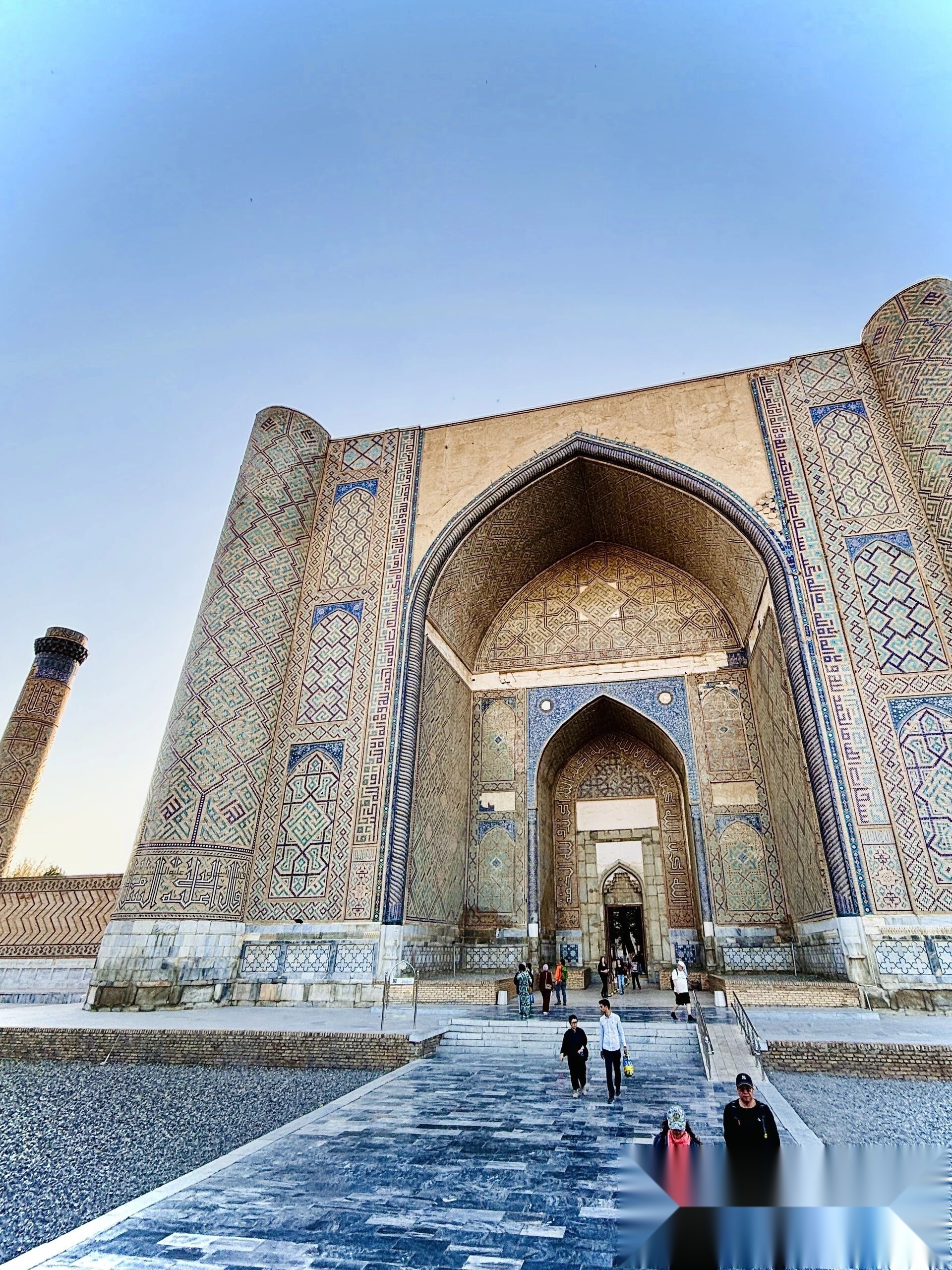
Timurid architecture blended Persian, Arabic, and Turkic styles into something totally unique, creating a distinct Turkic-Islamic look. The best example of this is...
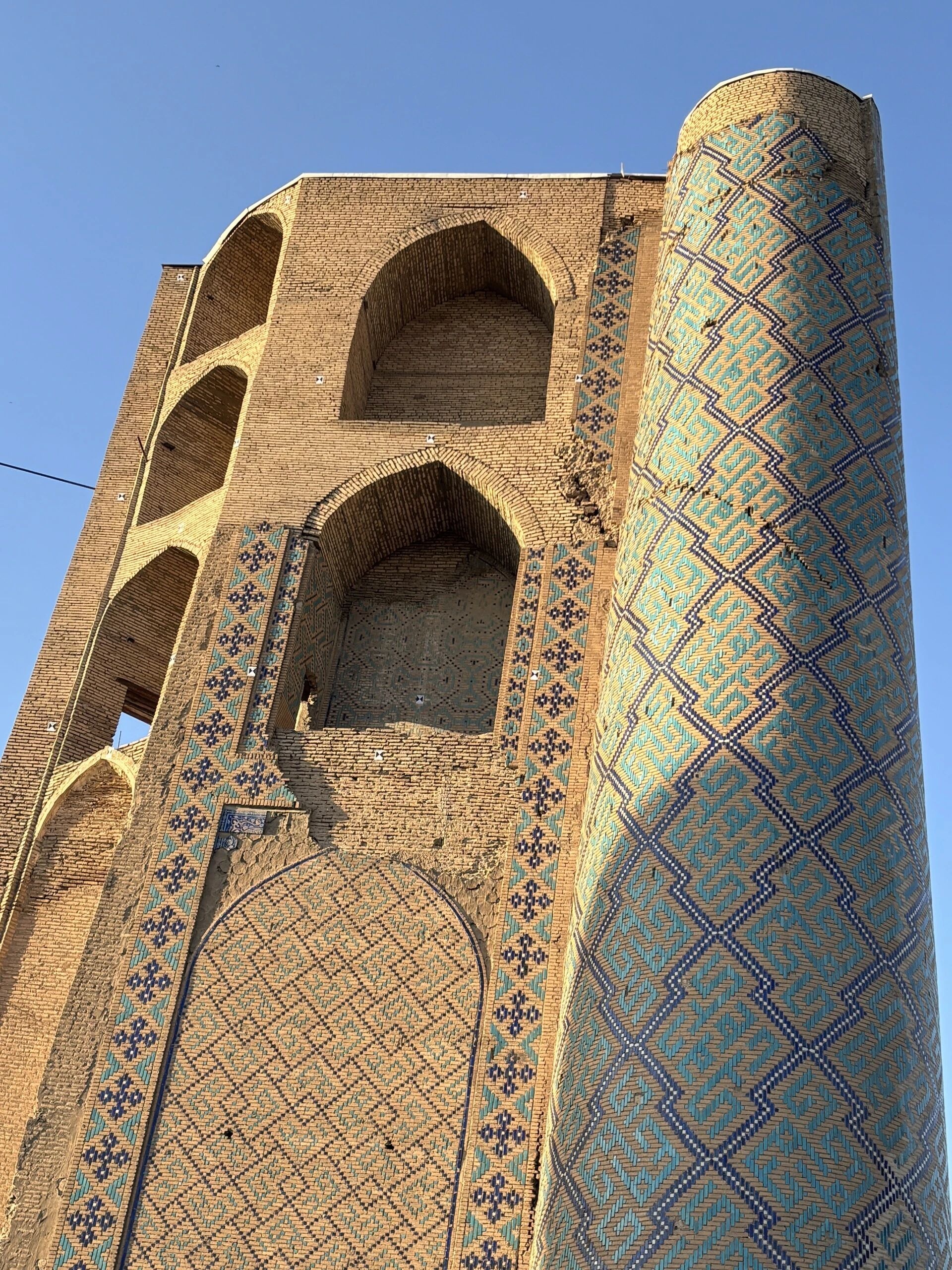
The Bibi-Khanym Mosque.
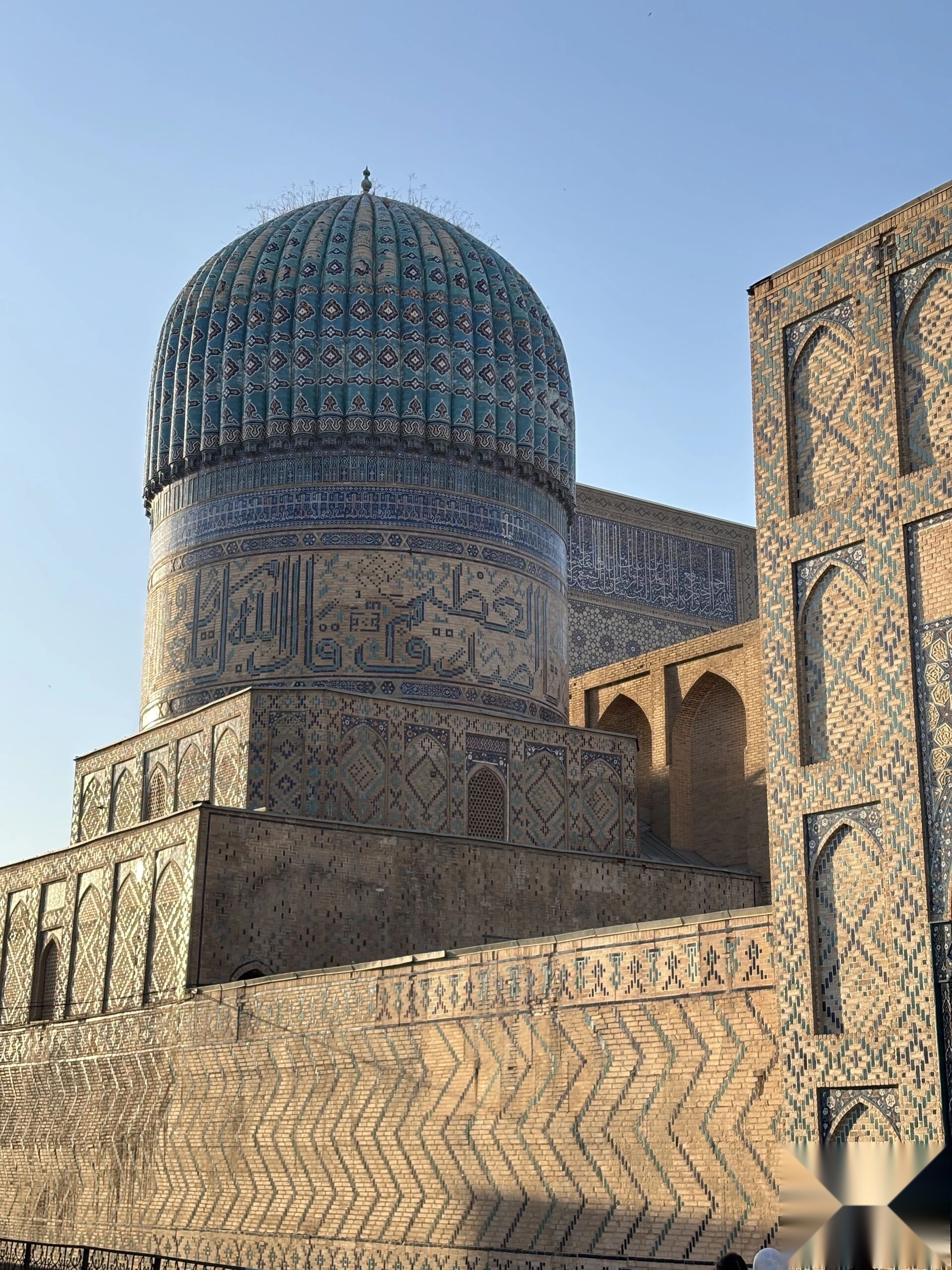
The Bibi-Khanym Mosque is the building that best captures Timur’s massive ambition: it’s huge, aggressive, and honestly pushed the limits of the engineering tech they had at the time.
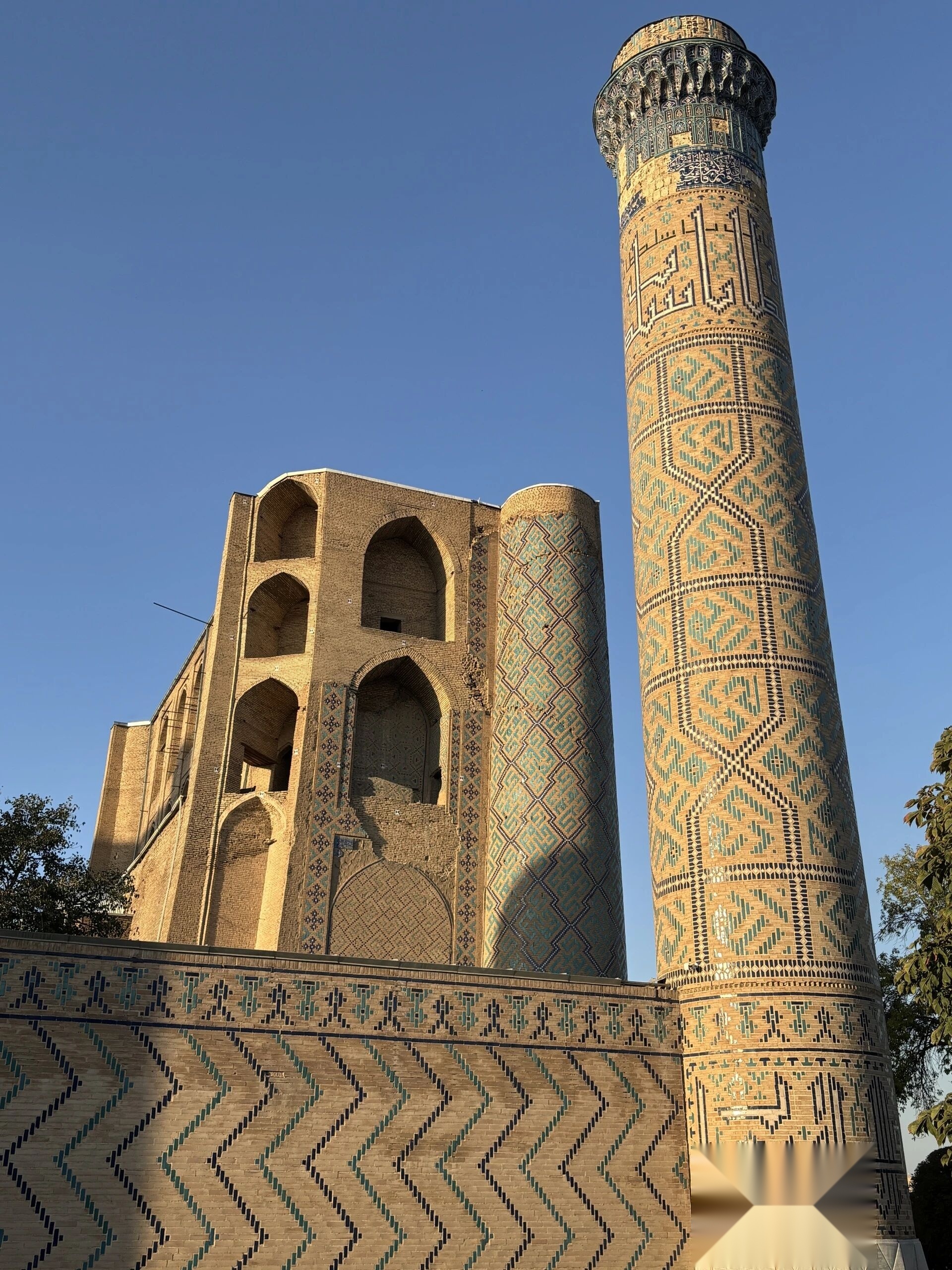
It was built around 1399–1404, right after Timur’s campaign in India. The whole point was to give Samarkand a religious building that could actually represent the scale of his empire.
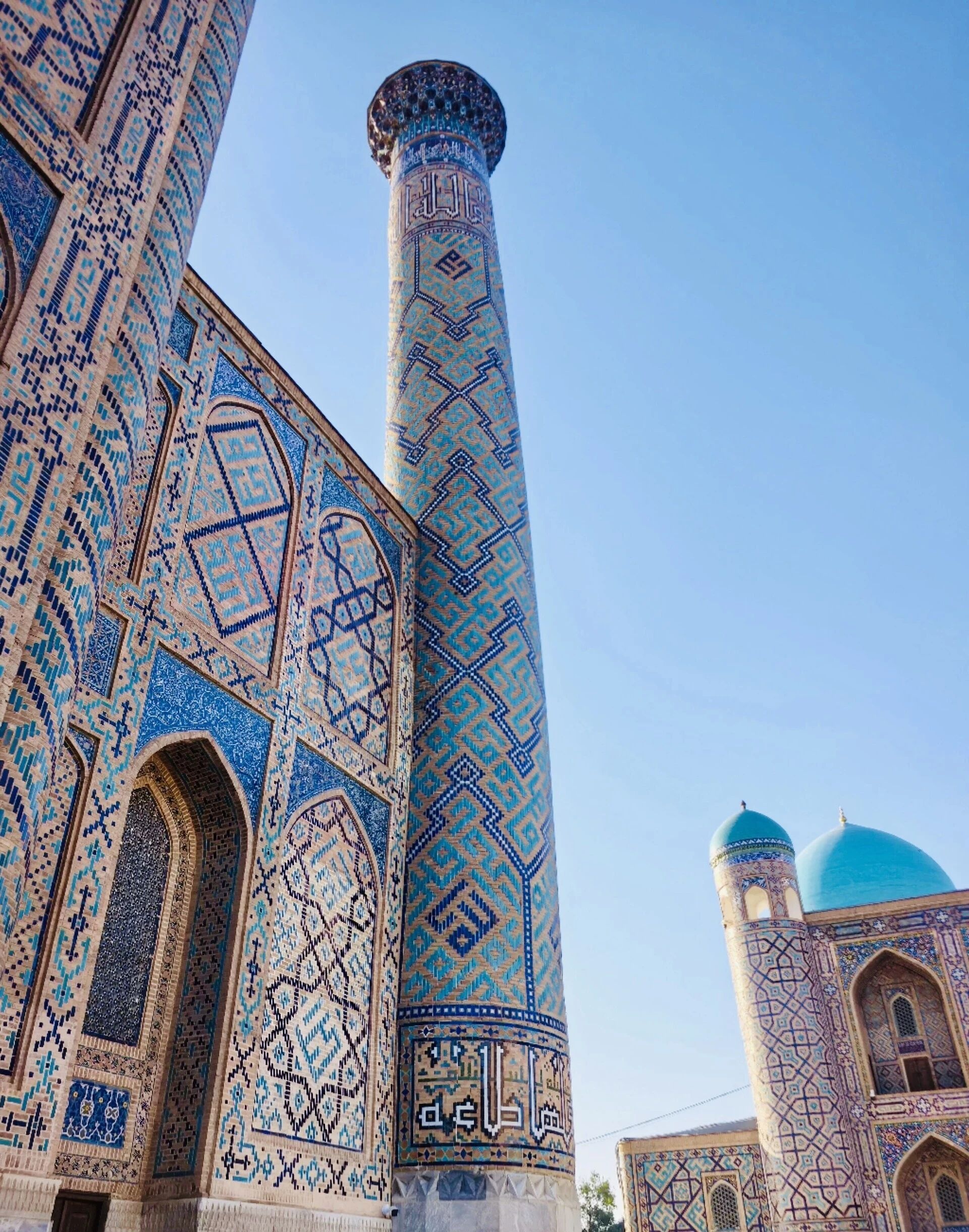
The main thing to focus on here isn’t the fine detail, but the sheer scale of the place.
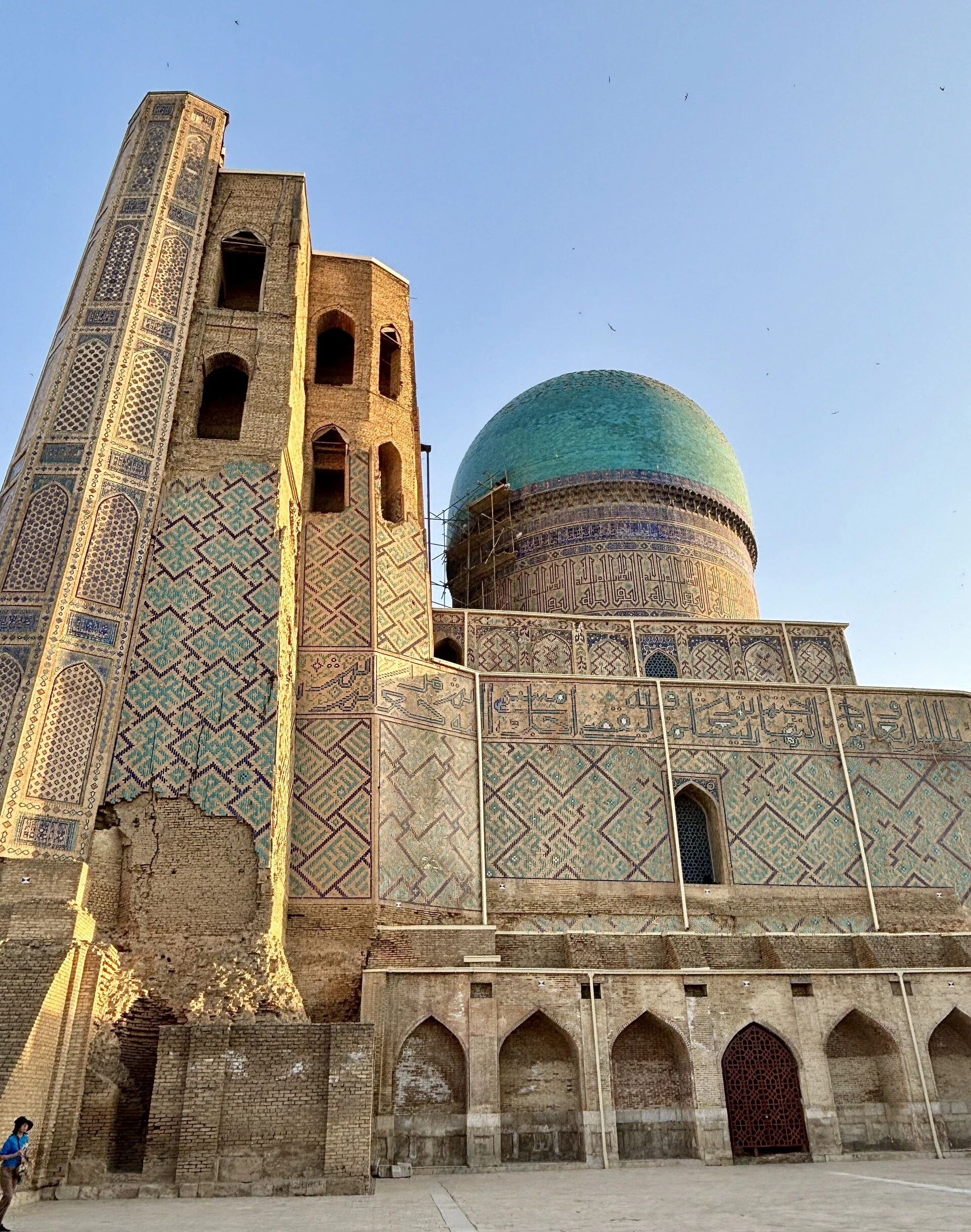
The massive entry portal, the central dome, the surrounding courtyard, and the minarets are all built to be incredibly oversized. Timur wanted to send a message: 'My empire is huge, so my mosque has to be bigger than anything that came before it.'
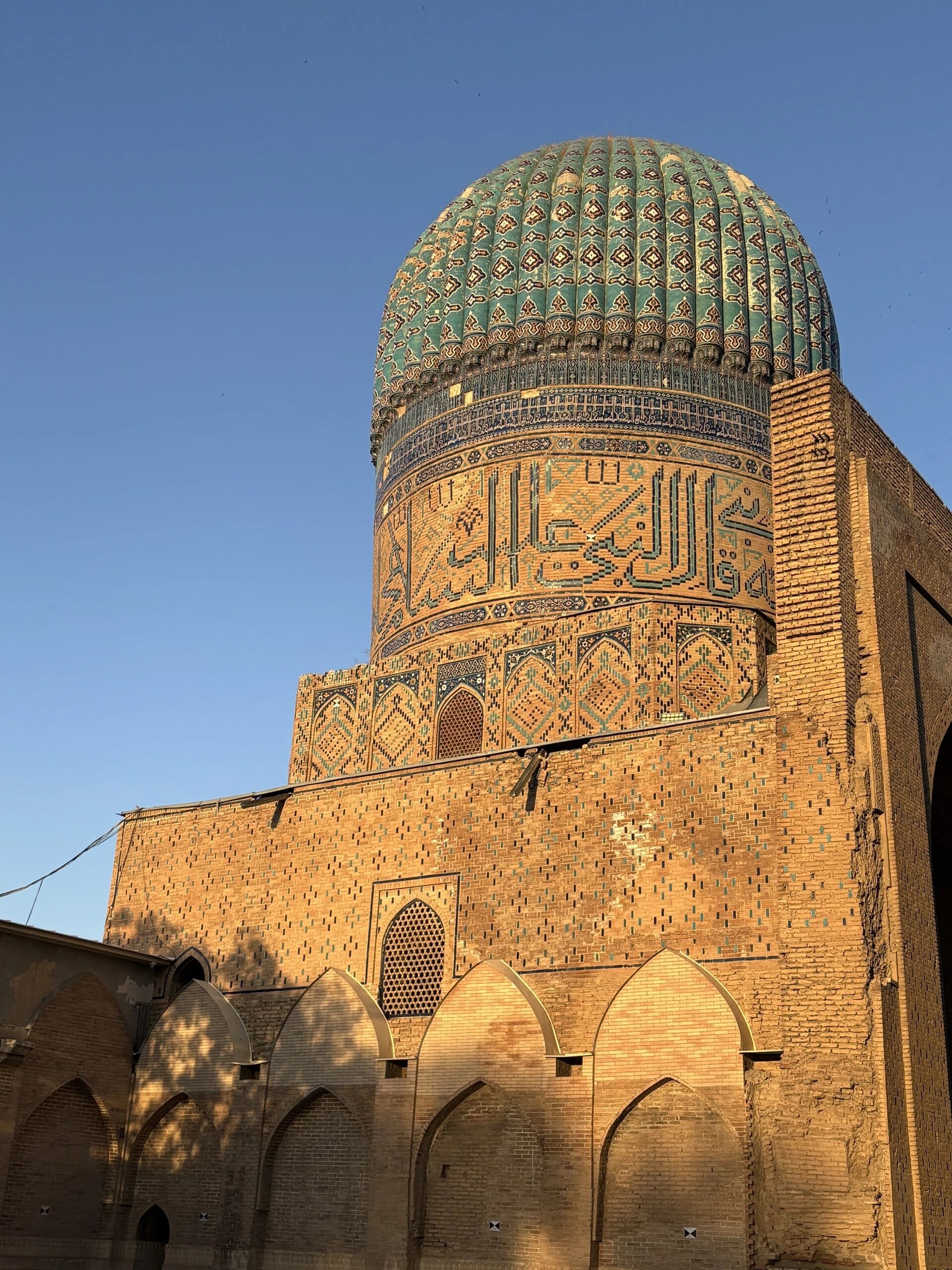
And that’s exactly where the problem started.
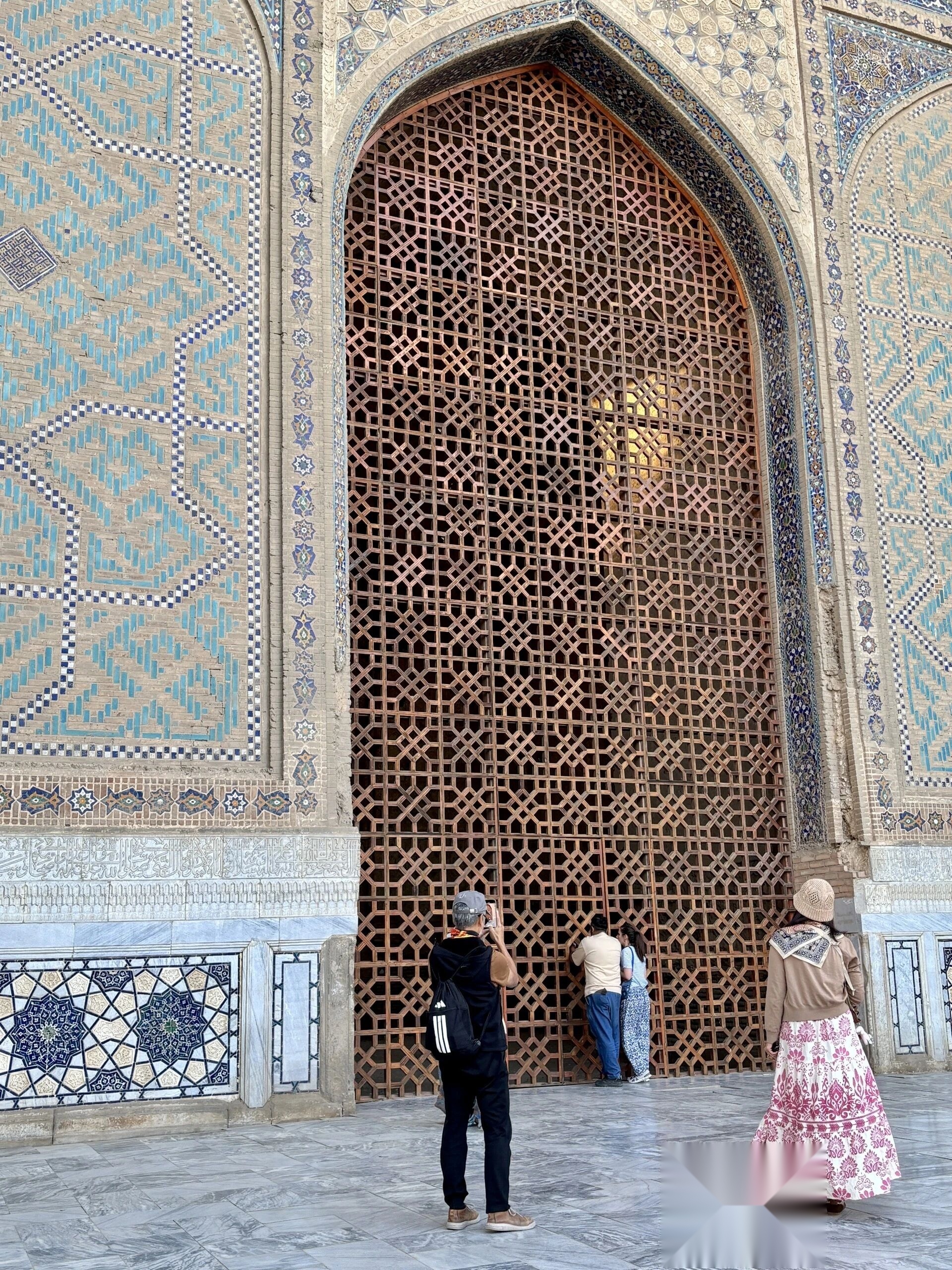
At the time, this was a classic case of 'ambition outrunning technical experience' in Central Asia. The spans, the height, and the heavy brickwork were just too much, and with Samarkand’s frequent earthquakes, it started cracking and falling apart soon after it was finished. After centuries of quakes, weathering, and neglect, what you see today is a site that has been through multiple rounds of restoration and rebuilding.
Must-see highlights:
1. The scale of the main entrance. You’ll feel tiny standing in front of the portal—it’s the classic Timurid way of using size to project power.
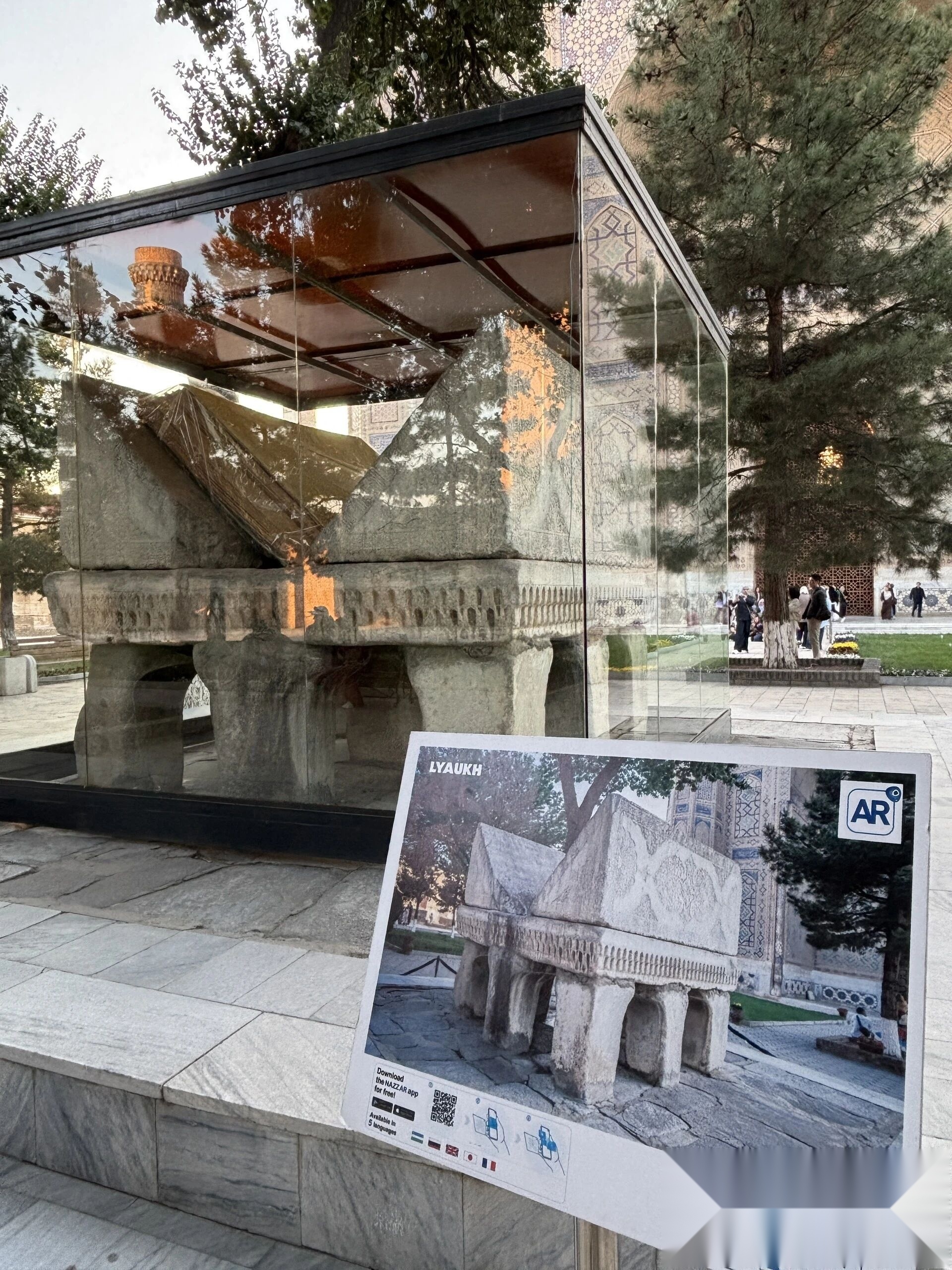
2. The giant stone Quran stand in the center of the courtyard, which ties back to the traditions of the Ulugh Beg era.
3. The repair marks on the dome and exterior walls. If you look closely, you’ll notice that the colors and condition of the bricks and glazed tiles aren't perfectly uniform, showing the different eras of work.
The Bibi-Khanym Mosque isn't the most delicate building in Samarkand, but it’s exactly like the Timurid Empire itself: massive, ambitious, pushing the limits of what was possible, and fragile because of it.
The Bibi-Khanym Mosque is an absolute architectural masterpiece of Samarkand's Timurid dynasty, widely known as the monument of love built by Timur for his favorite wife, Saray Mulk Khanym. It was once one of the grandest mosques in the 15th-century Islamic world and remains a definitive work of the Timurid Renaissance.
Timurid architecture blended Persian, Arabic, and Turkic styles into something totally unique, creating a distinct Turkic-Islamic look. The best example of this is...
The Bibi-Khanym Mosque.
The Bibi-Khanym Mosque is the building that best captures Timur’s massive ambition: it’s huge, aggressive, and honestly pushed the limits of the engineering tech they had at the time.
It was built around 1399–1404, right after Timur’s campaign in India. The whole point was to give Samarkand a religious building that could actually represent the scale of his empire.
The main thing to focus on here isn’t the fine detail, but the sheer scale of the place.
The massive entry portal, the central dome, the surrounding courtyard, and the minarets are all built to be incredibly oversized. Timur wanted to send a message: 'My empire is huge, so my mosque has to be bigger than anything that came before it.'
And that’s exactly where the problem started.
At the time, this was a classic case of 'ambition outrunning technical experience' in Central Asia. The spans, the height, and the heavy brickwork were just too much, and with Samarkand’s frequent earthquakes, it started cracking and falling apart soon after it was finished. After centuries of quakes, weathering, and neglect, what you see today is a site that has been through multiple rounds of restoration and rebuilding.
Must-see highlights:
1. The scale of the main entrance. You’ll feel tiny standing in front of the portal—it’s the classic Timurid way of using size to project power.
2. The giant stone Quran stand in the center of the courtyard, which ties back to the traditions of the Ulugh Beg era.
3. The repair marks on the dome and exterior walls. If you look closely, you’ll notice that the colors and condition of the bricks and glazed tiles aren't perfectly uniform, showing the different eras of work.
The Bibi-Khanym Mosque isn't the most delicate building in Samarkand, but it’s exactly like the Timurid Empire itself: massive, ambitious, pushing the limits of what was possible, and fragile because of it.
Bibi-Khanym Mosque in Samarkand: Discover the Epic Islamic Architecture of the Timurid Empire
Articles • Hasan09 posted the article • 0 comments • 16 views • 6 hours ago
Take a deep dive into the Pearl of the Silk Road: the Bibi-Khanym Mosque in Samarkand, Uzbekistan. Through nine high-def photos, we're breaking down this 14th-century dome structure from the height of the Timurid Empire, exploring its stunning tiled facades and giant stone Quran stand to soak in the eternal glory of Central Asian Islamic civilization.
The Bibi-Khanym Mosque is an absolute architectural masterpiece of Samarkand's Timurid dynasty, widely known as the monument of love built by Timur for his favorite wife, Saray Mulk Khanym. It was once one of the grandest mosques in the 15th-century Islamic world and remains a definitive work of the Timurid Renaissance.
Timurid architecture blended Persian, Arabic, and Turkic styles into something totally unique, creating a distinct Turkic-Islamic look. The best example of this is...
The Bibi-Khanym Mosque.
The Bibi-Khanym Mosque is the building that best captures Timur’s massive ambition: it’s huge, aggressive, and honestly pushed the limits of the engineering tech they had at the time.
It was built around 1399–1404, right after Timur’s campaign in India. The whole point was to give Samarkand a religious building that could actually represent the scale of his empire.
The main thing to focus on here isn’t the fine detail, but the sheer scale of the place.
The massive entry portal, the central dome, the surrounding courtyard, and the minarets are all built to be incredibly oversized. Timur wanted to send a message: 'My empire is huge, so my mosque has to be bigger than anything that came before it.'
And that’s exactly where the problem started.
At the time, this was a classic case of 'ambition outrunning technical experience' in Central Asia. The spans, the height, and the heavy brickwork were just too much, and with Samarkand’s frequent earthquakes, it started cracking and falling apart soon after it was finished. After centuries of quakes, weathering, and neglect, what you see today is a site that has been through multiple rounds of restoration and rebuilding.
Must-see highlights:
1. The scale of the main entrance. You’ll feel tiny standing in front of the portal—it’s the classic Timurid way of using size to project power.
2. The giant stone Quran stand in the center of the courtyard, which ties back to the traditions of the Ulugh Beg era.
3. The repair marks on the dome and exterior walls. If you look closely, you’ll notice that the colors and condition of the bricks and glazed tiles aren't perfectly uniform, showing the different eras of work.
The Bibi-Khanym Mosque isn't the most delicate building in Samarkand, but it’s exactly like the Timurid Empire itself: massive, ambitious, pushing the limits of what was possible, and fragile because of it. view all
The Bibi-Khanym Mosque is an absolute architectural masterpiece of Samarkand's Timurid dynasty, widely known as the monument of love built by Timur for his favorite wife, Saray Mulk Khanym. It was once one of the grandest mosques in the 15th-century Islamic world and remains a definitive work of the Timurid Renaissance.
Timurid architecture blended Persian, Arabic, and Turkic styles into something totally unique, creating a distinct Turkic-Islamic look. The best example of this is...
The Bibi-Khanym Mosque.
The Bibi-Khanym Mosque is the building that best captures Timur’s massive ambition: it’s huge, aggressive, and honestly pushed the limits of the engineering tech they had at the time.
It was built around 1399–1404, right after Timur’s campaign in India. The whole point was to give Samarkand a religious building that could actually represent the scale of his empire.
The main thing to focus on here isn’t the fine detail, but the sheer scale of the place.
The massive entry portal, the central dome, the surrounding courtyard, and the minarets are all built to be incredibly oversized. Timur wanted to send a message: 'My empire is huge, so my mosque has to be bigger than anything that came before it.'
And that’s exactly where the problem started.
At the time, this was a classic case of 'ambition outrunning technical experience' in Central Asia. The spans, the height, and the heavy brickwork were just too much, and with Samarkand’s frequent earthquakes, it started cracking and falling apart soon after it was finished. After centuries of quakes, weathering, and neglect, what you see today is a site that has been through multiple rounds of restoration and rebuilding.
Must-see highlights:
1. The scale of the main entrance. You’ll feel tiny standing in front of the portal—it’s the classic Timurid way of using size to project power.
2. The giant stone Quran stand in the center of the courtyard, which ties back to the traditions of the Ulugh Beg era.
3. The repair marks on the dome and exterior walls. If you look closely, you’ll notice that the colors and condition of the bricks and glazed tiles aren't perfectly uniform, showing the different eras of work.
The Bibi-Khanym Mosque isn't the most delicate building in Samarkand, but it’s exactly like the Timurid Empire itself: massive, ambitious, pushing the limits of what was possible, and fragile because of it. view all
Take a deep dive into the Pearl of the Silk Road: the Bibi-Khanym Mosque in Samarkand, Uzbekistan. Through nine high-def photos, we're breaking down this 14th-century dome structure from the height of the Timurid Empire, exploring its stunning tiled facades and giant stone Quran stand to soak in the eternal glory of Central Asian Islamic civilization.
The Bibi-Khanym Mosque is an absolute architectural masterpiece of Samarkand's Timurid dynasty, widely known as the monument of love built by Timur for his favorite wife, Saray Mulk Khanym. It was once one of the grandest mosques in the 15th-century Islamic world and remains a definitive work of the Timurid Renaissance.
Timurid architecture blended Persian, Arabic, and Turkic styles into something totally unique, creating a distinct Turkic-Islamic look. The best example of this is...
The Bibi-Khanym Mosque.
The Bibi-Khanym Mosque is the building that best captures Timur’s massive ambition: it’s huge, aggressive, and honestly pushed the limits of the engineering tech they had at the time.
It was built around 1399–1404, right after Timur’s campaign in India. The whole point was to give Samarkand a religious building that could actually represent the scale of his empire.
The main thing to focus on here isn’t the fine detail, but the sheer scale of the place.
The massive entry portal, the central dome, the surrounding courtyard, and the minarets are all built to be incredibly oversized. Timur wanted to send a message: 'My empire is huge, so my mosque has to be bigger than anything that came before it.'
And that’s exactly where the problem started.
At the time, this was a classic case of 'ambition outrunning technical experience' in Central Asia. The spans, the height, and the heavy brickwork were just too much, and with Samarkand’s frequent earthquakes, it started cracking and falling apart soon after it was finished. After centuries of quakes, weathering, and neglect, what you see today is a site that has been through multiple rounds of restoration and rebuilding.
Must-see highlights:
1. The scale of the main entrance. You’ll feel tiny standing in front of the portal—it’s the classic Timurid way of using size to project power.
2. The giant stone Quran stand in the center of the courtyard, which ties back to the traditions of the Ulugh Beg era.
3. The repair marks on the dome and exterior walls. If you look closely, you’ll notice that the colors and condition of the bricks and glazed tiles aren't perfectly uniform, showing the different eras of work.
The Bibi-Khanym Mosque isn't the most delicate building in Samarkand, but it’s exactly like the Timurid Empire itself: massive, ambitious, pushing the limits of what was possible, and fragile because of it.