

Sarajevo Travel
Halal Travel Guide: Sarajevo - Mosques, Ottoman Streets and Bosnian Food
Articles • ali2007fr posted the article • 0 comments • 250 views • 2026-05-20 08:47
Reposted from the web
Summary: Sarajevo, the capital of Bosnia and Herzegovina, is shown through its Ottoman old town, mosques, markets, coffee houses, and Bosnian food. This account keeps the original route, historical notes, place names, dishes, and photographs in order.
Sarajevo is the capital of Bosnia and Herzegovina. It was founded by the Ottoman Empire in the 1450s and officially established in 1461. Sarajevo grew rapidly in the 16th century, becoming the second-largest city in Europe under the Ottoman Empire after Istanbul, with over a hundred mosques.
Sarajevo was under Ottoman rule for over four hundred years between 1461 and 1878, and the Bosniaks (Bošnjaci) living here were deeply influenced by the Ottomans. Today, you can experience Ottoman architecture and taste Bosniak food in the Old Bazaar (Baščaršija) of Sarajevo.
Gazi Husrev Bey complex
Gazi Husrev Bey was the Ottoman governor (Sanjak-bey) of Bosnia from 1521 to 1541. During his rule, the Ottoman Empire continued to expand into Croatia and Hungary. At the same time, he funded many important buildings in Sarajevo and used his wealth to support religious and educational institutions for the long term. The foundation (Wakof) established by Gazi Husrev Bey manages the mosque, public kitchen, hostel, Sufi lodge, madrasa, library, clock tower, mausoleum, inn, hospital, fountain, primary school, and many shops in the center of the Old Bazaar, making it the most important building complex in Sarajevo's old town.
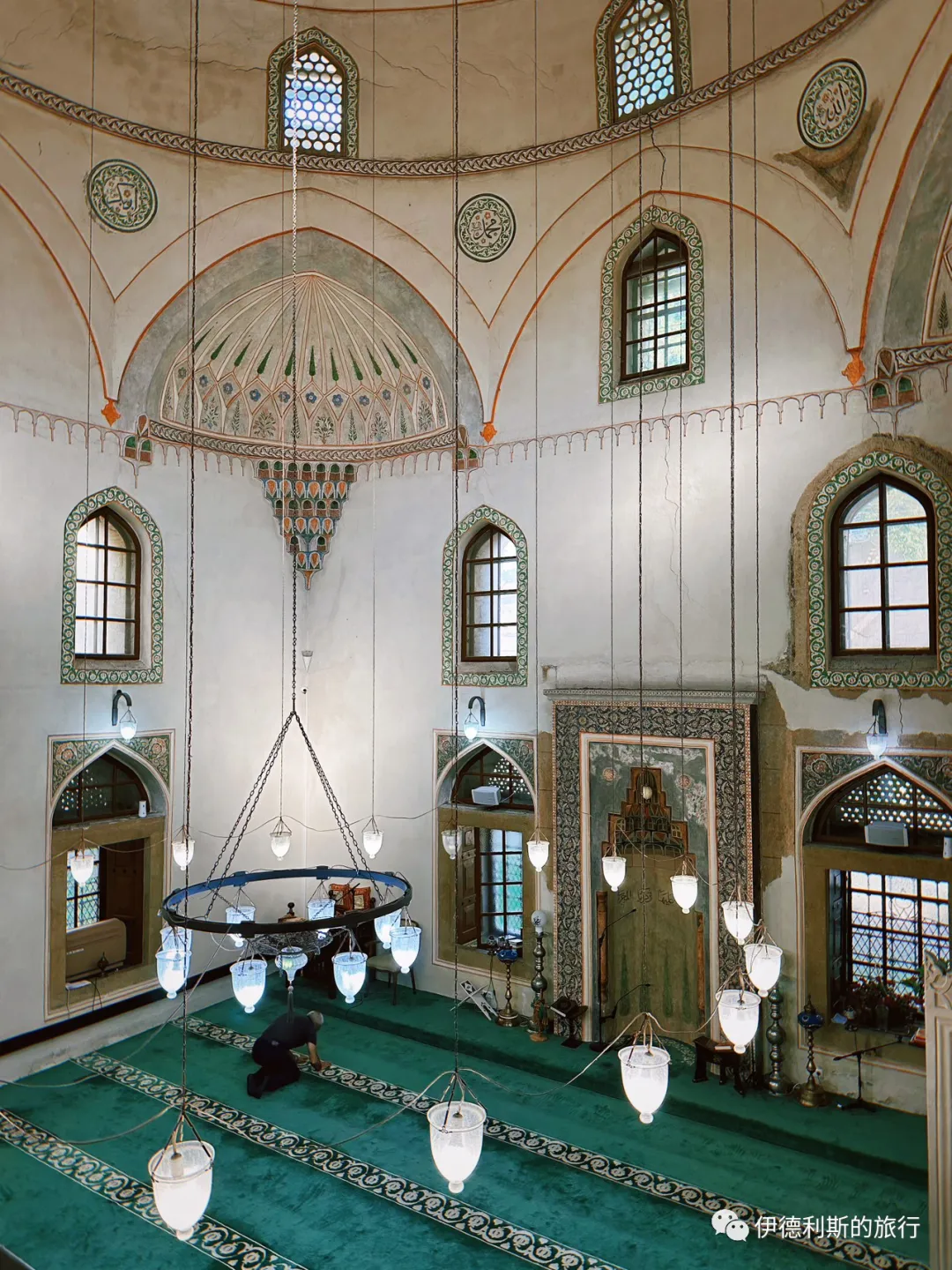
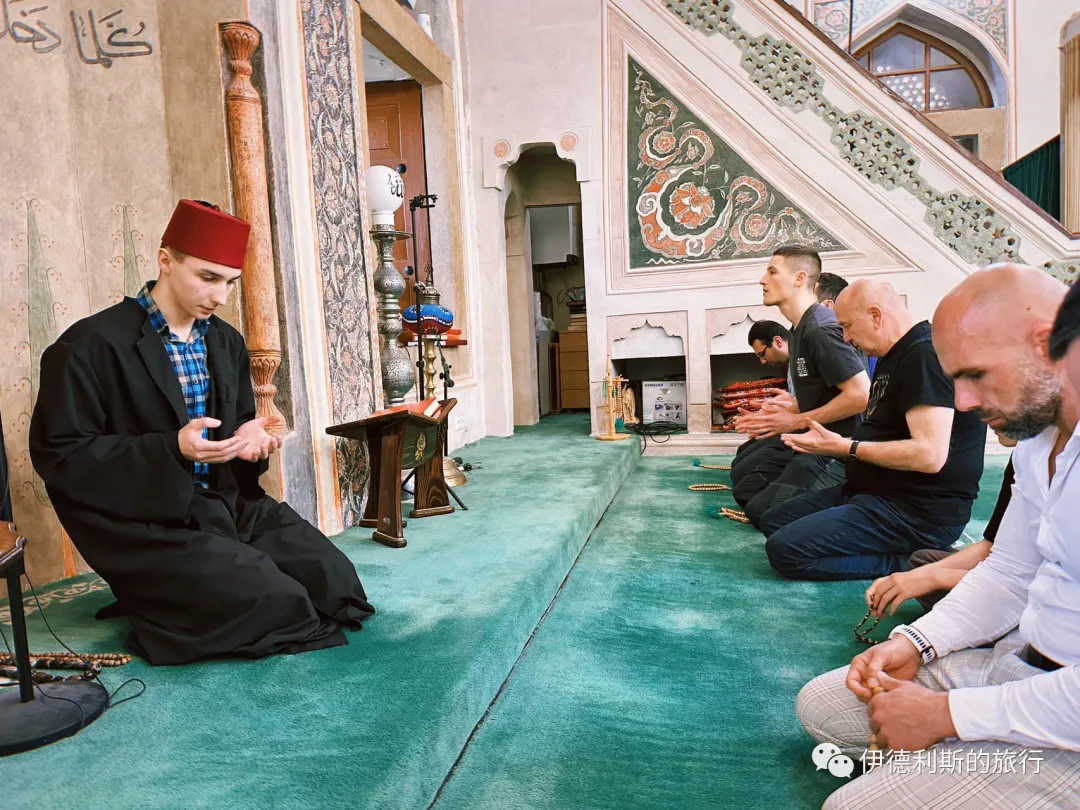
The Gazi Husrev Bey Mosque has been the central mosque of Sarajevo since it was built in 1530. Important scenes from the movie "Walter Defends Sarajevo," which is well-known to Chinese audiences, were filmed here. The Gazi Husrev Bey Mosque was designed and built by the Ottoman court architect Adzem Esir Ali, who came from Tabriz, Persia. He built many structures in Istanbul during the early 16th century and was one of the founders of the early Istanbul architectural school. The main hall is 13 meters long and 13 meters wide, with a central dome 26 meters high, achieving a perfect one-to-two ratio. The front porch consists of five small domes supported by four marble columns.
There is a drinking fountain for passersby on the wall at the northwest corner of the mosque, a type of fountain very common in Ottoman cities.
In the northwest corner of the mosque complex stands a small building from 1859 called the Muwaqqithana, where the astronomer (Muwaqqit) used calculations to set the times for namaz and fasting.
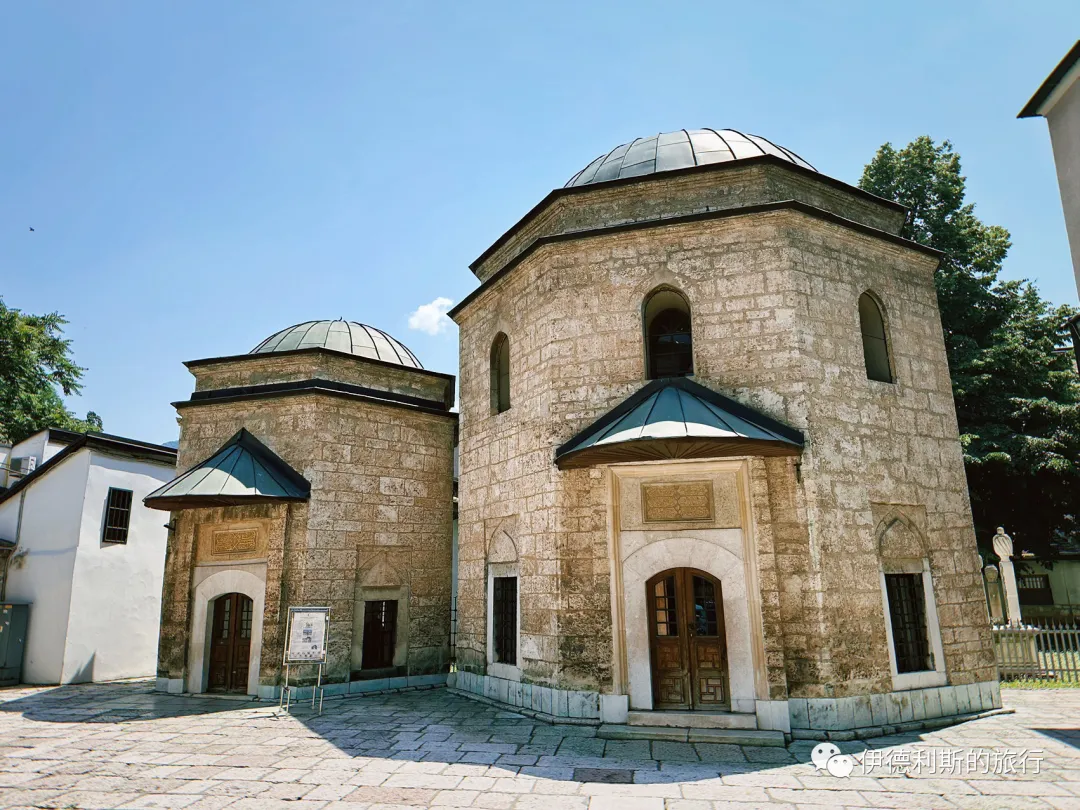
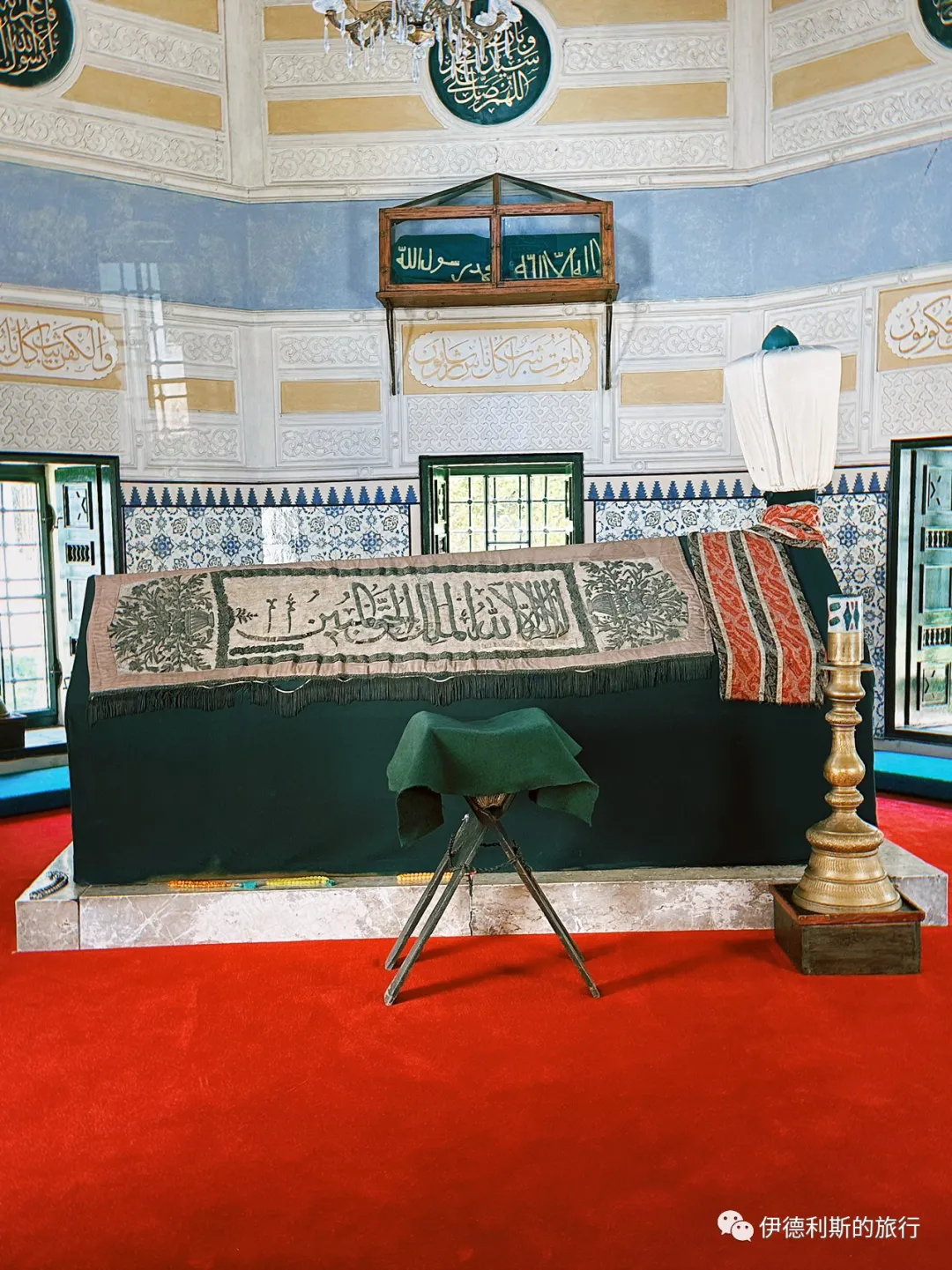
Gazi Husrev Bey grew up in the Ottoman court and later earned many military honors. In 1521, he was named governor of Bosnia and became one of Sultan Suleiman the Magnificent's most trusted men. The tomb of Gazi Husrev Bey is a classic 16th-century octagonal Ottoman mausoleum.
Next to the tomb of Gazi Husrev Bey is a smaller octagonal mausoleum, which holds the remains of his deputy, the Ottoman general Murat-beg Tardić. Murat-beg led many campaigns to conquer Croatia. In 1537, he completely broke the military defenses of the Kingdom of Croatia, which helped the Ottoman Empire expand to the west.
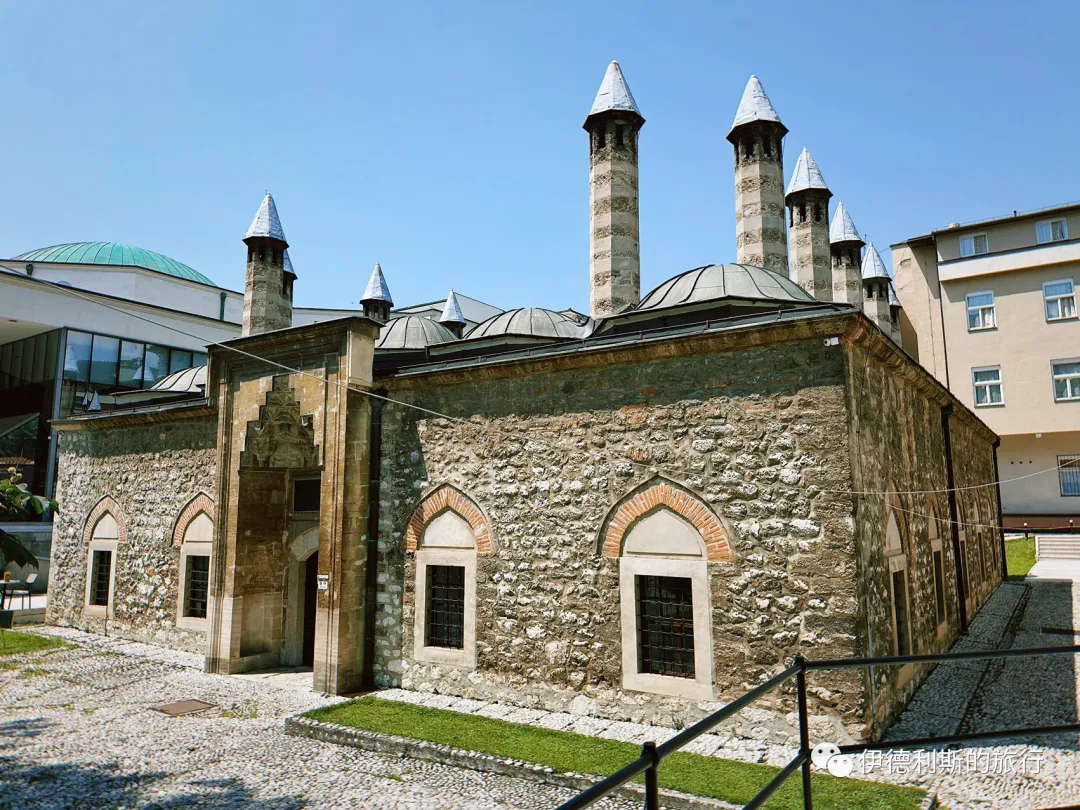
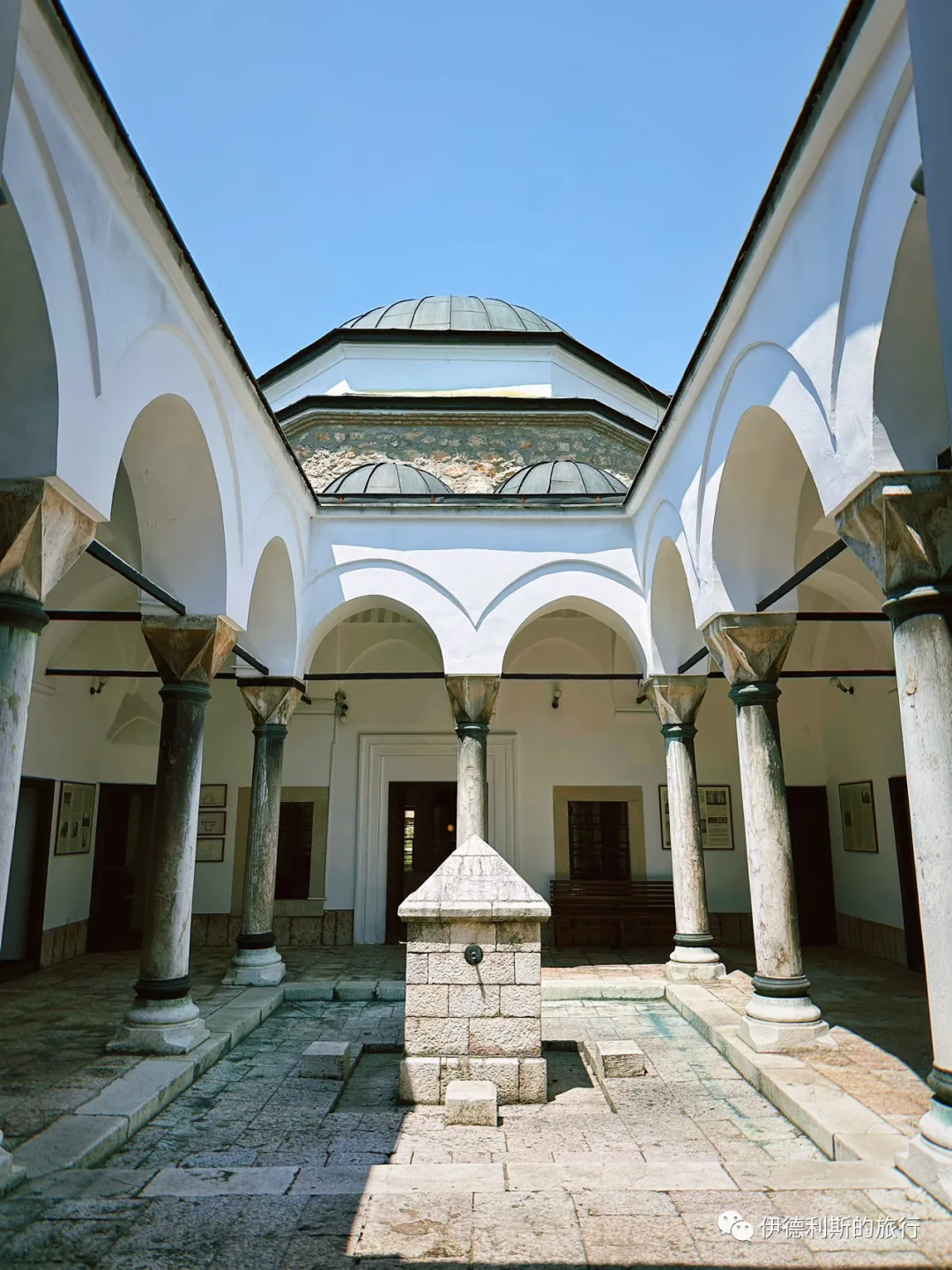
On the north side of the Gazi Husrev Bey Mosque is the Kursumlija Madrasa, built by Gazi Husrev Bey in 1537 and dedicated to his mother, the Ottoman princess Selçuka. The madrasa features a courtyard surrounded by 12 classrooms, each with a fireplace and a dome, and a fountain for wudu in the center of the courtyard. After 2013, this site became the Gazi Husrev-beg Museum, which covers his life, the building complex he founded, and his contributions to the development of Sarajevo.
To the right of the madrasa is the Sufi lodge (Khanqah), which is now used as a gallery, though it was closed when we visited.
To the northwest of the Gazi Husrev Bey Mosque is the Gazi Husrev Bey Library, founded in 1537 using the remaining funds from the construction of the madrasa. The library was originally part of the madrasa and did not have its own separate building until 1863. The library was forced to close when the Siege of Sarajevo began in 1992 and did not reopen until 2014. The new library was built with an 8.8 million dollar donation from Qatar and houses over 100,000 manuscripts and books in Arabic, Turkish, Persian, Bosnian, and other languages.
The Gazi Husrev Bey bathhouse (Hamam) was built in 1537 and is located 300 meters northwest of the mosque. The southern part of the bathhouse has two symmetrical domed buildings, which served as the main halls for men and women. A corridor and changing rooms to the north lead to individual small rooms, each topped with a dome. The bathhouse was damaged by fire twice, once during the Habsburg invasion in 1697 and again during the Austro-Hungarian invasion in 1879. It was rebuilt each time, and the structure we see today is mostly from the 1891 renovation.
After renovations in 2000, this place became part of the Institute for Bosniak Studies and often hosts cultural events like book launches, concerts, literary nights, and exhibitions.
On the northeast side of the Gazi Husrev Bey mosque is the Morića Han caravanserai, which was first built in 1551. It was rebuilt into its current form after a fire in 1697 and is the only Ottoman caravanserai still standing in Sarajevo today. Morića Han could hold 300 guests and 70 horses. In 1878, Sarajevo citizens gathered here to form a People's Committee to protest the Austro-Hungarian occupation of Bosnia and Herzegovina. Today, it is still managed by the Ghazi Husrev-beg foundation and houses a restaurant and a Persian carpet shop.
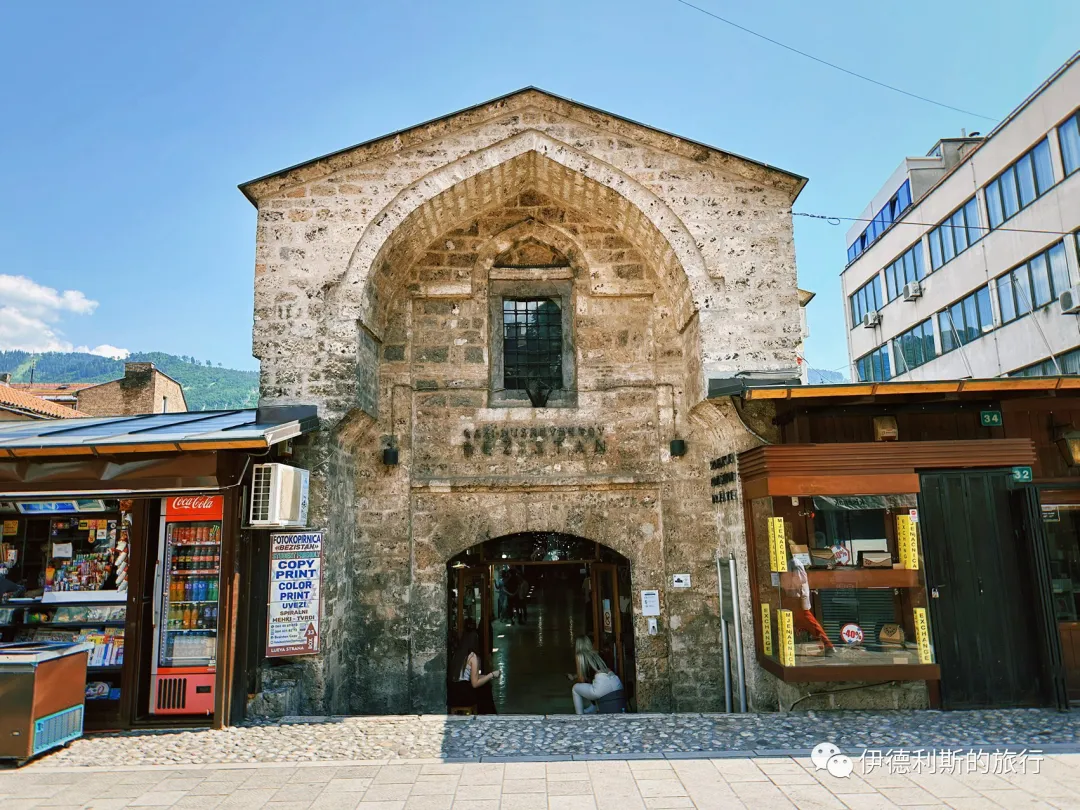
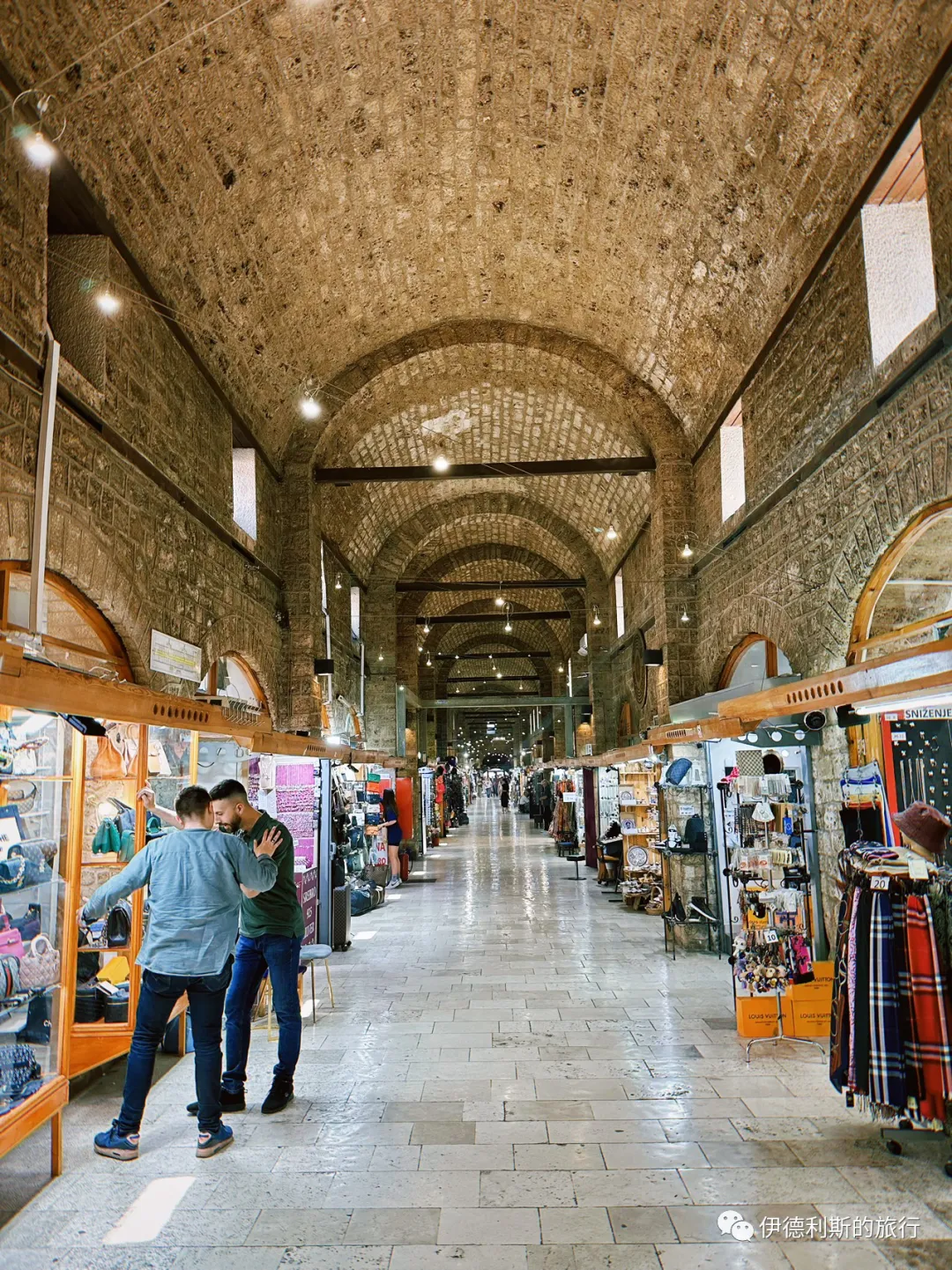
To the west of the Gazi Husrev Bey mosque is the Bezistan covered market, built in 1555. It is one of the best-preserved Ottoman covered markets in Bosnia and Herzegovina. The Bezistan market sits slightly lower than the surrounding streets, which helps keep the interior cooler during the summer. It started as a general goods market and still functions as a shopping area today.
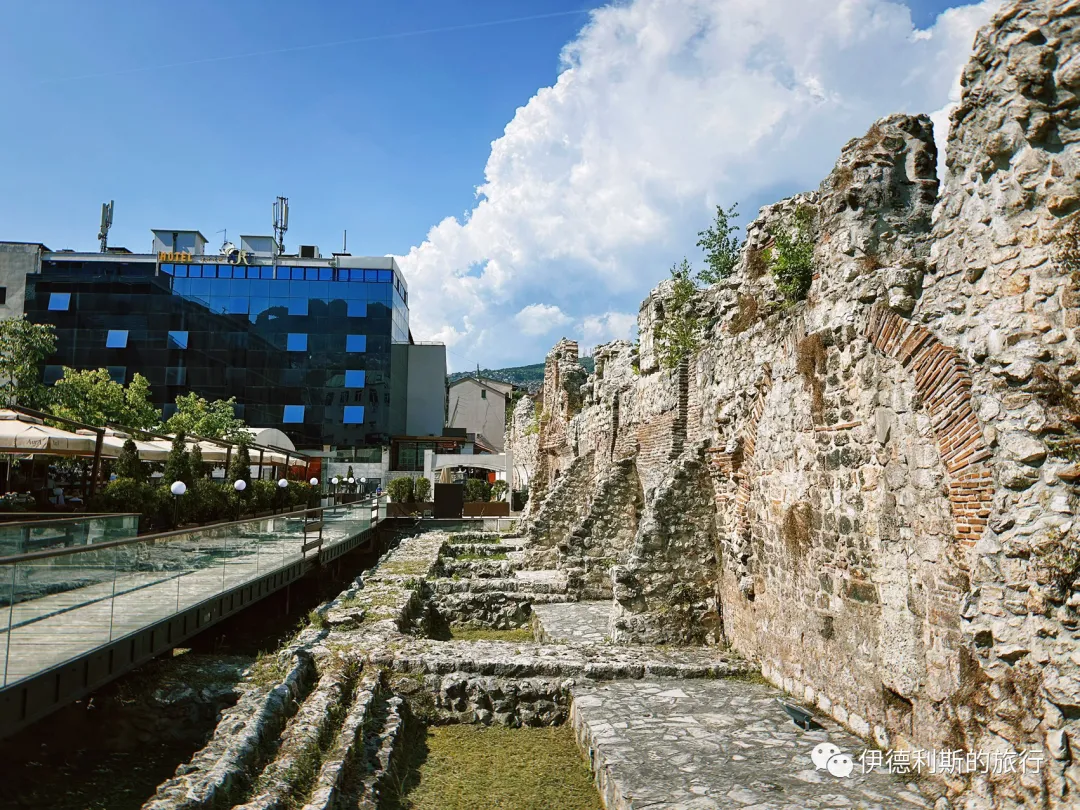
West of the Bezistan covered market are the ruins of the Tašli Han caravanserai, built between 1540 and 1543. The courtyard of the inn had a fountain and a small prayer room, and many merchants opened shops there. A fire in 1879 caused severe damage, and the structure completely collapsed by 1912. In 1998, the site was rebuilt as a hotel, and archaeological excavations rediscovered the original foundations and parts of the walls.
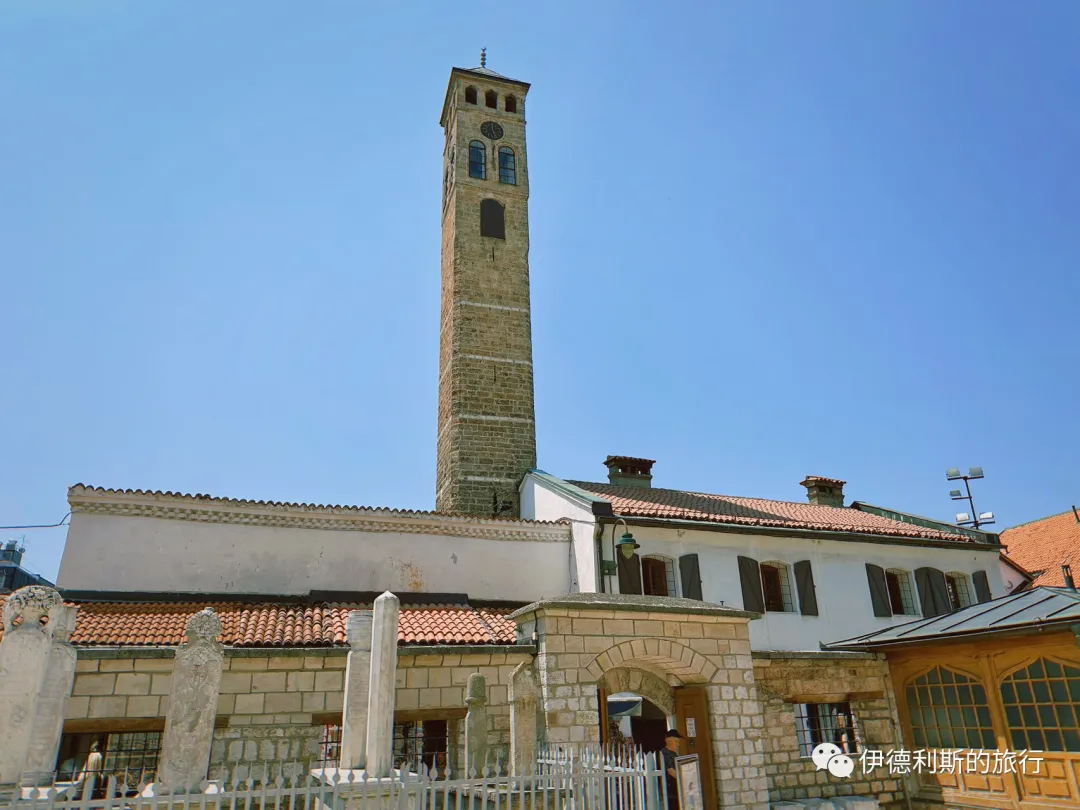
West of the Gazi Husrev Bey mosque stands a clock tower built in the 16th century, though the current structure was rebuilt in the 18th century. This 30-meter-tall clock tower is the highest of the 21 clock towers built by the Ottomans in Bosnia and Herzegovina. It follows the lunar calendar, with sunset set as 12 o'clock. An official called a Muvekit, who determines the prayer times and the five daily namaz, is responsible for adjusting the clock. The current clock mechanism was made by the London company Gillett & Johnston in 1875. To make sure the clock was easy to read, the top of the tower was modified during installation.
Below the clock tower is a public kitchen (Imaret) established in 1531, which was originally run by a foundation (Waqf) to distribute free food to the poor. It is now a very famous bakery, and the fresh bread baked on-site is very popular with the locals. Their main item is the kifla bread, which costs 2 yuan each. It comes in many flavors and has a rich wheat taste. Kifla is a small bread popular in Central Europe and the Balkans with a history of hundreds of years. The French croissant actually developed from the kifla.
Mosque
The Muslihudin Čekrekčija Mosque is in the commercial center of Sarajevo's old town. Hajji Mustafa built it in 1526. The mosque keeps its original endowment deed, or vakufnama, written in 1526. This is the oldest deed document in Sarajevo.
The mosque survived many fires in Sarajevo and the 1697 looting of the city by the Holy League after they defeated the Ottoman Empire. The interior still holds traditional arabesque patterns.
The Baščaršija Mosque sits in the center of the old bazaar in Sarajevo. Havadža Durak built it in the early 16th century, and the earliest manuscript recording the mosque dates back to 1528. The mosque originally had a wooden dome. After a fire destroyed it in 1697, it was rebuilt with a stone dome. There is a front porch with three small stone domes in front of the main hall. It was changed to a wooden roof in 1945 but restored to its original look in 1966. The mosque suffered heavy damage during the Siege of Sarajevo from 1992 to 1995 and was later renovated.
The Emperor's Mosque (Careva Džamija) was first built in 1457. It was the first mosque built after the Ottoman Empire conquered Bosnia. Isaković-Hranušić led the construction, and it was dedicated to the Ottoman Sultan Mehmed the Conqueror. The first mosque building was made of wood. It was rebuilt in 1565 into the current classical Ottoman style and dedicated to the Ottoman Sultan Suleiman the Magnificent. Side rooms were added in 1800, and they were connected to the main hall in 1848.
The Emperor's Mosque was severely damaged twice, once during World War II and again during the Bosnian War, and was later repaired.
The Magribija Mosque was built by Sheikh Magribija in the 15th century. Tradition says that Sheikh Magribija came to Sarajevo with the city's founder, the Ottoman governor Isa-beg. The original mosque building was destroyed by fire. The current structure was rebuilt in 1766, keeping its 18th-century appearance and painted decorations. The mosque was severely damaged during the Bosnian War in 1992, leaving only the base of the minaret (bunkta). It was rebuilt in 2000, and the roof and porch were repaired again in 2004.
Ali Pasha Mosque was built in 1560 or 1561 by the Bosnian governor Ali Pasha, who was a local from Sarajevo. This is a single-domed mosque in the classical Ottoman style with beautiful architectural proportions. There was originally a large cemetery around the main hall. It was turned into a park after tram tracks and roads were laid, and a fountain for ritual washing (abdest) was moved there in 1874. The mosque was badly damaged by shelling during the Bosnian War from 1992 to 1995, and it was rebuilt in 2004.
You can still see gravestones of victims from the 1993 Bosnian War next to the mosque.
Ferhadija Mosque was built by Ferhad-beg Vuković-Desisalić in 1561 or 1562, and the neighborhood that grew around it is also called Ferhadija. The mosque originally had a primary school (mekteb), a public kitchen (imaret), a water station, and a fountain, but they were all destroyed in fires in 1879 and 1897. It is a typical classical Ottoman building with a central dome over a rectangular main hall and three small domes over the front porch.
These are the archaeological remains of Bakrbaba Mosque, its madrasa, primary school (mekteb), and courtyard (harem).
Bakrbaba Mosque was built in 1544 by the famous Sarajevo merchant Hajji-Alija Bakrbaba, and it had a 30-meter-tall minaret (bunkta) at the time. In 1697, the Ottoman Empire was defeated by the European Holy League. Sarajevo was looted and burned, and Bakrbaba Mosque was destroyed in the fire before being rebuilt in the early 18th century.
A primary school and courtyard were originally built on the west side of the mosque. In 1741 or 1742, Hajji Ismail Misrija built a madrasa and cemetery on the east side of the courtyard. Soon after, Abdulah Efendi Kantamirija built a library across the street, making this an important educational and cultural center in Sarajevo.
After the Austro-Hungarian Empire took control of Sarajevo in 1878, the mosque was first turned into a military warehouse and was finally demolished in 1895. The primary school next to the mosque was also destroyed in 1895, the library was destroyed in 1897, and the madrasa remained until the beginning of World War II.
Since 2000, at the request of Islamic scholar Hajji Hafez Halid Efendi Hadžimulić, Sarajevo began archaeological research on the Bakrbaba mosque complex. In 2009, businessman Husein Durman from Bursa, Turkey, funded the reconstruction of the Bakrbaba mosque, which officially opened in 2011.
Market
The Brusa Bezistan covered market is located in the Grand Bazaar of Sarajevo's old town. It was built in 1551 by order of Grand Vizier Rüstem Pasha during the reign of Suleiman the Magnificent of the Ottoman Empire and was named after the old Ottoman capital, Bursa. This market has six domes. It originally sold silk, household goods, and small furniture. Today, it serves as a Sarajevo museum, displaying precious artifacts from the Ottoman period.
Fortress
The Yellow Fortress (Žuta Tabija) was built between 1727 and 1739 as a battery for the Sarajevo city walls. In 1878, it served as an important stronghold for the Ottoman Empire to defend Sarajevo against the Austro-Hungarian invasion.
Sarajevo did not have city walls for most of its history until 1697, when Prince Eugene of the Habsburg Empire launched a devastating attack on the city. He looted the city and burned many buildings, leading the Ottoman Empire to officially build city walls in Sarajevo in 1727. Today, the Sarajevo city walls are located on the east side of the old town, with many gates and fortresses still preserved. The most famous of these are the Yellow Fortress and the White Fortress (Bijela Tabija).
Dervish Lodge
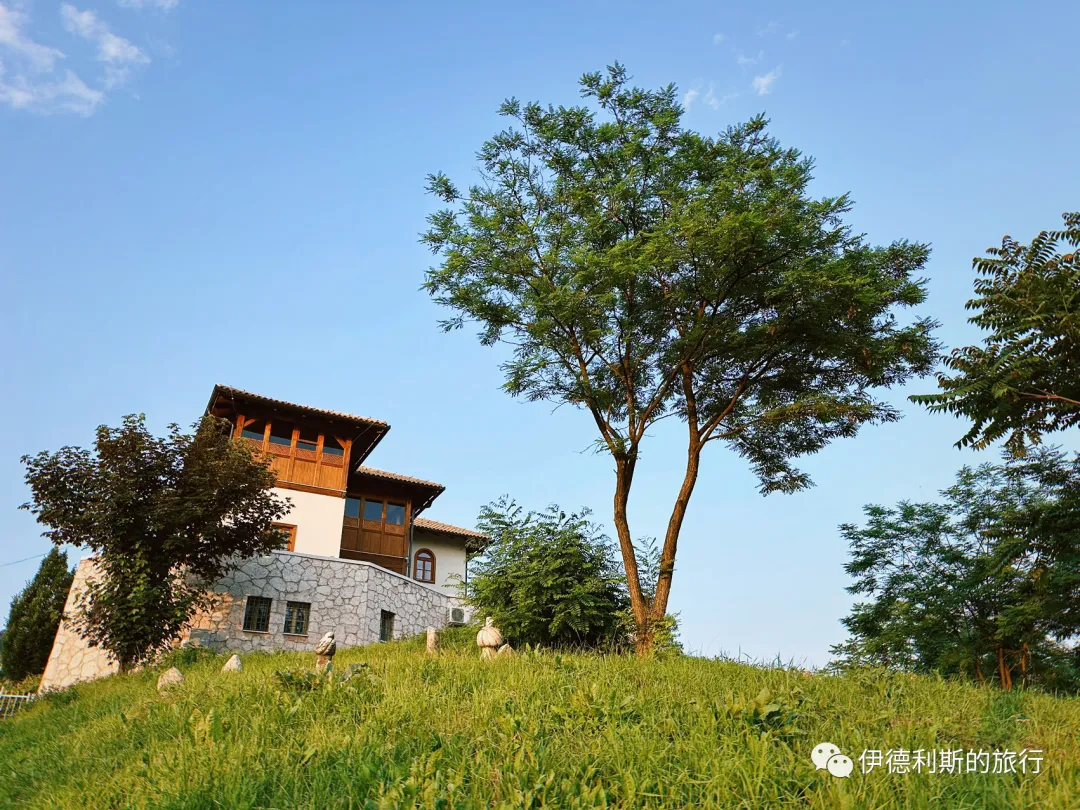
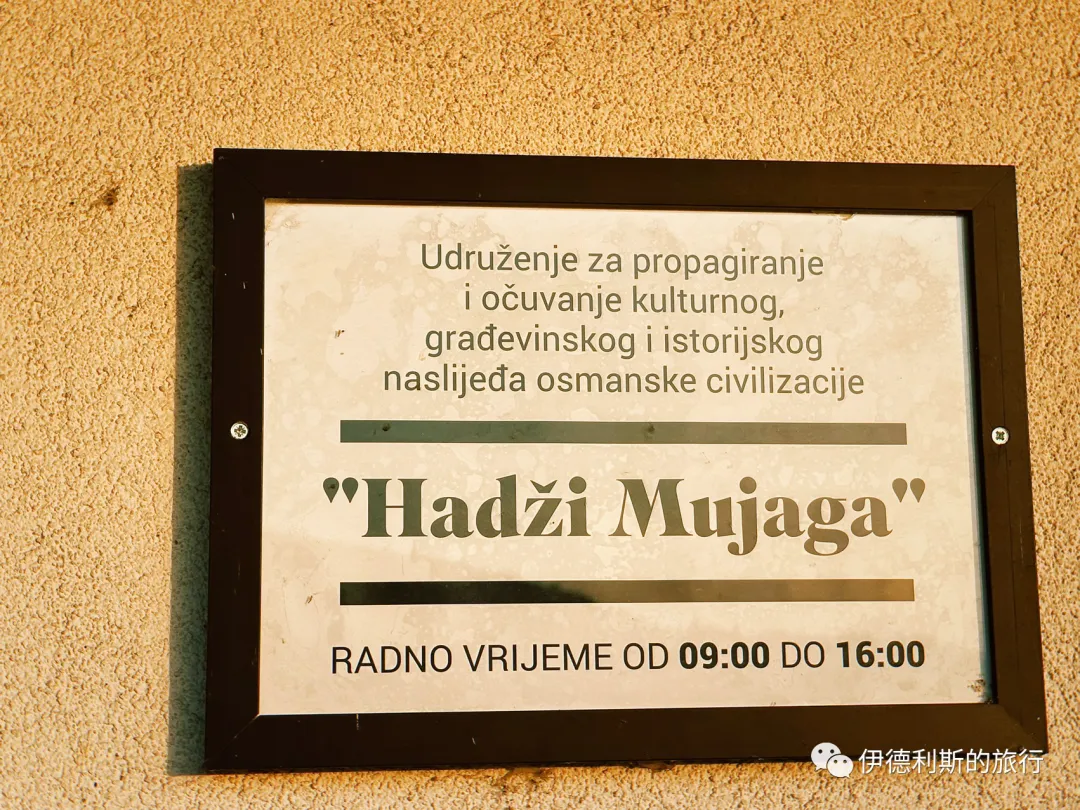
Below the Yellow Fortress sits a Mevlevi Sufi dervish lodge (tekke), which was the first Sufi lodge in Sarajevo. The lodge was first built in 1462, destroyed during Prince Eugene's invasion of Sarajevo in 1697, and rebuilt in 1781. After the Austro-Hungarian Empire occupied Bosnia and Herzegovina in 1878, they strictly prohibited the maintenance of the lodge. It was eventually demolished in 1957 during the Tito era in Yugoslavia. The building we see today was rebuilt in 2013 with donations from Turkey.
Food
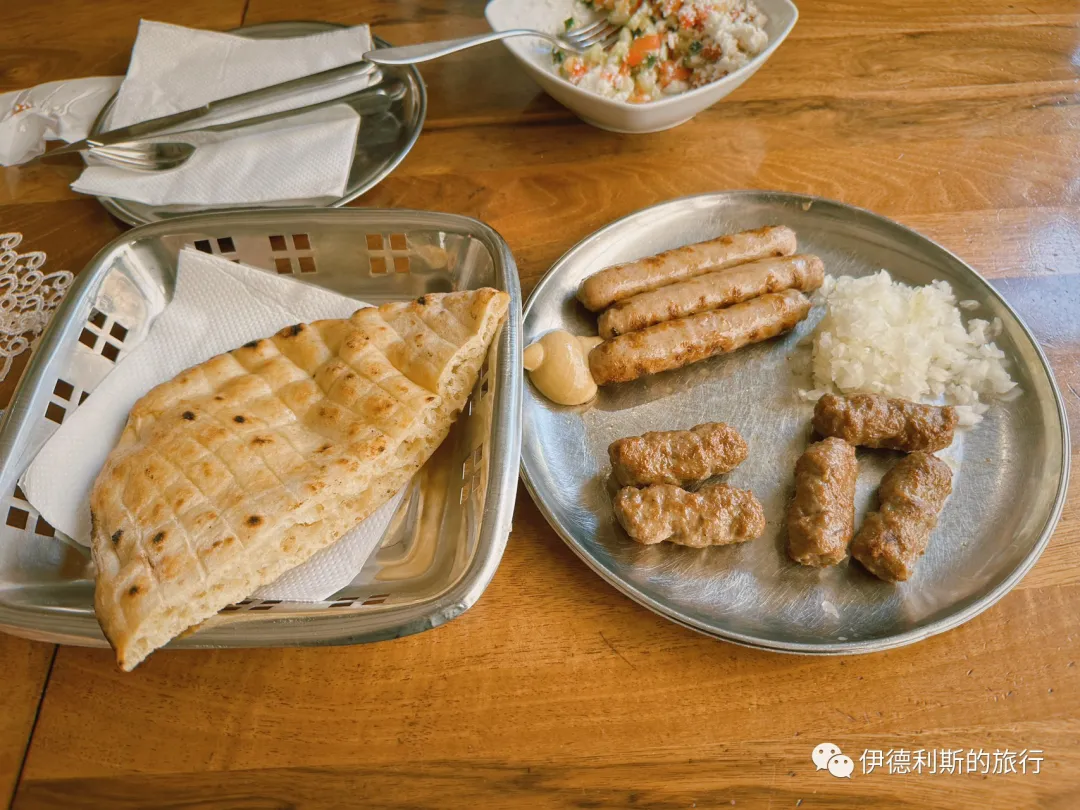
The restaurant Ćevabdžinica Petica Ferhatović. This shop was opened by the Ferhatović family during the 1984 Sarajevo Winter Olympics, though they had already started running restaurants in Sarajevo's old town as early as 1957. We ordered the Bosnian specialty minced beef finger kebabs (Ćevapčići) and spicy beef sausage (Sudžuk) with flatbread (Somun), served with onions and cream cheese (Kajmak) on the side. We also ordered a cheese salad (Šopska salata).
The word Ćevapčići comes from the Ottoman Turkish word for grilled meat (Kevap) and the Slavic suffix '-čići' which means small. It developed from Turkish kebabs in the 16th century. The version made in the Baščaršija area of Sarajevo is the most famous, and it holds an important place in Bosnian food culture.
The best drink to cool off in the Sarajevo Old Town bazaar is Boza! I drink it several times every day. Boza is a very old fermented malt drink. It was recorded as early as the 1070s in the Compendium of the Turkic Dialects (Dīwān Lughāt al-Turk). It was very popular among Turkic peoples in Central Asia and spread to the Balkan region with the Ottoman Empire.
Eating Noah's pudding (Ashure) in the Sarajevo Old Town bazaar. Ashure is a porridge that should be cooked on the tenth day of the month of Muharram. Ottoman-era Ashure has no fixed recipe, and preparation varies by region and family tradition. Traditionally, People say at least seven ingredients are used.
In the afternoon, we had Bosnian stew (Bosanski lonac) at Aščinica Hadžibajrić F. Namika in the Sarajevo Old Town bazaar. The word 'Aščinica' here means an old-fashioned Bosnian restaurant. The Hadžibajrić family has run this traditional Bosnian restaurant for over a hundred years. The current owner is Namik. He stands behind the counter and serves the food; you just point at what you want and he dishes it out.
Bosnian stew originated in the Middle Ages. It started as a home-cooked meal for Bosnian workers and later became popular with all social classes. You can stew it with beef, lamb, and meatballs, or with cabbage, potatoes, tomatoes, and carrots. When stewing, you layer the meat and vegetables in the pot, then add garlic and whole peppercorns for seasoning. They also have various stuffed dishes (Sarma), including stuffed tomatoes, stuffed grape leaves, stuffed onions, and stuffed pickled cabbage leaves. Sarma means 'wrapped' in Turkish, referring to vegetables stuffed with filling and then stewed.
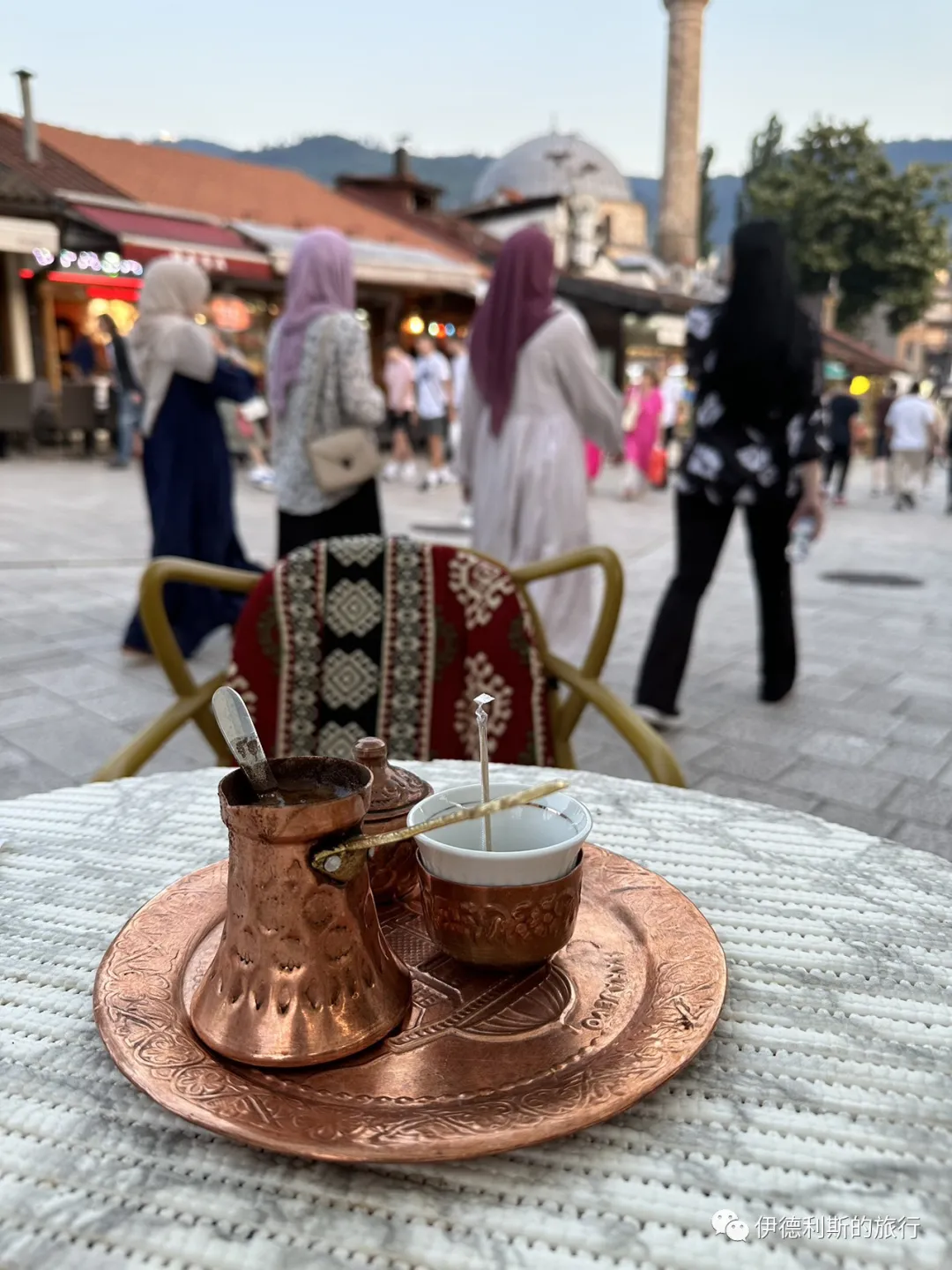
Drink traditional Bosnian coffee (Bosanska Kahva) in the Old Bazaar of Sarajevo. Coffee first arrived in the Balkan Peninsula under Ottoman rule from the Arab world in the 16th century. Sarajevo was one of the first European cities to open coffee houses, over a hundred years before cities in Western Europe.
Coffee houses are an important part of Ottoman culture. People go there to hear the day's main news, discuss daily gossip, and watch impromptu performances like shadow puppetry. Coffee houses allow people to express more ideas outside of work and worship, and they are great places to meet like-minded friends.
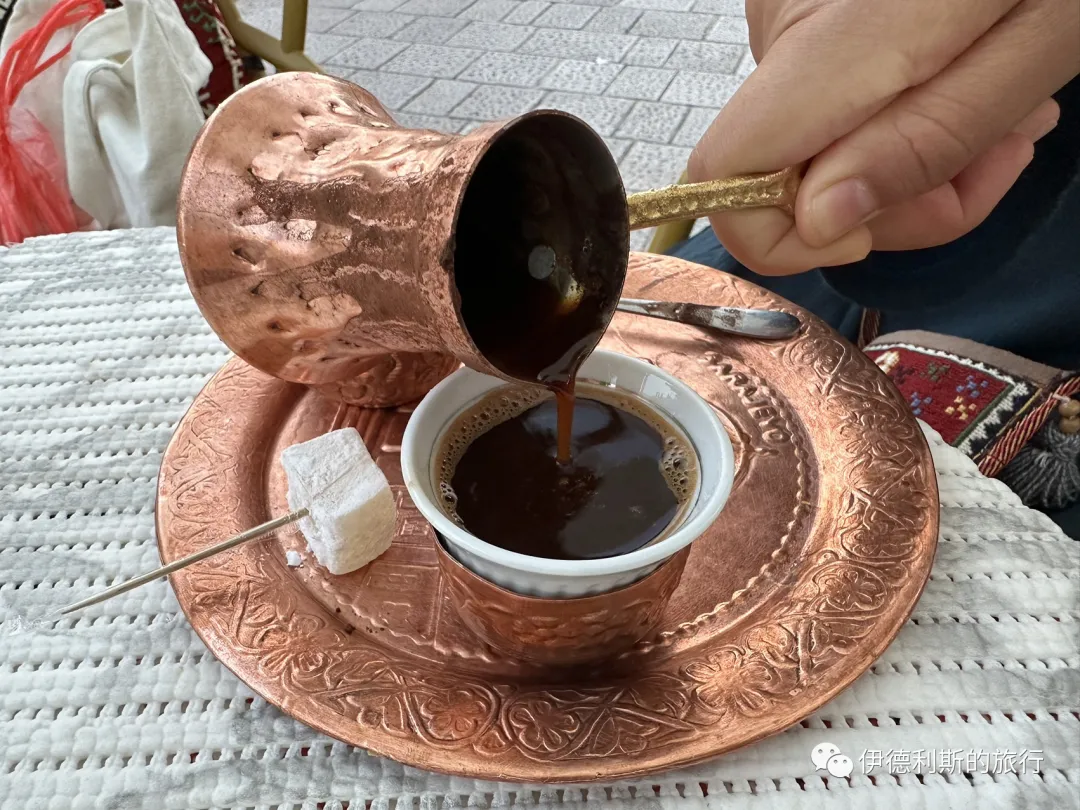
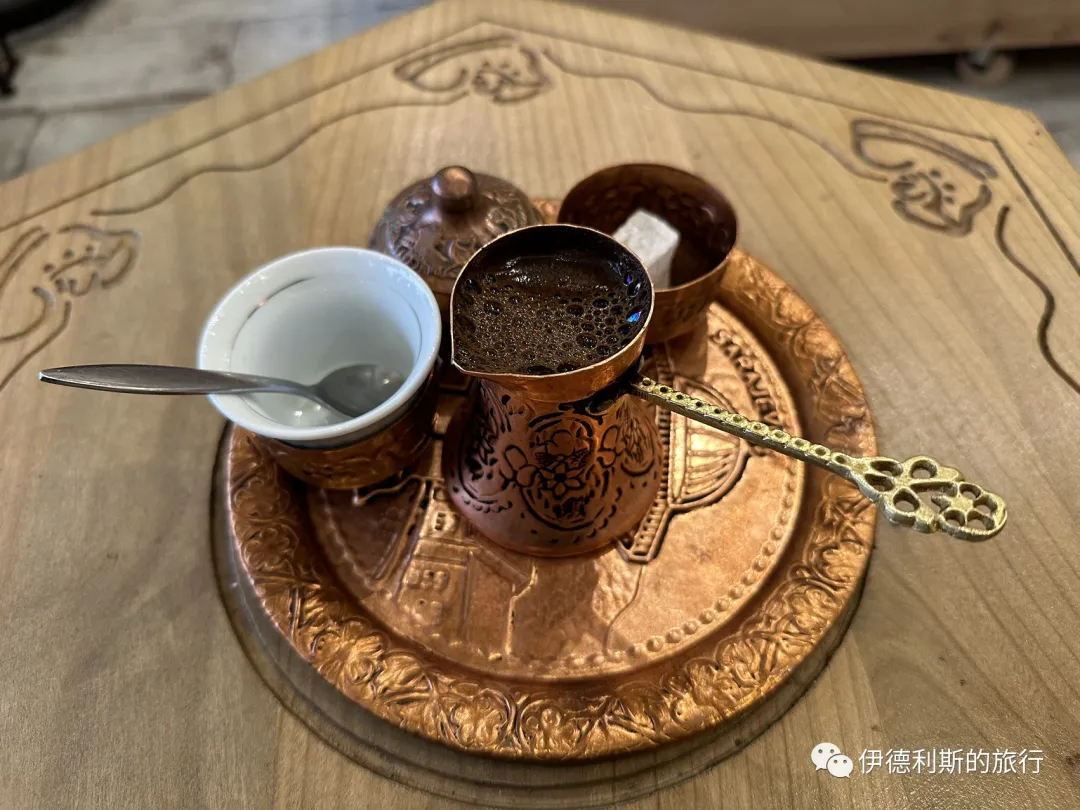
Like Turkish coffee, Bosnian coffee is made by grinding roasted coffee beans into a fine powder and brewing them in a long-handled copper pot called a Džezva (known as Cezve in Turkish). However, while Turkish coffee can be brewed with cold water, Bosnian coffee must be brewed with boiling water. You can add sugar to Turkish coffee while it brews, but you cannot add sugar to Bosnian coffee. Turkish coffee is poured into a cup and served to the customer, but Bosnian coffee is served by placing the copper brewing pot and the cup together on a tray for the customer to pour themselves.
The classic Bosnian coffee set includes a copper pot, a porcelain cup with a copper base, a copper tray, a copper sugar bowl for sugar cubes, and Rahat Lokum jelly candy. To drink it, first bite a piece of sugar cube and hold it under your tongue, letting it melt on its own, then drink the coffee. Bosnian Rahat Lokum jelly candy comes from Turkish Lokum. The yellow ones are made with vanilla and the red ones are made with rose petals. You can eat them at any time while drinking your coffee.
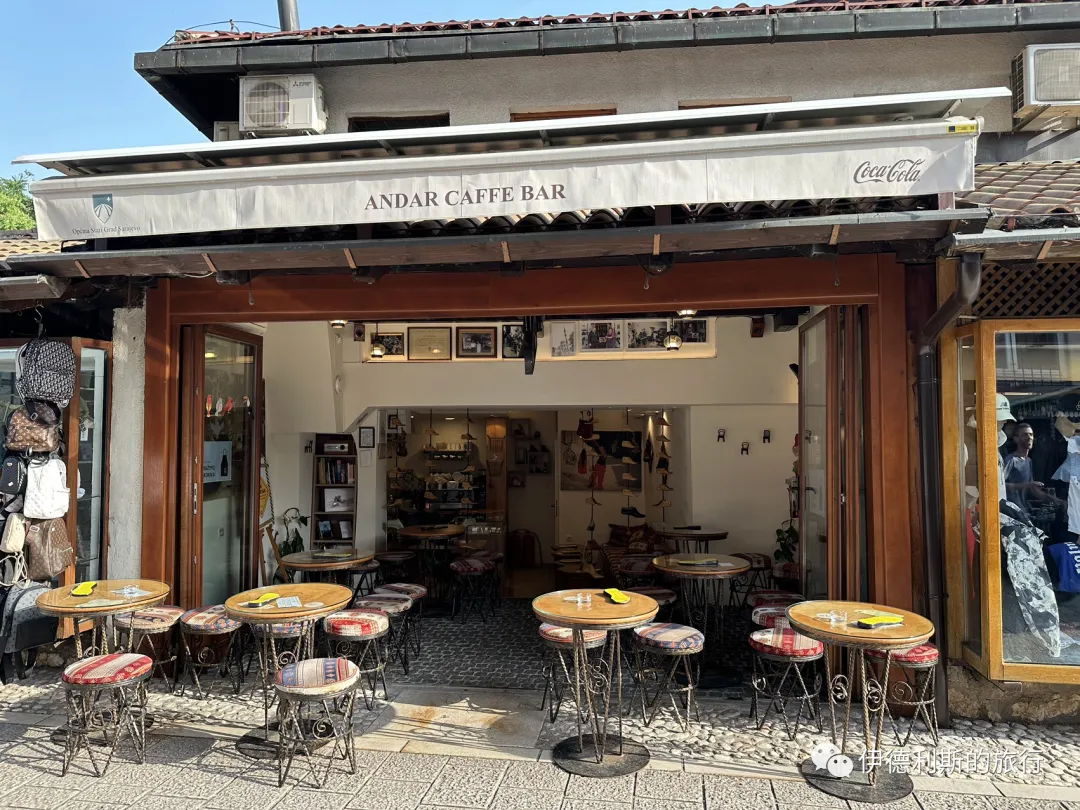
At Andar Caffe Bar, the owner Maida's grandfather, Muharem, opened a handmade shoe shop in the Sarajevo Old Bazaar in 1933, which was later taken over by Maida's father, Osman. After Osman retired in 2010, Maida took over the shop. Since handmade shoes were no longer in demand and people were buying shoes in stores, Maida turned the shop into the current cafe, though she kept many shoe-related elements inside.
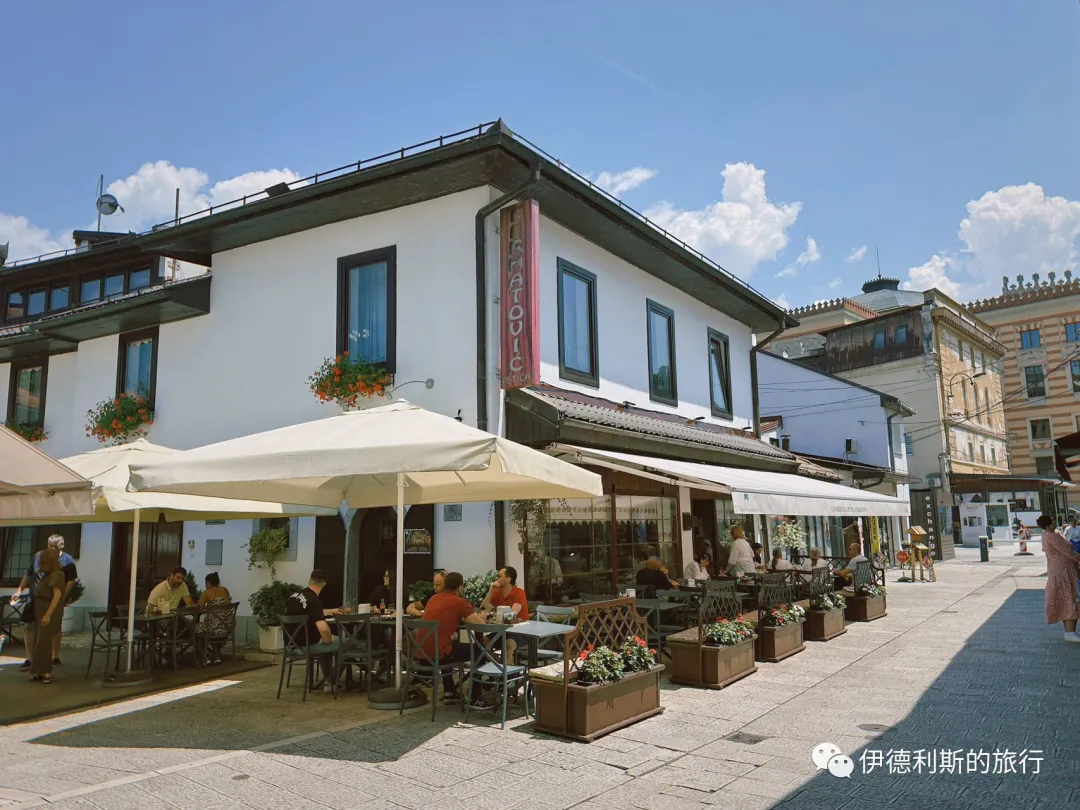
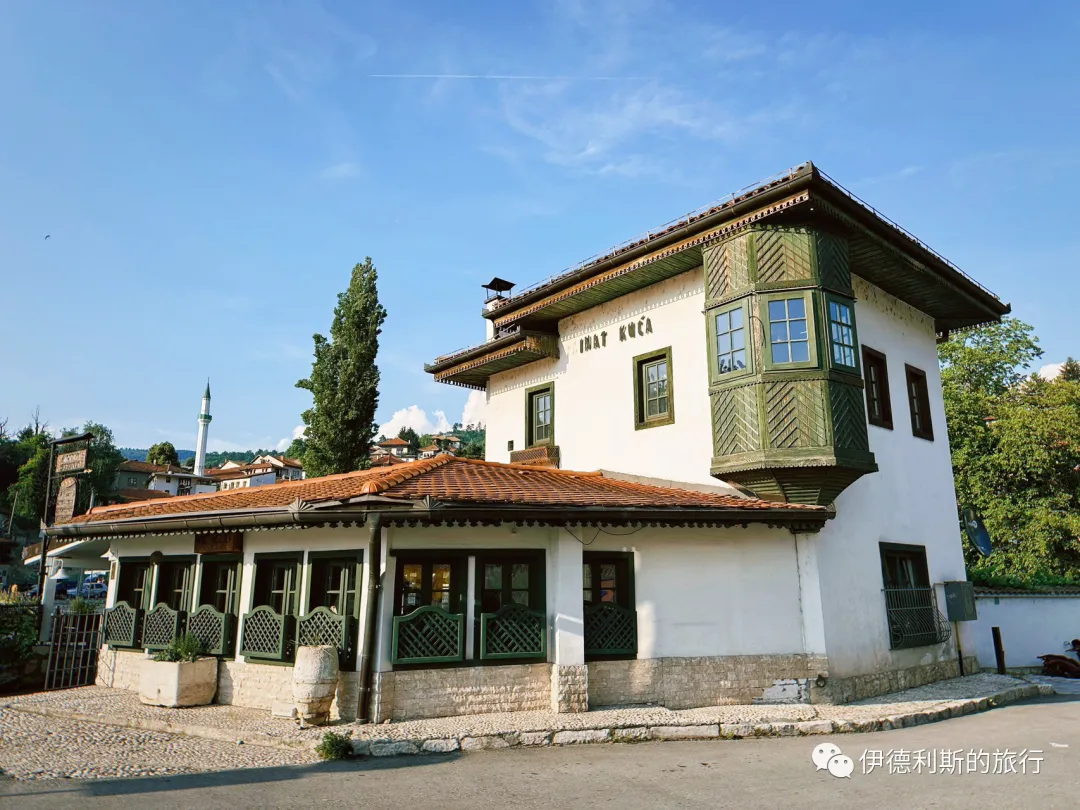
There is a very famous Bosnian restaurant called Inat kuća across from the Sarajevo City Hall (Vijećnica). The traditional Bosnian house where the restaurant is located was built in the mid-17th century and was originally next to the current City Hall. In 1892, when the Austro-Hungarian Empire wanted to build the City Hall and a tram station, they tried to seize the land, but the old man who owned the house, Benderija, did not want to move. After long negotiations, the old man finally agreed to move only if he was given a bag of gold and his house was moved brick by brick to the other side of the river. The Austro-Hungarian Empire had no choice but to move the house to its current location. During the move, the old man reportedly sat on the nearby bridge every day, carefully watching the workers move every single brick to the other side of the river.
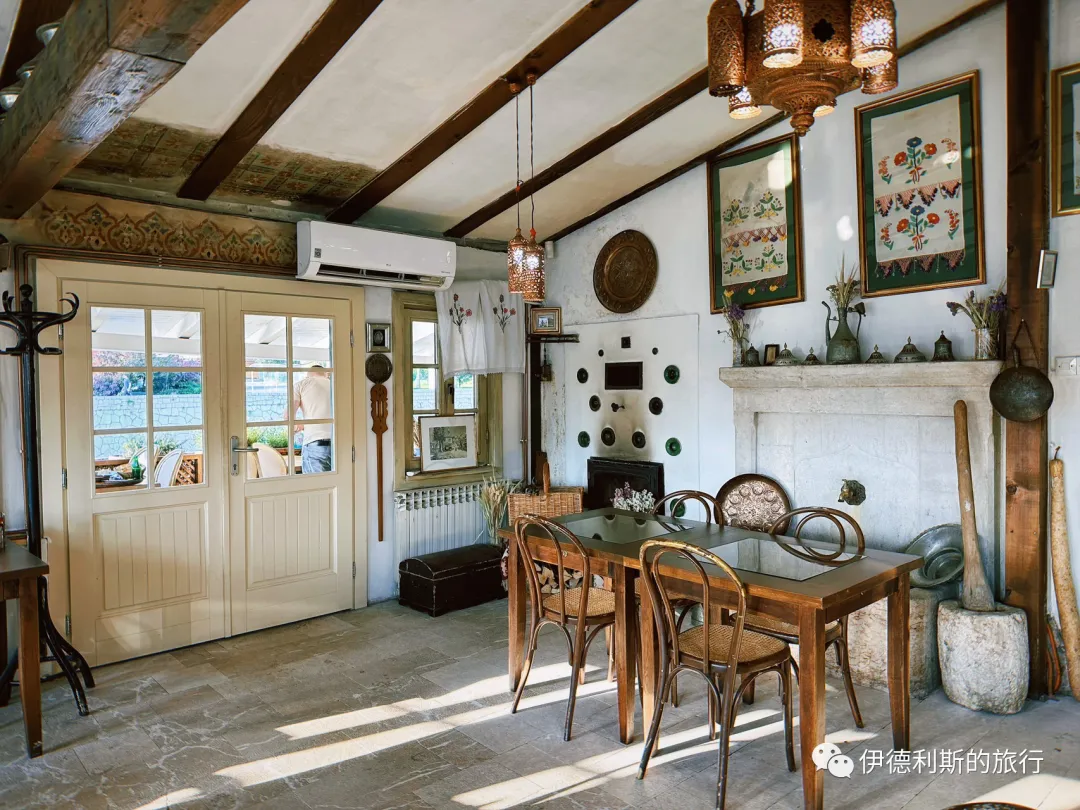
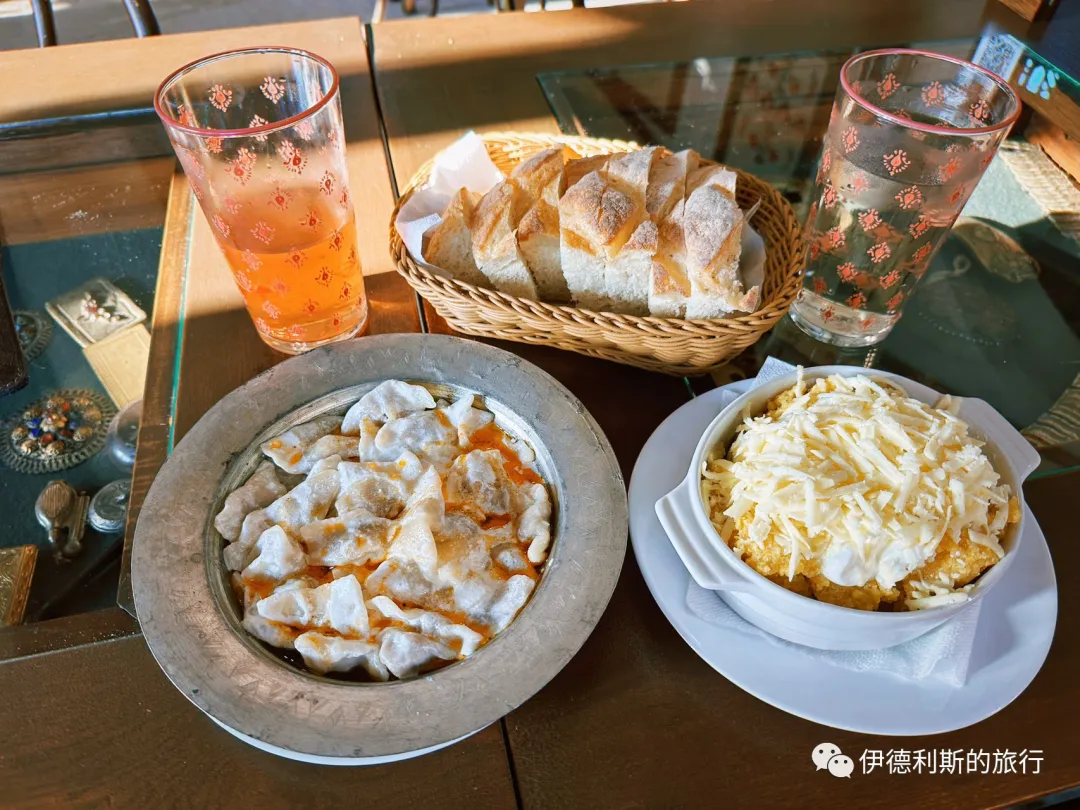
After 1997, Inat kuća became a Bosnian restaurant where you can enjoy Bosnian cuisine and see the traditional decor of a Bosnian home. We ordered traditional Bosnian dumplings (klepe), cornmeal porridge (pura), rose water, and elderflower (zova) water. Klepe is made by kneading flour, eggs, and salt for the dough, and mixing minced meat, onions, salt, and pepper for the filling. The dumplings are boiled for 10 minutes, then baked with yogurt, garlic powder, and chili powder. Pura is a porridge made from cornmeal, butter, cheese, and yogurt, and it is one of the favorite breakfasts for Bosniaks.
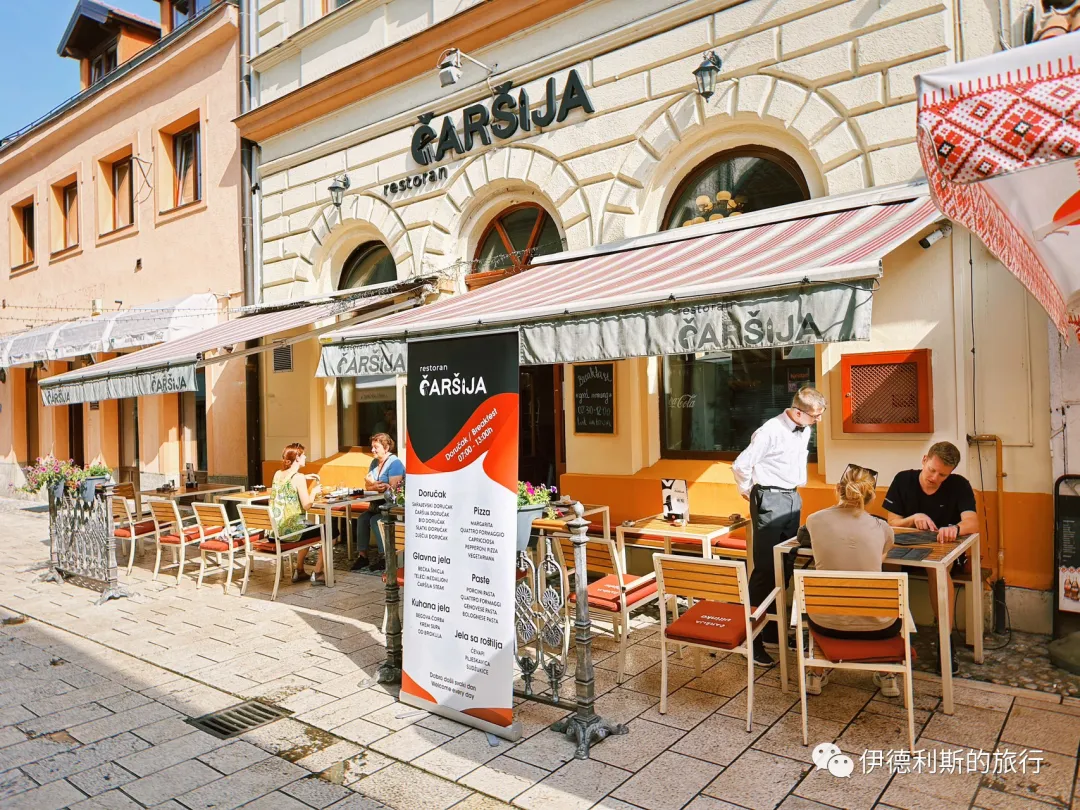
In the morning, we had a traditional Bosnian breakfast at Restoran Čaršija, west of the Gazi Husrev-beg Mosque in Sarajevo's old town. It included Travnik cheese, smoked cheese, cream cheese, smoked meat, spicy beef sausage (sujuk), vegetables, fruit, fried eggs, and black tea. Travnik cheese is a specialty sheep's milk cheese from Bosnia and Herzegovina, originating from the mountains near the town of Travnik. It is made by brining fresh sheep's milk for two to three months. After draining, it tastes slightly salty and is low in fat.
We ate classic Bosnian snacks, flaky meat pie (burek) and small meat dumplings (mantije), on the streets of the old bazaar in Sarajevo. Burek is a classic Ottoman dish. This snack was reportedly brought from Central Asia to the Anatolian Peninsula by Turkic peoples during their westward migration. It was later perfected in the Ottoman court and spread to the Balkan Peninsula under Ottoman rule. In Bosnia, burek is generally called pita. Only the meat-filled version is called burek, while the white cheese version is called sirnica, the spinach and cheese version is called zeljanica, and the potato version is called krompiruša.
The word mantije comes from the Chinese word mantou. After the 13th century, it was brought along the Silk Road through Central Asia to Anatolia by Turkic peoples and Mongols. It spread throughout the Ottoman Empire and is known as manti in Turkish. Before the term baozi appeared in the Northern Song Dynasty, the Chinese word mantou could refer to any stuffed flour pastry. Today, the Wu dialect still uses the term meat mantou, and the manti of West and Central Asia also refers to stuffed flour pastries.
We had dinner at the old bazaar in Sarajevo, ordering the Bosnian specialty chicken soup (begova čorba), a grilled vegetable platter, and Balkan grilled veal patties (teleća pljeskavica), all of which were delicious. The grilled meat here tastes great with yogurt cheese.
Accommodation
I booked a hotel called Villa Sky in the old town of Sarajevo on Agoda and asked the owner, Faris, to pick us up at the airport. Faris is a local Bosnian and speaks fluent English. On the way into the city, he gave us an overview of Sarajevo and pointed out the bullet holes left on buildings from the Bosnian War.
Street view view all
Summary: Sarajevo, the capital of Bosnia and Herzegovina, is shown through its Ottoman old town, mosques, markets, coffee houses, and Bosnian food. This account keeps the original route, historical notes, place names, dishes, and photographs in order.
Sarajevo is the capital of Bosnia and Herzegovina. It was founded by the Ottoman Empire in the 1450s and officially established in 1461. Sarajevo grew rapidly in the 16th century, becoming the second-largest city in Europe under the Ottoman Empire after Istanbul, with over a hundred mosques.
Sarajevo was under Ottoman rule for over four hundred years between 1461 and 1878, and the Bosniaks (Bošnjaci) living here were deeply influenced by the Ottomans. Today, you can experience Ottoman architecture and taste Bosniak food in the Old Bazaar (Baščaršija) of Sarajevo.
Gazi Husrev Bey complex
Gazi Husrev Bey was the Ottoman governor (Sanjak-bey) of Bosnia from 1521 to 1541. During his rule, the Ottoman Empire continued to expand into Croatia and Hungary. At the same time, he funded many important buildings in Sarajevo and used his wealth to support religious and educational institutions for the long term. The foundation (Wakof) established by Gazi Husrev Bey manages the mosque, public kitchen, hostel, Sufi lodge, madrasa, library, clock tower, mausoleum, inn, hospital, fountain, primary school, and many shops in the center of the Old Bazaar, making it the most important building complex in Sarajevo's old town.
The Gazi Husrev Bey Mosque has been the central mosque of Sarajevo since it was built in 1530. Important scenes from the movie "Walter Defends Sarajevo," which is well-known to Chinese audiences, were filmed here. The Gazi Husrev Bey Mosque was designed and built by the Ottoman court architect Adzem Esir Ali, who came from Tabriz, Persia. He built many structures in Istanbul during the early 16th century and was one of the founders of the early Istanbul architectural school. The main hall is 13 meters long and 13 meters wide, with a central dome 26 meters high, achieving a perfect one-to-two ratio. The front porch consists of five small domes supported by four marble columns.
There is a drinking fountain for passersby on the wall at the northwest corner of the mosque, a type of fountain very common in Ottoman cities.
In the northwest corner of the mosque complex stands a small building from 1859 called the Muwaqqithana, where the astronomer (Muwaqqit) used calculations to set the times for namaz and fasting.
Gazi Husrev Bey grew up in the Ottoman court and later earned many military honors. In 1521, he was named governor of Bosnia and became one of Sultan Suleiman the Magnificent's most trusted men. The tomb of Gazi Husrev Bey is a classic 16th-century octagonal Ottoman mausoleum.
Next to the tomb of Gazi Husrev Bey is a smaller octagonal mausoleum, which holds the remains of his deputy, the Ottoman general Murat-beg Tardić. Murat-beg led many campaigns to conquer Croatia. In 1537, he completely broke the military defenses of the Kingdom of Croatia, which helped the Ottoman Empire expand to the west.
On the north side of the Gazi Husrev Bey Mosque is the Kursumlija Madrasa, built by Gazi Husrev Bey in 1537 and dedicated to his mother, the Ottoman princess Selçuka. The madrasa features a courtyard surrounded by 12 classrooms, each with a fireplace and a dome, and a fountain for wudu in the center of the courtyard. After 2013, this site became the Gazi Husrev-beg Museum, which covers his life, the building complex he founded, and his contributions to the development of Sarajevo.
To the right of the madrasa is the Sufi lodge (Khanqah), which is now used as a gallery, though it was closed when we visited.
To the northwest of the Gazi Husrev Bey Mosque is the Gazi Husrev Bey Library, founded in 1537 using the remaining funds from the construction of the madrasa. The library was originally part of the madrasa and did not have its own separate building until 1863. The library was forced to close when the Siege of Sarajevo began in 1992 and did not reopen until 2014. The new library was built with an 8.8 million dollar donation from Qatar and houses over 100,000 manuscripts and books in Arabic, Turkish, Persian, Bosnian, and other languages.
The Gazi Husrev Bey bathhouse (Hamam) was built in 1537 and is located 300 meters northwest of the mosque. The southern part of the bathhouse has two symmetrical domed buildings, which served as the main halls for men and women. A corridor and changing rooms to the north lead to individual small rooms, each topped with a dome. The bathhouse was damaged by fire twice, once during the Habsburg invasion in 1697 and again during the Austro-Hungarian invasion in 1879. It was rebuilt each time, and the structure we see today is mostly from the 1891 renovation.
After renovations in 2000, this place became part of the Institute for Bosniak Studies and often hosts cultural events like book launches, concerts, literary nights, and exhibitions.
On the northeast side of the Gazi Husrev Bey mosque is the Morića Han caravanserai, which was first built in 1551. It was rebuilt into its current form after a fire in 1697 and is the only Ottoman caravanserai still standing in Sarajevo today. Morića Han could hold 300 guests and 70 horses. In 1878, Sarajevo citizens gathered here to form a People's Committee to protest the Austro-Hungarian occupation of Bosnia and Herzegovina. Today, it is still managed by the Ghazi Husrev-beg foundation and houses a restaurant and a Persian carpet shop.
To the west of the Gazi Husrev Bey mosque is the Bezistan covered market, built in 1555. It is one of the best-preserved Ottoman covered markets in Bosnia and Herzegovina. The Bezistan market sits slightly lower than the surrounding streets, which helps keep the interior cooler during the summer. It started as a general goods market and still functions as a shopping area today.
West of the Bezistan covered market are the ruins of the Tašli Han caravanserai, built between 1540 and 1543. The courtyard of the inn had a fountain and a small prayer room, and many merchants opened shops there. A fire in 1879 caused severe damage, and the structure completely collapsed by 1912. In 1998, the site was rebuilt as a hotel, and archaeological excavations rediscovered the original foundations and parts of the walls.
West of the Gazi Husrev Bey mosque stands a clock tower built in the 16th century, though the current structure was rebuilt in the 18th century. This 30-meter-tall clock tower is the highest of the 21 clock towers built by the Ottomans in Bosnia and Herzegovina. It follows the lunar calendar, with sunset set as 12 o'clock. An official called a Muvekit, who determines the prayer times and the five daily namaz, is responsible for adjusting the clock. The current clock mechanism was made by the London company Gillett & Johnston in 1875. To make sure the clock was easy to read, the top of the tower was modified during installation.
Below the clock tower is a public kitchen (Imaret) established in 1531, which was originally run by a foundation (Waqf) to distribute free food to the poor. It is now a very famous bakery, and the fresh bread baked on-site is very popular with the locals. Their main item is the kifla bread, which costs 2 yuan each. It comes in many flavors and has a rich wheat taste. Kifla is a small bread popular in Central Europe and the Balkans with a history of hundreds of years. The French croissant actually developed from the kifla.
Mosque
The Muslihudin Čekrekčija Mosque is in the commercial center of Sarajevo's old town. Hajji Mustafa built it in 1526. The mosque keeps its original endowment deed, or vakufnama, written in 1526. This is the oldest deed document in Sarajevo.
The mosque survived many fires in Sarajevo and the 1697 looting of the city by the Holy League after they defeated the Ottoman Empire. The interior still holds traditional arabesque patterns.
The Baščaršija Mosque sits in the center of the old bazaar in Sarajevo. Havadža Durak built it in the early 16th century, and the earliest manuscript recording the mosque dates back to 1528. The mosque originally had a wooden dome. After a fire destroyed it in 1697, it was rebuilt with a stone dome. There is a front porch with three small stone domes in front of the main hall. It was changed to a wooden roof in 1945 but restored to its original look in 1966. The mosque suffered heavy damage during the Siege of Sarajevo from 1992 to 1995 and was later renovated.
The Emperor's Mosque (Careva Džamija) was first built in 1457. It was the first mosque built after the Ottoman Empire conquered Bosnia. Isaković-Hranušić led the construction, and it was dedicated to the Ottoman Sultan Mehmed the Conqueror. The first mosque building was made of wood. It was rebuilt in 1565 into the current classical Ottoman style and dedicated to the Ottoman Sultan Suleiman the Magnificent. Side rooms were added in 1800, and they were connected to the main hall in 1848.
The Emperor's Mosque was severely damaged twice, once during World War II and again during the Bosnian War, and was later repaired.
The Magribija Mosque was built by Sheikh Magribija in the 15th century. Tradition says that Sheikh Magribija came to Sarajevo with the city's founder, the Ottoman governor Isa-beg. The original mosque building was destroyed by fire. The current structure was rebuilt in 1766, keeping its 18th-century appearance and painted decorations. The mosque was severely damaged during the Bosnian War in 1992, leaving only the base of the minaret (bunkta). It was rebuilt in 2000, and the roof and porch were repaired again in 2004.
Ali Pasha Mosque was built in 1560 or 1561 by the Bosnian governor Ali Pasha, who was a local from Sarajevo. This is a single-domed mosque in the classical Ottoman style with beautiful architectural proportions. There was originally a large cemetery around the main hall. It was turned into a park after tram tracks and roads were laid, and a fountain for ritual washing (abdest) was moved there in 1874. The mosque was badly damaged by shelling during the Bosnian War from 1992 to 1995, and it was rebuilt in 2004.
You can still see gravestones of victims from the 1993 Bosnian War next to the mosque.
Ferhadija Mosque was built by Ferhad-beg Vuković-Desisalić in 1561 or 1562, and the neighborhood that grew around it is also called Ferhadija. The mosque originally had a primary school (mekteb), a public kitchen (imaret), a water station, and a fountain, but they were all destroyed in fires in 1879 and 1897. It is a typical classical Ottoman building with a central dome over a rectangular main hall and three small domes over the front porch.
These are the archaeological remains of Bakrbaba Mosque, its madrasa, primary school (mekteb), and courtyard (harem).
Bakrbaba Mosque was built in 1544 by the famous Sarajevo merchant Hajji-Alija Bakrbaba, and it had a 30-meter-tall minaret (bunkta) at the time. In 1697, the Ottoman Empire was defeated by the European Holy League. Sarajevo was looted and burned, and Bakrbaba Mosque was destroyed in the fire before being rebuilt in the early 18th century.
A primary school and courtyard were originally built on the west side of the mosque. In 1741 or 1742, Hajji Ismail Misrija built a madrasa and cemetery on the east side of the courtyard. Soon after, Abdulah Efendi Kantamirija built a library across the street, making this an important educational and cultural center in Sarajevo.
After the Austro-Hungarian Empire took control of Sarajevo in 1878, the mosque was first turned into a military warehouse and was finally demolished in 1895. The primary school next to the mosque was also destroyed in 1895, the library was destroyed in 1897, and the madrasa remained until the beginning of World War II.
Since 2000, at the request of Islamic scholar Hajji Hafez Halid Efendi Hadžimulić, Sarajevo began archaeological research on the Bakrbaba mosque complex. In 2009, businessman Husein Durman from Bursa, Turkey, funded the reconstruction of the Bakrbaba mosque, which officially opened in 2011.
Market
The Brusa Bezistan covered market is located in the Grand Bazaar of Sarajevo's old town. It was built in 1551 by order of Grand Vizier Rüstem Pasha during the reign of Suleiman the Magnificent of the Ottoman Empire and was named after the old Ottoman capital, Bursa. This market has six domes. It originally sold silk, household goods, and small furniture. Today, it serves as a Sarajevo museum, displaying precious artifacts from the Ottoman period.
Fortress
The Yellow Fortress (Žuta Tabija) was built between 1727 and 1739 as a battery for the Sarajevo city walls. In 1878, it served as an important stronghold for the Ottoman Empire to defend Sarajevo against the Austro-Hungarian invasion.
Sarajevo did not have city walls for most of its history until 1697, when Prince Eugene of the Habsburg Empire launched a devastating attack on the city. He looted the city and burned many buildings, leading the Ottoman Empire to officially build city walls in Sarajevo in 1727. Today, the Sarajevo city walls are located on the east side of the old town, with many gates and fortresses still preserved. The most famous of these are the Yellow Fortress and the White Fortress (Bijela Tabija).
Dervish Lodge
Below the Yellow Fortress sits a Mevlevi Sufi dervish lodge (tekke), which was the first Sufi lodge in Sarajevo. The lodge was first built in 1462, destroyed during Prince Eugene's invasion of Sarajevo in 1697, and rebuilt in 1781. After the Austro-Hungarian Empire occupied Bosnia and Herzegovina in 1878, they strictly prohibited the maintenance of the lodge. It was eventually demolished in 1957 during the Tito era in Yugoslavia. The building we see today was rebuilt in 2013 with donations from Turkey.
Food
The restaurant Ćevabdžinica Petica Ferhatović. This shop was opened by the Ferhatović family during the 1984 Sarajevo Winter Olympics, though they had already started running restaurants in Sarajevo's old town as early as 1957. We ordered the Bosnian specialty minced beef finger kebabs (Ćevapčići) and spicy beef sausage (Sudžuk) with flatbread (Somun), served with onions and cream cheese (Kajmak) on the side. We also ordered a cheese salad (Šopska salata).
The word Ćevapčići comes from the Ottoman Turkish word for grilled meat (Kevap) and the Slavic suffix '-čići' which means small. It developed from Turkish kebabs in the 16th century. The version made in the Baščaršija area of Sarajevo is the most famous, and it holds an important place in Bosnian food culture.
The best drink to cool off in the Sarajevo Old Town bazaar is Boza! I drink it several times every day. Boza is a very old fermented malt drink. It was recorded as early as the 1070s in the Compendium of the Turkic Dialects (Dīwān Lughāt al-Turk). It was very popular among Turkic peoples in Central Asia and spread to the Balkan region with the Ottoman Empire.
Eating Noah's pudding (Ashure) in the Sarajevo Old Town bazaar. Ashure is a porridge that should be cooked on the tenth day of the month of Muharram. Ottoman-era Ashure has no fixed recipe, and preparation varies by region and family tradition. Traditionally, People say at least seven ingredients are used.
In the afternoon, we had Bosnian stew (Bosanski lonac) at Aščinica Hadžibajrić F. Namika in the Sarajevo Old Town bazaar. The word 'Aščinica' here means an old-fashioned Bosnian restaurant. The Hadžibajrić family has run this traditional Bosnian restaurant for over a hundred years. The current owner is Namik. He stands behind the counter and serves the food; you just point at what you want and he dishes it out.
Bosnian stew originated in the Middle Ages. It started as a home-cooked meal for Bosnian workers and later became popular with all social classes. You can stew it with beef, lamb, and meatballs, or with cabbage, potatoes, tomatoes, and carrots. When stewing, you layer the meat and vegetables in the pot, then add garlic and whole peppercorns for seasoning. They also have various stuffed dishes (Sarma), including stuffed tomatoes, stuffed grape leaves, stuffed onions, and stuffed pickled cabbage leaves. Sarma means 'wrapped' in Turkish, referring to vegetables stuffed with filling and then stewed.
Drink traditional Bosnian coffee (Bosanska Kahva) in the Old Bazaar of Sarajevo. Coffee first arrived in the Balkan Peninsula under Ottoman rule from the Arab world in the 16th century. Sarajevo was one of the first European cities to open coffee houses, over a hundred years before cities in Western Europe.
Coffee houses are an important part of Ottoman culture. People go there to hear the day's main news, discuss daily gossip, and watch impromptu performances like shadow puppetry. Coffee houses allow people to express more ideas outside of work and worship, and they are great places to meet like-minded friends.
Like Turkish coffee, Bosnian coffee is made by grinding roasted coffee beans into a fine powder and brewing them in a long-handled copper pot called a Džezva (known as Cezve in Turkish). However, while Turkish coffee can be brewed with cold water, Bosnian coffee must be brewed with boiling water. You can add sugar to Turkish coffee while it brews, but you cannot add sugar to Bosnian coffee. Turkish coffee is poured into a cup and served to the customer, but Bosnian coffee is served by placing the copper brewing pot and the cup together on a tray for the customer to pour themselves.
The classic Bosnian coffee set includes a copper pot, a porcelain cup with a copper base, a copper tray, a copper sugar bowl for sugar cubes, and Rahat Lokum jelly candy. To drink it, first bite a piece of sugar cube and hold it under your tongue, letting it melt on its own, then drink the coffee. Bosnian Rahat Lokum jelly candy comes from Turkish Lokum. The yellow ones are made with vanilla and the red ones are made with rose petals. You can eat them at any time while drinking your coffee.
At Andar Caffe Bar, the owner Maida's grandfather, Muharem, opened a handmade shoe shop in the Sarajevo Old Bazaar in 1933, which was later taken over by Maida's father, Osman. After Osman retired in 2010, Maida took over the shop. Since handmade shoes were no longer in demand and people were buying shoes in stores, Maida turned the shop into the current cafe, though she kept many shoe-related elements inside.
There is a very famous Bosnian restaurant called Inat kuća across from the Sarajevo City Hall (Vijećnica). The traditional Bosnian house where the restaurant is located was built in the mid-17th century and was originally next to the current City Hall. In 1892, when the Austro-Hungarian Empire wanted to build the City Hall and a tram station, they tried to seize the land, but the old man who owned the house, Benderija, did not want to move. After long negotiations, the old man finally agreed to move only if he was given a bag of gold and his house was moved brick by brick to the other side of the river. The Austro-Hungarian Empire had no choice but to move the house to its current location. During the move, the old man reportedly sat on the nearby bridge every day, carefully watching the workers move every single brick to the other side of the river.
After 1997, Inat kuća became a Bosnian restaurant where you can enjoy Bosnian cuisine and see the traditional decor of a Bosnian home. We ordered traditional Bosnian dumplings (klepe), cornmeal porridge (pura), rose water, and elderflower (zova) water. Klepe is made by kneading flour, eggs, and salt for the dough, and mixing minced meat, onions, salt, and pepper for the filling. The dumplings are boiled for 10 minutes, then baked with yogurt, garlic powder, and chili powder. Pura is a porridge made from cornmeal, butter, cheese, and yogurt, and it is one of the favorite breakfasts for Bosniaks.
In the morning, we had a traditional Bosnian breakfast at Restoran Čaršija, west of the Gazi Husrev-beg Mosque in Sarajevo's old town. It included Travnik cheese, smoked cheese, cream cheese, smoked meat, spicy beef sausage (sujuk), vegetables, fruit, fried eggs, and black tea. Travnik cheese is a specialty sheep's milk cheese from Bosnia and Herzegovina, originating from the mountains near the town of Travnik. It is made by brining fresh sheep's milk for two to three months. After draining, it tastes slightly salty and is low in fat.
We ate classic Bosnian snacks, flaky meat pie (burek) and small meat dumplings (mantije), on the streets of the old bazaar in Sarajevo. Burek is a classic Ottoman dish. This snack was reportedly brought from Central Asia to the Anatolian Peninsula by Turkic peoples during their westward migration. It was later perfected in the Ottoman court and spread to the Balkan Peninsula under Ottoman rule. In Bosnia, burek is generally called pita. Only the meat-filled version is called burek, while the white cheese version is called sirnica, the spinach and cheese version is called zeljanica, and the potato version is called krompiruša.
The word mantije comes from the Chinese word mantou. After the 13th century, it was brought along the Silk Road through Central Asia to Anatolia by Turkic peoples and Mongols. It spread throughout the Ottoman Empire and is known as manti in Turkish. Before the term baozi appeared in the Northern Song Dynasty, the Chinese word mantou could refer to any stuffed flour pastry. Today, the Wu dialect still uses the term meat mantou, and the manti of West and Central Asia also refers to stuffed flour pastries.
We had dinner at the old bazaar in Sarajevo, ordering the Bosnian specialty chicken soup (begova čorba), a grilled vegetable platter, and Balkan grilled veal patties (teleća pljeskavica), all of which were delicious. The grilled meat here tastes great with yogurt cheese.
Accommodation
I booked a hotel called Villa Sky in the old town of Sarajevo on Agoda and asked the owner, Faris, to pick us up at the airport. Faris is a local Bosnian and speaks fluent English. On the way into the city, he gave us an overview of Sarajevo and pointed out the bullet holes left on buildings from the Bosnian War.
Street view view all
Reposted from the web
Summary: Sarajevo, the capital of Bosnia and Herzegovina, is shown through its Ottoman old town, mosques, markets, coffee houses, and Bosnian food. This account keeps the original route, historical notes, place names, dishes, and photographs in order.
Sarajevo is the capital of Bosnia and Herzegovina. It was founded by the Ottoman Empire in the 1450s and officially established in 1461. Sarajevo grew rapidly in the 16th century, becoming the second-largest city in Europe under the Ottoman Empire after Istanbul, with over a hundred mosques.
Sarajevo was under Ottoman rule for over four hundred years between 1461 and 1878, and the Bosniaks (Bošnjaci) living here were deeply influenced by the Ottomans. Today, you can experience Ottoman architecture and taste Bosniak food in the Old Bazaar (Baščaršija) of Sarajevo.
Gazi Husrev Bey complex
Gazi Husrev Bey was the Ottoman governor (Sanjak-bey) of Bosnia from 1521 to 1541. During his rule, the Ottoman Empire continued to expand into Croatia and Hungary. At the same time, he funded many important buildings in Sarajevo and used his wealth to support religious and educational institutions for the long term. The foundation (Wakof) established by Gazi Husrev Bey manages the mosque, public kitchen, hostel, Sufi lodge, madrasa, library, clock tower, mausoleum, inn, hospital, fountain, primary school, and many shops in the center of the Old Bazaar, making it the most important building complex in Sarajevo's old town.
The Gazi Husrev Bey Mosque has been the central mosque of Sarajevo since it was built in 1530. Important scenes from the movie "Walter Defends Sarajevo," which is well-known to Chinese audiences, were filmed here. The Gazi Husrev Bey Mosque was designed and built by the Ottoman court architect Adzem Esir Ali, who came from Tabriz, Persia. He built many structures in Istanbul during the early 16th century and was one of the founders of the early Istanbul architectural school. The main hall is 13 meters long and 13 meters wide, with a central dome 26 meters high, achieving a perfect one-to-two ratio. The front porch consists of five small domes supported by four marble columns.
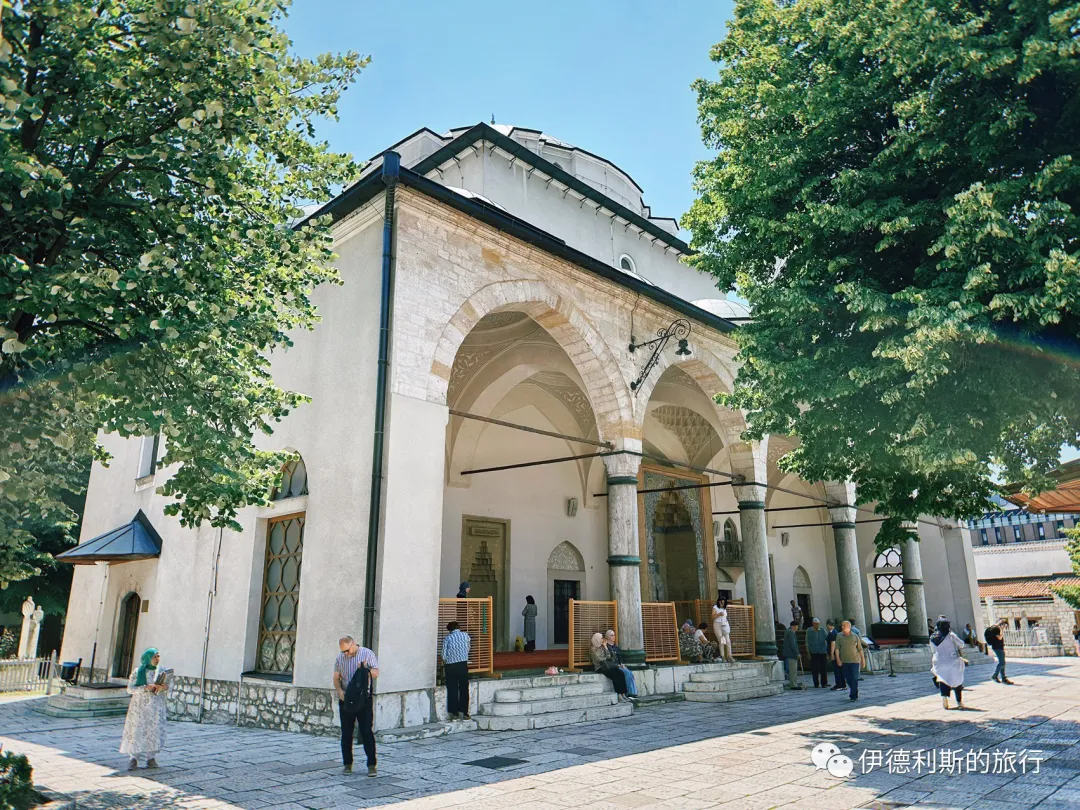
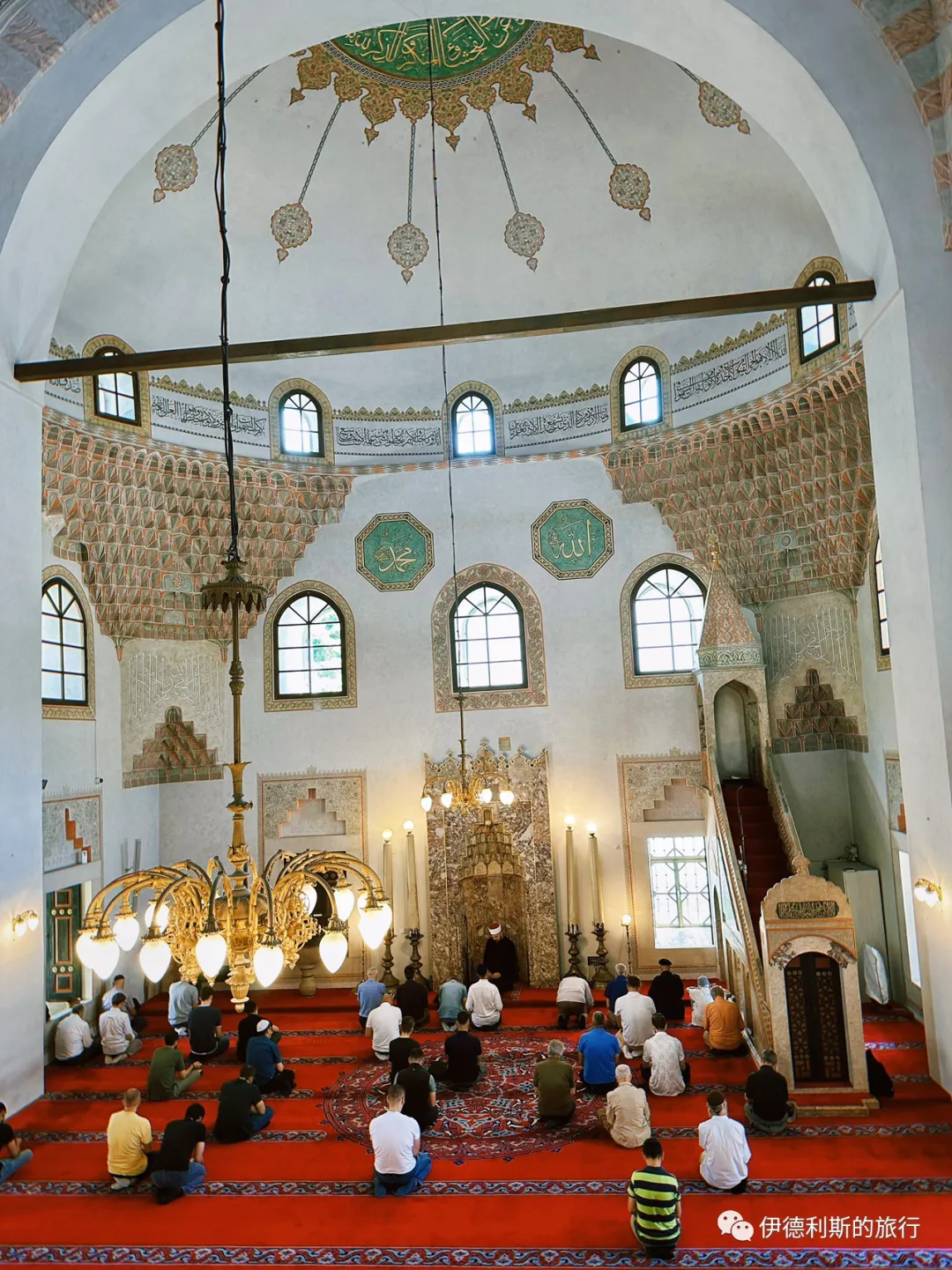
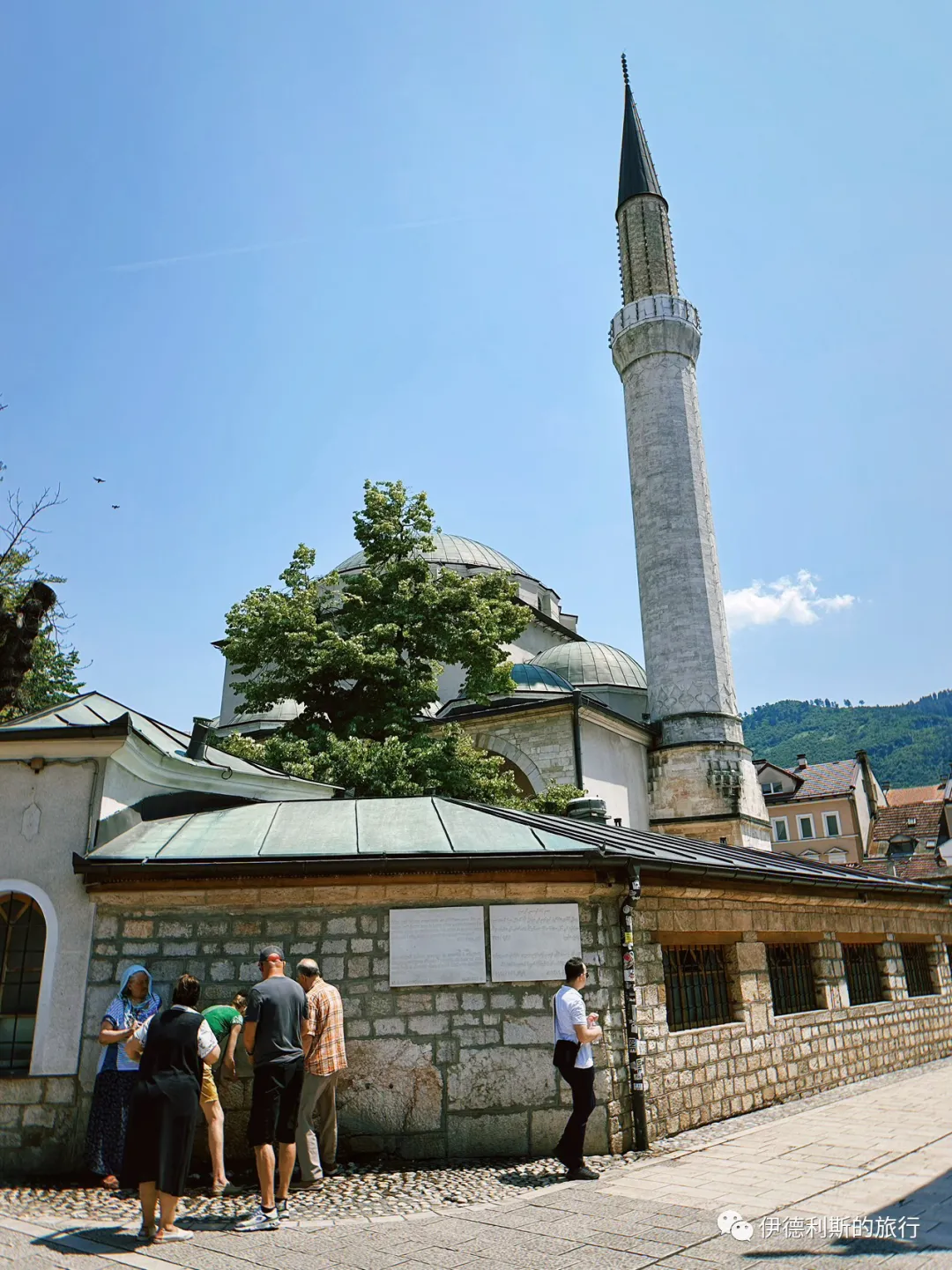
There is a drinking fountain for passersby on the wall at the northwest corner of the mosque, a type of fountain very common in Ottoman cities.
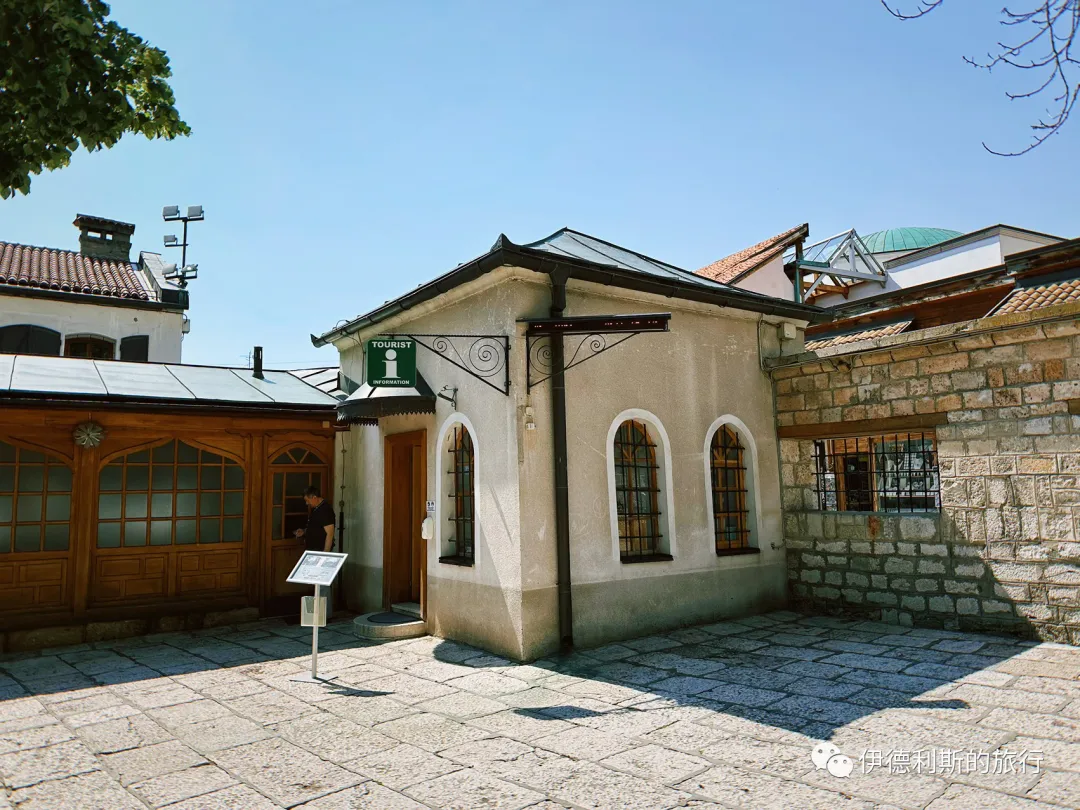
In the northwest corner of the mosque complex stands a small building from 1859 called the Muwaqqithana, where the astronomer (Muwaqqit) used calculations to set the times for namaz and fasting.
Gazi Husrev Bey grew up in the Ottoman court and later earned many military honors. In 1521, he was named governor of Bosnia and became one of Sultan Suleiman the Magnificent's most trusted men. The tomb of Gazi Husrev Bey is a classic 16th-century octagonal Ottoman mausoleum.
Next to the tomb of Gazi Husrev Bey is a smaller octagonal mausoleum, which holds the remains of his deputy, the Ottoman general Murat-beg Tardić. Murat-beg led many campaigns to conquer Croatia. In 1537, he completely broke the military defenses of the Kingdom of Croatia, which helped the Ottoman Empire expand to the west.
On the north side of the Gazi Husrev Bey Mosque is the Kursumlija Madrasa, built by Gazi Husrev Bey in 1537 and dedicated to his mother, the Ottoman princess Selçuka. The madrasa features a courtyard surrounded by 12 classrooms, each with a fireplace and a dome, and a fountain for wudu in the center of the courtyard. After 2013, this site became the Gazi Husrev-beg Museum, which covers his life, the building complex he founded, and his contributions to the development of Sarajevo.
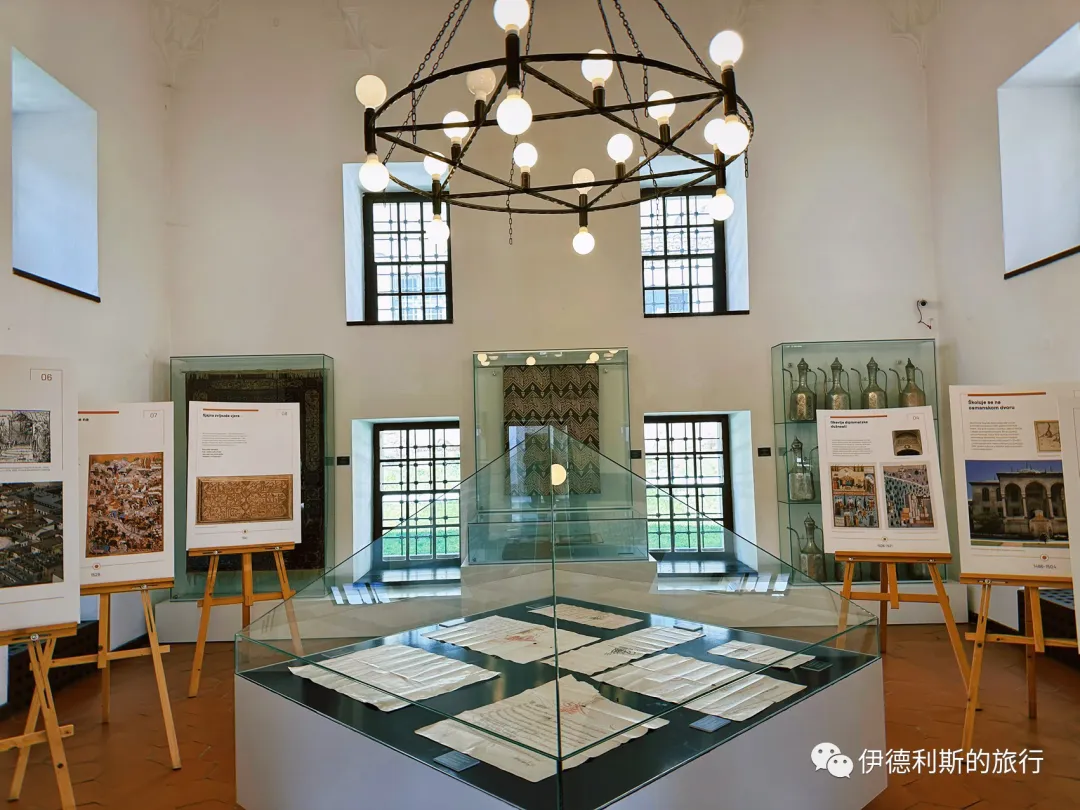
To the right of the madrasa is the Sufi lodge (Khanqah), which is now used as a gallery, though it was closed when we visited.
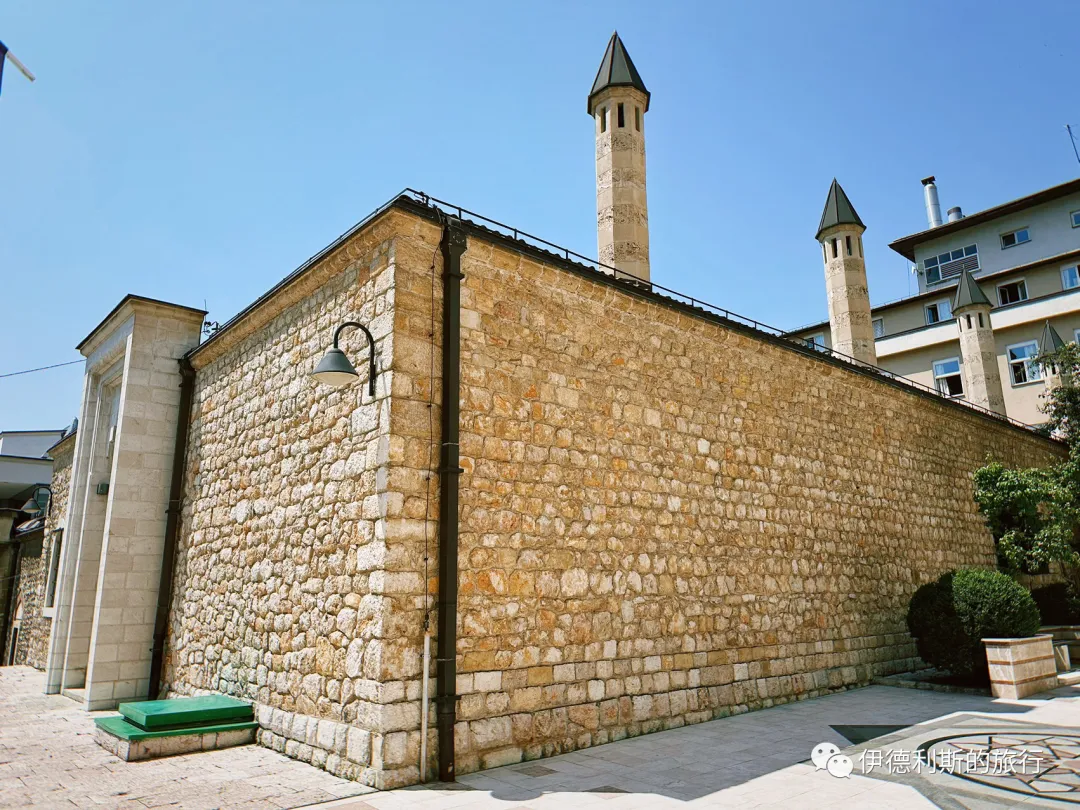
To the northwest of the Gazi Husrev Bey Mosque is the Gazi Husrev Bey Library, founded in 1537 using the remaining funds from the construction of the madrasa. The library was originally part of the madrasa and did not have its own separate building until 1863. The library was forced to close when the Siege of Sarajevo began in 1992 and did not reopen until 2014. The new library was built with an 8.8 million dollar donation from Qatar and houses over 100,000 manuscripts and books in Arabic, Turkish, Persian, Bosnian, and other languages.
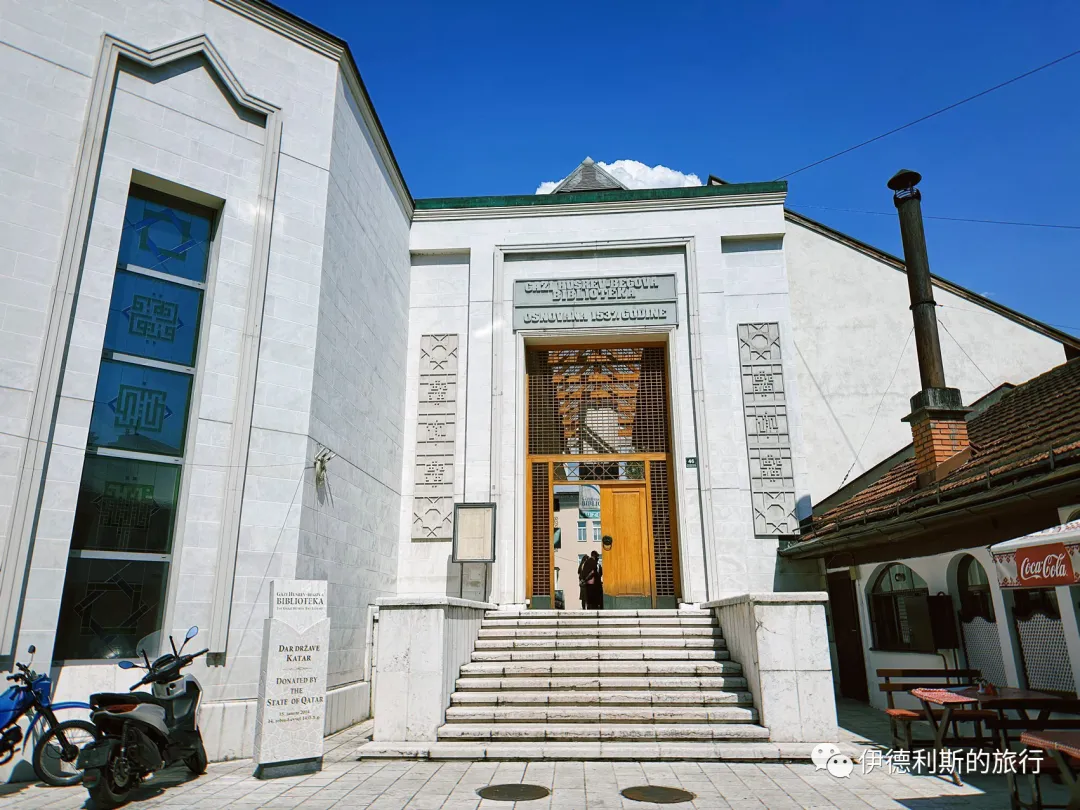
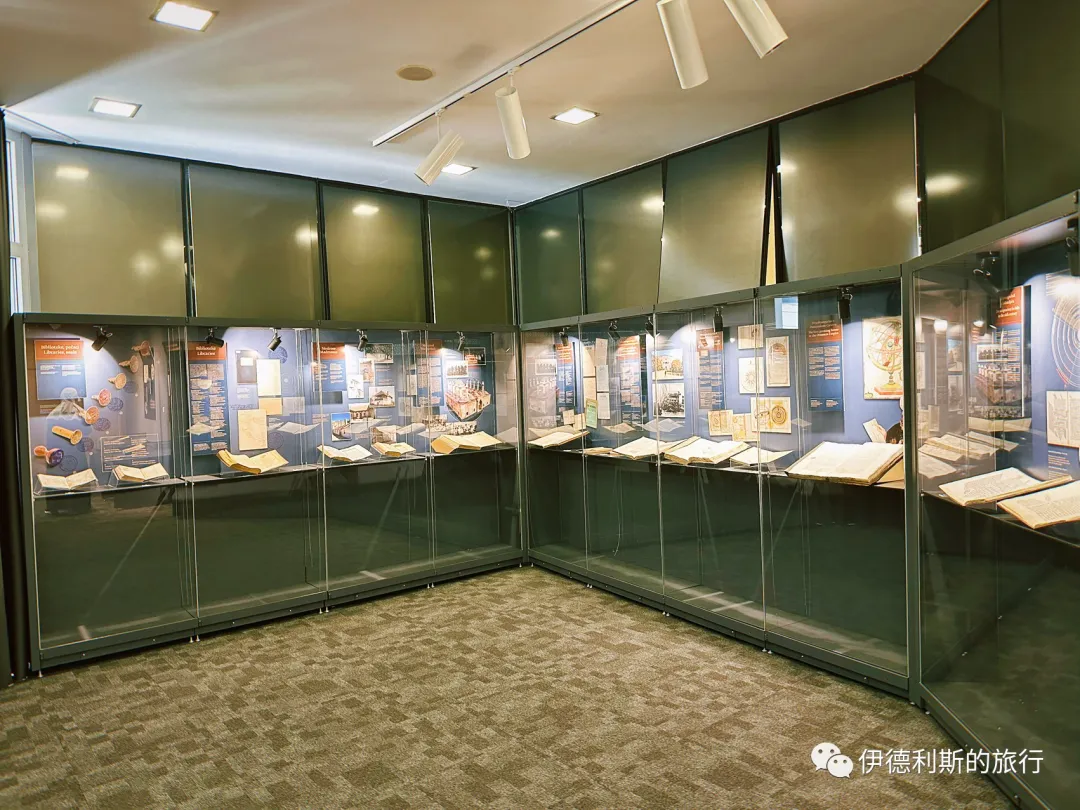
The Gazi Husrev Bey bathhouse (Hamam) was built in 1537 and is located 300 meters northwest of the mosque. The southern part of the bathhouse has two symmetrical domed buildings, which served as the main halls for men and women. A corridor and changing rooms to the north lead to individual small rooms, each topped with a dome. The bathhouse was damaged by fire twice, once during the Habsburg invasion in 1697 and again during the Austro-Hungarian invasion in 1879. It was rebuilt each time, and the structure we see today is mostly from the 1891 renovation.
After renovations in 2000, this place became part of the Institute for Bosniak Studies and often hosts cultural events like book launches, concerts, literary nights, and exhibitions.
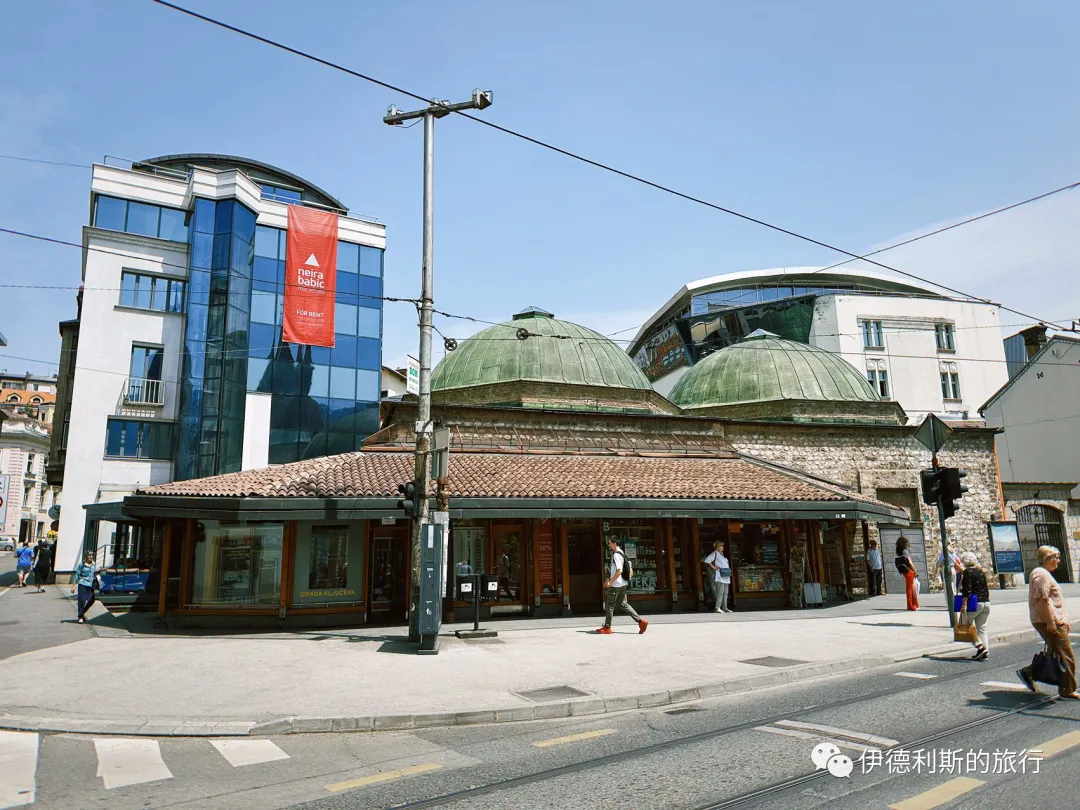
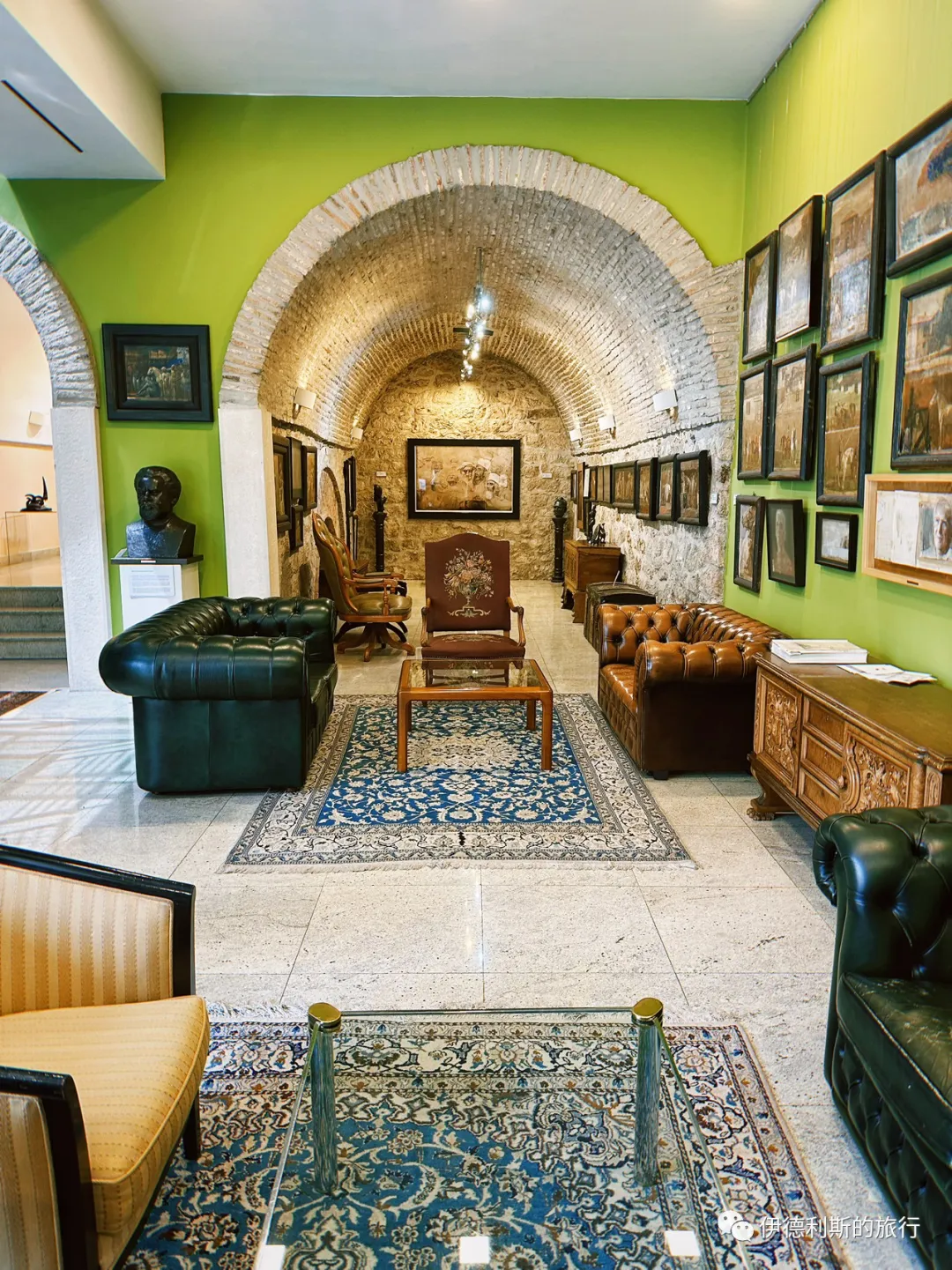
On the northeast side of the Gazi Husrev Bey mosque is the Morića Han caravanserai, which was first built in 1551. It was rebuilt into its current form after a fire in 1697 and is the only Ottoman caravanserai still standing in Sarajevo today. Morića Han could hold 300 guests and 70 horses. In 1878, Sarajevo citizens gathered here to form a People's Committee to protest the Austro-Hungarian occupation of Bosnia and Herzegovina. Today, it is still managed by the Ghazi Husrev-beg foundation and houses a restaurant and a Persian carpet shop.
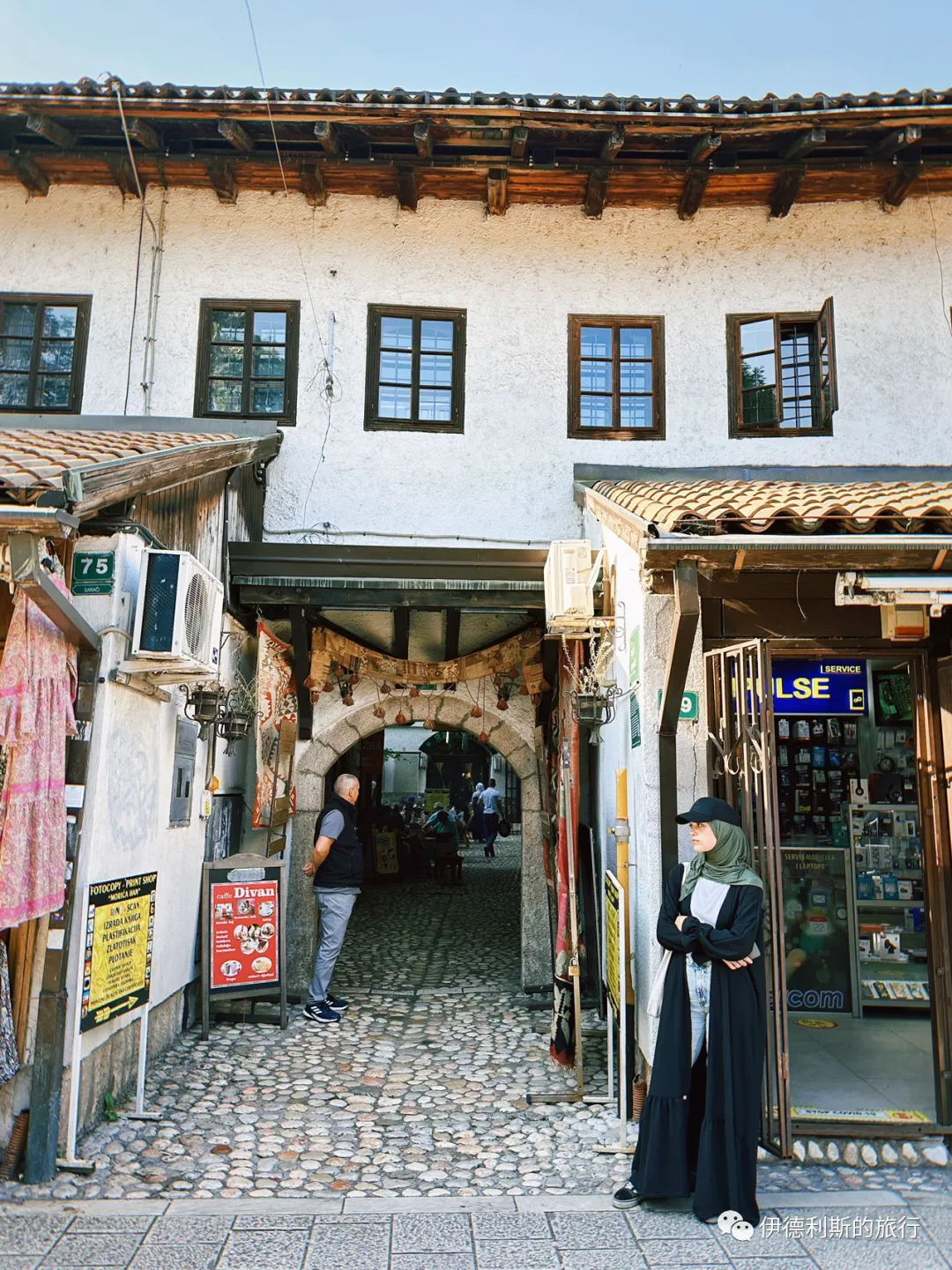
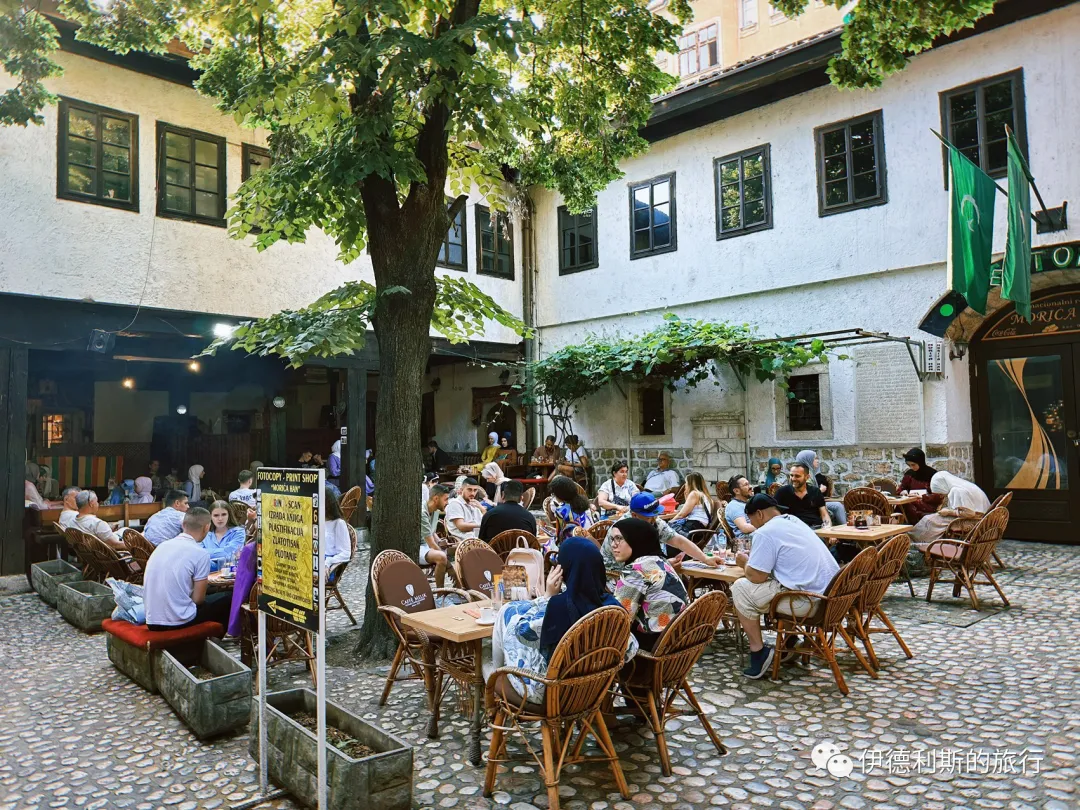
To the west of the Gazi Husrev Bey mosque is the Bezistan covered market, built in 1555. It is one of the best-preserved Ottoman covered markets in Bosnia and Herzegovina. The Bezistan market sits slightly lower than the surrounding streets, which helps keep the interior cooler during the summer. It started as a general goods market and still functions as a shopping area today.
West of the Bezistan covered market are the ruins of the Tašli Han caravanserai, built between 1540 and 1543. The courtyard of the inn had a fountain and a small prayer room, and many merchants opened shops there. A fire in 1879 caused severe damage, and the structure completely collapsed by 1912. In 1998, the site was rebuilt as a hotel, and archaeological excavations rediscovered the original foundations and parts of the walls.
West of the Gazi Husrev Bey mosque stands a clock tower built in the 16th century, though the current structure was rebuilt in the 18th century. This 30-meter-tall clock tower is the highest of the 21 clock towers built by the Ottomans in Bosnia and Herzegovina. It follows the lunar calendar, with sunset set as 12 o'clock. An official called a Muvekit, who determines the prayer times and the five daily namaz, is responsible for adjusting the clock. The current clock mechanism was made by the London company Gillett & Johnston in 1875. To make sure the clock was easy to read, the top of the tower was modified during installation.
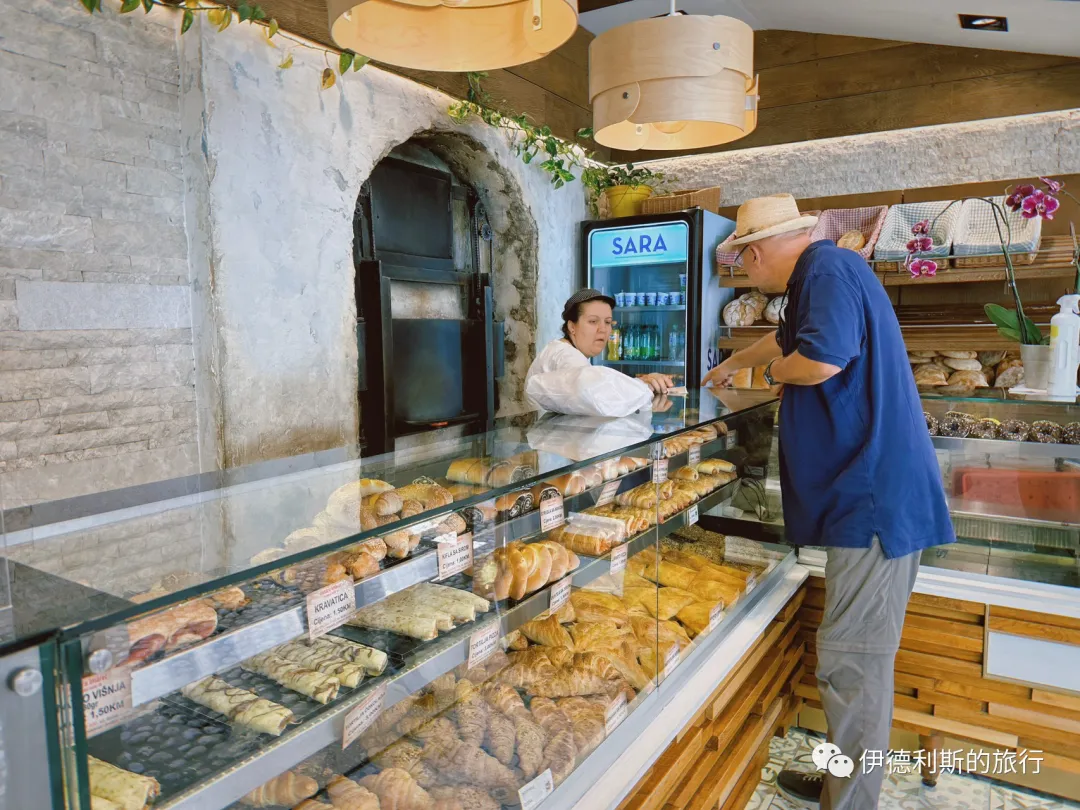
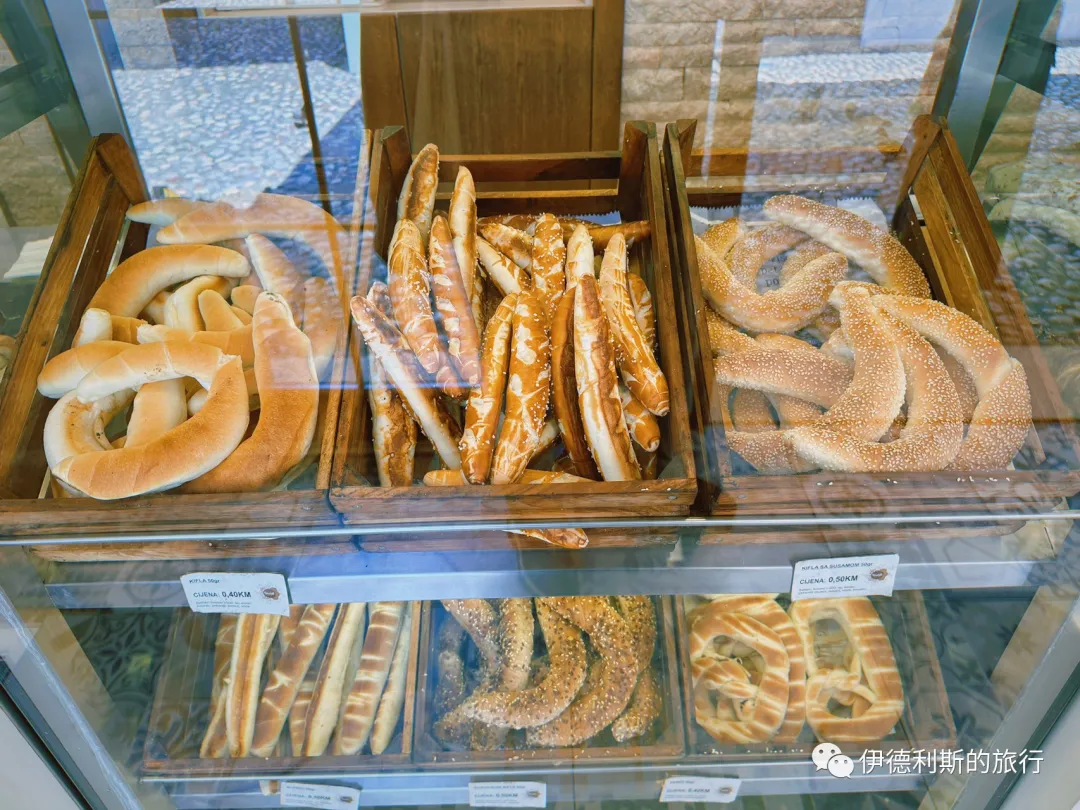
Below the clock tower is a public kitchen (Imaret) established in 1531, which was originally run by a foundation (Waqf) to distribute free food to the poor. It is now a very famous bakery, and the fresh bread baked on-site is very popular with the locals. Their main item is the kifla bread, which costs 2 yuan each. It comes in many flavors and has a rich wheat taste. Kifla is a small bread popular in Central Europe and the Balkans with a history of hundreds of years. The French croissant actually developed from the kifla.
Mosque
The Muslihudin Čekrekčija Mosque is in the commercial center of Sarajevo's old town. Hajji Mustafa built it in 1526. The mosque keeps its original endowment deed, or vakufnama, written in 1526. This is the oldest deed document in Sarajevo.
The mosque survived many fires in Sarajevo and the 1697 looting of the city by the Holy League after they defeated the Ottoman Empire. The interior still holds traditional arabesque patterns.
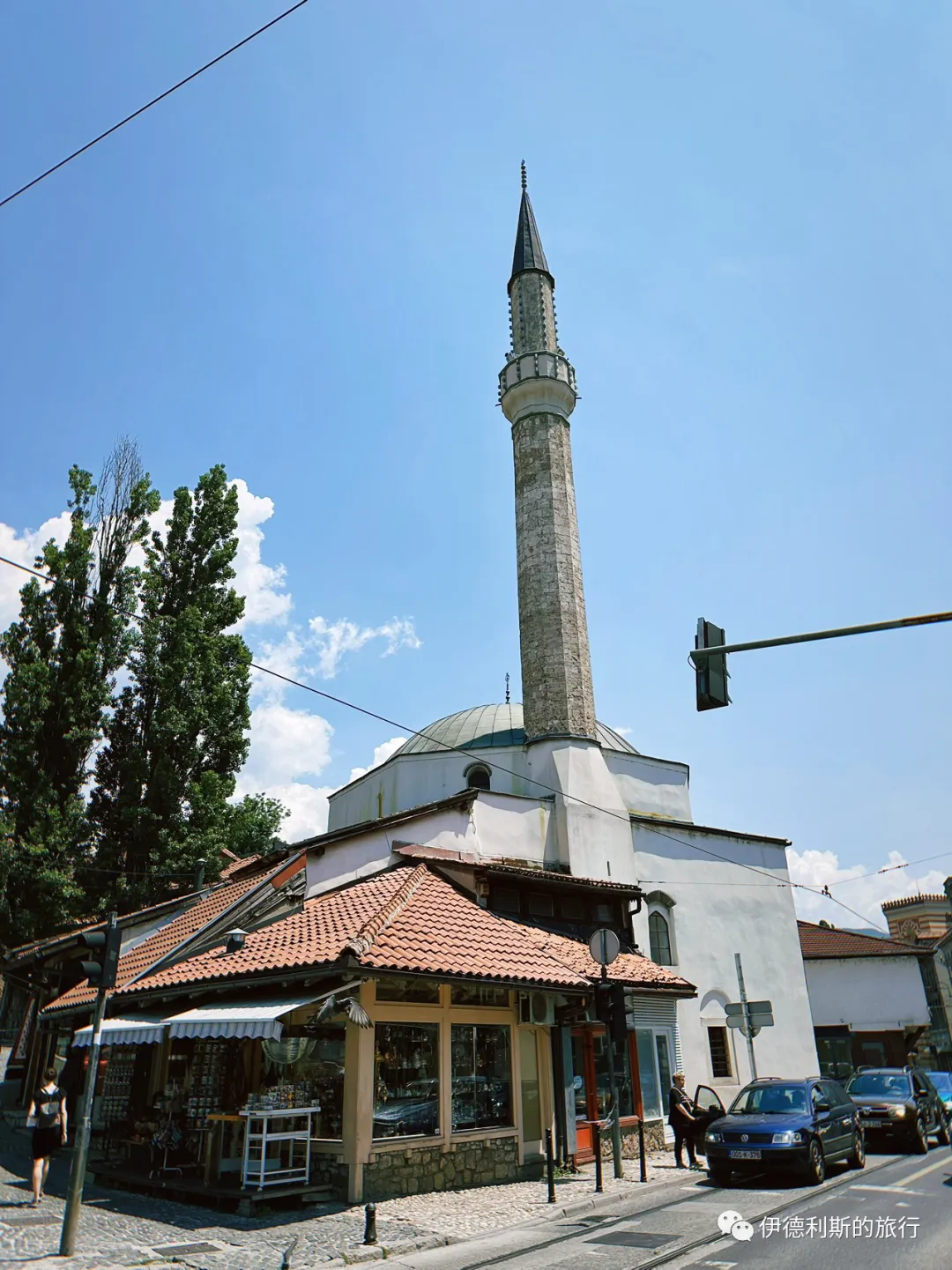
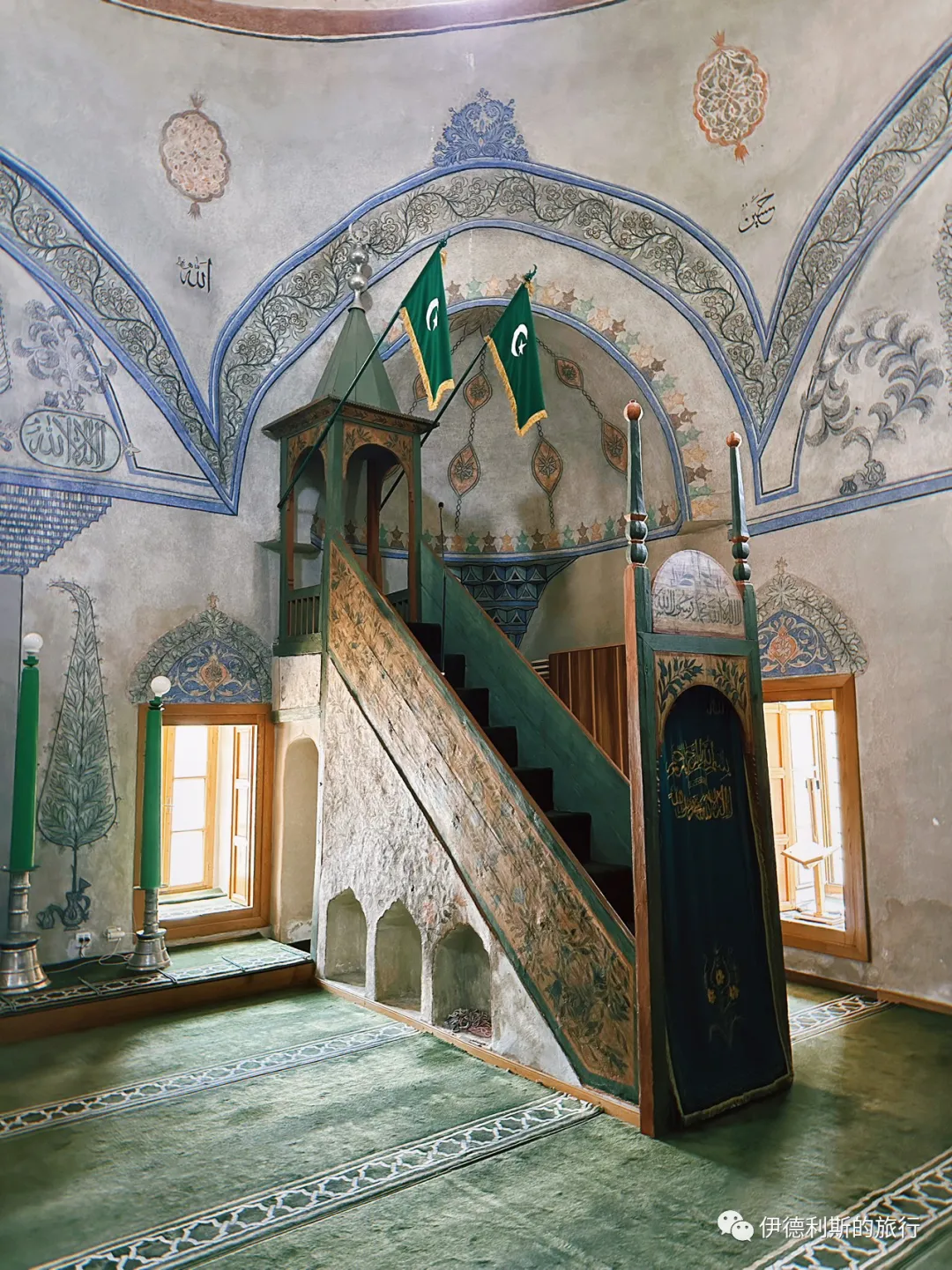
The Baščaršija Mosque sits in the center of the old bazaar in Sarajevo. Havadža Durak built it in the early 16th century, and the earliest manuscript recording the mosque dates back to 1528. The mosque originally had a wooden dome. After a fire destroyed it in 1697, it was rebuilt with a stone dome. There is a front porch with three small stone domes in front of the main hall. It was changed to a wooden roof in 1945 but restored to its original look in 1966. The mosque suffered heavy damage during the Siege of Sarajevo from 1992 to 1995 and was later renovated.
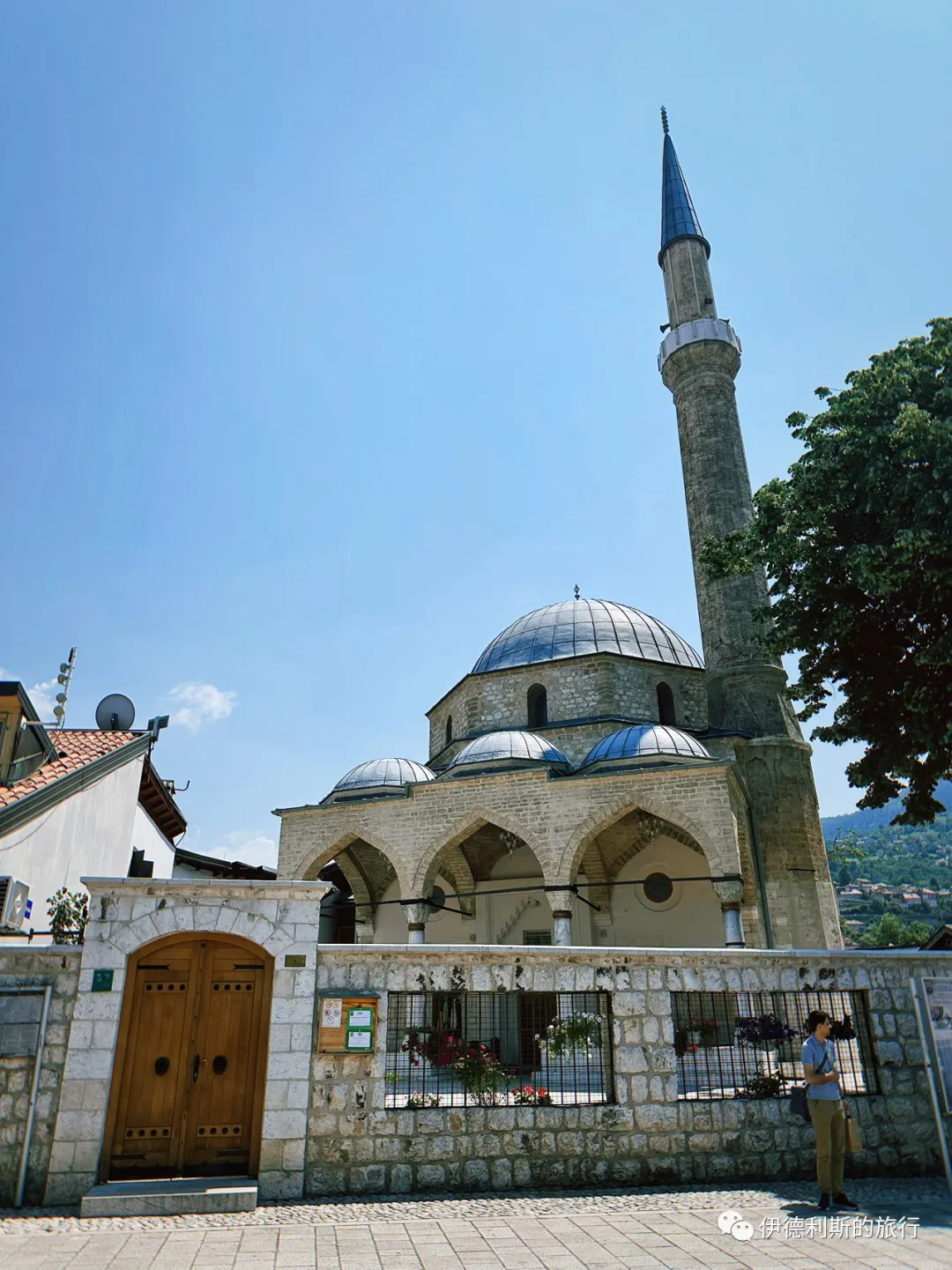
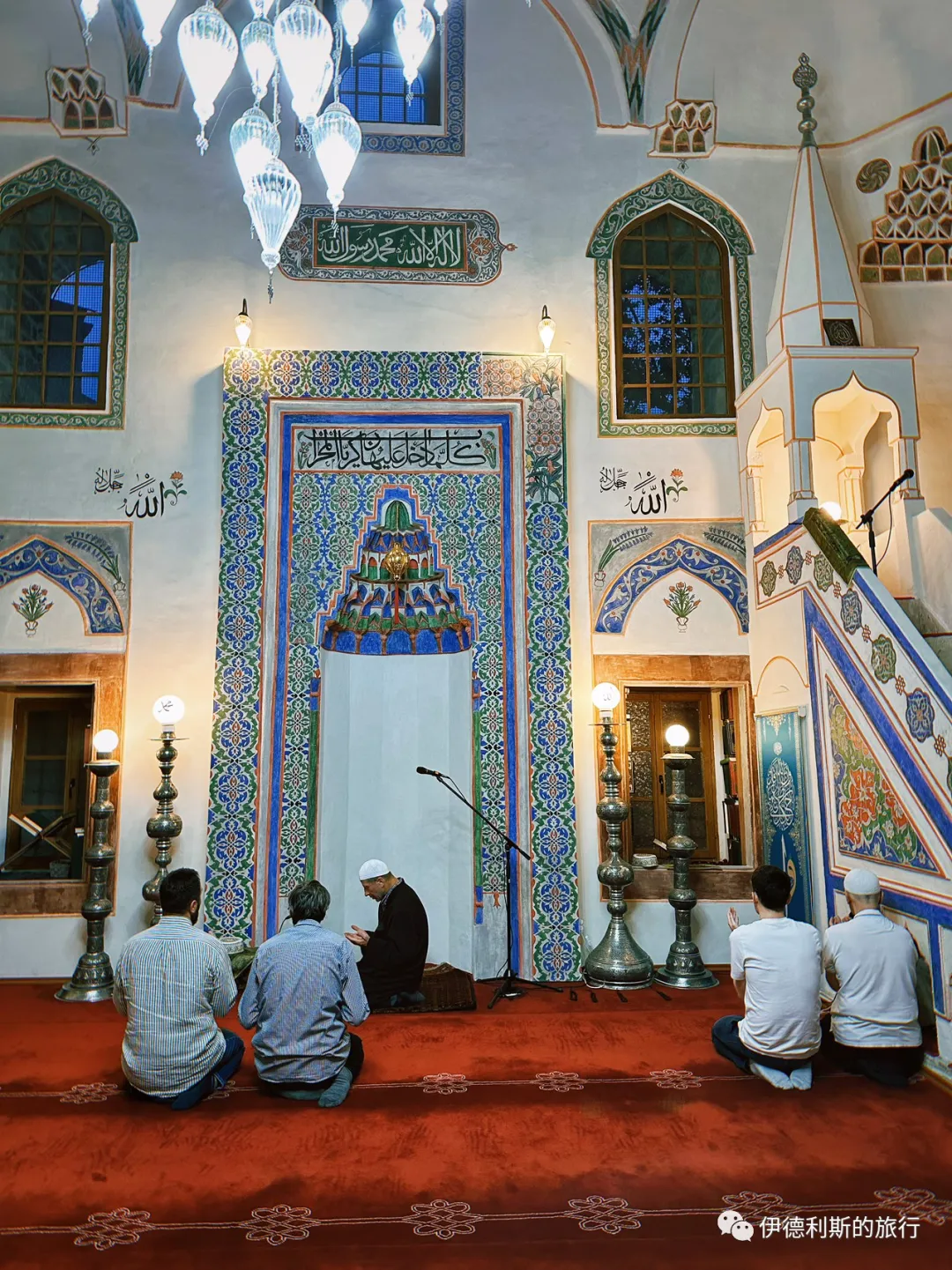
The Emperor's Mosque (Careva Džamija) was first built in 1457. It was the first mosque built after the Ottoman Empire conquered Bosnia. Isaković-Hranušić led the construction, and it was dedicated to the Ottoman Sultan Mehmed the Conqueror. The first mosque building was made of wood. It was rebuilt in 1565 into the current classical Ottoman style and dedicated to the Ottoman Sultan Suleiman the Magnificent. Side rooms were added in 1800, and they were connected to the main hall in 1848.
The Emperor's Mosque was severely damaged twice, once during World War II and again during the Bosnian War, and was later repaired.
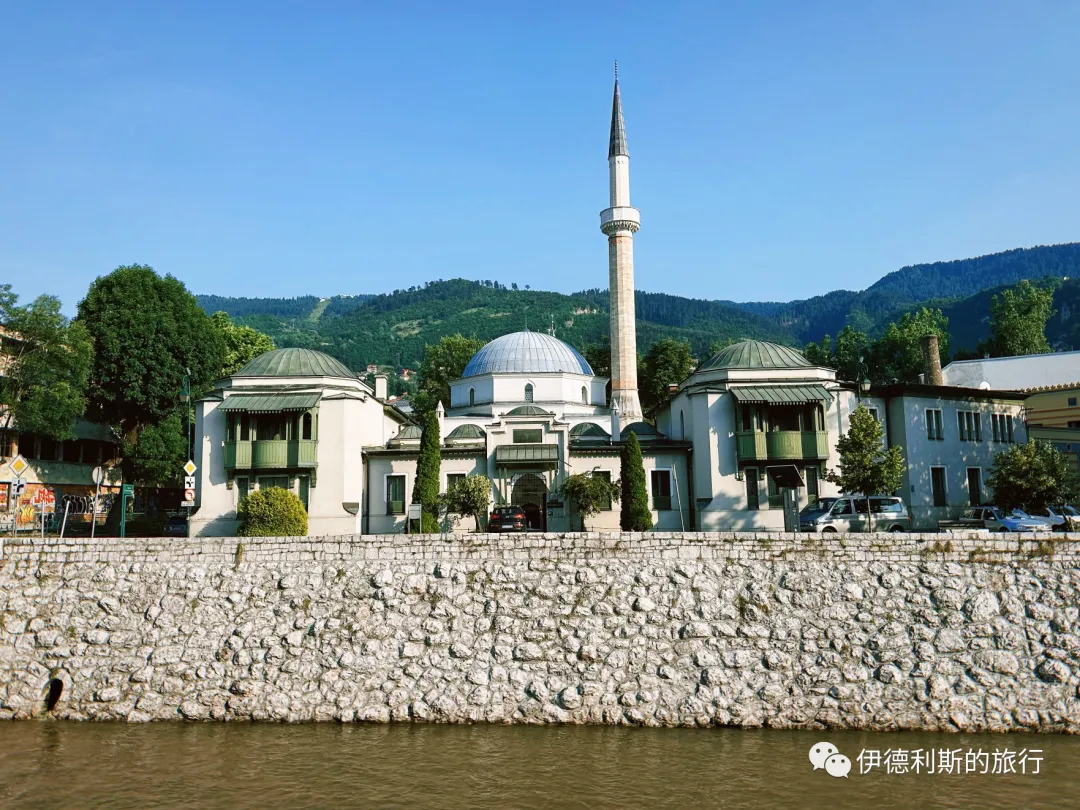
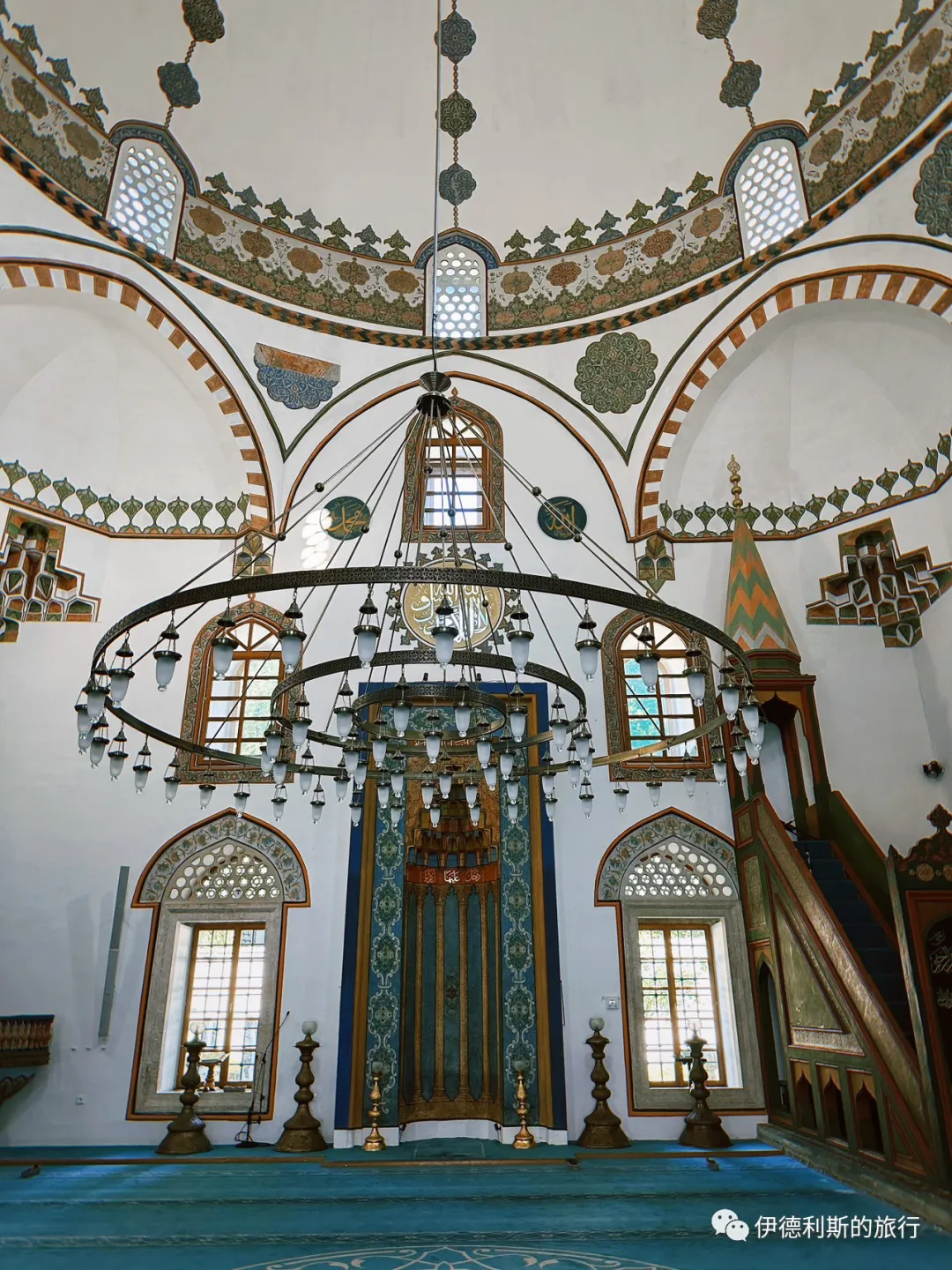
The Magribija Mosque was built by Sheikh Magribija in the 15th century. Tradition says that Sheikh Magribija came to Sarajevo with the city's founder, the Ottoman governor Isa-beg. The original mosque building was destroyed by fire. The current structure was rebuilt in 1766, keeping its 18th-century appearance and painted decorations. The mosque was severely damaged during the Bosnian War in 1992, leaving only the base of the minaret (bunkta). It was rebuilt in 2000, and the roof and porch were repaired again in 2004.
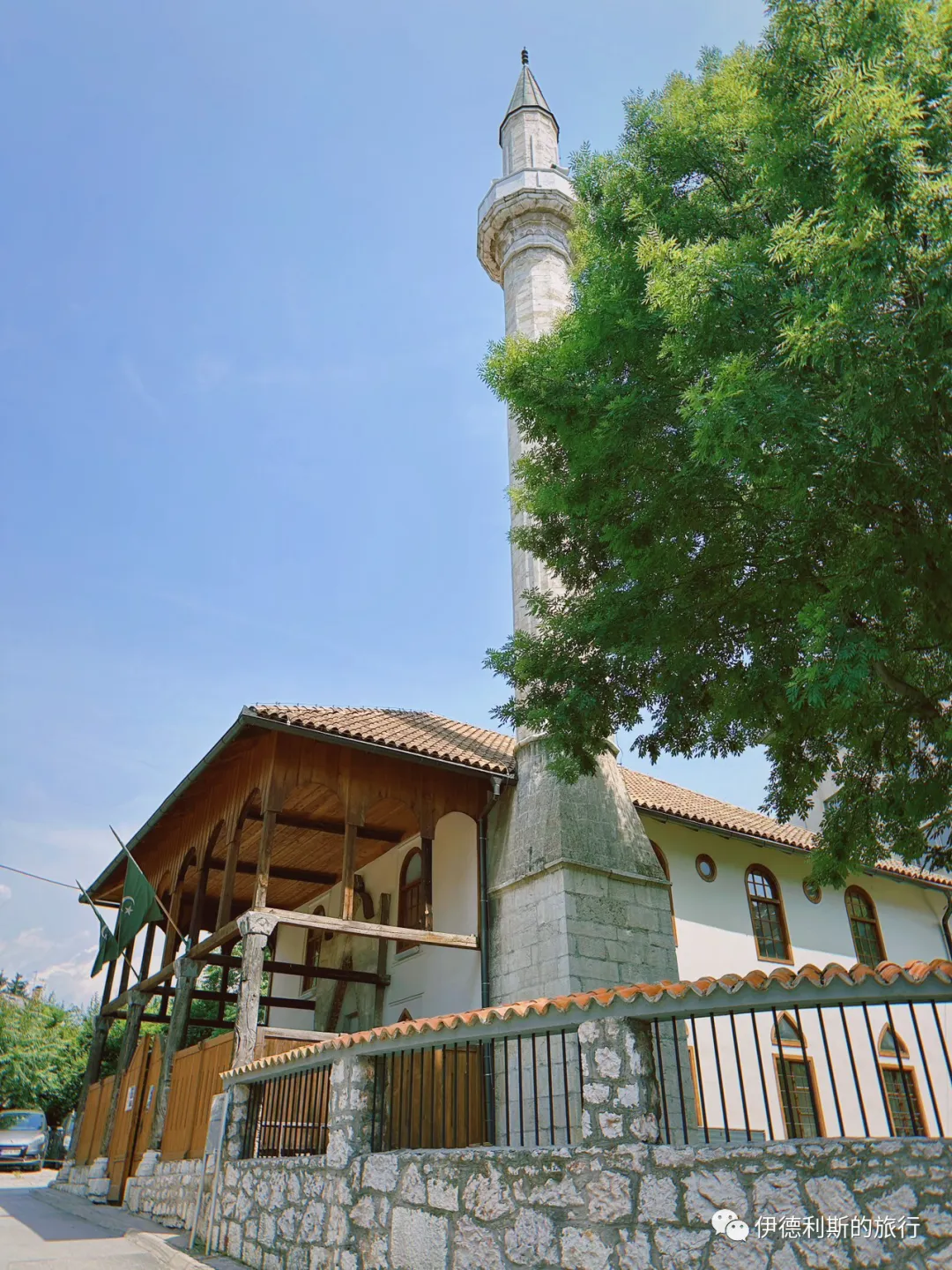
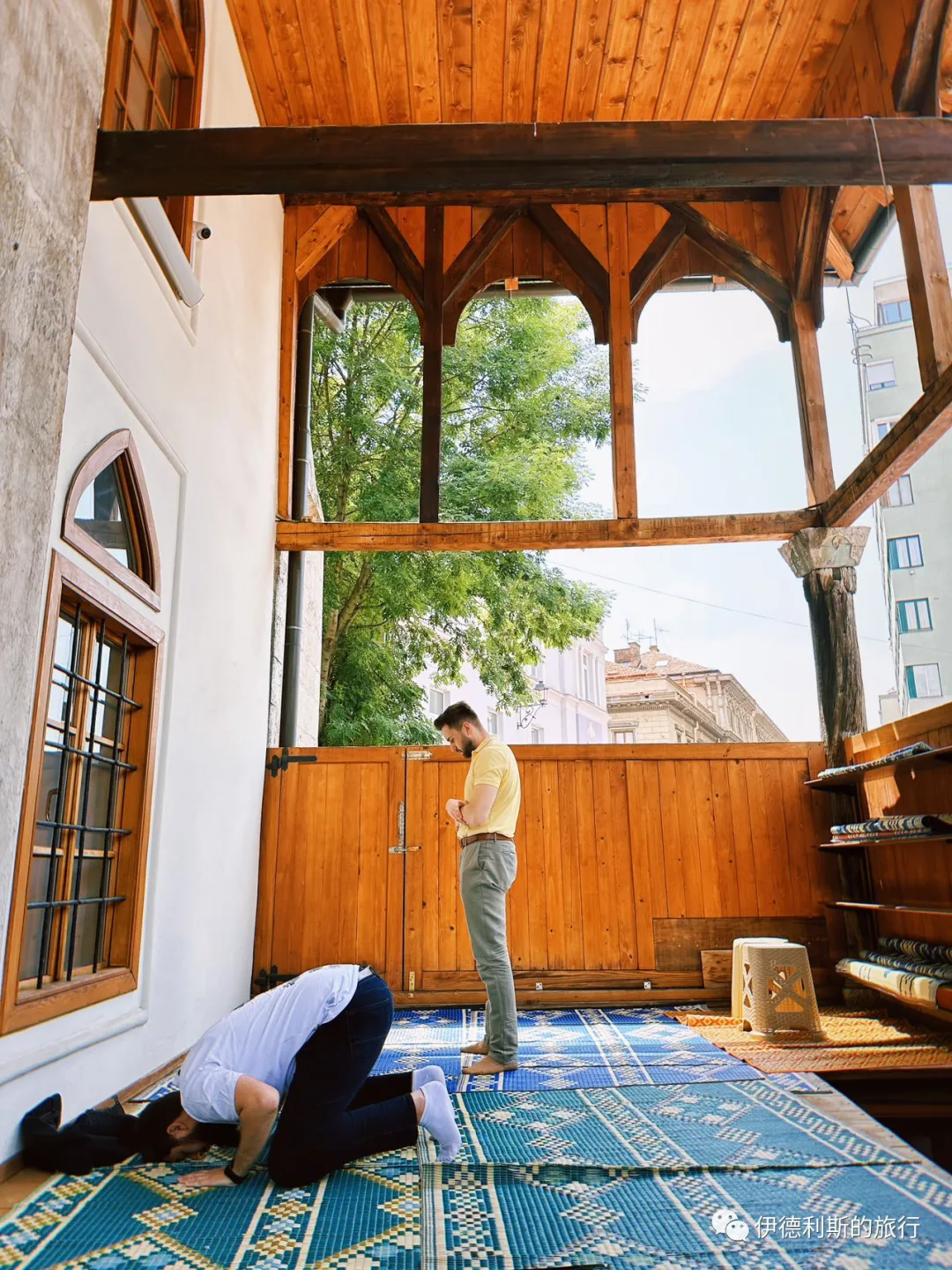
Ali Pasha Mosque was built in 1560 or 1561 by the Bosnian governor Ali Pasha, who was a local from Sarajevo. This is a single-domed mosque in the classical Ottoman style with beautiful architectural proportions. There was originally a large cemetery around the main hall. It was turned into a park after tram tracks and roads were laid, and a fountain for ritual washing (abdest) was moved there in 1874. The mosque was badly damaged by shelling during the Bosnian War from 1992 to 1995, and it was rebuilt in 2004.
You can still see gravestones of victims from the 1993 Bosnian War next to the mosque.
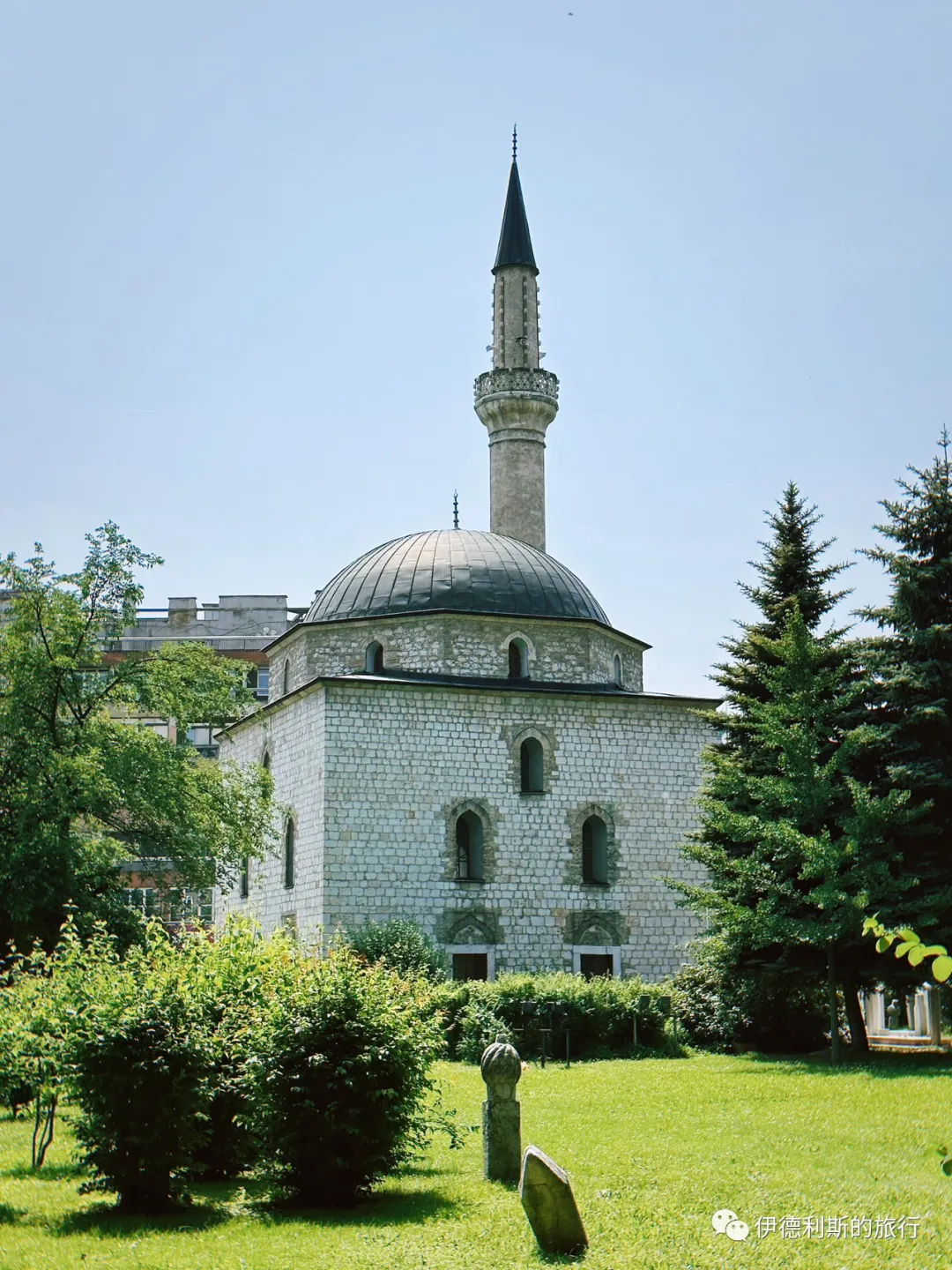
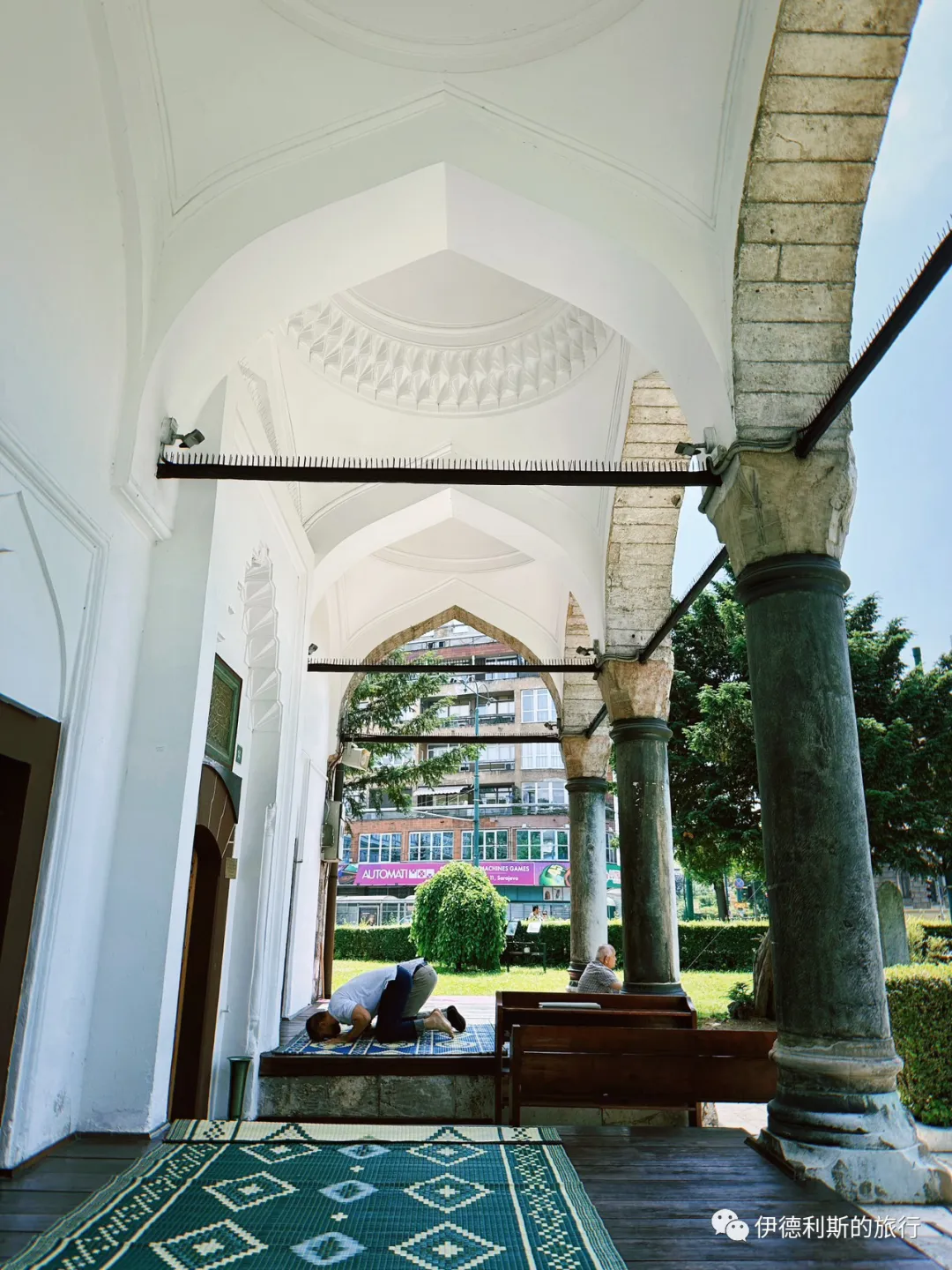
Ferhadija Mosque was built by Ferhad-beg Vuković-Desisalić in 1561 or 1562, and the neighborhood that grew around it is also called Ferhadija. The mosque originally had a primary school (mekteb), a public kitchen (imaret), a water station, and a fountain, but they were all destroyed in fires in 1879 and 1897. It is a typical classical Ottoman building with a central dome over a rectangular main hall and three small domes over the front porch.
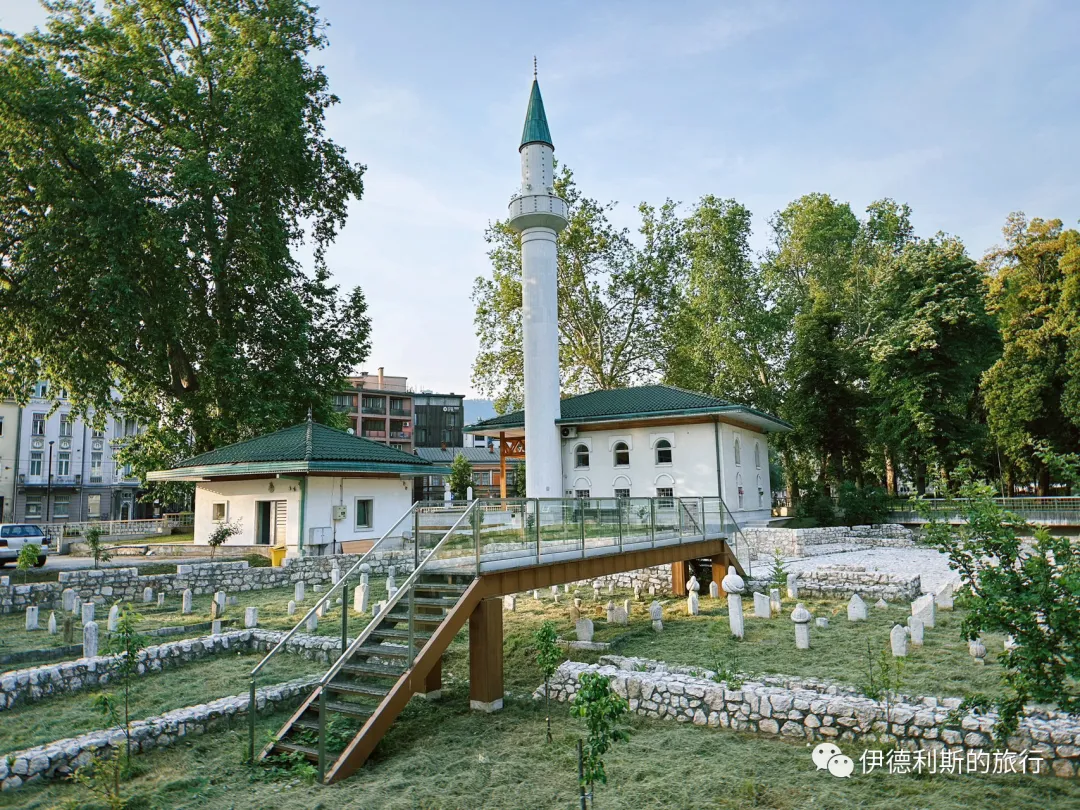
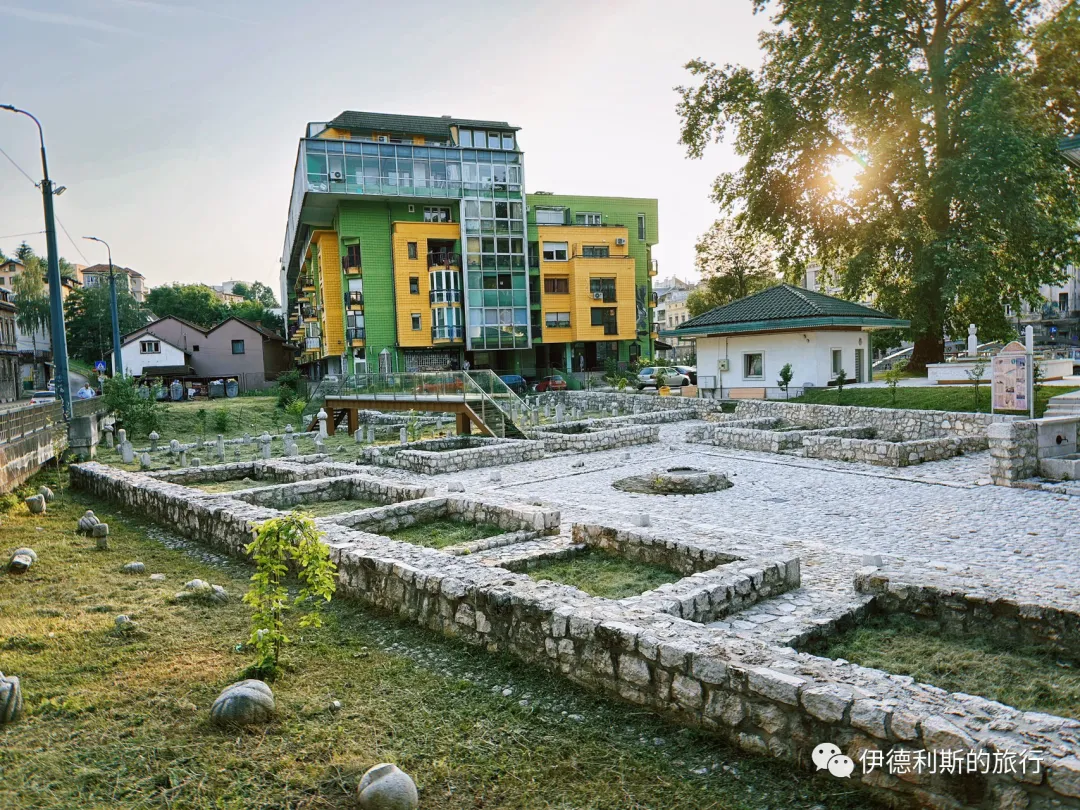
These are the archaeological remains of Bakrbaba Mosque, its madrasa, primary school (mekteb), and courtyard (harem).
Bakrbaba Mosque was built in 1544 by the famous Sarajevo merchant Hajji-Alija Bakrbaba, and it had a 30-meter-tall minaret (bunkta) at the time. In 1697, the Ottoman Empire was defeated by the European Holy League. Sarajevo was looted and burned, and Bakrbaba Mosque was destroyed in the fire before being rebuilt in the early 18th century.
A primary school and courtyard were originally built on the west side of the mosque. In 1741 or 1742, Hajji Ismail Misrija built a madrasa and cemetery on the east side of the courtyard. Soon after, Abdulah Efendi Kantamirija built a library across the street, making this an important educational and cultural center in Sarajevo.
After the Austro-Hungarian Empire took control of Sarajevo in 1878, the mosque was first turned into a military warehouse and was finally demolished in 1895. The primary school next to the mosque was also destroyed in 1895, the library was destroyed in 1897, and the madrasa remained until the beginning of World War II.
Since 2000, at the request of Islamic scholar Hajji Hafez Halid Efendi Hadžimulić, Sarajevo began archaeological research on the Bakrbaba mosque complex. In 2009, businessman Husein Durman from Bursa, Turkey, funded the reconstruction of the Bakrbaba mosque, which officially opened in 2011.
Market
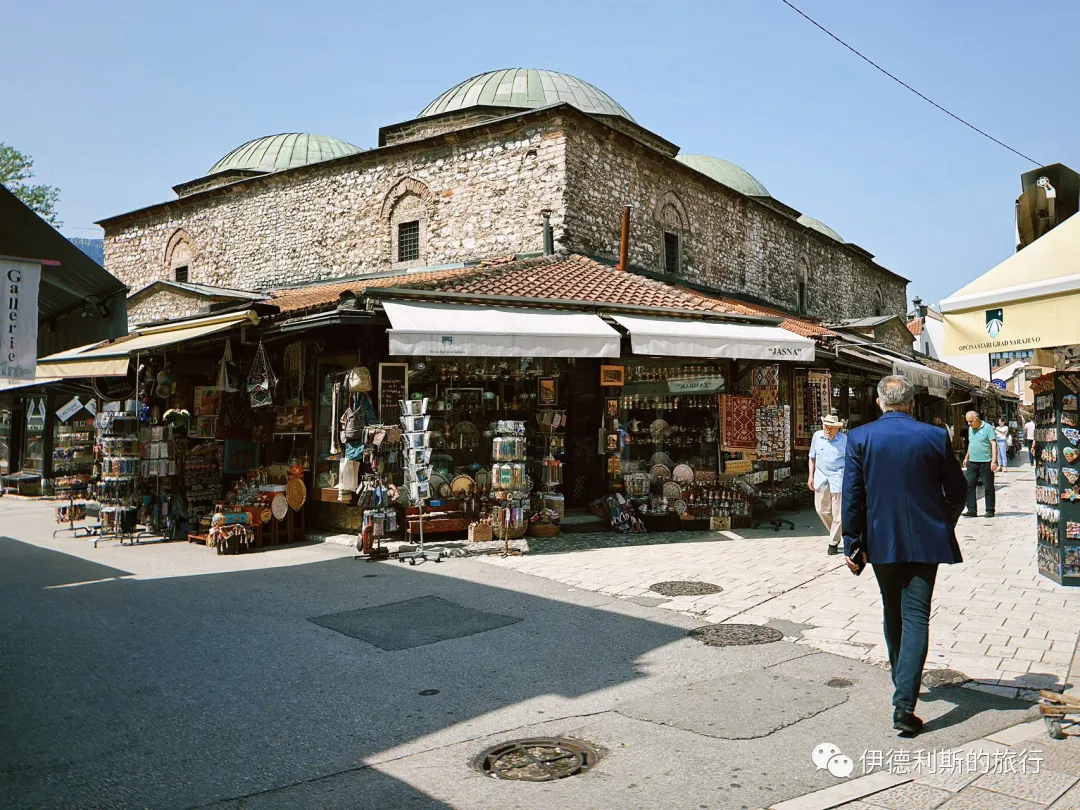
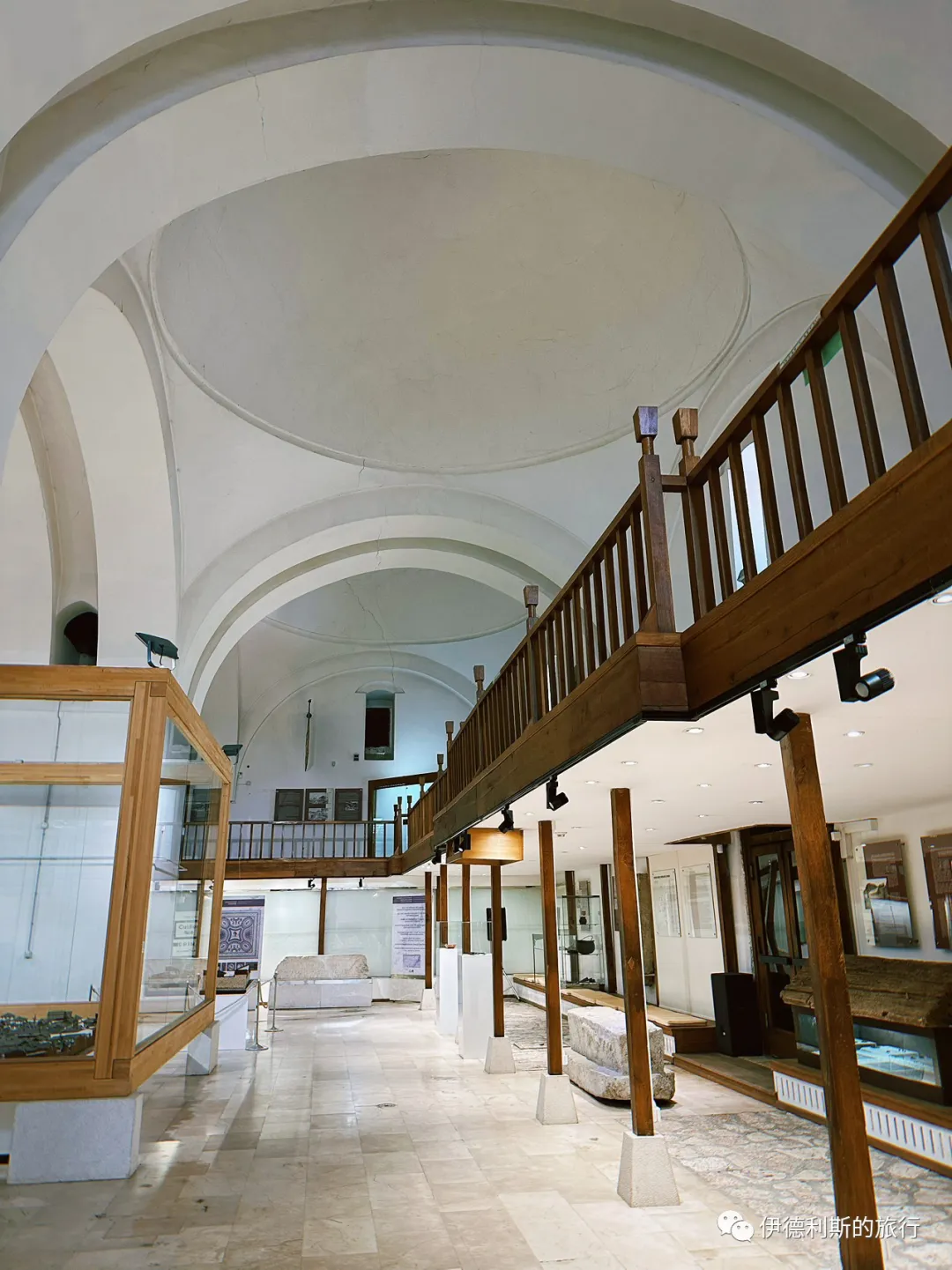
The Brusa Bezistan covered market is located in the Grand Bazaar of Sarajevo's old town. It was built in 1551 by order of Grand Vizier Rüstem Pasha during the reign of Suleiman the Magnificent of the Ottoman Empire and was named after the old Ottoman capital, Bursa. This market has six domes. It originally sold silk, household goods, and small furniture. Today, it serves as a Sarajevo museum, displaying precious artifacts from the Ottoman period.
Fortress
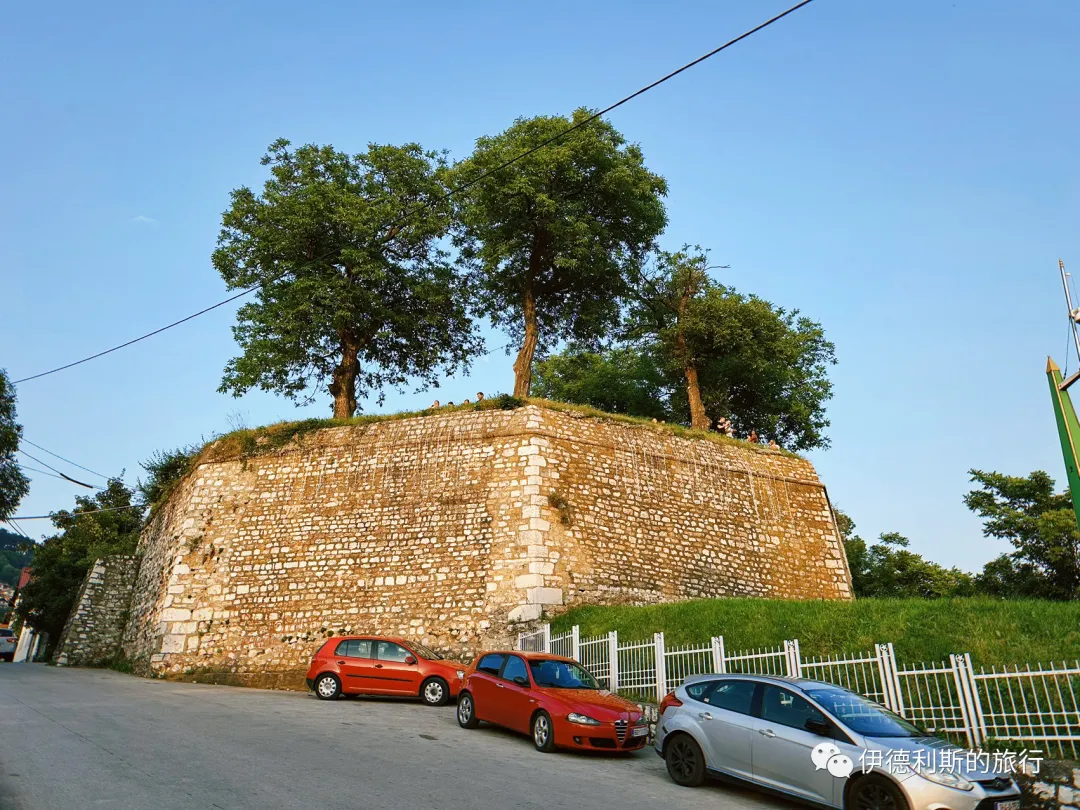
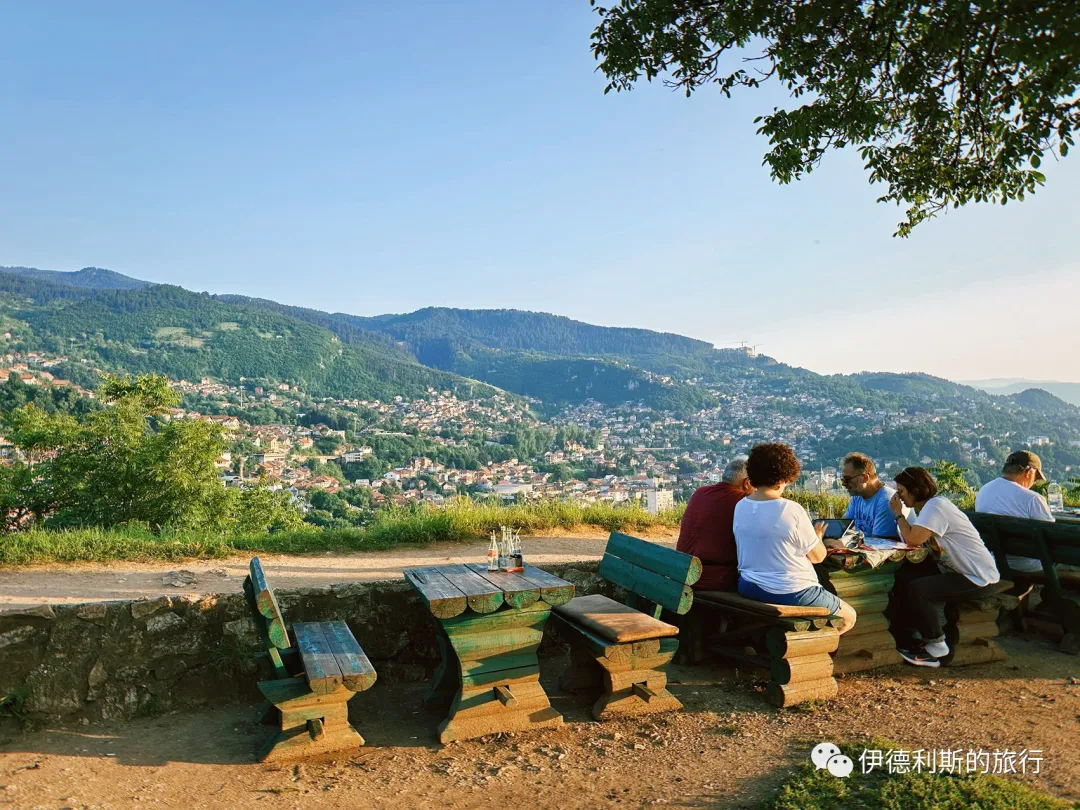
The Yellow Fortress (Žuta Tabija) was built between 1727 and 1739 as a battery for the Sarajevo city walls. In 1878, it served as an important stronghold for the Ottoman Empire to defend Sarajevo against the Austro-Hungarian invasion.
Sarajevo did not have city walls for most of its history until 1697, when Prince Eugene of the Habsburg Empire launched a devastating attack on the city. He looted the city and burned many buildings, leading the Ottoman Empire to officially build city walls in Sarajevo in 1727. Today, the Sarajevo city walls are located on the east side of the old town, with many gates and fortresses still preserved. The most famous of these are the Yellow Fortress and the White Fortress (Bijela Tabija).
Dervish Lodge
Below the Yellow Fortress sits a Mevlevi Sufi dervish lodge (tekke), which was the first Sufi lodge in Sarajevo. The lodge was first built in 1462, destroyed during Prince Eugene's invasion of Sarajevo in 1697, and rebuilt in 1781. After the Austro-Hungarian Empire occupied Bosnia and Herzegovina in 1878, they strictly prohibited the maintenance of the lodge. It was eventually demolished in 1957 during the Tito era in Yugoslavia. The building we see today was rebuilt in 2013 with donations from Turkey.
Food
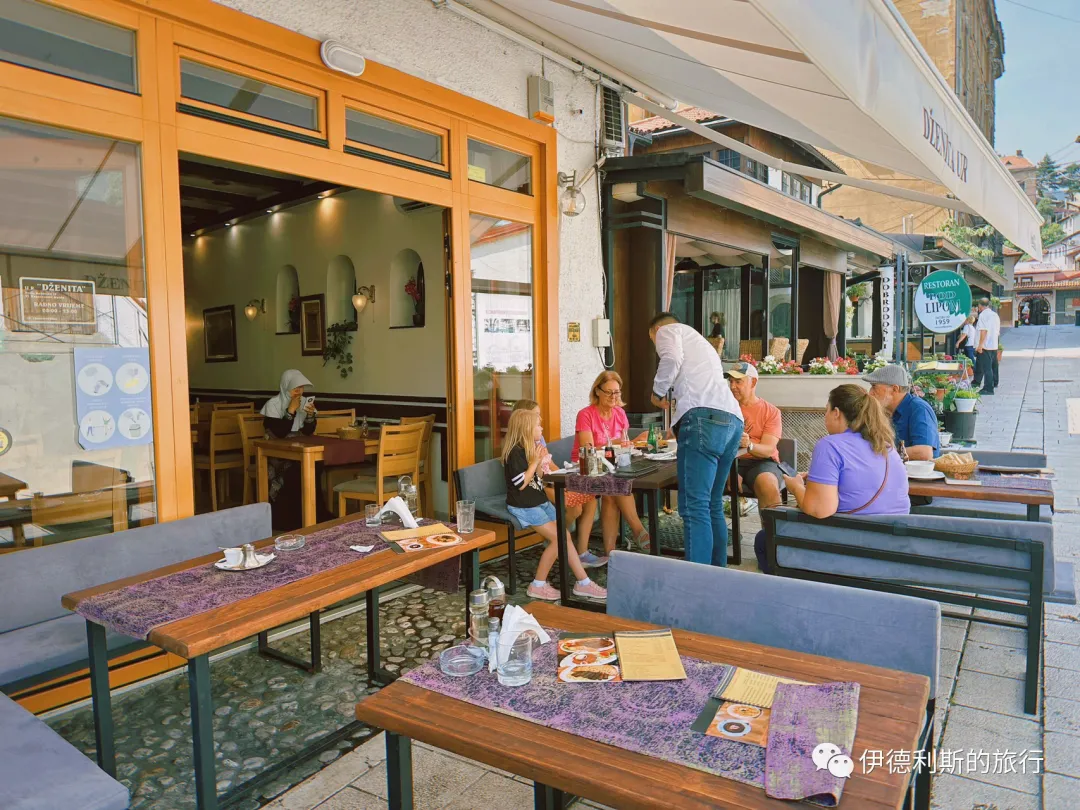
The restaurant Ćevabdžinica Petica Ferhatović. This shop was opened by the Ferhatović family during the 1984 Sarajevo Winter Olympics, though they had already started running restaurants in Sarajevo's old town as early as 1957. We ordered the Bosnian specialty minced beef finger kebabs (Ćevapčići) and spicy beef sausage (Sudžuk) with flatbread (Somun), served with onions and cream cheese (Kajmak) on the side. We also ordered a cheese salad (Šopska salata).
The word Ćevapčići comes from the Ottoman Turkish word for grilled meat (Kevap) and the Slavic suffix '-čići' which means small. It developed from Turkish kebabs in the 16th century. The version made in the Baščaršija area of Sarajevo is the most famous, and it holds an important place in Bosnian food culture.
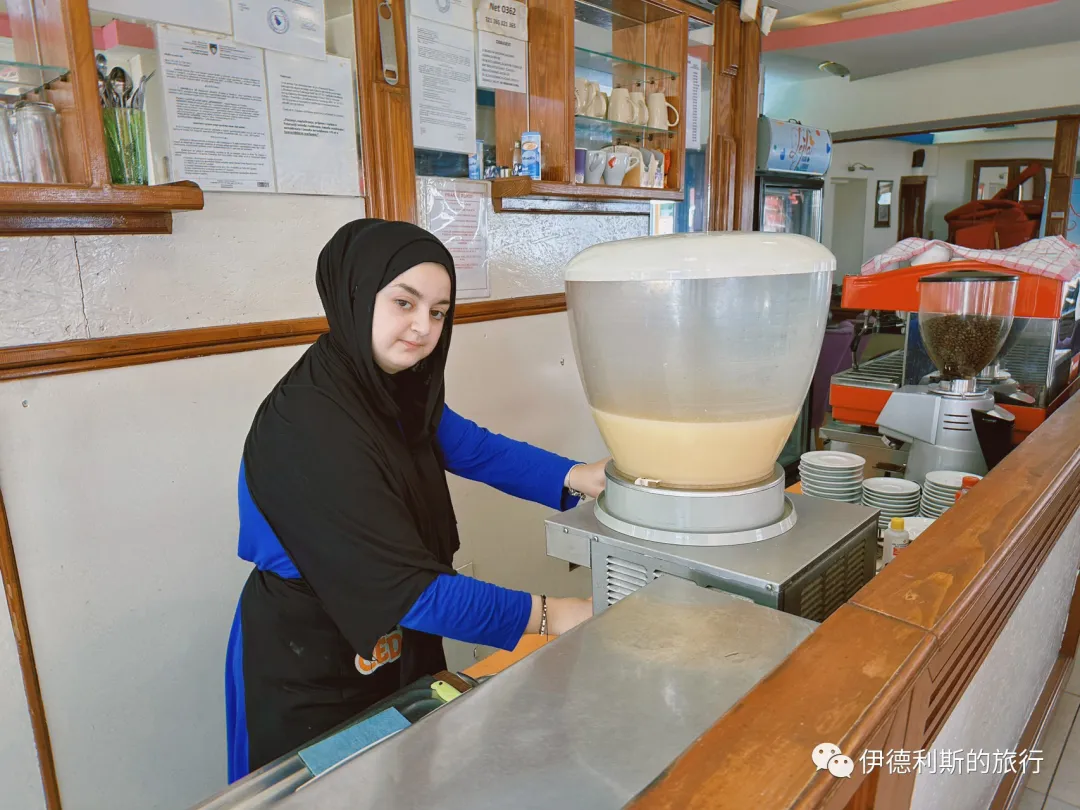
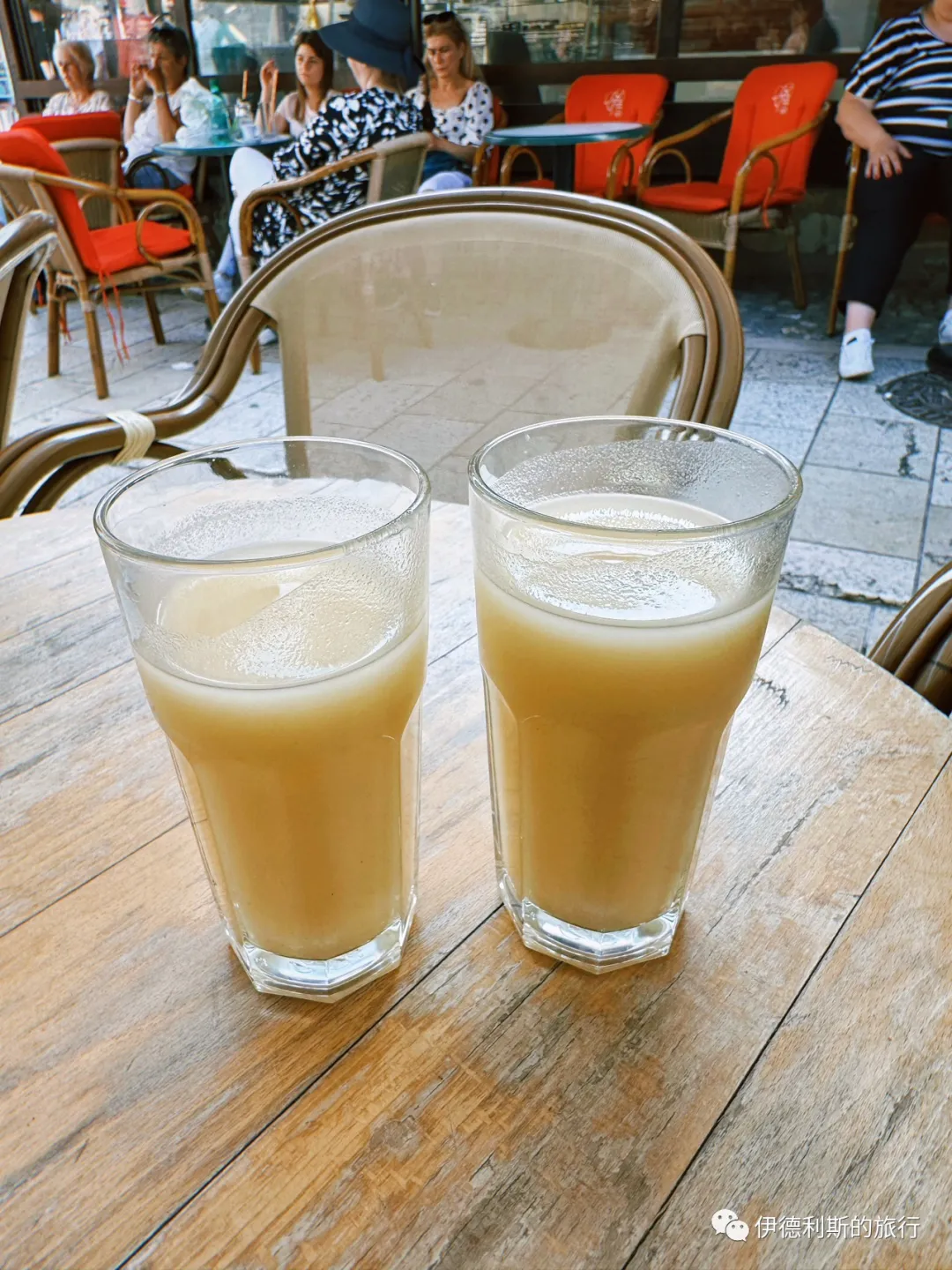
The best drink to cool off in the Sarajevo Old Town bazaar is Boza! I drink it several times every day. Boza is a very old fermented malt drink. It was recorded as early as the 1070s in the Compendium of the Turkic Dialects (Dīwān Lughāt al-Turk). It was very popular among Turkic peoples in Central Asia and spread to the Balkan region with the Ottoman Empire.
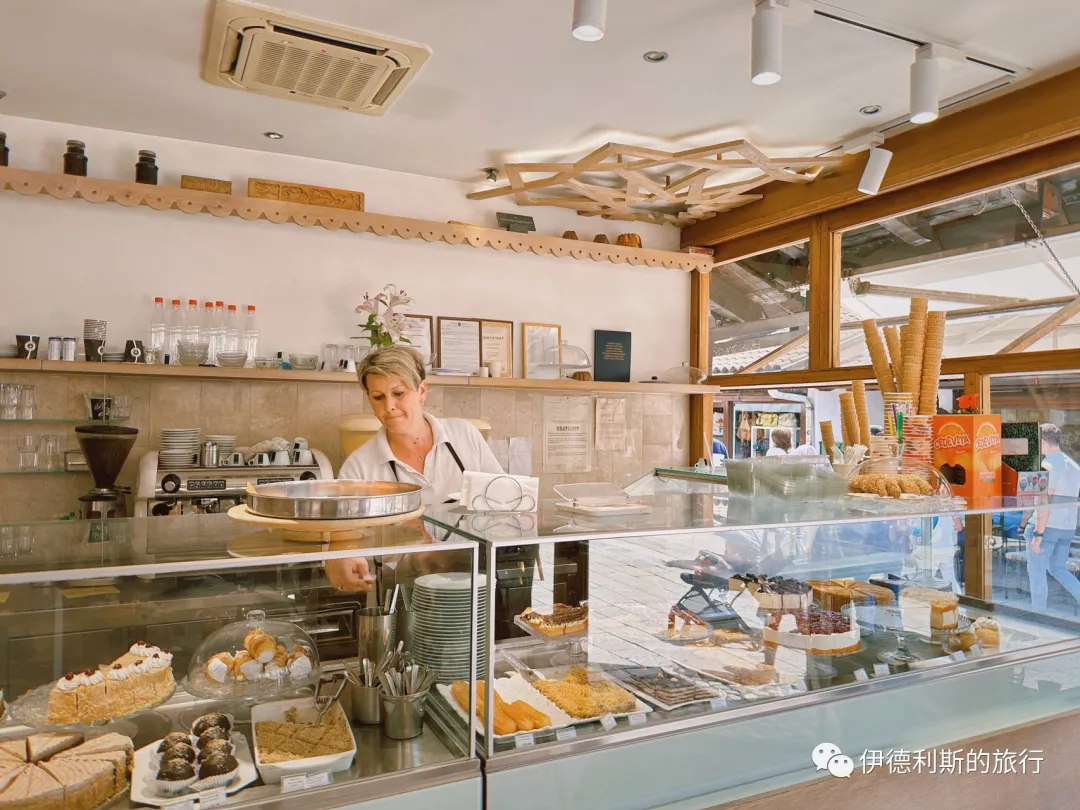
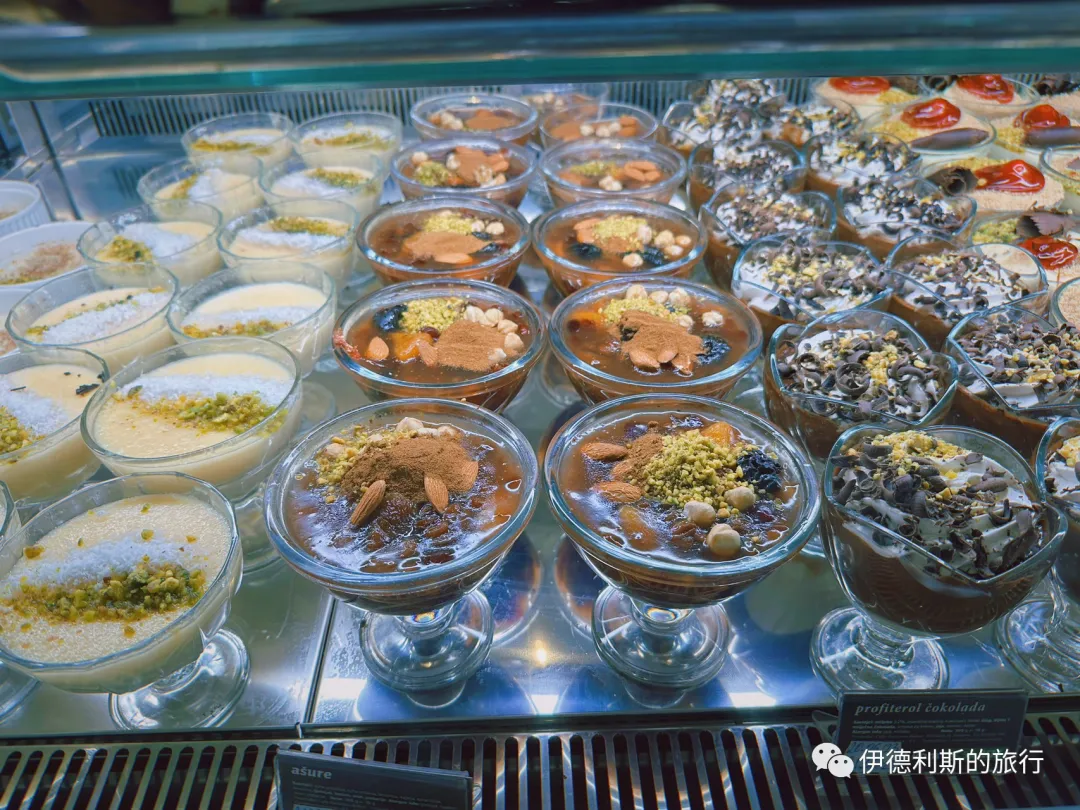
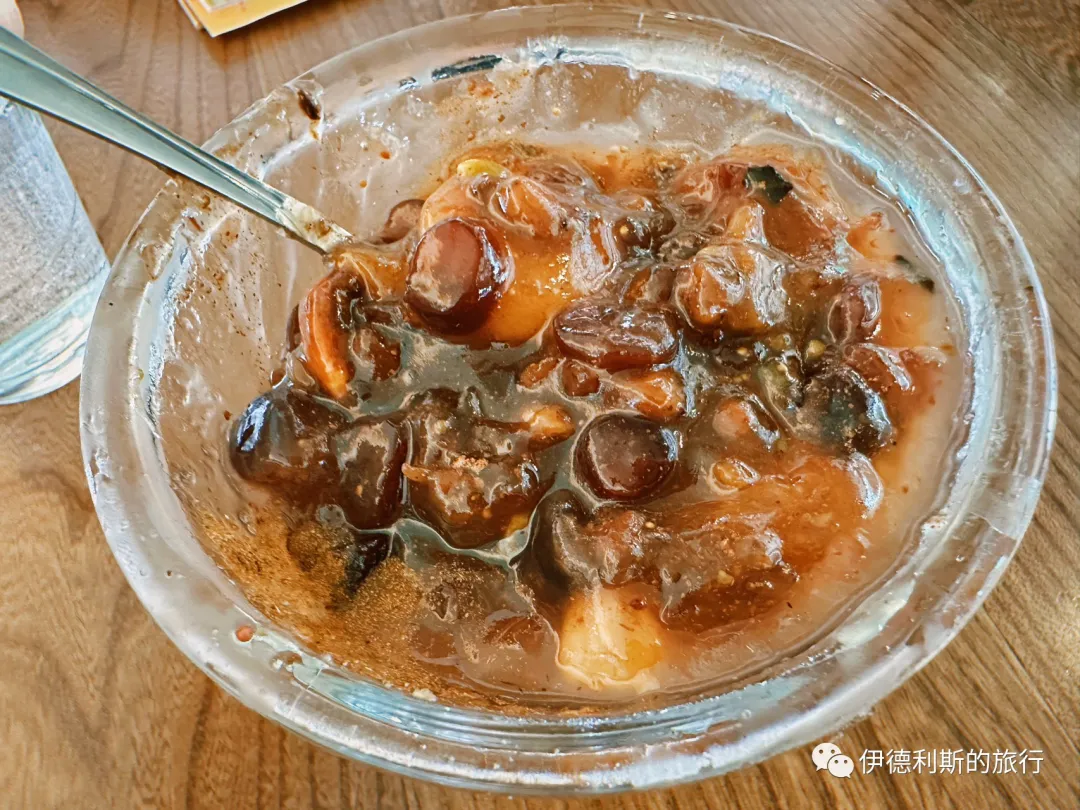
Eating Noah's pudding (Ashure) in the Sarajevo Old Town bazaar. Ashure is a porridge that should be cooked on the tenth day of the month of Muharram. Ottoman-era Ashure has no fixed recipe, and preparation varies by region and family tradition. Traditionally, People say at least seven ingredients are used.
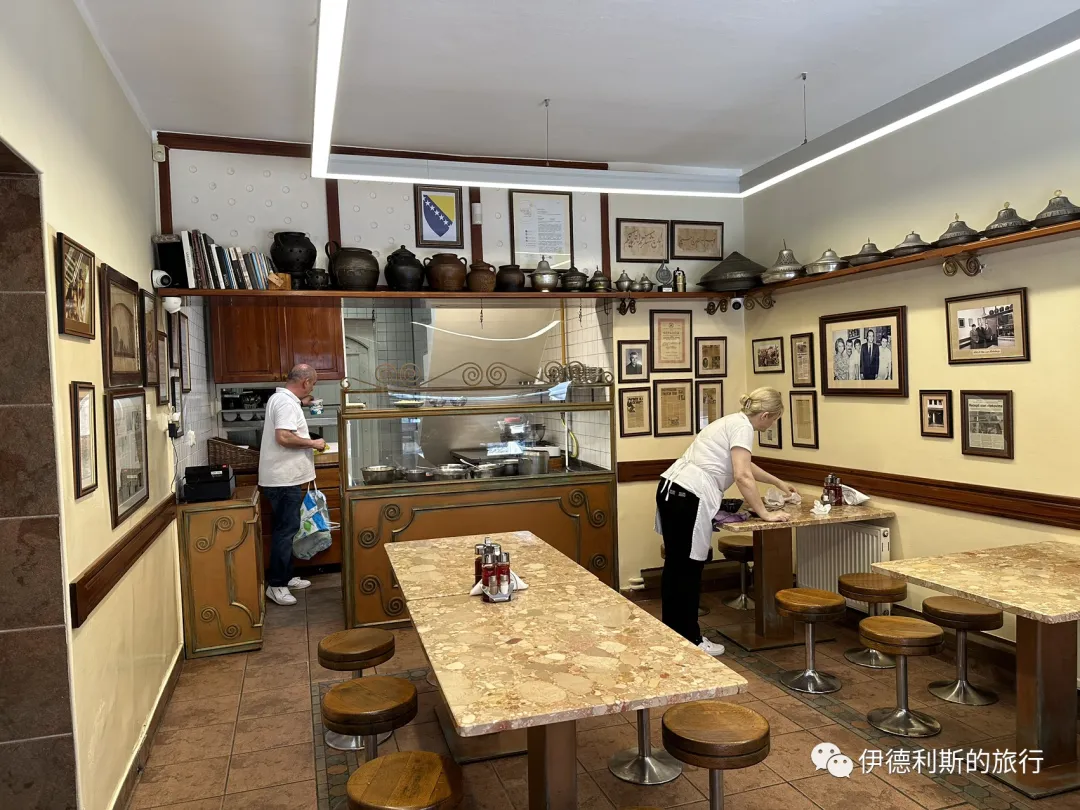
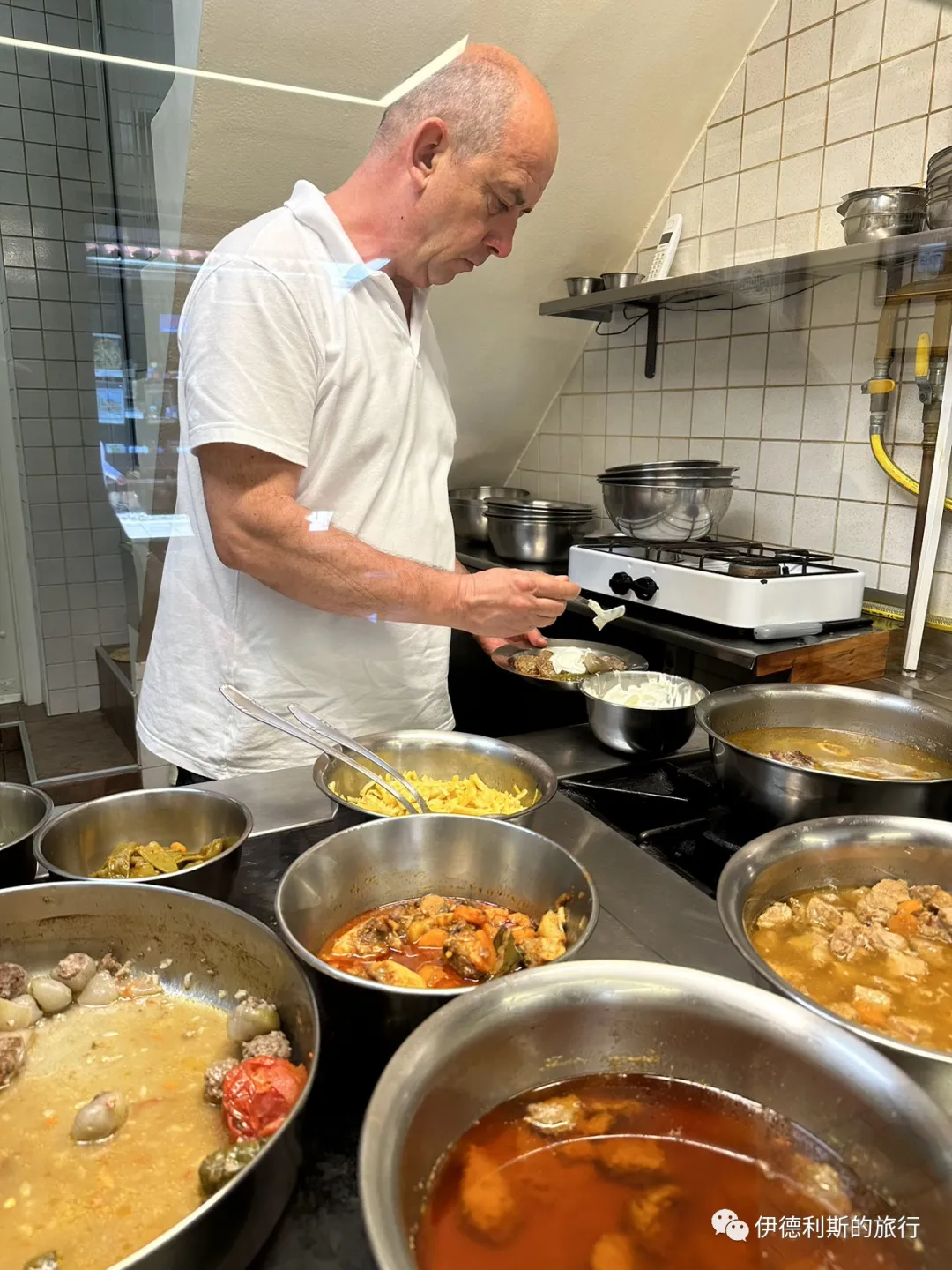
In the afternoon, we had Bosnian stew (Bosanski lonac) at Aščinica Hadžibajrić F. Namika in the Sarajevo Old Town bazaar. The word 'Aščinica' here means an old-fashioned Bosnian restaurant. The Hadžibajrić family has run this traditional Bosnian restaurant for over a hundred years. The current owner is Namik. He stands behind the counter and serves the food; you just point at what you want and he dishes it out.
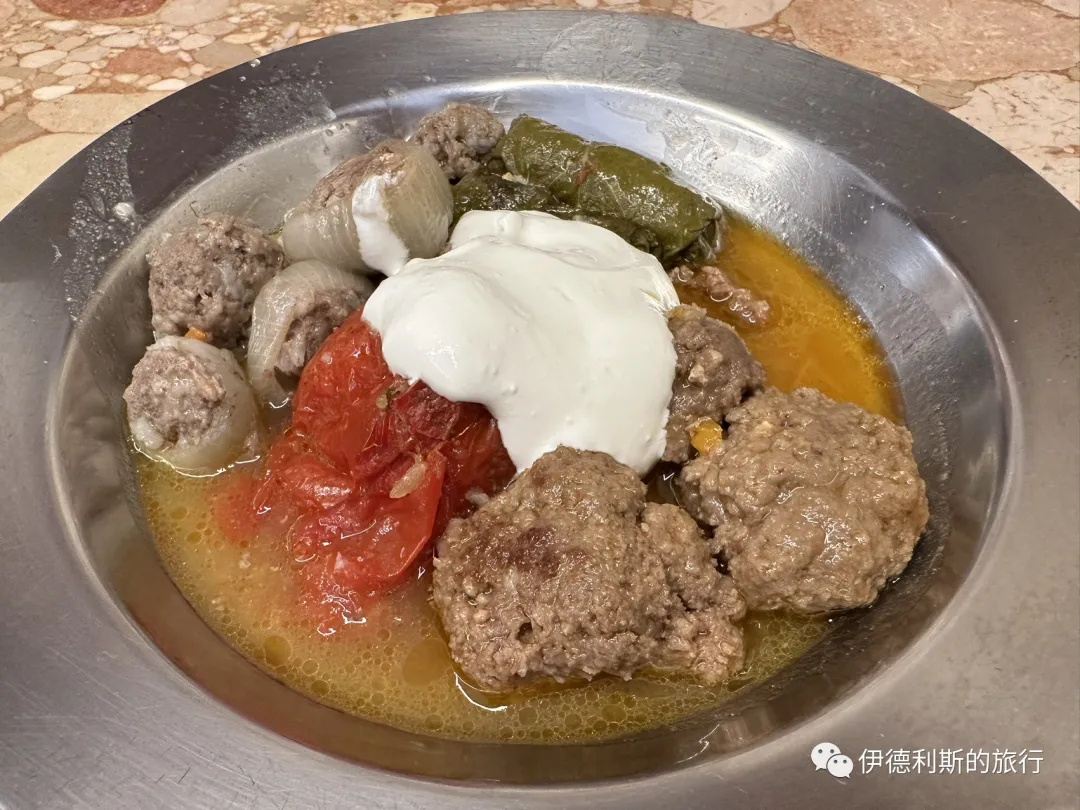
Bosnian stew originated in the Middle Ages. It started as a home-cooked meal for Bosnian workers and later became popular with all social classes. You can stew it with beef, lamb, and meatballs, or with cabbage, potatoes, tomatoes, and carrots. When stewing, you layer the meat and vegetables in the pot, then add garlic and whole peppercorns for seasoning. They also have various stuffed dishes (Sarma), including stuffed tomatoes, stuffed grape leaves, stuffed onions, and stuffed pickled cabbage leaves. Sarma means 'wrapped' in Turkish, referring to vegetables stuffed with filling and then stewed.
Drink traditional Bosnian coffee (Bosanska Kahva) in the Old Bazaar of Sarajevo. Coffee first arrived in the Balkan Peninsula under Ottoman rule from the Arab world in the 16th century. Sarajevo was one of the first European cities to open coffee houses, over a hundred years before cities in Western Europe.
Coffee houses are an important part of Ottoman culture. People go there to hear the day's main news, discuss daily gossip, and watch impromptu performances like shadow puppetry. Coffee houses allow people to express more ideas outside of work and worship, and they are great places to meet like-minded friends.
Like Turkish coffee, Bosnian coffee is made by grinding roasted coffee beans into a fine powder and brewing them in a long-handled copper pot called a Džezva (known as Cezve in Turkish). However, while Turkish coffee can be brewed with cold water, Bosnian coffee must be brewed with boiling water. You can add sugar to Turkish coffee while it brews, but you cannot add sugar to Bosnian coffee. Turkish coffee is poured into a cup and served to the customer, but Bosnian coffee is served by placing the copper brewing pot and the cup together on a tray for the customer to pour themselves.
The classic Bosnian coffee set includes a copper pot, a porcelain cup with a copper base, a copper tray, a copper sugar bowl for sugar cubes, and Rahat Lokum jelly candy. To drink it, first bite a piece of sugar cube and hold it under your tongue, letting it melt on its own, then drink the coffee. Bosnian Rahat Lokum jelly candy comes from Turkish Lokum. The yellow ones are made with vanilla and the red ones are made with rose petals. You can eat them at any time while drinking your coffee.
At Andar Caffe Bar, the owner Maida's grandfather, Muharem, opened a handmade shoe shop in the Sarajevo Old Bazaar in 1933, which was later taken over by Maida's father, Osman. After Osman retired in 2010, Maida took over the shop. Since handmade shoes were no longer in demand and people were buying shoes in stores, Maida turned the shop into the current cafe, though she kept many shoe-related elements inside.
There is a very famous Bosnian restaurant called Inat kuća across from the Sarajevo City Hall (Vijećnica). The traditional Bosnian house where the restaurant is located was built in the mid-17th century and was originally next to the current City Hall. In 1892, when the Austro-Hungarian Empire wanted to build the City Hall and a tram station, they tried to seize the land, but the old man who owned the house, Benderija, did not want to move. After long negotiations, the old man finally agreed to move only if he was given a bag of gold and his house was moved brick by brick to the other side of the river. The Austro-Hungarian Empire had no choice but to move the house to its current location. During the move, the old man reportedly sat on the nearby bridge every day, carefully watching the workers move every single brick to the other side of the river.
After 1997, Inat kuća became a Bosnian restaurant where you can enjoy Bosnian cuisine and see the traditional decor of a Bosnian home. We ordered traditional Bosnian dumplings (klepe), cornmeal porridge (pura), rose water, and elderflower (zova) water. Klepe is made by kneading flour, eggs, and salt for the dough, and mixing minced meat, onions, salt, and pepper for the filling. The dumplings are boiled for 10 minutes, then baked with yogurt, garlic powder, and chili powder. Pura is a porridge made from cornmeal, butter, cheese, and yogurt, and it is one of the favorite breakfasts for Bosniaks.
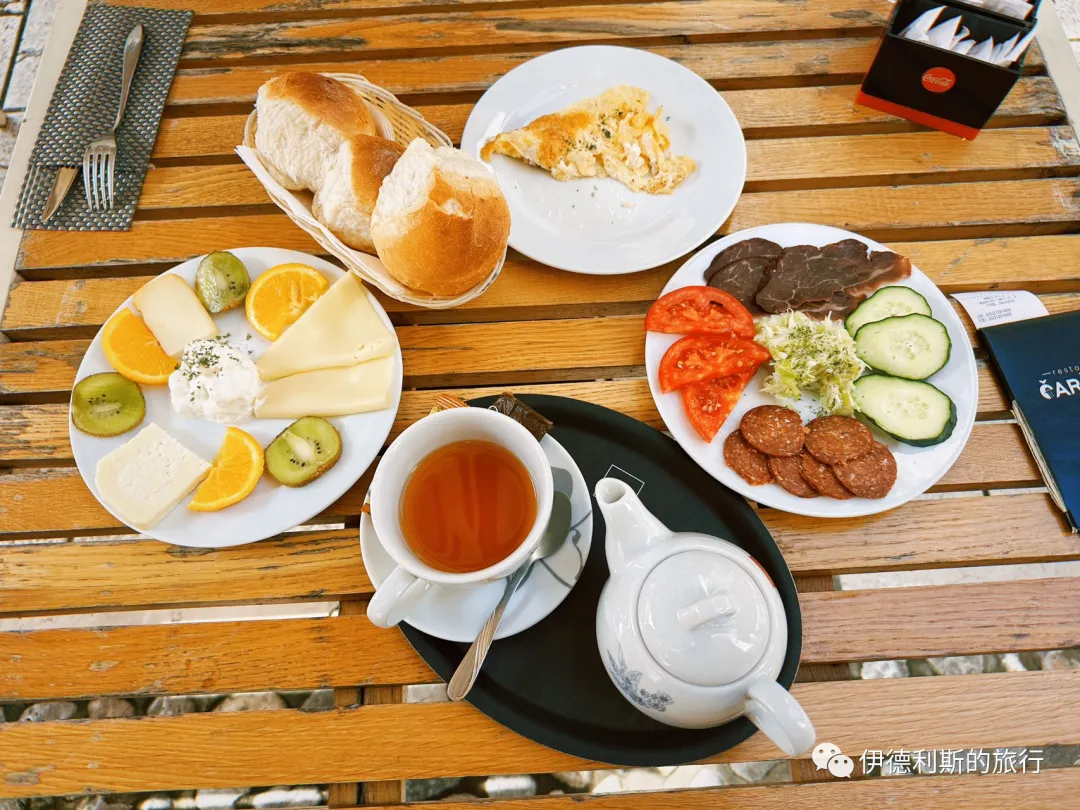
In the morning, we had a traditional Bosnian breakfast at Restoran Čaršija, west of the Gazi Husrev-beg Mosque in Sarajevo's old town. It included Travnik cheese, smoked cheese, cream cheese, smoked meat, spicy beef sausage (sujuk), vegetables, fruit, fried eggs, and black tea. Travnik cheese is a specialty sheep's milk cheese from Bosnia and Herzegovina, originating from the mountains near the town of Travnik. It is made by brining fresh sheep's milk for two to three months. After draining, it tastes slightly salty and is low in fat.
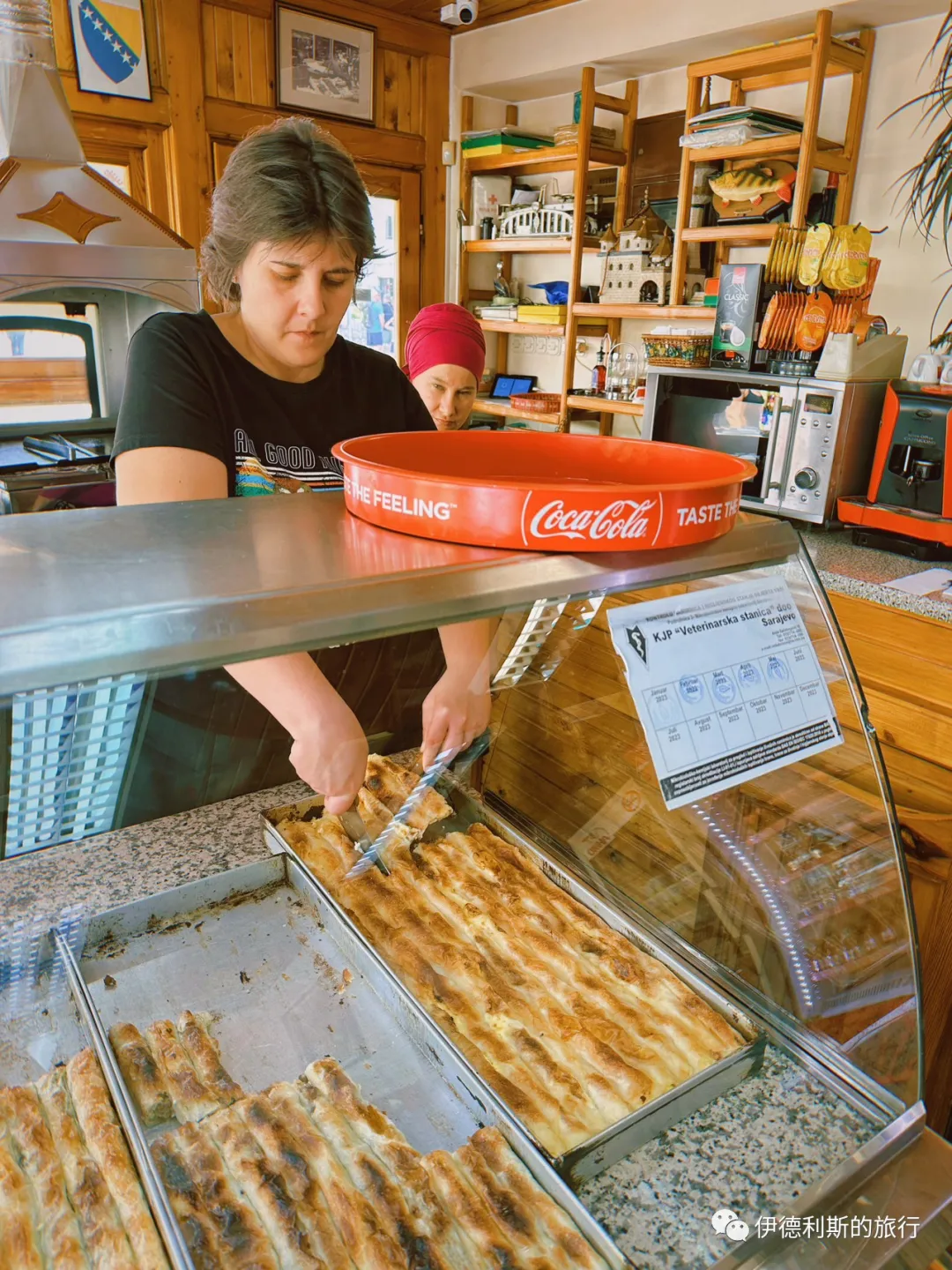
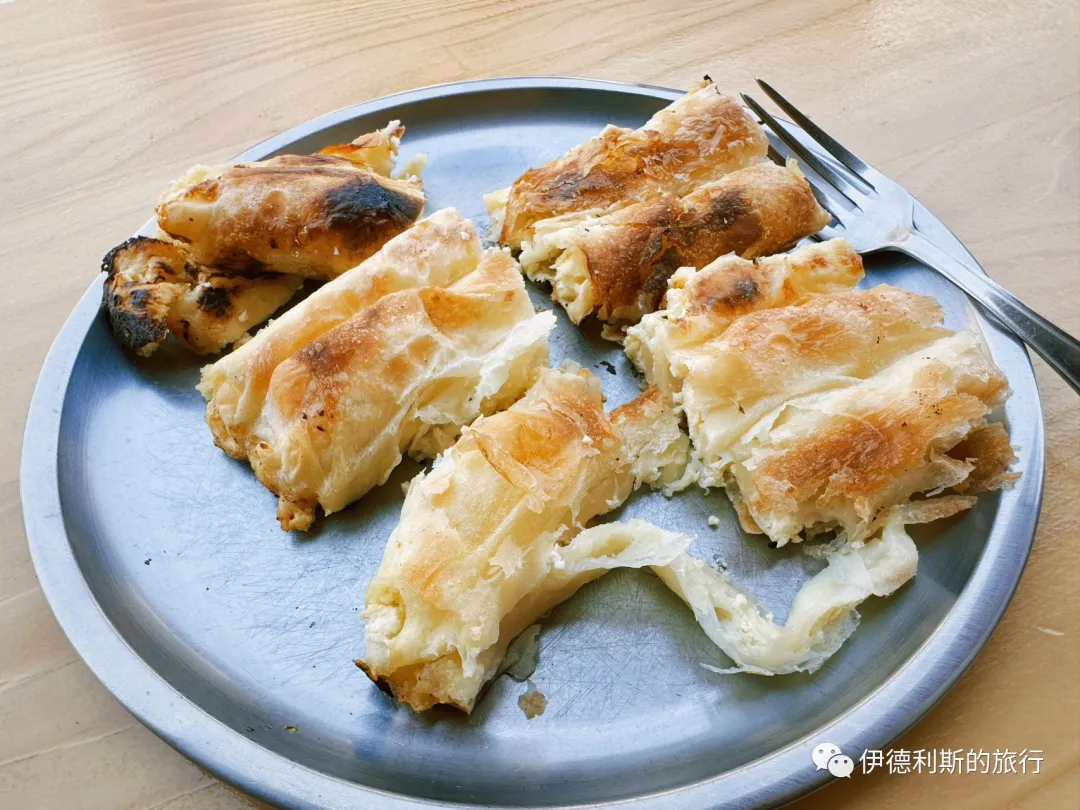
We ate classic Bosnian snacks, flaky meat pie (burek) and small meat dumplings (mantije), on the streets of the old bazaar in Sarajevo. Burek is a classic Ottoman dish. This snack was reportedly brought from Central Asia to the Anatolian Peninsula by Turkic peoples during their westward migration. It was later perfected in the Ottoman court and spread to the Balkan Peninsula under Ottoman rule. In Bosnia, burek is generally called pita. Only the meat-filled version is called burek, while the white cheese version is called sirnica, the spinach and cheese version is called zeljanica, and the potato version is called krompiruša.
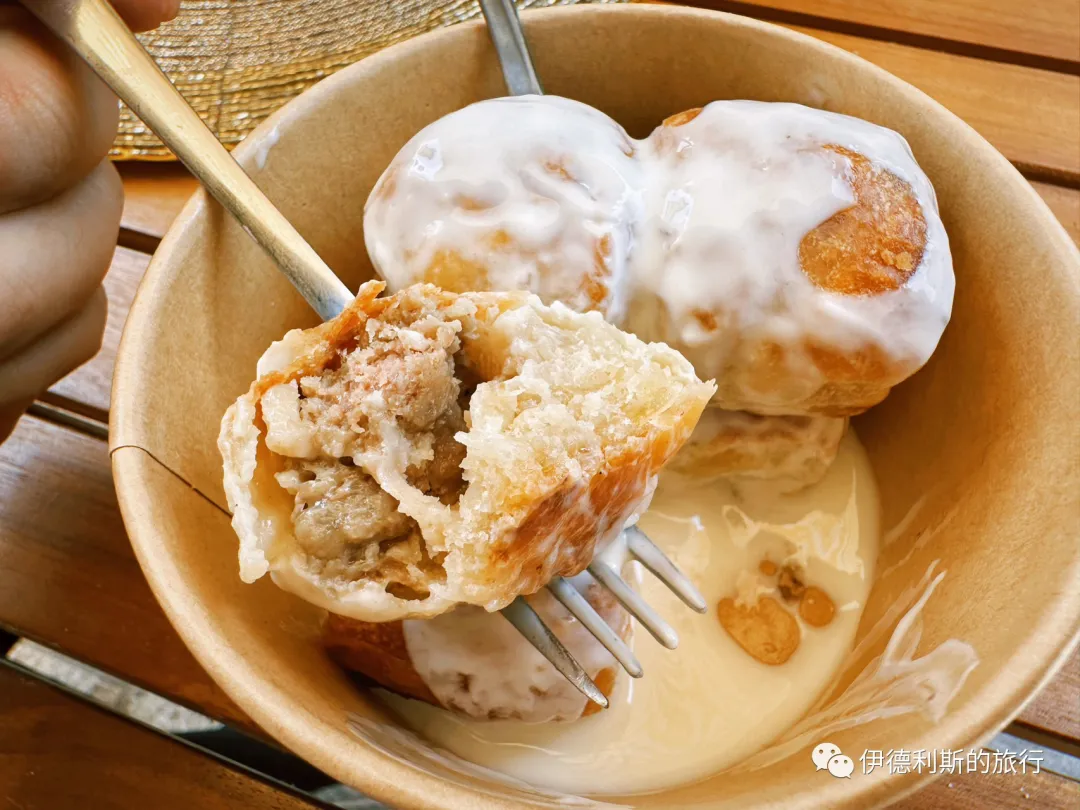
The word mantije comes from the Chinese word mantou. After the 13th century, it was brought along the Silk Road through Central Asia to Anatolia by Turkic peoples and Mongols. It spread throughout the Ottoman Empire and is known as manti in Turkish. Before the term baozi appeared in the Northern Song Dynasty, the Chinese word mantou could refer to any stuffed flour pastry. Today, the Wu dialect still uses the term meat mantou, and the manti of West and Central Asia also refers to stuffed flour pastries.
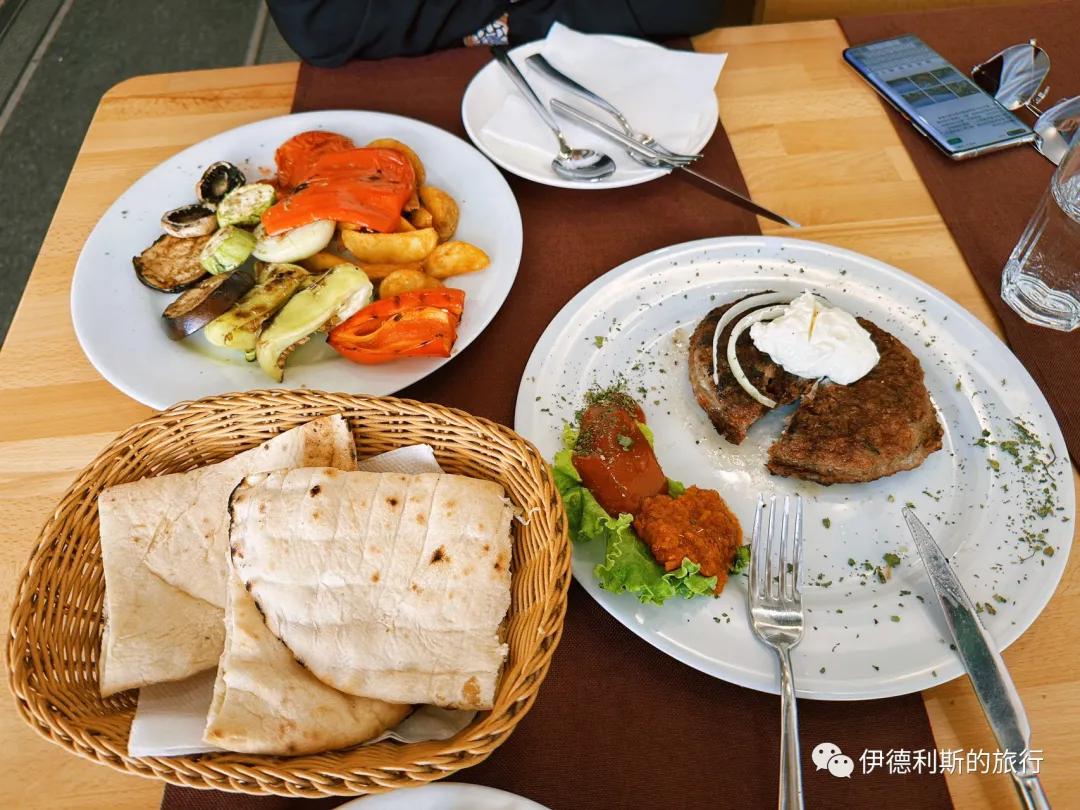
We had dinner at the old bazaar in Sarajevo, ordering the Bosnian specialty chicken soup (begova čorba), a grilled vegetable platter, and Balkan grilled veal patties (teleća pljeskavica), all of which were delicious. The grilled meat here tastes great with yogurt cheese.
Accommodation
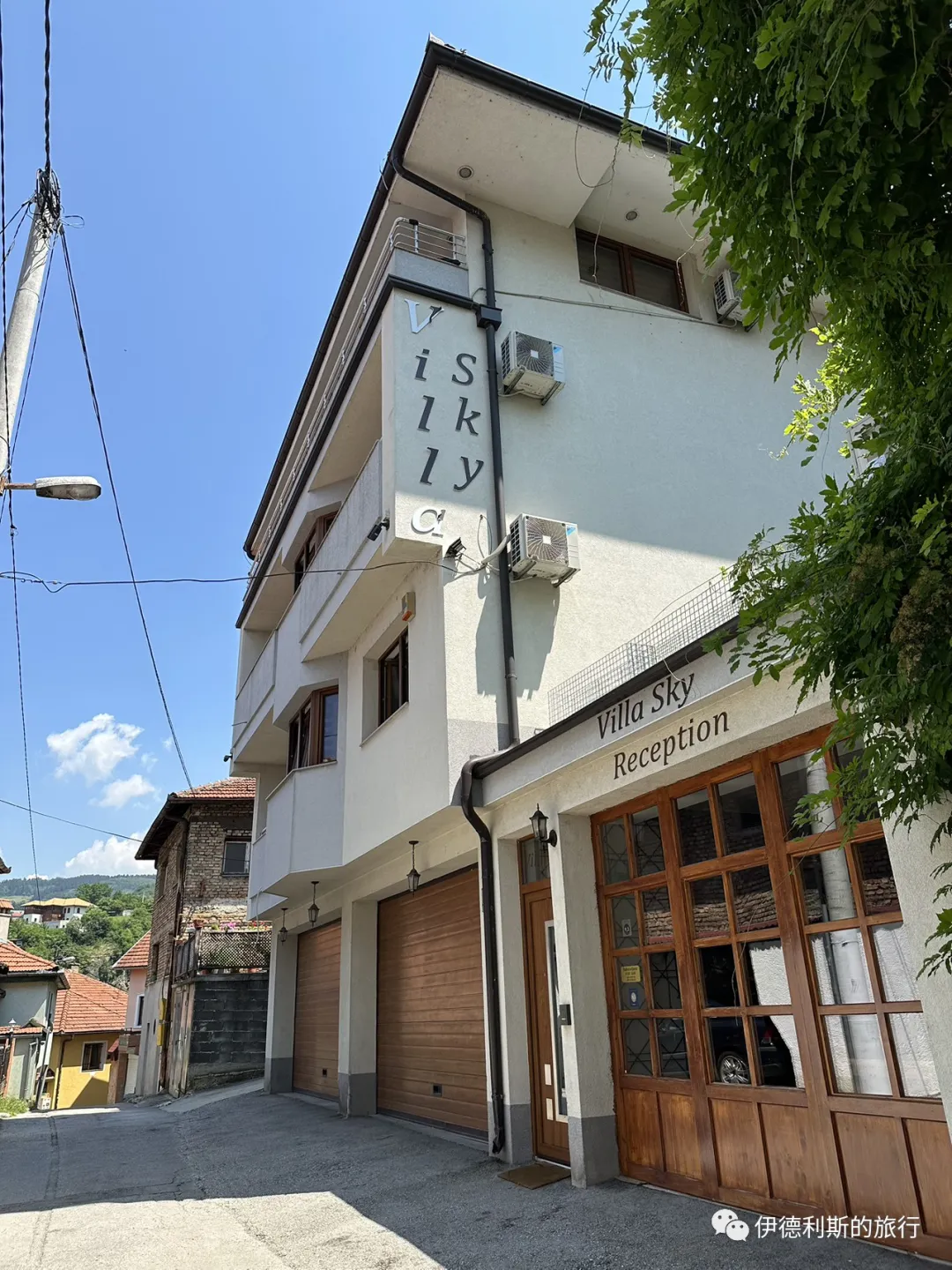
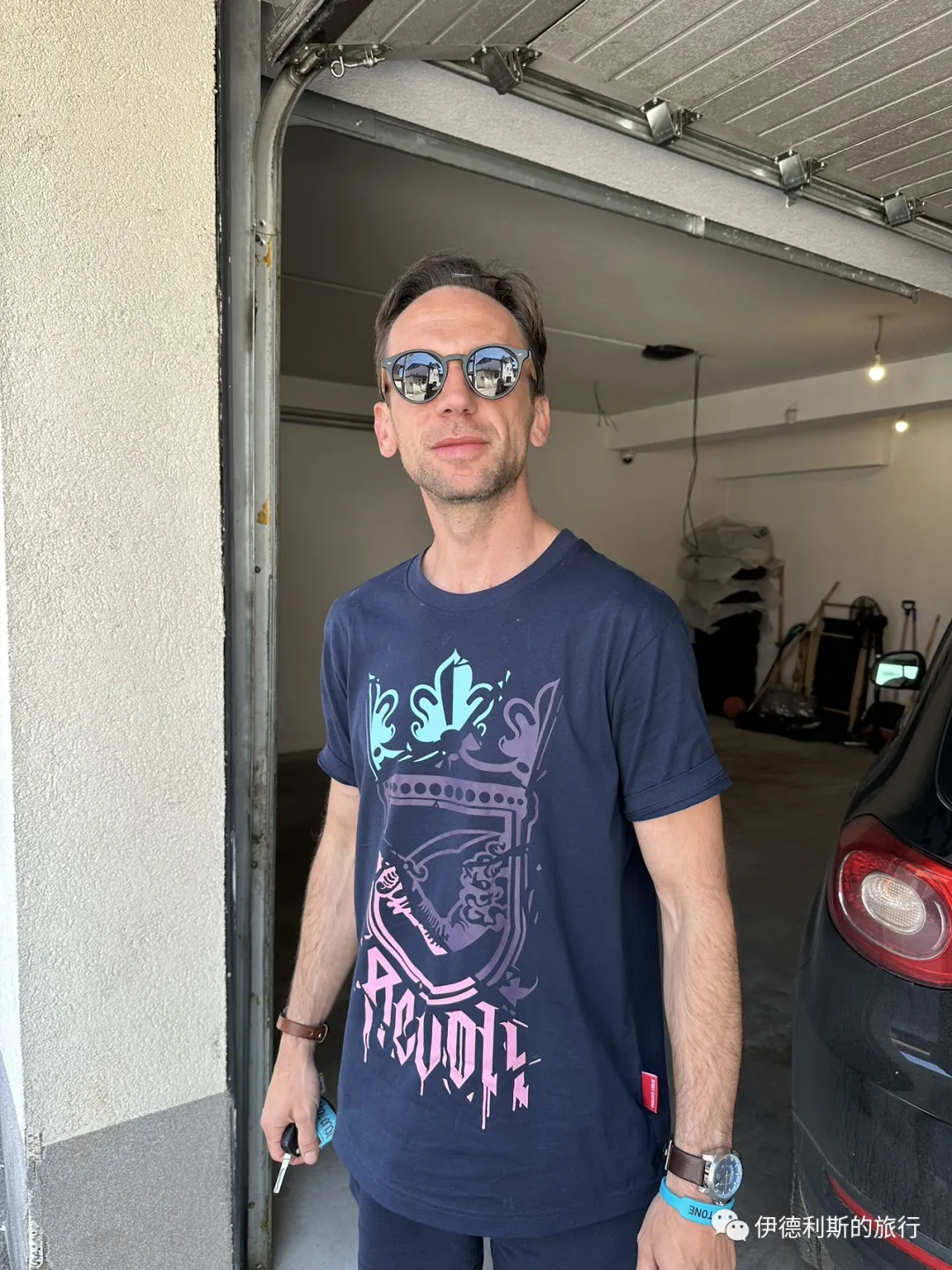
I booked a hotel called Villa Sky in the old town of Sarajevo on Agoda and asked the owner, Faris, to pick us up at the airport. Faris is a local Bosnian and speaks fluent English. On the way into the city, he gave us an overview of Sarajevo and pointed out the bullet holes left on buildings from the Bosnian War.
Street view
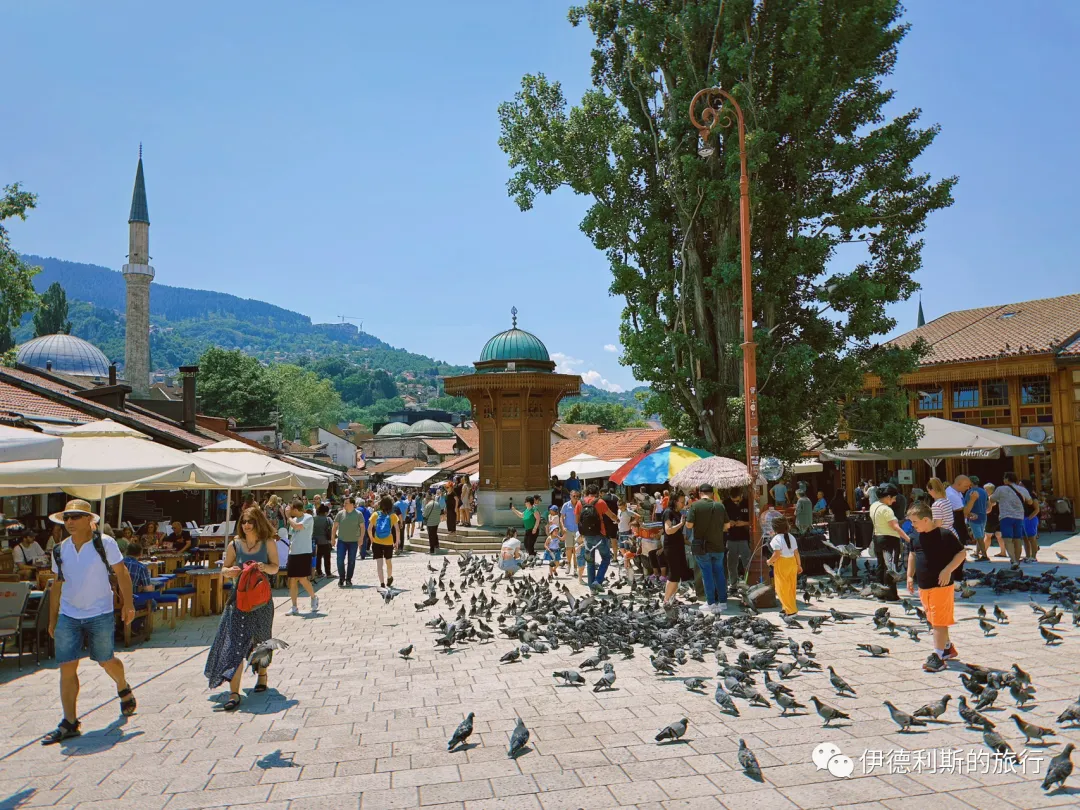
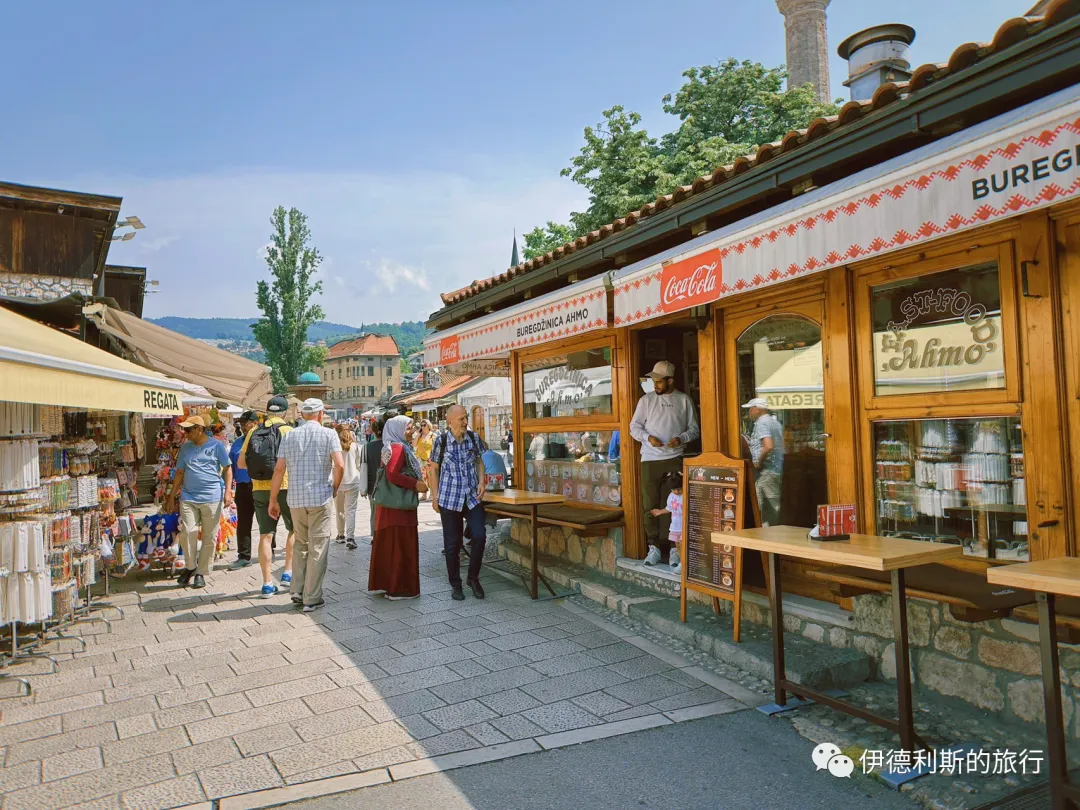
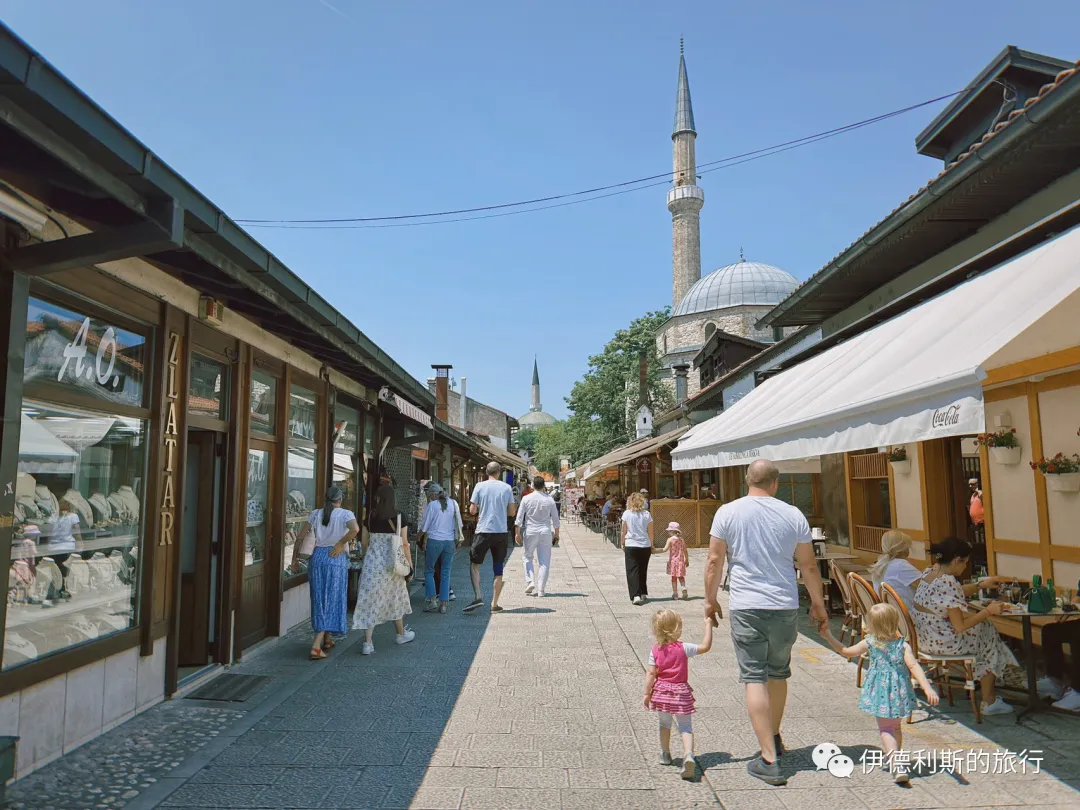
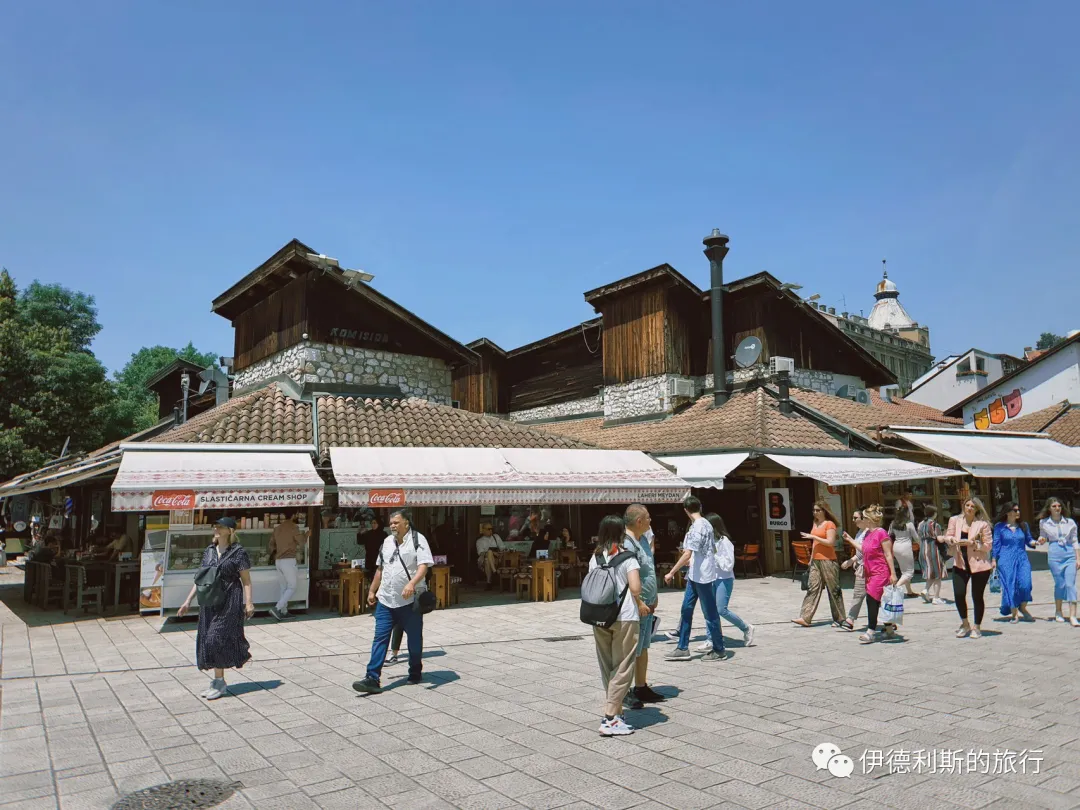
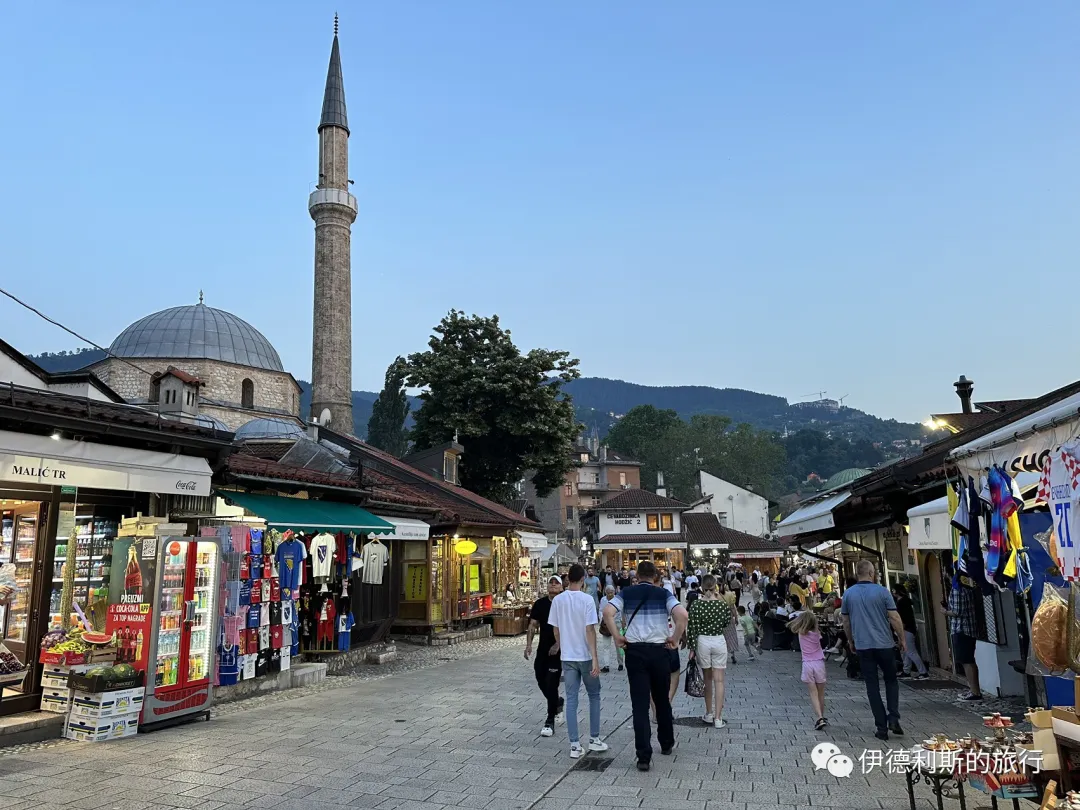
Summary: Sarajevo, the capital of Bosnia and Herzegovina, is shown through its Ottoman old town, mosques, markets, coffee houses, and Bosnian food. This account keeps the original route, historical notes, place names, dishes, and photographs in order.
Sarajevo is the capital of Bosnia and Herzegovina. It was founded by the Ottoman Empire in the 1450s and officially established in 1461. Sarajevo grew rapidly in the 16th century, becoming the second-largest city in Europe under the Ottoman Empire after Istanbul, with over a hundred mosques.
Sarajevo was under Ottoman rule for over four hundred years between 1461 and 1878, and the Bosniaks (Bošnjaci) living here were deeply influenced by the Ottomans. Today, you can experience Ottoman architecture and taste Bosniak food in the Old Bazaar (Baščaršija) of Sarajevo.
Gazi Husrev Bey complex
Gazi Husrev Bey was the Ottoman governor (Sanjak-bey) of Bosnia from 1521 to 1541. During his rule, the Ottoman Empire continued to expand into Croatia and Hungary. At the same time, he funded many important buildings in Sarajevo and used his wealth to support religious and educational institutions for the long term. The foundation (Wakof) established by Gazi Husrev Bey manages the mosque, public kitchen, hostel, Sufi lodge, madrasa, library, clock tower, mausoleum, inn, hospital, fountain, primary school, and many shops in the center of the Old Bazaar, making it the most important building complex in Sarajevo's old town.
The Gazi Husrev Bey Mosque has been the central mosque of Sarajevo since it was built in 1530. Important scenes from the movie "Walter Defends Sarajevo," which is well-known to Chinese audiences, were filmed here. The Gazi Husrev Bey Mosque was designed and built by the Ottoman court architect Adzem Esir Ali, who came from Tabriz, Persia. He built many structures in Istanbul during the early 16th century and was one of the founders of the early Istanbul architectural school. The main hall is 13 meters long and 13 meters wide, with a central dome 26 meters high, achieving a perfect one-to-two ratio. The front porch consists of five small domes supported by four marble columns.
There is a drinking fountain for passersby on the wall at the northwest corner of the mosque, a type of fountain very common in Ottoman cities.
In the northwest corner of the mosque complex stands a small building from 1859 called the Muwaqqithana, where the astronomer (Muwaqqit) used calculations to set the times for namaz and fasting.
Gazi Husrev Bey grew up in the Ottoman court and later earned many military honors. In 1521, he was named governor of Bosnia and became one of Sultan Suleiman the Magnificent's most trusted men. The tomb of Gazi Husrev Bey is a classic 16th-century octagonal Ottoman mausoleum.
Next to the tomb of Gazi Husrev Bey is a smaller octagonal mausoleum, which holds the remains of his deputy, the Ottoman general Murat-beg Tardić. Murat-beg led many campaigns to conquer Croatia. In 1537, he completely broke the military defenses of the Kingdom of Croatia, which helped the Ottoman Empire expand to the west.
On the north side of the Gazi Husrev Bey Mosque is the Kursumlija Madrasa, built by Gazi Husrev Bey in 1537 and dedicated to his mother, the Ottoman princess Selçuka. The madrasa features a courtyard surrounded by 12 classrooms, each with a fireplace and a dome, and a fountain for wudu in the center of the courtyard. After 2013, this site became the Gazi Husrev-beg Museum, which covers his life, the building complex he founded, and his contributions to the development of Sarajevo.
To the right of the madrasa is the Sufi lodge (Khanqah), which is now used as a gallery, though it was closed when we visited.
To the northwest of the Gazi Husrev Bey Mosque is the Gazi Husrev Bey Library, founded in 1537 using the remaining funds from the construction of the madrasa. The library was originally part of the madrasa and did not have its own separate building until 1863. The library was forced to close when the Siege of Sarajevo began in 1992 and did not reopen until 2014. The new library was built with an 8.8 million dollar donation from Qatar and houses over 100,000 manuscripts and books in Arabic, Turkish, Persian, Bosnian, and other languages.
The Gazi Husrev Bey bathhouse (Hamam) was built in 1537 and is located 300 meters northwest of the mosque. The southern part of the bathhouse has two symmetrical domed buildings, which served as the main halls for men and women. A corridor and changing rooms to the north lead to individual small rooms, each topped with a dome. The bathhouse was damaged by fire twice, once during the Habsburg invasion in 1697 and again during the Austro-Hungarian invasion in 1879. It was rebuilt each time, and the structure we see today is mostly from the 1891 renovation.
After renovations in 2000, this place became part of the Institute for Bosniak Studies and often hosts cultural events like book launches, concerts, literary nights, and exhibitions.
On the northeast side of the Gazi Husrev Bey mosque is the Morića Han caravanserai, which was first built in 1551. It was rebuilt into its current form after a fire in 1697 and is the only Ottoman caravanserai still standing in Sarajevo today. Morića Han could hold 300 guests and 70 horses. In 1878, Sarajevo citizens gathered here to form a People's Committee to protest the Austro-Hungarian occupation of Bosnia and Herzegovina. Today, it is still managed by the Ghazi Husrev-beg foundation and houses a restaurant and a Persian carpet shop.
To the west of the Gazi Husrev Bey mosque is the Bezistan covered market, built in 1555. It is one of the best-preserved Ottoman covered markets in Bosnia and Herzegovina. The Bezistan market sits slightly lower than the surrounding streets, which helps keep the interior cooler during the summer. It started as a general goods market and still functions as a shopping area today.
West of the Bezistan covered market are the ruins of the Tašli Han caravanserai, built between 1540 and 1543. The courtyard of the inn had a fountain and a small prayer room, and many merchants opened shops there. A fire in 1879 caused severe damage, and the structure completely collapsed by 1912. In 1998, the site was rebuilt as a hotel, and archaeological excavations rediscovered the original foundations and parts of the walls.
West of the Gazi Husrev Bey mosque stands a clock tower built in the 16th century, though the current structure was rebuilt in the 18th century. This 30-meter-tall clock tower is the highest of the 21 clock towers built by the Ottomans in Bosnia and Herzegovina. It follows the lunar calendar, with sunset set as 12 o'clock. An official called a Muvekit, who determines the prayer times and the five daily namaz, is responsible for adjusting the clock. The current clock mechanism was made by the London company Gillett & Johnston in 1875. To make sure the clock was easy to read, the top of the tower was modified during installation.
Below the clock tower is a public kitchen (Imaret) established in 1531, which was originally run by a foundation (Waqf) to distribute free food to the poor. It is now a very famous bakery, and the fresh bread baked on-site is very popular with the locals. Their main item is the kifla bread, which costs 2 yuan each. It comes in many flavors and has a rich wheat taste. Kifla is a small bread popular in Central Europe and the Balkans with a history of hundreds of years. The French croissant actually developed from the kifla.
Mosque
The Muslihudin Čekrekčija Mosque is in the commercial center of Sarajevo's old town. Hajji Mustafa built it in 1526. The mosque keeps its original endowment deed, or vakufnama, written in 1526. This is the oldest deed document in Sarajevo.
The mosque survived many fires in Sarajevo and the 1697 looting of the city by the Holy League after they defeated the Ottoman Empire. The interior still holds traditional arabesque patterns.
The Baščaršija Mosque sits in the center of the old bazaar in Sarajevo. Havadža Durak built it in the early 16th century, and the earliest manuscript recording the mosque dates back to 1528. The mosque originally had a wooden dome. After a fire destroyed it in 1697, it was rebuilt with a stone dome. There is a front porch with three small stone domes in front of the main hall. It was changed to a wooden roof in 1945 but restored to its original look in 1966. The mosque suffered heavy damage during the Siege of Sarajevo from 1992 to 1995 and was later renovated.
The Emperor's Mosque (Careva Džamija) was first built in 1457. It was the first mosque built after the Ottoman Empire conquered Bosnia. Isaković-Hranušić led the construction, and it was dedicated to the Ottoman Sultan Mehmed the Conqueror. The first mosque building was made of wood. It was rebuilt in 1565 into the current classical Ottoman style and dedicated to the Ottoman Sultan Suleiman the Magnificent. Side rooms were added in 1800, and they were connected to the main hall in 1848.
The Emperor's Mosque was severely damaged twice, once during World War II and again during the Bosnian War, and was later repaired.
The Magribija Mosque was built by Sheikh Magribija in the 15th century. Tradition says that Sheikh Magribija came to Sarajevo with the city's founder, the Ottoman governor Isa-beg. The original mosque building was destroyed by fire. The current structure was rebuilt in 1766, keeping its 18th-century appearance and painted decorations. The mosque was severely damaged during the Bosnian War in 1992, leaving only the base of the minaret (bunkta). It was rebuilt in 2000, and the roof and porch were repaired again in 2004.
Ali Pasha Mosque was built in 1560 or 1561 by the Bosnian governor Ali Pasha, who was a local from Sarajevo. This is a single-domed mosque in the classical Ottoman style with beautiful architectural proportions. There was originally a large cemetery around the main hall. It was turned into a park after tram tracks and roads were laid, and a fountain for ritual washing (abdest) was moved there in 1874. The mosque was badly damaged by shelling during the Bosnian War from 1992 to 1995, and it was rebuilt in 2004.
You can still see gravestones of victims from the 1993 Bosnian War next to the mosque.
Ferhadija Mosque was built by Ferhad-beg Vuković-Desisalić in 1561 or 1562, and the neighborhood that grew around it is also called Ferhadija. The mosque originally had a primary school (mekteb), a public kitchen (imaret), a water station, and a fountain, but they were all destroyed in fires in 1879 and 1897. It is a typical classical Ottoman building with a central dome over a rectangular main hall and three small domes over the front porch.
These are the archaeological remains of Bakrbaba Mosque, its madrasa, primary school (mekteb), and courtyard (harem).
Bakrbaba Mosque was built in 1544 by the famous Sarajevo merchant Hajji-Alija Bakrbaba, and it had a 30-meter-tall minaret (bunkta) at the time. In 1697, the Ottoman Empire was defeated by the European Holy League. Sarajevo was looted and burned, and Bakrbaba Mosque was destroyed in the fire before being rebuilt in the early 18th century.
A primary school and courtyard were originally built on the west side of the mosque. In 1741 or 1742, Hajji Ismail Misrija built a madrasa and cemetery on the east side of the courtyard. Soon after, Abdulah Efendi Kantamirija built a library across the street, making this an important educational and cultural center in Sarajevo.
After the Austro-Hungarian Empire took control of Sarajevo in 1878, the mosque was first turned into a military warehouse and was finally demolished in 1895. The primary school next to the mosque was also destroyed in 1895, the library was destroyed in 1897, and the madrasa remained until the beginning of World War II.
Since 2000, at the request of Islamic scholar Hajji Hafez Halid Efendi Hadžimulić, Sarajevo began archaeological research on the Bakrbaba mosque complex. In 2009, businessman Husein Durman from Bursa, Turkey, funded the reconstruction of the Bakrbaba mosque, which officially opened in 2011.
Market
The Brusa Bezistan covered market is located in the Grand Bazaar of Sarajevo's old town. It was built in 1551 by order of Grand Vizier Rüstem Pasha during the reign of Suleiman the Magnificent of the Ottoman Empire and was named after the old Ottoman capital, Bursa. This market has six domes. It originally sold silk, household goods, and small furniture. Today, it serves as a Sarajevo museum, displaying precious artifacts from the Ottoman period.
Fortress
The Yellow Fortress (Žuta Tabija) was built between 1727 and 1739 as a battery for the Sarajevo city walls. In 1878, it served as an important stronghold for the Ottoman Empire to defend Sarajevo against the Austro-Hungarian invasion.
Sarajevo did not have city walls for most of its history until 1697, when Prince Eugene of the Habsburg Empire launched a devastating attack on the city. He looted the city and burned many buildings, leading the Ottoman Empire to officially build city walls in Sarajevo in 1727. Today, the Sarajevo city walls are located on the east side of the old town, with many gates and fortresses still preserved. The most famous of these are the Yellow Fortress and the White Fortress (Bijela Tabija).
Dervish Lodge
Below the Yellow Fortress sits a Mevlevi Sufi dervish lodge (tekke), which was the first Sufi lodge in Sarajevo. The lodge was first built in 1462, destroyed during Prince Eugene's invasion of Sarajevo in 1697, and rebuilt in 1781. After the Austro-Hungarian Empire occupied Bosnia and Herzegovina in 1878, they strictly prohibited the maintenance of the lodge. It was eventually demolished in 1957 during the Tito era in Yugoslavia. The building we see today was rebuilt in 2013 with donations from Turkey.
Food
The restaurant Ćevabdžinica Petica Ferhatović. This shop was opened by the Ferhatović family during the 1984 Sarajevo Winter Olympics, though they had already started running restaurants in Sarajevo's old town as early as 1957. We ordered the Bosnian specialty minced beef finger kebabs (Ćevapčići) and spicy beef sausage (Sudžuk) with flatbread (Somun), served with onions and cream cheese (Kajmak) on the side. We also ordered a cheese salad (Šopska salata).
The word Ćevapčići comes from the Ottoman Turkish word for grilled meat (Kevap) and the Slavic suffix '-čići' which means small. It developed from Turkish kebabs in the 16th century. The version made in the Baščaršija area of Sarajevo is the most famous, and it holds an important place in Bosnian food culture.
The best drink to cool off in the Sarajevo Old Town bazaar is Boza! I drink it several times every day. Boza is a very old fermented malt drink. It was recorded as early as the 1070s in the Compendium of the Turkic Dialects (Dīwān Lughāt al-Turk). It was very popular among Turkic peoples in Central Asia and spread to the Balkan region with the Ottoman Empire.
Eating Noah's pudding (Ashure) in the Sarajevo Old Town bazaar. Ashure is a porridge that should be cooked on the tenth day of the month of Muharram. Ottoman-era Ashure has no fixed recipe, and preparation varies by region and family tradition. Traditionally, People say at least seven ingredients are used.
In the afternoon, we had Bosnian stew (Bosanski lonac) at Aščinica Hadžibajrić F. Namika in the Sarajevo Old Town bazaar. The word 'Aščinica' here means an old-fashioned Bosnian restaurant. The Hadžibajrić family has run this traditional Bosnian restaurant for over a hundred years. The current owner is Namik. He stands behind the counter and serves the food; you just point at what you want and he dishes it out.
Bosnian stew originated in the Middle Ages. It started as a home-cooked meal for Bosnian workers and later became popular with all social classes. You can stew it with beef, lamb, and meatballs, or with cabbage, potatoes, tomatoes, and carrots. When stewing, you layer the meat and vegetables in the pot, then add garlic and whole peppercorns for seasoning. They also have various stuffed dishes (Sarma), including stuffed tomatoes, stuffed grape leaves, stuffed onions, and stuffed pickled cabbage leaves. Sarma means 'wrapped' in Turkish, referring to vegetables stuffed with filling and then stewed.
Drink traditional Bosnian coffee (Bosanska Kahva) in the Old Bazaar of Sarajevo. Coffee first arrived in the Balkan Peninsula under Ottoman rule from the Arab world in the 16th century. Sarajevo was one of the first European cities to open coffee houses, over a hundred years before cities in Western Europe.
Coffee houses are an important part of Ottoman culture. People go there to hear the day's main news, discuss daily gossip, and watch impromptu performances like shadow puppetry. Coffee houses allow people to express more ideas outside of work and worship, and they are great places to meet like-minded friends.
Like Turkish coffee, Bosnian coffee is made by grinding roasted coffee beans into a fine powder and brewing them in a long-handled copper pot called a Džezva (known as Cezve in Turkish). However, while Turkish coffee can be brewed with cold water, Bosnian coffee must be brewed with boiling water. You can add sugar to Turkish coffee while it brews, but you cannot add sugar to Bosnian coffee. Turkish coffee is poured into a cup and served to the customer, but Bosnian coffee is served by placing the copper brewing pot and the cup together on a tray for the customer to pour themselves.
The classic Bosnian coffee set includes a copper pot, a porcelain cup with a copper base, a copper tray, a copper sugar bowl for sugar cubes, and Rahat Lokum jelly candy. To drink it, first bite a piece of sugar cube and hold it under your tongue, letting it melt on its own, then drink the coffee. Bosnian Rahat Lokum jelly candy comes from Turkish Lokum. The yellow ones are made with vanilla and the red ones are made with rose petals. You can eat them at any time while drinking your coffee.
At Andar Caffe Bar, the owner Maida's grandfather, Muharem, opened a handmade shoe shop in the Sarajevo Old Bazaar in 1933, which was later taken over by Maida's father, Osman. After Osman retired in 2010, Maida took over the shop. Since handmade shoes were no longer in demand and people were buying shoes in stores, Maida turned the shop into the current cafe, though she kept many shoe-related elements inside.
There is a very famous Bosnian restaurant called Inat kuća across from the Sarajevo City Hall (Vijećnica). The traditional Bosnian house where the restaurant is located was built in the mid-17th century and was originally next to the current City Hall. In 1892, when the Austro-Hungarian Empire wanted to build the City Hall and a tram station, they tried to seize the land, but the old man who owned the house, Benderija, did not want to move. After long negotiations, the old man finally agreed to move only if he was given a bag of gold and his house was moved brick by brick to the other side of the river. The Austro-Hungarian Empire had no choice but to move the house to its current location. During the move, the old man reportedly sat on the nearby bridge every day, carefully watching the workers move every single brick to the other side of the river.
After 1997, Inat kuća became a Bosnian restaurant where you can enjoy Bosnian cuisine and see the traditional decor of a Bosnian home. We ordered traditional Bosnian dumplings (klepe), cornmeal porridge (pura), rose water, and elderflower (zova) water. Klepe is made by kneading flour, eggs, and salt for the dough, and mixing minced meat, onions, salt, and pepper for the filling. The dumplings are boiled for 10 minutes, then baked with yogurt, garlic powder, and chili powder. Pura is a porridge made from cornmeal, butter, cheese, and yogurt, and it is one of the favorite breakfasts for Bosniaks.
In the morning, we had a traditional Bosnian breakfast at Restoran Čaršija, west of the Gazi Husrev-beg Mosque in Sarajevo's old town. It included Travnik cheese, smoked cheese, cream cheese, smoked meat, spicy beef sausage (sujuk), vegetables, fruit, fried eggs, and black tea. Travnik cheese is a specialty sheep's milk cheese from Bosnia and Herzegovina, originating from the mountains near the town of Travnik. It is made by brining fresh sheep's milk for two to three months. After draining, it tastes slightly salty and is low in fat.
We ate classic Bosnian snacks, flaky meat pie (burek) and small meat dumplings (mantije), on the streets of the old bazaar in Sarajevo. Burek is a classic Ottoman dish. This snack was reportedly brought from Central Asia to the Anatolian Peninsula by Turkic peoples during their westward migration. It was later perfected in the Ottoman court and spread to the Balkan Peninsula under Ottoman rule. In Bosnia, burek is generally called pita. Only the meat-filled version is called burek, while the white cheese version is called sirnica, the spinach and cheese version is called zeljanica, and the potato version is called krompiruša.
The word mantije comes from the Chinese word mantou. After the 13th century, it was brought along the Silk Road through Central Asia to Anatolia by Turkic peoples and Mongols. It spread throughout the Ottoman Empire and is known as manti in Turkish. Before the term baozi appeared in the Northern Song Dynasty, the Chinese word mantou could refer to any stuffed flour pastry. Today, the Wu dialect still uses the term meat mantou, and the manti of West and Central Asia also refers to stuffed flour pastries.
We had dinner at the old bazaar in Sarajevo, ordering the Bosnian specialty chicken soup (begova čorba), a grilled vegetable platter, and Balkan grilled veal patties (teleća pljeskavica), all of which were delicious. The grilled meat here tastes great with yogurt cheese.
Accommodation
I booked a hotel called Villa Sky in the old town of Sarajevo on Agoda and asked the owner, Faris, to pick us up at the airport. Faris is a local Bosnian and speaks fluent English. On the way into the city, he gave us an overview of Sarajevo and pointed out the bullet holes left on buildings from the Bosnian War.
Street view
Halal Travel Guide: Sarajevo - Mosques, Ottoman Streets and Bosnian Food
Articles • ali2007fr posted the article • 0 comments • 250 views • 2026-05-20 08:47
Reposted from the web
Summary: Sarajevo, the capital of Bosnia and Herzegovina, is shown through its Ottoman old town, mosques, markets, coffee houses, and Bosnian food. This account keeps the original route, historical notes, place names, dishes, and photographs in order.
Sarajevo is the capital of Bosnia and Herzegovina. It was founded by the Ottoman Empire in the 1450s and officially established in 1461. Sarajevo grew rapidly in the 16th century, becoming the second-largest city in Europe under the Ottoman Empire after Istanbul, with over a hundred mosques.
Sarajevo was under Ottoman rule for over four hundred years between 1461 and 1878, and the Bosniaks (Bošnjaci) living here were deeply influenced by the Ottomans. Today, you can experience Ottoman architecture and taste Bosniak food in the Old Bazaar (Baščaršija) of Sarajevo.
Gazi Husrev Bey complex
Gazi Husrev Bey was the Ottoman governor (Sanjak-bey) of Bosnia from 1521 to 1541. During his rule, the Ottoman Empire continued to expand into Croatia and Hungary. At the same time, he funded many important buildings in Sarajevo and used his wealth to support religious and educational institutions for the long term. The foundation (Wakof) established by Gazi Husrev Bey manages the mosque, public kitchen, hostel, Sufi lodge, madrasa, library, clock tower, mausoleum, inn, hospital, fountain, primary school, and many shops in the center of the Old Bazaar, making it the most important building complex in Sarajevo's old town.
The Gazi Husrev Bey Mosque has been the central mosque of Sarajevo since it was built in 1530. Important scenes from the movie "Walter Defends Sarajevo," which is well-known to Chinese audiences, were filmed here. The Gazi Husrev Bey Mosque was designed and built by the Ottoman court architect Adzem Esir Ali, who came from Tabriz, Persia. He built many structures in Istanbul during the early 16th century and was one of the founders of the early Istanbul architectural school. The main hall is 13 meters long and 13 meters wide, with a central dome 26 meters high, achieving a perfect one-to-two ratio. The front porch consists of five small domes supported by four marble columns.
There is a drinking fountain for passersby on the wall at the northwest corner of the mosque, a type of fountain very common in Ottoman cities.
In the northwest corner of the mosque complex stands a small building from 1859 called the Muwaqqithana, where the astronomer (Muwaqqit) used calculations to set the times for namaz and fasting.
Gazi Husrev Bey grew up in the Ottoman court and later earned many military honors. In 1521, he was named governor of Bosnia and became one of Sultan Suleiman the Magnificent's most trusted men. The tomb of Gazi Husrev Bey is a classic 16th-century octagonal Ottoman mausoleum.
Next to the tomb of Gazi Husrev Bey is a smaller octagonal mausoleum, which holds the remains of his deputy, the Ottoman general Murat-beg Tardić. Murat-beg led many campaigns to conquer Croatia. In 1537, he completely broke the military defenses of the Kingdom of Croatia, which helped the Ottoman Empire expand to the west.
On the north side of the Gazi Husrev Bey Mosque is the Kursumlija Madrasa, built by Gazi Husrev Bey in 1537 and dedicated to his mother, the Ottoman princess Selçuka. The madrasa features a courtyard surrounded by 12 classrooms, each with a fireplace and a dome, and a fountain for wudu in the center of the courtyard. After 2013, this site became the Gazi Husrev-beg Museum, which covers his life, the building complex he founded, and his contributions to the development of Sarajevo.
To the right of the madrasa is the Sufi lodge (Khanqah), which is now used as a gallery, though it was closed when we visited.
To the northwest of the Gazi Husrev Bey Mosque is the Gazi Husrev Bey Library, founded in 1537 using the remaining funds from the construction of the madrasa. The library was originally part of the madrasa and did not have its own separate building until 1863. The library was forced to close when the Siege of Sarajevo began in 1992 and did not reopen until 2014. The new library was built with an 8.8 million dollar donation from Qatar and houses over 100,000 manuscripts and books in Arabic, Turkish, Persian, Bosnian, and other languages.
The Gazi Husrev Bey bathhouse (Hamam) was built in 1537 and is located 300 meters northwest of the mosque. The southern part of the bathhouse has two symmetrical domed buildings, which served as the main halls for men and women. A corridor and changing rooms to the north lead to individual small rooms, each topped with a dome. The bathhouse was damaged by fire twice, once during the Habsburg invasion in 1697 and again during the Austro-Hungarian invasion in 1879. It was rebuilt each time, and the structure we see today is mostly from the 1891 renovation.
After renovations in 2000, this place became part of the Institute for Bosniak Studies and often hosts cultural events like book launches, concerts, literary nights, and exhibitions.
On the northeast side of the Gazi Husrev Bey mosque is the Morića Han caravanserai, which was first built in 1551. It was rebuilt into its current form after a fire in 1697 and is the only Ottoman caravanserai still standing in Sarajevo today. Morića Han could hold 300 guests and 70 horses. In 1878, Sarajevo citizens gathered here to form a People's Committee to protest the Austro-Hungarian occupation of Bosnia and Herzegovina. Today, it is still managed by the Ghazi Husrev-beg foundation and houses a restaurant and a Persian carpet shop.
To the west of the Gazi Husrev Bey mosque is the Bezistan covered market, built in 1555. It is one of the best-preserved Ottoman covered markets in Bosnia and Herzegovina. The Bezistan market sits slightly lower than the surrounding streets, which helps keep the interior cooler during the summer. It started as a general goods market and still functions as a shopping area today.
West of the Bezistan covered market are the ruins of the Tašli Han caravanserai, built between 1540 and 1543. The courtyard of the inn had a fountain and a small prayer room, and many merchants opened shops there. A fire in 1879 caused severe damage, and the structure completely collapsed by 1912. In 1998, the site was rebuilt as a hotel, and archaeological excavations rediscovered the original foundations and parts of the walls.
West of the Gazi Husrev Bey mosque stands a clock tower built in the 16th century, though the current structure was rebuilt in the 18th century. This 30-meter-tall clock tower is the highest of the 21 clock towers built by the Ottomans in Bosnia and Herzegovina. It follows the lunar calendar, with sunset set as 12 o'clock. An official called a Muvekit, who determines the prayer times and the five daily namaz, is responsible for adjusting the clock. The current clock mechanism was made by the London company Gillett & Johnston in 1875. To make sure the clock was easy to read, the top of the tower was modified during installation.
Below the clock tower is a public kitchen (Imaret) established in 1531, which was originally run by a foundation (Waqf) to distribute free food to the poor. It is now a very famous bakery, and the fresh bread baked on-site is very popular with the locals. Their main item is the kifla bread, which costs 2 yuan each. It comes in many flavors and has a rich wheat taste. Kifla is a small bread popular in Central Europe and the Balkans with a history of hundreds of years. The French croissant actually developed from the kifla.
Mosque
The Muslihudin Čekrekčija Mosque is in the commercial center of Sarajevo's old town. Hajji Mustafa built it in 1526. The mosque keeps its original endowment deed, or vakufnama, written in 1526. This is the oldest deed document in Sarajevo.
The mosque survived many fires in Sarajevo and the 1697 looting of the city by the Holy League after they defeated the Ottoman Empire. The interior still holds traditional arabesque patterns.
The Baščaršija Mosque sits in the center of the old bazaar in Sarajevo. Havadža Durak built it in the early 16th century, and the earliest manuscript recording the mosque dates back to 1528. The mosque originally had a wooden dome. After a fire destroyed it in 1697, it was rebuilt with a stone dome. There is a front porch with three small stone domes in front of the main hall. It was changed to a wooden roof in 1945 but restored to its original look in 1966. The mosque suffered heavy damage during the Siege of Sarajevo from 1992 to 1995 and was later renovated.
The Emperor's Mosque (Careva Džamija) was first built in 1457. It was the first mosque built after the Ottoman Empire conquered Bosnia. Isaković-Hranušić led the construction, and it was dedicated to the Ottoman Sultan Mehmed the Conqueror. The first mosque building was made of wood. It was rebuilt in 1565 into the current classical Ottoman style and dedicated to the Ottoman Sultan Suleiman the Magnificent. Side rooms were added in 1800, and they were connected to the main hall in 1848.
The Emperor's Mosque was severely damaged twice, once during World War II and again during the Bosnian War, and was later repaired.
The Magribija Mosque was built by Sheikh Magribija in the 15th century. Tradition says that Sheikh Magribija came to Sarajevo with the city's founder, the Ottoman governor Isa-beg. The original mosque building was destroyed by fire. The current structure was rebuilt in 1766, keeping its 18th-century appearance and painted decorations. The mosque was severely damaged during the Bosnian War in 1992, leaving only the base of the minaret (bunkta). It was rebuilt in 2000, and the roof and porch were repaired again in 2004.
Ali Pasha Mosque was built in 1560 or 1561 by the Bosnian governor Ali Pasha, who was a local from Sarajevo. This is a single-domed mosque in the classical Ottoman style with beautiful architectural proportions. There was originally a large cemetery around the main hall. It was turned into a park after tram tracks and roads were laid, and a fountain for ritual washing (abdest) was moved there in 1874. The mosque was badly damaged by shelling during the Bosnian War from 1992 to 1995, and it was rebuilt in 2004.
You can still see gravestones of victims from the 1993 Bosnian War next to the mosque.
Ferhadija Mosque was built by Ferhad-beg Vuković-Desisalić in 1561 or 1562, and the neighborhood that grew around it is also called Ferhadija. The mosque originally had a primary school (mekteb), a public kitchen (imaret), a water station, and a fountain, but they were all destroyed in fires in 1879 and 1897. It is a typical classical Ottoman building with a central dome over a rectangular main hall and three small domes over the front porch.
These are the archaeological remains of Bakrbaba Mosque, its madrasa, primary school (mekteb), and courtyard (harem).
Bakrbaba Mosque was built in 1544 by the famous Sarajevo merchant Hajji-Alija Bakrbaba, and it had a 30-meter-tall minaret (bunkta) at the time. In 1697, the Ottoman Empire was defeated by the European Holy League. Sarajevo was looted and burned, and Bakrbaba Mosque was destroyed in the fire before being rebuilt in the early 18th century.
A primary school and courtyard were originally built on the west side of the mosque. In 1741 or 1742, Hajji Ismail Misrija built a madrasa and cemetery on the east side of the courtyard. Soon after, Abdulah Efendi Kantamirija built a library across the street, making this an important educational and cultural center in Sarajevo.
After the Austro-Hungarian Empire took control of Sarajevo in 1878, the mosque was first turned into a military warehouse and was finally demolished in 1895. The primary school next to the mosque was also destroyed in 1895, the library was destroyed in 1897, and the madrasa remained until the beginning of World War II.
Since 2000, at the request of Islamic scholar Hajji Hafez Halid Efendi Hadžimulić, Sarajevo began archaeological research on the Bakrbaba mosque complex. In 2009, businessman Husein Durman from Bursa, Turkey, funded the reconstruction of the Bakrbaba mosque, which officially opened in 2011.
Market
The Brusa Bezistan covered market is located in the Grand Bazaar of Sarajevo's old town. It was built in 1551 by order of Grand Vizier Rüstem Pasha during the reign of Suleiman the Magnificent of the Ottoman Empire and was named after the old Ottoman capital, Bursa. This market has six domes. It originally sold silk, household goods, and small furniture. Today, it serves as a Sarajevo museum, displaying precious artifacts from the Ottoman period.
Fortress
The Yellow Fortress (Žuta Tabija) was built between 1727 and 1739 as a battery for the Sarajevo city walls. In 1878, it served as an important stronghold for the Ottoman Empire to defend Sarajevo against the Austro-Hungarian invasion.
Sarajevo did not have city walls for most of its history until 1697, when Prince Eugene of the Habsburg Empire launched a devastating attack on the city. He looted the city and burned many buildings, leading the Ottoman Empire to officially build city walls in Sarajevo in 1727. Today, the Sarajevo city walls are located on the east side of the old town, with many gates and fortresses still preserved. The most famous of these are the Yellow Fortress and the White Fortress (Bijela Tabija).
Dervish Lodge
Below the Yellow Fortress sits a Mevlevi Sufi dervish lodge (tekke), which was the first Sufi lodge in Sarajevo. The lodge was first built in 1462, destroyed during Prince Eugene's invasion of Sarajevo in 1697, and rebuilt in 1781. After the Austro-Hungarian Empire occupied Bosnia and Herzegovina in 1878, they strictly prohibited the maintenance of the lodge. It was eventually demolished in 1957 during the Tito era in Yugoslavia. The building we see today was rebuilt in 2013 with donations from Turkey.
Food
The restaurant Ćevabdžinica Petica Ferhatović. This shop was opened by the Ferhatović family during the 1984 Sarajevo Winter Olympics, though they had already started running restaurants in Sarajevo's old town as early as 1957. We ordered the Bosnian specialty minced beef finger kebabs (Ćevapčići) and spicy beef sausage (Sudžuk) with flatbread (Somun), served with onions and cream cheese (Kajmak) on the side. We also ordered a cheese salad (Šopska salata).
The word Ćevapčići comes from the Ottoman Turkish word for grilled meat (Kevap) and the Slavic suffix '-čići' which means small. It developed from Turkish kebabs in the 16th century. The version made in the Baščaršija area of Sarajevo is the most famous, and it holds an important place in Bosnian food culture.
The best drink to cool off in the Sarajevo Old Town bazaar is Boza! I drink it several times every day. Boza is a very old fermented malt drink. It was recorded as early as the 1070s in the Compendium of the Turkic Dialects (Dīwān Lughāt al-Turk). It was very popular among Turkic peoples in Central Asia and spread to the Balkan region with the Ottoman Empire.
Eating Noah's pudding (Ashure) in the Sarajevo Old Town bazaar. Ashure is a porridge that should be cooked on the tenth day of the month of Muharram. Ottoman-era Ashure has no fixed recipe, and preparation varies by region and family tradition. Traditionally, People say at least seven ingredients are used.
In the afternoon, we had Bosnian stew (Bosanski lonac) at Aščinica Hadžibajrić F. Namika in the Sarajevo Old Town bazaar. The word 'Aščinica' here means an old-fashioned Bosnian restaurant. The Hadžibajrić family has run this traditional Bosnian restaurant for over a hundred years. The current owner is Namik. He stands behind the counter and serves the food; you just point at what you want and he dishes it out.
Bosnian stew originated in the Middle Ages. It started as a home-cooked meal for Bosnian workers and later became popular with all social classes. You can stew it with beef, lamb, and meatballs, or with cabbage, potatoes, tomatoes, and carrots. When stewing, you layer the meat and vegetables in the pot, then add garlic and whole peppercorns for seasoning. They also have various stuffed dishes (Sarma), including stuffed tomatoes, stuffed grape leaves, stuffed onions, and stuffed pickled cabbage leaves. Sarma means 'wrapped' in Turkish, referring to vegetables stuffed with filling and then stewed.
Drink traditional Bosnian coffee (Bosanska Kahva) in the Old Bazaar of Sarajevo. Coffee first arrived in the Balkan Peninsula under Ottoman rule from the Arab world in the 16th century. Sarajevo was one of the first European cities to open coffee houses, over a hundred years before cities in Western Europe.
Coffee houses are an important part of Ottoman culture. People go there to hear the day's main news, discuss daily gossip, and watch impromptu performances like shadow puppetry. Coffee houses allow people to express more ideas outside of work and worship, and they are great places to meet like-minded friends.
Like Turkish coffee, Bosnian coffee is made by grinding roasted coffee beans into a fine powder and brewing them in a long-handled copper pot called a Džezva (known as Cezve in Turkish). However, while Turkish coffee can be brewed with cold water, Bosnian coffee must be brewed with boiling water. You can add sugar to Turkish coffee while it brews, but you cannot add sugar to Bosnian coffee. Turkish coffee is poured into a cup and served to the customer, but Bosnian coffee is served by placing the copper brewing pot and the cup together on a tray for the customer to pour themselves.
The classic Bosnian coffee set includes a copper pot, a porcelain cup with a copper base, a copper tray, a copper sugar bowl for sugar cubes, and Rahat Lokum jelly candy. To drink it, first bite a piece of sugar cube and hold it under your tongue, letting it melt on its own, then drink the coffee. Bosnian Rahat Lokum jelly candy comes from Turkish Lokum. The yellow ones are made with vanilla and the red ones are made with rose petals. You can eat them at any time while drinking your coffee.
At Andar Caffe Bar, the owner Maida's grandfather, Muharem, opened a handmade shoe shop in the Sarajevo Old Bazaar in 1933, which was later taken over by Maida's father, Osman. After Osman retired in 2010, Maida took over the shop. Since handmade shoes were no longer in demand and people were buying shoes in stores, Maida turned the shop into the current cafe, though she kept many shoe-related elements inside.
There is a very famous Bosnian restaurant called Inat kuća across from the Sarajevo City Hall (Vijećnica). The traditional Bosnian house where the restaurant is located was built in the mid-17th century and was originally next to the current City Hall. In 1892, when the Austro-Hungarian Empire wanted to build the City Hall and a tram station, they tried to seize the land, but the old man who owned the house, Benderija, did not want to move. After long negotiations, the old man finally agreed to move only if he was given a bag of gold and his house was moved brick by brick to the other side of the river. The Austro-Hungarian Empire had no choice but to move the house to its current location. During the move, the old man reportedly sat on the nearby bridge every day, carefully watching the workers move every single brick to the other side of the river.
After 1997, Inat kuća became a Bosnian restaurant where you can enjoy Bosnian cuisine and see the traditional decor of a Bosnian home. We ordered traditional Bosnian dumplings (klepe), cornmeal porridge (pura), rose water, and elderflower (zova) water. Klepe is made by kneading flour, eggs, and salt for the dough, and mixing minced meat, onions, salt, and pepper for the filling. The dumplings are boiled for 10 minutes, then baked with yogurt, garlic powder, and chili powder. Pura is a porridge made from cornmeal, butter, cheese, and yogurt, and it is one of the favorite breakfasts for Bosniaks.
In the morning, we had a traditional Bosnian breakfast at Restoran Čaršija, west of the Gazi Husrev-beg Mosque in Sarajevo's old town. It included Travnik cheese, smoked cheese, cream cheese, smoked meat, spicy beef sausage (sujuk), vegetables, fruit, fried eggs, and black tea. Travnik cheese is a specialty sheep's milk cheese from Bosnia and Herzegovina, originating from the mountains near the town of Travnik. It is made by brining fresh sheep's milk for two to three months. After draining, it tastes slightly salty and is low in fat.
We ate classic Bosnian snacks, flaky meat pie (burek) and small meat dumplings (mantije), on the streets of the old bazaar in Sarajevo. Burek is a classic Ottoman dish. This snack was reportedly brought from Central Asia to the Anatolian Peninsula by Turkic peoples during their westward migration. It was later perfected in the Ottoman court and spread to the Balkan Peninsula under Ottoman rule. In Bosnia, burek is generally called pita. Only the meat-filled version is called burek, while the white cheese version is called sirnica, the spinach and cheese version is called zeljanica, and the potato version is called krompiruša.
The word mantije comes from the Chinese word mantou. After the 13th century, it was brought along the Silk Road through Central Asia to Anatolia by Turkic peoples and Mongols. It spread throughout the Ottoman Empire and is known as manti in Turkish. Before the term baozi appeared in the Northern Song Dynasty, the Chinese word mantou could refer to any stuffed flour pastry. Today, the Wu dialect still uses the term meat mantou, and the manti of West and Central Asia also refers to stuffed flour pastries.
We had dinner at the old bazaar in Sarajevo, ordering the Bosnian specialty chicken soup (begova čorba), a grilled vegetable platter, and Balkan grilled veal patties (teleća pljeskavica), all of which were delicious. The grilled meat here tastes great with yogurt cheese.
Accommodation
I booked a hotel called Villa Sky in the old town of Sarajevo on Agoda and asked the owner, Faris, to pick us up at the airport. Faris is a local Bosnian and speaks fluent English. On the way into the city, he gave us an overview of Sarajevo and pointed out the bullet holes left on buildings from the Bosnian War.
Street view view all
Summary: Sarajevo, the capital of Bosnia and Herzegovina, is shown through its Ottoman old town, mosques, markets, coffee houses, and Bosnian food. This account keeps the original route, historical notes, place names, dishes, and photographs in order.
Sarajevo is the capital of Bosnia and Herzegovina. It was founded by the Ottoman Empire in the 1450s and officially established in 1461. Sarajevo grew rapidly in the 16th century, becoming the second-largest city in Europe under the Ottoman Empire after Istanbul, with over a hundred mosques.
Sarajevo was under Ottoman rule for over four hundred years between 1461 and 1878, and the Bosniaks (Bošnjaci) living here were deeply influenced by the Ottomans. Today, you can experience Ottoman architecture and taste Bosniak food in the Old Bazaar (Baščaršija) of Sarajevo.
Gazi Husrev Bey complex
Gazi Husrev Bey was the Ottoman governor (Sanjak-bey) of Bosnia from 1521 to 1541. During his rule, the Ottoman Empire continued to expand into Croatia and Hungary. At the same time, he funded many important buildings in Sarajevo and used his wealth to support religious and educational institutions for the long term. The foundation (Wakof) established by Gazi Husrev Bey manages the mosque, public kitchen, hostel, Sufi lodge, madrasa, library, clock tower, mausoleum, inn, hospital, fountain, primary school, and many shops in the center of the Old Bazaar, making it the most important building complex in Sarajevo's old town.
The Gazi Husrev Bey Mosque has been the central mosque of Sarajevo since it was built in 1530. Important scenes from the movie "Walter Defends Sarajevo," which is well-known to Chinese audiences, were filmed here. The Gazi Husrev Bey Mosque was designed and built by the Ottoman court architect Adzem Esir Ali, who came from Tabriz, Persia. He built many structures in Istanbul during the early 16th century and was one of the founders of the early Istanbul architectural school. The main hall is 13 meters long and 13 meters wide, with a central dome 26 meters high, achieving a perfect one-to-two ratio. The front porch consists of five small domes supported by four marble columns.
There is a drinking fountain for passersby on the wall at the northwest corner of the mosque, a type of fountain very common in Ottoman cities.
In the northwest corner of the mosque complex stands a small building from 1859 called the Muwaqqithana, where the astronomer (Muwaqqit) used calculations to set the times for namaz and fasting.
Gazi Husrev Bey grew up in the Ottoman court and later earned many military honors. In 1521, he was named governor of Bosnia and became one of Sultan Suleiman the Magnificent's most trusted men. The tomb of Gazi Husrev Bey is a classic 16th-century octagonal Ottoman mausoleum.
Next to the tomb of Gazi Husrev Bey is a smaller octagonal mausoleum, which holds the remains of his deputy, the Ottoman general Murat-beg Tardić. Murat-beg led many campaigns to conquer Croatia. In 1537, he completely broke the military defenses of the Kingdom of Croatia, which helped the Ottoman Empire expand to the west.
On the north side of the Gazi Husrev Bey Mosque is the Kursumlija Madrasa, built by Gazi Husrev Bey in 1537 and dedicated to his mother, the Ottoman princess Selçuka. The madrasa features a courtyard surrounded by 12 classrooms, each with a fireplace and a dome, and a fountain for wudu in the center of the courtyard. After 2013, this site became the Gazi Husrev-beg Museum, which covers his life, the building complex he founded, and his contributions to the development of Sarajevo.
To the right of the madrasa is the Sufi lodge (Khanqah), which is now used as a gallery, though it was closed when we visited.
To the northwest of the Gazi Husrev Bey Mosque is the Gazi Husrev Bey Library, founded in 1537 using the remaining funds from the construction of the madrasa. The library was originally part of the madrasa and did not have its own separate building until 1863. The library was forced to close when the Siege of Sarajevo began in 1992 and did not reopen until 2014. The new library was built with an 8.8 million dollar donation from Qatar and houses over 100,000 manuscripts and books in Arabic, Turkish, Persian, Bosnian, and other languages.
The Gazi Husrev Bey bathhouse (Hamam) was built in 1537 and is located 300 meters northwest of the mosque. The southern part of the bathhouse has two symmetrical domed buildings, which served as the main halls for men and women. A corridor and changing rooms to the north lead to individual small rooms, each topped with a dome. The bathhouse was damaged by fire twice, once during the Habsburg invasion in 1697 and again during the Austro-Hungarian invasion in 1879. It was rebuilt each time, and the structure we see today is mostly from the 1891 renovation.
After renovations in 2000, this place became part of the Institute for Bosniak Studies and often hosts cultural events like book launches, concerts, literary nights, and exhibitions.
On the northeast side of the Gazi Husrev Bey mosque is the Morića Han caravanserai, which was first built in 1551. It was rebuilt into its current form after a fire in 1697 and is the only Ottoman caravanserai still standing in Sarajevo today. Morića Han could hold 300 guests and 70 horses. In 1878, Sarajevo citizens gathered here to form a People's Committee to protest the Austro-Hungarian occupation of Bosnia and Herzegovina. Today, it is still managed by the Ghazi Husrev-beg foundation and houses a restaurant and a Persian carpet shop.
To the west of the Gazi Husrev Bey mosque is the Bezistan covered market, built in 1555. It is one of the best-preserved Ottoman covered markets in Bosnia and Herzegovina. The Bezistan market sits slightly lower than the surrounding streets, which helps keep the interior cooler during the summer. It started as a general goods market and still functions as a shopping area today.
West of the Bezistan covered market are the ruins of the Tašli Han caravanserai, built between 1540 and 1543. The courtyard of the inn had a fountain and a small prayer room, and many merchants opened shops there. A fire in 1879 caused severe damage, and the structure completely collapsed by 1912. In 1998, the site was rebuilt as a hotel, and archaeological excavations rediscovered the original foundations and parts of the walls.
West of the Gazi Husrev Bey mosque stands a clock tower built in the 16th century, though the current structure was rebuilt in the 18th century. This 30-meter-tall clock tower is the highest of the 21 clock towers built by the Ottomans in Bosnia and Herzegovina. It follows the lunar calendar, with sunset set as 12 o'clock. An official called a Muvekit, who determines the prayer times and the five daily namaz, is responsible for adjusting the clock. The current clock mechanism was made by the London company Gillett & Johnston in 1875. To make sure the clock was easy to read, the top of the tower was modified during installation.
Below the clock tower is a public kitchen (Imaret) established in 1531, which was originally run by a foundation (Waqf) to distribute free food to the poor. It is now a very famous bakery, and the fresh bread baked on-site is very popular with the locals. Their main item is the kifla bread, which costs 2 yuan each. It comes in many flavors and has a rich wheat taste. Kifla is a small bread popular in Central Europe and the Balkans with a history of hundreds of years. The French croissant actually developed from the kifla.
Mosque
The Muslihudin Čekrekčija Mosque is in the commercial center of Sarajevo's old town. Hajji Mustafa built it in 1526. The mosque keeps its original endowment deed, or vakufnama, written in 1526. This is the oldest deed document in Sarajevo.
The mosque survived many fires in Sarajevo and the 1697 looting of the city by the Holy League after they defeated the Ottoman Empire. The interior still holds traditional arabesque patterns.
The Baščaršija Mosque sits in the center of the old bazaar in Sarajevo. Havadža Durak built it in the early 16th century, and the earliest manuscript recording the mosque dates back to 1528. The mosque originally had a wooden dome. After a fire destroyed it in 1697, it was rebuilt with a stone dome. There is a front porch with three small stone domes in front of the main hall. It was changed to a wooden roof in 1945 but restored to its original look in 1966. The mosque suffered heavy damage during the Siege of Sarajevo from 1992 to 1995 and was later renovated.
The Emperor's Mosque (Careva Džamija) was first built in 1457. It was the first mosque built after the Ottoman Empire conquered Bosnia. Isaković-Hranušić led the construction, and it was dedicated to the Ottoman Sultan Mehmed the Conqueror. The first mosque building was made of wood. It was rebuilt in 1565 into the current classical Ottoman style and dedicated to the Ottoman Sultan Suleiman the Magnificent. Side rooms were added in 1800, and they were connected to the main hall in 1848.
The Emperor's Mosque was severely damaged twice, once during World War II and again during the Bosnian War, and was later repaired.
The Magribija Mosque was built by Sheikh Magribija in the 15th century. Tradition says that Sheikh Magribija came to Sarajevo with the city's founder, the Ottoman governor Isa-beg. The original mosque building was destroyed by fire. The current structure was rebuilt in 1766, keeping its 18th-century appearance and painted decorations. The mosque was severely damaged during the Bosnian War in 1992, leaving only the base of the minaret (bunkta). It was rebuilt in 2000, and the roof and porch were repaired again in 2004.
Ali Pasha Mosque was built in 1560 or 1561 by the Bosnian governor Ali Pasha, who was a local from Sarajevo. This is a single-domed mosque in the classical Ottoman style with beautiful architectural proportions. There was originally a large cemetery around the main hall. It was turned into a park after tram tracks and roads were laid, and a fountain for ritual washing (abdest) was moved there in 1874. The mosque was badly damaged by shelling during the Bosnian War from 1992 to 1995, and it was rebuilt in 2004.
You can still see gravestones of victims from the 1993 Bosnian War next to the mosque.
Ferhadija Mosque was built by Ferhad-beg Vuković-Desisalić in 1561 or 1562, and the neighborhood that grew around it is also called Ferhadija. The mosque originally had a primary school (mekteb), a public kitchen (imaret), a water station, and a fountain, but they were all destroyed in fires in 1879 and 1897. It is a typical classical Ottoman building with a central dome over a rectangular main hall and three small domes over the front porch.
These are the archaeological remains of Bakrbaba Mosque, its madrasa, primary school (mekteb), and courtyard (harem).
Bakrbaba Mosque was built in 1544 by the famous Sarajevo merchant Hajji-Alija Bakrbaba, and it had a 30-meter-tall minaret (bunkta) at the time. In 1697, the Ottoman Empire was defeated by the European Holy League. Sarajevo was looted and burned, and Bakrbaba Mosque was destroyed in the fire before being rebuilt in the early 18th century.
A primary school and courtyard were originally built on the west side of the mosque. In 1741 or 1742, Hajji Ismail Misrija built a madrasa and cemetery on the east side of the courtyard. Soon after, Abdulah Efendi Kantamirija built a library across the street, making this an important educational and cultural center in Sarajevo.
After the Austro-Hungarian Empire took control of Sarajevo in 1878, the mosque was first turned into a military warehouse and was finally demolished in 1895. The primary school next to the mosque was also destroyed in 1895, the library was destroyed in 1897, and the madrasa remained until the beginning of World War II.
Since 2000, at the request of Islamic scholar Hajji Hafez Halid Efendi Hadžimulić, Sarajevo began archaeological research on the Bakrbaba mosque complex. In 2009, businessman Husein Durman from Bursa, Turkey, funded the reconstruction of the Bakrbaba mosque, which officially opened in 2011.
Market
The Brusa Bezistan covered market is located in the Grand Bazaar of Sarajevo's old town. It was built in 1551 by order of Grand Vizier Rüstem Pasha during the reign of Suleiman the Magnificent of the Ottoman Empire and was named after the old Ottoman capital, Bursa. This market has six domes. It originally sold silk, household goods, and small furniture. Today, it serves as a Sarajevo museum, displaying precious artifacts from the Ottoman period.
Fortress
The Yellow Fortress (Žuta Tabija) was built between 1727 and 1739 as a battery for the Sarajevo city walls. In 1878, it served as an important stronghold for the Ottoman Empire to defend Sarajevo against the Austro-Hungarian invasion.
Sarajevo did not have city walls for most of its history until 1697, when Prince Eugene of the Habsburg Empire launched a devastating attack on the city. He looted the city and burned many buildings, leading the Ottoman Empire to officially build city walls in Sarajevo in 1727. Today, the Sarajevo city walls are located on the east side of the old town, with many gates and fortresses still preserved. The most famous of these are the Yellow Fortress and the White Fortress (Bijela Tabija).
Dervish Lodge
Below the Yellow Fortress sits a Mevlevi Sufi dervish lodge (tekke), which was the first Sufi lodge in Sarajevo. The lodge was first built in 1462, destroyed during Prince Eugene's invasion of Sarajevo in 1697, and rebuilt in 1781. After the Austro-Hungarian Empire occupied Bosnia and Herzegovina in 1878, they strictly prohibited the maintenance of the lodge. It was eventually demolished in 1957 during the Tito era in Yugoslavia. The building we see today was rebuilt in 2013 with donations from Turkey.
Food
The restaurant Ćevabdžinica Petica Ferhatović. This shop was opened by the Ferhatović family during the 1984 Sarajevo Winter Olympics, though they had already started running restaurants in Sarajevo's old town as early as 1957. We ordered the Bosnian specialty minced beef finger kebabs (Ćevapčići) and spicy beef sausage (Sudžuk) with flatbread (Somun), served with onions and cream cheese (Kajmak) on the side. We also ordered a cheese salad (Šopska salata).
The word Ćevapčići comes from the Ottoman Turkish word for grilled meat (Kevap) and the Slavic suffix '-čići' which means small. It developed from Turkish kebabs in the 16th century. The version made in the Baščaršija area of Sarajevo is the most famous, and it holds an important place in Bosnian food culture.
The best drink to cool off in the Sarajevo Old Town bazaar is Boza! I drink it several times every day. Boza is a very old fermented malt drink. It was recorded as early as the 1070s in the Compendium of the Turkic Dialects (Dīwān Lughāt al-Turk). It was very popular among Turkic peoples in Central Asia and spread to the Balkan region with the Ottoman Empire.
Eating Noah's pudding (Ashure) in the Sarajevo Old Town bazaar. Ashure is a porridge that should be cooked on the tenth day of the month of Muharram. Ottoman-era Ashure has no fixed recipe, and preparation varies by region and family tradition. Traditionally, People say at least seven ingredients are used.
In the afternoon, we had Bosnian stew (Bosanski lonac) at Aščinica Hadžibajrić F. Namika in the Sarajevo Old Town bazaar. The word 'Aščinica' here means an old-fashioned Bosnian restaurant. The Hadžibajrić family has run this traditional Bosnian restaurant for over a hundred years. The current owner is Namik. He stands behind the counter and serves the food; you just point at what you want and he dishes it out.
Bosnian stew originated in the Middle Ages. It started as a home-cooked meal for Bosnian workers and later became popular with all social classes. You can stew it with beef, lamb, and meatballs, or with cabbage, potatoes, tomatoes, and carrots. When stewing, you layer the meat and vegetables in the pot, then add garlic and whole peppercorns for seasoning. They also have various stuffed dishes (Sarma), including stuffed tomatoes, stuffed grape leaves, stuffed onions, and stuffed pickled cabbage leaves. Sarma means 'wrapped' in Turkish, referring to vegetables stuffed with filling and then stewed.
Drink traditional Bosnian coffee (Bosanska Kahva) in the Old Bazaar of Sarajevo. Coffee first arrived in the Balkan Peninsula under Ottoman rule from the Arab world in the 16th century. Sarajevo was one of the first European cities to open coffee houses, over a hundred years before cities in Western Europe.
Coffee houses are an important part of Ottoman culture. People go there to hear the day's main news, discuss daily gossip, and watch impromptu performances like shadow puppetry. Coffee houses allow people to express more ideas outside of work and worship, and they are great places to meet like-minded friends.
Like Turkish coffee, Bosnian coffee is made by grinding roasted coffee beans into a fine powder and brewing them in a long-handled copper pot called a Džezva (known as Cezve in Turkish). However, while Turkish coffee can be brewed with cold water, Bosnian coffee must be brewed with boiling water. You can add sugar to Turkish coffee while it brews, but you cannot add sugar to Bosnian coffee. Turkish coffee is poured into a cup and served to the customer, but Bosnian coffee is served by placing the copper brewing pot and the cup together on a tray for the customer to pour themselves.
The classic Bosnian coffee set includes a copper pot, a porcelain cup with a copper base, a copper tray, a copper sugar bowl for sugar cubes, and Rahat Lokum jelly candy. To drink it, first bite a piece of sugar cube and hold it under your tongue, letting it melt on its own, then drink the coffee. Bosnian Rahat Lokum jelly candy comes from Turkish Lokum. The yellow ones are made with vanilla and the red ones are made with rose petals. You can eat them at any time while drinking your coffee.
At Andar Caffe Bar, the owner Maida's grandfather, Muharem, opened a handmade shoe shop in the Sarajevo Old Bazaar in 1933, which was later taken over by Maida's father, Osman. After Osman retired in 2010, Maida took over the shop. Since handmade shoes were no longer in demand and people were buying shoes in stores, Maida turned the shop into the current cafe, though she kept many shoe-related elements inside.
There is a very famous Bosnian restaurant called Inat kuća across from the Sarajevo City Hall (Vijećnica). The traditional Bosnian house where the restaurant is located was built in the mid-17th century and was originally next to the current City Hall. In 1892, when the Austro-Hungarian Empire wanted to build the City Hall and a tram station, they tried to seize the land, but the old man who owned the house, Benderija, did not want to move. After long negotiations, the old man finally agreed to move only if he was given a bag of gold and his house was moved brick by brick to the other side of the river. The Austro-Hungarian Empire had no choice but to move the house to its current location. During the move, the old man reportedly sat on the nearby bridge every day, carefully watching the workers move every single brick to the other side of the river.
After 1997, Inat kuća became a Bosnian restaurant where you can enjoy Bosnian cuisine and see the traditional decor of a Bosnian home. We ordered traditional Bosnian dumplings (klepe), cornmeal porridge (pura), rose water, and elderflower (zova) water. Klepe is made by kneading flour, eggs, and salt for the dough, and mixing minced meat, onions, salt, and pepper for the filling. The dumplings are boiled for 10 minutes, then baked with yogurt, garlic powder, and chili powder. Pura is a porridge made from cornmeal, butter, cheese, and yogurt, and it is one of the favorite breakfasts for Bosniaks.
In the morning, we had a traditional Bosnian breakfast at Restoran Čaršija, west of the Gazi Husrev-beg Mosque in Sarajevo's old town. It included Travnik cheese, smoked cheese, cream cheese, smoked meat, spicy beef sausage (sujuk), vegetables, fruit, fried eggs, and black tea. Travnik cheese is a specialty sheep's milk cheese from Bosnia and Herzegovina, originating from the mountains near the town of Travnik. It is made by brining fresh sheep's milk for two to three months. After draining, it tastes slightly salty and is low in fat.
We ate classic Bosnian snacks, flaky meat pie (burek) and small meat dumplings (mantije), on the streets of the old bazaar in Sarajevo. Burek is a classic Ottoman dish. This snack was reportedly brought from Central Asia to the Anatolian Peninsula by Turkic peoples during their westward migration. It was later perfected in the Ottoman court and spread to the Balkan Peninsula under Ottoman rule. In Bosnia, burek is generally called pita. Only the meat-filled version is called burek, while the white cheese version is called sirnica, the spinach and cheese version is called zeljanica, and the potato version is called krompiruša.
The word mantije comes from the Chinese word mantou. After the 13th century, it was brought along the Silk Road through Central Asia to Anatolia by Turkic peoples and Mongols. It spread throughout the Ottoman Empire and is known as manti in Turkish. Before the term baozi appeared in the Northern Song Dynasty, the Chinese word mantou could refer to any stuffed flour pastry. Today, the Wu dialect still uses the term meat mantou, and the manti of West and Central Asia also refers to stuffed flour pastries.
We had dinner at the old bazaar in Sarajevo, ordering the Bosnian specialty chicken soup (begova čorba), a grilled vegetable platter, and Balkan grilled veal patties (teleća pljeskavica), all of which were delicious. The grilled meat here tastes great with yogurt cheese.
Accommodation
I booked a hotel called Villa Sky in the old town of Sarajevo on Agoda and asked the owner, Faris, to pick us up at the airport. Faris is a local Bosnian and speaks fluent English. On the way into the city, he gave us an overview of Sarajevo and pointed out the bullet holes left on buildings from the Bosnian War.
Street view view all
Reposted from the web
Summary: Sarajevo, the capital of Bosnia and Herzegovina, is shown through its Ottoman old town, mosques, markets, coffee houses, and Bosnian food. This account keeps the original route, historical notes, place names, dishes, and photographs in order.
Sarajevo is the capital of Bosnia and Herzegovina. It was founded by the Ottoman Empire in the 1450s and officially established in 1461. Sarajevo grew rapidly in the 16th century, becoming the second-largest city in Europe under the Ottoman Empire after Istanbul, with over a hundred mosques.
Sarajevo was under Ottoman rule for over four hundred years between 1461 and 1878, and the Bosniaks (Bošnjaci) living here were deeply influenced by the Ottomans. Today, you can experience Ottoman architecture and taste Bosniak food in the Old Bazaar (Baščaršija) of Sarajevo.
Gazi Husrev Bey complex
Gazi Husrev Bey was the Ottoman governor (Sanjak-bey) of Bosnia from 1521 to 1541. During his rule, the Ottoman Empire continued to expand into Croatia and Hungary. At the same time, he funded many important buildings in Sarajevo and used his wealth to support religious and educational institutions for the long term. The foundation (Wakof) established by Gazi Husrev Bey manages the mosque, public kitchen, hostel, Sufi lodge, madrasa, library, clock tower, mausoleum, inn, hospital, fountain, primary school, and many shops in the center of the Old Bazaar, making it the most important building complex in Sarajevo's old town.
The Gazi Husrev Bey Mosque has been the central mosque of Sarajevo since it was built in 1530. Important scenes from the movie "Walter Defends Sarajevo," which is well-known to Chinese audiences, were filmed here. The Gazi Husrev Bey Mosque was designed and built by the Ottoman court architect Adzem Esir Ali, who came from Tabriz, Persia. He built many structures in Istanbul during the early 16th century and was one of the founders of the early Istanbul architectural school. The main hall is 13 meters long and 13 meters wide, with a central dome 26 meters high, achieving a perfect one-to-two ratio. The front porch consists of five small domes supported by four marble columns.
There is a drinking fountain for passersby on the wall at the northwest corner of the mosque, a type of fountain very common in Ottoman cities.
In the northwest corner of the mosque complex stands a small building from 1859 called the Muwaqqithana, where the astronomer (Muwaqqit) used calculations to set the times for namaz and fasting.
Gazi Husrev Bey grew up in the Ottoman court and later earned many military honors. In 1521, he was named governor of Bosnia and became one of Sultan Suleiman the Magnificent's most trusted men. The tomb of Gazi Husrev Bey is a classic 16th-century octagonal Ottoman mausoleum.
Next to the tomb of Gazi Husrev Bey is a smaller octagonal mausoleum, which holds the remains of his deputy, the Ottoman general Murat-beg Tardić. Murat-beg led many campaigns to conquer Croatia. In 1537, he completely broke the military defenses of the Kingdom of Croatia, which helped the Ottoman Empire expand to the west.
On the north side of the Gazi Husrev Bey Mosque is the Kursumlija Madrasa, built by Gazi Husrev Bey in 1537 and dedicated to his mother, the Ottoman princess Selçuka. The madrasa features a courtyard surrounded by 12 classrooms, each with a fireplace and a dome, and a fountain for wudu in the center of the courtyard. After 2013, this site became the Gazi Husrev-beg Museum, which covers his life, the building complex he founded, and his contributions to the development of Sarajevo.
To the right of the madrasa is the Sufi lodge (Khanqah), which is now used as a gallery, though it was closed when we visited.
To the northwest of the Gazi Husrev Bey Mosque is the Gazi Husrev Bey Library, founded in 1537 using the remaining funds from the construction of the madrasa. The library was originally part of the madrasa and did not have its own separate building until 1863. The library was forced to close when the Siege of Sarajevo began in 1992 and did not reopen until 2014. The new library was built with an 8.8 million dollar donation from Qatar and houses over 100,000 manuscripts and books in Arabic, Turkish, Persian, Bosnian, and other languages.
The Gazi Husrev Bey bathhouse (Hamam) was built in 1537 and is located 300 meters northwest of the mosque. The southern part of the bathhouse has two symmetrical domed buildings, which served as the main halls for men and women. A corridor and changing rooms to the north lead to individual small rooms, each topped with a dome. The bathhouse was damaged by fire twice, once during the Habsburg invasion in 1697 and again during the Austro-Hungarian invasion in 1879. It was rebuilt each time, and the structure we see today is mostly from the 1891 renovation.
After renovations in 2000, this place became part of the Institute for Bosniak Studies and often hosts cultural events like book launches, concerts, literary nights, and exhibitions.
On the northeast side of the Gazi Husrev Bey mosque is the Morića Han caravanserai, which was first built in 1551. It was rebuilt into its current form after a fire in 1697 and is the only Ottoman caravanserai still standing in Sarajevo today. Morića Han could hold 300 guests and 70 horses. In 1878, Sarajevo citizens gathered here to form a People's Committee to protest the Austro-Hungarian occupation of Bosnia and Herzegovina. Today, it is still managed by the Ghazi Husrev-beg foundation and houses a restaurant and a Persian carpet shop.
To the west of the Gazi Husrev Bey mosque is the Bezistan covered market, built in 1555. It is one of the best-preserved Ottoman covered markets in Bosnia and Herzegovina. The Bezistan market sits slightly lower than the surrounding streets, which helps keep the interior cooler during the summer. It started as a general goods market and still functions as a shopping area today.
West of the Bezistan covered market are the ruins of the Tašli Han caravanserai, built between 1540 and 1543. The courtyard of the inn had a fountain and a small prayer room, and many merchants opened shops there. A fire in 1879 caused severe damage, and the structure completely collapsed by 1912. In 1998, the site was rebuilt as a hotel, and archaeological excavations rediscovered the original foundations and parts of the walls.
West of the Gazi Husrev Bey mosque stands a clock tower built in the 16th century, though the current structure was rebuilt in the 18th century. This 30-meter-tall clock tower is the highest of the 21 clock towers built by the Ottomans in Bosnia and Herzegovina. It follows the lunar calendar, with sunset set as 12 o'clock. An official called a Muvekit, who determines the prayer times and the five daily namaz, is responsible for adjusting the clock. The current clock mechanism was made by the London company Gillett & Johnston in 1875. To make sure the clock was easy to read, the top of the tower was modified during installation.
Below the clock tower is a public kitchen (Imaret) established in 1531, which was originally run by a foundation (Waqf) to distribute free food to the poor. It is now a very famous bakery, and the fresh bread baked on-site is very popular with the locals. Their main item is the kifla bread, which costs 2 yuan each. It comes in many flavors and has a rich wheat taste. Kifla is a small bread popular in Central Europe and the Balkans with a history of hundreds of years. The French croissant actually developed from the kifla.
Mosque
The Muslihudin Čekrekčija Mosque is in the commercial center of Sarajevo's old town. Hajji Mustafa built it in 1526. The mosque keeps its original endowment deed, or vakufnama, written in 1526. This is the oldest deed document in Sarajevo.
The mosque survived many fires in Sarajevo and the 1697 looting of the city by the Holy League after they defeated the Ottoman Empire. The interior still holds traditional arabesque patterns.
The Baščaršija Mosque sits in the center of the old bazaar in Sarajevo. Havadža Durak built it in the early 16th century, and the earliest manuscript recording the mosque dates back to 1528. The mosque originally had a wooden dome. After a fire destroyed it in 1697, it was rebuilt with a stone dome. There is a front porch with three small stone domes in front of the main hall. It was changed to a wooden roof in 1945 but restored to its original look in 1966. The mosque suffered heavy damage during the Siege of Sarajevo from 1992 to 1995 and was later renovated.
The Emperor's Mosque (Careva Džamija) was first built in 1457. It was the first mosque built after the Ottoman Empire conquered Bosnia. Isaković-Hranušić led the construction, and it was dedicated to the Ottoman Sultan Mehmed the Conqueror. The first mosque building was made of wood. It was rebuilt in 1565 into the current classical Ottoman style and dedicated to the Ottoman Sultan Suleiman the Magnificent. Side rooms were added in 1800, and they were connected to the main hall in 1848.
The Emperor's Mosque was severely damaged twice, once during World War II and again during the Bosnian War, and was later repaired.
The Magribija Mosque was built by Sheikh Magribija in the 15th century. Tradition says that Sheikh Magribija came to Sarajevo with the city's founder, the Ottoman governor Isa-beg. The original mosque building was destroyed by fire. The current structure was rebuilt in 1766, keeping its 18th-century appearance and painted decorations. The mosque was severely damaged during the Bosnian War in 1992, leaving only the base of the minaret (bunkta). It was rebuilt in 2000, and the roof and porch were repaired again in 2004.
Ali Pasha Mosque was built in 1560 or 1561 by the Bosnian governor Ali Pasha, who was a local from Sarajevo. This is a single-domed mosque in the classical Ottoman style with beautiful architectural proportions. There was originally a large cemetery around the main hall. It was turned into a park after tram tracks and roads were laid, and a fountain for ritual washing (abdest) was moved there in 1874. The mosque was badly damaged by shelling during the Bosnian War from 1992 to 1995, and it was rebuilt in 2004.
You can still see gravestones of victims from the 1993 Bosnian War next to the mosque.
Ferhadija Mosque was built by Ferhad-beg Vuković-Desisalić in 1561 or 1562, and the neighborhood that grew around it is also called Ferhadija. The mosque originally had a primary school (mekteb), a public kitchen (imaret), a water station, and a fountain, but they were all destroyed in fires in 1879 and 1897. It is a typical classical Ottoman building with a central dome over a rectangular main hall and three small domes over the front porch.
These are the archaeological remains of Bakrbaba Mosque, its madrasa, primary school (mekteb), and courtyard (harem).
Bakrbaba Mosque was built in 1544 by the famous Sarajevo merchant Hajji-Alija Bakrbaba, and it had a 30-meter-tall minaret (bunkta) at the time. In 1697, the Ottoman Empire was defeated by the European Holy League. Sarajevo was looted and burned, and Bakrbaba Mosque was destroyed in the fire before being rebuilt in the early 18th century.
A primary school and courtyard were originally built on the west side of the mosque. In 1741 or 1742, Hajji Ismail Misrija built a madrasa and cemetery on the east side of the courtyard. Soon after, Abdulah Efendi Kantamirija built a library across the street, making this an important educational and cultural center in Sarajevo.
After the Austro-Hungarian Empire took control of Sarajevo in 1878, the mosque was first turned into a military warehouse and was finally demolished in 1895. The primary school next to the mosque was also destroyed in 1895, the library was destroyed in 1897, and the madrasa remained until the beginning of World War II.
Since 2000, at the request of Islamic scholar Hajji Hafez Halid Efendi Hadžimulić, Sarajevo began archaeological research on the Bakrbaba mosque complex. In 2009, businessman Husein Durman from Bursa, Turkey, funded the reconstruction of the Bakrbaba mosque, which officially opened in 2011.
Market
The Brusa Bezistan covered market is located in the Grand Bazaar of Sarajevo's old town. It was built in 1551 by order of Grand Vizier Rüstem Pasha during the reign of Suleiman the Magnificent of the Ottoman Empire and was named after the old Ottoman capital, Bursa. This market has six domes. It originally sold silk, household goods, and small furniture. Today, it serves as a Sarajevo museum, displaying precious artifacts from the Ottoman period.
Fortress
The Yellow Fortress (Žuta Tabija) was built between 1727 and 1739 as a battery for the Sarajevo city walls. In 1878, it served as an important stronghold for the Ottoman Empire to defend Sarajevo against the Austro-Hungarian invasion.
Sarajevo did not have city walls for most of its history until 1697, when Prince Eugene of the Habsburg Empire launched a devastating attack on the city. He looted the city and burned many buildings, leading the Ottoman Empire to officially build city walls in Sarajevo in 1727. Today, the Sarajevo city walls are located on the east side of the old town, with many gates and fortresses still preserved. The most famous of these are the Yellow Fortress and the White Fortress (Bijela Tabija).
Dervish Lodge
Below the Yellow Fortress sits a Mevlevi Sufi dervish lodge (tekke), which was the first Sufi lodge in Sarajevo. The lodge was first built in 1462, destroyed during Prince Eugene's invasion of Sarajevo in 1697, and rebuilt in 1781. After the Austro-Hungarian Empire occupied Bosnia and Herzegovina in 1878, they strictly prohibited the maintenance of the lodge. It was eventually demolished in 1957 during the Tito era in Yugoslavia. The building we see today was rebuilt in 2013 with donations from Turkey.
Food
The restaurant Ćevabdžinica Petica Ferhatović. This shop was opened by the Ferhatović family during the 1984 Sarajevo Winter Olympics, though they had already started running restaurants in Sarajevo's old town as early as 1957. We ordered the Bosnian specialty minced beef finger kebabs (Ćevapčići) and spicy beef sausage (Sudžuk) with flatbread (Somun), served with onions and cream cheese (Kajmak) on the side. We also ordered a cheese salad (Šopska salata).
The word Ćevapčići comes from the Ottoman Turkish word for grilled meat (Kevap) and the Slavic suffix '-čići' which means small. It developed from Turkish kebabs in the 16th century. The version made in the Baščaršija area of Sarajevo is the most famous, and it holds an important place in Bosnian food culture.
The best drink to cool off in the Sarajevo Old Town bazaar is Boza! I drink it several times every day. Boza is a very old fermented malt drink. It was recorded as early as the 1070s in the Compendium of the Turkic Dialects (Dīwān Lughāt al-Turk). It was very popular among Turkic peoples in Central Asia and spread to the Balkan region with the Ottoman Empire.
Eating Noah's pudding (Ashure) in the Sarajevo Old Town bazaar. Ashure is a porridge that should be cooked on the tenth day of the month of Muharram. Ottoman-era Ashure has no fixed recipe, and preparation varies by region and family tradition. Traditionally, People say at least seven ingredients are used.
In the afternoon, we had Bosnian stew (Bosanski lonac) at Aščinica Hadžibajrić F. Namika in the Sarajevo Old Town bazaar. The word 'Aščinica' here means an old-fashioned Bosnian restaurant. The Hadžibajrić family has run this traditional Bosnian restaurant for over a hundred years. The current owner is Namik. He stands behind the counter and serves the food; you just point at what you want and he dishes it out.
Bosnian stew originated in the Middle Ages. It started as a home-cooked meal for Bosnian workers and later became popular with all social classes. You can stew it with beef, lamb, and meatballs, or with cabbage, potatoes, tomatoes, and carrots. When stewing, you layer the meat and vegetables in the pot, then add garlic and whole peppercorns for seasoning. They also have various stuffed dishes (Sarma), including stuffed tomatoes, stuffed grape leaves, stuffed onions, and stuffed pickled cabbage leaves. Sarma means 'wrapped' in Turkish, referring to vegetables stuffed with filling and then stewed.
Drink traditional Bosnian coffee (Bosanska Kahva) in the Old Bazaar of Sarajevo. Coffee first arrived in the Balkan Peninsula under Ottoman rule from the Arab world in the 16th century. Sarajevo was one of the first European cities to open coffee houses, over a hundred years before cities in Western Europe.
Coffee houses are an important part of Ottoman culture. People go there to hear the day's main news, discuss daily gossip, and watch impromptu performances like shadow puppetry. Coffee houses allow people to express more ideas outside of work and worship, and they are great places to meet like-minded friends.
Like Turkish coffee, Bosnian coffee is made by grinding roasted coffee beans into a fine powder and brewing them in a long-handled copper pot called a Džezva (known as Cezve in Turkish). However, while Turkish coffee can be brewed with cold water, Bosnian coffee must be brewed with boiling water. You can add sugar to Turkish coffee while it brews, but you cannot add sugar to Bosnian coffee. Turkish coffee is poured into a cup and served to the customer, but Bosnian coffee is served by placing the copper brewing pot and the cup together on a tray for the customer to pour themselves.
The classic Bosnian coffee set includes a copper pot, a porcelain cup with a copper base, a copper tray, a copper sugar bowl for sugar cubes, and Rahat Lokum jelly candy. To drink it, first bite a piece of sugar cube and hold it under your tongue, letting it melt on its own, then drink the coffee. Bosnian Rahat Lokum jelly candy comes from Turkish Lokum. The yellow ones are made with vanilla and the red ones are made with rose petals. You can eat them at any time while drinking your coffee.
At Andar Caffe Bar, the owner Maida's grandfather, Muharem, opened a handmade shoe shop in the Sarajevo Old Bazaar in 1933, which was later taken over by Maida's father, Osman. After Osman retired in 2010, Maida took over the shop. Since handmade shoes were no longer in demand and people were buying shoes in stores, Maida turned the shop into the current cafe, though she kept many shoe-related elements inside.
There is a very famous Bosnian restaurant called Inat kuća across from the Sarajevo City Hall (Vijećnica). The traditional Bosnian house where the restaurant is located was built in the mid-17th century and was originally next to the current City Hall. In 1892, when the Austro-Hungarian Empire wanted to build the City Hall and a tram station, they tried to seize the land, but the old man who owned the house, Benderija, did not want to move. After long negotiations, the old man finally agreed to move only if he was given a bag of gold and his house was moved brick by brick to the other side of the river. The Austro-Hungarian Empire had no choice but to move the house to its current location. During the move, the old man reportedly sat on the nearby bridge every day, carefully watching the workers move every single brick to the other side of the river.
After 1997, Inat kuća became a Bosnian restaurant where you can enjoy Bosnian cuisine and see the traditional decor of a Bosnian home. We ordered traditional Bosnian dumplings (klepe), cornmeal porridge (pura), rose water, and elderflower (zova) water. Klepe is made by kneading flour, eggs, and salt for the dough, and mixing minced meat, onions, salt, and pepper for the filling. The dumplings are boiled for 10 minutes, then baked with yogurt, garlic powder, and chili powder. Pura is a porridge made from cornmeal, butter, cheese, and yogurt, and it is one of the favorite breakfasts for Bosniaks.
In the morning, we had a traditional Bosnian breakfast at Restoran Čaršija, west of the Gazi Husrev-beg Mosque in Sarajevo's old town. It included Travnik cheese, smoked cheese, cream cheese, smoked meat, spicy beef sausage (sujuk), vegetables, fruit, fried eggs, and black tea. Travnik cheese is a specialty sheep's milk cheese from Bosnia and Herzegovina, originating from the mountains near the town of Travnik. It is made by brining fresh sheep's milk for two to three months. After draining, it tastes slightly salty and is low in fat.
We ate classic Bosnian snacks, flaky meat pie (burek) and small meat dumplings (mantije), on the streets of the old bazaar in Sarajevo. Burek is a classic Ottoman dish. This snack was reportedly brought from Central Asia to the Anatolian Peninsula by Turkic peoples during their westward migration. It was later perfected in the Ottoman court and spread to the Balkan Peninsula under Ottoman rule. In Bosnia, burek is generally called pita. Only the meat-filled version is called burek, while the white cheese version is called sirnica, the spinach and cheese version is called zeljanica, and the potato version is called krompiruša.
The word mantije comes from the Chinese word mantou. After the 13th century, it was brought along the Silk Road through Central Asia to Anatolia by Turkic peoples and Mongols. It spread throughout the Ottoman Empire and is known as manti in Turkish. Before the term baozi appeared in the Northern Song Dynasty, the Chinese word mantou could refer to any stuffed flour pastry. Today, the Wu dialect still uses the term meat mantou, and the manti of West and Central Asia also refers to stuffed flour pastries.
We had dinner at the old bazaar in Sarajevo, ordering the Bosnian specialty chicken soup (begova čorba), a grilled vegetable platter, and Balkan grilled veal patties (teleća pljeskavica), all of which were delicious. The grilled meat here tastes great with yogurt cheese.
Accommodation
I booked a hotel called Villa Sky in the old town of Sarajevo on Agoda and asked the owner, Faris, to pick us up at the airport. Faris is a local Bosnian and speaks fluent English. On the way into the city, he gave us an overview of Sarajevo and pointed out the bullet holes left on buildings from the Bosnian War.
Street view
Summary: Sarajevo, the capital of Bosnia and Herzegovina, is shown through its Ottoman old town, mosques, markets, coffee houses, and Bosnian food. This account keeps the original route, historical notes, place names, dishes, and photographs in order.
Sarajevo is the capital of Bosnia and Herzegovina. It was founded by the Ottoman Empire in the 1450s and officially established in 1461. Sarajevo grew rapidly in the 16th century, becoming the second-largest city in Europe under the Ottoman Empire after Istanbul, with over a hundred mosques.
Sarajevo was under Ottoman rule for over four hundred years between 1461 and 1878, and the Bosniaks (Bošnjaci) living here were deeply influenced by the Ottomans. Today, you can experience Ottoman architecture and taste Bosniak food in the Old Bazaar (Baščaršija) of Sarajevo.
Gazi Husrev Bey complex
Gazi Husrev Bey was the Ottoman governor (Sanjak-bey) of Bosnia from 1521 to 1541. During his rule, the Ottoman Empire continued to expand into Croatia and Hungary. At the same time, he funded many important buildings in Sarajevo and used his wealth to support religious and educational institutions for the long term. The foundation (Wakof) established by Gazi Husrev Bey manages the mosque, public kitchen, hostel, Sufi lodge, madrasa, library, clock tower, mausoleum, inn, hospital, fountain, primary school, and many shops in the center of the Old Bazaar, making it the most important building complex in Sarajevo's old town.
The Gazi Husrev Bey Mosque has been the central mosque of Sarajevo since it was built in 1530. Important scenes from the movie "Walter Defends Sarajevo," which is well-known to Chinese audiences, were filmed here. The Gazi Husrev Bey Mosque was designed and built by the Ottoman court architect Adzem Esir Ali, who came from Tabriz, Persia. He built many structures in Istanbul during the early 16th century and was one of the founders of the early Istanbul architectural school. The main hall is 13 meters long and 13 meters wide, with a central dome 26 meters high, achieving a perfect one-to-two ratio. The front porch consists of five small domes supported by four marble columns.
There is a drinking fountain for passersby on the wall at the northwest corner of the mosque, a type of fountain very common in Ottoman cities.
In the northwest corner of the mosque complex stands a small building from 1859 called the Muwaqqithana, where the astronomer (Muwaqqit) used calculations to set the times for namaz and fasting.
Gazi Husrev Bey grew up in the Ottoman court and later earned many military honors. In 1521, he was named governor of Bosnia and became one of Sultan Suleiman the Magnificent's most trusted men. The tomb of Gazi Husrev Bey is a classic 16th-century octagonal Ottoman mausoleum.
Next to the tomb of Gazi Husrev Bey is a smaller octagonal mausoleum, which holds the remains of his deputy, the Ottoman general Murat-beg Tardić. Murat-beg led many campaigns to conquer Croatia. In 1537, he completely broke the military defenses of the Kingdom of Croatia, which helped the Ottoman Empire expand to the west.
On the north side of the Gazi Husrev Bey Mosque is the Kursumlija Madrasa, built by Gazi Husrev Bey in 1537 and dedicated to his mother, the Ottoman princess Selçuka. The madrasa features a courtyard surrounded by 12 classrooms, each with a fireplace and a dome, and a fountain for wudu in the center of the courtyard. After 2013, this site became the Gazi Husrev-beg Museum, which covers his life, the building complex he founded, and his contributions to the development of Sarajevo.
To the right of the madrasa is the Sufi lodge (Khanqah), which is now used as a gallery, though it was closed when we visited.
To the northwest of the Gazi Husrev Bey Mosque is the Gazi Husrev Bey Library, founded in 1537 using the remaining funds from the construction of the madrasa. The library was originally part of the madrasa and did not have its own separate building until 1863. The library was forced to close when the Siege of Sarajevo began in 1992 and did not reopen until 2014. The new library was built with an 8.8 million dollar donation from Qatar and houses over 100,000 manuscripts and books in Arabic, Turkish, Persian, Bosnian, and other languages.
The Gazi Husrev Bey bathhouse (Hamam) was built in 1537 and is located 300 meters northwest of the mosque. The southern part of the bathhouse has two symmetrical domed buildings, which served as the main halls for men and women. A corridor and changing rooms to the north lead to individual small rooms, each topped with a dome. The bathhouse was damaged by fire twice, once during the Habsburg invasion in 1697 and again during the Austro-Hungarian invasion in 1879. It was rebuilt each time, and the structure we see today is mostly from the 1891 renovation.
After renovations in 2000, this place became part of the Institute for Bosniak Studies and often hosts cultural events like book launches, concerts, literary nights, and exhibitions.
On the northeast side of the Gazi Husrev Bey mosque is the Morića Han caravanserai, which was first built in 1551. It was rebuilt into its current form after a fire in 1697 and is the only Ottoman caravanserai still standing in Sarajevo today. Morića Han could hold 300 guests and 70 horses. In 1878, Sarajevo citizens gathered here to form a People's Committee to protest the Austro-Hungarian occupation of Bosnia and Herzegovina. Today, it is still managed by the Ghazi Husrev-beg foundation and houses a restaurant and a Persian carpet shop.
To the west of the Gazi Husrev Bey mosque is the Bezistan covered market, built in 1555. It is one of the best-preserved Ottoman covered markets in Bosnia and Herzegovina. The Bezistan market sits slightly lower than the surrounding streets, which helps keep the interior cooler during the summer. It started as a general goods market and still functions as a shopping area today.
West of the Bezistan covered market are the ruins of the Tašli Han caravanserai, built between 1540 and 1543. The courtyard of the inn had a fountain and a small prayer room, and many merchants opened shops there. A fire in 1879 caused severe damage, and the structure completely collapsed by 1912. In 1998, the site was rebuilt as a hotel, and archaeological excavations rediscovered the original foundations and parts of the walls.
West of the Gazi Husrev Bey mosque stands a clock tower built in the 16th century, though the current structure was rebuilt in the 18th century. This 30-meter-tall clock tower is the highest of the 21 clock towers built by the Ottomans in Bosnia and Herzegovina. It follows the lunar calendar, with sunset set as 12 o'clock. An official called a Muvekit, who determines the prayer times and the five daily namaz, is responsible for adjusting the clock. The current clock mechanism was made by the London company Gillett & Johnston in 1875. To make sure the clock was easy to read, the top of the tower was modified during installation.
Below the clock tower is a public kitchen (Imaret) established in 1531, which was originally run by a foundation (Waqf) to distribute free food to the poor. It is now a very famous bakery, and the fresh bread baked on-site is very popular with the locals. Their main item is the kifla bread, which costs 2 yuan each. It comes in many flavors and has a rich wheat taste. Kifla is a small bread popular in Central Europe and the Balkans with a history of hundreds of years. The French croissant actually developed from the kifla.
Mosque
The Muslihudin Čekrekčija Mosque is in the commercial center of Sarajevo's old town. Hajji Mustafa built it in 1526. The mosque keeps its original endowment deed, or vakufnama, written in 1526. This is the oldest deed document in Sarajevo.
The mosque survived many fires in Sarajevo and the 1697 looting of the city by the Holy League after they defeated the Ottoman Empire. The interior still holds traditional arabesque patterns.
The Baščaršija Mosque sits in the center of the old bazaar in Sarajevo. Havadža Durak built it in the early 16th century, and the earliest manuscript recording the mosque dates back to 1528. The mosque originally had a wooden dome. After a fire destroyed it in 1697, it was rebuilt with a stone dome. There is a front porch with three small stone domes in front of the main hall. It was changed to a wooden roof in 1945 but restored to its original look in 1966. The mosque suffered heavy damage during the Siege of Sarajevo from 1992 to 1995 and was later renovated.
The Emperor's Mosque (Careva Džamija) was first built in 1457. It was the first mosque built after the Ottoman Empire conquered Bosnia. Isaković-Hranušić led the construction, and it was dedicated to the Ottoman Sultan Mehmed the Conqueror. The first mosque building was made of wood. It was rebuilt in 1565 into the current classical Ottoman style and dedicated to the Ottoman Sultan Suleiman the Magnificent. Side rooms were added in 1800, and they were connected to the main hall in 1848.
The Emperor's Mosque was severely damaged twice, once during World War II and again during the Bosnian War, and was later repaired.
The Magribija Mosque was built by Sheikh Magribija in the 15th century. Tradition says that Sheikh Magribija came to Sarajevo with the city's founder, the Ottoman governor Isa-beg. The original mosque building was destroyed by fire. The current structure was rebuilt in 1766, keeping its 18th-century appearance and painted decorations. The mosque was severely damaged during the Bosnian War in 1992, leaving only the base of the minaret (bunkta). It was rebuilt in 2000, and the roof and porch were repaired again in 2004.
Ali Pasha Mosque was built in 1560 or 1561 by the Bosnian governor Ali Pasha, who was a local from Sarajevo. This is a single-domed mosque in the classical Ottoman style with beautiful architectural proportions. There was originally a large cemetery around the main hall. It was turned into a park after tram tracks and roads were laid, and a fountain for ritual washing (abdest) was moved there in 1874. The mosque was badly damaged by shelling during the Bosnian War from 1992 to 1995, and it was rebuilt in 2004.
You can still see gravestones of victims from the 1993 Bosnian War next to the mosque.
Ferhadija Mosque was built by Ferhad-beg Vuković-Desisalić in 1561 or 1562, and the neighborhood that grew around it is also called Ferhadija. The mosque originally had a primary school (mekteb), a public kitchen (imaret), a water station, and a fountain, but they were all destroyed in fires in 1879 and 1897. It is a typical classical Ottoman building with a central dome over a rectangular main hall and three small domes over the front porch.
These are the archaeological remains of Bakrbaba Mosque, its madrasa, primary school (mekteb), and courtyard (harem).
Bakrbaba Mosque was built in 1544 by the famous Sarajevo merchant Hajji-Alija Bakrbaba, and it had a 30-meter-tall minaret (bunkta) at the time. In 1697, the Ottoman Empire was defeated by the European Holy League. Sarajevo was looted and burned, and Bakrbaba Mosque was destroyed in the fire before being rebuilt in the early 18th century.
A primary school and courtyard were originally built on the west side of the mosque. In 1741 or 1742, Hajji Ismail Misrija built a madrasa and cemetery on the east side of the courtyard. Soon after, Abdulah Efendi Kantamirija built a library across the street, making this an important educational and cultural center in Sarajevo.
After the Austro-Hungarian Empire took control of Sarajevo in 1878, the mosque was first turned into a military warehouse and was finally demolished in 1895. The primary school next to the mosque was also destroyed in 1895, the library was destroyed in 1897, and the madrasa remained until the beginning of World War II.
Since 2000, at the request of Islamic scholar Hajji Hafez Halid Efendi Hadžimulić, Sarajevo began archaeological research on the Bakrbaba mosque complex. In 2009, businessman Husein Durman from Bursa, Turkey, funded the reconstruction of the Bakrbaba mosque, which officially opened in 2011.
Market
The Brusa Bezistan covered market is located in the Grand Bazaar of Sarajevo's old town. It was built in 1551 by order of Grand Vizier Rüstem Pasha during the reign of Suleiman the Magnificent of the Ottoman Empire and was named after the old Ottoman capital, Bursa. This market has six domes. It originally sold silk, household goods, and small furniture. Today, it serves as a Sarajevo museum, displaying precious artifacts from the Ottoman period.
Fortress
The Yellow Fortress (Žuta Tabija) was built between 1727 and 1739 as a battery for the Sarajevo city walls. In 1878, it served as an important stronghold for the Ottoman Empire to defend Sarajevo against the Austro-Hungarian invasion.
Sarajevo did not have city walls for most of its history until 1697, when Prince Eugene of the Habsburg Empire launched a devastating attack on the city. He looted the city and burned many buildings, leading the Ottoman Empire to officially build city walls in Sarajevo in 1727. Today, the Sarajevo city walls are located on the east side of the old town, with many gates and fortresses still preserved. The most famous of these are the Yellow Fortress and the White Fortress (Bijela Tabija).
Dervish Lodge
Below the Yellow Fortress sits a Mevlevi Sufi dervish lodge (tekke), which was the first Sufi lodge in Sarajevo. The lodge was first built in 1462, destroyed during Prince Eugene's invasion of Sarajevo in 1697, and rebuilt in 1781. After the Austro-Hungarian Empire occupied Bosnia and Herzegovina in 1878, they strictly prohibited the maintenance of the lodge. It was eventually demolished in 1957 during the Tito era in Yugoslavia. The building we see today was rebuilt in 2013 with donations from Turkey.
Food
The restaurant Ćevabdžinica Petica Ferhatović. This shop was opened by the Ferhatović family during the 1984 Sarajevo Winter Olympics, though they had already started running restaurants in Sarajevo's old town as early as 1957. We ordered the Bosnian specialty minced beef finger kebabs (Ćevapčići) and spicy beef sausage (Sudžuk) with flatbread (Somun), served with onions and cream cheese (Kajmak) on the side. We also ordered a cheese salad (Šopska salata).
The word Ćevapčići comes from the Ottoman Turkish word for grilled meat (Kevap) and the Slavic suffix '-čići' which means small. It developed from Turkish kebabs in the 16th century. The version made in the Baščaršija area of Sarajevo is the most famous, and it holds an important place in Bosnian food culture.
The best drink to cool off in the Sarajevo Old Town bazaar is Boza! I drink it several times every day. Boza is a very old fermented malt drink. It was recorded as early as the 1070s in the Compendium of the Turkic Dialects (Dīwān Lughāt al-Turk). It was very popular among Turkic peoples in Central Asia and spread to the Balkan region with the Ottoman Empire.
Eating Noah's pudding (Ashure) in the Sarajevo Old Town bazaar. Ashure is a porridge that should be cooked on the tenth day of the month of Muharram. Ottoman-era Ashure has no fixed recipe, and preparation varies by region and family tradition. Traditionally, People say at least seven ingredients are used.
In the afternoon, we had Bosnian stew (Bosanski lonac) at Aščinica Hadžibajrić F. Namika in the Sarajevo Old Town bazaar. The word 'Aščinica' here means an old-fashioned Bosnian restaurant. The Hadžibajrić family has run this traditional Bosnian restaurant for over a hundred years. The current owner is Namik. He stands behind the counter and serves the food; you just point at what you want and he dishes it out.
Bosnian stew originated in the Middle Ages. It started as a home-cooked meal for Bosnian workers and later became popular with all social classes. You can stew it with beef, lamb, and meatballs, or with cabbage, potatoes, tomatoes, and carrots. When stewing, you layer the meat and vegetables in the pot, then add garlic and whole peppercorns for seasoning. They also have various stuffed dishes (Sarma), including stuffed tomatoes, stuffed grape leaves, stuffed onions, and stuffed pickled cabbage leaves. Sarma means 'wrapped' in Turkish, referring to vegetables stuffed with filling and then stewed.
Drink traditional Bosnian coffee (Bosanska Kahva) in the Old Bazaar of Sarajevo. Coffee first arrived in the Balkan Peninsula under Ottoman rule from the Arab world in the 16th century. Sarajevo was one of the first European cities to open coffee houses, over a hundred years before cities in Western Europe.
Coffee houses are an important part of Ottoman culture. People go there to hear the day's main news, discuss daily gossip, and watch impromptu performances like shadow puppetry. Coffee houses allow people to express more ideas outside of work and worship, and they are great places to meet like-minded friends.
Like Turkish coffee, Bosnian coffee is made by grinding roasted coffee beans into a fine powder and brewing them in a long-handled copper pot called a Džezva (known as Cezve in Turkish). However, while Turkish coffee can be brewed with cold water, Bosnian coffee must be brewed with boiling water. You can add sugar to Turkish coffee while it brews, but you cannot add sugar to Bosnian coffee. Turkish coffee is poured into a cup and served to the customer, but Bosnian coffee is served by placing the copper brewing pot and the cup together on a tray for the customer to pour themselves.
The classic Bosnian coffee set includes a copper pot, a porcelain cup with a copper base, a copper tray, a copper sugar bowl for sugar cubes, and Rahat Lokum jelly candy. To drink it, first bite a piece of sugar cube and hold it under your tongue, letting it melt on its own, then drink the coffee. Bosnian Rahat Lokum jelly candy comes from Turkish Lokum. The yellow ones are made with vanilla and the red ones are made with rose petals. You can eat them at any time while drinking your coffee.
At Andar Caffe Bar, the owner Maida's grandfather, Muharem, opened a handmade shoe shop in the Sarajevo Old Bazaar in 1933, which was later taken over by Maida's father, Osman. After Osman retired in 2010, Maida took over the shop. Since handmade shoes were no longer in demand and people were buying shoes in stores, Maida turned the shop into the current cafe, though she kept many shoe-related elements inside.
There is a very famous Bosnian restaurant called Inat kuća across from the Sarajevo City Hall (Vijećnica). The traditional Bosnian house where the restaurant is located was built in the mid-17th century and was originally next to the current City Hall. In 1892, when the Austro-Hungarian Empire wanted to build the City Hall and a tram station, they tried to seize the land, but the old man who owned the house, Benderija, did not want to move. After long negotiations, the old man finally agreed to move only if he was given a bag of gold and his house was moved brick by brick to the other side of the river. The Austro-Hungarian Empire had no choice but to move the house to its current location. During the move, the old man reportedly sat on the nearby bridge every day, carefully watching the workers move every single brick to the other side of the river.
After 1997, Inat kuća became a Bosnian restaurant where you can enjoy Bosnian cuisine and see the traditional decor of a Bosnian home. We ordered traditional Bosnian dumplings (klepe), cornmeal porridge (pura), rose water, and elderflower (zova) water. Klepe is made by kneading flour, eggs, and salt for the dough, and mixing minced meat, onions, salt, and pepper for the filling. The dumplings are boiled for 10 minutes, then baked with yogurt, garlic powder, and chili powder. Pura is a porridge made from cornmeal, butter, cheese, and yogurt, and it is one of the favorite breakfasts for Bosniaks.
In the morning, we had a traditional Bosnian breakfast at Restoran Čaršija, west of the Gazi Husrev-beg Mosque in Sarajevo's old town. It included Travnik cheese, smoked cheese, cream cheese, smoked meat, spicy beef sausage (sujuk), vegetables, fruit, fried eggs, and black tea. Travnik cheese is a specialty sheep's milk cheese from Bosnia and Herzegovina, originating from the mountains near the town of Travnik. It is made by brining fresh sheep's milk for two to three months. After draining, it tastes slightly salty and is low in fat.
We ate classic Bosnian snacks, flaky meat pie (burek) and small meat dumplings (mantije), on the streets of the old bazaar in Sarajevo. Burek is a classic Ottoman dish. This snack was reportedly brought from Central Asia to the Anatolian Peninsula by Turkic peoples during their westward migration. It was later perfected in the Ottoman court and spread to the Balkan Peninsula under Ottoman rule. In Bosnia, burek is generally called pita. Only the meat-filled version is called burek, while the white cheese version is called sirnica, the spinach and cheese version is called zeljanica, and the potato version is called krompiruša.
The word mantije comes from the Chinese word mantou. After the 13th century, it was brought along the Silk Road through Central Asia to Anatolia by Turkic peoples and Mongols. It spread throughout the Ottoman Empire and is known as manti in Turkish. Before the term baozi appeared in the Northern Song Dynasty, the Chinese word mantou could refer to any stuffed flour pastry. Today, the Wu dialect still uses the term meat mantou, and the manti of West and Central Asia also refers to stuffed flour pastries.
We had dinner at the old bazaar in Sarajevo, ordering the Bosnian specialty chicken soup (begova čorba), a grilled vegetable platter, and Balkan grilled veal patties (teleća pljeskavica), all of which were delicious. The grilled meat here tastes great with yogurt cheese.
Accommodation
I booked a hotel called Villa Sky in the old town of Sarajevo on Agoda and asked the owner, Faris, to pick us up at the airport. Faris is a local Bosnian and speaks fluent English. On the way into the city, he gave us an overview of Sarajevo and pointed out the bullet holes left on buildings from the Bosnian War.
Street view