

Sayyid Ajjal Heritage
Uncovering Yunnan Hui Muslim Heritage: The Genealogies of Sayyid Ajjal & Descendants
Articles • Hasan09 posted the article • 0 comments • 1 views • 1 hours ago
[Internet Repost]
The Distribution and Organization of the Genealogy of Prince Xianyang Sayyid Ajjal: Yunnan Hui Genealogies, Sayyid Ajjal Descendants, and Family History
Abstract: This article organizes the key points of the original text "The Distribution and Organization of the Genealogy of Prince Xianyang Sayyid Ajjal: Yunnan Hui Genealogies, Sayyid Ajjal Descendants, and Family History," maintaining the original paragraph and image order. It is suitable for readers and researchers looking for long-tail keywords related to the Sayyid Ajjal genealogy, Yunnan Hui Muslims, and Hui clan records.
Ma Yingsheng
Genealogies are records documenting a single surname's lineage and the significant deeds of its figures. Using a specific format to record the lineage, biographical deeds, living environments, and local customs of a patrilineal blood-related family, they form an essential component of local gazetteers. The genealogy of Sayyid Ajjal records his family lineage along with the important figures and major events within his family. Hui Muslims entered Yunnan as early as the Tang and Song dynasties, but they primarily arrived during the Yuan dynasty alongside Sayyid Ajjal. His descendants spread throughout various regions of Yunnan and beyond the province, mainly comprising 16 surnames: Sha, Ma, Na, Hu, Qi, Jin, Mi, Sai, Ding, Sa, Ha, Su, Shan, Hu, Hai, and Bao. Over successive dynasties, several versions of family genealogies were compiled. A rough count of known versions circulating in Yunnan (excluding those outside the province) totals 9 versions. Below, we focus on introducing 5 versions that have been observed:
1. "Xianyang Family Genealogy", also known as "Dali Ma Surname Clan Lineage" or "Dali Ma Surname Genealogy"
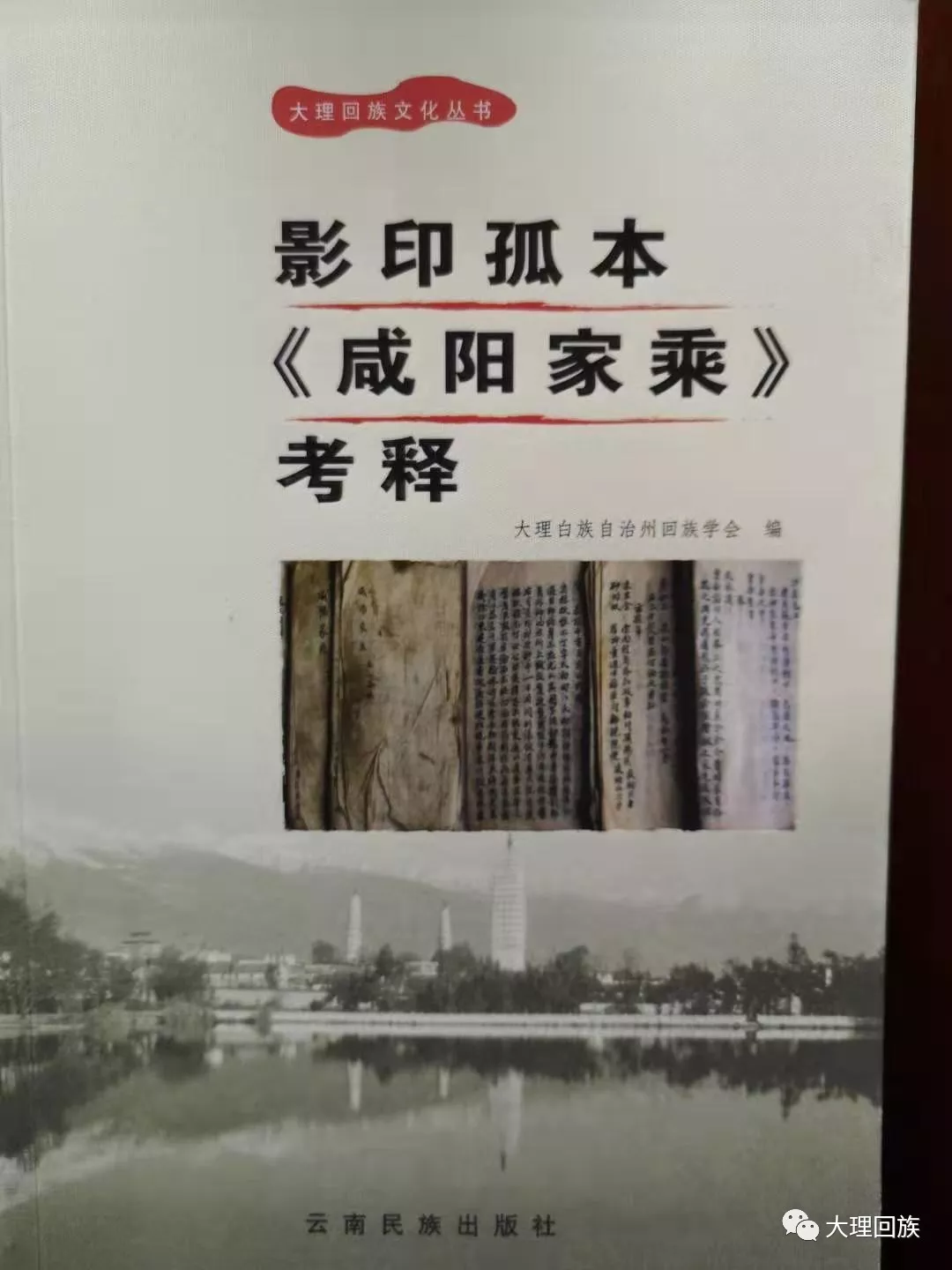
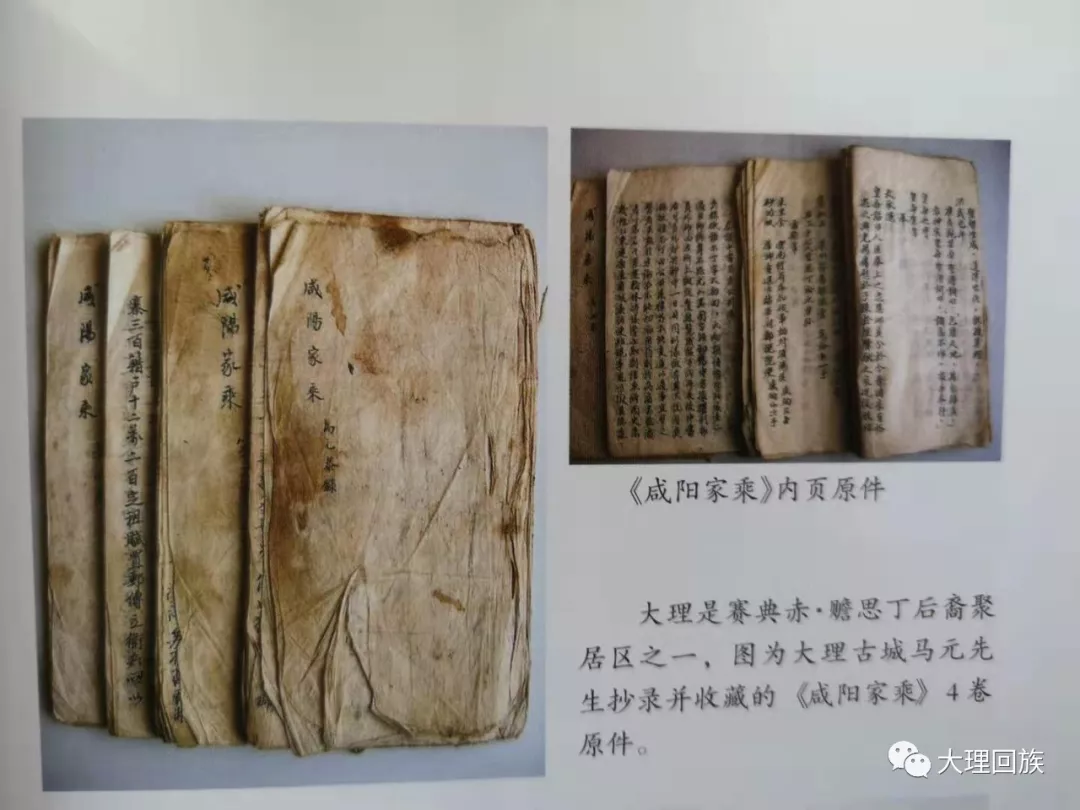
4 volumes; discovery location: Dali Ancient City; collection period: Republic of China era; collector: Mr. Ma Yuan (style name: Yibo), meticulously copied with a writing brush.
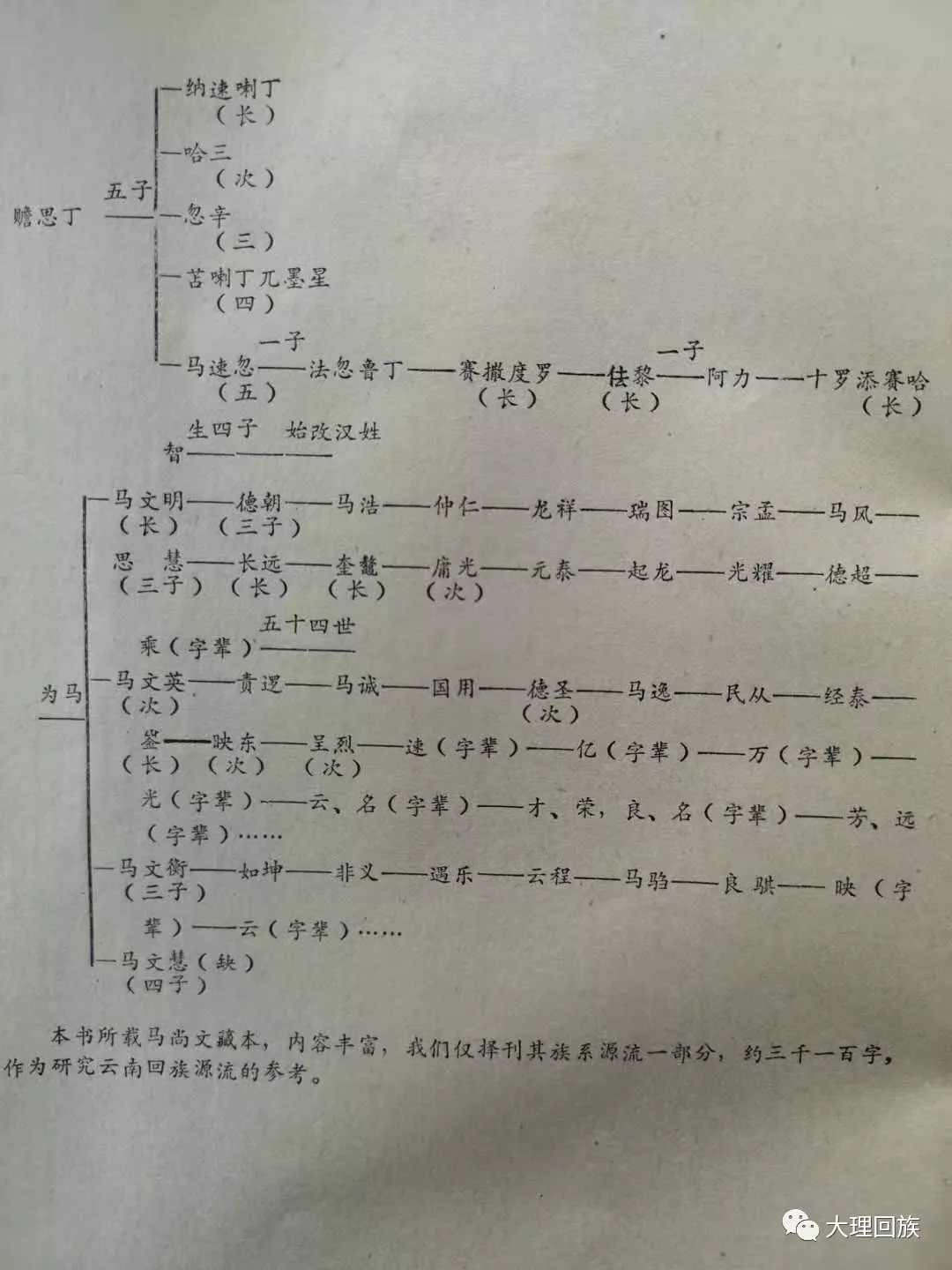
This genealogical record starts from the 26th descendant of the Prophet (Peace Be Upon Him), Suofeier, an Imperial Court Attendant King during the Song dynasty, extends to the 31st descendant, Sayyid Ajjal, in the Yuan dynasty, and continues through the 45th descendant, Ma Zhu, in the early Qing dynasty—compiled over eight generations. Beginning with the first ancestor, the Prophet Muhammad, it traces all the way down to the 47th Qing dynasty descendant, Ma Yingfang, spanning over 1,400 years. Its contents include the lineage from the first ancestor, the Prophet Muhammad, up to the 47th Qing descendant Ma Yingfang; the "General Preface to the Tombstone of Shams al-Din" and "Sayyid Ajjal's Achievements in Governing Yunnan" by the prominent Qing scholar Ma Zhu; eulogies by Emperor Taizong of the Tang and Emperor Taizu of the Ming; 6 imperial edicts from the first year of the Dade era of the Yuan dynasty; the prominent official posts held by Sai and his descendants; the settlement distribution of Sayyid Ajjal's 5 sons and 23 grandsons; and biographies of important figures. It serves as essential literature for studying Sayyid Ajjal, Yunnan history, Yunnan Hui history, and local gazetteers. Its origin is clear and its transmission well-documented; the Ming-dynasty Han scholar Shi Zhongbin recorded this genealogy in his authored book *Zhishen Lu*, demonstrating its authenticity and reliability.
After being organized, collated, and annotated by the author, the "Xianyang Family Genealogy" was included in the Dali Hui Culture Series by the Dali Prefecture Hui Association and officially published in July 2010.
2. "Ma Family Genealogy"
1 volume; discovery location: Dawei Geng, Weishan County; collection period: Republic of China era; collector: Mr. Ma Shangwen, handwritten manuscript with a writing brush. The cover reads: "In the 26th year of the Kangxi era of the Qing dynasty (1687, Dingmao year), the senior elder Ma Zhu of Yongchang took leave from the capital to return to Yunnan, gathering the clan to compile the genealogy." This volume was originally collected by Mr. Ma Yulin (style name: Shisheng) at the South Gate of Dali Ancient City, though it is unknown when it drifted to Weishan. The main contents of this volume include: *Tianfang Zhengxue* (Orthodox Islamic Learning), *Hui Jiao Hunyin Da Jin Tu* (Chart of Major Prohibitions in Islamic Marriage), *Tianfang Shijing Du Zan* (Readings and Praises of Islamic Classics), *Wushi Shi Guang* (Transmission Light of the Fiftieth Generation); lineage charts of the 55th–58th generations of descendants of Muhammad; charts of the ancestral origins of the lineage from Ibrahim to Isa; the Xianyang Family Lineage Record; genealogy lineages; the lineage of Ma Deling; "Sayyid Ajjal's Achievements in Governing Yunnan"; and supplementary notes. This family genealogy was discovered by faculty and students of the Chinese Department of the Yunnan Institute for Nationalities, who sent a photocopy to Mr. Lin Song at the Central University for Nationalities. Mr. Lin Song then passed it on to the Zheng He research expert Mr. Li Shihou, who included it in his edited book *Zheng He Family History Materials*, published by China Communications Press in 1985. Although both of the aforementioned genealogies originated from Dali Ancient City, their contents differ. The "Xianyang Family Genealogy" includes biographies of famous ministers such as Sayyid Ajjal, Nasrudin, Husain, Bayan, Manzilagatai, and Tuotuo, which the "Ma Family Genealogy" does not; conversely, the "Ma Family Genealogy" contains works like *Tianfang Zhengxue*, *Hui Jiao Hunyin Da Jin Tu*, *Tianfang Shijing Du Zan*, *Wushi Shi Guang*, and the origin charts of the lineage from Ibrahim to Isa, which are not included in the "Xianyang Family Genealogy."
3. "Sai Family General Clan Record", also known as "Sai Family Genealogy"
One volume; discovery location: Shiping County; compiled in the 28th year of the Qianlong era of the Qing dynasty (1763) by Sai Yu, the 14th descendant of Sayyid Ajjal, and proofread and supplemented in 1923 by Sai Hongbin; collector: Mr. Sha Rucheng (given name: Guozhen, commonly known by his style name) from Kunming. Main contents: Sayyid Ajjal Family Genealogy Treatise; an appendix on the True Sovereign of the White Emperor; the Sai Family Genealogy; appendices on historical imperial examination degrees and a collection of literary arts; imperial eulogies by Emperor Taizong of the Tang and the hundred-character holy title promulgated by Emperor Taizu of the Ming; the imperial eulogy "Sacrificial Text to Prince Xianyang Zhonghui Sai Gong" composed by Emperor Taizu of the Ming; the imperial eulogy "Sacrificial Text for the Imperial Edict Bestowing Honors on Yuan Pingzhang Political Affairs Official Sayyid Ajjal Shams al-Din" by Emperor Chengzu Wen; the "Sacrificial Text to Prince Xianyang Zhonghui Sai Gong" by the King of Annam; "Temple Inscription for Prince Xianyang" by Wang Chen; "Inscription for the Stele of the Newly Built Baogong Shrine" by Fan Chengxun; original couplets of the royal tomb; and "Record of the Expansion of the Front Pavilion and Rear Offering Hall before the Tomb of Prince Xianyang" by Jiang Yi. This was included in Mr. Li Shihou's book *Zheng He Family History Materials*, published by China Communications Press in 1985.
4. "Sayyid Ajjal Genealogy"
One volume; discovery location: Kunming; the genealogy preserved by Suofeier, the 26th descendant of the Prophet and Imperial Court Attendant King of the Song dynasty (titled *Western Origin Genealogy*), edited and compiled by the 31st descendant Sayyid Ajjal, revised by the 32nd descendant, Prince Zhongjian Husain, recompiled by the 33rd descendant, Prince Zhun Bayan, and revised and proofread four times during the Ming and Qing dynasties. During the Republic of China period, it was treasured in its original edition by Ma Dechao, the 53סט descendant and president of the Menghua (present-day Weishan) Association for Progress, and supplemented and published by the 53rd descendant Ma Yunhua. Collector: Mr. Sha Youxin, also known as Sha Rucheng (given name: Guozhen); "Youxin" is a name Mr. Sha adopted after the founding of the People's Republic of China.
Main contents: Ma Zhu's "General Preface to the Tombstone of Shams al-Din"; eulogies by Emperor Taizong of Tang, Emperor Shenzong of Song, and Emperor Taizu of Ming; Sayyid Ajjal's successive official positions and imperial bestowals; Ma Zhu's "Sayyid Ajjal's Achievements in Governing Yunnan"; supplementary examinations; the Xianyang Family Lineage Record; imperial edicts from successive dynasties; examinations of the western Yunnan branches; biographical sketches of Ma Zhu, Ma Dexin, and Ma Lianyuan; appendix: He Family Genealogy. This was included in *Zheng He Family History Materials* edited by Mr. Li Shihou, published by China Communications Press in 1985.
5. The Genealogy of Zheng He, Sixth-Generation Descendant of Sayyid Ajjal—*Zheng He Genealogy*
One volume; discovery location: Dongying, Beicheng, Yuxi; discovery date: 1936; collectors: Zheng Shaoming, Shaowen, Shaoen, and Shaoqing (four brothers).
In 1936, General Li Hongxiang of Yuxi advocated for the compilation of the county gazetteer and extensively solicited materials for it. Someone copied the *Zheng He Genealogy*—preserved by Zheng Shaoming and his brothers in Dongying Village, Yuxi—and presented it to Li Hongxiang. Recognizing its monumental significance, Li Hongxiang handed it over to the renowned scholar Yuan Jiagu. Yuan Jiagu entrusted it to his top disciple, Li Shihou, who authenticated it as an extant unique manuscript with tremendous historical value. Subsequently, Li Hongxiang, accompanied by Li Shihou, went to Dongying to borrow the original *Genealogy*. Upon authentication, the *Genealogy* was found to be backed with rice paper, printed with vermilion silk column border lines, and showed aged paper color, confirming it to be an artifact from the Ming dynasty.
Following meticulous textual research, Li Shihou authored the book *Textual Research and Commentary on the Zheng He Genealogy*, which was officially published in February 1937. After being photographed, the original *Genealogy* was stored in Wuhashan. In 1938, it was requested back to Yuxi by Zheng Shaoqing, and later borrowed by a man named Zheng Bai—who claimed to be a Zheng He descendant from Shadian—after which it went missing. Fortunately, Mr. Li Shihou retained a blueprint copy of the original *Genealogy*.
In June 2005, to commemorate the 600th anniversary of Zheng He's maritime voyages, Yunnan Chenguang Publishing House published the posthumous work of Mr. Li Shihou, *Facsimile Edition of the Original Zheng He Genealogy with Annotations*, making the blueprint originals and photographs preserved for over 60 years fully available to the public. The academic community was thrilled!
Main contents: The *Genealogy* begins recording from the first ancestor Zheng He, clarifying that Zheng He established his lineage by adopting the son of his elder brother Ma Wenming (named Zheng Ci), and continues all the way down to the 15th generation Zheng Yongsheng of the Qing dynasty, his sons the 16th generation Zheng Xingfu, Xinggui, and Xingwang, the 17th generation comprising the genealogy-preserving brothers Zheng Shaoming, and the 18th generation of contemporary brothers like Zheng Yunliang. This completely preserves the 600-year lineage of Zheng He's family, which is an extraordinary feat. At the same time, it provides a comprehensive interpretation of Zheng He's achievements and virtues, revealing two exclusive historical sources of great value. It represents yet another major discovery following the late-Qing discovery of the Mahazhi Stele in Yunnan.
Among the five Sayyid Ajjal family genealogies mentioned above, aside from Sai Yu's *Sai Family General Clan Record* and the *Zheng He Genealogy*, the *Xianyang Family Genealogy*, *Ma Family Genealogy*, and *Sayyid Ajjal Genealogy* share a common origin with divergent branches. They all stem from the *Western Origin Genealogy* preserved by Suofeier in the Song dynasty, compiled starting from Sayyid Ajjal in the Yuan dynasty, expanded and supplemented by Husain, Bayan, and Ma Zhu of the Ming and Qing dynasties, and finally revised by descendants after the Republic of China era. The difference lies in the varying focal points of their compiled contents, with each genealogy possessing its own unique characteristics. In addition, there is the Na Family Genealogy collected by Associate Professor Na Jufeng of Najaying; the He Family Genealogy of Xiaohui Village, Tonghai; the Sayyid Ajjal genealogy *Root Branches for a Hundred Generations* collected by Ma Saiheng of Dongying, Yuxi; and the *Sha Family Genealogy* of Dali. Whether due to not having seen the original manuscripts or because their contents are brief, they are not detailed here individually. Organizing and researching these genealogies holds great significance for our compilation of local gazetteers, village histories, and our ability to trace our sources and origins today.
Transcribed copy of the Ma Yunhua collection in Yongsheng view all
The Distribution and Organization of the Genealogy of Prince Xianyang Sayyid Ajjal: Yunnan Hui Genealogies, Sayyid Ajjal Descendants, and Family History
Abstract: This article organizes the key points of the original text "The Distribution and Organization of the Genealogy of Prince Xianyang Sayyid Ajjal: Yunnan Hui Genealogies, Sayyid Ajjal Descendants, and Family History," maintaining the original paragraph and image order. It is suitable for readers and researchers looking for long-tail keywords related to the Sayyid Ajjal genealogy, Yunnan Hui Muslims, and Hui clan records.
Ma Yingsheng
Genealogies are records documenting a single surname's lineage and the significant deeds of its figures. Using a specific format to record the lineage, biographical deeds, living environments, and local customs of a patrilineal blood-related family, they form an essential component of local gazetteers. The genealogy of Sayyid Ajjal records his family lineage along with the important figures and major events within his family. Hui Muslims entered Yunnan as early as the Tang and Song dynasties, but they primarily arrived during the Yuan dynasty alongside Sayyid Ajjal. His descendants spread throughout various regions of Yunnan and beyond the province, mainly comprising 16 surnames: Sha, Ma, Na, Hu, Qi, Jin, Mi, Sai, Ding, Sa, Ha, Su, Shan, Hu, Hai, and Bao. Over successive dynasties, several versions of family genealogies were compiled. A rough count of known versions circulating in Yunnan (excluding those outside the province) totals 9 versions. Below, we focus on introducing 5 versions that have been observed:
1. "Xianyang Family Genealogy", also known as "Dali Ma Surname Clan Lineage" or "Dali Ma Surname Genealogy"
4 volumes; discovery location: Dali Ancient City; collection period: Republic of China era; collector: Mr. Ma Yuan (style name: Yibo), meticulously copied with a writing brush.
This genealogical record starts from the 26th descendant of the Prophet (Peace Be Upon Him), Suofeier, an Imperial Court Attendant King during the Song dynasty, extends to the 31st descendant, Sayyid Ajjal, in the Yuan dynasty, and continues through the 45th descendant, Ma Zhu, in the early Qing dynasty—compiled over eight generations. Beginning with the first ancestor, the Prophet Muhammad, it traces all the way down to the 47th Qing dynasty descendant, Ma Yingfang, spanning over 1,400 years. Its contents include the lineage from the first ancestor, the Prophet Muhammad, up to the 47th Qing descendant Ma Yingfang; the "General Preface to the Tombstone of Shams al-Din" and "Sayyid Ajjal's Achievements in Governing Yunnan" by the prominent Qing scholar Ma Zhu; eulogies by Emperor Taizong of the Tang and Emperor Taizu of the Ming; 6 imperial edicts from the first year of the Dade era of the Yuan dynasty; the prominent official posts held by Sai and his descendants; the settlement distribution of Sayyid Ajjal's 5 sons and 23 grandsons; and biographies of important figures. It serves as essential literature for studying Sayyid Ajjal, Yunnan history, Yunnan Hui history, and local gazetteers. Its origin is clear and its transmission well-documented; the Ming-dynasty Han scholar Shi Zhongbin recorded this genealogy in his authored book *Zhishen Lu*, demonstrating its authenticity and reliability.
After being organized, collated, and annotated by the author, the "Xianyang Family Genealogy" was included in the Dali Hui Culture Series by the Dali Prefecture Hui Association and officially published in July 2010.
2. "Ma Family Genealogy"
1 volume; discovery location: Dawei Geng, Weishan County; collection period: Republic of China era; collector: Mr. Ma Shangwen, handwritten manuscript with a writing brush. The cover reads: "In the 26th year of the Kangxi era of the Qing dynasty (1687, Dingmao year), the senior elder Ma Zhu of Yongchang took leave from the capital to return to Yunnan, gathering the clan to compile the genealogy." This volume was originally collected by Mr. Ma Yulin (style name: Shisheng) at the South Gate of Dali Ancient City, though it is unknown when it drifted to Weishan. The main contents of this volume include: *Tianfang Zhengxue* (Orthodox Islamic Learning), *Hui Jiao Hunyin Da Jin Tu* (Chart of Major Prohibitions in Islamic Marriage), *Tianfang Shijing Du Zan* (Readings and Praises of Islamic Classics), *Wushi Shi Guang* (Transmission Light of the Fiftieth Generation); lineage charts of the 55th–58th generations of descendants of Muhammad; charts of the ancestral origins of the lineage from Ibrahim to Isa; the Xianyang Family Lineage Record; genealogy lineages; the lineage of Ma Deling; "Sayyid Ajjal's Achievements in Governing Yunnan"; and supplementary notes. This family genealogy was discovered by faculty and students of the Chinese Department of the Yunnan Institute for Nationalities, who sent a photocopy to Mr. Lin Song at the Central University for Nationalities. Mr. Lin Song then passed it on to the Zheng He research expert Mr. Li Shihou, who included it in his edited book *Zheng He Family History Materials*, published by China Communications Press in 1985. Although both of the aforementioned genealogies originated from Dali Ancient City, their contents differ. The "Xianyang Family Genealogy" includes biographies of famous ministers such as Sayyid Ajjal, Nasrudin, Husain, Bayan, Manzilagatai, and Tuotuo, which the "Ma Family Genealogy" does not; conversely, the "Ma Family Genealogy" contains works like *Tianfang Zhengxue*, *Hui Jiao Hunyin Da Jin Tu*, *Tianfang Shijing Du Zan*, *Wushi Shi Guang*, and the origin charts of the lineage from Ibrahim to Isa, which are not included in the "Xianyang Family Genealogy."
3. "Sai Family General Clan Record", also known as "Sai Family Genealogy"
One volume; discovery location: Shiping County; compiled in the 28th year of the Qianlong era of the Qing dynasty (1763) by Sai Yu, the 14th descendant of Sayyid Ajjal, and proofread and supplemented in 1923 by Sai Hongbin; collector: Mr. Sha Rucheng (given name: Guozhen, commonly known by his style name) from Kunming. Main contents: Sayyid Ajjal Family Genealogy Treatise; an appendix on the True Sovereign of the White Emperor; the Sai Family Genealogy; appendices on historical imperial examination degrees and a collection of literary arts; imperial eulogies by Emperor Taizong of the Tang and the hundred-character holy title promulgated by Emperor Taizu of the Ming; the imperial eulogy "Sacrificial Text to Prince Xianyang Zhonghui Sai Gong" composed by Emperor Taizu of the Ming; the imperial eulogy "Sacrificial Text for the Imperial Edict Bestowing Honors on Yuan Pingzhang Political Affairs Official Sayyid Ajjal Shams al-Din" by Emperor Chengzu Wen; the "Sacrificial Text to Prince Xianyang Zhonghui Sai Gong" by the King of Annam; "Temple Inscription for Prince Xianyang" by Wang Chen; "Inscription for the Stele of the Newly Built Baogong Shrine" by Fan Chengxun; original couplets of the royal tomb; and "Record of the Expansion of the Front Pavilion and Rear Offering Hall before the Tomb of Prince Xianyang" by Jiang Yi. This was included in Mr. Li Shihou's book *Zheng He Family History Materials*, published by China Communications Press in 1985.
4. "Sayyid Ajjal Genealogy"
One volume; discovery location: Kunming; the genealogy preserved by Suofeier, the 26th descendant of the Prophet and Imperial Court Attendant King of the Song dynasty (titled *Western Origin Genealogy*), edited and compiled by the 31st descendant Sayyid Ajjal, revised by the 32nd descendant, Prince Zhongjian Husain, recompiled by the 33rd descendant, Prince Zhun Bayan, and revised and proofread four times during the Ming and Qing dynasties. During the Republic of China period, it was treasured in its original edition by Ma Dechao, the 53סט descendant and president of the Menghua (present-day Weishan) Association for Progress, and supplemented and published by the 53rd descendant Ma Yunhua. Collector: Mr. Sha Youxin, also known as Sha Rucheng (given name: Guozhen); "Youxin" is a name Mr. Sha adopted after the founding of the People's Republic of China.
Main contents: Ma Zhu's "General Preface to the Tombstone of Shams al-Din"; eulogies by Emperor Taizong of Tang, Emperor Shenzong of Song, and Emperor Taizu of Ming; Sayyid Ajjal's successive official positions and imperial bestowals; Ma Zhu's "Sayyid Ajjal's Achievements in Governing Yunnan"; supplementary examinations; the Xianyang Family Lineage Record; imperial edicts from successive dynasties; examinations of the western Yunnan branches; biographical sketches of Ma Zhu, Ma Dexin, and Ma Lianyuan; appendix: He Family Genealogy. This was included in *Zheng He Family History Materials* edited by Mr. Li Shihou, published by China Communications Press in 1985.
5. The Genealogy of Zheng He, Sixth-Generation Descendant of Sayyid Ajjal—*Zheng He Genealogy*
One volume; discovery location: Dongying, Beicheng, Yuxi; discovery date: 1936; collectors: Zheng Shaoming, Shaowen, Shaoen, and Shaoqing (four brothers).
In 1936, General Li Hongxiang of Yuxi advocated for the compilation of the county gazetteer and extensively solicited materials for it. Someone copied the *Zheng He Genealogy*—preserved by Zheng Shaoming and his brothers in Dongying Village, Yuxi—and presented it to Li Hongxiang. Recognizing its monumental significance, Li Hongxiang handed it over to the renowned scholar Yuan Jiagu. Yuan Jiagu entrusted it to his top disciple, Li Shihou, who authenticated it as an extant unique manuscript with tremendous historical value. Subsequently, Li Hongxiang, accompanied by Li Shihou, went to Dongying to borrow the original *Genealogy*. Upon authentication, the *Genealogy* was found to be backed with rice paper, printed with vermilion silk column border lines, and showed aged paper color, confirming it to be an artifact from the Ming dynasty.
Following meticulous textual research, Li Shihou authored the book *Textual Research and Commentary on the Zheng He Genealogy*, which was officially published in February 1937. After being photographed, the original *Genealogy* was stored in Wuhashan. In 1938, it was requested back to Yuxi by Zheng Shaoqing, and later borrowed by a man named Zheng Bai—who claimed to be a Zheng He descendant from Shadian—after which it went missing. Fortunately, Mr. Li Shihou retained a blueprint copy of the original *Genealogy*.
In June 2005, to commemorate the 600th anniversary of Zheng He's maritime voyages, Yunnan Chenguang Publishing House published the posthumous work of Mr. Li Shihou, *Facsimile Edition of the Original Zheng He Genealogy with Annotations*, making the blueprint originals and photographs preserved for over 60 years fully available to the public. The academic community was thrilled!
Main contents: The *Genealogy* begins recording from the first ancestor Zheng He, clarifying that Zheng He established his lineage by adopting the son of his elder brother Ma Wenming (named Zheng Ci), and continues all the way down to the 15th generation Zheng Yongsheng of the Qing dynasty, his sons the 16th generation Zheng Xingfu, Xinggui, and Xingwang, the 17th generation comprising the genealogy-preserving brothers Zheng Shaoming, and the 18th generation of contemporary brothers like Zheng Yunliang. This completely preserves the 600-year lineage of Zheng He's family, which is an extraordinary feat. At the same time, it provides a comprehensive interpretation of Zheng He's achievements and virtues, revealing two exclusive historical sources of great value. It represents yet another major discovery following the late-Qing discovery of the Mahazhi Stele in Yunnan.
Among the five Sayyid Ajjal family genealogies mentioned above, aside from Sai Yu's *Sai Family General Clan Record* and the *Zheng He Genealogy*, the *Xianyang Family Genealogy*, *Ma Family Genealogy*, and *Sayyid Ajjal Genealogy* share a common origin with divergent branches. They all stem from the *Western Origin Genealogy* preserved by Suofeier in the Song dynasty, compiled starting from Sayyid Ajjal in the Yuan dynasty, expanded and supplemented by Husain, Bayan, and Ma Zhu of the Ming and Qing dynasties, and finally revised by descendants after the Republic of China era. The difference lies in the varying focal points of their compiled contents, with each genealogy possessing its own unique characteristics. In addition, there is the Na Family Genealogy collected by Associate Professor Na Jufeng of Najaying; the He Family Genealogy of Xiaohui Village, Tonghai; the Sayyid Ajjal genealogy *Root Branches for a Hundred Generations* collected by Ma Saiheng of Dongying, Yuxi; and the *Sha Family Genealogy* of Dali. Whether due to not having seen the original manuscripts or because their contents are brief, they are not detailed here individually. Organizing and researching these genealogies holds great significance for our compilation of local gazetteers, village histories, and our ability to trace our sources and origins today.
Transcribed copy of the Ma Yunhua collection in Yongsheng view all
[Internet Repost]
The Distribution and Organization of the Genealogy of Prince Xianyang Sayyid Ajjal: Yunnan Hui Genealogies, Sayyid Ajjal Descendants, and Family History
Abstract: This article organizes the key points of the original text "The Distribution and Organization of the Genealogy of Prince Xianyang Sayyid Ajjal: Yunnan Hui Genealogies, Sayyid Ajjal Descendants, and Family History," maintaining the original paragraph and image order. It is suitable for readers and researchers looking for long-tail keywords related to the Sayyid Ajjal genealogy, Yunnan Hui Muslims, and Hui clan records.
Ma Yingsheng
Genealogies are records documenting a single surname's lineage and the significant deeds of its figures. Using a specific format to record the lineage, biographical deeds, living environments, and local customs of a patrilineal blood-related family, they form an essential component of local gazetteers. The genealogy of Sayyid Ajjal records his family lineage along with the important figures and major events within his family. Hui Muslims entered Yunnan as early as the Tang and Song dynasties, but they primarily arrived during the Yuan dynasty alongside Sayyid Ajjal. His descendants spread throughout various regions of Yunnan and beyond the province, mainly comprising 16 surnames: Sha, Ma, Na, Hu, Qi, Jin, Mi, Sai, Ding, Sa, Ha, Su, Shan, Hu, Hai, and Bao. Over successive dynasties, several versions of family genealogies were compiled. A rough count of known versions circulating in Yunnan (excluding those outside the province) totals 9 versions. Below, we focus on introducing 5 versions that have been observed:
1. "Xianyang Family Genealogy", also known as "Dali Ma Surname Clan Lineage" or "Dali Ma Surname Genealogy"
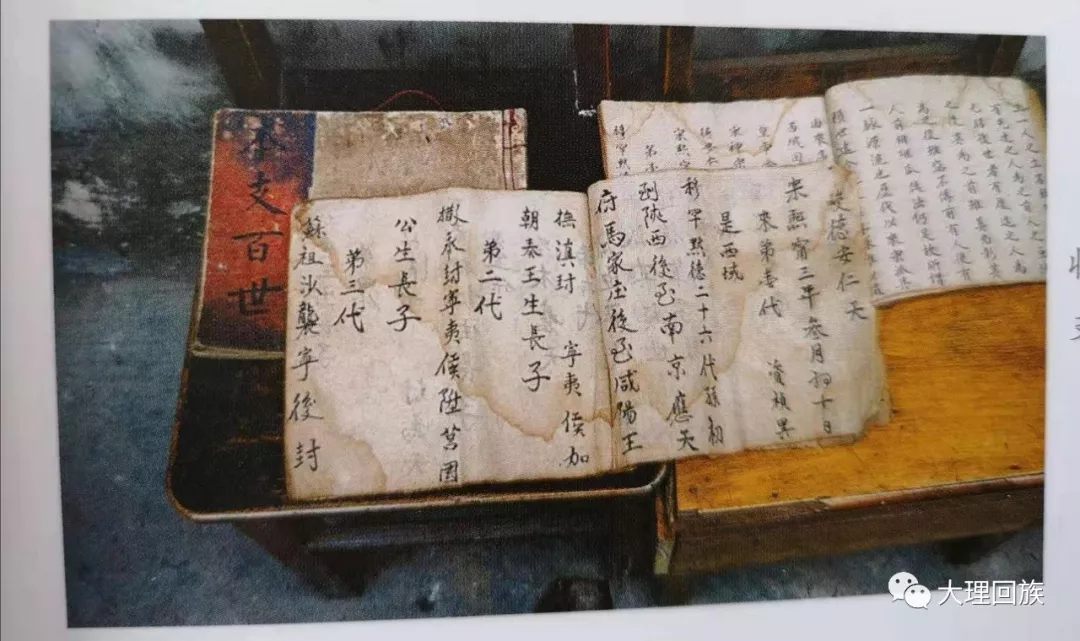
4 volumes; discovery location: Dali Ancient City; collection period: Republic of China era; collector: Mr. Ma Yuan (style name: Yibo), meticulously copied with a writing brush.
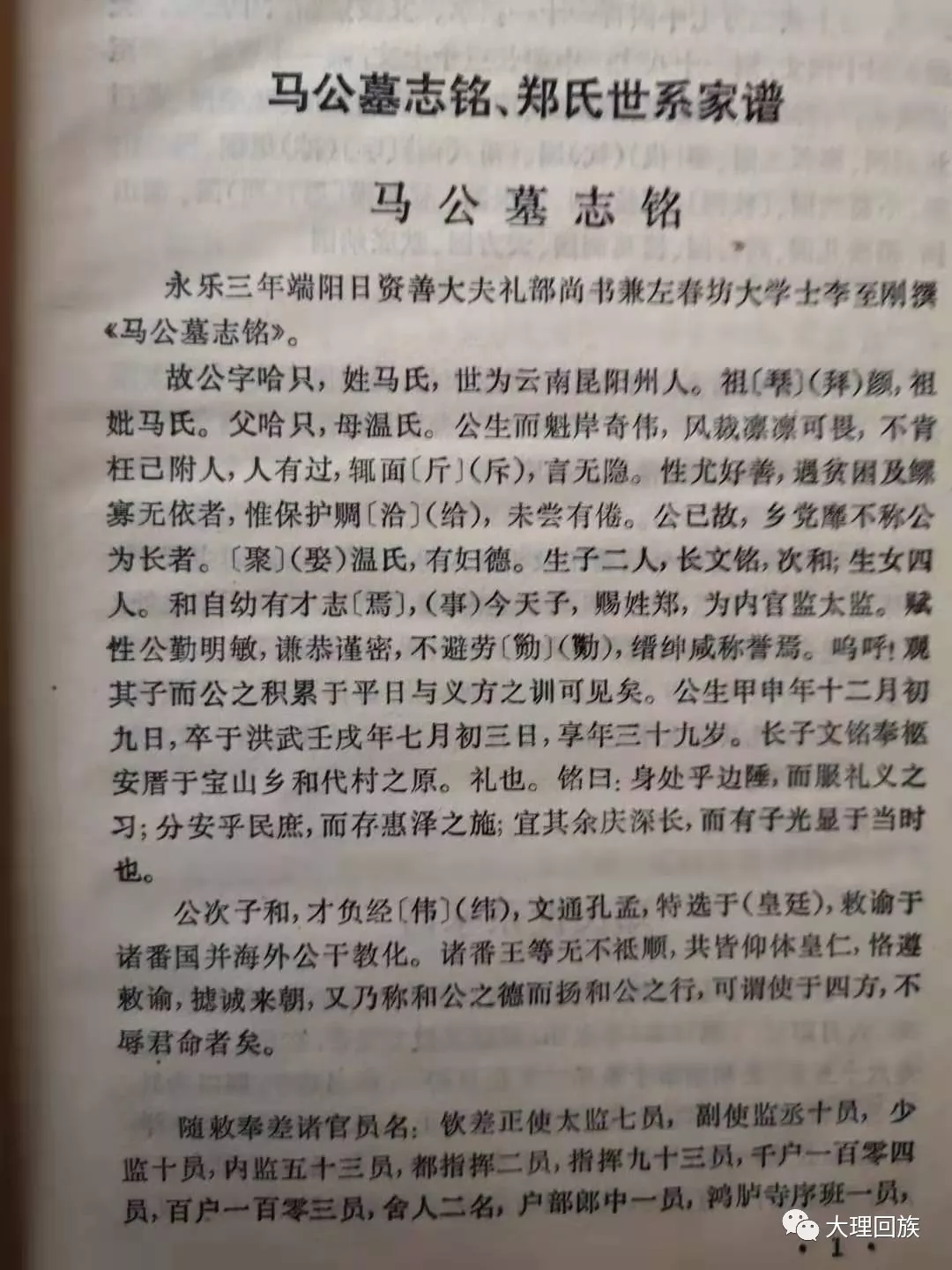
This genealogical record starts from the 26th descendant of the Prophet (Peace Be Upon Him), Suofeier, an Imperial Court Attendant King during the Song dynasty, extends to the 31st descendant, Sayyid Ajjal, in the Yuan dynasty, and continues through the 45th descendant, Ma Zhu, in the early Qing dynasty—compiled over eight generations. Beginning with the first ancestor, the Prophet Muhammad, it traces all the way down to the 47th Qing dynasty descendant, Ma Yingfang, spanning over 1,400 years. Its contents include the lineage from the first ancestor, the Prophet Muhammad, up to the 47th Qing descendant Ma Yingfang; the "General Preface to the Tombstone of Shams al-Din" and "Sayyid Ajjal's Achievements in Governing Yunnan" by the prominent Qing scholar Ma Zhu; eulogies by Emperor Taizong of the Tang and Emperor Taizu of the Ming; 6 imperial edicts from the first year of the Dade era of the Yuan dynasty; the prominent official posts held by Sai and his descendants; the settlement distribution of Sayyid Ajjal's 5 sons and 23 grandsons; and biographies of important figures. It serves as essential literature for studying Sayyid Ajjal, Yunnan history, Yunnan Hui history, and local gazetteers. Its origin is clear and its transmission well-documented; the Ming-dynasty Han scholar Shi Zhongbin recorded this genealogy in his authored book *Zhishen Lu*, demonstrating its authenticity and reliability.
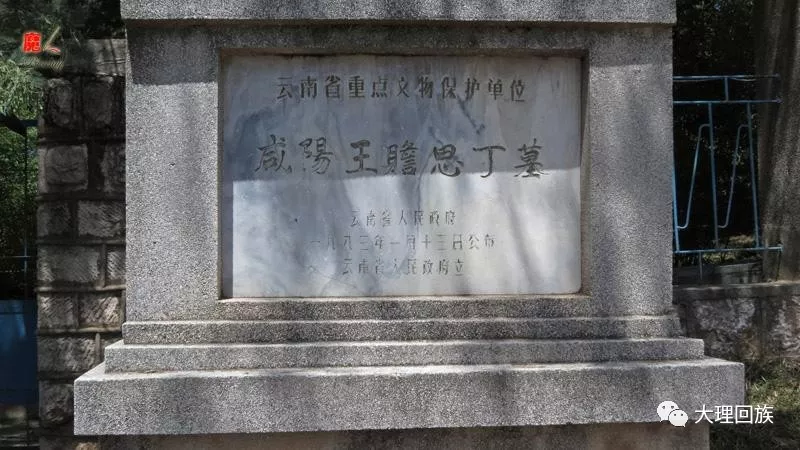
After being organized, collated, and annotated by the author, the "Xianyang Family Genealogy" was included in the Dali Hui Culture Series by the Dali Prefecture Hui Association and officially published in July 2010.
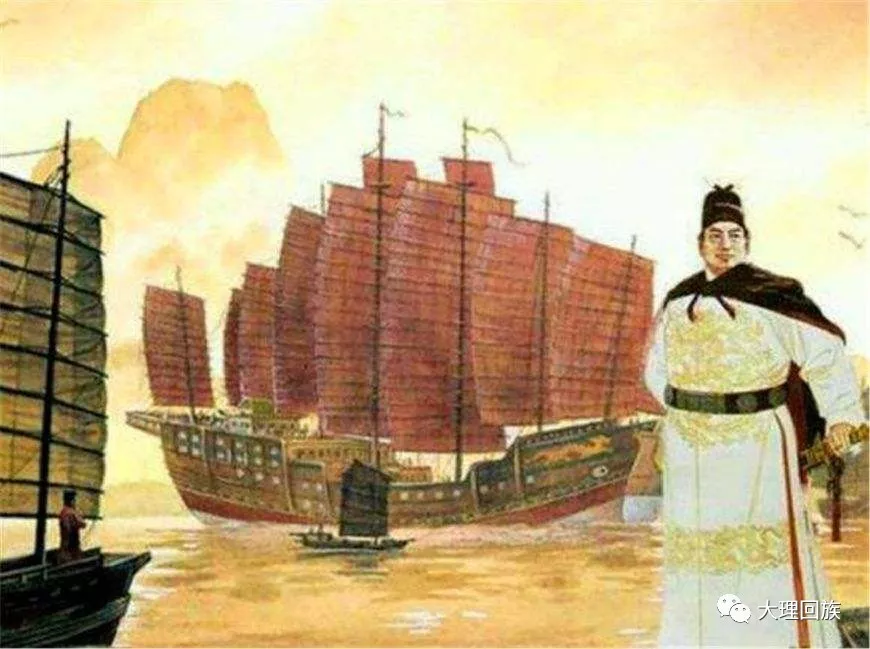
2. "Ma Family Genealogy"
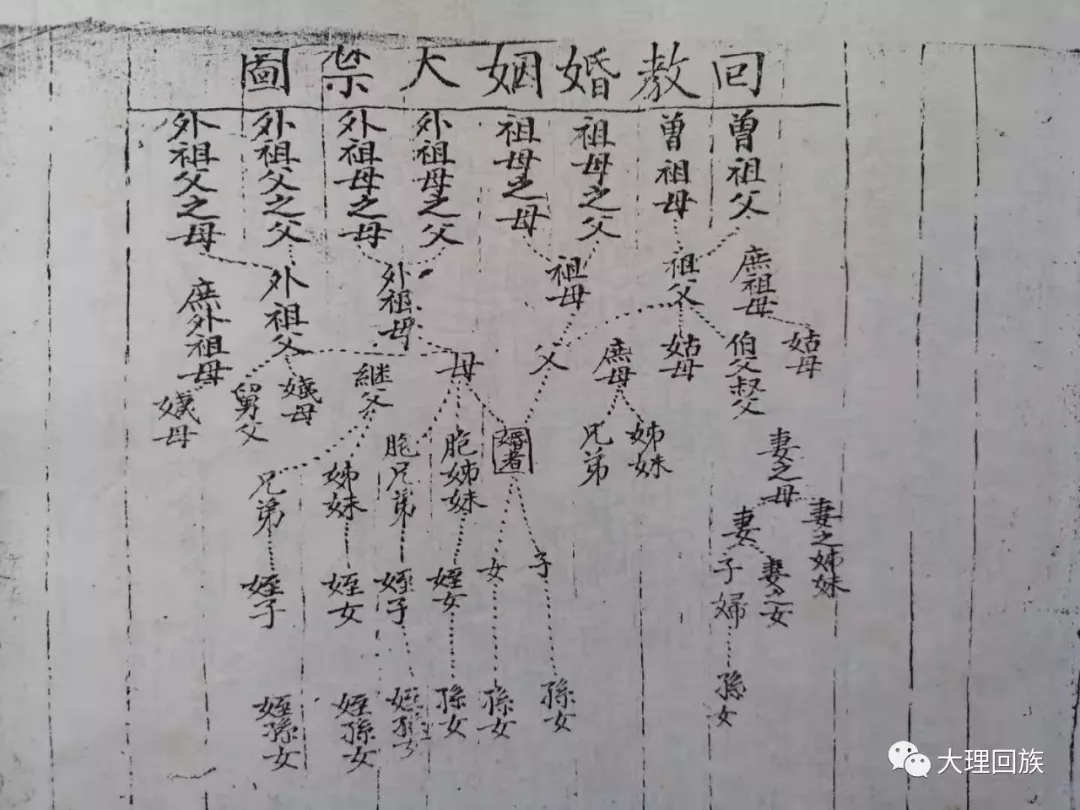
1 volume; discovery location: Dawei Geng, Weishan County; collection period: Republic of China era; collector: Mr. Ma Shangwen, handwritten manuscript with a writing brush. The cover reads: "In the 26th year of the Kangxi era of the Qing dynasty (1687, Dingmao year), the senior elder Ma Zhu of Yongchang took leave from the capital to return to Yunnan, gathering the clan to compile the genealogy." This volume was originally collected by Mr. Ma Yulin (style name: Shisheng) at the South Gate of Dali Ancient City, though it is unknown when it drifted to Weishan. The main contents of this volume include: *Tianfang Zhengxue* (Orthodox Islamic Learning), *Hui Jiao Hunyin Da Jin Tu* (Chart of Major Prohibitions in Islamic Marriage), *Tianfang Shijing Du Zan* (Readings and Praises of Islamic Classics), *Wushi Shi Guang* (Transmission Light of the Fiftieth Generation); lineage charts of the 55th–58th generations of descendants of Muhammad; charts of the ancestral origins of the lineage from Ibrahim to Isa; the Xianyang Family Lineage Record; genealogy lineages; the lineage of Ma Deling; "Sayyid Ajjal's Achievements in Governing Yunnan"; and supplementary notes. This family genealogy was discovered by faculty and students of the Chinese Department of the Yunnan Institute for Nationalities, who sent a photocopy to Mr. Lin Song at the Central University for Nationalities. Mr. Lin Song then passed it on to the Zheng He research expert Mr. Li Shihou, who included it in his edited book *Zheng He Family History Materials*, published by China Communications Press in 1985. Although both of the aforementioned genealogies originated from Dali Ancient City, their contents differ. The "Xianyang Family Genealogy" includes biographies of famous ministers such as Sayyid Ajjal, Nasrudin, Husain, Bayan, Manzilagatai, and Tuotuo, which the "Ma Family Genealogy" does not; conversely, the "Ma Family Genealogy" contains works like *Tianfang Zhengxue*, *Hui Jiao Hunyin Da Jin Tu*, *Tianfang Shijing Du Zan*, *Wushi Shi Guang*, and the origin charts of the lineage from Ibrahim to Isa, which are not included in the "Xianyang Family Genealogy."
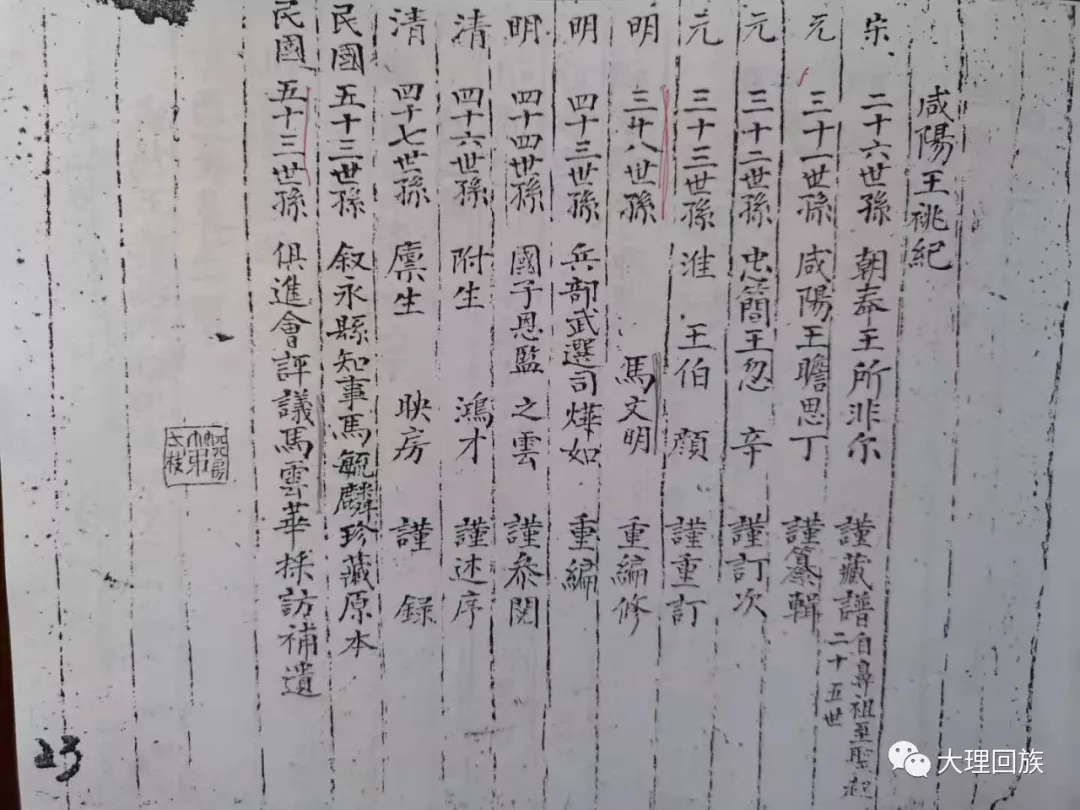
3. "Sai Family General Clan Record", also known as "Sai Family Genealogy"
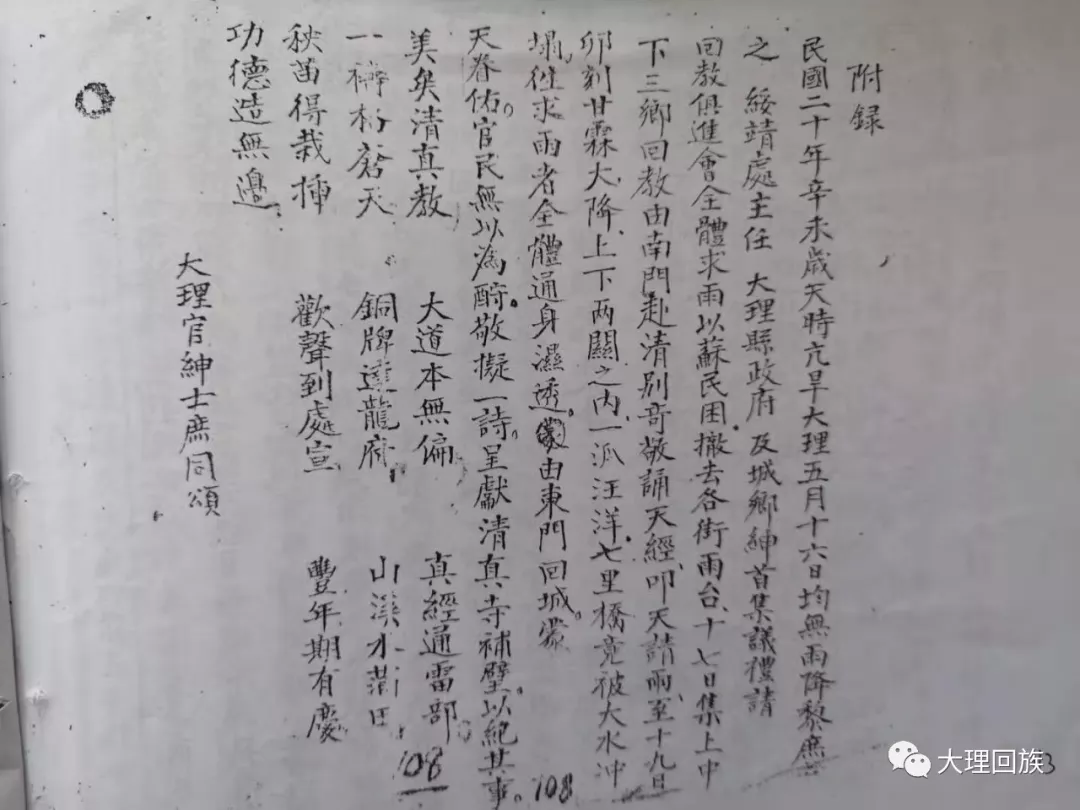
One volume; discovery location: Shiping County; compiled in the 28th year of the Qianlong era of the Qing dynasty (1763) by Sai Yu, the 14th descendant of Sayyid Ajjal, and proofread and supplemented in 1923 by Sai Hongbin; collector: Mr. Sha Rucheng (given name: Guozhen, commonly known by his style name) from Kunming. Main contents: Sayyid Ajjal Family Genealogy Treatise; an appendix on the True Sovereign of the White Emperor; the Sai Family Genealogy; appendices on historical imperial examination degrees and a collection of literary arts; imperial eulogies by Emperor Taizong of the Tang and the hundred-character holy title promulgated by Emperor Taizu of the Ming; the imperial eulogy "Sacrificial Text to Prince Xianyang Zhonghui Sai Gong" composed by Emperor Taizu of the Ming; the imperial eulogy "Sacrificial Text for the Imperial Edict Bestowing Honors on Yuan Pingzhang Political Affairs Official Sayyid Ajjal Shams al-Din" by Emperor Chengzu Wen; the "Sacrificial Text to Prince Xianyang Zhonghui Sai Gong" by the King of Annam; "Temple Inscription for Prince Xianyang" by Wang Chen; "Inscription for the Stele of the Newly Built Baogong Shrine" by Fan Chengxun; original couplets of the royal tomb; and "Record of the Expansion of the Front Pavilion and Rear Offering Hall before the Tomb of Prince Xianyang" by Jiang Yi. This was included in Mr. Li Shihou's book *Zheng He Family History Materials*, published by China Communications Press in 1985.
4. "Sayyid Ajjal Genealogy"
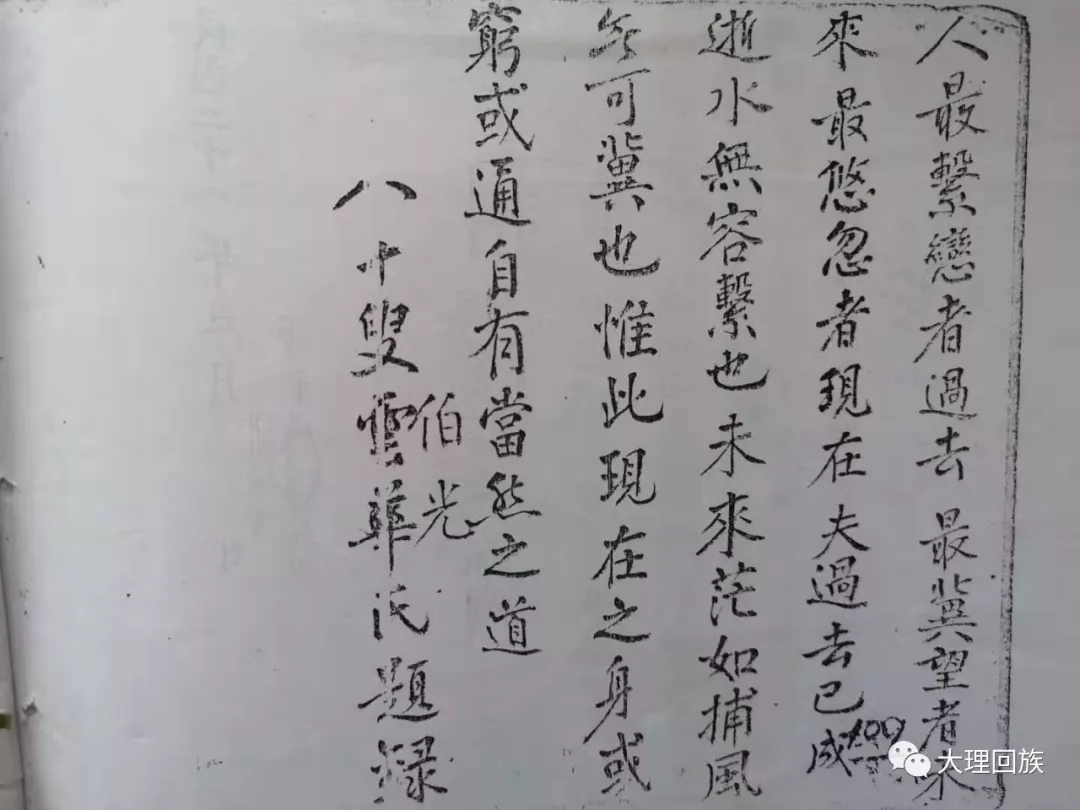
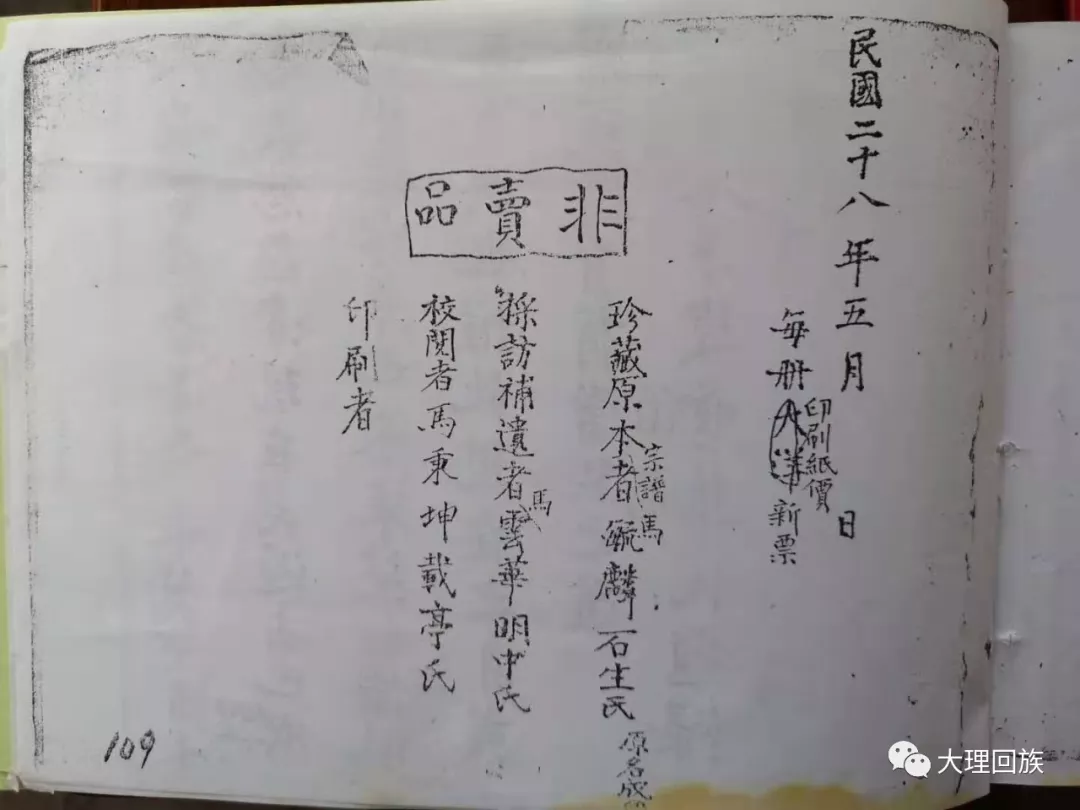
One volume; discovery location: Kunming; the genealogy preserved by Suofeier, the 26th descendant of the Prophet and Imperial Court Attendant King of the Song dynasty (titled *Western Origin Genealogy*), edited and compiled by the 31st descendant Sayyid Ajjal, revised by the 32nd descendant, Prince Zhongjian Husain, recompiled by the 33rd descendant, Prince Zhun Bayan, and revised and proofread four times during the Ming and Qing dynasties. During the Republic of China period, it was treasured in its original edition by Ma Dechao, the 53סט descendant and president of the Menghua (present-day Weishan) Association for Progress, and supplemented and published by the 53rd descendant Ma Yunhua. Collector: Mr. Sha Youxin, also known as Sha Rucheng (given name: Guozhen); "Youxin" is a name Mr. Sha adopted after the founding of the People's Republic of China.
Main contents: Ma Zhu's "General Preface to the Tombstone of Shams al-Din"; eulogies by Emperor Taizong of Tang, Emperor Shenzong of Song, and Emperor Taizu of Ming; Sayyid Ajjal's successive official positions and imperial bestowals; Ma Zhu's "Sayyid Ajjal's Achievements in Governing Yunnan"; supplementary examinations; the Xianyang Family Lineage Record; imperial edicts from successive dynasties; examinations of the western Yunnan branches; biographical sketches of Ma Zhu, Ma Dexin, and Ma Lianyuan; appendix: He Family Genealogy. This was included in *Zheng He Family History Materials* edited by Mr. Li Shihou, published by China Communications Press in 1985.
5. The Genealogy of Zheng He, Sixth-Generation Descendant of Sayyid Ajjal—*Zheng He Genealogy*
One volume; discovery location: Dongying, Beicheng, Yuxi; discovery date: 1936; collectors: Zheng Shaoming, Shaowen, Shaoen, and Shaoqing (four brothers).
In 1936, General Li Hongxiang of Yuxi advocated for the compilation of the county gazetteer and extensively solicited materials for it. Someone copied the *Zheng He Genealogy*—preserved by Zheng Shaoming and his brothers in Dongying Village, Yuxi—and presented it to Li Hongxiang. Recognizing its monumental significance, Li Hongxiang handed it over to the renowned scholar Yuan Jiagu. Yuan Jiagu entrusted it to his top disciple, Li Shihou, who authenticated it as an extant unique manuscript with tremendous historical value. Subsequently, Li Hongxiang, accompanied by Li Shihou, went to Dongying to borrow the original *Genealogy*. Upon authentication, the *Genealogy* was found to be backed with rice paper, printed with vermilion silk column border lines, and showed aged paper color, confirming it to be an artifact from the Ming dynasty.
Following meticulous textual research, Li Shihou authored the book *Textual Research and Commentary on the Zheng He Genealogy*, which was officially published in February 1937. After being photographed, the original *Genealogy* was stored in Wuhashan. In 1938, it was requested back to Yuxi by Zheng Shaoqing, and later borrowed by a man named Zheng Bai—who claimed to be a Zheng He descendant from Shadian—after which it went missing. Fortunately, Mr. Li Shihou retained a blueprint copy of the original *Genealogy*.
In June 2005, to commemorate the 600th anniversary of Zheng He's maritime voyages, Yunnan Chenguang Publishing House published the posthumous work of Mr. Li Shihou, *Facsimile Edition of the Original Zheng He Genealogy with Annotations*, making the blueprint originals and photographs preserved for over 60 years fully available to the public. The academic community was thrilled!
Main contents: The *Genealogy* begins recording from the first ancestor Zheng He, clarifying that Zheng He established his lineage by adopting the son of his elder brother Ma Wenming (named Zheng Ci), and continues all the way down to the 15th generation Zheng Yongsheng of the Qing dynasty, his sons the 16th generation Zheng Xingfu, Xinggui, and Xingwang, the 17th generation comprising the genealogy-preserving brothers Zheng Shaoming, and the 18th generation of contemporary brothers like Zheng Yunliang. This completely preserves the 600-year lineage of Zheng He's family, which is an extraordinary feat. At the same time, it provides a comprehensive interpretation of Zheng He's achievements and virtues, revealing two exclusive historical sources of great value. It represents yet another major discovery following the late-Qing discovery of the Mahazhi Stele in Yunnan.
Among the five Sayyid Ajjal family genealogies mentioned above, aside from Sai Yu's *Sai Family General Clan Record* and the *Zheng He Genealogy*, the *Xianyang Family Genealogy*, *Ma Family Genealogy*, and *Sayyid Ajjal Genealogy* share a common origin with divergent branches. They all stem from the *Western Origin Genealogy* preserved by Suofeier in the Song dynasty, compiled starting from Sayyid Ajjal in the Yuan dynasty, expanded and supplemented by Husain, Bayan, and Ma Zhu of the Ming and Qing dynasties, and finally revised by descendants after the Republic of China era. The difference lies in the varying focal points of their compiled contents, with each genealogy possessing its own unique characteristics. In addition, there is the Na Family Genealogy collected by Associate Professor Na Jufeng of Najaying; the He Family Genealogy of Xiaohui Village, Tonghai; the Sayyid Ajjal genealogy *Root Branches for a Hundred Generations* collected by Ma Saiheng of Dongying, Yuxi; and the *Sha Family Genealogy* of Dali. Whether due to not having seen the original manuscripts or because their contents are brief, they are not detailed here individually. Organizing and researching these genealogies holds great significance for our compilation of local gazetteers, village histories, and our ability to trace our sources and origins today.
Transcribed copy of the Ma Yunhua collection in Yongsheng
The Distribution and Organization of the Genealogy of Prince Xianyang Sayyid Ajjal: Yunnan Hui Genealogies, Sayyid Ajjal Descendants, and Family History
Abstract: This article organizes the key points of the original text "The Distribution and Organization of the Genealogy of Prince Xianyang Sayyid Ajjal: Yunnan Hui Genealogies, Sayyid Ajjal Descendants, and Family History," maintaining the original paragraph and image order. It is suitable for readers and researchers looking for long-tail keywords related to the Sayyid Ajjal genealogy, Yunnan Hui Muslims, and Hui clan records.
Ma Yingsheng
Genealogies are records documenting a single surname's lineage and the significant deeds of its figures. Using a specific format to record the lineage, biographical deeds, living environments, and local customs of a patrilineal blood-related family, they form an essential component of local gazetteers. The genealogy of Sayyid Ajjal records his family lineage along with the important figures and major events within his family. Hui Muslims entered Yunnan as early as the Tang and Song dynasties, but they primarily arrived during the Yuan dynasty alongside Sayyid Ajjal. His descendants spread throughout various regions of Yunnan and beyond the province, mainly comprising 16 surnames: Sha, Ma, Na, Hu, Qi, Jin, Mi, Sai, Ding, Sa, Ha, Su, Shan, Hu, Hai, and Bao. Over successive dynasties, several versions of family genealogies were compiled. A rough count of known versions circulating in Yunnan (excluding those outside the province) totals 9 versions. Below, we focus on introducing 5 versions that have been observed:
1. "Xianyang Family Genealogy", also known as "Dali Ma Surname Clan Lineage" or "Dali Ma Surname Genealogy"
4 volumes; discovery location: Dali Ancient City; collection period: Republic of China era; collector: Mr. Ma Yuan (style name: Yibo), meticulously copied with a writing brush.
This genealogical record starts from the 26th descendant of the Prophet (Peace Be Upon Him), Suofeier, an Imperial Court Attendant King during the Song dynasty, extends to the 31st descendant, Sayyid Ajjal, in the Yuan dynasty, and continues through the 45th descendant, Ma Zhu, in the early Qing dynasty—compiled over eight generations. Beginning with the first ancestor, the Prophet Muhammad, it traces all the way down to the 47th Qing dynasty descendant, Ma Yingfang, spanning over 1,400 years. Its contents include the lineage from the first ancestor, the Prophet Muhammad, up to the 47th Qing descendant Ma Yingfang; the "General Preface to the Tombstone of Shams al-Din" and "Sayyid Ajjal's Achievements in Governing Yunnan" by the prominent Qing scholar Ma Zhu; eulogies by Emperor Taizong of the Tang and Emperor Taizu of the Ming; 6 imperial edicts from the first year of the Dade era of the Yuan dynasty; the prominent official posts held by Sai and his descendants; the settlement distribution of Sayyid Ajjal's 5 sons and 23 grandsons; and biographies of important figures. It serves as essential literature for studying Sayyid Ajjal, Yunnan history, Yunnan Hui history, and local gazetteers. Its origin is clear and its transmission well-documented; the Ming-dynasty Han scholar Shi Zhongbin recorded this genealogy in his authored book *Zhishen Lu*, demonstrating its authenticity and reliability.
After being organized, collated, and annotated by the author, the "Xianyang Family Genealogy" was included in the Dali Hui Culture Series by the Dali Prefecture Hui Association and officially published in July 2010.
2. "Ma Family Genealogy"
1 volume; discovery location: Dawei Geng, Weishan County; collection period: Republic of China era; collector: Mr. Ma Shangwen, handwritten manuscript with a writing brush. The cover reads: "In the 26th year of the Kangxi era of the Qing dynasty (1687, Dingmao year), the senior elder Ma Zhu of Yongchang took leave from the capital to return to Yunnan, gathering the clan to compile the genealogy." This volume was originally collected by Mr. Ma Yulin (style name: Shisheng) at the South Gate of Dali Ancient City, though it is unknown when it drifted to Weishan. The main contents of this volume include: *Tianfang Zhengxue* (Orthodox Islamic Learning), *Hui Jiao Hunyin Da Jin Tu* (Chart of Major Prohibitions in Islamic Marriage), *Tianfang Shijing Du Zan* (Readings and Praises of Islamic Classics), *Wushi Shi Guang* (Transmission Light of the Fiftieth Generation); lineage charts of the 55th–58th generations of descendants of Muhammad; charts of the ancestral origins of the lineage from Ibrahim to Isa; the Xianyang Family Lineage Record; genealogy lineages; the lineage of Ma Deling; "Sayyid Ajjal's Achievements in Governing Yunnan"; and supplementary notes. This family genealogy was discovered by faculty and students of the Chinese Department of the Yunnan Institute for Nationalities, who sent a photocopy to Mr. Lin Song at the Central University for Nationalities. Mr. Lin Song then passed it on to the Zheng He research expert Mr. Li Shihou, who included it in his edited book *Zheng He Family History Materials*, published by China Communications Press in 1985. Although both of the aforementioned genealogies originated from Dali Ancient City, their contents differ. The "Xianyang Family Genealogy" includes biographies of famous ministers such as Sayyid Ajjal, Nasrudin, Husain, Bayan, Manzilagatai, and Tuotuo, which the "Ma Family Genealogy" does not; conversely, the "Ma Family Genealogy" contains works like *Tianfang Zhengxue*, *Hui Jiao Hunyin Da Jin Tu*, *Tianfang Shijing Du Zan*, *Wushi Shi Guang*, and the origin charts of the lineage from Ibrahim to Isa, which are not included in the "Xianyang Family Genealogy."
3. "Sai Family General Clan Record", also known as "Sai Family Genealogy"
One volume; discovery location: Shiping County; compiled in the 28th year of the Qianlong era of the Qing dynasty (1763) by Sai Yu, the 14th descendant of Sayyid Ajjal, and proofread and supplemented in 1923 by Sai Hongbin; collector: Mr. Sha Rucheng (given name: Guozhen, commonly known by his style name) from Kunming. Main contents: Sayyid Ajjal Family Genealogy Treatise; an appendix on the True Sovereign of the White Emperor; the Sai Family Genealogy; appendices on historical imperial examination degrees and a collection of literary arts; imperial eulogies by Emperor Taizong of the Tang and the hundred-character holy title promulgated by Emperor Taizu of the Ming; the imperial eulogy "Sacrificial Text to Prince Xianyang Zhonghui Sai Gong" composed by Emperor Taizu of the Ming; the imperial eulogy "Sacrificial Text for the Imperial Edict Bestowing Honors on Yuan Pingzhang Political Affairs Official Sayyid Ajjal Shams al-Din" by Emperor Chengzu Wen; the "Sacrificial Text to Prince Xianyang Zhonghui Sai Gong" by the King of Annam; "Temple Inscription for Prince Xianyang" by Wang Chen; "Inscription for the Stele of the Newly Built Baogong Shrine" by Fan Chengxun; original couplets of the royal tomb; and "Record of the Expansion of the Front Pavilion and Rear Offering Hall before the Tomb of Prince Xianyang" by Jiang Yi. This was included in Mr. Li Shihou's book *Zheng He Family History Materials*, published by China Communications Press in 1985.
4. "Sayyid Ajjal Genealogy"
One volume; discovery location: Kunming; the genealogy preserved by Suofeier, the 26th descendant of the Prophet and Imperial Court Attendant King of the Song dynasty (titled *Western Origin Genealogy*), edited and compiled by the 31st descendant Sayyid Ajjal, revised by the 32nd descendant, Prince Zhongjian Husain, recompiled by the 33rd descendant, Prince Zhun Bayan, and revised and proofread four times during the Ming and Qing dynasties. During the Republic of China period, it was treasured in its original edition by Ma Dechao, the 53סט descendant and president of the Menghua (present-day Weishan) Association for Progress, and supplemented and published by the 53rd descendant Ma Yunhua. Collector: Mr. Sha Youxin, also known as Sha Rucheng (given name: Guozhen); "Youxin" is a name Mr. Sha adopted after the founding of the People's Republic of China.
Main contents: Ma Zhu's "General Preface to the Tombstone of Shams al-Din"; eulogies by Emperor Taizong of Tang, Emperor Shenzong of Song, and Emperor Taizu of Ming; Sayyid Ajjal's successive official positions and imperial bestowals; Ma Zhu's "Sayyid Ajjal's Achievements in Governing Yunnan"; supplementary examinations; the Xianyang Family Lineage Record; imperial edicts from successive dynasties; examinations of the western Yunnan branches; biographical sketches of Ma Zhu, Ma Dexin, and Ma Lianyuan; appendix: He Family Genealogy. This was included in *Zheng He Family History Materials* edited by Mr. Li Shihou, published by China Communications Press in 1985.
5. The Genealogy of Zheng He, Sixth-Generation Descendant of Sayyid Ajjal—*Zheng He Genealogy*
One volume; discovery location: Dongying, Beicheng, Yuxi; discovery date: 1936; collectors: Zheng Shaoming, Shaowen, Shaoen, and Shaoqing (four brothers).
In 1936, General Li Hongxiang of Yuxi advocated for the compilation of the county gazetteer and extensively solicited materials for it. Someone copied the *Zheng He Genealogy*—preserved by Zheng Shaoming and his brothers in Dongying Village, Yuxi—and presented it to Li Hongxiang. Recognizing its monumental significance, Li Hongxiang handed it over to the renowned scholar Yuan Jiagu. Yuan Jiagu entrusted it to his top disciple, Li Shihou, who authenticated it as an extant unique manuscript with tremendous historical value. Subsequently, Li Hongxiang, accompanied by Li Shihou, went to Dongying to borrow the original *Genealogy*. Upon authentication, the *Genealogy* was found to be backed with rice paper, printed with vermilion silk column border lines, and showed aged paper color, confirming it to be an artifact from the Ming dynasty.
Following meticulous textual research, Li Shihou authored the book *Textual Research and Commentary on the Zheng He Genealogy*, which was officially published in February 1937. After being photographed, the original *Genealogy* was stored in Wuhashan. In 1938, it was requested back to Yuxi by Zheng Shaoqing, and later borrowed by a man named Zheng Bai—who claimed to be a Zheng He descendant from Shadian—after which it went missing. Fortunately, Mr. Li Shihou retained a blueprint copy of the original *Genealogy*.
In June 2005, to commemorate the 600th anniversary of Zheng He's maritime voyages, Yunnan Chenguang Publishing House published the posthumous work of Mr. Li Shihou, *Facsimile Edition of the Original Zheng He Genealogy with Annotations*, making the blueprint originals and photographs preserved for over 60 years fully available to the public. The academic community was thrilled!
Main contents: The *Genealogy* begins recording from the first ancestor Zheng He, clarifying that Zheng He established his lineage by adopting the son of his elder brother Ma Wenming (named Zheng Ci), and continues all the way down to the 15th generation Zheng Yongsheng of the Qing dynasty, his sons the 16th generation Zheng Xingfu, Xinggui, and Xingwang, the 17th generation comprising the genealogy-preserving brothers Zheng Shaoming, and the 18th generation of contemporary brothers like Zheng Yunliang. This completely preserves the 600-year lineage of Zheng He's family, which is an extraordinary feat. At the same time, it provides a comprehensive interpretation of Zheng He's achievements and virtues, revealing two exclusive historical sources of great value. It represents yet another major discovery following the late-Qing discovery of the Mahazhi Stele in Yunnan.
Among the five Sayyid Ajjal family genealogies mentioned above, aside from Sai Yu's *Sai Family General Clan Record* and the *Zheng He Genealogy*, the *Xianyang Family Genealogy*, *Ma Family Genealogy*, and *Sayyid Ajjal Genealogy* share a common origin with divergent branches. They all stem from the *Western Origin Genealogy* preserved by Suofeier in the Song dynasty, compiled starting from Sayyid Ajjal in the Yuan dynasty, expanded and supplemented by Husain, Bayan, and Ma Zhu of the Ming and Qing dynasties, and finally revised by descendants after the Republic of China era. The difference lies in the varying focal points of their compiled contents, with each genealogy possessing its own unique characteristics. In addition, there is the Na Family Genealogy collected by Associate Professor Na Jufeng of Najaying; the He Family Genealogy of Xiaohui Village, Tonghai; the Sayyid Ajjal genealogy *Root Branches for a Hundred Generations* collected by Ma Saiheng of Dongying, Yuxi; and the *Sha Family Genealogy* of Dali. Whether due to not having seen the original manuscripts or because their contents are brief, they are not detailed here individually. Organizing and researching these genealogies holds great significance for our compilation of local gazetteers, village histories, and our ability to trace our sources and origins today.
Transcribed copy of the Ma Yunhua collection in Yongsheng
Uncovering Yunnan Hui Muslim Heritage: The Genealogies of Sayyid Ajjal & Descendants
Articles • Hasan09 posted the article • 0 comments • 1 views • 1 hours ago
[Internet Repost]
The Distribution and Organization of the Genealogy of Prince Xianyang Sayyid Ajjal: Yunnan Hui Genealogies, Sayyid Ajjal Descendants, and Family History
Abstract: This article organizes the key points of the original text "The Distribution and Organization of the Genealogy of Prince Xianyang Sayyid Ajjal: Yunnan Hui Genealogies, Sayyid Ajjal Descendants, and Family History," maintaining the original paragraph and image order. It is suitable for readers and researchers looking for long-tail keywords related to the Sayyid Ajjal genealogy, Yunnan Hui Muslims, and Hui clan records.
Ma Yingsheng
Genealogies are records documenting a single surname's lineage and the significant deeds of its figures. Using a specific format to record the lineage, biographical deeds, living environments, and local customs of a patrilineal blood-related family, they form an essential component of local gazetteers. The genealogy of Sayyid Ajjal records his family lineage along with the important figures and major events within his family. Hui Muslims entered Yunnan as early as the Tang and Song dynasties, but they primarily arrived during the Yuan dynasty alongside Sayyid Ajjal. His descendants spread throughout various regions of Yunnan and beyond the province, mainly comprising 16 surnames: Sha, Ma, Na, Hu, Qi, Jin, Mi, Sai, Ding, Sa, Ha, Su, Shan, Hu, Hai, and Bao. Over successive dynasties, several versions of family genealogies were compiled. A rough count of known versions circulating in Yunnan (excluding those outside the province) totals 9 versions. Below, we focus on introducing 5 versions that have been observed:
1. "Xianyang Family Genealogy", also known as "Dali Ma Surname Clan Lineage" or "Dali Ma Surname Genealogy"
4 volumes; discovery location: Dali Ancient City; collection period: Republic of China era; collector: Mr. Ma Yuan (style name: Yibo), meticulously copied with a writing brush.
This genealogical record starts from the 26th descendant of the Prophet (Peace Be Upon Him), Suofeier, an Imperial Court Attendant King during the Song dynasty, extends to the 31st descendant, Sayyid Ajjal, in the Yuan dynasty, and continues through the 45th descendant, Ma Zhu, in the early Qing dynasty—compiled over eight generations. Beginning with the first ancestor, the Prophet Muhammad, it traces all the way down to the 47th Qing dynasty descendant, Ma Yingfang, spanning over 1,400 years. Its contents include the lineage from the first ancestor, the Prophet Muhammad, up to the 47th Qing descendant Ma Yingfang; the "General Preface to the Tombstone of Shams al-Din" and "Sayyid Ajjal's Achievements in Governing Yunnan" by the prominent Qing scholar Ma Zhu; eulogies by Emperor Taizong of the Tang and Emperor Taizu of the Ming; 6 imperial edicts from the first year of the Dade era of the Yuan dynasty; the prominent official posts held by Sai and his descendants; the settlement distribution of Sayyid Ajjal's 5 sons and 23 grandsons; and biographies of important figures. It serves as essential literature for studying Sayyid Ajjal, Yunnan history, Yunnan Hui history, and local gazetteers. Its origin is clear and its transmission well-documented; the Ming-dynasty Han scholar Shi Zhongbin recorded this genealogy in his authored book *Zhishen Lu*, demonstrating its authenticity and reliability.
After being organized, collated, and annotated by the author, the "Xianyang Family Genealogy" was included in the Dali Hui Culture Series by the Dali Prefecture Hui Association and officially published in July 2010.
2. "Ma Family Genealogy"
1 volume; discovery location: Dawei Geng, Weishan County; collection period: Republic of China era; collector: Mr. Ma Shangwen, handwritten manuscript with a writing brush. The cover reads: "In the 26th year of the Kangxi era of the Qing dynasty (1687, Dingmao year), the senior elder Ma Zhu of Yongchang took leave from the capital to return to Yunnan, gathering the clan to compile the genealogy." This volume was originally collected by Mr. Ma Yulin (style name: Shisheng) at the South Gate of Dali Ancient City, though it is unknown when it drifted to Weishan. The main contents of this volume include: *Tianfang Zhengxue* (Orthodox Islamic Learning), *Hui Jiao Hunyin Da Jin Tu* (Chart of Major Prohibitions in Islamic Marriage), *Tianfang Shijing Du Zan* (Readings and Praises of Islamic Classics), *Wushi Shi Guang* (Transmission Light of the Fiftieth Generation); lineage charts of the 55th–58th generations of descendants of Muhammad; charts of the ancestral origins of the lineage from Ibrahim to Isa; the Xianyang Family Lineage Record; genealogy lineages; the lineage of Ma Deling; "Sayyid Ajjal's Achievements in Governing Yunnan"; and supplementary notes. This family genealogy was discovered by faculty and students of the Chinese Department of the Yunnan Institute for Nationalities, who sent a photocopy to Mr. Lin Song at the Central University for Nationalities. Mr. Lin Song then passed it on to the Zheng He research expert Mr. Li Shihou, who included it in his edited book *Zheng He Family History Materials*, published by China Communications Press in 1985. Although both of the aforementioned genealogies originated from Dali Ancient City, their contents differ. The "Xianyang Family Genealogy" includes biographies of famous ministers such as Sayyid Ajjal, Nasrudin, Husain, Bayan, Manzilagatai, and Tuotuo, which the "Ma Family Genealogy" does not; conversely, the "Ma Family Genealogy" contains works like *Tianfang Zhengxue*, *Hui Jiao Hunyin Da Jin Tu*, *Tianfang Shijing Du Zan*, *Wushi Shi Guang*, and the origin charts of the lineage from Ibrahim to Isa, which are not included in the "Xianyang Family Genealogy."
3. "Sai Family General Clan Record", also known as "Sai Family Genealogy"
One volume; discovery location: Shiping County; compiled in the 28th year of the Qianlong era of the Qing dynasty (1763) by Sai Yu, the 14th descendant of Sayyid Ajjal, and proofread and supplemented in 1923 by Sai Hongbin; collector: Mr. Sha Rucheng (given name: Guozhen, commonly known by his style name) from Kunming. Main contents: Sayyid Ajjal Family Genealogy Treatise; an appendix on the True Sovereign of the White Emperor; the Sai Family Genealogy; appendices on historical imperial examination degrees and a collection of literary arts; imperial eulogies by Emperor Taizong of the Tang and the hundred-character holy title promulgated by Emperor Taizu of the Ming; the imperial eulogy "Sacrificial Text to Prince Xianyang Zhonghui Sai Gong" composed by Emperor Taizu of the Ming; the imperial eulogy "Sacrificial Text for the Imperial Edict Bestowing Honors on Yuan Pingzhang Political Affairs Official Sayyid Ajjal Shams al-Din" by Emperor Chengzu Wen; the "Sacrificial Text to Prince Xianyang Zhonghui Sai Gong" by the King of Annam; "Temple Inscription for Prince Xianyang" by Wang Chen; "Inscription for the Stele of the Newly Built Baogong Shrine" by Fan Chengxun; original couplets of the royal tomb; and "Record of the Expansion of the Front Pavilion and Rear Offering Hall before the Tomb of Prince Xianyang" by Jiang Yi. This was included in Mr. Li Shihou's book *Zheng He Family History Materials*, published by China Communications Press in 1985.
4. "Sayyid Ajjal Genealogy"
One volume; discovery location: Kunming; the genealogy preserved by Suofeier, the 26th descendant of the Prophet and Imperial Court Attendant King of the Song dynasty (titled *Western Origin Genealogy*), edited and compiled by the 31st descendant Sayyid Ajjal, revised by the 32nd descendant, Prince Zhongjian Husain, recompiled by the 33rd descendant, Prince Zhun Bayan, and revised and proofread four times during the Ming and Qing dynasties. During the Republic of China period, it was treasured in its original edition by Ma Dechao, the 53סט descendant and president of the Menghua (present-day Weishan) Association for Progress, and supplemented and published by the 53rd descendant Ma Yunhua. Collector: Mr. Sha Youxin, also known as Sha Rucheng (given name: Guozhen); "Youxin" is a name Mr. Sha adopted after the founding of the People's Republic of China.
Main contents: Ma Zhu's "General Preface to the Tombstone of Shams al-Din"; eulogies by Emperor Taizong of Tang, Emperor Shenzong of Song, and Emperor Taizu of Ming; Sayyid Ajjal's successive official positions and imperial bestowals; Ma Zhu's "Sayyid Ajjal's Achievements in Governing Yunnan"; supplementary examinations; the Xianyang Family Lineage Record; imperial edicts from successive dynasties; examinations of the western Yunnan branches; biographical sketches of Ma Zhu, Ma Dexin, and Ma Lianyuan; appendix: He Family Genealogy. This was included in *Zheng He Family History Materials* edited by Mr. Li Shihou, published by China Communications Press in 1985.
5. The Genealogy of Zheng He, Sixth-Generation Descendant of Sayyid Ajjal—*Zheng He Genealogy*
One volume; discovery location: Dongying, Beicheng, Yuxi; discovery date: 1936; collectors: Zheng Shaoming, Shaowen, Shaoen, and Shaoqing (four brothers).
In 1936, General Li Hongxiang of Yuxi advocated for the compilation of the county gazetteer and extensively solicited materials for it. Someone copied the *Zheng He Genealogy*—preserved by Zheng Shaoming and his brothers in Dongying Village, Yuxi—and presented it to Li Hongxiang. Recognizing its monumental significance, Li Hongxiang handed it over to the renowned scholar Yuan Jiagu. Yuan Jiagu entrusted it to his top disciple, Li Shihou, who authenticated it as an extant unique manuscript with tremendous historical value. Subsequently, Li Hongxiang, accompanied by Li Shihou, went to Dongying to borrow the original *Genealogy*. Upon authentication, the *Genealogy* was found to be backed with rice paper, printed with vermilion silk column border lines, and showed aged paper color, confirming it to be an artifact from the Ming dynasty.
Following meticulous textual research, Li Shihou authored the book *Textual Research and Commentary on the Zheng He Genealogy*, which was officially published in February 1937. After being photographed, the original *Genealogy* was stored in Wuhashan. In 1938, it was requested back to Yuxi by Zheng Shaoqing, and later borrowed by a man named Zheng Bai—who claimed to be a Zheng He descendant from Shadian—after which it went missing. Fortunately, Mr. Li Shihou retained a blueprint copy of the original *Genealogy*.
In June 2005, to commemorate the 600th anniversary of Zheng He's maritime voyages, Yunnan Chenguang Publishing House published the posthumous work of Mr. Li Shihou, *Facsimile Edition of the Original Zheng He Genealogy with Annotations*, making the blueprint originals and photographs preserved for over 60 years fully available to the public. The academic community was thrilled!
Main contents: The *Genealogy* begins recording from the first ancestor Zheng He, clarifying that Zheng He established his lineage by adopting the son of his elder brother Ma Wenming (named Zheng Ci), and continues all the way down to the 15th generation Zheng Yongsheng of the Qing dynasty, his sons the 16th generation Zheng Xingfu, Xinggui, and Xingwang, the 17th generation comprising the genealogy-preserving brothers Zheng Shaoming, and the 18th generation of contemporary brothers like Zheng Yunliang. This completely preserves the 600-year lineage of Zheng He's family, which is an extraordinary feat. At the same time, it provides a comprehensive interpretation of Zheng He's achievements and virtues, revealing two exclusive historical sources of great value. It represents yet another major discovery following the late-Qing discovery of the Mahazhi Stele in Yunnan.
Among the five Sayyid Ajjal family genealogies mentioned above, aside from Sai Yu's *Sai Family General Clan Record* and the *Zheng He Genealogy*, the *Xianyang Family Genealogy*, *Ma Family Genealogy*, and *Sayyid Ajjal Genealogy* share a common origin with divergent branches. They all stem from the *Western Origin Genealogy* preserved by Suofeier in the Song dynasty, compiled starting from Sayyid Ajjal in the Yuan dynasty, expanded and supplemented by Husain, Bayan, and Ma Zhu of the Ming and Qing dynasties, and finally revised by descendants after the Republic of China era. The difference lies in the varying focal points of their compiled contents, with each genealogy possessing its own unique characteristics. In addition, there is the Na Family Genealogy collected by Associate Professor Na Jufeng of Najaying; the He Family Genealogy of Xiaohui Village, Tonghai; the Sayyid Ajjal genealogy *Root Branches for a Hundred Generations* collected by Ma Saiheng of Dongying, Yuxi; and the *Sha Family Genealogy* of Dali. Whether due to not having seen the original manuscripts or because their contents are brief, they are not detailed here individually. Organizing and researching these genealogies holds great significance for our compilation of local gazetteers, village histories, and our ability to trace our sources and origins today.
Transcribed copy of the Ma Yunhua collection in Yongsheng view all
The Distribution and Organization of the Genealogy of Prince Xianyang Sayyid Ajjal: Yunnan Hui Genealogies, Sayyid Ajjal Descendants, and Family History
Abstract: This article organizes the key points of the original text "The Distribution and Organization of the Genealogy of Prince Xianyang Sayyid Ajjal: Yunnan Hui Genealogies, Sayyid Ajjal Descendants, and Family History," maintaining the original paragraph and image order. It is suitable for readers and researchers looking for long-tail keywords related to the Sayyid Ajjal genealogy, Yunnan Hui Muslims, and Hui clan records.
Ma Yingsheng
Genealogies are records documenting a single surname's lineage and the significant deeds of its figures. Using a specific format to record the lineage, biographical deeds, living environments, and local customs of a patrilineal blood-related family, they form an essential component of local gazetteers. The genealogy of Sayyid Ajjal records his family lineage along with the important figures and major events within his family. Hui Muslims entered Yunnan as early as the Tang and Song dynasties, but they primarily arrived during the Yuan dynasty alongside Sayyid Ajjal. His descendants spread throughout various regions of Yunnan and beyond the province, mainly comprising 16 surnames: Sha, Ma, Na, Hu, Qi, Jin, Mi, Sai, Ding, Sa, Ha, Su, Shan, Hu, Hai, and Bao. Over successive dynasties, several versions of family genealogies were compiled. A rough count of known versions circulating in Yunnan (excluding those outside the province) totals 9 versions. Below, we focus on introducing 5 versions that have been observed:
1. "Xianyang Family Genealogy", also known as "Dali Ma Surname Clan Lineage" or "Dali Ma Surname Genealogy"
4 volumes; discovery location: Dali Ancient City; collection period: Republic of China era; collector: Mr. Ma Yuan (style name: Yibo), meticulously copied with a writing brush.
This genealogical record starts from the 26th descendant of the Prophet (Peace Be Upon Him), Suofeier, an Imperial Court Attendant King during the Song dynasty, extends to the 31st descendant, Sayyid Ajjal, in the Yuan dynasty, and continues through the 45th descendant, Ma Zhu, in the early Qing dynasty—compiled over eight generations. Beginning with the first ancestor, the Prophet Muhammad, it traces all the way down to the 47th Qing dynasty descendant, Ma Yingfang, spanning over 1,400 years. Its contents include the lineage from the first ancestor, the Prophet Muhammad, up to the 47th Qing descendant Ma Yingfang; the "General Preface to the Tombstone of Shams al-Din" and "Sayyid Ajjal's Achievements in Governing Yunnan" by the prominent Qing scholar Ma Zhu; eulogies by Emperor Taizong of the Tang and Emperor Taizu of the Ming; 6 imperial edicts from the first year of the Dade era of the Yuan dynasty; the prominent official posts held by Sai and his descendants; the settlement distribution of Sayyid Ajjal's 5 sons and 23 grandsons; and biographies of important figures. It serves as essential literature for studying Sayyid Ajjal, Yunnan history, Yunnan Hui history, and local gazetteers. Its origin is clear and its transmission well-documented; the Ming-dynasty Han scholar Shi Zhongbin recorded this genealogy in his authored book *Zhishen Lu*, demonstrating its authenticity and reliability.
After being organized, collated, and annotated by the author, the "Xianyang Family Genealogy" was included in the Dali Hui Culture Series by the Dali Prefecture Hui Association and officially published in July 2010.
2. "Ma Family Genealogy"
1 volume; discovery location: Dawei Geng, Weishan County; collection period: Republic of China era; collector: Mr. Ma Shangwen, handwritten manuscript with a writing brush. The cover reads: "In the 26th year of the Kangxi era of the Qing dynasty (1687, Dingmao year), the senior elder Ma Zhu of Yongchang took leave from the capital to return to Yunnan, gathering the clan to compile the genealogy." This volume was originally collected by Mr. Ma Yulin (style name: Shisheng) at the South Gate of Dali Ancient City, though it is unknown when it drifted to Weishan. The main contents of this volume include: *Tianfang Zhengxue* (Orthodox Islamic Learning), *Hui Jiao Hunyin Da Jin Tu* (Chart of Major Prohibitions in Islamic Marriage), *Tianfang Shijing Du Zan* (Readings and Praises of Islamic Classics), *Wushi Shi Guang* (Transmission Light of the Fiftieth Generation); lineage charts of the 55th–58th generations of descendants of Muhammad; charts of the ancestral origins of the lineage from Ibrahim to Isa; the Xianyang Family Lineage Record; genealogy lineages; the lineage of Ma Deling; "Sayyid Ajjal's Achievements in Governing Yunnan"; and supplementary notes. This family genealogy was discovered by faculty and students of the Chinese Department of the Yunnan Institute for Nationalities, who sent a photocopy to Mr. Lin Song at the Central University for Nationalities. Mr. Lin Song then passed it on to the Zheng He research expert Mr. Li Shihou, who included it in his edited book *Zheng He Family History Materials*, published by China Communications Press in 1985. Although both of the aforementioned genealogies originated from Dali Ancient City, their contents differ. The "Xianyang Family Genealogy" includes biographies of famous ministers such as Sayyid Ajjal, Nasrudin, Husain, Bayan, Manzilagatai, and Tuotuo, which the "Ma Family Genealogy" does not; conversely, the "Ma Family Genealogy" contains works like *Tianfang Zhengxue*, *Hui Jiao Hunyin Da Jin Tu*, *Tianfang Shijing Du Zan*, *Wushi Shi Guang*, and the origin charts of the lineage from Ibrahim to Isa, which are not included in the "Xianyang Family Genealogy."
3. "Sai Family General Clan Record", also known as "Sai Family Genealogy"
One volume; discovery location: Shiping County; compiled in the 28th year of the Qianlong era of the Qing dynasty (1763) by Sai Yu, the 14th descendant of Sayyid Ajjal, and proofread and supplemented in 1923 by Sai Hongbin; collector: Mr. Sha Rucheng (given name: Guozhen, commonly known by his style name) from Kunming. Main contents: Sayyid Ajjal Family Genealogy Treatise; an appendix on the True Sovereign of the White Emperor; the Sai Family Genealogy; appendices on historical imperial examination degrees and a collection of literary arts; imperial eulogies by Emperor Taizong of the Tang and the hundred-character holy title promulgated by Emperor Taizu of the Ming; the imperial eulogy "Sacrificial Text to Prince Xianyang Zhonghui Sai Gong" composed by Emperor Taizu of the Ming; the imperial eulogy "Sacrificial Text for the Imperial Edict Bestowing Honors on Yuan Pingzhang Political Affairs Official Sayyid Ajjal Shams al-Din" by Emperor Chengzu Wen; the "Sacrificial Text to Prince Xianyang Zhonghui Sai Gong" by the King of Annam; "Temple Inscription for Prince Xianyang" by Wang Chen; "Inscription for the Stele of the Newly Built Baogong Shrine" by Fan Chengxun; original couplets of the royal tomb; and "Record of the Expansion of the Front Pavilion and Rear Offering Hall before the Tomb of Prince Xianyang" by Jiang Yi. This was included in Mr. Li Shihou's book *Zheng He Family History Materials*, published by China Communications Press in 1985.
4. "Sayyid Ajjal Genealogy"
One volume; discovery location: Kunming; the genealogy preserved by Suofeier, the 26th descendant of the Prophet and Imperial Court Attendant King of the Song dynasty (titled *Western Origin Genealogy*), edited and compiled by the 31st descendant Sayyid Ajjal, revised by the 32nd descendant, Prince Zhongjian Husain, recompiled by the 33rd descendant, Prince Zhun Bayan, and revised and proofread four times during the Ming and Qing dynasties. During the Republic of China period, it was treasured in its original edition by Ma Dechao, the 53סט descendant and president of the Menghua (present-day Weishan) Association for Progress, and supplemented and published by the 53rd descendant Ma Yunhua. Collector: Mr. Sha Youxin, also known as Sha Rucheng (given name: Guozhen); "Youxin" is a name Mr. Sha adopted after the founding of the People's Republic of China.
Main contents: Ma Zhu's "General Preface to the Tombstone of Shams al-Din"; eulogies by Emperor Taizong of Tang, Emperor Shenzong of Song, and Emperor Taizu of Ming; Sayyid Ajjal's successive official positions and imperial bestowals; Ma Zhu's "Sayyid Ajjal's Achievements in Governing Yunnan"; supplementary examinations; the Xianyang Family Lineage Record; imperial edicts from successive dynasties; examinations of the western Yunnan branches; biographical sketches of Ma Zhu, Ma Dexin, and Ma Lianyuan; appendix: He Family Genealogy. This was included in *Zheng He Family History Materials* edited by Mr. Li Shihou, published by China Communications Press in 1985.
5. The Genealogy of Zheng He, Sixth-Generation Descendant of Sayyid Ajjal—*Zheng He Genealogy*
One volume; discovery location: Dongying, Beicheng, Yuxi; discovery date: 1936; collectors: Zheng Shaoming, Shaowen, Shaoen, and Shaoqing (four brothers).
In 1936, General Li Hongxiang of Yuxi advocated for the compilation of the county gazetteer and extensively solicited materials for it. Someone copied the *Zheng He Genealogy*—preserved by Zheng Shaoming and his brothers in Dongying Village, Yuxi—and presented it to Li Hongxiang. Recognizing its monumental significance, Li Hongxiang handed it over to the renowned scholar Yuan Jiagu. Yuan Jiagu entrusted it to his top disciple, Li Shihou, who authenticated it as an extant unique manuscript with tremendous historical value. Subsequently, Li Hongxiang, accompanied by Li Shihou, went to Dongying to borrow the original *Genealogy*. Upon authentication, the *Genealogy* was found to be backed with rice paper, printed with vermilion silk column border lines, and showed aged paper color, confirming it to be an artifact from the Ming dynasty.
Following meticulous textual research, Li Shihou authored the book *Textual Research and Commentary on the Zheng He Genealogy*, which was officially published in February 1937. After being photographed, the original *Genealogy* was stored in Wuhashan. In 1938, it was requested back to Yuxi by Zheng Shaoqing, and later borrowed by a man named Zheng Bai—who claimed to be a Zheng He descendant from Shadian—after which it went missing. Fortunately, Mr. Li Shihou retained a blueprint copy of the original *Genealogy*.
In June 2005, to commemorate the 600th anniversary of Zheng He's maritime voyages, Yunnan Chenguang Publishing House published the posthumous work of Mr. Li Shihou, *Facsimile Edition of the Original Zheng He Genealogy with Annotations*, making the blueprint originals and photographs preserved for over 60 years fully available to the public. The academic community was thrilled!
Main contents: The *Genealogy* begins recording from the first ancestor Zheng He, clarifying that Zheng He established his lineage by adopting the son of his elder brother Ma Wenming (named Zheng Ci), and continues all the way down to the 15th generation Zheng Yongsheng of the Qing dynasty, his sons the 16th generation Zheng Xingfu, Xinggui, and Xingwang, the 17th generation comprising the genealogy-preserving brothers Zheng Shaoming, and the 18th generation of contemporary brothers like Zheng Yunliang. This completely preserves the 600-year lineage of Zheng He's family, which is an extraordinary feat. At the same time, it provides a comprehensive interpretation of Zheng He's achievements and virtues, revealing two exclusive historical sources of great value. It represents yet another major discovery following the late-Qing discovery of the Mahazhi Stele in Yunnan.
Among the five Sayyid Ajjal family genealogies mentioned above, aside from Sai Yu's *Sai Family General Clan Record* and the *Zheng He Genealogy*, the *Xianyang Family Genealogy*, *Ma Family Genealogy*, and *Sayyid Ajjal Genealogy* share a common origin with divergent branches. They all stem from the *Western Origin Genealogy* preserved by Suofeier in the Song dynasty, compiled starting from Sayyid Ajjal in the Yuan dynasty, expanded and supplemented by Husain, Bayan, and Ma Zhu of the Ming and Qing dynasties, and finally revised by descendants after the Republic of China era. The difference lies in the varying focal points of their compiled contents, with each genealogy possessing its own unique characteristics. In addition, there is the Na Family Genealogy collected by Associate Professor Na Jufeng of Najaying; the He Family Genealogy of Xiaohui Village, Tonghai; the Sayyid Ajjal genealogy *Root Branches for a Hundred Generations* collected by Ma Saiheng of Dongying, Yuxi; and the *Sha Family Genealogy* of Dali. Whether due to not having seen the original manuscripts or because their contents are brief, they are not detailed here individually. Organizing and researching these genealogies holds great significance for our compilation of local gazetteers, village histories, and our ability to trace our sources and origins today.
Transcribed copy of the Ma Yunhua collection in Yongsheng view all
[Internet Repost]
The Distribution and Organization of the Genealogy of Prince Xianyang Sayyid Ajjal: Yunnan Hui Genealogies, Sayyid Ajjal Descendants, and Family History
Abstract: This article organizes the key points of the original text "The Distribution and Organization of the Genealogy of Prince Xianyang Sayyid Ajjal: Yunnan Hui Genealogies, Sayyid Ajjal Descendants, and Family History," maintaining the original paragraph and image order. It is suitable for readers and researchers looking for long-tail keywords related to the Sayyid Ajjal genealogy, Yunnan Hui Muslims, and Hui clan records.
Ma Yingsheng
Genealogies are records documenting a single surname's lineage and the significant deeds of its figures. Using a specific format to record the lineage, biographical deeds, living environments, and local customs of a patrilineal blood-related family, they form an essential component of local gazetteers. The genealogy of Sayyid Ajjal records his family lineage along with the important figures and major events within his family. Hui Muslims entered Yunnan as early as the Tang and Song dynasties, but they primarily arrived during the Yuan dynasty alongside Sayyid Ajjal. His descendants spread throughout various regions of Yunnan and beyond the province, mainly comprising 16 surnames: Sha, Ma, Na, Hu, Qi, Jin, Mi, Sai, Ding, Sa, Ha, Su, Shan, Hu, Hai, and Bao. Over successive dynasties, several versions of family genealogies were compiled. A rough count of known versions circulating in Yunnan (excluding those outside the province) totals 9 versions. Below, we focus on introducing 5 versions that have been observed:
1. "Xianyang Family Genealogy", also known as "Dali Ma Surname Clan Lineage" or "Dali Ma Surname Genealogy"
4 volumes; discovery location: Dali Ancient City; collection period: Republic of China era; collector: Mr. Ma Yuan (style name: Yibo), meticulously copied with a writing brush.
This genealogical record starts from the 26th descendant of the Prophet (Peace Be Upon Him), Suofeier, an Imperial Court Attendant King during the Song dynasty, extends to the 31st descendant, Sayyid Ajjal, in the Yuan dynasty, and continues through the 45th descendant, Ma Zhu, in the early Qing dynasty—compiled over eight generations. Beginning with the first ancestor, the Prophet Muhammad, it traces all the way down to the 47th Qing dynasty descendant, Ma Yingfang, spanning over 1,400 years. Its contents include the lineage from the first ancestor, the Prophet Muhammad, up to the 47th Qing descendant Ma Yingfang; the "General Preface to the Tombstone of Shams al-Din" and "Sayyid Ajjal's Achievements in Governing Yunnan" by the prominent Qing scholar Ma Zhu; eulogies by Emperor Taizong of the Tang and Emperor Taizu of the Ming; 6 imperial edicts from the first year of the Dade era of the Yuan dynasty; the prominent official posts held by Sai and his descendants; the settlement distribution of Sayyid Ajjal's 5 sons and 23 grandsons; and biographies of important figures. It serves as essential literature for studying Sayyid Ajjal, Yunnan history, Yunnan Hui history, and local gazetteers. Its origin is clear and its transmission well-documented; the Ming-dynasty Han scholar Shi Zhongbin recorded this genealogy in his authored book *Zhishen Lu*, demonstrating its authenticity and reliability.
After being organized, collated, and annotated by the author, the "Xianyang Family Genealogy" was included in the Dali Hui Culture Series by the Dali Prefecture Hui Association and officially published in July 2010.
2. "Ma Family Genealogy"
1 volume; discovery location: Dawei Geng, Weishan County; collection period: Republic of China era; collector: Mr. Ma Shangwen, handwritten manuscript with a writing brush. The cover reads: "In the 26th year of the Kangxi era of the Qing dynasty (1687, Dingmao year), the senior elder Ma Zhu of Yongchang took leave from the capital to return to Yunnan, gathering the clan to compile the genealogy." This volume was originally collected by Mr. Ma Yulin (style name: Shisheng) at the South Gate of Dali Ancient City, though it is unknown when it drifted to Weishan. The main contents of this volume include: *Tianfang Zhengxue* (Orthodox Islamic Learning), *Hui Jiao Hunyin Da Jin Tu* (Chart of Major Prohibitions in Islamic Marriage), *Tianfang Shijing Du Zan* (Readings and Praises of Islamic Classics), *Wushi Shi Guang* (Transmission Light of the Fiftieth Generation); lineage charts of the 55th–58th generations of descendants of Muhammad; charts of the ancestral origins of the lineage from Ibrahim to Isa; the Xianyang Family Lineage Record; genealogy lineages; the lineage of Ma Deling; "Sayyid Ajjal's Achievements in Governing Yunnan"; and supplementary notes. This family genealogy was discovered by faculty and students of the Chinese Department of the Yunnan Institute for Nationalities, who sent a photocopy to Mr. Lin Song at the Central University for Nationalities. Mr. Lin Song then passed it on to the Zheng He research expert Mr. Li Shihou, who included it in his edited book *Zheng He Family History Materials*, published by China Communications Press in 1985. Although both of the aforementioned genealogies originated from Dali Ancient City, their contents differ. The "Xianyang Family Genealogy" includes biographies of famous ministers such as Sayyid Ajjal, Nasrudin, Husain, Bayan, Manzilagatai, and Tuotuo, which the "Ma Family Genealogy" does not; conversely, the "Ma Family Genealogy" contains works like *Tianfang Zhengxue*, *Hui Jiao Hunyin Da Jin Tu*, *Tianfang Shijing Du Zan*, *Wushi Shi Guang*, and the origin charts of the lineage from Ibrahim to Isa, which are not included in the "Xianyang Family Genealogy."
3. "Sai Family General Clan Record", also known as "Sai Family Genealogy"
One volume; discovery location: Shiping County; compiled in the 28th year of the Qianlong era of the Qing dynasty (1763) by Sai Yu, the 14th descendant of Sayyid Ajjal, and proofread and supplemented in 1923 by Sai Hongbin; collector: Mr. Sha Rucheng (given name: Guozhen, commonly known by his style name) from Kunming. Main contents: Sayyid Ajjal Family Genealogy Treatise; an appendix on the True Sovereign of the White Emperor; the Sai Family Genealogy; appendices on historical imperial examination degrees and a collection of literary arts; imperial eulogies by Emperor Taizong of the Tang and the hundred-character holy title promulgated by Emperor Taizu of the Ming; the imperial eulogy "Sacrificial Text to Prince Xianyang Zhonghui Sai Gong" composed by Emperor Taizu of the Ming; the imperial eulogy "Sacrificial Text for the Imperial Edict Bestowing Honors on Yuan Pingzhang Political Affairs Official Sayyid Ajjal Shams al-Din" by Emperor Chengzu Wen; the "Sacrificial Text to Prince Xianyang Zhonghui Sai Gong" by the King of Annam; "Temple Inscription for Prince Xianyang" by Wang Chen; "Inscription for the Stele of the Newly Built Baogong Shrine" by Fan Chengxun; original couplets of the royal tomb; and "Record of the Expansion of the Front Pavilion and Rear Offering Hall before the Tomb of Prince Xianyang" by Jiang Yi. This was included in Mr. Li Shihou's book *Zheng He Family History Materials*, published by China Communications Press in 1985.
4. "Sayyid Ajjal Genealogy"
One volume; discovery location: Kunming; the genealogy preserved by Suofeier, the 26th descendant of the Prophet and Imperial Court Attendant King of the Song dynasty (titled *Western Origin Genealogy*), edited and compiled by the 31st descendant Sayyid Ajjal, revised by the 32nd descendant, Prince Zhongjian Husain, recompiled by the 33rd descendant, Prince Zhun Bayan, and revised and proofread four times during the Ming and Qing dynasties. During the Republic of China period, it was treasured in its original edition by Ma Dechao, the 53סט descendant and president of the Menghua (present-day Weishan) Association for Progress, and supplemented and published by the 53rd descendant Ma Yunhua. Collector: Mr. Sha Youxin, also known as Sha Rucheng (given name: Guozhen); "Youxin" is a name Mr. Sha adopted after the founding of the People's Republic of China.
Main contents: Ma Zhu's "General Preface to the Tombstone of Shams al-Din"; eulogies by Emperor Taizong of Tang, Emperor Shenzong of Song, and Emperor Taizu of Ming; Sayyid Ajjal's successive official positions and imperial bestowals; Ma Zhu's "Sayyid Ajjal's Achievements in Governing Yunnan"; supplementary examinations; the Xianyang Family Lineage Record; imperial edicts from successive dynasties; examinations of the western Yunnan branches; biographical sketches of Ma Zhu, Ma Dexin, and Ma Lianyuan; appendix: He Family Genealogy. This was included in *Zheng He Family History Materials* edited by Mr. Li Shihou, published by China Communications Press in 1985.
5. The Genealogy of Zheng He, Sixth-Generation Descendant of Sayyid Ajjal—*Zheng He Genealogy*
One volume; discovery location: Dongying, Beicheng, Yuxi; discovery date: 1936; collectors: Zheng Shaoming, Shaowen, Shaoen, and Shaoqing (four brothers).
In 1936, General Li Hongxiang of Yuxi advocated for the compilation of the county gazetteer and extensively solicited materials for it. Someone copied the *Zheng He Genealogy*—preserved by Zheng Shaoming and his brothers in Dongying Village, Yuxi—and presented it to Li Hongxiang. Recognizing its monumental significance, Li Hongxiang handed it over to the renowned scholar Yuan Jiagu. Yuan Jiagu entrusted it to his top disciple, Li Shihou, who authenticated it as an extant unique manuscript with tremendous historical value. Subsequently, Li Hongxiang, accompanied by Li Shihou, went to Dongying to borrow the original *Genealogy*. Upon authentication, the *Genealogy* was found to be backed with rice paper, printed with vermilion silk column border lines, and showed aged paper color, confirming it to be an artifact from the Ming dynasty.
Following meticulous textual research, Li Shihou authored the book *Textual Research and Commentary on the Zheng He Genealogy*, which was officially published in February 1937. After being photographed, the original *Genealogy* was stored in Wuhashan. In 1938, it was requested back to Yuxi by Zheng Shaoqing, and later borrowed by a man named Zheng Bai—who claimed to be a Zheng He descendant from Shadian—after which it went missing. Fortunately, Mr. Li Shihou retained a blueprint copy of the original *Genealogy*.
In June 2005, to commemorate the 600th anniversary of Zheng He's maritime voyages, Yunnan Chenguang Publishing House published the posthumous work of Mr. Li Shihou, *Facsimile Edition of the Original Zheng He Genealogy with Annotations*, making the blueprint originals and photographs preserved for over 60 years fully available to the public. The academic community was thrilled!
Main contents: The *Genealogy* begins recording from the first ancestor Zheng He, clarifying that Zheng He established his lineage by adopting the son of his elder brother Ma Wenming (named Zheng Ci), and continues all the way down to the 15th generation Zheng Yongsheng of the Qing dynasty, his sons the 16th generation Zheng Xingfu, Xinggui, and Xingwang, the 17th generation comprising the genealogy-preserving brothers Zheng Shaoming, and the 18th generation of contemporary brothers like Zheng Yunliang. This completely preserves the 600-year lineage of Zheng He's family, which is an extraordinary feat. At the same time, it provides a comprehensive interpretation of Zheng He's achievements and virtues, revealing two exclusive historical sources of great value. It represents yet another major discovery following the late-Qing discovery of the Mahazhi Stele in Yunnan.
Among the five Sayyid Ajjal family genealogies mentioned above, aside from Sai Yu's *Sai Family General Clan Record* and the *Zheng He Genealogy*, the *Xianyang Family Genealogy*, *Ma Family Genealogy*, and *Sayyid Ajjal Genealogy* share a common origin with divergent branches. They all stem from the *Western Origin Genealogy* preserved by Suofeier in the Song dynasty, compiled starting from Sayyid Ajjal in the Yuan dynasty, expanded and supplemented by Husain, Bayan, and Ma Zhu of the Ming and Qing dynasties, and finally revised by descendants after the Republic of China era. The difference lies in the varying focal points of their compiled contents, with each genealogy possessing its own unique characteristics. In addition, there is the Na Family Genealogy collected by Associate Professor Na Jufeng of Najaying; the He Family Genealogy of Xiaohui Village, Tonghai; the Sayyid Ajjal genealogy *Root Branches for a Hundred Generations* collected by Ma Saiheng of Dongying, Yuxi; and the *Sha Family Genealogy* of Dali. Whether due to not having seen the original manuscripts or because their contents are brief, they are not detailed here individually. Organizing and researching these genealogies holds great significance for our compilation of local gazetteers, village histories, and our ability to trace our sources and origins today.
Transcribed copy of the Ma Yunhua collection in Yongsheng
The Distribution and Organization of the Genealogy of Prince Xianyang Sayyid Ajjal: Yunnan Hui Genealogies, Sayyid Ajjal Descendants, and Family History
Abstract: This article organizes the key points of the original text "The Distribution and Organization of the Genealogy of Prince Xianyang Sayyid Ajjal: Yunnan Hui Genealogies, Sayyid Ajjal Descendants, and Family History," maintaining the original paragraph and image order. It is suitable for readers and researchers looking for long-tail keywords related to the Sayyid Ajjal genealogy, Yunnan Hui Muslims, and Hui clan records.
Ma Yingsheng
Genealogies are records documenting a single surname's lineage and the significant deeds of its figures. Using a specific format to record the lineage, biographical deeds, living environments, and local customs of a patrilineal blood-related family, they form an essential component of local gazetteers. The genealogy of Sayyid Ajjal records his family lineage along with the important figures and major events within his family. Hui Muslims entered Yunnan as early as the Tang and Song dynasties, but they primarily arrived during the Yuan dynasty alongside Sayyid Ajjal. His descendants spread throughout various regions of Yunnan and beyond the province, mainly comprising 16 surnames: Sha, Ma, Na, Hu, Qi, Jin, Mi, Sai, Ding, Sa, Ha, Su, Shan, Hu, Hai, and Bao. Over successive dynasties, several versions of family genealogies were compiled. A rough count of known versions circulating in Yunnan (excluding those outside the province) totals 9 versions. Below, we focus on introducing 5 versions that have been observed:
1. "Xianyang Family Genealogy", also known as "Dali Ma Surname Clan Lineage" or "Dali Ma Surname Genealogy"
4 volumes; discovery location: Dali Ancient City; collection period: Republic of China era; collector: Mr. Ma Yuan (style name: Yibo), meticulously copied with a writing brush.
This genealogical record starts from the 26th descendant of the Prophet (Peace Be Upon Him), Suofeier, an Imperial Court Attendant King during the Song dynasty, extends to the 31st descendant, Sayyid Ajjal, in the Yuan dynasty, and continues through the 45th descendant, Ma Zhu, in the early Qing dynasty—compiled over eight generations. Beginning with the first ancestor, the Prophet Muhammad, it traces all the way down to the 47th Qing dynasty descendant, Ma Yingfang, spanning over 1,400 years. Its contents include the lineage from the first ancestor, the Prophet Muhammad, up to the 47th Qing descendant Ma Yingfang; the "General Preface to the Tombstone of Shams al-Din" and "Sayyid Ajjal's Achievements in Governing Yunnan" by the prominent Qing scholar Ma Zhu; eulogies by Emperor Taizong of the Tang and Emperor Taizu of the Ming; 6 imperial edicts from the first year of the Dade era of the Yuan dynasty; the prominent official posts held by Sai and his descendants; the settlement distribution of Sayyid Ajjal's 5 sons and 23 grandsons; and biographies of important figures. It serves as essential literature for studying Sayyid Ajjal, Yunnan history, Yunnan Hui history, and local gazetteers. Its origin is clear and its transmission well-documented; the Ming-dynasty Han scholar Shi Zhongbin recorded this genealogy in his authored book *Zhishen Lu*, demonstrating its authenticity and reliability.
After being organized, collated, and annotated by the author, the "Xianyang Family Genealogy" was included in the Dali Hui Culture Series by the Dali Prefecture Hui Association and officially published in July 2010.
2. "Ma Family Genealogy"
1 volume; discovery location: Dawei Geng, Weishan County; collection period: Republic of China era; collector: Mr. Ma Shangwen, handwritten manuscript with a writing brush. The cover reads: "In the 26th year of the Kangxi era of the Qing dynasty (1687, Dingmao year), the senior elder Ma Zhu of Yongchang took leave from the capital to return to Yunnan, gathering the clan to compile the genealogy." This volume was originally collected by Mr. Ma Yulin (style name: Shisheng) at the South Gate of Dali Ancient City, though it is unknown when it drifted to Weishan. The main contents of this volume include: *Tianfang Zhengxue* (Orthodox Islamic Learning), *Hui Jiao Hunyin Da Jin Tu* (Chart of Major Prohibitions in Islamic Marriage), *Tianfang Shijing Du Zan* (Readings and Praises of Islamic Classics), *Wushi Shi Guang* (Transmission Light of the Fiftieth Generation); lineage charts of the 55th–58th generations of descendants of Muhammad; charts of the ancestral origins of the lineage from Ibrahim to Isa; the Xianyang Family Lineage Record; genealogy lineages; the lineage of Ma Deling; "Sayyid Ajjal's Achievements in Governing Yunnan"; and supplementary notes. This family genealogy was discovered by faculty and students of the Chinese Department of the Yunnan Institute for Nationalities, who sent a photocopy to Mr. Lin Song at the Central University for Nationalities. Mr. Lin Song then passed it on to the Zheng He research expert Mr. Li Shihou, who included it in his edited book *Zheng He Family History Materials*, published by China Communications Press in 1985. Although both of the aforementioned genealogies originated from Dali Ancient City, their contents differ. The "Xianyang Family Genealogy" includes biographies of famous ministers such as Sayyid Ajjal, Nasrudin, Husain, Bayan, Manzilagatai, and Tuotuo, which the "Ma Family Genealogy" does not; conversely, the "Ma Family Genealogy" contains works like *Tianfang Zhengxue*, *Hui Jiao Hunyin Da Jin Tu*, *Tianfang Shijing Du Zan*, *Wushi Shi Guang*, and the origin charts of the lineage from Ibrahim to Isa, which are not included in the "Xianyang Family Genealogy."
3. "Sai Family General Clan Record", also known as "Sai Family Genealogy"
One volume; discovery location: Shiping County; compiled in the 28th year of the Qianlong era of the Qing dynasty (1763) by Sai Yu, the 14th descendant of Sayyid Ajjal, and proofread and supplemented in 1923 by Sai Hongbin; collector: Mr. Sha Rucheng (given name: Guozhen, commonly known by his style name) from Kunming. Main contents: Sayyid Ajjal Family Genealogy Treatise; an appendix on the True Sovereign of the White Emperor; the Sai Family Genealogy; appendices on historical imperial examination degrees and a collection of literary arts; imperial eulogies by Emperor Taizong of the Tang and the hundred-character holy title promulgated by Emperor Taizu of the Ming; the imperial eulogy "Sacrificial Text to Prince Xianyang Zhonghui Sai Gong" composed by Emperor Taizu of the Ming; the imperial eulogy "Sacrificial Text for the Imperial Edict Bestowing Honors on Yuan Pingzhang Political Affairs Official Sayyid Ajjal Shams al-Din" by Emperor Chengzu Wen; the "Sacrificial Text to Prince Xianyang Zhonghui Sai Gong" by the King of Annam; "Temple Inscription for Prince Xianyang" by Wang Chen; "Inscription for the Stele of the Newly Built Baogong Shrine" by Fan Chengxun; original couplets of the royal tomb; and "Record of the Expansion of the Front Pavilion and Rear Offering Hall before the Tomb of Prince Xianyang" by Jiang Yi. This was included in Mr. Li Shihou's book *Zheng He Family History Materials*, published by China Communications Press in 1985.
4. "Sayyid Ajjal Genealogy"
One volume; discovery location: Kunming; the genealogy preserved by Suofeier, the 26th descendant of the Prophet and Imperial Court Attendant King of the Song dynasty (titled *Western Origin Genealogy*), edited and compiled by the 31st descendant Sayyid Ajjal, revised by the 32nd descendant, Prince Zhongjian Husain, recompiled by the 33rd descendant, Prince Zhun Bayan, and revised and proofread four times during the Ming and Qing dynasties. During the Republic of China period, it was treasured in its original edition by Ma Dechao, the 53סט descendant and president of the Menghua (present-day Weishan) Association for Progress, and supplemented and published by the 53rd descendant Ma Yunhua. Collector: Mr. Sha Youxin, also known as Sha Rucheng (given name: Guozhen); "Youxin" is a name Mr. Sha adopted after the founding of the People's Republic of China.
Main contents: Ma Zhu's "General Preface to the Tombstone of Shams al-Din"; eulogies by Emperor Taizong of Tang, Emperor Shenzong of Song, and Emperor Taizu of Ming; Sayyid Ajjal's successive official positions and imperial bestowals; Ma Zhu's "Sayyid Ajjal's Achievements in Governing Yunnan"; supplementary examinations; the Xianyang Family Lineage Record; imperial edicts from successive dynasties; examinations of the western Yunnan branches; biographical sketches of Ma Zhu, Ma Dexin, and Ma Lianyuan; appendix: He Family Genealogy. This was included in *Zheng He Family History Materials* edited by Mr. Li Shihou, published by China Communications Press in 1985.
5. The Genealogy of Zheng He, Sixth-Generation Descendant of Sayyid Ajjal—*Zheng He Genealogy*
One volume; discovery location: Dongying, Beicheng, Yuxi; discovery date: 1936; collectors: Zheng Shaoming, Shaowen, Shaoen, and Shaoqing (four brothers).
In 1936, General Li Hongxiang of Yuxi advocated for the compilation of the county gazetteer and extensively solicited materials for it. Someone copied the *Zheng He Genealogy*—preserved by Zheng Shaoming and his brothers in Dongying Village, Yuxi—and presented it to Li Hongxiang. Recognizing its monumental significance, Li Hongxiang handed it over to the renowned scholar Yuan Jiagu. Yuan Jiagu entrusted it to his top disciple, Li Shihou, who authenticated it as an extant unique manuscript with tremendous historical value. Subsequently, Li Hongxiang, accompanied by Li Shihou, went to Dongying to borrow the original *Genealogy*. Upon authentication, the *Genealogy* was found to be backed with rice paper, printed with vermilion silk column border lines, and showed aged paper color, confirming it to be an artifact from the Ming dynasty.
Following meticulous textual research, Li Shihou authored the book *Textual Research and Commentary on the Zheng He Genealogy*, which was officially published in February 1937. After being photographed, the original *Genealogy* was stored in Wuhashan. In 1938, it was requested back to Yuxi by Zheng Shaoqing, and later borrowed by a man named Zheng Bai—who claimed to be a Zheng He descendant from Shadian—after which it went missing. Fortunately, Mr. Li Shihou retained a blueprint copy of the original *Genealogy*.
In June 2005, to commemorate the 600th anniversary of Zheng He's maritime voyages, Yunnan Chenguang Publishing House published the posthumous work of Mr. Li Shihou, *Facsimile Edition of the Original Zheng He Genealogy with Annotations*, making the blueprint originals and photographs preserved for over 60 years fully available to the public. The academic community was thrilled!
Main contents: The *Genealogy* begins recording from the first ancestor Zheng He, clarifying that Zheng He established his lineage by adopting the son of his elder brother Ma Wenming (named Zheng Ci), and continues all the way down to the 15th generation Zheng Yongsheng of the Qing dynasty, his sons the 16th generation Zheng Xingfu, Xinggui, and Xingwang, the 17th generation comprising the genealogy-preserving brothers Zheng Shaoming, and the 18th generation of contemporary brothers like Zheng Yunliang. This completely preserves the 600-year lineage of Zheng He's family, which is an extraordinary feat. At the same time, it provides a comprehensive interpretation of Zheng He's achievements and virtues, revealing two exclusive historical sources of great value. It represents yet another major discovery following the late-Qing discovery of the Mahazhi Stele in Yunnan.
Among the five Sayyid Ajjal family genealogies mentioned above, aside from Sai Yu's *Sai Family General Clan Record* and the *Zheng He Genealogy*, the *Xianyang Family Genealogy*, *Ma Family Genealogy*, and *Sayyid Ajjal Genealogy* share a common origin with divergent branches. They all stem from the *Western Origin Genealogy* preserved by Suofeier in the Song dynasty, compiled starting from Sayyid Ajjal in the Yuan dynasty, expanded and supplemented by Husain, Bayan, and Ma Zhu of the Ming and Qing dynasties, and finally revised by descendants after the Republic of China era. The difference lies in the varying focal points of their compiled contents, with each genealogy possessing its own unique characteristics. In addition, there is the Na Family Genealogy collected by Associate Professor Na Jufeng of Najaying; the He Family Genealogy of Xiaohui Village, Tonghai; the Sayyid Ajjal genealogy *Root Branches for a Hundred Generations* collected by Ma Saiheng of Dongying, Yuxi; and the *Sha Family Genealogy* of Dali. Whether due to not having seen the original manuscripts or because their contents are brief, they are not detailed here individually. Organizing and researching these genealogies holds great significance for our compilation of local gazetteers, village histories, and our ability to trace our sources and origins today.
Transcribed copy of the Ma Yunhua collection in Yongsheng