

Selimiye Mosque
Selimiye Mosque in Edirne: Ottoman Architecture, Islamic History and Halal Travel
Articles • ali2007fr posted the article • 0 comments • 163 views • 2026-05-17 07:37
Reposted from the web
Summary: This travel note introduces Selimiye Mosque in Edirne: Ottoman Architecture, Islamic History and Halal Travel. The Selimiye Mosque (Selimiye Camii) in Edirne was commissioned by Ottoman Sultan Selim II (reigned 1566-1574) and built by the imperial chief architect Mimar Sinan between 1567 and 1575. It is useful for readers interested in Selimiye Mosque, Ottoman Architecture, Turkey Travel.
The Selimiye Mosque (Selimiye Camii) in Edirne was commissioned by Ottoman Sultan Selim II (reigned 1566-1574) and built by the imperial chief architect Mimar Sinan between 1567 and 1575. It is hailed as a supreme achievement in the history of Ottoman architecture, a masterpiece of 16th-century Ottoman Islamic art, and the undisputed representative work of Mimar Sinan. It was inscribed on the UNESCO World Heritage List in 2011.
On June 22, 1567, Selim II traveled from Istanbul to Edirne to sign a peace treaty with Austria; it is said that the order to build the mosque was given at this time.
The entire complex (Külliye) consists of 9 parts: the mosque, a courtyard with a fountain, the Dar’ül-Kurra Quran School (Foundation Museum), the Dar'ül-Hadis Hadith School (Museum of Turkish and Islamic Art), the Arasta Bazaar, a primary school, a clock tower (Muvakkithane), the outer courtyard of the mosque, and a library. It is the most prominent building complex in the old city of Edirne.
The mosque, the Quran school, and the Hadith school are located within a 190-meter by 130-meter wall, with the mosque in the center and the schools to the southwest and southeast, respectively. The clock tower is to the northwest, and the bazaar and primary school are to the west.
From UNESCO World Heritage Centre documents.
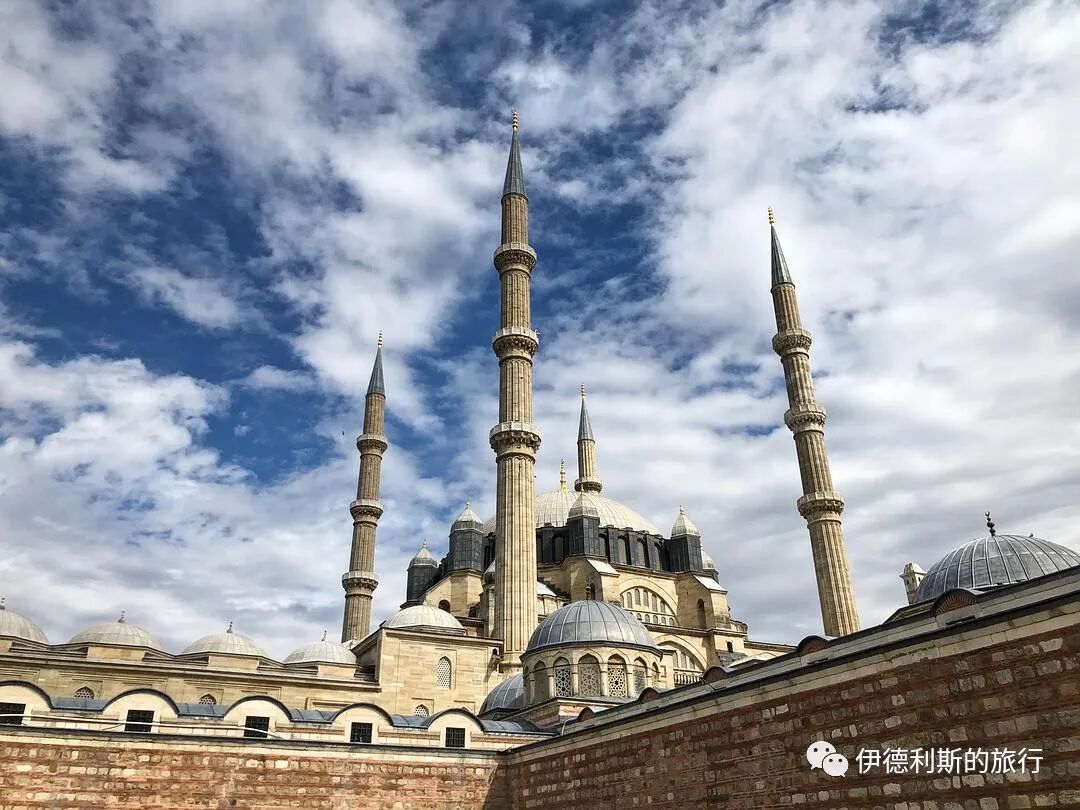
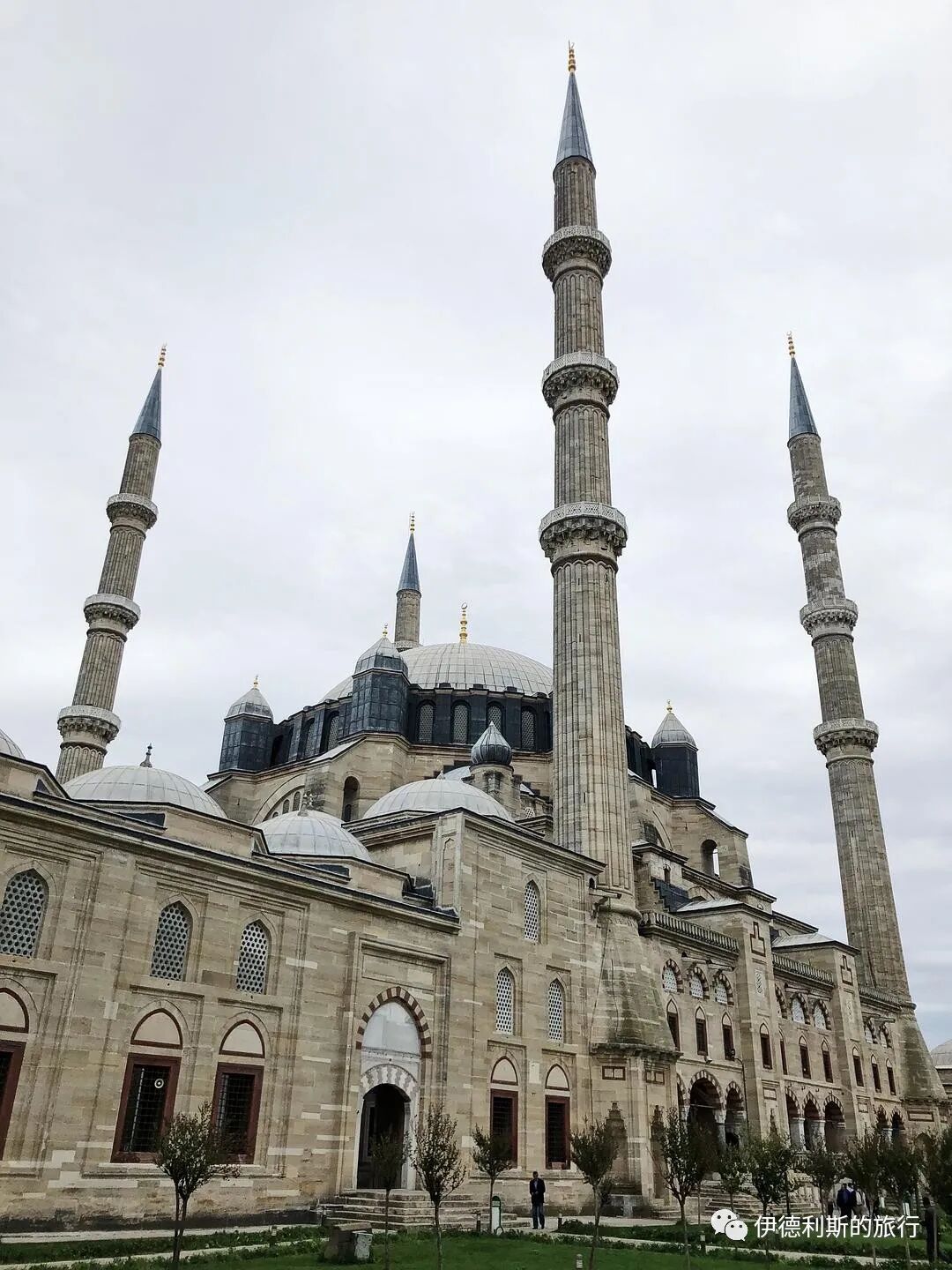
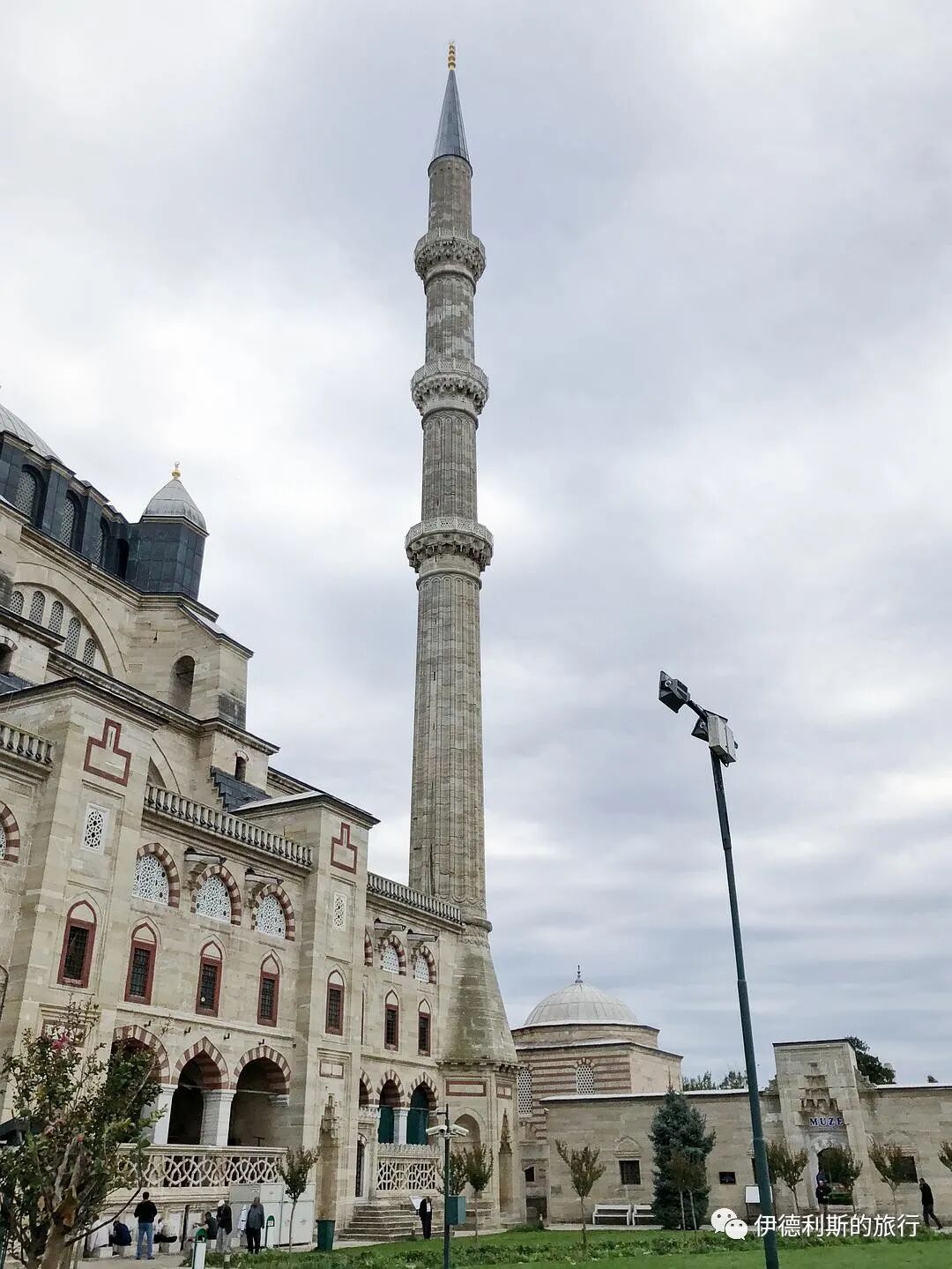
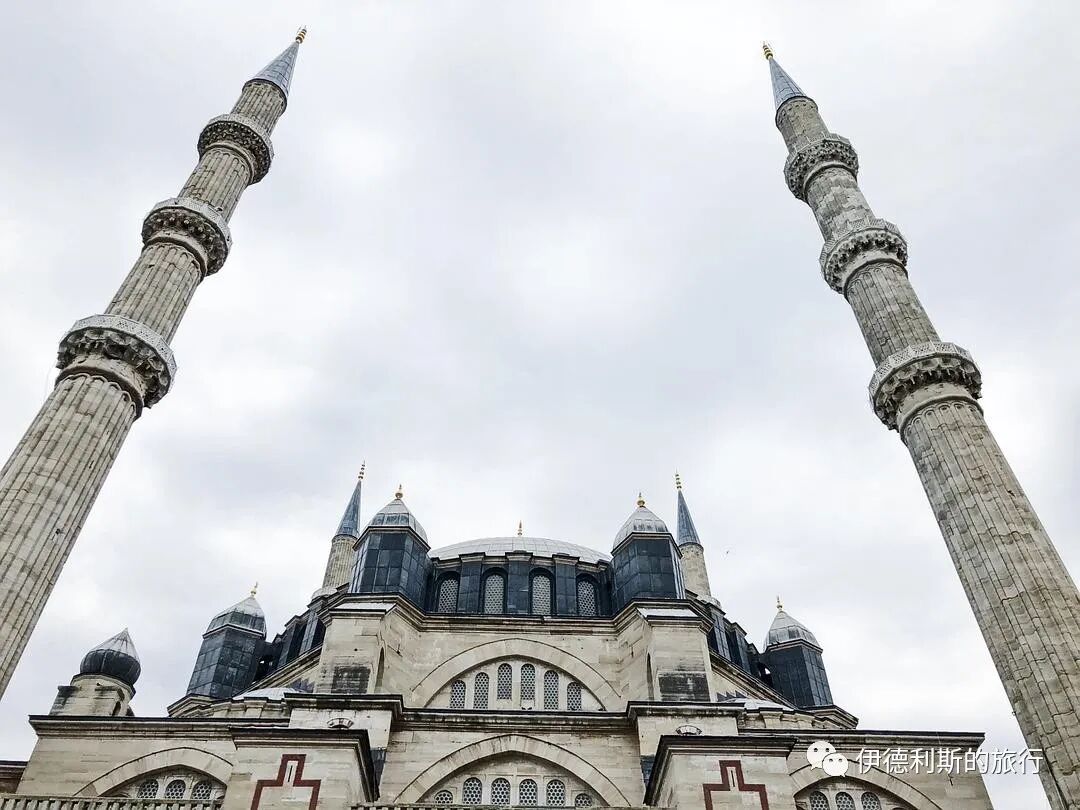
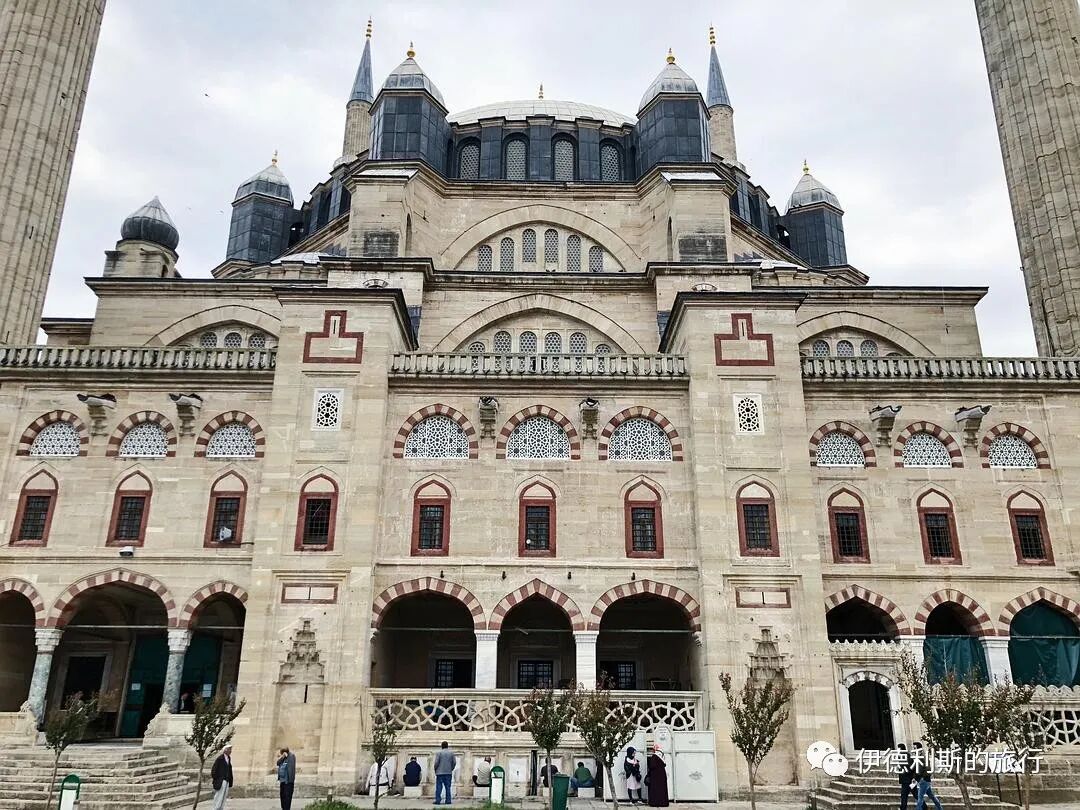
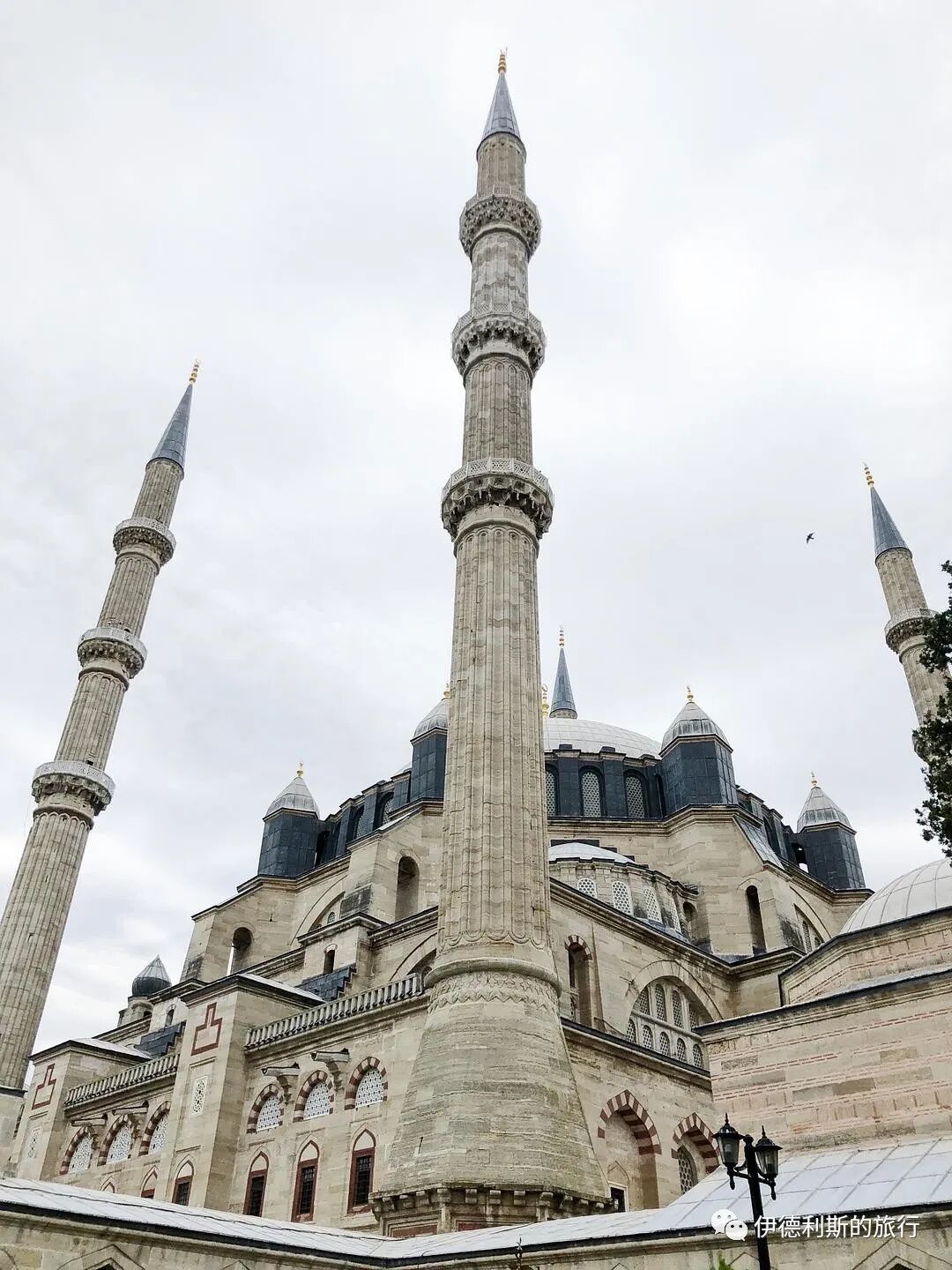
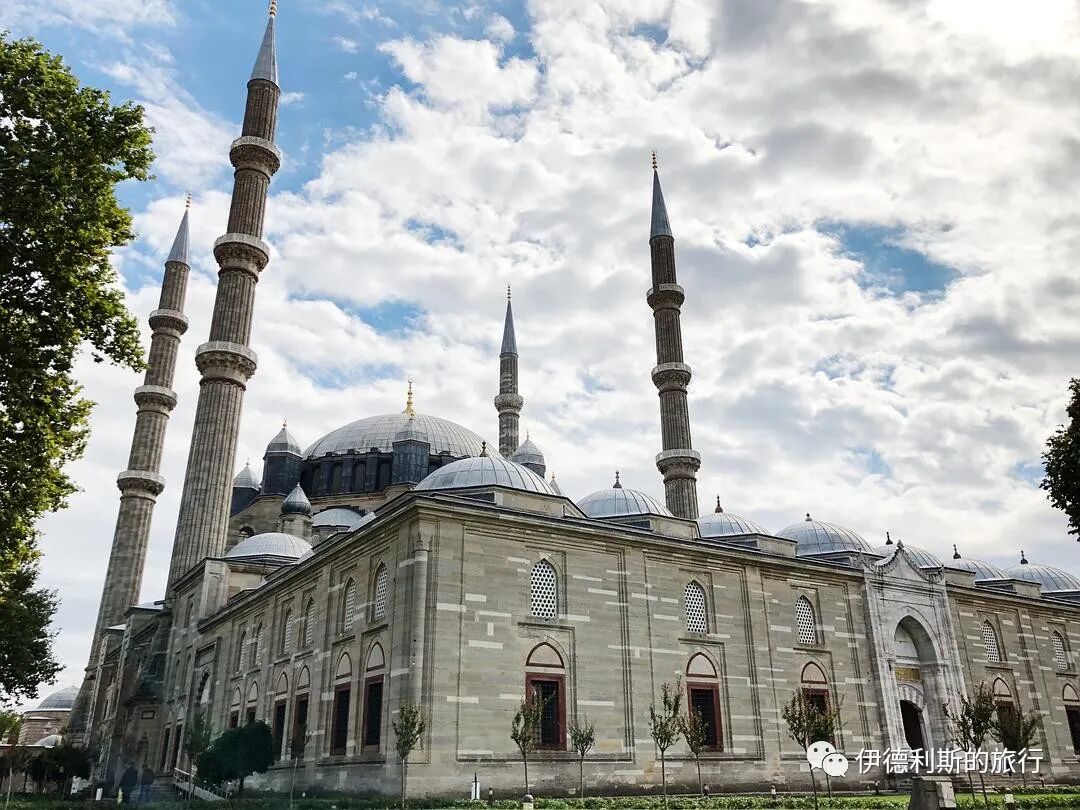
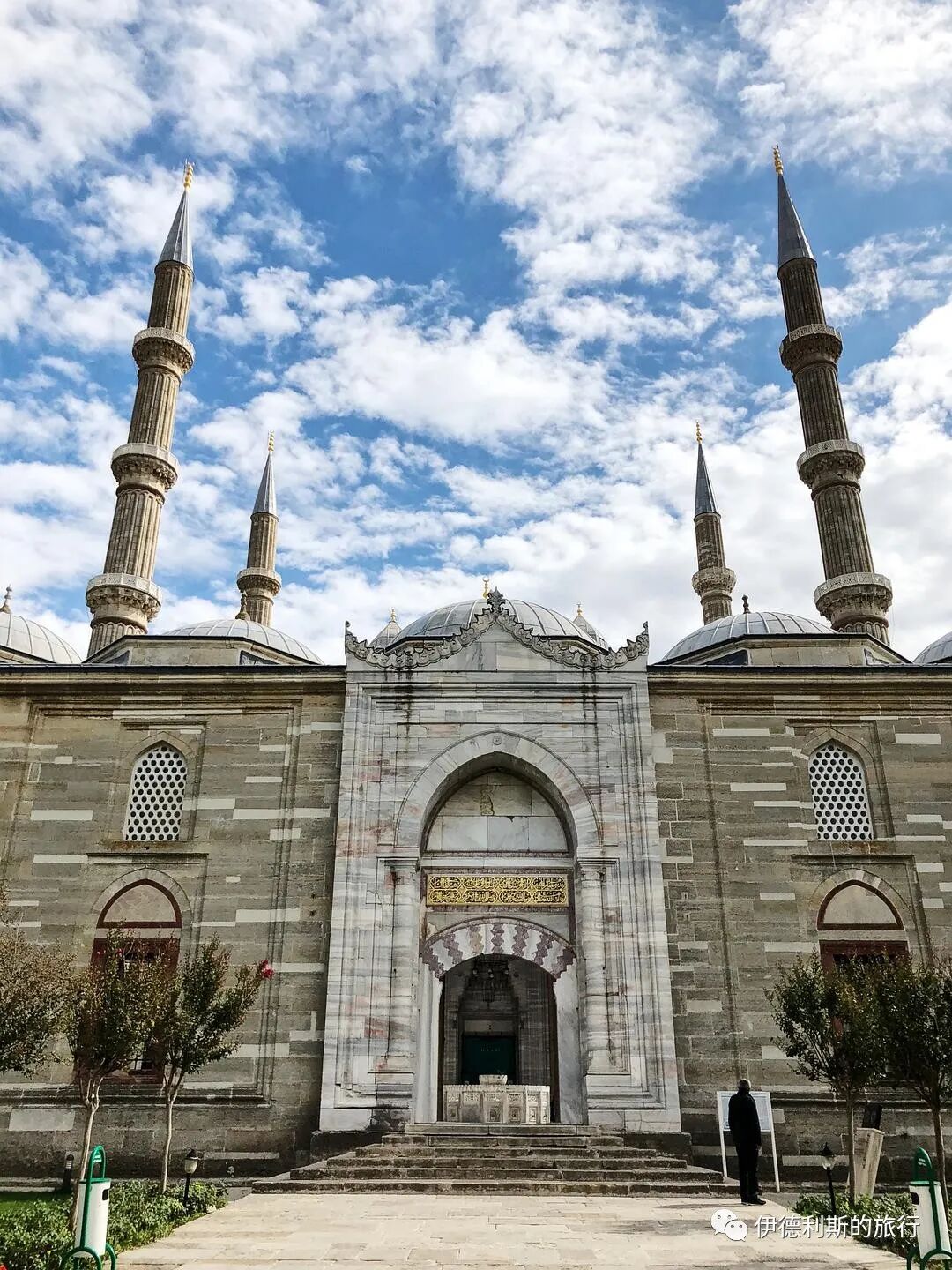
Exterior of the mosque.
The area where the mosque stands was originally the site of the first palace built in Edirne by the fourth Ottoman Sultan, Bayezid I (reigned 1389-1402). After the Ottoman Empire moved its capital from Edirne to Istanbul in 1453, the old palace gradually became a military headquarters and later a square.
In 1567, soldiers were sent to Edirne to participate in the construction of the mosque. In 1568, timber merchants around Edirne began to supply the mosque construction at full capacity. Meanwhile, large quantities of marble were transported to Edirne by warships from Marmara Island and the Kavala quarries in northern Greece, a process that continued until 1572.
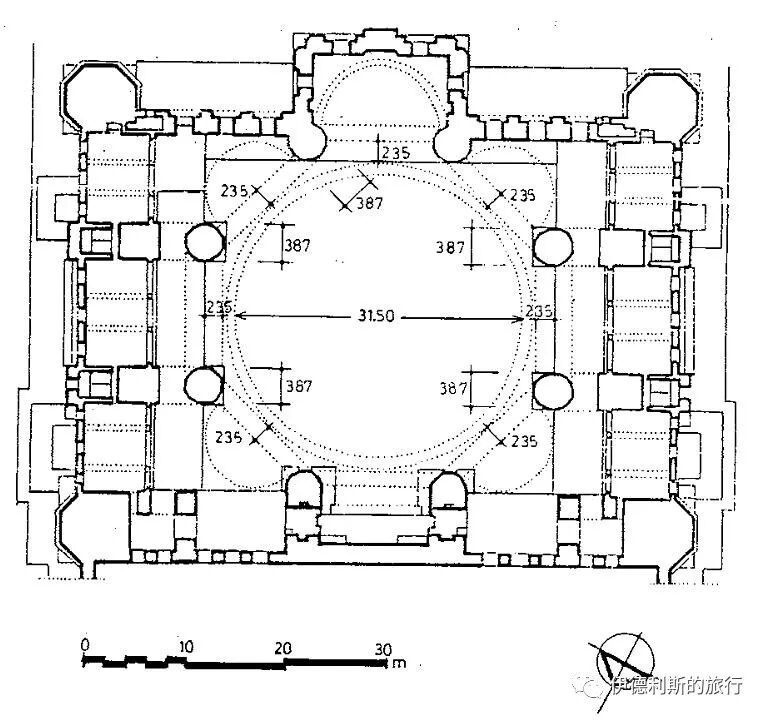
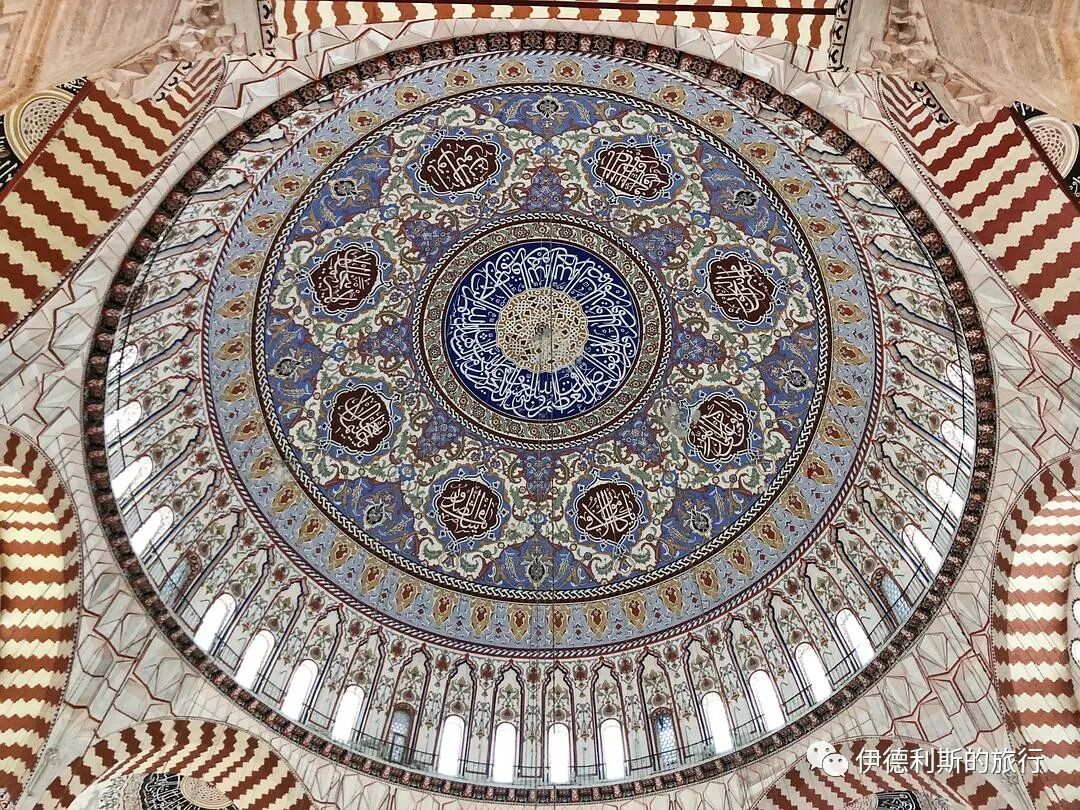
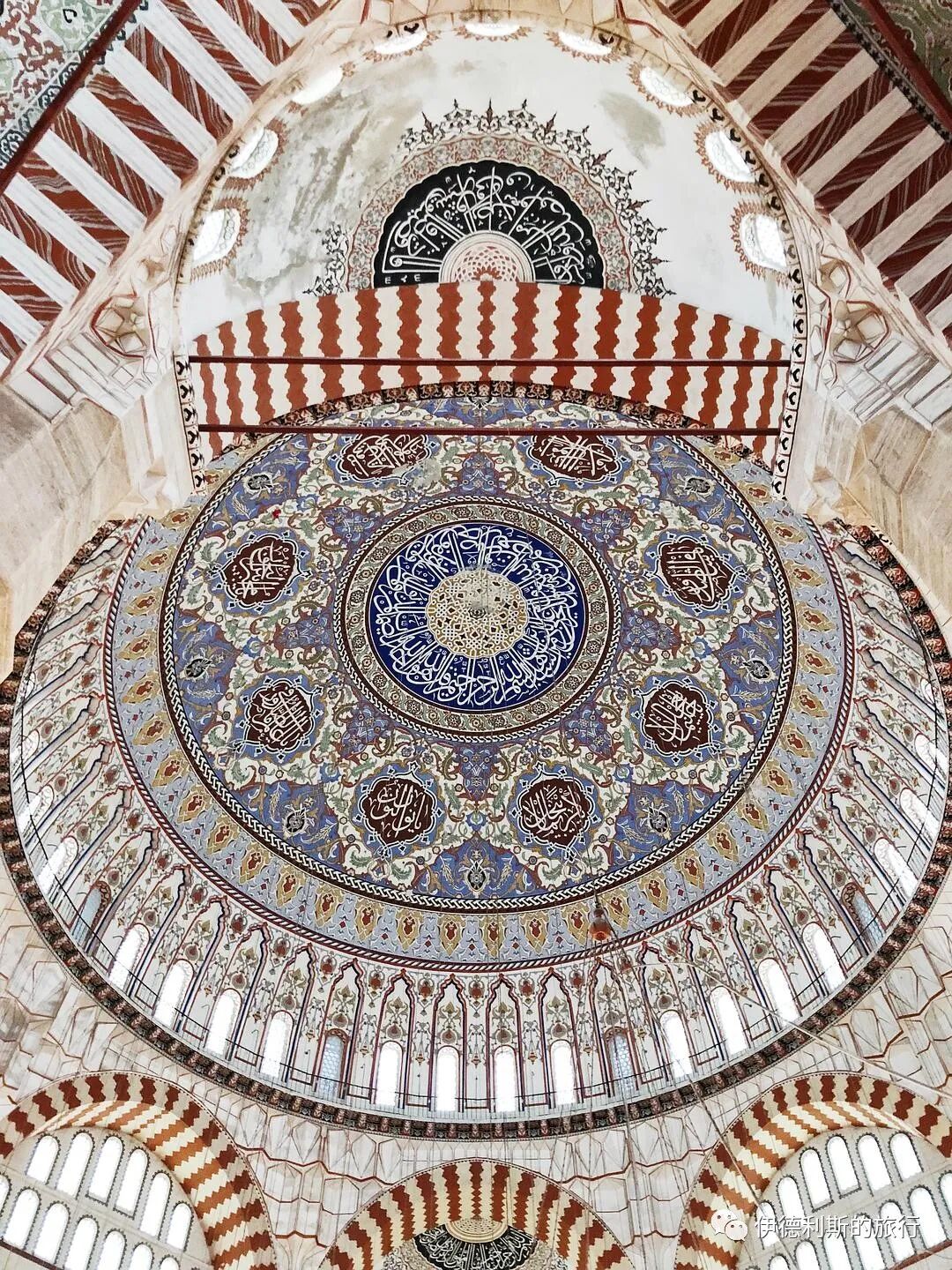
By 1572, the eight supporting arches of the mosque were completed, and the construction of the dome officially began. To highlight the centralization of the Ottoman Empire, Mimar Sinan wanted the Selimiye Mosque to appear as a unified whole from both inside and outside, unlike earlier Ottoman mosques composed of many small domes or semi-domes. Therefore, he decided to build a massive central dome that would surpass the Hagia Sophia. The dome was officially completed in 1575, standing 42.3 meters high with a diameter of 31.5 meters and weighing 20 tons.
At the same time, Mimar Sinan abandoned the traditional Ottoman mosque design of minarets of varying heights, instead building four minarets in the front courtyard, each 71 meters tall. These four vertically symmetrical minarets shoot toward the sky like rockets from the corners of the courtyard, setting off the massive dome rising from the center. They dominate the city's skyline and give the entire mosque a sense of immense majesty.
Overall, the decoration of the mosque's facade is relatively simple, lacking the intricate carvings found in Seljuk and other Iranian architecture. Instead, the layout of the facade is determined by the structure itself, which is a hallmark of Mimar Sinan's architecture and is considered by later generations to be the classical aesthetic of Ottoman architecture of this period.
From UNESCO World Heritage Centre documents.
The main gate of the mosque's prayer hall features a Muqarnas structure. Muqarnas, also known as Ahoopāy in Iranian architecture, is a form of decorative vaulting in Islamic architecture. Muqarnas is sometimes called a "honeycomb vault" or "stalactite vault." It first appeared in Iran and entered Turkey with the Seljuk Empire in the 11th century. The purpose of this structure is to create a relatively smooth and decorative transition area in the exposed structural space between walls and ceilings.
Courtyard.
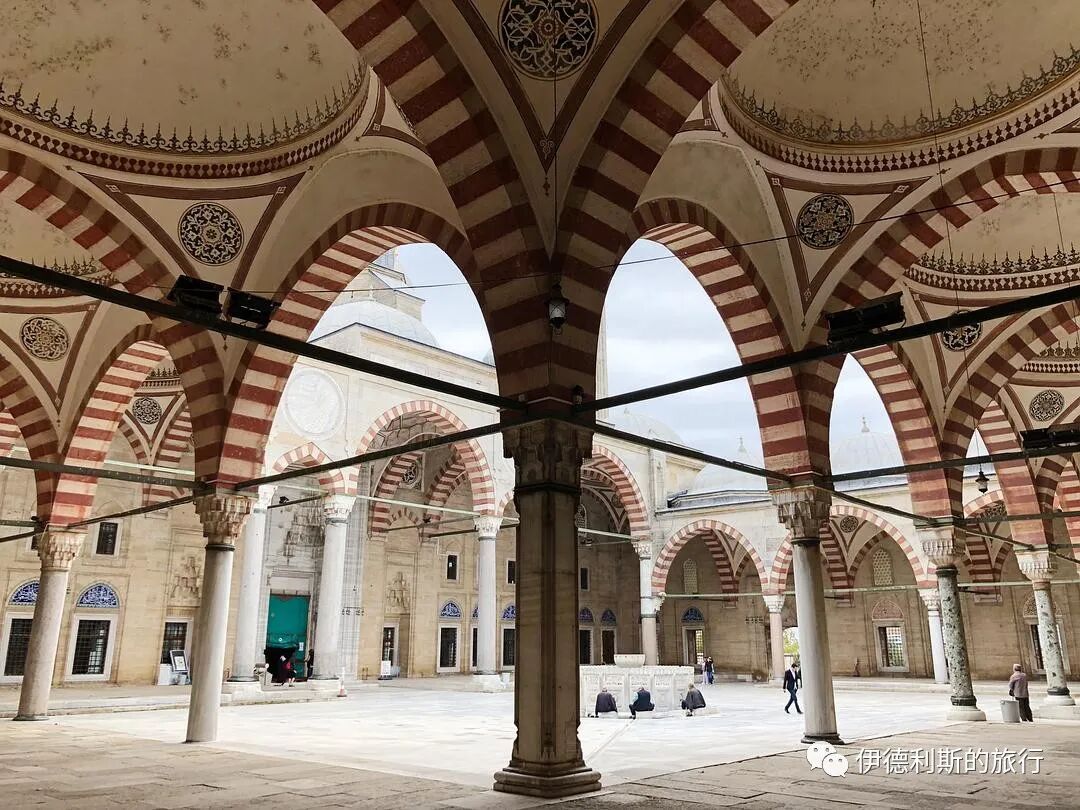
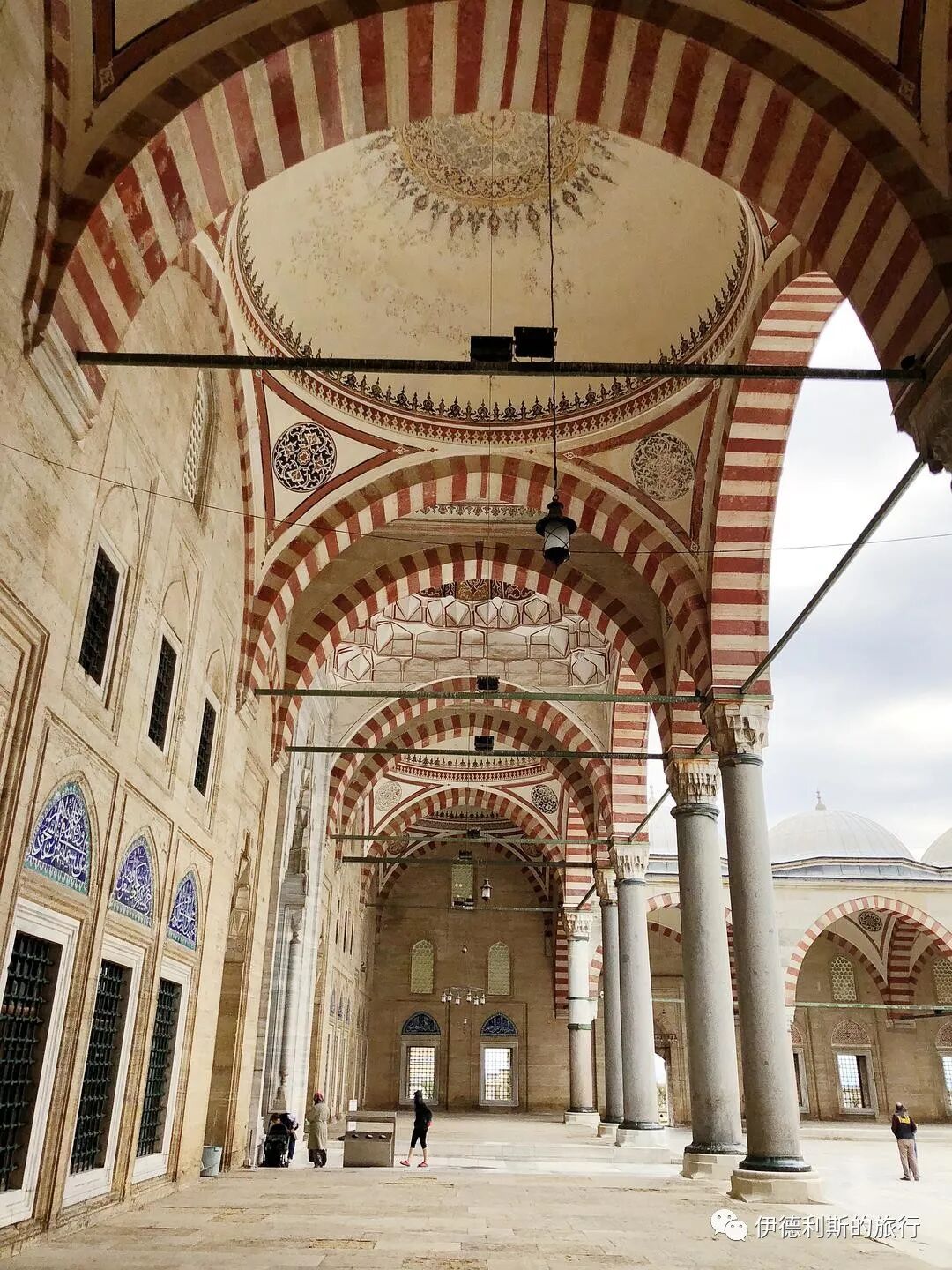
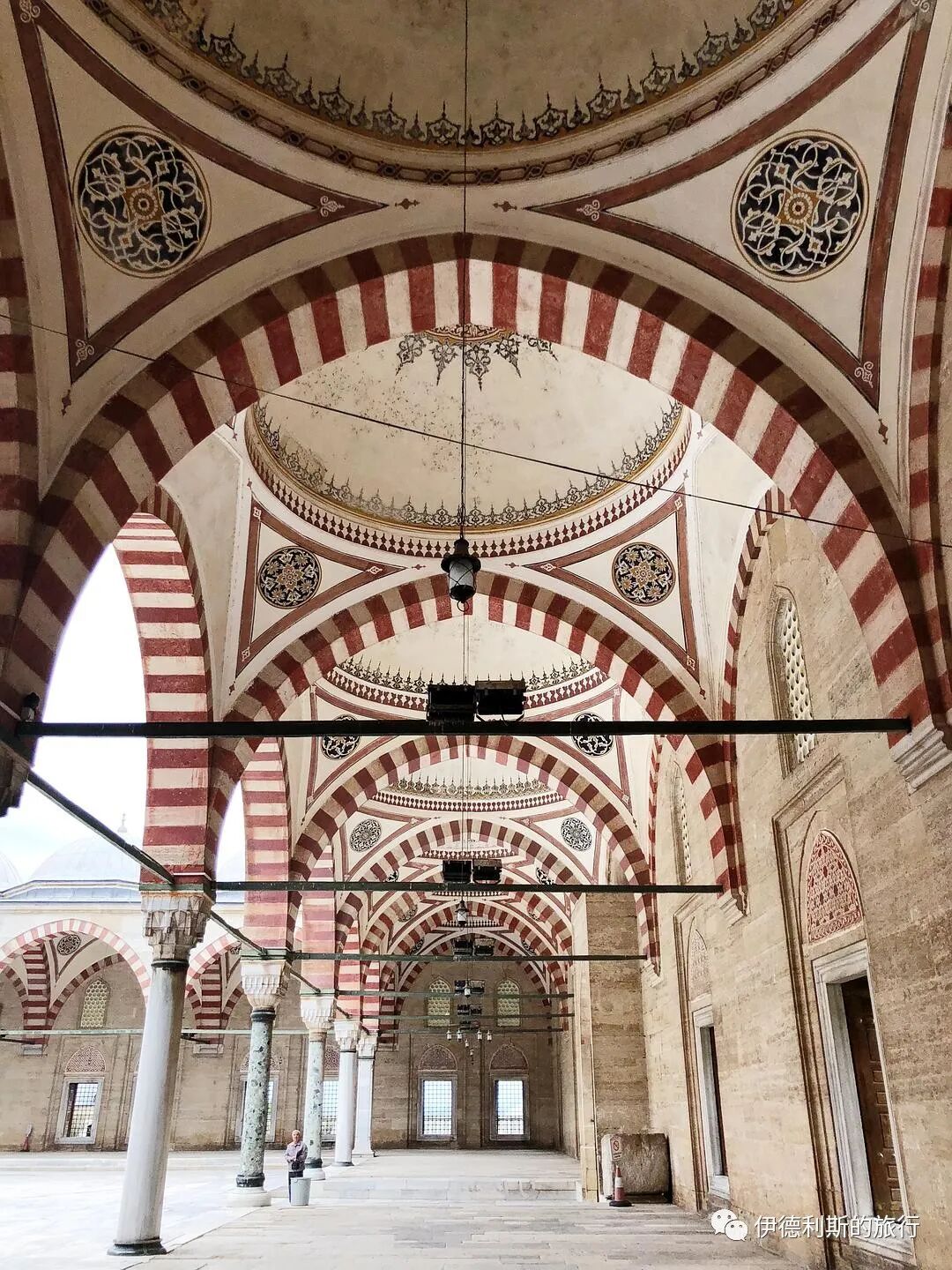
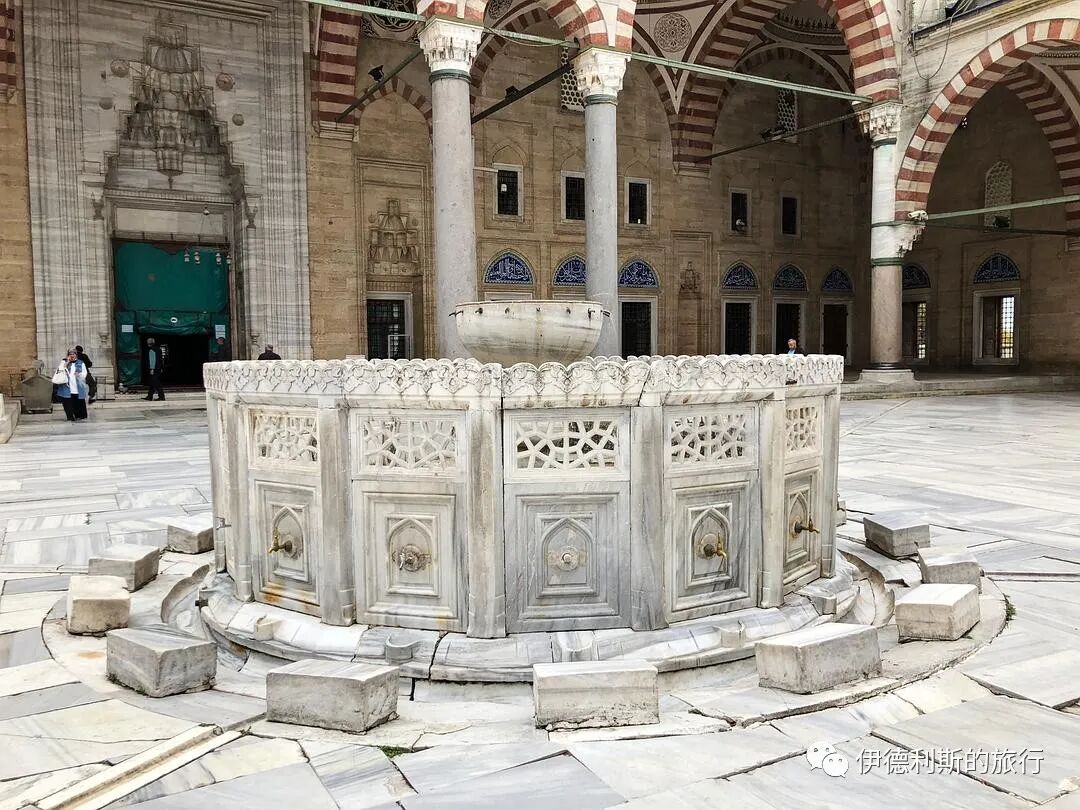
The courtyard in front of the mosque's prayer hall covers 2,475 square meters, surrounded by a cloister of 18 domes, with a fountain for wudu (ablution) in the center. The marble columns in the courtyard were brought from ruins in Cyprus, Aydincik near the Kapıdağ Peninsula, and Syria. Mimar Sinan designed the front porch near the courtyard gate to be relatively narrow and low to emphasize the grandeur of the mosque's prayer hall.
Mimar Sinan made a bold innovation with the fountain; in this sixteen-sided marble fountain, we can see compositions and very interesting details never before seen in Ottoman fountains of that time.
This is the largest ablution fountain Mimar Sinan ever built, and its decoration is very different from traditional ones. Each marble slab has a wide and deep contour band on the lower part, with a pointed-arch mirror stone in the middle, and openwork geometric carvings on the upper part. Above that is a crown-shaped stone slab with "Rumi patterns" (a style of stylized floral/leaf motifs). Sinan designed special supports for the bottom edge of the fountain based on the lines of each faucet.
According to historical records, in 1572, Mimar Sinan ordered water to be supplied to the fountain from Kayalar village.
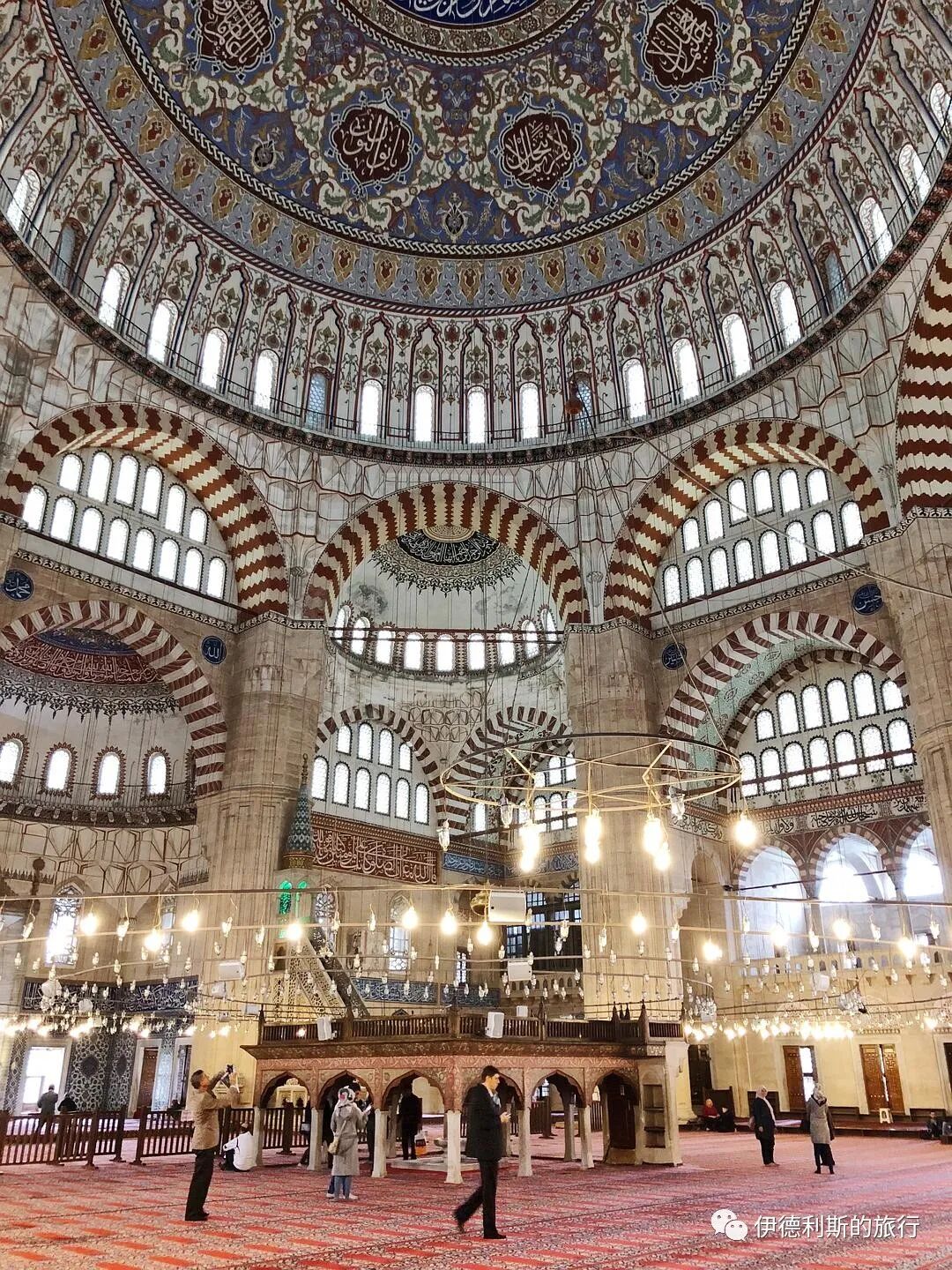
Interior of the mosque.
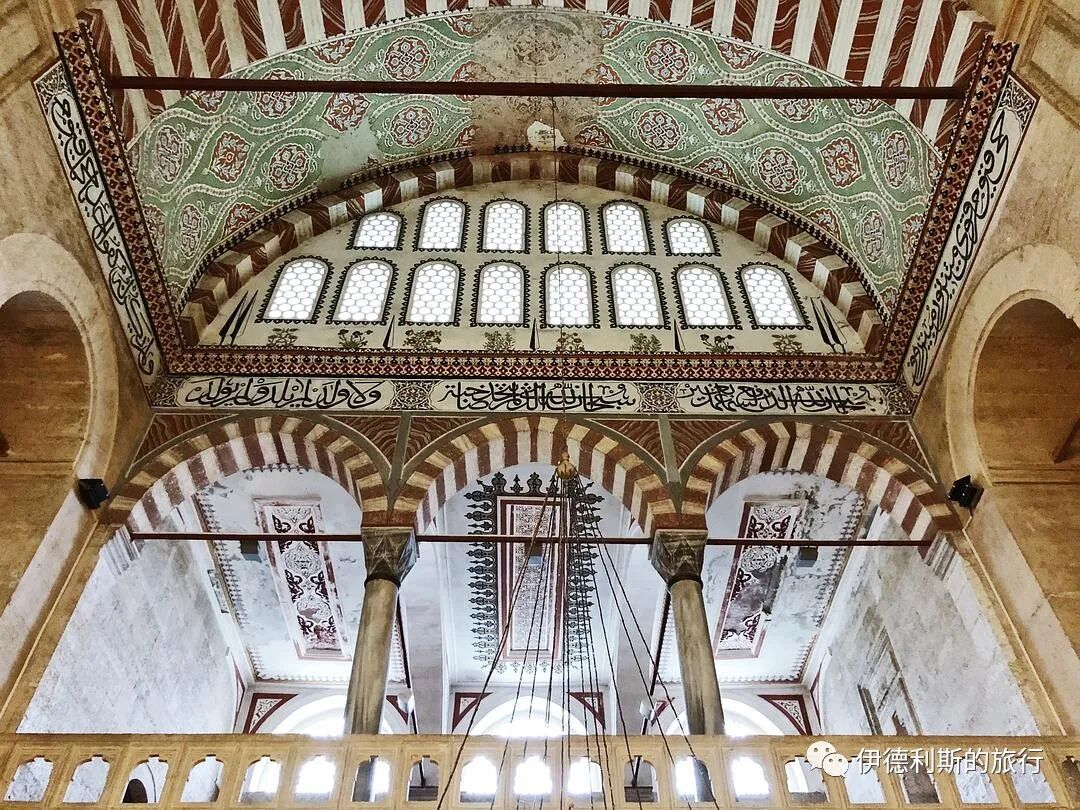
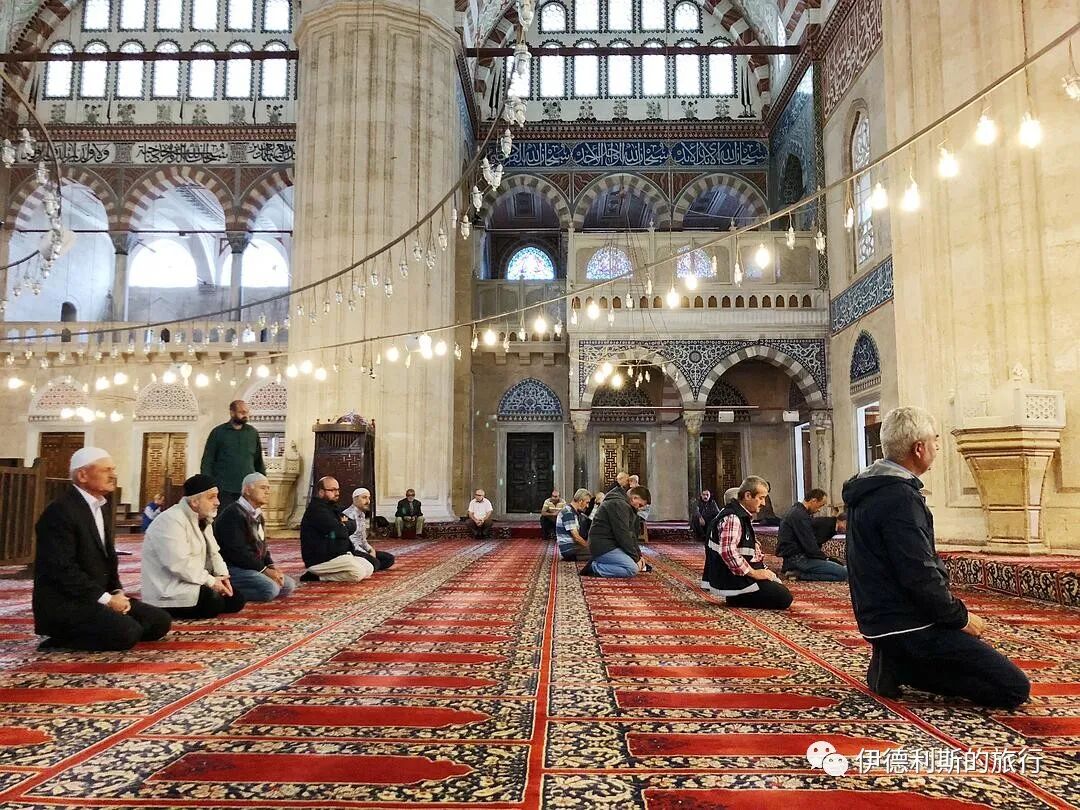
In the Selimiye Mosque, Mimar Sinan utilized an octagonal support system, with 8 columns supporting the massive central dome. During the Bulgarian siege of Edirne in 1913, the mosque's dome was hit by Bulgarian artillery. Because the dome was extremely sturdy, it suffered only minor damage. Later, Atatürk ordered that the traces of the shelling be preserved as a warning to future generations.
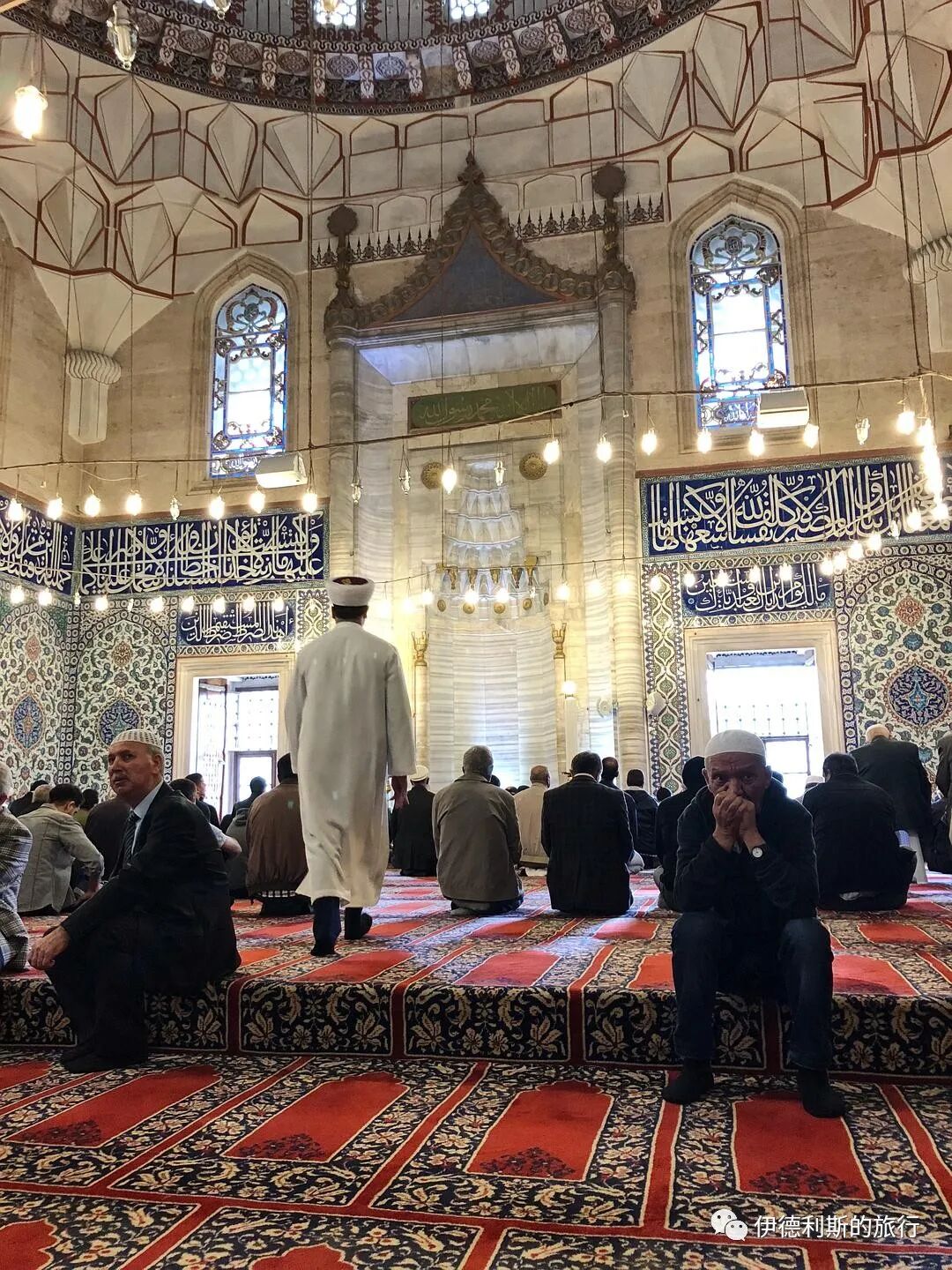
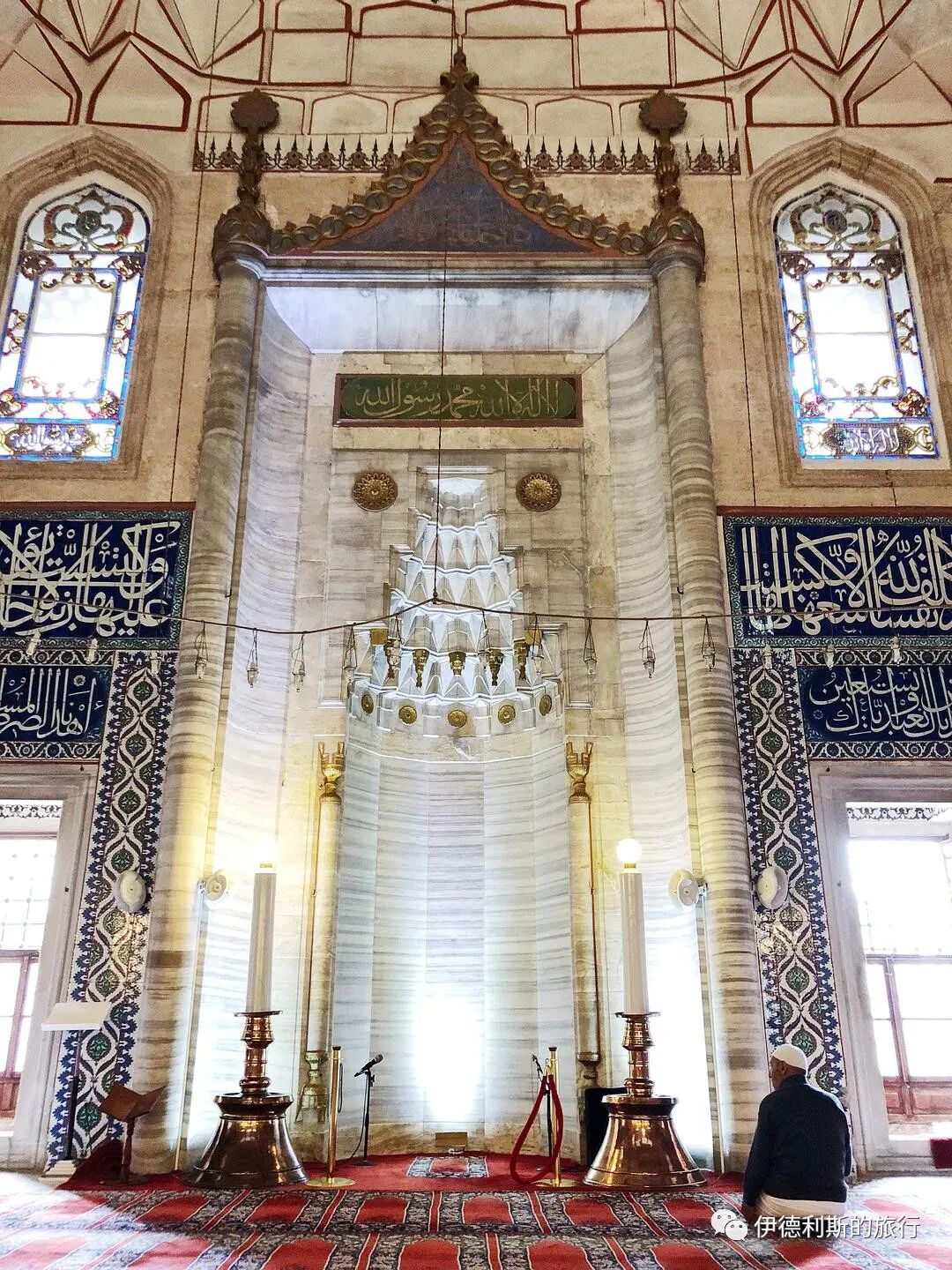
The mihrab (prayer niche) is located in a rear apse that protrudes from the prayer hall, providing enough depth for sunlight to enter from three sides of the windows. The white marble-carved mihrab is a spectacular work of its time. Unfortunately, the original 16th-century calligraphy on the semi-dome above the mihrab did not survive; what we see today is a 1985 restoration in the Baroque style.
The tiles around the mihrab were specially ordered by Mimar Sinan from Iznik between 1572 and 1575 and were the highest quality tiles in the Ottoman Empire at the time. The calligraphy on the tiles was created by Karahisari Molla Hasan, a student and adopted son of the famous 16th-century Ottoman calligrapher Ahmed Karahisari.
The use of Iznik tiles made Mimar Sinan not only an outstanding architect but also an excellent artist. In the interior design, Mimar Sinan tried to avoid overwhelming the architecture with decoration, so the tiles were distributed in specific areas as a finishing touch. Dominated by blue and white, the Iznik tiles accented with coral red are typical of the second half of the 16th century. These tiles are extremely rich in content; there are 101 different types of tulip patterns alone, and they were the best in the 16th century in terms of both glaze and quality.
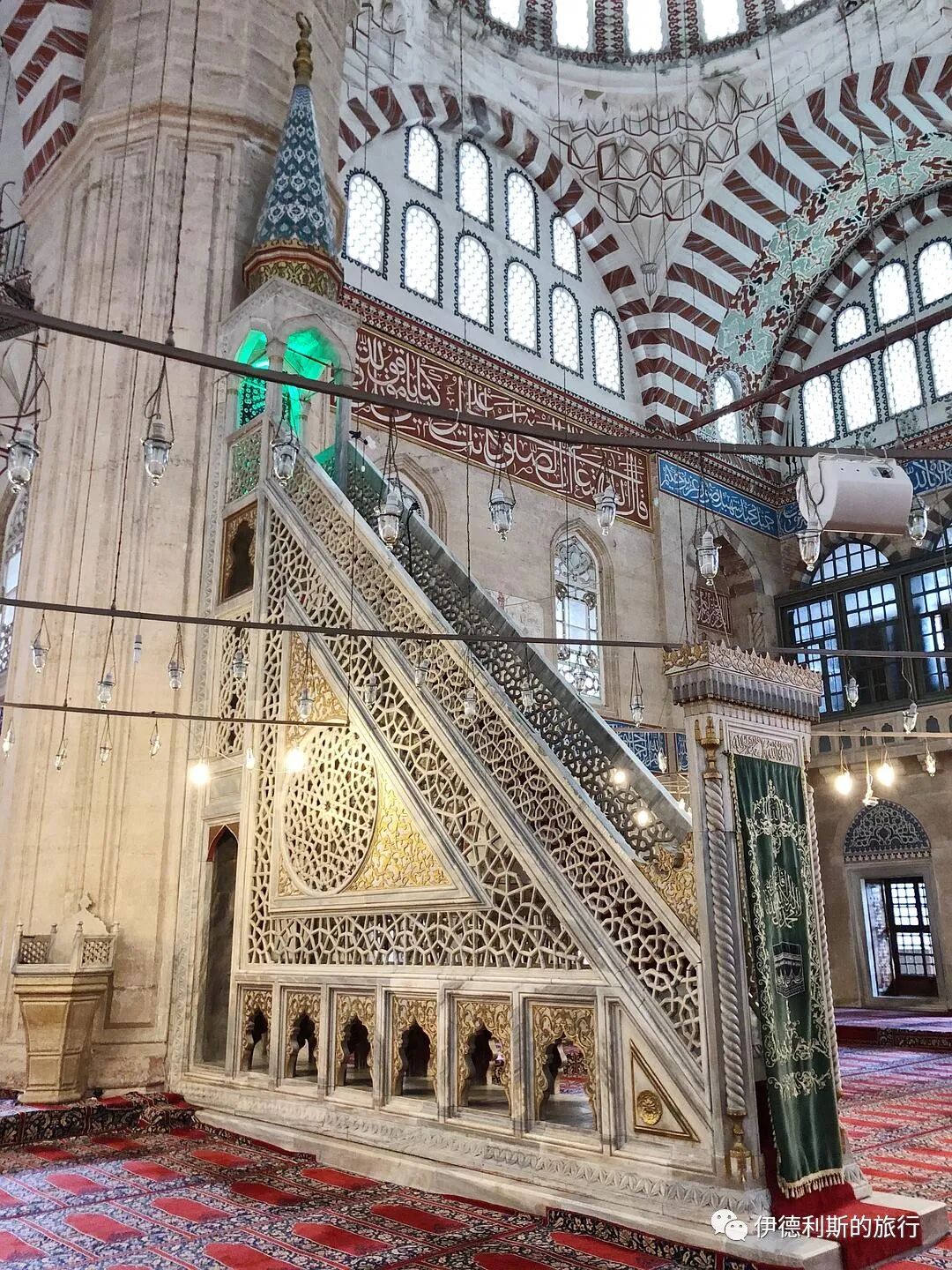
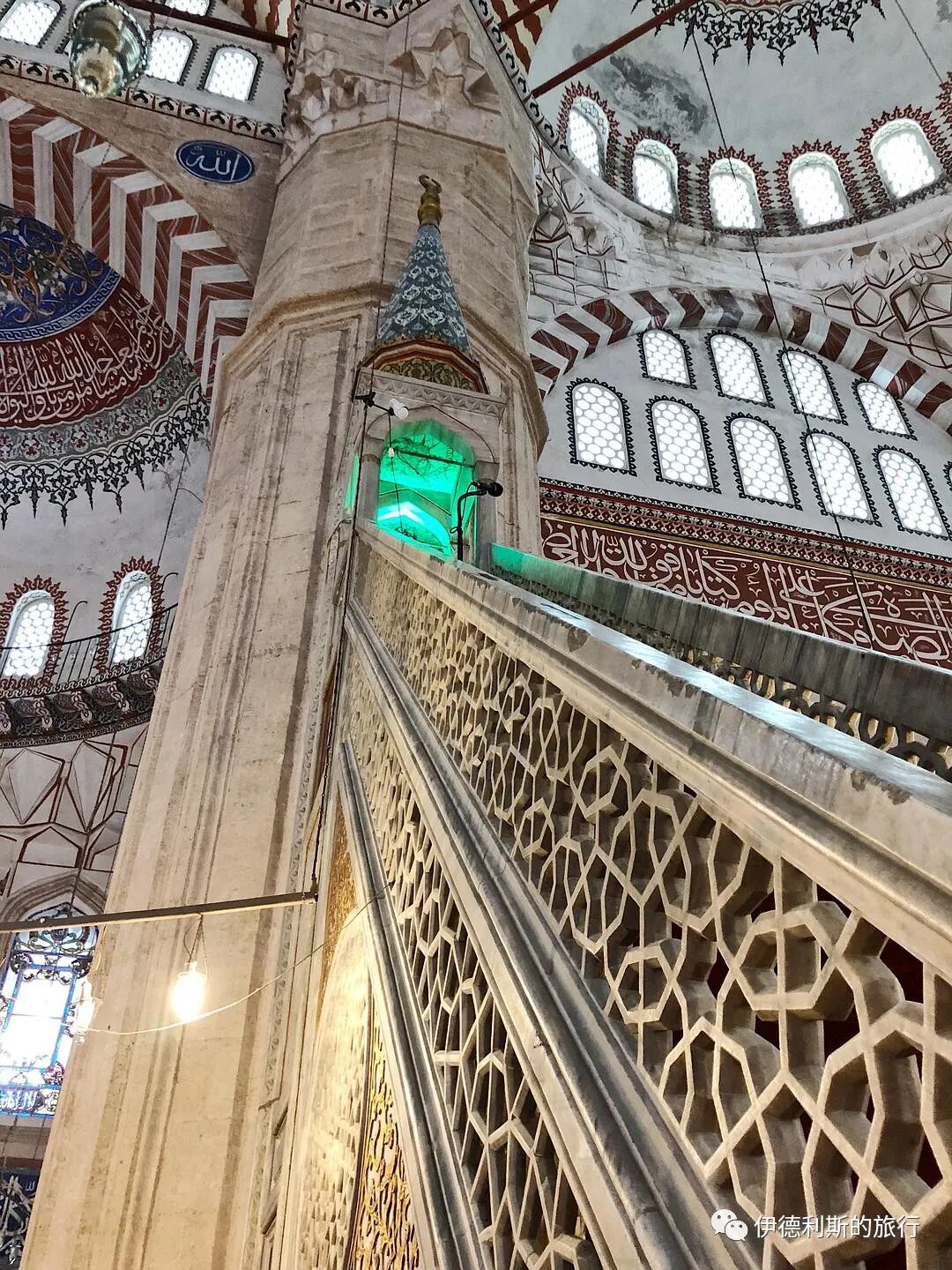
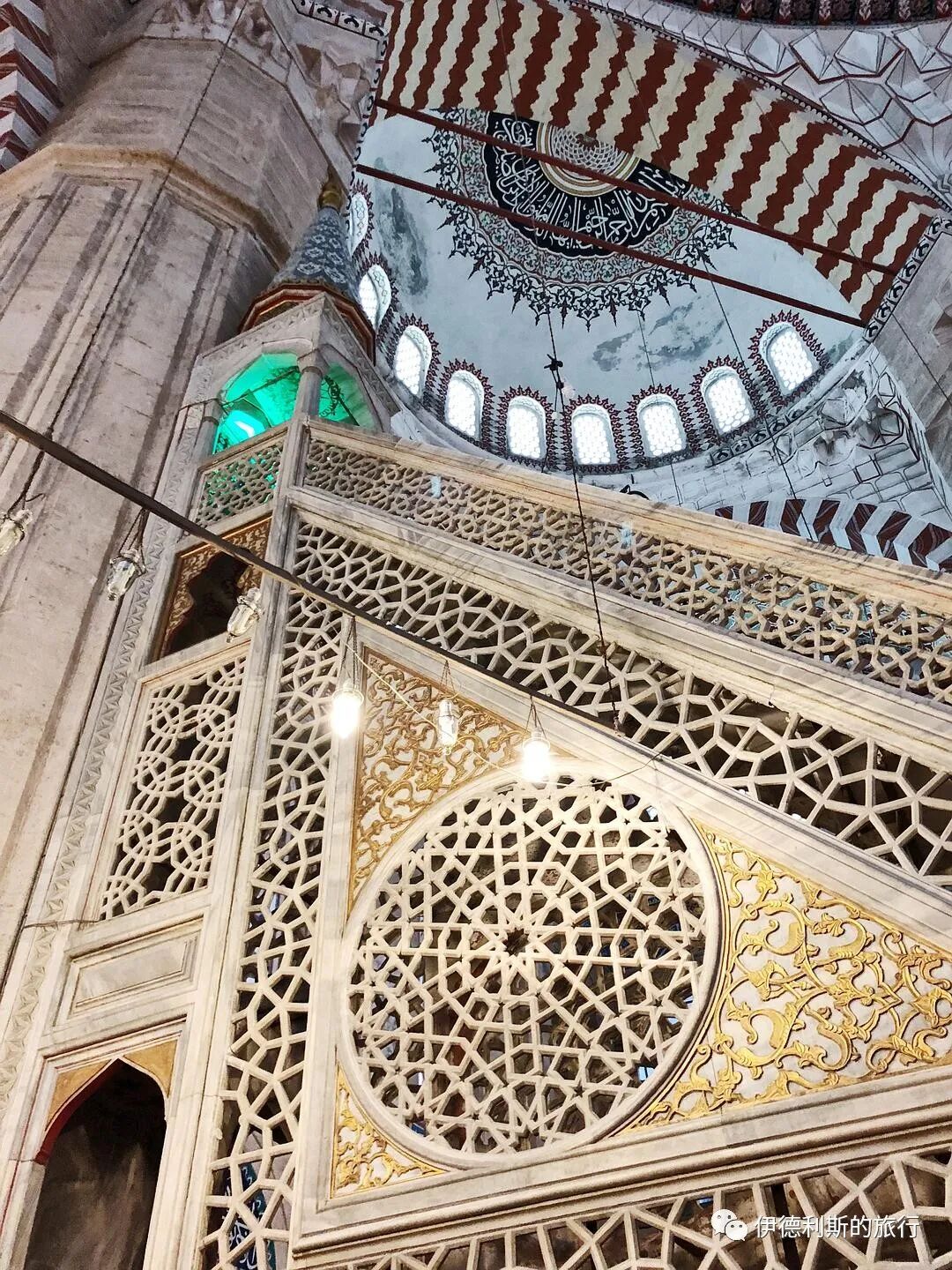
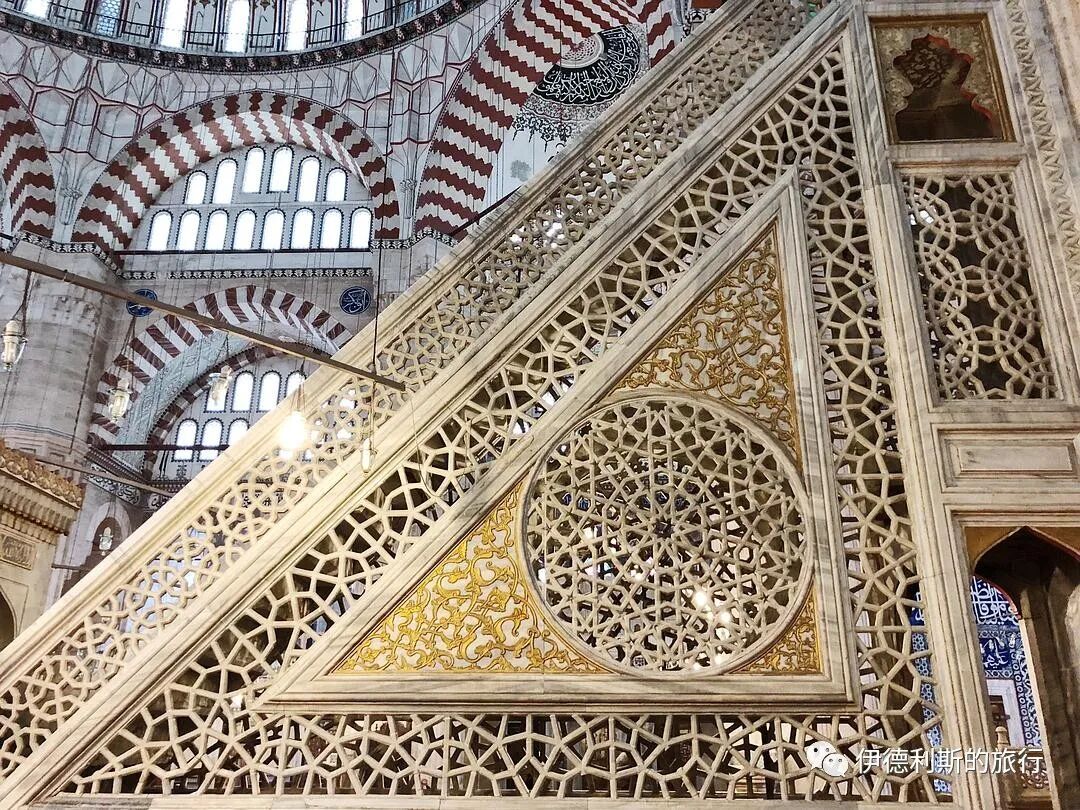
The minbar (pulpit) of the Selimiye Mosque occupies a very important place among classical Ottoman artworks. The minbar is carved from a single block of white marble and has 25 steps, with an extremely elegant design. The beauty produced by the fusion of these geometric shapes is the artistic crystallization that Mimar Sinan pursued throughout his life.
Directly opposite the mihrab is the stone platform where the muezzin stands to call the adhan (call to prayer), supported by 12 white marble columns. The thick columns to the southwest of the platform are composed of vertical, slender rectangular panels, which contain the stairs for the muezzin to climb. The platform has walnut railings, and the underside is decorated with gold-leaf Chinese-style cloud knots, an important example of decoration from the classical Ottoman period. The dark blue background is covered with naturalistic dagger-shaped leaves, chrysanthemums, and Chinese-style clouds. The passion flower pattern on the blue background was brought to Anatolia by Central Asian Turkic people in the 8th-9th centuries and symbolizes eternity.
There is a fountain on the first level of the platform, with an inverted tulip pattern on the top. The tulip holds great significance in Turkish and Islamic art as well as in Islamic faith. Because the sum of the numerical values of the letters in the words "tulip" and "Allah" is 66, people believe that the tulip can symbolize the uniqueness and beauty of Allah; sometimes people even write the word "Allah" in the shape of a tulip.
Quran School (Museum).
The Selimiye Quran School is quite unique among Sinan's works. It features a dual-school layout with the Dar'ül-Kurra Quran School and the Dar'ül-Hadis Hadith School, which are symmetrical to the main mosque. Furthermore, it is the only Quran school built by Sinan that features a honeycomb Muqarnas gate.
The school consists of a large classroom, a series of small student rooms, and a water room surrounding a rectangular courtyard. The main mosque can be seen from both courtyards.
The Hadith school was built between 1567 and 1574, and the first lecturer (Muderris) was appointed in 1570-71 with a daily salary of 60 dirhams. In addition, there was 1 assistant lecturer (Muid) with a daily salary of 9 dirhams, 15 students with a daily salary of 4 dirhams, and 1 doorman (Bevvab), 1 administrator (Ferraş), and 1 cleaner, each with a daily salary of 3 dirhams.
The Quran school had 1 sheikh with a daily salary of 40 dirhams, 10 Hafiz (those who have memorized the Quran) with a daily salary of 2 dirhams, and 1 doorman, 1 administrator, and 1 cleaner, each with a daily salary of 2 dirhams.
In 1925, Atatürk ordered the Hadith school to be converted into the Museum of Turkish and Islamic Art, and the Quran school later became the Foundation Museum, which operates to this day.
In the large classroom of the Quran school, teachers taught students the rules and methods of Quran recitation and listened to and corrected the students' mistakes. Students attended 5 classes a day, 4 days a week. After completing all courses, they would earn the title of Hafiz, becoming someone who could recite the Quran proficiently.
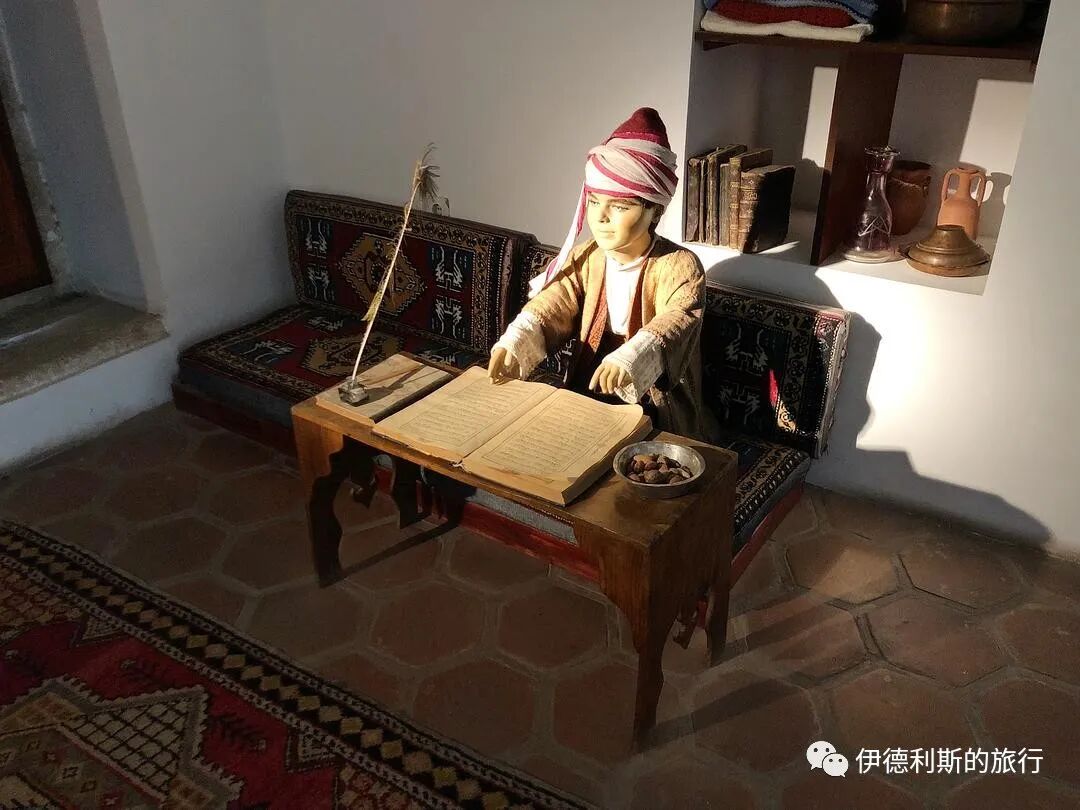
Students studying in a room at the Quran school. In the Ottoman education system, one could enroll in a Quran school after graduating from primary school. The school's curriculum focused mainly on repetitive recitation and discussion. In addition, students learned marble carving and the art of calligraphy, with all funding provided by the Ottoman Sultan's foundation.
Iznik ceramics used in the Selimiye Mosque.
The ancient city of Iznik is located on the shores of Lake Iznik, 90 kilometers southeast of Istanbul. In the late 15th century, it became the center of ceramic production for the Ottoman Empire.
The earliest visible Iznik ceramics were found in the imperial kitchens of the Topkapi Palace in Istanbul in 1489. Due to the Ottoman rulers' love for Chinese blue-and-white porcelain, Iznik ceramics combined traditional Ottoman arabesque patterns with Chinese elements. The style of early Iznik ceramics is known as "Rumi-Hatayi," where "Rumi" represents Ottoman arabesque patterns and "Hatayi" represents Chinese floral patterns.
Early Iznik ceramics were only cobalt blue; after the 16th century, gray-green and lavender were gradually introduced as soft tones. In the late 16th century, Mimar Sinan used Iznik tiles extensively in his architecture, replacing gray-green with bright green and lavender with bright red. The first building with red Iznik tiles was the Süleymaniye Mosque, built by Mimar Sinan in Istanbul in 1557.
In 1557, Kara Mehmed Çelebi became the chief painter of the Ottoman court. He introduced a floral style consisting of tulips, carnations, roses, and hyacinths into Iznik ceramics, making the patterns on the ceramics more natural.
The wooden windows of the Bayezid II Mosque in Edirne (1484-1488) use a Turkish geometric woodworking art called "kundekari," which also features Thuluth calligraphy.
Kundekari uses small pieces of wood that are interlocked and fixed together through special joints, without the use of nails or glue. The wood used is usually sturdy apple, pear, walnut, or cedar, and is often inlaid with pearls, tortoiseshell, ivory, or metals like gold and silver. Kundekari is heat-resistant and moisture-proof, protecting wooden panels from warping due to temperature and humidity changes, so it is mainly used for doors, windows, cabinets, and mosque cupboards.
The Sultan Bayezid II Complex (Sultan II Bayezid Külliyesi) is located on the north bank of the Tunca River in the northwestern suburbs of Edirne and was commissioned by the eighth Ottoman Sultan, Bayezid II (reigned 1481-1512). Bayezid II was the son of Mehmed the Conqueror and was known as "the Just." During his reign, he worked hard to maintain internal government affairs and defeated the Republic of Venice externally, leading the Ottoman Empire into a prosperous phase.
18th-century Hilye (calligraphic description of the Prophet) calligraphy in a glass bottle at the Old Mosque (Eski Cami) in Edirne. Built in 1414, the Old Mosque is the oldest mosque in Edirne and one of the last multi-domed mosques to use the early Ottoman Seljuk style, marking a farewell to early Ottoman architectural styles.
Thuluth calligraphy written by Mustafa Rasim in 1787 at the Old Mosque in Edirne, featuring verses praising the mosque by the local Edirne poet Akif (the son of the calligrapher).
18th-century brass door handle with a palm tree design at the Üç Şerefeli Mosque (Three-Balcony Mosque) in Edirne. The Üç Şerefeli Mosque was built between 1438 and 1447 and was the first central-domed mosque and the first mosque with a portico in Ottoman history, providing great inspiration to Mimar Sinan. The Üç Şerefeli Mosque suffered from fire and earthquakes in the mid-18th century and was subsequently restored.
1478 Thuluth calligraphy stone tablet at the Evliya Kasım Paşa Mosque in Edirne. It records that Kasım Paşa built this mosque in the year 883 of the Hijri calendar. Kasım Paşa was a famous Ottoman general who served as the commander of the European part of the Ottoman Empire. Between 1443 and 1444, he commanded the Ottoman army against the multinational crusader forces of Poland, Hungary, and others in Serbia and Bulgaria. The mosque was closed after 1950 due to the construction of a dam. Since then, it has been continuously damaged by floods and is now abandoned.
19th-century certificates from the Great Mosque of Kütahya; the first was written by Mustafa Sukru, and the second by Ahmed Hamdi. The Great Mosque of Kütahya was built between 1381 and 1410 and is the most important mosque in Kütahya.
1845 Naskh-script Quran from the Lal Huseyin Pasha Mosque in Kütahya, written by Hafiz Mustafa Sabri.
18th-19th century Naskh-script Quran from the Sari Mosque in Edirne.
15th-century tiles from the Şah Melek Mosque in Edirne. The Şah Melek Mosque was commissioned by the blind Şah Melek Pasha in 1429 and is famous for the tiles laid inside. Şah Melek Pasha played an important role in the succession war between the princes of Ottoman Sultan Bayezid I and later became an important figure in the courts of Sultan Mehmed I and Murad II.
15th-century tiles from the Muradiye Mosque in Edirne. The Muradiye Mosque was commissioned by the sixth Ottoman Sultan, Murad II (reigned 1421-1444), in 1436. This site was originally part of a Sufi Mevlevi order complex and was later converted into a mosque.
The interior of the mosque is famous for its beautiful tiles. Before being stolen in 2001, there were 479 tiles in the prayer hall with 54 different designs, 15 of which appeared only once, showing the strong influence of Yuan dynasty blue-and-white porcelain. The blue-and-white hexagonal tiles are the earliest examples of Ottoman underglaze tiles. Because the arrangement of some tiles lacks coherence, some scholars believe that some of them were moved from the Ottoman palace in Edirne in the north.
A beautiful inlaid wooden table.
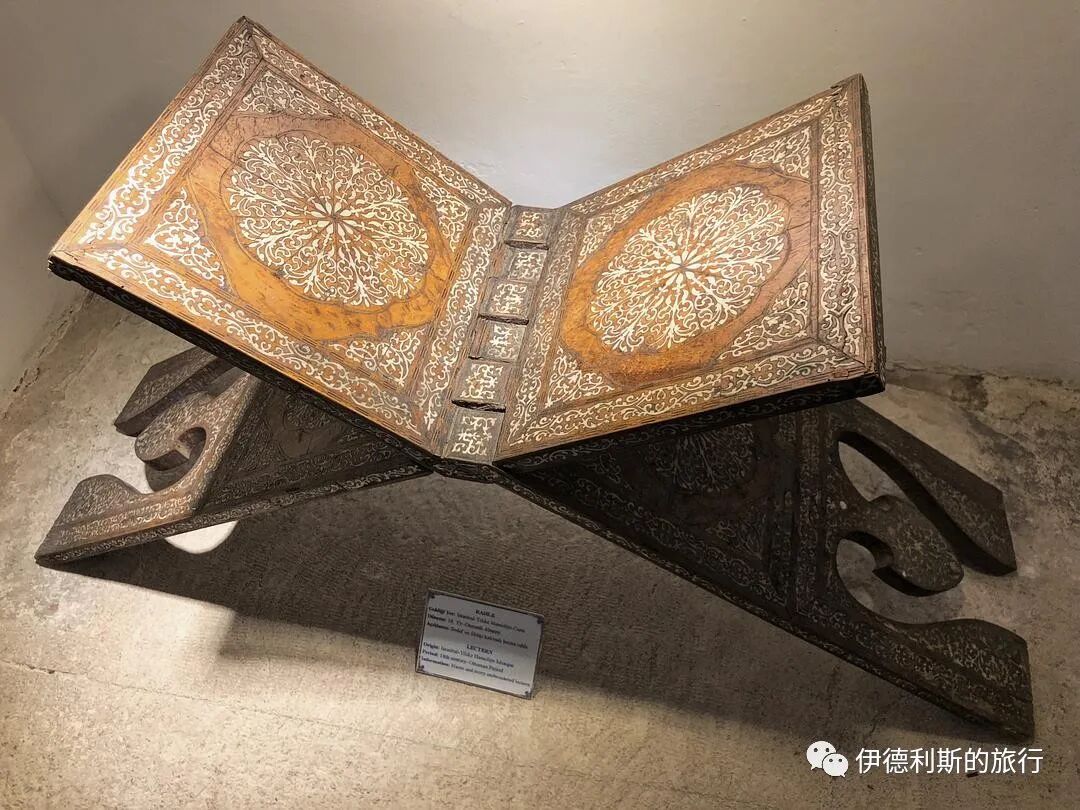
18th-century pearl and ivory inlaid Quran stand from the Yıldız Hamidiye Mosque in Istanbul.
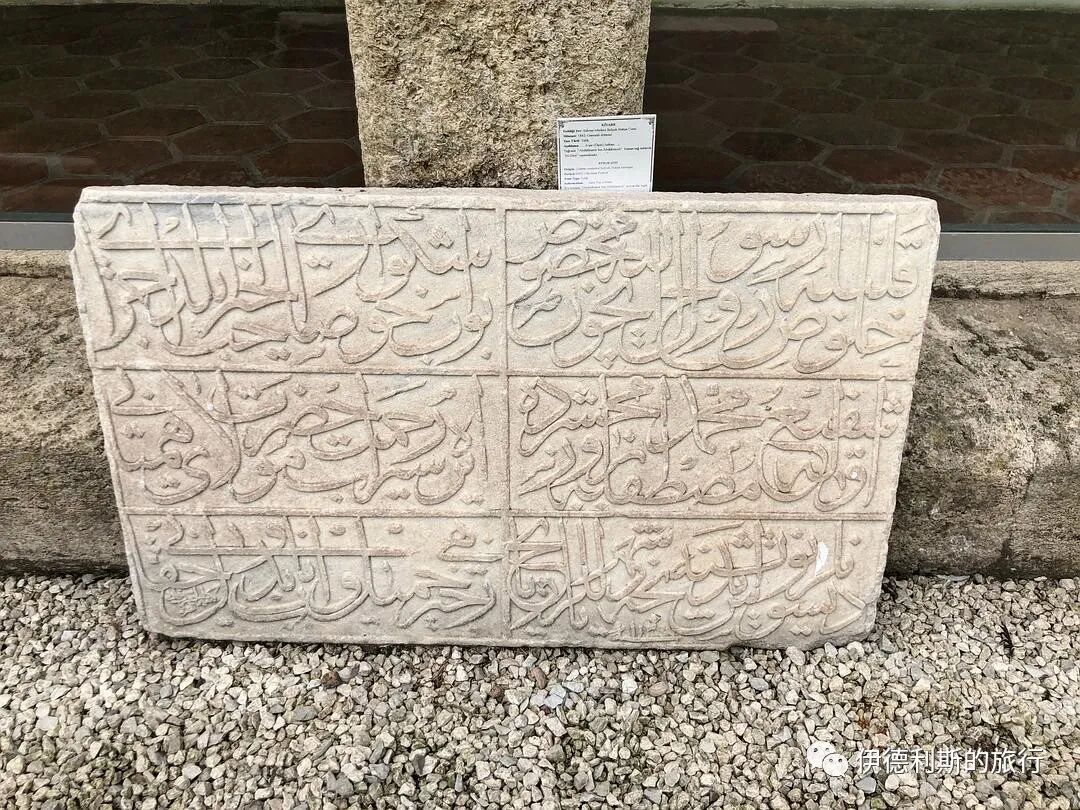
1882 stone tablet from the Selcuk Hatun Mosque in Edirne.
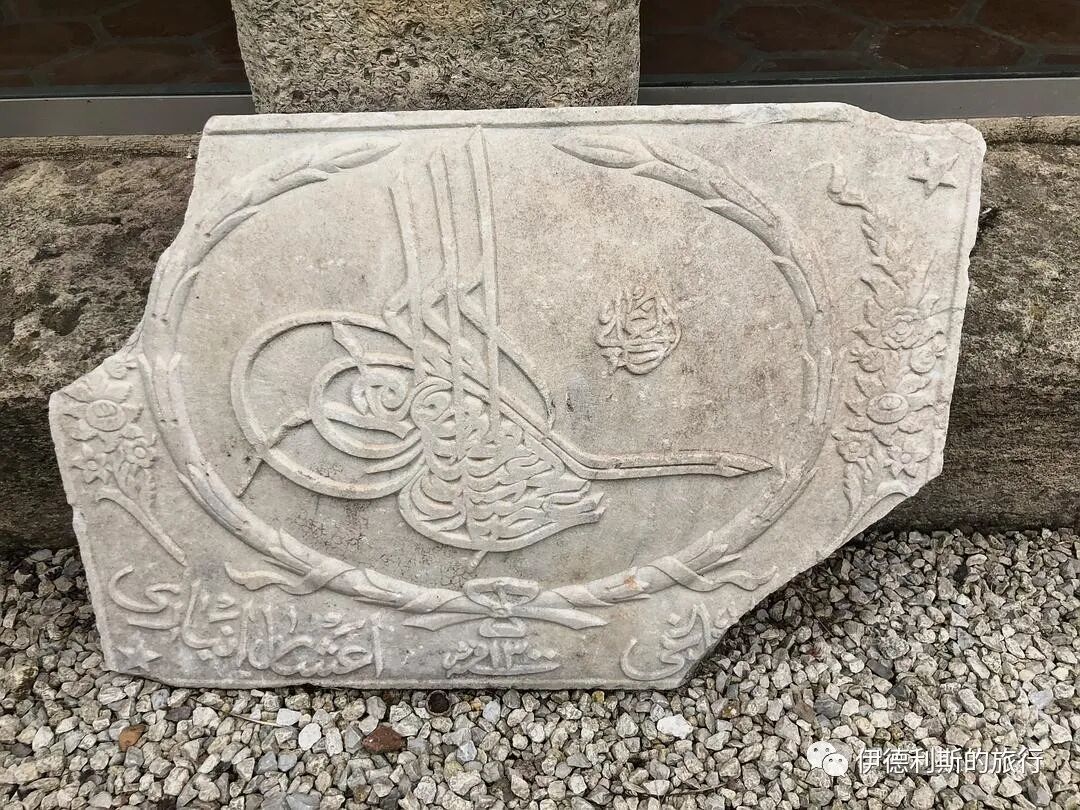
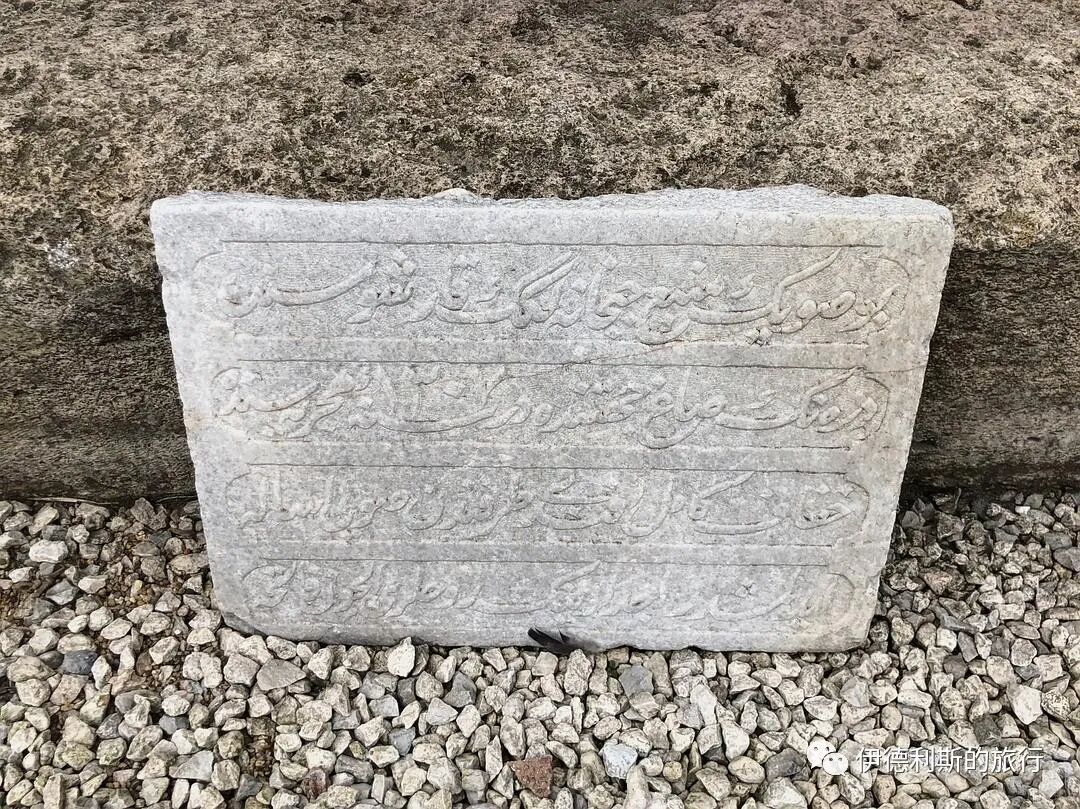
Stone carvings in the Selimiye Quran School Museum.
Arasta Bazaar.
The Arasta Bazaar is 225 meters long, runs parallel to the southwest wall of the mosque, and generates income for the mosque by renting out 124 shops. The bazaar has three large gates, one of which connects to the mosque courtyard via stairs.
Some believe the Arasta Bazaar was built by Davud Aga, Mimar Sinan's successor as imperial chief architect, while others believe it was designed by Mimar Sinan to cover the retaining wall supporting the mosque on the southwest slope and was eventually completed by Davud Aga. This is because Mimar Sinan was very skilled at designing and building structures adapted to sloping terrain.
Between 1863 and 1868, Bahá'u'lláh, the founder of the Bahá'í Faith, was exiled to Edirne by the Ottoman Empire with his family and lived near the Selimiye Mosque. During this period, he wrote numerous works, proclaimed the Bahá'í Faith to countries around the world, and formally broke with another leader, Mirza Yahya, which was a major event in Bahá'í history.
At the bazaar in Edirne, I bought the local specialty, crescent-shaped almond cookies called Kavala kurabiyesi. Kavala is now an important seaport in northern Greece, which was ruled by the Ottoman Empire from 1371 to 1913. During the population exchange between Turkey and Greece in 1922, tens of thousands of Turks left Kavala to settle in Edirne, bringing this cookie with them to Edirne. view all
Summary: This travel note introduces Selimiye Mosque in Edirne: Ottoman Architecture, Islamic History and Halal Travel. The Selimiye Mosque (Selimiye Camii) in Edirne was commissioned by Ottoman Sultan Selim II (reigned 1566-1574) and built by the imperial chief architect Mimar Sinan between 1567 and 1575. It is useful for readers interested in Selimiye Mosque, Ottoman Architecture, Turkey Travel.
The Selimiye Mosque (Selimiye Camii) in Edirne was commissioned by Ottoman Sultan Selim II (reigned 1566-1574) and built by the imperial chief architect Mimar Sinan between 1567 and 1575. It is hailed as a supreme achievement in the history of Ottoman architecture, a masterpiece of 16th-century Ottoman Islamic art, and the undisputed representative work of Mimar Sinan. It was inscribed on the UNESCO World Heritage List in 2011.
On June 22, 1567, Selim II traveled from Istanbul to Edirne to sign a peace treaty with Austria; it is said that the order to build the mosque was given at this time.
The entire complex (Külliye) consists of 9 parts: the mosque, a courtyard with a fountain, the Dar’ül-Kurra Quran School (Foundation Museum), the Dar'ül-Hadis Hadith School (Museum of Turkish and Islamic Art), the Arasta Bazaar, a primary school, a clock tower (Muvakkithane), the outer courtyard of the mosque, and a library. It is the most prominent building complex in the old city of Edirne.
The mosque, the Quran school, and the Hadith school are located within a 190-meter by 130-meter wall, with the mosque in the center and the schools to the southwest and southeast, respectively. The clock tower is to the northwest, and the bazaar and primary school are to the west.
From UNESCO World Heritage Centre documents.
Exterior of the mosque.
The area where the mosque stands was originally the site of the first palace built in Edirne by the fourth Ottoman Sultan, Bayezid I (reigned 1389-1402). After the Ottoman Empire moved its capital from Edirne to Istanbul in 1453, the old palace gradually became a military headquarters and later a square.
In 1567, soldiers were sent to Edirne to participate in the construction of the mosque. In 1568, timber merchants around Edirne began to supply the mosque construction at full capacity. Meanwhile, large quantities of marble were transported to Edirne by warships from Marmara Island and the Kavala quarries in northern Greece, a process that continued until 1572.
By 1572, the eight supporting arches of the mosque were completed, and the construction of the dome officially began. To highlight the centralization of the Ottoman Empire, Mimar Sinan wanted the Selimiye Mosque to appear as a unified whole from both inside and outside, unlike earlier Ottoman mosques composed of many small domes or semi-domes. Therefore, he decided to build a massive central dome that would surpass the Hagia Sophia. The dome was officially completed in 1575, standing 42.3 meters high with a diameter of 31.5 meters and weighing 20 tons.
At the same time, Mimar Sinan abandoned the traditional Ottoman mosque design of minarets of varying heights, instead building four minarets in the front courtyard, each 71 meters tall. These four vertically symmetrical minarets shoot toward the sky like rockets from the corners of the courtyard, setting off the massive dome rising from the center. They dominate the city's skyline and give the entire mosque a sense of immense majesty.
Overall, the decoration of the mosque's facade is relatively simple, lacking the intricate carvings found in Seljuk and other Iranian architecture. Instead, the layout of the facade is determined by the structure itself, which is a hallmark of Mimar Sinan's architecture and is considered by later generations to be the classical aesthetic of Ottoman architecture of this period.
From UNESCO World Heritage Centre documents.
The main gate of the mosque's prayer hall features a Muqarnas structure. Muqarnas, also known as Ahoopāy in Iranian architecture, is a form of decorative vaulting in Islamic architecture. Muqarnas is sometimes called a "honeycomb vault" or "stalactite vault." It first appeared in Iran and entered Turkey with the Seljuk Empire in the 11th century. The purpose of this structure is to create a relatively smooth and decorative transition area in the exposed structural space between walls and ceilings.
Courtyard.
The courtyard in front of the mosque's prayer hall covers 2,475 square meters, surrounded by a cloister of 18 domes, with a fountain for wudu (ablution) in the center. The marble columns in the courtyard were brought from ruins in Cyprus, Aydincik near the Kapıdağ Peninsula, and Syria. Mimar Sinan designed the front porch near the courtyard gate to be relatively narrow and low to emphasize the grandeur of the mosque's prayer hall.
Mimar Sinan made a bold innovation with the fountain; in this sixteen-sided marble fountain, we can see compositions and very interesting details never before seen in Ottoman fountains of that time.
This is the largest ablution fountain Mimar Sinan ever built, and its decoration is very different from traditional ones. Each marble slab has a wide and deep contour band on the lower part, with a pointed-arch mirror stone in the middle, and openwork geometric carvings on the upper part. Above that is a crown-shaped stone slab with "Rumi patterns" (a style of stylized floral/leaf motifs). Sinan designed special supports for the bottom edge of the fountain based on the lines of each faucet.
According to historical records, in 1572, Mimar Sinan ordered water to be supplied to the fountain from Kayalar village.
Interior of the mosque.
In the Selimiye Mosque, Mimar Sinan utilized an octagonal support system, with 8 columns supporting the massive central dome. During the Bulgarian siege of Edirne in 1913, the mosque's dome was hit by Bulgarian artillery. Because the dome was extremely sturdy, it suffered only minor damage. Later, Atatürk ordered that the traces of the shelling be preserved as a warning to future generations.
The mihrab (prayer niche) is located in a rear apse that protrudes from the prayer hall, providing enough depth for sunlight to enter from three sides of the windows. The white marble-carved mihrab is a spectacular work of its time. Unfortunately, the original 16th-century calligraphy on the semi-dome above the mihrab did not survive; what we see today is a 1985 restoration in the Baroque style.
The tiles around the mihrab were specially ordered by Mimar Sinan from Iznik between 1572 and 1575 and were the highest quality tiles in the Ottoman Empire at the time. The calligraphy on the tiles was created by Karahisari Molla Hasan, a student and adopted son of the famous 16th-century Ottoman calligrapher Ahmed Karahisari.
The use of Iznik tiles made Mimar Sinan not only an outstanding architect but also an excellent artist. In the interior design, Mimar Sinan tried to avoid overwhelming the architecture with decoration, so the tiles were distributed in specific areas as a finishing touch. Dominated by blue and white, the Iznik tiles accented with coral red are typical of the second half of the 16th century. These tiles are extremely rich in content; there are 101 different types of tulip patterns alone, and they were the best in the 16th century in terms of both glaze and quality.
The minbar (pulpit) of the Selimiye Mosque occupies a very important place among classical Ottoman artworks. The minbar is carved from a single block of white marble and has 25 steps, with an extremely elegant design. The beauty produced by the fusion of these geometric shapes is the artistic crystallization that Mimar Sinan pursued throughout his life.
Directly opposite the mihrab is the stone platform where the muezzin stands to call the adhan (call to prayer), supported by 12 white marble columns. The thick columns to the southwest of the platform are composed of vertical, slender rectangular panels, which contain the stairs for the muezzin to climb. The platform has walnut railings, and the underside is decorated with gold-leaf Chinese-style cloud knots, an important example of decoration from the classical Ottoman period. The dark blue background is covered with naturalistic dagger-shaped leaves, chrysanthemums, and Chinese-style clouds. The passion flower pattern on the blue background was brought to Anatolia by Central Asian Turkic people in the 8th-9th centuries and symbolizes eternity.
There is a fountain on the first level of the platform, with an inverted tulip pattern on the top. The tulip holds great significance in Turkish and Islamic art as well as in Islamic faith. Because the sum of the numerical values of the letters in the words "tulip" and "Allah" is 66, people believe that the tulip can symbolize the uniqueness and beauty of Allah; sometimes people even write the word "Allah" in the shape of a tulip.
Quran School (Museum).
The Selimiye Quran School is quite unique among Sinan's works. It features a dual-school layout with the Dar'ül-Kurra Quran School and the Dar'ül-Hadis Hadith School, which are symmetrical to the main mosque. Furthermore, it is the only Quran school built by Sinan that features a honeycomb Muqarnas gate.
The school consists of a large classroom, a series of small student rooms, and a water room surrounding a rectangular courtyard. The main mosque can be seen from both courtyards.
The Hadith school was built between 1567 and 1574, and the first lecturer (Muderris) was appointed in 1570-71 with a daily salary of 60 dirhams. In addition, there was 1 assistant lecturer (Muid) with a daily salary of 9 dirhams, 15 students with a daily salary of 4 dirhams, and 1 doorman (Bevvab), 1 administrator (Ferraş), and 1 cleaner, each with a daily salary of 3 dirhams.
The Quran school had 1 sheikh with a daily salary of 40 dirhams, 10 Hafiz (those who have memorized the Quran) with a daily salary of 2 dirhams, and 1 doorman, 1 administrator, and 1 cleaner, each with a daily salary of 2 dirhams.
In 1925, Atatürk ordered the Hadith school to be converted into the Museum of Turkish and Islamic Art, and the Quran school later became the Foundation Museum, which operates to this day.
In the large classroom of the Quran school, teachers taught students the rules and methods of Quran recitation and listened to and corrected the students' mistakes. Students attended 5 classes a day, 4 days a week. After completing all courses, they would earn the title of Hafiz, becoming someone who could recite the Quran proficiently.
Students studying in a room at the Quran school. In the Ottoman education system, one could enroll in a Quran school after graduating from primary school. The school's curriculum focused mainly on repetitive recitation and discussion. In addition, students learned marble carving and the art of calligraphy, with all funding provided by the Ottoman Sultan's foundation.
Iznik ceramics used in the Selimiye Mosque.
The ancient city of Iznik is located on the shores of Lake Iznik, 90 kilometers southeast of Istanbul. In the late 15th century, it became the center of ceramic production for the Ottoman Empire.
The earliest visible Iznik ceramics were found in the imperial kitchens of the Topkapi Palace in Istanbul in 1489. Due to the Ottoman rulers' love for Chinese blue-and-white porcelain, Iznik ceramics combined traditional Ottoman arabesque patterns with Chinese elements. The style of early Iznik ceramics is known as "Rumi-Hatayi," where "Rumi" represents Ottoman arabesque patterns and "Hatayi" represents Chinese floral patterns.
Early Iznik ceramics were only cobalt blue; after the 16th century, gray-green and lavender were gradually introduced as soft tones. In the late 16th century, Mimar Sinan used Iznik tiles extensively in his architecture, replacing gray-green with bright green and lavender with bright red. The first building with red Iznik tiles was the Süleymaniye Mosque, built by Mimar Sinan in Istanbul in 1557.
In 1557, Kara Mehmed Çelebi became the chief painter of the Ottoman court. He introduced a floral style consisting of tulips, carnations, roses, and hyacinths into Iznik ceramics, making the patterns on the ceramics more natural.
The wooden windows of the Bayezid II Mosque in Edirne (1484-1488) use a Turkish geometric woodworking art called "kundekari," which also features Thuluth calligraphy.
Kundekari uses small pieces of wood that are interlocked and fixed together through special joints, without the use of nails or glue. The wood used is usually sturdy apple, pear, walnut, or cedar, and is often inlaid with pearls, tortoiseshell, ivory, or metals like gold and silver. Kundekari is heat-resistant and moisture-proof, protecting wooden panels from warping due to temperature and humidity changes, so it is mainly used for doors, windows, cabinets, and mosque cupboards.
The Sultan Bayezid II Complex (Sultan II Bayezid Külliyesi) is located on the north bank of the Tunca River in the northwestern suburbs of Edirne and was commissioned by the eighth Ottoman Sultan, Bayezid II (reigned 1481-1512). Bayezid II was the son of Mehmed the Conqueror and was known as "the Just." During his reign, he worked hard to maintain internal government affairs and defeated the Republic of Venice externally, leading the Ottoman Empire into a prosperous phase.
18th-century Hilye (calligraphic description of the Prophet) calligraphy in a glass bottle at the Old Mosque (Eski Cami) in Edirne. Built in 1414, the Old Mosque is the oldest mosque in Edirne and one of the last multi-domed mosques to use the early Ottoman Seljuk style, marking a farewell to early Ottoman architectural styles.
Thuluth calligraphy written by Mustafa Rasim in 1787 at the Old Mosque in Edirne, featuring verses praising the mosque by the local Edirne poet Akif (the son of the calligrapher).
18th-century brass door handle with a palm tree design at the Üç Şerefeli Mosque (Three-Balcony Mosque) in Edirne. The Üç Şerefeli Mosque was built between 1438 and 1447 and was the first central-domed mosque and the first mosque with a portico in Ottoman history, providing great inspiration to Mimar Sinan. The Üç Şerefeli Mosque suffered from fire and earthquakes in the mid-18th century and was subsequently restored.
1478 Thuluth calligraphy stone tablet at the Evliya Kasım Paşa Mosque in Edirne. It records that Kasım Paşa built this mosque in the year 883 of the Hijri calendar. Kasım Paşa was a famous Ottoman general who served as the commander of the European part of the Ottoman Empire. Between 1443 and 1444, he commanded the Ottoman army against the multinational crusader forces of Poland, Hungary, and others in Serbia and Bulgaria. The mosque was closed after 1950 due to the construction of a dam. Since then, it has been continuously damaged by floods and is now abandoned.
19th-century certificates from the Great Mosque of Kütahya; the first was written by Mustafa Sukru, and the second by Ahmed Hamdi. The Great Mosque of Kütahya was built between 1381 and 1410 and is the most important mosque in Kütahya.
1845 Naskh-script Quran from the Lal Huseyin Pasha Mosque in Kütahya, written by Hafiz Mustafa Sabri.
18th-19th century Naskh-script Quran from the Sari Mosque in Edirne.
15th-century tiles from the Şah Melek Mosque in Edirne. The Şah Melek Mosque was commissioned by the blind Şah Melek Pasha in 1429 and is famous for the tiles laid inside. Şah Melek Pasha played an important role in the succession war between the princes of Ottoman Sultan Bayezid I and later became an important figure in the courts of Sultan Mehmed I and Murad II.
15th-century tiles from the Muradiye Mosque in Edirne. The Muradiye Mosque was commissioned by the sixth Ottoman Sultan, Murad II (reigned 1421-1444), in 1436. This site was originally part of a Sufi Mevlevi order complex and was later converted into a mosque.
The interior of the mosque is famous for its beautiful tiles. Before being stolen in 2001, there were 479 tiles in the prayer hall with 54 different designs, 15 of which appeared only once, showing the strong influence of Yuan dynasty blue-and-white porcelain. The blue-and-white hexagonal tiles are the earliest examples of Ottoman underglaze tiles. Because the arrangement of some tiles lacks coherence, some scholars believe that some of them were moved from the Ottoman palace in Edirne in the north.
A beautiful inlaid wooden table.
18th-century pearl and ivory inlaid Quran stand from the Yıldız Hamidiye Mosque in Istanbul.
1882 stone tablet from the Selcuk Hatun Mosque in Edirne.
Stone carvings in the Selimiye Quran School Museum.
Arasta Bazaar.
The Arasta Bazaar is 225 meters long, runs parallel to the southwest wall of the mosque, and generates income for the mosque by renting out 124 shops. The bazaar has three large gates, one of which connects to the mosque courtyard via stairs.
Some believe the Arasta Bazaar was built by Davud Aga, Mimar Sinan's successor as imperial chief architect, while others believe it was designed by Mimar Sinan to cover the retaining wall supporting the mosque on the southwest slope and was eventually completed by Davud Aga. This is because Mimar Sinan was very skilled at designing and building structures adapted to sloping terrain.
Between 1863 and 1868, Bahá'u'lláh, the founder of the Bahá'í Faith, was exiled to Edirne by the Ottoman Empire with his family and lived near the Selimiye Mosque. During this period, he wrote numerous works, proclaimed the Bahá'í Faith to countries around the world, and formally broke with another leader, Mirza Yahya, which was a major event in Bahá'í history.
At the bazaar in Edirne, I bought the local specialty, crescent-shaped almond cookies called Kavala kurabiyesi. Kavala is now an important seaport in northern Greece, which was ruled by the Ottoman Empire from 1371 to 1913. During the population exchange between Turkey and Greece in 1922, tens of thousands of Turks left Kavala to settle in Edirne, bringing this cookie with them to Edirne. view all
Reposted from the web
Summary: This travel note introduces Selimiye Mosque in Edirne: Ottoman Architecture, Islamic History and Halal Travel. The Selimiye Mosque (Selimiye Camii) in Edirne was commissioned by Ottoman Sultan Selim II (reigned 1566-1574) and built by the imperial chief architect Mimar Sinan between 1567 and 1575. It is useful for readers interested in Selimiye Mosque, Ottoman Architecture, Turkey Travel.
The Selimiye Mosque (Selimiye Camii) in Edirne was commissioned by Ottoman Sultan Selim II (reigned 1566-1574) and built by the imperial chief architect Mimar Sinan between 1567 and 1575. It is hailed as a supreme achievement in the history of Ottoman architecture, a masterpiece of 16th-century Ottoman Islamic art, and the undisputed representative work of Mimar Sinan. It was inscribed on the UNESCO World Heritage List in 2011.
On June 22, 1567, Selim II traveled from Istanbul to Edirne to sign a peace treaty with Austria; it is said that the order to build the mosque was given at this time.
The entire complex (Külliye) consists of 9 parts: the mosque, a courtyard with a fountain, the Dar’ül-Kurra Quran School (Foundation Museum), the Dar'ül-Hadis Hadith School (Museum of Turkish and Islamic Art), the Arasta Bazaar, a primary school, a clock tower (Muvakkithane), the outer courtyard of the mosque, and a library. It is the most prominent building complex in the old city of Edirne.
The mosque, the Quran school, and the Hadith school are located within a 190-meter by 130-meter wall, with the mosque in the center and the schools to the southwest and southeast, respectively. The clock tower is to the northwest, and the bazaar and primary school are to the west.
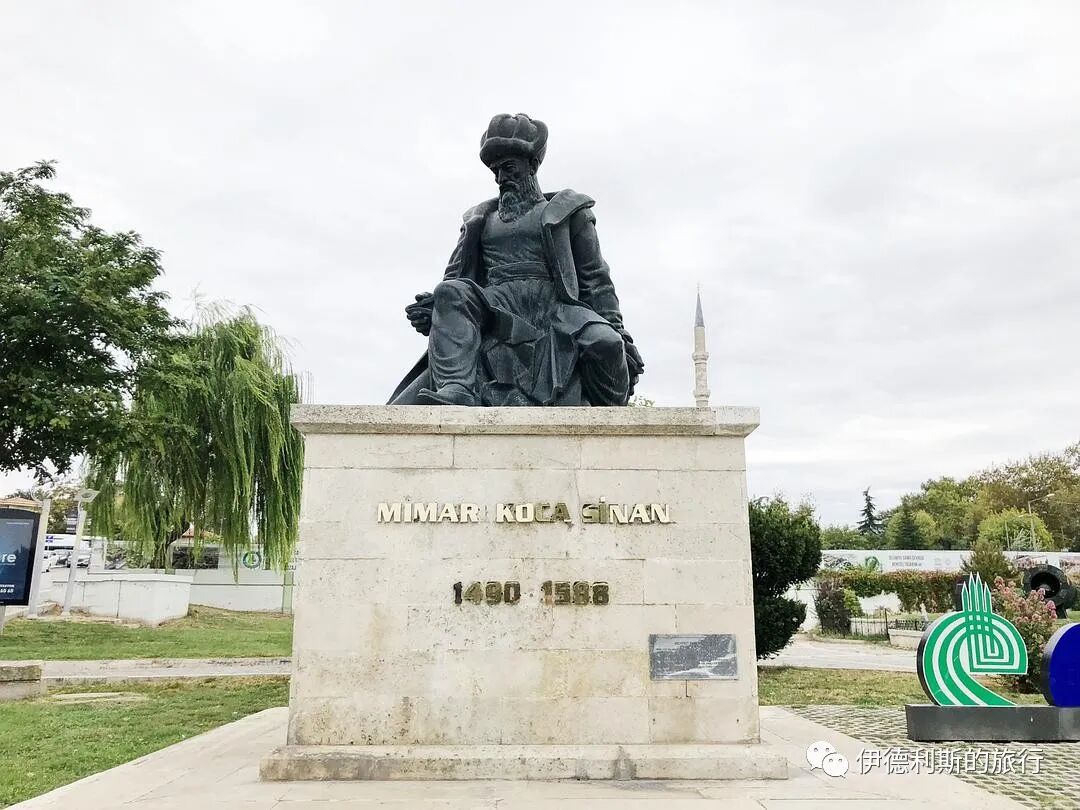
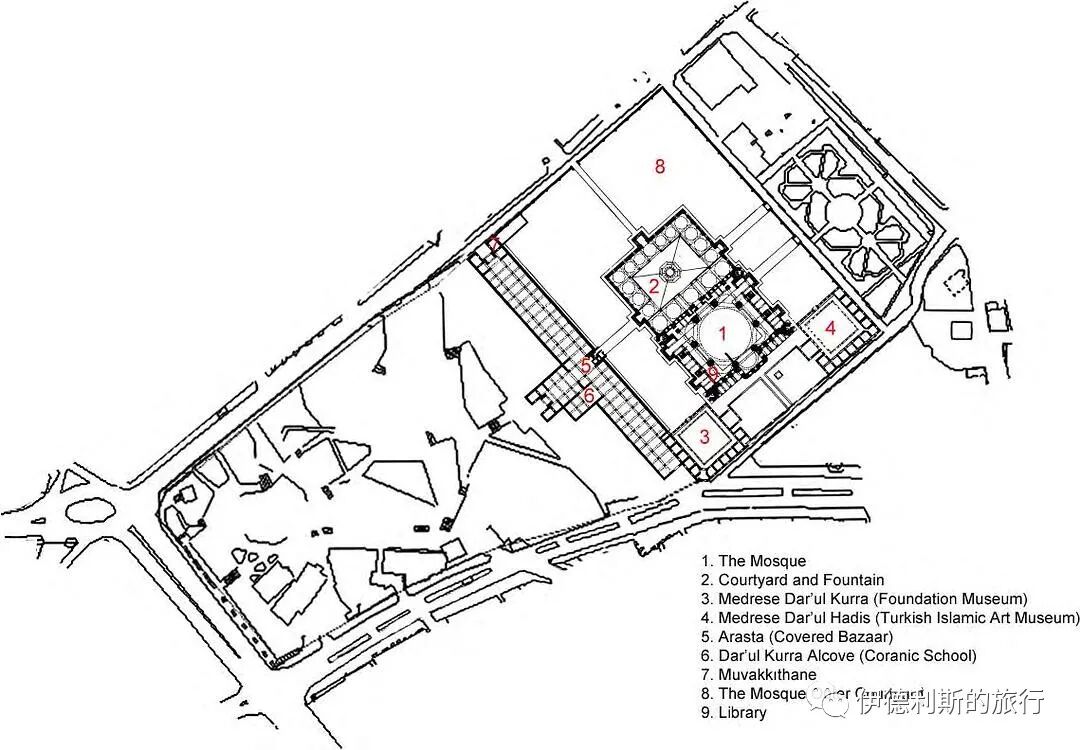
From UNESCO World Heritage Centre documents.
Exterior of the mosque.
The area where the mosque stands was originally the site of the first palace built in Edirne by the fourth Ottoman Sultan, Bayezid I (reigned 1389-1402). After the Ottoman Empire moved its capital from Edirne to Istanbul in 1453, the old palace gradually became a military headquarters and later a square.
In 1567, soldiers were sent to Edirne to participate in the construction of the mosque. In 1568, timber merchants around Edirne began to supply the mosque construction at full capacity. Meanwhile, large quantities of marble were transported to Edirne by warships from Marmara Island and the Kavala quarries in northern Greece, a process that continued until 1572.
By 1572, the eight supporting arches of the mosque were completed, and the construction of the dome officially began. To highlight the centralization of the Ottoman Empire, Mimar Sinan wanted the Selimiye Mosque to appear as a unified whole from both inside and outside, unlike earlier Ottoman mosques composed of many small domes or semi-domes. Therefore, he decided to build a massive central dome that would surpass the Hagia Sophia. The dome was officially completed in 1575, standing 42.3 meters high with a diameter of 31.5 meters and weighing 20 tons.
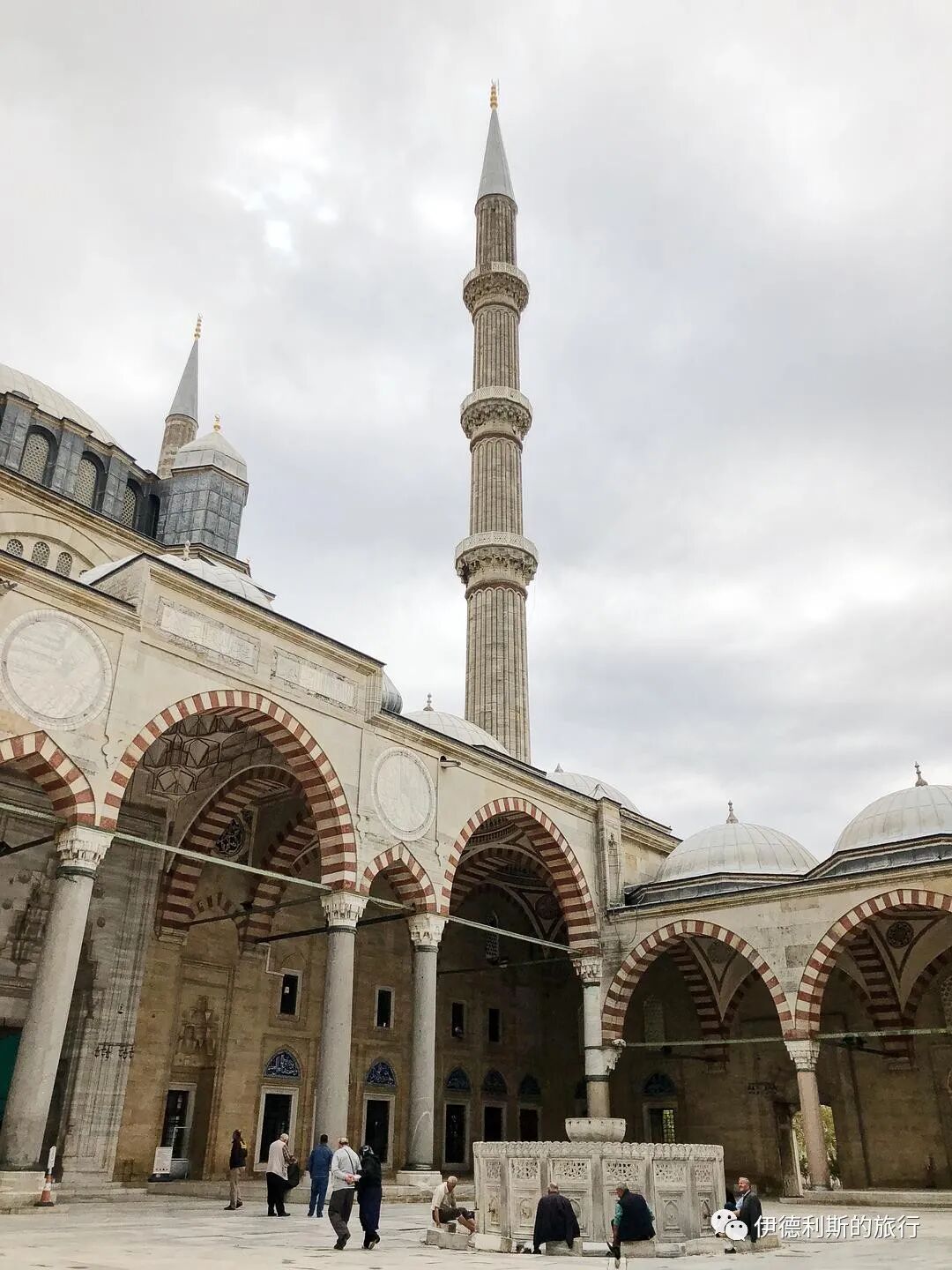
At the same time, Mimar Sinan abandoned the traditional Ottoman mosque design of minarets of varying heights, instead building four minarets in the front courtyard, each 71 meters tall. These four vertically symmetrical minarets shoot toward the sky like rockets from the corners of the courtyard, setting off the massive dome rising from the center. They dominate the city's skyline and give the entire mosque a sense of immense majesty.
Overall, the decoration of the mosque's facade is relatively simple, lacking the intricate carvings found in Seljuk and other Iranian architecture. Instead, the layout of the facade is determined by the structure itself, which is a hallmark of Mimar Sinan's architecture and is considered by later generations to be the classical aesthetic of Ottoman architecture of this period.
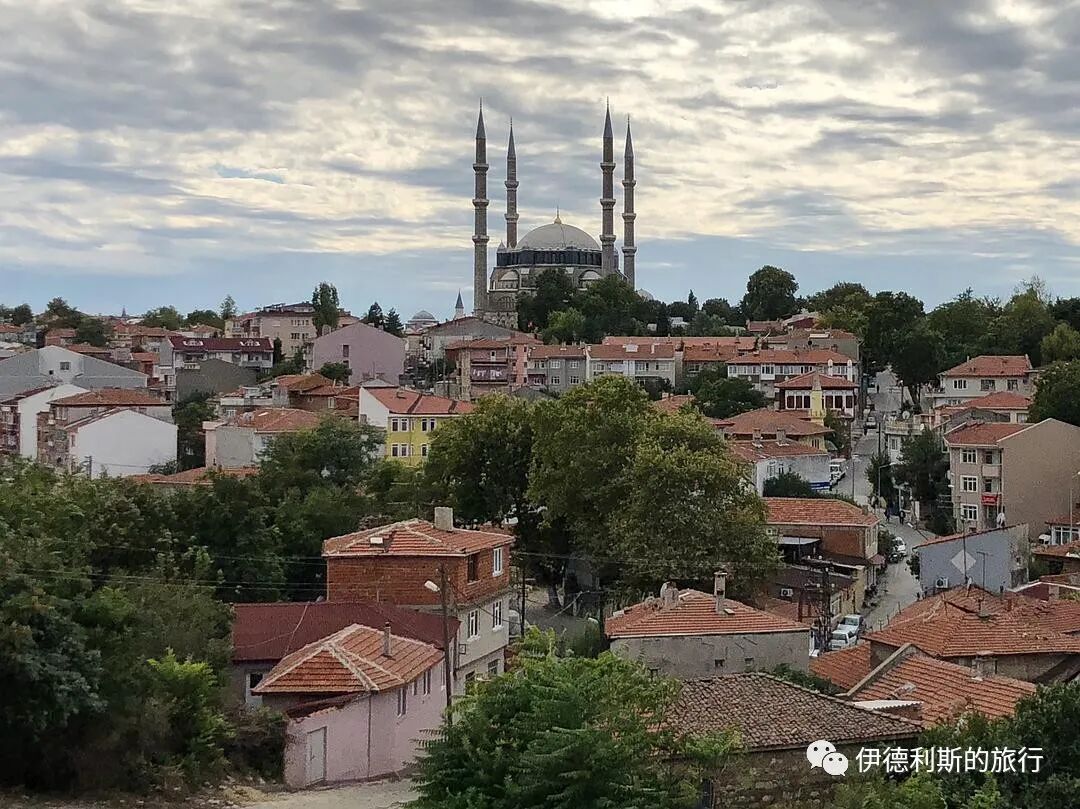
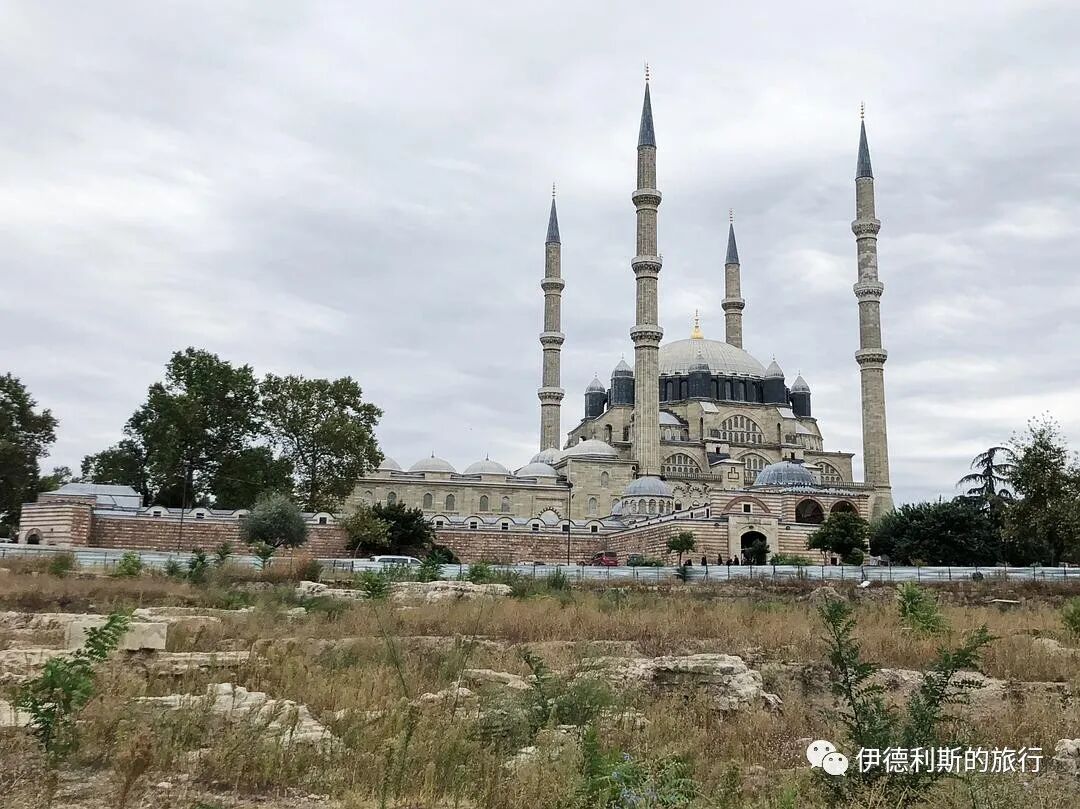
From UNESCO World Heritage Centre documents.
The main gate of the mosque's prayer hall features a Muqarnas structure. Muqarnas, also known as Ahoopāy in Iranian architecture, is a form of decorative vaulting in Islamic architecture. Muqarnas is sometimes called a "honeycomb vault" or "stalactite vault." It first appeared in Iran and entered Turkey with the Seljuk Empire in the 11th century. The purpose of this structure is to create a relatively smooth and decorative transition area in the exposed structural space between walls and ceilings.
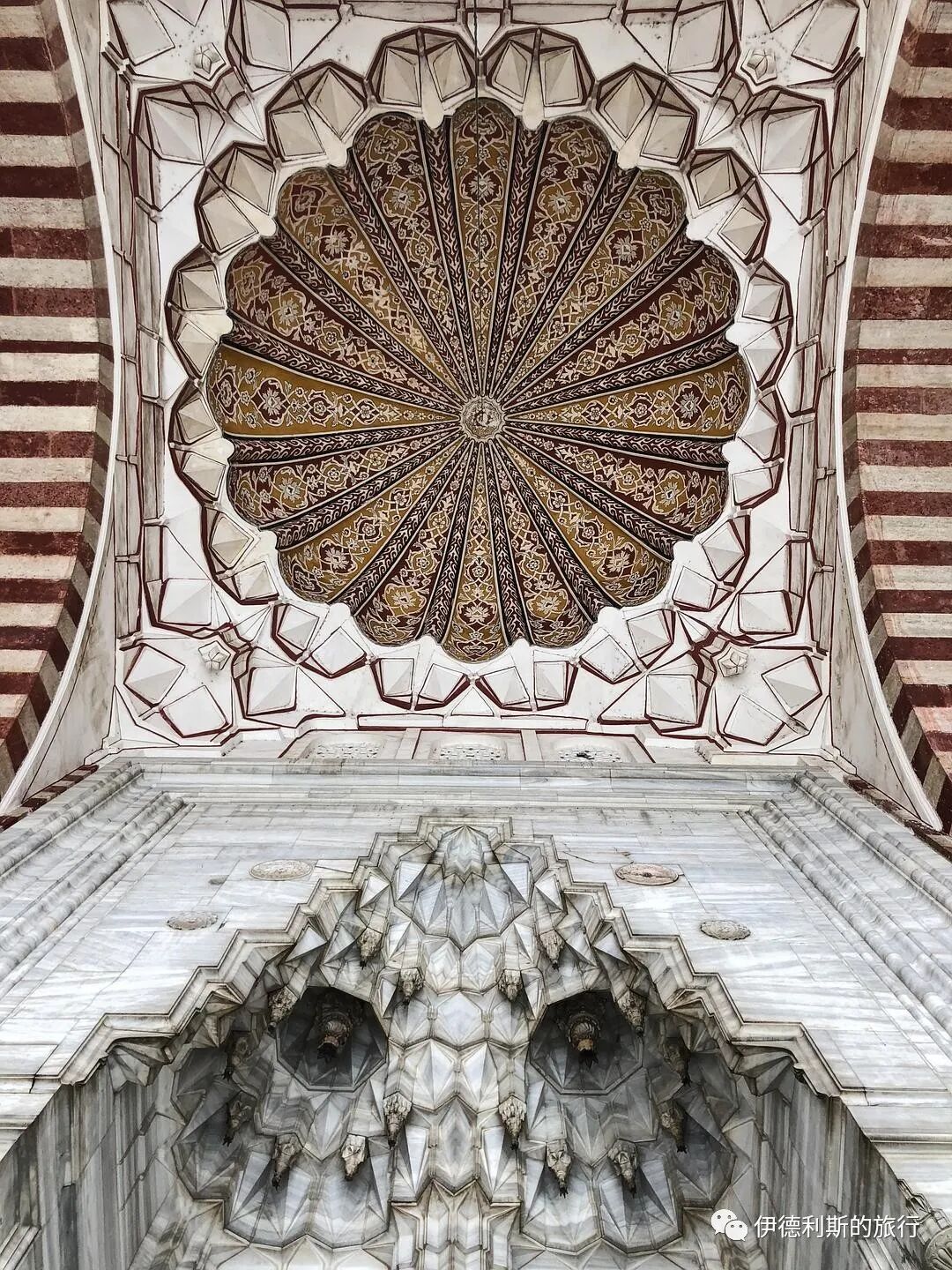
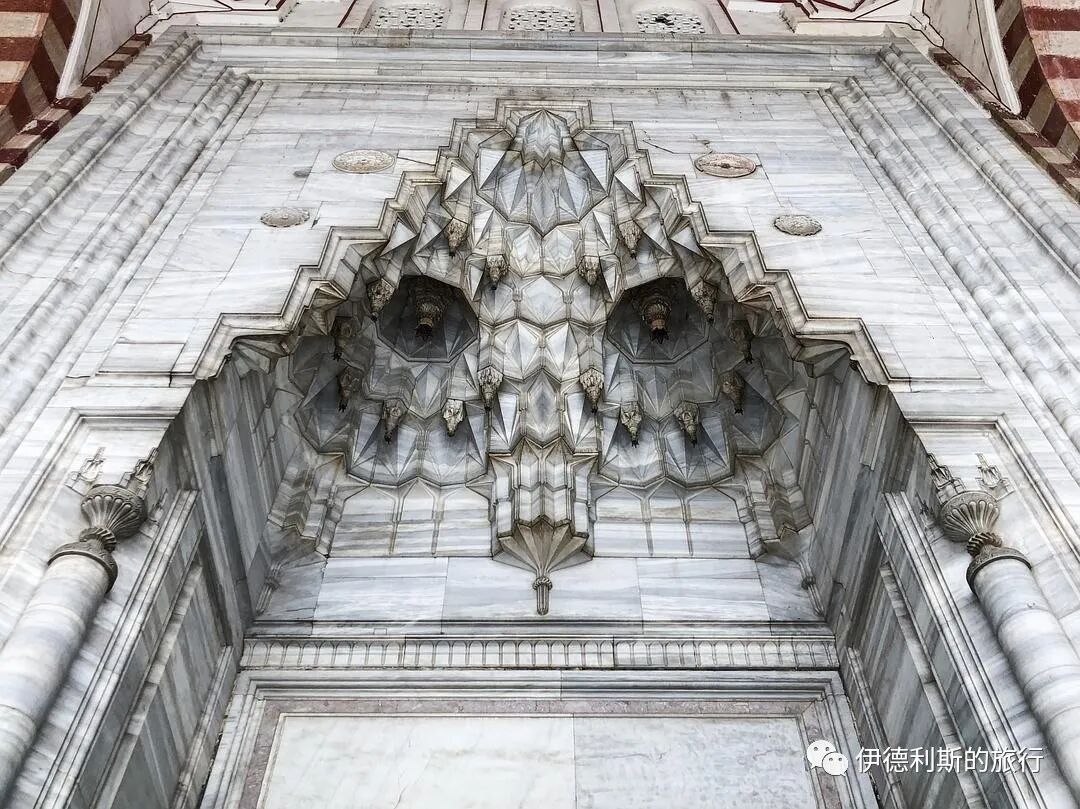
Courtyard.
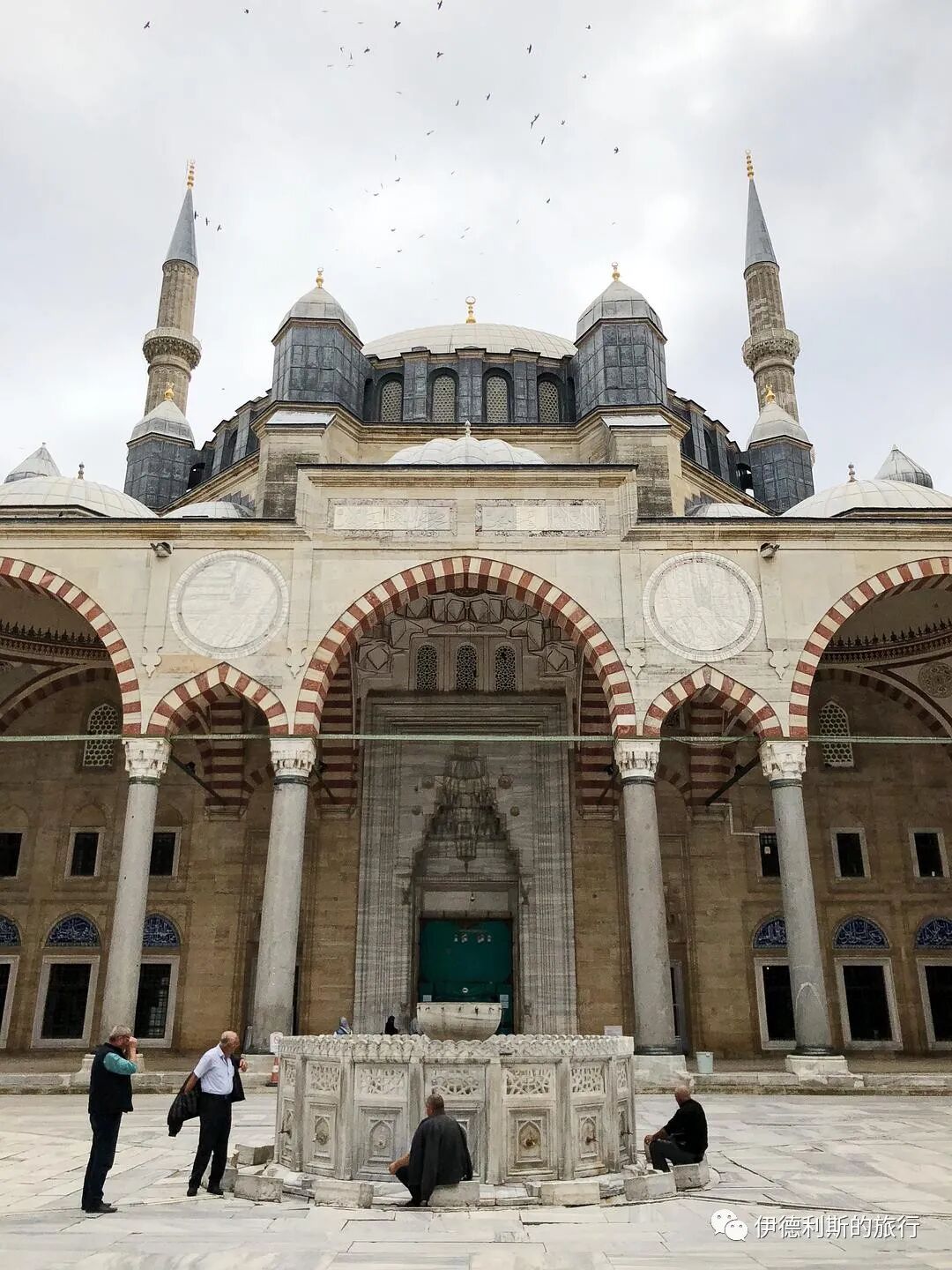
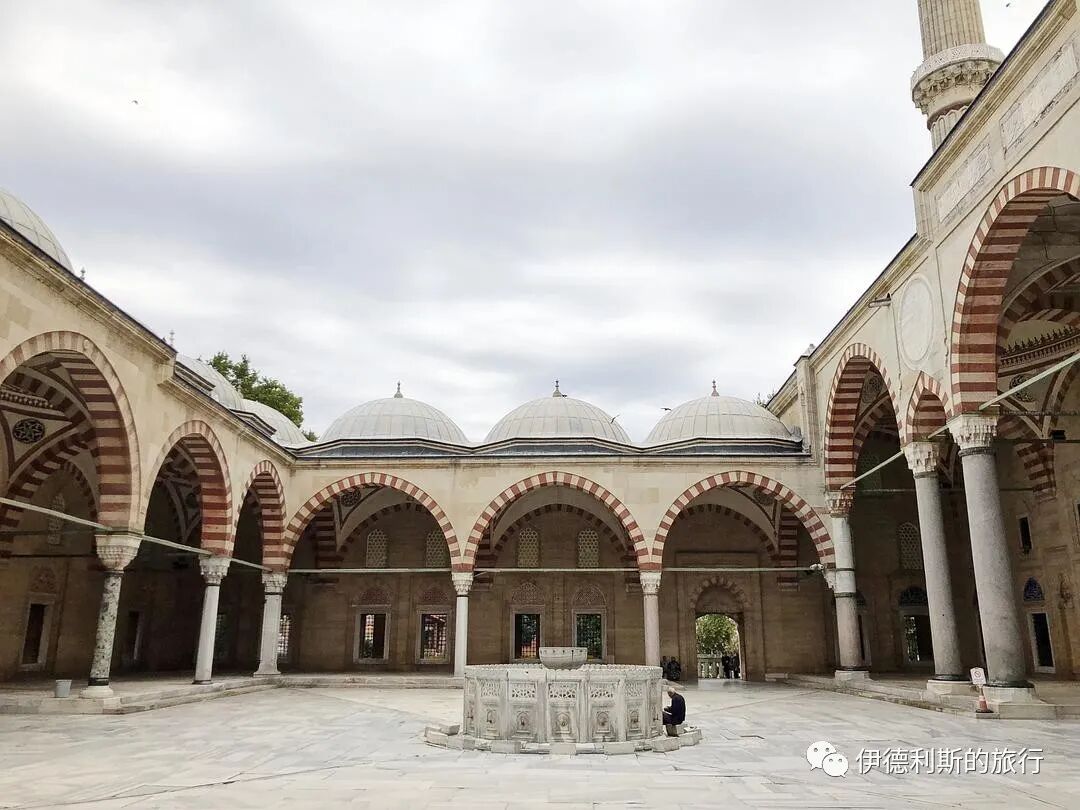
The courtyard in front of the mosque's prayer hall covers 2,475 square meters, surrounded by a cloister of 18 domes, with a fountain for wudu (ablution) in the center. The marble columns in the courtyard were brought from ruins in Cyprus, Aydincik near the Kapıdağ Peninsula, and Syria. Mimar Sinan designed the front porch near the courtyard gate to be relatively narrow and low to emphasize the grandeur of the mosque's prayer hall.
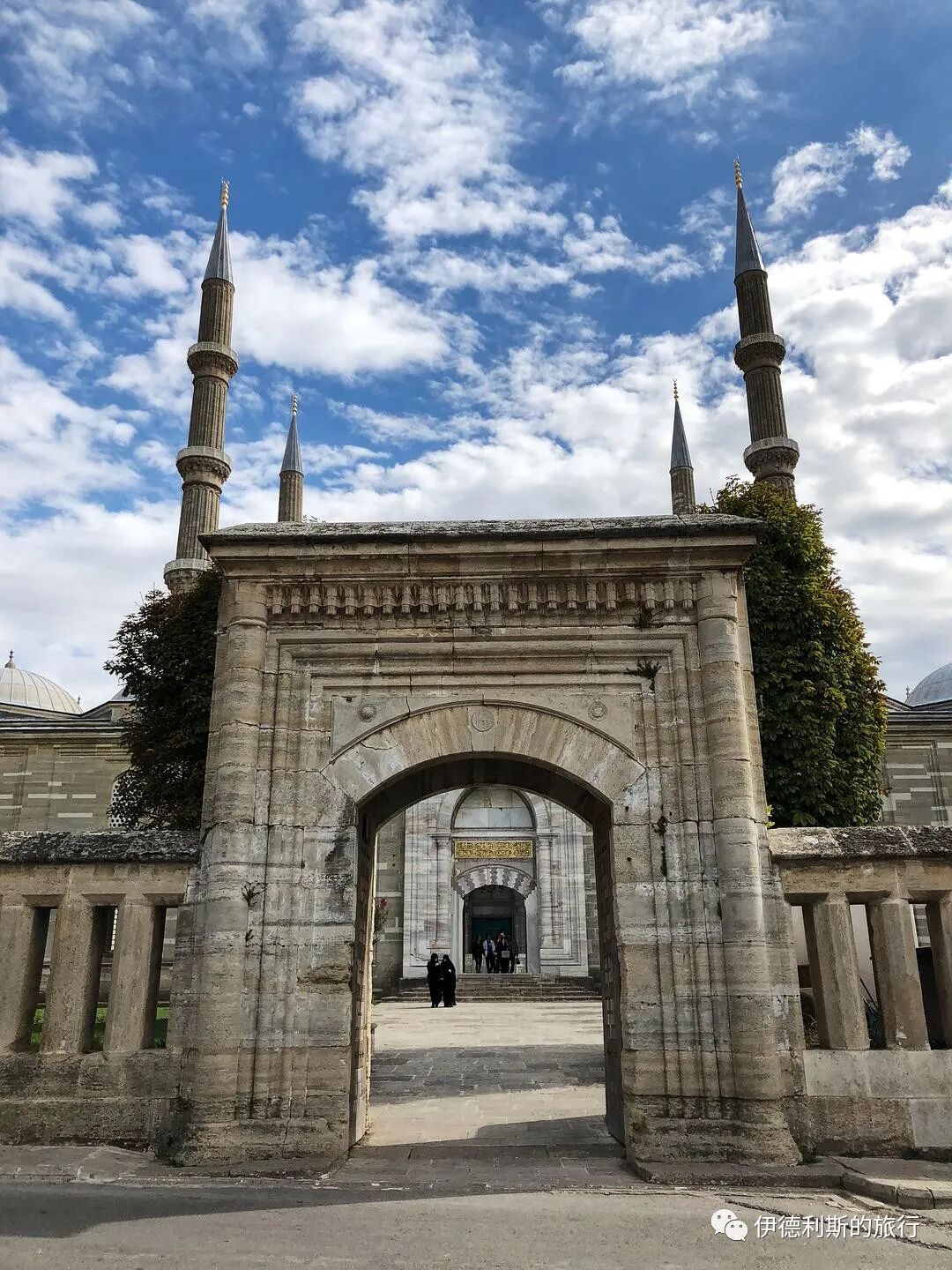
Mimar Sinan made a bold innovation with the fountain; in this sixteen-sided marble fountain, we can see compositions and very interesting details never before seen in Ottoman fountains of that time.
This is the largest ablution fountain Mimar Sinan ever built, and its decoration is very different from traditional ones. Each marble slab has a wide and deep contour band on the lower part, with a pointed-arch mirror stone in the middle, and openwork geometric carvings on the upper part. Above that is a crown-shaped stone slab with "Rumi patterns" (a style of stylized floral/leaf motifs). Sinan designed special supports for the bottom edge of the fountain based on the lines of each faucet.
According to historical records, in 1572, Mimar Sinan ordered water to be supplied to the fountain from Kayalar village.
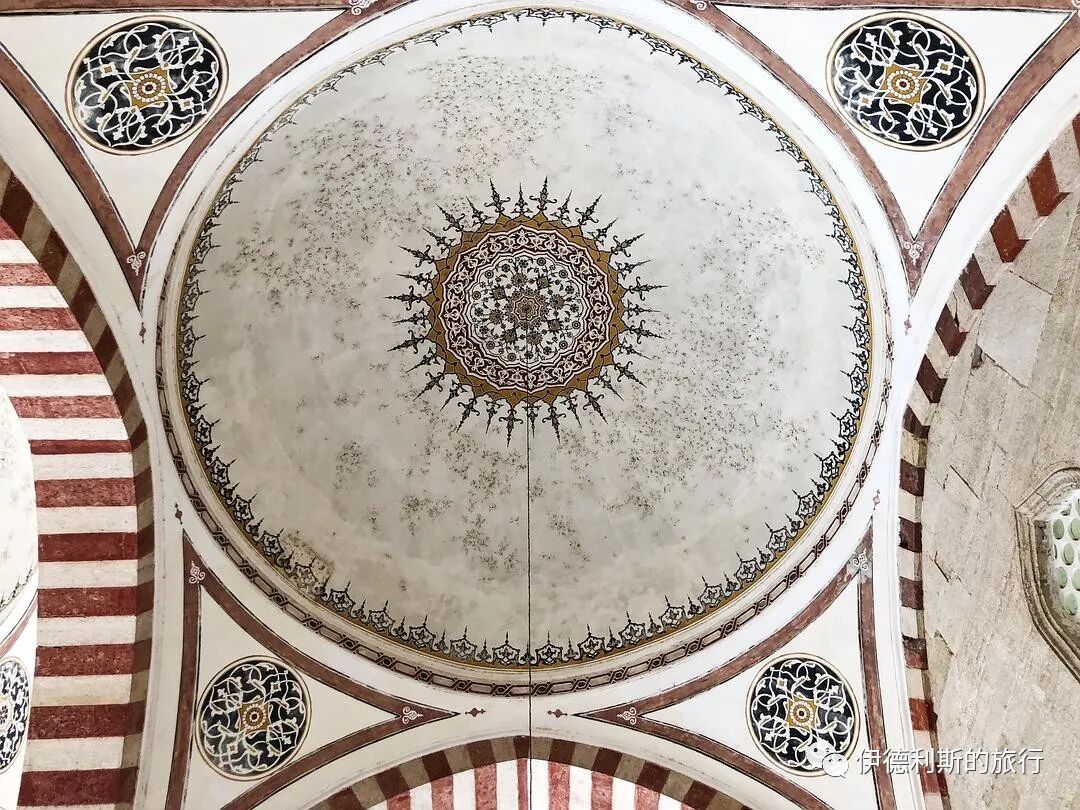
Interior of the mosque.
In the Selimiye Mosque, Mimar Sinan utilized an octagonal support system, with 8 columns supporting the massive central dome. During the Bulgarian siege of Edirne in 1913, the mosque's dome was hit by Bulgarian artillery. Because the dome was extremely sturdy, it suffered only minor damage. Later, Atatürk ordered that the traces of the shelling be preserved as a warning to future generations.
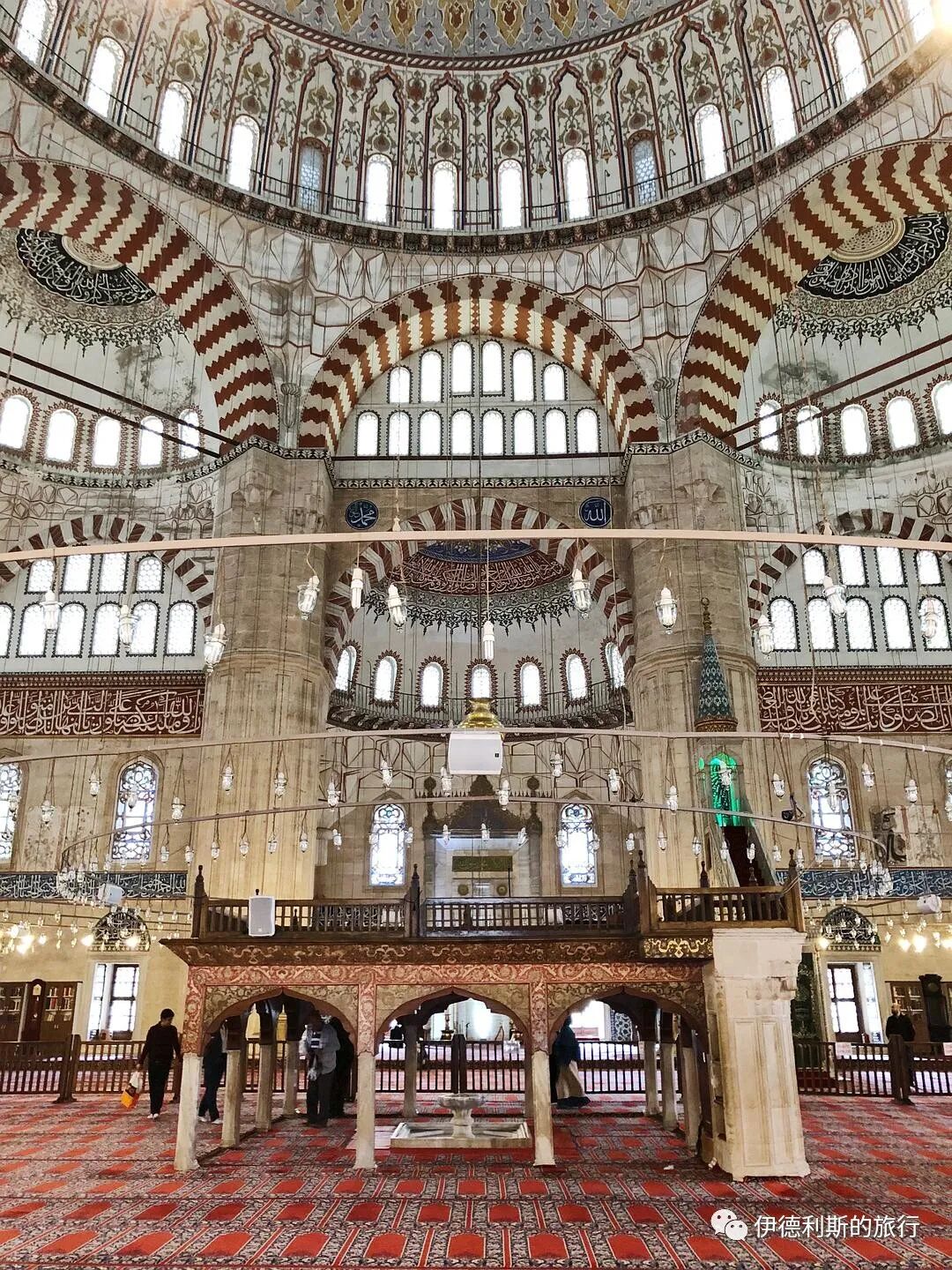
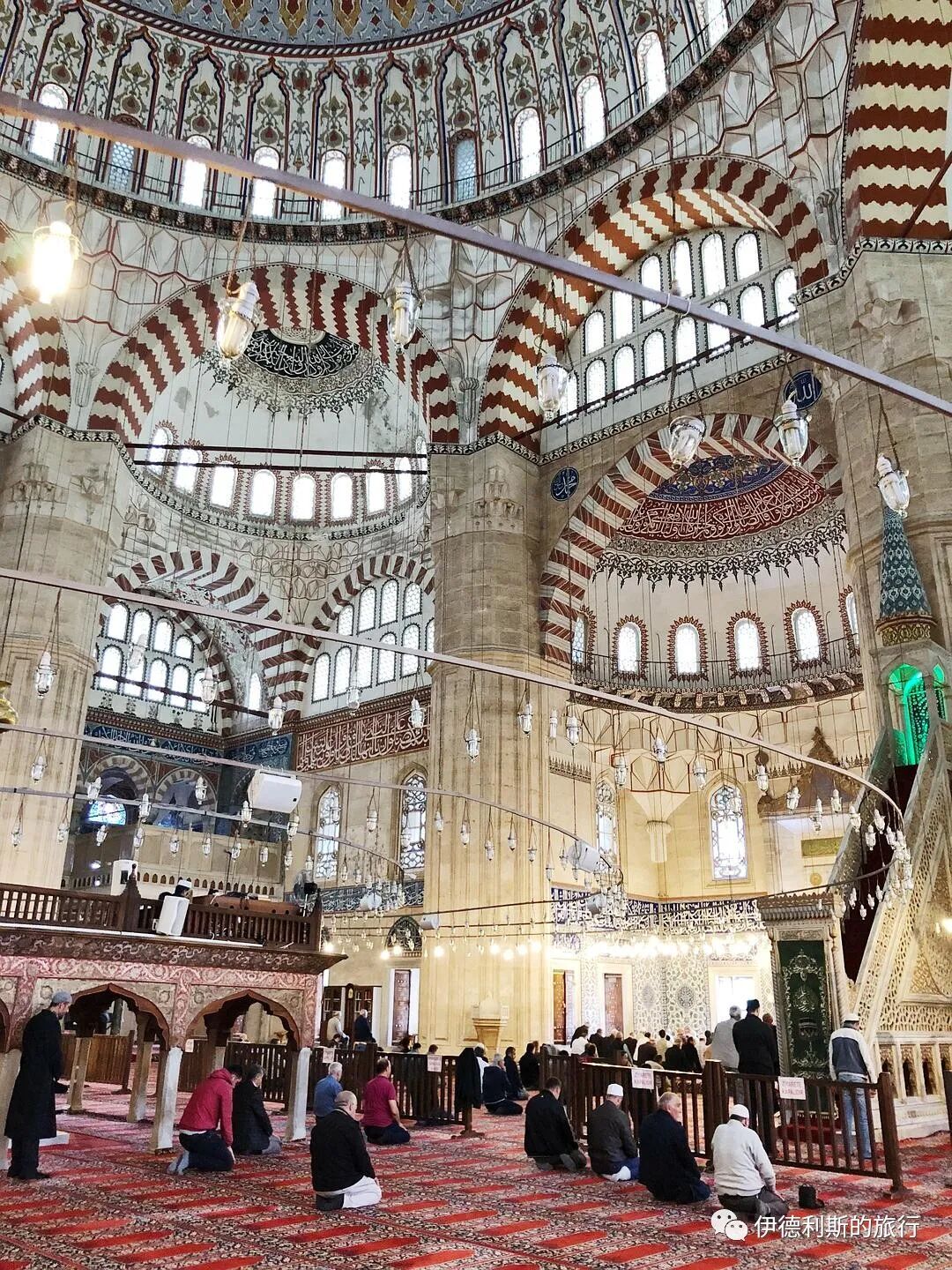
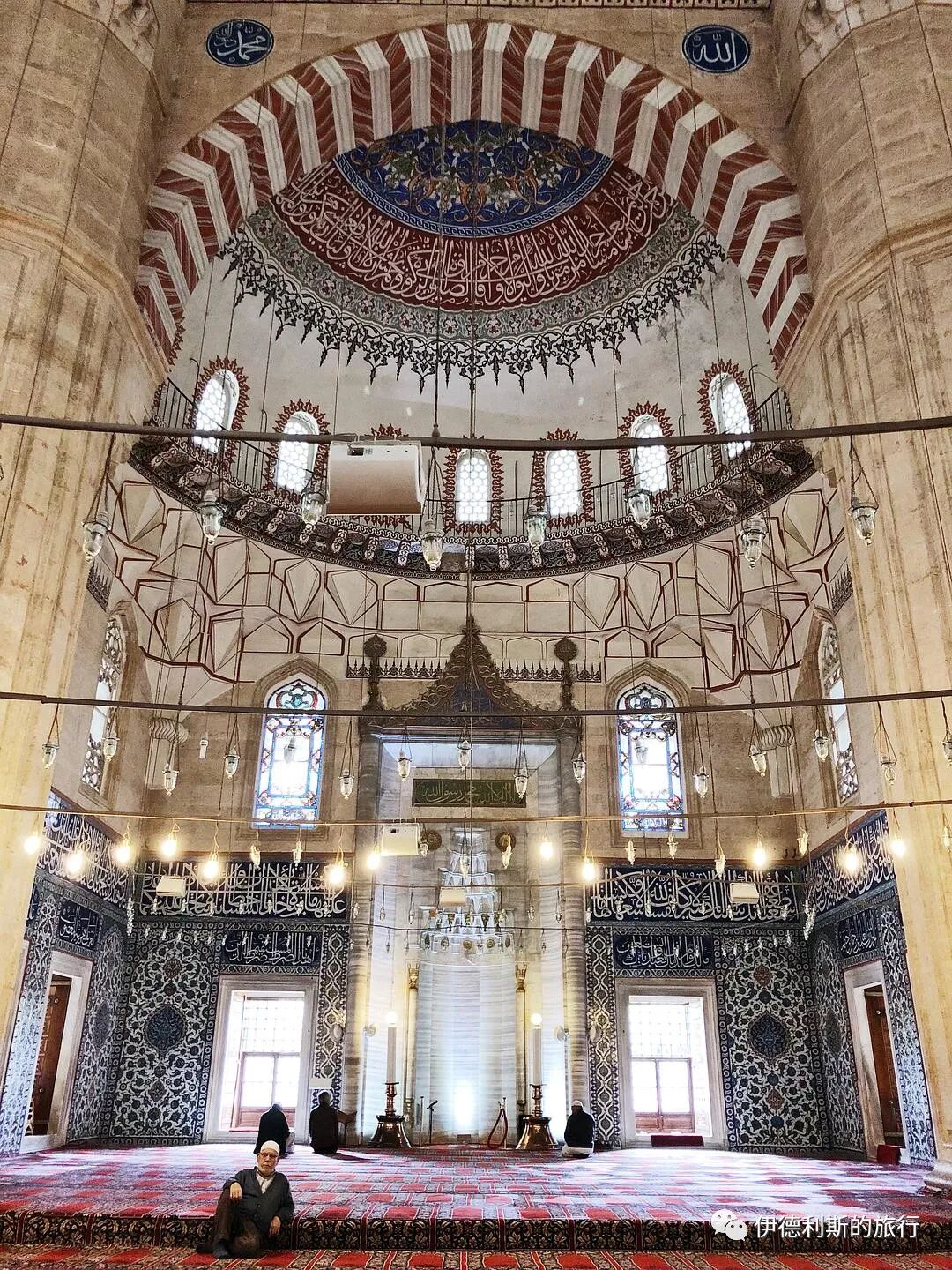
The mihrab (prayer niche) is located in a rear apse that protrudes from the prayer hall, providing enough depth for sunlight to enter from three sides of the windows. The white marble-carved mihrab is a spectacular work of its time. Unfortunately, the original 16th-century calligraphy on the semi-dome above the mihrab did not survive; what we see today is a 1985 restoration in the Baroque style.
The tiles around the mihrab were specially ordered by Mimar Sinan from Iznik between 1572 and 1575 and were the highest quality tiles in the Ottoman Empire at the time. The calligraphy on the tiles was created by Karahisari Molla Hasan, a student and adopted son of the famous 16th-century Ottoman calligrapher Ahmed Karahisari.
The use of Iznik tiles made Mimar Sinan not only an outstanding architect but also an excellent artist. In the interior design, Mimar Sinan tried to avoid overwhelming the architecture with decoration, so the tiles were distributed in specific areas as a finishing touch. Dominated by blue and white, the Iznik tiles accented with coral red are typical of the second half of the 16th century. These tiles are extremely rich in content; there are 101 different types of tulip patterns alone, and they were the best in the 16th century in terms of both glaze and quality.
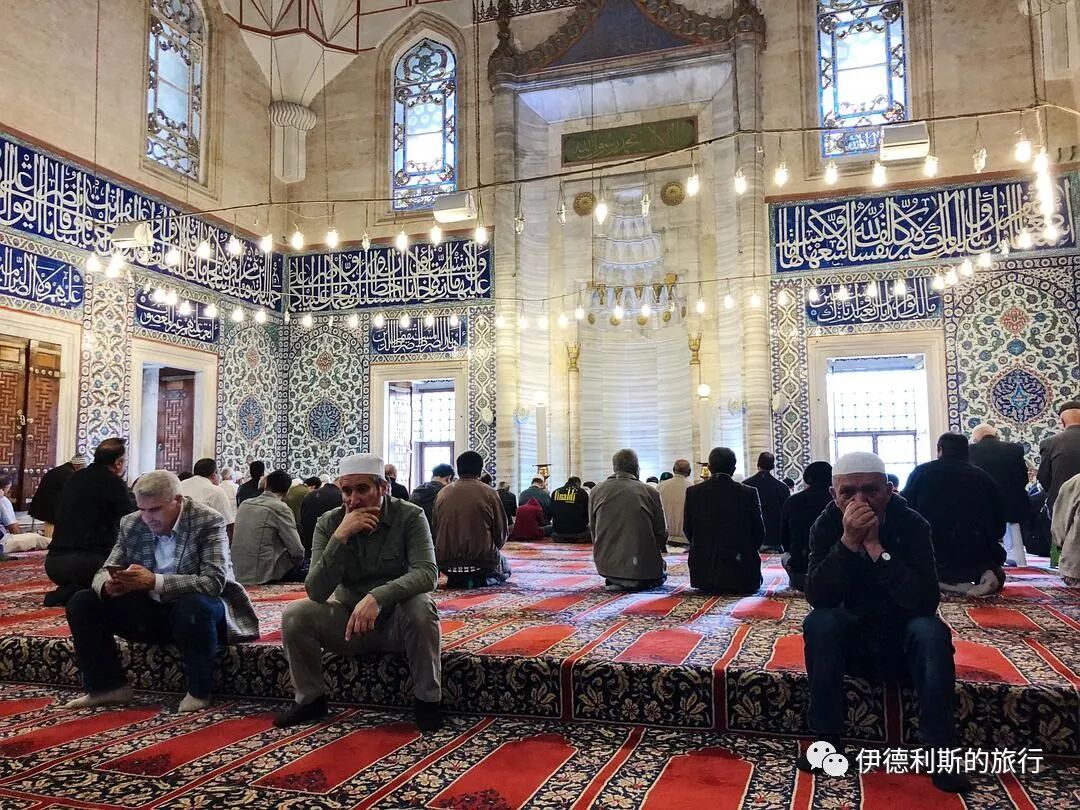
The minbar (pulpit) of the Selimiye Mosque occupies a very important place among classical Ottoman artworks. The minbar is carved from a single block of white marble and has 25 steps, with an extremely elegant design. The beauty produced by the fusion of these geometric shapes is the artistic crystallization that Mimar Sinan pursued throughout his life.
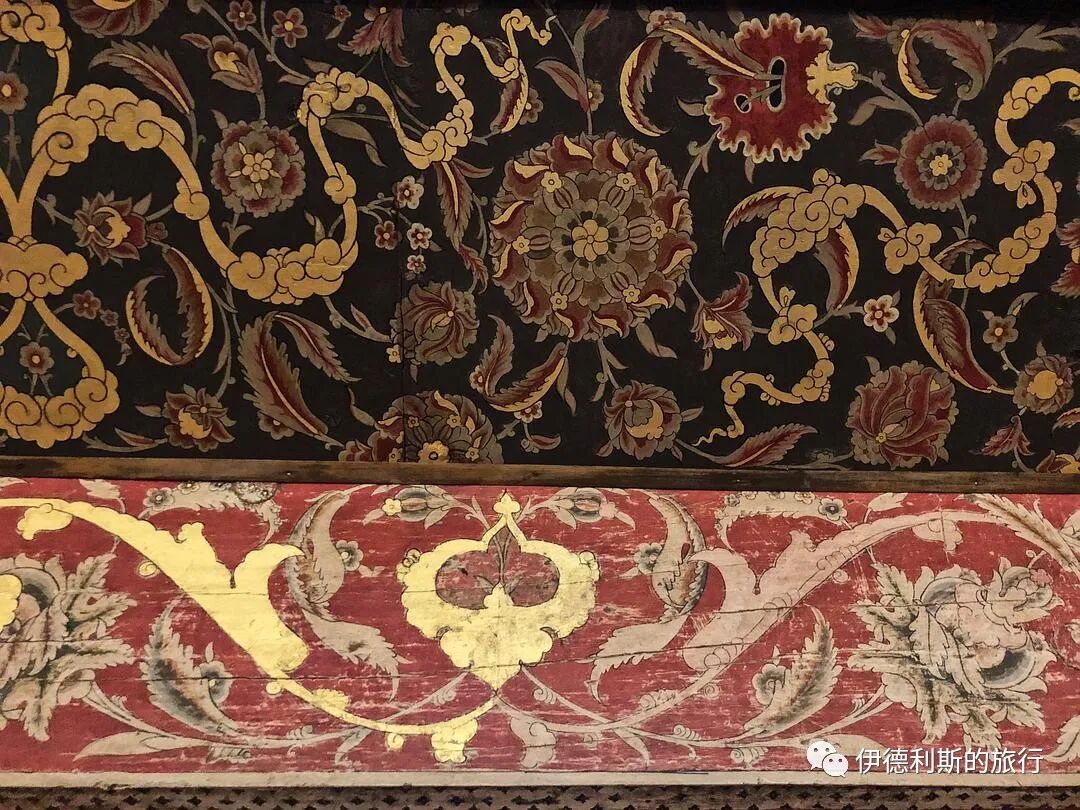
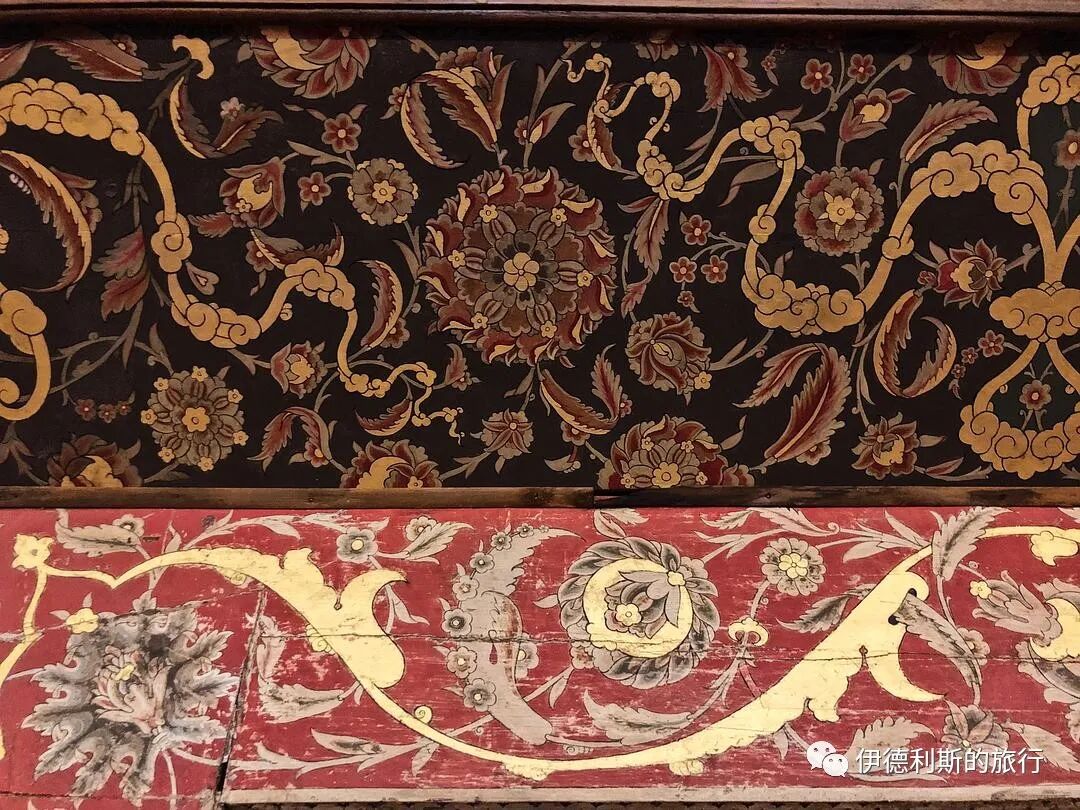
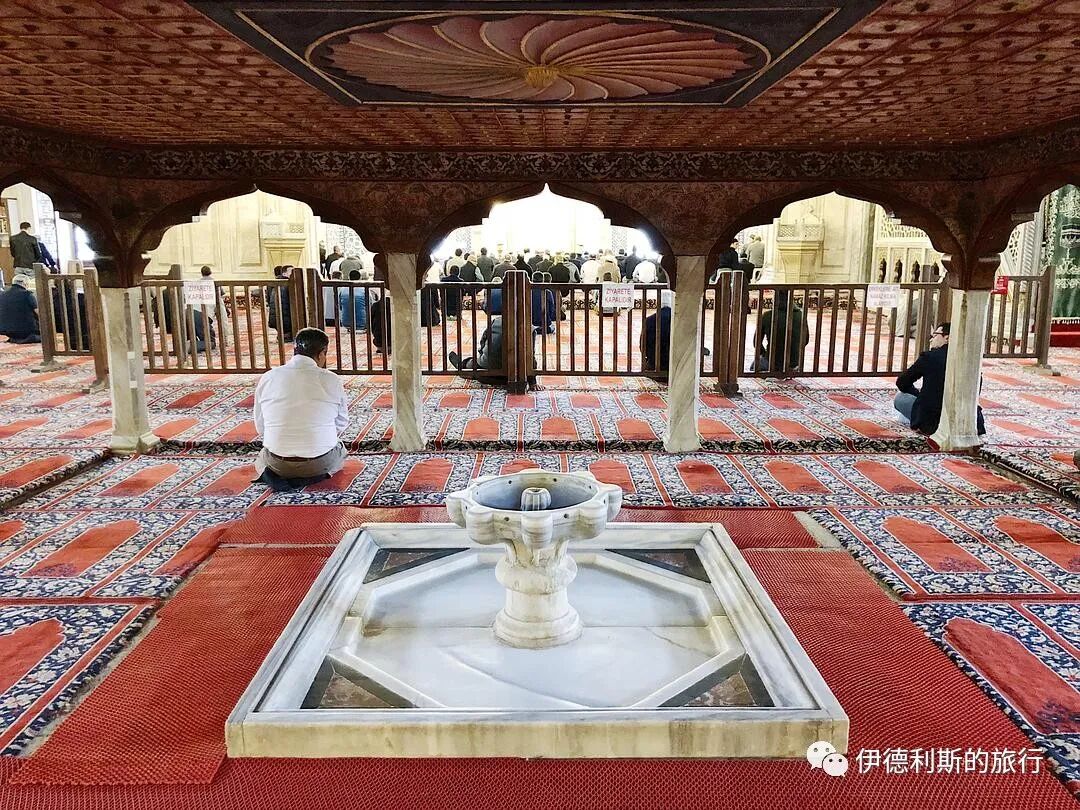
Directly opposite the mihrab is the stone platform where the muezzin stands to call the adhan (call to prayer), supported by 12 white marble columns. The thick columns to the southwest of the platform are composed of vertical, slender rectangular panels, which contain the stairs for the muezzin to climb. The platform has walnut railings, and the underside is decorated with gold-leaf Chinese-style cloud knots, an important example of decoration from the classical Ottoman period. The dark blue background is covered with naturalistic dagger-shaped leaves, chrysanthemums, and Chinese-style clouds. The passion flower pattern on the blue background was brought to Anatolia by Central Asian Turkic people in the 8th-9th centuries and symbolizes eternity.
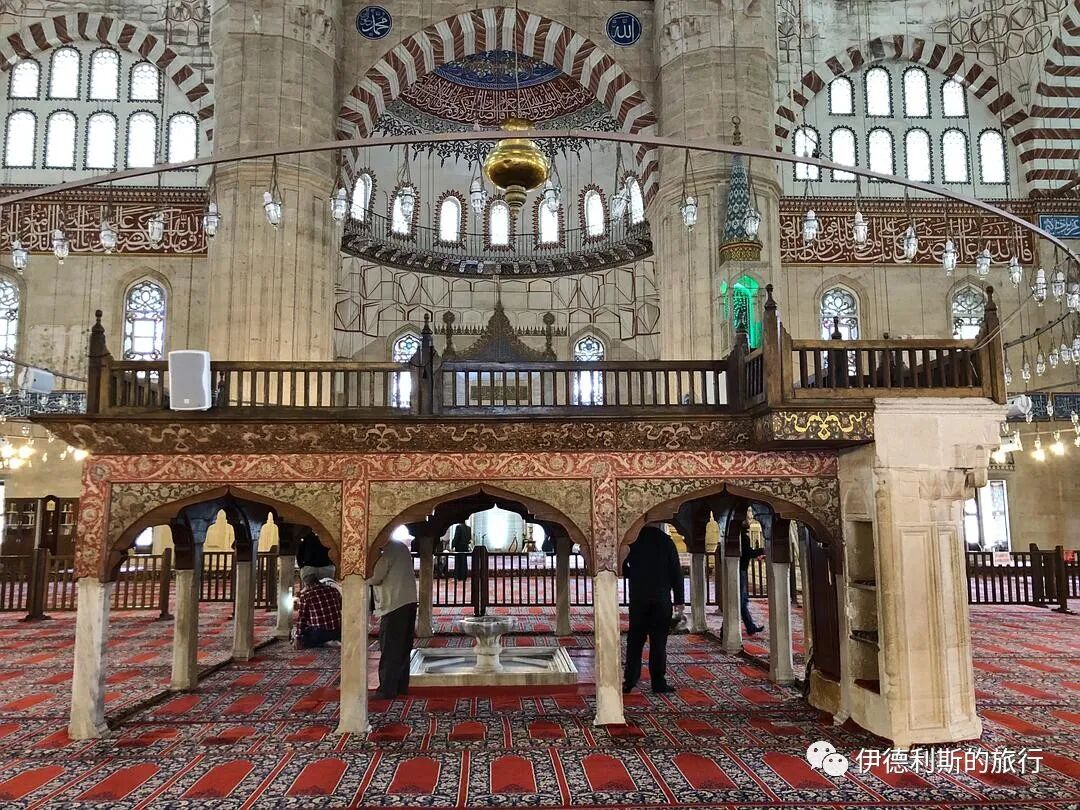
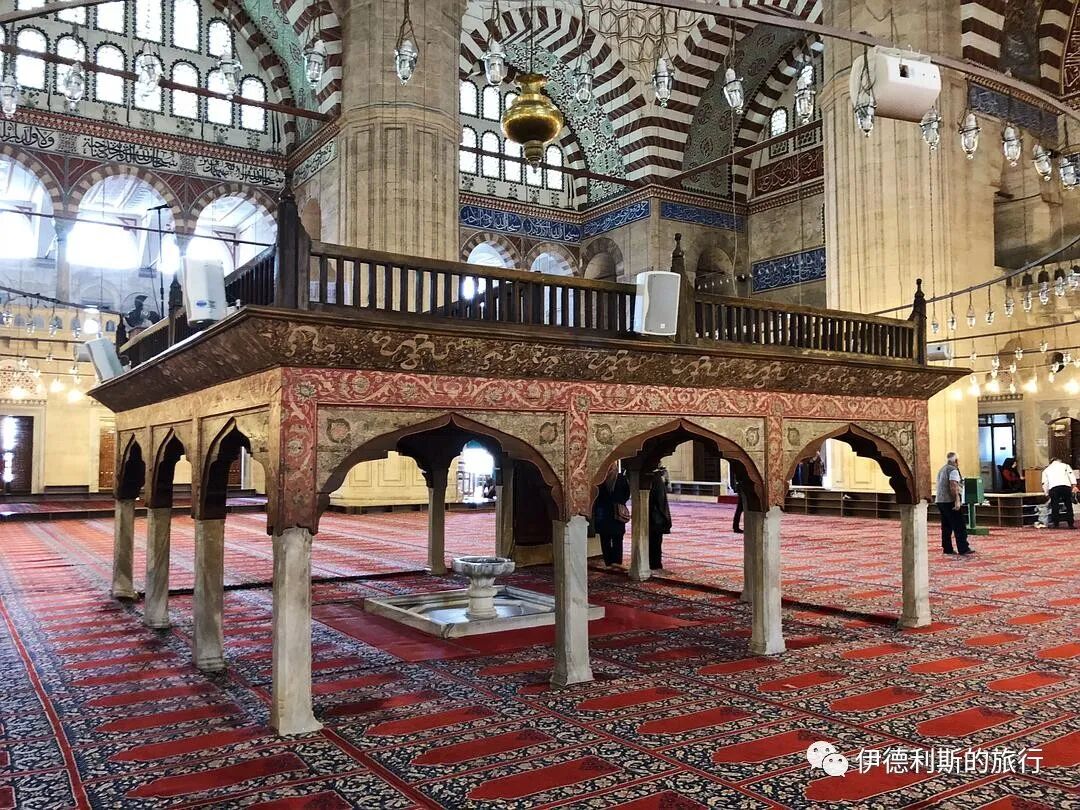
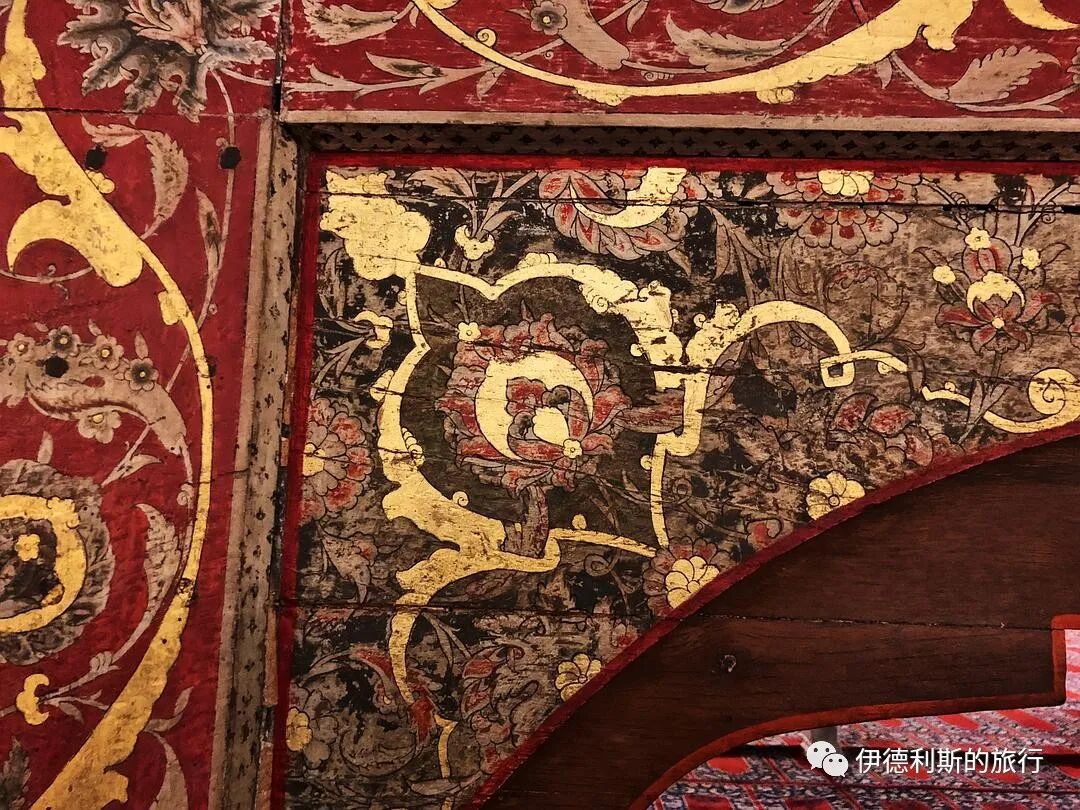
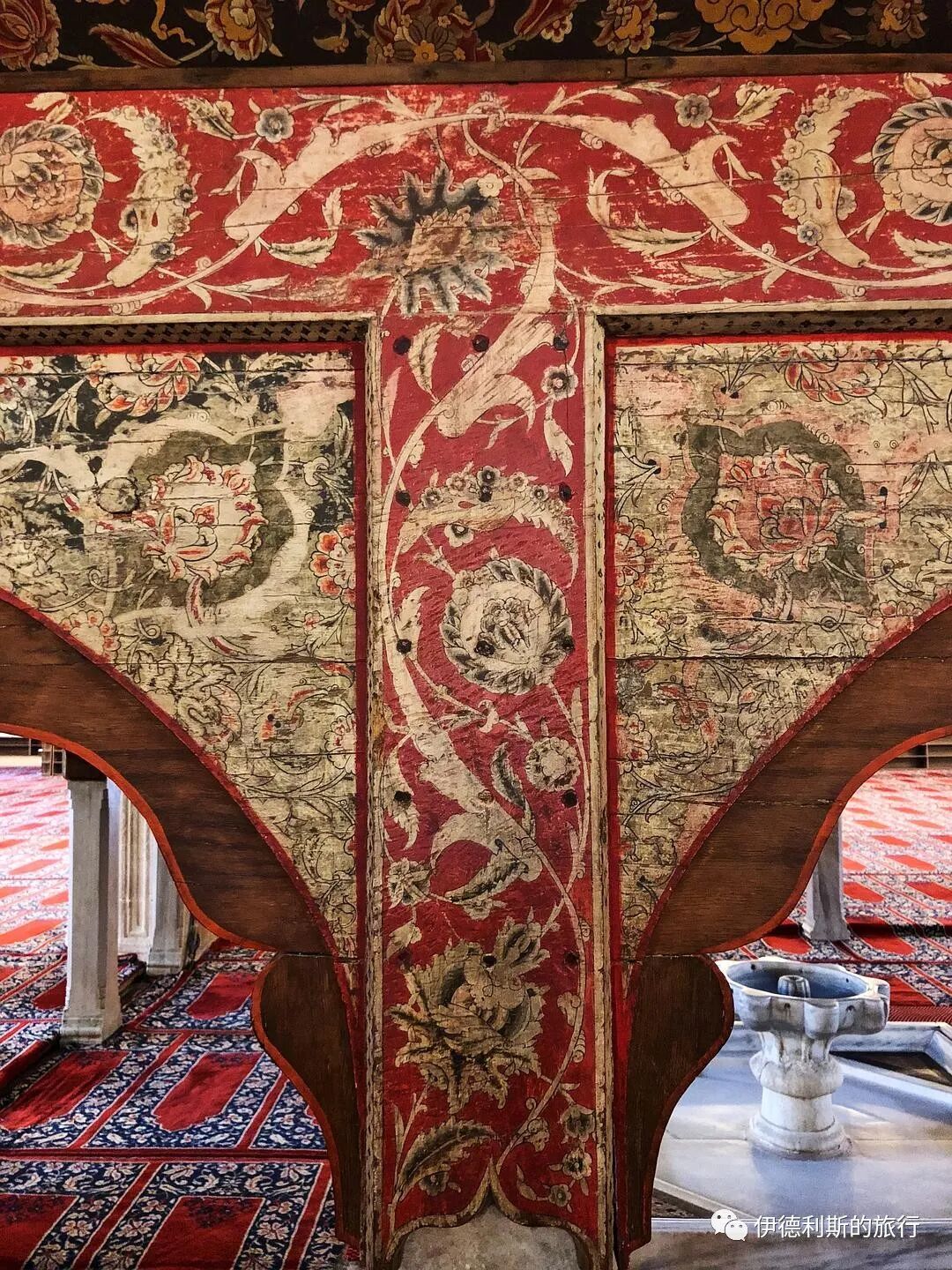
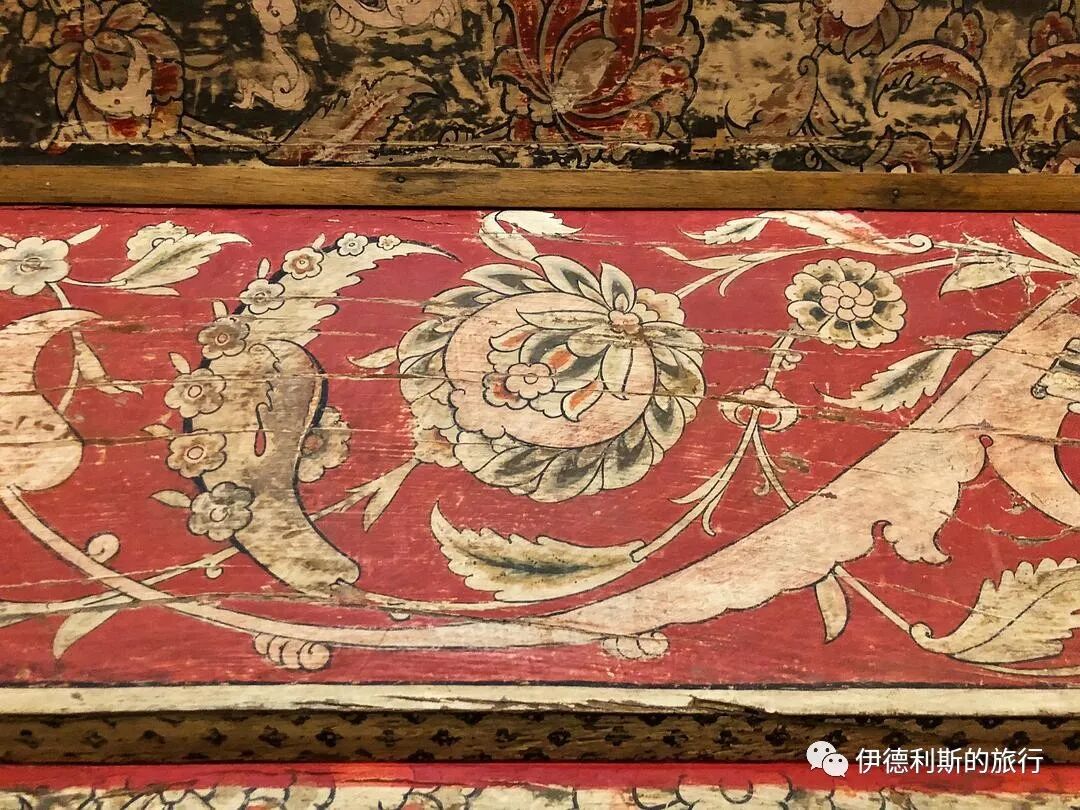
There is a fountain on the first level of the platform, with an inverted tulip pattern on the top. The tulip holds great significance in Turkish and Islamic art as well as in Islamic faith. Because the sum of the numerical values of the letters in the words "tulip" and "Allah" is 66, people believe that the tulip can symbolize the uniqueness and beauty of Allah; sometimes people even write the word "Allah" in the shape of a tulip.
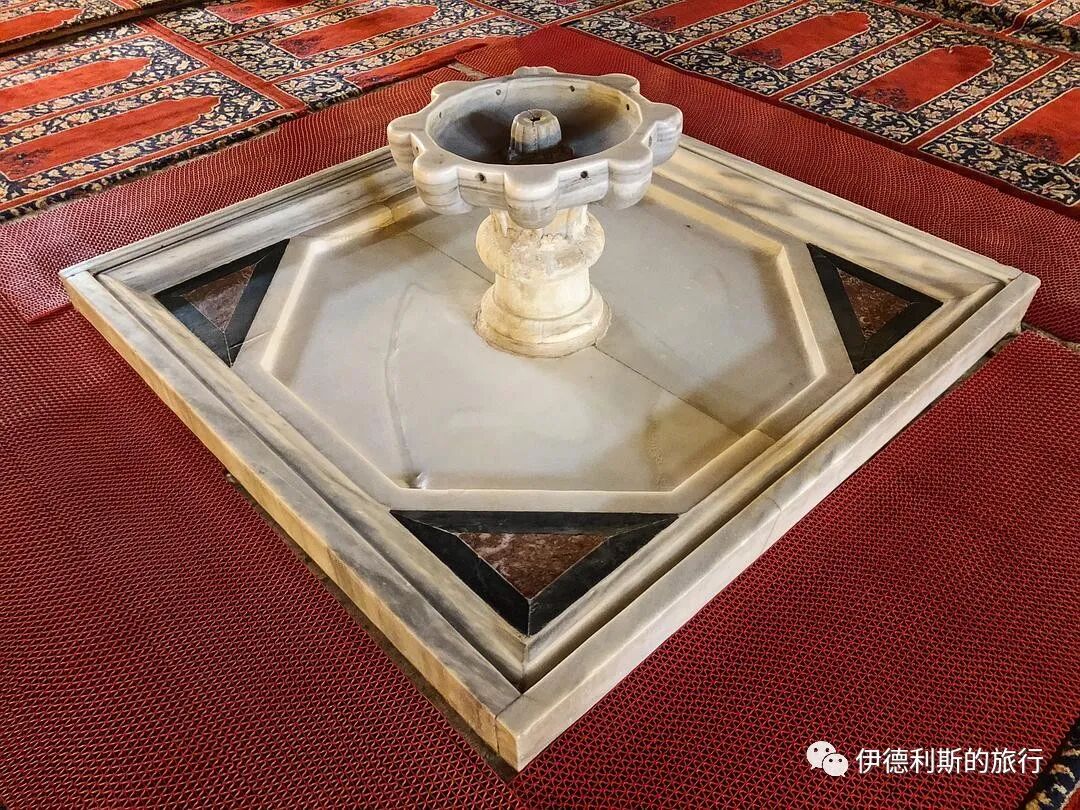
Quran School (Museum).
The Selimiye Quran School is quite unique among Sinan's works. It features a dual-school layout with the Dar'ül-Kurra Quran School and the Dar'ül-Hadis Hadith School, which are symmetrical to the main mosque. Furthermore, it is the only Quran school built by Sinan that features a honeycomb Muqarnas gate.
The school consists of a large classroom, a series of small student rooms, and a water room surrounding a rectangular courtyard. The main mosque can be seen from both courtyards.
The Hadith school was built between 1567 and 1574, and the first lecturer (Muderris) was appointed in 1570-71 with a daily salary of 60 dirhams. In addition, there was 1 assistant lecturer (Muid) with a daily salary of 9 dirhams, 15 students with a daily salary of 4 dirhams, and 1 doorman (Bevvab), 1 administrator (Ferraş), and 1 cleaner, each with a daily salary of 3 dirhams.
The Quran school had 1 sheikh with a daily salary of 40 dirhams, 10 Hafiz (those who have memorized the Quran) with a daily salary of 2 dirhams, and 1 doorman, 1 administrator, and 1 cleaner, each with a daily salary of 2 dirhams.
In 1925, Atatürk ordered the Hadith school to be converted into the Museum of Turkish and Islamic Art, and the Quran school later became the Foundation Museum, which operates to this day.
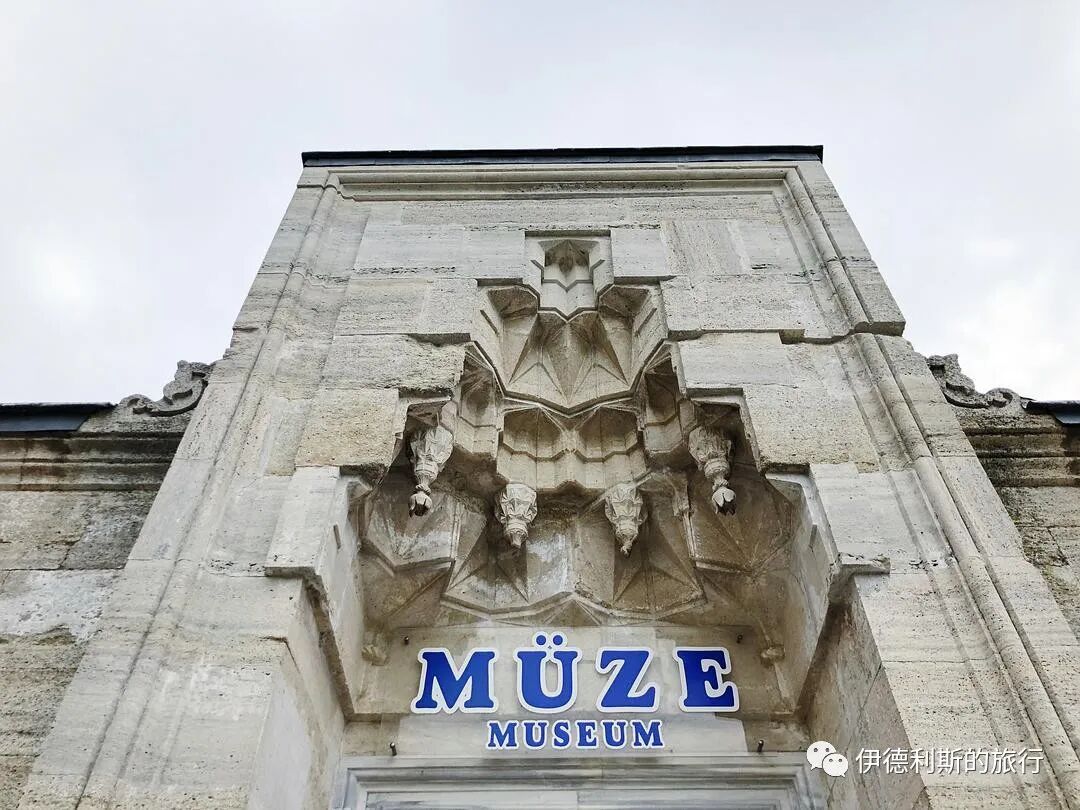
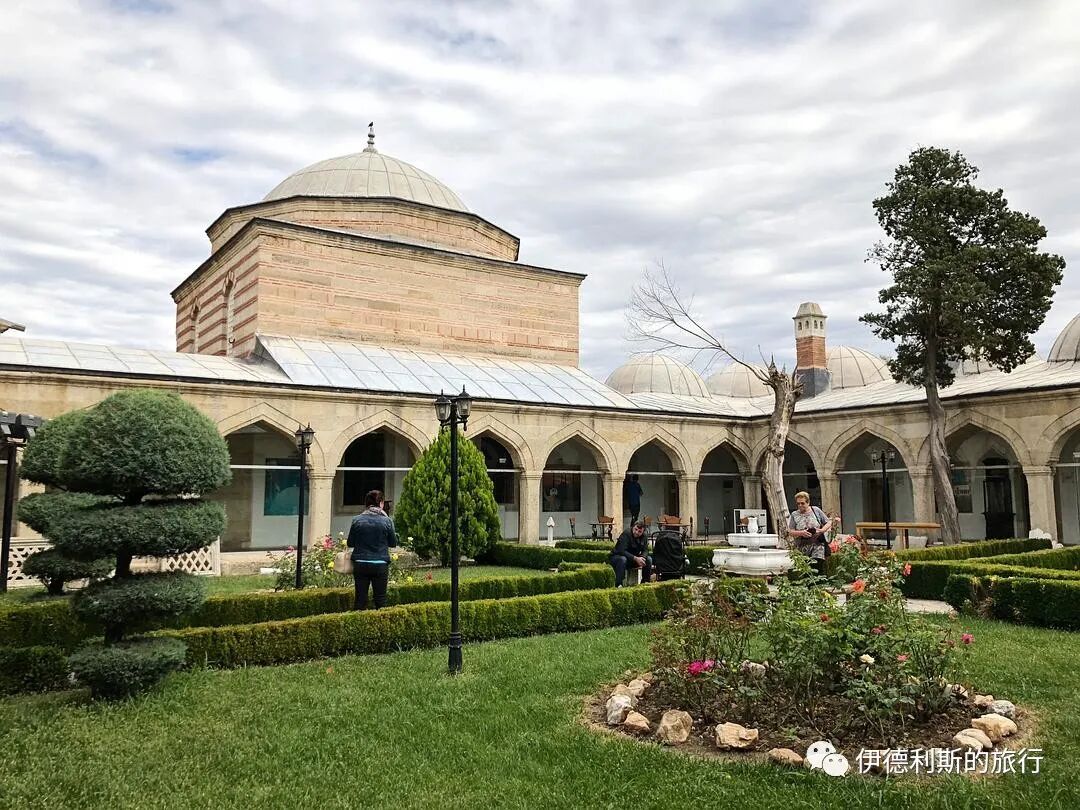
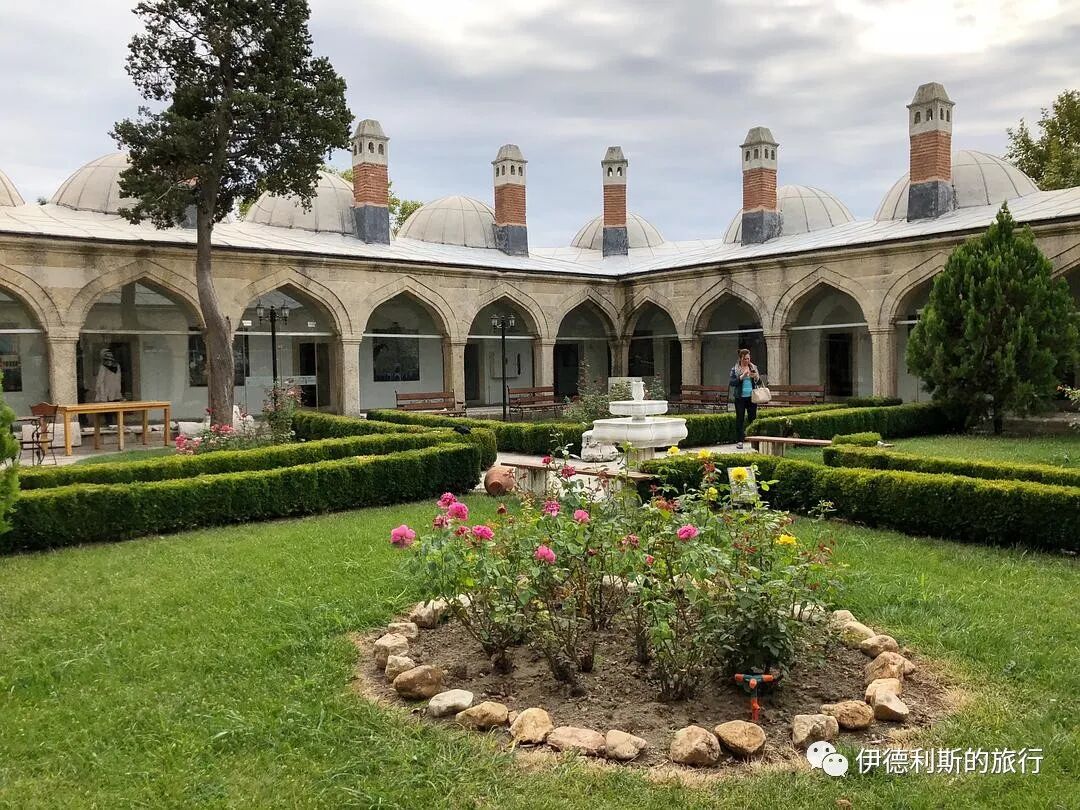
In the large classroom of the Quran school, teachers taught students the rules and methods of Quran recitation and listened to and corrected the students' mistakes. Students attended 5 classes a day, 4 days a week. After completing all courses, they would earn the title of Hafiz, becoming someone who could recite the Quran proficiently.
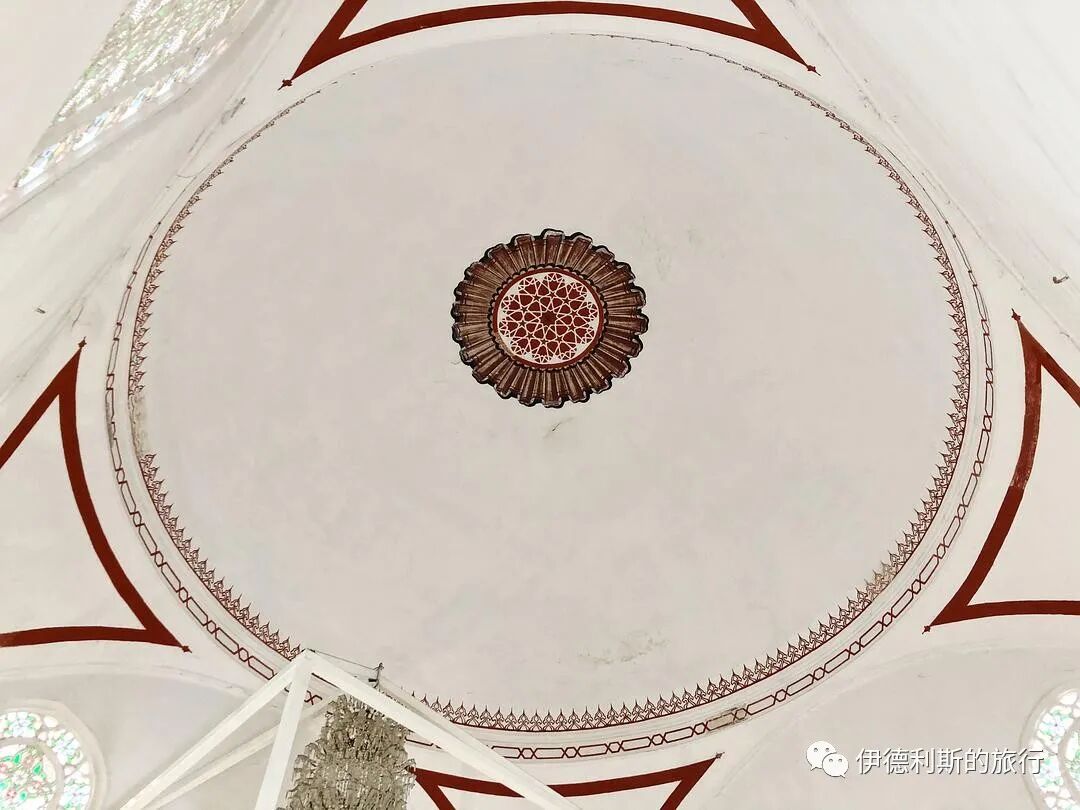
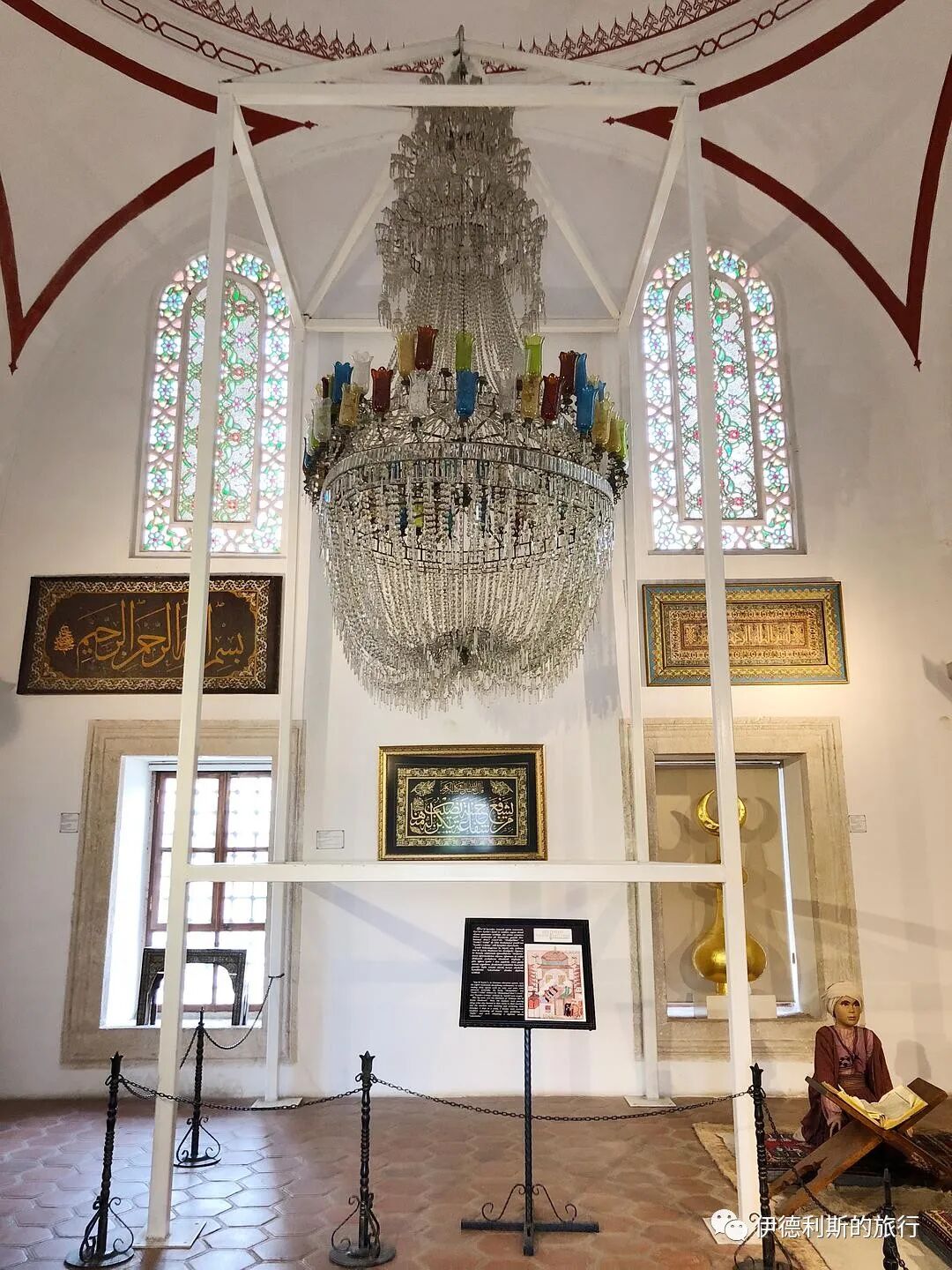
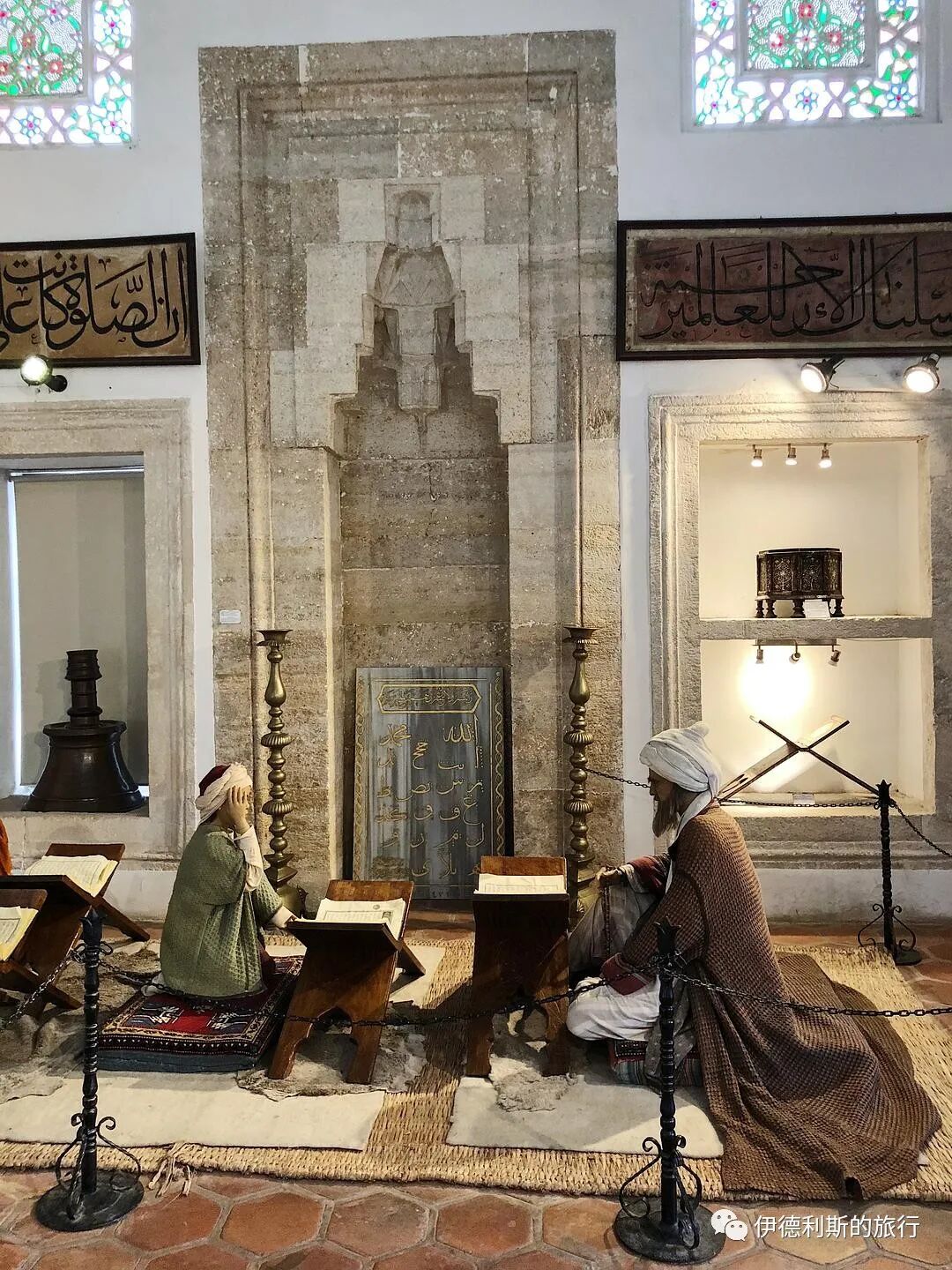
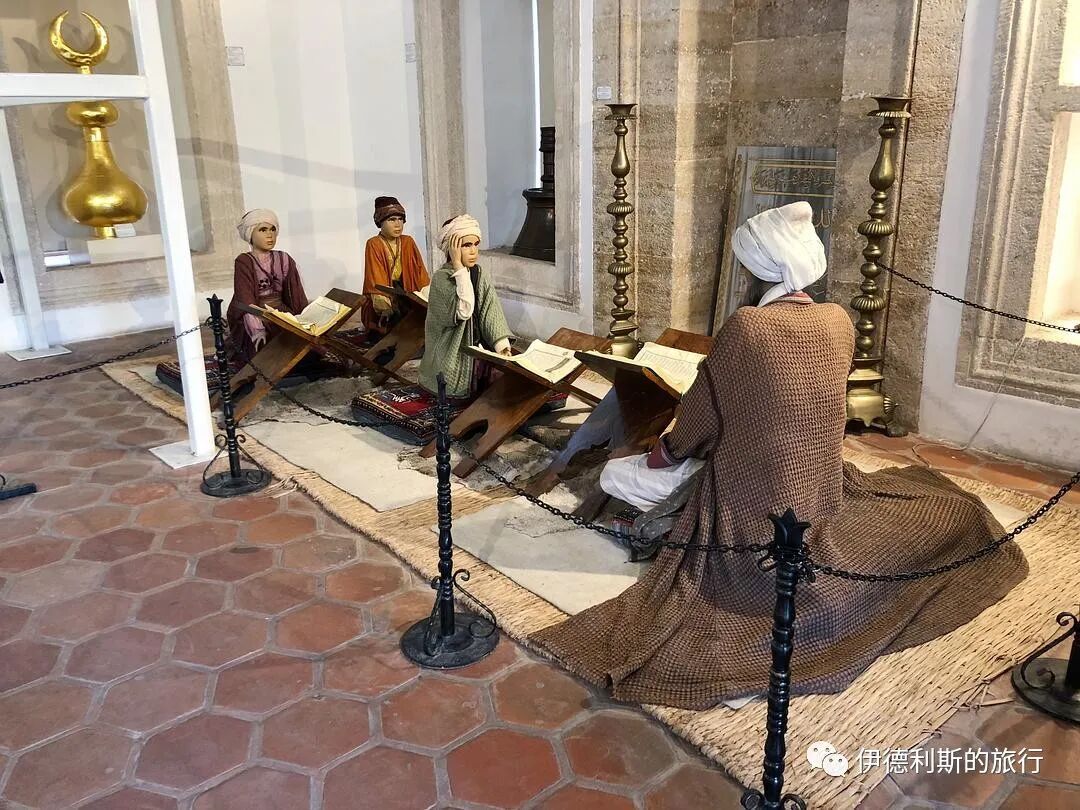
Students studying in a room at the Quran school. In the Ottoman education system, one could enroll in a Quran school after graduating from primary school. The school's curriculum focused mainly on repetitive recitation and discussion. In addition, students learned marble carving and the art of calligraphy, with all funding provided by the Ottoman Sultan's foundation.
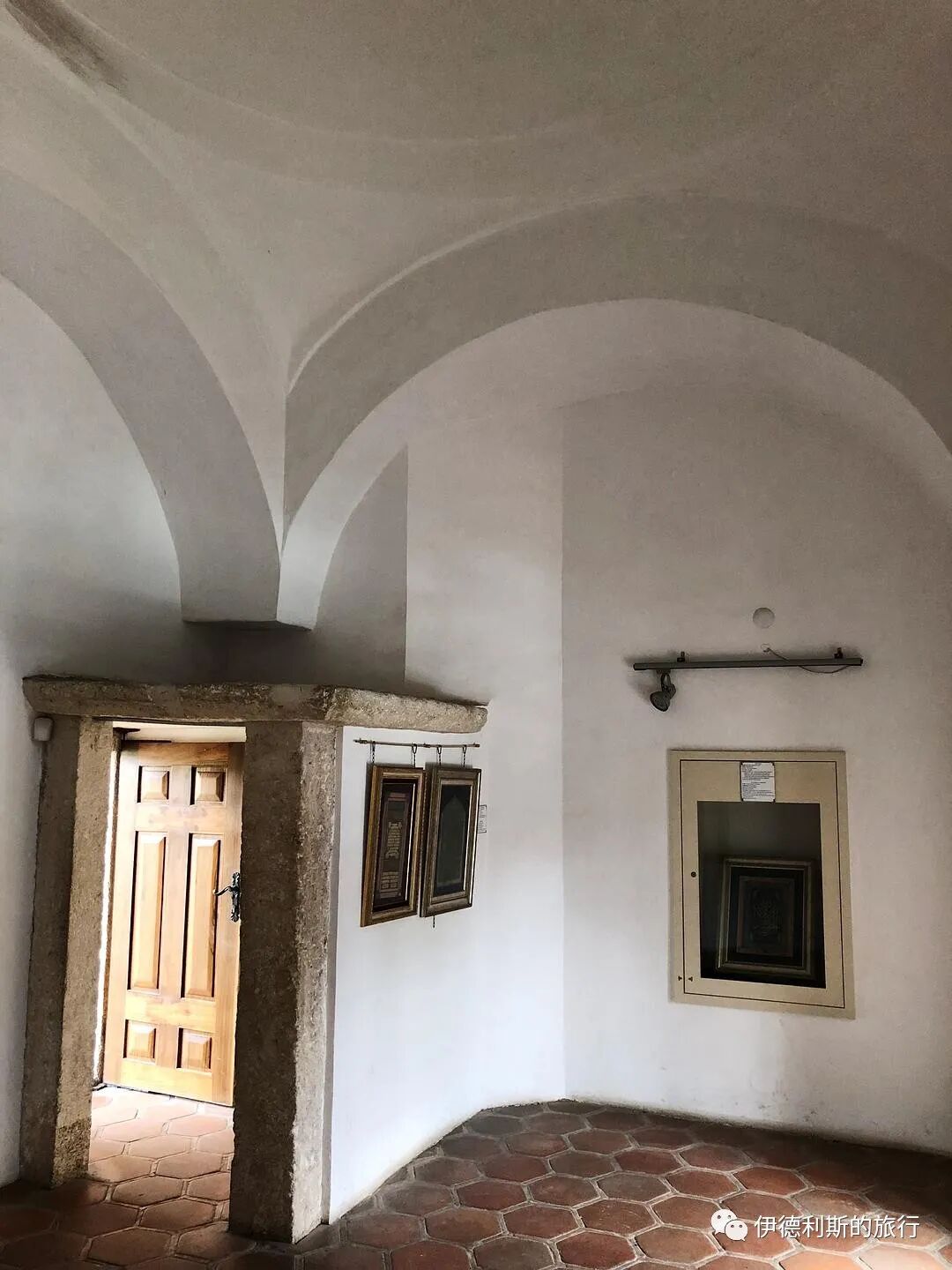
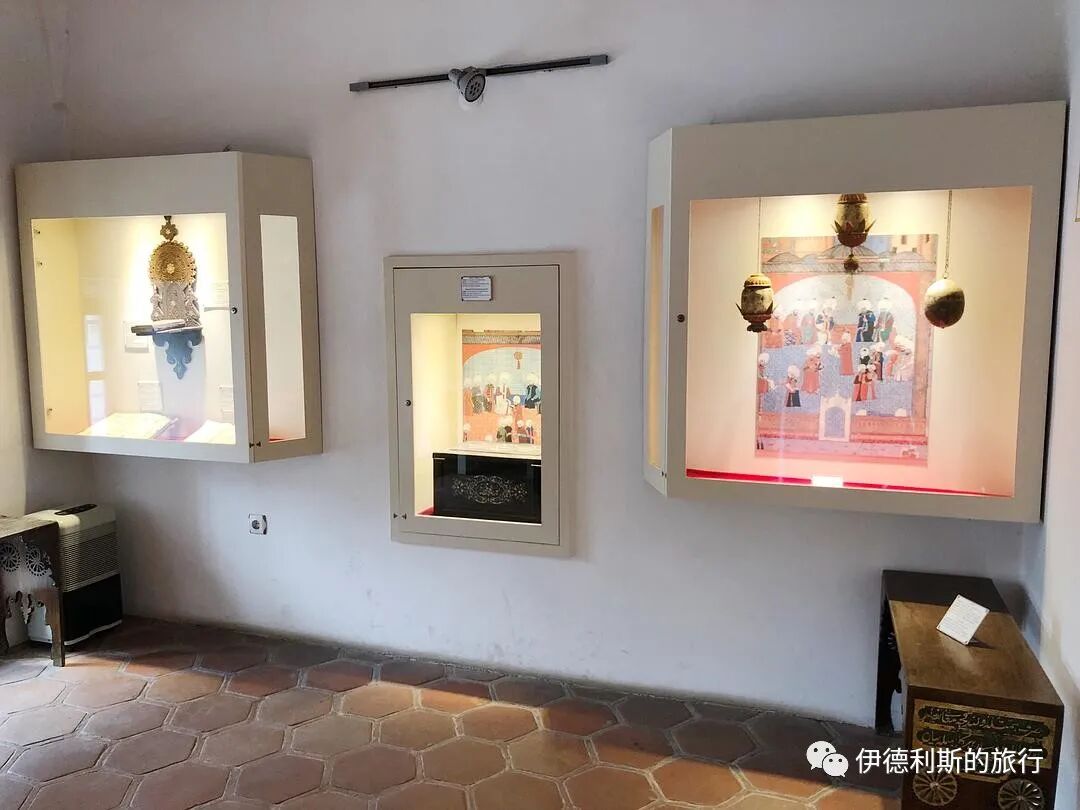
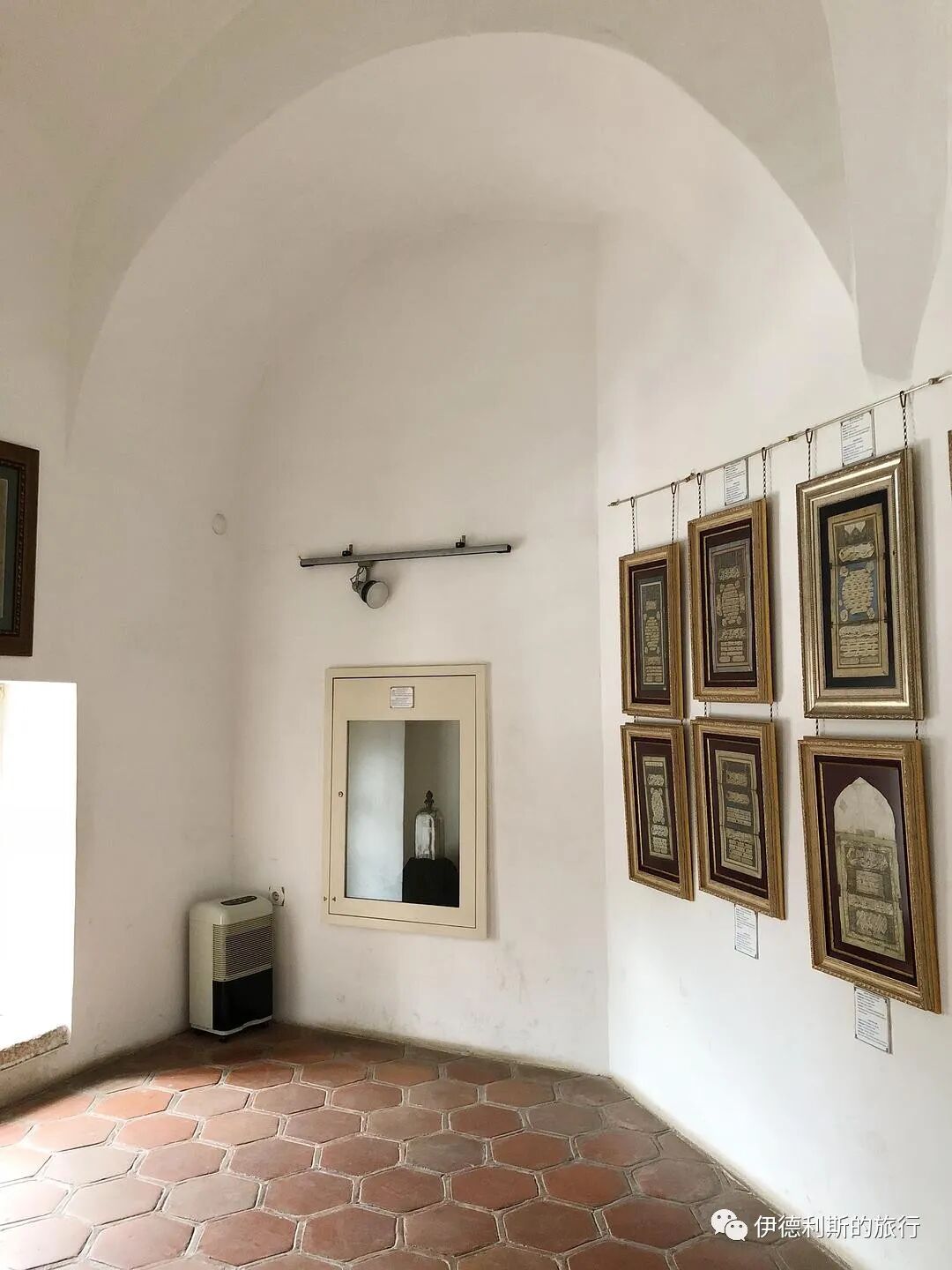
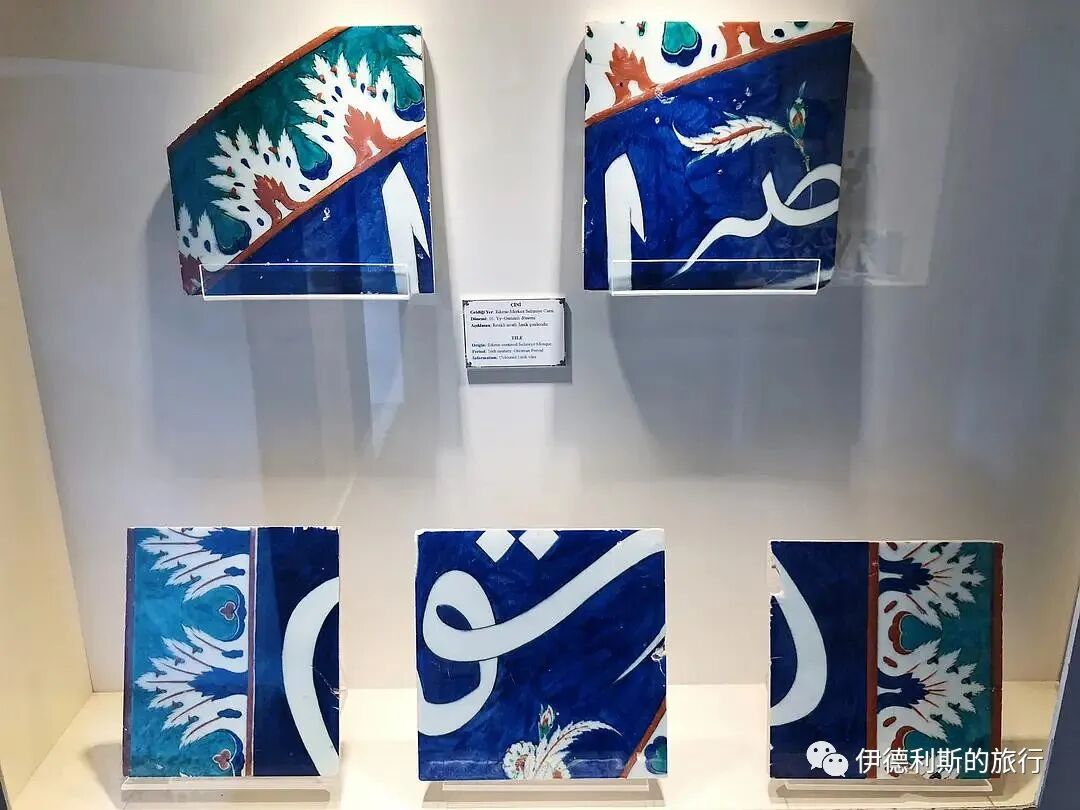
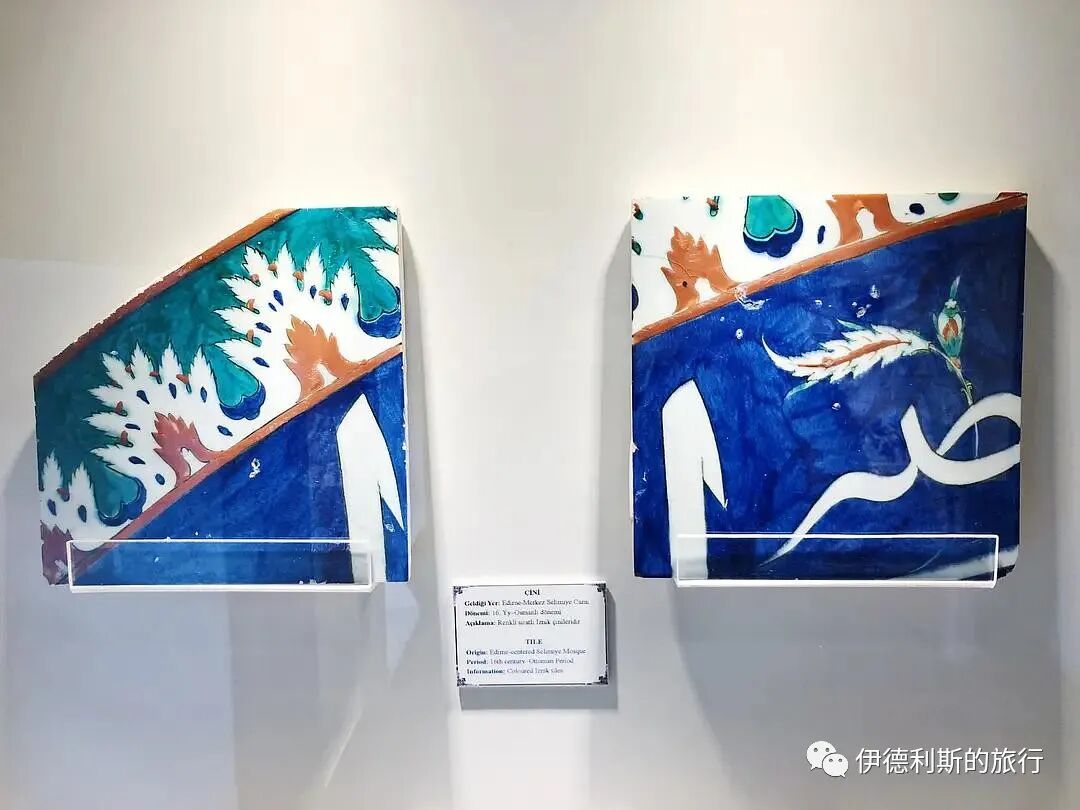
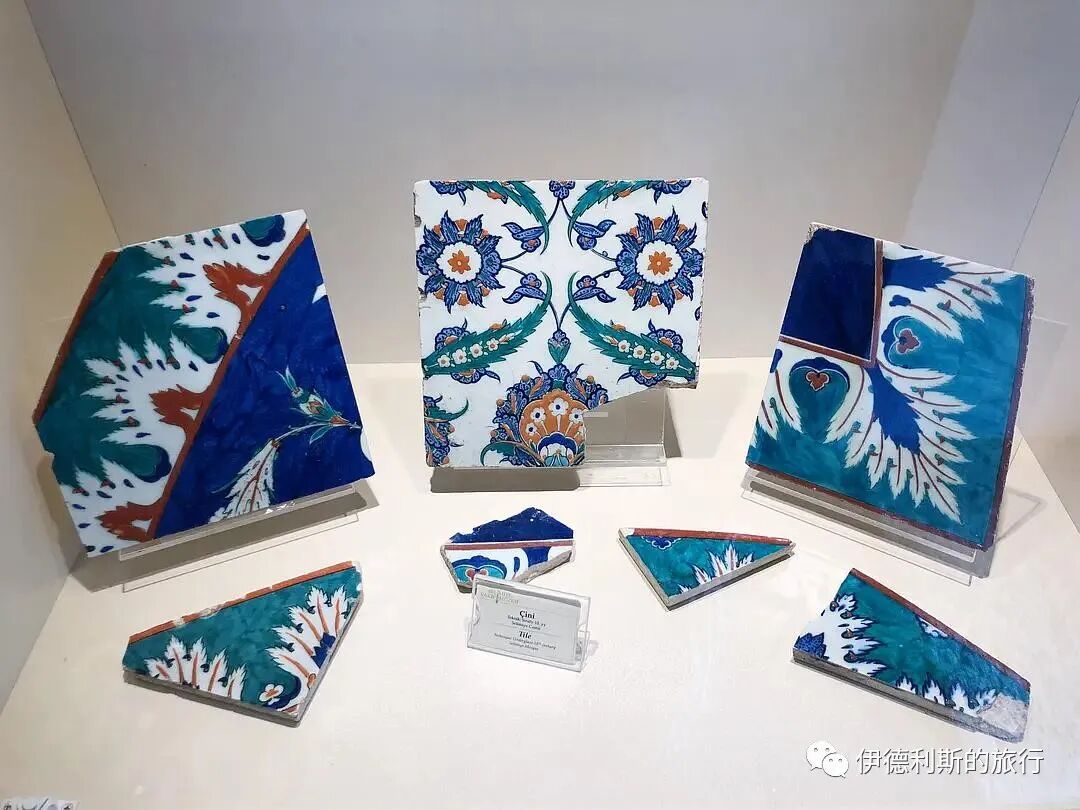
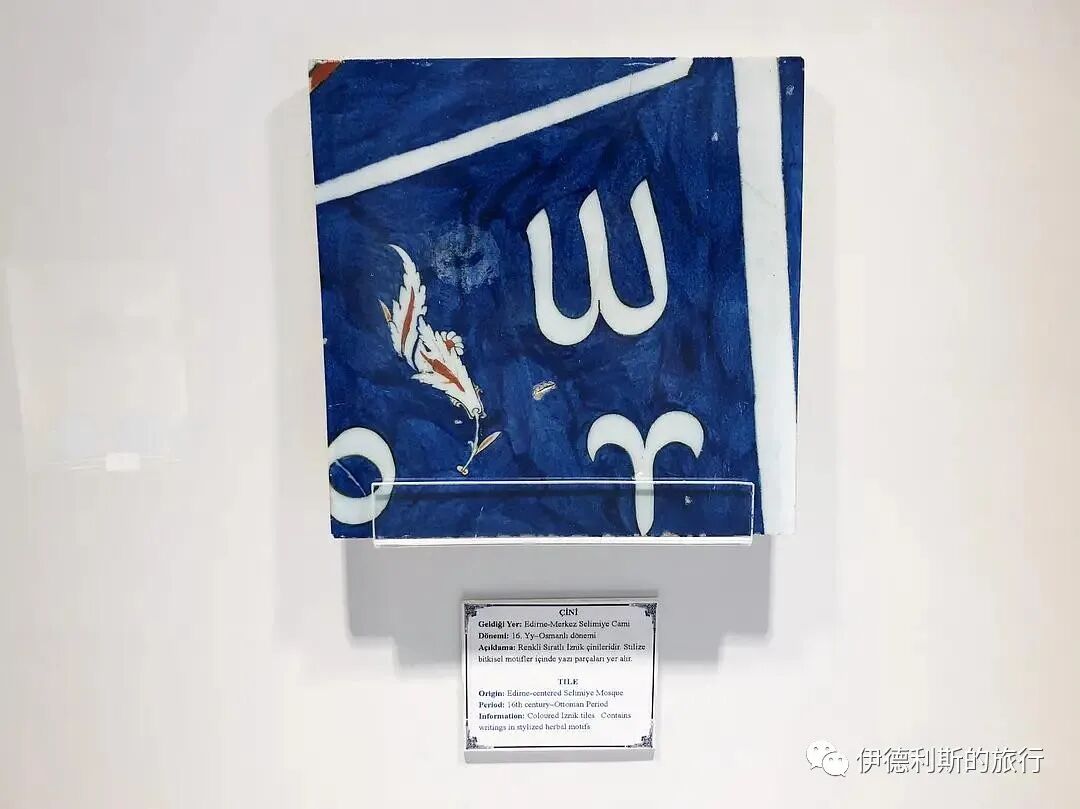
Iznik ceramics used in the Selimiye Mosque.
The ancient city of Iznik is located on the shores of Lake Iznik, 90 kilometers southeast of Istanbul. In the late 15th century, it became the center of ceramic production for the Ottoman Empire.
The earliest visible Iznik ceramics were found in the imperial kitchens of the Topkapi Palace in Istanbul in 1489. Due to the Ottoman rulers' love for Chinese blue-and-white porcelain, Iznik ceramics combined traditional Ottoman arabesque patterns with Chinese elements. The style of early Iznik ceramics is known as "Rumi-Hatayi," where "Rumi" represents Ottoman arabesque patterns and "Hatayi" represents Chinese floral patterns.
Early Iznik ceramics were only cobalt blue; after the 16th century, gray-green and lavender were gradually introduced as soft tones. In the late 16th century, Mimar Sinan used Iznik tiles extensively in his architecture, replacing gray-green with bright green and lavender with bright red. The first building with red Iznik tiles was the Süleymaniye Mosque, built by Mimar Sinan in Istanbul in 1557.
In 1557, Kara Mehmed Çelebi became the chief painter of the Ottoman court. He introduced a floral style consisting of tulips, carnations, roses, and hyacinths into Iznik ceramics, making the patterns on the ceramics more natural.
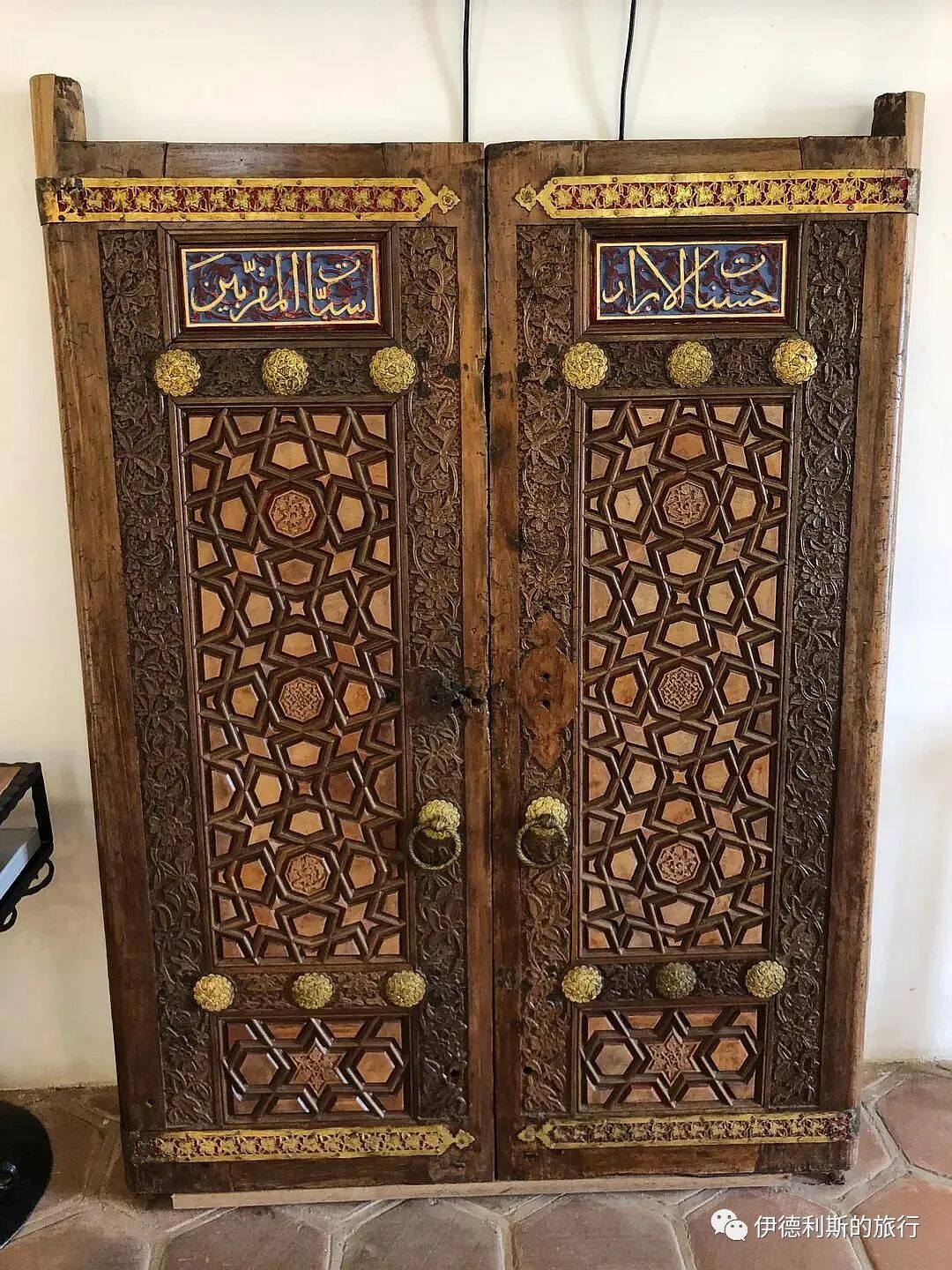
The wooden windows of the Bayezid II Mosque in Edirne (1484-1488) use a Turkish geometric woodworking art called "kundekari," which also features Thuluth calligraphy.
Kundekari uses small pieces of wood that are interlocked and fixed together through special joints, without the use of nails or glue. The wood used is usually sturdy apple, pear, walnut, or cedar, and is often inlaid with pearls, tortoiseshell, ivory, or metals like gold and silver. Kundekari is heat-resistant and moisture-proof, protecting wooden panels from warping due to temperature and humidity changes, so it is mainly used for doors, windows, cabinets, and mosque cupboards.
The Sultan Bayezid II Complex (Sultan II Bayezid Külliyesi) is located on the north bank of the Tunca River in the northwestern suburbs of Edirne and was commissioned by the eighth Ottoman Sultan, Bayezid II (reigned 1481-1512). Bayezid II was the son of Mehmed the Conqueror and was known as "the Just." During his reign, he worked hard to maintain internal government affairs and defeated the Republic of Venice externally, leading the Ottoman Empire into a prosperous phase.
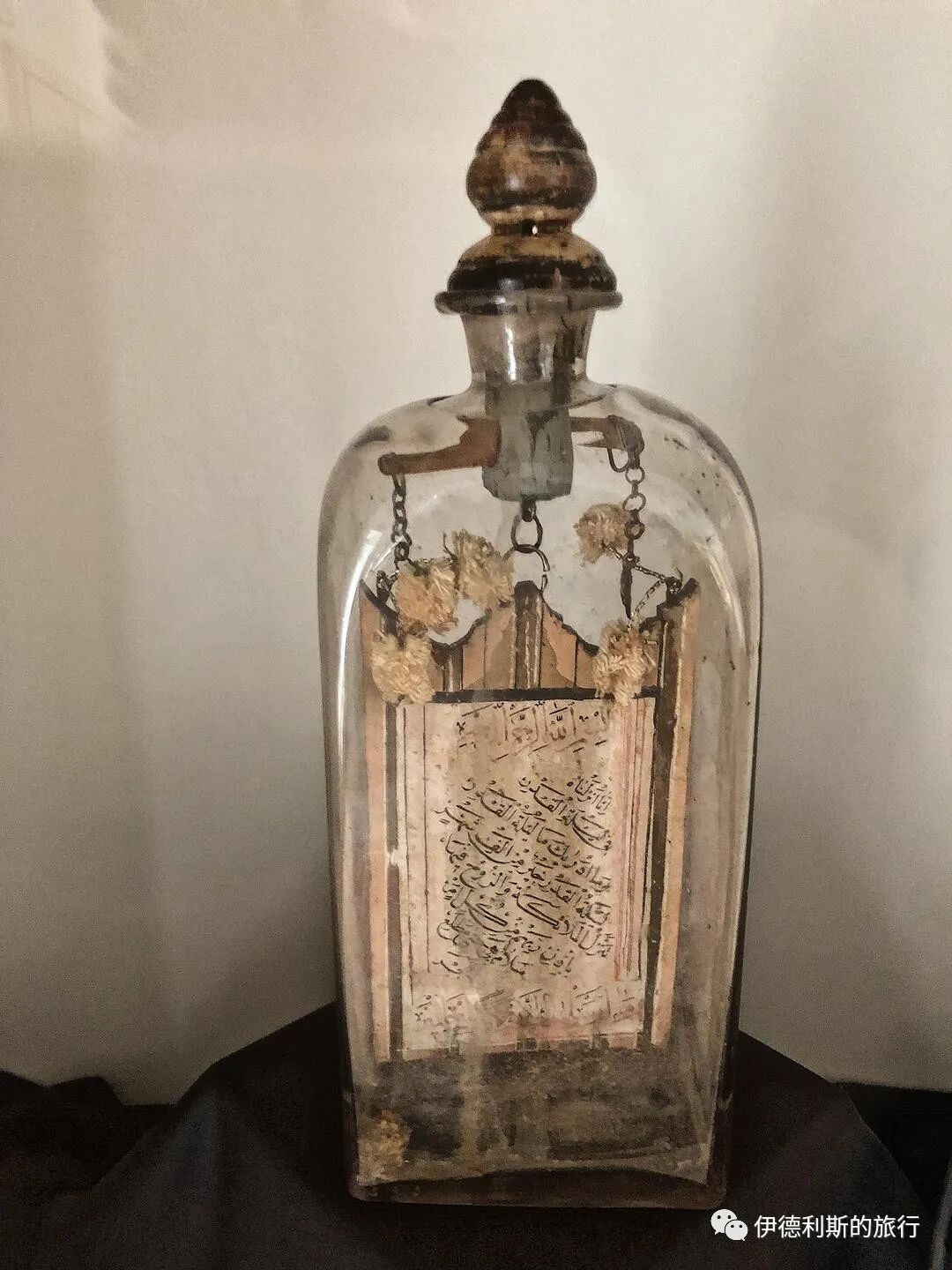
18th-century Hilye (calligraphic description of the Prophet) calligraphy in a glass bottle at the Old Mosque (Eski Cami) in Edirne. Built in 1414, the Old Mosque is the oldest mosque in Edirne and one of the last multi-domed mosques to use the early Ottoman Seljuk style, marking a farewell to early Ottoman architectural styles.
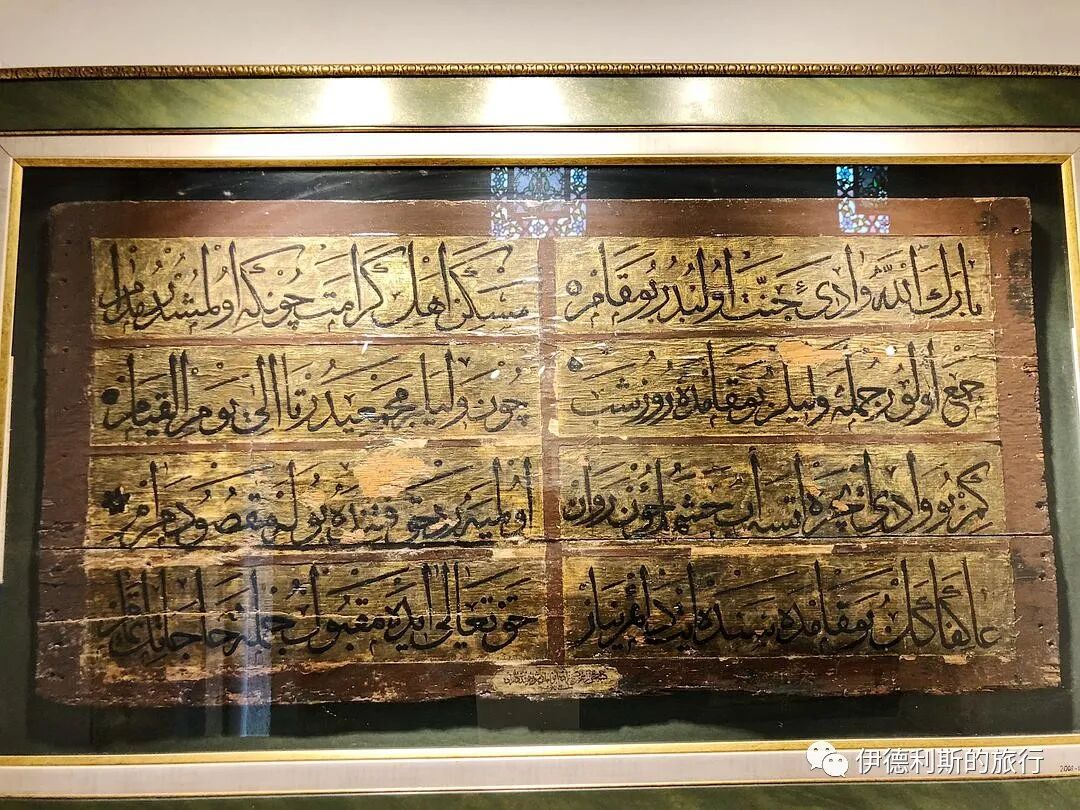
Thuluth calligraphy written by Mustafa Rasim in 1787 at the Old Mosque in Edirne, featuring verses praising the mosque by the local Edirne poet Akif (the son of the calligrapher).
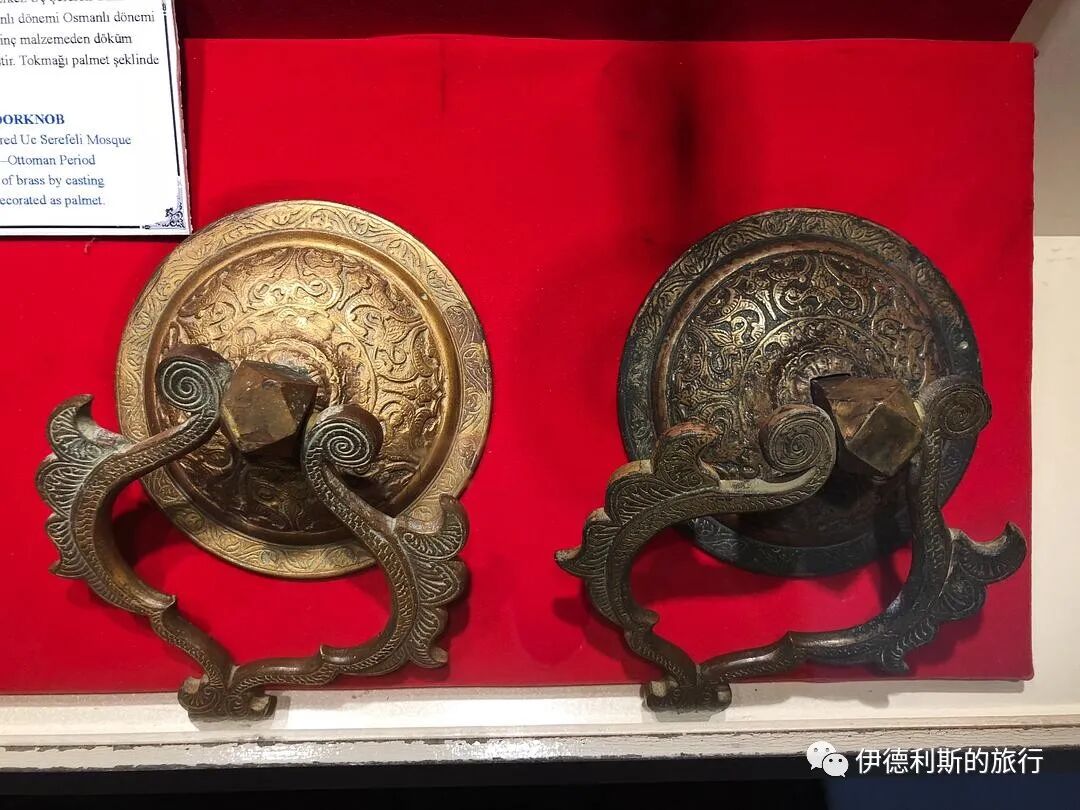
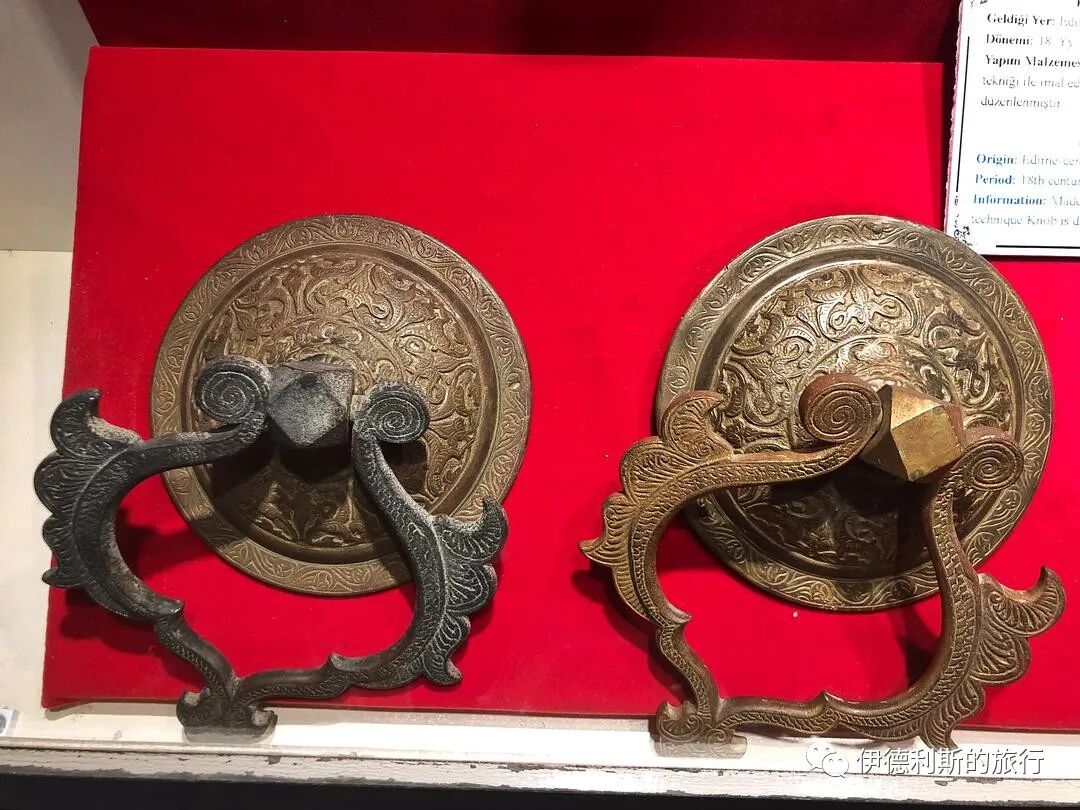
18th-century brass door handle with a palm tree design at the Üç Şerefeli Mosque (Three-Balcony Mosque) in Edirne. The Üç Şerefeli Mosque was built between 1438 and 1447 and was the first central-domed mosque and the first mosque with a portico in Ottoman history, providing great inspiration to Mimar Sinan. The Üç Şerefeli Mosque suffered from fire and earthquakes in the mid-18th century and was subsequently restored.
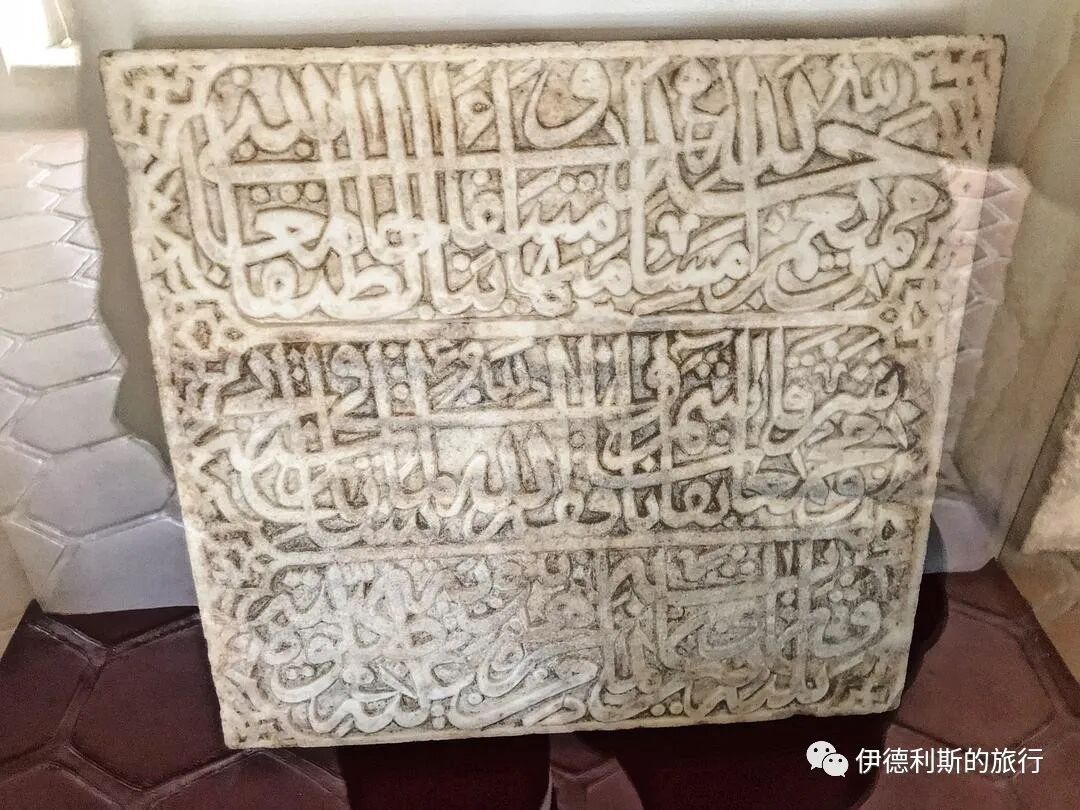
1478 Thuluth calligraphy stone tablet at the Evliya Kasım Paşa Mosque in Edirne. It records that Kasım Paşa built this mosque in the year 883 of the Hijri calendar. Kasım Paşa was a famous Ottoman general who served as the commander of the European part of the Ottoman Empire. Between 1443 and 1444, he commanded the Ottoman army against the multinational crusader forces of Poland, Hungary, and others in Serbia and Bulgaria. The mosque was closed after 1950 due to the construction of a dam. Since then, it has been continuously damaged by floods and is now abandoned.
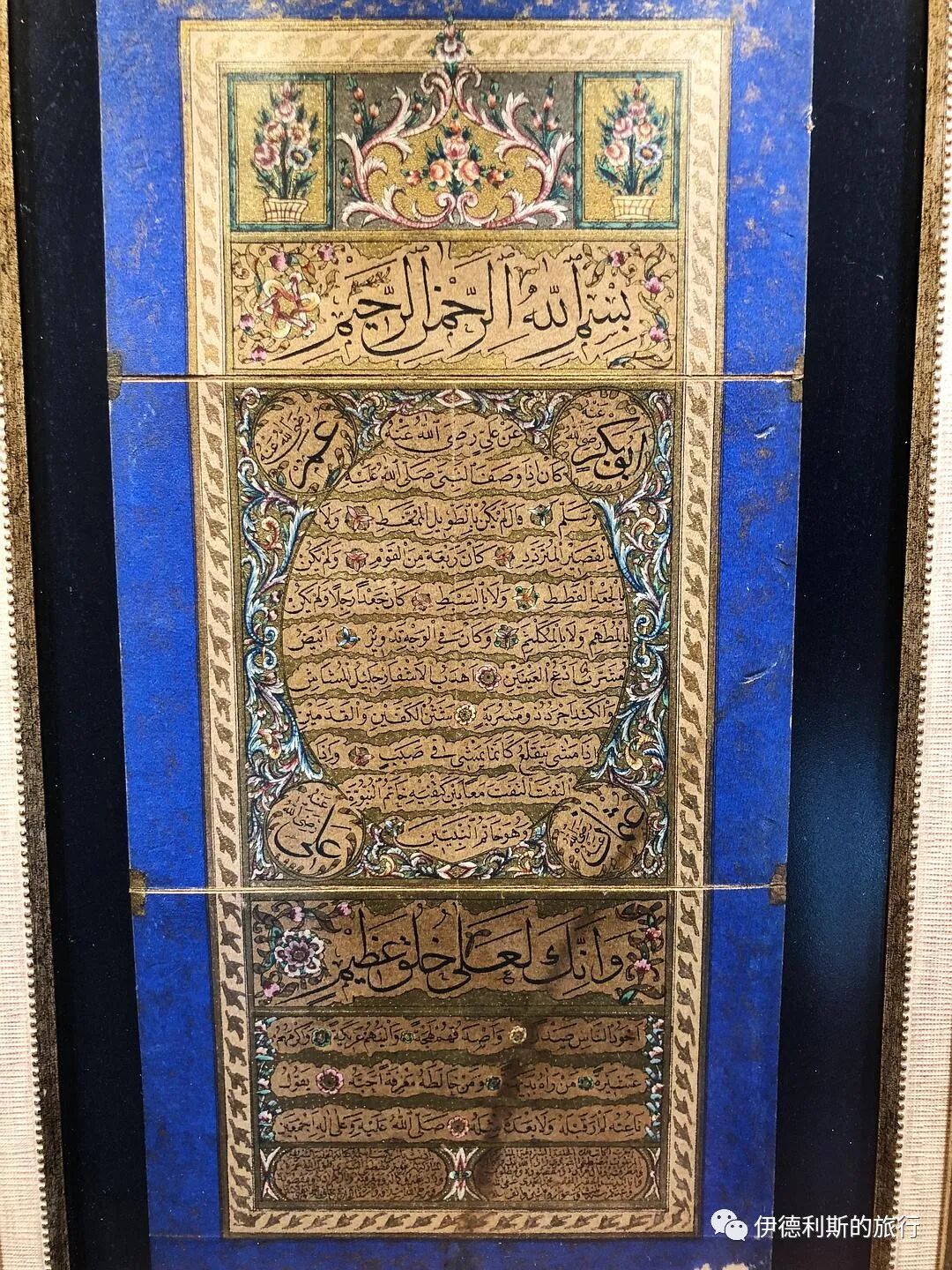
19th-century certificates from the Great Mosque of Kütahya; the first was written by Mustafa Sukru, and the second by Ahmed Hamdi. The Great Mosque of Kütahya was built between 1381 and 1410 and is the most important mosque in Kütahya.
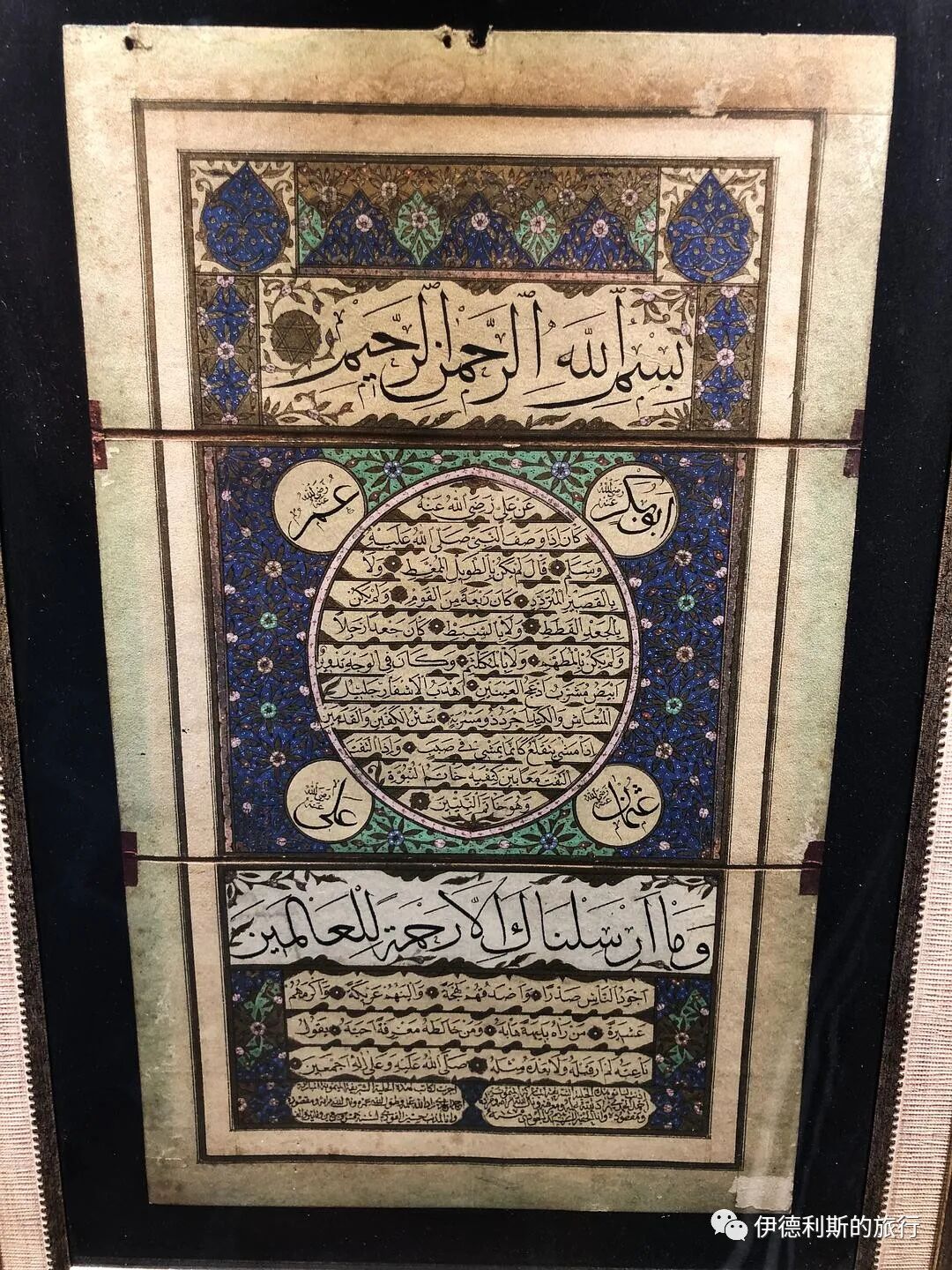
1845 Naskh-script Quran from the Lal Huseyin Pasha Mosque in Kütahya, written by Hafiz Mustafa Sabri.
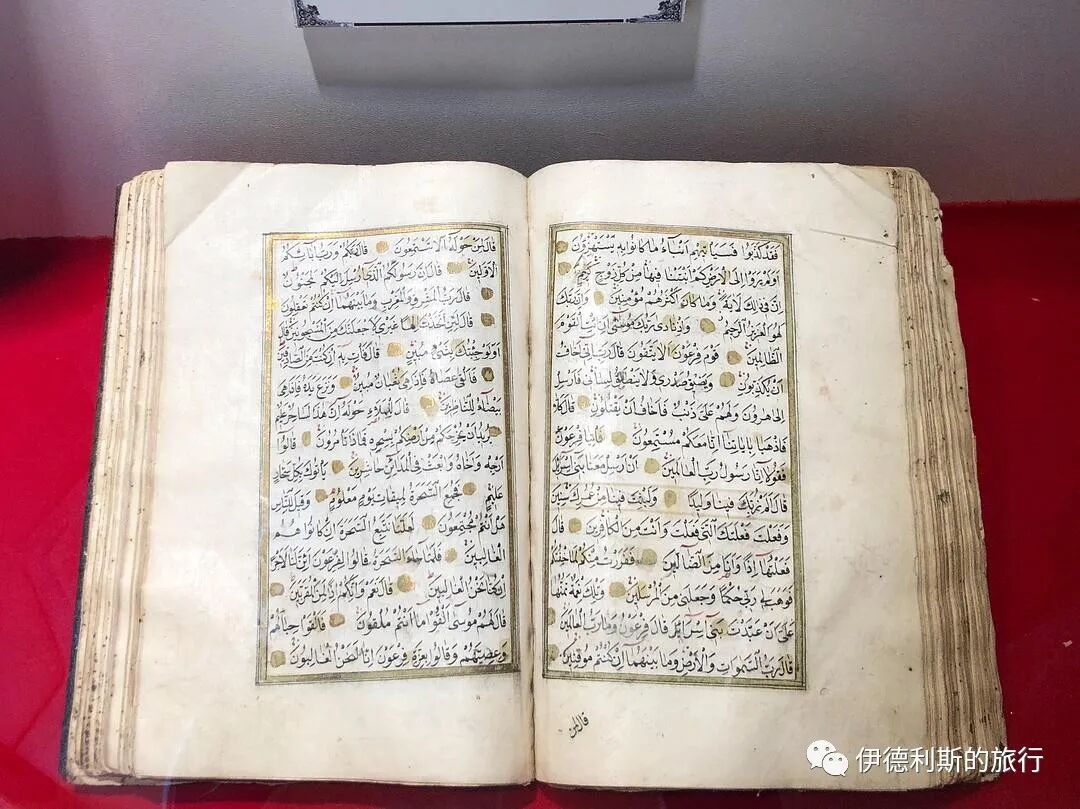
18th-19th century Naskh-script Quran from the Sari Mosque in Edirne.
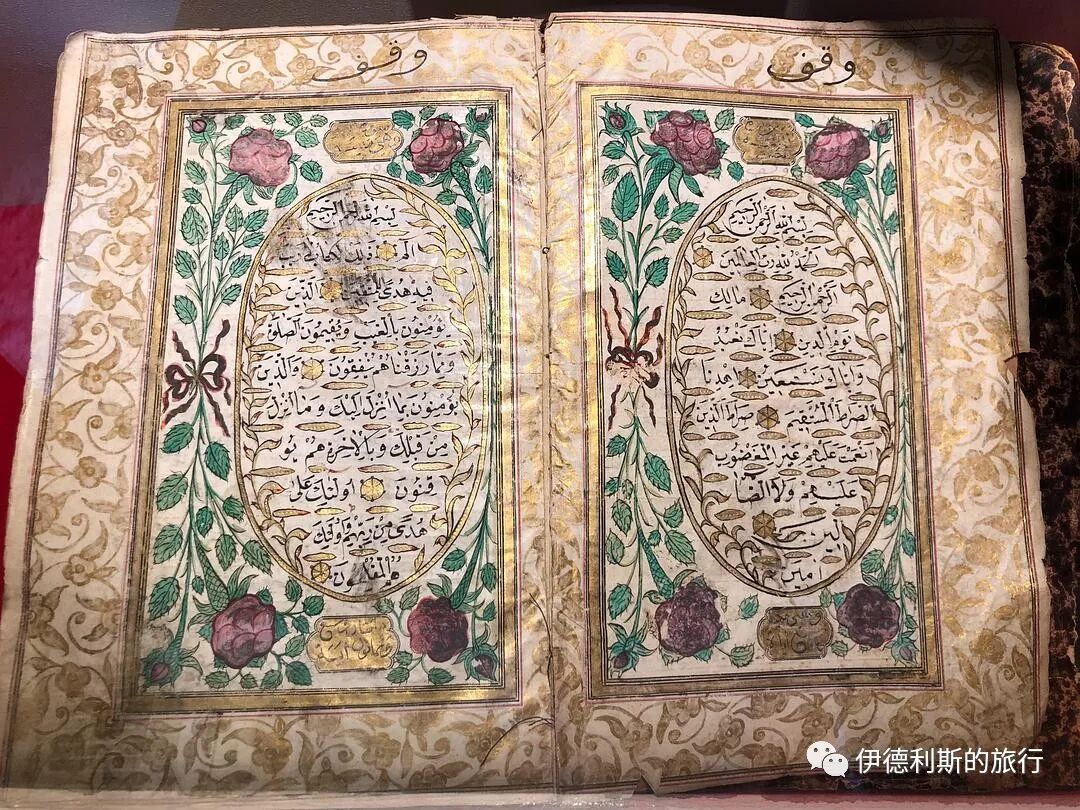
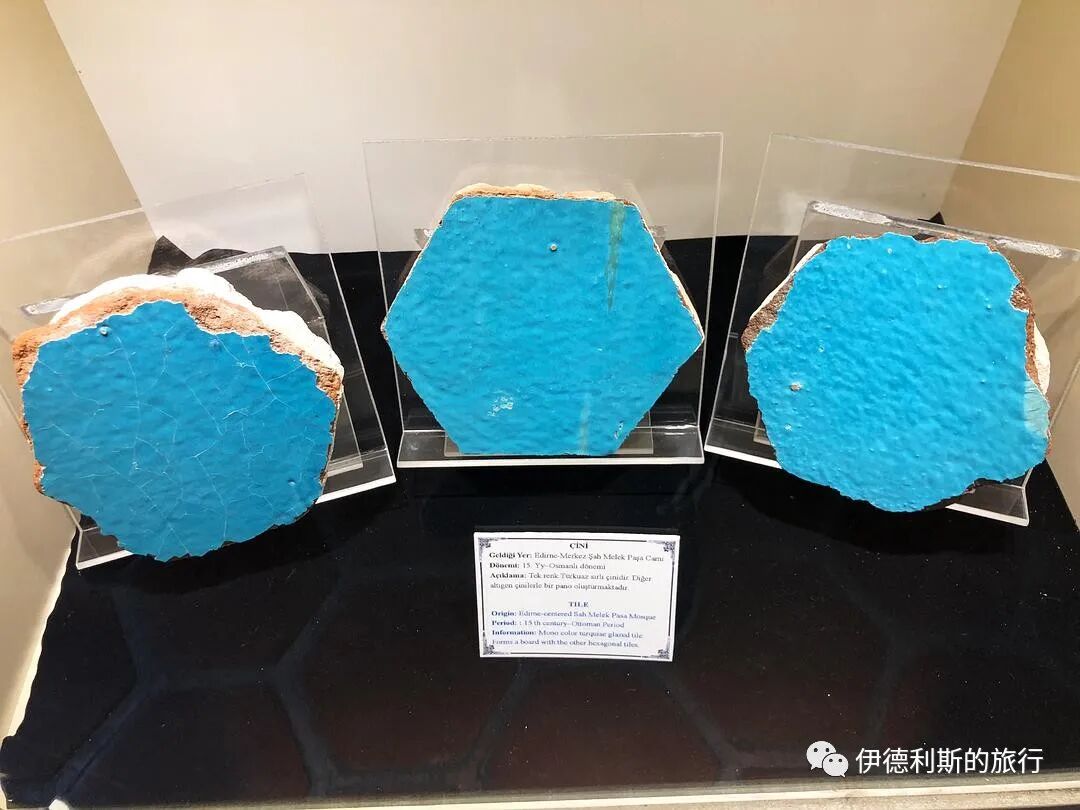
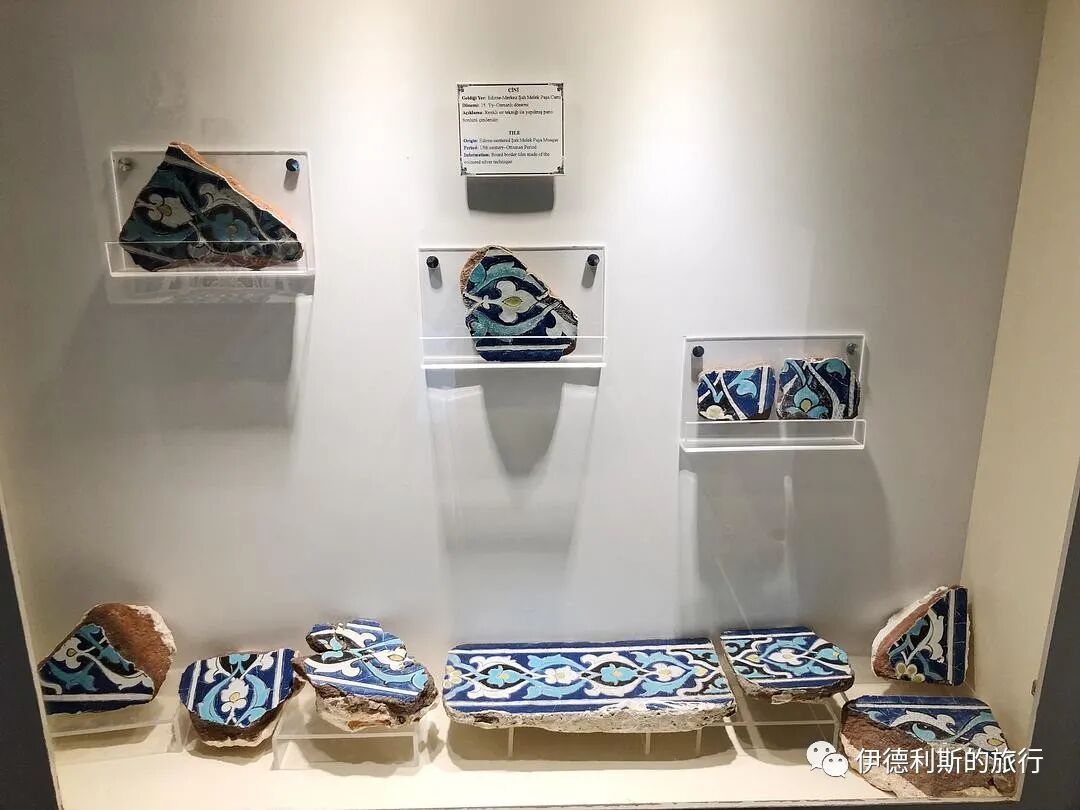
15th-century tiles from the Şah Melek Mosque in Edirne. The Şah Melek Mosque was commissioned by the blind Şah Melek Pasha in 1429 and is famous for the tiles laid inside. Şah Melek Pasha played an important role in the succession war between the princes of Ottoman Sultan Bayezid I and later became an important figure in the courts of Sultan Mehmed I and Murad II.
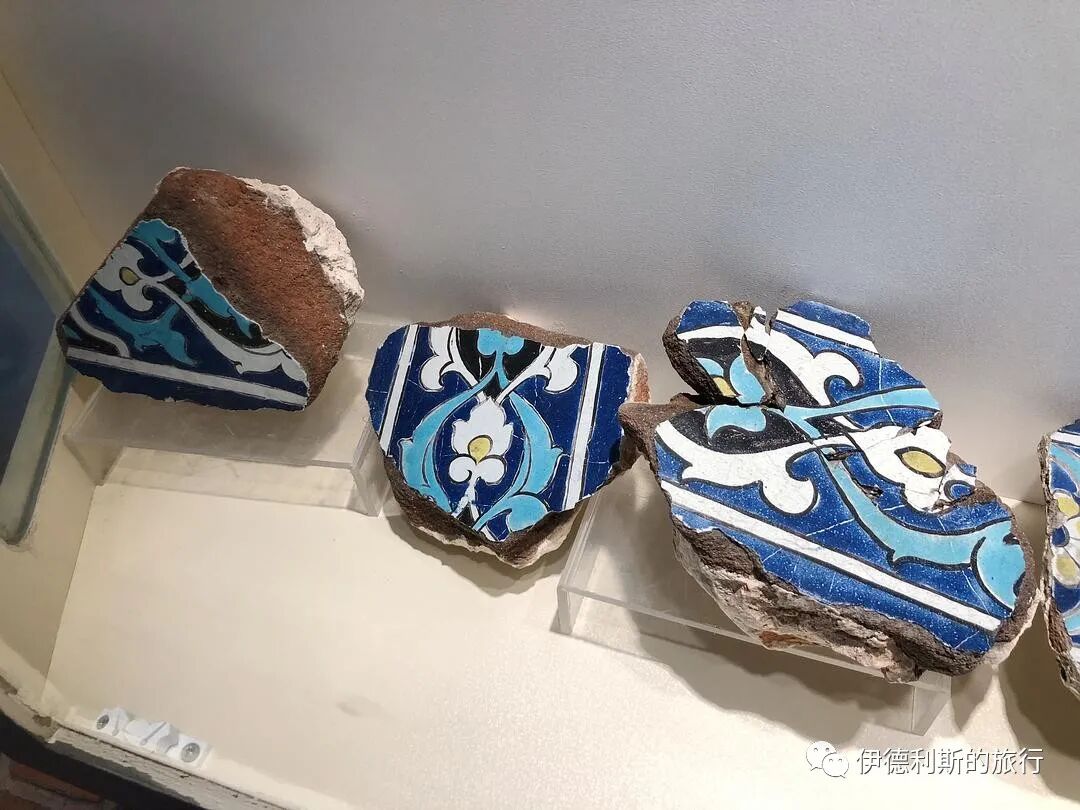
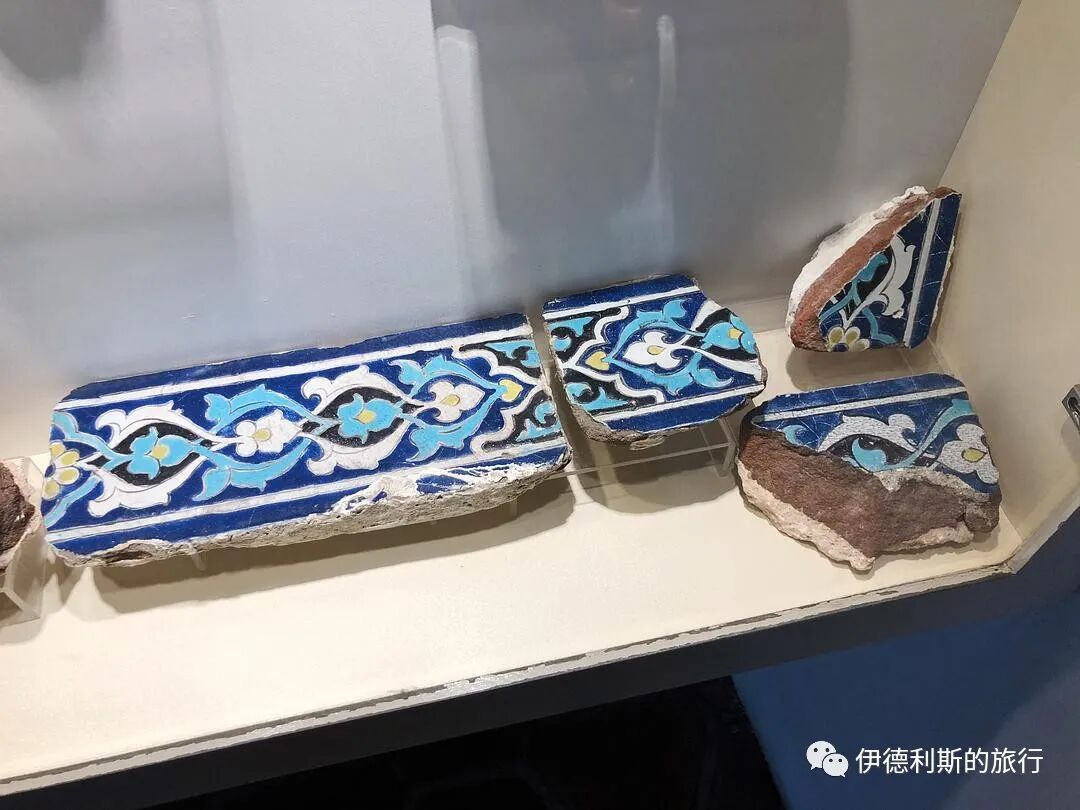
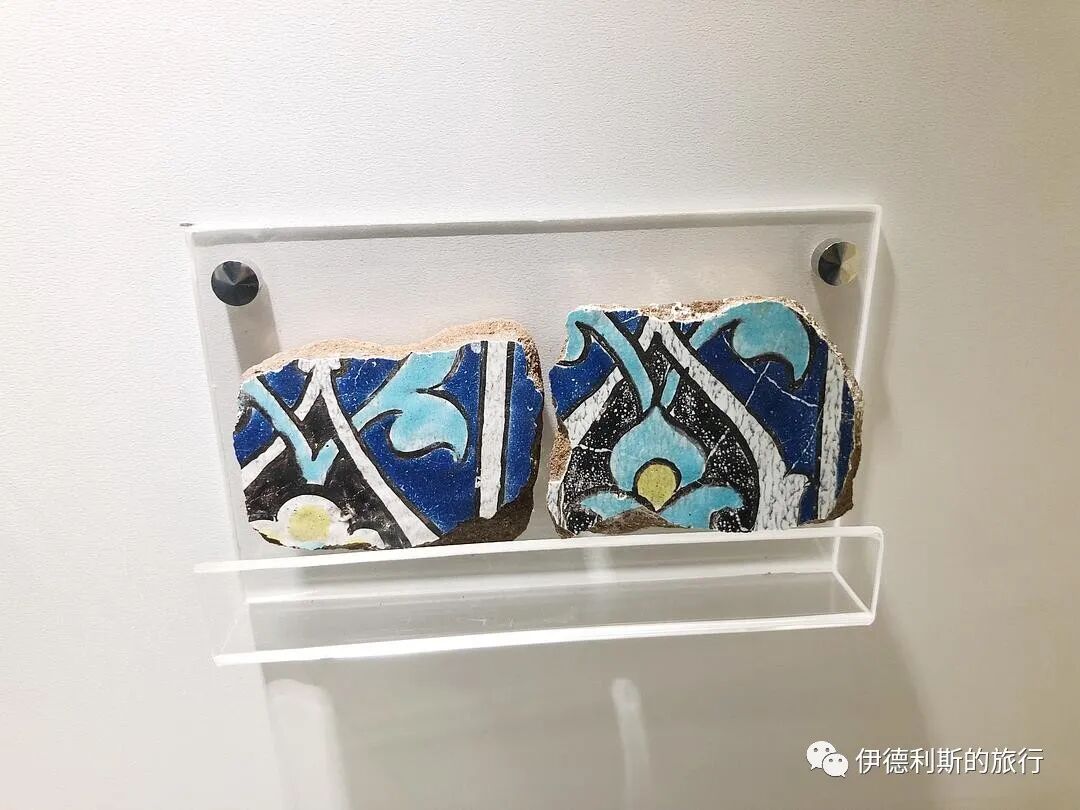
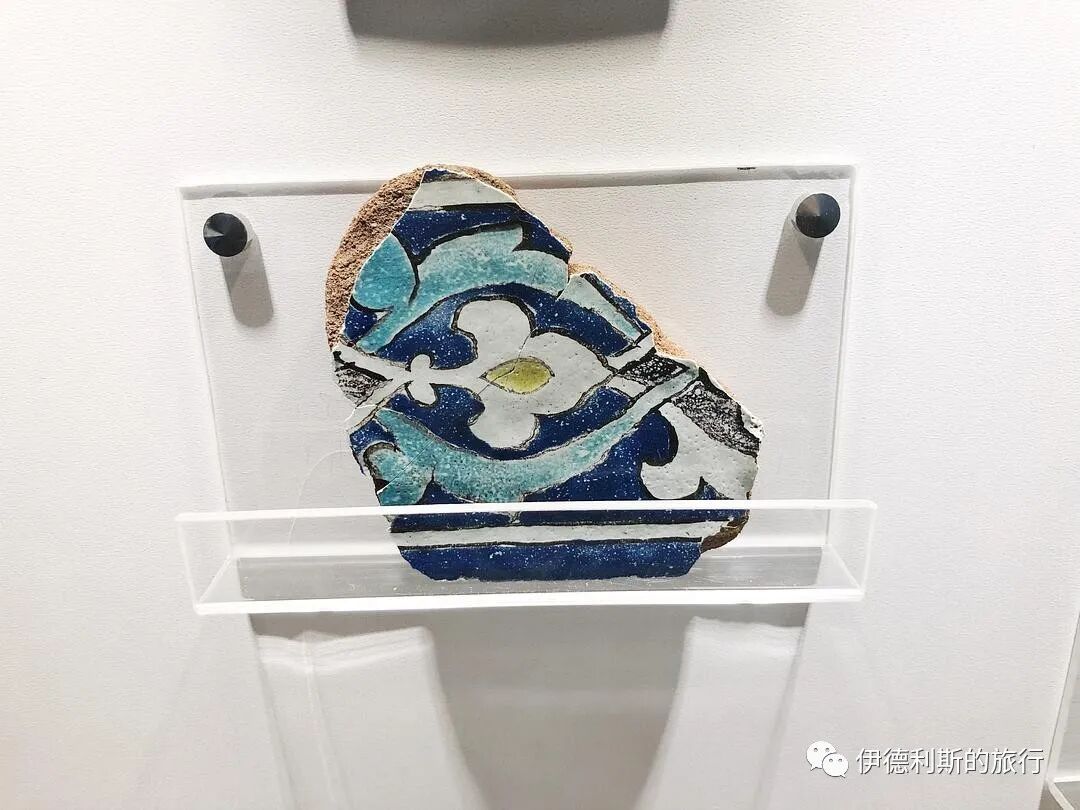
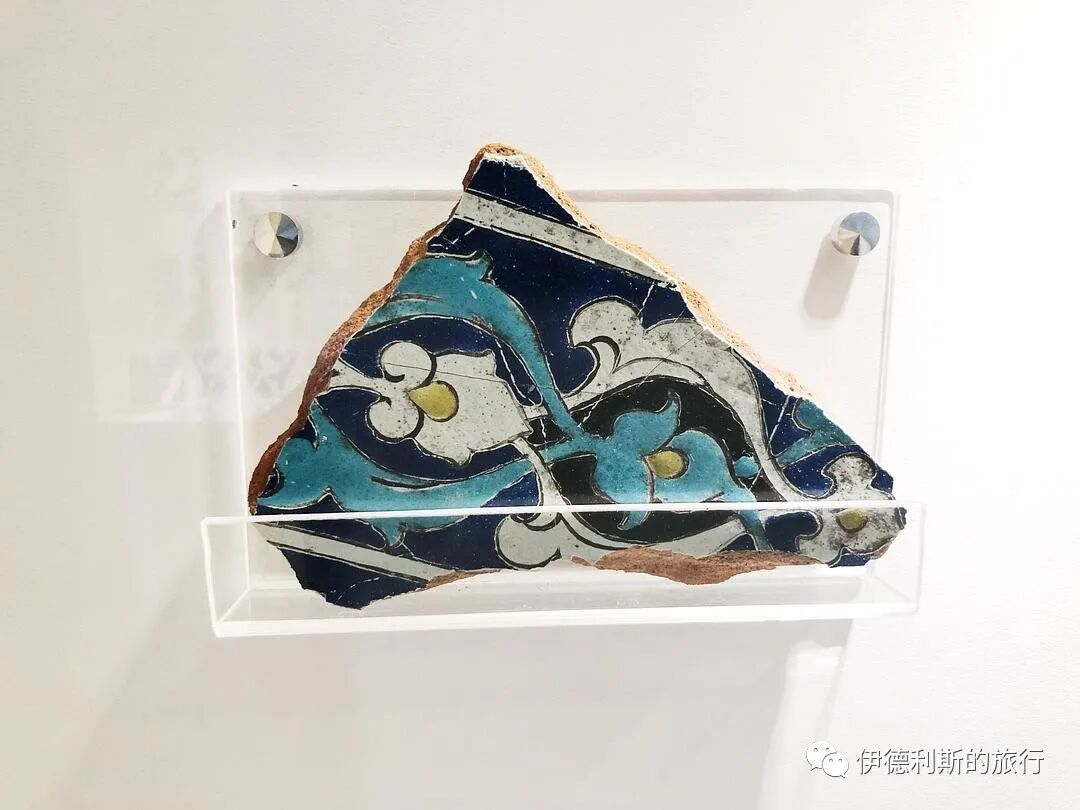
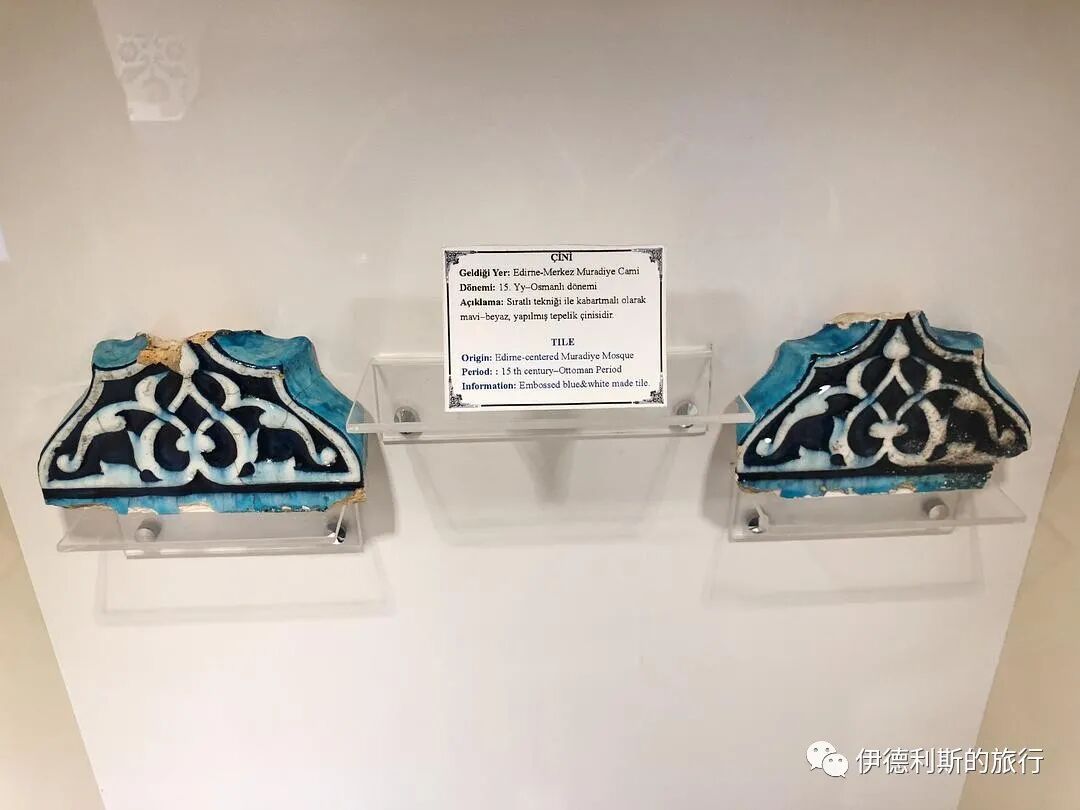
15th-century tiles from the Muradiye Mosque in Edirne. The Muradiye Mosque was commissioned by the sixth Ottoman Sultan, Murad II (reigned 1421-1444), in 1436. This site was originally part of a Sufi Mevlevi order complex and was later converted into a mosque.
The interior of the mosque is famous for its beautiful tiles. Before being stolen in 2001, there were 479 tiles in the prayer hall with 54 different designs, 15 of which appeared only once, showing the strong influence of Yuan dynasty blue-and-white porcelain. The blue-and-white hexagonal tiles are the earliest examples of Ottoman underglaze tiles. Because the arrangement of some tiles lacks coherence, some scholars believe that some of them were moved from the Ottoman palace in Edirne in the north.
A beautiful inlaid wooden table.
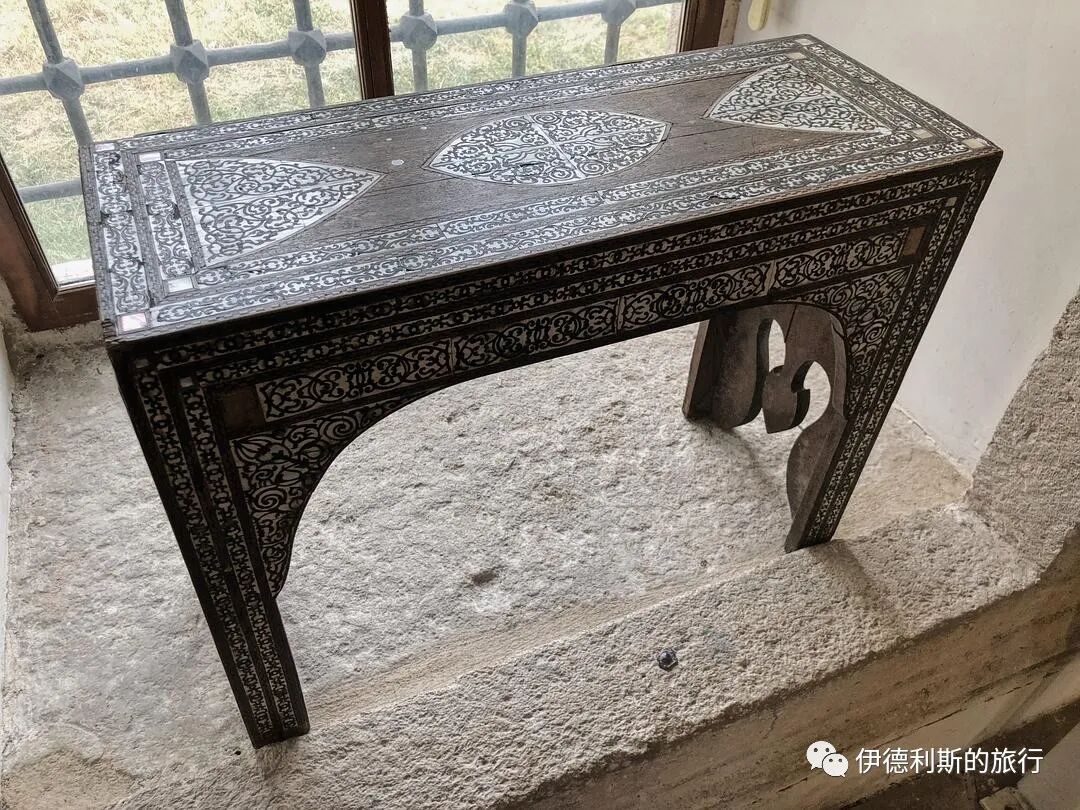
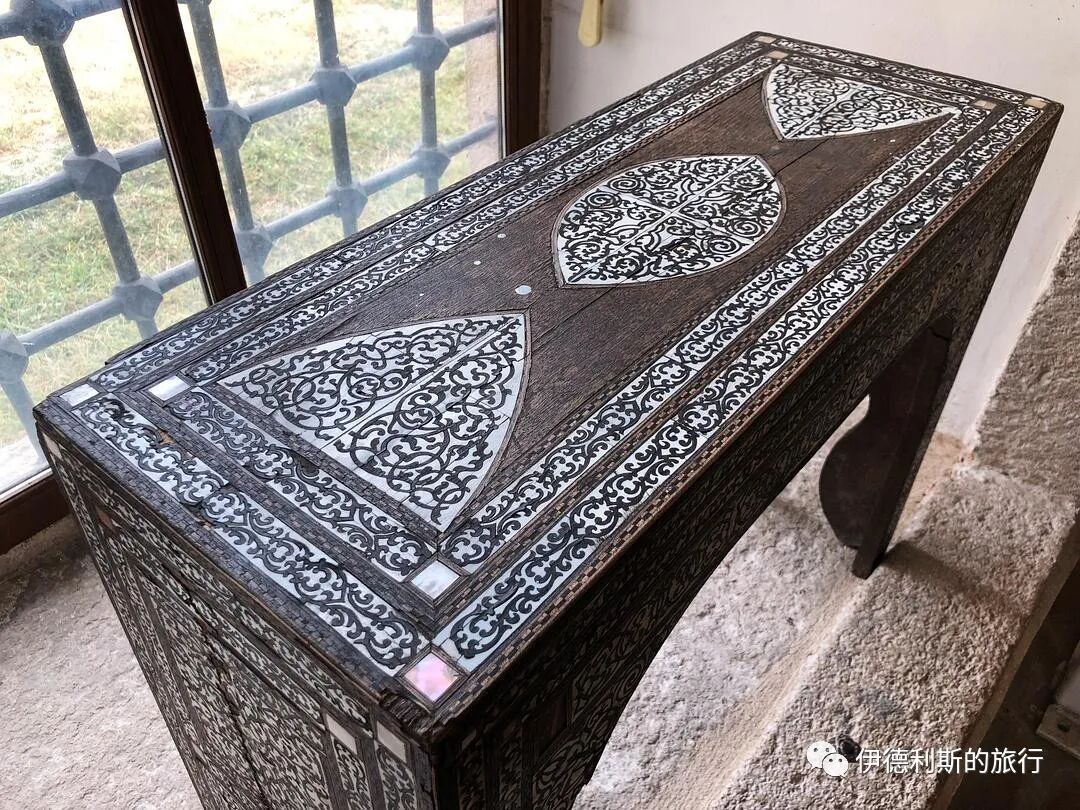
18th-century pearl and ivory inlaid Quran stand from the Yıldız Hamidiye Mosque in Istanbul.
1882 stone tablet from the Selcuk Hatun Mosque in Edirne.
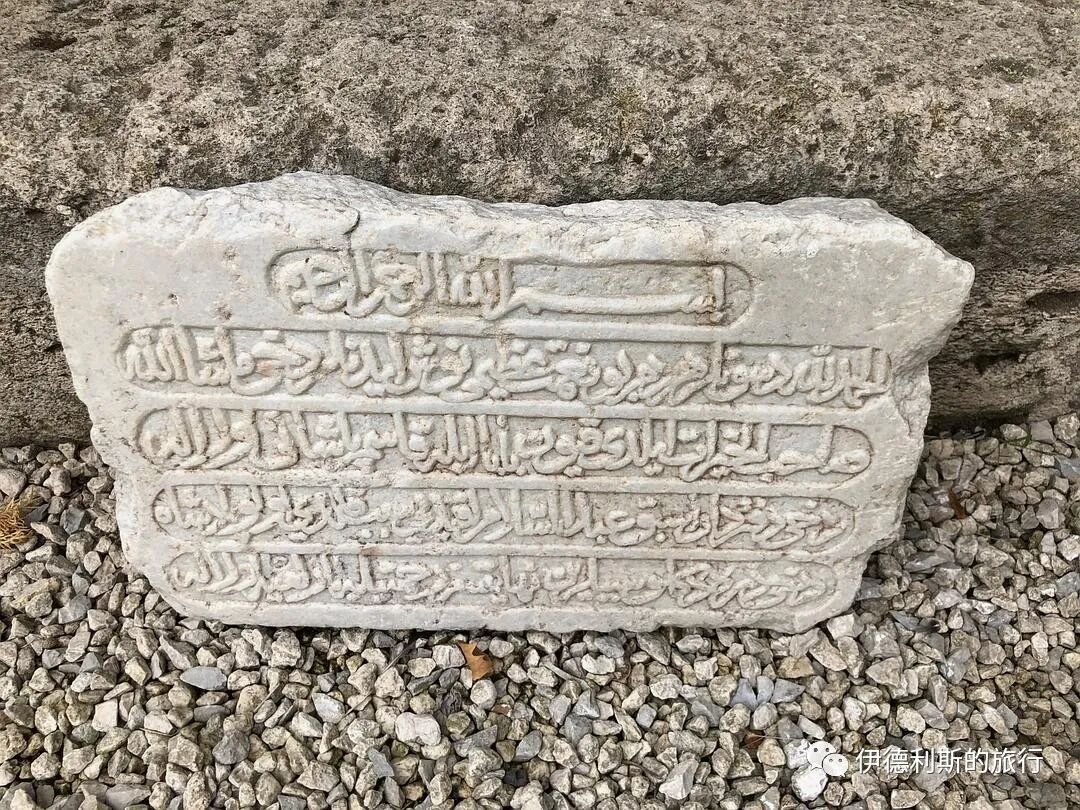
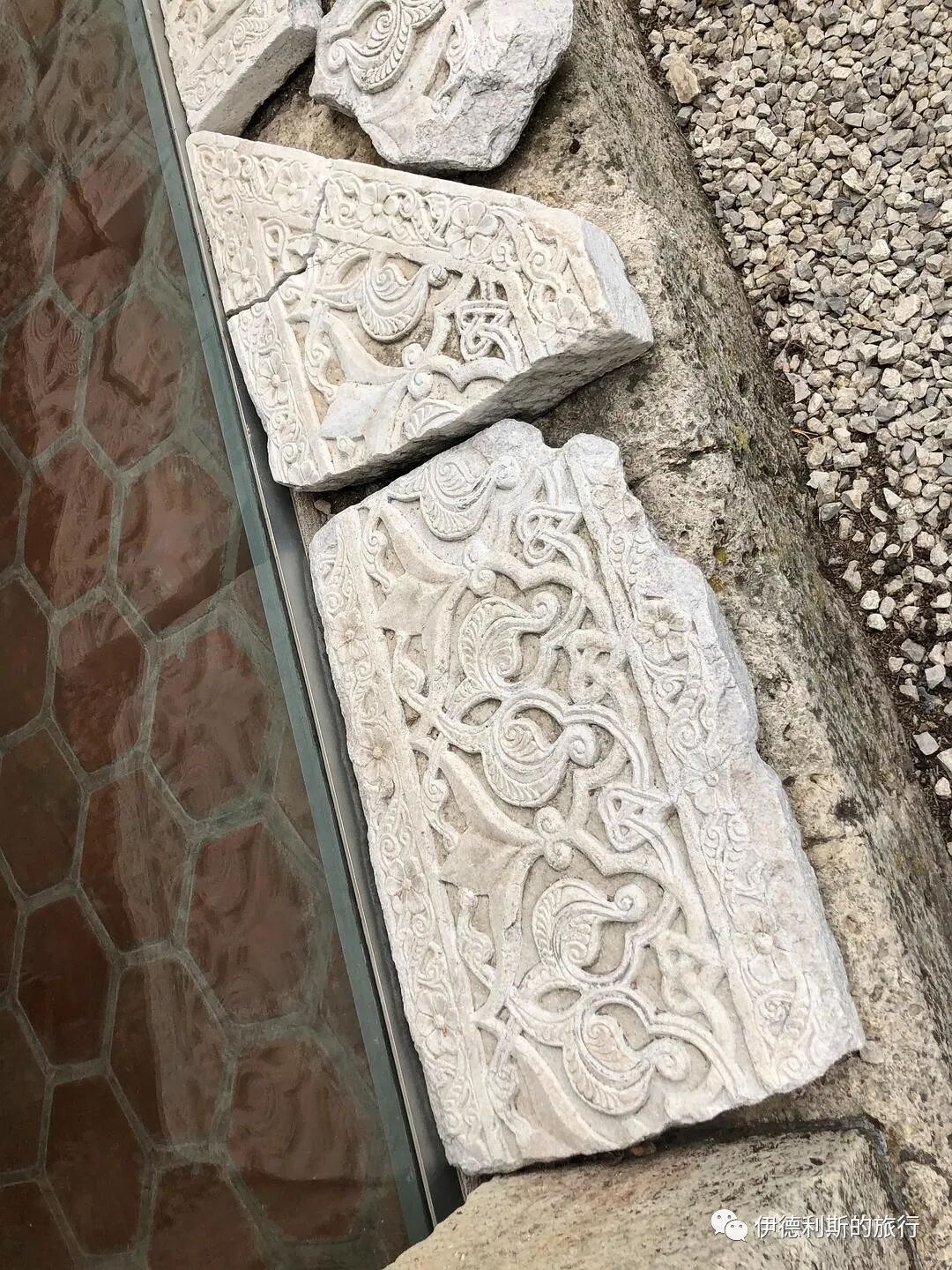
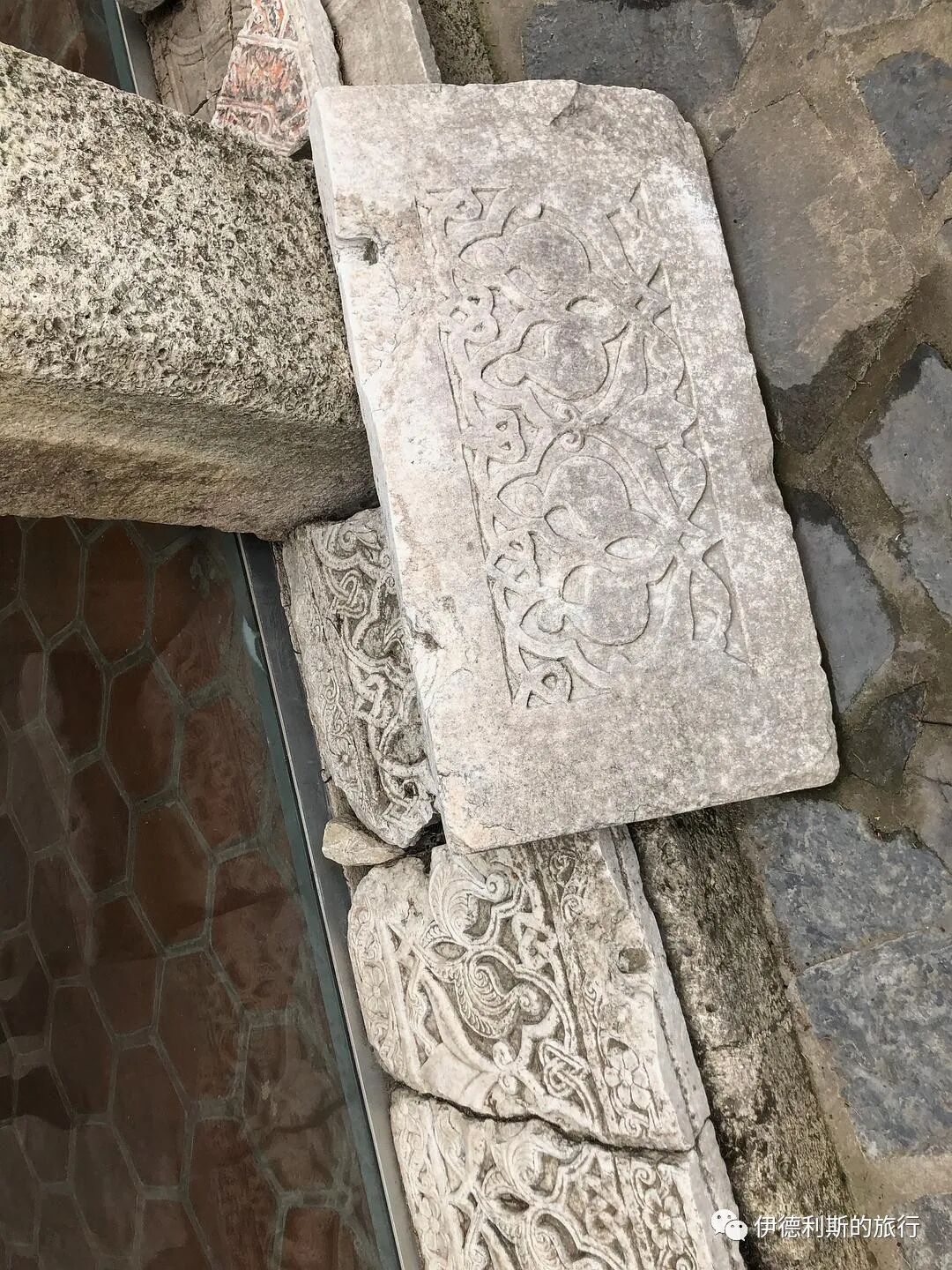
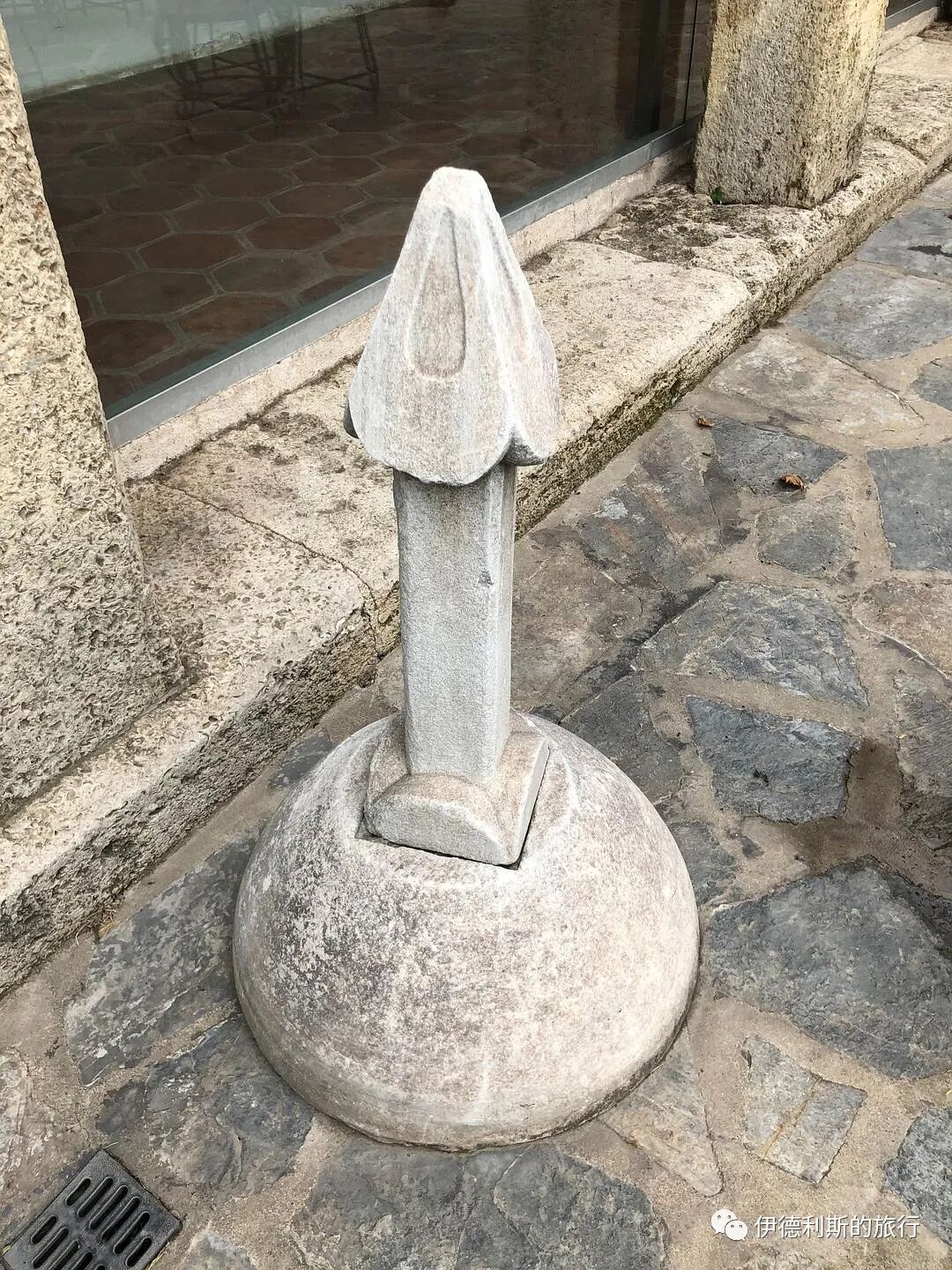
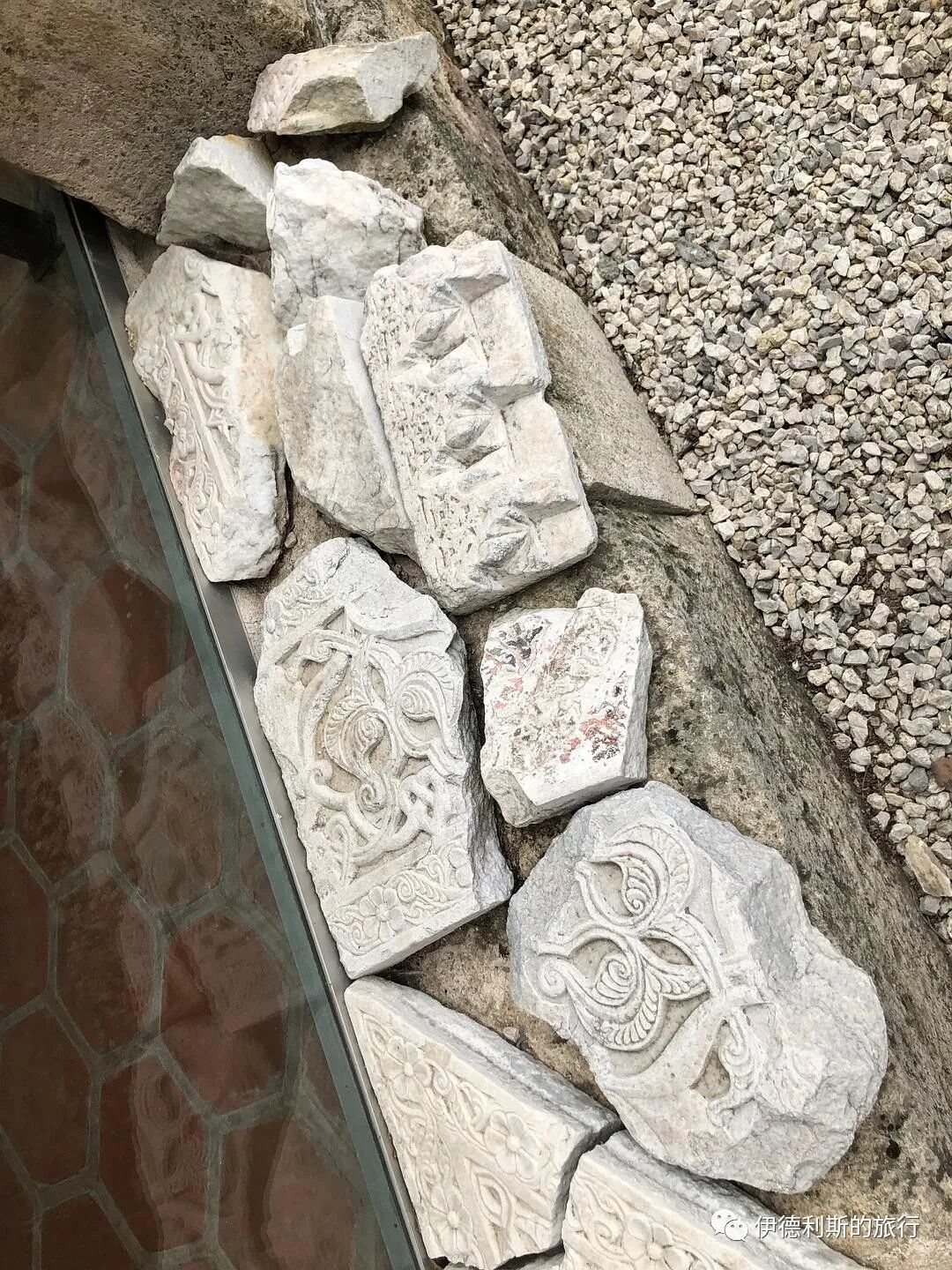
Stone carvings in the Selimiye Quran School Museum.
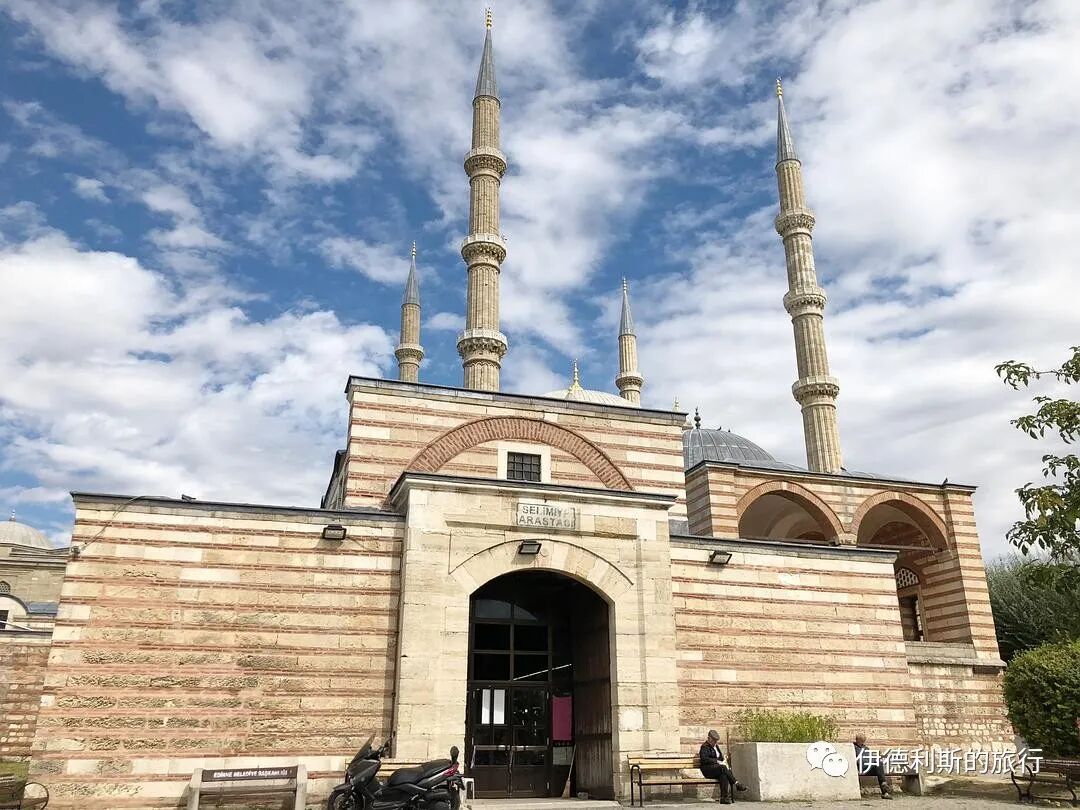
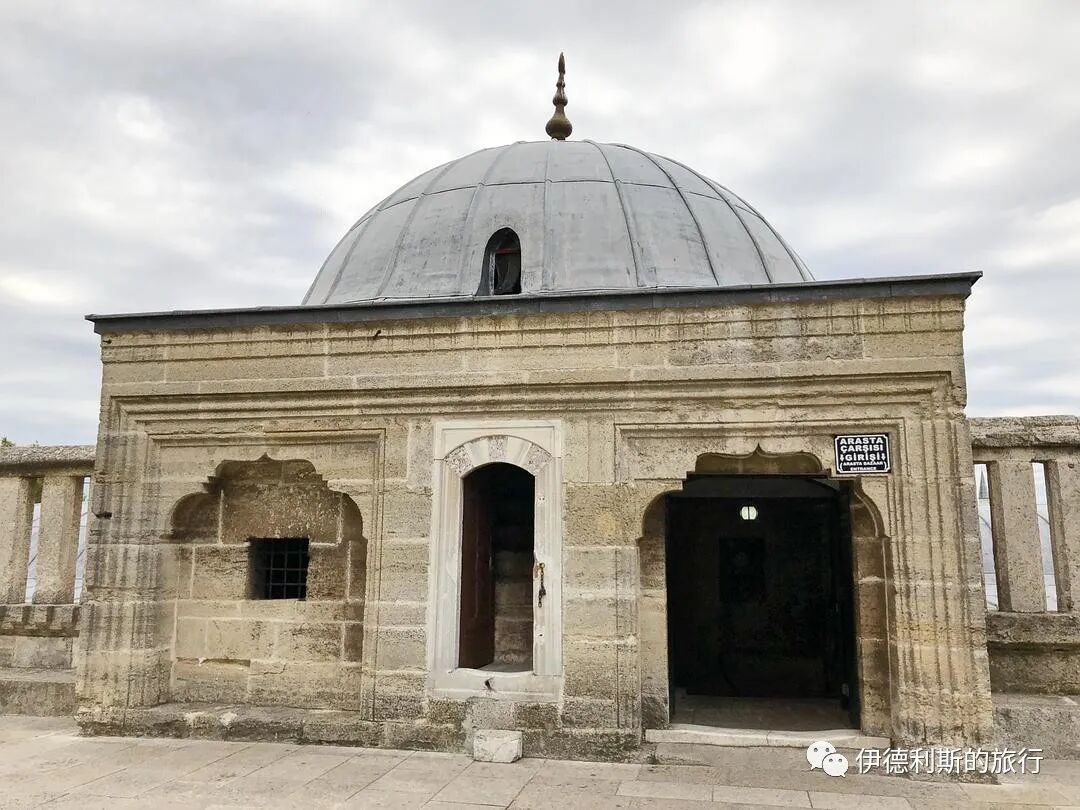
Arasta Bazaar.
The Arasta Bazaar is 225 meters long, runs parallel to the southwest wall of the mosque, and generates income for the mosque by renting out 124 shops. The bazaar has three large gates, one of which connects to the mosque courtyard via stairs.
Some believe the Arasta Bazaar was built by Davud Aga, Mimar Sinan's successor as imperial chief architect, while others believe it was designed by Mimar Sinan to cover the retaining wall supporting the mosque on the southwest slope and was eventually completed by Davud Aga. This is because Mimar Sinan was very skilled at designing and building structures adapted to sloping terrain.
Between 1863 and 1868, Bahá'u'lláh, the founder of the Bahá'í Faith, was exiled to Edirne by the Ottoman Empire with his family and lived near the Selimiye Mosque. During this period, he wrote numerous works, proclaimed the Bahá'í Faith to countries around the world, and formally broke with another leader, Mirza Yahya, which was a major event in Bahá'í history.
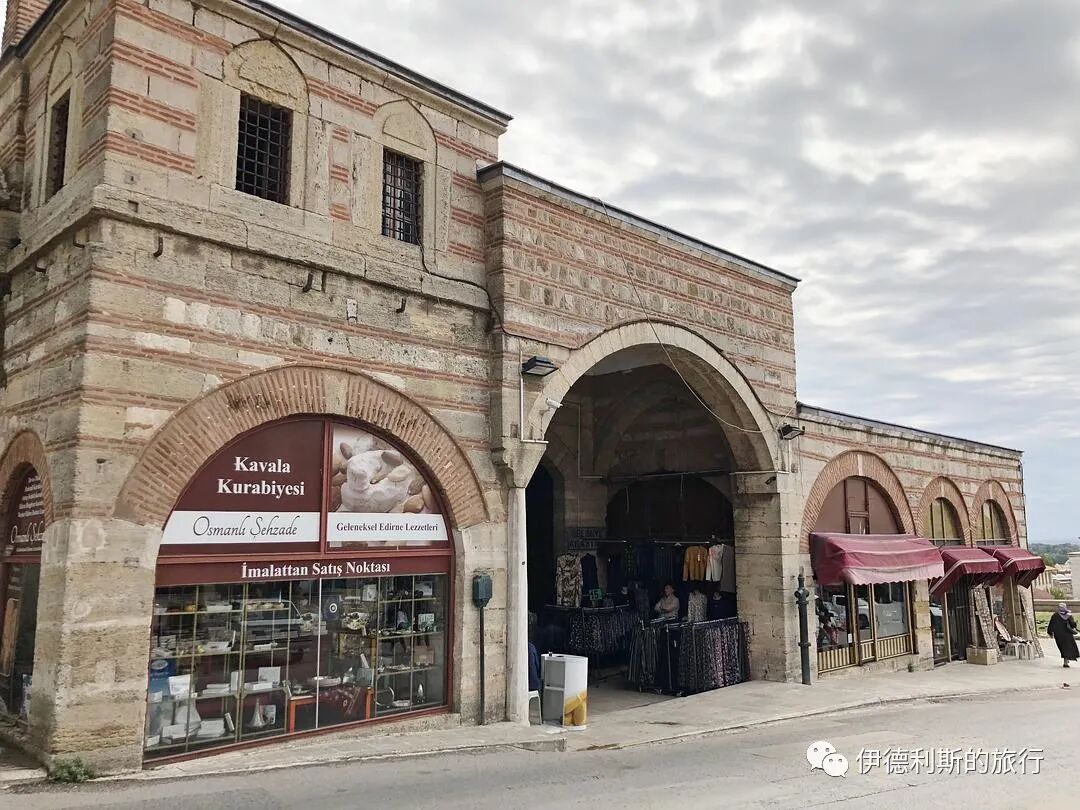
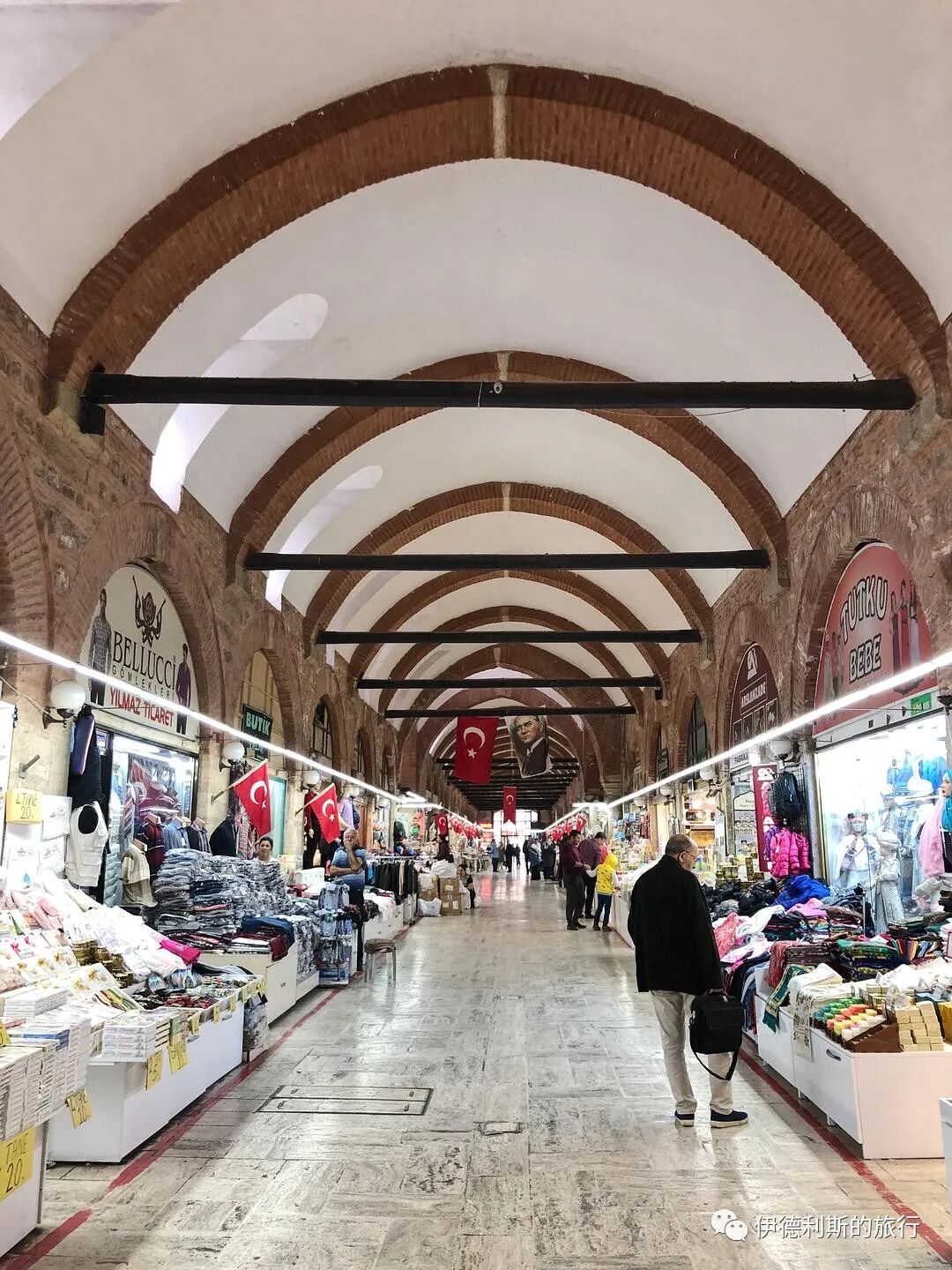
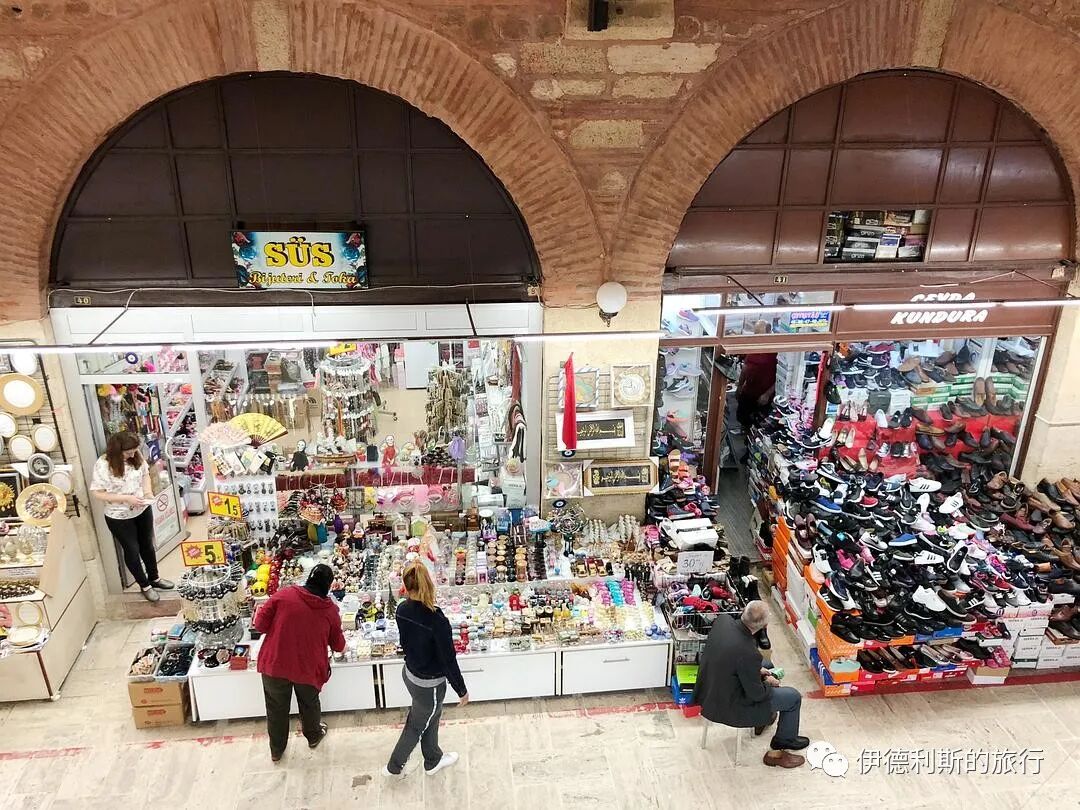
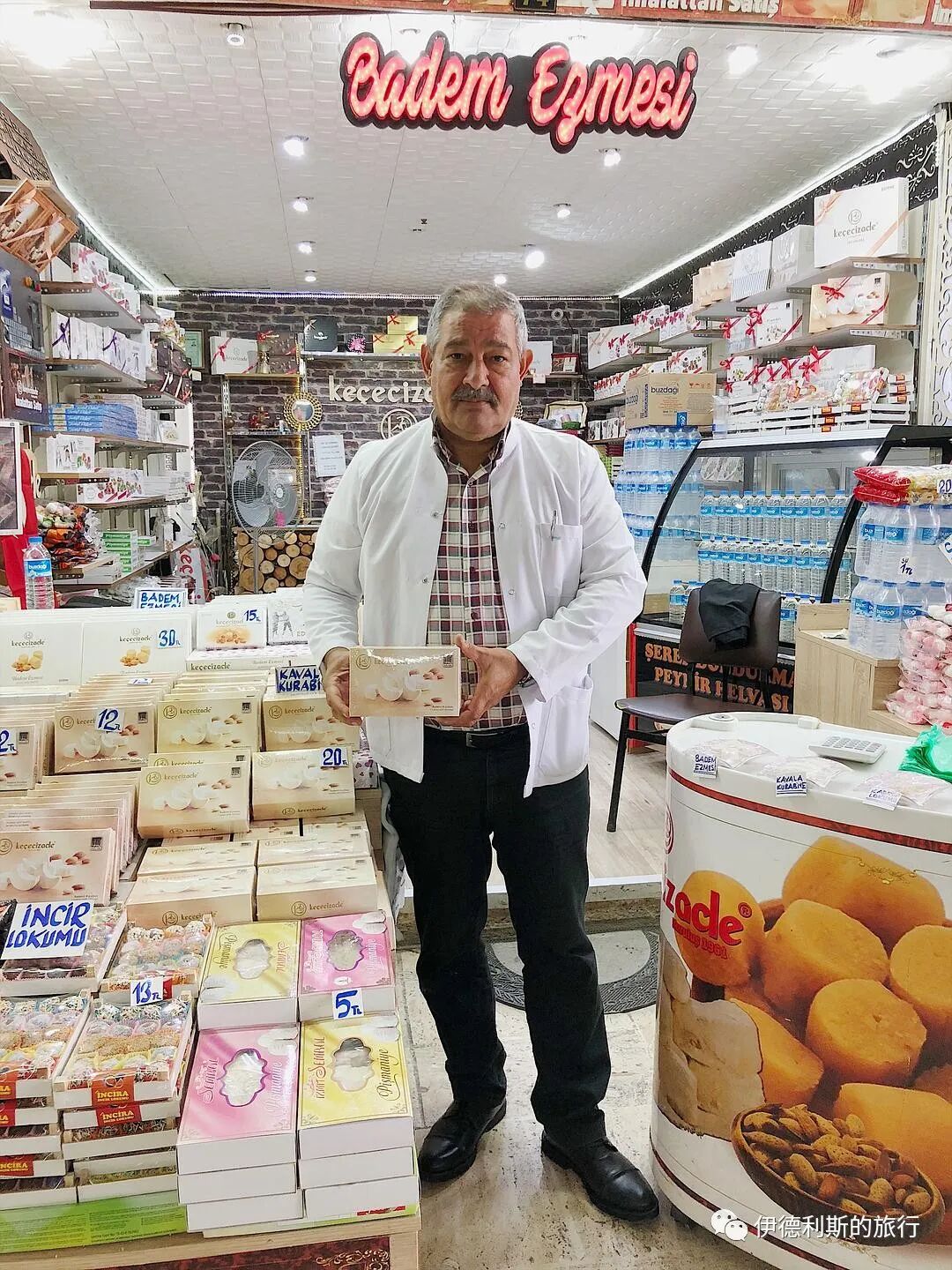
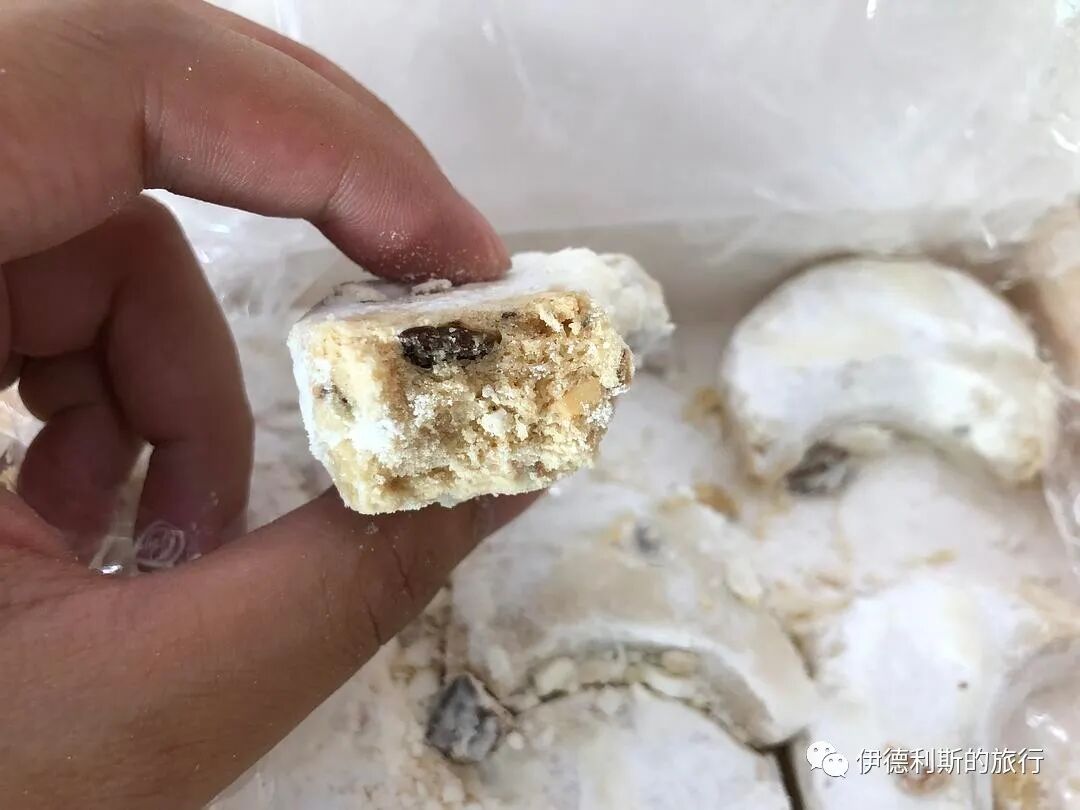
At the bazaar in Edirne, I bought the local specialty, crescent-shaped almond cookies called Kavala kurabiyesi. Kavala is now an important seaport in northern Greece, which was ruled by the Ottoman Empire from 1371 to 1913. During the population exchange between Turkey and Greece in 1922, tens of thousands of Turks left Kavala to settle in Edirne, bringing this cookie with them to Edirne.
Summary: This travel note introduces Selimiye Mosque in Edirne: Ottoman Architecture, Islamic History and Halal Travel. The Selimiye Mosque (Selimiye Camii) in Edirne was commissioned by Ottoman Sultan Selim II (reigned 1566-1574) and built by the imperial chief architect Mimar Sinan between 1567 and 1575. It is useful for readers interested in Selimiye Mosque, Ottoman Architecture, Turkey Travel.
The Selimiye Mosque (Selimiye Camii) in Edirne was commissioned by Ottoman Sultan Selim II (reigned 1566-1574) and built by the imperial chief architect Mimar Sinan between 1567 and 1575. It is hailed as a supreme achievement in the history of Ottoman architecture, a masterpiece of 16th-century Ottoman Islamic art, and the undisputed representative work of Mimar Sinan. It was inscribed on the UNESCO World Heritage List in 2011.
On June 22, 1567, Selim II traveled from Istanbul to Edirne to sign a peace treaty with Austria; it is said that the order to build the mosque was given at this time.
The entire complex (Külliye) consists of 9 parts: the mosque, a courtyard with a fountain, the Dar’ül-Kurra Quran School (Foundation Museum), the Dar'ül-Hadis Hadith School (Museum of Turkish and Islamic Art), the Arasta Bazaar, a primary school, a clock tower (Muvakkithane), the outer courtyard of the mosque, and a library. It is the most prominent building complex in the old city of Edirne.
The mosque, the Quran school, and the Hadith school are located within a 190-meter by 130-meter wall, with the mosque in the center and the schools to the southwest and southeast, respectively. The clock tower is to the northwest, and the bazaar and primary school are to the west.
From UNESCO World Heritage Centre documents.
Exterior of the mosque.
The area where the mosque stands was originally the site of the first palace built in Edirne by the fourth Ottoman Sultan, Bayezid I (reigned 1389-1402). After the Ottoman Empire moved its capital from Edirne to Istanbul in 1453, the old palace gradually became a military headquarters and later a square.
In 1567, soldiers were sent to Edirne to participate in the construction of the mosque. In 1568, timber merchants around Edirne began to supply the mosque construction at full capacity. Meanwhile, large quantities of marble were transported to Edirne by warships from Marmara Island and the Kavala quarries in northern Greece, a process that continued until 1572.
By 1572, the eight supporting arches of the mosque were completed, and the construction of the dome officially began. To highlight the centralization of the Ottoman Empire, Mimar Sinan wanted the Selimiye Mosque to appear as a unified whole from both inside and outside, unlike earlier Ottoman mosques composed of many small domes or semi-domes. Therefore, he decided to build a massive central dome that would surpass the Hagia Sophia. The dome was officially completed in 1575, standing 42.3 meters high with a diameter of 31.5 meters and weighing 20 tons.
At the same time, Mimar Sinan abandoned the traditional Ottoman mosque design of minarets of varying heights, instead building four minarets in the front courtyard, each 71 meters tall. These four vertically symmetrical minarets shoot toward the sky like rockets from the corners of the courtyard, setting off the massive dome rising from the center. They dominate the city's skyline and give the entire mosque a sense of immense majesty.
Overall, the decoration of the mosque's facade is relatively simple, lacking the intricate carvings found in Seljuk and other Iranian architecture. Instead, the layout of the facade is determined by the structure itself, which is a hallmark of Mimar Sinan's architecture and is considered by later generations to be the classical aesthetic of Ottoman architecture of this period.
From UNESCO World Heritage Centre documents.
The main gate of the mosque's prayer hall features a Muqarnas structure. Muqarnas, also known as Ahoopāy in Iranian architecture, is a form of decorative vaulting in Islamic architecture. Muqarnas is sometimes called a "honeycomb vault" or "stalactite vault." It first appeared in Iran and entered Turkey with the Seljuk Empire in the 11th century. The purpose of this structure is to create a relatively smooth and decorative transition area in the exposed structural space between walls and ceilings.
Courtyard.
The courtyard in front of the mosque's prayer hall covers 2,475 square meters, surrounded by a cloister of 18 domes, with a fountain for wudu (ablution) in the center. The marble columns in the courtyard were brought from ruins in Cyprus, Aydincik near the Kapıdağ Peninsula, and Syria. Mimar Sinan designed the front porch near the courtyard gate to be relatively narrow and low to emphasize the grandeur of the mosque's prayer hall.
Mimar Sinan made a bold innovation with the fountain; in this sixteen-sided marble fountain, we can see compositions and very interesting details never before seen in Ottoman fountains of that time.
This is the largest ablution fountain Mimar Sinan ever built, and its decoration is very different from traditional ones. Each marble slab has a wide and deep contour band on the lower part, with a pointed-arch mirror stone in the middle, and openwork geometric carvings on the upper part. Above that is a crown-shaped stone slab with "Rumi patterns" (a style of stylized floral/leaf motifs). Sinan designed special supports for the bottom edge of the fountain based on the lines of each faucet.
According to historical records, in 1572, Mimar Sinan ordered water to be supplied to the fountain from Kayalar village.
Interior of the mosque.
In the Selimiye Mosque, Mimar Sinan utilized an octagonal support system, with 8 columns supporting the massive central dome. During the Bulgarian siege of Edirne in 1913, the mosque's dome was hit by Bulgarian artillery. Because the dome was extremely sturdy, it suffered only minor damage. Later, Atatürk ordered that the traces of the shelling be preserved as a warning to future generations.
The mihrab (prayer niche) is located in a rear apse that protrudes from the prayer hall, providing enough depth for sunlight to enter from three sides of the windows. The white marble-carved mihrab is a spectacular work of its time. Unfortunately, the original 16th-century calligraphy on the semi-dome above the mihrab did not survive; what we see today is a 1985 restoration in the Baroque style.
The tiles around the mihrab were specially ordered by Mimar Sinan from Iznik between 1572 and 1575 and were the highest quality tiles in the Ottoman Empire at the time. The calligraphy on the tiles was created by Karahisari Molla Hasan, a student and adopted son of the famous 16th-century Ottoman calligrapher Ahmed Karahisari.
The use of Iznik tiles made Mimar Sinan not only an outstanding architect but also an excellent artist. In the interior design, Mimar Sinan tried to avoid overwhelming the architecture with decoration, so the tiles were distributed in specific areas as a finishing touch. Dominated by blue and white, the Iznik tiles accented with coral red are typical of the second half of the 16th century. These tiles are extremely rich in content; there are 101 different types of tulip patterns alone, and they were the best in the 16th century in terms of both glaze and quality.
The minbar (pulpit) of the Selimiye Mosque occupies a very important place among classical Ottoman artworks. The minbar is carved from a single block of white marble and has 25 steps, with an extremely elegant design. The beauty produced by the fusion of these geometric shapes is the artistic crystallization that Mimar Sinan pursued throughout his life.
Directly opposite the mihrab is the stone platform where the muezzin stands to call the adhan (call to prayer), supported by 12 white marble columns. The thick columns to the southwest of the platform are composed of vertical, slender rectangular panels, which contain the stairs for the muezzin to climb. The platform has walnut railings, and the underside is decorated with gold-leaf Chinese-style cloud knots, an important example of decoration from the classical Ottoman period. The dark blue background is covered with naturalistic dagger-shaped leaves, chrysanthemums, and Chinese-style clouds. The passion flower pattern on the blue background was brought to Anatolia by Central Asian Turkic people in the 8th-9th centuries and symbolizes eternity.
There is a fountain on the first level of the platform, with an inverted tulip pattern on the top. The tulip holds great significance in Turkish and Islamic art as well as in Islamic faith. Because the sum of the numerical values of the letters in the words "tulip" and "Allah" is 66, people believe that the tulip can symbolize the uniqueness and beauty of Allah; sometimes people even write the word "Allah" in the shape of a tulip.
Quran School (Museum).
The Selimiye Quran School is quite unique among Sinan's works. It features a dual-school layout with the Dar'ül-Kurra Quran School and the Dar'ül-Hadis Hadith School, which are symmetrical to the main mosque. Furthermore, it is the only Quran school built by Sinan that features a honeycomb Muqarnas gate.
The school consists of a large classroom, a series of small student rooms, and a water room surrounding a rectangular courtyard. The main mosque can be seen from both courtyards.
The Hadith school was built between 1567 and 1574, and the first lecturer (Muderris) was appointed in 1570-71 with a daily salary of 60 dirhams. In addition, there was 1 assistant lecturer (Muid) with a daily salary of 9 dirhams, 15 students with a daily salary of 4 dirhams, and 1 doorman (Bevvab), 1 administrator (Ferraş), and 1 cleaner, each with a daily salary of 3 dirhams.
The Quran school had 1 sheikh with a daily salary of 40 dirhams, 10 Hafiz (those who have memorized the Quran) with a daily salary of 2 dirhams, and 1 doorman, 1 administrator, and 1 cleaner, each with a daily salary of 2 dirhams.
In 1925, Atatürk ordered the Hadith school to be converted into the Museum of Turkish and Islamic Art, and the Quran school later became the Foundation Museum, which operates to this day.
In the large classroom of the Quran school, teachers taught students the rules and methods of Quran recitation and listened to and corrected the students' mistakes. Students attended 5 classes a day, 4 days a week. After completing all courses, they would earn the title of Hafiz, becoming someone who could recite the Quran proficiently.
Students studying in a room at the Quran school. In the Ottoman education system, one could enroll in a Quran school after graduating from primary school. The school's curriculum focused mainly on repetitive recitation and discussion. In addition, students learned marble carving and the art of calligraphy, with all funding provided by the Ottoman Sultan's foundation.
Iznik ceramics used in the Selimiye Mosque.
The ancient city of Iznik is located on the shores of Lake Iznik, 90 kilometers southeast of Istanbul. In the late 15th century, it became the center of ceramic production for the Ottoman Empire.
The earliest visible Iznik ceramics were found in the imperial kitchens of the Topkapi Palace in Istanbul in 1489. Due to the Ottoman rulers' love for Chinese blue-and-white porcelain, Iznik ceramics combined traditional Ottoman arabesque patterns with Chinese elements. The style of early Iznik ceramics is known as "Rumi-Hatayi," where "Rumi" represents Ottoman arabesque patterns and "Hatayi" represents Chinese floral patterns.
Early Iznik ceramics were only cobalt blue; after the 16th century, gray-green and lavender were gradually introduced as soft tones. In the late 16th century, Mimar Sinan used Iznik tiles extensively in his architecture, replacing gray-green with bright green and lavender with bright red. The first building with red Iznik tiles was the Süleymaniye Mosque, built by Mimar Sinan in Istanbul in 1557.
In 1557, Kara Mehmed Çelebi became the chief painter of the Ottoman court. He introduced a floral style consisting of tulips, carnations, roses, and hyacinths into Iznik ceramics, making the patterns on the ceramics more natural.
The wooden windows of the Bayezid II Mosque in Edirne (1484-1488) use a Turkish geometric woodworking art called "kundekari," which also features Thuluth calligraphy.
Kundekari uses small pieces of wood that are interlocked and fixed together through special joints, without the use of nails or glue. The wood used is usually sturdy apple, pear, walnut, or cedar, and is often inlaid with pearls, tortoiseshell, ivory, or metals like gold and silver. Kundekari is heat-resistant and moisture-proof, protecting wooden panels from warping due to temperature and humidity changes, so it is mainly used for doors, windows, cabinets, and mosque cupboards.
The Sultan Bayezid II Complex (Sultan II Bayezid Külliyesi) is located on the north bank of the Tunca River in the northwestern suburbs of Edirne and was commissioned by the eighth Ottoman Sultan, Bayezid II (reigned 1481-1512). Bayezid II was the son of Mehmed the Conqueror and was known as "the Just." During his reign, he worked hard to maintain internal government affairs and defeated the Republic of Venice externally, leading the Ottoman Empire into a prosperous phase.
18th-century Hilye (calligraphic description of the Prophet) calligraphy in a glass bottle at the Old Mosque (Eski Cami) in Edirne. Built in 1414, the Old Mosque is the oldest mosque in Edirne and one of the last multi-domed mosques to use the early Ottoman Seljuk style, marking a farewell to early Ottoman architectural styles.
Thuluth calligraphy written by Mustafa Rasim in 1787 at the Old Mosque in Edirne, featuring verses praising the mosque by the local Edirne poet Akif (the son of the calligrapher).
18th-century brass door handle with a palm tree design at the Üç Şerefeli Mosque (Three-Balcony Mosque) in Edirne. The Üç Şerefeli Mosque was built between 1438 and 1447 and was the first central-domed mosque and the first mosque with a portico in Ottoman history, providing great inspiration to Mimar Sinan. The Üç Şerefeli Mosque suffered from fire and earthquakes in the mid-18th century and was subsequently restored.
1478 Thuluth calligraphy stone tablet at the Evliya Kasım Paşa Mosque in Edirne. It records that Kasım Paşa built this mosque in the year 883 of the Hijri calendar. Kasım Paşa was a famous Ottoman general who served as the commander of the European part of the Ottoman Empire. Between 1443 and 1444, he commanded the Ottoman army against the multinational crusader forces of Poland, Hungary, and others in Serbia and Bulgaria. The mosque was closed after 1950 due to the construction of a dam. Since then, it has been continuously damaged by floods and is now abandoned.
19th-century certificates from the Great Mosque of Kütahya; the first was written by Mustafa Sukru, and the second by Ahmed Hamdi. The Great Mosque of Kütahya was built between 1381 and 1410 and is the most important mosque in Kütahya.
1845 Naskh-script Quran from the Lal Huseyin Pasha Mosque in Kütahya, written by Hafiz Mustafa Sabri.
18th-19th century Naskh-script Quran from the Sari Mosque in Edirne.
15th-century tiles from the Şah Melek Mosque in Edirne. The Şah Melek Mosque was commissioned by the blind Şah Melek Pasha in 1429 and is famous for the tiles laid inside. Şah Melek Pasha played an important role in the succession war between the princes of Ottoman Sultan Bayezid I and later became an important figure in the courts of Sultan Mehmed I and Murad II.
15th-century tiles from the Muradiye Mosque in Edirne. The Muradiye Mosque was commissioned by the sixth Ottoman Sultan, Murad II (reigned 1421-1444), in 1436. This site was originally part of a Sufi Mevlevi order complex and was later converted into a mosque.
The interior of the mosque is famous for its beautiful tiles. Before being stolen in 2001, there were 479 tiles in the prayer hall with 54 different designs, 15 of which appeared only once, showing the strong influence of Yuan dynasty blue-and-white porcelain. The blue-and-white hexagonal tiles are the earliest examples of Ottoman underglaze tiles. Because the arrangement of some tiles lacks coherence, some scholars believe that some of them were moved from the Ottoman palace in Edirne in the north.
A beautiful inlaid wooden table.
18th-century pearl and ivory inlaid Quran stand from the Yıldız Hamidiye Mosque in Istanbul.
1882 stone tablet from the Selcuk Hatun Mosque in Edirne.
Stone carvings in the Selimiye Quran School Museum.
Arasta Bazaar.
The Arasta Bazaar is 225 meters long, runs parallel to the southwest wall of the mosque, and generates income for the mosque by renting out 124 shops. The bazaar has three large gates, one of which connects to the mosque courtyard via stairs.
Some believe the Arasta Bazaar was built by Davud Aga, Mimar Sinan's successor as imperial chief architect, while others believe it was designed by Mimar Sinan to cover the retaining wall supporting the mosque on the southwest slope and was eventually completed by Davud Aga. This is because Mimar Sinan was very skilled at designing and building structures adapted to sloping terrain.
Between 1863 and 1868, Bahá'u'lláh, the founder of the Bahá'í Faith, was exiled to Edirne by the Ottoman Empire with his family and lived near the Selimiye Mosque. During this period, he wrote numerous works, proclaimed the Bahá'í Faith to countries around the world, and formally broke with another leader, Mirza Yahya, which was a major event in Bahá'í history.
At the bazaar in Edirne, I bought the local specialty, crescent-shaped almond cookies called Kavala kurabiyesi. Kavala is now an important seaport in northern Greece, which was ruled by the Ottoman Empire from 1371 to 1913. During the population exchange between Turkey and Greece in 1922, tens of thousands of Turks left Kavala to settle in Edirne, bringing this cookie with them to Edirne.
Selimiye Mosque in Edirne: Ottoman Architecture, Islamic History and Halal Travel
Articles • ali2007fr posted the article • 0 comments • 163 views • 2026-05-17 07:37
Reposted from the web
Summary: This travel note introduces Selimiye Mosque in Edirne: Ottoman Architecture, Islamic History and Halal Travel. The Selimiye Mosque (Selimiye Camii) in Edirne was commissioned by Ottoman Sultan Selim II (reigned 1566-1574) and built by the imperial chief architect Mimar Sinan between 1567 and 1575. It is useful for readers interested in Selimiye Mosque, Ottoman Architecture, Turkey Travel.
The Selimiye Mosque (Selimiye Camii) in Edirne was commissioned by Ottoman Sultan Selim II (reigned 1566-1574) and built by the imperial chief architect Mimar Sinan between 1567 and 1575. It is hailed as a supreme achievement in the history of Ottoman architecture, a masterpiece of 16th-century Ottoman Islamic art, and the undisputed representative work of Mimar Sinan. It was inscribed on the UNESCO World Heritage List in 2011.
On June 22, 1567, Selim II traveled from Istanbul to Edirne to sign a peace treaty with Austria; it is said that the order to build the mosque was given at this time.
The entire complex (Külliye) consists of 9 parts: the mosque, a courtyard with a fountain, the Dar’ül-Kurra Quran School (Foundation Museum), the Dar'ül-Hadis Hadith School (Museum of Turkish and Islamic Art), the Arasta Bazaar, a primary school, a clock tower (Muvakkithane), the outer courtyard of the mosque, and a library. It is the most prominent building complex in the old city of Edirne.
The mosque, the Quran school, and the Hadith school are located within a 190-meter by 130-meter wall, with the mosque in the center and the schools to the southwest and southeast, respectively. The clock tower is to the northwest, and the bazaar and primary school are to the west.
From UNESCO World Heritage Centre documents.
Exterior of the mosque.
The area where the mosque stands was originally the site of the first palace built in Edirne by the fourth Ottoman Sultan, Bayezid I (reigned 1389-1402). After the Ottoman Empire moved its capital from Edirne to Istanbul in 1453, the old palace gradually became a military headquarters and later a square.
In 1567, soldiers were sent to Edirne to participate in the construction of the mosque. In 1568, timber merchants around Edirne began to supply the mosque construction at full capacity. Meanwhile, large quantities of marble were transported to Edirne by warships from Marmara Island and the Kavala quarries in northern Greece, a process that continued until 1572.
By 1572, the eight supporting arches of the mosque were completed, and the construction of the dome officially began. To highlight the centralization of the Ottoman Empire, Mimar Sinan wanted the Selimiye Mosque to appear as a unified whole from both inside and outside, unlike earlier Ottoman mosques composed of many small domes or semi-domes. Therefore, he decided to build a massive central dome that would surpass the Hagia Sophia. The dome was officially completed in 1575, standing 42.3 meters high with a diameter of 31.5 meters and weighing 20 tons.
At the same time, Mimar Sinan abandoned the traditional Ottoman mosque design of minarets of varying heights, instead building four minarets in the front courtyard, each 71 meters tall. These four vertically symmetrical minarets shoot toward the sky like rockets from the corners of the courtyard, setting off the massive dome rising from the center. They dominate the city's skyline and give the entire mosque a sense of immense majesty.
Overall, the decoration of the mosque's facade is relatively simple, lacking the intricate carvings found in Seljuk and other Iranian architecture. Instead, the layout of the facade is determined by the structure itself, which is a hallmark of Mimar Sinan's architecture and is considered by later generations to be the classical aesthetic of Ottoman architecture of this period.
From UNESCO World Heritage Centre documents.
The main gate of the mosque's prayer hall features a Muqarnas structure. Muqarnas, also known as Ahoopāy in Iranian architecture, is a form of decorative vaulting in Islamic architecture. Muqarnas is sometimes called a "honeycomb vault" or "stalactite vault." It first appeared in Iran and entered Turkey with the Seljuk Empire in the 11th century. The purpose of this structure is to create a relatively smooth and decorative transition area in the exposed structural space between walls and ceilings.
Courtyard.
The courtyard in front of the mosque's prayer hall covers 2,475 square meters, surrounded by a cloister of 18 domes, with a fountain for wudu (ablution) in the center. The marble columns in the courtyard were brought from ruins in Cyprus, Aydincik near the Kapıdağ Peninsula, and Syria. Mimar Sinan designed the front porch near the courtyard gate to be relatively narrow and low to emphasize the grandeur of the mosque's prayer hall.
Mimar Sinan made a bold innovation with the fountain; in this sixteen-sided marble fountain, we can see compositions and very interesting details never before seen in Ottoman fountains of that time.
This is the largest ablution fountain Mimar Sinan ever built, and its decoration is very different from traditional ones. Each marble slab has a wide and deep contour band on the lower part, with a pointed-arch mirror stone in the middle, and openwork geometric carvings on the upper part. Above that is a crown-shaped stone slab with "Rumi patterns" (a style of stylized floral/leaf motifs). Sinan designed special supports for the bottom edge of the fountain based on the lines of each faucet.
According to historical records, in 1572, Mimar Sinan ordered water to be supplied to the fountain from Kayalar village.
Interior of the mosque.
In the Selimiye Mosque, Mimar Sinan utilized an octagonal support system, with 8 columns supporting the massive central dome. During the Bulgarian siege of Edirne in 1913, the mosque's dome was hit by Bulgarian artillery. Because the dome was extremely sturdy, it suffered only minor damage. Later, Atatürk ordered that the traces of the shelling be preserved as a warning to future generations.
The mihrab (prayer niche) is located in a rear apse that protrudes from the prayer hall, providing enough depth for sunlight to enter from three sides of the windows. The white marble-carved mihrab is a spectacular work of its time. Unfortunately, the original 16th-century calligraphy on the semi-dome above the mihrab did not survive; what we see today is a 1985 restoration in the Baroque style.
The tiles around the mihrab were specially ordered by Mimar Sinan from Iznik between 1572 and 1575 and were the highest quality tiles in the Ottoman Empire at the time. The calligraphy on the tiles was created by Karahisari Molla Hasan, a student and adopted son of the famous 16th-century Ottoman calligrapher Ahmed Karahisari.
The use of Iznik tiles made Mimar Sinan not only an outstanding architect but also an excellent artist. In the interior design, Mimar Sinan tried to avoid overwhelming the architecture with decoration, so the tiles were distributed in specific areas as a finishing touch. Dominated by blue and white, the Iznik tiles accented with coral red are typical of the second half of the 16th century. These tiles are extremely rich in content; there are 101 different types of tulip patterns alone, and they were the best in the 16th century in terms of both glaze and quality.
The minbar (pulpit) of the Selimiye Mosque occupies a very important place among classical Ottoman artworks. The minbar is carved from a single block of white marble and has 25 steps, with an extremely elegant design. The beauty produced by the fusion of these geometric shapes is the artistic crystallization that Mimar Sinan pursued throughout his life.
Directly opposite the mihrab is the stone platform where the muezzin stands to call the adhan (call to prayer), supported by 12 white marble columns. The thick columns to the southwest of the platform are composed of vertical, slender rectangular panels, which contain the stairs for the muezzin to climb. The platform has walnut railings, and the underside is decorated with gold-leaf Chinese-style cloud knots, an important example of decoration from the classical Ottoman period. The dark blue background is covered with naturalistic dagger-shaped leaves, chrysanthemums, and Chinese-style clouds. The passion flower pattern on the blue background was brought to Anatolia by Central Asian Turkic people in the 8th-9th centuries and symbolizes eternity.
There is a fountain on the first level of the platform, with an inverted tulip pattern on the top. The tulip holds great significance in Turkish and Islamic art as well as in Islamic faith. Because the sum of the numerical values of the letters in the words "tulip" and "Allah" is 66, people believe that the tulip can symbolize the uniqueness and beauty of Allah; sometimes people even write the word "Allah" in the shape of a tulip.
Quran School (Museum).
The Selimiye Quran School is quite unique among Sinan's works. It features a dual-school layout with the Dar'ül-Kurra Quran School and the Dar'ül-Hadis Hadith School, which are symmetrical to the main mosque. Furthermore, it is the only Quran school built by Sinan that features a honeycomb Muqarnas gate.
The school consists of a large classroom, a series of small student rooms, and a water room surrounding a rectangular courtyard. The main mosque can be seen from both courtyards.
The Hadith school was built between 1567 and 1574, and the first lecturer (Muderris) was appointed in 1570-71 with a daily salary of 60 dirhams. In addition, there was 1 assistant lecturer (Muid) with a daily salary of 9 dirhams, 15 students with a daily salary of 4 dirhams, and 1 doorman (Bevvab), 1 administrator (Ferraş), and 1 cleaner, each with a daily salary of 3 dirhams.
The Quran school had 1 sheikh with a daily salary of 40 dirhams, 10 Hafiz (those who have memorized the Quran) with a daily salary of 2 dirhams, and 1 doorman, 1 administrator, and 1 cleaner, each with a daily salary of 2 dirhams.
In 1925, Atatürk ordered the Hadith school to be converted into the Museum of Turkish and Islamic Art, and the Quran school later became the Foundation Museum, which operates to this day.
In the large classroom of the Quran school, teachers taught students the rules and methods of Quran recitation and listened to and corrected the students' mistakes. Students attended 5 classes a day, 4 days a week. After completing all courses, they would earn the title of Hafiz, becoming someone who could recite the Quran proficiently.
Students studying in a room at the Quran school. In the Ottoman education system, one could enroll in a Quran school after graduating from primary school. The school's curriculum focused mainly on repetitive recitation and discussion. In addition, students learned marble carving and the art of calligraphy, with all funding provided by the Ottoman Sultan's foundation.
Iznik ceramics used in the Selimiye Mosque.
The ancient city of Iznik is located on the shores of Lake Iznik, 90 kilometers southeast of Istanbul. In the late 15th century, it became the center of ceramic production for the Ottoman Empire.
The earliest visible Iznik ceramics were found in the imperial kitchens of the Topkapi Palace in Istanbul in 1489. Due to the Ottoman rulers' love for Chinese blue-and-white porcelain, Iznik ceramics combined traditional Ottoman arabesque patterns with Chinese elements. The style of early Iznik ceramics is known as "Rumi-Hatayi," where "Rumi" represents Ottoman arabesque patterns and "Hatayi" represents Chinese floral patterns.
Early Iznik ceramics were only cobalt blue; after the 16th century, gray-green and lavender were gradually introduced as soft tones. In the late 16th century, Mimar Sinan used Iznik tiles extensively in his architecture, replacing gray-green with bright green and lavender with bright red. The first building with red Iznik tiles was the Süleymaniye Mosque, built by Mimar Sinan in Istanbul in 1557.
In 1557, Kara Mehmed Çelebi became the chief painter of the Ottoman court. He introduced a floral style consisting of tulips, carnations, roses, and hyacinths into Iznik ceramics, making the patterns on the ceramics more natural.
The wooden windows of the Bayezid II Mosque in Edirne (1484-1488) use a Turkish geometric woodworking art called "kundekari," which also features Thuluth calligraphy.
Kundekari uses small pieces of wood that are interlocked and fixed together through special joints, without the use of nails or glue. The wood used is usually sturdy apple, pear, walnut, or cedar, and is often inlaid with pearls, tortoiseshell, ivory, or metals like gold and silver. Kundekari is heat-resistant and moisture-proof, protecting wooden panels from warping due to temperature and humidity changes, so it is mainly used for doors, windows, cabinets, and mosque cupboards.
The Sultan Bayezid II Complex (Sultan II Bayezid Külliyesi) is located on the north bank of the Tunca River in the northwestern suburbs of Edirne and was commissioned by the eighth Ottoman Sultan, Bayezid II (reigned 1481-1512). Bayezid II was the son of Mehmed the Conqueror and was known as "the Just." During his reign, he worked hard to maintain internal government affairs and defeated the Republic of Venice externally, leading the Ottoman Empire into a prosperous phase.
18th-century Hilye (calligraphic description of the Prophet) calligraphy in a glass bottle at the Old Mosque (Eski Cami) in Edirne. Built in 1414, the Old Mosque is the oldest mosque in Edirne and one of the last multi-domed mosques to use the early Ottoman Seljuk style, marking a farewell to early Ottoman architectural styles.
Thuluth calligraphy written by Mustafa Rasim in 1787 at the Old Mosque in Edirne, featuring verses praising the mosque by the local Edirne poet Akif (the son of the calligrapher).
18th-century brass door handle with a palm tree design at the Üç Şerefeli Mosque (Three-Balcony Mosque) in Edirne. The Üç Şerefeli Mosque was built between 1438 and 1447 and was the first central-domed mosque and the first mosque with a portico in Ottoman history, providing great inspiration to Mimar Sinan. The Üç Şerefeli Mosque suffered from fire and earthquakes in the mid-18th century and was subsequently restored.
1478 Thuluth calligraphy stone tablet at the Evliya Kasım Paşa Mosque in Edirne. It records that Kasım Paşa built this mosque in the year 883 of the Hijri calendar. Kasım Paşa was a famous Ottoman general who served as the commander of the European part of the Ottoman Empire. Between 1443 and 1444, he commanded the Ottoman army against the multinational crusader forces of Poland, Hungary, and others in Serbia and Bulgaria. The mosque was closed after 1950 due to the construction of a dam. Since then, it has been continuously damaged by floods and is now abandoned.
19th-century certificates from the Great Mosque of Kütahya; the first was written by Mustafa Sukru, and the second by Ahmed Hamdi. The Great Mosque of Kütahya was built between 1381 and 1410 and is the most important mosque in Kütahya.
1845 Naskh-script Quran from the Lal Huseyin Pasha Mosque in Kütahya, written by Hafiz Mustafa Sabri.
18th-19th century Naskh-script Quran from the Sari Mosque in Edirne.
15th-century tiles from the Şah Melek Mosque in Edirne. The Şah Melek Mosque was commissioned by the blind Şah Melek Pasha in 1429 and is famous for the tiles laid inside. Şah Melek Pasha played an important role in the succession war between the princes of Ottoman Sultan Bayezid I and later became an important figure in the courts of Sultan Mehmed I and Murad II.
15th-century tiles from the Muradiye Mosque in Edirne. The Muradiye Mosque was commissioned by the sixth Ottoman Sultan, Murad II (reigned 1421-1444), in 1436. This site was originally part of a Sufi Mevlevi order complex and was later converted into a mosque.
The interior of the mosque is famous for its beautiful tiles. Before being stolen in 2001, there were 479 tiles in the prayer hall with 54 different designs, 15 of which appeared only once, showing the strong influence of Yuan dynasty blue-and-white porcelain. The blue-and-white hexagonal tiles are the earliest examples of Ottoman underglaze tiles. Because the arrangement of some tiles lacks coherence, some scholars believe that some of them were moved from the Ottoman palace in Edirne in the north.
A beautiful inlaid wooden table.
18th-century pearl and ivory inlaid Quran stand from the Yıldız Hamidiye Mosque in Istanbul.
1882 stone tablet from the Selcuk Hatun Mosque in Edirne.
Stone carvings in the Selimiye Quran School Museum.
Arasta Bazaar.
The Arasta Bazaar is 225 meters long, runs parallel to the southwest wall of the mosque, and generates income for the mosque by renting out 124 shops. The bazaar has three large gates, one of which connects to the mosque courtyard via stairs.
Some believe the Arasta Bazaar was built by Davud Aga, Mimar Sinan's successor as imperial chief architect, while others believe it was designed by Mimar Sinan to cover the retaining wall supporting the mosque on the southwest slope and was eventually completed by Davud Aga. This is because Mimar Sinan was very skilled at designing and building structures adapted to sloping terrain.
Between 1863 and 1868, Bahá'u'lláh, the founder of the Bahá'í Faith, was exiled to Edirne by the Ottoman Empire with his family and lived near the Selimiye Mosque. During this period, he wrote numerous works, proclaimed the Bahá'í Faith to countries around the world, and formally broke with another leader, Mirza Yahya, which was a major event in Bahá'í history.
At the bazaar in Edirne, I bought the local specialty, crescent-shaped almond cookies called Kavala kurabiyesi. Kavala is now an important seaport in northern Greece, which was ruled by the Ottoman Empire from 1371 to 1913. During the population exchange between Turkey and Greece in 1922, tens of thousands of Turks left Kavala to settle in Edirne, bringing this cookie with them to Edirne. view all
Summary: This travel note introduces Selimiye Mosque in Edirne: Ottoman Architecture, Islamic History and Halal Travel. The Selimiye Mosque (Selimiye Camii) in Edirne was commissioned by Ottoman Sultan Selim II (reigned 1566-1574) and built by the imperial chief architect Mimar Sinan between 1567 and 1575. It is useful for readers interested in Selimiye Mosque, Ottoman Architecture, Turkey Travel.
The Selimiye Mosque (Selimiye Camii) in Edirne was commissioned by Ottoman Sultan Selim II (reigned 1566-1574) and built by the imperial chief architect Mimar Sinan between 1567 and 1575. It is hailed as a supreme achievement in the history of Ottoman architecture, a masterpiece of 16th-century Ottoman Islamic art, and the undisputed representative work of Mimar Sinan. It was inscribed on the UNESCO World Heritage List in 2011.
On June 22, 1567, Selim II traveled from Istanbul to Edirne to sign a peace treaty with Austria; it is said that the order to build the mosque was given at this time.
The entire complex (Külliye) consists of 9 parts: the mosque, a courtyard with a fountain, the Dar’ül-Kurra Quran School (Foundation Museum), the Dar'ül-Hadis Hadith School (Museum of Turkish and Islamic Art), the Arasta Bazaar, a primary school, a clock tower (Muvakkithane), the outer courtyard of the mosque, and a library. It is the most prominent building complex in the old city of Edirne.
The mosque, the Quran school, and the Hadith school are located within a 190-meter by 130-meter wall, with the mosque in the center and the schools to the southwest and southeast, respectively. The clock tower is to the northwest, and the bazaar and primary school are to the west.
From UNESCO World Heritage Centre documents.
Exterior of the mosque.
The area where the mosque stands was originally the site of the first palace built in Edirne by the fourth Ottoman Sultan, Bayezid I (reigned 1389-1402). After the Ottoman Empire moved its capital from Edirne to Istanbul in 1453, the old palace gradually became a military headquarters and later a square.
In 1567, soldiers were sent to Edirne to participate in the construction of the mosque. In 1568, timber merchants around Edirne began to supply the mosque construction at full capacity. Meanwhile, large quantities of marble were transported to Edirne by warships from Marmara Island and the Kavala quarries in northern Greece, a process that continued until 1572.
By 1572, the eight supporting arches of the mosque were completed, and the construction of the dome officially began. To highlight the centralization of the Ottoman Empire, Mimar Sinan wanted the Selimiye Mosque to appear as a unified whole from both inside and outside, unlike earlier Ottoman mosques composed of many small domes or semi-domes. Therefore, he decided to build a massive central dome that would surpass the Hagia Sophia. The dome was officially completed in 1575, standing 42.3 meters high with a diameter of 31.5 meters and weighing 20 tons.
At the same time, Mimar Sinan abandoned the traditional Ottoman mosque design of minarets of varying heights, instead building four minarets in the front courtyard, each 71 meters tall. These four vertically symmetrical minarets shoot toward the sky like rockets from the corners of the courtyard, setting off the massive dome rising from the center. They dominate the city's skyline and give the entire mosque a sense of immense majesty.
Overall, the decoration of the mosque's facade is relatively simple, lacking the intricate carvings found in Seljuk and other Iranian architecture. Instead, the layout of the facade is determined by the structure itself, which is a hallmark of Mimar Sinan's architecture and is considered by later generations to be the classical aesthetic of Ottoman architecture of this period.
From UNESCO World Heritage Centre documents.
The main gate of the mosque's prayer hall features a Muqarnas structure. Muqarnas, also known as Ahoopāy in Iranian architecture, is a form of decorative vaulting in Islamic architecture. Muqarnas is sometimes called a "honeycomb vault" or "stalactite vault." It first appeared in Iran and entered Turkey with the Seljuk Empire in the 11th century. The purpose of this structure is to create a relatively smooth and decorative transition area in the exposed structural space between walls and ceilings.
Courtyard.
The courtyard in front of the mosque's prayer hall covers 2,475 square meters, surrounded by a cloister of 18 domes, with a fountain for wudu (ablution) in the center. The marble columns in the courtyard were brought from ruins in Cyprus, Aydincik near the Kapıdağ Peninsula, and Syria. Mimar Sinan designed the front porch near the courtyard gate to be relatively narrow and low to emphasize the grandeur of the mosque's prayer hall.
Mimar Sinan made a bold innovation with the fountain; in this sixteen-sided marble fountain, we can see compositions and very interesting details never before seen in Ottoman fountains of that time.
This is the largest ablution fountain Mimar Sinan ever built, and its decoration is very different from traditional ones. Each marble slab has a wide and deep contour band on the lower part, with a pointed-arch mirror stone in the middle, and openwork geometric carvings on the upper part. Above that is a crown-shaped stone slab with "Rumi patterns" (a style of stylized floral/leaf motifs). Sinan designed special supports for the bottom edge of the fountain based on the lines of each faucet.
According to historical records, in 1572, Mimar Sinan ordered water to be supplied to the fountain from Kayalar village.
Interior of the mosque.
In the Selimiye Mosque, Mimar Sinan utilized an octagonal support system, with 8 columns supporting the massive central dome. During the Bulgarian siege of Edirne in 1913, the mosque's dome was hit by Bulgarian artillery. Because the dome was extremely sturdy, it suffered only minor damage. Later, Atatürk ordered that the traces of the shelling be preserved as a warning to future generations.
The mihrab (prayer niche) is located in a rear apse that protrudes from the prayer hall, providing enough depth for sunlight to enter from three sides of the windows. The white marble-carved mihrab is a spectacular work of its time. Unfortunately, the original 16th-century calligraphy on the semi-dome above the mihrab did not survive; what we see today is a 1985 restoration in the Baroque style.
The tiles around the mihrab were specially ordered by Mimar Sinan from Iznik between 1572 and 1575 and were the highest quality tiles in the Ottoman Empire at the time. The calligraphy on the tiles was created by Karahisari Molla Hasan, a student and adopted son of the famous 16th-century Ottoman calligrapher Ahmed Karahisari.
The use of Iznik tiles made Mimar Sinan not only an outstanding architect but also an excellent artist. In the interior design, Mimar Sinan tried to avoid overwhelming the architecture with decoration, so the tiles were distributed in specific areas as a finishing touch. Dominated by blue and white, the Iznik tiles accented with coral red are typical of the second half of the 16th century. These tiles are extremely rich in content; there are 101 different types of tulip patterns alone, and they were the best in the 16th century in terms of both glaze and quality.
The minbar (pulpit) of the Selimiye Mosque occupies a very important place among classical Ottoman artworks. The minbar is carved from a single block of white marble and has 25 steps, with an extremely elegant design. The beauty produced by the fusion of these geometric shapes is the artistic crystallization that Mimar Sinan pursued throughout his life.
Directly opposite the mihrab is the stone platform where the muezzin stands to call the adhan (call to prayer), supported by 12 white marble columns. The thick columns to the southwest of the platform are composed of vertical, slender rectangular panels, which contain the stairs for the muezzin to climb. The platform has walnut railings, and the underside is decorated with gold-leaf Chinese-style cloud knots, an important example of decoration from the classical Ottoman period. The dark blue background is covered with naturalistic dagger-shaped leaves, chrysanthemums, and Chinese-style clouds. The passion flower pattern on the blue background was brought to Anatolia by Central Asian Turkic people in the 8th-9th centuries and symbolizes eternity.
There is a fountain on the first level of the platform, with an inverted tulip pattern on the top. The tulip holds great significance in Turkish and Islamic art as well as in Islamic faith. Because the sum of the numerical values of the letters in the words "tulip" and "Allah" is 66, people believe that the tulip can symbolize the uniqueness and beauty of Allah; sometimes people even write the word "Allah" in the shape of a tulip.
Quran School (Museum).
The Selimiye Quran School is quite unique among Sinan's works. It features a dual-school layout with the Dar'ül-Kurra Quran School and the Dar'ül-Hadis Hadith School, which are symmetrical to the main mosque. Furthermore, it is the only Quran school built by Sinan that features a honeycomb Muqarnas gate.
The school consists of a large classroom, a series of small student rooms, and a water room surrounding a rectangular courtyard. The main mosque can be seen from both courtyards.
The Hadith school was built between 1567 and 1574, and the first lecturer (Muderris) was appointed in 1570-71 with a daily salary of 60 dirhams. In addition, there was 1 assistant lecturer (Muid) with a daily salary of 9 dirhams, 15 students with a daily salary of 4 dirhams, and 1 doorman (Bevvab), 1 administrator (Ferraş), and 1 cleaner, each with a daily salary of 3 dirhams.
The Quran school had 1 sheikh with a daily salary of 40 dirhams, 10 Hafiz (those who have memorized the Quran) with a daily salary of 2 dirhams, and 1 doorman, 1 administrator, and 1 cleaner, each with a daily salary of 2 dirhams.
In 1925, Atatürk ordered the Hadith school to be converted into the Museum of Turkish and Islamic Art, and the Quran school later became the Foundation Museum, which operates to this day.
In the large classroom of the Quran school, teachers taught students the rules and methods of Quran recitation and listened to and corrected the students' mistakes. Students attended 5 classes a day, 4 days a week. After completing all courses, they would earn the title of Hafiz, becoming someone who could recite the Quran proficiently.
Students studying in a room at the Quran school. In the Ottoman education system, one could enroll in a Quran school after graduating from primary school. The school's curriculum focused mainly on repetitive recitation and discussion. In addition, students learned marble carving and the art of calligraphy, with all funding provided by the Ottoman Sultan's foundation.
Iznik ceramics used in the Selimiye Mosque.
The ancient city of Iznik is located on the shores of Lake Iznik, 90 kilometers southeast of Istanbul. In the late 15th century, it became the center of ceramic production for the Ottoman Empire.
The earliest visible Iznik ceramics were found in the imperial kitchens of the Topkapi Palace in Istanbul in 1489. Due to the Ottoman rulers' love for Chinese blue-and-white porcelain, Iznik ceramics combined traditional Ottoman arabesque patterns with Chinese elements. The style of early Iznik ceramics is known as "Rumi-Hatayi," where "Rumi" represents Ottoman arabesque patterns and "Hatayi" represents Chinese floral patterns.
Early Iznik ceramics were only cobalt blue; after the 16th century, gray-green and lavender were gradually introduced as soft tones. In the late 16th century, Mimar Sinan used Iznik tiles extensively in his architecture, replacing gray-green with bright green and lavender with bright red. The first building with red Iznik tiles was the Süleymaniye Mosque, built by Mimar Sinan in Istanbul in 1557.
In 1557, Kara Mehmed Çelebi became the chief painter of the Ottoman court. He introduced a floral style consisting of tulips, carnations, roses, and hyacinths into Iznik ceramics, making the patterns on the ceramics more natural.
The wooden windows of the Bayezid II Mosque in Edirne (1484-1488) use a Turkish geometric woodworking art called "kundekari," which also features Thuluth calligraphy.
Kundekari uses small pieces of wood that are interlocked and fixed together through special joints, without the use of nails or glue. The wood used is usually sturdy apple, pear, walnut, or cedar, and is often inlaid with pearls, tortoiseshell, ivory, or metals like gold and silver. Kundekari is heat-resistant and moisture-proof, protecting wooden panels from warping due to temperature and humidity changes, so it is mainly used for doors, windows, cabinets, and mosque cupboards.
The Sultan Bayezid II Complex (Sultan II Bayezid Külliyesi) is located on the north bank of the Tunca River in the northwestern suburbs of Edirne and was commissioned by the eighth Ottoman Sultan, Bayezid II (reigned 1481-1512). Bayezid II was the son of Mehmed the Conqueror and was known as "the Just." During his reign, he worked hard to maintain internal government affairs and defeated the Republic of Venice externally, leading the Ottoman Empire into a prosperous phase.
18th-century Hilye (calligraphic description of the Prophet) calligraphy in a glass bottle at the Old Mosque (Eski Cami) in Edirne. Built in 1414, the Old Mosque is the oldest mosque in Edirne and one of the last multi-domed mosques to use the early Ottoman Seljuk style, marking a farewell to early Ottoman architectural styles.
Thuluth calligraphy written by Mustafa Rasim in 1787 at the Old Mosque in Edirne, featuring verses praising the mosque by the local Edirne poet Akif (the son of the calligrapher).
18th-century brass door handle with a palm tree design at the Üç Şerefeli Mosque (Three-Balcony Mosque) in Edirne. The Üç Şerefeli Mosque was built between 1438 and 1447 and was the first central-domed mosque and the first mosque with a portico in Ottoman history, providing great inspiration to Mimar Sinan. The Üç Şerefeli Mosque suffered from fire and earthquakes in the mid-18th century and was subsequently restored.
1478 Thuluth calligraphy stone tablet at the Evliya Kasım Paşa Mosque in Edirne. It records that Kasım Paşa built this mosque in the year 883 of the Hijri calendar. Kasım Paşa was a famous Ottoman general who served as the commander of the European part of the Ottoman Empire. Between 1443 and 1444, he commanded the Ottoman army against the multinational crusader forces of Poland, Hungary, and others in Serbia and Bulgaria. The mosque was closed after 1950 due to the construction of a dam. Since then, it has been continuously damaged by floods and is now abandoned.
19th-century certificates from the Great Mosque of Kütahya; the first was written by Mustafa Sukru, and the second by Ahmed Hamdi. The Great Mosque of Kütahya was built between 1381 and 1410 and is the most important mosque in Kütahya.
1845 Naskh-script Quran from the Lal Huseyin Pasha Mosque in Kütahya, written by Hafiz Mustafa Sabri.
18th-19th century Naskh-script Quran from the Sari Mosque in Edirne.
15th-century tiles from the Şah Melek Mosque in Edirne. The Şah Melek Mosque was commissioned by the blind Şah Melek Pasha in 1429 and is famous for the tiles laid inside. Şah Melek Pasha played an important role in the succession war between the princes of Ottoman Sultan Bayezid I and later became an important figure in the courts of Sultan Mehmed I and Murad II.
15th-century tiles from the Muradiye Mosque in Edirne. The Muradiye Mosque was commissioned by the sixth Ottoman Sultan, Murad II (reigned 1421-1444), in 1436. This site was originally part of a Sufi Mevlevi order complex and was later converted into a mosque.
The interior of the mosque is famous for its beautiful tiles. Before being stolen in 2001, there were 479 tiles in the prayer hall with 54 different designs, 15 of which appeared only once, showing the strong influence of Yuan dynasty blue-and-white porcelain. The blue-and-white hexagonal tiles are the earliest examples of Ottoman underglaze tiles. Because the arrangement of some tiles lacks coherence, some scholars believe that some of them were moved from the Ottoman palace in Edirne in the north.
A beautiful inlaid wooden table.
18th-century pearl and ivory inlaid Quran stand from the Yıldız Hamidiye Mosque in Istanbul.
1882 stone tablet from the Selcuk Hatun Mosque in Edirne.
Stone carvings in the Selimiye Quran School Museum.
Arasta Bazaar.
The Arasta Bazaar is 225 meters long, runs parallel to the southwest wall of the mosque, and generates income for the mosque by renting out 124 shops. The bazaar has three large gates, one of which connects to the mosque courtyard via stairs.
Some believe the Arasta Bazaar was built by Davud Aga, Mimar Sinan's successor as imperial chief architect, while others believe it was designed by Mimar Sinan to cover the retaining wall supporting the mosque on the southwest slope and was eventually completed by Davud Aga. This is because Mimar Sinan was very skilled at designing and building structures adapted to sloping terrain.
Between 1863 and 1868, Bahá'u'lláh, the founder of the Bahá'í Faith, was exiled to Edirne by the Ottoman Empire with his family and lived near the Selimiye Mosque. During this period, he wrote numerous works, proclaimed the Bahá'í Faith to countries around the world, and formally broke with another leader, Mirza Yahya, which was a major event in Bahá'í history.
At the bazaar in Edirne, I bought the local specialty, crescent-shaped almond cookies called Kavala kurabiyesi. Kavala is now an important seaport in northern Greece, which was ruled by the Ottoman Empire from 1371 to 1913. During the population exchange between Turkey and Greece in 1922, tens of thousands of Turks left Kavala to settle in Edirne, bringing this cookie with them to Edirne. view all
Reposted from the web
Summary: This travel note introduces Selimiye Mosque in Edirne: Ottoman Architecture, Islamic History and Halal Travel. The Selimiye Mosque (Selimiye Camii) in Edirne was commissioned by Ottoman Sultan Selim II (reigned 1566-1574) and built by the imperial chief architect Mimar Sinan between 1567 and 1575. It is useful for readers interested in Selimiye Mosque, Ottoman Architecture, Turkey Travel.
The Selimiye Mosque (Selimiye Camii) in Edirne was commissioned by Ottoman Sultan Selim II (reigned 1566-1574) and built by the imperial chief architect Mimar Sinan between 1567 and 1575. It is hailed as a supreme achievement in the history of Ottoman architecture, a masterpiece of 16th-century Ottoman Islamic art, and the undisputed representative work of Mimar Sinan. It was inscribed on the UNESCO World Heritage List in 2011.
On June 22, 1567, Selim II traveled from Istanbul to Edirne to sign a peace treaty with Austria; it is said that the order to build the mosque was given at this time.
The entire complex (Külliye) consists of 9 parts: the mosque, a courtyard with a fountain, the Dar’ül-Kurra Quran School (Foundation Museum), the Dar'ül-Hadis Hadith School (Museum of Turkish and Islamic Art), the Arasta Bazaar, a primary school, a clock tower (Muvakkithane), the outer courtyard of the mosque, and a library. It is the most prominent building complex in the old city of Edirne.
The mosque, the Quran school, and the Hadith school are located within a 190-meter by 130-meter wall, with the mosque in the center and the schools to the southwest and southeast, respectively. The clock tower is to the northwest, and the bazaar and primary school are to the west.
From UNESCO World Heritage Centre documents.
Exterior of the mosque.
The area where the mosque stands was originally the site of the first palace built in Edirne by the fourth Ottoman Sultan, Bayezid I (reigned 1389-1402). After the Ottoman Empire moved its capital from Edirne to Istanbul in 1453, the old palace gradually became a military headquarters and later a square.
In 1567, soldiers were sent to Edirne to participate in the construction of the mosque. In 1568, timber merchants around Edirne began to supply the mosque construction at full capacity. Meanwhile, large quantities of marble were transported to Edirne by warships from Marmara Island and the Kavala quarries in northern Greece, a process that continued until 1572.
By 1572, the eight supporting arches of the mosque were completed, and the construction of the dome officially began. To highlight the centralization of the Ottoman Empire, Mimar Sinan wanted the Selimiye Mosque to appear as a unified whole from both inside and outside, unlike earlier Ottoman mosques composed of many small domes or semi-domes. Therefore, he decided to build a massive central dome that would surpass the Hagia Sophia. The dome was officially completed in 1575, standing 42.3 meters high with a diameter of 31.5 meters and weighing 20 tons.
At the same time, Mimar Sinan abandoned the traditional Ottoman mosque design of minarets of varying heights, instead building four minarets in the front courtyard, each 71 meters tall. These four vertically symmetrical minarets shoot toward the sky like rockets from the corners of the courtyard, setting off the massive dome rising from the center. They dominate the city's skyline and give the entire mosque a sense of immense majesty.
Overall, the decoration of the mosque's facade is relatively simple, lacking the intricate carvings found in Seljuk and other Iranian architecture. Instead, the layout of the facade is determined by the structure itself, which is a hallmark of Mimar Sinan's architecture and is considered by later generations to be the classical aesthetic of Ottoman architecture of this period.
From UNESCO World Heritage Centre documents.
The main gate of the mosque's prayer hall features a Muqarnas structure. Muqarnas, also known as Ahoopāy in Iranian architecture, is a form of decorative vaulting in Islamic architecture. Muqarnas is sometimes called a "honeycomb vault" or "stalactite vault." It first appeared in Iran and entered Turkey with the Seljuk Empire in the 11th century. The purpose of this structure is to create a relatively smooth and decorative transition area in the exposed structural space between walls and ceilings.
Courtyard.
The courtyard in front of the mosque's prayer hall covers 2,475 square meters, surrounded by a cloister of 18 domes, with a fountain for wudu (ablution) in the center. The marble columns in the courtyard were brought from ruins in Cyprus, Aydincik near the Kapıdağ Peninsula, and Syria. Mimar Sinan designed the front porch near the courtyard gate to be relatively narrow and low to emphasize the grandeur of the mosque's prayer hall.
Mimar Sinan made a bold innovation with the fountain; in this sixteen-sided marble fountain, we can see compositions and very interesting details never before seen in Ottoman fountains of that time.
This is the largest ablution fountain Mimar Sinan ever built, and its decoration is very different from traditional ones. Each marble slab has a wide and deep contour band on the lower part, with a pointed-arch mirror stone in the middle, and openwork geometric carvings on the upper part. Above that is a crown-shaped stone slab with "Rumi patterns" (a style of stylized floral/leaf motifs). Sinan designed special supports for the bottom edge of the fountain based on the lines of each faucet.
According to historical records, in 1572, Mimar Sinan ordered water to be supplied to the fountain from Kayalar village.
Interior of the mosque.
In the Selimiye Mosque, Mimar Sinan utilized an octagonal support system, with 8 columns supporting the massive central dome. During the Bulgarian siege of Edirne in 1913, the mosque's dome was hit by Bulgarian artillery. Because the dome was extremely sturdy, it suffered only minor damage. Later, Atatürk ordered that the traces of the shelling be preserved as a warning to future generations.
The mihrab (prayer niche) is located in a rear apse that protrudes from the prayer hall, providing enough depth for sunlight to enter from three sides of the windows. The white marble-carved mihrab is a spectacular work of its time. Unfortunately, the original 16th-century calligraphy on the semi-dome above the mihrab did not survive; what we see today is a 1985 restoration in the Baroque style.
The tiles around the mihrab were specially ordered by Mimar Sinan from Iznik between 1572 and 1575 and were the highest quality tiles in the Ottoman Empire at the time. The calligraphy on the tiles was created by Karahisari Molla Hasan, a student and adopted son of the famous 16th-century Ottoman calligrapher Ahmed Karahisari.
The use of Iznik tiles made Mimar Sinan not only an outstanding architect but also an excellent artist. In the interior design, Mimar Sinan tried to avoid overwhelming the architecture with decoration, so the tiles were distributed in specific areas as a finishing touch. Dominated by blue and white, the Iznik tiles accented with coral red are typical of the second half of the 16th century. These tiles are extremely rich in content; there are 101 different types of tulip patterns alone, and they were the best in the 16th century in terms of both glaze and quality.
The minbar (pulpit) of the Selimiye Mosque occupies a very important place among classical Ottoman artworks. The minbar is carved from a single block of white marble and has 25 steps, with an extremely elegant design. The beauty produced by the fusion of these geometric shapes is the artistic crystallization that Mimar Sinan pursued throughout his life.
Directly opposite the mihrab is the stone platform where the muezzin stands to call the adhan (call to prayer), supported by 12 white marble columns. The thick columns to the southwest of the platform are composed of vertical, slender rectangular panels, which contain the stairs for the muezzin to climb. The platform has walnut railings, and the underside is decorated with gold-leaf Chinese-style cloud knots, an important example of decoration from the classical Ottoman period. The dark blue background is covered with naturalistic dagger-shaped leaves, chrysanthemums, and Chinese-style clouds. The passion flower pattern on the blue background was brought to Anatolia by Central Asian Turkic people in the 8th-9th centuries and symbolizes eternity.
There is a fountain on the first level of the platform, with an inverted tulip pattern on the top. The tulip holds great significance in Turkish and Islamic art as well as in Islamic faith. Because the sum of the numerical values of the letters in the words "tulip" and "Allah" is 66, people believe that the tulip can symbolize the uniqueness and beauty of Allah; sometimes people even write the word "Allah" in the shape of a tulip.
Quran School (Museum).
The Selimiye Quran School is quite unique among Sinan's works. It features a dual-school layout with the Dar'ül-Kurra Quran School and the Dar'ül-Hadis Hadith School, which are symmetrical to the main mosque. Furthermore, it is the only Quran school built by Sinan that features a honeycomb Muqarnas gate.
The school consists of a large classroom, a series of small student rooms, and a water room surrounding a rectangular courtyard. The main mosque can be seen from both courtyards.
The Hadith school was built between 1567 and 1574, and the first lecturer (Muderris) was appointed in 1570-71 with a daily salary of 60 dirhams. In addition, there was 1 assistant lecturer (Muid) with a daily salary of 9 dirhams, 15 students with a daily salary of 4 dirhams, and 1 doorman (Bevvab), 1 administrator (Ferraş), and 1 cleaner, each with a daily salary of 3 dirhams.
The Quran school had 1 sheikh with a daily salary of 40 dirhams, 10 Hafiz (those who have memorized the Quran) with a daily salary of 2 dirhams, and 1 doorman, 1 administrator, and 1 cleaner, each with a daily salary of 2 dirhams.
In 1925, Atatürk ordered the Hadith school to be converted into the Museum of Turkish and Islamic Art, and the Quran school later became the Foundation Museum, which operates to this day.
In the large classroom of the Quran school, teachers taught students the rules and methods of Quran recitation and listened to and corrected the students' mistakes. Students attended 5 classes a day, 4 days a week. After completing all courses, they would earn the title of Hafiz, becoming someone who could recite the Quran proficiently.
Students studying in a room at the Quran school. In the Ottoman education system, one could enroll in a Quran school after graduating from primary school. The school's curriculum focused mainly on repetitive recitation and discussion. In addition, students learned marble carving and the art of calligraphy, with all funding provided by the Ottoman Sultan's foundation.
Iznik ceramics used in the Selimiye Mosque.
The ancient city of Iznik is located on the shores of Lake Iznik, 90 kilometers southeast of Istanbul. In the late 15th century, it became the center of ceramic production for the Ottoman Empire.
The earliest visible Iznik ceramics were found in the imperial kitchens of the Topkapi Palace in Istanbul in 1489. Due to the Ottoman rulers' love for Chinese blue-and-white porcelain, Iznik ceramics combined traditional Ottoman arabesque patterns with Chinese elements. The style of early Iznik ceramics is known as "Rumi-Hatayi," where "Rumi" represents Ottoman arabesque patterns and "Hatayi" represents Chinese floral patterns.
Early Iznik ceramics were only cobalt blue; after the 16th century, gray-green and lavender were gradually introduced as soft tones. In the late 16th century, Mimar Sinan used Iznik tiles extensively in his architecture, replacing gray-green with bright green and lavender with bright red. The first building with red Iznik tiles was the Süleymaniye Mosque, built by Mimar Sinan in Istanbul in 1557.
In 1557, Kara Mehmed Çelebi became the chief painter of the Ottoman court. He introduced a floral style consisting of tulips, carnations, roses, and hyacinths into Iznik ceramics, making the patterns on the ceramics more natural.
The wooden windows of the Bayezid II Mosque in Edirne (1484-1488) use a Turkish geometric woodworking art called "kundekari," which also features Thuluth calligraphy.
Kundekari uses small pieces of wood that are interlocked and fixed together through special joints, without the use of nails or glue. The wood used is usually sturdy apple, pear, walnut, or cedar, and is often inlaid with pearls, tortoiseshell, ivory, or metals like gold and silver. Kundekari is heat-resistant and moisture-proof, protecting wooden panels from warping due to temperature and humidity changes, so it is mainly used for doors, windows, cabinets, and mosque cupboards.
The Sultan Bayezid II Complex (Sultan II Bayezid Külliyesi) is located on the north bank of the Tunca River in the northwestern suburbs of Edirne and was commissioned by the eighth Ottoman Sultan, Bayezid II (reigned 1481-1512). Bayezid II was the son of Mehmed the Conqueror and was known as "the Just." During his reign, he worked hard to maintain internal government affairs and defeated the Republic of Venice externally, leading the Ottoman Empire into a prosperous phase.
18th-century Hilye (calligraphic description of the Prophet) calligraphy in a glass bottle at the Old Mosque (Eski Cami) in Edirne. Built in 1414, the Old Mosque is the oldest mosque in Edirne and one of the last multi-domed mosques to use the early Ottoman Seljuk style, marking a farewell to early Ottoman architectural styles.
Thuluth calligraphy written by Mustafa Rasim in 1787 at the Old Mosque in Edirne, featuring verses praising the mosque by the local Edirne poet Akif (the son of the calligrapher).
18th-century brass door handle with a palm tree design at the Üç Şerefeli Mosque (Three-Balcony Mosque) in Edirne. The Üç Şerefeli Mosque was built between 1438 and 1447 and was the first central-domed mosque and the first mosque with a portico in Ottoman history, providing great inspiration to Mimar Sinan. The Üç Şerefeli Mosque suffered from fire and earthquakes in the mid-18th century and was subsequently restored.
1478 Thuluth calligraphy stone tablet at the Evliya Kasım Paşa Mosque in Edirne. It records that Kasım Paşa built this mosque in the year 883 of the Hijri calendar. Kasım Paşa was a famous Ottoman general who served as the commander of the European part of the Ottoman Empire. Between 1443 and 1444, he commanded the Ottoman army against the multinational crusader forces of Poland, Hungary, and others in Serbia and Bulgaria. The mosque was closed after 1950 due to the construction of a dam. Since then, it has been continuously damaged by floods and is now abandoned.
19th-century certificates from the Great Mosque of Kütahya; the first was written by Mustafa Sukru, and the second by Ahmed Hamdi. The Great Mosque of Kütahya was built between 1381 and 1410 and is the most important mosque in Kütahya.
1845 Naskh-script Quran from the Lal Huseyin Pasha Mosque in Kütahya, written by Hafiz Mustafa Sabri.
18th-19th century Naskh-script Quran from the Sari Mosque in Edirne.
15th-century tiles from the Şah Melek Mosque in Edirne. The Şah Melek Mosque was commissioned by the blind Şah Melek Pasha in 1429 and is famous for the tiles laid inside. Şah Melek Pasha played an important role in the succession war between the princes of Ottoman Sultan Bayezid I and later became an important figure in the courts of Sultan Mehmed I and Murad II.
15th-century tiles from the Muradiye Mosque in Edirne. The Muradiye Mosque was commissioned by the sixth Ottoman Sultan, Murad II (reigned 1421-1444), in 1436. This site was originally part of a Sufi Mevlevi order complex and was later converted into a mosque.
The interior of the mosque is famous for its beautiful tiles. Before being stolen in 2001, there were 479 tiles in the prayer hall with 54 different designs, 15 of which appeared only once, showing the strong influence of Yuan dynasty blue-and-white porcelain. The blue-and-white hexagonal tiles are the earliest examples of Ottoman underglaze tiles. Because the arrangement of some tiles lacks coherence, some scholars believe that some of them were moved from the Ottoman palace in Edirne in the north.
A beautiful inlaid wooden table.
18th-century pearl and ivory inlaid Quran stand from the Yıldız Hamidiye Mosque in Istanbul.
1882 stone tablet from the Selcuk Hatun Mosque in Edirne.
Stone carvings in the Selimiye Quran School Museum.
Arasta Bazaar.
The Arasta Bazaar is 225 meters long, runs parallel to the southwest wall of the mosque, and generates income for the mosque by renting out 124 shops. The bazaar has three large gates, one of which connects to the mosque courtyard via stairs.
Some believe the Arasta Bazaar was built by Davud Aga, Mimar Sinan's successor as imperial chief architect, while others believe it was designed by Mimar Sinan to cover the retaining wall supporting the mosque on the southwest slope and was eventually completed by Davud Aga. This is because Mimar Sinan was very skilled at designing and building structures adapted to sloping terrain.
Between 1863 and 1868, Bahá'u'lláh, the founder of the Bahá'í Faith, was exiled to Edirne by the Ottoman Empire with his family and lived near the Selimiye Mosque. During this period, he wrote numerous works, proclaimed the Bahá'í Faith to countries around the world, and formally broke with another leader, Mirza Yahya, which was a major event in Bahá'í history.
At the bazaar in Edirne, I bought the local specialty, crescent-shaped almond cookies called Kavala kurabiyesi. Kavala is now an important seaport in northern Greece, which was ruled by the Ottoman Empire from 1371 to 1913. During the population exchange between Turkey and Greece in 1922, tens of thousands of Turks left Kavala to settle in Edirne, bringing this cookie with them to Edirne.
Summary: This travel note introduces Selimiye Mosque in Edirne: Ottoman Architecture, Islamic History and Halal Travel. The Selimiye Mosque (Selimiye Camii) in Edirne was commissioned by Ottoman Sultan Selim II (reigned 1566-1574) and built by the imperial chief architect Mimar Sinan between 1567 and 1575. It is useful for readers interested in Selimiye Mosque, Ottoman Architecture, Turkey Travel.
The Selimiye Mosque (Selimiye Camii) in Edirne was commissioned by Ottoman Sultan Selim II (reigned 1566-1574) and built by the imperial chief architect Mimar Sinan between 1567 and 1575. It is hailed as a supreme achievement in the history of Ottoman architecture, a masterpiece of 16th-century Ottoman Islamic art, and the undisputed representative work of Mimar Sinan. It was inscribed on the UNESCO World Heritage List in 2011.
On June 22, 1567, Selim II traveled from Istanbul to Edirne to sign a peace treaty with Austria; it is said that the order to build the mosque was given at this time.
The entire complex (Külliye) consists of 9 parts: the mosque, a courtyard with a fountain, the Dar’ül-Kurra Quran School (Foundation Museum), the Dar'ül-Hadis Hadith School (Museum of Turkish and Islamic Art), the Arasta Bazaar, a primary school, a clock tower (Muvakkithane), the outer courtyard of the mosque, and a library. It is the most prominent building complex in the old city of Edirne.
The mosque, the Quran school, and the Hadith school are located within a 190-meter by 130-meter wall, with the mosque in the center and the schools to the southwest and southeast, respectively. The clock tower is to the northwest, and the bazaar and primary school are to the west.
From UNESCO World Heritage Centre documents.
Exterior of the mosque.
The area where the mosque stands was originally the site of the first palace built in Edirne by the fourth Ottoman Sultan, Bayezid I (reigned 1389-1402). After the Ottoman Empire moved its capital from Edirne to Istanbul in 1453, the old palace gradually became a military headquarters and later a square.
In 1567, soldiers were sent to Edirne to participate in the construction of the mosque. In 1568, timber merchants around Edirne began to supply the mosque construction at full capacity. Meanwhile, large quantities of marble were transported to Edirne by warships from Marmara Island and the Kavala quarries in northern Greece, a process that continued until 1572.
By 1572, the eight supporting arches of the mosque were completed, and the construction of the dome officially began. To highlight the centralization of the Ottoman Empire, Mimar Sinan wanted the Selimiye Mosque to appear as a unified whole from both inside and outside, unlike earlier Ottoman mosques composed of many small domes or semi-domes. Therefore, he decided to build a massive central dome that would surpass the Hagia Sophia. The dome was officially completed in 1575, standing 42.3 meters high with a diameter of 31.5 meters and weighing 20 tons.
At the same time, Mimar Sinan abandoned the traditional Ottoman mosque design of minarets of varying heights, instead building four minarets in the front courtyard, each 71 meters tall. These four vertically symmetrical minarets shoot toward the sky like rockets from the corners of the courtyard, setting off the massive dome rising from the center. They dominate the city's skyline and give the entire mosque a sense of immense majesty.
Overall, the decoration of the mosque's facade is relatively simple, lacking the intricate carvings found in Seljuk and other Iranian architecture. Instead, the layout of the facade is determined by the structure itself, which is a hallmark of Mimar Sinan's architecture and is considered by later generations to be the classical aesthetic of Ottoman architecture of this period.
From UNESCO World Heritage Centre documents.
The main gate of the mosque's prayer hall features a Muqarnas structure. Muqarnas, also known as Ahoopāy in Iranian architecture, is a form of decorative vaulting in Islamic architecture. Muqarnas is sometimes called a "honeycomb vault" or "stalactite vault." It first appeared in Iran and entered Turkey with the Seljuk Empire in the 11th century. The purpose of this structure is to create a relatively smooth and decorative transition area in the exposed structural space between walls and ceilings.
Courtyard.
The courtyard in front of the mosque's prayer hall covers 2,475 square meters, surrounded by a cloister of 18 domes, with a fountain for wudu (ablution) in the center. The marble columns in the courtyard were brought from ruins in Cyprus, Aydincik near the Kapıdağ Peninsula, and Syria. Mimar Sinan designed the front porch near the courtyard gate to be relatively narrow and low to emphasize the grandeur of the mosque's prayer hall.
Mimar Sinan made a bold innovation with the fountain; in this sixteen-sided marble fountain, we can see compositions and very interesting details never before seen in Ottoman fountains of that time.
This is the largest ablution fountain Mimar Sinan ever built, and its decoration is very different from traditional ones. Each marble slab has a wide and deep contour band on the lower part, with a pointed-arch mirror stone in the middle, and openwork geometric carvings on the upper part. Above that is a crown-shaped stone slab with "Rumi patterns" (a style of stylized floral/leaf motifs). Sinan designed special supports for the bottom edge of the fountain based on the lines of each faucet.
According to historical records, in 1572, Mimar Sinan ordered water to be supplied to the fountain from Kayalar village.
Interior of the mosque.
In the Selimiye Mosque, Mimar Sinan utilized an octagonal support system, with 8 columns supporting the massive central dome. During the Bulgarian siege of Edirne in 1913, the mosque's dome was hit by Bulgarian artillery. Because the dome was extremely sturdy, it suffered only minor damage. Later, Atatürk ordered that the traces of the shelling be preserved as a warning to future generations.
The mihrab (prayer niche) is located in a rear apse that protrudes from the prayer hall, providing enough depth for sunlight to enter from three sides of the windows. The white marble-carved mihrab is a spectacular work of its time. Unfortunately, the original 16th-century calligraphy on the semi-dome above the mihrab did not survive; what we see today is a 1985 restoration in the Baroque style.
The tiles around the mihrab were specially ordered by Mimar Sinan from Iznik between 1572 and 1575 and were the highest quality tiles in the Ottoman Empire at the time. The calligraphy on the tiles was created by Karahisari Molla Hasan, a student and adopted son of the famous 16th-century Ottoman calligrapher Ahmed Karahisari.
The use of Iznik tiles made Mimar Sinan not only an outstanding architect but also an excellent artist. In the interior design, Mimar Sinan tried to avoid overwhelming the architecture with decoration, so the tiles were distributed in specific areas as a finishing touch. Dominated by blue and white, the Iznik tiles accented with coral red are typical of the second half of the 16th century. These tiles are extremely rich in content; there are 101 different types of tulip patterns alone, and they were the best in the 16th century in terms of both glaze and quality.
The minbar (pulpit) of the Selimiye Mosque occupies a very important place among classical Ottoman artworks. The minbar is carved from a single block of white marble and has 25 steps, with an extremely elegant design. The beauty produced by the fusion of these geometric shapes is the artistic crystallization that Mimar Sinan pursued throughout his life.
Directly opposite the mihrab is the stone platform where the muezzin stands to call the adhan (call to prayer), supported by 12 white marble columns. The thick columns to the southwest of the platform are composed of vertical, slender rectangular panels, which contain the stairs for the muezzin to climb. The platform has walnut railings, and the underside is decorated with gold-leaf Chinese-style cloud knots, an important example of decoration from the classical Ottoman period. The dark blue background is covered with naturalistic dagger-shaped leaves, chrysanthemums, and Chinese-style clouds. The passion flower pattern on the blue background was brought to Anatolia by Central Asian Turkic people in the 8th-9th centuries and symbolizes eternity.
There is a fountain on the first level of the platform, with an inverted tulip pattern on the top. The tulip holds great significance in Turkish and Islamic art as well as in Islamic faith. Because the sum of the numerical values of the letters in the words "tulip" and "Allah" is 66, people believe that the tulip can symbolize the uniqueness and beauty of Allah; sometimes people even write the word "Allah" in the shape of a tulip.
Quran School (Museum).
The Selimiye Quran School is quite unique among Sinan's works. It features a dual-school layout with the Dar'ül-Kurra Quran School and the Dar'ül-Hadis Hadith School, which are symmetrical to the main mosque. Furthermore, it is the only Quran school built by Sinan that features a honeycomb Muqarnas gate.
The school consists of a large classroom, a series of small student rooms, and a water room surrounding a rectangular courtyard. The main mosque can be seen from both courtyards.
The Hadith school was built between 1567 and 1574, and the first lecturer (Muderris) was appointed in 1570-71 with a daily salary of 60 dirhams. In addition, there was 1 assistant lecturer (Muid) with a daily salary of 9 dirhams, 15 students with a daily salary of 4 dirhams, and 1 doorman (Bevvab), 1 administrator (Ferraş), and 1 cleaner, each with a daily salary of 3 dirhams.
The Quran school had 1 sheikh with a daily salary of 40 dirhams, 10 Hafiz (those who have memorized the Quran) with a daily salary of 2 dirhams, and 1 doorman, 1 administrator, and 1 cleaner, each with a daily salary of 2 dirhams.
In 1925, Atatürk ordered the Hadith school to be converted into the Museum of Turkish and Islamic Art, and the Quran school later became the Foundation Museum, which operates to this day.
In the large classroom of the Quran school, teachers taught students the rules and methods of Quran recitation and listened to and corrected the students' mistakes. Students attended 5 classes a day, 4 days a week. After completing all courses, they would earn the title of Hafiz, becoming someone who could recite the Quran proficiently.
Students studying in a room at the Quran school. In the Ottoman education system, one could enroll in a Quran school after graduating from primary school. The school's curriculum focused mainly on repetitive recitation and discussion. In addition, students learned marble carving and the art of calligraphy, with all funding provided by the Ottoman Sultan's foundation.
Iznik ceramics used in the Selimiye Mosque.
The ancient city of Iznik is located on the shores of Lake Iznik, 90 kilometers southeast of Istanbul. In the late 15th century, it became the center of ceramic production for the Ottoman Empire.
The earliest visible Iznik ceramics were found in the imperial kitchens of the Topkapi Palace in Istanbul in 1489. Due to the Ottoman rulers' love for Chinese blue-and-white porcelain, Iznik ceramics combined traditional Ottoman arabesque patterns with Chinese elements. The style of early Iznik ceramics is known as "Rumi-Hatayi," where "Rumi" represents Ottoman arabesque patterns and "Hatayi" represents Chinese floral patterns.
Early Iznik ceramics were only cobalt blue; after the 16th century, gray-green and lavender were gradually introduced as soft tones. In the late 16th century, Mimar Sinan used Iznik tiles extensively in his architecture, replacing gray-green with bright green and lavender with bright red. The first building with red Iznik tiles was the Süleymaniye Mosque, built by Mimar Sinan in Istanbul in 1557.
In 1557, Kara Mehmed Çelebi became the chief painter of the Ottoman court. He introduced a floral style consisting of tulips, carnations, roses, and hyacinths into Iznik ceramics, making the patterns on the ceramics more natural.
The wooden windows of the Bayezid II Mosque in Edirne (1484-1488) use a Turkish geometric woodworking art called "kundekari," which also features Thuluth calligraphy.
Kundekari uses small pieces of wood that are interlocked and fixed together through special joints, without the use of nails or glue. The wood used is usually sturdy apple, pear, walnut, or cedar, and is often inlaid with pearls, tortoiseshell, ivory, or metals like gold and silver. Kundekari is heat-resistant and moisture-proof, protecting wooden panels from warping due to temperature and humidity changes, so it is mainly used for doors, windows, cabinets, and mosque cupboards.
The Sultan Bayezid II Complex (Sultan II Bayezid Külliyesi) is located on the north bank of the Tunca River in the northwestern suburbs of Edirne and was commissioned by the eighth Ottoman Sultan, Bayezid II (reigned 1481-1512). Bayezid II was the son of Mehmed the Conqueror and was known as "the Just." During his reign, he worked hard to maintain internal government affairs and defeated the Republic of Venice externally, leading the Ottoman Empire into a prosperous phase.
18th-century Hilye (calligraphic description of the Prophet) calligraphy in a glass bottle at the Old Mosque (Eski Cami) in Edirne. Built in 1414, the Old Mosque is the oldest mosque in Edirne and one of the last multi-domed mosques to use the early Ottoman Seljuk style, marking a farewell to early Ottoman architectural styles.
Thuluth calligraphy written by Mustafa Rasim in 1787 at the Old Mosque in Edirne, featuring verses praising the mosque by the local Edirne poet Akif (the son of the calligrapher).
18th-century brass door handle with a palm tree design at the Üç Şerefeli Mosque (Three-Balcony Mosque) in Edirne. The Üç Şerefeli Mosque was built between 1438 and 1447 and was the first central-domed mosque and the first mosque with a portico in Ottoman history, providing great inspiration to Mimar Sinan. The Üç Şerefeli Mosque suffered from fire and earthquakes in the mid-18th century and was subsequently restored.
1478 Thuluth calligraphy stone tablet at the Evliya Kasım Paşa Mosque in Edirne. It records that Kasım Paşa built this mosque in the year 883 of the Hijri calendar. Kasım Paşa was a famous Ottoman general who served as the commander of the European part of the Ottoman Empire. Between 1443 and 1444, he commanded the Ottoman army against the multinational crusader forces of Poland, Hungary, and others in Serbia and Bulgaria. The mosque was closed after 1950 due to the construction of a dam. Since then, it has been continuously damaged by floods and is now abandoned.
19th-century certificates from the Great Mosque of Kütahya; the first was written by Mustafa Sukru, and the second by Ahmed Hamdi. The Great Mosque of Kütahya was built between 1381 and 1410 and is the most important mosque in Kütahya.
1845 Naskh-script Quran from the Lal Huseyin Pasha Mosque in Kütahya, written by Hafiz Mustafa Sabri.
18th-19th century Naskh-script Quran from the Sari Mosque in Edirne.
15th-century tiles from the Şah Melek Mosque in Edirne. The Şah Melek Mosque was commissioned by the blind Şah Melek Pasha in 1429 and is famous for the tiles laid inside. Şah Melek Pasha played an important role in the succession war between the princes of Ottoman Sultan Bayezid I and later became an important figure in the courts of Sultan Mehmed I and Murad II.
15th-century tiles from the Muradiye Mosque in Edirne. The Muradiye Mosque was commissioned by the sixth Ottoman Sultan, Murad II (reigned 1421-1444), in 1436. This site was originally part of a Sufi Mevlevi order complex and was later converted into a mosque.
The interior of the mosque is famous for its beautiful tiles. Before being stolen in 2001, there were 479 tiles in the prayer hall with 54 different designs, 15 of which appeared only once, showing the strong influence of Yuan dynasty blue-and-white porcelain. The blue-and-white hexagonal tiles are the earliest examples of Ottoman underglaze tiles. Because the arrangement of some tiles lacks coherence, some scholars believe that some of them were moved from the Ottoman palace in Edirne in the north.
A beautiful inlaid wooden table.
18th-century pearl and ivory inlaid Quran stand from the Yıldız Hamidiye Mosque in Istanbul.
1882 stone tablet from the Selcuk Hatun Mosque in Edirne.
Stone carvings in the Selimiye Quran School Museum.
Arasta Bazaar.
The Arasta Bazaar is 225 meters long, runs parallel to the southwest wall of the mosque, and generates income for the mosque by renting out 124 shops. The bazaar has three large gates, one of which connects to the mosque courtyard via stairs.
Some believe the Arasta Bazaar was built by Davud Aga, Mimar Sinan's successor as imperial chief architect, while others believe it was designed by Mimar Sinan to cover the retaining wall supporting the mosque on the southwest slope and was eventually completed by Davud Aga. This is because Mimar Sinan was very skilled at designing and building structures adapted to sloping terrain.
Between 1863 and 1868, Bahá'u'lláh, the founder of the Bahá'í Faith, was exiled to Edirne by the Ottoman Empire with his family and lived near the Selimiye Mosque. During this period, he wrote numerous works, proclaimed the Bahá'í Faith to countries around the world, and formally broke with another leader, Mirza Yahya, which was a major event in Bahá'í history.
At the bazaar in Edirne, I bought the local specialty, crescent-shaped almond cookies called Kavala kurabiyesi. Kavala is now an important seaport in northern Greece, which was ruled by the Ottoman Empire from 1371 to 1913. During the population exchange between Turkey and Greece in 1922, tens of thousands of Turks left Kavala to settle in Edirne, bringing this cookie with them to Edirne.