

Seoul Travel
Halal Travel Guide: Seoul — Mosques, Muslim History and Korean Halal Food
Articles • ali2007fr posted the article • 0 comments • 132 views • 2026-05-18 09:01
Reposted from the web
Summary: Seoul — Mosques, Muslim History and Korean Halal Food is presented here as a firsthand travel account in clear English, beginning with this scene: Looking back at my halal trip to Seoul, South Korea, in 2017. The account keeps its focus on Seoul Travel, Korean Muslims, Halal Food while preserving the names, places, food, and historical details from the Chinese source.
Looking back at my halal trip to Seoul, South Korea, in 2017.
Muslims in ancient Korea
Persian and Arab merchants arrived in Korea to trade as early as the 9th century during the Silla period. Their numbers grew after the Goryeo period (918-1392). Some Muslim merchants married local women, forming the first Muslim communities in Korea.
During the Yuan dynasty, many people from Central Asia (Semu) came to Goryeo to settle and trade. They built a mosque called Ye-Kung in the capital city of Kaesong. A poem from that time called Sanghwajeom (The Bakery of the Semu) tells the story of a Korean woman going to a halal shop to buy dumplings (jiaozi).
After the Joseon dynasty (1392-1910) began, King Sejong ordered a ban on the religion in 1427. He forbade wearing prayer caps, closed the Kaesong mosque, and the Korean Muslim community fell apart.
The emergence of Korean Muslims
During the Korean War, a Turkish unit with an imam arrived to fight and took part in humanitarian work, serving war orphans in wartime schools. After the war, Turkish soldiers stationed in Korea became UN peacekeepers, and Koreans began to convert to Islam. In 1955, the Korea Muslim Society was founded, and they established the first prayer space in downtown Seoul. In 1967, the Korea Muslim Society grew into the Korea Muslim Federation (KMF), which oversees the Korea Muslim Student Association and the Korea Islamic Culture Institute.
Halal certification mark issued by the KMF
A brochure printed by the KMF containing information about mosques across Korea.
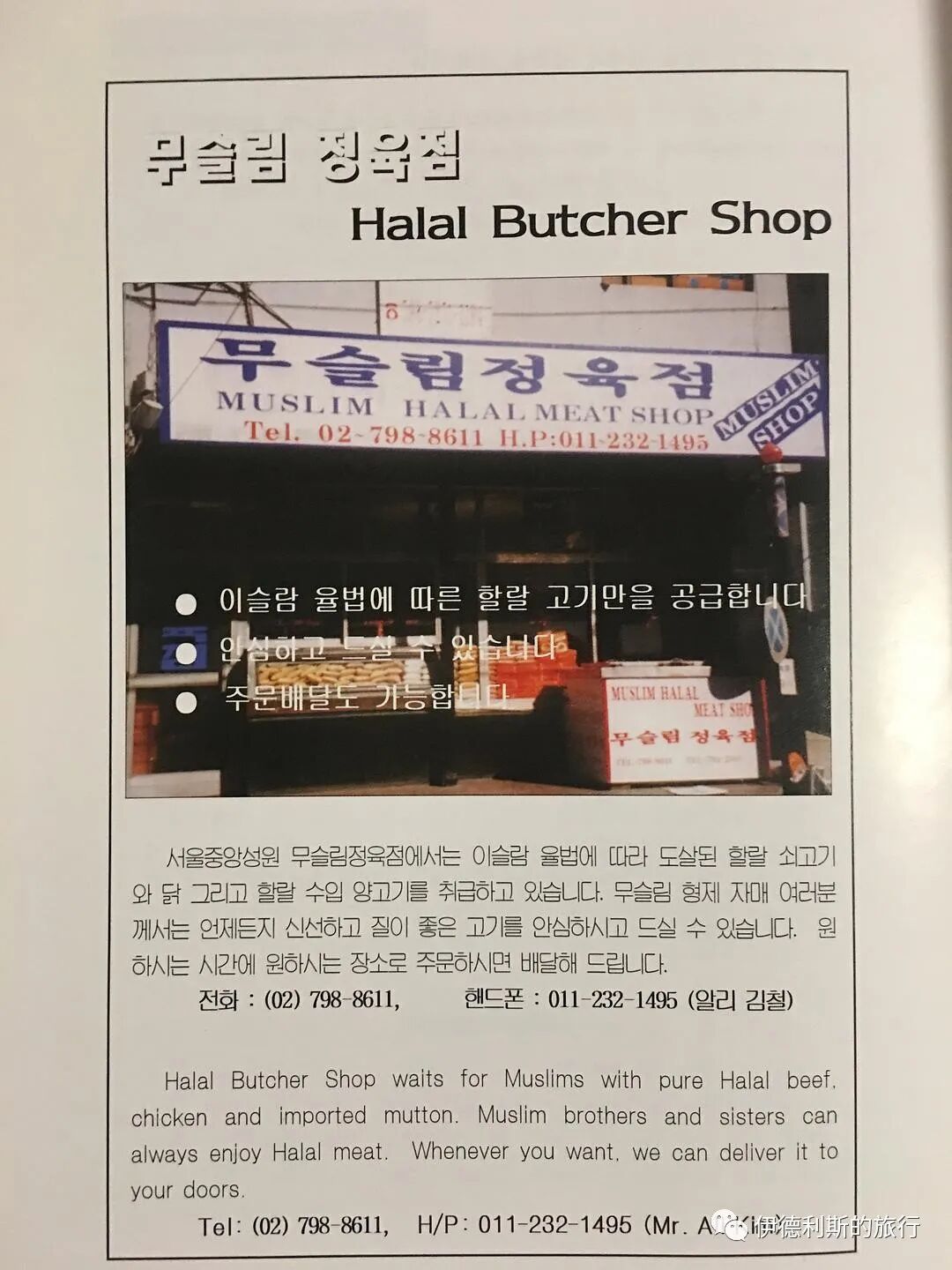
A magazine published by the KMF in 1999, which includes a list of Korean Muslims who converted that year and the halal butcher shops at the time.
Itaewon Muslim community
In 1952, the U. S. military officially set up its headquarters in Yongsan on the Korean Peninsula, which became the United States Forces Korea headquarters after 1957. To meet the needs of the large number of U. S. troops, various foreign restaurants and bars began to appear in Itaewon, not far east of the Yongsan base. Muslims also started coming to Itaewon to open halal restaurants.
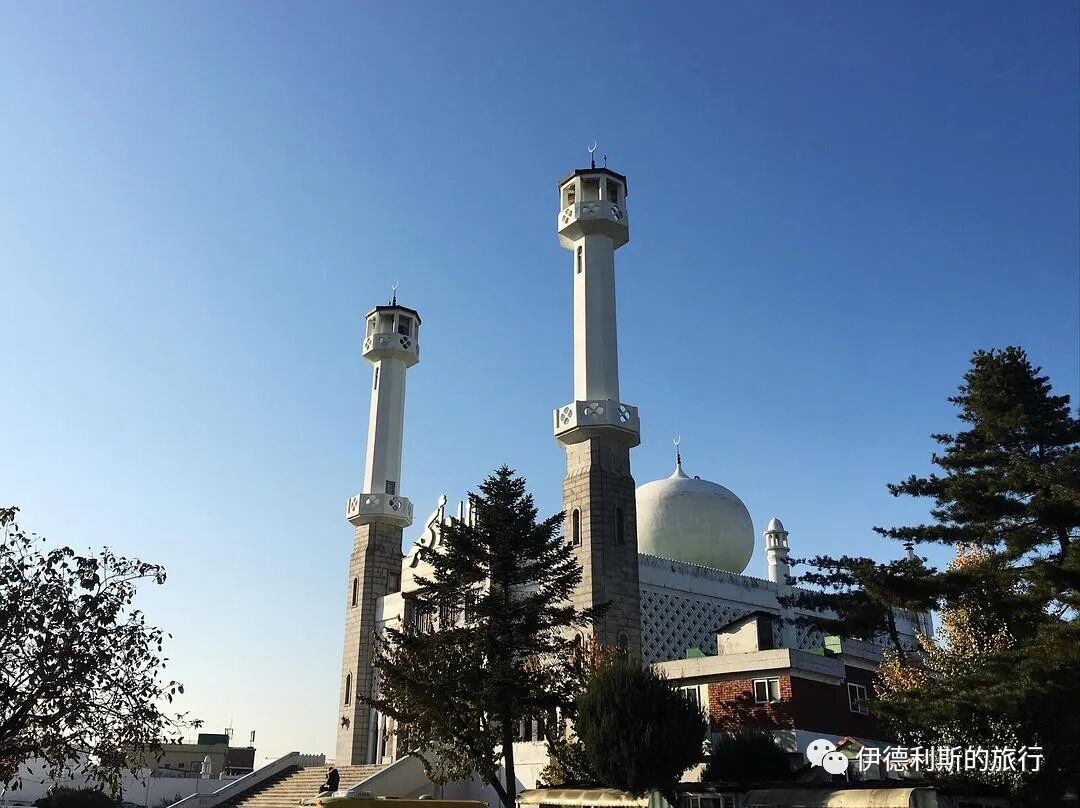
In 1976, President Park Chung-hee provided land to the KMF, and the Seoul Central Mosque was built in Itaewon. That year, the number of Korean Muslims grew from fewer than 3,000 to over 15,000, and a halal business district formed in Itaewon. After the 1990s, as Muslims from Pakistan, Bangladesh, Indonesia, and Malaysia came to work, the number of Muslims in Korea reached 150,000. Currently, there are an estimated 100,000 Muslims in Korea, 40,000 of whom are native converts.
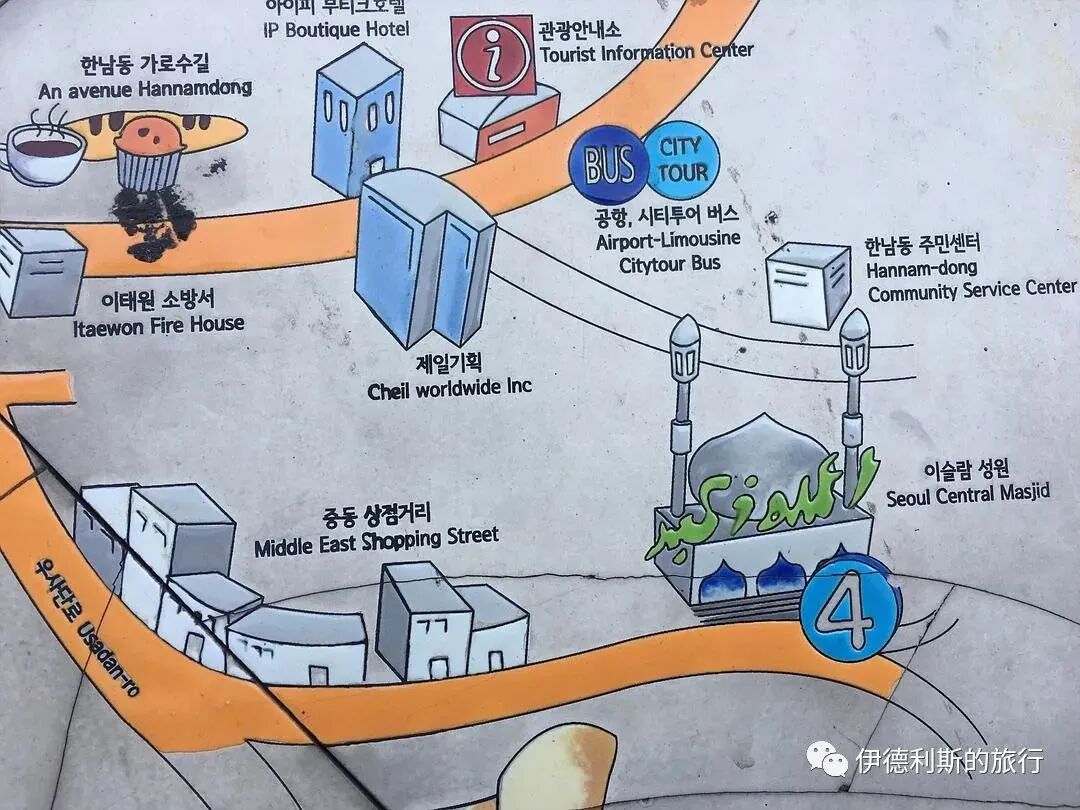
A map at the Itaewon subway station entrance showing the Middle Eastern business district and the mosque.
Seoul Central Mosque
There is a school inside the courtyard that provides Arabic language instruction.
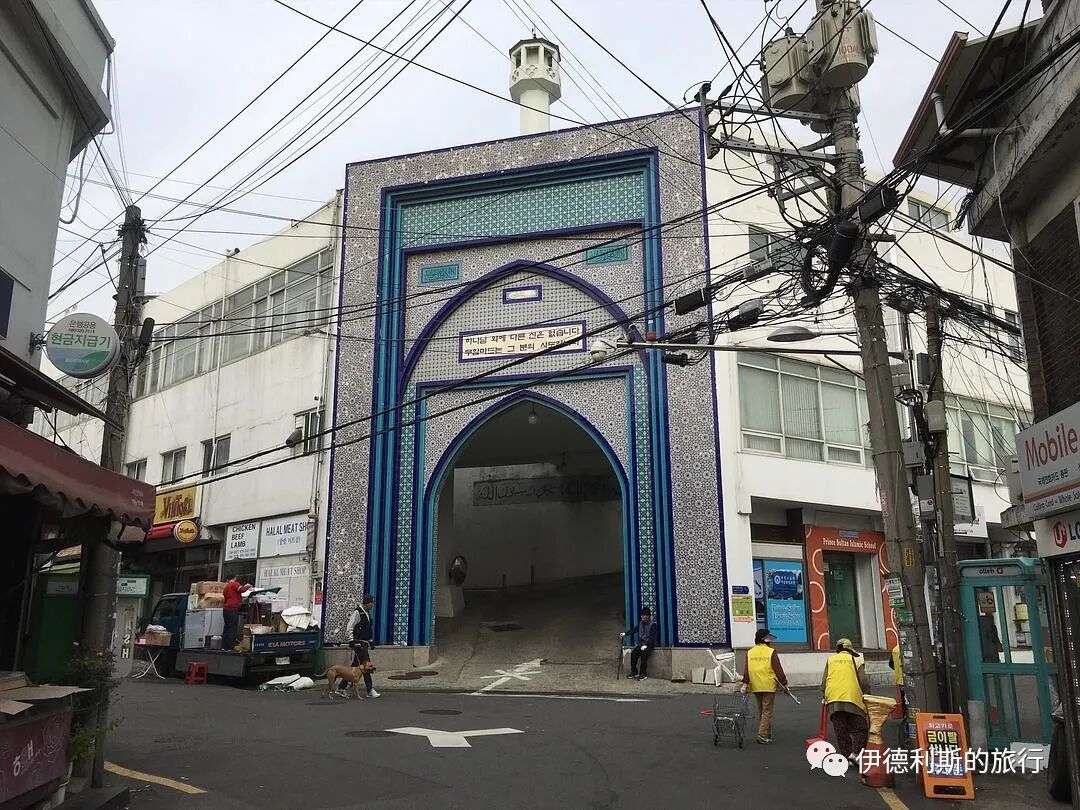
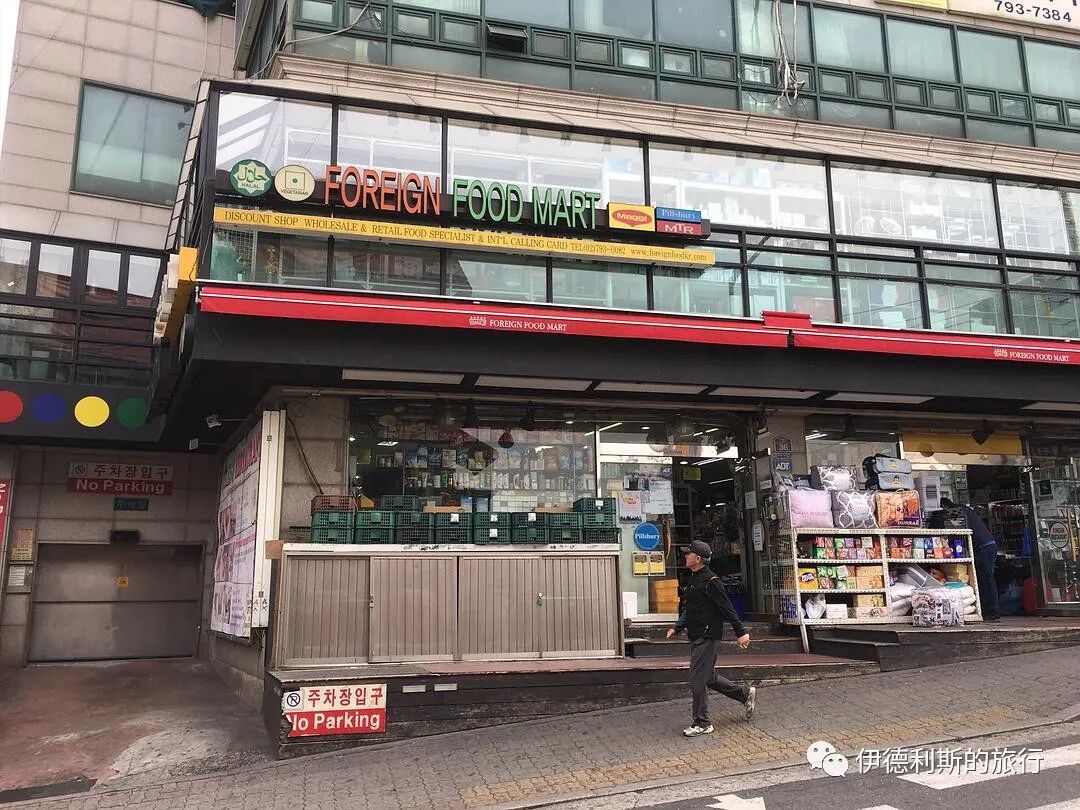
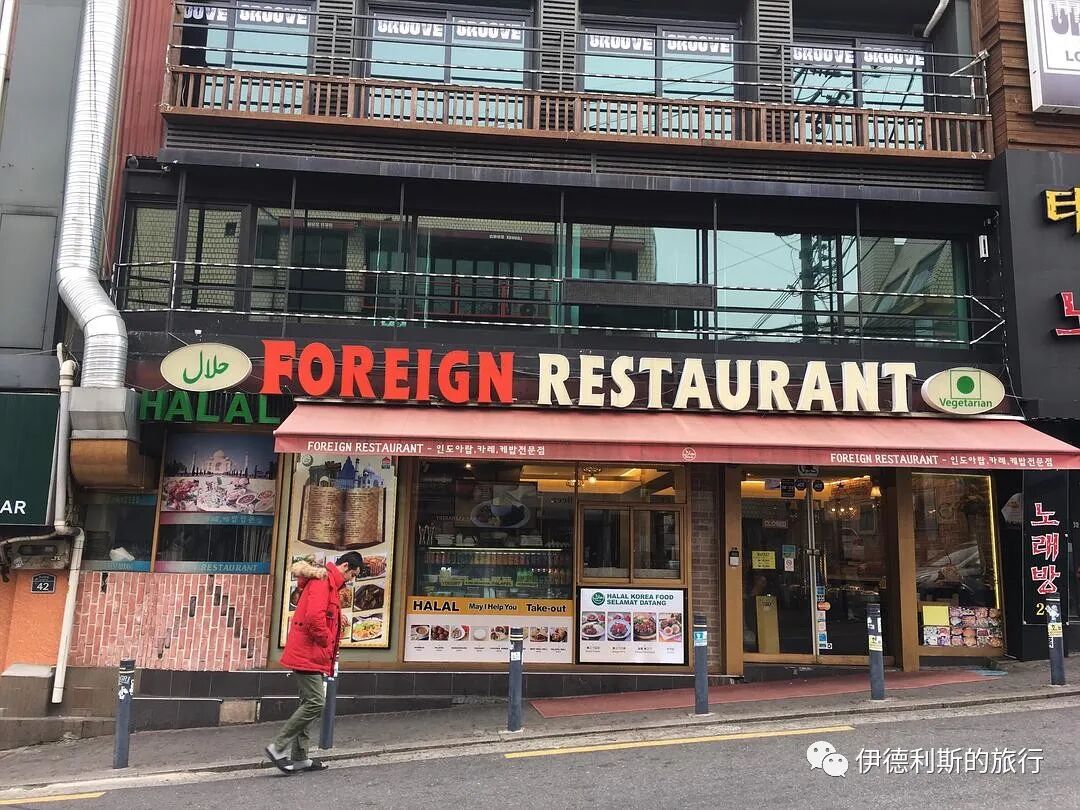
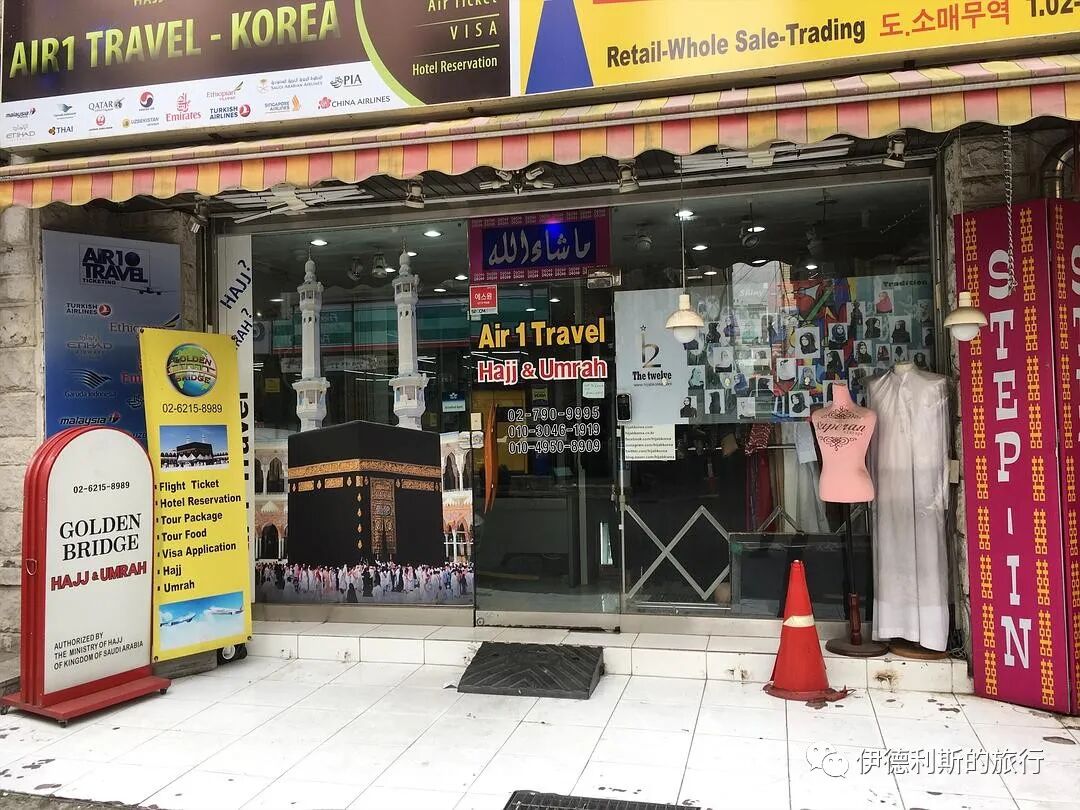
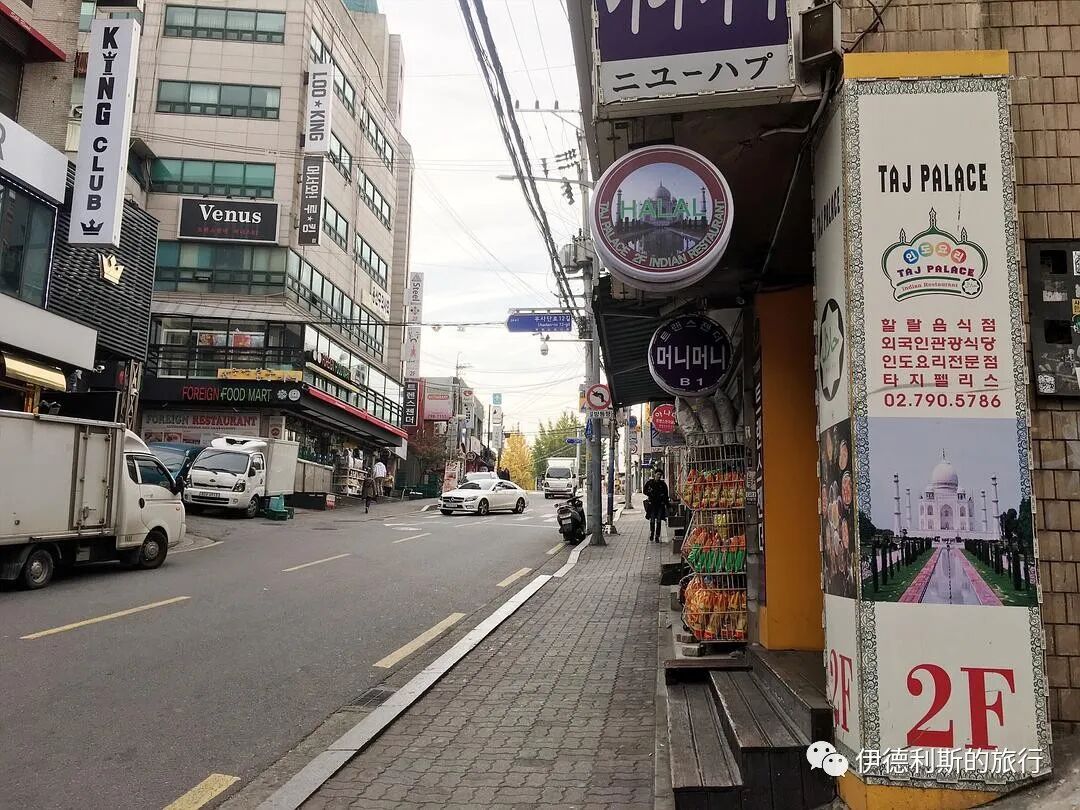
Around the mosque, there are halal restaurants with various flavors like Iranian, Indian, and Turkish, as well as halal supermarkets, religious bookstores, and Muslim travel agencies.
Itaewon street view
You can pick up an Itaewon halal travel guide published by the Korean Ministry of Culture, Sports and Tourism at Incheon Airport, which shows the locations of halal restaurants in Itaewon.
You can see how the Korean government categorizes different types of restaurants:
The first type is called "Halal Certified," meaning that to having at least one Muslim employee, it must receive halal certification from the Ministry of Food and Drug Safety.
The second type is called "Self-Certified," which refers to restaurants opened by Muslims themselves that do not sell alcohol.
The third type is called "Muslim Friendly," meaning they may sell alcohol and have a partial or full halal menu.
The fourth type is called "Pork-Free," meaning that although there is no halal menu, they do not use pork.
Breakfast
I stayed at the ITW Hotel in Itaewon. Every morning from 7 to 9, there is a halal buffet breakfast provided by the nearby Indian halal restaurant, ZAFFRAN. Besides the 24-hour Turkish kebab shop MR. KEBAB, most halal restaurants in Itaewon do not open in the morning.
Halal Supermarket
ZAFFRAN MART, the largest halal supermarket in Itaewon.
Religious Bookstore
The religious bookstore in Itaewon is run by a man from Indian-administered Kashmir. We hit it off right away, and he greeted me very warmly when he saw me the next day. They have hats from India, Pakistan, Afghanistan, East Africa, and Malaysia. I bought one made in Pakistan and one made in India.
Hat made in India
Hat made in Pakistan
Makan Restaurant
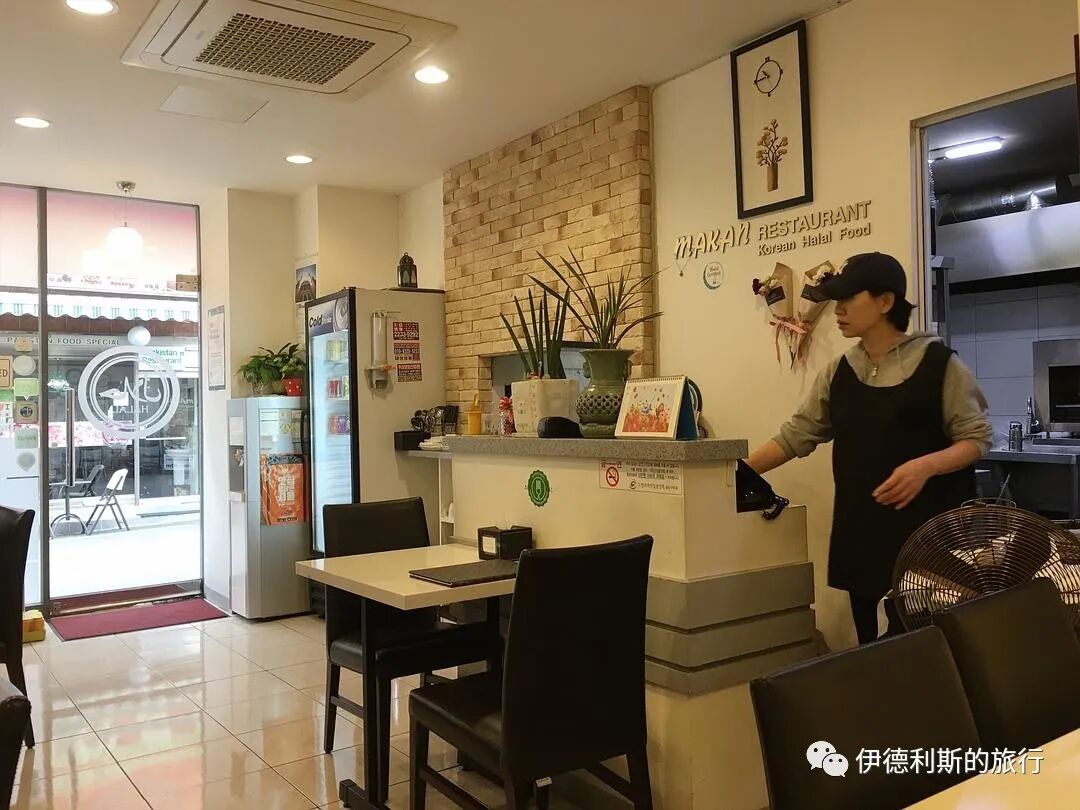
Although Itaewon has many Middle Eastern, Indian, and Turkish halal restaurants, the most unique ones are the halal Korean restaurants. Makan is the most famous one.
This lady is the chef.
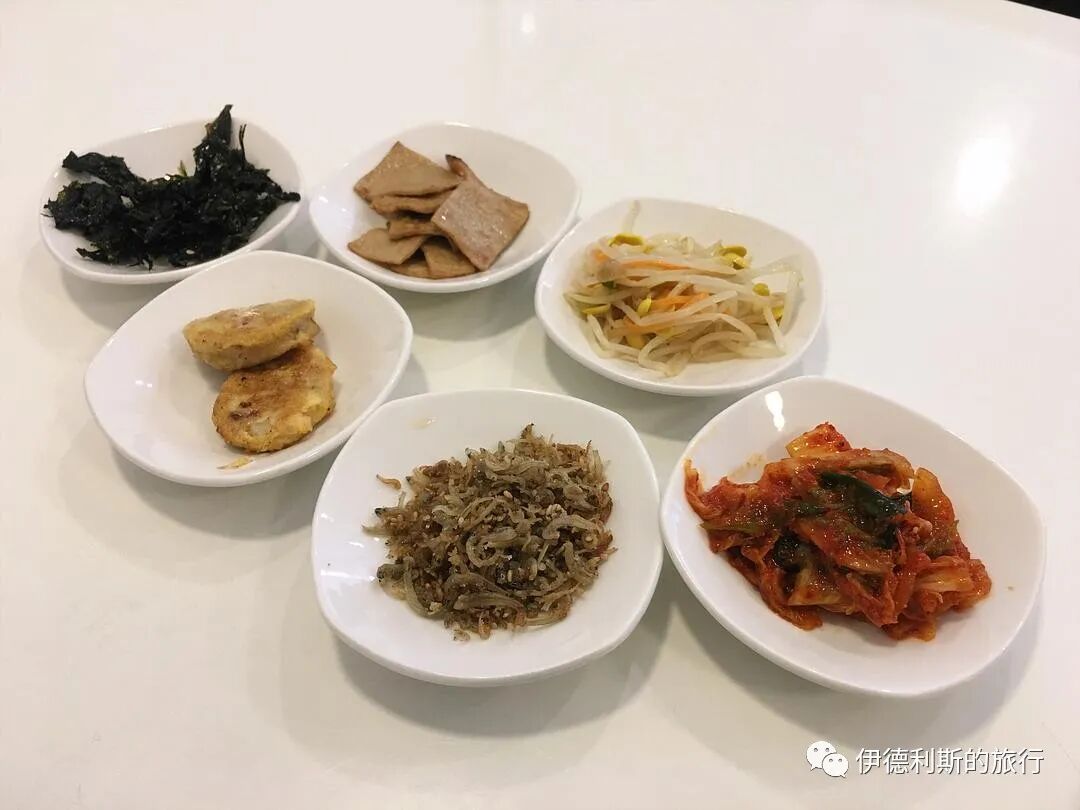
There are 6 types of side dishes.
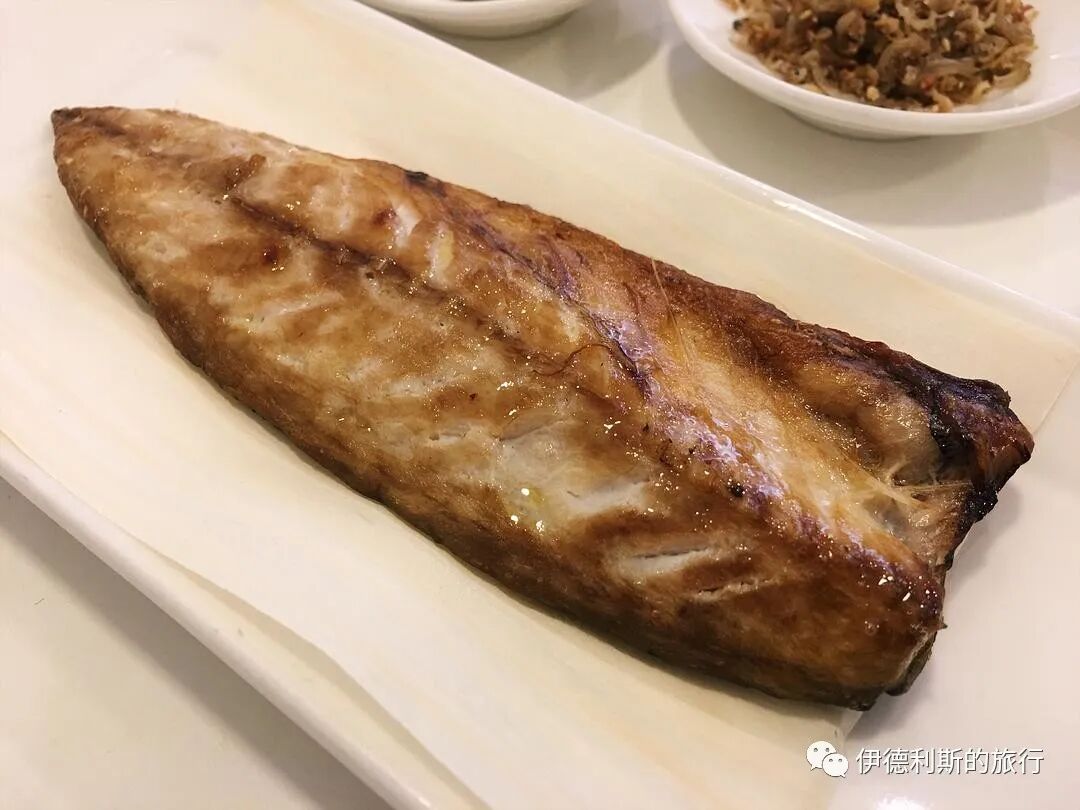
Grilled fish
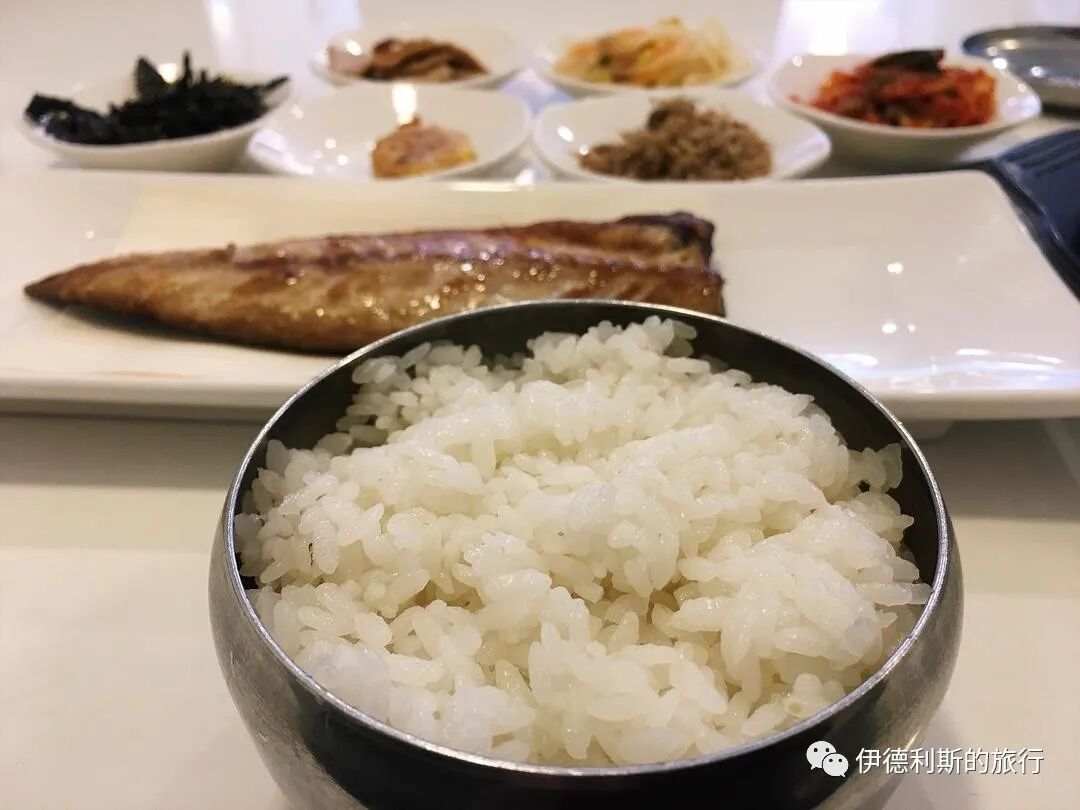
Korean rice is delicious!
Soybean paste soup (doenjang-jjigae)
Soaking the rice in the soup.
Korean-style grilled meat bibimbap. The meat was covered by the egg, so I didn't get a photo.
Stir-fried squid and rice cakes (tteokbokki) on a hot plate.
The person in the front right of the picture is also a chef.
Menu
Makan Chicken & Noodle
Besides the main shop south of the mosque, Makan has another shop west of the mosque that specializes in Korean fried chicken and black bean noodles (jajangmyeon). The chef is a man, and it is part of the same business as the main shop.
Korean black bean noodles. The taste is different from Beijing-style black bean noodles, and the noodles are a bit like udon.
The man on the right is the chef.
Menu
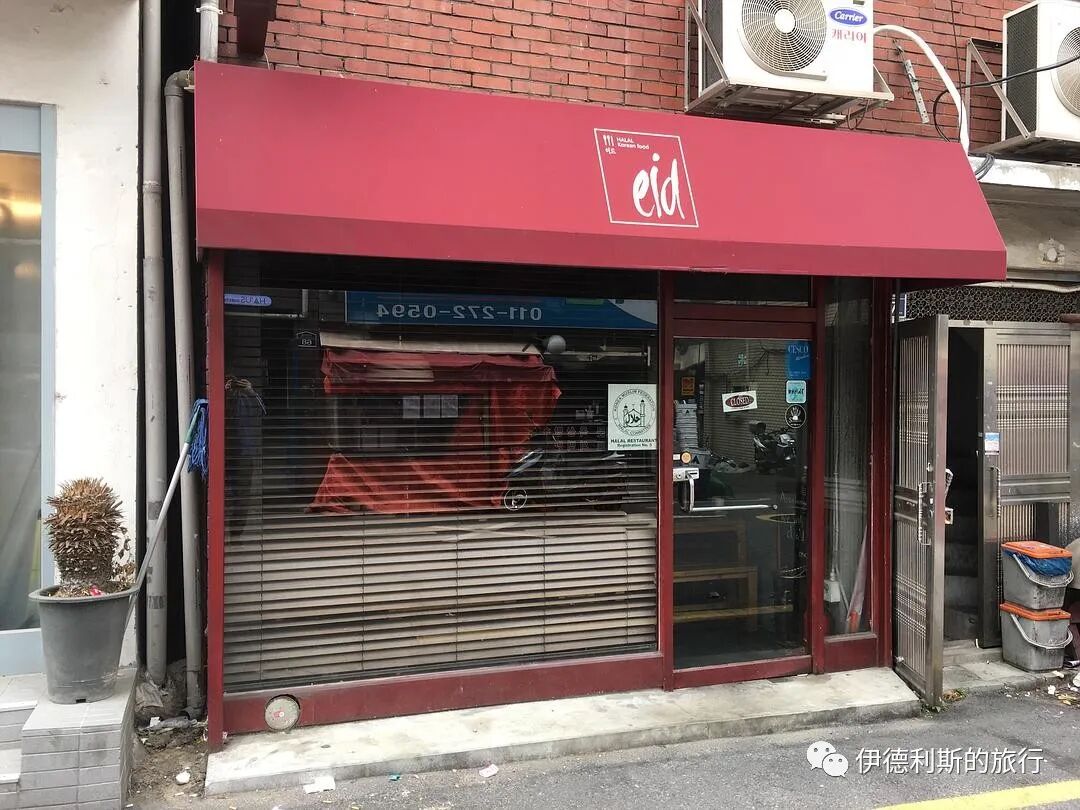
Eid
Eid and Makan are tied for the best halal Korean restaurants in Seoul. Although the menu at Eid is not as extensive as Makan's, it is still very delicious.
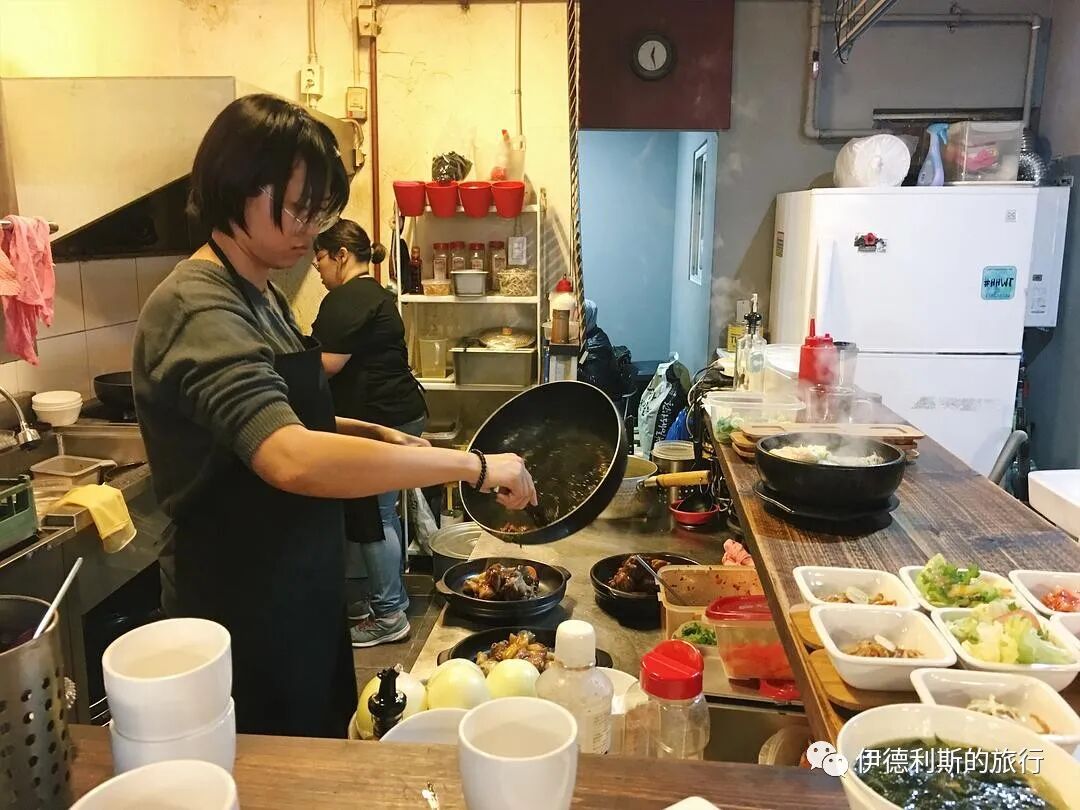
The chef is this very capable lady.
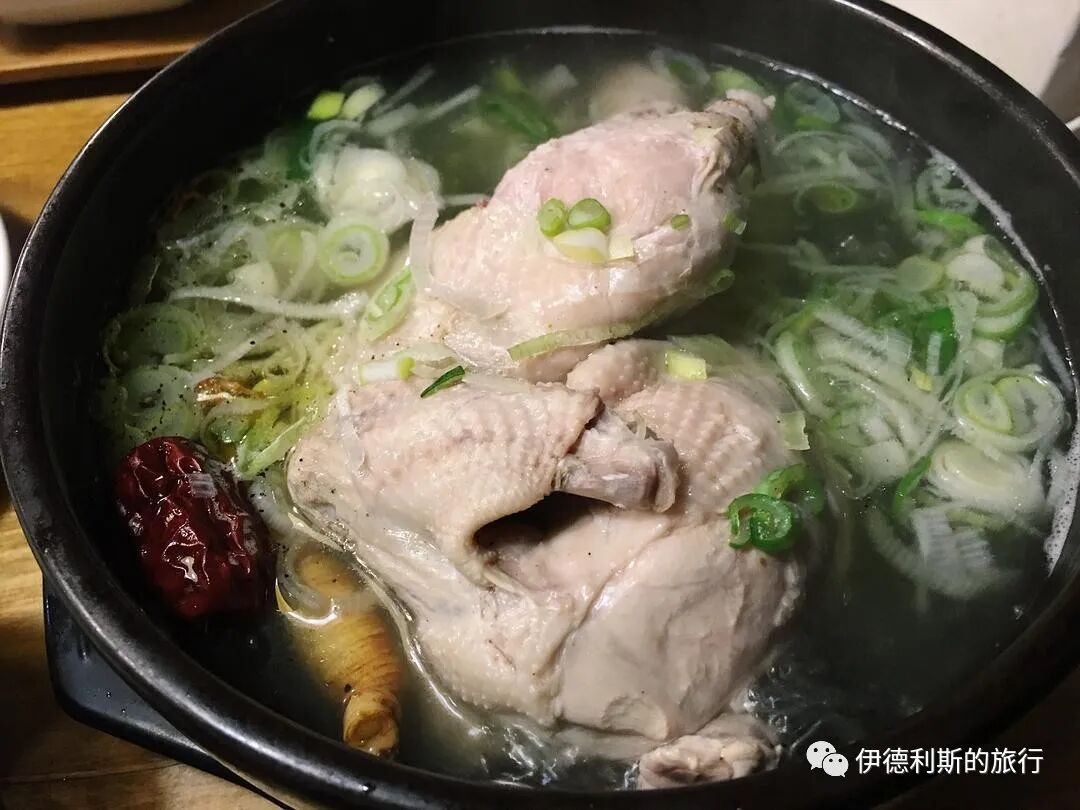
Ginseng chicken soup (samgyetang)
There are three types of side dishes.
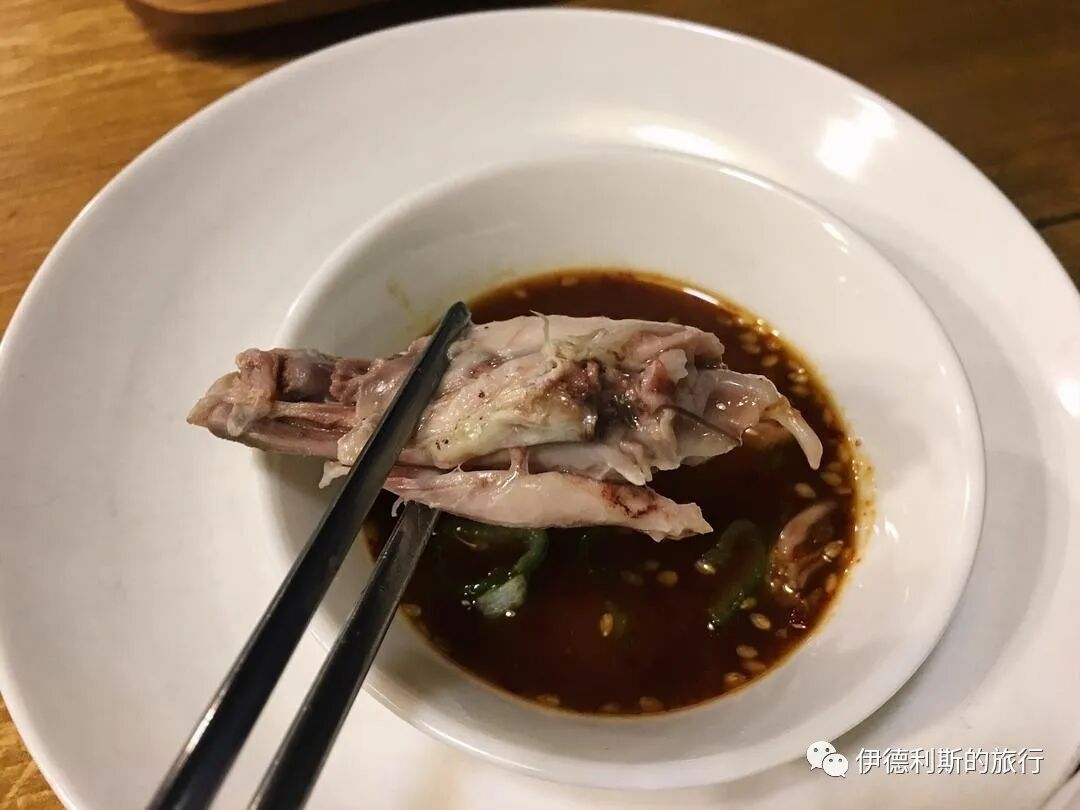
The stewed chicken is great, and the rice cakes (nian gao) inside are delicious.
Hajj
There is also a halal Korean restaurant east of the mosque run by a Korean auntie. She is very friendly, though she has a thick accent when speaking English. I wanted to order bibimbap, but she made me spicy dried fish fried rice instead, so I am not sure how their authentic Korean food tastes.
Evening in Itaewon
Yanggood
Yanggood is the only halal Korean barbecue restaurant in Seoul. It is located in the Gangnam District and is very busy, mostly with Muslim customers who come to try it out. I ordered my favorite lamb ribs. A staff member grilled them for me, so I did not have to do anything. Dipping them in the sweet and spicy sauce was delicious. Eating it with kimchi and a steaming bowl of soybean paste stew (doenjang-jjigae) with rice made me feel warm all over.
Besides that, there are many Middle Eastern halal restaurants in Itaewon.
There are other fun restaurants in Seoul that I did not find at the time. I will have to leave that as a regret and visit them if I have the chance in the future. view all
Summary: Seoul — Mosques, Muslim History and Korean Halal Food is presented here as a firsthand travel account in clear English, beginning with this scene: Looking back at my halal trip to Seoul, South Korea, in 2017. The account keeps its focus on Seoul Travel, Korean Muslims, Halal Food while preserving the names, places, food, and historical details from the Chinese source.
Looking back at my halal trip to Seoul, South Korea, in 2017.
Muslims in ancient Korea
Persian and Arab merchants arrived in Korea to trade as early as the 9th century during the Silla period. Their numbers grew after the Goryeo period (918-1392). Some Muslim merchants married local women, forming the first Muslim communities in Korea.
During the Yuan dynasty, many people from Central Asia (Semu) came to Goryeo to settle and trade. They built a mosque called Ye-Kung in the capital city of Kaesong. A poem from that time called Sanghwajeom (The Bakery of the Semu) tells the story of a Korean woman going to a halal shop to buy dumplings (jiaozi).
After the Joseon dynasty (1392-1910) began, King Sejong ordered a ban on the religion in 1427. He forbade wearing prayer caps, closed the Kaesong mosque, and the Korean Muslim community fell apart.
The emergence of Korean Muslims
During the Korean War, a Turkish unit with an imam arrived to fight and took part in humanitarian work, serving war orphans in wartime schools. After the war, Turkish soldiers stationed in Korea became UN peacekeepers, and Koreans began to convert to Islam. In 1955, the Korea Muslim Society was founded, and they established the first prayer space in downtown Seoul. In 1967, the Korea Muslim Society grew into the Korea Muslim Federation (KMF), which oversees the Korea Muslim Student Association and the Korea Islamic Culture Institute.
Halal certification mark issued by the KMF
A brochure printed by the KMF containing information about mosques across Korea.
A magazine published by the KMF in 1999, which includes a list of Korean Muslims who converted that year and the halal butcher shops at the time.
Itaewon Muslim community
In 1952, the U. S. military officially set up its headquarters in Yongsan on the Korean Peninsula, which became the United States Forces Korea headquarters after 1957. To meet the needs of the large number of U. S. troops, various foreign restaurants and bars began to appear in Itaewon, not far east of the Yongsan base. Muslims also started coming to Itaewon to open halal restaurants.
In 1976, President Park Chung-hee provided land to the KMF, and the Seoul Central Mosque was built in Itaewon. That year, the number of Korean Muslims grew from fewer than 3,000 to over 15,000, and a halal business district formed in Itaewon. After the 1990s, as Muslims from Pakistan, Bangladesh, Indonesia, and Malaysia came to work, the number of Muslims in Korea reached 150,000. Currently, there are an estimated 100,000 Muslims in Korea, 40,000 of whom are native converts.
A map at the Itaewon subway station entrance showing the Middle Eastern business district and the mosque.
Seoul Central Mosque
There is a school inside the courtyard that provides Arabic language instruction.
Around the mosque, there are halal restaurants with various flavors like Iranian, Indian, and Turkish, as well as halal supermarkets, religious bookstores, and Muslim travel agencies.
Itaewon street view
You can pick up an Itaewon halal travel guide published by the Korean Ministry of Culture, Sports and Tourism at Incheon Airport, which shows the locations of halal restaurants in Itaewon.
You can see how the Korean government categorizes different types of restaurants:
The first type is called "Halal Certified," meaning that to having at least one Muslim employee, it must receive halal certification from the Ministry of Food and Drug Safety.
The second type is called "Self-Certified," which refers to restaurants opened by Muslims themselves that do not sell alcohol.
The third type is called "Muslim Friendly," meaning they may sell alcohol and have a partial or full halal menu.
The fourth type is called "Pork-Free," meaning that although there is no halal menu, they do not use pork.
Breakfast
I stayed at the ITW Hotel in Itaewon. Every morning from 7 to 9, there is a halal buffet breakfast provided by the nearby Indian halal restaurant, ZAFFRAN. Besides the 24-hour Turkish kebab shop MR. KEBAB, most halal restaurants in Itaewon do not open in the morning.
Halal Supermarket
ZAFFRAN MART, the largest halal supermarket in Itaewon.
Religious Bookstore
The religious bookstore in Itaewon is run by a man from Indian-administered Kashmir. We hit it off right away, and he greeted me very warmly when he saw me the next day. They have hats from India, Pakistan, Afghanistan, East Africa, and Malaysia. I bought one made in Pakistan and one made in India.
Hat made in India
Hat made in Pakistan
Makan Restaurant
Although Itaewon has many Middle Eastern, Indian, and Turkish halal restaurants, the most unique ones are the halal Korean restaurants. Makan is the most famous one.
This lady is the chef.
There are 6 types of side dishes.
Grilled fish
Korean rice is delicious!
Soybean paste soup (doenjang-jjigae)
Soaking the rice in the soup.
Korean-style grilled meat bibimbap. The meat was covered by the egg, so I didn't get a photo.
Stir-fried squid and rice cakes (tteokbokki) on a hot plate.
The person in the front right of the picture is also a chef.
Menu
Makan Chicken & Noodle
Besides the main shop south of the mosque, Makan has another shop west of the mosque that specializes in Korean fried chicken and black bean noodles (jajangmyeon). The chef is a man, and it is part of the same business as the main shop.
Korean black bean noodles. The taste is different from Beijing-style black bean noodles, and the noodles are a bit like udon.
The man on the right is the chef.
Menu
Eid
Eid and Makan are tied for the best halal Korean restaurants in Seoul. Although the menu at Eid is not as extensive as Makan's, it is still very delicious.
The chef is this very capable lady.
Ginseng chicken soup (samgyetang)
There are three types of side dishes.
The stewed chicken is great, and the rice cakes (nian gao) inside are delicious.
Hajj
There is also a halal Korean restaurant east of the mosque run by a Korean auntie. She is very friendly, though she has a thick accent when speaking English. I wanted to order bibimbap, but she made me spicy dried fish fried rice instead, so I am not sure how their authentic Korean food tastes.
Evening in Itaewon
Yanggood
Yanggood is the only halal Korean barbecue restaurant in Seoul. It is located in the Gangnam District and is very busy, mostly with Muslim customers who come to try it out. I ordered my favorite lamb ribs. A staff member grilled them for me, so I did not have to do anything. Dipping them in the sweet and spicy sauce was delicious. Eating it with kimchi and a steaming bowl of soybean paste stew (doenjang-jjigae) with rice made me feel warm all over.
Besides that, there are many Middle Eastern halal restaurants in Itaewon.
There are other fun restaurants in Seoul that I did not find at the time. I will have to leave that as a regret and visit them if I have the chance in the future. view all
Reposted from the web
Summary: Seoul — Mosques, Muslim History and Korean Halal Food is presented here as a firsthand travel account in clear English, beginning with this scene: Looking back at my halal trip to Seoul, South Korea, in 2017. The account keeps its focus on Seoul Travel, Korean Muslims, Halal Food while preserving the names, places, food, and historical details from the Chinese source.
Looking back at my halal trip to Seoul, South Korea, in 2017.
Muslims in ancient Korea
Persian and Arab merchants arrived in Korea to trade as early as the 9th century during the Silla period. Their numbers grew after the Goryeo period (918-1392). Some Muslim merchants married local women, forming the first Muslim communities in Korea.
During the Yuan dynasty, many people from Central Asia (Semu) came to Goryeo to settle and trade. They built a mosque called Ye-Kung in the capital city of Kaesong. A poem from that time called Sanghwajeom (The Bakery of the Semu) tells the story of a Korean woman going to a halal shop to buy dumplings (jiaozi).
After the Joseon dynasty (1392-1910) began, King Sejong ordered a ban on the religion in 1427. He forbade wearing prayer caps, closed the Kaesong mosque, and the Korean Muslim community fell apart.
The emergence of Korean Muslims
During the Korean War, a Turkish unit with an imam arrived to fight and took part in humanitarian work, serving war orphans in wartime schools. After the war, Turkish soldiers stationed in Korea became UN peacekeepers, and Koreans began to convert to Islam. In 1955, the Korea Muslim Society was founded, and they established the first prayer space in downtown Seoul. In 1967, the Korea Muslim Society grew into the Korea Muslim Federation (KMF), which oversees the Korea Muslim Student Association and the Korea Islamic Culture Institute.
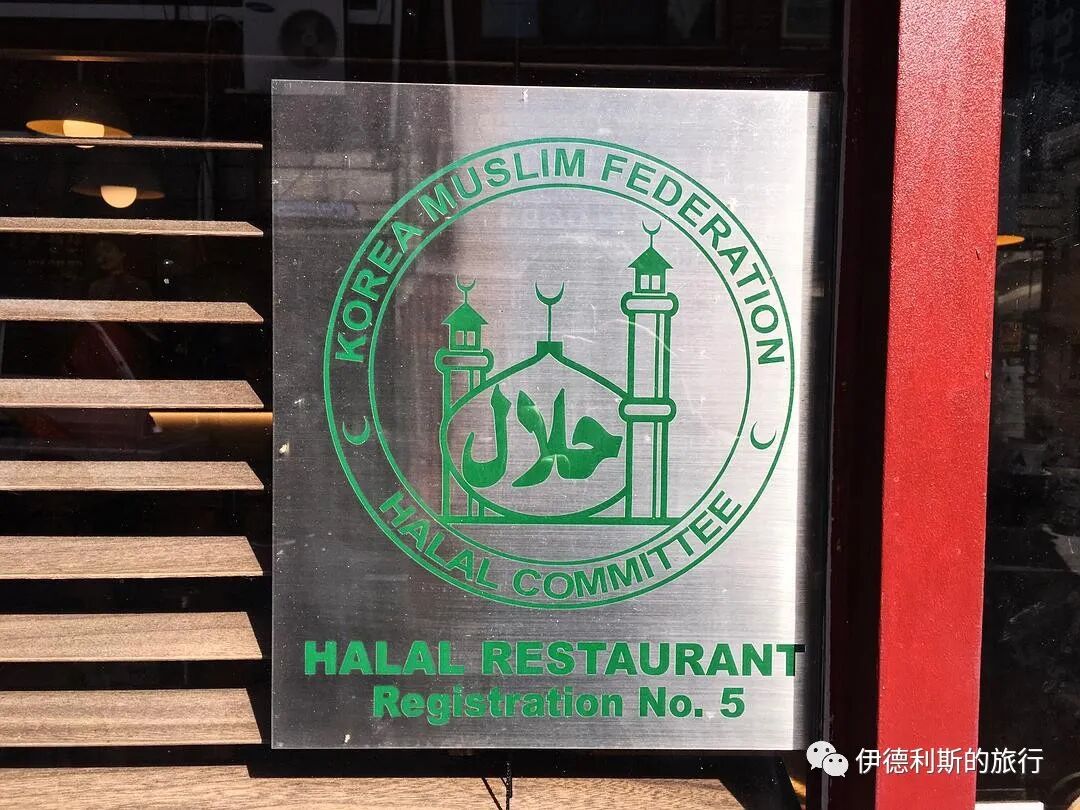
Halal certification mark issued by the KMF
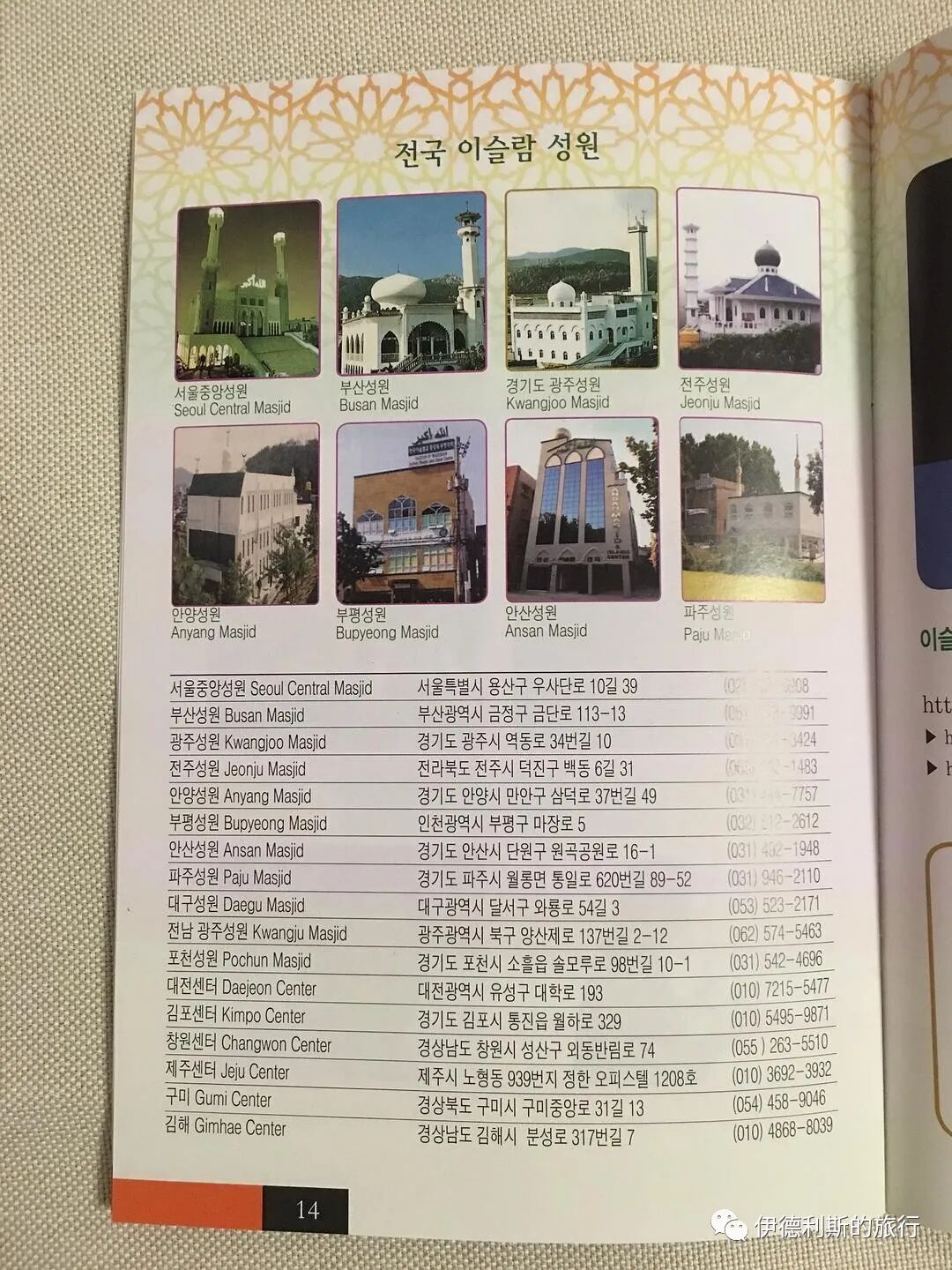
A brochure printed by the KMF containing information about mosques across Korea.
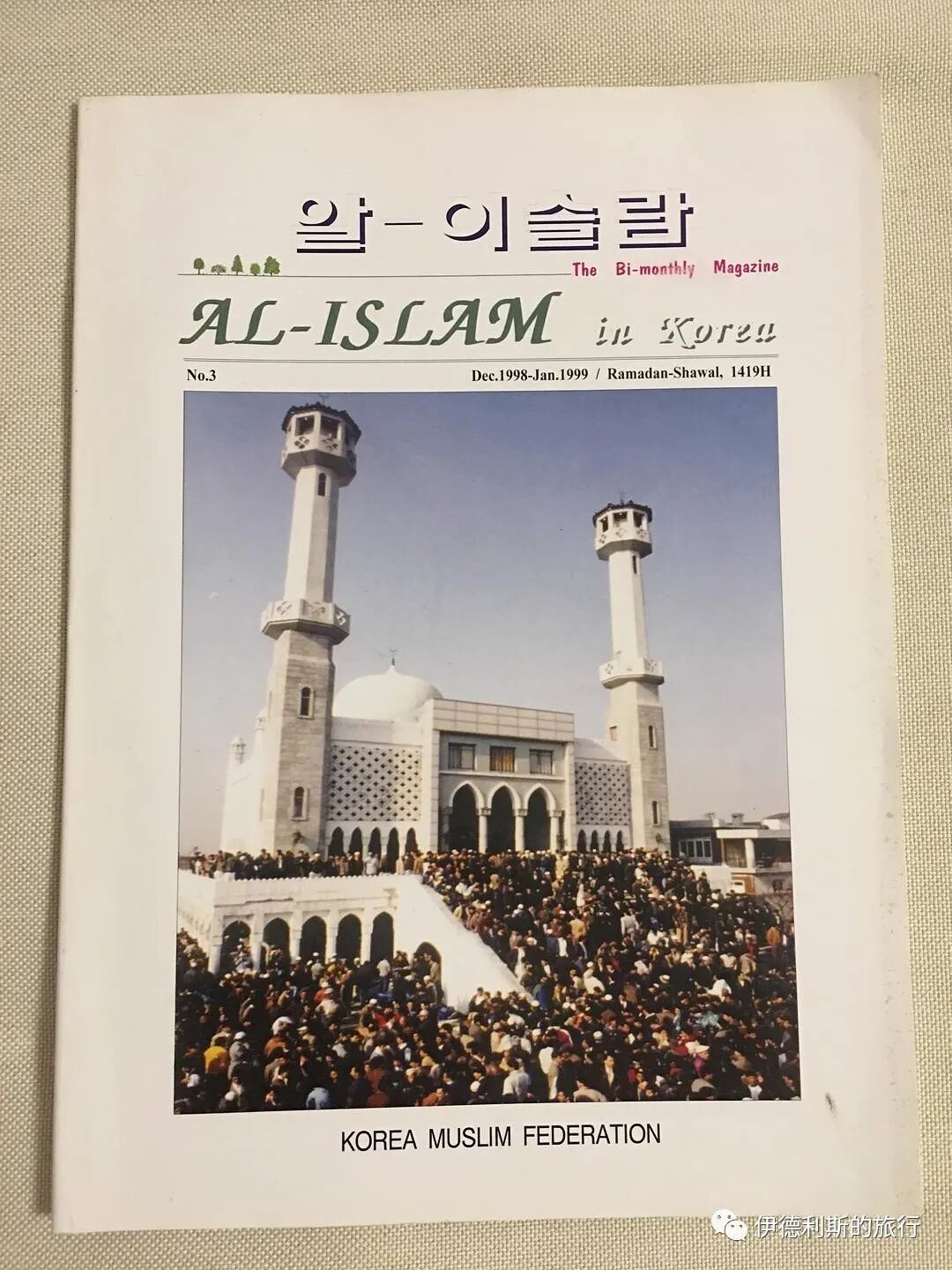
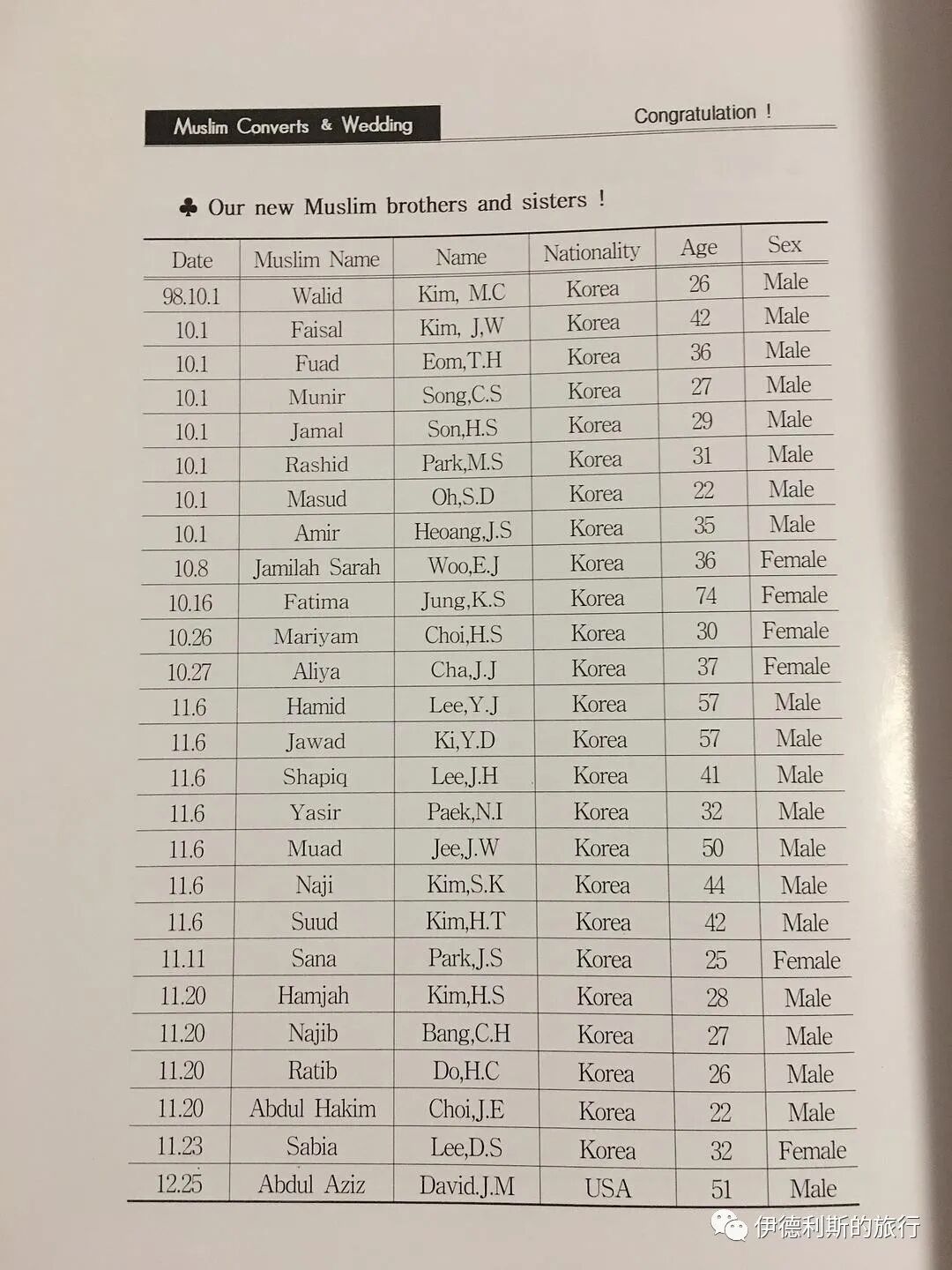
A magazine published by the KMF in 1999, which includes a list of Korean Muslims who converted that year and the halal butcher shops at the time.
Itaewon Muslim community
In 1952, the U. S. military officially set up its headquarters in Yongsan on the Korean Peninsula, which became the United States Forces Korea headquarters after 1957. To meet the needs of the large number of U. S. troops, various foreign restaurants and bars began to appear in Itaewon, not far east of the Yongsan base. Muslims also started coming to Itaewon to open halal restaurants.
In 1976, President Park Chung-hee provided land to the KMF, and the Seoul Central Mosque was built in Itaewon. That year, the number of Korean Muslims grew from fewer than 3,000 to over 15,000, and a halal business district formed in Itaewon. After the 1990s, as Muslims from Pakistan, Bangladesh, Indonesia, and Malaysia came to work, the number of Muslims in Korea reached 150,000. Currently, there are an estimated 100,000 Muslims in Korea, 40,000 of whom are native converts.
A map at the Itaewon subway station entrance showing the Middle Eastern business district and the mosque.
Seoul Central Mosque
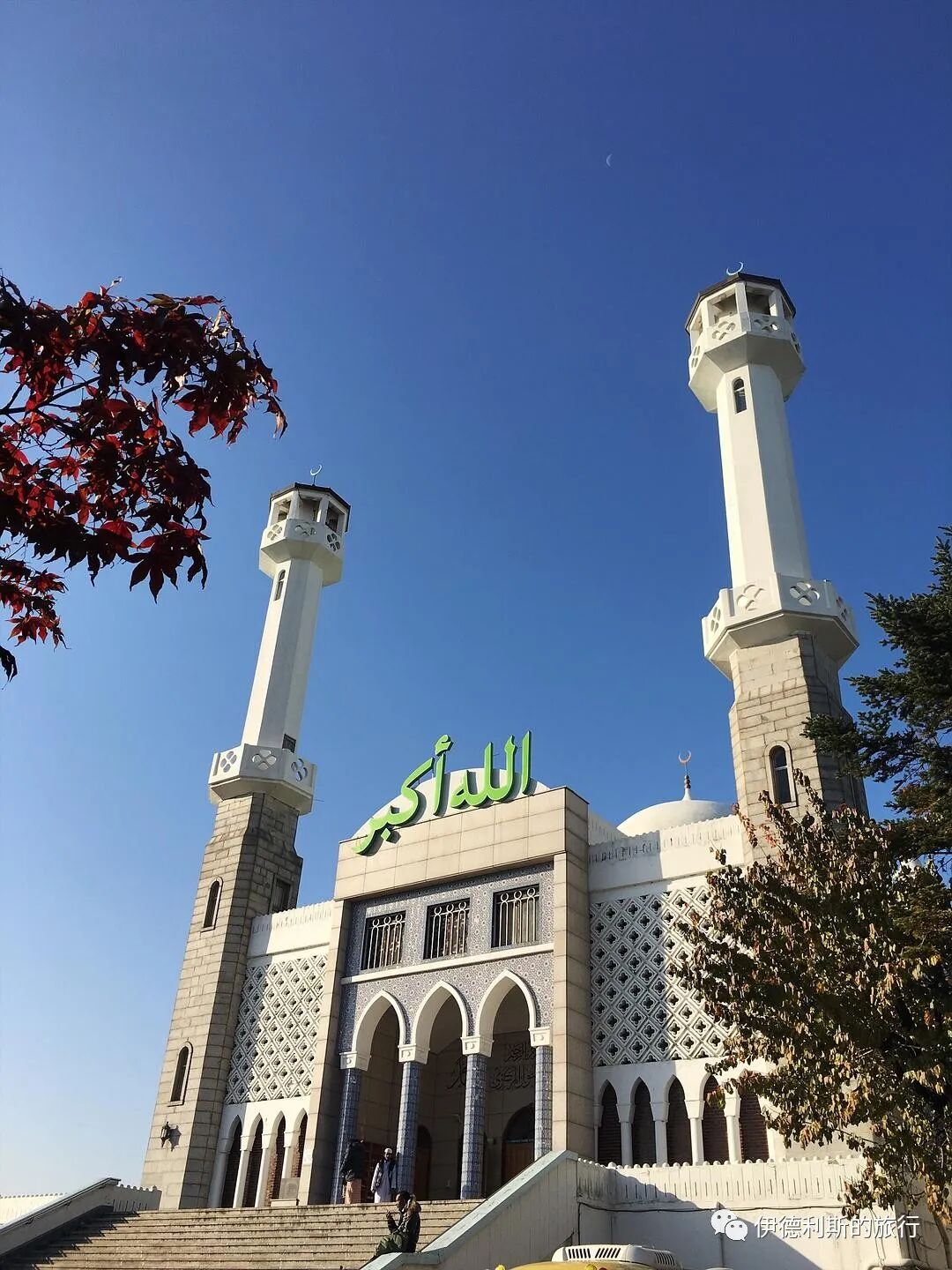
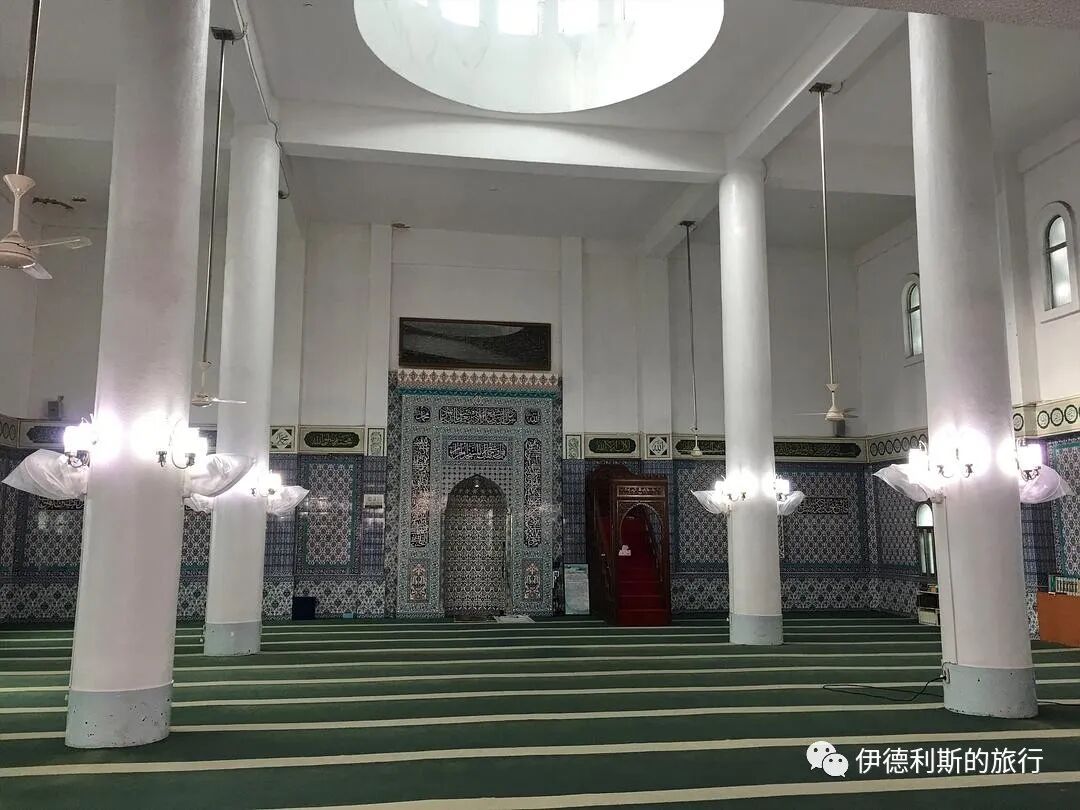
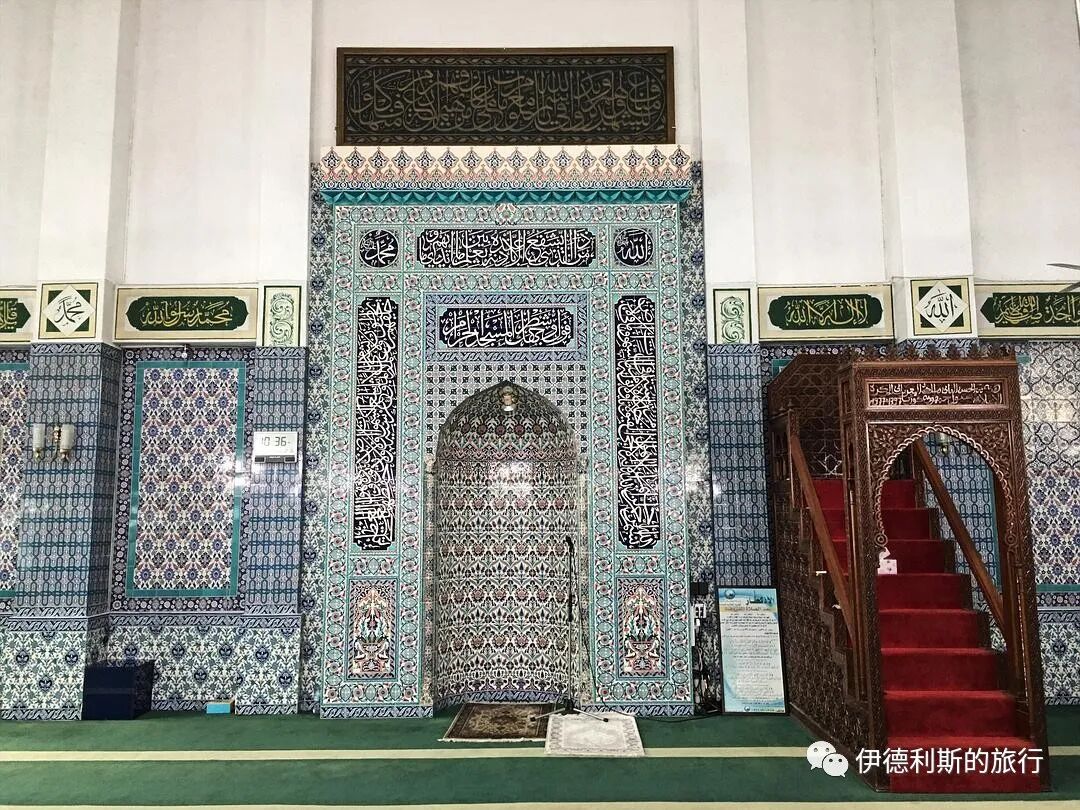
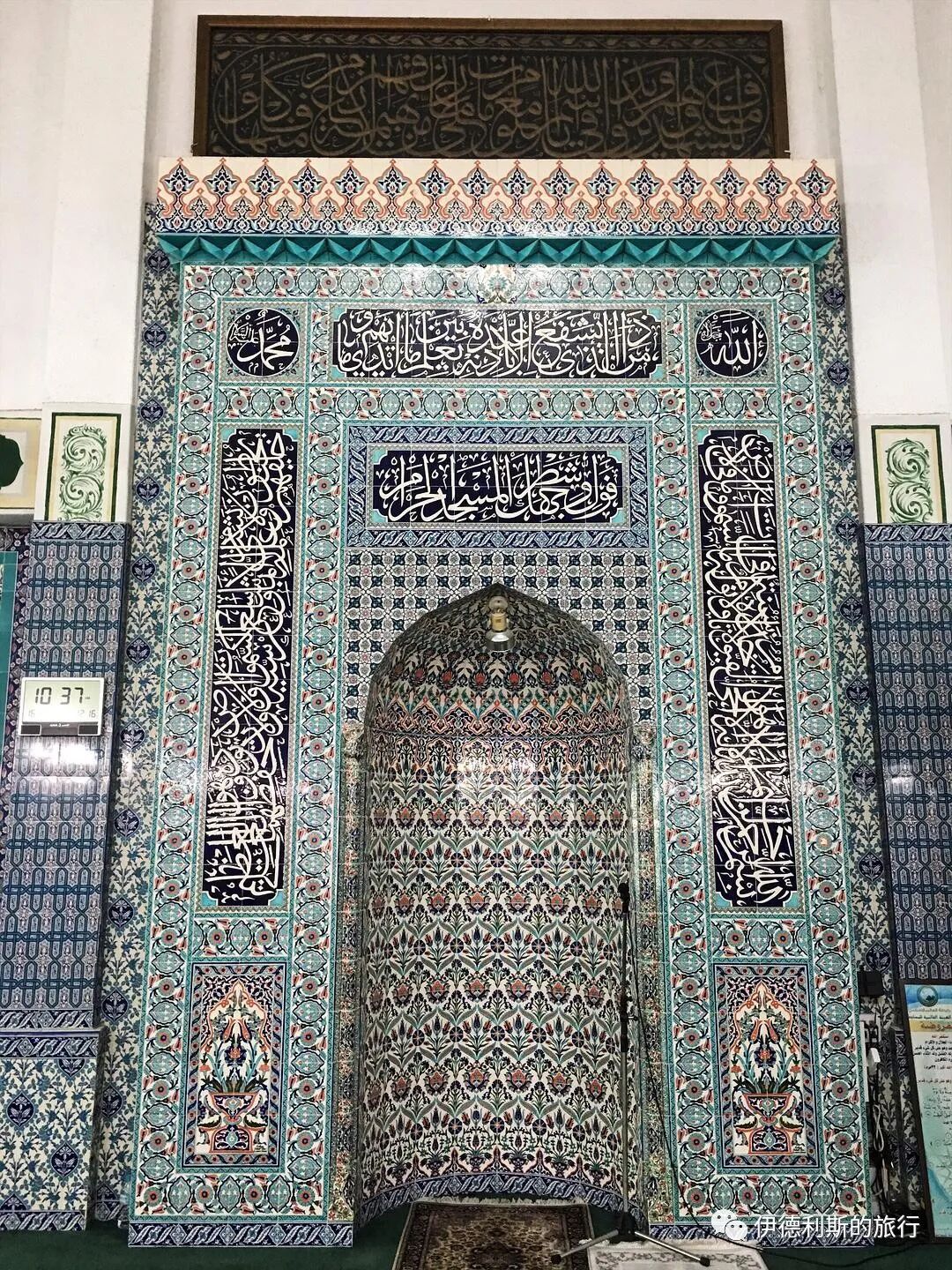
There is a school inside the courtyard that provides Arabic language instruction.
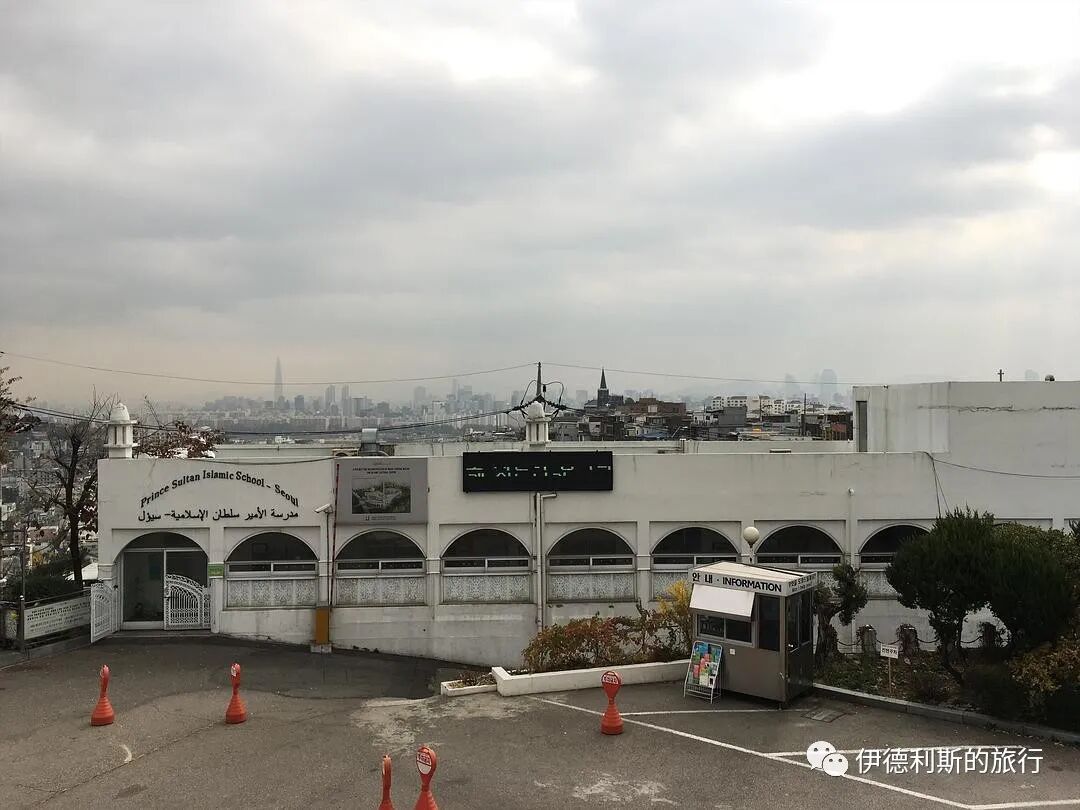
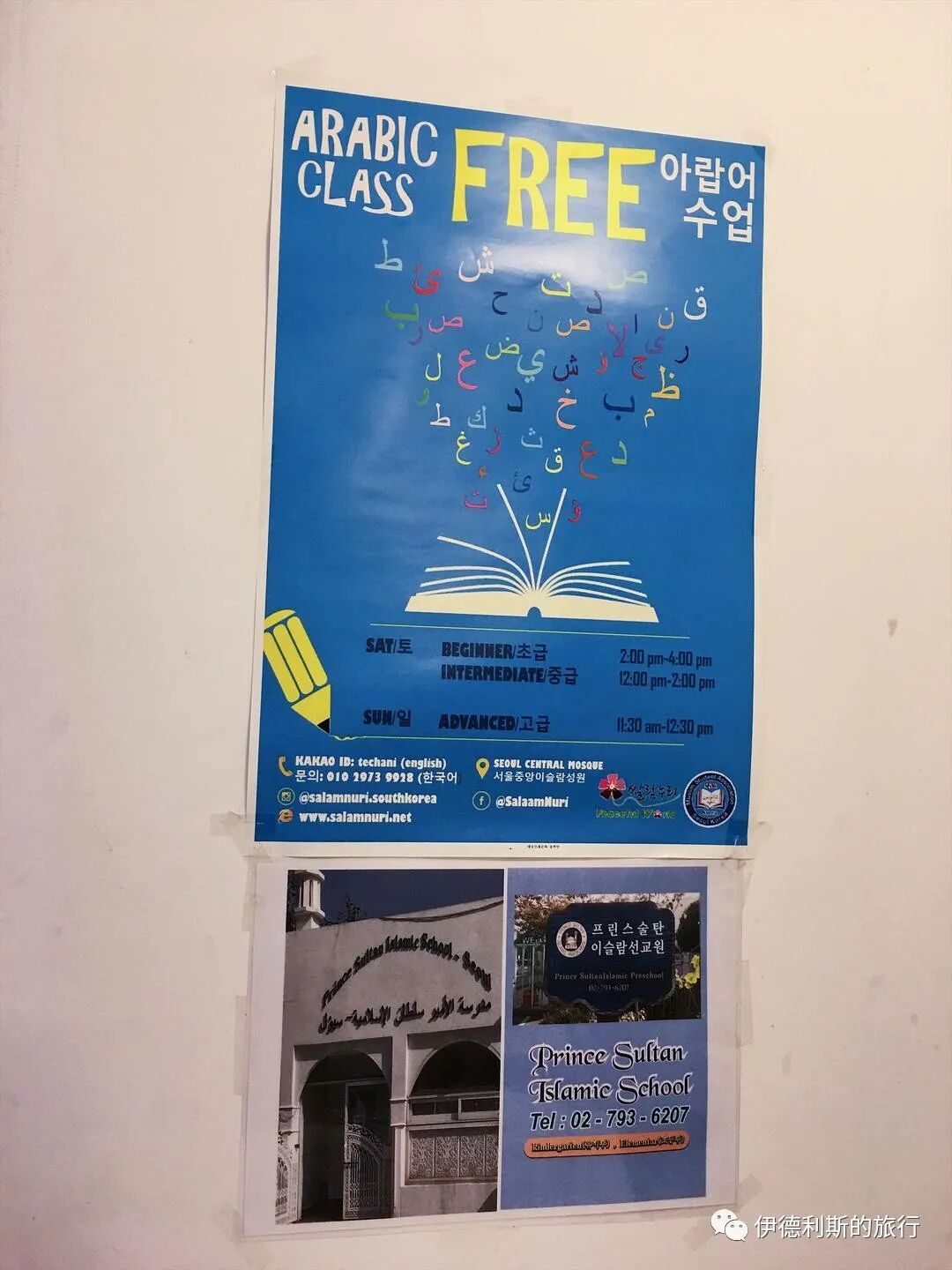
Around the mosque, there are halal restaurants with various flavors like Iranian, Indian, and Turkish, as well as halal supermarkets, religious bookstores, and Muslim travel agencies.
Itaewon street view
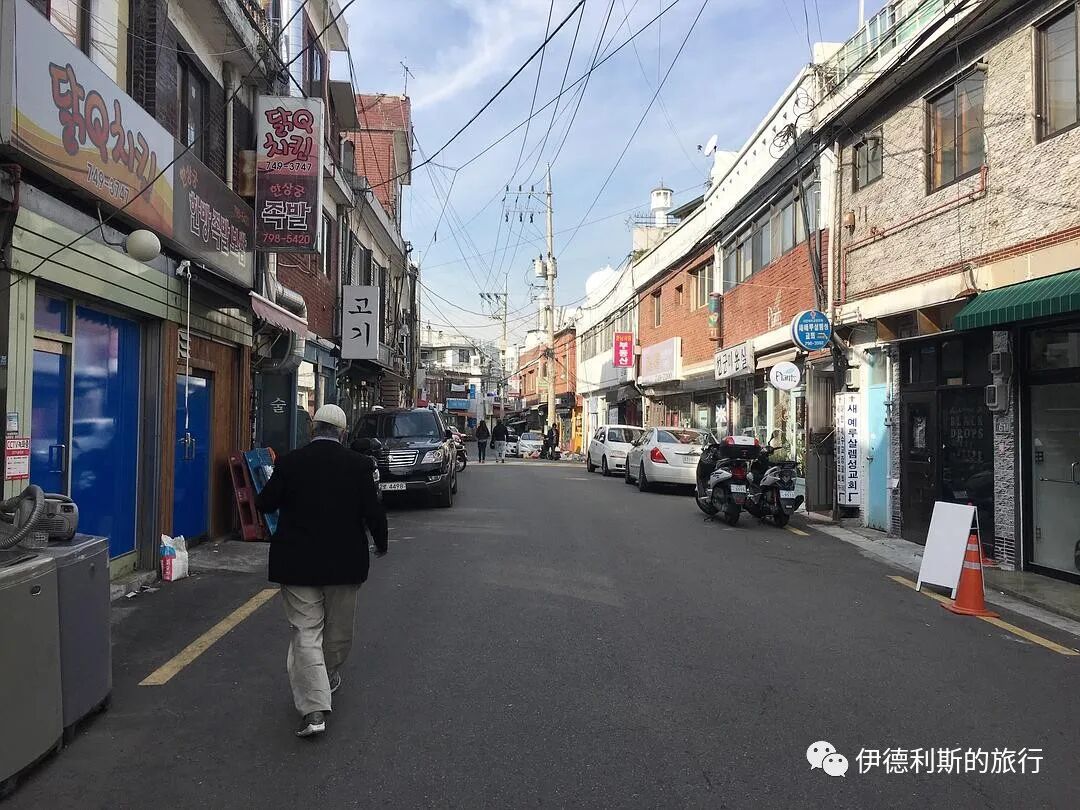
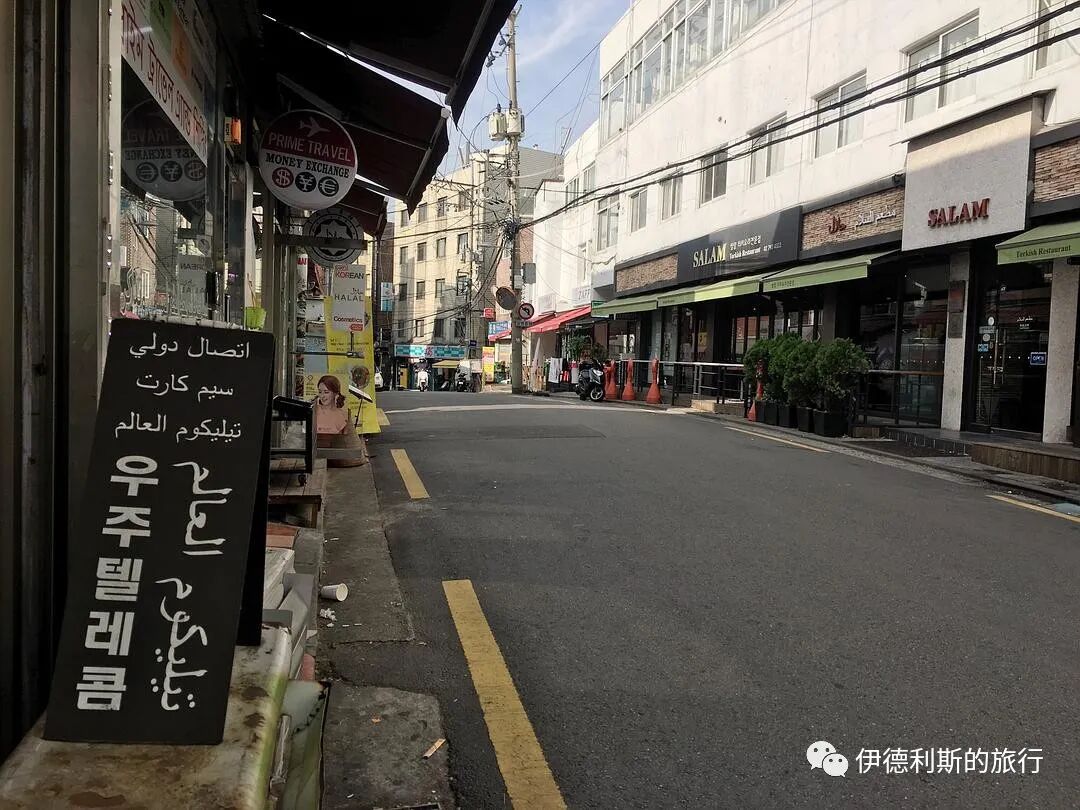
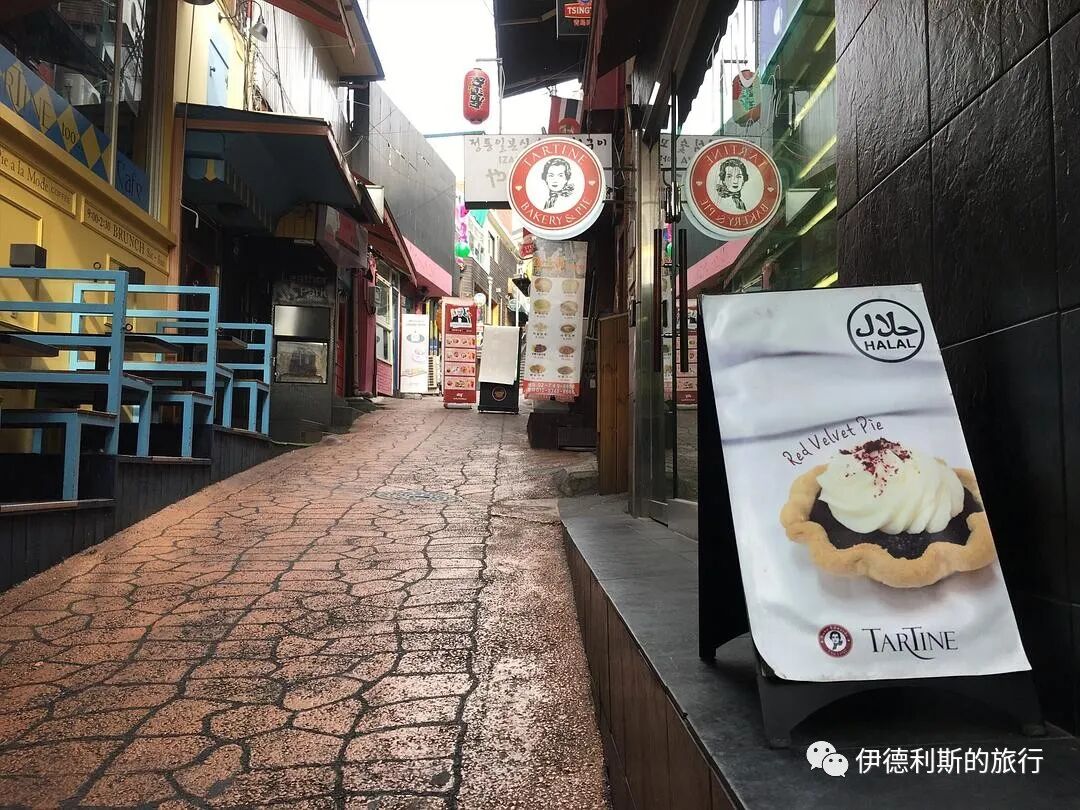
You can pick up an Itaewon halal travel guide published by the Korean Ministry of Culture, Sports and Tourism at Incheon Airport, which shows the locations of halal restaurants in Itaewon.
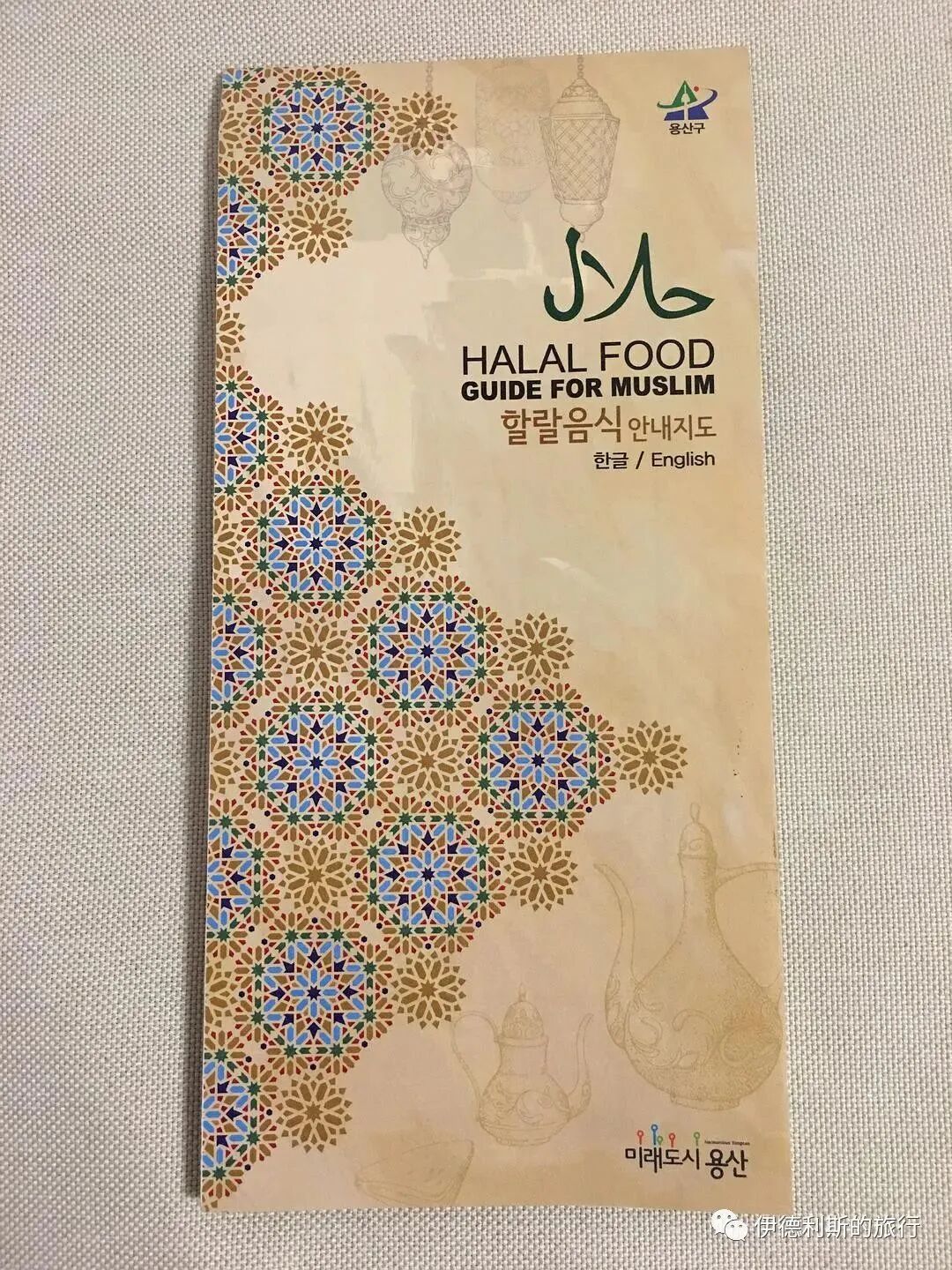
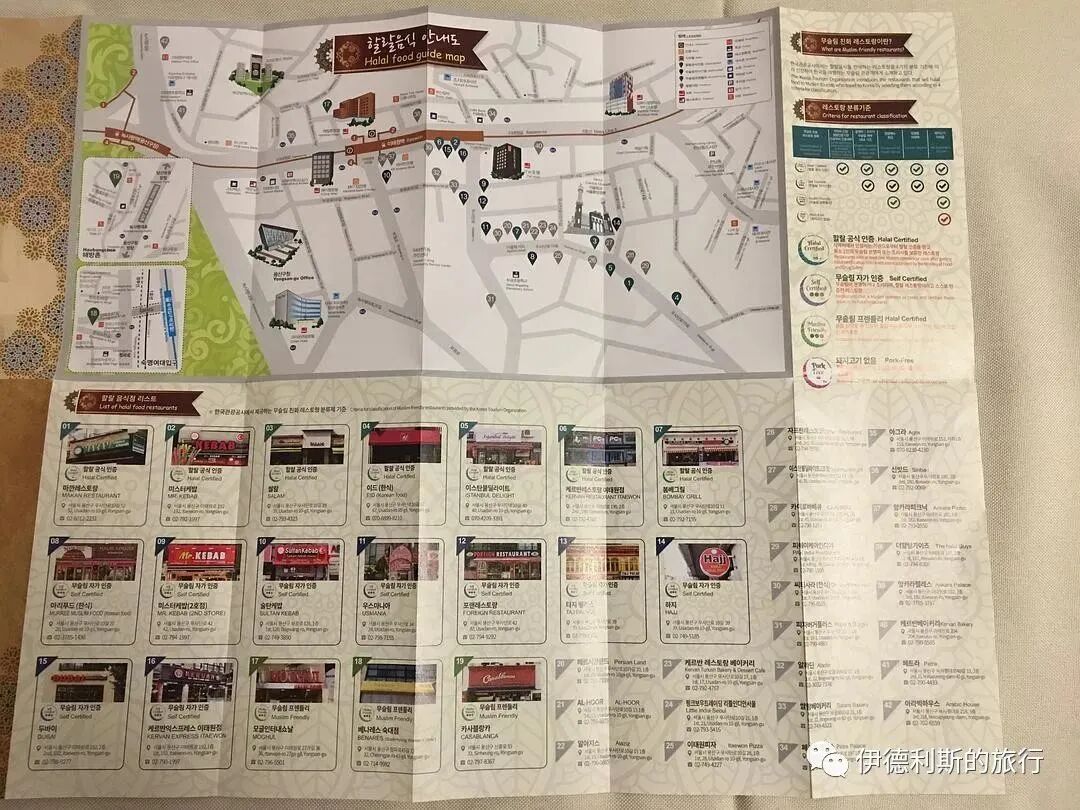
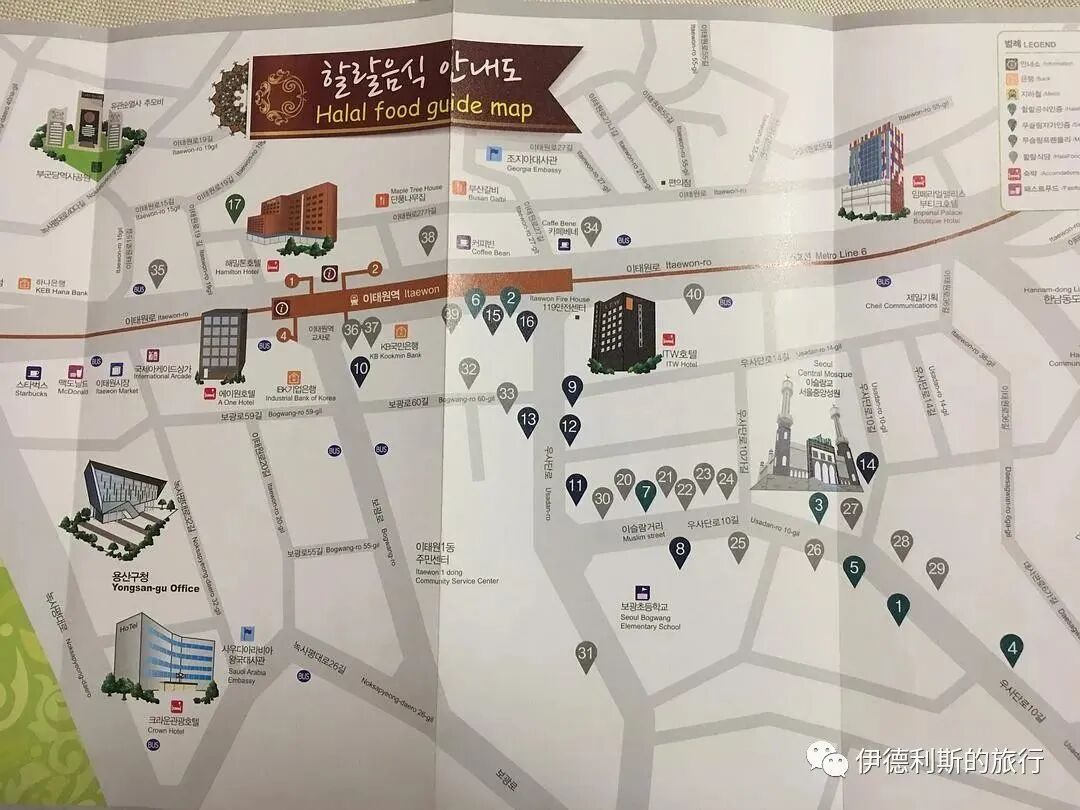
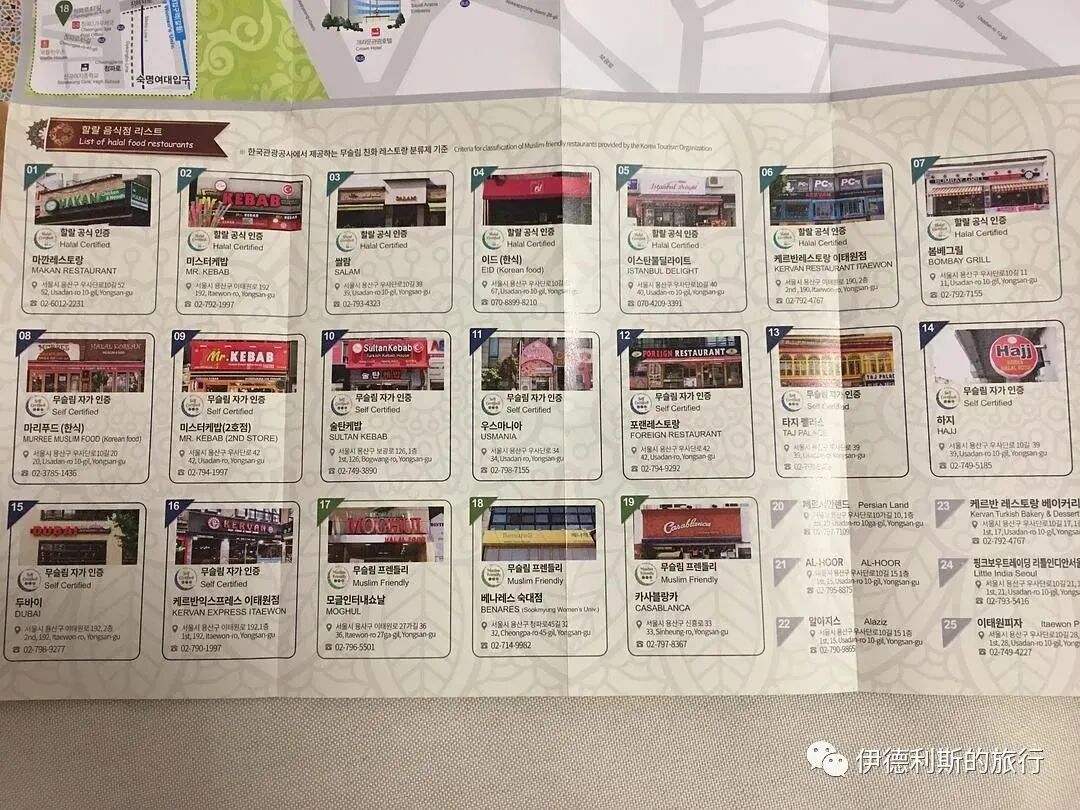
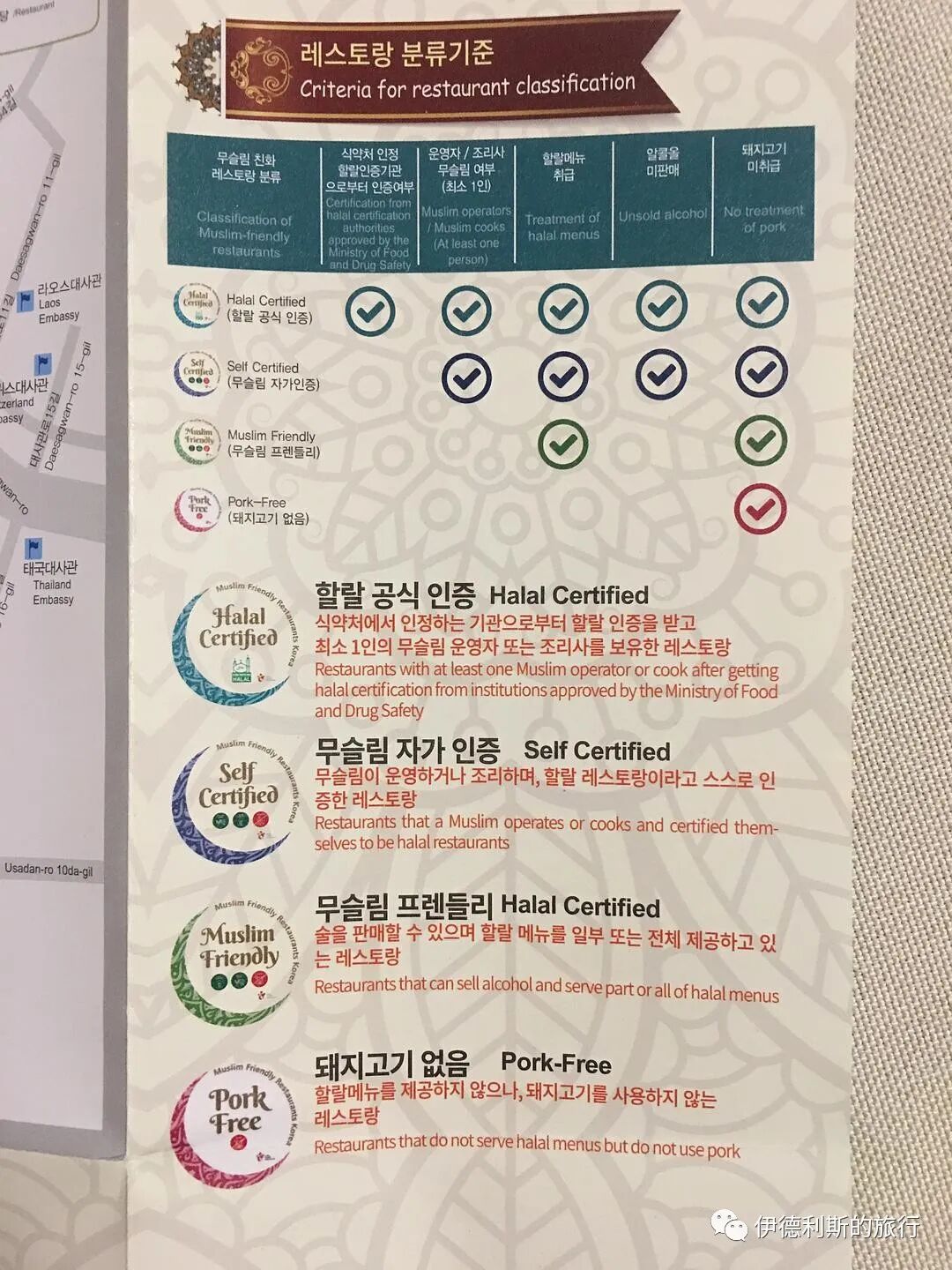
You can see how the Korean government categorizes different types of restaurants:
The first type is called "Halal Certified," meaning that to having at least one Muslim employee, it must receive halal certification from the Ministry of Food and Drug Safety.
The second type is called "Self-Certified," which refers to restaurants opened by Muslims themselves that do not sell alcohol.
The third type is called "Muslim Friendly," meaning they may sell alcohol and have a partial or full halal menu.
The fourth type is called "Pork-Free," meaning that although there is no halal menu, they do not use pork.
Breakfast
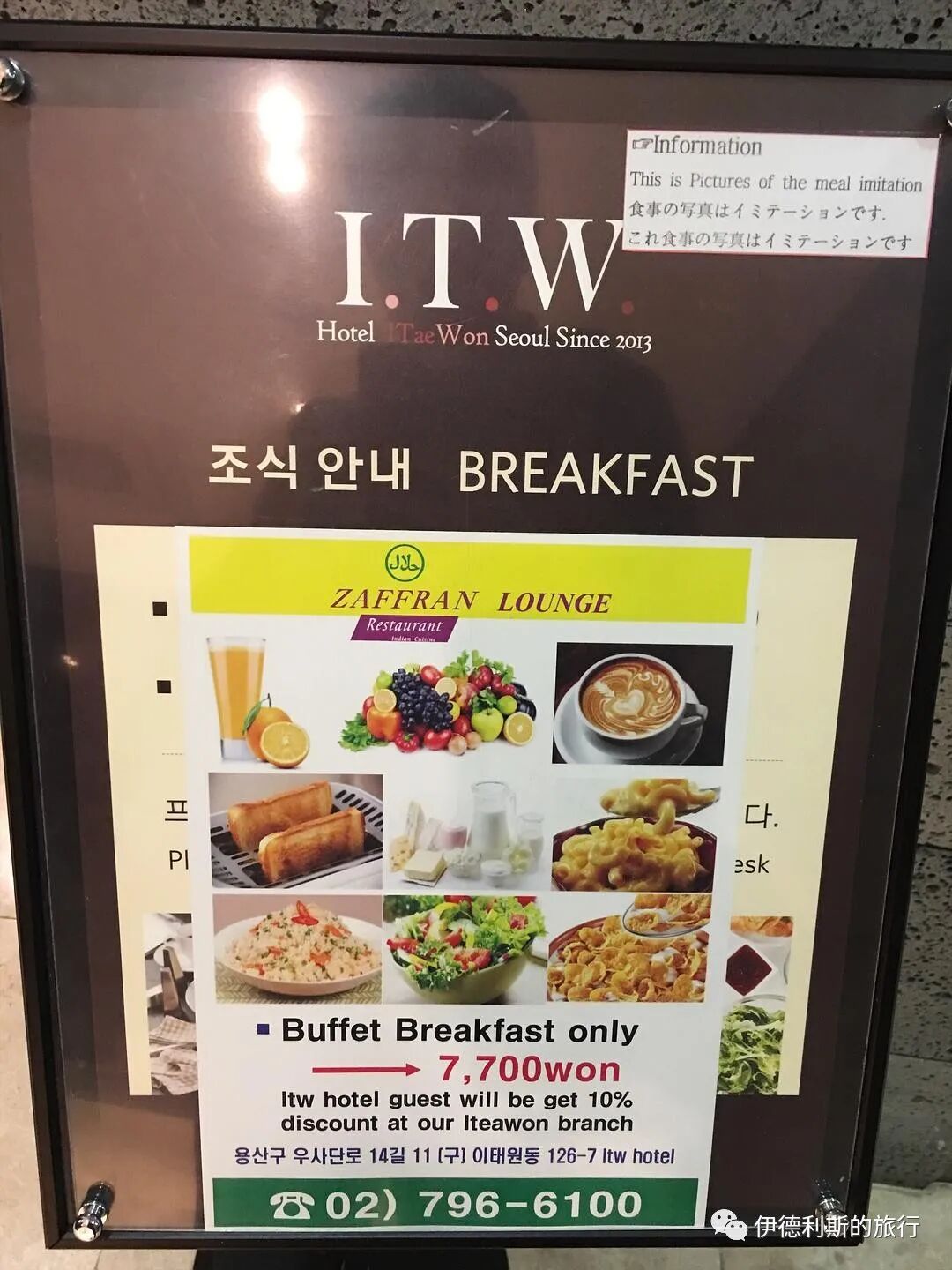
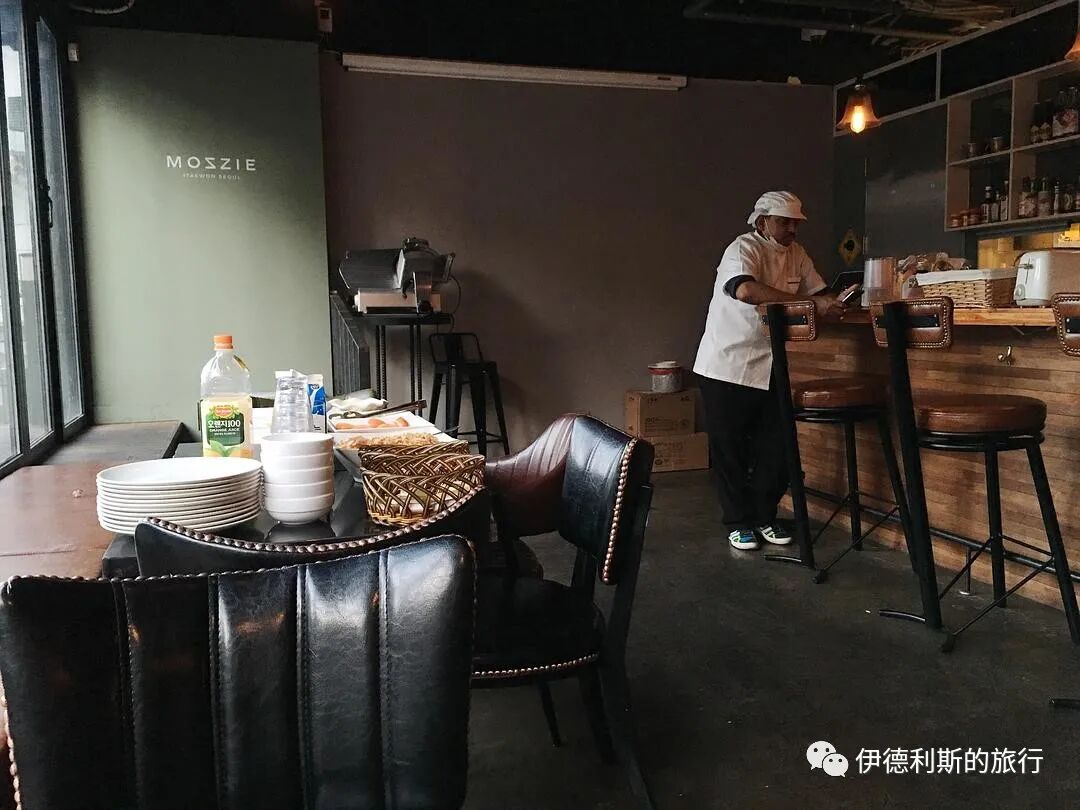
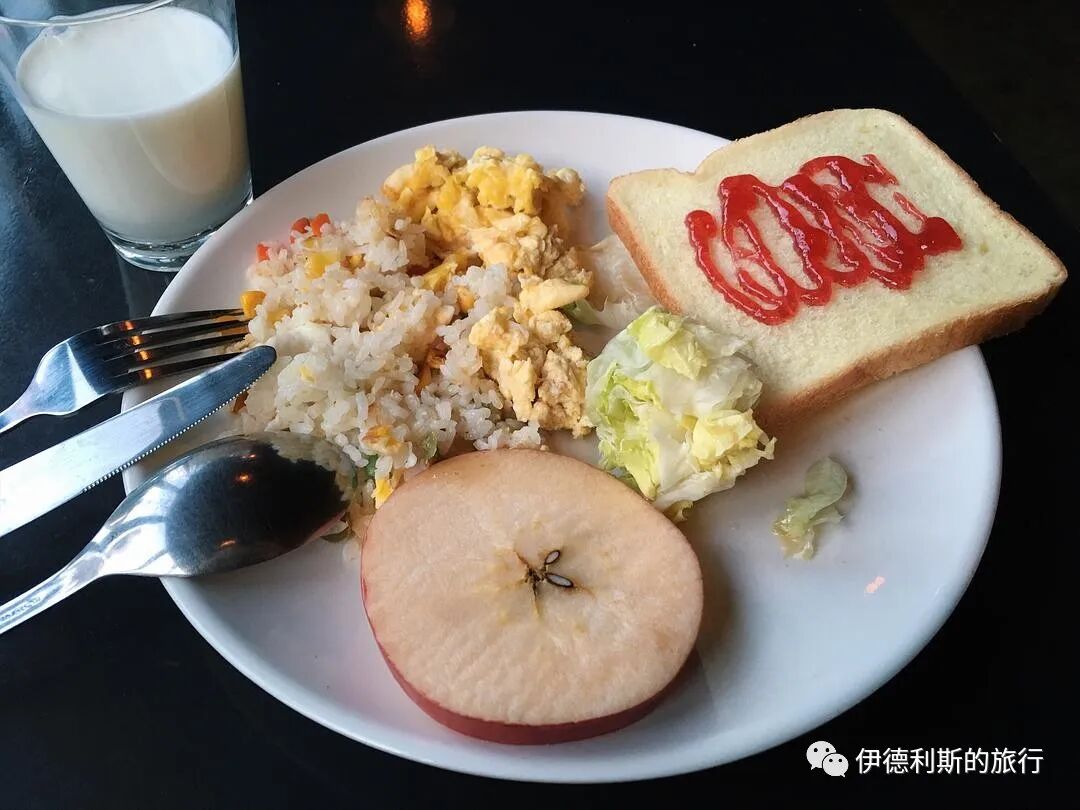
I stayed at the ITW Hotel in Itaewon. Every morning from 7 to 9, there is a halal buffet breakfast provided by the nearby Indian halal restaurant, ZAFFRAN. Besides the 24-hour Turkish kebab shop MR. KEBAB, most halal restaurants in Itaewon do not open in the morning.
Halal Supermarket
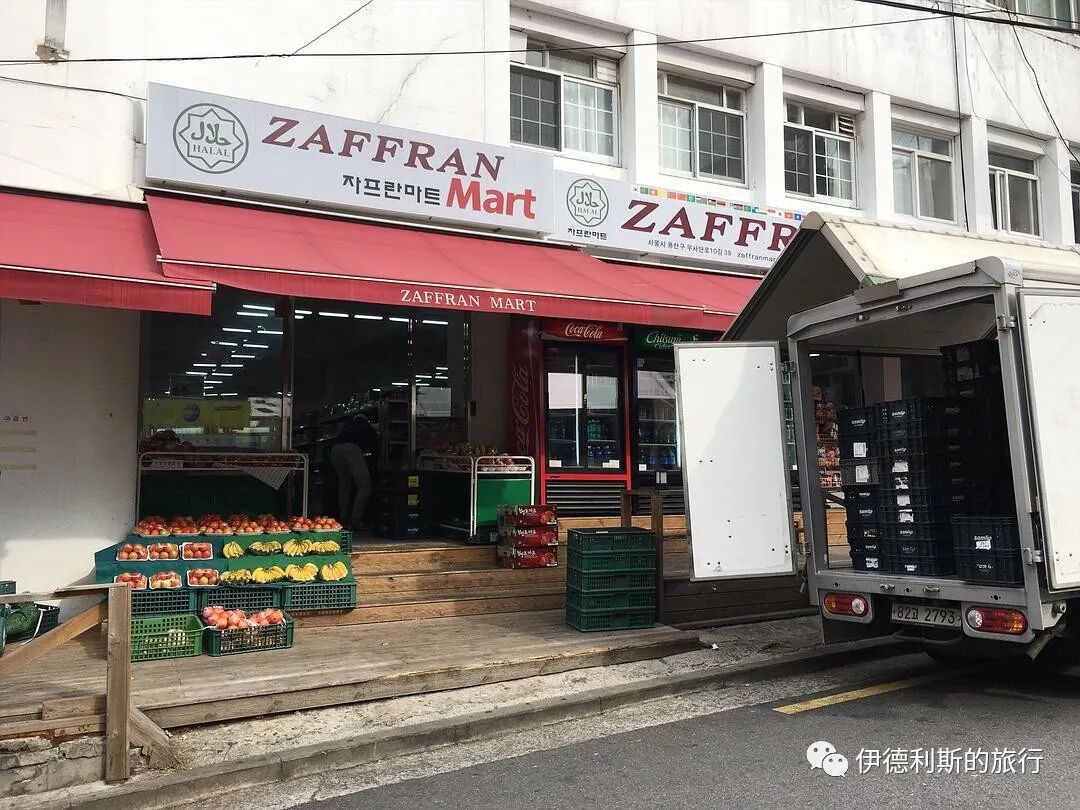
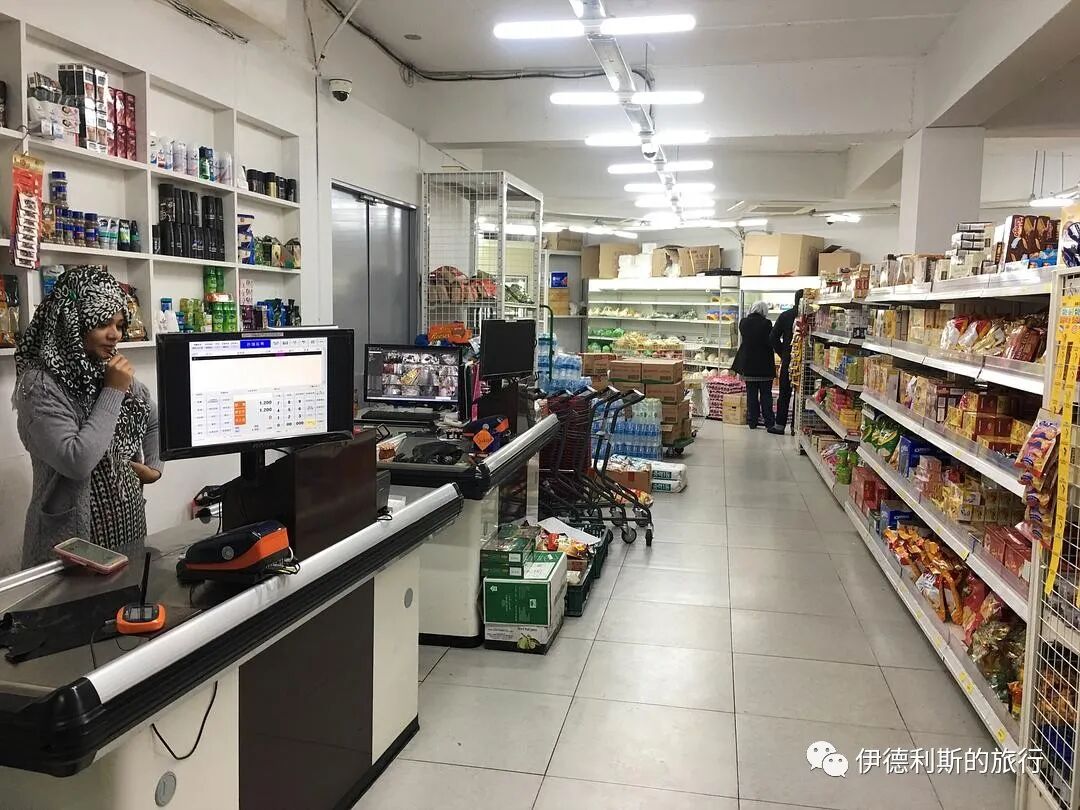
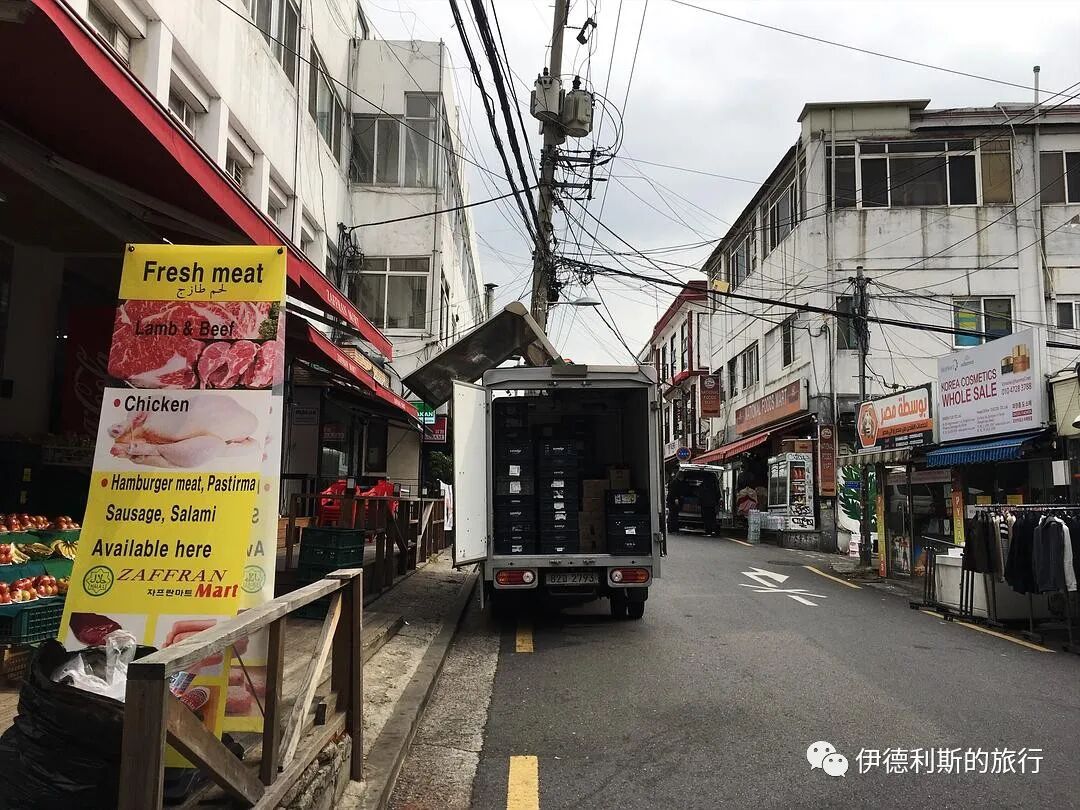
ZAFFRAN MART, the largest halal supermarket in Itaewon.
Religious Bookstore
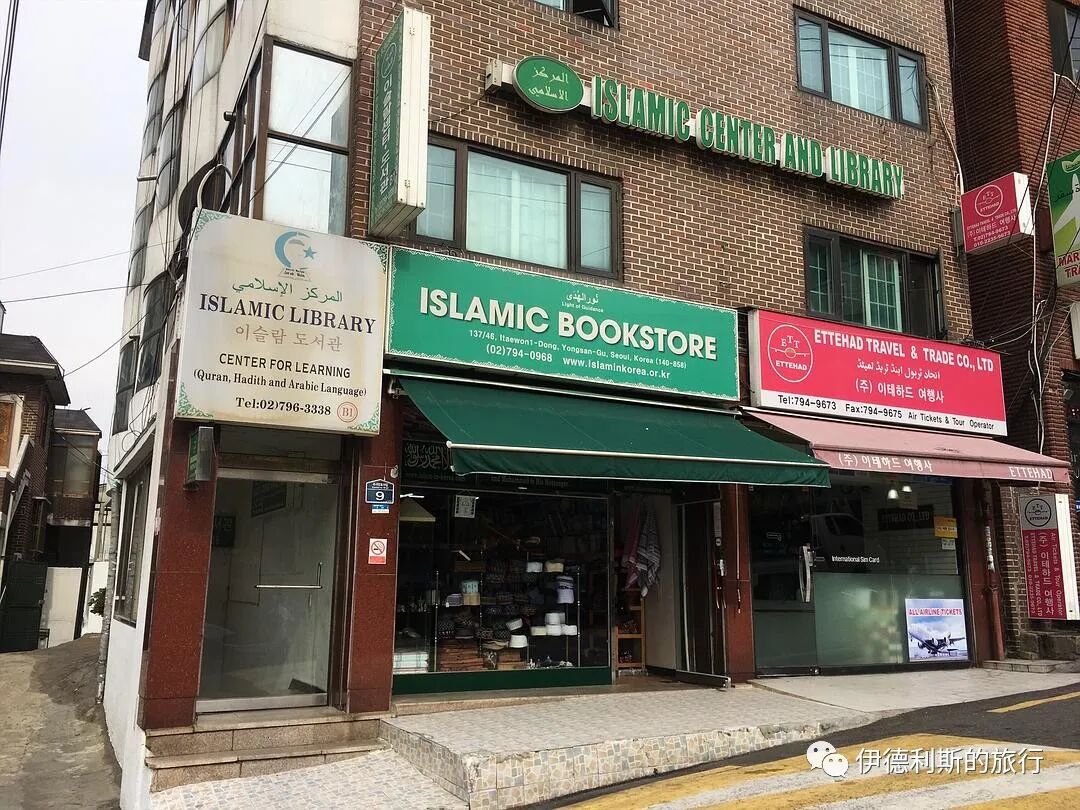
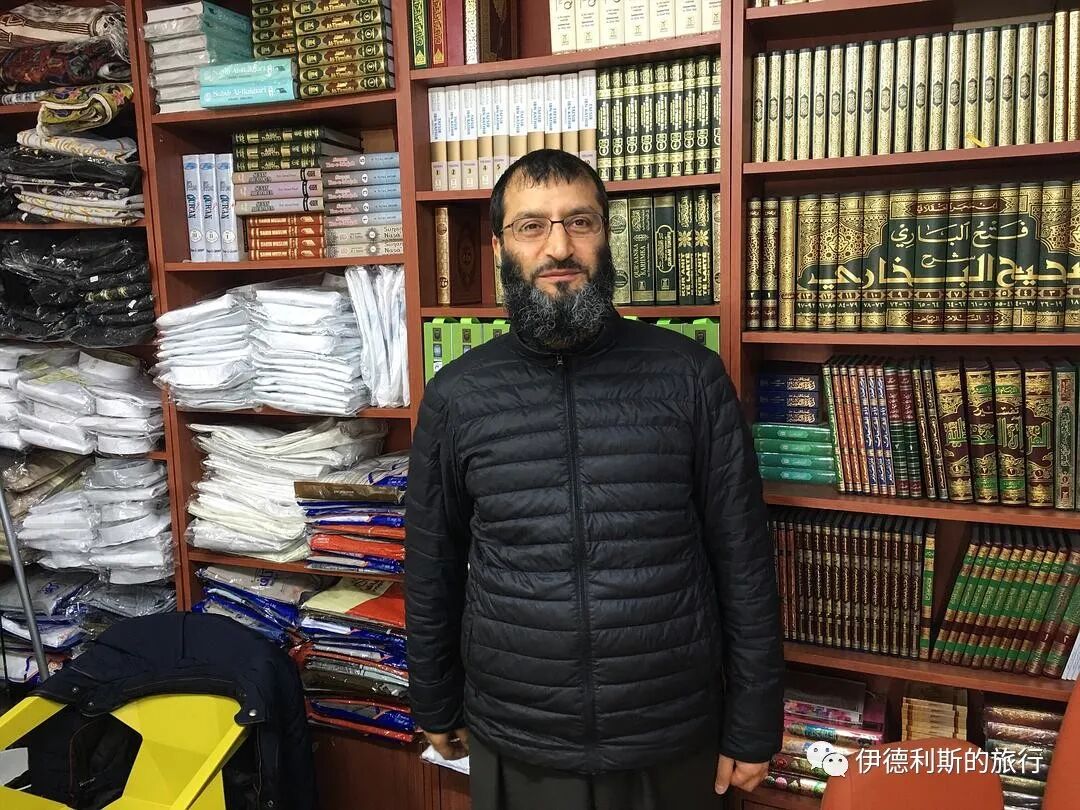
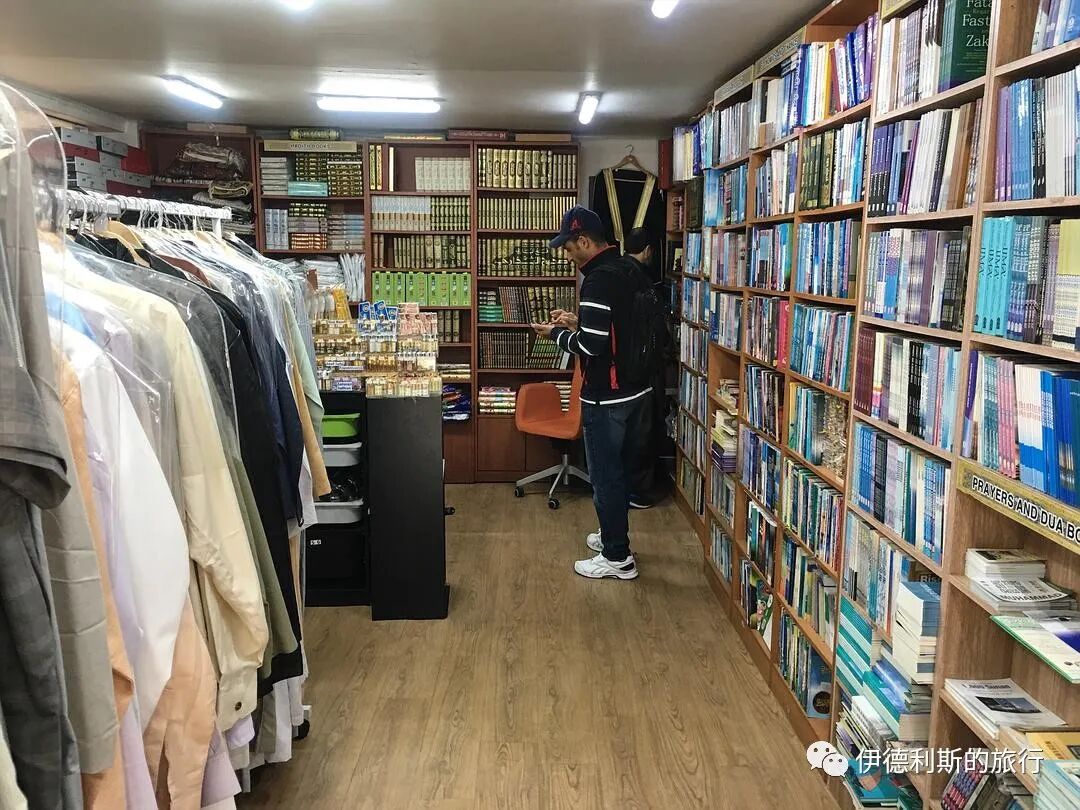
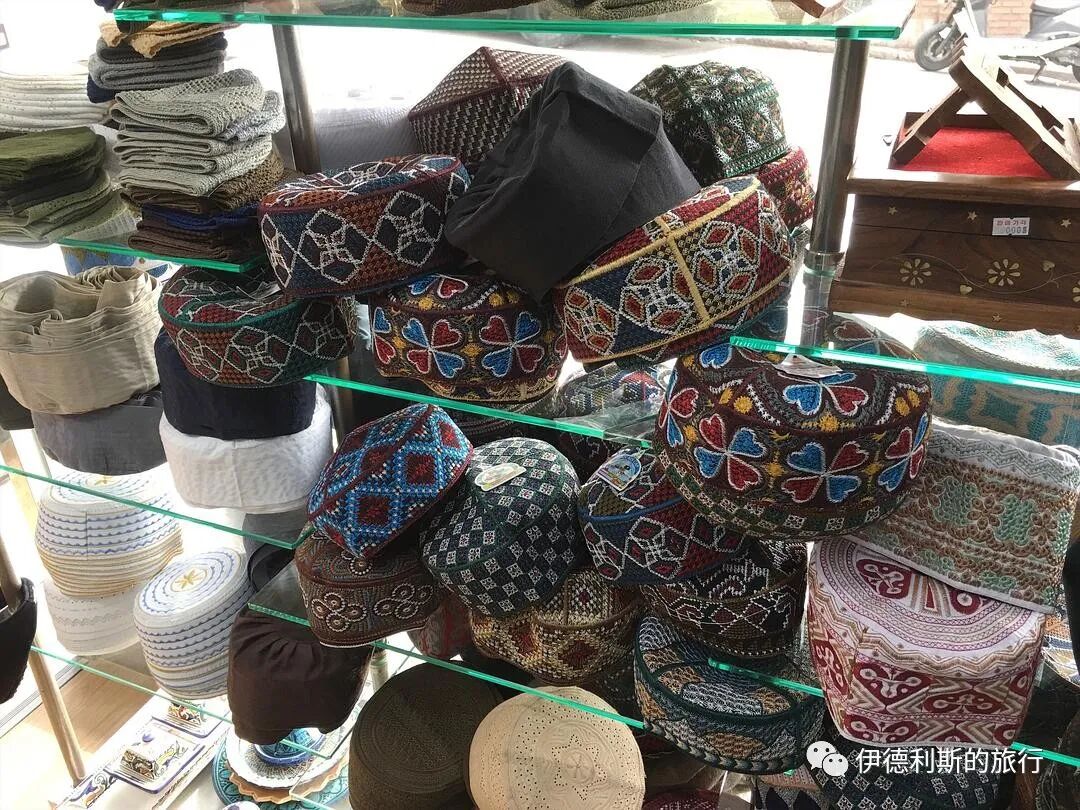
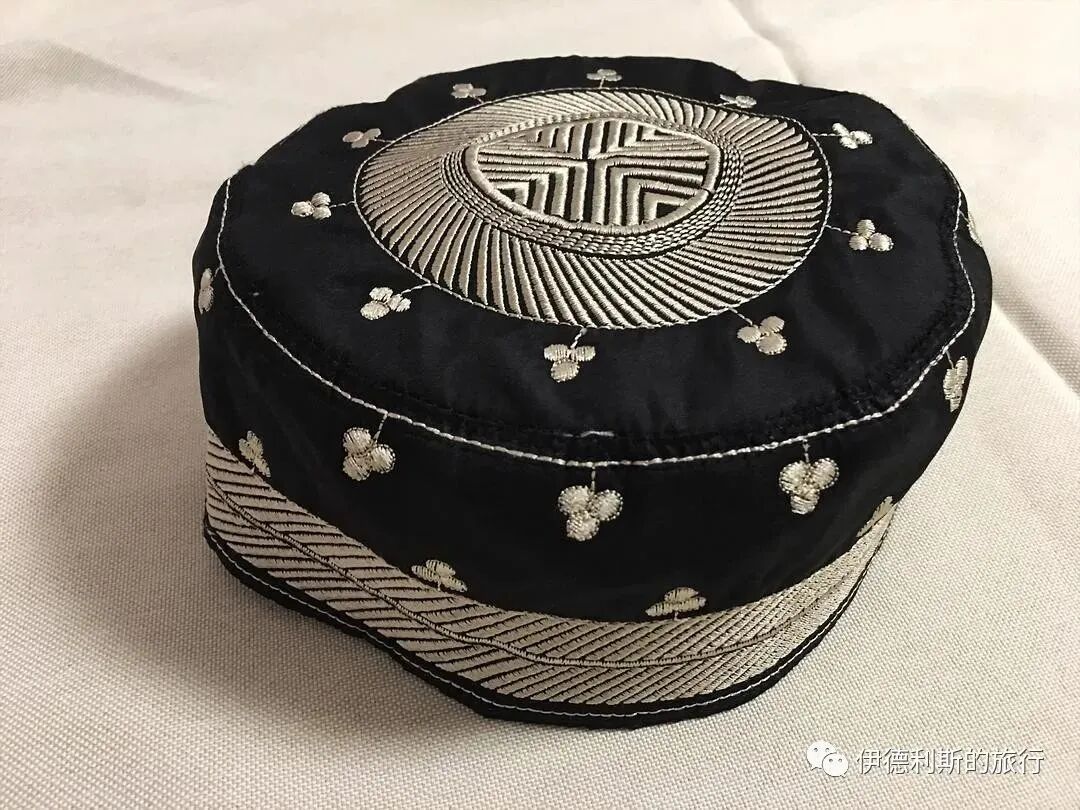
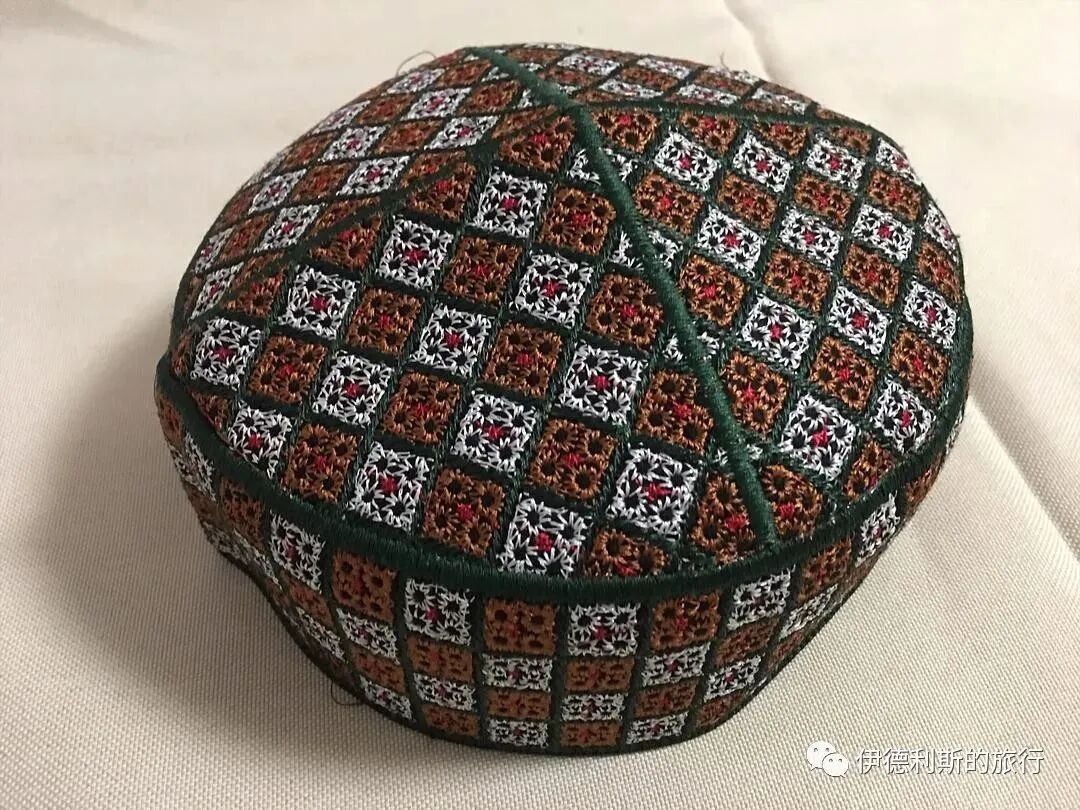
The religious bookstore in Itaewon is run by a man from Indian-administered Kashmir. We hit it off right away, and he greeted me very warmly when he saw me the next day. They have hats from India, Pakistan, Afghanistan, East Africa, and Malaysia. I bought one made in Pakistan and one made in India.
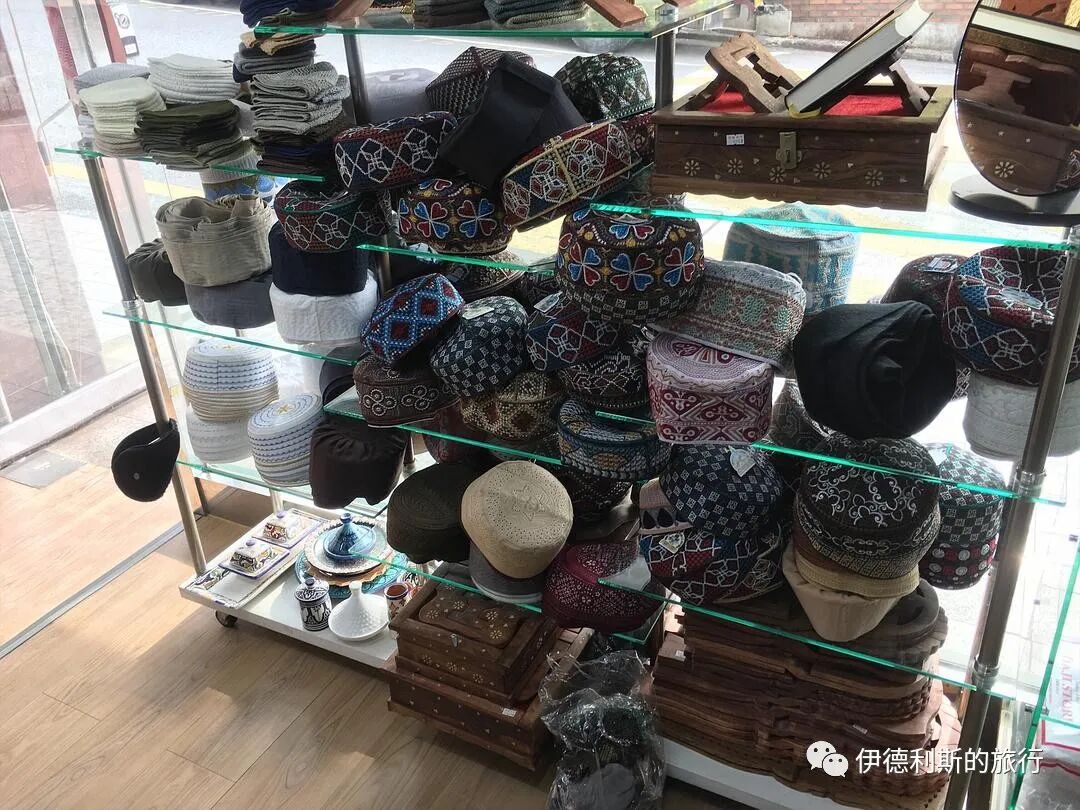
Hat made in India
Hat made in Pakistan
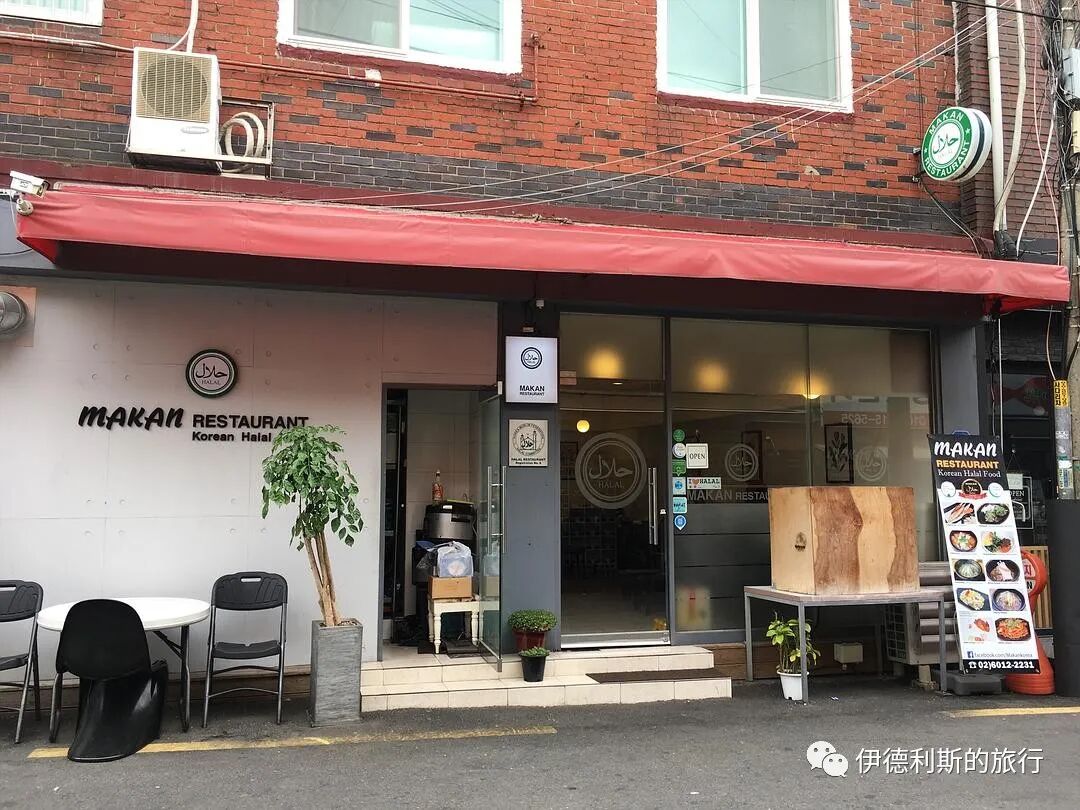
Makan Restaurant
Although Itaewon has many Middle Eastern, Indian, and Turkish halal restaurants, the most unique ones are the halal Korean restaurants. Makan is the most famous one.
This lady is the chef.
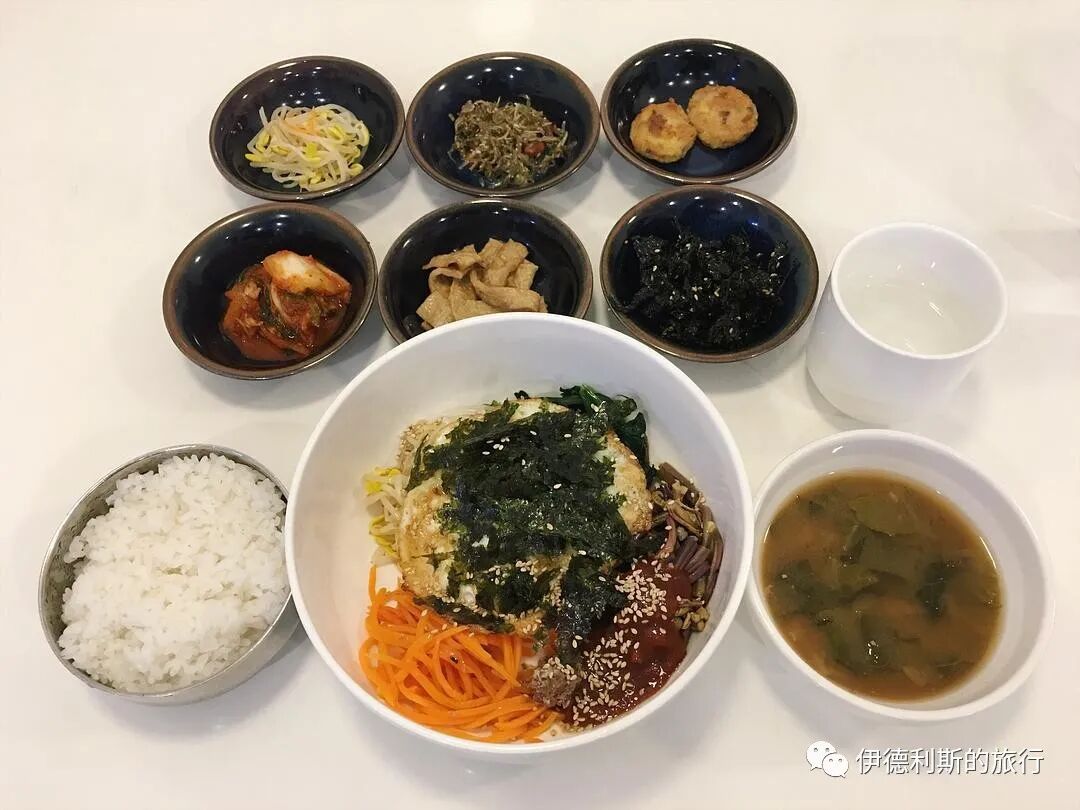
There are 6 types of side dishes.
Grilled fish
Korean rice is delicious!
Soybean paste soup (doenjang-jjigae)
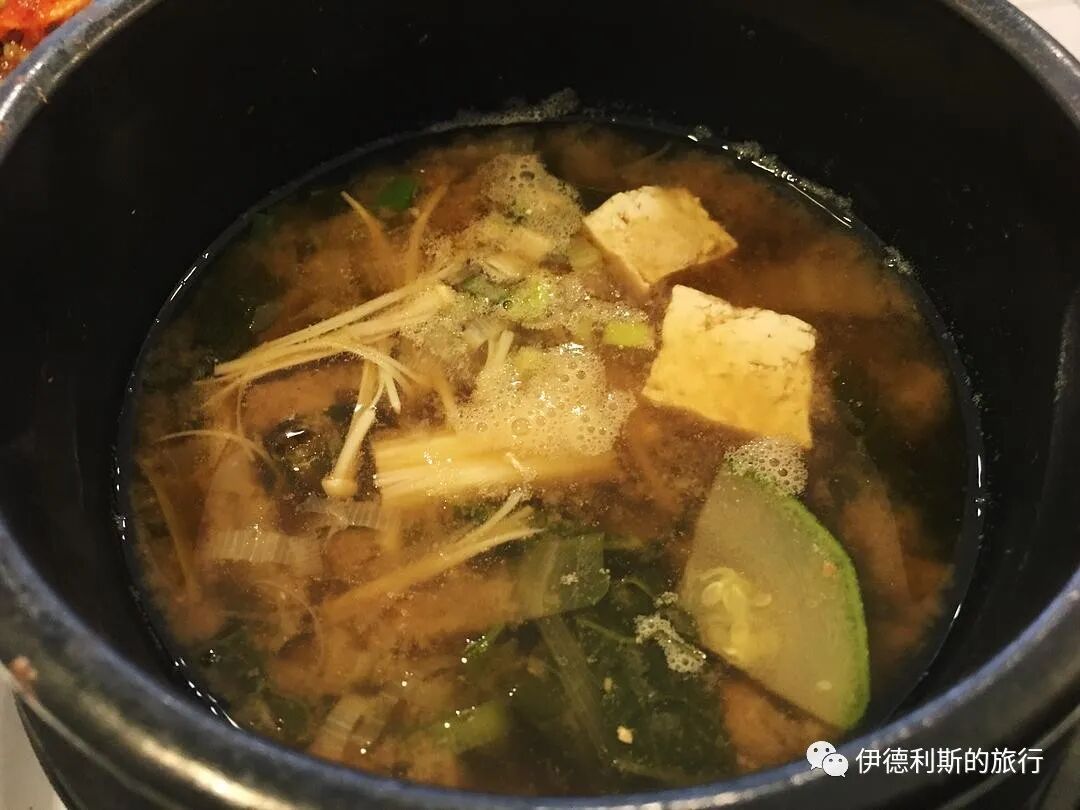
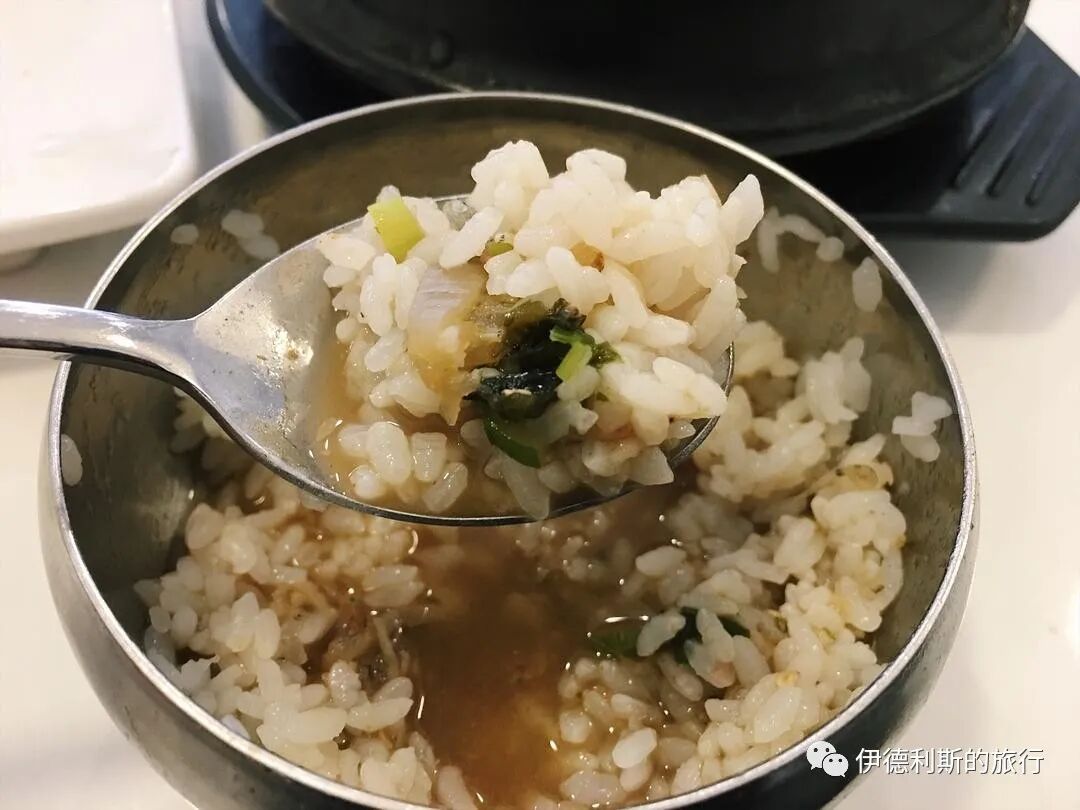
Soaking the rice in the soup.
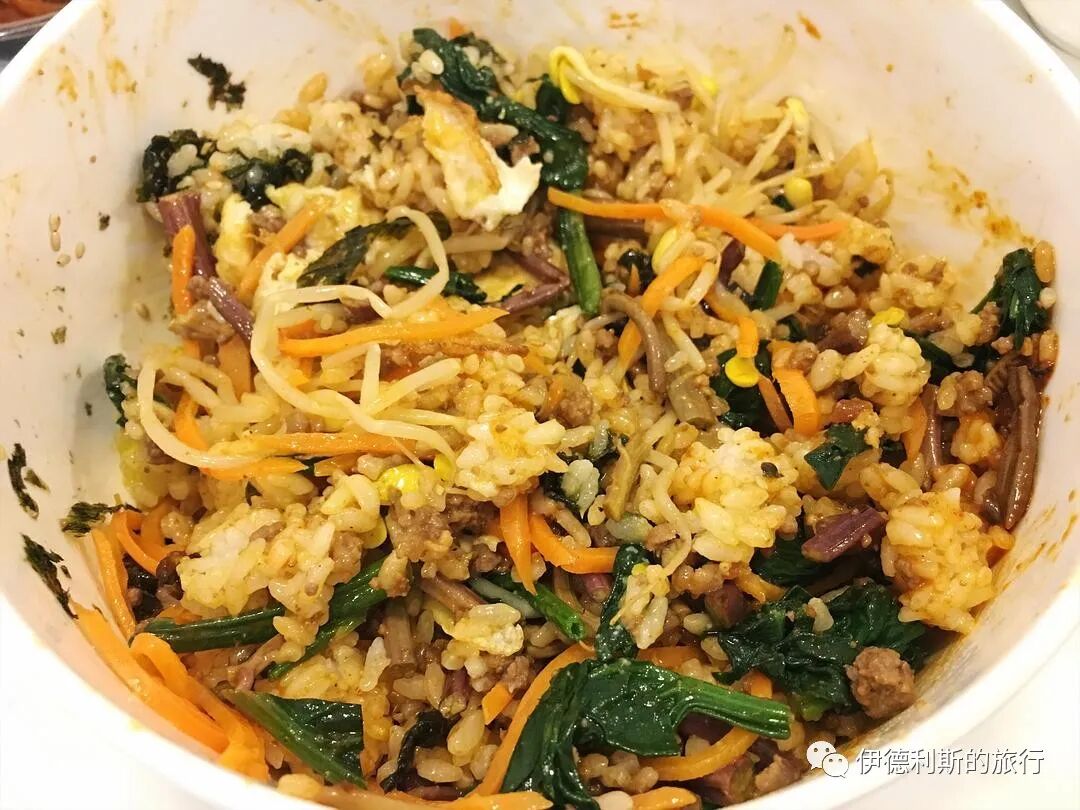
Korean-style grilled meat bibimbap. The meat was covered by the egg, so I didn't get a photo.
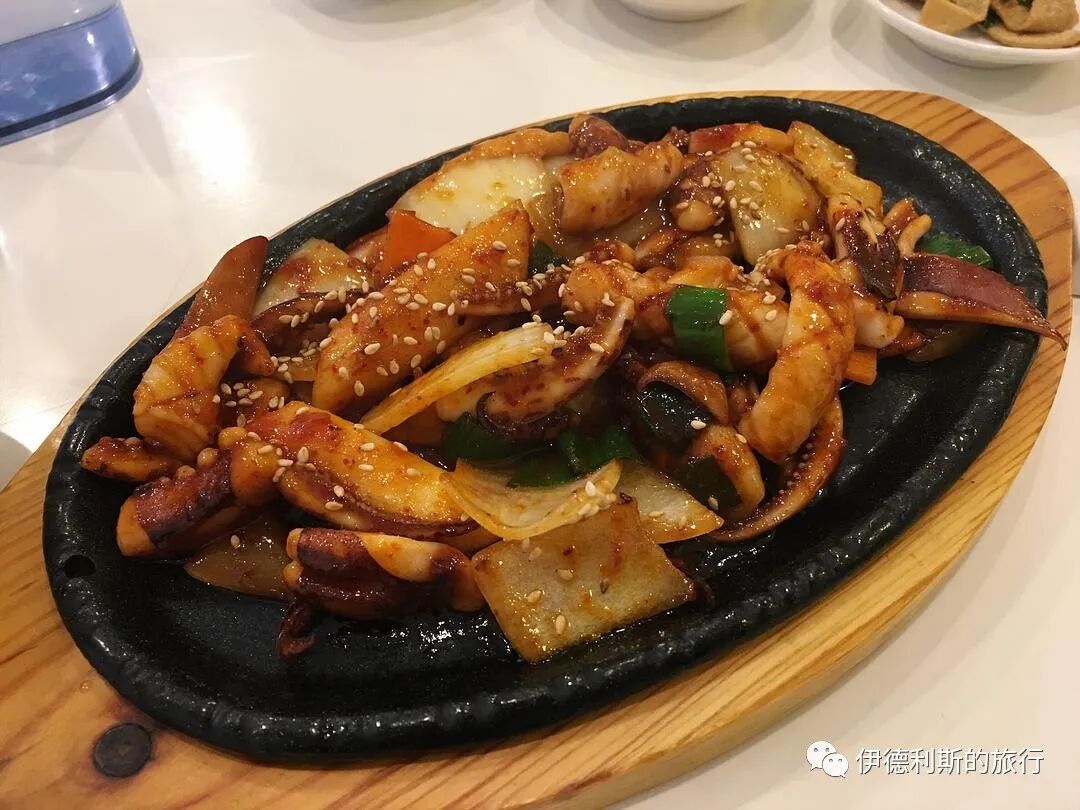
Stir-fried squid and rice cakes (tteokbokki) on a hot plate.
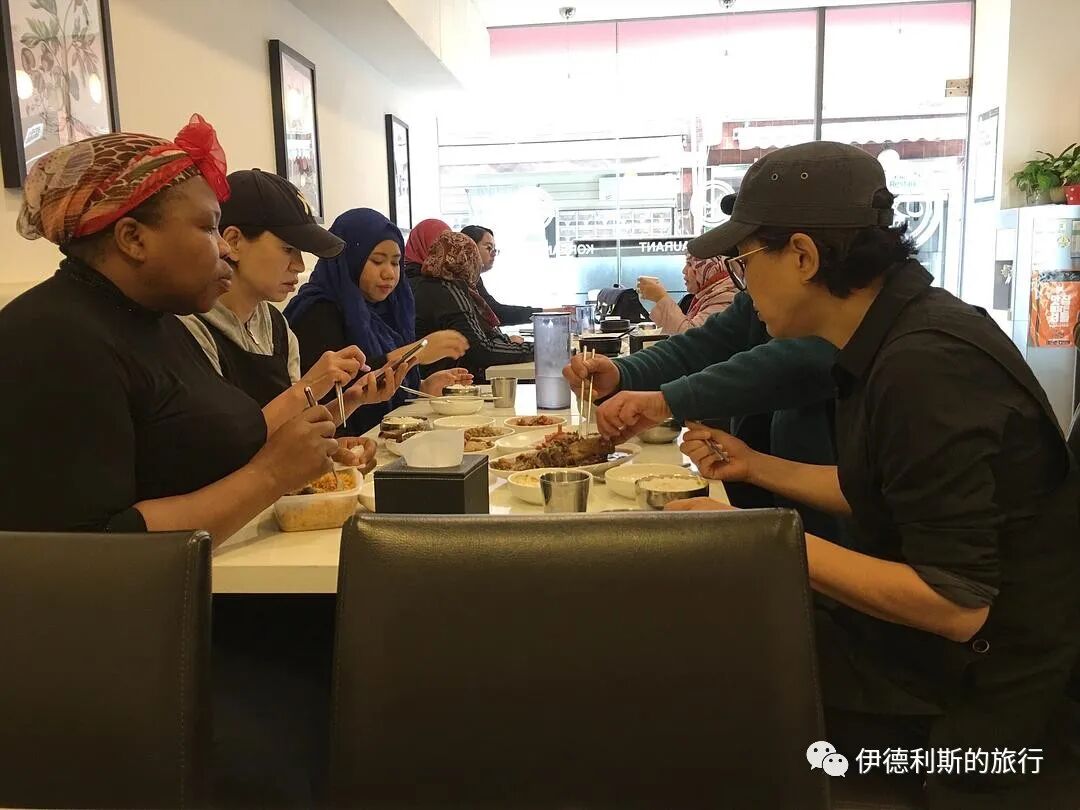
The person in the front right of the picture is also a chef.
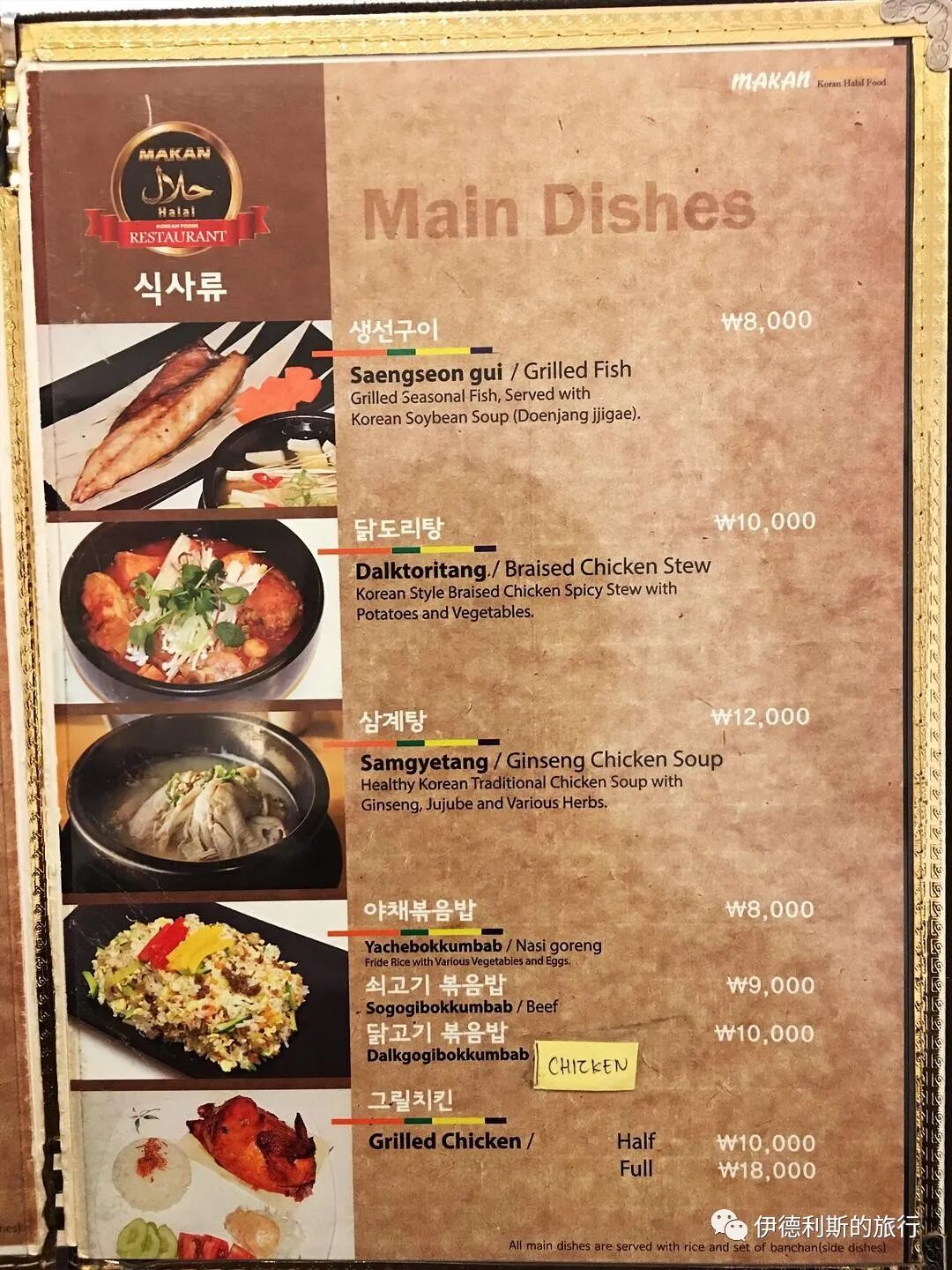
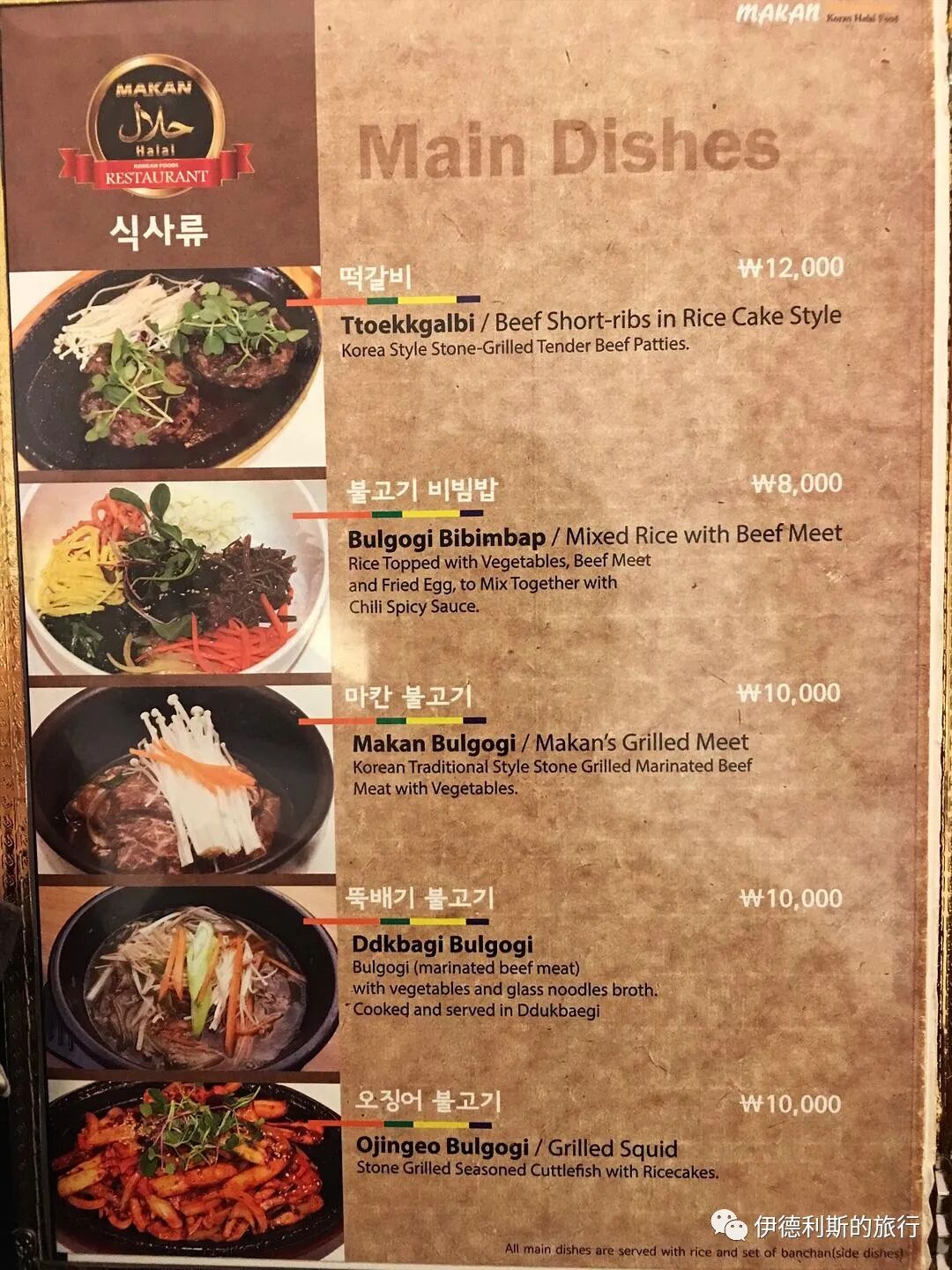
Menu
Makan Chicken & Noodle
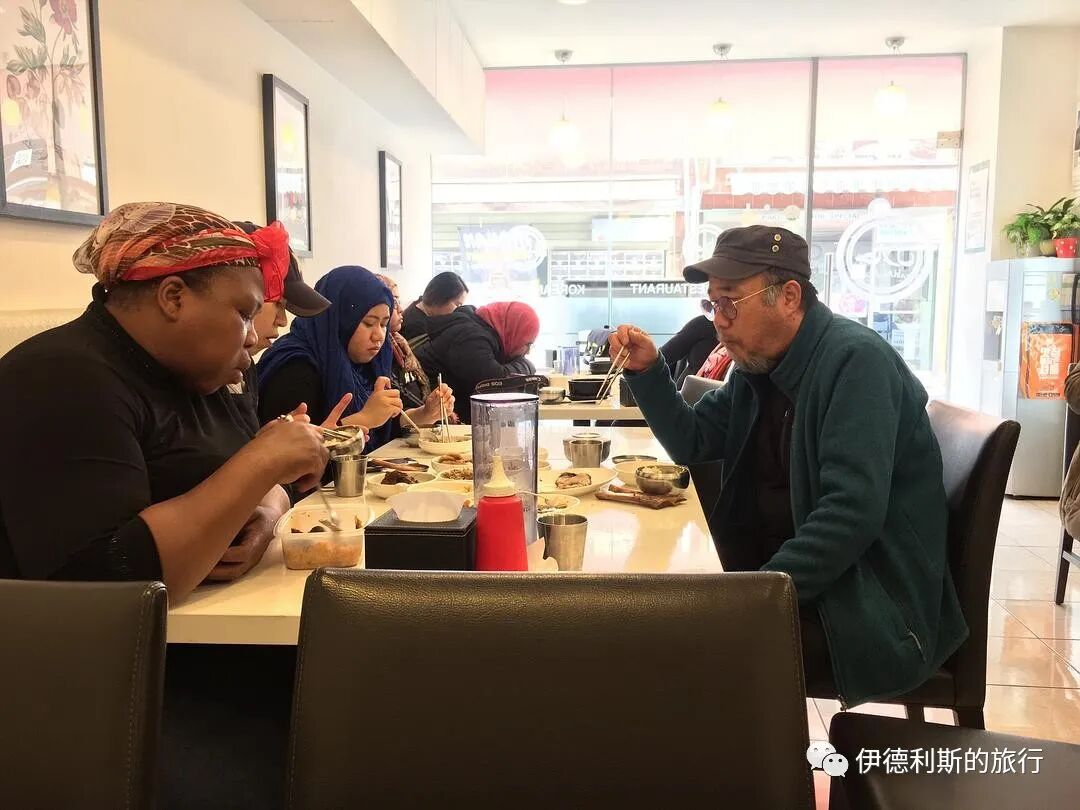
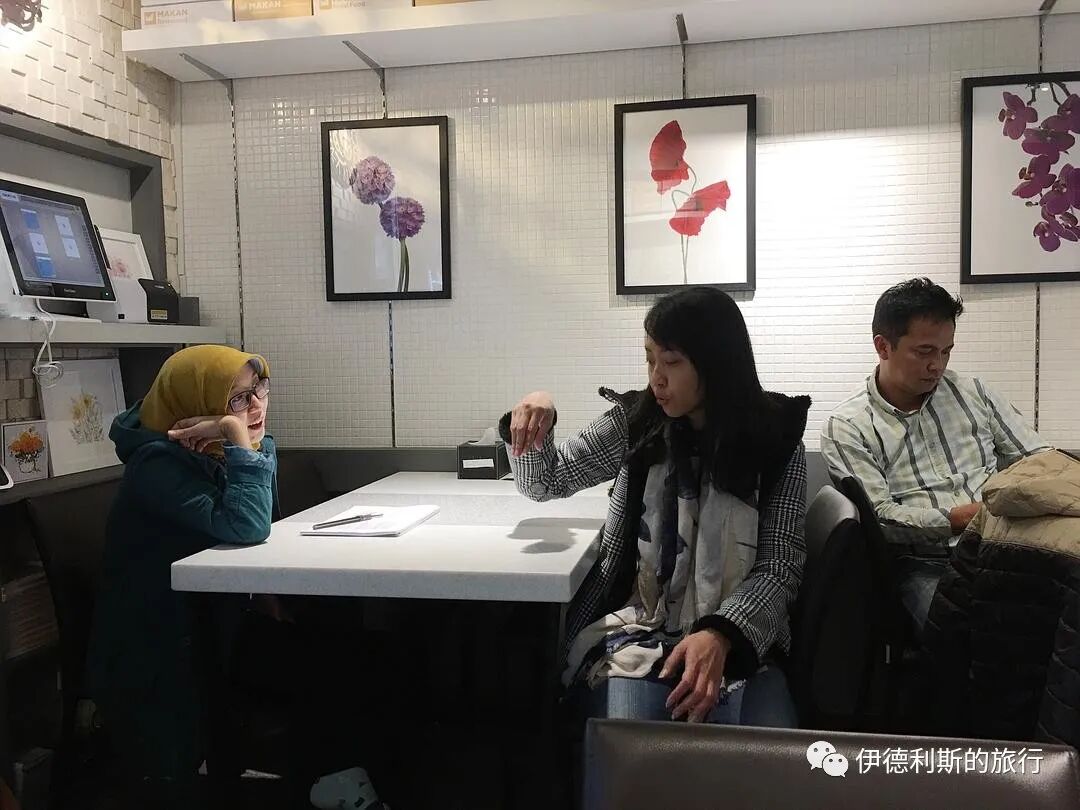
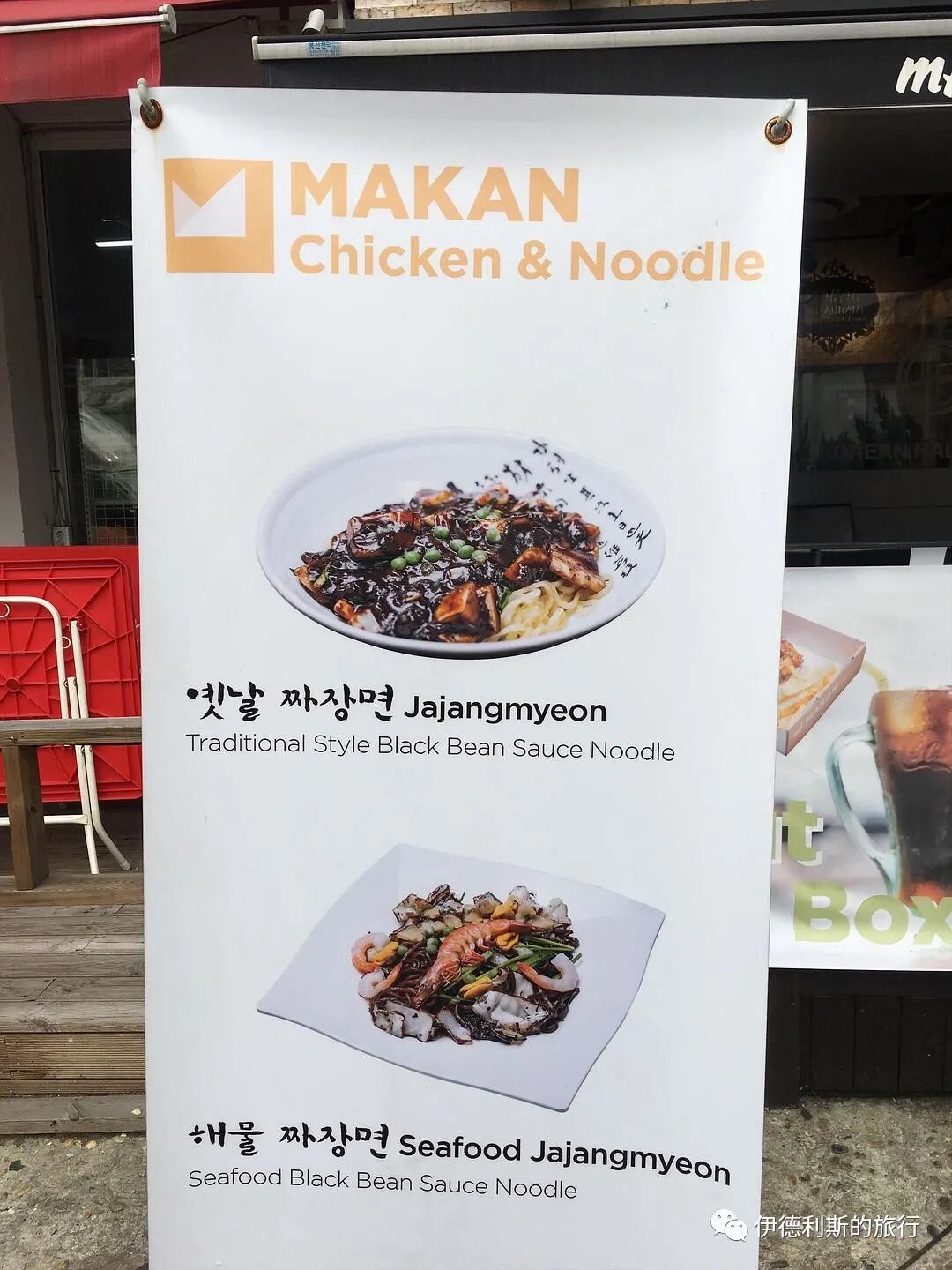
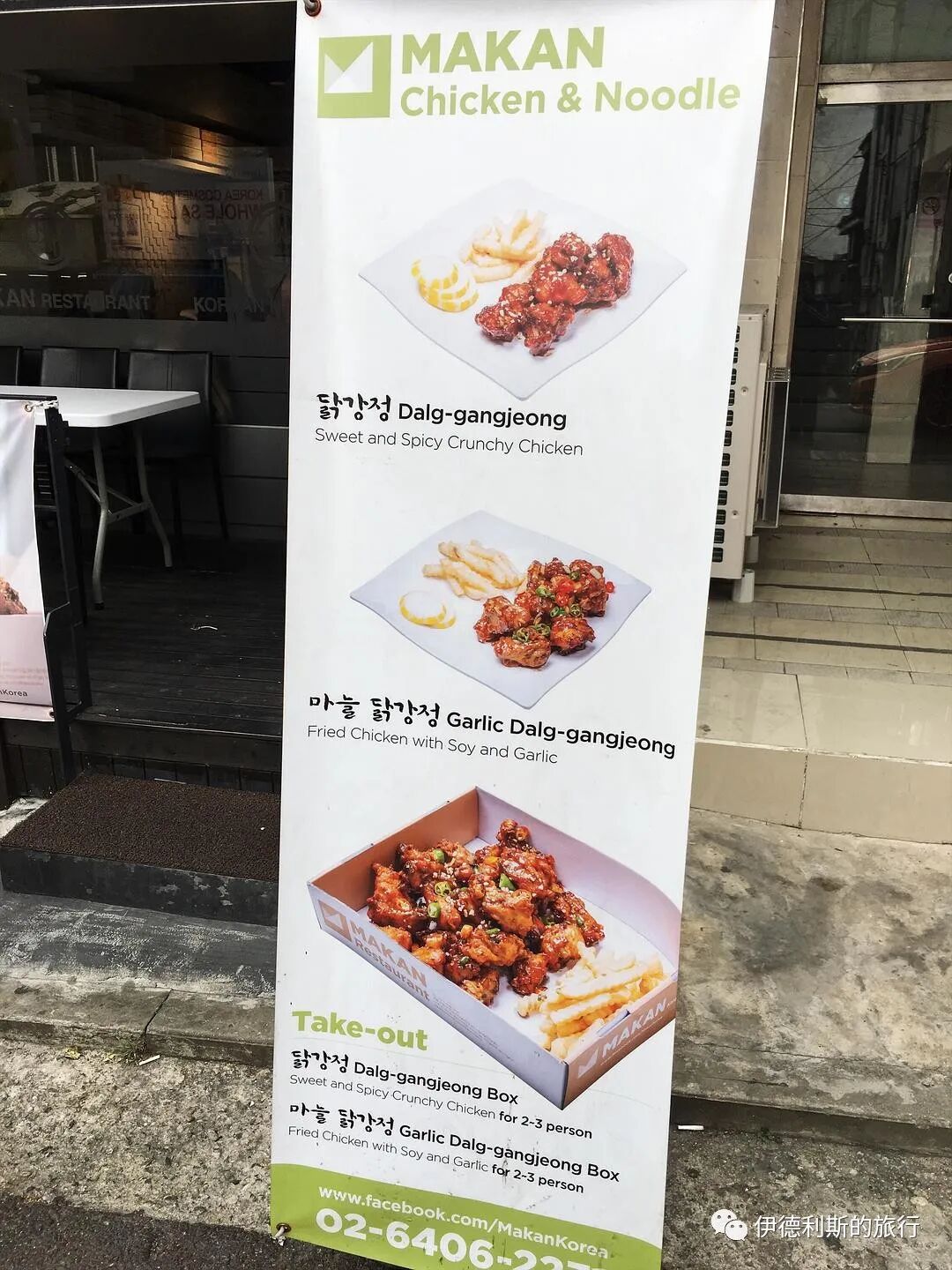
Besides the main shop south of the mosque, Makan has another shop west of the mosque that specializes in Korean fried chicken and black bean noodles (jajangmyeon). The chef is a man, and it is part of the same business as the main shop.
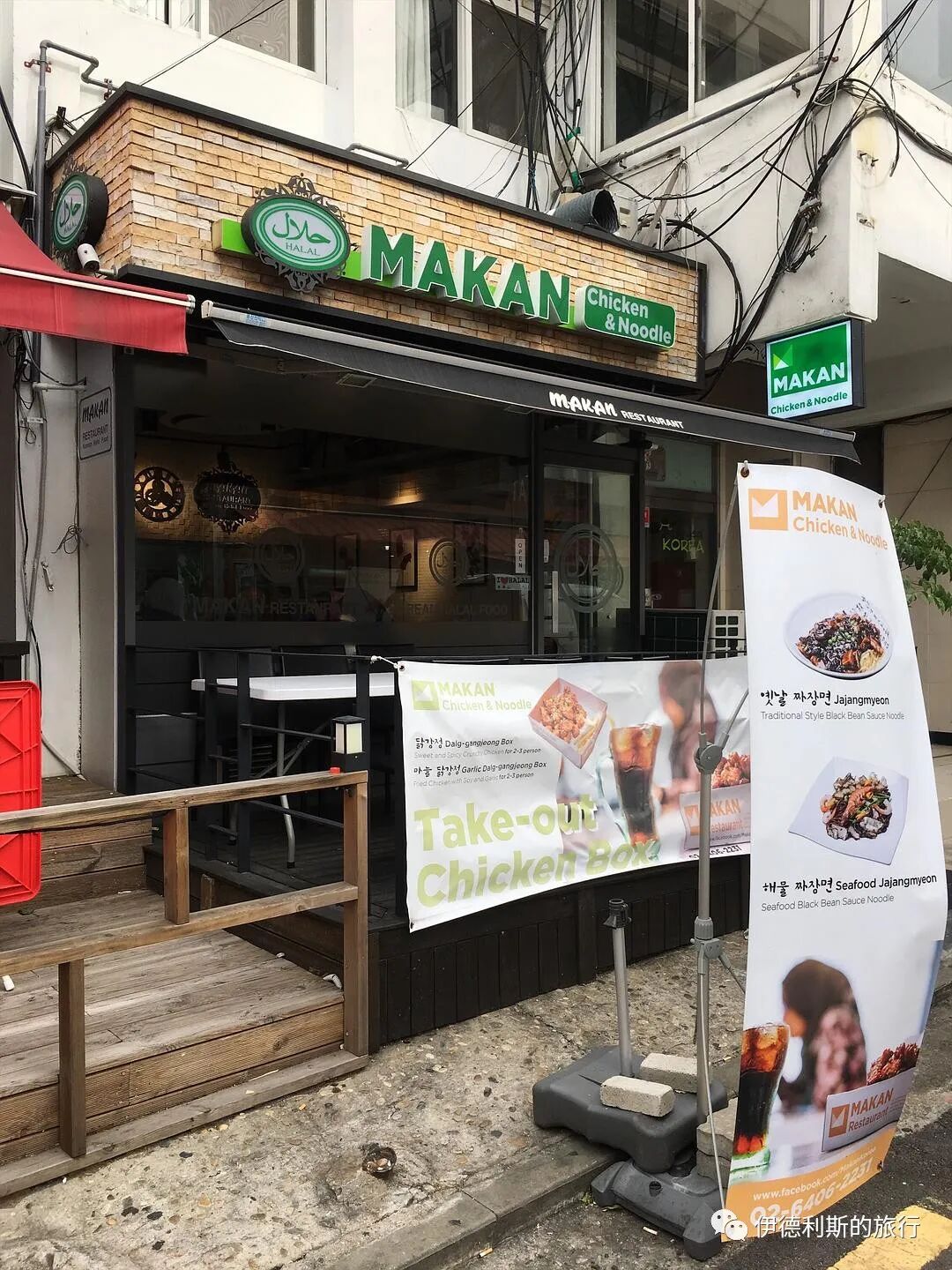
Korean black bean noodles. The taste is different from Beijing-style black bean noodles, and the noodles are a bit like udon.
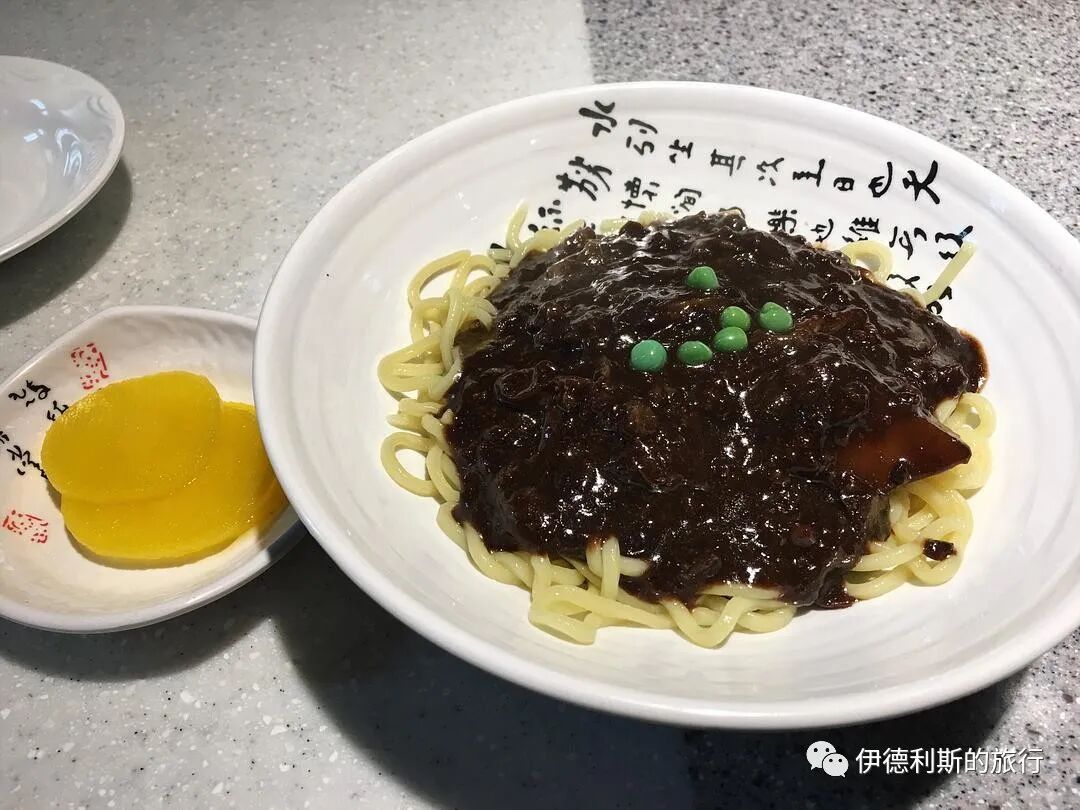
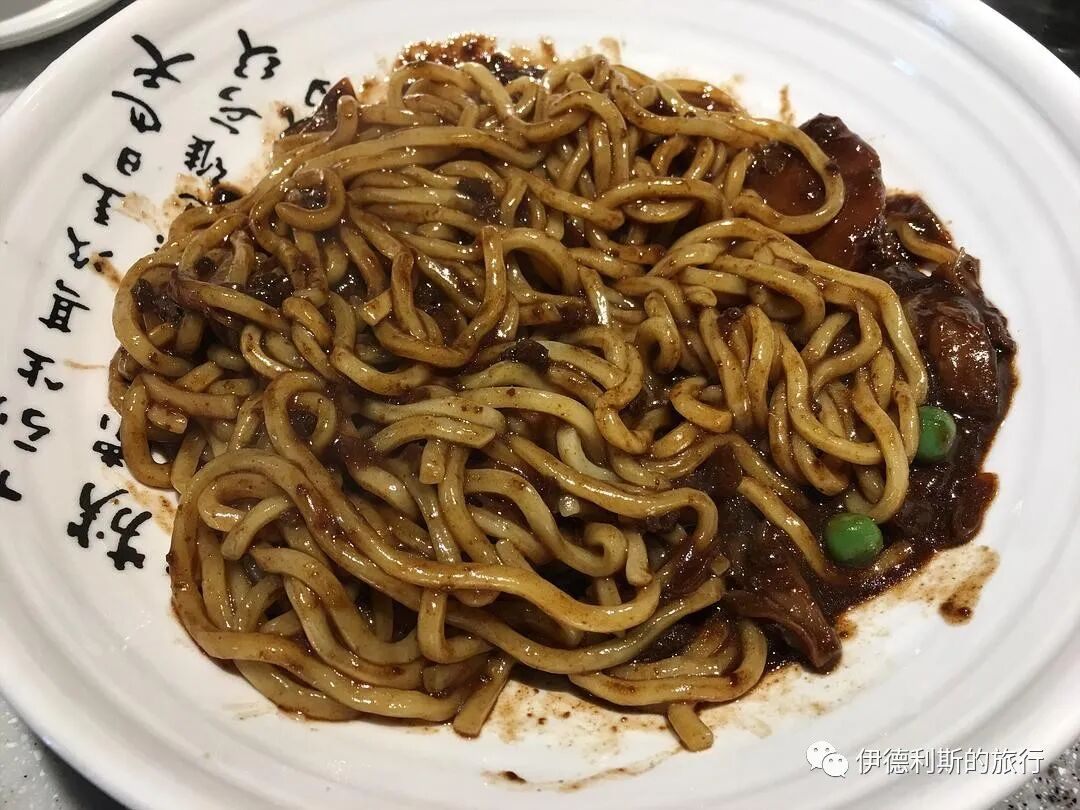
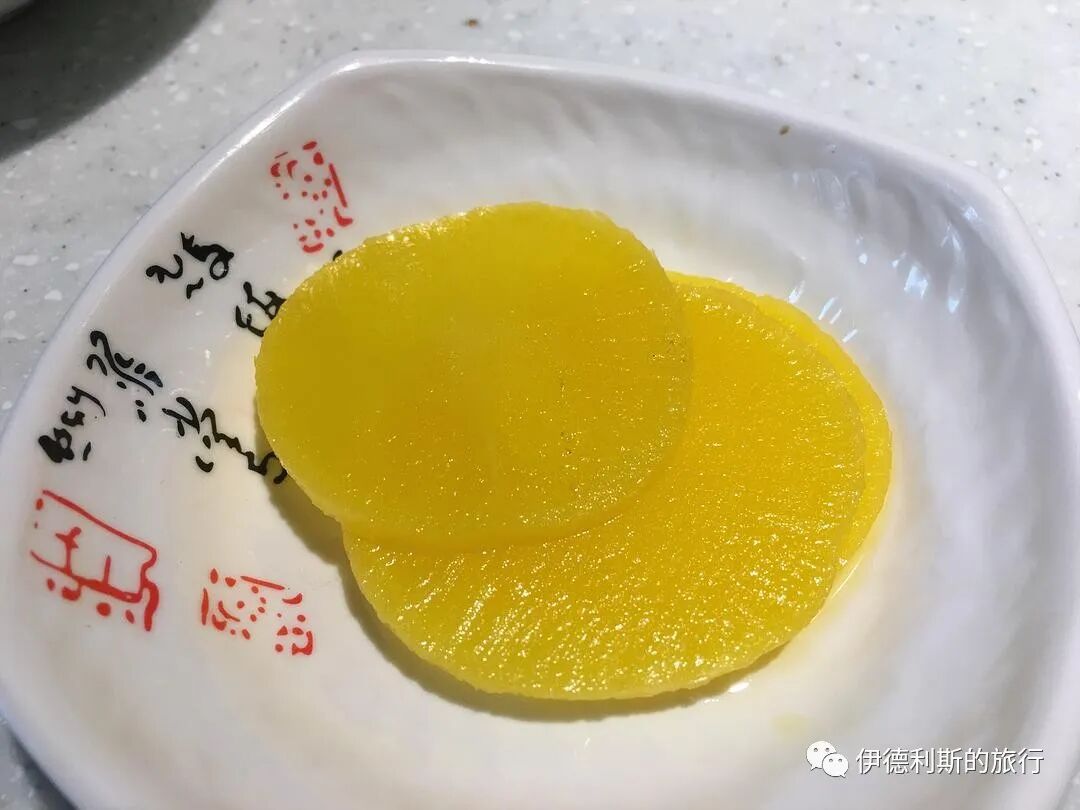
The man on the right is the chef.
Menu
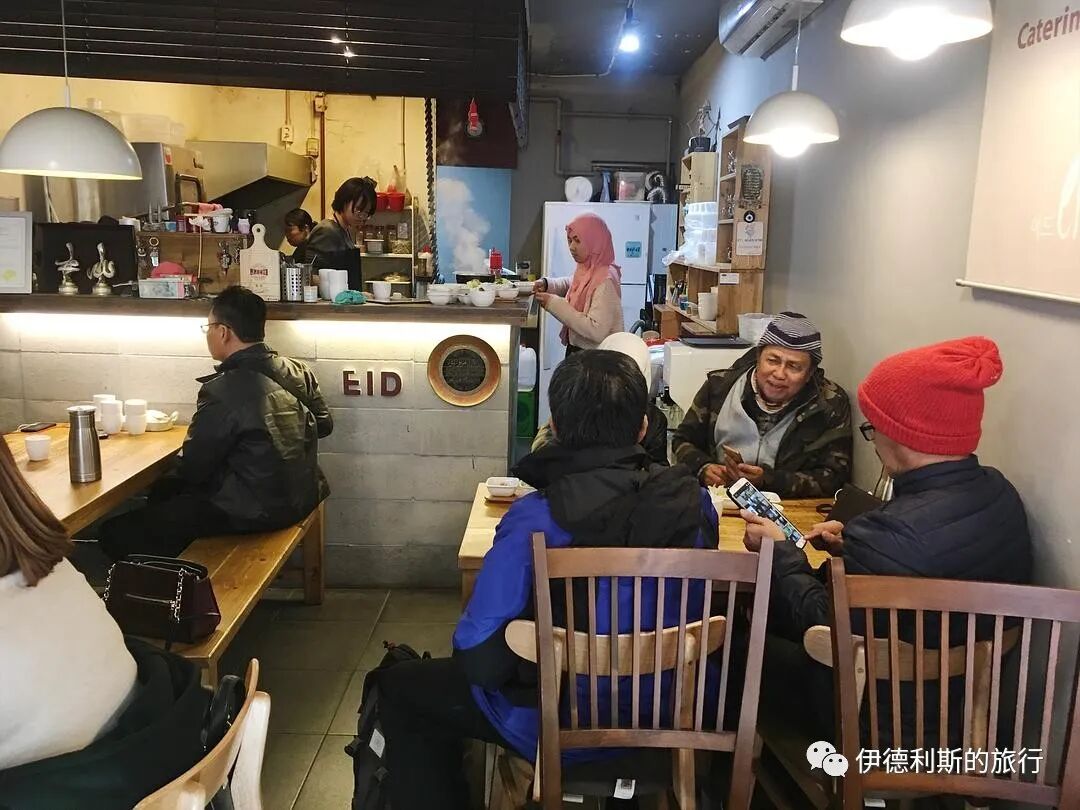
Eid
Eid and Makan are tied for the best halal Korean restaurants in Seoul. Although the menu at Eid is not as extensive as Makan's, it is still very delicious.
The chef is this very capable lady.
Ginseng chicken soup (samgyetang)
There are three types of side dishes.
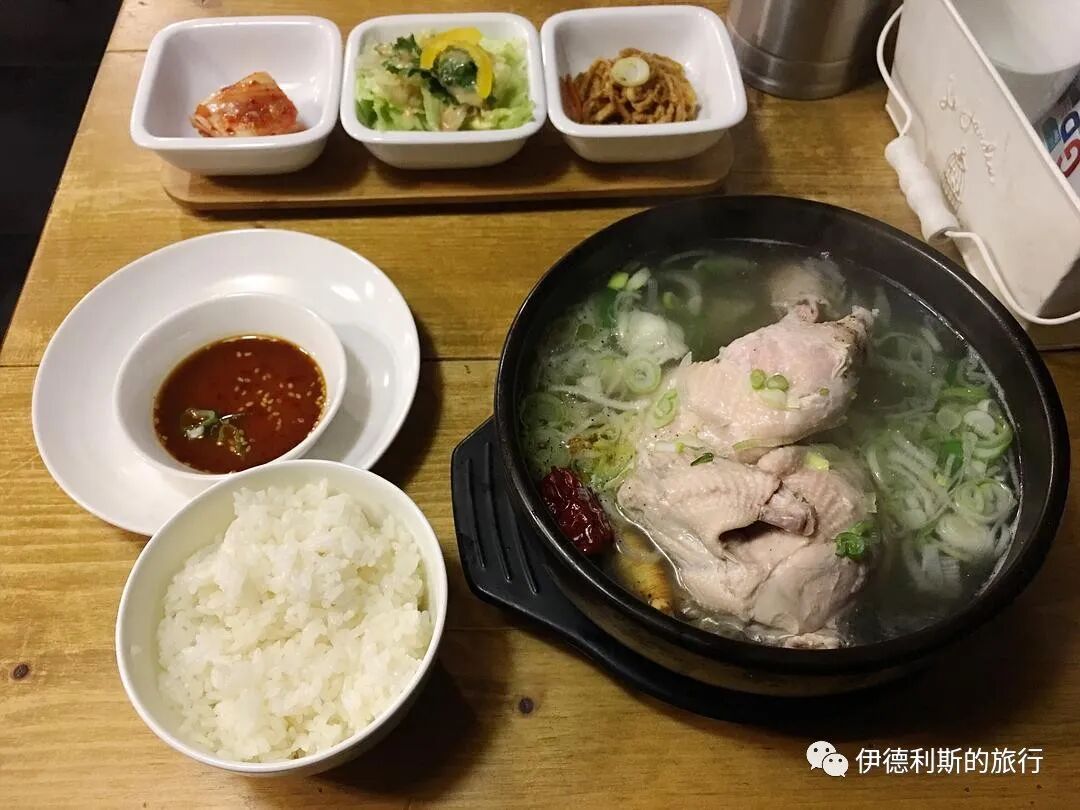
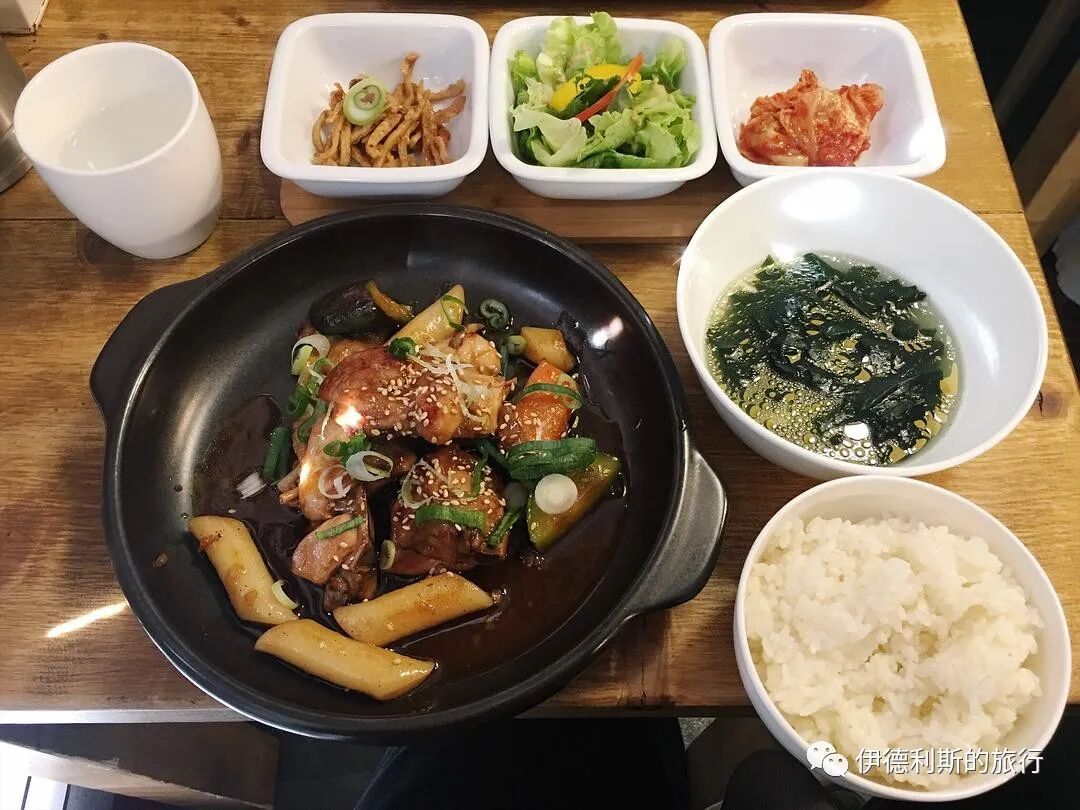
The stewed chicken is great, and the rice cakes (nian gao) inside are delicious.
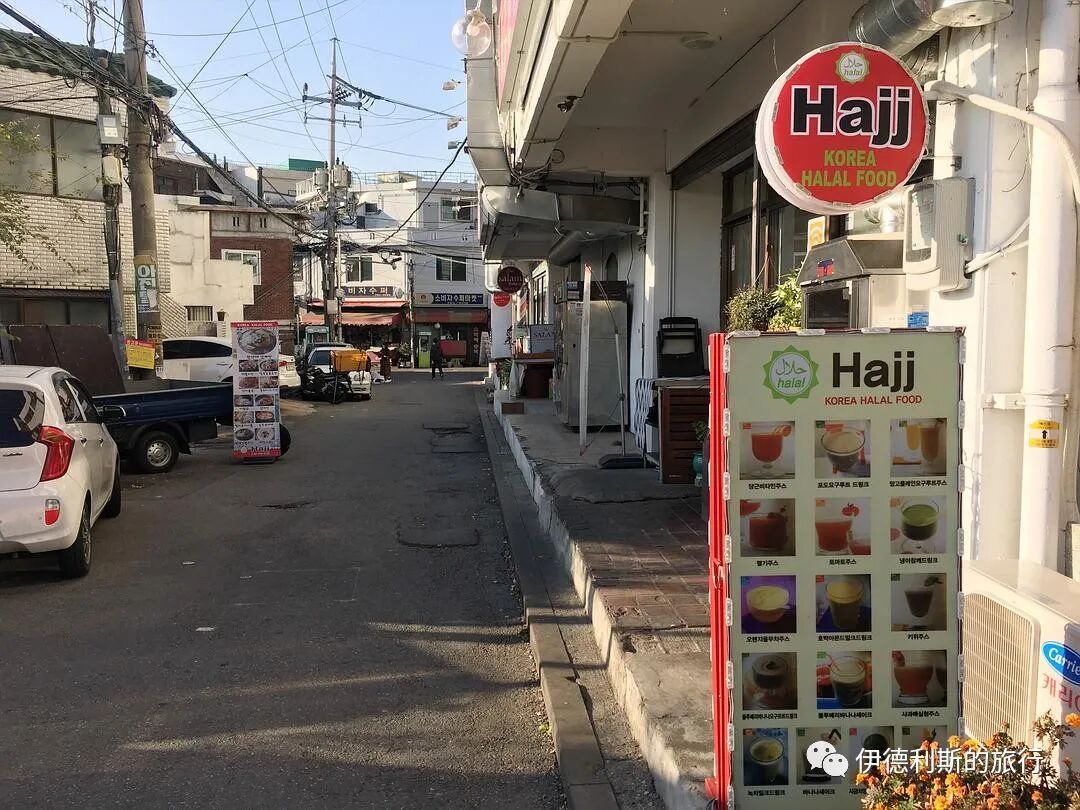
Hajj
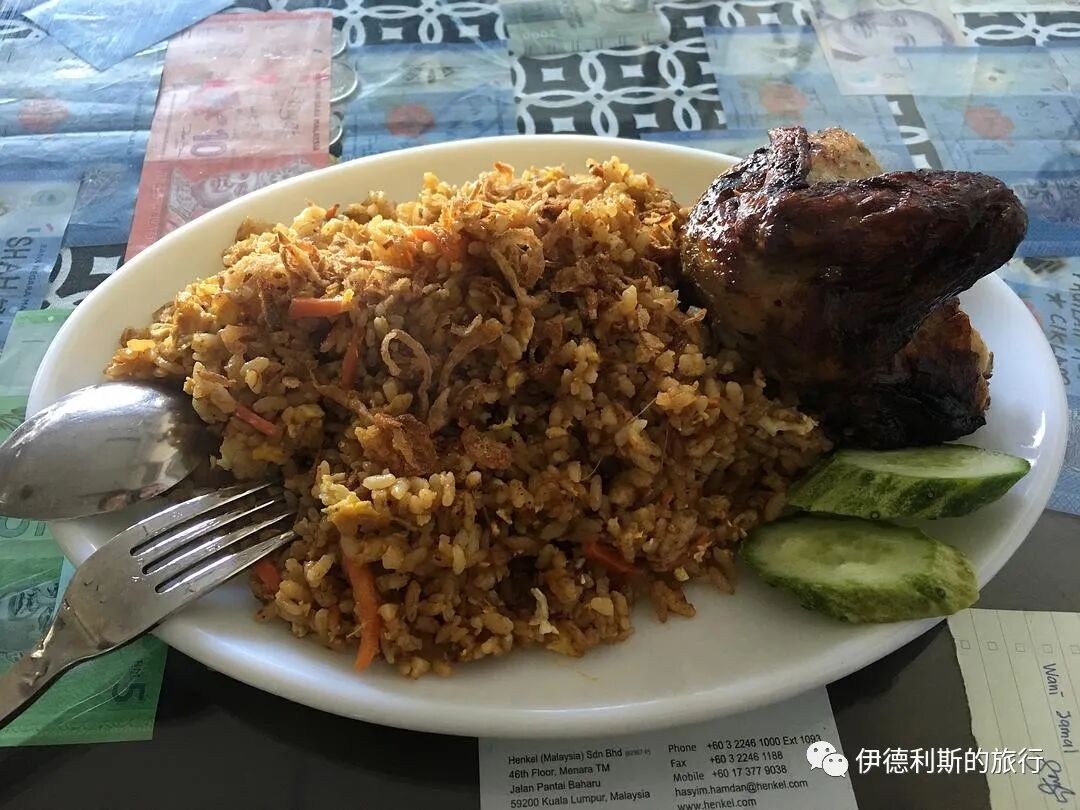
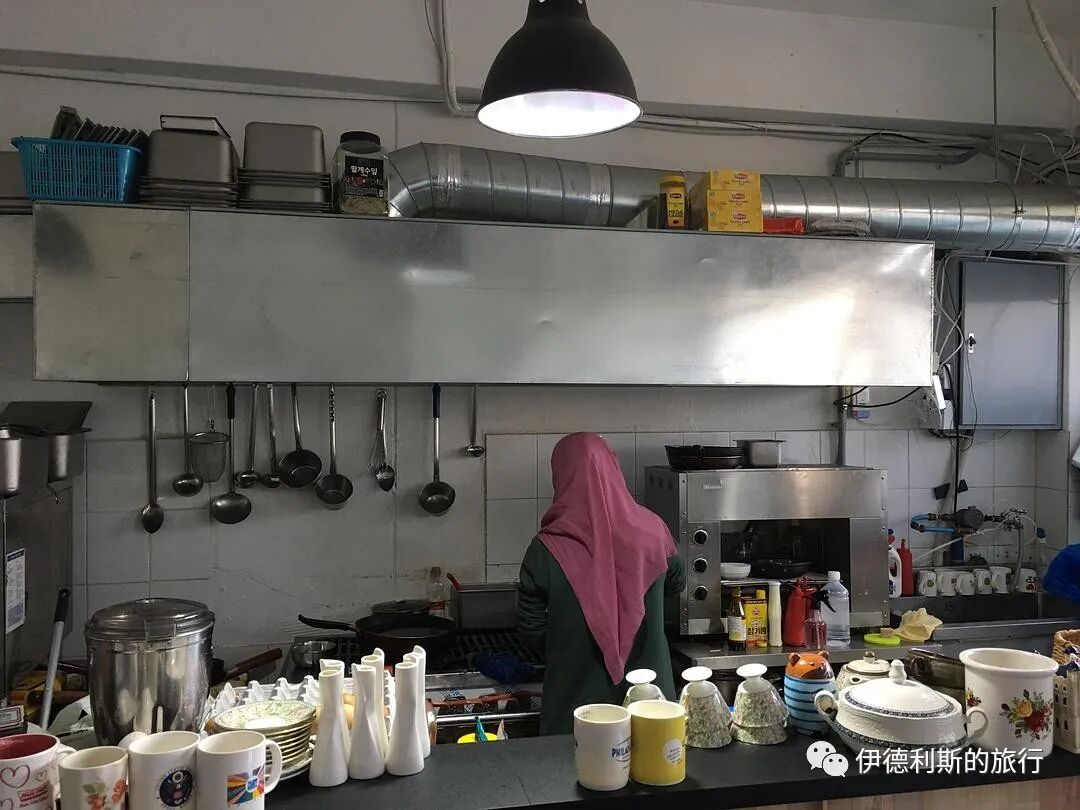
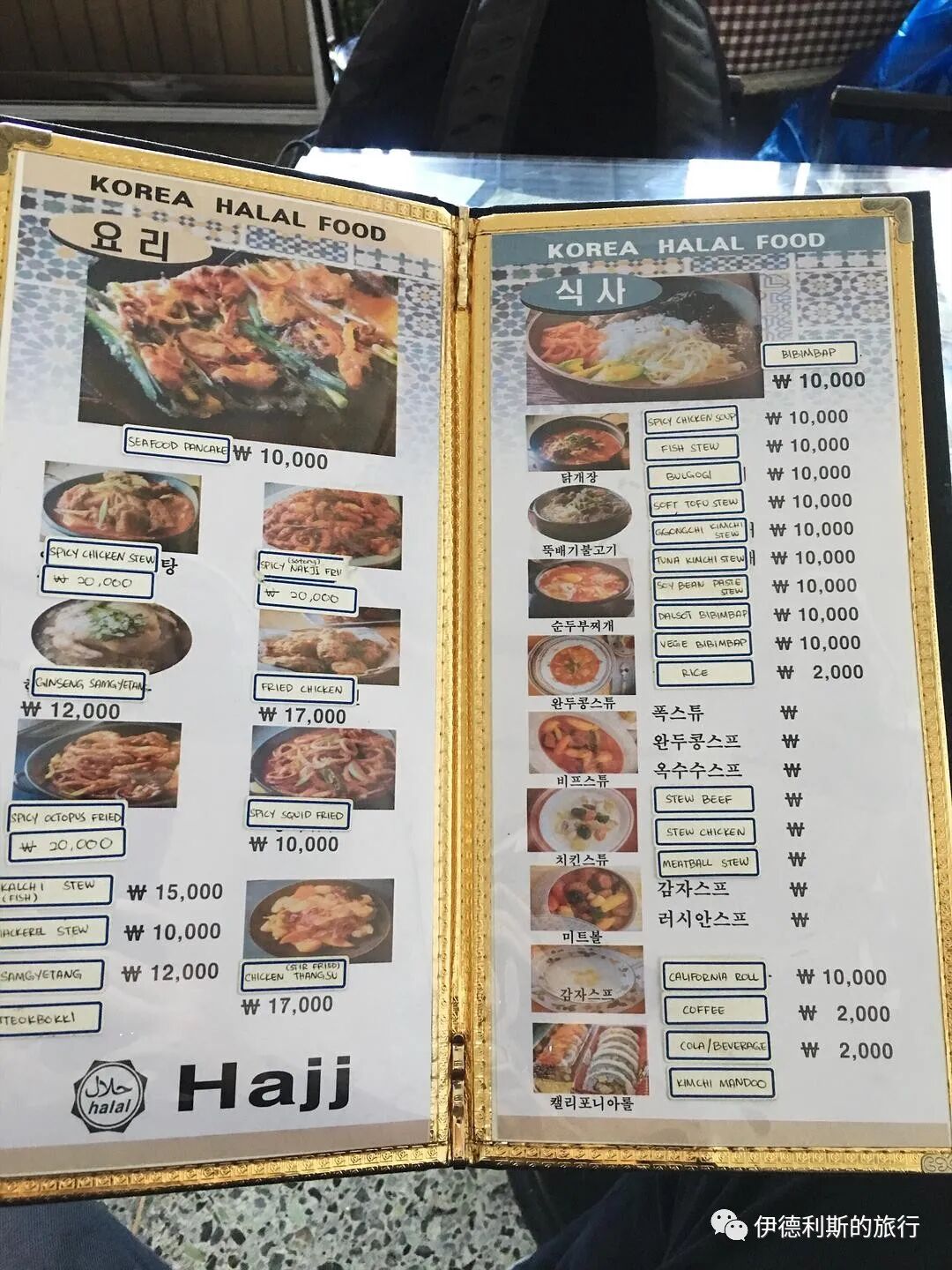
There is also a halal Korean restaurant east of the mosque run by a Korean auntie. She is very friendly, though she has a thick accent when speaking English. I wanted to order bibimbap, but she made me spicy dried fish fried rice instead, so I am not sure how their authentic Korean food tastes.
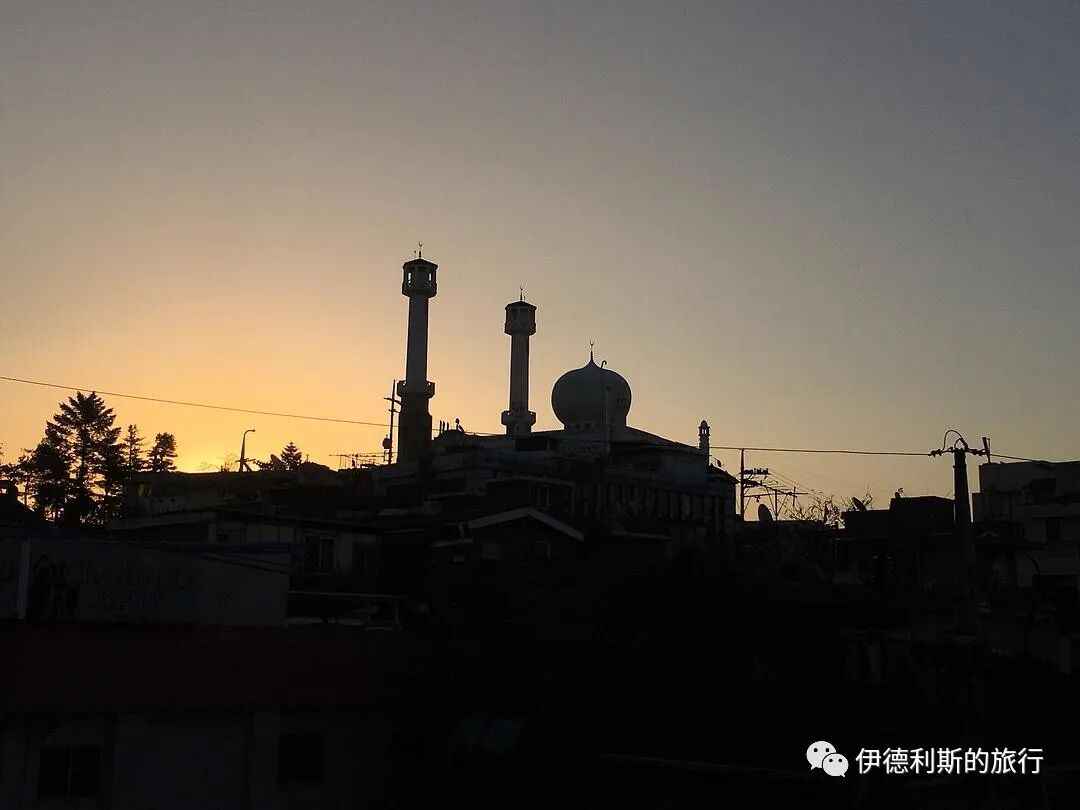
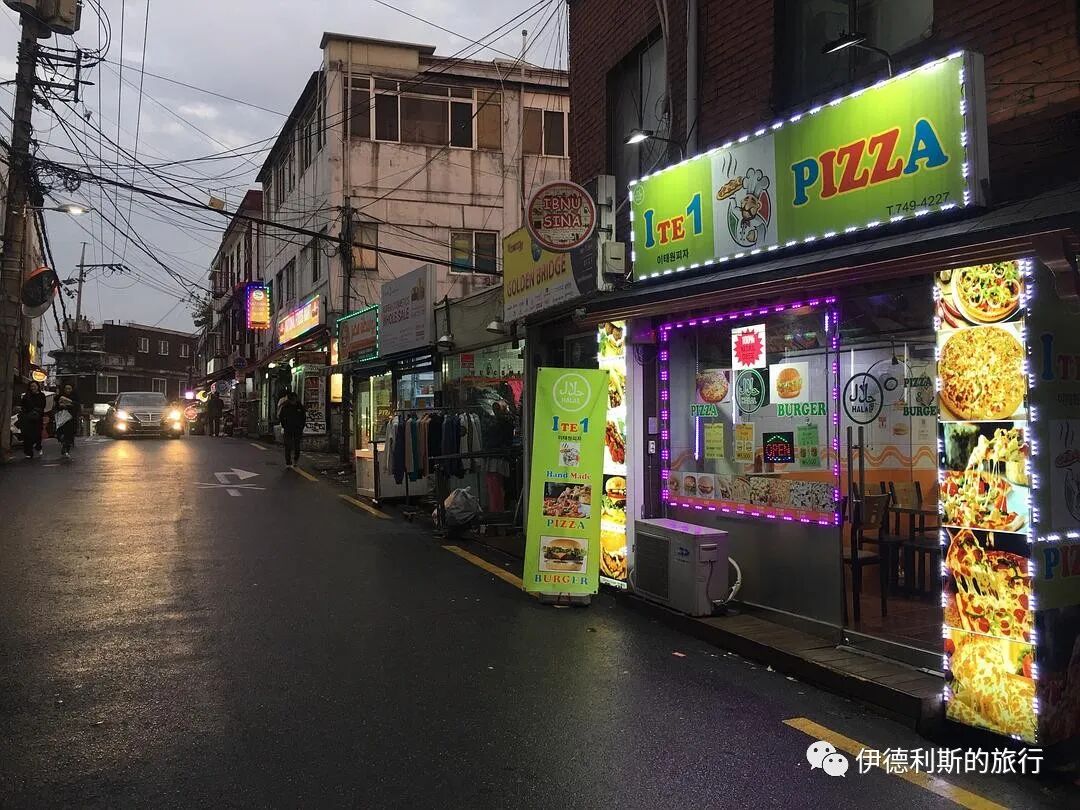
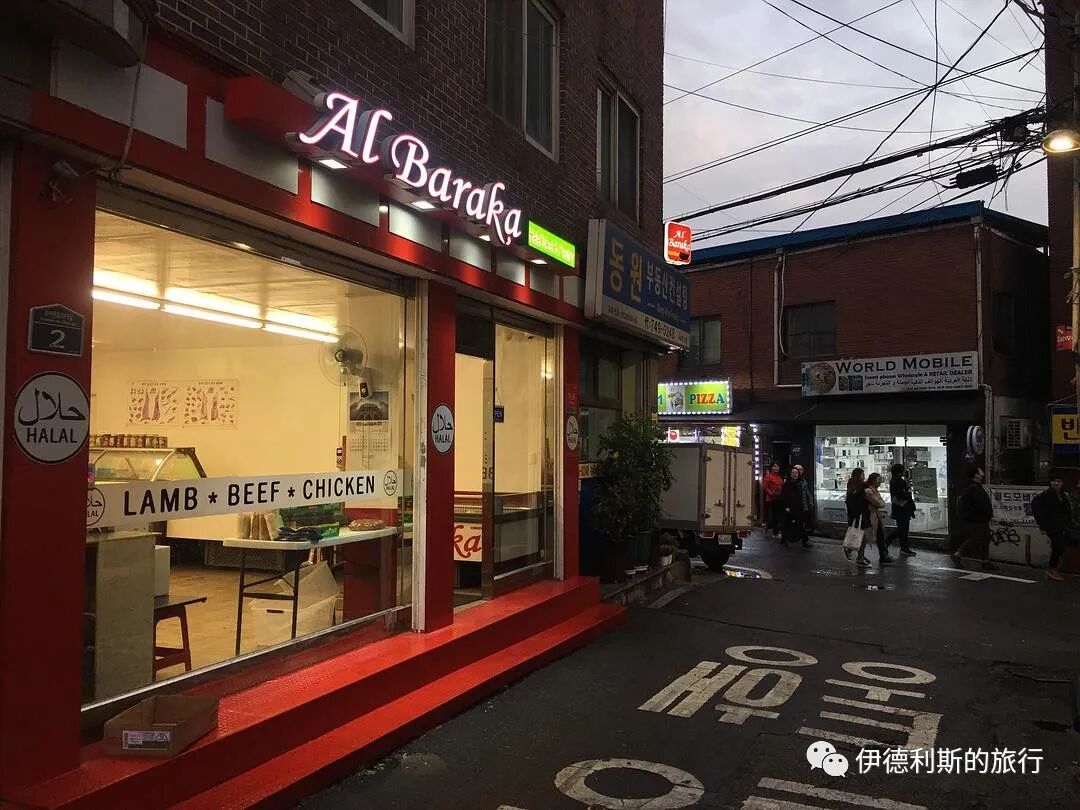
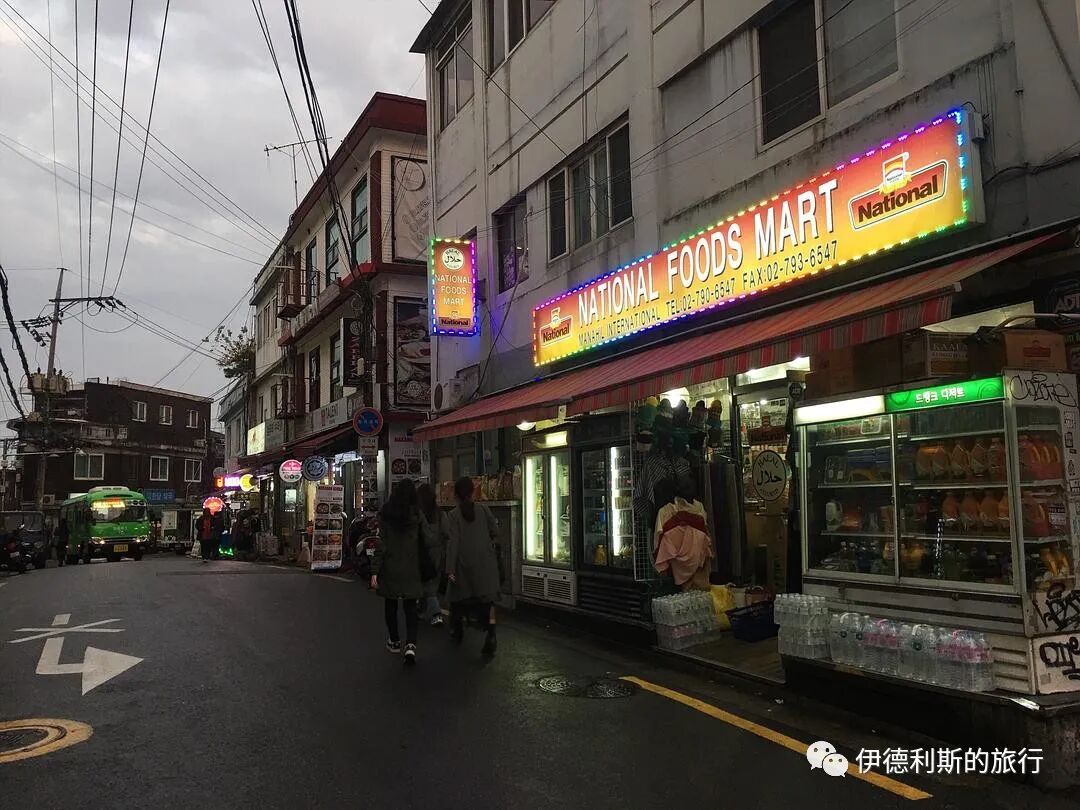
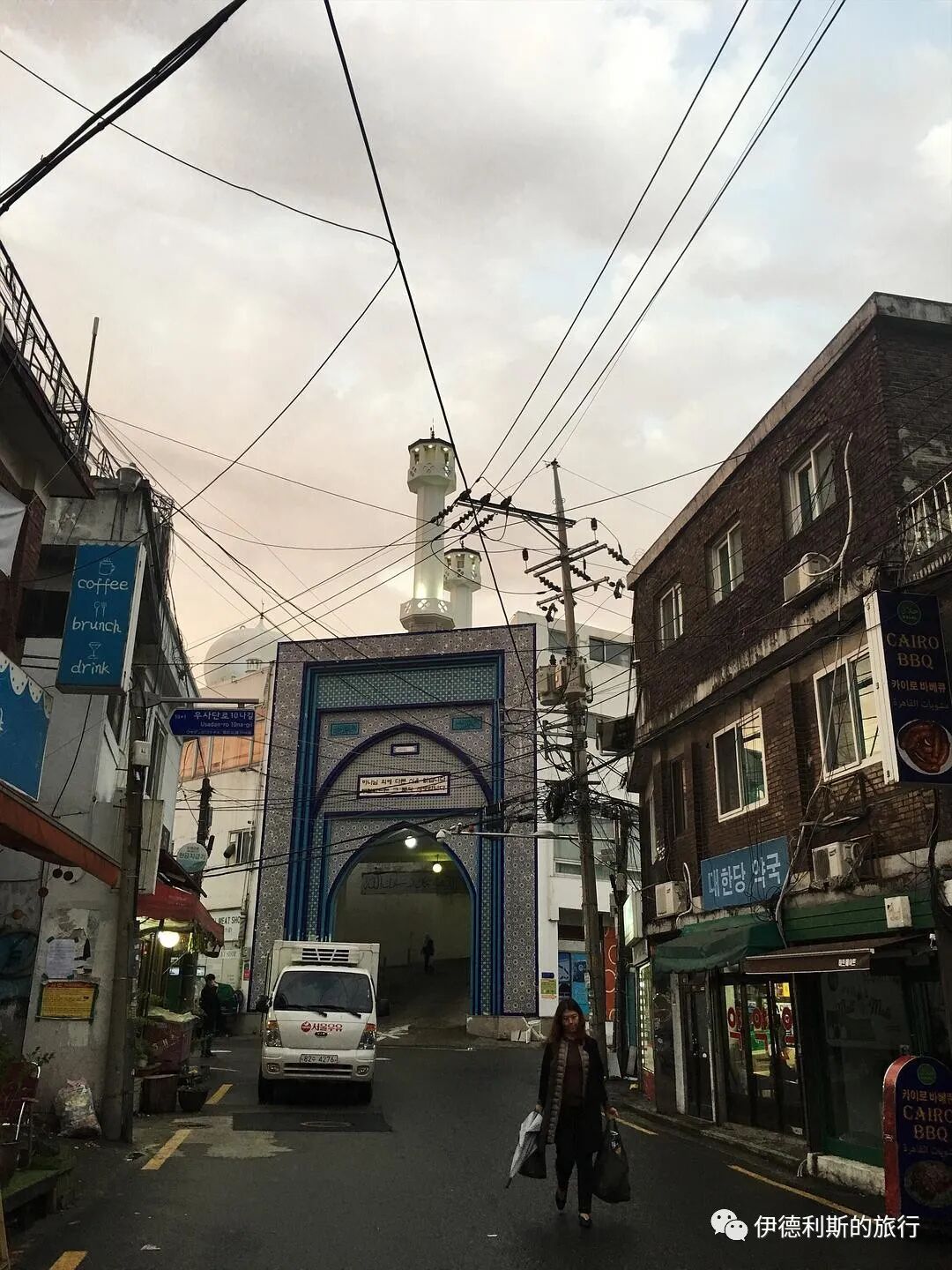
Evening in Itaewon
Yanggood
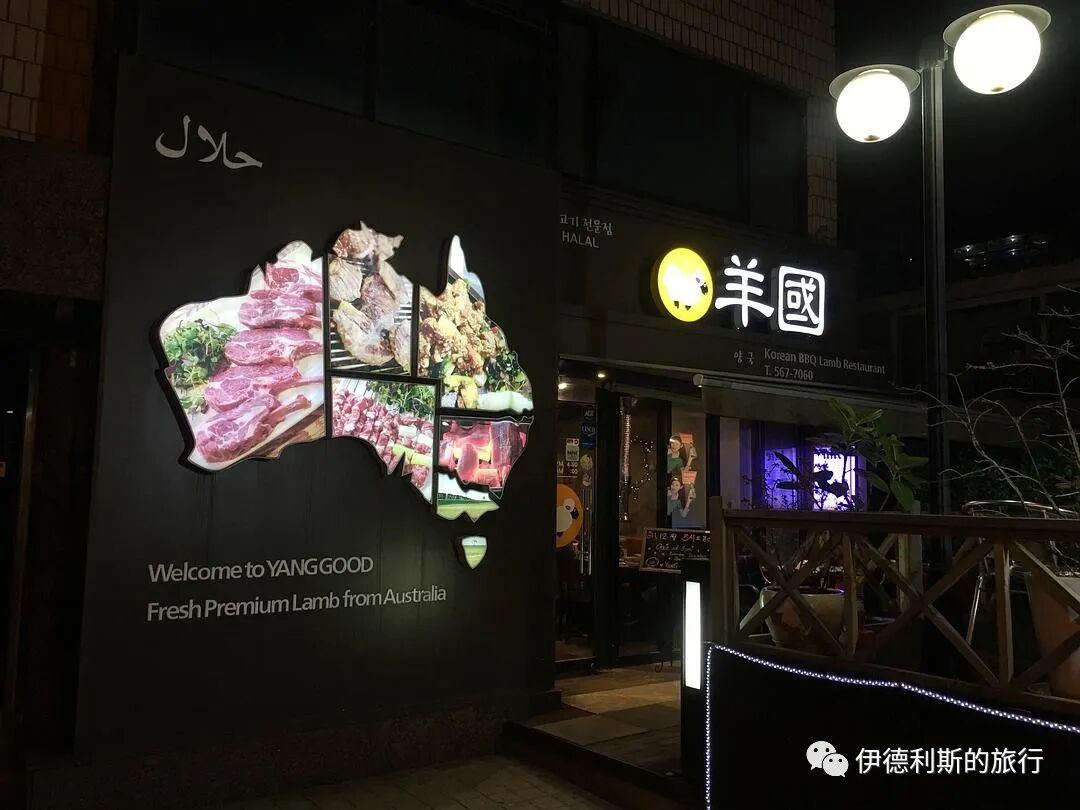
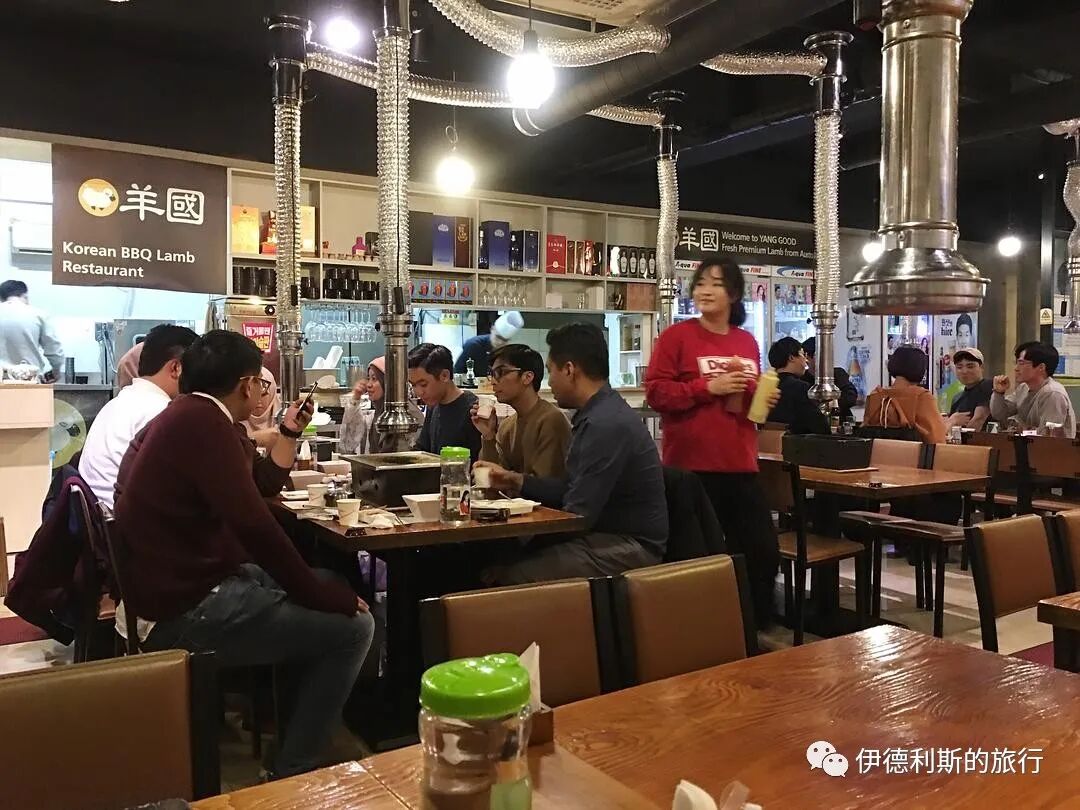
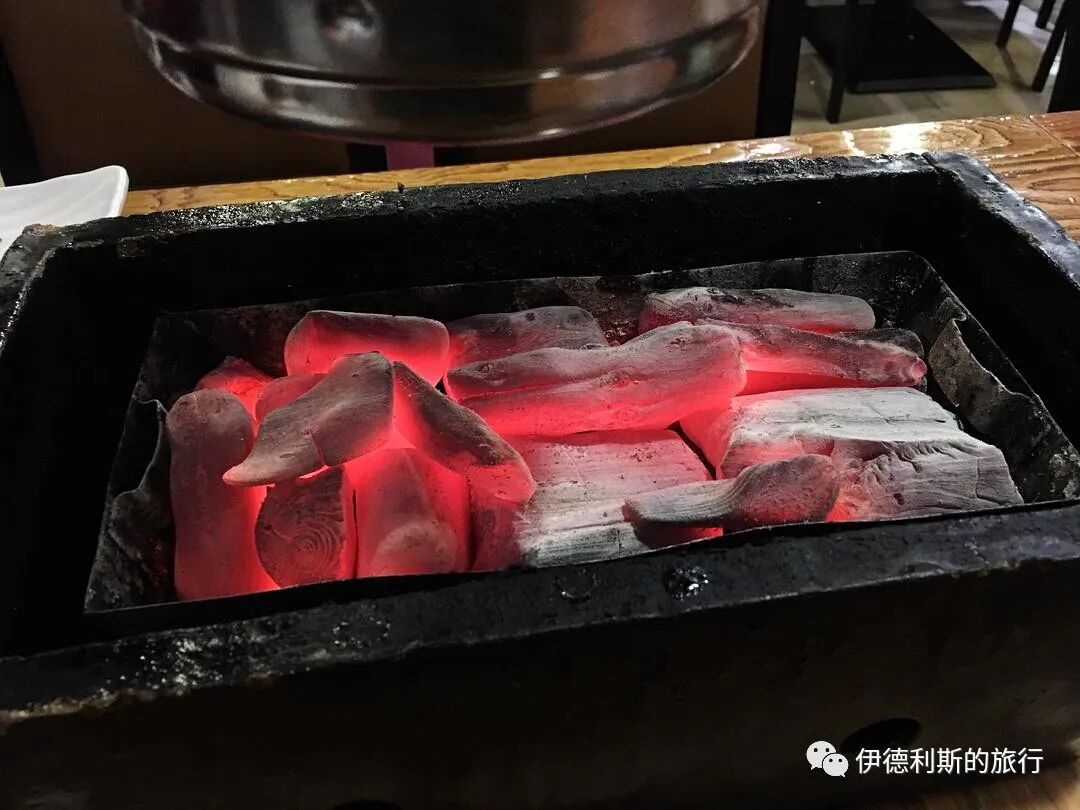
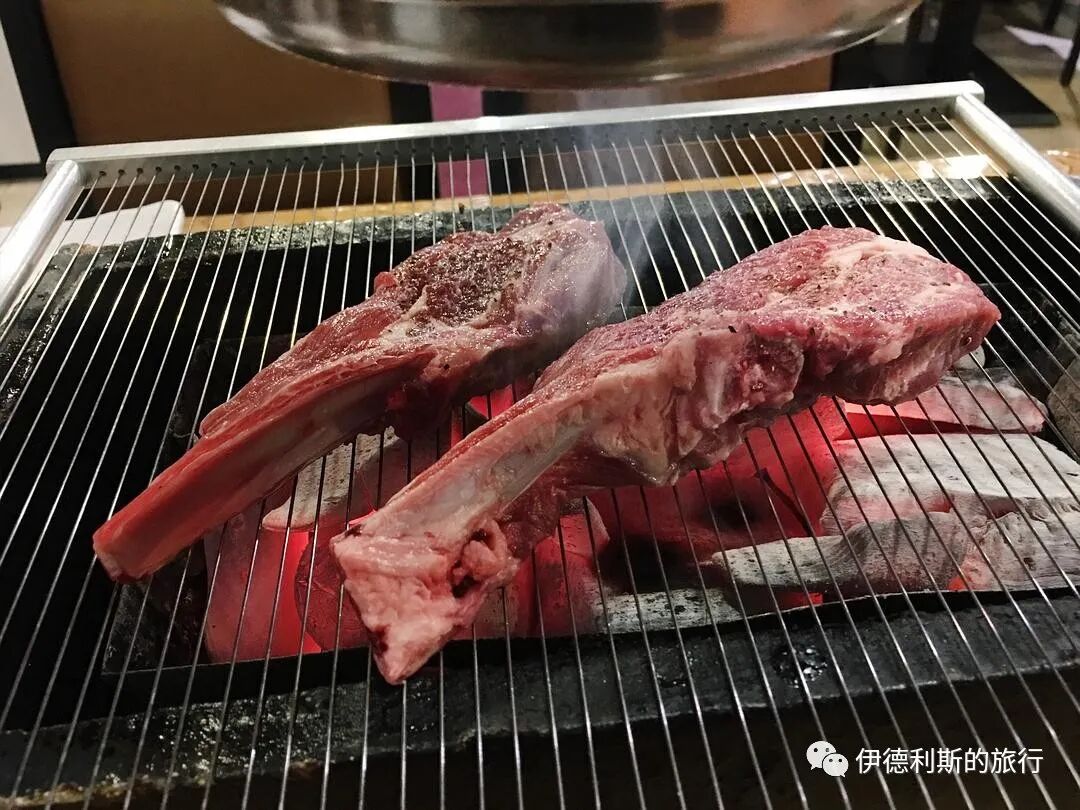
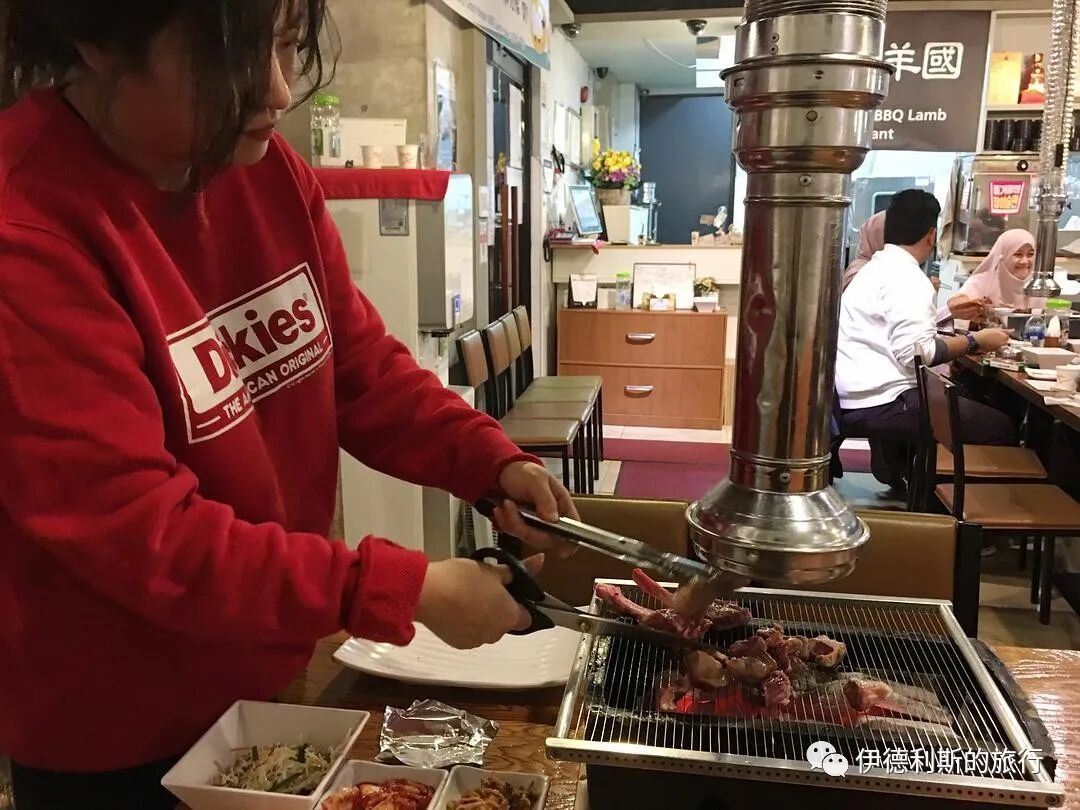
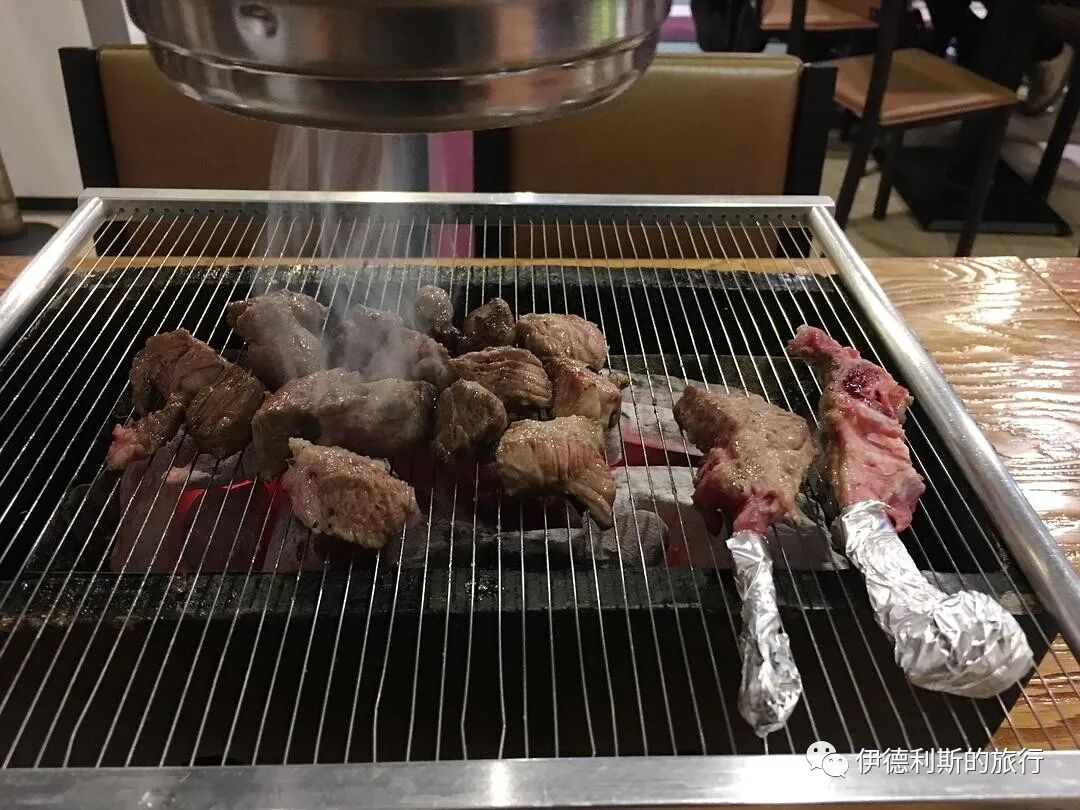
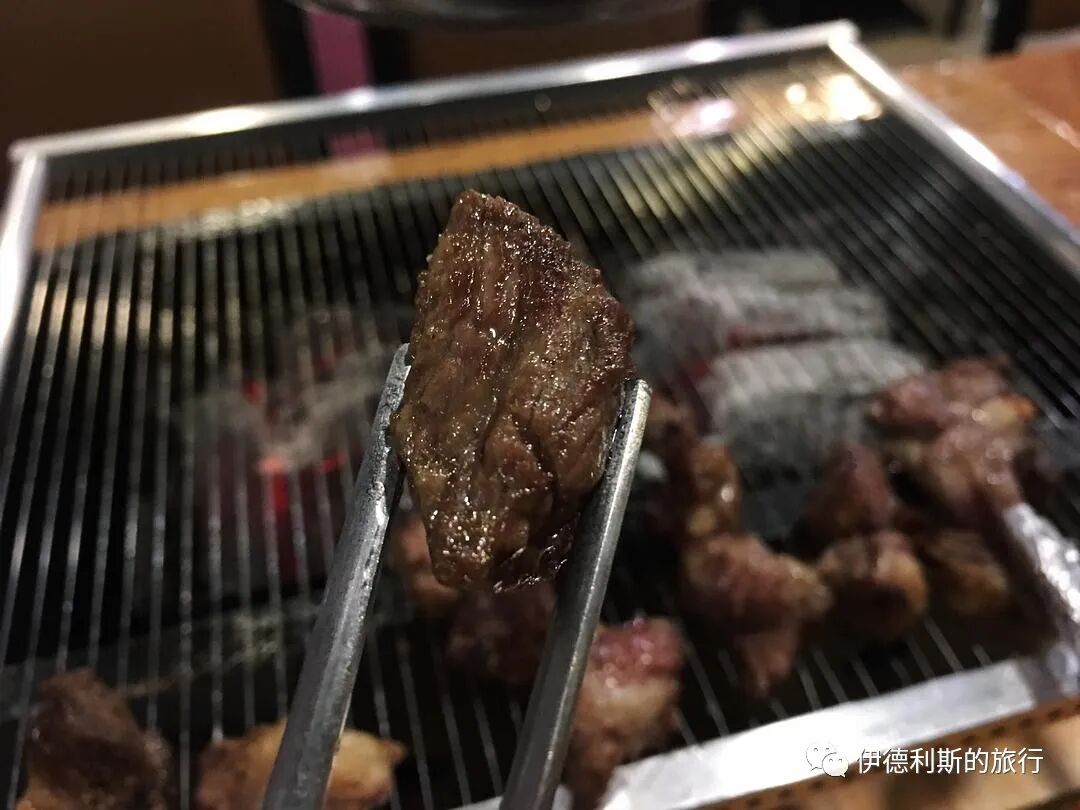
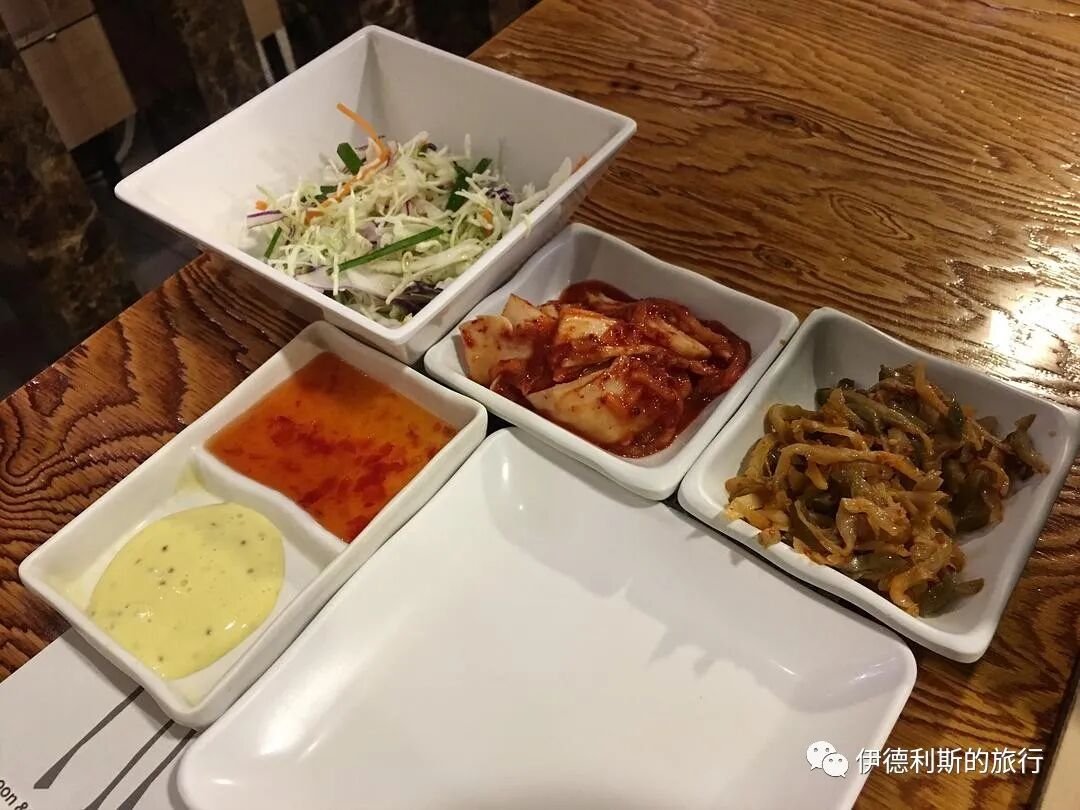
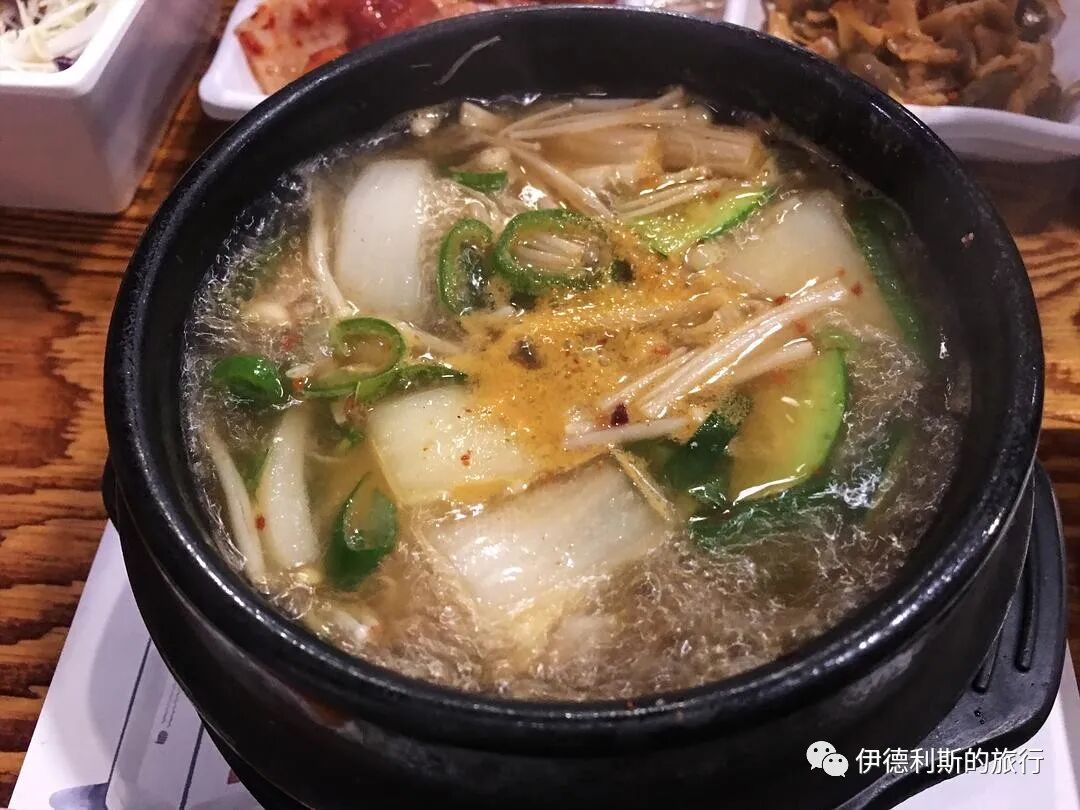
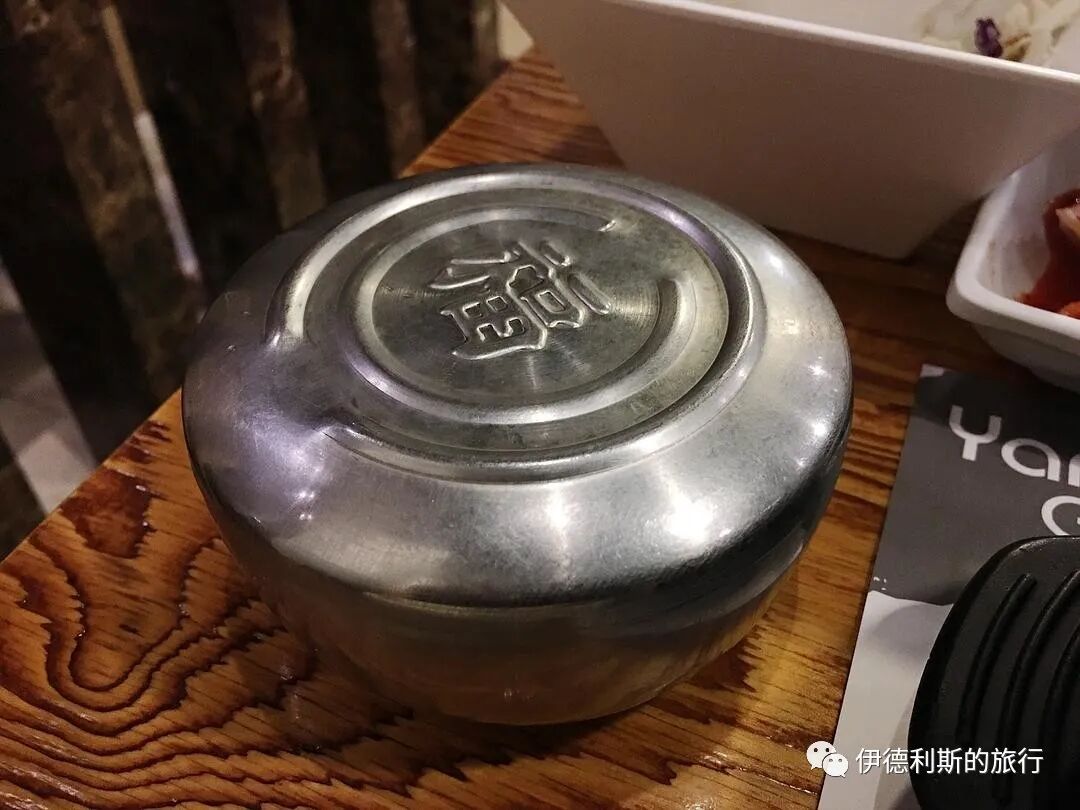
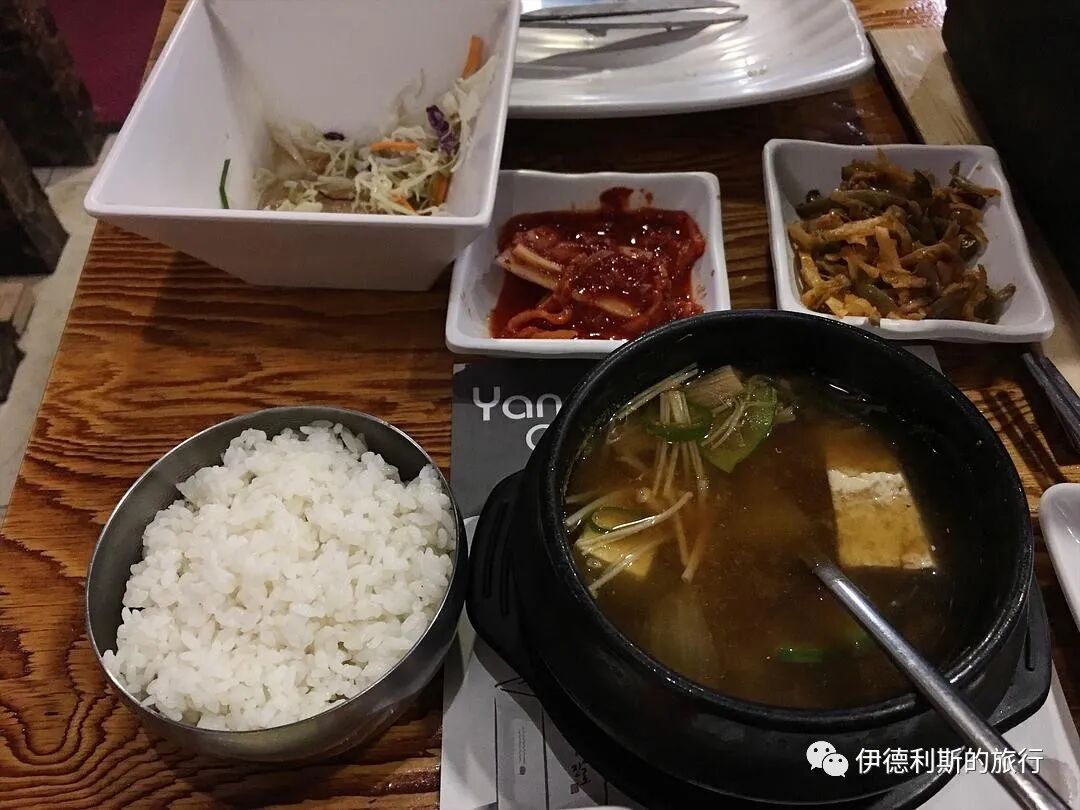
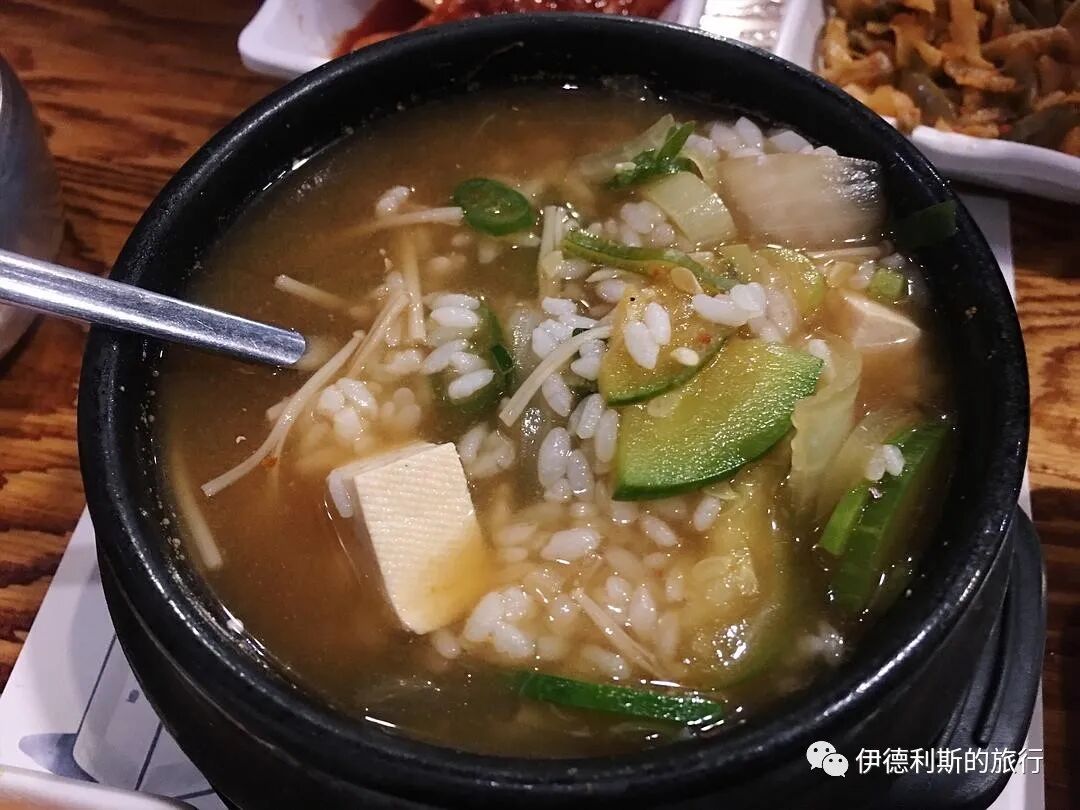
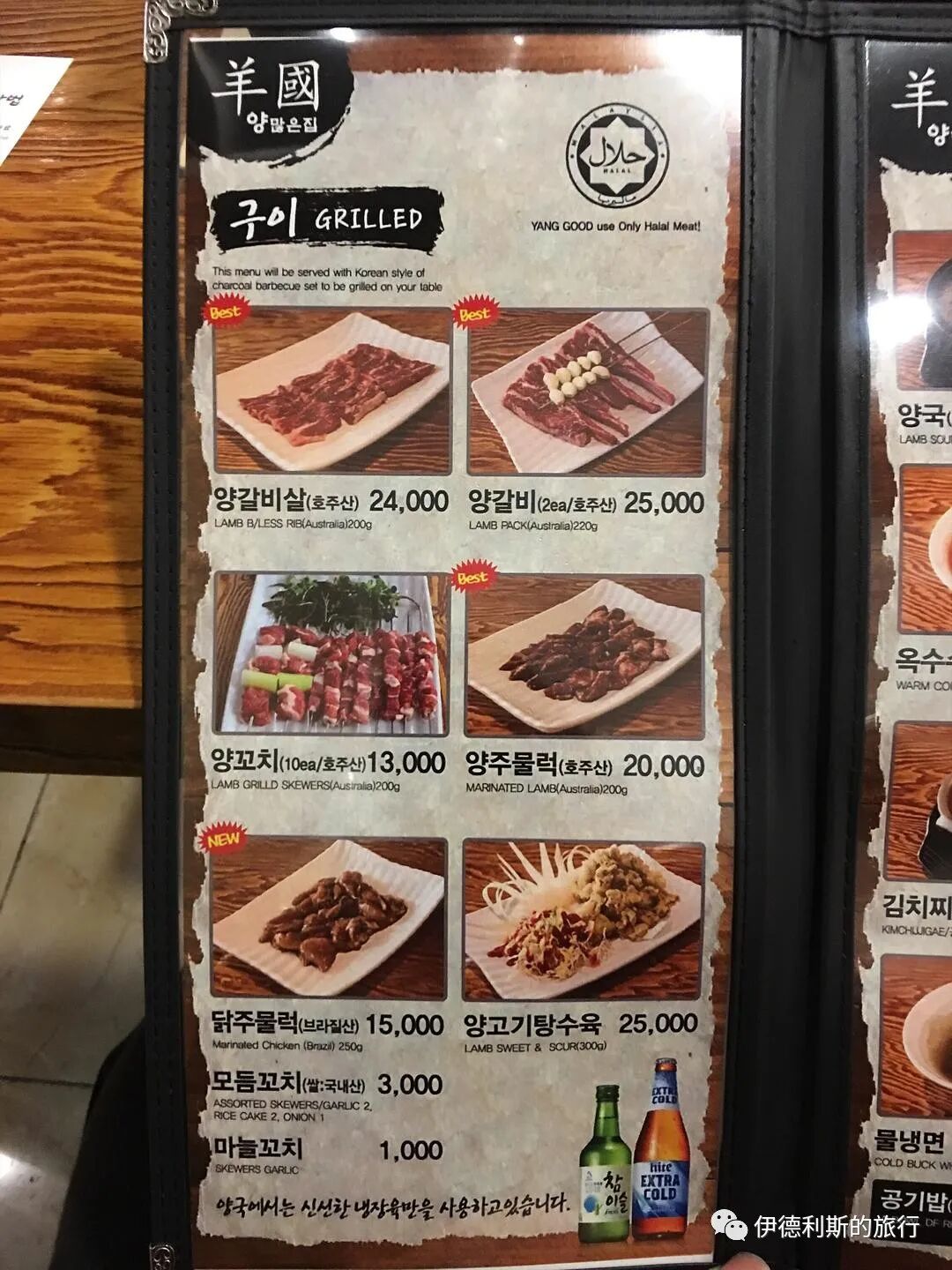
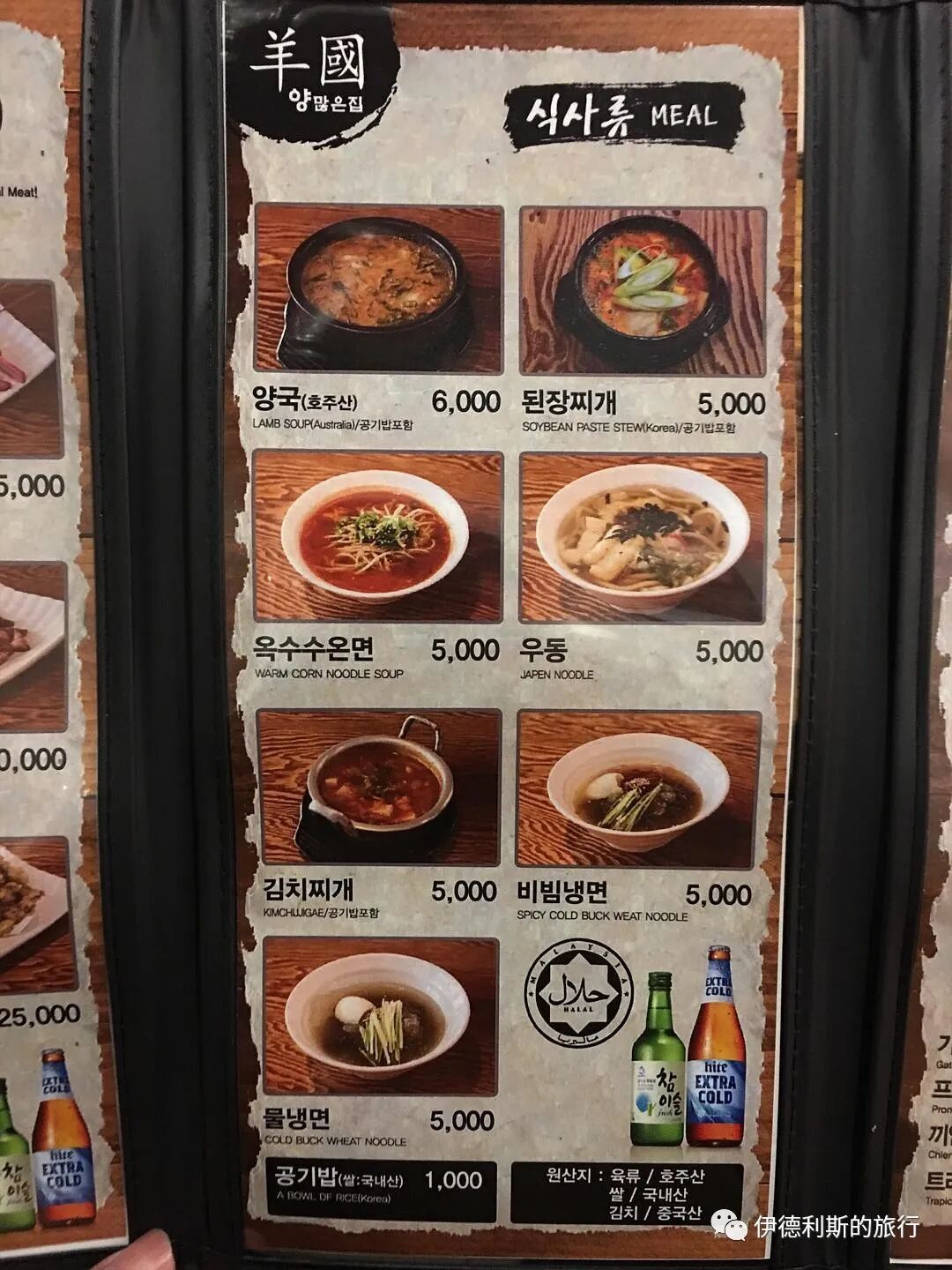
Yanggood is the only halal Korean barbecue restaurant in Seoul. It is located in the Gangnam District and is very busy, mostly with Muslim customers who come to try it out. I ordered my favorite lamb ribs. A staff member grilled them for me, so I did not have to do anything. Dipping them in the sweet and spicy sauce was delicious. Eating it with kimchi and a steaming bowl of soybean paste stew (doenjang-jjigae) with rice made me feel warm all over.
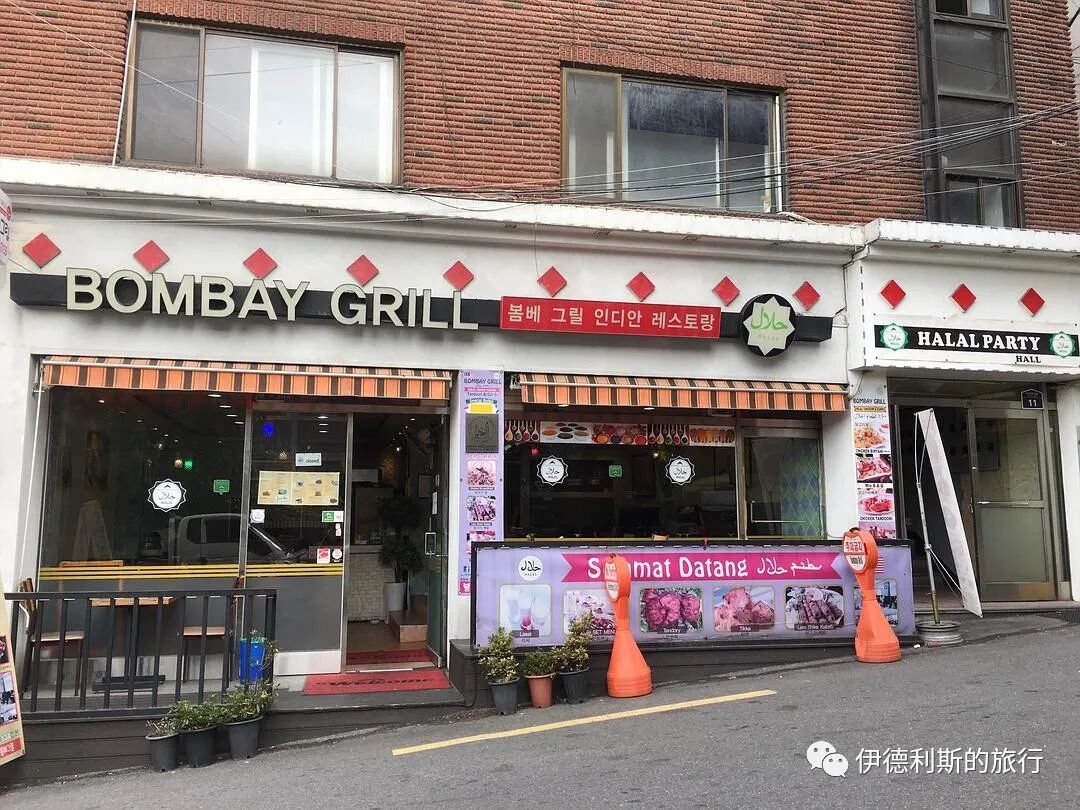
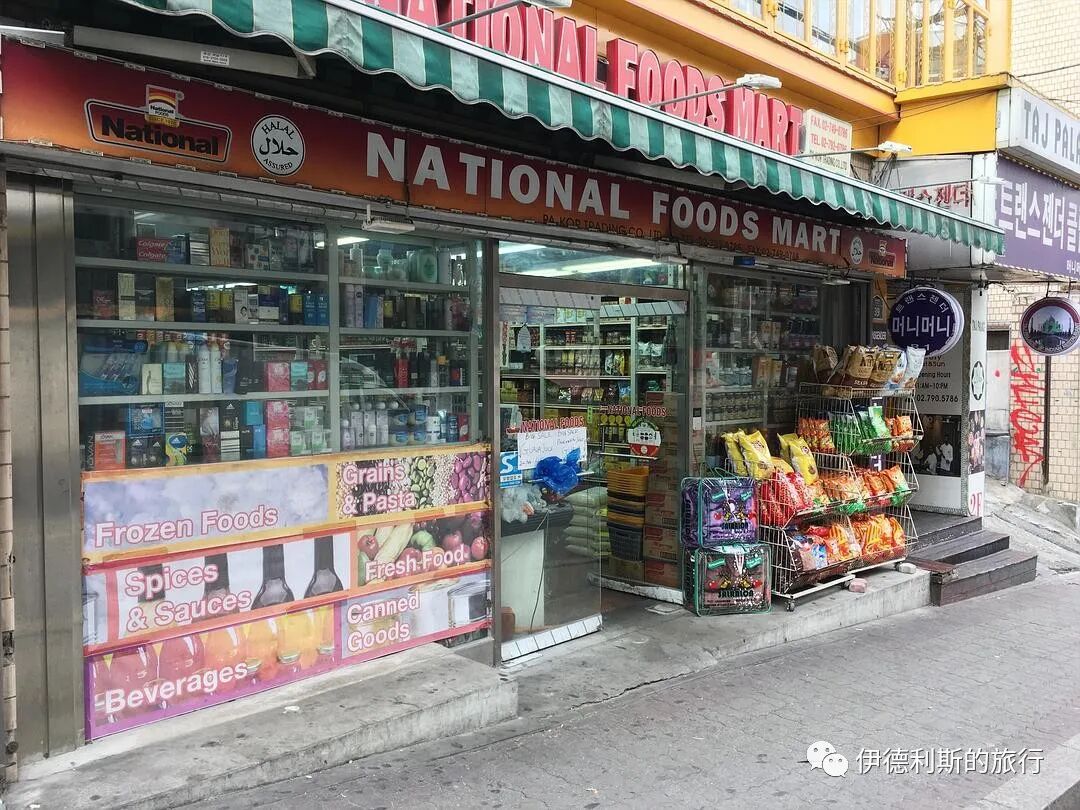
Besides that, there are many Middle Eastern halal restaurants in Itaewon.
There are other fun restaurants in Seoul that I did not find at the time. I will have to leave that as a regret and visit them if I have the chance in the future.
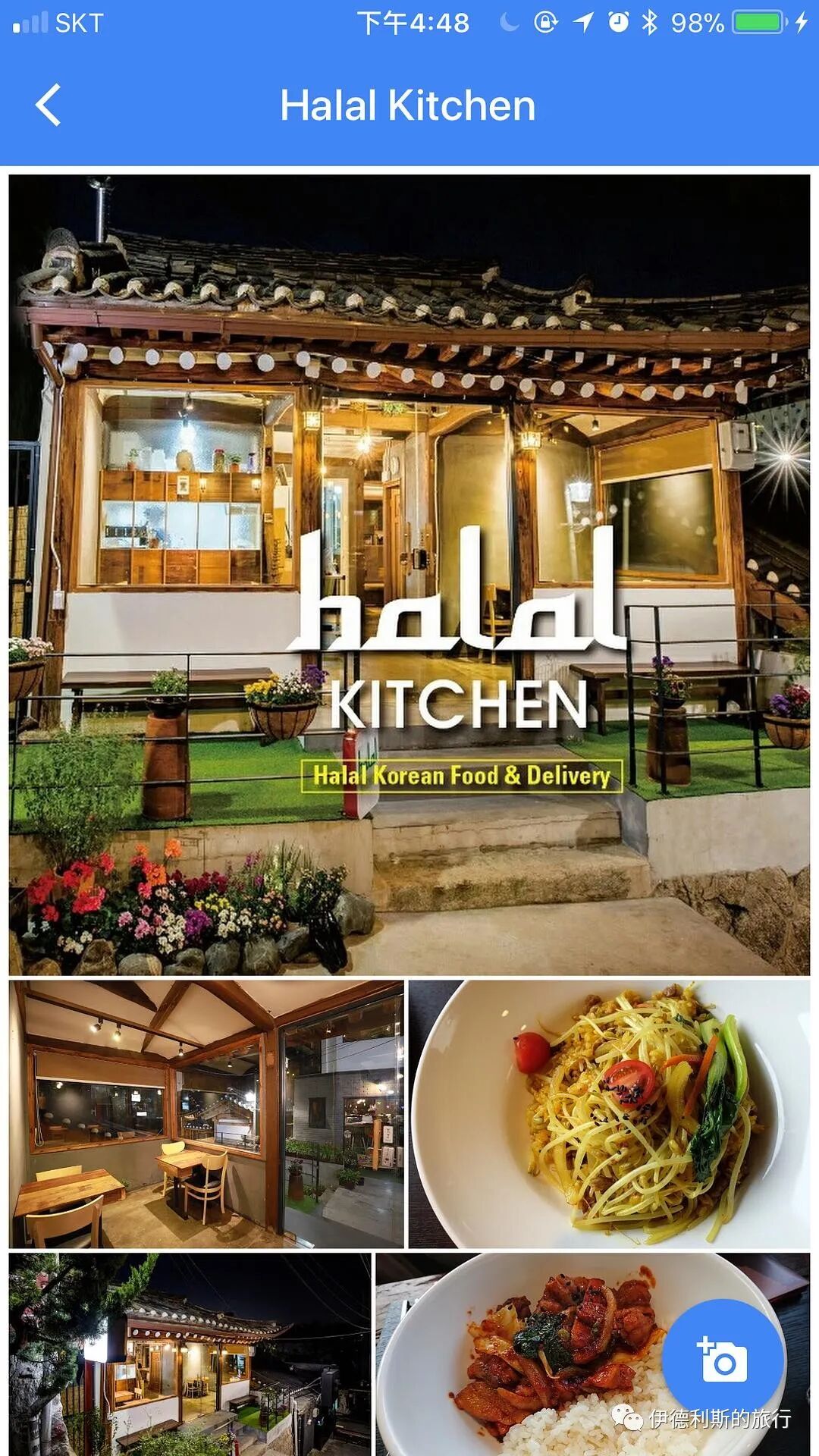
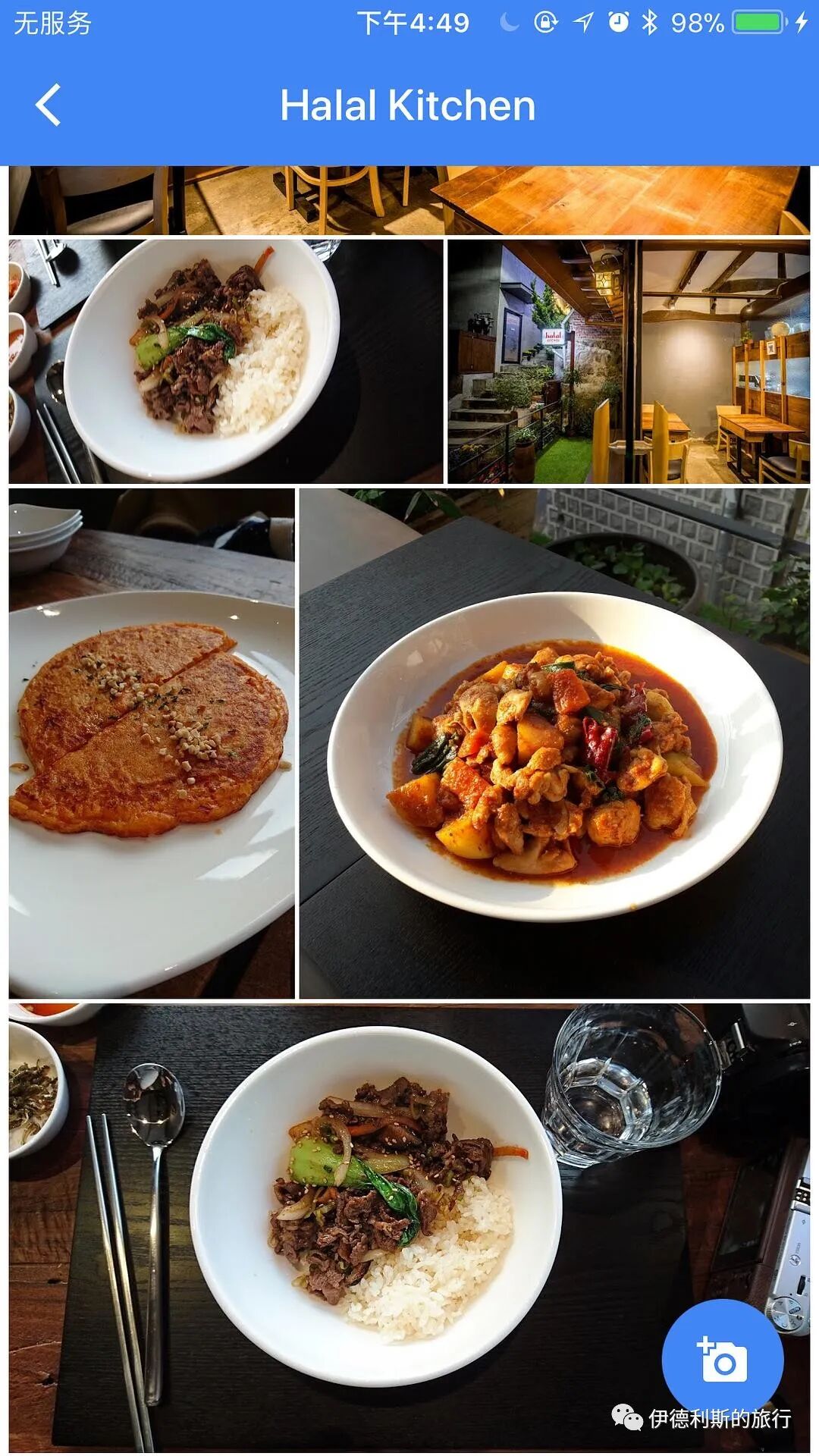
Summary: Seoul — Mosques, Muslim History and Korean Halal Food is presented here as a firsthand travel account in clear English, beginning with this scene: Looking back at my halal trip to Seoul, South Korea, in 2017. The account keeps its focus on Seoul Travel, Korean Muslims, Halal Food while preserving the names, places, food, and historical details from the Chinese source.
Looking back at my halal trip to Seoul, South Korea, in 2017.
Muslims in ancient Korea
Persian and Arab merchants arrived in Korea to trade as early as the 9th century during the Silla period. Their numbers grew after the Goryeo period (918-1392). Some Muslim merchants married local women, forming the first Muslim communities in Korea.
During the Yuan dynasty, many people from Central Asia (Semu) came to Goryeo to settle and trade. They built a mosque called Ye-Kung in the capital city of Kaesong. A poem from that time called Sanghwajeom (The Bakery of the Semu) tells the story of a Korean woman going to a halal shop to buy dumplings (jiaozi).
After the Joseon dynasty (1392-1910) began, King Sejong ordered a ban on the religion in 1427. He forbade wearing prayer caps, closed the Kaesong mosque, and the Korean Muslim community fell apart.
The emergence of Korean Muslims
During the Korean War, a Turkish unit with an imam arrived to fight and took part in humanitarian work, serving war orphans in wartime schools. After the war, Turkish soldiers stationed in Korea became UN peacekeepers, and Koreans began to convert to Islam. In 1955, the Korea Muslim Society was founded, and they established the first prayer space in downtown Seoul. In 1967, the Korea Muslim Society grew into the Korea Muslim Federation (KMF), which oversees the Korea Muslim Student Association and the Korea Islamic Culture Institute.
Halal certification mark issued by the KMF
A brochure printed by the KMF containing information about mosques across Korea.
A magazine published by the KMF in 1999, which includes a list of Korean Muslims who converted that year and the halal butcher shops at the time.
Itaewon Muslim community
In 1952, the U. S. military officially set up its headquarters in Yongsan on the Korean Peninsula, which became the United States Forces Korea headquarters after 1957. To meet the needs of the large number of U. S. troops, various foreign restaurants and bars began to appear in Itaewon, not far east of the Yongsan base. Muslims also started coming to Itaewon to open halal restaurants.
In 1976, President Park Chung-hee provided land to the KMF, and the Seoul Central Mosque was built in Itaewon. That year, the number of Korean Muslims grew from fewer than 3,000 to over 15,000, and a halal business district formed in Itaewon. After the 1990s, as Muslims from Pakistan, Bangladesh, Indonesia, and Malaysia came to work, the number of Muslims in Korea reached 150,000. Currently, there are an estimated 100,000 Muslims in Korea, 40,000 of whom are native converts.
A map at the Itaewon subway station entrance showing the Middle Eastern business district and the mosque.
Seoul Central Mosque
There is a school inside the courtyard that provides Arabic language instruction.
Around the mosque, there are halal restaurants with various flavors like Iranian, Indian, and Turkish, as well as halal supermarkets, religious bookstores, and Muslim travel agencies.
Itaewon street view
You can pick up an Itaewon halal travel guide published by the Korean Ministry of Culture, Sports and Tourism at Incheon Airport, which shows the locations of halal restaurants in Itaewon.
You can see how the Korean government categorizes different types of restaurants:
The first type is called "Halal Certified," meaning that to having at least one Muslim employee, it must receive halal certification from the Ministry of Food and Drug Safety.
The second type is called "Self-Certified," which refers to restaurants opened by Muslims themselves that do not sell alcohol.
The third type is called "Muslim Friendly," meaning they may sell alcohol and have a partial or full halal menu.
The fourth type is called "Pork-Free," meaning that although there is no halal menu, they do not use pork.
Breakfast
I stayed at the ITW Hotel in Itaewon. Every morning from 7 to 9, there is a halal buffet breakfast provided by the nearby Indian halal restaurant, ZAFFRAN. Besides the 24-hour Turkish kebab shop MR. KEBAB, most halal restaurants in Itaewon do not open in the morning.
Halal Supermarket
ZAFFRAN MART, the largest halal supermarket in Itaewon.
Religious Bookstore
The religious bookstore in Itaewon is run by a man from Indian-administered Kashmir. We hit it off right away, and he greeted me very warmly when he saw me the next day. They have hats from India, Pakistan, Afghanistan, East Africa, and Malaysia. I bought one made in Pakistan and one made in India.
Hat made in India
Hat made in Pakistan
Makan Restaurant
Although Itaewon has many Middle Eastern, Indian, and Turkish halal restaurants, the most unique ones are the halal Korean restaurants. Makan is the most famous one.
This lady is the chef.
There are 6 types of side dishes.
Grilled fish
Korean rice is delicious!
Soybean paste soup (doenjang-jjigae)
Soaking the rice in the soup.
Korean-style grilled meat bibimbap. The meat was covered by the egg, so I didn't get a photo.
Stir-fried squid and rice cakes (tteokbokki) on a hot plate.
The person in the front right of the picture is also a chef.
Menu
Makan Chicken & Noodle
Besides the main shop south of the mosque, Makan has another shop west of the mosque that specializes in Korean fried chicken and black bean noodles (jajangmyeon). The chef is a man, and it is part of the same business as the main shop.
Korean black bean noodles. The taste is different from Beijing-style black bean noodles, and the noodles are a bit like udon.
The man on the right is the chef.
Menu
Eid
Eid and Makan are tied for the best halal Korean restaurants in Seoul. Although the menu at Eid is not as extensive as Makan's, it is still very delicious.
The chef is this very capable lady.
Ginseng chicken soup (samgyetang)
There are three types of side dishes.
The stewed chicken is great, and the rice cakes (nian gao) inside are delicious.
Hajj
There is also a halal Korean restaurant east of the mosque run by a Korean auntie. She is very friendly, though she has a thick accent when speaking English. I wanted to order bibimbap, but she made me spicy dried fish fried rice instead, so I am not sure how their authentic Korean food tastes.
Evening in Itaewon
Yanggood
Yanggood is the only halal Korean barbecue restaurant in Seoul. It is located in the Gangnam District and is very busy, mostly with Muslim customers who come to try it out. I ordered my favorite lamb ribs. A staff member grilled them for me, so I did not have to do anything. Dipping them in the sweet and spicy sauce was delicious. Eating it with kimchi and a steaming bowl of soybean paste stew (doenjang-jjigae) with rice made me feel warm all over.
Besides that, there are many Middle Eastern halal restaurants in Itaewon.
There are other fun restaurants in Seoul that I did not find at the time. I will have to leave that as a regret and visit them if I have the chance in the future.
Halal Travel Guide: Seoul — Mosques, Muslim History and Korean Halal Food
Articles • ali2007fr posted the article • 0 comments • 132 views • 2026-05-18 09:01
Reposted from the web
Summary: Seoul — Mosques, Muslim History and Korean Halal Food is presented here as a firsthand travel account in clear English, beginning with this scene: Looking back at my halal trip to Seoul, South Korea, in 2017. The account keeps its focus on Seoul Travel, Korean Muslims, Halal Food while preserving the names, places, food, and historical details from the Chinese source.
Looking back at my halal trip to Seoul, South Korea, in 2017.
Muslims in ancient Korea
Persian and Arab merchants arrived in Korea to trade as early as the 9th century during the Silla period. Their numbers grew after the Goryeo period (918-1392). Some Muslim merchants married local women, forming the first Muslim communities in Korea.
During the Yuan dynasty, many people from Central Asia (Semu) came to Goryeo to settle and trade. They built a mosque called Ye-Kung in the capital city of Kaesong. A poem from that time called Sanghwajeom (The Bakery of the Semu) tells the story of a Korean woman going to a halal shop to buy dumplings (jiaozi).
After the Joseon dynasty (1392-1910) began, King Sejong ordered a ban on the religion in 1427. He forbade wearing prayer caps, closed the Kaesong mosque, and the Korean Muslim community fell apart.
The emergence of Korean Muslims
During the Korean War, a Turkish unit with an imam arrived to fight and took part in humanitarian work, serving war orphans in wartime schools. After the war, Turkish soldiers stationed in Korea became UN peacekeepers, and Koreans began to convert to Islam. In 1955, the Korea Muslim Society was founded, and they established the first prayer space in downtown Seoul. In 1967, the Korea Muslim Society grew into the Korea Muslim Federation (KMF), which oversees the Korea Muslim Student Association and the Korea Islamic Culture Institute.
Halal certification mark issued by the KMF
A brochure printed by the KMF containing information about mosques across Korea.
A magazine published by the KMF in 1999, which includes a list of Korean Muslims who converted that year and the halal butcher shops at the time.
Itaewon Muslim community
In 1952, the U. S. military officially set up its headquarters in Yongsan on the Korean Peninsula, which became the United States Forces Korea headquarters after 1957. To meet the needs of the large number of U. S. troops, various foreign restaurants and bars began to appear in Itaewon, not far east of the Yongsan base. Muslims also started coming to Itaewon to open halal restaurants.
In 1976, President Park Chung-hee provided land to the KMF, and the Seoul Central Mosque was built in Itaewon. That year, the number of Korean Muslims grew from fewer than 3,000 to over 15,000, and a halal business district formed in Itaewon. After the 1990s, as Muslims from Pakistan, Bangladesh, Indonesia, and Malaysia came to work, the number of Muslims in Korea reached 150,000. Currently, there are an estimated 100,000 Muslims in Korea, 40,000 of whom are native converts.
A map at the Itaewon subway station entrance showing the Middle Eastern business district and the mosque.
Seoul Central Mosque
There is a school inside the courtyard that provides Arabic language instruction.
Around the mosque, there are halal restaurants with various flavors like Iranian, Indian, and Turkish, as well as halal supermarkets, religious bookstores, and Muslim travel agencies.
Itaewon street view
You can pick up an Itaewon halal travel guide published by the Korean Ministry of Culture, Sports and Tourism at Incheon Airport, which shows the locations of halal restaurants in Itaewon.
You can see how the Korean government categorizes different types of restaurants:
The first type is called "Halal Certified," meaning that to having at least one Muslim employee, it must receive halal certification from the Ministry of Food and Drug Safety.
The second type is called "Self-Certified," which refers to restaurants opened by Muslims themselves that do not sell alcohol.
The third type is called "Muslim Friendly," meaning they may sell alcohol and have a partial or full halal menu.
The fourth type is called "Pork-Free," meaning that although there is no halal menu, they do not use pork.
Breakfast
I stayed at the ITW Hotel in Itaewon. Every morning from 7 to 9, there is a halal buffet breakfast provided by the nearby Indian halal restaurant, ZAFFRAN. Besides the 24-hour Turkish kebab shop MR. KEBAB, most halal restaurants in Itaewon do not open in the morning.
Halal Supermarket
ZAFFRAN MART, the largest halal supermarket in Itaewon.
Religious Bookstore
The religious bookstore in Itaewon is run by a man from Indian-administered Kashmir. We hit it off right away, and he greeted me very warmly when he saw me the next day. They have hats from India, Pakistan, Afghanistan, East Africa, and Malaysia. I bought one made in Pakistan and one made in India.
Hat made in India
Hat made in Pakistan
Makan Restaurant
Although Itaewon has many Middle Eastern, Indian, and Turkish halal restaurants, the most unique ones are the halal Korean restaurants. Makan is the most famous one.
This lady is the chef.
There are 6 types of side dishes.
Grilled fish
Korean rice is delicious!
Soybean paste soup (doenjang-jjigae)
Soaking the rice in the soup.
Korean-style grilled meat bibimbap. The meat was covered by the egg, so I didn't get a photo.
Stir-fried squid and rice cakes (tteokbokki) on a hot plate.
The person in the front right of the picture is also a chef.
Menu
Makan Chicken & Noodle
Besides the main shop south of the mosque, Makan has another shop west of the mosque that specializes in Korean fried chicken and black bean noodles (jajangmyeon). The chef is a man, and it is part of the same business as the main shop.
Korean black bean noodles. The taste is different from Beijing-style black bean noodles, and the noodles are a bit like udon.
The man on the right is the chef.
Menu
Eid
Eid and Makan are tied for the best halal Korean restaurants in Seoul. Although the menu at Eid is not as extensive as Makan's, it is still very delicious.
The chef is this very capable lady.
Ginseng chicken soup (samgyetang)
There are three types of side dishes.
The stewed chicken is great, and the rice cakes (nian gao) inside are delicious.
Hajj
There is also a halal Korean restaurant east of the mosque run by a Korean auntie. She is very friendly, though she has a thick accent when speaking English. I wanted to order bibimbap, but she made me spicy dried fish fried rice instead, so I am not sure how their authentic Korean food tastes.
Evening in Itaewon
Yanggood
Yanggood is the only halal Korean barbecue restaurant in Seoul. It is located in the Gangnam District and is very busy, mostly with Muslim customers who come to try it out. I ordered my favorite lamb ribs. A staff member grilled them for me, so I did not have to do anything. Dipping them in the sweet and spicy sauce was delicious. Eating it with kimchi and a steaming bowl of soybean paste stew (doenjang-jjigae) with rice made me feel warm all over.
Besides that, there are many Middle Eastern halal restaurants in Itaewon.
There are other fun restaurants in Seoul that I did not find at the time. I will have to leave that as a regret and visit them if I have the chance in the future. view all
Summary: Seoul — Mosques, Muslim History and Korean Halal Food is presented here as a firsthand travel account in clear English, beginning with this scene: Looking back at my halal trip to Seoul, South Korea, in 2017. The account keeps its focus on Seoul Travel, Korean Muslims, Halal Food while preserving the names, places, food, and historical details from the Chinese source.
Looking back at my halal trip to Seoul, South Korea, in 2017.
Muslims in ancient Korea
Persian and Arab merchants arrived in Korea to trade as early as the 9th century during the Silla period. Their numbers grew after the Goryeo period (918-1392). Some Muslim merchants married local women, forming the first Muslim communities in Korea.
During the Yuan dynasty, many people from Central Asia (Semu) came to Goryeo to settle and trade. They built a mosque called Ye-Kung in the capital city of Kaesong. A poem from that time called Sanghwajeom (The Bakery of the Semu) tells the story of a Korean woman going to a halal shop to buy dumplings (jiaozi).
After the Joseon dynasty (1392-1910) began, King Sejong ordered a ban on the religion in 1427. He forbade wearing prayer caps, closed the Kaesong mosque, and the Korean Muslim community fell apart.
The emergence of Korean Muslims
During the Korean War, a Turkish unit with an imam arrived to fight and took part in humanitarian work, serving war orphans in wartime schools. After the war, Turkish soldiers stationed in Korea became UN peacekeepers, and Koreans began to convert to Islam. In 1955, the Korea Muslim Society was founded, and they established the first prayer space in downtown Seoul. In 1967, the Korea Muslim Society grew into the Korea Muslim Federation (KMF), which oversees the Korea Muslim Student Association and the Korea Islamic Culture Institute.
Halal certification mark issued by the KMF
A brochure printed by the KMF containing information about mosques across Korea.
A magazine published by the KMF in 1999, which includes a list of Korean Muslims who converted that year and the halal butcher shops at the time.
Itaewon Muslim community
In 1952, the U. S. military officially set up its headquarters in Yongsan on the Korean Peninsula, which became the United States Forces Korea headquarters after 1957. To meet the needs of the large number of U. S. troops, various foreign restaurants and bars began to appear in Itaewon, not far east of the Yongsan base. Muslims also started coming to Itaewon to open halal restaurants.
In 1976, President Park Chung-hee provided land to the KMF, and the Seoul Central Mosque was built in Itaewon. That year, the number of Korean Muslims grew from fewer than 3,000 to over 15,000, and a halal business district formed in Itaewon. After the 1990s, as Muslims from Pakistan, Bangladesh, Indonesia, and Malaysia came to work, the number of Muslims in Korea reached 150,000. Currently, there are an estimated 100,000 Muslims in Korea, 40,000 of whom are native converts.
A map at the Itaewon subway station entrance showing the Middle Eastern business district and the mosque.
Seoul Central Mosque
There is a school inside the courtyard that provides Arabic language instruction.
Around the mosque, there are halal restaurants with various flavors like Iranian, Indian, and Turkish, as well as halal supermarkets, religious bookstores, and Muslim travel agencies.
Itaewon street view
You can pick up an Itaewon halal travel guide published by the Korean Ministry of Culture, Sports and Tourism at Incheon Airport, which shows the locations of halal restaurants in Itaewon.
You can see how the Korean government categorizes different types of restaurants:
The first type is called "Halal Certified," meaning that to having at least one Muslim employee, it must receive halal certification from the Ministry of Food and Drug Safety.
The second type is called "Self-Certified," which refers to restaurants opened by Muslims themselves that do not sell alcohol.
The third type is called "Muslim Friendly," meaning they may sell alcohol and have a partial or full halal menu.
The fourth type is called "Pork-Free," meaning that although there is no halal menu, they do not use pork.
Breakfast
I stayed at the ITW Hotel in Itaewon. Every morning from 7 to 9, there is a halal buffet breakfast provided by the nearby Indian halal restaurant, ZAFFRAN. Besides the 24-hour Turkish kebab shop MR. KEBAB, most halal restaurants in Itaewon do not open in the morning.
Halal Supermarket
ZAFFRAN MART, the largest halal supermarket in Itaewon.
Religious Bookstore
The religious bookstore in Itaewon is run by a man from Indian-administered Kashmir. We hit it off right away, and he greeted me very warmly when he saw me the next day. They have hats from India, Pakistan, Afghanistan, East Africa, and Malaysia. I bought one made in Pakistan and one made in India.
Hat made in India
Hat made in Pakistan
Makan Restaurant
Although Itaewon has many Middle Eastern, Indian, and Turkish halal restaurants, the most unique ones are the halal Korean restaurants. Makan is the most famous one.
This lady is the chef.
There are 6 types of side dishes.
Grilled fish
Korean rice is delicious!
Soybean paste soup (doenjang-jjigae)
Soaking the rice in the soup.
Korean-style grilled meat bibimbap. The meat was covered by the egg, so I didn't get a photo.
Stir-fried squid and rice cakes (tteokbokki) on a hot plate.
The person in the front right of the picture is also a chef.
Menu
Makan Chicken & Noodle
Besides the main shop south of the mosque, Makan has another shop west of the mosque that specializes in Korean fried chicken and black bean noodles (jajangmyeon). The chef is a man, and it is part of the same business as the main shop.
Korean black bean noodles. The taste is different from Beijing-style black bean noodles, and the noodles are a bit like udon.
The man on the right is the chef.
Menu
Eid
Eid and Makan are tied for the best halal Korean restaurants in Seoul. Although the menu at Eid is not as extensive as Makan's, it is still very delicious.
The chef is this very capable lady.
Ginseng chicken soup (samgyetang)
There are three types of side dishes.
The stewed chicken is great, and the rice cakes (nian gao) inside are delicious.
Hajj
There is also a halal Korean restaurant east of the mosque run by a Korean auntie. She is very friendly, though she has a thick accent when speaking English. I wanted to order bibimbap, but she made me spicy dried fish fried rice instead, so I am not sure how their authentic Korean food tastes.
Evening in Itaewon
Yanggood
Yanggood is the only halal Korean barbecue restaurant in Seoul. It is located in the Gangnam District and is very busy, mostly with Muslim customers who come to try it out. I ordered my favorite lamb ribs. A staff member grilled them for me, so I did not have to do anything. Dipping them in the sweet and spicy sauce was delicious. Eating it with kimchi and a steaming bowl of soybean paste stew (doenjang-jjigae) with rice made me feel warm all over.
Besides that, there are many Middle Eastern halal restaurants in Itaewon.
There are other fun restaurants in Seoul that I did not find at the time. I will have to leave that as a regret and visit them if I have the chance in the future. view all
Reposted from the web
Summary: Seoul — Mosques, Muslim History and Korean Halal Food is presented here as a firsthand travel account in clear English, beginning with this scene: Looking back at my halal trip to Seoul, South Korea, in 2017. The account keeps its focus on Seoul Travel, Korean Muslims, Halal Food while preserving the names, places, food, and historical details from the Chinese source.
Looking back at my halal trip to Seoul, South Korea, in 2017.
Muslims in ancient Korea
Persian and Arab merchants arrived in Korea to trade as early as the 9th century during the Silla period. Their numbers grew after the Goryeo period (918-1392). Some Muslim merchants married local women, forming the first Muslim communities in Korea.
During the Yuan dynasty, many people from Central Asia (Semu) came to Goryeo to settle and trade. They built a mosque called Ye-Kung in the capital city of Kaesong. A poem from that time called Sanghwajeom (The Bakery of the Semu) tells the story of a Korean woman going to a halal shop to buy dumplings (jiaozi).
After the Joseon dynasty (1392-1910) began, King Sejong ordered a ban on the religion in 1427. He forbade wearing prayer caps, closed the Kaesong mosque, and the Korean Muslim community fell apart.
The emergence of Korean Muslims
During the Korean War, a Turkish unit with an imam arrived to fight and took part in humanitarian work, serving war orphans in wartime schools. After the war, Turkish soldiers stationed in Korea became UN peacekeepers, and Koreans began to convert to Islam. In 1955, the Korea Muslim Society was founded, and they established the first prayer space in downtown Seoul. In 1967, the Korea Muslim Society grew into the Korea Muslim Federation (KMF), which oversees the Korea Muslim Student Association and the Korea Islamic Culture Institute.
Halal certification mark issued by the KMF
A brochure printed by the KMF containing information about mosques across Korea.
A magazine published by the KMF in 1999, which includes a list of Korean Muslims who converted that year and the halal butcher shops at the time.
Itaewon Muslim community
In 1952, the U. S. military officially set up its headquarters in Yongsan on the Korean Peninsula, which became the United States Forces Korea headquarters after 1957. To meet the needs of the large number of U. S. troops, various foreign restaurants and bars began to appear in Itaewon, not far east of the Yongsan base. Muslims also started coming to Itaewon to open halal restaurants.
In 1976, President Park Chung-hee provided land to the KMF, and the Seoul Central Mosque was built in Itaewon. That year, the number of Korean Muslims grew from fewer than 3,000 to over 15,000, and a halal business district formed in Itaewon. After the 1990s, as Muslims from Pakistan, Bangladesh, Indonesia, and Malaysia came to work, the number of Muslims in Korea reached 150,000. Currently, there are an estimated 100,000 Muslims in Korea, 40,000 of whom are native converts.
A map at the Itaewon subway station entrance showing the Middle Eastern business district and the mosque.
Seoul Central Mosque
There is a school inside the courtyard that provides Arabic language instruction.
Around the mosque, there are halal restaurants with various flavors like Iranian, Indian, and Turkish, as well as halal supermarkets, religious bookstores, and Muslim travel agencies.
Itaewon street view
You can pick up an Itaewon halal travel guide published by the Korean Ministry of Culture, Sports and Tourism at Incheon Airport, which shows the locations of halal restaurants in Itaewon.
You can see how the Korean government categorizes different types of restaurants:
The first type is called "Halal Certified," meaning that to having at least one Muslim employee, it must receive halal certification from the Ministry of Food and Drug Safety.
The second type is called "Self-Certified," which refers to restaurants opened by Muslims themselves that do not sell alcohol.
The third type is called "Muslim Friendly," meaning they may sell alcohol and have a partial or full halal menu.
The fourth type is called "Pork-Free," meaning that although there is no halal menu, they do not use pork.
Breakfast
I stayed at the ITW Hotel in Itaewon. Every morning from 7 to 9, there is a halal buffet breakfast provided by the nearby Indian halal restaurant, ZAFFRAN. Besides the 24-hour Turkish kebab shop MR. KEBAB, most halal restaurants in Itaewon do not open in the morning.
Halal Supermarket
ZAFFRAN MART, the largest halal supermarket in Itaewon.
Religious Bookstore
The religious bookstore in Itaewon is run by a man from Indian-administered Kashmir. We hit it off right away, and he greeted me very warmly when he saw me the next day. They have hats from India, Pakistan, Afghanistan, East Africa, and Malaysia. I bought one made in Pakistan and one made in India.
Hat made in India
Hat made in Pakistan
Makan Restaurant
Although Itaewon has many Middle Eastern, Indian, and Turkish halal restaurants, the most unique ones are the halal Korean restaurants. Makan is the most famous one.
This lady is the chef.
There are 6 types of side dishes.
Grilled fish
Korean rice is delicious!
Soybean paste soup (doenjang-jjigae)
Soaking the rice in the soup.
Korean-style grilled meat bibimbap. The meat was covered by the egg, so I didn't get a photo.
Stir-fried squid and rice cakes (tteokbokki) on a hot plate.
The person in the front right of the picture is also a chef.
Menu
Makan Chicken & Noodle
Besides the main shop south of the mosque, Makan has another shop west of the mosque that specializes in Korean fried chicken and black bean noodles (jajangmyeon). The chef is a man, and it is part of the same business as the main shop.
Korean black bean noodles. The taste is different from Beijing-style black bean noodles, and the noodles are a bit like udon.
The man on the right is the chef.
Menu
Eid
Eid and Makan are tied for the best halal Korean restaurants in Seoul. Although the menu at Eid is not as extensive as Makan's, it is still very delicious.
The chef is this very capable lady.
Ginseng chicken soup (samgyetang)
There are three types of side dishes.
The stewed chicken is great, and the rice cakes (nian gao) inside are delicious.
Hajj
There is also a halal Korean restaurant east of the mosque run by a Korean auntie. She is very friendly, though she has a thick accent when speaking English. I wanted to order bibimbap, but she made me spicy dried fish fried rice instead, so I am not sure how their authentic Korean food tastes.
Evening in Itaewon
Yanggood
Yanggood is the only halal Korean barbecue restaurant in Seoul. It is located in the Gangnam District and is very busy, mostly with Muslim customers who come to try it out. I ordered my favorite lamb ribs. A staff member grilled them for me, so I did not have to do anything. Dipping them in the sweet and spicy sauce was delicious. Eating it with kimchi and a steaming bowl of soybean paste stew (doenjang-jjigae) with rice made me feel warm all over.
Besides that, there are many Middle Eastern halal restaurants in Itaewon.
There are other fun restaurants in Seoul that I did not find at the time. I will have to leave that as a regret and visit them if I have the chance in the future.
Summary: Seoul — Mosques, Muslim History and Korean Halal Food is presented here as a firsthand travel account in clear English, beginning with this scene: Looking back at my halal trip to Seoul, South Korea, in 2017. The account keeps its focus on Seoul Travel, Korean Muslims, Halal Food while preserving the names, places, food, and historical details from the Chinese source.
Looking back at my halal trip to Seoul, South Korea, in 2017.
Muslims in ancient Korea
Persian and Arab merchants arrived in Korea to trade as early as the 9th century during the Silla period. Their numbers grew after the Goryeo period (918-1392). Some Muslim merchants married local women, forming the first Muslim communities in Korea.
During the Yuan dynasty, many people from Central Asia (Semu) came to Goryeo to settle and trade. They built a mosque called Ye-Kung in the capital city of Kaesong. A poem from that time called Sanghwajeom (The Bakery of the Semu) tells the story of a Korean woman going to a halal shop to buy dumplings (jiaozi).
After the Joseon dynasty (1392-1910) began, King Sejong ordered a ban on the religion in 1427. He forbade wearing prayer caps, closed the Kaesong mosque, and the Korean Muslim community fell apart.
The emergence of Korean Muslims
During the Korean War, a Turkish unit with an imam arrived to fight and took part in humanitarian work, serving war orphans in wartime schools. After the war, Turkish soldiers stationed in Korea became UN peacekeepers, and Koreans began to convert to Islam. In 1955, the Korea Muslim Society was founded, and they established the first prayer space in downtown Seoul. In 1967, the Korea Muslim Society grew into the Korea Muslim Federation (KMF), which oversees the Korea Muslim Student Association and the Korea Islamic Culture Institute.
Halal certification mark issued by the KMF
A brochure printed by the KMF containing information about mosques across Korea.
A magazine published by the KMF in 1999, which includes a list of Korean Muslims who converted that year and the halal butcher shops at the time.
Itaewon Muslim community
In 1952, the U. S. military officially set up its headquarters in Yongsan on the Korean Peninsula, which became the United States Forces Korea headquarters after 1957. To meet the needs of the large number of U. S. troops, various foreign restaurants and bars began to appear in Itaewon, not far east of the Yongsan base. Muslims also started coming to Itaewon to open halal restaurants.
In 1976, President Park Chung-hee provided land to the KMF, and the Seoul Central Mosque was built in Itaewon. That year, the number of Korean Muslims grew from fewer than 3,000 to over 15,000, and a halal business district formed in Itaewon. After the 1990s, as Muslims from Pakistan, Bangladesh, Indonesia, and Malaysia came to work, the number of Muslims in Korea reached 150,000. Currently, there are an estimated 100,000 Muslims in Korea, 40,000 of whom are native converts.
A map at the Itaewon subway station entrance showing the Middle Eastern business district and the mosque.
Seoul Central Mosque
There is a school inside the courtyard that provides Arabic language instruction.
Around the mosque, there are halal restaurants with various flavors like Iranian, Indian, and Turkish, as well as halal supermarkets, religious bookstores, and Muslim travel agencies.
Itaewon street view
You can pick up an Itaewon halal travel guide published by the Korean Ministry of Culture, Sports and Tourism at Incheon Airport, which shows the locations of halal restaurants in Itaewon.
You can see how the Korean government categorizes different types of restaurants:
The first type is called "Halal Certified," meaning that to having at least one Muslim employee, it must receive halal certification from the Ministry of Food and Drug Safety.
The second type is called "Self-Certified," which refers to restaurants opened by Muslims themselves that do not sell alcohol.
The third type is called "Muslim Friendly," meaning they may sell alcohol and have a partial or full halal menu.
The fourth type is called "Pork-Free," meaning that although there is no halal menu, they do not use pork.
Breakfast
I stayed at the ITW Hotel in Itaewon. Every morning from 7 to 9, there is a halal buffet breakfast provided by the nearby Indian halal restaurant, ZAFFRAN. Besides the 24-hour Turkish kebab shop MR. KEBAB, most halal restaurants in Itaewon do not open in the morning.
Halal Supermarket
ZAFFRAN MART, the largest halal supermarket in Itaewon.
Religious Bookstore
The religious bookstore in Itaewon is run by a man from Indian-administered Kashmir. We hit it off right away, and he greeted me very warmly when he saw me the next day. They have hats from India, Pakistan, Afghanistan, East Africa, and Malaysia. I bought one made in Pakistan and one made in India.
Hat made in India
Hat made in Pakistan
Makan Restaurant
Although Itaewon has many Middle Eastern, Indian, and Turkish halal restaurants, the most unique ones are the halal Korean restaurants. Makan is the most famous one.
This lady is the chef.
There are 6 types of side dishes.
Grilled fish
Korean rice is delicious!
Soybean paste soup (doenjang-jjigae)
Soaking the rice in the soup.
Korean-style grilled meat bibimbap. The meat was covered by the egg, so I didn't get a photo.
Stir-fried squid and rice cakes (tteokbokki) on a hot plate.
The person in the front right of the picture is also a chef.
Menu
Makan Chicken & Noodle
Besides the main shop south of the mosque, Makan has another shop west of the mosque that specializes in Korean fried chicken and black bean noodles (jajangmyeon). The chef is a man, and it is part of the same business as the main shop.
Korean black bean noodles. The taste is different from Beijing-style black bean noodles, and the noodles are a bit like udon.
The man on the right is the chef.
Menu
Eid
Eid and Makan are tied for the best halal Korean restaurants in Seoul. Although the menu at Eid is not as extensive as Makan's, it is still very delicious.
The chef is this very capable lady.
Ginseng chicken soup (samgyetang)
There are three types of side dishes.
The stewed chicken is great, and the rice cakes (nian gao) inside are delicious.
Hajj
There is also a halal Korean restaurant east of the mosque run by a Korean auntie. She is very friendly, though she has a thick accent when speaking English. I wanted to order bibimbap, but she made me spicy dried fish fried rice instead, so I am not sure how their authentic Korean food tastes.
Evening in Itaewon
Yanggood
Yanggood is the only halal Korean barbecue restaurant in Seoul. It is located in the Gangnam District and is very busy, mostly with Muslim customers who come to try it out. I ordered my favorite lamb ribs. A staff member grilled them for me, so I did not have to do anything. Dipping them in the sweet and spicy sauce was delicious. Eating it with kimchi and a steaming bowl of soybean paste stew (doenjang-jjigae) with rice made me feel warm all over.
Besides that, there are many Middle Eastern halal restaurants in Itaewon.
There are other fun restaurants in Seoul that I did not find at the time. I will have to leave that as a regret and visit them if I have the chance in the future.