

Shandong Mosques
China Mosque Travel Guide Shandong: Tai'an Hui Muslim Villages, Historic Mosques and Resistance History
Articles • yusuf908 posted the article • 0 comments • 186 views • 2026-05-24 00:17
Summary: This China mosque travel guide continues the Tai'an seventy mosques project, covering Xintai and Feicheng mosques, village mosque architecture, stone tablets, imam records, Hui Muslim communities, and anti-Japanese resistance history.
The Seventy Mosques of Tai'an is presented here as a firsthand travel account in clear English, beginning with this scene: Xigaoping Mosque in Guli Town sits in the northwest part of the old Xigaoping village. The account keeps its focus on Mosque Travel, Islamic Heritage, Muslim Travel while preserving the names, places, food, and historical details from the Chinese source.
Xigaoping Mosque
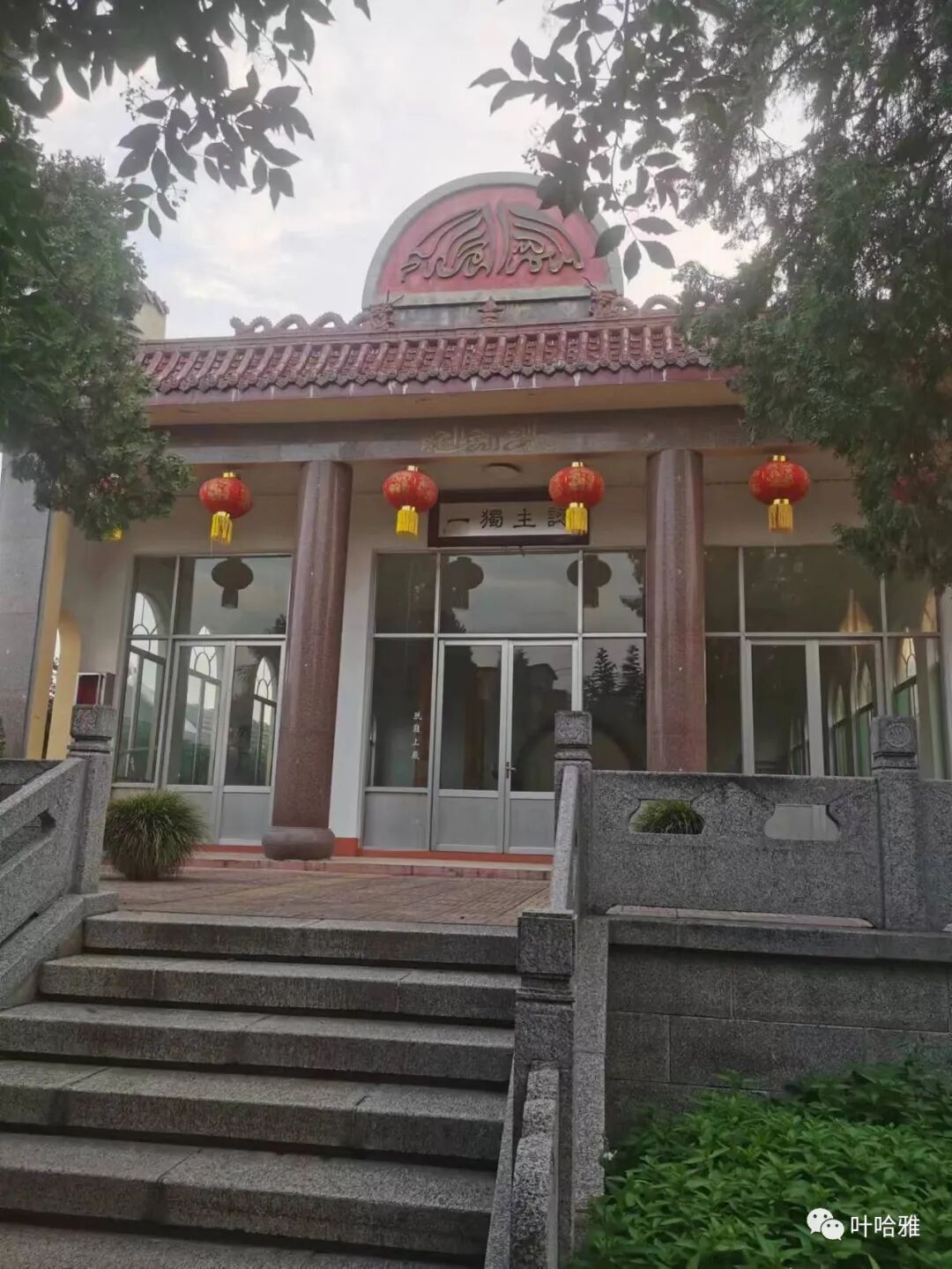
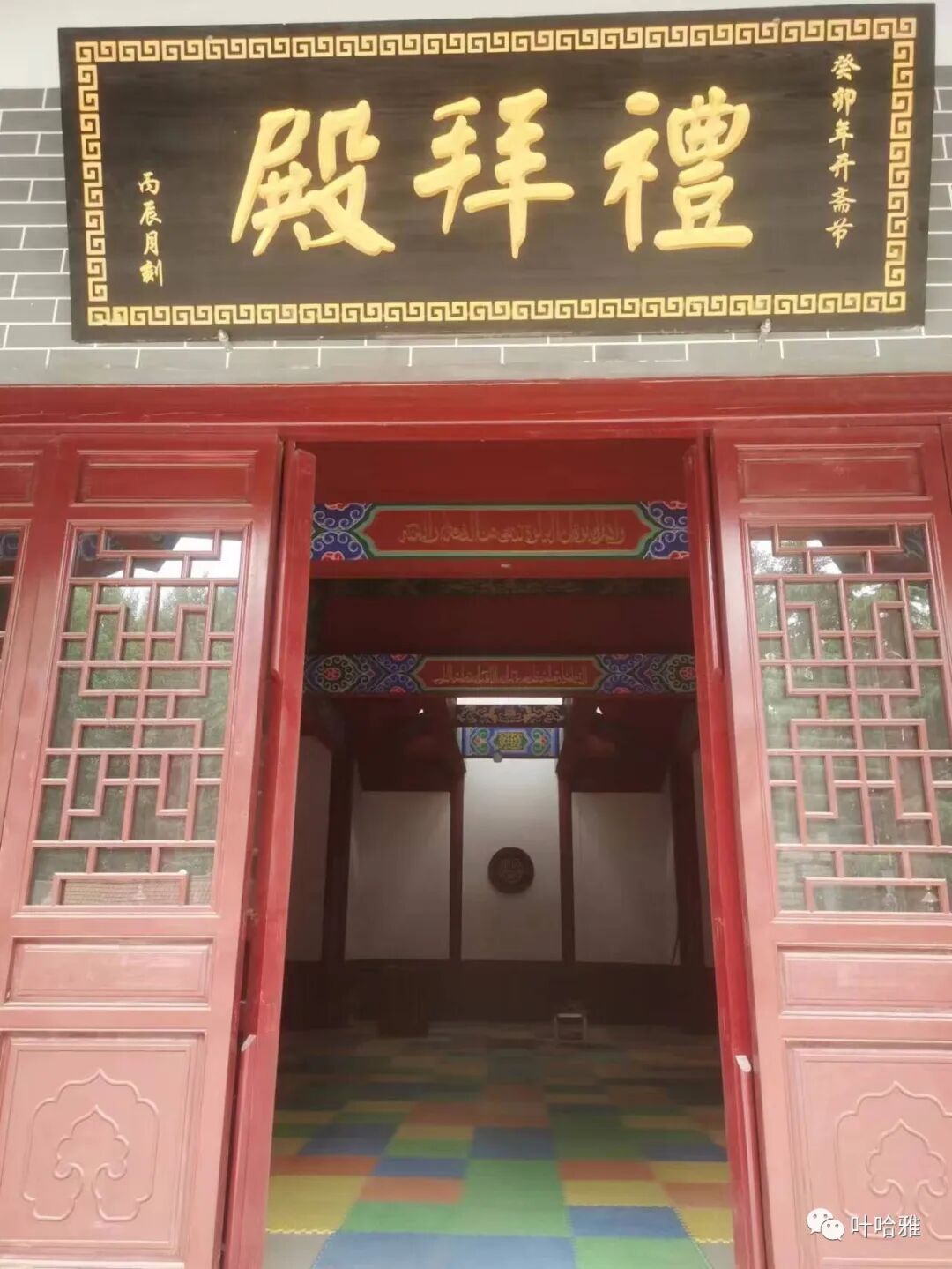
Xigaoping Mosque in Guli Town sits in the northwest part of the old Xigaoping village. It was first built in the early Qing Dynasty and has been expanded and repaired many times since. When the mosque was first established, it had a main prayer hall with five rooms and two lecture halls to the north and south with three rooms each. An ancient cypress tree once stood inside the mosque, but it was cut down during the Cultural Revolution. The mosque was re-established in 1981. It underwent large-scale renovations in 1995 and 2005.
The mosque features a typical traditional Chinese courtyard style with a single-entry layout. It is 45 meters long and 35 meters wide. The prayer hall is 15 meters long and 6.5 meters wide. The rear hall is 4 meters long and 3.5 meters wide. The north lecture hall is 16 meters long and 8 meters wide. The south lecture hall is 18 meters long and 4.5 meters wide. Two stone tablets remain today: the 2005 Renovation Record and the List of Donors for the Mosque Construction on March 16, 1994, which was also set up in 2005.
Before the founding of the People's Republic of China, Imam Bai Anfu led the religious affairs at this mosque. After the founding of the People's Republic of China, Imams Yang Yuejun, Bai Anfu, Liu Qingyuan, Wang Xiuming, and Yu Guangwei served as leaders of religious affairs in succession. The mosque is currently managed by a mosque management committee, with Liu Guitian serving as the current director.
In 2008, the mosque was named a Model Mosque by Tai'an City. In 2009, it was awarded the title of Civilized Religious Activity Venue by Xintai City. In 2010, it was once again named a Model Mosque by Tai'an City.
Feicheng City
Houhuang Village Mosque
Houhuang Village Mosque in Bianyuan Town sits in the southwest corner of the village. It was built during the Ming Dynasty and has been repaired continuously since then. The mosque underwent seven large-scale renovations in 1747 (the 12th year of the Qianlong reign of the Qing Dynasty), 1809 (the 14th year of the Jiaqing reign), 1903 (the 30th year of the Guangxu reign), 1937 (the 26th year of the Republic of China), 1944 (the 33rd year of the Republic of China), 1984, and 2010.
The mosque features a Chinese palace-style architectural design and measures 45 meters long and 28 meters wide. The prayer hall has two sections, front and back, standing 9 meters high with two side rooms and a moon platform (yuetai) in front. The main hall is 17.2 meters long and 12.45 meters wide. The north lecture hall is 10 meters long and 8 meters wide. The south lecture hall is 15.2 meters long and 5.7 meters wide. The ablution room (shuiwu) is divided into separate areas for men and women. The men's room is 15 meters long and 6.2 meters wide. The women's room is 8.8 meters long and 5.8 meters wide. There are four stone tablets here: the 1747 Record of Rebuilding the Mosque Moon Platform Railing Rooms from the Qianlong era, the 1809 Record of Rebuilding the North and South Lecture Halls from the Jiaqing era, the 1910 Record of Rebuilding the Huangjiazhuang Mosque from the Xuantong era, and the 2011 Record of Rebuilding the Main Prayer Hall.
The mosque's religious affairs have been led by imams including Zhang, Zhang Baotai, Ma Yonghui, Tang Qinglin, Wang Changshun, Ma Tongyun, Yang Fulian, Xu Changcun, Yang Baojun, Zhang Shugang, and Ma Gang. The mosque has trained many religious scholars, including imams Zhang Xuan, Xu Shihe, Xu Jiben, Xu Jiwen, Xu Changchun, Xu Changzhi, Xu Jiwu, Xu Changshan, Zhang Baotai, Ma Wenli, Yang Guotai, Yang Maodou, Xu Changzeng, Yang Suo, Xu Bin, Ding Jian, Bai Yanbing, Ding Junjian, Ding Rongfu, Ding Jianhua, Yang Libiao, Xu Yongqiang, and Yang Chaoxuan. It is currently managed by the mosque's democratic management committee, with Ding Junqian, Xu Weihua, Ding Junfu, Ding Ruqing, and Yang Wei serving as directors. Religious activities are carried out according to the law. The mosque keeps a white porcelain incense burner from the Qing Dynasty. The mosque values education, and every imam has held classes to train many students (hailifan).
In 2008, the mosque was named a Model Mosque by Tai'an City. It was named a Model Mosque by Tai'an City again in 2014.
Qianhuang Village Mosque
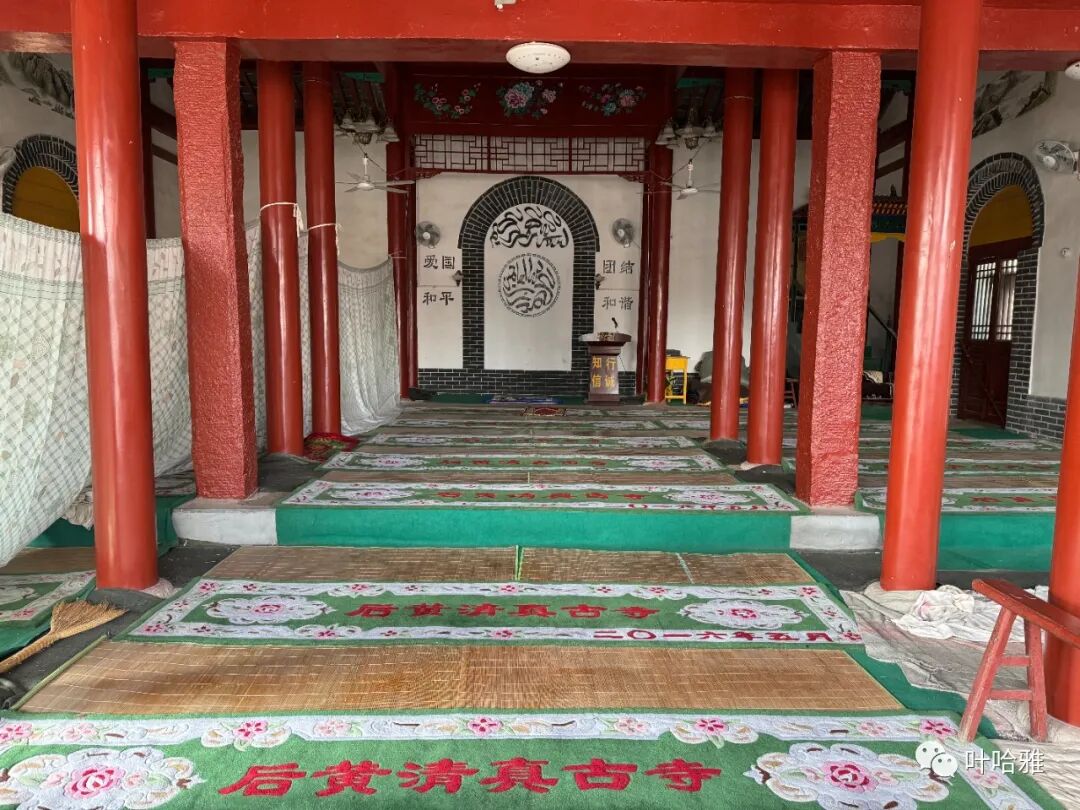
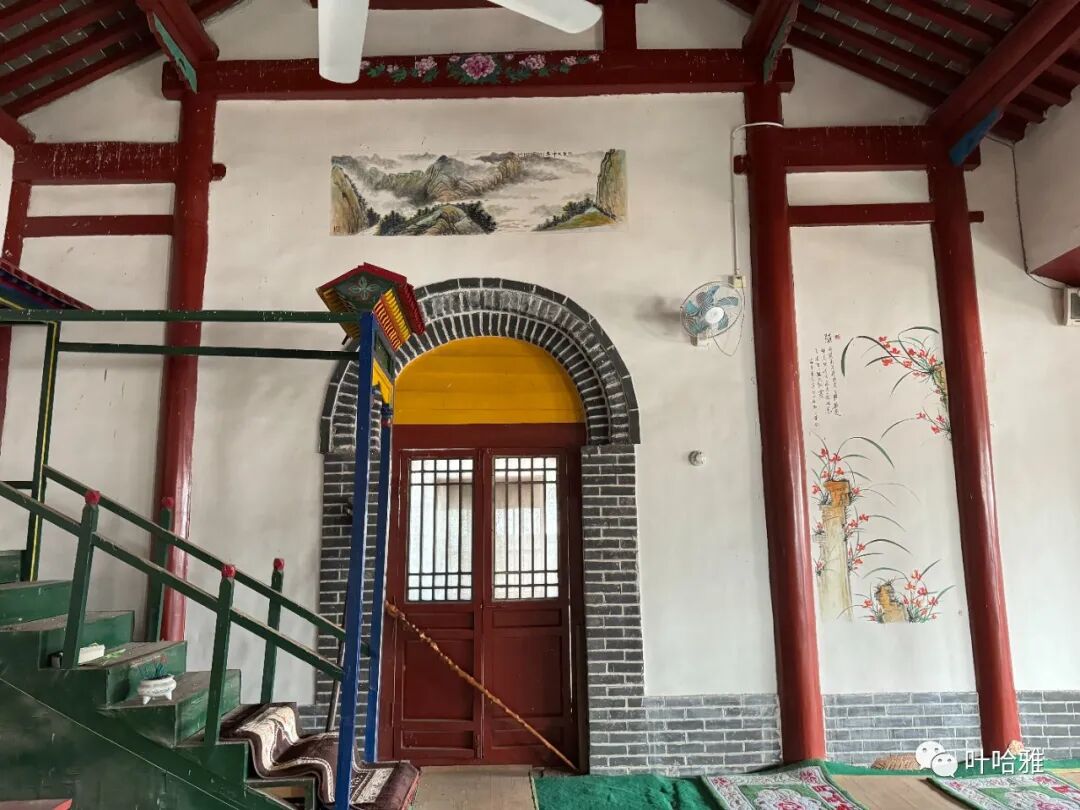
Qianhuang Village Mosque in Bianyuan Town sits at the west end of the village. It was first built during the Guangxu reign of the Qing Dynasty (1875-1906) and has been repaired many times since. In the third year of the Xuantong reign (1911), elder Zhang Shi'en donated over 3.6 mu of land, which became the current site. In 1924, four rooms were built for the south lecture hall. In 1946, elder Wang Yuduo from the Taihe firm in Qianhuang Village led a fundraising effort, and the five-room main prayer hall was finished in 1947. Large-scale repairs took place in 1991, 2000, 2002, 2004, and 2014.
The mosque is a single-courtyard building in the classic Chinese palace style. The main prayer hall has front and back sections and covers 250 square meters. The north lecture hall covers 107 square meters, the south lecture hall covers 98 square meters, and the water room covers 88 square meters. There are four stone tablets here: the Huangjiazhuang Ding Family Genealogy Tablet from 1741 (Qianlong year 6), the New Ablution Room Tablet from 2000, the Mosque Inscription from 2003, and the South Lecture Hall Reconstruction Tablet from 2004.
The mosque's religious affairs have been led by imams including Yang Guotai, Yang Chaoxuan, Mi Shuting, Ma Yongcai, Zhao Rongsheng, Zhan Qinggui, Dong Zhongqing, Mi Shuangzhong, Mi Shuangliang, Li Huaiguo, Wang Xiuming, Chen Xingwu, Wang Huaiyu, Jin Haixue, Wang Jingdou, Wang Xiuming, and Ma Jundong. Before the founding of the People's Republic of China, the mosque was managed by village elders including Ding Yuxi, Wang Wensheng, Wang Guanxi, Wang Guanxing, Wang Jixian, Bai Yuhe, Zhang Juntang, Wang Jichen, Ding Yang, Wang Guanqi, Zhang Baoshan, Zhang Baodang, and Wang Jixin. After the founding of the People's Republic of China, it was managed by village elders including Ding Yanzheng, Ding Yanyang, Wang Guanjiang, Ding Huaixin, Zhang Yongquan, Wang Xiuzhong, Ma Hongzhang, Wang Xiucai, Bai Tangyou, Zhang Yanlong, Wang Xiutong, Wang Jingshui, Ding Huaikui, Wang Jingtao, Wang Jingliang, Ma Xianmin, and Wang Zhongmin. It is now managed by the mosque's democratic management committee, with Ding Yanzheng, Ma Hongzhang, Wang Jingshui, and Ding Huaikui serving as directors.
The mosque once held cultural relics like celadon incense burners and vases, along with thirty handwritten copies of the Quran, but these were destroyed or lost during the Great Leap Forward and the Cultural Revolution.
In 2008, the mosque was named a Model Mosque by Tai'an City. In 2010, it was named a provincial-level Harmonious Religious Activity Site. In 2011, it was designated as a Feicheng City Cultural Relic Protection Unit.
Shengjiazhuang Mosque.
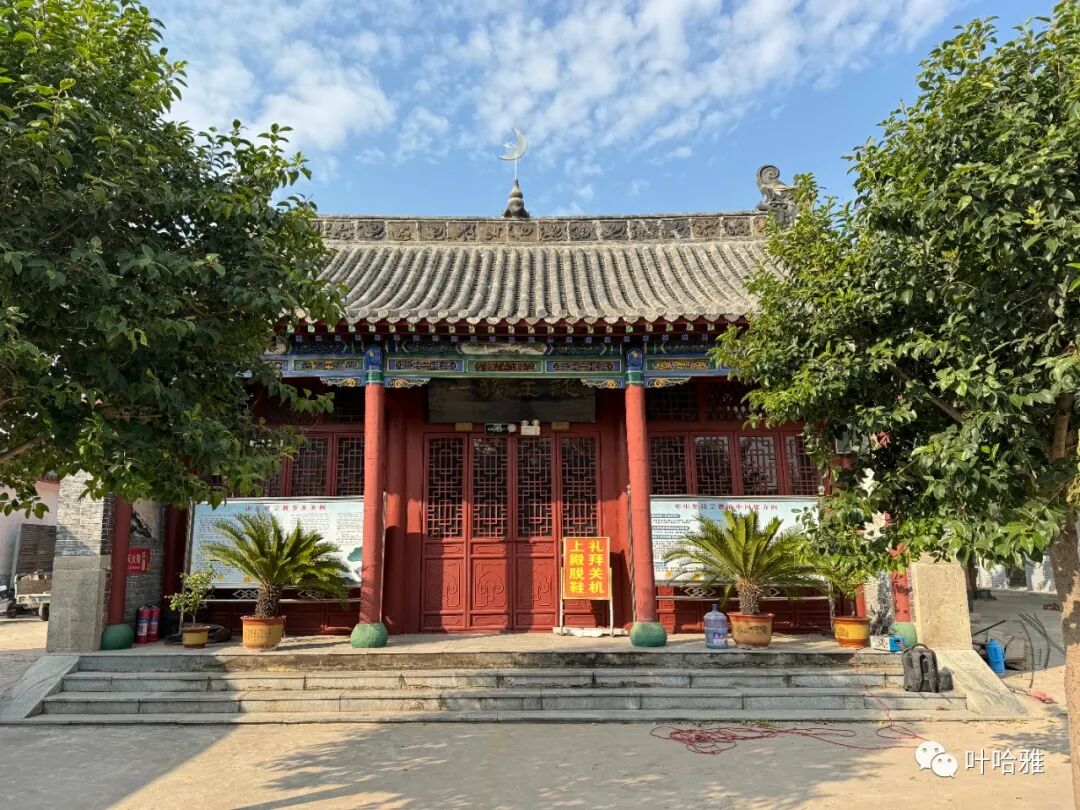
Shengjiazhuang Mosque in Anjiazhuang Town is located in the northwest corner of the village. It was first built in the early Qing Dynasty and has been renovated many times since. The mosque is built in the style of a Chinese palace, measuring 34 meters long and 30 meters wide. The prayer hall consists of a front and back section, and the main hall features a raised platform (yuetai) that is 8 meters high, 14 meters long, and 10 meters wide. The north lecture hall is 21 meters long and 7 meters wide. The south lecture hall is 11 meters long and 5 meters wide. The water room is 11 meters long and 5 meters wide. There are 7 stone tablets remaining, including the 1929 (the 18th year of the Republic of China) Tablet for the Reconstruction of the Mosque and 4 newer tablets honoring donors. An ancient stone tablet stands in front of the main hall, but the inscription is badly damaged and hard to read.
The mosque's religious affairs have been led by imams including Yang Maoxiu, Wu Mingcai, Li Jigui, and Wang Hualei. It is currently managed by the Mosque Democratic Management Committee, with Li Zhaoji, Mi Qingguo, and Yang Dengfa serving as directors.
In 2009, the mosque was named a provincial-level Harmonious Religious Activity Site. It won the title of Model Mosque of Tai'an City in 2010 and again in 2014.
Beiqiu Mosque
Located in the eastern half of Beiqiu Village in Bianyuan Town, the mosque was first built between the late Ming and early Qing dynasties and has been expanded several times since. The main hall was restored in the 12th year of the Qianlong reign of the Qing Dynasty (1747). The north lecture hall was rebuilt in 1991. In 2015, the south lecture hall, the water room, and the courtyard were built.
The mosque is built in the style of a Chinese palace, measuring 37.3 meters long and 26.8 meters wide. The prayer hall is a double-layered structure divided into a front hall and a back hall, with side rooms attached to the main hall and a moon terrace (yuetai) in front that is 8.5 meters long and 23.5 meters wide. The north lecture hall is 5 meters long and 17.8 meters wide. The south lecture hall is 5 meters long and 8 meters wide. The water room is 5 meters long and 19 meters wide. The mosque includes a living area for the imam. There are five stone tablets remaining, including the "Stele Record of the Mosque Restoration" from the 12th year of the Qianlong reign (1747), the "Mosque Prohibition Stele" from the Xuantong reign (1909-1911), the "Stele Record of the North Lecture Hall Reconstruction" from 1991, and the "Stele Record of the South Lecture Hall and Water Room Reconstruction" from 2015.
Imam Ding Ruhu currently oversees the religious affairs. In the past, village elders worked with the mosque's imam to manage affairs, with Xu Huali from the Daoguang reign of the Qing Dynasty (1820-1850) serving as a representative example. The mosque is now managed by a democratic management committee, with Liu Yuyuan, Ding Yongchang, Ding Yongdui, and Ding Xianquan serving as directors in succession. The mosque currently houses a copper water pitcher (tangping) dating back to the late Ming and early Qing dynasties.
Songzhuang Mosque
The Songzhuang Village Mosque in Bianyuan Town is located at the west end of the village. It is said to have been built in the late Ming and early Qing dynasties and has been renovated continuously since then. Before the founding of the People's Republic of China, there were four major renovations, with the most significant ones occurring in the tenth year of the Jiaqing reign (1805), the seventeenth year of the Daoguang reign (1837), the twenty-sixth year of the Guangxu reign (1900), and the fifteenth year of the Republic of China (1926). Since the founding of the People's Republic of China, it has been repaired many times, including the 2013 reconstruction of four ablution rooms (shuifang), two warehouses, and three southern lecture halls.
The mosque is built in the style of a Chinese palace, measuring 36 meters long and 36 meters wide. The prayer hall is 15.6 meters long and 11.3 meters wide, and the northern lecture hall is 18.3 meters long and 5.4 meters wide. The southern lecture hall is 15.7 meters long and 5 meters wide. The water room is 12 meters long and 5 meters wide. There are five stone tablets remaining, including the Stele for the Reconstruction of the Mosque from the nineteenth year of the Daoguang reign (1839), the Stele Record for the Reconstruction of the Mosque from the twenty-sixth year of the Guangxu reign (1900), the Preface Stele for the Reconstruction of the Mosque from the fifteenth year of the Republic of China (1926), and the Preface to the Reconstruction of the Songzhuang Ancient Mosque.
Historically, the mosque trained imams such as Ma Huanwen and Sha Xianzhang. Over the past twenty years or so, imams including Li Zhongguo and Wang Huarong have led the religious affairs. The mosque is currently managed by a democratic management committee, with Zuo Guangwen, Ma Yumin, Bai Youting, Ma Yujun, and Yang Changgang serving as directors in succession.
In 2009, the mosque was awarded the provincial title of Harmonious Religious Activity Venue. In 2010, it received the title of Model Mosque from Tai'an City. In 2016, it was designated as a Cultural Relic Protection Unit of Tai'an City.
Chahedian Mosque
Chahedian Mosque in Bianyuan Town is located in the middle of the village. It was first built during the Qianlong reign of the Qing Dynasty (1735-1796) and has been expanded and repaired ever since. In 2014, the mosque underwent a large-scale renovation.
The mosque features a Chinese palace-style architectural design, measuring 45 meters long and 30 meters wide. The prayer hall is 15 meters long and 15 meters wide, and the north lecture hall is 27 meters long and 7 meters wide. The south lecture hall is 20 meters long and 7 meters wide. The ablution room (shuiwu) is 6 meters long and 7 meters wide.
The mosque's religious affairs were led by imams including Xu Changzhi, Zhang Yanzhai, Wang Huarong, Ma Wenli, Wang Hualei, and Yang Shunchang. It is now managed by the mosque's democratic management committee, with Han Hongbin, Liu Yuantai, and Wang Jihe serving as directors. In 2012, it was named a provincial-level Harmonious Religious Activity Venue.
Fenghuang Village Mosque
Fenghuang Village Mosque in Bianyuan Town sits at the west end of the village. It was built in the 11th year of the Republic of China (1922). When the mosque was first established, it included a main prayer hall, a lecture hall, an ablution room, a main gate, and courtyard walls. It underwent large-scale renovations in 1994.
The mosque features a Chinese palace-style architectural design and is 35 meters long and 30 meters wide. The prayer hall is 12 meters long and 10 meters wide. The north lecture hall is 13 meters long and 6 meters wide. The south lecture hall is 13 meters long and 6 meters wide. There are two existing stone tablets: the Mosque Founding Tablet from 1940 and the Mosque Reconstruction Record Tablet from 1995.
The mosque's religious affairs were led by imams including Wang Yongqing, Ma Xingchang, Ding Hu, Wang Changming, Yang Xingwang, Wang Changgui, and Yang Baojun. It is currently managed by the mosque's democratic management committee, with Wu Maowen, Wu Baoshu, Mi Kuan, Wu Yuanfa, Wu Mingkun, Wu Mingxiang, Wu Jinzhong, and Mi Zhaoying serving as directors.
Dawangzhuang Mosque
Dawangzhuang Mosque in Bianyuan Town is located at the east end of the village. It was built in 1953 and has been repaired many times since. Large-scale renovations took place in 2005, 2007, and 2011.
The mosque is in a modern architectural style, measuring 35 meters long and 40.5 meters wide. The prayer hall is a single-level structure with a rear hall, standing 5.2 meters high, 11 meters long, and 7.5 meters wide. The north lecture hall is 15 meters long and 7.6 meters wide. The south lecture hall is 3 meters long and 7.6 meters wide. The water room is 7.6 meters wide.
The mosque's religious affairs were led by imams including Bai Anfu, Imam Yang, Yang Baojun, Jin Haizeng, Wang Zengli, Ma Chuanxiang, Yang Dong, and Ding Jianhua. It is now managed by the mosque's democratic management committee, with Yang Baojin, Yang Shunping, and Yang Shuncang serving as directors. The mosque houses an incense burner.
Chenjiabu Mosque
Chenjiabu Mosque in Anjiazhuang Town sits at the west end of the village. It was first built between the late Ming and early Qing dynasties and has been expanded and repaired ever since. The mosque underwent two large-scale reconstructions in 1996 and 2007.
The mosque features a Chinese palace-style architectural design and measures 46 meters long and 24 meters wide. The prayer hall is a double-layered structure consisting of a front porch, a front hall, a gutter, and a rear hall, creating a connected architectural layout. Both the front and rear halls follow a four-beam and eight-pillar design, with a brick and lime gutter installed at the junction of the two halls for drainage. There are side doors on both sides and a raised platform (yuetai) in front. The main prayer hall is now a dangerous building. The main prayer hall is 9 meters high, 16 meters long, and 10 meters wide. The north lecture hall is 16 meters long and 6.5 meters wide. The south lecture hall is 13 meters long and 5 meters wide. The water room is 6.5 meters long and 5 meters wide. The mosque was once awarded the provincial title of Harmonious Religious Activity Venue.
Xiaojiabu Mosque
Xiaojiabu Mosque in Anjiazhuang Town is located at the west end of the village. The founding date is unknown, and it was destroyed by fire in 1973 when machines inside the building caught fire. The new mosque was built in 1999.
The mosque features Chinese palace-style architecture and is 56 meters long and 50 meters wide. The prayer hall is 9.9 meters high, and the moon terrace in front of the main hall is 26 meters long and 15 meters wide. The north lecture hall has 5 rooms, measuring 15 meters long and 8 meters wide. The south lecture hall has 5 rooms, measuring 15 meters long and 5 meters wide. There is 1 kitchen, measuring 3 meters long and 4 meters wide. More than 250 trees are planted inside and outside the mosque, and the mosque is fully equipped with all necessary utensils. A stone tablet erected in 2000 still exists today.
The mosque's religious affairs have been led by imams including Bai Maoxiang, Imam Xu, Imam Yang, Imam Wang, and Bai Yanbing. It is currently managed by the mosque's democratic management committee, with Ma Wenhuan serving as the director.
A handwritten copy of the Quran from the 17th year of the Republic of China (1928) is preserved here. In 2008, the mosque was named a Model Mosque by Tai'an City.
Ningyang County
Xitaili Mosque
Xitaili Mosque in Gangcheng Town sits in the western half of the village. Wang Xiong founded the mosque in 1398, the 31st year of the Hongwu reign of the Ming Dynasty, and it has been expanded and repaired ever since. The mosque underwent repairs in 1411, 1460, 1698, 1719, 1738, 1819, 1900, 1945-1946, 2005, 2008, and 2012.
The mosque features Chinese palace-style architecture. It is 41.5 meters long and 34.1 meters wide, with two courtyards. The main prayer hall is a double-layered structure, 13 meters high, 13.1 meters long, and 7.1 meters wide. The north lecture hall is 17.1 meters long and 7 meters wide. The south lecture hall is 10.5 meters long and 7 meters wide. The water room is 10.6 meters long and 5.5 meters wide.
The mosque entrance has a main gate and a second gate. Past the second gate is the main courtyard. The main prayer hall sits on the west side, facing east. It is the primary building of the mosque and can hold hundreds of people for namaz at the same time. The main prayer hall uses a three-arch design with a connected roof structure, consisting of a front porch, a middle hall, and a back hall. The front porch is three bays wide with a curved roof and a wooden frame covered in small gray tiles. A stone tablet from 1719 titled Mosque Inscription is embedded in the inner north wall of the porch. The middle hall is three bays wide with a hard mountain-style roof. The front eaves connect to the back eaves of the middle hall, with water drainage channels left on both side walls. The rear hall is three bays wide, extending 0.62 meters beyond the sides of the middle hall's front porch. The front and rear eaves connect, the main roof ridge features animal ornaments, the brick walls have delicate carvings, and the mihrab is set in the center of the west wall.
The floor plan of the main hall looks like the Chinese character 'zhu' (master), and the roof has a varied, undulating shape. The platform in front of the main hall has stone railings and panels. On the north side of the platform stand stone tablets from the 11th year of the Guangxu reign (1885) and 2005 documenting repairs to the mosque. In front of the platform, the north and south lecture halls each have three rooms. They feature a single-eave, hard-mountain style roof covered with grey tiles and a front porch. North of the second gate is the room for students (hailifan). To the south is the bathing room, which can accommodate dozens of people for major and minor ablutions. Between the east gable of the north lecture hall and the courtyard wall is the east side room. To the west of the west gable are the west side room, the covered room (zhaozifang), and the tableware room. There are six existing stone tablets: the 'Mosque Tablet Record' from the 58th year of the Kangxi reign (1719), the 'Mosque Land Donation Tablet' from the 11th year of the Guangxu reign (1885), the 'Eternal Tablet' from 2005, the 'Second Batch of Municipal Key Cultural Relics Unit Tablet' from 2007, the 'Eternal Tablet' from 2008, and the 'Xitaili Mosque Reconstruction Record Tablet' from 2012.
Throughout its history, the mosque has trained many imams, including Yang Peicheng, Wang Minqing, Wang Minyi, Xu Menglan, Xu Shanfang, Li Chuanzheng, Li Hongbin, Wang Anyi, Li Anchen, Li Qingjun, Ma Xiangfa, Yang Zhenfa, Yang Cunguo, Yang Wei, Wang Antang, Wang Zifa, Xu Shouguo, Huang Zhongqing, Li Qingyun, Ma Xingcheng, Tang Wenhai, Wang Zhongzhen, Zhang Hongyi, Xu Shanfang, Li Zhaokun, Han Yuhai, and Xia Qianguo. The mosque is currently managed by a democratic management committee. Past directors include Wang Zishang, Wang Enshang, Wang Anxiang, Wang Anwen, Li Anshan, Li Baojin, Wang Anpo, and Ma Yongfu.
In 2009, the mosque received the provincial title of 'Harmonious Religious Activity Venue.' It was also named a 'Model Mosque' by Tai'an City in 2008, 2010, and 2014.
Liujiazhuang Mosque
Liujiazhuang Mosque in Geshi Town is located in the southwest corner of the village. It was first built during the Hongwu period of the Ming Dynasty (1368-1398) and has been expanded and repaired many times since. The mosque underwent three large-scale renovations in 1984, 1997, and 2008.
The mosque follows the Chinese palace architectural style, measuring 26 meters long and 19 meters wide. The prayer hall is 7.9 meters high, 10 meters long, and 8.5 meters wide. The north lecture hall is 13.5 meters long and 7 meters wide. The water room is 5 meters long and 7 meters wide. There is one stone tablet currently on site, which is the 2008 Tablet Record of Mosque Renovation.
Since the founding of the People's Republic of China, the religious affairs have been led by imams including Xu Menglan, Shi Xianbao, Wang Minqing, Xu Shanfang, Bai Anmeng, Han Tongwen, Xu Lingzhi, Wang Antang, Li Anchen, and Ma Ning. The mosque is currently managed by a democratic management committee, and past directors include Li Huaiqing, Li Lanting, and Sha Xingdong.
It has received the title of Model Mosque from Tai'an City.
Baima Mosque Mosque
Baimamiao Mosque in Fushan Town sits at the southwest corner of South Baimamiao Street in Taipingzhuang Village. It was first built during the Yongle period of the Ming Dynasty (1403-1424) and has been expanded and repaired ever since. The mosque has undergone four major renovations, including those during the Jiajing period of the Ming Dynasty (1522-1566), in the 16th year of the Guangxu reign of the Qing Dynasty (1890), and in 2001 and 2010.
The mosque features Chinese palace-style architecture, measuring 72.7 meters long, 21.1 meters wide at the front, and 27.5 meters wide at the back. The prayer hall is a double-eaved structure measuring 15.9 meters long and 13.2 meters wide. The north lecture hall is 10.2 meters long and 7 meters wide. The south lecture hall is 10.2 meters long and 6.4 meters wide. The ablution room (shuiwu) is 13.8 meters long and 6.6 meters wide. There are three stone tablets currently on site: the 1890 'Record of the Mosque Renovation' from the Qing Dynasty, the 2001 'Everlasting Renewal Tablet,' and the 2010 'Preface Tablet.'
The mosque's religious affairs have been led by imams including Zhao Wenjie, Yang Yueqing, Zhu Yuepo, Ma Guang, Han Yunting, Zhu Guanglai, Zhao Xinzheng, Zhao Guangfu, Zhu Yuehou, Yang Zhanji, Wang Ai, Zhang Yanzhai, and Yang Dawei. It is currently managed by the mosque's democratic management committee, with past directors including Mi Kuancheng, Hong Qingfang, and Zhao Anren.
A plaque from the 19th year of the Guangxu reign of the Qing Dynasty (1893) is still preserved today. In recent years, Zhu Zhaoxin donated a pair of wooden couplets that read, "The only true Allah of the universe is Allah, the only greatest sage in the world is Muhammad," which now hang on both sides of the mosque (libaidian) door.
In 2003, the county government designated the mosque as a county-level cultural relic protection site. It received the provincial title of "Harmonious Religious Activity Venue" in 2011 and was named a "Model Mosque" by Tai'an City in 2014.
Hongqi Village Mosque
Hongqi Village Mosque in Huafeng Town sits in the center of the village. It was first built during the Wanli period of the Ming Dynasty (1573-1620) and has been expanded and repaired ever since. The mosque underwent two large-scale renovations in 1932 and 2011.
The mosque features Chinese palace-style architecture and measures 30 meters long and 25 meters wide. The prayer hall is a double-layered structure that is 6 meters high, 13 meters long, and 10 meters wide. The north lecture hall is 15 meters long and 7 meters wide. The south lecture hall is 14 meters long and 4.5 meters wide. The water room is 6 meters long and 4 meters wide. There are two stone tablets here: the 2012 Tablet of Rebuilding the Main Hall and the Tablet of Eternal Memory.
Since the late 1940s, the mosque's religious affairs have been led by imams including Chen Junfang, Shi Xianxing, Liu Qingyuan, Gao Guo, and Ma Yingshang. The mosque is currently managed by a democratic management committee. Past directors include Chen Jinmei, Zhu Xiangxun, Bai Yushun, Zhu Xuyin, Wang Ansheng, Shi Junyou, Zhu Xutian, and Chen Weimin.
In 2008, the mosque was named a Model Mosque by Tai'an City, and in 2012, it received the provincial title of Harmonious Religious Activity Venue.
Jingquan Village Mosque
Jingquan Village Mosque in Huafeng Town is located in the northwest part of the village. It was first built in the 14th year of the Daoguang reign of the Qing Dynasty (1834). It was originally located in the eastern part of Jingquan Village and has been expanded and repaired many times since. Large-scale renovations took place in the 24th year of the Daoguang reign (1844), 1988, and 2001.
The mosque is 47 meters long and 35 meters wide. It includes a main hall, a north lecture hall, a south lecture hall, and a water room. There are three stone tablets: the Tablet of Founding the Mosque from the 14th year of the Daoguang reign (1834), the Tablet of Rebuilding the Mosque from 1998, and the Tablet Record of Repairing the Mosque from 2003.
Since the 1950s, the mosque's religious affairs have been led by imams including Jin Haixue, Ma Maoquan, Xu Changchun, Zhang Changshi, and Ma Shengchao. The mosque is now managed by a democratic management committee, with past directors including Huang Yuxiang, Huang Ruichang, Huang Qingfa, and Yang Yanhua.
The mosque houses a set of handwritten Quran manuscripts (volumes 15, 16, 29, and 30 are missing) and one copper water pitcher (tangping), which was originally part of a pair.
Sidian Village Mosque
Sidian Village Mosque in Sidian Town is located in the northern part of the village. It was built in the 11th year of the Yongzheng reign of the Qing Dynasty (1733) and has been expanded and repaired many times since. In the first year of the Jiaqing reign (1796), a fire at a neighbor's house spread to the mosque, which was later rebuilt. In October 1926, a fire destroyed the main prayer hall. The main hall, lecture hall, and gate wall were rebuilt in 1935. The main prayer hall was torn down in the early 1950s. In the 1980s, the Sidian village brigade arranged for members to build houses on the site, but the south lecture hall remains standing today. The mosque was rebuilt between 2012 and 2015.
The mosque is built in the style of a Chinese palace, measuring 22 meters long and 21 meters wide. A white marble plaque inscribed with the words "Mosque" is embedded above the main gate. There are side doors on both sides, each with a five-step entrance platform. About 10 meters inside the main gate is a second gate, and a path leads straight from there to the main prayer hall. The main prayer hall is a single-story building with a three-bay porch-style design, standing 15 meters high with a bronze vase ornament on the roof. On each side of the main prayer hall, there is a carved openwork lattice window featuring Arabic calligraphy. Inside the hall, four round plaques hang on the front sides, and a plaque with gold lettering hangs in the center. There are four large painted pillars, each over 40 centimeters in diameter, decorated with large gold-painted lotus flowers. The ceiling is inscribed with the holy names of Allah. The floor of the main prayer hall is covered with felt carpets. The front of the main prayer hall is a wooden structure with a simple, ancient style, built in the Chinese hip-roof (wudian) architectural form. The north lecture hall has three rooms and covers an area of about 60 square meters. Inside the hall, there is antique porcelain printed with Arabic scripture. The south lecture hall has three rooms and covers an area of about 50 square meters.
There are two stone tablets remaining: the Imperial Edict Tablet (Shengyu Bei) from the seventh year of the Yongzheng reign of the Qing Dynasty (1729) and the Tablet Record of the Reconstruction of Sizhuangdian Mosque (Chongxiu Sizhuangdian Qingzhensi Beiji) from the twenty-eighth year of the Republic of China (1939). The former is the only one of its kind in Tai'an and holds significant historical and cultural value. There are several cypress trees inside the mosque.
The mosque was once led by imams including Mi Baogui, Zhao Defu, and Zhao Furun. It is now managed by the mosque's democratic management committee, with past directors including Shi Guanli, Li Xiangqian, and Li Hong'an. The mosque also serves the communities of Qianwang Village and Houwang Village in Caohe Town, Yanzhou City.
Nanyi Village Mosque
Nanyi Village Mosque in Ciyao Town is located in the southwest part of the village. The original mosque in Nanyi Village fell into disrepair and was severely damaged. In May 2015, the dangerous structures were demolished according to plan, and a new mosque was built at a different site.
The mosque covers an area of 1,600 square meters, measuring 40 meters long and 40 meters wide. The prayer hall is 15 meters long and 11 meters wide. The north lecture hall is 10 meters long and 8 meters wide. The south lecture hall is 10 meters long and 8 meters wide. The water house is 10 meters long and 11 meters wide. There is one stone tablet here, the 2016 Tablet of Loving the Country, Loving the Faith, and Recognizing the Oneness of Allah.
The mosque has trained imams like Zhu Zhili, and Imam Yang Zhi currently manages religious affairs. The mosque is managed by a mosque management committee, with Zhang Weimin and Zhu Zhiming serving as past directors.
Houlyuguan Mosque
Houlyuguan Mosque in Huafeng Town sits in the middle of the village. It was likely built in the early days of Lyuguan Village and has been expanded and repaired ever since. In the second year of the Daoguang reign (1822), the old mosque was falling apart, so it moved to the north end of the village, which is its current location. The new mosque added three lecture rooms and a moon terrace (yuetai). In the 27th year of the Guangxu reign (1901), three large tiled rooms were added, and pine and bamboo were planted. The mosque was repaired in the ninth year of the Republic of China (1920). It was severely damaged during the Cultural Revolution.
When the mosque was first built, it was made of grass huts and covered seven and a half mu of land, with eight farming families from the north and south villages providing money and grain. After moving to the north of the village, it was rebuilt with brick, wood, earth, and stone, measuring 62 meters long and 52 meters wide. An old plaque hangs in the prayer hall, but the three characters on it are no longer readable. The main hall is 11 meters long and 11 meters wide. The north lecture hall is 11 meters long and 5 meters wide. The south lecture hall is 11 meters long and 5 meters wide. The water room is 4 meters long and 3.5 meters wide. There are three existing stone tablets: the Record of Rebuilding the Mosque from the second year of the Daoguang reign of the Qing Dynasty (1822), the Record of Rebuilding the Mosque from the 27th year of the Guangxu reign (1901), and the Record of Rebuilding the Mosque from the ninth year of the Republic of China (1920). Several stone tablets buried during the Cultural Revolution are inside the water pool.
The mosque's religious affairs were successively led by imams including Ma, Liu Yulin, and Xu Yongtong. Xiluoshan Mosque.
Xiluoshan Mosque in Heshan Township. Built in 2013, it covers 500 square meters with a building area of 300 square meters. It includes a main prayer hall, north and south lecture halls, and a main gate.
Xiluoshan Mosque.
Xiluoshan Mosque in Heshan Township. Built in 2013, it covers 500 square meters with a building area of 300 square meters. It includes a main prayer hall, north and south lecture halls, and a main gate.
Dongping County
Zhoucheng Mosque
Zhoucheng Mosque is located in the middle of the ten-mile Song Street in Zhoucheng Subdistrict. It was first built in 1575 during the third year of the Wanli reign of the Ming Dynasty and has been expanded several times since. Large-scale renovations took place in 1819 (the 24th year of the Jiaqing reign), 1828 (the 8th year of the Daoguang reign), 1840 (the 20th year of the Daoguang reign), 1911 (the 3rd year of the Xuantong reign), and 1926 (the 15th year of the Republic of China). After the founding of the People's Republic of China, it was repaired many times, with major renovations in 1990 and 2004.
The mosque features a classic Chinese palace-style architectural design, measuring 91 meters long and 51 meters wide. The prayer hall is a ridge-roof building that stands 12 meters high, 31 meters long, and 29 meters wide. The north lecture hall is 17.5 meters long and 6 meters wide. The south lecture hall is 17.5 meters long and 6 meters wide. The water house is 10.5 meters long and 6 meters wide. There are five stone tablets remaining: the Donation of Land Tablet and the Record of Rebuilding the Mosque Tablet from the 12th year of the Daoguang reign (1832), the Record of Rebuilding the Mosque Tablet from the 20th year of the Daoguang reign (1840), the Preface to the Tablet for Rebuilding the Mosque from the 3rd year of the Xuantong reign (1911), and the Tablet for Rebuilding the Mosque from the 15th year of the Republic of China (1926).
Since modern times, the mosque's religious affairs have been led by imams including Zhan Huiyuan, Zhan Shikai, Zhan Hongru, Zhan Faxin, Xu Changzheng, Xu Changzhi, Yang Maoxiu, Yang Baojun, Zhan Hongda, Imam Guo, Ding Shanzhen, Ma Xiangfa, Li Anchen, Zhan Qiang, and Jin Feng. It is now managed by the mosque's democratic management committee, with Bian Qingfang, Wang Jinghan, Guo Guangcai, Zhan Yanling, and Zhao Rongsheng serving as directors in succession.
In 2004, the mosque was designated as a Tai'an City Cultural Relics Protection Unit. It won the title of Tai'an City Model Mosque four times in 2008, 2009, 2010, and 2014. In 2010, it was named a provincial-level Harmonious Religious Activity Venue.
Xicun Mosque
Laohu Town Xicun Mosque is located in the southern part of the village. The mosque was originally built in Zhanjialou during the Daoguang reign of the Qing Dynasty (1820-1850) and was expanded several times later. It was destroyed by a flood in 1955 and later rebuilt in Xicun Village, where it was completed with a main prayer hall of three rooms and a lecture hall of four rooms.
The mosque is built in the style of a Chinese palace and covers a total area of 1,404 square meters. The main prayer hall is a single-story building that stands 12 meters high and covers 130 square meters. The north lecture hall covers 168 square meters, and the south lecture hall covers 43.2 square meters. The ablution room (shuiwu) covers 77 square meters. The mosque currently houses two stone tablets.
The mosque's religious affairs have been led by imams including Mi, Yang, Ma Yunxiang, Xu Changzhi, Wu Mingcai, Wang Enqing, Bai Zhenhe, Lu Qingjie, Yang Yinqing, and Zhang Changshi. It is now managed by a mosque democratic management committee, with members including Zhan Ensu, Zhan Enkui, Zhan Qinghai, Zhan Qingyu, Bai Shulin, Jin Licai, Jin Baoli, Zhan Yanwu, Bai Chengzhen, and He Mingjun serving as directors.
Lisuo Village Mosque.
Lisuo Village Mosque in Timen Town was built in 1896 during the Guangxu reign of the Qing Dynasty and has been repaired several times since. It was damaged in 1958 and later rebuilt. In 2012, due to new village planning, it was moved and rebuilt 60 meters southeast of the old mosque, and it is now located at the 15th Team in the south of Lisuo Village. Repairs were carried out in 2015 and 2016.
This mosque has a modern architectural style and covers a total area of 1,751.1 square meters. The main prayer hall is a single-story building that stands 8 meters high and covers 151.2 square meters. The north lecture hall covers 87.1 square meters, and the ablution room (shuiwu) covers 90 square meters. A storage room (jiazi fang) is built to the south of the main prayer hall. Two stone tablets remain. One ancient tablet was carved with verses from the Quran, the date the mosque was built, and the names of the founders, but it was damaged in 1958 and is now a broken fragment.
The mosque was led by imams including Imam Ding, Imam Yang, and Zhao Jie, and it is currently managed by the mosque's democratic management committee.
Daimiao Mosque
Daimiao Mosque is located in the center of Daimiao Village, Daimiao Town. The date it was first built is unknown. It was damaged by the Yellow River in the 16th year of the Guangxu reign of the Qing Dynasty (1890). It was rebuilt in the spring of the 20th year of the Republic of China (1931). It was later destroyed by flooding and was rebuilt at a new site in 2017. It covers 400 square meters and includes a prayer hall, a south lecture hall, an ablution room (shuifang), a main gate, and a storage room (jiazi fang). There is one stone tablet remaining from the 20th year of the Republic of China (1931) titled 'Record of the Reconstruction of the Daijia Mosque Town Mosque'.
The mosque was led by imams such as Zhan Enpu and Jin Feng. It is currently managed by the mosque's democratic management committee, with Guo Guangcai serving as the current director.
Discussion | A Preliminary Study of the Hui Muslims' Resistance Against Japan in Tai'an, Shandong
At the end of 1937, the Japanese army invaded the Tai'an region of Shandong, causing major losses to the local economy and society. After thorough mobilization, people from all walks of life among the Hui Muslims in Tai'an—including farmers, workers, teachers, students, business owners, doctors, and imams—all joined the vigorous, full-scale war of resistance. Under the leadership of the Party, the Hui Muslim forces in Tai'an grew from nothing to something and from weak to strong, participating in over 300 battles, with figures like Jin Xiaocun and Jin Guang becoming key leaders of the force. The Tai'an Hui Muslim Anti-Japanese School, the Anti-Japanese National Salvation Association, the Anti-Japanese Propaganda Team, and anti-Japanese logistics industries continued to develop, becoming important elements of the systematic Hui Muslim resistance in Tai'an.
During the war, 322,000 soldiers and civilians in Tai'an city (based on current statistics for the six counties and districts of Tai'an) were killed or wounded, accounting for 1/20 of the total casualties in Shandong (6,526,000 people), which shows the atrocities committed by the Japanese army in Shandong and Tai'an. After the Japanese army occupied Tai'an at the end of 1937, they set up 37 enemy-puppet strongholds and carried out horrific, insane massacres. Between 3:00 PM and 5:00 PM on February 24, 1938, the Japanese army committed the Shanyang Village (in front of Culai Mountain) massacre, killing 72 villagers and wounding 13. They burned down 3,080 rooms. 151 large livestock and over 3,500 sheep were burned to death. Over 500,000 jin of grain and more than 400 carts of various sizes were burned. Hui Muslims in Shandong suffered severely from the Japanese invaders. The Japanese army raped countless women, burned down 71 mosques, killed over 130 imams (aheng), and looted all gold, silver, and property. Hui Muslims in Tai'an were not spared either. The Japanese invaders committed monstrous crimes against Hui Muslim villagers in places like Dashuozhuang in Zhuyang Town, Nigou Village in Manzhuang Town, and Yuezhuang Village in Shengzhuang Town. Facing the inhumane massacre policy of the Japanese invaders, Hui Muslim villagers in Tai'an joined the broad masses of Han people in a bitter and arduous war of resistance. Since the spring of 1938, Hui Muslim villagers in the Tai'an region launched a vigorous and systematic war of resistance against Japan, making important contributions to the victory of the war in Tai'an, Shandong, and North China.
1.
Tai'an Hui Muslim Resistance Forces
The Tai'an Hui Muslim resistance was divided into two forces: the Taixi Hui Muslim Anti-Japanese Armed Force and the Taidong Hui Muslim Anti-Japanese Armed Force. The Taixi Hui Muslim resistance was centered in Chenjiabu and Shengjiazhuang in Anjiazhuang Town, Feicheng City, as well as Nanbailou and Zhoujiapo in Xiazhang Town, Daiyue District, with Jin Xiaocun, Mi Yingjun, and Ma Ancai as the main leaders. The Taidong Hui Muslim resistance was centered in Yuezhuang, Gangshang, and Ershilibu in Shengzhuang Town, Tai'an District, and Dashuozhuang Village in Zhuyang Town, Daiyue District, with Jin Guang, Zhao Manshi, Ma Qianli, and Hong Zhanwu as the main leaders. In January 1941, the two forces merged into the Hui Muslim Backbone Battalion in Nigou Village, Manzhuang Town, Daiyue District, totaling over 100 people. The reorganized Hui Muslim backbone brigade operated mainly in the Taixi region. Specifically, the Taixi region covers the vast area west of the Jinpu Railway in Tai'an, south of the Yellow River, up to the north bank of the Dawen River, and east of the Ding River. It mainly includes the counties of Tai'an, Feicheng, Changqing, Dongping, Pingyin, Dong'e, Wenshang, and Ningyang. The anti-Japanese war led by the Hui Muslims of Tai'an was not a series of isolated or scattered battles, but a systematic resistance. The leadership of the Party, the Hui Muslim forces, the Hui Muslim National Salvation Association, the Hui Muslim resistance leaders, the anti-Japanese propaganda teams, the anti-Japanese schools, and the Longshan Military Shoe Factory were all specific elements of the systematic resistance of the Tai'an Hui Muslims. Specifically, the Party's leadership provided a strong political guarantee for the Tai'an Hui Muslim resistance. The Hui Muslim forces were a solid fighting force, and the National Salvation Association was a comprehensive revolutionary group. Jin Xiaocun, Mi Yingjun, and Jin Guang were outstanding leaders of the Tai'an Hui Muslim resistance. The Hui Muslim anti-Japanese propaganda team was an independent system for mobilization, the Hui Muslim anti-Japanese school was a fully established training institution for the resistance, and the Longshan Military Shoe Factory was an independent anti-Japanese logistics industry for the Tai'an Hui Muslims.
II.
The Tai'an Hui Muslim Resistance and the Party's Leadership
Branches of the Communist Party of China were established very early among Hui Muslim teachers and young students in Tai'an. The earliest ones were the Party branch in Ershilibu Village in Taidong and the Party branch in Beiqiu Village in Taixi. The former was established in 1932 with the help of Zhao Manshi and was the first rural Party branch in Tai'an County. Jin Yisan served as secretary, Hong Jixiao as propagandist, and Chen Xingcai as armed committee member, building up strength for future revolutionary struggles. In 1938, the Taixi Special Committee of the Communist Party of China was founded at Beiqiu Primary School, becoming the first Party organization in Taixi County at that time. Duan Junyi served as secretary, and Hui Muslim Party members such as Bai Youfang and Ding Maoshan actively participated in the work.
After the July 7th Incident, cooperation between the Kuomintang and the Communist Party gradually deepened, and many imprisoned Communist Party members were released. In July 1937, Communist Party members Lu Baoqi, Zhu Yugan, Yan Yuming, and Wu Guanying, who had been hiding outside, returned to Tai'an one after another to carry out anti-Japanese propaganda and mobilization. Around October, more than ten Communist Party members, including Zhang Beihua, Cheng Zhaoxuan, Xia Furen, Hou Decai, Cui Ziming, and Wang Zhongfan, returned one after another to Tai'an and the surrounding areas. Li Wenfu, Xu Lincun, Wang Shaofen, and others were released from a Kuomintang prison in Nanjing and returned to Feicheng one by one to start anti-Japanese activities. Many party members returned to Tai'an, planting the seeds for the anti-Japanese war among Hui Muslims in Tai'an and providing a strong political foundation.
In early 1938, Wu Guanying held a mobilization meeting for progressive youth at Hekou in western Tai'an, which was attended by Jin Xiaocun, Mi Yingjun, Wang Baoheng, and others. The meeting decided to organize an anti-Japanese guerrilla force and proposed the slogan, "Those with strength give strength, those with money give money." After the meeting, Mi Yingjun sold 800 jin of wheat to buy a box cannon (xiaziqiang). Fan Changyou sold his mule to buy a Hanyang rifle, and others did the same. This formed the initial organization for the Hui Muslim resistance in Tai'an. During the brutal struggle, the Communist Party cared deeply for Mi Yingjun and the Hui Muslim troops he led. Mi Yingjun also studied the works of Mao Zedong diligently to constantly improve his ideological awareness and military skills. In 1939, he joined the Communist Party of China. In March of the same year, Chen Guang, acting commander of the 115th Division of the Eighth Route Army, and political commissar Luo Ronghuan led the Eastward Advance Detachment to the Tai-Fei mountain area to establish the western Tai'an anti-Japanese base. Fan Pengfei, the leader of the Eastward Advance Detachment's civil movement team, quickly made contact with Jin Xiaocun and others and provided guns to the guerrilla group. Fan Pengfei once recalled:
North of Anjiazhuang, there was a village with many Hui Muslims. Several young men there formed a guerrilla group on their own, and they had a few guns. After I arrived, I often visited them. One of them was named Mi Yingjun. He was a very accurate shot and trusted me a lot. Later, I organized them and they joined the Tai'an Independent Regiment.
3.
The Growth of Hui Muslim Resistance Forces in Tai'an
Under the leadership of the Party and the guidance of the 115th Division, the Hui Muslim anti-Japanese armed forces in Tai'an continued to grow and strengthen. Whether it was the Hui Muslim anti-Japanese armed forces, the Hui Muslim anti-Japanese leadership, or other entities like anti-Japanese schools and industries, all grew gradually under the leadership of the Communist Party of China.
The Hui Muslim Battalion was a vital force in the Tai'an Hui Muslim resistance. In January 1938, Jin Xiaocun, Mi Yingjun, and six or seven others organized a Hui Muslim anti-Japanese guerrilla group. It soon grew to over twenty people and became a guerrilla squad. After that, the number of Hui Muslim youths joining the resistance kept increasing, and by the end of that year, it had expanded to more than 80 people. In the spring of 1939, the unit was reorganized as the Second Company of the Taixi Independent Regiment, also known as the Hui Muslim Company, with Mi Yingjun serving as company commander.
From then on, this Hui Muslim anti-Japanese armed force grew rapidly under the leadership of the Party. Between the spring and summer of 1939, the Hui Muslim Company worked with the 115th Division and the 686th Regiment to wipe out the Taian traitor organization Red Spear Society and executed its leader, Gao Fuchang. Afterward, the company was reorganized as the Fourth Company of the Taixi Independent Battalion. Soon after, the Fourth Company was reorganized again as the Second Company of the Sub-district Backbone Regiment, fighting across the Taixi region and becoming a banner for Hui Muslim resistance against Japan in Taixi. In early 1940, Jin Xiaocun mobilized people in over 40 Hui Muslim villages in Taixi to form anti-Japanese armed forces, eventually establishing three platoons, which were actually three small squads. In 1941, the two Hui Muslim anti-Japanese units from Taidong and Taixi merged to form the Hui Muslim Backbone Battalion, which oversaw two squadrons. In the second half of that year, Jin Xiaocun and others ordered the formation of the Third Hui Muslim Squadron in the suburbs of Jinan. At the end of 1943, Zhang Xiaonong and others formed the Fifth Detachment of Qihe in Qihe. At the same time, Jin Xiaocun formed the Fourth Squad in Xiaojinzhuang, Jinan. In August 1945, the units merged to form the Taixi Hui Muslim Battalion, with Jin Xiaocun serving as political commissar and Ma Ancai as general branch secretary. In November, it was reorganized as the First Battalion of the First Backbone Regiment of the sub-district, overseeing three companies. Since its founding, this unit made the most of the Hui Muslims' bravery, tenacity, and strong sense of community. They actively carried out guerrilla warfare. After hundreds of battles, they became a national revolutionary force in the Hebei-Shandong-Henan border region that could not be crushed or broken. In February 1949, they were reorganized as the 151st Regiment of the 51st Division of the 17th Army. They took part in the Yangtze River crossing campaign and later marched into the great southwest.
The Tai'an Hui Muslim unit was a strong fighting force. They once successfully protected Comrade Jiang Hua as he passed through enemy blockade lines. During the War of Resistance Against Japan and the War of Liberation, this unit fought over 300 battles. They cleared out more than 60 enemy strongholds and wiped out over 6,000 Japanese, puppet, and Kuomintang troops. They captured 5 cannons, over 20 heavy machine guns, over 70 light machine guns, and more than 4,000 rifles. Nearly 20 people received special or first-class merit awards. Of course, they also made huge sacrifices. The unit's founder, Mi Yingjun, died in October 1943. His commanders spoke highly of him, calling him an excellent Communist Party member, a clever and brave commander, and a Hui Muslim anti-Japanese hero raised by the Party. Incomplete records show that during the War of Resistance, the unit lost 6 battalion-level officers, 14 company-level officers, and over 40 platoon or squad-level officers.
Anti-Japanese schools were important places for training reserve talent. The goal of starting the Hui Muslim Anti-Japanese School was to strengthen and expand the Hui Muslim anti-Japanese army, train more political officers for the Hui Muslim troops, and provide new talent for the army. In 1943, Jin Xiaocun and Jin Guang attended a meeting of the Hebei-Shandong-Henan border region government. They proposed the idea of starting the school to leaders like Deng Xiaoping, who were chairing the meeting, and received approval from the leaders and representatives. After approval from Zhang Yuenan and Wu Shengyu of the Taixi Commissioner's Office, the school was officially established in the autumn of 1944 in Dayuanzhuang Village, Qihe County, with over 60 students. The full name of the school was the Tai'an Region Hui Muslim Anti-Japanese School, also known as the Taiyun District Islamic School. It used military-style management, and the 60-plus students were organized into two platoons and eight squads. The main focus was studying the works of leaders like Mao Zedong, and figures such as Zhang Yaonan and Liu Zifang came to the school to give reports. After the founding of the country, more than 60 students joined various construction fronts across the nation, with some becoming key contributors to the building of the new China.
The Longshan Military Shoe Factory and others provided logistical support for the Hui Muslims' resistance efforts. The Hui Muslim resistance in Tai'an included production for self-sufficiency, with two typical logistics enterprises formed by Hui Muslim teams being the Taixi Wenyang Cooperative and the Longshan Military Shoe Factory. The former was established mainly in the late stages of the War of Resistance Against Japan, initially located at the western border of Mazhuang in Daiyue District, and later moved several times. Ma Qianli was the main person in charge, and it played a major role during the War of Liberation. The latter was founded in the autumn of 1944 and was located in Longshan Guanzhuang, southwest of Manzhuang Town in Daiyue District. Jin Guang served as the factory director, and Mi Guangzhen from Dashuozhuang, east of Tai'an city, served as the purchaser. With over 20 Hui Muslim workers, they mainly produced military shoes, with products primarily supplied to local Hui Muslim forces. Thousands of pairs of military shoes, along with some semi-finished products, raw materials, and tools, were escorted by Jin Guang's wife, Gao Fangpu, to the home of Jin Yongzeng in their village for hiding. Later, they were transported to Dashuozhuang, and in 1948, they were handed over to the Bohai Military Region.
On December 31, 1937, the Japanese invaders occupied Tai'an. On January 1, 1938, the first shot of the Shandong resistance, led by the Shandong Provincial Committee of the Communist Party of China, was fired on Culai Mountain within Tai'an. Influenced by the Culai Mountain anti-Japanese armed uprising and under the leadership of the Communist Party, Jin Xiaocun, Mi Yingjun, and others formed the Tai'an Hui Muslim anti-Japanese guerrilla group in early 1938. This force grew from weak to strong and from small to large, with Jin Xiaocun, Jin Guang, Ma Ancai, and others becoming important leaders of the team. Through in-depth mobilization, all walks of life among the Hui Muslims in Tai'an, including workers, farmers, intellectuals, entrepreneurs, and religious figures, participated in the vigorous all-out war of resistance.
(The author, Jin Po, is the director of the History Department at the School of History, Taishan University, and holds a doctorate in modern and contemporary Chinese history. He is a lecturer, and this was originally published in the first issue of 'Chinese Muslims' in 2019.)
Modern and contemporary history major, lecturer, originally published in 'Chinese Muslims', 2019, Issue 1.
I have finished introducing all 70 mosques in Tai'an. A mosque tour naturally needs to include halal food, but my trip to Tai'an was short and busy. With so many mosques to cover, I have limited space left to talk about the food.
Jin Family Roasted Chicken (Jin Jia Shaoji)
The highlight was the Jin Family Roasted Chicken we ate at a local elder's home near the Dashuozhuang Mosque. It was affordable and delicious. The chicken was tender, and the seasoning was just right. It tasted better than some of the trendy roasted chicken shops that have long lines, and it really suited my taste. On the right side of the photo is fresh camel meat, which tastes similar to beef.
Also, Elder Jin is reliable in his faith, so the ingredients are safe to eat. You can find his contact number in the picture below.
Mi Family Halal Gruel Shop (Mi Jia Qingzhen Sanguan)
After finishing my work, I went with Elder Han to have a traditional Tai'an breakfast at the Mi Family Gruel Shop. It is a thick soup made with lamb broth and eggs. This type of gruel (sangtang) is most famous in the Linyi area. view all
Summary: This China mosque travel guide continues the Tai'an seventy mosques project, covering Xintai and Feicheng mosques, village mosque architecture, stone tablets, imam records, Hui Muslim communities, and anti-Japanese resistance history.
The Seventy Mosques of Tai'an is presented here as a firsthand travel account in clear English, beginning with this scene: Xigaoping Mosque in Guli Town sits in the northwest part of the old Xigaoping village. The account keeps its focus on Mosque Travel, Islamic Heritage, Muslim Travel while preserving the names, places, food, and historical details from the Chinese source.
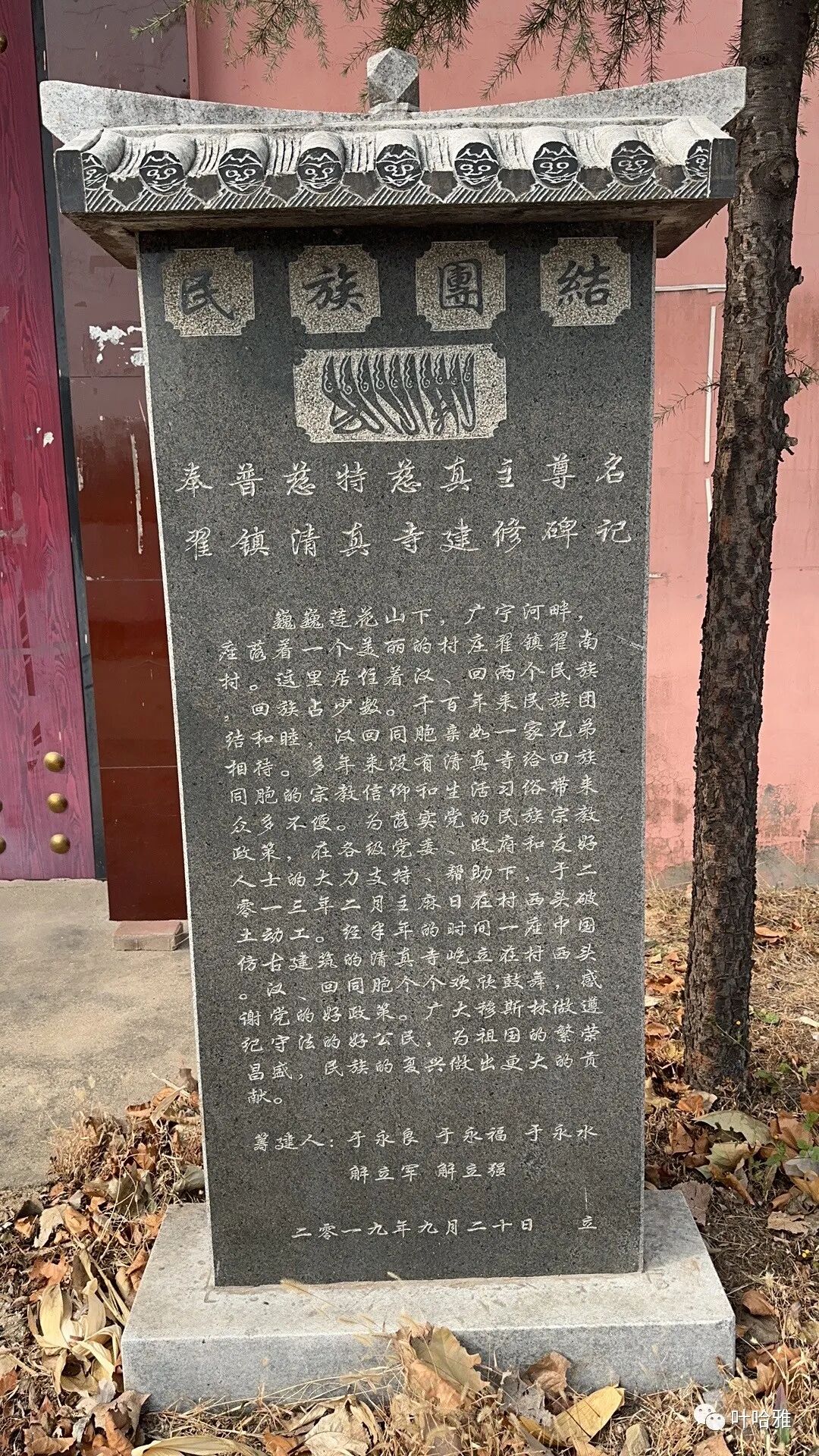
Xigaoping Mosque
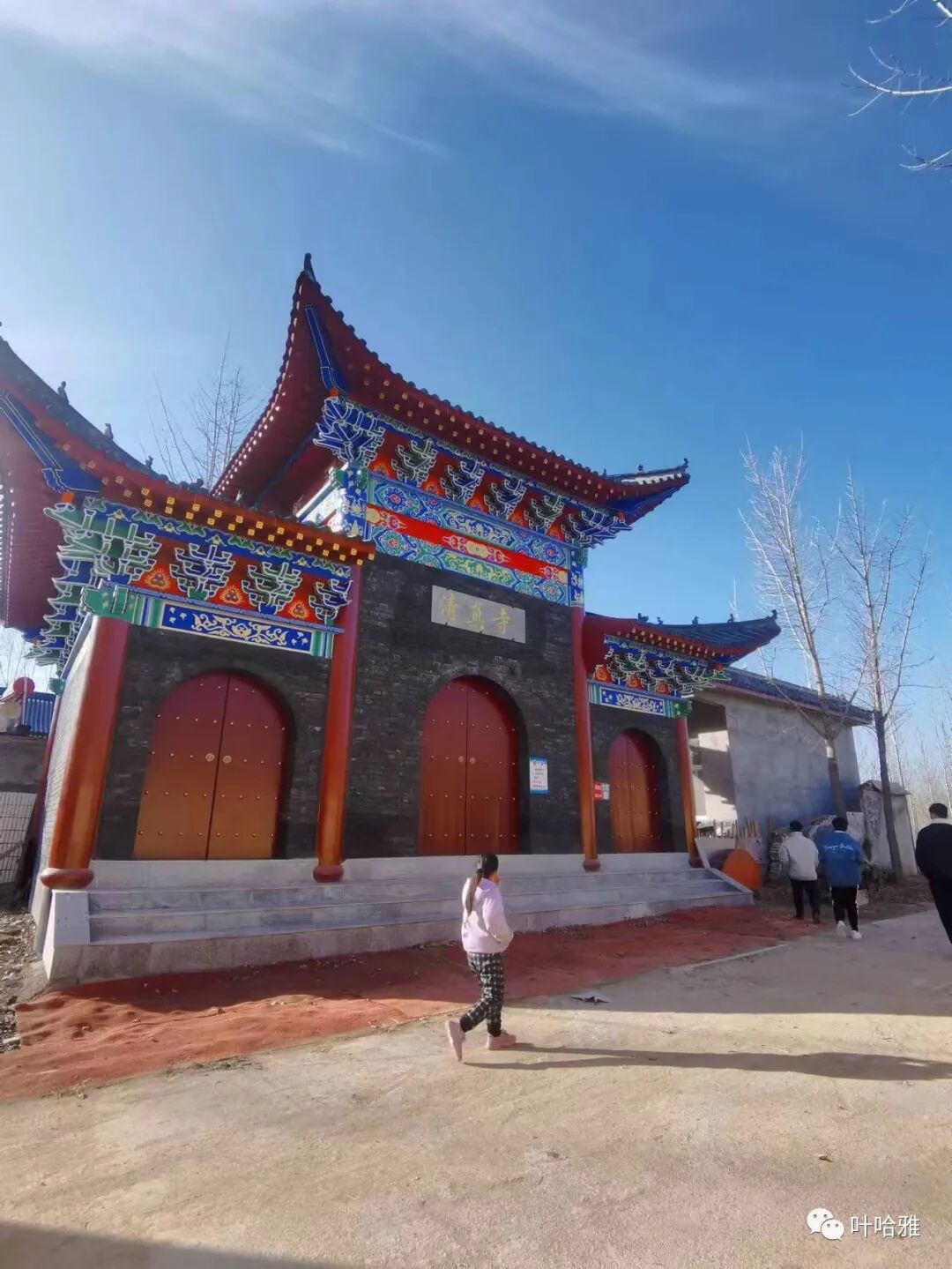
Xigaoping Mosque in Guli Town sits in the northwest part of the old Xigaoping village. It was first built in the early Qing Dynasty and has been expanded and repaired many times since. When the mosque was first established, it had a main prayer hall with five rooms and two lecture halls to the north and south with three rooms each. An ancient cypress tree once stood inside the mosque, but it was cut down during the Cultural Revolution. The mosque was re-established in 1981. It underwent large-scale renovations in 1995 and 2005.
The mosque features a typical traditional Chinese courtyard style with a single-entry layout. It is 45 meters long and 35 meters wide. The prayer hall is 15 meters long and 6.5 meters wide. The rear hall is 4 meters long and 3.5 meters wide. The north lecture hall is 16 meters long and 8 meters wide. The south lecture hall is 18 meters long and 4.5 meters wide. Two stone tablets remain today: the 2005 Renovation Record and the List of Donors for the Mosque Construction on March 16, 1994, which was also set up in 2005.
Before the founding of the People's Republic of China, Imam Bai Anfu led the religious affairs at this mosque. After the founding of the People's Republic of China, Imams Yang Yuejun, Bai Anfu, Liu Qingyuan, Wang Xiuming, and Yu Guangwei served as leaders of religious affairs in succession. The mosque is currently managed by a mosque management committee, with Liu Guitian serving as the current director.
In 2008, the mosque was named a Model Mosque by Tai'an City. In 2009, it was awarded the title of Civilized Religious Activity Venue by Xintai City. In 2010, it was once again named a Model Mosque by Tai'an City.
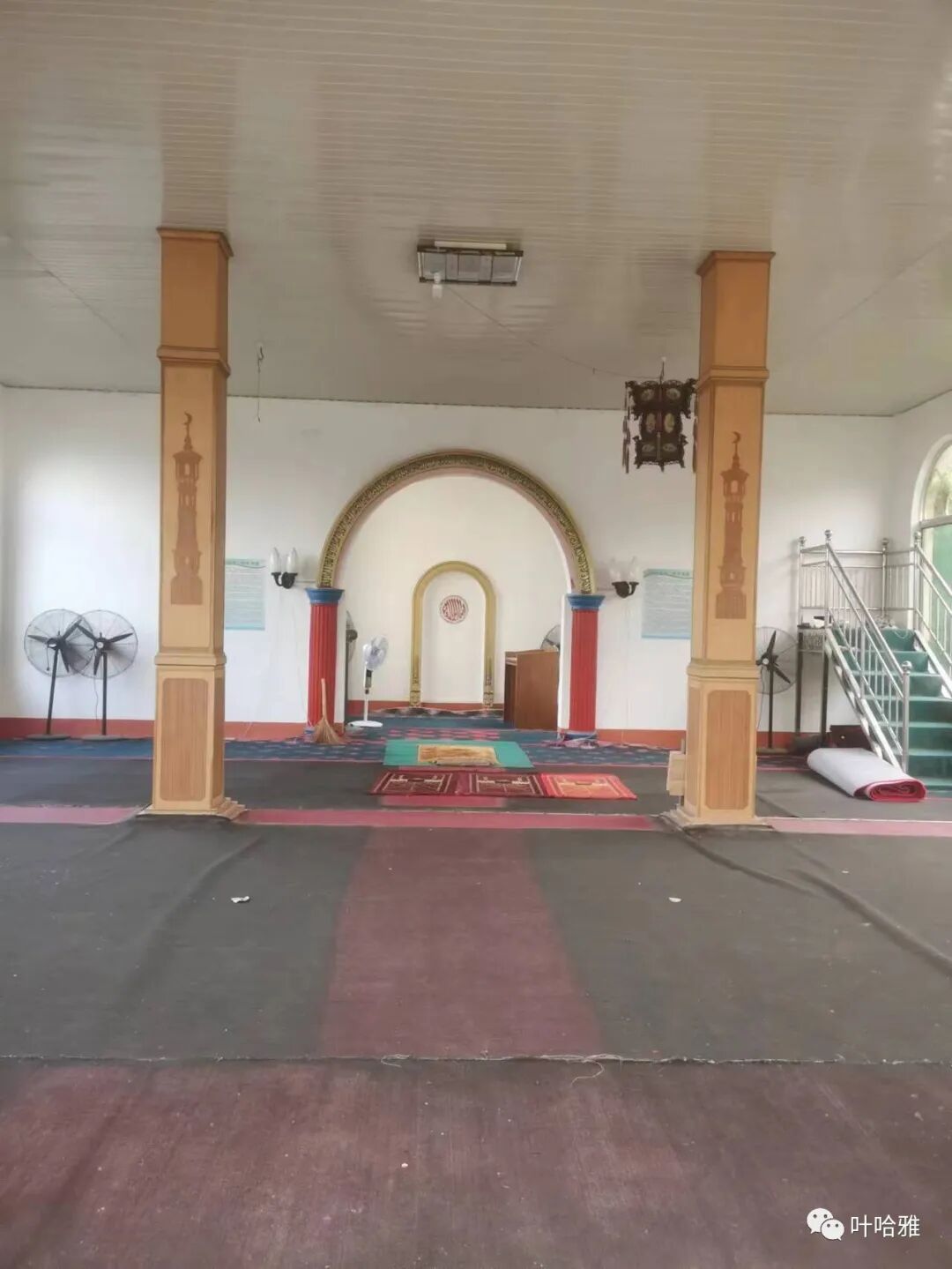
Feicheng City
Houhuang Village Mosque
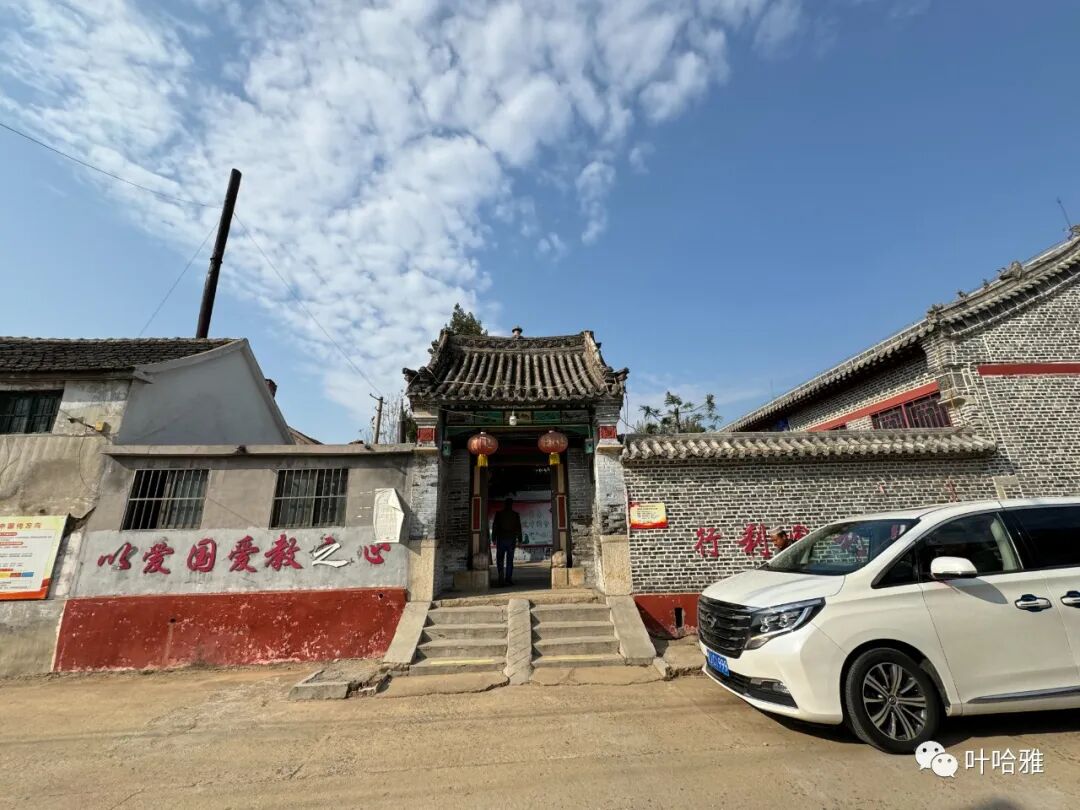
Houhuang Village Mosque in Bianyuan Town sits in the southwest corner of the village. It was built during the Ming Dynasty and has been repaired continuously since then. The mosque underwent seven large-scale renovations in 1747 (the 12th year of the Qianlong reign of the Qing Dynasty), 1809 (the 14th year of the Jiaqing reign), 1903 (the 30th year of the Guangxu reign), 1937 (the 26th year of the Republic of China), 1944 (the 33rd year of the Republic of China), 1984, and 2010.
The mosque features a Chinese palace-style architectural design and measures 45 meters long and 28 meters wide. The prayer hall has two sections, front and back, standing 9 meters high with two side rooms and a moon platform (yuetai) in front. The main hall is 17.2 meters long and 12.45 meters wide. The north lecture hall is 10 meters long and 8 meters wide. The south lecture hall is 15.2 meters long and 5.7 meters wide. The ablution room (shuiwu) is divided into separate areas for men and women. The men's room is 15 meters long and 6.2 meters wide. The women's room is 8.8 meters long and 5.8 meters wide. There are four stone tablets here: the 1747 Record of Rebuilding the Mosque Moon Platform Railing Rooms from the Qianlong era, the 1809 Record of Rebuilding the North and South Lecture Halls from the Jiaqing era, the 1910 Record of Rebuilding the Huangjiazhuang Mosque from the Xuantong era, and the 2011 Record of Rebuilding the Main Prayer Hall.
The mosque's religious affairs have been led by imams including Zhang, Zhang Baotai, Ma Yonghui, Tang Qinglin, Wang Changshun, Ma Tongyun, Yang Fulian, Xu Changcun, Yang Baojun, Zhang Shugang, and Ma Gang. The mosque has trained many religious scholars, including imams Zhang Xuan, Xu Shihe, Xu Jiben, Xu Jiwen, Xu Changchun, Xu Changzhi, Xu Jiwu, Xu Changshan, Zhang Baotai, Ma Wenli, Yang Guotai, Yang Maodou, Xu Changzeng, Yang Suo, Xu Bin, Ding Jian, Bai Yanbing, Ding Junjian, Ding Rongfu, Ding Jianhua, Yang Libiao, Xu Yongqiang, and Yang Chaoxuan. It is currently managed by the mosque's democratic management committee, with Ding Junqian, Xu Weihua, Ding Junfu, Ding Ruqing, and Yang Wei serving as directors. Religious activities are carried out according to the law. The mosque keeps a white porcelain incense burner from the Qing Dynasty. The mosque values education, and every imam has held classes to train many students (hailifan).
In 2008, the mosque was named a Model Mosque by Tai'an City. It was named a Model Mosque by Tai'an City again in 2014.
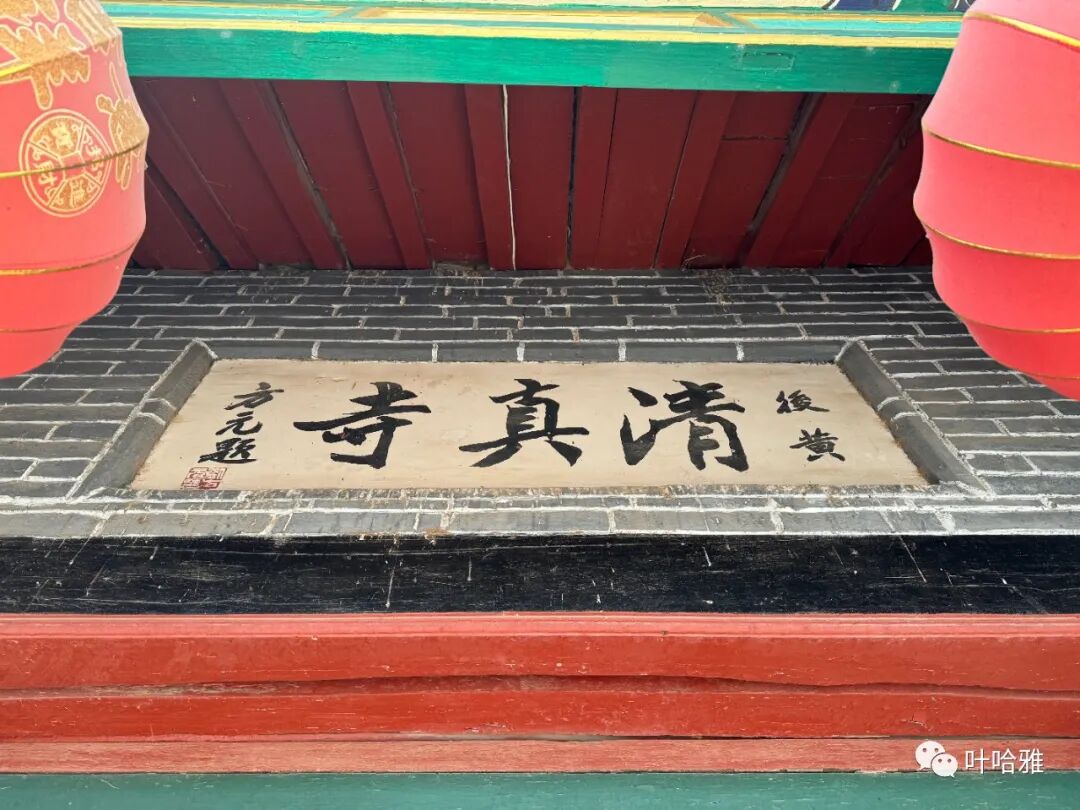
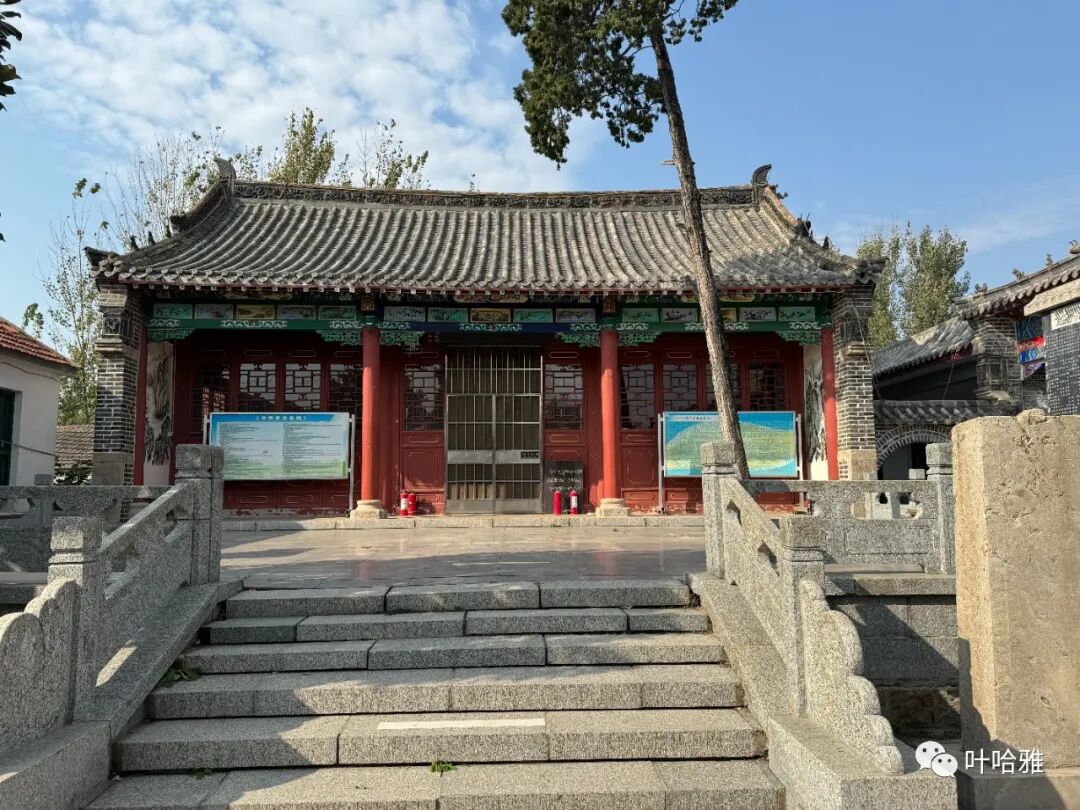
Qianhuang Village Mosque
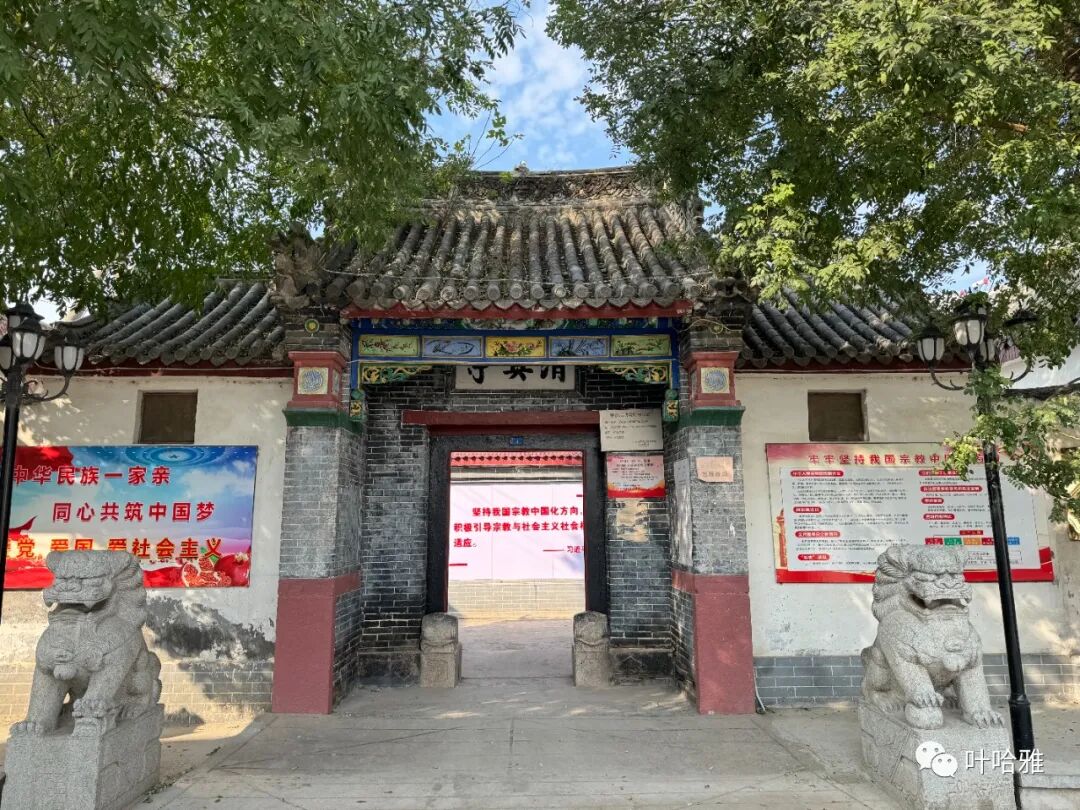
Qianhuang Village Mosque in Bianyuan Town sits at the west end of the village. It was first built during the Guangxu reign of the Qing Dynasty (1875-1906) and has been repaired many times since. In the third year of the Xuantong reign (1911), elder Zhang Shi'en donated over 3.6 mu of land, which became the current site. In 1924, four rooms were built for the south lecture hall. In 1946, elder Wang Yuduo from the Taihe firm in Qianhuang Village led a fundraising effort, and the five-room main prayer hall was finished in 1947. Large-scale repairs took place in 1991, 2000, 2002, 2004, and 2014.
The mosque is a single-courtyard building in the classic Chinese palace style. The main prayer hall has front and back sections and covers 250 square meters. The north lecture hall covers 107 square meters, the south lecture hall covers 98 square meters, and the water room covers 88 square meters. There are four stone tablets here: the Huangjiazhuang Ding Family Genealogy Tablet from 1741 (Qianlong year 6), the New Ablution Room Tablet from 2000, the Mosque Inscription from 2003, and the South Lecture Hall Reconstruction Tablet from 2004.
The mosque's religious affairs have been led by imams including Yang Guotai, Yang Chaoxuan, Mi Shuting, Ma Yongcai, Zhao Rongsheng, Zhan Qinggui, Dong Zhongqing, Mi Shuangzhong, Mi Shuangliang, Li Huaiguo, Wang Xiuming, Chen Xingwu, Wang Huaiyu, Jin Haixue, Wang Jingdou, Wang Xiuming, and Ma Jundong. Before the founding of the People's Republic of China, the mosque was managed by village elders including Ding Yuxi, Wang Wensheng, Wang Guanxi, Wang Guanxing, Wang Jixian, Bai Yuhe, Zhang Juntang, Wang Jichen, Ding Yang, Wang Guanqi, Zhang Baoshan, Zhang Baodang, and Wang Jixin. After the founding of the People's Republic of China, it was managed by village elders including Ding Yanzheng, Ding Yanyang, Wang Guanjiang, Ding Huaixin, Zhang Yongquan, Wang Xiuzhong, Ma Hongzhang, Wang Xiucai, Bai Tangyou, Zhang Yanlong, Wang Xiutong, Wang Jingshui, Ding Huaikui, Wang Jingtao, Wang Jingliang, Ma Xianmin, and Wang Zhongmin. It is now managed by the mosque's democratic management committee, with Ding Yanzheng, Ma Hongzhang, Wang Jingshui, and Ding Huaikui serving as directors.
The mosque once held cultural relics like celadon incense burners and vases, along with thirty handwritten copies of the Quran, but these were destroyed or lost during the Great Leap Forward and the Cultural Revolution.
In 2008, the mosque was named a Model Mosque by Tai'an City. In 2010, it was named a provincial-level Harmonious Religious Activity Site. In 2011, it was designated as a Feicheng City Cultural Relic Protection Unit.
Shengjiazhuang Mosque.
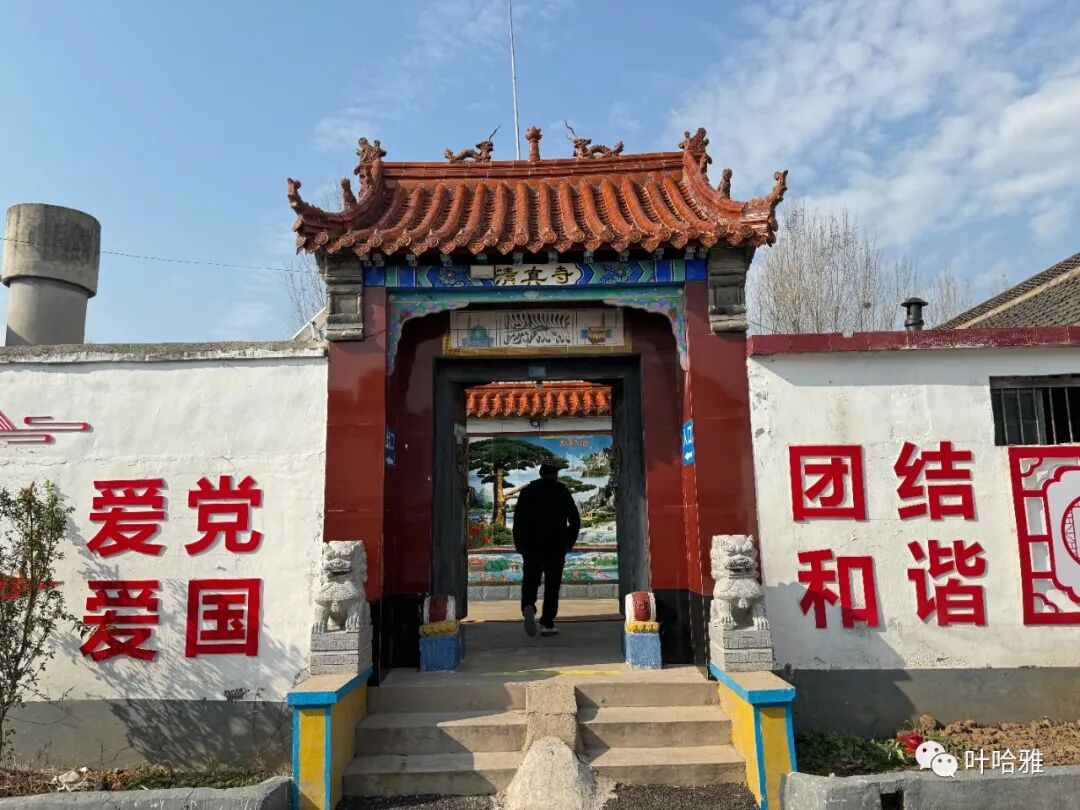
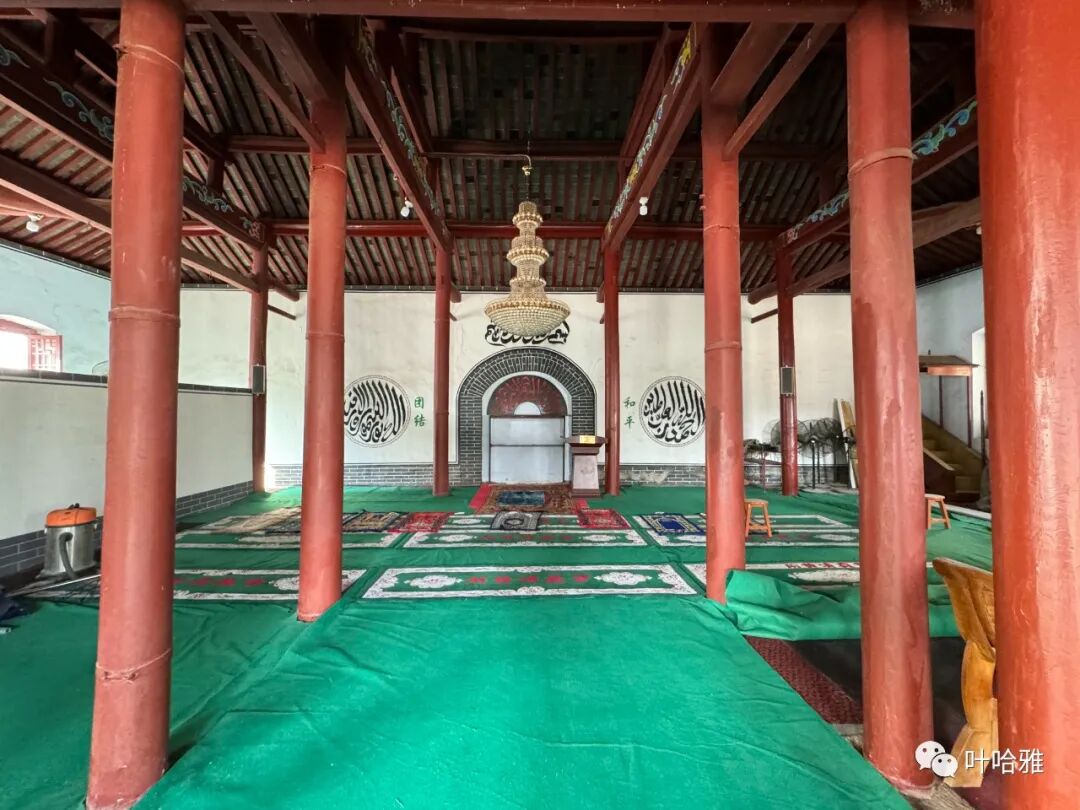
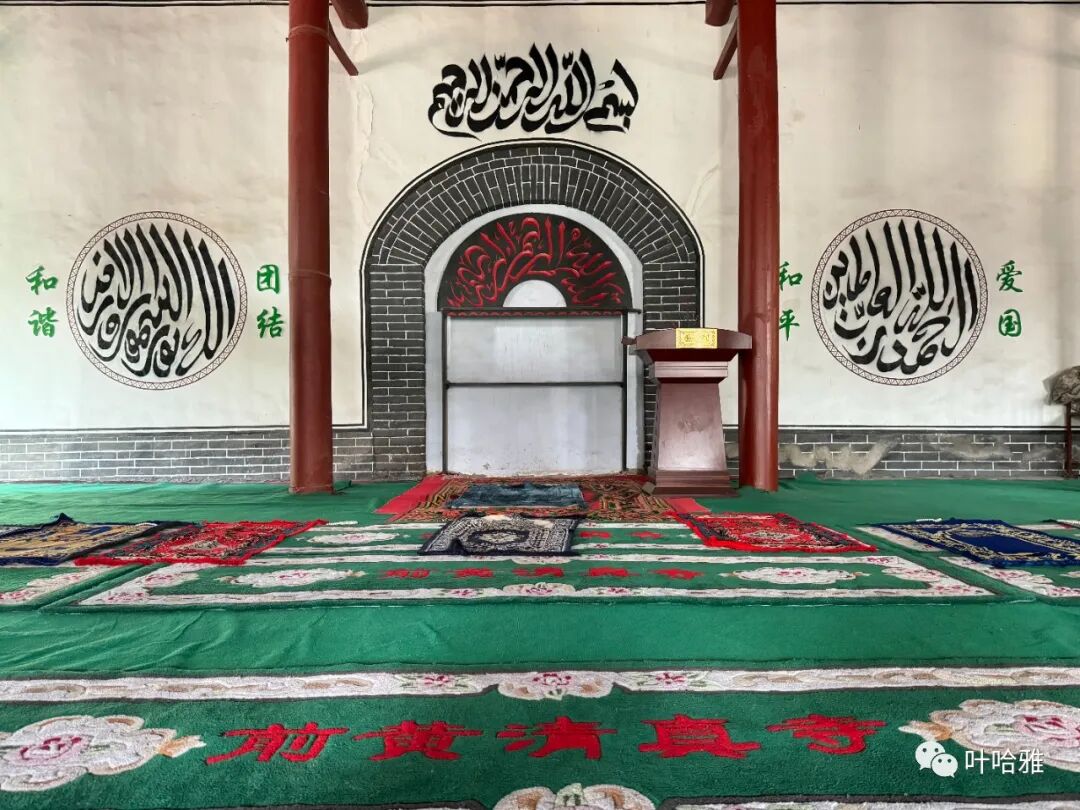
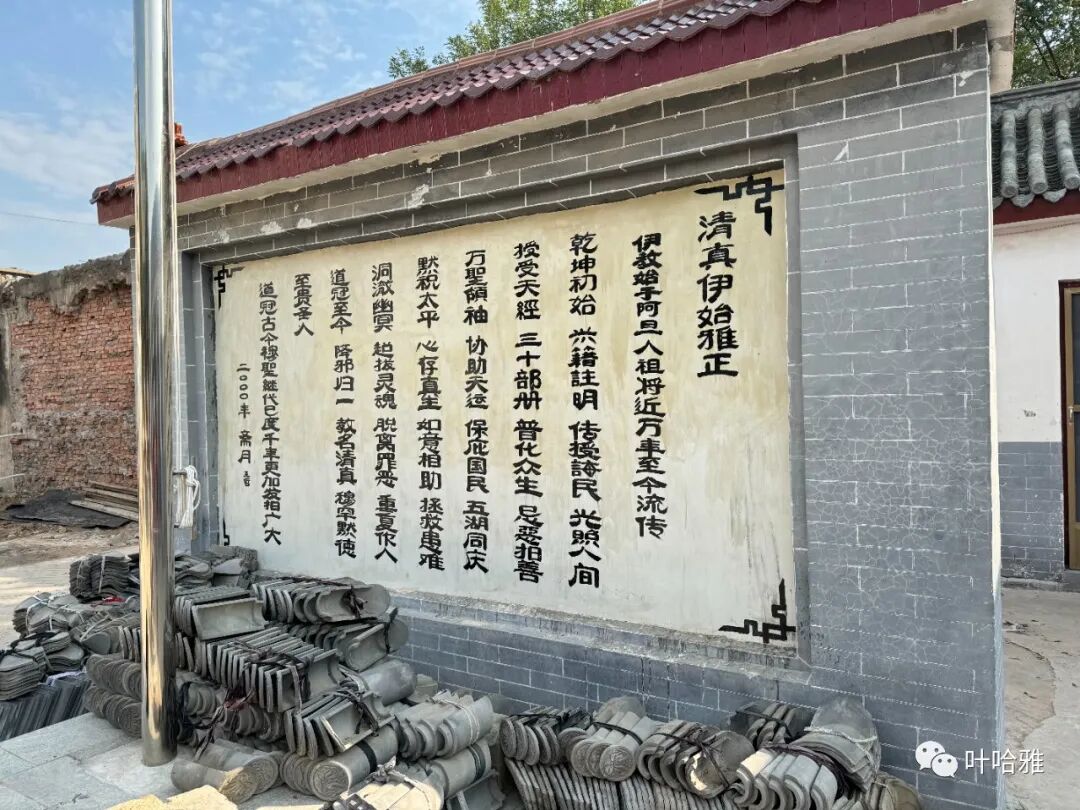
Shengjiazhuang Mosque in Anjiazhuang Town is located in the northwest corner of the village. It was first built in the early Qing Dynasty and has been renovated many times since. The mosque is built in the style of a Chinese palace, measuring 34 meters long and 30 meters wide. The prayer hall consists of a front and back section, and the main hall features a raised platform (yuetai) that is 8 meters high, 14 meters long, and 10 meters wide. The north lecture hall is 21 meters long and 7 meters wide. The south lecture hall is 11 meters long and 5 meters wide. The water room is 11 meters long and 5 meters wide. There are 7 stone tablets remaining, including the 1929 (the 18th year of the Republic of China) Tablet for the Reconstruction of the Mosque and 4 newer tablets honoring donors. An ancient stone tablet stands in front of the main hall, but the inscription is badly damaged and hard to read.
The mosque's religious affairs have been led by imams including Yang Maoxiu, Wu Mingcai, Li Jigui, and Wang Hualei. It is currently managed by the Mosque Democratic Management Committee, with Li Zhaoji, Mi Qingguo, and Yang Dengfa serving as directors.
In 2009, the mosque was named a provincial-level Harmonious Religious Activity Site. It won the title of Model Mosque of Tai'an City in 2010 and again in 2014.
Beiqiu Mosque
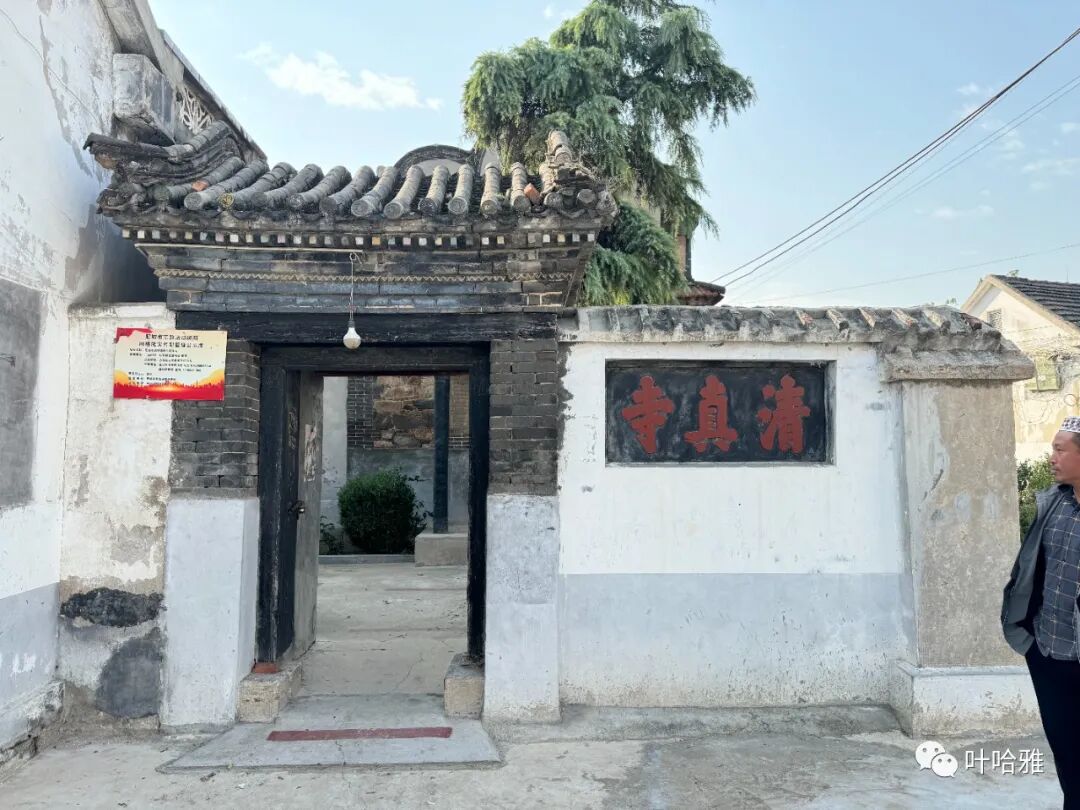
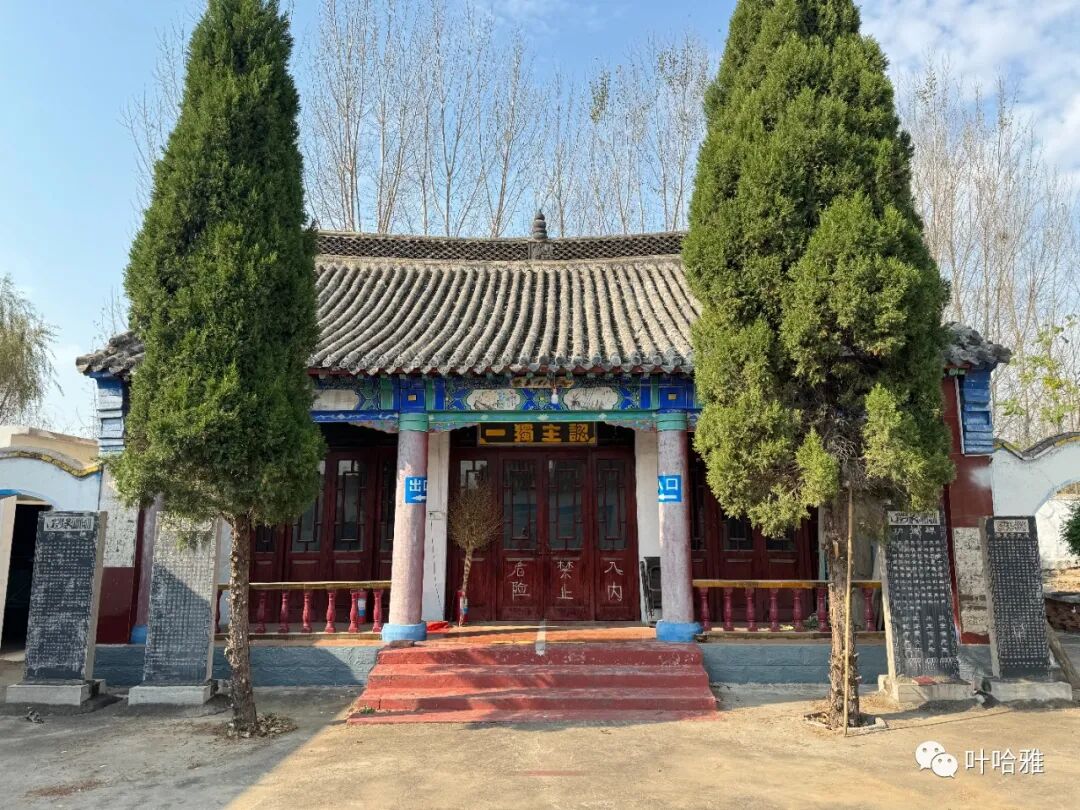
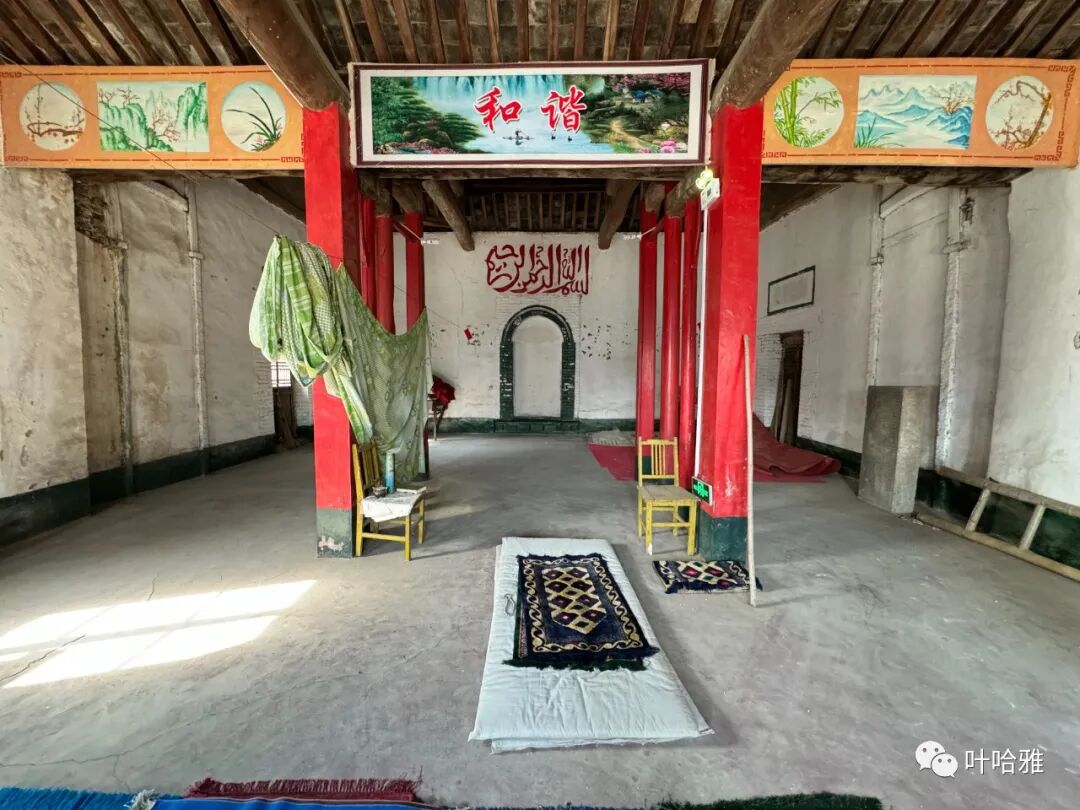
Located in the eastern half of Beiqiu Village in Bianyuan Town, the mosque was first built between the late Ming and early Qing dynasties and has been expanded several times since. The main hall was restored in the 12th year of the Qianlong reign of the Qing Dynasty (1747). The north lecture hall was rebuilt in 1991. In 2015, the south lecture hall, the water room, and the courtyard were built.
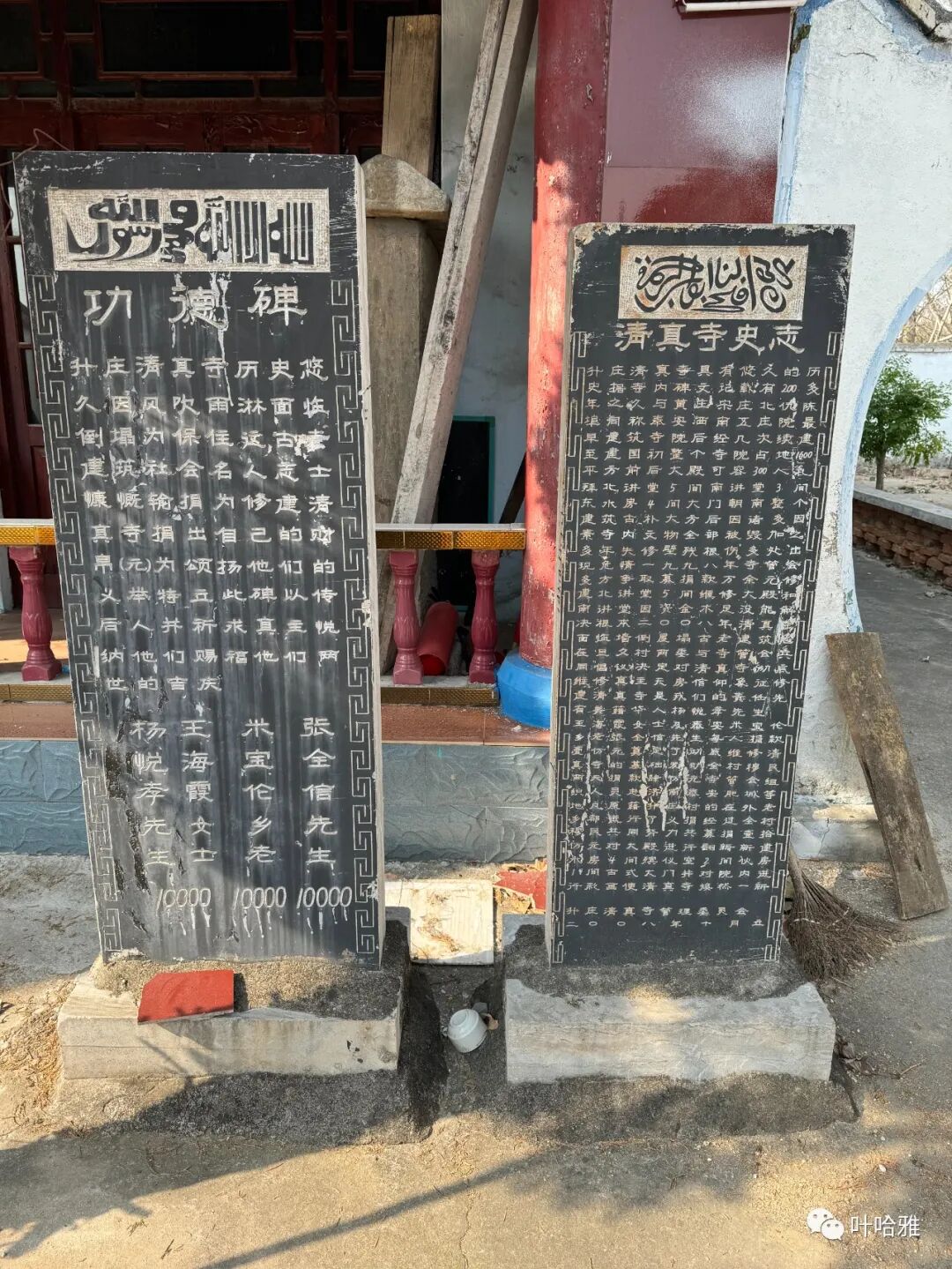
The mosque is built in the style of a Chinese palace, measuring 37.3 meters long and 26.8 meters wide. The prayer hall is a double-layered structure divided into a front hall and a back hall, with side rooms attached to the main hall and a moon terrace (yuetai) in front that is 8.5 meters long and 23.5 meters wide. The north lecture hall is 5 meters long and 17.8 meters wide. The south lecture hall is 5 meters long and 8 meters wide. The water room is 5 meters long and 19 meters wide. The mosque includes a living area for the imam. There are five stone tablets remaining, including the "Stele Record of the Mosque Restoration" from the 12th year of the Qianlong reign (1747), the "Mosque Prohibition Stele" from the Xuantong reign (1909-1911), the "Stele Record of the North Lecture Hall Reconstruction" from 1991, and the "Stele Record of the South Lecture Hall and Water Room Reconstruction" from 2015.
Imam Ding Ruhu currently oversees the religious affairs. In the past, village elders worked with the mosque's imam to manage affairs, with Xu Huali from the Daoguang reign of the Qing Dynasty (1820-1850) serving as a representative example. The mosque is now managed by a democratic management committee, with Liu Yuyuan, Ding Yongchang, Ding Yongdui, and Ding Xianquan serving as directors in succession. The mosque currently houses a copper water pitcher (tangping) dating back to the late Ming and early Qing dynasties.
Songzhuang Mosque
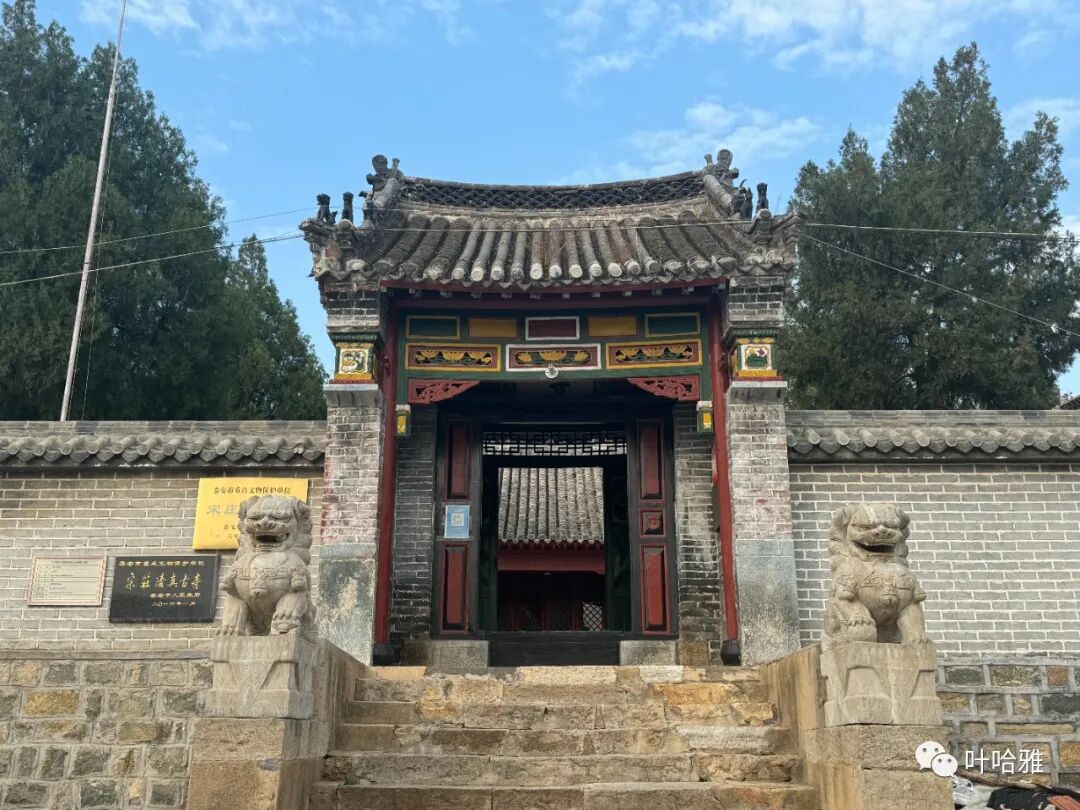
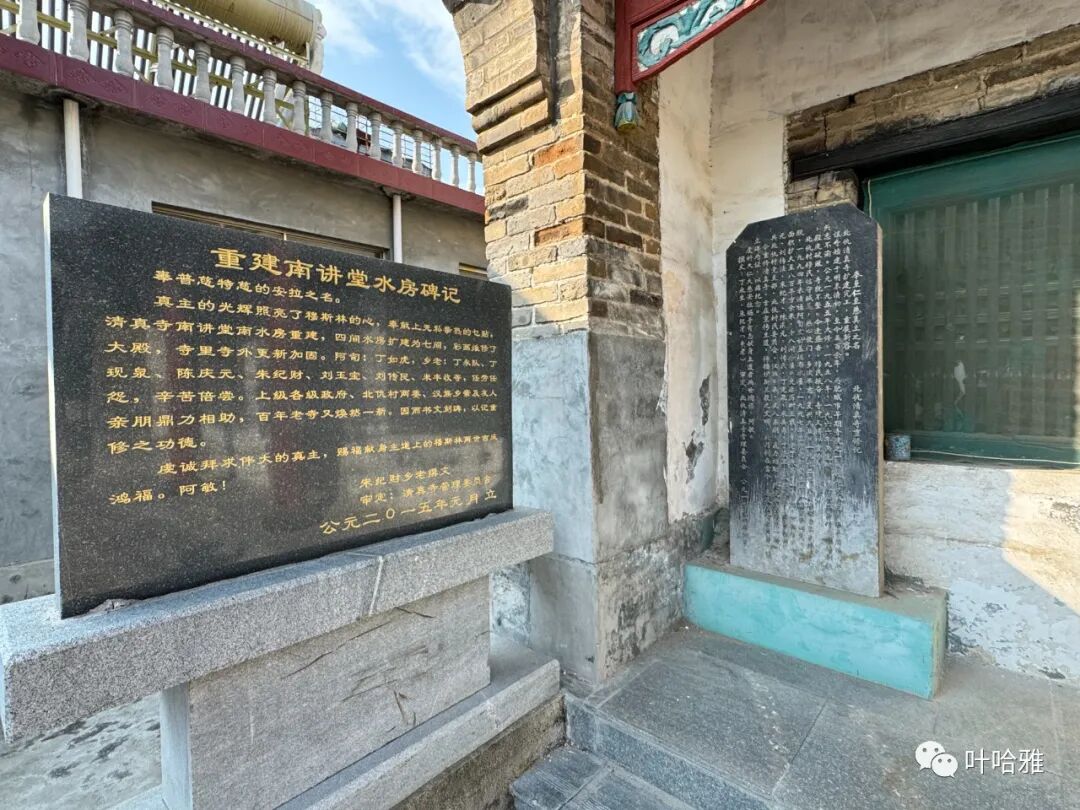
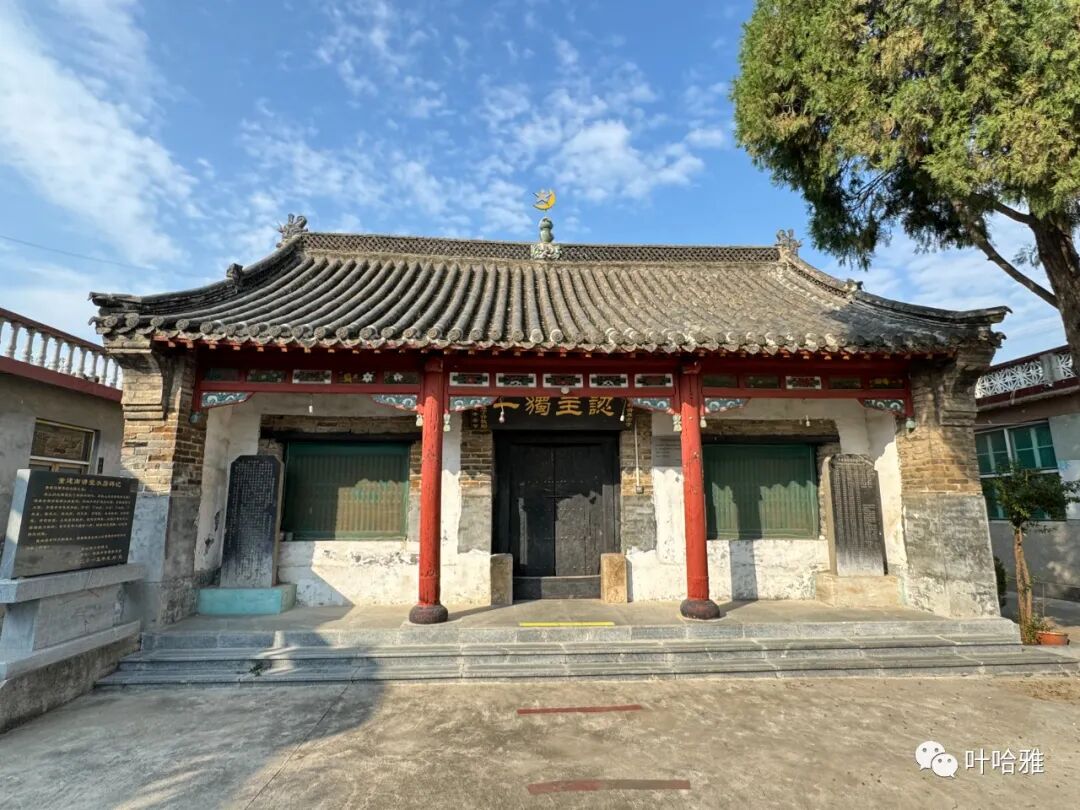
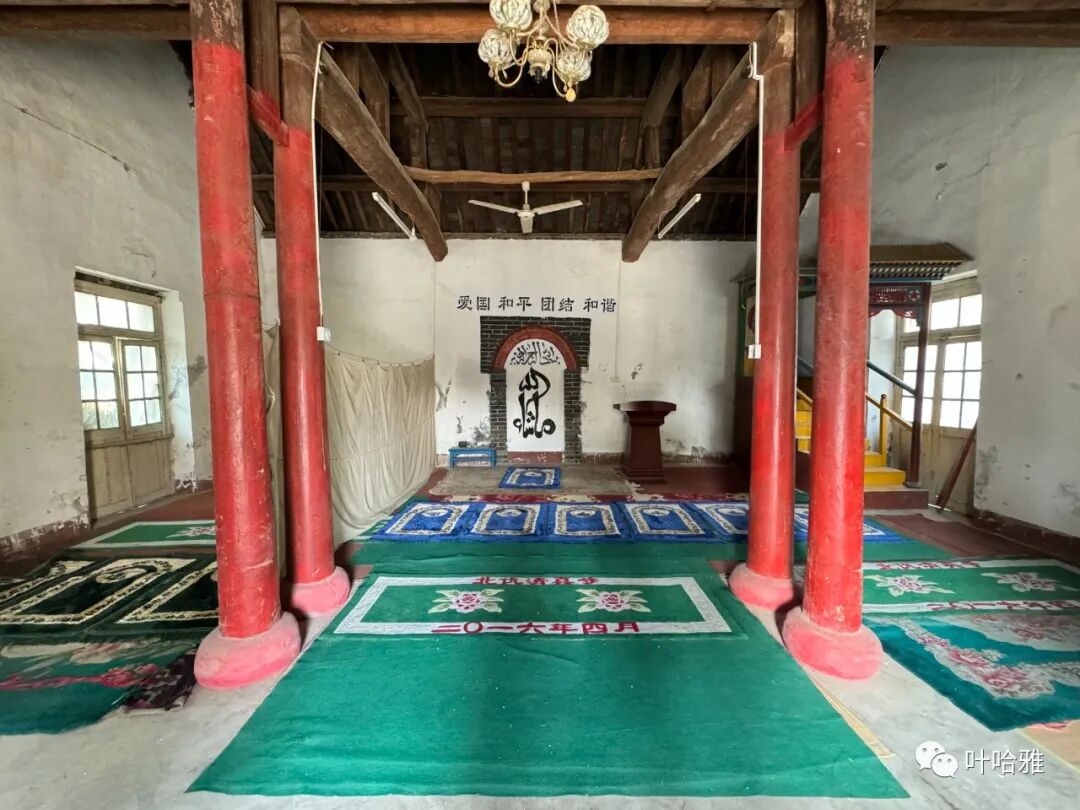
The Songzhuang Village Mosque in Bianyuan Town is located at the west end of the village. It is said to have been built in the late Ming and early Qing dynasties and has been renovated continuously since then. Before the founding of the People's Republic of China, there were four major renovations, with the most significant ones occurring in the tenth year of the Jiaqing reign (1805), the seventeenth year of the Daoguang reign (1837), the twenty-sixth year of the Guangxu reign (1900), and the fifteenth year of the Republic of China (1926). Since the founding of the People's Republic of China, it has been repaired many times, including the 2013 reconstruction of four ablution rooms (shuifang), two warehouses, and three southern lecture halls.
The mosque is built in the style of a Chinese palace, measuring 36 meters long and 36 meters wide. The prayer hall is 15.6 meters long and 11.3 meters wide, and the northern lecture hall is 18.3 meters long and 5.4 meters wide. The southern lecture hall is 15.7 meters long and 5 meters wide. The water room is 12 meters long and 5 meters wide. There are five stone tablets remaining, including the Stele for the Reconstruction of the Mosque from the nineteenth year of the Daoguang reign (1839), the Stele Record for the Reconstruction of the Mosque from the twenty-sixth year of the Guangxu reign (1900), the Preface Stele for the Reconstruction of the Mosque from the fifteenth year of the Republic of China (1926), and the Preface to the Reconstruction of the Songzhuang Ancient Mosque.
Historically, the mosque trained imams such as Ma Huanwen and Sha Xianzhang. Over the past twenty years or so, imams including Li Zhongguo and Wang Huarong have led the religious affairs. The mosque is currently managed by a democratic management committee, with Zuo Guangwen, Ma Yumin, Bai Youting, Ma Yujun, and Yang Changgang serving as directors in succession.
In 2009, the mosque was awarded the provincial title of Harmonious Religious Activity Venue. In 2010, it received the title of Model Mosque from Tai'an City. In 2016, it was designated as a Cultural Relic Protection Unit of Tai'an City.
Chahedian Mosque
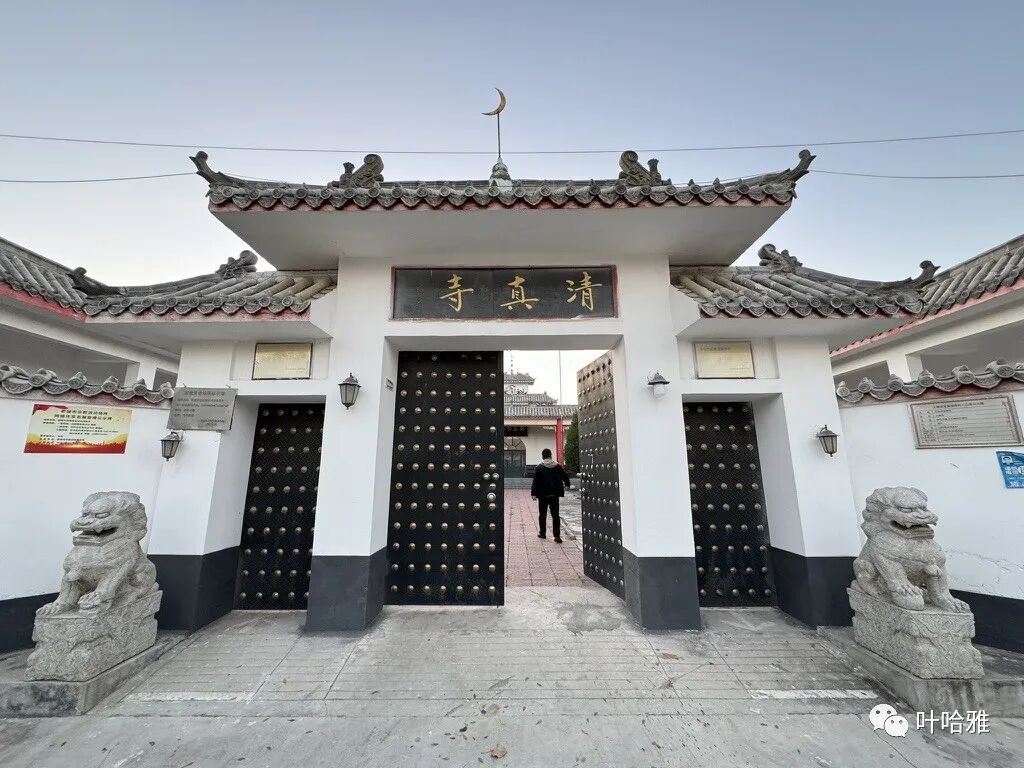
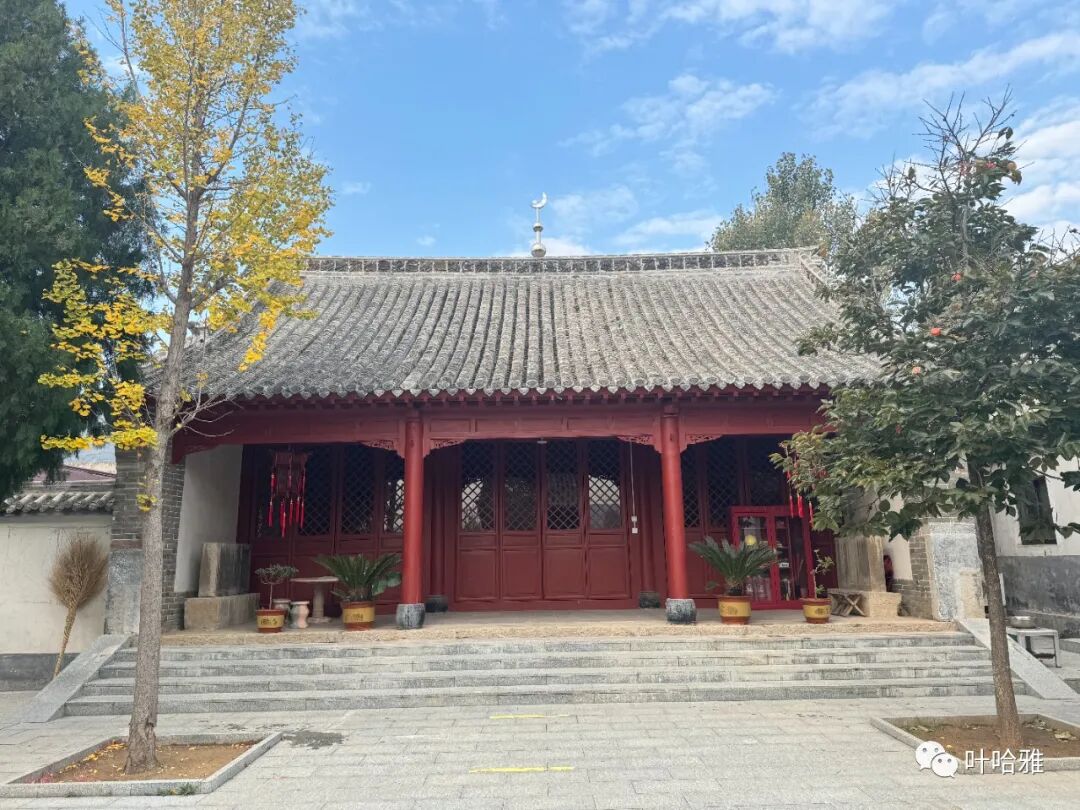
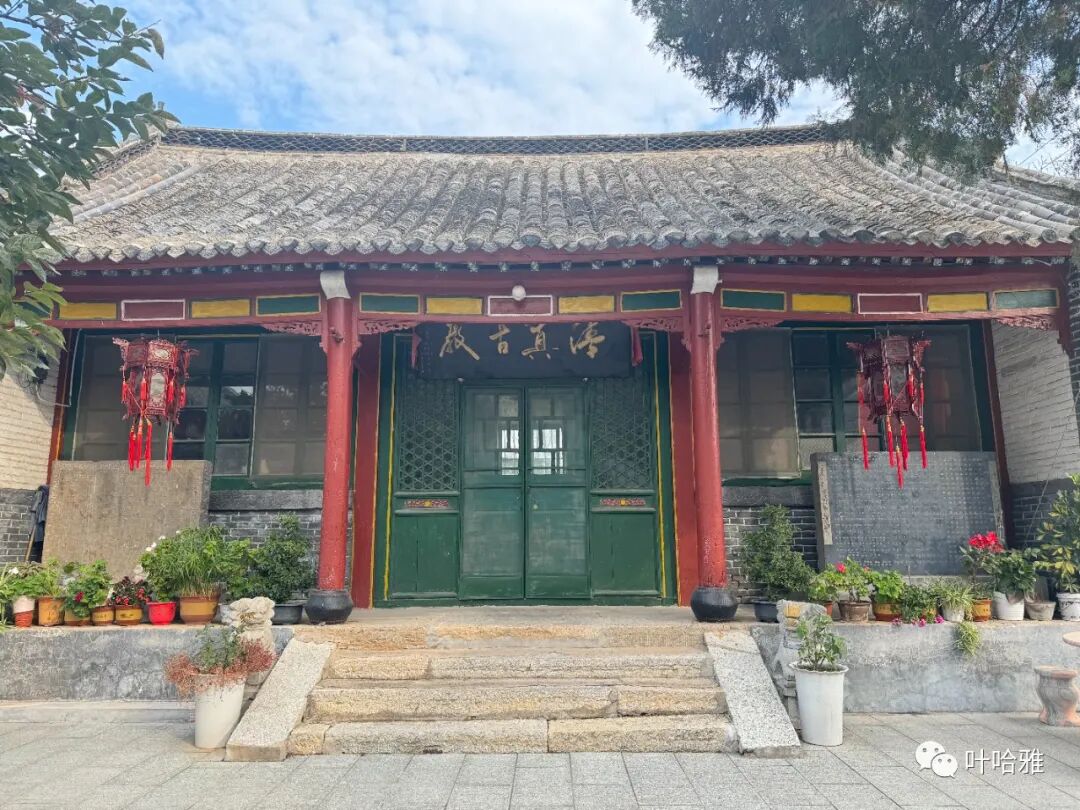
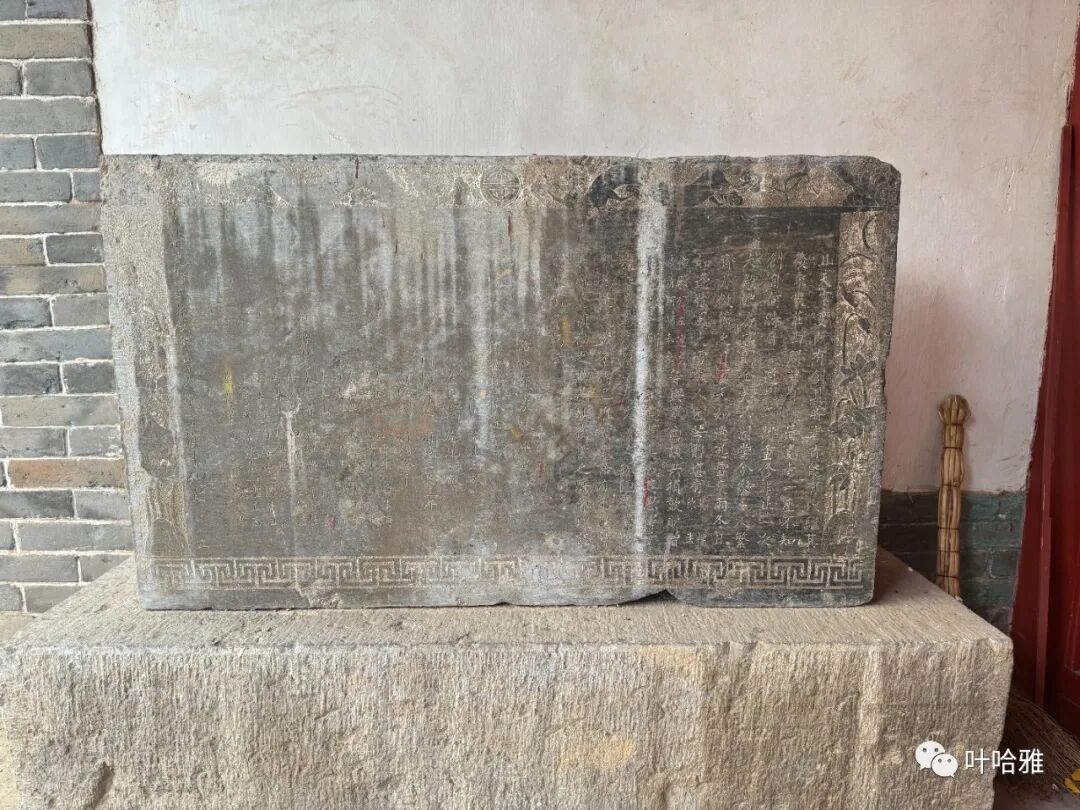
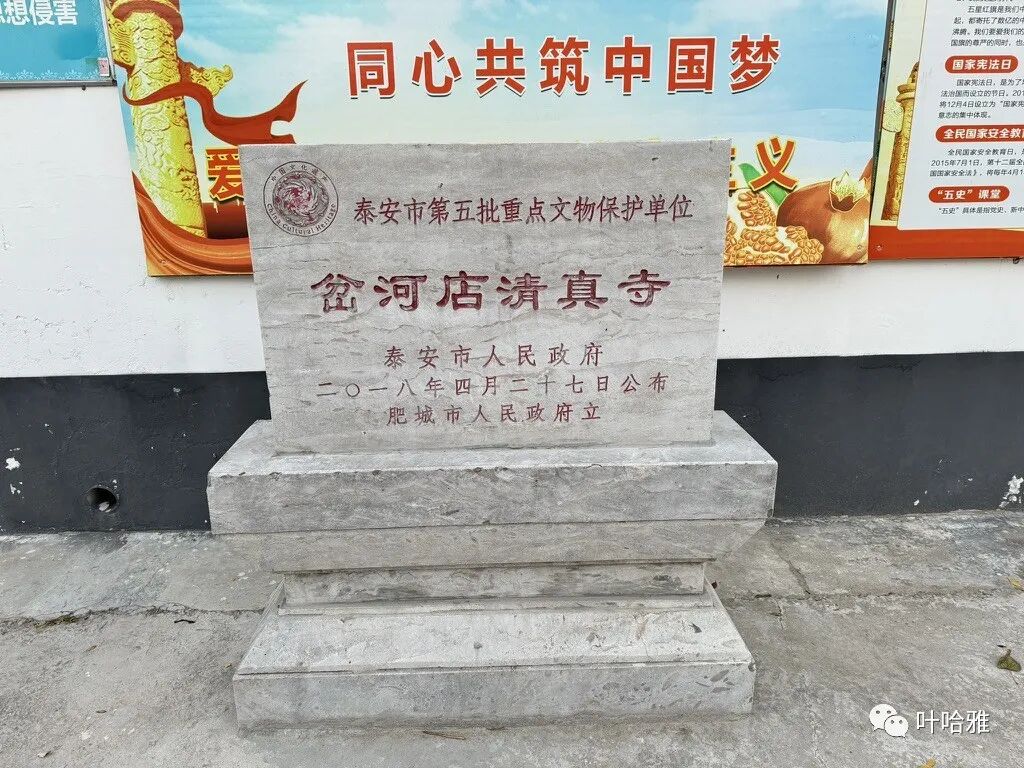
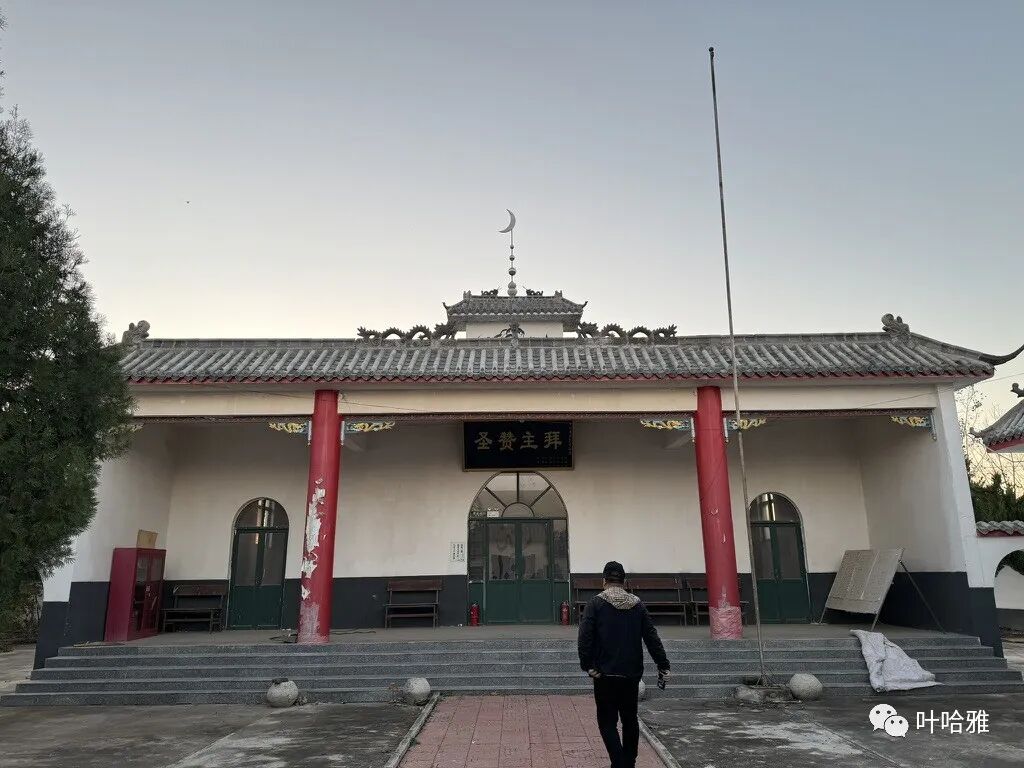
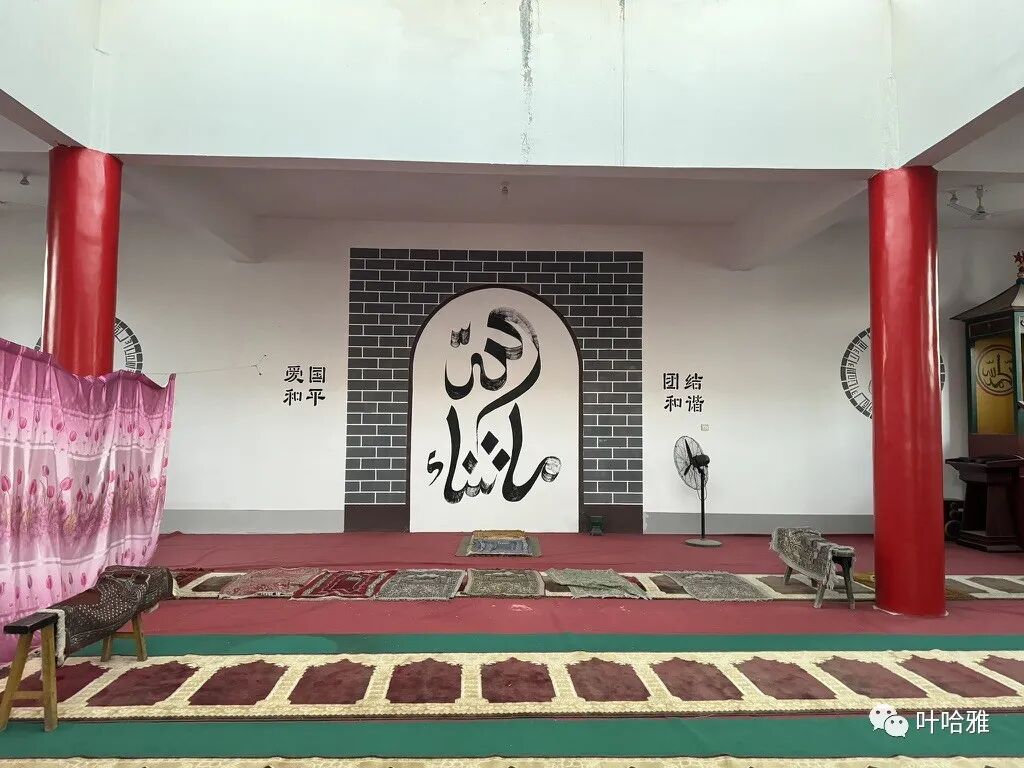
Chahedian Mosque in Bianyuan Town is located in the middle of the village. It was first built during the Qianlong reign of the Qing Dynasty (1735-1796) and has been expanded and repaired ever since. In 2014, the mosque underwent a large-scale renovation.
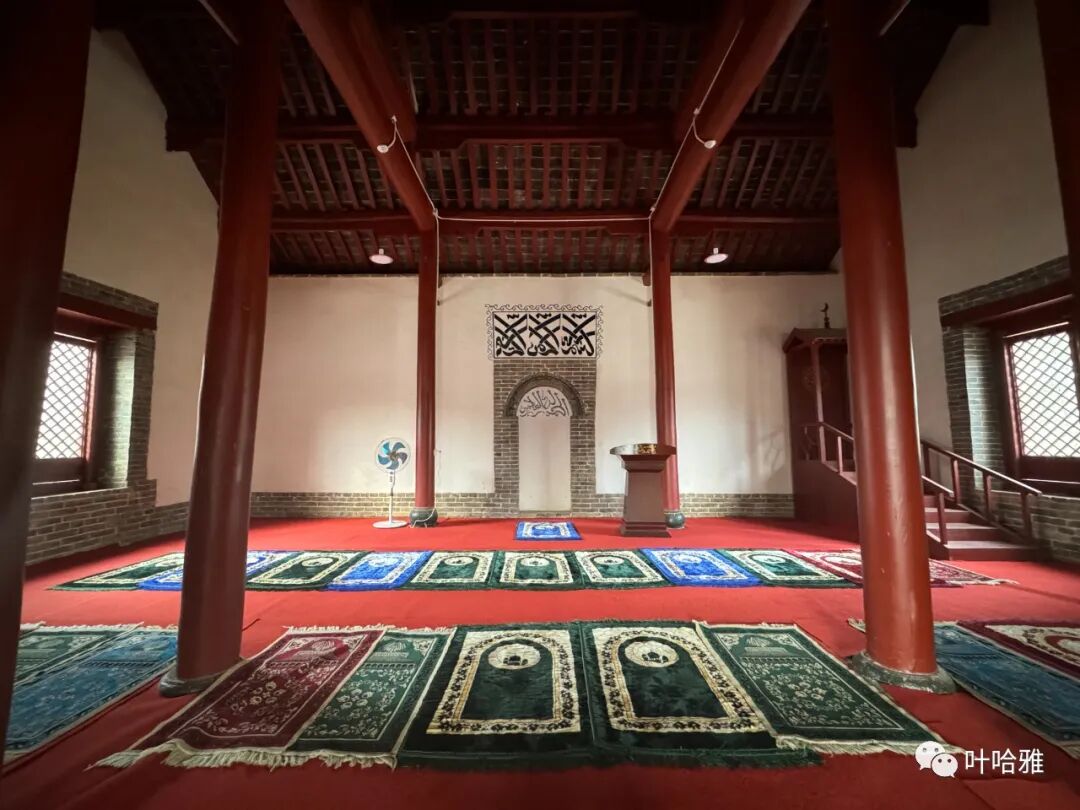
The mosque features a Chinese palace-style architectural design, measuring 45 meters long and 30 meters wide. The prayer hall is 15 meters long and 15 meters wide, and the north lecture hall is 27 meters long and 7 meters wide. The south lecture hall is 20 meters long and 7 meters wide. The ablution room (shuiwu) is 6 meters long and 7 meters wide.
The mosque's religious affairs were led by imams including Xu Changzhi, Zhang Yanzhai, Wang Huarong, Ma Wenli, Wang Hualei, and Yang Shunchang. It is now managed by the mosque's democratic management committee, with Han Hongbin, Liu Yuantai, and Wang Jihe serving as directors. In 2012, it was named a provincial-level Harmonious Religious Activity Venue.
Fenghuang Village Mosque
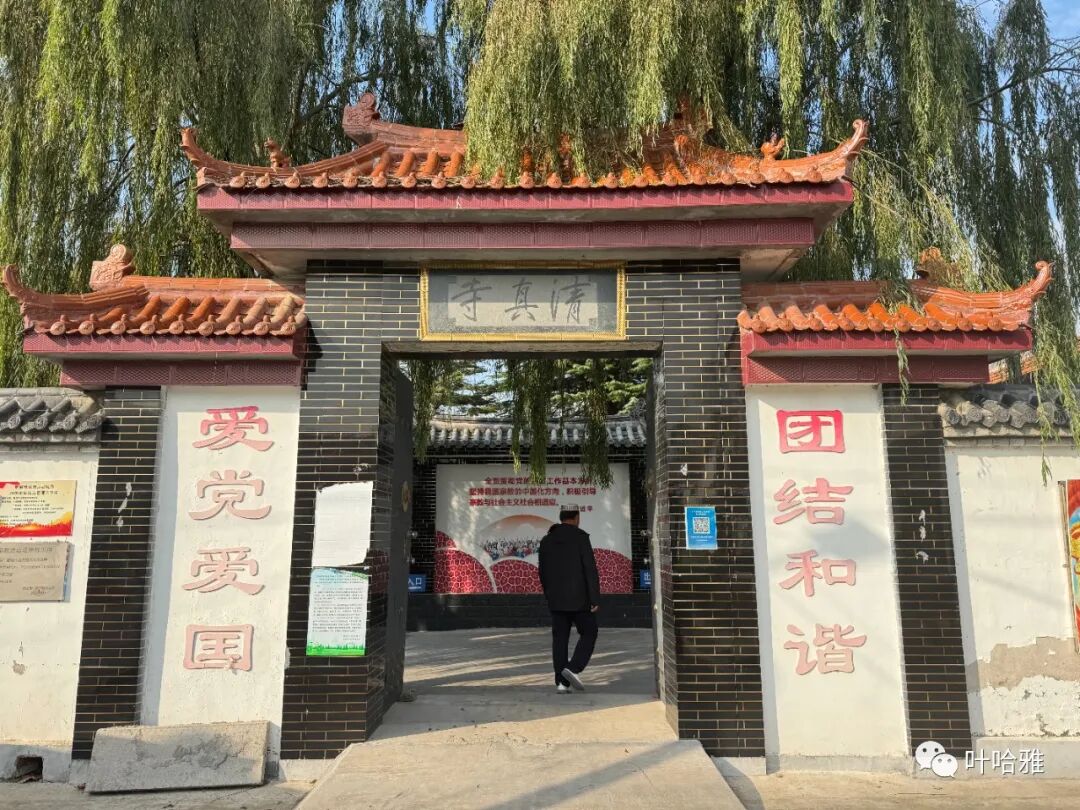
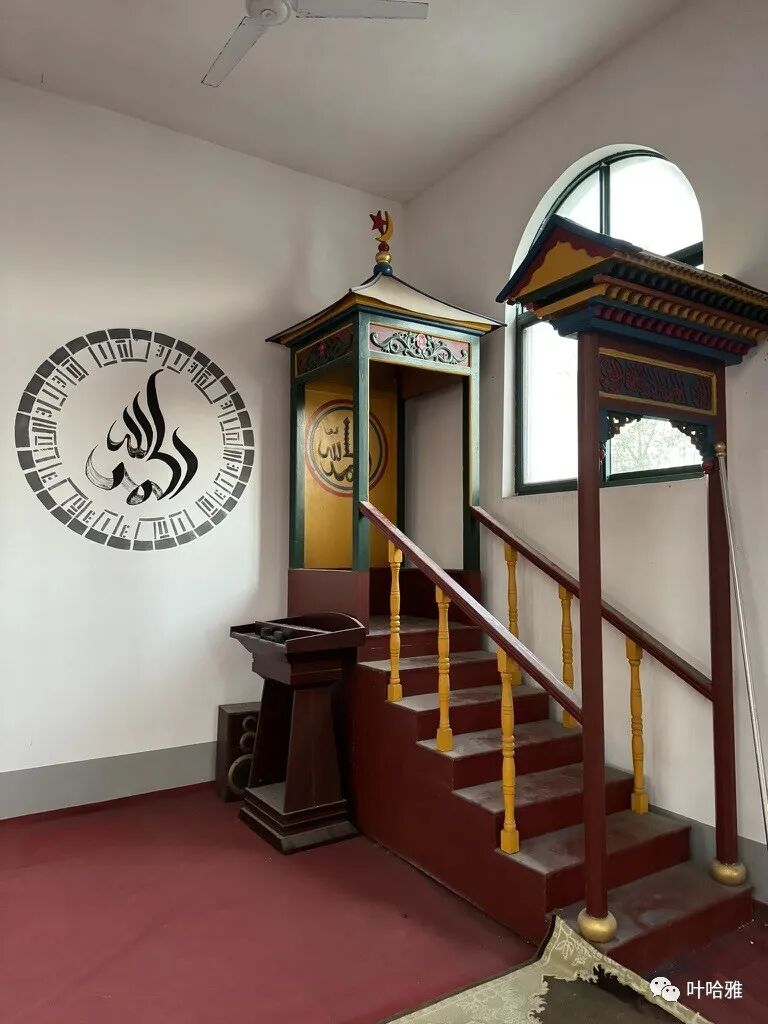
Fenghuang Village Mosque in Bianyuan Town sits at the west end of the village. It was built in the 11th year of the Republic of China (1922). When the mosque was first established, it included a main prayer hall, a lecture hall, an ablution room, a main gate, and courtyard walls. It underwent large-scale renovations in 1994.
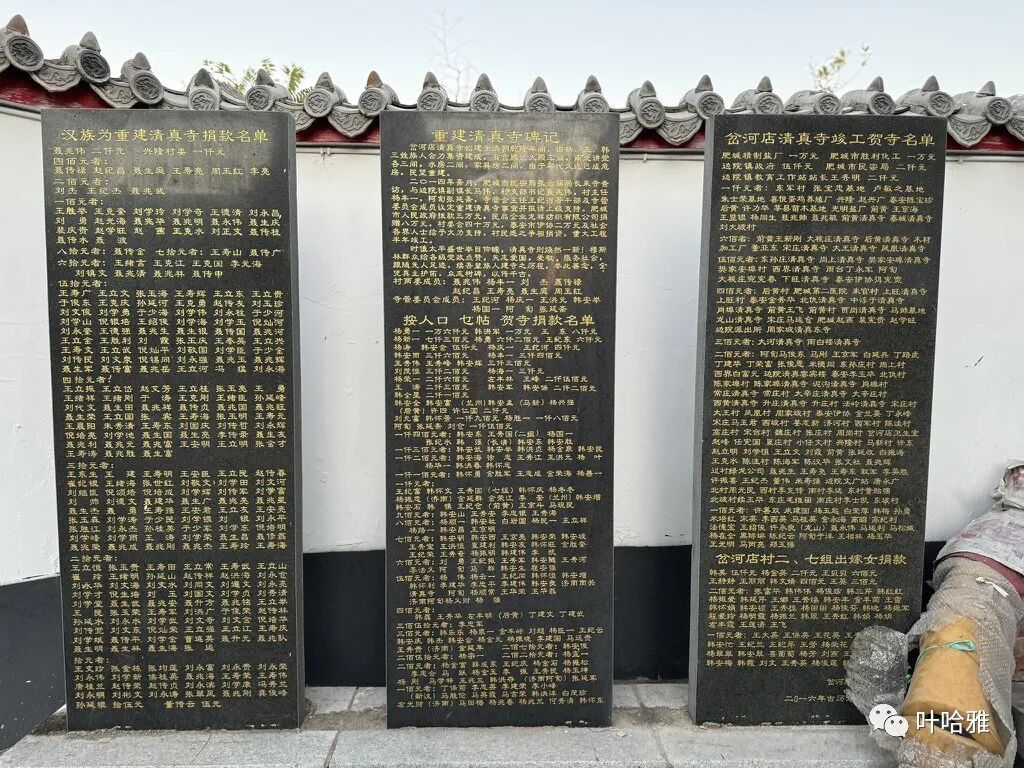
The mosque features a Chinese palace-style architectural design and is 35 meters long and 30 meters wide. The prayer hall is 12 meters long and 10 meters wide. The north lecture hall is 13 meters long and 6 meters wide. The south lecture hall is 13 meters long and 6 meters wide. There are two existing stone tablets: the Mosque Founding Tablet from 1940 and the Mosque Reconstruction Record Tablet from 1995.
The mosque's religious affairs were led by imams including Wang Yongqing, Ma Xingchang, Ding Hu, Wang Changming, Yang Xingwang, Wang Changgui, and Yang Baojun. It is currently managed by the mosque's democratic management committee, with Wu Maowen, Wu Baoshu, Mi Kuan, Wu Yuanfa, Wu Mingkun, Wu Mingxiang, Wu Jinzhong, and Mi Zhaoying serving as directors.
Dawangzhuang Mosque
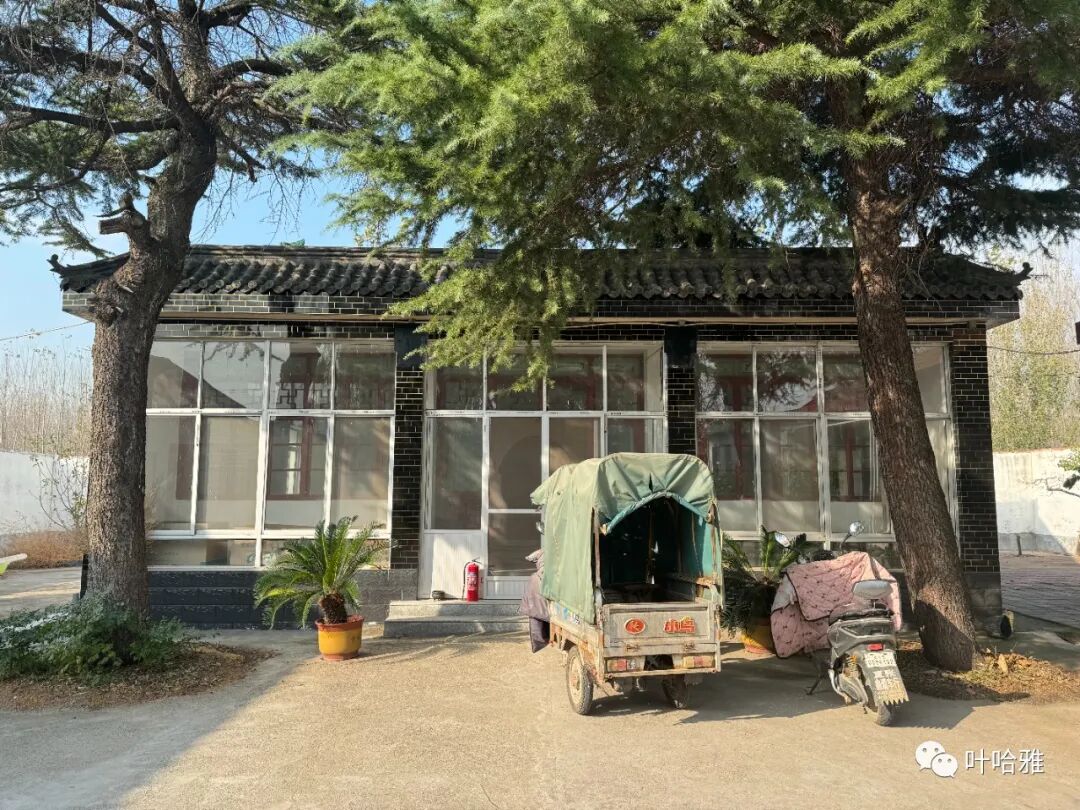
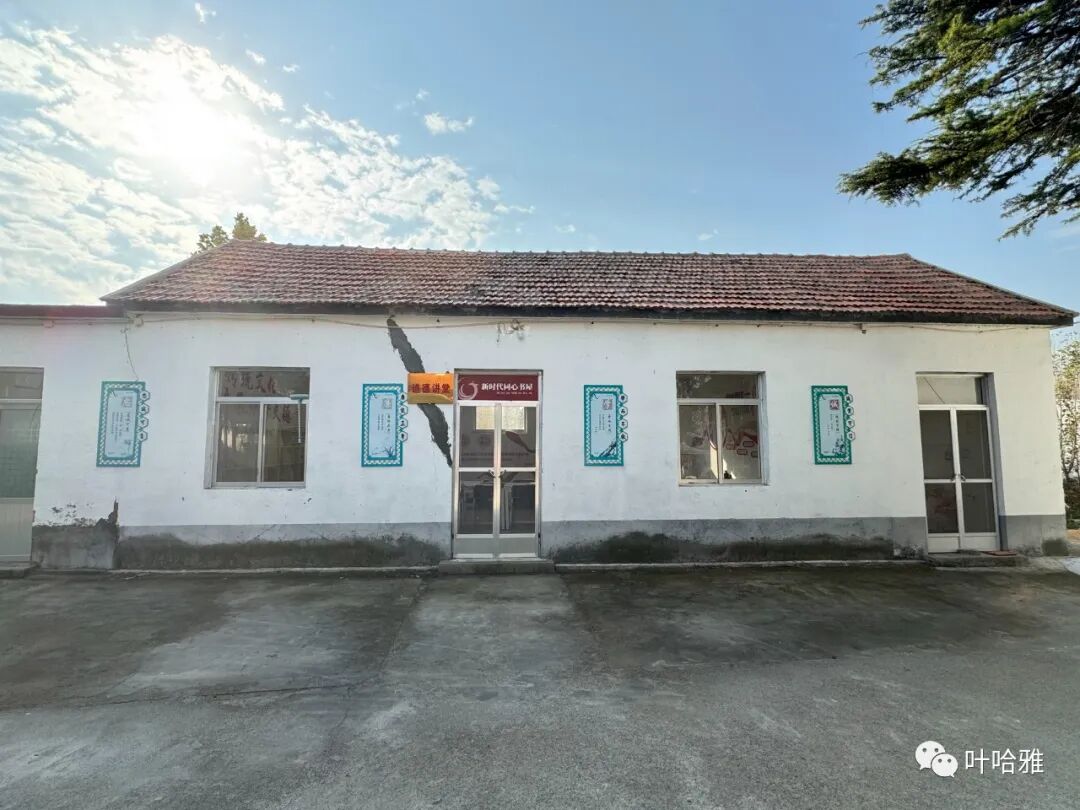
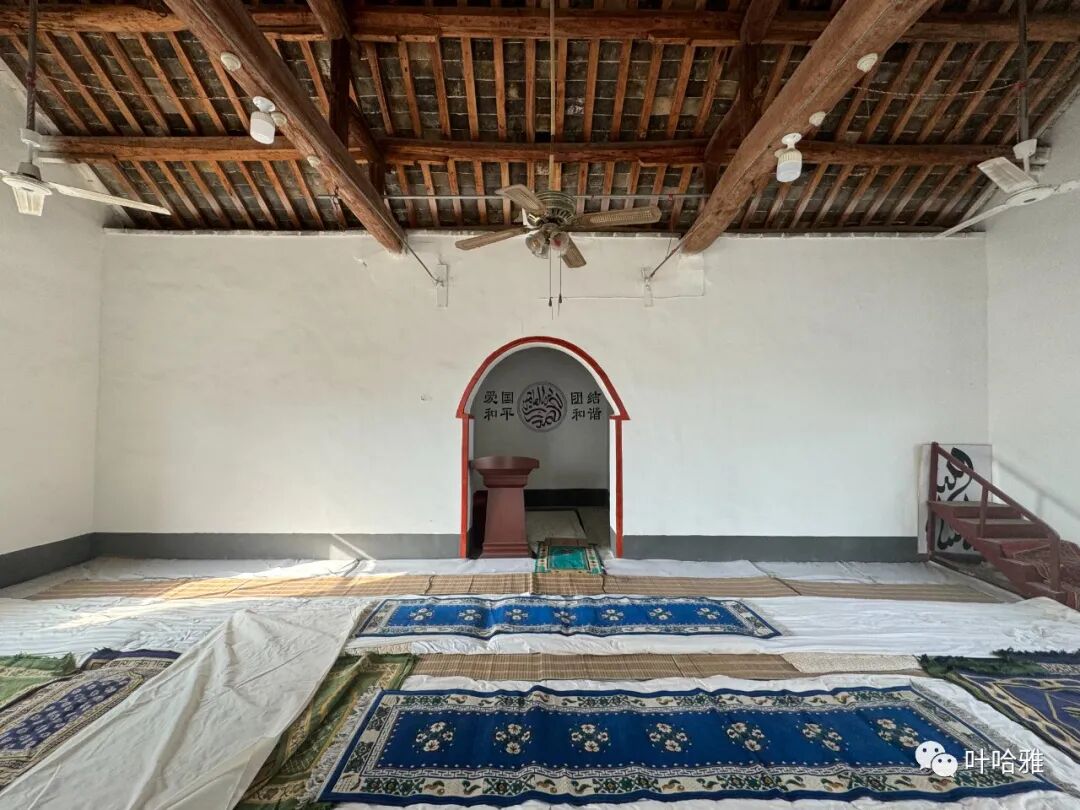
Dawangzhuang Mosque in Bianyuan Town is located at the east end of the village. It was built in 1953 and has been repaired many times since. Large-scale renovations took place in 2005, 2007, and 2011.
The mosque is in a modern architectural style, measuring 35 meters long and 40.5 meters wide. The prayer hall is a single-level structure with a rear hall, standing 5.2 meters high, 11 meters long, and 7.5 meters wide. The north lecture hall is 15 meters long and 7.6 meters wide. The south lecture hall is 3 meters long and 7.6 meters wide. The water room is 7.6 meters wide.
The mosque's religious affairs were led by imams including Bai Anfu, Imam Yang, Yang Baojun, Jin Haizeng, Wang Zengli, Ma Chuanxiang, Yang Dong, and Ding Jianhua. It is now managed by the mosque's democratic management committee, with Yang Baojin, Yang Shunping, and Yang Shuncang serving as directors. The mosque houses an incense burner.
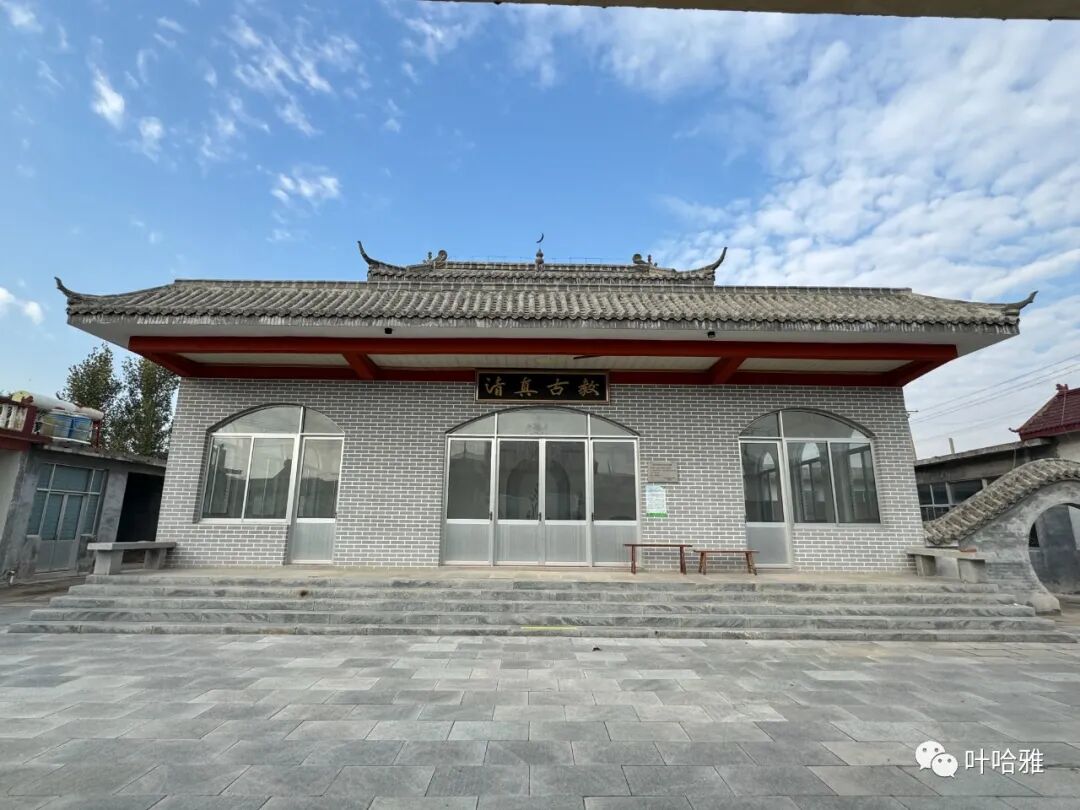
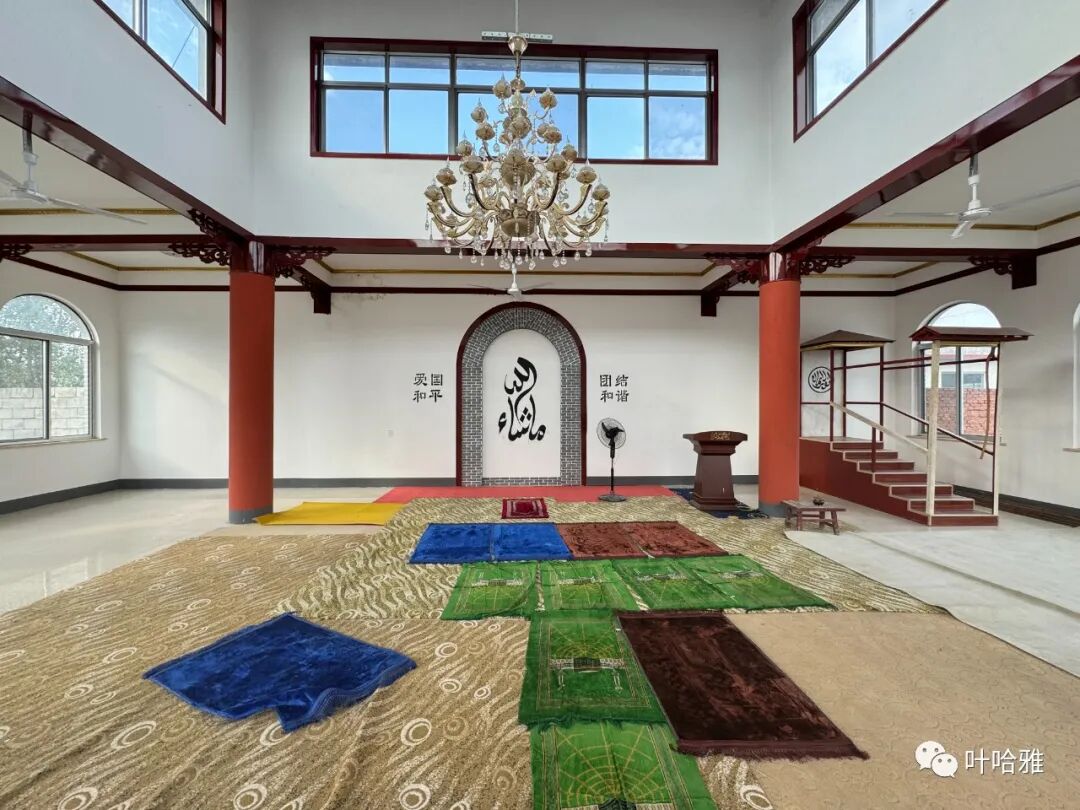
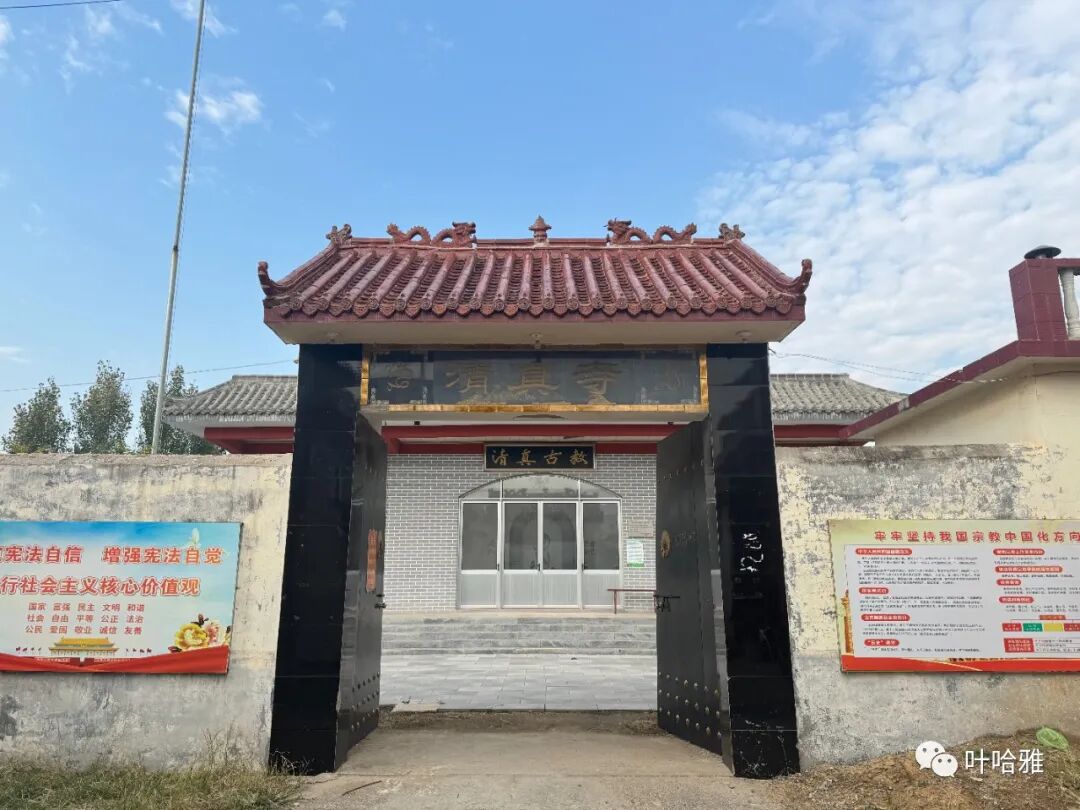
Chenjiabu Mosque
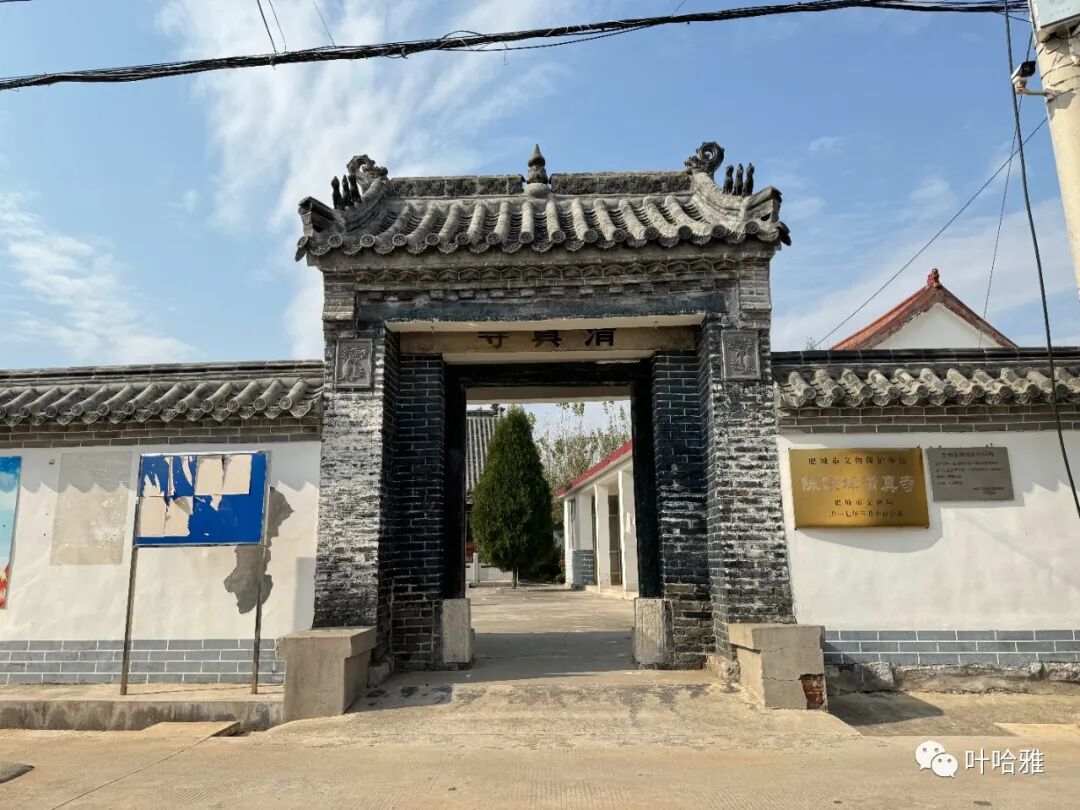
Chenjiabu Mosque in Anjiazhuang Town sits at the west end of the village. It was first built between the late Ming and early Qing dynasties and has been expanded and repaired ever since. The mosque underwent two large-scale reconstructions in 1996 and 2007.
The mosque features a Chinese palace-style architectural design and measures 46 meters long and 24 meters wide. The prayer hall is a double-layered structure consisting of a front porch, a front hall, a gutter, and a rear hall, creating a connected architectural layout. Both the front and rear halls follow a four-beam and eight-pillar design, with a brick and lime gutter installed at the junction of the two halls for drainage. There are side doors on both sides and a raised platform (yuetai) in front. The main prayer hall is now a dangerous building. The main prayer hall is 9 meters high, 16 meters long, and 10 meters wide. The north lecture hall is 16 meters long and 6.5 meters wide. The south lecture hall is 13 meters long and 5 meters wide. The water room is 6.5 meters long and 5 meters wide. The mosque was once awarded the provincial title of Harmonious Religious Activity Venue.
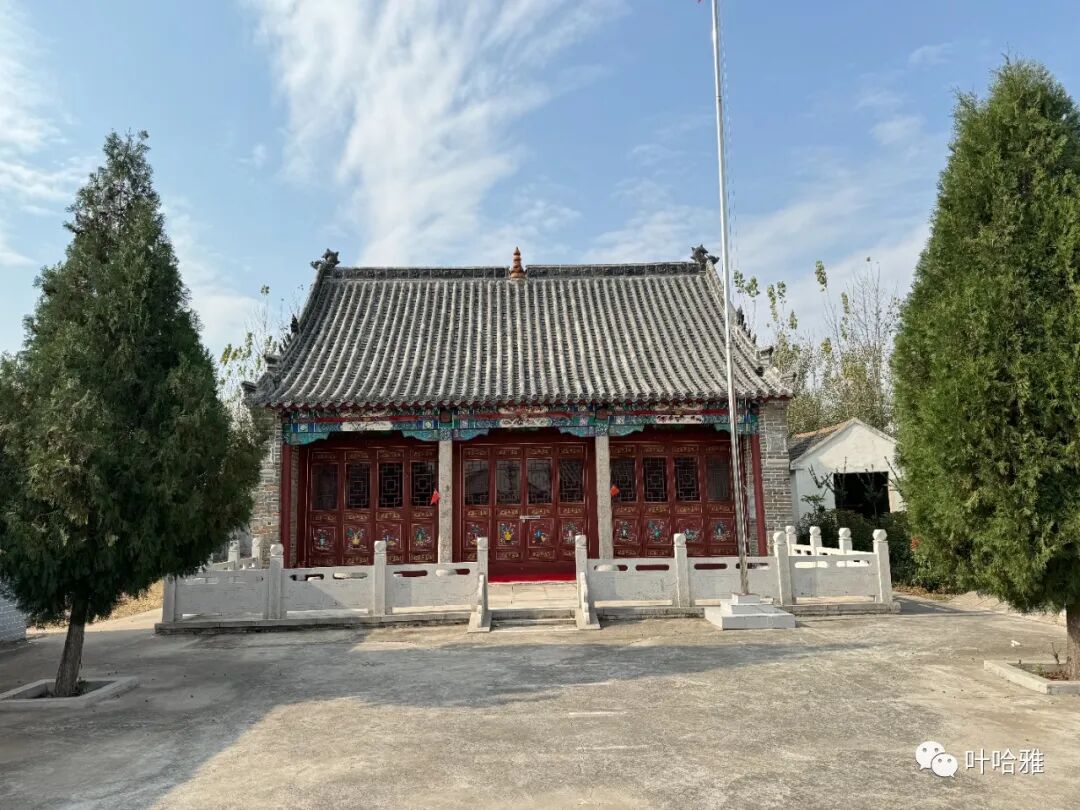
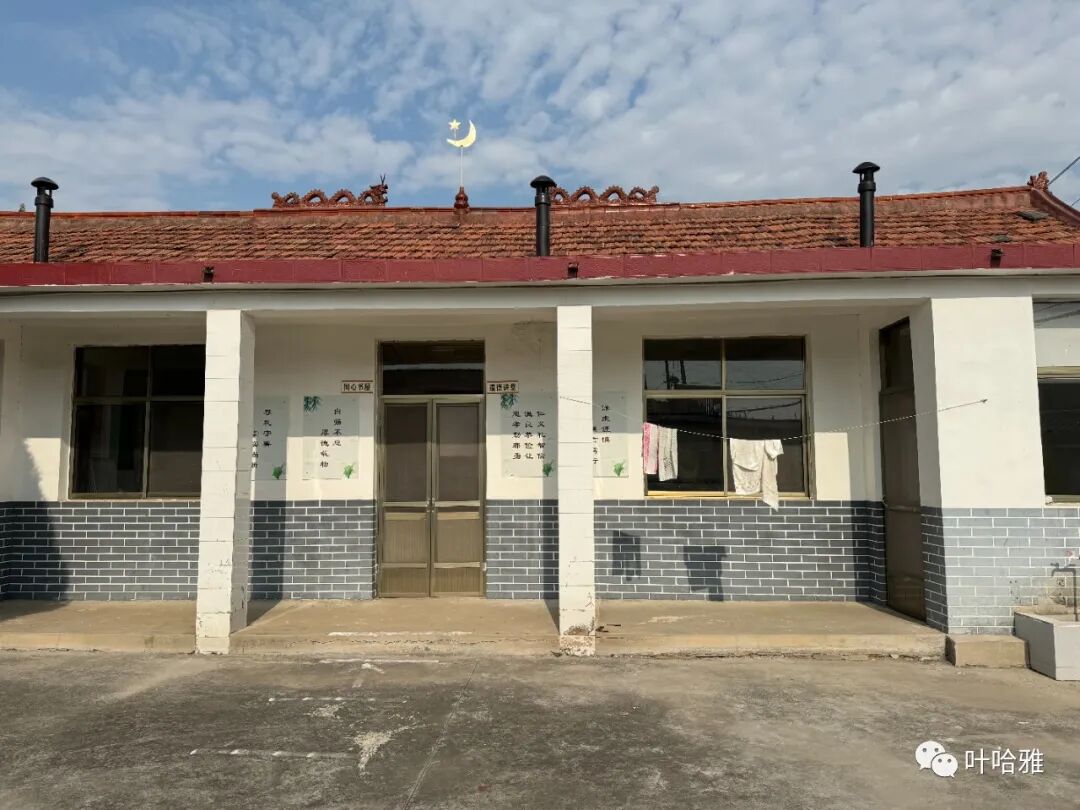
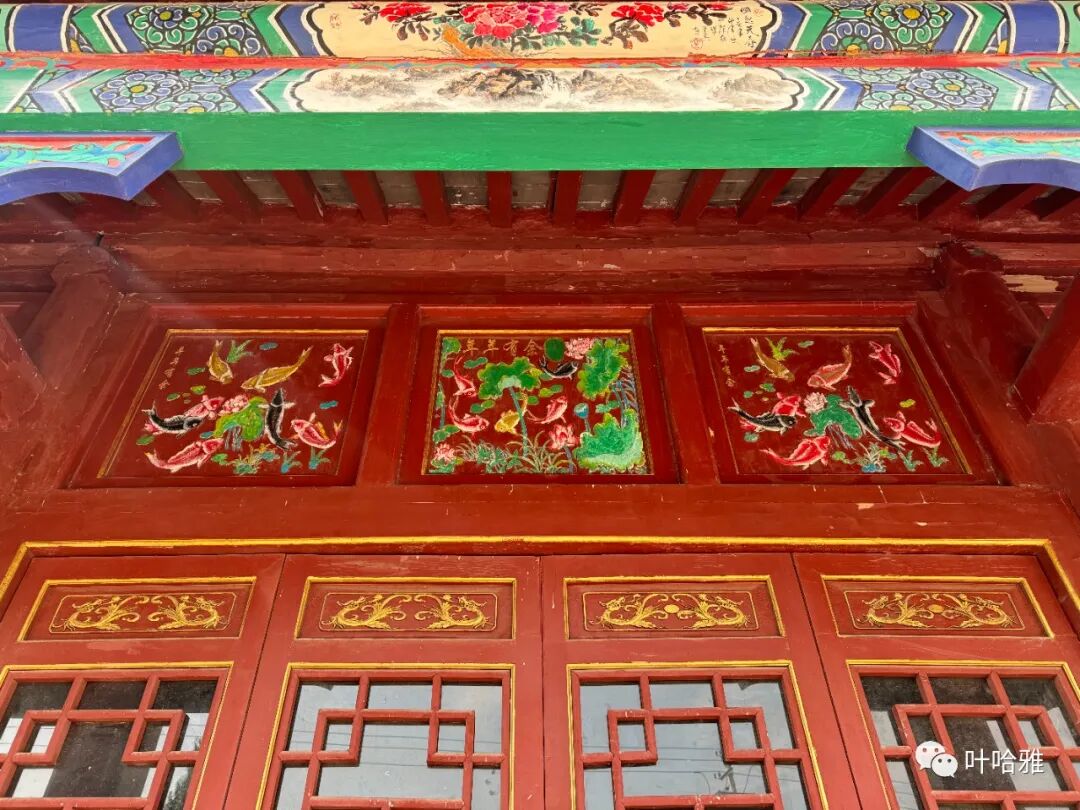
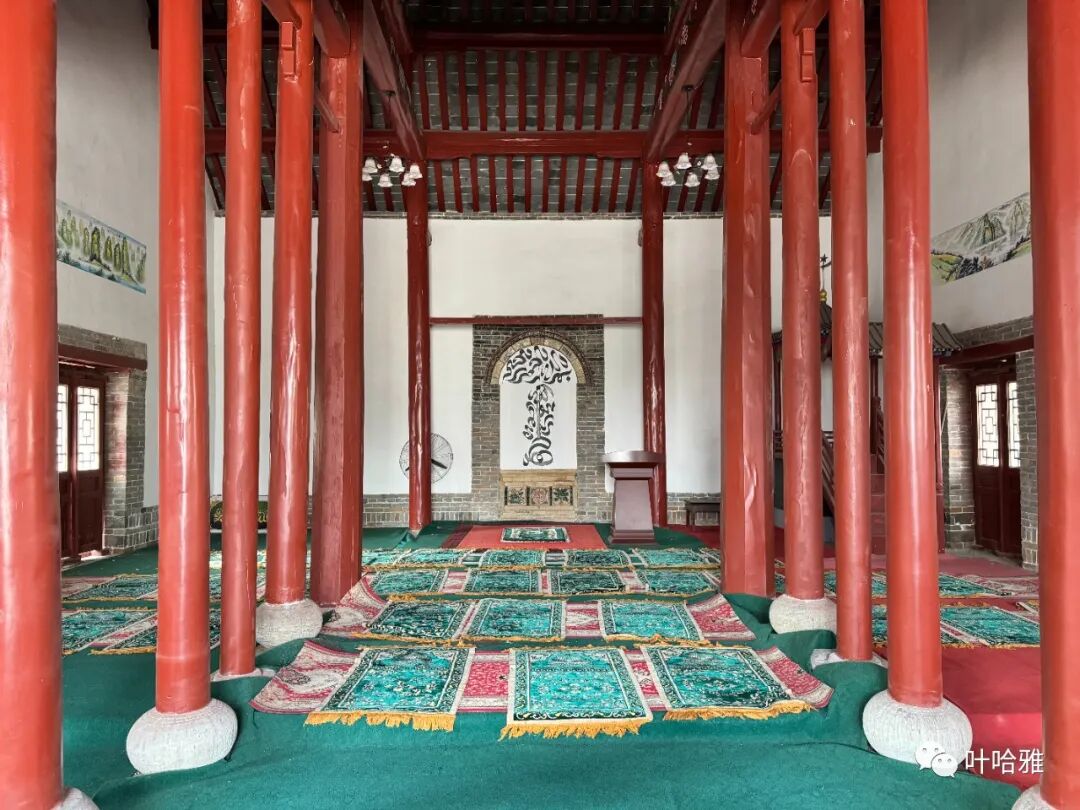
Xiaojiabu Mosque
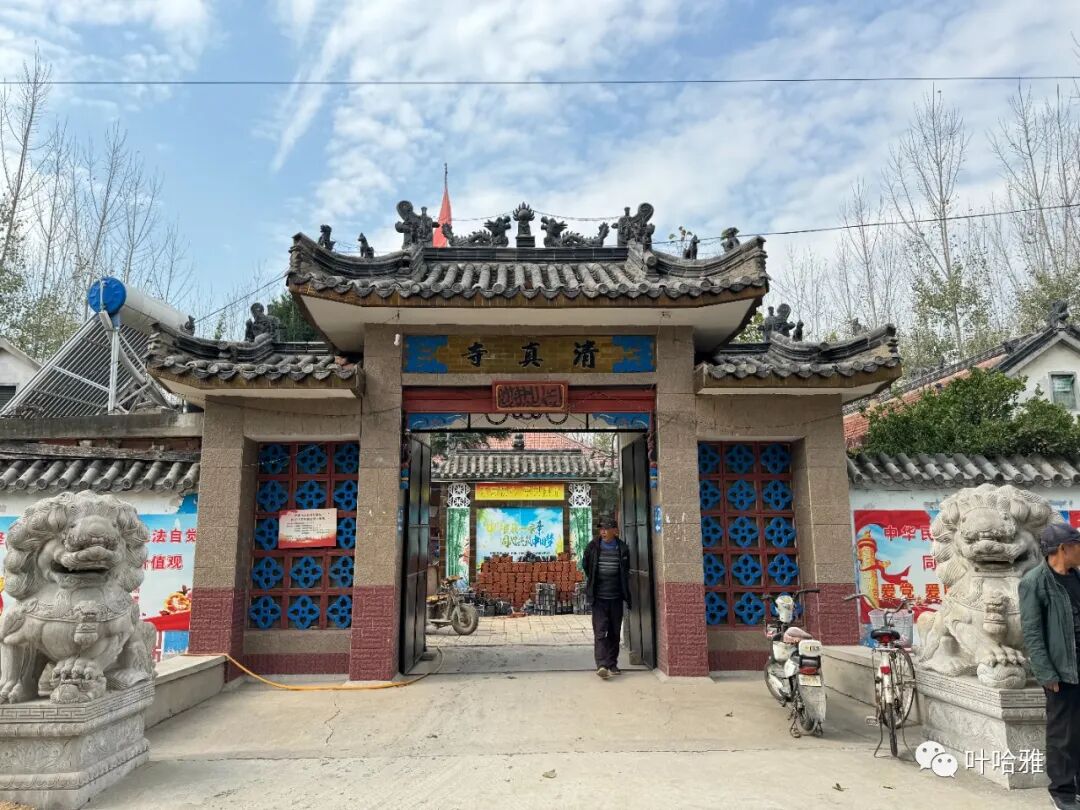
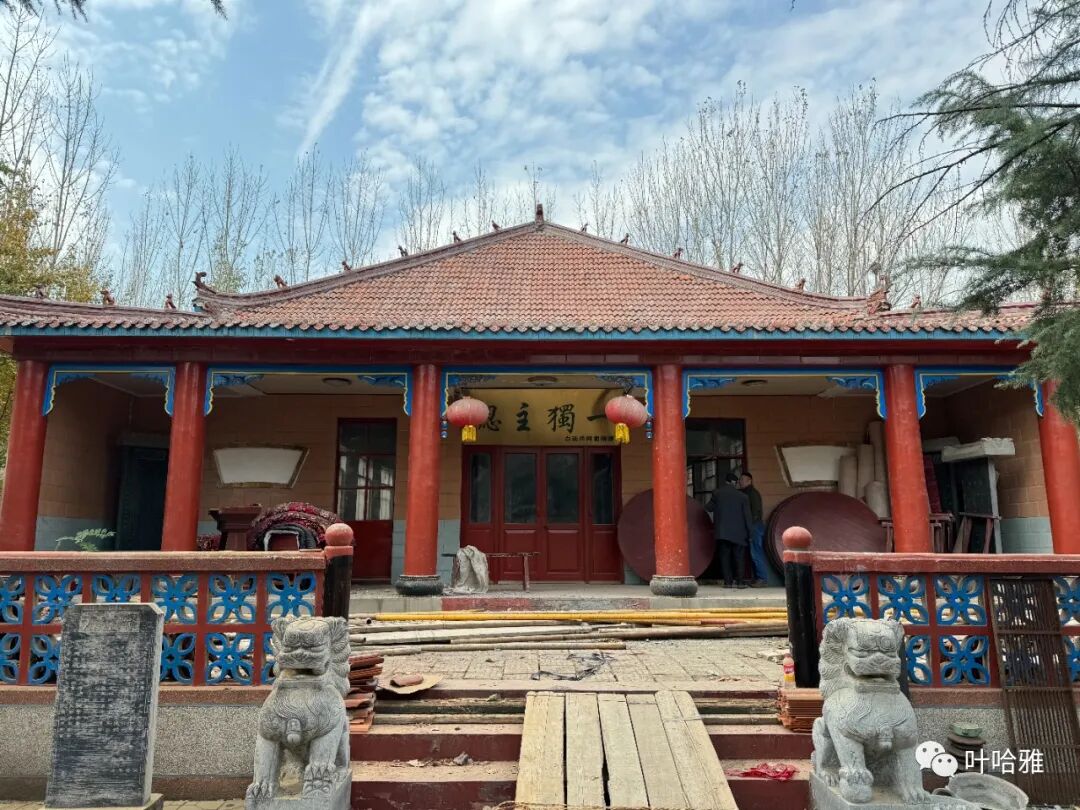
Xiaojiabu Mosque in Anjiazhuang Town is located at the west end of the village. The founding date is unknown, and it was destroyed by fire in 1973 when machines inside the building caught fire. The new mosque was built in 1999.
The mosque features Chinese palace-style architecture and is 56 meters long and 50 meters wide. The prayer hall is 9.9 meters high, and the moon terrace in front of the main hall is 26 meters long and 15 meters wide. The north lecture hall has 5 rooms, measuring 15 meters long and 8 meters wide. The south lecture hall has 5 rooms, measuring 15 meters long and 5 meters wide. There is 1 kitchen, measuring 3 meters long and 4 meters wide. More than 250 trees are planted inside and outside the mosque, and the mosque is fully equipped with all necessary utensils. A stone tablet erected in 2000 still exists today.
The mosque's religious affairs have been led by imams including Bai Maoxiang, Imam Xu, Imam Yang, Imam Wang, and Bai Yanbing. It is currently managed by the mosque's democratic management committee, with Ma Wenhuan serving as the director.
A handwritten copy of the Quran from the 17th year of the Republic of China (1928) is preserved here. In 2008, the mosque was named a Model Mosque by Tai'an City.
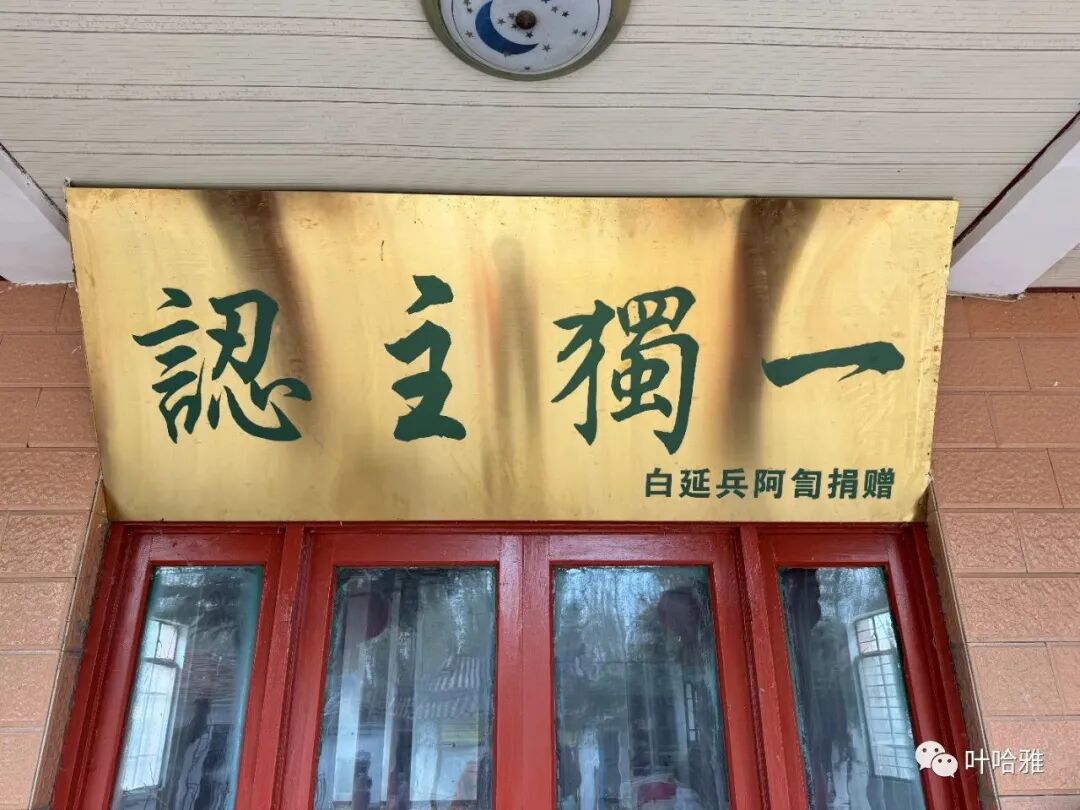
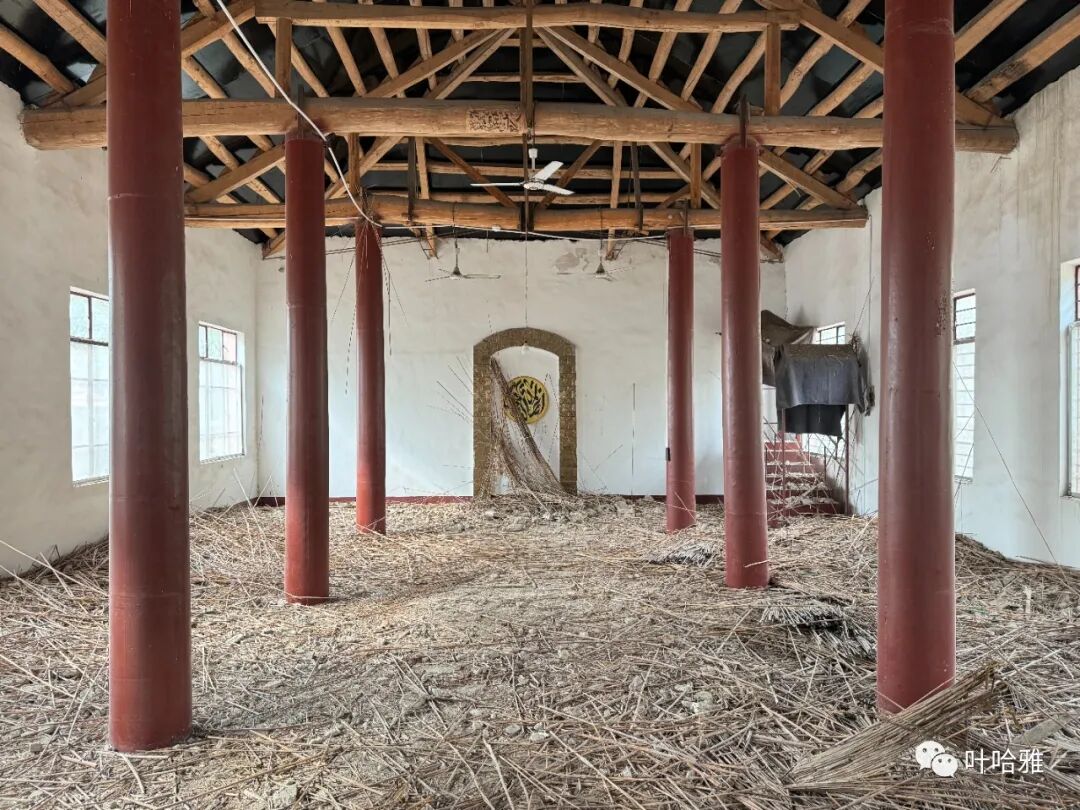
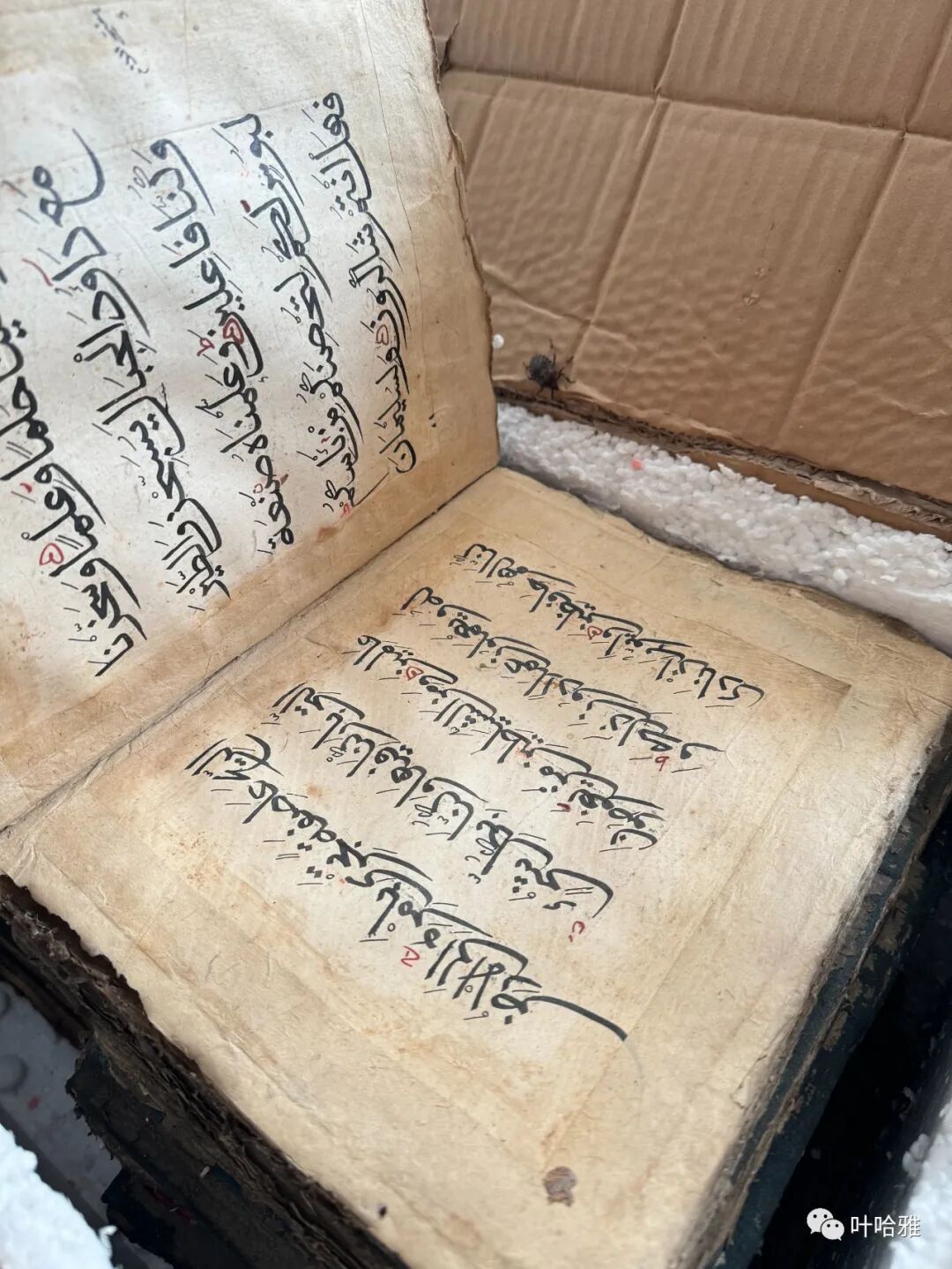
Ningyang County
Xitaili Mosque
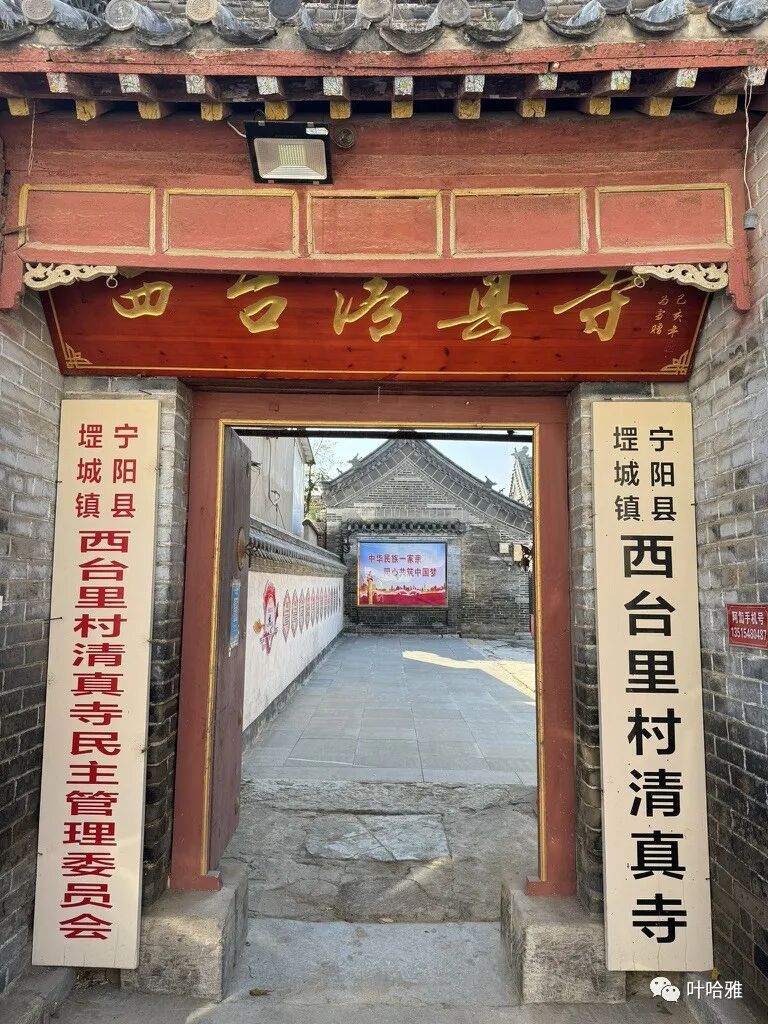
Xitaili Mosque in Gangcheng Town sits in the western half of the village. Wang Xiong founded the mosque in 1398, the 31st year of the Hongwu reign of the Ming Dynasty, and it has been expanded and repaired ever since. The mosque underwent repairs in 1411, 1460, 1698, 1719, 1738, 1819, 1900, 1945-1946, 2005, 2008, and 2012.
The mosque features Chinese palace-style architecture. It is 41.5 meters long and 34.1 meters wide, with two courtyards. The main prayer hall is a double-layered structure, 13 meters high, 13.1 meters long, and 7.1 meters wide. The north lecture hall is 17.1 meters long and 7 meters wide. The south lecture hall is 10.5 meters long and 7 meters wide. The water room is 10.6 meters long and 5.5 meters wide.
The mosque entrance has a main gate and a second gate. Past the second gate is the main courtyard. The main prayer hall sits on the west side, facing east. It is the primary building of the mosque and can hold hundreds of people for namaz at the same time. The main prayer hall uses a three-arch design with a connected roof structure, consisting of a front porch, a middle hall, and a back hall. The front porch is three bays wide with a curved roof and a wooden frame covered in small gray tiles. A stone tablet from 1719 titled Mosque Inscription is embedded in the inner north wall of the porch. The middle hall is three bays wide with a hard mountain-style roof. The front eaves connect to the back eaves of the middle hall, with water drainage channels left on both side walls. The rear hall is three bays wide, extending 0.62 meters beyond the sides of the middle hall's front porch. The front and rear eaves connect, the main roof ridge features animal ornaments, the brick walls have delicate carvings, and the mihrab is set in the center of the west wall.
The floor plan of the main hall looks like the Chinese character 'zhu' (master), and the roof has a varied, undulating shape. The platform in front of the main hall has stone railings and panels. On the north side of the platform stand stone tablets from the 11th year of the Guangxu reign (1885) and 2005 documenting repairs to the mosque. In front of the platform, the north and south lecture halls each have three rooms. They feature a single-eave, hard-mountain style roof covered with grey tiles and a front porch. North of the second gate is the room for students (hailifan). To the south is the bathing room, which can accommodate dozens of people for major and minor ablutions. Between the east gable of the north lecture hall and the courtyard wall is the east side room. To the west of the west gable are the west side room, the covered room (zhaozifang), and the tableware room. There are six existing stone tablets: the 'Mosque Tablet Record' from the 58th year of the Kangxi reign (1719), the 'Mosque Land Donation Tablet' from the 11th year of the Guangxu reign (1885), the 'Eternal Tablet' from 2005, the 'Second Batch of Municipal Key Cultural Relics Unit Tablet' from 2007, the 'Eternal Tablet' from 2008, and the 'Xitaili Mosque Reconstruction Record Tablet' from 2012.
Throughout its history, the mosque has trained many imams, including Yang Peicheng, Wang Minqing, Wang Minyi, Xu Menglan, Xu Shanfang, Li Chuanzheng, Li Hongbin, Wang Anyi, Li Anchen, Li Qingjun, Ma Xiangfa, Yang Zhenfa, Yang Cunguo, Yang Wei, Wang Antang, Wang Zifa, Xu Shouguo, Huang Zhongqing, Li Qingyun, Ma Xingcheng, Tang Wenhai, Wang Zhongzhen, Zhang Hongyi, Xu Shanfang, Li Zhaokun, Han Yuhai, and Xia Qianguo. The mosque is currently managed by a democratic management committee. Past directors include Wang Zishang, Wang Enshang, Wang Anxiang, Wang Anwen, Li Anshan, Li Baojin, Wang Anpo, and Ma Yongfu.
In 2009, the mosque received the provincial title of 'Harmonious Religious Activity Venue.' It was also named a 'Model Mosque' by Tai'an City in 2008, 2010, and 2014.
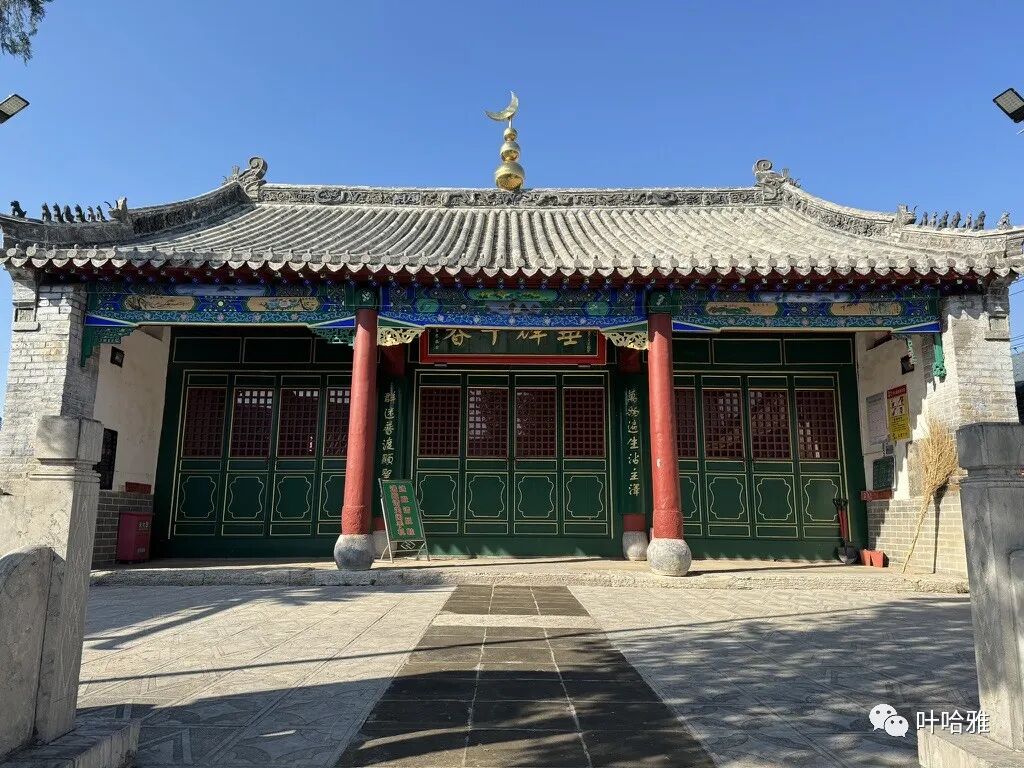
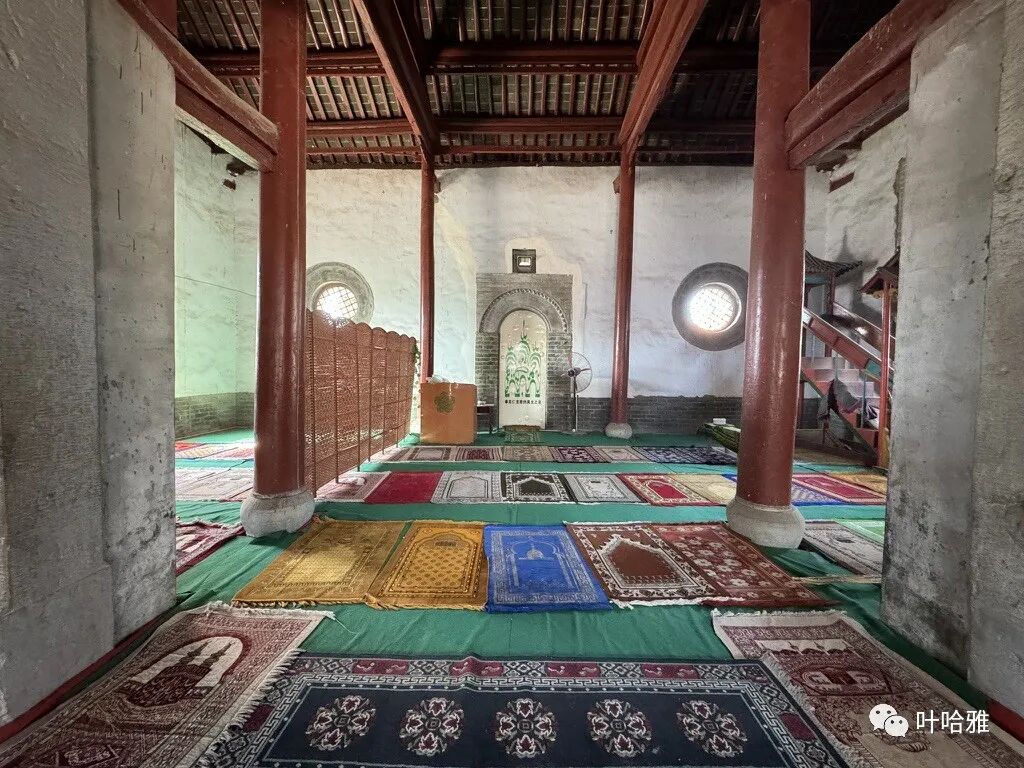
Liujiazhuang Mosque
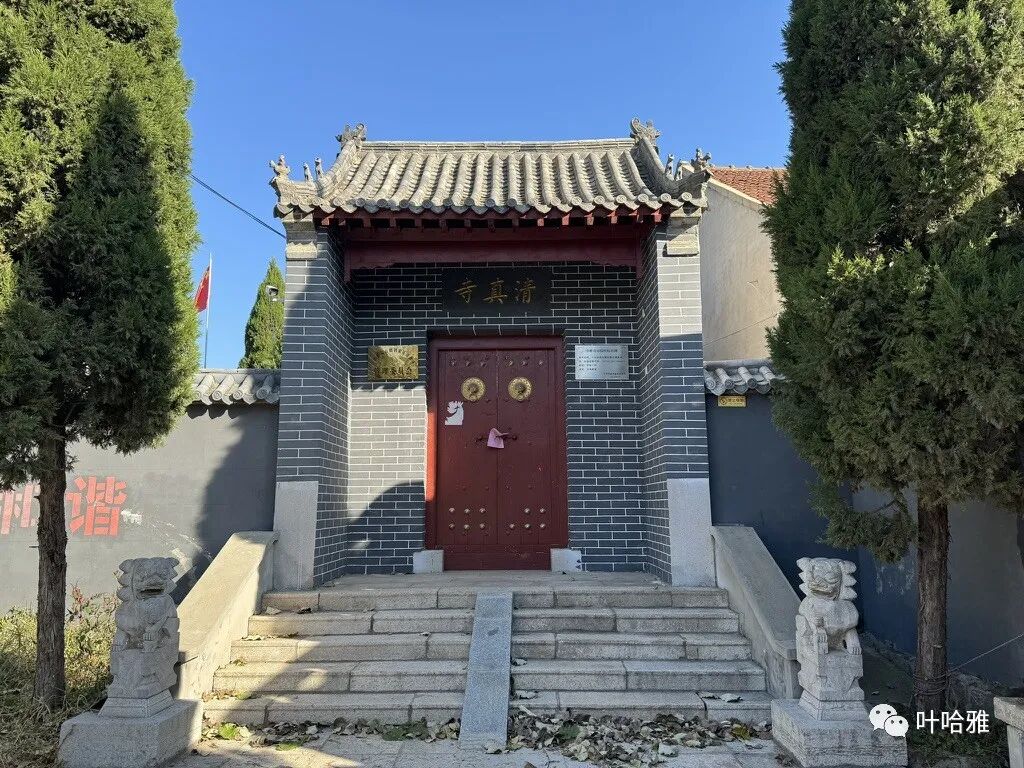
Liujiazhuang Mosque in Geshi Town is located in the southwest corner of the village. It was first built during the Hongwu period of the Ming Dynasty (1368-1398) and has been expanded and repaired many times since. The mosque underwent three large-scale renovations in 1984, 1997, and 2008.
The mosque follows the Chinese palace architectural style, measuring 26 meters long and 19 meters wide. The prayer hall is 7.9 meters high, 10 meters long, and 8.5 meters wide. The north lecture hall is 13.5 meters long and 7 meters wide. The water room is 5 meters long and 7 meters wide. There is one stone tablet currently on site, which is the 2008 Tablet Record of Mosque Renovation.
Since the founding of the People's Republic of China, the religious affairs have been led by imams including Xu Menglan, Shi Xianbao, Wang Minqing, Xu Shanfang, Bai Anmeng, Han Tongwen, Xu Lingzhi, Wang Antang, Li Anchen, and Ma Ning. The mosque is currently managed by a democratic management committee, and past directors include Li Huaiqing, Li Lanting, and Sha Xingdong.
It has received the title of Model Mosque from Tai'an City.
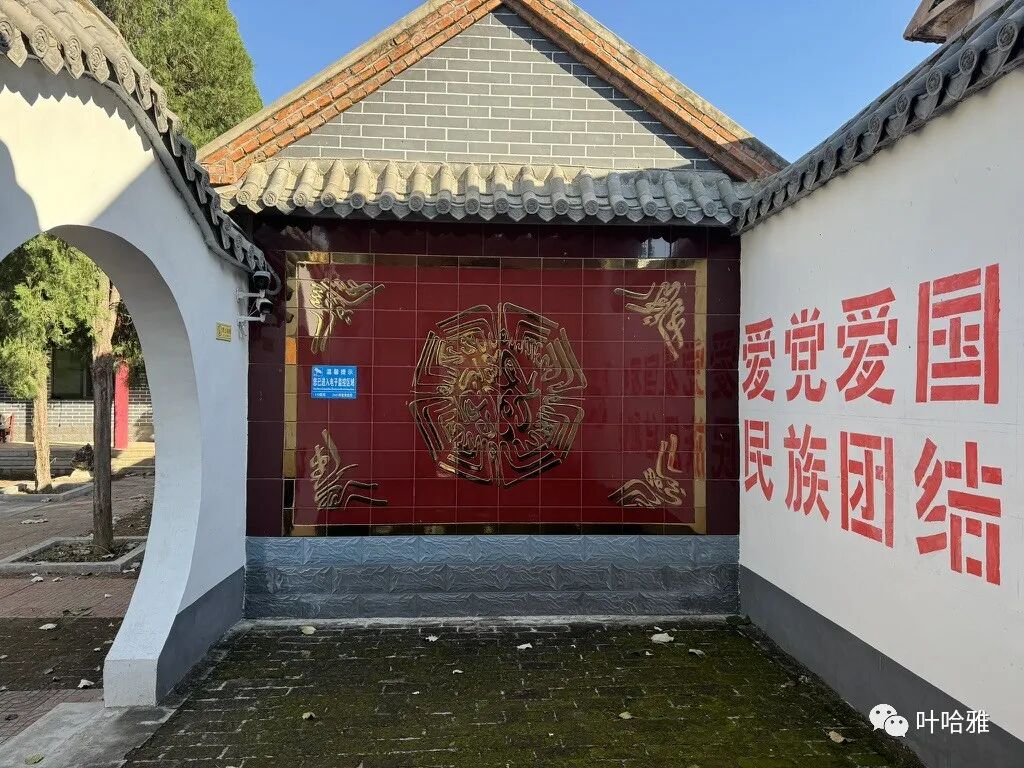
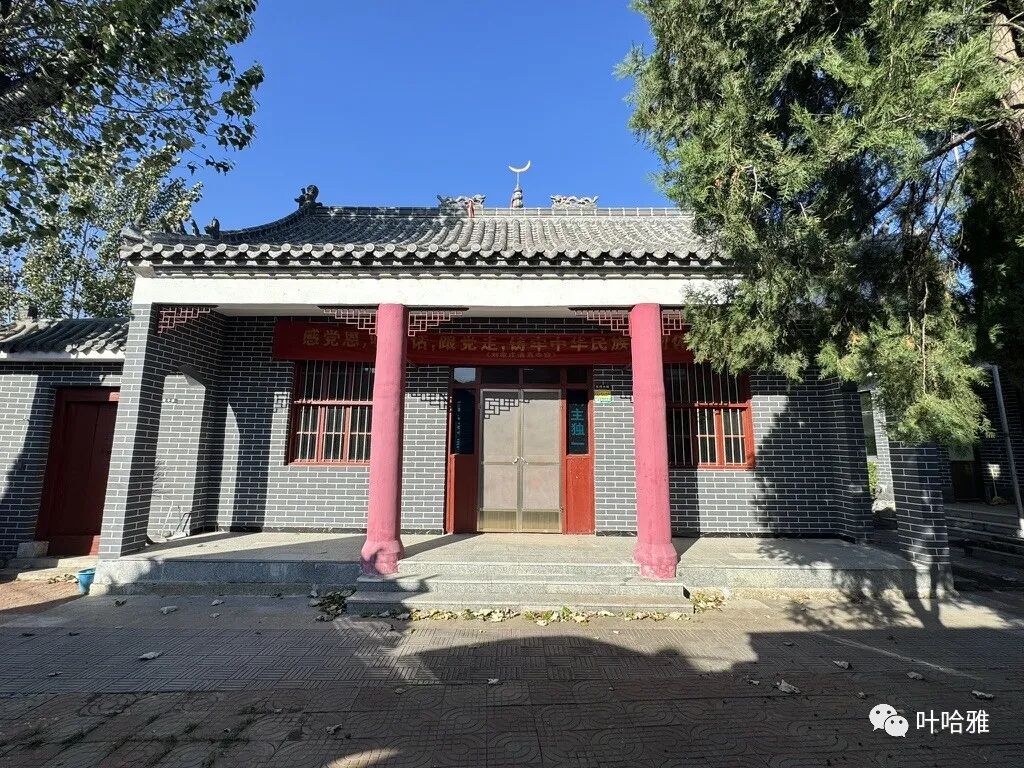
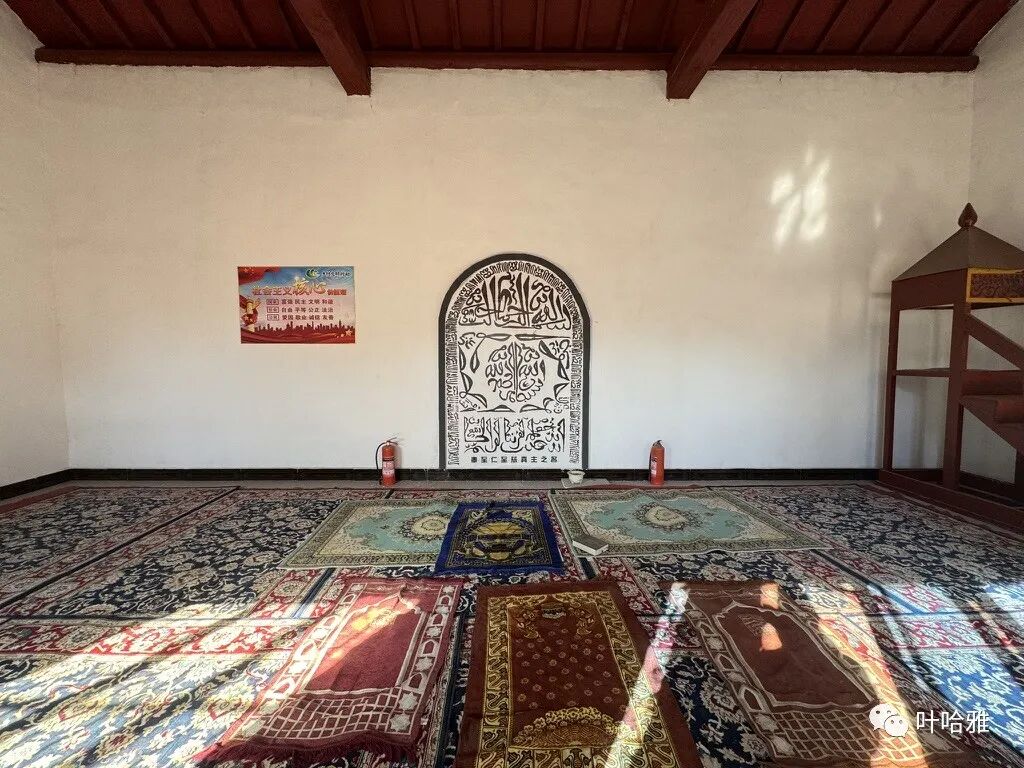
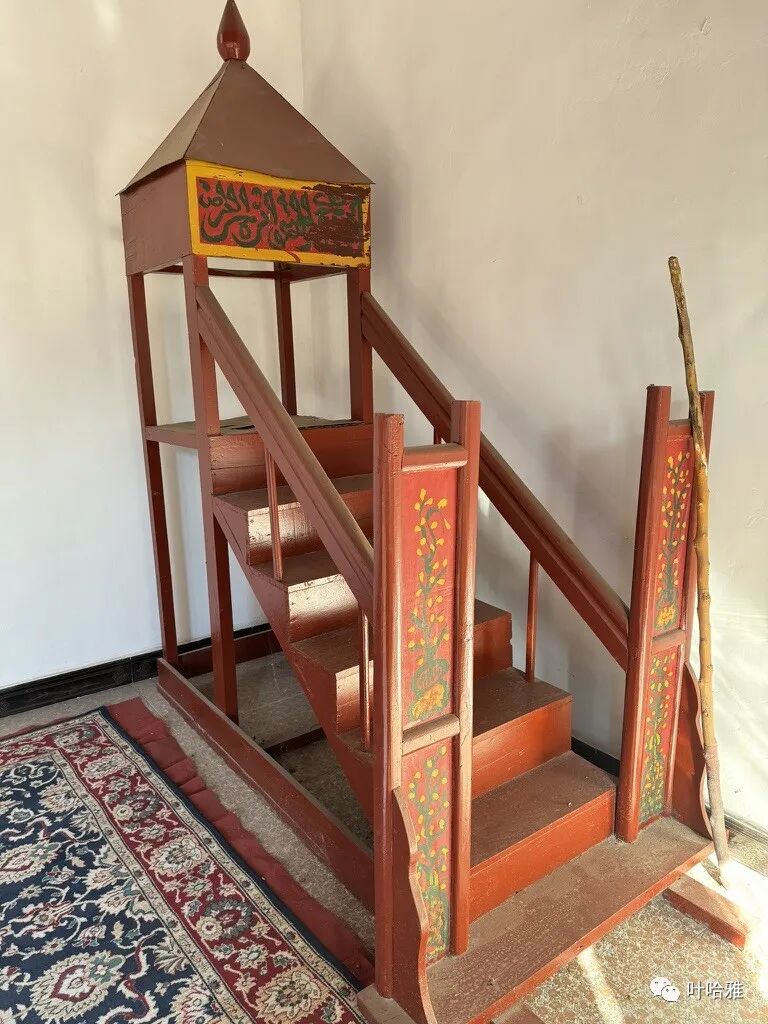
Baima Mosque Mosque
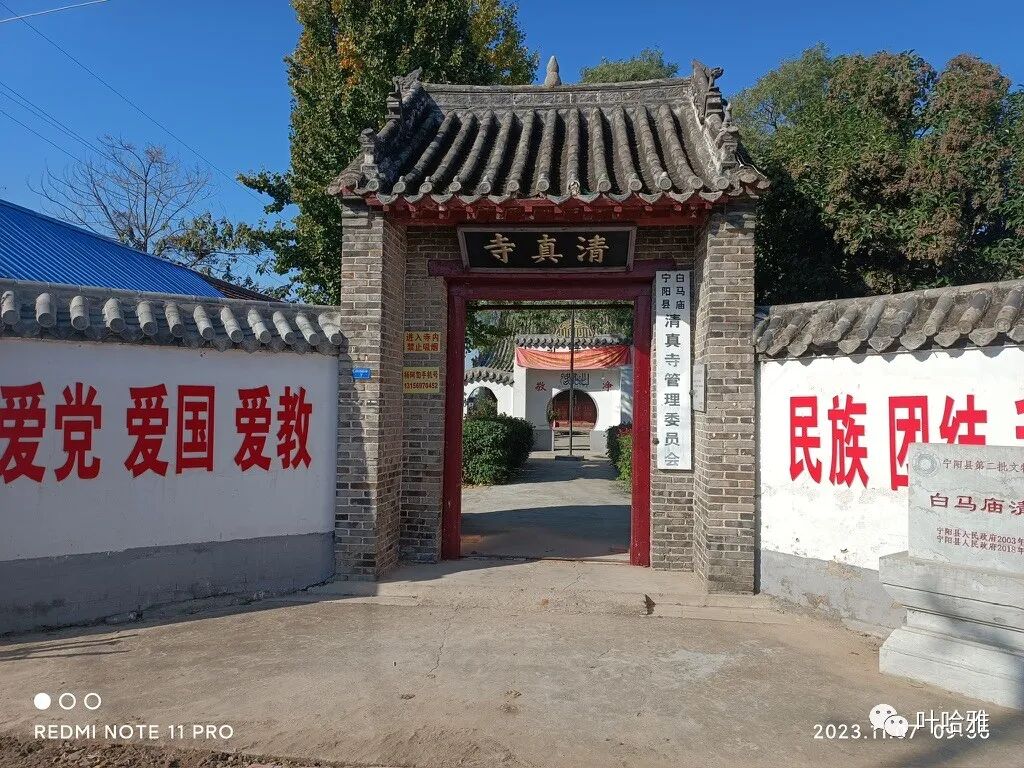
Baimamiao Mosque in Fushan Town sits at the southwest corner of South Baimamiao Street in Taipingzhuang Village. It was first built during the Yongle period of the Ming Dynasty (1403-1424) and has been expanded and repaired ever since. The mosque has undergone four major renovations, including those during the Jiajing period of the Ming Dynasty (1522-1566), in the 16th year of the Guangxu reign of the Qing Dynasty (1890), and in 2001 and 2010.
The mosque features Chinese palace-style architecture, measuring 72.7 meters long, 21.1 meters wide at the front, and 27.5 meters wide at the back. The prayer hall is a double-eaved structure measuring 15.9 meters long and 13.2 meters wide. The north lecture hall is 10.2 meters long and 7 meters wide. The south lecture hall is 10.2 meters long and 6.4 meters wide. The ablution room (shuiwu) is 13.8 meters long and 6.6 meters wide. There are three stone tablets currently on site: the 1890 'Record of the Mosque Renovation' from the Qing Dynasty, the 2001 'Everlasting Renewal Tablet,' and the 2010 'Preface Tablet.'
The mosque's religious affairs have been led by imams including Zhao Wenjie, Yang Yueqing, Zhu Yuepo, Ma Guang, Han Yunting, Zhu Guanglai, Zhao Xinzheng, Zhao Guangfu, Zhu Yuehou, Yang Zhanji, Wang Ai, Zhang Yanzhai, and Yang Dawei. It is currently managed by the mosque's democratic management committee, with past directors including Mi Kuancheng, Hong Qingfang, and Zhao Anren.
A plaque from the 19th year of the Guangxu reign of the Qing Dynasty (1893) is still preserved today. In recent years, Zhu Zhaoxin donated a pair of wooden couplets that read, "The only true Allah of the universe is Allah, the only greatest sage in the world is Muhammad," which now hang on both sides of the mosque (libaidian) door.
In 2003, the county government designated the mosque as a county-level cultural relic protection site. It received the provincial title of "Harmonious Religious Activity Venue" in 2011 and was named a "Model Mosque" by Tai'an City in 2014.
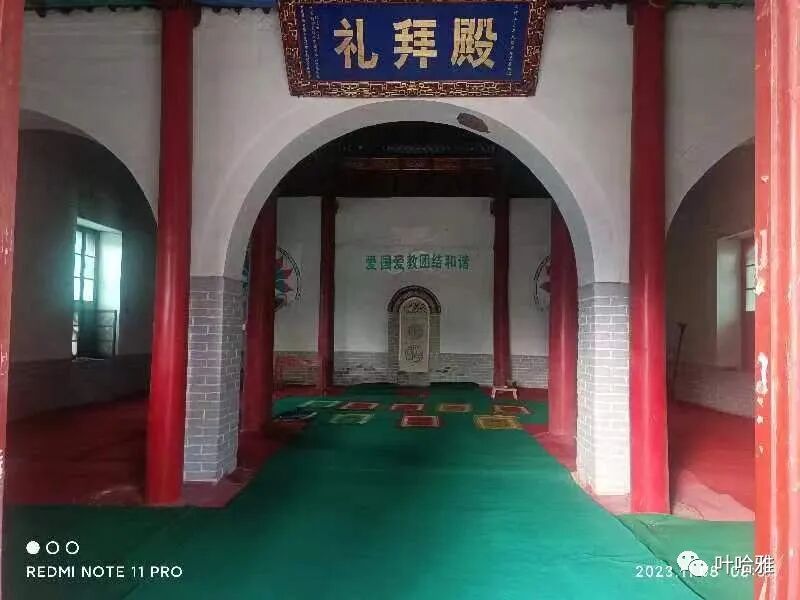
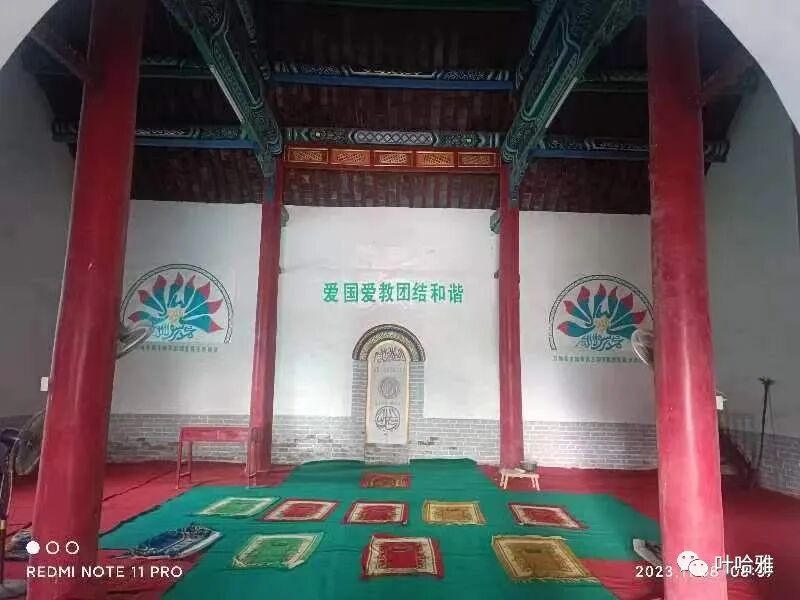
Hongqi Village Mosque
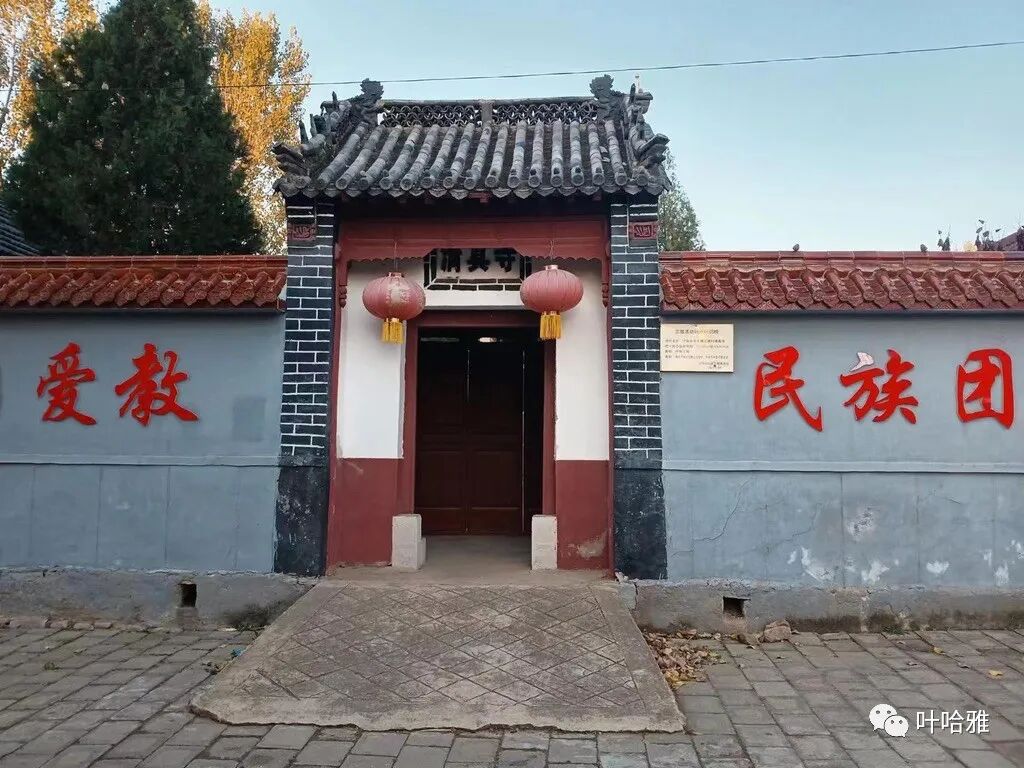
Hongqi Village Mosque in Huafeng Town sits in the center of the village. It was first built during the Wanli period of the Ming Dynasty (1573-1620) and has been expanded and repaired ever since. The mosque underwent two large-scale renovations in 1932 and 2011.
The mosque features Chinese palace-style architecture and measures 30 meters long and 25 meters wide. The prayer hall is a double-layered structure that is 6 meters high, 13 meters long, and 10 meters wide. The north lecture hall is 15 meters long and 7 meters wide. The south lecture hall is 14 meters long and 4.5 meters wide. The water room is 6 meters long and 4 meters wide. There are two stone tablets here: the 2012 Tablet of Rebuilding the Main Hall and the Tablet of Eternal Memory.
Since the late 1940s, the mosque's religious affairs have been led by imams including Chen Junfang, Shi Xianxing, Liu Qingyuan, Gao Guo, and Ma Yingshang. The mosque is currently managed by a democratic management committee. Past directors include Chen Jinmei, Zhu Xiangxun, Bai Yushun, Zhu Xuyin, Wang Ansheng, Shi Junyou, Zhu Xutian, and Chen Weimin.
In 2008, the mosque was named a Model Mosque by Tai'an City, and in 2012, it received the provincial title of Harmonious Religious Activity Venue.
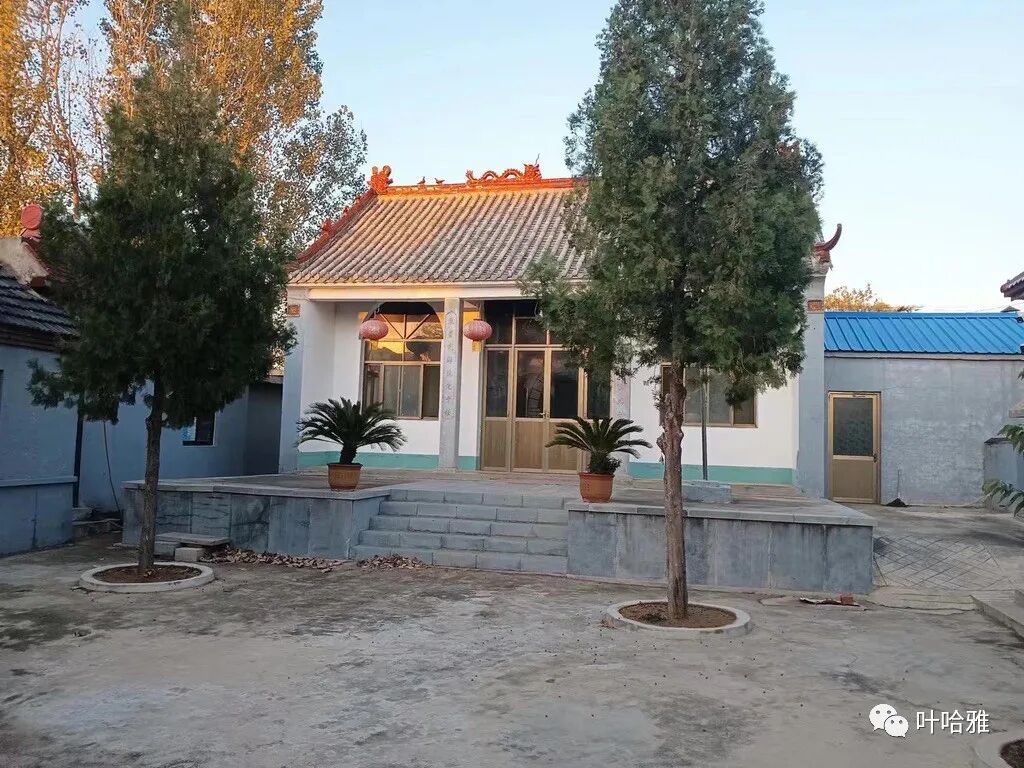
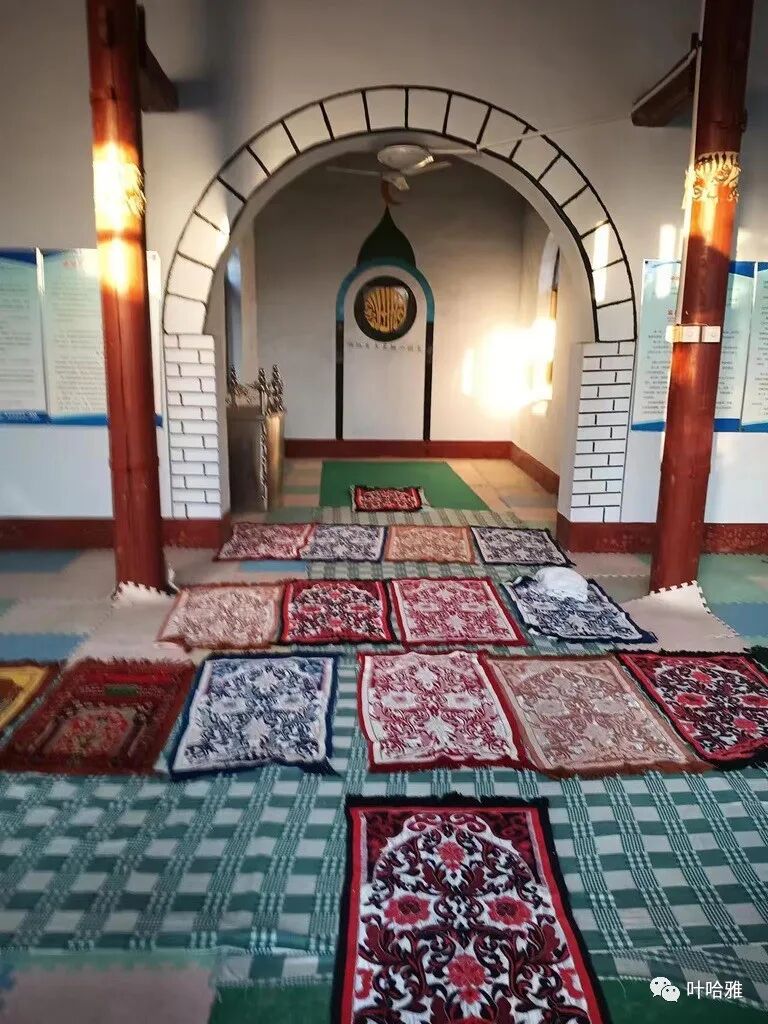
Jingquan Village Mosque
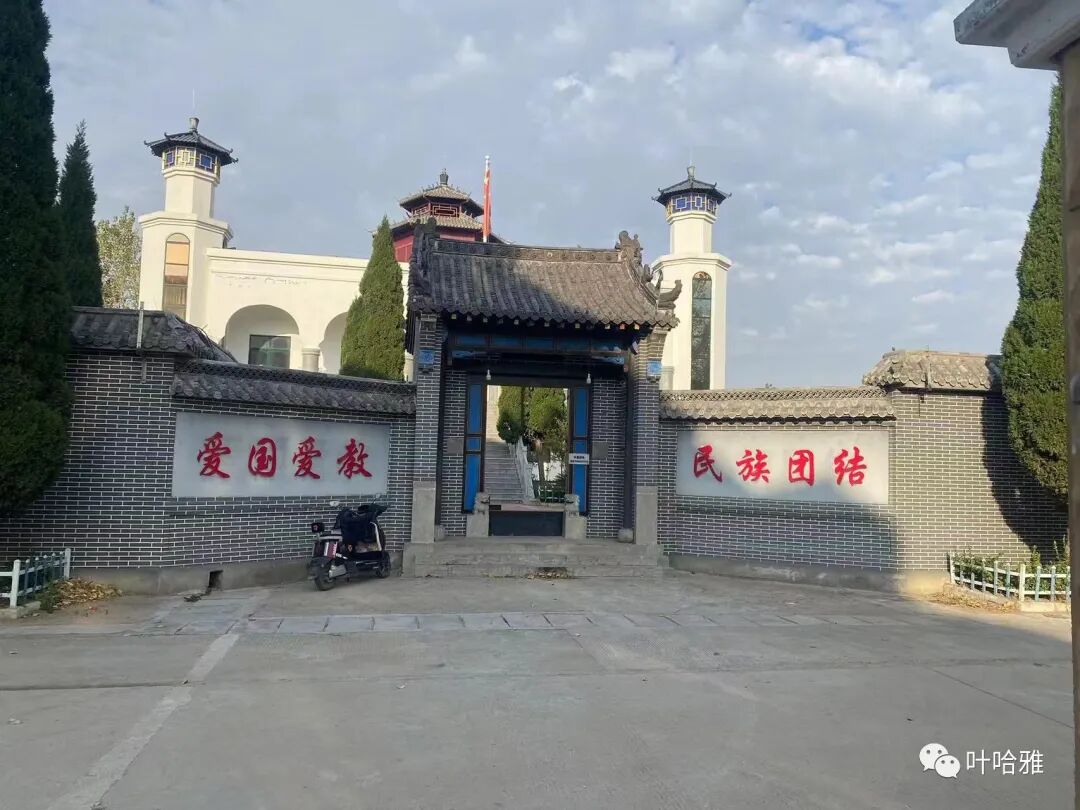
Jingquan Village Mosque in Huafeng Town is located in the northwest part of the village. It was first built in the 14th year of the Daoguang reign of the Qing Dynasty (1834). It was originally located in the eastern part of Jingquan Village and has been expanded and repaired many times since. Large-scale renovations took place in the 24th year of the Daoguang reign (1844), 1988, and 2001.
The mosque is 47 meters long and 35 meters wide. It includes a main hall, a north lecture hall, a south lecture hall, and a water room. There are three stone tablets: the Tablet of Founding the Mosque from the 14th year of the Daoguang reign (1834), the Tablet of Rebuilding the Mosque from 1998, and the Tablet Record of Repairing the Mosque from 2003.
Since the 1950s, the mosque's religious affairs have been led by imams including Jin Haixue, Ma Maoquan, Xu Changchun, Zhang Changshi, and Ma Shengchao. The mosque is now managed by a democratic management committee, with past directors including Huang Yuxiang, Huang Ruichang, Huang Qingfa, and Yang Yanhua.
The mosque houses a set of handwritten Quran manuscripts (volumes 15, 16, 29, and 30 are missing) and one copper water pitcher (tangping), which was originally part of a pair.
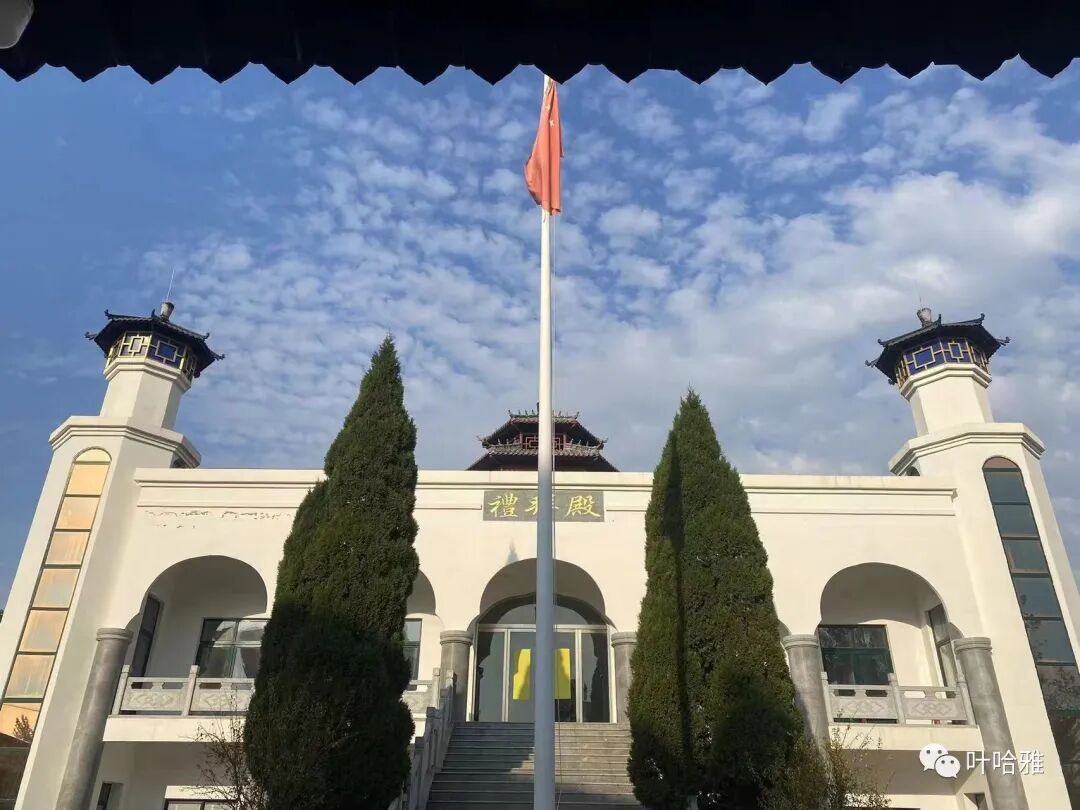
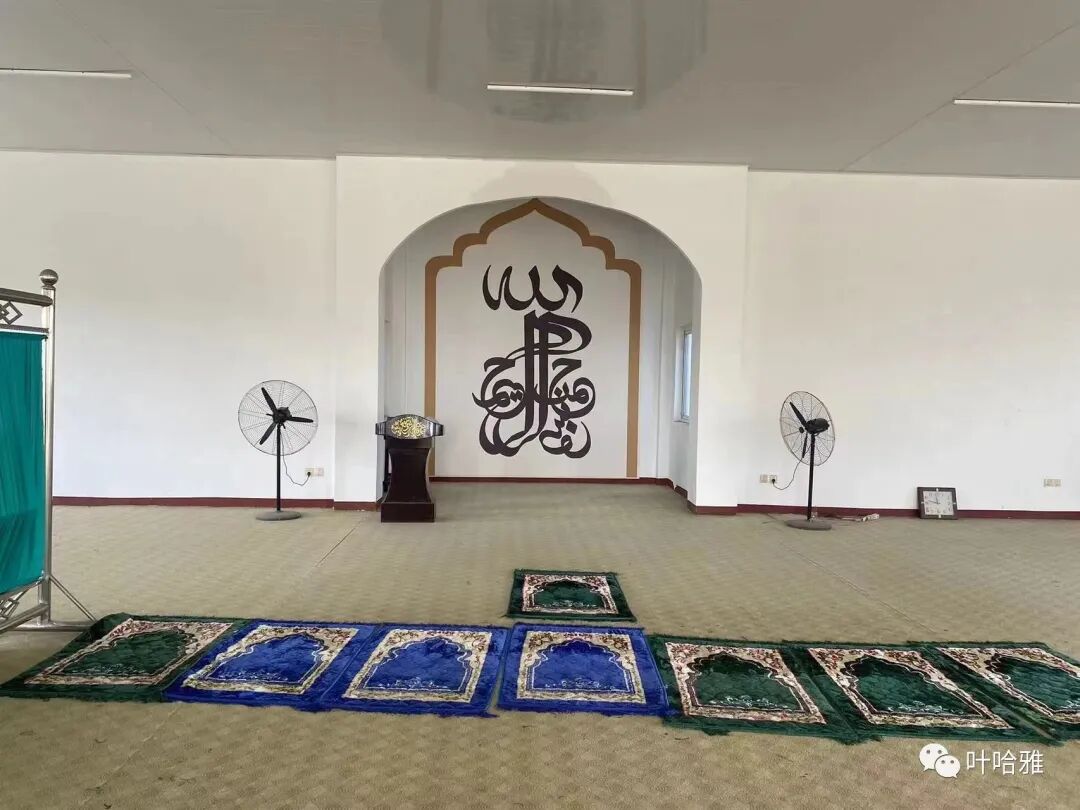
Sidian Village Mosque
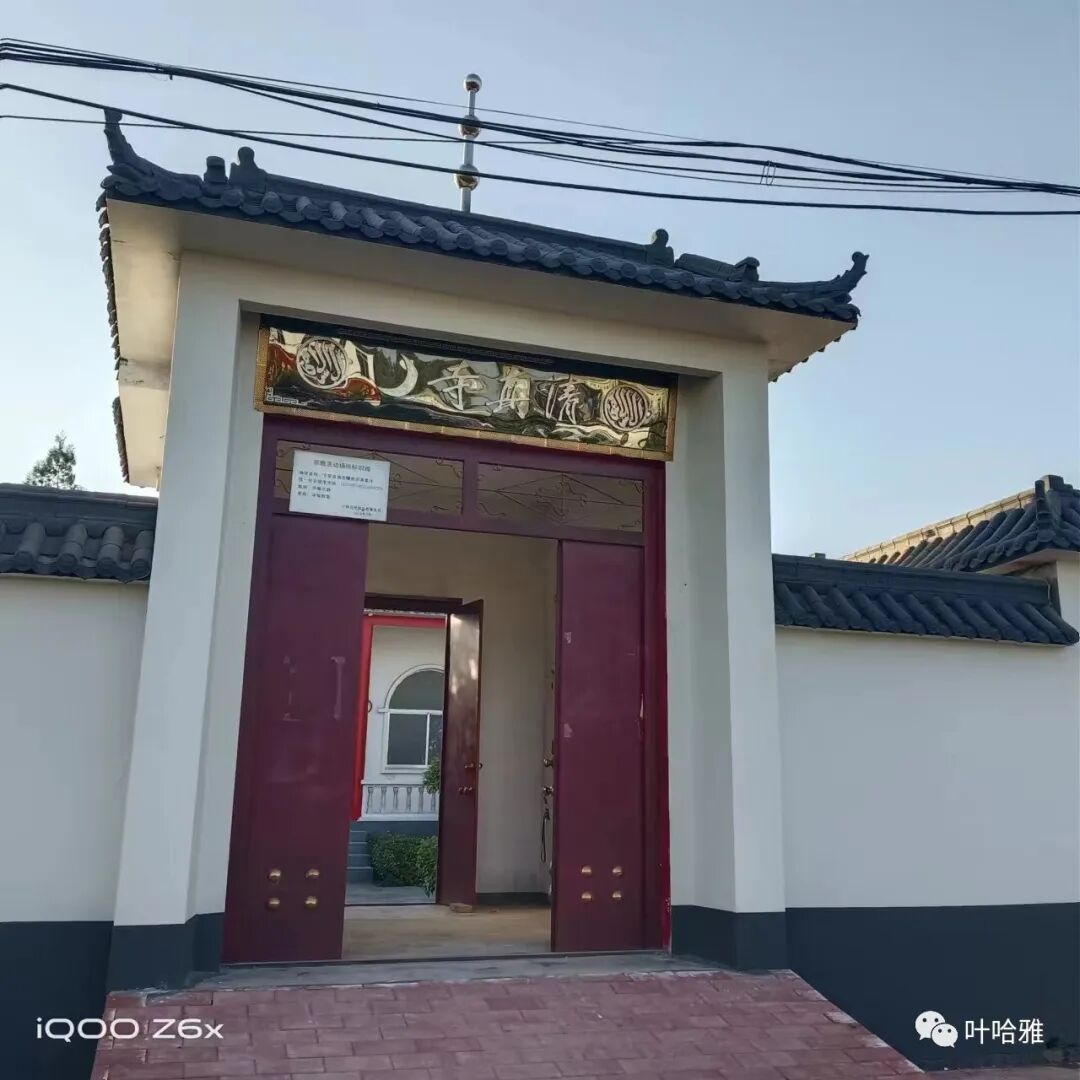
Sidian Village Mosque in Sidian Town is located in the northern part of the village. It was built in the 11th year of the Yongzheng reign of the Qing Dynasty (1733) and has been expanded and repaired many times since. In the first year of the Jiaqing reign (1796), a fire at a neighbor's house spread to the mosque, which was later rebuilt. In October 1926, a fire destroyed the main prayer hall. The main hall, lecture hall, and gate wall were rebuilt in 1935. The main prayer hall was torn down in the early 1950s. In the 1980s, the Sidian village brigade arranged for members to build houses on the site, but the south lecture hall remains standing today. The mosque was rebuilt between 2012 and 2015.
The mosque is built in the style of a Chinese palace, measuring 22 meters long and 21 meters wide. A white marble plaque inscribed with the words "Mosque" is embedded above the main gate. There are side doors on both sides, each with a five-step entrance platform. About 10 meters inside the main gate is a second gate, and a path leads straight from there to the main prayer hall. The main prayer hall is a single-story building with a three-bay porch-style design, standing 15 meters high with a bronze vase ornament on the roof. On each side of the main prayer hall, there is a carved openwork lattice window featuring Arabic calligraphy. Inside the hall, four round plaques hang on the front sides, and a plaque with gold lettering hangs in the center. There are four large painted pillars, each over 40 centimeters in diameter, decorated with large gold-painted lotus flowers. The ceiling is inscribed with the holy names of Allah. The floor of the main prayer hall is covered with felt carpets. The front of the main prayer hall is a wooden structure with a simple, ancient style, built in the Chinese hip-roof (wudian) architectural form. The north lecture hall has three rooms and covers an area of about 60 square meters. Inside the hall, there is antique porcelain printed with Arabic scripture. The south lecture hall has three rooms and covers an area of about 50 square meters.
There are two stone tablets remaining: the Imperial Edict Tablet (Shengyu Bei) from the seventh year of the Yongzheng reign of the Qing Dynasty (1729) and the Tablet Record of the Reconstruction of Sizhuangdian Mosque (Chongxiu Sizhuangdian Qingzhensi Beiji) from the twenty-eighth year of the Republic of China (1939). The former is the only one of its kind in Tai'an and holds significant historical and cultural value. There are several cypress trees inside the mosque.
The mosque was once led by imams including Mi Baogui, Zhao Defu, and Zhao Furun. It is now managed by the mosque's democratic management committee, with past directors including Shi Guanli, Li Xiangqian, and Li Hong'an. The mosque also serves the communities of Qianwang Village and Houwang Village in Caohe Town, Yanzhou City.
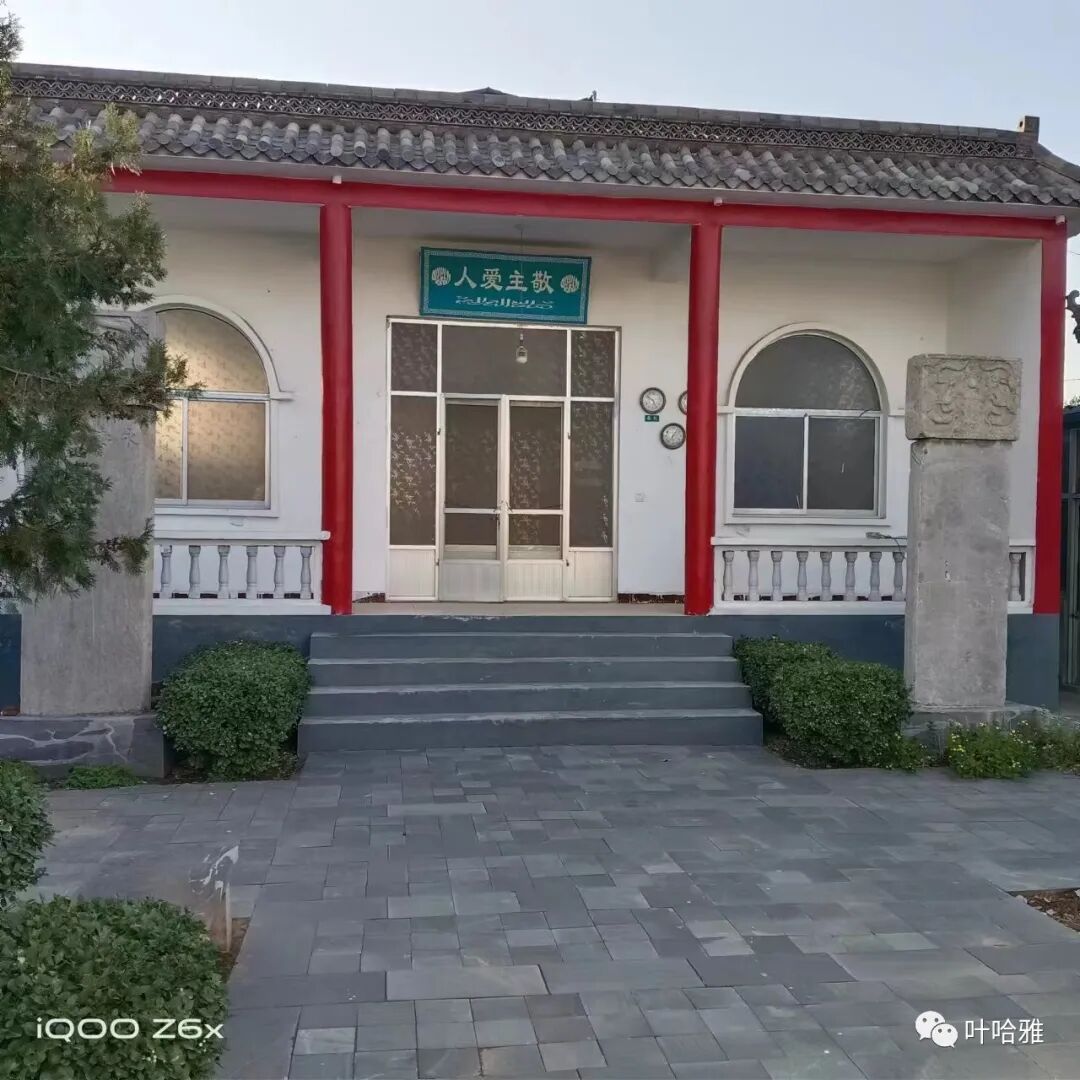
Nanyi Village Mosque
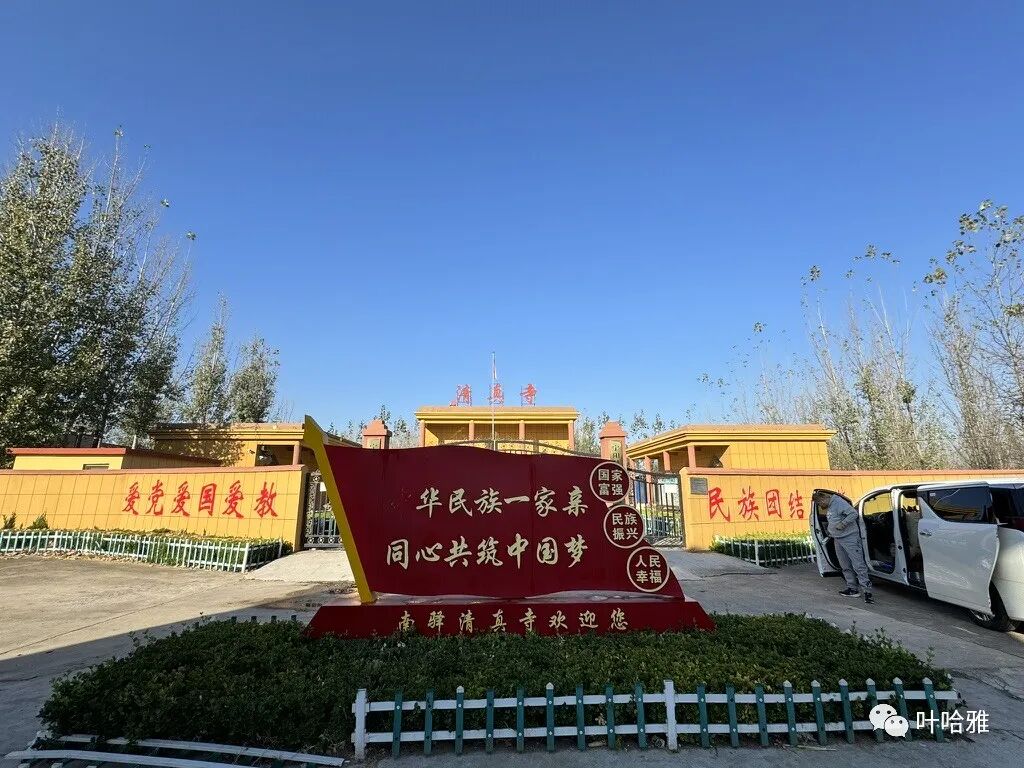
Nanyi Village Mosque in Ciyao Town is located in the southwest part of the village. The original mosque in Nanyi Village fell into disrepair and was severely damaged. In May 2015, the dangerous structures were demolished according to plan, and a new mosque was built at a different site.
The mosque covers an area of 1,600 square meters, measuring 40 meters long and 40 meters wide. The prayer hall is 15 meters long and 11 meters wide. The north lecture hall is 10 meters long and 8 meters wide. The south lecture hall is 10 meters long and 8 meters wide. The water house is 10 meters long and 11 meters wide. There is one stone tablet here, the 2016 Tablet of Loving the Country, Loving the Faith, and Recognizing the Oneness of Allah.
The mosque has trained imams like Zhu Zhili, and Imam Yang Zhi currently manages religious affairs. The mosque is managed by a mosque management committee, with Zhang Weimin and Zhu Zhiming serving as past directors.
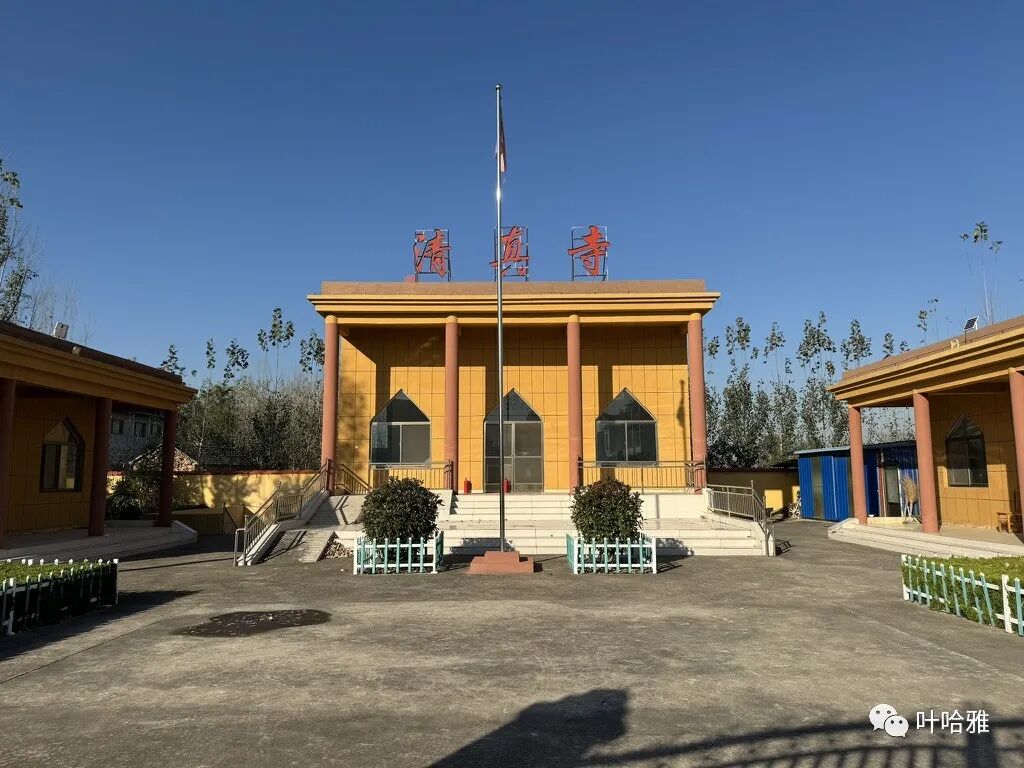
Houlyuguan Mosque
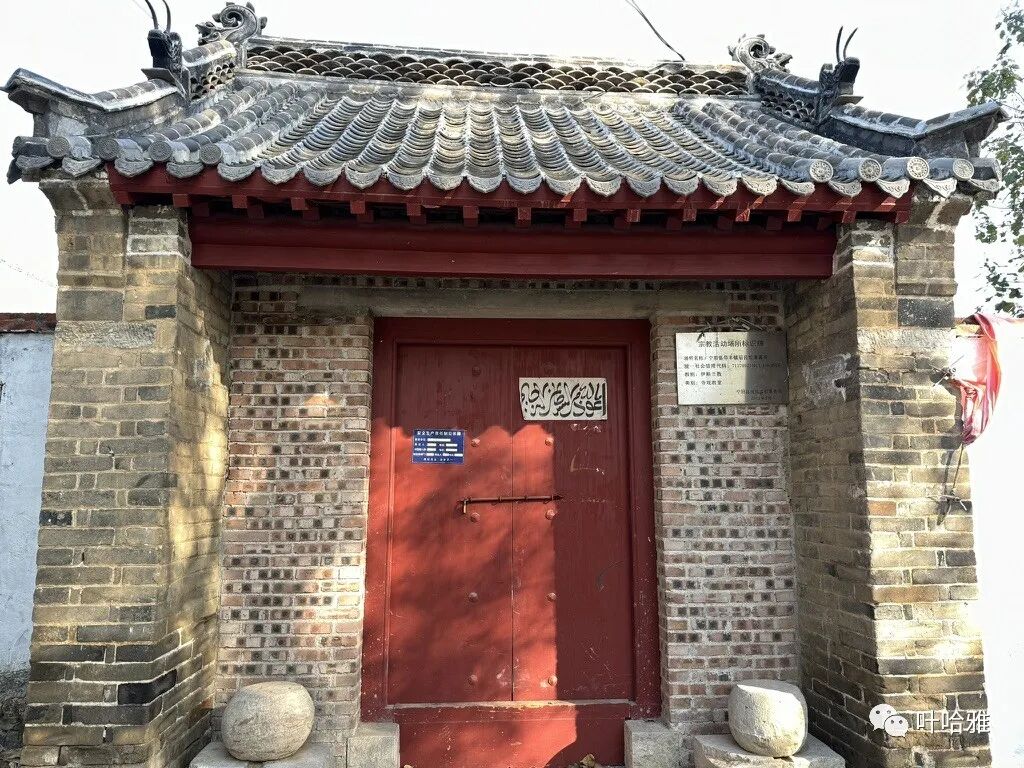
Houlyuguan Mosque in Huafeng Town sits in the middle of the village. It was likely built in the early days of Lyuguan Village and has been expanded and repaired ever since. In the second year of the Daoguang reign (1822), the old mosque was falling apart, so it moved to the north end of the village, which is its current location. The new mosque added three lecture rooms and a moon terrace (yuetai). In the 27th year of the Guangxu reign (1901), three large tiled rooms were added, and pine and bamboo were planted. The mosque was repaired in the ninth year of the Republic of China (1920). It was severely damaged during the Cultural Revolution.
When the mosque was first built, it was made of grass huts and covered seven and a half mu of land, with eight farming families from the north and south villages providing money and grain. After moving to the north of the village, it was rebuilt with brick, wood, earth, and stone, measuring 62 meters long and 52 meters wide. An old plaque hangs in the prayer hall, but the three characters on it are no longer readable. The main hall is 11 meters long and 11 meters wide. The north lecture hall is 11 meters long and 5 meters wide. The south lecture hall is 11 meters long and 5 meters wide. The water room is 4 meters long and 3.5 meters wide. There are three existing stone tablets: the Record of Rebuilding the Mosque from the second year of the Daoguang reign of the Qing Dynasty (1822), the Record of Rebuilding the Mosque from the 27th year of the Guangxu reign (1901), and the Record of Rebuilding the Mosque from the ninth year of the Republic of China (1920). Several stone tablets buried during the Cultural Revolution are inside the water pool.
The mosque's religious affairs were successively led by imams including Ma, Liu Yulin, and Xu Yongtong. Xiluoshan Mosque.
Xiluoshan Mosque in Heshan Township. Built in 2013, it covers 500 square meters with a building area of 300 square meters. It includes a main prayer hall, north and south lecture halls, and a main gate.
Xiluoshan Mosque.
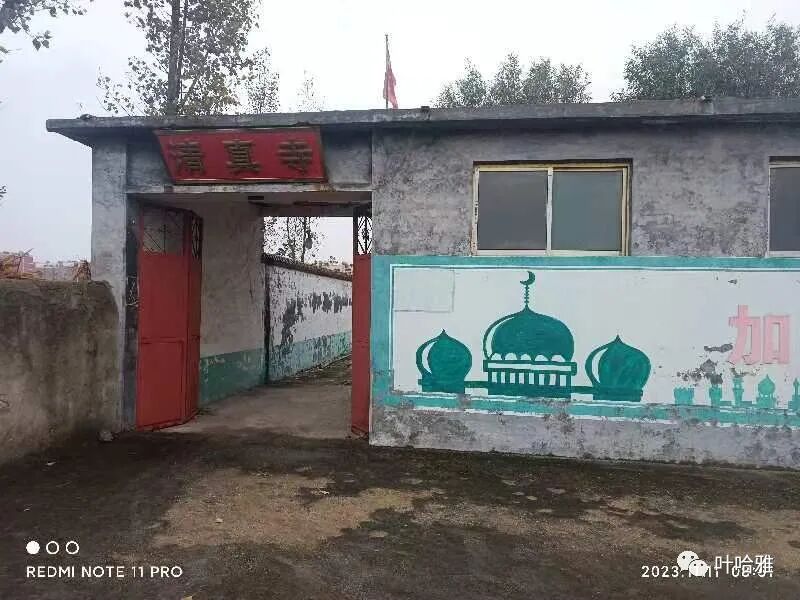
Xiluoshan Mosque in Heshan Township. Built in 2013, it covers 500 square meters with a building area of 300 square meters. It includes a main prayer hall, north and south lecture halls, and a main gate.
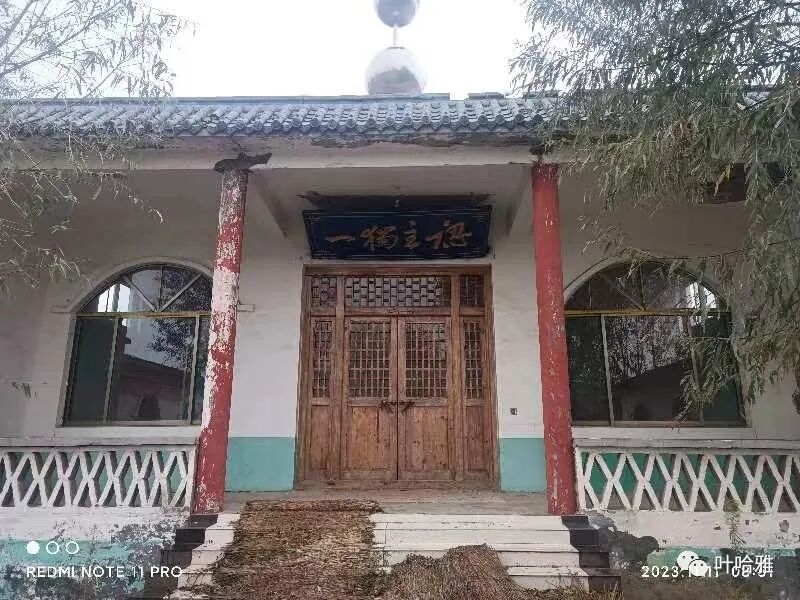
Dongping County
Zhoucheng Mosque
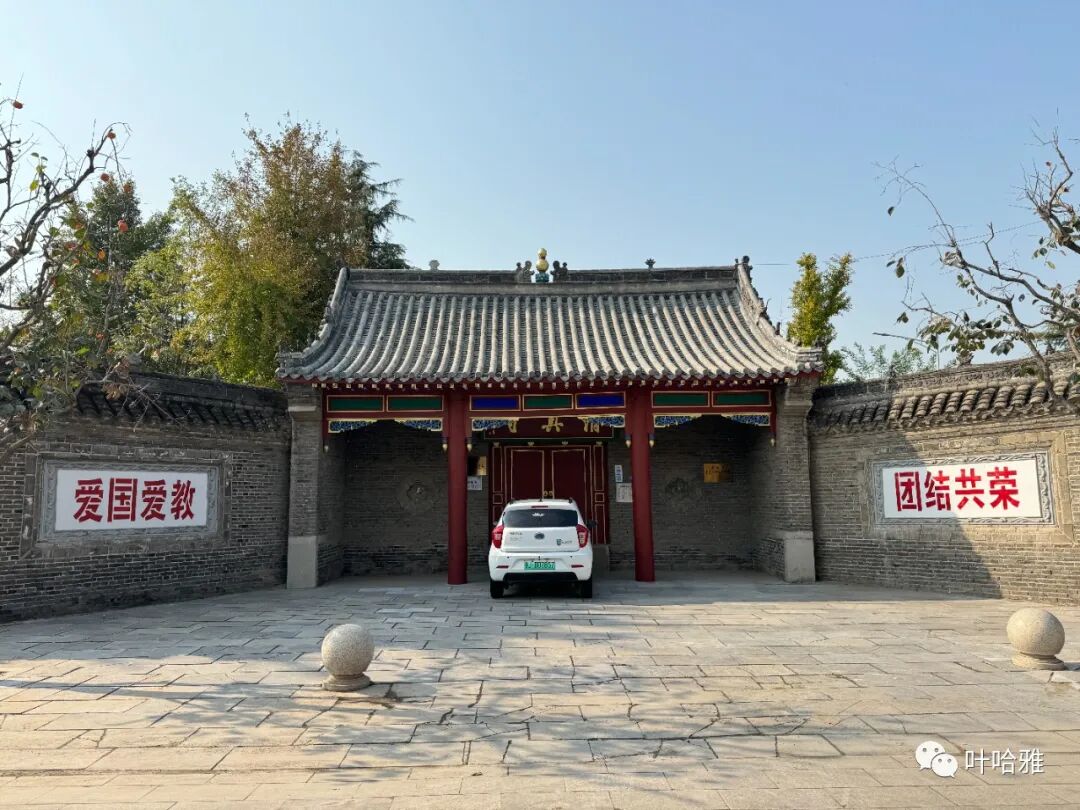
Zhoucheng Mosque is located in the middle of the ten-mile Song Street in Zhoucheng Subdistrict. It was first built in 1575 during the third year of the Wanli reign of the Ming Dynasty and has been expanded several times since. Large-scale renovations took place in 1819 (the 24th year of the Jiaqing reign), 1828 (the 8th year of the Daoguang reign), 1840 (the 20th year of the Daoguang reign), 1911 (the 3rd year of the Xuantong reign), and 1926 (the 15th year of the Republic of China). After the founding of the People's Republic of China, it was repaired many times, with major renovations in 1990 and 2004.
The mosque features a classic Chinese palace-style architectural design, measuring 91 meters long and 51 meters wide. The prayer hall is a ridge-roof building that stands 12 meters high, 31 meters long, and 29 meters wide. The north lecture hall is 17.5 meters long and 6 meters wide. The south lecture hall is 17.5 meters long and 6 meters wide. The water house is 10.5 meters long and 6 meters wide. There are five stone tablets remaining: the Donation of Land Tablet and the Record of Rebuilding the Mosque Tablet from the 12th year of the Daoguang reign (1832), the Record of Rebuilding the Mosque Tablet from the 20th year of the Daoguang reign (1840), the Preface to the Tablet for Rebuilding the Mosque from the 3rd year of the Xuantong reign (1911), and the Tablet for Rebuilding the Mosque from the 15th year of the Republic of China (1926).
Since modern times, the mosque's religious affairs have been led by imams including Zhan Huiyuan, Zhan Shikai, Zhan Hongru, Zhan Faxin, Xu Changzheng, Xu Changzhi, Yang Maoxiu, Yang Baojun, Zhan Hongda, Imam Guo, Ding Shanzhen, Ma Xiangfa, Li Anchen, Zhan Qiang, and Jin Feng. It is now managed by the mosque's democratic management committee, with Bian Qingfang, Wang Jinghan, Guo Guangcai, Zhan Yanling, and Zhao Rongsheng serving as directors in succession.
In 2004, the mosque was designated as a Tai'an City Cultural Relics Protection Unit. It won the title of Tai'an City Model Mosque four times in 2008, 2009, 2010, and 2014. In 2010, it was named a provincial-level Harmonious Religious Activity Venue.
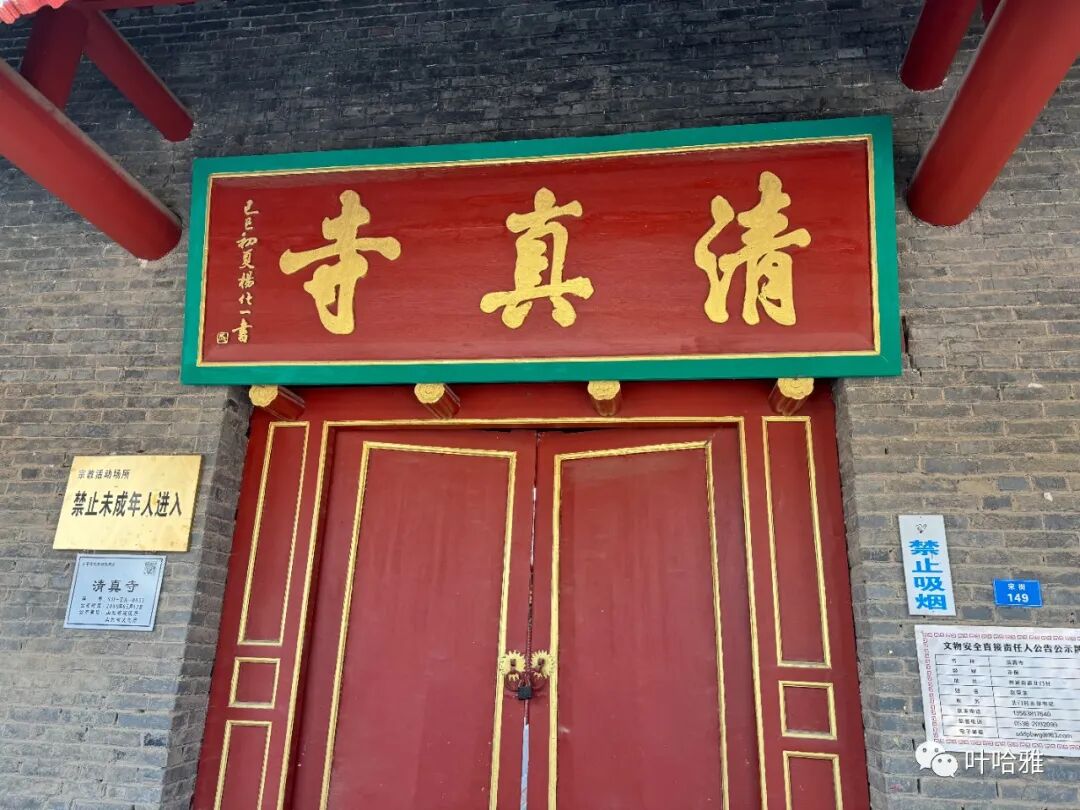
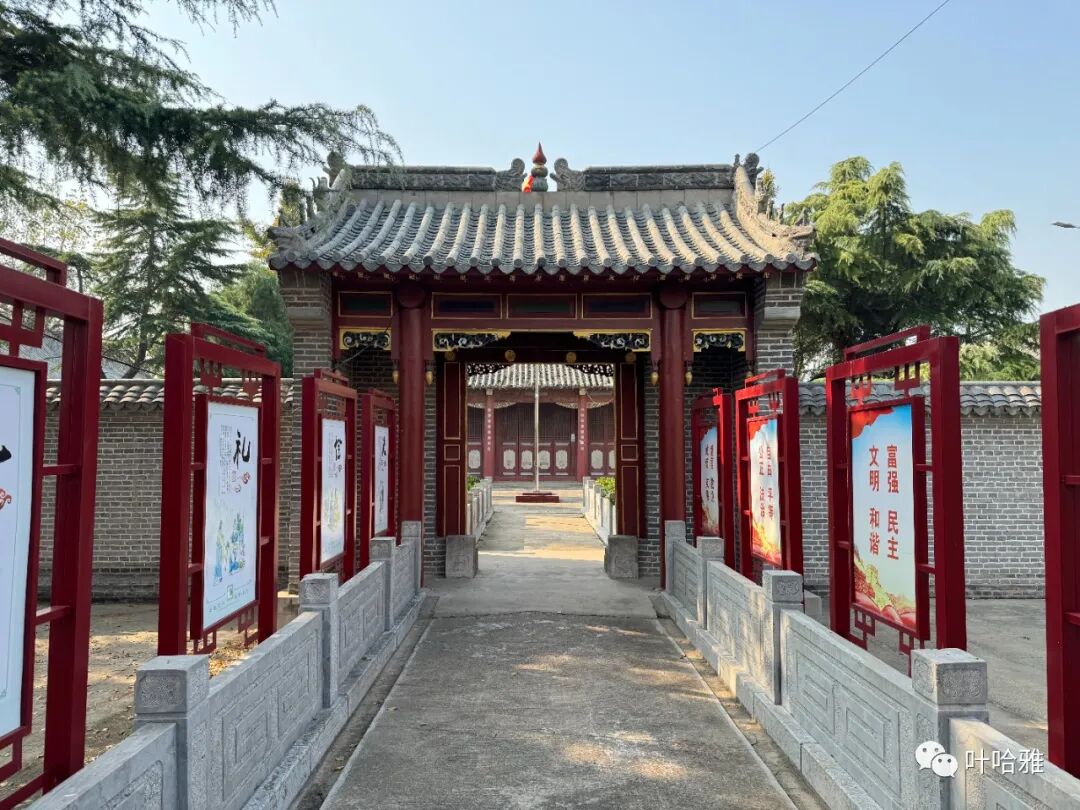
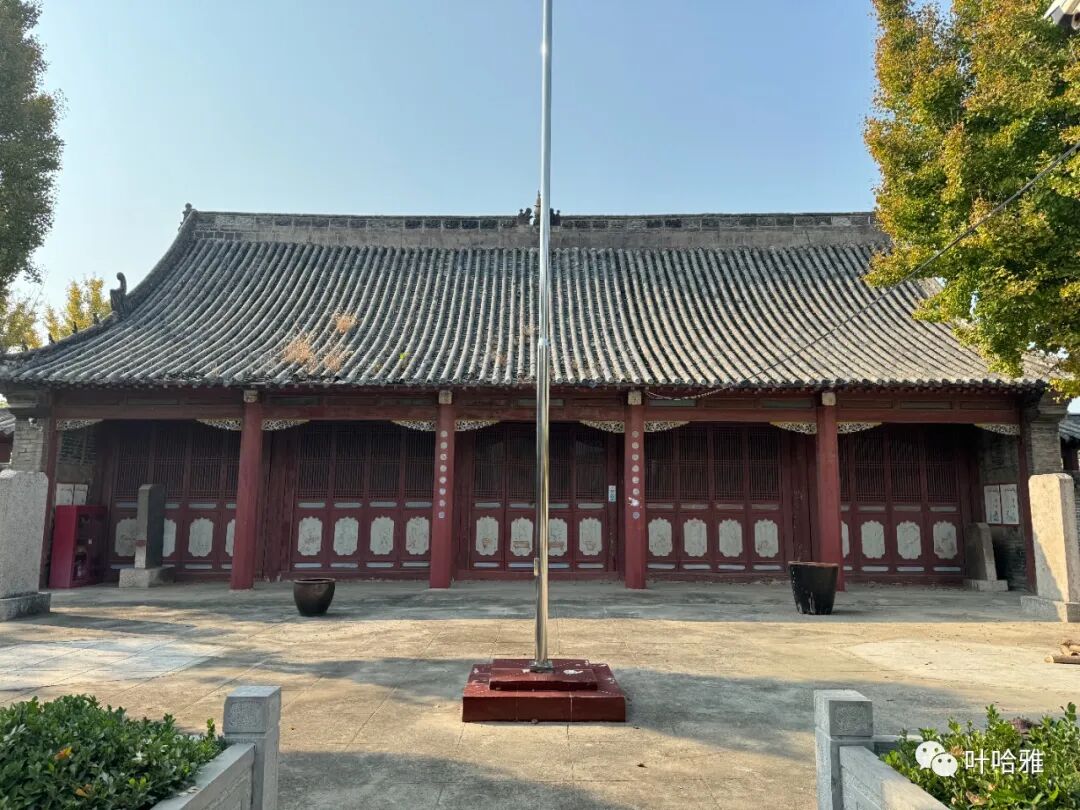
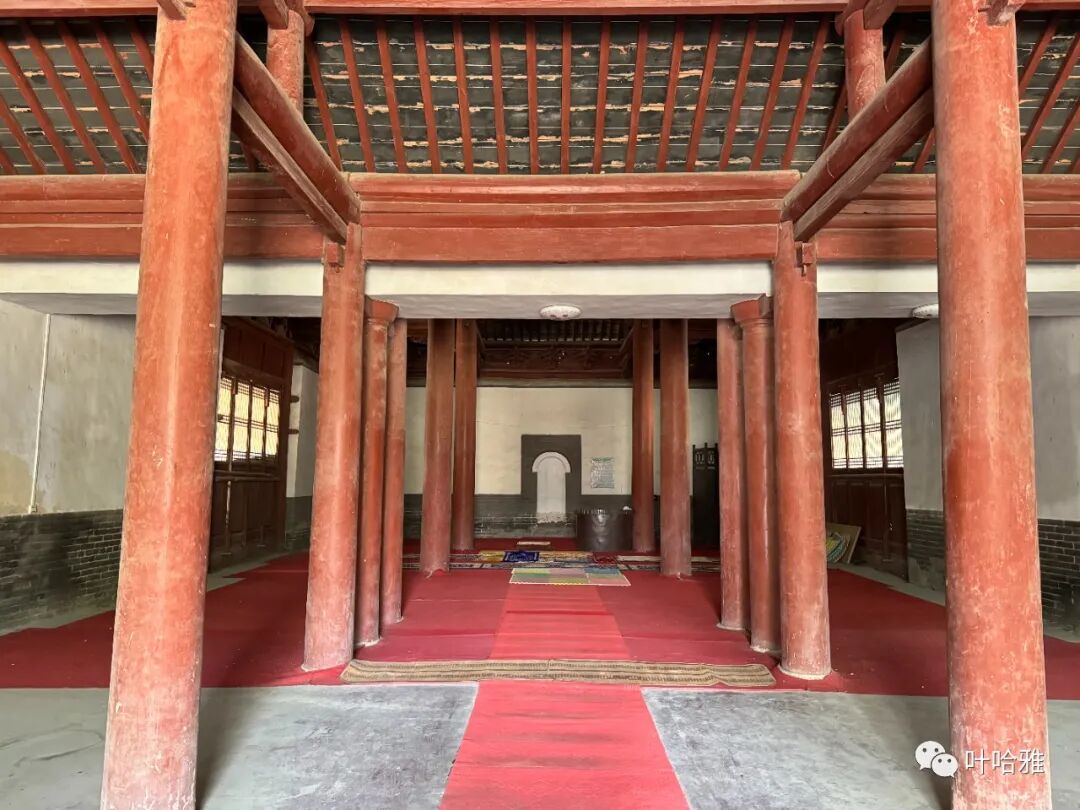
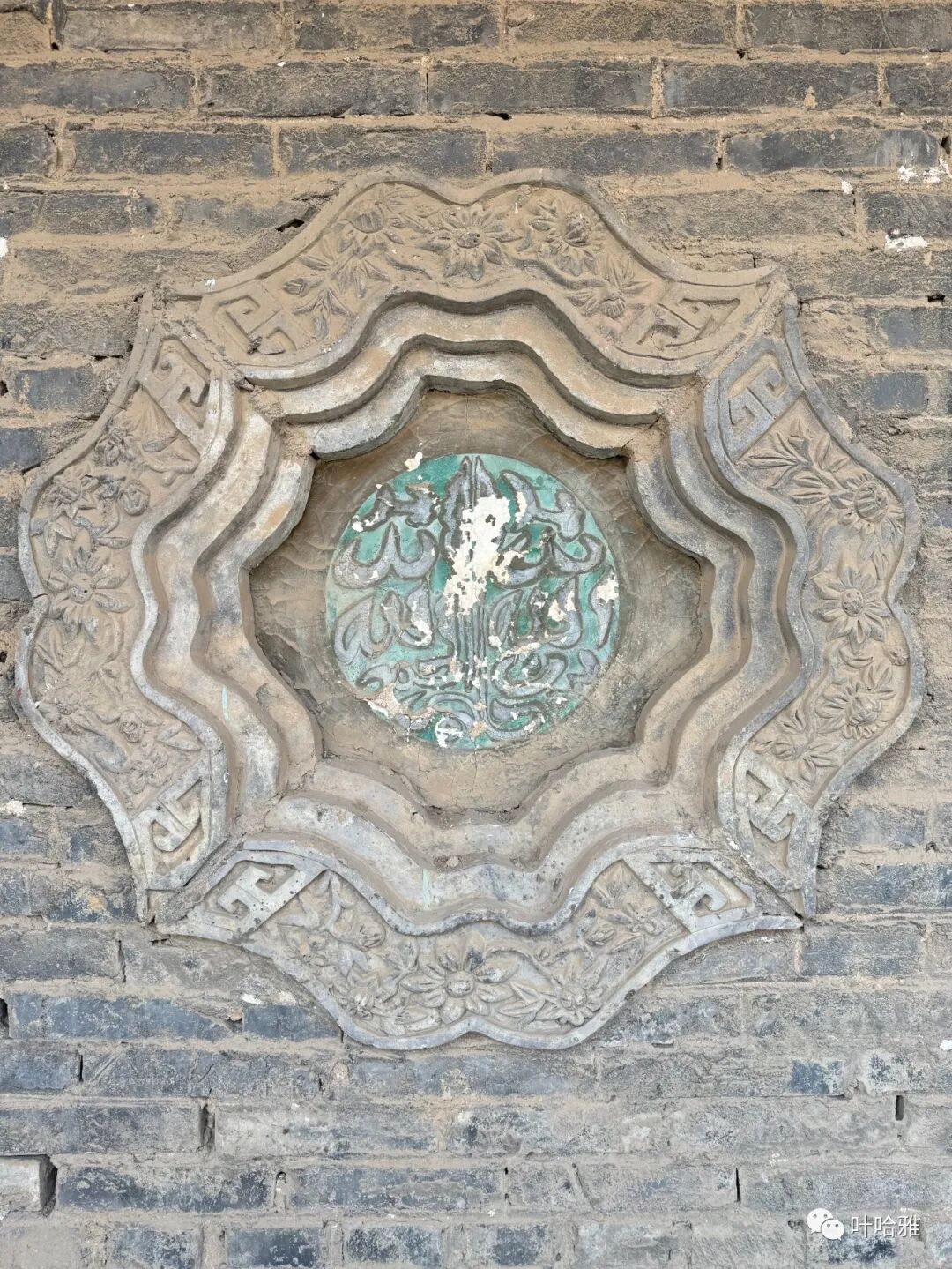
Xicun Mosque
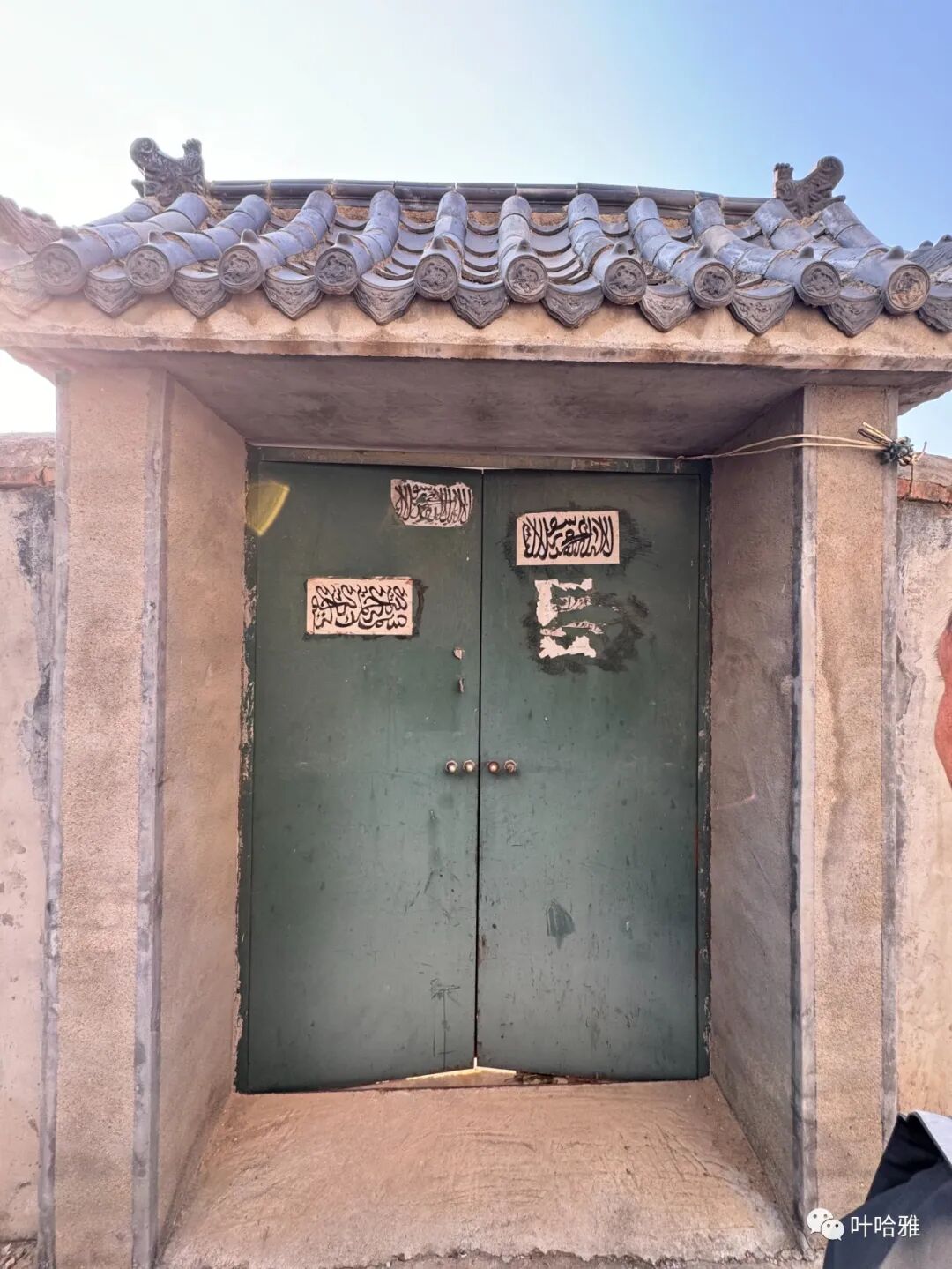
Laohu Town Xicun Mosque is located in the southern part of the village. The mosque was originally built in Zhanjialou during the Daoguang reign of the Qing Dynasty (1820-1850) and was expanded several times later. It was destroyed by a flood in 1955 and later rebuilt in Xicun Village, where it was completed with a main prayer hall of three rooms and a lecture hall of four rooms.
The mosque is built in the style of a Chinese palace and covers a total area of 1,404 square meters. The main prayer hall is a single-story building that stands 12 meters high and covers 130 square meters. The north lecture hall covers 168 square meters, and the south lecture hall covers 43.2 square meters. The ablution room (shuiwu) covers 77 square meters. The mosque currently houses two stone tablets.
The mosque's religious affairs have been led by imams including Mi, Yang, Ma Yunxiang, Xu Changzhi, Wu Mingcai, Wang Enqing, Bai Zhenhe, Lu Qingjie, Yang Yinqing, and Zhang Changshi. It is now managed by a mosque democratic management committee, with members including Zhan Ensu, Zhan Enkui, Zhan Qinghai, Zhan Qingyu, Bai Shulin, Jin Licai, Jin Baoli, Zhan Yanwu, Bai Chengzhen, and He Mingjun serving as directors.
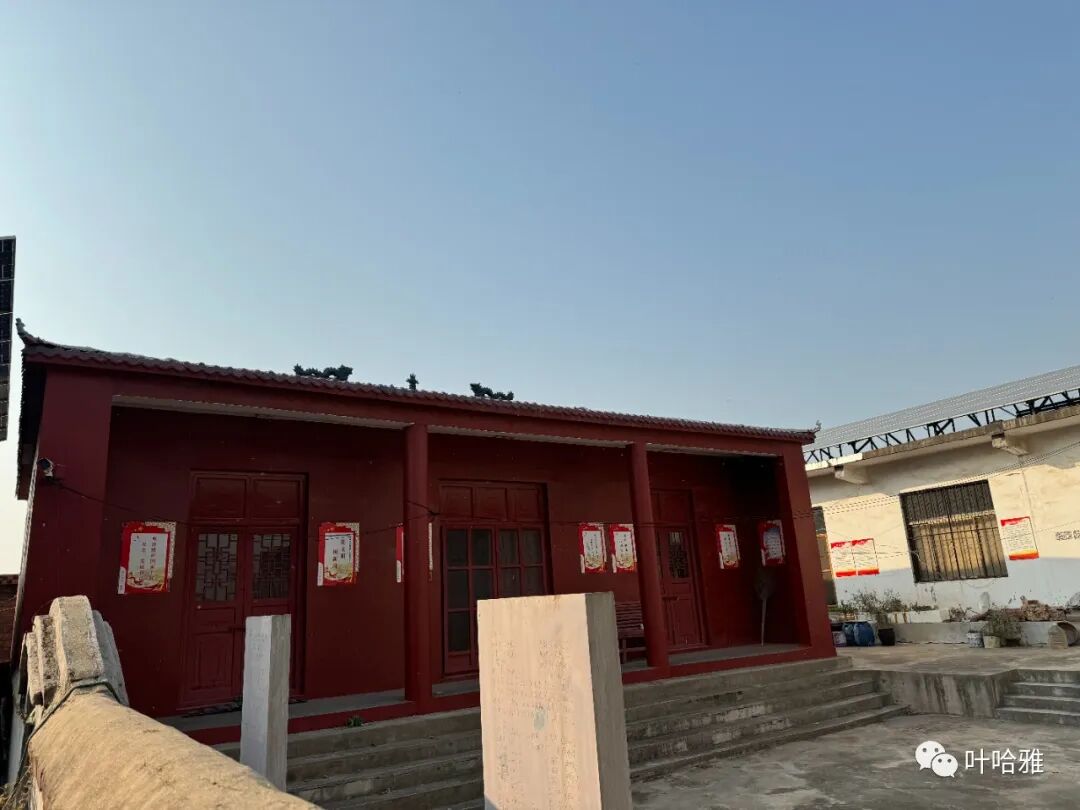
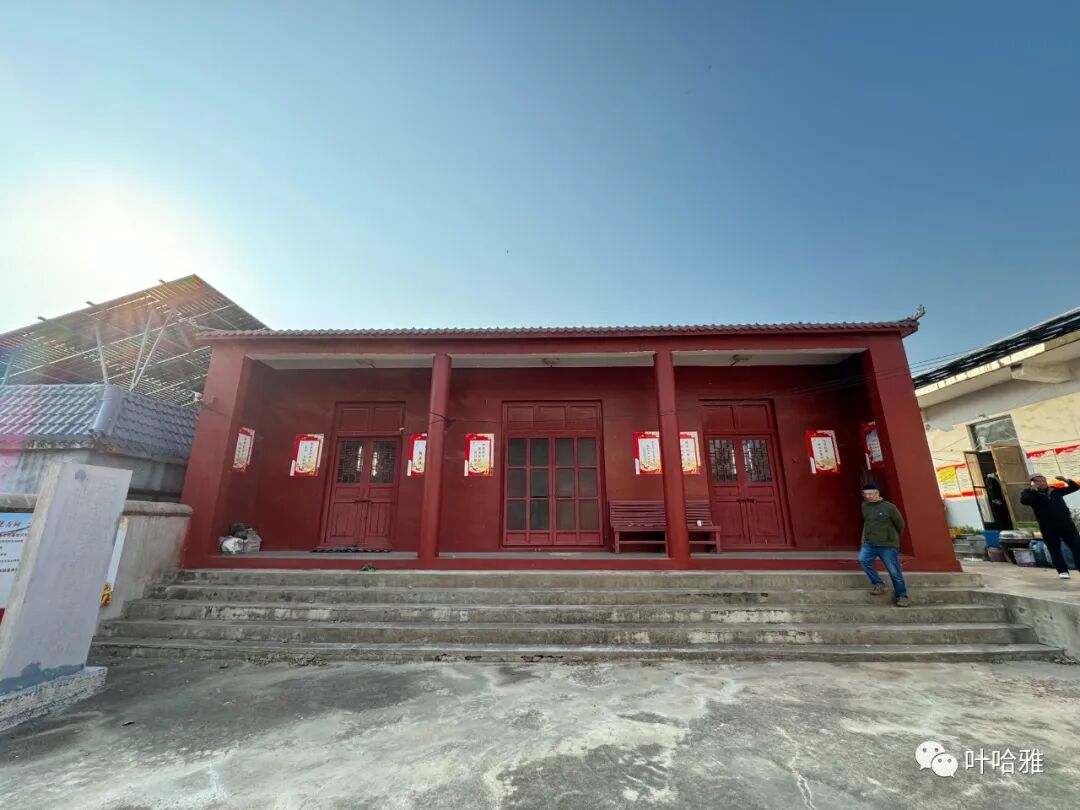
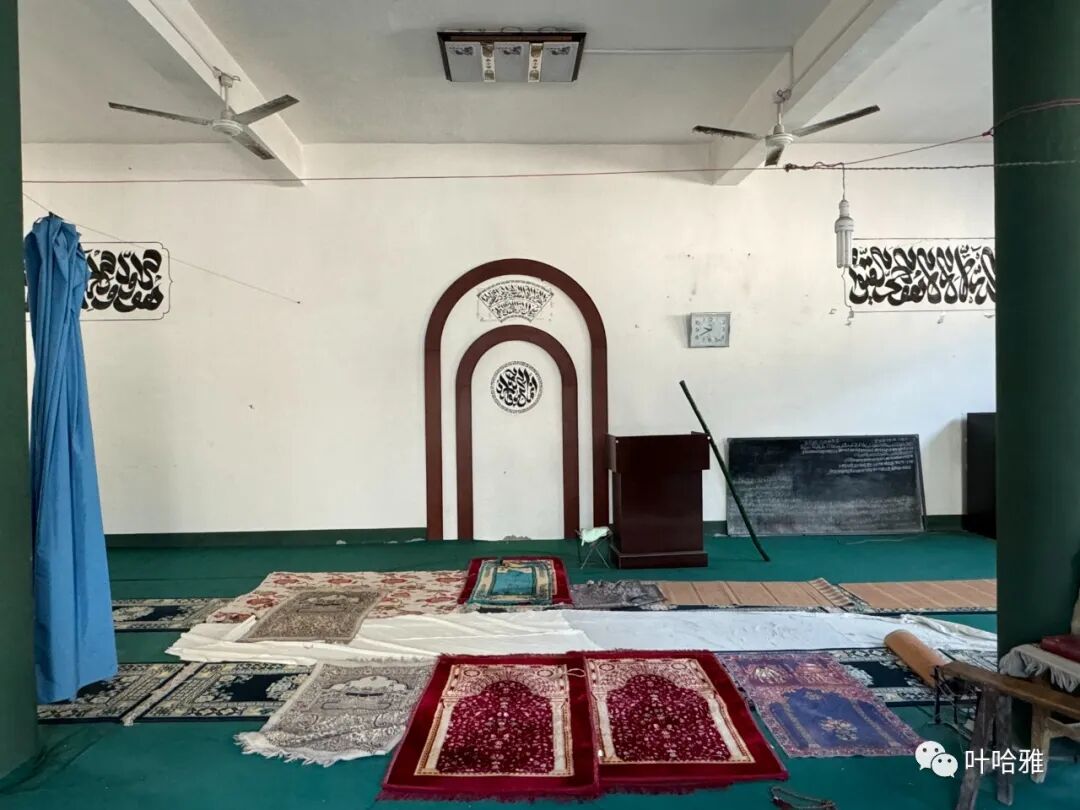
Lisuo Village Mosque.
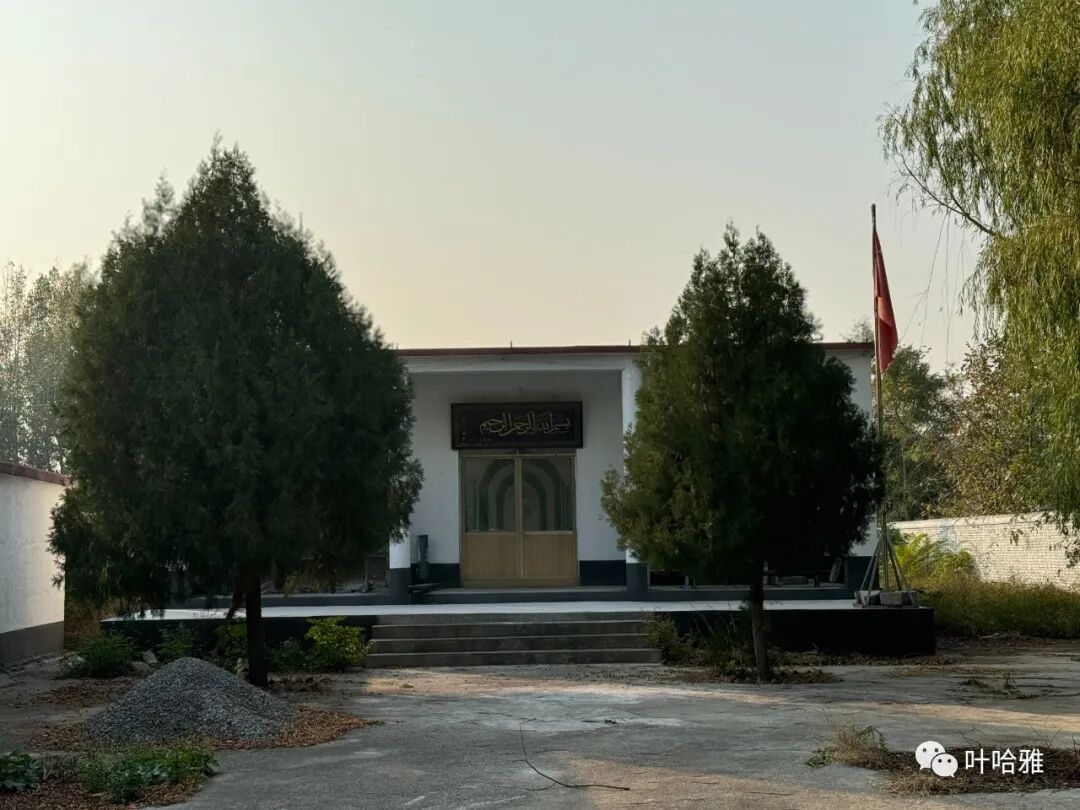
Lisuo Village Mosque in Timen Town was built in 1896 during the Guangxu reign of the Qing Dynasty and has been repaired several times since. It was damaged in 1958 and later rebuilt. In 2012, due to new village planning, it was moved and rebuilt 60 meters southeast of the old mosque, and it is now located at the 15th Team in the south of Lisuo Village. Repairs were carried out in 2015 and 2016.
This mosque has a modern architectural style and covers a total area of 1,751.1 square meters. The main prayer hall is a single-story building that stands 8 meters high and covers 151.2 square meters. The north lecture hall covers 87.1 square meters, and the ablution room (shuiwu) covers 90 square meters. A storage room (jiazi fang) is built to the south of the main prayer hall. Two stone tablets remain. One ancient tablet was carved with verses from the Quran, the date the mosque was built, and the names of the founders, but it was damaged in 1958 and is now a broken fragment.
The mosque was led by imams including Imam Ding, Imam Yang, and Zhao Jie, and it is currently managed by the mosque's democratic management committee.
Daimiao Mosque
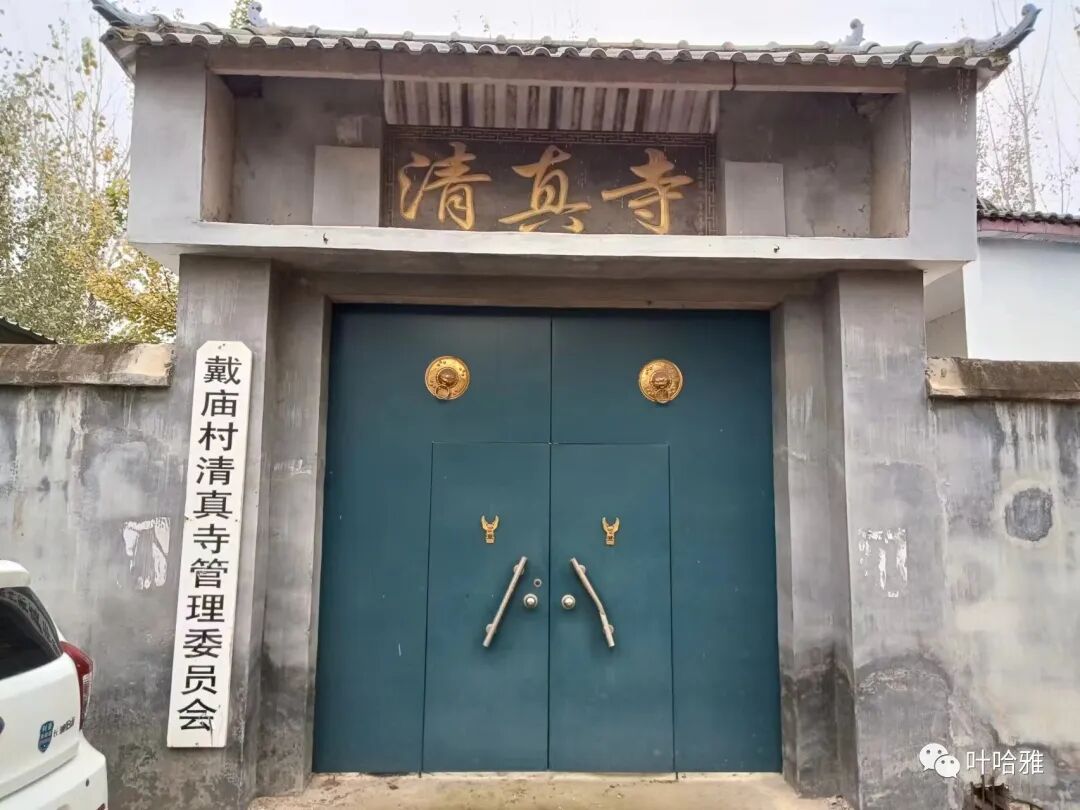
Daimiao Mosque is located in the center of Daimiao Village, Daimiao Town. The date it was first built is unknown. It was damaged by the Yellow River in the 16th year of the Guangxu reign of the Qing Dynasty (1890). It was rebuilt in the spring of the 20th year of the Republic of China (1931). It was later destroyed by flooding and was rebuilt at a new site in 2017. It covers 400 square meters and includes a prayer hall, a south lecture hall, an ablution room (shuifang), a main gate, and a storage room (jiazi fang). There is one stone tablet remaining from the 20th year of the Republic of China (1931) titled 'Record of the Reconstruction of the Daijia Mosque Town Mosque'.
The mosque was led by imams such as Zhan Enpu and Jin Feng. It is currently managed by the mosque's democratic management committee, with Guo Guangcai serving as the current director.
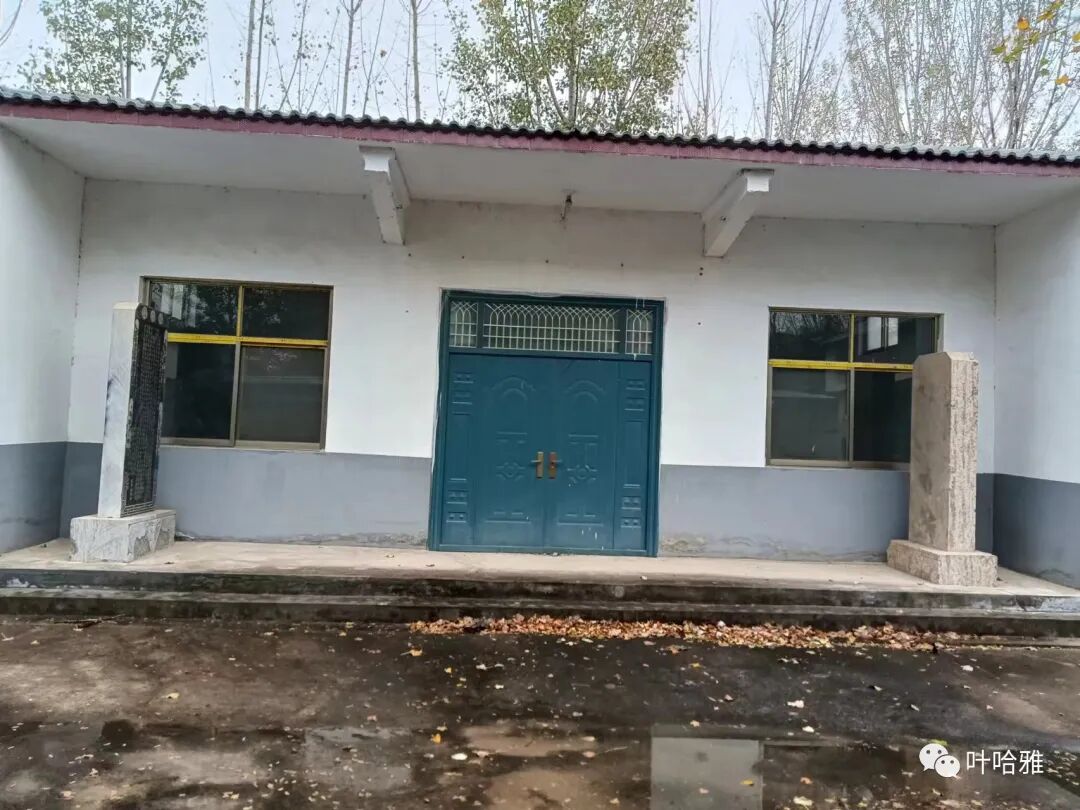
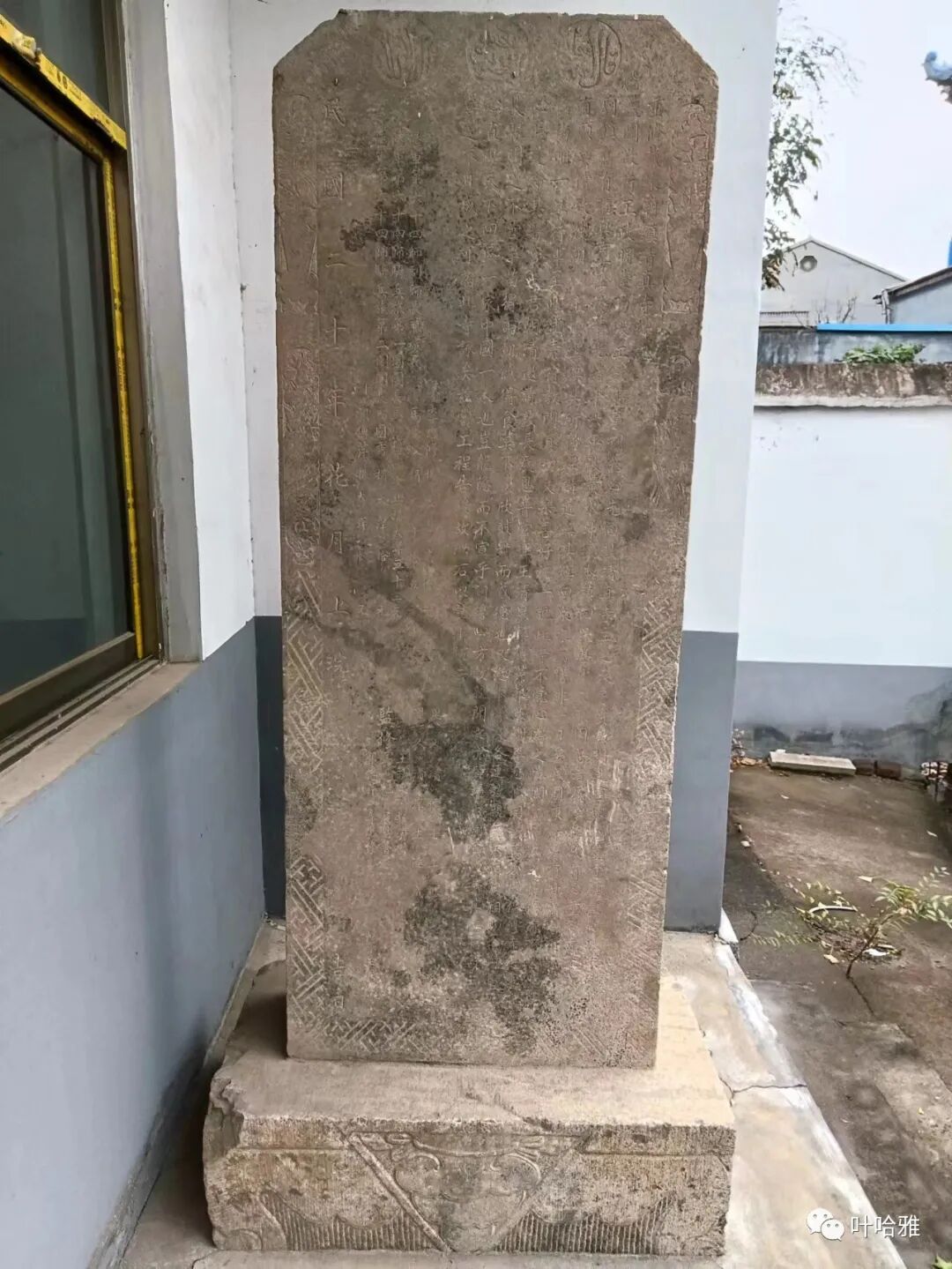
Discussion | A Preliminary Study of the Hui Muslims' Resistance Against Japan in Tai'an, Shandong
At the end of 1937, the Japanese army invaded the Tai'an region of Shandong, causing major losses to the local economy and society. After thorough mobilization, people from all walks of life among the Hui Muslims in Tai'an—including farmers, workers, teachers, students, business owners, doctors, and imams—all joined the vigorous, full-scale war of resistance. Under the leadership of the Party, the Hui Muslim forces in Tai'an grew from nothing to something and from weak to strong, participating in over 300 battles, with figures like Jin Xiaocun and Jin Guang becoming key leaders of the force. The Tai'an Hui Muslim Anti-Japanese School, the Anti-Japanese National Salvation Association, the Anti-Japanese Propaganda Team, and anti-Japanese logistics industries continued to develop, becoming important elements of the systematic Hui Muslim resistance in Tai'an.
During the war, 322,000 soldiers and civilians in Tai'an city (based on current statistics for the six counties and districts of Tai'an) were killed or wounded, accounting for 1/20 of the total casualties in Shandong (6,526,000 people), which shows the atrocities committed by the Japanese army in Shandong and Tai'an. After the Japanese army occupied Tai'an at the end of 1937, they set up 37 enemy-puppet strongholds and carried out horrific, insane massacres. Between 3:00 PM and 5:00 PM on February 24, 1938, the Japanese army committed the Shanyang Village (in front of Culai Mountain) massacre, killing 72 villagers and wounding 13. They burned down 3,080 rooms. 151 large livestock and over 3,500 sheep were burned to death. Over 500,000 jin of grain and more than 400 carts of various sizes were burned. Hui Muslims in Shandong suffered severely from the Japanese invaders. The Japanese army raped countless women, burned down 71 mosques, killed over 130 imams (aheng), and looted all gold, silver, and property. Hui Muslims in Tai'an were not spared either. The Japanese invaders committed monstrous crimes against Hui Muslim villagers in places like Dashuozhuang in Zhuyang Town, Nigou Village in Manzhuang Town, and Yuezhuang Village in Shengzhuang Town. Facing the inhumane massacre policy of the Japanese invaders, Hui Muslim villagers in Tai'an joined the broad masses of Han people in a bitter and arduous war of resistance. Since the spring of 1938, Hui Muslim villagers in the Tai'an region launched a vigorous and systematic war of resistance against Japan, making important contributions to the victory of the war in Tai'an, Shandong, and North China.
1.
Tai'an Hui Muslim Resistance Forces
The Tai'an Hui Muslim resistance was divided into two forces: the Taixi Hui Muslim Anti-Japanese Armed Force and the Taidong Hui Muslim Anti-Japanese Armed Force. The Taixi Hui Muslim resistance was centered in Chenjiabu and Shengjiazhuang in Anjiazhuang Town, Feicheng City, as well as Nanbailou and Zhoujiapo in Xiazhang Town, Daiyue District, with Jin Xiaocun, Mi Yingjun, and Ma Ancai as the main leaders. The Taidong Hui Muslim resistance was centered in Yuezhuang, Gangshang, and Ershilibu in Shengzhuang Town, Tai'an District, and Dashuozhuang Village in Zhuyang Town, Daiyue District, with Jin Guang, Zhao Manshi, Ma Qianli, and Hong Zhanwu as the main leaders. In January 1941, the two forces merged into the Hui Muslim Backbone Battalion in Nigou Village, Manzhuang Town, Daiyue District, totaling over 100 people. The reorganized Hui Muslim backbone brigade operated mainly in the Taixi region. Specifically, the Taixi region covers the vast area west of the Jinpu Railway in Tai'an, south of the Yellow River, up to the north bank of the Dawen River, and east of the Ding River. It mainly includes the counties of Tai'an, Feicheng, Changqing, Dongping, Pingyin, Dong'e, Wenshang, and Ningyang. The anti-Japanese war led by the Hui Muslims of Tai'an was not a series of isolated or scattered battles, but a systematic resistance. The leadership of the Party, the Hui Muslim forces, the Hui Muslim National Salvation Association, the Hui Muslim resistance leaders, the anti-Japanese propaganda teams, the anti-Japanese schools, and the Longshan Military Shoe Factory were all specific elements of the systematic resistance of the Tai'an Hui Muslims. Specifically, the Party's leadership provided a strong political guarantee for the Tai'an Hui Muslim resistance. The Hui Muslim forces were a solid fighting force, and the National Salvation Association was a comprehensive revolutionary group. Jin Xiaocun, Mi Yingjun, and Jin Guang were outstanding leaders of the Tai'an Hui Muslim resistance. The Hui Muslim anti-Japanese propaganda team was an independent system for mobilization, the Hui Muslim anti-Japanese school was a fully established training institution for the resistance, and the Longshan Military Shoe Factory was an independent anti-Japanese logistics industry for the Tai'an Hui Muslims.
II.
The Tai'an Hui Muslim Resistance and the Party's Leadership
Branches of the Communist Party of China were established very early among Hui Muslim teachers and young students in Tai'an. The earliest ones were the Party branch in Ershilibu Village in Taidong and the Party branch in Beiqiu Village in Taixi. The former was established in 1932 with the help of Zhao Manshi and was the first rural Party branch in Tai'an County. Jin Yisan served as secretary, Hong Jixiao as propagandist, and Chen Xingcai as armed committee member, building up strength for future revolutionary struggles. In 1938, the Taixi Special Committee of the Communist Party of China was founded at Beiqiu Primary School, becoming the first Party organization in Taixi County at that time. Duan Junyi served as secretary, and Hui Muslim Party members such as Bai Youfang and Ding Maoshan actively participated in the work.
After the July 7th Incident, cooperation between the Kuomintang and the Communist Party gradually deepened, and many imprisoned Communist Party members were released. In July 1937, Communist Party members Lu Baoqi, Zhu Yugan, Yan Yuming, and Wu Guanying, who had been hiding outside, returned to Tai'an one after another to carry out anti-Japanese propaganda and mobilization. Around October, more than ten Communist Party members, including Zhang Beihua, Cheng Zhaoxuan, Xia Furen, Hou Decai, Cui Ziming, and Wang Zhongfan, returned one after another to Tai'an and the surrounding areas. Li Wenfu, Xu Lincun, Wang Shaofen, and others were released from a Kuomintang prison in Nanjing and returned to Feicheng one by one to start anti-Japanese activities. Many party members returned to Tai'an, planting the seeds for the anti-Japanese war among Hui Muslims in Tai'an and providing a strong political foundation.
In early 1938, Wu Guanying held a mobilization meeting for progressive youth at Hekou in western Tai'an, which was attended by Jin Xiaocun, Mi Yingjun, Wang Baoheng, and others. The meeting decided to organize an anti-Japanese guerrilla force and proposed the slogan, "Those with strength give strength, those with money give money." After the meeting, Mi Yingjun sold 800 jin of wheat to buy a box cannon (xiaziqiang). Fan Changyou sold his mule to buy a Hanyang rifle, and others did the same. This formed the initial organization for the Hui Muslim resistance in Tai'an. During the brutal struggle, the Communist Party cared deeply for Mi Yingjun and the Hui Muslim troops he led. Mi Yingjun also studied the works of Mao Zedong diligently to constantly improve his ideological awareness and military skills. In 1939, he joined the Communist Party of China. In March of the same year, Chen Guang, acting commander of the 115th Division of the Eighth Route Army, and political commissar Luo Ronghuan led the Eastward Advance Detachment to the Tai-Fei mountain area to establish the western Tai'an anti-Japanese base. Fan Pengfei, the leader of the Eastward Advance Detachment's civil movement team, quickly made contact with Jin Xiaocun and others and provided guns to the guerrilla group. Fan Pengfei once recalled:
North of Anjiazhuang, there was a village with many Hui Muslims. Several young men there formed a guerrilla group on their own, and they had a few guns. After I arrived, I often visited them. One of them was named Mi Yingjun. He was a very accurate shot and trusted me a lot. Later, I organized them and they joined the Tai'an Independent Regiment.
3.
The Growth of Hui Muslim Resistance Forces in Tai'an
Under the leadership of the Party and the guidance of the 115th Division, the Hui Muslim anti-Japanese armed forces in Tai'an continued to grow and strengthen. Whether it was the Hui Muslim anti-Japanese armed forces, the Hui Muslim anti-Japanese leadership, or other entities like anti-Japanese schools and industries, all grew gradually under the leadership of the Communist Party of China.
The Hui Muslim Battalion was a vital force in the Tai'an Hui Muslim resistance. In January 1938, Jin Xiaocun, Mi Yingjun, and six or seven others organized a Hui Muslim anti-Japanese guerrilla group. It soon grew to over twenty people and became a guerrilla squad. After that, the number of Hui Muslim youths joining the resistance kept increasing, and by the end of that year, it had expanded to more than 80 people. In the spring of 1939, the unit was reorganized as the Second Company of the Taixi Independent Regiment, also known as the Hui Muslim Company, with Mi Yingjun serving as company commander.
From then on, this Hui Muslim anti-Japanese armed force grew rapidly under the leadership of the Party. Between the spring and summer of 1939, the Hui Muslim Company worked with the 115th Division and the 686th Regiment to wipe out the Taian traitor organization Red Spear Society and executed its leader, Gao Fuchang. Afterward, the company was reorganized as the Fourth Company of the Taixi Independent Battalion. Soon after, the Fourth Company was reorganized again as the Second Company of the Sub-district Backbone Regiment, fighting across the Taixi region and becoming a banner for Hui Muslim resistance against Japan in Taixi. In early 1940, Jin Xiaocun mobilized people in over 40 Hui Muslim villages in Taixi to form anti-Japanese armed forces, eventually establishing three platoons, which were actually three small squads. In 1941, the two Hui Muslim anti-Japanese units from Taidong and Taixi merged to form the Hui Muslim Backbone Battalion, which oversaw two squadrons. In the second half of that year, Jin Xiaocun and others ordered the formation of the Third Hui Muslim Squadron in the suburbs of Jinan. At the end of 1943, Zhang Xiaonong and others formed the Fifth Detachment of Qihe in Qihe. At the same time, Jin Xiaocun formed the Fourth Squad in Xiaojinzhuang, Jinan. In August 1945, the units merged to form the Taixi Hui Muslim Battalion, with Jin Xiaocun serving as political commissar and Ma Ancai as general branch secretary. In November, it was reorganized as the First Battalion of the First Backbone Regiment of the sub-district, overseeing three companies. Since its founding, this unit made the most of the Hui Muslims' bravery, tenacity, and strong sense of community. They actively carried out guerrilla warfare. After hundreds of battles, they became a national revolutionary force in the Hebei-Shandong-Henan border region that could not be crushed or broken. In February 1949, they were reorganized as the 151st Regiment of the 51st Division of the 17th Army. They took part in the Yangtze River crossing campaign and later marched into the great southwest.
The Tai'an Hui Muslim unit was a strong fighting force. They once successfully protected Comrade Jiang Hua as he passed through enemy blockade lines. During the War of Resistance Against Japan and the War of Liberation, this unit fought over 300 battles. They cleared out more than 60 enemy strongholds and wiped out over 6,000 Japanese, puppet, and Kuomintang troops. They captured 5 cannons, over 20 heavy machine guns, over 70 light machine guns, and more than 4,000 rifles. Nearly 20 people received special or first-class merit awards. Of course, they also made huge sacrifices. The unit's founder, Mi Yingjun, died in October 1943. His commanders spoke highly of him, calling him an excellent Communist Party member, a clever and brave commander, and a Hui Muslim anti-Japanese hero raised by the Party. Incomplete records show that during the War of Resistance, the unit lost 6 battalion-level officers, 14 company-level officers, and over 40 platoon or squad-level officers.
Anti-Japanese schools were important places for training reserve talent. The goal of starting the Hui Muslim Anti-Japanese School was to strengthen and expand the Hui Muslim anti-Japanese army, train more political officers for the Hui Muslim troops, and provide new talent for the army. In 1943, Jin Xiaocun and Jin Guang attended a meeting of the Hebei-Shandong-Henan border region government. They proposed the idea of starting the school to leaders like Deng Xiaoping, who were chairing the meeting, and received approval from the leaders and representatives. After approval from Zhang Yuenan and Wu Shengyu of the Taixi Commissioner's Office, the school was officially established in the autumn of 1944 in Dayuanzhuang Village, Qihe County, with over 60 students. The full name of the school was the Tai'an Region Hui Muslim Anti-Japanese School, also known as the Taiyun District Islamic School. It used military-style management, and the 60-plus students were organized into two platoons and eight squads. The main focus was studying the works of leaders like Mao Zedong, and figures such as Zhang Yaonan and Liu Zifang came to the school to give reports. After the founding of the country, more than 60 students joined various construction fronts across the nation, with some becoming key contributors to the building of the new China.
The Longshan Military Shoe Factory and others provided logistical support for the Hui Muslims' resistance efforts. The Hui Muslim resistance in Tai'an included production for self-sufficiency, with two typical logistics enterprises formed by Hui Muslim teams being the Taixi Wenyang Cooperative and the Longshan Military Shoe Factory. The former was established mainly in the late stages of the War of Resistance Against Japan, initially located at the western border of Mazhuang in Daiyue District, and later moved several times. Ma Qianli was the main person in charge, and it played a major role during the War of Liberation. The latter was founded in the autumn of 1944 and was located in Longshan Guanzhuang, southwest of Manzhuang Town in Daiyue District. Jin Guang served as the factory director, and Mi Guangzhen from Dashuozhuang, east of Tai'an city, served as the purchaser. With over 20 Hui Muslim workers, they mainly produced military shoes, with products primarily supplied to local Hui Muslim forces. Thousands of pairs of military shoes, along with some semi-finished products, raw materials, and tools, were escorted by Jin Guang's wife, Gao Fangpu, to the home of Jin Yongzeng in their village for hiding. Later, they were transported to Dashuozhuang, and in 1948, they were handed over to the Bohai Military Region.
On December 31, 1937, the Japanese invaders occupied Tai'an. On January 1, 1938, the first shot of the Shandong resistance, led by the Shandong Provincial Committee of the Communist Party of China, was fired on Culai Mountain within Tai'an. Influenced by the Culai Mountain anti-Japanese armed uprising and under the leadership of the Communist Party, Jin Xiaocun, Mi Yingjun, and others formed the Tai'an Hui Muslim anti-Japanese guerrilla group in early 1938. This force grew from weak to strong and from small to large, with Jin Xiaocun, Jin Guang, Ma Ancai, and others becoming important leaders of the team. Through in-depth mobilization, all walks of life among the Hui Muslims in Tai'an, including workers, farmers, intellectuals, entrepreneurs, and religious figures, participated in the vigorous all-out war of resistance.
(The author, Jin Po, is the director of the History Department at the School of History, Taishan University, and holds a doctorate in modern and contemporary Chinese history. He is a lecturer, and this was originally published in the first issue of 'Chinese Muslims' in 2019.)
Modern and contemporary history major, lecturer, originally published in 'Chinese Muslims', 2019, Issue 1.
I have finished introducing all 70 mosques in Tai'an. A mosque tour naturally needs to include halal food, but my trip to Tai'an was short and busy. With so many mosques to cover, I have limited space left to talk about the food.
Jin Family Roasted Chicken (Jin Jia Shaoji)
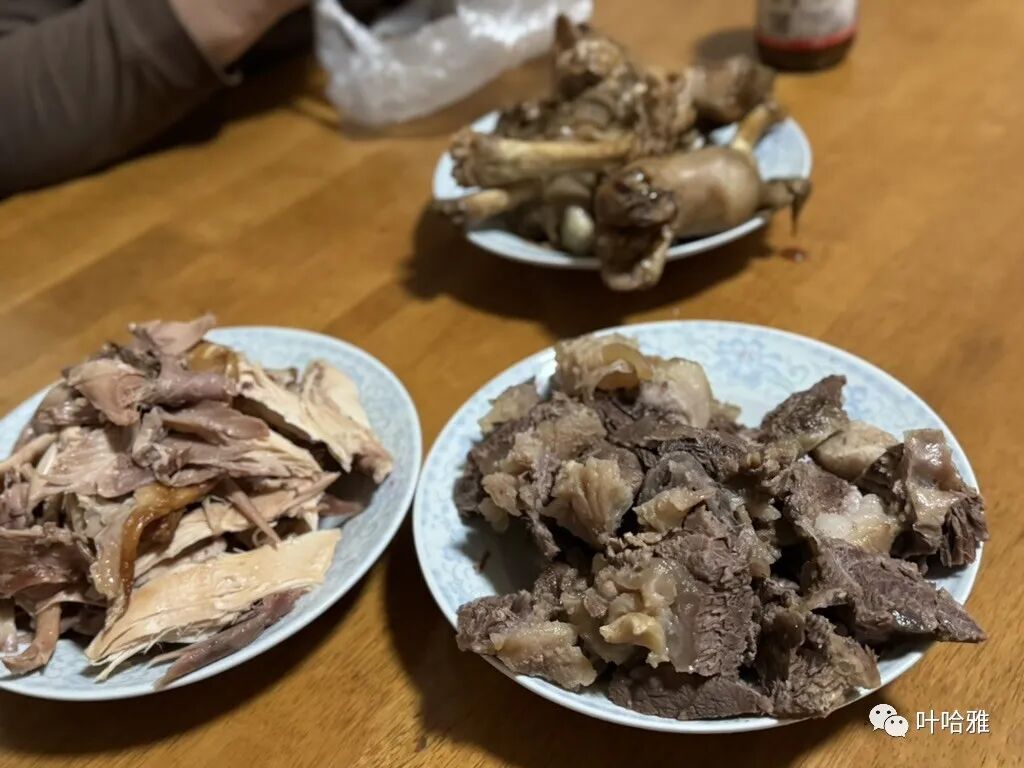
The highlight was the Jin Family Roasted Chicken we ate at a local elder's home near the Dashuozhuang Mosque. It was affordable and delicious. The chicken was tender, and the seasoning was just right. It tasted better than some of the trendy roasted chicken shops that have long lines, and it really suited my taste. On the right side of the photo is fresh camel meat, which tastes similar to beef.
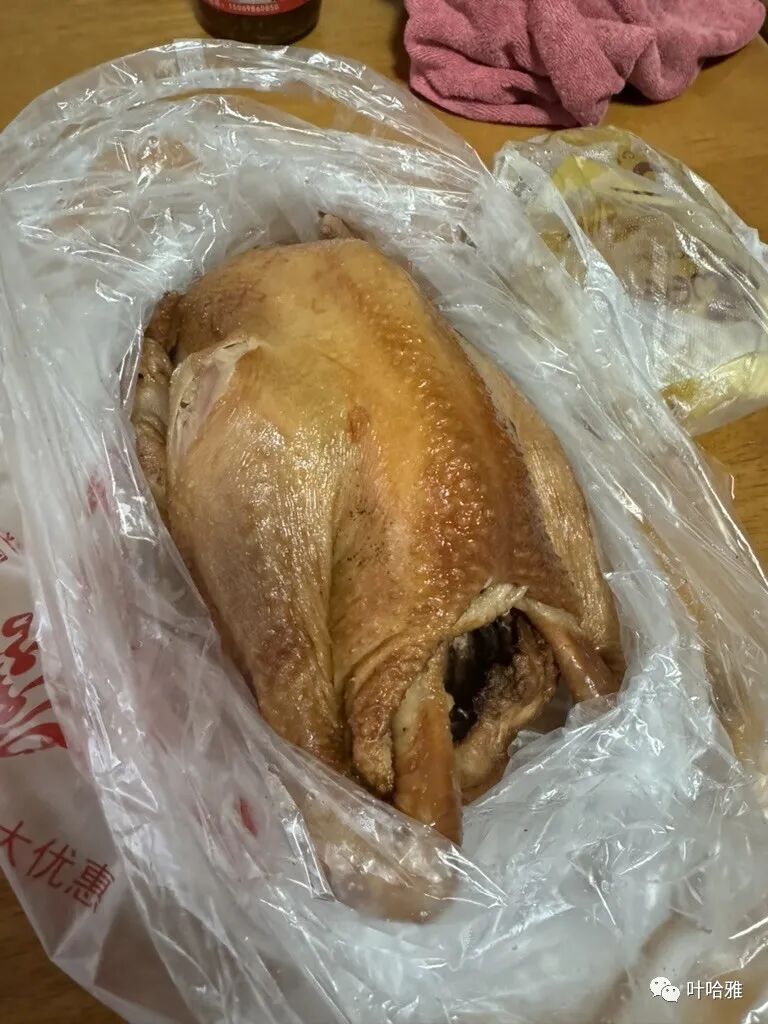
Also, Elder Jin is reliable in his faith, so the ingredients are safe to eat. You can find his contact number in the picture below.
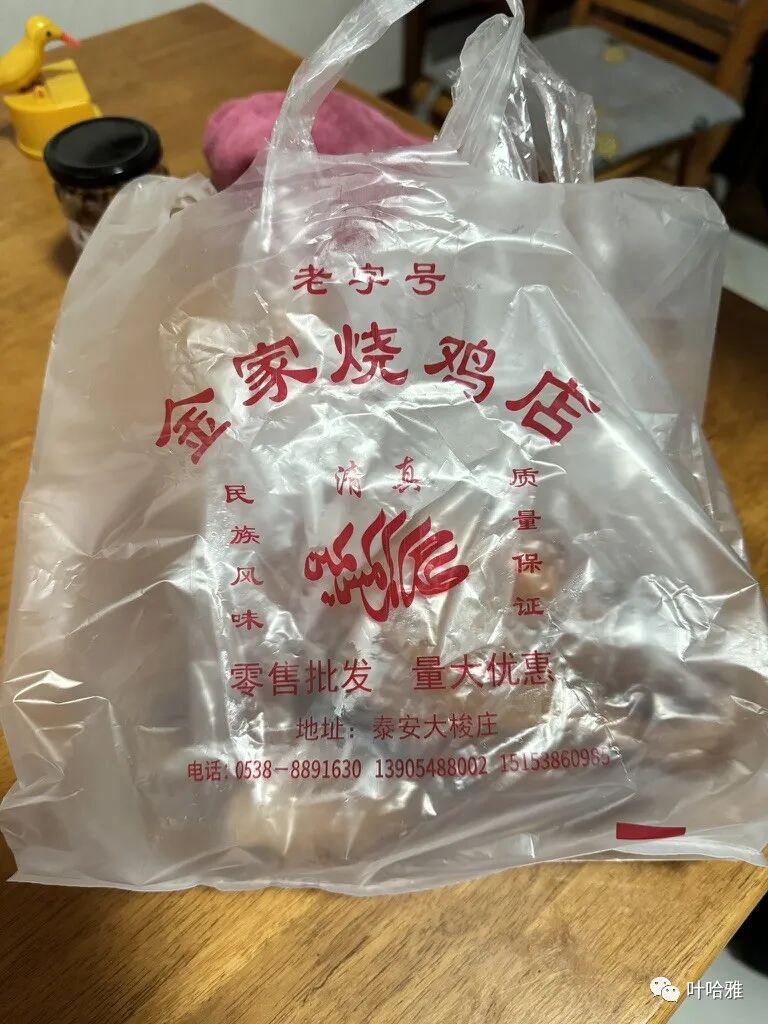
Mi Family Halal Gruel Shop (Mi Jia Qingzhen Sanguan)
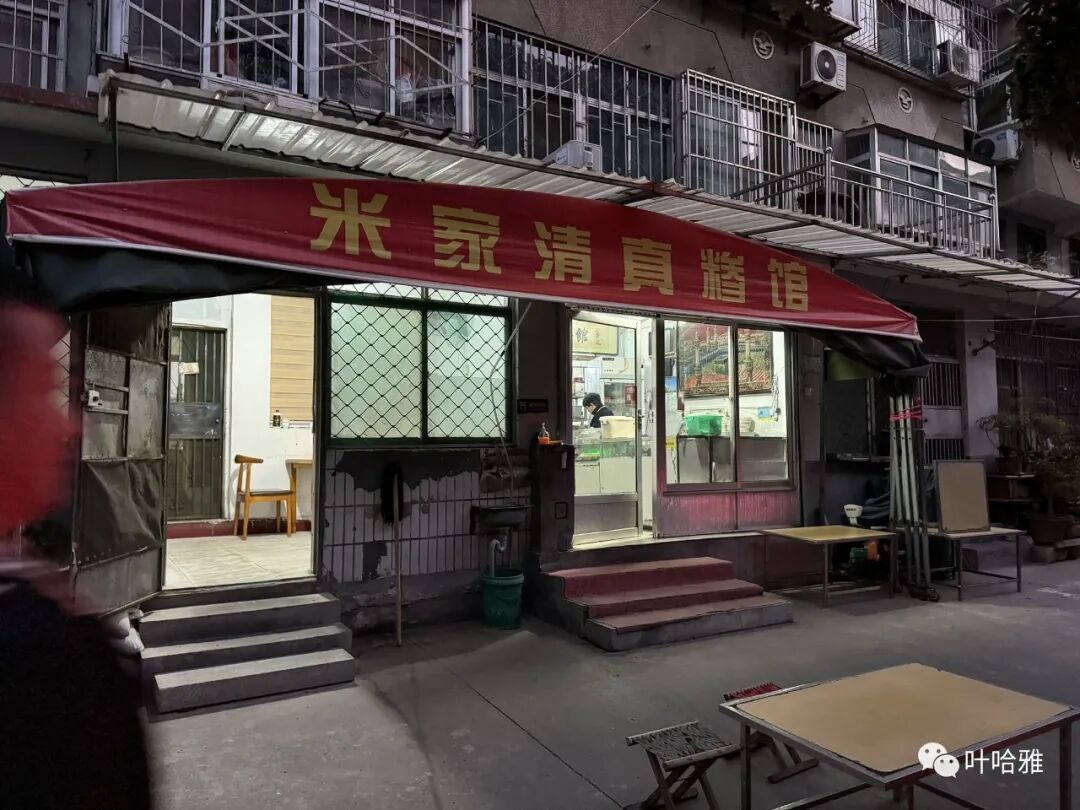
After finishing my work, I went with Elder Han to have a traditional Tai'an breakfast at the Mi Family Gruel Shop. It is a thick soup made with lamb broth and eggs. This type of gruel (sangtang) is most famous in the Linyi area.
Muslim Friendly Travel Shandong Dezhou: Old Mosques, Hui Food and Canal City Heritage
Articles • yusuf908 posted the article • 0 comments • 199 views • 2026-05-23 23:15
Summary: This Muslim friendly China travel article keeps the original 2016 Dezhou notes intact while improving the English flow. It is useful for readers researching halal food in China, Chinese Muslim food, Muslim tourist in China experience, and old mosque heritage in Shandong.
On December 17, 2016, I left Beijing South Railway Station on the Beijing-Shanghai high-speed train. I arrived in Dezhou in one hour and twenty minutes and started my one-day trip there.
The first thing I wanted to see in Dezhou was the Tomb of the Sultan of Sulu. The information in this article about the Tomb of the Sultan of Sulu and Beiying Village comes partly from the books The Sultan of Sulu and His Descendants and The Sultan of Sulu in China.
Sulu Kingdom
The Sulu Archipelago is in the far southwest of the Philippines, right next to the easternmost part of Malaysia.
The Moro people live on the Sulu Archipelago. The term Moro has been used by Spaniards to describe Muslims since the 15th century. Before the 15th century, when Spain reconquered Andalusia, they called the Muslims there Moros.
In the Middle Ages, as maritime trade grew in the Indian Ocean, the faith spread along the Maritime Silk Road into Southeast Asia. Between the 14th and 16th centuries, the faith centered in Malacca, passed through Sumatra and Java, went north through Borneo, and reached the Sulu Archipelago in the southwest Philippines.
Around 1380, the famous Arab judge and religious scholar Makhdum Karim arrived at Simunul Island in the far southwest of the Sulu Archipelago with an Arab caravan and built the first mosque in the Philippines there. On November 7, 1407, Sharif ul-Hashim, a descendant of the Prophet born in Johor, Malaysia, led an army to occupy the Sulu Archipelago. He married a local princess and established the Sulu Kingdom.
Between 1405 (the third year of the Yongle reign) and 1417 (the fifteenth year of the Yongle reign), the Ming Emperor Chengzu, Zhu Di, sent Zheng He to visit the countries of the Philippine archipelago three times. In 1417, the chiefs of the Eastern and Western Sulu Kingdoms and the wife of the chief of the Dong Kingdom led a delegation of over 340 people to visit the Ming Dynasty. In July, they arrived at Quanzhou Port. They then traveled north along the coastline, entered the Yangtze River at Wusongkou, and reached Longjiang Station in Yingtian Prefecture (Nanjing). After resting at Longjiang Station, the Sulu delegation traveled north along the Grand Canal and reached Beijing in mid-August. Ming Emperor Chengzu, Zhu Di, held a grand meeting in the Fengtian Hall (later renamed the Hall of Supreme Harmony). He named the two chiefs the Eastern King and the Western King, and the wife of the Dong Kingdom chief the Dong Queen, with the Eastern King Paduka Batara as the most honored.
In September, the three rulers started their journey home, and Emperor Chengzu sent a special envoy to escort them. The delegation traveled south along the canal. When they passed Anling, north of Dezhou, the Eastern King suddenly fell ill and sadly passed away on September 13. When the news reached Beijing, Emperor Chengzu sent a minister from the Ministry of Rites to bury the Eastern King of Sulu with royal honors. The Tomb of the Eastern King of Sulu was built north of Dezhou city and finished in October 1418 (the sixteenth year of the Yongle reign).
The completed tomb faces south. From south to north, it includes a memorial archway (paifang), an imperial stele pavilion, ornamental columns (huabiao), stone statues, a ceremonial gate, the Ling'en Gate (hall gate), the Ling'en Hall (main hall), and the burial mound.
Today, the tomb still has its ornamental columns and five pairs of stone statues. In the autumn of 1917, the canal burst, causing great damage to the tomb. The stone statues were knocked over, and some were washed into the fields. The statues were not straightened and aligned until 1965, but they were pushed over again by the Red Guards in 1966. Luckily, Ma Jingui, a militia leader who had just retired from the army, led the village's young people to stand their ground in front of the tomb and the mosque. He made the Red Guards go to the Dezhou Municipal Committee to get a permit to destroy the Four Olds, which saved the tomb and the mosque.
The Tomb of the Sultan of Sulu in the early 1980s, from Selected Cultural Relics of Zheng He's Voyages.
The Tomb of the Sultan of Sulu in the early 1980s, from Selected Cultural Relics of Zheng He's Voyages.
The inscription of the imperial decree issued by the Yongle Emperor of the Ming Dynasty in 1418 to build a shrine in front of the Tomb of the Eastern King.
The main burial mound of the Eastern King's tomb.
The Tomb of the Sultan of Sulu in the early 1980s, from Selected Cultural Relics of Zheng He's Voyages.
The original tombstone is now kept in the exhibition hall of the west side hall.
Descendants of the Sultan of Sulu settle in Dezhou.
After the Eastern King of Sulu passed away, the Ming Dynasty arranged for his eldest son, Dumahan, to return home to inherit the throne. His second son Andulu, third son Wenhala, his wife Gemuning, and ten servants stayed behind to guard the tomb. This began the life of the Eastern King's descendants as residents in China.
The Ming Dynasty granted the descendants 238 mu of sacrificial land, exempting them from all land taxes. Each person received a monthly stipend of one shi of grain. The government also assigned three Hui Muslim families—the Xia, Ma, and Chen families from Licheng, Shandong—to farm the land and manage the annual memorial services, exempting them from all labor duties.
Later, the descendants of Andulu and Wenhala married into the Xia, Ma, and Chen families. Their descendants took the surnames An and Wen, gradually forming Beiying Village in Dezhou, which consists of the five families of An, Wen, Xia, Ma, and Chen next to the Sultan of Sulu's tomb.
After Andulu, Wenhala, and the wife Gemuning passed away, they were buried to the southeast of the Eastern King.
The Tomb of the Sultan of Sulu in the early 1980s, from Selected Cultural Relics of Zheng He's Voyages.
Andulu was actually the second son, but because the Wen family later produced a prefect named Wen Xianyu, oral tradition gradually shifted the Wen family to be the second son and the An family to be the third.
Division Commander An Shude.
Among the descendants of the An family, the most famous in modern times is Division Commander An Shude. An Shude was the 15th-generation grandson of the Sultan of Sulu. He began following Feng Yuxiang in 1913 and led his troops into the Forbidden City to help expel Puyi during the 1924 Beijing Coup.
In 1928, An Shude was promoted to commander of the 18th Division and served as the garrison commander of Longdong. After the uprising of the young commander Ma Zhongying, An Shude served as the commander-in-chief for the suppression of Ma Zhongying in Qinghai and captured Xining.
After moving into Xining, An Shude placed great importance on Hui Muslim education. He served as the president of the Qinghai Hui Muslim Education Promotion Association and opened the first primary school for Hui Muslim girls in Qinghai.
After the Central Plains War in 1930, An Shude retired from military life to start businesses and renovate the Sultan of Sulu's tomb and the mosque. He passed away in 1950.
On December 3, 1995, the descendant of the eldest son Dumahan and heir to the Sultanate of Sulu, Ismael Kiram, visited the tomb. This was the first meeting between the descendants of the eldest son and the descendants of the second and third sons in hundreds of years.
Beiying Village.
During the Wanli period of the Ming Dynasty, the descendants of the Sultan of Sulu built a mosque southwest of the tomb. The Ming Dynasty issued an imperial decree to select one religious leader from the Wen and An families to inherit the lineage and manage the Hui Muslim community. In 1917, the canal burst, and the mosque and the entire Beiying Village were washed away. It was not rebuilt until 1940, which is the building we see today. According to the old imam, the pavilions at the four corners of the mosque were actually used as watchtowers.
After the 1960s, a factory took over the mosque. It was not until June 1980, when the Philippine ambassador to China visited the Tomb of the Sultan of Sulu, that the factory was moved out and the main hall was repaired.
The descendants of the Sultan of Sulu were still considered foreign residents during the Ming Dynasty and the early Qing Dynasty, as they lived under the protection of the Sultan and received imperial favors throughout both dynasties. In 1730, the eighth year of the Yongzheng reign, the Sultan of Sulu, Sultan Badaruddin, who was a descendant of the Sultan of Sulu's eldest son, Dumatuh, paid a visit. He first went to the Tomb of the Sultan of Sulu in Dezhou to pay his respects and met the Sultan's descendants, An Ruqi and Wen Chongkai, who asked him to help them become Chinese citizens. Sultan Badaruddin also felt that since they were separated by vast oceans, it would be difficult for them to return, so he petitioned the imperial court to allow them to join China.
In 1731, the ninth year of the Yongzheng reign, the Qing government agreed to let the descendants of the Sultan of Sulu become citizens of Dezhou and officially assigned them the surnames Wen and An. As a result, 193 people, including An Ruqi and Wen Chongkai, were registered as commoners and finally became Chinese citizens.
After becoming citizens, the descendants of the Sultan of Sulu began opening halal snack shops in busy areas of Dezhou like Beichang Street, Shuncheng Street, Xiguan, Qiaokou Street, Xuanhuajiao, and the Rice Market. They usually rented a whole or half storefront, built a stove, and the husband and wife or father and son would make pan-fried flatbread (guobing), sesame flatbread (shaobing), roasted beef, and roasted lamb. They hung a wooden sign with a soup pot symbol in front of the shop, with Arabic script written horizontally and the Chinese characters for Western Regions Hui Muslims and Halal Faith written on it. Today, in the southwest of Beiying Village, there is a braised chicken (paji) shop run by descendants of the An family. We bought braised chicken, chicken gizzards, and chicken livers, and they were especially delicious.
Before the Republic of China era, the life of the villagers in Beiying Village was quite simple: they received regular imperial grants, farmed the sacrificial land, and visited the tomb. Because they were exempt from taxes and labor service, the villagers of Beiying Village lived a peaceful and quiet life like a paradise.
In the first year of the Republic of China, the Tomb of the Sultan of Sulu held its last official memorial ceremony. According to the elders, the magistrate of De County arrived that year in a large sedan chair carried by four men, accompanied by flags, umbrellas, fans, gongs, and long horns. The procession walked in order to the Tomb of the Sultan of Sulu, where they set up a temporary shed and an altar table, with dozens of soldiers guarding the area.
After this, the government took back the 2 qing and 38 mu of sacrificial land and stopped the regular grants, ending the paradise-like life of Beiying Village.
Soon after, Dezhou suffered from the 1917 canal flood. The entire Beiying Village was severely damaged, leaving only nine houses standing. Many villagers survived only because they climbed onto the dome of the Tomb of the Sultan of Sulu to avoid being swept away by the water. After that, the villagers of Beiying Village began to move away one after another, and many girls married Hui Muslims from neighboring counties.
In 1955, the De County government bought the houses of the Beiying villagers at a set price under the name of ethnic minorities returning to their ancestral homes and forced them to move to the rural areas in the suburbs of Xining, Qinghai. The villagers of Beiying packed their bags and left their homes with their families. At that time, the train only went as far as Lanzhou, so they traveled in batches by car, horse-drawn carriage, and on foot to meet in Xining, where they were assigned to work in a commune in the eastern suburbs of Xining.
After the Beiying villagers arrived in Qinghai, some elders passed away because they could not adapt to the local environment. Most people were not used to life in the Northwest and returned to Dezhou one after another within two or three years.
Lamb soup (yangtang) of Beiying Village
Next to the Tomb of the Sultan of Sulu, a new North Camp Ethnic Style Street (Beiying Minzu Fengqing Jie) has been built. It features beef and lamb shops run by the descendants of the Wen family, as well as a whole lamb soup (quanyangtang) shop owned by the Li family. Their lamb soup tastes amazing, though it comes with a lot of green onions and onions. It wasn't until we visited the farmers' market on the site of the old Dezhou Canal cargo yard that we understood why the soup had so many green onions and onions (piyazi). Shandong really has a lot of green onions!
The shop introduction says the owner's uncle, Li Qingyun, was once the manager of the Dezhou Third Restaurant and studied the preparation of whole lamb soup in depth.
Qiaokou Street
Qiaokou Street was the busiest canal market in Dezhou during the Ming and Qing dynasties. Next to it is Xiaoguoshi, another village for Hui Muslims in Dezhou besides Beiying Village. Xiaoguoshi was where pots were unloaded at the canal docks back in the day. From the charity (nietie) notices at the mosque entrance, you can see that descendants of the Sultan of Sulu with the surname An live here, along with the Man and Wan surnames common among Dezhou Hui Muslims.
Nanying Street
Besides the North Camp Hui Muslim village in the north of Dezhou, there is also a South Camp Hui Muslim street in the south. We visited the Dezhou Nanying Mosque before dark. The Nanying Street Mosque was built in the late Ming and early Qing dynasties, but unfortunately, it was rebuilt as a concrete structure in 2006.
In the evening, we ate braised goose and fish-flavored eggplant at Guixianglou in Dezhou. Shandong food portions are huge! The goose was really big! The outside of the eggplant was crispy, with a texture a bit like french fries covered in sauce.
Dezhou Section of the Grand Canal
The Dezhou section of the Grand Canal began in 608 (the fourth year of the Daye era of the Sui Dynasty) when Emperor Yang of Sui opened the Yongji Canal. During the Jin Dynasty, the Lingcang granaries were built in Dezhou, making the city an important hub for grain transport storage. In the Yuan Dynasty, the Shandong section of the Beijing-Hangzhou Grand Canal was fully opened, and the volume of grain transport through Dezhou increased year by year. The Dezhou section of the canal in the Qing Dynasty followed the Ming Dynasty model, with comprehensive renovations carried out during the reigns of Kangxi, Yongzheng, and Qianlong. Finally, in 1901 (the 27th year of the Guangxu era), the official grain transport system was completely abolished as taxes were converted to silver payments. The imperial court dissolved all canal management agencies and divided the canal's jurisdiction among the provinces.
After the Republic of China was established, the Dezhou section of the canal fell into disrepair. The riverbed gradually silted up and frequently breached its banks until navigation was restored following a project to manage the northern section of the Shandong Canal in 1934. In 1940, the Dezhou-Shijiazhuang Railway opened. Coal from Shanxi was transported east by rail directly to the Dezhou docks for unloading, and the Dezhou section of the canal became busy again.
The Dezhou Power Plant engine room by the canal was built in 1938. It was originally the De County Electric Light Plant, which began operations in July 1938. It shut down during the day and generated power at night, mainly providing electricity for the Japanese barracks and some shops in front of the train station.
In early 1949, the Dezhou City Power Company built a power plant based on the De County Electric Light Plant, which officially began generating power in January 1950. This was also the first thermal power generator in Dezhou. Later, the Dezhou Power Plant renovated and expanded its facilities in 1953 and 1956. After a new thermal power plant was built in 1959, the old power plant gradually stopped operating, but it has kept its 1950s appearance to this day.
After 1949, the Dezhou Port built tracks connecting the Jinpu and Deshi railways, and the canal entered its peak period. The Dezhou Shipping Bureau was established in 1958, and it reached its peak in 1960 with 5,409 employees.
After 1962, several reservoirs were built on the upper reaches of the Zhanghe and Weihe rivers, which were the main water sources for the Dezhou section of the canal. After the Yuecheng Reservoir was completed in 1965, the Zhanghe water was completely blocked, causing the water level in the Shandong section of the canal to drop significantly. This became a turning point for the Dezhou canal port. By 1979, the Dezhou section of the canal finally stopped shipping due to a lack of water. The Dezhou Shipping Bureau was dissolved, and canal shipping in Dezhou became history.
In 1956, the Dezhou canal port began to replace its traditional slope-style docks with wall-style docks. Seven permanent docks were built in 1958, followed by five more loading and unloading docks. These included three reinforced concrete frame docks and two wooden trestle docks, providing 16 berths. By 1960, there were 43 pieces of loading and unloading machinery, creating a mechanized port.
Today, the old canal docks are still preserved and serve as waterfront platforms.
Before 1956, the companies at Dezhou Port from south to north were the Grain Company, the Coal Construction Company, the Shipping Company, and the Cotton and Textile Company, with the Coal Construction Company at the northernmost end. A bit further from the port were the Oil and Fat Company, the Timber Company, the Commercial Storage and Transport Company, and the Department Store. These companies formed a storage cluster at Dezhou Port, and many guard towers were built to protect the warehouses. After the Dezhou Port Management Station was set up in 1956, the area to the south containing the Grain and Coal Construction companies was incorporated into the Dezhou port area. The Cotton and Textile Company remained because it had an advanced cotton baling plant.
Dezhou storage in the 1950s:
The guard tower built by the Cotton and Textile Company in the 1950s not only served as a security post but also marked the boundary between the company and Dezhou Port.
The Dezhou Port of that time connected directly to the Jinpu Railway, allowing canal cargo to be transferred straight to the trains. The building below is the former train station dedicated to Dezhou Port.
This is the remains of the Dezhou Port freight yard.
Around 1963, a dispatch tower was built on the canal bank, and loudspeakers were installed on top. The duty dispatcher would stand in a small glass room on the roof and direct ships through a microphone, while the chief dispatcher and planners coordinated from below. This was a symbol of how busy the Dezhou section of the Grand Canal used to be.
Dezhou's Jiulongwan Park is a rare industrial heritage park. It was originally the first water plant in Dezhou, built in the 1920s. Between 1925 and 1928, while Zhang Zongchang was governor of Shandong, tens of thousands of Fengtian Army troops were stationed in Dezhou to prepare for the Zhili-Fengtian War. To provide drinking water for the troops, Zhang Zongchang built the earliest water supply facility at Jiulongwan by the canal, using the Grand Canal as the water source. Due to military security needs, the water plant was heavily guarded by troops and was known at the time as the Water Camp.
In 1953, the Dezhou State-Owned Water Company opened its first water plant on the site of the old Water Camp (Shuiying). It continued to draw water from the Grand Canal, finally bringing the tap water that many local factories and residents had long dreamed of. After the Dezhou section of the Grand Canal dried up in 1966, the water plant gradually shut down. It is now an industrial heritage park where you can see exactly how tap water was produced 60 years ago.
Raw water from the canal was first pre-settled before entering the water-jet clarifier. Workers added water treatment agents to create flocculated water, then used mechanical force to speed up the reaction.
The water then flowed into filter tanks. Granular materials like quartz sand trapped particles to remove suspended impurities, organic matter, bacteria, and germs before the filtered water was disinfected.
The finished water flowed into a clear water reservoir, where a pump station pressurized it into the supply network to serve the city.
The 1960 diesel engine stands as the final witness to the Dezhou section of the canal. view all
Summary: This Muslim friendly China travel article keeps the original 2016 Dezhou notes intact while improving the English flow. It is useful for readers researching halal food in China, Chinese Muslim food, Muslim tourist in China experience, and old mosque heritage in Shandong.
On December 17, 2016, I left Beijing South Railway Station on the Beijing-Shanghai high-speed train. I arrived in Dezhou in one hour and twenty minutes and started my one-day trip there.
The first thing I wanted to see in Dezhou was the Tomb of the Sultan of Sulu. The information in this article about the Tomb of the Sultan of Sulu and Beiying Village comes partly from the books The Sultan of Sulu and His Descendants and The Sultan of Sulu in China.
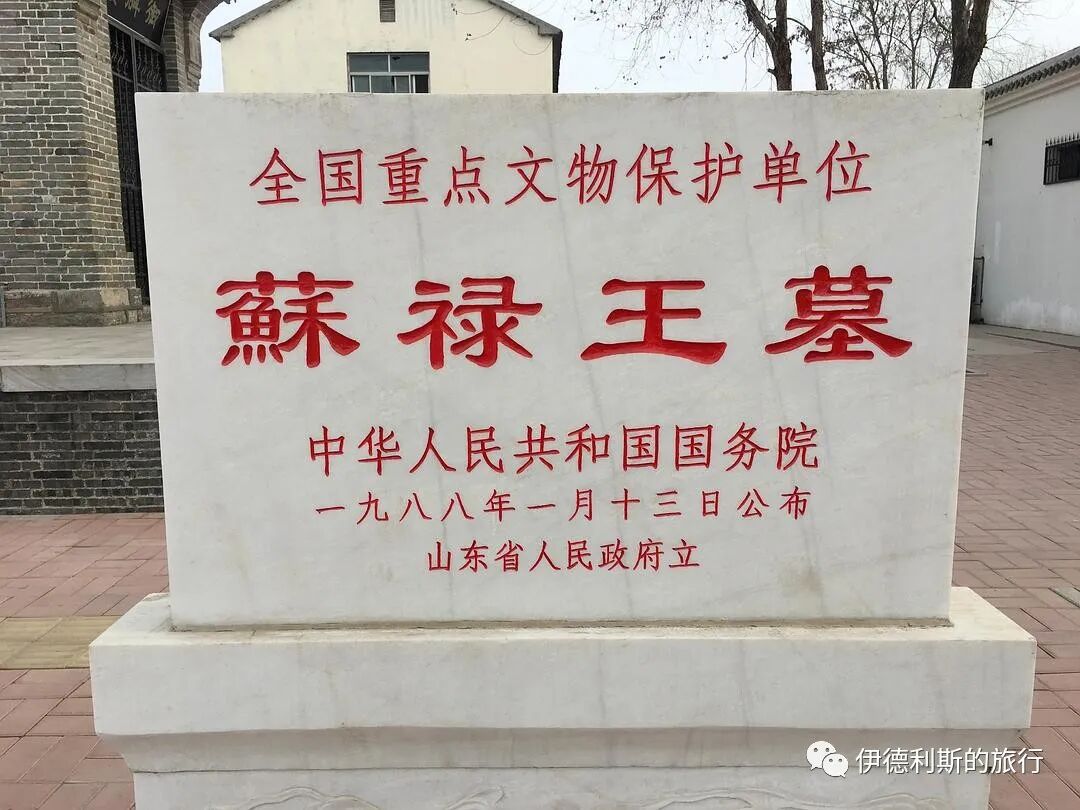
Sulu Kingdom
The Sulu Archipelago is in the far southwest of the Philippines, right next to the easternmost part of Malaysia.
The Moro people live on the Sulu Archipelago. The term Moro has been used by Spaniards to describe Muslims since the 15th century. Before the 15th century, when Spain reconquered Andalusia, they called the Muslims there Moros.
In the Middle Ages, as maritime trade grew in the Indian Ocean, the faith spread along the Maritime Silk Road into Southeast Asia. Between the 14th and 16th centuries, the faith centered in Malacca, passed through Sumatra and Java, went north through Borneo, and reached the Sulu Archipelago in the southwest Philippines.
Around 1380, the famous Arab judge and religious scholar Makhdum Karim arrived at Simunul Island in the far southwest of the Sulu Archipelago with an Arab caravan and built the first mosque in the Philippines there. On November 7, 1407, Sharif ul-Hashim, a descendant of the Prophet born in Johor, Malaysia, led an army to occupy the Sulu Archipelago. He married a local princess and established the Sulu Kingdom.
Between 1405 (the third year of the Yongle reign) and 1417 (the fifteenth year of the Yongle reign), the Ming Emperor Chengzu, Zhu Di, sent Zheng He to visit the countries of the Philippine archipelago three times. In 1417, the chiefs of the Eastern and Western Sulu Kingdoms and the wife of the chief of the Dong Kingdom led a delegation of over 340 people to visit the Ming Dynasty. In July, they arrived at Quanzhou Port. They then traveled north along the coastline, entered the Yangtze River at Wusongkou, and reached Longjiang Station in Yingtian Prefecture (Nanjing). After resting at Longjiang Station, the Sulu delegation traveled north along the Grand Canal and reached Beijing in mid-August. Ming Emperor Chengzu, Zhu Di, held a grand meeting in the Fengtian Hall (later renamed the Hall of Supreme Harmony). He named the two chiefs the Eastern King and the Western King, and the wife of the Dong Kingdom chief the Dong Queen, with the Eastern King Paduka Batara as the most honored.
In September, the three rulers started their journey home, and Emperor Chengzu sent a special envoy to escort them. The delegation traveled south along the canal. When they passed Anling, north of Dezhou, the Eastern King suddenly fell ill and sadly passed away on September 13. When the news reached Beijing, Emperor Chengzu sent a minister from the Ministry of Rites to bury the Eastern King of Sulu with royal honors. The Tomb of the Eastern King of Sulu was built north of Dezhou city and finished in October 1418 (the sixteenth year of the Yongle reign).
The completed tomb faces south. From south to north, it includes a memorial archway (paifang), an imperial stele pavilion, ornamental columns (huabiao), stone statues, a ceremonial gate, the Ling'en Gate (hall gate), the Ling'en Hall (main hall), and the burial mound.
Today, the tomb still has its ornamental columns and five pairs of stone statues. In the autumn of 1917, the canal burst, causing great damage to the tomb. The stone statues were knocked over, and some were washed into the fields. The statues were not straightened and aligned until 1965, but they were pushed over again by the Red Guards in 1966. Luckily, Ma Jingui, a militia leader who had just retired from the army, led the village's young people to stand their ground in front of the tomb and the mosque. He made the Red Guards go to the Dezhou Municipal Committee to get a permit to destroy the Four Olds, which saved the tomb and the mosque.
The Tomb of the Sultan of Sulu in the early 1980s, from Selected Cultural Relics of Zheng He's Voyages.
The Tomb of the Sultan of Sulu in the early 1980s, from Selected Cultural Relics of Zheng He's Voyages.
The inscription of the imperial decree issued by the Yongle Emperor of the Ming Dynasty in 1418 to build a shrine in front of the Tomb of the Eastern King.
The main burial mound of the Eastern King's tomb.
The Tomb of the Sultan of Sulu in the early 1980s, from Selected Cultural Relics of Zheng He's Voyages.
The original tombstone is now kept in the exhibition hall of the west side hall.
Descendants of the Sultan of Sulu settle in Dezhou.
After the Eastern King of Sulu passed away, the Ming Dynasty arranged for his eldest son, Dumahan, to return home to inherit the throne. His second son Andulu, third son Wenhala, his wife Gemuning, and ten servants stayed behind to guard the tomb. This began the life of the Eastern King's descendants as residents in China.
The Ming Dynasty granted the descendants 238 mu of sacrificial land, exempting them from all land taxes. Each person received a monthly stipend of one shi of grain. The government also assigned three Hui Muslim families—the Xia, Ma, and Chen families from Licheng, Shandong—to farm the land and manage the annual memorial services, exempting them from all labor duties.
Later, the descendants of Andulu and Wenhala married into the Xia, Ma, and Chen families. Their descendants took the surnames An and Wen, gradually forming Beiying Village in Dezhou, which consists of the five families of An, Wen, Xia, Ma, and Chen next to the Sultan of Sulu's tomb.
After Andulu, Wenhala, and the wife Gemuning passed away, they were buried to the southeast of the Eastern King.
The Tomb of the Sultan of Sulu in the early 1980s, from Selected Cultural Relics of Zheng He's Voyages.
Andulu was actually the second son, but because the Wen family later produced a prefect named Wen Xianyu, oral tradition gradually shifted the Wen family to be the second son and the An family to be the third.
Division Commander An Shude.
Among the descendants of the An family, the most famous in modern times is Division Commander An Shude. An Shude was the 15th-generation grandson of the Sultan of Sulu. He began following Feng Yuxiang in 1913 and led his troops into the Forbidden City to help expel Puyi during the 1924 Beijing Coup.
In 1928, An Shude was promoted to commander of the 18th Division and served as the garrison commander of Longdong. After the uprising of the young commander Ma Zhongying, An Shude served as the commander-in-chief for the suppression of Ma Zhongying in Qinghai and captured Xining.
After moving into Xining, An Shude placed great importance on Hui Muslim education. He served as the president of the Qinghai Hui Muslim Education Promotion Association and opened the first primary school for Hui Muslim girls in Qinghai.
After the Central Plains War in 1930, An Shude retired from military life to start businesses and renovate the Sultan of Sulu's tomb and the mosque. He passed away in 1950.
On December 3, 1995, the descendant of the eldest son Dumahan and heir to the Sultanate of Sulu, Ismael Kiram, visited the tomb. This was the first meeting between the descendants of the eldest son and the descendants of the second and third sons in hundreds of years.
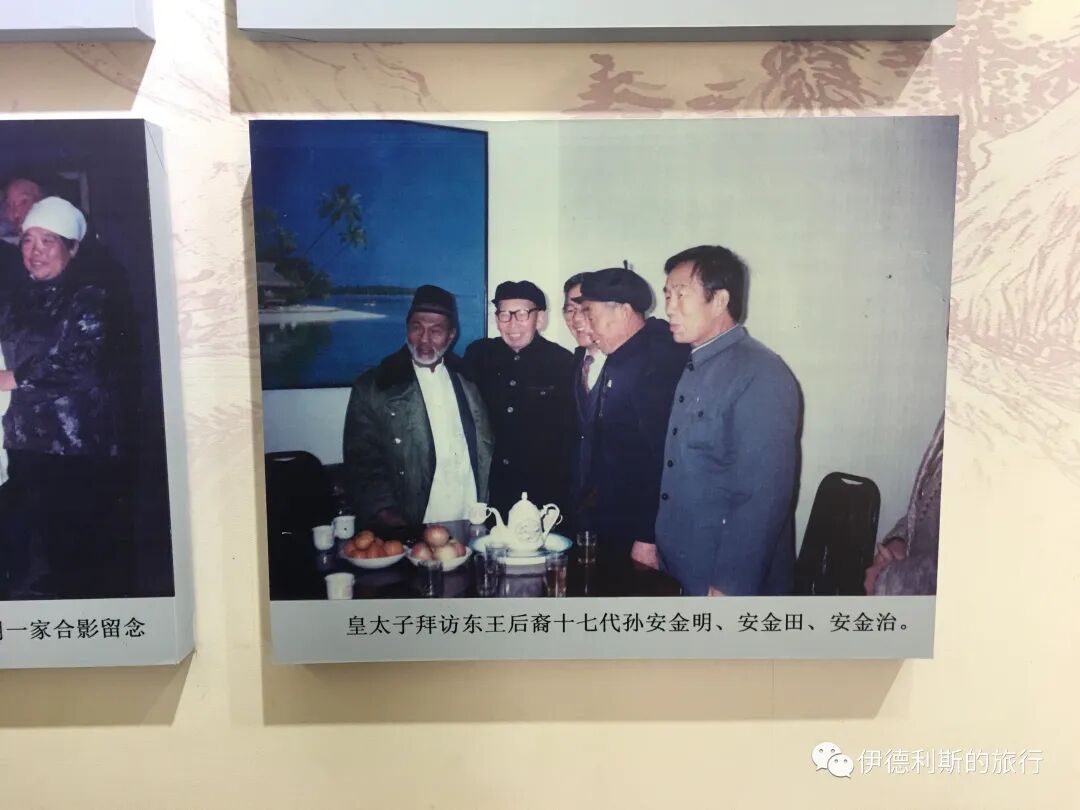
Beiying Village.
During the Wanli period of the Ming Dynasty, the descendants of the Sultan of Sulu built a mosque southwest of the tomb. The Ming Dynasty issued an imperial decree to select one religious leader from the Wen and An families to inherit the lineage and manage the Hui Muslim community. In 1917, the canal burst, and the mosque and the entire Beiying Village were washed away. It was not rebuilt until 1940, which is the building we see today. According to the old imam, the pavilions at the four corners of the mosque were actually used as watchtowers.
After the 1960s, a factory took over the mosque. It was not until June 1980, when the Philippine ambassador to China visited the Tomb of the Sultan of Sulu, that the factory was moved out and the main hall was repaired.
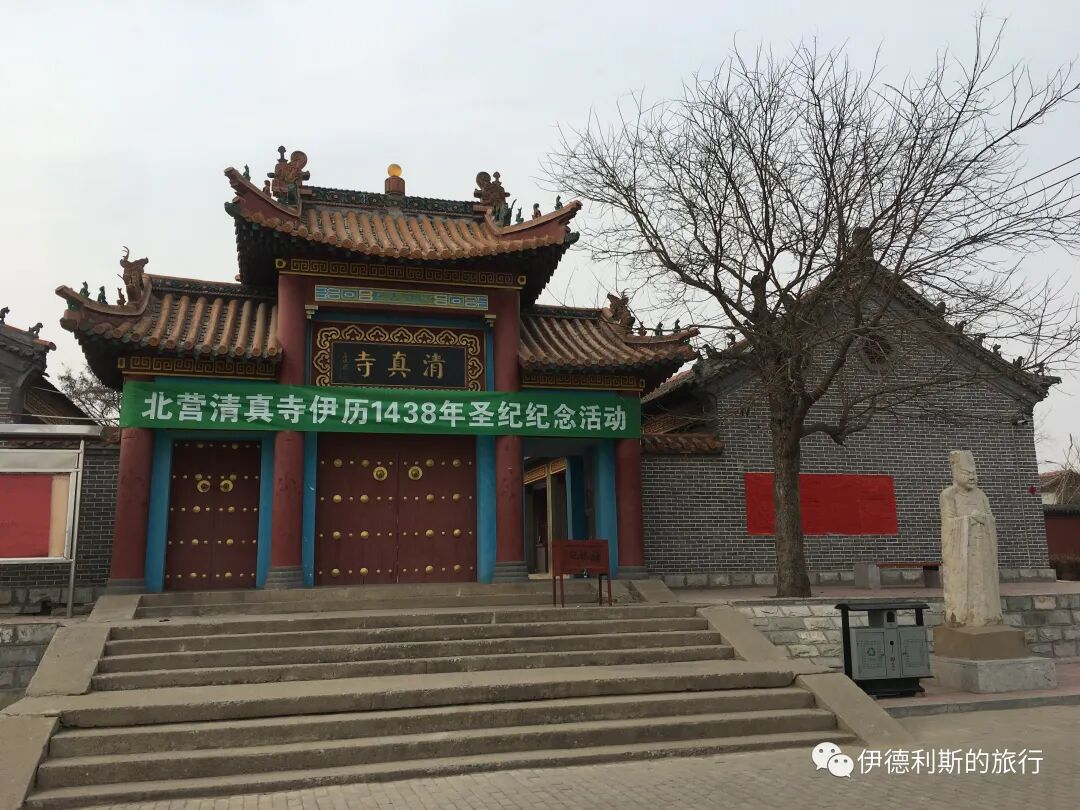
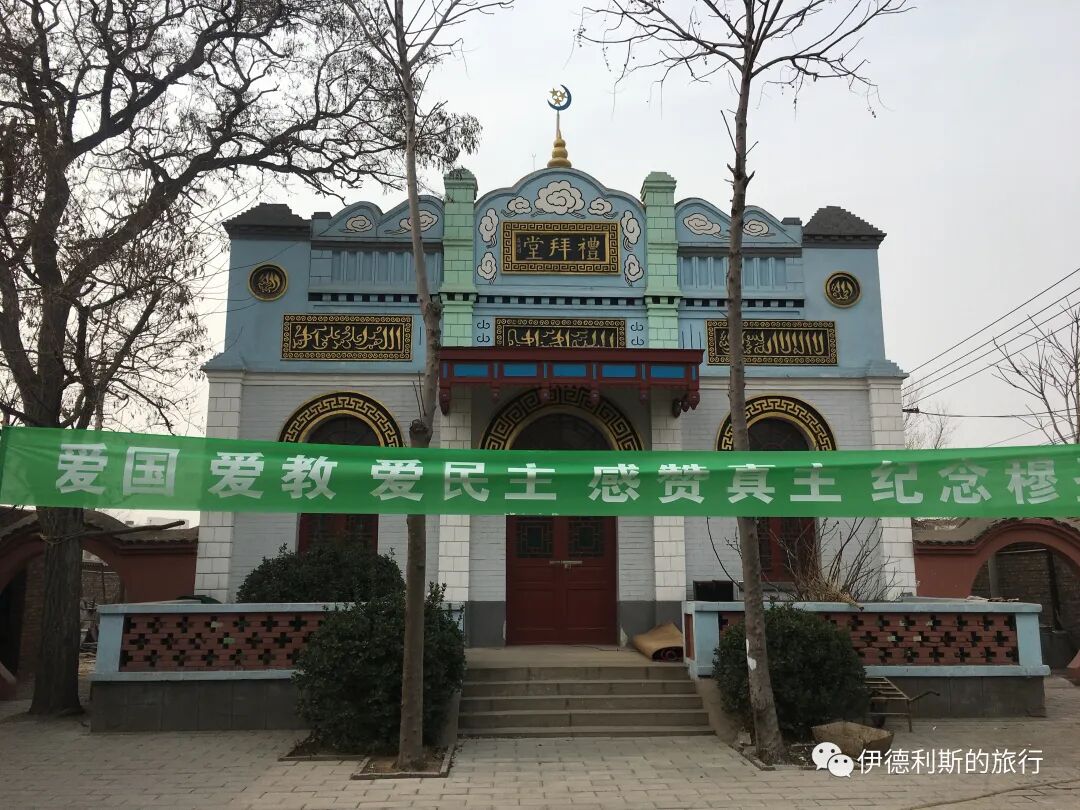
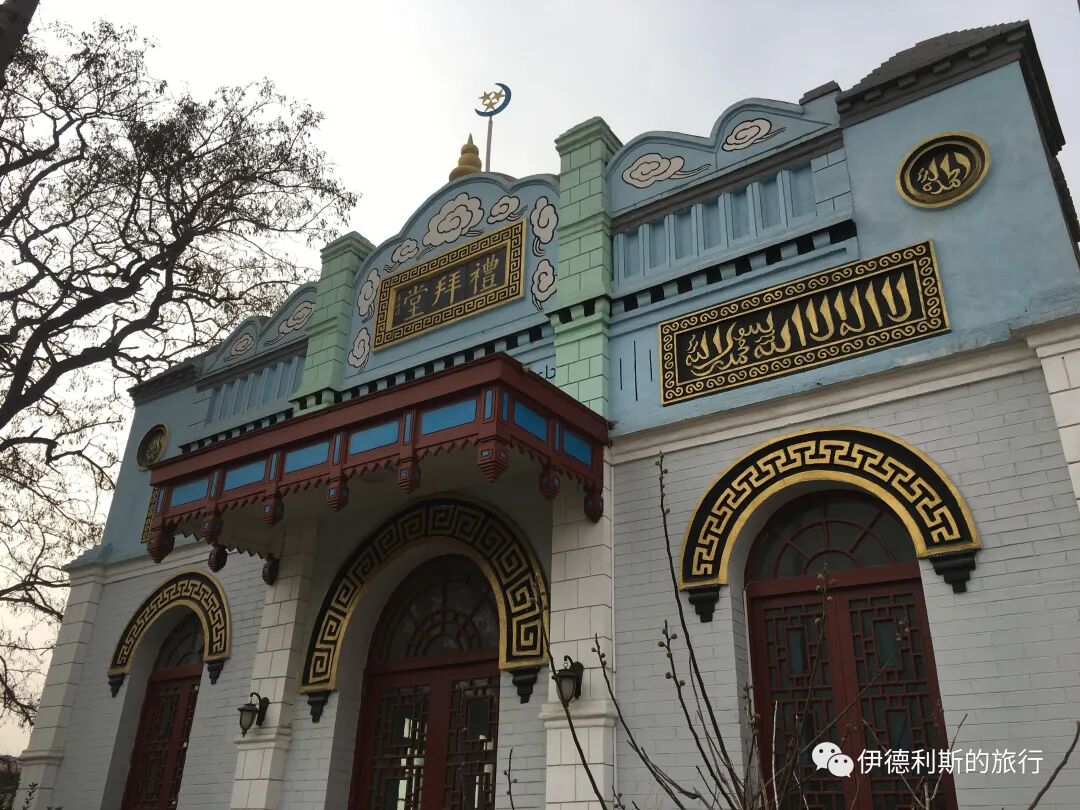
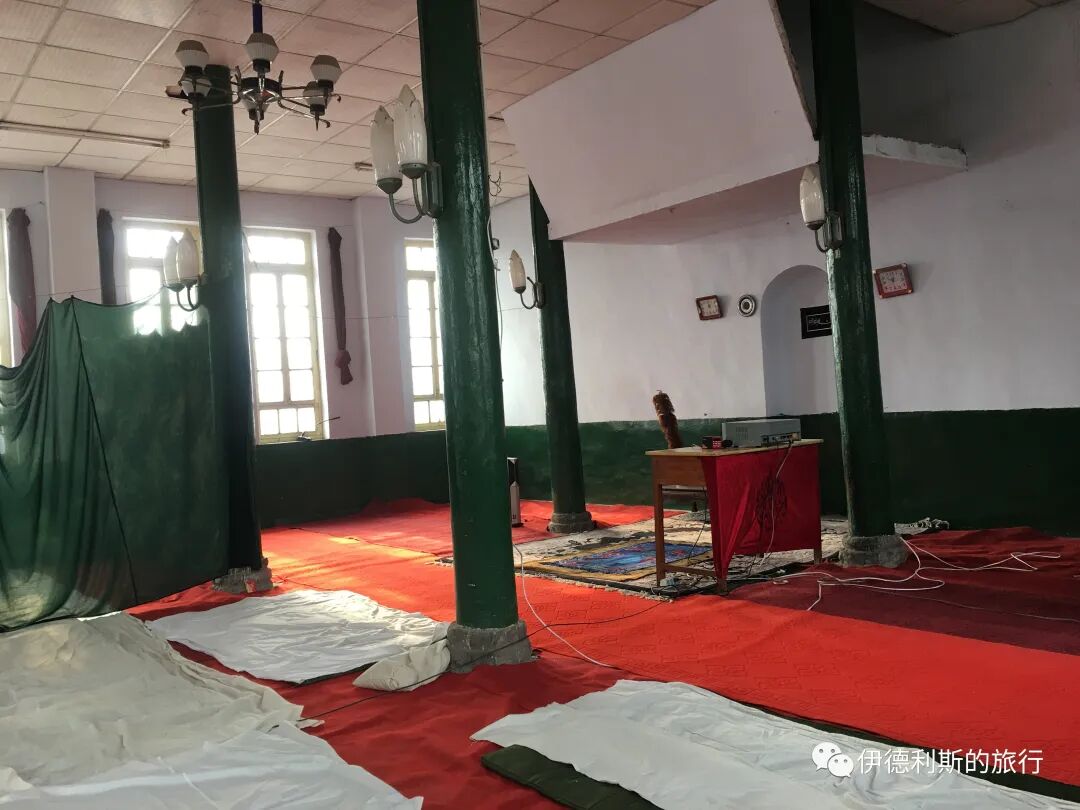
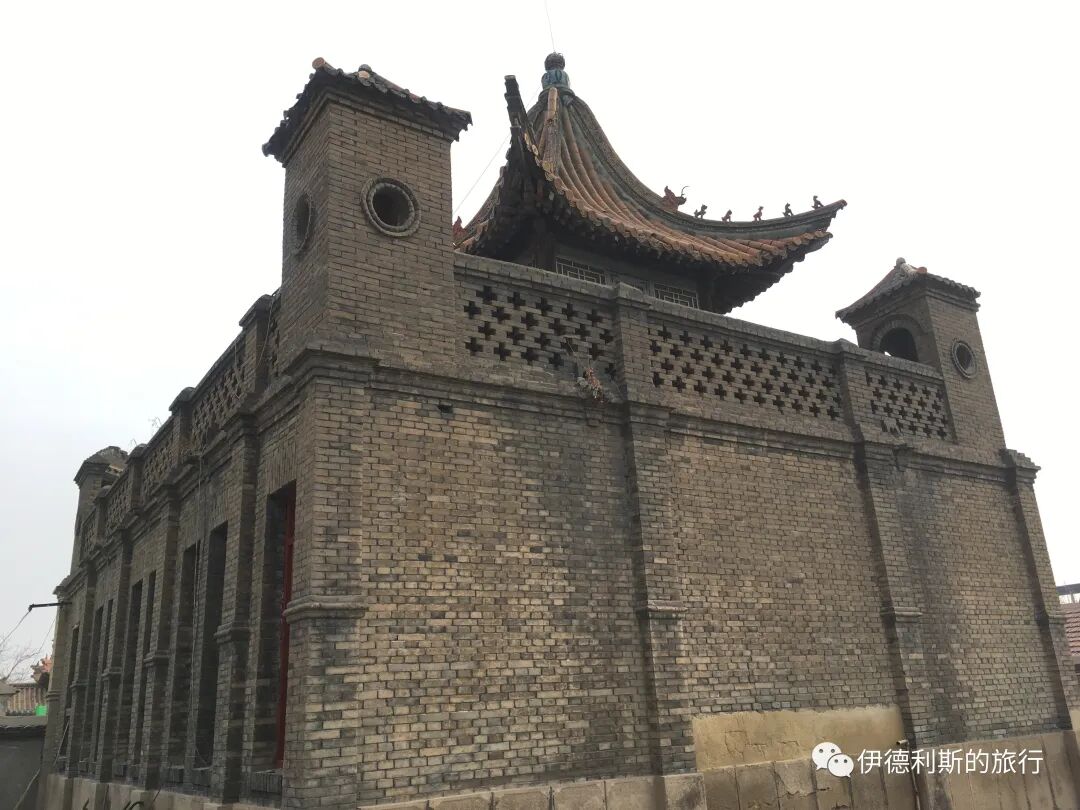
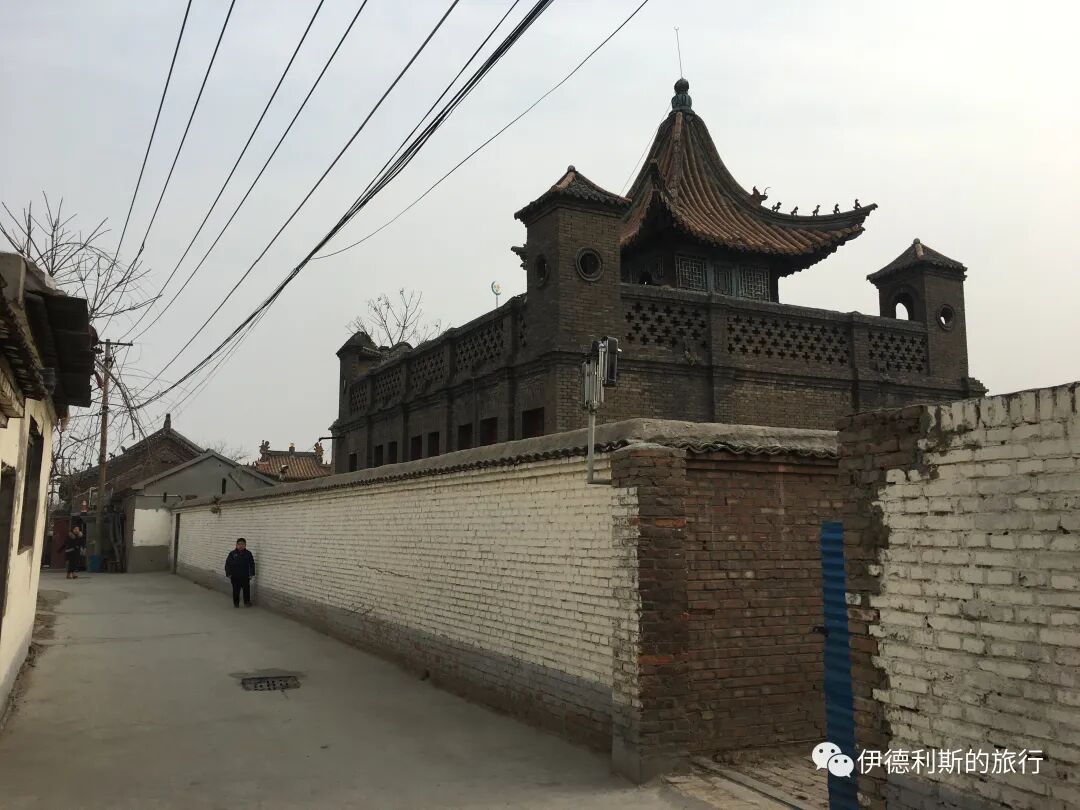
The descendants of the Sultan of Sulu were still considered foreign residents during the Ming Dynasty and the early Qing Dynasty, as they lived under the protection of the Sultan and received imperial favors throughout both dynasties. In 1730, the eighth year of the Yongzheng reign, the Sultan of Sulu, Sultan Badaruddin, who was a descendant of the Sultan of Sulu's eldest son, Dumatuh, paid a visit. He first went to the Tomb of the Sultan of Sulu in Dezhou to pay his respects and met the Sultan's descendants, An Ruqi and Wen Chongkai, who asked him to help them become Chinese citizens. Sultan Badaruddin also felt that since they were separated by vast oceans, it would be difficult for them to return, so he petitioned the imperial court to allow them to join China.
In 1731, the ninth year of the Yongzheng reign, the Qing government agreed to let the descendants of the Sultan of Sulu become citizens of Dezhou and officially assigned them the surnames Wen and An. As a result, 193 people, including An Ruqi and Wen Chongkai, were registered as commoners and finally became Chinese citizens.
After becoming citizens, the descendants of the Sultan of Sulu began opening halal snack shops in busy areas of Dezhou like Beichang Street, Shuncheng Street, Xiguan, Qiaokou Street, Xuanhuajiao, and the Rice Market. They usually rented a whole or half storefront, built a stove, and the husband and wife or father and son would make pan-fried flatbread (guobing), sesame flatbread (shaobing), roasted beef, and roasted lamb. They hung a wooden sign with a soup pot symbol in front of the shop, with Arabic script written horizontally and the Chinese characters for Western Regions Hui Muslims and Halal Faith written on it. Today, in the southwest of Beiying Village, there is a braised chicken (paji) shop run by descendants of the An family. We bought braised chicken, chicken gizzards, and chicken livers, and they were especially delicious.
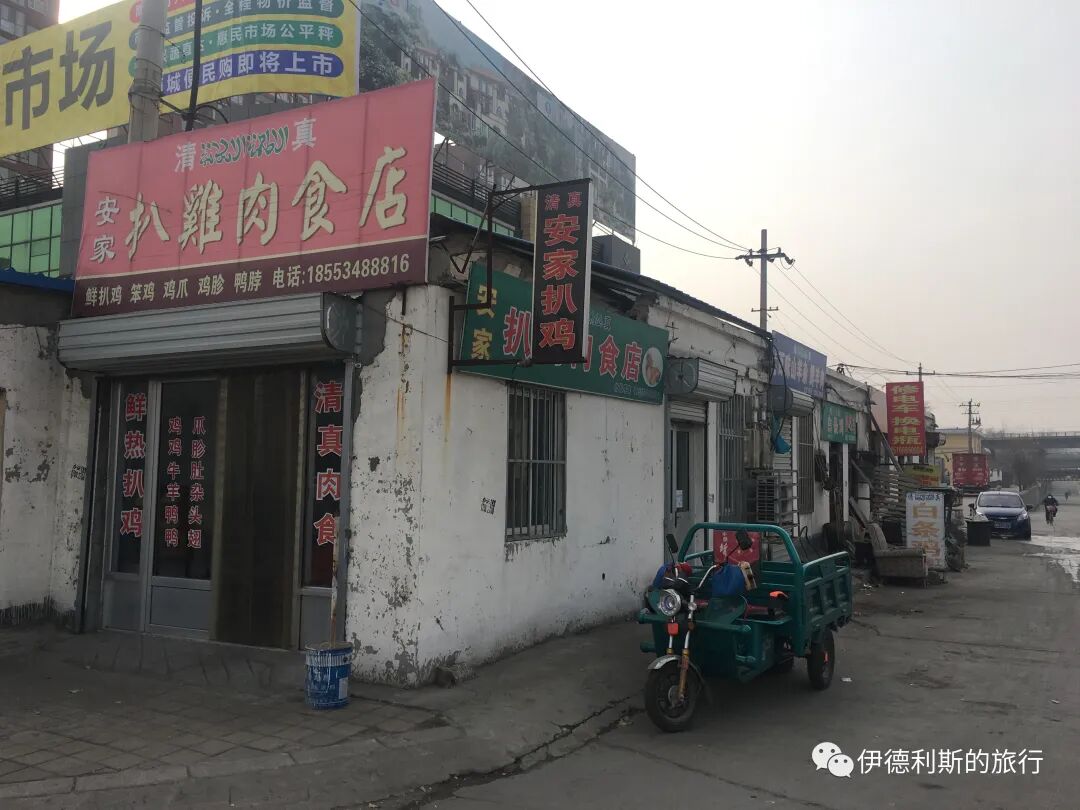
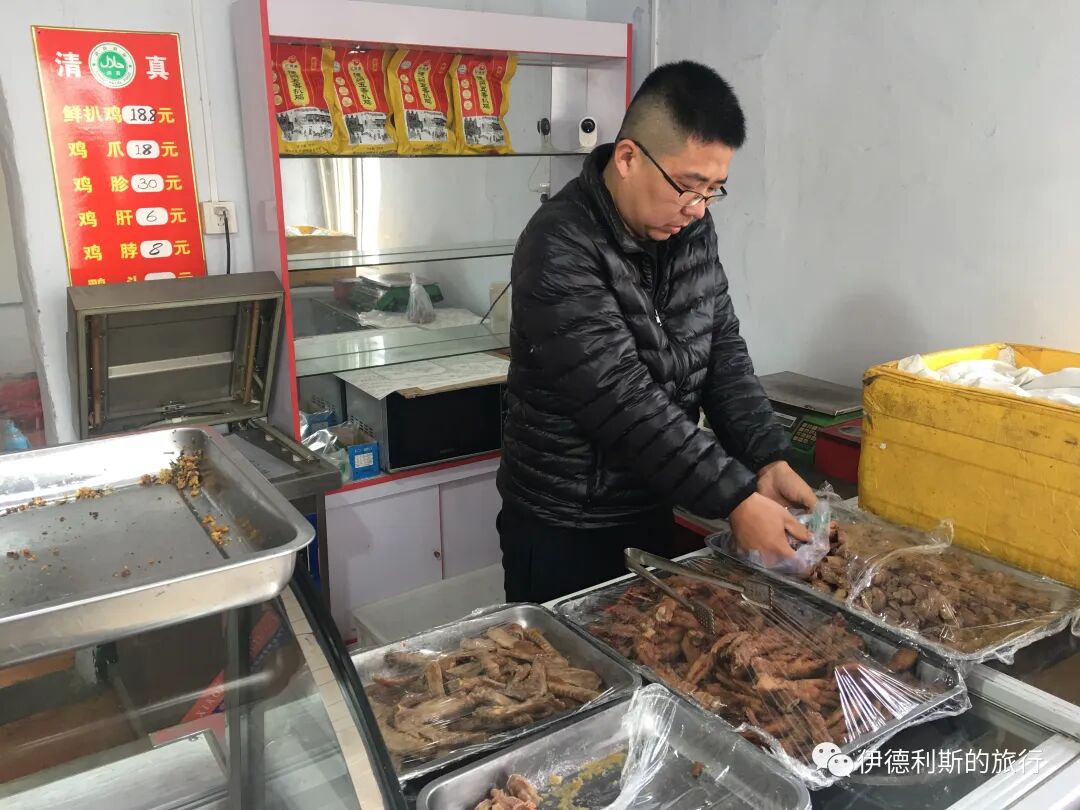
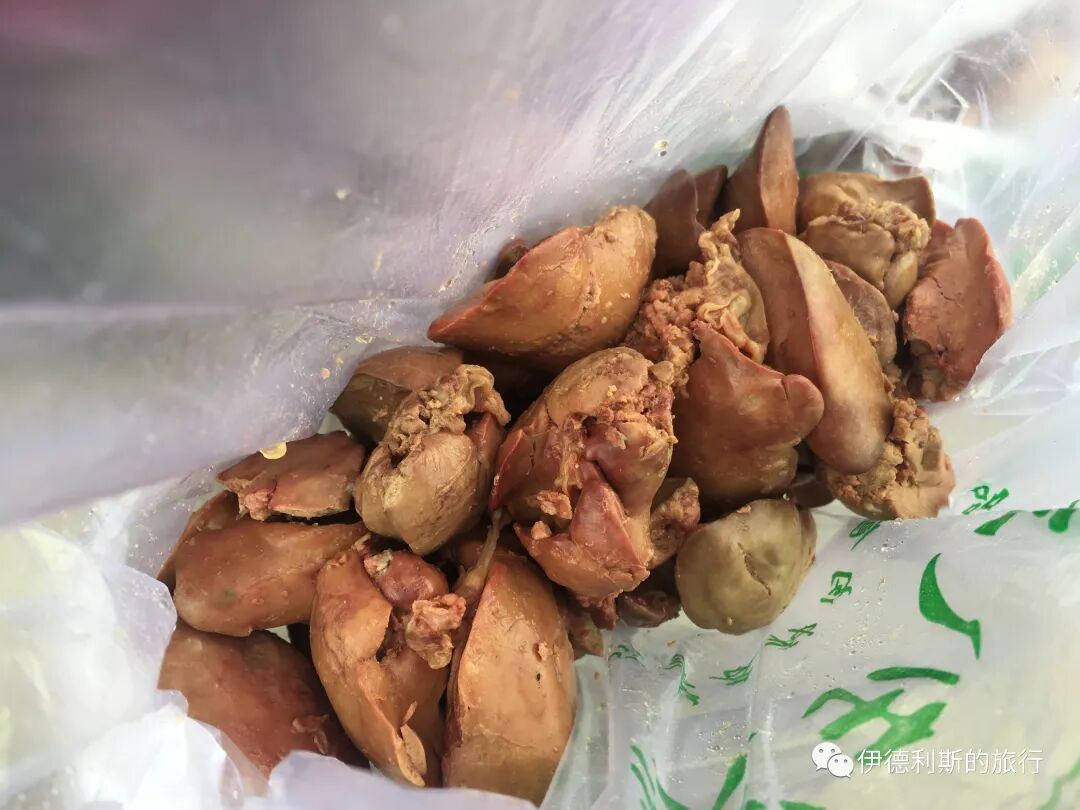
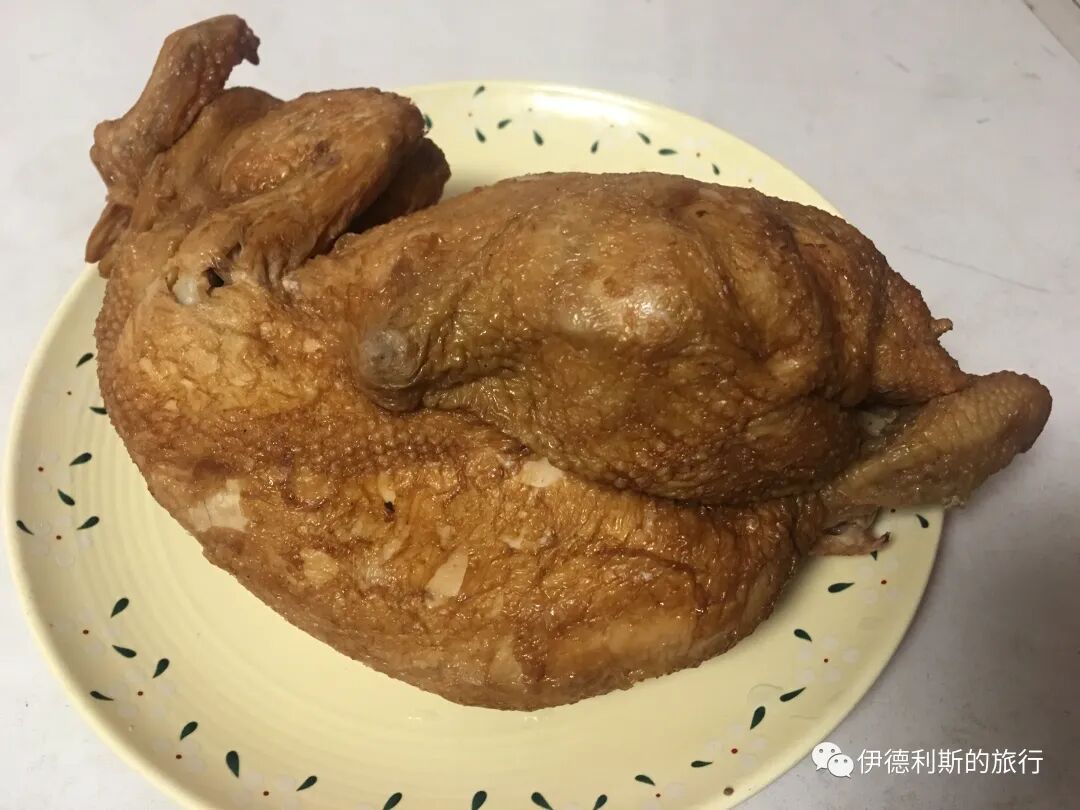
Before the Republic of China era, the life of the villagers in Beiying Village was quite simple: they received regular imperial grants, farmed the sacrificial land, and visited the tomb. Because they were exempt from taxes and labor service, the villagers of Beiying Village lived a peaceful and quiet life like a paradise.
In the first year of the Republic of China, the Tomb of the Sultan of Sulu held its last official memorial ceremony. According to the elders, the magistrate of De County arrived that year in a large sedan chair carried by four men, accompanied by flags, umbrellas, fans, gongs, and long horns. The procession walked in order to the Tomb of the Sultan of Sulu, where they set up a temporary shed and an altar table, with dozens of soldiers guarding the area.
After this, the government took back the 2 qing and 38 mu of sacrificial land and stopped the regular grants, ending the paradise-like life of Beiying Village.
Soon after, Dezhou suffered from the 1917 canal flood. The entire Beiying Village was severely damaged, leaving only nine houses standing. Many villagers survived only because they climbed onto the dome of the Tomb of the Sultan of Sulu to avoid being swept away by the water. After that, the villagers of Beiying Village began to move away one after another, and many girls married Hui Muslims from neighboring counties.
In 1955, the De County government bought the houses of the Beiying villagers at a set price under the name of ethnic minorities returning to their ancestral homes and forced them to move to the rural areas in the suburbs of Xining, Qinghai. The villagers of Beiying packed their bags and left their homes with their families. At that time, the train only went as far as Lanzhou, so they traveled in batches by car, horse-drawn carriage, and on foot to meet in Xining, where they were assigned to work in a commune in the eastern suburbs of Xining.
After the Beiying villagers arrived in Qinghai, some elders passed away because they could not adapt to the local environment. Most people were not used to life in the Northwest and returned to Dezhou one after another within two or three years.
Lamb soup (yangtang) of Beiying Village
Next to the Tomb of the Sultan of Sulu, a new North Camp Ethnic Style Street (Beiying Minzu Fengqing Jie) has been built. It features beef and lamb shops run by the descendants of the Wen family, as well as a whole lamb soup (quanyangtang) shop owned by the Li family. Their lamb soup tastes amazing, though it comes with a lot of green onions and onions. It wasn't until we visited the farmers' market on the site of the old Dezhou Canal cargo yard that we understood why the soup had so many green onions and onions (piyazi). Shandong really has a lot of green onions!
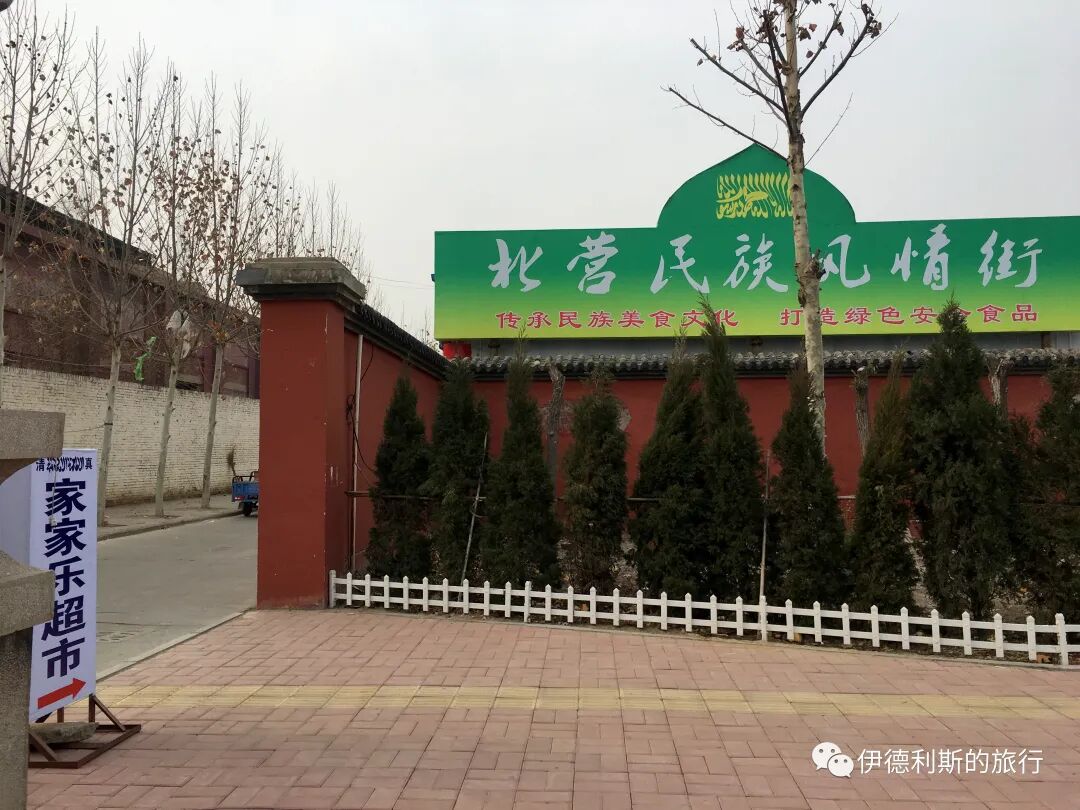
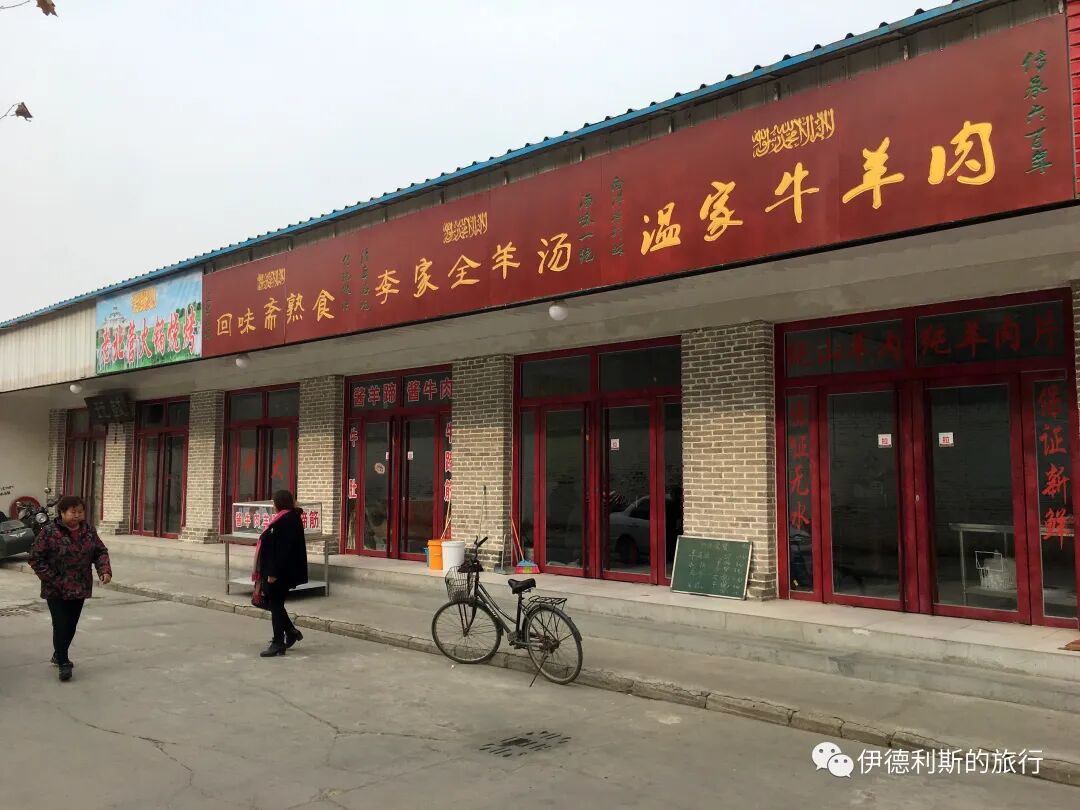
The shop introduction says the owner's uncle, Li Qingyun, was once the manager of the Dezhou Third Restaurant and studied the preparation of whole lamb soup in depth.
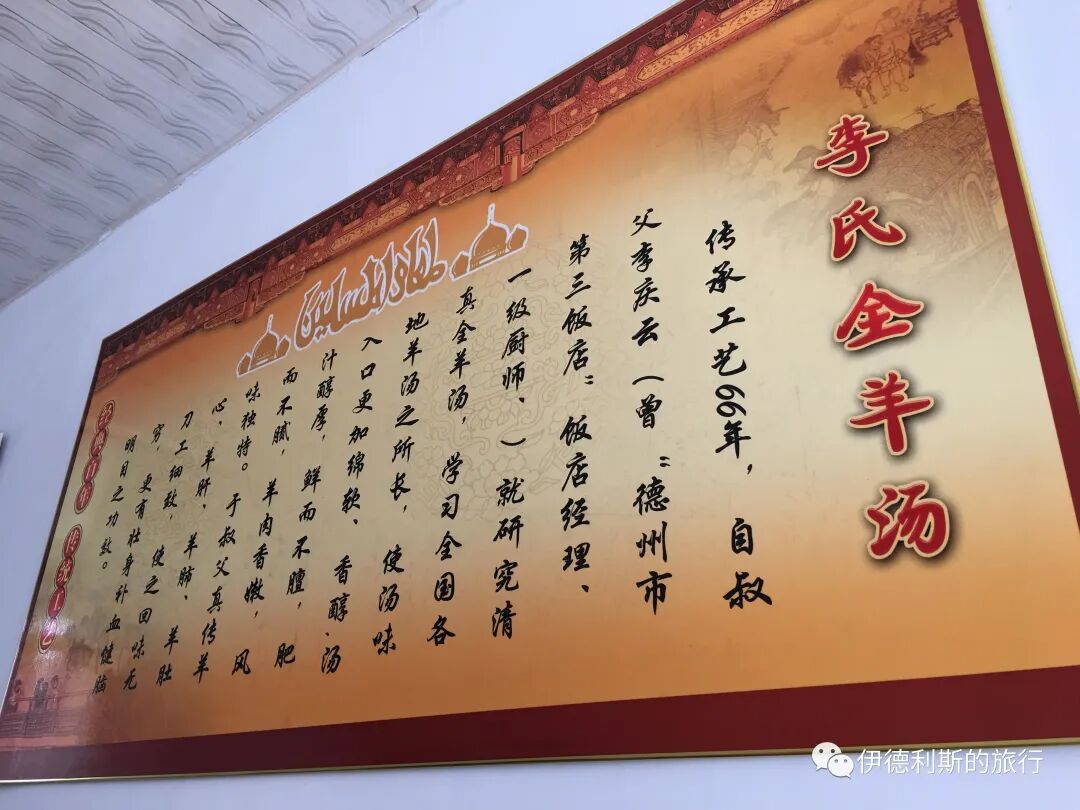
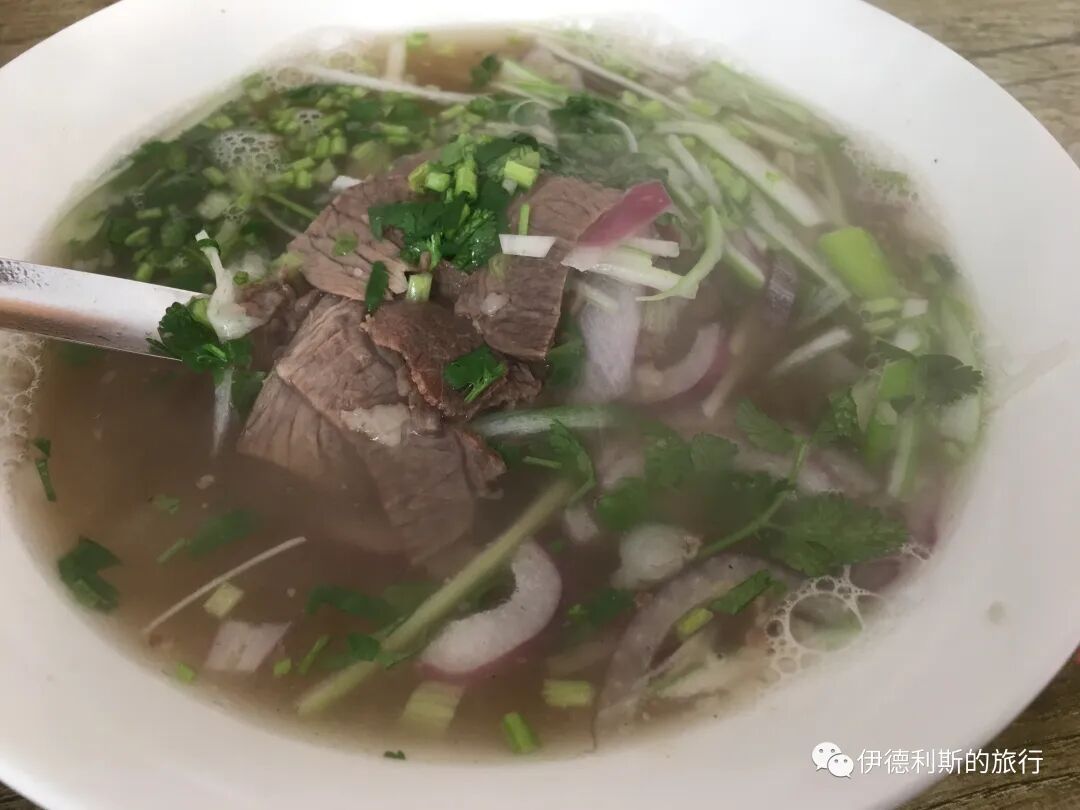
Qiaokou Street
Qiaokou Street was the busiest canal market in Dezhou during the Ming and Qing dynasties. Next to it is Xiaoguoshi, another village for Hui Muslims in Dezhou besides Beiying Village. Xiaoguoshi was where pots were unloaded at the canal docks back in the day. From the charity (nietie) notices at the mosque entrance, you can see that descendants of the Sultan of Sulu with the surname An live here, along with the Man and Wan surnames common among Dezhou Hui Muslims.
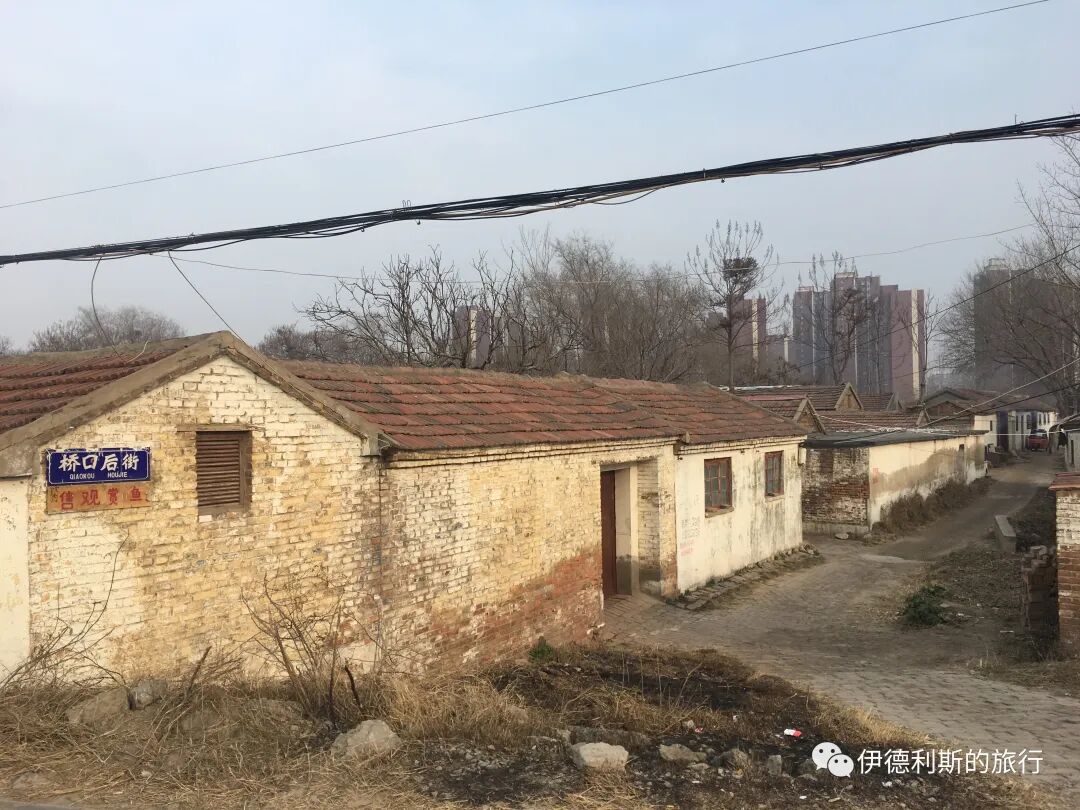
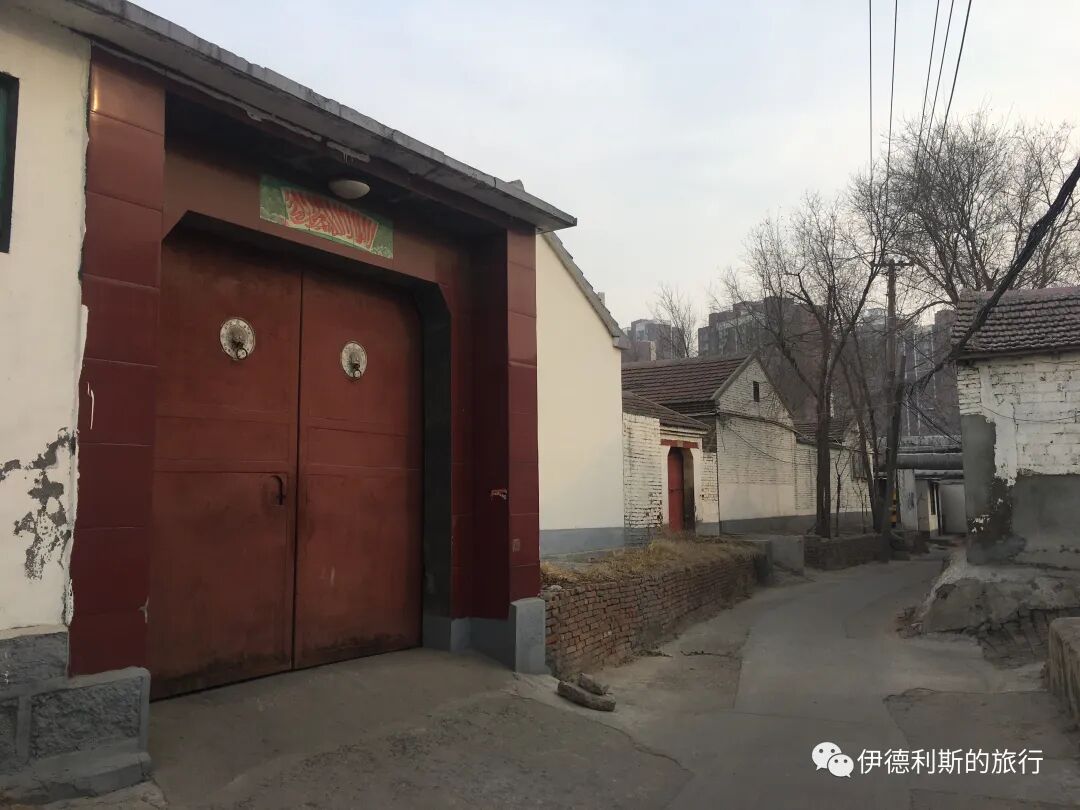
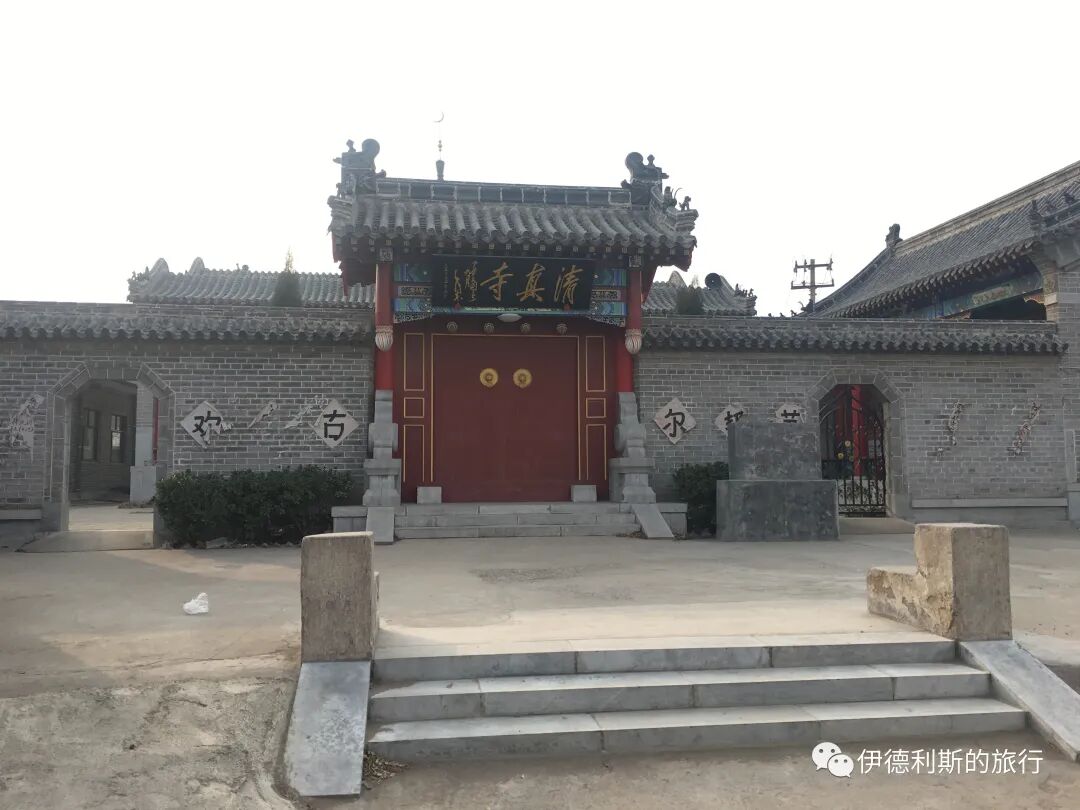
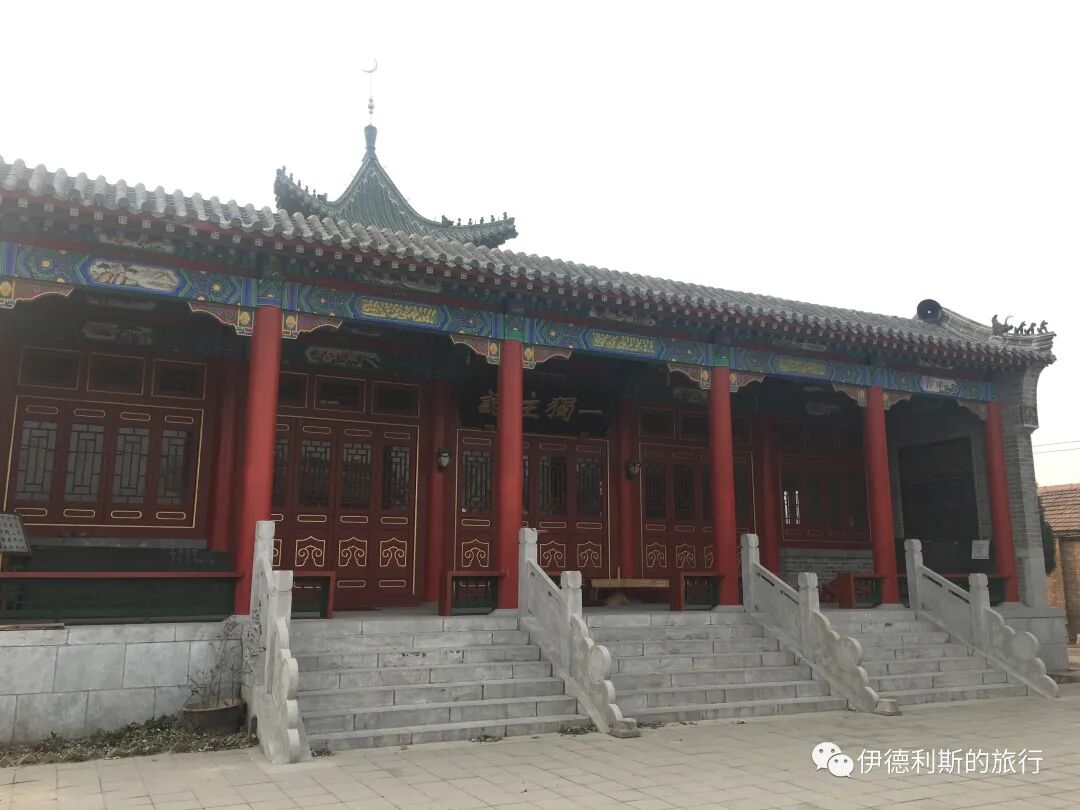
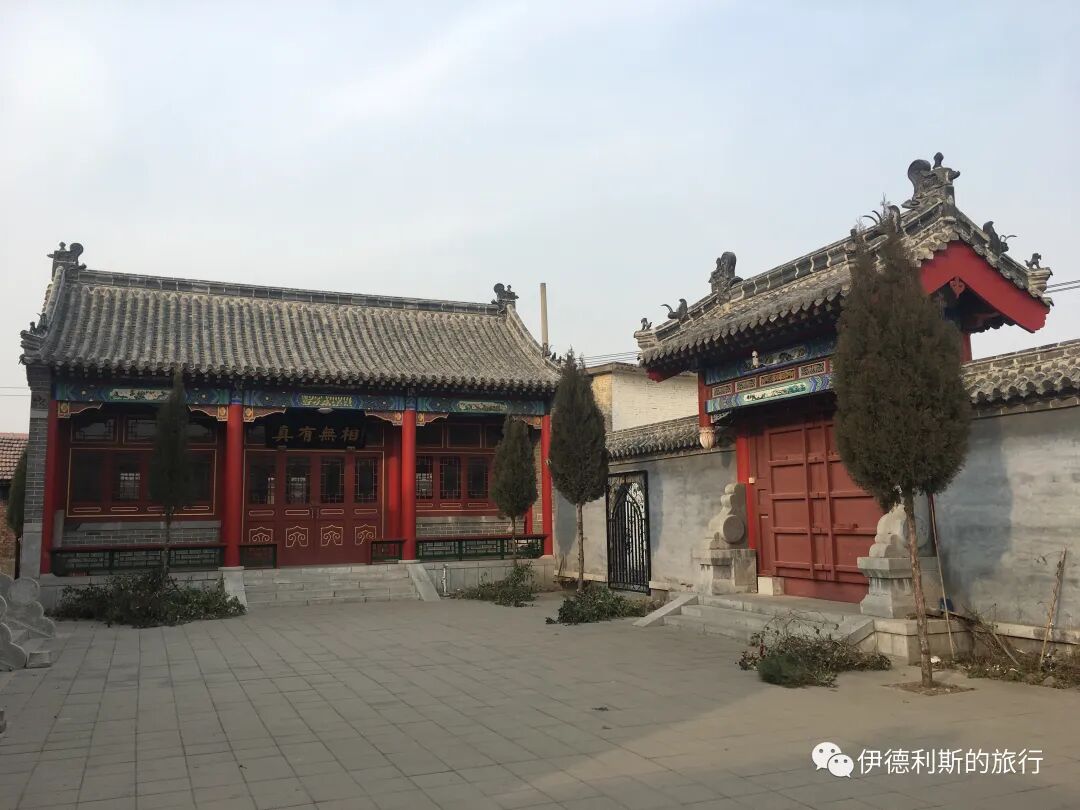
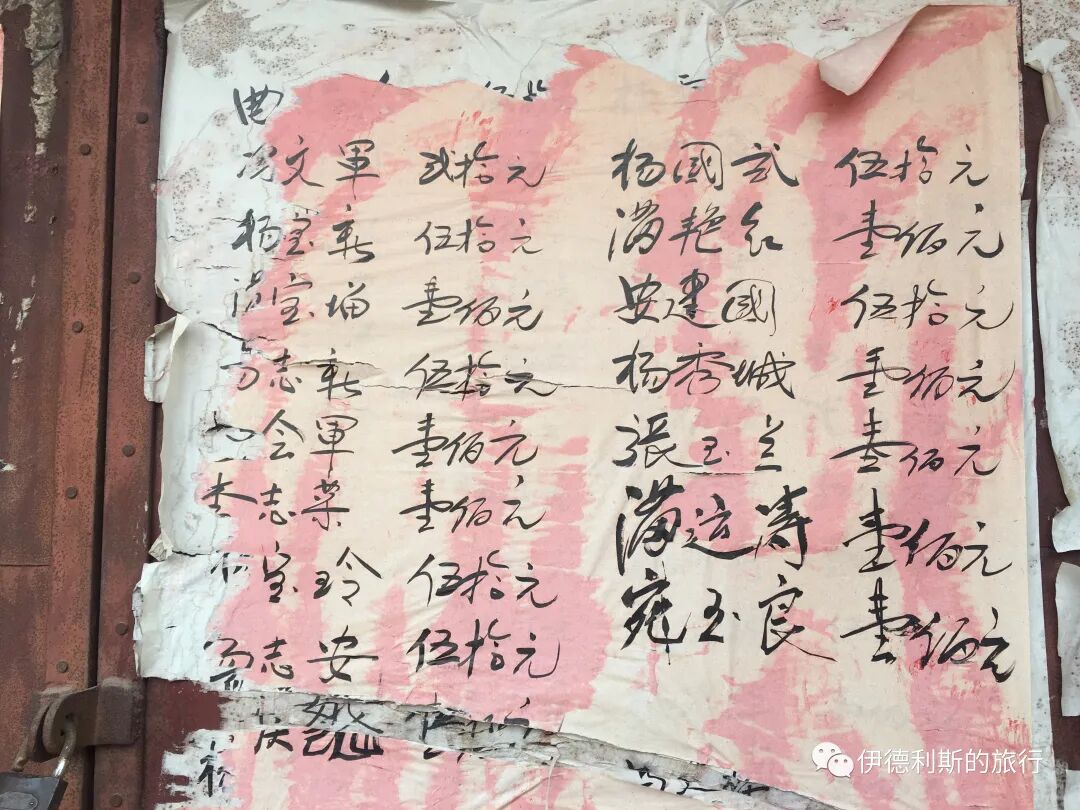
Nanying Street
Besides the North Camp Hui Muslim village in the north of Dezhou, there is also a South Camp Hui Muslim street in the south. We visited the Dezhou Nanying Mosque before dark. The Nanying Street Mosque was built in the late Ming and early Qing dynasties, but unfortunately, it was rebuilt as a concrete structure in 2006.
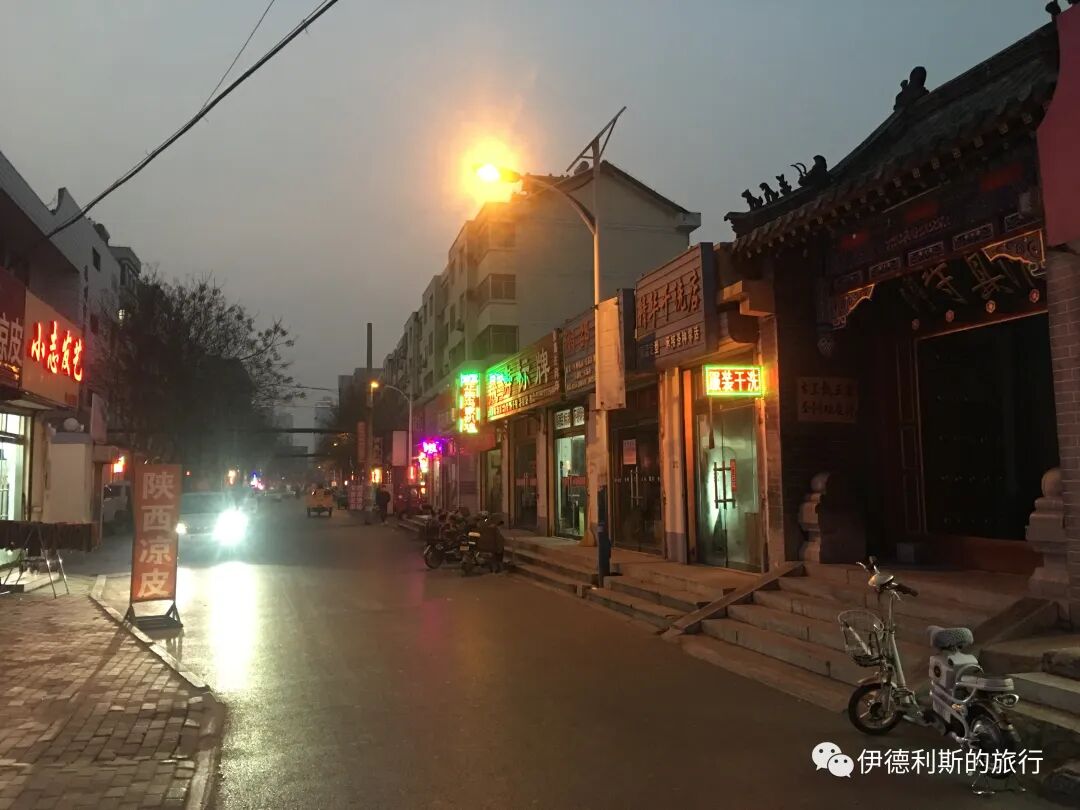
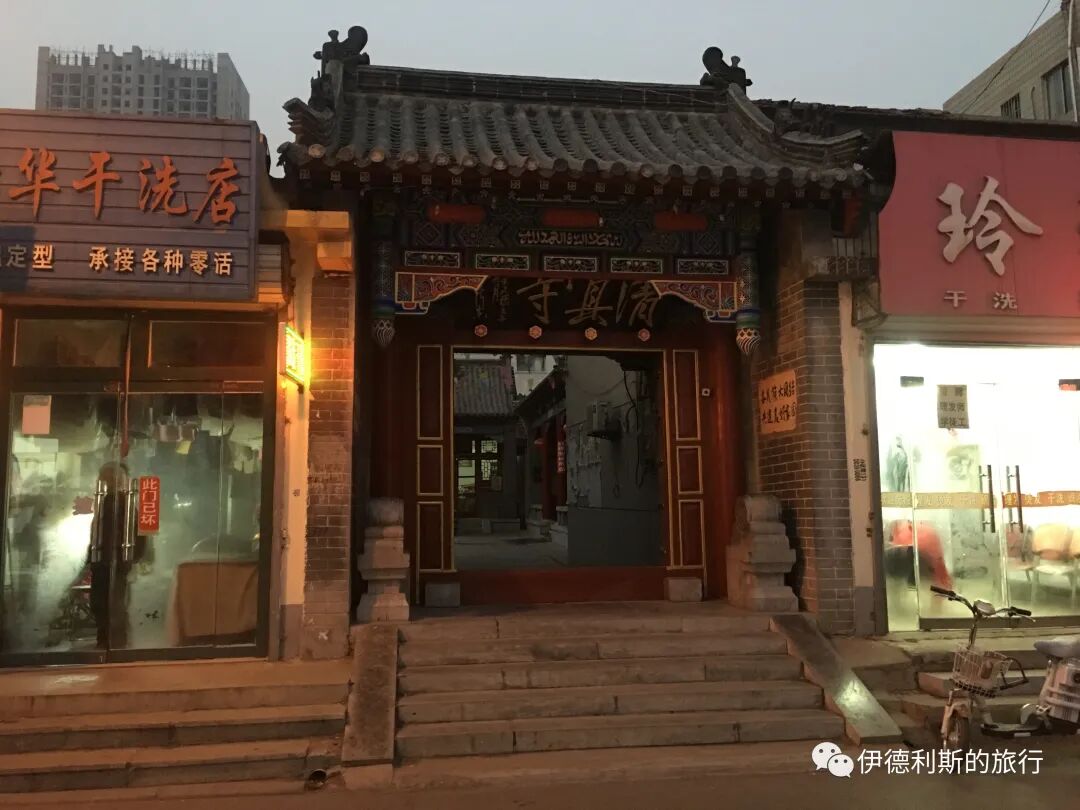
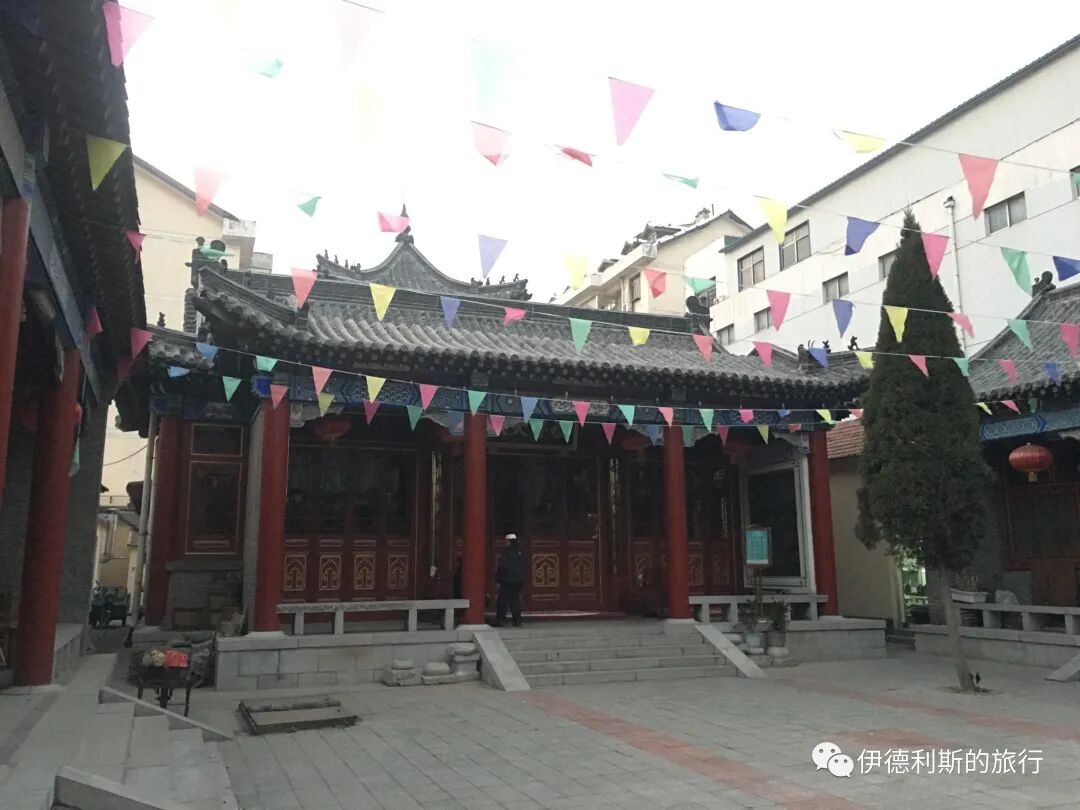
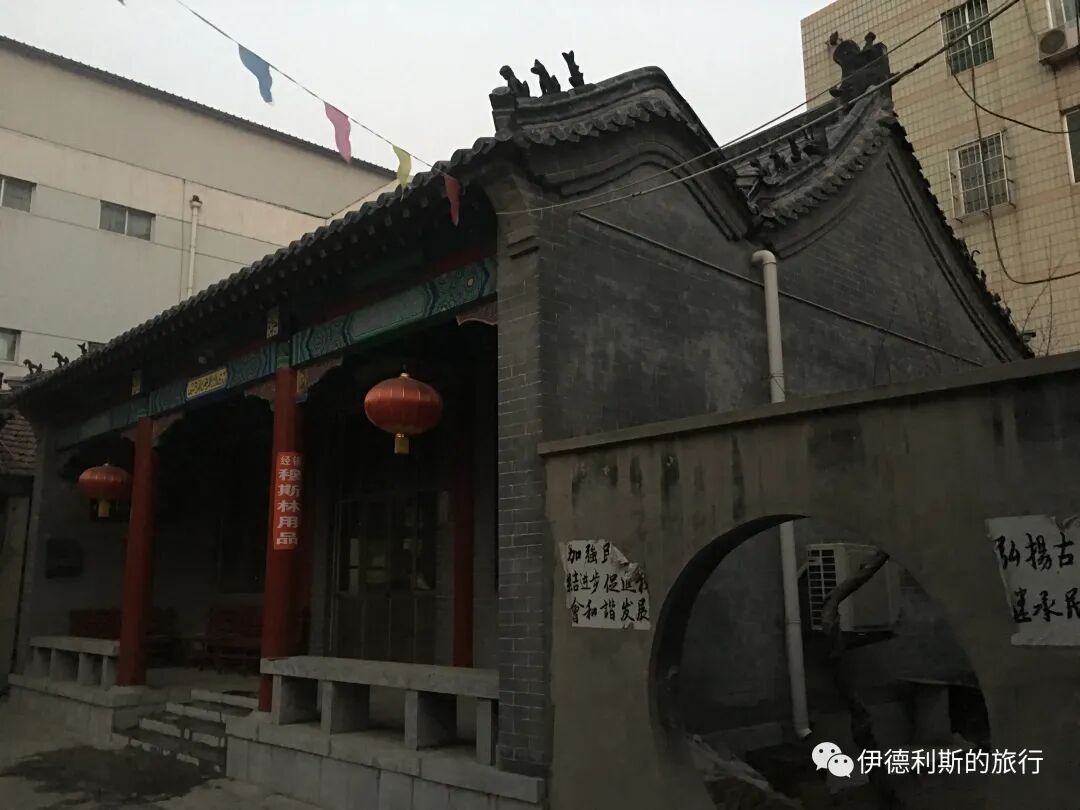
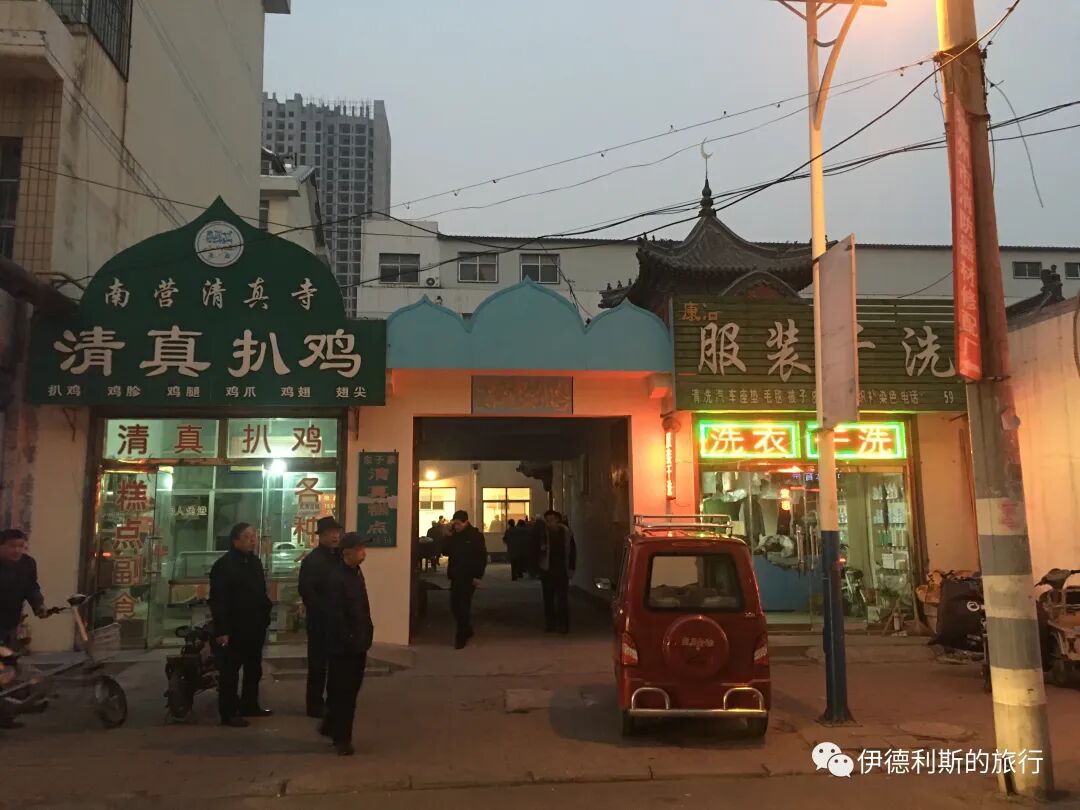
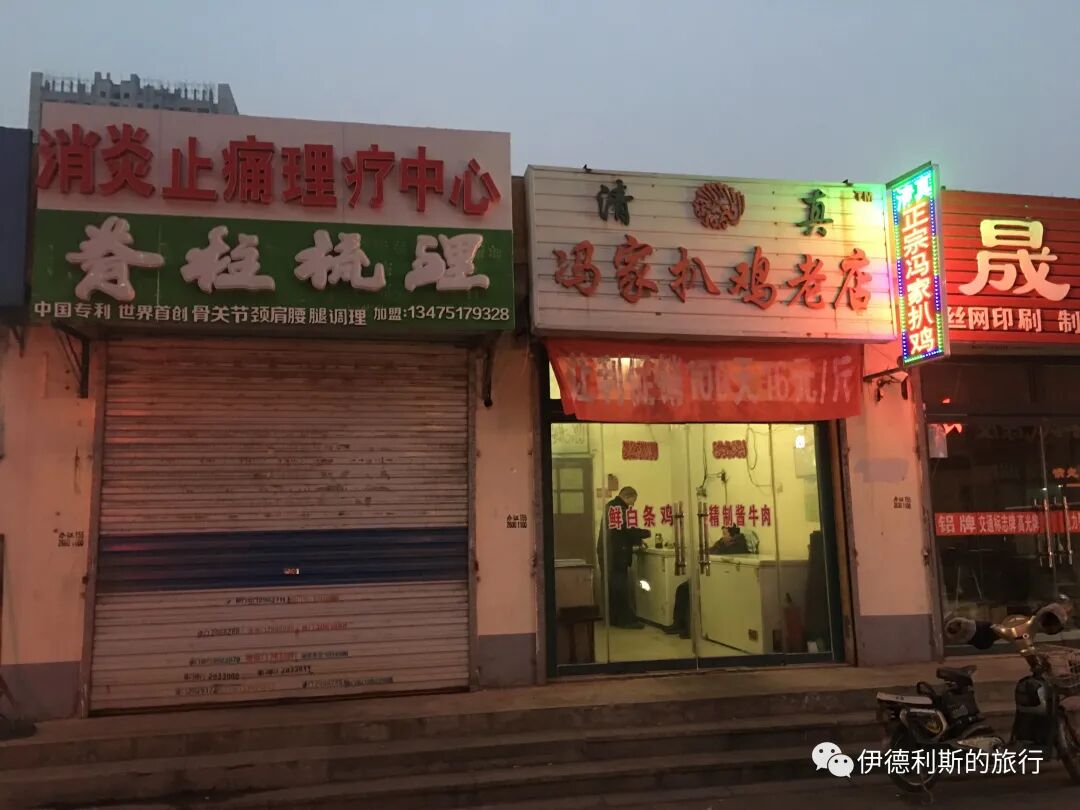
In the evening, we ate braised goose and fish-flavored eggplant at Guixianglou in Dezhou. Shandong food portions are huge! The goose was really big! The outside of the eggplant was crispy, with a texture a bit like french fries covered in sauce.
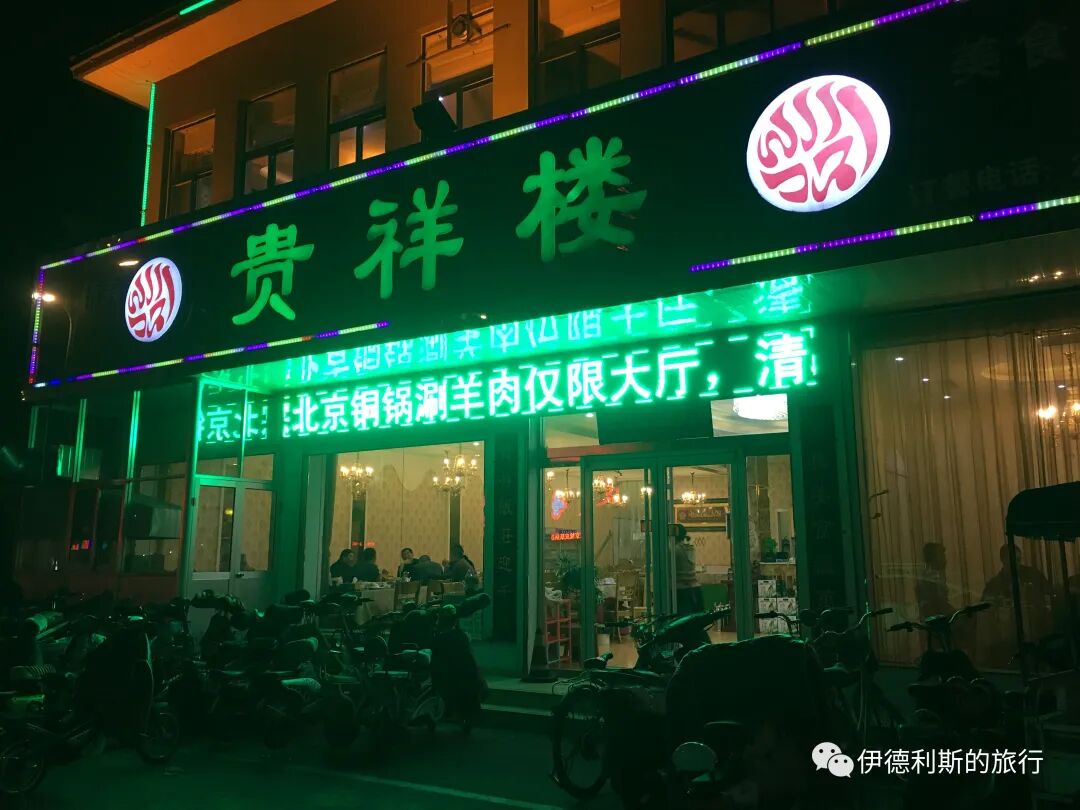
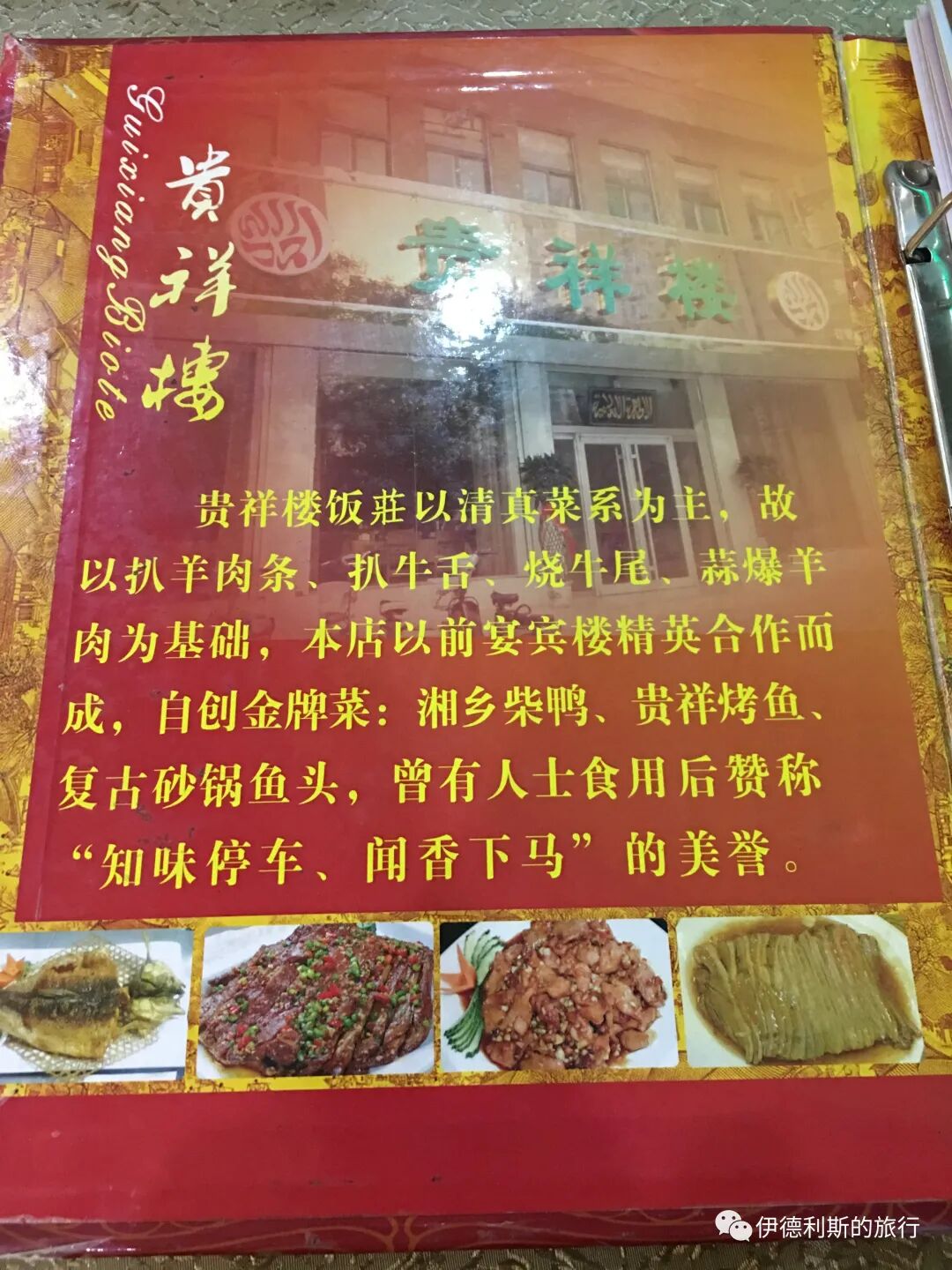
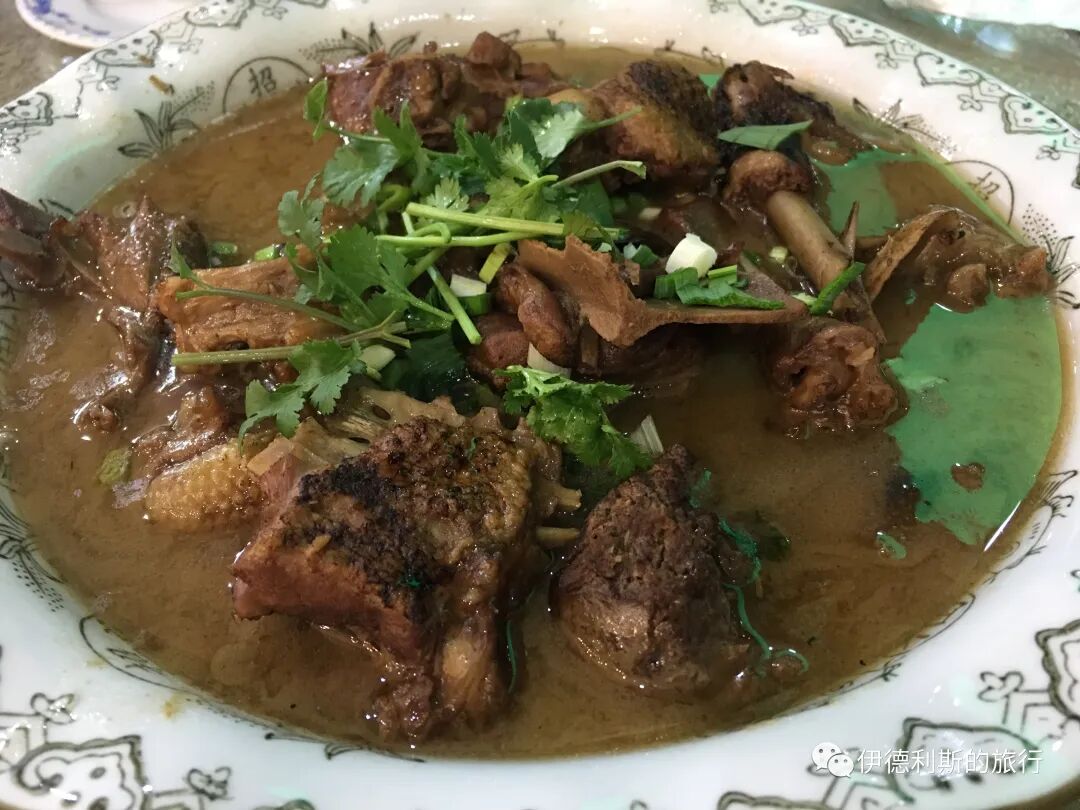
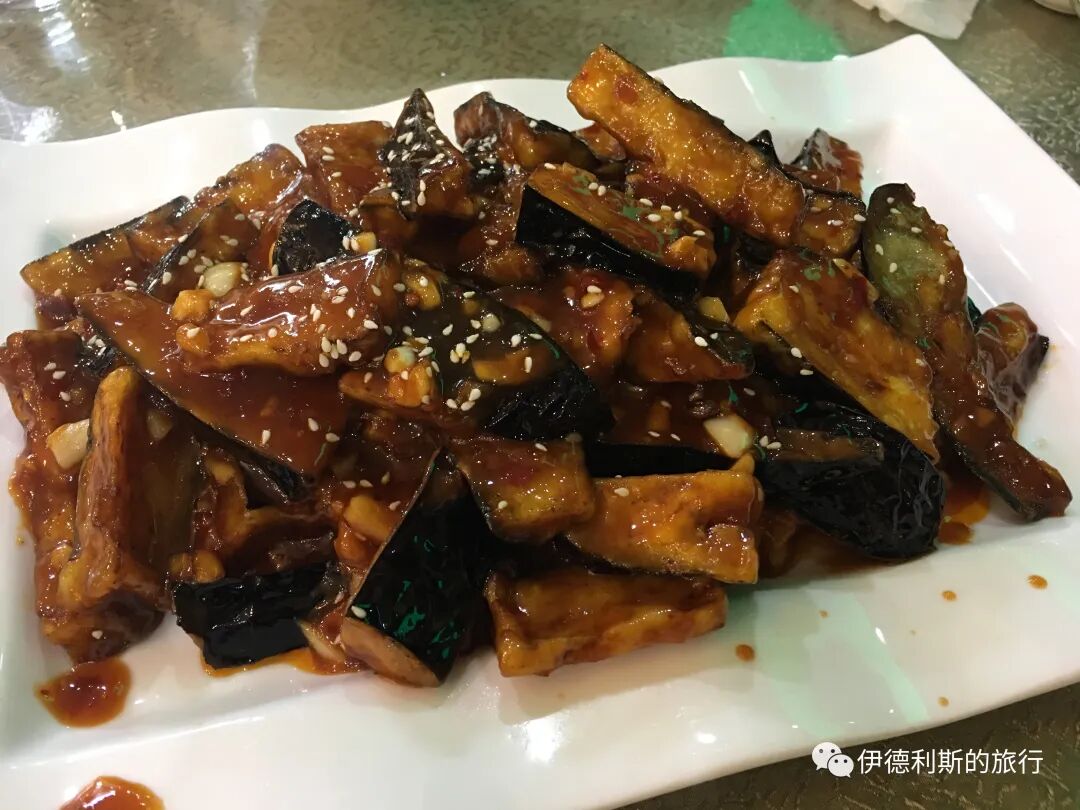
Dezhou Section of the Grand Canal
The Dezhou section of the Grand Canal began in 608 (the fourth year of the Daye era of the Sui Dynasty) when Emperor Yang of Sui opened the Yongji Canal. During the Jin Dynasty, the Lingcang granaries were built in Dezhou, making the city an important hub for grain transport storage. In the Yuan Dynasty, the Shandong section of the Beijing-Hangzhou Grand Canal was fully opened, and the volume of grain transport through Dezhou increased year by year. The Dezhou section of the canal in the Qing Dynasty followed the Ming Dynasty model, with comprehensive renovations carried out during the reigns of Kangxi, Yongzheng, and Qianlong. Finally, in 1901 (the 27th year of the Guangxu era), the official grain transport system was completely abolished as taxes were converted to silver payments. The imperial court dissolved all canal management agencies and divided the canal's jurisdiction among the provinces.
After the Republic of China was established, the Dezhou section of the canal fell into disrepair. The riverbed gradually silted up and frequently breached its banks until navigation was restored following a project to manage the northern section of the Shandong Canal in 1934. In 1940, the Dezhou-Shijiazhuang Railway opened. Coal from Shanxi was transported east by rail directly to the Dezhou docks for unloading, and the Dezhou section of the canal became busy again.
The Dezhou Power Plant engine room by the canal was built in 1938. It was originally the De County Electric Light Plant, which began operations in July 1938. It shut down during the day and generated power at night, mainly providing electricity for the Japanese barracks and some shops in front of the train station.
In early 1949, the Dezhou City Power Company built a power plant based on the De County Electric Light Plant, which officially began generating power in January 1950. This was also the first thermal power generator in Dezhou. Later, the Dezhou Power Plant renovated and expanded its facilities in 1953 and 1956. After a new thermal power plant was built in 1959, the old power plant gradually stopped operating, but it has kept its 1950s appearance to this day.
After 1949, the Dezhou Port built tracks connecting the Jinpu and Deshi railways, and the canal entered its peak period. The Dezhou Shipping Bureau was established in 1958, and it reached its peak in 1960 with 5,409 employees.
After 1962, several reservoirs were built on the upper reaches of the Zhanghe and Weihe rivers, which were the main water sources for the Dezhou section of the canal. After the Yuecheng Reservoir was completed in 1965, the Zhanghe water was completely blocked, causing the water level in the Shandong section of the canal to drop significantly. This became a turning point for the Dezhou canal port. By 1979, the Dezhou section of the canal finally stopped shipping due to a lack of water. The Dezhou Shipping Bureau was dissolved, and canal shipping in Dezhou became history.
In 1956, the Dezhou canal port began to replace its traditional slope-style docks with wall-style docks. Seven permanent docks were built in 1958, followed by five more loading and unloading docks. These included three reinforced concrete frame docks and two wooden trestle docks, providing 16 berths. By 1960, there were 43 pieces of loading and unloading machinery, creating a mechanized port.
Today, the old canal docks are still preserved and serve as waterfront platforms.
Before 1956, the companies at Dezhou Port from south to north were the Grain Company, the Coal Construction Company, the Shipping Company, and the Cotton and Textile Company, with the Coal Construction Company at the northernmost end. A bit further from the port were the Oil and Fat Company, the Timber Company, the Commercial Storage and Transport Company, and the Department Store. These companies formed a storage cluster at Dezhou Port, and many guard towers were built to protect the warehouses. After the Dezhou Port Management Station was set up in 1956, the area to the south containing the Grain and Coal Construction companies was incorporated into the Dezhou port area. The Cotton and Textile Company remained because it had an advanced cotton baling plant.
Dezhou storage in the 1950s:
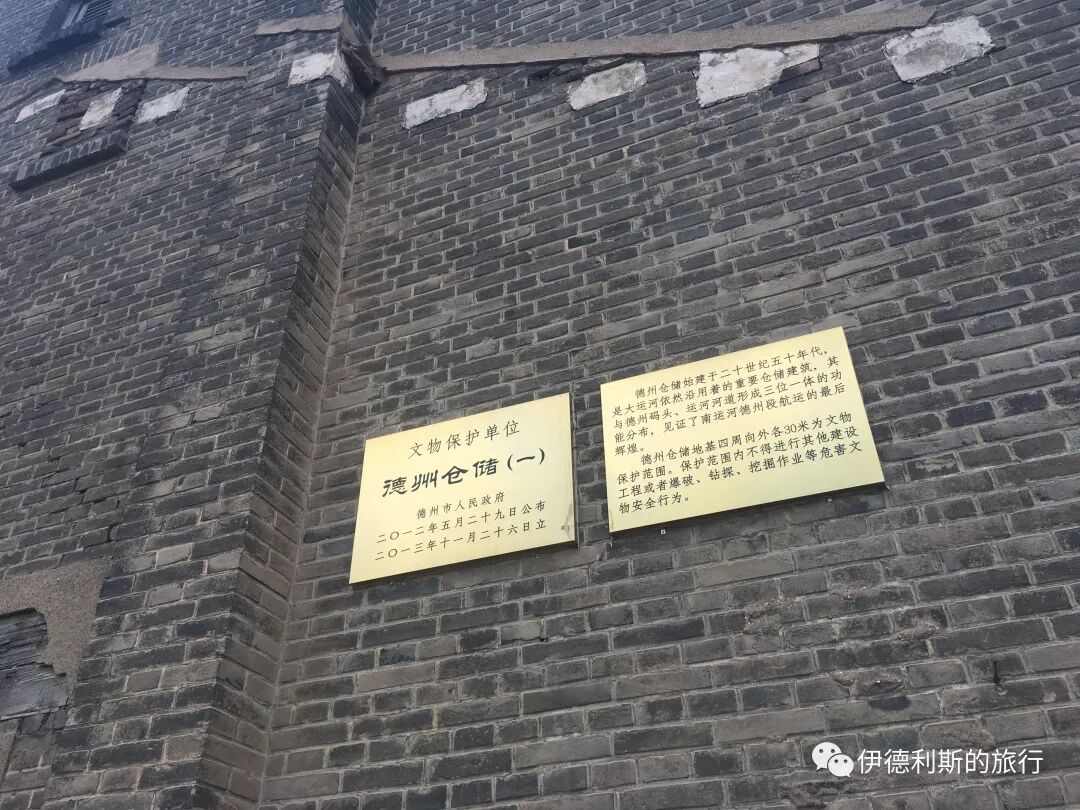
The guard tower built by the Cotton and Textile Company in the 1950s not only served as a security post but also marked the boundary between the company and Dezhou Port.
The Dezhou Port of that time connected directly to the Jinpu Railway, allowing canal cargo to be transferred straight to the trains. The building below is the former train station dedicated to Dezhou Port.
This is the remains of the Dezhou Port freight yard.
Around 1963, a dispatch tower was built on the canal bank, and loudspeakers were installed on top. The duty dispatcher would stand in a small glass room on the roof and direct ships through a microphone, while the chief dispatcher and planners coordinated from below. This was a symbol of how busy the Dezhou section of the Grand Canal used to be.
Dezhou's Jiulongwan Park is a rare industrial heritage park. It was originally the first water plant in Dezhou, built in the 1920s. Between 1925 and 1928, while Zhang Zongchang was governor of Shandong, tens of thousands of Fengtian Army troops were stationed in Dezhou to prepare for the Zhili-Fengtian War. To provide drinking water for the troops, Zhang Zongchang built the earliest water supply facility at Jiulongwan by the canal, using the Grand Canal as the water source. Due to military security needs, the water plant was heavily guarded by troops and was known at the time as the Water Camp.
In 1953, the Dezhou State-Owned Water Company opened its first water plant on the site of the old Water Camp (Shuiying). It continued to draw water from the Grand Canal, finally bringing the tap water that many local factories and residents had long dreamed of. After the Dezhou section of the Grand Canal dried up in 1966, the water plant gradually shut down. It is now an industrial heritage park where you can see exactly how tap water was produced 60 years ago.
Raw water from the canal was first pre-settled before entering the water-jet clarifier. Workers added water treatment agents to create flocculated water, then used mechanical force to speed up the reaction.
The water then flowed into filter tanks. Granular materials like quartz sand trapped particles to remove suspended impurities, organic matter, bacteria, and germs before the filtered water was disinfected.
The finished water flowed into a clear water reservoir, where a pump station pressurized it into the supply network to serve the city.
The 1960 diesel engine stands as the final witness to the Dezhou section of the canal.
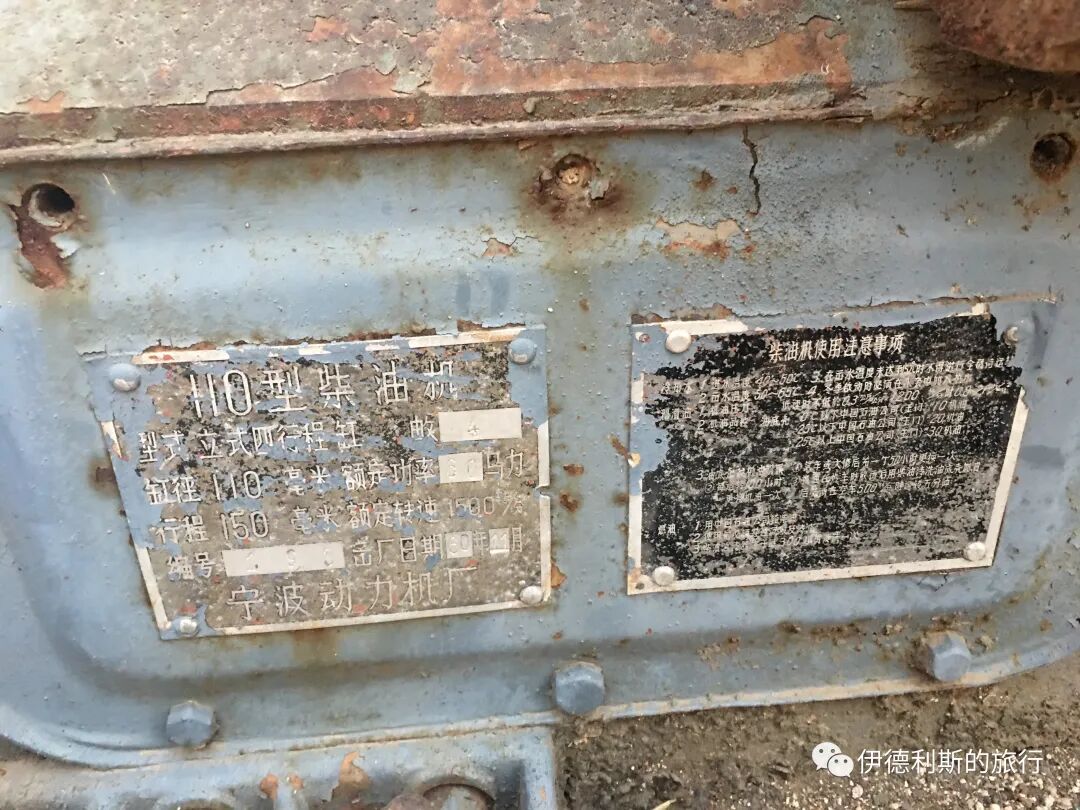
China Mosque Travel Guide Shandong: Tai'an Hui Muslim Villages, Historic Mosques and Resistance History
Articles • yusuf908 posted the article • 0 comments • 212 views • 2026-05-22 23:08
Summary: This China mosque travel guide continues the Tai'an seventy mosques project, covering Xintai and Feicheng mosques, village mosque architecture, stone tablets, imam records, Hui Muslim communities, and anti-Japanese resistance history.
The Seventy Mosques of Tai'an is presented here as a firsthand travel account in clear English, beginning with this scene: Xigaoping Mosque in Guli Town sits in the northwest part of the old Xigaoping village. The account keeps its focus on Mosque Travel, Islamic Heritage, Muslim Travel while preserving the names, places, food, and historical details from the Chinese source.
Xigaoping Mosque
Xigaoping Mosque in Guli Town sits in the northwest part of the old Xigaoping village. It was first built in the early Qing Dynasty and has been expanded and repaired many times since. When the mosque was first established, it had a main prayer hall with five rooms and two lecture halls to the north and south with three rooms each. An ancient cypress tree once stood inside the mosque, but it was cut down during the Cultural Revolution. The mosque was re-established in 1981. It underwent large-scale renovations in 1995 and 2005.
The mosque features a typical traditional Chinese courtyard style with a single-entry layout. It is 45 meters long and 35 meters wide. The prayer hall is 15 meters long and 6.5 meters wide. The rear hall is 4 meters long and 3.5 meters wide. The north lecture hall is 16 meters long and 8 meters wide. The south lecture hall is 18 meters long and 4.5 meters wide. Two stone tablets remain today: the 2005 Renovation Record and the List of Donors for the Mosque Construction on March 16, 1994, which was also set up in 2005.
Before the founding of the People's Republic of China, Imam Bai Anfu led the religious affairs at this mosque. After the founding of the People's Republic of China, Imams Yang Yuejun, Bai Anfu, Liu Qingyuan, Wang Xiuming, and Yu Guangwei served as leaders of religious affairs in succession. The mosque is currently managed by a mosque management committee, with Liu Guitian serving as the current director.
In 2008, the mosque was named a Model Mosque by Tai'an City. In 2009, it was awarded the title of Civilized Religious Activity Venue by Xintai City. In 2010, it was once again named a Model Mosque by Tai'an City.
Feicheng City
Houhuang Village Mosque
Houhuang Village Mosque in Bianyuan Town sits in the southwest corner of the village. It was built during the Ming Dynasty and has been repaired continuously since then. The mosque underwent seven large-scale renovations in 1747 (the 12th year of the Qianlong reign of the Qing Dynasty), 1809 (the 14th year of the Jiaqing reign), 1903 (the 30th year of the Guangxu reign), 1937 (the 26th year of the Republic of China), 1944 (the 33rd year of the Republic of China), 1984, and 2010.
The mosque features a Chinese palace-style architectural design and measures 45 meters long and 28 meters wide. The prayer hall has two sections, front and back, standing 9 meters high with two side rooms and a moon platform (yuetai) in front. The main hall is 17.2 meters long and 12.45 meters wide. The north lecture hall is 10 meters long and 8 meters wide. The south lecture hall is 15.2 meters long and 5.7 meters wide. The ablution room (shuiwu) is divided into separate areas for men and women. The men's room is 15 meters long and 6.2 meters wide. The women's room is 8.8 meters long and 5.8 meters wide. There are four stone tablets here: the 1747 Record of Rebuilding the Mosque Moon Platform Railing Rooms from the Qianlong era, the 1809 Record of Rebuilding the North and South Lecture Halls from the Jiaqing era, the 1910 Record of Rebuilding the Huangjiazhuang Mosque from the Xuantong era, and the 2011 Record of Rebuilding the Main Prayer Hall.
The mosque's religious affairs have been led by imams including Zhang, Zhang Baotai, Ma Yonghui, Tang Qinglin, Wang Changshun, Ma Tongyun, Yang Fulian, Xu Changcun, Yang Baojun, Zhang Shugang, and Ma Gang. The mosque has trained many religious scholars, including imams Zhang Xuan, Xu Shihe, Xu Jiben, Xu Jiwen, Xu Changchun, Xu Changzhi, Xu Jiwu, Xu Changshan, Zhang Baotai, Ma Wenli, Yang Guotai, Yang Maodou, Xu Changzeng, Yang Suo, Xu Bin, Ding Jian, Bai Yanbing, Ding Junjian, Ding Rongfu, Ding Jianhua, Yang Libiao, Xu Yongqiang, and Yang Chaoxuan. It is currently managed by the mosque's democratic management committee, with Ding Junqian, Xu Weihua, Ding Junfu, Ding Ruqing, and Yang Wei serving as directors. Religious activities are carried out according to the law. The mosque keeps a white porcelain incense burner from the Qing Dynasty. The mosque values education, and every imam has held classes to train many students (hailifan).
In 2008, the mosque was named a Model Mosque by Tai'an City. It was named a Model Mosque by Tai'an City again in 2014.
Qianhuang Village Mosque
Qianhuang Village Mosque in Bianyuan Town sits at the west end of the village. It was first built during the Guangxu reign of the Qing Dynasty (1875-1906) and has been repaired many times since. In the third year of the Xuantong reign (1911), elder Zhang Shi'en donated over 3.6 mu of land, which became the current site. In 1924, four rooms were built for the south lecture hall. In 1946, elder Wang Yuduo from the Taihe firm in Qianhuang Village led a fundraising effort, and the five-room main prayer hall was finished in 1947. Large-scale repairs took place in 1991, 2000, 2002, 2004, and 2014.
The mosque is a single-courtyard building in the classic Chinese palace style. The main prayer hall has front and back sections and covers 250 square meters. The north lecture hall covers 107 square meters, the south lecture hall covers 98 square meters, and the water room covers 88 square meters. There are four stone tablets here: the Huangjiazhuang Ding Family Genealogy Tablet from 1741 (Qianlong year 6), the New Ablution Room Tablet from 2000, the Mosque Inscription from 2003, and the South Lecture Hall Reconstruction Tablet from 2004.
The mosque's religious affairs have been led by imams including Yang Guotai, Yang Chaoxuan, Mi Shuting, Ma Yongcai, Zhao Rongsheng, Zhan Qinggui, Dong Zhongqing, Mi Shuangzhong, Mi Shuangliang, Li Huaiguo, Wang Xiuming, Chen Xingwu, Wang Huaiyu, Jin Haixue, Wang Jingdou, Wang Xiuming, and Ma Jundong. Before the founding of the People's Republic of China, the mosque was managed by village elders including Ding Yuxi, Wang Wensheng, Wang Guanxi, Wang Guanxing, Wang Jixian, Bai Yuhe, Zhang Juntang, Wang Jichen, Ding Yang, Wang Guanqi, Zhang Baoshan, Zhang Baodang, and Wang Jixin. After the founding of the People's Republic of China, it was managed by village elders including Ding Yanzheng, Ding Yanyang, Wang Guanjiang, Ding Huaixin, Zhang Yongquan, Wang Xiuzhong, Ma Hongzhang, Wang Xiucai, Bai Tangyou, Zhang Yanlong, Wang Xiutong, Wang Jingshui, Ding Huaikui, Wang Jingtao, Wang Jingliang, Ma Xianmin, and Wang Zhongmin. It is now managed by the mosque's democratic management committee, with Ding Yanzheng, Ma Hongzhang, Wang Jingshui, and Ding Huaikui serving as directors.
The mosque once held cultural relics like celadon incense burners and vases, along with thirty handwritten copies of the Quran, but these were destroyed or lost during the Great Leap Forward and the Cultural Revolution.
In 2008, the mosque was named a Model Mosque by Tai'an City. In 2010, it was named a provincial-level Harmonious Religious Activity Site. In 2011, it was designated as a Feicheng City Cultural Relic Protection Unit.
Shengjiazhuang Mosque.
Shengjiazhuang Mosque in Anjiazhuang Town is located in the northwest corner of the village. It was first built in the early Qing Dynasty and has been renovated many times since. The mosque is built in the style of a Chinese palace, measuring 34 meters long and 30 meters wide. The prayer hall consists of a front and back section, and the main hall features a raised platform (yuetai) that is 8 meters high, 14 meters long, and 10 meters wide. The north lecture hall is 21 meters long and 7 meters wide. The south lecture hall is 11 meters long and 5 meters wide. The water room is 11 meters long and 5 meters wide. There are 7 stone tablets remaining, including the 1929 (the 18th year of the Republic of China) Tablet for the Reconstruction of the Mosque and 4 newer tablets honoring donors. An ancient stone tablet stands in front of the main hall, but the inscription is badly damaged and hard to read.
The mosque's religious affairs have been led by imams including Yang Maoxiu, Wu Mingcai, Li Jigui, and Wang Hualei. It is currently managed by the Mosque Democratic Management Committee, with Li Zhaoji, Mi Qingguo, and Yang Dengfa serving as directors.
In 2009, the mosque was named a provincial-level Harmonious Religious Activity Site. It won the title of Model Mosque of Tai'an City in 2010 and again in 2014.
Beiqiu Mosque
Located in the eastern half of Beiqiu Village in Bianyuan Town, the mosque was first built between the late Ming and early Qing dynasties and has been expanded several times since. The main hall was restored in the 12th year of the Qianlong reign of the Qing Dynasty (1747). The north lecture hall was rebuilt in 1991. In 2015, the south lecture hall, the water room, and the courtyard were built.
The mosque is built in the style of a Chinese palace, measuring 37.3 meters long and 26.8 meters wide. The prayer hall is a double-layered structure divided into a front hall and a back hall, with side rooms attached to the main hall and a moon terrace (yuetai) in front that is 8.5 meters long and 23.5 meters wide. The north lecture hall is 5 meters long and 17.8 meters wide. The south lecture hall is 5 meters long and 8 meters wide. The water room is 5 meters long and 19 meters wide. The mosque includes a living area for the imam. There are five stone tablets remaining, including the "Stele Record of the Mosque Restoration" from the 12th year of the Qianlong reign (1747), the "Mosque Prohibition Stele" from the Xuantong reign (1909-1911), the "Stele Record of the North Lecture Hall Reconstruction" from 1991, and the "Stele Record of the South Lecture Hall and Water Room Reconstruction" from 2015.
Imam Ding Ruhu currently oversees the religious affairs. In the past, village elders worked with the mosque's imam to manage affairs, with Xu Huali from the Daoguang reign of the Qing Dynasty (1820-1850) serving as a representative example. The mosque is now managed by a democratic management committee, with Liu Yuyuan, Ding Yongchang, Ding Yongdui, and Ding Xianquan serving as directors in succession. The mosque currently houses a copper water pitcher (tangping) dating back to the late Ming and early Qing dynasties.
Songzhuang Mosque
The Songzhuang Village Mosque in Bianyuan Town is located at the west end of the village. It is said to have been built in the late Ming and early Qing dynasties and has been renovated continuously since then. Before the founding of the People's Republic of China, there were four major renovations, with the most significant ones occurring in the tenth year of the Jiaqing reign (1805), the seventeenth year of the Daoguang reign (1837), the twenty-sixth year of the Guangxu reign (1900), and the fifteenth year of the Republic of China (1926). Since the founding of the People's Republic of China, it has been repaired many times, including the 2013 reconstruction of four ablution rooms (shuifang), two warehouses, and three southern lecture halls.
The mosque is built in the style of a Chinese palace, measuring 36 meters long and 36 meters wide. The prayer hall is 15.6 meters long and 11.3 meters wide, and the northern lecture hall is 18.3 meters long and 5.4 meters wide. The southern lecture hall is 15.7 meters long and 5 meters wide. The water room is 12 meters long and 5 meters wide. There are five stone tablets remaining, including the Stele for the Reconstruction of the Mosque from the nineteenth year of the Daoguang reign (1839), the Stele Record for the Reconstruction of the Mosque from the twenty-sixth year of the Guangxu reign (1900), the Preface Stele for the Reconstruction of the Mosque from the fifteenth year of the Republic of China (1926), and the Preface to the Reconstruction of the Songzhuang Ancient Mosque.
Historically, the mosque trained imams such as Ma Huanwen and Sha Xianzhang. Over the past twenty years or so, imams including Li Zhongguo and Wang Huarong have led the religious affairs. The mosque is currently managed by a democratic management committee, with Zuo Guangwen, Ma Yumin, Bai Youting, Ma Yujun, and Yang Changgang serving as directors in succession.
In 2009, the mosque was awarded the provincial title of Harmonious Religious Activity Venue. In 2010, it received the title of Model Mosque from Tai'an City. In 2016, it was designated as a Cultural Relic Protection Unit of Tai'an City.
Chahedian Mosque
Chahedian Mosque in Bianyuan Town is located in the middle of the village. It was first built during the Qianlong reign of the Qing Dynasty (1735-1796) and has been expanded and repaired ever since. In 2014, the mosque underwent a large-scale renovation.
The mosque features a Chinese palace-style architectural design, measuring 45 meters long and 30 meters wide. The prayer hall is 15 meters long and 15 meters wide, and the north lecture hall is 27 meters long and 7 meters wide. The south lecture hall is 20 meters long and 7 meters wide. The ablution room (shuiwu) is 6 meters long and 7 meters wide.
The mosque's religious affairs were led by imams including Xu Changzhi, Zhang Yanzhai, Wang Huarong, Ma Wenli, Wang Hualei, and Yang Shunchang. It is now managed by the mosque's democratic management committee, with Han Hongbin, Liu Yuantai, and Wang Jihe serving as directors. In 2012, it was named a provincial-level Harmonious Religious Activity Venue.
Fenghuang Village Mosque
Fenghuang Village Mosque in Bianyuan Town sits at the west end of the village. It was built in the 11th year of the Republic of China (1922). When the mosque was first established, it included a main prayer hall, a lecture hall, an ablution room, a main gate, and courtyard walls. It underwent large-scale renovations in 1994.
The mosque features a Chinese palace-style architectural design and is 35 meters long and 30 meters wide. The prayer hall is 12 meters long and 10 meters wide. The north lecture hall is 13 meters long and 6 meters wide. The south lecture hall is 13 meters long and 6 meters wide. There are two existing stone tablets: the Mosque Founding Tablet from 1940 and the Mosque Reconstruction Record Tablet from 1995.
The mosque's religious affairs were led by imams including Wang Yongqing, Ma Xingchang, Ding Hu, Wang Changming, Yang Xingwang, Wang Changgui, and Yang Baojun. It is currently managed by the mosque's democratic management committee, with Wu Maowen, Wu Baoshu, Mi Kuan, Wu Yuanfa, Wu Mingkun, Wu Mingxiang, Wu Jinzhong, and Mi Zhaoying serving as directors.
Dawangzhuang Mosque
Dawangzhuang Mosque in Bianyuan Town is located at the east end of the village. It was built in 1953 and has been repaired many times since. Large-scale renovations took place in 2005, 2007, and 2011.
The mosque is in a modern architectural style, measuring 35 meters long and 40.5 meters wide. The prayer hall is a single-level structure with a rear hall, standing 5.2 meters high, 11 meters long, and 7.5 meters wide. The north lecture hall is 15 meters long and 7.6 meters wide. The south lecture hall is 3 meters long and 7.6 meters wide. The water room is 7.6 meters wide.
The mosque's religious affairs were led by imams including Bai Anfu, Imam Yang, Yang Baojun, Jin Haizeng, Wang Zengli, Ma Chuanxiang, Yang Dong, and Ding Jianhua. It is now managed by the mosque's democratic management committee, with Yang Baojin, Yang Shunping, and Yang Shuncang serving as directors. The mosque houses an incense burner.
Chenjiabu Mosque
Chenjiabu Mosque in Anjiazhuang Town sits at the west end of the village. It was first built between the late Ming and early Qing dynasties and has been expanded and repaired ever since. The mosque underwent two large-scale reconstructions in 1996 and 2007.
The mosque features a Chinese palace-style architectural design and measures 46 meters long and 24 meters wide. The prayer hall is a double-layered structure consisting of a front porch, a front hall, a gutter, and a rear hall, creating a connected architectural layout. Both the front and rear halls follow a four-beam and eight-pillar design, with a brick and lime gutter installed at the junction of the two halls for drainage. There are side doors on both sides and a raised platform (yuetai) in front. The main prayer hall is now a dangerous building. The main prayer hall is 9 meters high, 16 meters long, and 10 meters wide. The north lecture hall is 16 meters long and 6.5 meters wide. The south lecture hall is 13 meters long and 5 meters wide. The water room is 6.5 meters long and 5 meters wide. The mosque was once awarded the provincial title of Harmonious Religious Activity Venue.
Xiaojiabu Mosque
Xiaojiabu Mosque in Anjiazhuang Town is located at the west end of the village. The founding date is unknown, and it was destroyed by fire in 1973 when machines inside the building caught fire. The new mosque was built in 1999.
The mosque features Chinese palace-style architecture and is 56 meters long and 50 meters wide. The prayer hall is 9.9 meters high, and the moon terrace in front of the main hall is 26 meters long and 15 meters wide. The north lecture hall has 5 rooms, measuring 15 meters long and 8 meters wide. The south lecture hall has 5 rooms, measuring 15 meters long and 5 meters wide. There is 1 kitchen, measuring 3 meters long and 4 meters wide. More than 250 trees are planted inside and outside the mosque, and the mosque is fully equipped with all necessary utensils. A stone tablet erected in 2000 still exists today.
The mosque's religious affairs have been led by imams including Bai Maoxiang, Imam Xu, Imam Yang, Imam Wang, and Bai Yanbing. It is currently managed by the mosque's democratic management committee, with Ma Wenhuan serving as the director.
A handwritten copy of the Quran from the 17th year of the Republic of China (1928) is preserved here. In 2008, the mosque was named a Model Mosque by Tai'an City.
Ningyang County
Xitaili Mosque
Xitaili Mosque in Gangcheng Town sits in the western half of the village. Wang Xiong founded the mosque in 1398, the 31st year of the Hongwu reign of the Ming Dynasty, and it has been expanded and repaired ever since. The mosque underwent repairs in 1411, 1460, 1698, 1719, 1738, 1819, 1900, 1945-1946, 2005, 2008, and 2012.
The mosque features Chinese palace-style architecture. It is 41.5 meters long and 34.1 meters wide, with two courtyards. The main prayer hall is a double-layered structure, 13 meters high, 13.1 meters long, and 7.1 meters wide. The north lecture hall is 17.1 meters long and 7 meters wide. The south lecture hall is 10.5 meters long and 7 meters wide. The water room is 10.6 meters long and 5.5 meters wide.
The mosque entrance has a main gate and a second gate. Past the second gate is the main courtyard. The main prayer hall sits on the west side, facing east. It is the primary building of the mosque and can hold hundreds of people for namaz at the same time. The main prayer hall uses a three-arch design with a connected roof structure, consisting of a front porch, a middle hall, and a back hall. The front porch is three bays wide with a curved roof and a wooden frame covered in small gray tiles. A stone tablet from 1719 titled Mosque Inscription is embedded in the inner north wall of the porch. The middle hall is three bays wide with a hard mountain-style roof. The front eaves connect to the back eaves of the middle hall, with water drainage channels left on both side walls. The rear hall is three bays wide, extending 0.62 meters beyond the sides of the middle hall's front porch. The front and rear eaves connect, the main roof ridge features animal ornaments, the brick walls have delicate carvings, and the mihrab is set in the center of the west wall.
The floor plan of the main hall looks like the Chinese character 'zhu' (master), and the roof has a varied, undulating shape. The platform in front of the main hall has stone railings and panels. On the north side of the platform stand stone tablets from the 11th year of the Guangxu reign (1885) and 2005 documenting repairs to the mosque. In front of the platform, the north and south lecture halls each have three rooms. They feature a single-eave, hard-mountain style roof covered with grey tiles and a front porch. North of the second gate is the room for students (hailifan). To the south is the bathing room, which can accommodate dozens of people for major and minor ablutions. Between the east gable of the north lecture hall and the courtyard wall is the east side room. To the west of the west gable are the west side room, the covered room (zhaozifang), and the tableware room. There are six existing stone tablets: the 'Mosque Tablet Record' from the 58th year of the Kangxi reign (1719), the 'Mosque Land Donation Tablet' from the 11th year of the Guangxu reign (1885), the 'Eternal Tablet' from 2005, the 'Second Batch of Municipal Key Cultural Relics Unit Tablet' from 2007, the 'Eternal Tablet' from 2008, and the 'Xitaili Mosque Reconstruction Record Tablet' from 2012.
Throughout its history, the mosque has trained many imams, including Yang Peicheng, Wang Minqing, Wang Minyi, Xu Menglan, Xu Shanfang, Li Chuanzheng, Li Hongbin, Wang Anyi, Li Anchen, Li Qingjun, Ma Xiangfa, Yang Zhenfa, Yang Cunguo, Yang Wei, Wang Antang, Wang Zifa, Xu Shouguo, Huang Zhongqing, Li Qingyun, Ma Xingcheng, Tang Wenhai, Wang Zhongzhen, Zhang Hongyi, Xu Shanfang, Li Zhaokun, Han Yuhai, and Xia Qianguo. The mosque is currently managed by a democratic management committee. Past directors include Wang Zishang, Wang Enshang, Wang Anxiang, Wang Anwen, Li Anshan, Li Baojin, Wang Anpo, and Ma Yongfu.
In 2009, the mosque received the provincial title of 'Harmonious Religious Activity Venue.' It was also named a 'Model Mosque' by Tai'an City in 2008, 2010, and 2014.
Liujiazhuang Mosque
Liujiazhuang Mosque in Geshi Town is located in the southwest corner of the village. It was first built during the Hongwu period of the Ming Dynasty (1368-1398) and has been expanded and repaired many times since. The mosque underwent three large-scale renovations in 1984, 1997, and 2008.
The mosque follows the Chinese palace architectural style, measuring 26 meters long and 19 meters wide. The prayer hall is 7.9 meters high, 10 meters long, and 8.5 meters wide. The north lecture hall is 13.5 meters long and 7 meters wide. The water room is 5 meters long and 7 meters wide. There is one stone tablet currently on site, which is the 2008 Tablet Record of Mosque Renovation.
Since the founding of the People's Republic of China, the religious affairs have been led by imams including Xu Menglan, Shi Xianbao, Wang Minqing, Xu Shanfang, Bai Anmeng, Han Tongwen, Xu Lingzhi, Wang Antang, Li Anchen, and Ma Ning. The mosque is currently managed by a democratic management committee, and past directors include Li Huaiqing, Li Lanting, and Sha Xingdong.
It has received the title of Model Mosque from Tai'an City.
Baima Mosque Mosque
Baimamiao Mosque in Fushan Town sits at the southwest corner of South Baimamiao Street in Taipingzhuang Village. It was first built during the Yongle period of the Ming Dynasty (1403-1424) and has been expanded and repaired ever since. The mosque has undergone four major renovations, including those during the Jiajing period of the Ming Dynasty (1522-1566), in the 16th year of the Guangxu reign of the Qing Dynasty (1890), and in 2001 and 2010.
The mosque features Chinese palace-style architecture, measuring 72.7 meters long, 21.1 meters wide at the front, and 27.5 meters wide at the back. The prayer hall is a double-eaved structure measuring 15.9 meters long and 13.2 meters wide. The north lecture hall is 10.2 meters long and 7 meters wide. The south lecture hall is 10.2 meters long and 6.4 meters wide. The ablution room (shuiwu) is 13.8 meters long and 6.6 meters wide. There are three stone tablets currently on site: the 1890 'Record of the Mosque Renovation' from the Qing Dynasty, the 2001 'Everlasting Renewal Tablet,' and the 2010 'Preface Tablet.'
The mosque's religious affairs have been led by imams including Zhao Wenjie, Yang Yueqing, Zhu Yuepo, Ma Guang, Han Yunting, Zhu Guanglai, Zhao Xinzheng, Zhao Guangfu, Zhu Yuehou, Yang Zhanji, Wang Ai, Zhang Yanzhai, and Yang Dawei. It is currently managed by the mosque's democratic management committee, with past directors including Mi Kuancheng, Hong Qingfang, and Zhao Anren.
A plaque from the 19th year of the Guangxu reign of the Qing Dynasty (1893) is still preserved today. In recent years, Zhu Zhaoxin donated a pair of wooden couplets that read, "The only true Allah of the universe is Allah, the only greatest sage in the world is Muhammad," which now hang on both sides of the mosque (libaidian) door.
In 2003, the county government designated the mosque as a county-level cultural relic protection site. It received the provincial title of "Harmonious Religious Activity Venue" in 2011 and was named a "Model Mosque" by Tai'an City in 2014.
Hongqi Village Mosque
Hongqi Village Mosque in Huafeng Town sits in the center of the village. It was first built during the Wanli period of the Ming Dynasty (1573-1620) and has been expanded and repaired ever since. The mosque underwent two large-scale renovations in 1932 and 2011.
The mosque features Chinese palace-style architecture and measures 30 meters long and 25 meters wide. The prayer hall is a double-layered structure that is 6 meters high, 13 meters long, and 10 meters wide. The north lecture hall is 15 meters long and 7 meters wide. The south lecture hall is 14 meters long and 4.5 meters wide. The water room is 6 meters long and 4 meters wide. There are two stone tablets here: the 2012 Tablet of Rebuilding the Main Hall and the Tablet of Eternal Memory.
Since the late 1940s, the mosque's religious affairs have been led by imams including Chen Junfang, Shi Xianxing, Liu Qingyuan, Gao Guo, and Ma Yingshang. The mosque is currently managed by a democratic management committee. Past directors include Chen Jinmei, Zhu Xiangxun, Bai Yushun, Zhu Xuyin, Wang Ansheng, Shi Junyou, Zhu Xutian, and Chen Weimin.
In 2008, the mosque was named a Model Mosque by Tai'an City, and in 2012, it received the provincial title of Harmonious Religious Activity Venue.
Jingquan Village Mosque
Jingquan Village Mosque in Huafeng Town is located in the northwest part of the village. It was first built in the 14th year of the Daoguang reign of the Qing Dynasty (1834). It was originally located in the eastern part of Jingquan Village and has been expanded and repaired many times since. Large-scale renovations took place in the 24th year of the Daoguang reign (1844), 1988, and 2001.
The mosque is 47 meters long and 35 meters wide. It includes a main hall, a north lecture hall, a south lecture hall, and a water room. There are three stone tablets: the Tablet of Founding the Mosque from the 14th year of the Daoguang reign (1834), the Tablet of Rebuilding the Mosque from 1998, and the Tablet Record of Repairing the Mosque from 2003.
Since the 1950s, the mosque's religious affairs have been led by imams including Jin Haixue, Ma Maoquan, Xu Changchun, Zhang Changshi, and Ma Shengchao. The mosque is now managed by a democratic management committee, with past directors including Huang Yuxiang, Huang Ruichang, Huang Qingfa, and Yang Yanhua.
The mosque houses a set of handwritten Quran manuscripts (volumes 15, 16, 29, and 30 are missing) and one copper water pitcher (tangping), which was originally part of a pair.
Sidian Village Mosque
Sidian Village Mosque in Sidian Town is located in the northern part of the village. It was built in the 11th year of the Yongzheng reign of the Qing Dynasty (1733) and has been expanded and repaired many times since. In the first year of the Jiaqing reign (1796), a fire at a neighbor's house spread to the mosque, which was later rebuilt. In October 1926, a fire destroyed the main prayer hall. The main hall, lecture hall, and gate wall were rebuilt in 1935. The main prayer hall was torn down in the early 1950s. In the 1980s, the Sidian village brigade arranged for members to build houses on the site, but the south lecture hall remains standing today. The mosque was rebuilt between 2012 and 2015.
The mosque is built in the style of a Chinese palace, measuring 22 meters long and 21 meters wide. A white marble plaque inscribed with the words "Mosque" is embedded above the main gate. There are side doors on both sides, each with a five-step entrance platform. About 10 meters inside the main gate is a second gate, and a path leads straight from there to the main prayer hall. The main prayer hall is a single-story building with a three-bay porch-style design, standing 15 meters high with a bronze vase ornament on the roof. On each side of the main prayer hall, there is a carved openwork lattice window featuring Arabic calligraphy. Inside the hall, four round plaques hang on the front sides, and a plaque with gold lettering hangs in the center. There are four large painted pillars, each over 40 centimeters in diameter, decorated with large gold-painted lotus flowers. The ceiling is inscribed with the holy names of Allah. The floor of the main prayer hall is covered with felt carpets. The front of the main prayer hall is a wooden structure with a simple, ancient style, built in the Chinese hip-roof (wudian) architectural form. The north lecture hall has three rooms and covers an area of about 60 square meters. Inside the hall, there is antique porcelain printed with Arabic scripture. The south lecture hall has three rooms and covers an area of about 50 square meters.
There are two stone tablets remaining: the Imperial Edict Tablet (Shengyu Bei) from the seventh year of the Yongzheng reign of the Qing Dynasty (1729) and the Tablet Record of the Reconstruction of Sizhuangdian Mosque (Chongxiu Sizhuangdian Qingzhensi Beiji) from the twenty-eighth year of the Republic of China (1939). The former is the only one of its kind in Tai'an and holds significant historical and cultural value. There are several cypress trees inside the mosque.
The mosque was once led by imams including Mi Baogui, Zhao Defu, and Zhao Furun. It is now managed by the mosque's democratic management committee, with past directors including Shi Guanli, Li Xiangqian, and Li Hong'an. The mosque also serves the communities of Qianwang Village and Houwang Village in Caohe Town, Yanzhou City.
Nanyi Village Mosque
Nanyi Village Mosque in Ciyao Town is located in the southwest part of the village. The original mosque in Nanyi Village fell into disrepair and was severely damaged. In May 2015, the dangerous structures were demolished according to plan, and a new mosque was built at a different site.
The mosque covers an area of 1,600 square meters, measuring 40 meters long and 40 meters wide. The prayer hall is 15 meters long and 11 meters wide. The north lecture hall is 10 meters long and 8 meters wide. The south lecture hall is 10 meters long and 8 meters wide. The water house is 10 meters long and 11 meters wide. There is one stone tablet here, the 2016 Tablet of Loving the Country, Loving the Faith, and Recognizing the Oneness of Allah.
The mosque has trained imams like Zhu Zhili, and Imam Yang Zhi currently manages religious affairs. The mosque is managed by a mosque management committee, with Zhang Weimin and Zhu Zhiming serving as past directors.
Houlyuguan Mosque
Houlyuguan Mosque in Huafeng Town sits in the middle of the village. It was likely built in the early days of Lyuguan Village and has been expanded and repaired ever since. In the second year of the Daoguang reign (1822), the old mosque was falling apart, so it moved to the north end of the village, which is its current location. The new mosque added three lecture rooms and a moon terrace (yuetai). In the 27th year of the Guangxu reign (1901), three large tiled rooms were added, and pine and bamboo were planted. The mosque was repaired in the ninth year of the Republic of China (1920). It was severely damaged during the Cultural Revolution.
When the mosque was first built, it was made of grass huts and covered seven and a half mu of land, with eight farming families from the north and south villages providing money and grain. After moving to the north of the village, it was rebuilt with brick, wood, earth, and stone, measuring 62 meters long and 52 meters wide. An old plaque hangs in the prayer hall, but the three characters on it are no longer readable. The main hall is 11 meters long and 11 meters wide. The north lecture hall is 11 meters long and 5 meters wide. The south lecture hall is 11 meters long and 5 meters wide. The water room is 4 meters long and 3.5 meters wide. There are three existing stone tablets: the Record of Rebuilding the Mosque from the second year of the Daoguang reign of the Qing Dynasty (1822), the Record of Rebuilding the Mosque from the 27th year of the Guangxu reign (1901), and the Record of Rebuilding the Mosque from the ninth year of the Republic of China (1920). Several stone tablets buried during the Cultural Revolution are inside the water pool.
The mosque's religious affairs were successively led by imams including Ma, Liu Yulin, and Xu Yongtong. Xiluoshan Mosque.
Xiluoshan Mosque in Heshan Township. Built in 2013, it covers 500 square meters with a building area of 300 square meters. It includes a main prayer hall, north and south lecture halls, and a main gate.
Xiluoshan Mosque.
Xiluoshan Mosque in Heshan Township. Built in 2013, it covers 500 square meters with a building area of 300 square meters. It includes a main prayer hall, north and south lecture halls, and a main gate.
Dongping County
Zhoucheng Mosque
Zhoucheng Mosque is located in the middle of the ten-mile Song Street in Zhoucheng Subdistrict. It was first built in 1575 during the third year of the Wanli reign of the Ming Dynasty and has been expanded several times since. Large-scale renovations took place in 1819 (the 24th year of the Jiaqing reign), 1828 (the 8th year of the Daoguang reign), 1840 (the 20th year of the Daoguang reign), 1911 (the 3rd year of the Xuantong reign), and 1926 (the 15th year of the Republic of China). After the founding of the People's Republic of China, it was repaired many times, with major renovations in 1990 and 2004.
The mosque features a classic Chinese palace-style architectural design, measuring 91 meters long and 51 meters wide. The prayer hall is a ridge-roof building that stands 12 meters high, 31 meters long, and 29 meters wide. The north lecture hall is 17.5 meters long and 6 meters wide. The south lecture hall is 17.5 meters long and 6 meters wide. The water house is 10.5 meters long and 6 meters wide. There are five stone tablets remaining: the Donation of Land Tablet and the Record of Rebuilding the Mosque Tablet from the 12th year of the Daoguang reign (1832), the Record of Rebuilding the Mosque Tablet from the 20th year of the Daoguang reign (1840), the Preface to the Tablet for Rebuilding the Mosque from the 3rd year of the Xuantong reign (1911), and the Tablet for Rebuilding the Mosque from the 15th year of the Republic of China (1926).
Since modern times, the mosque's religious affairs have been led by imams including Zhan Huiyuan, Zhan Shikai, Zhan Hongru, Zhan Faxin, Xu Changzheng, Xu Changzhi, Yang Maoxiu, Yang Baojun, Zhan Hongda, Imam Guo, Ding Shanzhen, Ma Xiangfa, Li Anchen, Zhan Qiang, and Jin Feng. It is now managed by the mosque's democratic management committee, with Bian Qingfang, Wang Jinghan, Guo Guangcai, Zhan Yanling, and Zhao Rongsheng serving as directors in succession.
In 2004, the mosque was designated as a Tai'an City Cultural Relics Protection Unit. It won the title of Tai'an City Model Mosque four times in 2008, 2009, 2010, and 2014. In 2010, it was named a provincial-level Harmonious Religious Activity Venue.
Xicun Mosque
Laohu Town Xicun Mosque is located in the southern part of the village. The mosque was originally built in Zhanjialou during the Daoguang reign of the Qing Dynasty (1820-1850) and was expanded several times later. It was destroyed by a flood in 1955 and later rebuilt in Xicun Village, where it was completed with a main prayer hall of three rooms and a lecture hall of four rooms.
The mosque is built in the style of a Chinese palace and covers a total area of 1,404 square meters. The main prayer hall is a single-story building that stands 12 meters high and covers 130 square meters. The north lecture hall covers 168 square meters, and the south lecture hall covers 43.2 square meters. The ablution room (shuiwu) covers 77 square meters. The mosque currently houses two stone tablets.
The mosque's religious affairs have been led by imams including Mi, Yang, Ma Yunxiang, Xu Changzhi, Wu Mingcai, Wang Enqing, Bai Zhenhe, Lu Qingjie, Yang Yinqing, and Zhang Changshi. It is now managed by a mosque democratic management committee, with members including Zhan Ensu, Zhan Enkui, Zhan Qinghai, Zhan Qingyu, Bai Shulin, Jin Licai, Jin Baoli, Zhan Yanwu, Bai Chengzhen, and He Mingjun serving as directors.
Lisuo Village Mosque.
Lisuo Village Mosque in Timen Town was built in 1896 during the Guangxu reign of the Qing Dynasty and has been repaired several times since. It was damaged in 1958 and later rebuilt. In 2012, due to new village planning, it was moved and rebuilt 60 meters southeast of the old mosque, and it is now located at the 15th Team in the south of Lisuo Village. Repairs were carried out in 2015 and 2016.
This mosque has a modern architectural style and covers a total area of 1,751.1 square meters. The main prayer hall is a single-story building that stands 8 meters high and covers 151.2 square meters. The north lecture hall covers 87.1 square meters, and the ablution room (shuiwu) covers 90 square meters. A storage room (jiazi fang) is built to the south of the main prayer hall. Two stone tablets remain. One ancient tablet was carved with verses from the Quran, the date the mosque was built, and the names of the founders, but it was damaged in 1958 and is now a broken fragment.
The mosque was led by imams including Imam Ding, Imam Yang, and Zhao Jie, and it is currently managed by the mosque's democratic management committee.
Daimiao Mosque
Daimiao Mosque is located in the center of Daimiao Village, Daimiao Town. The date it was first built is unknown. It was damaged by the Yellow River in the 16th year of the Guangxu reign of the Qing Dynasty (1890). It was rebuilt in the spring of the 20th year of the Republic of China (1931). It was later destroyed by flooding and was rebuilt at a new site in 2017. It covers 400 square meters and includes a prayer hall, a south lecture hall, an ablution room (shuifang), a main gate, and a storage room (jiazi fang). There is one stone tablet remaining from the 20th year of the Republic of China (1931) titled 'Record of the Reconstruction of the Daijia Mosque Town Mosque'.
The mosque was led by imams such as Zhan Enpu and Jin Feng. It is currently managed by the mosque's democratic management committee, with Guo Guangcai serving as the current director.
Discussion | A Preliminary Study of the Hui Muslims' Resistance Against Japan in Tai'an, Shandong
At the end of 1937, the Japanese army invaded the Tai'an region of Shandong, causing major losses to the local economy and society. After thorough mobilization, people from all walks of life among the Hui Muslims in Tai'an—including farmers, workers, teachers, students, business owners, doctors, and imams—all joined the vigorous, full-scale war of resistance. Under the leadership of the Party, the Hui Muslim forces in Tai'an grew from nothing to something and from weak to strong, participating in over 300 battles, with figures like Jin Xiaocun and Jin Guang becoming key leaders of the force. The Tai'an Hui Muslim Anti-Japanese School, the Anti-Japanese National Salvation Association, the Anti-Japanese Propaganda Team, and anti-Japanese logistics industries continued to develop, becoming important elements of the systematic Hui Muslim resistance in Tai'an.
During the war, 322,000 soldiers and civilians in Tai'an city (based on current statistics for the six counties and districts of Tai'an) were killed or wounded, accounting for 1/20 of the total casualties in Shandong (6,526,000 people), which shows the atrocities committed by the Japanese army in Shandong and Tai'an. After the Japanese army occupied Tai'an at the end of 1937, they set up 37 enemy-puppet strongholds and carried out horrific, insane massacres. Between 3:00 PM and 5:00 PM on February 24, 1938, the Japanese army committed the Shanyang Village (in front of Culai Mountain) massacre, killing 72 villagers and wounding 13. They burned down 3,080 rooms. 151 large livestock and over 3,500 sheep were burned to death. Over 500,000 jin of grain and more than 400 carts of various sizes were burned. Hui Muslims in Shandong suffered severely from the Japanese invaders. The Japanese army raped countless women, burned down 71 mosques, killed over 130 imams (aheng), and looted all gold, silver, and property. Hui Muslims in Tai'an were not spared either. The Japanese invaders committed monstrous crimes against Hui Muslim villagers in places like Dashuozhuang in Zhuyang Town, Nigou Village in Manzhuang Town, and Yuezhuang Village in Shengzhuang Town. Facing the inhumane massacre policy of the Japanese invaders, Hui Muslim villagers in Tai'an joined the broad masses of Han people in a bitter and arduous war of resistance. Since the spring of 1938, Hui Muslim villagers in the Tai'an region launched a vigorous and systematic war of resistance against Japan, making important contributions to the victory of the war in Tai'an, Shandong, and North China.
1.
Tai'an Hui Muslim Resistance Forces
The Tai'an Hui Muslim resistance was divided into two forces: the Taixi Hui Muslim Anti-Japanese Armed Force and the Taidong Hui Muslim Anti-Japanese Armed Force. The Taixi Hui Muslim resistance was centered in Chenjiabu and Shengjiazhuang in Anjiazhuang Town, Feicheng City, as well as Nanbailou and Zhoujiapo in Xiazhang Town, Daiyue District, with Jin Xiaocun, Mi Yingjun, and Ma Ancai as the main leaders. The Taidong Hui Muslim resistance was centered in Yuezhuang, Gangshang, and Ershilibu in Shengzhuang Town, Tai'an District, and Dashuozhuang Village in Zhuyang Town, Daiyue District, with Jin Guang, Zhao Manshi, Ma Qianli, and Hong Zhanwu as the main leaders. In January 1941, the two forces merged into the Hui Muslim Backbone Battalion in Nigou Village, Manzhuang Town, Daiyue District, totaling over 100 people. The reorganized Hui Muslim backbone brigade operated mainly in the Taixi region. Specifically, the Taixi region covers the vast area west of the Jinpu Railway in Tai'an, south of the Yellow River, up to the north bank of the Dawen River, and east of the Ding River. It mainly includes the counties of Tai'an, Feicheng, Changqing, Dongping, Pingyin, Dong'e, Wenshang, and Ningyang. The anti-Japanese war led by the Hui Muslims of Tai'an was not a series of isolated or scattered battles, but a systematic resistance. The leadership of the Party, the Hui Muslim forces, the Hui Muslim National Salvation Association, the Hui Muslim resistance leaders, the anti-Japanese propaganda teams, the anti-Japanese schools, and the Longshan Military Shoe Factory were all specific elements of the systematic resistance of the Tai'an Hui Muslims. Specifically, the Party's leadership provided a strong political guarantee for the Tai'an Hui Muslim resistance. The Hui Muslim forces were a solid fighting force, and the National Salvation Association was a comprehensive revolutionary group. Jin Xiaocun, Mi Yingjun, and Jin Guang were outstanding leaders of the Tai'an Hui Muslim resistance. The Hui Muslim anti-Japanese propaganda team was an independent system for mobilization, the Hui Muslim anti-Japanese school was a fully established training institution for the resistance, and the Longshan Military Shoe Factory was an independent anti-Japanese logistics industry for the Tai'an Hui Muslims.
II.
The Tai'an Hui Muslim Resistance and the Party's Leadership
Branches of the Communist Party of China were established very early among Hui Muslim teachers and young students in Tai'an. The earliest ones were the Party branch in Ershilibu Village in Taidong and the Party branch in Beiqiu Village in Taixi. The former was established in 1932 with the help of Zhao Manshi and was the first rural Party branch in Tai'an County. Jin Yisan served as secretary, Hong Jixiao as propagandist, and Chen Xingcai as armed committee member, building up strength for future revolutionary struggles. In 1938, the Taixi Special Committee of the Communist Party of China was founded at Beiqiu Primary School, becoming the first Party organization in Taixi County at that time. Duan Junyi served as secretary, and Hui Muslim Party members such as Bai Youfang and Ding Maoshan actively participated in the work.
After the July 7th Incident, cooperation between the Kuomintang and the Communist Party gradually deepened, and many imprisoned Communist Party members were released. In July 1937, Communist Party members Lu Baoqi, Zhu Yugan, Yan Yuming, and Wu Guanying, who had been hiding outside, returned to Tai'an one after another to carry out anti-Japanese propaganda and mobilization. Around October, more than ten Communist Party members, including Zhang Beihua, Cheng Zhaoxuan, Xia Furen, Hou Decai, Cui Ziming, and Wang Zhongfan, returned one after another to Tai'an and the surrounding areas. Li Wenfu, Xu Lincun, Wang Shaofen, and others were released from a Kuomintang prison in Nanjing and returned to Feicheng one by one to start anti-Japanese activities. Many party members returned to Tai'an, planting the seeds for the anti-Japanese war among Hui Muslims in Tai'an and providing a strong political foundation.
In early 1938, Wu Guanying held a mobilization meeting for progressive youth at Hekou in western Tai'an, which was attended by Jin Xiaocun, Mi Yingjun, Wang Baoheng, and others. The meeting decided to organize an anti-Japanese guerrilla force and proposed the slogan, "Those with strength give strength, those with money give money." After the meeting, Mi Yingjun sold 800 jin of wheat to buy a box cannon (xiaziqiang). Fan Changyou sold his mule to buy a Hanyang rifle, and others did the same. This formed the initial organization for the Hui Muslim resistance in Tai'an. During the brutal struggle, the Communist Party cared deeply for Mi Yingjun and the Hui Muslim troops he led. Mi Yingjun also studied the works of Mao Zedong diligently to constantly improve his ideological awareness and military skills. In 1939, he joined the Communist Party of China. In March of the same year, Chen Guang, acting commander of the 115th Division of the Eighth Route Army, and political commissar Luo Ronghuan led the Eastward Advance Detachment to the Tai-Fei mountain area to establish the western Tai'an anti-Japanese base. Fan Pengfei, the leader of the Eastward Advance Detachment's civil movement team, quickly made contact with Jin Xiaocun and others and provided guns to the guerrilla group. Fan Pengfei once recalled:
North of Anjiazhuang, there was a village with many Hui Muslims. Several young men there formed a guerrilla group on their own, and they had a few guns. After I arrived, I often visited them. One of them was named Mi Yingjun. He was a very accurate shot and trusted me a lot. Later, I organized them and they joined the Tai'an Independent Regiment.
3.
The Growth of Hui Muslim Resistance Forces in Tai'an
Under the leadership of the Party and the guidance of the 115th Division, the Hui Muslim anti-Japanese armed forces in Tai'an continued to grow and strengthen. Whether it was the Hui Muslim anti-Japanese armed forces, the Hui Muslim anti-Japanese leadership, or other entities like anti-Japanese schools and industries, all grew gradually under the leadership of the Communist Party of China.
The Hui Muslim Battalion was a vital force in the Tai'an Hui Muslim resistance. In January 1938, Jin Xiaocun, Mi Yingjun, and six or seven others organized a Hui Muslim anti-Japanese guerrilla group. It soon grew to over twenty people and became a guerrilla squad. After that, the number of Hui Muslim youths joining the resistance kept increasing, and by the end of that year, it had expanded to more than 80 people. In the spring of 1939, the unit was reorganized as the Second Company of the Taixi Independent Regiment, also known as the Hui Muslim Company, with Mi Yingjun serving as company commander.
From then on, this Hui Muslim anti-Japanese armed force grew rapidly under the leadership of the Party. Between the spring and summer of 1939, the Hui Muslim Company worked with the 115th Division and the 686th Regiment to wipe out the Taian traitor organization Red Spear Society and executed its leader, Gao Fuchang. Afterward, the company was reorganized as the Fourth Company of the Taixi Independent Battalion. Soon after, the Fourth Company was reorganized again as the Second Company of the Sub-district Backbone Regiment, fighting across the Taixi region and becoming a banner for Hui Muslim resistance against Japan in Taixi. In early 1940, Jin Xiaocun mobilized people in over 40 Hui Muslim villages in Taixi to form anti-Japanese armed forces, eventually establishing three platoons, which were actually three small squads. In 1941, the two Hui Muslim anti-Japanese units from Taidong and Taixi merged to form the Hui Muslim Backbone Battalion, which oversaw two squadrons. In the second half of that year, Jin Xiaocun and others ordered the formation of the Third Hui Muslim Squadron in the suburbs of Jinan. At the end of 1943, Zhang Xiaonong and others formed the Fifth Detachment of Qihe in Qihe. At the same time, Jin Xiaocun formed the Fourth Squad in Xiaojinzhuang, Jinan. In August 1945, the units merged to form the Taixi Hui Muslim Battalion, with Jin Xiaocun serving as political commissar and Ma Ancai as general branch secretary. In November, it was reorganized as the First Battalion of the First Backbone Regiment of the sub-district, overseeing three companies. Since its founding, this unit made the most of the Hui Muslims' bravery, tenacity, and strong sense of community. They actively carried out guerrilla warfare. After hundreds of battles, they became a national revolutionary force in the Hebei-Shandong-Henan border region that could not be crushed or broken. In February 1949, they were reorganized as the 151st Regiment of the 51st Division of the 17th Army. They took part in the Yangtze River crossing campaign and later marched into the great southwest.
The Tai'an Hui Muslim unit was a strong fighting force. They once successfully protected Comrade Jiang Hua as he passed through enemy blockade lines. During the War of Resistance Against Japan and the War of Liberation, this unit fought over 300 battles. They cleared out more than 60 enemy strongholds and wiped out over 6,000 Japanese, puppet, and Kuomintang troops. They captured 5 cannons, over 20 heavy machine guns, over 70 light machine guns, and more than 4,000 rifles. Nearly 20 people received special or first-class merit awards. Of course, they also made huge sacrifices. The unit's founder, Mi Yingjun, died in October 1943. His commanders spoke highly of him, calling him an excellent Communist Party member, a clever and brave commander, and a Hui Muslim anti-Japanese hero raised by the Party. Incomplete records show that during the War of Resistance, the unit lost 6 battalion-level officers, 14 company-level officers, and over 40 platoon or squad-level officers.
Anti-Japanese schools were important places for training reserve talent. The goal of starting the Hui Muslim Anti-Japanese School was to strengthen and expand the Hui Muslim anti-Japanese army, train more political officers for the Hui Muslim troops, and provide new talent for the army. In 1943, Jin Xiaocun and Jin Guang attended a meeting of the Hebei-Shandong-Henan border region government. They proposed the idea of starting the school to leaders like Deng Xiaoping, who were chairing the meeting, and received approval from the leaders and representatives. After approval from Zhang Yuenan and Wu Shengyu of the Taixi Commissioner's Office, the school was officially established in the autumn of 1944 in Dayuanzhuang Village, Qihe County, with over 60 students. The full name of the school was the Tai'an Region Hui Muslim Anti-Japanese School, also known as the Taiyun District Islamic School. It used military-style management, and the 60-plus students were organized into two platoons and eight squads. The main focus was studying the works of leaders like Mao Zedong, and figures such as Zhang Yaonan and Liu Zifang came to the school to give reports. After the founding of the country, more than 60 students joined various construction fronts across the nation, with some becoming key contributors to the building of the new China.
The Longshan Military Shoe Factory and others provided logistical support for the Hui Muslims' resistance efforts. The Hui Muslim resistance in Tai'an included production for self-sufficiency, with two typical logistics enterprises formed by Hui Muslim teams being the Taixi Wenyang Cooperative and the Longshan Military Shoe Factory. The former was established mainly in the late stages of the War of Resistance Against Japan, initially located at the western border of Mazhuang in Daiyue District, and later moved several times. Ma Qianli was the main person in charge, and it played a major role during the War of Liberation. The latter was founded in the autumn of 1944 and was located in Longshan Guanzhuang, southwest of Manzhuang Town in Daiyue District. Jin Guang served as the factory director, and Mi Guangzhen from Dashuozhuang, east of Tai'an city, served as the purchaser. With over 20 Hui Muslim workers, they mainly produced military shoes, with products primarily supplied to local Hui Muslim forces. Thousands of pairs of military shoes, along with some semi-finished products, raw materials, and tools, were escorted by Jin Guang's wife, Gao Fangpu, to the home of Jin Yongzeng in their village for hiding. Later, they were transported to Dashuozhuang, and in 1948, they were handed over to the Bohai Military Region.
On December 31, 1937, the Japanese invaders occupied Tai'an. On January 1, 1938, the first shot of the Shandong resistance, led by the Shandong Provincial Committee of the Communist Party of China, was fired on Culai Mountain within Tai'an. Influenced by the Culai Mountain anti-Japanese armed uprising and under the leadership of the Communist Party, Jin Xiaocun, Mi Yingjun, and others formed the Tai'an Hui Muslim anti-Japanese guerrilla group in early 1938. This force grew from weak to strong and from small to large, with Jin Xiaocun, Jin Guang, Ma Ancai, and others becoming important leaders of the team. Through in-depth mobilization, all walks of life among the Hui Muslims in Tai'an, including workers, farmers, intellectuals, entrepreneurs, and religious figures, participated in the vigorous all-out war of resistance.
(The author, Jin Po, is the director of the History Department at the School of History, Taishan University, and holds a doctorate in modern and contemporary Chinese history. He is a lecturer, and this was originally published in the first issue of 'Chinese Muslims' in 2019.)
Modern and contemporary history major, lecturer, originally published in 'Chinese Muslims', 2019, Issue 1.
I have finished introducing all 70 mosques in Tai'an. A mosque tour naturally needs to include halal food, but my trip to Tai'an was short and busy. With so many mosques to cover, I have limited space left to talk about the food.
Jin Family Roasted Chicken (Jin Jia Shaoji)
The highlight was the Jin Family Roasted Chicken we ate at a local elder's home near the Dashuozhuang Mosque. It was affordable and delicious. The chicken was tender, and the seasoning was just right. It tasted better than some of the trendy roasted chicken shops that have long lines, and it really suited my taste. On the right side of the photo is fresh camel meat, which tastes similar to beef.
Also, Elder Jin is reliable in his faith, so the ingredients are safe to eat. You can find his contact number in the picture below.
Mi Family Halal Gruel Shop (Mi Jia Qingzhen Sanguan)
After finishing my work, I went with Elder Han to have a traditional Tai'an breakfast at the Mi Family Gruel Shop. It is a thick soup made with lamb broth and eggs. This type of gruel (sangtang) is most famous in the Linyi area. view all
Summary: This China mosque travel guide continues the Tai'an seventy mosques project, covering Xintai and Feicheng mosques, village mosque architecture, stone tablets, imam records, Hui Muslim communities, and anti-Japanese resistance history.
The Seventy Mosques of Tai'an is presented here as a firsthand travel account in clear English, beginning with this scene: Xigaoping Mosque in Guli Town sits in the northwest part of the old Xigaoping village. The account keeps its focus on Mosque Travel, Islamic Heritage, Muslim Travel while preserving the names, places, food, and historical details from the Chinese source.
Xigaoping Mosque
Xigaoping Mosque in Guli Town sits in the northwest part of the old Xigaoping village. It was first built in the early Qing Dynasty and has been expanded and repaired many times since. When the mosque was first established, it had a main prayer hall with five rooms and two lecture halls to the north and south with three rooms each. An ancient cypress tree once stood inside the mosque, but it was cut down during the Cultural Revolution. The mosque was re-established in 1981. It underwent large-scale renovations in 1995 and 2005.
The mosque features a typical traditional Chinese courtyard style with a single-entry layout. It is 45 meters long and 35 meters wide. The prayer hall is 15 meters long and 6.5 meters wide. The rear hall is 4 meters long and 3.5 meters wide. The north lecture hall is 16 meters long and 8 meters wide. The south lecture hall is 18 meters long and 4.5 meters wide. Two stone tablets remain today: the 2005 Renovation Record and the List of Donors for the Mosque Construction on March 16, 1994, which was also set up in 2005.
Before the founding of the People's Republic of China, Imam Bai Anfu led the religious affairs at this mosque. After the founding of the People's Republic of China, Imams Yang Yuejun, Bai Anfu, Liu Qingyuan, Wang Xiuming, and Yu Guangwei served as leaders of religious affairs in succession. The mosque is currently managed by a mosque management committee, with Liu Guitian serving as the current director.
In 2008, the mosque was named a Model Mosque by Tai'an City. In 2009, it was awarded the title of Civilized Religious Activity Venue by Xintai City. In 2010, it was once again named a Model Mosque by Tai'an City.
Feicheng City
Houhuang Village Mosque
Houhuang Village Mosque in Bianyuan Town sits in the southwest corner of the village. It was built during the Ming Dynasty and has been repaired continuously since then. The mosque underwent seven large-scale renovations in 1747 (the 12th year of the Qianlong reign of the Qing Dynasty), 1809 (the 14th year of the Jiaqing reign), 1903 (the 30th year of the Guangxu reign), 1937 (the 26th year of the Republic of China), 1944 (the 33rd year of the Republic of China), 1984, and 2010.
The mosque features a Chinese palace-style architectural design and measures 45 meters long and 28 meters wide. The prayer hall has two sections, front and back, standing 9 meters high with two side rooms and a moon platform (yuetai) in front. The main hall is 17.2 meters long and 12.45 meters wide. The north lecture hall is 10 meters long and 8 meters wide. The south lecture hall is 15.2 meters long and 5.7 meters wide. The ablution room (shuiwu) is divided into separate areas for men and women. The men's room is 15 meters long and 6.2 meters wide. The women's room is 8.8 meters long and 5.8 meters wide. There are four stone tablets here: the 1747 Record of Rebuilding the Mosque Moon Platform Railing Rooms from the Qianlong era, the 1809 Record of Rebuilding the North and South Lecture Halls from the Jiaqing era, the 1910 Record of Rebuilding the Huangjiazhuang Mosque from the Xuantong era, and the 2011 Record of Rebuilding the Main Prayer Hall.
The mosque's religious affairs have been led by imams including Zhang, Zhang Baotai, Ma Yonghui, Tang Qinglin, Wang Changshun, Ma Tongyun, Yang Fulian, Xu Changcun, Yang Baojun, Zhang Shugang, and Ma Gang. The mosque has trained many religious scholars, including imams Zhang Xuan, Xu Shihe, Xu Jiben, Xu Jiwen, Xu Changchun, Xu Changzhi, Xu Jiwu, Xu Changshan, Zhang Baotai, Ma Wenli, Yang Guotai, Yang Maodou, Xu Changzeng, Yang Suo, Xu Bin, Ding Jian, Bai Yanbing, Ding Junjian, Ding Rongfu, Ding Jianhua, Yang Libiao, Xu Yongqiang, and Yang Chaoxuan. It is currently managed by the mosque's democratic management committee, with Ding Junqian, Xu Weihua, Ding Junfu, Ding Ruqing, and Yang Wei serving as directors. Religious activities are carried out according to the law. The mosque keeps a white porcelain incense burner from the Qing Dynasty. The mosque values education, and every imam has held classes to train many students (hailifan).
In 2008, the mosque was named a Model Mosque by Tai'an City. It was named a Model Mosque by Tai'an City again in 2014.
Qianhuang Village Mosque
Qianhuang Village Mosque in Bianyuan Town sits at the west end of the village. It was first built during the Guangxu reign of the Qing Dynasty (1875-1906) and has been repaired many times since. In the third year of the Xuantong reign (1911), elder Zhang Shi'en donated over 3.6 mu of land, which became the current site. In 1924, four rooms were built for the south lecture hall. In 1946, elder Wang Yuduo from the Taihe firm in Qianhuang Village led a fundraising effort, and the five-room main prayer hall was finished in 1947. Large-scale repairs took place in 1991, 2000, 2002, 2004, and 2014.
The mosque is a single-courtyard building in the classic Chinese palace style. The main prayer hall has front and back sections and covers 250 square meters. The north lecture hall covers 107 square meters, the south lecture hall covers 98 square meters, and the water room covers 88 square meters. There are four stone tablets here: the Huangjiazhuang Ding Family Genealogy Tablet from 1741 (Qianlong year 6), the New Ablution Room Tablet from 2000, the Mosque Inscription from 2003, and the South Lecture Hall Reconstruction Tablet from 2004.
The mosque's religious affairs have been led by imams including Yang Guotai, Yang Chaoxuan, Mi Shuting, Ma Yongcai, Zhao Rongsheng, Zhan Qinggui, Dong Zhongqing, Mi Shuangzhong, Mi Shuangliang, Li Huaiguo, Wang Xiuming, Chen Xingwu, Wang Huaiyu, Jin Haixue, Wang Jingdou, Wang Xiuming, and Ma Jundong. Before the founding of the People's Republic of China, the mosque was managed by village elders including Ding Yuxi, Wang Wensheng, Wang Guanxi, Wang Guanxing, Wang Jixian, Bai Yuhe, Zhang Juntang, Wang Jichen, Ding Yang, Wang Guanqi, Zhang Baoshan, Zhang Baodang, and Wang Jixin. After the founding of the People's Republic of China, it was managed by village elders including Ding Yanzheng, Ding Yanyang, Wang Guanjiang, Ding Huaixin, Zhang Yongquan, Wang Xiuzhong, Ma Hongzhang, Wang Xiucai, Bai Tangyou, Zhang Yanlong, Wang Xiutong, Wang Jingshui, Ding Huaikui, Wang Jingtao, Wang Jingliang, Ma Xianmin, and Wang Zhongmin. It is now managed by the mosque's democratic management committee, with Ding Yanzheng, Ma Hongzhang, Wang Jingshui, and Ding Huaikui serving as directors.
The mosque once held cultural relics like celadon incense burners and vases, along with thirty handwritten copies of the Quran, but these were destroyed or lost during the Great Leap Forward and the Cultural Revolution.
In 2008, the mosque was named a Model Mosque by Tai'an City. In 2010, it was named a provincial-level Harmonious Religious Activity Site. In 2011, it was designated as a Feicheng City Cultural Relic Protection Unit.
Shengjiazhuang Mosque.
Shengjiazhuang Mosque in Anjiazhuang Town is located in the northwest corner of the village. It was first built in the early Qing Dynasty and has been renovated many times since. The mosque is built in the style of a Chinese palace, measuring 34 meters long and 30 meters wide. The prayer hall consists of a front and back section, and the main hall features a raised platform (yuetai) that is 8 meters high, 14 meters long, and 10 meters wide. The north lecture hall is 21 meters long and 7 meters wide. The south lecture hall is 11 meters long and 5 meters wide. The water room is 11 meters long and 5 meters wide. There are 7 stone tablets remaining, including the 1929 (the 18th year of the Republic of China) Tablet for the Reconstruction of the Mosque and 4 newer tablets honoring donors. An ancient stone tablet stands in front of the main hall, but the inscription is badly damaged and hard to read.
The mosque's religious affairs have been led by imams including Yang Maoxiu, Wu Mingcai, Li Jigui, and Wang Hualei. It is currently managed by the Mosque Democratic Management Committee, with Li Zhaoji, Mi Qingguo, and Yang Dengfa serving as directors.
In 2009, the mosque was named a provincial-level Harmonious Religious Activity Site. It won the title of Model Mosque of Tai'an City in 2010 and again in 2014.
Beiqiu Mosque
Located in the eastern half of Beiqiu Village in Bianyuan Town, the mosque was first built between the late Ming and early Qing dynasties and has been expanded several times since. The main hall was restored in the 12th year of the Qianlong reign of the Qing Dynasty (1747). The north lecture hall was rebuilt in 1991. In 2015, the south lecture hall, the water room, and the courtyard were built.
The mosque is built in the style of a Chinese palace, measuring 37.3 meters long and 26.8 meters wide. The prayer hall is a double-layered structure divided into a front hall and a back hall, with side rooms attached to the main hall and a moon terrace (yuetai) in front that is 8.5 meters long and 23.5 meters wide. The north lecture hall is 5 meters long and 17.8 meters wide. The south lecture hall is 5 meters long and 8 meters wide. The water room is 5 meters long and 19 meters wide. The mosque includes a living area for the imam. There are five stone tablets remaining, including the "Stele Record of the Mosque Restoration" from the 12th year of the Qianlong reign (1747), the "Mosque Prohibition Stele" from the Xuantong reign (1909-1911), the "Stele Record of the North Lecture Hall Reconstruction" from 1991, and the "Stele Record of the South Lecture Hall and Water Room Reconstruction" from 2015.
Imam Ding Ruhu currently oversees the religious affairs. In the past, village elders worked with the mosque's imam to manage affairs, with Xu Huali from the Daoguang reign of the Qing Dynasty (1820-1850) serving as a representative example. The mosque is now managed by a democratic management committee, with Liu Yuyuan, Ding Yongchang, Ding Yongdui, and Ding Xianquan serving as directors in succession. The mosque currently houses a copper water pitcher (tangping) dating back to the late Ming and early Qing dynasties.
Songzhuang Mosque
The Songzhuang Village Mosque in Bianyuan Town is located at the west end of the village. It is said to have been built in the late Ming and early Qing dynasties and has been renovated continuously since then. Before the founding of the People's Republic of China, there were four major renovations, with the most significant ones occurring in the tenth year of the Jiaqing reign (1805), the seventeenth year of the Daoguang reign (1837), the twenty-sixth year of the Guangxu reign (1900), and the fifteenth year of the Republic of China (1926). Since the founding of the People's Republic of China, it has been repaired many times, including the 2013 reconstruction of four ablution rooms (shuifang), two warehouses, and three southern lecture halls.
The mosque is built in the style of a Chinese palace, measuring 36 meters long and 36 meters wide. The prayer hall is 15.6 meters long and 11.3 meters wide, and the northern lecture hall is 18.3 meters long and 5.4 meters wide. The southern lecture hall is 15.7 meters long and 5 meters wide. The water room is 12 meters long and 5 meters wide. There are five stone tablets remaining, including the Stele for the Reconstruction of the Mosque from the nineteenth year of the Daoguang reign (1839), the Stele Record for the Reconstruction of the Mosque from the twenty-sixth year of the Guangxu reign (1900), the Preface Stele for the Reconstruction of the Mosque from the fifteenth year of the Republic of China (1926), and the Preface to the Reconstruction of the Songzhuang Ancient Mosque.
Historically, the mosque trained imams such as Ma Huanwen and Sha Xianzhang. Over the past twenty years or so, imams including Li Zhongguo and Wang Huarong have led the religious affairs. The mosque is currently managed by a democratic management committee, with Zuo Guangwen, Ma Yumin, Bai Youting, Ma Yujun, and Yang Changgang serving as directors in succession.
In 2009, the mosque was awarded the provincial title of Harmonious Religious Activity Venue. In 2010, it received the title of Model Mosque from Tai'an City. In 2016, it was designated as a Cultural Relic Protection Unit of Tai'an City.
Chahedian Mosque
Chahedian Mosque in Bianyuan Town is located in the middle of the village. It was first built during the Qianlong reign of the Qing Dynasty (1735-1796) and has been expanded and repaired ever since. In 2014, the mosque underwent a large-scale renovation.
The mosque features a Chinese palace-style architectural design, measuring 45 meters long and 30 meters wide. The prayer hall is 15 meters long and 15 meters wide, and the north lecture hall is 27 meters long and 7 meters wide. The south lecture hall is 20 meters long and 7 meters wide. The ablution room (shuiwu) is 6 meters long and 7 meters wide.
The mosque's religious affairs were led by imams including Xu Changzhi, Zhang Yanzhai, Wang Huarong, Ma Wenli, Wang Hualei, and Yang Shunchang. It is now managed by the mosque's democratic management committee, with Han Hongbin, Liu Yuantai, and Wang Jihe serving as directors. In 2012, it was named a provincial-level Harmonious Religious Activity Venue.
Fenghuang Village Mosque
Fenghuang Village Mosque in Bianyuan Town sits at the west end of the village. It was built in the 11th year of the Republic of China (1922). When the mosque was first established, it included a main prayer hall, a lecture hall, an ablution room, a main gate, and courtyard walls. It underwent large-scale renovations in 1994.
The mosque features a Chinese palace-style architectural design and is 35 meters long and 30 meters wide. The prayer hall is 12 meters long and 10 meters wide. The north lecture hall is 13 meters long and 6 meters wide. The south lecture hall is 13 meters long and 6 meters wide. There are two existing stone tablets: the Mosque Founding Tablet from 1940 and the Mosque Reconstruction Record Tablet from 1995.
The mosque's religious affairs were led by imams including Wang Yongqing, Ma Xingchang, Ding Hu, Wang Changming, Yang Xingwang, Wang Changgui, and Yang Baojun. It is currently managed by the mosque's democratic management committee, with Wu Maowen, Wu Baoshu, Mi Kuan, Wu Yuanfa, Wu Mingkun, Wu Mingxiang, Wu Jinzhong, and Mi Zhaoying serving as directors.
Dawangzhuang Mosque
Dawangzhuang Mosque in Bianyuan Town is located at the east end of the village. It was built in 1953 and has been repaired many times since. Large-scale renovations took place in 2005, 2007, and 2011.
The mosque is in a modern architectural style, measuring 35 meters long and 40.5 meters wide. The prayer hall is a single-level structure with a rear hall, standing 5.2 meters high, 11 meters long, and 7.5 meters wide. The north lecture hall is 15 meters long and 7.6 meters wide. The south lecture hall is 3 meters long and 7.6 meters wide. The water room is 7.6 meters wide.
The mosque's religious affairs were led by imams including Bai Anfu, Imam Yang, Yang Baojun, Jin Haizeng, Wang Zengli, Ma Chuanxiang, Yang Dong, and Ding Jianhua. It is now managed by the mosque's democratic management committee, with Yang Baojin, Yang Shunping, and Yang Shuncang serving as directors. The mosque houses an incense burner.
Chenjiabu Mosque
Chenjiabu Mosque in Anjiazhuang Town sits at the west end of the village. It was first built between the late Ming and early Qing dynasties and has been expanded and repaired ever since. The mosque underwent two large-scale reconstructions in 1996 and 2007.
The mosque features a Chinese palace-style architectural design and measures 46 meters long and 24 meters wide. The prayer hall is a double-layered structure consisting of a front porch, a front hall, a gutter, and a rear hall, creating a connected architectural layout. Both the front and rear halls follow a four-beam and eight-pillar design, with a brick and lime gutter installed at the junction of the two halls for drainage. There are side doors on both sides and a raised platform (yuetai) in front. The main prayer hall is now a dangerous building. The main prayer hall is 9 meters high, 16 meters long, and 10 meters wide. The north lecture hall is 16 meters long and 6.5 meters wide. The south lecture hall is 13 meters long and 5 meters wide. The water room is 6.5 meters long and 5 meters wide. The mosque was once awarded the provincial title of Harmonious Religious Activity Venue.
Xiaojiabu Mosque
Xiaojiabu Mosque in Anjiazhuang Town is located at the west end of the village. The founding date is unknown, and it was destroyed by fire in 1973 when machines inside the building caught fire. The new mosque was built in 1999.
The mosque features Chinese palace-style architecture and is 56 meters long and 50 meters wide. The prayer hall is 9.9 meters high, and the moon terrace in front of the main hall is 26 meters long and 15 meters wide. The north lecture hall has 5 rooms, measuring 15 meters long and 8 meters wide. The south lecture hall has 5 rooms, measuring 15 meters long and 5 meters wide. There is 1 kitchen, measuring 3 meters long and 4 meters wide. More than 250 trees are planted inside and outside the mosque, and the mosque is fully equipped with all necessary utensils. A stone tablet erected in 2000 still exists today.
The mosque's religious affairs have been led by imams including Bai Maoxiang, Imam Xu, Imam Yang, Imam Wang, and Bai Yanbing. It is currently managed by the mosque's democratic management committee, with Ma Wenhuan serving as the director.
A handwritten copy of the Quran from the 17th year of the Republic of China (1928) is preserved here. In 2008, the mosque was named a Model Mosque by Tai'an City.
Ningyang County
Xitaili Mosque
Xitaili Mosque in Gangcheng Town sits in the western half of the village. Wang Xiong founded the mosque in 1398, the 31st year of the Hongwu reign of the Ming Dynasty, and it has been expanded and repaired ever since. The mosque underwent repairs in 1411, 1460, 1698, 1719, 1738, 1819, 1900, 1945-1946, 2005, 2008, and 2012.
The mosque features Chinese palace-style architecture. It is 41.5 meters long and 34.1 meters wide, with two courtyards. The main prayer hall is a double-layered structure, 13 meters high, 13.1 meters long, and 7.1 meters wide. The north lecture hall is 17.1 meters long and 7 meters wide. The south lecture hall is 10.5 meters long and 7 meters wide. The water room is 10.6 meters long and 5.5 meters wide.
The mosque entrance has a main gate and a second gate. Past the second gate is the main courtyard. The main prayer hall sits on the west side, facing east. It is the primary building of the mosque and can hold hundreds of people for namaz at the same time. The main prayer hall uses a three-arch design with a connected roof structure, consisting of a front porch, a middle hall, and a back hall. The front porch is three bays wide with a curved roof and a wooden frame covered in small gray tiles. A stone tablet from 1719 titled Mosque Inscription is embedded in the inner north wall of the porch. The middle hall is three bays wide with a hard mountain-style roof. The front eaves connect to the back eaves of the middle hall, with water drainage channels left on both side walls. The rear hall is three bays wide, extending 0.62 meters beyond the sides of the middle hall's front porch. The front and rear eaves connect, the main roof ridge features animal ornaments, the brick walls have delicate carvings, and the mihrab is set in the center of the west wall.
The floor plan of the main hall looks like the Chinese character 'zhu' (master), and the roof has a varied, undulating shape. The platform in front of the main hall has stone railings and panels. On the north side of the platform stand stone tablets from the 11th year of the Guangxu reign (1885) and 2005 documenting repairs to the mosque. In front of the platform, the north and south lecture halls each have three rooms. They feature a single-eave, hard-mountain style roof covered with grey tiles and a front porch. North of the second gate is the room for students (hailifan). To the south is the bathing room, which can accommodate dozens of people for major and minor ablutions. Between the east gable of the north lecture hall and the courtyard wall is the east side room. To the west of the west gable are the west side room, the covered room (zhaozifang), and the tableware room. There are six existing stone tablets: the 'Mosque Tablet Record' from the 58th year of the Kangxi reign (1719), the 'Mosque Land Donation Tablet' from the 11th year of the Guangxu reign (1885), the 'Eternal Tablet' from 2005, the 'Second Batch of Municipal Key Cultural Relics Unit Tablet' from 2007, the 'Eternal Tablet' from 2008, and the 'Xitaili Mosque Reconstruction Record Tablet' from 2012.
Throughout its history, the mosque has trained many imams, including Yang Peicheng, Wang Minqing, Wang Minyi, Xu Menglan, Xu Shanfang, Li Chuanzheng, Li Hongbin, Wang Anyi, Li Anchen, Li Qingjun, Ma Xiangfa, Yang Zhenfa, Yang Cunguo, Yang Wei, Wang Antang, Wang Zifa, Xu Shouguo, Huang Zhongqing, Li Qingyun, Ma Xingcheng, Tang Wenhai, Wang Zhongzhen, Zhang Hongyi, Xu Shanfang, Li Zhaokun, Han Yuhai, and Xia Qianguo. The mosque is currently managed by a democratic management committee. Past directors include Wang Zishang, Wang Enshang, Wang Anxiang, Wang Anwen, Li Anshan, Li Baojin, Wang Anpo, and Ma Yongfu.
In 2009, the mosque received the provincial title of 'Harmonious Religious Activity Venue.' It was also named a 'Model Mosque' by Tai'an City in 2008, 2010, and 2014.
Liujiazhuang Mosque
Liujiazhuang Mosque in Geshi Town is located in the southwest corner of the village. It was first built during the Hongwu period of the Ming Dynasty (1368-1398) and has been expanded and repaired many times since. The mosque underwent three large-scale renovations in 1984, 1997, and 2008.
The mosque follows the Chinese palace architectural style, measuring 26 meters long and 19 meters wide. The prayer hall is 7.9 meters high, 10 meters long, and 8.5 meters wide. The north lecture hall is 13.5 meters long and 7 meters wide. The water room is 5 meters long and 7 meters wide. There is one stone tablet currently on site, which is the 2008 Tablet Record of Mosque Renovation.
Since the founding of the People's Republic of China, the religious affairs have been led by imams including Xu Menglan, Shi Xianbao, Wang Minqing, Xu Shanfang, Bai Anmeng, Han Tongwen, Xu Lingzhi, Wang Antang, Li Anchen, and Ma Ning. The mosque is currently managed by a democratic management committee, and past directors include Li Huaiqing, Li Lanting, and Sha Xingdong.
It has received the title of Model Mosque from Tai'an City.
Baima Mosque Mosque
Baimamiao Mosque in Fushan Town sits at the southwest corner of South Baimamiao Street in Taipingzhuang Village. It was first built during the Yongle period of the Ming Dynasty (1403-1424) and has been expanded and repaired ever since. The mosque has undergone four major renovations, including those during the Jiajing period of the Ming Dynasty (1522-1566), in the 16th year of the Guangxu reign of the Qing Dynasty (1890), and in 2001 and 2010.
The mosque features Chinese palace-style architecture, measuring 72.7 meters long, 21.1 meters wide at the front, and 27.5 meters wide at the back. The prayer hall is a double-eaved structure measuring 15.9 meters long and 13.2 meters wide. The north lecture hall is 10.2 meters long and 7 meters wide. The south lecture hall is 10.2 meters long and 6.4 meters wide. The ablution room (shuiwu) is 13.8 meters long and 6.6 meters wide. There are three stone tablets currently on site: the 1890 'Record of the Mosque Renovation' from the Qing Dynasty, the 2001 'Everlasting Renewal Tablet,' and the 2010 'Preface Tablet.'
The mosque's religious affairs have been led by imams including Zhao Wenjie, Yang Yueqing, Zhu Yuepo, Ma Guang, Han Yunting, Zhu Guanglai, Zhao Xinzheng, Zhao Guangfu, Zhu Yuehou, Yang Zhanji, Wang Ai, Zhang Yanzhai, and Yang Dawei. It is currently managed by the mosque's democratic management committee, with past directors including Mi Kuancheng, Hong Qingfang, and Zhao Anren.
A plaque from the 19th year of the Guangxu reign of the Qing Dynasty (1893) is still preserved today. In recent years, Zhu Zhaoxin donated a pair of wooden couplets that read, "The only true Allah of the universe is Allah, the only greatest sage in the world is Muhammad," which now hang on both sides of the mosque (libaidian) door.
In 2003, the county government designated the mosque as a county-level cultural relic protection site. It received the provincial title of "Harmonious Religious Activity Venue" in 2011 and was named a "Model Mosque" by Tai'an City in 2014.
Hongqi Village Mosque
Hongqi Village Mosque in Huafeng Town sits in the center of the village. It was first built during the Wanli period of the Ming Dynasty (1573-1620) and has been expanded and repaired ever since. The mosque underwent two large-scale renovations in 1932 and 2011.
The mosque features Chinese palace-style architecture and measures 30 meters long and 25 meters wide. The prayer hall is a double-layered structure that is 6 meters high, 13 meters long, and 10 meters wide. The north lecture hall is 15 meters long and 7 meters wide. The south lecture hall is 14 meters long and 4.5 meters wide. The water room is 6 meters long and 4 meters wide. There are two stone tablets here: the 2012 Tablet of Rebuilding the Main Hall and the Tablet of Eternal Memory.
Since the late 1940s, the mosque's religious affairs have been led by imams including Chen Junfang, Shi Xianxing, Liu Qingyuan, Gao Guo, and Ma Yingshang. The mosque is currently managed by a democratic management committee. Past directors include Chen Jinmei, Zhu Xiangxun, Bai Yushun, Zhu Xuyin, Wang Ansheng, Shi Junyou, Zhu Xutian, and Chen Weimin.
In 2008, the mosque was named a Model Mosque by Tai'an City, and in 2012, it received the provincial title of Harmonious Religious Activity Venue.
Jingquan Village Mosque
Jingquan Village Mosque in Huafeng Town is located in the northwest part of the village. It was first built in the 14th year of the Daoguang reign of the Qing Dynasty (1834). It was originally located in the eastern part of Jingquan Village and has been expanded and repaired many times since. Large-scale renovations took place in the 24th year of the Daoguang reign (1844), 1988, and 2001.
The mosque is 47 meters long and 35 meters wide. It includes a main hall, a north lecture hall, a south lecture hall, and a water room. There are three stone tablets: the Tablet of Founding the Mosque from the 14th year of the Daoguang reign (1834), the Tablet of Rebuilding the Mosque from 1998, and the Tablet Record of Repairing the Mosque from 2003.
Since the 1950s, the mosque's religious affairs have been led by imams including Jin Haixue, Ma Maoquan, Xu Changchun, Zhang Changshi, and Ma Shengchao. The mosque is now managed by a democratic management committee, with past directors including Huang Yuxiang, Huang Ruichang, Huang Qingfa, and Yang Yanhua.
The mosque houses a set of handwritten Quran manuscripts (volumes 15, 16, 29, and 30 are missing) and one copper water pitcher (tangping), which was originally part of a pair.
Sidian Village Mosque
Sidian Village Mosque in Sidian Town is located in the northern part of the village. It was built in the 11th year of the Yongzheng reign of the Qing Dynasty (1733) and has been expanded and repaired many times since. In the first year of the Jiaqing reign (1796), a fire at a neighbor's house spread to the mosque, which was later rebuilt. In October 1926, a fire destroyed the main prayer hall. The main hall, lecture hall, and gate wall were rebuilt in 1935. The main prayer hall was torn down in the early 1950s. In the 1980s, the Sidian village brigade arranged for members to build houses on the site, but the south lecture hall remains standing today. The mosque was rebuilt between 2012 and 2015.
The mosque is built in the style of a Chinese palace, measuring 22 meters long and 21 meters wide. A white marble plaque inscribed with the words "Mosque" is embedded above the main gate. There are side doors on both sides, each with a five-step entrance platform. About 10 meters inside the main gate is a second gate, and a path leads straight from there to the main prayer hall. The main prayer hall is a single-story building with a three-bay porch-style design, standing 15 meters high with a bronze vase ornament on the roof. On each side of the main prayer hall, there is a carved openwork lattice window featuring Arabic calligraphy. Inside the hall, four round plaques hang on the front sides, and a plaque with gold lettering hangs in the center. There are four large painted pillars, each over 40 centimeters in diameter, decorated with large gold-painted lotus flowers. The ceiling is inscribed with the holy names of Allah. The floor of the main prayer hall is covered with felt carpets. The front of the main prayer hall is a wooden structure with a simple, ancient style, built in the Chinese hip-roof (wudian) architectural form. The north lecture hall has three rooms and covers an area of about 60 square meters. Inside the hall, there is antique porcelain printed with Arabic scripture. The south lecture hall has three rooms and covers an area of about 50 square meters.
There are two stone tablets remaining: the Imperial Edict Tablet (Shengyu Bei) from the seventh year of the Yongzheng reign of the Qing Dynasty (1729) and the Tablet Record of the Reconstruction of Sizhuangdian Mosque (Chongxiu Sizhuangdian Qingzhensi Beiji) from the twenty-eighth year of the Republic of China (1939). The former is the only one of its kind in Tai'an and holds significant historical and cultural value. There are several cypress trees inside the mosque.
The mosque was once led by imams including Mi Baogui, Zhao Defu, and Zhao Furun. It is now managed by the mosque's democratic management committee, with past directors including Shi Guanli, Li Xiangqian, and Li Hong'an. The mosque also serves the communities of Qianwang Village and Houwang Village in Caohe Town, Yanzhou City.
Nanyi Village Mosque
Nanyi Village Mosque in Ciyao Town is located in the southwest part of the village. The original mosque in Nanyi Village fell into disrepair and was severely damaged. In May 2015, the dangerous structures were demolished according to plan, and a new mosque was built at a different site.
The mosque covers an area of 1,600 square meters, measuring 40 meters long and 40 meters wide. The prayer hall is 15 meters long and 11 meters wide. The north lecture hall is 10 meters long and 8 meters wide. The south lecture hall is 10 meters long and 8 meters wide. The water house is 10 meters long and 11 meters wide. There is one stone tablet here, the 2016 Tablet of Loving the Country, Loving the Faith, and Recognizing the Oneness of Allah.
The mosque has trained imams like Zhu Zhili, and Imam Yang Zhi currently manages religious affairs. The mosque is managed by a mosque management committee, with Zhang Weimin and Zhu Zhiming serving as past directors.
Houlyuguan Mosque
Houlyuguan Mosque in Huafeng Town sits in the middle of the village. It was likely built in the early days of Lyuguan Village and has been expanded and repaired ever since. In the second year of the Daoguang reign (1822), the old mosque was falling apart, so it moved to the north end of the village, which is its current location. The new mosque added three lecture rooms and a moon terrace (yuetai). In the 27th year of the Guangxu reign (1901), three large tiled rooms were added, and pine and bamboo were planted. The mosque was repaired in the ninth year of the Republic of China (1920). It was severely damaged during the Cultural Revolution.
When the mosque was first built, it was made of grass huts and covered seven and a half mu of land, with eight farming families from the north and south villages providing money and grain. After moving to the north of the village, it was rebuilt with brick, wood, earth, and stone, measuring 62 meters long and 52 meters wide. An old plaque hangs in the prayer hall, but the three characters on it are no longer readable. The main hall is 11 meters long and 11 meters wide. The north lecture hall is 11 meters long and 5 meters wide. The south lecture hall is 11 meters long and 5 meters wide. The water room is 4 meters long and 3.5 meters wide. There are three existing stone tablets: the Record of Rebuilding the Mosque from the second year of the Daoguang reign of the Qing Dynasty (1822), the Record of Rebuilding the Mosque from the 27th year of the Guangxu reign (1901), and the Record of Rebuilding the Mosque from the ninth year of the Republic of China (1920). Several stone tablets buried during the Cultural Revolution are inside the water pool.
The mosque's religious affairs were successively led by imams including Ma, Liu Yulin, and Xu Yongtong. Xiluoshan Mosque.
Xiluoshan Mosque in Heshan Township. Built in 2013, it covers 500 square meters with a building area of 300 square meters. It includes a main prayer hall, north and south lecture halls, and a main gate.
Xiluoshan Mosque.
Xiluoshan Mosque in Heshan Township. Built in 2013, it covers 500 square meters with a building area of 300 square meters. It includes a main prayer hall, north and south lecture halls, and a main gate.
Dongping County
Zhoucheng Mosque
Zhoucheng Mosque is located in the middle of the ten-mile Song Street in Zhoucheng Subdistrict. It was first built in 1575 during the third year of the Wanli reign of the Ming Dynasty and has been expanded several times since. Large-scale renovations took place in 1819 (the 24th year of the Jiaqing reign), 1828 (the 8th year of the Daoguang reign), 1840 (the 20th year of the Daoguang reign), 1911 (the 3rd year of the Xuantong reign), and 1926 (the 15th year of the Republic of China). After the founding of the People's Republic of China, it was repaired many times, with major renovations in 1990 and 2004.
The mosque features a classic Chinese palace-style architectural design, measuring 91 meters long and 51 meters wide. The prayer hall is a ridge-roof building that stands 12 meters high, 31 meters long, and 29 meters wide. The north lecture hall is 17.5 meters long and 6 meters wide. The south lecture hall is 17.5 meters long and 6 meters wide. The water house is 10.5 meters long and 6 meters wide. There are five stone tablets remaining: the Donation of Land Tablet and the Record of Rebuilding the Mosque Tablet from the 12th year of the Daoguang reign (1832), the Record of Rebuilding the Mosque Tablet from the 20th year of the Daoguang reign (1840), the Preface to the Tablet for Rebuilding the Mosque from the 3rd year of the Xuantong reign (1911), and the Tablet for Rebuilding the Mosque from the 15th year of the Republic of China (1926).
Since modern times, the mosque's religious affairs have been led by imams including Zhan Huiyuan, Zhan Shikai, Zhan Hongru, Zhan Faxin, Xu Changzheng, Xu Changzhi, Yang Maoxiu, Yang Baojun, Zhan Hongda, Imam Guo, Ding Shanzhen, Ma Xiangfa, Li Anchen, Zhan Qiang, and Jin Feng. It is now managed by the mosque's democratic management committee, with Bian Qingfang, Wang Jinghan, Guo Guangcai, Zhan Yanling, and Zhao Rongsheng serving as directors in succession.
In 2004, the mosque was designated as a Tai'an City Cultural Relics Protection Unit. It won the title of Tai'an City Model Mosque four times in 2008, 2009, 2010, and 2014. In 2010, it was named a provincial-level Harmonious Religious Activity Venue.
Xicun Mosque
Laohu Town Xicun Mosque is located in the southern part of the village. The mosque was originally built in Zhanjialou during the Daoguang reign of the Qing Dynasty (1820-1850) and was expanded several times later. It was destroyed by a flood in 1955 and later rebuilt in Xicun Village, where it was completed with a main prayer hall of three rooms and a lecture hall of four rooms.
The mosque is built in the style of a Chinese palace and covers a total area of 1,404 square meters. The main prayer hall is a single-story building that stands 12 meters high and covers 130 square meters. The north lecture hall covers 168 square meters, and the south lecture hall covers 43.2 square meters. The ablution room (shuiwu) covers 77 square meters. The mosque currently houses two stone tablets.
The mosque's religious affairs have been led by imams including Mi, Yang, Ma Yunxiang, Xu Changzhi, Wu Mingcai, Wang Enqing, Bai Zhenhe, Lu Qingjie, Yang Yinqing, and Zhang Changshi. It is now managed by a mosque democratic management committee, with members including Zhan Ensu, Zhan Enkui, Zhan Qinghai, Zhan Qingyu, Bai Shulin, Jin Licai, Jin Baoli, Zhan Yanwu, Bai Chengzhen, and He Mingjun serving as directors.
Lisuo Village Mosque.
Lisuo Village Mosque in Timen Town was built in 1896 during the Guangxu reign of the Qing Dynasty and has been repaired several times since. It was damaged in 1958 and later rebuilt. In 2012, due to new village planning, it was moved and rebuilt 60 meters southeast of the old mosque, and it is now located at the 15th Team in the south of Lisuo Village. Repairs were carried out in 2015 and 2016.
This mosque has a modern architectural style and covers a total area of 1,751.1 square meters. The main prayer hall is a single-story building that stands 8 meters high and covers 151.2 square meters. The north lecture hall covers 87.1 square meters, and the ablution room (shuiwu) covers 90 square meters. A storage room (jiazi fang) is built to the south of the main prayer hall. Two stone tablets remain. One ancient tablet was carved with verses from the Quran, the date the mosque was built, and the names of the founders, but it was damaged in 1958 and is now a broken fragment.
The mosque was led by imams including Imam Ding, Imam Yang, and Zhao Jie, and it is currently managed by the mosque's democratic management committee.
Daimiao Mosque
Daimiao Mosque is located in the center of Daimiao Village, Daimiao Town. The date it was first built is unknown. It was damaged by the Yellow River in the 16th year of the Guangxu reign of the Qing Dynasty (1890). It was rebuilt in the spring of the 20th year of the Republic of China (1931). It was later destroyed by flooding and was rebuilt at a new site in 2017. It covers 400 square meters and includes a prayer hall, a south lecture hall, an ablution room (shuifang), a main gate, and a storage room (jiazi fang). There is one stone tablet remaining from the 20th year of the Republic of China (1931) titled 'Record of the Reconstruction of the Daijia Mosque Town Mosque'.
The mosque was led by imams such as Zhan Enpu and Jin Feng. It is currently managed by the mosque's democratic management committee, with Guo Guangcai serving as the current director.
Discussion | A Preliminary Study of the Hui Muslims' Resistance Against Japan in Tai'an, Shandong
At the end of 1937, the Japanese army invaded the Tai'an region of Shandong, causing major losses to the local economy and society. After thorough mobilization, people from all walks of life among the Hui Muslims in Tai'an—including farmers, workers, teachers, students, business owners, doctors, and imams—all joined the vigorous, full-scale war of resistance. Under the leadership of the Party, the Hui Muslim forces in Tai'an grew from nothing to something and from weak to strong, participating in over 300 battles, with figures like Jin Xiaocun and Jin Guang becoming key leaders of the force. The Tai'an Hui Muslim Anti-Japanese School, the Anti-Japanese National Salvation Association, the Anti-Japanese Propaganda Team, and anti-Japanese logistics industries continued to develop, becoming important elements of the systematic Hui Muslim resistance in Tai'an.
During the war, 322,000 soldiers and civilians in Tai'an city (based on current statistics for the six counties and districts of Tai'an) were killed or wounded, accounting for 1/20 of the total casualties in Shandong (6,526,000 people), which shows the atrocities committed by the Japanese army in Shandong and Tai'an. After the Japanese army occupied Tai'an at the end of 1937, they set up 37 enemy-puppet strongholds and carried out horrific, insane massacres. Between 3:00 PM and 5:00 PM on February 24, 1938, the Japanese army committed the Shanyang Village (in front of Culai Mountain) massacre, killing 72 villagers and wounding 13. They burned down 3,080 rooms. 151 large livestock and over 3,500 sheep were burned to death. Over 500,000 jin of grain and more than 400 carts of various sizes were burned. Hui Muslims in Shandong suffered severely from the Japanese invaders. The Japanese army raped countless women, burned down 71 mosques, killed over 130 imams (aheng), and looted all gold, silver, and property. Hui Muslims in Tai'an were not spared either. The Japanese invaders committed monstrous crimes against Hui Muslim villagers in places like Dashuozhuang in Zhuyang Town, Nigou Village in Manzhuang Town, and Yuezhuang Village in Shengzhuang Town. Facing the inhumane massacre policy of the Japanese invaders, Hui Muslim villagers in Tai'an joined the broad masses of Han people in a bitter and arduous war of resistance. Since the spring of 1938, Hui Muslim villagers in the Tai'an region launched a vigorous and systematic war of resistance against Japan, making important contributions to the victory of the war in Tai'an, Shandong, and North China.
1.
Tai'an Hui Muslim Resistance Forces
The Tai'an Hui Muslim resistance was divided into two forces: the Taixi Hui Muslim Anti-Japanese Armed Force and the Taidong Hui Muslim Anti-Japanese Armed Force. The Taixi Hui Muslim resistance was centered in Chenjiabu and Shengjiazhuang in Anjiazhuang Town, Feicheng City, as well as Nanbailou and Zhoujiapo in Xiazhang Town, Daiyue District, with Jin Xiaocun, Mi Yingjun, and Ma Ancai as the main leaders. The Taidong Hui Muslim resistance was centered in Yuezhuang, Gangshang, and Ershilibu in Shengzhuang Town, Tai'an District, and Dashuozhuang Village in Zhuyang Town, Daiyue District, with Jin Guang, Zhao Manshi, Ma Qianli, and Hong Zhanwu as the main leaders. In January 1941, the two forces merged into the Hui Muslim Backbone Battalion in Nigou Village, Manzhuang Town, Daiyue District, totaling over 100 people. The reorganized Hui Muslim backbone brigade operated mainly in the Taixi region. Specifically, the Taixi region covers the vast area west of the Jinpu Railway in Tai'an, south of the Yellow River, up to the north bank of the Dawen River, and east of the Ding River. It mainly includes the counties of Tai'an, Feicheng, Changqing, Dongping, Pingyin, Dong'e, Wenshang, and Ningyang. The anti-Japanese war led by the Hui Muslims of Tai'an was not a series of isolated or scattered battles, but a systematic resistance. The leadership of the Party, the Hui Muslim forces, the Hui Muslim National Salvation Association, the Hui Muslim resistance leaders, the anti-Japanese propaganda teams, the anti-Japanese schools, and the Longshan Military Shoe Factory were all specific elements of the systematic resistance of the Tai'an Hui Muslims. Specifically, the Party's leadership provided a strong political guarantee for the Tai'an Hui Muslim resistance. The Hui Muslim forces were a solid fighting force, and the National Salvation Association was a comprehensive revolutionary group. Jin Xiaocun, Mi Yingjun, and Jin Guang were outstanding leaders of the Tai'an Hui Muslim resistance. The Hui Muslim anti-Japanese propaganda team was an independent system for mobilization, the Hui Muslim anti-Japanese school was a fully established training institution for the resistance, and the Longshan Military Shoe Factory was an independent anti-Japanese logistics industry for the Tai'an Hui Muslims.
II.
The Tai'an Hui Muslim Resistance and the Party's Leadership
Branches of the Communist Party of China were established very early among Hui Muslim teachers and young students in Tai'an. The earliest ones were the Party branch in Ershilibu Village in Taidong and the Party branch in Beiqiu Village in Taixi. The former was established in 1932 with the help of Zhao Manshi and was the first rural Party branch in Tai'an County. Jin Yisan served as secretary, Hong Jixiao as propagandist, and Chen Xingcai as armed committee member, building up strength for future revolutionary struggles. In 1938, the Taixi Special Committee of the Communist Party of China was founded at Beiqiu Primary School, becoming the first Party organization in Taixi County at that time. Duan Junyi served as secretary, and Hui Muslim Party members such as Bai Youfang and Ding Maoshan actively participated in the work.
After the July 7th Incident, cooperation between the Kuomintang and the Communist Party gradually deepened, and many imprisoned Communist Party members were released. In July 1937, Communist Party members Lu Baoqi, Zhu Yugan, Yan Yuming, and Wu Guanying, who had been hiding outside, returned to Tai'an one after another to carry out anti-Japanese propaganda and mobilization. Around October, more than ten Communist Party members, including Zhang Beihua, Cheng Zhaoxuan, Xia Furen, Hou Decai, Cui Ziming, and Wang Zhongfan, returned one after another to Tai'an and the surrounding areas. Li Wenfu, Xu Lincun, Wang Shaofen, and others were released from a Kuomintang prison in Nanjing and returned to Feicheng one by one to start anti-Japanese activities. Many party members returned to Tai'an, planting the seeds for the anti-Japanese war among Hui Muslims in Tai'an and providing a strong political foundation.
In early 1938, Wu Guanying held a mobilization meeting for progressive youth at Hekou in western Tai'an, which was attended by Jin Xiaocun, Mi Yingjun, Wang Baoheng, and others. The meeting decided to organize an anti-Japanese guerrilla force and proposed the slogan, "Those with strength give strength, those with money give money." After the meeting, Mi Yingjun sold 800 jin of wheat to buy a box cannon (xiaziqiang). Fan Changyou sold his mule to buy a Hanyang rifle, and others did the same. This formed the initial organization for the Hui Muslim resistance in Tai'an. During the brutal struggle, the Communist Party cared deeply for Mi Yingjun and the Hui Muslim troops he led. Mi Yingjun also studied the works of Mao Zedong diligently to constantly improve his ideological awareness and military skills. In 1939, he joined the Communist Party of China. In March of the same year, Chen Guang, acting commander of the 115th Division of the Eighth Route Army, and political commissar Luo Ronghuan led the Eastward Advance Detachment to the Tai-Fei mountain area to establish the western Tai'an anti-Japanese base. Fan Pengfei, the leader of the Eastward Advance Detachment's civil movement team, quickly made contact with Jin Xiaocun and others and provided guns to the guerrilla group. Fan Pengfei once recalled:
North of Anjiazhuang, there was a village with many Hui Muslims. Several young men there formed a guerrilla group on their own, and they had a few guns. After I arrived, I often visited them. One of them was named Mi Yingjun. He was a very accurate shot and trusted me a lot. Later, I organized them and they joined the Tai'an Independent Regiment.
3.
The Growth of Hui Muslim Resistance Forces in Tai'an
Under the leadership of the Party and the guidance of the 115th Division, the Hui Muslim anti-Japanese armed forces in Tai'an continued to grow and strengthen. Whether it was the Hui Muslim anti-Japanese armed forces, the Hui Muslim anti-Japanese leadership, or other entities like anti-Japanese schools and industries, all grew gradually under the leadership of the Communist Party of China.
The Hui Muslim Battalion was a vital force in the Tai'an Hui Muslim resistance. In January 1938, Jin Xiaocun, Mi Yingjun, and six or seven others organized a Hui Muslim anti-Japanese guerrilla group. It soon grew to over twenty people and became a guerrilla squad. After that, the number of Hui Muslim youths joining the resistance kept increasing, and by the end of that year, it had expanded to more than 80 people. In the spring of 1939, the unit was reorganized as the Second Company of the Taixi Independent Regiment, also known as the Hui Muslim Company, with Mi Yingjun serving as company commander.
From then on, this Hui Muslim anti-Japanese armed force grew rapidly under the leadership of the Party. Between the spring and summer of 1939, the Hui Muslim Company worked with the 115th Division and the 686th Regiment to wipe out the Taian traitor organization Red Spear Society and executed its leader, Gao Fuchang. Afterward, the company was reorganized as the Fourth Company of the Taixi Independent Battalion. Soon after, the Fourth Company was reorganized again as the Second Company of the Sub-district Backbone Regiment, fighting across the Taixi region and becoming a banner for Hui Muslim resistance against Japan in Taixi. In early 1940, Jin Xiaocun mobilized people in over 40 Hui Muslim villages in Taixi to form anti-Japanese armed forces, eventually establishing three platoons, which were actually three small squads. In 1941, the two Hui Muslim anti-Japanese units from Taidong and Taixi merged to form the Hui Muslim Backbone Battalion, which oversaw two squadrons. In the second half of that year, Jin Xiaocun and others ordered the formation of the Third Hui Muslim Squadron in the suburbs of Jinan. At the end of 1943, Zhang Xiaonong and others formed the Fifth Detachment of Qihe in Qihe. At the same time, Jin Xiaocun formed the Fourth Squad in Xiaojinzhuang, Jinan. In August 1945, the units merged to form the Taixi Hui Muslim Battalion, with Jin Xiaocun serving as political commissar and Ma Ancai as general branch secretary. In November, it was reorganized as the First Battalion of the First Backbone Regiment of the sub-district, overseeing three companies. Since its founding, this unit made the most of the Hui Muslims' bravery, tenacity, and strong sense of community. They actively carried out guerrilla warfare. After hundreds of battles, they became a national revolutionary force in the Hebei-Shandong-Henan border region that could not be crushed or broken. In February 1949, they were reorganized as the 151st Regiment of the 51st Division of the 17th Army. They took part in the Yangtze River crossing campaign and later marched into the great southwest.
The Tai'an Hui Muslim unit was a strong fighting force. They once successfully protected Comrade Jiang Hua as he passed through enemy blockade lines. During the War of Resistance Against Japan and the War of Liberation, this unit fought over 300 battles. They cleared out more than 60 enemy strongholds and wiped out over 6,000 Japanese, puppet, and Kuomintang troops. They captured 5 cannons, over 20 heavy machine guns, over 70 light machine guns, and more than 4,000 rifles. Nearly 20 people received special or first-class merit awards. Of course, they also made huge sacrifices. The unit's founder, Mi Yingjun, died in October 1943. His commanders spoke highly of him, calling him an excellent Communist Party member, a clever and brave commander, and a Hui Muslim anti-Japanese hero raised by the Party. Incomplete records show that during the War of Resistance, the unit lost 6 battalion-level officers, 14 company-level officers, and over 40 platoon or squad-level officers.
Anti-Japanese schools were important places for training reserve talent. The goal of starting the Hui Muslim Anti-Japanese School was to strengthen and expand the Hui Muslim anti-Japanese army, train more political officers for the Hui Muslim troops, and provide new talent for the army. In 1943, Jin Xiaocun and Jin Guang attended a meeting of the Hebei-Shandong-Henan border region government. They proposed the idea of starting the school to leaders like Deng Xiaoping, who were chairing the meeting, and received approval from the leaders and representatives. After approval from Zhang Yuenan and Wu Shengyu of the Taixi Commissioner's Office, the school was officially established in the autumn of 1944 in Dayuanzhuang Village, Qihe County, with over 60 students. The full name of the school was the Tai'an Region Hui Muslim Anti-Japanese School, also known as the Taiyun District Islamic School. It used military-style management, and the 60-plus students were organized into two platoons and eight squads. The main focus was studying the works of leaders like Mao Zedong, and figures such as Zhang Yaonan and Liu Zifang came to the school to give reports. After the founding of the country, more than 60 students joined various construction fronts across the nation, with some becoming key contributors to the building of the new China.
The Longshan Military Shoe Factory and others provided logistical support for the Hui Muslims' resistance efforts. The Hui Muslim resistance in Tai'an included production for self-sufficiency, with two typical logistics enterprises formed by Hui Muslim teams being the Taixi Wenyang Cooperative and the Longshan Military Shoe Factory. The former was established mainly in the late stages of the War of Resistance Against Japan, initially located at the western border of Mazhuang in Daiyue District, and later moved several times. Ma Qianli was the main person in charge, and it played a major role during the War of Liberation. The latter was founded in the autumn of 1944 and was located in Longshan Guanzhuang, southwest of Manzhuang Town in Daiyue District. Jin Guang served as the factory director, and Mi Guangzhen from Dashuozhuang, east of Tai'an city, served as the purchaser. With over 20 Hui Muslim workers, they mainly produced military shoes, with products primarily supplied to local Hui Muslim forces. Thousands of pairs of military shoes, along with some semi-finished products, raw materials, and tools, were escorted by Jin Guang's wife, Gao Fangpu, to the home of Jin Yongzeng in their village for hiding. Later, they were transported to Dashuozhuang, and in 1948, they were handed over to the Bohai Military Region.
On December 31, 1937, the Japanese invaders occupied Tai'an. On January 1, 1938, the first shot of the Shandong resistance, led by the Shandong Provincial Committee of the Communist Party of China, was fired on Culai Mountain within Tai'an. Influenced by the Culai Mountain anti-Japanese armed uprising and under the leadership of the Communist Party, Jin Xiaocun, Mi Yingjun, and others formed the Tai'an Hui Muslim anti-Japanese guerrilla group in early 1938. This force grew from weak to strong and from small to large, with Jin Xiaocun, Jin Guang, Ma Ancai, and others becoming important leaders of the team. Through in-depth mobilization, all walks of life among the Hui Muslims in Tai'an, including workers, farmers, intellectuals, entrepreneurs, and religious figures, participated in the vigorous all-out war of resistance.
(The author, Jin Po, is the director of the History Department at the School of History, Taishan University, and holds a doctorate in modern and contemporary Chinese history. He is a lecturer, and this was originally published in the first issue of 'Chinese Muslims' in 2019.)
Modern and contemporary history major, lecturer, originally published in 'Chinese Muslims', 2019, Issue 1.
I have finished introducing all 70 mosques in Tai'an. A mosque tour naturally needs to include halal food, but my trip to Tai'an was short and busy. With so many mosques to cover, I have limited space left to talk about the food.
Jin Family Roasted Chicken (Jin Jia Shaoji)
The highlight was the Jin Family Roasted Chicken we ate at a local elder's home near the Dashuozhuang Mosque. It was affordable and delicious. The chicken was tender, and the seasoning was just right. It tasted better than some of the trendy roasted chicken shops that have long lines, and it really suited my taste. On the right side of the photo is fresh camel meat, which tastes similar to beef.
Also, Elder Jin is reliable in his faith, so the ingredients are safe to eat. You can find his contact number in the picture below.
Mi Family Halal Gruel Shop (Mi Jia Qingzhen Sanguan)
After finishing my work, I went with Elder Han to have a traditional Tai'an breakfast at the Mi Family Gruel Shop. It is a thick soup made with lamb broth and eggs. This type of gruel (sangtang) is most famous in the Linyi area.
Halal Travel Guide: Tai'an, Shandong - Ramadan Mosque Visits and Hui History
Articles • ali2007fr posted the article • 0 comments • 261 views • 2026-05-20 09:24
Summary: This Ramadan trip visits three historic mosques in Tai'an, Shandong: Taicheng Mosque, Dong Mosque, and Xiawang Mosque. The account records their dated steles, prayer hall layouts, imam history, Hui Muslim neighborhoods, and preserved mosque details.
During Ramadan in 2025, I spent three Saturdays taking the high-speed train to visit nine ancient mosques in Jinan, Qingzhou, and Tai'an, Shandong. The first two articles covered the mosques in Jinan and Qingzhou. This is the third article, covering my visit to Taicheng Mosque, East Mosque, and Xiawang Mosque in Tai'an.
Taicheng Mosque.
Taicheng Mosque is said to have been built in the late Yuan and early Ming dynasties. It was renovated many times during the Ming, Qing, and Republican eras. The mosque still keeps a stone tablet header inscribed with "Mosque" (Qingzhensi) dated 1619, the 40th year of the Wanli reign of the Ming Dynasty.
The prayer hall consists of a front porch, a main hall, and a rear kiln-style hall (yaodian) connected together. The roof of the kiln-style hall is a double-eaved hip-and-gable roof. The main hall uses a beam-lifting wooden frame structure, and there is a two-meter-thick archway between it and the kiln-style hall.
Brick-carved gable ends (chitou).
The tablet corridor of Taicheng Mosque.
The "Laifu Ming" (Inscription on Returning to the Origin) tablet from the fourth year of the Tianqi reign of the Ming Dynasty. The "Laifu Ming" was written in the seventh year of the Jiajing reign of the Ming Dynasty by Chen Si, the imam (zhangjiao) of the South Mosque in Jinan, and was carved into stone at Taicheng Mosque in the fourth year of the Tianqi reign. The "Laifu Ming" is the first Chinese-language tablet inscription written by an imam. It is also the first work in China to combine Islamic teachings and principles with Song and Ming Neo-Confucianism. It pioneered the practice of interpreting scriptures through Confucianism in the late Ming and early Qing dynasties, making it highly valuable for history and philosophy.
The donation tablet from the 24th year of the Qianlong reign records how many Muslims (mumin) donated money to renovate the halls and add property to the mosque. Among them, Mi Hanru donated 3.5 mu of land, Yang Kunshan donated 3 mu, and Li Changqi, Li Hui, and others donated the rent from their shops to the mosque to serve as the imam's salary.
The "Record of Renovating the Mosque" tablet from the 14th year of the Guangxu reign was written by local scholar Song Guangrun. It records that the imam at the time, Wang Jingshan, initiated the renovation, and the local elders and Muslims responded immediately. Elder Yang Yucheng took the lead in donating funds and directing the construction, which took three years to complete.
The renovation tablet from the 33rd year of the Republic of China records that the imam, elders, and Muslims agreed to renovate the mosque. People from all walks of life in Tai'an donated 12,213 silver dollars, fellow townsmen in Shanghai donated 1,165 yuan, local Muslims donated 685 yuan, and elder Ma Ziming donated a set of curtains.
Taicheng East Mosque, also known as Beixinjie Mosque, faces Taicheng Mosque across the Nai River. It was founded in 1920 by the national industrialist Ma Bosheng. It was closed from 1966 to 1994, rebuilt in 1995, and renovated again in 2006. The mosque still has the "Mosque" (Qingzhensi) door plaque written by the founder, Ma Bosheng.
Ma Bosheng's ancestral home was in Dezhou. His father, Ma Rende, fled to Tai'an during the Guangxu reign of the Qing Dynasty and made a living selling steamed buns (baozi) outside the west city gate. Ma Bosheng studied hard and attended the Tianshu Temple and the Yang Family Charity School in Tai'an as a child, later entering Cuiying Middle School. In 1916, Ma Bosheng was hired as a translator for Chinese laborers and traveled to Canada, England, France, and other countries. Seeing Western industrial civilization inspired his determination to save the country through industry. In 1919, Ma Bosheng returned to Shandong. He first worked at the British-American Tobacco Company and an insurance company in Jinan, then founded the Renfeng Textile Mill, gradually becoming a business giant in Shandong.
In 1927, Ma Bosheng founded the Rende School in Tai'an. He hired excellent teachers from Jinan, Qufu, and other places, allowed children from poor families to attend for free, and provided them with free textbooks and uniforms. Ma Bosheng also started literacy classes for common people and night schools to eliminate illiteracy and promote education. Ma Bosheng built the Rende Flour Mill across from the school. It produced 500 bags of "Mountain Tiger" brand flour daily, changing the production methods of Tai'an's manual workshops. The flour was high quality and affordable, and he regularly gave it to poor families for free, using the surplus to fund the school. Ma Bosheng worked with local gentry to start the Taishan Forest Company. They planted trees and cleared over 150 mu of land at Guangshengquan, where they bought apple trees and built an orchard.
Xiawang Mosque in Taian sits in the western suburbs. Its founding date is unknown, but a stone tablet from 1626 (the sixth year of the Tianqi reign of the Ming Dynasty) records that Li Qin was the imam at that time. The main hall of Xiawang Mosque was rebuilt in 1734 (the twelfth year of the Yongzheng reign). It was burned down during wartime in 1864 (the second year of the Tongzhi reign) and rebuilt again in 1873 (the twelfth year of the Tongzhi reign). It was listed as a Shandong Provincial Cultural Relic Protection Unit in 2013.
Xiawang Mosque stands on a high platform. The courtyard feels ancient and very solemn.
The kiln hall (yaodian) and north lecture hall at Xiawang Mosque in Taian, Shandong, have a late 20th-century feel. A pair of scripture boxes each hold 15 books, which is very traditional. There is also a group photo of the village elders at Xiawang Mosque from 1933. You can see everyone wearing long gowns (dagua), with those in the front row wearing mandarin jackets (magua), and everyone wearing small dark caps.
Xiawang Mosque in Taian houses many stone tablets:
The 1734 tablet for donated land records that Li Bingjie from Henggou Village donated 16.6 mu of land to the mosque, and Wang Zhangzhe from the same village donated an adjacent one mu of land to the mosque.
The 1837 renovation tablet records that Xiawang Mosque was renovated in 1821. In 1835, Han Qingyu from Xiaoyandi Village and the villagers donated money for building oil painting and decorations. In 1837, Yang Dianhua, Wang Jiesan, Wang Zhonghua, and others agreed to donate money to rebuild the water room and side rooms, and a daughter of the Ding family from Huangjia Village donated land.
The 1872 "Preface to the Renovation of the Mosque" records that the main hall of Xiawang Mosque was burned down during the war in 1863. Later, elders Yang Yucheng and Han Liqing were the first to donate money, and the whole village worked together to rebuild the mosque.
The 1872 "Preface to the Donation of Cypress Trees" records that Yang Yucheng bought back 23 ancient cypress trees in the mosque that were originally going to be sold to pay for the mosque's repairs, keeping them on the grounds.
The 1873 lawsuit settlement tablet records that the daughter of Xiawang Mosque imam Yang Taixiang died after suffering mistreatment following her marriage into the Ma family. Imam Yang wanted to go to the government to seek justice, but the villagers persuaded him to stay. After mediation, the Ma family was fined 100,000 jingqian coins to end the dispute. Imam Yang used the money to redeem two mu of mosque land to cover mosque expenses.
The 1875 land and money donation tablet records that elder Yang Yucheng donated money to redeem two mu of school land that had been mortgaged for mosque repairs, with the harvest from the land used for school expenses.
The 1894 "Record of the Renovation of the Rear Hall of Xiawang Mosque" only has the top half remaining.
Xiawang Mosque in Taian uses a wooden casket (tabu xiazi) for burials (mayiti), which is a feature of traditional Gedimu mosque communities. Traditional solid wood caskets are very heavy and require many people to carry them. Most have now been replaced by stainless steel ones. view all
Summary: This Ramadan trip visits three historic mosques in Tai'an, Shandong: Taicheng Mosque, Dong Mosque, and Xiawang Mosque. The account records their dated steles, prayer hall layouts, imam history, Hui Muslim neighborhoods, and preserved mosque details.
During Ramadan in 2025, I spent three Saturdays taking the high-speed train to visit nine ancient mosques in Jinan, Qingzhou, and Tai'an, Shandong. The first two articles covered the mosques in Jinan and Qingzhou. This is the third article, covering my visit to Taicheng Mosque, East Mosque, and Xiawang Mosque in Tai'an.
Taicheng Mosque.
Taicheng Mosque is said to have been built in the late Yuan and early Ming dynasties. It was renovated many times during the Ming, Qing, and Republican eras. The mosque still keeps a stone tablet header inscribed with "Mosque" (Qingzhensi) dated 1619, the 40th year of the Wanli reign of the Ming Dynasty.
The prayer hall consists of a front porch, a main hall, and a rear kiln-style hall (yaodian) connected together. The roof of the kiln-style hall is a double-eaved hip-and-gable roof. The main hall uses a beam-lifting wooden frame structure, and there is a two-meter-thick archway between it and the kiln-style hall.
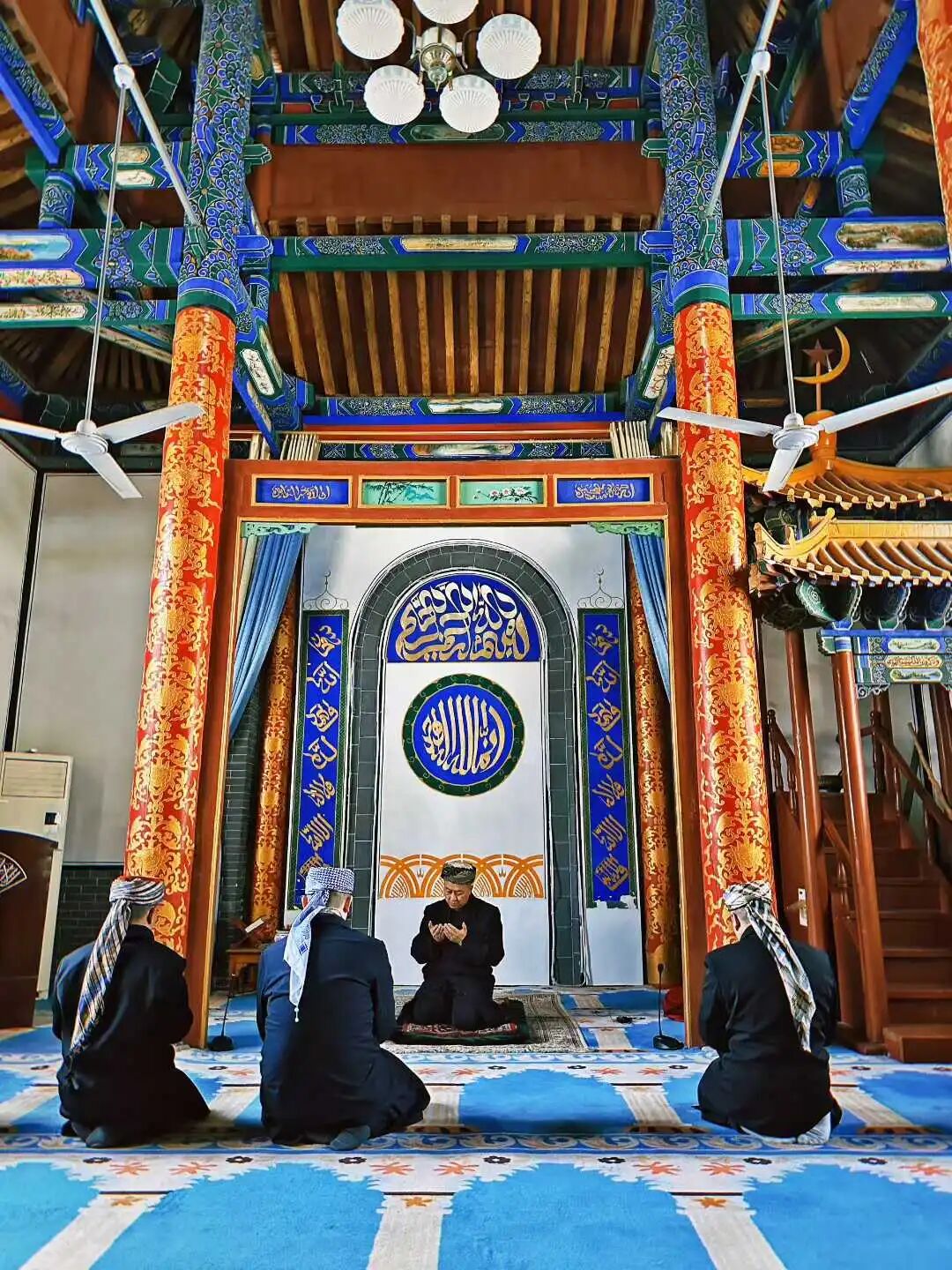
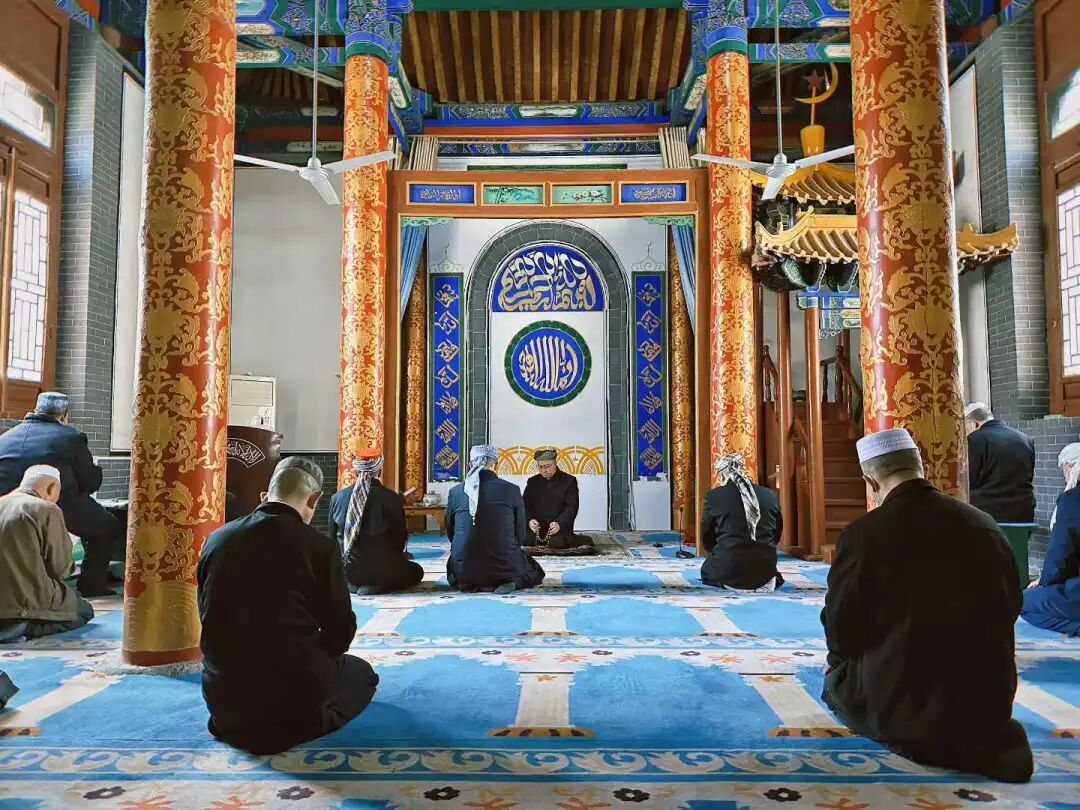
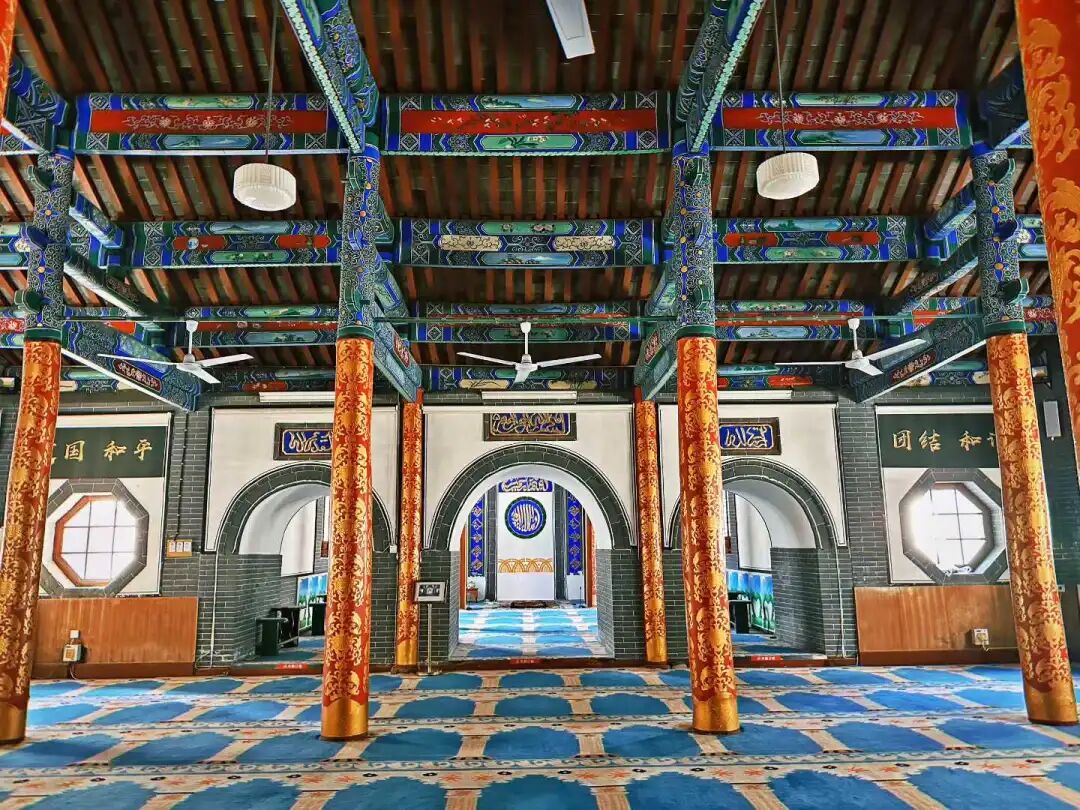
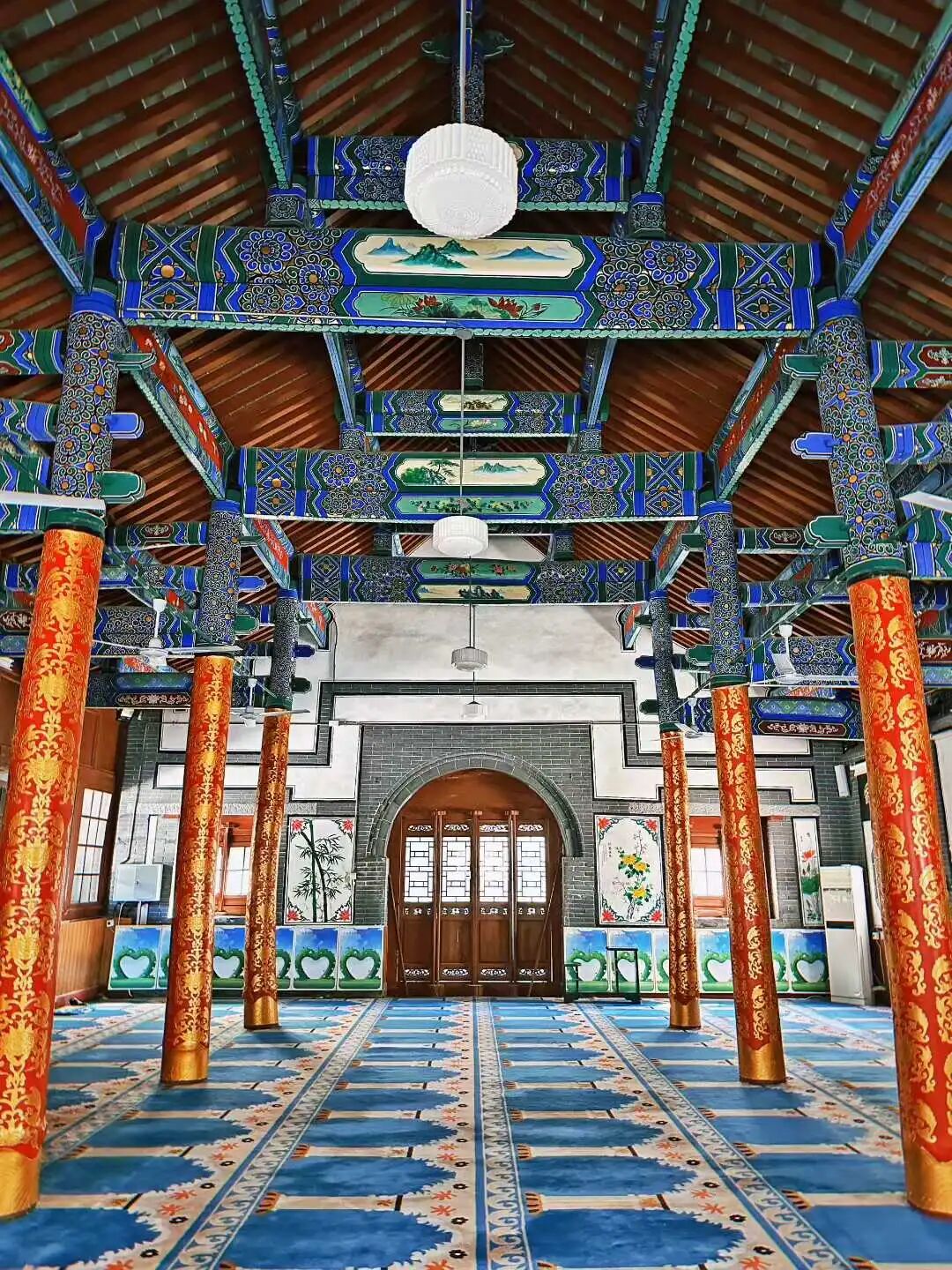
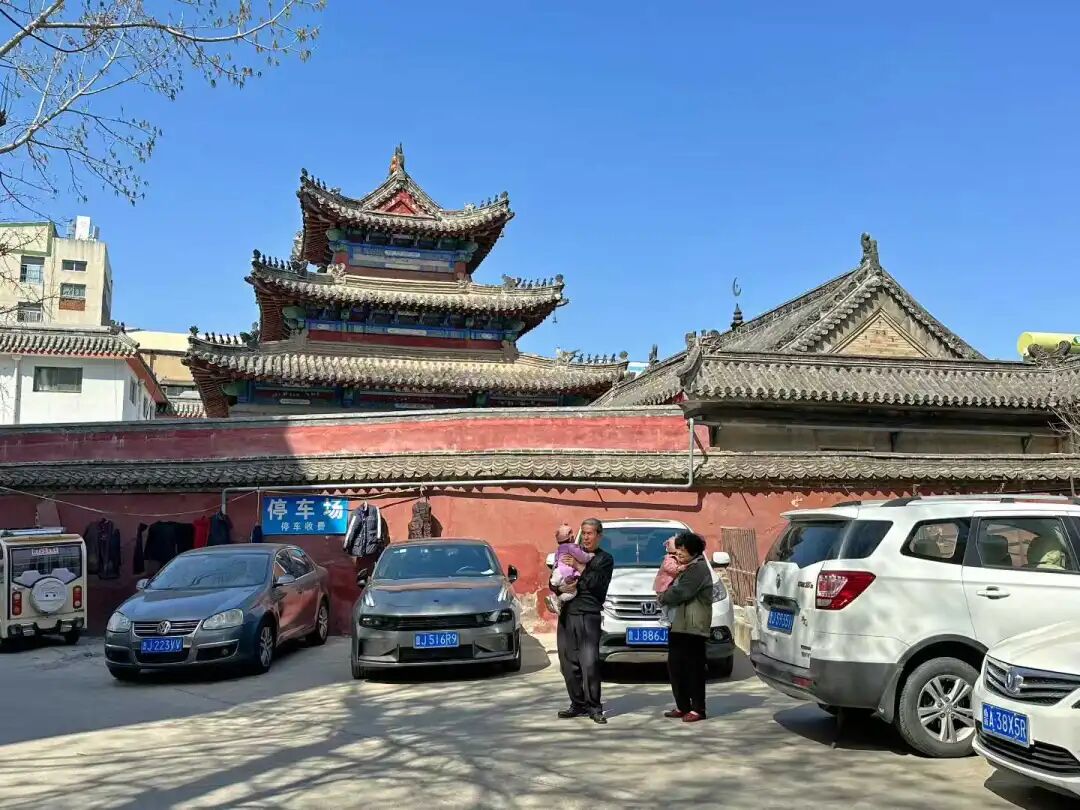
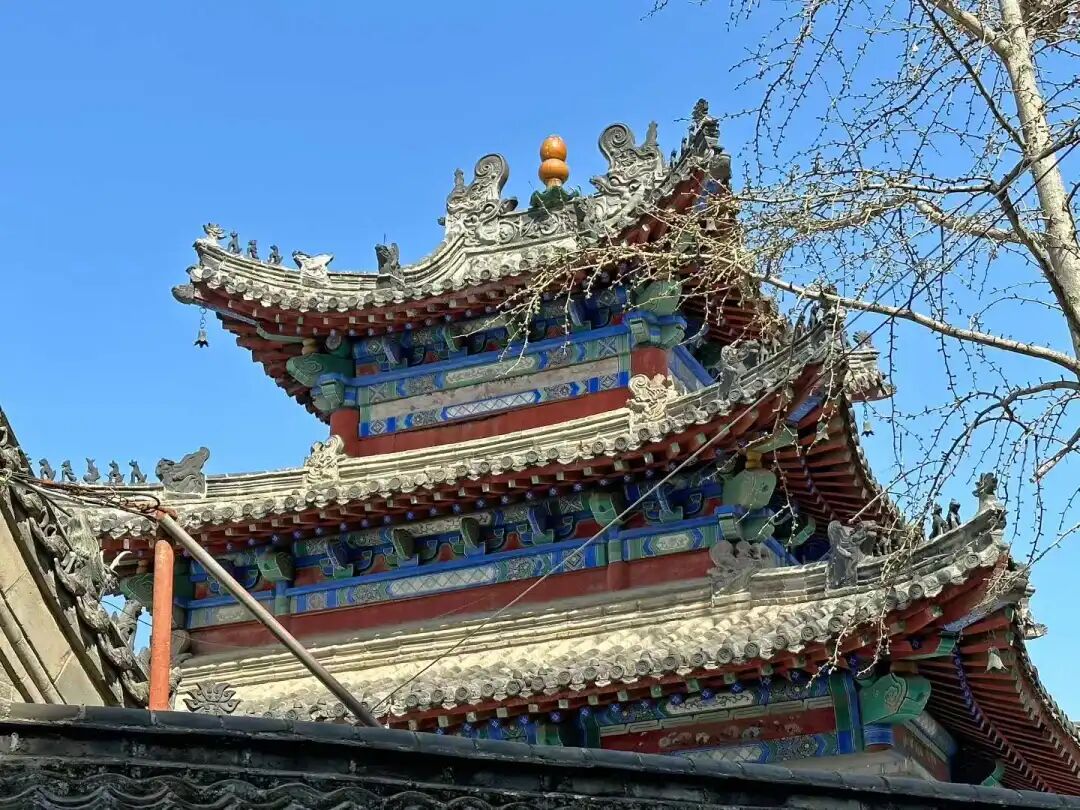
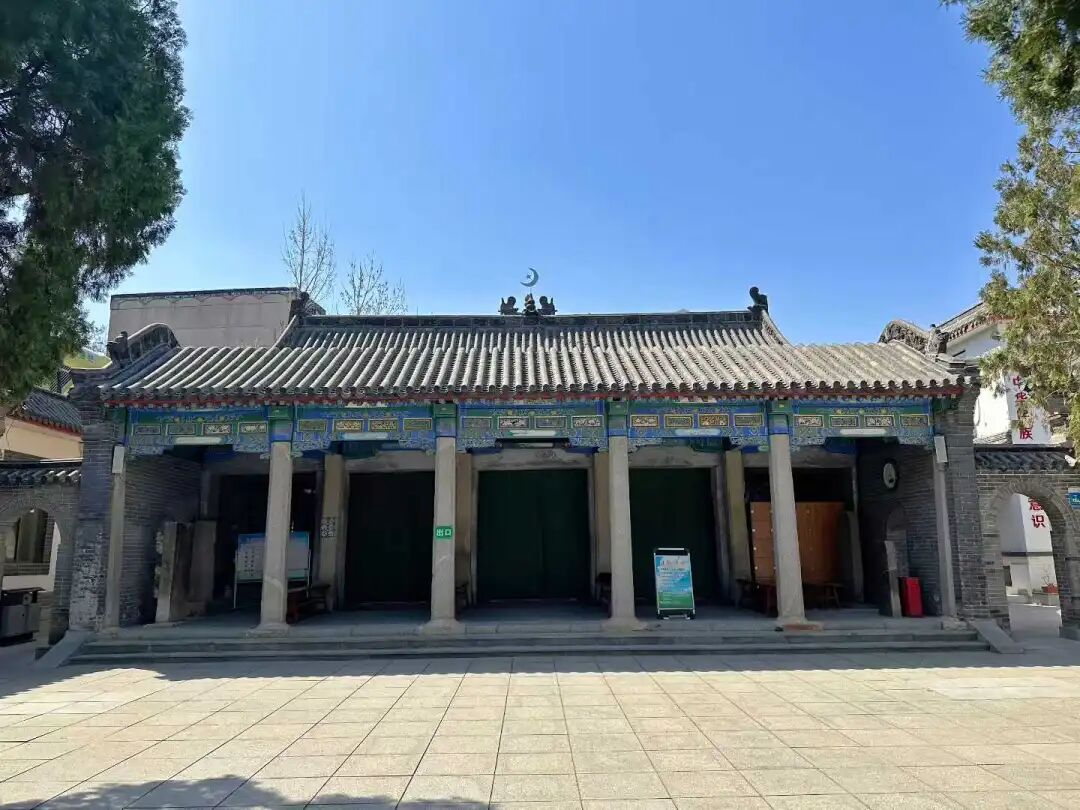
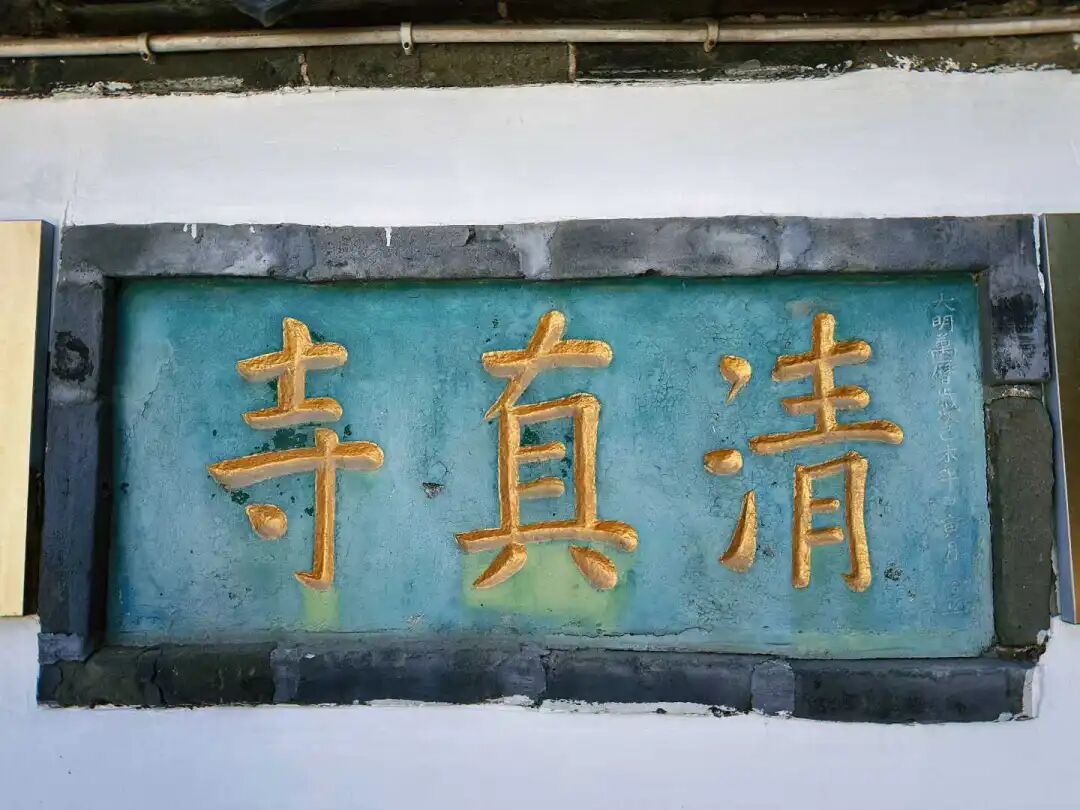
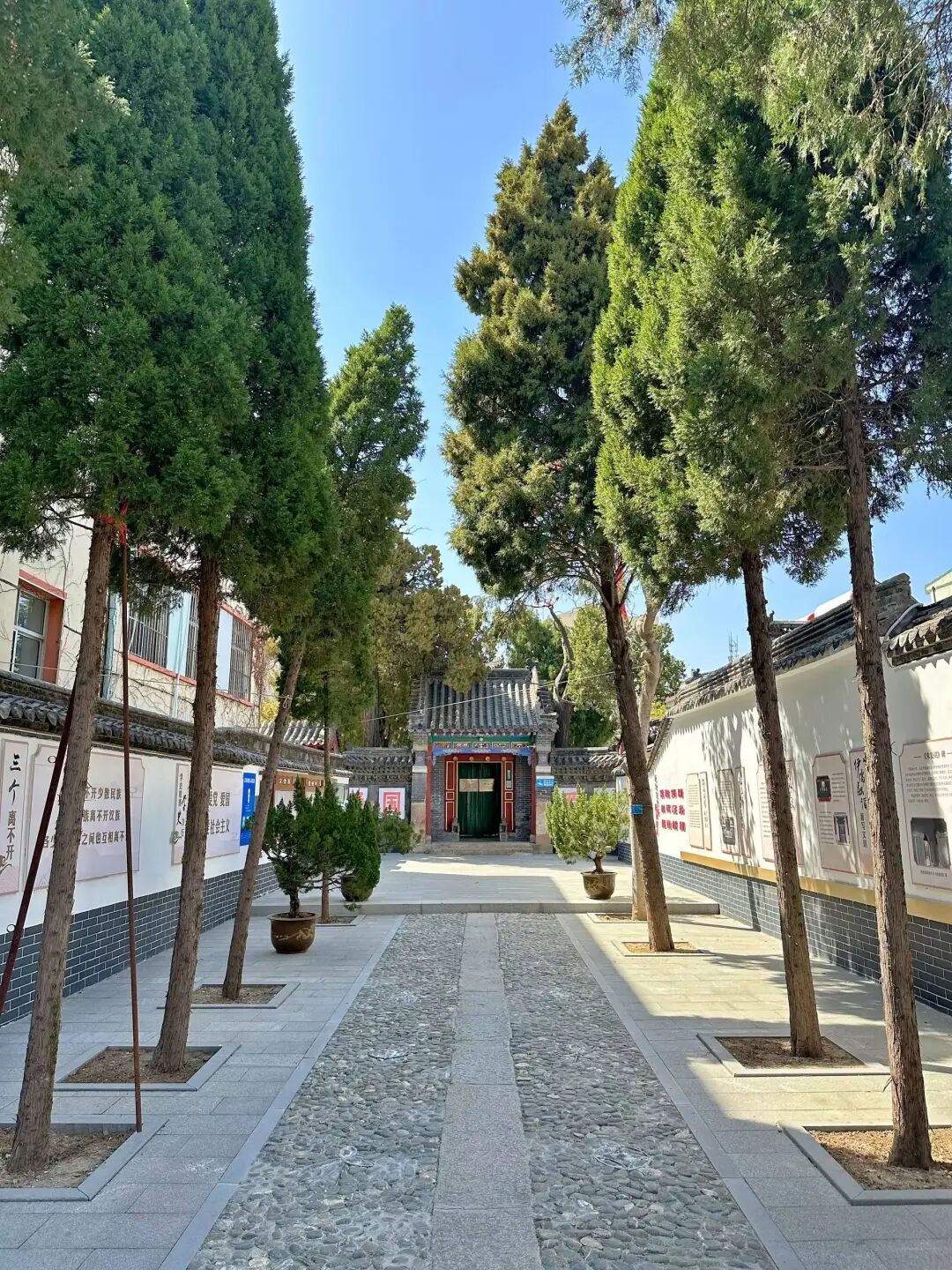
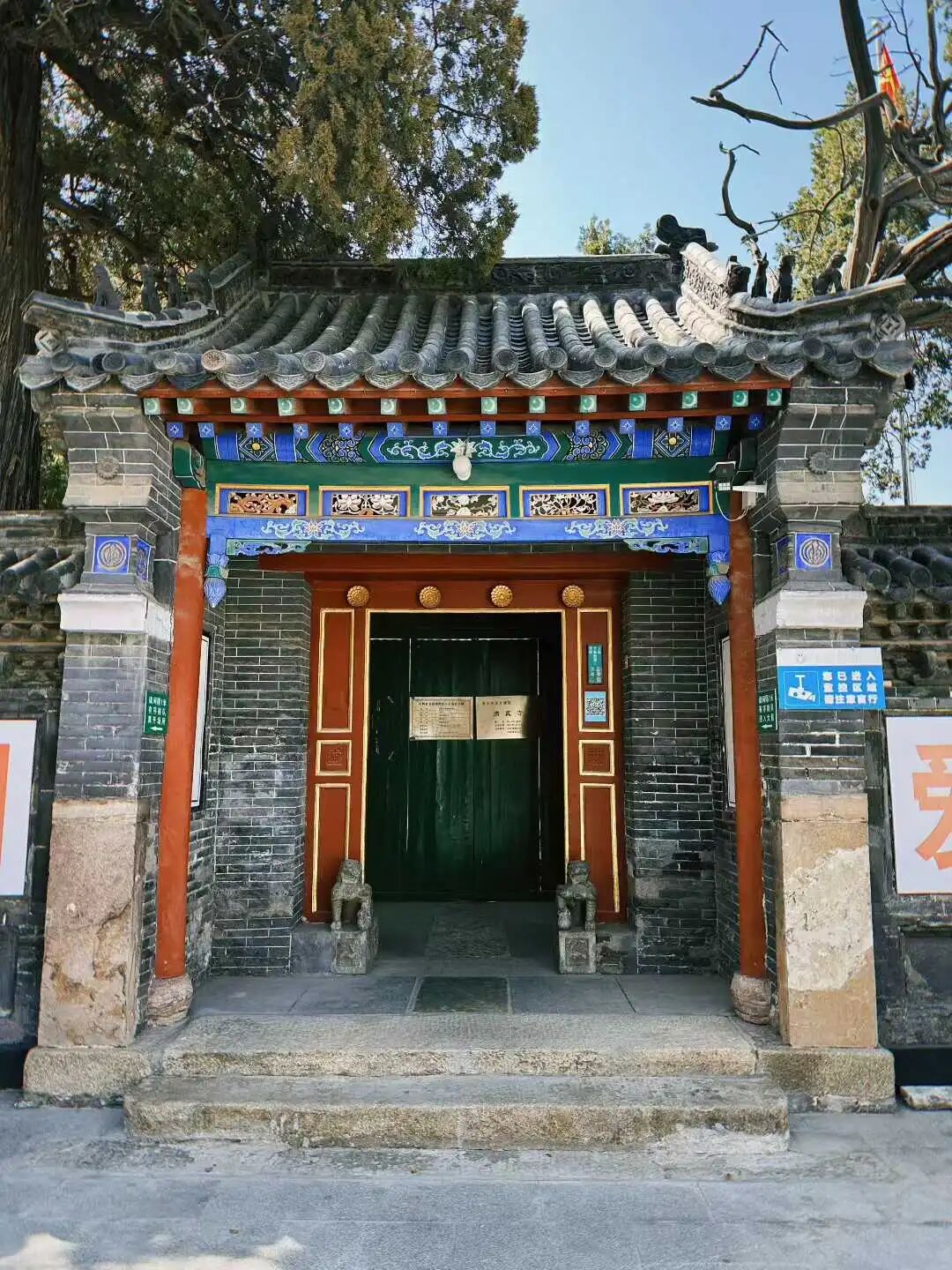
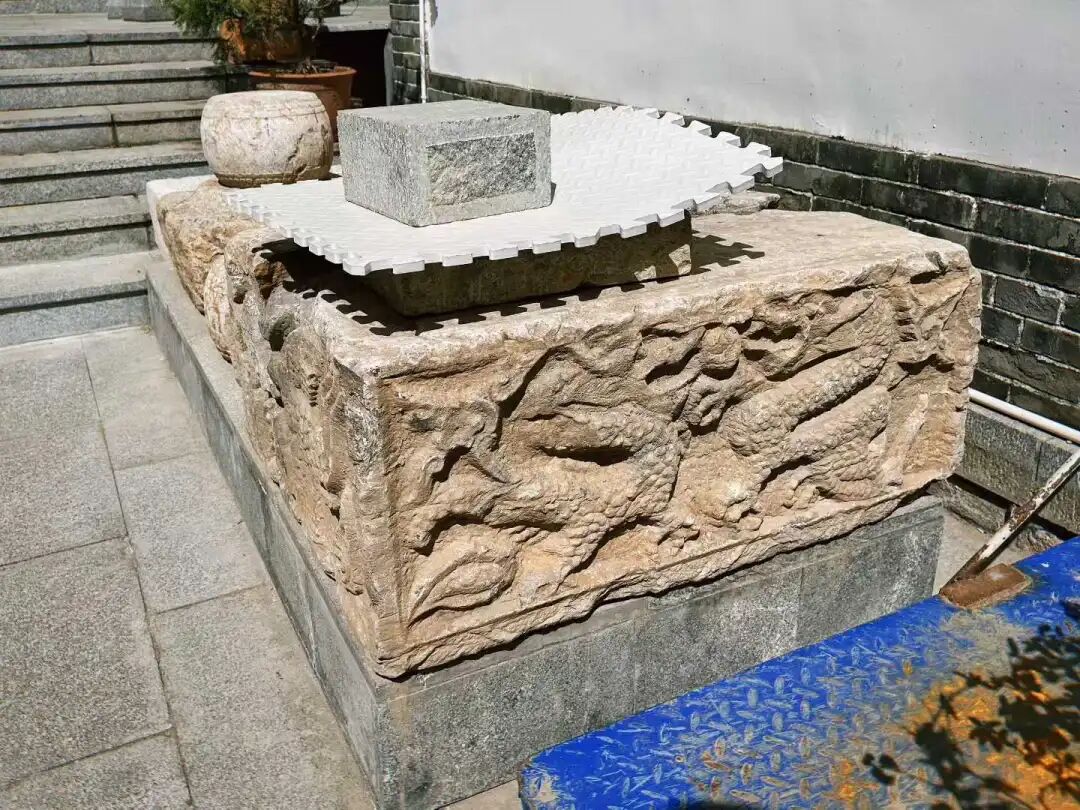
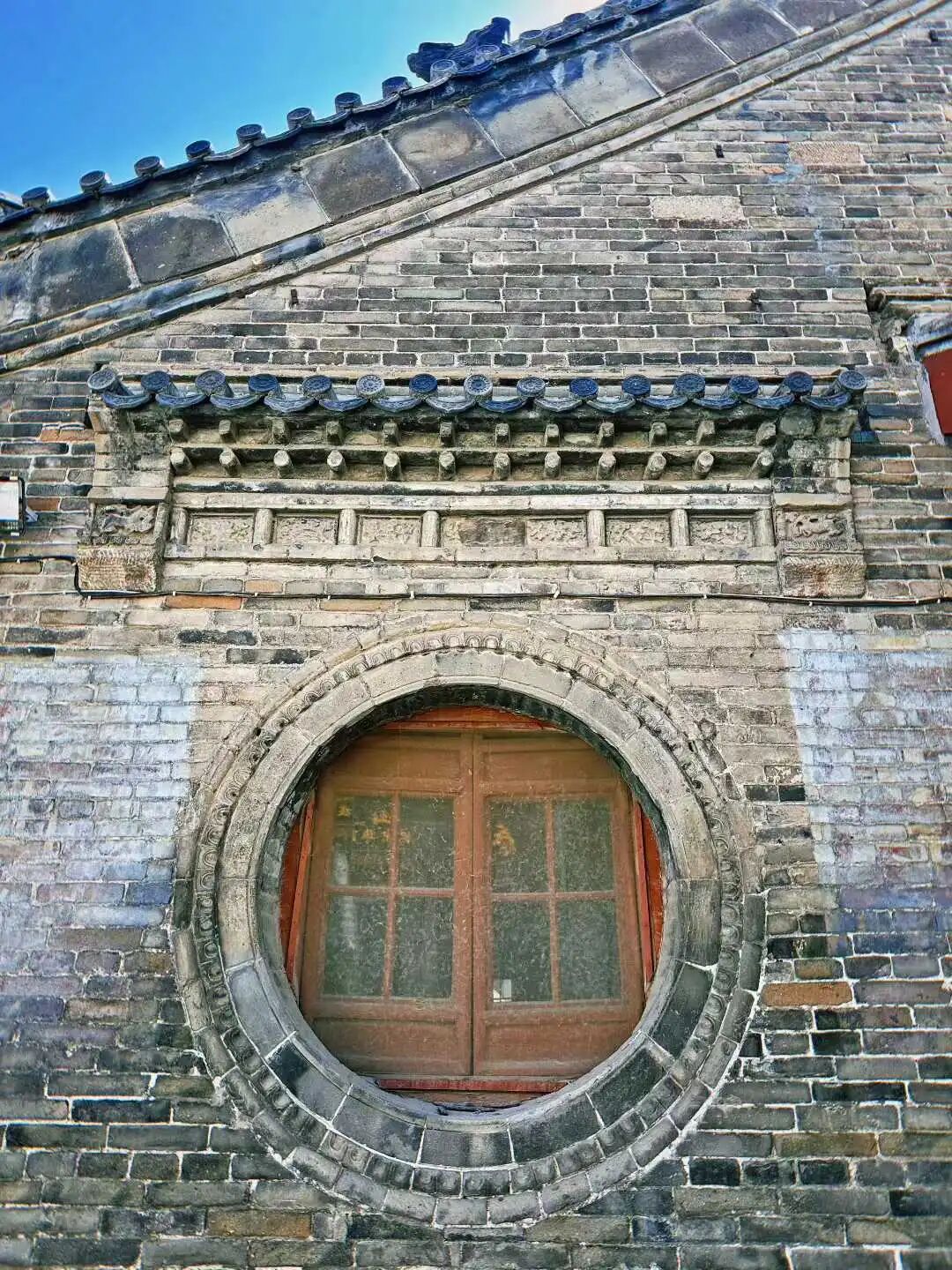
Brick-carved gable ends (chitou).
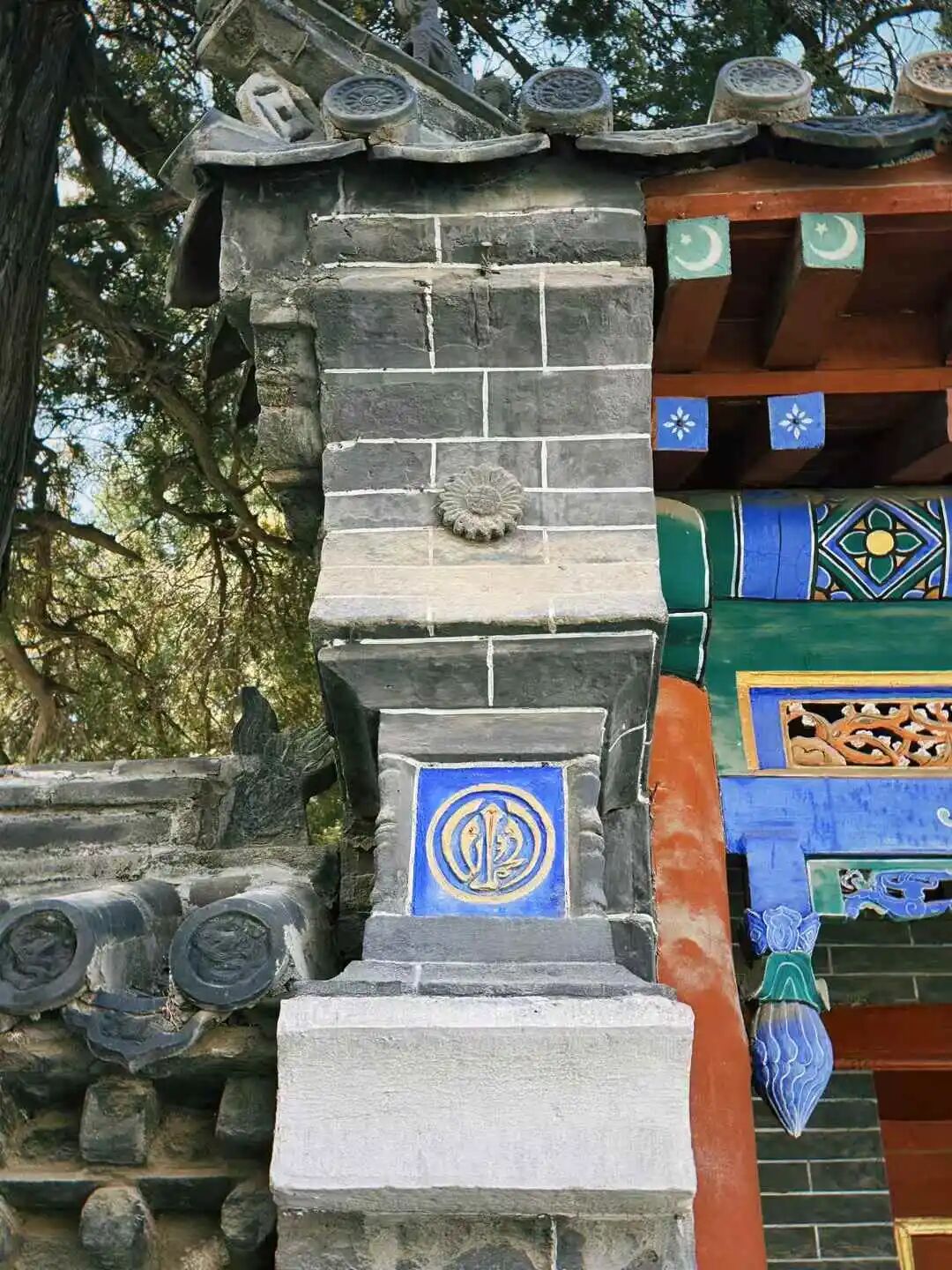
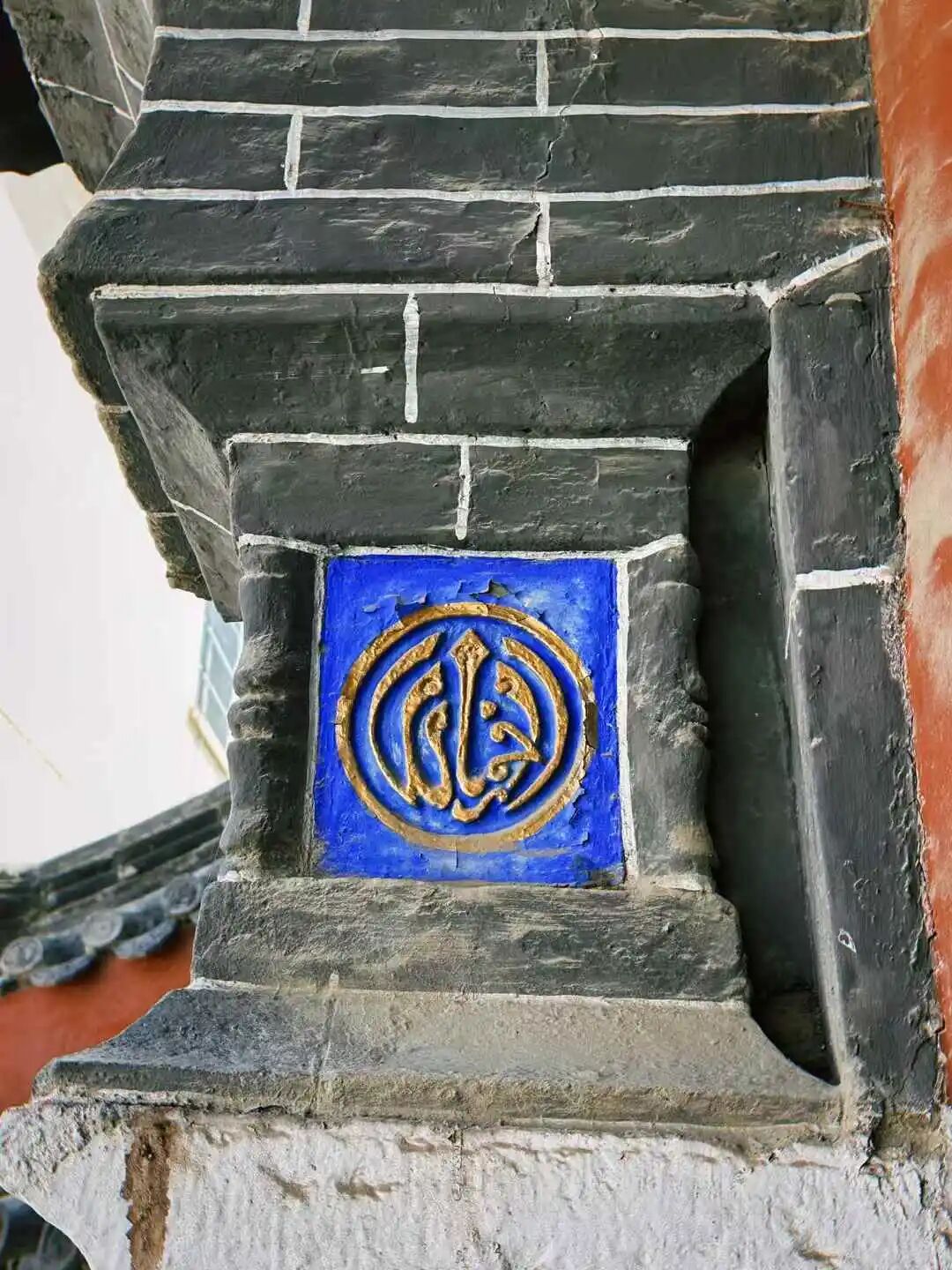
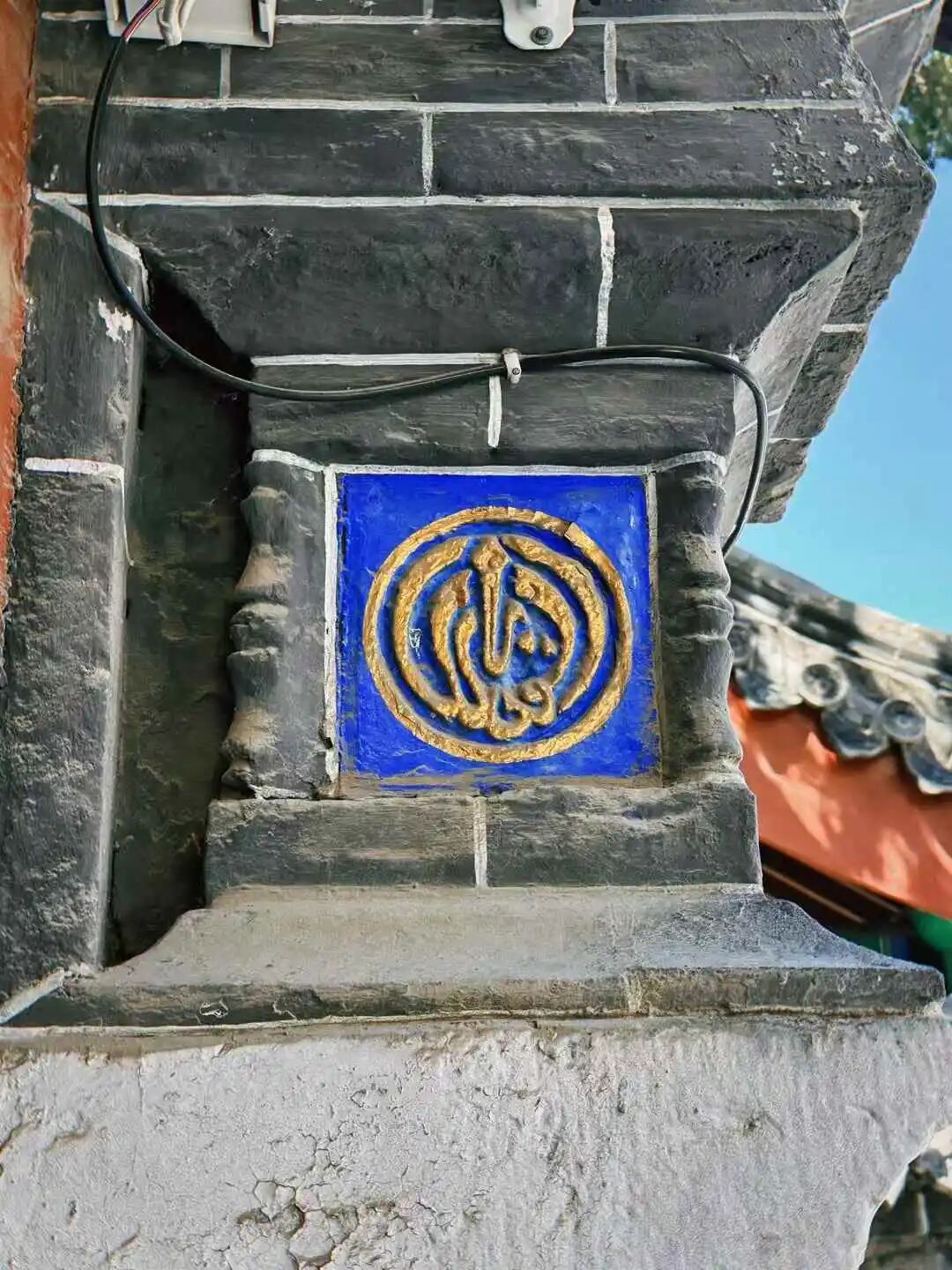
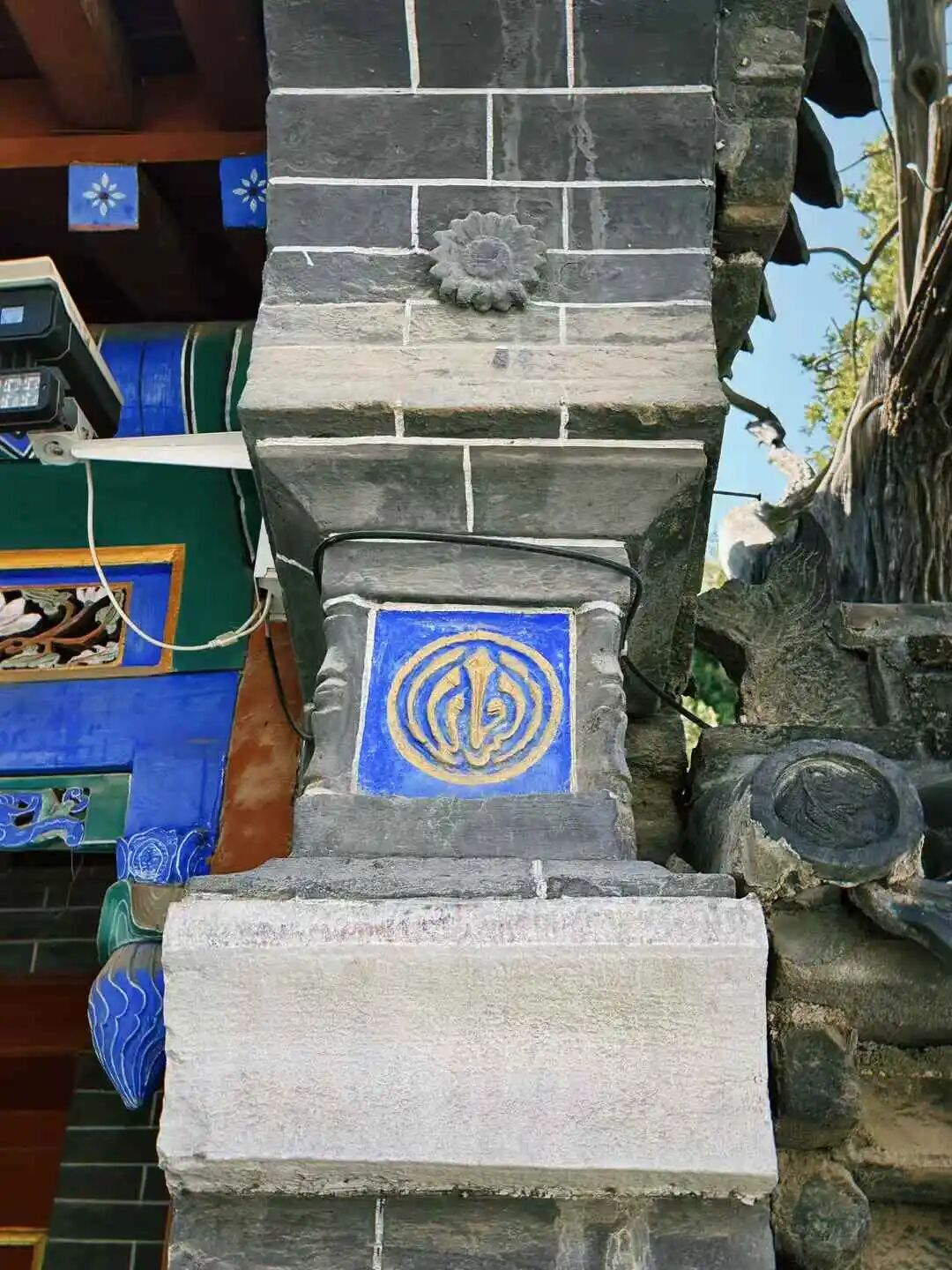
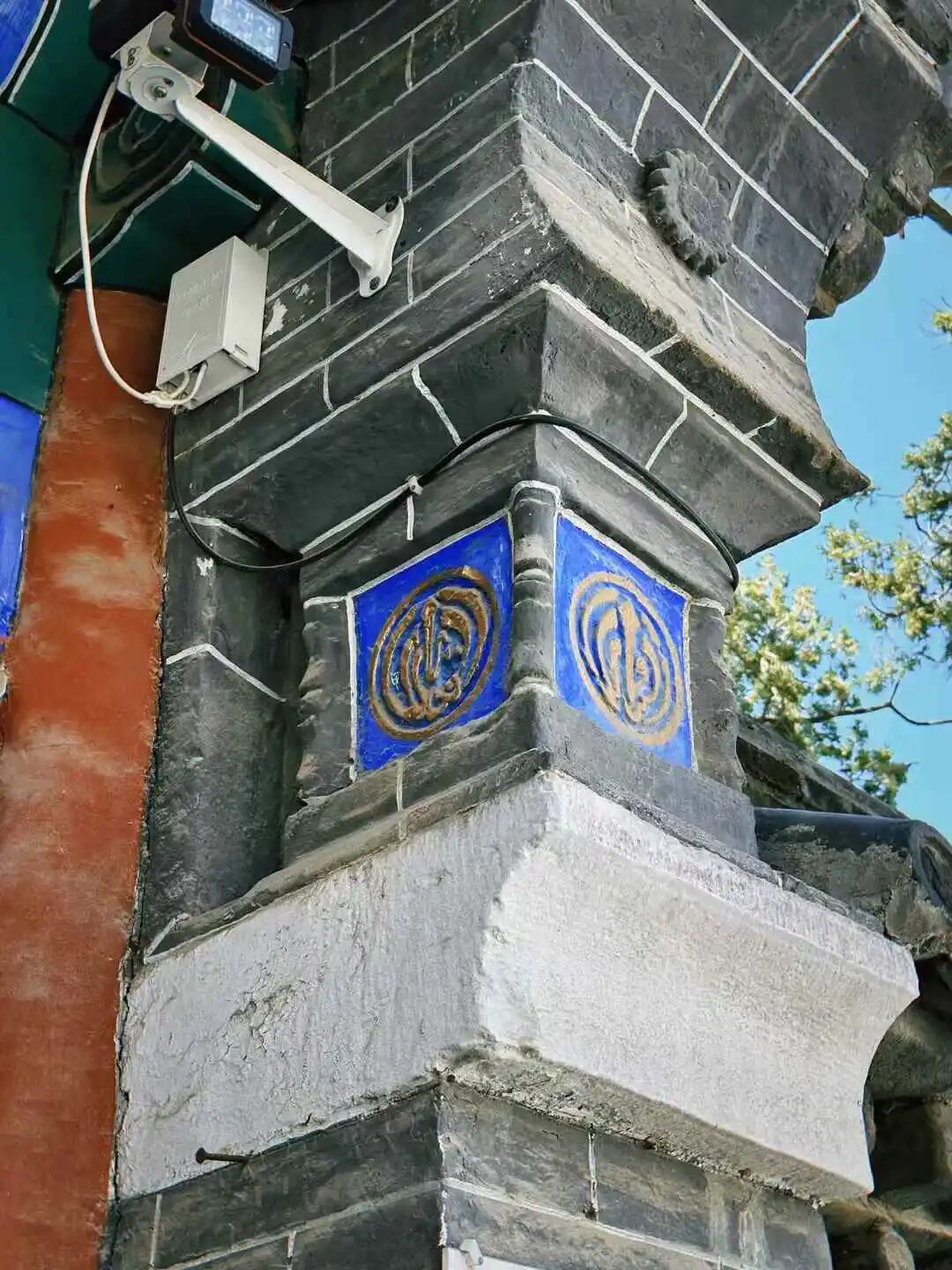
The tablet corridor of Taicheng Mosque.
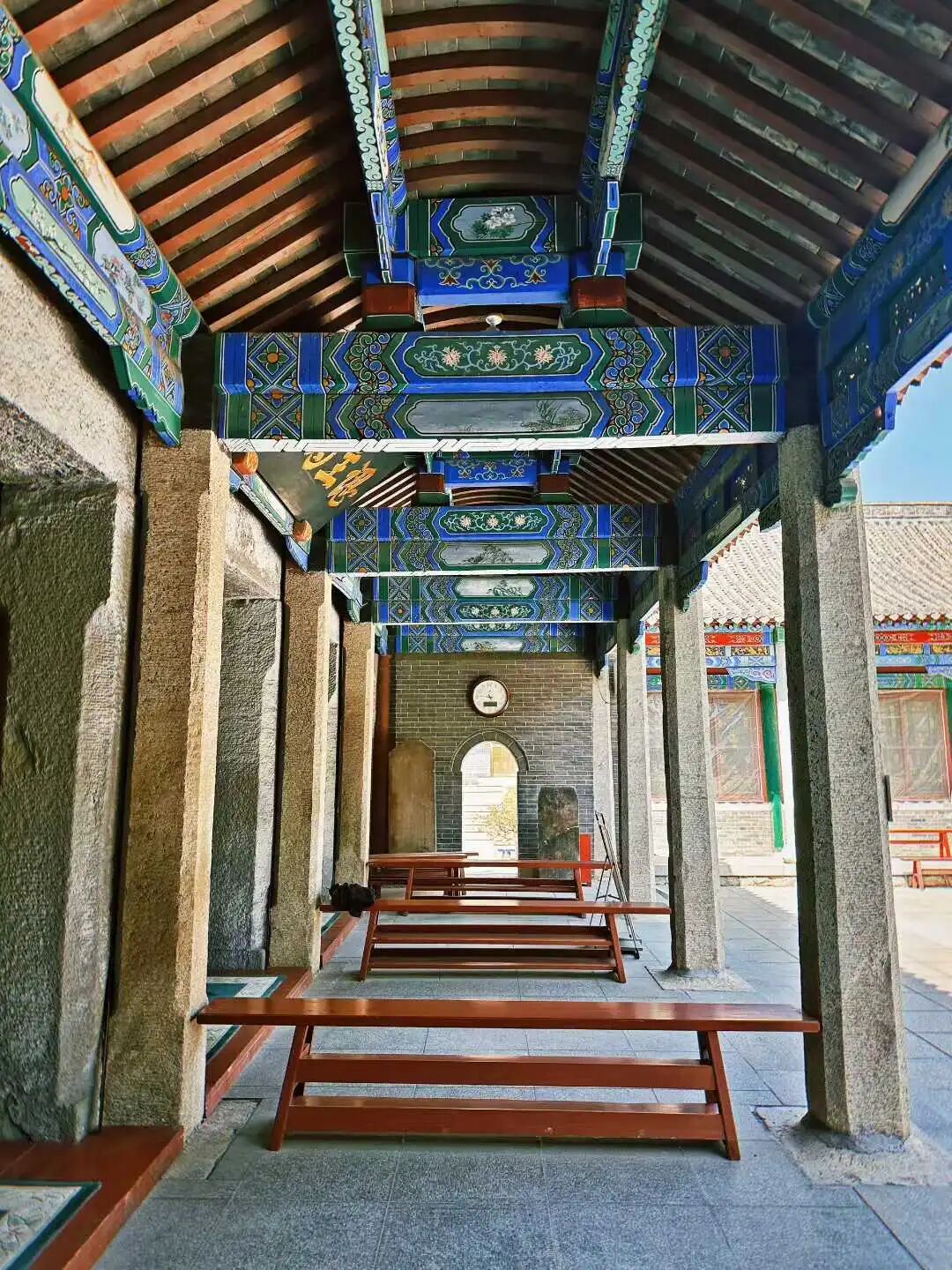
The "Laifu Ming" (Inscription on Returning to the Origin) tablet from the fourth year of the Tianqi reign of the Ming Dynasty. The "Laifu Ming" was written in the seventh year of the Jiajing reign of the Ming Dynasty by Chen Si, the imam (zhangjiao) of the South Mosque in Jinan, and was carved into stone at Taicheng Mosque in the fourth year of the Tianqi reign. The "Laifu Ming" is the first Chinese-language tablet inscription written by an imam. It is also the first work in China to combine Islamic teachings and principles with Song and Ming Neo-Confucianism. It pioneered the practice of interpreting scriptures through Confucianism in the late Ming and early Qing dynasties, making it highly valuable for history and philosophy.
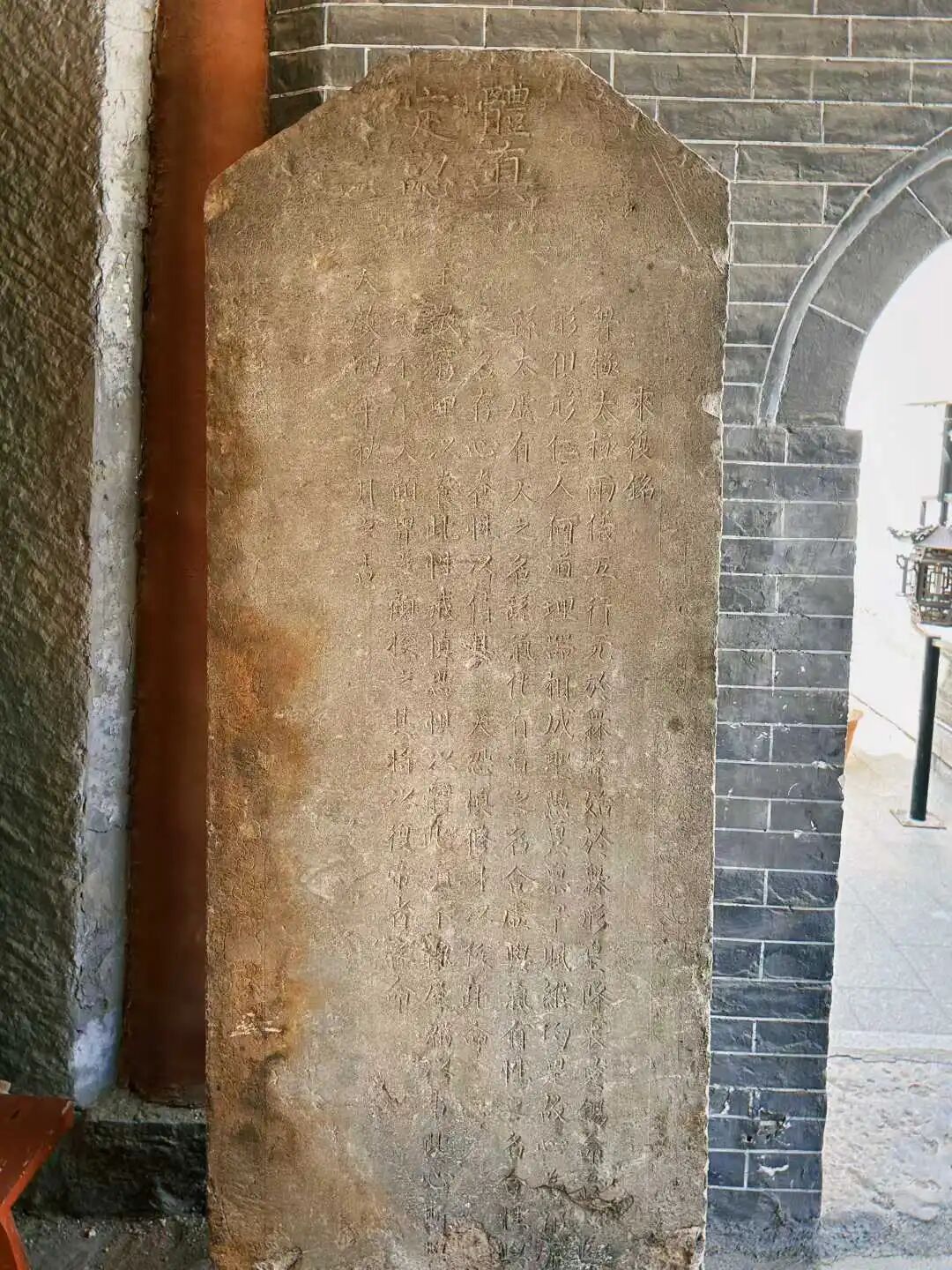
The donation tablet from the 24th year of the Qianlong reign records how many Muslims (mumin) donated money to renovate the halls and add property to the mosque. Among them, Mi Hanru donated 3.5 mu of land, Yang Kunshan donated 3 mu, and Li Changqi, Li Hui, and others donated the rent from their shops to the mosque to serve as the imam's salary.
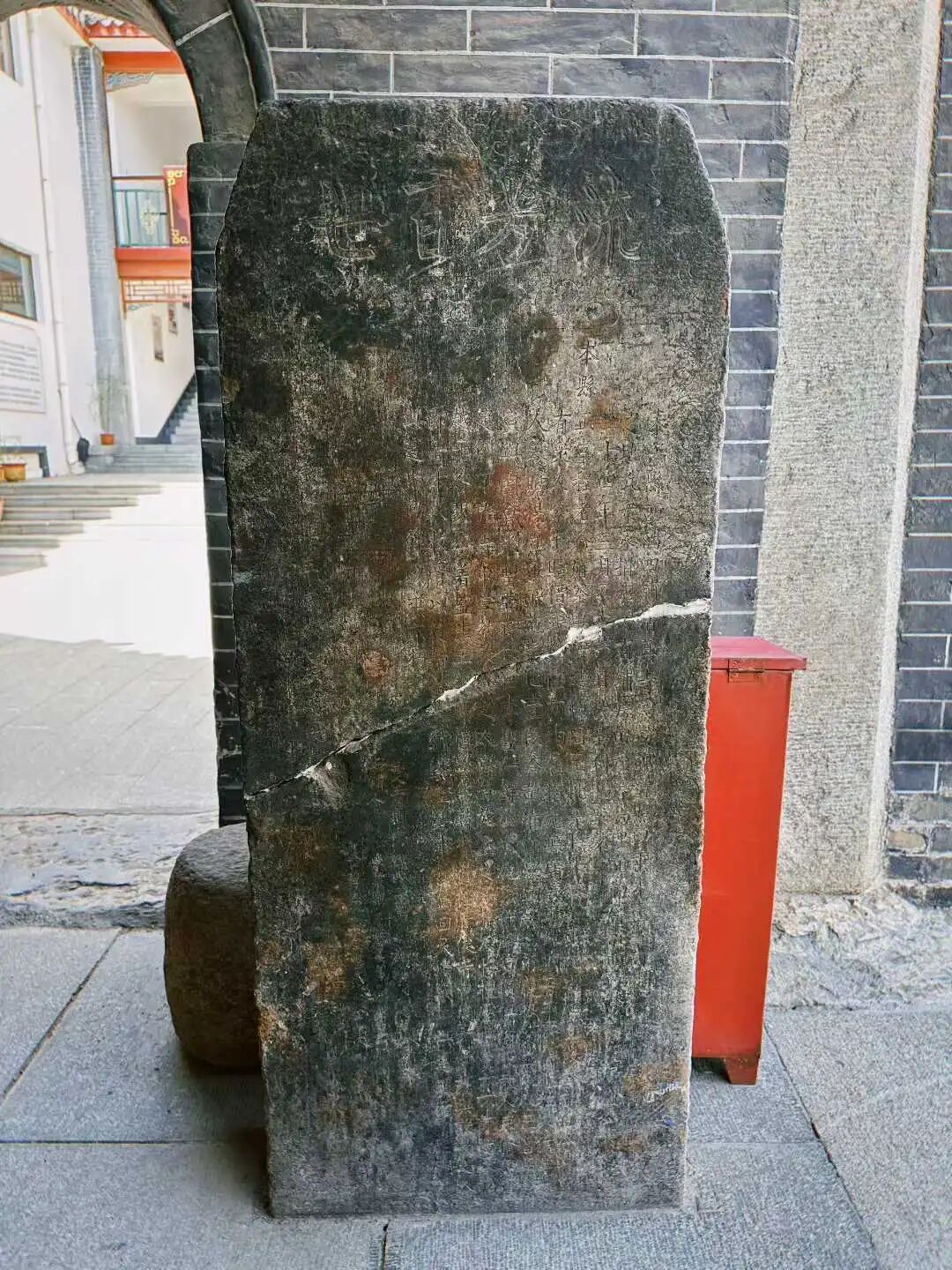
The "Record of Renovating the Mosque" tablet from the 14th year of the Guangxu reign was written by local scholar Song Guangrun. It records that the imam at the time, Wang Jingshan, initiated the renovation, and the local elders and Muslims responded immediately. Elder Yang Yucheng took the lead in donating funds and directing the construction, which took three years to complete.
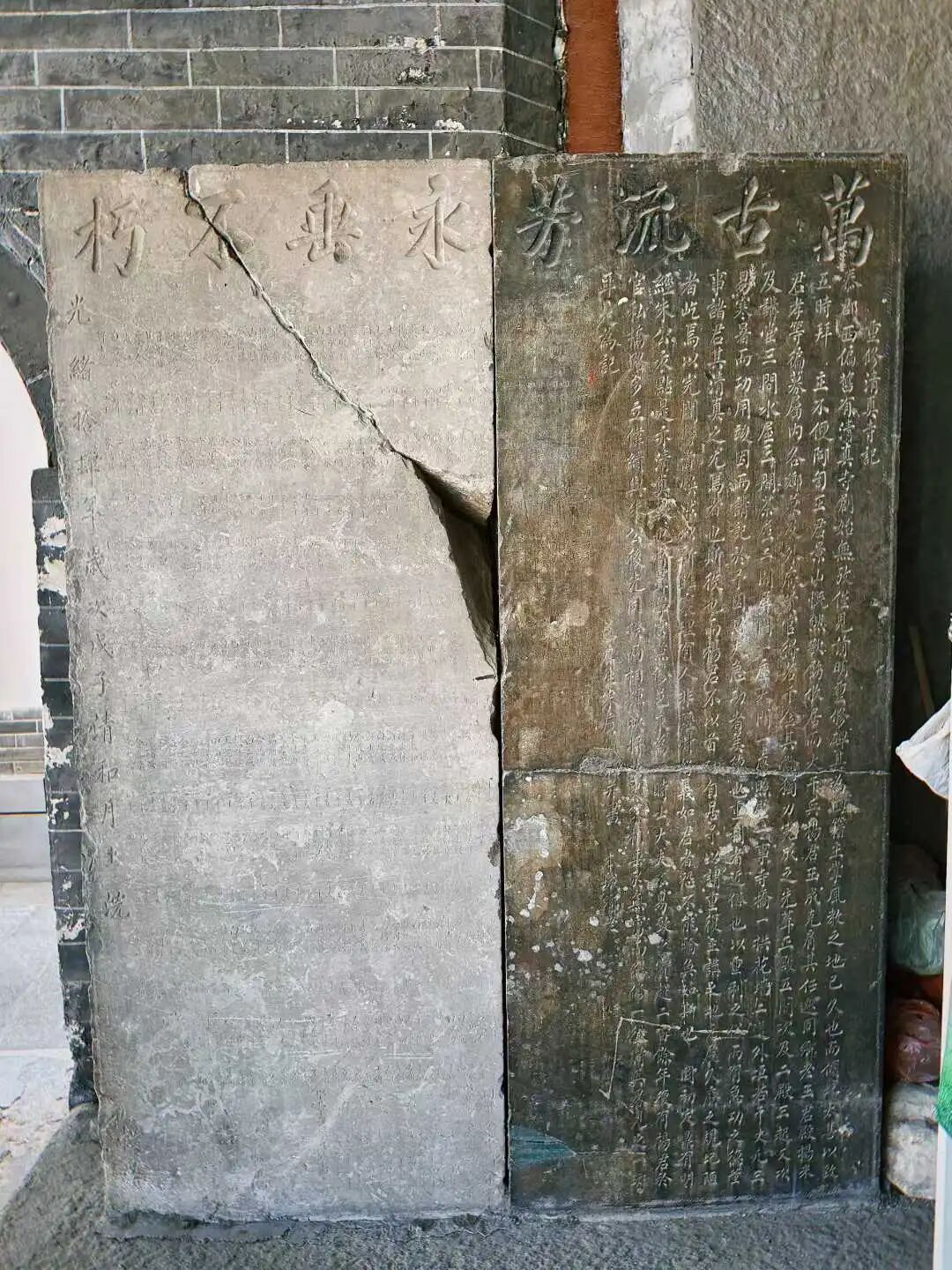
The renovation tablet from the 33rd year of the Republic of China records that the imam, elders, and Muslims agreed to renovate the mosque. People from all walks of life in Tai'an donated 12,213 silver dollars, fellow townsmen in Shanghai donated 1,165 yuan, local Muslims donated 685 yuan, and elder Ma Ziming donated a set of curtains.
Taicheng East Mosque, also known as Beixinjie Mosque, faces Taicheng Mosque across the Nai River. It was founded in 1920 by the national industrialist Ma Bosheng. It was closed from 1966 to 1994, rebuilt in 1995, and renovated again in 2006. The mosque still has the "Mosque" (Qingzhensi) door plaque written by the founder, Ma Bosheng.
Ma Bosheng's ancestral home was in Dezhou. His father, Ma Rende, fled to Tai'an during the Guangxu reign of the Qing Dynasty and made a living selling steamed buns (baozi) outside the west city gate. Ma Bosheng studied hard and attended the Tianshu Temple and the Yang Family Charity School in Tai'an as a child, later entering Cuiying Middle School. In 1916, Ma Bosheng was hired as a translator for Chinese laborers and traveled to Canada, England, France, and other countries. Seeing Western industrial civilization inspired his determination to save the country through industry. In 1919, Ma Bosheng returned to Shandong. He first worked at the British-American Tobacco Company and an insurance company in Jinan, then founded the Renfeng Textile Mill, gradually becoming a business giant in Shandong.
In 1927, Ma Bosheng founded the Rende School in Tai'an. He hired excellent teachers from Jinan, Qufu, and other places, allowed children from poor families to attend for free, and provided them with free textbooks and uniforms. Ma Bosheng also started literacy classes for common people and night schools to eliminate illiteracy and promote education. Ma Bosheng built the Rende Flour Mill across from the school. It produced 500 bags of "Mountain Tiger" brand flour daily, changing the production methods of Tai'an's manual workshops. The flour was high quality and affordable, and he regularly gave it to poor families for free, using the surplus to fund the school. Ma Bosheng worked with local gentry to start the Taishan Forest Company. They planted trees and cleared over 150 mu of land at Guangshengquan, where they bought apple trees and built an orchard.
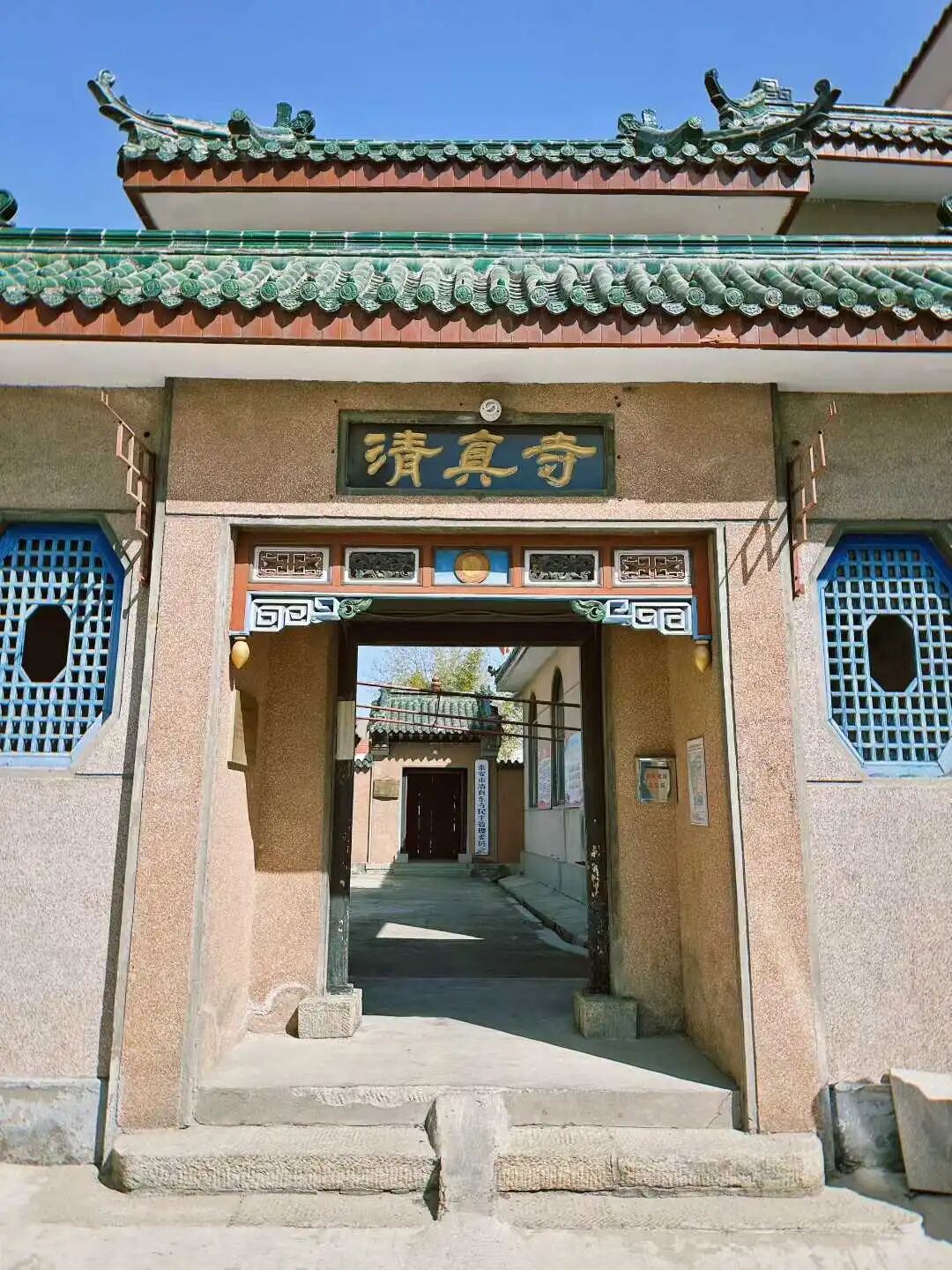
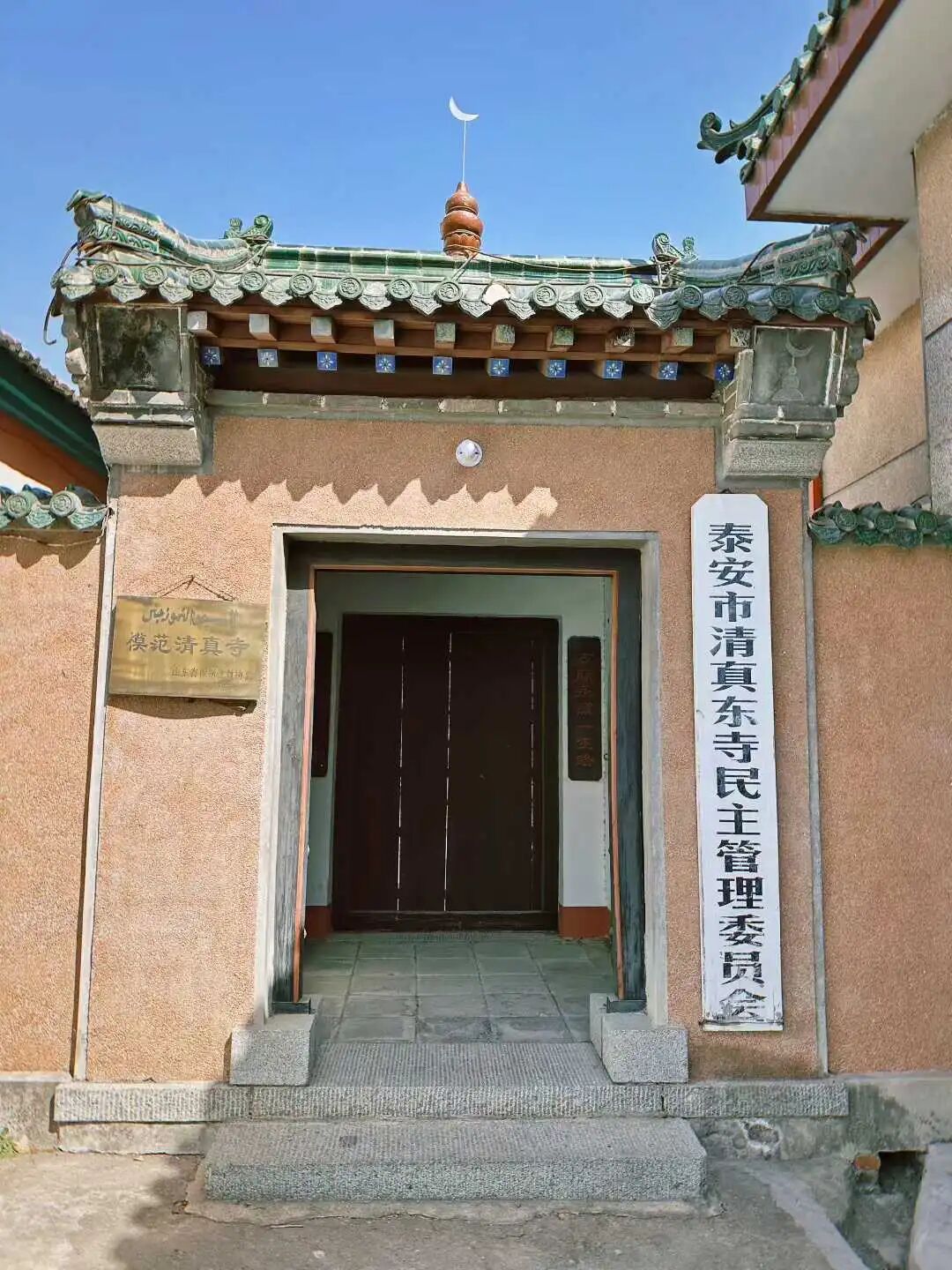
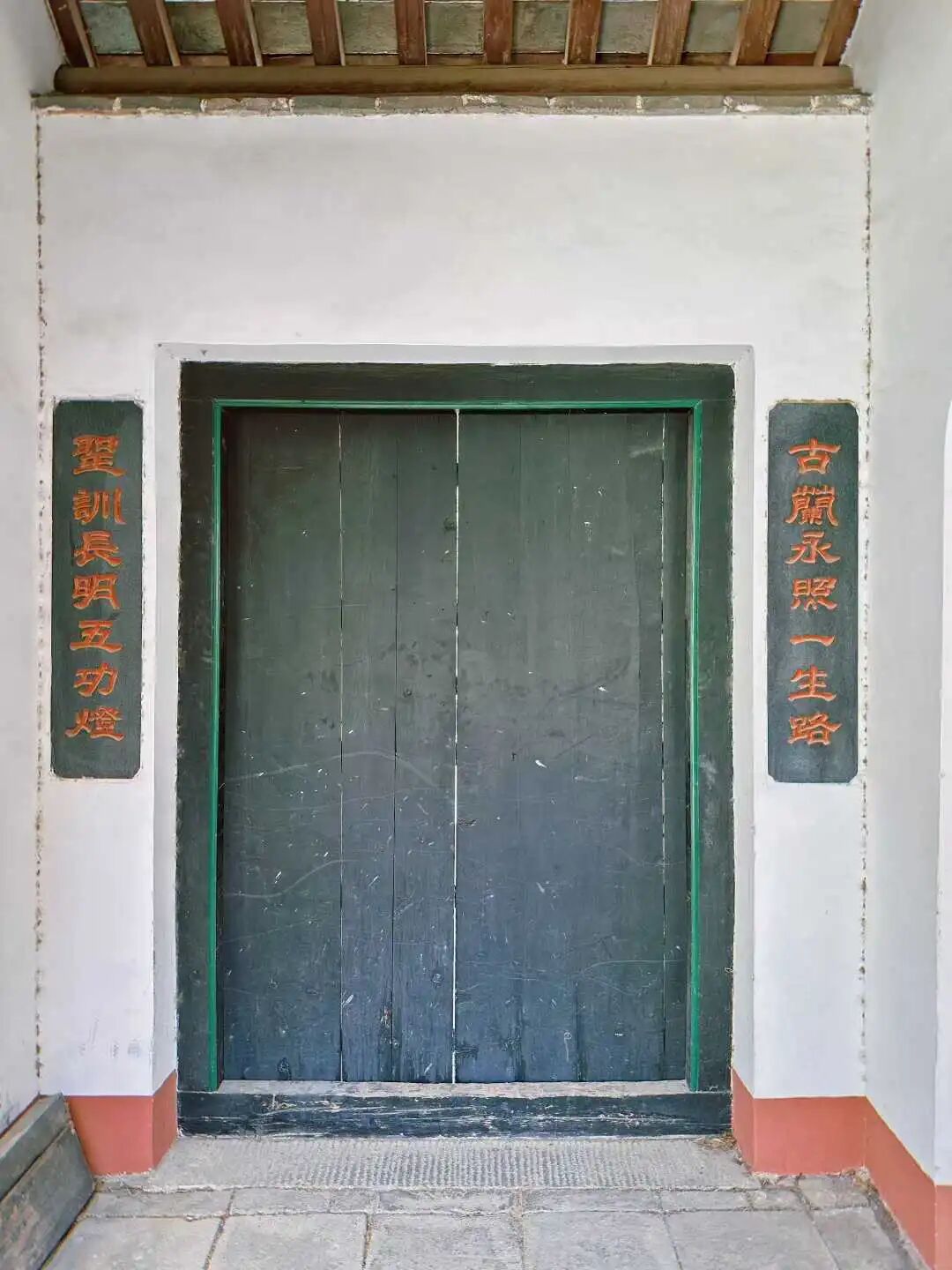
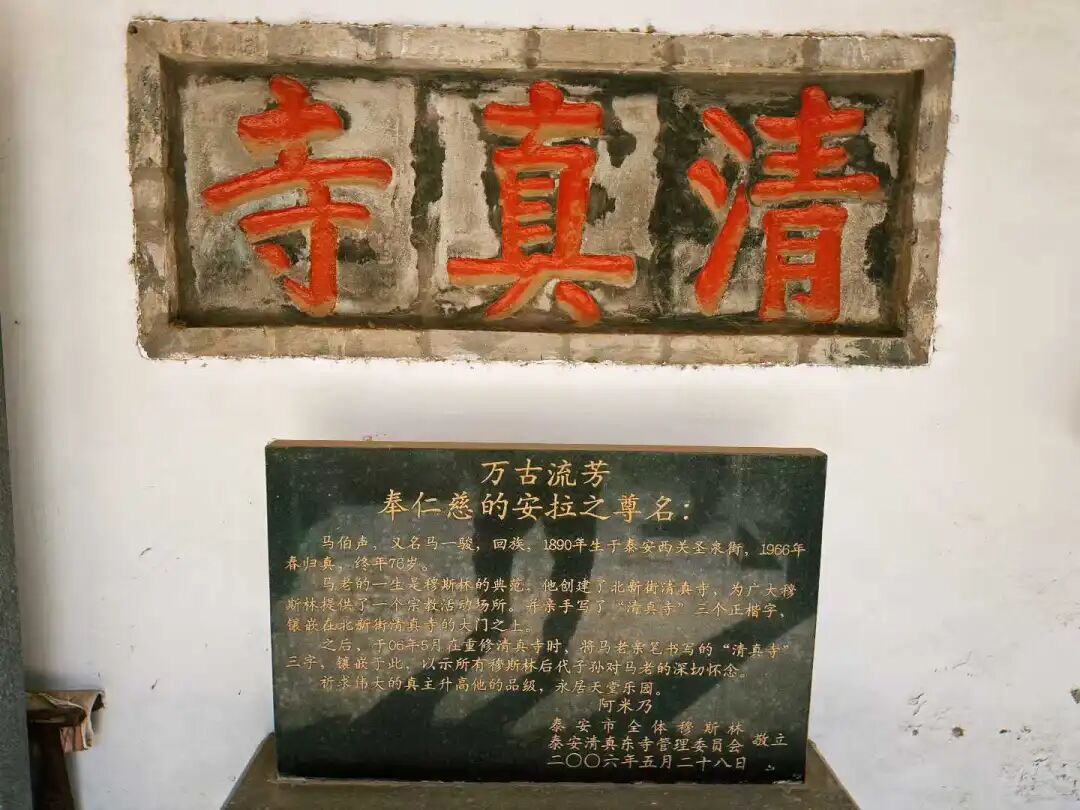
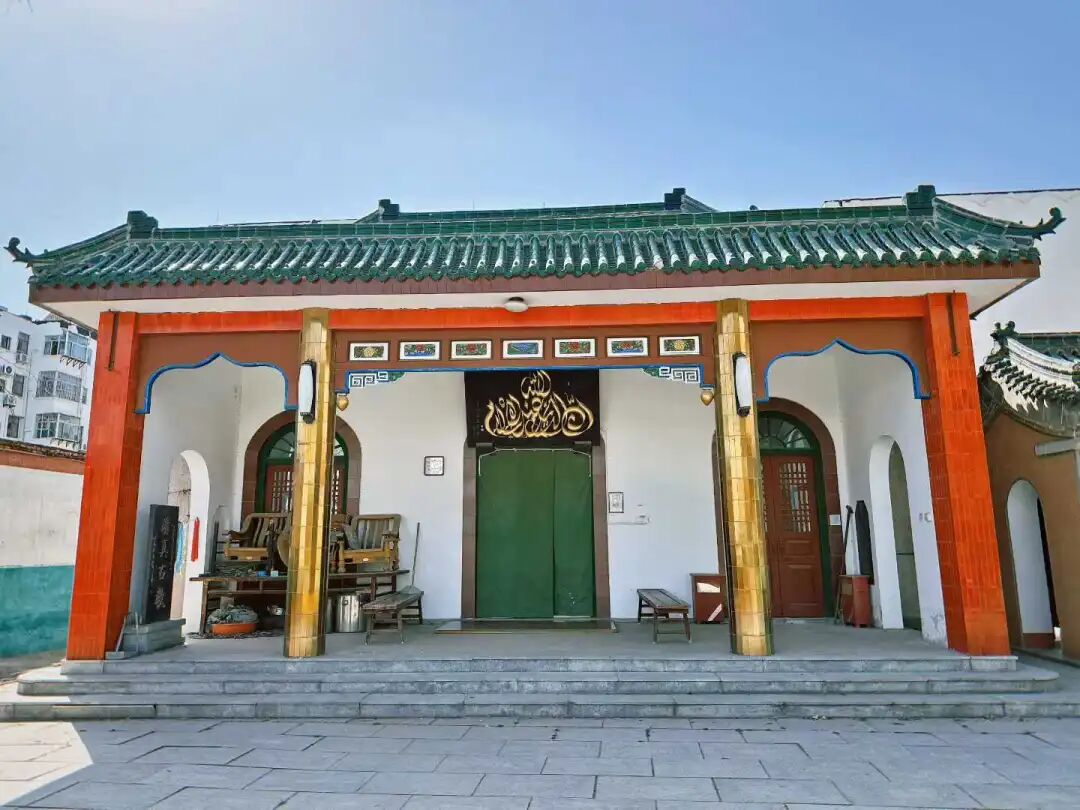
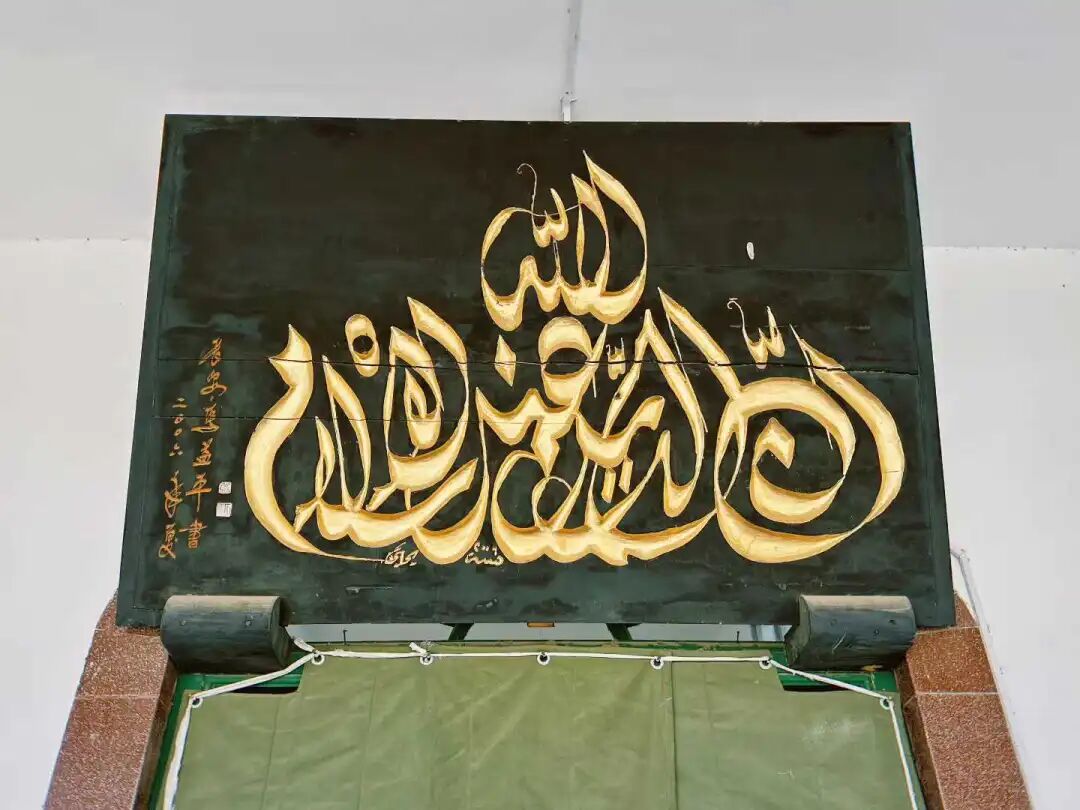
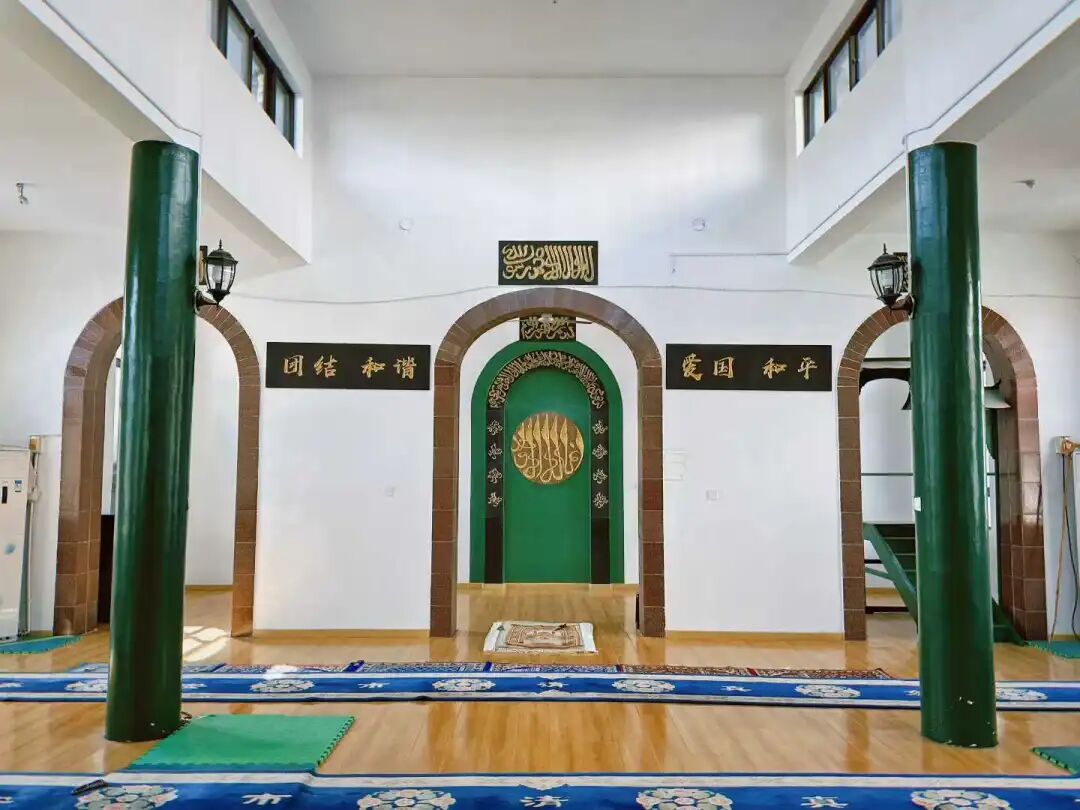
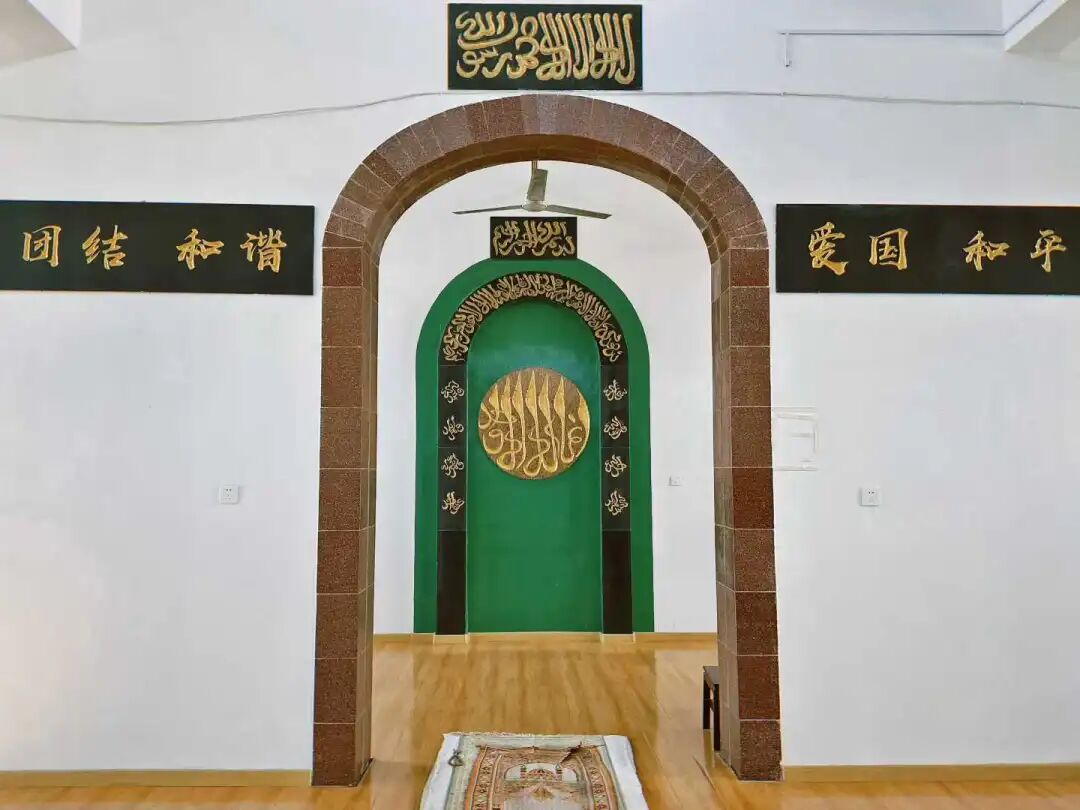
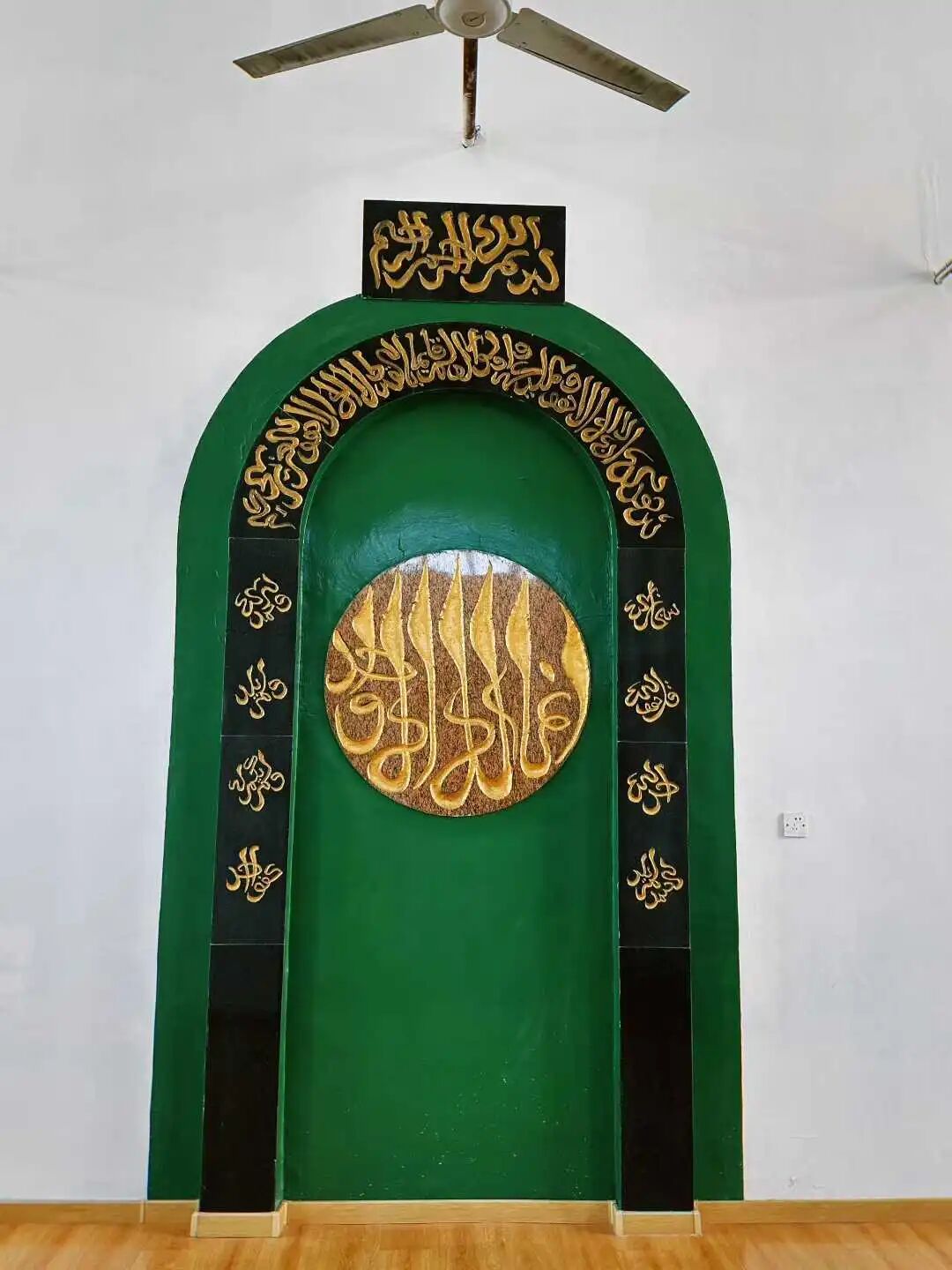
Xiawang Mosque in Taian sits in the western suburbs. Its founding date is unknown, but a stone tablet from 1626 (the sixth year of the Tianqi reign of the Ming Dynasty) records that Li Qin was the imam at that time. The main hall of Xiawang Mosque was rebuilt in 1734 (the twelfth year of the Yongzheng reign). It was burned down during wartime in 1864 (the second year of the Tongzhi reign) and rebuilt again in 1873 (the twelfth year of the Tongzhi reign). It was listed as a Shandong Provincial Cultural Relic Protection Unit in 2013.
Xiawang Mosque stands on a high platform. The courtyard feels ancient and very solemn.
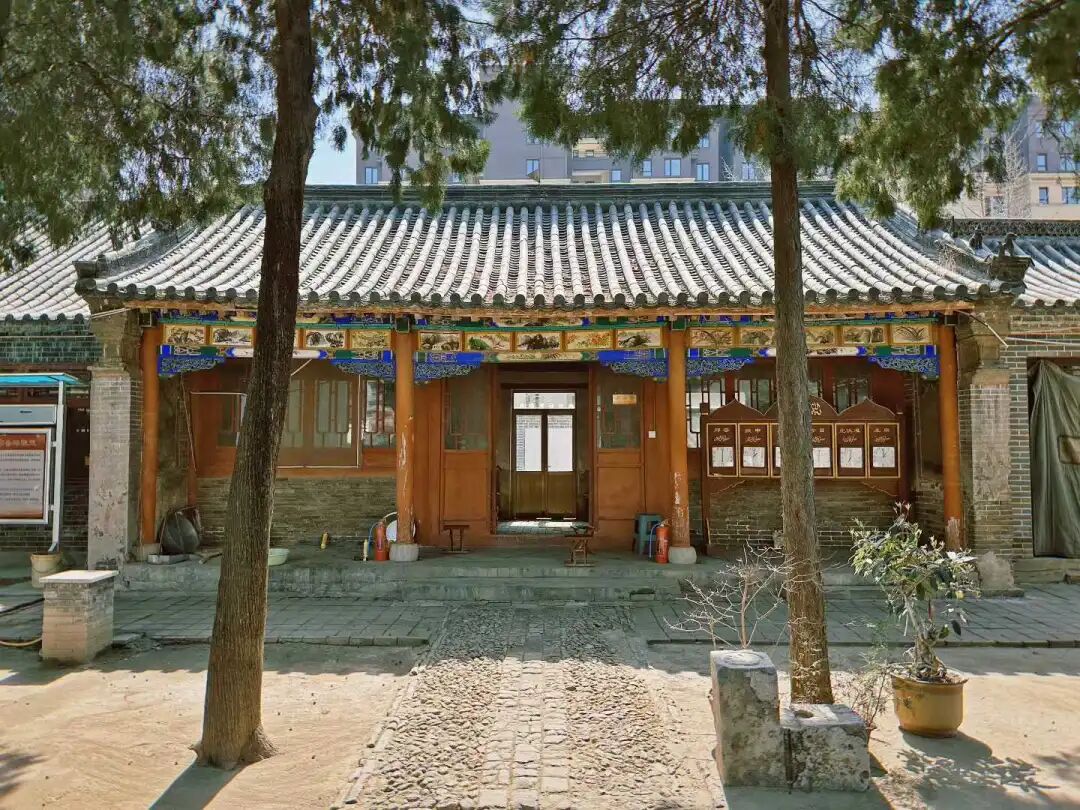
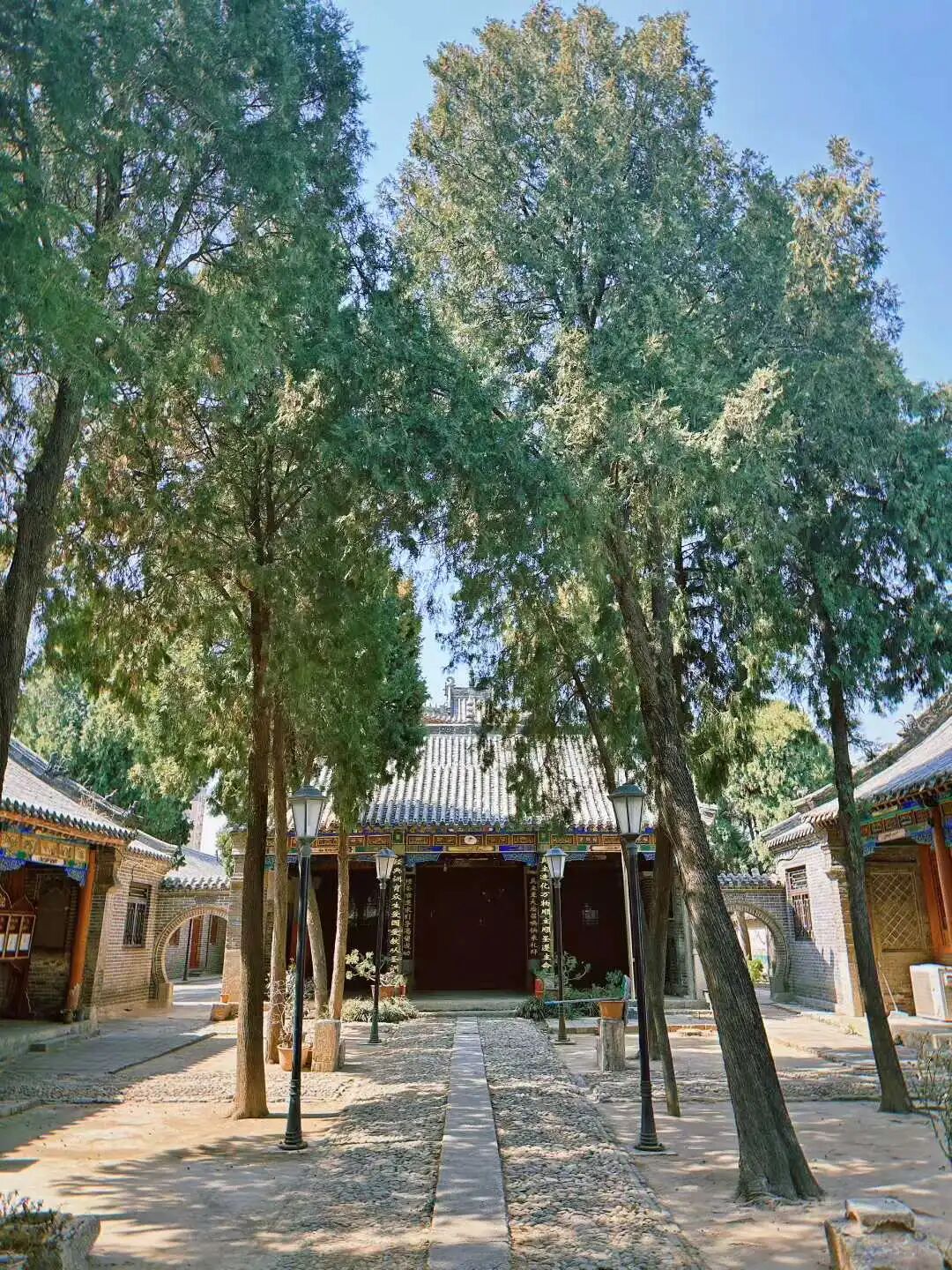
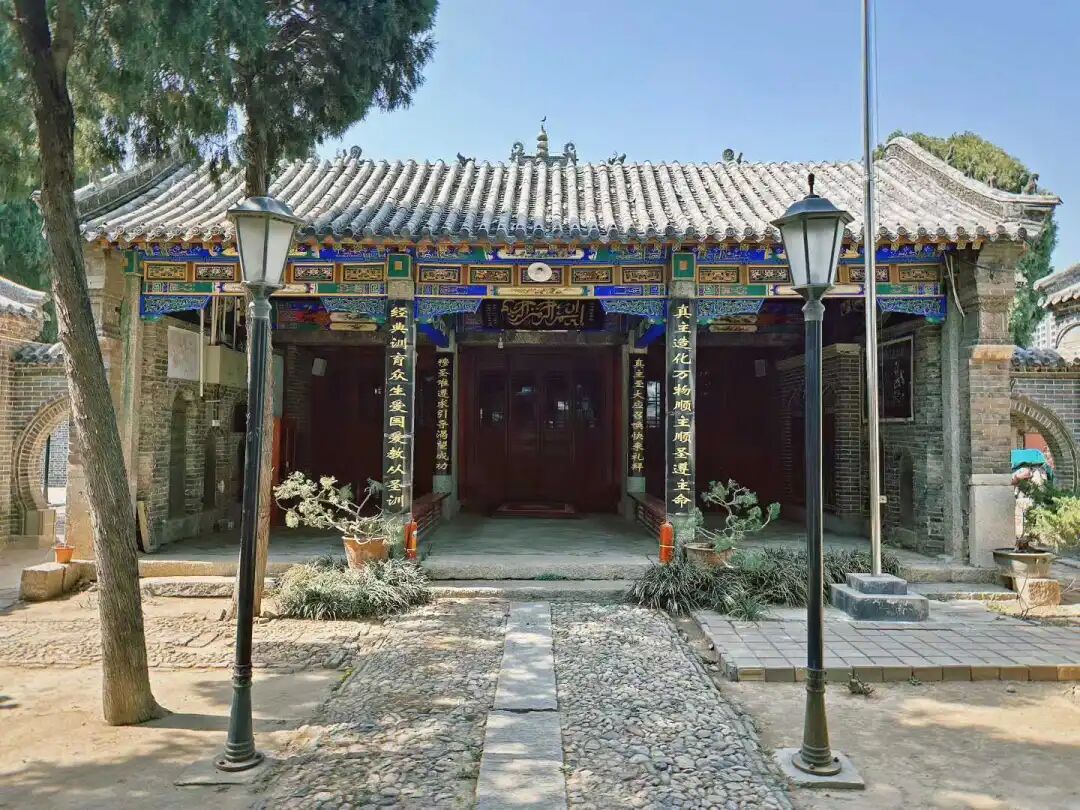
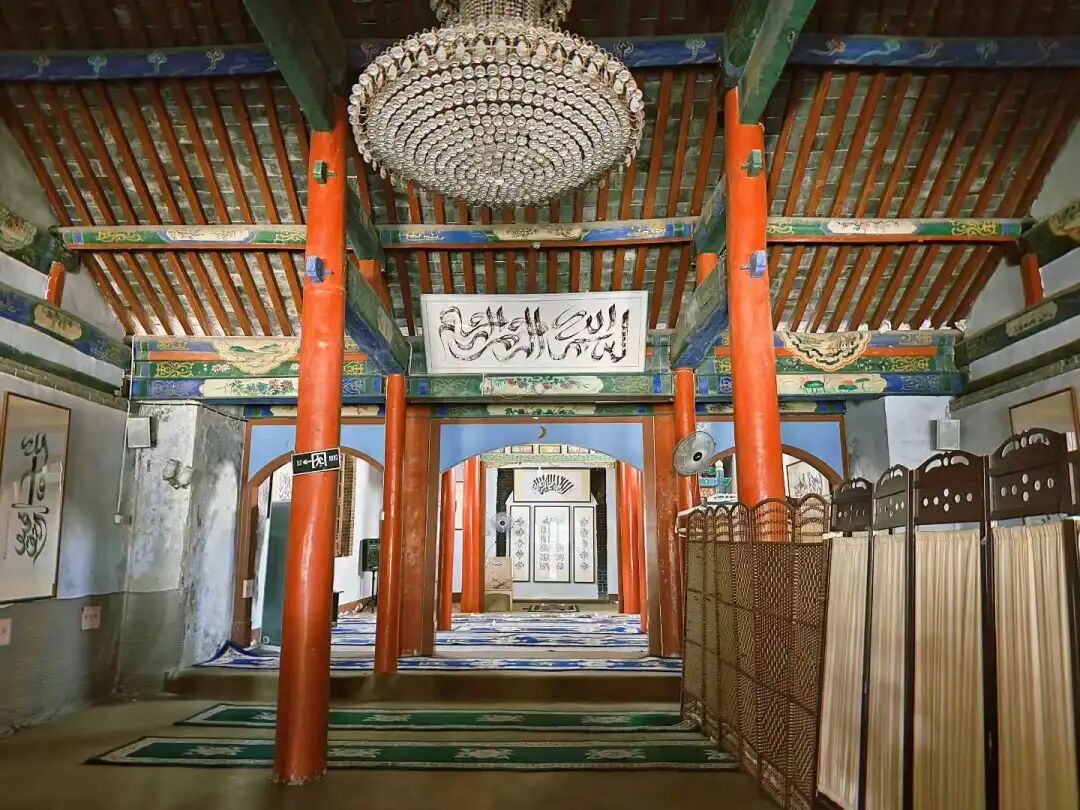
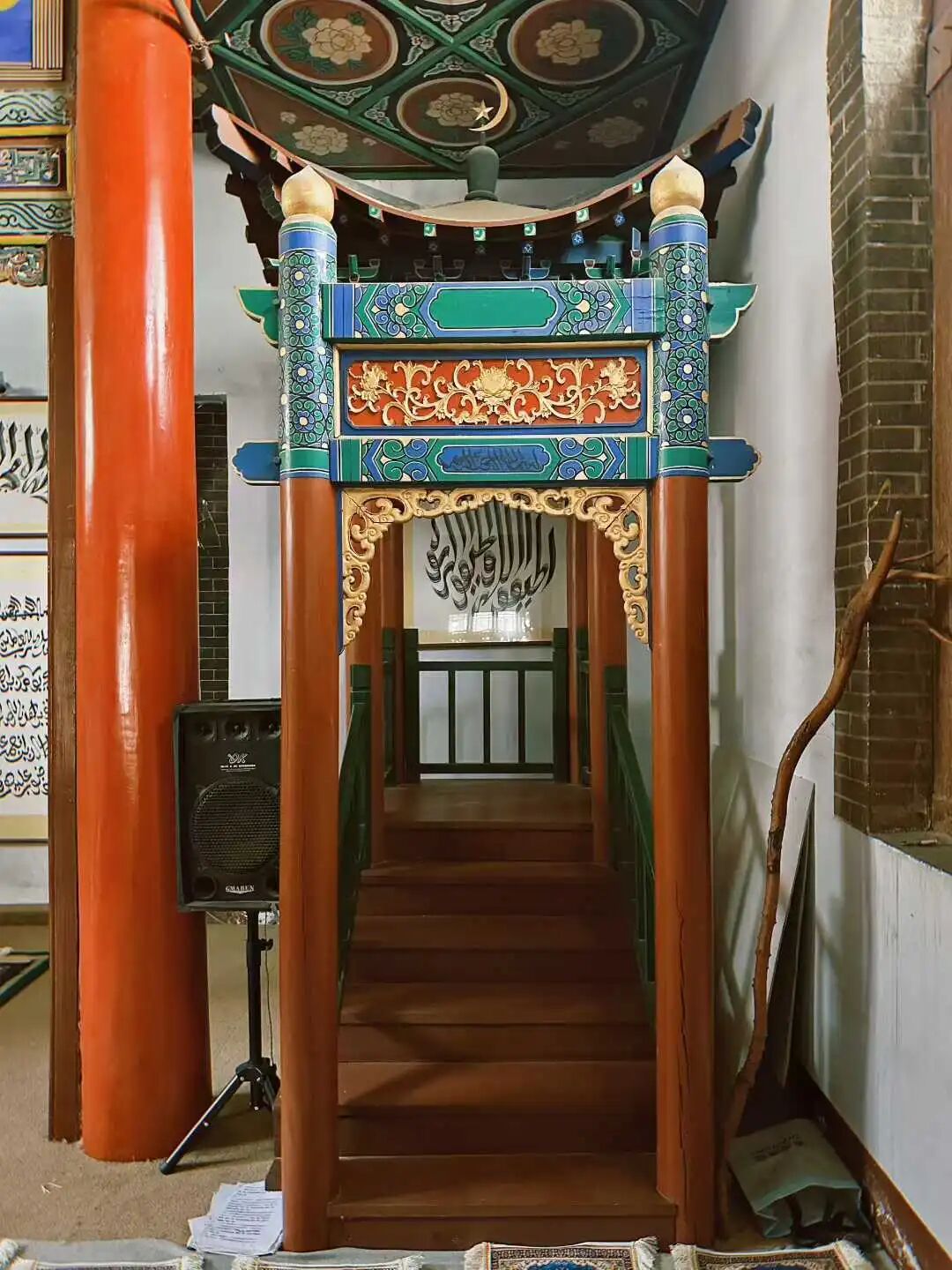
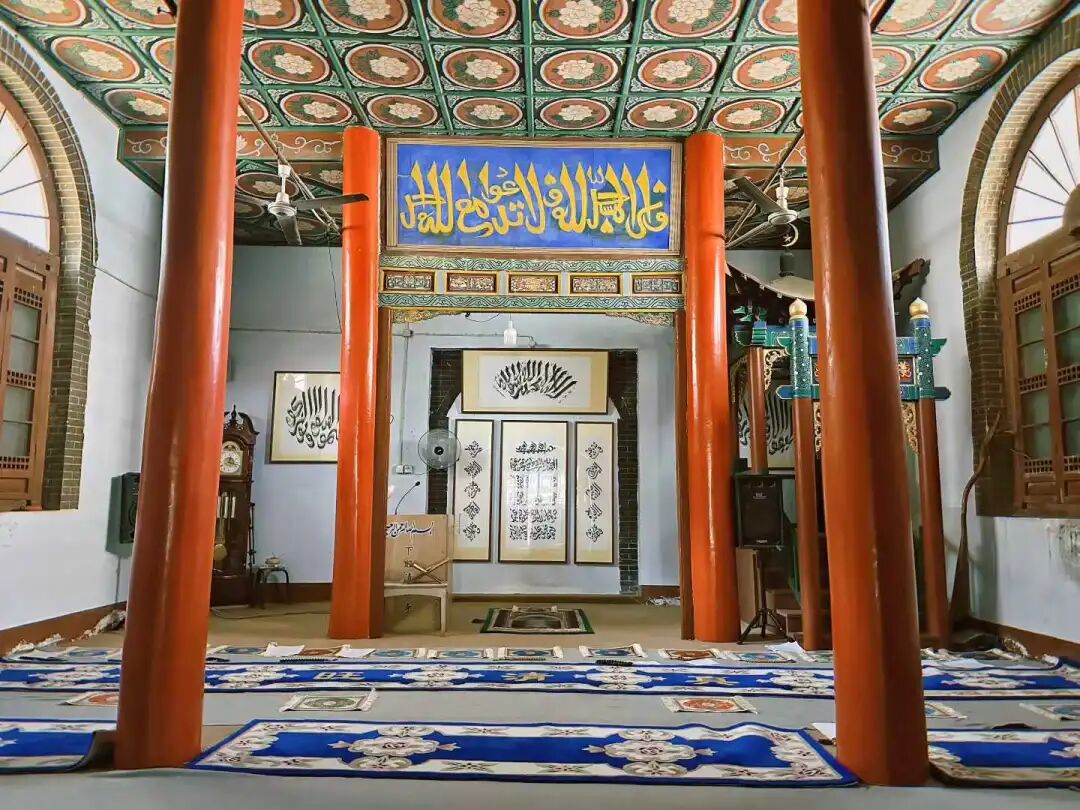
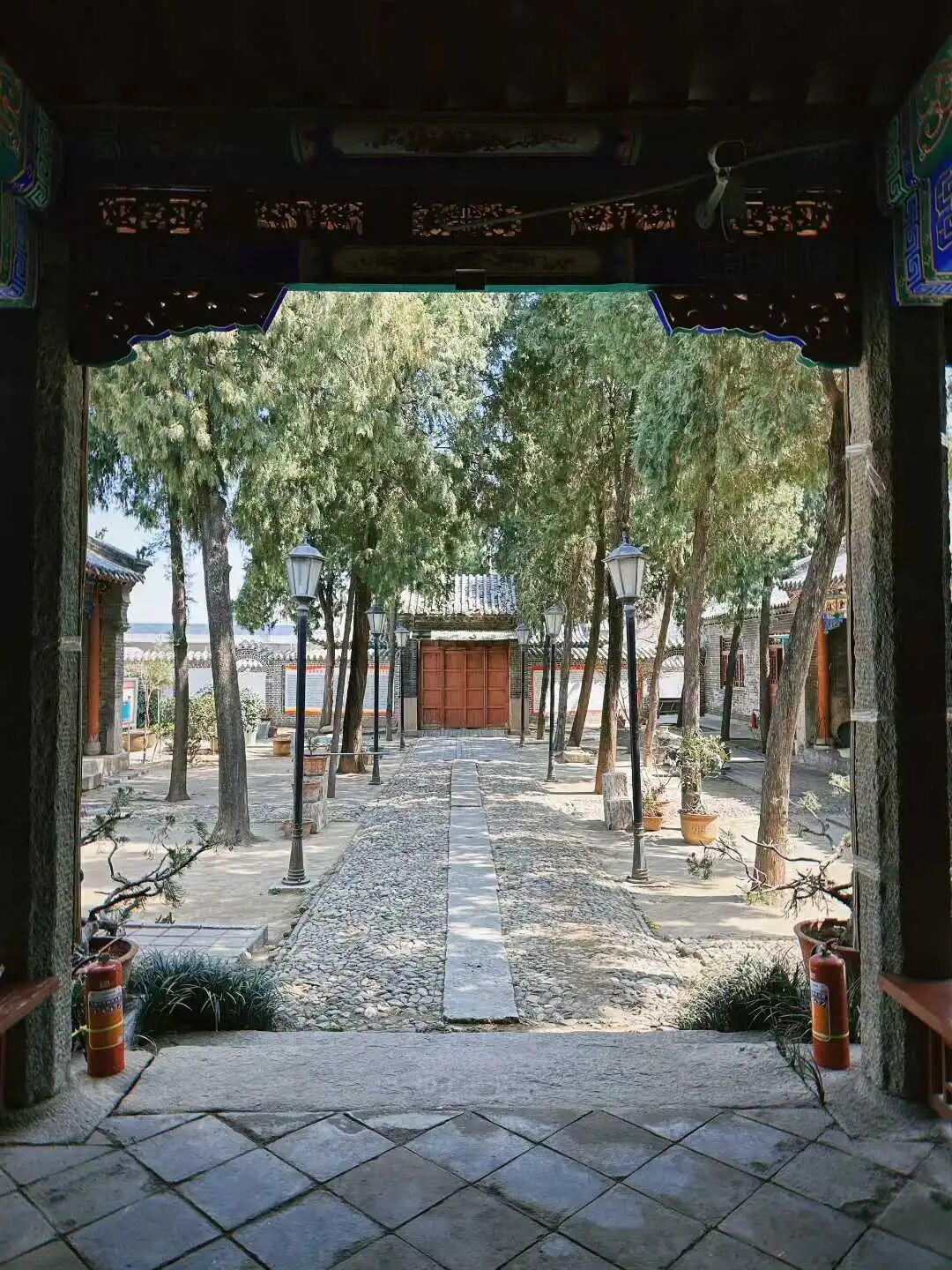
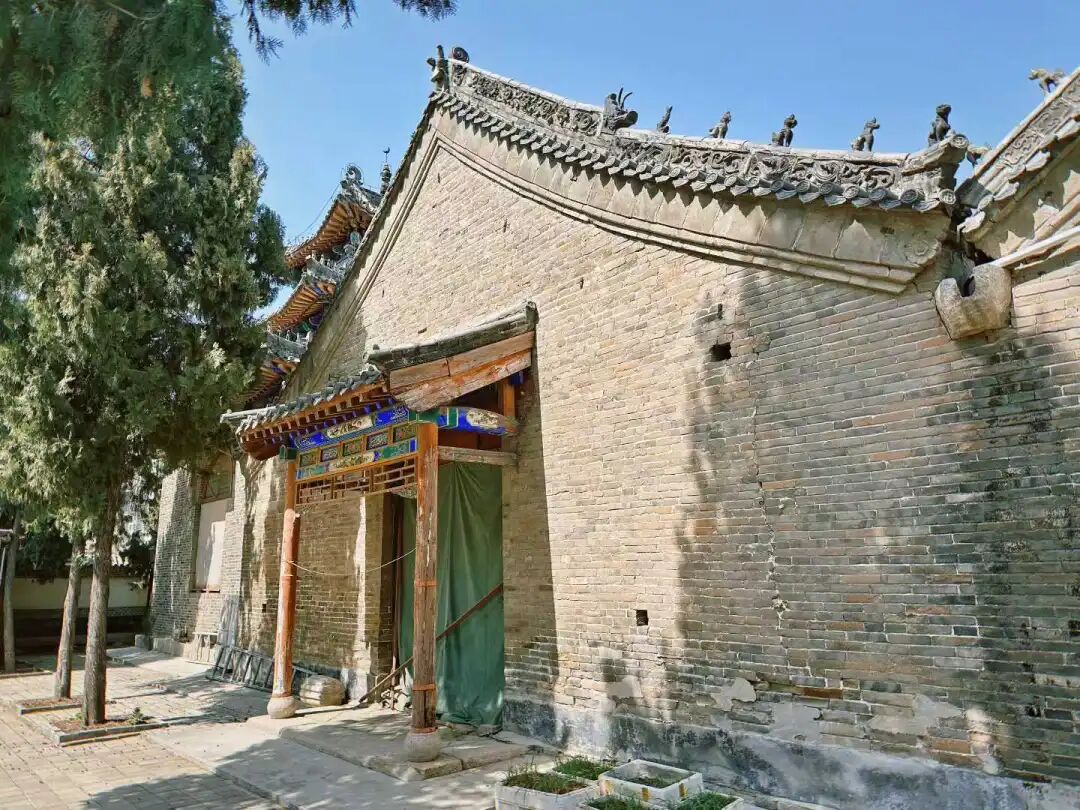
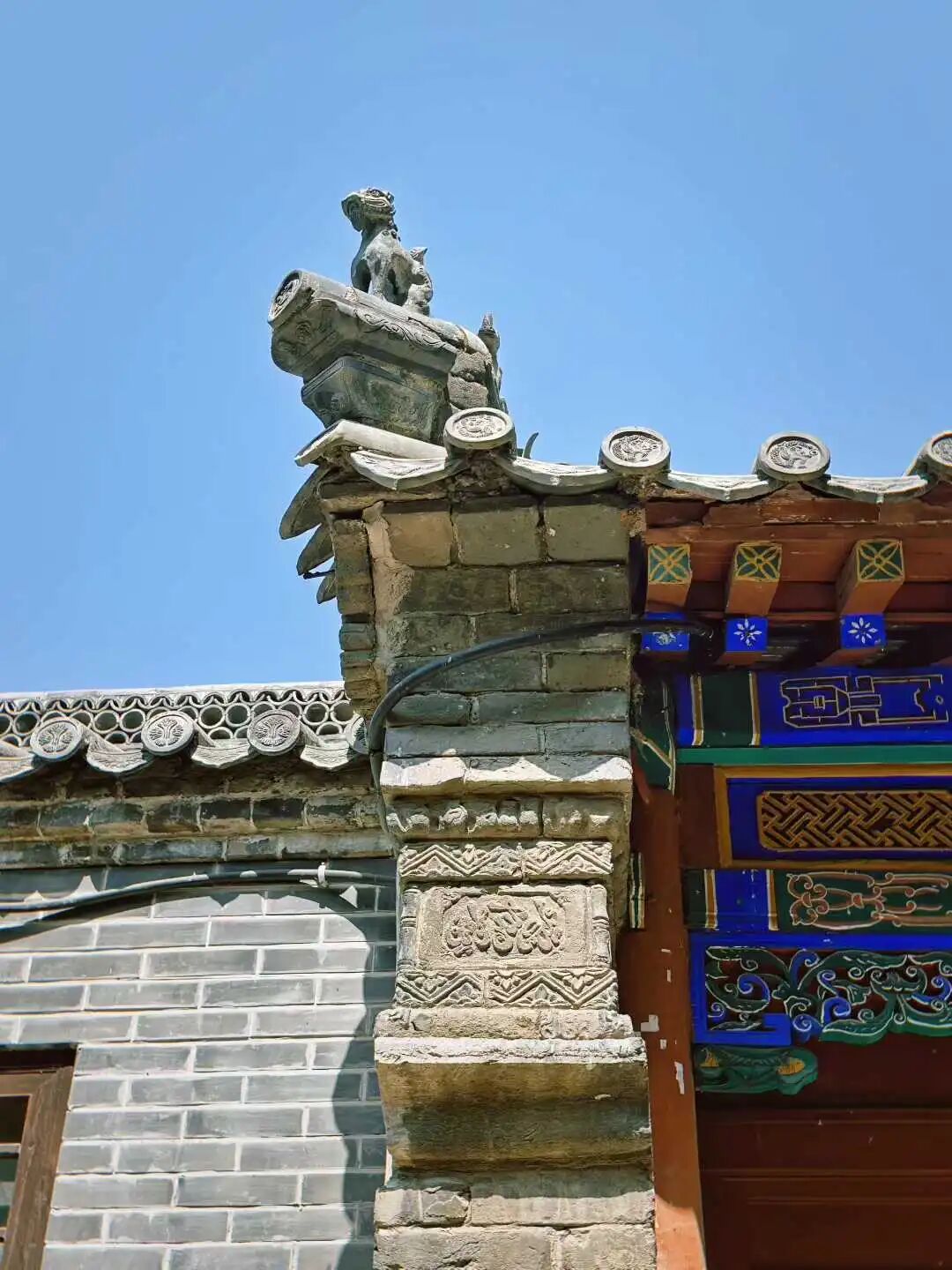
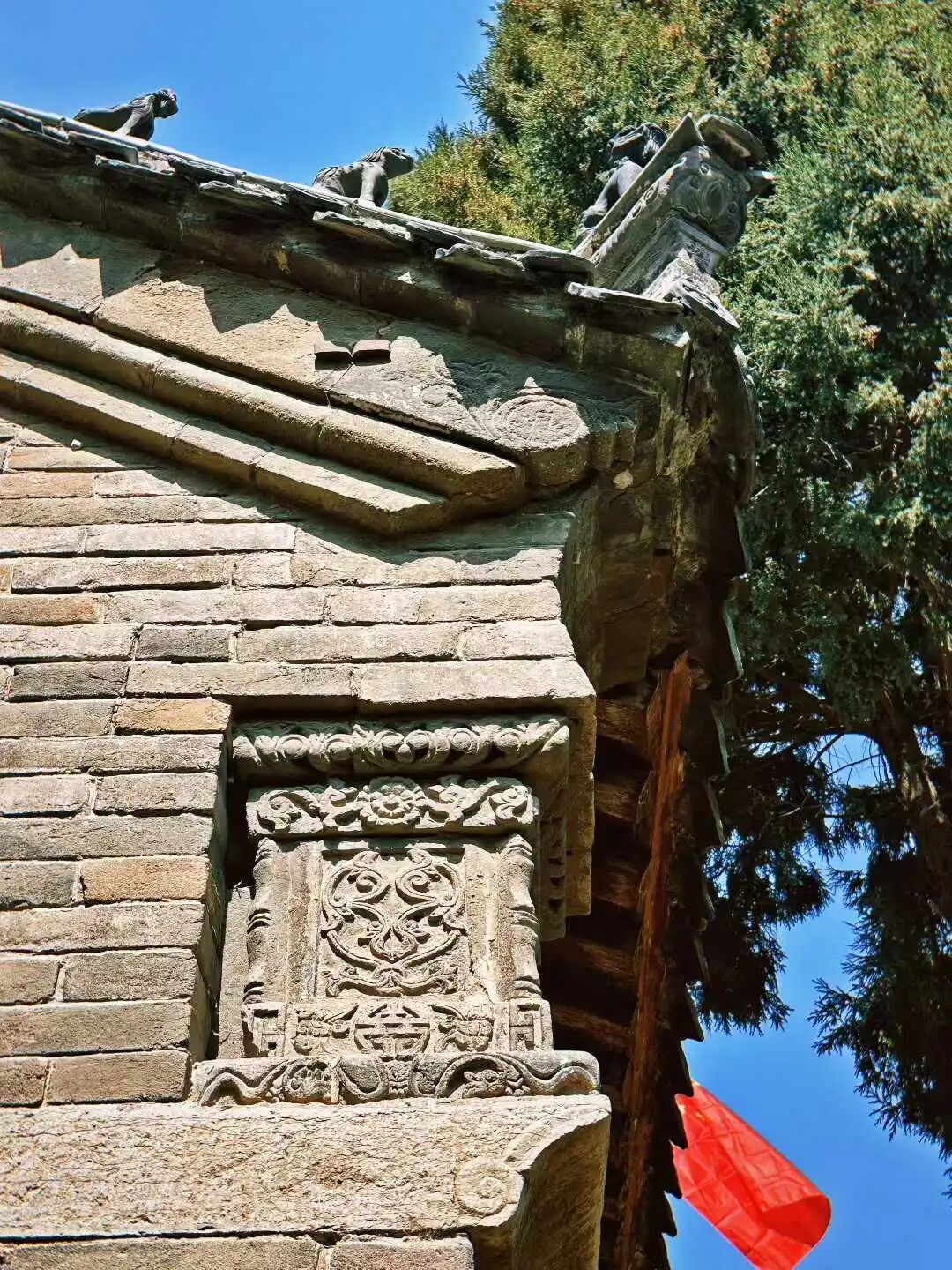
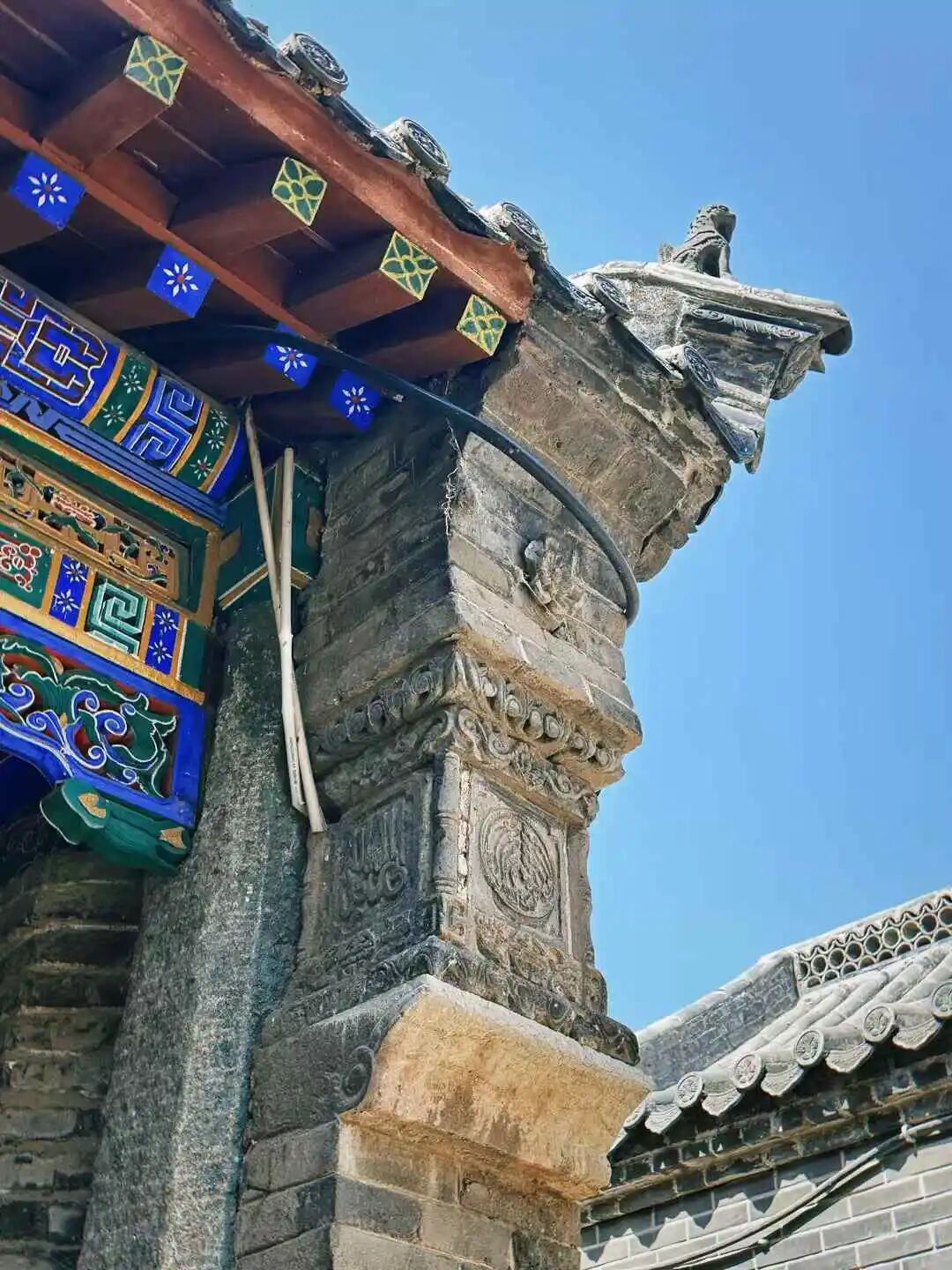
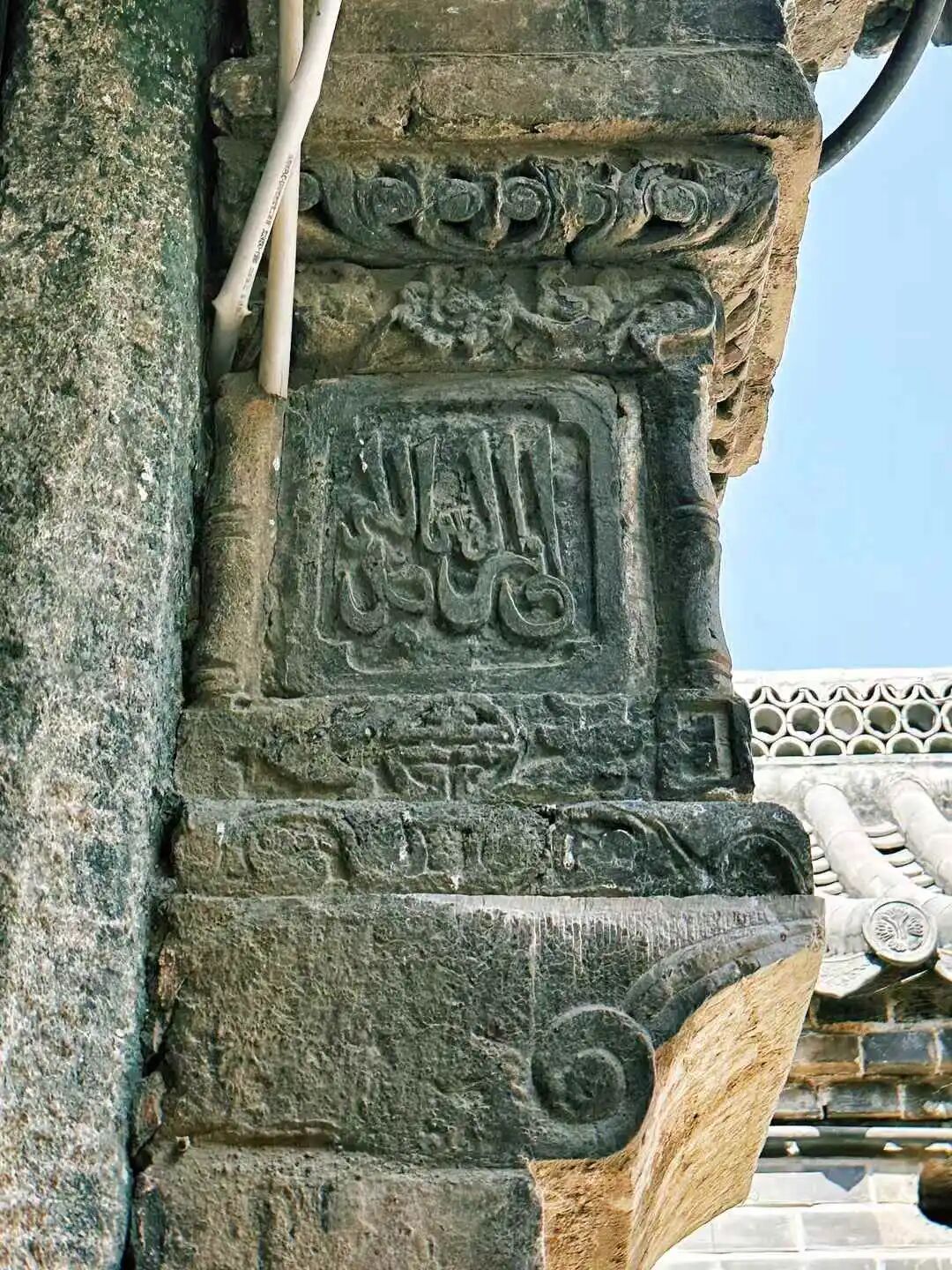
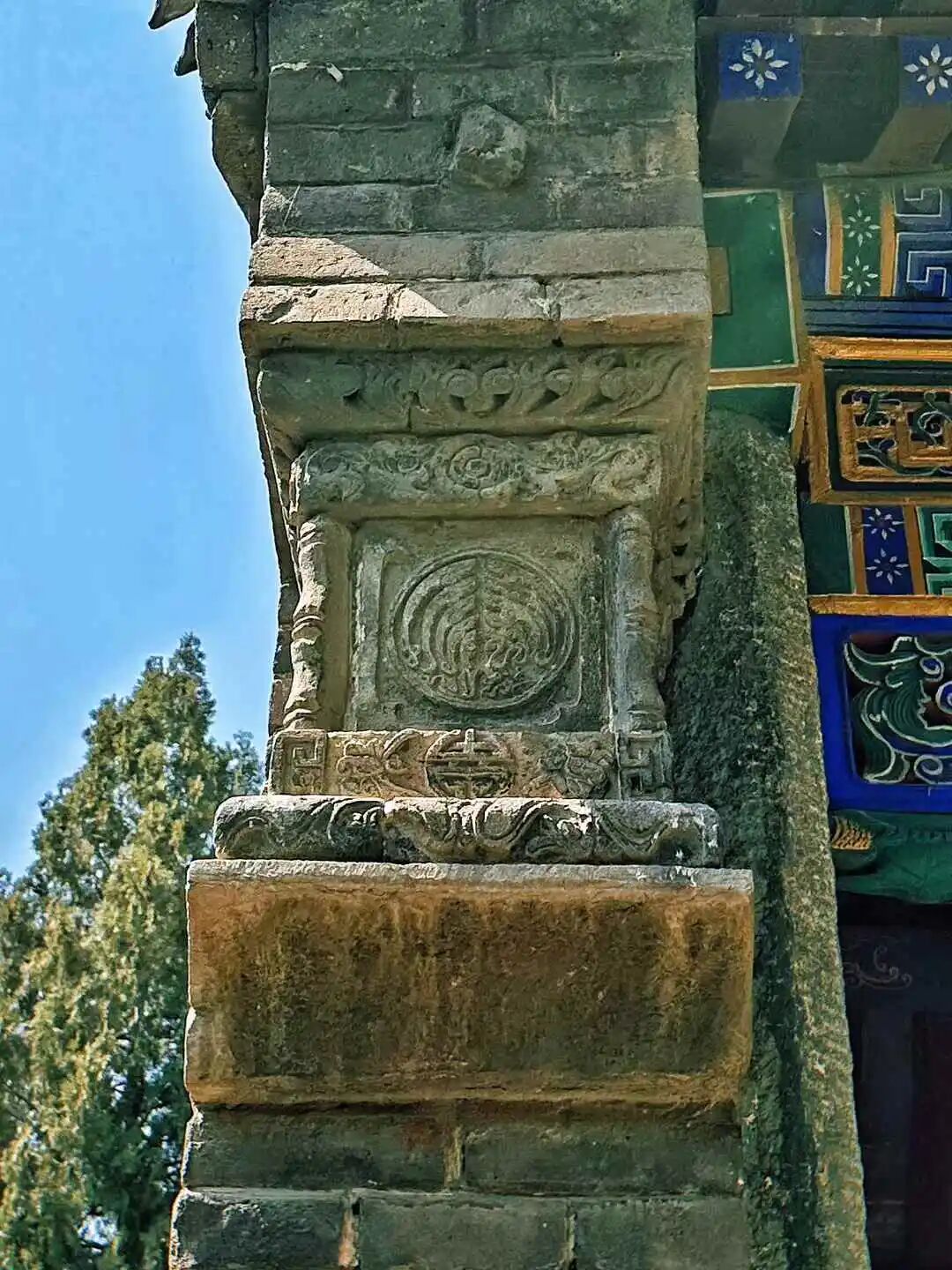
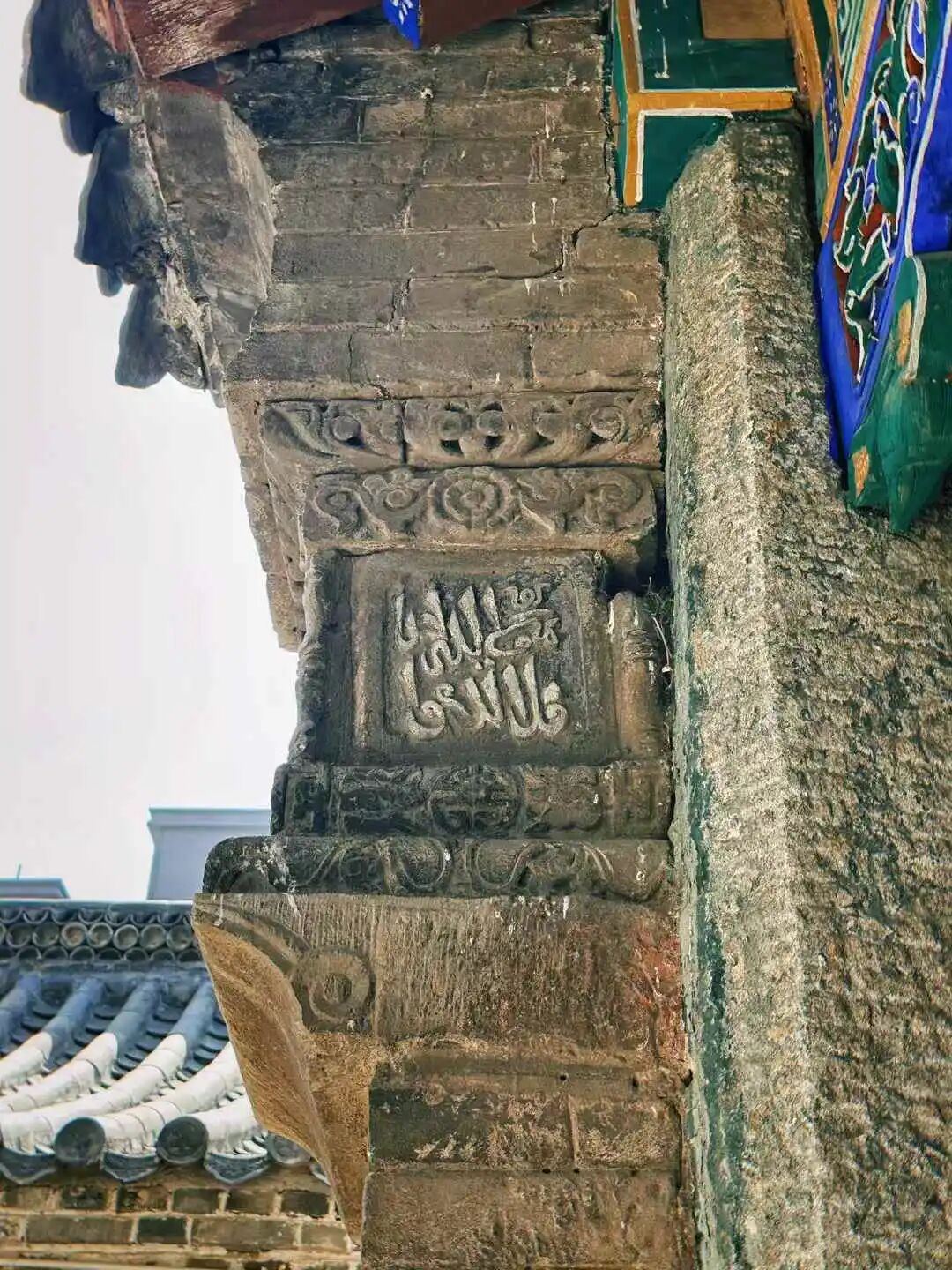
The kiln hall (yaodian) and north lecture hall at Xiawang Mosque in Taian, Shandong, have a late 20th-century feel. A pair of scripture boxes each hold 15 books, which is very traditional. There is also a group photo of the village elders at Xiawang Mosque from 1933. You can see everyone wearing long gowns (dagua), with those in the front row wearing mandarin jackets (magua), and everyone wearing small dark caps.
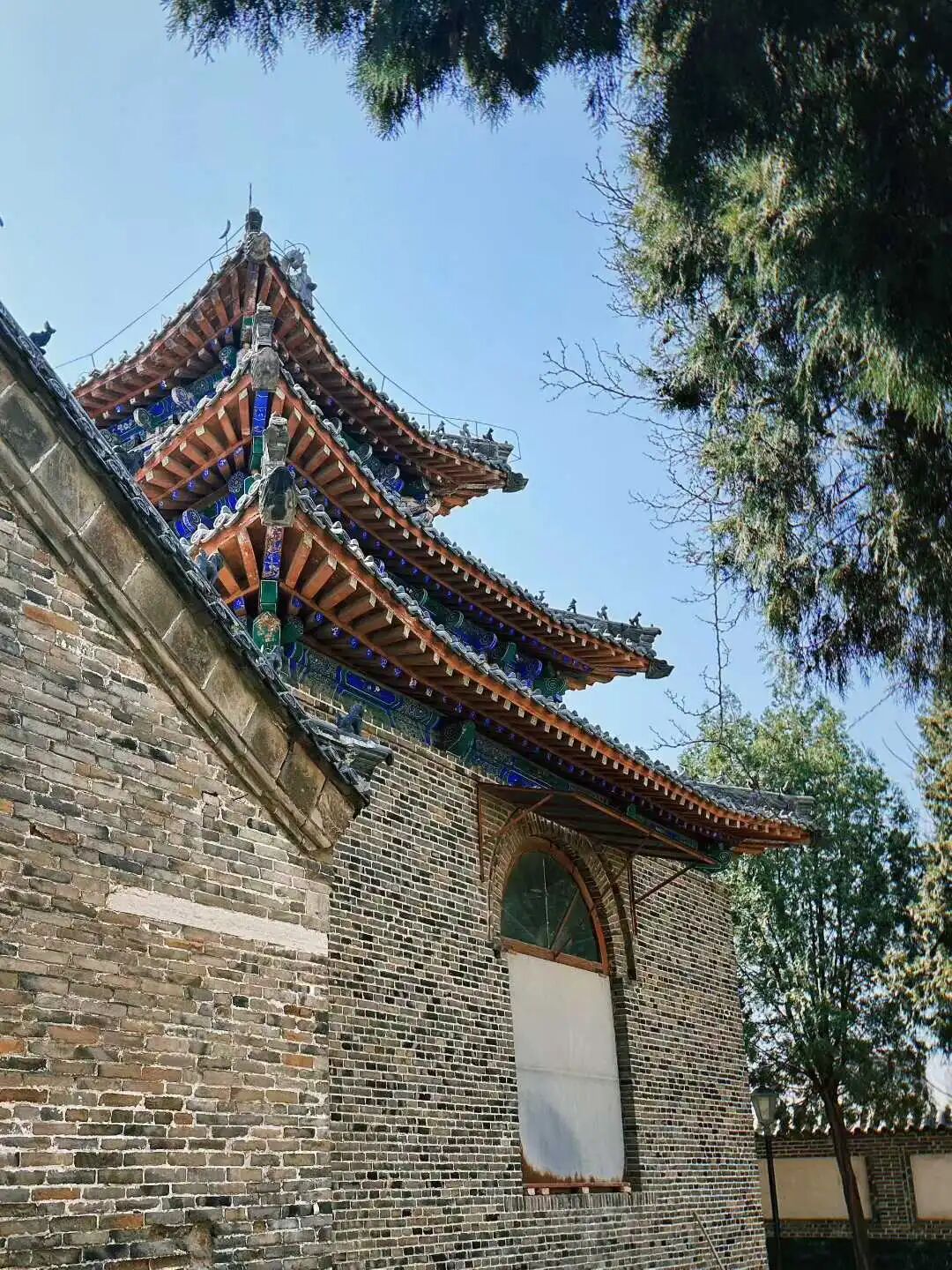
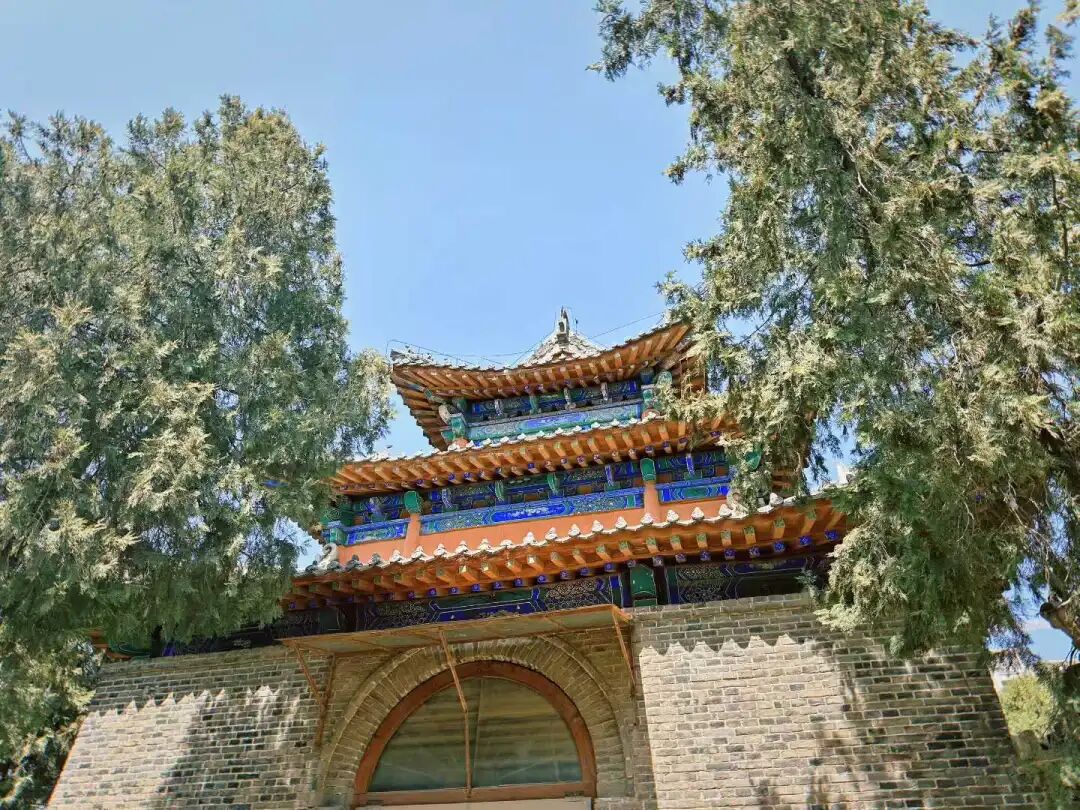
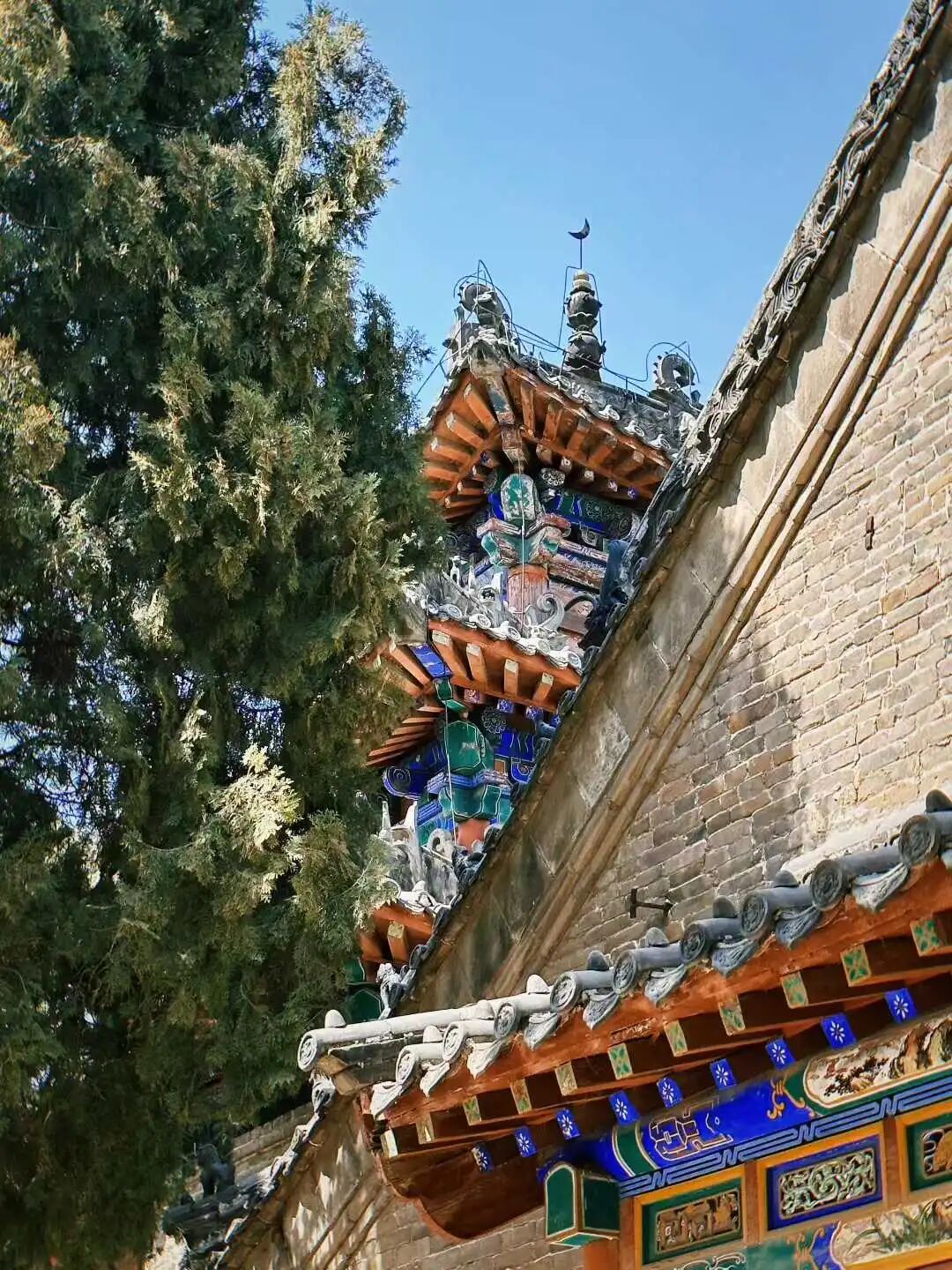
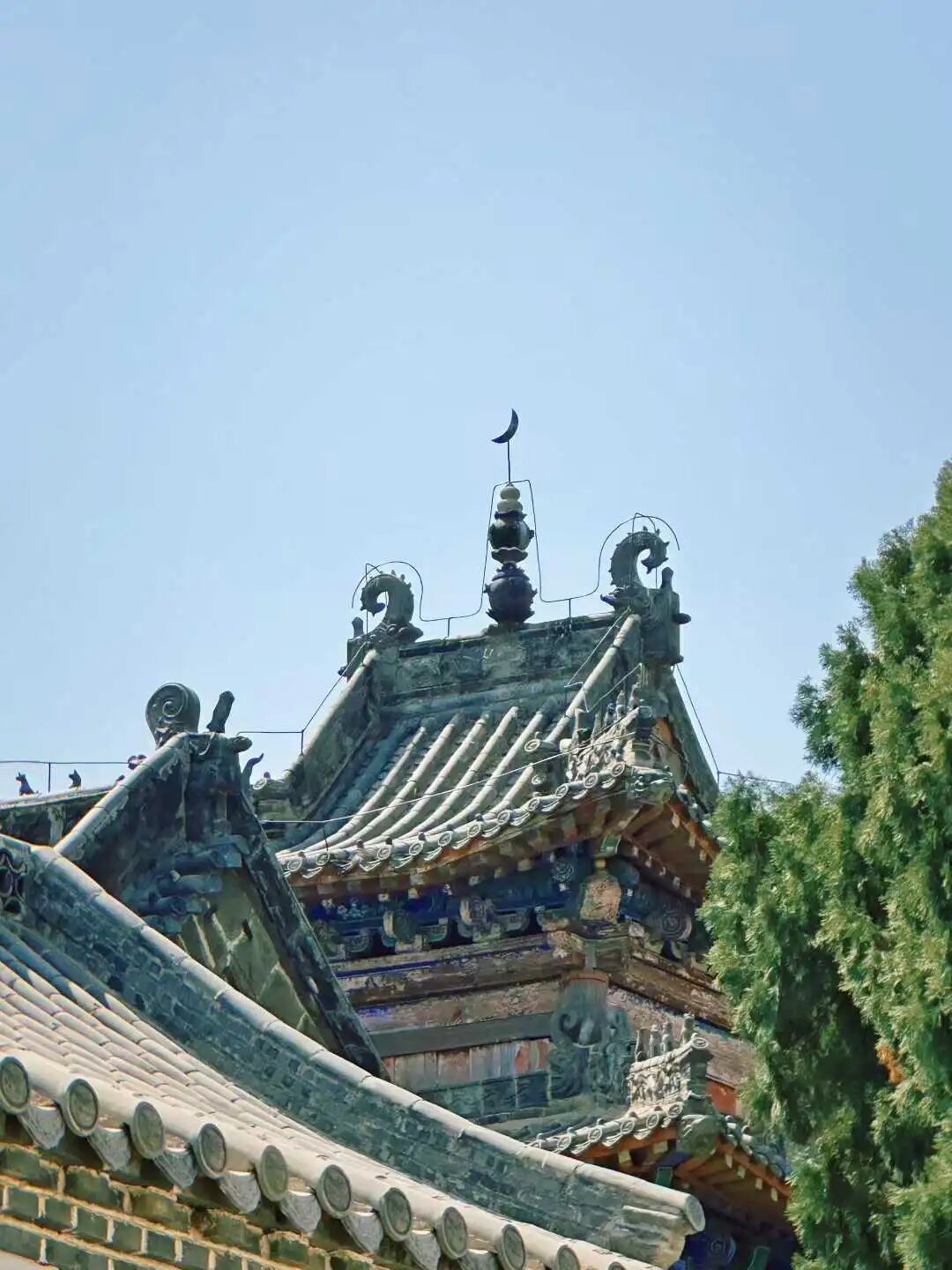
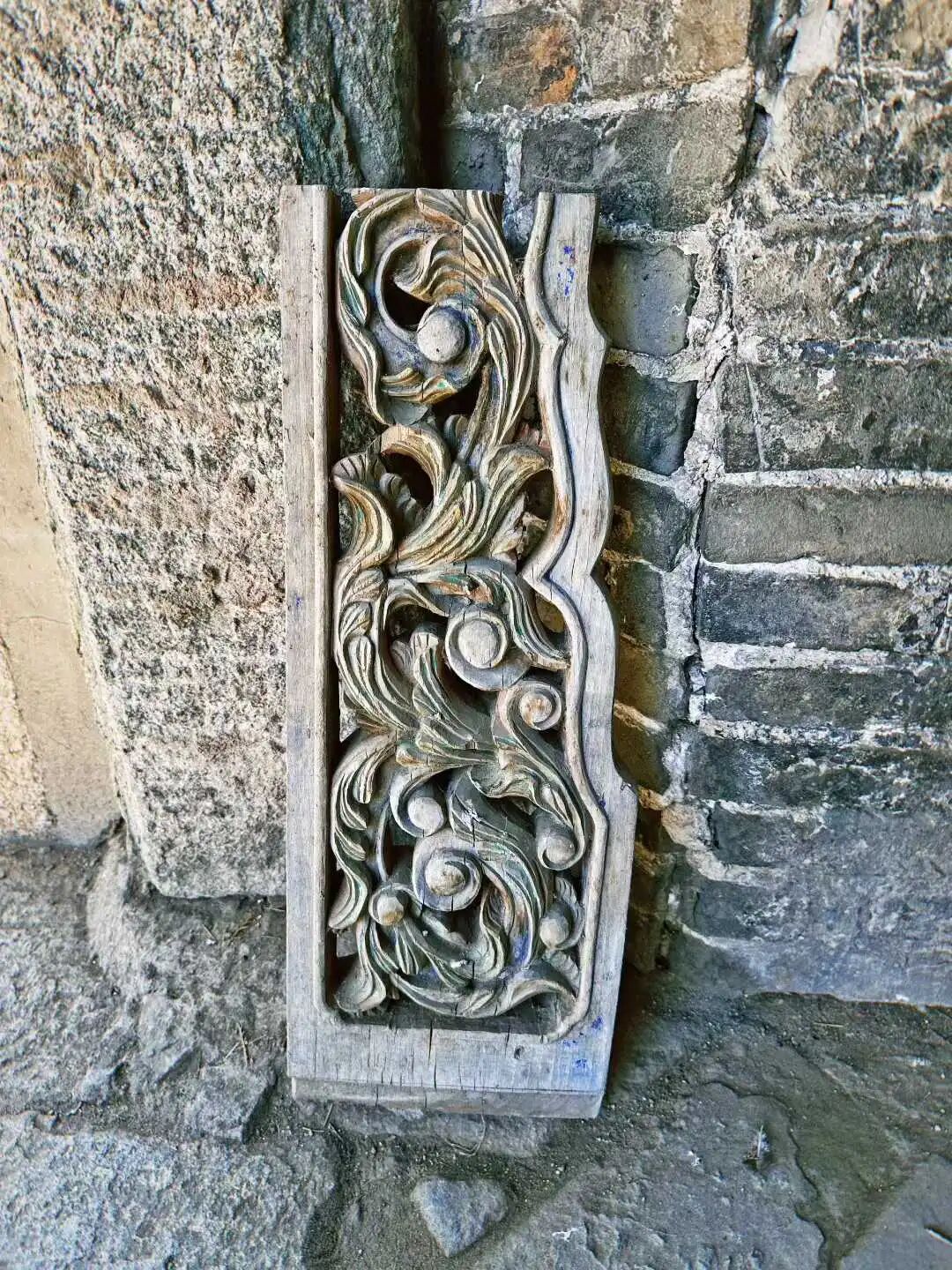
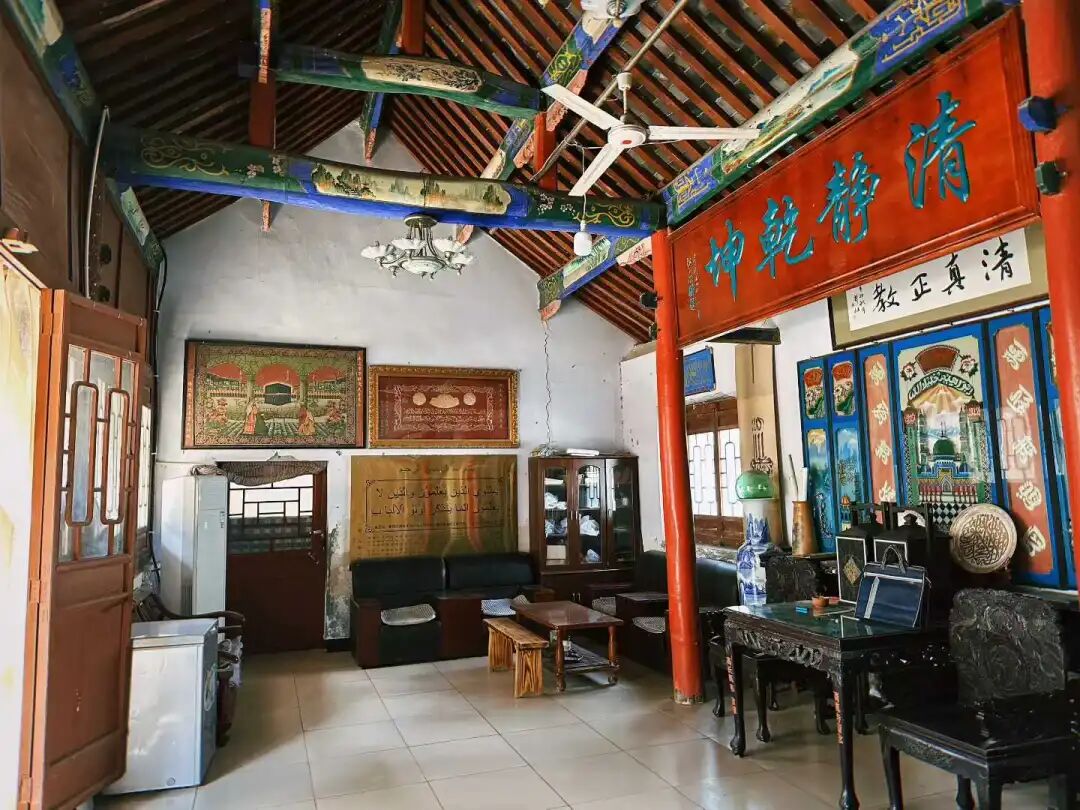
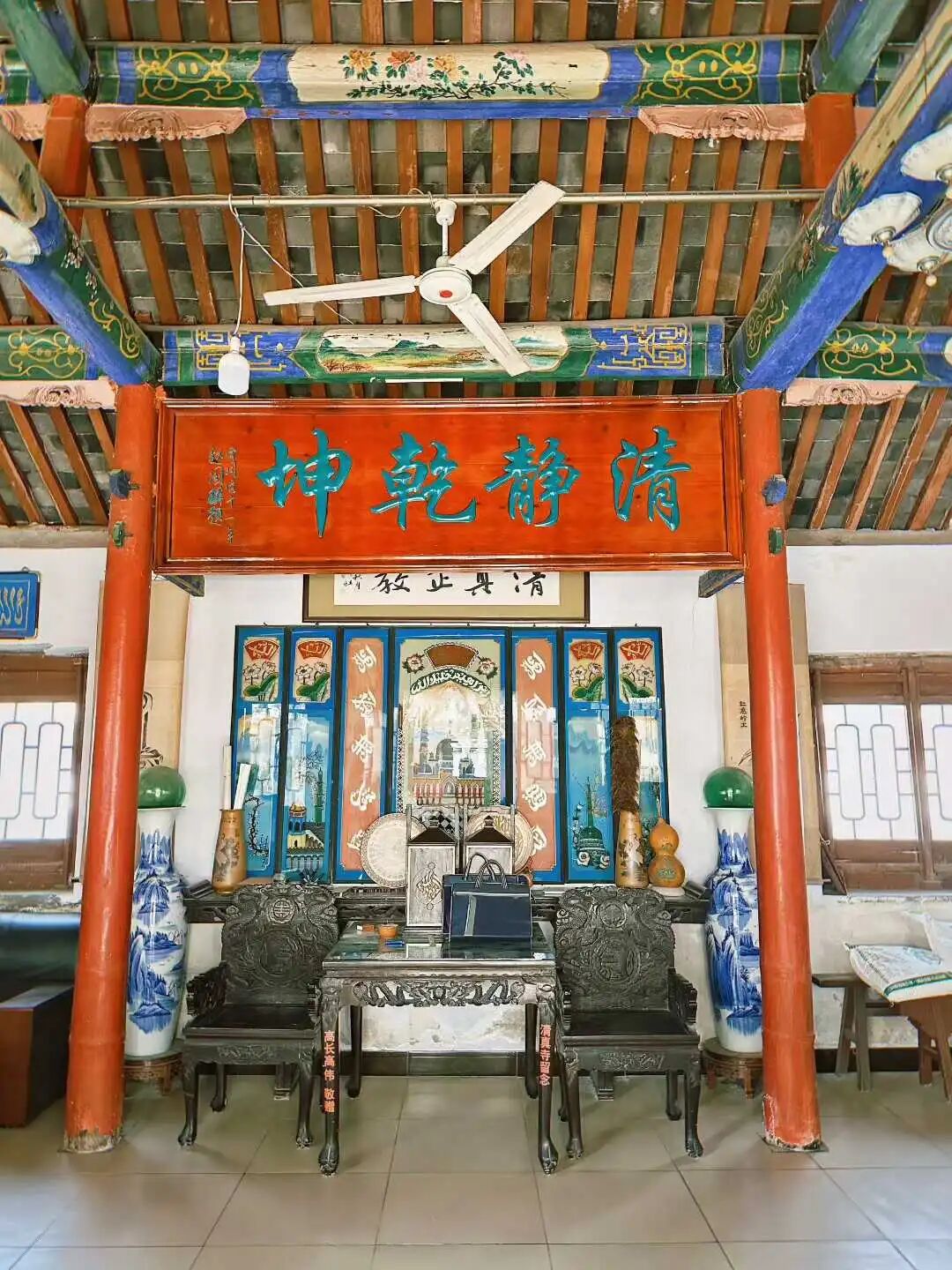
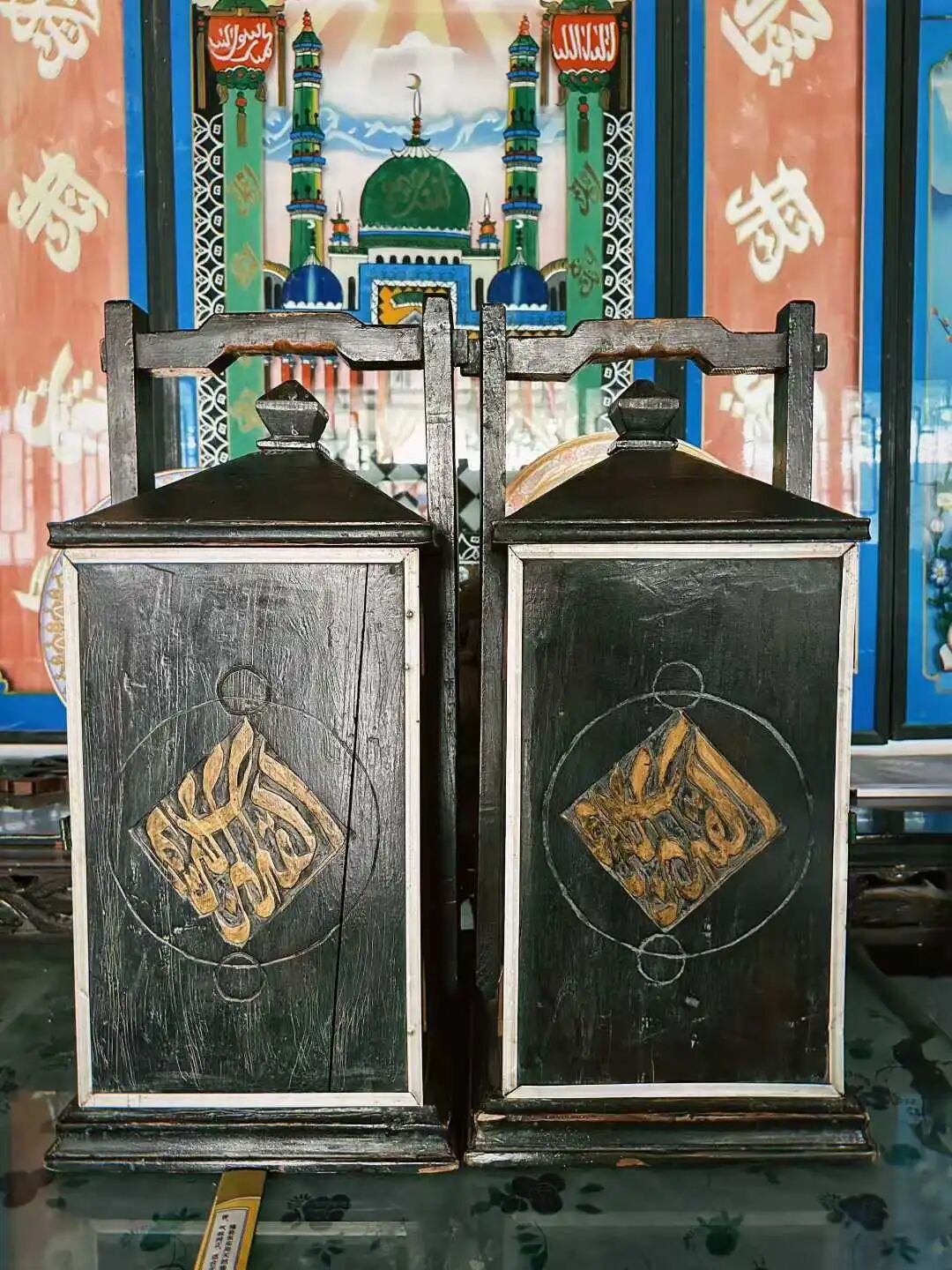
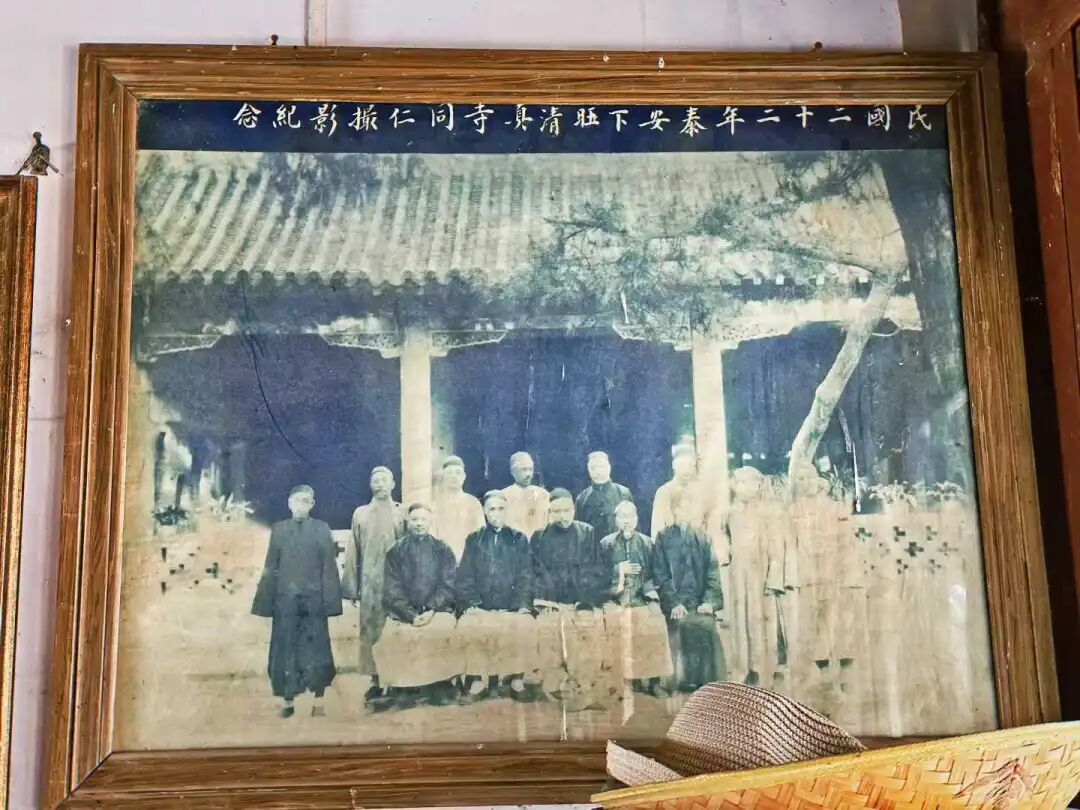
Xiawang Mosque in Taian houses many stone tablets:
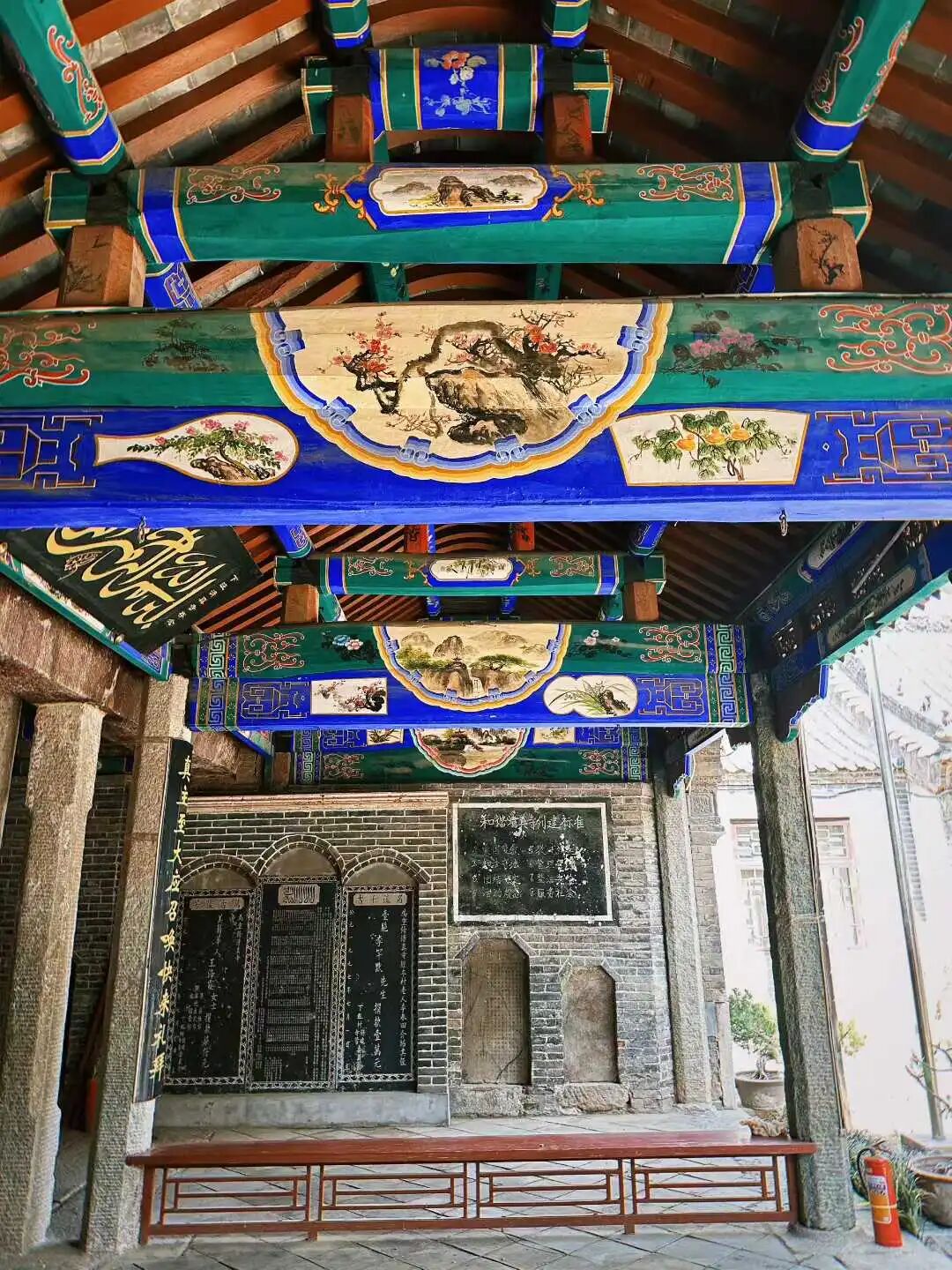
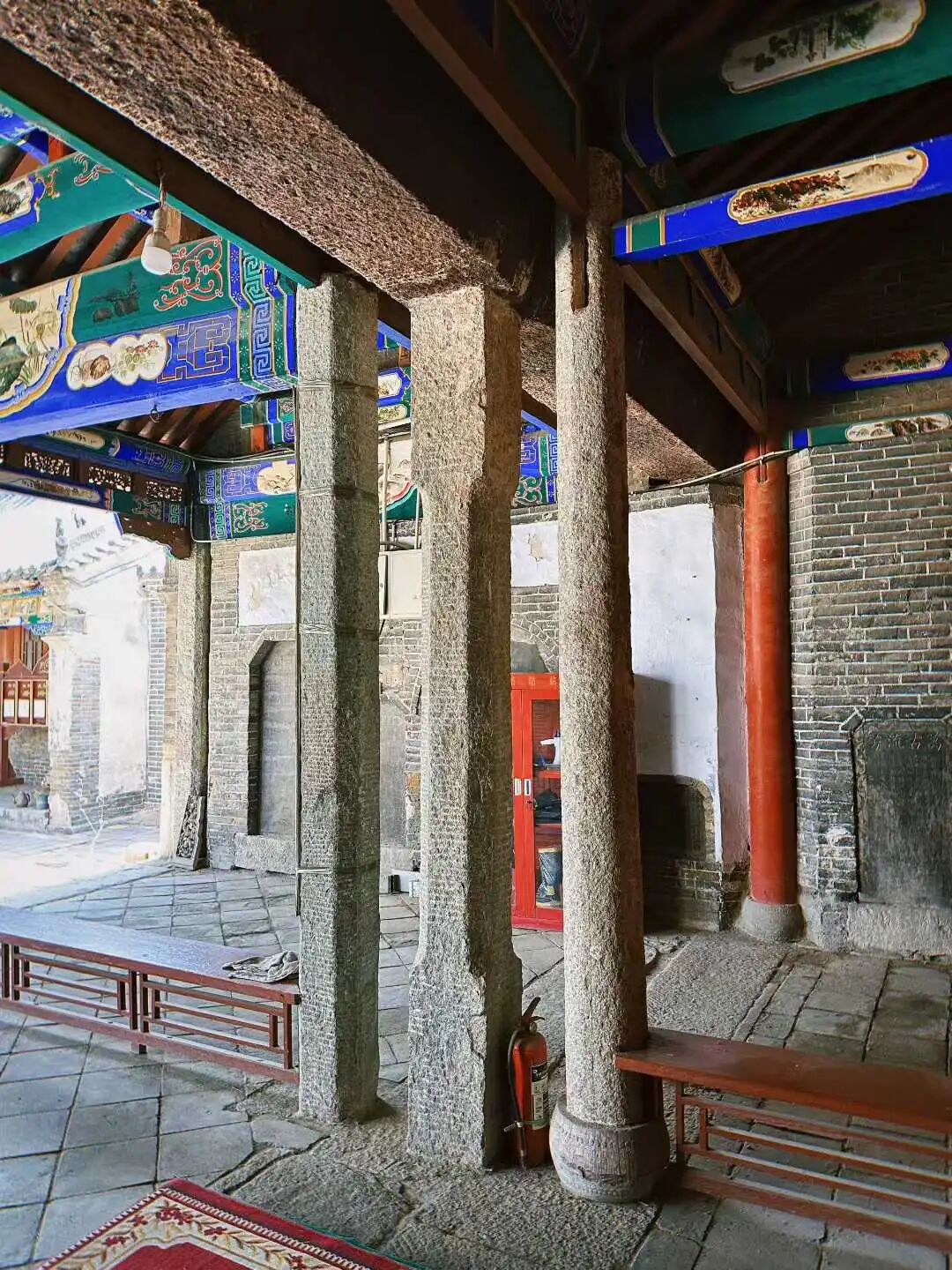
The 1734 tablet for donated land records that Li Bingjie from Henggou Village donated 16.6 mu of land to the mosque, and Wang Zhangzhe from the same village donated an adjacent one mu of land to the mosque.
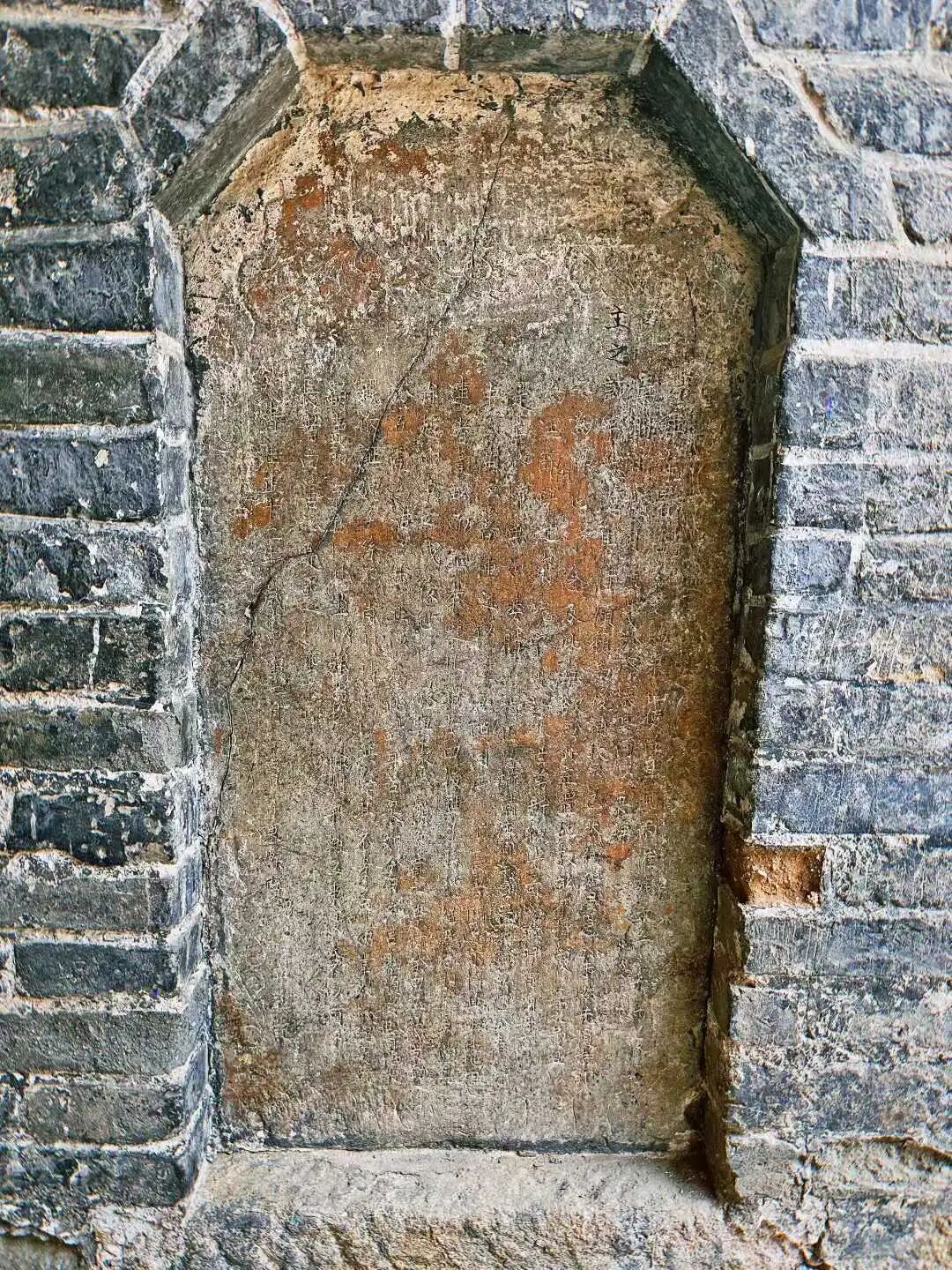
The 1837 renovation tablet records that Xiawang Mosque was renovated in 1821. In 1835, Han Qingyu from Xiaoyandi Village and the villagers donated money for building oil painting and decorations. In 1837, Yang Dianhua, Wang Jiesan, Wang Zhonghua, and others agreed to donate money to rebuild the water room and side rooms, and a daughter of the Ding family from Huangjia Village donated land.
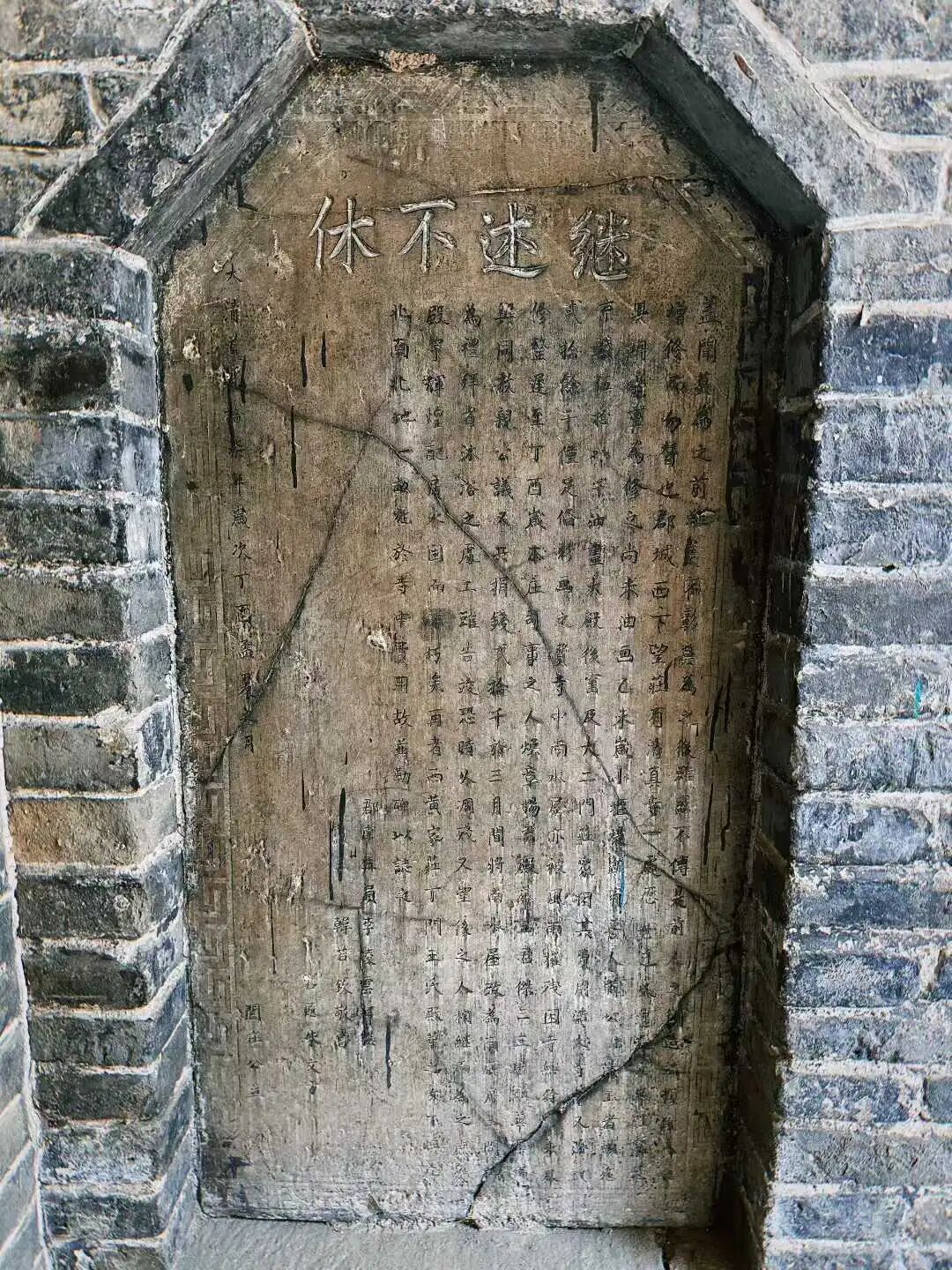
The 1872 "Preface to the Renovation of the Mosque" records that the main hall of Xiawang Mosque was burned down during the war in 1863. Later, elders Yang Yucheng and Han Liqing were the first to donate money, and the whole village worked together to rebuild the mosque.
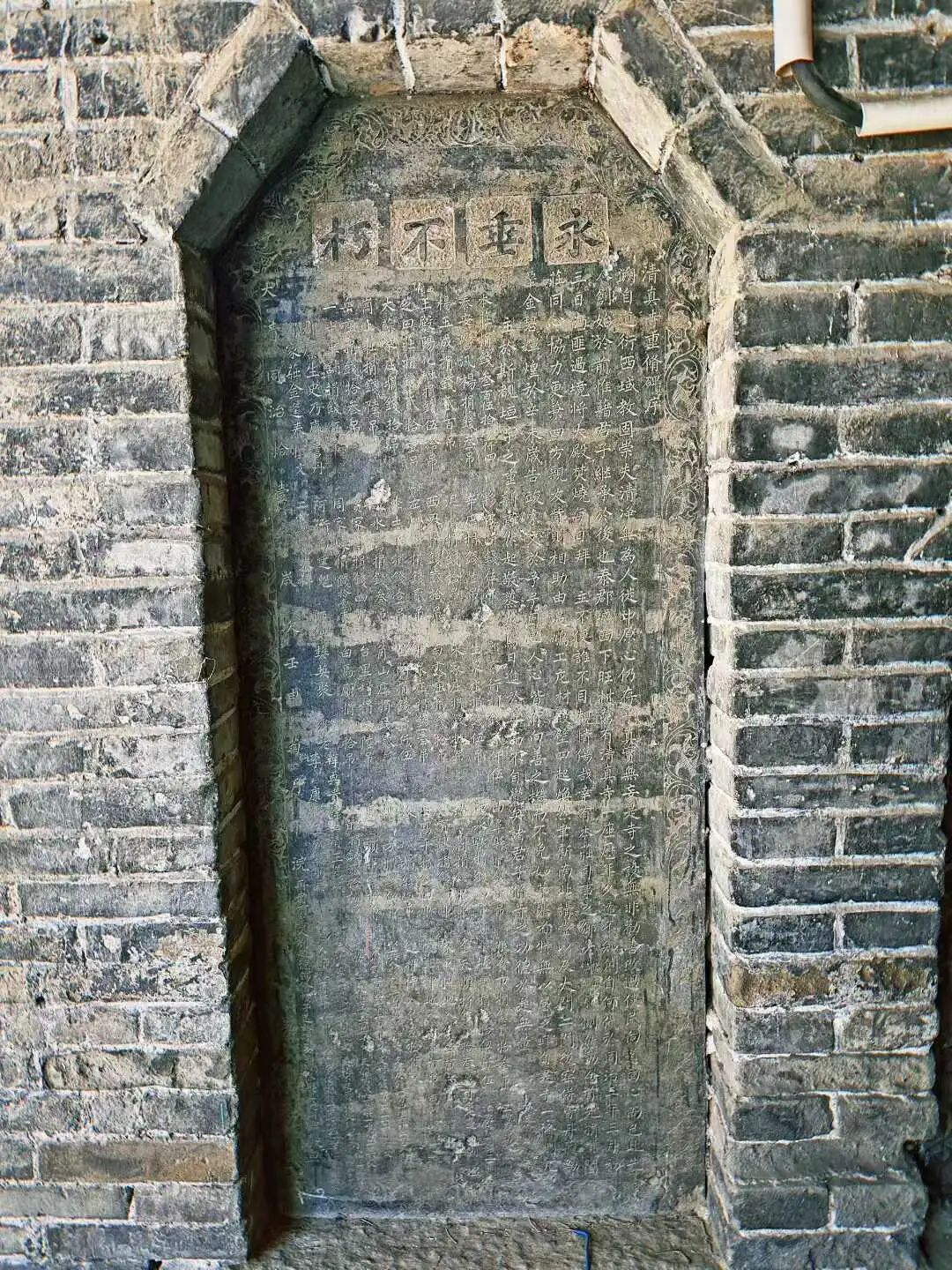
The 1872 "Preface to the Donation of Cypress Trees" records that Yang Yucheng bought back 23 ancient cypress trees in the mosque that were originally going to be sold to pay for the mosque's repairs, keeping them on the grounds.
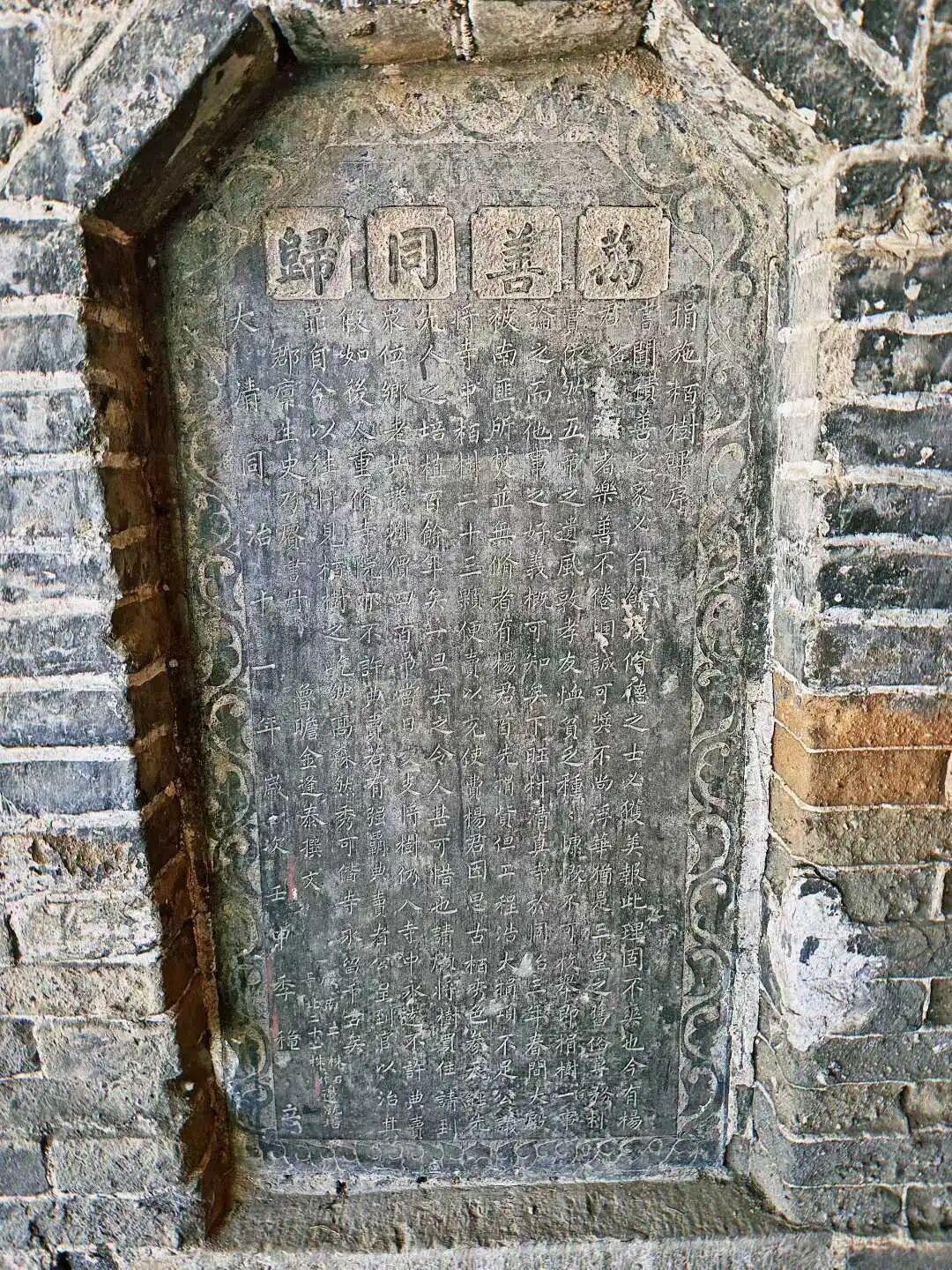
The 1873 lawsuit settlement tablet records that the daughter of Xiawang Mosque imam Yang Taixiang died after suffering mistreatment following her marriage into the Ma family. Imam Yang wanted to go to the government to seek justice, but the villagers persuaded him to stay. After mediation, the Ma family was fined 100,000 jingqian coins to end the dispute. Imam Yang used the money to redeem two mu of mosque land to cover mosque expenses.
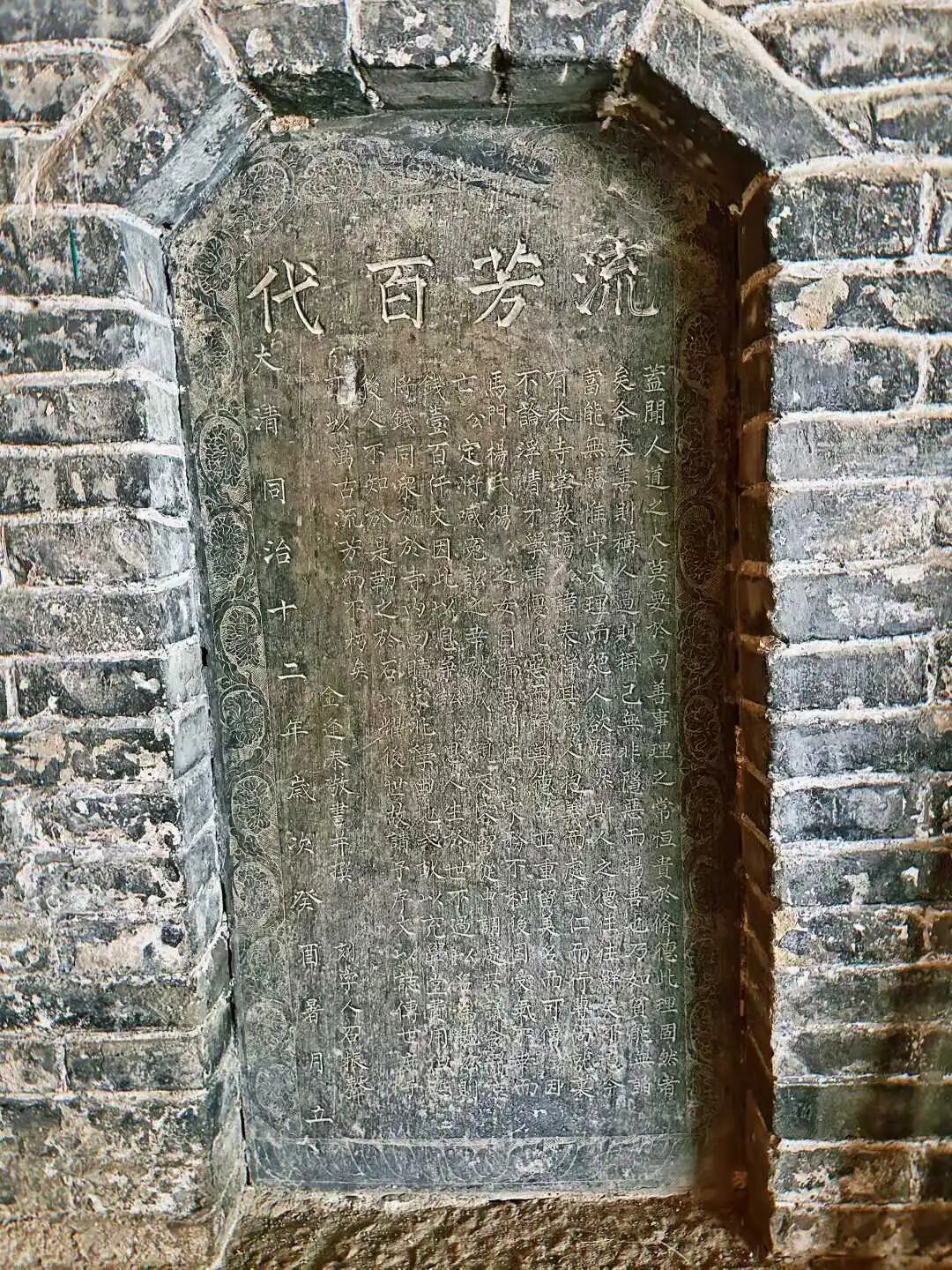
The 1875 land and money donation tablet records that elder Yang Yucheng donated money to redeem two mu of school land that had been mortgaged for mosque repairs, with the harvest from the land used for school expenses.
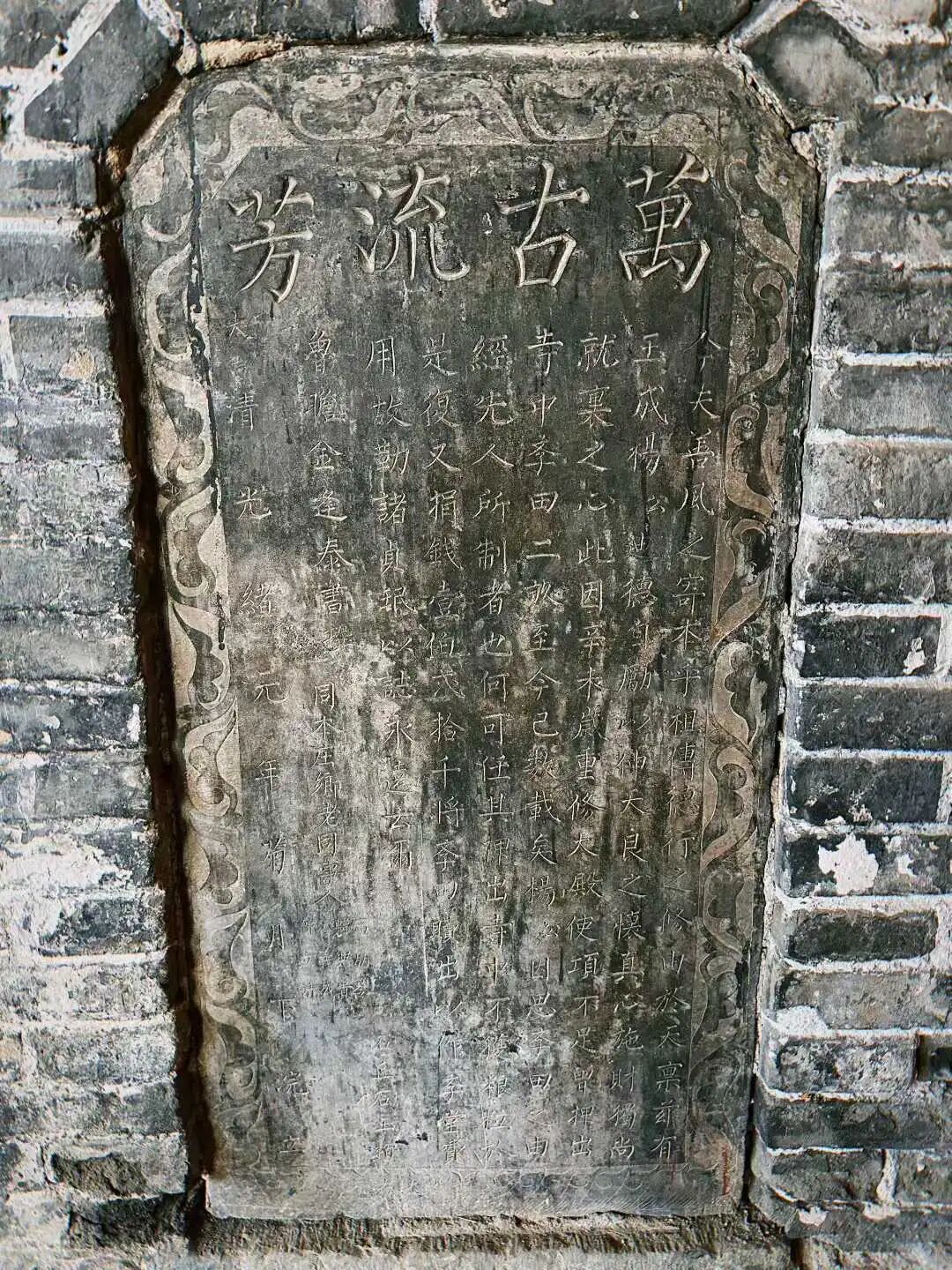
The 1894 "Record of the Renovation of the Rear Hall of Xiawang Mosque" only has the top half remaining.
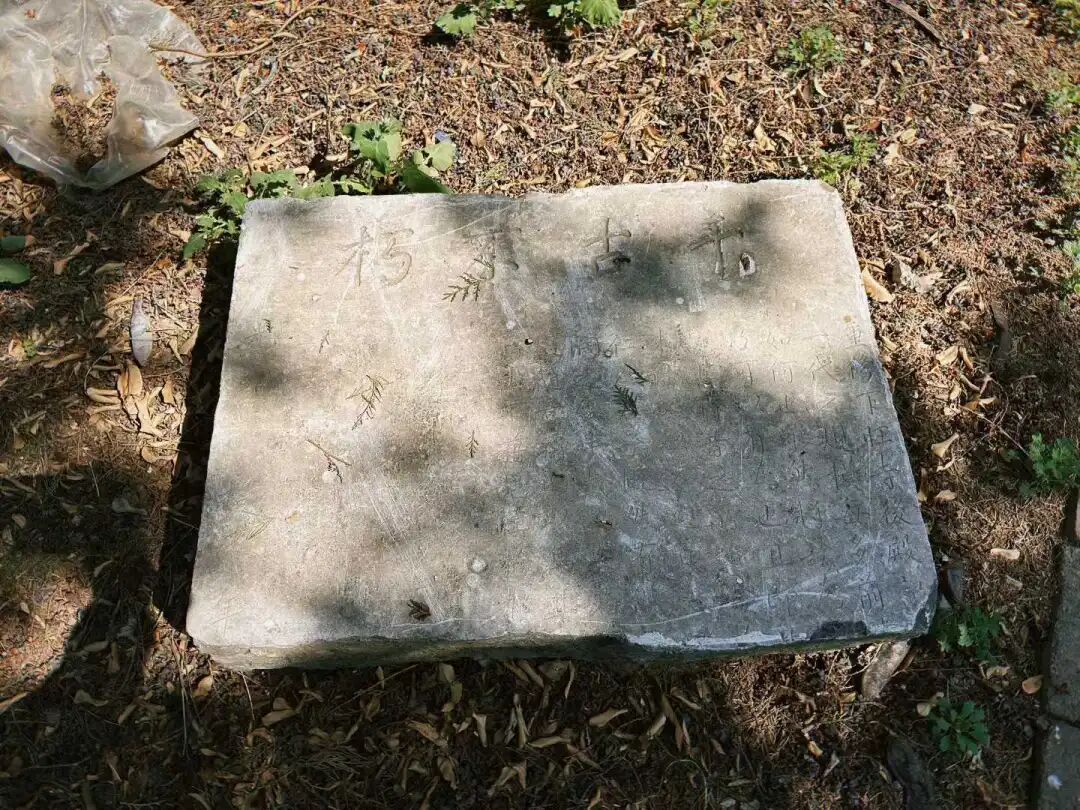
Xiawang Mosque in Taian uses a wooden casket (tabu xiazi) for burials (mayiti), which is a feature of traditional Gedimu mosque communities. Traditional solid wood caskets are very heavy and require many people to carry them. Most have now been replaced by stainless steel ones.
China Mosque Travel Guide Shandong: Tai'an Hui Muslim Villages, Historic Mosques and Resistance History
Articles • yusuf908 posted the article • 0 comments • 186 views • 2026-05-24 00:17
Summary: This China mosque travel guide continues the Tai'an seventy mosques project, covering Xintai and Feicheng mosques, village mosque architecture, stone tablets, imam records, Hui Muslim communities, and anti-Japanese resistance history.
The Seventy Mosques of Tai'an is presented here as a firsthand travel account in clear English, beginning with this scene: Xigaoping Mosque in Guli Town sits in the northwest part of the old Xigaoping village. The account keeps its focus on Mosque Travel, Islamic Heritage, Muslim Travel while preserving the names, places, food, and historical details from the Chinese source.
Xigaoping Mosque
Xigaoping Mosque in Guli Town sits in the northwest part of the old Xigaoping village. It was first built in the early Qing Dynasty and has been expanded and repaired many times since. When the mosque was first established, it had a main prayer hall with five rooms and two lecture halls to the north and south with three rooms each. An ancient cypress tree once stood inside the mosque, but it was cut down during the Cultural Revolution. The mosque was re-established in 1981. It underwent large-scale renovations in 1995 and 2005.
The mosque features a typical traditional Chinese courtyard style with a single-entry layout. It is 45 meters long and 35 meters wide. The prayer hall is 15 meters long and 6.5 meters wide. The rear hall is 4 meters long and 3.5 meters wide. The north lecture hall is 16 meters long and 8 meters wide. The south lecture hall is 18 meters long and 4.5 meters wide. Two stone tablets remain today: the 2005 Renovation Record and the List of Donors for the Mosque Construction on March 16, 1994, which was also set up in 2005.
Before the founding of the People's Republic of China, Imam Bai Anfu led the religious affairs at this mosque. After the founding of the People's Republic of China, Imams Yang Yuejun, Bai Anfu, Liu Qingyuan, Wang Xiuming, and Yu Guangwei served as leaders of religious affairs in succession. The mosque is currently managed by a mosque management committee, with Liu Guitian serving as the current director.
In 2008, the mosque was named a Model Mosque by Tai'an City. In 2009, it was awarded the title of Civilized Religious Activity Venue by Xintai City. In 2010, it was once again named a Model Mosque by Tai'an City.
Feicheng City
Houhuang Village Mosque
Houhuang Village Mosque in Bianyuan Town sits in the southwest corner of the village. It was built during the Ming Dynasty and has been repaired continuously since then. The mosque underwent seven large-scale renovations in 1747 (the 12th year of the Qianlong reign of the Qing Dynasty), 1809 (the 14th year of the Jiaqing reign), 1903 (the 30th year of the Guangxu reign), 1937 (the 26th year of the Republic of China), 1944 (the 33rd year of the Republic of China), 1984, and 2010.
The mosque features a Chinese palace-style architectural design and measures 45 meters long and 28 meters wide. The prayer hall has two sections, front and back, standing 9 meters high with two side rooms and a moon platform (yuetai) in front. The main hall is 17.2 meters long and 12.45 meters wide. The north lecture hall is 10 meters long and 8 meters wide. The south lecture hall is 15.2 meters long and 5.7 meters wide. The ablution room (shuiwu) is divided into separate areas for men and women. The men's room is 15 meters long and 6.2 meters wide. The women's room is 8.8 meters long and 5.8 meters wide. There are four stone tablets here: the 1747 Record of Rebuilding the Mosque Moon Platform Railing Rooms from the Qianlong era, the 1809 Record of Rebuilding the North and South Lecture Halls from the Jiaqing era, the 1910 Record of Rebuilding the Huangjiazhuang Mosque from the Xuantong era, and the 2011 Record of Rebuilding the Main Prayer Hall.
The mosque's religious affairs have been led by imams including Zhang, Zhang Baotai, Ma Yonghui, Tang Qinglin, Wang Changshun, Ma Tongyun, Yang Fulian, Xu Changcun, Yang Baojun, Zhang Shugang, and Ma Gang. The mosque has trained many religious scholars, including imams Zhang Xuan, Xu Shihe, Xu Jiben, Xu Jiwen, Xu Changchun, Xu Changzhi, Xu Jiwu, Xu Changshan, Zhang Baotai, Ma Wenli, Yang Guotai, Yang Maodou, Xu Changzeng, Yang Suo, Xu Bin, Ding Jian, Bai Yanbing, Ding Junjian, Ding Rongfu, Ding Jianhua, Yang Libiao, Xu Yongqiang, and Yang Chaoxuan. It is currently managed by the mosque's democratic management committee, with Ding Junqian, Xu Weihua, Ding Junfu, Ding Ruqing, and Yang Wei serving as directors. Religious activities are carried out according to the law. The mosque keeps a white porcelain incense burner from the Qing Dynasty. The mosque values education, and every imam has held classes to train many students (hailifan).
In 2008, the mosque was named a Model Mosque by Tai'an City. It was named a Model Mosque by Tai'an City again in 2014.
Qianhuang Village Mosque
Qianhuang Village Mosque in Bianyuan Town sits at the west end of the village. It was first built during the Guangxu reign of the Qing Dynasty (1875-1906) and has been repaired many times since. In the third year of the Xuantong reign (1911), elder Zhang Shi'en donated over 3.6 mu of land, which became the current site. In 1924, four rooms were built for the south lecture hall. In 1946, elder Wang Yuduo from the Taihe firm in Qianhuang Village led a fundraising effort, and the five-room main prayer hall was finished in 1947. Large-scale repairs took place in 1991, 2000, 2002, 2004, and 2014.
The mosque is a single-courtyard building in the classic Chinese palace style. The main prayer hall has front and back sections and covers 250 square meters. The north lecture hall covers 107 square meters, the south lecture hall covers 98 square meters, and the water room covers 88 square meters. There are four stone tablets here: the Huangjiazhuang Ding Family Genealogy Tablet from 1741 (Qianlong year 6), the New Ablution Room Tablet from 2000, the Mosque Inscription from 2003, and the South Lecture Hall Reconstruction Tablet from 2004.
The mosque's religious affairs have been led by imams including Yang Guotai, Yang Chaoxuan, Mi Shuting, Ma Yongcai, Zhao Rongsheng, Zhan Qinggui, Dong Zhongqing, Mi Shuangzhong, Mi Shuangliang, Li Huaiguo, Wang Xiuming, Chen Xingwu, Wang Huaiyu, Jin Haixue, Wang Jingdou, Wang Xiuming, and Ma Jundong. Before the founding of the People's Republic of China, the mosque was managed by village elders including Ding Yuxi, Wang Wensheng, Wang Guanxi, Wang Guanxing, Wang Jixian, Bai Yuhe, Zhang Juntang, Wang Jichen, Ding Yang, Wang Guanqi, Zhang Baoshan, Zhang Baodang, and Wang Jixin. After the founding of the People's Republic of China, it was managed by village elders including Ding Yanzheng, Ding Yanyang, Wang Guanjiang, Ding Huaixin, Zhang Yongquan, Wang Xiuzhong, Ma Hongzhang, Wang Xiucai, Bai Tangyou, Zhang Yanlong, Wang Xiutong, Wang Jingshui, Ding Huaikui, Wang Jingtao, Wang Jingliang, Ma Xianmin, and Wang Zhongmin. It is now managed by the mosque's democratic management committee, with Ding Yanzheng, Ma Hongzhang, Wang Jingshui, and Ding Huaikui serving as directors.
The mosque once held cultural relics like celadon incense burners and vases, along with thirty handwritten copies of the Quran, but these were destroyed or lost during the Great Leap Forward and the Cultural Revolution.
In 2008, the mosque was named a Model Mosque by Tai'an City. In 2010, it was named a provincial-level Harmonious Religious Activity Site. In 2011, it was designated as a Feicheng City Cultural Relic Protection Unit.
Shengjiazhuang Mosque.
Shengjiazhuang Mosque in Anjiazhuang Town is located in the northwest corner of the village. It was first built in the early Qing Dynasty and has been renovated many times since. The mosque is built in the style of a Chinese palace, measuring 34 meters long and 30 meters wide. The prayer hall consists of a front and back section, and the main hall features a raised platform (yuetai) that is 8 meters high, 14 meters long, and 10 meters wide. The north lecture hall is 21 meters long and 7 meters wide. The south lecture hall is 11 meters long and 5 meters wide. The water room is 11 meters long and 5 meters wide. There are 7 stone tablets remaining, including the 1929 (the 18th year of the Republic of China) Tablet for the Reconstruction of the Mosque and 4 newer tablets honoring donors. An ancient stone tablet stands in front of the main hall, but the inscription is badly damaged and hard to read.
The mosque's religious affairs have been led by imams including Yang Maoxiu, Wu Mingcai, Li Jigui, and Wang Hualei. It is currently managed by the Mosque Democratic Management Committee, with Li Zhaoji, Mi Qingguo, and Yang Dengfa serving as directors.
In 2009, the mosque was named a provincial-level Harmonious Religious Activity Site. It won the title of Model Mosque of Tai'an City in 2010 and again in 2014.
Beiqiu Mosque
Located in the eastern half of Beiqiu Village in Bianyuan Town, the mosque was first built between the late Ming and early Qing dynasties and has been expanded several times since. The main hall was restored in the 12th year of the Qianlong reign of the Qing Dynasty (1747). The north lecture hall was rebuilt in 1991. In 2015, the south lecture hall, the water room, and the courtyard were built.
The mosque is built in the style of a Chinese palace, measuring 37.3 meters long and 26.8 meters wide. The prayer hall is a double-layered structure divided into a front hall and a back hall, with side rooms attached to the main hall and a moon terrace (yuetai) in front that is 8.5 meters long and 23.5 meters wide. The north lecture hall is 5 meters long and 17.8 meters wide. The south lecture hall is 5 meters long and 8 meters wide. The water room is 5 meters long and 19 meters wide. The mosque includes a living area for the imam. There are five stone tablets remaining, including the "Stele Record of the Mosque Restoration" from the 12th year of the Qianlong reign (1747), the "Mosque Prohibition Stele" from the Xuantong reign (1909-1911), the "Stele Record of the North Lecture Hall Reconstruction" from 1991, and the "Stele Record of the South Lecture Hall and Water Room Reconstruction" from 2015.
Imam Ding Ruhu currently oversees the religious affairs. In the past, village elders worked with the mosque's imam to manage affairs, with Xu Huali from the Daoguang reign of the Qing Dynasty (1820-1850) serving as a representative example. The mosque is now managed by a democratic management committee, with Liu Yuyuan, Ding Yongchang, Ding Yongdui, and Ding Xianquan serving as directors in succession. The mosque currently houses a copper water pitcher (tangping) dating back to the late Ming and early Qing dynasties.
Songzhuang Mosque
The Songzhuang Village Mosque in Bianyuan Town is located at the west end of the village. It is said to have been built in the late Ming and early Qing dynasties and has been renovated continuously since then. Before the founding of the People's Republic of China, there were four major renovations, with the most significant ones occurring in the tenth year of the Jiaqing reign (1805), the seventeenth year of the Daoguang reign (1837), the twenty-sixth year of the Guangxu reign (1900), and the fifteenth year of the Republic of China (1926). Since the founding of the People's Republic of China, it has been repaired many times, including the 2013 reconstruction of four ablution rooms (shuifang), two warehouses, and three southern lecture halls.
The mosque is built in the style of a Chinese palace, measuring 36 meters long and 36 meters wide. The prayer hall is 15.6 meters long and 11.3 meters wide, and the northern lecture hall is 18.3 meters long and 5.4 meters wide. The southern lecture hall is 15.7 meters long and 5 meters wide. The water room is 12 meters long and 5 meters wide. There are five stone tablets remaining, including the Stele for the Reconstruction of the Mosque from the nineteenth year of the Daoguang reign (1839), the Stele Record for the Reconstruction of the Mosque from the twenty-sixth year of the Guangxu reign (1900), the Preface Stele for the Reconstruction of the Mosque from the fifteenth year of the Republic of China (1926), and the Preface to the Reconstruction of the Songzhuang Ancient Mosque.
Historically, the mosque trained imams such as Ma Huanwen and Sha Xianzhang. Over the past twenty years or so, imams including Li Zhongguo and Wang Huarong have led the religious affairs. The mosque is currently managed by a democratic management committee, with Zuo Guangwen, Ma Yumin, Bai Youting, Ma Yujun, and Yang Changgang serving as directors in succession.
In 2009, the mosque was awarded the provincial title of Harmonious Religious Activity Venue. In 2010, it received the title of Model Mosque from Tai'an City. In 2016, it was designated as a Cultural Relic Protection Unit of Tai'an City.
Chahedian Mosque
Chahedian Mosque in Bianyuan Town is located in the middle of the village. It was first built during the Qianlong reign of the Qing Dynasty (1735-1796) and has been expanded and repaired ever since. In 2014, the mosque underwent a large-scale renovation.
The mosque features a Chinese palace-style architectural design, measuring 45 meters long and 30 meters wide. The prayer hall is 15 meters long and 15 meters wide, and the north lecture hall is 27 meters long and 7 meters wide. The south lecture hall is 20 meters long and 7 meters wide. The ablution room (shuiwu) is 6 meters long and 7 meters wide.
The mosque's religious affairs were led by imams including Xu Changzhi, Zhang Yanzhai, Wang Huarong, Ma Wenli, Wang Hualei, and Yang Shunchang. It is now managed by the mosque's democratic management committee, with Han Hongbin, Liu Yuantai, and Wang Jihe serving as directors. In 2012, it was named a provincial-level Harmonious Religious Activity Venue.
Fenghuang Village Mosque
Fenghuang Village Mosque in Bianyuan Town sits at the west end of the village. It was built in the 11th year of the Republic of China (1922). When the mosque was first established, it included a main prayer hall, a lecture hall, an ablution room, a main gate, and courtyard walls. It underwent large-scale renovations in 1994.
The mosque features a Chinese palace-style architectural design and is 35 meters long and 30 meters wide. The prayer hall is 12 meters long and 10 meters wide. The north lecture hall is 13 meters long and 6 meters wide. The south lecture hall is 13 meters long and 6 meters wide. There are two existing stone tablets: the Mosque Founding Tablet from 1940 and the Mosque Reconstruction Record Tablet from 1995.
The mosque's religious affairs were led by imams including Wang Yongqing, Ma Xingchang, Ding Hu, Wang Changming, Yang Xingwang, Wang Changgui, and Yang Baojun. It is currently managed by the mosque's democratic management committee, with Wu Maowen, Wu Baoshu, Mi Kuan, Wu Yuanfa, Wu Mingkun, Wu Mingxiang, Wu Jinzhong, and Mi Zhaoying serving as directors.
Dawangzhuang Mosque
Dawangzhuang Mosque in Bianyuan Town is located at the east end of the village. It was built in 1953 and has been repaired many times since. Large-scale renovations took place in 2005, 2007, and 2011.
The mosque is in a modern architectural style, measuring 35 meters long and 40.5 meters wide. The prayer hall is a single-level structure with a rear hall, standing 5.2 meters high, 11 meters long, and 7.5 meters wide. The north lecture hall is 15 meters long and 7.6 meters wide. The south lecture hall is 3 meters long and 7.6 meters wide. The water room is 7.6 meters wide.
The mosque's religious affairs were led by imams including Bai Anfu, Imam Yang, Yang Baojun, Jin Haizeng, Wang Zengli, Ma Chuanxiang, Yang Dong, and Ding Jianhua. It is now managed by the mosque's democratic management committee, with Yang Baojin, Yang Shunping, and Yang Shuncang serving as directors. The mosque houses an incense burner.
Chenjiabu Mosque
Chenjiabu Mosque in Anjiazhuang Town sits at the west end of the village. It was first built between the late Ming and early Qing dynasties and has been expanded and repaired ever since. The mosque underwent two large-scale reconstructions in 1996 and 2007.
The mosque features a Chinese palace-style architectural design and measures 46 meters long and 24 meters wide. The prayer hall is a double-layered structure consisting of a front porch, a front hall, a gutter, and a rear hall, creating a connected architectural layout. Both the front and rear halls follow a four-beam and eight-pillar design, with a brick and lime gutter installed at the junction of the two halls for drainage. There are side doors on both sides and a raised platform (yuetai) in front. The main prayer hall is now a dangerous building. The main prayer hall is 9 meters high, 16 meters long, and 10 meters wide. The north lecture hall is 16 meters long and 6.5 meters wide. The south lecture hall is 13 meters long and 5 meters wide. The water room is 6.5 meters long and 5 meters wide. The mosque was once awarded the provincial title of Harmonious Religious Activity Venue.
Xiaojiabu Mosque
Xiaojiabu Mosque in Anjiazhuang Town is located at the west end of the village. The founding date is unknown, and it was destroyed by fire in 1973 when machines inside the building caught fire. The new mosque was built in 1999.
The mosque features Chinese palace-style architecture and is 56 meters long and 50 meters wide. The prayer hall is 9.9 meters high, and the moon terrace in front of the main hall is 26 meters long and 15 meters wide. The north lecture hall has 5 rooms, measuring 15 meters long and 8 meters wide. The south lecture hall has 5 rooms, measuring 15 meters long and 5 meters wide. There is 1 kitchen, measuring 3 meters long and 4 meters wide. More than 250 trees are planted inside and outside the mosque, and the mosque is fully equipped with all necessary utensils. A stone tablet erected in 2000 still exists today.
The mosque's religious affairs have been led by imams including Bai Maoxiang, Imam Xu, Imam Yang, Imam Wang, and Bai Yanbing. It is currently managed by the mosque's democratic management committee, with Ma Wenhuan serving as the director.
A handwritten copy of the Quran from the 17th year of the Republic of China (1928) is preserved here. In 2008, the mosque was named a Model Mosque by Tai'an City.
Ningyang County
Xitaili Mosque
Xitaili Mosque in Gangcheng Town sits in the western half of the village. Wang Xiong founded the mosque in 1398, the 31st year of the Hongwu reign of the Ming Dynasty, and it has been expanded and repaired ever since. The mosque underwent repairs in 1411, 1460, 1698, 1719, 1738, 1819, 1900, 1945-1946, 2005, 2008, and 2012.
The mosque features Chinese palace-style architecture. It is 41.5 meters long and 34.1 meters wide, with two courtyards. The main prayer hall is a double-layered structure, 13 meters high, 13.1 meters long, and 7.1 meters wide. The north lecture hall is 17.1 meters long and 7 meters wide. The south lecture hall is 10.5 meters long and 7 meters wide. The water room is 10.6 meters long and 5.5 meters wide.
The mosque entrance has a main gate and a second gate. Past the second gate is the main courtyard. The main prayer hall sits on the west side, facing east. It is the primary building of the mosque and can hold hundreds of people for namaz at the same time. The main prayer hall uses a three-arch design with a connected roof structure, consisting of a front porch, a middle hall, and a back hall. The front porch is three bays wide with a curved roof and a wooden frame covered in small gray tiles. A stone tablet from 1719 titled Mosque Inscription is embedded in the inner north wall of the porch. The middle hall is three bays wide with a hard mountain-style roof. The front eaves connect to the back eaves of the middle hall, with water drainage channels left on both side walls. The rear hall is three bays wide, extending 0.62 meters beyond the sides of the middle hall's front porch. The front and rear eaves connect, the main roof ridge features animal ornaments, the brick walls have delicate carvings, and the mihrab is set in the center of the west wall.
The floor plan of the main hall looks like the Chinese character 'zhu' (master), and the roof has a varied, undulating shape. The platform in front of the main hall has stone railings and panels. On the north side of the platform stand stone tablets from the 11th year of the Guangxu reign (1885) and 2005 documenting repairs to the mosque. In front of the platform, the north and south lecture halls each have three rooms. They feature a single-eave, hard-mountain style roof covered with grey tiles and a front porch. North of the second gate is the room for students (hailifan). To the south is the bathing room, which can accommodate dozens of people for major and minor ablutions. Between the east gable of the north lecture hall and the courtyard wall is the east side room. To the west of the west gable are the west side room, the covered room (zhaozifang), and the tableware room. There are six existing stone tablets: the 'Mosque Tablet Record' from the 58th year of the Kangxi reign (1719), the 'Mosque Land Donation Tablet' from the 11th year of the Guangxu reign (1885), the 'Eternal Tablet' from 2005, the 'Second Batch of Municipal Key Cultural Relics Unit Tablet' from 2007, the 'Eternal Tablet' from 2008, and the 'Xitaili Mosque Reconstruction Record Tablet' from 2012.
Throughout its history, the mosque has trained many imams, including Yang Peicheng, Wang Minqing, Wang Minyi, Xu Menglan, Xu Shanfang, Li Chuanzheng, Li Hongbin, Wang Anyi, Li Anchen, Li Qingjun, Ma Xiangfa, Yang Zhenfa, Yang Cunguo, Yang Wei, Wang Antang, Wang Zifa, Xu Shouguo, Huang Zhongqing, Li Qingyun, Ma Xingcheng, Tang Wenhai, Wang Zhongzhen, Zhang Hongyi, Xu Shanfang, Li Zhaokun, Han Yuhai, and Xia Qianguo. The mosque is currently managed by a democratic management committee. Past directors include Wang Zishang, Wang Enshang, Wang Anxiang, Wang Anwen, Li Anshan, Li Baojin, Wang Anpo, and Ma Yongfu.
In 2009, the mosque received the provincial title of 'Harmonious Religious Activity Venue.' It was also named a 'Model Mosque' by Tai'an City in 2008, 2010, and 2014.
Liujiazhuang Mosque
Liujiazhuang Mosque in Geshi Town is located in the southwest corner of the village. It was first built during the Hongwu period of the Ming Dynasty (1368-1398) and has been expanded and repaired many times since. The mosque underwent three large-scale renovations in 1984, 1997, and 2008.
The mosque follows the Chinese palace architectural style, measuring 26 meters long and 19 meters wide. The prayer hall is 7.9 meters high, 10 meters long, and 8.5 meters wide. The north lecture hall is 13.5 meters long and 7 meters wide. The water room is 5 meters long and 7 meters wide. There is one stone tablet currently on site, which is the 2008 Tablet Record of Mosque Renovation.
Since the founding of the People's Republic of China, the religious affairs have been led by imams including Xu Menglan, Shi Xianbao, Wang Minqing, Xu Shanfang, Bai Anmeng, Han Tongwen, Xu Lingzhi, Wang Antang, Li Anchen, and Ma Ning. The mosque is currently managed by a democratic management committee, and past directors include Li Huaiqing, Li Lanting, and Sha Xingdong.
It has received the title of Model Mosque from Tai'an City.
Baima Mosque Mosque
Baimamiao Mosque in Fushan Town sits at the southwest corner of South Baimamiao Street in Taipingzhuang Village. It was first built during the Yongle period of the Ming Dynasty (1403-1424) and has been expanded and repaired ever since. The mosque has undergone four major renovations, including those during the Jiajing period of the Ming Dynasty (1522-1566), in the 16th year of the Guangxu reign of the Qing Dynasty (1890), and in 2001 and 2010.
The mosque features Chinese palace-style architecture, measuring 72.7 meters long, 21.1 meters wide at the front, and 27.5 meters wide at the back. The prayer hall is a double-eaved structure measuring 15.9 meters long and 13.2 meters wide. The north lecture hall is 10.2 meters long and 7 meters wide. The south lecture hall is 10.2 meters long and 6.4 meters wide. The ablution room (shuiwu) is 13.8 meters long and 6.6 meters wide. There are three stone tablets currently on site: the 1890 'Record of the Mosque Renovation' from the Qing Dynasty, the 2001 'Everlasting Renewal Tablet,' and the 2010 'Preface Tablet.'
The mosque's religious affairs have been led by imams including Zhao Wenjie, Yang Yueqing, Zhu Yuepo, Ma Guang, Han Yunting, Zhu Guanglai, Zhao Xinzheng, Zhao Guangfu, Zhu Yuehou, Yang Zhanji, Wang Ai, Zhang Yanzhai, and Yang Dawei. It is currently managed by the mosque's democratic management committee, with past directors including Mi Kuancheng, Hong Qingfang, and Zhao Anren.
A plaque from the 19th year of the Guangxu reign of the Qing Dynasty (1893) is still preserved today. In recent years, Zhu Zhaoxin donated a pair of wooden couplets that read, "The only true Allah of the universe is Allah, the only greatest sage in the world is Muhammad," which now hang on both sides of the mosque (libaidian) door.
In 2003, the county government designated the mosque as a county-level cultural relic protection site. It received the provincial title of "Harmonious Religious Activity Venue" in 2011 and was named a "Model Mosque" by Tai'an City in 2014.
Hongqi Village Mosque
Hongqi Village Mosque in Huafeng Town sits in the center of the village. It was first built during the Wanli period of the Ming Dynasty (1573-1620) and has been expanded and repaired ever since. The mosque underwent two large-scale renovations in 1932 and 2011.
The mosque features Chinese palace-style architecture and measures 30 meters long and 25 meters wide. The prayer hall is a double-layered structure that is 6 meters high, 13 meters long, and 10 meters wide. The north lecture hall is 15 meters long and 7 meters wide. The south lecture hall is 14 meters long and 4.5 meters wide. The water room is 6 meters long and 4 meters wide. There are two stone tablets here: the 2012 Tablet of Rebuilding the Main Hall and the Tablet of Eternal Memory.
Since the late 1940s, the mosque's religious affairs have been led by imams including Chen Junfang, Shi Xianxing, Liu Qingyuan, Gao Guo, and Ma Yingshang. The mosque is currently managed by a democratic management committee. Past directors include Chen Jinmei, Zhu Xiangxun, Bai Yushun, Zhu Xuyin, Wang Ansheng, Shi Junyou, Zhu Xutian, and Chen Weimin.
In 2008, the mosque was named a Model Mosque by Tai'an City, and in 2012, it received the provincial title of Harmonious Religious Activity Venue.
Jingquan Village Mosque
Jingquan Village Mosque in Huafeng Town is located in the northwest part of the village. It was first built in the 14th year of the Daoguang reign of the Qing Dynasty (1834). It was originally located in the eastern part of Jingquan Village and has been expanded and repaired many times since. Large-scale renovations took place in the 24th year of the Daoguang reign (1844), 1988, and 2001.
The mosque is 47 meters long and 35 meters wide. It includes a main hall, a north lecture hall, a south lecture hall, and a water room. There are three stone tablets: the Tablet of Founding the Mosque from the 14th year of the Daoguang reign (1834), the Tablet of Rebuilding the Mosque from 1998, and the Tablet Record of Repairing the Mosque from 2003.
Since the 1950s, the mosque's religious affairs have been led by imams including Jin Haixue, Ma Maoquan, Xu Changchun, Zhang Changshi, and Ma Shengchao. The mosque is now managed by a democratic management committee, with past directors including Huang Yuxiang, Huang Ruichang, Huang Qingfa, and Yang Yanhua.
The mosque houses a set of handwritten Quran manuscripts (volumes 15, 16, 29, and 30 are missing) and one copper water pitcher (tangping), which was originally part of a pair.
Sidian Village Mosque
Sidian Village Mosque in Sidian Town is located in the northern part of the village. It was built in the 11th year of the Yongzheng reign of the Qing Dynasty (1733) and has been expanded and repaired many times since. In the first year of the Jiaqing reign (1796), a fire at a neighbor's house spread to the mosque, which was later rebuilt. In October 1926, a fire destroyed the main prayer hall. The main hall, lecture hall, and gate wall were rebuilt in 1935. The main prayer hall was torn down in the early 1950s. In the 1980s, the Sidian village brigade arranged for members to build houses on the site, but the south lecture hall remains standing today. The mosque was rebuilt between 2012 and 2015.
The mosque is built in the style of a Chinese palace, measuring 22 meters long and 21 meters wide. A white marble plaque inscribed with the words "Mosque" is embedded above the main gate. There are side doors on both sides, each with a five-step entrance platform. About 10 meters inside the main gate is a second gate, and a path leads straight from there to the main prayer hall. The main prayer hall is a single-story building with a three-bay porch-style design, standing 15 meters high with a bronze vase ornament on the roof. On each side of the main prayer hall, there is a carved openwork lattice window featuring Arabic calligraphy. Inside the hall, four round plaques hang on the front sides, and a plaque with gold lettering hangs in the center. There are four large painted pillars, each over 40 centimeters in diameter, decorated with large gold-painted lotus flowers. The ceiling is inscribed with the holy names of Allah. The floor of the main prayer hall is covered with felt carpets. The front of the main prayer hall is a wooden structure with a simple, ancient style, built in the Chinese hip-roof (wudian) architectural form. The north lecture hall has three rooms and covers an area of about 60 square meters. Inside the hall, there is antique porcelain printed with Arabic scripture. The south lecture hall has three rooms and covers an area of about 50 square meters.
There are two stone tablets remaining: the Imperial Edict Tablet (Shengyu Bei) from the seventh year of the Yongzheng reign of the Qing Dynasty (1729) and the Tablet Record of the Reconstruction of Sizhuangdian Mosque (Chongxiu Sizhuangdian Qingzhensi Beiji) from the twenty-eighth year of the Republic of China (1939). The former is the only one of its kind in Tai'an and holds significant historical and cultural value. There are several cypress trees inside the mosque.
The mosque was once led by imams including Mi Baogui, Zhao Defu, and Zhao Furun. It is now managed by the mosque's democratic management committee, with past directors including Shi Guanli, Li Xiangqian, and Li Hong'an. The mosque also serves the communities of Qianwang Village and Houwang Village in Caohe Town, Yanzhou City.
Nanyi Village Mosque
Nanyi Village Mosque in Ciyao Town is located in the southwest part of the village. The original mosque in Nanyi Village fell into disrepair and was severely damaged. In May 2015, the dangerous structures were demolished according to plan, and a new mosque was built at a different site.
The mosque covers an area of 1,600 square meters, measuring 40 meters long and 40 meters wide. The prayer hall is 15 meters long and 11 meters wide. The north lecture hall is 10 meters long and 8 meters wide. The south lecture hall is 10 meters long and 8 meters wide. The water house is 10 meters long and 11 meters wide. There is one stone tablet here, the 2016 Tablet of Loving the Country, Loving the Faith, and Recognizing the Oneness of Allah.
The mosque has trained imams like Zhu Zhili, and Imam Yang Zhi currently manages religious affairs. The mosque is managed by a mosque management committee, with Zhang Weimin and Zhu Zhiming serving as past directors.
Houlyuguan Mosque
Houlyuguan Mosque in Huafeng Town sits in the middle of the village. It was likely built in the early days of Lyuguan Village and has been expanded and repaired ever since. In the second year of the Daoguang reign (1822), the old mosque was falling apart, so it moved to the north end of the village, which is its current location. The new mosque added three lecture rooms and a moon terrace (yuetai). In the 27th year of the Guangxu reign (1901), three large tiled rooms were added, and pine and bamboo were planted. The mosque was repaired in the ninth year of the Republic of China (1920). It was severely damaged during the Cultural Revolution.
When the mosque was first built, it was made of grass huts and covered seven and a half mu of land, with eight farming families from the north and south villages providing money and grain. After moving to the north of the village, it was rebuilt with brick, wood, earth, and stone, measuring 62 meters long and 52 meters wide. An old plaque hangs in the prayer hall, but the three characters on it are no longer readable. The main hall is 11 meters long and 11 meters wide. The north lecture hall is 11 meters long and 5 meters wide. The south lecture hall is 11 meters long and 5 meters wide. The water room is 4 meters long and 3.5 meters wide. There are three existing stone tablets: the Record of Rebuilding the Mosque from the second year of the Daoguang reign of the Qing Dynasty (1822), the Record of Rebuilding the Mosque from the 27th year of the Guangxu reign (1901), and the Record of Rebuilding the Mosque from the ninth year of the Republic of China (1920). Several stone tablets buried during the Cultural Revolution are inside the water pool.
The mosque's religious affairs were successively led by imams including Ma, Liu Yulin, and Xu Yongtong. Xiluoshan Mosque.
Xiluoshan Mosque in Heshan Township. Built in 2013, it covers 500 square meters with a building area of 300 square meters. It includes a main prayer hall, north and south lecture halls, and a main gate.
Xiluoshan Mosque.
Xiluoshan Mosque in Heshan Township. Built in 2013, it covers 500 square meters with a building area of 300 square meters. It includes a main prayer hall, north and south lecture halls, and a main gate.
Dongping County
Zhoucheng Mosque
Zhoucheng Mosque is located in the middle of the ten-mile Song Street in Zhoucheng Subdistrict. It was first built in 1575 during the third year of the Wanli reign of the Ming Dynasty and has been expanded several times since. Large-scale renovations took place in 1819 (the 24th year of the Jiaqing reign), 1828 (the 8th year of the Daoguang reign), 1840 (the 20th year of the Daoguang reign), 1911 (the 3rd year of the Xuantong reign), and 1926 (the 15th year of the Republic of China). After the founding of the People's Republic of China, it was repaired many times, with major renovations in 1990 and 2004.
The mosque features a classic Chinese palace-style architectural design, measuring 91 meters long and 51 meters wide. The prayer hall is a ridge-roof building that stands 12 meters high, 31 meters long, and 29 meters wide. The north lecture hall is 17.5 meters long and 6 meters wide. The south lecture hall is 17.5 meters long and 6 meters wide. The water house is 10.5 meters long and 6 meters wide. There are five stone tablets remaining: the Donation of Land Tablet and the Record of Rebuilding the Mosque Tablet from the 12th year of the Daoguang reign (1832), the Record of Rebuilding the Mosque Tablet from the 20th year of the Daoguang reign (1840), the Preface to the Tablet for Rebuilding the Mosque from the 3rd year of the Xuantong reign (1911), and the Tablet for Rebuilding the Mosque from the 15th year of the Republic of China (1926).
Since modern times, the mosque's religious affairs have been led by imams including Zhan Huiyuan, Zhan Shikai, Zhan Hongru, Zhan Faxin, Xu Changzheng, Xu Changzhi, Yang Maoxiu, Yang Baojun, Zhan Hongda, Imam Guo, Ding Shanzhen, Ma Xiangfa, Li Anchen, Zhan Qiang, and Jin Feng. It is now managed by the mosque's democratic management committee, with Bian Qingfang, Wang Jinghan, Guo Guangcai, Zhan Yanling, and Zhao Rongsheng serving as directors in succession.
In 2004, the mosque was designated as a Tai'an City Cultural Relics Protection Unit. It won the title of Tai'an City Model Mosque four times in 2008, 2009, 2010, and 2014. In 2010, it was named a provincial-level Harmonious Religious Activity Venue.
Xicun Mosque
Laohu Town Xicun Mosque is located in the southern part of the village. The mosque was originally built in Zhanjialou during the Daoguang reign of the Qing Dynasty (1820-1850) and was expanded several times later. It was destroyed by a flood in 1955 and later rebuilt in Xicun Village, where it was completed with a main prayer hall of three rooms and a lecture hall of four rooms.
The mosque is built in the style of a Chinese palace and covers a total area of 1,404 square meters. The main prayer hall is a single-story building that stands 12 meters high and covers 130 square meters. The north lecture hall covers 168 square meters, and the south lecture hall covers 43.2 square meters. The ablution room (shuiwu) covers 77 square meters. The mosque currently houses two stone tablets.
The mosque's religious affairs have been led by imams including Mi, Yang, Ma Yunxiang, Xu Changzhi, Wu Mingcai, Wang Enqing, Bai Zhenhe, Lu Qingjie, Yang Yinqing, and Zhang Changshi. It is now managed by a mosque democratic management committee, with members including Zhan Ensu, Zhan Enkui, Zhan Qinghai, Zhan Qingyu, Bai Shulin, Jin Licai, Jin Baoli, Zhan Yanwu, Bai Chengzhen, and He Mingjun serving as directors.
Lisuo Village Mosque.
Lisuo Village Mosque in Timen Town was built in 1896 during the Guangxu reign of the Qing Dynasty and has been repaired several times since. It was damaged in 1958 and later rebuilt. In 2012, due to new village planning, it was moved and rebuilt 60 meters southeast of the old mosque, and it is now located at the 15th Team in the south of Lisuo Village. Repairs were carried out in 2015 and 2016.
This mosque has a modern architectural style and covers a total area of 1,751.1 square meters. The main prayer hall is a single-story building that stands 8 meters high and covers 151.2 square meters. The north lecture hall covers 87.1 square meters, and the ablution room (shuiwu) covers 90 square meters. A storage room (jiazi fang) is built to the south of the main prayer hall. Two stone tablets remain. One ancient tablet was carved with verses from the Quran, the date the mosque was built, and the names of the founders, but it was damaged in 1958 and is now a broken fragment.
The mosque was led by imams including Imam Ding, Imam Yang, and Zhao Jie, and it is currently managed by the mosque's democratic management committee.
Daimiao Mosque
Daimiao Mosque is located in the center of Daimiao Village, Daimiao Town. The date it was first built is unknown. It was damaged by the Yellow River in the 16th year of the Guangxu reign of the Qing Dynasty (1890). It was rebuilt in the spring of the 20th year of the Republic of China (1931). It was later destroyed by flooding and was rebuilt at a new site in 2017. It covers 400 square meters and includes a prayer hall, a south lecture hall, an ablution room (shuifang), a main gate, and a storage room (jiazi fang). There is one stone tablet remaining from the 20th year of the Republic of China (1931) titled 'Record of the Reconstruction of the Daijia Mosque Town Mosque'.
The mosque was led by imams such as Zhan Enpu and Jin Feng. It is currently managed by the mosque's democratic management committee, with Guo Guangcai serving as the current director.
Discussion | A Preliminary Study of the Hui Muslims' Resistance Against Japan in Tai'an, Shandong
At the end of 1937, the Japanese army invaded the Tai'an region of Shandong, causing major losses to the local economy and society. After thorough mobilization, people from all walks of life among the Hui Muslims in Tai'an—including farmers, workers, teachers, students, business owners, doctors, and imams—all joined the vigorous, full-scale war of resistance. Under the leadership of the Party, the Hui Muslim forces in Tai'an grew from nothing to something and from weak to strong, participating in over 300 battles, with figures like Jin Xiaocun and Jin Guang becoming key leaders of the force. The Tai'an Hui Muslim Anti-Japanese School, the Anti-Japanese National Salvation Association, the Anti-Japanese Propaganda Team, and anti-Japanese logistics industries continued to develop, becoming important elements of the systematic Hui Muslim resistance in Tai'an.
During the war, 322,000 soldiers and civilians in Tai'an city (based on current statistics for the six counties and districts of Tai'an) were killed or wounded, accounting for 1/20 of the total casualties in Shandong (6,526,000 people), which shows the atrocities committed by the Japanese army in Shandong and Tai'an. After the Japanese army occupied Tai'an at the end of 1937, they set up 37 enemy-puppet strongholds and carried out horrific, insane massacres. Between 3:00 PM and 5:00 PM on February 24, 1938, the Japanese army committed the Shanyang Village (in front of Culai Mountain) massacre, killing 72 villagers and wounding 13. They burned down 3,080 rooms. 151 large livestock and over 3,500 sheep were burned to death. Over 500,000 jin of grain and more than 400 carts of various sizes were burned. Hui Muslims in Shandong suffered severely from the Japanese invaders. The Japanese army raped countless women, burned down 71 mosques, killed over 130 imams (aheng), and looted all gold, silver, and property. Hui Muslims in Tai'an were not spared either. The Japanese invaders committed monstrous crimes against Hui Muslim villagers in places like Dashuozhuang in Zhuyang Town, Nigou Village in Manzhuang Town, and Yuezhuang Village in Shengzhuang Town. Facing the inhumane massacre policy of the Japanese invaders, Hui Muslim villagers in Tai'an joined the broad masses of Han people in a bitter and arduous war of resistance. Since the spring of 1938, Hui Muslim villagers in the Tai'an region launched a vigorous and systematic war of resistance against Japan, making important contributions to the victory of the war in Tai'an, Shandong, and North China.
1.
Tai'an Hui Muslim Resistance Forces
The Tai'an Hui Muslim resistance was divided into two forces: the Taixi Hui Muslim Anti-Japanese Armed Force and the Taidong Hui Muslim Anti-Japanese Armed Force. The Taixi Hui Muslim resistance was centered in Chenjiabu and Shengjiazhuang in Anjiazhuang Town, Feicheng City, as well as Nanbailou and Zhoujiapo in Xiazhang Town, Daiyue District, with Jin Xiaocun, Mi Yingjun, and Ma Ancai as the main leaders. The Taidong Hui Muslim resistance was centered in Yuezhuang, Gangshang, and Ershilibu in Shengzhuang Town, Tai'an District, and Dashuozhuang Village in Zhuyang Town, Daiyue District, with Jin Guang, Zhao Manshi, Ma Qianli, and Hong Zhanwu as the main leaders. In January 1941, the two forces merged into the Hui Muslim Backbone Battalion in Nigou Village, Manzhuang Town, Daiyue District, totaling over 100 people. The reorganized Hui Muslim backbone brigade operated mainly in the Taixi region. Specifically, the Taixi region covers the vast area west of the Jinpu Railway in Tai'an, south of the Yellow River, up to the north bank of the Dawen River, and east of the Ding River. It mainly includes the counties of Tai'an, Feicheng, Changqing, Dongping, Pingyin, Dong'e, Wenshang, and Ningyang. The anti-Japanese war led by the Hui Muslims of Tai'an was not a series of isolated or scattered battles, but a systematic resistance. The leadership of the Party, the Hui Muslim forces, the Hui Muslim National Salvation Association, the Hui Muslim resistance leaders, the anti-Japanese propaganda teams, the anti-Japanese schools, and the Longshan Military Shoe Factory were all specific elements of the systematic resistance of the Tai'an Hui Muslims. Specifically, the Party's leadership provided a strong political guarantee for the Tai'an Hui Muslim resistance. The Hui Muslim forces were a solid fighting force, and the National Salvation Association was a comprehensive revolutionary group. Jin Xiaocun, Mi Yingjun, and Jin Guang were outstanding leaders of the Tai'an Hui Muslim resistance. The Hui Muslim anti-Japanese propaganda team was an independent system for mobilization, the Hui Muslim anti-Japanese school was a fully established training institution for the resistance, and the Longshan Military Shoe Factory was an independent anti-Japanese logistics industry for the Tai'an Hui Muslims.
II.
The Tai'an Hui Muslim Resistance and the Party's Leadership
Branches of the Communist Party of China were established very early among Hui Muslim teachers and young students in Tai'an. The earliest ones were the Party branch in Ershilibu Village in Taidong and the Party branch in Beiqiu Village in Taixi. The former was established in 1932 with the help of Zhao Manshi and was the first rural Party branch in Tai'an County. Jin Yisan served as secretary, Hong Jixiao as propagandist, and Chen Xingcai as armed committee member, building up strength for future revolutionary struggles. In 1938, the Taixi Special Committee of the Communist Party of China was founded at Beiqiu Primary School, becoming the first Party organization in Taixi County at that time. Duan Junyi served as secretary, and Hui Muslim Party members such as Bai Youfang and Ding Maoshan actively participated in the work.
After the July 7th Incident, cooperation between the Kuomintang and the Communist Party gradually deepened, and many imprisoned Communist Party members were released. In July 1937, Communist Party members Lu Baoqi, Zhu Yugan, Yan Yuming, and Wu Guanying, who had been hiding outside, returned to Tai'an one after another to carry out anti-Japanese propaganda and mobilization. Around October, more than ten Communist Party members, including Zhang Beihua, Cheng Zhaoxuan, Xia Furen, Hou Decai, Cui Ziming, and Wang Zhongfan, returned one after another to Tai'an and the surrounding areas. Li Wenfu, Xu Lincun, Wang Shaofen, and others were released from a Kuomintang prison in Nanjing and returned to Feicheng one by one to start anti-Japanese activities. Many party members returned to Tai'an, planting the seeds for the anti-Japanese war among Hui Muslims in Tai'an and providing a strong political foundation.
In early 1938, Wu Guanying held a mobilization meeting for progressive youth at Hekou in western Tai'an, which was attended by Jin Xiaocun, Mi Yingjun, Wang Baoheng, and others. The meeting decided to organize an anti-Japanese guerrilla force and proposed the slogan, "Those with strength give strength, those with money give money." After the meeting, Mi Yingjun sold 800 jin of wheat to buy a box cannon (xiaziqiang). Fan Changyou sold his mule to buy a Hanyang rifle, and others did the same. This formed the initial organization for the Hui Muslim resistance in Tai'an. During the brutal struggle, the Communist Party cared deeply for Mi Yingjun and the Hui Muslim troops he led. Mi Yingjun also studied the works of Mao Zedong diligently to constantly improve his ideological awareness and military skills. In 1939, he joined the Communist Party of China. In March of the same year, Chen Guang, acting commander of the 115th Division of the Eighth Route Army, and political commissar Luo Ronghuan led the Eastward Advance Detachment to the Tai-Fei mountain area to establish the western Tai'an anti-Japanese base. Fan Pengfei, the leader of the Eastward Advance Detachment's civil movement team, quickly made contact with Jin Xiaocun and others and provided guns to the guerrilla group. Fan Pengfei once recalled:
North of Anjiazhuang, there was a village with many Hui Muslims. Several young men there formed a guerrilla group on their own, and they had a few guns. After I arrived, I often visited them. One of them was named Mi Yingjun. He was a very accurate shot and trusted me a lot. Later, I organized them and they joined the Tai'an Independent Regiment.
3.
The Growth of Hui Muslim Resistance Forces in Tai'an
Under the leadership of the Party and the guidance of the 115th Division, the Hui Muslim anti-Japanese armed forces in Tai'an continued to grow and strengthen. Whether it was the Hui Muslim anti-Japanese armed forces, the Hui Muslim anti-Japanese leadership, or other entities like anti-Japanese schools and industries, all grew gradually under the leadership of the Communist Party of China.
The Hui Muslim Battalion was a vital force in the Tai'an Hui Muslim resistance. In January 1938, Jin Xiaocun, Mi Yingjun, and six or seven others organized a Hui Muslim anti-Japanese guerrilla group. It soon grew to over twenty people and became a guerrilla squad. After that, the number of Hui Muslim youths joining the resistance kept increasing, and by the end of that year, it had expanded to more than 80 people. In the spring of 1939, the unit was reorganized as the Second Company of the Taixi Independent Regiment, also known as the Hui Muslim Company, with Mi Yingjun serving as company commander.
From then on, this Hui Muslim anti-Japanese armed force grew rapidly under the leadership of the Party. Between the spring and summer of 1939, the Hui Muslim Company worked with the 115th Division and the 686th Regiment to wipe out the Taian traitor organization Red Spear Society and executed its leader, Gao Fuchang. Afterward, the company was reorganized as the Fourth Company of the Taixi Independent Battalion. Soon after, the Fourth Company was reorganized again as the Second Company of the Sub-district Backbone Regiment, fighting across the Taixi region and becoming a banner for Hui Muslim resistance against Japan in Taixi. In early 1940, Jin Xiaocun mobilized people in over 40 Hui Muslim villages in Taixi to form anti-Japanese armed forces, eventually establishing three platoons, which were actually three small squads. In 1941, the two Hui Muslim anti-Japanese units from Taidong and Taixi merged to form the Hui Muslim Backbone Battalion, which oversaw two squadrons. In the second half of that year, Jin Xiaocun and others ordered the formation of the Third Hui Muslim Squadron in the suburbs of Jinan. At the end of 1943, Zhang Xiaonong and others formed the Fifth Detachment of Qihe in Qihe. At the same time, Jin Xiaocun formed the Fourth Squad in Xiaojinzhuang, Jinan. In August 1945, the units merged to form the Taixi Hui Muslim Battalion, with Jin Xiaocun serving as political commissar and Ma Ancai as general branch secretary. In November, it was reorganized as the First Battalion of the First Backbone Regiment of the sub-district, overseeing three companies. Since its founding, this unit made the most of the Hui Muslims' bravery, tenacity, and strong sense of community. They actively carried out guerrilla warfare. After hundreds of battles, they became a national revolutionary force in the Hebei-Shandong-Henan border region that could not be crushed or broken. In February 1949, they were reorganized as the 151st Regiment of the 51st Division of the 17th Army. They took part in the Yangtze River crossing campaign and later marched into the great southwest.
The Tai'an Hui Muslim unit was a strong fighting force. They once successfully protected Comrade Jiang Hua as he passed through enemy blockade lines. During the War of Resistance Against Japan and the War of Liberation, this unit fought over 300 battles. They cleared out more than 60 enemy strongholds and wiped out over 6,000 Japanese, puppet, and Kuomintang troops. They captured 5 cannons, over 20 heavy machine guns, over 70 light machine guns, and more than 4,000 rifles. Nearly 20 people received special or first-class merit awards. Of course, they also made huge sacrifices. The unit's founder, Mi Yingjun, died in October 1943. His commanders spoke highly of him, calling him an excellent Communist Party member, a clever and brave commander, and a Hui Muslim anti-Japanese hero raised by the Party. Incomplete records show that during the War of Resistance, the unit lost 6 battalion-level officers, 14 company-level officers, and over 40 platoon or squad-level officers.
Anti-Japanese schools were important places for training reserve talent. The goal of starting the Hui Muslim Anti-Japanese School was to strengthen and expand the Hui Muslim anti-Japanese army, train more political officers for the Hui Muslim troops, and provide new talent for the army. In 1943, Jin Xiaocun and Jin Guang attended a meeting of the Hebei-Shandong-Henan border region government. They proposed the idea of starting the school to leaders like Deng Xiaoping, who were chairing the meeting, and received approval from the leaders and representatives. After approval from Zhang Yuenan and Wu Shengyu of the Taixi Commissioner's Office, the school was officially established in the autumn of 1944 in Dayuanzhuang Village, Qihe County, with over 60 students. The full name of the school was the Tai'an Region Hui Muslim Anti-Japanese School, also known as the Taiyun District Islamic School. It used military-style management, and the 60-plus students were organized into two platoons and eight squads. The main focus was studying the works of leaders like Mao Zedong, and figures such as Zhang Yaonan and Liu Zifang came to the school to give reports. After the founding of the country, more than 60 students joined various construction fronts across the nation, with some becoming key contributors to the building of the new China.
The Longshan Military Shoe Factory and others provided logistical support for the Hui Muslims' resistance efforts. The Hui Muslim resistance in Tai'an included production for self-sufficiency, with two typical logistics enterprises formed by Hui Muslim teams being the Taixi Wenyang Cooperative and the Longshan Military Shoe Factory. The former was established mainly in the late stages of the War of Resistance Against Japan, initially located at the western border of Mazhuang in Daiyue District, and later moved several times. Ma Qianli was the main person in charge, and it played a major role during the War of Liberation. The latter was founded in the autumn of 1944 and was located in Longshan Guanzhuang, southwest of Manzhuang Town in Daiyue District. Jin Guang served as the factory director, and Mi Guangzhen from Dashuozhuang, east of Tai'an city, served as the purchaser. With over 20 Hui Muslim workers, they mainly produced military shoes, with products primarily supplied to local Hui Muslim forces. Thousands of pairs of military shoes, along with some semi-finished products, raw materials, and tools, were escorted by Jin Guang's wife, Gao Fangpu, to the home of Jin Yongzeng in their village for hiding. Later, they were transported to Dashuozhuang, and in 1948, they were handed over to the Bohai Military Region.
On December 31, 1937, the Japanese invaders occupied Tai'an. On January 1, 1938, the first shot of the Shandong resistance, led by the Shandong Provincial Committee of the Communist Party of China, was fired on Culai Mountain within Tai'an. Influenced by the Culai Mountain anti-Japanese armed uprising and under the leadership of the Communist Party, Jin Xiaocun, Mi Yingjun, and others formed the Tai'an Hui Muslim anti-Japanese guerrilla group in early 1938. This force grew from weak to strong and from small to large, with Jin Xiaocun, Jin Guang, Ma Ancai, and others becoming important leaders of the team. Through in-depth mobilization, all walks of life among the Hui Muslims in Tai'an, including workers, farmers, intellectuals, entrepreneurs, and religious figures, participated in the vigorous all-out war of resistance.
(The author, Jin Po, is the director of the History Department at the School of History, Taishan University, and holds a doctorate in modern and contemporary Chinese history. He is a lecturer, and this was originally published in the first issue of 'Chinese Muslims' in 2019.)
Modern and contemporary history major, lecturer, originally published in 'Chinese Muslims', 2019, Issue 1.
I have finished introducing all 70 mosques in Tai'an. A mosque tour naturally needs to include halal food, but my trip to Tai'an was short and busy. With so many mosques to cover, I have limited space left to talk about the food.
Jin Family Roasted Chicken (Jin Jia Shaoji)
The highlight was the Jin Family Roasted Chicken we ate at a local elder's home near the Dashuozhuang Mosque. It was affordable and delicious. The chicken was tender, and the seasoning was just right. It tasted better than some of the trendy roasted chicken shops that have long lines, and it really suited my taste. On the right side of the photo is fresh camel meat, which tastes similar to beef.
Also, Elder Jin is reliable in his faith, so the ingredients are safe to eat. You can find his contact number in the picture below.
Mi Family Halal Gruel Shop (Mi Jia Qingzhen Sanguan)
After finishing my work, I went with Elder Han to have a traditional Tai'an breakfast at the Mi Family Gruel Shop. It is a thick soup made with lamb broth and eggs. This type of gruel (sangtang) is most famous in the Linyi area. view all
Summary: This China mosque travel guide continues the Tai'an seventy mosques project, covering Xintai and Feicheng mosques, village mosque architecture, stone tablets, imam records, Hui Muslim communities, and anti-Japanese resistance history.
The Seventy Mosques of Tai'an is presented here as a firsthand travel account in clear English, beginning with this scene: Xigaoping Mosque in Guli Town sits in the northwest part of the old Xigaoping village. The account keeps its focus on Mosque Travel, Islamic Heritage, Muslim Travel while preserving the names, places, food, and historical details from the Chinese source.
Xigaoping Mosque
Xigaoping Mosque in Guli Town sits in the northwest part of the old Xigaoping village. It was first built in the early Qing Dynasty and has been expanded and repaired many times since. When the mosque was first established, it had a main prayer hall with five rooms and two lecture halls to the north and south with three rooms each. An ancient cypress tree once stood inside the mosque, but it was cut down during the Cultural Revolution. The mosque was re-established in 1981. It underwent large-scale renovations in 1995 and 2005.
The mosque features a typical traditional Chinese courtyard style with a single-entry layout. It is 45 meters long and 35 meters wide. The prayer hall is 15 meters long and 6.5 meters wide. The rear hall is 4 meters long and 3.5 meters wide. The north lecture hall is 16 meters long and 8 meters wide. The south lecture hall is 18 meters long and 4.5 meters wide. Two stone tablets remain today: the 2005 Renovation Record and the List of Donors for the Mosque Construction on March 16, 1994, which was also set up in 2005.
Before the founding of the People's Republic of China, Imam Bai Anfu led the religious affairs at this mosque. After the founding of the People's Republic of China, Imams Yang Yuejun, Bai Anfu, Liu Qingyuan, Wang Xiuming, and Yu Guangwei served as leaders of religious affairs in succession. The mosque is currently managed by a mosque management committee, with Liu Guitian serving as the current director.
In 2008, the mosque was named a Model Mosque by Tai'an City. In 2009, it was awarded the title of Civilized Religious Activity Venue by Xintai City. In 2010, it was once again named a Model Mosque by Tai'an City.
Feicheng City
Houhuang Village Mosque
Houhuang Village Mosque in Bianyuan Town sits in the southwest corner of the village. It was built during the Ming Dynasty and has been repaired continuously since then. The mosque underwent seven large-scale renovations in 1747 (the 12th year of the Qianlong reign of the Qing Dynasty), 1809 (the 14th year of the Jiaqing reign), 1903 (the 30th year of the Guangxu reign), 1937 (the 26th year of the Republic of China), 1944 (the 33rd year of the Republic of China), 1984, and 2010.
The mosque features a Chinese palace-style architectural design and measures 45 meters long and 28 meters wide. The prayer hall has two sections, front and back, standing 9 meters high with two side rooms and a moon platform (yuetai) in front. The main hall is 17.2 meters long and 12.45 meters wide. The north lecture hall is 10 meters long and 8 meters wide. The south lecture hall is 15.2 meters long and 5.7 meters wide. The ablution room (shuiwu) is divided into separate areas for men and women. The men's room is 15 meters long and 6.2 meters wide. The women's room is 8.8 meters long and 5.8 meters wide. There are four stone tablets here: the 1747 Record of Rebuilding the Mosque Moon Platform Railing Rooms from the Qianlong era, the 1809 Record of Rebuilding the North and South Lecture Halls from the Jiaqing era, the 1910 Record of Rebuilding the Huangjiazhuang Mosque from the Xuantong era, and the 2011 Record of Rebuilding the Main Prayer Hall.
The mosque's religious affairs have been led by imams including Zhang, Zhang Baotai, Ma Yonghui, Tang Qinglin, Wang Changshun, Ma Tongyun, Yang Fulian, Xu Changcun, Yang Baojun, Zhang Shugang, and Ma Gang. The mosque has trained many religious scholars, including imams Zhang Xuan, Xu Shihe, Xu Jiben, Xu Jiwen, Xu Changchun, Xu Changzhi, Xu Jiwu, Xu Changshan, Zhang Baotai, Ma Wenli, Yang Guotai, Yang Maodou, Xu Changzeng, Yang Suo, Xu Bin, Ding Jian, Bai Yanbing, Ding Junjian, Ding Rongfu, Ding Jianhua, Yang Libiao, Xu Yongqiang, and Yang Chaoxuan. It is currently managed by the mosque's democratic management committee, with Ding Junqian, Xu Weihua, Ding Junfu, Ding Ruqing, and Yang Wei serving as directors. Religious activities are carried out according to the law. The mosque keeps a white porcelain incense burner from the Qing Dynasty. The mosque values education, and every imam has held classes to train many students (hailifan).
In 2008, the mosque was named a Model Mosque by Tai'an City. It was named a Model Mosque by Tai'an City again in 2014.
Qianhuang Village Mosque
Qianhuang Village Mosque in Bianyuan Town sits at the west end of the village. It was first built during the Guangxu reign of the Qing Dynasty (1875-1906) and has been repaired many times since. In the third year of the Xuantong reign (1911), elder Zhang Shi'en donated over 3.6 mu of land, which became the current site. In 1924, four rooms were built for the south lecture hall. In 1946, elder Wang Yuduo from the Taihe firm in Qianhuang Village led a fundraising effort, and the five-room main prayer hall was finished in 1947. Large-scale repairs took place in 1991, 2000, 2002, 2004, and 2014.
The mosque is a single-courtyard building in the classic Chinese palace style. The main prayer hall has front and back sections and covers 250 square meters. The north lecture hall covers 107 square meters, the south lecture hall covers 98 square meters, and the water room covers 88 square meters. There are four stone tablets here: the Huangjiazhuang Ding Family Genealogy Tablet from 1741 (Qianlong year 6), the New Ablution Room Tablet from 2000, the Mosque Inscription from 2003, and the South Lecture Hall Reconstruction Tablet from 2004.
The mosque's religious affairs have been led by imams including Yang Guotai, Yang Chaoxuan, Mi Shuting, Ma Yongcai, Zhao Rongsheng, Zhan Qinggui, Dong Zhongqing, Mi Shuangzhong, Mi Shuangliang, Li Huaiguo, Wang Xiuming, Chen Xingwu, Wang Huaiyu, Jin Haixue, Wang Jingdou, Wang Xiuming, and Ma Jundong. Before the founding of the People's Republic of China, the mosque was managed by village elders including Ding Yuxi, Wang Wensheng, Wang Guanxi, Wang Guanxing, Wang Jixian, Bai Yuhe, Zhang Juntang, Wang Jichen, Ding Yang, Wang Guanqi, Zhang Baoshan, Zhang Baodang, and Wang Jixin. After the founding of the People's Republic of China, it was managed by village elders including Ding Yanzheng, Ding Yanyang, Wang Guanjiang, Ding Huaixin, Zhang Yongquan, Wang Xiuzhong, Ma Hongzhang, Wang Xiucai, Bai Tangyou, Zhang Yanlong, Wang Xiutong, Wang Jingshui, Ding Huaikui, Wang Jingtao, Wang Jingliang, Ma Xianmin, and Wang Zhongmin. It is now managed by the mosque's democratic management committee, with Ding Yanzheng, Ma Hongzhang, Wang Jingshui, and Ding Huaikui serving as directors.
The mosque once held cultural relics like celadon incense burners and vases, along with thirty handwritten copies of the Quran, but these were destroyed or lost during the Great Leap Forward and the Cultural Revolution.
In 2008, the mosque was named a Model Mosque by Tai'an City. In 2010, it was named a provincial-level Harmonious Religious Activity Site. In 2011, it was designated as a Feicheng City Cultural Relic Protection Unit.
Shengjiazhuang Mosque.
Shengjiazhuang Mosque in Anjiazhuang Town is located in the northwest corner of the village. It was first built in the early Qing Dynasty and has been renovated many times since. The mosque is built in the style of a Chinese palace, measuring 34 meters long and 30 meters wide. The prayer hall consists of a front and back section, and the main hall features a raised platform (yuetai) that is 8 meters high, 14 meters long, and 10 meters wide. The north lecture hall is 21 meters long and 7 meters wide. The south lecture hall is 11 meters long and 5 meters wide. The water room is 11 meters long and 5 meters wide. There are 7 stone tablets remaining, including the 1929 (the 18th year of the Republic of China) Tablet for the Reconstruction of the Mosque and 4 newer tablets honoring donors. An ancient stone tablet stands in front of the main hall, but the inscription is badly damaged and hard to read.
The mosque's religious affairs have been led by imams including Yang Maoxiu, Wu Mingcai, Li Jigui, and Wang Hualei. It is currently managed by the Mosque Democratic Management Committee, with Li Zhaoji, Mi Qingguo, and Yang Dengfa serving as directors.
In 2009, the mosque was named a provincial-level Harmonious Religious Activity Site. It won the title of Model Mosque of Tai'an City in 2010 and again in 2014.
Beiqiu Mosque
Located in the eastern half of Beiqiu Village in Bianyuan Town, the mosque was first built between the late Ming and early Qing dynasties and has been expanded several times since. The main hall was restored in the 12th year of the Qianlong reign of the Qing Dynasty (1747). The north lecture hall was rebuilt in 1991. In 2015, the south lecture hall, the water room, and the courtyard were built.
The mosque is built in the style of a Chinese palace, measuring 37.3 meters long and 26.8 meters wide. The prayer hall is a double-layered structure divided into a front hall and a back hall, with side rooms attached to the main hall and a moon terrace (yuetai) in front that is 8.5 meters long and 23.5 meters wide. The north lecture hall is 5 meters long and 17.8 meters wide. The south lecture hall is 5 meters long and 8 meters wide. The water room is 5 meters long and 19 meters wide. The mosque includes a living area for the imam. There are five stone tablets remaining, including the "Stele Record of the Mosque Restoration" from the 12th year of the Qianlong reign (1747), the "Mosque Prohibition Stele" from the Xuantong reign (1909-1911), the "Stele Record of the North Lecture Hall Reconstruction" from 1991, and the "Stele Record of the South Lecture Hall and Water Room Reconstruction" from 2015.
Imam Ding Ruhu currently oversees the religious affairs. In the past, village elders worked with the mosque's imam to manage affairs, with Xu Huali from the Daoguang reign of the Qing Dynasty (1820-1850) serving as a representative example. The mosque is now managed by a democratic management committee, with Liu Yuyuan, Ding Yongchang, Ding Yongdui, and Ding Xianquan serving as directors in succession. The mosque currently houses a copper water pitcher (tangping) dating back to the late Ming and early Qing dynasties.
Songzhuang Mosque
The Songzhuang Village Mosque in Bianyuan Town is located at the west end of the village. It is said to have been built in the late Ming and early Qing dynasties and has been renovated continuously since then. Before the founding of the People's Republic of China, there were four major renovations, with the most significant ones occurring in the tenth year of the Jiaqing reign (1805), the seventeenth year of the Daoguang reign (1837), the twenty-sixth year of the Guangxu reign (1900), and the fifteenth year of the Republic of China (1926). Since the founding of the People's Republic of China, it has been repaired many times, including the 2013 reconstruction of four ablution rooms (shuifang), two warehouses, and three southern lecture halls.
The mosque is built in the style of a Chinese palace, measuring 36 meters long and 36 meters wide. The prayer hall is 15.6 meters long and 11.3 meters wide, and the northern lecture hall is 18.3 meters long and 5.4 meters wide. The southern lecture hall is 15.7 meters long and 5 meters wide. The water room is 12 meters long and 5 meters wide. There are five stone tablets remaining, including the Stele for the Reconstruction of the Mosque from the nineteenth year of the Daoguang reign (1839), the Stele Record for the Reconstruction of the Mosque from the twenty-sixth year of the Guangxu reign (1900), the Preface Stele for the Reconstruction of the Mosque from the fifteenth year of the Republic of China (1926), and the Preface to the Reconstruction of the Songzhuang Ancient Mosque.
Historically, the mosque trained imams such as Ma Huanwen and Sha Xianzhang. Over the past twenty years or so, imams including Li Zhongguo and Wang Huarong have led the religious affairs. The mosque is currently managed by a democratic management committee, with Zuo Guangwen, Ma Yumin, Bai Youting, Ma Yujun, and Yang Changgang serving as directors in succession.
In 2009, the mosque was awarded the provincial title of Harmonious Religious Activity Venue. In 2010, it received the title of Model Mosque from Tai'an City. In 2016, it was designated as a Cultural Relic Protection Unit of Tai'an City.
Chahedian Mosque
Chahedian Mosque in Bianyuan Town is located in the middle of the village. It was first built during the Qianlong reign of the Qing Dynasty (1735-1796) and has been expanded and repaired ever since. In 2014, the mosque underwent a large-scale renovation.
The mosque features a Chinese palace-style architectural design, measuring 45 meters long and 30 meters wide. The prayer hall is 15 meters long and 15 meters wide, and the north lecture hall is 27 meters long and 7 meters wide. The south lecture hall is 20 meters long and 7 meters wide. The ablution room (shuiwu) is 6 meters long and 7 meters wide.
The mosque's religious affairs were led by imams including Xu Changzhi, Zhang Yanzhai, Wang Huarong, Ma Wenli, Wang Hualei, and Yang Shunchang. It is now managed by the mosque's democratic management committee, with Han Hongbin, Liu Yuantai, and Wang Jihe serving as directors. In 2012, it was named a provincial-level Harmonious Religious Activity Venue.
Fenghuang Village Mosque
Fenghuang Village Mosque in Bianyuan Town sits at the west end of the village. It was built in the 11th year of the Republic of China (1922). When the mosque was first established, it included a main prayer hall, a lecture hall, an ablution room, a main gate, and courtyard walls. It underwent large-scale renovations in 1994.
The mosque features a Chinese palace-style architectural design and is 35 meters long and 30 meters wide. The prayer hall is 12 meters long and 10 meters wide. The north lecture hall is 13 meters long and 6 meters wide. The south lecture hall is 13 meters long and 6 meters wide. There are two existing stone tablets: the Mosque Founding Tablet from 1940 and the Mosque Reconstruction Record Tablet from 1995.
The mosque's religious affairs were led by imams including Wang Yongqing, Ma Xingchang, Ding Hu, Wang Changming, Yang Xingwang, Wang Changgui, and Yang Baojun. It is currently managed by the mosque's democratic management committee, with Wu Maowen, Wu Baoshu, Mi Kuan, Wu Yuanfa, Wu Mingkun, Wu Mingxiang, Wu Jinzhong, and Mi Zhaoying serving as directors.
Dawangzhuang Mosque
Dawangzhuang Mosque in Bianyuan Town is located at the east end of the village. It was built in 1953 and has been repaired many times since. Large-scale renovations took place in 2005, 2007, and 2011.
The mosque is in a modern architectural style, measuring 35 meters long and 40.5 meters wide. The prayer hall is a single-level structure with a rear hall, standing 5.2 meters high, 11 meters long, and 7.5 meters wide. The north lecture hall is 15 meters long and 7.6 meters wide. The south lecture hall is 3 meters long and 7.6 meters wide. The water room is 7.6 meters wide.
The mosque's religious affairs were led by imams including Bai Anfu, Imam Yang, Yang Baojun, Jin Haizeng, Wang Zengli, Ma Chuanxiang, Yang Dong, and Ding Jianhua. It is now managed by the mosque's democratic management committee, with Yang Baojin, Yang Shunping, and Yang Shuncang serving as directors. The mosque houses an incense burner.
Chenjiabu Mosque
Chenjiabu Mosque in Anjiazhuang Town sits at the west end of the village. It was first built between the late Ming and early Qing dynasties and has been expanded and repaired ever since. The mosque underwent two large-scale reconstructions in 1996 and 2007.
The mosque features a Chinese palace-style architectural design and measures 46 meters long and 24 meters wide. The prayer hall is a double-layered structure consisting of a front porch, a front hall, a gutter, and a rear hall, creating a connected architectural layout. Both the front and rear halls follow a four-beam and eight-pillar design, with a brick and lime gutter installed at the junction of the two halls for drainage. There are side doors on both sides and a raised platform (yuetai) in front. The main prayer hall is now a dangerous building. The main prayer hall is 9 meters high, 16 meters long, and 10 meters wide. The north lecture hall is 16 meters long and 6.5 meters wide. The south lecture hall is 13 meters long and 5 meters wide. The water room is 6.5 meters long and 5 meters wide. The mosque was once awarded the provincial title of Harmonious Religious Activity Venue.
Xiaojiabu Mosque
Xiaojiabu Mosque in Anjiazhuang Town is located at the west end of the village. The founding date is unknown, and it was destroyed by fire in 1973 when machines inside the building caught fire. The new mosque was built in 1999.
The mosque features Chinese palace-style architecture and is 56 meters long and 50 meters wide. The prayer hall is 9.9 meters high, and the moon terrace in front of the main hall is 26 meters long and 15 meters wide. The north lecture hall has 5 rooms, measuring 15 meters long and 8 meters wide. The south lecture hall has 5 rooms, measuring 15 meters long and 5 meters wide. There is 1 kitchen, measuring 3 meters long and 4 meters wide. More than 250 trees are planted inside and outside the mosque, and the mosque is fully equipped with all necessary utensils. A stone tablet erected in 2000 still exists today.
The mosque's religious affairs have been led by imams including Bai Maoxiang, Imam Xu, Imam Yang, Imam Wang, and Bai Yanbing. It is currently managed by the mosque's democratic management committee, with Ma Wenhuan serving as the director.
A handwritten copy of the Quran from the 17th year of the Republic of China (1928) is preserved here. In 2008, the mosque was named a Model Mosque by Tai'an City.
Ningyang County
Xitaili Mosque
Xitaili Mosque in Gangcheng Town sits in the western half of the village. Wang Xiong founded the mosque in 1398, the 31st year of the Hongwu reign of the Ming Dynasty, and it has been expanded and repaired ever since. The mosque underwent repairs in 1411, 1460, 1698, 1719, 1738, 1819, 1900, 1945-1946, 2005, 2008, and 2012.
The mosque features Chinese palace-style architecture. It is 41.5 meters long and 34.1 meters wide, with two courtyards. The main prayer hall is a double-layered structure, 13 meters high, 13.1 meters long, and 7.1 meters wide. The north lecture hall is 17.1 meters long and 7 meters wide. The south lecture hall is 10.5 meters long and 7 meters wide. The water room is 10.6 meters long and 5.5 meters wide.
The mosque entrance has a main gate and a second gate. Past the second gate is the main courtyard. The main prayer hall sits on the west side, facing east. It is the primary building of the mosque and can hold hundreds of people for namaz at the same time. The main prayer hall uses a three-arch design with a connected roof structure, consisting of a front porch, a middle hall, and a back hall. The front porch is three bays wide with a curved roof and a wooden frame covered in small gray tiles. A stone tablet from 1719 titled Mosque Inscription is embedded in the inner north wall of the porch. The middle hall is three bays wide with a hard mountain-style roof. The front eaves connect to the back eaves of the middle hall, with water drainage channels left on both side walls. The rear hall is three bays wide, extending 0.62 meters beyond the sides of the middle hall's front porch. The front and rear eaves connect, the main roof ridge features animal ornaments, the brick walls have delicate carvings, and the mihrab is set in the center of the west wall.
The floor plan of the main hall looks like the Chinese character 'zhu' (master), and the roof has a varied, undulating shape. The platform in front of the main hall has stone railings and panels. On the north side of the platform stand stone tablets from the 11th year of the Guangxu reign (1885) and 2005 documenting repairs to the mosque. In front of the platform, the north and south lecture halls each have three rooms. They feature a single-eave, hard-mountain style roof covered with grey tiles and a front porch. North of the second gate is the room for students (hailifan). To the south is the bathing room, which can accommodate dozens of people for major and minor ablutions. Between the east gable of the north lecture hall and the courtyard wall is the east side room. To the west of the west gable are the west side room, the covered room (zhaozifang), and the tableware room. There are six existing stone tablets: the 'Mosque Tablet Record' from the 58th year of the Kangxi reign (1719), the 'Mosque Land Donation Tablet' from the 11th year of the Guangxu reign (1885), the 'Eternal Tablet' from 2005, the 'Second Batch of Municipal Key Cultural Relics Unit Tablet' from 2007, the 'Eternal Tablet' from 2008, and the 'Xitaili Mosque Reconstruction Record Tablet' from 2012.
Throughout its history, the mosque has trained many imams, including Yang Peicheng, Wang Minqing, Wang Minyi, Xu Menglan, Xu Shanfang, Li Chuanzheng, Li Hongbin, Wang Anyi, Li Anchen, Li Qingjun, Ma Xiangfa, Yang Zhenfa, Yang Cunguo, Yang Wei, Wang Antang, Wang Zifa, Xu Shouguo, Huang Zhongqing, Li Qingyun, Ma Xingcheng, Tang Wenhai, Wang Zhongzhen, Zhang Hongyi, Xu Shanfang, Li Zhaokun, Han Yuhai, and Xia Qianguo. The mosque is currently managed by a democratic management committee. Past directors include Wang Zishang, Wang Enshang, Wang Anxiang, Wang Anwen, Li Anshan, Li Baojin, Wang Anpo, and Ma Yongfu.
In 2009, the mosque received the provincial title of 'Harmonious Religious Activity Venue.' It was also named a 'Model Mosque' by Tai'an City in 2008, 2010, and 2014.
Liujiazhuang Mosque
Liujiazhuang Mosque in Geshi Town is located in the southwest corner of the village. It was first built during the Hongwu period of the Ming Dynasty (1368-1398) and has been expanded and repaired many times since. The mosque underwent three large-scale renovations in 1984, 1997, and 2008.
The mosque follows the Chinese palace architectural style, measuring 26 meters long and 19 meters wide. The prayer hall is 7.9 meters high, 10 meters long, and 8.5 meters wide. The north lecture hall is 13.5 meters long and 7 meters wide. The water room is 5 meters long and 7 meters wide. There is one stone tablet currently on site, which is the 2008 Tablet Record of Mosque Renovation.
Since the founding of the People's Republic of China, the religious affairs have been led by imams including Xu Menglan, Shi Xianbao, Wang Minqing, Xu Shanfang, Bai Anmeng, Han Tongwen, Xu Lingzhi, Wang Antang, Li Anchen, and Ma Ning. The mosque is currently managed by a democratic management committee, and past directors include Li Huaiqing, Li Lanting, and Sha Xingdong.
It has received the title of Model Mosque from Tai'an City.
Baima Mosque Mosque
Baimamiao Mosque in Fushan Town sits at the southwest corner of South Baimamiao Street in Taipingzhuang Village. It was first built during the Yongle period of the Ming Dynasty (1403-1424) and has been expanded and repaired ever since. The mosque has undergone four major renovations, including those during the Jiajing period of the Ming Dynasty (1522-1566), in the 16th year of the Guangxu reign of the Qing Dynasty (1890), and in 2001 and 2010.
The mosque features Chinese palace-style architecture, measuring 72.7 meters long, 21.1 meters wide at the front, and 27.5 meters wide at the back. The prayer hall is a double-eaved structure measuring 15.9 meters long and 13.2 meters wide. The north lecture hall is 10.2 meters long and 7 meters wide. The south lecture hall is 10.2 meters long and 6.4 meters wide. The ablution room (shuiwu) is 13.8 meters long and 6.6 meters wide. There are three stone tablets currently on site: the 1890 'Record of the Mosque Renovation' from the Qing Dynasty, the 2001 'Everlasting Renewal Tablet,' and the 2010 'Preface Tablet.'
The mosque's religious affairs have been led by imams including Zhao Wenjie, Yang Yueqing, Zhu Yuepo, Ma Guang, Han Yunting, Zhu Guanglai, Zhao Xinzheng, Zhao Guangfu, Zhu Yuehou, Yang Zhanji, Wang Ai, Zhang Yanzhai, and Yang Dawei. It is currently managed by the mosque's democratic management committee, with past directors including Mi Kuancheng, Hong Qingfang, and Zhao Anren.
A plaque from the 19th year of the Guangxu reign of the Qing Dynasty (1893) is still preserved today. In recent years, Zhu Zhaoxin donated a pair of wooden couplets that read, "The only true Allah of the universe is Allah, the only greatest sage in the world is Muhammad," which now hang on both sides of the mosque (libaidian) door.
In 2003, the county government designated the mosque as a county-level cultural relic protection site. It received the provincial title of "Harmonious Religious Activity Venue" in 2011 and was named a "Model Mosque" by Tai'an City in 2014.
Hongqi Village Mosque
Hongqi Village Mosque in Huafeng Town sits in the center of the village. It was first built during the Wanli period of the Ming Dynasty (1573-1620) and has been expanded and repaired ever since. The mosque underwent two large-scale renovations in 1932 and 2011.
The mosque features Chinese palace-style architecture and measures 30 meters long and 25 meters wide. The prayer hall is a double-layered structure that is 6 meters high, 13 meters long, and 10 meters wide. The north lecture hall is 15 meters long and 7 meters wide. The south lecture hall is 14 meters long and 4.5 meters wide. The water room is 6 meters long and 4 meters wide. There are two stone tablets here: the 2012 Tablet of Rebuilding the Main Hall and the Tablet of Eternal Memory.
Since the late 1940s, the mosque's religious affairs have been led by imams including Chen Junfang, Shi Xianxing, Liu Qingyuan, Gao Guo, and Ma Yingshang. The mosque is currently managed by a democratic management committee. Past directors include Chen Jinmei, Zhu Xiangxun, Bai Yushun, Zhu Xuyin, Wang Ansheng, Shi Junyou, Zhu Xutian, and Chen Weimin.
In 2008, the mosque was named a Model Mosque by Tai'an City, and in 2012, it received the provincial title of Harmonious Religious Activity Venue.
Jingquan Village Mosque
Jingquan Village Mosque in Huafeng Town is located in the northwest part of the village. It was first built in the 14th year of the Daoguang reign of the Qing Dynasty (1834). It was originally located in the eastern part of Jingquan Village and has been expanded and repaired many times since. Large-scale renovations took place in the 24th year of the Daoguang reign (1844), 1988, and 2001.
The mosque is 47 meters long and 35 meters wide. It includes a main hall, a north lecture hall, a south lecture hall, and a water room. There are three stone tablets: the Tablet of Founding the Mosque from the 14th year of the Daoguang reign (1834), the Tablet of Rebuilding the Mosque from 1998, and the Tablet Record of Repairing the Mosque from 2003.
Since the 1950s, the mosque's religious affairs have been led by imams including Jin Haixue, Ma Maoquan, Xu Changchun, Zhang Changshi, and Ma Shengchao. The mosque is now managed by a democratic management committee, with past directors including Huang Yuxiang, Huang Ruichang, Huang Qingfa, and Yang Yanhua.
The mosque houses a set of handwritten Quran manuscripts (volumes 15, 16, 29, and 30 are missing) and one copper water pitcher (tangping), which was originally part of a pair.
Sidian Village Mosque
Sidian Village Mosque in Sidian Town is located in the northern part of the village. It was built in the 11th year of the Yongzheng reign of the Qing Dynasty (1733) and has been expanded and repaired many times since. In the first year of the Jiaqing reign (1796), a fire at a neighbor's house spread to the mosque, which was later rebuilt. In October 1926, a fire destroyed the main prayer hall. The main hall, lecture hall, and gate wall were rebuilt in 1935. The main prayer hall was torn down in the early 1950s. In the 1980s, the Sidian village brigade arranged for members to build houses on the site, but the south lecture hall remains standing today. The mosque was rebuilt between 2012 and 2015.
The mosque is built in the style of a Chinese palace, measuring 22 meters long and 21 meters wide. A white marble plaque inscribed with the words "Mosque" is embedded above the main gate. There are side doors on both sides, each with a five-step entrance platform. About 10 meters inside the main gate is a second gate, and a path leads straight from there to the main prayer hall. The main prayer hall is a single-story building with a three-bay porch-style design, standing 15 meters high with a bronze vase ornament on the roof. On each side of the main prayer hall, there is a carved openwork lattice window featuring Arabic calligraphy. Inside the hall, four round plaques hang on the front sides, and a plaque with gold lettering hangs in the center. There are four large painted pillars, each over 40 centimeters in diameter, decorated with large gold-painted lotus flowers. The ceiling is inscribed with the holy names of Allah. The floor of the main prayer hall is covered with felt carpets. The front of the main prayer hall is a wooden structure with a simple, ancient style, built in the Chinese hip-roof (wudian) architectural form. The north lecture hall has three rooms and covers an area of about 60 square meters. Inside the hall, there is antique porcelain printed with Arabic scripture. The south lecture hall has three rooms and covers an area of about 50 square meters.
There are two stone tablets remaining: the Imperial Edict Tablet (Shengyu Bei) from the seventh year of the Yongzheng reign of the Qing Dynasty (1729) and the Tablet Record of the Reconstruction of Sizhuangdian Mosque (Chongxiu Sizhuangdian Qingzhensi Beiji) from the twenty-eighth year of the Republic of China (1939). The former is the only one of its kind in Tai'an and holds significant historical and cultural value. There are several cypress trees inside the mosque.
The mosque was once led by imams including Mi Baogui, Zhao Defu, and Zhao Furun. It is now managed by the mosque's democratic management committee, with past directors including Shi Guanli, Li Xiangqian, and Li Hong'an. The mosque also serves the communities of Qianwang Village and Houwang Village in Caohe Town, Yanzhou City.
Nanyi Village Mosque
Nanyi Village Mosque in Ciyao Town is located in the southwest part of the village. The original mosque in Nanyi Village fell into disrepair and was severely damaged. In May 2015, the dangerous structures were demolished according to plan, and a new mosque was built at a different site.
The mosque covers an area of 1,600 square meters, measuring 40 meters long and 40 meters wide. The prayer hall is 15 meters long and 11 meters wide. The north lecture hall is 10 meters long and 8 meters wide. The south lecture hall is 10 meters long and 8 meters wide. The water house is 10 meters long and 11 meters wide. There is one stone tablet here, the 2016 Tablet of Loving the Country, Loving the Faith, and Recognizing the Oneness of Allah.
The mosque has trained imams like Zhu Zhili, and Imam Yang Zhi currently manages religious affairs. The mosque is managed by a mosque management committee, with Zhang Weimin and Zhu Zhiming serving as past directors.
Houlyuguan Mosque
Houlyuguan Mosque in Huafeng Town sits in the middle of the village. It was likely built in the early days of Lyuguan Village and has been expanded and repaired ever since. In the second year of the Daoguang reign (1822), the old mosque was falling apart, so it moved to the north end of the village, which is its current location. The new mosque added three lecture rooms and a moon terrace (yuetai). In the 27th year of the Guangxu reign (1901), three large tiled rooms were added, and pine and bamboo were planted. The mosque was repaired in the ninth year of the Republic of China (1920). It was severely damaged during the Cultural Revolution.
When the mosque was first built, it was made of grass huts and covered seven and a half mu of land, with eight farming families from the north and south villages providing money and grain. After moving to the north of the village, it was rebuilt with brick, wood, earth, and stone, measuring 62 meters long and 52 meters wide. An old plaque hangs in the prayer hall, but the three characters on it are no longer readable. The main hall is 11 meters long and 11 meters wide. The north lecture hall is 11 meters long and 5 meters wide. The south lecture hall is 11 meters long and 5 meters wide. The water room is 4 meters long and 3.5 meters wide. There are three existing stone tablets: the Record of Rebuilding the Mosque from the second year of the Daoguang reign of the Qing Dynasty (1822), the Record of Rebuilding the Mosque from the 27th year of the Guangxu reign (1901), and the Record of Rebuilding the Mosque from the ninth year of the Republic of China (1920). Several stone tablets buried during the Cultural Revolution are inside the water pool.
The mosque's religious affairs were successively led by imams including Ma, Liu Yulin, and Xu Yongtong. Xiluoshan Mosque.
Xiluoshan Mosque in Heshan Township. Built in 2013, it covers 500 square meters with a building area of 300 square meters. It includes a main prayer hall, north and south lecture halls, and a main gate.
Xiluoshan Mosque.
Xiluoshan Mosque in Heshan Township. Built in 2013, it covers 500 square meters with a building area of 300 square meters. It includes a main prayer hall, north and south lecture halls, and a main gate.
Dongping County
Zhoucheng Mosque
Zhoucheng Mosque is located in the middle of the ten-mile Song Street in Zhoucheng Subdistrict. It was first built in 1575 during the third year of the Wanli reign of the Ming Dynasty and has been expanded several times since. Large-scale renovations took place in 1819 (the 24th year of the Jiaqing reign), 1828 (the 8th year of the Daoguang reign), 1840 (the 20th year of the Daoguang reign), 1911 (the 3rd year of the Xuantong reign), and 1926 (the 15th year of the Republic of China). After the founding of the People's Republic of China, it was repaired many times, with major renovations in 1990 and 2004.
The mosque features a classic Chinese palace-style architectural design, measuring 91 meters long and 51 meters wide. The prayer hall is a ridge-roof building that stands 12 meters high, 31 meters long, and 29 meters wide. The north lecture hall is 17.5 meters long and 6 meters wide. The south lecture hall is 17.5 meters long and 6 meters wide. The water house is 10.5 meters long and 6 meters wide. There are five stone tablets remaining: the Donation of Land Tablet and the Record of Rebuilding the Mosque Tablet from the 12th year of the Daoguang reign (1832), the Record of Rebuilding the Mosque Tablet from the 20th year of the Daoguang reign (1840), the Preface to the Tablet for Rebuilding the Mosque from the 3rd year of the Xuantong reign (1911), and the Tablet for Rebuilding the Mosque from the 15th year of the Republic of China (1926).
Since modern times, the mosque's religious affairs have been led by imams including Zhan Huiyuan, Zhan Shikai, Zhan Hongru, Zhan Faxin, Xu Changzheng, Xu Changzhi, Yang Maoxiu, Yang Baojun, Zhan Hongda, Imam Guo, Ding Shanzhen, Ma Xiangfa, Li Anchen, Zhan Qiang, and Jin Feng. It is now managed by the mosque's democratic management committee, with Bian Qingfang, Wang Jinghan, Guo Guangcai, Zhan Yanling, and Zhao Rongsheng serving as directors in succession.
In 2004, the mosque was designated as a Tai'an City Cultural Relics Protection Unit. It won the title of Tai'an City Model Mosque four times in 2008, 2009, 2010, and 2014. In 2010, it was named a provincial-level Harmonious Religious Activity Venue.
Xicun Mosque
Laohu Town Xicun Mosque is located in the southern part of the village. The mosque was originally built in Zhanjialou during the Daoguang reign of the Qing Dynasty (1820-1850) and was expanded several times later. It was destroyed by a flood in 1955 and later rebuilt in Xicun Village, where it was completed with a main prayer hall of three rooms and a lecture hall of four rooms.
The mosque is built in the style of a Chinese palace and covers a total area of 1,404 square meters. The main prayer hall is a single-story building that stands 12 meters high and covers 130 square meters. The north lecture hall covers 168 square meters, and the south lecture hall covers 43.2 square meters. The ablution room (shuiwu) covers 77 square meters. The mosque currently houses two stone tablets.
The mosque's religious affairs have been led by imams including Mi, Yang, Ma Yunxiang, Xu Changzhi, Wu Mingcai, Wang Enqing, Bai Zhenhe, Lu Qingjie, Yang Yinqing, and Zhang Changshi. It is now managed by a mosque democratic management committee, with members including Zhan Ensu, Zhan Enkui, Zhan Qinghai, Zhan Qingyu, Bai Shulin, Jin Licai, Jin Baoli, Zhan Yanwu, Bai Chengzhen, and He Mingjun serving as directors.
Lisuo Village Mosque.
Lisuo Village Mosque in Timen Town was built in 1896 during the Guangxu reign of the Qing Dynasty and has been repaired several times since. It was damaged in 1958 and later rebuilt. In 2012, due to new village planning, it was moved and rebuilt 60 meters southeast of the old mosque, and it is now located at the 15th Team in the south of Lisuo Village. Repairs were carried out in 2015 and 2016.
This mosque has a modern architectural style and covers a total area of 1,751.1 square meters. The main prayer hall is a single-story building that stands 8 meters high and covers 151.2 square meters. The north lecture hall covers 87.1 square meters, and the ablution room (shuiwu) covers 90 square meters. A storage room (jiazi fang) is built to the south of the main prayer hall. Two stone tablets remain. One ancient tablet was carved with verses from the Quran, the date the mosque was built, and the names of the founders, but it was damaged in 1958 and is now a broken fragment.
The mosque was led by imams including Imam Ding, Imam Yang, and Zhao Jie, and it is currently managed by the mosque's democratic management committee.
Daimiao Mosque
Daimiao Mosque is located in the center of Daimiao Village, Daimiao Town. The date it was first built is unknown. It was damaged by the Yellow River in the 16th year of the Guangxu reign of the Qing Dynasty (1890). It was rebuilt in the spring of the 20th year of the Republic of China (1931). It was later destroyed by flooding and was rebuilt at a new site in 2017. It covers 400 square meters and includes a prayer hall, a south lecture hall, an ablution room (shuifang), a main gate, and a storage room (jiazi fang). There is one stone tablet remaining from the 20th year of the Republic of China (1931) titled 'Record of the Reconstruction of the Daijia Mosque Town Mosque'.
The mosque was led by imams such as Zhan Enpu and Jin Feng. It is currently managed by the mosque's democratic management committee, with Guo Guangcai serving as the current director.
Discussion | A Preliminary Study of the Hui Muslims' Resistance Against Japan in Tai'an, Shandong
At the end of 1937, the Japanese army invaded the Tai'an region of Shandong, causing major losses to the local economy and society. After thorough mobilization, people from all walks of life among the Hui Muslims in Tai'an—including farmers, workers, teachers, students, business owners, doctors, and imams—all joined the vigorous, full-scale war of resistance. Under the leadership of the Party, the Hui Muslim forces in Tai'an grew from nothing to something and from weak to strong, participating in over 300 battles, with figures like Jin Xiaocun and Jin Guang becoming key leaders of the force. The Tai'an Hui Muslim Anti-Japanese School, the Anti-Japanese National Salvation Association, the Anti-Japanese Propaganda Team, and anti-Japanese logistics industries continued to develop, becoming important elements of the systematic Hui Muslim resistance in Tai'an.
During the war, 322,000 soldiers and civilians in Tai'an city (based on current statistics for the six counties and districts of Tai'an) were killed or wounded, accounting for 1/20 of the total casualties in Shandong (6,526,000 people), which shows the atrocities committed by the Japanese army in Shandong and Tai'an. After the Japanese army occupied Tai'an at the end of 1937, they set up 37 enemy-puppet strongholds and carried out horrific, insane massacres. Between 3:00 PM and 5:00 PM on February 24, 1938, the Japanese army committed the Shanyang Village (in front of Culai Mountain) massacre, killing 72 villagers and wounding 13. They burned down 3,080 rooms. 151 large livestock and over 3,500 sheep were burned to death. Over 500,000 jin of grain and more than 400 carts of various sizes were burned. Hui Muslims in Shandong suffered severely from the Japanese invaders. The Japanese army raped countless women, burned down 71 mosques, killed over 130 imams (aheng), and looted all gold, silver, and property. Hui Muslims in Tai'an were not spared either. The Japanese invaders committed monstrous crimes against Hui Muslim villagers in places like Dashuozhuang in Zhuyang Town, Nigou Village in Manzhuang Town, and Yuezhuang Village in Shengzhuang Town. Facing the inhumane massacre policy of the Japanese invaders, Hui Muslim villagers in Tai'an joined the broad masses of Han people in a bitter and arduous war of resistance. Since the spring of 1938, Hui Muslim villagers in the Tai'an region launched a vigorous and systematic war of resistance against Japan, making important contributions to the victory of the war in Tai'an, Shandong, and North China.
1.
Tai'an Hui Muslim Resistance Forces
The Tai'an Hui Muslim resistance was divided into two forces: the Taixi Hui Muslim Anti-Japanese Armed Force and the Taidong Hui Muslim Anti-Japanese Armed Force. The Taixi Hui Muslim resistance was centered in Chenjiabu and Shengjiazhuang in Anjiazhuang Town, Feicheng City, as well as Nanbailou and Zhoujiapo in Xiazhang Town, Daiyue District, with Jin Xiaocun, Mi Yingjun, and Ma Ancai as the main leaders. The Taidong Hui Muslim resistance was centered in Yuezhuang, Gangshang, and Ershilibu in Shengzhuang Town, Tai'an District, and Dashuozhuang Village in Zhuyang Town, Daiyue District, with Jin Guang, Zhao Manshi, Ma Qianli, and Hong Zhanwu as the main leaders. In January 1941, the two forces merged into the Hui Muslim Backbone Battalion in Nigou Village, Manzhuang Town, Daiyue District, totaling over 100 people. The reorganized Hui Muslim backbone brigade operated mainly in the Taixi region. Specifically, the Taixi region covers the vast area west of the Jinpu Railway in Tai'an, south of the Yellow River, up to the north bank of the Dawen River, and east of the Ding River. It mainly includes the counties of Tai'an, Feicheng, Changqing, Dongping, Pingyin, Dong'e, Wenshang, and Ningyang. The anti-Japanese war led by the Hui Muslims of Tai'an was not a series of isolated or scattered battles, but a systematic resistance. The leadership of the Party, the Hui Muslim forces, the Hui Muslim National Salvation Association, the Hui Muslim resistance leaders, the anti-Japanese propaganda teams, the anti-Japanese schools, and the Longshan Military Shoe Factory were all specific elements of the systematic resistance of the Tai'an Hui Muslims. Specifically, the Party's leadership provided a strong political guarantee for the Tai'an Hui Muslim resistance. The Hui Muslim forces were a solid fighting force, and the National Salvation Association was a comprehensive revolutionary group. Jin Xiaocun, Mi Yingjun, and Jin Guang were outstanding leaders of the Tai'an Hui Muslim resistance. The Hui Muslim anti-Japanese propaganda team was an independent system for mobilization, the Hui Muslim anti-Japanese school was a fully established training institution for the resistance, and the Longshan Military Shoe Factory was an independent anti-Japanese logistics industry for the Tai'an Hui Muslims.
II.
The Tai'an Hui Muslim Resistance and the Party's Leadership
Branches of the Communist Party of China were established very early among Hui Muslim teachers and young students in Tai'an. The earliest ones were the Party branch in Ershilibu Village in Taidong and the Party branch in Beiqiu Village in Taixi. The former was established in 1932 with the help of Zhao Manshi and was the first rural Party branch in Tai'an County. Jin Yisan served as secretary, Hong Jixiao as propagandist, and Chen Xingcai as armed committee member, building up strength for future revolutionary struggles. In 1938, the Taixi Special Committee of the Communist Party of China was founded at Beiqiu Primary School, becoming the first Party organization in Taixi County at that time. Duan Junyi served as secretary, and Hui Muslim Party members such as Bai Youfang and Ding Maoshan actively participated in the work.
After the July 7th Incident, cooperation between the Kuomintang and the Communist Party gradually deepened, and many imprisoned Communist Party members were released. In July 1937, Communist Party members Lu Baoqi, Zhu Yugan, Yan Yuming, and Wu Guanying, who had been hiding outside, returned to Tai'an one after another to carry out anti-Japanese propaganda and mobilization. Around October, more than ten Communist Party members, including Zhang Beihua, Cheng Zhaoxuan, Xia Furen, Hou Decai, Cui Ziming, and Wang Zhongfan, returned one after another to Tai'an and the surrounding areas. Li Wenfu, Xu Lincun, Wang Shaofen, and others were released from a Kuomintang prison in Nanjing and returned to Feicheng one by one to start anti-Japanese activities. Many party members returned to Tai'an, planting the seeds for the anti-Japanese war among Hui Muslims in Tai'an and providing a strong political foundation.
In early 1938, Wu Guanying held a mobilization meeting for progressive youth at Hekou in western Tai'an, which was attended by Jin Xiaocun, Mi Yingjun, Wang Baoheng, and others. The meeting decided to organize an anti-Japanese guerrilla force and proposed the slogan, "Those with strength give strength, those with money give money." After the meeting, Mi Yingjun sold 800 jin of wheat to buy a box cannon (xiaziqiang). Fan Changyou sold his mule to buy a Hanyang rifle, and others did the same. This formed the initial organization for the Hui Muslim resistance in Tai'an. During the brutal struggle, the Communist Party cared deeply for Mi Yingjun and the Hui Muslim troops he led. Mi Yingjun also studied the works of Mao Zedong diligently to constantly improve his ideological awareness and military skills. In 1939, he joined the Communist Party of China. In March of the same year, Chen Guang, acting commander of the 115th Division of the Eighth Route Army, and political commissar Luo Ronghuan led the Eastward Advance Detachment to the Tai-Fei mountain area to establish the western Tai'an anti-Japanese base. Fan Pengfei, the leader of the Eastward Advance Detachment's civil movement team, quickly made contact with Jin Xiaocun and others and provided guns to the guerrilla group. Fan Pengfei once recalled:
North of Anjiazhuang, there was a village with many Hui Muslims. Several young men there formed a guerrilla group on their own, and they had a few guns. After I arrived, I often visited them. One of them was named Mi Yingjun. He was a very accurate shot and trusted me a lot. Later, I organized them and they joined the Tai'an Independent Regiment.
3.
The Growth of Hui Muslim Resistance Forces in Tai'an
Under the leadership of the Party and the guidance of the 115th Division, the Hui Muslim anti-Japanese armed forces in Tai'an continued to grow and strengthen. Whether it was the Hui Muslim anti-Japanese armed forces, the Hui Muslim anti-Japanese leadership, or other entities like anti-Japanese schools and industries, all grew gradually under the leadership of the Communist Party of China.
The Hui Muslim Battalion was a vital force in the Tai'an Hui Muslim resistance. In January 1938, Jin Xiaocun, Mi Yingjun, and six or seven others organized a Hui Muslim anti-Japanese guerrilla group. It soon grew to over twenty people and became a guerrilla squad. After that, the number of Hui Muslim youths joining the resistance kept increasing, and by the end of that year, it had expanded to more than 80 people. In the spring of 1939, the unit was reorganized as the Second Company of the Taixi Independent Regiment, also known as the Hui Muslim Company, with Mi Yingjun serving as company commander.
From then on, this Hui Muslim anti-Japanese armed force grew rapidly under the leadership of the Party. Between the spring and summer of 1939, the Hui Muslim Company worked with the 115th Division and the 686th Regiment to wipe out the Taian traitor organization Red Spear Society and executed its leader, Gao Fuchang. Afterward, the company was reorganized as the Fourth Company of the Taixi Independent Battalion. Soon after, the Fourth Company was reorganized again as the Second Company of the Sub-district Backbone Regiment, fighting across the Taixi region and becoming a banner for Hui Muslim resistance against Japan in Taixi. In early 1940, Jin Xiaocun mobilized people in over 40 Hui Muslim villages in Taixi to form anti-Japanese armed forces, eventually establishing three platoons, which were actually three small squads. In 1941, the two Hui Muslim anti-Japanese units from Taidong and Taixi merged to form the Hui Muslim Backbone Battalion, which oversaw two squadrons. In the second half of that year, Jin Xiaocun and others ordered the formation of the Third Hui Muslim Squadron in the suburbs of Jinan. At the end of 1943, Zhang Xiaonong and others formed the Fifth Detachment of Qihe in Qihe. At the same time, Jin Xiaocun formed the Fourth Squad in Xiaojinzhuang, Jinan. In August 1945, the units merged to form the Taixi Hui Muslim Battalion, with Jin Xiaocun serving as political commissar and Ma Ancai as general branch secretary. In November, it was reorganized as the First Battalion of the First Backbone Regiment of the sub-district, overseeing three companies. Since its founding, this unit made the most of the Hui Muslims' bravery, tenacity, and strong sense of community. They actively carried out guerrilla warfare. After hundreds of battles, they became a national revolutionary force in the Hebei-Shandong-Henan border region that could not be crushed or broken. In February 1949, they were reorganized as the 151st Regiment of the 51st Division of the 17th Army. They took part in the Yangtze River crossing campaign and later marched into the great southwest.
The Tai'an Hui Muslim unit was a strong fighting force. They once successfully protected Comrade Jiang Hua as he passed through enemy blockade lines. During the War of Resistance Against Japan and the War of Liberation, this unit fought over 300 battles. They cleared out more than 60 enemy strongholds and wiped out over 6,000 Japanese, puppet, and Kuomintang troops. They captured 5 cannons, over 20 heavy machine guns, over 70 light machine guns, and more than 4,000 rifles. Nearly 20 people received special or first-class merit awards. Of course, they also made huge sacrifices. The unit's founder, Mi Yingjun, died in October 1943. His commanders spoke highly of him, calling him an excellent Communist Party member, a clever and brave commander, and a Hui Muslim anti-Japanese hero raised by the Party. Incomplete records show that during the War of Resistance, the unit lost 6 battalion-level officers, 14 company-level officers, and over 40 platoon or squad-level officers.
Anti-Japanese schools were important places for training reserve talent. The goal of starting the Hui Muslim Anti-Japanese School was to strengthen and expand the Hui Muslim anti-Japanese army, train more political officers for the Hui Muslim troops, and provide new talent for the army. In 1943, Jin Xiaocun and Jin Guang attended a meeting of the Hebei-Shandong-Henan border region government. They proposed the idea of starting the school to leaders like Deng Xiaoping, who were chairing the meeting, and received approval from the leaders and representatives. After approval from Zhang Yuenan and Wu Shengyu of the Taixi Commissioner's Office, the school was officially established in the autumn of 1944 in Dayuanzhuang Village, Qihe County, with over 60 students. The full name of the school was the Tai'an Region Hui Muslim Anti-Japanese School, also known as the Taiyun District Islamic School. It used military-style management, and the 60-plus students were organized into two platoons and eight squads. The main focus was studying the works of leaders like Mao Zedong, and figures such as Zhang Yaonan and Liu Zifang came to the school to give reports. After the founding of the country, more than 60 students joined various construction fronts across the nation, with some becoming key contributors to the building of the new China.
The Longshan Military Shoe Factory and others provided logistical support for the Hui Muslims' resistance efforts. The Hui Muslim resistance in Tai'an included production for self-sufficiency, with two typical logistics enterprises formed by Hui Muslim teams being the Taixi Wenyang Cooperative and the Longshan Military Shoe Factory. The former was established mainly in the late stages of the War of Resistance Against Japan, initially located at the western border of Mazhuang in Daiyue District, and later moved several times. Ma Qianli was the main person in charge, and it played a major role during the War of Liberation. The latter was founded in the autumn of 1944 and was located in Longshan Guanzhuang, southwest of Manzhuang Town in Daiyue District. Jin Guang served as the factory director, and Mi Guangzhen from Dashuozhuang, east of Tai'an city, served as the purchaser. With over 20 Hui Muslim workers, they mainly produced military shoes, with products primarily supplied to local Hui Muslim forces. Thousands of pairs of military shoes, along with some semi-finished products, raw materials, and tools, were escorted by Jin Guang's wife, Gao Fangpu, to the home of Jin Yongzeng in their village for hiding. Later, they were transported to Dashuozhuang, and in 1948, they were handed over to the Bohai Military Region.
On December 31, 1937, the Japanese invaders occupied Tai'an. On January 1, 1938, the first shot of the Shandong resistance, led by the Shandong Provincial Committee of the Communist Party of China, was fired on Culai Mountain within Tai'an. Influenced by the Culai Mountain anti-Japanese armed uprising and under the leadership of the Communist Party, Jin Xiaocun, Mi Yingjun, and others formed the Tai'an Hui Muslim anti-Japanese guerrilla group in early 1938. This force grew from weak to strong and from small to large, with Jin Xiaocun, Jin Guang, Ma Ancai, and others becoming important leaders of the team. Through in-depth mobilization, all walks of life among the Hui Muslims in Tai'an, including workers, farmers, intellectuals, entrepreneurs, and religious figures, participated in the vigorous all-out war of resistance.
(The author, Jin Po, is the director of the History Department at the School of History, Taishan University, and holds a doctorate in modern and contemporary Chinese history. He is a lecturer, and this was originally published in the first issue of 'Chinese Muslims' in 2019.)
Modern and contemporary history major, lecturer, originally published in 'Chinese Muslims', 2019, Issue 1.
I have finished introducing all 70 mosques in Tai'an. A mosque tour naturally needs to include halal food, but my trip to Tai'an was short and busy. With so many mosques to cover, I have limited space left to talk about the food.
Jin Family Roasted Chicken (Jin Jia Shaoji)
The highlight was the Jin Family Roasted Chicken we ate at a local elder's home near the Dashuozhuang Mosque. It was affordable and delicious. The chicken was tender, and the seasoning was just right. It tasted better than some of the trendy roasted chicken shops that have long lines, and it really suited my taste. On the right side of the photo is fresh camel meat, which tastes similar to beef.
Also, Elder Jin is reliable in his faith, so the ingredients are safe to eat. You can find his contact number in the picture below.
Mi Family Halal Gruel Shop (Mi Jia Qingzhen Sanguan)
After finishing my work, I went with Elder Han to have a traditional Tai'an breakfast at the Mi Family Gruel Shop. It is a thick soup made with lamb broth and eggs. This type of gruel (sangtang) is most famous in the Linyi area.
Muslim Friendly Travel Shandong Dezhou: Old Mosques, Hui Food and Canal City Heritage
Articles • yusuf908 posted the article • 0 comments • 199 views • 2026-05-23 23:15
Summary: This Muslim friendly China travel article keeps the original 2016 Dezhou notes intact while improving the English flow. It is useful for readers researching halal food in China, Chinese Muslim food, Muslim tourist in China experience, and old mosque heritage in Shandong.
On December 17, 2016, I left Beijing South Railway Station on the Beijing-Shanghai high-speed train. I arrived in Dezhou in one hour and twenty minutes and started my one-day trip there.
The first thing I wanted to see in Dezhou was the Tomb of the Sultan of Sulu. The information in this article about the Tomb of the Sultan of Sulu and Beiying Village comes partly from the books The Sultan of Sulu and His Descendants and The Sultan of Sulu in China.
Sulu Kingdom
The Sulu Archipelago is in the far southwest of the Philippines, right next to the easternmost part of Malaysia.
The Moro people live on the Sulu Archipelago. The term Moro has been used by Spaniards to describe Muslims since the 15th century. Before the 15th century, when Spain reconquered Andalusia, they called the Muslims there Moros.
In the Middle Ages, as maritime trade grew in the Indian Ocean, the faith spread along the Maritime Silk Road into Southeast Asia. Between the 14th and 16th centuries, the faith centered in Malacca, passed through Sumatra and Java, went north through Borneo, and reached the Sulu Archipelago in the southwest Philippines.
Around 1380, the famous Arab judge and religious scholar Makhdum Karim arrived at Simunul Island in the far southwest of the Sulu Archipelago with an Arab caravan and built the first mosque in the Philippines there. On November 7, 1407, Sharif ul-Hashim, a descendant of the Prophet born in Johor, Malaysia, led an army to occupy the Sulu Archipelago. He married a local princess and established the Sulu Kingdom.
Between 1405 (the third year of the Yongle reign) and 1417 (the fifteenth year of the Yongle reign), the Ming Emperor Chengzu, Zhu Di, sent Zheng He to visit the countries of the Philippine archipelago three times. In 1417, the chiefs of the Eastern and Western Sulu Kingdoms and the wife of the chief of the Dong Kingdom led a delegation of over 340 people to visit the Ming Dynasty. In July, they arrived at Quanzhou Port. They then traveled north along the coastline, entered the Yangtze River at Wusongkou, and reached Longjiang Station in Yingtian Prefecture (Nanjing). After resting at Longjiang Station, the Sulu delegation traveled north along the Grand Canal and reached Beijing in mid-August. Ming Emperor Chengzu, Zhu Di, held a grand meeting in the Fengtian Hall (later renamed the Hall of Supreme Harmony). He named the two chiefs the Eastern King and the Western King, and the wife of the Dong Kingdom chief the Dong Queen, with the Eastern King Paduka Batara as the most honored.
In September, the three rulers started their journey home, and Emperor Chengzu sent a special envoy to escort them. The delegation traveled south along the canal. When they passed Anling, north of Dezhou, the Eastern King suddenly fell ill and sadly passed away on September 13. When the news reached Beijing, Emperor Chengzu sent a minister from the Ministry of Rites to bury the Eastern King of Sulu with royal honors. The Tomb of the Eastern King of Sulu was built north of Dezhou city and finished in October 1418 (the sixteenth year of the Yongle reign).
The completed tomb faces south. From south to north, it includes a memorial archway (paifang), an imperial stele pavilion, ornamental columns (huabiao), stone statues, a ceremonial gate, the Ling'en Gate (hall gate), the Ling'en Hall (main hall), and the burial mound.
Today, the tomb still has its ornamental columns and five pairs of stone statues. In the autumn of 1917, the canal burst, causing great damage to the tomb. The stone statues were knocked over, and some were washed into the fields. The statues were not straightened and aligned until 1965, but they were pushed over again by the Red Guards in 1966. Luckily, Ma Jingui, a militia leader who had just retired from the army, led the village's young people to stand their ground in front of the tomb and the mosque. He made the Red Guards go to the Dezhou Municipal Committee to get a permit to destroy the Four Olds, which saved the tomb and the mosque.
The Tomb of the Sultan of Sulu in the early 1980s, from Selected Cultural Relics of Zheng He's Voyages.
The Tomb of the Sultan of Sulu in the early 1980s, from Selected Cultural Relics of Zheng He's Voyages.
The inscription of the imperial decree issued by the Yongle Emperor of the Ming Dynasty in 1418 to build a shrine in front of the Tomb of the Eastern King.
The main burial mound of the Eastern King's tomb.
The Tomb of the Sultan of Sulu in the early 1980s, from Selected Cultural Relics of Zheng He's Voyages.
The original tombstone is now kept in the exhibition hall of the west side hall.
Descendants of the Sultan of Sulu settle in Dezhou.
After the Eastern King of Sulu passed away, the Ming Dynasty arranged for his eldest son, Dumahan, to return home to inherit the throne. His second son Andulu, third son Wenhala, his wife Gemuning, and ten servants stayed behind to guard the tomb. This began the life of the Eastern King's descendants as residents in China.
The Ming Dynasty granted the descendants 238 mu of sacrificial land, exempting them from all land taxes. Each person received a monthly stipend of one shi of grain. The government also assigned three Hui Muslim families—the Xia, Ma, and Chen families from Licheng, Shandong—to farm the land and manage the annual memorial services, exempting them from all labor duties.
Later, the descendants of Andulu and Wenhala married into the Xia, Ma, and Chen families. Their descendants took the surnames An and Wen, gradually forming Beiying Village in Dezhou, which consists of the five families of An, Wen, Xia, Ma, and Chen next to the Sultan of Sulu's tomb.
After Andulu, Wenhala, and the wife Gemuning passed away, they were buried to the southeast of the Eastern King.
The Tomb of the Sultan of Sulu in the early 1980s, from Selected Cultural Relics of Zheng He's Voyages.
Andulu was actually the second son, but because the Wen family later produced a prefect named Wen Xianyu, oral tradition gradually shifted the Wen family to be the second son and the An family to be the third.
Division Commander An Shude.
Among the descendants of the An family, the most famous in modern times is Division Commander An Shude. An Shude was the 15th-generation grandson of the Sultan of Sulu. He began following Feng Yuxiang in 1913 and led his troops into the Forbidden City to help expel Puyi during the 1924 Beijing Coup.
In 1928, An Shude was promoted to commander of the 18th Division and served as the garrison commander of Longdong. After the uprising of the young commander Ma Zhongying, An Shude served as the commander-in-chief for the suppression of Ma Zhongying in Qinghai and captured Xining.
After moving into Xining, An Shude placed great importance on Hui Muslim education. He served as the president of the Qinghai Hui Muslim Education Promotion Association and opened the first primary school for Hui Muslim girls in Qinghai.
After the Central Plains War in 1930, An Shude retired from military life to start businesses and renovate the Sultan of Sulu's tomb and the mosque. He passed away in 1950.
On December 3, 1995, the descendant of the eldest son Dumahan and heir to the Sultanate of Sulu, Ismael Kiram, visited the tomb. This was the first meeting between the descendants of the eldest son and the descendants of the second and third sons in hundreds of years.
Beiying Village.
During the Wanli period of the Ming Dynasty, the descendants of the Sultan of Sulu built a mosque southwest of the tomb. The Ming Dynasty issued an imperial decree to select one religious leader from the Wen and An families to inherit the lineage and manage the Hui Muslim community. In 1917, the canal burst, and the mosque and the entire Beiying Village were washed away. It was not rebuilt until 1940, which is the building we see today. According to the old imam, the pavilions at the four corners of the mosque were actually used as watchtowers.
After the 1960s, a factory took over the mosque. It was not until June 1980, when the Philippine ambassador to China visited the Tomb of the Sultan of Sulu, that the factory was moved out and the main hall was repaired.
The descendants of the Sultan of Sulu were still considered foreign residents during the Ming Dynasty and the early Qing Dynasty, as they lived under the protection of the Sultan and received imperial favors throughout both dynasties. In 1730, the eighth year of the Yongzheng reign, the Sultan of Sulu, Sultan Badaruddin, who was a descendant of the Sultan of Sulu's eldest son, Dumatuh, paid a visit. He first went to the Tomb of the Sultan of Sulu in Dezhou to pay his respects and met the Sultan's descendants, An Ruqi and Wen Chongkai, who asked him to help them become Chinese citizens. Sultan Badaruddin also felt that since they were separated by vast oceans, it would be difficult for them to return, so he petitioned the imperial court to allow them to join China.
In 1731, the ninth year of the Yongzheng reign, the Qing government agreed to let the descendants of the Sultan of Sulu become citizens of Dezhou and officially assigned them the surnames Wen and An. As a result, 193 people, including An Ruqi and Wen Chongkai, were registered as commoners and finally became Chinese citizens.
After becoming citizens, the descendants of the Sultan of Sulu began opening halal snack shops in busy areas of Dezhou like Beichang Street, Shuncheng Street, Xiguan, Qiaokou Street, Xuanhuajiao, and the Rice Market. They usually rented a whole or half storefront, built a stove, and the husband and wife or father and son would make pan-fried flatbread (guobing), sesame flatbread (shaobing), roasted beef, and roasted lamb. They hung a wooden sign with a soup pot symbol in front of the shop, with Arabic script written horizontally and the Chinese characters for Western Regions Hui Muslims and Halal Faith written on it. Today, in the southwest of Beiying Village, there is a braised chicken (paji) shop run by descendants of the An family. We bought braised chicken, chicken gizzards, and chicken livers, and they were especially delicious.
Before the Republic of China era, the life of the villagers in Beiying Village was quite simple: they received regular imperial grants, farmed the sacrificial land, and visited the tomb. Because they were exempt from taxes and labor service, the villagers of Beiying Village lived a peaceful and quiet life like a paradise.
In the first year of the Republic of China, the Tomb of the Sultan of Sulu held its last official memorial ceremony. According to the elders, the magistrate of De County arrived that year in a large sedan chair carried by four men, accompanied by flags, umbrellas, fans, gongs, and long horns. The procession walked in order to the Tomb of the Sultan of Sulu, where they set up a temporary shed and an altar table, with dozens of soldiers guarding the area.
After this, the government took back the 2 qing and 38 mu of sacrificial land and stopped the regular grants, ending the paradise-like life of Beiying Village.
Soon after, Dezhou suffered from the 1917 canal flood. The entire Beiying Village was severely damaged, leaving only nine houses standing. Many villagers survived only because they climbed onto the dome of the Tomb of the Sultan of Sulu to avoid being swept away by the water. After that, the villagers of Beiying Village began to move away one after another, and many girls married Hui Muslims from neighboring counties.
In 1955, the De County government bought the houses of the Beiying villagers at a set price under the name of ethnic minorities returning to their ancestral homes and forced them to move to the rural areas in the suburbs of Xining, Qinghai. The villagers of Beiying packed their bags and left their homes with their families. At that time, the train only went as far as Lanzhou, so they traveled in batches by car, horse-drawn carriage, and on foot to meet in Xining, where they were assigned to work in a commune in the eastern suburbs of Xining.
After the Beiying villagers arrived in Qinghai, some elders passed away because they could not adapt to the local environment. Most people were not used to life in the Northwest and returned to Dezhou one after another within two or three years.
Lamb soup (yangtang) of Beiying Village
Next to the Tomb of the Sultan of Sulu, a new North Camp Ethnic Style Street (Beiying Minzu Fengqing Jie) has been built. It features beef and lamb shops run by the descendants of the Wen family, as well as a whole lamb soup (quanyangtang) shop owned by the Li family. Their lamb soup tastes amazing, though it comes with a lot of green onions and onions. It wasn't until we visited the farmers' market on the site of the old Dezhou Canal cargo yard that we understood why the soup had so many green onions and onions (piyazi). Shandong really has a lot of green onions!
The shop introduction says the owner's uncle, Li Qingyun, was once the manager of the Dezhou Third Restaurant and studied the preparation of whole lamb soup in depth.
Qiaokou Street
Qiaokou Street was the busiest canal market in Dezhou during the Ming and Qing dynasties. Next to it is Xiaoguoshi, another village for Hui Muslims in Dezhou besides Beiying Village. Xiaoguoshi was where pots were unloaded at the canal docks back in the day. From the charity (nietie) notices at the mosque entrance, you can see that descendants of the Sultan of Sulu with the surname An live here, along with the Man and Wan surnames common among Dezhou Hui Muslims.
Nanying Street
Besides the North Camp Hui Muslim village in the north of Dezhou, there is also a South Camp Hui Muslim street in the south. We visited the Dezhou Nanying Mosque before dark. The Nanying Street Mosque was built in the late Ming and early Qing dynasties, but unfortunately, it was rebuilt as a concrete structure in 2006.
In the evening, we ate braised goose and fish-flavored eggplant at Guixianglou in Dezhou. Shandong food portions are huge! The goose was really big! The outside of the eggplant was crispy, with a texture a bit like french fries covered in sauce.
Dezhou Section of the Grand Canal
The Dezhou section of the Grand Canal began in 608 (the fourth year of the Daye era of the Sui Dynasty) when Emperor Yang of Sui opened the Yongji Canal. During the Jin Dynasty, the Lingcang granaries were built in Dezhou, making the city an important hub for grain transport storage. In the Yuan Dynasty, the Shandong section of the Beijing-Hangzhou Grand Canal was fully opened, and the volume of grain transport through Dezhou increased year by year. The Dezhou section of the canal in the Qing Dynasty followed the Ming Dynasty model, with comprehensive renovations carried out during the reigns of Kangxi, Yongzheng, and Qianlong. Finally, in 1901 (the 27th year of the Guangxu era), the official grain transport system was completely abolished as taxes were converted to silver payments. The imperial court dissolved all canal management agencies and divided the canal's jurisdiction among the provinces.
After the Republic of China was established, the Dezhou section of the canal fell into disrepair. The riverbed gradually silted up and frequently breached its banks until navigation was restored following a project to manage the northern section of the Shandong Canal in 1934. In 1940, the Dezhou-Shijiazhuang Railway opened. Coal from Shanxi was transported east by rail directly to the Dezhou docks for unloading, and the Dezhou section of the canal became busy again.
The Dezhou Power Plant engine room by the canal was built in 1938. It was originally the De County Electric Light Plant, which began operations in July 1938. It shut down during the day and generated power at night, mainly providing electricity for the Japanese barracks and some shops in front of the train station.
In early 1949, the Dezhou City Power Company built a power plant based on the De County Electric Light Plant, which officially began generating power in January 1950. This was also the first thermal power generator in Dezhou. Later, the Dezhou Power Plant renovated and expanded its facilities in 1953 and 1956. After a new thermal power plant was built in 1959, the old power plant gradually stopped operating, but it has kept its 1950s appearance to this day.
After 1949, the Dezhou Port built tracks connecting the Jinpu and Deshi railways, and the canal entered its peak period. The Dezhou Shipping Bureau was established in 1958, and it reached its peak in 1960 with 5,409 employees.
After 1962, several reservoirs were built on the upper reaches of the Zhanghe and Weihe rivers, which were the main water sources for the Dezhou section of the canal. After the Yuecheng Reservoir was completed in 1965, the Zhanghe water was completely blocked, causing the water level in the Shandong section of the canal to drop significantly. This became a turning point for the Dezhou canal port. By 1979, the Dezhou section of the canal finally stopped shipping due to a lack of water. The Dezhou Shipping Bureau was dissolved, and canal shipping in Dezhou became history.
In 1956, the Dezhou canal port began to replace its traditional slope-style docks with wall-style docks. Seven permanent docks were built in 1958, followed by five more loading and unloading docks. These included three reinforced concrete frame docks and two wooden trestle docks, providing 16 berths. By 1960, there were 43 pieces of loading and unloading machinery, creating a mechanized port.
Today, the old canal docks are still preserved and serve as waterfront platforms.
Before 1956, the companies at Dezhou Port from south to north were the Grain Company, the Coal Construction Company, the Shipping Company, and the Cotton and Textile Company, with the Coal Construction Company at the northernmost end. A bit further from the port were the Oil and Fat Company, the Timber Company, the Commercial Storage and Transport Company, and the Department Store. These companies formed a storage cluster at Dezhou Port, and many guard towers were built to protect the warehouses. After the Dezhou Port Management Station was set up in 1956, the area to the south containing the Grain and Coal Construction companies was incorporated into the Dezhou port area. The Cotton and Textile Company remained because it had an advanced cotton baling plant.
Dezhou storage in the 1950s:
The guard tower built by the Cotton and Textile Company in the 1950s not only served as a security post but also marked the boundary between the company and Dezhou Port.
The Dezhou Port of that time connected directly to the Jinpu Railway, allowing canal cargo to be transferred straight to the trains. The building below is the former train station dedicated to Dezhou Port.
This is the remains of the Dezhou Port freight yard.
Around 1963, a dispatch tower was built on the canal bank, and loudspeakers were installed on top. The duty dispatcher would stand in a small glass room on the roof and direct ships through a microphone, while the chief dispatcher and planners coordinated from below. This was a symbol of how busy the Dezhou section of the Grand Canal used to be.
Dezhou's Jiulongwan Park is a rare industrial heritage park. It was originally the first water plant in Dezhou, built in the 1920s. Between 1925 and 1928, while Zhang Zongchang was governor of Shandong, tens of thousands of Fengtian Army troops were stationed in Dezhou to prepare for the Zhili-Fengtian War. To provide drinking water for the troops, Zhang Zongchang built the earliest water supply facility at Jiulongwan by the canal, using the Grand Canal as the water source. Due to military security needs, the water plant was heavily guarded by troops and was known at the time as the Water Camp.
In 1953, the Dezhou State-Owned Water Company opened its first water plant on the site of the old Water Camp (Shuiying). It continued to draw water from the Grand Canal, finally bringing the tap water that many local factories and residents had long dreamed of. After the Dezhou section of the Grand Canal dried up in 1966, the water plant gradually shut down. It is now an industrial heritage park where you can see exactly how tap water was produced 60 years ago.
Raw water from the canal was first pre-settled before entering the water-jet clarifier. Workers added water treatment agents to create flocculated water, then used mechanical force to speed up the reaction.
The water then flowed into filter tanks. Granular materials like quartz sand trapped particles to remove suspended impurities, organic matter, bacteria, and germs before the filtered water was disinfected.
The finished water flowed into a clear water reservoir, where a pump station pressurized it into the supply network to serve the city.
The 1960 diesel engine stands as the final witness to the Dezhou section of the canal. view all
Summary: This Muslim friendly China travel article keeps the original 2016 Dezhou notes intact while improving the English flow. It is useful for readers researching halal food in China, Chinese Muslim food, Muslim tourist in China experience, and old mosque heritage in Shandong.
On December 17, 2016, I left Beijing South Railway Station on the Beijing-Shanghai high-speed train. I arrived in Dezhou in one hour and twenty minutes and started my one-day trip there.
The first thing I wanted to see in Dezhou was the Tomb of the Sultan of Sulu. The information in this article about the Tomb of the Sultan of Sulu and Beiying Village comes partly from the books The Sultan of Sulu and His Descendants and The Sultan of Sulu in China.
Sulu Kingdom
The Sulu Archipelago is in the far southwest of the Philippines, right next to the easternmost part of Malaysia.
The Moro people live on the Sulu Archipelago. The term Moro has been used by Spaniards to describe Muslims since the 15th century. Before the 15th century, when Spain reconquered Andalusia, they called the Muslims there Moros.
In the Middle Ages, as maritime trade grew in the Indian Ocean, the faith spread along the Maritime Silk Road into Southeast Asia. Between the 14th and 16th centuries, the faith centered in Malacca, passed through Sumatra and Java, went north through Borneo, and reached the Sulu Archipelago in the southwest Philippines.
Around 1380, the famous Arab judge and religious scholar Makhdum Karim arrived at Simunul Island in the far southwest of the Sulu Archipelago with an Arab caravan and built the first mosque in the Philippines there. On November 7, 1407, Sharif ul-Hashim, a descendant of the Prophet born in Johor, Malaysia, led an army to occupy the Sulu Archipelago. He married a local princess and established the Sulu Kingdom.
Between 1405 (the third year of the Yongle reign) and 1417 (the fifteenth year of the Yongle reign), the Ming Emperor Chengzu, Zhu Di, sent Zheng He to visit the countries of the Philippine archipelago three times. In 1417, the chiefs of the Eastern and Western Sulu Kingdoms and the wife of the chief of the Dong Kingdom led a delegation of over 340 people to visit the Ming Dynasty. In July, they arrived at Quanzhou Port. They then traveled north along the coastline, entered the Yangtze River at Wusongkou, and reached Longjiang Station in Yingtian Prefecture (Nanjing). After resting at Longjiang Station, the Sulu delegation traveled north along the Grand Canal and reached Beijing in mid-August. Ming Emperor Chengzu, Zhu Di, held a grand meeting in the Fengtian Hall (later renamed the Hall of Supreme Harmony). He named the two chiefs the Eastern King and the Western King, and the wife of the Dong Kingdom chief the Dong Queen, with the Eastern King Paduka Batara as the most honored.
In September, the three rulers started their journey home, and Emperor Chengzu sent a special envoy to escort them. The delegation traveled south along the canal. When they passed Anling, north of Dezhou, the Eastern King suddenly fell ill and sadly passed away on September 13. When the news reached Beijing, Emperor Chengzu sent a minister from the Ministry of Rites to bury the Eastern King of Sulu with royal honors. The Tomb of the Eastern King of Sulu was built north of Dezhou city and finished in October 1418 (the sixteenth year of the Yongle reign).
The completed tomb faces south. From south to north, it includes a memorial archway (paifang), an imperial stele pavilion, ornamental columns (huabiao), stone statues, a ceremonial gate, the Ling'en Gate (hall gate), the Ling'en Hall (main hall), and the burial mound.
Today, the tomb still has its ornamental columns and five pairs of stone statues. In the autumn of 1917, the canal burst, causing great damage to the tomb. The stone statues were knocked over, and some were washed into the fields. The statues were not straightened and aligned until 1965, but they were pushed over again by the Red Guards in 1966. Luckily, Ma Jingui, a militia leader who had just retired from the army, led the village's young people to stand their ground in front of the tomb and the mosque. He made the Red Guards go to the Dezhou Municipal Committee to get a permit to destroy the Four Olds, which saved the tomb and the mosque.
The Tomb of the Sultan of Sulu in the early 1980s, from Selected Cultural Relics of Zheng He's Voyages.
The Tomb of the Sultan of Sulu in the early 1980s, from Selected Cultural Relics of Zheng He's Voyages.
The inscription of the imperial decree issued by the Yongle Emperor of the Ming Dynasty in 1418 to build a shrine in front of the Tomb of the Eastern King.
The main burial mound of the Eastern King's tomb.
The Tomb of the Sultan of Sulu in the early 1980s, from Selected Cultural Relics of Zheng He's Voyages.
The original tombstone is now kept in the exhibition hall of the west side hall.
Descendants of the Sultan of Sulu settle in Dezhou.
After the Eastern King of Sulu passed away, the Ming Dynasty arranged for his eldest son, Dumahan, to return home to inherit the throne. His second son Andulu, third son Wenhala, his wife Gemuning, and ten servants stayed behind to guard the tomb. This began the life of the Eastern King's descendants as residents in China.
The Ming Dynasty granted the descendants 238 mu of sacrificial land, exempting them from all land taxes. Each person received a monthly stipend of one shi of grain. The government also assigned three Hui Muslim families—the Xia, Ma, and Chen families from Licheng, Shandong—to farm the land and manage the annual memorial services, exempting them from all labor duties.
Later, the descendants of Andulu and Wenhala married into the Xia, Ma, and Chen families. Their descendants took the surnames An and Wen, gradually forming Beiying Village in Dezhou, which consists of the five families of An, Wen, Xia, Ma, and Chen next to the Sultan of Sulu's tomb.
After Andulu, Wenhala, and the wife Gemuning passed away, they were buried to the southeast of the Eastern King.
The Tomb of the Sultan of Sulu in the early 1980s, from Selected Cultural Relics of Zheng He's Voyages.
Andulu was actually the second son, but because the Wen family later produced a prefect named Wen Xianyu, oral tradition gradually shifted the Wen family to be the second son and the An family to be the third.
Division Commander An Shude.
Among the descendants of the An family, the most famous in modern times is Division Commander An Shude. An Shude was the 15th-generation grandson of the Sultan of Sulu. He began following Feng Yuxiang in 1913 and led his troops into the Forbidden City to help expel Puyi during the 1924 Beijing Coup.
In 1928, An Shude was promoted to commander of the 18th Division and served as the garrison commander of Longdong. After the uprising of the young commander Ma Zhongying, An Shude served as the commander-in-chief for the suppression of Ma Zhongying in Qinghai and captured Xining.
After moving into Xining, An Shude placed great importance on Hui Muslim education. He served as the president of the Qinghai Hui Muslim Education Promotion Association and opened the first primary school for Hui Muslim girls in Qinghai.
After the Central Plains War in 1930, An Shude retired from military life to start businesses and renovate the Sultan of Sulu's tomb and the mosque. He passed away in 1950.
On December 3, 1995, the descendant of the eldest son Dumahan and heir to the Sultanate of Sulu, Ismael Kiram, visited the tomb. This was the first meeting between the descendants of the eldest son and the descendants of the second and third sons in hundreds of years.
Beiying Village.
During the Wanli period of the Ming Dynasty, the descendants of the Sultan of Sulu built a mosque southwest of the tomb. The Ming Dynasty issued an imperial decree to select one religious leader from the Wen and An families to inherit the lineage and manage the Hui Muslim community. In 1917, the canal burst, and the mosque and the entire Beiying Village were washed away. It was not rebuilt until 1940, which is the building we see today. According to the old imam, the pavilions at the four corners of the mosque were actually used as watchtowers.
After the 1960s, a factory took over the mosque. It was not until June 1980, when the Philippine ambassador to China visited the Tomb of the Sultan of Sulu, that the factory was moved out and the main hall was repaired.
The descendants of the Sultan of Sulu were still considered foreign residents during the Ming Dynasty and the early Qing Dynasty, as they lived under the protection of the Sultan and received imperial favors throughout both dynasties. In 1730, the eighth year of the Yongzheng reign, the Sultan of Sulu, Sultan Badaruddin, who was a descendant of the Sultan of Sulu's eldest son, Dumatuh, paid a visit. He first went to the Tomb of the Sultan of Sulu in Dezhou to pay his respects and met the Sultan's descendants, An Ruqi and Wen Chongkai, who asked him to help them become Chinese citizens. Sultan Badaruddin also felt that since they were separated by vast oceans, it would be difficult for them to return, so he petitioned the imperial court to allow them to join China.
In 1731, the ninth year of the Yongzheng reign, the Qing government agreed to let the descendants of the Sultan of Sulu become citizens of Dezhou and officially assigned them the surnames Wen and An. As a result, 193 people, including An Ruqi and Wen Chongkai, were registered as commoners and finally became Chinese citizens.
After becoming citizens, the descendants of the Sultan of Sulu began opening halal snack shops in busy areas of Dezhou like Beichang Street, Shuncheng Street, Xiguan, Qiaokou Street, Xuanhuajiao, and the Rice Market. They usually rented a whole or half storefront, built a stove, and the husband and wife or father and son would make pan-fried flatbread (guobing), sesame flatbread (shaobing), roasted beef, and roasted lamb. They hung a wooden sign with a soup pot symbol in front of the shop, with Arabic script written horizontally and the Chinese characters for Western Regions Hui Muslims and Halal Faith written on it. Today, in the southwest of Beiying Village, there is a braised chicken (paji) shop run by descendants of the An family. We bought braised chicken, chicken gizzards, and chicken livers, and they were especially delicious.
Before the Republic of China era, the life of the villagers in Beiying Village was quite simple: they received regular imperial grants, farmed the sacrificial land, and visited the tomb. Because they were exempt from taxes and labor service, the villagers of Beiying Village lived a peaceful and quiet life like a paradise.
In the first year of the Republic of China, the Tomb of the Sultan of Sulu held its last official memorial ceremony. According to the elders, the magistrate of De County arrived that year in a large sedan chair carried by four men, accompanied by flags, umbrellas, fans, gongs, and long horns. The procession walked in order to the Tomb of the Sultan of Sulu, where they set up a temporary shed and an altar table, with dozens of soldiers guarding the area.
After this, the government took back the 2 qing and 38 mu of sacrificial land and stopped the regular grants, ending the paradise-like life of Beiying Village.
Soon after, Dezhou suffered from the 1917 canal flood. The entire Beiying Village was severely damaged, leaving only nine houses standing. Many villagers survived only because they climbed onto the dome of the Tomb of the Sultan of Sulu to avoid being swept away by the water. After that, the villagers of Beiying Village began to move away one after another, and many girls married Hui Muslims from neighboring counties.
In 1955, the De County government bought the houses of the Beiying villagers at a set price under the name of ethnic minorities returning to their ancestral homes and forced them to move to the rural areas in the suburbs of Xining, Qinghai. The villagers of Beiying packed their bags and left their homes with their families. At that time, the train only went as far as Lanzhou, so they traveled in batches by car, horse-drawn carriage, and on foot to meet in Xining, where they were assigned to work in a commune in the eastern suburbs of Xining.
After the Beiying villagers arrived in Qinghai, some elders passed away because they could not adapt to the local environment. Most people were not used to life in the Northwest and returned to Dezhou one after another within two or three years.
Lamb soup (yangtang) of Beiying Village
Next to the Tomb of the Sultan of Sulu, a new North Camp Ethnic Style Street (Beiying Minzu Fengqing Jie) has been built. It features beef and lamb shops run by the descendants of the Wen family, as well as a whole lamb soup (quanyangtang) shop owned by the Li family. Their lamb soup tastes amazing, though it comes with a lot of green onions and onions. It wasn't until we visited the farmers' market on the site of the old Dezhou Canal cargo yard that we understood why the soup had so many green onions and onions (piyazi). Shandong really has a lot of green onions!
The shop introduction says the owner's uncle, Li Qingyun, was once the manager of the Dezhou Third Restaurant and studied the preparation of whole lamb soup in depth.
Qiaokou Street
Qiaokou Street was the busiest canal market in Dezhou during the Ming and Qing dynasties. Next to it is Xiaoguoshi, another village for Hui Muslims in Dezhou besides Beiying Village. Xiaoguoshi was where pots were unloaded at the canal docks back in the day. From the charity (nietie) notices at the mosque entrance, you can see that descendants of the Sultan of Sulu with the surname An live here, along with the Man and Wan surnames common among Dezhou Hui Muslims.
Nanying Street
Besides the North Camp Hui Muslim village in the north of Dezhou, there is also a South Camp Hui Muslim street in the south. We visited the Dezhou Nanying Mosque before dark. The Nanying Street Mosque was built in the late Ming and early Qing dynasties, but unfortunately, it was rebuilt as a concrete structure in 2006.
In the evening, we ate braised goose and fish-flavored eggplant at Guixianglou in Dezhou. Shandong food portions are huge! The goose was really big! The outside of the eggplant was crispy, with a texture a bit like french fries covered in sauce.
Dezhou Section of the Grand Canal
The Dezhou section of the Grand Canal began in 608 (the fourth year of the Daye era of the Sui Dynasty) when Emperor Yang of Sui opened the Yongji Canal. During the Jin Dynasty, the Lingcang granaries were built in Dezhou, making the city an important hub for grain transport storage. In the Yuan Dynasty, the Shandong section of the Beijing-Hangzhou Grand Canal was fully opened, and the volume of grain transport through Dezhou increased year by year. The Dezhou section of the canal in the Qing Dynasty followed the Ming Dynasty model, with comprehensive renovations carried out during the reigns of Kangxi, Yongzheng, and Qianlong. Finally, in 1901 (the 27th year of the Guangxu era), the official grain transport system was completely abolished as taxes were converted to silver payments. The imperial court dissolved all canal management agencies and divided the canal's jurisdiction among the provinces.
After the Republic of China was established, the Dezhou section of the canal fell into disrepair. The riverbed gradually silted up and frequently breached its banks until navigation was restored following a project to manage the northern section of the Shandong Canal in 1934. In 1940, the Dezhou-Shijiazhuang Railway opened. Coal from Shanxi was transported east by rail directly to the Dezhou docks for unloading, and the Dezhou section of the canal became busy again.
The Dezhou Power Plant engine room by the canal was built in 1938. It was originally the De County Electric Light Plant, which began operations in July 1938. It shut down during the day and generated power at night, mainly providing electricity for the Japanese barracks and some shops in front of the train station.
In early 1949, the Dezhou City Power Company built a power plant based on the De County Electric Light Plant, which officially began generating power in January 1950. This was also the first thermal power generator in Dezhou. Later, the Dezhou Power Plant renovated and expanded its facilities in 1953 and 1956. After a new thermal power plant was built in 1959, the old power plant gradually stopped operating, but it has kept its 1950s appearance to this day.
After 1949, the Dezhou Port built tracks connecting the Jinpu and Deshi railways, and the canal entered its peak period. The Dezhou Shipping Bureau was established in 1958, and it reached its peak in 1960 with 5,409 employees.
After 1962, several reservoirs were built on the upper reaches of the Zhanghe and Weihe rivers, which were the main water sources for the Dezhou section of the canal. After the Yuecheng Reservoir was completed in 1965, the Zhanghe water was completely blocked, causing the water level in the Shandong section of the canal to drop significantly. This became a turning point for the Dezhou canal port. By 1979, the Dezhou section of the canal finally stopped shipping due to a lack of water. The Dezhou Shipping Bureau was dissolved, and canal shipping in Dezhou became history.
In 1956, the Dezhou canal port began to replace its traditional slope-style docks with wall-style docks. Seven permanent docks were built in 1958, followed by five more loading and unloading docks. These included three reinforced concrete frame docks and two wooden trestle docks, providing 16 berths. By 1960, there were 43 pieces of loading and unloading machinery, creating a mechanized port.
Today, the old canal docks are still preserved and serve as waterfront platforms.
Before 1956, the companies at Dezhou Port from south to north were the Grain Company, the Coal Construction Company, the Shipping Company, and the Cotton and Textile Company, with the Coal Construction Company at the northernmost end. A bit further from the port were the Oil and Fat Company, the Timber Company, the Commercial Storage and Transport Company, and the Department Store. These companies formed a storage cluster at Dezhou Port, and many guard towers were built to protect the warehouses. After the Dezhou Port Management Station was set up in 1956, the area to the south containing the Grain and Coal Construction companies was incorporated into the Dezhou port area. The Cotton and Textile Company remained because it had an advanced cotton baling plant.
Dezhou storage in the 1950s:
The guard tower built by the Cotton and Textile Company in the 1950s not only served as a security post but also marked the boundary between the company and Dezhou Port.
The Dezhou Port of that time connected directly to the Jinpu Railway, allowing canal cargo to be transferred straight to the trains. The building below is the former train station dedicated to Dezhou Port.
This is the remains of the Dezhou Port freight yard.
Around 1963, a dispatch tower was built on the canal bank, and loudspeakers were installed on top. The duty dispatcher would stand in a small glass room on the roof and direct ships through a microphone, while the chief dispatcher and planners coordinated from below. This was a symbol of how busy the Dezhou section of the Grand Canal used to be.
Dezhou's Jiulongwan Park is a rare industrial heritage park. It was originally the first water plant in Dezhou, built in the 1920s. Between 1925 and 1928, while Zhang Zongchang was governor of Shandong, tens of thousands of Fengtian Army troops were stationed in Dezhou to prepare for the Zhili-Fengtian War. To provide drinking water for the troops, Zhang Zongchang built the earliest water supply facility at Jiulongwan by the canal, using the Grand Canal as the water source. Due to military security needs, the water plant was heavily guarded by troops and was known at the time as the Water Camp.
In 1953, the Dezhou State-Owned Water Company opened its first water plant on the site of the old Water Camp (Shuiying). It continued to draw water from the Grand Canal, finally bringing the tap water that many local factories and residents had long dreamed of. After the Dezhou section of the Grand Canal dried up in 1966, the water plant gradually shut down. It is now an industrial heritage park where you can see exactly how tap water was produced 60 years ago.
Raw water from the canal was first pre-settled before entering the water-jet clarifier. Workers added water treatment agents to create flocculated water, then used mechanical force to speed up the reaction.
The water then flowed into filter tanks. Granular materials like quartz sand trapped particles to remove suspended impurities, organic matter, bacteria, and germs before the filtered water was disinfected.
The finished water flowed into a clear water reservoir, where a pump station pressurized it into the supply network to serve the city.
The 1960 diesel engine stands as the final witness to the Dezhou section of the canal.
China Mosque Travel Guide Shandong: Tai'an Hui Muslim Villages, Historic Mosques and Resistance History
Articles • yusuf908 posted the article • 0 comments • 212 views • 2026-05-22 23:08
Summary: This China mosque travel guide continues the Tai'an seventy mosques project, covering Xintai and Feicheng mosques, village mosque architecture, stone tablets, imam records, Hui Muslim communities, and anti-Japanese resistance history.
The Seventy Mosques of Tai'an is presented here as a firsthand travel account in clear English, beginning with this scene: Xigaoping Mosque in Guli Town sits in the northwest part of the old Xigaoping village. The account keeps its focus on Mosque Travel, Islamic Heritage, Muslim Travel while preserving the names, places, food, and historical details from the Chinese source.
Xigaoping Mosque
Xigaoping Mosque in Guli Town sits in the northwest part of the old Xigaoping village. It was first built in the early Qing Dynasty and has been expanded and repaired many times since. When the mosque was first established, it had a main prayer hall with five rooms and two lecture halls to the north and south with three rooms each. An ancient cypress tree once stood inside the mosque, but it was cut down during the Cultural Revolution. The mosque was re-established in 1981. It underwent large-scale renovations in 1995 and 2005.
The mosque features a typical traditional Chinese courtyard style with a single-entry layout. It is 45 meters long and 35 meters wide. The prayer hall is 15 meters long and 6.5 meters wide. The rear hall is 4 meters long and 3.5 meters wide. The north lecture hall is 16 meters long and 8 meters wide. The south lecture hall is 18 meters long and 4.5 meters wide. Two stone tablets remain today: the 2005 Renovation Record and the List of Donors for the Mosque Construction on March 16, 1994, which was also set up in 2005.
Before the founding of the People's Republic of China, Imam Bai Anfu led the religious affairs at this mosque. After the founding of the People's Republic of China, Imams Yang Yuejun, Bai Anfu, Liu Qingyuan, Wang Xiuming, and Yu Guangwei served as leaders of religious affairs in succession. The mosque is currently managed by a mosque management committee, with Liu Guitian serving as the current director.
In 2008, the mosque was named a Model Mosque by Tai'an City. In 2009, it was awarded the title of Civilized Religious Activity Venue by Xintai City. In 2010, it was once again named a Model Mosque by Tai'an City.
Feicheng City
Houhuang Village Mosque
Houhuang Village Mosque in Bianyuan Town sits in the southwest corner of the village. It was built during the Ming Dynasty and has been repaired continuously since then. The mosque underwent seven large-scale renovations in 1747 (the 12th year of the Qianlong reign of the Qing Dynasty), 1809 (the 14th year of the Jiaqing reign), 1903 (the 30th year of the Guangxu reign), 1937 (the 26th year of the Republic of China), 1944 (the 33rd year of the Republic of China), 1984, and 2010.
The mosque features a Chinese palace-style architectural design and measures 45 meters long and 28 meters wide. The prayer hall has two sections, front and back, standing 9 meters high with two side rooms and a moon platform (yuetai) in front. The main hall is 17.2 meters long and 12.45 meters wide. The north lecture hall is 10 meters long and 8 meters wide. The south lecture hall is 15.2 meters long and 5.7 meters wide. The ablution room (shuiwu) is divided into separate areas for men and women. The men's room is 15 meters long and 6.2 meters wide. The women's room is 8.8 meters long and 5.8 meters wide. There are four stone tablets here: the 1747 Record of Rebuilding the Mosque Moon Platform Railing Rooms from the Qianlong era, the 1809 Record of Rebuilding the North and South Lecture Halls from the Jiaqing era, the 1910 Record of Rebuilding the Huangjiazhuang Mosque from the Xuantong era, and the 2011 Record of Rebuilding the Main Prayer Hall.
The mosque's religious affairs have been led by imams including Zhang, Zhang Baotai, Ma Yonghui, Tang Qinglin, Wang Changshun, Ma Tongyun, Yang Fulian, Xu Changcun, Yang Baojun, Zhang Shugang, and Ma Gang. The mosque has trained many religious scholars, including imams Zhang Xuan, Xu Shihe, Xu Jiben, Xu Jiwen, Xu Changchun, Xu Changzhi, Xu Jiwu, Xu Changshan, Zhang Baotai, Ma Wenli, Yang Guotai, Yang Maodou, Xu Changzeng, Yang Suo, Xu Bin, Ding Jian, Bai Yanbing, Ding Junjian, Ding Rongfu, Ding Jianhua, Yang Libiao, Xu Yongqiang, and Yang Chaoxuan. It is currently managed by the mosque's democratic management committee, with Ding Junqian, Xu Weihua, Ding Junfu, Ding Ruqing, and Yang Wei serving as directors. Religious activities are carried out according to the law. The mosque keeps a white porcelain incense burner from the Qing Dynasty. The mosque values education, and every imam has held classes to train many students (hailifan).
In 2008, the mosque was named a Model Mosque by Tai'an City. It was named a Model Mosque by Tai'an City again in 2014.
Qianhuang Village Mosque
Qianhuang Village Mosque in Bianyuan Town sits at the west end of the village. It was first built during the Guangxu reign of the Qing Dynasty (1875-1906) and has been repaired many times since. In the third year of the Xuantong reign (1911), elder Zhang Shi'en donated over 3.6 mu of land, which became the current site. In 1924, four rooms were built for the south lecture hall. In 1946, elder Wang Yuduo from the Taihe firm in Qianhuang Village led a fundraising effort, and the five-room main prayer hall was finished in 1947. Large-scale repairs took place in 1991, 2000, 2002, 2004, and 2014.
The mosque is a single-courtyard building in the classic Chinese palace style. The main prayer hall has front and back sections and covers 250 square meters. The north lecture hall covers 107 square meters, the south lecture hall covers 98 square meters, and the water room covers 88 square meters. There are four stone tablets here: the Huangjiazhuang Ding Family Genealogy Tablet from 1741 (Qianlong year 6), the New Ablution Room Tablet from 2000, the Mosque Inscription from 2003, and the South Lecture Hall Reconstruction Tablet from 2004.
The mosque's religious affairs have been led by imams including Yang Guotai, Yang Chaoxuan, Mi Shuting, Ma Yongcai, Zhao Rongsheng, Zhan Qinggui, Dong Zhongqing, Mi Shuangzhong, Mi Shuangliang, Li Huaiguo, Wang Xiuming, Chen Xingwu, Wang Huaiyu, Jin Haixue, Wang Jingdou, Wang Xiuming, and Ma Jundong. Before the founding of the People's Republic of China, the mosque was managed by village elders including Ding Yuxi, Wang Wensheng, Wang Guanxi, Wang Guanxing, Wang Jixian, Bai Yuhe, Zhang Juntang, Wang Jichen, Ding Yang, Wang Guanqi, Zhang Baoshan, Zhang Baodang, and Wang Jixin. After the founding of the People's Republic of China, it was managed by village elders including Ding Yanzheng, Ding Yanyang, Wang Guanjiang, Ding Huaixin, Zhang Yongquan, Wang Xiuzhong, Ma Hongzhang, Wang Xiucai, Bai Tangyou, Zhang Yanlong, Wang Xiutong, Wang Jingshui, Ding Huaikui, Wang Jingtao, Wang Jingliang, Ma Xianmin, and Wang Zhongmin. It is now managed by the mosque's democratic management committee, with Ding Yanzheng, Ma Hongzhang, Wang Jingshui, and Ding Huaikui serving as directors.
The mosque once held cultural relics like celadon incense burners and vases, along with thirty handwritten copies of the Quran, but these were destroyed or lost during the Great Leap Forward and the Cultural Revolution.
In 2008, the mosque was named a Model Mosque by Tai'an City. In 2010, it was named a provincial-level Harmonious Religious Activity Site. In 2011, it was designated as a Feicheng City Cultural Relic Protection Unit.
Shengjiazhuang Mosque.
Shengjiazhuang Mosque in Anjiazhuang Town is located in the northwest corner of the village. It was first built in the early Qing Dynasty and has been renovated many times since. The mosque is built in the style of a Chinese palace, measuring 34 meters long and 30 meters wide. The prayer hall consists of a front and back section, and the main hall features a raised platform (yuetai) that is 8 meters high, 14 meters long, and 10 meters wide. The north lecture hall is 21 meters long and 7 meters wide. The south lecture hall is 11 meters long and 5 meters wide. The water room is 11 meters long and 5 meters wide. There are 7 stone tablets remaining, including the 1929 (the 18th year of the Republic of China) Tablet for the Reconstruction of the Mosque and 4 newer tablets honoring donors. An ancient stone tablet stands in front of the main hall, but the inscription is badly damaged and hard to read.
The mosque's religious affairs have been led by imams including Yang Maoxiu, Wu Mingcai, Li Jigui, and Wang Hualei. It is currently managed by the Mosque Democratic Management Committee, with Li Zhaoji, Mi Qingguo, and Yang Dengfa serving as directors.
In 2009, the mosque was named a provincial-level Harmonious Religious Activity Site. It won the title of Model Mosque of Tai'an City in 2010 and again in 2014.
Beiqiu Mosque
Located in the eastern half of Beiqiu Village in Bianyuan Town, the mosque was first built between the late Ming and early Qing dynasties and has been expanded several times since. The main hall was restored in the 12th year of the Qianlong reign of the Qing Dynasty (1747). The north lecture hall was rebuilt in 1991. In 2015, the south lecture hall, the water room, and the courtyard were built.
The mosque is built in the style of a Chinese palace, measuring 37.3 meters long and 26.8 meters wide. The prayer hall is a double-layered structure divided into a front hall and a back hall, with side rooms attached to the main hall and a moon terrace (yuetai) in front that is 8.5 meters long and 23.5 meters wide. The north lecture hall is 5 meters long and 17.8 meters wide. The south lecture hall is 5 meters long and 8 meters wide. The water room is 5 meters long and 19 meters wide. The mosque includes a living area for the imam. There are five stone tablets remaining, including the "Stele Record of the Mosque Restoration" from the 12th year of the Qianlong reign (1747), the "Mosque Prohibition Stele" from the Xuantong reign (1909-1911), the "Stele Record of the North Lecture Hall Reconstruction" from 1991, and the "Stele Record of the South Lecture Hall and Water Room Reconstruction" from 2015.
Imam Ding Ruhu currently oversees the religious affairs. In the past, village elders worked with the mosque's imam to manage affairs, with Xu Huali from the Daoguang reign of the Qing Dynasty (1820-1850) serving as a representative example. The mosque is now managed by a democratic management committee, with Liu Yuyuan, Ding Yongchang, Ding Yongdui, and Ding Xianquan serving as directors in succession. The mosque currently houses a copper water pitcher (tangping) dating back to the late Ming and early Qing dynasties.
Songzhuang Mosque
The Songzhuang Village Mosque in Bianyuan Town is located at the west end of the village. It is said to have been built in the late Ming and early Qing dynasties and has been renovated continuously since then. Before the founding of the People's Republic of China, there were four major renovations, with the most significant ones occurring in the tenth year of the Jiaqing reign (1805), the seventeenth year of the Daoguang reign (1837), the twenty-sixth year of the Guangxu reign (1900), and the fifteenth year of the Republic of China (1926). Since the founding of the People's Republic of China, it has been repaired many times, including the 2013 reconstruction of four ablution rooms (shuifang), two warehouses, and three southern lecture halls.
The mosque is built in the style of a Chinese palace, measuring 36 meters long and 36 meters wide. The prayer hall is 15.6 meters long and 11.3 meters wide, and the northern lecture hall is 18.3 meters long and 5.4 meters wide. The southern lecture hall is 15.7 meters long and 5 meters wide. The water room is 12 meters long and 5 meters wide. There are five stone tablets remaining, including the Stele for the Reconstruction of the Mosque from the nineteenth year of the Daoguang reign (1839), the Stele Record for the Reconstruction of the Mosque from the twenty-sixth year of the Guangxu reign (1900), the Preface Stele for the Reconstruction of the Mosque from the fifteenth year of the Republic of China (1926), and the Preface to the Reconstruction of the Songzhuang Ancient Mosque.
Historically, the mosque trained imams such as Ma Huanwen and Sha Xianzhang. Over the past twenty years or so, imams including Li Zhongguo and Wang Huarong have led the religious affairs. The mosque is currently managed by a democratic management committee, with Zuo Guangwen, Ma Yumin, Bai Youting, Ma Yujun, and Yang Changgang serving as directors in succession.
In 2009, the mosque was awarded the provincial title of Harmonious Religious Activity Venue. In 2010, it received the title of Model Mosque from Tai'an City. In 2016, it was designated as a Cultural Relic Protection Unit of Tai'an City.
Chahedian Mosque
Chahedian Mosque in Bianyuan Town is located in the middle of the village. It was first built during the Qianlong reign of the Qing Dynasty (1735-1796) and has been expanded and repaired ever since. In 2014, the mosque underwent a large-scale renovation.
The mosque features a Chinese palace-style architectural design, measuring 45 meters long and 30 meters wide. The prayer hall is 15 meters long and 15 meters wide, and the north lecture hall is 27 meters long and 7 meters wide. The south lecture hall is 20 meters long and 7 meters wide. The ablution room (shuiwu) is 6 meters long and 7 meters wide.
The mosque's religious affairs were led by imams including Xu Changzhi, Zhang Yanzhai, Wang Huarong, Ma Wenli, Wang Hualei, and Yang Shunchang. It is now managed by the mosque's democratic management committee, with Han Hongbin, Liu Yuantai, and Wang Jihe serving as directors. In 2012, it was named a provincial-level Harmonious Religious Activity Venue.
Fenghuang Village Mosque
Fenghuang Village Mosque in Bianyuan Town sits at the west end of the village. It was built in the 11th year of the Republic of China (1922). When the mosque was first established, it included a main prayer hall, a lecture hall, an ablution room, a main gate, and courtyard walls. It underwent large-scale renovations in 1994.
The mosque features a Chinese palace-style architectural design and is 35 meters long and 30 meters wide. The prayer hall is 12 meters long and 10 meters wide. The north lecture hall is 13 meters long and 6 meters wide. The south lecture hall is 13 meters long and 6 meters wide. There are two existing stone tablets: the Mosque Founding Tablet from 1940 and the Mosque Reconstruction Record Tablet from 1995.
The mosque's religious affairs were led by imams including Wang Yongqing, Ma Xingchang, Ding Hu, Wang Changming, Yang Xingwang, Wang Changgui, and Yang Baojun. It is currently managed by the mosque's democratic management committee, with Wu Maowen, Wu Baoshu, Mi Kuan, Wu Yuanfa, Wu Mingkun, Wu Mingxiang, Wu Jinzhong, and Mi Zhaoying serving as directors.
Dawangzhuang Mosque
Dawangzhuang Mosque in Bianyuan Town is located at the east end of the village. It was built in 1953 and has been repaired many times since. Large-scale renovations took place in 2005, 2007, and 2011.
The mosque is in a modern architectural style, measuring 35 meters long and 40.5 meters wide. The prayer hall is a single-level structure with a rear hall, standing 5.2 meters high, 11 meters long, and 7.5 meters wide. The north lecture hall is 15 meters long and 7.6 meters wide. The south lecture hall is 3 meters long and 7.6 meters wide. The water room is 7.6 meters wide.
The mosque's religious affairs were led by imams including Bai Anfu, Imam Yang, Yang Baojun, Jin Haizeng, Wang Zengli, Ma Chuanxiang, Yang Dong, and Ding Jianhua. It is now managed by the mosque's democratic management committee, with Yang Baojin, Yang Shunping, and Yang Shuncang serving as directors. The mosque houses an incense burner.
Chenjiabu Mosque
Chenjiabu Mosque in Anjiazhuang Town sits at the west end of the village. It was first built between the late Ming and early Qing dynasties and has been expanded and repaired ever since. The mosque underwent two large-scale reconstructions in 1996 and 2007.
The mosque features a Chinese palace-style architectural design and measures 46 meters long and 24 meters wide. The prayer hall is a double-layered structure consisting of a front porch, a front hall, a gutter, and a rear hall, creating a connected architectural layout. Both the front and rear halls follow a four-beam and eight-pillar design, with a brick and lime gutter installed at the junction of the two halls for drainage. There are side doors on both sides and a raised platform (yuetai) in front. The main prayer hall is now a dangerous building. The main prayer hall is 9 meters high, 16 meters long, and 10 meters wide. The north lecture hall is 16 meters long and 6.5 meters wide. The south lecture hall is 13 meters long and 5 meters wide. The water room is 6.5 meters long and 5 meters wide. The mosque was once awarded the provincial title of Harmonious Religious Activity Venue.
Xiaojiabu Mosque
Xiaojiabu Mosque in Anjiazhuang Town is located at the west end of the village. The founding date is unknown, and it was destroyed by fire in 1973 when machines inside the building caught fire. The new mosque was built in 1999.
The mosque features Chinese palace-style architecture and is 56 meters long and 50 meters wide. The prayer hall is 9.9 meters high, and the moon terrace in front of the main hall is 26 meters long and 15 meters wide. The north lecture hall has 5 rooms, measuring 15 meters long and 8 meters wide. The south lecture hall has 5 rooms, measuring 15 meters long and 5 meters wide. There is 1 kitchen, measuring 3 meters long and 4 meters wide. More than 250 trees are planted inside and outside the mosque, and the mosque is fully equipped with all necessary utensils. A stone tablet erected in 2000 still exists today.
The mosque's religious affairs have been led by imams including Bai Maoxiang, Imam Xu, Imam Yang, Imam Wang, and Bai Yanbing. It is currently managed by the mosque's democratic management committee, with Ma Wenhuan serving as the director.
A handwritten copy of the Quran from the 17th year of the Republic of China (1928) is preserved here. In 2008, the mosque was named a Model Mosque by Tai'an City.
Ningyang County
Xitaili Mosque
Xitaili Mosque in Gangcheng Town sits in the western half of the village. Wang Xiong founded the mosque in 1398, the 31st year of the Hongwu reign of the Ming Dynasty, and it has been expanded and repaired ever since. The mosque underwent repairs in 1411, 1460, 1698, 1719, 1738, 1819, 1900, 1945-1946, 2005, 2008, and 2012.
The mosque features Chinese palace-style architecture. It is 41.5 meters long and 34.1 meters wide, with two courtyards. The main prayer hall is a double-layered structure, 13 meters high, 13.1 meters long, and 7.1 meters wide. The north lecture hall is 17.1 meters long and 7 meters wide. The south lecture hall is 10.5 meters long and 7 meters wide. The water room is 10.6 meters long and 5.5 meters wide.
The mosque entrance has a main gate and a second gate. Past the second gate is the main courtyard. The main prayer hall sits on the west side, facing east. It is the primary building of the mosque and can hold hundreds of people for namaz at the same time. The main prayer hall uses a three-arch design with a connected roof structure, consisting of a front porch, a middle hall, and a back hall. The front porch is three bays wide with a curved roof and a wooden frame covered in small gray tiles. A stone tablet from 1719 titled Mosque Inscription is embedded in the inner north wall of the porch. The middle hall is three bays wide with a hard mountain-style roof. The front eaves connect to the back eaves of the middle hall, with water drainage channels left on both side walls. The rear hall is three bays wide, extending 0.62 meters beyond the sides of the middle hall's front porch. The front and rear eaves connect, the main roof ridge features animal ornaments, the brick walls have delicate carvings, and the mihrab is set in the center of the west wall.
The floor plan of the main hall looks like the Chinese character 'zhu' (master), and the roof has a varied, undulating shape. The platform in front of the main hall has stone railings and panels. On the north side of the platform stand stone tablets from the 11th year of the Guangxu reign (1885) and 2005 documenting repairs to the mosque. In front of the platform, the north and south lecture halls each have three rooms. They feature a single-eave, hard-mountain style roof covered with grey tiles and a front porch. North of the second gate is the room for students (hailifan). To the south is the bathing room, which can accommodate dozens of people for major and minor ablutions. Between the east gable of the north lecture hall and the courtyard wall is the east side room. To the west of the west gable are the west side room, the covered room (zhaozifang), and the tableware room. There are six existing stone tablets: the 'Mosque Tablet Record' from the 58th year of the Kangxi reign (1719), the 'Mosque Land Donation Tablet' from the 11th year of the Guangxu reign (1885), the 'Eternal Tablet' from 2005, the 'Second Batch of Municipal Key Cultural Relics Unit Tablet' from 2007, the 'Eternal Tablet' from 2008, and the 'Xitaili Mosque Reconstruction Record Tablet' from 2012.
Throughout its history, the mosque has trained many imams, including Yang Peicheng, Wang Minqing, Wang Minyi, Xu Menglan, Xu Shanfang, Li Chuanzheng, Li Hongbin, Wang Anyi, Li Anchen, Li Qingjun, Ma Xiangfa, Yang Zhenfa, Yang Cunguo, Yang Wei, Wang Antang, Wang Zifa, Xu Shouguo, Huang Zhongqing, Li Qingyun, Ma Xingcheng, Tang Wenhai, Wang Zhongzhen, Zhang Hongyi, Xu Shanfang, Li Zhaokun, Han Yuhai, and Xia Qianguo. The mosque is currently managed by a democratic management committee. Past directors include Wang Zishang, Wang Enshang, Wang Anxiang, Wang Anwen, Li Anshan, Li Baojin, Wang Anpo, and Ma Yongfu.
In 2009, the mosque received the provincial title of 'Harmonious Religious Activity Venue.' It was also named a 'Model Mosque' by Tai'an City in 2008, 2010, and 2014.
Liujiazhuang Mosque
Liujiazhuang Mosque in Geshi Town is located in the southwest corner of the village. It was first built during the Hongwu period of the Ming Dynasty (1368-1398) and has been expanded and repaired many times since. The mosque underwent three large-scale renovations in 1984, 1997, and 2008.
The mosque follows the Chinese palace architectural style, measuring 26 meters long and 19 meters wide. The prayer hall is 7.9 meters high, 10 meters long, and 8.5 meters wide. The north lecture hall is 13.5 meters long and 7 meters wide. The water room is 5 meters long and 7 meters wide. There is one stone tablet currently on site, which is the 2008 Tablet Record of Mosque Renovation.
Since the founding of the People's Republic of China, the religious affairs have been led by imams including Xu Menglan, Shi Xianbao, Wang Minqing, Xu Shanfang, Bai Anmeng, Han Tongwen, Xu Lingzhi, Wang Antang, Li Anchen, and Ma Ning. The mosque is currently managed by a democratic management committee, and past directors include Li Huaiqing, Li Lanting, and Sha Xingdong.
It has received the title of Model Mosque from Tai'an City.
Baima Mosque Mosque
Baimamiao Mosque in Fushan Town sits at the southwest corner of South Baimamiao Street in Taipingzhuang Village. It was first built during the Yongle period of the Ming Dynasty (1403-1424) and has been expanded and repaired ever since. The mosque has undergone four major renovations, including those during the Jiajing period of the Ming Dynasty (1522-1566), in the 16th year of the Guangxu reign of the Qing Dynasty (1890), and in 2001 and 2010.
The mosque features Chinese palace-style architecture, measuring 72.7 meters long, 21.1 meters wide at the front, and 27.5 meters wide at the back. The prayer hall is a double-eaved structure measuring 15.9 meters long and 13.2 meters wide. The north lecture hall is 10.2 meters long and 7 meters wide. The south lecture hall is 10.2 meters long and 6.4 meters wide. The ablution room (shuiwu) is 13.8 meters long and 6.6 meters wide. There are three stone tablets currently on site: the 1890 'Record of the Mosque Renovation' from the Qing Dynasty, the 2001 'Everlasting Renewal Tablet,' and the 2010 'Preface Tablet.'
The mosque's religious affairs have been led by imams including Zhao Wenjie, Yang Yueqing, Zhu Yuepo, Ma Guang, Han Yunting, Zhu Guanglai, Zhao Xinzheng, Zhao Guangfu, Zhu Yuehou, Yang Zhanji, Wang Ai, Zhang Yanzhai, and Yang Dawei. It is currently managed by the mosque's democratic management committee, with past directors including Mi Kuancheng, Hong Qingfang, and Zhao Anren.
A plaque from the 19th year of the Guangxu reign of the Qing Dynasty (1893) is still preserved today. In recent years, Zhu Zhaoxin donated a pair of wooden couplets that read, "The only true Allah of the universe is Allah, the only greatest sage in the world is Muhammad," which now hang on both sides of the mosque (libaidian) door.
In 2003, the county government designated the mosque as a county-level cultural relic protection site. It received the provincial title of "Harmonious Religious Activity Venue" in 2011 and was named a "Model Mosque" by Tai'an City in 2014.
Hongqi Village Mosque
Hongqi Village Mosque in Huafeng Town sits in the center of the village. It was first built during the Wanli period of the Ming Dynasty (1573-1620) and has been expanded and repaired ever since. The mosque underwent two large-scale renovations in 1932 and 2011.
The mosque features Chinese palace-style architecture and measures 30 meters long and 25 meters wide. The prayer hall is a double-layered structure that is 6 meters high, 13 meters long, and 10 meters wide. The north lecture hall is 15 meters long and 7 meters wide. The south lecture hall is 14 meters long and 4.5 meters wide. The water room is 6 meters long and 4 meters wide. There are two stone tablets here: the 2012 Tablet of Rebuilding the Main Hall and the Tablet of Eternal Memory.
Since the late 1940s, the mosque's religious affairs have been led by imams including Chen Junfang, Shi Xianxing, Liu Qingyuan, Gao Guo, and Ma Yingshang. The mosque is currently managed by a democratic management committee. Past directors include Chen Jinmei, Zhu Xiangxun, Bai Yushun, Zhu Xuyin, Wang Ansheng, Shi Junyou, Zhu Xutian, and Chen Weimin.
In 2008, the mosque was named a Model Mosque by Tai'an City, and in 2012, it received the provincial title of Harmonious Religious Activity Venue.
Jingquan Village Mosque
Jingquan Village Mosque in Huafeng Town is located in the northwest part of the village. It was first built in the 14th year of the Daoguang reign of the Qing Dynasty (1834). It was originally located in the eastern part of Jingquan Village and has been expanded and repaired many times since. Large-scale renovations took place in the 24th year of the Daoguang reign (1844), 1988, and 2001.
The mosque is 47 meters long and 35 meters wide. It includes a main hall, a north lecture hall, a south lecture hall, and a water room. There are three stone tablets: the Tablet of Founding the Mosque from the 14th year of the Daoguang reign (1834), the Tablet of Rebuilding the Mosque from 1998, and the Tablet Record of Repairing the Mosque from 2003.
Since the 1950s, the mosque's religious affairs have been led by imams including Jin Haixue, Ma Maoquan, Xu Changchun, Zhang Changshi, and Ma Shengchao. The mosque is now managed by a democratic management committee, with past directors including Huang Yuxiang, Huang Ruichang, Huang Qingfa, and Yang Yanhua.
The mosque houses a set of handwritten Quran manuscripts (volumes 15, 16, 29, and 30 are missing) and one copper water pitcher (tangping), which was originally part of a pair.
Sidian Village Mosque
Sidian Village Mosque in Sidian Town is located in the northern part of the village. It was built in the 11th year of the Yongzheng reign of the Qing Dynasty (1733) and has been expanded and repaired many times since. In the first year of the Jiaqing reign (1796), a fire at a neighbor's house spread to the mosque, which was later rebuilt. In October 1926, a fire destroyed the main prayer hall. The main hall, lecture hall, and gate wall were rebuilt in 1935. The main prayer hall was torn down in the early 1950s. In the 1980s, the Sidian village brigade arranged for members to build houses on the site, but the south lecture hall remains standing today. The mosque was rebuilt between 2012 and 2015.
The mosque is built in the style of a Chinese palace, measuring 22 meters long and 21 meters wide. A white marble plaque inscribed with the words "Mosque" is embedded above the main gate. There are side doors on both sides, each with a five-step entrance platform. About 10 meters inside the main gate is a second gate, and a path leads straight from there to the main prayer hall. The main prayer hall is a single-story building with a three-bay porch-style design, standing 15 meters high with a bronze vase ornament on the roof. On each side of the main prayer hall, there is a carved openwork lattice window featuring Arabic calligraphy. Inside the hall, four round plaques hang on the front sides, and a plaque with gold lettering hangs in the center. There are four large painted pillars, each over 40 centimeters in diameter, decorated with large gold-painted lotus flowers. The ceiling is inscribed with the holy names of Allah. The floor of the main prayer hall is covered with felt carpets. The front of the main prayer hall is a wooden structure with a simple, ancient style, built in the Chinese hip-roof (wudian) architectural form. The north lecture hall has three rooms and covers an area of about 60 square meters. Inside the hall, there is antique porcelain printed with Arabic scripture. The south lecture hall has three rooms and covers an area of about 50 square meters.
There are two stone tablets remaining: the Imperial Edict Tablet (Shengyu Bei) from the seventh year of the Yongzheng reign of the Qing Dynasty (1729) and the Tablet Record of the Reconstruction of Sizhuangdian Mosque (Chongxiu Sizhuangdian Qingzhensi Beiji) from the twenty-eighth year of the Republic of China (1939). The former is the only one of its kind in Tai'an and holds significant historical and cultural value. There are several cypress trees inside the mosque.
The mosque was once led by imams including Mi Baogui, Zhao Defu, and Zhao Furun. It is now managed by the mosque's democratic management committee, with past directors including Shi Guanli, Li Xiangqian, and Li Hong'an. The mosque also serves the communities of Qianwang Village and Houwang Village in Caohe Town, Yanzhou City.
Nanyi Village Mosque
Nanyi Village Mosque in Ciyao Town is located in the southwest part of the village. The original mosque in Nanyi Village fell into disrepair and was severely damaged. In May 2015, the dangerous structures were demolished according to plan, and a new mosque was built at a different site.
The mosque covers an area of 1,600 square meters, measuring 40 meters long and 40 meters wide. The prayer hall is 15 meters long and 11 meters wide. The north lecture hall is 10 meters long and 8 meters wide. The south lecture hall is 10 meters long and 8 meters wide. The water house is 10 meters long and 11 meters wide. There is one stone tablet here, the 2016 Tablet of Loving the Country, Loving the Faith, and Recognizing the Oneness of Allah.
The mosque has trained imams like Zhu Zhili, and Imam Yang Zhi currently manages religious affairs. The mosque is managed by a mosque management committee, with Zhang Weimin and Zhu Zhiming serving as past directors.
Houlyuguan Mosque
Houlyuguan Mosque in Huafeng Town sits in the middle of the village. It was likely built in the early days of Lyuguan Village and has been expanded and repaired ever since. In the second year of the Daoguang reign (1822), the old mosque was falling apart, so it moved to the north end of the village, which is its current location. The new mosque added three lecture rooms and a moon terrace (yuetai). In the 27th year of the Guangxu reign (1901), three large tiled rooms were added, and pine and bamboo were planted. The mosque was repaired in the ninth year of the Republic of China (1920). It was severely damaged during the Cultural Revolution.
When the mosque was first built, it was made of grass huts and covered seven and a half mu of land, with eight farming families from the north and south villages providing money and grain. After moving to the north of the village, it was rebuilt with brick, wood, earth, and stone, measuring 62 meters long and 52 meters wide. An old plaque hangs in the prayer hall, but the three characters on it are no longer readable. The main hall is 11 meters long and 11 meters wide. The north lecture hall is 11 meters long and 5 meters wide. The south lecture hall is 11 meters long and 5 meters wide. The water room is 4 meters long and 3.5 meters wide. There are three existing stone tablets: the Record of Rebuilding the Mosque from the second year of the Daoguang reign of the Qing Dynasty (1822), the Record of Rebuilding the Mosque from the 27th year of the Guangxu reign (1901), and the Record of Rebuilding the Mosque from the ninth year of the Republic of China (1920). Several stone tablets buried during the Cultural Revolution are inside the water pool.
The mosque's religious affairs were successively led by imams including Ma, Liu Yulin, and Xu Yongtong. Xiluoshan Mosque.
Xiluoshan Mosque in Heshan Township. Built in 2013, it covers 500 square meters with a building area of 300 square meters. It includes a main prayer hall, north and south lecture halls, and a main gate.
Xiluoshan Mosque.
Xiluoshan Mosque in Heshan Township. Built in 2013, it covers 500 square meters with a building area of 300 square meters. It includes a main prayer hall, north and south lecture halls, and a main gate.
Dongping County
Zhoucheng Mosque
Zhoucheng Mosque is located in the middle of the ten-mile Song Street in Zhoucheng Subdistrict. It was first built in 1575 during the third year of the Wanli reign of the Ming Dynasty and has been expanded several times since. Large-scale renovations took place in 1819 (the 24th year of the Jiaqing reign), 1828 (the 8th year of the Daoguang reign), 1840 (the 20th year of the Daoguang reign), 1911 (the 3rd year of the Xuantong reign), and 1926 (the 15th year of the Republic of China). After the founding of the People's Republic of China, it was repaired many times, with major renovations in 1990 and 2004.
The mosque features a classic Chinese palace-style architectural design, measuring 91 meters long and 51 meters wide. The prayer hall is a ridge-roof building that stands 12 meters high, 31 meters long, and 29 meters wide. The north lecture hall is 17.5 meters long and 6 meters wide. The south lecture hall is 17.5 meters long and 6 meters wide. The water house is 10.5 meters long and 6 meters wide. There are five stone tablets remaining: the Donation of Land Tablet and the Record of Rebuilding the Mosque Tablet from the 12th year of the Daoguang reign (1832), the Record of Rebuilding the Mosque Tablet from the 20th year of the Daoguang reign (1840), the Preface to the Tablet for Rebuilding the Mosque from the 3rd year of the Xuantong reign (1911), and the Tablet for Rebuilding the Mosque from the 15th year of the Republic of China (1926).
Since modern times, the mosque's religious affairs have been led by imams including Zhan Huiyuan, Zhan Shikai, Zhan Hongru, Zhan Faxin, Xu Changzheng, Xu Changzhi, Yang Maoxiu, Yang Baojun, Zhan Hongda, Imam Guo, Ding Shanzhen, Ma Xiangfa, Li Anchen, Zhan Qiang, and Jin Feng. It is now managed by the mosque's democratic management committee, with Bian Qingfang, Wang Jinghan, Guo Guangcai, Zhan Yanling, and Zhao Rongsheng serving as directors in succession.
In 2004, the mosque was designated as a Tai'an City Cultural Relics Protection Unit. It won the title of Tai'an City Model Mosque four times in 2008, 2009, 2010, and 2014. In 2010, it was named a provincial-level Harmonious Religious Activity Venue.
Xicun Mosque
Laohu Town Xicun Mosque is located in the southern part of the village. The mosque was originally built in Zhanjialou during the Daoguang reign of the Qing Dynasty (1820-1850) and was expanded several times later. It was destroyed by a flood in 1955 and later rebuilt in Xicun Village, where it was completed with a main prayer hall of three rooms and a lecture hall of four rooms.
The mosque is built in the style of a Chinese palace and covers a total area of 1,404 square meters. The main prayer hall is a single-story building that stands 12 meters high and covers 130 square meters. The north lecture hall covers 168 square meters, and the south lecture hall covers 43.2 square meters. The ablution room (shuiwu) covers 77 square meters. The mosque currently houses two stone tablets.
The mosque's religious affairs have been led by imams including Mi, Yang, Ma Yunxiang, Xu Changzhi, Wu Mingcai, Wang Enqing, Bai Zhenhe, Lu Qingjie, Yang Yinqing, and Zhang Changshi. It is now managed by a mosque democratic management committee, with members including Zhan Ensu, Zhan Enkui, Zhan Qinghai, Zhan Qingyu, Bai Shulin, Jin Licai, Jin Baoli, Zhan Yanwu, Bai Chengzhen, and He Mingjun serving as directors.
Lisuo Village Mosque.
Lisuo Village Mosque in Timen Town was built in 1896 during the Guangxu reign of the Qing Dynasty and has been repaired several times since. It was damaged in 1958 and later rebuilt. In 2012, due to new village planning, it was moved and rebuilt 60 meters southeast of the old mosque, and it is now located at the 15th Team in the south of Lisuo Village. Repairs were carried out in 2015 and 2016.
This mosque has a modern architectural style and covers a total area of 1,751.1 square meters. The main prayer hall is a single-story building that stands 8 meters high and covers 151.2 square meters. The north lecture hall covers 87.1 square meters, and the ablution room (shuiwu) covers 90 square meters. A storage room (jiazi fang) is built to the south of the main prayer hall. Two stone tablets remain. One ancient tablet was carved with verses from the Quran, the date the mosque was built, and the names of the founders, but it was damaged in 1958 and is now a broken fragment.
The mosque was led by imams including Imam Ding, Imam Yang, and Zhao Jie, and it is currently managed by the mosque's democratic management committee.
Daimiao Mosque
Daimiao Mosque is located in the center of Daimiao Village, Daimiao Town. The date it was first built is unknown. It was damaged by the Yellow River in the 16th year of the Guangxu reign of the Qing Dynasty (1890). It was rebuilt in the spring of the 20th year of the Republic of China (1931). It was later destroyed by flooding and was rebuilt at a new site in 2017. It covers 400 square meters and includes a prayer hall, a south lecture hall, an ablution room (shuifang), a main gate, and a storage room (jiazi fang). There is one stone tablet remaining from the 20th year of the Republic of China (1931) titled 'Record of the Reconstruction of the Daijia Mosque Town Mosque'.
The mosque was led by imams such as Zhan Enpu and Jin Feng. It is currently managed by the mosque's democratic management committee, with Guo Guangcai serving as the current director.
Discussion | A Preliminary Study of the Hui Muslims' Resistance Against Japan in Tai'an, Shandong
At the end of 1937, the Japanese army invaded the Tai'an region of Shandong, causing major losses to the local economy and society. After thorough mobilization, people from all walks of life among the Hui Muslims in Tai'an—including farmers, workers, teachers, students, business owners, doctors, and imams—all joined the vigorous, full-scale war of resistance. Under the leadership of the Party, the Hui Muslim forces in Tai'an grew from nothing to something and from weak to strong, participating in over 300 battles, with figures like Jin Xiaocun and Jin Guang becoming key leaders of the force. The Tai'an Hui Muslim Anti-Japanese School, the Anti-Japanese National Salvation Association, the Anti-Japanese Propaganda Team, and anti-Japanese logistics industries continued to develop, becoming important elements of the systematic Hui Muslim resistance in Tai'an.
During the war, 322,000 soldiers and civilians in Tai'an city (based on current statistics for the six counties and districts of Tai'an) were killed or wounded, accounting for 1/20 of the total casualties in Shandong (6,526,000 people), which shows the atrocities committed by the Japanese army in Shandong and Tai'an. After the Japanese army occupied Tai'an at the end of 1937, they set up 37 enemy-puppet strongholds and carried out horrific, insane massacres. Between 3:00 PM and 5:00 PM on February 24, 1938, the Japanese army committed the Shanyang Village (in front of Culai Mountain) massacre, killing 72 villagers and wounding 13. They burned down 3,080 rooms. 151 large livestock and over 3,500 sheep were burned to death. Over 500,000 jin of grain and more than 400 carts of various sizes were burned. Hui Muslims in Shandong suffered severely from the Japanese invaders. The Japanese army raped countless women, burned down 71 mosques, killed over 130 imams (aheng), and looted all gold, silver, and property. Hui Muslims in Tai'an were not spared either. The Japanese invaders committed monstrous crimes against Hui Muslim villagers in places like Dashuozhuang in Zhuyang Town, Nigou Village in Manzhuang Town, and Yuezhuang Village in Shengzhuang Town. Facing the inhumane massacre policy of the Japanese invaders, Hui Muslim villagers in Tai'an joined the broad masses of Han people in a bitter and arduous war of resistance. Since the spring of 1938, Hui Muslim villagers in the Tai'an region launched a vigorous and systematic war of resistance against Japan, making important contributions to the victory of the war in Tai'an, Shandong, and North China.
1.
Tai'an Hui Muslim Resistance Forces
The Tai'an Hui Muslim resistance was divided into two forces: the Taixi Hui Muslim Anti-Japanese Armed Force and the Taidong Hui Muslim Anti-Japanese Armed Force. The Taixi Hui Muslim resistance was centered in Chenjiabu and Shengjiazhuang in Anjiazhuang Town, Feicheng City, as well as Nanbailou and Zhoujiapo in Xiazhang Town, Daiyue District, with Jin Xiaocun, Mi Yingjun, and Ma Ancai as the main leaders. The Taidong Hui Muslim resistance was centered in Yuezhuang, Gangshang, and Ershilibu in Shengzhuang Town, Tai'an District, and Dashuozhuang Village in Zhuyang Town, Daiyue District, with Jin Guang, Zhao Manshi, Ma Qianli, and Hong Zhanwu as the main leaders. In January 1941, the two forces merged into the Hui Muslim Backbone Battalion in Nigou Village, Manzhuang Town, Daiyue District, totaling over 100 people. The reorganized Hui Muslim backbone brigade operated mainly in the Taixi region. Specifically, the Taixi region covers the vast area west of the Jinpu Railway in Tai'an, south of the Yellow River, up to the north bank of the Dawen River, and east of the Ding River. It mainly includes the counties of Tai'an, Feicheng, Changqing, Dongping, Pingyin, Dong'e, Wenshang, and Ningyang. The anti-Japanese war led by the Hui Muslims of Tai'an was not a series of isolated or scattered battles, but a systematic resistance. The leadership of the Party, the Hui Muslim forces, the Hui Muslim National Salvation Association, the Hui Muslim resistance leaders, the anti-Japanese propaganda teams, the anti-Japanese schools, and the Longshan Military Shoe Factory were all specific elements of the systematic resistance of the Tai'an Hui Muslims. Specifically, the Party's leadership provided a strong political guarantee for the Tai'an Hui Muslim resistance. The Hui Muslim forces were a solid fighting force, and the National Salvation Association was a comprehensive revolutionary group. Jin Xiaocun, Mi Yingjun, and Jin Guang were outstanding leaders of the Tai'an Hui Muslim resistance. The Hui Muslim anti-Japanese propaganda team was an independent system for mobilization, the Hui Muslim anti-Japanese school was a fully established training institution for the resistance, and the Longshan Military Shoe Factory was an independent anti-Japanese logistics industry for the Tai'an Hui Muslims.
II.
The Tai'an Hui Muslim Resistance and the Party's Leadership
Branches of the Communist Party of China were established very early among Hui Muslim teachers and young students in Tai'an. The earliest ones were the Party branch in Ershilibu Village in Taidong and the Party branch in Beiqiu Village in Taixi. The former was established in 1932 with the help of Zhao Manshi and was the first rural Party branch in Tai'an County. Jin Yisan served as secretary, Hong Jixiao as propagandist, and Chen Xingcai as armed committee member, building up strength for future revolutionary struggles. In 1938, the Taixi Special Committee of the Communist Party of China was founded at Beiqiu Primary School, becoming the first Party organization in Taixi County at that time. Duan Junyi served as secretary, and Hui Muslim Party members such as Bai Youfang and Ding Maoshan actively participated in the work.
After the July 7th Incident, cooperation between the Kuomintang and the Communist Party gradually deepened, and many imprisoned Communist Party members were released. In July 1937, Communist Party members Lu Baoqi, Zhu Yugan, Yan Yuming, and Wu Guanying, who had been hiding outside, returned to Tai'an one after another to carry out anti-Japanese propaganda and mobilization. Around October, more than ten Communist Party members, including Zhang Beihua, Cheng Zhaoxuan, Xia Furen, Hou Decai, Cui Ziming, and Wang Zhongfan, returned one after another to Tai'an and the surrounding areas. Li Wenfu, Xu Lincun, Wang Shaofen, and others were released from a Kuomintang prison in Nanjing and returned to Feicheng one by one to start anti-Japanese activities. Many party members returned to Tai'an, planting the seeds for the anti-Japanese war among Hui Muslims in Tai'an and providing a strong political foundation.
In early 1938, Wu Guanying held a mobilization meeting for progressive youth at Hekou in western Tai'an, which was attended by Jin Xiaocun, Mi Yingjun, Wang Baoheng, and others. The meeting decided to organize an anti-Japanese guerrilla force and proposed the slogan, "Those with strength give strength, those with money give money." After the meeting, Mi Yingjun sold 800 jin of wheat to buy a box cannon (xiaziqiang). Fan Changyou sold his mule to buy a Hanyang rifle, and others did the same. This formed the initial organization for the Hui Muslim resistance in Tai'an. During the brutal struggle, the Communist Party cared deeply for Mi Yingjun and the Hui Muslim troops he led. Mi Yingjun also studied the works of Mao Zedong diligently to constantly improve his ideological awareness and military skills. In 1939, he joined the Communist Party of China. In March of the same year, Chen Guang, acting commander of the 115th Division of the Eighth Route Army, and political commissar Luo Ronghuan led the Eastward Advance Detachment to the Tai-Fei mountain area to establish the western Tai'an anti-Japanese base. Fan Pengfei, the leader of the Eastward Advance Detachment's civil movement team, quickly made contact with Jin Xiaocun and others and provided guns to the guerrilla group. Fan Pengfei once recalled:
North of Anjiazhuang, there was a village with many Hui Muslims. Several young men there formed a guerrilla group on their own, and they had a few guns. After I arrived, I often visited them. One of them was named Mi Yingjun. He was a very accurate shot and trusted me a lot. Later, I organized them and they joined the Tai'an Independent Regiment.
3.
The Growth of Hui Muslim Resistance Forces in Tai'an
Under the leadership of the Party and the guidance of the 115th Division, the Hui Muslim anti-Japanese armed forces in Tai'an continued to grow and strengthen. Whether it was the Hui Muslim anti-Japanese armed forces, the Hui Muslim anti-Japanese leadership, or other entities like anti-Japanese schools and industries, all grew gradually under the leadership of the Communist Party of China.
The Hui Muslim Battalion was a vital force in the Tai'an Hui Muslim resistance. In January 1938, Jin Xiaocun, Mi Yingjun, and six or seven others organized a Hui Muslim anti-Japanese guerrilla group. It soon grew to over twenty people and became a guerrilla squad. After that, the number of Hui Muslim youths joining the resistance kept increasing, and by the end of that year, it had expanded to more than 80 people. In the spring of 1939, the unit was reorganized as the Second Company of the Taixi Independent Regiment, also known as the Hui Muslim Company, with Mi Yingjun serving as company commander.
From then on, this Hui Muslim anti-Japanese armed force grew rapidly under the leadership of the Party. Between the spring and summer of 1939, the Hui Muslim Company worked with the 115th Division and the 686th Regiment to wipe out the Taian traitor organization Red Spear Society and executed its leader, Gao Fuchang. Afterward, the company was reorganized as the Fourth Company of the Taixi Independent Battalion. Soon after, the Fourth Company was reorganized again as the Second Company of the Sub-district Backbone Regiment, fighting across the Taixi region and becoming a banner for Hui Muslim resistance against Japan in Taixi. In early 1940, Jin Xiaocun mobilized people in over 40 Hui Muslim villages in Taixi to form anti-Japanese armed forces, eventually establishing three platoons, which were actually three small squads. In 1941, the two Hui Muslim anti-Japanese units from Taidong and Taixi merged to form the Hui Muslim Backbone Battalion, which oversaw two squadrons. In the second half of that year, Jin Xiaocun and others ordered the formation of the Third Hui Muslim Squadron in the suburbs of Jinan. At the end of 1943, Zhang Xiaonong and others formed the Fifth Detachment of Qihe in Qihe. At the same time, Jin Xiaocun formed the Fourth Squad in Xiaojinzhuang, Jinan. In August 1945, the units merged to form the Taixi Hui Muslim Battalion, with Jin Xiaocun serving as political commissar and Ma Ancai as general branch secretary. In November, it was reorganized as the First Battalion of the First Backbone Regiment of the sub-district, overseeing three companies. Since its founding, this unit made the most of the Hui Muslims' bravery, tenacity, and strong sense of community. They actively carried out guerrilla warfare. After hundreds of battles, they became a national revolutionary force in the Hebei-Shandong-Henan border region that could not be crushed or broken. In February 1949, they were reorganized as the 151st Regiment of the 51st Division of the 17th Army. They took part in the Yangtze River crossing campaign and later marched into the great southwest.
The Tai'an Hui Muslim unit was a strong fighting force. They once successfully protected Comrade Jiang Hua as he passed through enemy blockade lines. During the War of Resistance Against Japan and the War of Liberation, this unit fought over 300 battles. They cleared out more than 60 enemy strongholds and wiped out over 6,000 Japanese, puppet, and Kuomintang troops. They captured 5 cannons, over 20 heavy machine guns, over 70 light machine guns, and more than 4,000 rifles. Nearly 20 people received special or first-class merit awards. Of course, they also made huge sacrifices. The unit's founder, Mi Yingjun, died in October 1943. His commanders spoke highly of him, calling him an excellent Communist Party member, a clever and brave commander, and a Hui Muslim anti-Japanese hero raised by the Party. Incomplete records show that during the War of Resistance, the unit lost 6 battalion-level officers, 14 company-level officers, and over 40 platoon or squad-level officers.
Anti-Japanese schools were important places for training reserve talent. The goal of starting the Hui Muslim Anti-Japanese School was to strengthen and expand the Hui Muslim anti-Japanese army, train more political officers for the Hui Muslim troops, and provide new talent for the army. In 1943, Jin Xiaocun and Jin Guang attended a meeting of the Hebei-Shandong-Henan border region government. They proposed the idea of starting the school to leaders like Deng Xiaoping, who were chairing the meeting, and received approval from the leaders and representatives. After approval from Zhang Yuenan and Wu Shengyu of the Taixi Commissioner's Office, the school was officially established in the autumn of 1944 in Dayuanzhuang Village, Qihe County, with over 60 students. The full name of the school was the Tai'an Region Hui Muslim Anti-Japanese School, also known as the Taiyun District Islamic School. It used military-style management, and the 60-plus students were organized into two platoons and eight squads. The main focus was studying the works of leaders like Mao Zedong, and figures such as Zhang Yaonan and Liu Zifang came to the school to give reports. After the founding of the country, more than 60 students joined various construction fronts across the nation, with some becoming key contributors to the building of the new China.
The Longshan Military Shoe Factory and others provided logistical support for the Hui Muslims' resistance efforts. The Hui Muslim resistance in Tai'an included production for self-sufficiency, with two typical logistics enterprises formed by Hui Muslim teams being the Taixi Wenyang Cooperative and the Longshan Military Shoe Factory. The former was established mainly in the late stages of the War of Resistance Against Japan, initially located at the western border of Mazhuang in Daiyue District, and later moved several times. Ma Qianli was the main person in charge, and it played a major role during the War of Liberation. The latter was founded in the autumn of 1944 and was located in Longshan Guanzhuang, southwest of Manzhuang Town in Daiyue District. Jin Guang served as the factory director, and Mi Guangzhen from Dashuozhuang, east of Tai'an city, served as the purchaser. With over 20 Hui Muslim workers, they mainly produced military shoes, with products primarily supplied to local Hui Muslim forces. Thousands of pairs of military shoes, along with some semi-finished products, raw materials, and tools, were escorted by Jin Guang's wife, Gao Fangpu, to the home of Jin Yongzeng in their village for hiding. Later, they were transported to Dashuozhuang, and in 1948, they were handed over to the Bohai Military Region.
On December 31, 1937, the Japanese invaders occupied Tai'an. On January 1, 1938, the first shot of the Shandong resistance, led by the Shandong Provincial Committee of the Communist Party of China, was fired on Culai Mountain within Tai'an. Influenced by the Culai Mountain anti-Japanese armed uprising and under the leadership of the Communist Party, Jin Xiaocun, Mi Yingjun, and others formed the Tai'an Hui Muslim anti-Japanese guerrilla group in early 1938. This force grew from weak to strong and from small to large, with Jin Xiaocun, Jin Guang, Ma Ancai, and others becoming important leaders of the team. Through in-depth mobilization, all walks of life among the Hui Muslims in Tai'an, including workers, farmers, intellectuals, entrepreneurs, and religious figures, participated in the vigorous all-out war of resistance.
(The author, Jin Po, is the director of the History Department at the School of History, Taishan University, and holds a doctorate in modern and contemporary Chinese history. He is a lecturer, and this was originally published in the first issue of 'Chinese Muslims' in 2019.)
Modern and contemporary history major, lecturer, originally published in 'Chinese Muslims', 2019, Issue 1.
I have finished introducing all 70 mosques in Tai'an. A mosque tour naturally needs to include halal food, but my trip to Tai'an was short and busy. With so many mosques to cover, I have limited space left to talk about the food.
Jin Family Roasted Chicken (Jin Jia Shaoji)
The highlight was the Jin Family Roasted Chicken we ate at a local elder's home near the Dashuozhuang Mosque. It was affordable and delicious. The chicken was tender, and the seasoning was just right. It tasted better than some of the trendy roasted chicken shops that have long lines, and it really suited my taste. On the right side of the photo is fresh camel meat, which tastes similar to beef.
Also, Elder Jin is reliable in his faith, so the ingredients are safe to eat. You can find his contact number in the picture below.
Mi Family Halal Gruel Shop (Mi Jia Qingzhen Sanguan)
After finishing my work, I went with Elder Han to have a traditional Tai'an breakfast at the Mi Family Gruel Shop. It is a thick soup made with lamb broth and eggs. This type of gruel (sangtang) is most famous in the Linyi area. view all
Summary: This China mosque travel guide continues the Tai'an seventy mosques project, covering Xintai and Feicheng mosques, village mosque architecture, stone tablets, imam records, Hui Muslim communities, and anti-Japanese resistance history.
The Seventy Mosques of Tai'an is presented here as a firsthand travel account in clear English, beginning with this scene: Xigaoping Mosque in Guli Town sits in the northwest part of the old Xigaoping village. The account keeps its focus on Mosque Travel, Islamic Heritage, Muslim Travel while preserving the names, places, food, and historical details from the Chinese source.
Xigaoping Mosque
Xigaoping Mosque in Guli Town sits in the northwest part of the old Xigaoping village. It was first built in the early Qing Dynasty and has been expanded and repaired many times since. When the mosque was first established, it had a main prayer hall with five rooms and two lecture halls to the north and south with three rooms each. An ancient cypress tree once stood inside the mosque, but it was cut down during the Cultural Revolution. The mosque was re-established in 1981. It underwent large-scale renovations in 1995 and 2005.
The mosque features a typical traditional Chinese courtyard style with a single-entry layout. It is 45 meters long and 35 meters wide. The prayer hall is 15 meters long and 6.5 meters wide. The rear hall is 4 meters long and 3.5 meters wide. The north lecture hall is 16 meters long and 8 meters wide. The south lecture hall is 18 meters long and 4.5 meters wide. Two stone tablets remain today: the 2005 Renovation Record and the List of Donors for the Mosque Construction on March 16, 1994, which was also set up in 2005.
Before the founding of the People's Republic of China, Imam Bai Anfu led the religious affairs at this mosque. After the founding of the People's Republic of China, Imams Yang Yuejun, Bai Anfu, Liu Qingyuan, Wang Xiuming, and Yu Guangwei served as leaders of religious affairs in succession. The mosque is currently managed by a mosque management committee, with Liu Guitian serving as the current director.
In 2008, the mosque was named a Model Mosque by Tai'an City. In 2009, it was awarded the title of Civilized Religious Activity Venue by Xintai City. In 2010, it was once again named a Model Mosque by Tai'an City.
Feicheng City
Houhuang Village Mosque
Houhuang Village Mosque in Bianyuan Town sits in the southwest corner of the village. It was built during the Ming Dynasty and has been repaired continuously since then. The mosque underwent seven large-scale renovations in 1747 (the 12th year of the Qianlong reign of the Qing Dynasty), 1809 (the 14th year of the Jiaqing reign), 1903 (the 30th year of the Guangxu reign), 1937 (the 26th year of the Republic of China), 1944 (the 33rd year of the Republic of China), 1984, and 2010.
The mosque features a Chinese palace-style architectural design and measures 45 meters long and 28 meters wide. The prayer hall has two sections, front and back, standing 9 meters high with two side rooms and a moon platform (yuetai) in front. The main hall is 17.2 meters long and 12.45 meters wide. The north lecture hall is 10 meters long and 8 meters wide. The south lecture hall is 15.2 meters long and 5.7 meters wide. The ablution room (shuiwu) is divided into separate areas for men and women. The men's room is 15 meters long and 6.2 meters wide. The women's room is 8.8 meters long and 5.8 meters wide. There are four stone tablets here: the 1747 Record of Rebuilding the Mosque Moon Platform Railing Rooms from the Qianlong era, the 1809 Record of Rebuilding the North and South Lecture Halls from the Jiaqing era, the 1910 Record of Rebuilding the Huangjiazhuang Mosque from the Xuantong era, and the 2011 Record of Rebuilding the Main Prayer Hall.
The mosque's religious affairs have been led by imams including Zhang, Zhang Baotai, Ma Yonghui, Tang Qinglin, Wang Changshun, Ma Tongyun, Yang Fulian, Xu Changcun, Yang Baojun, Zhang Shugang, and Ma Gang. The mosque has trained many religious scholars, including imams Zhang Xuan, Xu Shihe, Xu Jiben, Xu Jiwen, Xu Changchun, Xu Changzhi, Xu Jiwu, Xu Changshan, Zhang Baotai, Ma Wenli, Yang Guotai, Yang Maodou, Xu Changzeng, Yang Suo, Xu Bin, Ding Jian, Bai Yanbing, Ding Junjian, Ding Rongfu, Ding Jianhua, Yang Libiao, Xu Yongqiang, and Yang Chaoxuan. It is currently managed by the mosque's democratic management committee, with Ding Junqian, Xu Weihua, Ding Junfu, Ding Ruqing, and Yang Wei serving as directors. Religious activities are carried out according to the law. The mosque keeps a white porcelain incense burner from the Qing Dynasty. The mosque values education, and every imam has held classes to train many students (hailifan).
In 2008, the mosque was named a Model Mosque by Tai'an City. It was named a Model Mosque by Tai'an City again in 2014.
Qianhuang Village Mosque
Qianhuang Village Mosque in Bianyuan Town sits at the west end of the village. It was first built during the Guangxu reign of the Qing Dynasty (1875-1906) and has been repaired many times since. In the third year of the Xuantong reign (1911), elder Zhang Shi'en donated over 3.6 mu of land, which became the current site. In 1924, four rooms were built for the south lecture hall. In 1946, elder Wang Yuduo from the Taihe firm in Qianhuang Village led a fundraising effort, and the five-room main prayer hall was finished in 1947. Large-scale repairs took place in 1991, 2000, 2002, 2004, and 2014.
The mosque is a single-courtyard building in the classic Chinese palace style. The main prayer hall has front and back sections and covers 250 square meters. The north lecture hall covers 107 square meters, the south lecture hall covers 98 square meters, and the water room covers 88 square meters. There are four stone tablets here: the Huangjiazhuang Ding Family Genealogy Tablet from 1741 (Qianlong year 6), the New Ablution Room Tablet from 2000, the Mosque Inscription from 2003, and the South Lecture Hall Reconstruction Tablet from 2004.
The mosque's religious affairs have been led by imams including Yang Guotai, Yang Chaoxuan, Mi Shuting, Ma Yongcai, Zhao Rongsheng, Zhan Qinggui, Dong Zhongqing, Mi Shuangzhong, Mi Shuangliang, Li Huaiguo, Wang Xiuming, Chen Xingwu, Wang Huaiyu, Jin Haixue, Wang Jingdou, Wang Xiuming, and Ma Jundong. Before the founding of the People's Republic of China, the mosque was managed by village elders including Ding Yuxi, Wang Wensheng, Wang Guanxi, Wang Guanxing, Wang Jixian, Bai Yuhe, Zhang Juntang, Wang Jichen, Ding Yang, Wang Guanqi, Zhang Baoshan, Zhang Baodang, and Wang Jixin. After the founding of the People's Republic of China, it was managed by village elders including Ding Yanzheng, Ding Yanyang, Wang Guanjiang, Ding Huaixin, Zhang Yongquan, Wang Xiuzhong, Ma Hongzhang, Wang Xiucai, Bai Tangyou, Zhang Yanlong, Wang Xiutong, Wang Jingshui, Ding Huaikui, Wang Jingtao, Wang Jingliang, Ma Xianmin, and Wang Zhongmin. It is now managed by the mosque's democratic management committee, with Ding Yanzheng, Ma Hongzhang, Wang Jingshui, and Ding Huaikui serving as directors.
The mosque once held cultural relics like celadon incense burners and vases, along with thirty handwritten copies of the Quran, but these were destroyed or lost during the Great Leap Forward and the Cultural Revolution.
In 2008, the mosque was named a Model Mosque by Tai'an City. In 2010, it was named a provincial-level Harmonious Religious Activity Site. In 2011, it was designated as a Feicheng City Cultural Relic Protection Unit.
Shengjiazhuang Mosque.
Shengjiazhuang Mosque in Anjiazhuang Town is located in the northwest corner of the village. It was first built in the early Qing Dynasty and has been renovated many times since. The mosque is built in the style of a Chinese palace, measuring 34 meters long and 30 meters wide. The prayer hall consists of a front and back section, and the main hall features a raised platform (yuetai) that is 8 meters high, 14 meters long, and 10 meters wide. The north lecture hall is 21 meters long and 7 meters wide. The south lecture hall is 11 meters long and 5 meters wide. The water room is 11 meters long and 5 meters wide. There are 7 stone tablets remaining, including the 1929 (the 18th year of the Republic of China) Tablet for the Reconstruction of the Mosque and 4 newer tablets honoring donors. An ancient stone tablet stands in front of the main hall, but the inscription is badly damaged and hard to read.
The mosque's religious affairs have been led by imams including Yang Maoxiu, Wu Mingcai, Li Jigui, and Wang Hualei. It is currently managed by the Mosque Democratic Management Committee, with Li Zhaoji, Mi Qingguo, and Yang Dengfa serving as directors.
In 2009, the mosque was named a provincial-level Harmonious Religious Activity Site. It won the title of Model Mosque of Tai'an City in 2010 and again in 2014.
Beiqiu Mosque
Located in the eastern half of Beiqiu Village in Bianyuan Town, the mosque was first built between the late Ming and early Qing dynasties and has been expanded several times since. The main hall was restored in the 12th year of the Qianlong reign of the Qing Dynasty (1747). The north lecture hall was rebuilt in 1991. In 2015, the south lecture hall, the water room, and the courtyard were built.
The mosque is built in the style of a Chinese palace, measuring 37.3 meters long and 26.8 meters wide. The prayer hall is a double-layered structure divided into a front hall and a back hall, with side rooms attached to the main hall and a moon terrace (yuetai) in front that is 8.5 meters long and 23.5 meters wide. The north lecture hall is 5 meters long and 17.8 meters wide. The south lecture hall is 5 meters long and 8 meters wide. The water room is 5 meters long and 19 meters wide. The mosque includes a living area for the imam. There are five stone tablets remaining, including the "Stele Record of the Mosque Restoration" from the 12th year of the Qianlong reign (1747), the "Mosque Prohibition Stele" from the Xuantong reign (1909-1911), the "Stele Record of the North Lecture Hall Reconstruction" from 1991, and the "Stele Record of the South Lecture Hall and Water Room Reconstruction" from 2015.
Imam Ding Ruhu currently oversees the religious affairs. In the past, village elders worked with the mosque's imam to manage affairs, with Xu Huali from the Daoguang reign of the Qing Dynasty (1820-1850) serving as a representative example. The mosque is now managed by a democratic management committee, with Liu Yuyuan, Ding Yongchang, Ding Yongdui, and Ding Xianquan serving as directors in succession. The mosque currently houses a copper water pitcher (tangping) dating back to the late Ming and early Qing dynasties.
Songzhuang Mosque
The Songzhuang Village Mosque in Bianyuan Town is located at the west end of the village. It is said to have been built in the late Ming and early Qing dynasties and has been renovated continuously since then. Before the founding of the People's Republic of China, there were four major renovations, with the most significant ones occurring in the tenth year of the Jiaqing reign (1805), the seventeenth year of the Daoguang reign (1837), the twenty-sixth year of the Guangxu reign (1900), and the fifteenth year of the Republic of China (1926). Since the founding of the People's Republic of China, it has been repaired many times, including the 2013 reconstruction of four ablution rooms (shuifang), two warehouses, and three southern lecture halls.
The mosque is built in the style of a Chinese palace, measuring 36 meters long and 36 meters wide. The prayer hall is 15.6 meters long and 11.3 meters wide, and the northern lecture hall is 18.3 meters long and 5.4 meters wide. The southern lecture hall is 15.7 meters long and 5 meters wide. The water room is 12 meters long and 5 meters wide. There are five stone tablets remaining, including the Stele for the Reconstruction of the Mosque from the nineteenth year of the Daoguang reign (1839), the Stele Record for the Reconstruction of the Mosque from the twenty-sixth year of the Guangxu reign (1900), the Preface Stele for the Reconstruction of the Mosque from the fifteenth year of the Republic of China (1926), and the Preface to the Reconstruction of the Songzhuang Ancient Mosque.
Historically, the mosque trained imams such as Ma Huanwen and Sha Xianzhang. Over the past twenty years or so, imams including Li Zhongguo and Wang Huarong have led the religious affairs. The mosque is currently managed by a democratic management committee, with Zuo Guangwen, Ma Yumin, Bai Youting, Ma Yujun, and Yang Changgang serving as directors in succession.
In 2009, the mosque was awarded the provincial title of Harmonious Religious Activity Venue. In 2010, it received the title of Model Mosque from Tai'an City. In 2016, it was designated as a Cultural Relic Protection Unit of Tai'an City.
Chahedian Mosque
Chahedian Mosque in Bianyuan Town is located in the middle of the village. It was first built during the Qianlong reign of the Qing Dynasty (1735-1796) and has been expanded and repaired ever since. In 2014, the mosque underwent a large-scale renovation.
The mosque features a Chinese palace-style architectural design, measuring 45 meters long and 30 meters wide. The prayer hall is 15 meters long and 15 meters wide, and the north lecture hall is 27 meters long and 7 meters wide. The south lecture hall is 20 meters long and 7 meters wide. The ablution room (shuiwu) is 6 meters long and 7 meters wide.
The mosque's religious affairs were led by imams including Xu Changzhi, Zhang Yanzhai, Wang Huarong, Ma Wenli, Wang Hualei, and Yang Shunchang. It is now managed by the mosque's democratic management committee, with Han Hongbin, Liu Yuantai, and Wang Jihe serving as directors. In 2012, it was named a provincial-level Harmonious Religious Activity Venue.
Fenghuang Village Mosque
Fenghuang Village Mosque in Bianyuan Town sits at the west end of the village. It was built in the 11th year of the Republic of China (1922). When the mosque was first established, it included a main prayer hall, a lecture hall, an ablution room, a main gate, and courtyard walls. It underwent large-scale renovations in 1994.
The mosque features a Chinese palace-style architectural design and is 35 meters long and 30 meters wide. The prayer hall is 12 meters long and 10 meters wide. The north lecture hall is 13 meters long and 6 meters wide. The south lecture hall is 13 meters long and 6 meters wide. There are two existing stone tablets: the Mosque Founding Tablet from 1940 and the Mosque Reconstruction Record Tablet from 1995.
The mosque's religious affairs were led by imams including Wang Yongqing, Ma Xingchang, Ding Hu, Wang Changming, Yang Xingwang, Wang Changgui, and Yang Baojun. It is currently managed by the mosque's democratic management committee, with Wu Maowen, Wu Baoshu, Mi Kuan, Wu Yuanfa, Wu Mingkun, Wu Mingxiang, Wu Jinzhong, and Mi Zhaoying serving as directors.
Dawangzhuang Mosque
Dawangzhuang Mosque in Bianyuan Town is located at the east end of the village. It was built in 1953 and has been repaired many times since. Large-scale renovations took place in 2005, 2007, and 2011.
The mosque is in a modern architectural style, measuring 35 meters long and 40.5 meters wide. The prayer hall is a single-level structure with a rear hall, standing 5.2 meters high, 11 meters long, and 7.5 meters wide. The north lecture hall is 15 meters long and 7.6 meters wide. The south lecture hall is 3 meters long and 7.6 meters wide. The water room is 7.6 meters wide.
The mosque's religious affairs were led by imams including Bai Anfu, Imam Yang, Yang Baojun, Jin Haizeng, Wang Zengli, Ma Chuanxiang, Yang Dong, and Ding Jianhua. It is now managed by the mosque's democratic management committee, with Yang Baojin, Yang Shunping, and Yang Shuncang serving as directors. The mosque houses an incense burner.
Chenjiabu Mosque
Chenjiabu Mosque in Anjiazhuang Town sits at the west end of the village. It was first built between the late Ming and early Qing dynasties and has been expanded and repaired ever since. The mosque underwent two large-scale reconstructions in 1996 and 2007.
The mosque features a Chinese palace-style architectural design and measures 46 meters long and 24 meters wide. The prayer hall is a double-layered structure consisting of a front porch, a front hall, a gutter, and a rear hall, creating a connected architectural layout. Both the front and rear halls follow a four-beam and eight-pillar design, with a brick and lime gutter installed at the junction of the two halls for drainage. There are side doors on both sides and a raised platform (yuetai) in front. The main prayer hall is now a dangerous building. The main prayer hall is 9 meters high, 16 meters long, and 10 meters wide. The north lecture hall is 16 meters long and 6.5 meters wide. The south lecture hall is 13 meters long and 5 meters wide. The water room is 6.5 meters long and 5 meters wide. The mosque was once awarded the provincial title of Harmonious Religious Activity Venue.
Xiaojiabu Mosque
Xiaojiabu Mosque in Anjiazhuang Town is located at the west end of the village. The founding date is unknown, and it was destroyed by fire in 1973 when machines inside the building caught fire. The new mosque was built in 1999.
The mosque features Chinese palace-style architecture and is 56 meters long and 50 meters wide. The prayer hall is 9.9 meters high, and the moon terrace in front of the main hall is 26 meters long and 15 meters wide. The north lecture hall has 5 rooms, measuring 15 meters long and 8 meters wide. The south lecture hall has 5 rooms, measuring 15 meters long and 5 meters wide. There is 1 kitchen, measuring 3 meters long and 4 meters wide. More than 250 trees are planted inside and outside the mosque, and the mosque is fully equipped with all necessary utensils. A stone tablet erected in 2000 still exists today.
The mosque's religious affairs have been led by imams including Bai Maoxiang, Imam Xu, Imam Yang, Imam Wang, and Bai Yanbing. It is currently managed by the mosque's democratic management committee, with Ma Wenhuan serving as the director.
A handwritten copy of the Quran from the 17th year of the Republic of China (1928) is preserved here. In 2008, the mosque was named a Model Mosque by Tai'an City.
Ningyang County
Xitaili Mosque
Xitaili Mosque in Gangcheng Town sits in the western half of the village. Wang Xiong founded the mosque in 1398, the 31st year of the Hongwu reign of the Ming Dynasty, and it has been expanded and repaired ever since. The mosque underwent repairs in 1411, 1460, 1698, 1719, 1738, 1819, 1900, 1945-1946, 2005, 2008, and 2012.
The mosque features Chinese palace-style architecture. It is 41.5 meters long and 34.1 meters wide, with two courtyards. The main prayer hall is a double-layered structure, 13 meters high, 13.1 meters long, and 7.1 meters wide. The north lecture hall is 17.1 meters long and 7 meters wide. The south lecture hall is 10.5 meters long and 7 meters wide. The water room is 10.6 meters long and 5.5 meters wide.
The mosque entrance has a main gate and a second gate. Past the second gate is the main courtyard. The main prayer hall sits on the west side, facing east. It is the primary building of the mosque and can hold hundreds of people for namaz at the same time. The main prayer hall uses a three-arch design with a connected roof structure, consisting of a front porch, a middle hall, and a back hall. The front porch is three bays wide with a curved roof and a wooden frame covered in small gray tiles. A stone tablet from 1719 titled Mosque Inscription is embedded in the inner north wall of the porch. The middle hall is three bays wide with a hard mountain-style roof. The front eaves connect to the back eaves of the middle hall, with water drainage channels left on both side walls. The rear hall is three bays wide, extending 0.62 meters beyond the sides of the middle hall's front porch. The front and rear eaves connect, the main roof ridge features animal ornaments, the brick walls have delicate carvings, and the mihrab is set in the center of the west wall.
The floor plan of the main hall looks like the Chinese character 'zhu' (master), and the roof has a varied, undulating shape. The platform in front of the main hall has stone railings and panels. On the north side of the platform stand stone tablets from the 11th year of the Guangxu reign (1885) and 2005 documenting repairs to the mosque. In front of the platform, the north and south lecture halls each have three rooms. They feature a single-eave, hard-mountain style roof covered with grey tiles and a front porch. North of the second gate is the room for students (hailifan). To the south is the bathing room, which can accommodate dozens of people for major and minor ablutions. Between the east gable of the north lecture hall and the courtyard wall is the east side room. To the west of the west gable are the west side room, the covered room (zhaozifang), and the tableware room. There are six existing stone tablets: the 'Mosque Tablet Record' from the 58th year of the Kangxi reign (1719), the 'Mosque Land Donation Tablet' from the 11th year of the Guangxu reign (1885), the 'Eternal Tablet' from 2005, the 'Second Batch of Municipal Key Cultural Relics Unit Tablet' from 2007, the 'Eternal Tablet' from 2008, and the 'Xitaili Mosque Reconstruction Record Tablet' from 2012.
Throughout its history, the mosque has trained many imams, including Yang Peicheng, Wang Minqing, Wang Minyi, Xu Menglan, Xu Shanfang, Li Chuanzheng, Li Hongbin, Wang Anyi, Li Anchen, Li Qingjun, Ma Xiangfa, Yang Zhenfa, Yang Cunguo, Yang Wei, Wang Antang, Wang Zifa, Xu Shouguo, Huang Zhongqing, Li Qingyun, Ma Xingcheng, Tang Wenhai, Wang Zhongzhen, Zhang Hongyi, Xu Shanfang, Li Zhaokun, Han Yuhai, and Xia Qianguo. The mosque is currently managed by a democratic management committee. Past directors include Wang Zishang, Wang Enshang, Wang Anxiang, Wang Anwen, Li Anshan, Li Baojin, Wang Anpo, and Ma Yongfu.
In 2009, the mosque received the provincial title of 'Harmonious Religious Activity Venue.' It was also named a 'Model Mosque' by Tai'an City in 2008, 2010, and 2014.
Liujiazhuang Mosque
Liujiazhuang Mosque in Geshi Town is located in the southwest corner of the village. It was first built during the Hongwu period of the Ming Dynasty (1368-1398) and has been expanded and repaired many times since. The mosque underwent three large-scale renovations in 1984, 1997, and 2008.
The mosque follows the Chinese palace architectural style, measuring 26 meters long and 19 meters wide. The prayer hall is 7.9 meters high, 10 meters long, and 8.5 meters wide. The north lecture hall is 13.5 meters long and 7 meters wide. The water room is 5 meters long and 7 meters wide. There is one stone tablet currently on site, which is the 2008 Tablet Record of Mosque Renovation.
Since the founding of the People's Republic of China, the religious affairs have been led by imams including Xu Menglan, Shi Xianbao, Wang Minqing, Xu Shanfang, Bai Anmeng, Han Tongwen, Xu Lingzhi, Wang Antang, Li Anchen, and Ma Ning. The mosque is currently managed by a democratic management committee, and past directors include Li Huaiqing, Li Lanting, and Sha Xingdong.
It has received the title of Model Mosque from Tai'an City.
Baima Mosque Mosque
Baimamiao Mosque in Fushan Town sits at the southwest corner of South Baimamiao Street in Taipingzhuang Village. It was first built during the Yongle period of the Ming Dynasty (1403-1424) and has been expanded and repaired ever since. The mosque has undergone four major renovations, including those during the Jiajing period of the Ming Dynasty (1522-1566), in the 16th year of the Guangxu reign of the Qing Dynasty (1890), and in 2001 and 2010.
The mosque features Chinese palace-style architecture, measuring 72.7 meters long, 21.1 meters wide at the front, and 27.5 meters wide at the back. The prayer hall is a double-eaved structure measuring 15.9 meters long and 13.2 meters wide. The north lecture hall is 10.2 meters long and 7 meters wide. The south lecture hall is 10.2 meters long and 6.4 meters wide. The ablution room (shuiwu) is 13.8 meters long and 6.6 meters wide. There are three stone tablets currently on site: the 1890 'Record of the Mosque Renovation' from the Qing Dynasty, the 2001 'Everlasting Renewal Tablet,' and the 2010 'Preface Tablet.'
The mosque's religious affairs have been led by imams including Zhao Wenjie, Yang Yueqing, Zhu Yuepo, Ma Guang, Han Yunting, Zhu Guanglai, Zhao Xinzheng, Zhao Guangfu, Zhu Yuehou, Yang Zhanji, Wang Ai, Zhang Yanzhai, and Yang Dawei. It is currently managed by the mosque's democratic management committee, with past directors including Mi Kuancheng, Hong Qingfang, and Zhao Anren.
A plaque from the 19th year of the Guangxu reign of the Qing Dynasty (1893) is still preserved today. In recent years, Zhu Zhaoxin donated a pair of wooden couplets that read, "The only true Allah of the universe is Allah, the only greatest sage in the world is Muhammad," which now hang on both sides of the mosque (libaidian) door.
In 2003, the county government designated the mosque as a county-level cultural relic protection site. It received the provincial title of "Harmonious Religious Activity Venue" in 2011 and was named a "Model Mosque" by Tai'an City in 2014.
Hongqi Village Mosque
Hongqi Village Mosque in Huafeng Town sits in the center of the village. It was first built during the Wanli period of the Ming Dynasty (1573-1620) and has been expanded and repaired ever since. The mosque underwent two large-scale renovations in 1932 and 2011.
The mosque features Chinese palace-style architecture and measures 30 meters long and 25 meters wide. The prayer hall is a double-layered structure that is 6 meters high, 13 meters long, and 10 meters wide. The north lecture hall is 15 meters long and 7 meters wide. The south lecture hall is 14 meters long and 4.5 meters wide. The water room is 6 meters long and 4 meters wide. There are two stone tablets here: the 2012 Tablet of Rebuilding the Main Hall and the Tablet of Eternal Memory.
Since the late 1940s, the mosque's religious affairs have been led by imams including Chen Junfang, Shi Xianxing, Liu Qingyuan, Gao Guo, and Ma Yingshang. The mosque is currently managed by a democratic management committee. Past directors include Chen Jinmei, Zhu Xiangxun, Bai Yushun, Zhu Xuyin, Wang Ansheng, Shi Junyou, Zhu Xutian, and Chen Weimin.
In 2008, the mosque was named a Model Mosque by Tai'an City, and in 2012, it received the provincial title of Harmonious Religious Activity Venue.
Jingquan Village Mosque
Jingquan Village Mosque in Huafeng Town is located in the northwest part of the village. It was first built in the 14th year of the Daoguang reign of the Qing Dynasty (1834). It was originally located in the eastern part of Jingquan Village and has been expanded and repaired many times since. Large-scale renovations took place in the 24th year of the Daoguang reign (1844), 1988, and 2001.
The mosque is 47 meters long and 35 meters wide. It includes a main hall, a north lecture hall, a south lecture hall, and a water room. There are three stone tablets: the Tablet of Founding the Mosque from the 14th year of the Daoguang reign (1834), the Tablet of Rebuilding the Mosque from 1998, and the Tablet Record of Repairing the Mosque from 2003.
Since the 1950s, the mosque's religious affairs have been led by imams including Jin Haixue, Ma Maoquan, Xu Changchun, Zhang Changshi, and Ma Shengchao. The mosque is now managed by a democratic management committee, with past directors including Huang Yuxiang, Huang Ruichang, Huang Qingfa, and Yang Yanhua.
The mosque houses a set of handwritten Quran manuscripts (volumes 15, 16, 29, and 30 are missing) and one copper water pitcher (tangping), which was originally part of a pair.
Sidian Village Mosque
Sidian Village Mosque in Sidian Town is located in the northern part of the village. It was built in the 11th year of the Yongzheng reign of the Qing Dynasty (1733) and has been expanded and repaired many times since. In the first year of the Jiaqing reign (1796), a fire at a neighbor's house spread to the mosque, which was later rebuilt. In October 1926, a fire destroyed the main prayer hall. The main hall, lecture hall, and gate wall were rebuilt in 1935. The main prayer hall was torn down in the early 1950s. In the 1980s, the Sidian village brigade arranged for members to build houses on the site, but the south lecture hall remains standing today. The mosque was rebuilt between 2012 and 2015.
The mosque is built in the style of a Chinese palace, measuring 22 meters long and 21 meters wide. A white marble plaque inscribed with the words "Mosque" is embedded above the main gate. There are side doors on both sides, each with a five-step entrance platform. About 10 meters inside the main gate is a second gate, and a path leads straight from there to the main prayer hall. The main prayer hall is a single-story building with a three-bay porch-style design, standing 15 meters high with a bronze vase ornament on the roof. On each side of the main prayer hall, there is a carved openwork lattice window featuring Arabic calligraphy. Inside the hall, four round plaques hang on the front sides, and a plaque with gold lettering hangs in the center. There are four large painted pillars, each over 40 centimeters in diameter, decorated with large gold-painted lotus flowers. The ceiling is inscribed with the holy names of Allah. The floor of the main prayer hall is covered with felt carpets. The front of the main prayer hall is a wooden structure with a simple, ancient style, built in the Chinese hip-roof (wudian) architectural form. The north lecture hall has three rooms and covers an area of about 60 square meters. Inside the hall, there is antique porcelain printed with Arabic scripture. The south lecture hall has three rooms and covers an area of about 50 square meters.
There are two stone tablets remaining: the Imperial Edict Tablet (Shengyu Bei) from the seventh year of the Yongzheng reign of the Qing Dynasty (1729) and the Tablet Record of the Reconstruction of Sizhuangdian Mosque (Chongxiu Sizhuangdian Qingzhensi Beiji) from the twenty-eighth year of the Republic of China (1939). The former is the only one of its kind in Tai'an and holds significant historical and cultural value. There are several cypress trees inside the mosque.
The mosque was once led by imams including Mi Baogui, Zhao Defu, and Zhao Furun. It is now managed by the mosque's democratic management committee, with past directors including Shi Guanli, Li Xiangqian, and Li Hong'an. The mosque also serves the communities of Qianwang Village and Houwang Village in Caohe Town, Yanzhou City.
Nanyi Village Mosque
Nanyi Village Mosque in Ciyao Town is located in the southwest part of the village. The original mosque in Nanyi Village fell into disrepair and was severely damaged. In May 2015, the dangerous structures were demolished according to plan, and a new mosque was built at a different site.
The mosque covers an area of 1,600 square meters, measuring 40 meters long and 40 meters wide. The prayer hall is 15 meters long and 11 meters wide. The north lecture hall is 10 meters long and 8 meters wide. The south lecture hall is 10 meters long and 8 meters wide. The water house is 10 meters long and 11 meters wide. There is one stone tablet here, the 2016 Tablet of Loving the Country, Loving the Faith, and Recognizing the Oneness of Allah.
The mosque has trained imams like Zhu Zhili, and Imam Yang Zhi currently manages religious affairs. The mosque is managed by a mosque management committee, with Zhang Weimin and Zhu Zhiming serving as past directors.
Houlyuguan Mosque
Houlyuguan Mosque in Huafeng Town sits in the middle of the village. It was likely built in the early days of Lyuguan Village and has been expanded and repaired ever since. In the second year of the Daoguang reign (1822), the old mosque was falling apart, so it moved to the north end of the village, which is its current location. The new mosque added three lecture rooms and a moon terrace (yuetai). In the 27th year of the Guangxu reign (1901), three large tiled rooms were added, and pine and bamboo were planted. The mosque was repaired in the ninth year of the Republic of China (1920). It was severely damaged during the Cultural Revolution.
When the mosque was first built, it was made of grass huts and covered seven and a half mu of land, with eight farming families from the north and south villages providing money and grain. After moving to the north of the village, it was rebuilt with brick, wood, earth, and stone, measuring 62 meters long and 52 meters wide. An old plaque hangs in the prayer hall, but the three characters on it are no longer readable. The main hall is 11 meters long and 11 meters wide. The north lecture hall is 11 meters long and 5 meters wide. The south lecture hall is 11 meters long and 5 meters wide. The water room is 4 meters long and 3.5 meters wide. There are three existing stone tablets: the Record of Rebuilding the Mosque from the second year of the Daoguang reign of the Qing Dynasty (1822), the Record of Rebuilding the Mosque from the 27th year of the Guangxu reign (1901), and the Record of Rebuilding the Mosque from the ninth year of the Republic of China (1920). Several stone tablets buried during the Cultural Revolution are inside the water pool.
The mosque's religious affairs were successively led by imams including Ma, Liu Yulin, and Xu Yongtong. Xiluoshan Mosque.
Xiluoshan Mosque in Heshan Township. Built in 2013, it covers 500 square meters with a building area of 300 square meters. It includes a main prayer hall, north and south lecture halls, and a main gate.
Xiluoshan Mosque.
Xiluoshan Mosque in Heshan Township. Built in 2013, it covers 500 square meters with a building area of 300 square meters. It includes a main prayer hall, north and south lecture halls, and a main gate.
Dongping County
Zhoucheng Mosque
Zhoucheng Mosque is located in the middle of the ten-mile Song Street in Zhoucheng Subdistrict. It was first built in 1575 during the third year of the Wanli reign of the Ming Dynasty and has been expanded several times since. Large-scale renovations took place in 1819 (the 24th year of the Jiaqing reign), 1828 (the 8th year of the Daoguang reign), 1840 (the 20th year of the Daoguang reign), 1911 (the 3rd year of the Xuantong reign), and 1926 (the 15th year of the Republic of China). After the founding of the People's Republic of China, it was repaired many times, with major renovations in 1990 and 2004.
The mosque features a classic Chinese palace-style architectural design, measuring 91 meters long and 51 meters wide. The prayer hall is a ridge-roof building that stands 12 meters high, 31 meters long, and 29 meters wide. The north lecture hall is 17.5 meters long and 6 meters wide. The south lecture hall is 17.5 meters long and 6 meters wide. The water house is 10.5 meters long and 6 meters wide. There are five stone tablets remaining: the Donation of Land Tablet and the Record of Rebuilding the Mosque Tablet from the 12th year of the Daoguang reign (1832), the Record of Rebuilding the Mosque Tablet from the 20th year of the Daoguang reign (1840), the Preface to the Tablet for Rebuilding the Mosque from the 3rd year of the Xuantong reign (1911), and the Tablet for Rebuilding the Mosque from the 15th year of the Republic of China (1926).
Since modern times, the mosque's religious affairs have been led by imams including Zhan Huiyuan, Zhan Shikai, Zhan Hongru, Zhan Faxin, Xu Changzheng, Xu Changzhi, Yang Maoxiu, Yang Baojun, Zhan Hongda, Imam Guo, Ding Shanzhen, Ma Xiangfa, Li Anchen, Zhan Qiang, and Jin Feng. It is now managed by the mosque's democratic management committee, with Bian Qingfang, Wang Jinghan, Guo Guangcai, Zhan Yanling, and Zhao Rongsheng serving as directors in succession.
In 2004, the mosque was designated as a Tai'an City Cultural Relics Protection Unit. It won the title of Tai'an City Model Mosque four times in 2008, 2009, 2010, and 2014. In 2010, it was named a provincial-level Harmonious Religious Activity Venue.
Xicun Mosque
Laohu Town Xicun Mosque is located in the southern part of the village. The mosque was originally built in Zhanjialou during the Daoguang reign of the Qing Dynasty (1820-1850) and was expanded several times later. It was destroyed by a flood in 1955 and later rebuilt in Xicun Village, where it was completed with a main prayer hall of three rooms and a lecture hall of four rooms.
The mosque is built in the style of a Chinese palace and covers a total area of 1,404 square meters. The main prayer hall is a single-story building that stands 12 meters high and covers 130 square meters. The north lecture hall covers 168 square meters, and the south lecture hall covers 43.2 square meters. The ablution room (shuiwu) covers 77 square meters. The mosque currently houses two stone tablets.
The mosque's religious affairs have been led by imams including Mi, Yang, Ma Yunxiang, Xu Changzhi, Wu Mingcai, Wang Enqing, Bai Zhenhe, Lu Qingjie, Yang Yinqing, and Zhang Changshi. It is now managed by a mosque democratic management committee, with members including Zhan Ensu, Zhan Enkui, Zhan Qinghai, Zhan Qingyu, Bai Shulin, Jin Licai, Jin Baoli, Zhan Yanwu, Bai Chengzhen, and He Mingjun serving as directors.
Lisuo Village Mosque.
Lisuo Village Mosque in Timen Town was built in 1896 during the Guangxu reign of the Qing Dynasty and has been repaired several times since. It was damaged in 1958 and later rebuilt. In 2012, due to new village planning, it was moved and rebuilt 60 meters southeast of the old mosque, and it is now located at the 15th Team in the south of Lisuo Village. Repairs were carried out in 2015 and 2016.
This mosque has a modern architectural style and covers a total area of 1,751.1 square meters. The main prayer hall is a single-story building that stands 8 meters high and covers 151.2 square meters. The north lecture hall covers 87.1 square meters, and the ablution room (shuiwu) covers 90 square meters. A storage room (jiazi fang) is built to the south of the main prayer hall. Two stone tablets remain. One ancient tablet was carved with verses from the Quran, the date the mosque was built, and the names of the founders, but it was damaged in 1958 and is now a broken fragment.
The mosque was led by imams including Imam Ding, Imam Yang, and Zhao Jie, and it is currently managed by the mosque's democratic management committee.
Daimiao Mosque
Daimiao Mosque is located in the center of Daimiao Village, Daimiao Town. The date it was first built is unknown. It was damaged by the Yellow River in the 16th year of the Guangxu reign of the Qing Dynasty (1890). It was rebuilt in the spring of the 20th year of the Republic of China (1931). It was later destroyed by flooding and was rebuilt at a new site in 2017. It covers 400 square meters and includes a prayer hall, a south lecture hall, an ablution room (shuifang), a main gate, and a storage room (jiazi fang). There is one stone tablet remaining from the 20th year of the Republic of China (1931) titled 'Record of the Reconstruction of the Daijia Mosque Town Mosque'.
The mosque was led by imams such as Zhan Enpu and Jin Feng. It is currently managed by the mosque's democratic management committee, with Guo Guangcai serving as the current director.
Discussion | A Preliminary Study of the Hui Muslims' Resistance Against Japan in Tai'an, Shandong
At the end of 1937, the Japanese army invaded the Tai'an region of Shandong, causing major losses to the local economy and society. After thorough mobilization, people from all walks of life among the Hui Muslims in Tai'an—including farmers, workers, teachers, students, business owners, doctors, and imams—all joined the vigorous, full-scale war of resistance. Under the leadership of the Party, the Hui Muslim forces in Tai'an grew from nothing to something and from weak to strong, participating in over 300 battles, with figures like Jin Xiaocun and Jin Guang becoming key leaders of the force. The Tai'an Hui Muslim Anti-Japanese School, the Anti-Japanese National Salvation Association, the Anti-Japanese Propaganda Team, and anti-Japanese logistics industries continued to develop, becoming important elements of the systematic Hui Muslim resistance in Tai'an.
During the war, 322,000 soldiers and civilians in Tai'an city (based on current statistics for the six counties and districts of Tai'an) were killed or wounded, accounting for 1/20 of the total casualties in Shandong (6,526,000 people), which shows the atrocities committed by the Japanese army in Shandong and Tai'an. After the Japanese army occupied Tai'an at the end of 1937, they set up 37 enemy-puppet strongholds and carried out horrific, insane massacres. Between 3:00 PM and 5:00 PM on February 24, 1938, the Japanese army committed the Shanyang Village (in front of Culai Mountain) massacre, killing 72 villagers and wounding 13. They burned down 3,080 rooms. 151 large livestock and over 3,500 sheep were burned to death. Over 500,000 jin of grain and more than 400 carts of various sizes were burned. Hui Muslims in Shandong suffered severely from the Japanese invaders. The Japanese army raped countless women, burned down 71 mosques, killed over 130 imams (aheng), and looted all gold, silver, and property. Hui Muslims in Tai'an were not spared either. The Japanese invaders committed monstrous crimes against Hui Muslim villagers in places like Dashuozhuang in Zhuyang Town, Nigou Village in Manzhuang Town, and Yuezhuang Village in Shengzhuang Town. Facing the inhumane massacre policy of the Japanese invaders, Hui Muslim villagers in Tai'an joined the broad masses of Han people in a bitter and arduous war of resistance. Since the spring of 1938, Hui Muslim villagers in the Tai'an region launched a vigorous and systematic war of resistance against Japan, making important contributions to the victory of the war in Tai'an, Shandong, and North China.
1.
Tai'an Hui Muslim Resistance Forces
The Tai'an Hui Muslim resistance was divided into two forces: the Taixi Hui Muslim Anti-Japanese Armed Force and the Taidong Hui Muslim Anti-Japanese Armed Force. The Taixi Hui Muslim resistance was centered in Chenjiabu and Shengjiazhuang in Anjiazhuang Town, Feicheng City, as well as Nanbailou and Zhoujiapo in Xiazhang Town, Daiyue District, with Jin Xiaocun, Mi Yingjun, and Ma Ancai as the main leaders. The Taidong Hui Muslim resistance was centered in Yuezhuang, Gangshang, and Ershilibu in Shengzhuang Town, Tai'an District, and Dashuozhuang Village in Zhuyang Town, Daiyue District, with Jin Guang, Zhao Manshi, Ma Qianli, and Hong Zhanwu as the main leaders. In January 1941, the two forces merged into the Hui Muslim Backbone Battalion in Nigou Village, Manzhuang Town, Daiyue District, totaling over 100 people. The reorganized Hui Muslim backbone brigade operated mainly in the Taixi region. Specifically, the Taixi region covers the vast area west of the Jinpu Railway in Tai'an, south of the Yellow River, up to the north bank of the Dawen River, and east of the Ding River. It mainly includes the counties of Tai'an, Feicheng, Changqing, Dongping, Pingyin, Dong'e, Wenshang, and Ningyang. The anti-Japanese war led by the Hui Muslims of Tai'an was not a series of isolated or scattered battles, but a systematic resistance. The leadership of the Party, the Hui Muslim forces, the Hui Muslim National Salvation Association, the Hui Muslim resistance leaders, the anti-Japanese propaganda teams, the anti-Japanese schools, and the Longshan Military Shoe Factory were all specific elements of the systematic resistance of the Tai'an Hui Muslims. Specifically, the Party's leadership provided a strong political guarantee for the Tai'an Hui Muslim resistance. The Hui Muslim forces were a solid fighting force, and the National Salvation Association was a comprehensive revolutionary group. Jin Xiaocun, Mi Yingjun, and Jin Guang were outstanding leaders of the Tai'an Hui Muslim resistance. The Hui Muslim anti-Japanese propaganda team was an independent system for mobilization, the Hui Muslim anti-Japanese school was a fully established training institution for the resistance, and the Longshan Military Shoe Factory was an independent anti-Japanese logistics industry for the Tai'an Hui Muslims.
II.
The Tai'an Hui Muslim Resistance and the Party's Leadership
Branches of the Communist Party of China were established very early among Hui Muslim teachers and young students in Tai'an. The earliest ones were the Party branch in Ershilibu Village in Taidong and the Party branch in Beiqiu Village in Taixi. The former was established in 1932 with the help of Zhao Manshi and was the first rural Party branch in Tai'an County. Jin Yisan served as secretary, Hong Jixiao as propagandist, and Chen Xingcai as armed committee member, building up strength for future revolutionary struggles. In 1938, the Taixi Special Committee of the Communist Party of China was founded at Beiqiu Primary School, becoming the first Party organization in Taixi County at that time. Duan Junyi served as secretary, and Hui Muslim Party members such as Bai Youfang and Ding Maoshan actively participated in the work.
After the July 7th Incident, cooperation between the Kuomintang and the Communist Party gradually deepened, and many imprisoned Communist Party members were released. In July 1937, Communist Party members Lu Baoqi, Zhu Yugan, Yan Yuming, and Wu Guanying, who had been hiding outside, returned to Tai'an one after another to carry out anti-Japanese propaganda and mobilization. Around October, more than ten Communist Party members, including Zhang Beihua, Cheng Zhaoxuan, Xia Furen, Hou Decai, Cui Ziming, and Wang Zhongfan, returned one after another to Tai'an and the surrounding areas. Li Wenfu, Xu Lincun, Wang Shaofen, and others were released from a Kuomintang prison in Nanjing and returned to Feicheng one by one to start anti-Japanese activities. Many party members returned to Tai'an, planting the seeds for the anti-Japanese war among Hui Muslims in Tai'an and providing a strong political foundation.
In early 1938, Wu Guanying held a mobilization meeting for progressive youth at Hekou in western Tai'an, which was attended by Jin Xiaocun, Mi Yingjun, Wang Baoheng, and others. The meeting decided to organize an anti-Japanese guerrilla force and proposed the slogan, "Those with strength give strength, those with money give money." After the meeting, Mi Yingjun sold 800 jin of wheat to buy a box cannon (xiaziqiang). Fan Changyou sold his mule to buy a Hanyang rifle, and others did the same. This formed the initial organization for the Hui Muslim resistance in Tai'an. During the brutal struggle, the Communist Party cared deeply for Mi Yingjun and the Hui Muslim troops he led. Mi Yingjun also studied the works of Mao Zedong diligently to constantly improve his ideological awareness and military skills. In 1939, he joined the Communist Party of China. In March of the same year, Chen Guang, acting commander of the 115th Division of the Eighth Route Army, and political commissar Luo Ronghuan led the Eastward Advance Detachment to the Tai-Fei mountain area to establish the western Tai'an anti-Japanese base. Fan Pengfei, the leader of the Eastward Advance Detachment's civil movement team, quickly made contact with Jin Xiaocun and others and provided guns to the guerrilla group. Fan Pengfei once recalled:
North of Anjiazhuang, there was a village with many Hui Muslims. Several young men there formed a guerrilla group on their own, and they had a few guns. After I arrived, I often visited them. One of them was named Mi Yingjun. He was a very accurate shot and trusted me a lot. Later, I organized them and they joined the Tai'an Independent Regiment.
3.
The Growth of Hui Muslim Resistance Forces in Tai'an
Under the leadership of the Party and the guidance of the 115th Division, the Hui Muslim anti-Japanese armed forces in Tai'an continued to grow and strengthen. Whether it was the Hui Muslim anti-Japanese armed forces, the Hui Muslim anti-Japanese leadership, or other entities like anti-Japanese schools and industries, all grew gradually under the leadership of the Communist Party of China.
The Hui Muslim Battalion was a vital force in the Tai'an Hui Muslim resistance. In January 1938, Jin Xiaocun, Mi Yingjun, and six or seven others organized a Hui Muslim anti-Japanese guerrilla group. It soon grew to over twenty people and became a guerrilla squad. After that, the number of Hui Muslim youths joining the resistance kept increasing, and by the end of that year, it had expanded to more than 80 people. In the spring of 1939, the unit was reorganized as the Second Company of the Taixi Independent Regiment, also known as the Hui Muslim Company, with Mi Yingjun serving as company commander.
From then on, this Hui Muslim anti-Japanese armed force grew rapidly under the leadership of the Party. Between the spring and summer of 1939, the Hui Muslim Company worked with the 115th Division and the 686th Regiment to wipe out the Taian traitor organization Red Spear Society and executed its leader, Gao Fuchang. Afterward, the company was reorganized as the Fourth Company of the Taixi Independent Battalion. Soon after, the Fourth Company was reorganized again as the Second Company of the Sub-district Backbone Regiment, fighting across the Taixi region and becoming a banner for Hui Muslim resistance against Japan in Taixi. In early 1940, Jin Xiaocun mobilized people in over 40 Hui Muslim villages in Taixi to form anti-Japanese armed forces, eventually establishing three platoons, which were actually three small squads. In 1941, the two Hui Muslim anti-Japanese units from Taidong and Taixi merged to form the Hui Muslim Backbone Battalion, which oversaw two squadrons. In the second half of that year, Jin Xiaocun and others ordered the formation of the Third Hui Muslim Squadron in the suburbs of Jinan. At the end of 1943, Zhang Xiaonong and others formed the Fifth Detachment of Qihe in Qihe. At the same time, Jin Xiaocun formed the Fourth Squad in Xiaojinzhuang, Jinan. In August 1945, the units merged to form the Taixi Hui Muslim Battalion, with Jin Xiaocun serving as political commissar and Ma Ancai as general branch secretary. In November, it was reorganized as the First Battalion of the First Backbone Regiment of the sub-district, overseeing three companies. Since its founding, this unit made the most of the Hui Muslims' bravery, tenacity, and strong sense of community. They actively carried out guerrilla warfare. After hundreds of battles, they became a national revolutionary force in the Hebei-Shandong-Henan border region that could not be crushed or broken. In February 1949, they were reorganized as the 151st Regiment of the 51st Division of the 17th Army. They took part in the Yangtze River crossing campaign and later marched into the great southwest.
The Tai'an Hui Muslim unit was a strong fighting force. They once successfully protected Comrade Jiang Hua as he passed through enemy blockade lines. During the War of Resistance Against Japan and the War of Liberation, this unit fought over 300 battles. They cleared out more than 60 enemy strongholds and wiped out over 6,000 Japanese, puppet, and Kuomintang troops. They captured 5 cannons, over 20 heavy machine guns, over 70 light machine guns, and more than 4,000 rifles. Nearly 20 people received special or first-class merit awards. Of course, they also made huge sacrifices. The unit's founder, Mi Yingjun, died in October 1943. His commanders spoke highly of him, calling him an excellent Communist Party member, a clever and brave commander, and a Hui Muslim anti-Japanese hero raised by the Party. Incomplete records show that during the War of Resistance, the unit lost 6 battalion-level officers, 14 company-level officers, and over 40 platoon or squad-level officers.
Anti-Japanese schools were important places for training reserve talent. The goal of starting the Hui Muslim Anti-Japanese School was to strengthen and expand the Hui Muslim anti-Japanese army, train more political officers for the Hui Muslim troops, and provide new talent for the army. In 1943, Jin Xiaocun and Jin Guang attended a meeting of the Hebei-Shandong-Henan border region government. They proposed the idea of starting the school to leaders like Deng Xiaoping, who were chairing the meeting, and received approval from the leaders and representatives. After approval from Zhang Yuenan and Wu Shengyu of the Taixi Commissioner's Office, the school was officially established in the autumn of 1944 in Dayuanzhuang Village, Qihe County, with over 60 students. The full name of the school was the Tai'an Region Hui Muslim Anti-Japanese School, also known as the Taiyun District Islamic School. It used military-style management, and the 60-plus students were organized into two platoons and eight squads. The main focus was studying the works of leaders like Mao Zedong, and figures such as Zhang Yaonan and Liu Zifang came to the school to give reports. After the founding of the country, more than 60 students joined various construction fronts across the nation, with some becoming key contributors to the building of the new China.
The Longshan Military Shoe Factory and others provided logistical support for the Hui Muslims' resistance efforts. The Hui Muslim resistance in Tai'an included production for self-sufficiency, with two typical logistics enterprises formed by Hui Muslim teams being the Taixi Wenyang Cooperative and the Longshan Military Shoe Factory. The former was established mainly in the late stages of the War of Resistance Against Japan, initially located at the western border of Mazhuang in Daiyue District, and later moved several times. Ma Qianli was the main person in charge, and it played a major role during the War of Liberation. The latter was founded in the autumn of 1944 and was located in Longshan Guanzhuang, southwest of Manzhuang Town in Daiyue District. Jin Guang served as the factory director, and Mi Guangzhen from Dashuozhuang, east of Tai'an city, served as the purchaser. With over 20 Hui Muslim workers, they mainly produced military shoes, with products primarily supplied to local Hui Muslim forces. Thousands of pairs of military shoes, along with some semi-finished products, raw materials, and tools, were escorted by Jin Guang's wife, Gao Fangpu, to the home of Jin Yongzeng in their village for hiding. Later, they were transported to Dashuozhuang, and in 1948, they were handed over to the Bohai Military Region.
On December 31, 1937, the Japanese invaders occupied Tai'an. On January 1, 1938, the first shot of the Shandong resistance, led by the Shandong Provincial Committee of the Communist Party of China, was fired on Culai Mountain within Tai'an. Influenced by the Culai Mountain anti-Japanese armed uprising and under the leadership of the Communist Party, Jin Xiaocun, Mi Yingjun, and others formed the Tai'an Hui Muslim anti-Japanese guerrilla group in early 1938. This force grew from weak to strong and from small to large, with Jin Xiaocun, Jin Guang, Ma Ancai, and others becoming important leaders of the team. Through in-depth mobilization, all walks of life among the Hui Muslims in Tai'an, including workers, farmers, intellectuals, entrepreneurs, and religious figures, participated in the vigorous all-out war of resistance.
(The author, Jin Po, is the director of the History Department at the School of History, Taishan University, and holds a doctorate in modern and contemporary Chinese history. He is a lecturer, and this was originally published in the first issue of 'Chinese Muslims' in 2019.)
Modern and contemporary history major, lecturer, originally published in 'Chinese Muslims', 2019, Issue 1.
I have finished introducing all 70 mosques in Tai'an. A mosque tour naturally needs to include halal food, but my trip to Tai'an was short and busy. With so many mosques to cover, I have limited space left to talk about the food.
Jin Family Roasted Chicken (Jin Jia Shaoji)
The highlight was the Jin Family Roasted Chicken we ate at a local elder's home near the Dashuozhuang Mosque. It was affordable and delicious. The chicken was tender, and the seasoning was just right. It tasted better than some of the trendy roasted chicken shops that have long lines, and it really suited my taste. On the right side of the photo is fresh camel meat, which tastes similar to beef.
Also, Elder Jin is reliable in his faith, so the ingredients are safe to eat. You can find his contact number in the picture below.
Mi Family Halal Gruel Shop (Mi Jia Qingzhen Sanguan)
After finishing my work, I went with Elder Han to have a traditional Tai'an breakfast at the Mi Family Gruel Shop. It is a thick soup made with lamb broth and eggs. This type of gruel (sangtang) is most famous in the Linyi area.
Halal Travel Guide: Tai'an, Shandong - Ramadan Mosque Visits and Hui History
Articles • ali2007fr posted the article • 0 comments • 261 views • 2026-05-20 09:24
Summary: This Ramadan trip visits three historic mosques in Tai'an, Shandong: Taicheng Mosque, Dong Mosque, and Xiawang Mosque. The account records their dated steles, prayer hall layouts, imam history, Hui Muslim neighborhoods, and preserved mosque details.
During Ramadan in 2025, I spent three Saturdays taking the high-speed train to visit nine ancient mosques in Jinan, Qingzhou, and Tai'an, Shandong. The first two articles covered the mosques in Jinan and Qingzhou. This is the third article, covering my visit to Taicheng Mosque, East Mosque, and Xiawang Mosque in Tai'an.
Taicheng Mosque.
Taicheng Mosque is said to have been built in the late Yuan and early Ming dynasties. It was renovated many times during the Ming, Qing, and Republican eras. The mosque still keeps a stone tablet header inscribed with "Mosque" (Qingzhensi) dated 1619, the 40th year of the Wanli reign of the Ming Dynasty.
The prayer hall consists of a front porch, a main hall, and a rear kiln-style hall (yaodian) connected together. The roof of the kiln-style hall is a double-eaved hip-and-gable roof. The main hall uses a beam-lifting wooden frame structure, and there is a two-meter-thick archway between it and the kiln-style hall.
Brick-carved gable ends (chitou).
The tablet corridor of Taicheng Mosque.
The "Laifu Ming" (Inscription on Returning to the Origin) tablet from the fourth year of the Tianqi reign of the Ming Dynasty. The "Laifu Ming" was written in the seventh year of the Jiajing reign of the Ming Dynasty by Chen Si, the imam (zhangjiao) of the South Mosque in Jinan, and was carved into stone at Taicheng Mosque in the fourth year of the Tianqi reign. The "Laifu Ming" is the first Chinese-language tablet inscription written by an imam. It is also the first work in China to combine Islamic teachings and principles with Song and Ming Neo-Confucianism. It pioneered the practice of interpreting scriptures through Confucianism in the late Ming and early Qing dynasties, making it highly valuable for history and philosophy.
The donation tablet from the 24th year of the Qianlong reign records how many Muslims (mumin) donated money to renovate the halls and add property to the mosque. Among them, Mi Hanru donated 3.5 mu of land, Yang Kunshan donated 3 mu, and Li Changqi, Li Hui, and others donated the rent from their shops to the mosque to serve as the imam's salary.
The "Record of Renovating the Mosque" tablet from the 14th year of the Guangxu reign was written by local scholar Song Guangrun. It records that the imam at the time, Wang Jingshan, initiated the renovation, and the local elders and Muslims responded immediately. Elder Yang Yucheng took the lead in donating funds and directing the construction, which took three years to complete.
The renovation tablet from the 33rd year of the Republic of China records that the imam, elders, and Muslims agreed to renovate the mosque. People from all walks of life in Tai'an donated 12,213 silver dollars, fellow townsmen in Shanghai donated 1,165 yuan, local Muslims donated 685 yuan, and elder Ma Ziming donated a set of curtains.
Taicheng East Mosque, also known as Beixinjie Mosque, faces Taicheng Mosque across the Nai River. It was founded in 1920 by the national industrialist Ma Bosheng. It was closed from 1966 to 1994, rebuilt in 1995, and renovated again in 2006. The mosque still has the "Mosque" (Qingzhensi) door plaque written by the founder, Ma Bosheng.
Ma Bosheng's ancestral home was in Dezhou. His father, Ma Rende, fled to Tai'an during the Guangxu reign of the Qing Dynasty and made a living selling steamed buns (baozi) outside the west city gate. Ma Bosheng studied hard and attended the Tianshu Temple and the Yang Family Charity School in Tai'an as a child, later entering Cuiying Middle School. In 1916, Ma Bosheng was hired as a translator for Chinese laborers and traveled to Canada, England, France, and other countries. Seeing Western industrial civilization inspired his determination to save the country through industry. In 1919, Ma Bosheng returned to Shandong. He first worked at the British-American Tobacco Company and an insurance company in Jinan, then founded the Renfeng Textile Mill, gradually becoming a business giant in Shandong.
In 1927, Ma Bosheng founded the Rende School in Tai'an. He hired excellent teachers from Jinan, Qufu, and other places, allowed children from poor families to attend for free, and provided them with free textbooks and uniforms. Ma Bosheng also started literacy classes for common people and night schools to eliminate illiteracy and promote education. Ma Bosheng built the Rende Flour Mill across from the school. It produced 500 bags of "Mountain Tiger" brand flour daily, changing the production methods of Tai'an's manual workshops. The flour was high quality and affordable, and he regularly gave it to poor families for free, using the surplus to fund the school. Ma Bosheng worked with local gentry to start the Taishan Forest Company. They planted trees and cleared over 150 mu of land at Guangshengquan, where they bought apple trees and built an orchard.
Xiawang Mosque in Taian sits in the western suburbs. Its founding date is unknown, but a stone tablet from 1626 (the sixth year of the Tianqi reign of the Ming Dynasty) records that Li Qin was the imam at that time. The main hall of Xiawang Mosque was rebuilt in 1734 (the twelfth year of the Yongzheng reign). It was burned down during wartime in 1864 (the second year of the Tongzhi reign) and rebuilt again in 1873 (the twelfth year of the Tongzhi reign). It was listed as a Shandong Provincial Cultural Relic Protection Unit in 2013.
Xiawang Mosque stands on a high platform. The courtyard feels ancient and very solemn.
The kiln hall (yaodian) and north lecture hall at Xiawang Mosque in Taian, Shandong, have a late 20th-century feel. A pair of scripture boxes each hold 15 books, which is very traditional. There is also a group photo of the village elders at Xiawang Mosque from 1933. You can see everyone wearing long gowns (dagua), with those in the front row wearing mandarin jackets (magua), and everyone wearing small dark caps.
Xiawang Mosque in Taian houses many stone tablets:
The 1734 tablet for donated land records that Li Bingjie from Henggou Village donated 16.6 mu of land to the mosque, and Wang Zhangzhe from the same village donated an adjacent one mu of land to the mosque.
The 1837 renovation tablet records that Xiawang Mosque was renovated in 1821. In 1835, Han Qingyu from Xiaoyandi Village and the villagers donated money for building oil painting and decorations. In 1837, Yang Dianhua, Wang Jiesan, Wang Zhonghua, and others agreed to donate money to rebuild the water room and side rooms, and a daughter of the Ding family from Huangjia Village donated land.
The 1872 "Preface to the Renovation of the Mosque" records that the main hall of Xiawang Mosque was burned down during the war in 1863. Later, elders Yang Yucheng and Han Liqing were the first to donate money, and the whole village worked together to rebuild the mosque.
The 1872 "Preface to the Donation of Cypress Trees" records that Yang Yucheng bought back 23 ancient cypress trees in the mosque that were originally going to be sold to pay for the mosque's repairs, keeping them on the grounds.
The 1873 lawsuit settlement tablet records that the daughter of Xiawang Mosque imam Yang Taixiang died after suffering mistreatment following her marriage into the Ma family. Imam Yang wanted to go to the government to seek justice, but the villagers persuaded him to stay. After mediation, the Ma family was fined 100,000 jingqian coins to end the dispute. Imam Yang used the money to redeem two mu of mosque land to cover mosque expenses.
The 1875 land and money donation tablet records that elder Yang Yucheng donated money to redeem two mu of school land that had been mortgaged for mosque repairs, with the harvest from the land used for school expenses.
The 1894 "Record of the Renovation of the Rear Hall of Xiawang Mosque" only has the top half remaining.
Xiawang Mosque in Taian uses a wooden casket (tabu xiazi) for burials (mayiti), which is a feature of traditional Gedimu mosque communities. Traditional solid wood caskets are very heavy and require many people to carry them. Most have now been replaced by stainless steel ones. view all
Summary: This Ramadan trip visits three historic mosques in Tai'an, Shandong: Taicheng Mosque, Dong Mosque, and Xiawang Mosque. The account records their dated steles, prayer hall layouts, imam history, Hui Muslim neighborhoods, and preserved mosque details.
During Ramadan in 2025, I spent three Saturdays taking the high-speed train to visit nine ancient mosques in Jinan, Qingzhou, and Tai'an, Shandong. The first two articles covered the mosques in Jinan and Qingzhou. This is the third article, covering my visit to Taicheng Mosque, East Mosque, and Xiawang Mosque in Tai'an.
Taicheng Mosque.
Taicheng Mosque is said to have been built in the late Yuan and early Ming dynasties. It was renovated many times during the Ming, Qing, and Republican eras. The mosque still keeps a stone tablet header inscribed with "Mosque" (Qingzhensi) dated 1619, the 40th year of the Wanli reign of the Ming Dynasty.
The prayer hall consists of a front porch, a main hall, and a rear kiln-style hall (yaodian) connected together. The roof of the kiln-style hall is a double-eaved hip-and-gable roof. The main hall uses a beam-lifting wooden frame structure, and there is a two-meter-thick archway between it and the kiln-style hall.
Brick-carved gable ends (chitou).
The tablet corridor of Taicheng Mosque.
The "Laifu Ming" (Inscription on Returning to the Origin) tablet from the fourth year of the Tianqi reign of the Ming Dynasty. The "Laifu Ming" was written in the seventh year of the Jiajing reign of the Ming Dynasty by Chen Si, the imam (zhangjiao) of the South Mosque in Jinan, and was carved into stone at Taicheng Mosque in the fourth year of the Tianqi reign. The "Laifu Ming" is the first Chinese-language tablet inscription written by an imam. It is also the first work in China to combine Islamic teachings and principles with Song and Ming Neo-Confucianism. It pioneered the practice of interpreting scriptures through Confucianism in the late Ming and early Qing dynasties, making it highly valuable for history and philosophy.
The donation tablet from the 24th year of the Qianlong reign records how many Muslims (mumin) donated money to renovate the halls and add property to the mosque. Among them, Mi Hanru donated 3.5 mu of land, Yang Kunshan donated 3 mu, and Li Changqi, Li Hui, and others donated the rent from their shops to the mosque to serve as the imam's salary.
The "Record of Renovating the Mosque" tablet from the 14th year of the Guangxu reign was written by local scholar Song Guangrun. It records that the imam at the time, Wang Jingshan, initiated the renovation, and the local elders and Muslims responded immediately. Elder Yang Yucheng took the lead in donating funds and directing the construction, which took three years to complete.
The renovation tablet from the 33rd year of the Republic of China records that the imam, elders, and Muslims agreed to renovate the mosque. People from all walks of life in Tai'an donated 12,213 silver dollars, fellow townsmen in Shanghai donated 1,165 yuan, local Muslims donated 685 yuan, and elder Ma Ziming donated a set of curtains.
Taicheng East Mosque, also known as Beixinjie Mosque, faces Taicheng Mosque across the Nai River. It was founded in 1920 by the national industrialist Ma Bosheng. It was closed from 1966 to 1994, rebuilt in 1995, and renovated again in 2006. The mosque still has the "Mosque" (Qingzhensi) door plaque written by the founder, Ma Bosheng.
Ma Bosheng's ancestral home was in Dezhou. His father, Ma Rende, fled to Tai'an during the Guangxu reign of the Qing Dynasty and made a living selling steamed buns (baozi) outside the west city gate. Ma Bosheng studied hard and attended the Tianshu Temple and the Yang Family Charity School in Tai'an as a child, later entering Cuiying Middle School. In 1916, Ma Bosheng was hired as a translator for Chinese laborers and traveled to Canada, England, France, and other countries. Seeing Western industrial civilization inspired his determination to save the country through industry. In 1919, Ma Bosheng returned to Shandong. He first worked at the British-American Tobacco Company and an insurance company in Jinan, then founded the Renfeng Textile Mill, gradually becoming a business giant in Shandong.
In 1927, Ma Bosheng founded the Rende School in Tai'an. He hired excellent teachers from Jinan, Qufu, and other places, allowed children from poor families to attend for free, and provided them with free textbooks and uniforms. Ma Bosheng also started literacy classes for common people and night schools to eliminate illiteracy and promote education. Ma Bosheng built the Rende Flour Mill across from the school. It produced 500 bags of "Mountain Tiger" brand flour daily, changing the production methods of Tai'an's manual workshops. The flour was high quality and affordable, and he regularly gave it to poor families for free, using the surplus to fund the school. Ma Bosheng worked with local gentry to start the Taishan Forest Company. They planted trees and cleared over 150 mu of land at Guangshengquan, where they bought apple trees and built an orchard.
Xiawang Mosque in Taian sits in the western suburbs. Its founding date is unknown, but a stone tablet from 1626 (the sixth year of the Tianqi reign of the Ming Dynasty) records that Li Qin was the imam at that time. The main hall of Xiawang Mosque was rebuilt in 1734 (the twelfth year of the Yongzheng reign). It was burned down during wartime in 1864 (the second year of the Tongzhi reign) and rebuilt again in 1873 (the twelfth year of the Tongzhi reign). It was listed as a Shandong Provincial Cultural Relic Protection Unit in 2013.
Xiawang Mosque stands on a high platform. The courtyard feels ancient and very solemn.
The kiln hall (yaodian) and north lecture hall at Xiawang Mosque in Taian, Shandong, have a late 20th-century feel. A pair of scripture boxes each hold 15 books, which is very traditional. There is also a group photo of the village elders at Xiawang Mosque from 1933. You can see everyone wearing long gowns (dagua), with those in the front row wearing mandarin jackets (magua), and everyone wearing small dark caps.
Xiawang Mosque in Taian houses many stone tablets:
The 1734 tablet for donated land records that Li Bingjie from Henggou Village donated 16.6 mu of land to the mosque, and Wang Zhangzhe from the same village donated an adjacent one mu of land to the mosque.
The 1837 renovation tablet records that Xiawang Mosque was renovated in 1821. In 1835, Han Qingyu from Xiaoyandi Village and the villagers donated money for building oil painting and decorations. In 1837, Yang Dianhua, Wang Jiesan, Wang Zhonghua, and others agreed to donate money to rebuild the water room and side rooms, and a daughter of the Ding family from Huangjia Village donated land.
The 1872 "Preface to the Renovation of the Mosque" records that the main hall of Xiawang Mosque was burned down during the war in 1863. Later, elders Yang Yucheng and Han Liqing were the first to donate money, and the whole village worked together to rebuild the mosque.
The 1872 "Preface to the Donation of Cypress Trees" records that Yang Yucheng bought back 23 ancient cypress trees in the mosque that were originally going to be sold to pay for the mosque's repairs, keeping them on the grounds.
The 1873 lawsuit settlement tablet records that the daughter of Xiawang Mosque imam Yang Taixiang died after suffering mistreatment following her marriage into the Ma family. Imam Yang wanted to go to the government to seek justice, but the villagers persuaded him to stay. After mediation, the Ma family was fined 100,000 jingqian coins to end the dispute. Imam Yang used the money to redeem two mu of mosque land to cover mosque expenses.
The 1875 land and money donation tablet records that elder Yang Yucheng donated money to redeem two mu of school land that had been mortgaged for mosque repairs, with the harvest from the land used for school expenses.
The 1894 "Record of the Renovation of the Rear Hall of Xiawang Mosque" only has the top half remaining.
Xiawang Mosque in Taian uses a wooden casket (tabu xiazi) for burials (mayiti), which is a feature of traditional Gedimu mosque communities. Traditional solid wood caskets are very heavy and require many people to carry them. Most have now been replaced by stainless steel ones.