

Shandong Muslim Travel
China Mosque Travel Guide Shandong: Tai'an Historic Mosques, Quran Manuscripts and Islamic Culture
Articles • yusuf908 posted the article • 0 comments • 221 views • 2026-05-22 22:10
Reposted from the web
Summary: This China mosque travel guide continues the Tai'an seventy mosques project with Changjiazhuang, Daxinzhuang, Yangliu, Xinwen and other historic mosques, including dimensions, renovations, handwritten Quran collections, imam records, and Islamic culture exhibitions.
The Seventy Mosques of Tai'an (Part Two) is presented here as a firsthand travel account in clear English, beginning with this scene: Imams Zhou Yicai, Bai Shengping, and others served as leaders of religious affairs at this mosque. The account keeps its focus on Mosque Travel, Islamic Heritage, Muslim Travel while preserving the names, places, food, and historical details from the Chinese source.
Imams Zhou Yicai, Bai Shengping, and others served as leaders of religious affairs at this mosque. Religious activities at the mosque were interrupted during the Cultural Revolution. In 1980, one imam was responsible for religious matters at both this mosque and the Changjiazhuang Mosque. Ma Bingliang has served as the resident imam from 2002 to the present. The mosque is managed by a mosque management committee, with Li Chunfang, Jin Zhibao, Li Zhao'en, Li Chunlian, and others serving as directors.
The mosque has twice won the title of Tai'an City Model Mosque and was named a provincial-level harmonious religious activity site.
Changjiazhuang Mosque
The old Changjiazhuang Mosque in the Zhoudian Subdistrict Office was moved north of the village in 1959 due to the construction of the Dahe Reservoir and the relocation of Changjiazhuang village, then rebuilt in 1963. Before the relocation, the mosque was first built around 1850, but that structure has since been demolished. The old mosque was renovated in the 32nd year of the Guangxu reign of the Qing Dynasty (1906). Two stone tablets remain: the Mosque Stele Record from 1906 and the Stele of Mr. Yang Runzhai's Good Deeds from 1933.
The new mosque is located at the south end of the Changjiazhuang community and features typical Arabic-style architecture, with a three-story main building and 36-meter-high corner towers. The mosque is 60 meters long and 55 meters wide. The prayer hall is 23 meters long and 22 meters wide. The north lecture hall is 10 meters long and 10 meters wide. The south lecture hall is 10 meters long and 5 meters wide. The ablution room (shuiwu) is 10 meters long and 8 meters wide.
The third floor of the new mosque houses the Tai'an Ethnic Unity and Progress Education Exhibition Hall (also known as the Tai'an Islamic Culture Exhibition Hall). It details the history and culture of Muslims and Islam in Tai'an. The Publicity Department of the Tai'an Municipal Committee and the Tai'an Social Science Association have named it a social science popularization base. Tai Shan University also uses it as a practical teaching base for college students. The mosque's religious affairs have been led by imams including Ma Wanqing, Zhang Shuiquan, Mi Guangqun, Yang Zhilai, and Xian Junlin. The mosque's affairs are managed by a democratic management committee, with Li Zhaoyi and Li Chunshan serving as directors.
The mosque currently holds a handwritten set of the Quran and a set of two scripture boxes (jingxia). In 2013, it received the title of Tai'an Harmonious Religious Venue.
Daxinzhuang Mosque
Daxinzhuang Mosque, located in the Zhoudian Subdistrict, sits in the northeast corner of the village. The original construction date is unknown. In 1960, the mosque moved to the hills of the new village along with Daxinzhuang Village because of the construction of the Dahe Reservoir. Before the move, the mosque covered dozens of acres and featured grand, magnificent buildings with complete halls and facilities. The scale of the mosque became much smaller after the move. The mosque was rebuilt in 1962 and has been in use ever since. In recent years, it has undergone three major renovations.
The mosque is a two-courtyard complex measuring 23.3 meters long and 26 meters wide. The prayer hall is a single-story structure measuring 11.2 meters long and 10.06 meters wide. The north lecture hall is 12.6 meters long and 4.2 meters wide. The south lecture hall is 12.6 meters long and 4.2 meters wide. The water room is 11.2 meters long and 4.2 meters wide. There is one existing stone tablet from 2001 titled Record of the Mosque Renovation.
Imams Wang Changgui, Wang Yuquan, and Li Baoxiang served as leaders of the mosque, and the current imam is Xu Yongqiang. The mosque is managed by a management committee, and the current director is Yang Guangfu.
Dashuozhuang Mosque
Dashuozhuang Mosque in Zhuyang Town sits in the center of the north side of the village. The exact date of its founding is unknown. It was first built at the old crossroads of Dashuozhuang Village before moving to its current location. It has been repaired many times since the 13th year of the Daoguang reign of the Qing Dynasty (1833). During the Cultural Revolution, the mosque was used for other purposes. Some halls were damaged, ancient scriptures and books were burned, the towering old trees were cut down, and stone tablets and plaques were destroyed.
After the Reform and Opening-up, the mosque gradually returned to its original appearance. It underwent nine large-scale renovations in 1988, 1993, 1996, 2001, 2004, 2006, 2007, 2010, and 2013.
The mosque features a classic traditional Chinese hall-style architectural design and covers a total area of 5,000 square meters. The main prayer hall is a three-layered structure 6 meters high and five bays wide. It includes a front porch (juanpeng), a front hall, a rear hall, a three-story rear kiln hall, and corridors on three sides, measuring 43 meters long and 21 meters wide. The north and south lecture halls and the water room are all two-story buildings, with the north lecture hall measuring 15 meters long and 8 meters wide. The South Lecture Hall is 20 meters long and 11 meters wide. The water house is 34 meters long and 11 meters wide. There is a two-story complex building that houses a washroom, funeral parlor, classrooms, dormitories, a library, and a multi-purpose hall. Five stone tablets remain today: the 1850 Tablet for the Renovation of Dasujiazhuang Mosque from the Daoguang era, the 1907 Tablet for the Expansion of the Mosque from the Guangxu era, the 2007 Tablet for the Construction of the South Lecture Hall at Dasuozhuang Mosque, the 2015 Tablet for the Reconstruction of the Prayer Hall at Dasuozhuang Mosque, and one ancient tablet with faded inscriptions.
Since modern times, the mosque's religious affairs have been led by imams including Mi Ahong, Fa Ahong, Wang Detai, Yang Zhaoqian, Zhou Baotian, Li Mingtai, Zhang Kuidong, Ma Shigui, Yang Dechun, Zhan Desheng, Yang Xinen, Mi Guangxun, Li Shengcai, Han Jingxin, Wang Buying, Jin Haixue, Shi Ahong, Ma Gang, Qian Xuewen, and Yang Zhaozeng. The mosque is managed by a democratic management committee, with Yang Xingzhen, Yang Xingfu, and others serving as directors.
The mosque values traditional scripture education and has trained many talents for the faith, including Mi Tongliang, Mi Yutai, Mi Sichuan, Mi Jikong, Mi Jihong, Mi Guangxun, Mi Guangqun, Mi Zhaojie, Mi Zhaozhang, Mi Tengfei, Yang Chengyu, Yang Yueqing, Yang Ahong, Yang Kuizeng, Yang Xingguang, Yang Xinzeng, Yang Zhaozeng, Yang Yuhua, Yang Yuming, Yang Lei, Ma Yuheng, Ma Jundong, Ma Daohui, Ma Daoguang, Ma Su, Ma Guangrui, Jin Guanglu, Jin Yushi, and Jin Zongfeng. Imam Yang Yueqing once taught in Changchun, Jilin Province, and later taught in Qiqihar, Taicheng Mosque, and Hanzhai in Yucheng. Imam Yang Yucheng once taught in various places in Hebei Province. Imam Ma Yuheng once taught at Taicheng Mosque, Jining East Mosque, and other locations.
The mosque currently holds a pair of vases (now damaged), a pair of scripture boxes, and four plaques. These include the 'Qibin Zhongwang' plaque given to Mi Diankui by the Taian County magistrate in 1852, the 'Yongjiu Zhenduo' plaque given to Imam Yang Yueqing by the elders of Hanzhai in Yucheng County, the 'Changming Huxun' plaque given to the Sha brothers, Sheng-san and Maotang, by Taicheng merchants in the early Republic of China, and the 'Wuye Furong' plaque given to Mi Chuangui by the villagers of Dasuozhuang. Imam Yang Yujun also keeps a handwritten copy of the Quran.
The women's mosque in Dashuozhuang, Zhuyang Town, was first built in the early years of the Republic of China. It covers over 600 square meters with a building area of more than 400 square meters. Due to years of neglect, it fell into disrepair and became a dangerous structure. In 1994, repairs were made to the dangerous structure, and the main hall was rebuilt.
In 2011, the mosque was named a Harmonious Religious Activity Venue by Shandong Province, and in 2014, it received the title of Model Mosque from Tai'an City.
Zhoujiapo East Mosque
The Zhoujiapo East Mosque in Xiazhang Town sits at the west end of the village. It was founded during the Kangxi period of the Qing Dynasty (1661-1722) and has been expanded and renovated dozens of times since.
The mosque is 62 meters long and 42 meters wide. The main hall was originally a traditional Chinese palace-style building with a moon terrace in front and a 16-meter-high moon-viewing tower in the back. These were torn down during the Cultural Revolution and replaced with the current auditorium-style tiled building. The prayer hall is 18.7 meters long and 13.1 meters wide. The north lecture hall is 24 meters long and 8 meters wide, but it has now collapsed. The south lecture hall is 18 meters long and 8 meters wide. The water room is 6 meters long and 8 meters wide. There are eight stone tablets remaining: the Mosque Land Tablet from the 55th year of Kangxi (1716), the Mosque Land Tablet from the 28th year of Qianlong (1763), the Mosque Tablet Record from the first year of Daoguang (1820), the Mosque Renovation Tablet Record from the 28th year of Daoguang (1848), the Mosque Tablet Inscription from the 23rd year of Guangxu (1897), the Mosque Renovation Tablet Record from the 25th year of Guangxu (1899), the Han Family Cemetery Tablet Inscription from the 7th year of the Republic of China (1918), and the Ma Family Cemetery Tablet Inscription from the 15th year of the Republic of China (1926).
Since the Qing Dynasty, the mosque has been led by imams including Yang Mingyuan, Zhou Jiting, Mi Tongliang, Mi Jingxue, Bai Qingshui, Zhang Deng'ao, Imam Zhao, Yang Yuezhen, Han Jingxin, Ding Fucai, and Li Tongjiang. The mosque has trained over 20 imams, and the Han family, represented by three generations of imams—Han Jingxin, Han Tonghe, and Han Kun—is a classic family of imams. The mosque is managed by a democratic management committee with a solid organizational structure, with directors including Bai Zhenkui, Bai Fengrui, Yang Fengxiang, Bai Huaitong, Bai Xuewen, and Bai Jun. During the War of Resistance Against Japan, the mosque established the Zhoujiapo Anti-Japanese Islamic School.
In 2011, the mosque was named a Harmonious Religious Activity Venue by Shandong Province.
Zhoujiapo West Mosque
Located in the southwest of the village, the Zhoujiapo West Mosque in Xiazhang Town was first built in the mid-to-late Qing Dynasty. It was expanded over time, and the current mosque was rebuilt on the original site. Since the first year of the Guangxu reign of the Qing Dynasty (1875), it has undergone large-scale renovations many times.
The mosque is a single-courtyard complex, 50 meters long and 33 meters wide. The prayer hall is a two-part structure with two side rooms in the front, standing 10 meters high, 17.5 meters long, and 12 meters wide. The north lecture hall is 16 meters long and 6 meters wide. The south lecture hall is 8 meters long and 8 meters wide. The water room is 16 meters long and 8 meters wide. The mosque has one surviving stone tablet, the "Tablet for the Repair and Reconstruction in the First Year of Guangxu" from 1875.
Before the Cultural Revolution, imams including Zhang Baotai, Mi Qinglu, Zhao Xinzheng, Han Jingwen, and Ma Tongyun led the mosque's religious affairs. After the Cultural Revolution, Yang Yuezhen, Imam Shi, Imam Zhang, and the current Imam Ma took charge of these duties. The mosque is managed by a democratic management committee, with Li Zhenjun serving as the director.
Jiajiagang Village Mosque
Jiajiagang Village Mosque in Xiazhang Town is located in the south-central part of the village. It was first built in 1740 during the Qianlong reign of the Qing Dynasty and has been repaired several times since.
The mosque is a single-courtyard complex, 40 meters long and 37.3 meters wide. The prayer hall is a single-story building, 5.5 meters high, 12 meters long, and 10.1 meters wide. The north lecture hall is 9.5 meters long and 6 meters wide. The south lecture hall is 10.5 meters long and 5 meters wide. The water room is 13.8 meters long and 6 meters wide. The mosque has a sports and fitness area. There are four stone tablets remaining: the Mosque Founding Tablet, the 1759 Mosque Construction Tablet from the 24th year of the Qianlong reign, and two tablets recording later renovations.
Imam Yang Peicheng was an underground worker for the Communist Party of China during the War of Resistance Against Japan. Yang Maodou, Ma Yigang, and Han Jingming are influential and well-known imams. The mosque is managed by a democratic management committee, with Li Faxi, Bai Maoting, Han Guirong, and Tang Zhihai serving as directors in succession.
The mosque values traditional Islamic education. Around the time the People's Republic of China was founded, it opened study classes where imams taught the Quran and Hadith to train talent for the faith.
Majiayuan Mosque
Majiayuan Mosque in Xiazhang Town is located in Nanbailou Fifth Village. It was first built in 1820, the first year of the Daoguang reign, and has been expanded and repaired ever since. Large-scale renovations took place in 1843, 1850, 1867, 1878, 1907, and 1921. Protective repairs were also carried out after the Reform and Opening-up.
The mosque is a two-courtyard complex, 54 meters long and 42 meters wide. The prayer hall is a three-section structure standing 8 meters high with side rooms. In front of the hall is a moon terrace (yuetai) that is 27.2 meters long and 10 meters wide. The north lecture hall is 27.6 meters long and 5 meters wide. The south lecture hall is 27.6 meters long and 5 meters wide. The water house (shuiwu) is 13 meters long and 6 meters wide. There are five stone tablets remaining, including the Mosque Main Tablet and Mosque Supplementary Tablet from the fourth year of the Guangxu reign (1878), the Three-Branch Ma Family Genealogy Tablet from the 29th year of Guangxu (1903), the Mosque Reconstruction Tablet from the 33rd year of Guangxu (1907), and the Mosque Reconstruction Record Tablet from the 10th year of the Republic of China (1921).
The Ma family has produced imams for over three generations. Ma Yongcai is a representative figure who served as the resident imam at the Jining East Mosque and held positions such as a member of the Shandong Provincial Committee of the Chinese People's Political Consultative Conference. Since its founding, the mosque's religious affairs have been led by imams including Yang Pengyuan, Jin Anxiang, Shi Guangfeng, Wang Yongsheng, Ma Xinsheng, Wang Yongqing, Mi Tongliang, Yang Xingchen, Ma Wenyi, Tang Wenhai, Ma Shunke, Xu Changpu, and Xian Junqi. The mosque is managed by a democratic management committee, with Ma Wensheng serving as the director.
In 2008, the mosque was awarded the title of Model Mosque by Tai'an City. In 2009, it was named a Harmonious Religious Activity Venue by Shandong Province. In 2010, it received the title of Model Mosque from Tai'an City again. It was named a Model Mosque by Tai'an City again in 2014.
Nigou Village Mosque
Nigou Village Mosque in Manzhuang Town. The founding date is unknown, but the mosque has been rebuilt several times, including five major renovations. It gradually reached its current size after repairs in the fourth year of the Daoguang reign (1824), the second year of the Republic of China (1913), the twenty-fifth year of the Republic of China (1936), and after the founding of the People's Republic of China. Another large-scale renovation took place in 2012.
The mosque follows a traditional Chinese courtyard layout with front and back sections, covering a total area of 2,000 square meters. The main prayer hall consists of three parts: a front porch (juanpeng), a rear hall, and a raised platform (yuetai). The prayer hall is 26 meters long and 10.6 meters wide. The north lecture hall has three rooms and is 18 meters long and 6.8 meters wide. The south lecture hall is 18 meters long and 4.6 meters wide. The ablution room (shuiwu) is 18 meters long and 5 meters wide. There are also funeral rooms, a kitchen, and east and west side rooms. A wooden plaque above the main hall door reads "Faith is Pure" (xinyang qingzhen). Inside, eight large pillars support the structure, which is built in three sections with three varying heights. Four stone tablets are built into the walls of the main hall. The tops of the tablets have symmetrical beveled corners and are carved with floral patterns. They are made of bluestone, feature engraved regular script (kaishu), and remain in excellent condition. The roof of the main hall uses simple tiles, and the blue bricks on both sides are carved with delicate patterns. The middle hall has a raised ridge, and the eaves are decorated with roof guardian figures. Three ancient cypress trees, each over 200 years old, stand within the mosque grounds.
The mosque currently houses nine stone tablets. These include the "Stele of Islamic Fundamentals" (Jiaoben Qingzhen Bei) and the "Stele of Eternal Fame" (Wangu Liufang Bei) from the fourth year of the Daoguang reign (1824); the "Stele for the Renovation of Nigou Mosque" (Chongxiu Nigou Qingzhensi Bei) and the "Stele of Islamic Origins" (Qingzhen Yuanliu Bei) from the second year of the Republic of China (1913); the "Record of the Renovation of the North Lecture Hall" (Chongxiu Bei Jiangtang Ji) from the twenty-fifth year of the Republic of China (1936); the "2012 Stele of Donation Lists for the Renovation of the Mosque Main Hall and South Lecture Hall" and the "Nigou Village Mosque Construction Donation List Stele" from 2012; the "Stele of Eternal Fame" (Liufang Baishi Bei) from 2013; and the "Stele of Eternal Fame" (Wangu Liufang Bei) from 2014. The mosque holds 30 handwritten copies of the Quran by Haji Chang Fulong.
Since 1935, imams including Ma Tongyun, Bai Qingyu, Zhang Baotai, Li Baoxiang, Wang Yuquan, Wang Huzi, Wang Buying, Bai Guangpu, Ding Junting, Chang Furong, Dong Futang, Ma Yongxu, Bai Jinhu, and Zheng Liqiang have led the religious affairs of the mosque. The most influential imams in the history of this mosque include Li Baoxiang, Wang Yuquan, Wang Zengli, Yang Baoyong, Li Zhongguo, and Zuo Zhonghua. Before the founding of the People's Republic of China, the mosque's affairs were managed by the village head Zuo Hanzhang. After the founding of the People's Republic of China, management was handled by team leaders and village heads. It is currently managed by the Mosque Democratic Management Committee, led by director Li Gang.
In 2010, it was named a "Harmonious Religious Activity Venue" by Shandong Province. In 2014, it received the "Model Mosque" title from the Tai'an Islamic Association.
Longshan Guanzhuang Mosque
Longshan Guanzhuang Mosque in Manzhuang Town sits at the west end of the village. It was founded in 1936. The north lecture hall was built first, followed by the main prayer hall in 1939 and the south lecture hall in 1957. It has been repaired many times since. Repairs took place in 1984, 1994, 2006, and 2010. The Muslims of Zhongchunyu Village are the patrons of this mosque.
The mosque has two courtyards. The main prayer hall is 50 meters long and 40 meters wide. The main prayer hall has a front porch (juanpeng) that is 6 meters high, 20 meters long, and 7 meters wide. The north lecture hall is 16 meters long and 7.5 meters wide. The south lecture hall is 12 meters long and 7 meters wide. The ablution room (shuiwu) is 12 meters long and 7 meters wide. The mosque has two stone tablets: the 1994 Tablet of Donors for the Reconstruction of the North Lecture Hall and the 2005 Tablet of Lasting Fame.
Since its founding, the mosque's religious affairs have been led by imams including Ding Junting, Li Baoxiang, Li Qingyun, Imam Bai, Xu Changpu, Zhang Shuiquan, and Bai Guangpu. Chu Qingquan has served as the resident imam since 1990. The mosque is managed by a mosque management committee, with Gao Cunchang, Zhao Xueqian, Gao Fangkun, and Jin Weidong serving as directors.
In 2012, it was named a Harmonious Religious Activity Venue in Shandong Province.
Fanjiaanbu Mosque
The mosque in Fanjiaanbu Village, Manzhuang Town, sits at the west end of the village. It was first built around the early 16th century and has been rebuilt many times since. The front hall was built in the early 20th century. The north lecture hall was built in the 27th year of the Republic of China (1938). In the early years of the People's Republic of China, the front hall was repaired and the rear main hall was built. The ablution room (shuiwu) and the south lecture hall were rebuilt in 2000. In 2008, the north lecture hall, the main gate, and the east courtyard wall were rebuilt, the ground was paved, and the platform in front of the prayer hall was renovated. In 2011, a residence was built for the imam, and the mosque's courtyard wall was extended south toward the center of the village. Solar power was installed in 2014. The mosque covers a building area of 450 square meters. The front and back halls cover a building area of 280 square meters. Religious activities are carried out according to the law.
Xindian Village Mosque
Xindian Village Mosque in Huamawan Township is also known as Wangfanling Mosque. It was first built during the Wanli period of the Ming Dynasty (1573-1620) with funds raised by the Zhou family of Huamawan, the Jin family of Jiepai (formerly known as Wangfanling), the Wang family, the Yang family of Xindian, and the Wang family of Qiaozi Village. It has been repaired many times since then.
The mosque was damaged during the Cultural Revolution. In 1999, Mi Fengwen and Wang Shuxin led a committee to rebuild the prayer hall, five rooms for the north lecture hall and bathing room, two rooms for the funeral room, the main gate, and other auxiliary facilities, covering a building area of over 500 square meters. When it was completed, Jin Baozhen, former vice chairman of the Provincial Committee of the Chinese People's Political Consultative Conference, wrote the plaque for the mosque's name. The prayer hall and lecture hall were renovated between 2009 and 2010. A new south lecture hall was built in 2011.
The mosque is 24.5 meters long and 22 meters wide. The prayer hall is 9.1 meters long and 8.6 meters wide. The north lecture hall is 14 meters long and 5 meters wide. The south lecture hall is 11 meters long and 5.5 meters wide. The water room is 3 meters long and 5.5 meters wide. Two stone tablets remain today: the 2000 Record of the Reconstruction of Wangfanling Mosque and the 2000 Memorial Tablet for Donations to the Reconstruction of Wangfanling Mosque.
Starting in the Wanli era of the Ming Dynasty (1573-1620), the mosque's religious affairs were led by imams including Imam Zhou, Imam Yang, Imam Jin, Imam Bai, Imam Gao, Zuo Hanchen, and Zuo Shanggui. There were no resident imams during the Cultural Revolution. After the mosque was restored in 1999, imams including Shi Guorong, Mi Guangqun, Zhang Zhiyong, and Ma Chunyu led the religious affairs. The mosque is managed by a democratic management committee with a well-organized structure. Mi Fengwen served as director from 1999 to 2012, and Zhou Li has served as director since 2013.
The mosque currently houses handwritten Islamic religious texts. In 2010, the mosque was named a Harmonious Religious Activity Venue by Shandong Province, and in 2014, it received the title of Model Mosque from Tai'an City.
Xinghua Street Mosque in Dawenkou
The Xinghua Street Mosque in Dawenkou Town sits in the middle of Xinghua Street Village. It was first built during the Qianlong reign of the Qing Dynasty (1735-1796) and has been expanded and repaired ever since. It underwent three major renovations in 2001, 2011, and 2015.
The mosque is 40 meters long and 23 meters wide. There is a porch (baoxia) about 6 meters high in front of the prayer hall, which is 11 meters long and 8 meters wide. The north lecture hall is 10 meters long and 6 meters wide. The south lecture hall is 10 meters long and 5 meters wide. The water room is 11 meters long and 4 meters wide. One stone tablet remains, which is the 2011 Record of Mosque Renovation.
Before the Cultural Revolution, Imam Liu Zhongan led the religious affairs. Over the past twenty years, Imams Bai Maosheng, Ma Chuanxiang, Yang Shunchang, and Bai Yanbing have led the religious affairs. The mosque is now managed by a democratic management committee with a sound and complete structure, with Li Guangchun and Yang Yanjiang serving as directors in succession.
In 2013, the mosque was awarded the title of "Harmonious Religious Activity Venue" in Shandong Province.
Xintai City
Dongshendong Village Mosque
Dongshendong Village Mosque in Yucun Town is located in the western part of the village. It was built during the Hongwu period of the Ming Dynasty (1368-1398) and has been renovated several times since. It underwent multiple renovations in the 53rd year (1714) and 60th year (1721) of the Kangxi reign, the 6th year (1741) and 20th year (1755) of the Qianlong reign, the 16th year (1836) and 23rd year (1843) of the Daoguang reign, the 20th year (1894) of the Guangxu reign, and the 15th year (1926) of the Republic of China. In 1964, coal mining at the Yucun Coal Mine caused the ground to sink and damaged the buildings, so the entire Dongshendong Village moved to a new site and the old mosque was abandoned. The new mosque was rebuilt between 1987 and 1997.
The mosque is 50 meters long and 40 meters wide. The main prayer hall is a double-eaved structure, 13 meters high, 20 meters long, and 18 meters wide. The north lecture hall is 18 meters long and 6 meters wide. The south lecture hall is 18 meters long and 7.5 meters wide. The water room is 16 meters long and 8 meters wide.
The mosque has 11 stone tablets. These include the Record of Rebuilding the Mosque from 1714 (the 53rd year of the Kangxi reign), the Eternal Compliance Tablet from 1721 (the 60th year of the Kangxi reign), the Record of Rebuilding the Mosque Tablet from 1741 (the 6th year of the Qianlong reign), the Supplementary Record of Rebuilding the Mosque School Land Tablet from 1836 (the 16th year of the Daoguang reign), the Record of Rebuilding the Rear Hall from 1843 (the 23rd year of the Daoguang reign), the Record of Rebuilding the Mosque Tablet from 1894 (the 20th year of the Guangxu reign), the Tablet for Donating Land to the Mosque from 1903 (the 29th year of the Guangxu reign), the Record of Rebuilding the Gutter from 1926 (the 15th year of the Republic of China), the 1958 Record of Repairing Racks and Adding Wall Clocks, and the 2002 Record of Rebuilding the Mosque and the Oneness of Allah Tablet.
The mosque has trained many imams, including Liu Pu and Ma Xingfu from the Qing Dynasty. Imams from the Republic of China era include Imam Yang and Wan Zhendong. Imams after the founding of the People's Republic of China include Chen Dianpu, Zhu Yuehou, Ma Wenjun, Ma Xingchang, Ma Hongxin, and Ma Hongping. Imam Liu Pu led the mosque's renovation in 1836 (the 16th year of the Daoguang reign). Imam Ma Xingfu led the renovation in 1894 (the 20th year of the Guangxu reign). Imam Ma Wenjun went on Hajj to Mecca and met with party and state leaders. Xintai, Tai'an, and provincial media reported on his achievements several times.
In this village, the Ma family produced imams for several generations. Starting with Ma Zhaojun, his descendants Ma Shigong, Ma Wendou, Ma Xingcheng, Ma Hongbin, Ma Shengxuan, and Ma Zhu all served the mosque with dedication. The mosque is currently managed by a management committee. Past directors include Liu Baoshui, Liu Zidong, Ma Shenghua, and Ma Sheng'an. The mosque holds handwritten copies of the Quran, Common Knowledge of Hui Muslims, and Tuoha, along with a blue and white porcelain incense burner saved from the original mosque.
In 2008, the mosque was named a Model Mosque by Tai'an City. In 2009, it was named a provincial-level Harmonious Religious Activity Venue. In 2014, it was named a Model Mosque by Tai'an City.
Women's Mosque
The Women's Mosque in Dongshendong Village, Yucun Town, is located in the western part of the village. It sits opposite the Dongshendong Village Mosque. It was built in May 2005. It covers an area of over 400 square meters, with a building area of 128 square meters. There is one existing stone tablet, the Tablet Record of Building the Women's Mosque. The current imam is Ma Shengling, who has led the mosque's religious affairs since 2006.
Dongshenxi Village Mosque
The Dongshenxi Village Mosque in Yucun Town is located in the south of the village and was built in 1994. It was renovated twice, in 2005 and 2013.
The mosque has a single courtyard and lacks a rear prayer hall (houyaodian), side rooms, and a raised moon terrace (yuetai). The mosque is 80 meters long and 60 meters wide. The main prayer hall is a single-level structure, 5 meters high, 12 meters long, and 6 meters wide. The south lecture hall is 8 meters long and 4 meters wide. The water room (shuiwu) is 8 meters long and 4 meters wide.
Imam Ma Hongxin once led the religious affairs here, and Ma Hongru currently serves as the resident imam. The mosque is now managed by a democratic management committee, with Ma Xingsheng, Liu Maoquan, and Ma Hongcang serving as directors in succession.
The mosque was awarded the provincial title of "Harmonious Religious Activity Venue" twice, in 2010 and 2011.
Dashandong Village Mosque
Dashandong Village Mosque in Yucun Town is located in the western part of the village. It was built during the Chongzhen period of the Ming Dynasty (1628-1644) and has been renovated several times since. In 2006, the north and south lecture halls and the main gate tower were built.
The mosque is a single-courtyard building, measuring 40 meters long and 40 meters wide. The prayer hall is a single-story structure, 5 meters high, 12 meters long, and 12 meters wide. The north lecture hall is 15 meters long and 8 meters wide. The ablution room (shuiwu) is 15 meters long and 8 meters wide.
The mosque has trained over 10 imams and religious leaders, including Wang Xicun, Chen Nianpu, Bai Maohai, Zhang Shuiquan, Xu Shanfang, Wu Mingcai, Yu Yang, Ma Kui, Mi Guangxun, and Man Yungui. It is currently managed by a democratic management committee of the mosque, with Su Yefu, Jin Zongdian, and Jin Naifang serving as directors in succession.
The mosque has been awarded the title of "Model Mosque" by Tai'an City twice.
Lujiagou North Mosque
Lujiagou North Mosque in Yucun Town is located in the northwest of the village and is also known as Dalinghou Mosque. It was first built in the early Qing Dynasty and has been expanded and repaired many times since. During the Cultural Revolution, the mosque was damaged, and it was rebuilt in the west of the village in 1987. It underwent three large-scale renovations in 1989, 2008, and 2016.
The mosque is a single-courtyard building, 40 meters long and 22 meters wide. The main prayer hall is 16 meters high, 15 meters long, and 11 meters wide. The north lecture hall is 15 meters long and 6 meters wide. The south lecture hall is 12 meters long and 5 meters wide. The ablution room (shuiwu) is 12 meters long and 5 meters wide. There are three stone tablets here: the 2009 Mosque Record (Qingzhensi Ji) and the Donation for Allah Merit Tablet (Renzhu Juanxian Gongde Bei), and the 2011 Accumulating Virtue for Both Worlds Tablet (Jide Xingshan Liangshi Qing Bei).
Since the founding of the People's Republic of China, imams including Liu, Liu Yuhai, and Ma Yongjun have led the mosque's religious affairs. The mosque is now managed by a democratic management committee, with past directors including Ma Xingfu, Yu Laili, Ma Yonggui, and Yu Changjian.
In 2009, the mosque was named a city-level Civilized Religious Activity Site, and in 2011, it was named a Shandong Province Harmonious Religious Activity Site.
Lujiagou South Mosque
Lujiagou South Mosque in Lujiagou Village, Yucun Town, sits in the south of the village and is also known as Xiaolinghou Mosque. The mosque was first built in 1947. When first built, the mosque had five northern lecture halls and three southern lecture halls. The mosque was repaired many times after the Cultural Revolution. In 2007, three main prayer halls and four southern lecture halls were built. In 2008, the six northern lecture halls were renovated.
The mosque is a single-courtyard building, 28 meters long and 18 meters wide. The main prayer hall is 5 meters high, 9 meters long, and 8 meters wide. The northern lecture hall is 12 meters long and 6 meters wide. The southern lecture hall is 12 meters long and 5 meters wide. The water room is 6 meters long and 6 meters wide. The mosque has two stone tablets: the 2009 Record of Mosque Renovation and the 2015 Donation Merit Tablet.
In recent years, the imams who have led the mosque's religious affairs are Ma Linggui, Liu Shouxin, and Jin Yanshui. The mosque is currently managed by a democratic management committee, and the past directors have been Liu Maosheng, Ma Maozhong, Ma Denghou, and Ma Dengyun.
In 2009, the mosque was named a city-level Civilized Religious Activity Site.
Wubu Village Mosque
Wubu Village Mosque in Yucun Town sits in the northwest part of the village. It was built in the mid-to-late Qing Dynasty, went through four renovations, and was rebuilt on the original site in 2015.
The mosque is a single-courtyard complex, 60 meters long and 40 meters wide. The main prayer hall is a single-story building, 10 meters high, 13 meters long, and 12 meters wide. The north lecture hall is 17 meters long and 5 meters wide. The south lecture hall is 12 meters long and 5 meters wide. The water room is 5 meters long and 5 meters wide. The mosque has two stone tablets: the 1914 Tablet of Land Donation Funds and the 1945 Tablet Record of the Liu and Zhu Families Donating Land to the Mosque.
Throughout its history, the mosque has trained over 10 ahongs and imams, including Jin Naikuan, Ma Wenhua, Jin Yanquan, Xu Menglan, Xu Shanfang, Yang Xinglin, Ma Houjie, Zhou Xiaozeng, Ma Wenguang, and Liu Shouxin. It is currently managed by the mosque's democratic management committee, with Ma Hongtai, Ma Guangchun, and Xie Chenghua serving as past directors.
The mosque currently keeps a walking stick from the Tongzhi era of the Qing Dynasty (1861-1875). In 1996, the mosque was named a provincial-level "Harmonious Religious Activity Venue."
Cheyang Village Mosque
Cheyang Village Mosque in Yucun Town sits in the center of the village. It was built in 1990. It was renovated in 2008. The mosque is a single-courtyard layout without a rear hall, side rooms, or a raised moon platform. The mosque is 35 meters long and 16 meters wide. The prayer hall is a single-story building, 4 meters high, 12 meters long, and 5 meters wide. The north lecture hall is 12 meters long and 4 meters wide. The water room is 9 meters long and 4 meters wide. Since 2005, Imam Zhao Chuandong has been in charge of religious affairs. The mosque is now managed by a mosque management committee, with Xu Jing'e and Xu Zonglian serving as directors in succession. In 2011, the mosque was named a provincial-level Harmonious Religious Activity Venue.
Dongjie Village Mosque
Before the founding of the People's Republic of China, the Dongjie Village Mosque in Fangcheng Town was located in the eastern part of the old village. As the village expanded eastward after the founding of the People's Republic of China, the mosque is now located in the east-central part of Dongjie Village.
The exact founding date of the mosque is unknown, and many stone tablets in the mosque record that the time of its founding is not known. Based on existing materials, it is estimated that it was built around the mid-Ming Dynasty. There have been many large-scale repairs in history, with eight recorded in detail, including in the seventh year of the Yongzheng reign (1729), the thirty-third year of the Qianlong reign (1768), during the Daoguang reign (1820-1850), the fifteenth year of the Guangxu reign (1889), and in 1993 and 2012.
The mosque is a typical Chinese palace-style building with three courtyards facing east. It has a towering main gate and a second ceremonial gate. After passing through the ceremonial gate, you reach the main prayer hall and the north and south lecture halls. There is a moon terrace in front of the main hall, and the courtyard is paved with blue bricks. The mosque is 65 meters long and 50 meters wide. The main hall is a five-bay single-eave structure with four stone pillars resting on drum-shaped stone bases. Inside the hall, the four beams and eight pillars are painted with red lacquer, and the floor is covered with carpets. The hall is 9 meters high, 15.2 meters long, and 9.2 meters wide. There is a rear hall that is 11 meters high, 5.5 meters long, and 6.8 meters wide. The north and south lecture halls each have three rooms, and both have two side rooms. The south lecture hall is 10 meters long and 6 meters wide. The north lecture hall is 10 meters long and 6.5 meters wide. The side rooms (erfang) are the same size, each 6.7 meters long and 4.6 meters wide. Go through the side gate and across a small courtyard to reach the washroom (shuifang), which is 13 meters long and 5.7 meters wide. The main buildings in the mosque have front porches, high door platforms, and heavy beams with upright pillars. All doors and windows use wooden lattice frames. The mosque walls are made of grey bricks, with large rectangular blue stones stacked below the waistline. The roofs are built with wooden rafters, square bricks (bazhuan), and small black yin-yang tiles, featuring high ridges and eaves decorated with auspicious carvings of dragons, phoenixes, qilin, and lions. Outside the north wall of the mosque, right against the wall, stands a Tang dynasty scholar tree (Tang huai) that is over 1,400 years old.
The mosque's religious affairs have been led by imams including Yang Guilin, Yang Kuizeng, Yang Xingguang, Wan Zhendong, Shi Junting, Liu Yuanxin, Zhao Yufang, Liu Qingyuan, Mi Guangqun, Jin Shengping, Jin Yuanhou, and Jin Shengping. It is currently managed by the mosque management committee, with Jin Xuanliang serving as the director.
The mosque has a deep historical and cultural heritage, with surviving items including the 'Gu Zhen Zheng Jiao' plaque, half of the 'Dao He Ru Zong' plaque inscribed by Kong Lingyi, and a couplet carved on a stone pillar in the corridor outside the north lecture hall during a Qing dynasty reconstruction.
In 2016, the mosque was named a Model Mosque by the Tai'an Islamic Association. In 2013, the Shandong Provincial People's Government designated it as a provincial-level cultural heritage site.
Tianbao Mosque
Tianbao Mosque is located in Tianbao First Village, Tianbao Town. It was first built during the Chongzhen reign of the Ming Dynasty (1628-1644) and has been renovated several times since. During the Cultural Revolution, the mosque became a workspace for a local production team. It suffered severe damage, and all religious scriptures, documents, and archives were burned.
Conditions improved significantly after the Third Plenary Session of the 11th Central Committee. The mosque underwent four major renovations in 1985, 2006, 2011, and 2016. The mosque is 40 meters long and 30 meters wide. The main prayer hall is 18 meters long and 10 meters wide. The north lecture hall is 13 meters long and 7 meters wide. The ablution room (shuiwu) is 15 meters long and 5 meters wide. There are five stone tablets currently on site: the 1985 "Yongzun Shengxing" (Always Follow the Holy Path) tablet, the 1987 "Wangu Liufang Bei" (Tablet of Eternal Fame), the 1997 "Wangu Liufang Bei" (Tablet of Eternal Fame), the 2006 "Chongxiu Libaidian Beiji" (Record of the Prayer Hall Renovation), and the 2011 "Chongxiu Bei Jiangtang Beiji" (Record of the North Lecture Hall Renovation).
Throughout its history, this mosque has trained imams including Zuo Hanchen, Zuo Shanggui, Zuo Shangqin, Gao Guangwen, Ding Yancheng, and Gao Guangmo. Since modern times, imams such as Zhang Baotai, Mi Baokun, Ma Wenhua, Zhang Shuiquan, Yang Peicheng, Xu Changpu, Bai Guangpu, Mi Enzhi, Jin Shengping, and Jin Fuzhan have led the religious affairs of the mosque. Past directors of the mosque management committee include Gao Chuangui, Mi Yuande, Mi Fengsheng, Gao Yuxiu, Gao Guangmo, Mi Fenglu, and Mi Fengjie. The mosque houses a pair of wooden water pitchers (tangping) and an incense burner from the Qing Dynasty. Imam Jin Fuzhan keeps a historical book titled "Wansheng" in his collection.
In 2008, the mosque was named a "Model Mosque" by Tai'an City. It received the provincial title of "Harmonious Religious Activity Venue" in 2009 and was again named a "Model Mosque" by Tai'an City in 2014.
Hexicun Mosque.
Hexicun Mosque in Tianbao Town. It was first built during the Qing Dynasty, destroyed by war during the War of Resistance Against Japan, and rebuilt in 1988.
The mosque is a typical courtyard-style building, measuring 36 meters long and 36 meters wide. The main prayer hall is 10 meters long and 6 meters wide. The north lecture hall is 10 meters long and 5 meters wide. The south lecture hall is 10 meters long and 5 meters wide. The water house is 6 meters long and 5 meters wide. Inside the courtyard stand two 50-year-old twin ginkgo trees, each with a trunk circumference of about 1.5 meters.
The mosque's religious affairs were previously led by imams including Li Xiangping, Jin Daikuan, and Sha Enqian. You Yanlong currently serves as the resident imam. The mosque is now managed by a democratic management committee, with Xie Yuansheng and Xie Junguo serving as directors in succession.
Chaoyang Community Mosque
The Chaoyang Community Mosque in Qingyun Subdistrict is located at No. 5, Alley 16, on the south side of the west end of Liangzhan Road in Chaoyang Community. It was first built between the late Ming and early Qing dynasties and has since been moved and rebuilt several times. In 1938, the mosque suffered severe damage after Japanese invaders occupied Xintai City. After the founding of the People's Republic of China, the county committee and the county people's government requisitioned the mosque to use as office space. Later, a courtyard house (siheyuan) belonging to the Li family at the south end of Majia Alley in the southwest gate area was purchased, along with the yard outside the gate and a plot of land to the south, totaling over 1,500 square meters for the mosque's use. In 1950, the mosque moved from the city into the residential house in the southwest gate area. During the Cultural Revolution, the mosque suffered serious damage, and all classic texts and archives were burned.
In 1989, the mosque moved for the second time to the west side of the Lianxiao Primary School, and the new mosque opened in the spring of 1992. From 1990 to 2002, the mosque completed five phases of construction.
The mosque moved again in 2009. In early 2010, the Chaoyang community set aside a plot of land south of the former Xiling grain store, measuring 30 meters wide from north to south and 56 meters long from east to west, for the new mosque. It was completed in 2011, marking the third time the mosque moved.
The mosque is 56 meters long and 30 meters wide. The prayer hall is 20 meters long and 20 meters wide. The north lecture hall is 20 meters long and 7 meters wide. The south lecture hall is 7 meters long and 6 meters wide. The washroom is 7 meters long and 6 meters wide. Outside the mosque, there is a 144-square-meter dormitory for the imam. Two stone tablets remain: the 1887 tablet from the 12th year of the Guangxu reign of the Qing Dynasty titled 'Record of the Three North Lecture Halls of the Mosque,' and the 2011 tablet titled 'Historical Evolution of the Xintai City Mosque.'
The mosque has been served by imams Ma Shijiao, Ma Bingqi, Xu Changchun, Ma Hongru, and Yu Yang. There are two imams here, with female imam Ma Dongfang assisting imam Yu Yang in managing religious affairs. The mosque is currently managed by a mosque management committee, and Zhang Jingliang has served as the director since 1992. Imam Yu Yang keeps a handwritten ancient copy of the Quran.
In 2012, the mosque was named a provincial-level Harmonious Religious Activity Venue, and in 2014, it received the title of Model Mosque from Tai'an City.
Yangliu Village Mosque
Yangliu Village Mosque in Yangliu Town is located in the southwest part of the village. It was first built during the Xianfeng period of the Qing Dynasty (1850-1861) and has been expanded and repaired many times since. The mosque was damaged by the Japanese army during the War of Resistance Against Japan. Between 1990 and 2010, it underwent multiple restorations on its original site.
The mosque is a single-courtyard complex that is 39.6 meters long and 20 meters wide. The prayer hall is a one-story building that is 10 meters high, 10 meters long, and 11 meters wide. The north lecture hall is 13 meters long and 4.7 meters wide. The south lecture hall is 9 meters long and 3.5 meters wide. The water room is 7.4 meters long and 4.2 meters wide. There is one stone tablet remaining, the Yangliu Village Mosque Tablet from the 34th year of the Guangxu reign of the Qing Dynasty (1908).
The mosque's religious affairs have been led by imams including Wen Chunhua, Jin Yongjie, Tang Qinglin, Shi Hongqin, Bai Antang, Zhang Shuiquan, Gao Guangwen, Yu Yang, Zhang Decai, Ma Guozhen, and Ma Yongshan. It is currently managed by the mosque's democratic management committee. The mosque houses one hand-copied Quran donated by Mi Fanglin.
In 2010, the mosque received the title of Tai'an City Model Mosque from the Tai'an Islamic Association, and in 2012, it was named a provincial-level Harmonious Religious Activity Venue.
Xinwen Mosque
Xinwen Mosque is located at the Xin Kuang Group. It was first built in 1957, and its original site was in Wusi Village at the Suncun Coal Mine. In 1985, Xinwen Mosque moved to the north of Huangshan Village in the Xinwen office area. In 1995, the Mining Bureau provided special funding for the mosque to equip it with necessary indoor facilities. Four large-scale renovations took place in 1997, 2005, 2010, and 2012.
The mosque is 34.1 meters long and 29 meters wide. The prayer hall is 16.7 meters long and 8.19 meters wide. The north lecture hall is 10.1 meters long and 6.17 meters wide. The south lecture hall is 10.1 meters long and 6.02 meters wide. The water room is 7.5 meters long and 6.17 meters wide.
Since its founding, the mosque has had two resident imams: Li Yuren and Wang Zhen. The directors of the mosque management committee have been Fa Jinguang, Bai Anquan, Ma Hongcheng, and Wang Yanqing.
In 2010 and 2014, it received the provincial title of Harmonious Religious Activity Venue and the Tai'an City Model Mosque title.
Zhainan Village Mosque
Zhainan Village Mosque in Zhai Town is located in the western part of Zhainan Village. It was first built in 2013. The mosque features a classic two-courtyard layout, measuring 60 meters long and 30 meters wide. The main prayer hall is 10 meters long and 7 meters wide. The north lecture hall is 15 meters long and 4.5 meters wide. The south lecture hall is 12 meters long and 4.5 meters wide. The ablution room (shuiwu) is 6 meters long and 4.5 meters wide.
Zhainan Village Mosque holds religious activities according to the law, and Imam Ma Hongru has served as the resident imam since its founding. The mosque is now managed by a management committee, with Yu Yongshui serving as the first director. view all
Summary: This China mosque travel guide continues the Tai'an seventy mosques project with Changjiazhuang, Daxinzhuang, Yangliu, Xinwen and other historic mosques, including dimensions, renovations, handwritten Quran collections, imam records, and Islamic culture exhibitions.
The Seventy Mosques of Tai'an (Part Two) is presented here as a firsthand travel account in clear English, beginning with this scene: Imams Zhou Yicai, Bai Shengping, and others served as leaders of religious affairs at this mosque. The account keeps its focus on Mosque Travel, Islamic Heritage, Muslim Travel while preserving the names, places, food, and historical details from the Chinese source.
Imams Zhou Yicai, Bai Shengping, and others served as leaders of religious affairs at this mosque. Religious activities at the mosque were interrupted during the Cultural Revolution. In 1980, one imam was responsible for religious matters at both this mosque and the Changjiazhuang Mosque. Ma Bingliang has served as the resident imam from 2002 to the present. The mosque is managed by a mosque management committee, with Li Chunfang, Jin Zhibao, Li Zhao'en, Li Chunlian, and others serving as directors.
The mosque has twice won the title of Tai'an City Model Mosque and was named a provincial-level harmonious religious activity site.
Changjiazhuang Mosque
The old Changjiazhuang Mosque in the Zhoudian Subdistrict Office was moved north of the village in 1959 due to the construction of the Dahe Reservoir and the relocation of Changjiazhuang village, then rebuilt in 1963. Before the relocation, the mosque was first built around 1850, but that structure has since been demolished. The old mosque was renovated in the 32nd year of the Guangxu reign of the Qing Dynasty (1906). Two stone tablets remain: the Mosque Stele Record from 1906 and the Stele of Mr. Yang Runzhai's Good Deeds from 1933.
The new mosque is located at the south end of the Changjiazhuang community and features typical Arabic-style architecture, with a three-story main building and 36-meter-high corner towers. The mosque is 60 meters long and 55 meters wide. The prayer hall is 23 meters long and 22 meters wide. The north lecture hall is 10 meters long and 10 meters wide. The south lecture hall is 10 meters long and 5 meters wide. The ablution room (shuiwu) is 10 meters long and 8 meters wide.
The third floor of the new mosque houses the Tai'an Ethnic Unity and Progress Education Exhibition Hall (also known as the Tai'an Islamic Culture Exhibition Hall). It details the history and culture of Muslims and Islam in Tai'an. The Publicity Department of the Tai'an Municipal Committee and the Tai'an Social Science Association have named it a social science popularization base. Tai Shan University also uses it as a practical teaching base for college students. The mosque's religious affairs have been led by imams including Ma Wanqing, Zhang Shuiquan, Mi Guangqun, Yang Zhilai, and Xian Junlin. The mosque's affairs are managed by a democratic management committee, with Li Zhaoyi and Li Chunshan serving as directors.
The mosque currently holds a handwritten set of the Quran and a set of two scripture boxes (jingxia). In 2013, it received the title of Tai'an Harmonious Religious Venue.
Daxinzhuang Mosque
Daxinzhuang Mosque, located in the Zhoudian Subdistrict, sits in the northeast corner of the village. The original construction date is unknown. In 1960, the mosque moved to the hills of the new village along with Daxinzhuang Village because of the construction of the Dahe Reservoir. Before the move, the mosque covered dozens of acres and featured grand, magnificent buildings with complete halls and facilities. The scale of the mosque became much smaller after the move. The mosque was rebuilt in 1962 and has been in use ever since. In recent years, it has undergone three major renovations.
The mosque is a two-courtyard complex measuring 23.3 meters long and 26 meters wide. The prayer hall is a single-story structure measuring 11.2 meters long and 10.06 meters wide. The north lecture hall is 12.6 meters long and 4.2 meters wide. The south lecture hall is 12.6 meters long and 4.2 meters wide. The water room is 11.2 meters long and 4.2 meters wide. There is one existing stone tablet from 2001 titled Record of the Mosque Renovation.
Imams Wang Changgui, Wang Yuquan, and Li Baoxiang served as leaders of the mosque, and the current imam is Xu Yongqiang. The mosque is managed by a management committee, and the current director is Yang Guangfu.
Dashuozhuang Mosque
Dashuozhuang Mosque in Zhuyang Town sits in the center of the north side of the village. The exact date of its founding is unknown. It was first built at the old crossroads of Dashuozhuang Village before moving to its current location. It has been repaired many times since the 13th year of the Daoguang reign of the Qing Dynasty (1833). During the Cultural Revolution, the mosque was used for other purposes. Some halls were damaged, ancient scriptures and books were burned, the towering old trees were cut down, and stone tablets and plaques were destroyed.
After the Reform and Opening-up, the mosque gradually returned to its original appearance. It underwent nine large-scale renovations in 1988, 1993, 1996, 2001, 2004, 2006, 2007, 2010, and 2013.
The mosque features a classic traditional Chinese hall-style architectural design and covers a total area of 5,000 square meters. The main prayer hall is a three-layered structure 6 meters high and five bays wide. It includes a front porch (juanpeng), a front hall, a rear hall, a three-story rear kiln hall, and corridors on three sides, measuring 43 meters long and 21 meters wide. The north and south lecture halls and the water room are all two-story buildings, with the north lecture hall measuring 15 meters long and 8 meters wide. The South Lecture Hall is 20 meters long and 11 meters wide. The water house is 34 meters long and 11 meters wide. There is a two-story complex building that houses a washroom, funeral parlor, classrooms, dormitories, a library, and a multi-purpose hall. Five stone tablets remain today: the 1850 Tablet for the Renovation of Dasujiazhuang Mosque from the Daoguang era, the 1907 Tablet for the Expansion of the Mosque from the Guangxu era, the 2007 Tablet for the Construction of the South Lecture Hall at Dasuozhuang Mosque, the 2015 Tablet for the Reconstruction of the Prayer Hall at Dasuozhuang Mosque, and one ancient tablet with faded inscriptions.
Since modern times, the mosque's religious affairs have been led by imams including Mi Ahong, Fa Ahong, Wang Detai, Yang Zhaoqian, Zhou Baotian, Li Mingtai, Zhang Kuidong, Ma Shigui, Yang Dechun, Zhan Desheng, Yang Xinen, Mi Guangxun, Li Shengcai, Han Jingxin, Wang Buying, Jin Haixue, Shi Ahong, Ma Gang, Qian Xuewen, and Yang Zhaozeng. The mosque is managed by a democratic management committee, with Yang Xingzhen, Yang Xingfu, and others serving as directors.
The mosque values traditional scripture education and has trained many talents for the faith, including Mi Tongliang, Mi Yutai, Mi Sichuan, Mi Jikong, Mi Jihong, Mi Guangxun, Mi Guangqun, Mi Zhaojie, Mi Zhaozhang, Mi Tengfei, Yang Chengyu, Yang Yueqing, Yang Ahong, Yang Kuizeng, Yang Xingguang, Yang Xinzeng, Yang Zhaozeng, Yang Yuhua, Yang Yuming, Yang Lei, Ma Yuheng, Ma Jundong, Ma Daohui, Ma Daoguang, Ma Su, Ma Guangrui, Jin Guanglu, Jin Yushi, and Jin Zongfeng. Imam Yang Yueqing once taught in Changchun, Jilin Province, and later taught in Qiqihar, Taicheng Mosque, and Hanzhai in Yucheng. Imam Yang Yucheng once taught in various places in Hebei Province. Imam Ma Yuheng once taught at Taicheng Mosque, Jining East Mosque, and other locations.
The mosque currently holds a pair of vases (now damaged), a pair of scripture boxes, and four plaques. These include the 'Qibin Zhongwang' plaque given to Mi Diankui by the Taian County magistrate in 1852, the 'Yongjiu Zhenduo' plaque given to Imam Yang Yueqing by the elders of Hanzhai in Yucheng County, the 'Changming Huxun' plaque given to the Sha brothers, Sheng-san and Maotang, by Taicheng merchants in the early Republic of China, and the 'Wuye Furong' plaque given to Mi Chuangui by the villagers of Dasuozhuang. Imam Yang Yujun also keeps a handwritten copy of the Quran.
The women's mosque in Dashuozhuang, Zhuyang Town, was first built in the early years of the Republic of China. It covers over 600 square meters with a building area of more than 400 square meters. Due to years of neglect, it fell into disrepair and became a dangerous structure. In 1994, repairs were made to the dangerous structure, and the main hall was rebuilt.
In 2011, the mosque was named a Harmonious Religious Activity Venue by Shandong Province, and in 2014, it received the title of Model Mosque from Tai'an City.
Zhoujiapo East Mosque
The Zhoujiapo East Mosque in Xiazhang Town sits at the west end of the village. It was founded during the Kangxi period of the Qing Dynasty (1661-1722) and has been expanded and renovated dozens of times since.
The mosque is 62 meters long and 42 meters wide. The main hall was originally a traditional Chinese palace-style building with a moon terrace in front and a 16-meter-high moon-viewing tower in the back. These were torn down during the Cultural Revolution and replaced with the current auditorium-style tiled building. The prayer hall is 18.7 meters long and 13.1 meters wide. The north lecture hall is 24 meters long and 8 meters wide, but it has now collapsed. The south lecture hall is 18 meters long and 8 meters wide. The water room is 6 meters long and 8 meters wide. There are eight stone tablets remaining: the Mosque Land Tablet from the 55th year of Kangxi (1716), the Mosque Land Tablet from the 28th year of Qianlong (1763), the Mosque Tablet Record from the first year of Daoguang (1820), the Mosque Renovation Tablet Record from the 28th year of Daoguang (1848), the Mosque Tablet Inscription from the 23rd year of Guangxu (1897), the Mosque Renovation Tablet Record from the 25th year of Guangxu (1899), the Han Family Cemetery Tablet Inscription from the 7th year of the Republic of China (1918), and the Ma Family Cemetery Tablet Inscription from the 15th year of the Republic of China (1926).
Since the Qing Dynasty, the mosque has been led by imams including Yang Mingyuan, Zhou Jiting, Mi Tongliang, Mi Jingxue, Bai Qingshui, Zhang Deng'ao, Imam Zhao, Yang Yuezhen, Han Jingxin, Ding Fucai, and Li Tongjiang. The mosque has trained over 20 imams, and the Han family, represented by three generations of imams—Han Jingxin, Han Tonghe, and Han Kun—is a classic family of imams. The mosque is managed by a democratic management committee with a solid organizational structure, with directors including Bai Zhenkui, Bai Fengrui, Yang Fengxiang, Bai Huaitong, Bai Xuewen, and Bai Jun. During the War of Resistance Against Japan, the mosque established the Zhoujiapo Anti-Japanese Islamic School.
In 2011, the mosque was named a Harmonious Religious Activity Venue by Shandong Province.
Zhoujiapo West Mosque
Located in the southwest of the village, the Zhoujiapo West Mosque in Xiazhang Town was first built in the mid-to-late Qing Dynasty. It was expanded over time, and the current mosque was rebuilt on the original site. Since the first year of the Guangxu reign of the Qing Dynasty (1875), it has undergone large-scale renovations many times.
The mosque is a single-courtyard complex, 50 meters long and 33 meters wide. The prayer hall is a two-part structure with two side rooms in the front, standing 10 meters high, 17.5 meters long, and 12 meters wide. The north lecture hall is 16 meters long and 6 meters wide. The south lecture hall is 8 meters long and 8 meters wide. The water room is 16 meters long and 8 meters wide. The mosque has one surviving stone tablet, the "Tablet for the Repair and Reconstruction in the First Year of Guangxu" from 1875.
Before the Cultural Revolution, imams including Zhang Baotai, Mi Qinglu, Zhao Xinzheng, Han Jingwen, and Ma Tongyun led the mosque's religious affairs. After the Cultural Revolution, Yang Yuezhen, Imam Shi, Imam Zhang, and the current Imam Ma took charge of these duties. The mosque is managed by a democratic management committee, with Li Zhenjun serving as the director.
Jiajiagang Village Mosque
Jiajiagang Village Mosque in Xiazhang Town is located in the south-central part of the village. It was first built in 1740 during the Qianlong reign of the Qing Dynasty and has been repaired several times since.
The mosque is a single-courtyard complex, 40 meters long and 37.3 meters wide. The prayer hall is a single-story building, 5.5 meters high, 12 meters long, and 10.1 meters wide. The north lecture hall is 9.5 meters long and 6 meters wide. The south lecture hall is 10.5 meters long and 5 meters wide. The water room is 13.8 meters long and 6 meters wide. The mosque has a sports and fitness area. There are four stone tablets remaining: the Mosque Founding Tablet, the 1759 Mosque Construction Tablet from the 24th year of the Qianlong reign, and two tablets recording later renovations.
Imam Yang Peicheng was an underground worker for the Communist Party of China during the War of Resistance Against Japan. Yang Maodou, Ma Yigang, and Han Jingming are influential and well-known imams. The mosque is managed by a democratic management committee, with Li Faxi, Bai Maoting, Han Guirong, and Tang Zhihai serving as directors in succession.
The mosque values traditional Islamic education. Around the time the People's Republic of China was founded, it opened study classes where imams taught the Quran and Hadith to train talent for the faith.
Majiayuan Mosque
Majiayuan Mosque in Xiazhang Town is located in Nanbailou Fifth Village. It was first built in 1820, the first year of the Daoguang reign, and has been expanded and repaired ever since. Large-scale renovations took place in 1843, 1850, 1867, 1878, 1907, and 1921. Protective repairs were also carried out after the Reform and Opening-up.
The mosque is a two-courtyard complex, 54 meters long and 42 meters wide. The prayer hall is a three-section structure standing 8 meters high with side rooms. In front of the hall is a moon terrace (yuetai) that is 27.2 meters long and 10 meters wide. The north lecture hall is 27.6 meters long and 5 meters wide. The south lecture hall is 27.6 meters long and 5 meters wide. The water house (shuiwu) is 13 meters long and 6 meters wide. There are five stone tablets remaining, including the Mosque Main Tablet and Mosque Supplementary Tablet from the fourth year of the Guangxu reign (1878), the Three-Branch Ma Family Genealogy Tablet from the 29th year of Guangxu (1903), the Mosque Reconstruction Tablet from the 33rd year of Guangxu (1907), and the Mosque Reconstruction Record Tablet from the 10th year of the Republic of China (1921).
The Ma family has produced imams for over three generations. Ma Yongcai is a representative figure who served as the resident imam at the Jining East Mosque and held positions such as a member of the Shandong Provincial Committee of the Chinese People's Political Consultative Conference. Since its founding, the mosque's religious affairs have been led by imams including Yang Pengyuan, Jin Anxiang, Shi Guangfeng, Wang Yongsheng, Ma Xinsheng, Wang Yongqing, Mi Tongliang, Yang Xingchen, Ma Wenyi, Tang Wenhai, Ma Shunke, Xu Changpu, and Xian Junqi. The mosque is managed by a democratic management committee, with Ma Wensheng serving as the director.
In 2008, the mosque was awarded the title of Model Mosque by Tai'an City. In 2009, it was named a Harmonious Religious Activity Venue by Shandong Province. In 2010, it received the title of Model Mosque from Tai'an City again. It was named a Model Mosque by Tai'an City again in 2014.
Nigou Village Mosque
Nigou Village Mosque in Manzhuang Town. The founding date is unknown, but the mosque has been rebuilt several times, including five major renovations. It gradually reached its current size after repairs in the fourth year of the Daoguang reign (1824), the second year of the Republic of China (1913), the twenty-fifth year of the Republic of China (1936), and after the founding of the People's Republic of China. Another large-scale renovation took place in 2012.
The mosque follows a traditional Chinese courtyard layout with front and back sections, covering a total area of 2,000 square meters. The main prayer hall consists of three parts: a front porch (juanpeng), a rear hall, and a raised platform (yuetai). The prayer hall is 26 meters long and 10.6 meters wide. The north lecture hall has three rooms and is 18 meters long and 6.8 meters wide. The south lecture hall is 18 meters long and 4.6 meters wide. The ablution room (shuiwu) is 18 meters long and 5 meters wide. There are also funeral rooms, a kitchen, and east and west side rooms. A wooden plaque above the main hall door reads "Faith is Pure" (xinyang qingzhen). Inside, eight large pillars support the structure, which is built in three sections with three varying heights. Four stone tablets are built into the walls of the main hall. The tops of the tablets have symmetrical beveled corners and are carved with floral patterns. They are made of bluestone, feature engraved regular script (kaishu), and remain in excellent condition. The roof of the main hall uses simple tiles, and the blue bricks on both sides are carved with delicate patterns. The middle hall has a raised ridge, and the eaves are decorated with roof guardian figures. Three ancient cypress trees, each over 200 years old, stand within the mosque grounds.
The mosque currently houses nine stone tablets. These include the "Stele of Islamic Fundamentals" (Jiaoben Qingzhen Bei) and the "Stele of Eternal Fame" (Wangu Liufang Bei) from the fourth year of the Daoguang reign (1824); the "Stele for the Renovation of Nigou Mosque" (Chongxiu Nigou Qingzhensi Bei) and the "Stele of Islamic Origins" (Qingzhen Yuanliu Bei) from the second year of the Republic of China (1913); the "Record of the Renovation of the North Lecture Hall" (Chongxiu Bei Jiangtang Ji) from the twenty-fifth year of the Republic of China (1936); the "2012 Stele of Donation Lists for the Renovation of the Mosque Main Hall and South Lecture Hall" and the "Nigou Village Mosque Construction Donation List Stele" from 2012; the "Stele of Eternal Fame" (Liufang Baishi Bei) from 2013; and the "Stele of Eternal Fame" (Wangu Liufang Bei) from 2014. The mosque holds 30 handwritten copies of the Quran by Haji Chang Fulong.
Since 1935, imams including Ma Tongyun, Bai Qingyu, Zhang Baotai, Li Baoxiang, Wang Yuquan, Wang Huzi, Wang Buying, Bai Guangpu, Ding Junting, Chang Furong, Dong Futang, Ma Yongxu, Bai Jinhu, and Zheng Liqiang have led the religious affairs of the mosque. The most influential imams in the history of this mosque include Li Baoxiang, Wang Yuquan, Wang Zengli, Yang Baoyong, Li Zhongguo, and Zuo Zhonghua. Before the founding of the People's Republic of China, the mosque's affairs were managed by the village head Zuo Hanzhang. After the founding of the People's Republic of China, management was handled by team leaders and village heads. It is currently managed by the Mosque Democratic Management Committee, led by director Li Gang.
In 2010, it was named a "Harmonious Religious Activity Venue" by Shandong Province. In 2014, it received the "Model Mosque" title from the Tai'an Islamic Association.
Longshan Guanzhuang Mosque
Longshan Guanzhuang Mosque in Manzhuang Town sits at the west end of the village. It was founded in 1936. The north lecture hall was built first, followed by the main prayer hall in 1939 and the south lecture hall in 1957. It has been repaired many times since. Repairs took place in 1984, 1994, 2006, and 2010. The Muslims of Zhongchunyu Village are the patrons of this mosque.
The mosque has two courtyards. The main prayer hall is 50 meters long and 40 meters wide. The main prayer hall has a front porch (juanpeng) that is 6 meters high, 20 meters long, and 7 meters wide. The north lecture hall is 16 meters long and 7.5 meters wide. The south lecture hall is 12 meters long and 7 meters wide. The ablution room (shuiwu) is 12 meters long and 7 meters wide. The mosque has two stone tablets: the 1994 Tablet of Donors for the Reconstruction of the North Lecture Hall and the 2005 Tablet of Lasting Fame.
Since its founding, the mosque's religious affairs have been led by imams including Ding Junting, Li Baoxiang, Li Qingyun, Imam Bai, Xu Changpu, Zhang Shuiquan, and Bai Guangpu. Chu Qingquan has served as the resident imam since 1990. The mosque is managed by a mosque management committee, with Gao Cunchang, Zhao Xueqian, Gao Fangkun, and Jin Weidong serving as directors.
In 2012, it was named a Harmonious Religious Activity Venue in Shandong Province.
Fanjiaanbu Mosque
The mosque in Fanjiaanbu Village, Manzhuang Town, sits at the west end of the village. It was first built around the early 16th century and has been rebuilt many times since. The front hall was built in the early 20th century. The north lecture hall was built in the 27th year of the Republic of China (1938). In the early years of the People's Republic of China, the front hall was repaired and the rear main hall was built. The ablution room (shuiwu) and the south lecture hall were rebuilt in 2000. In 2008, the north lecture hall, the main gate, and the east courtyard wall were rebuilt, the ground was paved, and the platform in front of the prayer hall was renovated. In 2011, a residence was built for the imam, and the mosque's courtyard wall was extended south toward the center of the village. Solar power was installed in 2014. The mosque covers a building area of 450 square meters. The front and back halls cover a building area of 280 square meters. Religious activities are carried out according to the law.
Xindian Village Mosque
Xindian Village Mosque in Huamawan Township is also known as Wangfanling Mosque. It was first built during the Wanli period of the Ming Dynasty (1573-1620) with funds raised by the Zhou family of Huamawan, the Jin family of Jiepai (formerly known as Wangfanling), the Wang family, the Yang family of Xindian, and the Wang family of Qiaozi Village. It has been repaired many times since then.
The mosque was damaged during the Cultural Revolution. In 1999, Mi Fengwen and Wang Shuxin led a committee to rebuild the prayer hall, five rooms for the north lecture hall and bathing room, two rooms for the funeral room, the main gate, and other auxiliary facilities, covering a building area of over 500 square meters. When it was completed, Jin Baozhen, former vice chairman of the Provincial Committee of the Chinese People's Political Consultative Conference, wrote the plaque for the mosque's name. The prayer hall and lecture hall were renovated between 2009 and 2010. A new south lecture hall was built in 2011.
The mosque is 24.5 meters long and 22 meters wide. The prayer hall is 9.1 meters long and 8.6 meters wide. The north lecture hall is 14 meters long and 5 meters wide. The south lecture hall is 11 meters long and 5.5 meters wide. The water room is 3 meters long and 5.5 meters wide. Two stone tablets remain today: the 2000 Record of the Reconstruction of Wangfanling Mosque and the 2000 Memorial Tablet for Donations to the Reconstruction of Wangfanling Mosque.
Starting in the Wanli era of the Ming Dynasty (1573-1620), the mosque's religious affairs were led by imams including Imam Zhou, Imam Yang, Imam Jin, Imam Bai, Imam Gao, Zuo Hanchen, and Zuo Shanggui. There were no resident imams during the Cultural Revolution. After the mosque was restored in 1999, imams including Shi Guorong, Mi Guangqun, Zhang Zhiyong, and Ma Chunyu led the religious affairs. The mosque is managed by a democratic management committee with a well-organized structure. Mi Fengwen served as director from 1999 to 2012, and Zhou Li has served as director since 2013.
The mosque currently houses handwritten Islamic religious texts. In 2010, the mosque was named a Harmonious Religious Activity Venue by Shandong Province, and in 2014, it received the title of Model Mosque from Tai'an City.
Xinghua Street Mosque in Dawenkou
The Xinghua Street Mosque in Dawenkou Town sits in the middle of Xinghua Street Village. It was first built during the Qianlong reign of the Qing Dynasty (1735-1796) and has been expanded and repaired ever since. It underwent three major renovations in 2001, 2011, and 2015.
The mosque is 40 meters long and 23 meters wide. There is a porch (baoxia) about 6 meters high in front of the prayer hall, which is 11 meters long and 8 meters wide. The north lecture hall is 10 meters long and 6 meters wide. The south lecture hall is 10 meters long and 5 meters wide. The water room is 11 meters long and 4 meters wide. One stone tablet remains, which is the 2011 Record of Mosque Renovation.
Before the Cultural Revolution, Imam Liu Zhongan led the religious affairs. Over the past twenty years, Imams Bai Maosheng, Ma Chuanxiang, Yang Shunchang, and Bai Yanbing have led the religious affairs. The mosque is now managed by a democratic management committee with a sound and complete structure, with Li Guangchun and Yang Yanjiang serving as directors in succession.
In 2013, the mosque was awarded the title of "Harmonious Religious Activity Venue" in Shandong Province.
Xintai City
Dongshendong Village Mosque
Dongshendong Village Mosque in Yucun Town is located in the western part of the village. It was built during the Hongwu period of the Ming Dynasty (1368-1398) and has been renovated several times since. It underwent multiple renovations in the 53rd year (1714) and 60th year (1721) of the Kangxi reign, the 6th year (1741) and 20th year (1755) of the Qianlong reign, the 16th year (1836) and 23rd year (1843) of the Daoguang reign, the 20th year (1894) of the Guangxu reign, and the 15th year (1926) of the Republic of China. In 1964, coal mining at the Yucun Coal Mine caused the ground to sink and damaged the buildings, so the entire Dongshendong Village moved to a new site and the old mosque was abandoned. The new mosque was rebuilt between 1987 and 1997.
The mosque is 50 meters long and 40 meters wide. The main prayer hall is a double-eaved structure, 13 meters high, 20 meters long, and 18 meters wide. The north lecture hall is 18 meters long and 6 meters wide. The south lecture hall is 18 meters long and 7.5 meters wide. The water room is 16 meters long and 8 meters wide.
The mosque has 11 stone tablets. These include the Record of Rebuilding the Mosque from 1714 (the 53rd year of the Kangxi reign), the Eternal Compliance Tablet from 1721 (the 60th year of the Kangxi reign), the Record of Rebuilding the Mosque Tablet from 1741 (the 6th year of the Qianlong reign), the Supplementary Record of Rebuilding the Mosque School Land Tablet from 1836 (the 16th year of the Daoguang reign), the Record of Rebuilding the Rear Hall from 1843 (the 23rd year of the Daoguang reign), the Record of Rebuilding the Mosque Tablet from 1894 (the 20th year of the Guangxu reign), the Tablet for Donating Land to the Mosque from 1903 (the 29th year of the Guangxu reign), the Record of Rebuilding the Gutter from 1926 (the 15th year of the Republic of China), the 1958 Record of Repairing Racks and Adding Wall Clocks, and the 2002 Record of Rebuilding the Mosque and the Oneness of Allah Tablet.
The mosque has trained many imams, including Liu Pu and Ma Xingfu from the Qing Dynasty. Imams from the Republic of China era include Imam Yang and Wan Zhendong. Imams after the founding of the People's Republic of China include Chen Dianpu, Zhu Yuehou, Ma Wenjun, Ma Xingchang, Ma Hongxin, and Ma Hongping. Imam Liu Pu led the mosque's renovation in 1836 (the 16th year of the Daoguang reign). Imam Ma Xingfu led the renovation in 1894 (the 20th year of the Guangxu reign). Imam Ma Wenjun went on Hajj to Mecca and met with party and state leaders. Xintai, Tai'an, and provincial media reported on his achievements several times.
In this village, the Ma family produced imams for several generations. Starting with Ma Zhaojun, his descendants Ma Shigong, Ma Wendou, Ma Xingcheng, Ma Hongbin, Ma Shengxuan, and Ma Zhu all served the mosque with dedication. The mosque is currently managed by a management committee. Past directors include Liu Baoshui, Liu Zidong, Ma Shenghua, and Ma Sheng'an. The mosque holds handwritten copies of the Quran, Common Knowledge of Hui Muslims, and Tuoha, along with a blue and white porcelain incense burner saved from the original mosque.
In 2008, the mosque was named a Model Mosque by Tai'an City. In 2009, it was named a provincial-level Harmonious Religious Activity Venue. In 2014, it was named a Model Mosque by Tai'an City.
Women's Mosque
The Women's Mosque in Dongshendong Village, Yucun Town, is located in the western part of the village. It sits opposite the Dongshendong Village Mosque. It was built in May 2005. It covers an area of over 400 square meters, with a building area of 128 square meters. There is one existing stone tablet, the Tablet Record of Building the Women's Mosque. The current imam is Ma Shengling, who has led the mosque's religious affairs since 2006.
Dongshenxi Village Mosque
The Dongshenxi Village Mosque in Yucun Town is located in the south of the village and was built in 1994. It was renovated twice, in 2005 and 2013.
The mosque has a single courtyard and lacks a rear prayer hall (houyaodian), side rooms, and a raised moon terrace (yuetai). The mosque is 80 meters long and 60 meters wide. The main prayer hall is a single-level structure, 5 meters high, 12 meters long, and 6 meters wide. The south lecture hall is 8 meters long and 4 meters wide. The water room (shuiwu) is 8 meters long and 4 meters wide.
Imam Ma Hongxin once led the religious affairs here, and Ma Hongru currently serves as the resident imam. The mosque is now managed by a democratic management committee, with Ma Xingsheng, Liu Maoquan, and Ma Hongcang serving as directors in succession.
The mosque was awarded the provincial title of "Harmonious Religious Activity Venue" twice, in 2010 and 2011.
Dashandong Village Mosque
Dashandong Village Mosque in Yucun Town is located in the western part of the village. It was built during the Chongzhen period of the Ming Dynasty (1628-1644) and has been renovated several times since. In 2006, the north and south lecture halls and the main gate tower were built.
The mosque is a single-courtyard building, measuring 40 meters long and 40 meters wide. The prayer hall is a single-story structure, 5 meters high, 12 meters long, and 12 meters wide. The north lecture hall is 15 meters long and 8 meters wide. The ablution room (shuiwu) is 15 meters long and 8 meters wide.
The mosque has trained over 10 imams and religious leaders, including Wang Xicun, Chen Nianpu, Bai Maohai, Zhang Shuiquan, Xu Shanfang, Wu Mingcai, Yu Yang, Ma Kui, Mi Guangxun, and Man Yungui. It is currently managed by a democratic management committee of the mosque, with Su Yefu, Jin Zongdian, and Jin Naifang serving as directors in succession.
The mosque has been awarded the title of "Model Mosque" by Tai'an City twice.
Lujiagou North Mosque
Lujiagou North Mosque in Yucun Town is located in the northwest of the village and is also known as Dalinghou Mosque. It was first built in the early Qing Dynasty and has been expanded and repaired many times since. During the Cultural Revolution, the mosque was damaged, and it was rebuilt in the west of the village in 1987. It underwent three large-scale renovations in 1989, 2008, and 2016.
The mosque is a single-courtyard building, 40 meters long and 22 meters wide. The main prayer hall is 16 meters high, 15 meters long, and 11 meters wide. The north lecture hall is 15 meters long and 6 meters wide. The south lecture hall is 12 meters long and 5 meters wide. The ablution room (shuiwu) is 12 meters long and 5 meters wide. There are three stone tablets here: the 2009 Mosque Record (Qingzhensi Ji) and the Donation for Allah Merit Tablet (Renzhu Juanxian Gongde Bei), and the 2011 Accumulating Virtue for Both Worlds Tablet (Jide Xingshan Liangshi Qing Bei).
Since the founding of the People's Republic of China, imams including Liu, Liu Yuhai, and Ma Yongjun have led the mosque's religious affairs. The mosque is now managed by a democratic management committee, with past directors including Ma Xingfu, Yu Laili, Ma Yonggui, and Yu Changjian.
In 2009, the mosque was named a city-level Civilized Religious Activity Site, and in 2011, it was named a Shandong Province Harmonious Religious Activity Site.
Lujiagou South Mosque
Lujiagou South Mosque in Lujiagou Village, Yucun Town, sits in the south of the village and is also known as Xiaolinghou Mosque. The mosque was first built in 1947. When first built, the mosque had five northern lecture halls and three southern lecture halls. The mosque was repaired many times after the Cultural Revolution. In 2007, three main prayer halls and four southern lecture halls were built. In 2008, the six northern lecture halls were renovated.
The mosque is a single-courtyard building, 28 meters long and 18 meters wide. The main prayer hall is 5 meters high, 9 meters long, and 8 meters wide. The northern lecture hall is 12 meters long and 6 meters wide. The southern lecture hall is 12 meters long and 5 meters wide. The water room is 6 meters long and 6 meters wide. The mosque has two stone tablets: the 2009 Record of Mosque Renovation and the 2015 Donation Merit Tablet.
In recent years, the imams who have led the mosque's religious affairs are Ma Linggui, Liu Shouxin, and Jin Yanshui. The mosque is currently managed by a democratic management committee, and the past directors have been Liu Maosheng, Ma Maozhong, Ma Denghou, and Ma Dengyun.
In 2009, the mosque was named a city-level Civilized Religious Activity Site.
Wubu Village Mosque
Wubu Village Mosque in Yucun Town sits in the northwest part of the village. It was built in the mid-to-late Qing Dynasty, went through four renovations, and was rebuilt on the original site in 2015.
The mosque is a single-courtyard complex, 60 meters long and 40 meters wide. The main prayer hall is a single-story building, 10 meters high, 13 meters long, and 12 meters wide. The north lecture hall is 17 meters long and 5 meters wide. The south lecture hall is 12 meters long and 5 meters wide. The water room is 5 meters long and 5 meters wide. The mosque has two stone tablets: the 1914 Tablet of Land Donation Funds and the 1945 Tablet Record of the Liu and Zhu Families Donating Land to the Mosque.
Throughout its history, the mosque has trained over 10 ahongs and imams, including Jin Naikuan, Ma Wenhua, Jin Yanquan, Xu Menglan, Xu Shanfang, Yang Xinglin, Ma Houjie, Zhou Xiaozeng, Ma Wenguang, and Liu Shouxin. It is currently managed by the mosque's democratic management committee, with Ma Hongtai, Ma Guangchun, and Xie Chenghua serving as past directors.
The mosque currently keeps a walking stick from the Tongzhi era of the Qing Dynasty (1861-1875). In 1996, the mosque was named a provincial-level "Harmonious Religious Activity Venue."
Cheyang Village Mosque
Cheyang Village Mosque in Yucun Town sits in the center of the village. It was built in 1990. It was renovated in 2008. The mosque is a single-courtyard layout without a rear hall, side rooms, or a raised moon platform. The mosque is 35 meters long and 16 meters wide. The prayer hall is a single-story building, 4 meters high, 12 meters long, and 5 meters wide. The north lecture hall is 12 meters long and 4 meters wide. The water room is 9 meters long and 4 meters wide. Since 2005, Imam Zhao Chuandong has been in charge of religious affairs. The mosque is now managed by a mosque management committee, with Xu Jing'e and Xu Zonglian serving as directors in succession. In 2011, the mosque was named a provincial-level Harmonious Religious Activity Venue.
Dongjie Village Mosque
Before the founding of the People's Republic of China, the Dongjie Village Mosque in Fangcheng Town was located in the eastern part of the old village. As the village expanded eastward after the founding of the People's Republic of China, the mosque is now located in the east-central part of Dongjie Village.
The exact founding date of the mosque is unknown, and many stone tablets in the mosque record that the time of its founding is not known. Based on existing materials, it is estimated that it was built around the mid-Ming Dynasty. There have been many large-scale repairs in history, with eight recorded in detail, including in the seventh year of the Yongzheng reign (1729), the thirty-third year of the Qianlong reign (1768), during the Daoguang reign (1820-1850), the fifteenth year of the Guangxu reign (1889), and in 1993 and 2012.
The mosque is a typical Chinese palace-style building with three courtyards facing east. It has a towering main gate and a second ceremonial gate. After passing through the ceremonial gate, you reach the main prayer hall and the north and south lecture halls. There is a moon terrace in front of the main hall, and the courtyard is paved with blue bricks. The mosque is 65 meters long and 50 meters wide. The main hall is a five-bay single-eave structure with four stone pillars resting on drum-shaped stone bases. Inside the hall, the four beams and eight pillars are painted with red lacquer, and the floor is covered with carpets. The hall is 9 meters high, 15.2 meters long, and 9.2 meters wide. There is a rear hall that is 11 meters high, 5.5 meters long, and 6.8 meters wide. The north and south lecture halls each have three rooms, and both have two side rooms. The south lecture hall is 10 meters long and 6 meters wide. The north lecture hall is 10 meters long and 6.5 meters wide. The side rooms (erfang) are the same size, each 6.7 meters long and 4.6 meters wide. Go through the side gate and across a small courtyard to reach the washroom (shuifang), which is 13 meters long and 5.7 meters wide. The main buildings in the mosque have front porches, high door platforms, and heavy beams with upright pillars. All doors and windows use wooden lattice frames. The mosque walls are made of grey bricks, with large rectangular blue stones stacked below the waistline. The roofs are built with wooden rafters, square bricks (bazhuan), and small black yin-yang tiles, featuring high ridges and eaves decorated with auspicious carvings of dragons, phoenixes, qilin, and lions. Outside the north wall of the mosque, right against the wall, stands a Tang dynasty scholar tree (Tang huai) that is over 1,400 years old.
The mosque's religious affairs have been led by imams including Yang Guilin, Yang Kuizeng, Yang Xingguang, Wan Zhendong, Shi Junting, Liu Yuanxin, Zhao Yufang, Liu Qingyuan, Mi Guangqun, Jin Shengping, Jin Yuanhou, and Jin Shengping. It is currently managed by the mosque management committee, with Jin Xuanliang serving as the director.
The mosque has a deep historical and cultural heritage, with surviving items including the 'Gu Zhen Zheng Jiao' plaque, half of the 'Dao He Ru Zong' plaque inscribed by Kong Lingyi, and a couplet carved on a stone pillar in the corridor outside the north lecture hall during a Qing dynasty reconstruction.
In 2016, the mosque was named a Model Mosque by the Tai'an Islamic Association. In 2013, the Shandong Provincial People's Government designated it as a provincial-level cultural heritage site.
Tianbao Mosque
Tianbao Mosque is located in Tianbao First Village, Tianbao Town. It was first built during the Chongzhen reign of the Ming Dynasty (1628-1644) and has been renovated several times since. During the Cultural Revolution, the mosque became a workspace for a local production team. It suffered severe damage, and all religious scriptures, documents, and archives were burned.
Conditions improved significantly after the Third Plenary Session of the 11th Central Committee. The mosque underwent four major renovations in 1985, 2006, 2011, and 2016. The mosque is 40 meters long and 30 meters wide. The main prayer hall is 18 meters long and 10 meters wide. The north lecture hall is 13 meters long and 7 meters wide. The ablution room (shuiwu) is 15 meters long and 5 meters wide. There are five stone tablets currently on site: the 1985 "Yongzun Shengxing" (Always Follow the Holy Path) tablet, the 1987 "Wangu Liufang Bei" (Tablet of Eternal Fame), the 1997 "Wangu Liufang Bei" (Tablet of Eternal Fame), the 2006 "Chongxiu Libaidian Beiji" (Record of the Prayer Hall Renovation), and the 2011 "Chongxiu Bei Jiangtang Beiji" (Record of the North Lecture Hall Renovation).
Throughout its history, this mosque has trained imams including Zuo Hanchen, Zuo Shanggui, Zuo Shangqin, Gao Guangwen, Ding Yancheng, and Gao Guangmo. Since modern times, imams such as Zhang Baotai, Mi Baokun, Ma Wenhua, Zhang Shuiquan, Yang Peicheng, Xu Changpu, Bai Guangpu, Mi Enzhi, Jin Shengping, and Jin Fuzhan have led the religious affairs of the mosque. Past directors of the mosque management committee include Gao Chuangui, Mi Yuande, Mi Fengsheng, Gao Yuxiu, Gao Guangmo, Mi Fenglu, and Mi Fengjie. The mosque houses a pair of wooden water pitchers (tangping) and an incense burner from the Qing Dynasty. Imam Jin Fuzhan keeps a historical book titled "Wansheng" in his collection.
In 2008, the mosque was named a "Model Mosque" by Tai'an City. It received the provincial title of "Harmonious Religious Activity Venue" in 2009 and was again named a "Model Mosque" by Tai'an City in 2014.
Hexicun Mosque.
Hexicun Mosque in Tianbao Town. It was first built during the Qing Dynasty, destroyed by war during the War of Resistance Against Japan, and rebuilt in 1988.
The mosque is a typical courtyard-style building, measuring 36 meters long and 36 meters wide. The main prayer hall is 10 meters long and 6 meters wide. The north lecture hall is 10 meters long and 5 meters wide. The south lecture hall is 10 meters long and 5 meters wide. The water house is 6 meters long and 5 meters wide. Inside the courtyard stand two 50-year-old twin ginkgo trees, each with a trunk circumference of about 1.5 meters.
The mosque's religious affairs were previously led by imams including Li Xiangping, Jin Daikuan, and Sha Enqian. You Yanlong currently serves as the resident imam. The mosque is now managed by a democratic management committee, with Xie Yuansheng and Xie Junguo serving as directors in succession.
Chaoyang Community Mosque
The Chaoyang Community Mosque in Qingyun Subdistrict is located at No. 5, Alley 16, on the south side of the west end of Liangzhan Road in Chaoyang Community. It was first built between the late Ming and early Qing dynasties and has since been moved and rebuilt several times. In 1938, the mosque suffered severe damage after Japanese invaders occupied Xintai City. After the founding of the People's Republic of China, the county committee and the county people's government requisitioned the mosque to use as office space. Later, a courtyard house (siheyuan) belonging to the Li family at the south end of Majia Alley in the southwest gate area was purchased, along with the yard outside the gate and a plot of land to the south, totaling over 1,500 square meters for the mosque's use. In 1950, the mosque moved from the city into the residential house in the southwest gate area. During the Cultural Revolution, the mosque suffered serious damage, and all classic texts and archives were burned.
In 1989, the mosque moved for the second time to the west side of the Lianxiao Primary School, and the new mosque opened in the spring of 1992. From 1990 to 2002, the mosque completed five phases of construction.
The mosque moved again in 2009. In early 2010, the Chaoyang community set aside a plot of land south of the former Xiling grain store, measuring 30 meters wide from north to south and 56 meters long from east to west, for the new mosque. It was completed in 2011, marking the third time the mosque moved.
The mosque is 56 meters long and 30 meters wide. The prayer hall is 20 meters long and 20 meters wide. The north lecture hall is 20 meters long and 7 meters wide. The south lecture hall is 7 meters long and 6 meters wide. The washroom is 7 meters long and 6 meters wide. Outside the mosque, there is a 144-square-meter dormitory for the imam. Two stone tablets remain: the 1887 tablet from the 12th year of the Guangxu reign of the Qing Dynasty titled 'Record of the Three North Lecture Halls of the Mosque,' and the 2011 tablet titled 'Historical Evolution of the Xintai City Mosque.'
The mosque has been served by imams Ma Shijiao, Ma Bingqi, Xu Changchun, Ma Hongru, and Yu Yang. There are two imams here, with female imam Ma Dongfang assisting imam Yu Yang in managing religious affairs. The mosque is currently managed by a mosque management committee, and Zhang Jingliang has served as the director since 1992. Imam Yu Yang keeps a handwritten ancient copy of the Quran.
In 2012, the mosque was named a provincial-level Harmonious Religious Activity Venue, and in 2014, it received the title of Model Mosque from Tai'an City.
Yangliu Village Mosque
Yangliu Village Mosque in Yangliu Town is located in the southwest part of the village. It was first built during the Xianfeng period of the Qing Dynasty (1850-1861) and has been expanded and repaired many times since. The mosque was damaged by the Japanese army during the War of Resistance Against Japan. Between 1990 and 2010, it underwent multiple restorations on its original site.
The mosque is a single-courtyard complex that is 39.6 meters long and 20 meters wide. The prayer hall is a one-story building that is 10 meters high, 10 meters long, and 11 meters wide. The north lecture hall is 13 meters long and 4.7 meters wide. The south lecture hall is 9 meters long and 3.5 meters wide. The water room is 7.4 meters long and 4.2 meters wide. There is one stone tablet remaining, the Yangliu Village Mosque Tablet from the 34th year of the Guangxu reign of the Qing Dynasty (1908).
The mosque's religious affairs have been led by imams including Wen Chunhua, Jin Yongjie, Tang Qinglin, Shi Hongqin, Bai Antang, Zhang Shuiquan, Gao Guangwen, Yu Yang, Zhang Decai, Ma Guozhen, and Ma Yongshan. It is currently managed by the mosque's democratic management committee. The mosque houses one hand-copied Quran donated by Mi Fanglin.
In 2010, the mosque received the title of Tai'an City Model Mosque from the Tai'an Islamic Association, and in 2012, it was named a provincial-level Harmonious Religious Activity Venue.
Xinwen Mosque
Xinwen Mosque is located at the Xin Kuang Group. It was first built in 1957, and its original site was in Wusi Village at the Suncun Coal Mine. In 1985, Xinwen Mosque moved to the north of Huangshan Village in the Xinwen office area. In 1995, the Mining Bureau provided special funding for the mosque to equip it with necessary indoor facilities. Four large-scale renovations took place in 1997, 2005, 2010, and 2012.
The mosque is 34.1 meters long and 29 meters wide. The prayer hall is 16.7 meters long and 8.19 meters wide. The north lecture hall is 10.1 meters long and 6.17 meters wide. The south lecture hall is 10.1 meters long and 6.02 meters wide. The water room is 7.5 meters long and 6.17 meters wide.
Since its founding, the mosque has had two resident imams: Li Yuren and Wang Zhen. The directors of the mosque management committee have been Fa Jinguang, Bai Anquan, Ma Hongcheng, and Wang Yanqing.
In 2010 and 2014, it received the provincial title of Harmonious Religious Activity Venue and the Tai'an City Model Mosque title.
Zhainan Village Mosque
Zhainan Village Mosque in Zhai Town is located in the western part of Zhainan Village. It was first built in 2013. The mosque features a classic two-courtyard layout, measuring 60 meters long and 30 meters wide. The main prayer hall is 10 meters long and 7 meters wide. The north lecture hall is 15 meters long and 4.5 meters wide. The south lecture hall is 12 meters long and 4.5 meters wide. The ablution room (shuiwu) is 6 meters long and 4.5 meters wide.
Zhainan Village Mosque holds religious activities according to the law, and Imam Ma Hongru has served as the resident imam since its founding. The mosque is now managed by a management committee, with Yu Yongshui serving as the first director. view all
Reposted from the web
Summary: This China mosque travel guide continues the Tai'an seventy mosques project with Changjiazhuang, Daxinzhuang, Yangliu, Xinwen and other historic mosques, including dimensions, renovations, handwritten Quran collections, imam records, and Islamic culture exhibitions.
The Seventy Mosques of Tai'an (Part Two) is presented here as a firsthand travel account in clear English, beginning with this scene: Imams Zhou Yicai, Bai Shengping, and others served as leaders of religious affairs at this mosque. The account keeps its focus on Mosque Travel, Islamic Heritage, Muslim Travel while preserving the names, places, food, and historical details from the Chinese source.
Imams Zhou Yicai, Bai Shengping, and others served as leaders of religious affairs at this mosque. Religious activities at the mosque were interrupted during the Cultural Revolution. In 1980, one imam was responsible for religious matters at both this mosque and the Changjiazhuang Mosque. Ma Bingliang has served as the resident imam from 2002 to the present. The mosque is managed by a mosque management committee, with Li Chunfang, Jin Zhibao, Li Zhao'en, Li Chunlian, and others serving as directors.
The mosque has twice won the title of Tai'an City Model Mosque and was named a provincial-level harmonious religious activity site.
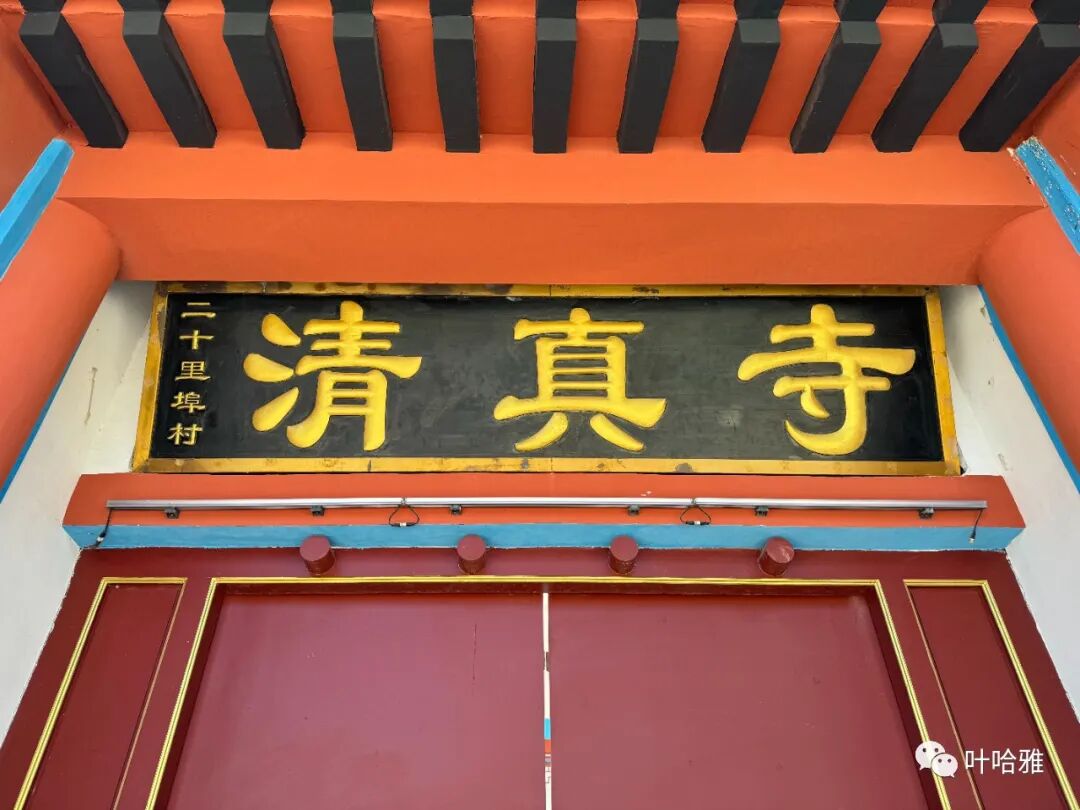
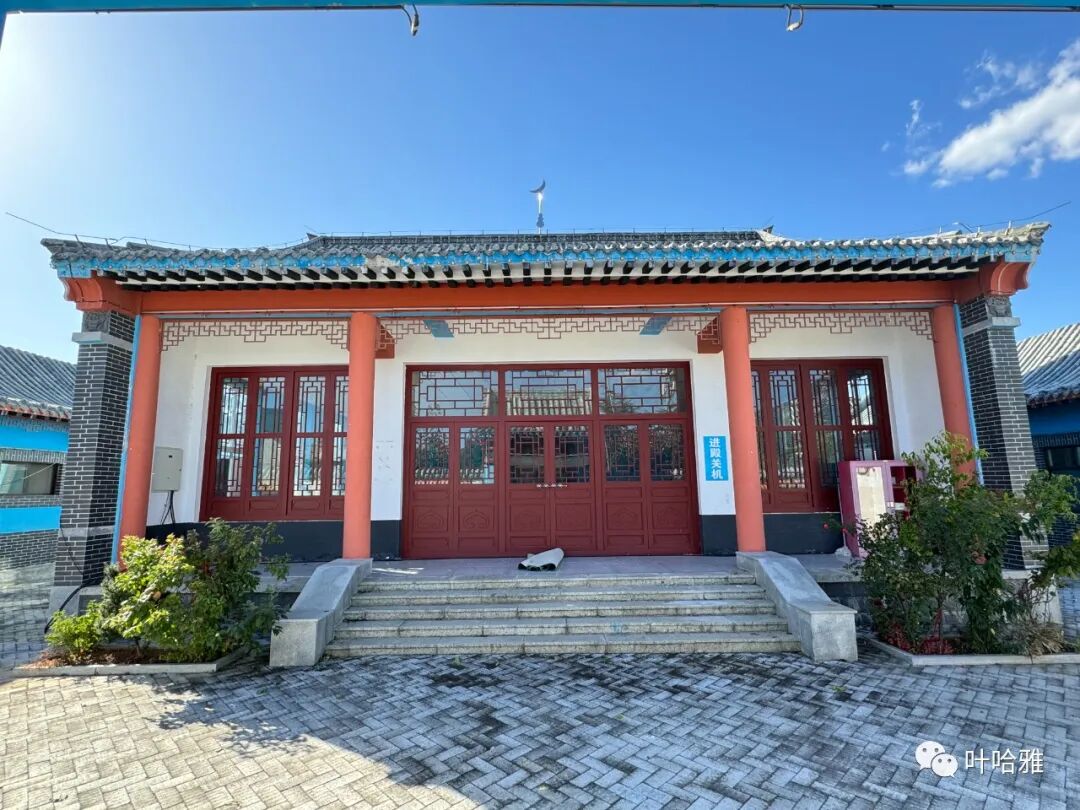
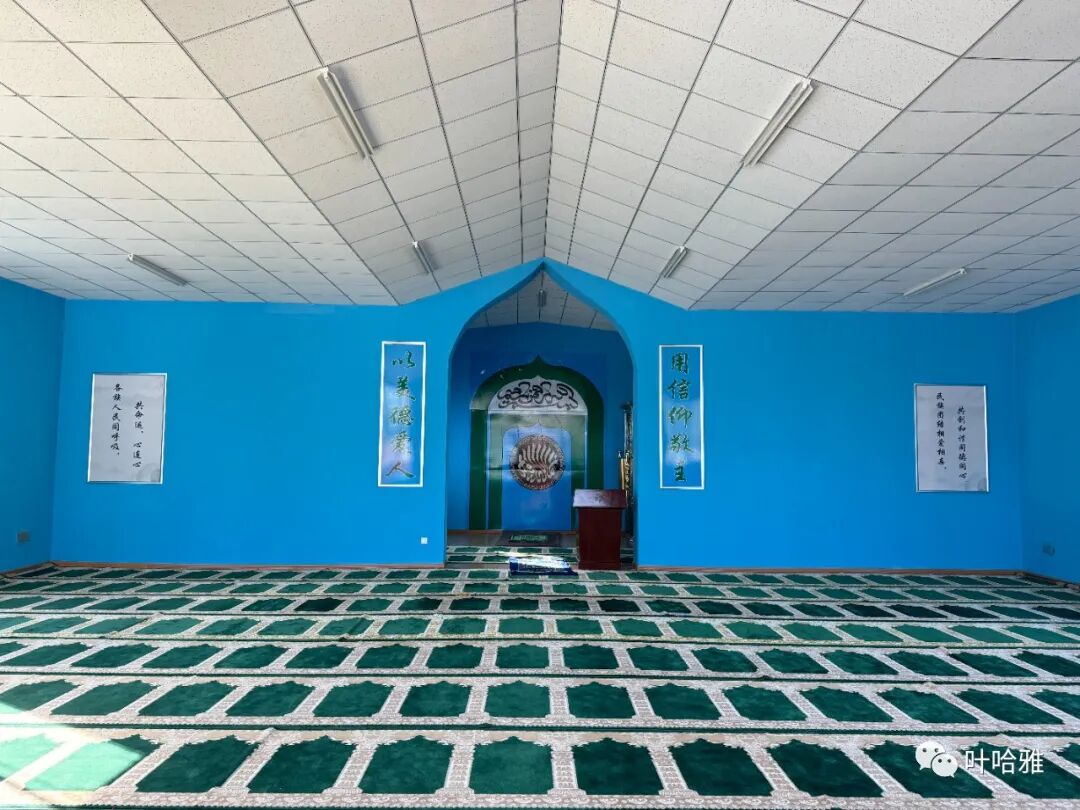
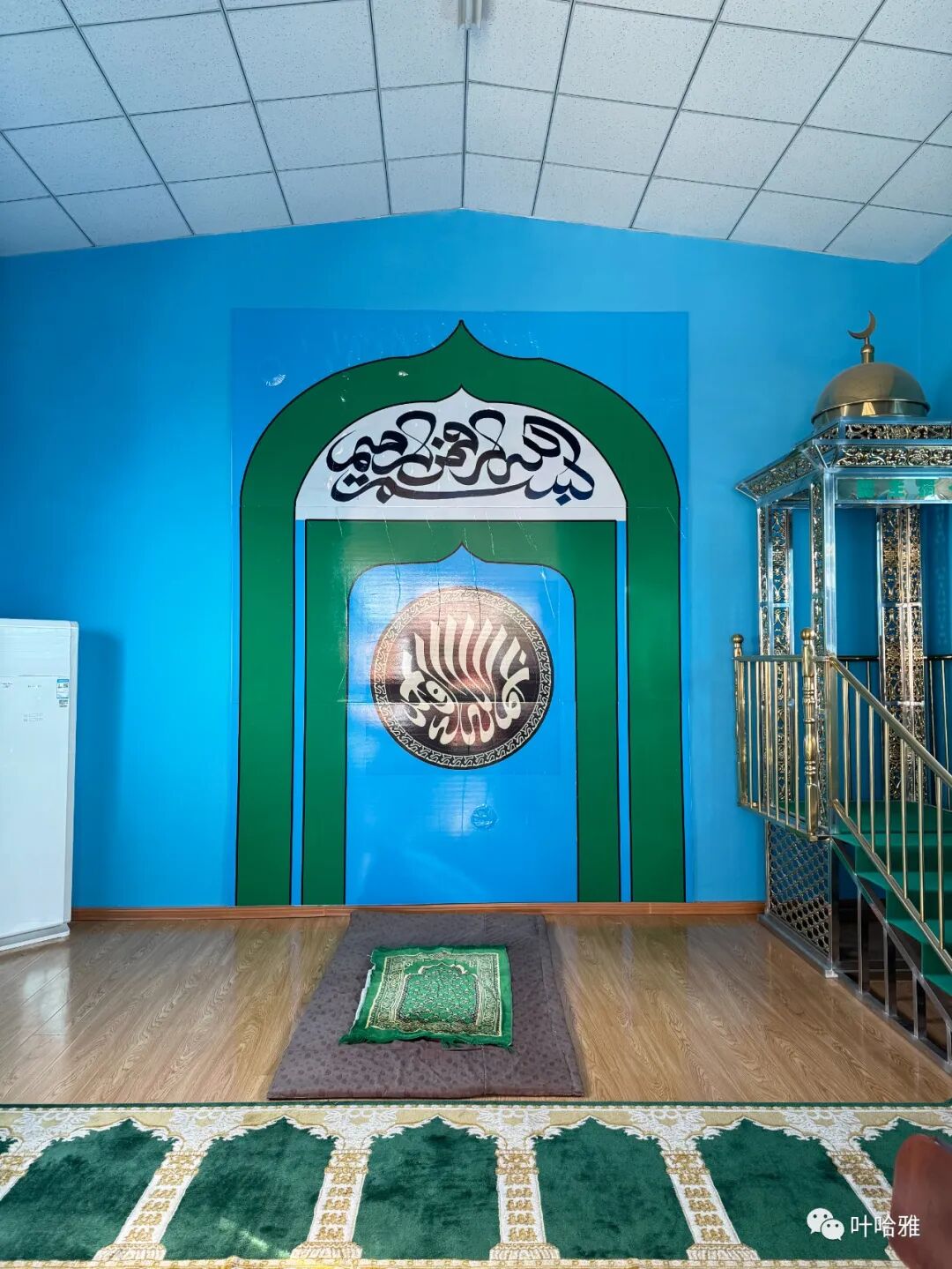
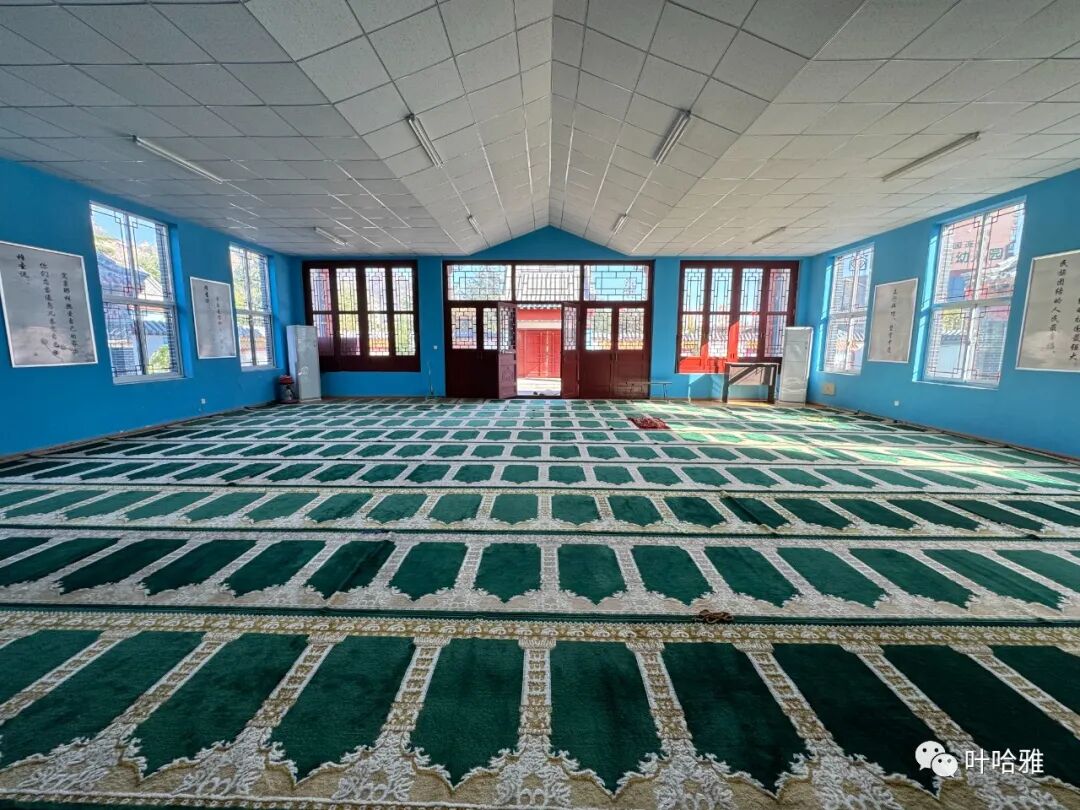
Changjiazhuang Mosque
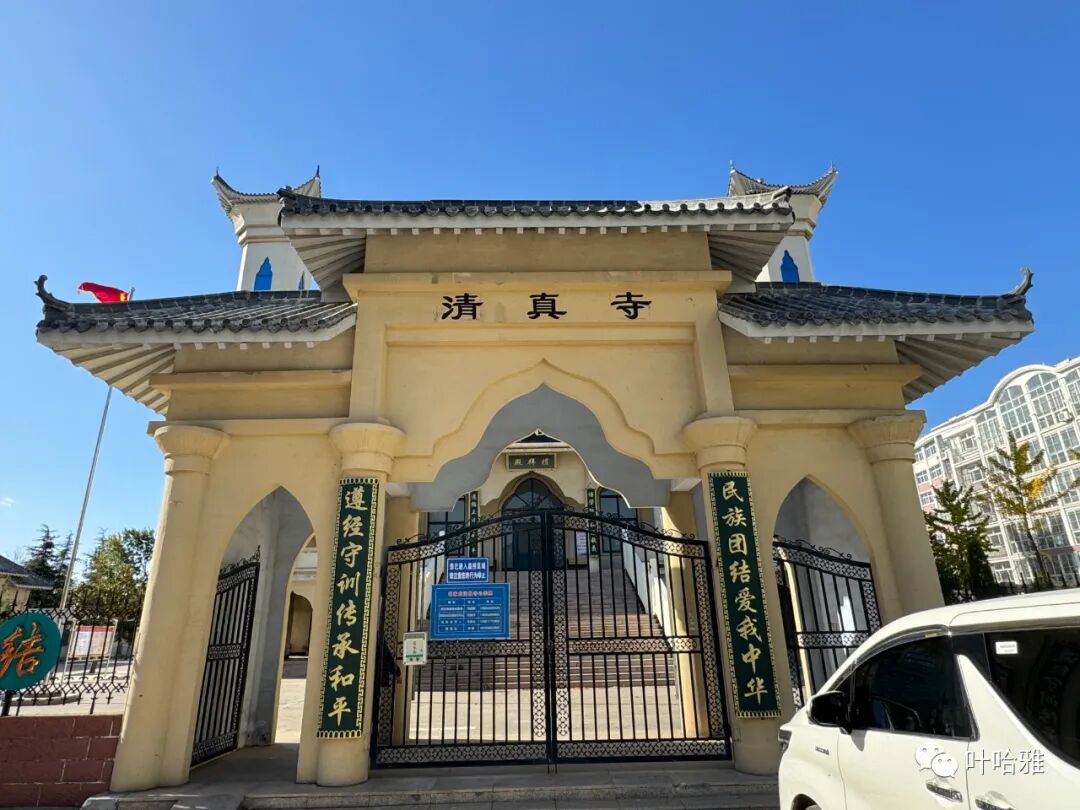
The old Changjiazhuang Mosque in the Zhoudian Subdistrict Office was moved north of the village in 1959 due to the construction of the Dahe Reservoir and the relocation of Changjiazhuang village, then rebuilt in 1963. Before the relocation, the mosque was first built around 1850, but that structure has since been demolished. The old mosque was renovated in the 32nd year of the Guangxu reign of the Qing Dynasty (1906). Two stone tablets remain: the Mosque Stele Record from 1906 and the Stele of Mr. Yang Runzhai's Good Deeds from 1933.
The new mosque is located at the south end of the Changjiazhuang community and features typical Arabic-style architecture, with a three-story main building and 36-meter-high corner towers. The mosque is 60 meters long and 55 meters wide. The prayer hall is 23 meters long and 22 meters wide. The north lecture hall is 10 meters long and 10 meters wide. The south lecture hall is 10 meters long and 5 meters wide. The ablution room (shuiwu) is 10 meters long and 8 meters wide.
The third floor of the new mosque houses the Tai'an Ethnic Unity and Progress Education Exhibition Hall (also known as the Tai'an Islamic Culture Exhibition Hall). It details the history and culture of Muslims and Islam in Tai'an. The Publicity Department of the Tai'an Municipal Committee and the Tai'an Social Science Association have named it a social science popularization base. Tai Shan University also uses it as a practical teaching base for college students. The mosque's religious affairs have been led by imams including Ma Wanqing, Zhang Shuiquan, Mi Guangqun, Yang Zhilai, and Xian Junlin. The mosque's affairs are managed by a democratic management committee, with Li Zhaoyi and Li Chunshan serving as directors.
The mosque currently holds a handwritten set of the Quran and a set of two scripture boxes (jingxia). In 2013, it received the title of Tai'an Harmonious Religious Venue.
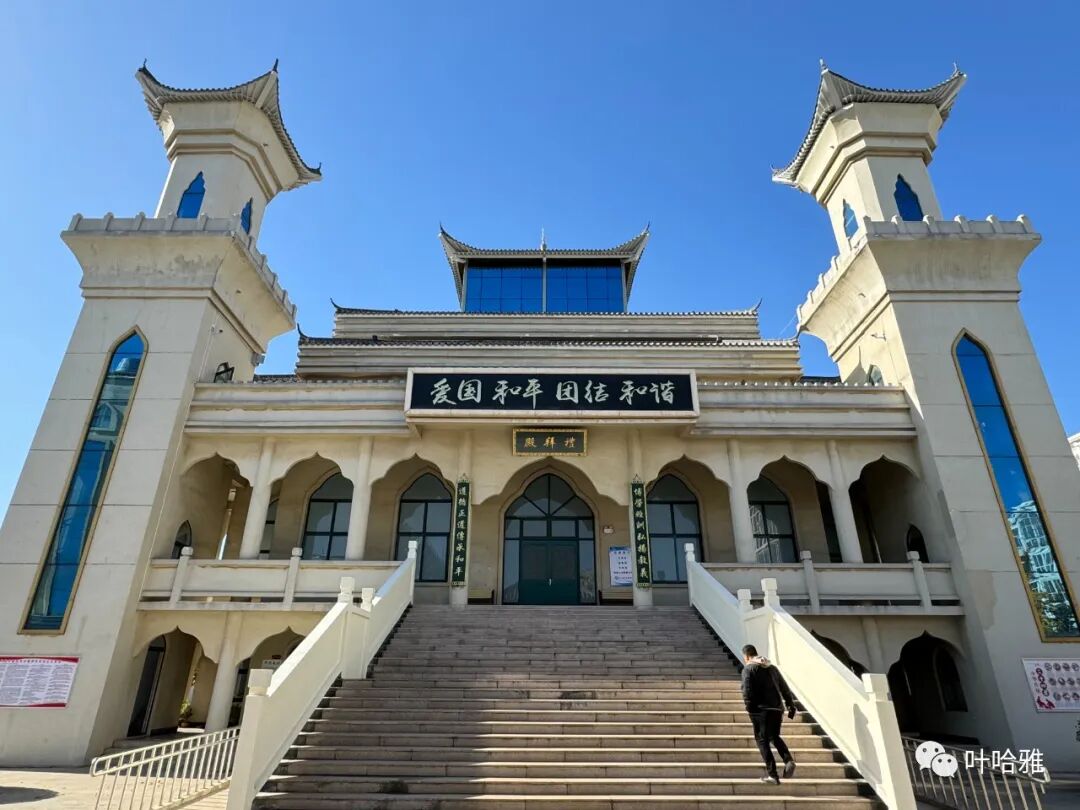
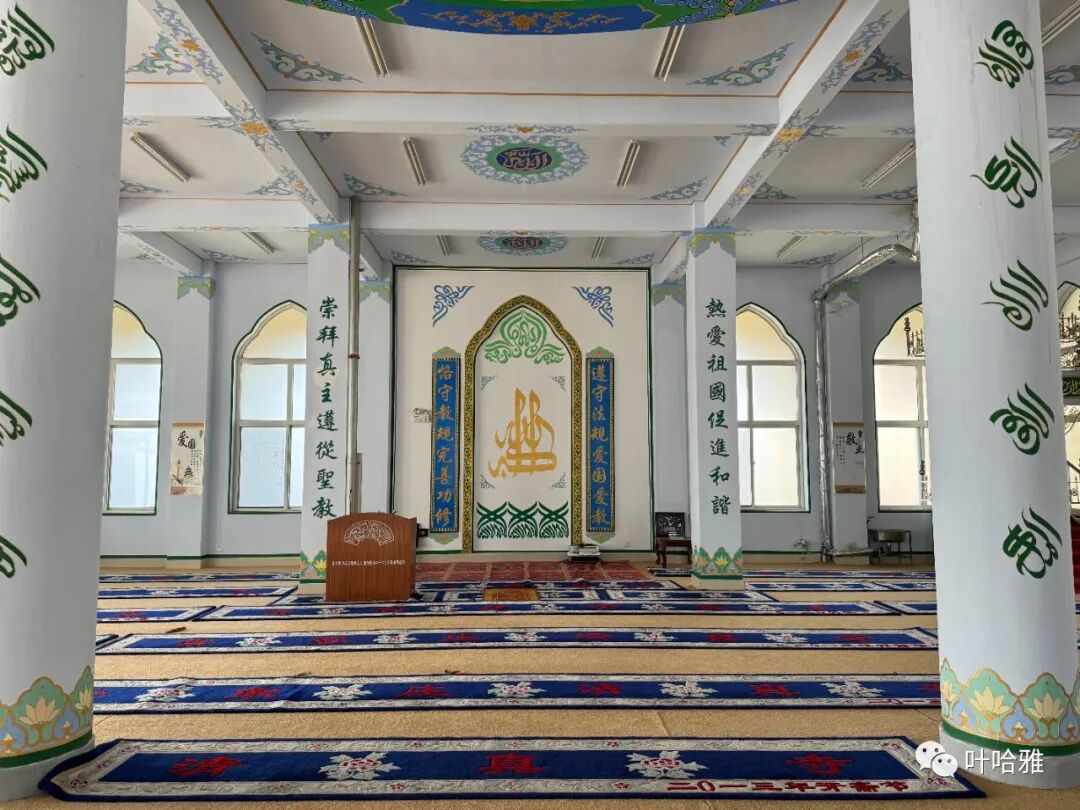
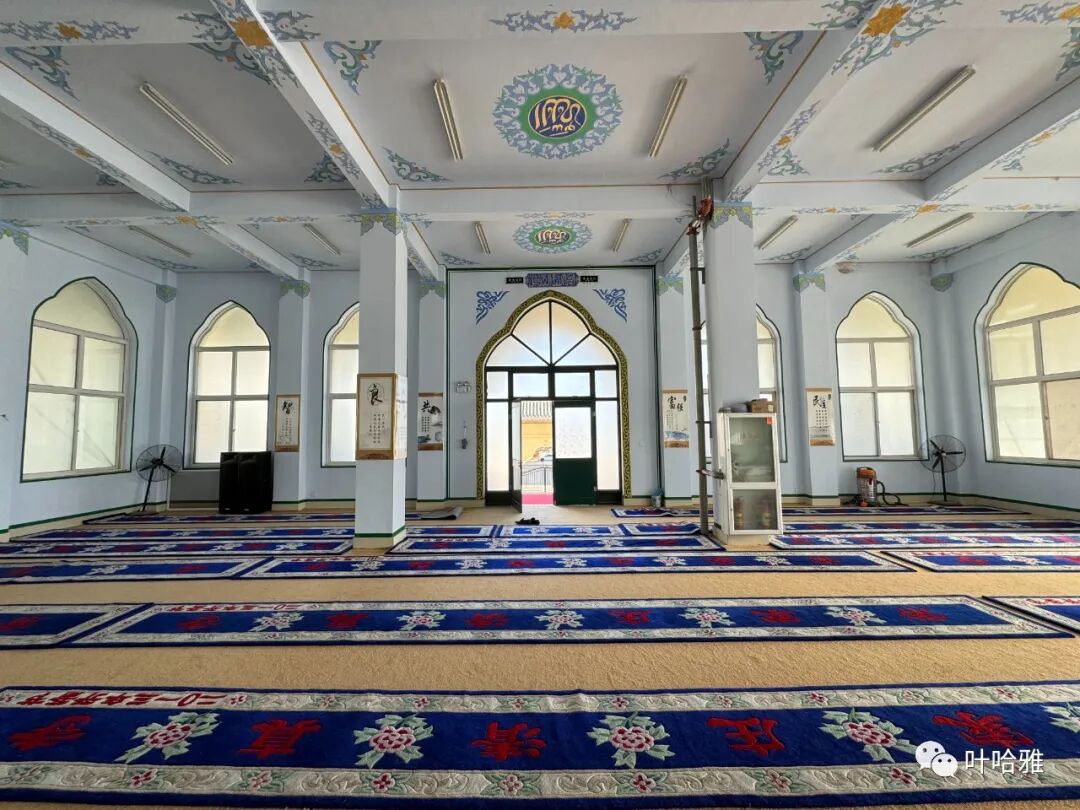
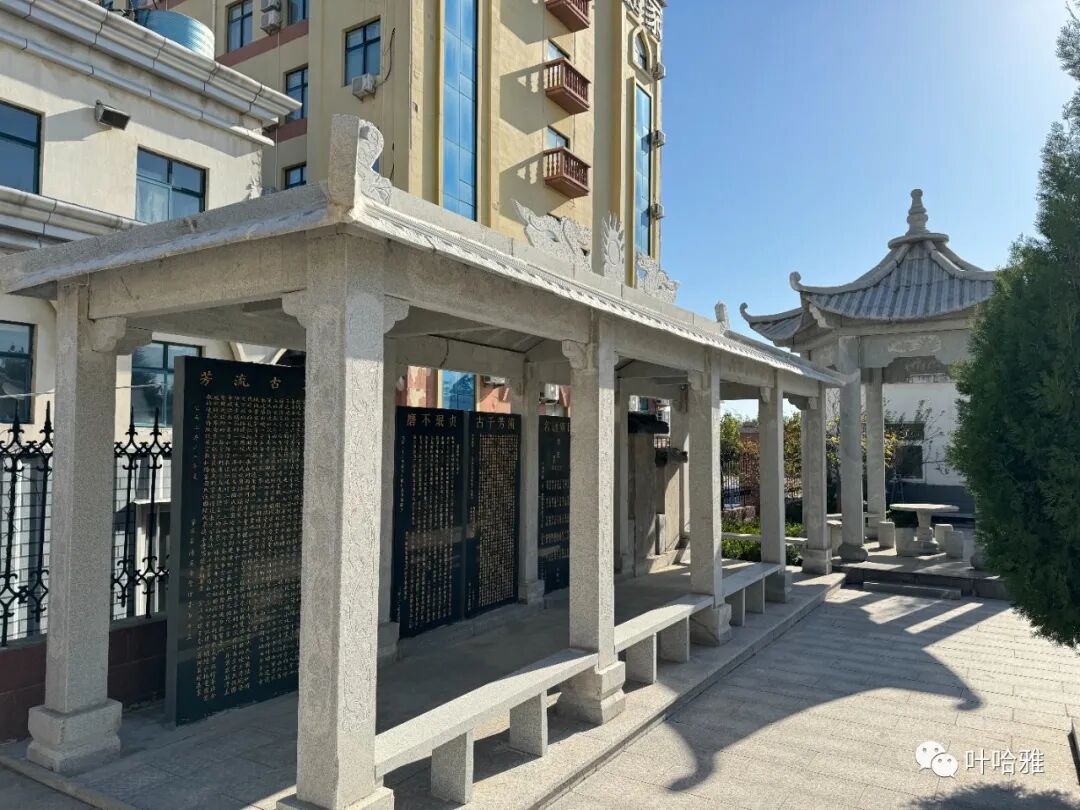
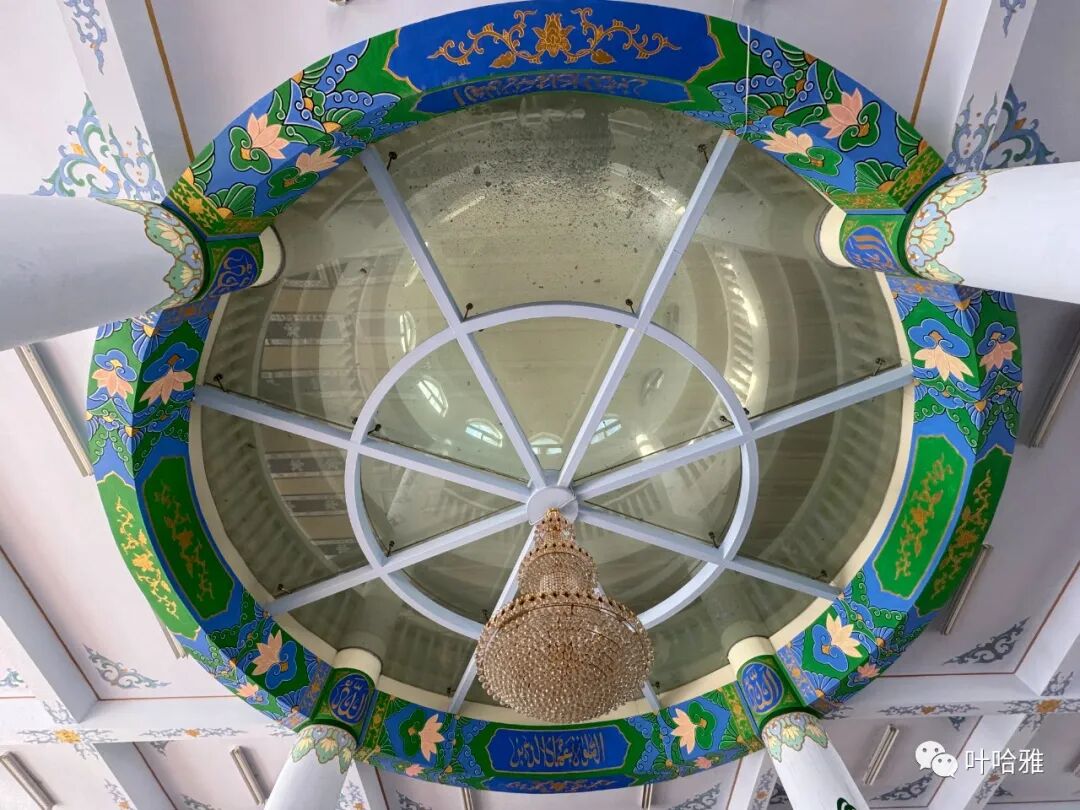
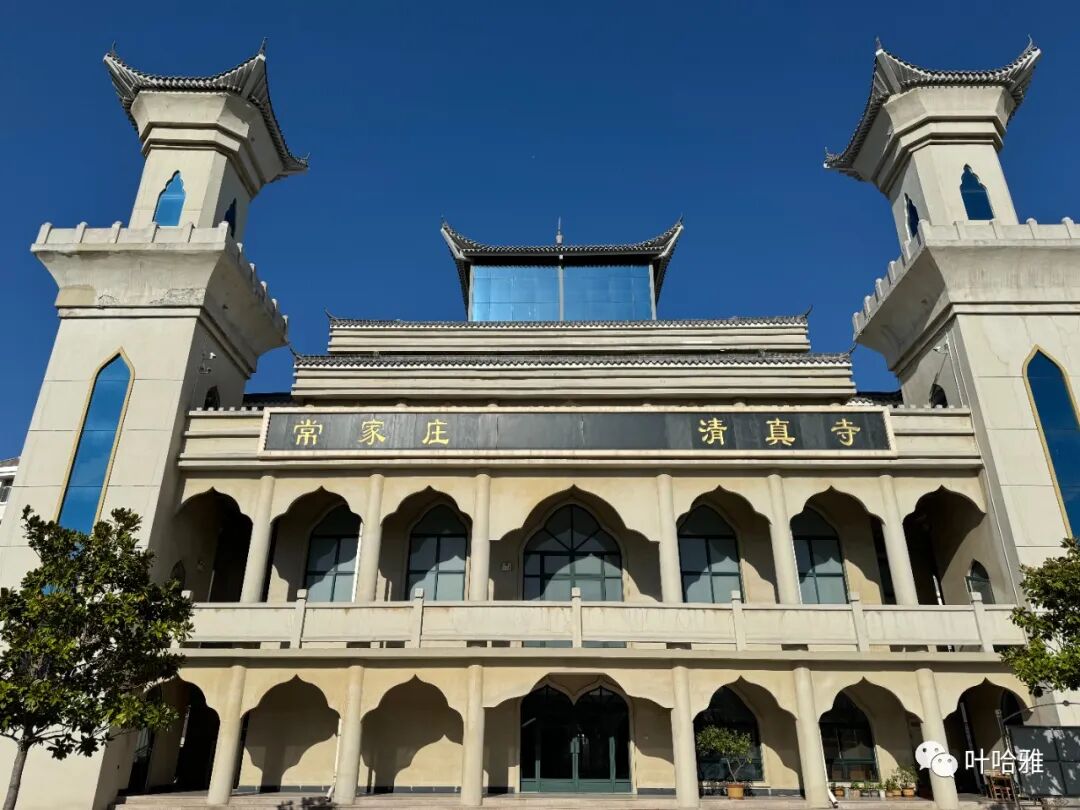
Daxinzhuang Mosque
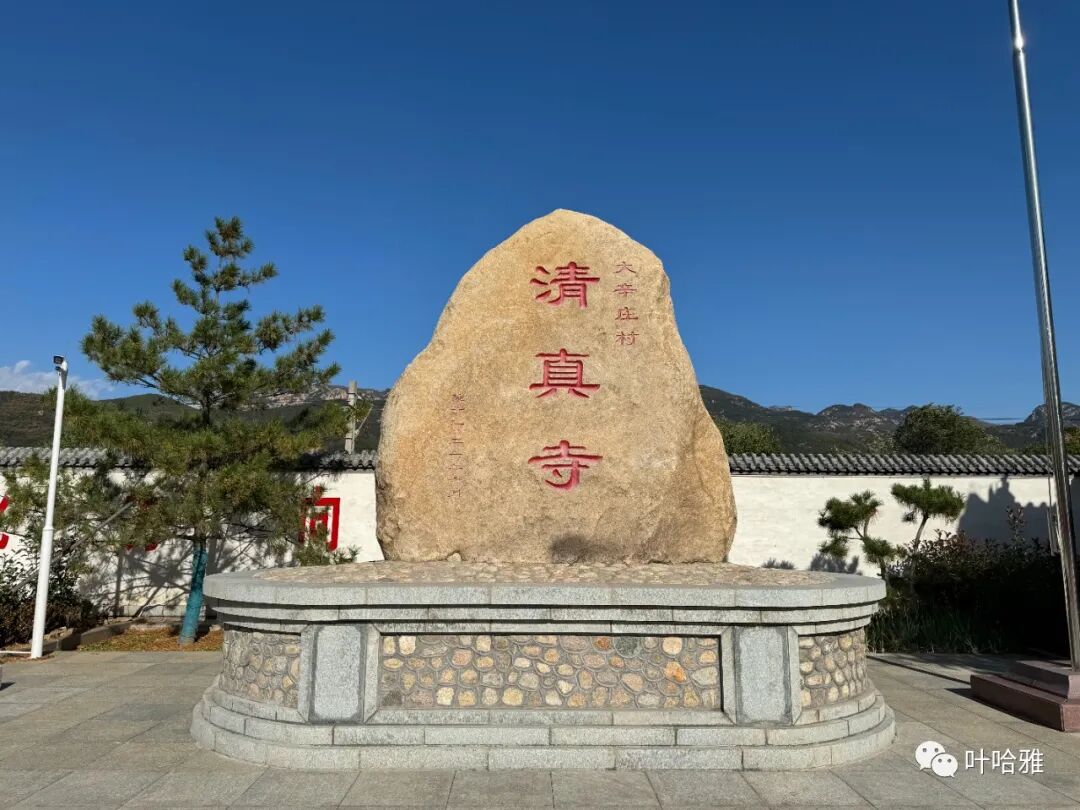
Daxinzhuang Mosque, located in the Zhoudian Subdistrict, sits in the northeast corner of the village. The original construction date is unknown. In 1960, the mosque moved to the hills of the new village along with Daxinzhuang Village because of the construction of the Dahe Reservoir. Before the move, the mosque covered dozens of acres and featured grand, magnificent buildings with complete halls and facilities. The scale of the mosque became much smaller after the move. The mosque was rebuilt in 1962 and has been in use ever since. In recent years, it has undergone three major renovations.
The mosque is a two-courtyard complex measuring 23.3 meters long and 26 meters wide. The prayer hall is a single-story structure measuring 11.2 meters long and 10.06 meters wide. The north lecture hall is 12.6 meters long and 4.2 meters wide. The south lecture hall is 12.6 meters long and 4.2 meters wide. The water room is 11.2 meters long and 4.2 meters wide. There is one existing stone tablet from 2001 titled Record of the Mosque Renovation.
Imams Wang Changgui, Wang Yuquan, and Li Baoxiang served as leaders of the mosque, and the current imam is Xu Yongqiang. The mosque is managed by a management committee, and the current director is Yang Guangfu.
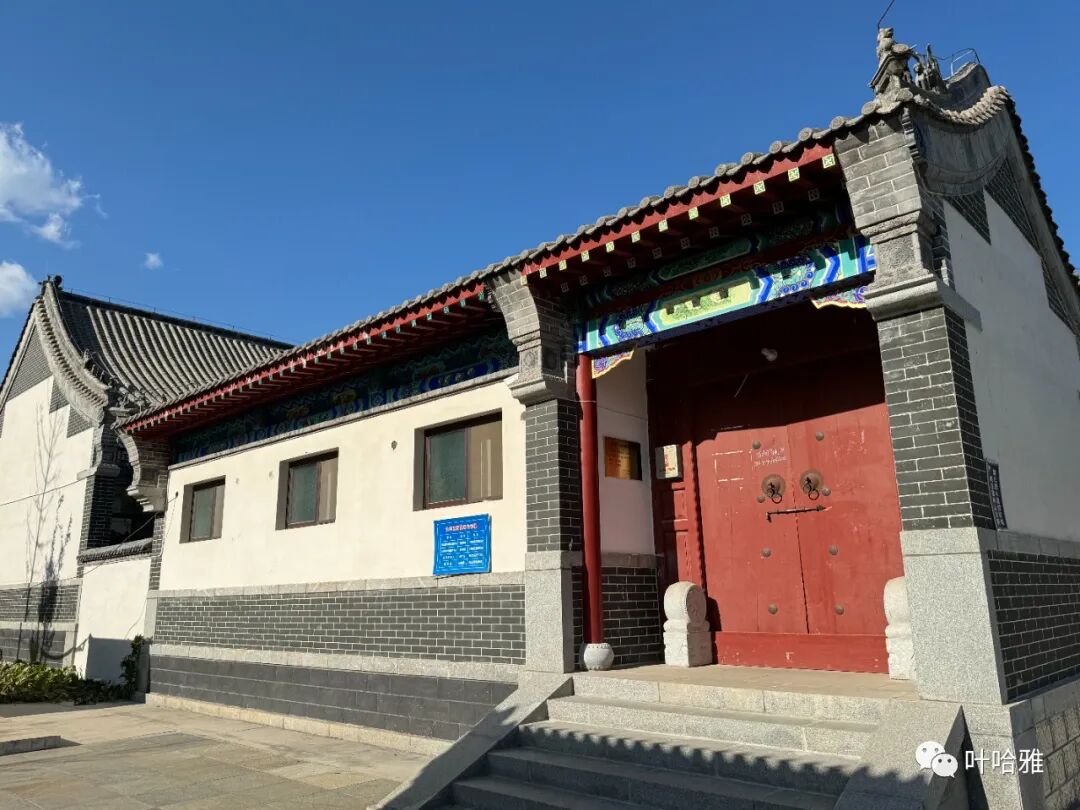
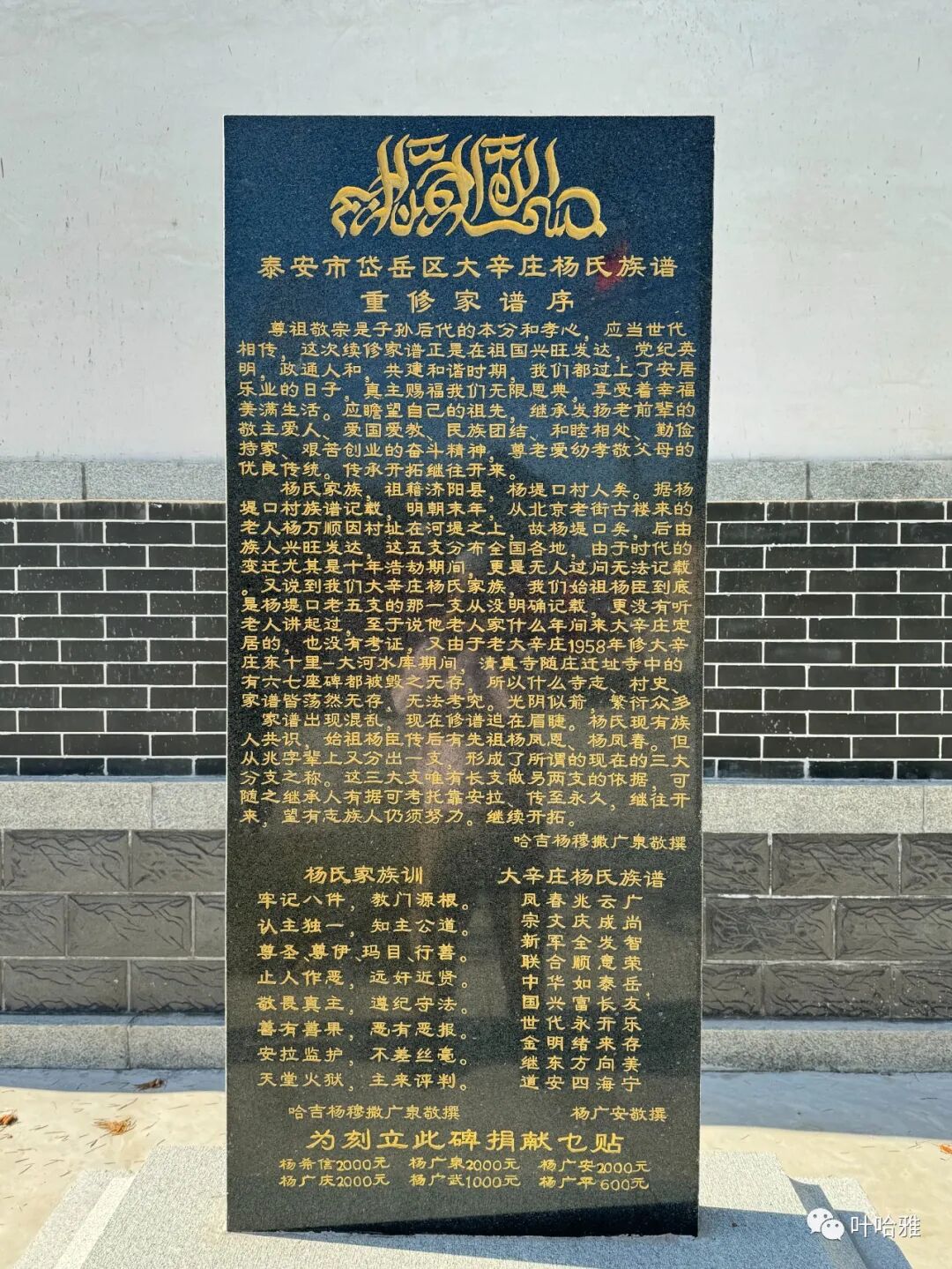
Dashuozhuang Mosque
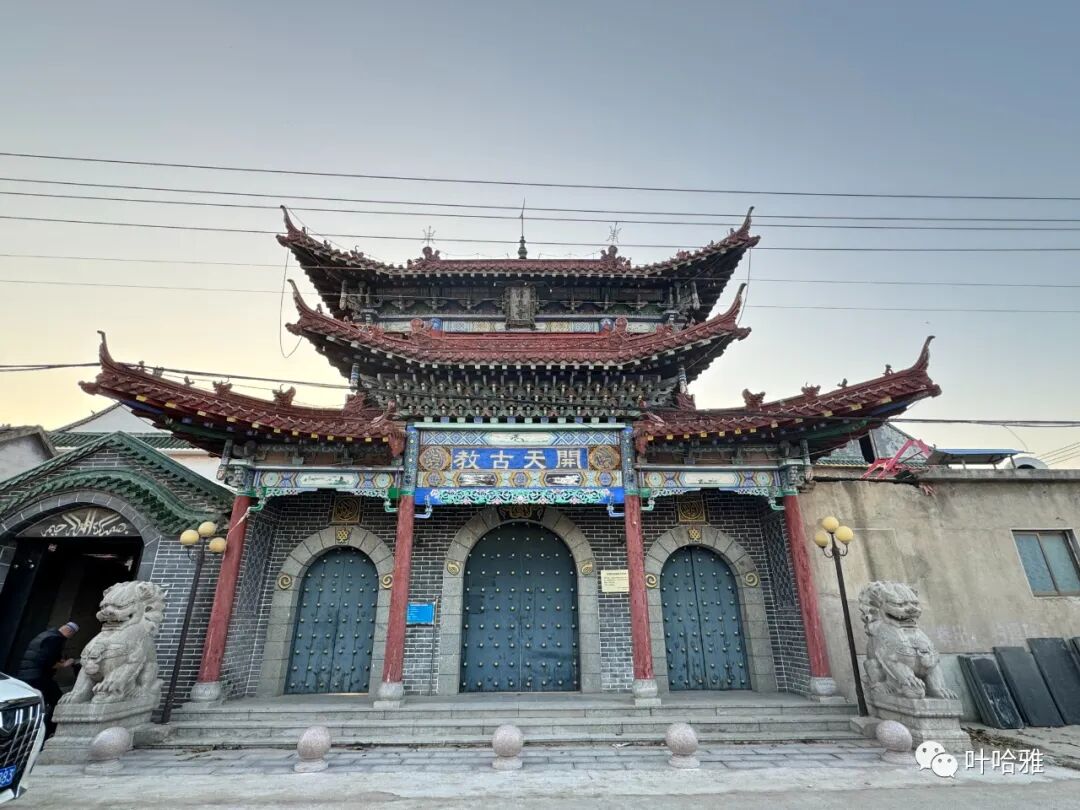
Dashuozhuang Mosque in Zhuyang Town sits in the center of the north side of the village. The exact date of its founding is unknown. It was first built at the old crossroads of Dashuozhuang Village before moving to its current location. It has been repaired many times since the 13th year of the Daoguang reign of the Qing Dynasty (1833). During the Cultural Revolution, the mosque was used for other purposes. Some halls were damaged, ancient scriptures and books were burned, the towering old trees were cut down, and stone tablets and plaques were destroyed.
After the Reform and Opening-up, the mosque gradually returned to its original appearance. It underwent nine large-scale renovations in 1988, 1993, 1996, 2001, 2004, 2006, 2007, 2010, and 2013.
The mosque features a classic traditional Chinese hall-style architectural design and covers a total area of 5,000 square meters. The main prayer hall is a three-layered structure 6 meters high and five bays wide. It includes a front porch (juanpeng), a front hall, a rear hall, a three-story rear kiln hall, and corridors on three sides, measuring 43 meters long and 21 meters wide. The north and south lecture halls and the water room are all two-story buildings, with the north lecture hall measuring 15 meters long and 8 meters wide. The South Lecture Hall is 20 meters long and 11 meters wide. The water house is 34 meters long and 11 meters wide. There is a two-story complex building that houses a washroom, funeral parlor, classrooms, dormitories, a library, and a multi-purpose hall. Five stone tablets remain today: the 1850 Tablet for the Renovation of Dasujiazhuang Mosque from the Daoguang era, the 1907 Tablet for the Expansion of the Mosque from the Guangxu era, the 2007 Tablet for the Construction of the South Lecture Hall at Dasuozhuang Mosque, the 2015 Tablet for the Reconstruction of the Prayer Hall at Dasuozhuang Mosque, and one ancient tablet with faded inscriptions.
Since modern times, the mosque's religious affairs have been led by imams including Mi Ahong, Fa Ahong, Wang Detai, Yang Zhaoqian, Zhou Baotian, Li Mingtai, Zhang Kuidong, Ma Shigui, Yang Dechun, Zhan Desheng, Yang Xinen, Mi Guangxun, Li Shengcai, Han Jingxin, Wang Buying, Jin Haixue, Shi Ahong, Ma Gang, Qian Xuewen, and Yang Zhaozeng. The mosque is managed by a democratic management committee, with Yang Xingzhen, Yang Xingfu, and others serving as directors.
The mosque values traditional scripture education and has trained many talents for the faith, including Mi Tongliang, Mi Yutai, Mi Sichuan, Mi Jikong, Mi Jihong, Mi Guangxun, Mi Guangqun, Mi Zhaojie, Mi Zhaozhang, Mi Tengfei, Yang Chengyu, Yang Yueqing, Yang Ahong, Yang Kuizeng, Yang Xingguang, Yang Xinzeng, Yang Zhaozeng, Yang Yuhua, Yang Yuming, Yang Lei, Ma Yuheng, Ma Jundong, Ma Daohui, Ma Daoguang, Ma Su, Ma Guangrui, Jin Guanglu, Jin Yushi, and Jin Zongfeng. Imam Yang Yueqing once taught in Changchun, Jilin Province, and later taught in Qiqihar, Taicheng Mosque, and Hanzhai in Yucheng. Imam Yang Yucheng once taught in various places in Hebei Province. Imam Ma Yuheng once taught at Taicheng Mosque, Jining East Mosque, and other locations.
The mosque currently holds a pair of vases (now damaged), a pair of scripture boxes, and four plaques. These include the 'Qibin Zhongwang' plaque given to Mi Diankui by the Taian County magistrate in 1852, the 'Yongjiu Zhenduo' plaque given to Imam Yang Yueqing by the elders of Hanzhai in Yucheng County, the 'Changming Huxun' plaque given to the Sha brothers, Sheng-san and Maotang, by Taicheng merchants in the early Republic of China, and the 'Wuye Furong' plaque given to Mi Chuangui by the villagers of Dasuozhuang. Imam Yang Yujun also keeps a handwritten copy of the Quran.
The women's mosque in Dashuozhuang, Zhuyang Town, was first built in the early years of the Republic of China. It covers over 600 square meters with a building area of more than 400 square meters. Due to years of neglect, it fell into disrepair and became a dangerous structure. In 1994, repairs were made to the dangerous structure, and the main hall was rebuilt.
In 2011, the mosque was named a Harmonious Religious Activity Venue by Shandong Province, and in 2014, it received the title of Model Mosque from Tai'an City.
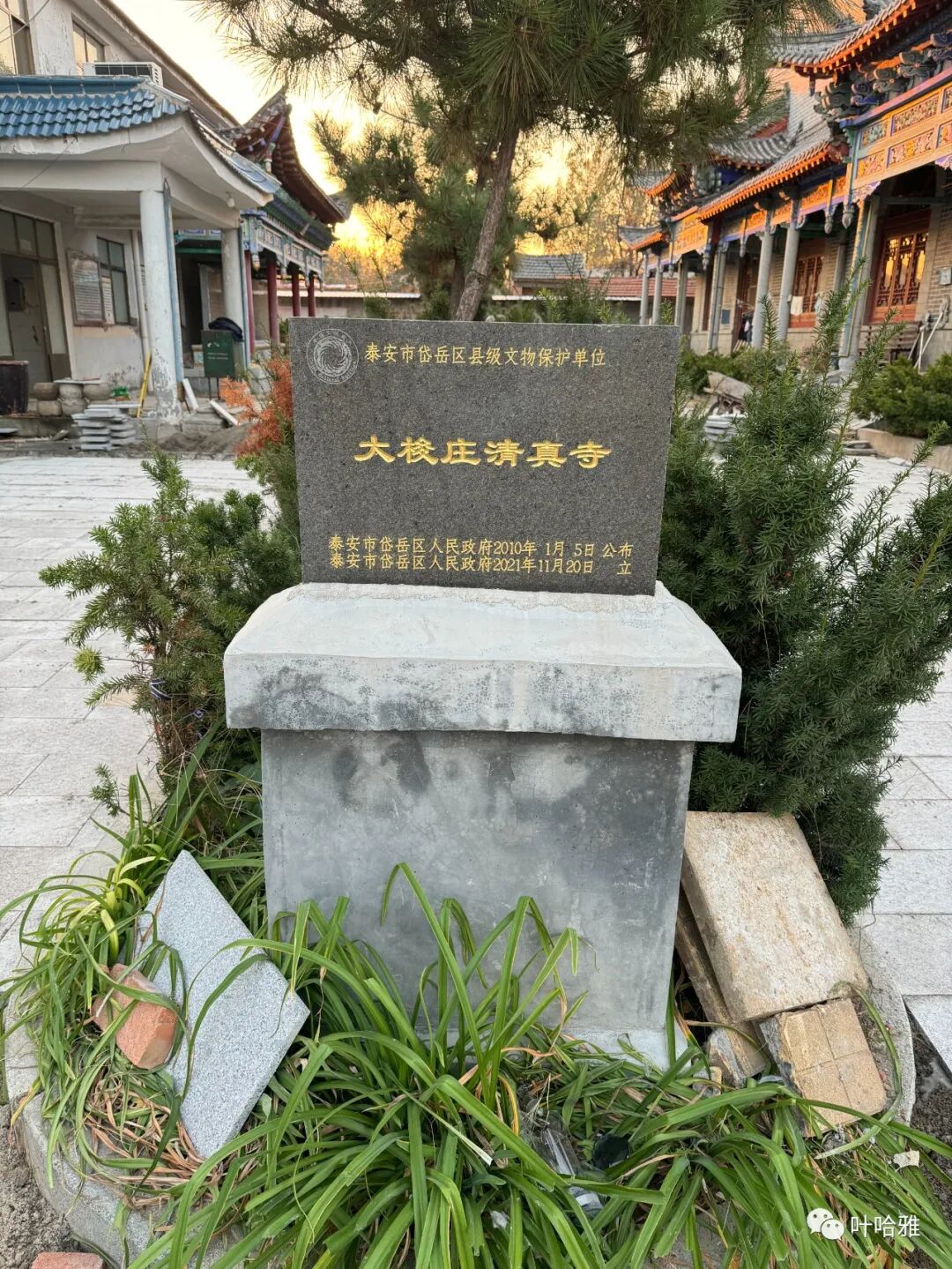
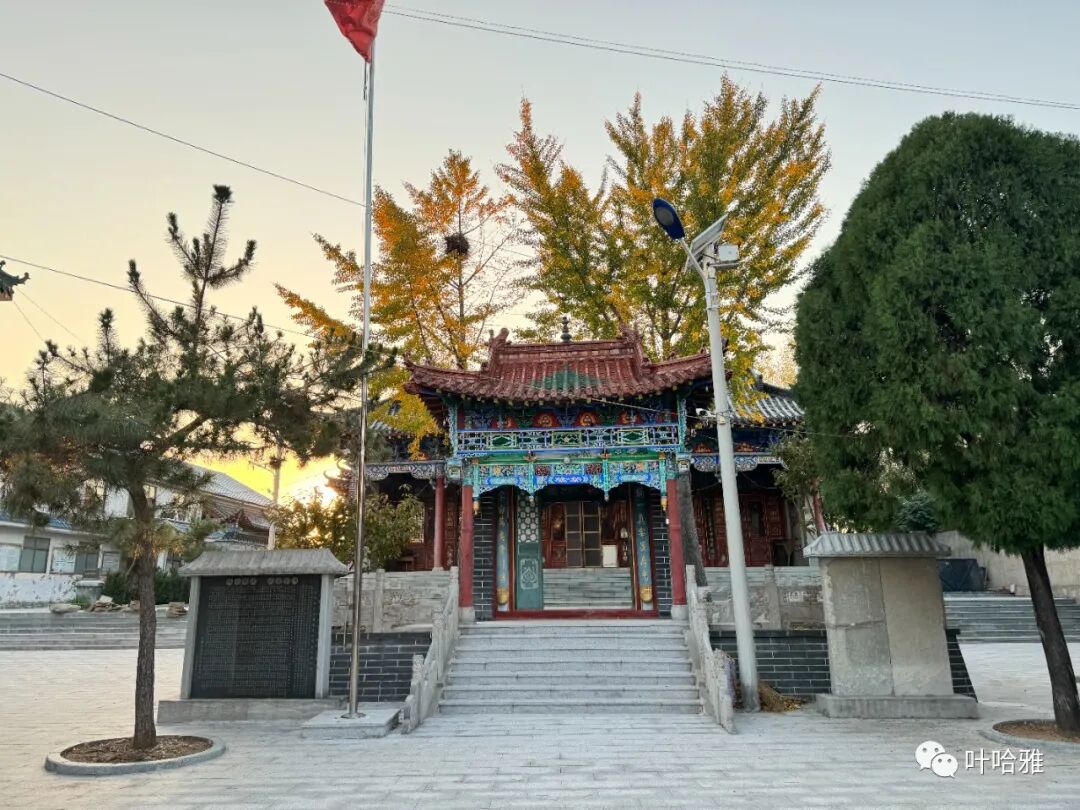
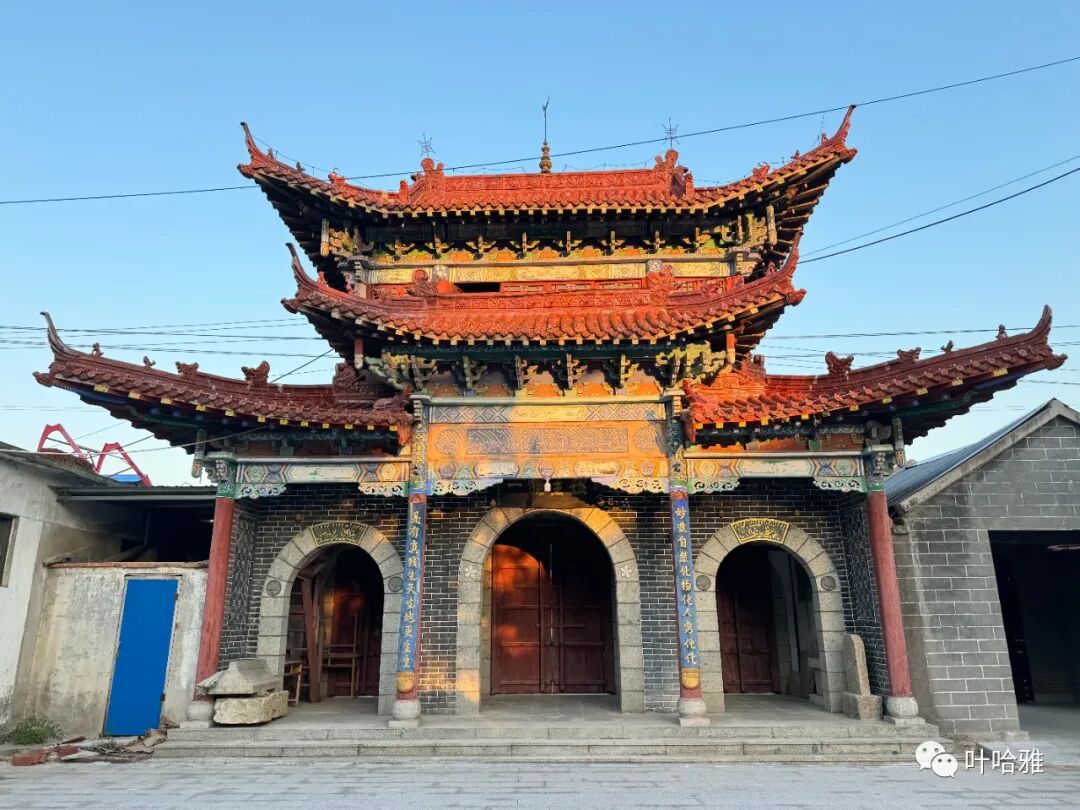
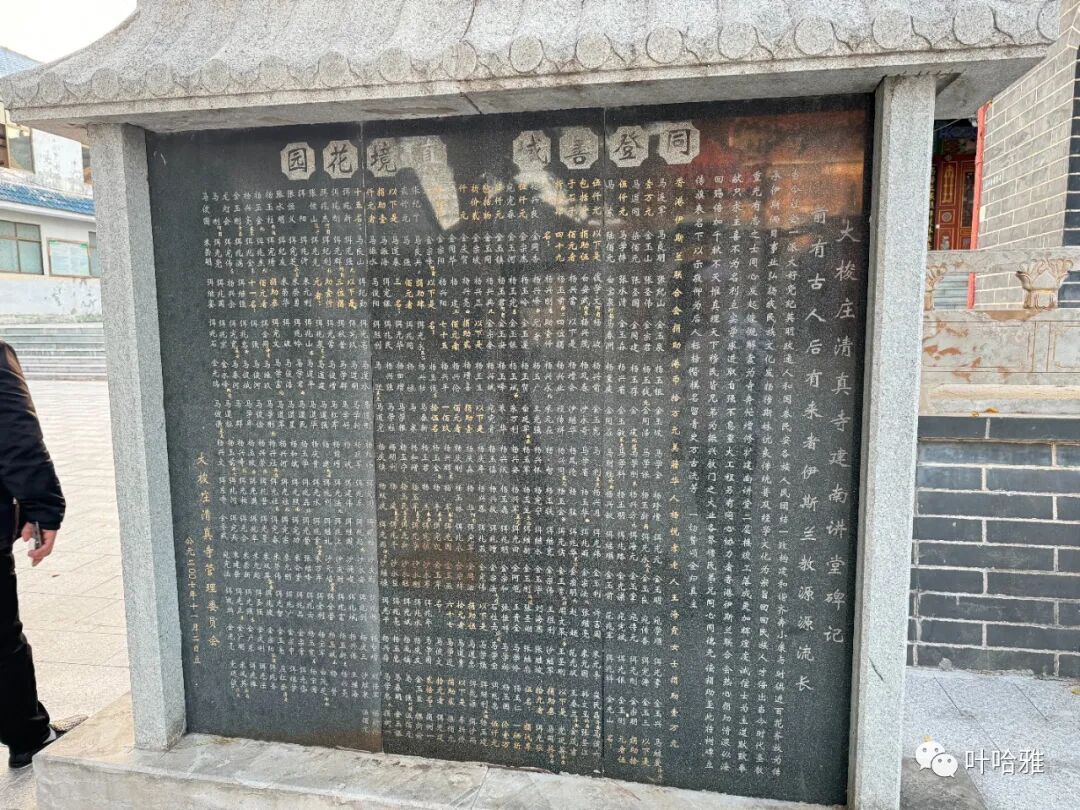
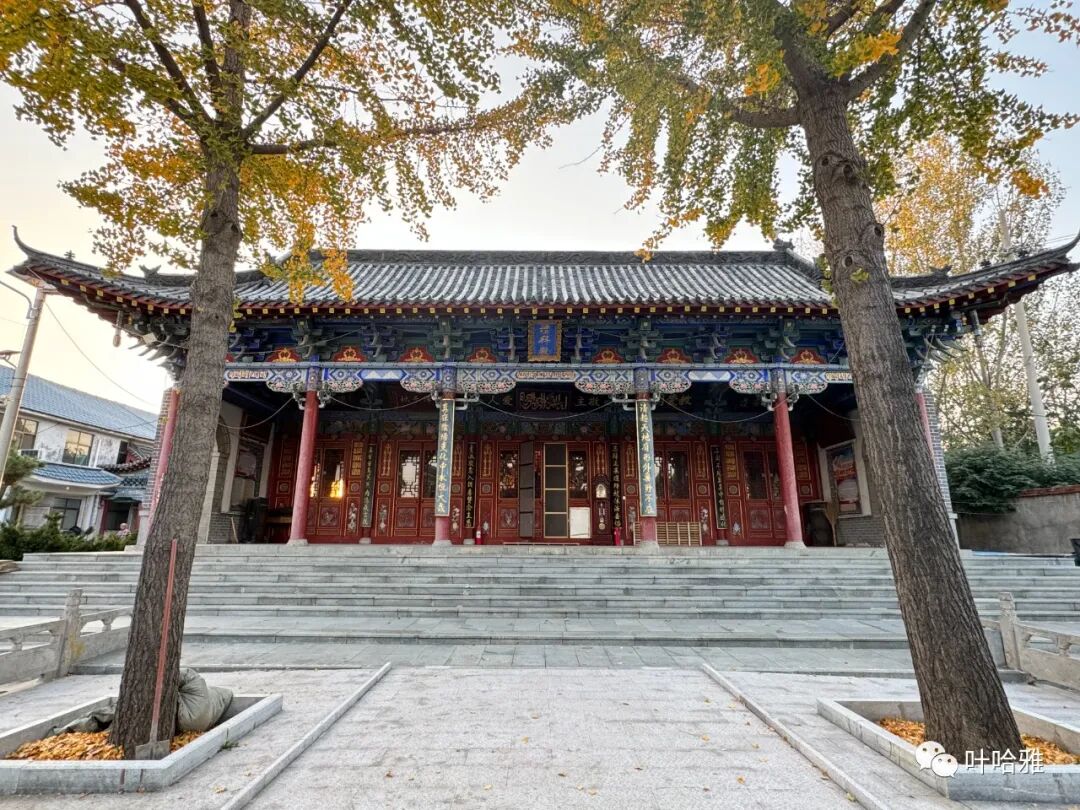
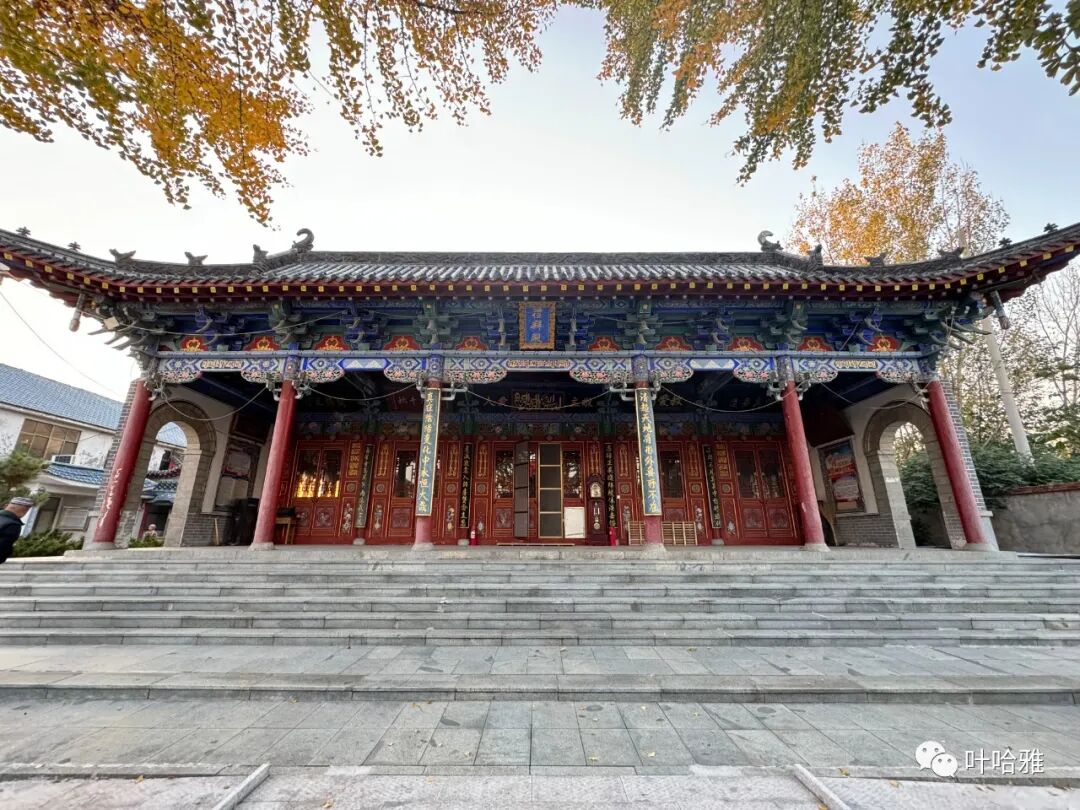
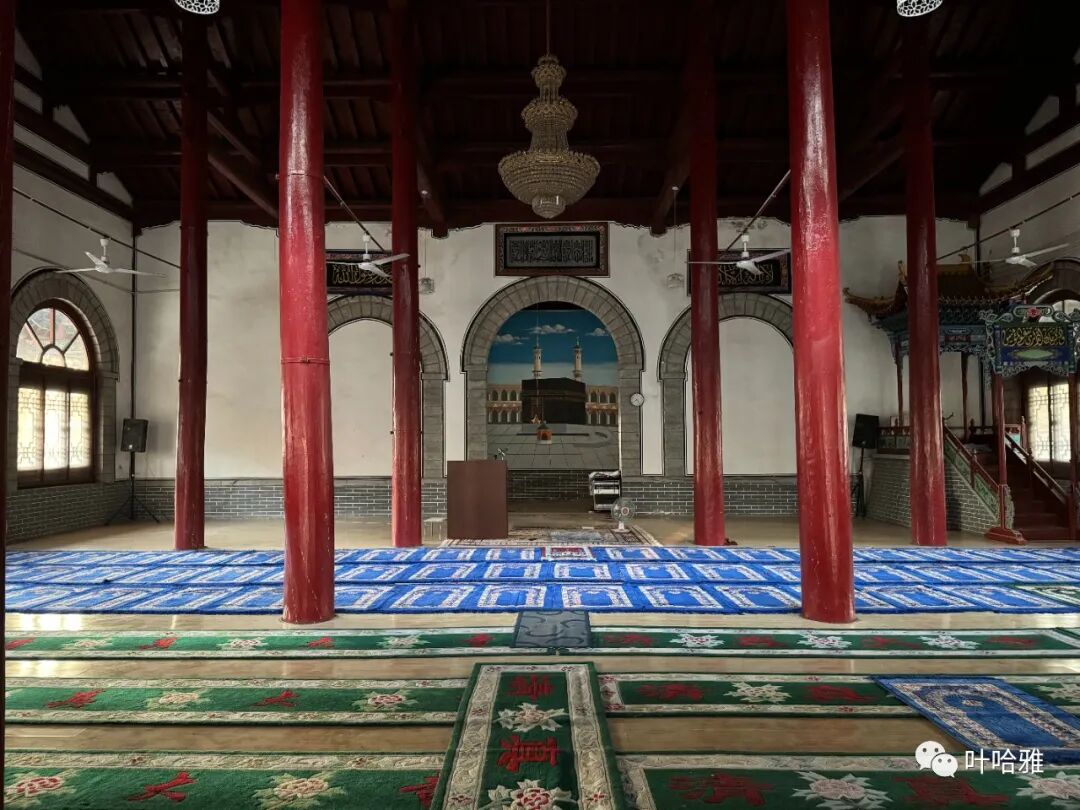
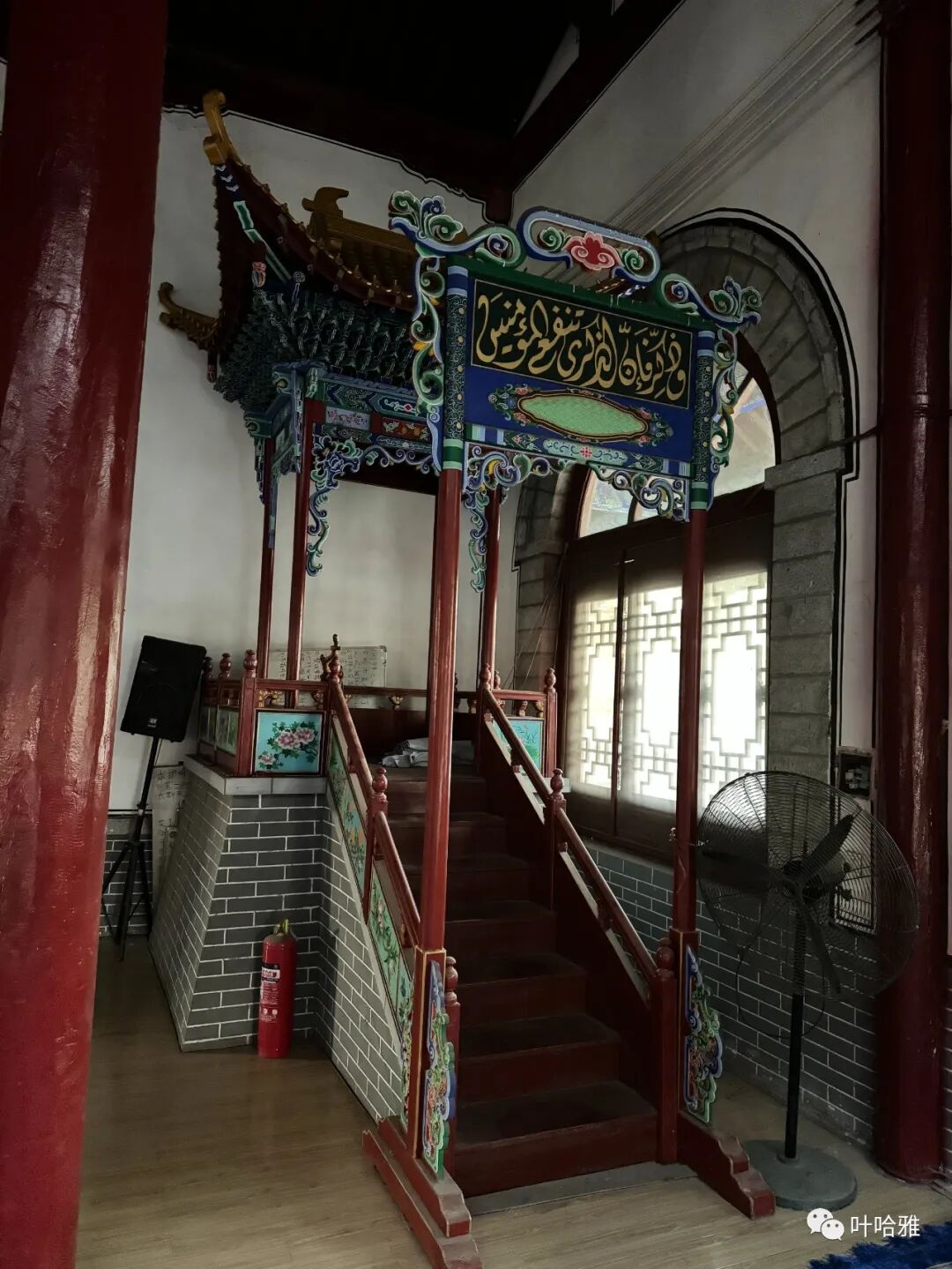
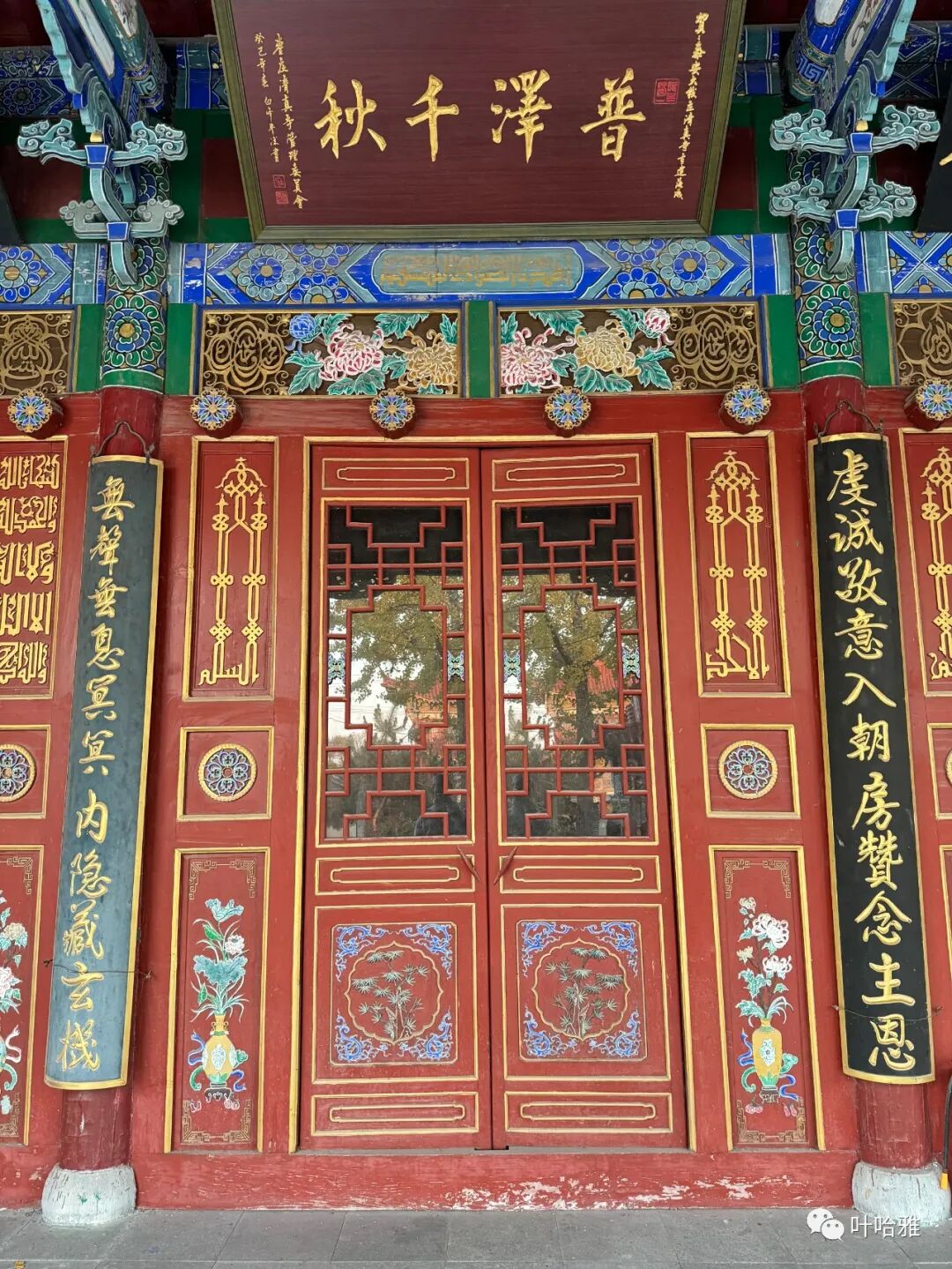
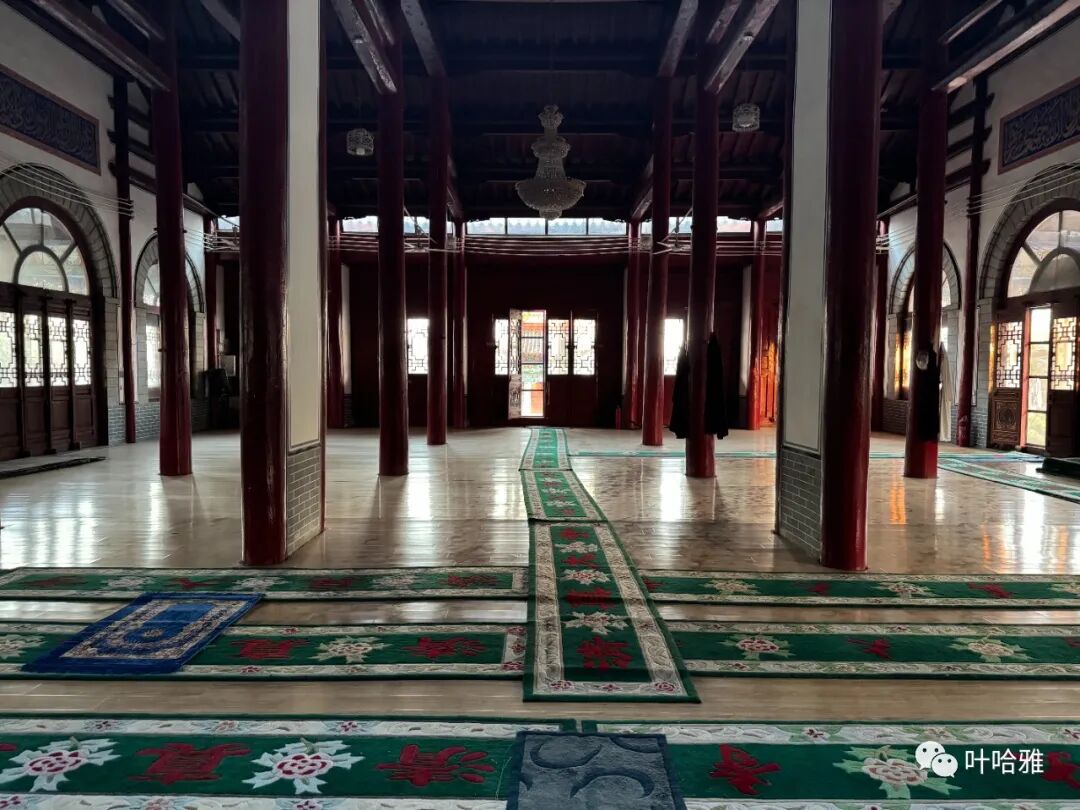
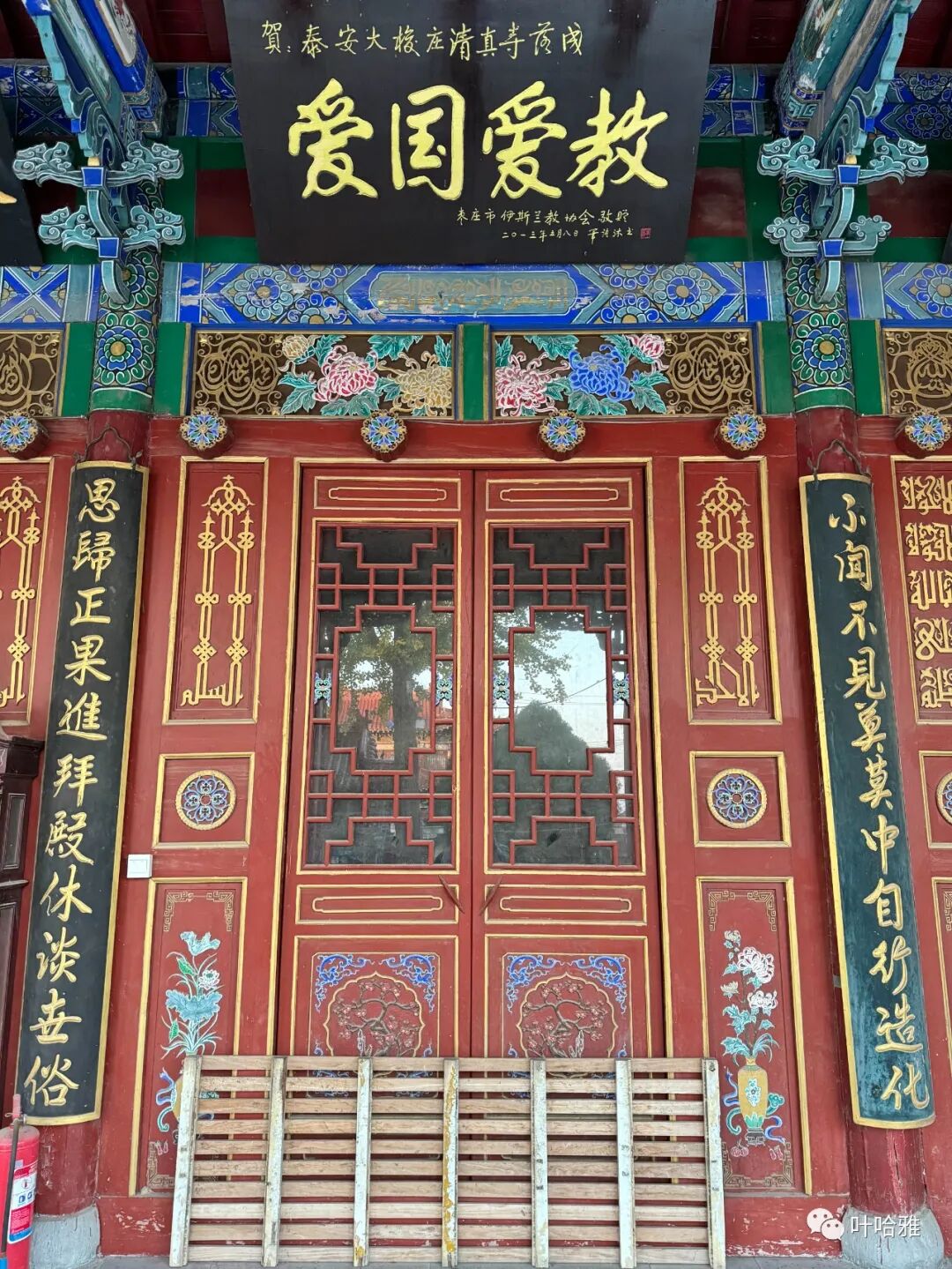
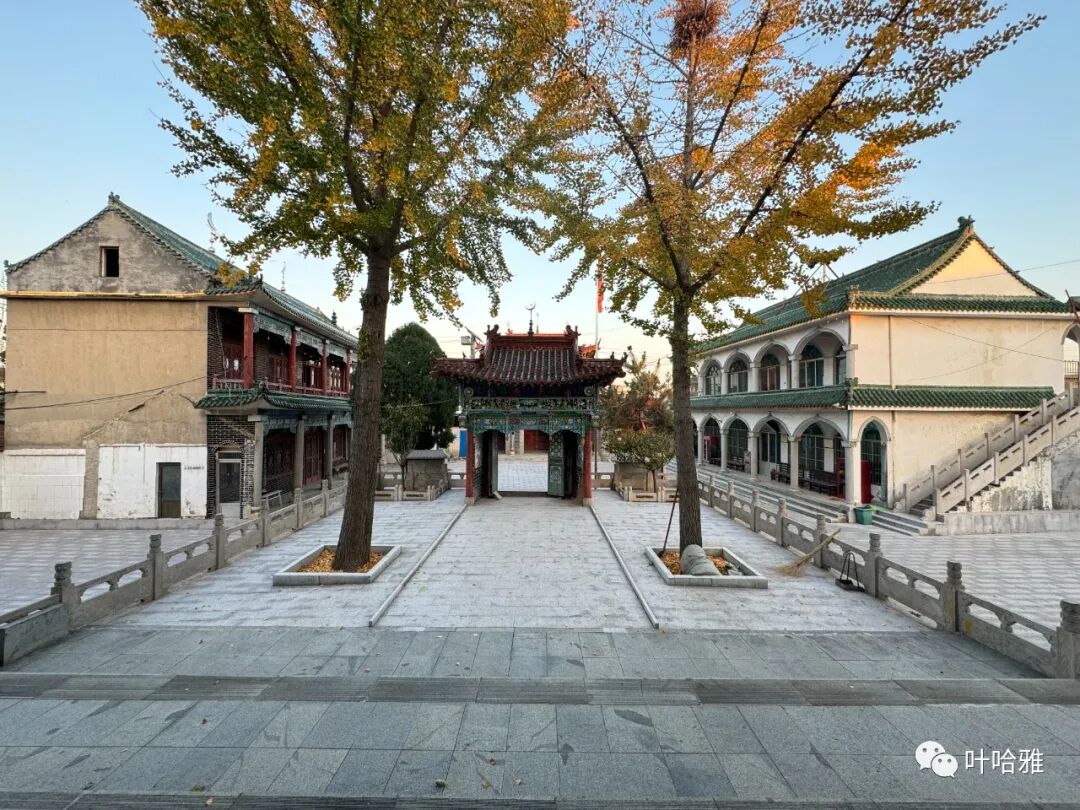
Zhoujiapo East Mosque
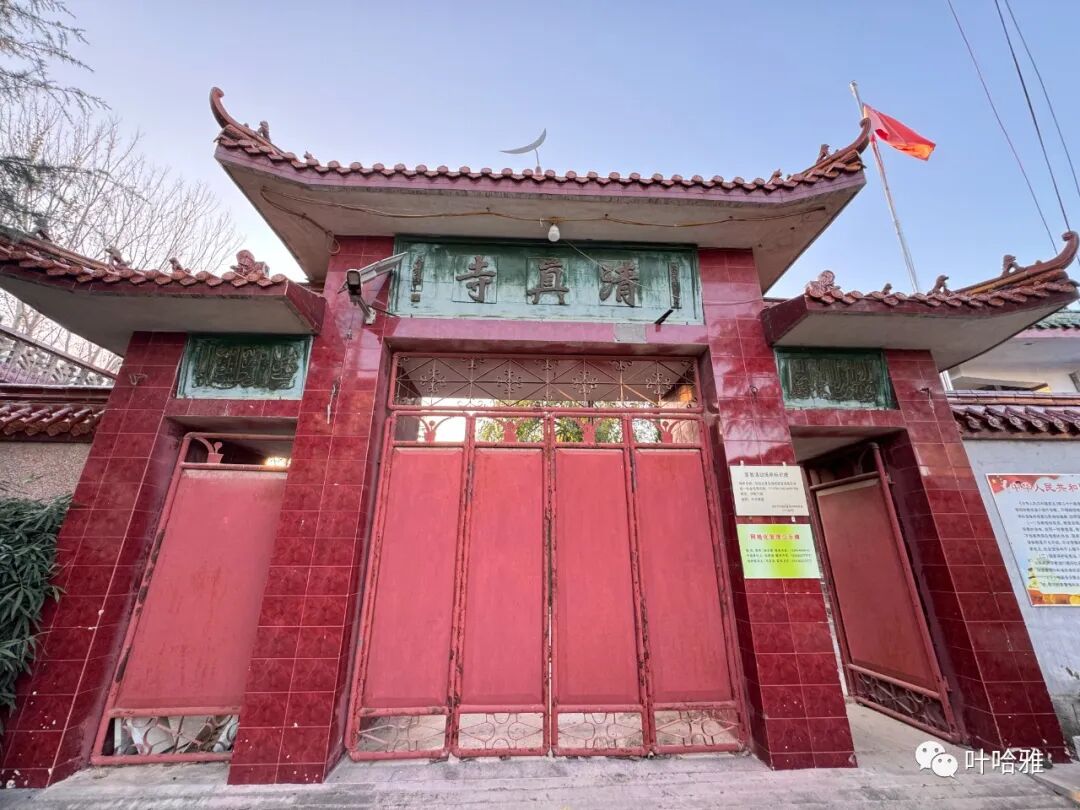
The Zhoujiapo East Mosque in Xiazhang Town sits at the west end of the village. It was founded during the Kangxi period of the Qing Dynasty (1661-1722) and has been expanded and renovated dozens of times since.
The mosque is 62 meters long and 42 meters wide. The main hall was originally a traditional Chinese palace-style building with a moon terrace in front and a 16-meter-high moon-viewing tower in the back. These were torn down during the Cultural Revolution and replaced with the current auditorium-style tiled building. The prayer hall is 18.7 meters long and 13.1 meters wide. The north lecture hall is 24 meters long and 8 meters wide, but it has now collapsed. The south lecture hall is 18 meters long and 8 meters wide. The water room is 6 meters long and 8 meters wide. There are eight stone tablets remaining: the Mosque Land Tablet from the 55th year of Kangxi (1716), the Mosque Land Tablet from the 28th year of Qianlong (1763), the Mosque Tablet Record from the first year of Daoguang (1820), the Mosque Renovation Tablet Record from the 28th year of Daoguang (1848), the Mosque Tablet Inscription from the 23rd year of Guangxu (1897), the Mosque Renovation Tablet Record from the 25th year of Guangxu (1899), the Han Family Cemetery Tablet Inscription from the 7th year of the Republic of China (1918), and the Ma Family Cemetery Tablet Inscription from the 15th year of the Republic of China (1926).
Since the Qing Dynasty, the mosque has been led by imams including Yang Mingyuan, Zhou Jiting, Mi Tongliang, Mi Jingxue, Bai Qingshui, Zhang Deng'ao, Imam Zhao, Yang Yuezhen, Han Jingxin, Ding Fucai, and Li Tongjiang. The mosque has trained over 20 imams, and the Han family, represented by three generations of imams—Han Jingxin, Han Tonghe, and Han Kun—is a classic family of imams. The mosque is managed by a democratic management committee with a solid organizational structure, with directors including Bai Zhenkui, Bai Fengrui, Yang Fengxiang, Bai Huaitong, Bai Xuewen, and Bai Jun. During the War of Resistance Against Japan, the mosque established the Zhoujiapo Anti-Japanese Islamic School.
In 2011, the mosque was named a Harmonious Religious Activity Venue by Shandong Province.
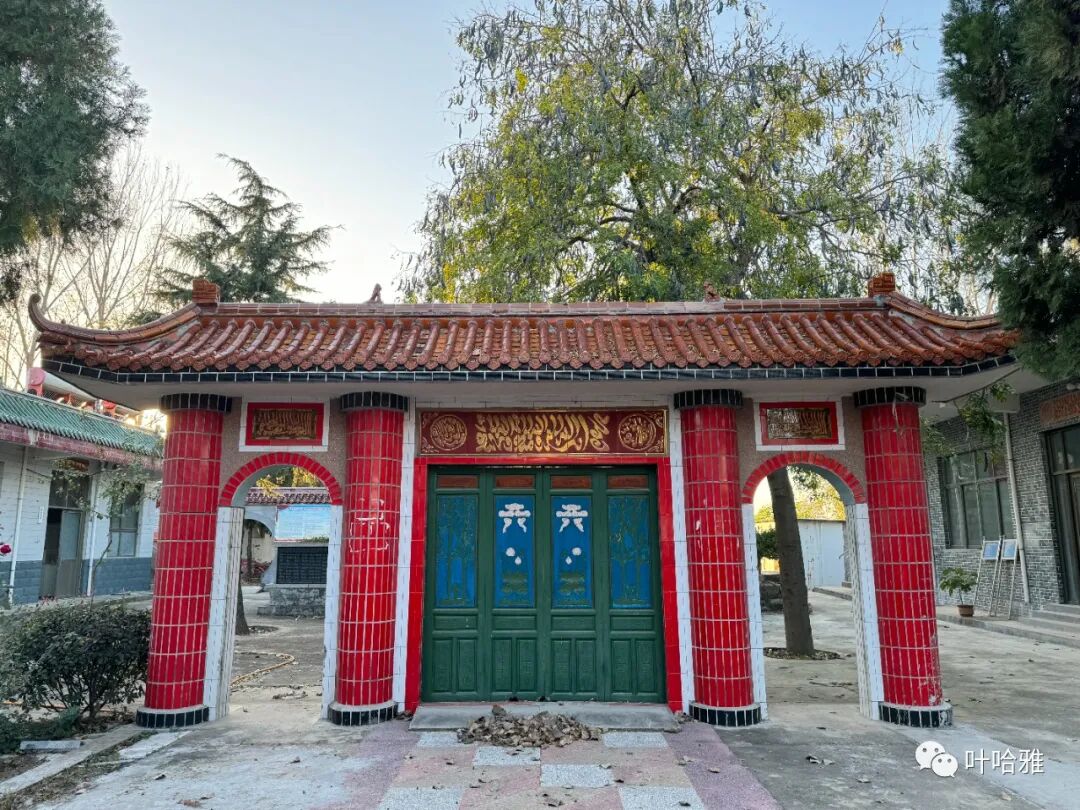
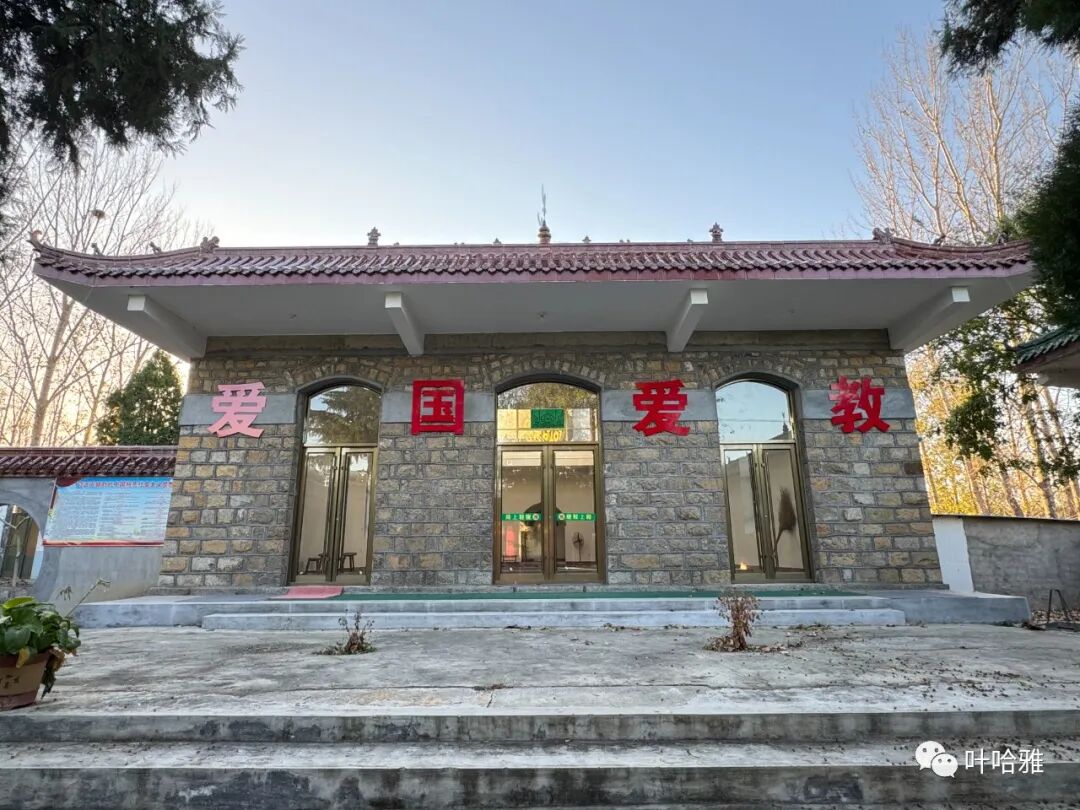
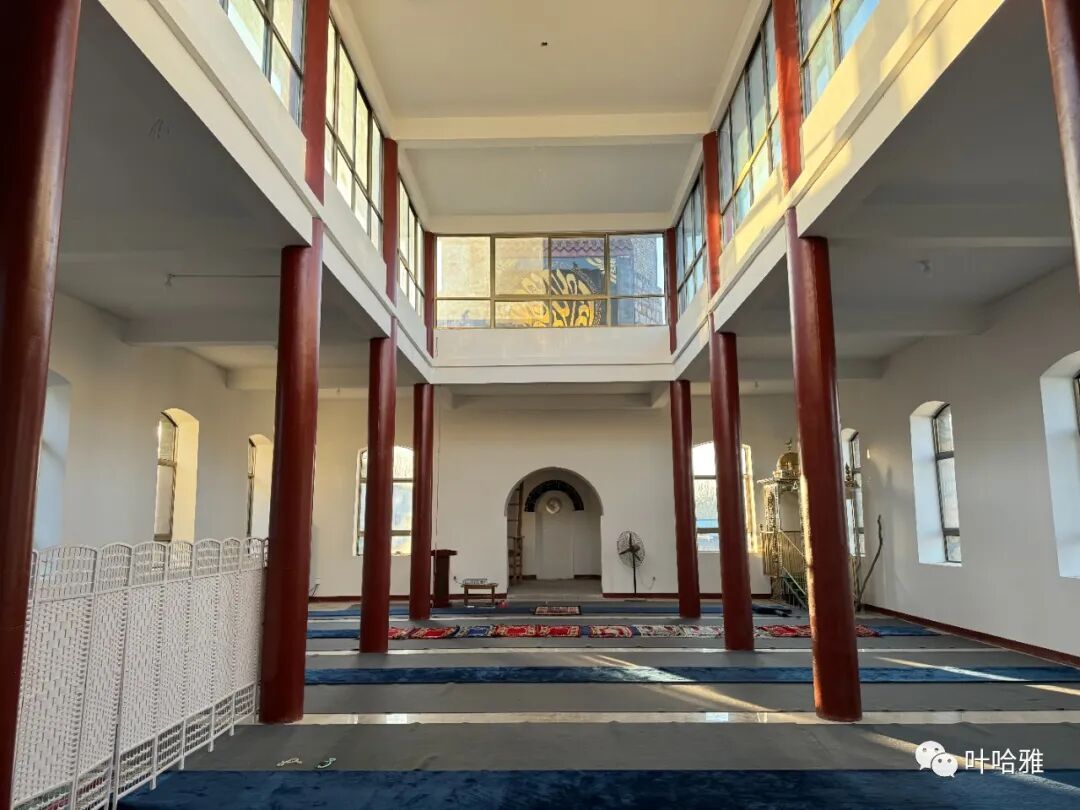
Zhoujiapo West Mosque
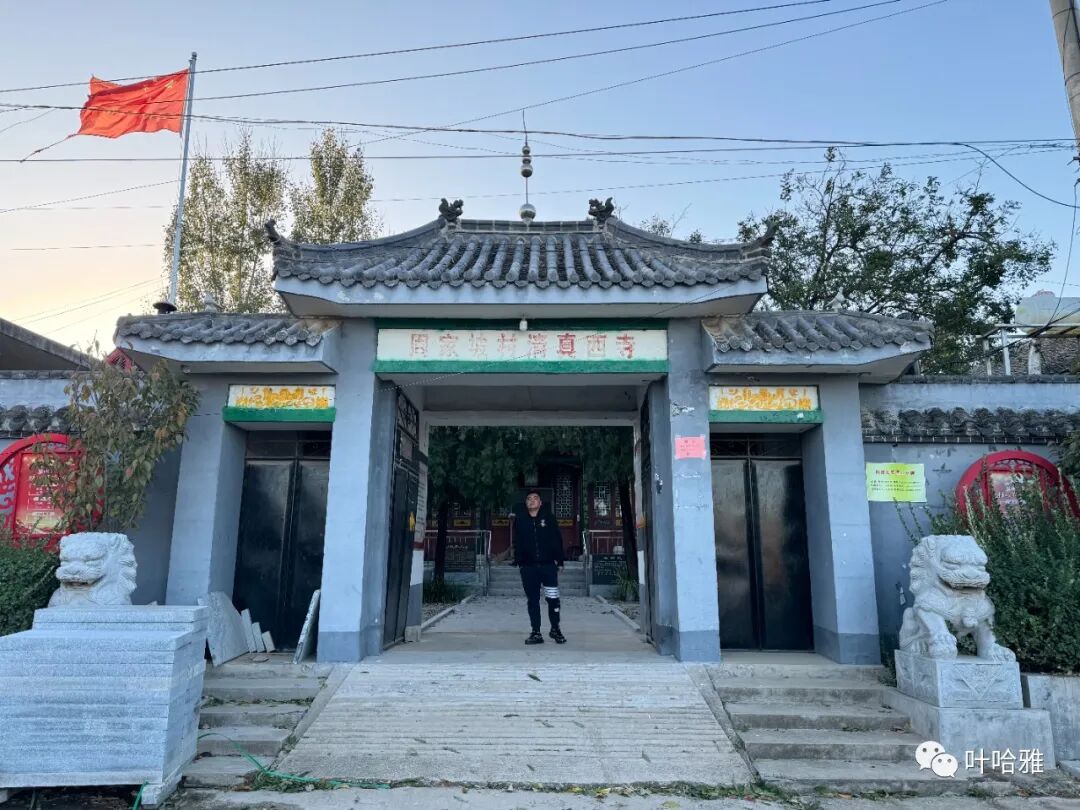
Located in the southwest of the village, the Zhoujiapo West Mosque in Xiazhang Town was first built in the mid-to-late Qing Dynasty. It was expanded over time, and the current mosque was rebuilt on the original site. Since the first year of the Guangxu reign of the Qing Dynasty (1875), it has undergone large-scale renovations many times.
The mosque is a single-courtyard complex, 50 meters long and 33 meters wide. The prayer hall is a two-part structure with two side rooms in the front, standing 10 meters high, 17.5 meters long, and 12 meters wide. The north lecture hall is 16 meters long and 6 meters wide. The south lecture hall is 8 meters long and 8 meters wide. The water room is 16 meters long and 8 meters wide. The mosque has one surviving stone tablet, the "Tablet for the Repair and Reconstruction in the First Year of Guangxu" from 1875.
Before the Cultural Revolution, imams including Zhang Baotai, Mi Qinglu, Zhao Xinzheng, Han Jingwen, and Ma Tongyun led the mosque's religious affairs. After the Cultural Revolution, Yang Yuezhen, Imam Shi, Imam Zhang, and the current Imam Ma took charge of these duties. The mosque is managed by a democratic management committee, with Li Zhenjun serving as the director.
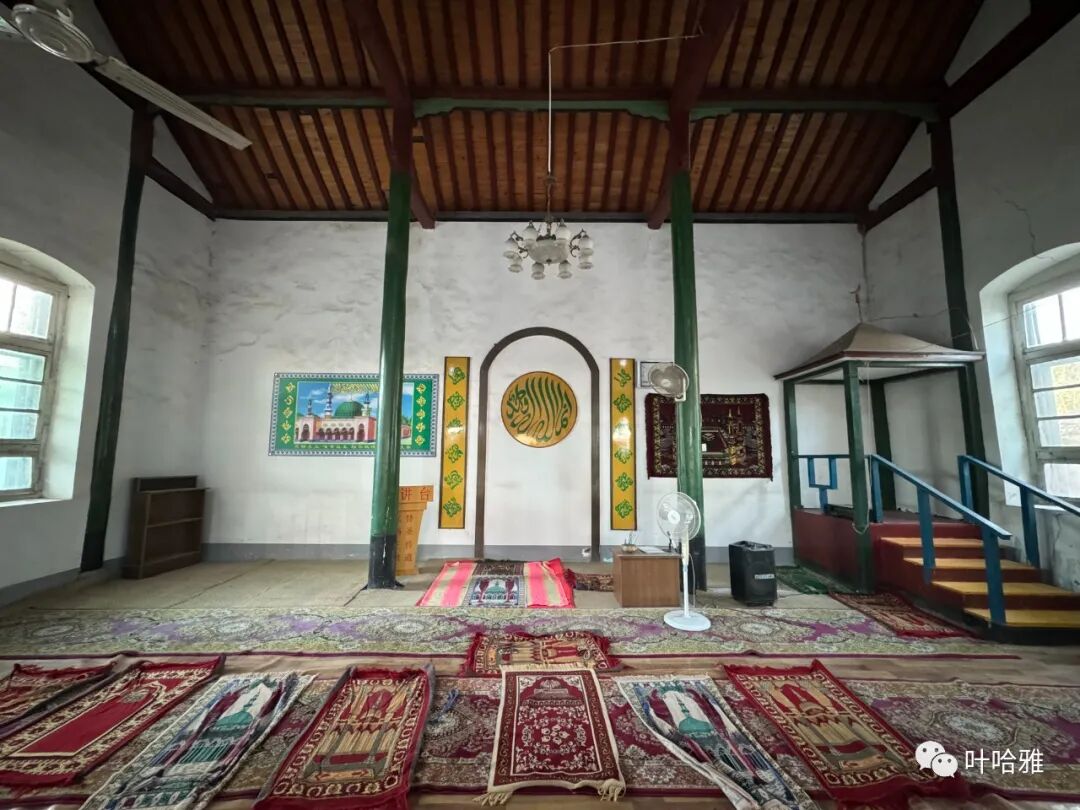
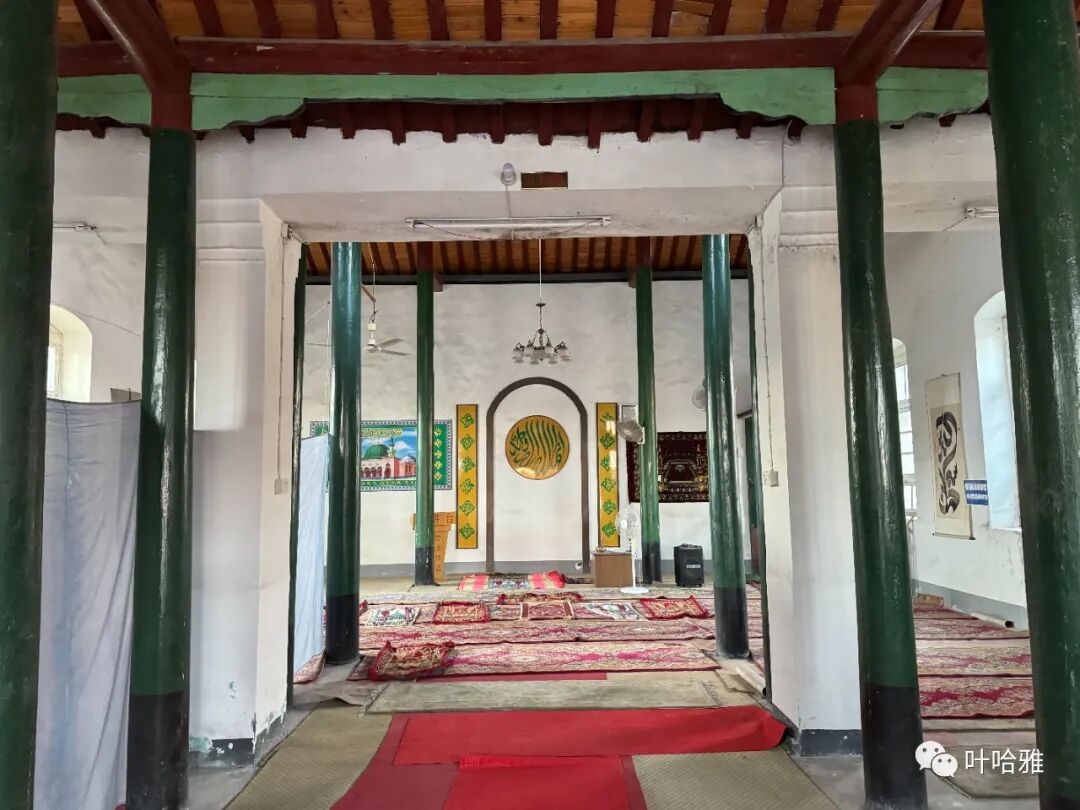
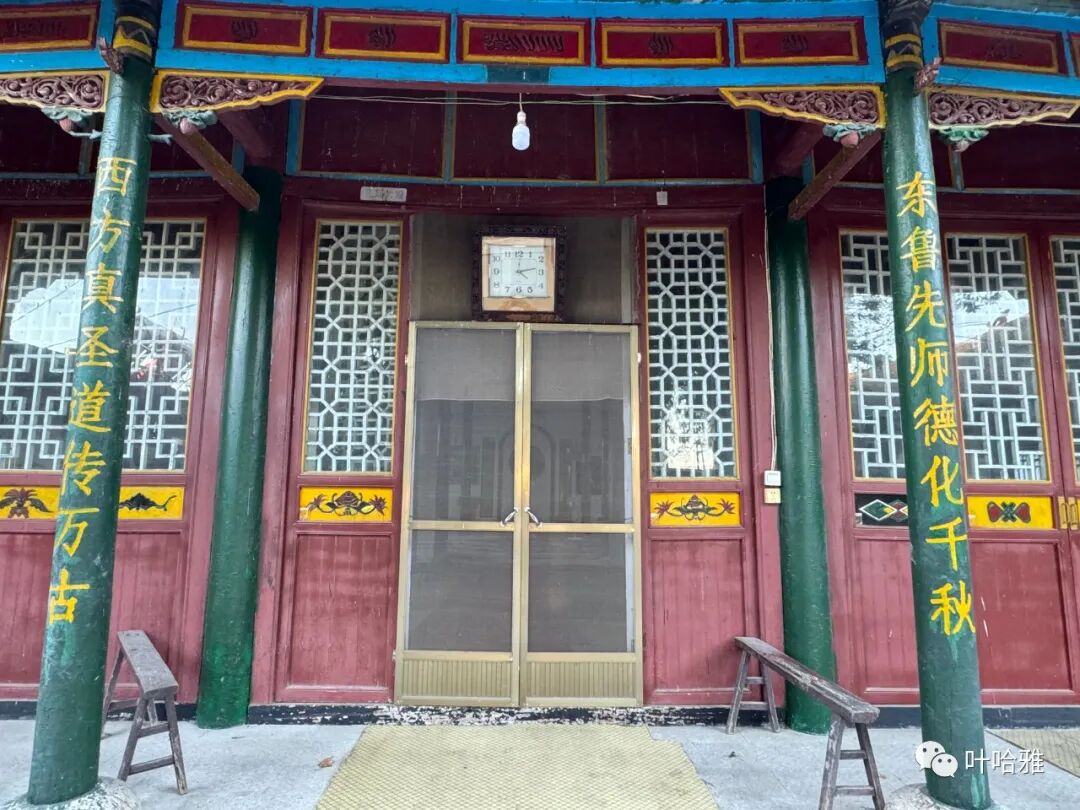
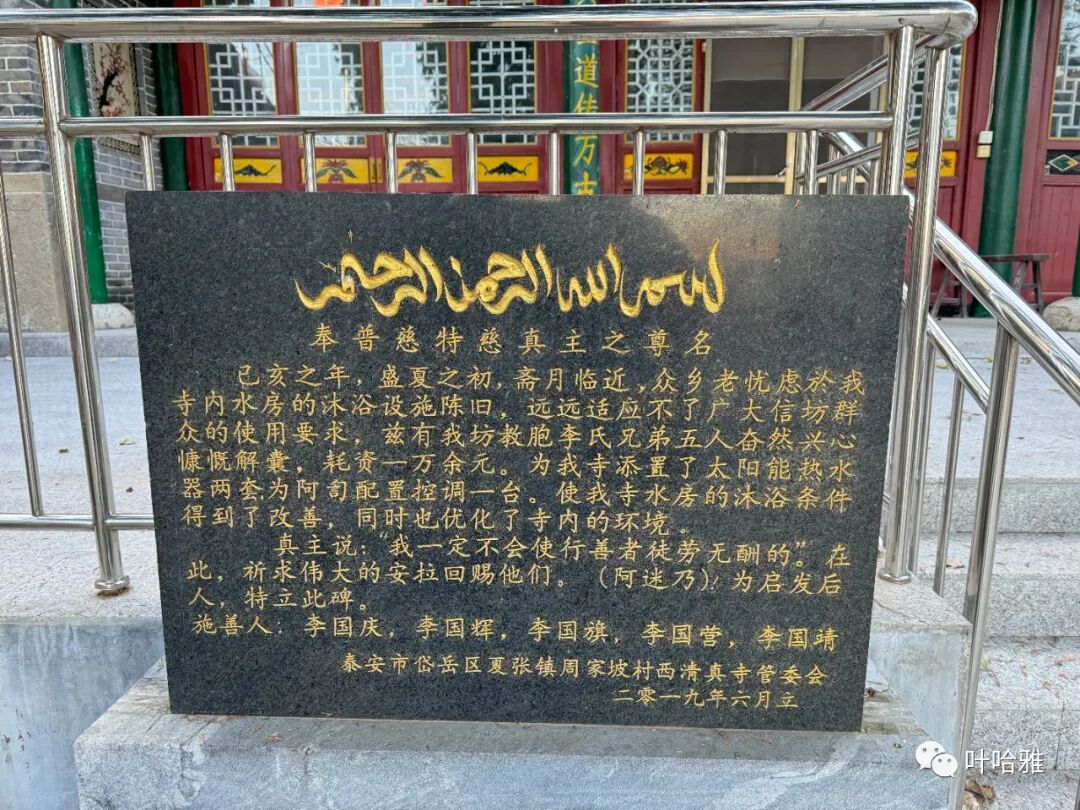
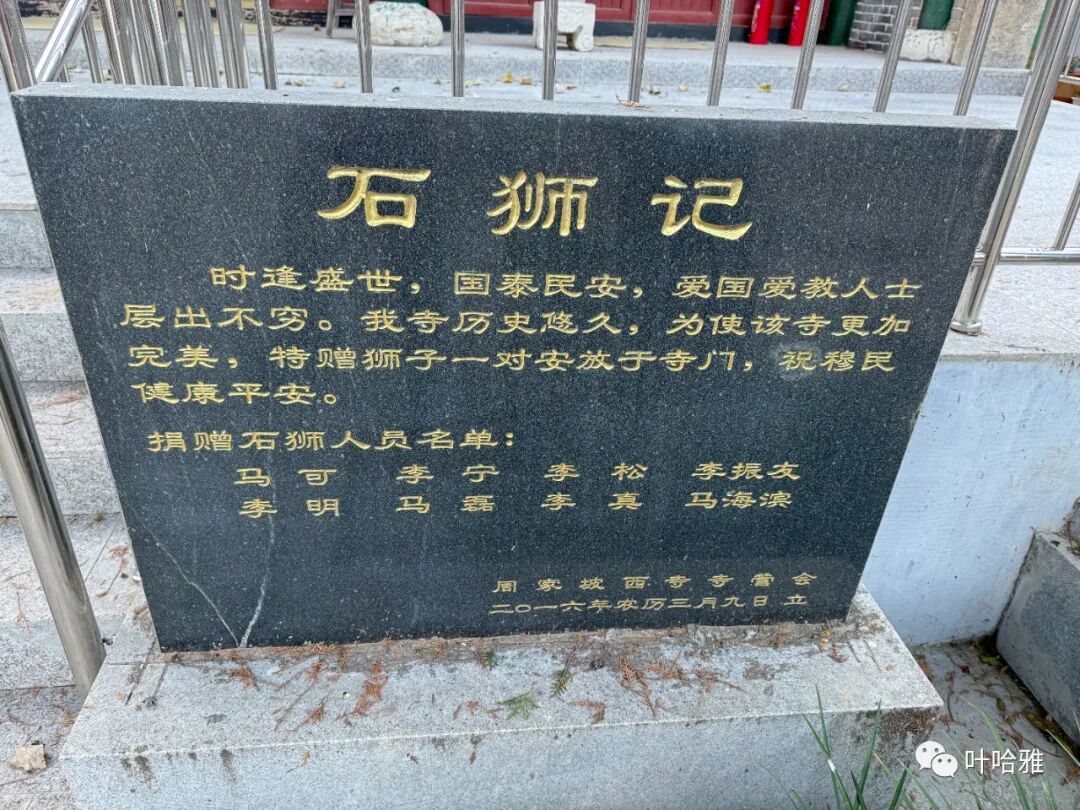
Jiajiagang Village Mosque
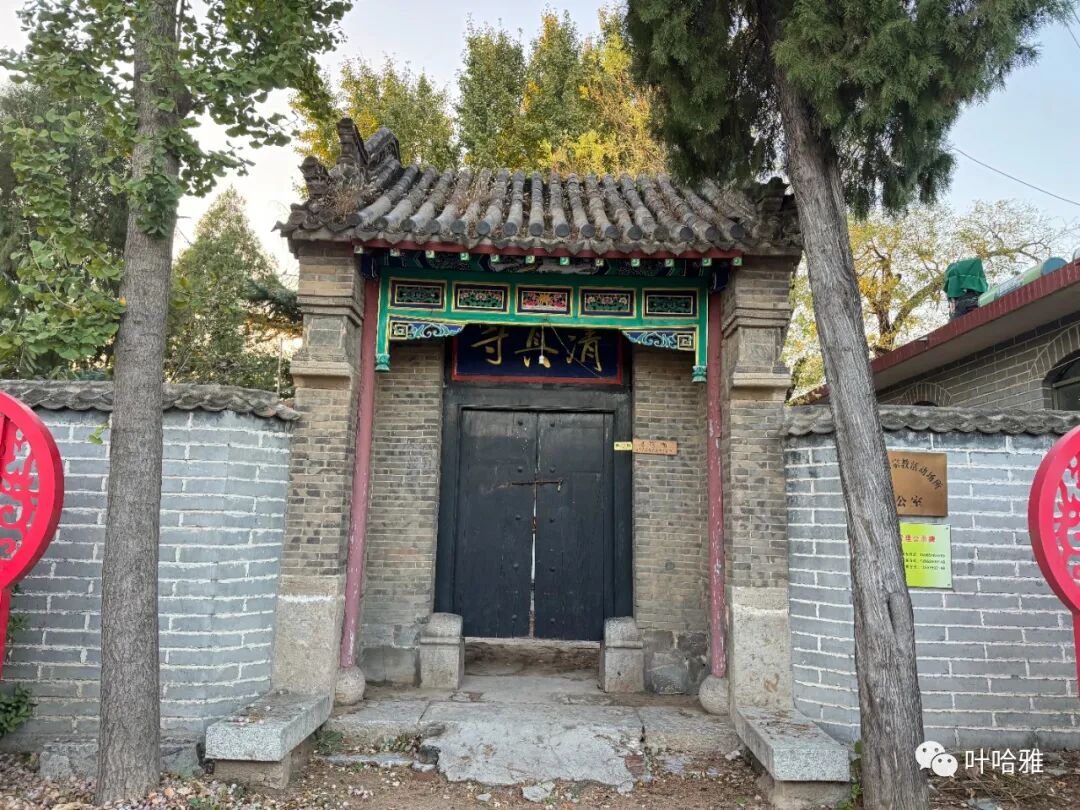
Jiajiagang Village Mosque in Xiazhang Town is located in the south-central part of the village. It was first built in 1740 during the Qianlong reign of the Qing Dynasty and has been repaired several times since.
The mosque is a single-courtyard complex, 40 meters long and 37.3 meters wide. The prayer hall is a single-story building, 5.5 meters high, 12 meters long, and 10.1 meters wide. The north lecture hall is 9.5 meters long and 6 meters wide. The south lecture hall is 10.5 meters long and 5 meters wide. The water room is 13.8 meters long and 6 meters wide. The mosque has a sports and fitness area. There are four stone tablets remaining: the Mosque Founding Tablet, the 1759 Mosque Construction Tablet from the 24th year of the Qianlong reign, and two tablets recording later renovations.
Imam Yang Peicheng was an underground worker for the Communist Party of China during the War of Resistance Against Japan. Yang Maodou, Ma Yigang, and Han Jingming are influential and well-known imams. The mosque is managed by a democratic management committee, with Li Faxi, Bai Maoting, Han Guirong, and Tang Zhihai serving as directors in succession.
The mosque values traditional Islamic education. Around the time the People's Republic of China was founded, it opened study classes where imams taught the Quran and Hadith to train talent for the faith.
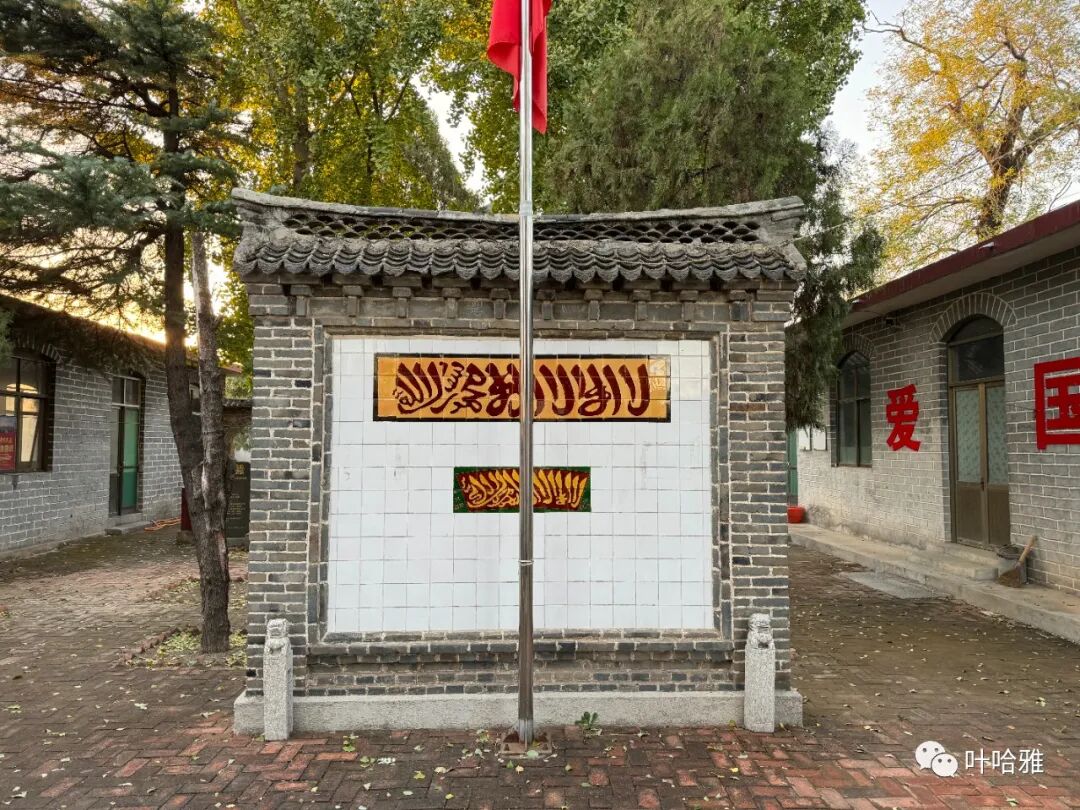
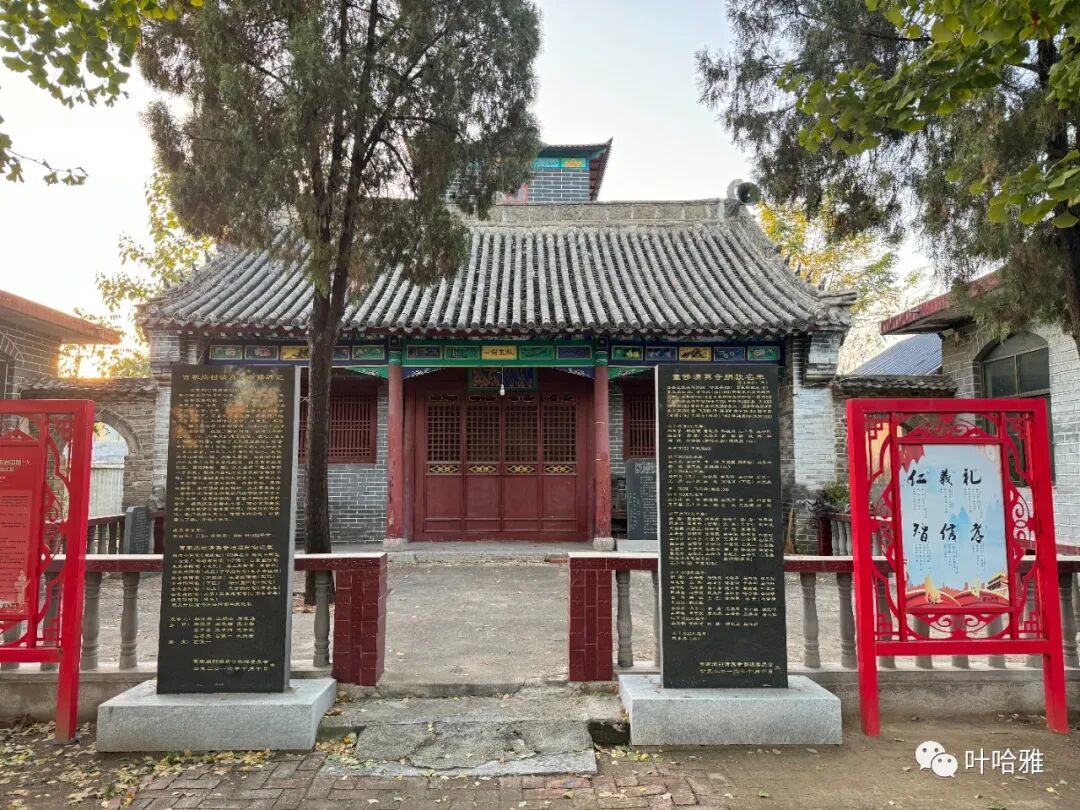
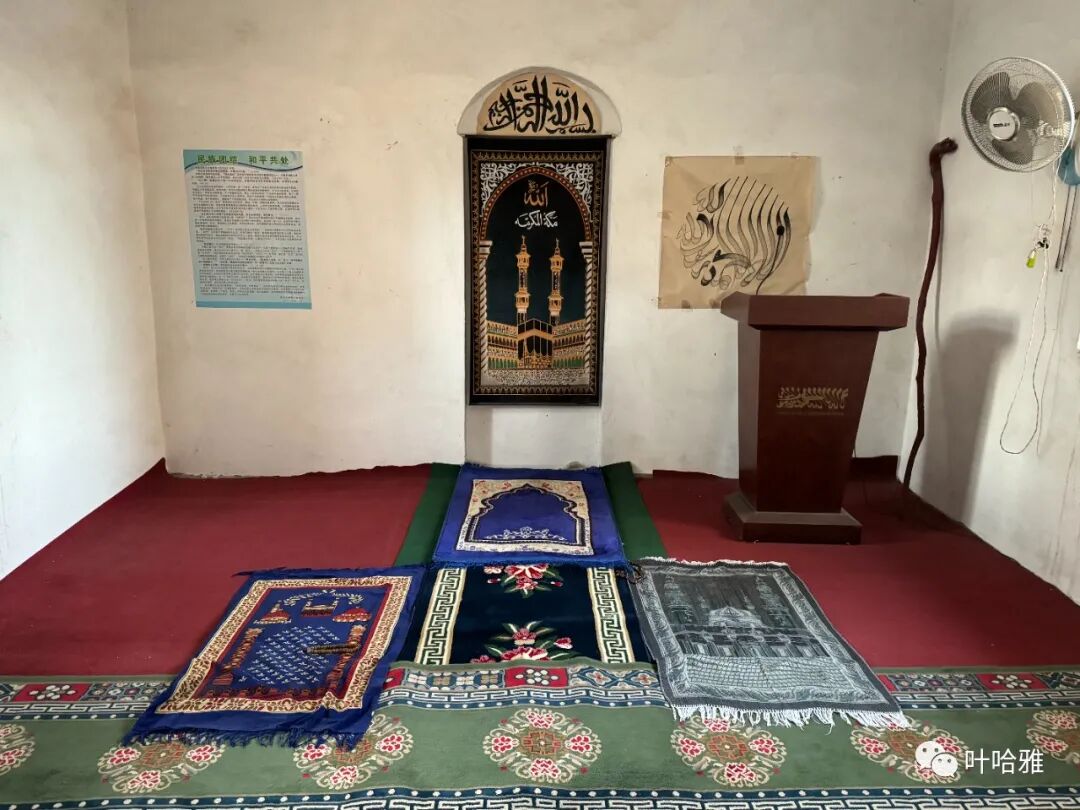
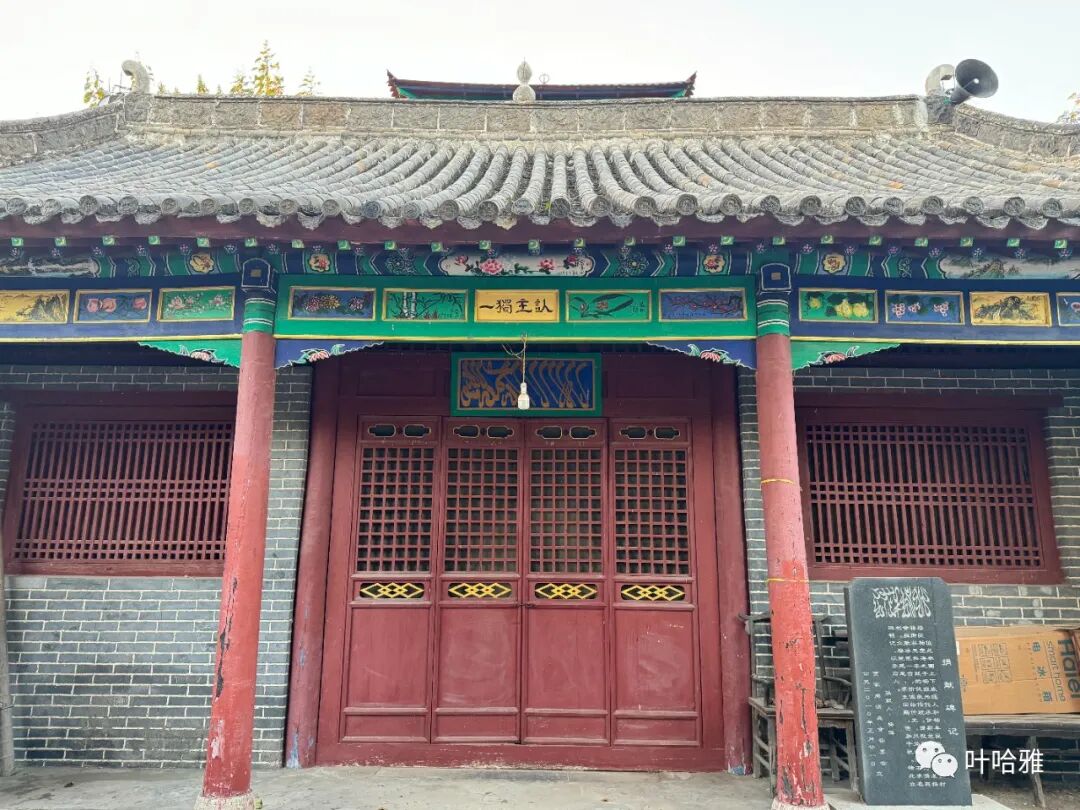
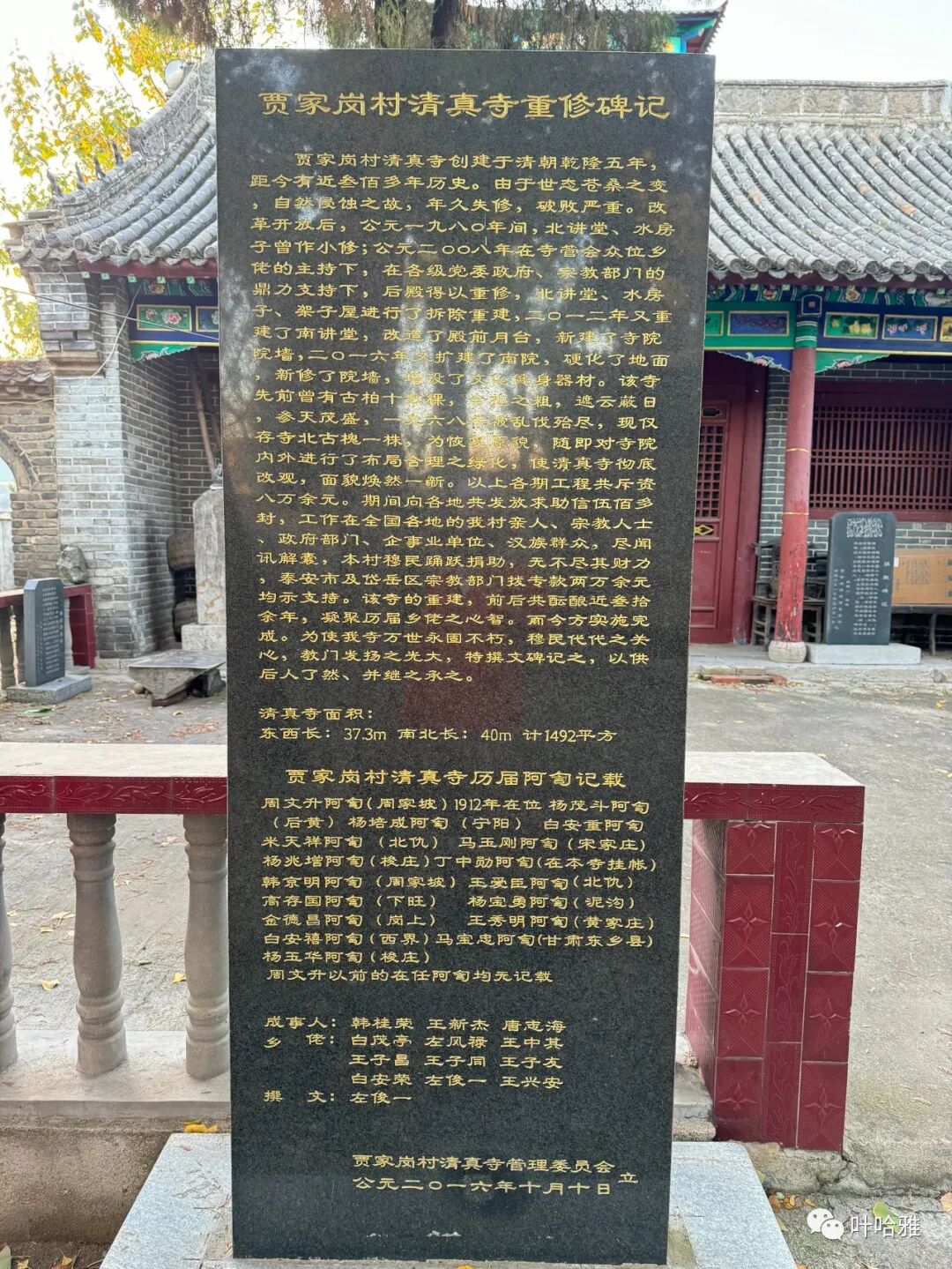
Majiayuan Mosque
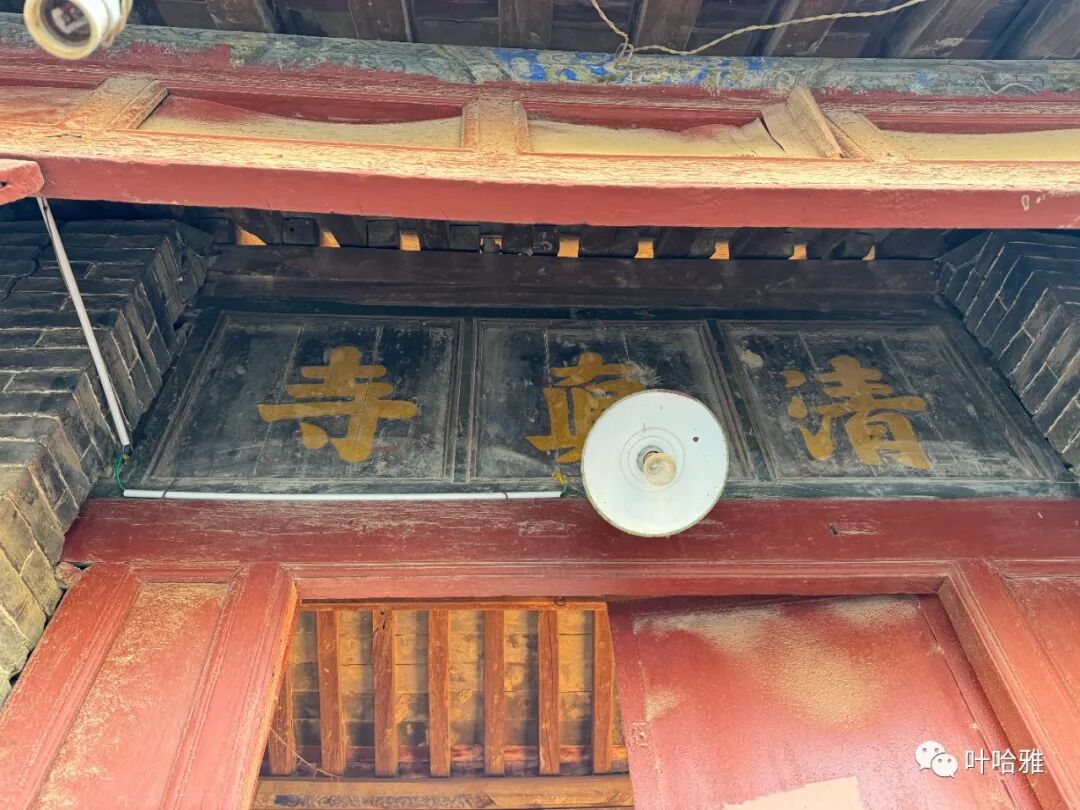
Majiayuan Mosque in Xiazhang Town is located in Nanbailou Fifth Village. It was first built in 1820, the first year of the Daoguang reign, and has been expanded and repaired ever since. Large-scale renovations took place in 1843, 1850, 1867, 1878, 1907, and 1921. Protective repairs were also carried out after the Reform and Opening-up.
The mosque is a two-courtyard complex, 54 meters long and 42 meters wide. The prayer hall is a three-section structure standing 8 meters high with side rooms. In front of the hall is a moon terrace (yuetai) that is 27.2 meters long and 10 meters wide. The north lecture hall is 27.6 meters long and 5 meters wide. The south lecture hall is 27.6 meters long and 5 meters wide. The water house (shuiwu) is 13 meters long and 6 meters wide. There are five stone tablets remaining, including the Mosque Main Tablet and Mosque Supplementary Tablet from the fourth year of the Guangxu reign (1878), the Three-Branch Ma Family Genealogy Tablet from the 29th year of Guangxu (1903), the Mosque Reconstruction Tablet from the 33rd year of Guangxu (1907), and the Mosque Reconstruction Record Tablet from the 10th year of the Republic of China (1921).
The Ma family has produced imams for over three generations. Ma Yongcai is a representative figure who served as the resident imam at the Jining East Mosque and held positions such as a member of the Shandong Provincial Committee of the Chinese People's Political Consultative Conference. Since its founding, the mosque's religious affairs have been led by imams including Yang Pengyuan, Jin Anxiang, Shi Guangfeng, Wang Yongsheng, Ma Xinsheng, Wang Yongqing, Mi Tongliang, Yang Xingchen, Ma Wenyi, Tang Wenhai, Ma Shunke, Xu Changpu, and Xian Junqi. The mosque is managed by a democratic management committee, with Ma Wensheng serving as the director.
In 2008, the mosque was awarded the title of Model Mosque by Tai'an City. In 2009, it was named a Harmonious Religious Activity Venue by Shandong Province. In 2010, it received the title of Model Mosque from Tai'an City again. It was named a Model Mosque by Tai'an City again in 2014.
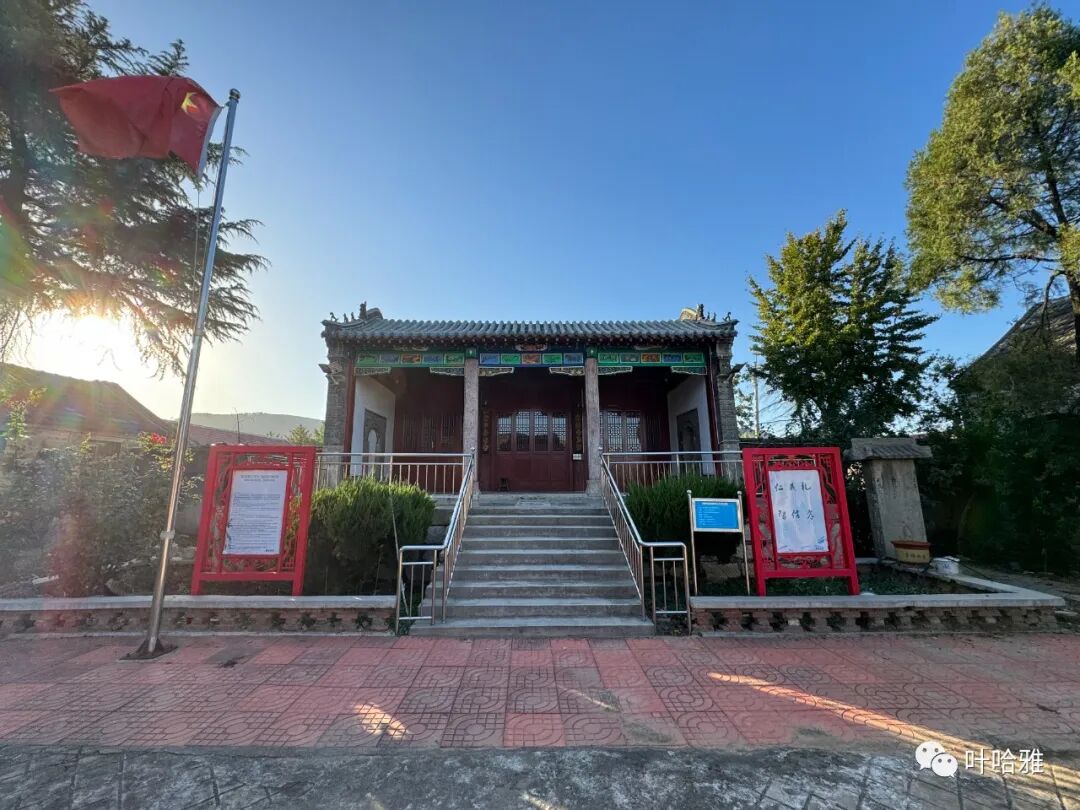
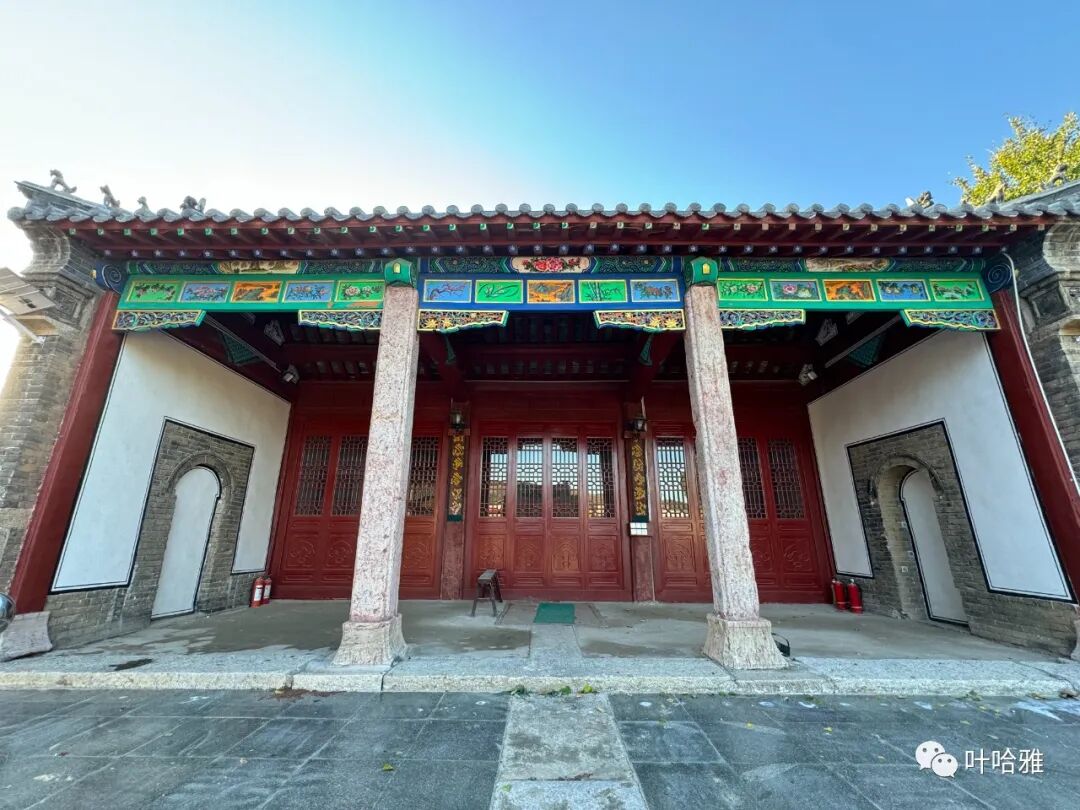
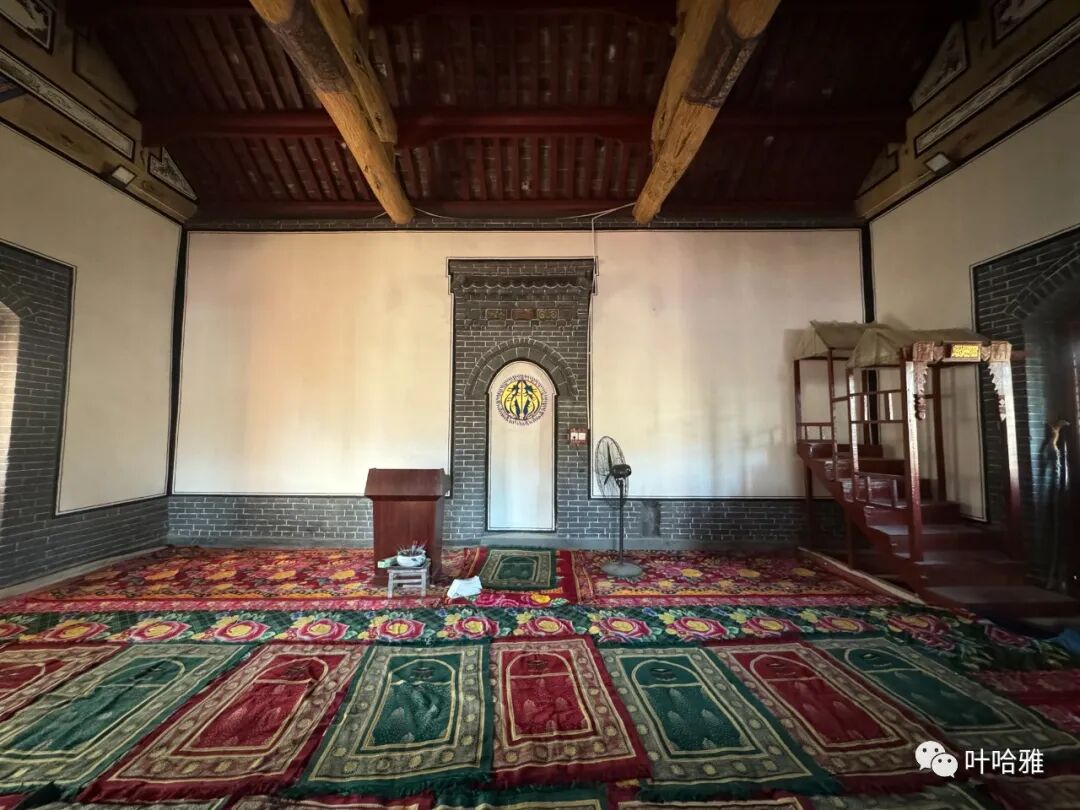
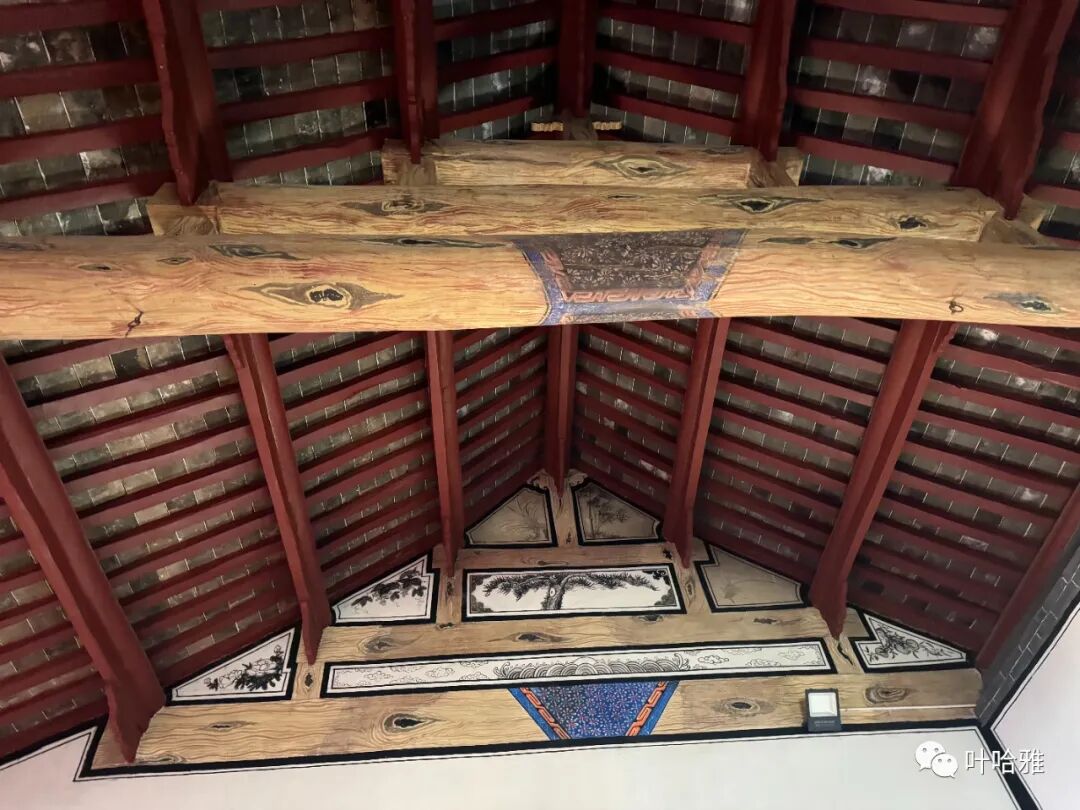
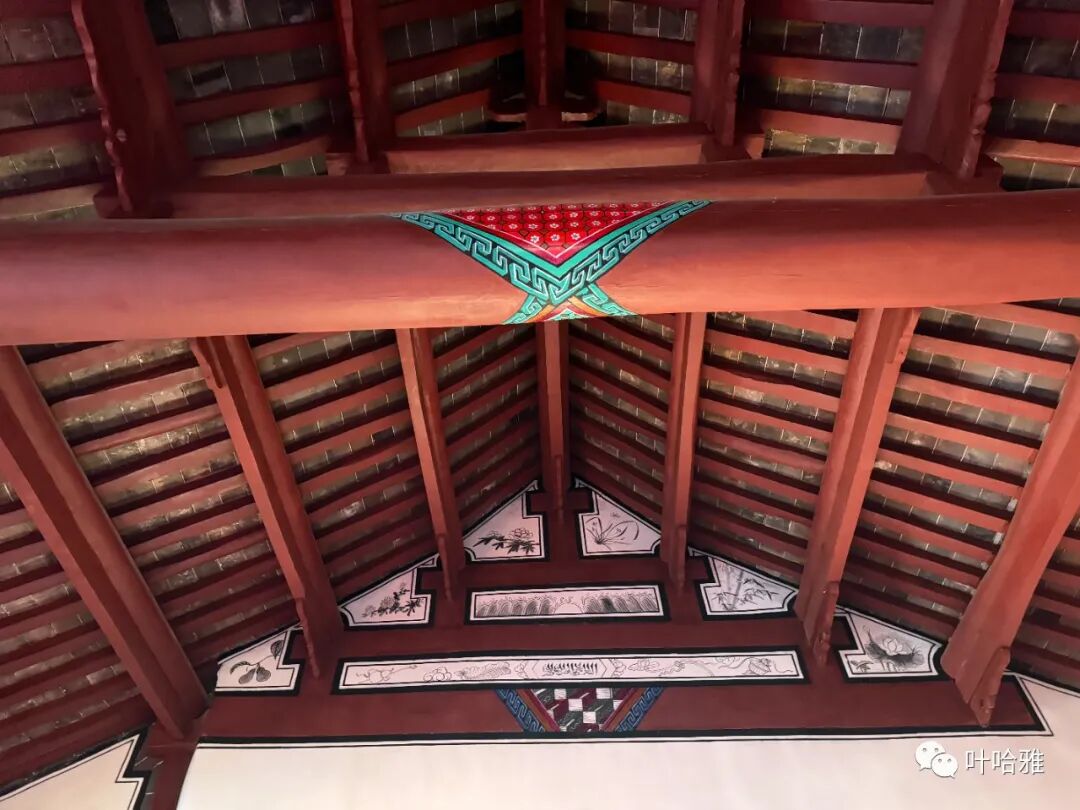
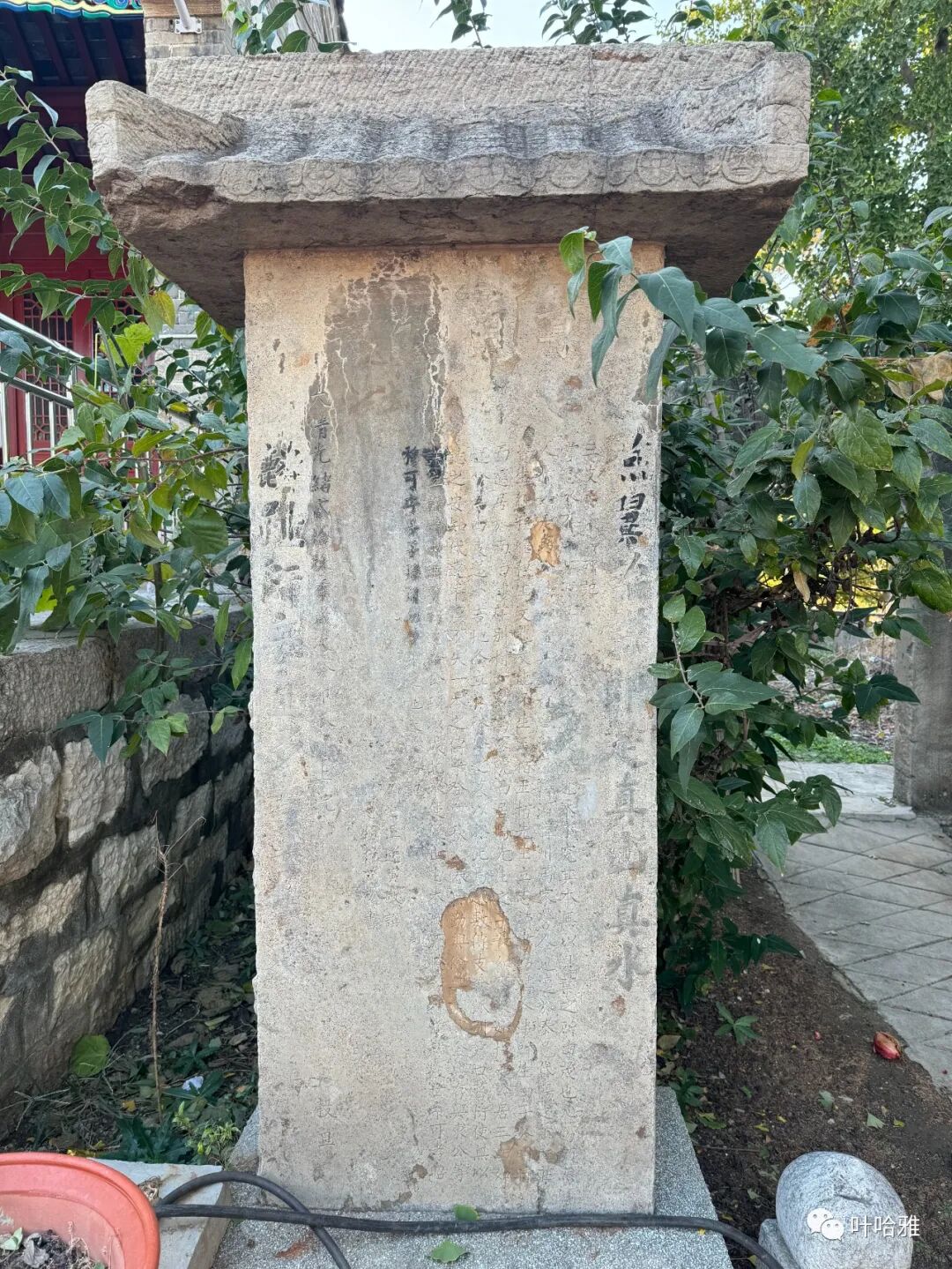
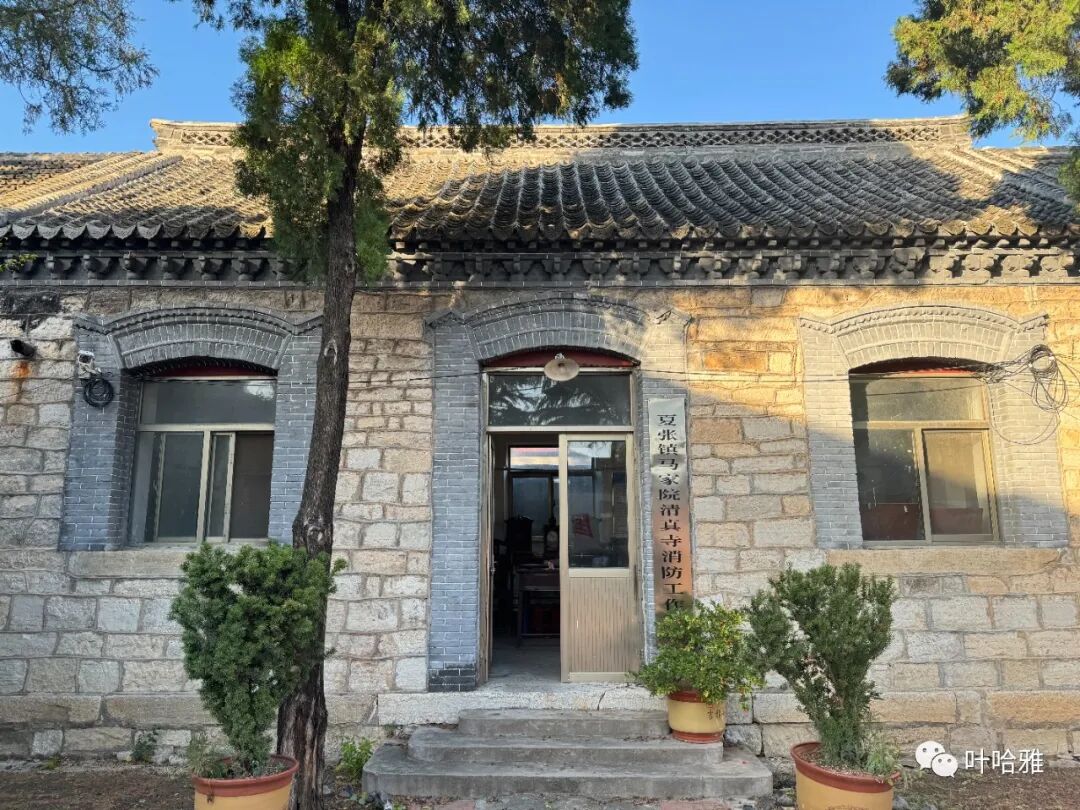
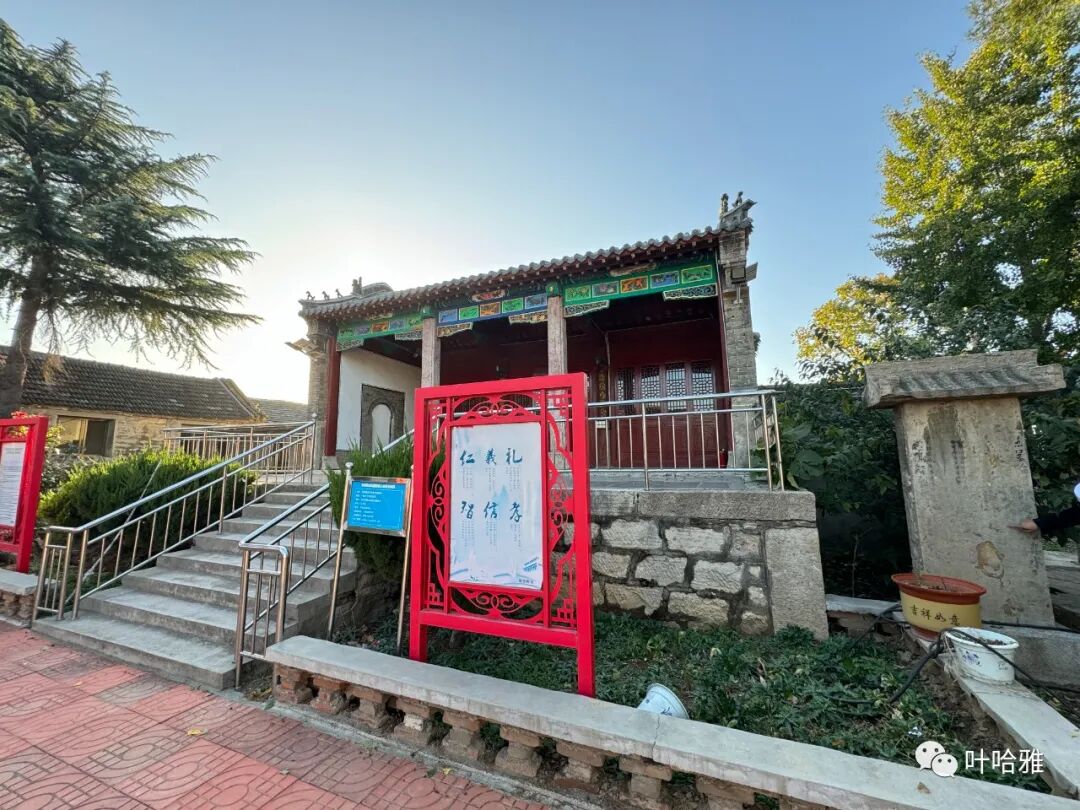
Nigou Village Mosque
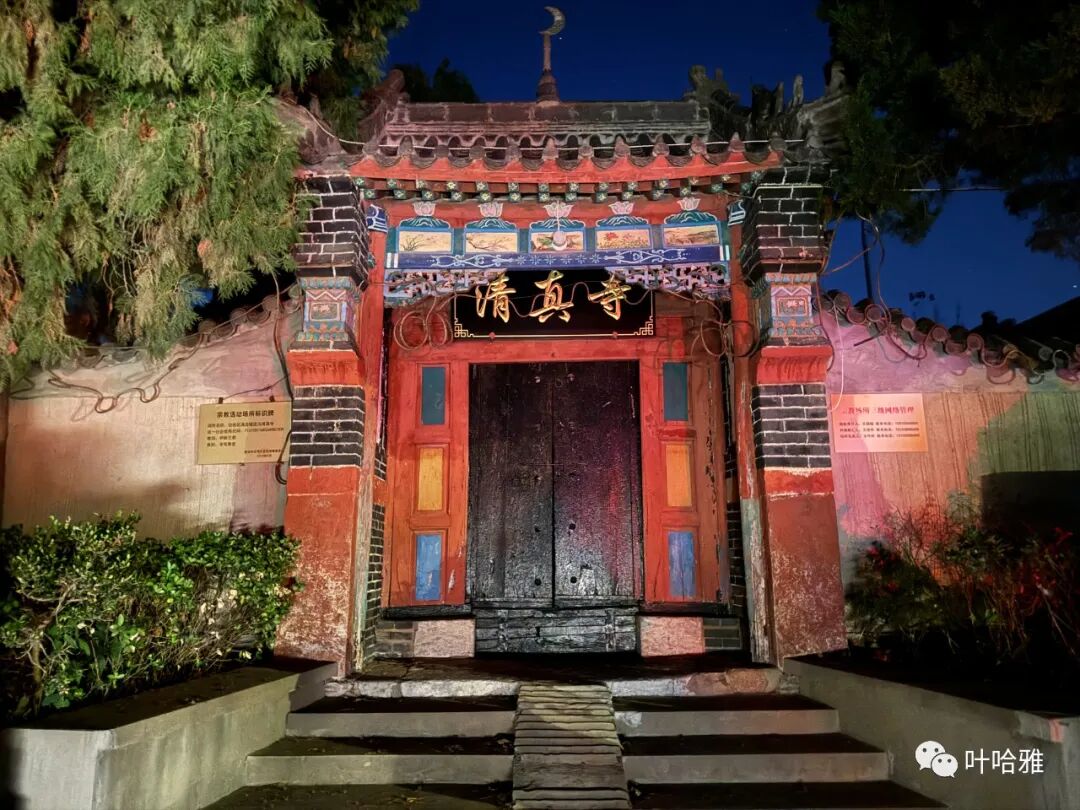
Nigou Village Mosque in Manzhuang Town. The founding date is unknown, but the mosque has been rebuilt several times, including five major renovations. It gradually reached its current size after repairs in the fourth year of the Daoguang reign (1824), the second year of the Republic of China (1913), the twenty-fifth year of the Republic of China (1936), and after the founding of the People's Republic of China. Another large-scale renovation took place in 2012.
The mosque follows a traditional Chinese courtyard layout with front and back sections, covering a total area of 2,000 square meters. The main prayer hall consists of three parts: a front porch (juanpeng), a rear hall, and a raised platform (yuetai). The prayer hall is 26 meters long and 10.6 meters wide. The north lecture hall has three rooms and is 18 meters long and 6.8 meters wide. The south lecture hall is 18 meters long and 4.6 meters wide. The ablution room (shuiwu) is 18 meters long and 5 meters wide. There are also funeral rooms, a kitchen, and east and west side rooms. A wooden plaque above the main hall door reads "Faith is Pure" (xinyang qingzhen). Inside, eight large pillars support the structure, which is built in three sections with three varying heights. Four stone tablets are built into the walls of the main hall. The tops of the tablets have symmetrical beveled corners and are carved with floral patterns. They are made of bluestone, feature engraved regular script (kaishu), and remain in excellent condition. The roof of the main hall uses simple tiles, and the blue bricks on both sides are carved with delicate patterns. The middle hall has a raised ridge, and the eaves are decorated with roof guardian figures. Three ancient cypress trees, each over 200 years old, stand within the mosque grounds.
The mosque currently houses nine stone tablets. These include the "Stele of Islamic Fundamentals" (Jiaoben Qingzhen Bei) and the "Stele of Eternal Fame" (Wangu Liufang Bei) from the fourth year of the Daoguang reign (1824); the "Stele for the Renovation of Nigou Mosque" (Chongxiu Nigou Qingzhensi Bei) and the "Stele of Islamic Origins" (Qingzhen Yuanliu Bei) from the second year of the Republic of China (1913); the "Record of the Renovation of the North Lecture Hall" (Chongxiu Bei Jiangtang Ji) from the twenty-fifth year of the Republic of China (1936); the "2012 Stele of Donation Lists for the Renovation of the Mosque Main Hall and South Lecture Hall" and the "Nigou Village Mosque Construction Donation List Stele" from 2012; the "Stele of Eternal Fame" (Liufang Baishi Bei) from 2013; and the "Stele of Eternal Fame" (Wangu Liufang Bei) from 2014. The mosque holds 30 handwritten copies of the Quran by Haji Chang Fulong.
Since 1935, imams including Ma Tongyun, Bai Qingyu, Zhang Baotai, Li Baoxiang, Wang Yuquan, Wang Huzi, Wang Buying, Bai Guangpu, Ding Junting, Chang Furong, Dong Futang, Ma Yongxu, Bai Jinhu, and Zheng Liqiang have led the religious affairs of the mosque. The most influential imams in the history of this mosque include Li Baoxiang, Wang Yuquan, Wang Zengli, Yang Baoyong, Li Zhongguo, and Zuo Zhonghua. Before the founding of the People's Republic of China, the mosque's affairs were managed by the village head Zuo Hanzhang. After the founding of the People's Republic of China, management was handled by team leaders and village heads. It is currently managed by the Mosque Democratic Management Committee, led by director Li Gang.
In 2010, it was named a "Harmonious Religious Activity Venue" by Shandong Province. In 2014, it received the "Model Mosque" title from the Tai'an Islamic Association.
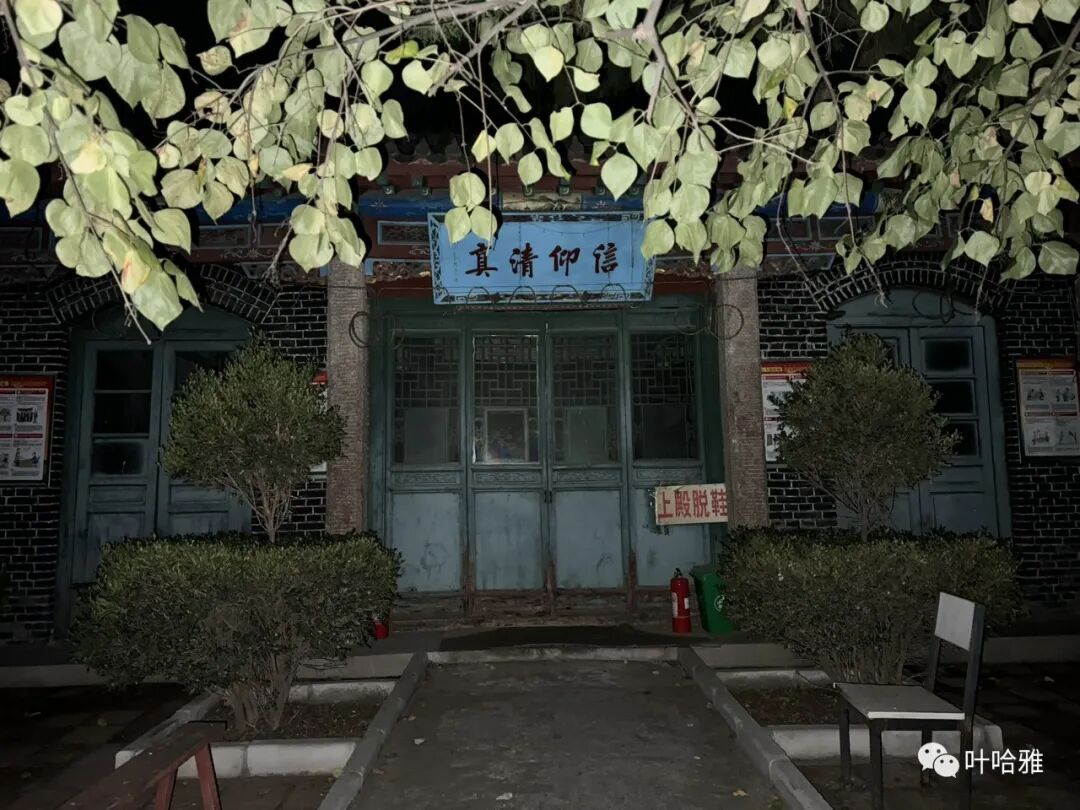
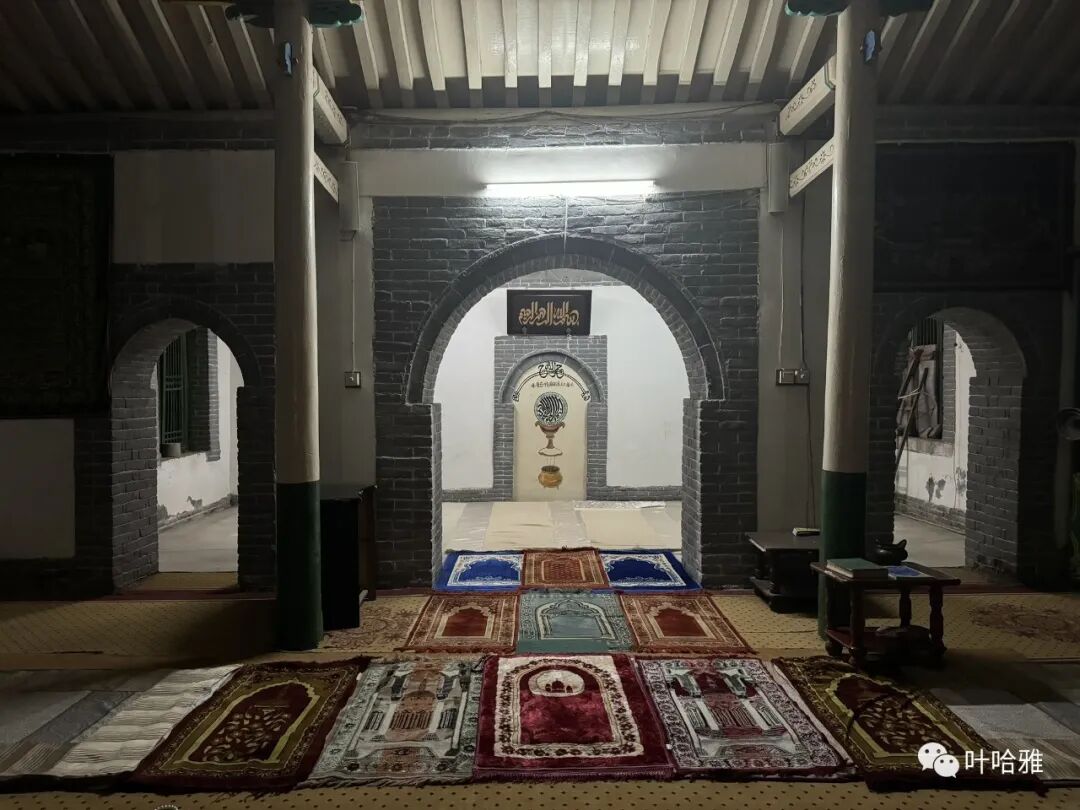
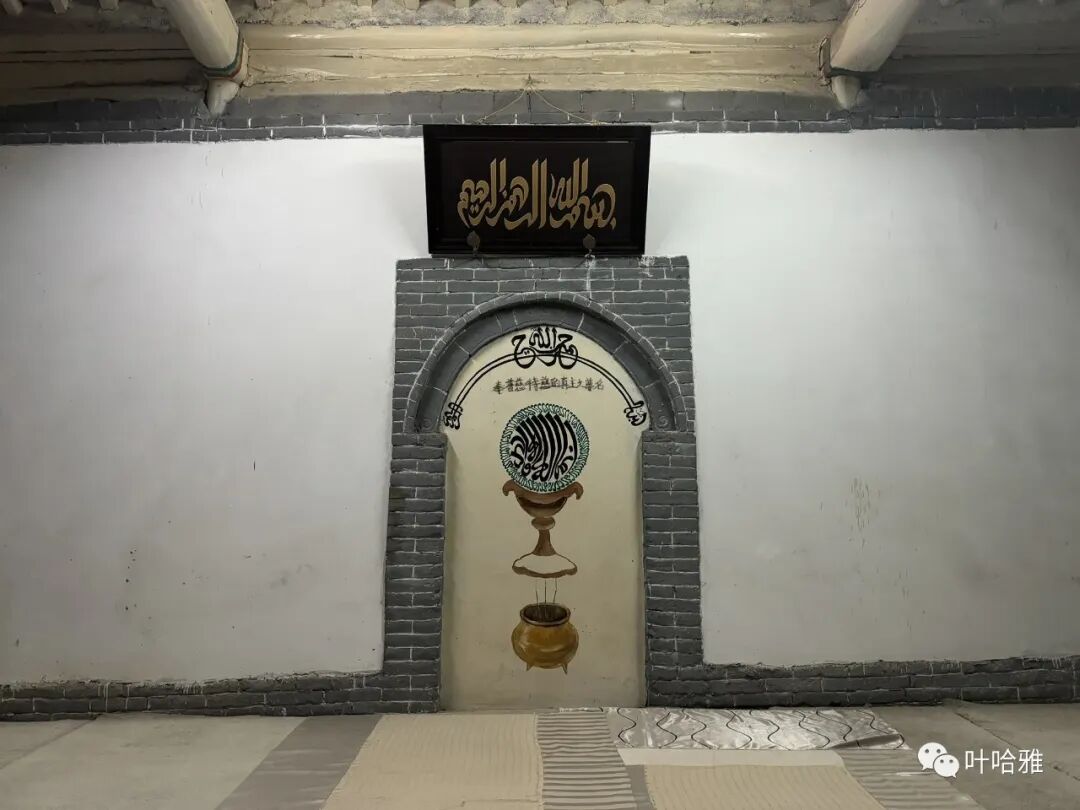
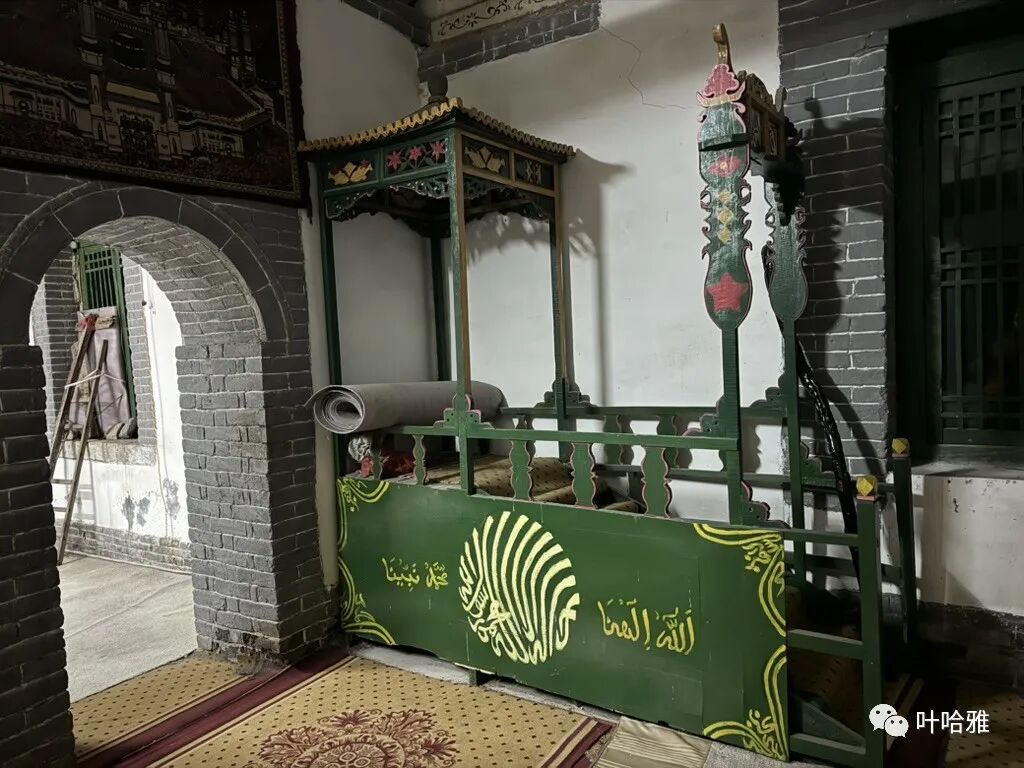
Longshan Guanzhuang Mosque
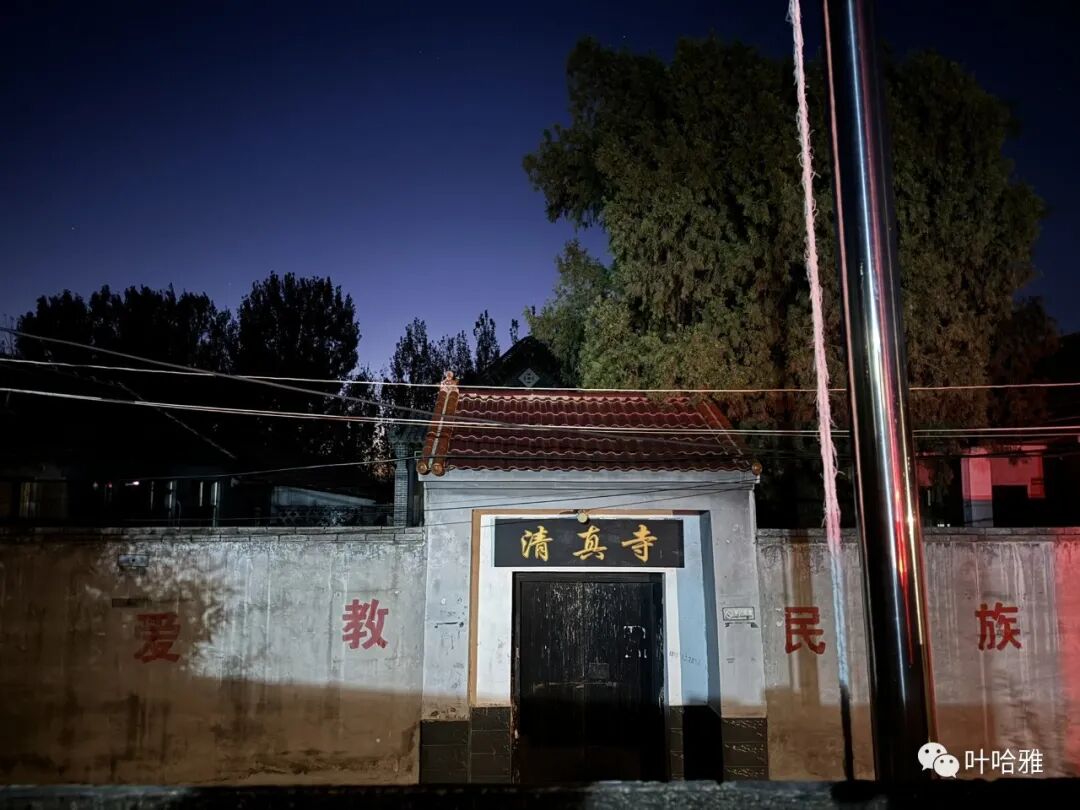
Longshan Guanzhuang Mosque in Manzhuang Town sits at the west end of the village. It was founded in 1936. The north lecture hall was built first, followed by the main prayer hall in 1939 and the south lecture hall in 1957. It has been repaired many times since. Repairs took place in 1984, 1994, 2006, and 2010. The Muslims of Zhongchunyu Village are the patrons of this mosque.
The mosque has two courtyards. The main prayer hall is 50 meters long and 40 meters wide. The main prayer hall has a front porch (juanpeng) that is 6 meters high, 20 meters long, and 7 meters wide. The north lecture hall is 16 meters long and 7.5 meters wide. The south lecture hall is 12 meters long and 7 meters wide. The ablution room (shuiwu) is 12 meters long and 7 meters wide. The mosque has two stone tablets: the 1994 Tablet of Donors for the Reconstruction of the North Lecture Hall and the 2005 Tablet of Lasting Fame.
Since its founding, the mosque's religious affairs have been led by imams including Ding Junting, Li Baoxiang, Li Qingyun, Imam Bai, Xu Changpu, Zhang Shuiquan, and Bai Guangpu. Chu Qingquan has served as the resident imam since 1990. The mosque is managed by a mosque management committee, with Gao Cunchang, Zhao Xueqian, Gao Fangkun, and Jin Weidong serving as directors.
In 2012, it was named a Harmonious Religious Activity Venue in Shandong Province.
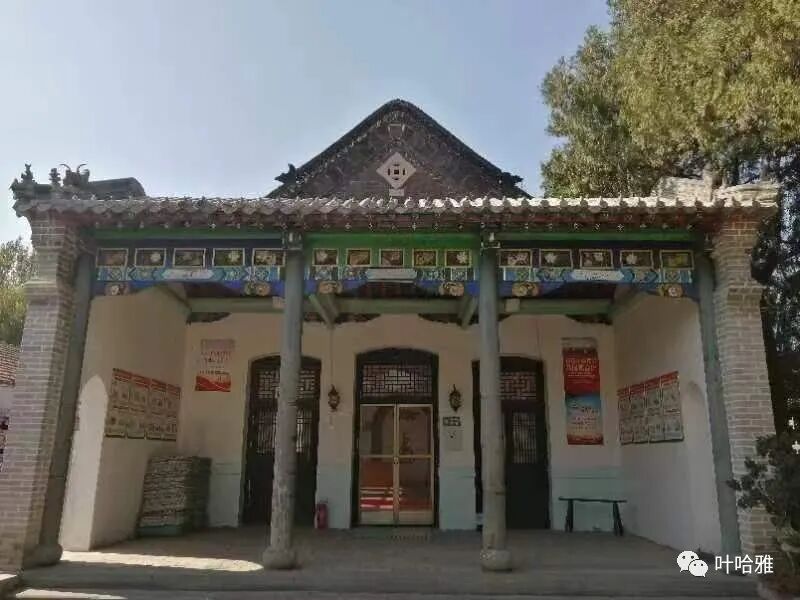
Fanjiaanbu Mosque
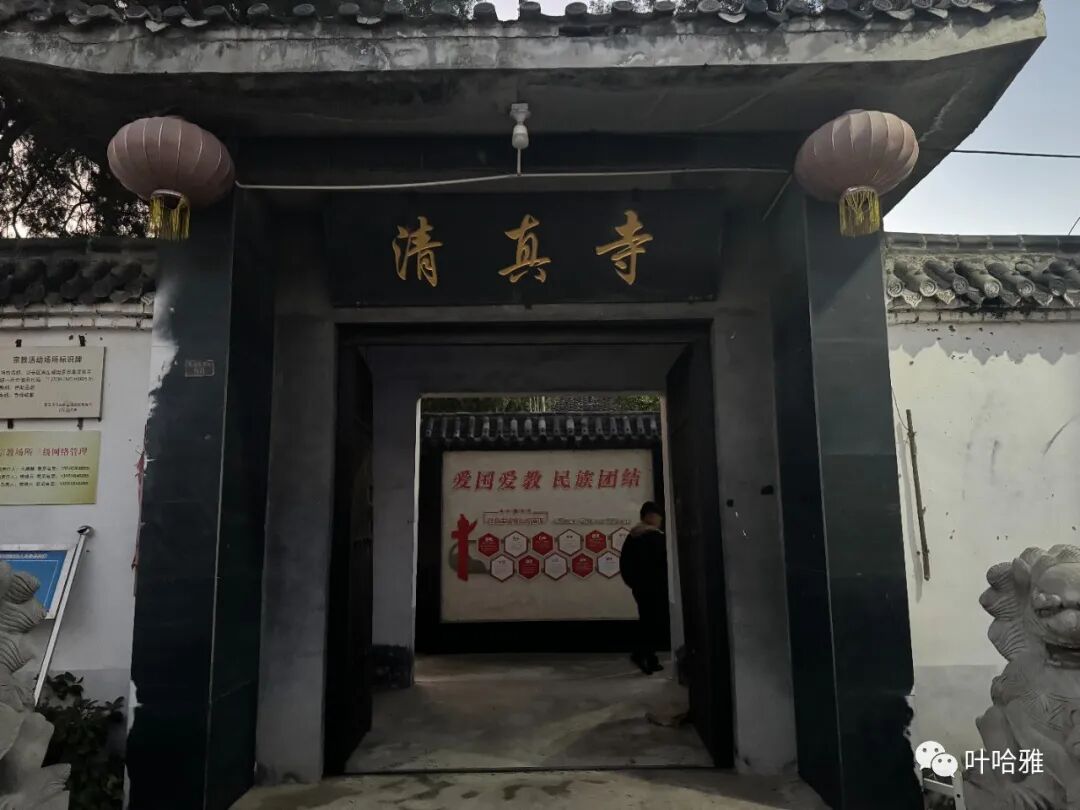
The mosque in Fanjiaanbu Village, Manzhuang Town, sits at the west end of the village. It was first built around the early 16th century and has been rebuilt many times since. The front hall was built in the early 20th century. The north lecture hall was built in the 27th year of the Republic of China (1938). In the early years of the People's Republic of China, the front hall was repaired and the rear main hall was built. The ablution room (shuiwu) and the south lecture hall were rebuilt in 2000. In 2008, the north lecture hall, the main gate, and the east courtyard wall were rebuilt, the ground was paved, and the platform in front of the prayer hall was renovated. In 2011, a residence was built for the imam, and the mosque's courtyard wall was extended south toward the center of the village. Solar power was installed in 2014. The mosque covers a building area of 450 square meters. The front and back halls cover a building area of 280 square meters. Religious activities are carried out according to the law.
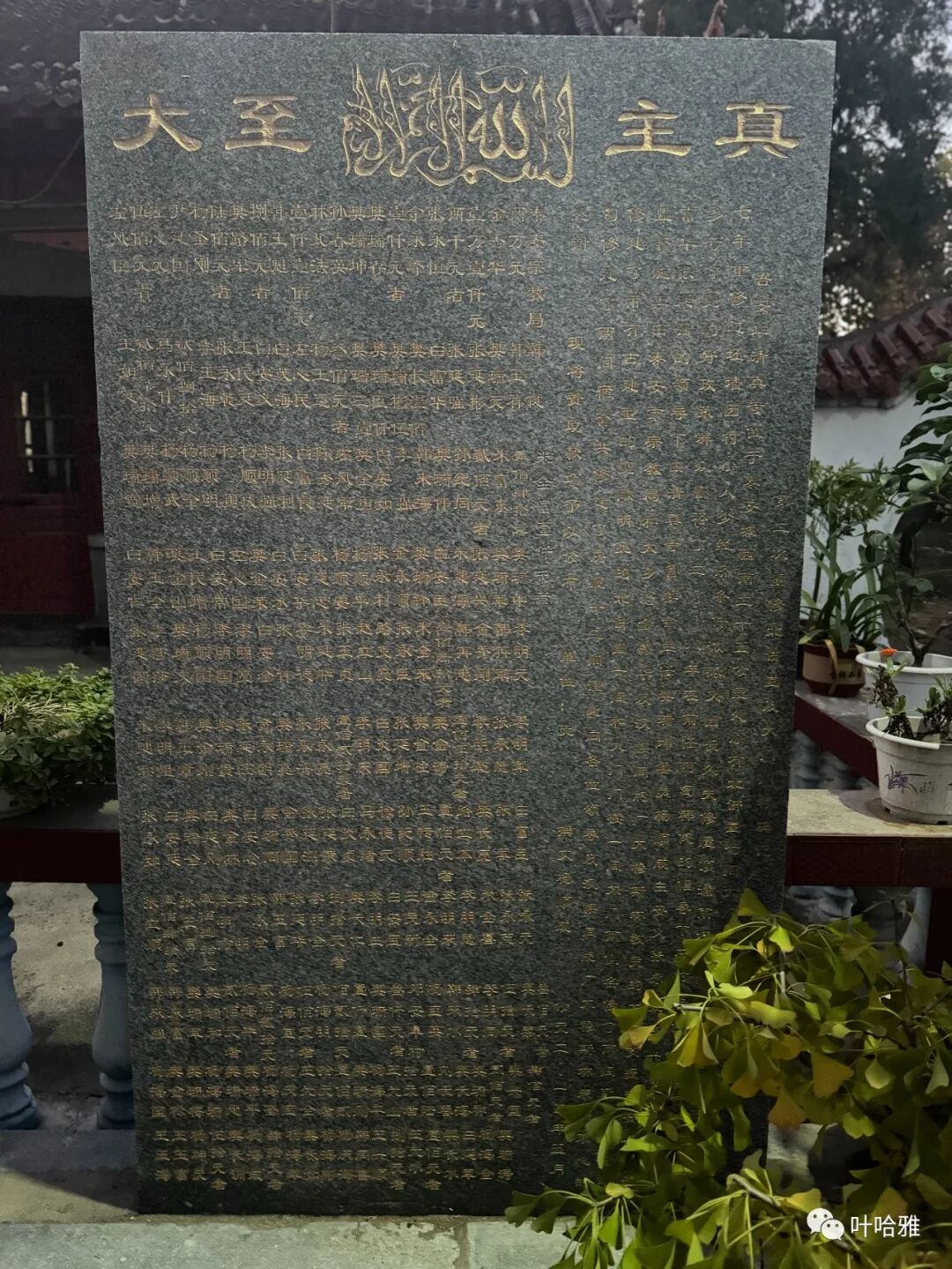
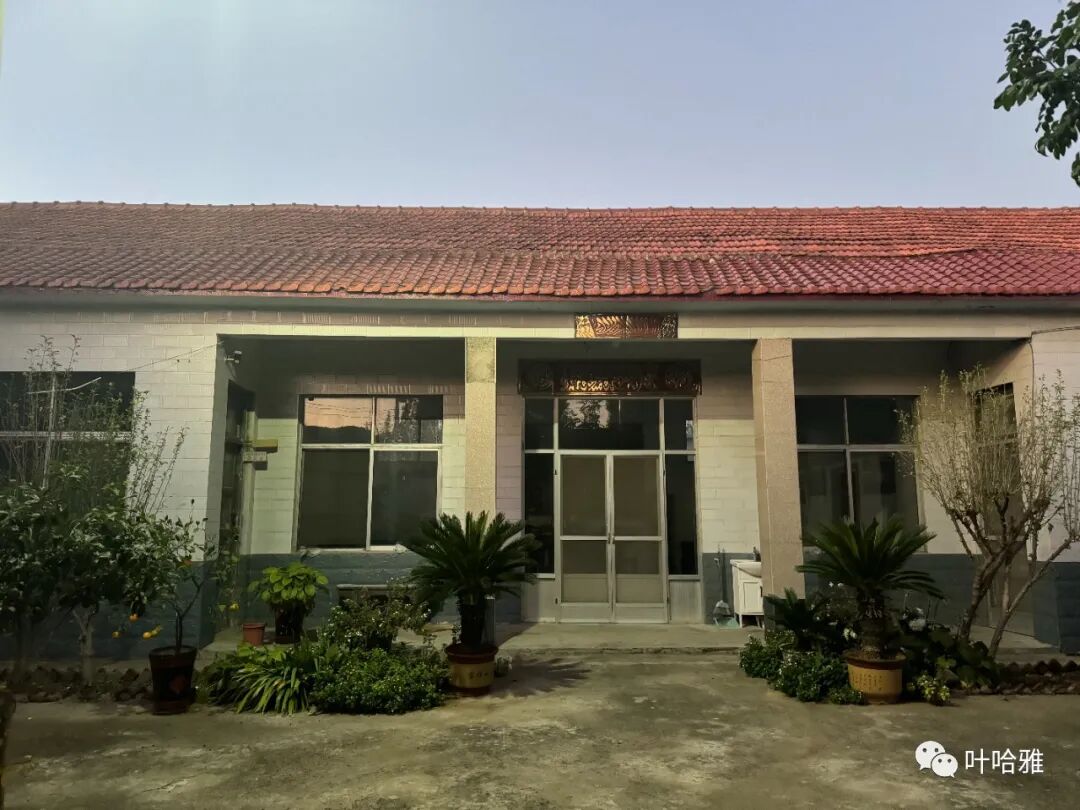
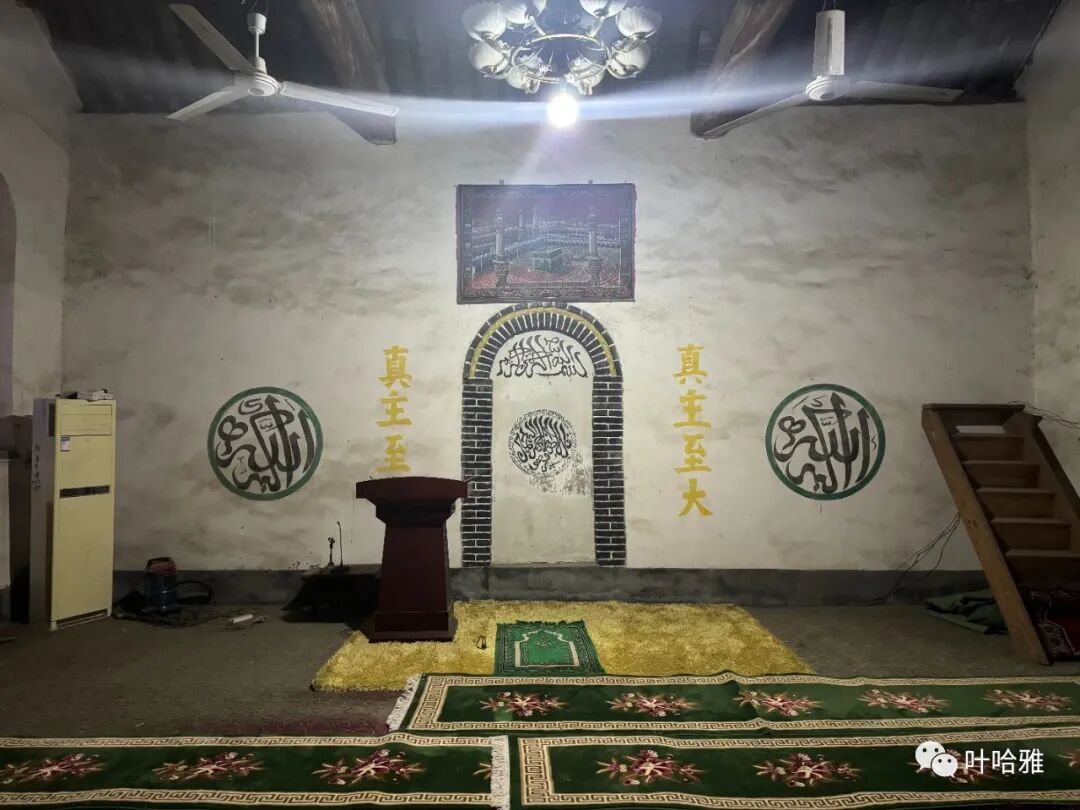
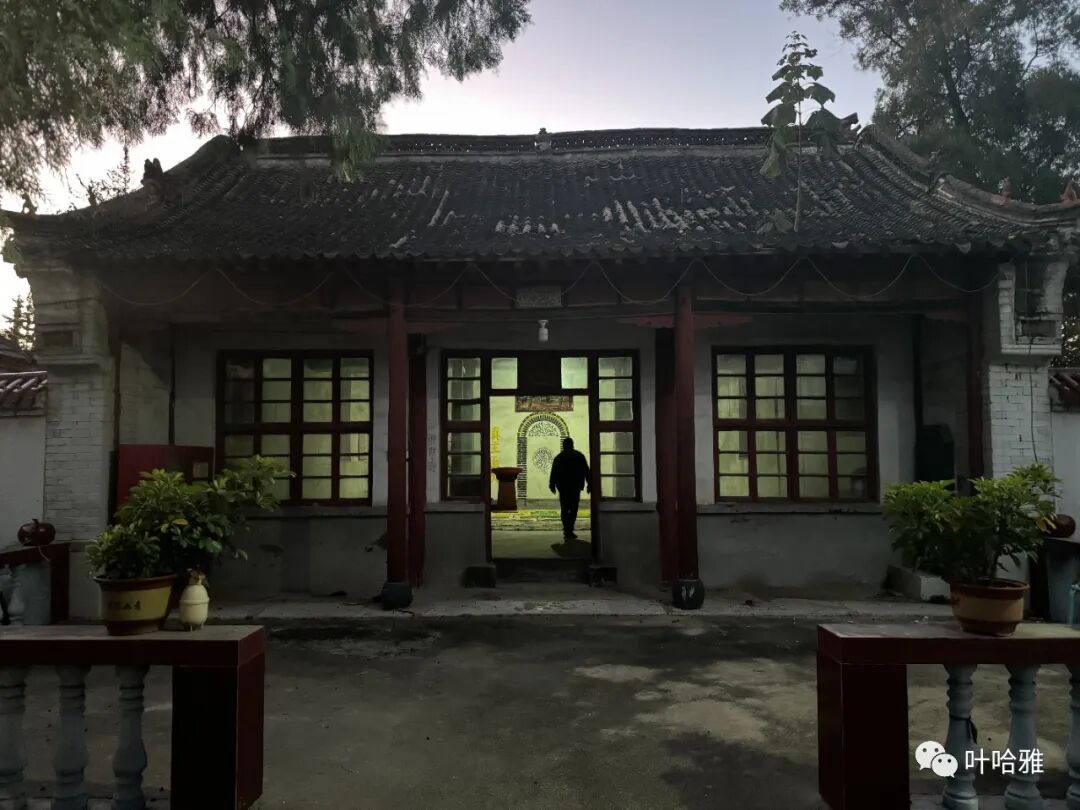
Xindian Village Mosque
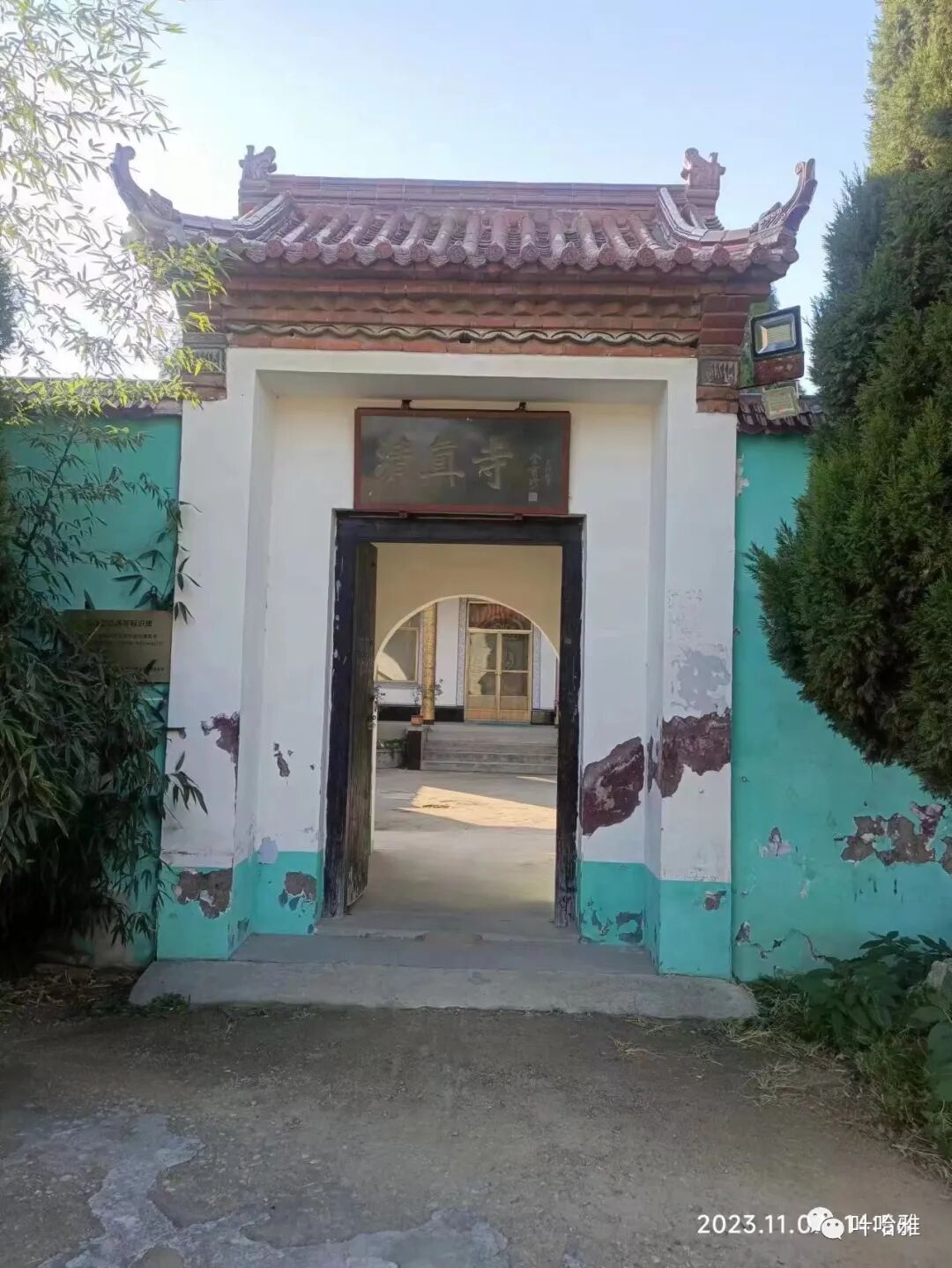
Xindian Village Mosque in Huamawan Township is also known as Wangfanling Mosque. It was first built during the Wanli period of the Ming Dynasty (1573-1620) with funds raised by the Zhou family of Huamawan, the Jin family of Jiepai (formerly known as Wangfanling), the Wang family, the Yang family of Xindian, and the Wang family of Qiaozi Village. It has been repaired many times since then.
The mosque was damaged during the Cultural Revolution. In 1999, Mi Fengwen and Wang Shuxin led a committee to rebuild the prayer hall, five rooms for the north lecture hall and bathing room, two rooms for the funeral room, the main gate, and other auxiliary facilities, covering a building area of over 500 square meters. When it was completed, Jin Baozhen, former vice chairman of the Provincial Committee of the Chinese People's Political Consultative Conference, wrote the plaque for the mosque's name. The prayer hall and lecture hall were renovated between 2009 and 2010. A new south lecture hall was built in 2011.
The mosque is 24.5 meters long and 22 meters wide. The prayer hall is 9.1 meters long and 8.6 meters wide. The north lecture hall is 14 meters long and 5 meters wide. The south lecture hall is 11 meters long and 5.5 meters wide. The water room is 3 meters long and 5.5 meters wide. Two stone tablets remain today: the 2000 Record of the Reconstruction of Wangfanling Mosque and the 2000 Memorial Tablet for Donations to the Reconstruction of Wangfanling Mosque.
Starting in the Wanli era of the Ming Dynasty (1573-1620), the mosque's religious affairs were led by imams including Imam Zhou, Imam Yang, Imam Jin, Imam Bai, Imam Gao, Zuo Hanchen, and Zuo Shanggui. There were no resident imams during the Cultural Revolution. After the mosque was restored in 1999, imams including Shi Guorong, Mi Guangqun, Zhang Zhiyong, and Ma Chunyu led the religious affairs. The mosque is managed by a democratic management committee with a well-organized structure. Mi Fengwen served as director from 1999 to 2012, and Zhou Li has served as director since 2013.
The mosque currently houses handwritten Islamic religious texts. In 2010, the mosque was named a Harmonious Religious Activity Venue by Shandong Province, and in 2014, it received the title of Model Mosque from Tai'an City.
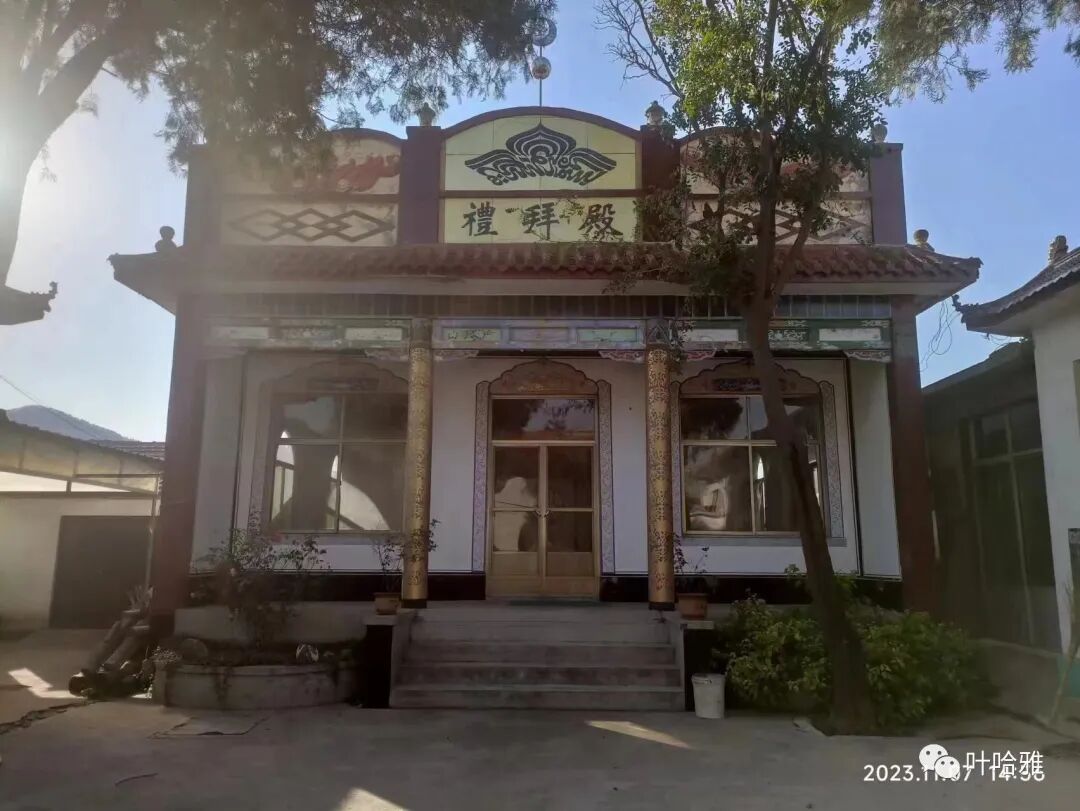
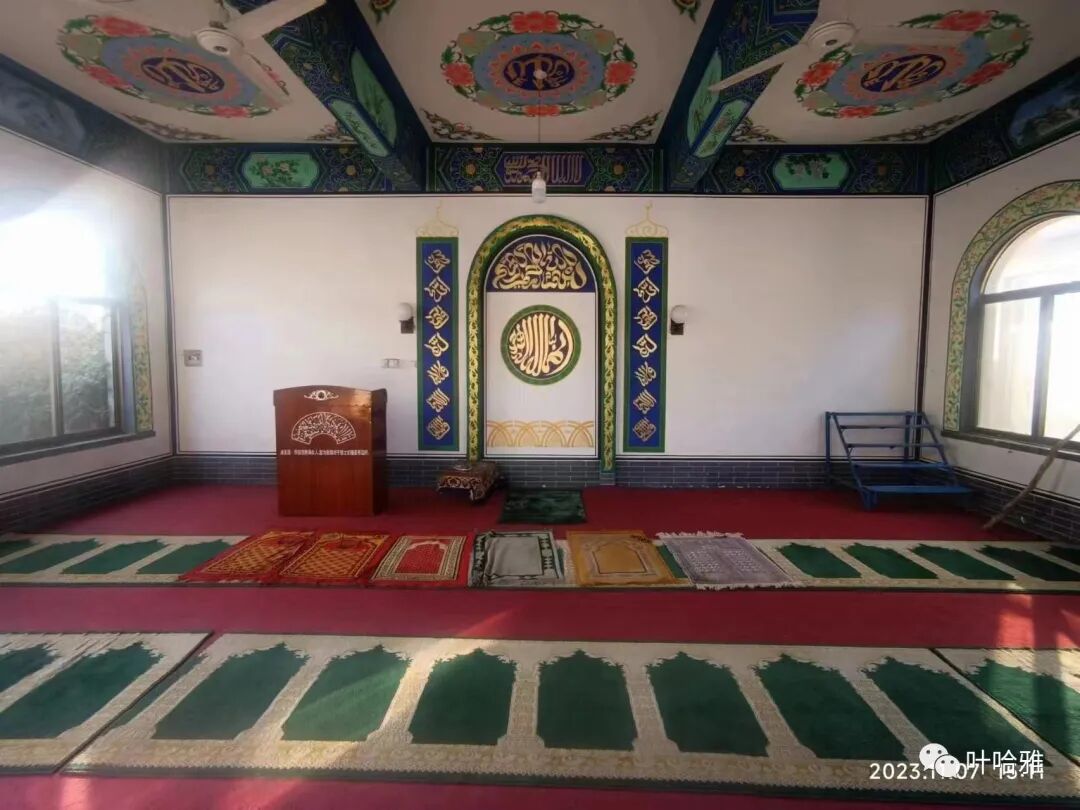
Xinghua Street Mosque in Dawenkou
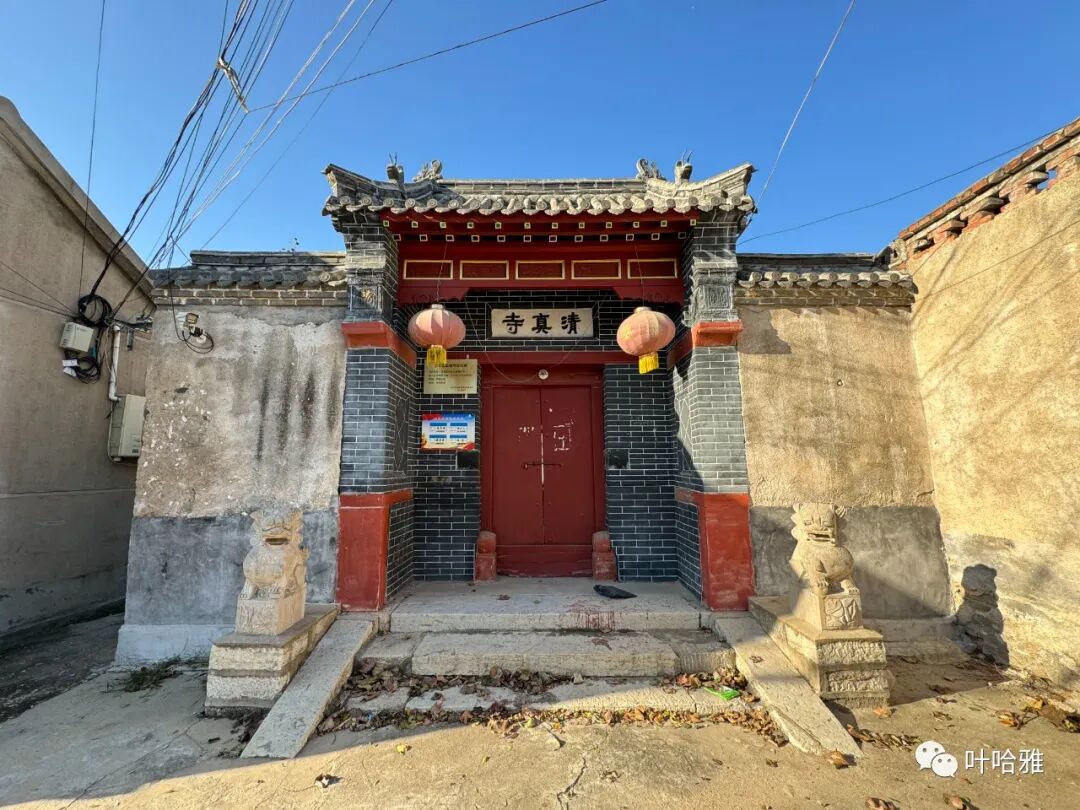
The Xinghua Street Mosque in Dawenkou Town sits in the middle of Xinghua Street Village. It was first built during the Qianlong reign of the Qing Dynasty (1735-1796) and has been expanded and repaired ever since. It underwent three major renovations in 2001, 2011, and 2015.
The mosque is 40 meters long and 23 meters wide. There is a porch (baoxia) about 6 meters high in front of the prayer hall, which is 11 meters long and 8 meters wide. The north lecture hall is 10 meters long and 6 meters wide. The south lecture hall is 10 meters long and 5 meters wide. The water room is 11 meters long and 4 meters wide. One stone tablet remains, which is the 2011 Record of Mosque Renovation.
Before the Cultural Revolution, Imam Liu Zhongan led the religious affairs. Over the past twenty years, Imams Bai Maosheng, Ma Chuanxiang, Yang Shunchang, and Bai Yanbing have led the religious affairs. The mosque is now managed by a democratic management committee with a sound and complete structure, with Li Guangchun and Yang Yanjiang serving as directors in succession.
In 2013, the mosque was awarded the title of "Harmonious Religious Activity Venue" in Shandong Province.
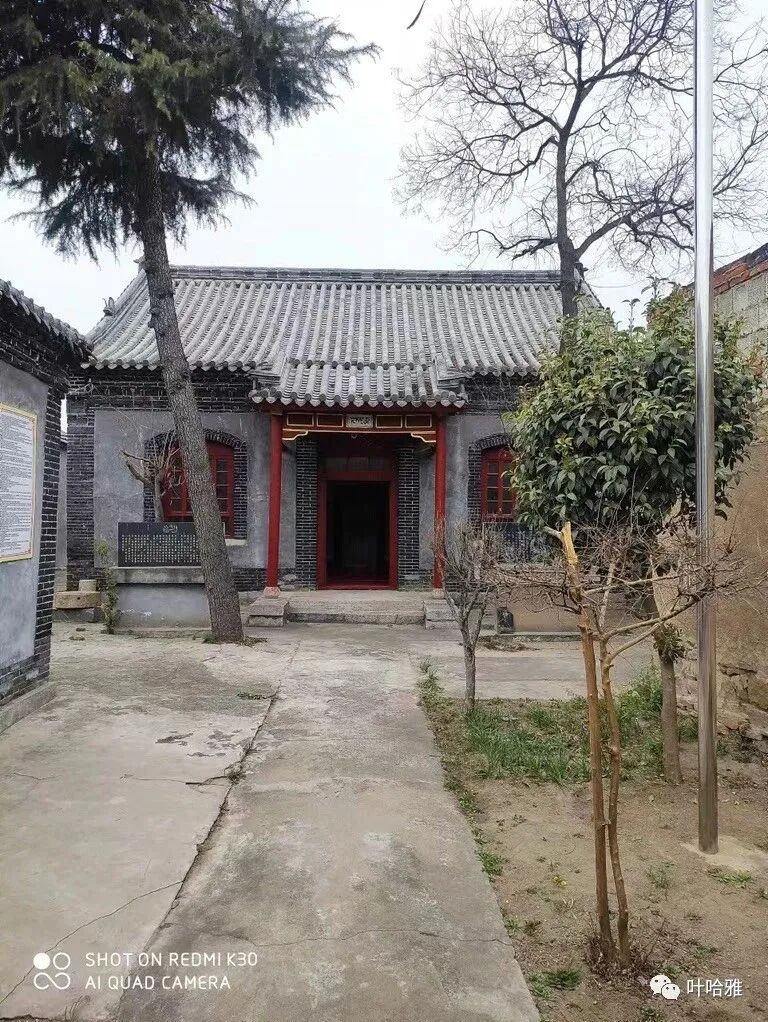
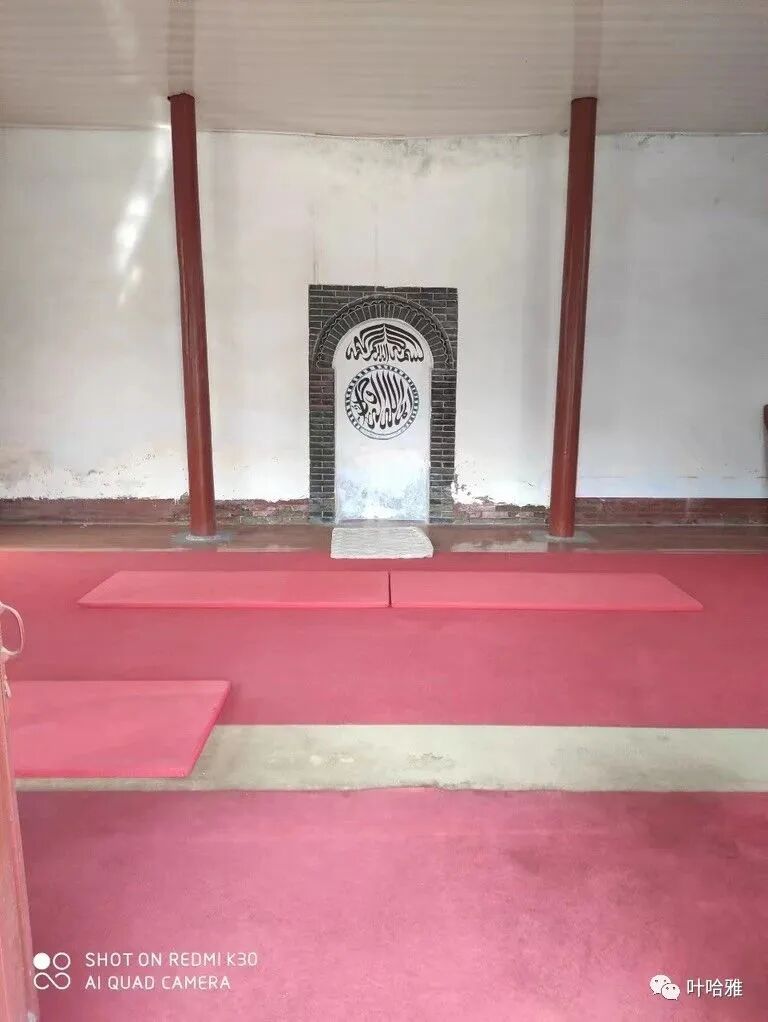
Xintai City
Dongshendong Village Mosque
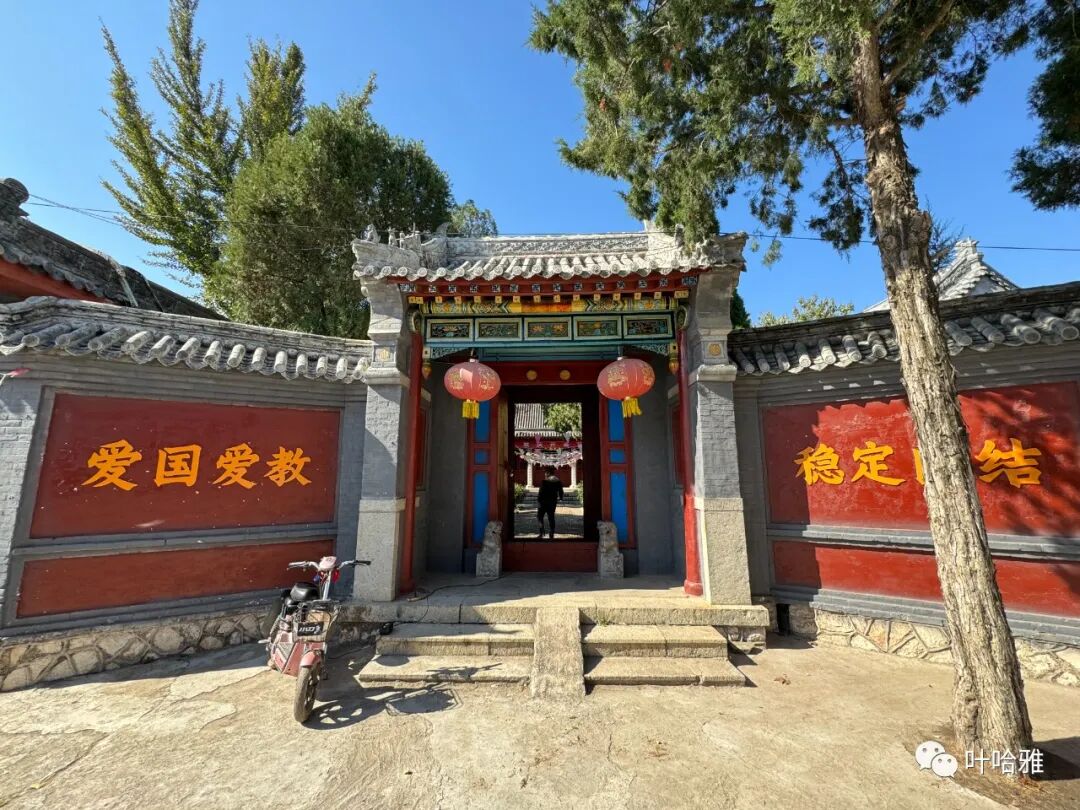
Dongshendong Village Mosque in Yucun Town is located in the western part of the village. It was built during the Hongwu period of the Ming Dynasty (1368-1398) and has been renovated several times since. It underwent multiple renovations in the 53rd year (1714) and 60th year (1721) of the Kangxi reign, the 6th year (1741) and 20th year (1755) of the Qianlong reign, the 16th year (1836) and 23rd year (1843) of the Daoguang reign, the 20th year (1894) of the Guangxu reign, and the 15th year (1926) of the Republic of China. In 1964, coal mining at the Yucun Coal Mine caused the ground to sink and damaged the buildings, so the entire Dongshendong Village moved to a new site and the old mosque was abandoned. The new mosque was rebuilt between 1987 and 1997.
The mosque is 50 meters long and 40 meters wide. The main prayer hall is a double-eaved structure, 13 meters high, 20 meters long, and 18 meters wide. The north lecture hall is 18 meters long and 6 meters wide. The south lecture hall is 18 meters long and 7.5 meters wide. The water room is 16 meters long and 8 meters wide.
The mosque has 11 stone tablets. These include the Record of Rebuilding the Mosque from 1714 (the 53rd year of the Kangxi reign), the Eternal Compliance Tablet from 1721 (the 60th year of the Kangxi reign), the Record of Rebuilding the Mosque Tablet from 1741 (the 6th year of the Qianlong reign), the Supplementary Record of Rebuilding the Mosque School Land Tablet from 1836 (the 16th year of the Daoguang reign), the Record of Rebuilding the Rear Hall from 1843 (the 23rd year of the Daoguang reign), the Record of Rebuilding the Mosque Tablet from 1894 (the 20th year of the Guangxu reign), the Tablet for Donating Land to the Mosque from 1903 (the 29th year of the Guangxu reign), the Record of Rebuilding the Gutter from 1926 (the 15th year of the Republic of China), the 1958 Record of Repairing Racks and Adding Wall Clocks, and the 2002 Record of Rebuilding the Mosque and the Oneness of Allah Tablet.
The mosque has trained many imams, including Liu Pu and Ma Xingfu from the Qing Dynasty. Imams from the Republic of China era include Imam Yang and Wan Zhendong. Imams after the founding of the People's Republic of China include Chen Dianpu, Zhu Yuehou, Ma Wenjun, Ma Xingchang, Ma Hongxin, and Ma Hongping. Imam Liu Pu led the mosque's renovation in 1836 (the 16th year of the Daoguang reign). Imam Ma Xingfu led the renovation in 1894 (the 20th year of the Guangxu reign). Imam Ma Wenjun went on Hajj to Mecca and met with party and state leaders. Xintai, Tai'an, and provincial media reported on his achievements several times.
In this village, the Ma family produced imams for several generations. Starting with Ma Zhaojun, his descendants Ma Shigong, Ma Wendou, Ma Xingcheng, Ma Hongbin, Ma Shengxuan, and Ma Zhu all served the mosque with dedication. The mosque is currently managed by a management committee. Past directors include Liu Baoshui, Liu Zidong, Ma Shenghua, and Ma Sheng'an. The mosque holds handwritten copies of the Quran, Common Knowledge of Hui Muslims, and Tuoha, along with a blue and white porcelain incense burner saved from the original mosque.
In 2008, the mosque was named a Model Mosque by Tai'an City. In 2009, it was named a provincial-level Harmonious Religious Activity Venue. In 2014, it was named a Model Mosque by Tai'an City.
Women's Mosque
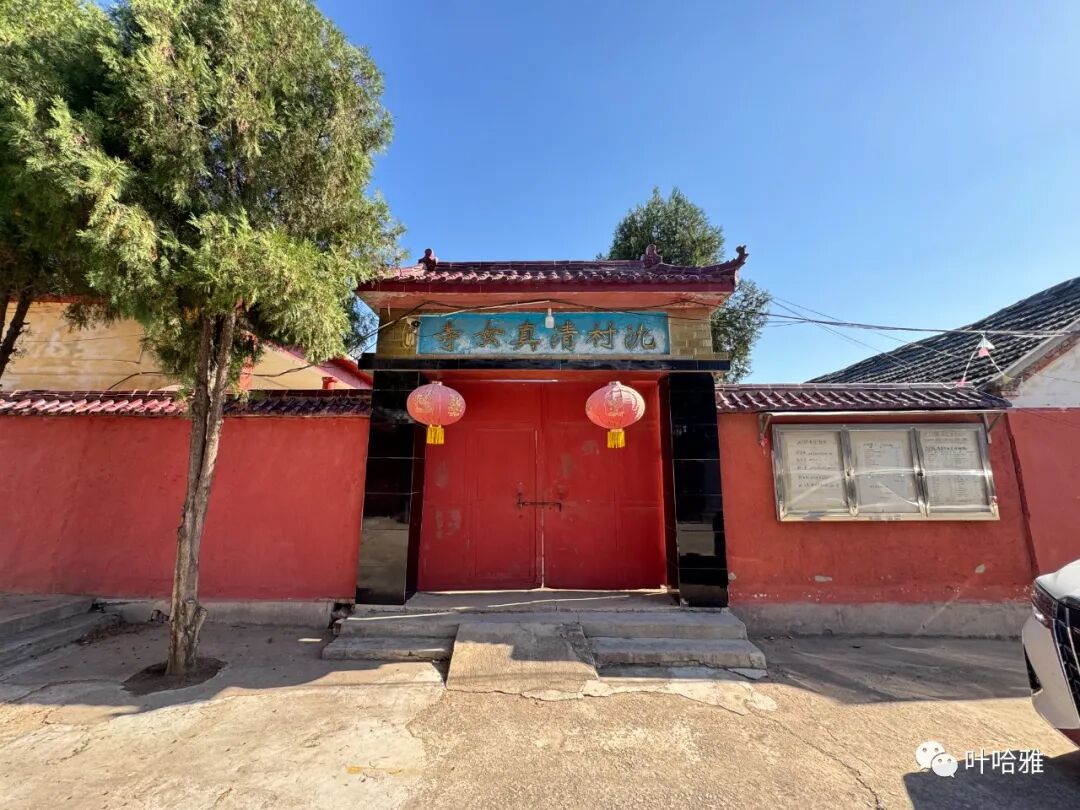
The Women's Mosque in Dongshendong Village, Yucun Town, is located in the western part of the village. It sits opposite the Dongshendong Village Mosque. It was built in May 2005. It covers an area of over 400 square meters, with a building area of 128 square meters. There is one existing stone tablet, the Tablet Record of Building the Women's Mosque. The current imam is Ma Shengling, who has led the mosque's religious affairs since 2006.
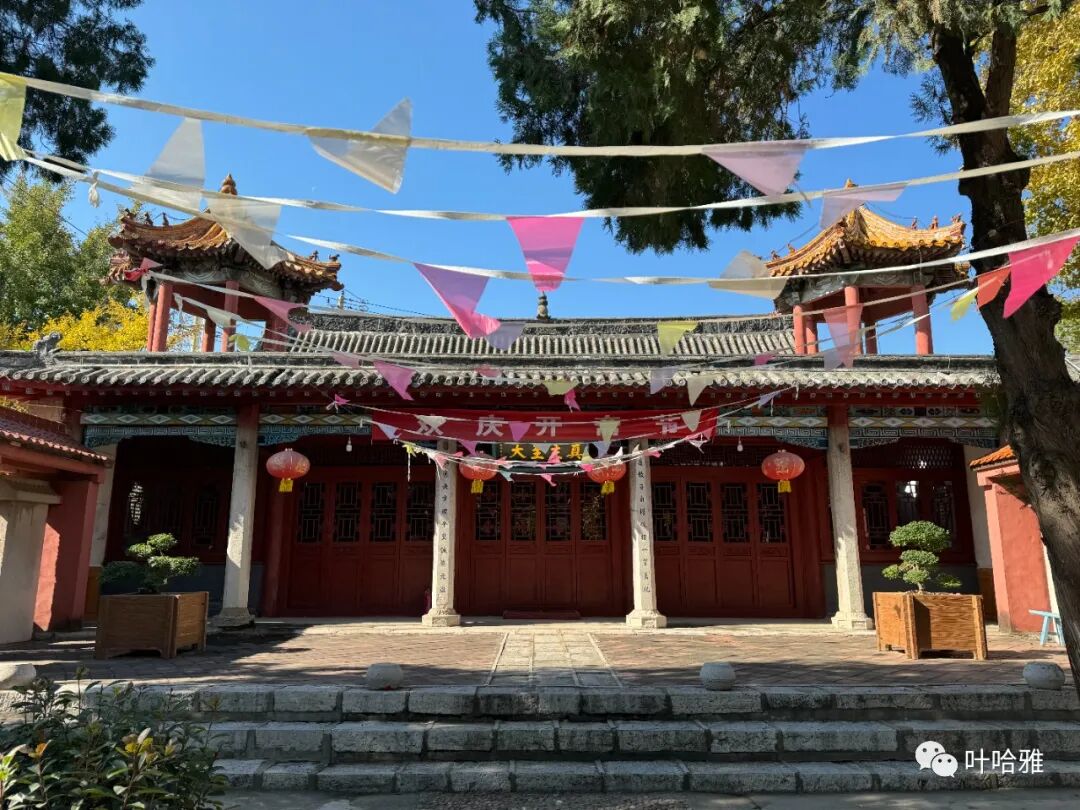
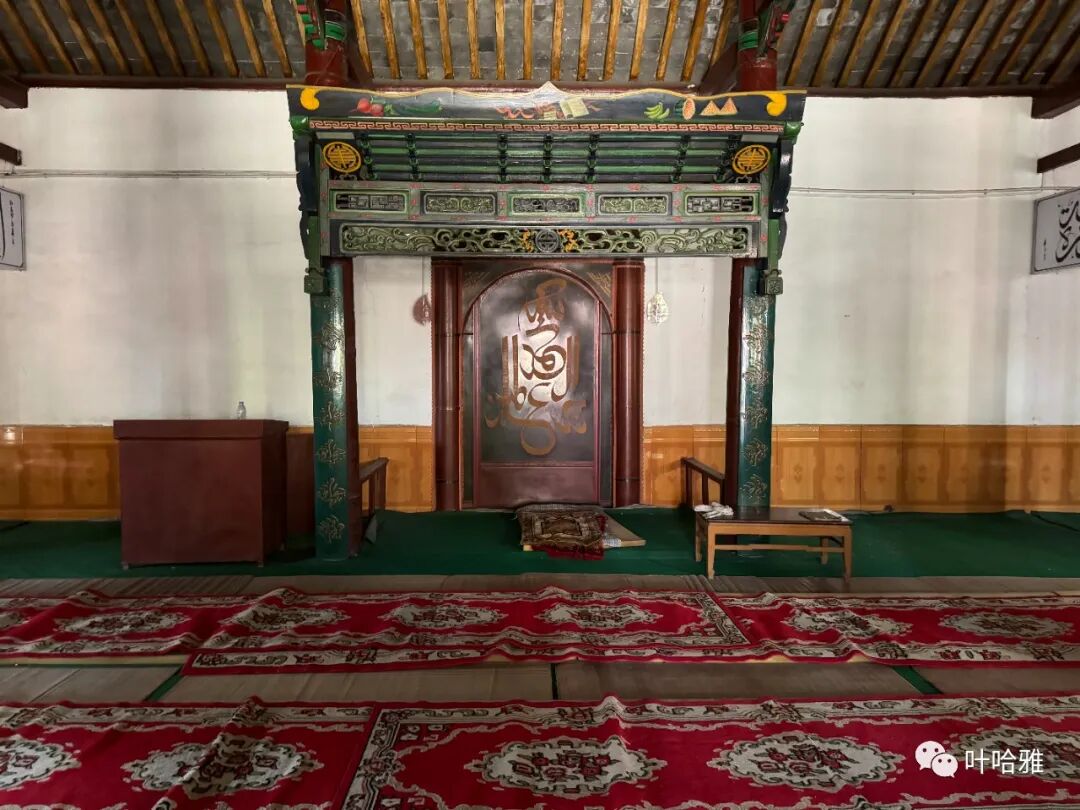
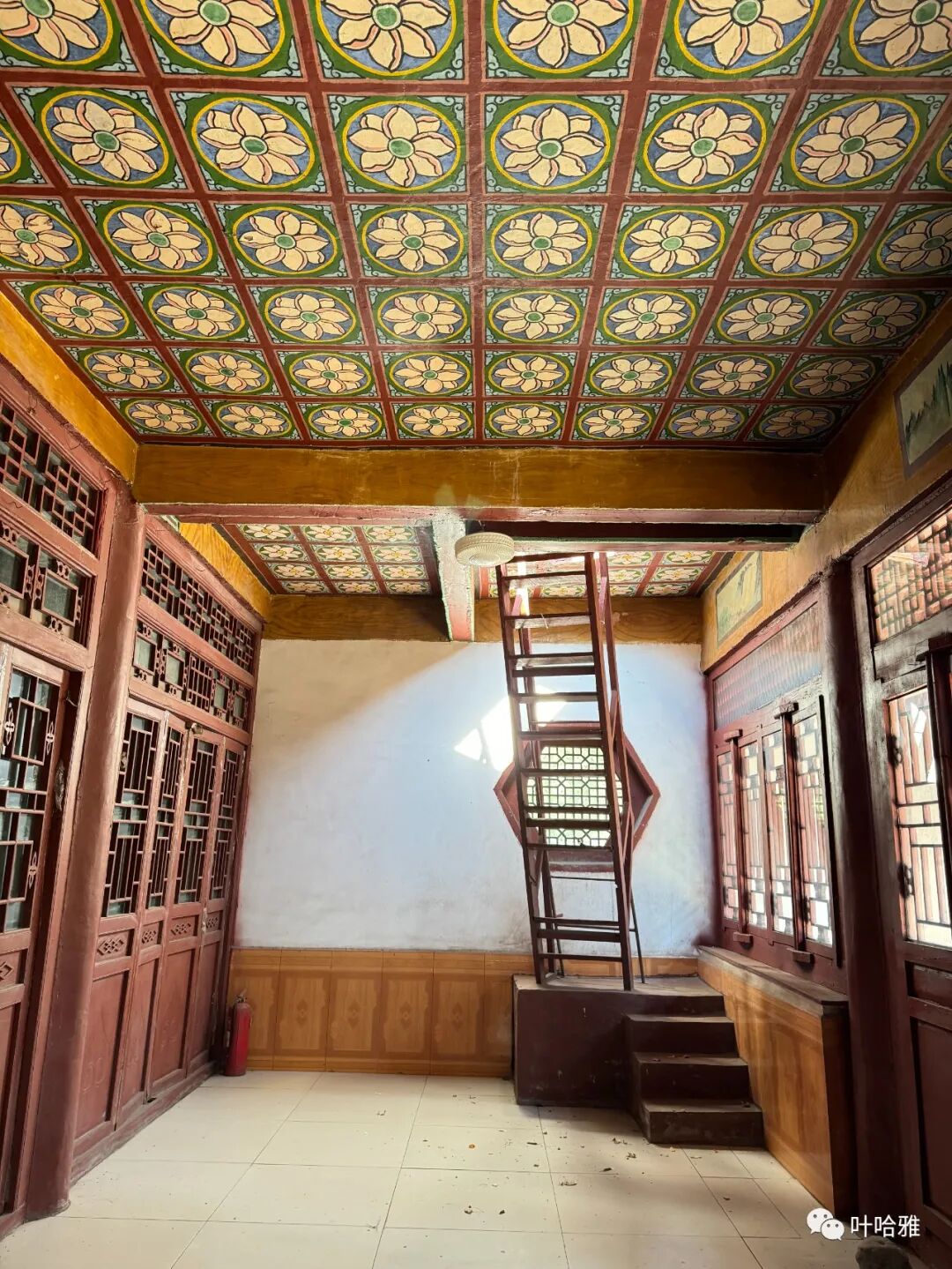
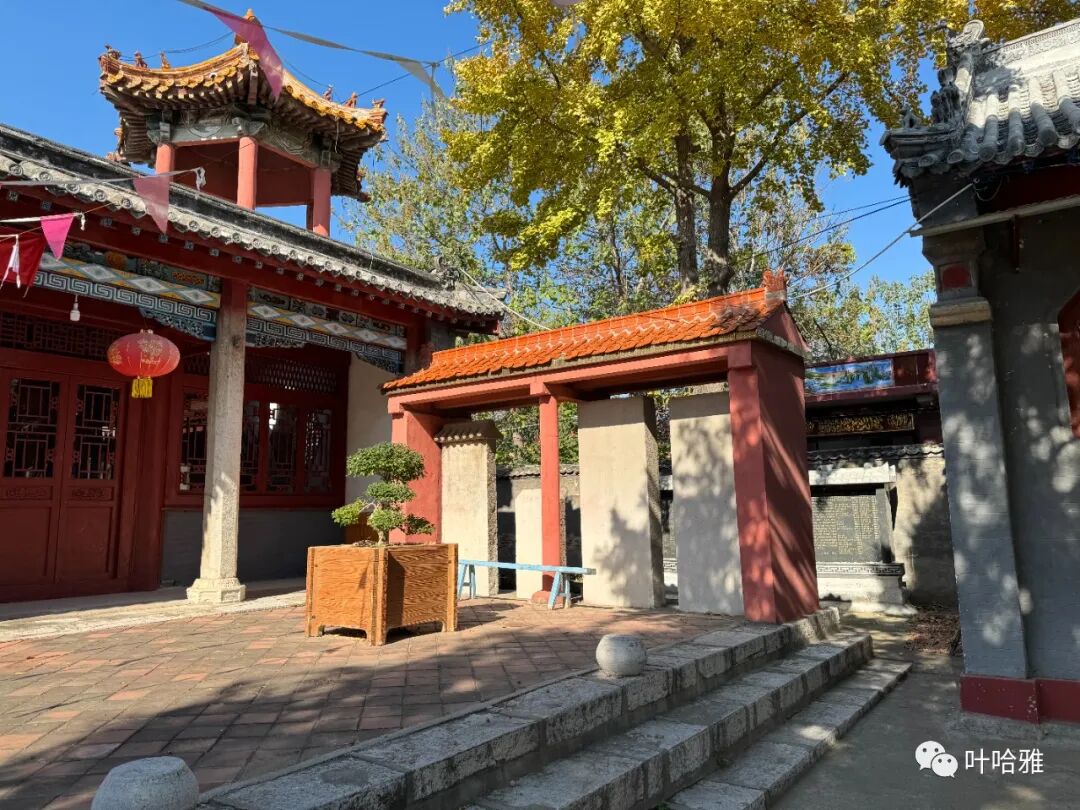
Dongshenxi Village Mosque
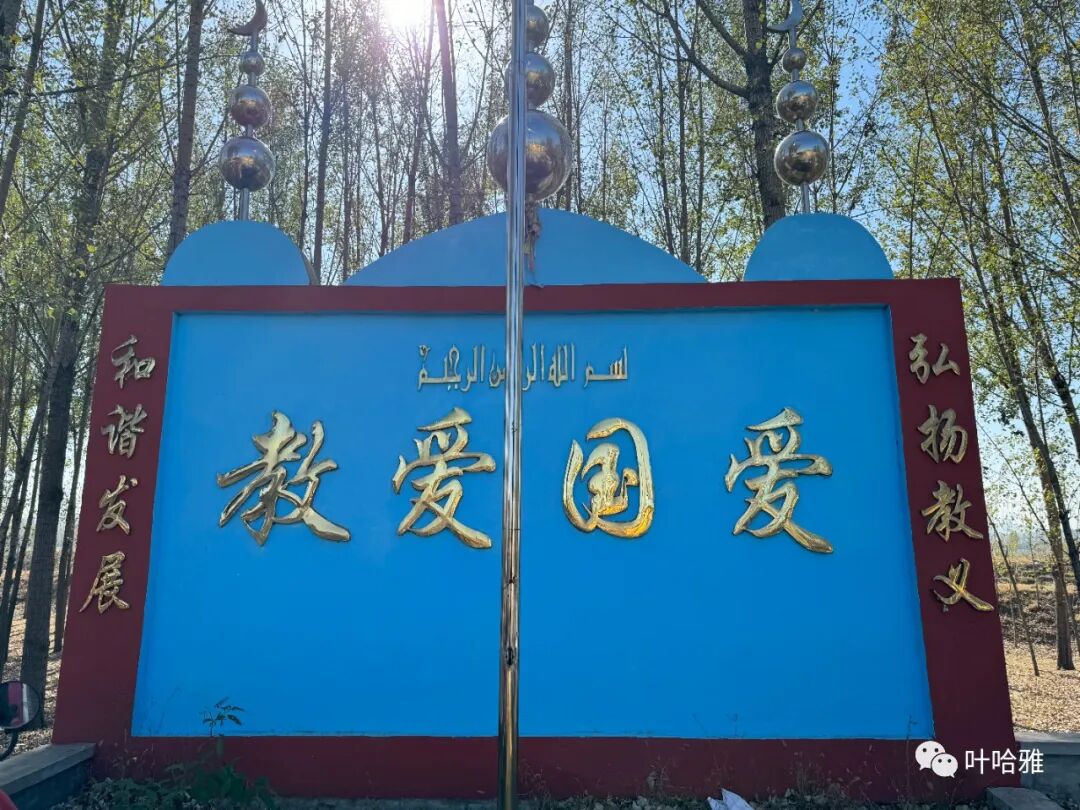
The Dongshenxi Village Mosque in Yucun Town is located in the south of the village and was built in 1994. It was renovated twice, in 2005 and 2013.
The mosque has a single courtyard and lacks a rear prayer hall (houyaodian), side rooms, and a raised moon terrace (yuetai). The mosque is 80 meters long and 60 meters wide. The main prayer hall is a single-level structure, 5 meters high, 12 meters long, and 6 meters wide. The south lecture hall is 8 meters long and 4 meters wide. The water room (shuiwu) is 8 meters long and 4 meters wide.
Imam Ma Hongxin once led the religious affairs here, and Ma Hongru currently serves as the resident imam. The mosque is now managed by a democratic management committee, with Ma Xingsheng, Liu Maoquan, and Ma Hongcang serving as directors in succession.
The mosque was awarded the provincial title of "Harmonious Religious Activity Venue" twice, in 2010 and 2011.
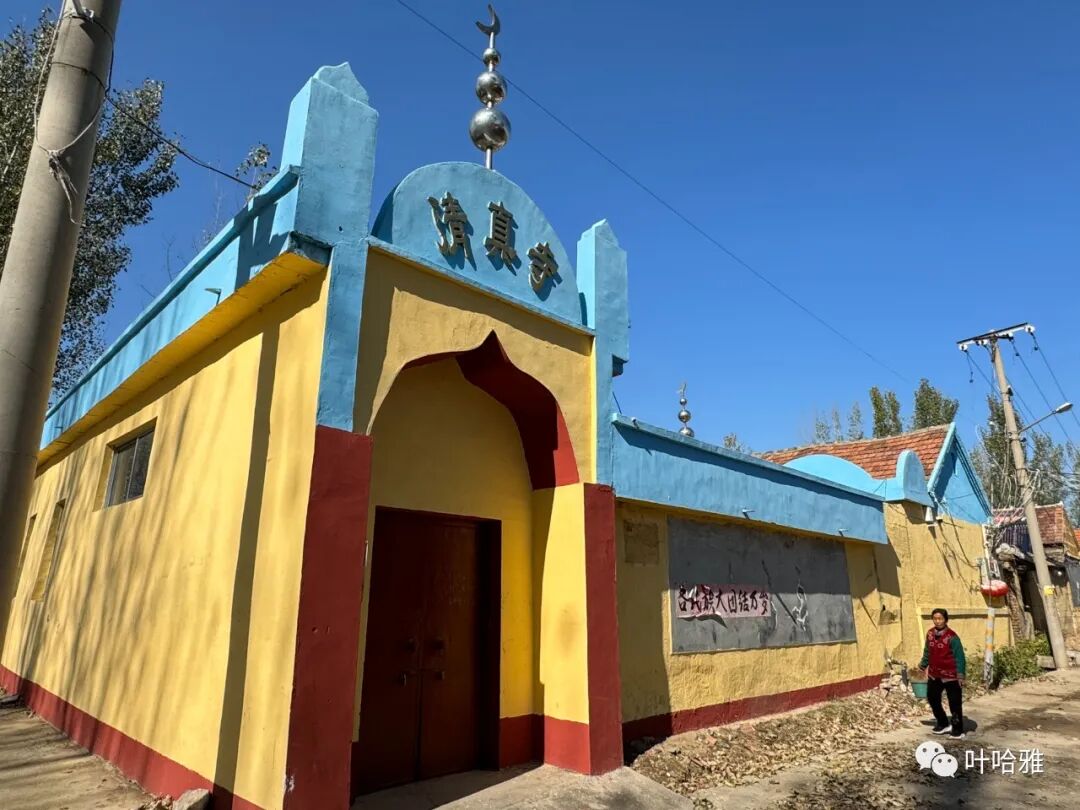
Dashandong Village Mosque
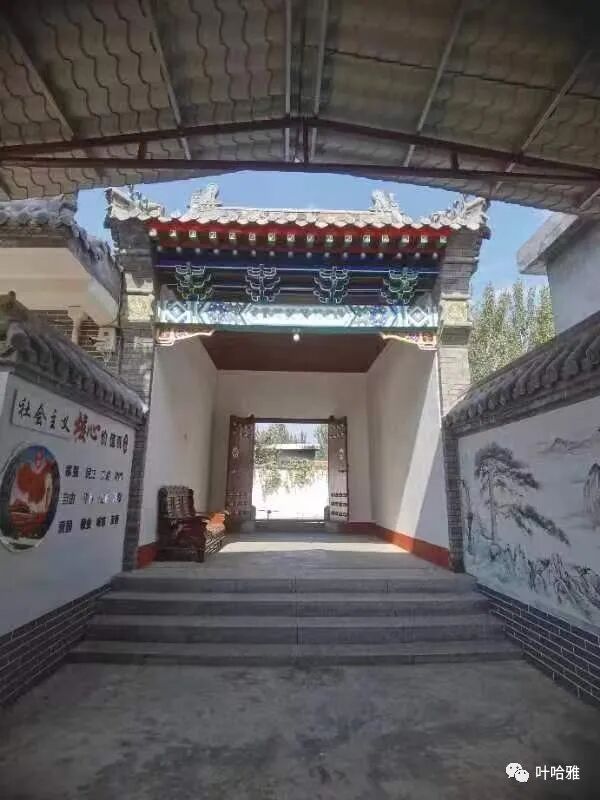
Dashandong Village Mosque in Yucun Town is located in the western part of the village. It was built during the Chongzhen period of the Ming Dynasty (1628-1644) and has been renovated several times since. In 2006, the north and south lecture halls and the main gate tower were built.
The mosque is a single-courtyard building, measuring 40 meters long and 40 meters wide. The prayer hall is a single-story structure, 5 meters high, 12 meters long, and 12 meters wide. The north lecture hall is 15 meters long and 8 meters wide. The ablution room (shuiwu) is 15 meters long and 8 meters wide.
The mosque has trained over 10 imams and religious leaders, including Wang Xicun, Chen Nianpu, Bai Maohai, Zhang Shuiquan, Xu Shanfang, Wu Mingcai, Yu Yang, Ma Kui, Mi Guangxun, and Man Yungui. It is currently managed by a democratic management committee of the mosque, with Su Yefu, Jin Zongdian, and Jin Naifang serving as directors in succession.
The mosque has been awarded the title of "Model Mosque" by Tai'an City twice.
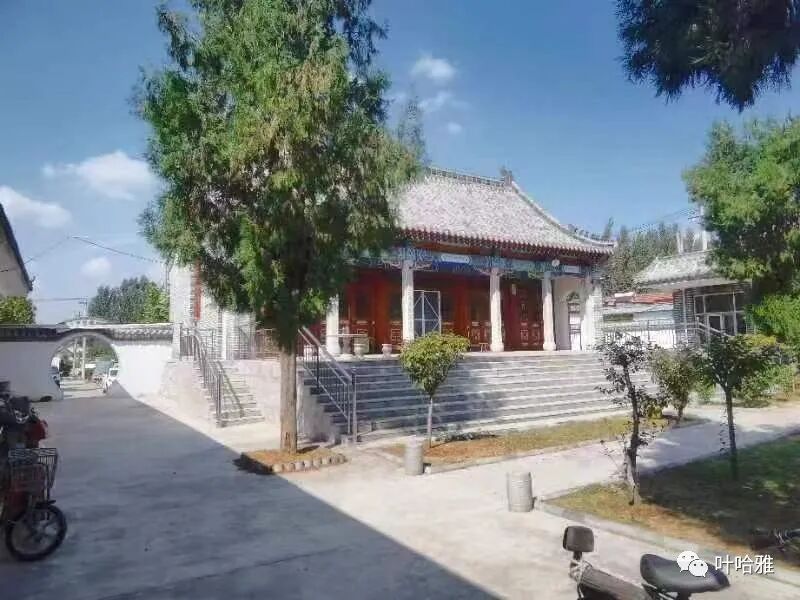
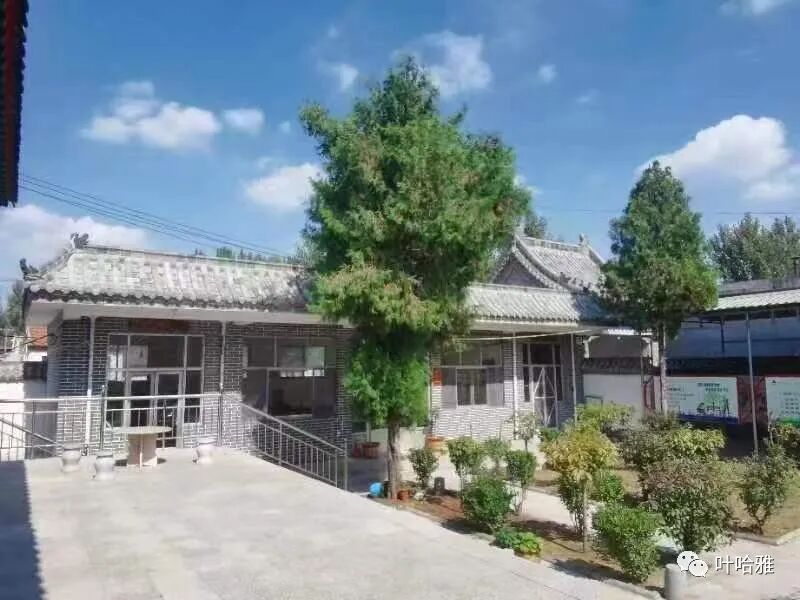
Lujiagou North Mosque
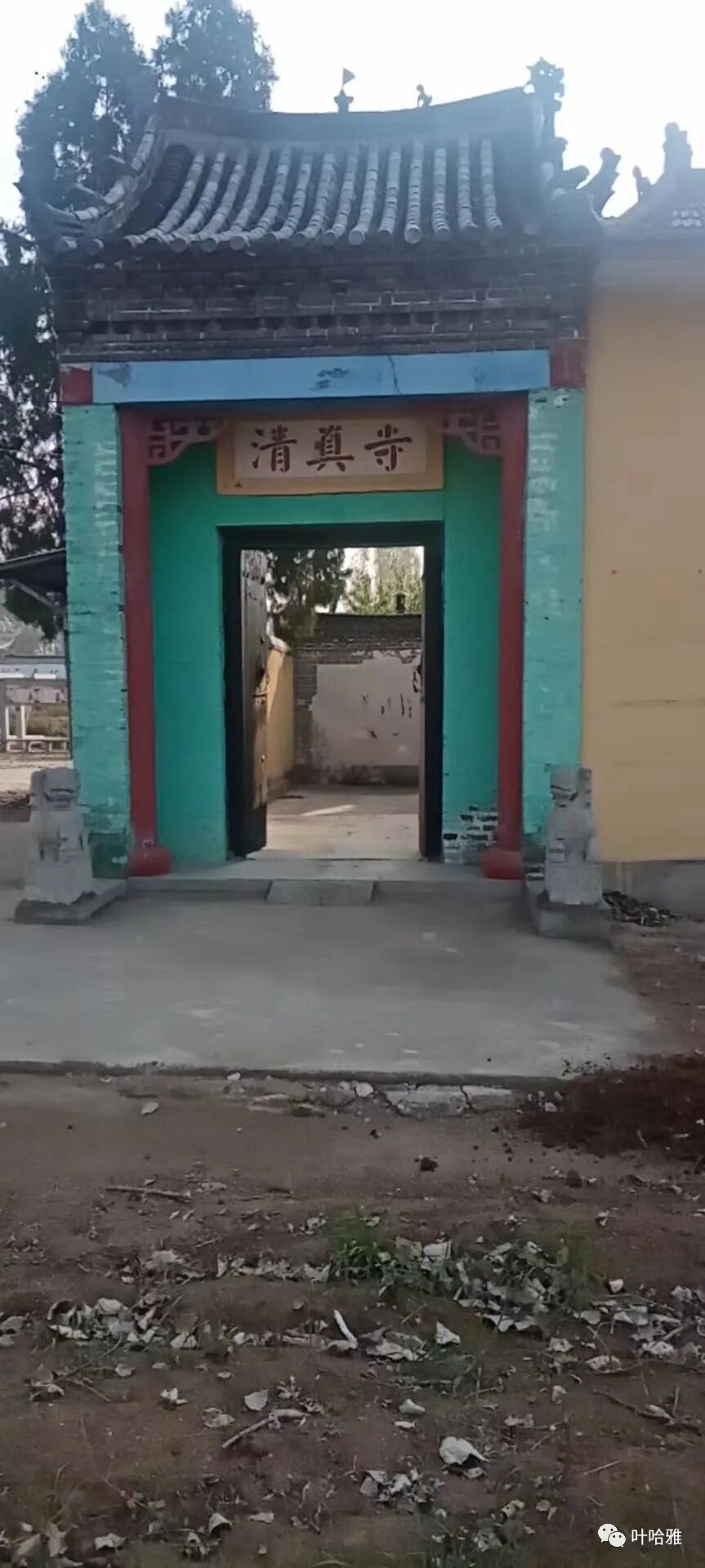
Lujiagou North Mosque in Yucun Town is located in the northwest of the village and is also known as Dalinghou Mosque. It was first built in the early Qing Dynasty and has been expanded and repaired many times since. During the Cultural Revolution, the mosque was damaged, and it was rebuilt in the west of the village in 1987. It underwent three large-scale renovations in 1989, 2008, and 2016.
The mosque is a single-courtyard building, 40 meters long and 22 meters wide. The main prayer hall is 16 meters high, 15 meters long, and 11 meters wide. The north lecture hall is 15 meters long and 6 meters wide. The south lecture hall is 12 meters long and 5 meters wide. The ablution room (shuiwu) is 12 meters long and 5 meters wide. There are three stone tablets here: the 2009 Mosque Record (Qingzhensi Ji) and the Donation for Allah Merit Tablet (Renzhu Juanxian Gongde Bei), and the 2011 Accumulating Virtue for Both Worlds Tablet (Jide Xingshan Liangshi Qing Bei).
Since the founding of the People's Republic of China, imams including Liu, Liu Yuhai, and Ma Yongjun have led the mosque's religious affairs. The mosque is now managed by a democratic management committee, with past directors including Ma Xingfu, Yu Laili, Ma Yonggui, and Yu Changjian.
In 2009, the mosque was named a city-level Civilized Religious Activity Site, and in 2011, it was named a Shandong Province Harmonious Religious Activity Site.
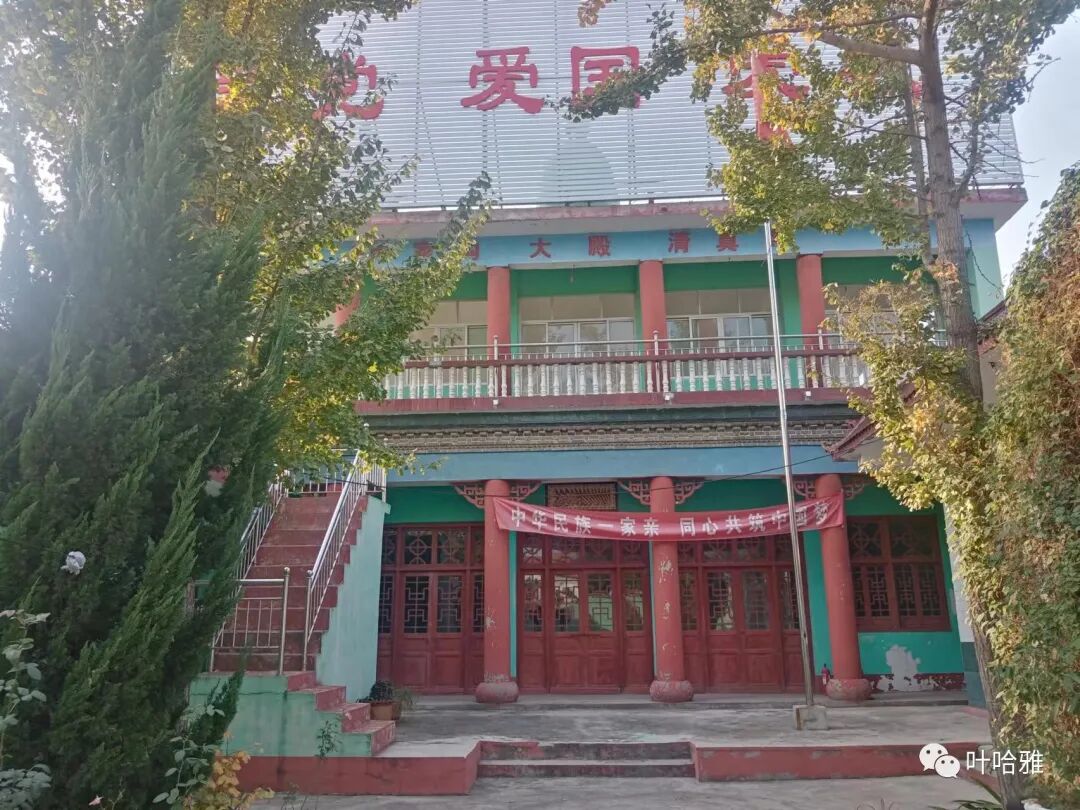
Lujiagou South Mosque
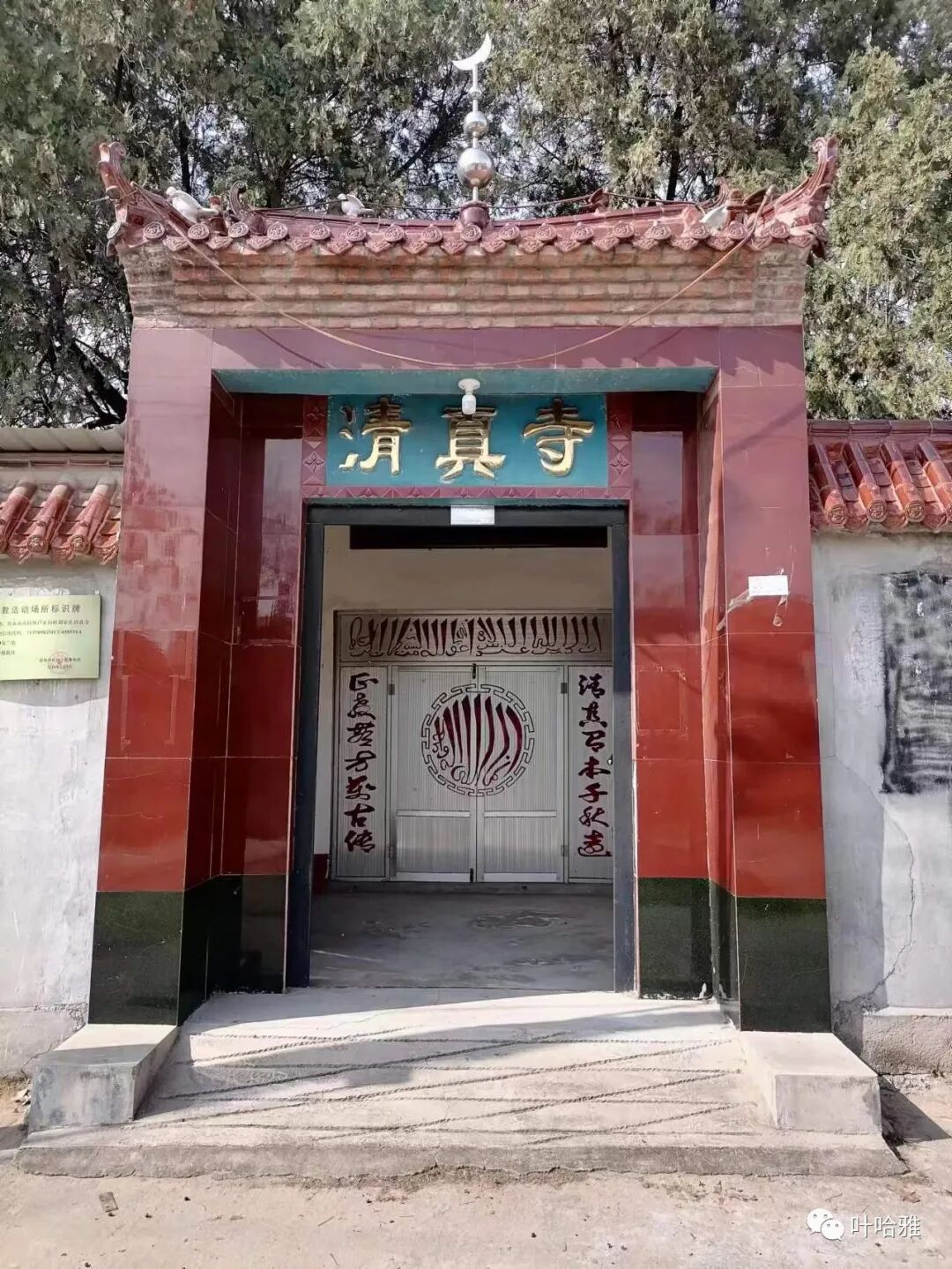
Lujiagou South Mosque in Lujiagou Village, Yucun Town, sits in the south of the village and is also known as Xiaolinghou Mosque. The mosque was first built in 1947. When first built, the mosque had five northern lecture halls and three southern lecture halls. The mosque was repaired many times after the Cultural Revolution. In 2007, three main prayer halls and four southern lecture halls were built. In 2008, the six northern lecture halls were renovated.
The mosque is a single-courtyard building, 28 meters long and 18 meters wide. The main prayer hall is 5 meters high, 9 meters long, and 8 meters wide. The northern lecture hall is 12 meters long and 6 meters wide. The southern lecture hall is 12 meters long and 5 meters wide. The water room is 6 meters long and 6 meters wide. The mosque has two stone tablets: the 2009 Record of Mosque Renovation and the 2015 Donation Merit Tablet.
In recent years, the imams who have led the mosque's religious affairs are Ma Linggui, Liu Shouxin, and Jin Yanshui. The mosque is currently managed by a democratic management committee, and the past directors have been Liu Maosheng, Ma Maozhong, Ma Denghou, and Ma Dengyun.
In 2009, the mosque was named a city-level Civilized Religious Activity Site.
Wubu Village Mosque
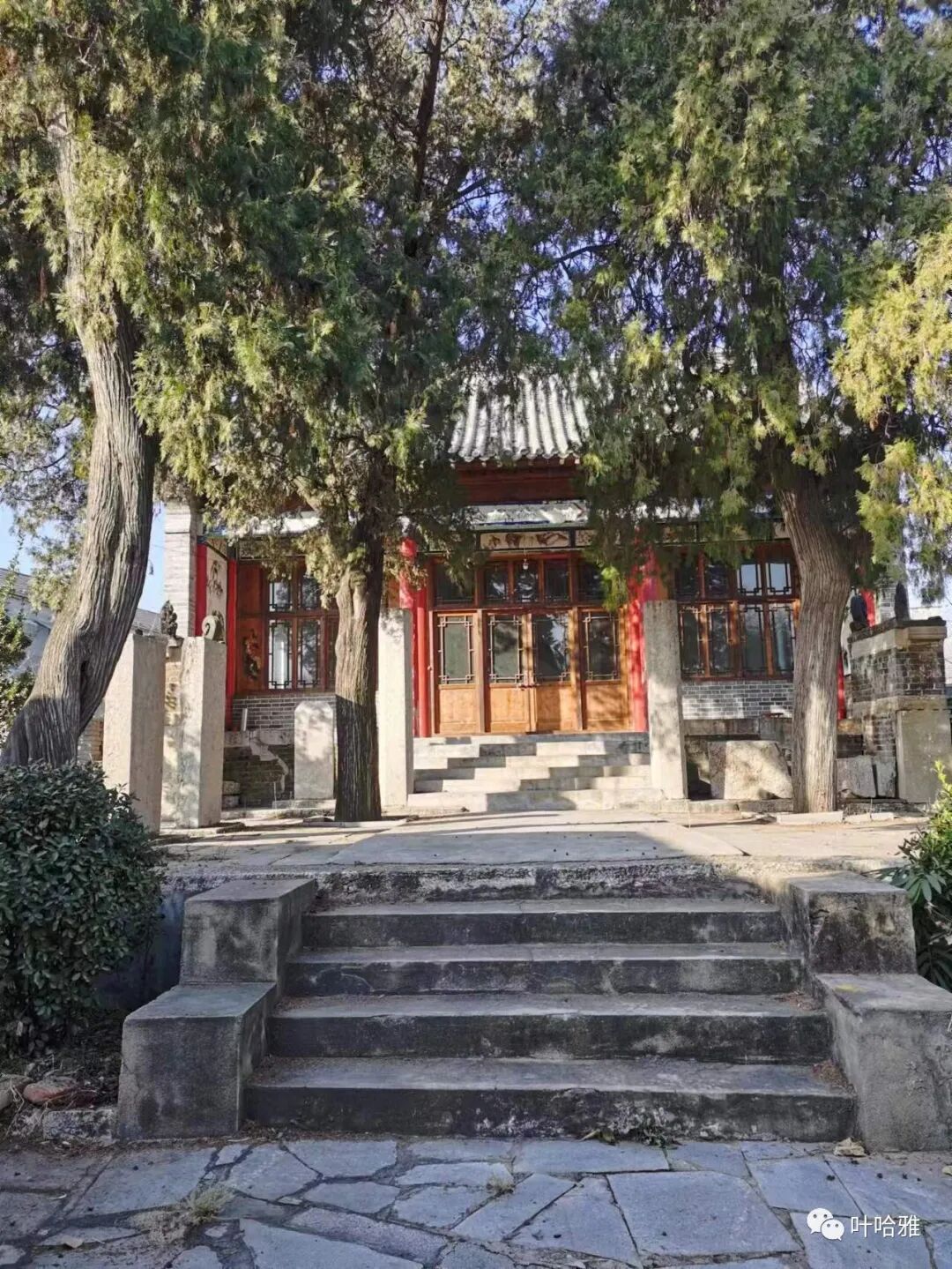
Wubu Village Mosque in Yucun Town sits in the northwest part of the village. It was built in the mid-to-late Qing Dynasty, went through four renovations, and was rebuilt on the original site in 2015.
The mosque is a single-courtyard complex, 60 meters long and 40 meters wide. The main prayer hall is a single-story building, 10 meters high, 13 meters long, and 12 meters wide. The north lecture hall is 17 meters long and 5 meters wide. The south lecture hall is 12 meters long and 5 meters wide. The water room is 5 meters long and 5 meters wide. The mosque has two stone tablets: the 1914 Tablet of Land Donation Funds and the 1945 Tablet Record of the Liu and Zhu Families Donating Land to the Mosque.
Throughout its history, the mosque has trained over 10 ahongs and imams, including Jin Naikuan, Ma Wenhua, Jin Yanquan, Xu Menglan, Xu Shanfang, Yang Xinglin, Ma Houjie, Zhou Xiaozeng, Ma Wenguang, and Liu Shouxin. It is currently managed by the mosque's democratic management committee, with Ma Hongtai, Ma Guangchun, and Xie Chenghua serving as past directors.
The mosque currently keeps a walking stick from the Tongzhi era of the Qing Dynasty (1861-1875). In 1996, the mosque was named a provincial-level "Harmonious Religious Activity Venue."
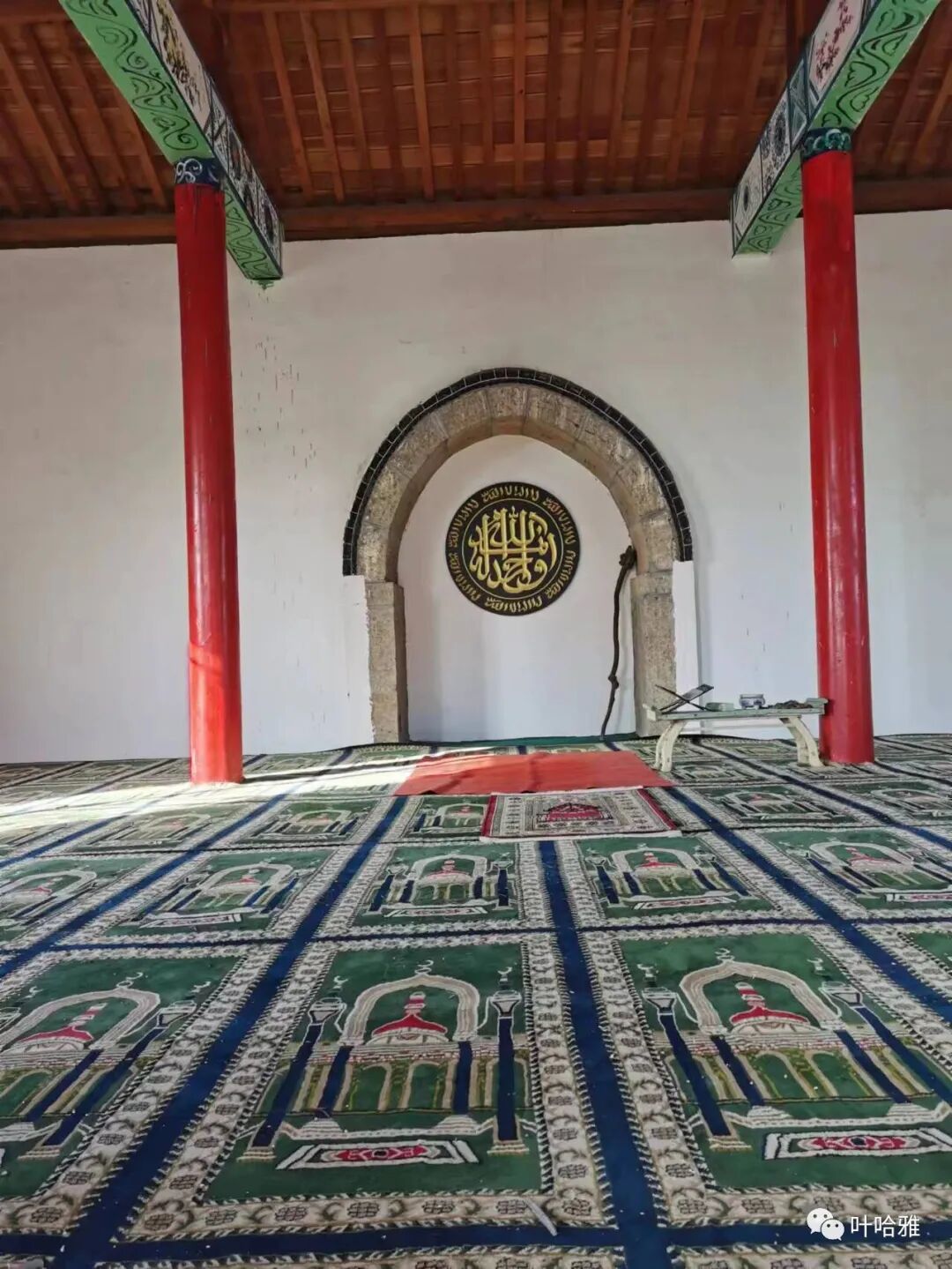
Cheyang Village Mosque
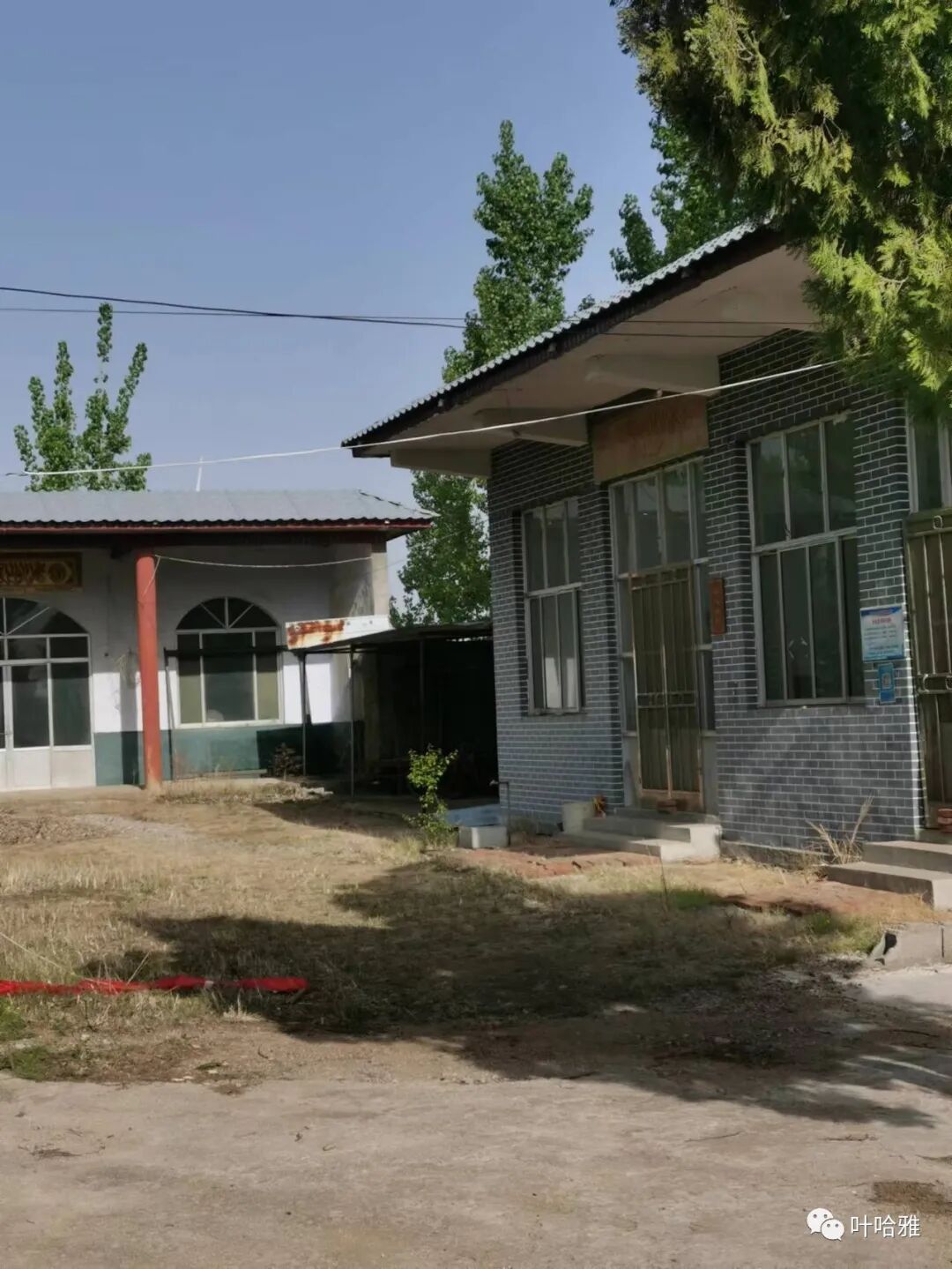
Cheyang Village Mosque in Yucun Town sits in the center of the village. It was built in 1990. It was renovated in 2008. The mosque is a single-courtyard layout without a rear hall, side rooms, or a raised moon platform. The mosque is 35 meters long and 16 meters wide. The prayer hall is a single-story building, 4 meters high, 12 meters long, and 5 meters wide. The north lecture hall is 12 meters long and 4 meters wide. The water room is 9 meters long and 4 meters wide. Since 2005, Imam Zhao Chuandong has been in charge of religious affairs. The mosque is now managed by a mosque management committee, with Xu Jing'e and Xu Zonglian serving as directors in succession. In 2011, the mosque was named a provincial-level Harmonious Religious Activity Venue.
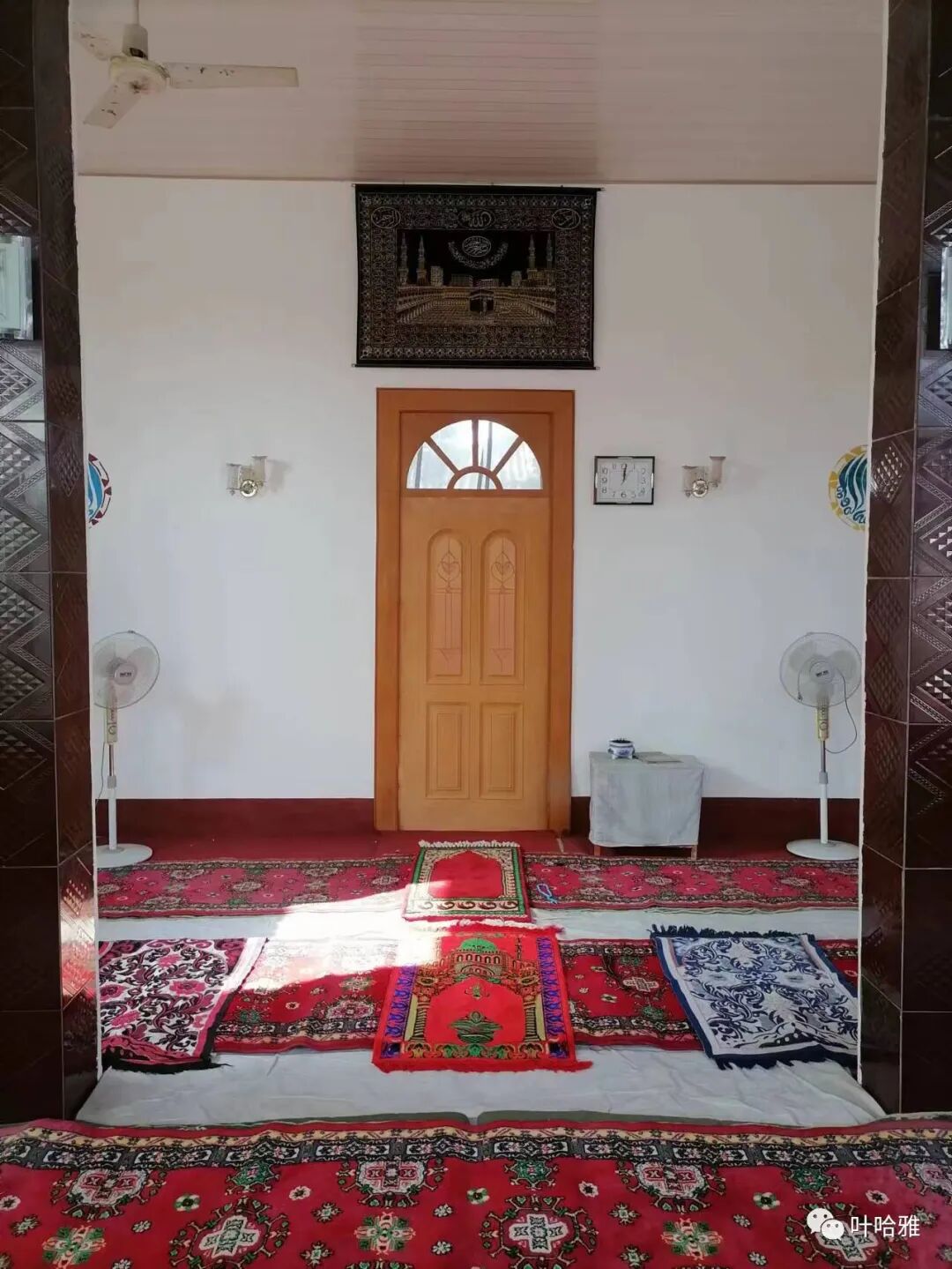
Dongjie Village Mosque
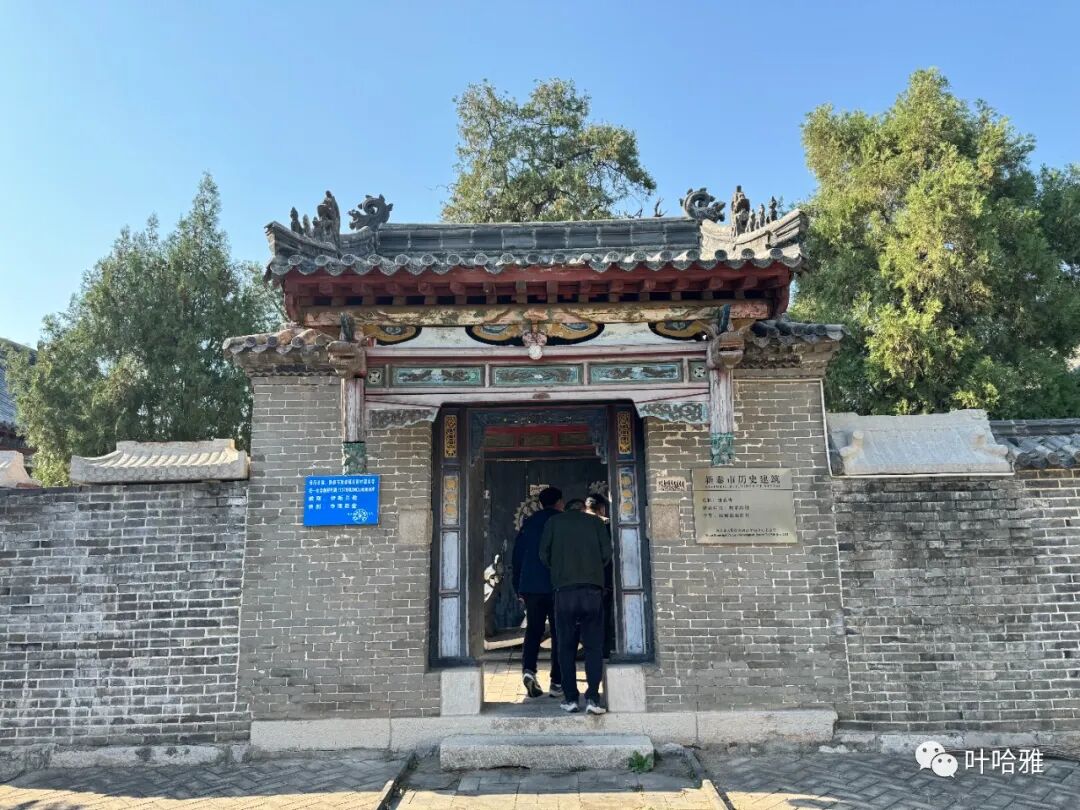
Before the founding of the People's Republic of China, the Dongjie Village Mosque in Fangcheng Town was located in the eastern part of the old village. As the village expanded eastward after the founding of the People's Republic of China, the mosque is now located in the east-central part of Dongjie Village.
The exact founding date of the mosque is unknown, and many stone tablets in the mosque record that the time of its founding is not known. Based on existing materials, it is estimated that it was built around the mid-Ming Dynasty. There have been many large-scale repairs in history, with eight recorded in detail, including in the seventh year of the Yongzheng reign (1729), the thirty-third year of the Qianlong reign (1768), during the Daoguang reign (1820-1850), the fifteenth year of the Guangxu reign (1889), and in 1993 and 2012.
The mosque is a typical Chinese palace-style building with three courtyards facing east. It has a towering main gate and a second ceremonial gate. After passing through the ceremonial gate, you reach the main prayer hall and the north and south lecture halls. There is a moon terrace in front of the main hall, and the courtyard is paved with blue bricks. The mosque is 65 meters long and 50 meters wide. The main hall is a five-bay single-eave structure with four stone pillars resting on drum-shaped stone bases. Inside the hall, the four beams and eight pillars are painted with red lacquer, and the floor is covered with carpets. The hall is 9 meters high, 15.2 meters long, and 9.2 meters wide. There is a rear hall that is 11 meters high, 5.5 meters long, and 6.8 meters wide. The north and south lecture halls each have three rooms, and both have two side rooms. The south lecture hall is 10 meters long and 6 meters wide. The north lecture hall is 10 meters long and 6.5 meters wide. The side rooms (erfang) are the same size, each 6.7 meters long and 4.6 meters wide. Go through the side gate and across a small courtyard to reach the washroom (shuifang), which is 13 meters long and 5.7 meters wide. The main buildings in the mosque have front porches, high door platforms, and heavy beams with upright pillars. All doors and windows use wooden lattice frames. The mosque walls are made of grey bricks, with large rectangular blue stones stacked below the waistline. The roofs are built with wooden rafters, square bricks (bazhuan), and small black yin-yang tiles, featuring high ridges and eaves decorated with auspicious carvings of dragons, phoenixes, qilin, and lions. Outside the north wall of the mosque, right against the wall, stands a Tang dynasty scholar tree (Tang huai) that is over 1,400 years old.
The mosque's religious affairs have been led by imams including Yang Guilin, Yang Kuizeng, Yang Xingguang, Wan Zhendong, Shi Junting, Liu Yuanxin, Zhao Yufang, Liu Qingyuan, Mi Guangqun, Jin Shengping, Jin Yuanhou, and Jin Shengping. It is currently managed by the mosque management committee, with Jin Xuanliang serving as the director.
The mosque has a deep historical and cultural heritage, with surviving items including the 'Gu Zhen Zheng Jiao' plaque, half of the 'Dao He Ru Zong' plaque inscribed by Kong Lingyi, and a couplet carved on a stone pillar in the corridor outside the north lecture hall during a Qing dynasty reconstruction.
In 2016, the mosque was named a Model Mosque by the Tai'an Islamic Association. In 2013, the Shandong Provincial People's Government designated it as a provincial-level cultural heritage site.
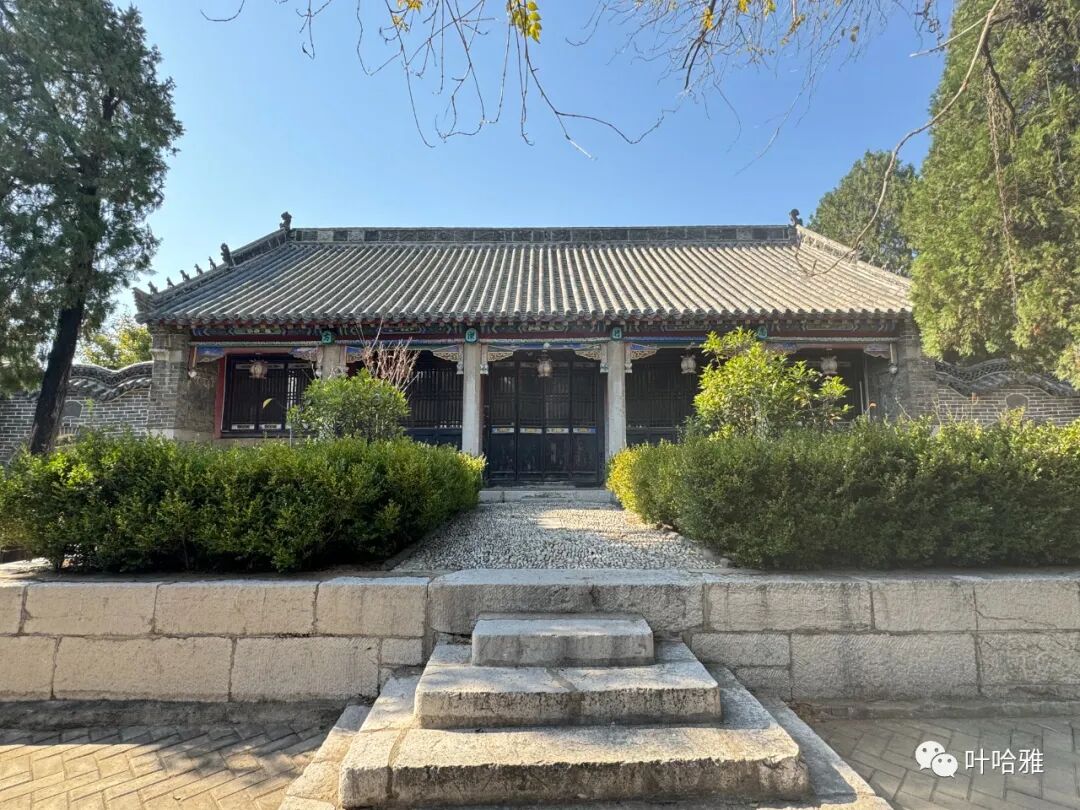
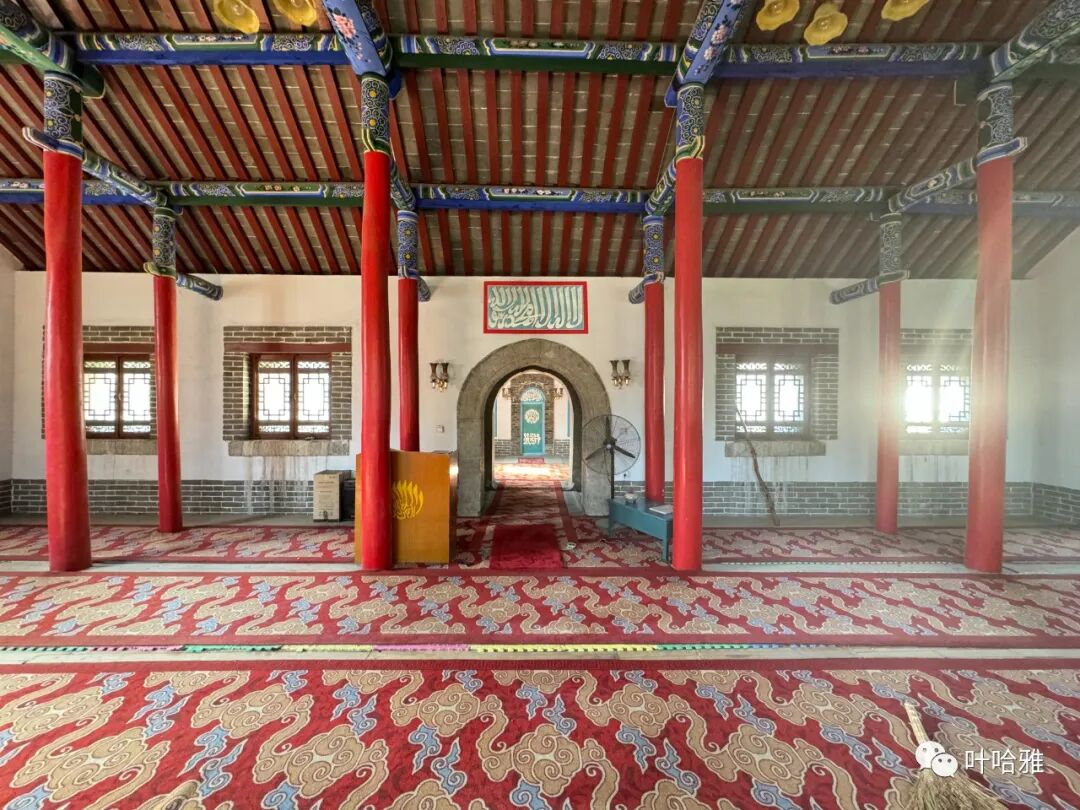
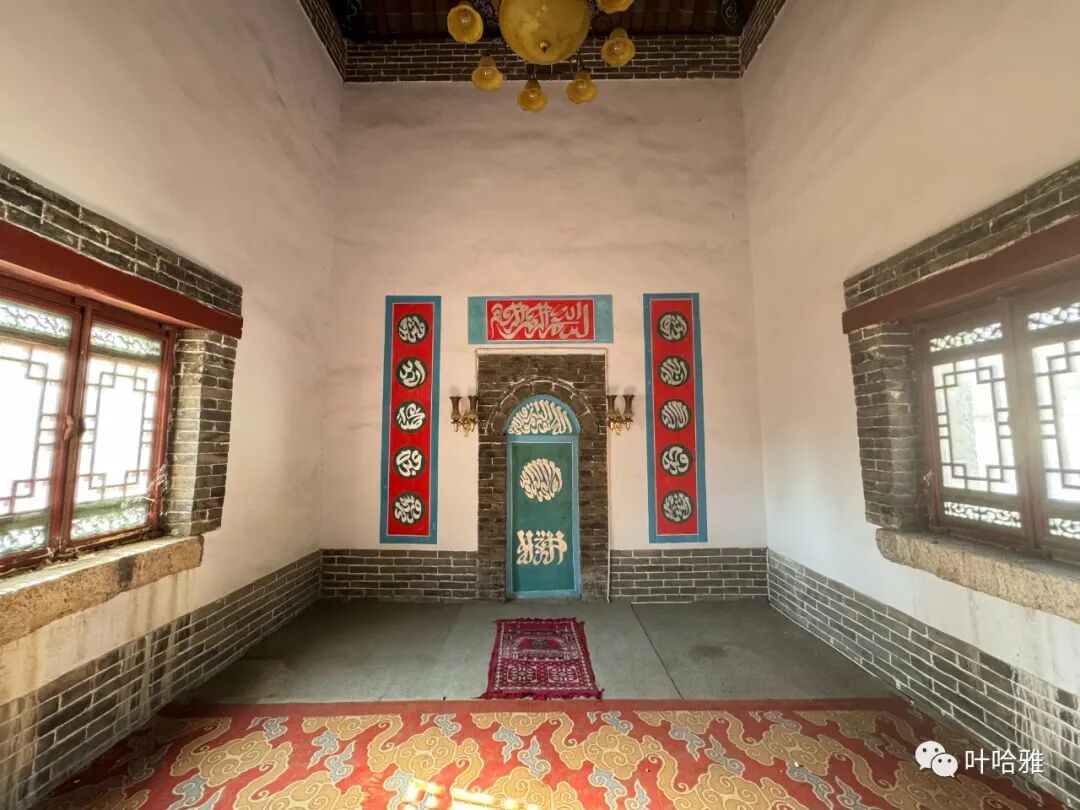
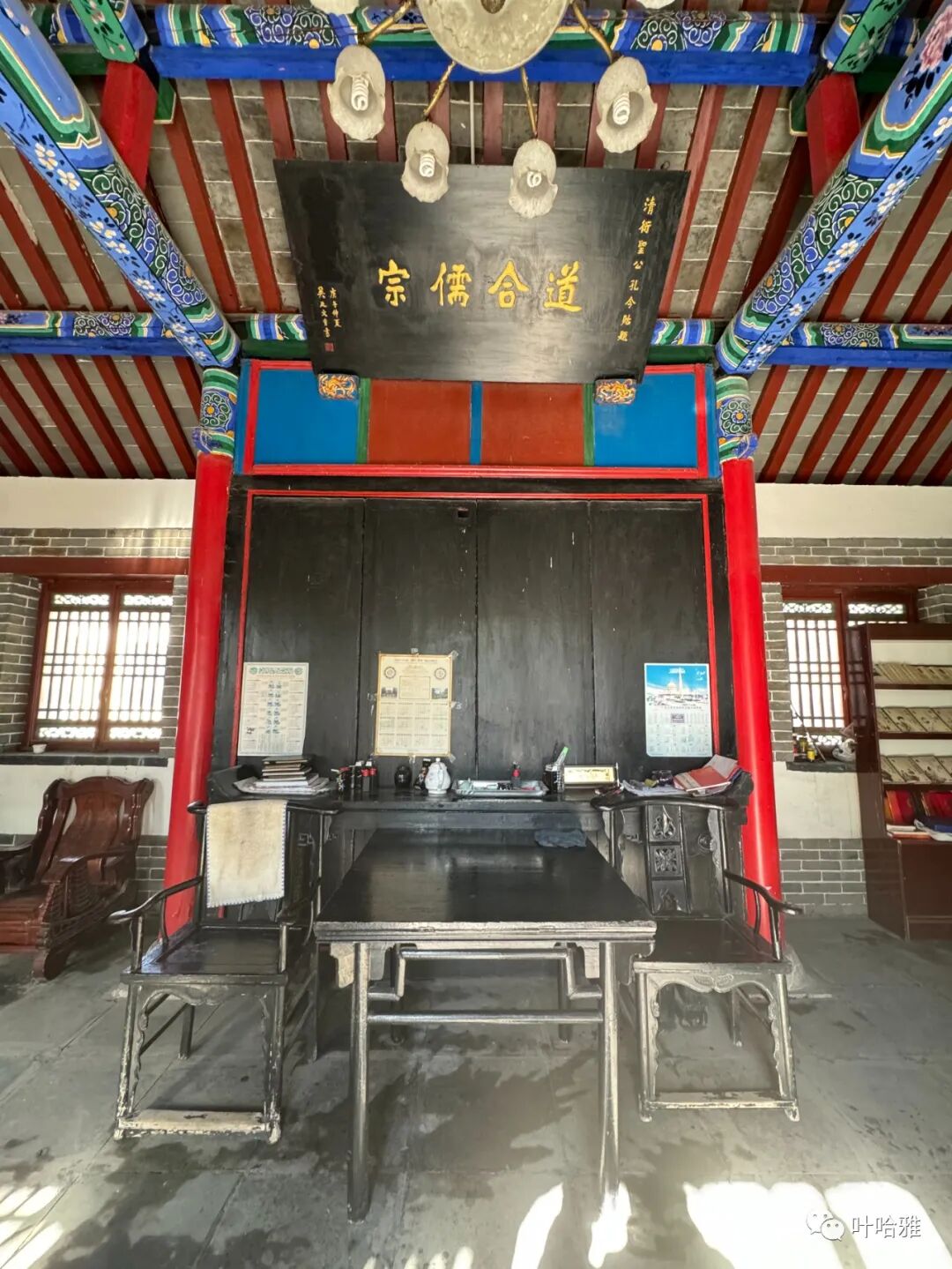
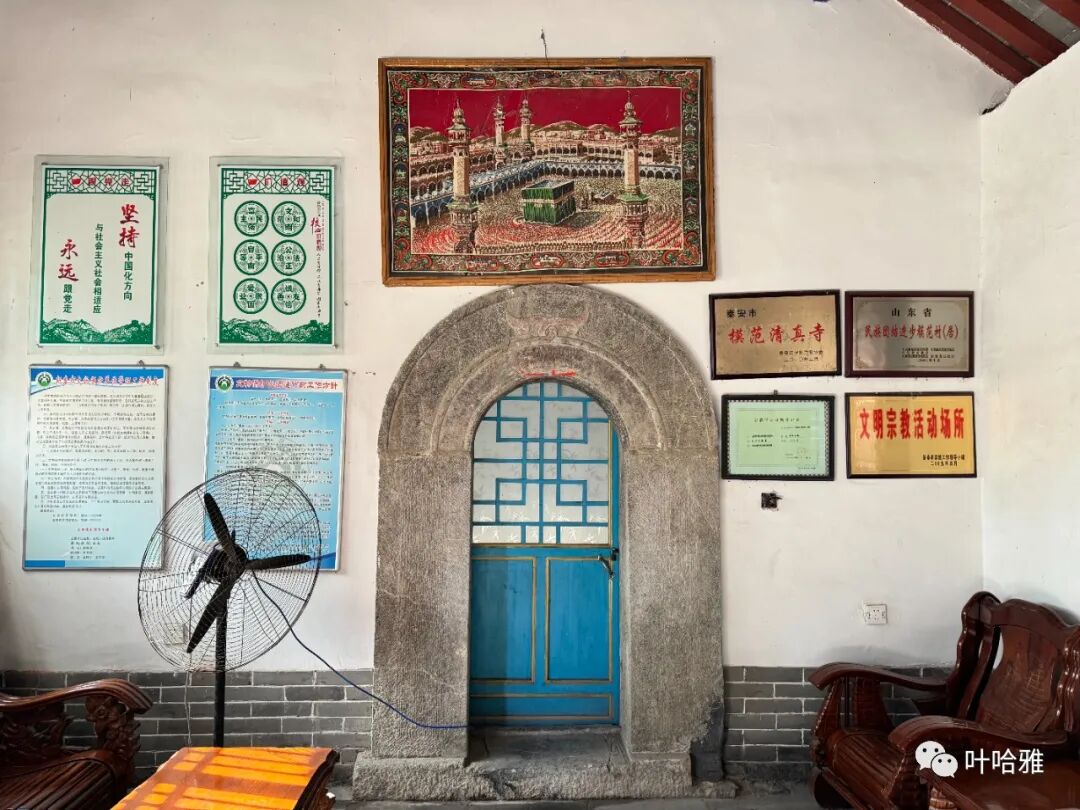
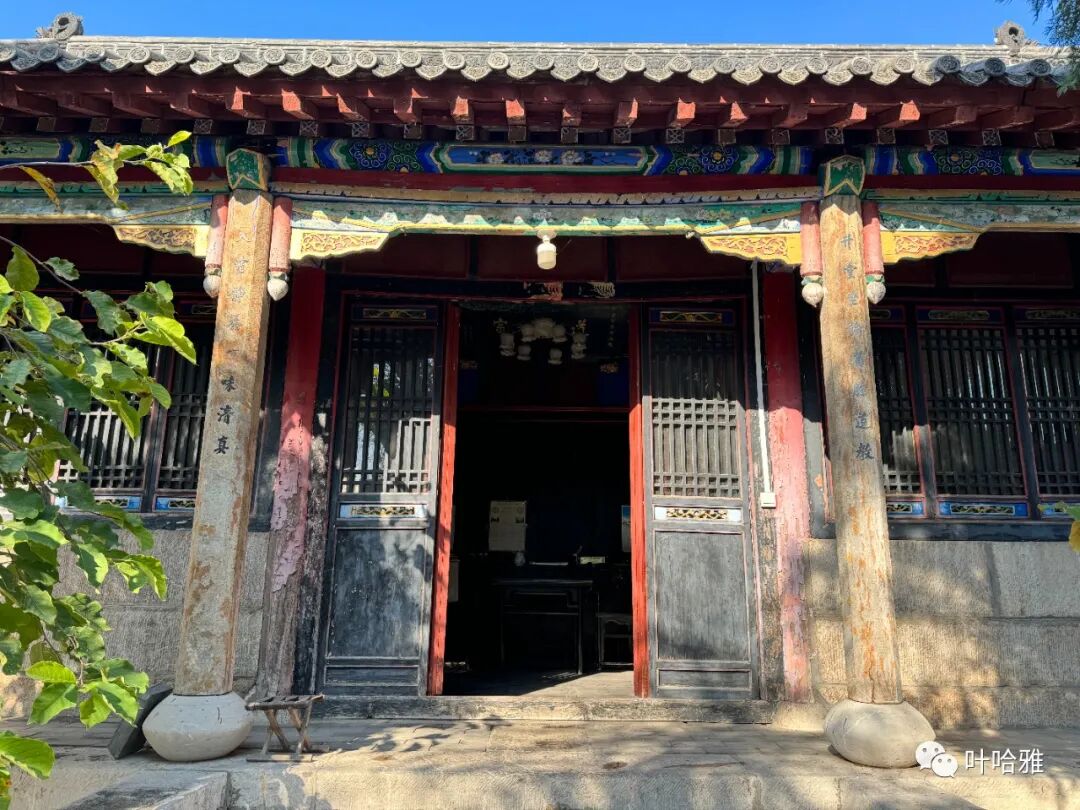
Tianbao Mosque
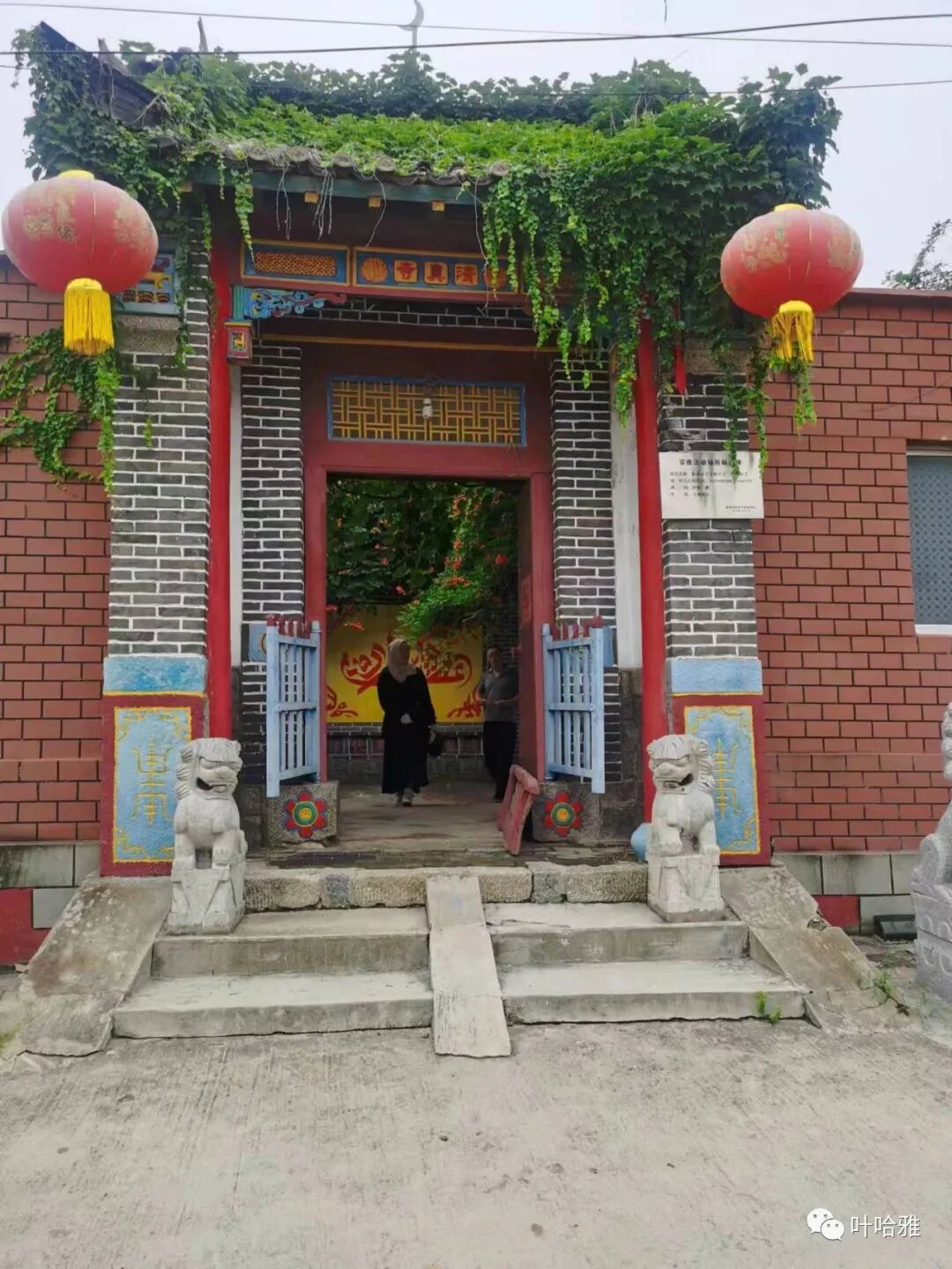
Tianbao Mosque is located in Tianbao First Village, Tianbao Town. It was first built during the Chongzhen reign of the Ming Dynasty (1628-1644) and has been renovated several times since. During the Cultural Revolution, the mosque became a workspace for a local production team. It suffered severe damage, and all religious scriptures, documents, and archives were burned.
Conditions improved significantly after the Third Plenary Session of the 11th Central Committee. The mosque underwent four major renovations in 1985, 2006, 2011, and 2016. The mosque is 40 meters long and 30 meters wide. The main prayer hall is 18 meters long and 10 meters wide. The north lecture hall is 13 meters long and 7 meters wide. The ablution room (shuiwu) is 15 meters long and 5 meters wide. There are five stone tablets currently on site: the 1985 "Yongzun Shengxing" (Always Follow the Holy Path) tablet, the 1987 "Wangu Liufang Bei" (Tablet of Eternal Fame), the 1997 "Wangu Liufang Bei" (Tablet of Eternal Fame), the 2006 "Chongxiu Libaidian Beiji" (Record of the Prayer Hall Renovation), and the 2011 "Chongxiu Bei Jiangtang Beiji" (Record of the North Lecture Hall Renovation).
Throughout its history, this mosque has trained imams including Zuo Hanchen, Zuo Shanggui, Zuo Shangqin, Gao Guangwen, Ding Yancheng, and Gao Guangmo. Since modern times, imams such as Zhang Baotai, Mi Baokun, Ma Wenhua, Zhang Shuiquan, Yang Peicheng, Xu Changpu, Bai Guangpu, Mi Enzhi, Jin Shengping, and Jin Fuzhan have led the religious affairs of the mosque. Past directors of the mosque management committee include Gao Chuangui, Mi Yuande, Mi Fengsheng, Gao Yuxiu, Gao Guangmo, Mi Fenglu, and Mi Fengjie. The mosque houses a pair of wooden water pitchers (tangping) and an incense burner from the Qing Dynasty. Imam Jin Fuzhan keeps a historical book titled "Wansheng" in his collection.
In 2008, the mosque was named a "Model Mosque" by Tai'an City. It received the provincial title of "Harmonious Religious Activity Venue" in 2009 and was again named a "Model Mosque" by Tai'an City in 2014.
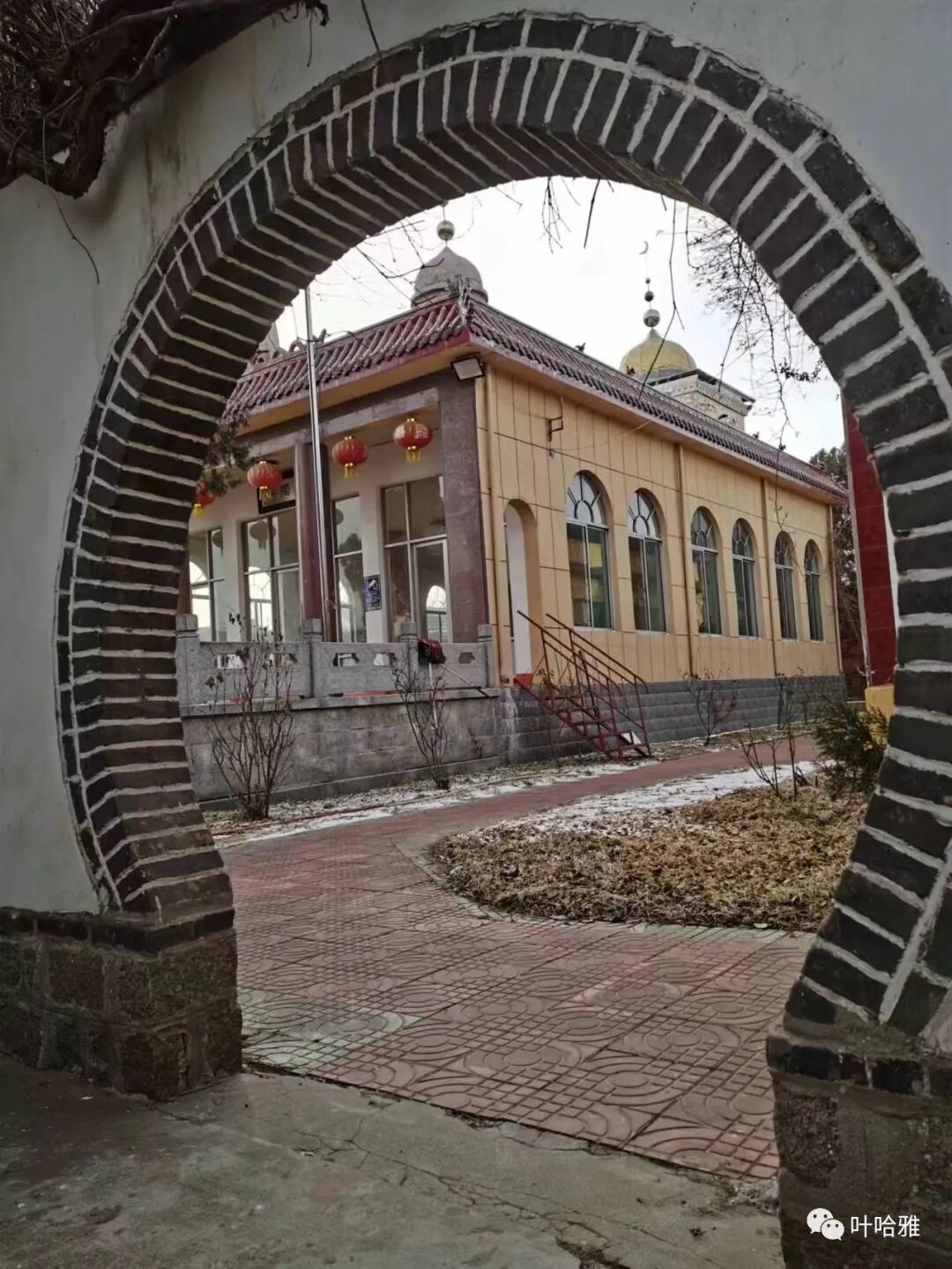
Hexicun Mosque.
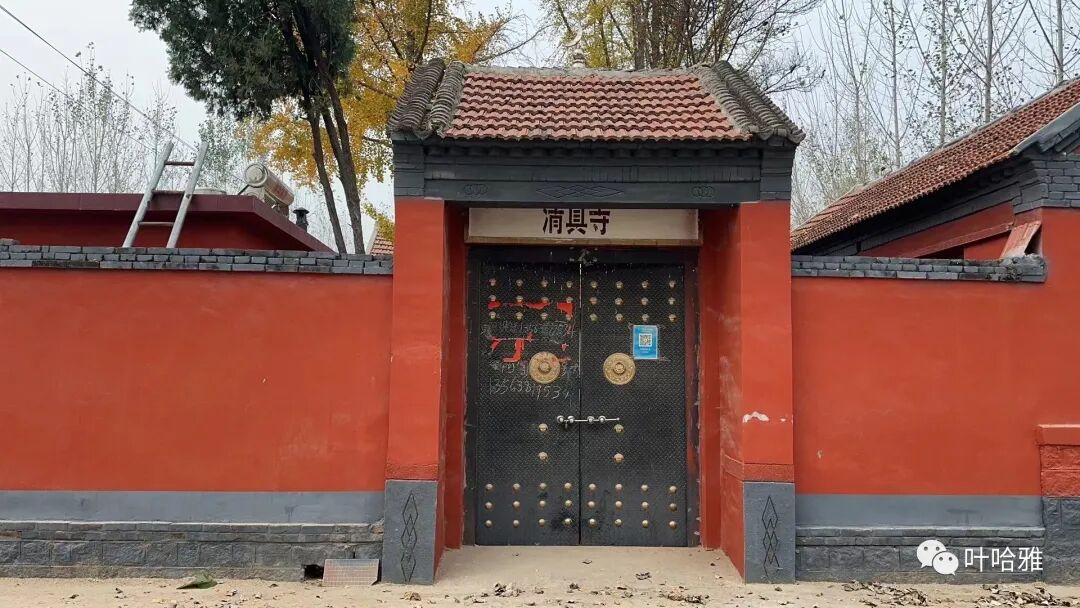
Hexicun Mosque in Tianbao Town. It was first built during the Qing Dynasty, destroyed by war during the War of Resistance Against Japan, and rebuilt in 1988.
The mosque is a typical courtyard-style building, measuring 36 meters long and 36 meters wide. The main prayer hall is 10 meters long and 6 meters wide. The north lecture hall is 10 meters long and 5 meters wide. The south lecture hall is 10 meters long and 5 meters wide. The water house is 6 meters long and 5 meters wide. Inside the courtyard stand two 50-year-old twin ginkgo trees, each with a trunk circumference of about 1.5 meters.
The mosque's religious affairs were previously led by imams including Li Xiangping, Jin Daikuan, and Sha Enqian. You Yanlong currently serves as the resident imam. The mosque is now managed by a democratic management committee, with Xie Yuansheng and Xie Junguo serving as directors in succession.
Chaoyang Community Mosque
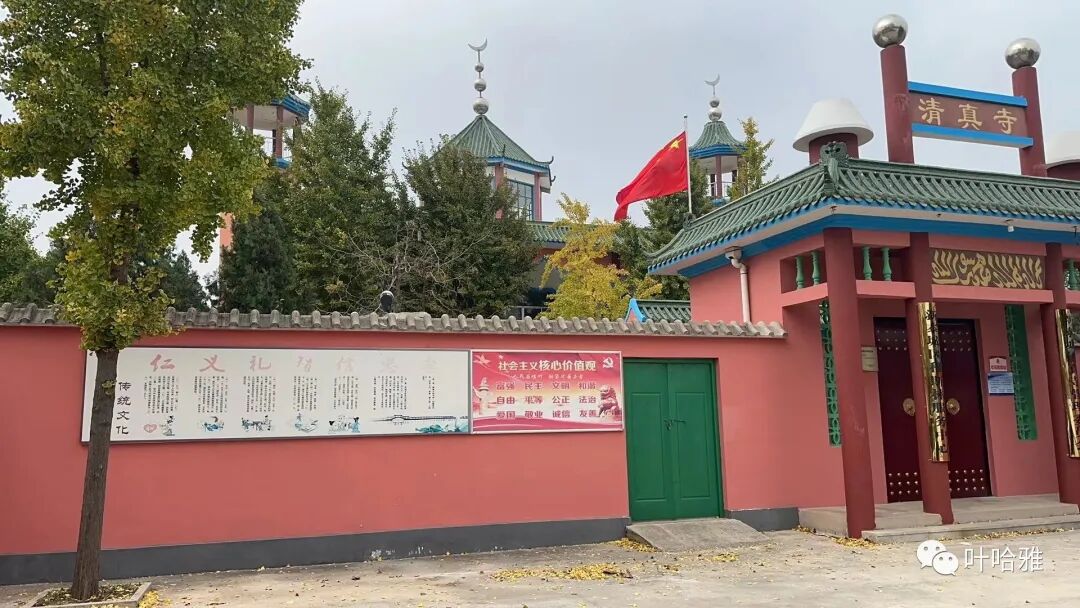
The Chaoyang Community Mosque in Qingyun Subdistrict is located at No. 5, Alley 16, on the south side of the west end of Liangzhan Road in Chaoyang Community. It was first built between the late Ming and early Qing dynasties and has since been moved and rebuilt several times. In 1938, the mosque suffered severe damage after Japanese invaders occupied Xintai City. After the founding of the People's Republic of China, the county committee and the county people's government requisitioned the mosque to use as office space. Later, a courtyard house (siheyuan) belonging to the Li family at the south end of Majia Alley in the southwest gate area was purchased, along with the yard outside the gate and a plot of land to the south, totaling over 1,500 square meters for the mosque's use. In 1950, the mosque moved from the city into the residential house in the southwest gate area. During the Cultural Revolution, the mosque suffered serious damage, and all classic texts and archives were burned.
In 1989, the mosque moved for the second time to the west side of the Lianxiao Primary School, and the new mosque opened in the spring of 1992. From 1990 to 2002, the mosque completed five phases of construction.
The mosque moved again in 2009. In early 2010, the Chaoyang community set aside a plot of land south of the former Xiling grain store, measuring 30 meters wide from north to south and 56 meters long from east to west, for the new mosque. It was completed in 2011, marking the third time the mosque moved.
The mosque is 56 meters long and 30 meters wide. The prayer hall is 20 meters long and 20 meters wide. The north lecture hall is 20 meters long and 7 meters wide. The south lecture hall is 7 meters long and 6 meters wide. The washroom is 7 meters long and 6 meters wide. Outside the mosque, there is a 144-square-meter dormitory for the imam. Two stone tablets remain: the 1887 tablet from the 12th year of the Guangxu reign of the Qing Dynasty titled 'Record of the Three North Lecture Halls of the Mosque,' and the 2011 tablet titled 'Historical Evolution of the Xintai City Mosque.'
The mosque has been served by imams Ma Shijiao, Ma Bingqi, Xu Changchun, Ma Hongru, and Yu Yang. There are two imams here, with female imam Ma Dongfang assisting imam Yu Yang in managing religious affairs. The mosque is currently managed by a mosque management committee, and Zhang Jingliang has served as the director since 1992. Imam Yu Yang keeps a handwritten ancient copy of the Quran.
In 2012, the mosque was named a provincial-level Harmonious Religious Activity Venue, and in 2014, it received the title of Model Mosque from Tai'an City.
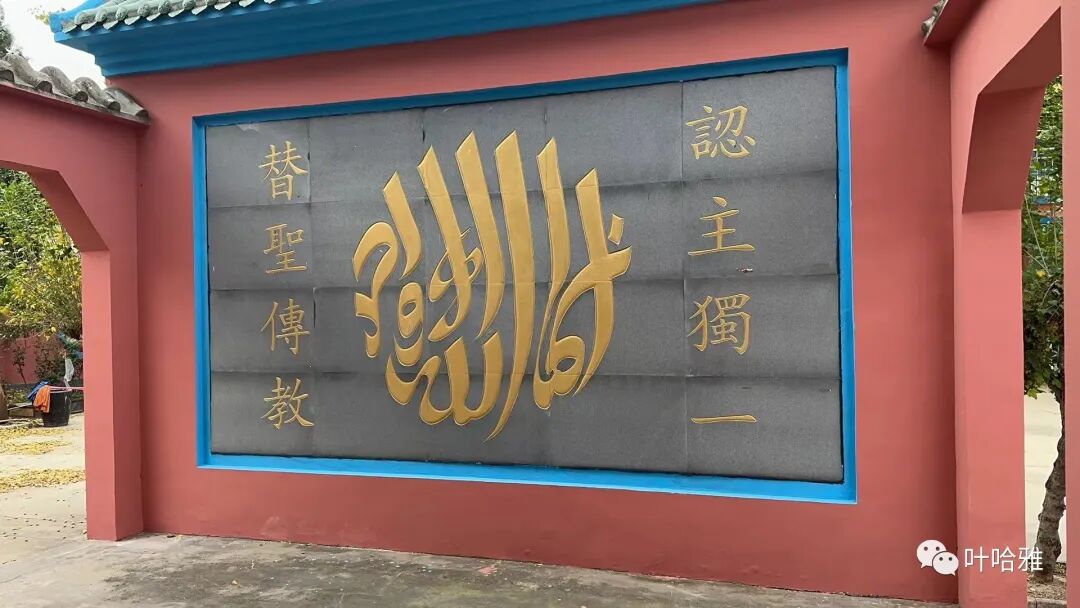
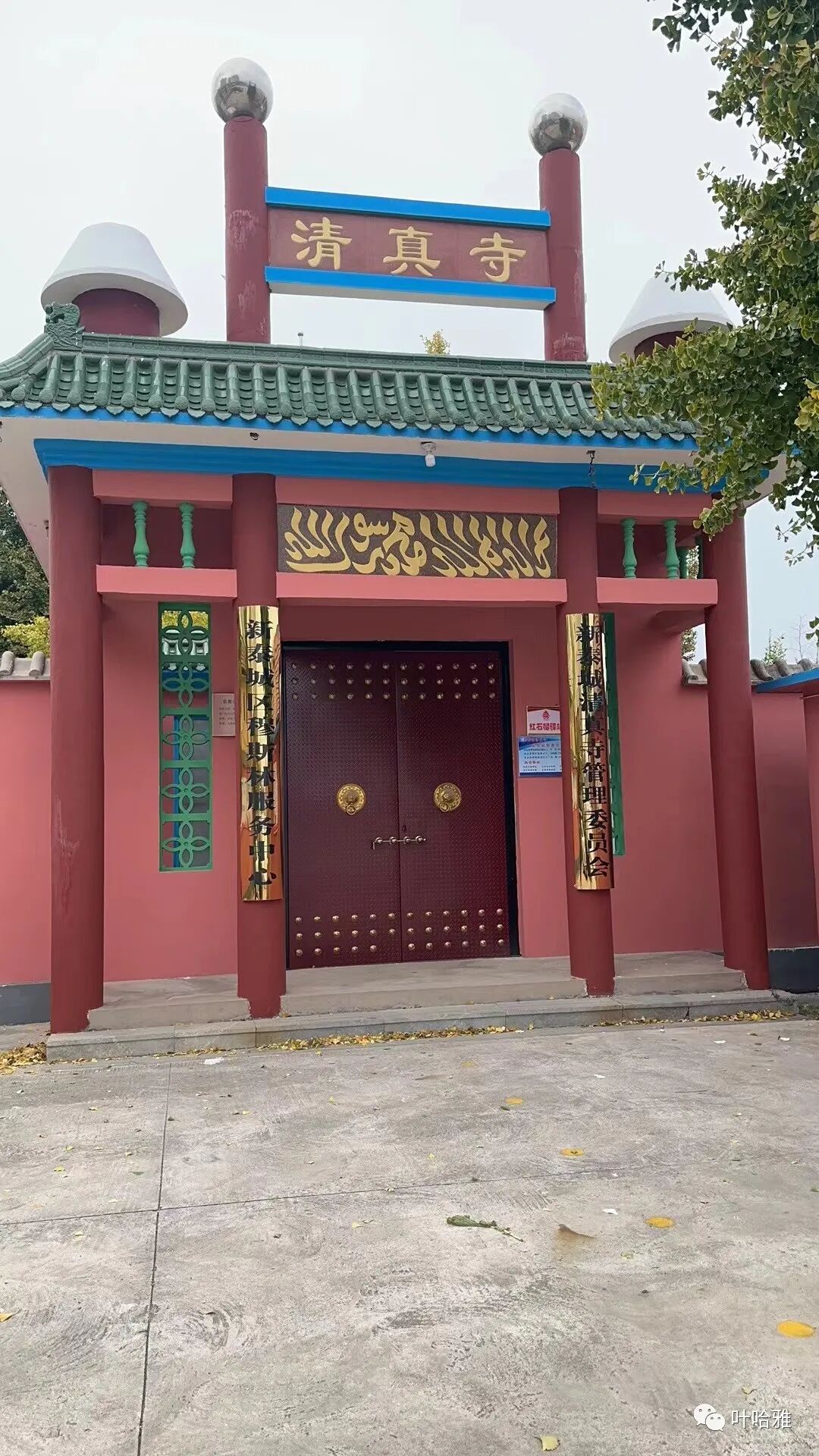
Yangliu Village Mosque
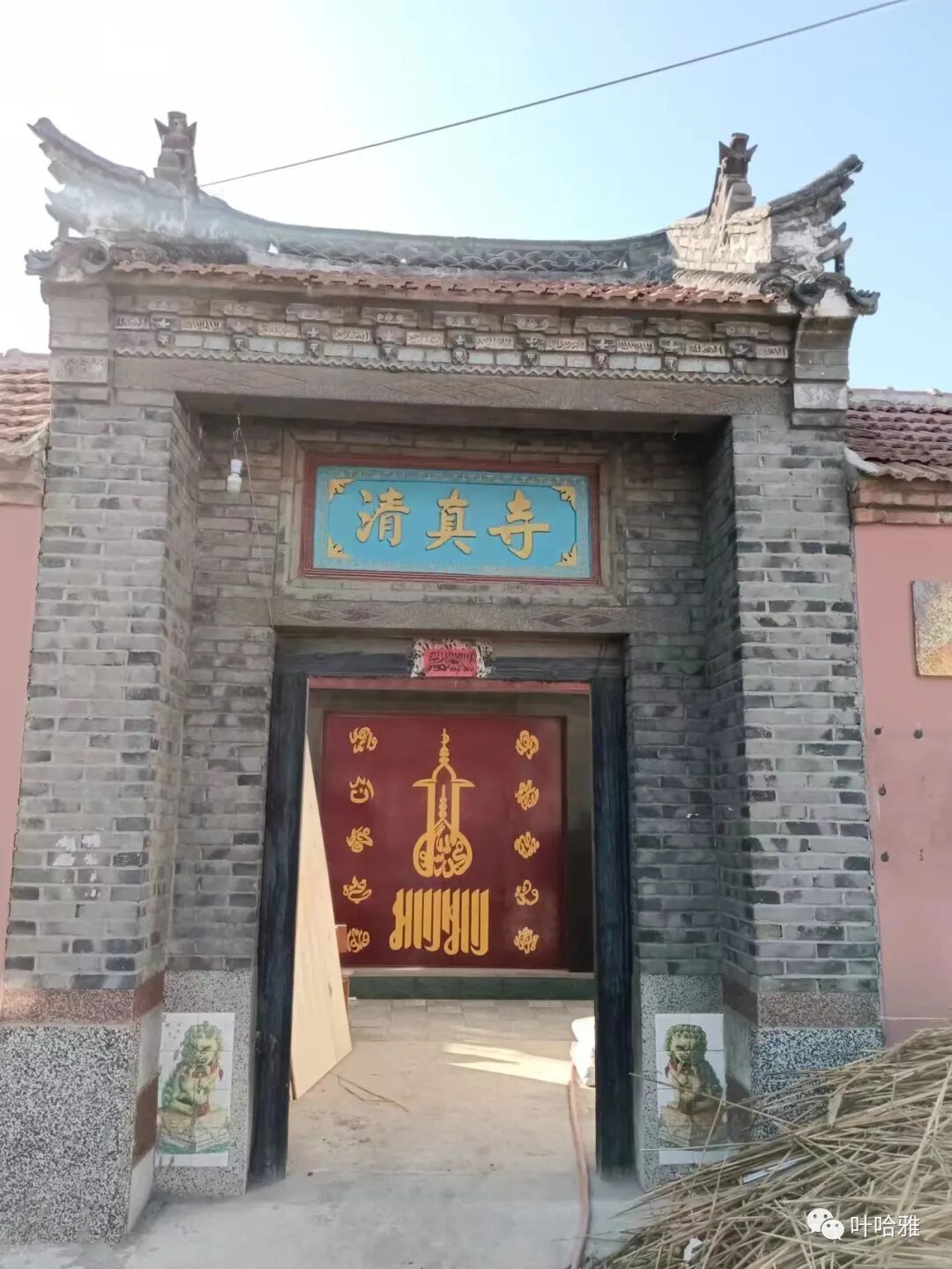
Yangliu Village Mosque in Yangliu Town is located in the southwest part of the village. It was first built during the Xianfeng period of the Qing Dynasty (1850-1861) and has been expanded and repaired many times since. The mosque was damaged by the Japanese army during the War of Resistance Against Japan. Between 1990 and 2010, it underwent multiple restorations on its original site.
The mosque is a single-courtyard complex that is 39.6 meters long and 20 meters wide. The prayer hall is a one-story building that is 10 meters high, 10 meters long, and 11 meters wide. The north lecture hall is 13 meters long and 4.7 meters wide. The south lecture hall is 9 meters long and 3.5 meters wide. The water room is 7.4 meters long and 4.2 meters wide. There is one stone tablet remaining, the Yangliu Village Mosque Tablet from the 34th year of the Guangxu reign of the Qing Dynasty (1908).
The mosque's religious affairs have been led by imams including Wen Chunhua, Jin Yongjie, Tang Qinglin, Shi Hongqin, Bai Antang, Zhang Shuiquan, Gao Guangwen, Yu Yang, Zhang Decai, Ma Guozhen, and Ma Yongshan. It is currently managed by the mosque's democratic management committee. The mosque houses one hand-copied Quran donated by Mi Fanglin.
In 2010, the mosque received the title of Tai'an City Model Mosque from the Tai'an Islamic Association, and in 2012, it was named a provincial-level Harmonious Religious Activity Venue.
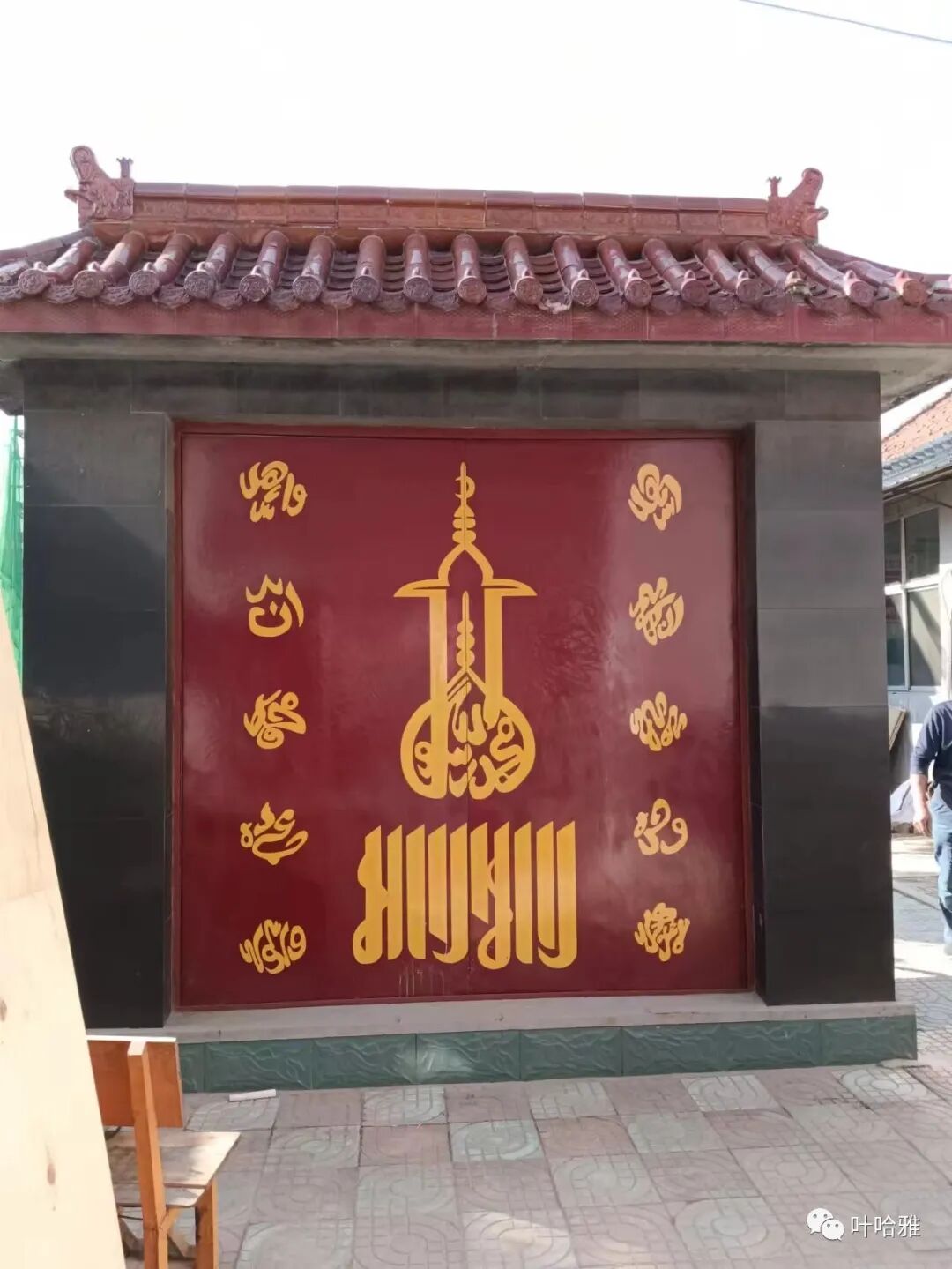
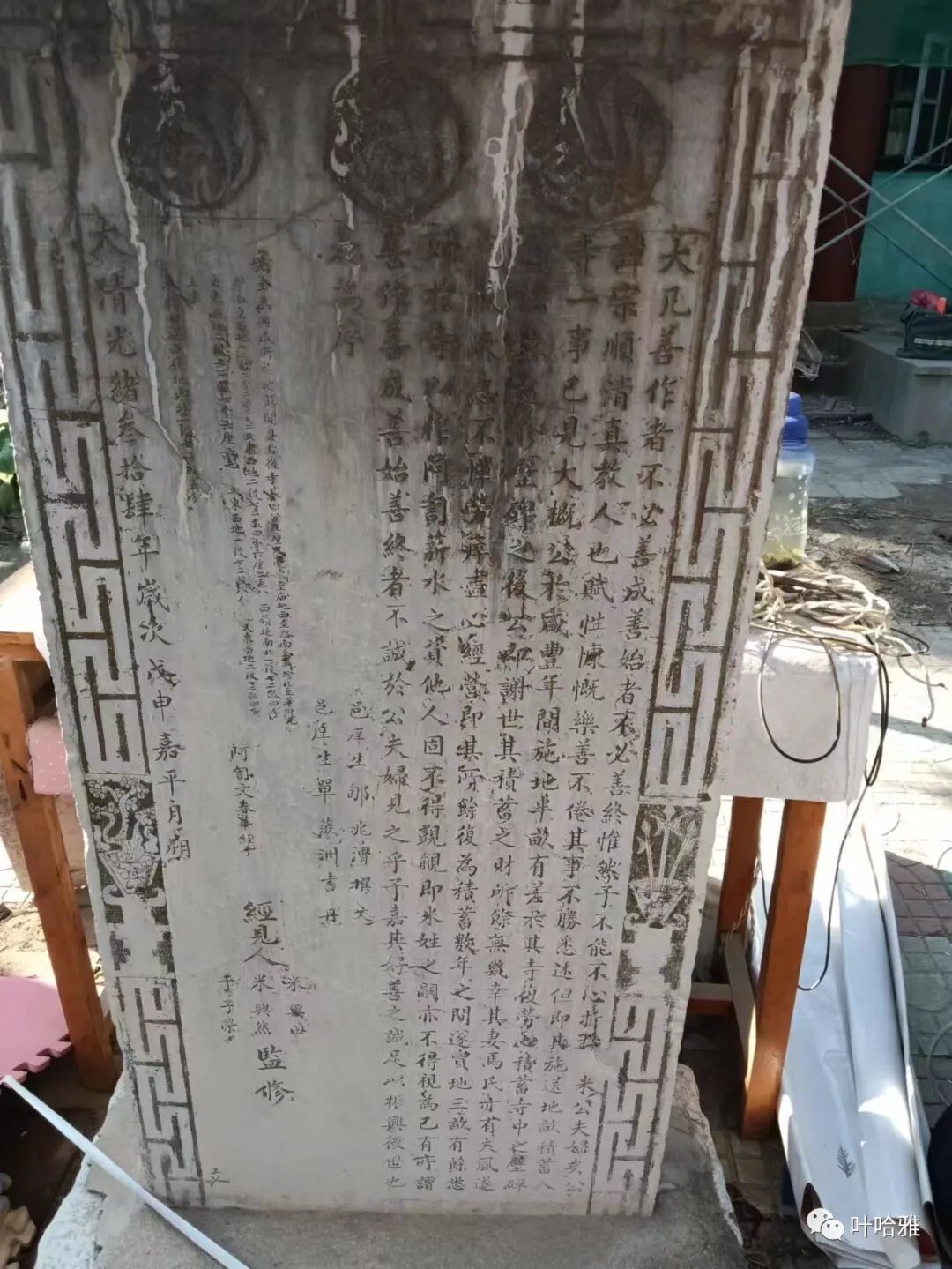
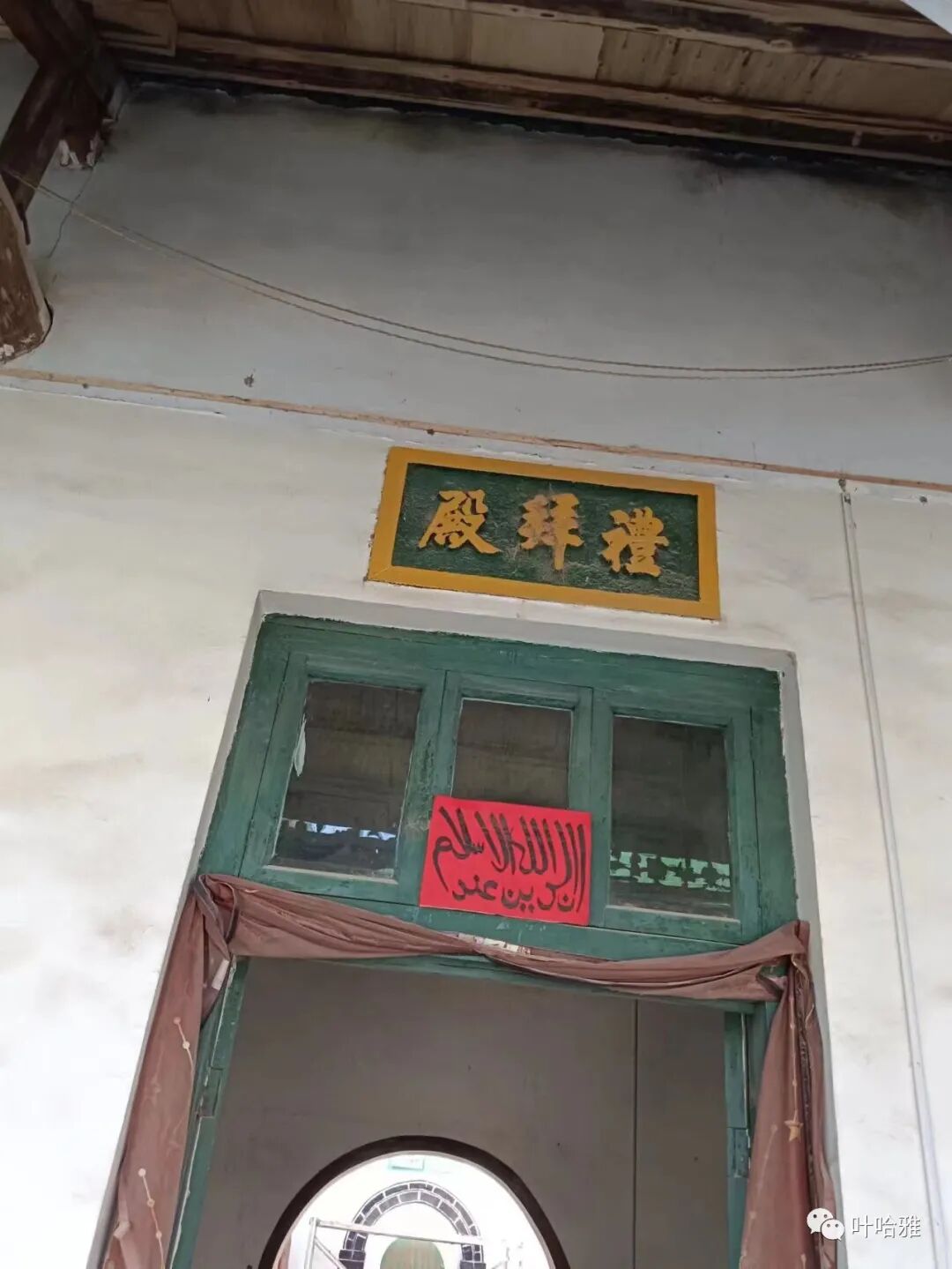
Xinwen Mosque
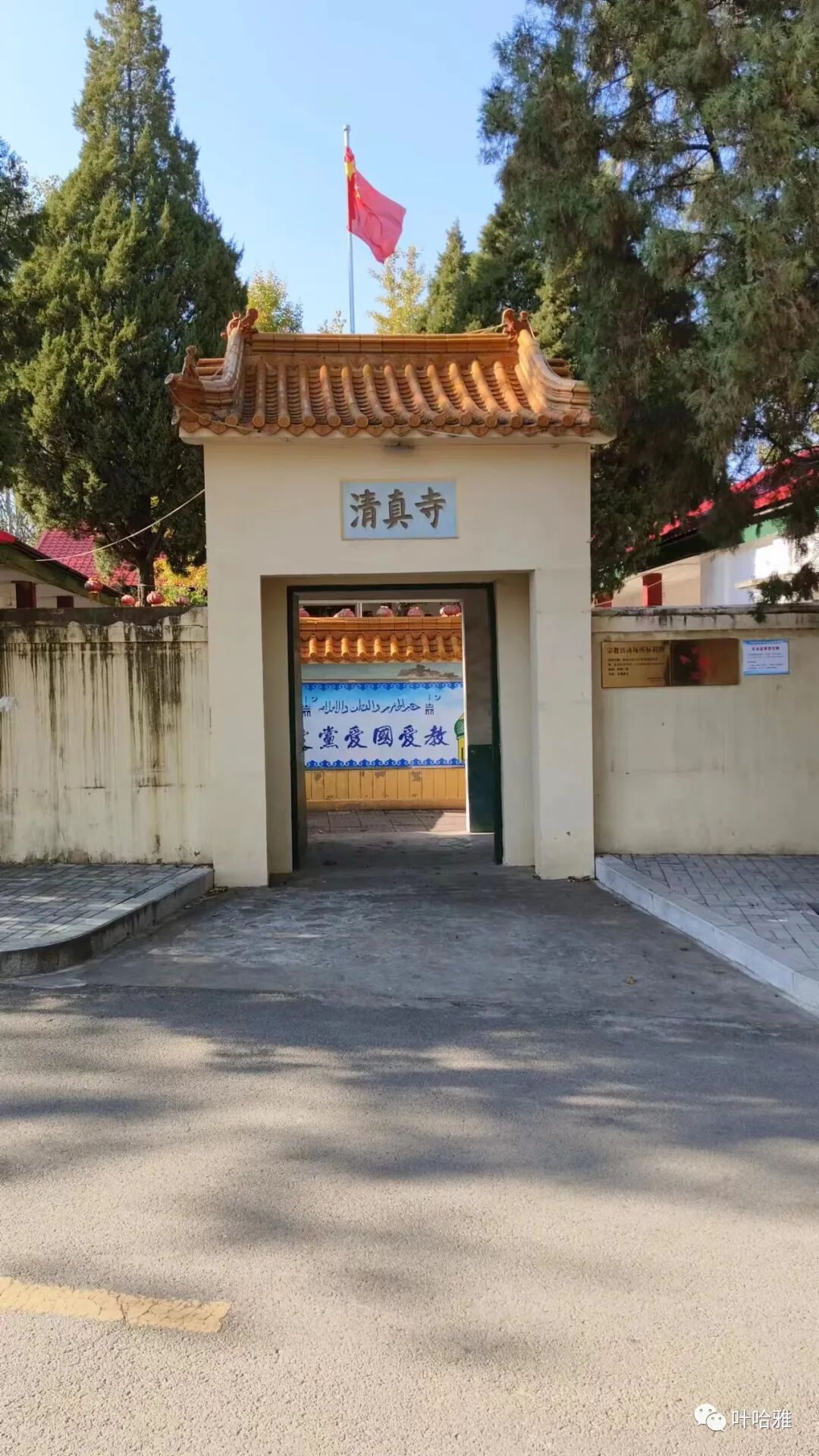
Xinwen Mosque is located at the Xin Kuang Group. It was first built in 1957, and its original site was in Wusi Village at the Suncun Coal Mine. In 1985, Xinwen Mosque moved to the north of Huangshan Village in the Xinwen office area. In 1995, the Mining Bureau provided special funding for the mosque to equip it with necessary indoor facilities. Four large-scale renovations took place in 1997, 2005, 2010, and 2012.
The mosque is 34.1 meters long and 29 meters wide. The prayer hall is 16.7 meters long and 8.19 meters wide. The north lecture hall is 10.1 meters long and 6.17 meters wide. The south lecture hall is 10.1 meters long and 6.02 meters wide. The water room is 7.5 meters long and 6.17 meters wide.
Since its founding, the mosque has had two resident imams: Li Yuren and Wang Zhen. The directors of the mosque management committee have been Fa Jinguang, Bai Anquan, Ma Hongcheng, and Wang Yanqing.
In 2010 and 2014, it received the provincial title of Harmonious Religious Activity Venue and the Tai'an City Model Mosque title.
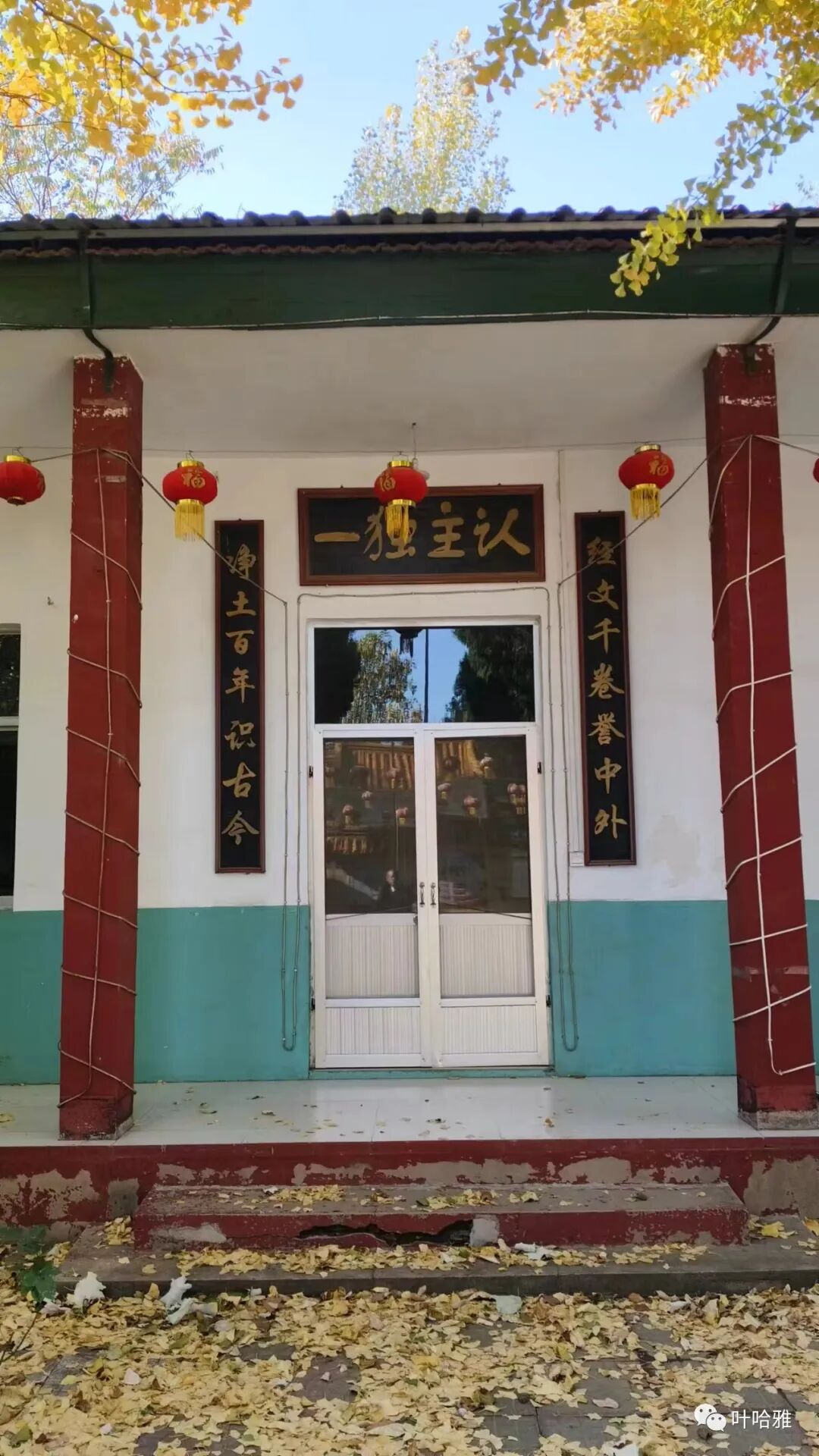
Zhainan Village Mosque
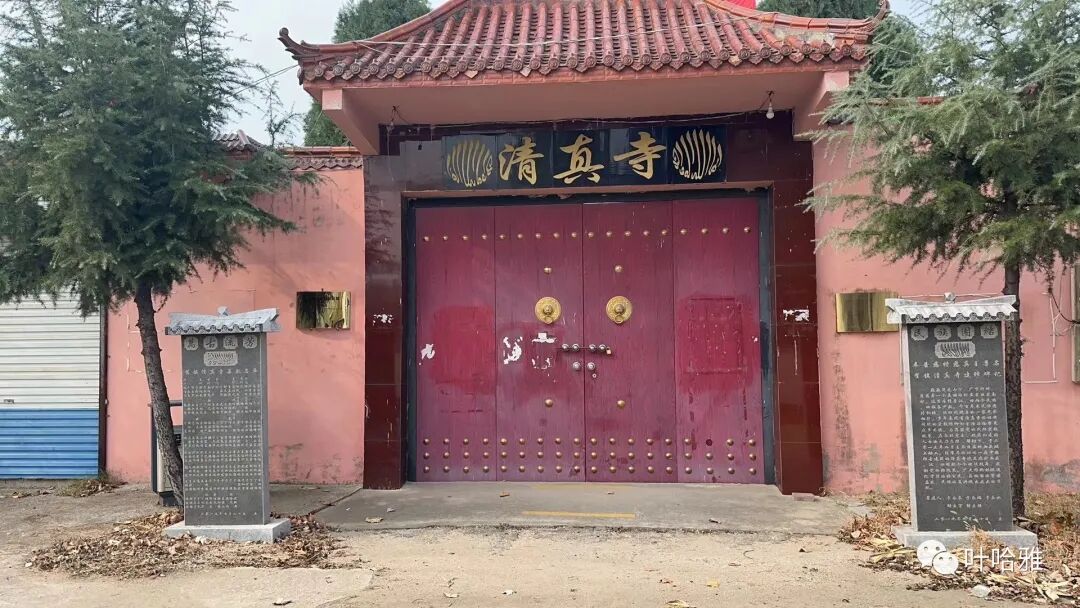
Zhainan Village Mosque in Zhai Town is located in the western part of Zhainan Village. It was first built in 2013. The mosque features a classic two-courtyard layout, measuring 60 meters long and 30 meters wide. The main prayer hall is 10 meters long and 7 meters wide. The north lecture hall is 15 meters long and 4.5 meters wide. The south lecture hall is 12 meters long and 4.5 meters wide. The ablution room (shuiwu) is 6 meters long and 4.5 meters wide.
Zhainan Village Mosque holds religious activities according to the law, and Imam Ma Hongru has served as the resident imam since its founding. The mosque is now managed by a management committee, with Yu Yongshui serving as the first director.
Summary: This China mosque travel guide continues the Tai'an seventy mosques project with Changjiazhuang, Daxinzhuang, Yangliu, Xinwen and other historic mosques, including dimensions, renovations, handwritten Quran collections, imam records, and Islamic culture exhibitions.
The Seventy Mosques of Tai'an (Part Two) is presented here as a firsthand travel account in clear English, beginning with this scene: Imams Zhou Yicai, Bai Shengping, and others served as leaders of religious affairs at this mosque. The account keeps its focus on Mosque Travel, Islamic Heritage, Muslim Travel while preserving the names, places, food, and historical details from the Chinese source.
Imams Zhou Yicai, Bai Shengping, and others served as leaders of religious affairs at this mosque. Religious activities at the mosque were interrupted during the Cultural Revolution. In 1980, one imam was responsible for religious matters at both this mosque and the Changjiazhuang Mosque. Ma Bingliang has served as the resident imam from 2002 to the present. The mosque is managed by a mosque management committee, with Li Chunfang, Jin Zhibao, Li Zhao'en, Li Chunlian, and others serving as directors.
The mosque has twice won the title of Tai'an City Model Mosque and was named a provincial-level harmonious religious activity site.
Changjiazhuang Mosque
The old Changjiazhuang Mosque in the Zhoudian Subdistrict Office was moved north of the village in 1959 due to the construction of the Dahe Reservoir and the relocation of Changjiazhuang village, then rebuilt in 1963. Before the relocation, the mosque was first built around 1850, but that structure has since been demolished. The old mosque was renovated in the 32nd year of the Guangxu reign of the Qing Dynasty (1906). Two stone tablets remain: the Mosque Stele Record from 1906 and the Stele of Mr. Yang Runzhai's Good Deeds from 1933.
The new mosque is located at the south end of the Changjiazhuang community and features typical Arabic-style architecture, with a three-story main building and 36-meter-high corner towers. The mosque is 60 meters long and 55 meters wide. The prayer hall is 23 meters long and 22 meters wide. The north lecture hall is 10 meters long and 10 meters wide. The south lecture hall is 10 meters long and 5 meters wide. The ablution room (shuiwu) is 10 meters long and 8 meters wide.
The third floor of the new mosque houses the Tai'an Ethnic Unity and Progress Education Exhibition Hall (also known as the Tai'an Islamic Culture Exhibition Hall). It details the history and culture of Muslims and Islam in Tai'an. The Publicity Department of the Tai'an Municipal Committee and the Tai'an Social Science Association have named it a social science popularization base. Tai Shan University also uses it as a practical teaching base for college students. The mosque's religious affairs have been led by imams including Ma Wanqing, Zhang Shuiquan, Mi Guangqun, Yang Zhilai, and Xian Junlin. The mosque's affairs are managed by a democratic management committee, with Li Zhaoyi and Li Chunshan serving as directors.
The mosque currently holds a handwritten set of the Quran and a set of two scripture boxes (jingxia). In 2013, it received the title of Tai'an Harmonious Religious Venue.
Daxinzhuang Mosque
Daxinzhuang Mosque, located in the Zhoudian Subdistrict, sits in the northeast corner of the village. The original construction date is unknown. In 1960, the mosque moved to the hills of the new village along with Daxinzhuang Village because of the construction of the Dahe Reservoir. Before the move, the mosque covered dozens of acres and featured grand, magnificent buildings with complete halls and facilities. The scale of the mosque became much smaller after the move. The mosque was rebuilt in 1962 and has been in use ever since. In recent years, it has undergone three major renovations.
The mosque is a two-courtyard complex measuring 23.3 meters long and 26 meters wide. The prayer hall is a single-story structure measuring 11.2 meters long and 10.06 meters wide. The north lecture hall is 12.6 meters long and 4.2 meters wide. The south lecture hall is 12.6 meters long and 4.2 meters wide. The water room is 11.2 meters long and 4.2 meters wide. There is one existing stone tablet from 2001 titled Record of the Mosque Renovation.
Imams Wang Changgui, Wang Yuquan, and Li Baoxiang served as leaders of the mosque, and the current imam is Xu Yongqiang. The mosque is managed by a management committee, and the current director is Yang Guangfu.
Dashuozhuang Mosque
Dashuozhuang Mosque in Zhuyang Town sits in the center of the north side of the village. The exact date of its founding is unknown. It was first built at the old crossroads of Dashuozhuang Village before moving to its current location. It has been repaired many times since the 13th year of the Daoguang reign of the Qing Dynasty (1833). During the Cultural Revolution, the mosque was used for other purposes. Some halls were damaged, ancient scriptures and books were burned, the towering old trees were cut down, and stone tablets and plaques were destroyed.
After the Reform and Opening-up, the mosque gradually returned to its original appearance. It underwent nine large-scale renovations in 1988, 1993, 1996, 2001, 2004, 2006, 2007, 2010, and 2013.
The mosque features a classic traditional Chinese hall-style architectural design and covers a total area of 5,000 square meters. The main prayer hall is a three-layered structure 6 meters high and five bays wide. It includes a front porch (juanpeng), a front hall, a rear hall, a three-story rear kiln hall, and corridors on three sides, measuring 43 meters long and 21 meters wide. The north and south lecture halls and the water room are all two-story buildings, with the north lecture hall measuring 15 meters long and 8 meters wide. The South Lecture Hall is 20 meters long and 11 meters wide. The water house is 34 meters long and 11 meters wide. There is a two-story complex building that houses a washroom, funeral parlor, classrooms, dormitories, a library, and a multi-purpose hall. Five stone tablets remain today: the 1850 Tablet for the Renovation of Dasujiazhuang Mosque from the Daoguang era, the 1907 Tablet for the Expansion of the Mosque from the Guangxu era, the 2007 Tablet for the Construction of the South Lecture Hall at Dasuozhuang Mosque, the 2015 Tablet for the Reconstruction of the Prayer Hall at Dasuozhuang Mosque, and one ancient tablet with faded inscriptions.
Since modern times, the mosque's religious affairs have been led by imams including Mi Ahong, Fa Ahong, Wang Detai, Yang Zhaoqian, Zhou Baotian, Li Mingtai, Zhang Kuidong, Ma Shigui, Yang Dechun, Zhan Desheng, Yang Xinen, Mi Guangxun, Li Shengcai, Han Jingxin, Wang Buying, Jin Haixue, Shi Ahong, Ma Gang, Qian Xuewen, and Yang Zhaozeng. The mosque is managed by a democratic management committee, with Yang Xingzhen, Yang Xingfu, and others serving as directors.
The mosque values traditional scripture education and has trained many talents for the faith, including Mi Tongliang, Mi Yutai, Mi Sichuan, Mi Jikong, Mi Jihong, Mi Guangxun, Mi Guangqun, Mi Zhaojie, Mi Zhaozhang, Mi Tengfei, Yang Chengyu, Yang Yueqing, Yang Ahong, Yang Kuizeng, Yang Xingguang, Yang Xinzeng, Yang Zhaozeng, Yang Yuhua, Yang Yuming, Yang Lei, Ma Yuheng, Ma Jundong, Ma Daohui, Ma Daoguang, Ma Su, Ma Guangrui, Jin Guanglu, Jin Yushi, and Jin Zongfeng. Imam Yang Yueqing once taught in Changchun, Jilin Province, and later taught in Qiqihar, Taicheng Mosque, and Hanzhai in Yucheng. Imam Yang Yucheng once taught in various places in Hebei Province. Imam Ma Yuheng once taught at Taicheng Mosque, Jining East Mosque, and other locations.
The mosque currently holds a pair of vases (now damaged), a pair of scripture boxes, and four plaques. These include the 'Qibin Zhongwang' plaque given to Mi Diankui by the Taian County magistrate in 1852, the 'Yongjiu Zhenduo' plaque given to Imam Yang Yueqing by the elders of Hanzhai in Yucheng County, the 'Changming Huxun' plaque given to the Sha brothers, Sheng-san and Maotang, by Taicheng merchants in the early Republic of China, and the 'Wuye Furong' plaque given to Mi Chuangui by the villagers of Dasuozhuang. Imam Yang Yujun also keeps a handwritten copy of the Quran.
The women's mosque in Dashuozhuang, Zhuyang Town, was first built in the early years of the Republic of China. It covers over 600 square meters with a building area of more than 400 square meters. Due to years of neglect, it fell into disrepair and became a dangerous structure. In 1994, repairs were made to the dangerous structure, and the main hall was rebuilt.
In 2011, the mosque was named a Harmonious Religious Activity Venue by Shandong Province, and in 2014, it received the title of Model Mosque from Tai'an City.
Zhoujiapo East Mosque
The Zhoujiapo East Mosque in Xiazhang Town sits at the west end of the village. It was founded during the Kangxi period of the Qing Dynasty (1661-1722) and has been expanded and renovated dozens of times since.
The mosque is 62 meters long and 42 meters wide. The main hall was originally a traditional Chinese palace-style building with a moon terrace in front and a 16-meter-high moon-viewing tower in the back. These were torn down during the Cultural Revolution and replaced with the current auditorium-style tiled building. The prayer hall is 18.7 meters long and 13.1 meters wide. The north lecture hall is 24 meters long and 8 meters wide, but it has now collapsed. The south lecture hall is 18 meters long and 8 meters wide. The water room is 6 meters long and 8 meters wide. There are eight stone tablets remaining: the Mosque Land Tablet from the 55th year of Kangxi (1716), the Mosque Land Tablet from the 28th year of Qianlong (1763), the Mosque Tablet Record from the first year of Daoguang (1820), the Mosque Renovation Tablet Record from the 28th year of Daoguang (1848), the Mosque Tablet Inscription from the 23rd year of Guangxu (1897), the Mosque Renovation Tablet Record from the 25th year of Guangxu (1899), the Han Family Cemetery Tablet Inscription from the 7th year of the Republic of China (1918), and the Ma Family Cemetery Tablet Inscription from the 15th year of the Republic of China (1926).
Since the Qing Dynasty, the mosque has been led by imams including Yang Mingyuan, Zhou Jiting, Mi Tongliang, Mi Jingxue, Bai Qingshui, Zhang Deng'ao, Imam Zhao, Yang Yuezhen, Han Jingxin, Ding Fucai, and Li Tongjiang. The mosque has trained over 20 imams, and the Han family, represented by three generations of imams—Han Jingxin, Han Tonghe, and Han Kun—is a classic family of imams. The mosque is managed by a democratic management committee with a solid organizational structure, with directors including Bai Zhenkui, Bai Fengrui, Yang Fengxiang, Bai Huaitong, Bai Xuewen, and Bai Jun. During the War of Resistance Against Japan, the mosque established the Zhoujiapo Anti-Japanese Islamic School.
In 2011, the mosque was named a Harmonious Religious Activity Venue by Shandong Province.
Zhoujiapo West Mosque
Located in the southwest of the village, the Zhoujiapo West Mosque in Xiazhang Town was first built in the mid-to-late Qing Dynasty. It was expanded over time, and the current mosque was rebuilt on the original site. Since the first year of the Guangxu reign of the Qing Dynasty (1875), it has undergone large-scale renovations many times.
The mosque is a single-courtyard complex, 50 meters long and 33 meters wide. The prayer hall is a two-part structure with two side rooms in the front, standing 10 meters high, 17.5 meters long, and 12 meters wide. The north lecture hall is 16 meters long and 6 meters wide. The south lecture hall is 8 meters long and 8 meters wide. The water room is 16 meters long and 8 meters wide. The mosque has one surviving stone tablet, the "Tablet for the Repair and Reconstruction in the First Year of Guangxu" from 1875.
Before the Cultural Revolution, imams including Zhang Baotai, Mi Qinglu, Zhao Xinzheng, Han Jingwen, and Ma Tongyun led the mosque's religious affairs. After the Cultural Revolution, Yang Yuezhen, Imam Shi, Imam Zhang, and the current Imam Ma took charge of these duties. The mosque is managed by a democratic management committee, with Li Zhenjun serving as the director.
Jiajiagang Village Mosque
Jiajiagang Village Mosque in Xiazhang Town is located in the south-central part of the village. It was first built in 1740 during the Qianlong reign of the Qing Dynasty and has been repaired several times since.
The mosque is a single-courtyard complex, 40 meters long and 37.3 meters wide. The prayer hall is a single-story building, 5.5 meters high, 12 meters long, and 10.1 meters wide. The north lecture hall is 9.5 meters long and 6 meters wide. The south lecture hall is 10.5 meters long and 5 meters wide. The water room is 13.8 meters long and 6 meters wide. The mosque has a sports and fitness area. There are four stone tablets remaining: the Mosque Founding Tablet, the 1759 Mosque Construction Tablet from the 24th year of the Qianlong reign, and two tablets recording later renovations.
Imam Yang Peicheng was an underground worker for the Communist Party of China during the War of Resistance Against Japan. Yang Maodou, Ma Yigang, and Han Jingming are influential and well-known imams. The mosque is managed by a democratic management committee, with Li Faxi, Bai Maoting, Han Guirong, and Tang Zhihai serving as directors in succession.
The mosque values traditional Islamic education. Around the time the People's Republic of China was founded, it opened study classes where imams taught the Quran and Hadith to train talent for the faith.
Majiayuan Mosque
Majiayuan Mosque in Xiazhang Town is located in Nanbailou Fifth Village. It was first built in 1820, the first year of the Daoguang reign, and has been expanded and repaired ever since. Large-scale renovations took place in 1843, 1850, 1867, 1878, 1907, and 1921. Protective repairs were also carried out after the Reform and Opening-up.
The mosque is a two-courtyard complex, 54 meters long and 42 meters wide. The prayer hall is a three-section structure standing 8 meters high with side rooms. In front of the hall is a moon terrace (yuetai) that is 27.2 meters long and 10 meters wide. The north lecture hall is 27.6 meters long and 5 meters wide. The south lecture hall is 27.6 meters long and 5 meters wide. The water house (shuiwu) is 13 meters long and 6 meters wide. There are five stone tablets remaining, including the Mosque Main Tablet and Mosque Supplementary Tablet from the fourth year of the Guangxu reign (1878), the Three-Branch Ma Family Genealogy Tablet from the 29th year of Guangxu (1903), the Mosque Reconstruction Tablet from the 33rd year of Guangxu (1907), and the Mosque Reconstruction Record Tablet from the 10th year of the Republic of China (1921).
The Ma family has produced imams for over three generations. Ma Yongcai is a representative figure who served as the resident imam at the Jining East Mosque and held positions such as a member of the Shandong Provincial Committee of the Chinese People's Political Consultative Conference. Since its founding, the mosque's religious affairs have been led by imams including Yang Pengyuan, Jin Anxiang, Shi Guangfeng, Wang Yongsheng, Ma Xinsheng, Wang Yongqing, Mi Tongliang, Yang Xingchen, Ma Wenyi, Tang Wenhai, Ma Shunke, Xu Changpu, and Xian Junqi. The mosque is managed by a democratic management committee, with Ma Wensheng serving as the director.
In 2008, the mosque was awarded the title of Model Mosque by Tai'an City. In 2009, it was named a Harmonious Religious Activity Venue by Shandong Province. In 2010, it received the title of Model Mosque from Tai'an City again. It was named a Model Mosque by Tai'an City again in 2014.
Nigou Village Mosque
Nigou Village Mosque in Manzhuang Town. The founding date is unknown, but the mosque has been rebuilt several times, including five major renovations. It gradually reached its current size after repairs in the fourth year of the Daoguang reign (1824), the second year of the Republic of China (1913), the twenty-fifth year of the Republic of China (1936), and after the founding of the People's Republic of China. Another large-scale renovation took place in 2012.
The mosque follows a traditional Chinese courtyard layout with front and back sections, covering a total area of 2,000 square meters. The main prayer hall consists of three parts: a front porch (juanpeng), a rear hall, and a raised platform (yuetai). The prayer hall is 26 meters long and 10.6 meters wide. The north lecture hall has three rooms and is 18 meters long and 6.8 meters wide. The south lecture hall is 18 meters long and 4.6 meters wide. The ablution room (shuiwu) is 18 meters long and 5 meters wide. There are also funeral rooms, a kitchen, and east and west side rooms. A wooden plaque above the main hall door reads "Faith is Pure" (xinyang qingzhen). Inside, eight large pillars support the structure, which is built in three sections with three varying heights. Four stone tablets are built into the walls of the main hall. The tops of the tablets have symmetrical beveled corners and are carved with floral patterns. They are made of bluestone, feature engraved regular script (kaishu), and remain in excellent condition. The roof of the main hall uses simple tiles, and the blue bricks on both sides are carved with delicate patterns. The middle hall has a raised ridge, and the eaves are decorated with roof guardian figures. Three ancient cypress trees, each over 200 years old, stand within the mosque grounds.
The mosque currently houses nine stone tablets. These include the "Stele of Islamic Fundamentals" (Jiaoben Qingzhen Bei) and the "Stele of Eternal Fame" (Wangu Liufang Bei) from the fourth year of the Daoguang reign (1824); the "Stele for the Renovation of Nigou Mosque" (Chongxiu Nigou Qingzhensi Bei) and the "Stele of Islamic Origins" (Qingzhen Yuanliu Bei) from the second year of the Republic of China (1913); the "Record of the Renovation of the North Lecture Hall" (Chongxiu Bei Jiangtang Ji) from the twenty-fifth year of the Republic of China (1936); the "2012 Stele of Donation Lists for the Renovation of the Mosque Main Hall and South Lecture Hall" and the "Nigou Village Mosque Construction Donation List Stele" from 2012; the "Stele of Eternal Fame" (Liufang Baishi Bei) from 2013; and the "Stele of Eternal Fame" (Wangu Liufang Bei) from 2014. The mosque holds 30 handwritten copies of the Quran by Haji Chang Fulong.
Since 1935, imams including Ma Tongyun, Bai Qingyu, Zhang Baotai, Li Baoxiang, Wang Yuquan, Wang Huzi, Wang Buying, Bai Guangpu, Ding Junting, Chang Furong, Dong Futang, Ma Yongxu, Bai Jinhu, and Zheng Liqiang have led the religious affairs of the mosque. The most influential imams in the history of this mosque include Li Baoxiang, Wang Yuquan, Wang Zengli, Yang Baoyong, Li Zhongguo, and Zuo Zhonghua. Before the founding of the People's Republic of China, the mosque's affairs were managed by the village head Zuo Hanzhang. After the founding of the People's Republic of China, management was handled by team leaders and village heads. It is currently managed by the Mosque Democratic Management Committee, led by director Li Gang.
In 2010, it was named a "Harmonious Religious Activity Venue" by Shandong Province. In 2014, it received the "Model Mosque" title from the Tai'an Islamic Association.
Longshan Guanzhuang Mosque
Longshan Guanzhuang Mosque in Manzhuang Town sits at the west end of the village. It was founded in 1936. The north lecture hall was built first, followed by the main prayer hall in 1939 and the south lecture hall in 1957. It has been repaired many times since. Repairs took place in 1984, 1994, 2006, and 2010. The Muslims of Zhongchunyu Village are the patrons of this mosque.
The mosque has two courtyards. The main prayer hall is 50 meters long and 40 meters wide. The main prayer hall has a front porch (juanpeng) that is 6 meters high, 20 meters long, and 7 meters wide. The north lecture hall is 16 meters long and 7.5 meters wide. The south lecture hall is 12 meters long and 7 meters wide. The ablution room (shuiwu) is 12 meters long and 7 meters wide. The mosque has two stone tablets: the 1994 Tablet of Donors for the Reconstruction of the North Lecture Hall and the 2005 Tablet of Lasting Fame.
Since its founding, the mosque's religious affairs have been led by imams including Ding Junting, Li Baoxiang, Li Qingyun, Imam Bai, Xu Changpu, Zhang Shuiquan, and Bai Guangpu. Chu Qingquan has served as the resident imam since 1990. The mosque is managed by a mosque management committee, with Gao Cunchang, Zhao Xueqian, Gao Fangkun, and Jin Weidong serving as directors.
In 2012, it was named a Harmonious Religious Activity Venue in Shandong Province.
Fanjiaanbu Mosque
The mosque in Fanjiaanbu Village, Manzhuang Town, sits at the west end of the village. It was first built around the early 16th century and has been rebuilt many times since. The front hall was built in the early 20th century. The north lecture hall was built in the 27th year of the Republic of China (1938). In the early years of the People's Republic of China, the front hall was repaired and the rear main hall was built. The ablution room (shuiwu) and the south lecture hall were rebuilt in 2000. In 2008, the north lecture hall, the main gate, and the east courtyard wall were rebuilt, the ground was paved, and the platform in front of the prayer hall was renovated. In 2011, a residence was built for the imam, and the mosque's courtyard wall was extended south toward the center of the village. Solar power was installed in 2014. The mosque covers a building area of 450 square meters. The front and back halls cover a building area of 280 square meters. Religious activities are carried out according to the law.
Xindian Village Mosque
Xindian Village Mosque in Huamawan Township is also known as Wangfanling Mosque. It was first built during the Wanli period of the Ming Dynasty (1573-1620) with funds raised by the Zhou family of Huamawan, the Jin family of Jiepai (formerly known as Wangfanling), the Wang family, the Yang family of Xindian, and the Wang family of Qiaozi Village. It has been repaired many times since then.
The mosque was damaged during the Cultural Revolution. In 1999, Mi Fengwen and Wang Shuxin led a committee to rebuild the prayer hall, five rooms for the north lecture hall and bathing room, two rooms for the funeral room, the main gate, and other auxiliary facilities, covering a building area of over 500 square meters. When it was completed, Jin Baozhen, former vice chairman of the Provincial Committee of the Chinese People's Political Consultative Conference, wrote the plaque for the mosque's name. The prayer hall and lecture hall were renovated between 2009 and 2010. A new south lecture hall was built in 2011.
The mosque is 24.5 meters long and 22 meters wide. The prayer hall is 9.1 meters long and 8.6 meters wide. The north lecture hall is 14 meters long and 5 meters wide. The south lecture hall is 11 meters long and 5.5 meters wide. The water room is 3 meters long and 5.5 meters wide. Two stone tablets remain today: the 2000 Record of the Reconstruction of Wangfanling Mosque and the 2000 Memorial Tablet for Donations to the Reconstruction of Wangfanling Mosque.
Starting in the Wanli era of the Ming Dynasty (1573-1620), the mosque's religious affairs were led by imams including Imam Zhou, Imam Yang, Imam Jin, Imam Bai, Imam Gao, Zuo Hanchen, and Zuo Shanggui. There were no resident imams during the Cultural Revolution. After the mosque was restored in 1999, imams including Shi Guorong, Mi Guangqun, Zhang Zhiyong, and Ma Chunyu led the religious affairs. The mosque is managed by a democratic management committee with a well-organized structure. Mi Fengwen served as director from 1999 to 2012, and Zhou Li has served as director since 2013.
The mosque currently houses handwritten Islamic religious texts. In 2010, the mosque was named a Harmonious Religious Activity Venue by Shandong Province, and in 2014, it received the title of Model Mosque from Tai'an City.
Xinghua Street Mosque in Dawenkou
The Xinghua Street Mosque in Dawenkou Town sits in the middle of Xinghua Street Village. It was first built during the Qianlong reign of the Qing Dynasty (1735-1796) and has been expanded and repaired ever since. It underwent three major renovations in 2001, 2011, and 2015.
The mosque is 40 meters long and 23 meters wide. There is a porch (baoxia) about 6 meters high in front of the prayer hall, which is 11 meters long and 8 meters wide. The north lecture hall is 10 meters long and 6 meters wide. The south lecture hall is 10 meters long and 5 meters wide. The water room is 11 meters long and 4 meters wide. One stone tablet remains, which is the 2011 Record of Mosque Renovation.
Before the Cultural Revolution, Imam Liu Zhongan led the religious affairs. Over the past twenty years, Imams Bai Maosheng, Ma Chuanxiang, Yang Shunchang, and Bai Yanbing have led the religious affairs. The mosque is now managed by a democratic management committee with a sound and complete structure, with Li Guangchun and Yang Yanjiang serving as directors in succession.
In 2013, the mosque was awarded the title of "Harmonious Religious Activity Venue" in Shandong Province.
Xintai City
Dongshendong Village Mosque
Dongshendong Village Mosque in Yucun Town is located in the western part of the village. It was built during the Hongwu period of the Ming Dynasty (1368-1398) and has been renovated several times since. It underwent multiple renovations in the 53rd year (1714) and 60th year (1721) of the Kangxi reign, the 6th year (1741) and 20th year (1755) of the Qianlong reign, the 16th year (1836) and 23rd year (1843) of the Daoguang reign, the 20th year (1894) of the Guangxu reign, and the 15th year (1926) of the Republic of China. In 1964, coal mining at the Yucun Coal Mine caused the ground to sink and damaged the buildings, so the entire Dongshendong Village moved to a new site and the old mosque was abandoned. The new mosque was rebuilt between 1987 and 1997.
The mosque is 50 meters long and 40 meters wide. The main prayer hall is a double-eaved structure, 13 meters high, 20 meters long, and 18 meters wide. The north lecture hall is 18 meters long and 6 meters wide. The south lecture hall is 18 meters long and 7.5 meters wide. The water room is 16 meters long and 8 meters wide.
The mosque has 11 stone tablets. These include the Record of Rebuilding the Mosque from 1714 (the 53rd year of the Kangxi reign), the Eternal Compliance Tablet from 1721 (the 60th year of the Kangxi reign), the Record of Rebuilding the Mosque Tablet from 1741 (the 6th year of the Qianlong reign), the Supplementary Record of Rebuilding the Mosque School Land Tablet from 1836 (the 16th year of the Daoguang reign), the Record of Rebuilding the Rear Hall from 1843 (the 23rd year of the Daoguang reign), the Record of Rebuilding the Mosque Tablet from 1894 (the 20th year of the Guangxu reign), the Tablet for Donating Land to the Mosque from 1903 (the 29th year of the Guangxu reign), the Record of Rebuilding the Gutter from 1926 (the 15th year of the Republic of China), the 1958 Record of Repairing Racks and Adding Wall Clocks, and the 2002 Record of Rebuilding the Mosque and the Oneness of Allah Tablet.
The mosque has trained many imams, including Liu Pu and Ma Xingfu from the Qing Dynasty. Imams from the Republic of China era include Imam Yang and Wan Zhendong. Imams after the founding of the People's Republic of China include Chen Dianpu, Zhu Yuehou, Ma Wenjun, Ma Xingchang, Ma Hongxin, and Ma Hongping. Imam Liu Pu led the mosque's renovation in 1836 (the 16th year of the Daoguang reign). Imam Ma Xingfu led the renovation in 1894 (the 20th year of the Guangxu reign). Imam Ma Wenjun went on Hajj to Mecca and met with party and state leaders. Xintai, Tai'an, and provincial media reported on his achievements several times.
In this village, the Ma family produced imams for several generations. Starting with Ma Zhaojun, his descendants Ma Shigong, Ma Wendou, Ma Xingcheng, Ma Hongbin, Ma Shengxuan, and Ma Zhu all served the mosque with dedication. The mosque is currently managed by a management committee. Past directors include Liu Baoshui, Liu Zidong, Ma Shenghua, and Ma Sheng'an. The mosque holds handwritten copies of the Quran, Common Knowledge of Hui Muslims, and Tuoha, along with a blue and white porcelain incense burner saved from the original mosque.
In 2008, the mosque was named a Model Mosque by Tai'an City. In 2009, it was named a provincial-level Harmonious Religious Activity Venue. In 2014, it was named a Model Mosque by Tai'an City.
Women's Mosque
The Women's Mosque in Dongshendong Village, Yucun Town, is located in the western part of the village. It sits opposite the Dongshendong Village Mosque. It was built in May 2005. It covers an area of over 400 square meters, with a building area of 128 square meters. There is one existing stone tablet, the Tablet Record of Building the Women's Mosque. The current imam is Ma Shengling, who has led the mosque's religious affairs since 2006.
Dongshenxi Village Mosque
The Dongshenxi Village Mosque in Yucun Town is located in the south of the village and was built in 1994. It was renovated twice, in 2005 and 2013.
The mosque has a single courtyard and lacks a rear prayer hall (houyaodian), side rooms, and a raised moon terrace (yuetai). The mosque is 80 meters long and 60 meters wide. The main prayer hall is a single-level structure, 5 meters high, 12 meters long, and 6 meters wide. The south lecture hall is 8 meters long and 4 meters wide. The water room (shuiwu) is 8 meters long and 4 meters wide.
Imam Ma Hongxin once led the religious affairs here, and Ma Hongru currently serves as the resident imam. The mosque is now managed by a democratic management committee, with Ma Xingsheng, Liu Maoquan, and Ma Hongcang serving as directors in succession.
The mosque was awarded the provincial title of "Harmonious Religious Activity Venue" twice, in 2010 and 2011.
Dashandong Village Mosque
Dashandong Village Mosque in Yucun Town is located in the western part of the village. It was built during the Chongzhen period of the Ming Dynasty (1628-1644) and has been renovated several times since. In 2006, the north and south lecture halls and the main gate tower were built.
The mosque is a single-courtyard building, measuring 40 meters long and 40 meters wide. The prayer hall is a single-story structure, 5 meters high, 12 meters long, and 12 meters wide. The north lecture hall is 15 meters long and 8 meters wide. The ablution room (shuiwu) is 15 meters long and 8 meters wide.
The mosque has trained over 10 imams and religious leaders, including Wang Xicun, Chen Nianpu, Bai Maohai, Zhang Shuiquan, Xu Shanfang, Wu Mingcai, Yu Yang, Ma Kui, Mi Guangxun, and Man Yungui. It is currently managed by a democratic management committee of the mosque, with Su Yefu, Jin Zongdian, and Jin Naifang serving as directors in succession.
The mosque has been awarded the title of "Model Mosque" by Tai'an City twice.
Lujiagou North Mosque
Lujiagou North Mosque in Yucun Town is located in the northwest of the village and is also known as Dalinghou Mosque. It was first built in the early Qing Dynasty and has been expanded and repaired many times since. During the Cultural Revolution, the mosque was damaged, and it was rebuilt in the west of the village in 1987. It underwent three large-scale renovations in 1989, 2008, and 2016.
The mosque is a single-courtyard building, 40 meters long and 22 meters wide. The main prayer hall is 16 meters high, 15 meters long, and 11 meters wide. The north lecture hall is 15 meters long and 6 meters wide. The south lecture hall is 12 meters long and 5 meters wide. The ablution room (shuiwu) is 12 meters long and 5 meters wide. There are three stone tablets here: the 2009 Mosque Record (Qingzhensi Ji) and the Donation for Allah Merit Tablet (Renzhu Juanxian Gongde Bei), and the 2011 Accumulating Virtue for Both Worlds Tablet (Jide Xingshan Liangshi Qing Bei).
Since the founding of the People's Republic of China, imams including Liu, Liu Yuhai, and Ma Yongjun have led the mosque's religious affairs. The mosque is now managed by a democratic management committee, with past directors including Ma Xingfu, Yu Laili, Ma Yonggui, and Yu Changjian.
In 2009, the mosque was named a city-level Civilized Religious Activity Site, and in 2011, it was named a Shandong Province Harmonious Religious Activity Site.
Lujiagou South Mosque
Lujiagou South Mosque in Lujiagou Village, Yucun Town, sits in the south of the village and is also known as Xiaolinghou Mosque. The mosque was first built in 1947. When first built, the mosque had five northern lecture halls and three southern lecture halls. The mosque was repaired many times after the Cultural Revolution. In 2007, three main prayer halls and four southern lecture halls were built. In 2008, the six northern lecture halls were renovated.
The mosque is a single-courtyard building, 28 meters long and 18 meters wide. The main prayer hall is 5 meters high, 9 meters long, and 8 meters wide. The northern lecture hall is 12 meters long and 6 meters wide. The southern lecture hall is 12 meters long and 5 meters wide. The water room is 6 meters long and 6 meters wide. The mosque has two stone tablets: the 2009 Record of Mosque Renovation and the 2015 Donation Merit Tablet.
In recent years, the imams who have led the mosque's religious affairs are Ma Linggui, Liu Shouxin, and Jin Yanshui. The mosque is currently managed by a democratic management committee, and the past directors have been Liu Maosheng, Ma Maozhong, Ma Denghou, and Ma Dengyun.
In 2009, the mosque was named a city-level Civilized Religious Activity Site.
Wubu Village Mosque
Wubu Village Mosque in Yucun Town sits in the northwest part of the village. It was built in the mid-to-late Qing Dynasty, went through four renovations, and was rebuilt on the original site in 2015.
The mosque is a single-courtyard complex, 60 meters long and 40 meters wide. The main prayer hall is a single-story building, 10 meters high, 13 meters long, and 12 meters wide. The north lecture hall is 17 meters long and 5 meters wide. The south lecture hall is 12 meters long and 5 meters wide. The water room is 5 meters long and 5 meters wide. The mosque has two stone tablets: the 1914 Tablet of Land Donation Funds and the 1945 Tablet Record of the Liu and Zhu Families Donating Land to the Mosque.
Throughout its history, the mosque has trained over 10 ahongs and imams, including Jin Naikuan, Ma Wenhua, Jin Yanquan, Xu Menglan, Xu Shanfang, Yang Xinglin, Ma Houjie, Zhou Xiaozeng, Ma Wenguang, and Liu Shouxin. It is currently managed by the mosque's democratic management committee, with Ma Hongtai, Ma Guangchun, and Xie Chenghua serving as past directors.
The mosque currently keeps a walking stick from the Tongzhi era of the Qing Dynasty (1861-1875). In 1996, the mosque was named a provincial-level "Harmonious Religious Activity Venue."
Cheyang Village Mosque
Cheyang Village Mosque in Yucun Town sits in the center of the village. It was built in 1990. It was renovated in 2008. The mosque is a single-courtyard layout without a rear hall, side rooms, or a raised moon platform. The mosque is 35 meters long and 16 meters wide. The prayer hall is a single-story building, 4 meters high, 12 meters long, and 5 meters wide. The north lecture hall is 12 meters long and 4 meters wide. The water room is 9 meters long and 4 meters wide. Since 2005, Imam Zhao Chuandong has been in charge of religious affairs. The mosque is now managed by a mosque management committee, with Xu Jing'e and Xu Zonglian serving as directors in succession. In 2011, the mosque was named a provincial-level Harmonious Religious Activity Venue.
Dongjie Village Mosque
Before the founding of the People's Republic of China, the Dongjie Village Mosque in Fangcheng Town was located in the eastern part of the old village. As the village expanded eastward after the founding of the People's Republic of China, the mosque is now located in the east-central part of Dongjie Village.
The exact founding date of the mosque is unknown, and many stone tablets in the mosque record that the time of its founding is not known. Based on existing materials, it is estimated that it was built around the mid-Ming Dynasty. There have been many large-scale repairs in history, with eight recorded in detail, including in the seventh year of the Yongzheng reign (1729), the thirty-third year of the Qianlong reign (1768), during the Daoguang reign (1820-1850), the fifteenth year of the Guangxu reign (1889), and in 1993 and 2012.
The mosque is a typical Chinese palace-style building with three courtyards facing east. It has a towering main gate and a second ceremonial gate. After passing through the ceremonial gate, you reach the main prayer hall and the north and south lecture halls. There is a moon terrace in front of the main hall, and the courtyard is paved with blue bricks. The mosque is 65 meters long and 50 meters wide. The main hall is a five-bay single-eave structure with four stone pillars resting on drum-shaped stone bases. Inside the hall, the four beams and eight pillars are painted with red lacquer, and the floor is covered with carpets. The hall is 9 meters high, 15.2 meters long, and 9.2 meters wide. There is a rear hall that is 11 meters high, 5.5 meters long, and 6.8 meters wide. The north and south lecture halls each have three rooms, and both have two side rooms. The south lecture hall is 10 meters long and 6 meters wide. The north lecture hall is 10 meters long and 6.5 meters wide. The side rooms (erfang) are the same size, each 6.7 meters long and 4.6 meters wide. Go through the side gate and across a small courtyard to reach the washroom (shuifang), which is 13 meters long and 5.7 meters wide. The main buildings in the mosque have front porches, high door platforms, and heavy beams with upright pillars. All doors and windows use wooden lattice frames. The mosque walls are made of grey bricks, with large rectangular blue stones stacked below the waistline. The roofs are built with wooden rafters, square bricks (bazhuan), and small black yin-yang tiles, featuring high ridges and eaves decorated with auspicious carvings of dragons, phoenixes, qilin, and lions. Outside the north wall of the mosque, right against the wall, stands a Tang dynasty scholar tree (Tang huai) that is over 1,400 years old.
The mosque's religious affairs have been led by imams including Yang Guilin, Yang Kuizeng, Yang Xingguang, Wan Zhendong, Shi Junting, Liu Yuanxin, Zhao Yufang, Liu Qingyuan, Mi Guangqun, Jin Shengping, Jin Yuanhou, and Jin Shengping. It is currently managed by the mosque management committee, with Jin Xuanliang serving as the director.
The mosque has a deep historical and cultural heritage, with surviving items including the 'Gu Zhen Zheng Jiao' plaque, half of the 'Dao He Ru Zong' plaque inscribed by Kong Lingyi, and a couplet carved on a stone pillar in the corridor outside the north lecture hall during a Qing dynasty reconstruction.
In 2016, the mosque was named a Model Mosque by the Tai'an Islamic Association. In 2013, the Shandong Provincial People's Government designated it as a provincial-level cultural heritage site.
Tianbao Mosque
Tianbao Mosque is located in Tianbao First Village, Tianbao Town. It was first built during the Chongzhen reign of the Ming Dynasty (1628-1644) and has been renovated several times since. During the Cultural Revolution, the mosque became a workspace for a local production team. It suffered severe damage, and all religious scriptures, documents, and archives were burned.
Conditions improved significantly after the Third Plenary Session of the 11th Central Committee. The mosque underwent four major renovations in 1985, 2006, 2011, and 2016. The mosque is 40 meters long and 30 meters wide. The main prayer hall is 18 meters long and 10 meters wide. The north lecture hall is 13 meters long and 7 meters wide. The ablution room (shuiwu) is 15 meters long and 5 meters wide. There are five stone tablets currently on site: the 1985 "Yongzun Shengxing" (Always Follow the Holy Path) tablet, the 1987 "Wangu Liufang Bei" (Tablet of Eternal Fame), the 1997 "Wangu Liufang Bei" (Tablet of Eternal Fame), the 2006 "Chongxiu Libaidian Beiji" (Record of the Prayer Hall Renovation), and the 2011 "Chongxiu Bei Jiangtang Beiji" (Record of the North Lecture Hall Renovation).
Throughout its history, this mosque has trained imams including Zuo Hanchen, Zuo Shanggui, Zuo Shangqin, Gao Guangwen, Ding Yancheng, and Gao Guangmo. Since modern times, imams such as Zhang Baotai, Mi Baokun, Ma Wenhua, Zhang Shuiquan, Yang Peicheng, Xu Changpu, Bai Guangpu, Mi Enzhi, Jin Shengping, and Jin Fuzhan have led the religious affairs of the mosque. Past directors of the mosque management committee include Gao Chuangui, Mi Yuande, Mi Fengsheng, Gao Yuxiu, Gao Guangmo, Mi Fenglu, and Mi Fengjie. The mosque houses a pair of wooden water pitchers (tangping) and an incense burner from the Qing Dynasty. Imam Jin Fuzhan keeps a historical book titled "Wansheng" in his collection.
In 2008, the mosque was named a "Model Mosque" by Tai'an City. It received the provincial title of "Harmonious Religious Activity Venue" in 2009 and was again named a "Model Mosque" by Tai'an City in 2014.
Hexicun Mosque.
Hexicun Mosque in Tianbao Town. It was first built during the Qing Dynasty, destroyed by war during the War of Resistance Against Japan, and rebuilt in 1988.
The mosque is a typical courtyard-style building, measuring 36 meters long and 36 meters wide. The main prayer hall is 10 meters long and 6 meters wide. The north lecture hall is 10 meters long and 5 meters wide. The south lecture hall is 10 meters long and 5 meters wide. The water house is 6 meters long and 5 meters wide. Inside the courtyard stand two 50-year-old twin ginkgo trees, each with a trunk circumference of about 1.5 meters.
The mosque's religious affairs were previously led by imams including Li Xiangping, Jin Daikuan, and Sha Enqian. You Yanlong currently serves as the resident imam. The mosque is now managed by a democratic management committee, with Xie Yuansheng and Xie Junguo serving as directors in succession.
Chaoyang Community Mosque
The Chaoyang Community Mosque in Qingyun Subdistrict is located at No. 5, Alley 16, on the south side of the west end of Liangzhan Road in Chaoyang Community. It was first built between the late Ming and early Qing dynasties and has since been moved and rebuilt several times. In 1938, the mosque suffered severe damage after Japanese invaders occupied Xintai City. After the founding of the People's Republic of China, the county committee and the county people's government requisitioned the mosque to use as office space. Later, a courtyard house (siheyuan) belonging to the Li family at the south end of Majia Alley in the southwest gate area was purchased, along with the yard outside the gate and a plot of land to the south, totaling over 1,500 square meters for the mosque's use. In 1950, the mosque moved from the city into the residential house in the southwest gate area. During the Cultural Revolution, the mosque suffered serious damage, and all classic texts and archives were burned.
In 1989, the mosque moved for the second time to the west side of the Lianxiao Primary School, and the new mosque opened in the spring of 1992. From 1990 to 2002, the mosque completed five phases of construction.
The mosque moved again in 2009. In early 2010, the Chaoyang community set aside a plot of land south of the former Xiling grain store, measuring 30 meters wide from north to south and 56 meters long from east to west, for the new mosque. It was completed in 2011, marking the third time the mosque moved.
The mosque is 56 meters long and 30 meters wide. The prayer hall is 20 meters long and 20 meters wide. The north lecture hall is 20 meters long and 7 meters wide. The south lecture hall is 7 meters long and 6 meters wide. The washroom is 7 meters long and 6 meters wide. Outside the mosque, there is a 144-square-meter dormitory for the imam. Two stone tablets remain: the 1887 tablet from the 12th year of the Guangxu reign of the Qing Dynasty titled 'Record of the Three North Lecture Halls of the Mosque,' and the 2011 tablet titled 'Historical Evolution of the Xintai City Mosque.'
The mosque has been served by imams Ma Shijiao, Ma Bingqi, Xu Changchun, Ma Hongru, and Yu Yang. There are two imams here, with female imam Ma Dongfang assisting imam Yu Yang in managing religious affairs. The mosque is currently managed by a mosque management committee, and Zhang Jingliang has served as the director since 1992. Imam Yu Yang keeps a handwritten ancient copy of the Quran.
In 2012, the mosque was named a provincial-level Harmonious Religious Activity Venue, and in 2014, it received the title of Model Mosque from Tai'an City.
Yangliu Village Mosque
Yangliu Village Mosque in Yangliu Town is located in the southwest part of the village. It was first built during the Xianfeng period of the Qing Dynasty (1850-1861) and has been expanded and repaired many times since. The mosque was damaged by the Japanese army during the War of Resistance Against Japan. Between 1990 and 2010, it underwent multiple restorations on its original site.
The mosque is a single-courtyard complex that is 39.6 meters long and 20 meters wide. The prayer hall is a one-story building that is 10 meters high, 10 meters long, and 11 meters wide. The north lecture hall is 13 meters long and 4.7 meters wide. The south lecture hall is 9 meters long and 3.5 meters wide. The water room is 7.4 meters long and 4.2 meters wide. There is one stone tablet remaining, the Yangliu Village Mosque Tablet from the 34th year of the Guangxu reign of the Qing Dynasty (1908).
The mosque's religious affairs have been led by imams including Wen Chunhua, Jin Yongjie, Tang Qinglin, Shi Hongqin, Bai Antang, Zhang Shuiquan, Gao Guangwen, Yu Yang, Zhang Decai, Ma Guozhen, and Ma Yongshan. It is currently managed by the mosque's democratic management committee. The mosque houses one hand-copied Quran donated by Mi Fanglin.
In 2010, the mosque received the title of Tai'an City Model Mosque from the Tai'an Islamic Association, and in 2012, it was named a provincial-level Harmonious Religious Activity Venue.
Xinwen Mosque
Xinwen Mosque is located at the Xin Kuang Group. It was first built in 1957, and its original site was in Wusi Village at the Suncun Coal Mine. In 1985, Xinwen Mosque moved to the north of Huangshan Village in the Xinwen office area. In 1995, the Mining Bureau provided special funding for the mosque to equip it with necessary indoor facilities. Four large-scale renovations took place in 1997, 2005, 2010, and 2012.
The mosque is 34.1 meters long and 29 meters wide. The prayer hall is 16.7 meters long and 8.19 meters wide. The north lecture hall is 10.1 meters long and 6.17 meters wide. The south lecture hall is 10.1 meters long and 6.02 meters wide. The water room is 7.5 meters long and 6.17 meters wide.
Since its founding, the mosque has had two resident imams: Li Yuren and Wang Zhen. The directors of the mosque management committee have been Fa Jinguang, Bai Anquan, Ma Hongcheng, and Wang Yanqing.
In 2010 and 2014, it received the provincial title of Harmonious Religious Activity Venue and the Tai'an City Model Mosque title.
Zhainan Village Mosque
Zhainan Village Mosque in Zhai Town is located in the western part of Zhainan Village. It was first built in 2013. The mosque features a classic two-courtyard layout, measuring 60 meters long and 30 meters wide. The main prayer hall is 10 meters long and 7 meters wide. The north lecture hall is 15 meters long and 4.5 meters wide. The south lecture hall is 12 meters long and 4.5 meters wide. The ablution room (shuiwu) is 6 meters long and 4.5 meters wide.
Zhainan Village Mosque holds religious activities according to the law, and Imam Ma Hongru has served as the resident imam since its founding. The mosque is now managed by a management committee, with Yu Yongshui serving as the first director.
China Mosque Travel Guide Shandong: Tai'an Mosques, Hui Barbecue and Shandong Muslim Food
Articles • yusuf908 posted the article • 0 comments • 204 views • 2026-05-22 22:09
Reposted from the web
Summary: This China mosque travel guide closes the Tai'an mosque series with Shandong Hui Muslim food notes, cooked beef, millet soup, Huihui Xiang barbecue, charcoal-grilled meat, flatbread, and practical observations from the road.
The Seventy Mosques of Tai'an is presented here as a firsthand travel account in clear English, beginning with this scene: Cooked beef and fried dough sticks (youtiao) dipped in millet soup (santang) make for a warm breakfast that heats you up from the inside out. The account keeps its focus on Halal Travel, Yiwu Food, Mosque Travel while preserving the names, places, food, and historical details from the Chinese source.
Cooked beef and fried dough sticks (youtiao) dipped in millet soup (santang) make for a warm breakfast that heats you up from the inside out.
Huihui Xiang Barbecue
We stopped at Huihui Xiang Barbecue for dinner on our way back from the Nigou Mosque. Their barbecue is unique because the owner has a slaughterhouse right next door, so the meat is fresh and reliable. They also use charcoal grills, which you cannot find in the city.
Wrapping barbecue in flatbread is the Shandong way to eat. The famous Zibo barbecue uses flatbread to wrap meat skewers. Shandong flatbreads are delicious, including varieties like thin pancakes (jianbing) and hanging oven flatbreads (diaolu shaobing). I love wheat-based foods, and since we were in a rush these past few days, we mostly lived on flatbread. view all
Summary: This China mosque travel guide closes the Tai'an mosque series with Shandong Hui Muslim food notes, cooked beef, millet soup, Huihui Xiang barbecue, charcoal-grilled meat, flatbread, and practical observations from the road.
The Seventy Mosques of Tai'an is presented here as a firsthand travel account in clear English, beginning with this scene: Cooked beef and fried dough sticks (youtiao) dipped in millet soup (santang) make for a warm breakfast that heats you up from the inside out. The account keeps its focus on Halal Travel, Yiwu Food, Mosque Travel while preserving the names, places, food, and historical details from the Chinese source.
Cooked beef and fried dough sticks (youtiao) dipped in millet soup (santang) make for a warm breakfast that heats you up from the inside out.
Huihui Xiang Barbecue
We stopped at Huihui Xiang Barbecue for dinner on our way back from the Nigou Mosque. Their barbecue is unique because the owner has a slaughterhouse right next door, so the meat is fresh and reliable. They also use charcoal grills, which you cannot find in the city.
Wrapping barbecue in flatbread is the Shandong way to eat. The famous Zibo barbecue uses flatbread to wrap meat skewers. Shandong flatbreads are delicious, including varieties like thin pancakes (jianbing) and hanging oven flatbreads (diaolu shaobing). I love wheat-based foods, and since we were in a rush these past few days, we mostly lived on flatbread. view all
Reposted from the web
Summary: This China mosque travel guide closes the Tai'an mosque series with Shandong Hui Muslim food notes, cooked beef, millet soup, Huihui Xiang barbecue, charcoal-grilled meat, flatbread, and practical observations from the road.
The Seventy Mosques of Tai'an is presented here as a firsthand travel account in clear English, beginning with this scene: Cooked beef and fried dough sticks (youtiao) dipped in millet soup (santang) make for a warm breakfast that heats you up from the inside out. The account keeps its focus on Halal Travel, Yiwu Food, Mosque Travel while preserving the names, places, food, and historical details from the Chinese source.
Cooked beef and fried dough sticks (youtiao) dipped in millet soup (santang) make for a warm breakfast that heats you up from the inside out.
Huihui Xiang Barbecue
We stopped at Huihui Xiang Barbecue for dinner on our way back from the Nigou Mosque. Their barbecue is unique because the owner has a slaughterhouse right next door, so the meat is fresh and reliable. They also use charcoal grills, which you cannot find in the city.
Wrapping barbecue in flatbread is the Shandong way to eat. The famous Zibo barbecue uses flatbread to wrap meat skewers. Shandong flatbreads are delicious, including varieties like thin pancakes (jianbing) and hanging oven flatbreads (diaolu shaobing). I love wheat-based foods, and since we were in a rush these past few days, we mostly lived on flatbread.
Summary: This China mosque travel guide closes the Tai'an mosque series with Shandong Hui Muslim food notes, cooked beef, millet soup, Huihui Xiang barbecue, charcoal-grilled meat, flatbread, and practical observations from the road.
The Seventy Mosques of Tai'an is presented here as a firsthand travel account in clear English, beginning with this scene: Cooked beef and fried dough sticks (youtiao) dipped in millet soup (santang) make for a warm breakfast that heats you up from the inside out. The account keeps its focus on Halal Travel, Yiwu Food, Mosque Travel while preserving the names, places, food, and historical details from the Chinese source.
Cooked beef and fried dough sticks (youtiao) dipped in millet soup (santang) make for a warm breakfast that heats you up from the inside out.
Huihui Xiang Barbecue
We stopped at Huihui Xiang Barbecue for dinner on our way back from the Nigou Mosque. Their barbecue is unique because the owner has a slaughterhouse right next door, so the meat is fresh and reliable. They also use charcoal grills, which you cannot find in the city.
Wrapping barbecue in flatbread is the Shandong way to eat. The famous Zibo barbecue uses flatbread to wrap meat skewers. Shandong flatbreads are delicious, including varieties like thin pancakes (jianbing) and hanging oven flatbreads (diaolu shaobing). I love wheat-based foods, and since we were in a rush these past few days, we mostly lived on flatbread.
China Mosque Travel Guide Shandong: Tai'an Historic Mosques, Quran Manuscripts and Islamic Culture
Articles • yusuf908 posted the article • 0 comments • 221 views • 2026-05-22 22:10
Reposted from the web
Summary: This China mosque travel guide continues the Tai'an seventy mosques project with Changjiazhuang, Daxinzhuang, Yangliu, Xinwen and other historic mosques, including dimensions, renovations, handwritten Quran collections, imam records, and Islamic culture exhibitions.
The Seventy Mosques of Tai'an (Part Two) is presented here as a firsthand travel account in clear English, beginning with this scene: Imams Zhou Yicai, Bai Shengping, and others served as leaders of religious affairs at this mosque. The account keeps its focus on Mosque Travel, Islamic Heritage, Muslim Travel while preserving the names, places, food, and historical details from the Chinese source.
Imams Zhou Yicai, Bai Shengping, and others served as leaders of religious affairs at this mosque. Religious activities at the mosque were interrupted during the Cultural Revolution. In 1980, one imam was responsible for religious matters at both this mosque and the Changjiazhuang Mosque. Ma Bingliang has served as the resident imam from 2002 to the present. The mosque is managed by a mosque management committee, with Li Chunfang, Jin Zhibao, Li Zhao'en, Li Chunlian, and others serving as directors.
The mosque has twice won the title of Tai'an City Model Mosque and was named a provincial-level harmonious religious activity site.
Changjiazhuang Mosque
The old Changjiazhuang Mosque in the Zhoudian Subdistrict Office was moved north of the village in 1959 due to the construction of the Dahe Reservoir and the relocation of Changjiazhuang village, then rebuilt in 1963. Before the relocation, the mosque was first built around 1850, but that structure has since been demolished. The old mosque was renovated in the 32nd year of the Guangxu reign of the Qing Dynasty (1906). Two stone tablets remain: the Mosque Stele Record from 1906 and the Stele of Mr. Yang Runzhai's Good Deeds from 1933.
The new mosque is located at the south end of the Changjiazhuang community and features typical Arabic-style architecture, with a three-story main building and 36-meter-high corner towers. The mosque is 60 meters long and 55 meters wide. The prayer hall is 23 meters long and 22 meters wide. The north lecture hall is 10 meters long and 10 meters wide. The south lecture hall is 10 meters long and 5 meters wide. The ablution room (shuiwu) is 10 meters long and 8 meters wide.
The third floor of the new mosque houses the Tai'an Ethnic Unity and Progress Education Exhibition Hall (also known as the Tai'an Islamic Culture Exhibition Hall). It details the history and culture of Muslims and Islam in Tai'an. The Publicity Department of the Tai'an Municipal Committee and the Tai'an Social Science Association have named it a social science popularization base. Tai Shan University also uses it as a practical teaching base for college students. The mosque's religious affairs have been led by imams including Ma Wanqing, Zhang Shuiquan, Mi Guangqun, Yang Zhilai, and Xian Junlin. The mosque's affairs are managed by a democratic management committee, with Li Zhaoyi and Li Chunshan serving as directors.
The mosque currently holds a handwritten set of the Quran and a set of two scripture boxes (jingxia). In 2013, it received the title of Tai'an Harmonious Religious Venue.
Daxinzhuang Mosque
Daxinzhuang Mosque, located in the Zhoudian Subdistrict, sits in the northeast corner of the village. The original construction date is unknown. In 1960, the mosque moved to the hills of the new village along with Daxinzhuang Village because of the construction of the Dahe Reservoir. Before the move, the mosque covered dozens of acres and featured grand, magnificent buildings with complete halls and facilities. The scale of the mosque became much smaller after the move. The mosque was rebuilt in 1962 and has been in use ever since. In recent years, it has undergone three major renovations.
The mosque is a two-courtyard complex measuring 23.3 meters long and 26 meters wide. The prayer hall is a single-story structure measuring 11.2 meters long and 10.06 meters wide. The north lecture hall is 12.6 meters long and 4.2 meters wide. The south lecture hall is 12.6 meters long and 4.2 meters wide. The water room is 11.2 meters long and 4.2 meters wide. There is one existing stone tablet from 2001 titled Record of the Mosque Renovation.
Imams Wang Changgui, Wang Yuquan, and Li Baoxiang served as leaders of the mosque, and the current imam is Xu Yongqiang. The mosque is managed by a management committee, and the current director is Yang Guangfu.
Dashuozhuang Mosque
Dashuozhuang Mosque in Zhuyang Town sits in the center of the north side of the village. The exact date of its founding is unknown. It was first built at the old crossroads of Dashuozhuang Village before moving to its current location. It has been repaired many times since the 13th year of the Daoguang reign of the Qing Dynasty (1833). During the Cultural Revolution, the mosque was used for other purposes. Some halls were damaged, ancient scriptures and books were burned, the towering old trees were cut down, and stone tablets and plaques were destroyed.
After the Reform and Opening-up, the mosque gradually returned to its original appearance. It underwent nine large-scale renovations in 1988, 1993, 1996, 2001, 2004, 2006, 2007, 2010, and 2013.
The mosque features a classic traditional Chinese hall-style architectural design and covers a total area of 5,000 square meters. The main prayer hall is a three-layered structure 6 meters high and five bays wide. It includes a front porch (juanpeng), a front hall, a rear hall, a three-story rear kiln hall, and corridors on three sides, measuring 43 meters long and 21 meters wide. The north and south lecture halls and the water room are all two-story buildings, with the north lecture hall measuring 15 meters long and 8 meters wide. The South Lecture Hall is 20 meters long and 11 meters wide. The water house is 34 meters long and 11 meters wide. There is a two-story complex building that houses a washroom, funeral parlor, classrooms, dormitories, a library, and a multi-purpose hall. Five stone tablets remain today: the 1850 Tablet for the Renovation of Dasujiazhuang Mosque from the Daoguang era, the 1907 Tablet for the Expansion of the Mosque from the Guangxu era, the 2007 Tablet for the Construction of the South Lecture Hall at Dasuozhuang Mosque, the 2015 Tablet for the Reconstruction of the Prayer Hall at Dasuozhuang Mosque, and one ancient tablet with faded inscriptions.
Since modern times, the mosque's religious affairs have been led by imams including Mi Ahong, Fa Ahong, Wang Detai, Yang Zhaoqian, Zhou Baotian, Li Mingtai, Zhang Kuidong, Ma Shigui, Yang Dechun, Zhan Desheng, Yang Xinen, Mi Guangxun, Li Shengcai, Han Jingxin, Wang Buying, Jin Haixue, Shi Ahong, Ma Gang, Qian Xuewen, and Yang Zhaozeng. The mosque is managed by a democratic management committee, with Yang Xingzhen, Yang Xingfu, and others serving as directors.
The mosque values traditional scripture education and has trained many talents for the faith, including Mi Tongliang, Mi Yutai, Mi Sichuan, Mi Jikong, Mi Jihong, Mi Guangxun, Mi Guangqun, Mi Zhaojie, Mi Zhaozhang, Mi Tengfei, Yang Chengyu, Yang Yueqing, Yang Ahong, Yang Kuizeng, Yang Xingguang, Yang Xinzeng, Yang Zhaozeng, Yang Yuhua, Yang Yuming, Yang Lei, Ma Yuheng, Ma Jundong, Ma Daohui, Ma Daoguang, Ma Su, Ma Guangrui, Jin Guanglu, Jin Yushi, and Jin Zongfeng. Imam Yang Yueqing once taught in Changchun, Jilin Province, and later taught in Qiqihar, Taicheng Mosque, and Hanzhai in Yucheng. Imam Yang Yucheng once taught in various places in Hebei Province. Imam Ma Yuheng once taught at Taicheng Mosque, Jining East Mosque, and other locations.
The mosque currently holds a pair of vases (now damaged), a pair of scripture boxes, and four plaques. These include the 'Qibin Zhongwang' plaque given to Mi Diankui by the Taian County magistrate in 1852, the 'Yongjiu Zhenduo' plaque given to Imam Yang Yueqing by the elders of Hanzhai in Yucheng County, the 'Changming Huxun' plaque given to the Sha brothers, Sheng-san and Maotang, by Taicheng merchants in the early Republic of China, and the 'Wuye Furong' plaque given to Mi Chuangui by the villagers of Dasuozhuang. Imam Yang Yujun also keeps a handwritten copy of the Quran.
The women's mosque in Dashuozhuang, Zhuyang Town, was first built in the early years of the Republic of China. It covers over 600 square meters with a building area of more than 400 square meters. Due to years of neglect, it fell into disrepair and became a dangerous structure. In 1994, repairs were made to the dangerous structure, and the main hall was rebuilt.
In 2011, the mosque was named a Harmonious Religious Activity Venue by Shandong Province, and in 2014, it received the title of Model Mosque from Tai'an City.
Zhoujiapo East Mosque
The Zhoujiapo East Mosque in Xiazhang Town sits at the west end of the village. It was founded during the Kangxi period of the Qing Dynasty (1661-1722) and has been expanded and renovated dozens of times since.
The mosque is 62 meters long and 42 meters wide. The main hall was originally a traditional Chinese palace-style building with a moon terrace in front and a 16-meter-high moon-viewing tower in the back. These were torn down during the Cultural Revolution and replaced with the current auditorium-style tiled building. The prayer hall is 18.7 meters long and 13.1 meters wide. The north lecture hall is 24 meters long and 8 meters wide, but it has now collapsed. The south lecture hall is 18 meters long and 8 meters wide. The water room is 6 meters long and 8 meters wide. There are eight stone tablets remaining: the Mosque Land Tablet from the 55th year of Kangxi (1716), the Mosque Land Tablet from the 28th year of Qianlong (1763), the Mosque Tablet Record from the first year of Daoguang (1820), the Mosque Renovation Tablet Record from the 28th year of Daoguang (1848), the Mosque Tablet Inscription from the 23rd year of Guangxu (1897), the Mosque Renovation Tablet Record from the 25th year of Guangxu (1899), the Han Family Cemetery Tablet Inscription from the 7th year of the Republic of China (1918), and the Ma Family Cemetery Tablet Inscription from the 15th year of the Republic of China (1926).
Since the Qing Dynasty, the mosque has been led by imams including Yang Mingyuan, Zhou Jiting, Mi Tongliang, Mi Jingxue, Bai Qingshui, Zhang Deng'ao, Imam Zhao, Yang Yuezhen, Han Jingxin, Ding Fucai, and Li Tongjiang. The mosque has trained over 20 imams, and the Han family, represented by three generations of imams—Han Jingxin, Han Tonghe, and Han Kun—is a classic family of imams. The mosque is managed by a democratic management committee with a solid organizational structure, with directors including Bai Zhenkui, Bai Fengrui, Yang Fengxiang, Bai Huaitong, Bai Xuewen, and Bai Jun. During the War of Resistance Against Japan, the mosque established the Zhoujiapo Anti-Japanese Islamic School.
In 2011, the mosque was named a Harmonious Religious Activity Venue by Shandong Province.
Zhoujiapo West Mosque
Located in the southwest of the village, the Zhoujiapo West Mosque in Xiazhang Town was first built in the mid-to-late Qing Dynasty. It was expanded over time, and the current mosque was rebuilt on the original site. Since the first year of the Guangxu reign of the Qing Dynasty (1875), it has undergone large-scale renovations many times.
The mosque is a single-courtyard complex, 50 meters long and 33 meters wide. The prayer hall is a two-part structure with two side rooms in the front, standing 10 meters high, 17.5 meters long, and 12 meters wide. The north lecture hall is 16 meters long and 6 meters wide. The south lecture hall is 8 meters long and 8 meters wide. The water room is 16 meters long and 8 meters wide. The mosque has one surviving stone tablet, the "Tablet for the Repair and Reconstruction in the First Year of Guangxu" from 1875.
Before the Cultural Revolution, imams including Zhang Baotai, Mi Qinglu, Zhao Xinzheng, Han Jingwen, and Ma Tongyun led the mosque's religious affairs. After the Cultural Revolution, Yang Yuezhen, Imam Shi, Imam Zhang, and the current Imam Ma took charge of these duties. The mosque is managed by a democratic management committee, with Li Zhenjun serving as the director.
Jiajiagang Village Mosque
Jiajiagang Village Mosque in Xiazhang Town is located in the south-central part of the village. It was first built in 1740 during the Qianlong reign of the Qing Dynasty and has been repaired several times since.
The mosque is a single-courtyard complex, 40 meters long and 37.3 meters wide. The prayer hall is a single-story building, 5.5 meters high, 12 meters long, and 10.1 meters wide. The north lecture hall is 9.5 meters long and 6 meters wide. The south lecture hall is 10.5 meters long and 5 meters wide. The water room is 13.8 meters long and 6 meters wide. The mosque has a sports and fitness area. There are four stone tablets remaining: the Mosque Founding Tablet, the 1759 Mosque Construction Tablet from the 24th year of the Qianlong reign, and two tablets recording later renovations.
Imam Yang Peicheng was an underground worker for the Communist Party of China during the War of Resistance Against Japan. Yang Maodou, Ma Yigang, and Han Jingming are influential and well-known imams. The mosque is managed by a democratic management committee, with Li Faxi, Bai Maoting, Han Guirong, and Tang Zhihai serving as directors in succession.
The mosque values traditional Islamic education. Around the time the People's Republic of China was founded, it opened study classes where imams taught the Quran and Hadith to train talent for the faith.
Majiayuan Mosque
Majiayuan Mosque in Xiazhang Town is located in Nanbailou Fifth Village. It was first built in 1820, the first year of the Daoguang reign, and has been expanded and repaired ever since. Large-scale renovations took place in 1843, 1850, 1867, 1878, 1907, and 1921. Protective repairs were also carried out after the Reform and Opening-up.
The mosque is a two-courtyard complex, 54 meters long and 42 meters wide. The prayer hall is a three-section structure standing 8 meters high with side rooms. In front of the hall is a moon terrace (yuetai) that is 27.2 meters long and 10 meters wide. The north lecture hall is 27.6 meters long and 5 meters wide. The south lecture hall is 27.6 meters long and 5 meters wide. The water house (shuiwu) is 13 meters long and 6 meters wide. There are five stone tablets remaining, including the Mosque Main Tablet and Mosque Supplementary Tablet from the fourth year of the Guangxu reign (1878), the Three-Branch Ma Family Genealogy Tablet from the 29th year of Guangxu (1903), the Mosque Reconstruction Tablet from the 33rd year of Guangxu (1907), and the Mosque Reconstruction Record Tablet from the 10th year of the Republic of China (1921).
The Ma family has produced imams for over three generations. Ma Yongcai is a representative figure who served as the resident imam at the Jining East Mosque and held positions such as a member of the Shandong Provincial Committee of the Chinese People's Political Consultative Conference. Since its founding, the mosque's religious affairs have been led by imams including Yang Pengyuan, Jin Anxiang, Shi Guangfeng, Wang Yongsheng, Ma Xinsheng, Wang Yongqing, Mi Tongliang, Yang Xingchen, Ma Wenyi, Tang Wenhai, Ma Shunke, Xu Changpu, and Xian Junqi. The mosque is managed by a democratic management committee, with Ma Wensheng serving as the director.
In 2008, the mosque was awarded the title of Model Mosque by Tai'an City. In 2009, it was named a Harmonious Religious Activity Venue by Shandong Province. In 2010, it received the title of Model Mosque from Tai'an City again. It was named a Model Mosque by Tai'an City again in 2014.
Nigou Village Mosque
Nigou Village Mosque in Manzhuang Town. The founding date is unknown, but the mosque has been rebuilt several times, including five major renovations. It gradually reached its current size after repairs in the fourth year of the Daoguang reign (1824), the second year of the Republic of China (1913), the twenty-fifth year of the Republic of China (1936), and after the founding of the People's Republic of China. Another large-scale renovation took place in 2012.
The mosque follows a traditional Chinese courtyard layout with front and back sections, covering a total area of 2,000 square meters. The main prayer hall consists of three parts: a front porch (juanpeng), a rear hall, and a raised platform (yuetai). The prayer hall is 26 meters long and 10.6 meters wide. The north lecture hall has three rooms and is 18 meters long and 6.8 meters wide. The south lecture hall is 18 meters long and 4.6 meters wide. The ablution room (shuiwu) is 18 meters long and 5 meters wide. There are also funeral rooms, a kitchen, and east and west side rooms. A wooden plaque above the main hall door reads "Faith is Pure" (xinyang qingzhen). Inside, eight large pillars support the structure, which is built in three sections with three varying heights. Four stone tablets are built into the walls of the main hall. The tops of the tablets have symmetrical beveled corners and are carved with floral patterns. They are made of bluestone, feature engraved regular script (kaishu), and remain in excellent condition. The roof of the main hall uses simple tiles, and the blue bricks on both sides are carved with delicate patterns. The middle hall has a raised ridge, and the eaves are decorated with roof guardian figures. Three ancient cypress trees, each over 200 years old, stand within the mosque grounds.
The mosque currently houses nine stone tablets. These include the "Stele of Islamic Fundamentals" (Jiaoben Qingzhen Bei) and the "Stele of Eternal Fame" (Wangu Liufang Bei) from the fourth year of the Daoguang reign (1824); the "Stele for the Renovation of Nigou Mosque" (Chongxiu Nigou Qingzhensi Bei) and the "Stele of Islamic Origins" (Qingzhen Yuanliu Bei) from the second year of the Republic of China (1913); the "Record of the Renovation of the North Lecture Hall" (Chongxiu Bei Jiangtang Ji) from the twenty-fifth year of the Republic of China (1936); the "2012 Stele of Donation Lists for the Renovation of the Mosque Main Hall and South Lecture Hall" and the "Nigou Village Mosque Construction Donation List Stele" from 2012; the "Stele of Eternal Fame" (Liufang Baishi Bei) from 2013; and the "Stele of Eternal Fame" (Wangu Liufang Bei) from 2014. The mosque holds 30 handwritten copies of the Quran by Haji Chang Fulong.
Since 1935, imams including Ma Tongyun, Bai Qingyu, Zhang Baotai, Li Baoxiang, Wang Yuquan, Wang Huzi, Wang Buying, Bai Guangpu, Ding Junting, Chang Furong, Dong Futang, Ma Yongxu, Bai Jinhu, and Zheng Liqiang have led the religious affairs of the mosque. The most influential imams in the history of this mosque include Li Baoxiang, Wang Yuquan, Wang Zengli, Yang Baoyong, Li Zhongguo, and Zuo Zhonghua. Before the founding of the People's Republic of China, the mosque's affairs were managed by the village head Zuo Hanzhang. After the founding of the People's Republic of China, management was handled by team leaders and village heads. It is currently managed by the Mosque Democratic Management Committee, led by director Li Gang.
In 2010, it was named a "Harmonious Religious Activity Venue" by Shandong Province. In 2014, it received the "Model Mosque" title from the Tai'an Islamic Association.
Longshan Guanzhuang Mosque
Longshan Guanzhuang Mosque in Manzhuang Town sits at the west end of the village. It was founded in 1936. The north lecture hall was built first, followed by the main prayer hall in 1939 and the south lecture hall in 1957. It has been repaired many times since. Repairs took place in 1984, 1994, 2006, and 2010. The Muslims of Zhongchunyu Village are the patrons of this mosque.
The mosque has two courtyards. The main prayer hall is 50 meters long and 40 meters wide. The main prayer hall has a front porch (juanpeng) that is 6 meters high, 20 meters long, and 7 meters wide. The north lecture hall is 16 meters long and 7.5 meters wide. The south lecture hall is 12 meters long and 7 meters wide. The ablution room (shuiwu) is 12 meters long and 7 meters wide. The mosque has two stone tablets: the 1994 Tablet of Donors for the Reconstruction of the North Lecture Hall and the 2005 Tablet of Lasting Fame.
Since its founding, the mosque's religious affairs have been led by imams including Ding Junting, Li Baoxiang, Li Qingyun, Imam Bai, Xu Changpu, Zhang Shuiquan, and Bai Guangpu. Chu Qingquan has served as the resident imam since 1990. The mosque is managed by a mosque management committee, with Gao Cunchang, Zhao Xueqian, Gao Fangkun, and Jin Weidong serving as directors.
In 2012, it was named a Harmonious Religious Activity Venue in Shandong Province.
Fanjiaanbu Mosque
The mosque in Fanjiaanbu Village, Manzhuang Town, sits at the west end of the village. It was first built around the early 16th century and has been rebuilt many times since. The front hall was built in the early 20th century. The north lecture hall was built in the 27th year of the Republic of China (1938). In the early years of the People's Republic of China, the front hall was repaired and the rear main hall was built. The ablution room (shuiwu) and the south lecture hall were rebuilt in 2000. In 2008, the north lecture hall, the main gate, and the east courtyard wall were rebuilt, the ground was paved, and the platform in front of the prayer hall was renovated. In 2011, a residence was built for the imam, and the mosque's courtyard wall was extended south toward the center of the village. Solar power was installed in 2014. The mosque covers a building area of 450 square meters. The front and back halls cover a building area of 280 square meters. Religious activities are carried out according to the law.
Xindian Village Mosque
Xindian Village Mosque in Huamawan Township is also known as Wangfanling Mosque. It was first built during the Wanli period of the Ming Dynasty (1573-1620) with funds raised by the Zhou family of Huamawan, the Jin family of Jiepai (formerly known as Wangfanling), the Wang family, the Yang family of Xindian, and the Wang family of Qiaozi Village. It has been repaired many times since then.
The mosque was damaged during the Cultural Revolution. In 1999, Mi Fengwen and Wang Shuxin led a committee to rebuild the prayer hall, five rooms for the north lecture hall and bathing room, two rooms for the funeral room, the main gate, and other auxiliary facilities, covering a building area of over 500 square meters. When it was completed, Jin Baozhen, former vice chairman of the Provincial Committee of the Chinese People's Political Consultative Conference, wrote the plaque for the mosque's name. The prayer hall and lecture hall were renovated between 2009 and 2010. A new south lecture hall was built in 2011.
The mosque is 24.5 meters long and 22 meters wide. The prayer hall is 9.1 meters long and 8.6 meters wide. The north lecture hall is 14 meters long and 5 meters wide. The south lecture hall is 11 meters long and 5.5 meters wide. The water room is 3 meters long and 5.5 meters wide. Two stone tablets remain today: the 2000 Record of the Reconstruction of Wangfanling Mosque and the 2000 Memorial Tablet for Donations to the Reconstruction of Wangfanling Mosque.
Starting in the Wanli era of the Ming Dynasty (1573-1620), the mosque's religious affairs were led by imams including Imam Zhou, Imam Yang, Imam Jin, Imam Bai, Imam Gao, Zuo Hanchen, and Zuo Shanggui. There were no resident imams during the Cultural Revolution. After the mosque was restored in 1999, imams including Shi Guorong, Mi Guangqun, Zhang Zhiyong, and Ma Chunyu led the religious affairs. The mosque is managed by a democratic management committee with a well-organized structure. Mi Fengwen served as director from 1999 to 2012, and Zhou Li has served as director since 2013.
The mosque currently houses handwritten Islamic religious texts. In 2010, the mosque was named a Harmonious Religious Activity Venue by Shandong Province, and in 2014, it received the title of Model Mosque from Tai'an City.
Xinghua Street Mosque in Dawenkou
The Xinghua Street Mosque in Dawenkou Town sits in the middle of Xinghua Street Village. It was first built during the Qianlong reign of the Qing Dynasty (1735-1796) and has been expanded and repaired ever since. It underwent three major renovations in 2001, 2011, and 2015.
The mosque is 40 meters long and 23 meters wide. There is a porch (baoxia) about 6 meters high in front of the prayer hall, which is 11 meters long and 8 meters wide. The north lecture hall is 10 meters long and 6 meters wide. The south lecture hall is 10 meters long and 5 meters wide. The water room is 11 meters long and 4 meters wide. One stone tablet remains, which is the 2011 Record of Mosque Renovation.
Before the Cultural Revolution, Imam Liu Zhongan led the religious affairs. Over the past twenty years, Imams Bai Maosheng, Ma Chuanxiang, Yang Shunchang, and Bai Yanbing have led the religious affairs. The mosque is now managed by a democratic management committee with a sound and complete structure, with Li Guangchun and Yang Yanjiang serving as directors in succession.
In 2013, the mosque was awarded the title of "Harmonious Religious Activity Venue" in Shandong Province.
Xintai City
Dongshendong Village Mosque
Dongshendong Village Mosque in Yucun Town is located in the western part of the village. It was built during the Hongwu period of the Ming Dynasty (1368-1398) and has been renovated several times since. It underwent multiple renovations in the 53rd year (1714) and 60th year (1721) of the Kangxi reign, the 6th year (1741) and 20th year (1755) of the Qianlong reign, the 16th year (1836) and 23rd year (1843) of the Daoguang reign, the 20th year (1894) of the Guangxu reign, and the 15th year (1926) of the Republic of China. In 1964, coal mining at the Yucun Coal Mine caused the ground to sink and damaged the buildings, so the entire Dongshendong Village moved to a new site and the old mosque was abandoned. The new mosque was rebuilt between 1987 and 1997.
The mosque is 50 meters long and 40 meters wide. The main prayer hall is a double-eaved structure, 13 meters high, 20 meters long, and 18 meters wide. The north lecture hall is 18 meters long and 6 meters wide. The south lecture hall is 18 meters long and 7.5 meters wide. The water room is 16 meters long and 8 meters wide.
The mosque has 11 stone tablets. These include the Record of Rebuilding the Mosque from 1714 (the 53rd year of the Kangxi reign), the Eternal Compliance Tablet from 1721 (the 60th year of the Kangxi reign), the Record of Rebuilding the Mosque Tablet from 1741 (the 6th year of the Qianlong reign), the Supplementary Record of Rebuilding the Mosque School Land Tablet from 1836 (the 16th year of the Daoguang reign), the Record of Rebuilding the Rear Hall from 1843 (the 23rd year of the Daoguang reign), the Record of Rebuilding the Mosque Tablet from 1894 (the 20th year of the Guangxu reign), the Tablet for Donating Land to the Mosque from 1903 (the 29th year of the Guangxu reign), the Record of Rebuilding the Gutter from 1926 (the 15th year of the Republic of China), the 1958 Record of Repairing Racks and Adding Wall Clocks, and the 2002 Record of Rebuilding the Mosque and the Oneness of Allah Tablet.
The mosque has trained many imams, including Liu Pu and Ma Xingfu from the Qing Dynasty. Imams from the Republic of China era include Imam Yang and Wan Zhendong. Imams after the founding of the People's Republic of China include Chen Dianpu, Zhu Yuehou, Ma Wenjun, Ma Xingchang, Ma Hongxin, and Ma Hongping. Imam Liu Pu led the mosque's renovation in 1836 (the 16th year of the Daoguang reign). Imam Ma Xingfu led the renovation in 1894 (the 20th year of the Guangxu reign). Imam Ma Wenjun went on Hajj to Mecca and met with party and state leaders. Xintai, Tai'an, and provincial media reported on his achievements several times.
In this village, the Ma family produced imams for several generations. Starting with Ma Zhaojun, his descendants Ma Shigong, Ma Wendou, Ma Xingcheng, Ma Hongbin, Ma Shengxuan, and Ma Zhu all served the mosque with dedication. The mosque is currently managed by a management committee. Past directors include Liu Baoshui, Liu Zidong, Ma Shenghua, and Ma Sheng'an. The mosque holds handwritten copies of the Quran, Common Knowledge of Hui Muslims, and Tuoha, along with a blue and white porcelain incense burner saved from the original mosque.
In 2008, the mosque was named a Model Mosque by Tai'an City. In 2009, it was named a provincial-level Harmonious Religious Activity Venue. In 2014, it was named a Model Mosque by Tai'an City.
Women's Mosque
The Women's Mosque in Dongshendong Village, Yucun Town, is located in the western part of the village. It sits opposite the Dongshendong Village Mosque. It was built in May 2005. It covers an area of over 400 square meters, with a building area of 128 square meters. There is one existing stone tablet, the Tablet Record of Building the Women's Mosque. The current imam is Ma Shengling, who has led the mosque's religious affairs since 2006.
Dongshenxi Village Mosque
The Dongshenxi Village Mosque in Yucun Town is located in the south of the village and was built in 1994. It was renovated twice, in 2005 and 2013.
The mosque has a single courtyard and lacks a rear prayer hall (houyaodian), side rooms, and a raised moon terrace (yuetai). The mosque is 80 meters long and 60 meters wide. The main prayer hall is a single-level structure, 5 meters high, 12 meters long, and 6 meters wide. The south lecture hall is 8 meters long and 4 meters wide. The water room (shuiwu) is 8 meters long and 4 meters wide.
Imam Ma Hongxin once led the religious affairs here, and Ma Hongru currently serves as the resident imam. The mosque is now managed by a democratic management committee, with Ma Xingsheng, Liu Maoquan, and Ma Hongcang serving as directors in succession.
The mosque was awarded the provincial title of "Harmonious Religious Activity Venue" twice, in 2010 and 2011.
Dashandong Village Mosque
Dashandong Village Mosque in Yucun Town is located in the western part of the village. It was built during the Chongzhen period of the Ming Dynasty (1628-1644) and has been renovated several times since. In 2006, the north and south lecture halls and the main gate tower were built.
The mosque is a single-courtyard building, measuring 40 meters long and 40 meters wide. The prayer hall is a single-story structure, 5 meters high, 12 meters long, and 12 meters wide. The north lecture hall is 15 meters long and 8 meters wide. The ablution room (shuiwu) is 15 meters long and 8 meters wide.
The mosque has trained over 10 imams and religious leaders, including Wang Xicun, Chen Nianpu, Bai Maohai, Zhang Shuiquan, Xu Shanfang, Wu Mingcai, Yu Yang, Ma Kui, Mi Guangxun, and Man Yungui. It is currently managed by a democratic management committee of the mosque, with Su Yefu, Jin Zongdian, and Jin Naifang serving as directors in succession.
The mosque has been awarded the title of "Model Mosque" by Tai'an City twice.
Lujiagou North Mosque
Lujiagou North Mosque in Yucun Town is located in the northwest of the village and is also known as Dalinghou Mosque. It was first built in the early Qing Dynasty and has been expanded and repaired many times since. During the Cultural Revolution, the mosque was damaged, and it was rebuilt in the west of the village in 1987. It underwent three large-scale renovations in 1989, 2008, and 2016.
The mosque is a single-courtyard building, 40 meters long and 22 meters wide. The main prayer hall is 16 meters high, 15 meters long, and 11 meters wide. The north lecture hall is 15 meters long and 6 meters wide. The south lecture hall is 12 meters long and 5 meters wide. The ablution room (shuiwu) is 12 meters long and 5 meters wide. There are three stone tablets here: the 2009 Mosque Record (Qingzhensi Ji) and the Donation for Allah Merit Tablet (Renzhu Juanxian Gongde Bei), and the 2011 Accumulating Virtue for Both Worlds Tablet (Jide Xingshan Liangshi Qing Bei).
Since the founding of the People's Republic of China, imams including Liu, Liu Yuhai, and Ma Yongjun have led the mosque's religious affairs. The mosque is now managed by a democratic management committee, with past directors including Ma Xingfu, Yu Laili, Ma Yonggui, and Yu Changjian.
In 2009, the mosque was named a city-level Civilized Religious Activity Site, and in 2011, it was named a Shandong Province Harmonious Religious Activity Site.
Lujiagou South Mosque
Lujiagou South Mosque in Lujiagou Village, Yucun Town, sits in the south of the village and is also known as Xiaolinghou Mosque. The mosque was first built in 1947. When first built, the mosque had five northern lecture halls and three southern lecture halls. The mosque was repaired many times after the Cultural Revolution. In 2007, three main prayer halls and four southern lecture halls were built. In 2008, the six northern lecture halls were renovated.
The mosque is a single-courtyard building, 28 meters long and 18 meters wide. The main prayer hall is 5 meters high, 9 meters long, and 8 meters wide. The northern lecture hall is 12 meters long and 6 meters wide. The southern lecture hall is 12 meters long and 5 meters wide. The water room is 6 meters long and 6 meters wide. The mosque has two stone tablets: the 2009 Record of Mosque Renovation and the 2015 Donation Merit Tablet.
In recent years, the imams who have led the mosque's religious affairs are Ma Linggui, Liu Shouxin, and Jin Yanshui. The mosque is currently managed by a democratic management committee, and the past directors have been Liu Maosheng, Ma Maozhong, Ma Denghou, and Ma Dengyun.
In 2009, the mosque was named a city-level Civilized Religious Activity Site.
Wubu Village Mosque
Wubu Village Mosque in Yucun Town sits in the northwest part of the village. It was built in the mid-to-late Qing Dynasty, went through four renovations, and was rebuilt on the original site in 2015.
The mosque is a single-courtyard complex, 60 meters long and 40 meters wide. The main prayer hall is a single-story building, 10 meters high, 13 meters long, and 12 meters wide. The north lecture hall is 17 meters long and 5 meters wide. The south lecture hall is 12 meters long and 5 meters wide. The water room is 5 meters long and 5 meters wide. The mosque has two stone tablets: the 1914 Tablet of Land Donation Funds and the 1945 Tablet Record of the Liu and Zhu Families Donating Land to the Mosque.
Throughout its history, the mosque has trained over 10 ahongs and imams, including Jin Naikuan, Ma Wenhua, Jin Yanquan, Xu Menglan, Xu Shanfang, Yang Xinglin, Ma Houjie, Zhou Xiaozeng, Ma Wenguang, and Liu Shouxin. It is currently managed by the mosque's democratic management committee, with Ma Hongtai, Ma Guangchun, and Xie Chenghua serving as past directors.
The mosque currently keeps a walking stick from the Tongzhi era of the Qing Dynasty (1861-1875). In 1996, the mosque was named a provincial-level "Harmonious Religious Activity Venue."
Cheyang Village Mosque
Cheyang Village Mosque in Yucun Town sits in the center of the village. It was built in 1990. It was renovated in 2008. The mosque is a single-courtyard layout without a rear hall, side rooms, or a raised moon platform. The mosque is 35 meters long and 16 meters wide. The prayer hall is a single-story building, 4 meters high, 12 meters long, and 5 meters wide. The north lecture hall is 12 meters long and 4 meters wide. The water room is 9 meters long and 4 meters wide. Since 2005, Imam Zhao Chuandong has been in charge of religious affairs. The mosque is now managed by a mosque management committee, with Xu Jing'e and Xu Zonglian serving as directors in succession. In 2011, the mosque was named a provincial-level Harmonious Religious Activity Venue.
Dongjie Village Mosque
Before the founding of the People's Republic of China, the Dongjie Village Mosque in Fangcheng Town was located in the eastern part of the old village. As the village expanded eastward after the founding of the People's Republic of China, the mosque is now located in the east-central part of Dongjie Village.
The exact founding date of the mosque is unknown, and many stone tablets in the mosque record that the time of its founding is not known. Based on existing materials, it is estimated that it was built around the mid-Ming Dynasty. There have been many large-scale repairs in history, with eight recorded in detail, including in the seventh year of the Yongzheng reign (1729), the thirty-third year of the Qianlong reign (1768), during the Daoguang reign (1820-1850), the fifteenth year of the Guangxu reign (1889), and in 1993 and 2012.
The mosque is a typical Chinese palace-style building with three courtyards facing east. It has a towering main gate and a second ceremonial gate. After passing through the ceremonial gate, you reach the main prayer hall and the north and south lecture halls. There is a moon terrace in front of the main hall, and the courtyard is paved with blue bricks. The mosque is 65 meters long and 50 meters wide. The main hall is a five-bay single-eave structure with four stone pillars resting on drum-shaped stone bases. Inside the hall, the four beams and eight pillars are painted with red lacquer, and the floor is covered with carpets. The hall is 9 meters high, 15.2 meters long, and 9.2 meters wide. There is a rear hall that is 11 meters high, 5.5 meters long, and 6.8 meters wide. The north and south lecture halls each have three rooms, and both have two side rooms. The south lecture hall is 10 meters long and 6 meters wide. The north lecture hall is 10 meters long and 6.5 meters wide. The side rooms (erfang) are the same size, each 6.7 meters long and 4.6 meters wide. Go through the side gate and across a small courtyard to reach the washroom (shuifang), which is 13 meters long and 5.7 meters wide. The main buildings in the mosque have front porches, high door platforms, and heavy beams with upright pillars. All doors and windows use wooden lattice frames. The mosque walls are made of grey bricks, with large rectangular blue stones stacked below the waistline. The roofs are built with wooden rafters, square bricks (bazhuan), and small black yin-yang tiles, featuring high ridges and eaves decorated with auspicious carvings of dragons, phoenixes, qilin, and lions. Outside the north wall of the mosque, right against the wall, stands a Tang dynasty scholar tree (Tang huai) that is over 1,400 years old.
The mosque's religious affairs have been led by imams including Yang Guilin, Yang Kuizeng, Yang Xingguang, Wan Zhendong, Shi Junting, Liu Yuanxin, Zhao Yufang, Liu Qingyuan, Mi Guangqun, Jin Shengping, Jin Yuanhou, and Jin Shengping. It is currently managed by the mosque management committee, with Jin Xuanliang serving as the director.
The mosque has a deep historical and cultural heritage, with surviving items including the 'Gu Zhen Zheng Jiao' plaque, half of the 'Dao He Ru Zong' plaque inscribed by Kong Lingyi, and a couplet carved on a stone pillar in the corridor outside the north lecture hall during a Qing dynasty reconstruction.
In 2016, the mosque was named a Model Mosque by the Tai'an Islamic Association. In 2013, the Shandong Provincial People's Government designated it as a provincial-level cultural heritage site.
Tianbao Mosque
Tianbao Mosque is located in Tianbao First Village, Tianbao Town. It was first built during the Chongzhen reign of the Ming Dynasty (1628-1644) and has been renovated several times since. During the Cultural Revolution, the mosque became a workspace for a local production team. It suffered severe damage, and all religious scriptures, documents, and archives were burned.
Conditions improved significantly after the Third Plenary Session of the 11th Central Committee. The mosque underwent four major renovations in 1985, 2006, 2011, and 2016. The mosque is 40 meters long and 30 meters wide. The main prayer hall is 18 meters long and 10 meters wide. The north lecture hall is 13 meters long and 7 meters wide. The ablution room (shuiwu) is 15 meters long and 5 meters wide. There are five stone tablets currently on site: the 1985 "Yongzun Shengxing" (Always Follow the Holy Path) tablet, the 1987 "Wangu Liufang Bei" (Tablet of Eternal Fame), the 1997 "Wangu Liufang Bei" (Tablet of Eternal Fame), the 2006 "Chongxiu Libaidian Beiji" (Record of the Prayer Hall Renovation), and the 2011 "Chongxiu Bei Jiangtang Beiji" (Record of the North Lecture Hall Renovation).
Throughout its history, this mosque has trained imams including Zuo Hanchen, Zuo Shanggui, Zuo Shangqin, Gao Guangwen, Ding Yancheng, and Gao Guangmo. Since modern times, imams such as Zhang Baotai, Mi Baokun, Ma Wenhua, Zhang Shuiquan, Yang Peicheng, Xu Changpu, Bai Guangpu, Mi Enzhi, Jin Shengping, and Jin Fuzhan have led the religious affairs of the mosque. Past directors of the mosque management committee include Gao Chuangui, Mi Yuande, Mi Fengsheng, Gao Yuxiu, Gao Guangmo, Mi Fenglu, and Mi Fengjie. The mosque houses a pair of wooden water pitchers (tangping) and an incense burner from the Qing Dynasty. Imam Jin Fuzhan keeps a historical book titled "Wansheng" in his collection.
In 2008, the mosque was named a "Model Mosque" by Tai'an City. It received the provincial title of "Harmonious Religious Activity Venue" in 2009 and was again named a "Model Mosque" by Tai'an City in 2014.
Hexicun Mosque.
Hexicun Mosque in Tianbao Town. It was first built during the Qing Dynasty, destroyed by war during the War of Resistance Against Japan, and rebuilt in 1988.
The mosque is a typical courtyard-style building, measuring 36 meters long and 36 meters wide. The main prayer hall is 10 meters long and 6 meters wide. The north lecture hall is 10 meters long and 5 meters wide. The south lecture hall is 10 meters long and 5 meters wide. The water house is 6 meters long and 5 meters wide. Inside the courtyard stand two 50-year-old twin ginkgo trees, each with a trunk circumference of about 1.5 meters.
The mosque's religious affairs were previously led by imams including Li Xiangping, Jin Daikuan, and Sha Enqian. You Yanlong currently serves as the resident imam. The mosque is now managed by a democratic management committee, with Xie Yuansheng and Xie Junguo serving as directors in succession.
Chaoyang Community Mosque
The Chaoyang Community Mosque in Qingyun Subdistrict is located at No. 5, Alley 16, on the south side of the west end of Liangzhan Road in Chaoyang Community. It was first built between the late Ming and early Qing dynasties and has since been moved and rebuilt several times. In 1938, the mosque suffered severe damage after Japanese invaders occupied Xintai City. After the founding of the People's Republic of China, the county committee and the county people's government requisitioned the mosque to use as office space. Later, a courtyard house (siheyuan) belonging to the Li family at the south end of Majia Alley in the southwest gate area was purchased, along with the yard outside the gate and a plot of land to the south, totaling over 1,500 square meters for the mosque's use. In 1950, the mosque moved from the city into the residential house in the southwest gate area. During the Cultural Revolution, the mosque suffered serious damage, and all classic texts and archives were burned.
In 1989, the mosque moved for the second time to the west side of the Lianxiao Primary School, and the new mosque opened in the spring of 1992. From 1990 to 2002, the mosque completed five phases of construction.
The mosque moved again in 2009. In early 2010, the Chaoyang community set aside a plot of land south of the former Xiling grain store, measuring 30 meters wide from north to south and 56 meters long from east to west, for the new mosque. It was completed in 2011, marking the third time the mosque moved.
The mosque is 56 meters long and 30 meters wide. The prayer hall is 20 meters long and 20 meters wide. The north lecture hall is 20 meters long and 7 meters wide. The south lecture hall is 7 meters long and 6 meters wide. The washroom is 7 meters long and 6 meters wide. Outside the mosque, there is a 144-square-meter dormitory for the imam. Two stone tablets remain: the 1887 tablet from the 12th year of the Guangxu reign of the Qing Dynasty titled 'Record of the Three North Lecture Halls of the Mosque,' and the 2011 tablet titled 'Historical Evolution of the Xintai City Mosque.'
The mosque has been served by imams Ma Shijiao, Ma Bingqi, Xu Changchun, Ma Hongru, and Yu Yang. There are two imams here, with female imam Ma Dongfang assisting imam Yu Yang in managing religious affairs. The mosque is currently managed by a mosque management committee, and Zhang Jingliang has served as the director since 1992. Imam Yu Yang keeps a handwritten ancient copy of the Quran.
In 2012, the mosque was named a provincial-level Harmonious Religious Activity Venue, and in 2014, it received the title of Model Mosque from Tai'an City.
Yangliu Village Mosque
Yangliu Village Mosque in Yangliu Town is located in the southwest part of the village. It was first built during the Xianfeng period of the Qing Dynasty (1850-1861) and has been expanded and repaired many times since. The mosque was damaged by the Japanese army during the War of Resistance Against Japan. Between 1990 and 2010, it underwent multiple restorations on its original site.
The mosque is a single-courtyard complex that is 39.6 meters long and 20 meters wide. The prayer hall is a one-story building that is 10 meters high, 10 meters long, and 11 meters wide. The north lecture hall is 13 meters long and 4.7 meters wide. The south lecture hall is 9 meters long and 3.5 meters wide. The water room is 7.4 meters long and 4.2 meters wide. There is one stone tablet remaining, the Yangliu Village Mosque Tablet from the 34th year of the Guangxu reign of the Qing Dynasty (1908).
The mosque's religious affairs have been led by imams including Wen Chunhua, Jin Yongjie, Tang Qinglin, Shi Hongqin, Bai Antang, Zhang Shuiquan, Gao Guangwen, Yu Yang, Zhang Decai, Ma Guozhen, and Ma Yongshan. It is currently managed by the mosque's democratic management committee. The mosque houses one hand-copied Quran donated by Mi Fanglin.
In 2010, the mosque received the title of Tai'an City Model Mosque from the Tai'an Islamic Association, and in 2012, it was named a provincial-level Harmonious Religious Activity Venue.
Xinwen Mosque
Xinwen Mosque is located at the Xin Kuang Group. It was first built in 1957, and its original site was in Wusi Village at the Suncun Coal Mine. In 1985, Xinwen Mosque moved to the north of Huangshan Village in the Xinwen office area. In 1995, the Mining Bureau provided special funding for the mosque to equip it with necessary indoor facilities. Four large-scale renovations took place in 1997, 2005, 2010, and 2012.
The mosque is 34.1 meters long and 29 meters wide. The prayer hall is 16.7 meters long and 8.19 meters wide. The north lecture hall is 10.1 meters long and 6.17 meters wide. The south lecture hall is 10.1 meters long and 6.02 meters wide. The water room is 7.5 meters long and 6.17 meters wide.
Since its founding, the mosque has had two resident imams: Li Yuren and Wang Zhen. The directors of the mosque management committee have been Fa Jinguang, Bai Anquan, Ma Hongcheng, and Wang Yanqing.
In 2010 and 2014, it received the provincial title of Harmonious Religious Activity Venue and the Tai'an City Model Mosque title.
Zhainan Village Mosque
Zhainan Village Mosque in Zhai Town is located in the western part of Zhainan Village. It was first built in 2013. The mosque features a classic two-courtyard layout, measuring 60 meters long and 30 meters wide. The main prayer hall is 10 meters long and 7 meters wide. The north lecture hall is 15 meters long and 4.5 meters wide. The south lecture hall is 12 meters long and 4.5 meters wide. The ablution room (shuiwu) is 6 meters long and 4.5 meters wide.
Zhainan Village Mosque holds religious activities according to the law, and Imam Ma Hongru has served as the resident imam since its founding. The mosque is now managed by a management committee, with Yu Yongshui serving as the first director. view all
Summary: This China mosque travel guide continues the Tai'an seventy mosques project with Changjiazhuang, Daxinzhuang, Yangliu, Xinwen and other historic mosques, including dimensions, renovations, handwritten Quran collections, imam records, and Islamic culture exhibitions.
The Seventy Mosques of Tai'an (Part Two) is presented here as a firsthand travel account in clear English, beginning with this scene: Imams Zhou Yicai, Bai Shengping, and others served as leaders of religious affairs at this mosque. The account keeps its focus on Mosque Travel, Islamic Heritage, Muslim Travel while preserving the names, places, food, and historical details from the Chinese source.
Imams Zhou Yicai, Bai Shengping, and others served as leaders of religious affairs at this mosque. Religious activities at the mosque were interrupted during the Cultural Revolution. In 1980, one imam was responsible for religious matters at both this mosque and the Changjiazhuang Mosque. Ma Bingliang has served as the resident imam from 2002 to the present. The mosque is managed by a mosque management committee, with Li Chunfang, Jin Zhibao, Li Zhao'en, Li Chunlian, and others serving as directors.
The mosque has twice won the title of Tai'an City Model Mosque and was named a provincial-level harmonious religious activity site.
Changjiazhuang Mosque
The old Changjiazhuang Mosque in the Zhoudian Subdistrict Office was moved north of the village in 1959 due to the construction of the Dahe Reservoir and the relocation of Changjiazhuang village, then rebuilt in 1963. Before the relocation, the mosque was first built around 1850, but that structure has since been demolished. The old mosque was renovated in the 32nd year of the Guangxu reign of the Qing Dynasty (1906). Two stone tablets remain: the Mosque Stele Record from 1906 and the Stele of Mr. Yang Runzhai's Good Deeds from 1933.
The new mosque is located at the south end of the Changjiazhuang community and features typical Arabic-style architecture, with a three-story main building and 36-meter-high corner towers. The mosque is 60 meters long and 55 meters wide. The prayer hall is 23 meters long and 22 meters wide. The north lecture hall is 10 meters long and 10 meters wide. The south lecture hall is 10 meters long and 5 meters wide. The ablution room (shuiwu) is 10 meters long and 8 meters wide.
The third floor of the new mosque houses the Tai'an Ethnic Unity and Progress Education Exhibition Hall (also known as the Tai'an Islamic Culture Exhibition Hall). It details the history and culture of Muslims and Islam in Tai'an. The Publicity Department of the Tai'an Municipal Committee and the Tai'an Social Science Association have named it a social science popularization base. Tai Shan University also uses it as a practical teaching base for college students. The mosque's religious affairs have been led by imams including Ma Wanqing, Zhang Shuiquan, Mi Guangqun, Yang Zhilai, and Xian Junlin. The mosque's affairs are managed by a democratic management committee, with Li Zhaoyi and Li Chunshan serving as directors.
The mosque currently holds a handwritten set of the Quran and a set of two scripture boxes (jingxia). In 2013, it received the title of Tai'an Harmonious Religious Venue.
Daxinzhuang Mosque
Daxinzhuang Mosque, located in the Zhoudian Subdistrict, sits in the northeast corner of the village. The original construction date is unknown. In 1960, the mosque moved to the hills of the new village along with Daxinzhuang Village because of the construction of the Dahe Reservoir. Before the move, the mosque covered dozens of acres and featured grand, magnificent buildings with complete halls and facilities. The scale of the mosque became much smaller after the move. The mosque was rebuilt in 1962 and has been in use ever since. In recent years, it has undergone three major renovations.
The mosque is a two-courtyard complex measuring 23.3 meters long and 26 meters wide. The prayer hall is a single-story structure measuring 11.2 meters long and 10.06 meters wide. The north lecture hall is 12.6 meters long and 4.2 meters wide. The south lecture hall is 12.6 meters long and 4.2 meters wide. The water room is 11.2 meters long and 4.2 meters wide. There is one existing stone tablet from 2001 titled Record of the Mosque Renovation.
Imams Wang Changgui, Wang Yuquan, and Li Baoxiang served as leaders of the mosque, and the current imam is Xu Yongqiang. The mosque is managed by a management committee, and the current director is Yang Guangfu.
Dashuozhuang Mosque
Dashuozhuang Mosque in Zhuyang Town sits in the center of the north side of the village. The exact date of its founding is unknown. It was first built at the old crossroads of Dashuozhuang Village before moving to its current location. It has been repaired many times since the 13th year of the Daoguang reign of the Qing Dynasty (1833). During the Cultural Revolution, the mosque was used for other purposes. Some halls were damaged, ancient scriptures and books were burned, the towering old trees were cut down, and stone tablets and plaques were destroyed.
After the Reform and Opening-up, the mosque gradually returned to its original appearance. It underwent nine large-scale renovations in 1988, 1993, 1996, 2001, 2004, 2006, 2007, 2010, and 2013.
The mosque features a classic traditional Chinese hall-style architectural design and covers a total area of 5,000 square meters. The main prayer hall is a three-layered structure 6 meters high and five bays wide. It includes a front porch (juanpeng), a front hall, a rear hall, a three-story rear kiln hall, and corridors on three sides, measuring 43 meters long and 21 meters wide. The north and south lecture halls and the water room are all two-story buildings, with the north lecture hall measuring 15 meters long and 8 meters wide. The South Lecture Hall is 20 meters long and 11 meters wide. The water house is 34 meters long and 11 meters wide. There is a two-story complex building that houses a washroom, funeral parlor, classrooms, dormitories, a library, and a multi-purpose hall. Five stone tablets remain today: the 1850 Tablet for the Renovation of Dasujiazhuang Mosque from the Daoguang era, the 1907 Tablet for the Expansion of the Mosque from the Guangxu era, the 2007 Tablet for the Construction of the South Lecture Hall at Dasuozhuang Mosque, the 2015 Tablet for the Reconstruction of the Prayer Hall at Dasuozhuang Mosque, and one ancient tablet with faded inscriptions.
Since modern times, the mosque's religious affairs have been led by imams including Mi Ahong, Fa Ahong, Wang Detai, Yang Zhaoqian, Zhou Baotian, Li Mingtai, Zhang Kuidong, Ma Shigui, Yang Dechun, Zhan Desheng, Yang Xinen, Mi Guangxun, Li Shengcai, Han Jingxin, Wang Buying, Jin Haixue, Shi Ahong, Ma Gang, Qian Xuewen, and Yang Zhaozeng. The mosque is managed by a democratic management committee, with Yang Xingzhen, Yang Xingfu, and others serving as directors.
The mosque values traditional scripture education and has trained many talents for the faith, including Mi Tongliang, Mi Yutai, Mi Sichuan, Mi Jikong, Mi Jihong, Mi Guangxun, Mi Guangqun, Mi Zhaojie, Mi Zhaozhang, Mi Tengfei, Yang Chengyu, Yang Yueqing, Yang Ahong, Yang Kuizeng, Yang Xingguang, Yang Xinzeng, Yang Zhaozeng, Yang Yuhua, Yang Yuming, Yang Lei, Ma Yuheng, Ma Jundong, Ma Daohui, Ma Daoguang, Ma Su, Ma Guangrui, Jin Guanglu, Jin Yushi, and Jin Zongfeng. Imam Yang Yueqing once taught in Changchun, Jilin Province, and later taught in Qiqihar, Taicheng Mosque, and Hanzhai in Yucheng. Imam Yang Yucheng once taught in various places in Hebei Province. Imam Ma Yuheng once taught at Taicheng Mosque, Jining East Mosque, and other locations.
The mosque currently holds a pair of vases (now damaged), a pair of scripture boxes, and four plaques. These include the 'Qibin Zhongwang' plaque given to Mi Diankui by the Taian County magistrate in 1852, the 'Yongjiu Zhenduo' plaque given to Imam Yang Yueqing by the elders of Hanzhai in Yucheng County, the 'Changming Huxun' plaque given to the Sha brothers, Sheng-san and Maotang, by Taicheng merchants in the early Republic of China, and the 'Wuye Furong' plaque given to Mi Chuangui by the villagers of Dasuozhuang. Imam Yang Yujun also keeps a handwritten copy of the Quran.
The women's mosque in Dashuozhuang, Zhuyang Town, was first built in the early years of the Republic of China. It covers over 600 square meters with a building area of more than 400 square meters. Due to years of neglect, it fell into disrepair and became a dangerous structure. In 1994, repairs were made to the dangerous structure, and the main hall was rebuilt.
In 2011, the mosque was named a Harmonious Religious Activity Venue by Shandong Province, and in 2014, it received the title of Model Mosque from Tai'an City.
Zhoujiapo East Mosque
The Zhoujiapo East Mosque in Xiazhang Town sits at the west end of the village. It was founded during the Kangxi period of the Qing Dynasty (1661-1722) and has been expanded and renovated dozens of times since.
The mosque is 62 meters long and 42 meters wide. The main hall was originally a traditional Chinese palace-style building with a moon terrace in front and a 16-meter-high moon-viewing tower in the back. These were torn down during the Cultural Revolution and replaced with the current auditorium-style tiled building. The prayer hall is 18.7 meters long and 13.1 meters wide. The north lecture hall is 24 meters long and 8 meters wide, but it has now collapsed. The south lecture hall is 18 meters long and 8 meters wide. The water room is 6 meters long and 8 meters wide. There are eight stone tablets remaining: the Mosque Land Tablet from the 55th year of Kangxi (1716), the Mosque Land Tablet from the 28th year of Qianlong (1763), the Mosque Tablet Record from the first year of Daoguang (1820), the Mosque Renovation Tablet Record from the 28th year of Daoguang (1848), the Mosque Tablet Inscription from the 23rd year of Guangxu (1897), the Mosque Renovation Tablet Record from the 25th year of Guangxu (1899), the Han Family Cemetery Tablet Inscription from the 7th year of the Republic of China (1918), and the Ma Family Cemetery Tablet Inscription from the 15th year of the Republic of China (1926).
Since the Qing Dynasty, the mosque has been led by imams including Yang Mingyuan, Zhou Jiting, Mi Tongliang, Mi Jingxue, Bai Qingshui, Zhang Deng'ao, Imam Zhao, Yang Yuezhen, Han Jingxin, Ding Fucai, and Li Tongjiang. The mosque has trained over 20 imams, and the Han family, represented by three generations of imams—Han Jingxin, Han Tonghe, and Han Kun—is a classic family of imams. The mosque is managed by a democratic management committee with a solid organizational structure, with directors including Bai Zhenkui, Bai Fengrui, Yang Fengxiang, Bai Huaitong, Bai Xuewen, and Bai Jun. During the War of Resistance Against Japan, the mosque established the Zhoujiapo Anti-Japanese Islamic School.
In 2011, the mosque was named a Harmonious Religious Activity Venue by Shandong Province.
Zhoujiapo West Mosque
Located in the southwest of the village, the Zhoujiapo West Mosque in Xiazhang Town was first built in the mid-to-late Qing Dynasty. It was expanded over time, and the current mosque was rebuilt on the original site. Since the first year of the Guangxu reign of the Qing Dynasty (1875), it has undergone large-scale renovations many times.
The mosque is a single-courtyard complex, 50 meters long and 33 meters wide. The prayer hall is a two-part structure with two side rooms in the front, standing 10 meters high, 17.5 meters long, and 12 meters wide. The north lecture hall is 16 meters long and 6 meters wide. The south lecture hall is 8 meters long and 8 meters wide. The water room is 16 meters long and 8 meters wide. The mosque has one surviving stone tablet, the "Tablet for the Repair and Reconstruction in the First Year of Guangxu" from 1875.
Before the Cultural Revolution, imams including Zhang Baotai, Mi Qinglu, Zhao Xinzheng, Han Jingwen, and Ma Tongyun led the mosque's religious affairs. After the Cultural Revolution, Yang Yuezhen, Imam Shi, Imam Zhang, and the current Imam Ma took charge of these duties. The mosque is managed by a democratic management committee, with Li Zhenjun serving as the director.
Jiajiagang Village Mosque
Jiajiagang Village Mosque in Xiazhang Town is located in the south-central part of the village. It was first built in 1740 during the Qianlong reign of the Qing Dynasty and has been repaired several times since.
The mosque is a single-courtyard complex, 40 meters long and 37.3 meters wide. The prayer hall is a single-story building, 5.5 meters high, 12 meters long, and 10.1 meters wide. The north lecture hall is 9.5 meters long and 6 meters wide. The south lecture hall is 10.5 meters long and 5 meters wide. The water room is 13.8 meters long and 6 meters wide. The mosque has a sports and fitness area. There are four stone tablets remaining: the Mosque Founding Tablet, the 1759 Mosque Construction Tablet from the 24th year of the Qianlong reign, and two tablets recording later renovations.
Imam Yang Peicheng was an underground worker for the Communist Party of China during the War of Resistance Against Japan. Yang Maodou, Ma Yigang, and Han Jingming are influential and well-known imams. The mosque is managed by a democratic management committee, with Li Faxi, Bai Maoting, Han Guirong, and Tang Zhihai serving as directors in succession.
The mosque values traditional Islamic education. Around the time the People's Republic of China was founded, it opened study classes where imams taught the Quran and Hadith to train talent for the faith.
Majiayuan Mosque
Majiayuan Mosque in Xiazhang Town is located in Nanbailou Fifth Village. It was first built in 1820, the first year of the Daoguang reign, and has been expanded and repaired ever since. Large-scale renovations took place in 1843, 1850, 1867, 1878, 1907, and 1921. Protective repairs were also carried out after the Reform and Opening-up.
The mosque is a two-courtyard complex, 54 meters long and 42 meters wide. The prayer hall is a three-section structure standing 8 meters high with side rooms. In front of the hall is a moon terrace (yuetai) that is 27.2 meters long and 10 meters wide. The north lecture hall is 27.6 meters long and 5 meters wide. The south lecture hall is 27.6 meters long and 5 meters wide. The water house (shuiwu) is 13 meters long and 6 meters wide. There are five stone tablets remaining, including the Mosque Main Tablet and Mosque Supplementary Tablet from the fourth year of the Guangxu reign (1878), the Three-Branch Ma Family Genealogy Tablet from the 29th year of Guangxu (1903), the Mosque Reconstruction Tablet from the 33rd year of Guangxu (1907), and the Mosque Reconstruction Record Tablet from the 10th year of the Republic of China (1921).
The Ma family has produced imams for over three generations. Ma Yongcai is a representative figure who served as the resident imam at the Jining East Mosque and held positions such as a member of the Shandong Provincial Committee of the Chinese People's Political Consultative Conference. Since its founding, the mosque's religious affairs have been led by imams including Yang Pengyuan, Jin Anxiang, Shi Guangfeng, Wang Yongsheng, Ma Xinsheng, Wang Yongqing, Mi Tongliang, Yang Xingchen, Ma Wenyi, Tang Wenhai, Ma Shunke, Xu Changpu, and Xian Junqi. The mosque is managed by a democratic management committee, with Ma Wensheng serving as the director.
In 2008, the mosque was awarded the title of Model Mosque by Tai'an City. In 2009, it was named a Harmonious Religious Activity Venue by Shandong Province. In 2010, it received the title of Model Mosque from Tai'an City again. It was named a Model Mosque by Tai'an City again in 2014.
Nigou Village Mosque
Nigou Village Mosque in Manzhuang Town. The founding date is unknown, but the mosque has been rebuilt several times, including five major renovations. It gradually reached its current size after repairs in the fourth year of the Daoguang reign (1824), the second year of the Republic of China (1913), the twenty-fifth year of the Republic of China (1936), and after the founding of the People's Republic of China. Another large-scale renovation took place in 2012.
The mosque follows a traditional Chinese courtyard layout with front and back sections, covering a total area of 2,000 square meters. The main prayer hall consists of three parts: a front porch (juanpeng), a rear hall, and a raised platform (yuetai). The prayer hall is 26 meters long and 10.6 meters wide. The north lecture hall has three rooms and is 18 meters long and 6.8 meters wide. The south lecture hall is 18 meters long and 4.6 meters wide. The ablution room (shuiwu) is 18 meters long and 5 meters wide. There are also funeral rooms, a kitchen, and east and west side rooms. A wooden plaque above the main hall door reads "Faith is Pure" (xinyang qingzhen). Inside, eight large pillars support the structure, which is built in three sections with three varying heights. Four stone tablets are built into the walls of the main hall. The tops of the tablets have symmetrical beveled corners and are carved with floral patterns. They are made of bluestone, feature engraved regular script (kaishu), and remain in excellent condition. The roof of the main hall uses simple tiles, and the blue bricks on both sides are carved with delicate patterns. The middle hall has a raised ridge, and the eaves are decorated with roof guardian figures. Three ancient cypress trees, each over 200 years old, stand within the mosque grounds.
The mosque currently houses nine stone tablets. These include the "Stele of Islamic Fundamentals" (Jiaoben Qingzhen Bei) and the "Stele of Eternal Fame" (Wangu Liufang Bei) from the fourth year of the Daoguang reign (1824); the "Stele for the Renovation of Nigou Mosque" (Chongxiu Nigou Qingzhensi Bei) and the "Stele of Islamic Origins" (Qingzhen Yuanliu Bei) from the second year of the Republic of China (1913); the "Record of the Renovation of the North Lecture Hall" (Chongxiu Bei Jiangtang Ji) from the twenty-fifth year of the Republic of China (1936); the "2012 Stele of Donation Lists for the Renovation of the Mosque Main Hall and South Lecture Hall" and the "Nigou Village Mosque Construction Donation List Stele" from 2012; the "Stele of Eternal Fame" (Liufang Baishi Bei) from 2013; and the "Stele of Eternal Fame" (Wangu Liufang Bei) from 2014. The mosque holds 30 handwritten copies of the Quran by Haji Chang Fulong.
Since 1935, imams including Ma Tongyun, Bai Qingyu, Zhang Baotai, Li Baoxiang, Wang Yuquan, Wang Huzi, Wang Buying, Bai Guangpu, Ding Junting, Chang Furong, Dong Futang, Ma Yongxu, Bai Jinhu, and Zheng Liqiang have led the religious affairs of the mosque. The most influential imams in the history of this mosque include Li Baoxiang, Wang Yuquan, Wang Zengli, Yang Baoyong, Li Zhongguo, and Zuo Zhonghua. Before the founding of the People's Republic of China, the mosque's affairs were managed by the village head Zuo Hanzhang. After the founding of the People's Republic of China, management was handled by team leaders and village heads. It is currently managed by the Mosque Democratic Management Committee, led by director Li Gang.
In 2010, it was named a "Harmonious Religious Activity Venue" by Shandong Province. In 2014, it received the "Model Mosque" title from the Tai'an Islamic Association.
Longshan Guanzhuang Mosque
Longshan Guanzhuang Mosque in Manzhuang Town sits at the west end of the village. It was founded in 1936. The north lecture hall was built first, followed by the main prayer hall in 1939 and the south lecture hall in 1957. It has been repaired many times since. Repairs took place in 1984, 1994, 2006, and 2010. The Muslims of Zhongchunyu Village are the patrons of this mosque.
The mosque has two courtyards. The main prayer hall is 50 meters long and 40 meters wide. The main prayer hall has a front porch (juanpeng) that is 6 meters high, 20 meters long, and 7 meters wide. The north lecture hall is 16 meters long and 7.5 meters wide. The south lecture hall is 12 meters long and 7 meters wide. The ablution room (shuiwu) is 12 meters long and 7 meters wide. The mosque has two stone tablets: the 1994 Tablet of Donors for the Reconstruction of the North Lecture Hall and the 2005 Tablet of Lasting Fame.
Since its founding, the mosque's religious affairs have been led by imams including Ding Junting, Li Baoxiang, Li Qingyun, Imam Bai, Xu Changpu, Zhang Shuiquan, and Bai Guangpu. Chu Qingquan has served as the resident imam since 1990. The mosque is managed by a mosque management committee, with Gao Cunchang, Zhao Xueqian, Gao Fangkun, and Jin Weidong serving as directors.
In 2012, it was named a Harmonious Religious Activity Venue in Shandong Province.
Fanjiaanbu Mosque
The mosque in Fanjiaanbu Village, Manzhuang Town, sits at the west end of the village. It was first built around the early 16th century and has been rebuilt many times since. The front hall was built in the early 20th century. The north lecture hall was built in the 27th year of the Republic of China (1938). In the early years of the People's Republic of China, the front hall was repaired and the rear main hall was built. The ablution room (shuiwu) and the south lecture hall were rebuilt in 2000. In 2008, the north lecture hall, the main gate, and the east courtyard wall were rebuilt, the ground was paved, and the platform in front of the prayer hall was renovated. In 2011, a residence was built for the imam, and the mosque's courtyard wall was extended south toward the center of the village. Solar power was installed in 2014. The mosque covers a building area of 450 square meters. The front and back halls cover a building area of 280 square meters. Religious activities are carried out according to the law.
Xindian Village Mosque
Xindian Village Mosque in Huamawan Township is also known as Wangfanling Mosque. It was first built during the Wanli period of the Ming Dynasty (1573-1620) with funds raised by the Zhou family of Huamawan, the Jin family of Jiepai (formerly known as Wangfanling), the Wang family, the Yang family of Xindian, and the Wang family of Qiaozi Village. It has been repaired many times since then.
The mosque was damaged during the Cultural Revolution. In 1999, Mi Fengwen and Wang Shuxin led a committee to rebuild the prayer hall, five rooms for the north lecture hall and bathing room, two rooms for the funeral room, the main gate, and other auxiliary facilities, covering a building area of over 500 square meters. When it was completed, Jin Baozhen, former vice chairman of the Provincial Committee of the Chinese People's Political Consultative Conference, wrote the plaque for the mosque's name. The prayer hall and lecture hall were renovated between 2009 and 2010. A new south lecture hall was built in 2011.
The mosque is 24.5 meters long and 22 meters wide. The prayer hall is 9.1 meters long and 8.6 meters wide. The north lecture hall is 14 meters long and 5 meters wide. The south lecture hall is 11 meters long and 5.5 meters wide. The water room is 3 meters long and 5.5 meters wide. Two stone tablets remain today: the 2000 Record of the Reconstruction of Wangfanling Mosque and the 2000 Memorial Tablet for Donations to the Reconstruction of Wangfanling Mosque.
Starting in the Wanli era of the Ming Dynasty (1573-1620), the mosque's religious affairs were led by imams including Imam Zhou, Imam Yang, Imam Jin, Imam Bai, Imam Gao, Zuo Hanchen, and Zuo Shanggui. There were no resident imams during the Cultural Revolution. After the mosque was restored in 1999, imams including Shi Guorong, Mi Guangqun, Zhang Zhiyong, and Ma Chunyu led the religious affairs. The mosque is managed by a democratic management committee with a well-organized structure. Mi Fengwen served as director from 1999 to 2012, and Zhou Li has served as director since 2013.
The mosque currently houses handwritten Islamic religious texts. In 2010, the mosque was named a Harmonious Religious Activity Venue by Shandong Province, and in 2014, it received the title of Model Mosque from Tai'an City.
Xinghua Street Mosque in Dawenkou
The Xinghua Street Mosque in Dawenkou Town sits in the middle of Xinghua Street Village. It was first built during the Qianlong reign of the Qing Dynasty (1735-1796) and has been expanded and repaired ever since. It underwent three major renovations in 2001, 2011, and 2015.
The mosque is 40 meters long and 23 meters wide. There is a porch (baoxia) about 6 meters high in front of the prayer hall, which is 11 meters long and 8 meters wide. The north lecture hall is 10 meters long and 6 meters wide. The south lecture hall is 10 meters long and 5 meters wide. The water room is 11 meters long and 4 meters wide. One stone tablet remains, which is the 2011 Record of Mosque Renovation.
Before the Cultural Revolution, Imam Liu Zhongan led the religious affairs. Over the past twenty years, Imams Bai Maosheng, Ma Chuanxiang, Yang Shunchang, and Bai Yanbing have led the religious affairs. The mosque is now managed by a democratic management committee with a sound and complete structure, with Li Guangchun and Yang Yanjiang serving as directors in succession.
In 2013, the mosque was awarded the title of "Harmonious Religious Activity Venue" in Shandong Province.
Xintai City
Dongshendong Village Mosque
Dongshendong Village Mosque in Yucun Town is located in the western part of the village. It was built during the Hongwu period of the Ming Dynasty (1368-1398) and has been renovated several times since. It underwent multiple renovations in the 53rd year (1714) and 60th year (1721) of the Kangxi reign, the 6th year (1741) and 20th year (1755) of the Qianlong reign, the 16th year (1836) and 23rd year (1843) of the Daoguang reign, the 20th year (1894) of the Guangxu reign, and the 15th year (1926) of the Republic of China. In 1964, coal mining at the Yucun Coal Mine caused the ground to sink and damaged the buildings, so the entire Dongshendong Village moved to a new site and the old mosque was abandoned. The new mosque was rebuilt between 1987 and 1997.
The mosque is 50 meters long and 40 meters wide. The main prayer hall is a double-eaved structure, 13 meters high, 20 meters long, and 18 meters wide. The north lecture hall is 18 meters long and 6 meters wide. The south lecture hall is 18 meters long and 7.5 meters wide. The water room is 16 meters long and 8 meters wide.
The mosque has 11 stone tablets. These include the Record of Rebuilding the Mosque from 1714 (the 53rd year of the Kangxi reign), the Eternal Compliance Tablet from 1721 (the 60th year of the Kangxi reign), the Record of Rebuilding the Mosque Tablet from 1741 (the 6th year of the Qianlong reign), the Supplementary Record of Rebuilding the Mosque School Land Tablet from 1836 (the 16th year of the Daoguang reign), the Record of Rebuilding the Rear Hall from 1843 (the 23rd year of the Daoguang reign), the Record of Rebuilding the Mosque Tablet from 1894 (the 20th year of the Guangxu reign), the Tablet for Donating Land to the Mosque from 1903 (the 29th year of the Guangxu reign), the Record of Rebuilding the Gutter from 1926 (the 15th year of the Republic of China), the 1958 Record of Repairing Racks and Adding Wall Clocks, and the 2002 Record of Rebuilding the Mosque and the Oneness of Allah Tablet.
The mosque has trained many imams, including Liu Pu and Ma Xingfu from the Qing Dynasty. Imams from the Republic of China era include Imam Yang and Wan Zhendong. Imams after the founding of the People's Republic of China include Chen Dianpu, Zhu Yuehou, Ma Wenjun, Ma Xingchang, Ma Hongxin, and Ma Hongping. Imam Liu Pu led the mosque's renovation in 1836 (the 16th year of the Daoguang reign). Imam Ma Xingfu led the renovation in 1894 (the 20th year of the Guangxu reign). Imam Ma Wenjun went on Hajj to Mecca and met with party and state leaders. Xintai, Tai'an, and provincial media reported on his achievements several times.
In this village, the Ma family produced imams for several generations. Starting with Ma Zhaojun, his descendants Ma Shigong, Ma Wendou, Ma Xingcheng, Ma Hongbin, Ma Shengxuan, and Ma Zhu all served the mosque with dedication. The mosque is currently managed by a management committee. Past directors include Liu Baoshui, Liu Zidong, Ma Shenghua, and Ma Sheng'an. The mosque holds handwritten copies of the Quran, Common Knowledge of Hui Muslims, and Tuoha, along with a blue and white porcelain incense burner saved from the original mosque.
In 2008, the mosque was named a Model Mosque by Tai'an City. In 2009, it was named a provincial-level Harmonious Religious Activity Venue. In 2014, it was named a Model Mosque by Tai'an City.
Women's Mosque
The Women's Mosque in Dongshendong Village, Yucun Town, is located in the western part of the village. It sits opposite the Dongshendong Village Mosque. It was built in May 2005. It covers an area of over 400 square meters, with a building area of 128 square meters. There is one existing stone tablet, the Tablet Record of Building the Women's Mosque. The current imam is Ma Shengling, who has led the mosque's religious affairs since 2006.
Dongshenxi Village Mosque
The Dongshenxi Village Mosque in Yucun Town is located in the south of the village and was built in 1994. It was renovated twice, in 2005 and 2013.
The mosque has a single courtyard and lacks a rear prayer hall (houyaodian), side rooms, and a raised moon terrace (yuetai). The mosque is 80 meters long and 60 meters wide. The main prayer hall is a single-level structure, 5 meters high, 12 meters long, and 6 meters wide. The south lecture hall is 8 meters long and 4 meters wide. The water room (shuiwu) is 8 meters long and 4 meters wide.
Imam Ma Hongxin once led the religious affairs here, and Ma Hongru currently serves as the resident imam. The mosque is now managed by a democratic management committee, with Ma Xingsheng, Liu Maoquan, and Ma Hongcang serving as directors in succession.
The mosque was awarded the provincial title of "Harmonious Religious Activity Venue" twice, in 2010 and 2011.
Dashandong Village Mosque
Dashandong Village Mosque in Yucun Town is located in the western part of the village. It was built during the Chongzhen period of the Ming Dynasty (1628-1644) and has been renovated several times since. In 2006, the north and south lecture halls and the main gate tower were built.
The mosque is a single-courtyard building, measuring 40 meters long and 40 meters wide. The prayer hall is a single-story structure, 5 meters high, 12 meters long, and 12 meters wide. The north lecture hall is 15 meters long and 8 meters wide. The ablution room (shuiwu) is 15 meters long and 8 meters wide.
The mosque has trained over 10 imams and religious leaders, including Wang Xicun, Chen Nianpu, Bai Maohai, Zhang Shuiquan, Xu Shanfang, Wu Mingcai, Yu Yang, Ma Kui, Mi Guangxun, and Man Yungui. It is currently managed by a democratic management committee of the mosque, with Su Yefu, Jin Zongdian, and Jin Naifang serving as directors in succession.
The mosque has been awarded the title of "Model Mosque" by Tai'an City twice.
Lujiagou North Mosque
Lujiagou North Mosque in Yucun Town is located in the northwest of the village and is also known as Dalinghou Mosque. It was first built in the early Qing Dynasty and has been expanded and repaired many times since. During the Cultural Revolution, the mosque was damaged, and it was rebuilt in the west of the village in 1987. It underwent three large-scale renovations in 1989, 2008, and 2016.
The mosque is a single-courtyard building, 40 meters long and 22 meters wide. The main prayer hall is 16 meters high, 15 meters long, and 11 meters wide. The north lecture hall is 15 meters long and 6 meters wide. The south lecture hall is 12 meters long and 5 meters wide. The ablution room (shuiwu) is 12 meters long and 5 meters wide. There are three stone tablets here: the 2009 Mosque Record (Qingzhensi Ji) and the Donation for Allah Merit Tablet (Renzhu Juanxian Gongde Bei), and the 2011 Accumulating Virtue for Both Worlds Tablet (Jide Xingshan Liangshi Qing Bei).
Since the founding of the People's Republic of China, imams including Liu, Liu Yuhai, and Ma Yongjun have led the mosque's religious affairs. The mosque is now managed by a democratic management committee, with past directors including Ma Xingfu, Yu Laili, Ma Yonggui, and Yu Changjian.
In 2009, the mosque was named a city-level Civilized Religious Activity Site, and in 2011, it was named a Shandong Province Harmonious Religious Activity Site.
Lujiagou South Mosque
Lujiagou South Mosque in Lujiagou Village, Yucun Town, sits in the south of the village and is also known as Xiaolinghou Mosque. The mosque was first built in 1947. When first built, the mosque had five northern lecture halls and three southern lecture halls. The mosque was repaired many times after the Cultural Revolution. In 2007, three main prayer halls and four southern lecture halls were built. In 2008, the six northern lecture halls were renovated.
The mosque is a single-courtyard building, 28 meters long and 18 meters wide. The main prayer hall is 5 meters high, 9 meters long, and 8 meters wide. The northern lecture hall is 12 meters long and 6 meters wide. The southern lecture hall is 12 meters long and 5 meters wide. The water room is 6 meters long and 6 meters wide. The mosque has two stone tablets: the 2009 Record of Mosque Renovation and the 2015 Donation Merit Tablet.
In recent years, the imams who have led the mosque's religious affairs are Ma Linggui, Liu Shouxin, and Jin Yanshui. The mosque is currently managed by a democratic management committee, and the past directors have been Liu Maosheng, Ma Maozhong, Ma Denghou, and Ma Dengyun.
In 2009, the mosque was named a city-level Civilized Religious Activity Site.
Wubu Village Mosque
Wubu Village Mosque in Yucun Town sits in the northwest part of the village. It was built in the mid-to-late Qing Dynasty, went through four renovations, and was rebuilt on the original site in 2015.
The mosque is a single-courtyard complex, 60 meters long and 40 meters wide. The main prayer hall is a single-story building, 10 meters high, 13 meters long, and 12 meters wide. The north lecture hall is 17 meters long and 5 meters wide. The south lecture hall is 12 meters long and 5 meters wide. The water room is 5 meters long and 5 meters wide. The mosque has two stone tablets: the 1914 Tablet of Land Donation Funds and the 1945 Tablet Record of the Liu and Zhu Families Donating Land to the Mosque.
Throughout its history, the mosque has trained over 10 ahongs and imams, including Jin Naikuan, Ma Wenhua, Jin Yanquan, Xu Menglan, Xu Shanfang, Yang Xinglin, Ma Houjie, Zhou Xiaozeng, Ma Wenguang, and Liu Shouxin. It is currently managed by the mosque's democratic management committee, with Ma Hongtai, Ma Guangchun, and Xie Chenghua serving as past directors.
The mosque currently keeps a walking stick from the Tongzhi era of the Qing Dynasty (1861-1875). In 1996, the mosque was named a provincial-level "Harmonious Religious Activity Venue."
Cheyang Village Mosque
Cheyang Village Mosque in Yucun Town sits in the center of the village. It was built in 1990. It was renovated in 2008. The mosque is a single-courtyard layout without a rear hall, side rooms, or a raised moon platform. The mosque is 35 meters long and 16 meters wide. The prayer hall is a single-story building, 4 meters high, 12 meters long, and 5 meters wide. The north lecture hall is 12 meters long and 4 meters wide. The water room is 9 meters long and 4 meters wide. Since 2005, Imam Zhao Chuandong has been in charge of religious affairs. The mosque is now managed by a mosque management committee, with Xu Jing'e and Xu Zonglian serving as directors in succession. In 2011, the mosque was named a provincial-level Harmonious Religious Activity Venue.
Dongjie Village Mosque
Before the founding of the People's Republic of China, the Dongjie Village Mosque in Fangcheng Town was located in the eastern part of the old village. As the village expanded eastward after the founding of the People's Republic of China, the mosque is now located in the east-central part of Dongjie Village.
The exact founding date of the mosque is unknown, and many stone tablets in the mosque record that the time of its founding is not known. Based on existing materials, it is estimated that it was built around the mid-Ming Dynasty. There have been many large-scale repairs in history, with eight recorded in detail, including in the seventh year of the Yongzheng reign (1729), the thirty-third year of the Qianlong reign (1768), during the Daoguang reign (1820-1850), the fifteenth year of the Guangxu reign (1889), and in 1993 and 2012.
The mosque is a typical Chinese palace-style building with three courtyards facing east. It has a towering main gate and a second ceremonial gate. After passing through the ceremonial gate, you reach the main prayer hall and the north and south lecture halls. There is a moon terrace in front of the main hall, and the courtyard is paved with blue bricks. The mosque is 65 meters long and 50 meters wide. The main hall is a five-bay single-eave structure with four stone pillars resting on drum-shaped stone bases. Inside the hall, the four beams and eight pillars are painted with red lacquer, and the floor is covered with carpets. The hall is 9 meters high, 15.2 meters long, and 9.2 meters wide. There is a rear hall that is 11 meters high, 5.5 meters long, and 6.8 meters wide. The north and south lecture halls each have three rooms, and both have two side rooms. The south lecture hall is 10 meters long and 6 meters wide. The north lecture hall is 10 meters long and 6.5 meters wide. The side rooms (erfang) are the same size, each 6.7 meters long and 4.6 meters wide. Go through the side gate and across a small courtyard to reach the washroom (shuifang), which is 13 meters long and 5.7 meters wide. The main buildings in the mosque have front porches, high door platforms, and heavy beams with upright pillars. All doors and windows use wooden lattice frames. The mosque walls are made of grey bricks, with large rectangular blue stones stacked below the waistline. The roofs are built with wooden rafters, square bricks (bazhuan), and small black yin-yang tiles, featuring high ridges and eaves decorated with auspicious carvings of dragons, phoenixes, qilin, and lions. Outside the north wall of the mosque, right against the wall, stands a Tang dynasty scholar tree (Tang huai) that is over 1,400 years old.
The mosque's religious affairs have been led by imams including Yang Guilin, Yang Kuizeng, Yang Xingguang, Wan Zhendong, Shi Junting, Liu Yuanxin, Zhao Yufang, Liu Qingyuan, Mi Guangqun, Jin Shengping, Jin Yuanhou, and Jin Shengping. It is currently managed by the mosque management committee, with Jin Xuanliang serving as the director.
The mosque has a deep historical and cultural heritage, with surviving items including the 'Gu Zhen Zheng Jiao' plaque, half of the 'Dao He Ru Zong' plaque inscribed by Kong Lingyi, and a couplet carved on a stone pillar in the corridor outside the north lecture hall during a Qing dynasty reconstruction.
In 2016, the mosque was named a Model Mosque by the Tai'an Islamic Association. In 2013, the Shandong Provincial People's Government designated it as a provincial-level cultural heritage site.
Tianbao Mosque
Tianbao Mosque is located in Tianbao First Village, Tianbao Town. It was first built during the Chongzhen reign of the Ming Dynasty (1628-1644) and has been renovated several times since. During the Cultural Revolution, the mosque became a workspace for a local production team. It suffered severe damage, and all religious scriptures, documents, and archives were burned.
Conditions improved significantly after the Third Plenary Session of the 11th Central Committee. The mosque underwent four major renovations in 1985, 2006, 2011, and 2016. The mosque is 40 meters long and 30 meters wide. The main prayer hall is 18 meters long and 10 meters wide. The north lecture hall is 13 meters long and 7 meters wide. The ablution room (shuiwu) is 15 meters long and 5 meters wide. There are five stone tablets currently on site: the 1985 "Yongzun Shengxing" (Always Follow the Holy Path) tablet, the 1987 "Wangu Liufang Bei" (Tablet of Eternal Fame), the 1997 "Wangu Liufang Bei" (Tablet of Eternal Fame), the 2006 "Chongxiu Libaidian Beiji" (Record of the Prayer Hall Renovation), and the 2011 "Chongxiu Bei Jiangtang Beiji" (Record of the North Lecture Hall Renovation).
Throughout its history, this mosque has trained imams including Zuo Hanchen, Zuo Shanggui, Zuo Shangqin, Gao Guangwen, Ding Yancheng, and Gao Guangmo. Since modern times, imams such as Zhang Baotai, Mi Baokun, Ma Wenhua, Zhang Shuiquan, Yang Peicheng, Xu Changpu, Bai Guangpu, Mi Enzhi, Jin Shengping, and Jin Fuzhan have led the religious affairs of the mosque. Past directors of the mosque management committee include Gao Chuangui, Mi Yuande, Mi Fengsheng, Gao Yuxiu, Gao Guangmo, Mi Fenglu, and Mi Fengjie. The mosque houses a pair of wooden water pitchers (tangping) and an incense burner from the Qing Dynasty. Imam Jin Fuzhan keeps a historical book titled "Wansheng" in his collection.
In 2008, the mosque was named a "Model Mosque" by Tai'an City. It received the provincial title of "Harmonious Religious Activity Venue" in 2009 and was again named a "Model Mosque" by Tai'an City in 2014.
Hexicun Mosque.
Hexicun Mosque in Tianbao Town. It was first built during the Qing Dynasty, destroyed by war during the War of Resistance Against Japan, and rebuilt in 1988.
The mosque is a typical courtyard-style building, measuring 36 meters long and 36 meters wide. The main prayer hall is 10 meters long and 6 meters wide. The north lecture hall is 10 meters long and 5 meters wide. The south lecture hall is 10 meters long and 5 meters wide. The water house is 6 meters long and 5 meters wide. Inside the courtyard stand two 50-year-old twin ginkgo trees, each with a trunk circumference of about 1.5 meters.
The mosque's religious affairs were previously led by imams including Li Xiangping, Jin Daikuan, and Sha Enqian. You Yanlong currently serves as the resident imam. The mosque is now managed by a democratic management committee, with Xie Yuansheng and Xie Junguo serving as directors in succession.
Chaoyang Community Mosque
The Chaoyang Community Mosque in Qingyun Subdistrict is located at No. 5, Alley 16, on the south side of the west end of Liangzhan Road in Chaoyang Community. It was first built between the late Ming and early Qing dynasties and has since been moved and rebuilt several times. In 1938, the mosque suffered severe damage after Japanese invaders occupied Xintai City. After the founding of the People's Republic of China, the county committee and the county people's government requisitioned the mosque to use as office space. Later, a courtyard house (siheyuan) belonging to the Li family at the south end of Majia Alley in the southwest gate area was purchased, along with the yard outside the gate and a plot of land to the south, totaling over 1,500 square meters for the mosque's use. In 1950, the mosque moved from the city into the residential house in the southwest gate area. During the Cultural Revolution, the mosque suffered serious damage, and all classic texts and archives were burned.
In 1989, the mosque moved for the second time to the west side of the Lianxiao Primary School, and the new mosque opened in the spring of 1992. From 1990 to 2002, the mosque completed five phases of construction.
The mosque moved again in 2009. In early 2010, the Chaoyang community set aside a plot of land south of the former Xiling grain store, measuring 30 meters wide from north to south and 56 meters long from east to west, for the new mosque. It was completed in 2011, marking the third time the mosque moved.
The mosque is 56 meters long and 30 meters wide. The prayer hall is 20 meters long and 20 meters wide. The north lecture hall is 20 meters long and 7 meters wide. The south lecture hall is 7 meters long and 6 meters wide. The washroom is 7 meters long and 6 meters wide. Outside the mosque, there is a 144-square-meter dormitory for the imam. Two stone tablets remain: the 1887 tablet from the 12th year of the Guangxu reign of the Qing Dynasty titled 'Record of the Three North Lecture Halls of the Mosque,' and the 2011 tablet titled 'Historical Evolution of the Xintai City Mosque.'
The mosque has been served by imams Ma Shijiao, Ma Bingqi, Xu Changchun, Ma Hongru, and Yu Yang. There are two imams here, with female imam Ma Dongfang assisting imam Yu Yang in managing religious affairs. The mosque is currently managed by a mosque management committee, and Zhang Jingliang has served as the director since 1992. Imam Yu Yang keeps a handwritten ancient copy of the Quran.
In 2012, the mosque was named a provincial-level Harmonious Religious Activity Venue, and in 2014, it received the title of Model Mosque from Tai'an City.
Yangliu Village Mosque
Yangliu Village Mosque in Yangliu Town is located in the southwest part of the village. It was first built during the Xianfeng period of the Qing Dynasty (1850-1861) and has been expanded and repaired many times since. The mosque was damaged by the Japanese army during the War of Resistance Against Japan. Between 1990 and 2010, it underwent multiple restorations on its original site.
The mosque is a single-courtyard complex that is 39.6 meters long and 20 meters wide. The prayer hall is a one-story building that is 10 meters high, 10 meters long, and 11 meters wide. The north lecture hall is 13 meters long and 4.7 meters wide. The south lecture hall is 9 meters long and 3.5 meters wide. The water room is 7.4 meters long and 4.2 meters wide. There is one stone tablet remaining, the Yangliu Village Mosque Tablet from the 34th year of the Guangxu reign of the Qing Dynasty (1908).
The mosque's religious affairs have been led by imams including Wen Chunhua, Jin Yongjie, Tang Qinglin, Shi Hongqin, Bai Antang, Zhang Shuiquan, Gao Guangwen, Yu Yang, Zhang Decai, Ma Guozhen, and Ma Yongshan. It is currently managed by the mosque's democratic management committee. The mosque houses one hand-copied Quran donated by Mi Fanglin.
In 2010, the mosque received the title of Tai'an City Model Mosque from the Tai'an Islamic Association, and in 2012, it was named a provincial-level Harmonious Religious Activity Venue.
Xinwen Mosque
Xinwen Mosque is located at the Xin Kuang Group. It was first built in 1957, and its original site was in Wusi Village at the Suncun Coal Mine. In 1985, Xinwen Mosque moved to the north of Huangshan Village in the Xinwen office area. In 1995, the Mining Bureau provided special funding for the mosque to equip it with necessary indoor facilities. Four large-scale renovations took place in 1997, 2005, 2010, and 2012.
The mosque is 34.1 meters long and 29 meters wide. The prayer hall is 16.7 meters long and 8.19 meters wide. The north lecture hall is 10.1 meters long and 6.17 meters wide. The south lecture hall is 10.1 meters long and 6.02 meters wide. The water room is 7.5 meters long and 6.17 meters wide.
Since its founding, the mosque has had two resident imams: Li Yuren and Wang Zhen. The directors of the mosque management committee have been Fa Jinguang, Bai Anquan, Ma Hongcheng, and Wang Yanqing.
In 2010 and 2014, it received the provincial title of Harmonious Religious Activity Venue and the Tai'an City Model Mosque title.
Zhainan Village Mosque
Zhainan Village Mosque in Zhai Town is located in the western part of Zhainan Village. It was first built in 2013. The mosque features a classic two-courtyard layout, measuring 60 meters long and 30 meters wide. The main prayer hall is 10 meters long and 7 meters wide. The north lecture hall is 15 meters long and 4.5 meters wide. The south lecture hall is 12 meters long and 4.5 meters wide. The ablution room (shuiwu) is 6 meters long and 4.5 meters wide.
Zhainan Village Mosque holds religious activities according to the law, and Imam Ma Hongru has served as the resident imam since its founding. The mosque is now managed by a management committee, with Yu Yongshui serving as the first director. view all
Reposted from the web
Summary: This China mosque travel guide continues the Tai'an seventy mosques project with Changjiazhuang, Daxinzhuang, Yangliu, Xinwen and other historic mosques, including dimensions, renovations, handwritten Quran collections, imam records, and Islamic culture exhibitions.
The Seventy Mosques of Tai'an (Part Two) is presented here as a firsthand travel account in clear English, beginning with this scene: Imams Zhou Yicai, Bai Shengping, and others served as leaders of religious affairs at this mosque. The account keeps its focus on Mosque Travel, Islamic Heritage, Muslim Travel while preserving the names, places, food, and historical details from the Chinese source.
Imams Zhou Yicai, Bai Shengping, and others served as leaders of religious affairs at this mosque. Religious activities at the mosque were interrupted during the Cultural Revolution. In 1980, one imam was responsible for religious matters at both this mosque and the Changjiazhuang Mosque. Ma Bingliang has served as the resident imam from 2002 to the present. The mosque is managed by a mosque management committee, with Li Chunfang, Jin Zhibao, Li Zhao'en, Li Chunlian, and others serving as directors.
The mosque has twice won the title of Tai'an City Model Mosque and was named a provincial-level harmonious religious activity site.
Changjiazhuang Mosque
The old Changjiazhuang Mosque in the Zhoudian Subdistrict Office was moved north of the village in 1959 due to the construction of the Dahe Reservoir and the relocation of Changjiazhuang village, then rebuilt in 1963. Before the relocation, the mosque was first built around 1850, but that structure has since been demolished. The old mosque was renovated in the 32nd year of the Guangxu reign of the Qing Dynasty (1906). Two stone tablets remain: the Mosque Stele Record from 1906 and the Stele of Mr. Yang Runzhai's Good Deeds from 1933.
The new mosque is located at the south end of the Changjiazhuang community and features typical Arabic-style architecture, with a three-story main building and 36-meter-high corner towers. The mosque is 60 meters long and 55 meters wide. The prayer hall is 23 meters long and 22 meters wide. The north lecture hall is 10 meters long and 10 meters wide. The south lecture hall is 10 meters long and 5 meters wide. The ablution room (shuiwu) is 10 meters long and 8 meters wide.
The third floor of the new mosque houses the Tai'an Ethnic Unity and Progress Education Exhibition Hall (also known as the Tai'an Islamic Culture Exhibition Hall). It details the history and culture of Muslims and Islam in Tai'an. The Publicity Department of the Tai'an Municipal Committee and the Tai'an Social Science Association have named it a social science popularization base. Tai Shan University also uses it as a practical teaching base for college students. The mosque's religious affairs have been led by imams including Ma Wanqing, Zhang Shuiquan, Mi Guangqun, Yang Zhilai, and Xian Junlin. The mosque's affairs are managed by a democratic management committee, with Li Zhaoyi and Li Chunshan serving as directors.
The mosque currently holds a handwritten set of the Quran and a set of two scripture boxes (jingxia). In 2013, it received the title of Tai'an Harmonious Religious Venue.
Daxinzhuang Mosque
Daxinzhuang Mosque, located in the Zhoudian Subdistrict, sits in the northeast corner of the village. The original construction date is unknown. In 1960, the mosque moved to the hills of the new village along with Daxinzhuang Village because of the construction of the Dahe Reservoir. Before the move, the mosque covered dozens of acres and featured grand, magnificent buildings with complete halls and facilities. The scale of the mosque became much smaller after the move. The mosque was rebuilt in 1962 and has been in use ever since. In recent years, it has undergone three major renovations.
The mosque is a two-courtyard complex measuring 23.3 meters long and 26 meters wide. The prayer hall is a single-story structure measuring 11.2 meters long and 10.06 meters wide. The north lecture hall is 12.6 meters long and 4.2 meters wide. The south lecture hall is 12.6 meters long and 4.2 meters wide. The water room is 11.2 meters long and 4.2 meters wide. There is one existing stone tablet from 2001 titled Record of the Mosque Renovation.
Imams Wang Changgui, Wang Yuquan, and Li Baoxiang served as leaders of the mosque, and the current imam is Xu Yongqiang. The mosque is managed by a management committee, and the current director is Yang Guangfu.
Dashuozhuang Mosque
Dashuozhuang Mosque in Zhuyang Town sits in the center of the north side of the village. The exact date of its founding is unknown. It was first built at the old crossroads of Dashuozhuang Village before moving to its current location. It has been repaired many times since the 13th year of the Daoguang reign of the Qing Dynasty (1833). During the Cultural Revolution, the mosque was used for other purposes. Some halls were damaged, ancient scriptures and books were burned, the towering old trees were cut down, and stone tablets and plaques were destroyed.
After the Reform and Opening-up, the mosque gradually returned to its original appearance. It underwent nine large-scale renovations in 1988, 1993, 1996, 2001, 2004, 2006, 2007, 2010, and 2013.
The mosque features a classic traditional Chinese hall-style architectural design and covers a total area of 5,000 square meters. The main prayer hall is a three-layered structure 6 meters high and five bays wide. It includes a front porch (juanpeng), a front hall, a rear hall, a three-story rear kiln hall, and corridors on three sides, measuring 43 meters long and 21 meters wide. The north and south lecture halls and the water room are all two-story buildings, with the north lecture hall measuring 15 meters long and 8 meters wide. The South Lecture Hall is 20 meters long and 11 meters wide. The water house is 34 meters long and 11 meters wide. There is a two-story complex building that houses a washroom, funeral parlor, classrooms, dormitories, a library, and a multi-purpose hall. Five stone tablets remain today: the 1850 Tablet for the Renovation of Dasujiazhuang Mosque from the Daoguang era, the 1907 Tablet for the Expansion of the Mosque from the Guangxu era, the 2007 Tablet for the Construction of the South Lecture Hall at Dasuozhuang Mosque, the 2015 Tablet for the Reconstruction of the Prayer Hall at Dasuozhuang Mosque, and one ancient tablet with faded inscriptions.
Since modern times, the mosque's religious affairs have been led by imams including Mi Ahong, Fa Ahong, Wang Detai, Yang Zhaoqian, Zhou Baotian, Li Mingtai, Zhang Kuidong, Ma Shigui, Yang Dechun, Zhan Desheng, Yang Xinen, Mi Guangxun, Li Shengcai, Han Jingxin, Wang Buying, Jin Haixue, Shi Ahong, Ma Gang, Qian Xuewen, and Yang Zhaozeng. The mosque is managed by a democratic management committee, with Yang Xingzhen, Yang Xingfu, and others serving as directors.
The mosque values traditional scripture education and has trained many talents for the faith, including Mi Tongliang, Mi Yutai, Mi Sichuan, Mi Jikong, Mi Jihong, Mi Guangxun, Mi Guangqun, Mi Zhaojie, Mi Zhaozhang, Mi Tengfei, Yang Chengyu, Yang Yueqing, Yang Ahong, Yang Kuizeng, Yang Xingguang, Yang Xinzeng, Yang Zhaozeng, Yang Yuhua, Yang Yuming, Yang Lei, Ma Yuheng, Ma Jundong, Ma Daohui, Ma Daoguang, Ma Su, Ma Guangrui, Jin Guanglu, Jin Yushi, and Jin Zongfeng. Imam Yang Yueqing once taught in Changchun, Jilin Province, and later taught in Qiqihar, Taicheng Mosque, and Hanzhai in Yucheng. Imam Yang Yucheng once taught in various places in Hebei Province. Imam Ma Yuheng once taught at Taicheng Mosque, Jining East Mosque, and other locations.
The mosque currently holds a pair of vases (now damaged), a pair of scripture boxes, and four plaques. These include the 'Qibin Zhongwang' plaque given to Mi Diankui by the Taian County magistrate in 1852, the 'Yongjiu Zhenduo' plaque given to Imam Yang Yueqing by the elders of Hanzhai in Yucheng County, the 'Changming Huxun' plaque given to the Sha brothers, Sheng-san and Maotang, by Taicheng merchants in the early Republic of China, and the 'Wuye Furong' plaque given to Mi Chuangui by the villagers of Dasuozhuang. Imam Yang Yujun also keeps a handwritten copy of the Quran.
The women's mosque in Dashuozhuang, Zhuyang Town, was first built in the early years of the Republic of China. It covers over 600 square meters with a building area of more than 400 square meters. Due to years of neglect, it fell into disrepair and became a dangerous structure. In 1994, repairs were made to the dangerous structure, and the main hall was rebuilt.
In 2011, the mosque was named a Harmonious Religious Activity Venue by Shandong Province, and in 2014, it received the title of Model Mosque from Tai'an City.
Zhoujiapo East Mosque
The Zhoujiapo East Mosque in Xiazhang Town sits at the west end of the village. It was founded during the Kangxi period of the Qing Dynasty (1661-1722) and has been expanded and renovated dozens of times since.
The mosque is 62 meters long and 42 meters wide. The main hall was originally a traditional Chinese palace-style building with a moon terrace in front and a 16-meter-high moon-viewing tower in the back. These were torn down during the Cultural Revolution and replaced with the current auditorium-style tiled building. The prayer hall is 18.7 meters long and 13.1 meters wide. The north lecture hall is 24 meters long and 8 meters wide, but it has now collapsed. The south lecture hall is 18 meters long and 8 meters wide. The water room is 6 meters long and 8 meters wide. There are eight stone tablets remaining: the Mosque Land Tablet from the 55th year of Kangxi (1716), the Mosque Land Tablet from the 28th year of Qianlong (1763), the Mosque Tablet Record from the first year of Daoguang (1820), the Mosque Renovation Tablet Record from the 28th year of Daoguang (1848), the Mosque Tablet Inscription from the 23rd year of Guangxu (1897), the Mosque Renovation Tablet Record from the 25th year of Guangxu (1899), the Han Family Cemetery Tablet Inscription from the 7th year of the Republic of China (1918), and the Ma Family Cemetery Tablet Inscription from the 15th year of the Republic of China (1926).
Since the Qing Dynasty, the mosque has been led by imams including Yang Mingyuan, Zhou Jiting, Mi Tongliang, Mi Jingxue, Bai Qingshui, Zhang Deng'ao, Imam Zhao, Yang Yuezhen, Han Jingxin, Ding Fucai, and Li Tongjiang. The mosque has trained over 20 imams, and the Han family, represented by three generations of imams—Han Jingxin, Han Tonghe, and Han Kun—is a classic family of imams. The mosque is managed by a democratic management committee with a solid organizational structure, with directors including Bai Zhenkui, Bai Fengrui, Yang Fengxiang, Bai Huaitong, Bai Xuewen, and Bai Jun. During the War of Resistance Against Japan, the mosque established the Zhoujiapo Anti-Japanese Islamic School.
In 2011, the mosque was named a Harmonious Religious Activity Venue by Shandong Province.
Zhoujiapo West Mosque
Located in the southwest of the village, the Zhoujiapo West Mosque in Xiazhang Town was first built in the mid-to-late Qing Dynasty. It was expanded over time, and the current mosque was rebuilt on the original site. Since the first year of the Guangxu reign of the Qing Dynasty (1875), it has undergone large-scale renovations many times.
The mosque is a single-courtyard complex, 50 meters long and 33 meters wide. The prayer hall is a two-part structure with two side rooms in the front, standing 10 meters high, 17.5 meters long, and 12 meters wide. The north lecture hall is 16 meters long and 6 meters wide. The south lecture hall is 8 meters long and 8 meters wide. The water room is 16 meters long and 8 meters wide. The mosque has one surviving stone tablet, the "Tablet for the Repair and Reconstruction in the First Year of Guangxu" from 1875.
Before the Cultural Revolution, imams including Zhang Baotai, Mi Qinglu, Zhao Xinzheng, Han Jingwen, and Ma Tongyun led the mosque's religious affairs. After the Cultural Revolution, Yang Yuezhen, Imam Shi, Imam Zhang, and the current Imam Ma took charge of these duties. The mosque is managed by a democratic management committee, with Li Zhenjun serving as the director.
Jiajiagang Village Mosque
Jiajiagang Village Mosque in Xiazhang Town is located in the south-central part of the village. It was first built in 1740 during the Qianlong reign of the Qing Dynasty and has been repaired several times since.
The mosque is a single-courtyard complex, 40 meters long and 37.3 meters wide. The prayer hall is a single-story building, 5.5 meters high, 12 meters long, and 10.1 meters wide. The north lecture hall is 9.5 meters long and 6 meters wide. The south lecture hall is 10.5 meters long and 5 meters wide. The water room is 13.8 meters long and 6 meters wide. The mosque has a sports and fitness area. There are four stone tablets remaining: the Mosque Founding Tablet, the 1759 Mosque Construction Tablet from the 24th year of the Qianlong reign, and two tablets recording later renovations.
Imam Yang Peicheng was an underground worker for the Communist Party of China during the War of Resistance Against Japan. Yang Maodou, Ma Yigang, and Han Jingming are influential and well-known imams. The mosque is managed by a democratic management committee, with Li Faxi, Bai Maoting, Han Guirong, and Tang Zhihai serving as directors in succession.
The mosque values traditional Islamic education. Around the time the People's Republic of China was founded, it opened study classes where imams taught the Quran and Hadith to train talent for the faith.
Majiayuan Mosque
Majiayuan Mosque in Xiazhang Town is located in Nanbailou Fifth Village. It was first built in 1820, the first year of the Daoguang reign, and has been expanded and repaired ever since. Large-scale renovations took place in 1843, 1850, 1867, 1878, 1907, and 1921. Protective repairs were also carried out after the Reform and Opening-up.
The mosque is a two-courtyard complex, 54 meters long and 42 meters wide. The prayer hall is a three-section structure standing 8 meters high with side rooms. In front of the hall is a moon terrace (yuetai) that is 27.2 meters long and 10 meters wide. The north lecture hall is 27.6 meters long and 5 meters wide. The south lecture hall is 27.6 meters long and 5 meters wide. The water house (shuiwu) is 13 meters long and 6 meters wide. There are five stone tablets remaining, including the Mosque Main Tablet and Mosque Supplementary Tablet from the fourth year of the Guangxu reign (1878), the Three-Branch Ma Family Genealogy Tablet from the 29th year of Guangxu (1903), the Mosque Reconstruction Tablet from the 33rd year of Guangxu (1907), and the Mosque Reconstruction Record Tablet from the 10th year of the Republic of China (1921).
The Ma family has produced imams for over three generations. Ma Yongcai is a representative figure who served as the resident imam at the Jining East Mosque and held positions such as a member of the Shandong Provincial Committee of the Chinese People's Political Consultative Conference. Since its founding, the mosque's religious affairs have been led by imams including Yang Pengyuan, Jin Anxiang, Shi Guangfeng, Wang Yongsheng, Ma Xinsheng, Wang Yongqing, Mi Tongliang, Yang Xingchen, Ma Wenyi, Tang Wenhai, Ma Shunke, Xu Changpu, and Xian Junqi. The mosque is managed by a democratic management committee, with Ma Wensheng serving as the director.
In 2008, the mosque was awarded the title of Model Mosque by Tai'an City. In 2009, it was named a Harmonious Religious Activity Venue by Shandong Province. In 2010, it received the title of Model Mosque from Tai'an City again. It was named a Model Mosque by Tai'an City again in 2014.
Nigou Village Mosque
Nigou Village Mosque in Manzhuang Town. The founding date is unknown, but the mosque has been rebuilt several times, including five major renovations. It gradually reached its current size after repairs in the fourth year of the Daoguang reign (1824), the second year of the Republic of China (1913), the twenty-fifth year of the Republic of China (1936), and after the founding of the People's Republic of China. Another large-scale renovation took place in 2012.
The mosque follows a traditional Chinese courtyard layout with front and back sections, covering a total area of 2,000 square meters. The main prayer hall consists of three parts: a front porch (juanpeng), a rear hall, and a raised platform (yuetai). The prayer hall is 26 meters long and 10.6 meters wide. The north lecture hall has three rooms and is 18 meters long and 6.8 meters wide. The south lecture hall is 18 meters long and 4.6 meters wide. The ablution room (shuiwu) is 18 meters long and 5 meters wide. There are also funeral rooms, a kitchen, and east and west side rooms. A wooden plaque above the main hall door reads "Faith is Pure" (xinyang qingzhen). Inside, eight large pillars support the structure, which is built in three sections with three varying heights. Four stone tablets are built into the walls of the main hall. The tops of the tablets have symmetrical beveled corners and are carved with floral patterns. They are made of bluestone, feature engraved regular script (kaishu), and remain in excellent condition. The roof of the main hall uses simple tiles, and the blue bricks on both sides are carved with delicate patterns. The middle hall has a raised ridge, and the eaves are decorated with roof guardian figures. Three ancient cypress trees, each over 200 years old, stand within the mosque grounds.
The mosque currently houses nine stone tablets. These include the "Stele of Islamic Fundamentals" (Jiaoben Qingzhen Bei) and the "Stele of Eternal Fame" (Wangu Liufang Bei) from the fourth year of the Daoguang reign (1824); the "Stele for the Renovation of Nigou Mosque" (Chongxiu Nigou Qingzhensi Bei) and the "Stele of Islamic Origins" (Qingzhen Yuanliu Bei) from the second year of the Republic of China (1913); the "Record of the Renovation of the North Lecture Hall" (Chongxiu Bei Jiangtang Ji) from the twenty-fifth year of the Republic of China (1936); the "2012 Stele of Donation Lists for the Renovation of the Mosque Main Hall and South Lecture Hall" and the "Nigou Village Mosque Construction Donation List Stele" from 2012; the "Stele of Eternal Fame" (Liufang Baishi Bei) from 2013; and the "Stele of Eternal Fame" (Wangu Liufang Bei) from 2014. The mosque holds 30 handwritten copies of the Quran by Haji Chang Fulong.
Since 1935, imams including Ma Tongyun, Bai Qingyu, Zhang Baotai, Li Baoxiang, Wang Yuquan, Wang Huzi, Wang Buying, Bai Guangpu, Ding Junting, Chang Furong, Dong Futang, Ma Yongxu, Bai Jinhu, and Zheng Liqiang have led the religious affairs of the mosque. The most influential imams in the history of this mosque include Li Baoxiang, Wang Yuquan, Wang Zengli, Yang Baoyong, Li Zhongguo, and Zuo Zhonghua. Before the founding of the People's Republic of China, the mosque's affairs were managed by the village head Zuo Hanzhang. After the founding of the People's Republic of China, management was handled by team leaders and village heads. It is currently managed by the Mosque Democratic Management Committee, led by director Li Gang.
In 2010, it was named a "Harmonious Religious Activity Venue" by Shandong Province. In 2014, it received the "Model Mosque" title from the Tai'an Islamic Association.
Longshan Guanzhuang Mosque
Longshan Guanzhuang Mosque in Manzhuang Town sits at the west end of the village. It was founded in 1936. The north lecture hall was built first, followed by the main prayer hall in 1939 and the south lecture hall in 1957. It has been repaired many times since. Repairs took place in 1984, 1994, 2006, and 2010. The Muslims of Zhongchunyu Village are the patrons of this mosque.
The mosque has two courtyards. The main prayer hall is 50 meters long and 40 meters wide. The main prayer hall has a front porch (juanpeng) that is 6 meters high, 20 meters long, and 7 meters wide. The north lecture hall is 16 meters long and 7.5 meters wide. The south lecture hall is 12 meters long and 7 meters wide. The ablution room (shuiwu) is 12 meters long and 7 meters wide. The mosque has two stone tablets: the 1994 Tablet of Donors for the Reconstruction of the North Lecture Hall and the 2005 Tablet of Lasting Fame.
Since its founding, the mosque's religious affairs have been led by imams including Ding Junting, Li Baoxiang, Li Qingyun, Imam Bai, Xu Changpu, Zhang Shuiquan, and Bai Guangpu. Chu Qingquan has served as the resident imam since 1990. The mosque is managed by a mosque management committee, with Gao Cunchang, Zhao Xueqian, Gao Fangkun, and Jin Weidong serving as directors.
In 2012, it was named a Harmonious Religious Activity Venue in Shandong Province.
Fanjiaanbu Mosque
The mosque in Fanjiaanbu Village, Manzhuang Town, sits at the west end of the village. It was first built around the early 16th century and has been rebuilt many times since. The front hall was built in the early 20th century. The north lecture hall was built in the 27th year of the Republic of China (1938). In the early years of the People's Republic of China, the front hall was repaired and the rear main hall was built. The ablution room (shuiwu) and the south lecture hall were rebuilt in 2000. In 2008, the north lecture hall, the main gate, and the east courtyard wall were rebuilt, the ground was paved, and the platform in front of the prayer hall was renovated. In 2011, a residence was built for the imam, and the mosque's courtyard wall was extended south toward the center of the village. Solar power was installed in 2014. The mosque covers a building area of 450 square meters. The front and back halls cover a building area of 280 square meters. Religious activities are carried out according to the law.
Xindian Village Mosque
Xindian Village Mosque in Huamawan Township is also known as Wangfanling Mosque. It was first built during the Wanli period of the Ming Dynasty (1573-1620) with funds raised by the Zhou family of Huamawan, the Jin family of Jiepai (formerly known as Wangfanling), the Wang family, the Yang family of Xindian, and the Wang family of Qiaozi Village. It has been repaired many times since then.
The mosque was damaged during the Cultural Revolution. In 1999, Mi Fengwen and Wang Shuxin led a committee to rebuild the prayer hall, five rooms for the north lecture hall and bathing room, two rooms for the funeral room, the main gate, and other auxiliary facilities, covering a building area of over 500 square meters. When it was completed, Jin Baozhen, former vice chairman of the Provincial Committee of the Chinese People's Political Consultative Conference, wrote the plaque for the mosque's name. The prayer hall and lecture hall were renovated between 2009 and 2010. A new south lecture hall was built in 2011.
The mosque is 24.5 meters long and 22 meters wide. The prayer hall is 9.1 meters long and 8.6 meters wide. The north lecture hall is 14 meters long and 5 meters wide. The south lecture hall is 11 meters long and 5.5 meters wide. The water room is 3 meters long and 5.5 meters wide. Two stone tablets remain today: the 2000 Record of the Reconstruction of Wangfanling Mosque and the 2000 Memorial Tablet for Donations to the Reconstruction of Wangfanling Mosque.
Starting in the Wanli era of the Ming Dynasty (1573-1620), the mosque's religious affairs were led by imams including Imam Zhou, Imam Yang, Imam Jin, Imam Bai, Imam Gao, Zuo Hanchen, and Zuo Shanggui. There were no resident imams during the Cultural Revolution. After the mosque was restored in 1999, imams including Shi Guorong, Mi Guangqun, Zhang Zhiyong, and Ma Chunyu led the religious affairs. The mosque is managed by a democratic management committee with a well-organized structure. Mi Fengwen served as director from 1999 to 2012, and Zhou Li has served as director since 2013.
The mosque currently houses handwritten Islamic religious texts. In 2010, the mosque was named a Harmonious Religious Activity Venue by Shandong Province, and in 2014, it received the title of Model Mosque from Tai'an City.
Xinghua Street Mosque in Dawenkou
The Xinghua Street Mosque in Dawenkou Town sits in the middle of Xinghua Street Village. It was first built during the Qianlong reign of the Qing Dynasty (1735-1796) and has been expanded and repaired ever since. It underwent three major renovations in 2001, 2011, and 2015.
The mosque is 40 meters long and 23 meters wide. There is a porch (baoxia) about 6 meters high in front of the prayer hall, which is 11 meters long and 8 meters wide. The north lecture hall is 10 meters long and 6 meters wide. The south lecture hall is 10 meters long and 5 meters wide. The water room is 11 meters long and 4 meters wide. One stone tablet remains, which is the 2011 Record of Mosque Renovation.
Before the Cultural Revolution, Imam Liu Zhongan led the religious affairs. Over the past twenty years, Imams Bai Maosheng, Ma Chuanxiang, Yang Shunchang, and Bai Yanbing have led the religious affairs. The mosque is now managed by a democratic management committee with a sound and complete structure, with Li Guangchun and Yang Yanjiang serving as directors in succession.
In 2013, the mosque was awarded the title of "Harmonious Religious Activity Venue" in Shandong Province.
Xintai City
Dongshendong Village Mosque
Dongshendong Village Mosque in Yucun Town is located in the western part of the village. It was built during the Hongwu period of the Ming Dynasty (1368-1398) and has been renovated several times since. It underwent multiple renovations in the 53rd year (1714) and 60th year (1721) of the Kangxi reign, the 6th year (1741) and 20th year (1755) of the Qianlong reign, the 16th year (1836) and 23rd year (1843) of the Daoguang reign, the 20th year (1894) of the Guangxu reign, and the 15th year (1926) of the Republic of China. In 1964, coal mining at the Yucun Coal Mine caused the ground to sink and damaged the buildings, so the entire Dongshendong Village moved to a new site and the old mosque was abandoned. The new mosque was rebuilt between 1987 and 1997.
The mosque is 50 meters long and 40 meters wide. The main prayer hall is a double-eaved structure, 13 meters high, 20 meters long, and 18 meters wide. The north lecture hall is 18 meters long and 6 meters wide. The south lecture hall is 18 meters long and 7.5 meters wide. The water room is 16 meters long and 8 meters wide.
The mosque has 11 stone tablets. These include the Record of Rebuilding the Mosque from 1714 (the 53rd year of the Kangxi reign), the Eternal Compliance Tablet from 1721 (the 60th year of the Kangxi reign), the Record of Rebuilding the Mosque Tablet from 1741 (the 6th year of the Qianlong reign), the Supplementary Record of Rebuilding the Mosque School Land Tablet from 1836 (the 16th year of the Daoguang reign), the Record of Rebuilding the Rear Hall from 1843 (the 23rd year of the Daoguang reign), the Record of Rebuilding the Mosque Tablet from 1894 (the 20th year of the Guangxu reign), the Tablet for Donating Land to the Mosque from 1903 (the 29th year of the Guangxu reign), the Record of Rebuilding the Gutter from 1926 (the 15th year of the Republic of China), the 1958 Record of Repairing Racks and Adding Wall Clocks, and the 2002 Record of Rebuilding the Mosque and the Oneness of Allah Tablet.
The mosque has trained many imams, including Liu Pu and Ma Xingfu from the Qing Dynasty. Imams from the Republic of China era include Imam Yang and Wan Zhendong. Imams after the founding of the People's Republic of China include Chen Dianpu, Zhu Yuehou, Ma Wenjun, Ma Xingchang, Ma Hongxin, and Ma Hongping. Imam Liu Pu led the mosque's renovation in 1836 (the 16th year of the Daoguang reign). Imam Ma Xingfu led the renovation in 1894 (the 20th year of the Guangxu reign). Imam Ma Wenjun went on Hajj to Mecca and met with party and state leaders. Xintai, Tai'an, and provincial media reported on his achievements several times.
In this village, the Ma family produced imams for several generations. Starting with Ma Zhaojun, his descendants Ma Shigong, Ma Wendou, Ma Xingcheng, Ma Hongbin, Ma Shengxuan, and Ma Zhu all served the mosque with dedication. The mosque is currently managed by a management committee. Past directors include Liu Baoshui, Liu Zidong, Ma Shenghua, and Ma Sheng'an. The mosque holds handwritten copies of the Quran, Common Knowledge of Hui Muslims, and Tuoha, along with a blue and white porcelain incense burner saved from the original mosque.
In 2008, the mosque was named a Model Mosque by Tai'an City. In 2009, it was named a provincial-level Harmonious Religious Activity Venue. In 2014, it was named a Model Mosque by Tai'an City.
Women's Mosque
The Women's Mosque in Dongshendong Village, Yucun Town, is located in the western part of the village. It sits opposite the Dongshendong Village Mosque. It was built in May 2005. It covers an area of over 400 square meters, with a building area of 128 square meters. There is one existing stone tablet, the Tablet Record of Building the Women's Mosque. The current imam is Ma Shengling, who has led the mosque's religious affairs since 2006.
Dongshenxi Village Mosque
The Dongshenxi Village Mosque in Yucun Town is located in the south of the village and was built in 1994. It was renovated twice, in 2005 and 2013.
The mosque has a single courtyard and lacks a rear prayer hall (houyaodian), side rooms, and a raised moon terrace (yuetai). The mosque is 80 meters long and 60 meters wide. The main prayer hall is a single-level structure, 5 meters high, 12 meters long, and 6 meters wide. The south lecture hall is 8 meters long and 4 meters wide. The water room (shuiwu) is 8 meters long and 4 meters wide.
Imam Ma Hongxin once led the religious affairs here, and Ma Hongru currently serves as the resident imam. The mosque is now managed by a democratic management committee, with Ma Xingsheng, Liu Maoquan, and Ma Hongcang serving as directors in succession.
The mosque was awarded the provincial title of "Harmonious Religious Activity Venue" twice, in 2010 and 2011.
Dashandong Village Mosque
Dashandong Village Mosque in Yucun Town is located in the western part of the village. It was built during the Chongzhen period of the Ming Dynasty (1628-1644) and has been renovated several times since. In 2006, the north and south lecture halls and the main gate tower were built.
The mosque is a single-courtyard building, measuring 40 meters long and 40 meters wide. The prayer hall is a single-story structure, 5 meters high, 12 meters long, and 12 meters wide. The north lecture hall is 15 meters long and 8 meters wide. The ablution room (shuiwu) is 15 meters long and 8 meters wide.
The mosque has trained over 10 imams and religious leaders, including Wang Xicun, Chen Nianpu, Bai Maohai, Zhang Shuiquan, Xu Shanfang, Wu Mingcai, Yu Yang, Ma Kui, Mi Guangxun, and Man Yungui. It is currently managed by a democratic management committee of the mosque, with Su Yefu, Jin Zongdian, and Jin Naifang serving as directors in succession.
The mosque has been awarded the title of "Model Mosque" by Tai'an City twice.
Lujiagou North Mosque
Lujiagou North Mosque in Yucun Town is located in the northwest of the village and is also known as Dalinghou Mosque. It was first built in the early Qing Dynasty and has been expanded and repaired many times since. During the Cultural Revolution, the mosque was damaged, and it was rebuilt in the west of the village in 1987. It underwent three large-scale renovations in 1989, 2008, and 2016.
The mosque is a single-courtyard building, 40 meters long and 22 meters wide. The main prayer hall is 16 meters high, 15 meters long, and 11 meters wide. The north lecture hall is 15 meters long and 6 meters wide. The south lecture hall is 12 meters long and 5 meters wide. The ablution room (shuiwu) is 12 meters long and 5 meters wide. There are three stone tablets here: the 2009 Mosque Record (Qingzhensi Ji) and the Donation for Allah Merit Tablet (Renzhu Juanxian Gongde Bei), and the 2011 Accumulating Virtue for Both Worlds Tablet (Jide Xingshan Liangshi Qing Bei).
Since the founding of the People's Republic of China, imams including Liu, Liu Yuhai, and Ma Yongjun have led the mosque's religious affairs. The mosque is now managed by a democratic management committee, with past directors including Ma Xingfu, Yu Laili, Ma Yonggui, and Yu Changjian.
In 2009, the mosque was named a city-level Civilized Religious Activity Site, and in 2011, it was named a Shandong Province Harmonious Religious Activity Site.
Lujiagou South Mosque
Lujiagou South Mosque in Lujiagou Village, Yucun Town, sits in the south of the village and is also known as Xiaolinghou Mosque. The mosque was first built in 1947. When first built, the mosque had five northern lecture halls and three southern lecture halls. The mosque was repaired many times after the Cultural Revolution. In 2007, three main prayer halls and four southern lecture halls were built. In 2008, the six northern lecture halls were renovated.
The mosque is a single-courtyard building, 28 meters long and 18 meters wide. The main prayer hall is 5 meters high, 9 meters long, and 8 meters wide. The northern lecture hall is 12 meters long and 6 meters wide. The southern lecture hall is 12 meters long and 5 meters wide. The water room is 6 meters long and 6 meters wide. The mosque has two stone tablets: the 2009 Record of Mosque Renovation and the 2015 Donation Merit Tablet.
In recent years, the imams who have led the mosque's religious affairs are Ma Linggui, Liu Shouxin, and Jin Yanshui. The mosque is currently managed by a democratic management committee, and the past directors have been Liu Maosheng, Ma Maozhong, Ma Denghou, and Ma Dengyun.
In 2009, the mosque was named a city-level Civilized Religious Activity Site.
Wubu Village Mosque
Wubu Village Mosque in Yucun Town sits in the northwest part of the village. It was built in the mid-to-late Qing Dynasty, went through four renovations, and was rebuilt on the original site in 2015.
The mosque is a single-courtyard complex, 60 meters long and 40 meters wide. The main prayer hall is a single-story building, 10 meters high, 13 meters long, and 12 meters wide. The north lecture hall is 17 meters long and 5 meters wide. The south lecture hall is 12 meters long and 5 meters wide. The water room is 5 meters long and 5 meters wide. The mosque has two stone tablets: the 1914 Tablet of Land Donation Funds and the 1945 Tablet Record of the Liu and Zhu Families Donating Land to the Mosque.
Throughout its history, the mosque has trained over 10 ahongs and imams, including Jin Naikuan, Ma Wenhua, Jin Yanquan, Xu Menglan, Xu Shanfang, Yang Xinglin, Ma Houjie, Zhou Xiaozeng, Ma Wenguang, and Liu Shouxin. It is currently managed by the mosque's democratic management committee, with Ma Hongtai, Ma Guangchun, and Xie Chenghua serving as past directors.
The mosque currently keeps a walking stick from the Tongzhi era of the Qing Dynasty (1861-1875). In 1996, the mosque was named a provincial-level "Harmonious Religious Activity Venue."
Cheyang Village Mosque
Cheyang Village Mosque in Yucun Town sits in the center of the village. It was built in 1990. It was renovated in 2008. The mosque is a single-courtyard layout without a rear hall, side rooms, or a raised moon platform. The mosque is 35 meters long and 16 meters wide. The prayer hall is a single-story building, 4 meters high, 12 meters long, and 5 meters wide. The north lecture hall is 12 meters long and 4 meters wide. The water room is 9 meters long and 4 meters wide. Since 2005, Imam Zhao Chuandong has been in charge of religious affairs. The mosque is now managed by a mosque management committee, with Xu Jing'e and Xu Zonglian serving as directors in succession. In 2011, the mosque was named a provincial-level Harmonious Religious Activity Venue.
Dongjie Village Mosque
Before the founding of the People's Republic of China, the Dongjie Village Mosque in Fangcheng Town was located in the eastern part of the old village. As the village expanded eastward after the founding of the People's Republic of China, the mosque is now located in the east-central part of Dongjie Village.
The exact founding date of the mosque is unknown, and many stone tablets in the mosque record that the time of its founding is not known. Based on existing materials, it is estimated that it was built around the mid-Ming Dynasty. There have been many large-scale repairs in history, with eight recorded in detail, including in the seventh year of the Yongzheng reign (1729), the thirty-third year of the Qianlong reign (1768), during the Daoguang reign (1820-1850), the fifteenth year of the Guangxu reign (1889), and in 1993 and 2012.
The mosque is a typical Chinese palace-style building with three courtyards facing east. It has a towering main gate and a second ceremonial gate. After passing through the ceremonial gate, you reach the main prayer hall and the north and south lecture halls. There is a moon terrace in front of the main hall, and the courtyard is paved with blue bricks. The mosque is 65 meters long and 50 meters wide. The main hall is a five-bay single-eave structure with four stone pillars resting on drum-shaped stone bases. Inside the hall, the four beams and eight pillars are painted with red lacquer, and the floor is covered with carpets. The hall is 9 meters high, 15.2 meters long, and 9.2 meters wide. There is a rear hall that is 11 meters high, 5.5 meters long, and 6.8 meters wide. The north and south lecture halls each have three rooms, and both have two side rooms. The south lecture hall is 10 meters long and 6 meters wide. The north lecture hall is 10 meters long and 6.5 meters wide. The side rooms (erfang) are the same size, each 6.7 meters long and 4.6 meters wide. Go through the side gate and across a small courtyard to reach the washroom (shuifang), which is 13 meters long and 5.7 meters wide. The main buildings in the mosque have front porches, high door platforms, and heavy beams with upright pillars. All doors and windows use wooden lattice frames. The mosque walls are made of grey bricks, with large rectangular blue stones stacked below the waistline. The roofs are built with wooden rafters, square bricks (bazhuan), and small black yin-yang tiles, featuring high ridges and eaves decorated with auspicious carvings of dragons, phoenixes, qilin, and lions. Outside the north wall of the mosque, right against the wall, stands a Tang dynasty scholar tree (Tang huai) that is over 1,400 years old.
The mosque's religious affairs have been led by imams including Yang Guilin, Yang Kuizeng, Yang Xingguang, Wan Zhendong, Shi Junting, Liu Yuanxin, Zhao Yufang, Liu Qingyuan, Mi Guangqun, Jin Shengping, Jin Yuanhou, and Jin Shengping. It is currently managed by the mosque management committee, with Jin Xuanliang serving as the director.
The mosque has a deep historical and cultural heritage, with surviving items including the 'Gu Zhen Zheng Jiao' plaque, half of the 'Dao He Ru Zong' plaque inscribed by Kong Lingyi, and a couplet carved on a stone pillar in the corridor outside the north lecture hall during a Qing dynasty reconstruction.
In 2016, the mosque was named a Model Mosque by the Tai'an Islamic Association. In 2013, the Shandong Provincial People's Government designated it as a provincial-level cultural heritage site.
Tianbao Mosque
Tianbao Mosque is located in Tianbao First Village, Tianbao Town. It was first built during the Chongzhen reign of the Ming Dynasty (1628-1644) and has been renovated several times since. During the Cultural Revolution, the mosque became a workspace for a local production team. It suffered severe damage, and all religious scriptures, documents, and archives were burned.
Conditions improved significantly after the Third Plenary Session of the 11th Central Committee. The mosque underwent four major renovations in 1985, 2006, 2011, and 2016. The mosque is 40 meters long and 30 meters wide. The main prayer hall is 18 meters long and 10 meters wide. The north lecture hall is 13 meters long and 7 meters wide. The ablution room (shuiwu) is 15 meters long and 5 meters wide. There are five stone tablets currently on site: the 1985 "Yongzun Shengxing" (Always Follow the Holy Path) tablet, the 1987 "Wangu Liufang Bei" (Tablet of Eternal Fame), the 1997 "Wangu Liufang Bei" (Tablet of Eternal Fame), the 2006 "Chongxiu Libaidian Beiji" (Record of the Prayer Hall Renovation), and the 2011 "Chongxiu Bei Jiangtang Beiji" (Record of the North Lecture Hall Renovation).
Throughout its history, this mosque has trained imams including Zuo Hanchen, Zuo Shanggui, Zuo Shangqin, Gao Guangwen, Ding Yancheng, and Gao Guangmo. Since modern times, imams such as Zhang Baotai, Mi Baokun, Ma Wenhua, Zhang Shuiquan, Yang Peicheng, Xu Changpu, Bai Guangpu, Mi Enzhi, Jin Shengping, and Jin Fuzhan have led the religious affairs of the mosque. Past directors of the mosque management committee include Gao Chuangui, Mi Yuande, Mi Fengsheng, Gao Yuxiu, Gao Guangmo, Mi Fenglu, and Mi Fengjie. The mosque houses a pair of wooden water pitchers (tangping) and an incense burner from the Qing Dynasty. Imam Jin Fuzhan keeps a historical book titled "Wansheng" in his collection.
In 2008, the mosque was named a "Model Mosque" by Tai'an City. It received the provincial title of "Harmonious Religious Activity Venue" in 2009 and was again named a "Model Mosque" by Tai'an City in 2014.
Hexicun Mosque.
Hexicun Mosque in Tianbao Town. It was first built during the Qing Dynasty, destroyed by war during the War of Resistance Against Japan, and rebuilt in 1988.
The mosque is a typical courtyard-style building, measuring 36 meters long and 36 meters wide. The main prayer hall is 10 meters long and 6 meters wide. The north lecture hall is 10 meters long and 5 meters wide. The south lecture hall is 10 meters long and 5 meters wide. The water house is 6 meters long and 5 meters wide. Inside the courtyard stand two 50-year-old twin ginkgo trees, each with a trunk circumference of about 1.5 meters.
The mosque's religious affairs were previously led by imams including Li Xiangping, Jin Daikuan, and Sha Enqian. You Yanlong currently serves as the resident imam. The mosque is now managed by a democratic management committee, with Xie Yuansheng and Xie Junguo serving as directors in succession.
Chaoyang Community Mosque
The Chaoyang Community Mosque in Qingyun Subdistrict is located at No. 5, Alley 16, on the south side of the west end of Liangzhan Road in Chaoyang Community. It was first built between the late Ming and early Qing dynasties and has since been moved and rebuilt several times. In 1938, the mosque suffered severe damage after Japanese invaders occupied Xintai City. After the founding of the People's Republic of China, the county committee and the county people's government requisitioned the mosque to use as office space. Later, a courtyard house (siheyuan) belonging to the Li family at the south end of Majia Alley in the southwest gate area was purchased, along with the yard outside the gate and a plot of land to the south, totaling over 1,500 square meters for the mosque's use. In 1950, the mosque moved from the city into the residential house in the southwest gate area. During the Cultural Revolution, the mosque suffered serious damage, and all classic texts and archives were burned.
In 1989, the mosque moved for the second time to the west side of the Lianxiao Primary School, and the new mosque opened in the spring of 1992. From 1990 to 2002, the mosque completed five phases of construction.
The mosque moved again in 2009. In early 2010, the Chaoyang community set aside a plot of land south of the former Xiling grain store, measuring 30 meters wide from north to south and 56 meters long from east to west, for the new mosque. It was completed in 2011, marking the third time the mosque moved.
The mosque is 56 meters long and 30 meters wide. The prayer hall is 20 meters long and 20 meters wide. The north lecture hall is 20 meters long and 7 meters wide. The south lecture hall is 7 meters long and 6 meters wide. The washroom is 7 meters long and 6 meters wide. Outside the mosque, there is a 144-square-meter dormitory for the imam. Two stone tablets remain: the 1887 tablet from the 12th year of the Guangxu reign of the Qing Dynasty titled 'Record of the Three North Lecture Halls of the Mosque,' and the 2011 tablet titled 'Historical Evolution of the Xintai City Mosque.'
The mosque has been served by imams Ma Shijiao, Ma Bingqi, Xu Changchun, Ma Hongru, and Yu Yang. There are two imams here, with female imam Ma Dongfang assisting imam Yu Yang in managing religious affairs. The mosque is currently managed by a mosque management committee, and Zhang Jingliang has served as the director since 1992. Imam Yu Yang keeps a handwritten ancient copy of the Quran.
In 2012, the mosque was named a provincial-level Harmonious Religious Activity Venue, and in 2014, it received the title of Model Mosque from Tai'an City.
Yangliu Village Mosque
Yangliu Village Mosque in Yangliu Town is located in the southwest part of the village. It was first built during the Xianfeng period of the Qing Dynasty (1850-1861) and has been expanded and repaired many times since. The mosque was damaged by the Japanese army during the War of Resistance Against Japan. Between 1990 and 2010, it underwent multiple restorations on its original site.
The mosque is a single-courtyard complex that is 39.6 meters long and 20 meters wide. The prayer hall is a one-story building that is 10 meters high, 10 meters long, and 11 meters wide. The north lecture hall is 13 meters long and 4.7 meters wide. The south lecture hall is 9 meters long and 3.5 meters wide. The water room is 7.4 meters long and 4.2 meters wide. There is one stone tablet remaining, the Yangliu Village Mosque Tablet from the 34th year of the Guangxu reign of the Qing Dynasty (1908).
The mosque's religious affairs have been led by imams including Wen Chunhua, Jin Yongjie, Tang Qinglin, Shi Hongqin, Bai Antang, Zhang Shuiquan, Gao Guangwen, Yu Yang, Zhang Decai, Ma Guozhen, and Ma Yongshan. It is currently managed by the mosque's democratic management committee. The mosque houses one hand-copied Quran donated by Mi Fanglin.
In 2010, the mosque received the title of Tai'an City Model Mosque from the Tai'an Islamic Association, and in 2012, it was named a provincial-level Harmonious Religious Activity Venue.
Xinwen Mosque
Xinwen Mosque is located at the Xin Kuang Group. It was first built in 1957, and its original site was in Wusi Village at the Suncun Coal Mine. In 1985, Xinwen Mosque moved to the north of Huangshan Village in the Xinwen office area. In 1995, the Mining Bureau provided special funding for the mosque to equip it with necessary indoor facilities. Four large-scale renovations took place in 1997, 2005, 2010, and 2012.
The mosque is 34.1 meters long and 29 meters wide. The prayer hall is 16.7 meters long and 8.19 meters wide. The north lecture hall is 10.1 meters long and 6.17 meters wide. The south lecture hall is 10.1 meters long and 6.02 meters wide. The water room is 7.5 meters long and 6.17 meters wide.
Since its founding, the mosque has had two resident imams: Li Yuren and Wang Zhen. The directors of the mosque management committee have been Fa Jinguang, Bai Anquan, Ma Hongcheng, and Wang Yanqing.
In 2010 and 2014, it received the provincial title of Harmonious Religious Activity Venue and the Tai'an City Model Mosque title.
Zhainan Village Mosque
Zhainan Village Mosque in Zhai Town is located in the western part of Zhainan Village. It was first built in 2013. The mosque features a classic two-courtyard layout, measuring 60 meters long and 30 meters wide. The main prayer hall is 10 meters long and 7 meters wide. The north lecture hall is 15 meters long and 4.5 meters wide. The south lecture hall is 12 meters long and 4.5 meters wide. The ablution room (shuiwu) is 6 meters long and 4.5 meters wide.
Zhainan Village Mosque holds religious activities according to the law, and Imam Ma Hongru has served as the resident imam since its founding. The mosque is now managed by a management committee, with Yu Yongshui serving as the first director.
Summary: This China mosque travel guide continues the Tai'an seventy mosques project with Changjiazhuang, Daxinzhuang, Yangliu, Xinwen and other historic mosques, including dimensions, renovations, handwritten Quran collections, imam records, and Islamic culture exhibitions.
The Seventy Mosques of Tai'an (Part Two) is presented here as a firsthand travel account in clear English, beginning with this scene: Imams Zhou Yicai, Bai Shengping, and others served as leaders of religious affairs at this mosque. The account keeps its focus on Mosque Travel, Islamic Heritage, Muslim Travel while preserving the names, places, food, and historical details from the Chinese source.
Imams Zhou Yicai, Bai Shengping, and others served as leaders of religious affairs at this mosque. Religious activities at the mosque were interrupted during the Cultural Revolution. In 1980, one imam was responsible for religious matters at both this mosque and the Changjiazhuang Mosque. Ma Bingliang has served as the resident imam from 2002 to the present. The mosque is managed by a mosque management committee, with Li Chunfang, Jin Zhibao, Li Zhao'en, Li Chunlian, and others serving as directors.
The mosque has twice won the title of Tai'an City Model Mosque and was named a provincial-level harmonious religious activity site.
Changjiazhuang Mosque
The old Changjiazhuang Mosque in the Zhoudian Subdistrict Office was moved north of the village in 1959 due to the construction of the Dahe Reservoir and the relocation of Changjiazhuang village, then rebuilt in 1963. Before the relocation, the mosque was first built around 1850, but that structure has since been demolished. The old mosque was renovated in the 32nd year of the Guangxu reign of the Qing Dynasty (1906). Two stone tablets remain: the Mosque Stele Record from 1906 and the Stele of Mr. Yang Runzhai's Good Deeds from 1933.
The new mosque is located at the south end of the Changjiazhuang community and features typical Arabic-style architecture, with a three-story main building and 36-meter-high corner towers. The mosque is 60 meters long and 55 meters wide. The prayer hall is 23 meters long and 22 meters wide. The north lecture hall is 10 meters long and 10 meters wide. The south lecture hall is 10 meters long and 5 meters wide. The ablution room (shuiwu) is 10 meters long and 8 meters wide.
The third floor of the new mosque houses the Tai'an Ethnic Unity and Progress Education Exhibition Hall (also known as the Tai'an Islamic Culture Exhibition Hall). It details the history and culture of Muslims and Islam in Tai'an. The Publicity Department of the Tai'an Municipal Committee and the Tai'an Social Science Association have named it a social science popularization base. Tai Shan University also uses it as a practical teaching base for college students. The mosque's religious affairs have been led by imams including Ma Wanqing, Zhang Shuiquan, Mi Guangqun, Yang Zhilai, and Xian Junlin. The mosque's affairs are managed by a democratic management committee, with Li Zhaoyi and Li Chunshan serving as directors.
The mosque currently holds a handwritten set of the Quran and a set of two scripture boxes (jingxia). In 2013, it received the title of Tai'an Harmonious Religious Venue.
Daxinzhuang Mosque
Daxinzhuang Mosque, located in the Zhoudian Subdistrict, sits in the northeast corner of the village. The original construction date is unknown. In 1960, the mosque moved to the hills of the new village along with Daxinzhuang Village because of the construction of the Dahe Reservoir. Before the move, the mosque covered dozens of acres and featured grand, magnificent buildings with complete halls and facilities. The scale of the mosque became much smaller after the move. The mosque was rebuilt in 1962 and has been in use ever since. In recent years, it has undergone three major renovations.
The mosque is a two-courtyard complex measuring 23.3 meters long and 26 meters wide. The prayer hall is a single-story structure measuring 11.2 meters long and 10.06 meters wide. The north lecture hall is 12.6 meters long and 4.2 meters wide. The south lecture hall is 12.6 meters long and 4.2 meters wide. The water room is 11.2 meters long and 4.2 meters wide. There is one existing stone tablet from 2001 titled Record of the Mosque Renovation.
Imams Wang Changgui, Wang Yuquan, and Li Baoxiang served as leaders of the mosque, and the current imam is Xu Yongqiang. The mosque is managed by a management committee, and the current director is Yang Guangfu.
Dashuozhuang Mosque
Dashuozhuang Mosque in Zhuyang Town sits in the center of the north side of the village. The exact date of its founding is unknown. It was first built at the old crossroads of Dashuozhuang Village before moving to its current location. It has been repaired many times since the 13th year of the Daoguang reign of the Qing Dynasty (1833). During the Cultural Revolution, the mosque was used for other purposes. Some halls were damaged, ancient scriptures and books were burned, the towering old trees were cut down, and stone tablets and plaques were destroyed.
After the Reform and Opening-up, the mosque gradually returned to its original appearance. It underwent nine large-scale renovations in 1988, 1993, 1996, 2001, 2004, 2006, 2007, 2010, and 2013.
The mosque features a classic traditional Chinese hall-style architectural design and covers a total area of 5,000 square meters. The main prayer hall is a three-layered structure 6 meters high and five bays wide. It includes a front porch (juanpeng), a front hall, a rear hall, a three-story rear kiln hall, and corridors on three sides, measuring 43 meters long and 21 meters wide. The north and south lecture halls and the water room are all two-story buildings, with the north lecture hall measuring 15 meters long and 8 meters wide. The South Lecture Hall is 20 meters long and 11 meters wide. The water house is 34 meters long and 11 meters wide. There is a two-story complex building that houses a washroom, funeral parlor, classrooms, dormitories, a library, and a multi-purpose hall. Five stone tablets remain today: the 1850 Tablet for the Renovation of Dasujiazhuang Mosque from the Daoguang era, the 1907 Tablet for the Expansion of the Mosque from the Guangxu era, the 2007 Tablet for the Construction of the South Lecture Hall at Dasuozhuang Mosque, the 2015 Tablet for the Reconstruction of the Prayer Hall at Dasuozhuang Mosque, and one ancient tablet with faded inscriptions.
Since modern times, the mosque's religious affairs have been led by imams including Mi Ahong, Fa Ahong, Wang Detai, Yang Zhaoqian, Zhou Baotian, Li Mingtai, Zhang Kuidong, Ma Shigui, Yang Dechun, Zhan Desheng, Yang Xinen, Mi Guangxun, Li Shengcai, Han Jingxin, Wang Buying, Jin Haixue, Shi Ahong, Ma Gang, Qian Xuewen, and Yang Zhaozeng. The mosque is managed by a democratic management committee, with Yang Xingzhen, Yang Xingfu, and others serving as directors.
The mosque values traditional scripture education and has trained many talents for the faith, including Mi Tongliang, Mi Yutai, Mi Sichuan, Mi Jikong, Mi Jihong, Mi Guangxun, Mi Guangqun, Mi Zhaojie, Mi Zhaozhang, Mi Tengfei, Yang Chengyu, Yang Yueqing, Yang Ahong, Yang Kuizeng, Yang Xingguang, Yang Xinzeng, Yang Zhaozeng, Yang Yuhua, Yang Yuming, Yang Lei, Ma Yuheng, Ma Jundong, Ma Daohui, Ma Daoguang, Ma Su, Ma Guangrui, Jin Guanglu, Jin Yushi, and Jin Zongfeng. Imam Yang Yueqing once taught in Changchun, Jilin Province, and later taught in Qiqihar, Taicheng Mosque, and Hanzhai in Yucheng. Imam Yang Yucheng once taught in various places in Hebei Province. Imam Ma Yuheng once taught at Taicheng Mosque, Jining East Mosque, and other locations.
The mosque currently holds a pair of vases (now damaged), a pair of scripture boxes, and four plaques. These include the 'Qibin Zhongwang' plaque given to Mi Diankui by the Taian County magistrate in 1852, the 'Yongjiu Zhenduo' plaque given to Imam Yang Yueqing by the elders of Hanzhai in Yucheng County, the 'Changming Huxun' plaque given to the Sha brothers, Sheng-san and Maotang, by Taicheng merchants in the early Republic of China, and the 'Wuye Furong' plaque given to Mi Chuangui by the villagers of Dasuozhuang. Imam Yang Yujun also keeps a handwritten copy of the Quran.
The women's mosque in Dashuozhuang, Zhuyang Town, was first built in the early years of the Republic of China. It covers over 600 square meters with a building area of more than 400 square meters. Due to years of neglect, it fell into disrepair and became a dangerous structure. In 1994, repairs were made to the dangerous structure, and the main hall was rebuilt.
In 2011, the mosque was named a Harmonious Religious Activity Venue by Shandong Province, and in 2014, it received the title of Model Mosque from Tai'an City.
Zhoujiapo East Mosque
The Zhoujiapo East Mosque in Xiazhang Town sits at the west end of the village. It was founded during the Kangxi period of the Qing Dynasty (1661-1722) and has been expanded and renovated dozens of times since.
The mosque is 62 meters long and 42 meters wide. The main hall was originally a traditional Chinese palace-style building with a moon terrace in front and a 16-meter-high moon-viewing tower in the back. These were torn down during the Cultural Revolution and replaced with the current auditorium-style tiled building. The prayer hall is 18.7 meters long and 13.1 meters wide. The north lecture hall is 24 meters long and 8 meters wide, but it has now collapsed. The south lecture hall is 18 meters long and 8 meters wide. The water room is 6 meters long and 8 meters wide. There are eight stone tablets remaining: the Mosque Land Tablet from the 55th year of Kangxi (1716), the Mosque Land Tablet from the 28th year of Qianlong (1763), the Mosque Tablet Record from the first year of Daoguang (1820), the Mosque Renovation Tablet Record from the 28th year of Daoguang (1848), the Mosque Tablet Inscription from the 23rd year of Guangxu (1897), the Mosque Renovation Tablet Record from the 25th year of Guangxu (1899), the Han Family Cemetery Tablet Inscription from the 7th year of the Republic of China (1918), and the Ma Family Cemetery Tablet Inscription from the 15th year of the Republic of China (1926).
Since the Qing Dynasty, the mosque has been led by imams including Yang Mingyuan, Zhou Jiting, Mi Tongliang, Mi Jingxue, Bai Qingshui, Zhang Deng'ao, Imam Zhao, Yang Yuezhen, Han Jingxin, Ding Fucai, and Li Tongjiang. The mosque has trained over 20 imams, and the Han family, represented by three generations of imams—Han Jingxin, Han Tonghe, and Han Kun—is a classic family of imams. The mosque is managed by a democratic management committee with a solid organizational structure, with directors including Bai Zhenkui, Bai Fengrui, Yang Fengxiang, Bai Huaitong, Bai Xuewen, and Bai Jun. During the War of Resistance Against Japan, the mosque established the Zhoujiapo Anti-Japanese Islamic School.
In 2011, the mosque was named a Harmonious Religious Activity Venue by Shandong Province.
Zhoujiapo West Mosque
Located in the southwest of the village, the Zhoujiapo West Mosque in Xiazhang Town was first built in the mid-to-late Qing Dynasty. It was expanded over time, and the current mosque was rebuilt on the original site. Since the first year of the Guangxu reign of the Qing Dynasty (1875), it has undergone large-scale renovations many times.
The mosque is a single-courtyard complex, 50 meters long and 33 meters wide. The prayer hall is a two-part structure with two side rooms in the front, standing 10 meters high, 17.5 meters long, and 12 meters wide. The north lecture hall is 16 meters long and 6 meters wide. The south lecture hall is 8 meters long and 8 meters wide. The water room is 16 meters long and 8 meters wide. The mosque has one surviving stone tablet, the "Tablet for the Repair and Reconstruction in the First Year of Guangxu" from 1875.
Before the Cultural Revolution, imams including Zhang Baotai, Mi Qinglu, Zhao Xinzheng, Han Jingwen, and Ma Tongyun led the mosque's religious affairs. After the Cultural Revolution, Yang Yuezhen, Imam Shi, Imam Zhang, and the current Imam Ma took charge of these duties. The mosque is managed by a democratic management committee, with Li Zhenjun serving as the director.
Jiajiagang Village Mosque
Jiajiagang Village Mosque in Xiazhang Town is located in the south-central part of the village. It was first built in 1740 during the Qianlong reign of the Qing Dynasty and has been repaired several times since.
The mosque is a single-courtyard complex, 40 meters long and 37.3 meters wide. The prayer hall is a single-story building, 5.5 meters high, 12 meters long, and 10.1 meters wide. The north lecture hall is 9.5 meters long and 6 meters wide. The south lecture hall is 10.5 meters long and 5 meters wide. The water room is 13.8 meters long and 6 meters wide. The mosque has a sports and fitness area. There are four stone tablets remaining: the Mosque Founding Tablet, the 1759 Mosque Construction Tablet from the 24th year of the Qianlong reign, and two tablets recording later renovations.
Imam Yang Peicheng was an underground worker for the Communist Party of China during the War of Resistance Against Japan. Yang Maodou, Ma Yigang, and Han Jingming are influential and well-known imams. The mosque is managed by a democratic management committee, with Li Faxi, Bai Maoting, Han Guirong, and Tang Zhihai serving as directors in succession.
The mosque values traditional Islamic education. Around the time the People's Republic of China was founded, it opened study classes where imams taught the Quran and Hadith to train talent for the faith.
Majiayuan Mosque
Majiayuan Mosque in Xiazhang Town is located in Nanbailou Fifth Village. It was first built in 1820, the first year of the Daoguang reign, and has been expanded and repaired ever since. Large-scale renovations took place in 1843, 1850, 1867, 1878, 1907, and 1921. Protective repairs were also carried out after the Reform and Opening-up.
The mosque is a two-courtyard complex, 54 meters long and 42 meters wide. The prayer hall is a three-section structure standing 8 meters high with side rooms. In front of the hall is a moon terrace (yuetai) that is 27.2 meters long and 10 meters wide. The north lecture hall is 27.6 meters long and 5 meters wide. The south lecture hall is 27.6 meters long and 5 meters wide. The water house (shuiwu) is 13 meters long and 6 meters wide. There are five stone tablets remaining, including the Mosque Main Tablet and Mosque Supplementary Tablet from the fourth year of the Guangxu reign (1878), the Three-Branch Ma Family Genealogy Tablet from the 29th year of Guangxu (1903), the Mosque Reconstruction Tablet from the 33rd year of Guangxu (1907), and the Mosque Reconstruction Record Tablet from the 10th year of the Republic of China (1921).
The Ma family has produced imams for over three generations. Ma Yongcai is a representative figure who served as the resident imam at the Jining East Mosque and held positions such as a member of the Shandong Provincial Committee of the Chinese People's Political Consultative Conference. Since its founding, the mosque's religious affairs have been led by imams including Yang Pengyuan, Jin Anxiang, Shi Guangfeng, Wang Yongsheng, Ma Xinsheng, Wang Yongqing, Mi Tongliang, Yang Xingchen, Ma Wenyi, Tang Wenhai, Ma Shunke, Xu Changpu, and Xian Junqi. The mosque is managed by a democratic management committee, with Ma Wensheng serving as the director.
In 2008, the mosque was awarded the title of Model Mosque by Tai'an City. In 2009, it was named a Harmonious Religious Activity Venue by Shandong Province. In 2010, it received the title of Model Mosque from Tai'an City again. It was named a Model Mosque by Tai'an City again in 2014.
Nigou Village Mosque
Nigou Village Mosque in Manzhuang Town. The founding date is unknown, but the mosque has been rebuilt several times, including five major renovations. It gradually reached its current size after repairs in the fourth year of the Daoguang reign (1824), the second year of the Republic of China (1913), the twenty-fifth year of the Republic of China (1936), and after the founding of the People's Republic of China. Another large-scale renovation took place in 2012.
The mosque follows a traditional Chinese courtyard layout with front and back sections, covering a total area of 2,000 square meters. The main prayer hall consists of three parts: a front porch (juanpeng), a rear hall, and a raised platform (yuetai). The prayer hall is 26 meters long and 10.6 meters wide. The north lecture hall has three rooms and is 18 meters long and 6.8 meters wide. The south lecture hall is 18 meters long and 4.6 meters wide. The ablution room (shuiwu) is 18 meters long and 5 meters wide. There are also funeral rooms, a kitchen, and east and west side rooms. A wooden plaque above the main hall door reads "Faith is Pure" (xinyang qingzhen). Inside, eight large pillars support the structure, which is built in three sections with three varying heights. Four stone tablets are built into the walls of the main hall. The tops of the tablets have symmetrical beveled corners and are carved with floral patterns. They are made of bluestone, feature engraved regular script (kaishu), and remain in excellent condition. The roof of the main hall uses simple tiles, and the blue bricks on both sides are carved with delicate patterns. The middle hall has a raised ridge, and the eaves are decorated with roof guardian figures. Three ancient cypress trees, each over 200 years old, stand within the mosque grounds.
The mosque currently houses nine stone tablets. These include the "Stele of Islamic Fundamentals" (Jiaoben Qingzhen Bei) and the "Stele of Eternal Fame" (Wangu Liufang Bei) from the fourth year of the Daoguang reign (1824); the "Stele for the Renovation of Nigou Mosque" (Chongxiu Nigou Qingzhensi Bei) and the "Stele of Islamic Origins" (Qingzhen Yuanliu Bei) from the second year of the Republic of China (1913); the "Record of the Renovation of the North Lecture Hall" (Chongxiu Bei Jiangtang Ji) from the twenty-fifth year of the Republic of China (1936); the "2012 Stele of Donation Lists for the Renovation of the Mosque Main Hall and South Lecture Hall" and the "Nigou Village Mosque Construction Donation List Stele" from 2012; the "Stele of Eternal Fame" (Liufang Baishi Bei) from 2013; and the "Stele of Eternal Fame" (Wangu Liufang Bei) from 2014. The mosque holds 30 handwritten copies of the Quran by Haji Chang Fulong.
Since 1935, imams including Ma Tongyun, Bai Qingyu, Zhang Baotai, Li Baoxiang, Wang Yuquan, Wang Huzi, Wang Buying, Bai Guangpu, Ding Junting, Chang Furong, Dong Futang, Ma Yongxu, Bai Jinhu, and Zheng Liqiang have led the religious affairs of the mosque. The most influential imams in the history of this mosque include Li Baoxiang, Wang Yuquan, Wang Zengli, Yang Baoyong, Li Zhongguo, and Zuo Zhonghua. Before the founding of the People's Republic of China, the mosque's affairs were managed by the village head Zuo Hanzhang. After the founding of the People's Republic of China, management was handled by team leaders and village heads. It is currently managed by the Mosque Democratic Management Committee, led by director Li Gang.
In 2010, it was named a "Harmonious Religious Activity Venue" by Shandong Province. In 2014, it received the "Model Mosque" title from the Tai'an Islamic Association.
Longshan Guanzhuang Mosque
Longshan Guanzhuang Mosque in Manzhuang Town sits at the west end of the village. It was founded in 1936. The north lecture hall was built first, followed by the main prayer hall in 1939 and the south lecture hall in 1957. It has been repaired many times since. Repairs took place in 1984, 1994, 2006, and 2010. The Muslims of Zhongchunyu Village are the patrons of this mosque.
The mosque has two courtyards. The main prayer hall is 50 meters long and 40 meters wide. The main prayer hall has a front porch (juanpeng) that is 6 meters high, 20 meters long, and 7 meters wide. The north lecture hall is 16 meters long and 7.5 meters wide. The south lecture hall is 12 meters long and 7 meters wide. The ablution room (shuiwu) is 12 meters long and 7 meters wide. The mosque has two stone tablets: the 1994 Tablet of Donors for the Reconstruction of the North Lecture Hall and the 2005 Tablet of Lasting Fame.
Since its founding, the mosque's religious affairs have been led by imams including Ding Junting, Li Baoxiang, Li Qingyun, Imam Bai, Xu Changpu, Zhang Shuiquan, and Bai Guangpu. Chu Qingquan has served as the resident imam since 1990. The mosque is managed by a mosque management committee, with Gao Cunchang, Zhao Xueqian, Gao Fangkun, and Jin Weidong serving as directors.
In 2012, it was named a Harmonious Religious Activity Venue in Shandong Province.
Fanjiaanbu Mosque
The mosque in Fanjiaanbu Village, Manzhuang Town, sits at the west end of the village. It was first built around the early 16th century and has been rebuilt many times since. The front hall was built in the early 20th century. The north lecture hall was built in the 27th year of the Republic of China (1938). In the early years of the People's Republic of China, the front hall was repaired and the rear main hall was built. The ablution room (shuiwu) and the south lecture hall were rebuilt in 2000. In 2008, the north lecture hall, the main gate, and the east courtyard wall were rebuilt, the ground was paved, and the platform in front of the prayer hall was renovated. In 2011, a residence was built for the imam, and the mosque's courtyard wall was extended south toward the center of the village. Solar power was installed in 2014. The mosque covers a building area of 450 square meters. The front and back halls cover a building area of 280 square meters. Religious activities are carried out according to the law.
Xindian Village Mosque
Xindian Village Mosque in Huamawan Township is also known as Wangfanling Mosque. It was first built during the Wanli period of the Ming Dynasty (1573-1620) with funds raised by the Zhou family of Huamawan, the Jin family of Jiepai (formerly known as Wangfanling), the Wang family, the Yang family of Xindian, and the Wang family of Qiaozi Village. It has been repaired many times since then.
The mosque was damaged during the Cultural Revolution. In 1999, Mi Fengwen and Wang Shuxin led a committee to rebuild the prayer hall, five rooms for the north lecture hall and bathing room, two rooms for the funeral room, the main gate, and other auxiliary facilities, covering a building area of over 500 square meters. When it was completed, Jin Baozhen, former vice chairman of the Provincial Committee of the Chinese People's Political Consultative Conference, wrote the plaque for the mosque's name. The prayer hall and lecture hall were renovated between 2009 and 2010. A new south lecture hall was built in 2011.
The mosque is 24.5 meters long and 22 meters wide. The prayer hall is 9.1 meters long and 8.6 meters wide. The north lecture hall is 14 meters long and 5 meters wide. The south lecture hall is 11 meters long and 5.5 meters wide. The water room is 3 meters long and 5.5 meters wide. Two stone tablets remain today: the 2000 Record of the Reconstruction of Wangfanling Mosque and the 2000 Memorial Tablet for Donations to the Reconstruction of Wangfanling Mosque.
Starting in the Wanli era of the Ming Dynasty (1573-1620), the mosque's religious affairs were led by imams including Imam Zhou, Imam Yang, Imam Jin, Imam Bai, Imam Gao, Zuo Hanchen, and Zuo Shanggui. There were no resident imams during the Cultural Revolution. After the mosque was restored in 1999, imams including Shi Guorong, Mi Guangqun, Zhang Zhiyong, and Ma Chunyu led the religious affairs. The mosque is managed by a democratic management committee with a well-organized structure. Mi Fengwen served as director from 1999 to 2012, and Zhou Li has served as director since 2013.
The mosque currently houses handwritten Islamic religious texts. In 2010, the mosque was named a Harmonious Religious Activity Venue by Shandong Province, and in 2014, it received the title of Model Mosque from Tai'an City.
Xinghua Street Mosque in Dawenkou
The Xinghua Street Mosque in Dawenkou Town sits in the middle of Xinghua Street Village. It was first built during the Qianlong reign of the Qing Dynasty (1735-1796) and has been expanded and repaired ever since. It underwent three major renovations in 2001, 2011, and 2015.
The mosque is 40 meters long and 23 meters wide. There is a porch (baoxia) about 6 meters high in front of the prayer hall, which is 11 meters long and 8 meters wide. The north lecture hall is 10 meters long and 6 meters wide. The south lecture hall is 10 meters long and 5 meters wide. The water room is 11 meters long and 4 meters wide. One stone tablet remains, which is the 2011 Record of Mosque Renovation.
Before the Cultural Revolution, Imam Liu Zhongan led the religious affairs. Over the past twenty years, Imams Bai Maosheng, Ma Chuanxiang, Yang Shunchang, and Bai Yanbing have led the religious affairs. The mosque is now managed by a democratic management committee with a sound and complete structure, with Li Guangchun and Yang Yanjiang serving as directors in succession.
In 2013, the mosque was awarded the title of "Harmonious Religious Activity Venue" in Shandong Province.
Xintai City
Dongshendong Village Mosque
Dongshendong Village Mosque in Yucun Town is located in the western part of the village. It was built during the Hongwu period of the Ming Dynasty (1368-1398) and has been renovated several times since. It underwent multiple renovations in the 53rd year (1714) and 60th year (1721) of the Kangxi reign, the 6th year (1741) and 20th year (1755) of the Qianlong reign, the 16th year (1836) and 23rd year (1843) of the Daoguang reign, the 20th year (1894) of the Guangxu reign, and the 15th year (1926) of the Republic of China. In 1964, coal mining at the Yucun Coal Mine caused the ground to sink and damaged the buildings, so the entire Dongshendong Village moved to a new site and the old mosque was abandoned. The new mosque was rebuilt between 1987 and 1997.
The mosque is 50 meters long and 40 meters wide. The main prayer hall is a double-eaved structure, 13 meters high, 20 meters long, and 18 meters wide. The north lecture hall is 18 meters long and 6 meters wide. The south lecture hall is 18 meters long and 7.5 meters wide. The water room is 16 meters long and 8 meters wide.
The mosque has 11 stone tablets. These include the Record of Rebuilding the Mosque from 1714 (the 53rd year of the Kangxi reign), the Eternal Compliance Tablet from 1721 (the 60th year of the Kangxi reign), the Record of Rebuilding the Mosque Tablet from 1741 (the 6th year of the Qianlong reign), the Supplementary Record of Rebuilding the Mosque School Land Tablet from 1836 (the 16th year of the Daoguang reign), the Record of Rebuilding the Rear Hall from 1843 (the 23rd year of the Daoguang reign), the Record of Rebuilding the Mosque Tablet from 1894 (the 20th year of the Guangxu reign), the Tablet for Donating Land to the Mosque from 1903 (the 29th year of the Guangxu reign), the Record of Rebuilding the Gutter from 1926 (the 15th year of the Republic of China), the 1958 Record of Repairing Racks and Adding Wall Clocks, and the 2002 Record of Rebuilding the Mosque and the Oneness of Allah Tablet.
The mosque has trained many imams, including Liu Pu and Ma Xingfu from the Qing Dynasty. Imams from the Republic of China era include Imam Yang and Wan Zhendong. Imams after the founding of the People's Republic of China include Chen Dianpu, Zhu Yuehou, Ma Wenjun, Ma Xingchang, Ma Hongxin, and Ma Hongping. Imam Liu Pu led the mosque's renovation in 1836 (the 16th year of the Daoguang reign). Imam Ma Xingfu led the renovation in 1894 (the 20th year of the Guangxu reign). Imam Ma Wenjun went on Hajj to Mecca and met with party and state leaders. Xintai, Tai'an, and provincial media reported on his achievements several times.
In this village, the Ma family produced imams for several generations. Starting with Ma Zhaojun, his descendants Ma Shigong, Ma Wendou, Ma Xingcheng, Ma Hongbin, Ma Shengxuan, and Ma Zhu all served the mosque with dedication. The mosque is currently managed by a management committee. Past directors include Liu Baoshui, Liu Zidong, Ma Shenghua, and Ma Sheng'an. The mosque holds handwritten copies of the Quran, Common Knowledge of Hui Muslims, and Tuoha, along with a blue and white porcelain incense burner saved from the original mosque.
In 2008, the mosque was named a Model Mosque by Tai'an City. In 2009, it was named a provincial-level Harmonious Religious Activity Venue. In 2014, it was named a Model Mosque by Tai'an City.
Women's Mosque
The Women's Mosque in Dongshendong Village, Yucun Town, is located in the western part of the village. It sits opposite the Dongshendong Village Mosque. It was built in May 2005. It covers an area of over 400 square meters, with a building area of 128 square meters. There is one existing stone tablet, the Tablet Record of Building the Women's Mosque. The current imam is Ma Shengling, who has led the mosque's religious affairs since 2006.
Dongshenxi Village Mosque
The Dongshenxi Village Mosque in Yucun Town is located in the south of the village and was built in 1994. It was renovated twice, in 2005 and 2013.
The mosque has a single courtyard and lacks a rear prayer hall (houyaodian), side rooms, and a raised moon terrace (yuetai). The mosque is 80 meters long and 60 meters wide. The main prayer hall is a single-level structure, 5 meters high, 12 meters long, and 6 meters wide. The south lecture hall is 8 meters long and 4 meters wide. The water room (shuiwu) is 8 meters long and 4 meters wide.
Imam Ma Hongxin once led the religious affairs here, and Ma Hongru currently serves as the resident imam. The mosque is now managed by a democratic management committee, with Ma Xingsheng, Liu Maoquan, and Ma Hongcang serving as directors in succession.
The mosque was awarded the provincial title of "Harmonious Religious Activity Venue" twice, in 2010 and 2011.
Dashandong Village Mosque
Dashandong Village Mosque in Yucun Town is located in the western part of the village. It was built during the Chongzhen period of the Ming Dynasty (1628-1644) and has been renovated several times since. In 2006, the north and south lecture halls and the main gate tower were built.
The mosque is a single-courtyard building, measuring 40 meters long and 40 meters wide. The prayer hall is a single-story structure, 5 meters high, 12 meters long, and 12 meters wide. The north lecture hall is 15 meters long and 8 meters wide. The ablution room (shuiwu) is 15 meters long and 8 meters wide.
The mosque has trained over 10 imams and religious leaders, including Wang Xicun, Chen Nianpu, Bai Maohai, Zhang Shuiquan, Xu Shanfang, Wu Mingcai, Yu Yang, Ma Kui, Mi Guangxun, and Man Yungui. It is currently managed by a democratic management committee of the mosque, with Su Yefu, Jin Zongdian, and Jin Naifang serving as directors in succession.
The mosque has been awarded the title of "Model Mosque" by Tai'an City twice.
Lujiagou North Mosque
Lujiagou North Mosque in Yucun Town is located in the northwest of the village and is also known as Dalinghou Mosque. It was first built in the early Qing Dynasty and has been expanded and repaired many times since. During the Cultural Revolution, the mosque was damaged, and it was rebuilt in the west of the village in 1987. It underwent three large-scale renovations in 1989, 2008, and 2016.
The mosque is a single-courtyard building, 40 meters long and 22 meters wide. The main prayer hall is 16 meters high, 15 meters long, and 11 meters wide. The north lecture hall is 15 meters long and 6 meters wide. The south lecture hall is 12 meters long and 5 meters wide. The ablution room (shuiwu) is 12 meters long and 5 meters wide. There are three stone tablets here: the 2009 Mosque Record (Qingzhensi Ji) and the Donation for Allah Merit Tablet (Renzhu Juanxian Gongde Bei), and the 2011 Accumulating Virtue for Both Worlds Tablet (Jide Xingshan Liangshi Qing Bei).
Since the founding of the People's Republic of China, imams including Liu, Liu Yuhai, and Ma Yongjun have led the mosque's religious affairs. The mosque is now managed by a democratic management committee, with past directors including Ma Xingfu, Yu Laili, Ma Yonggui, and Yu Changjian.
In 2009, the mosque was named a city-level Civilized Religious Activity Site, and in 2011, it was named a Shandong Province Harmonious Religious Activity Site.
Lujiagou South Mosque
Lujiagou South Mosque in Lujiagou Village, Yucun Town, sits in the south of the village and is also known as Xiaolinghou Mosque. The mosque was first built in 1947. When first built, the mosque had five northern lecture halls and three southern lecture halls. The mosque was repaired many times after the Cultural Revolution. In 2007, three main prayer halls and four southern lecture halls were built. In 2008, the six northern lecture halls were renovated.
The mosque is a single-courtyard building, 28 meters long and 18 meters wide. The main prayer hall is 5 meters high, 9 meters long, and 8 meters wide. The northern lecture hall is 12 meters long and 6 meters wide. The southern lecture hall is 12 meters long and 5 meters wide. The water room is 6 meters long and 6 meters wide. The mosque has two stone tablets: the 2009 Record of Mosque Renovation and the 2015 Donation Merit Tablet.
In recent years, the imams who have led the mosque's religious affairs are Ma Linggui, Liu Shouxin, and Jin Yanshui. The mosque is currently managed by a democratic management committee, and the past directors have been Liu Maosheng, Ma Maozhong, Ma Denghou, and Ma Dengyun.
In 2009, the mosque was named a city-level Civilized Religious Activity Site.
Wubu Village Mosque
Wubu Village Mosque in Yucun Town sits in the northwest part of the village. It was built in the mid-to-late Qing Dynasty, went through four renovations, and was rebuilt on the original site in 2015.
The mosque is a single-courtyard complex, 60 meters long and 40 meters wide. The main prayer hall is a single-story building, 10 meters high, 13 meters long, and 12 meters wide. The north lecture hall is 17 meters long and 5 meters wide. The south lecture hall is 12 meters long and 5 meters wide. The water room is 5 meters long and 5 meters wide. The mosque has two stone tablets: the 1914 Tablet of Land Donation Funds and the 1945 Tablet Record of the Liu and Zhu Families Donating Land to the Mosque.
Throughout its history, the mosque has trained over 10 ahongs and imams, including Jin Naikuan, Ma Wenhua, Jin Yanquan, Xu Menglan, Xu Shanfang, Yang Xinglin, Ma Houjie, Zhou Xiaozeng, Ma Wenguang, and Liu Shouxin. It is currently managed by the mosque's democratic management committee, with Ma Hongtai, Ma Guangchun, and Xie Chenghua serving as past directors.
The mosque currently keeps a walking stick from the Tongzhi era of the Qing Dynasty (1861-1875). In 1996, the mosque was named a provincial-level "Harmonious Religious Activity Venue."
Cheyang Village Mosque
Cheyang Village Mosque in Yucun Town sits in the center of the village. It was built in 1990. It was renovated in 2008. The mosque is a single-courtyard layout without a rear hall, side rooms, or a raised moon platform. The mosque is 35 meters long and 16 meters wide. The prayer hall is a single-story building, 4 meters high, 12 meters long, and 5 meters wide. The north lecture hall is 12 meters long and 4 meters wide. The water room is 9 meters long and 4 meters wide. Since 2005, Imam Zhao Chuandong has been in charge of religious affairs. The mosque is now managed by a mosque management committee, with Xu Jing'e and Xu Zonglian serving as directors in succession. In 2011, the mosque was named a provincial-level Harmonious Religious Activity Venue.
Dongjie Village Mosque
Before the founding of the People's Republic of China, the Dongjie Village Mosque in Fangcheng Town was located in the eastern part of the old village. As the village expanded eastward after the founding of the People's Republic of China, the mosque is now located in the east-central part of Dongjie Village.
The exact founding date of the mosque is unknown, and many stone tablets in the mosque record that the time of its founding is not known. Based on existing materials, it is estimated that it was built around the mid-Ming Dynasty. There have been many large-scale repairs in history, with eight recorded in detail, including in the seventh year of the Yongzheng reign (1729), the thirty-third year of the Qianlong reign (1768), during the Daoguang reign (1820-1850), the fifteenth year of the Guangxu reign (1889), and in 1993 and 2012.
The mosque is a typical Chinese palace-style building with three courtyards facing east. It has a towering main gate and a second ceremonial gate. After passing through the ceremonial gate, you reach the main prayer hall and the north and south lecture halls. There is a moon terrace in front of the main hall, and the courtyard is paved with blue bricks. The mosque is 65 meters long and 50 meters wide. The main hall is a five-bay single-eave structure with four stone pillars resting on drum-shaped stone bases. Inside the hall, the four beams and eight pillars are painted with red lacquer, and the floor is covered with carpets. The hall is 9 meters high, 15.2 meters long, and 9.2 meters wide. There is a rear hall that is 11 meters high, 5.5 meters long, and 6.8 meters wide. The north and south lecture halls each have three rooms, and both have two side rooms. The south lecture hall is 10 meters long and 6 meters wide. The north lecture hall is 10 meters long and 6.5 meters wide. The side rooms (erfang) are the same size, each 6.7 meters long and 4.6 meters wide. Go through the side gate and across a small courtyard to reach the washroom (shuifang), which is 13 meters long and 5.7 meters wide. The main buildings in the mosque have front porches, high door platforms, and heavy beams with upright pillars. All doors and windows use wooden lattice frames. The mosque walls are made of grey bricks, with large rectangular blue stones stacked below the waistline. The roofs are built with wooden rafters, square bricks (bazhuan), and small black yin-yang tiles, featuring high ridges and eaves decorated with auspicious carvings of dragons, phoenixes, qilin, and lions. Outside the north wall of the mosque, right against the wall, stands a Tang dynasty scholar tree (Tang huai) that is over 1,400 years old.
The mosque's religious affairs have been led by imams including Yang Guilin, Yang Kuizeng, Yang Xingguang, Wan Zhendong, Shi Junting, Liu Yuanxin, Zhao Yufang, Liu Qingyuan, Mi Guangqun, Jin Shengping, Jin Yuanhou, and Jin Shengping. It is currently managed by the mosque management committee, with Jin Xuanliang serving as the director.
The mosque has a deep historical and cultural heritage, with surviving items including the 'Gu Zhen Zheng Jiao' plaque, half of the 'Dao He Ru Zong' plaque inscribed by Kong Lingyi, and a couplet carved on a stone pillar in the corridor outside the north lecture hall during a Qing dynasty reconstruction.
In 2016, the mosque was named a Model Mosque by the Tai'an Islamic Association. In 2013, the Shandong Provincial People's Government designated it as a provincial-level cultural heritage site.
Tianbao Mosque
Tianbao Mosque is located in Tianbao First Village, Tianbao Town. It was first built during the Chongzhen reign of the Ming Dynasty (1628-1644) and has been renovated several times since. During the Cultural Revolution, the mosque became a workspace for a local production team. It suffered severe damage, and all religious scriptures, documents, and archives were burned.
Conditions improved significantly after the Third Plenary Session of the 11th Central Committee. The mosque underwent four major renovations in 1985, 2006, 2011, and 2016. The mosque is 40 meters long and 30 meters wide. The main prayer hall is 18 meters long and 10 meters wide. The north lecture hall is 13 meters long and 7 meters wide. The ablution room (shuiwu) is 15 meters long and 5 meters wide. There are five stone tablets currently on site: the 1985 "Yongzun Shengxing" (Always Follow the Holy Path) tablet, the 1987 "Wangu Liufang Bei" (Tablet of Eternal Fame), the 1997 "Wangu Liufang Bei" (Tablet of Eternal Fame), the 2006 "Chongxiu Libaidian Beiji" (Record of the Prayer Hall Renovation), and the 2011 "Chongxiu Bei Jiangtang Beiji" (Record of the North Lecture Hall Renovation).
Throughout its history, this mosque has trained imams including Zuo Hanchen, Zuo Shanggui, Zuo Shangqin, Gao Guangwen, Ding Yancheng, and Gao Guangmo. Since modern times, imams such as Zhang Baotai, Mi Baokun, Ma Wenhua, Zhang Shuiquan, Yang Peicheng, Xu Changpu, Bai Guangpu, Mi Enzhi, Jin Shengping, and Jin Fuzhan have led the religious affairs of the mosque. Past directors of the mosque management committee include Gao Chuangui, Mi Yuande, Mi Fengsheng, Gao Yuxiu, Gao Guangmo, Mi Fenglu, and Mi Fengjie. The mosque houses a pair of wooden water pitchers (tangping) and an incense burner from the Qing Dynasty. Imam Jin Fuzhan keeps a historical book titled "Wansheng" in his collection.
In 2008, the mosque was named a "Model Mosque" by Tai'an City. It received the provincial title of "Harmonious Religious Activity Venue" in 2009 and was again named a "Model Mosque" by Tai'an City in 2014.
Hexicun Mosque.
Hexicun Mosque in Tianbao Town. It was first built during the Qing Dynasty, destroyed by war during the War of Resistance Against Japan, and rebuilt in 1988.
The mosque is a typical courtyard-style building, measuring 36 meters long and 36 meters wide. The main prayer hall is 10 meters long and 6 meters wide. The north lecture hall is 10 meters long and 5 meters wide. The south lecture hall is 10 meters long and 5 meters wide. The water house is 6 meters long and 5 meters wide. Inside the courtyard stand two 50-year-old twin ginkgo trees, each with a trunk circumference of about 1.5 meters.
The mosque's religious affairs were previously led by imams including Li Xiangping, Jin Daikuan, and Sha Enqian. You Yanlong currently serves as the resident imam. The mosque is now managed by a democratic management committee, with Xie Yuansheng and Xie Junguo serving as directors in succession.
Chaoyang Community Mosque
The Chaoyang Community Mosque in Qingyun Subdistrict is located at No. 5, Alley 16, on the south side of the west end of Liangzhan Road in Chaoyang Community. It was first built between the late Ming and early Qing dynasties and has since been moved and rebuilt several times. In 1938, the mosque suffered severe damage after Japanese invaders occupied Xintai City. After the founding of the People's Republic of China, the county committee and the county people's government requisitioned the mosque to use as office space. Later, a courtyard house (siheyuan) belonging to the Li family at the south end of Majia Alley in the southwest gate area was purchased, along with the yard outside the gate and a plot of land to the south, totaling over 1,500 square meters for the mosque's use. In 1950, the mosque moved from the city into the residential house in the southwest gate area. During the Cultural Revolution, the mosque suffered serious damage, and all classic texts and archives were burned.
In 1989, the mosque moved for the second time to the west side of the Lianxiao Primary School, and the new mosque opened in the spring of 1992. From 1990 to 2002, the mosque completed five phases of construction.
The mosque moved again in 2009. In early 2010, the Chaoyang community set aside a plot of land south of the former Xiling grain store, measuring 30 meters wide from north to south and 56 meters long from east to west, for the new mosque. It was completed in 2011, marking the third time the mosque moved.
The mosque is 56 meters long and 30 meters wide. The prayer hall is 20 meters long and 20 meters wide. The north lecture hall is 20 meters long and 7 meters wide. The south lecture hall is 7 meters long and 6 meters wide. The washroom is 7 meters long and 6 meters wide. Outside the mosque, there is a 144-square-meter dormitory for the imam. Two stone tablets remain: the 1887 tablet from the 12th year of the Guangxu reign of the Qing Dynasty titled 'Record of the Three North Lecture Halls of the Mosque,' and the 2011 tablet titled 'Historical Evolution of the Xintai City Mosque.'
The mosque has been served by imams Ma Shijiao, Ma Bingqi, Xu Changchun, Ma Hongru, and Yu Yang. There are two imams here, with female imam Ma Dongfang assisting imam Yu Yang in managing religious affairs. The mosque is currently managed by a mosque management committee, and Zhang Jingliang has served as the director since 1992. Imam Yu Yang keeps a handwritten ancient copy of the Quran.
In 2012, the mosque was named a provincial-level Harmonious Religious Activity Venue, and in 2014, it received the title of Model Mosque from Tai'an City.
Yangliu Village Mosque
Yangliu Village Mosque in Yangliu Town is located in the southwest part of the village. It was first built during the Xianfeng period of the Qing Dynasty (1850-1861) and has been expanded and repaired many times since. The mosque was damaged by the Japanese army during the War of Resistance Against Japan. Between 1990 and 2010, it underwent multiple restorations on its original site.
The mosque is a single-courtyard complex that is 39.6 meters long and 20 meters wide. The prayer hall is a one-story building that is 10 meters high, 10 meters long, and 11 meters wide. The north lecture hall is 13 meters long and 4.7 meters wide. The south lecture hall is 9 meters long and 3.5 meters wide. The water room is 7.4 meters long and 4.2 meters wide. There is one stone tablet remaining, the Yangliu Village Mosque Tablet from the 34th year of the Guangxu reign of the Qing Dynasty (1908).
The mosque's religious affairs have been led by imams including Wen Chunhua, Jin Yongjie, Tang Qinglin, Shi Hongqin, Bai Antang, Zhang Shuiquan, Gao Guangwen, Yu Yang, Zhang Decai, Ma Guozhen, and Ma Yongshan. It is currently managed by the mosque's democratic management committee. The mosque houses one hand-copied Quran donated by Mi Fanglin.
In 2010, the mosque received the title of Tai'an City Model Mosque from the Tai'an Islamic Association, and in 2012, it was named a provincial-level Harmonious Religious Activity Venue.
Xinwen Mosque
Xinwen Mosque is located at the Xin Kuang Group. It was first built in 1957, and its original site was in Wusi Village at the Suncun Coal Mine. In 1985, Xinwen Mosque moved to the north of Huangshan Village in the Xinwen office area. In 1995, the Mining Bureau provided special funding for the mosque to equip it with necessary indoor facilities. Four large-scale renovations took place in 1997, 2005, 2010, and 2012.
The mosque is 34.1 meters long and 29 meters wide. The prayer hall is 16.7 meters long and 8.19 meters wide. The north lecture hall is 10.1 meters long and 6.17 meters wide. The south lecture hall is 10.1 meters long and 6.02 meters wide. The water room is 7.5 meters long and 6.17 meters wide.
Since its founding, the mosque has had two resident imams: Li Yuren and Wang Zhen. The directors of the mosque management committee have been Fa Jinguang, Bai Anquan, Ma Hongcheng, and Wang Yanqing.
In 2010 and 2014, it received the provincial title of Harmonious Religious Activity Venue and the Tai'an City Model Mosque title.
Zhainan Village Mosque
Zhainan Village Mosque in Zhai Town is located in the western part of Zhainan Village. It was first built in 2013. The mosque features a classic two-courtyard layout, measuring 60 meters long and 30 meters wide. The main prayer hall is 10 meters long and 7 meters wide. The north lecture hall is 15 meters long and 4.5 meters wide. The south lecture hall is 12 meters long and 4.5 meters wide. The ablution room (shuiwu) is 6 meters long and 4.5 meters wide.
Zhainan Village Mosque holds religious activities according to the law, and Imam Ma Hongru has served as the resident imam since its founding. The mosque is now managed by a management committee, with Yu Yongshui serving as the first director.
China Mosque Travel Guide Shandong: Tai'an Mosques, Hui Barbecue and Shandong Muslim Food
Articles • yusuf908 posted the article • 0 comments • 204 views • 2026-05-22 22:09
Reposted from the web
Summary: This China mosque travel guide closes the Tai'an mosque series with Shandong Hui Muslim food notes, cooked beef, millet soup, Huihui Xiang barbecue, charcoal-grilled meat, flatbread, and practical observations from the road.
The Seventy Mosques of Tai'an is presented here as a firsthand travel account in clear English, beginning with this scene: Cooked beef and fried dough sticks (youtiao) dipped in millet soup (santang) make for a warm breakfast that heats you up from the inside out. The account keeps its focus on Halal Travel, Yiwu Food, Mosque Travel while preserving the names, places, food, and historical details from the Chinese source.
Cooked beef and fried dough sticks (youtiao) dipped in millet soup (santang) make for a warm breakfast that heats you up from the inside out.
Huihui Xiang Barbecue
We stopped at Huihui Xiang Barbecue for dinner on our way back from the Nigou Mosque. Their barbecue is unique because the owner has a slaughterhouse right next door, so the meat is fresh and reliable. They also use charcoal grills, which you cannot find in the city.
Wrapping barbecue in flatbread is the Shandong way to eat. The famous Zibo barbecue uses flatbread to wrap meat skewers. Shandong flatbreads are delicious, including varieties like thin pancakes (jianbing) and hanging oven flatbreads (diaolu shaobing). I love wheat-based foods, and since we were in a rush these past few days, we mostly lived on flatbread. view all
Summary: This China mosque travel guide closes the Tai'an mosque series with Shandong Hui Muslim food notes, cooked beef, millet soup, Huihui Xiang barbecue, charcoal-grilled meat, flatbread, and practical observations from the road.
The Seventy Mosques of Tai'an is presented here as a firsthand travel account in clear English, beginning with this scene: Cooked beef and fried dough sticks (youtiao) dipped in millet soup (santang) make for a warm breakfast that heats you up from the inside out. The account keeps its focus on Halal Travel, Yiwu Food, Mosque Travel while preserving the names, places, food, and historical details from the Chinese source.
Cooked beef and fried dough sticks (youtiao) dipped in millet soup (santang) make for a warm breakfast that heats you up from the inside out.
Huihui Xiang Barbecue
We stopped at Huihui Xiang Barbecue for dinner on our way back from the Nigou Mosque. Their barbecue is unique because the owner has a slaughterhouse right next door, so the meat is fresh and reliable. They also use charcoal grills, which you cannot find in the city.
Wrapping barbecue in flatbread is the Shandong way to eat. The famous Zibo barbecue uses flatbread to wrap meat skewers. Shandong flatbreads are delicious, including varieties like thin pancakes (jianbing) and hanging oven flatbreads (diaolu shaobing). I love wheat-based foods, and since we were in a rush these past few days, we mostly lived on flatbread. view all
Reposted from the web
Summary: This China mosque travel guide closes the Tai'an mosque series with Shandong Hui Muslim food notes, cooked beef, millet soup, Huihui Xiang barbecue, charcoal-grilled meat, flatbread, and practical observations from the road.
The Seventy Mosques of Tai'an is presented here as a firsthand travel account in clear English, beginning with this scene: Cooked beef and fried dough sticks (youtiao) dipped in millet soup (santang) make for a warm breakfast that heats you up from the inside out. The account keeps its focus on Halal Travel, Yiwu Food, Mosque Travel while preserving the names, places, food, and historical details from the Chinese source.
Cooked beef and fried dough sticks (youtiao) dipped in millet soup (santang) make for a warm breakfast that heats you up from the inside out.
Huihui Xiang Barbecue
We stopped at Huihui Xiang Barbecue for dinner on our way back from the Nigou Mosque. Their barbecue is unique because the owner has a slaughterhouse right next door, so the meat is fresh and reliable. They also use charcoal grills, which you cannot find in the city.
Wrapping barbecue in flatbread is the Shandong way to eat. The famous Zibo barbecue uses flatbread to wrap meat skewers. Shandong flatbreads are delicious, including varieties like thin pancakes (jianbing) and hanging oven flatbreads (diaolu shaobing). I love wheat-based foods, and since we were in a rush these past few days, we mostly lived on flatbread.
Summary: This China mosque travel guide closes the Tai'an mosque series with Shandong Hui Muslim food notes, cooked beef, millet soup, Huihui Xiang barbecue, charcoal-grilled meat, flatbread, and practical observations from the road.
The Seventy Mosques of Tai'an is presented here as a firsthand travel account in clear English, beginning with this scene: Cooked beef and fried dough sticks (youtiao) dipped in millet soup (santang) make for a warm breakfast that heats you up from the inside out. The account keeps its focus on Halal Travel, Yiwu Food, Mosque Travel while preserving the names, places, food, and historical details from the Chinese source.
Cooked beef and fried dough sticks (youtiao) dipped in millet soup (santang) make for a warm breakfast that heats you up from the inside out.
Huihui Xiang Barbecue
We stopped at Huihui Xiang Barbecue for dinner on our way back from the Nigou Mosque. Their barbecue is unique because the owner has a slaughterhouse right next door, so the meat is fresh and reliable. They also use charcoal grills, which you cannot find in the city.
Wrapping barbecue in flatbread is the Shandong way to eat. The famous Zibo barbecue uses flatbread to wrap meat skewers. Shandong flatbreads are delicious, including varieties like thin pancakes (jianbing) and hanging oven flatbreads (diaolu shaobing). I love wheat-based foods, and since we were in a rush these past few days, we mostly lived on flatbread.