

Shuhe Ancient Town
[Halal Travel] Shuhe Ancient Town Deep Along the Han River
Articles • ali2007fr posted the article • 0 comments • 257 views • 2026-05-16 23:50
Reposted from the web
Summary: This travel note introduces [Halal Travel] Shuhe Ancient Town Deep Along the Han River. Shuhe Ancient Town is the last town the Han River passes through before flowing from southern Shaanxi into Hubei. It is useful for readers interested in Shuhe Ancient Town, Muslim Travel, China Travel.
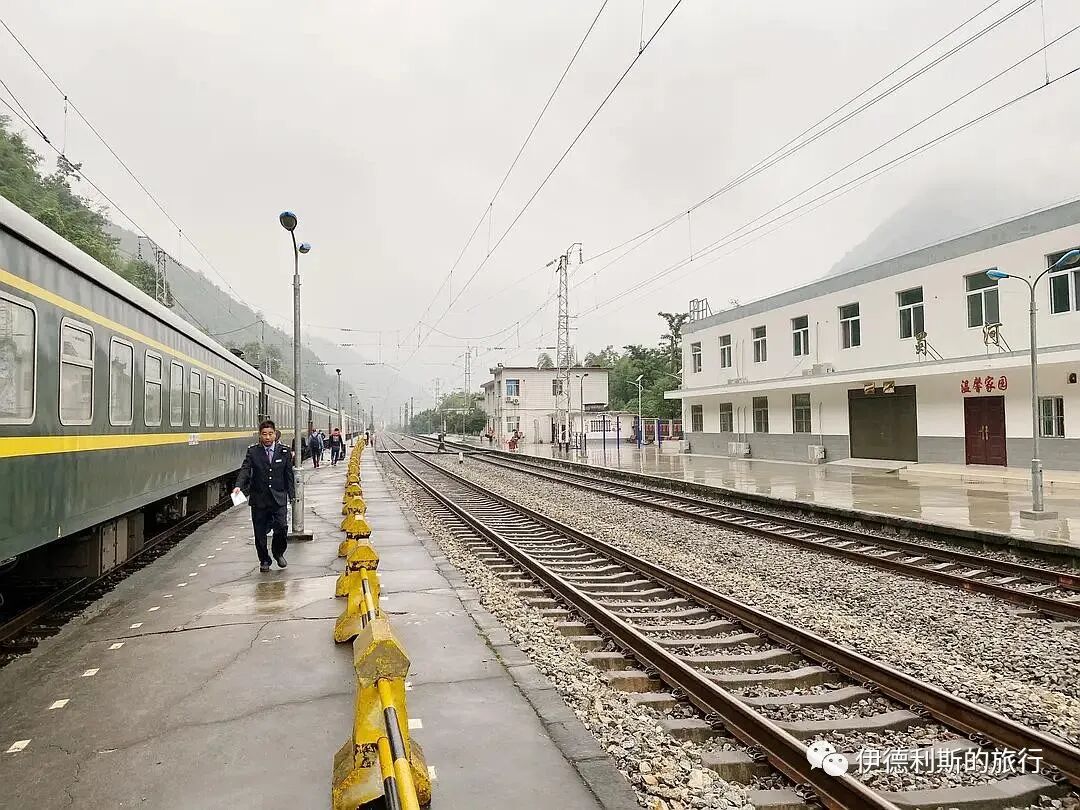
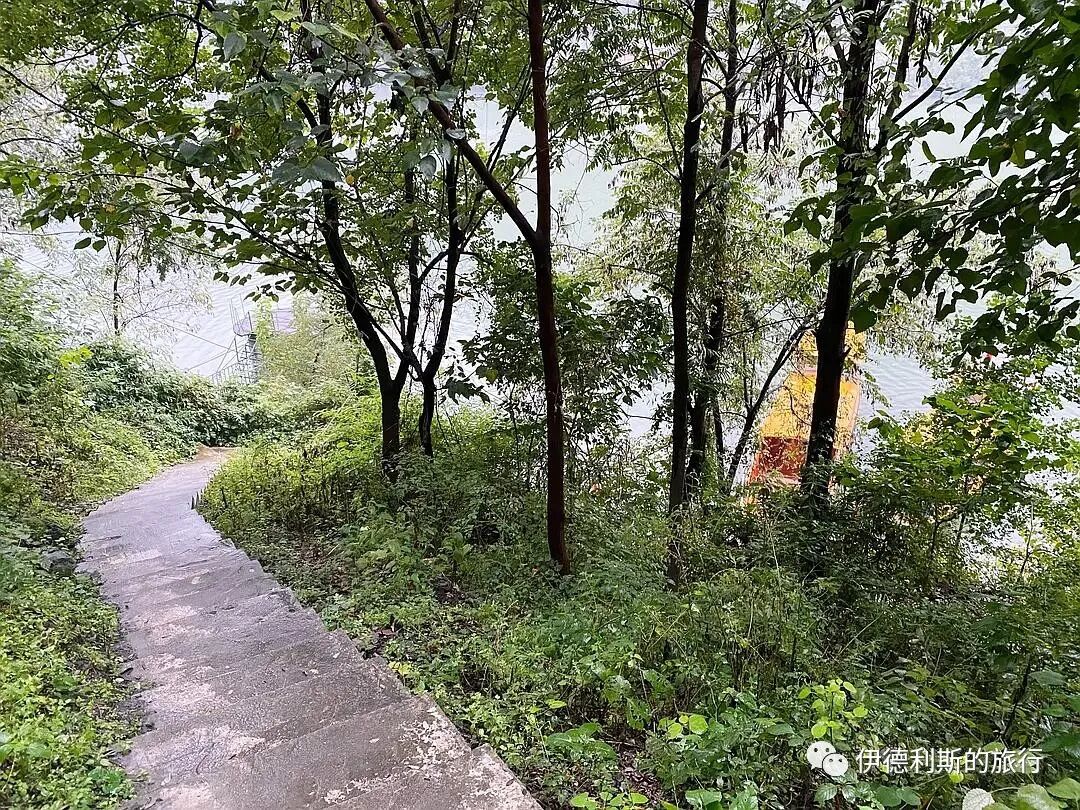
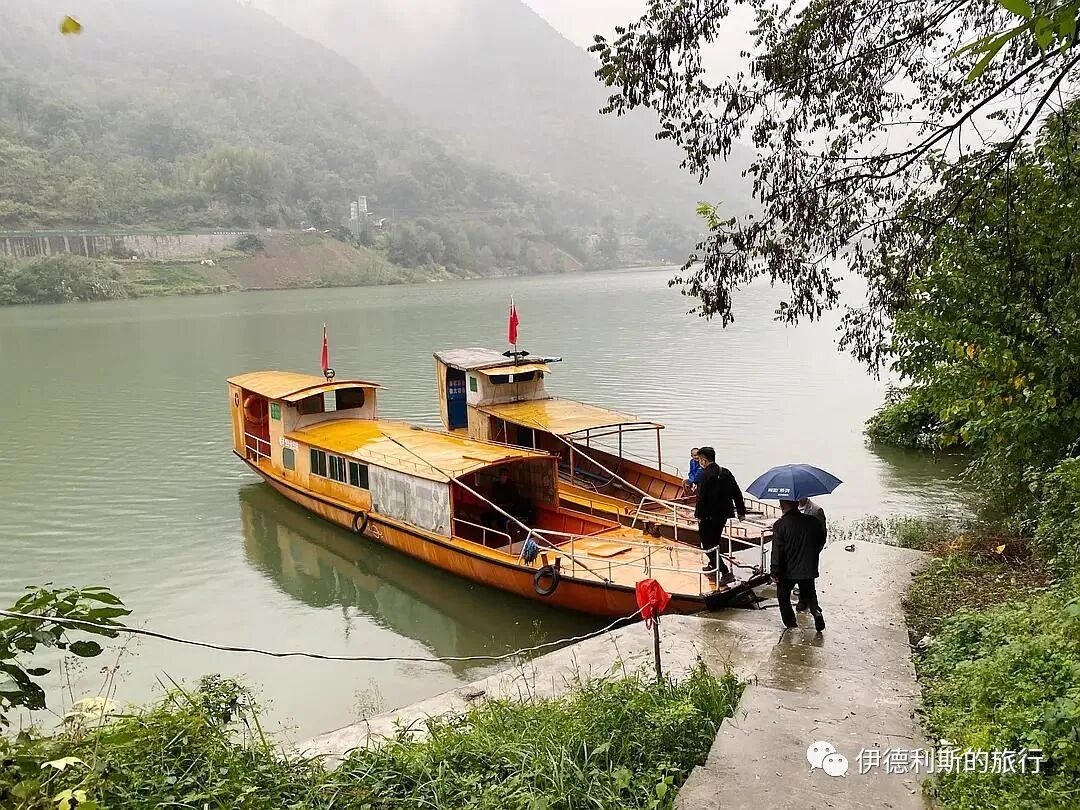
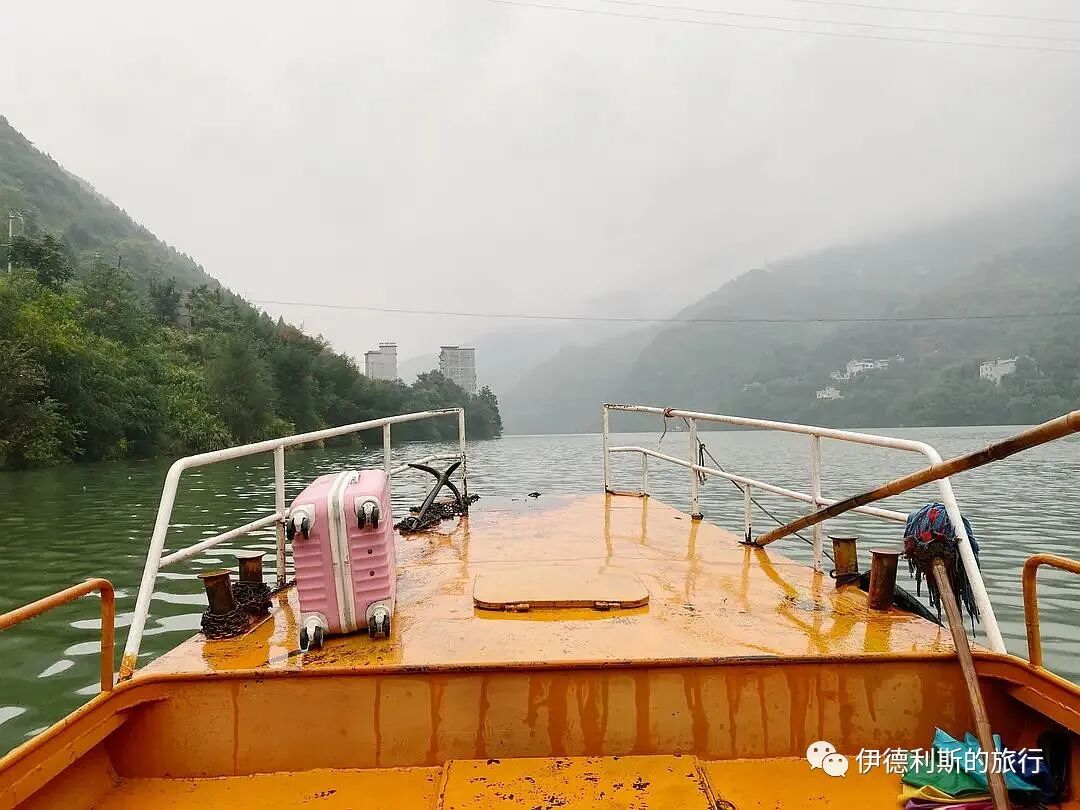
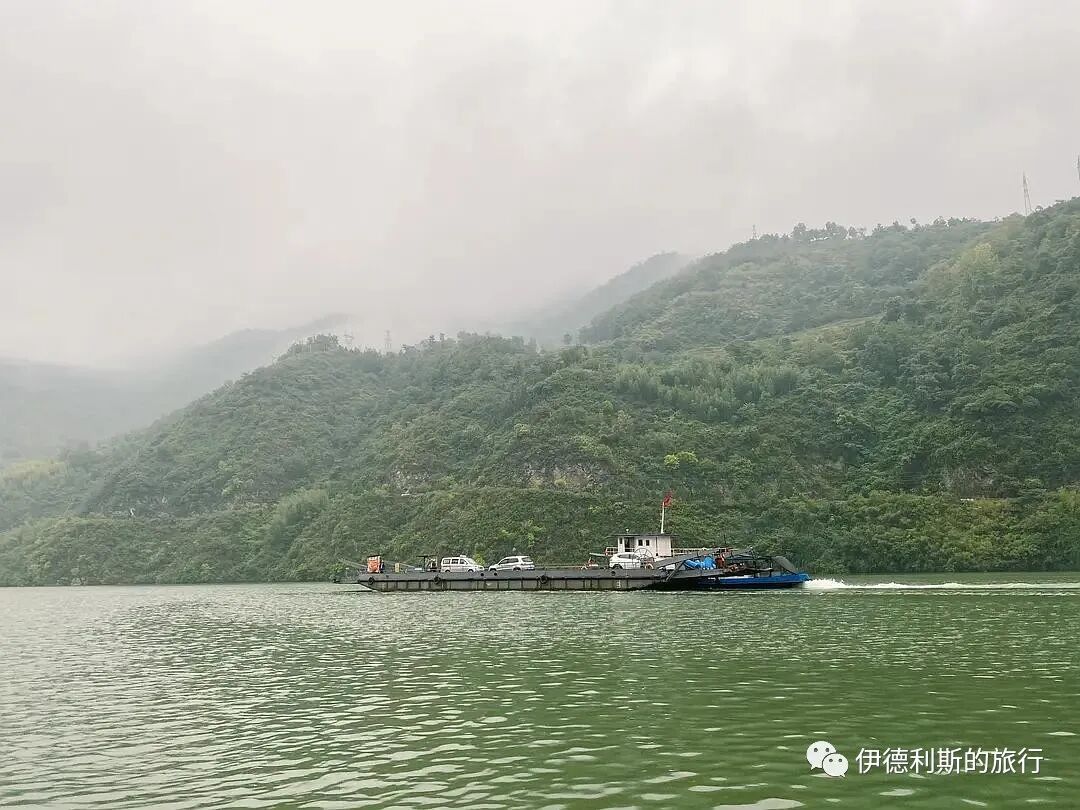
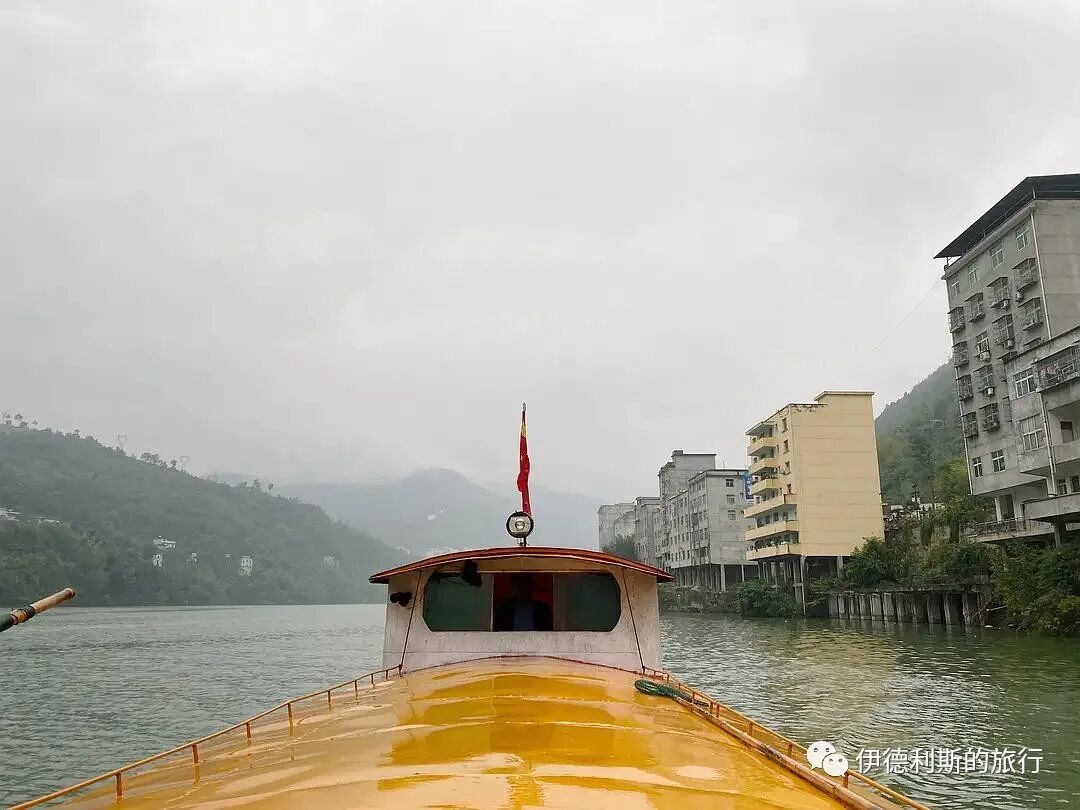
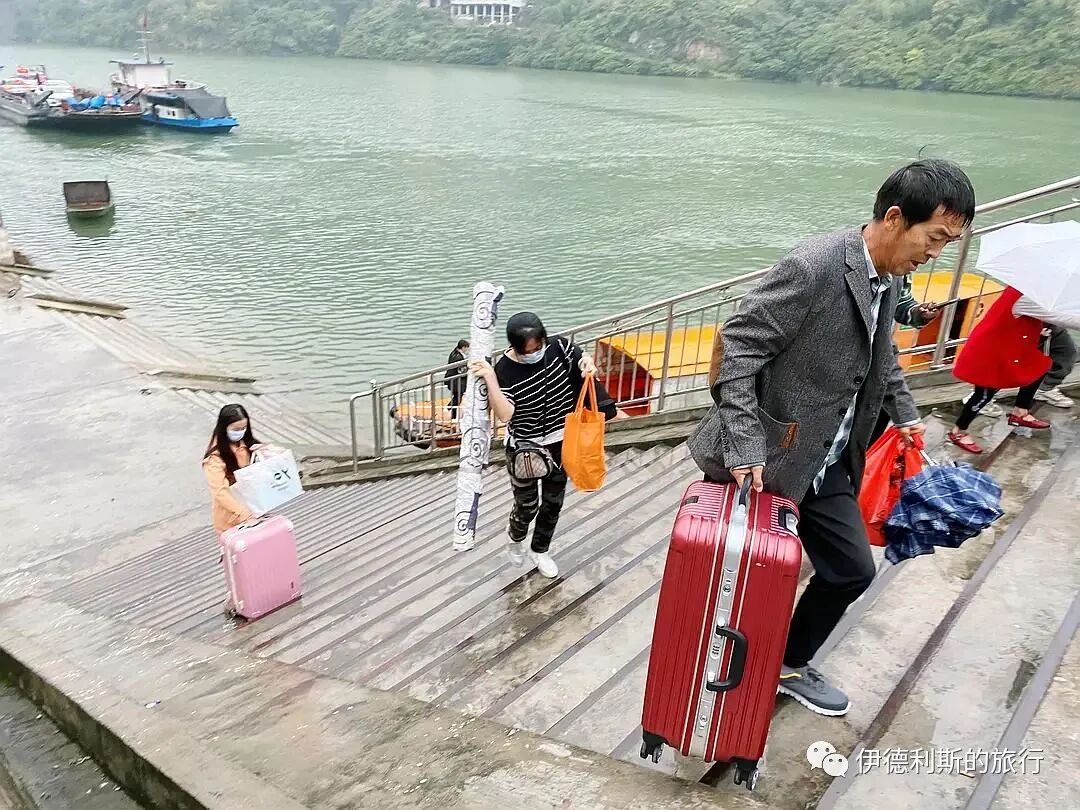
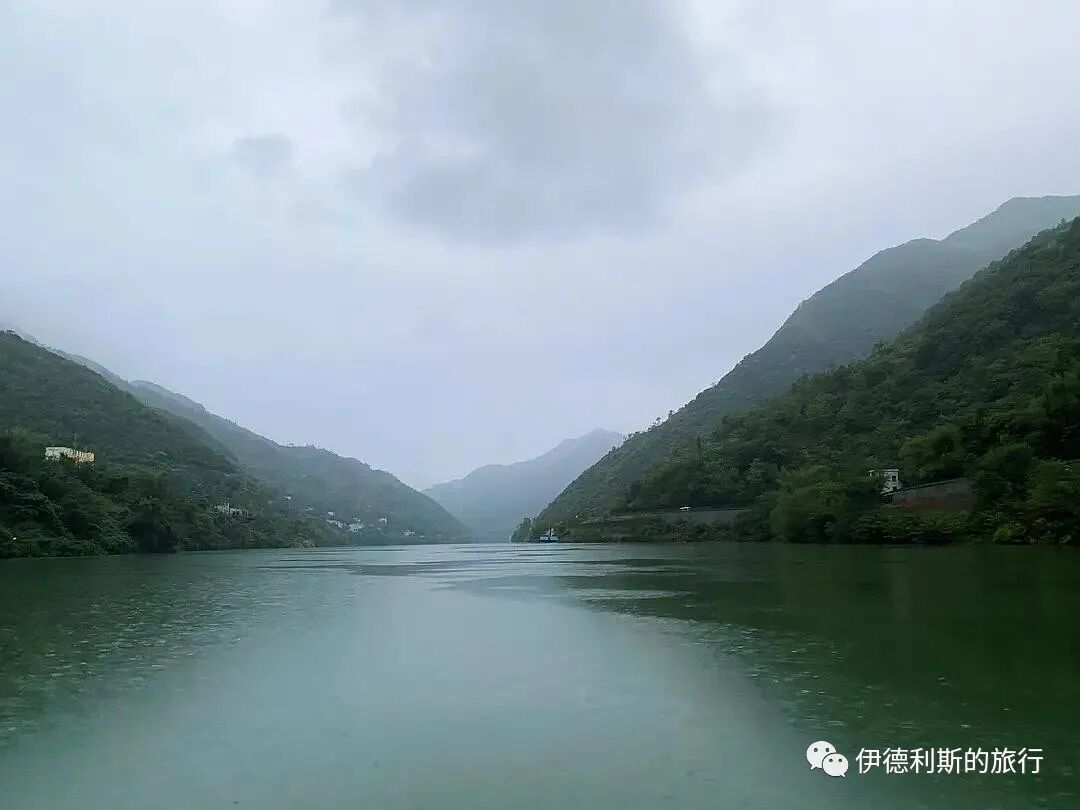
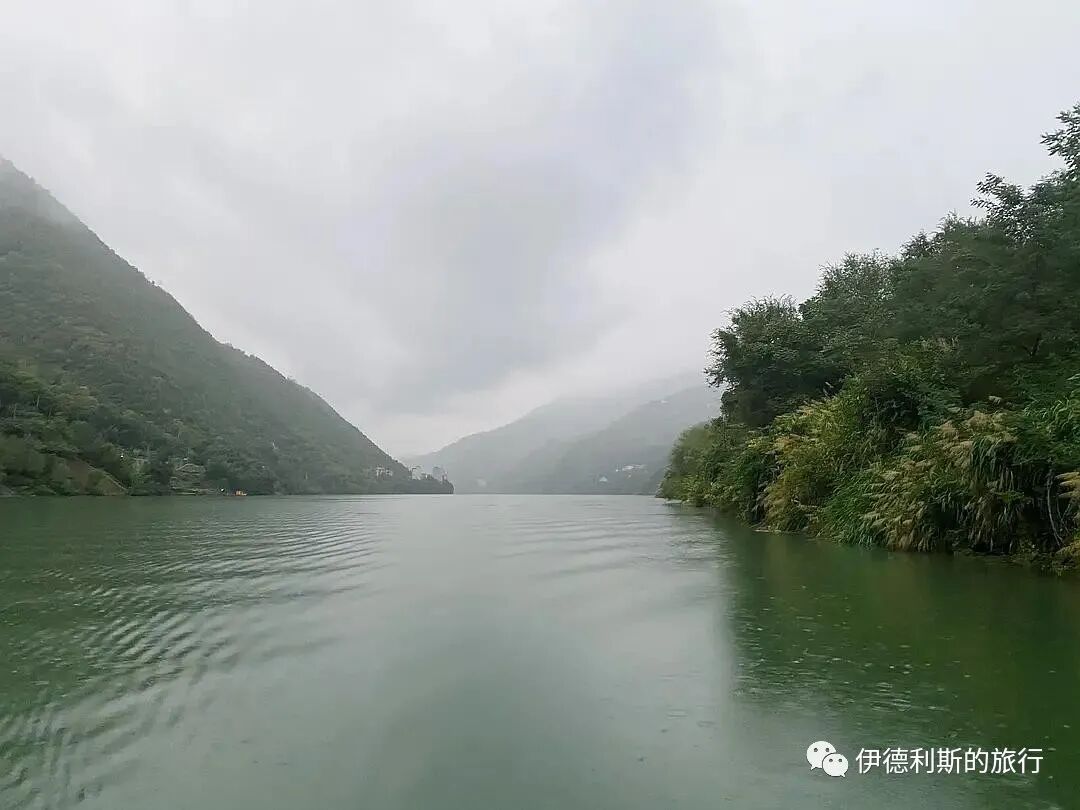
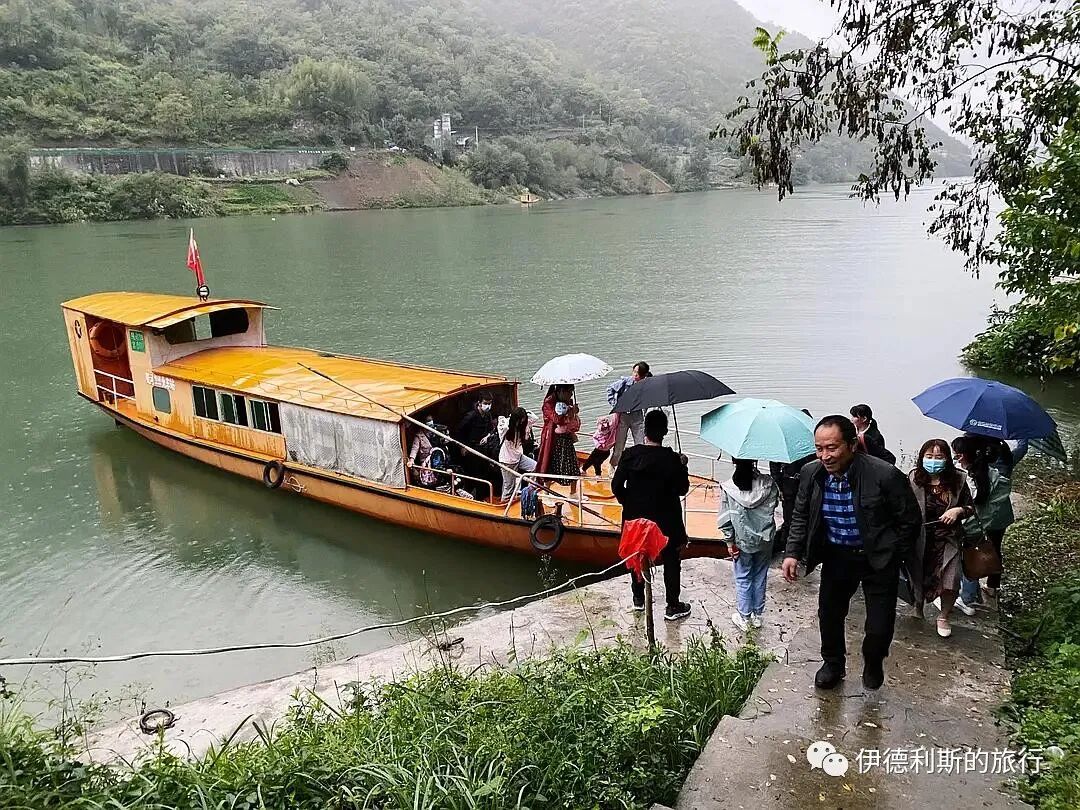
Shuhe Ancient Town is the last town the Han River passes through before flowing from southern Shaanxi into Hubei. Near the town, there is a very small train station, with only one K-series train arriving and departing each day. We arrived at Shuhe train station in the light morning rain. The station is built on a hillside with no flat ground around it. After leaving the station, there is only a path of steps leading to the Han River; once you go down, you reach the Han River ferry. Shuhe Town is a few kilometers downstream on the opposite bank of the Han River. The only way to get there from the station is by boat.
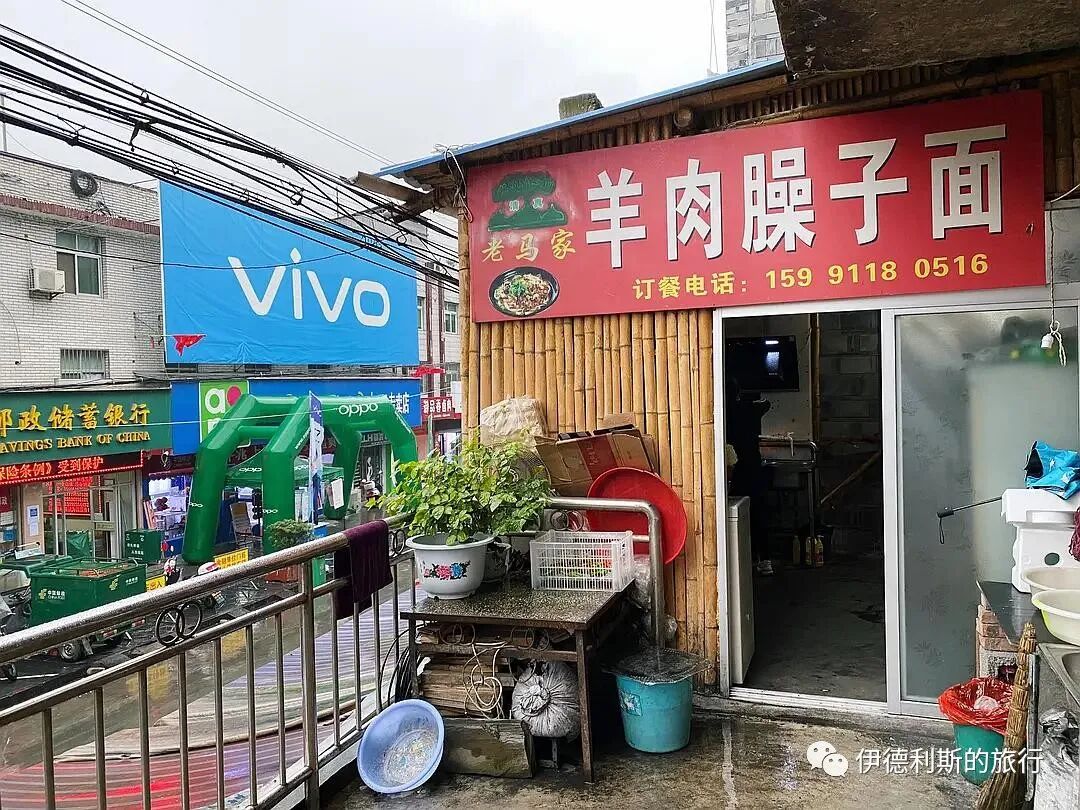
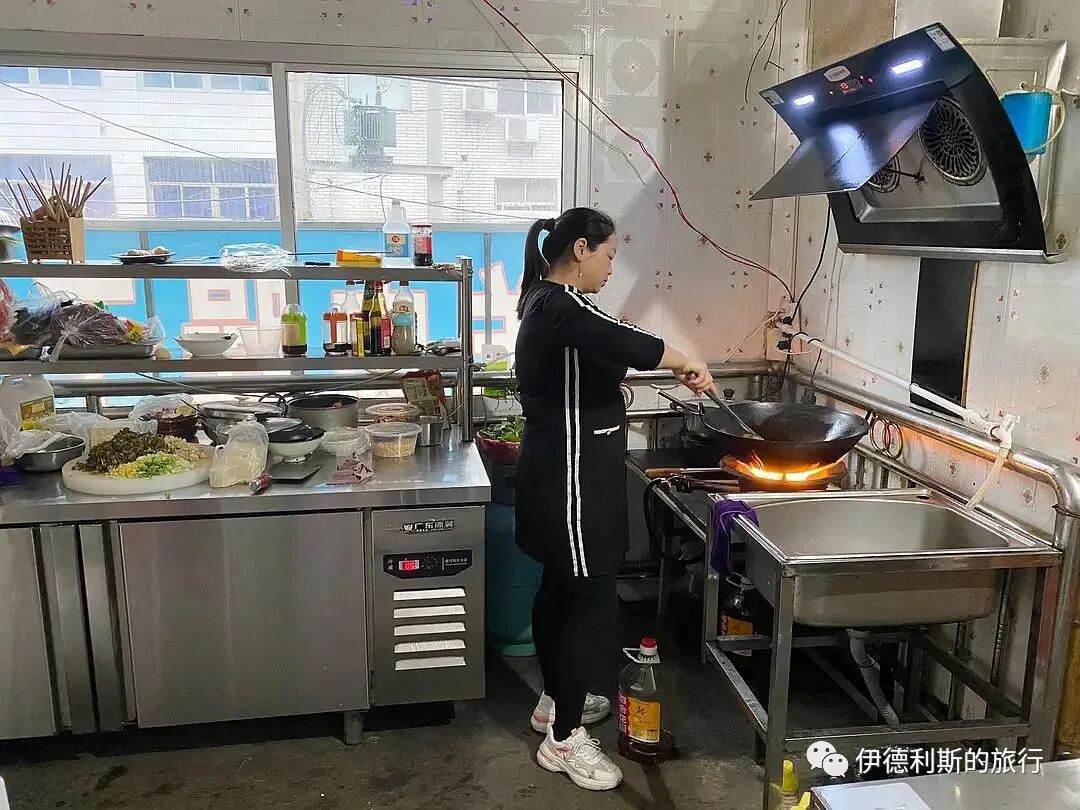
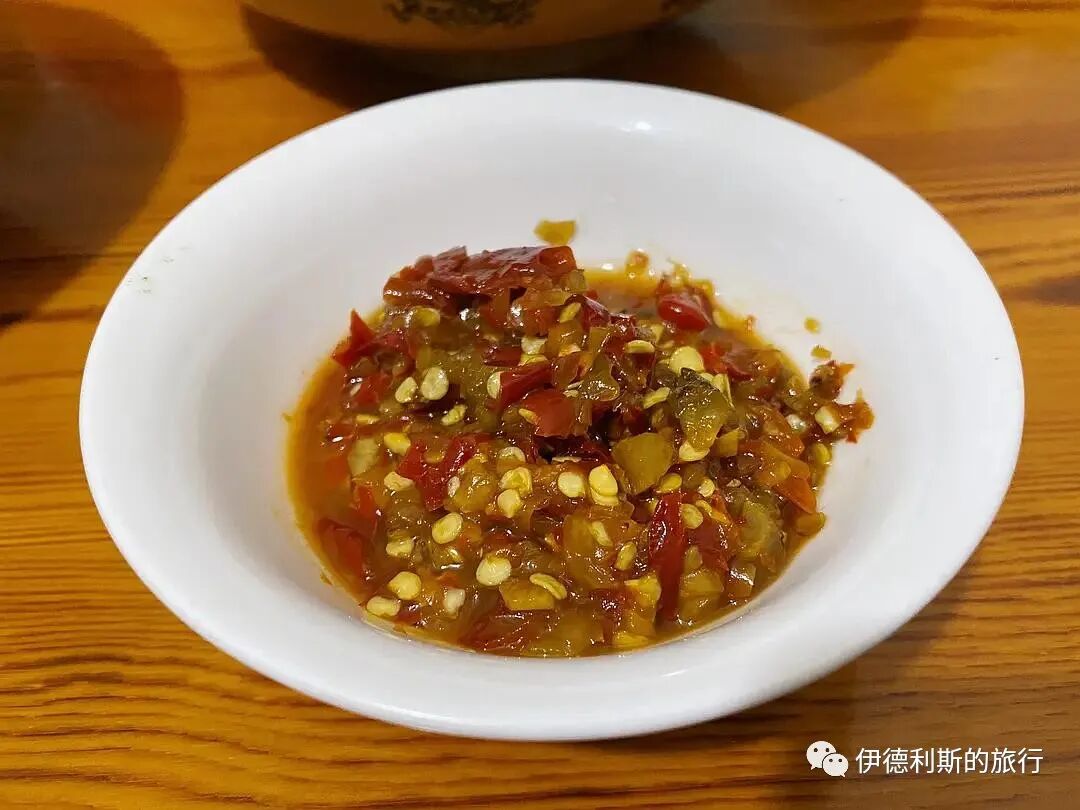
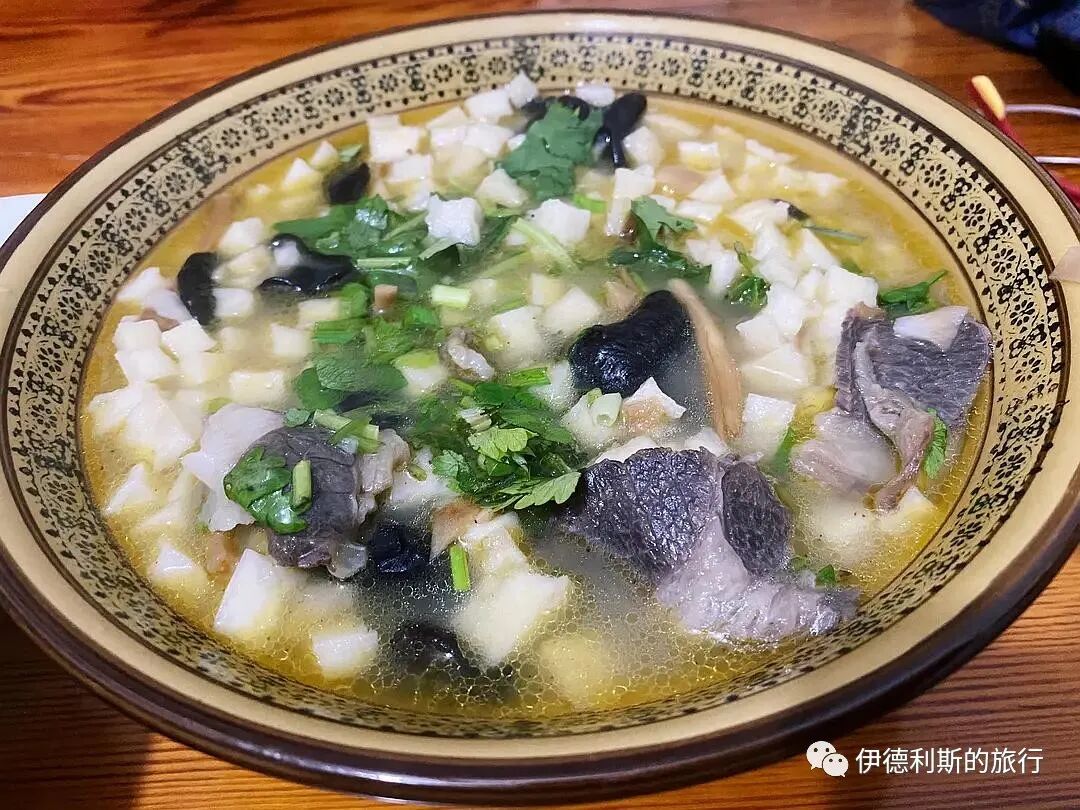
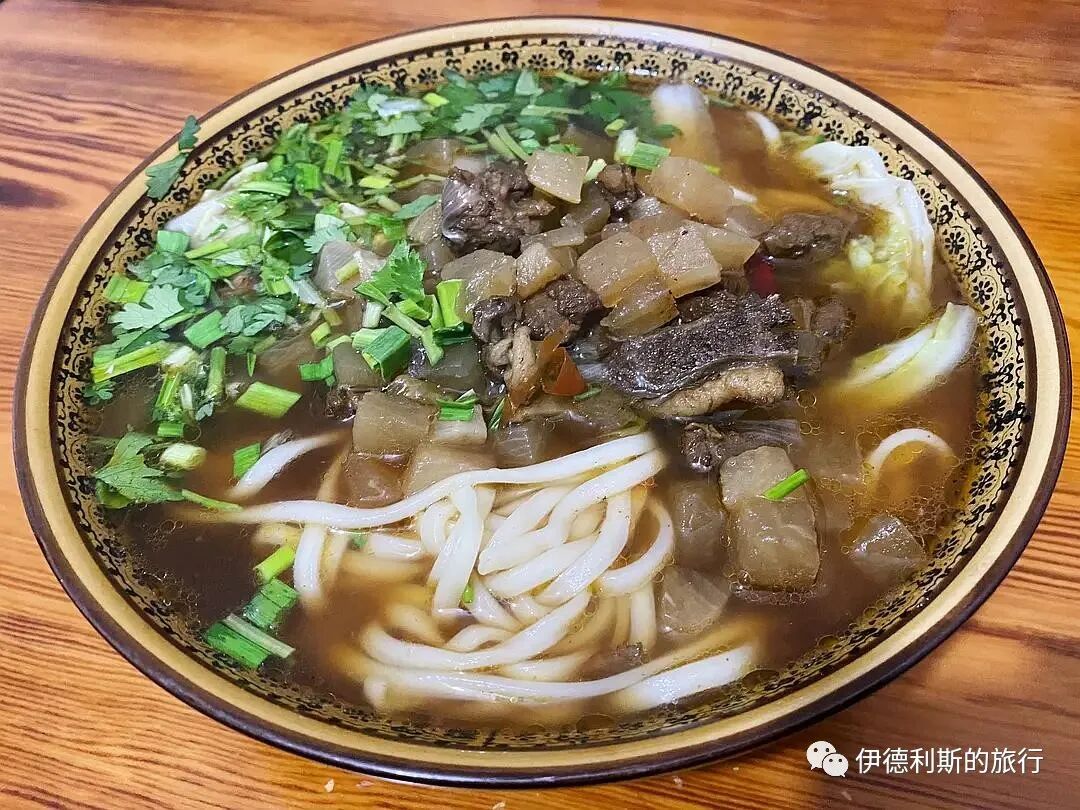
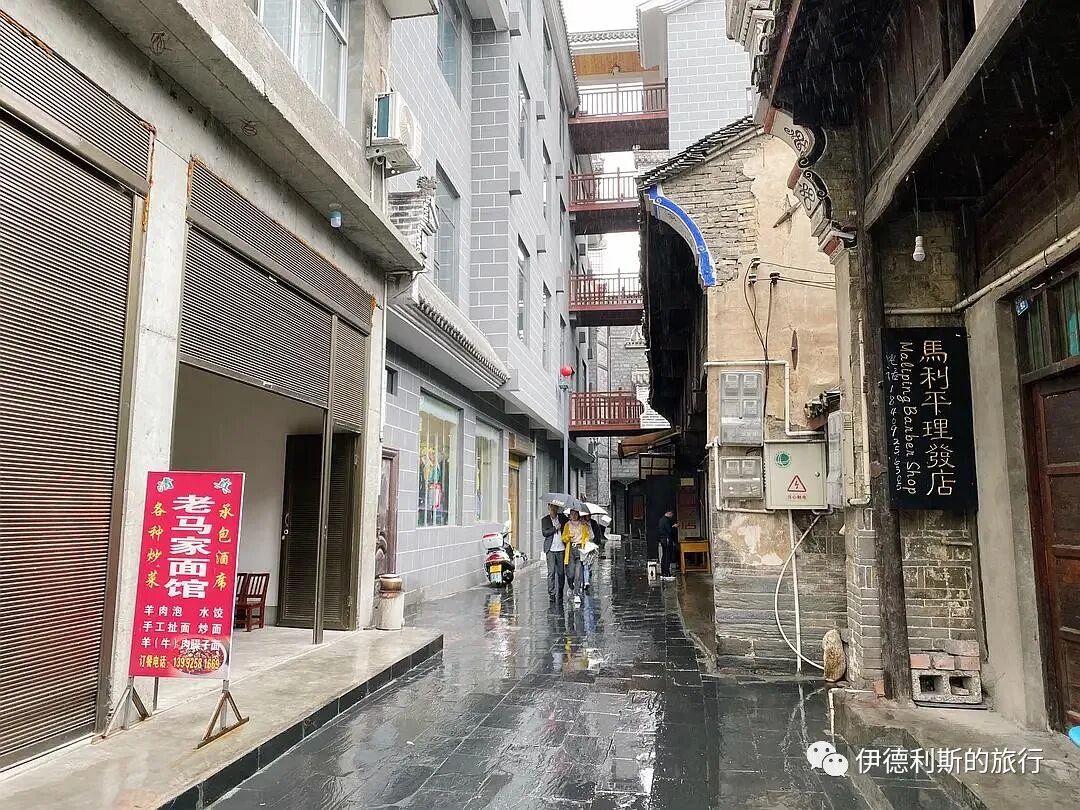
Eating lamb saozimian and beef paomo on the streets of Shuhe Town. During the Ming and Qing dynasties, when Han River shipping was prosperous, Shuhe Ancient Town was an important commercial post. Merchants gathered and shops lined the streets. It was also during that time that Hui Muslims moved to Shuhe to settle, and there are still several hundred households today.
Shuhe Mosque is built on a steep cliff behind the ancient town, connected to the streets below by a hundred steps. The mosque was first built during the Jiajing period of the Ming Dynasty, expanded in 1915, severely damaged and occupied during the Cultural Revolution, and renovated again in 1994.
The current main entrance was added during the 1915 expansion, and the original main entrance has now become the back door.
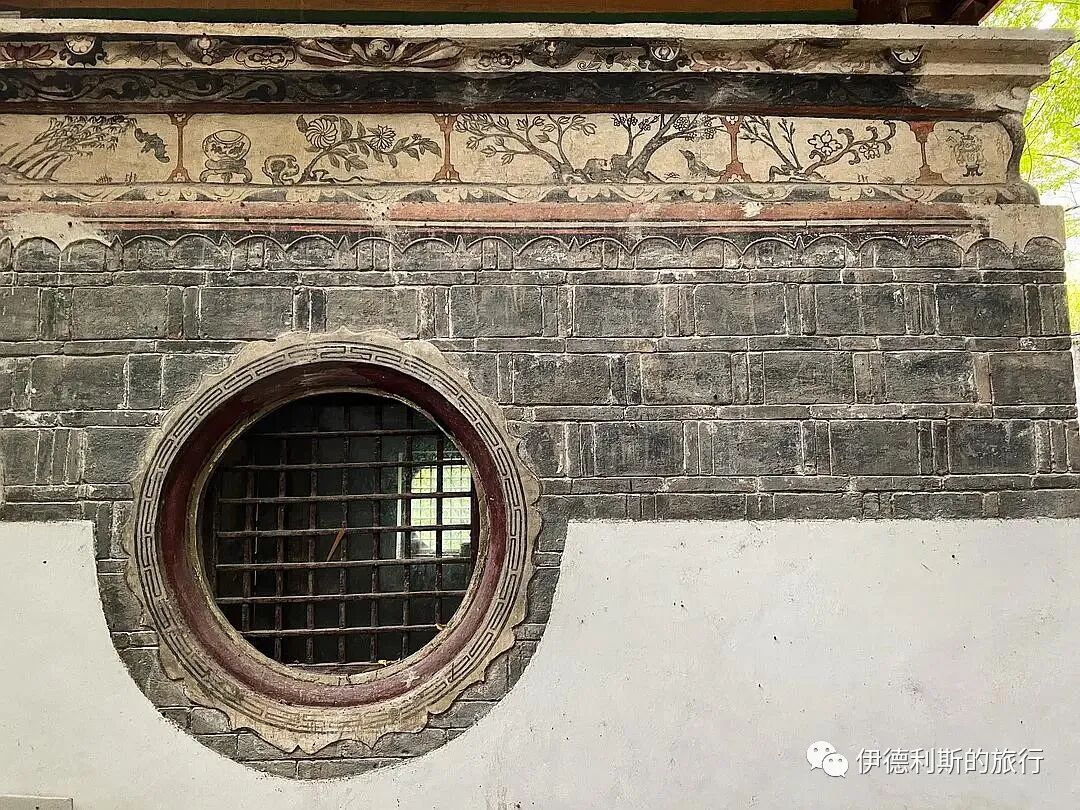
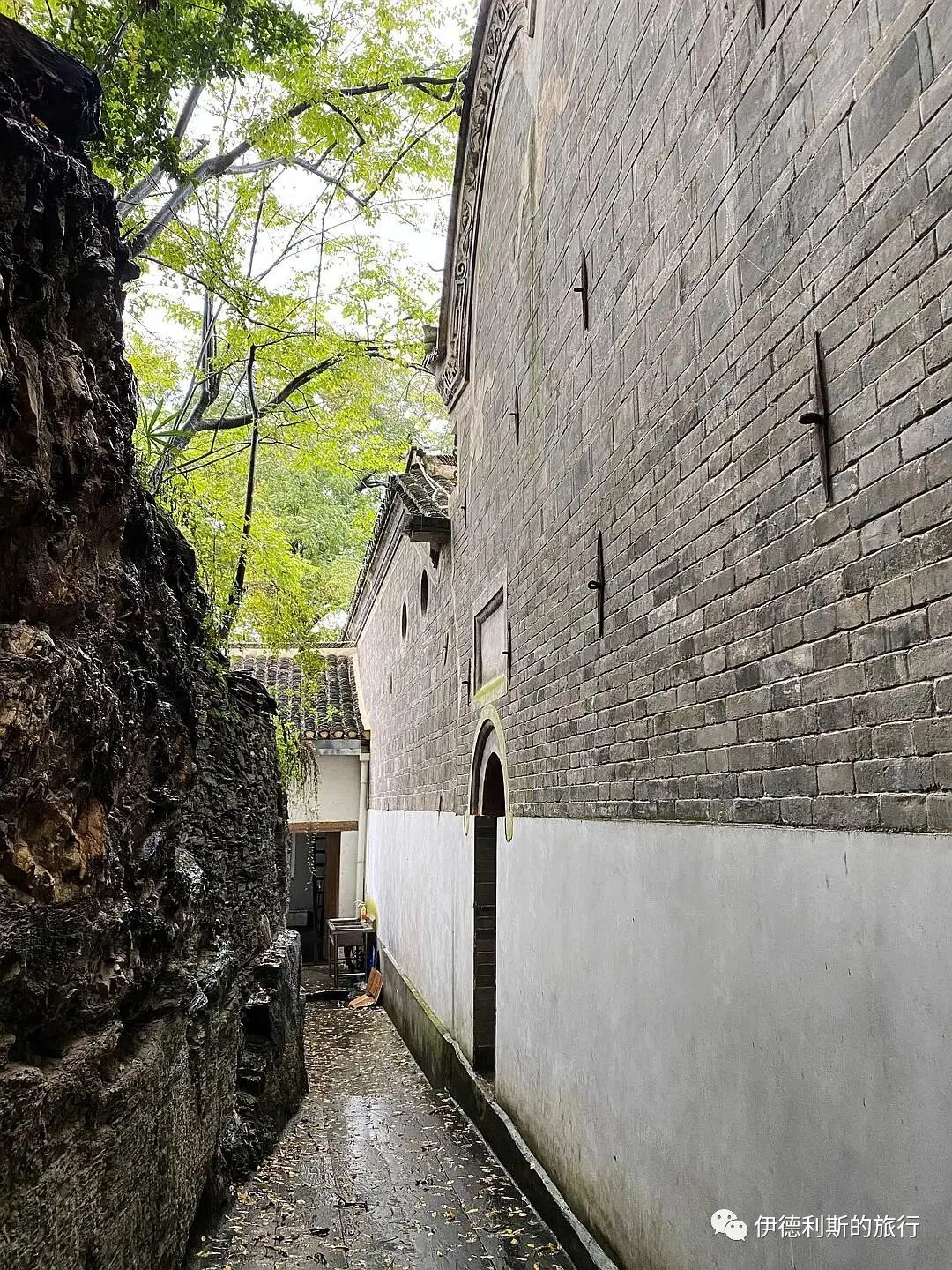
Shuhe Mosque features a 'cat-arched back' fire-blocking wall, which is very unique among traditional Chinese mosques. Some traditional mosques in southern China are built with fire-blocking walls, each with its own regional characteristics, such as the 'wok-ear' walls of the Guilin Old Village Mosque and the 'horse-head' walls of the Jingjue Mosque in Nanjing. The 'cat-arched back' fire-blocking wall is a characteristic style of the Hunan region that extends into the Qinba mountain area. Currently, besides Shuhe Mosque, the only other traditional mosque I know of that has a 'cat-arched back' fire-blocking wall is the Jingziguan Mosque in Xichuan, Henan.
In addition, there are ink paintings and inscriptions on the brick carvings of the fire-blocking wall, which is also a very southern style.
The mosque's courtyard is very small, with a stone-paved concave pool in the middle to collect rainwater from the eaves, which is very suitable for the rainy climate. Behind it are the north and south wing rooms and the main prayer hall. The main hall follows the traditional three-section structure of Chinese mosques: a front porch, a central hall, and a rear kiln-style hall.
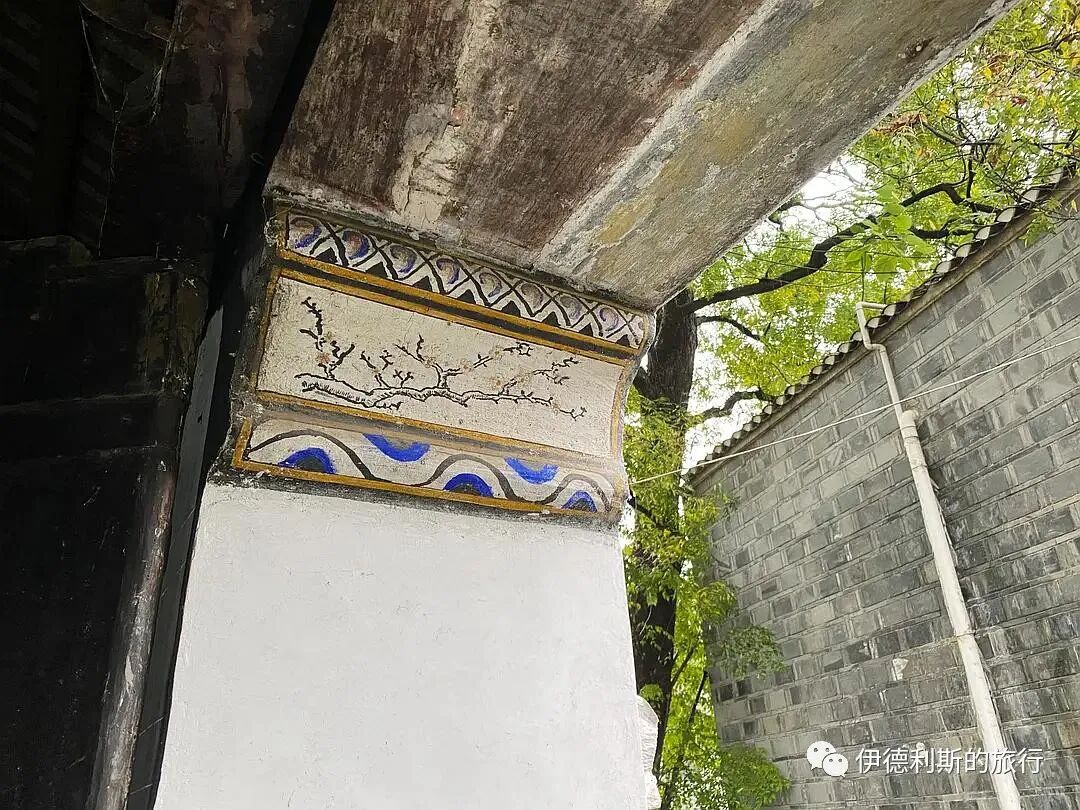
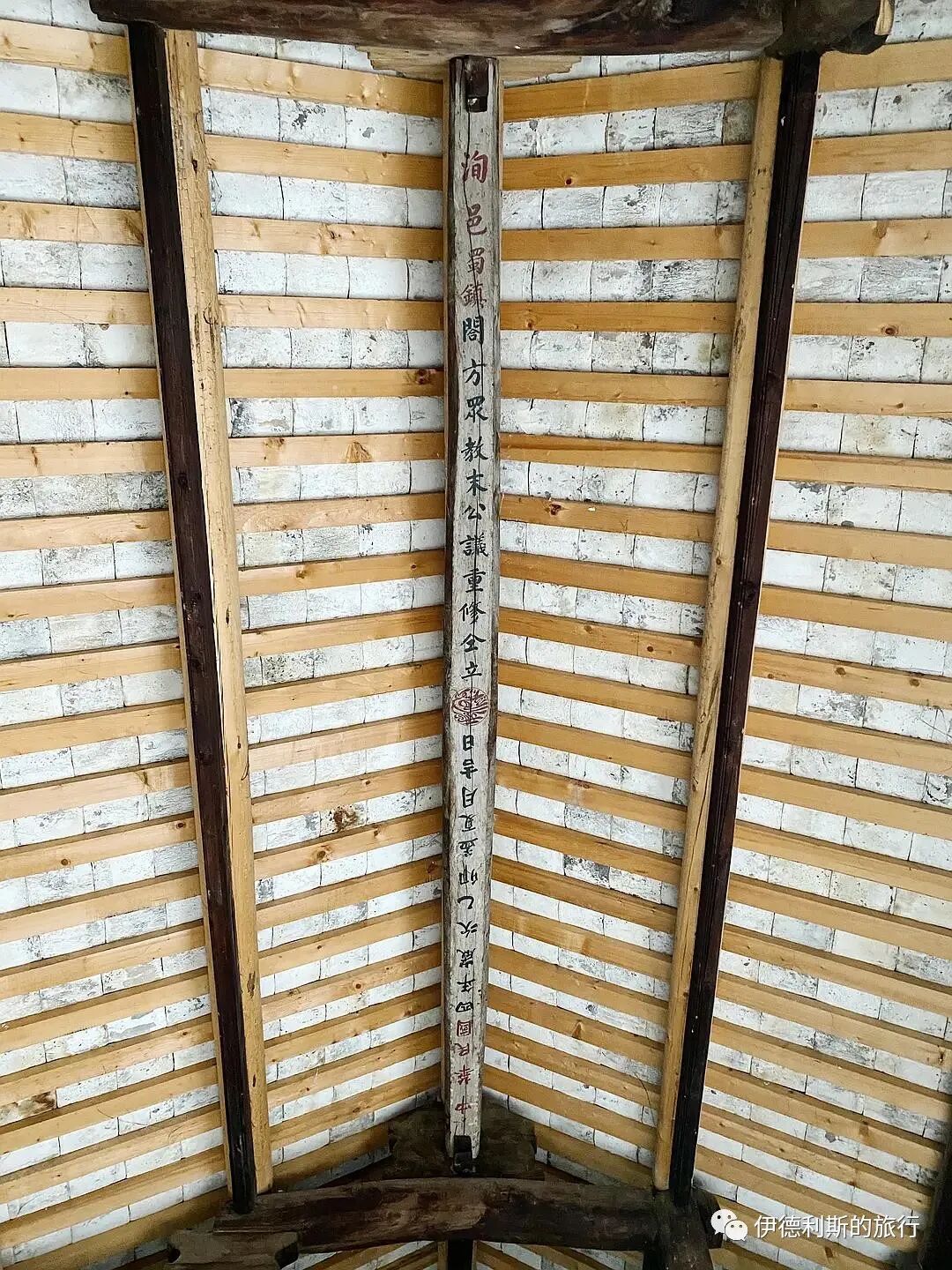
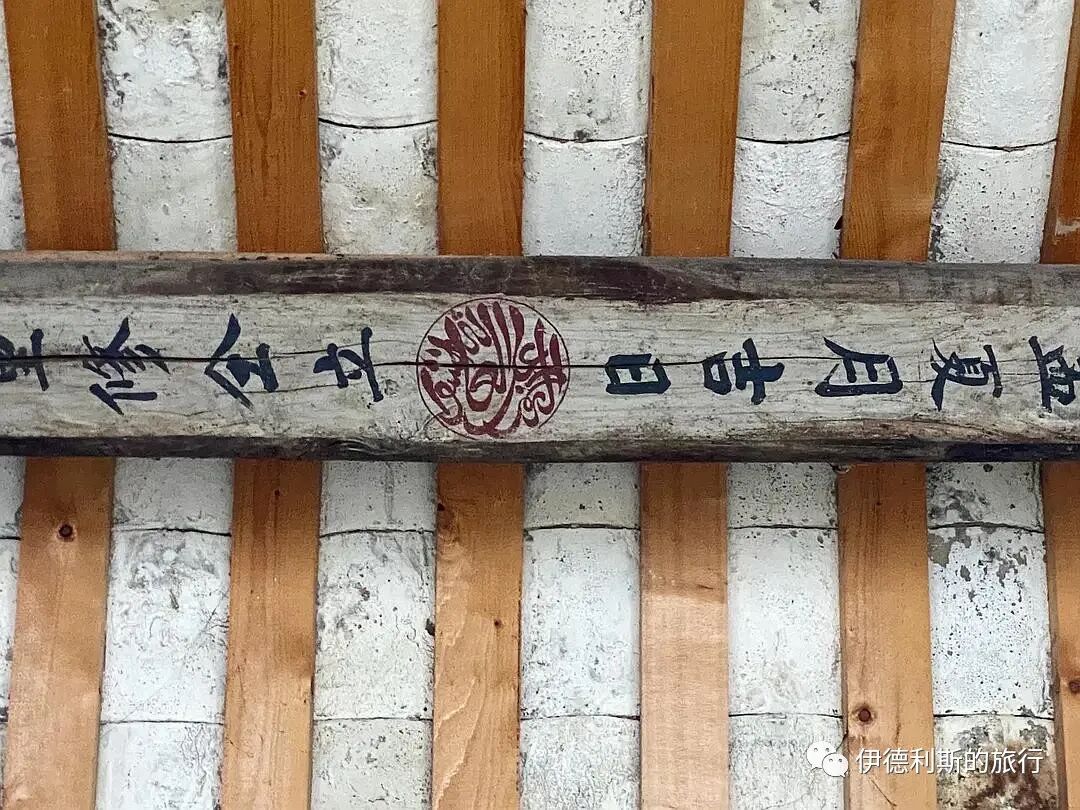
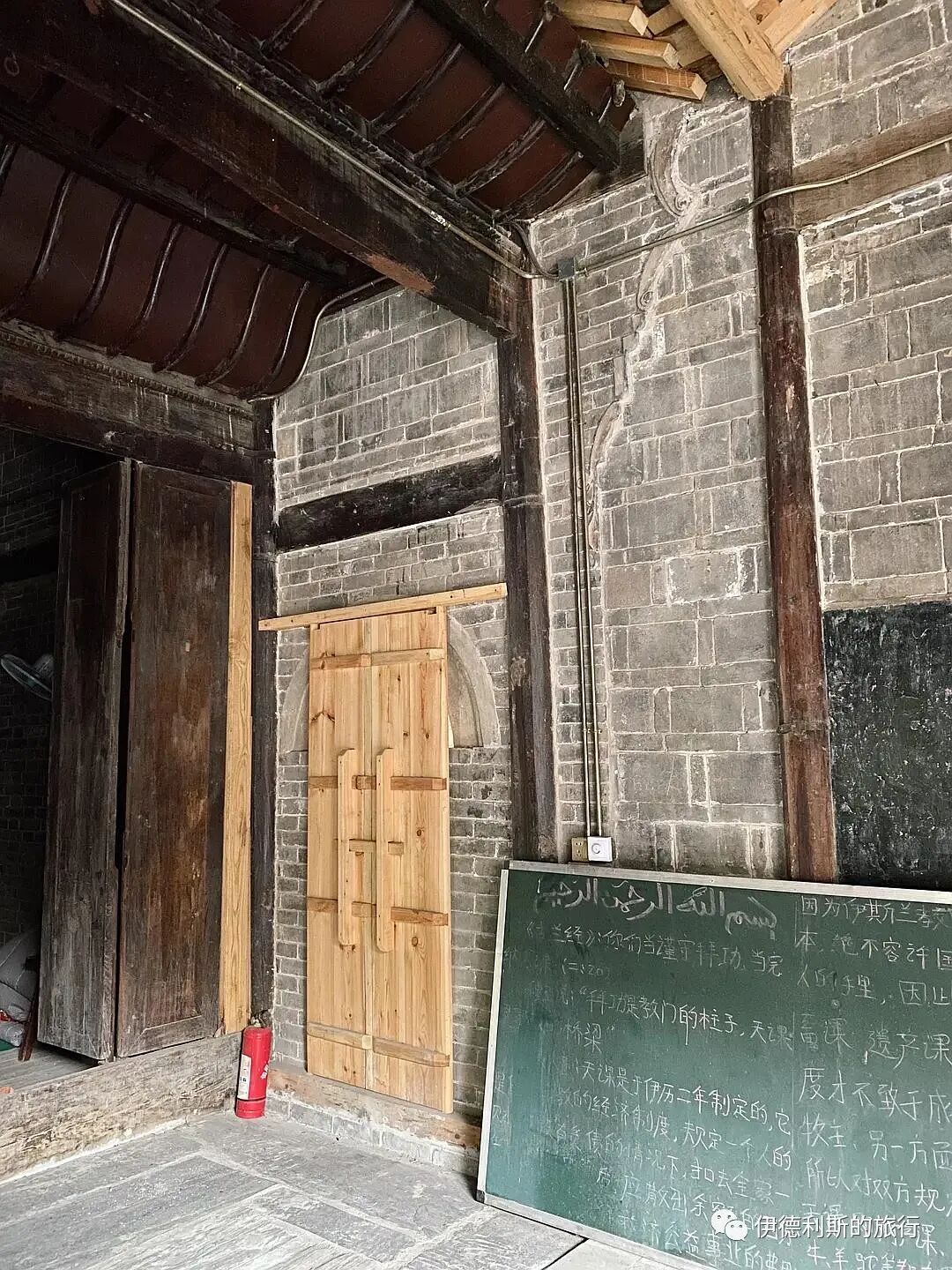
Most of the mosque's colorful paintings were destroyed during the Cultural Revolution, with only a portion preserved on the exterior of the rear kiln-style hall, where various traditional Chinese patterns can be seen. Additionally, there are ink paintings on the door frame of the main entrance. One of the mosque's beams bears an inscription from the renovation in the fourth year of the Republic of China (1915), and it still retains Arabic calligraphy from 100 years ago. The last photo shows the mosque right next to the cliff.
Traces of the 1915 expansion of the Ming Dynasty main hall of the mosque.
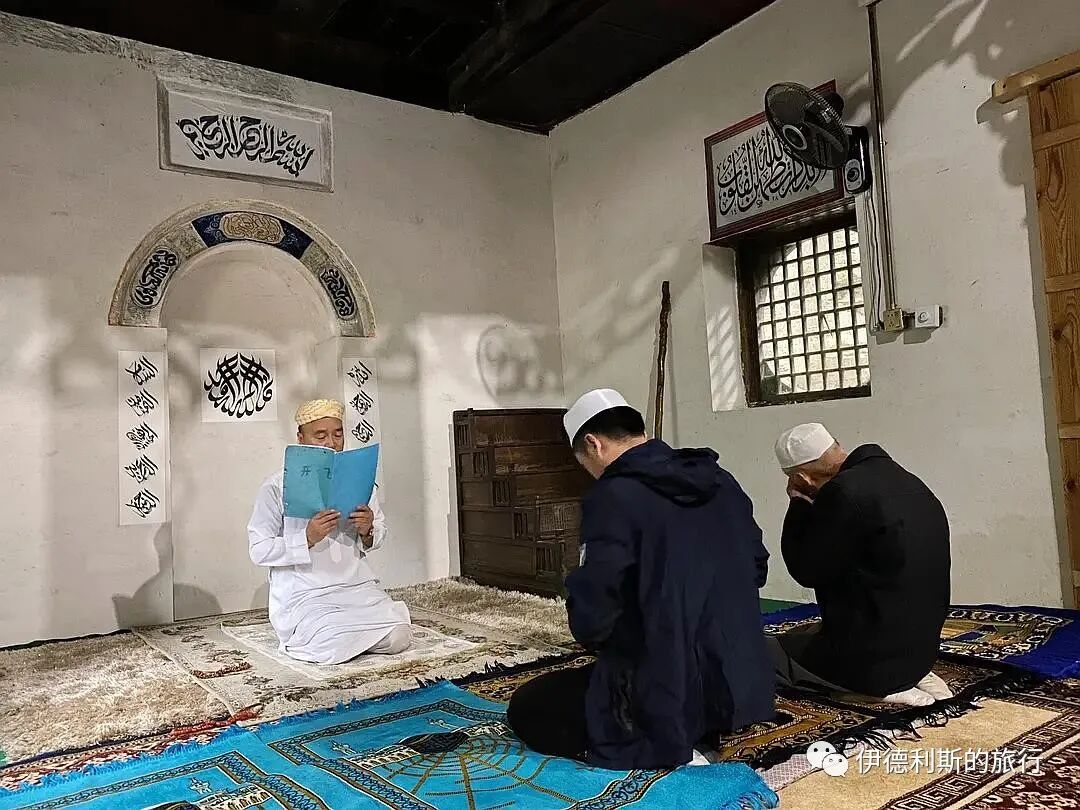
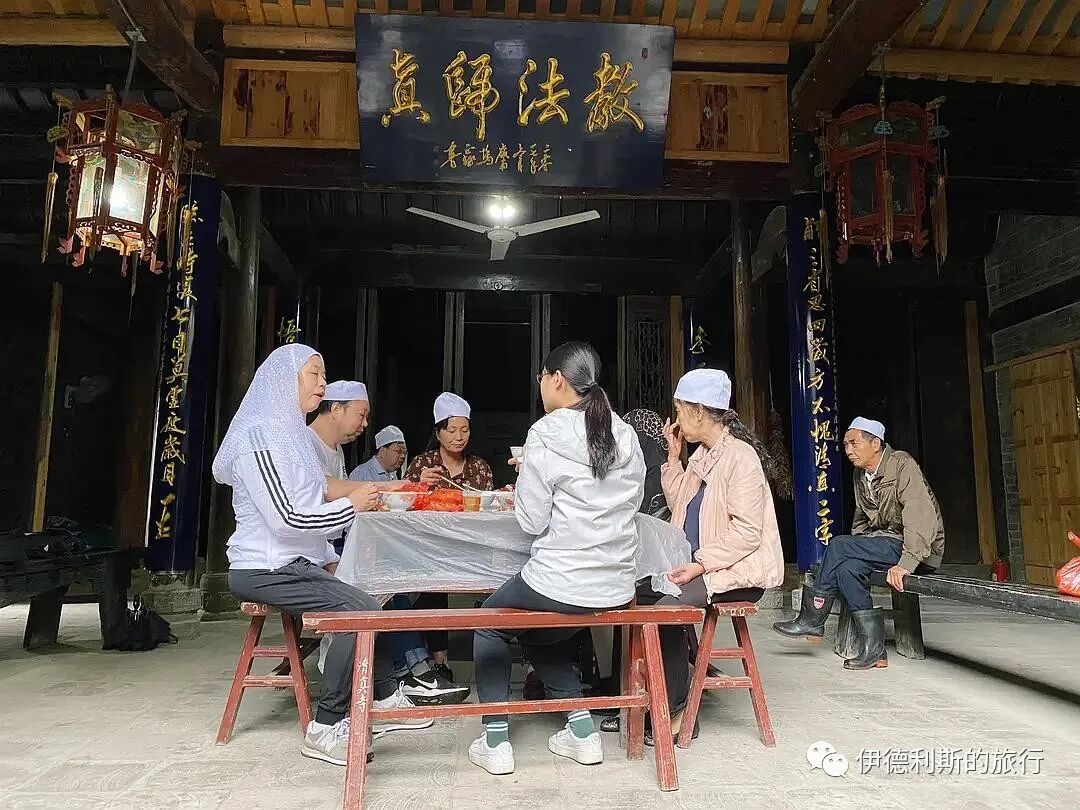
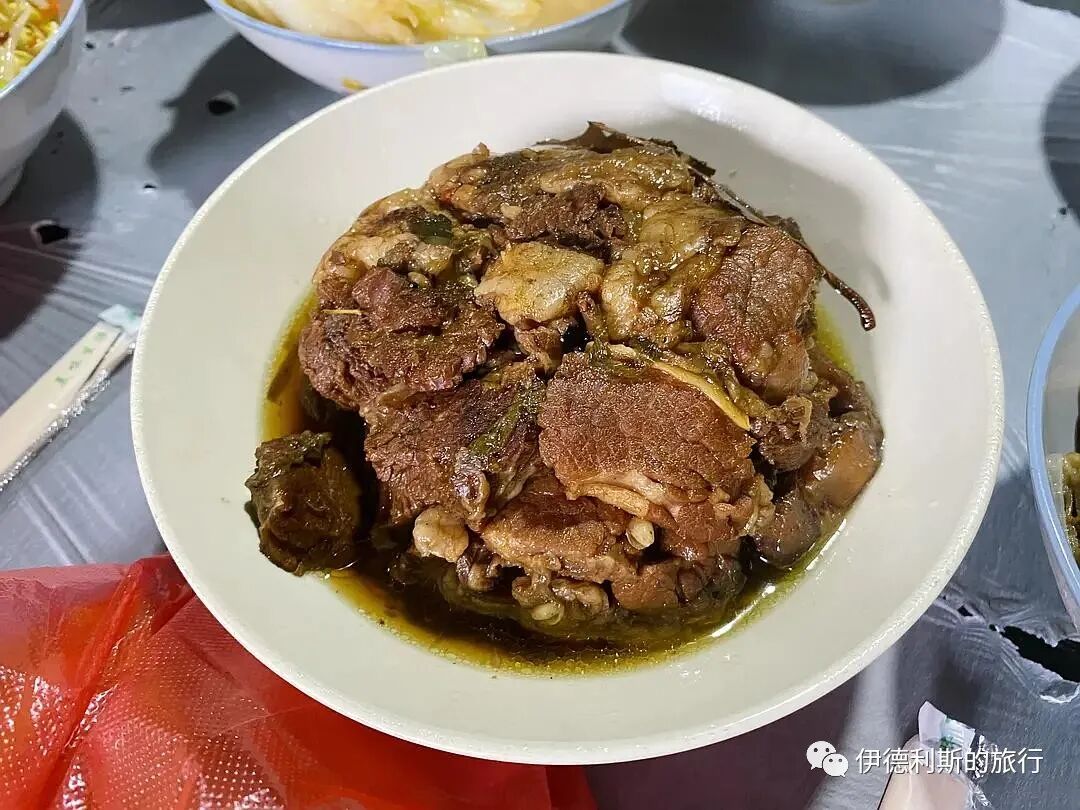
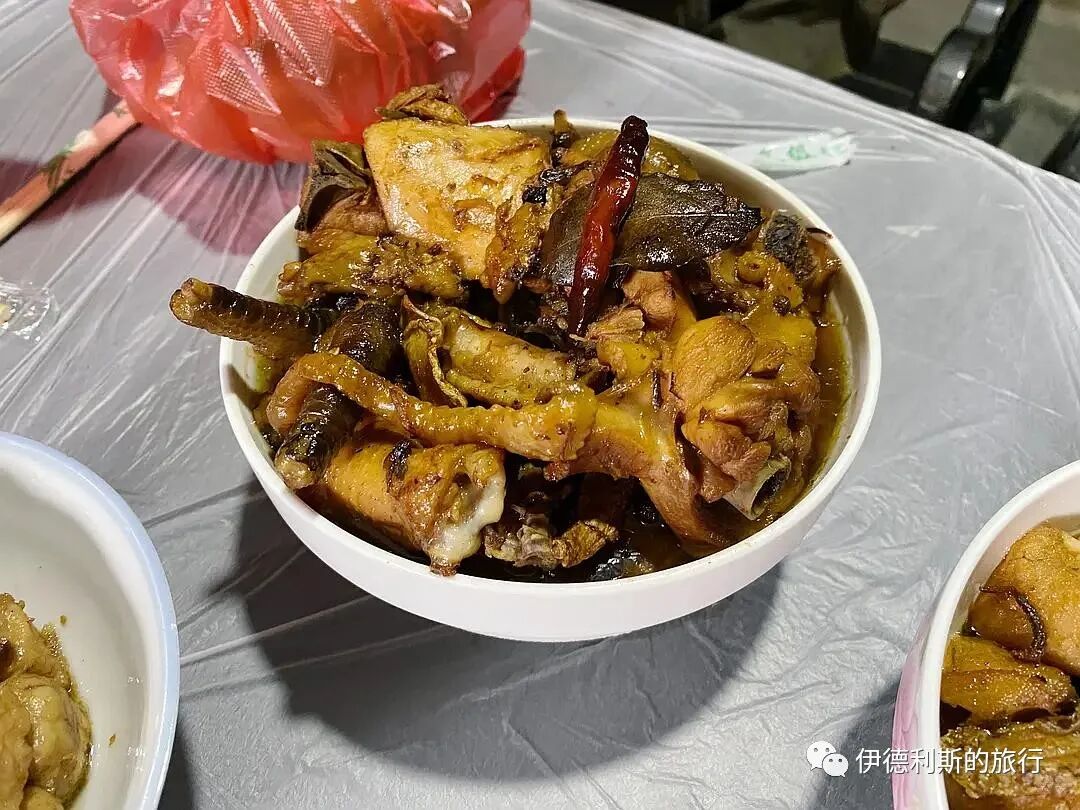
After performing Jumu'ah prayer at the mosque, we happened to catch a Shuhe-style 'ten-bowl' banquet. Zaynab enjoyed it very much, and in the end, we were even given a lot of youxiang. The ten bowls include lotus root boxes (lotus root stuffed with lamb, coated in egg, fried, and then steamed), lamb meatballs (coated in egg, fried, and then steamed), braised beef, steamed flour-coated meat (lamb coated in flour and steamed with sweet potato chunks), steamed white meat (fatty meat near the lamb cartilage, steamed), chicken (stir-fried until half-cooked and then steamed), fish chunks (grass carp chunks coated in flour, fried, and then steamed), and three vegetable dishes. The dishes at a Hui banquet are different from ordinary home-cooked stir-fries because they usually have to serve many people. Most of the food is prepared half-cooked and then steamed in a large pot, which ensures both efficiency and that the food stays warm.
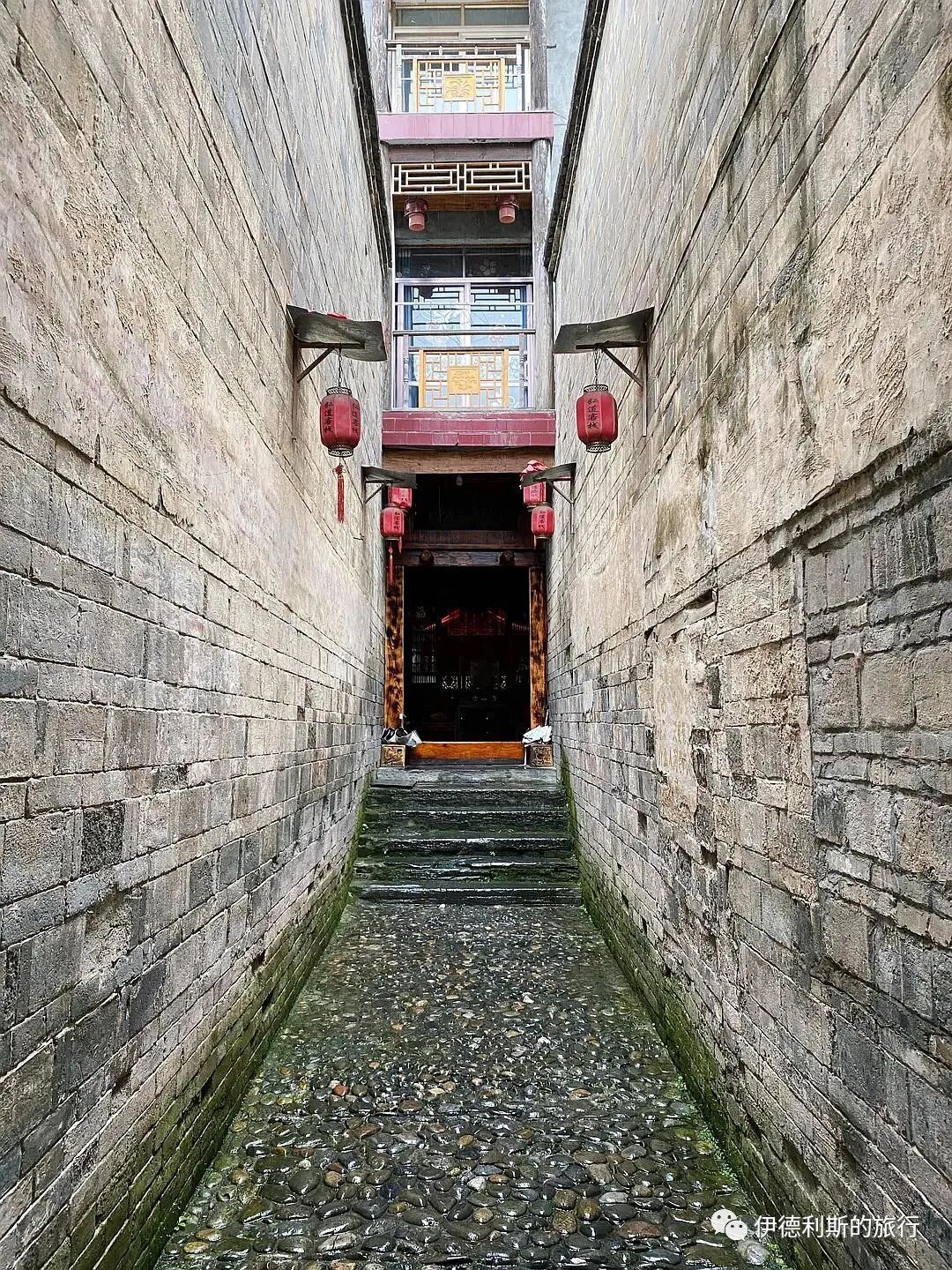
The hotel we stayed in was converted from an old pawn shop.
The two relatively large halal restaurants in town.
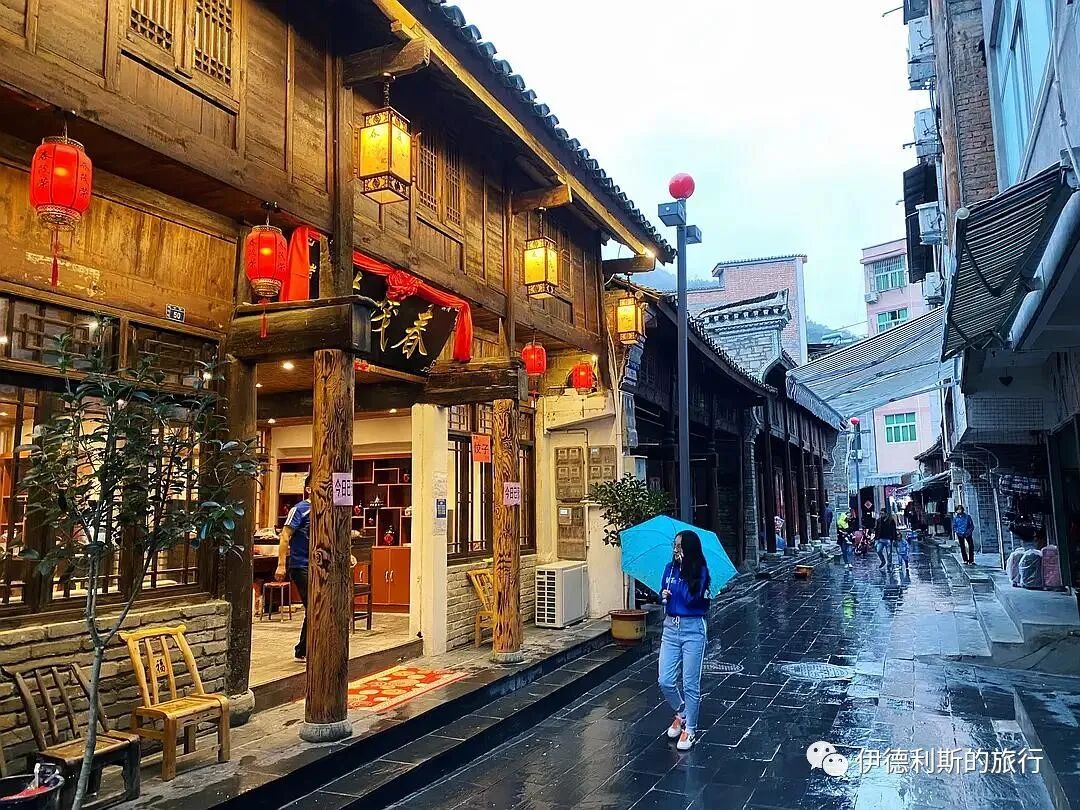
Strolling around the ancient town in the evening.
The Shuhe River flowing into the Han River.
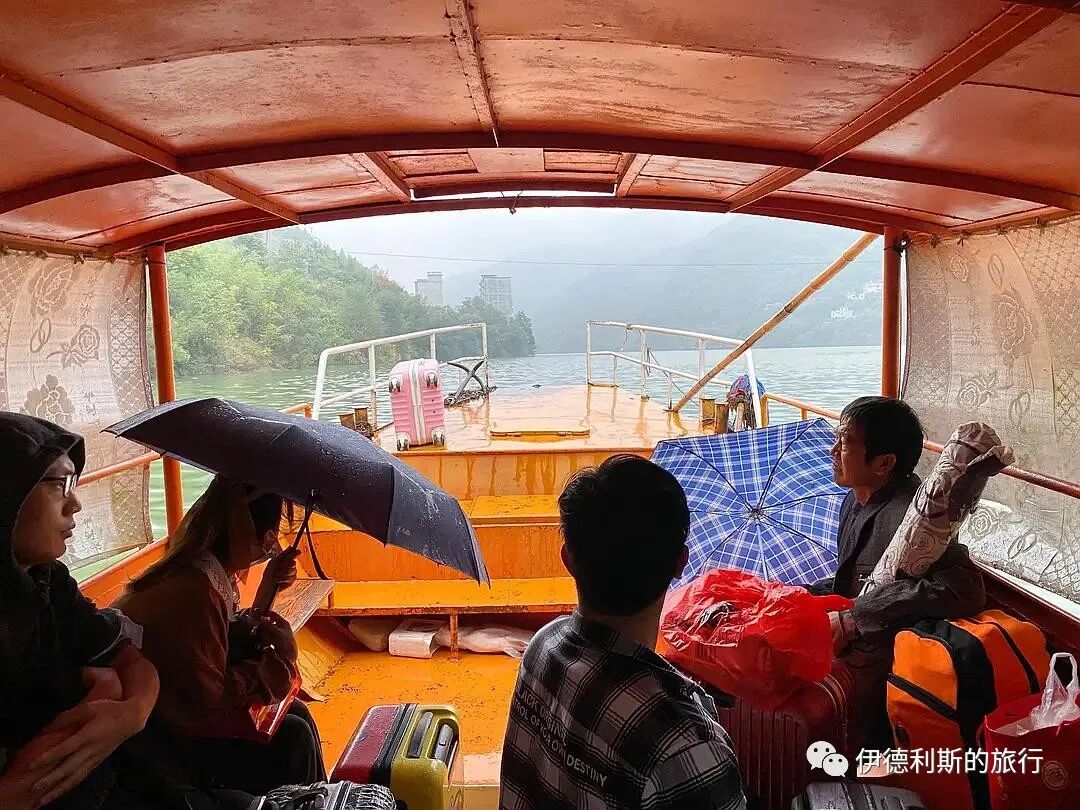
In the light rain of the early morning, we took the ferry from the pier to the train station, watching the Han River slowly wake up. Looking from afar, the Shuhe train station looks like a small white dot on the cliff. As the white dot becomes clearer, we know we are about to leave Shuhe. view all
Summary: This travel note introduces [Halal Travel] Shuhe Ancient Town Deep Along the Han River. Shuhe Ancient Town is the last town the Han River passes through before flowing from southern Shaanxi into Hubei. It is useful for readers interested in Shuhe Ancient Town, Muslim Travel, China Travel.
Shuhe Ancient Town is the last town the Han River passes through before flowing from southern Shaanxi into Hubei. Near the town, there is a very small train station, with only one K-series train arriving and departing each day. We arrived at Shuhe train station in the light morning rain. The station is built on a hillside with no flat ground around it. After leaving the station, there is only a path of steps leading to the Han River; once you go down, you reach the Han River ferry. Shuhe Town is a few kilometers downstream on the opposite bank of the Han River. The only way to get there from the station is by boat.
Eating lamb saozimian and beef paomo on the streets of Shuhe Town. During the Ming and Qing dynasties, when Han River shipping was prosperous, Shuhe Ancient Town was an important commercial post. Merchants gathered and shops lined the streets. It was also during that time that Hui Muslims moved to Shuhe to settle, and there are still several hundred households today.
Shuhe Mosque is built on a steep cliff behind the ancient town, connected to the streets below by a hundred steps. The mosque was first built during the Jiajing period of the Ming Dynasty, expanded in 1915, severely damaged and occupied during the Cultural Revolution, and renovated again in 1994.
The current main entrance was added during the 1915 expansion, and the original main entrance has now become the back door.
Shuhe Mosque features a 'cat-arched back' fire-blocking wall, which is very unique among traditional Chinese mosques. Some traditional mosques in southern China are built with fire-blocking walls, each with its own regional characteristics, such as the 'wok-ear' walls of the Guilin Old Village Mosque and the 'horse-head' walls of the Jingjue Mosque in Nanjing. The 'cat-arched back' fire-blocking wall is a characteristic style of the Hunan region that extends into the Qinba mountain area. Currently, besides Shuhe Mosque, the only other traditional mosque I know of that has a 'cat-arched back' fire-blocking wall is the Jingziguan Mosque in Xichuan, Henan.
In addition, there are ink paintings and inscriptions on the brick carvings of the fire-blocking wall, which is also a very southern style.
The mosque's courtyard is very small, with a stone-paved concave pool in the middle to collect rainwater from the eaves, which is very suitable for the rainy climate. Behind it are the north and south wing rooms and the main prayer hall. The main hall follows the traditional three-section structure of Chinese mosques: a front porch, a central hall, and a rear kiln-style hall.
Most of the mosque's colorful paintings were destroyed during the Cultural Revolution, with only a portion preserved on the exterior of the rear kiln-style hall, where various traditional Chinese patterns can be seen. Additionally, there are ink paintings on the door frame of the main entrance. One of the mosque's beams bears an inscription from the renovation in the fourth year of the Republic of China (1915), and it still retains Arabic calligraphy from 100 years ago. The last photo shows the mosque right next to the cliff.
Traces of the 1915 expansion of the Ming Dynasty main hall of the mosque.
After performing Jumu'ah prayer at the mosque, we happened to catch a Shuhe-style 'ten-bowl' banquet. Zaynab enjoyed it very much, and in the end, we were even given a lot of youxiang. The ten bowls include lotus root boxes (lotus root stuffed with lamb, coated in egg, fried, and then steamed), lamb meatballs (coated in egg, fried, and then steamed), braised beef, steamed flour-coated meat (lamb coated in flour and steamed with sweet potato chunks), steamed white meat (fatty meat near the lamb cartilage, steamed), chicken (stir-fried until half-cooked and then steamed), fish chunks (grass carp chunks coated in flour, fried, and then steamed), and three vegetable dishes. The dishes at a Hui banquet are different from ordinary home-cooked stir-fries because they usually have to serve many people. Most of the food is prepared half-cooked and then steamed in a large pot, which ensures both efficiency and that the food stays warm.
The hotel we stayed in was converted from an old pawn shop.
The two relatively large halal restaurants in town.
Strolling around the ancient town in the evening.
The Shuhe River flowing into the Han River.
In the light rain of the early morning, we took the ferry from the pier to the train station, watching the Han River slowly wake up. Looking from afar, the Shuhe train station looks like a small white dot on the cliff. As the white dot becomes clearer, we know we are about to leave Shuhe. view all
Reposted from the web
Summary: This travel note introduces [Halal Travel] Shuhe Ancient Town Deep Along the Han River. Shuhe Ancient Town is the last town the Han River passes through before flowing from southern Shaanxi into Hubei. It is useful for readers interested in Shuhe Ancient Town, Muslim Travel, China Travel.
Shuhe Ancient Town is the last town the Han River passes through before flowing from southern Shaanxi into Hubei. Near the town, there is a very small train station, with only one K-series train arriving and departing each day. We arrived at Shuhe train station in the light morning rain. The station is built on a hillside with no flat ground around it. After leaving the station, there is only a path of steps leading to the Han River; once you go down, you reach the Han River ferry. Shuhe Town is a few kilometers downstream on the opposite bank of the Han River. The only way to get there from the station is by boat.

Eating lamb saozimian and beef paomo on the streets of Shuhe Town. During the Ming and Qing dynasties, when Han River shipping was prosperous, Shuhe Ancient Town was an important commercial post. Merchants gathered and shops lined the streets. It was also during that time that Hui Muslims moved to Shuhe to settle, and there are still several hundred households today.
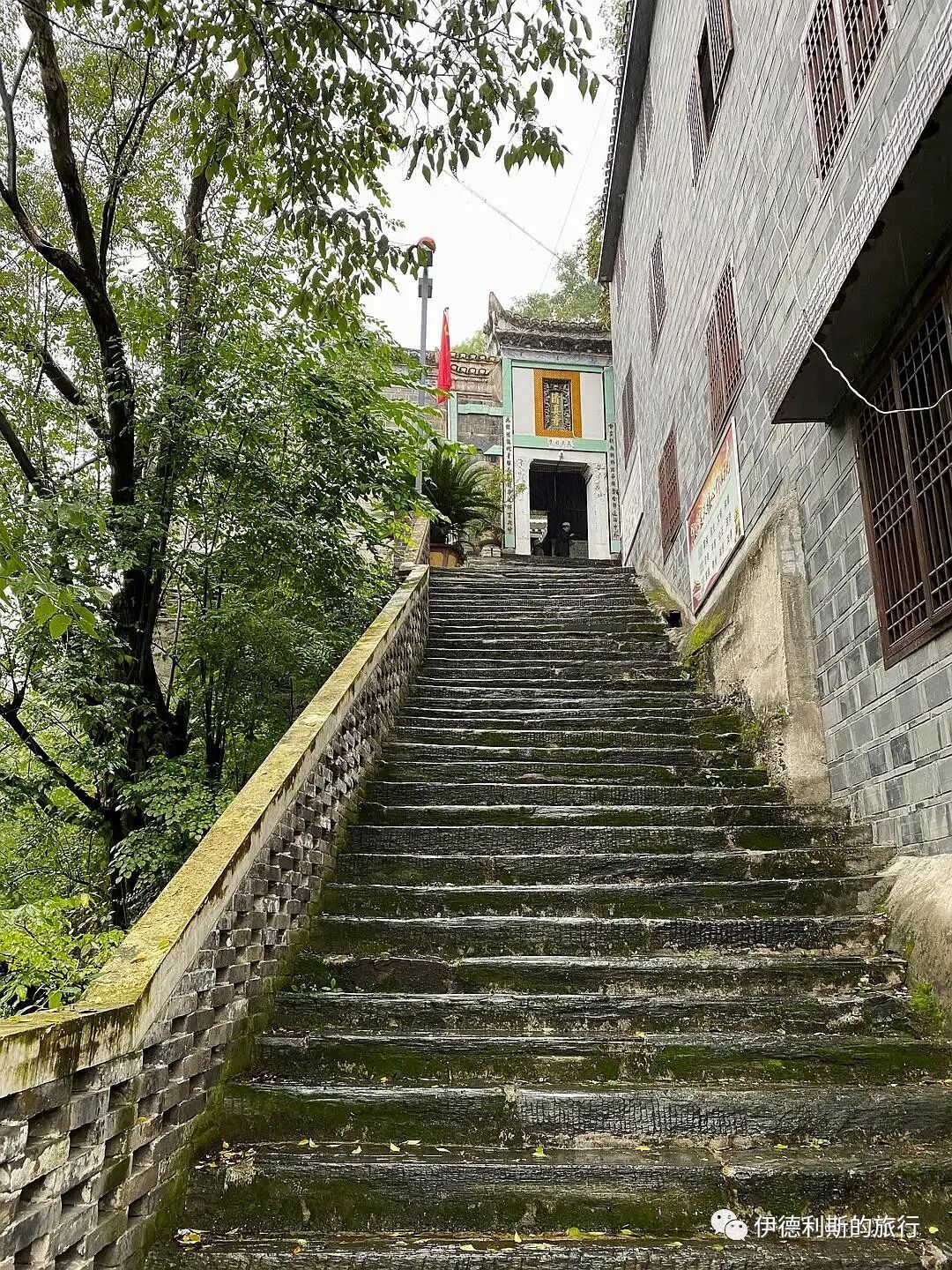
Shuhe Mosque is built on a steep cliff behind the ancient town, connected to the streets below by a hundred steps. The mosque was first built during the Jiajing period of the Ming Dynasty, expanded in 1915, severely damaged and occupied during the Cultural Revolution, and renovated again in 1994.
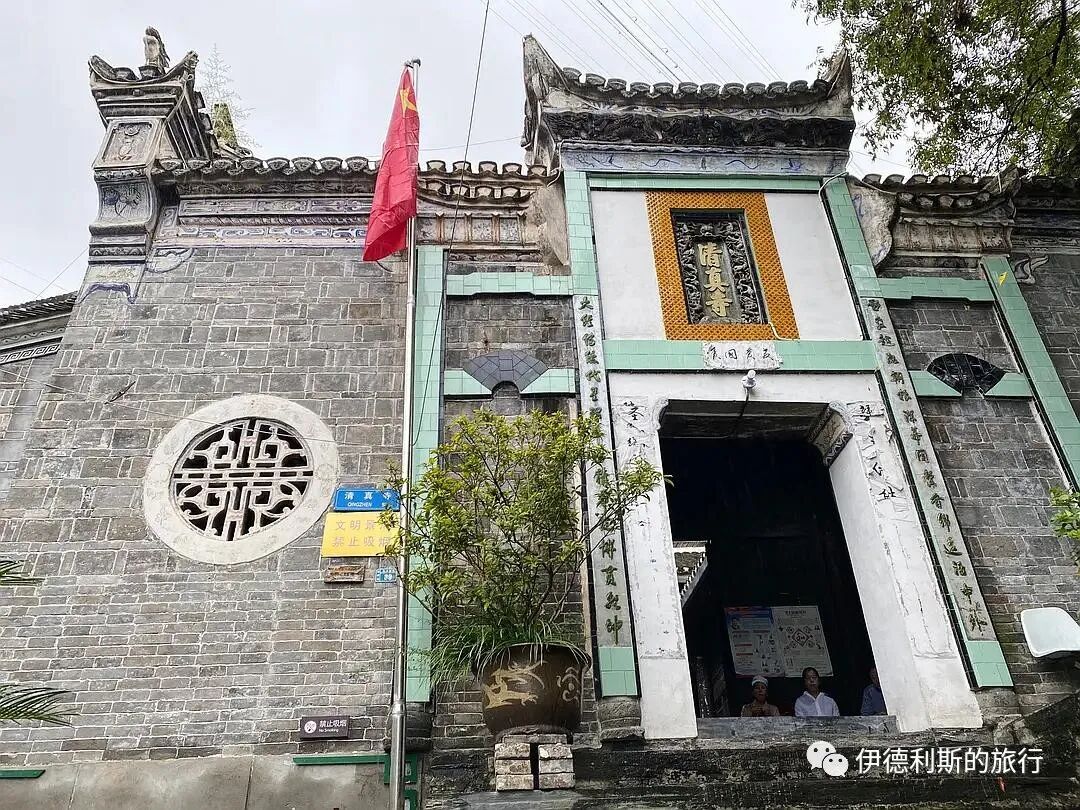
The current main entrance was added during the 1915 expansion, and the original main entrance has now become the back door.
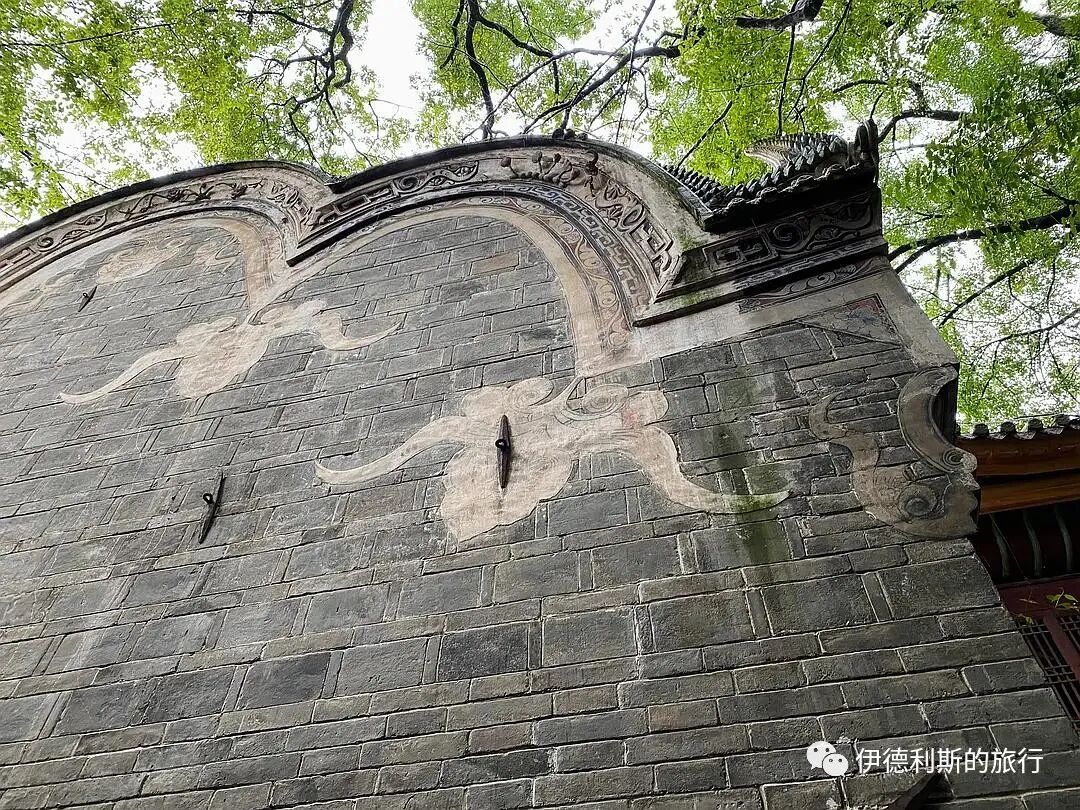
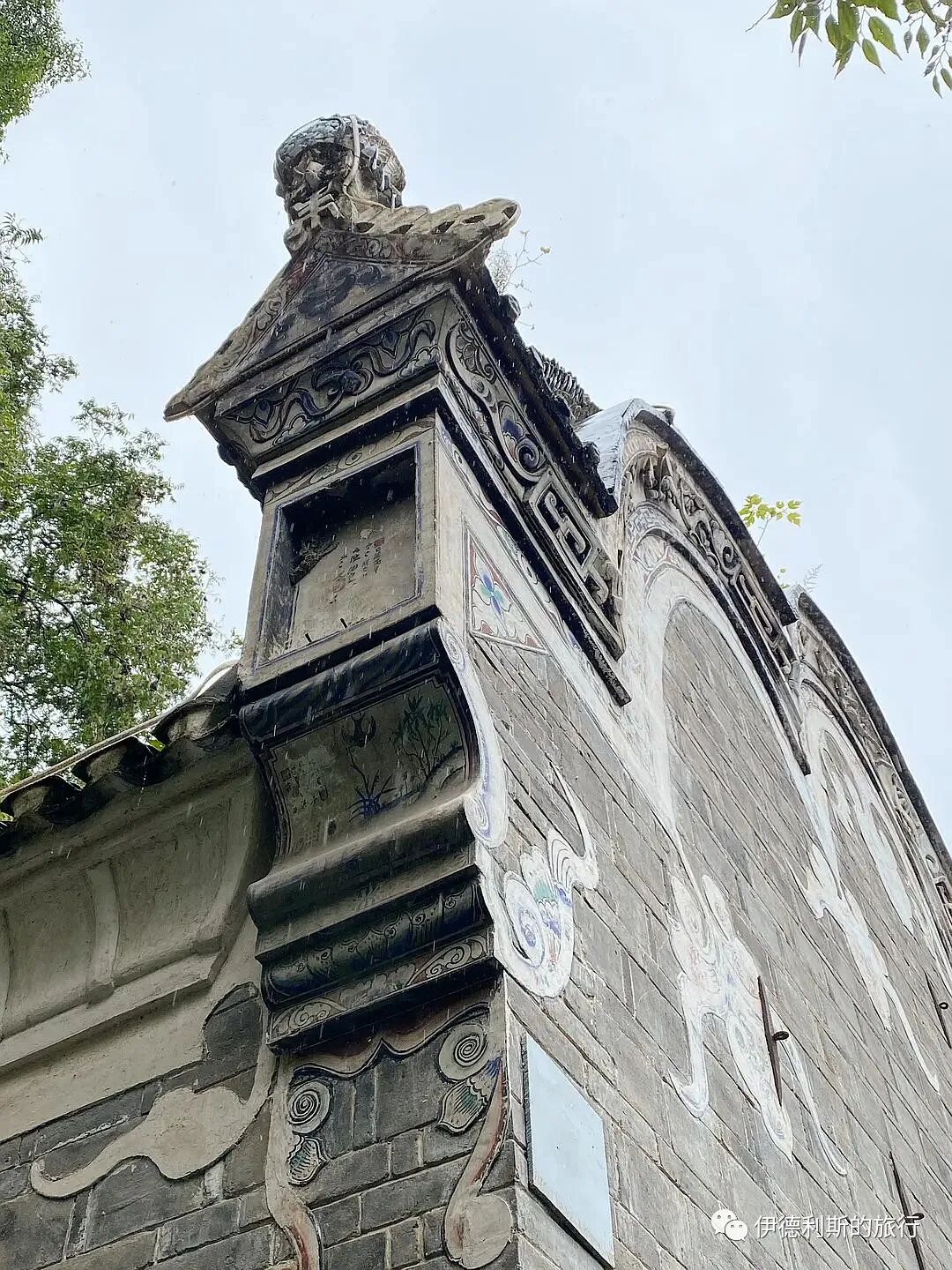
Shuhe Mosque features a 'cat-arched back' fire-blocking wall, which is very unique among traditional Chinese mosques. Some traditional mosques in southern China are built with fire-blocking walls, each with its own regional characteristics, such as the 'wok-ear' walls of the Guilin Old Village Mosque and the 'horse-head' walls of the Jingjue Mosque in Nanjing. The 'cat-arched back' fire-blocking wall is a characteristic style of the Hunan region that extends into the Qinba mountain area. Currently, besides Shuhe Mosque, the only other traditional mosque I know of that has a 'cat-arched back' fire-blocking wall is the Jingziguan Mosque in Xichuan, Henan.
In addition, there are ink paintings and inscriptions on the brick carvings of the fire-blocking wall, which is also a very southern style.
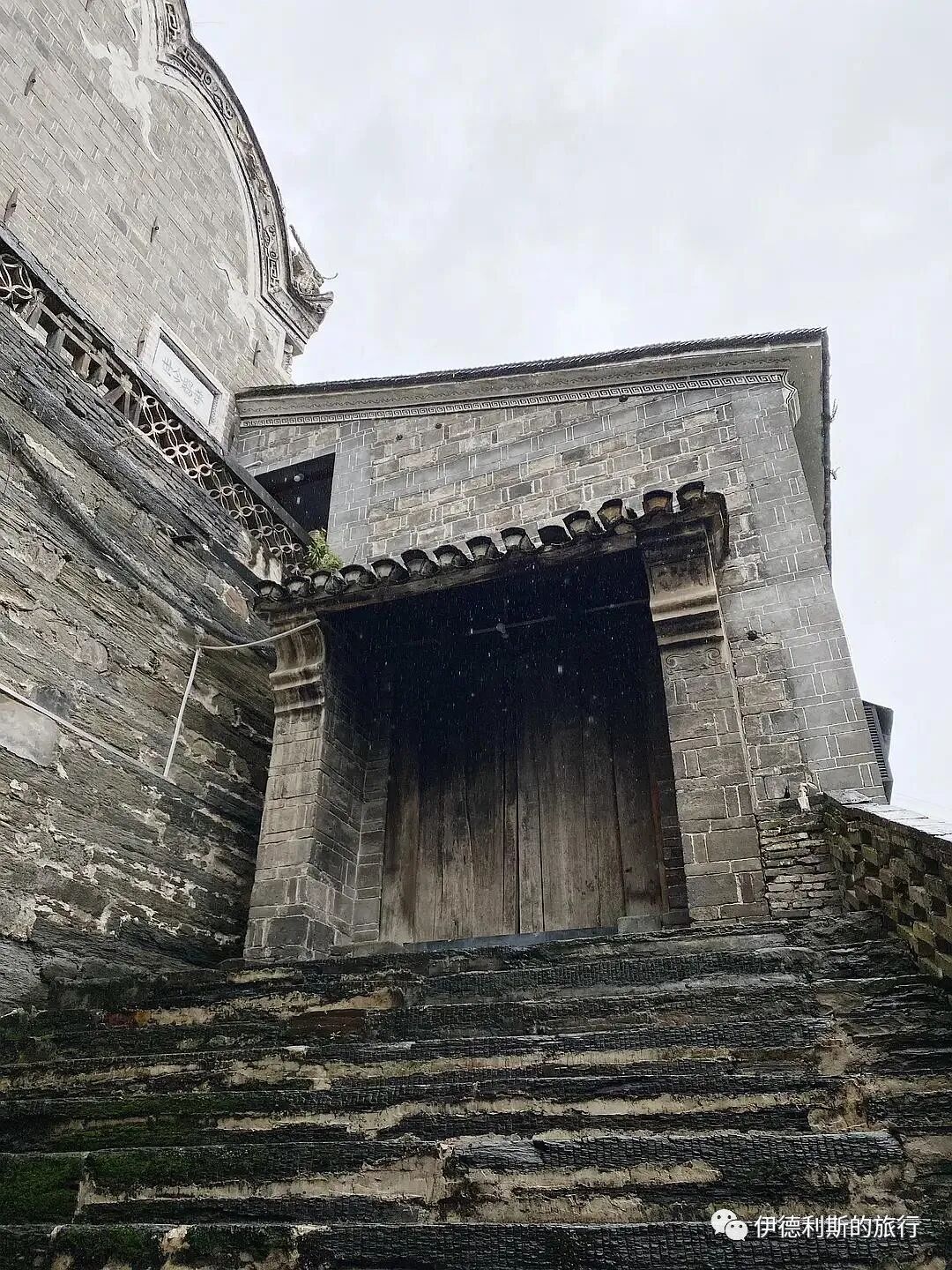
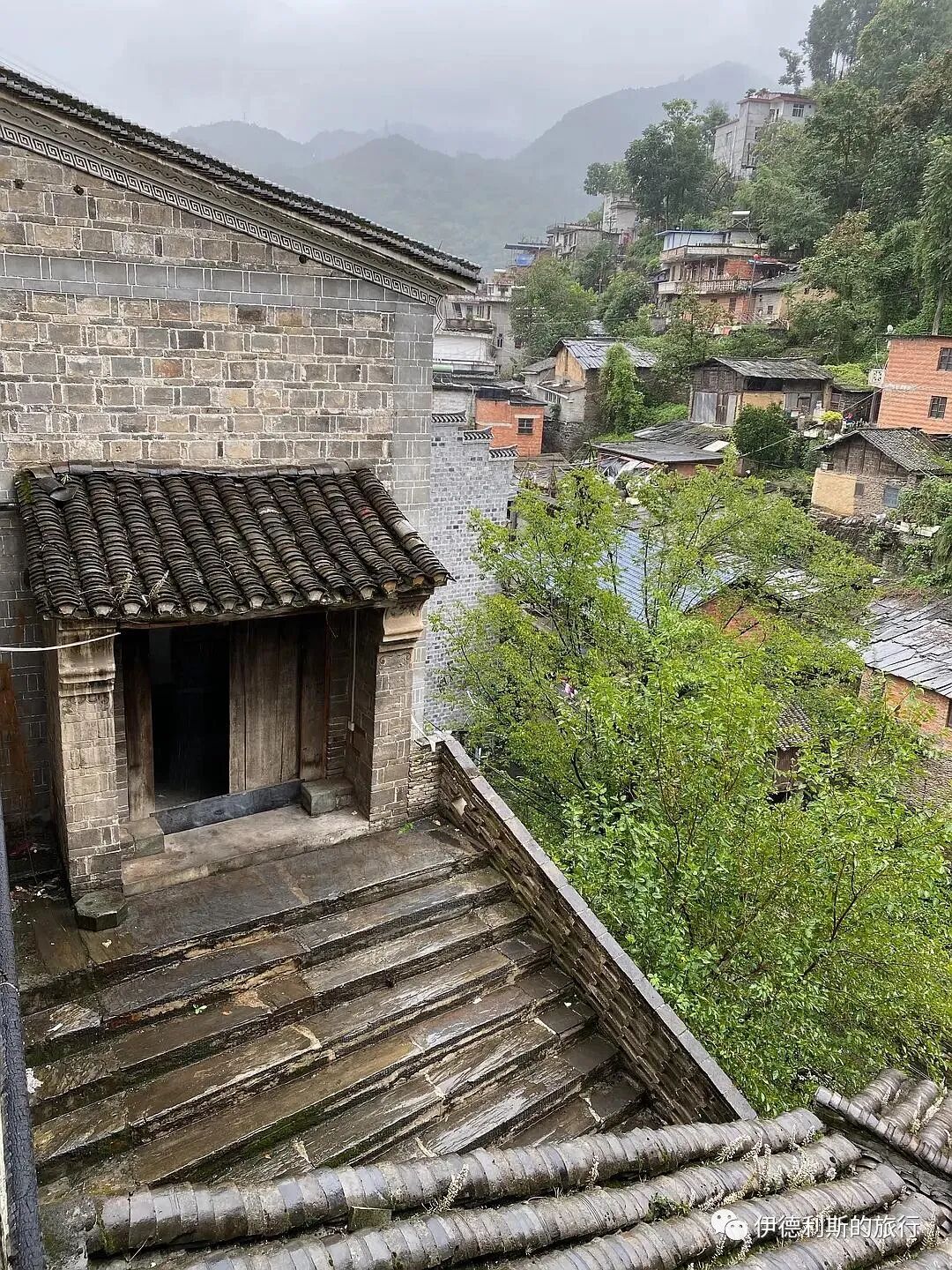
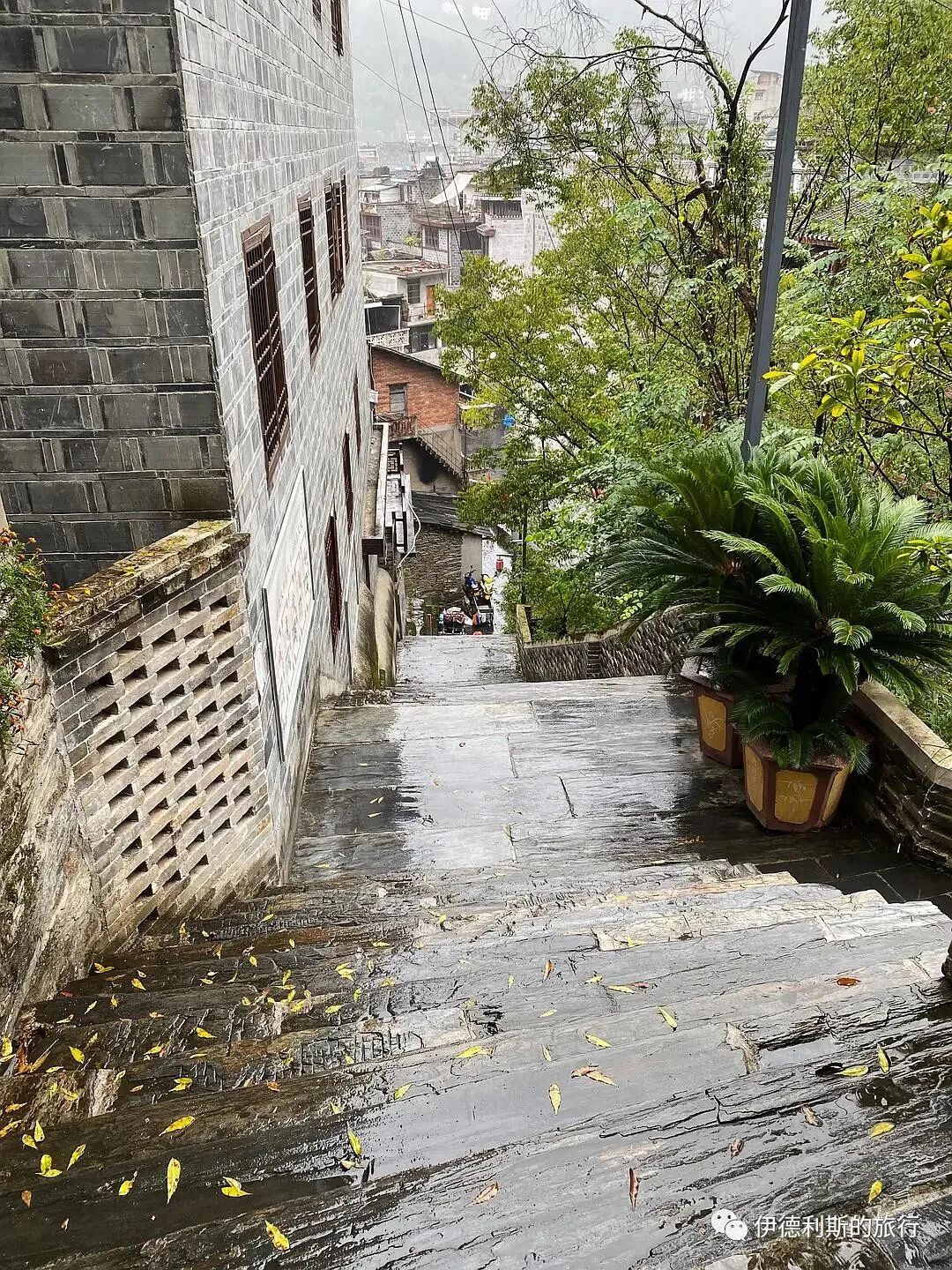
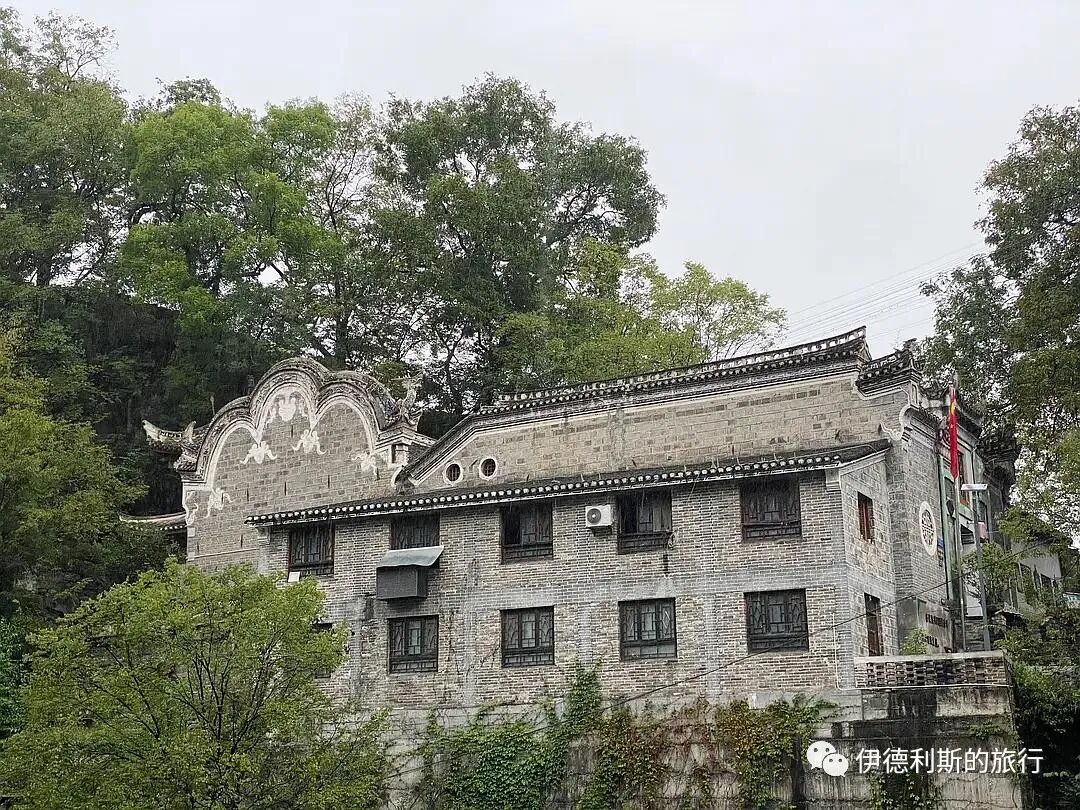
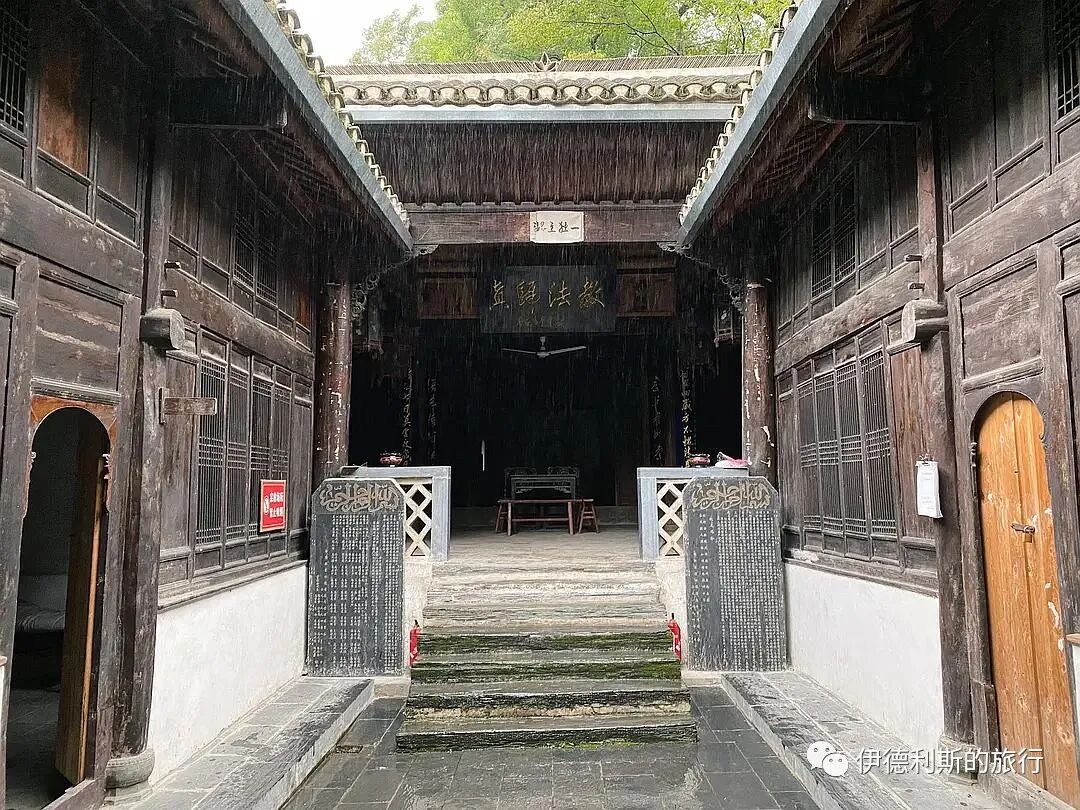
The mosque's courtyard is very small, with a stone-paved concave pool in the middle to collect rainwater from the eaves, which is very suitable for the rainy climate. Behind it are the north and south wing rooms and the main prayer hall. The main hall follows the traditional three-section structure of Chinese mosques: a front porch, a central hall, and a rear kiln-style hall.
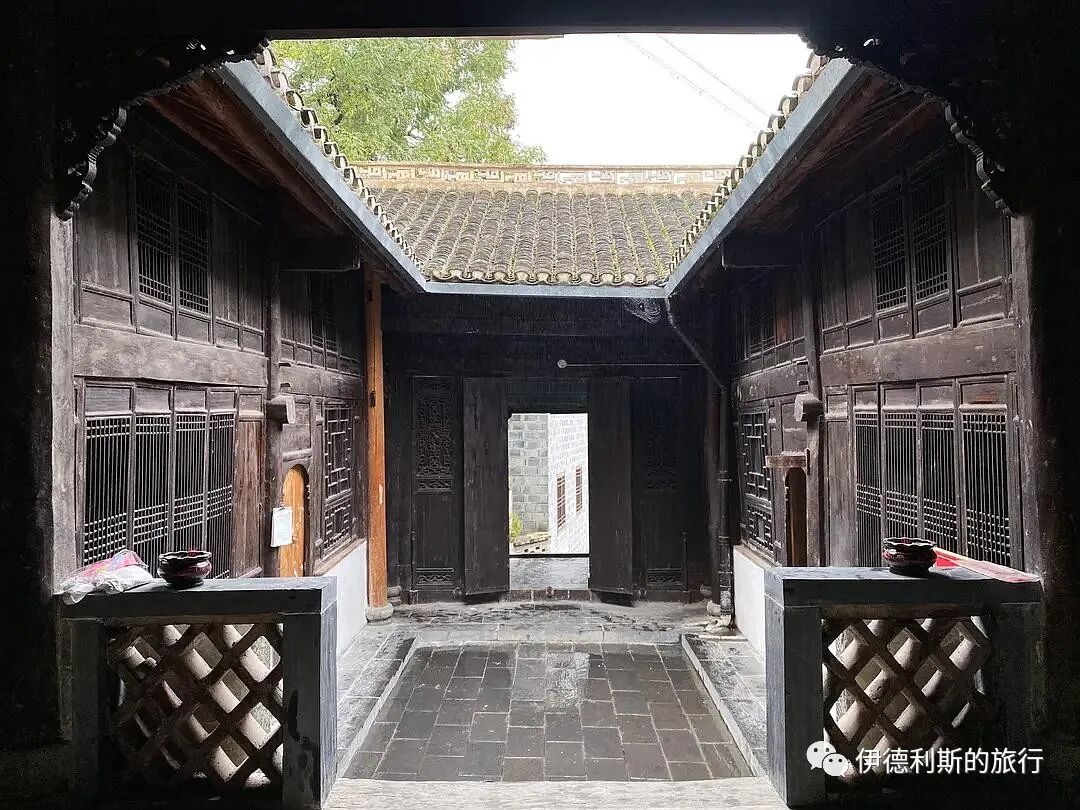
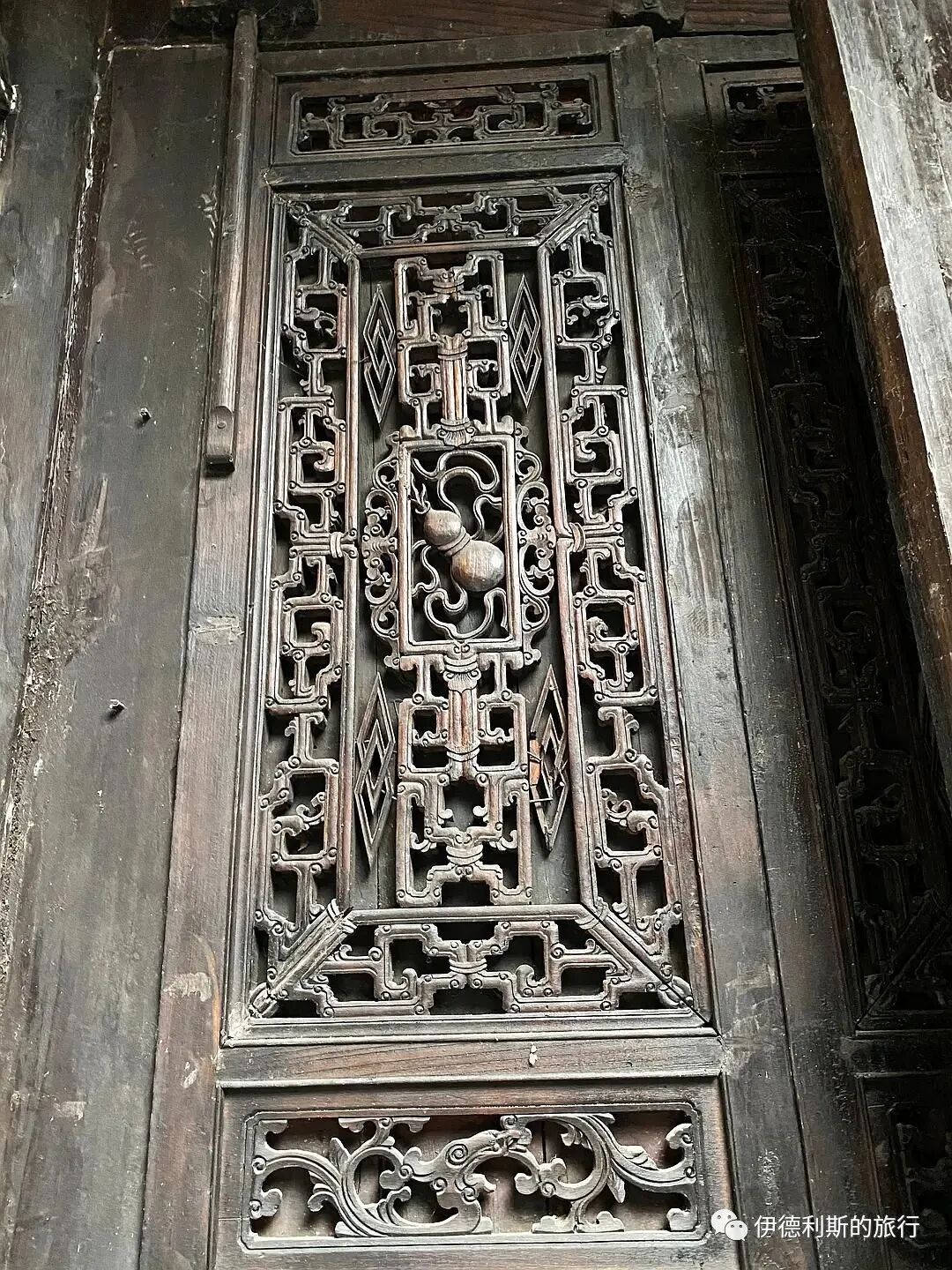
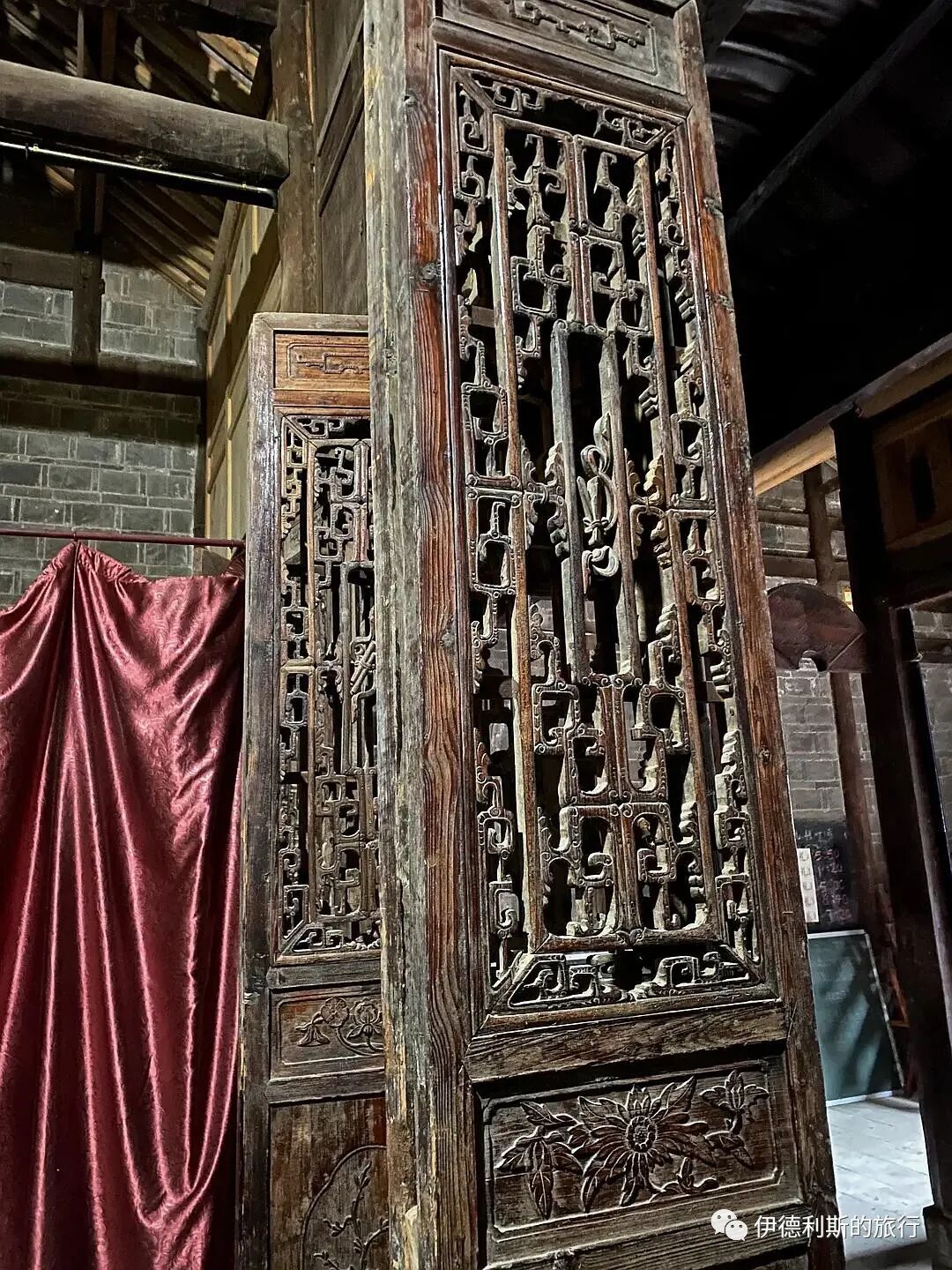
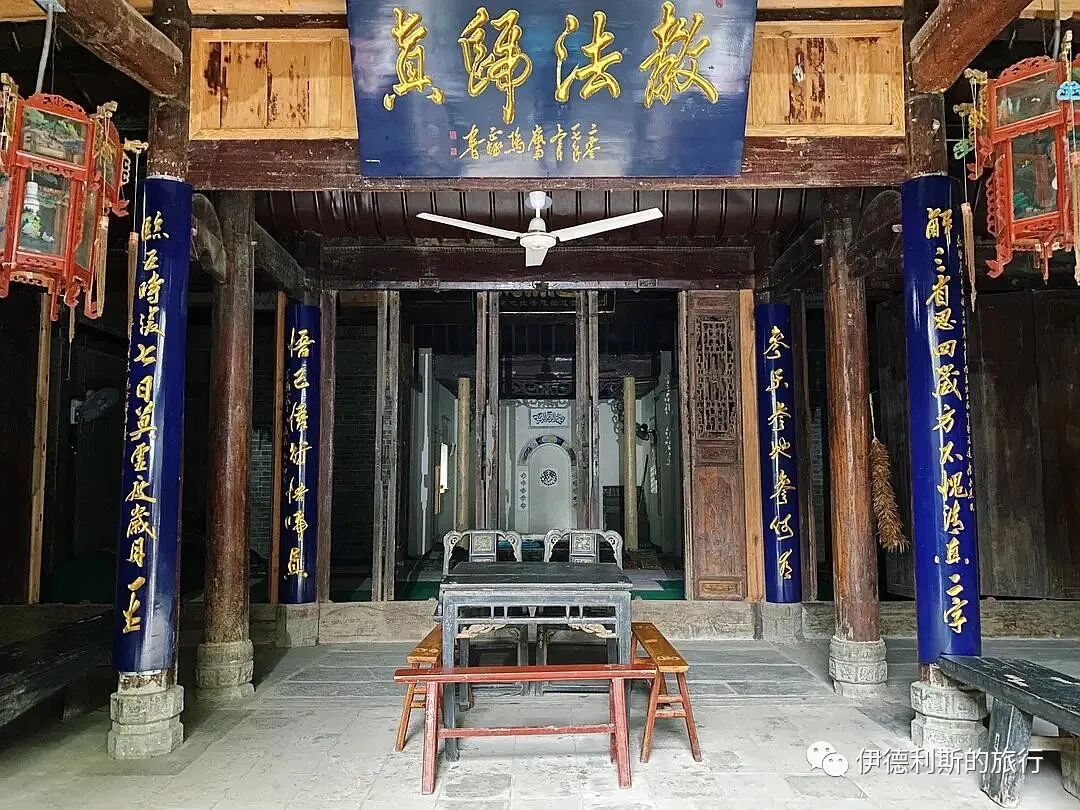
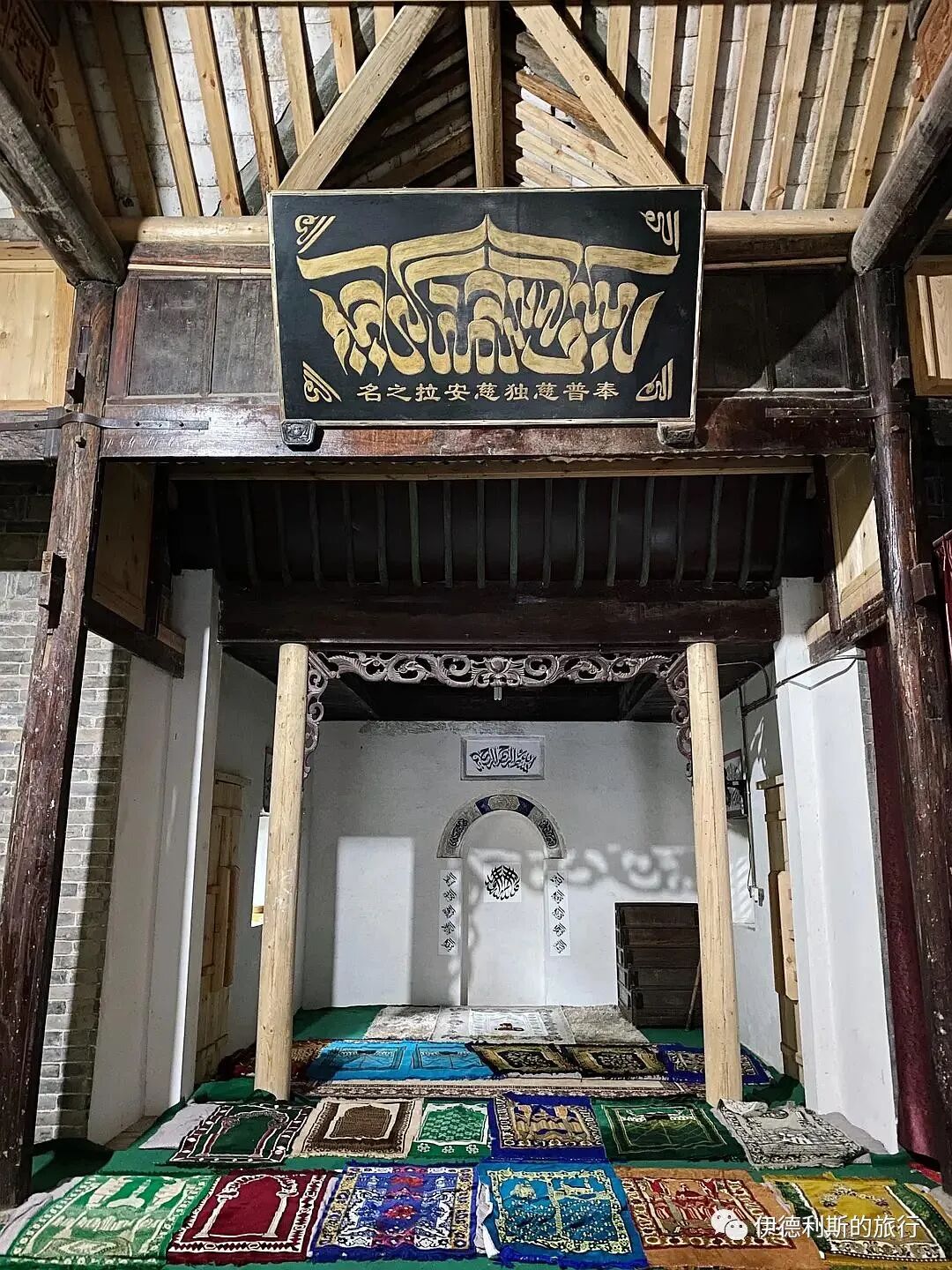
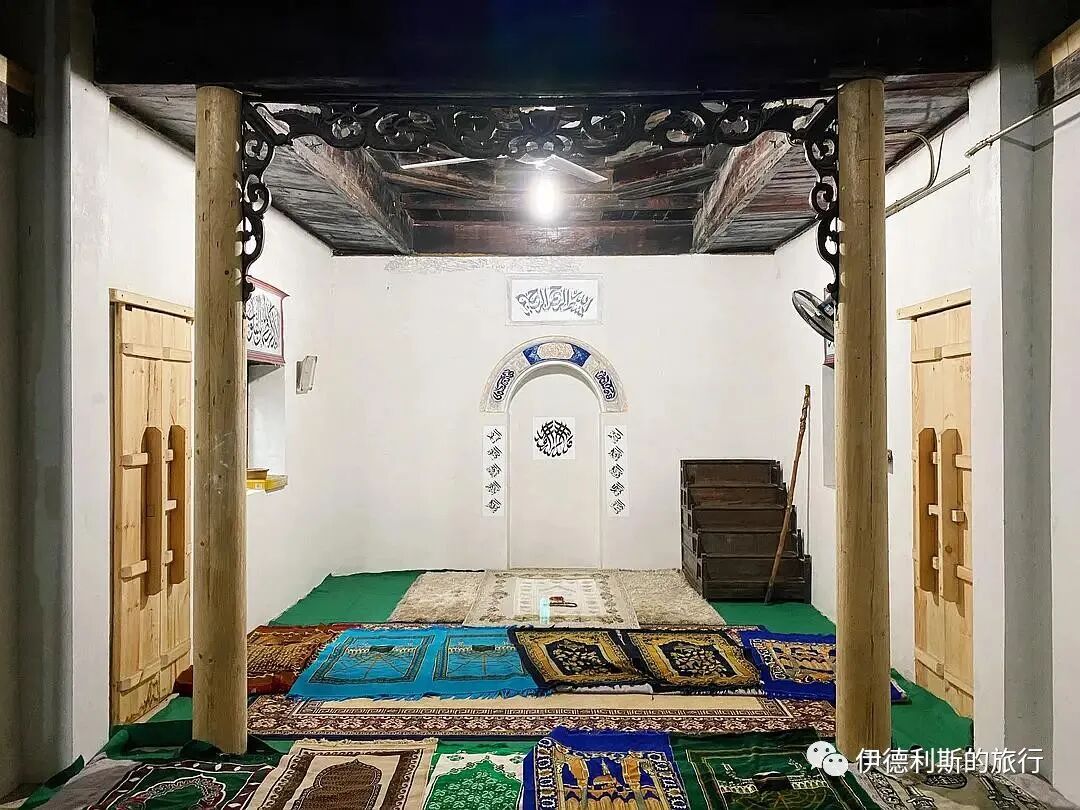
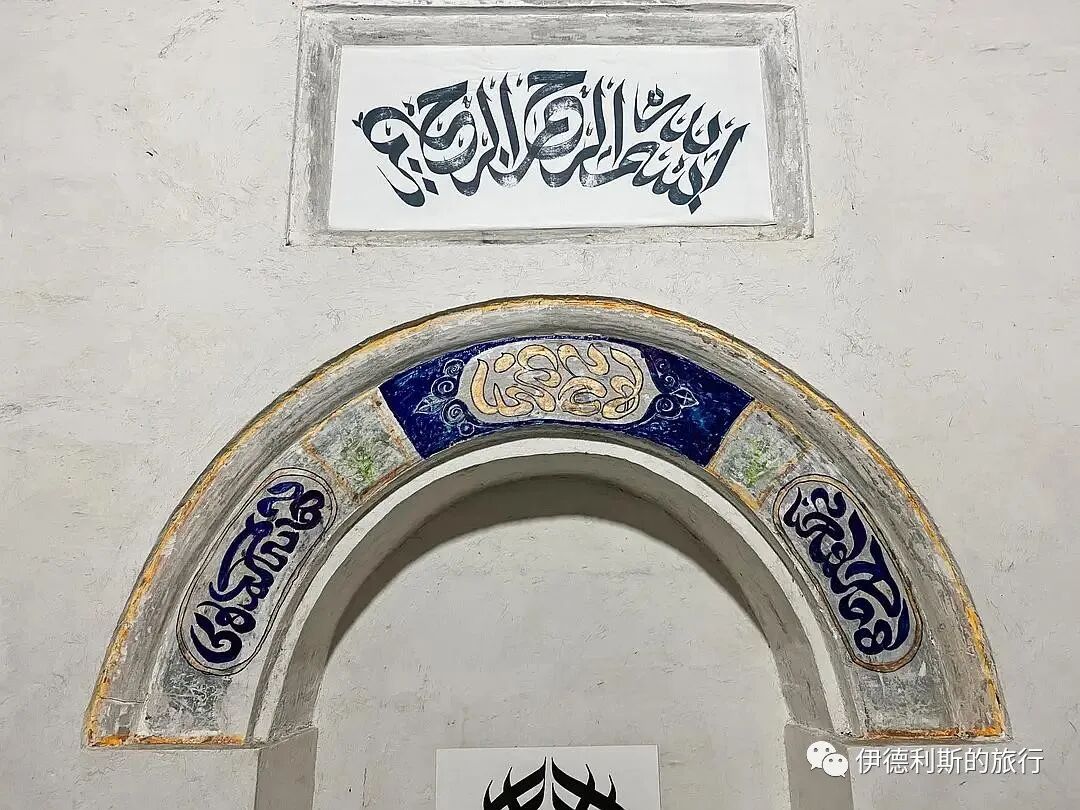
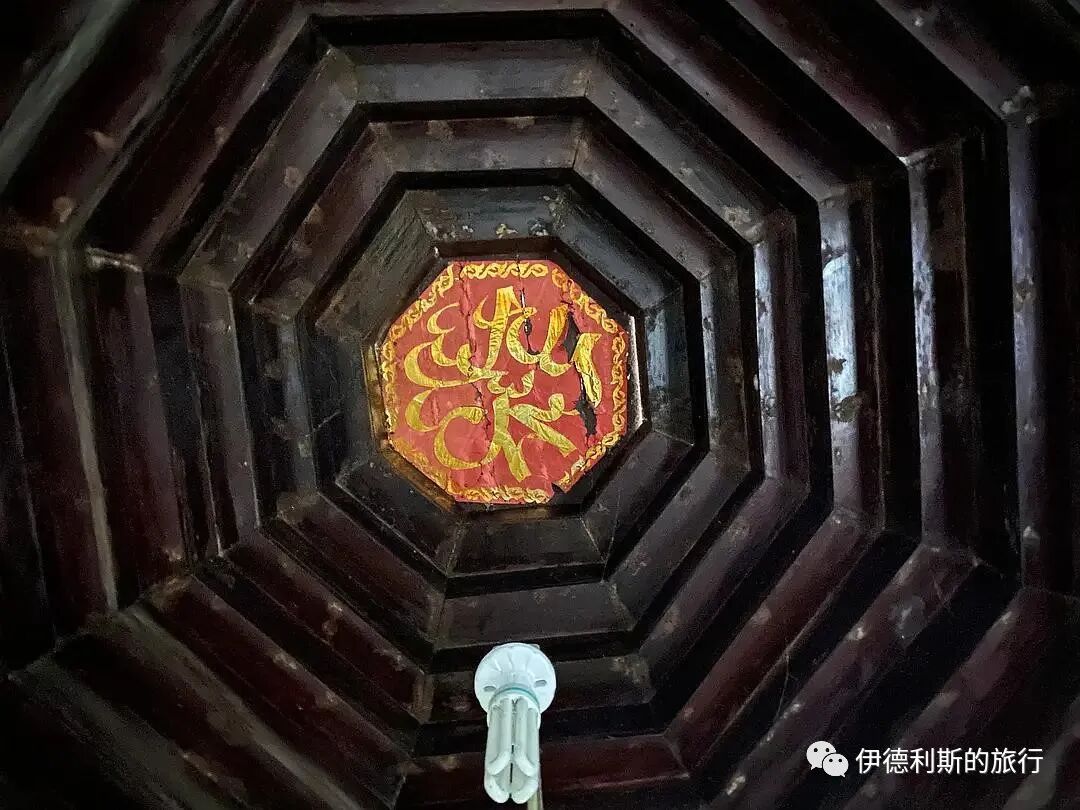
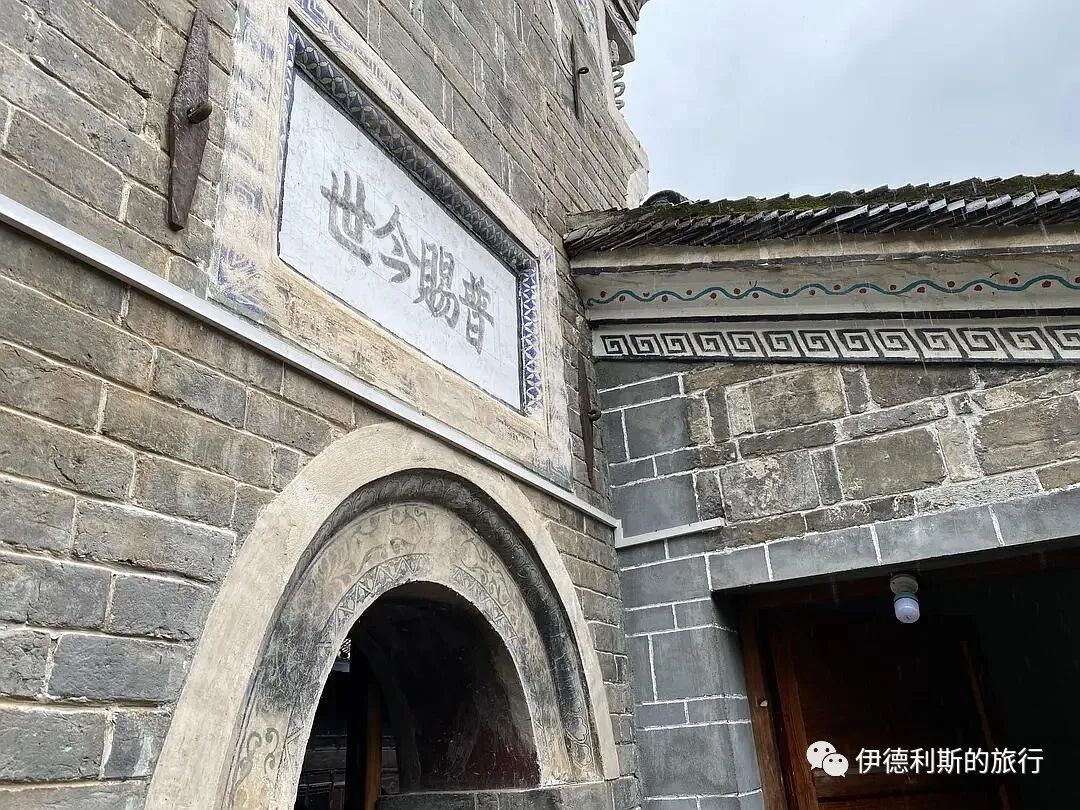
Most of the mosque's colorful paintings were destroyed during the Cultural Revolution, with only a portion preserved on the exterior of the rear kiln-style hall, where various traditional Chinese patterns can be seen. Additionally, there are ink paintings on the door frame of the main entrance. One of the mosque's beams bears an inscription from the renovation in the fourth year of the Republic of China (1915), and it still retains Arabic calligraphy from 100 years ago. The last photo shows the mosque right next to the cliff.
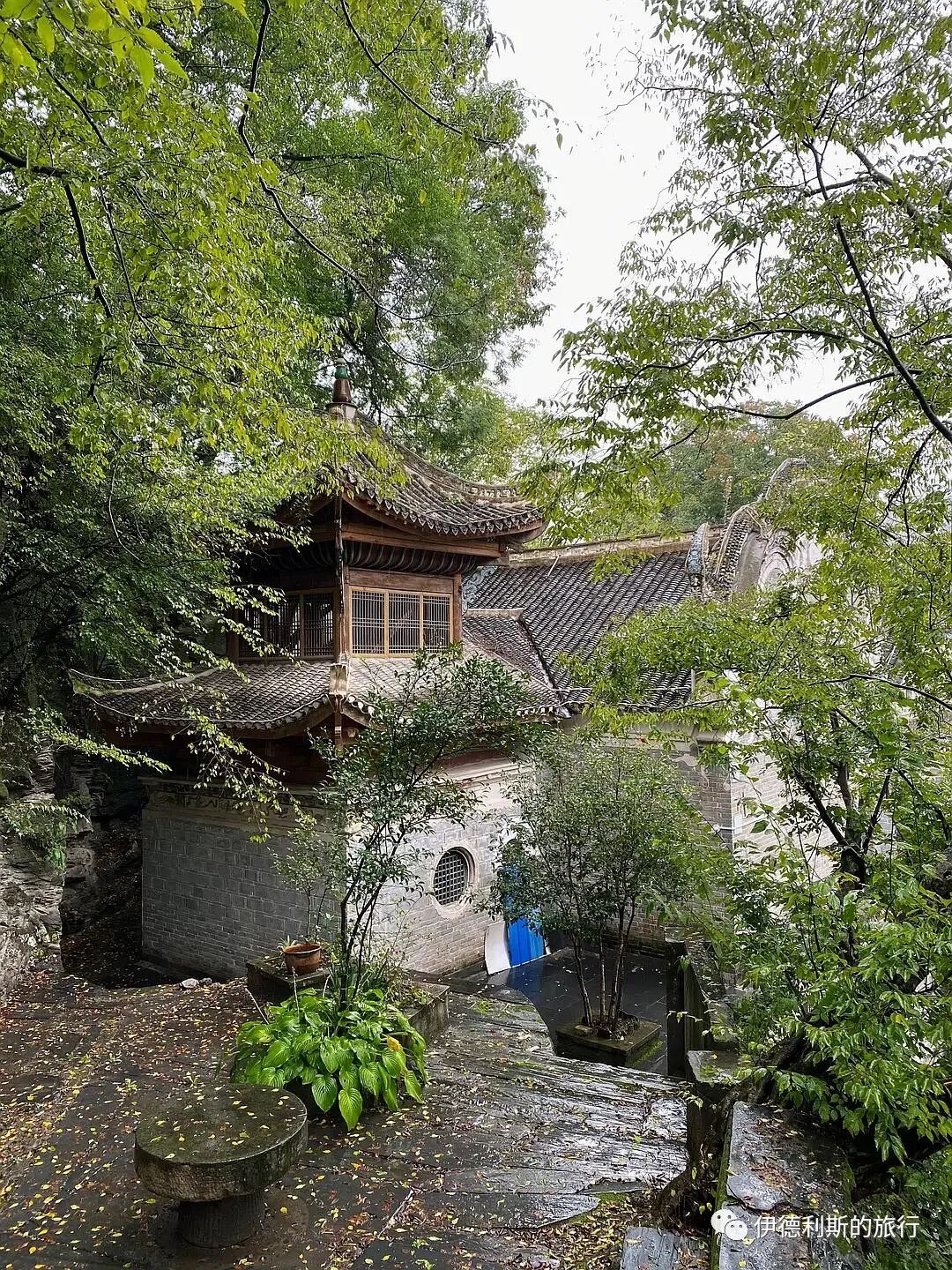
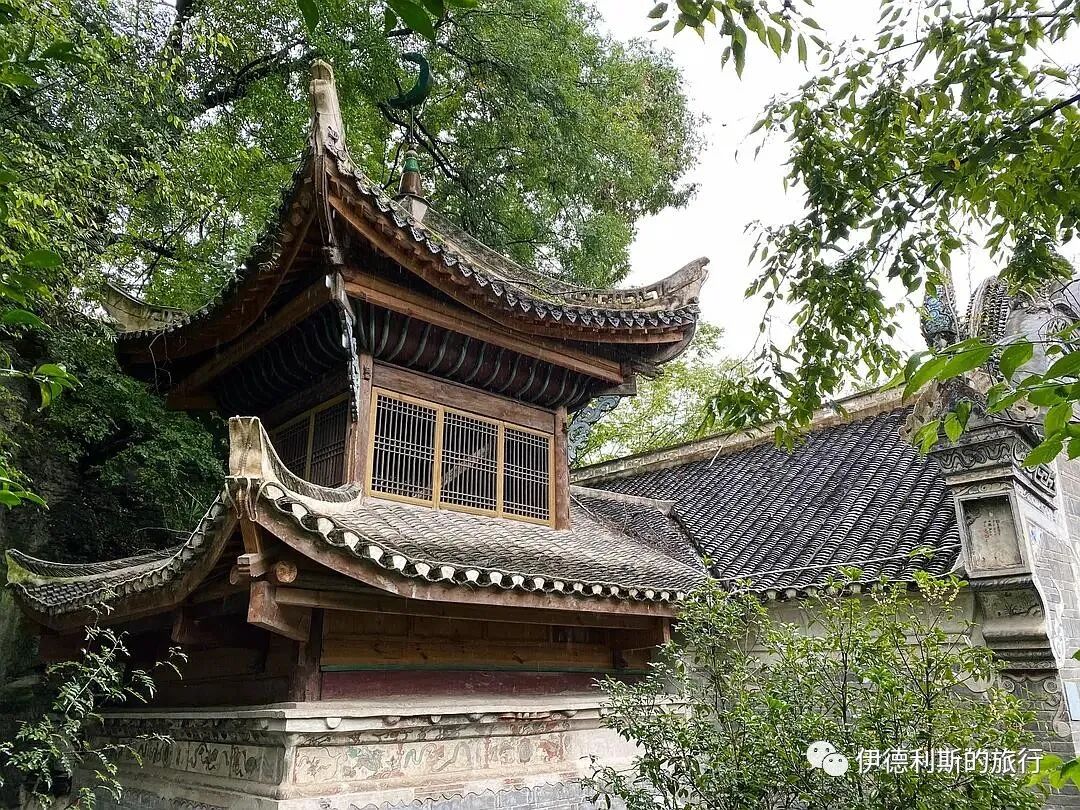
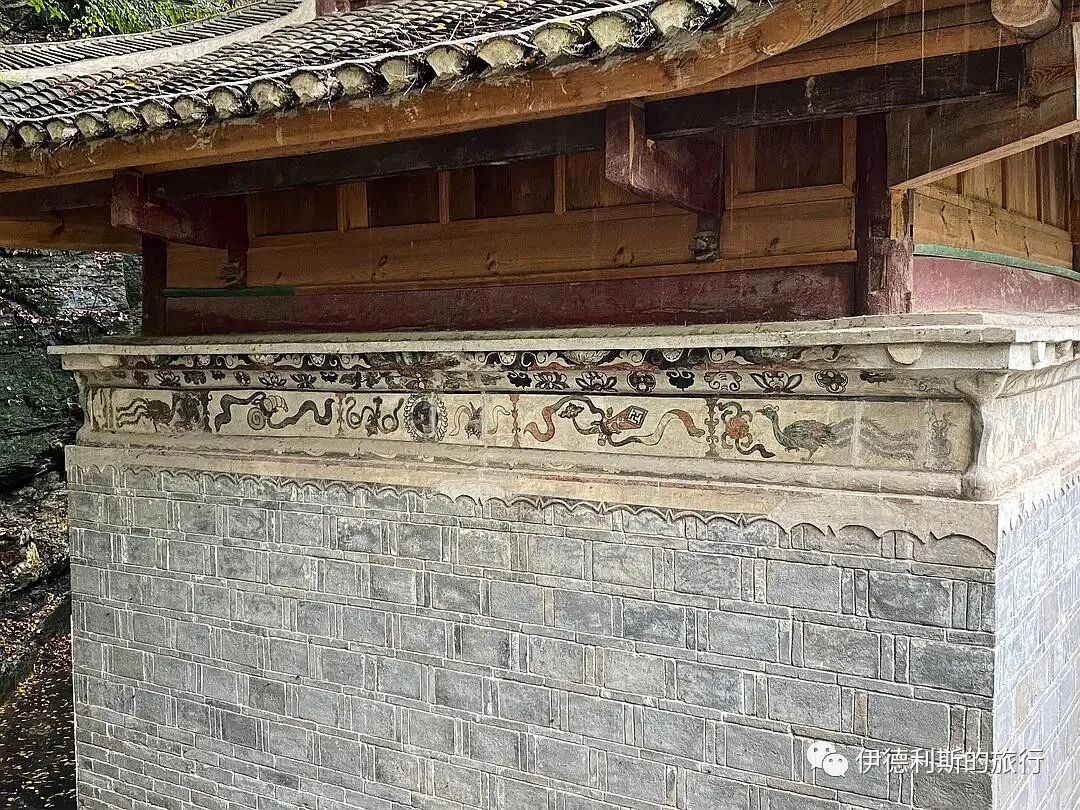
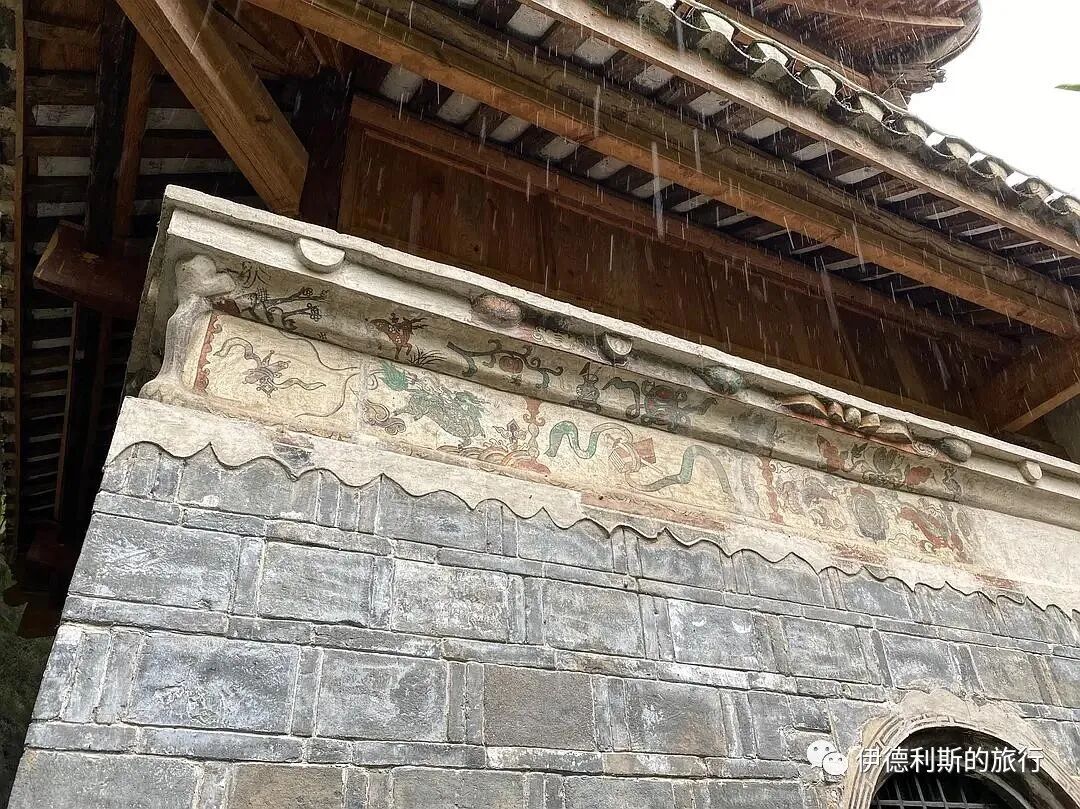
Traces of the 1915 expansion of the Ming Dynasty main hall of the mosque.
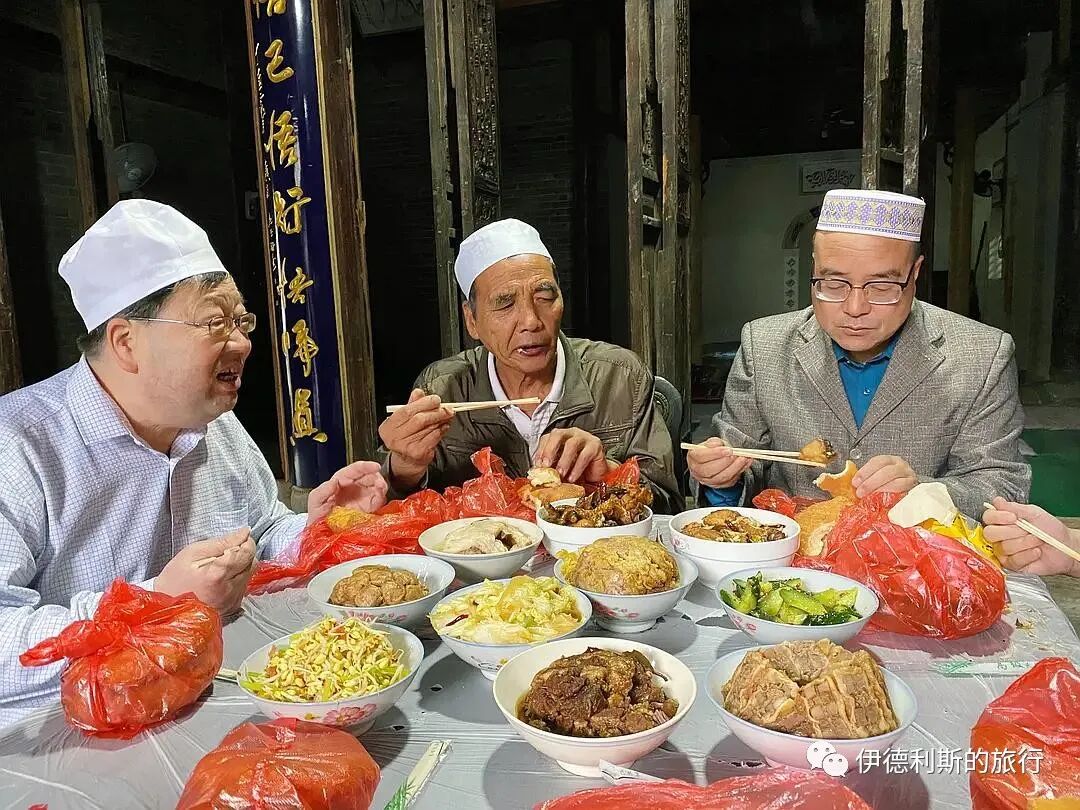
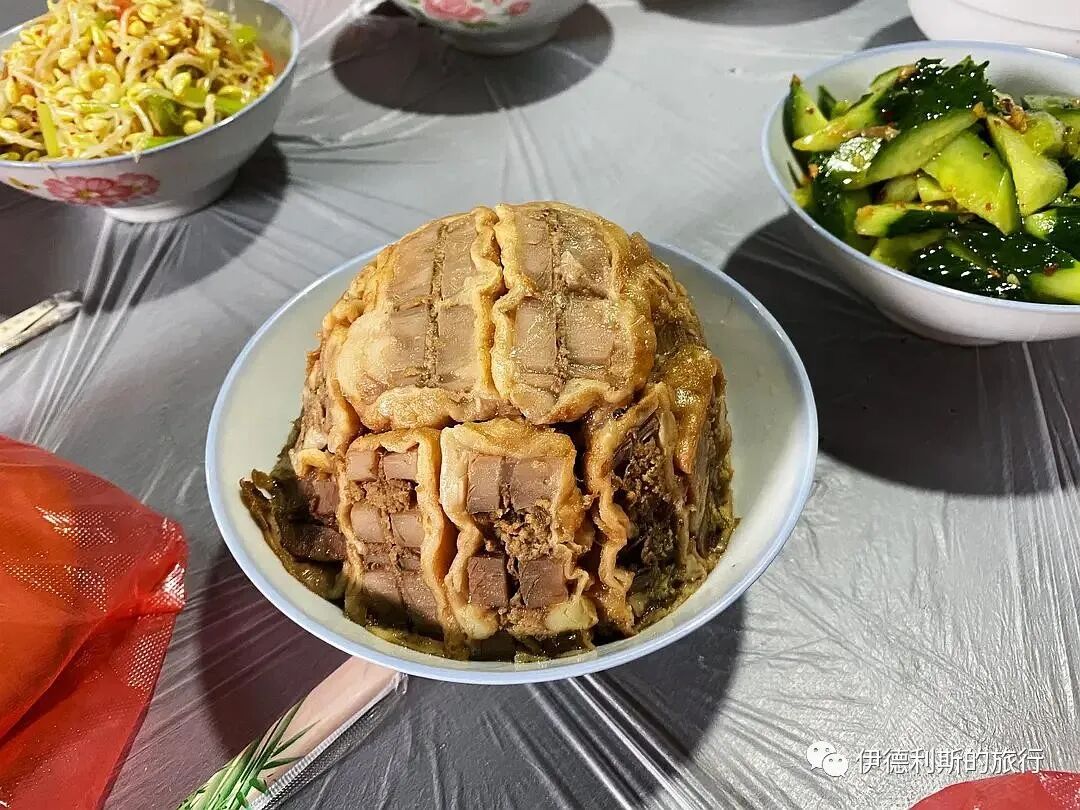
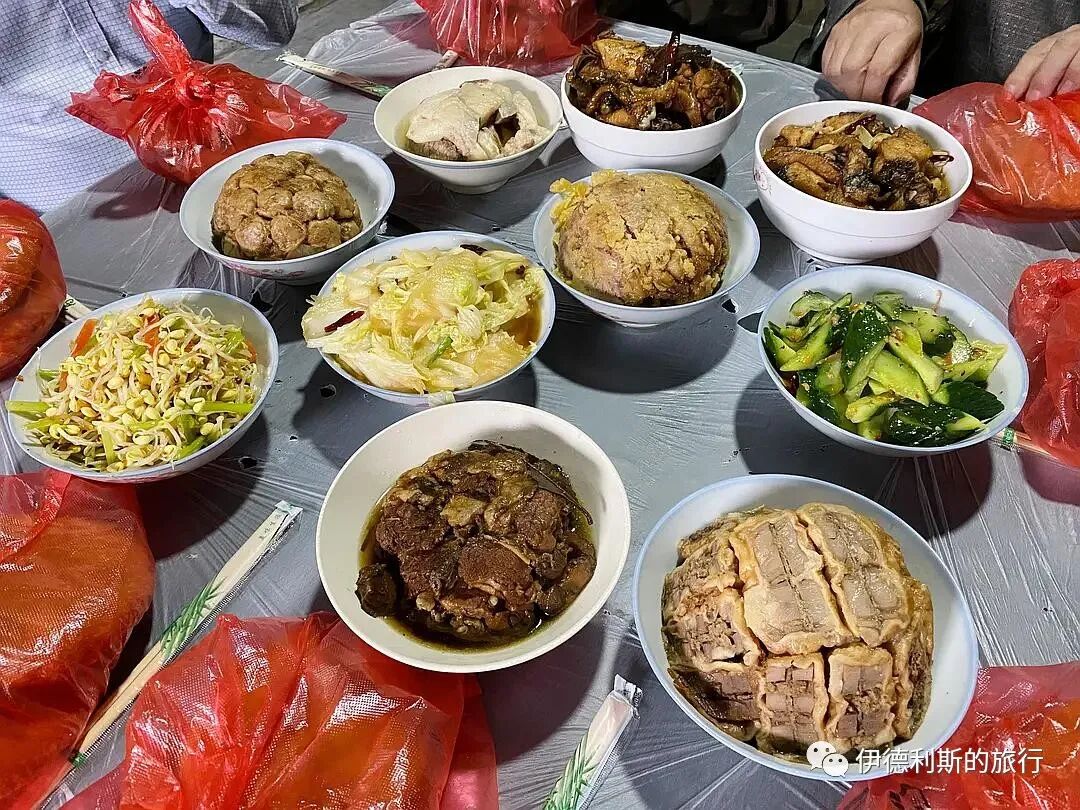
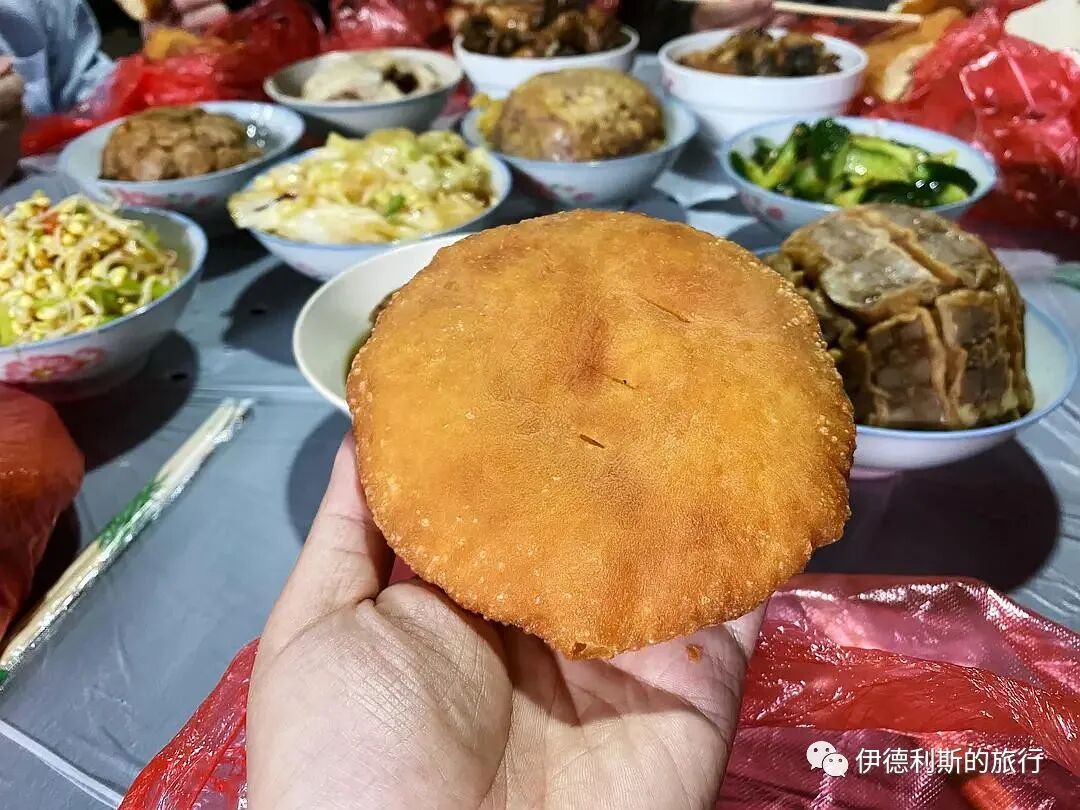
After performing Jumu'ah prayer at the mosque, we happened to catch a Shuhe-style 'ten-bowl' banquet. Zaynab enjoyed it very much, and in the end, we were even given a lot of youxiang. The ten bowls include lotus root boxes (lotus root stuffed with lamb, coated in egg, fried, and then steamed), lamb meatballs (coated in egg, fried, and then steamed), braised beef, steamed flour-coated meat (lamb coated in flour and steamed with sweet potato chunks), steamed white meat (fatty meat near the lamb cartilage, steamed), chicken (stir-fried until half-cooked and then steamed), fish chunks (grass carp chunks coated in flour, fried, and then steamed), and three vegetable dishes. The dishes at a Hui banquet are different from ordinary home-cooked stir-fries because they usually have to serve many people. Most of the food is prepared half-cooked and then steamed in a large pot, which ensures both efficiency and that the food stays warm.
The hotel we stayed in was converted from an old pawn shop.
The two relatively large halal restaurants in town.
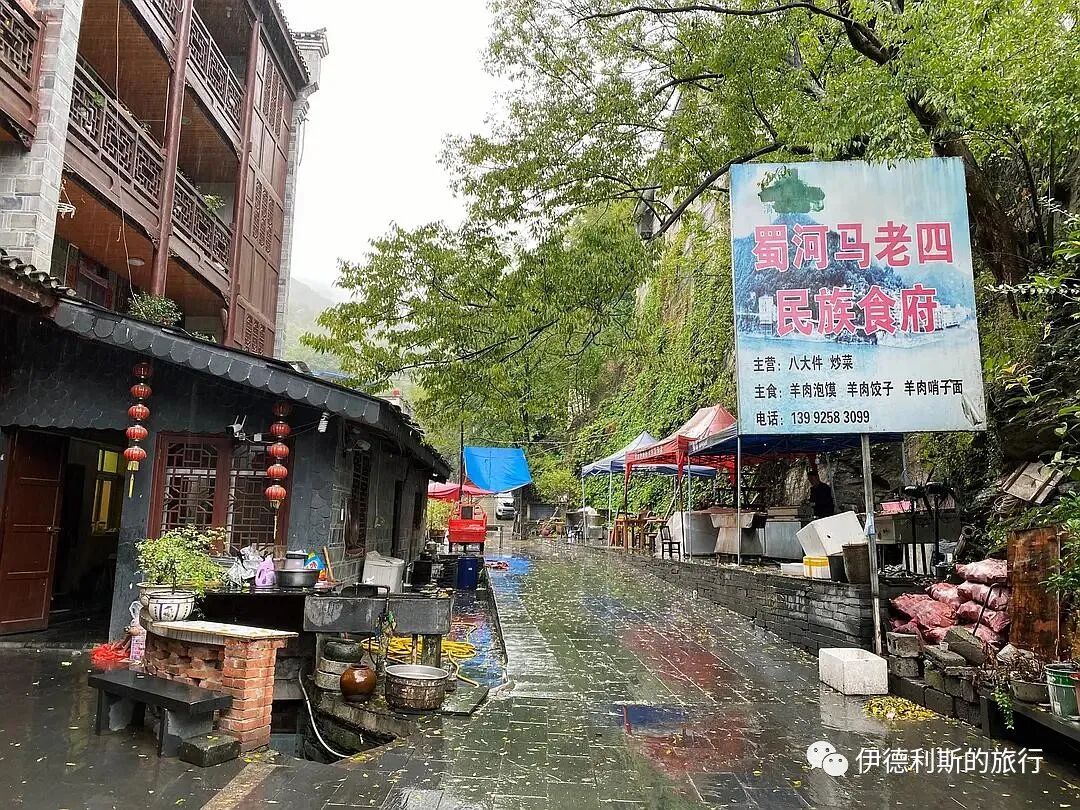
Strolling around the ancient town in the evening.
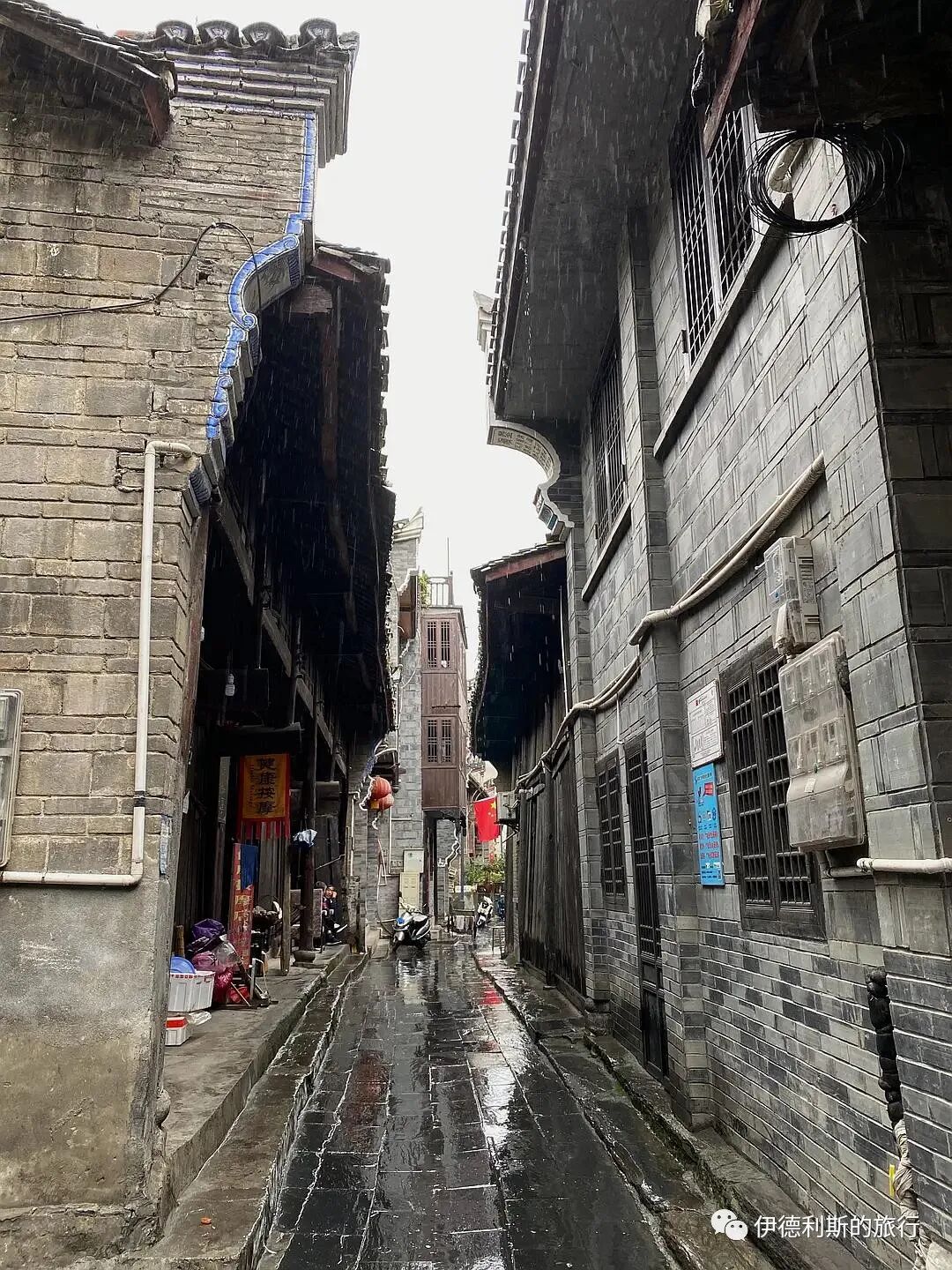
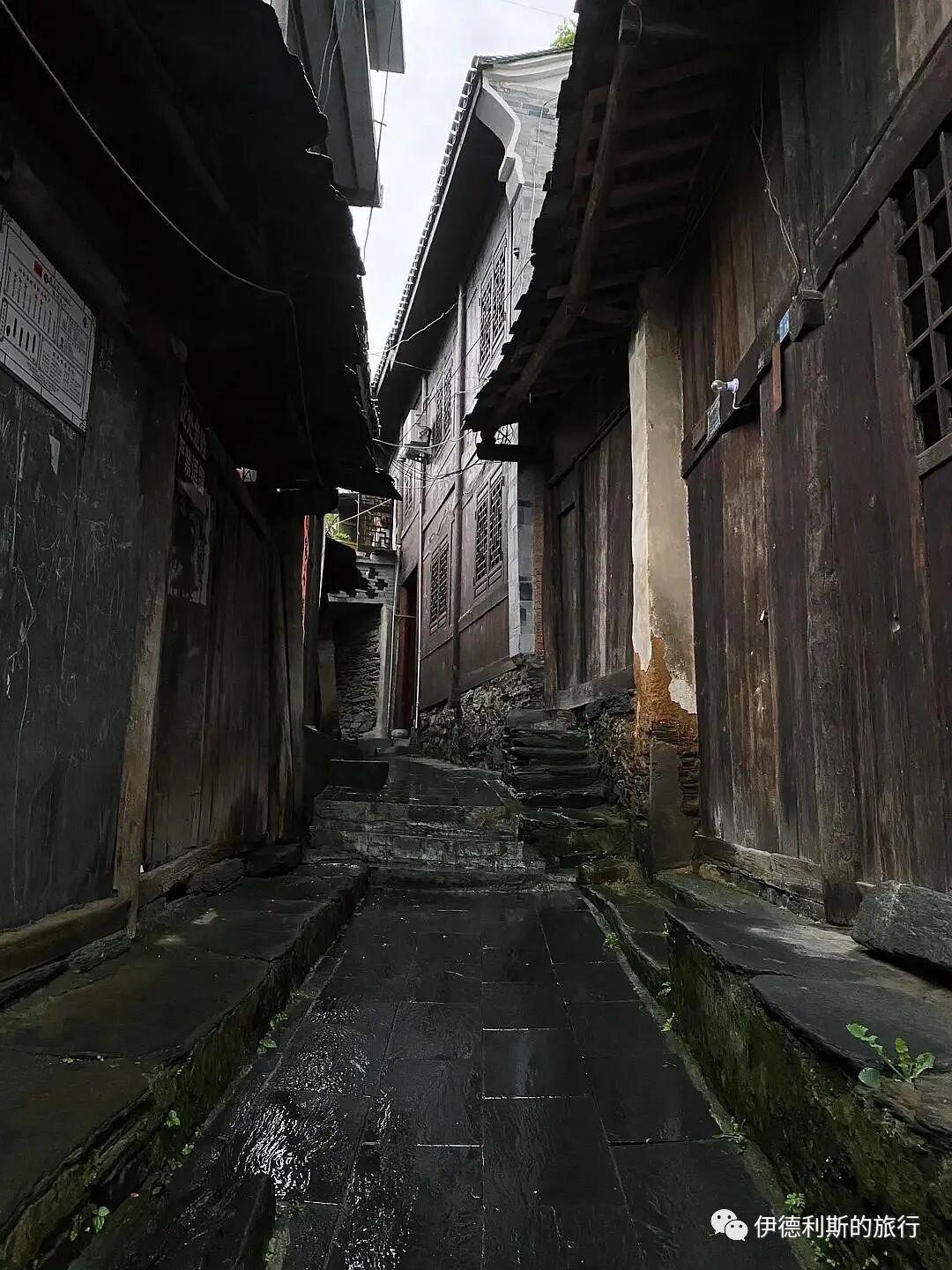
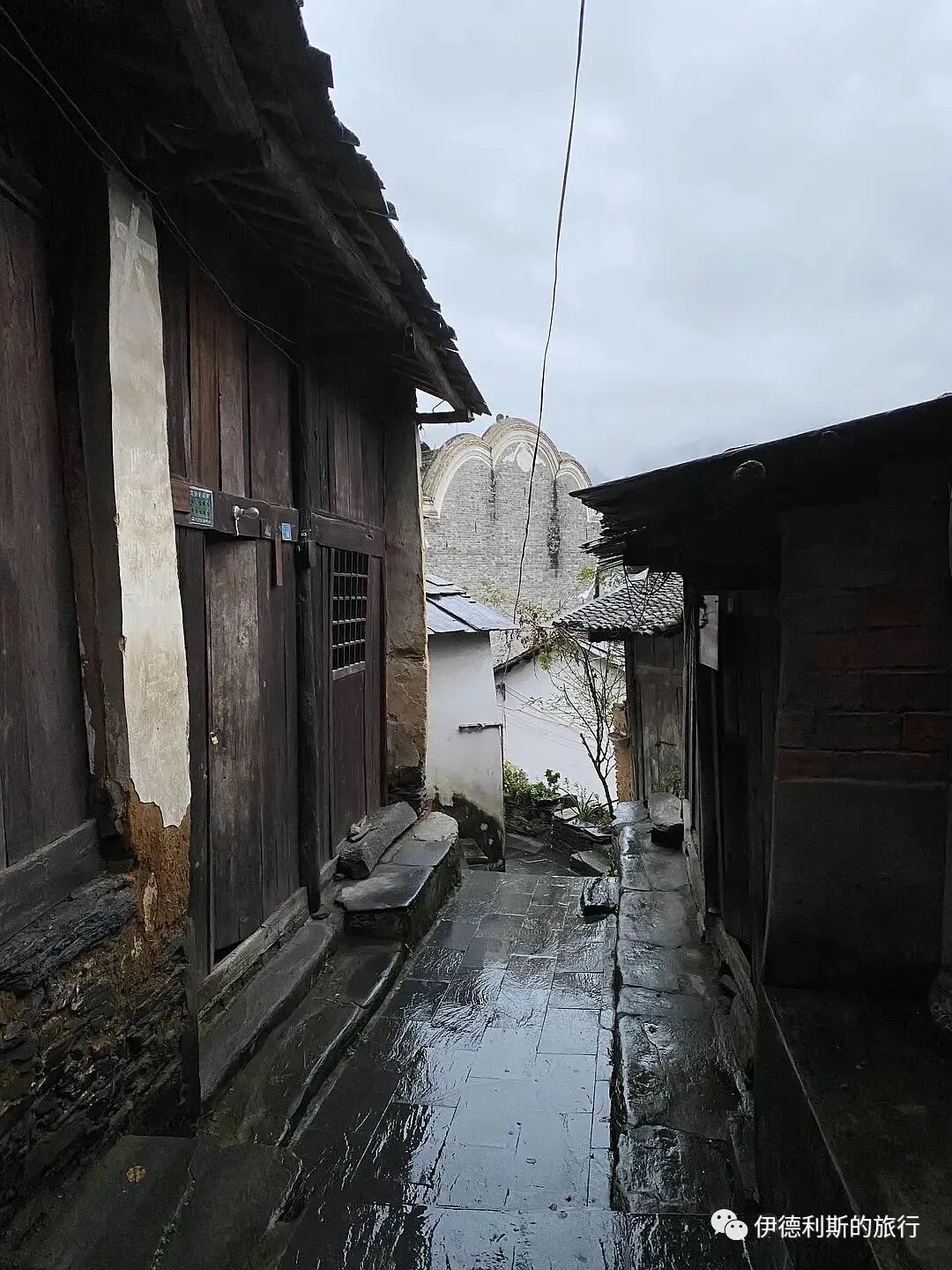
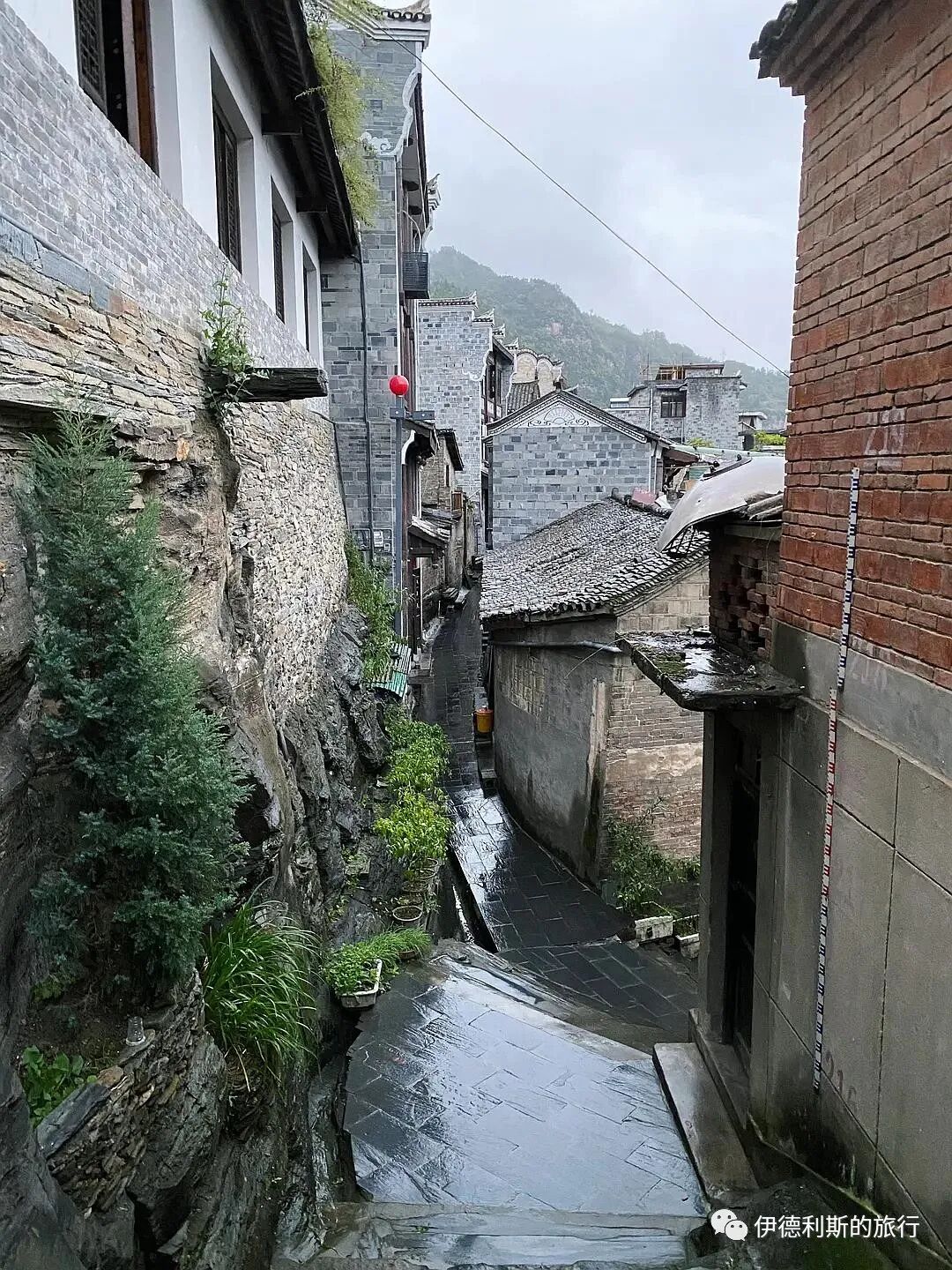
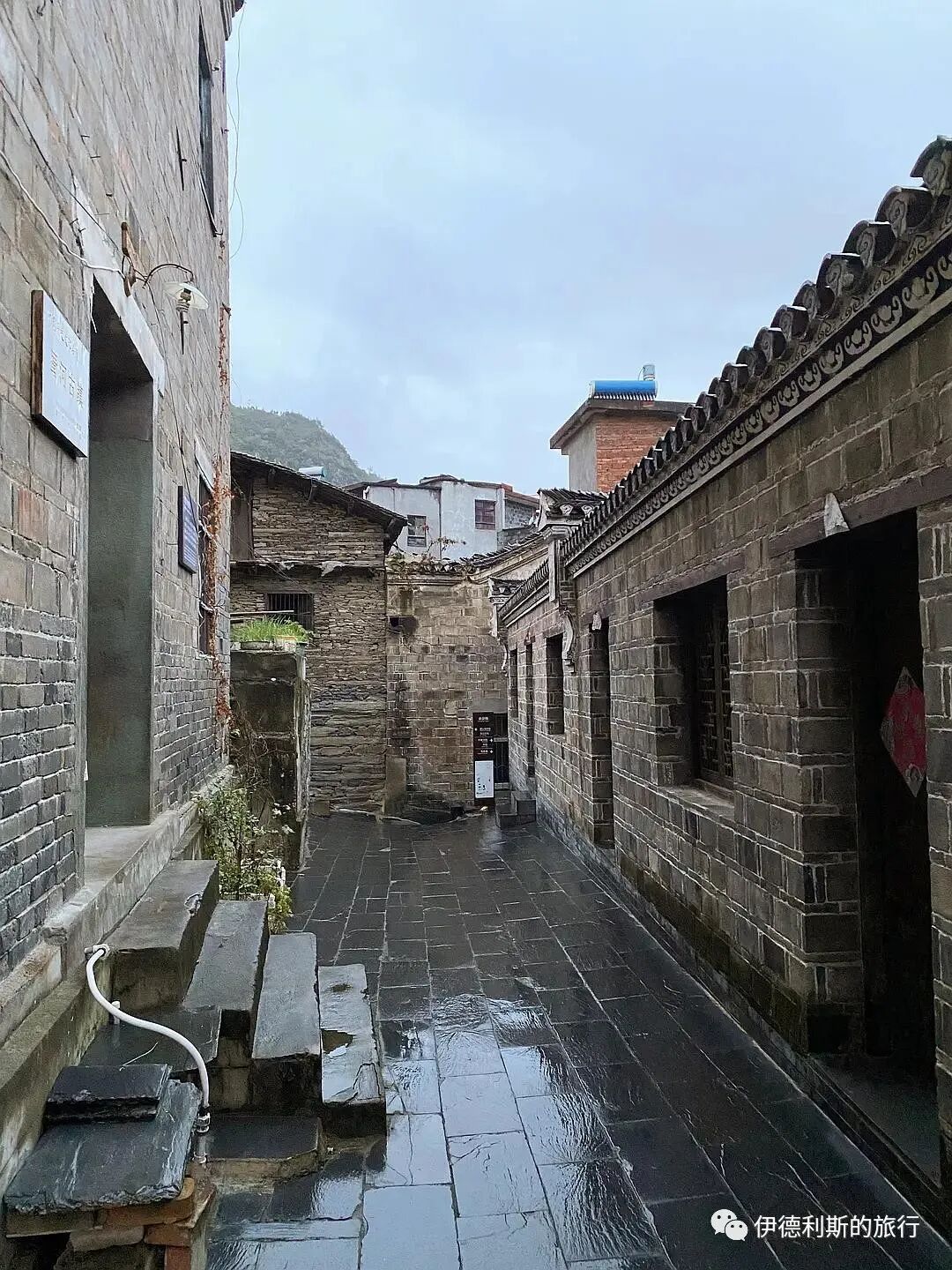
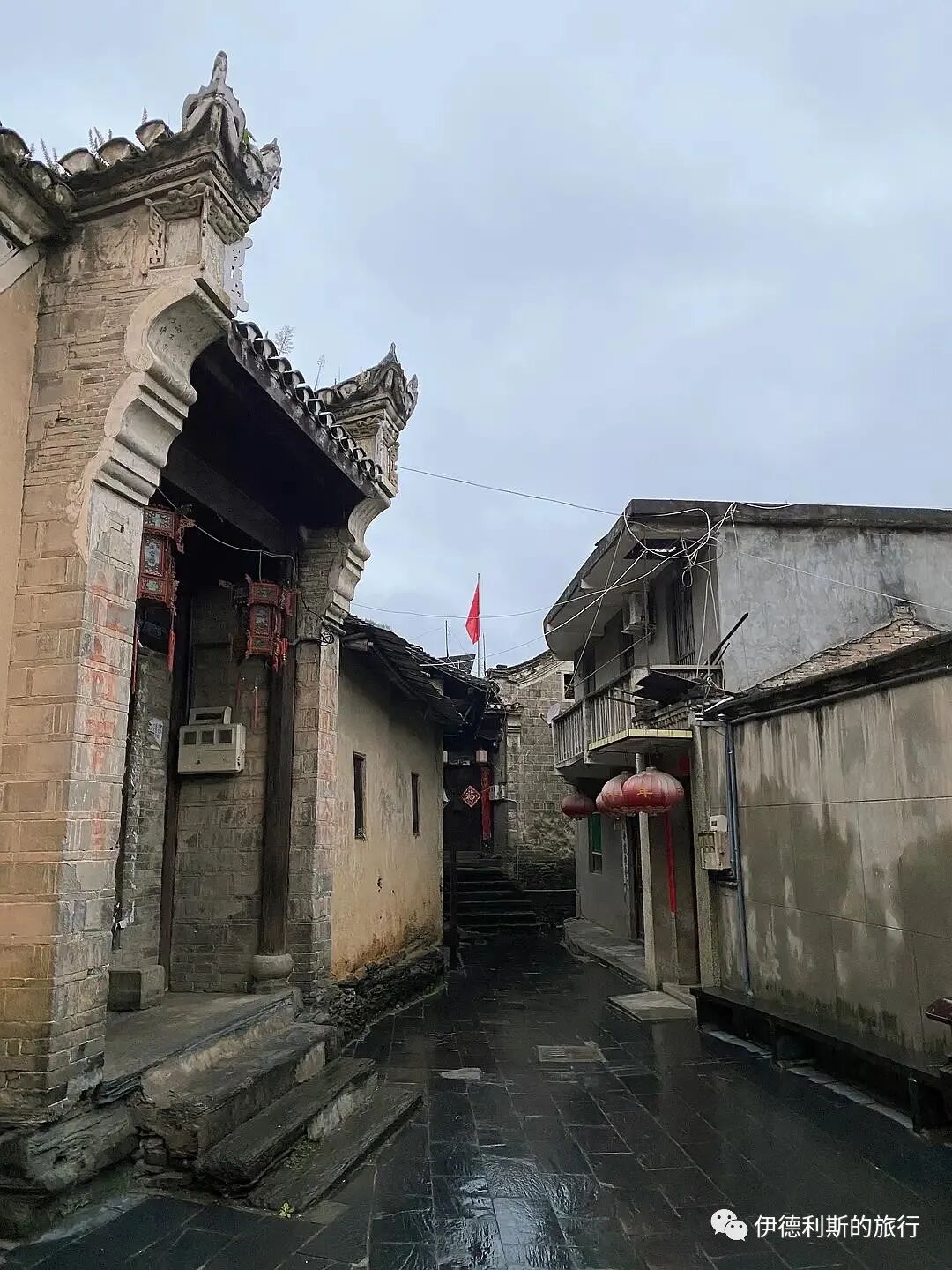
The Shuhe River flowing into the Han River.
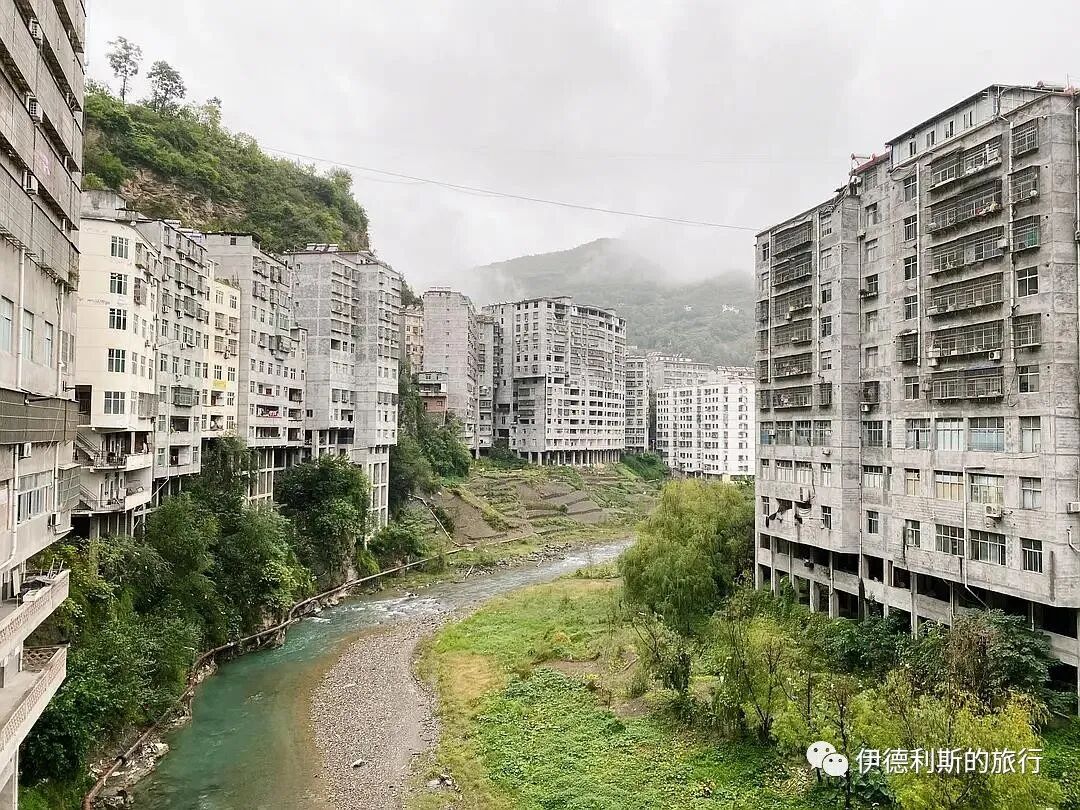
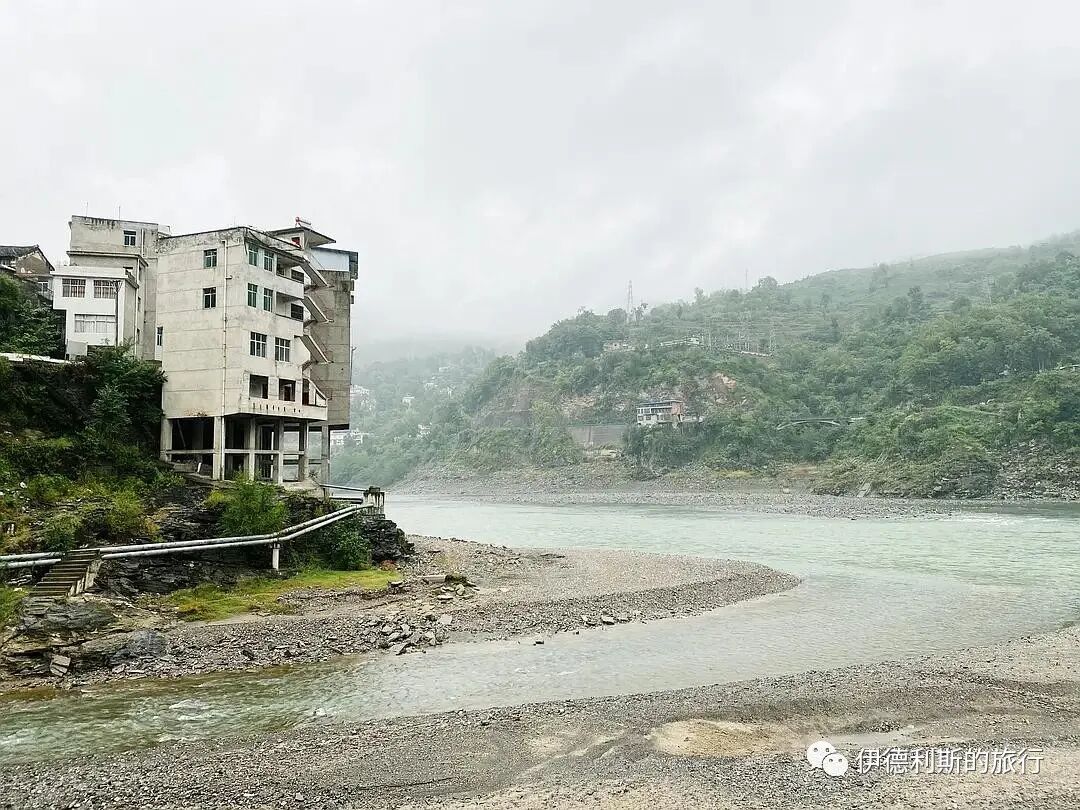
In the light rain of the early morning, we took the ferry from the pier to the train station, watching the Han River slowly wake up. Looking from afar, the Shuhe train station looks like a small white dot on the cliff. As the white dot becomes clearer, we know we are about to leave Shuhe.
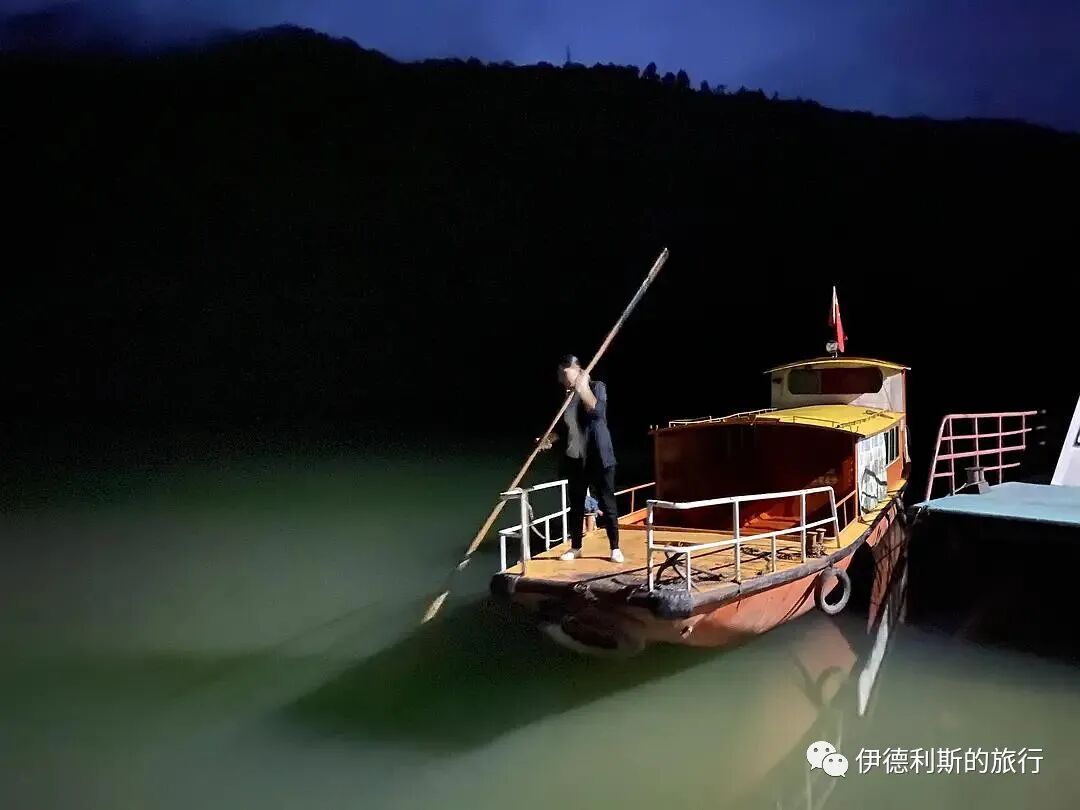
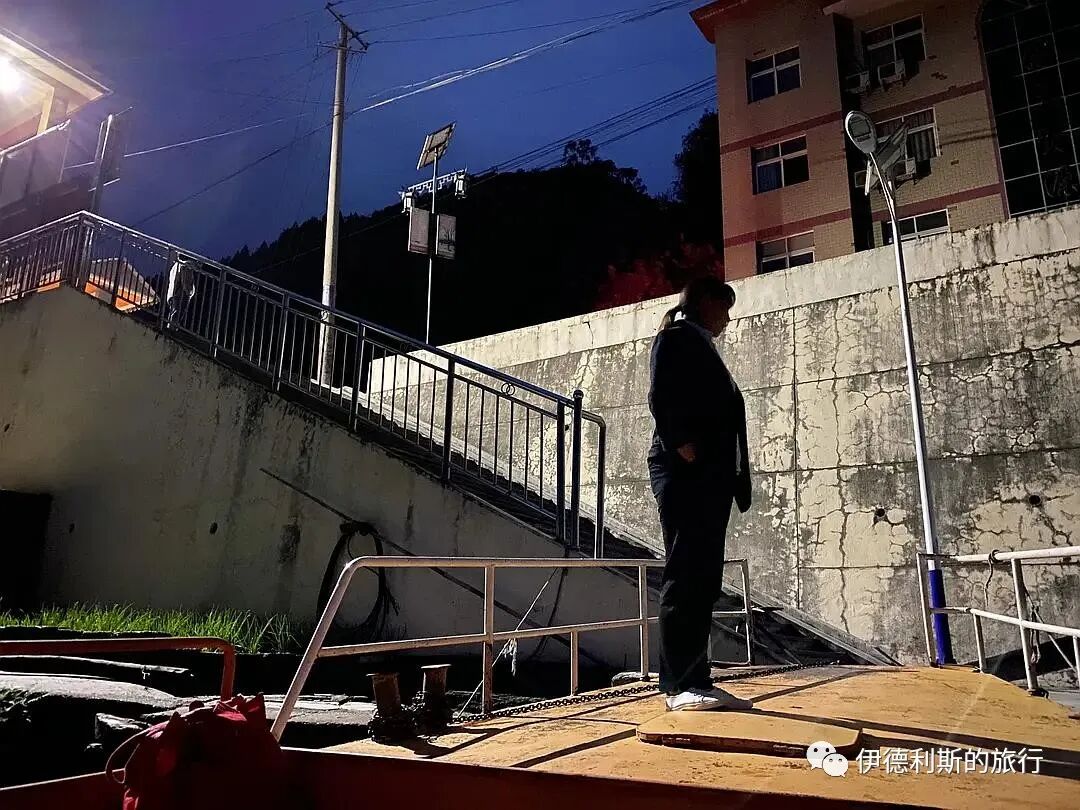
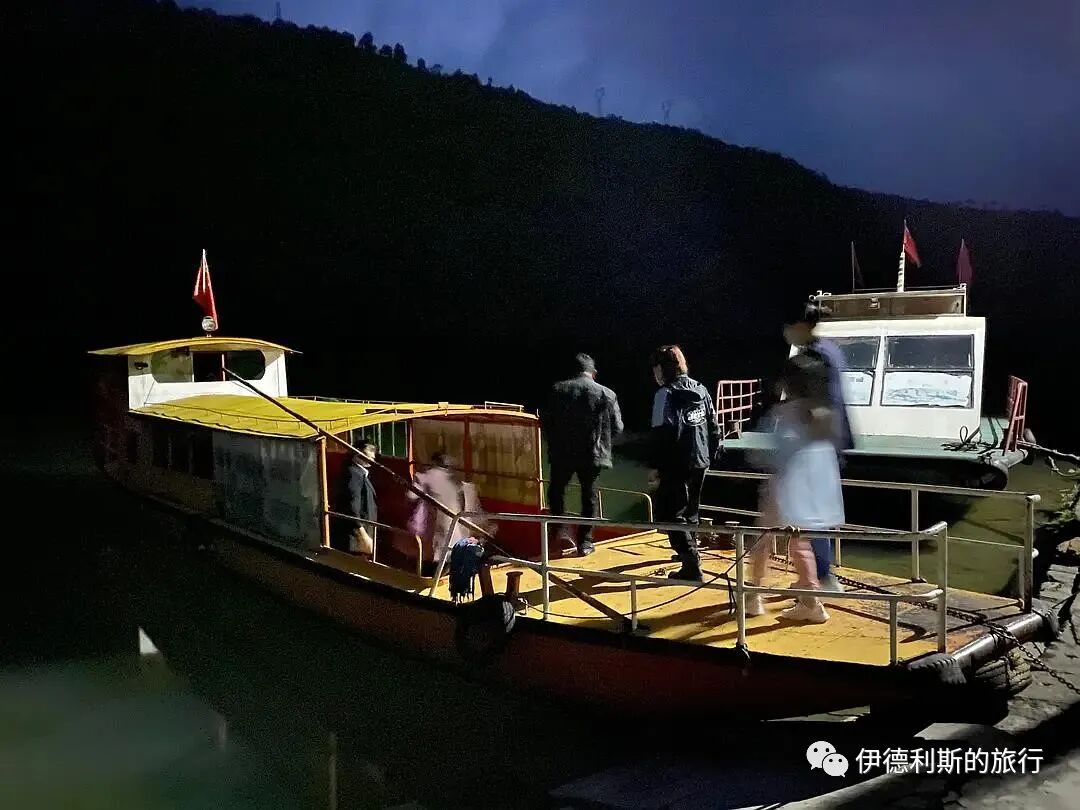
Summary: This travel note introduces [Halal Travel] Shuhe Ancient Town Deep Along the Han River. Shuhe Ancient Town is the last town the Han River passes through before flowing from southern Shaanxi into Hubei. It is useful for readers interested in Shuhe Ancient Town, Muslim Travel, China Travel.
Shuhe Ancient Town is the last town the Han River passes through before flowing from southern Shaanxi into Hubei. Near the town, there is a very small train station, with only one K-series train arriving and departing each day. We arrived at Shuhe train station in the light morning rain. The station is built on a hillside with no flat ground around it. After leaving the station, there is only a path of steps leading to the Han River; once you go down, you reach the Han River ferry. Shuhe Town is a few kilometers downstream on the opposite bank of the Han River. The only way to get there from the station is by boat.
Eating lamb saozimian and beef paomo on the streets of Shuhe Town. During the Ming and Qing dynasties, when Han River shipping was prosperous, Shuhe Ancient Town was an important commercial post. Merchants gathered and shops lined the streets. It was also during that time that Hui Muslims moved to Shuhe to settle, and there are still several hundred households today.
Shuhe Mosque is built on a steep cliff behind the ancient town, connected to the streets below by a hundred steps. The mosque was first built during the Jiajing period of the Ming Dynasty, expanded in 1915, severely damaged and occupied during the Cultural Revolution, and renovated again in 1994.
The current main entrance was added during the 1915 expansion, and the original main entrance has now become the back door.
Shuhe Mosque features a 'cat-arched back' fire-blocking wall, which is very unique among traditional Chinese mosques. Some traditional mosques in southern China are built with fire-blocking walls, each with its own regional characteristics, such as the 'wok-ear' walls of the Guilin Old Village Mosque and the 'horse-head' walls of the Jingjue Mosque in Nanjing. The 'cat-arched back' fire-blocking wall is a characteristic style of the Hunan region that extends into the Qinba mountain area. Currently, besides Shuhe Mosque, the only other traditional mosque I know of that has a 'cat-arched back' fire-blocking wall is the Jingziguan Mosque in Xichuan, Henan.
In addition, there are ink paintings and inscriptions on the brick carvings of the fire-blocking wall, which is also a very southern style.
The mosque's courtyard is very small, with a stone-paved concave pool in the middle to collect rainwater from the eaves, which is very suitable for the rainy climate. Behind it are the north and south wing rooms and the main prayer hall. The main hall follows the traditional three-section structure of Chinese mosques: a front porch, a central hall, and a rear kiln-style hall.
Most of the mosque's colorful paintings were destroyed during the Cultural Revolution, with only a portion preserved on the exterior of the rear kiln-style hall, where various traditional Chinese patterns can be seen. Additionally, there are ink paintings on the door frame of the main entrance. One of the mosque's beams bears an inscription from the renovation in the fourth year of the Republic of China (1915), and it still retains Arabic calligraphy from 100 years ago. The last photo shows the mosque right next to the cliff.
Traces of the 1915 expansion of the Ming Dynasty main hall of the mosque.
After performing Jumu'ah prayer at the mosque, we happened to catch a Shuhe-style 'ten-bowl' banquet. Zaynab enjoyed it very much, and in the end, we were even given a lot of youxiang. The ten bowls include lotus root boxes (lotus root stuffed with lamb, coated in egg, fried, and then steamed), lamb meatballs (coated in egg, fried, and then steamed), braised beef, steamed flour-coated meat (lamb coated in flour and steamed with sweet potato chunks), steamed white meat (fatty meat near the lamb cartilage, steamed), chicken (stir-fried until half-cooked and then steamed), fish chunks (grass carp chunks coated in flour, fried, and then steamed), and three vegetable dishes. The dishes at a Hui banquet are different from ordinary home-cooked stir-fries because they usually have to serve many people. Most of the food is prepared half-cooked and then steamed in a large pot, which ensures both efficiency and that the food stays warm.
The hotel we stayed in was converted from an old pawn shop.
The two relatively large halal restaurants in town.
Strolling around the ancient town in the evening.
The Shuhe River flowing into the Han River.
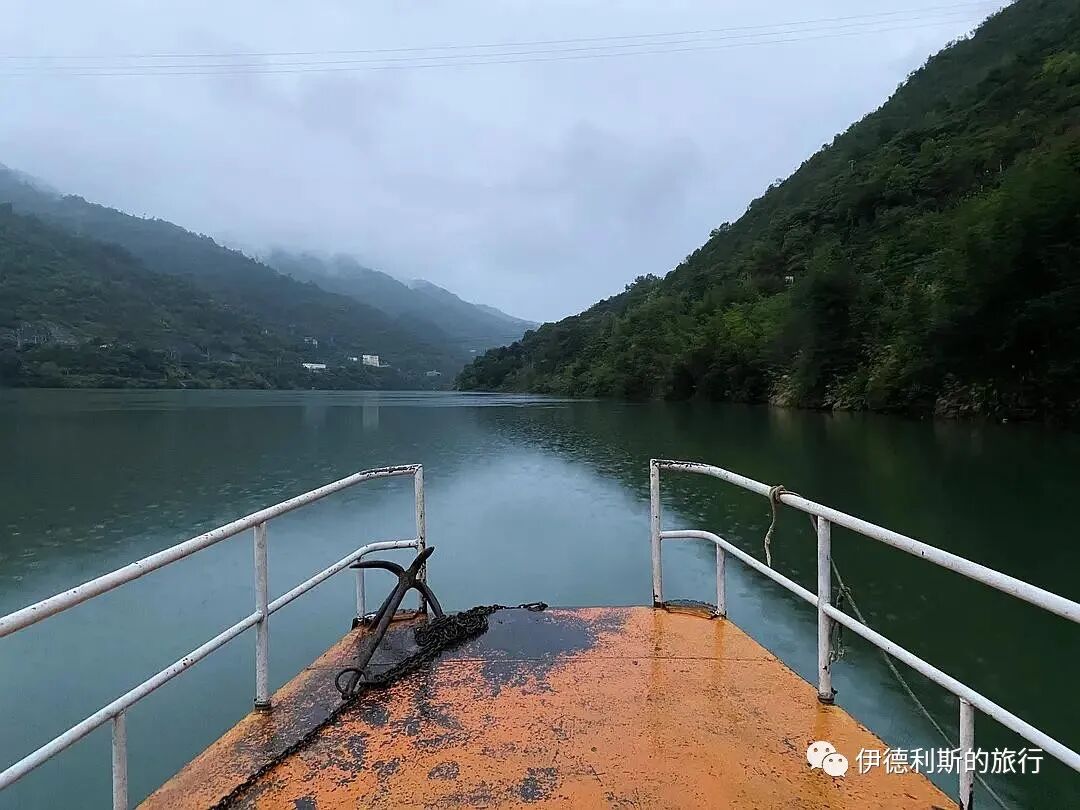
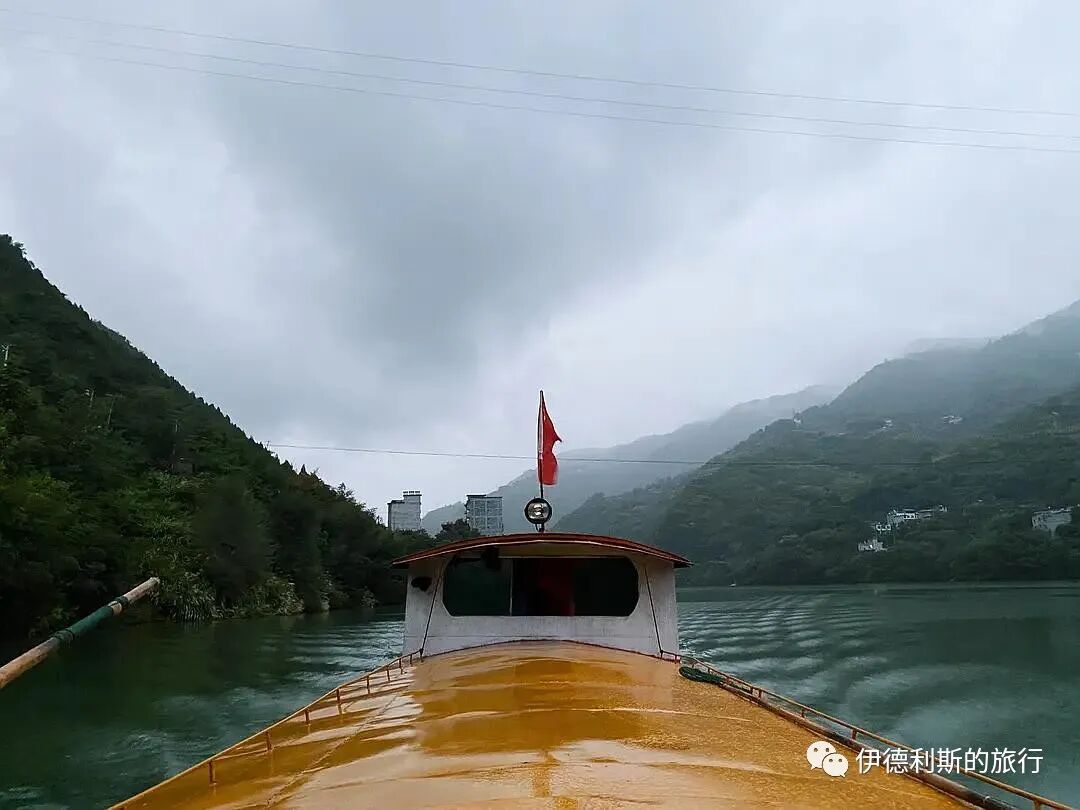
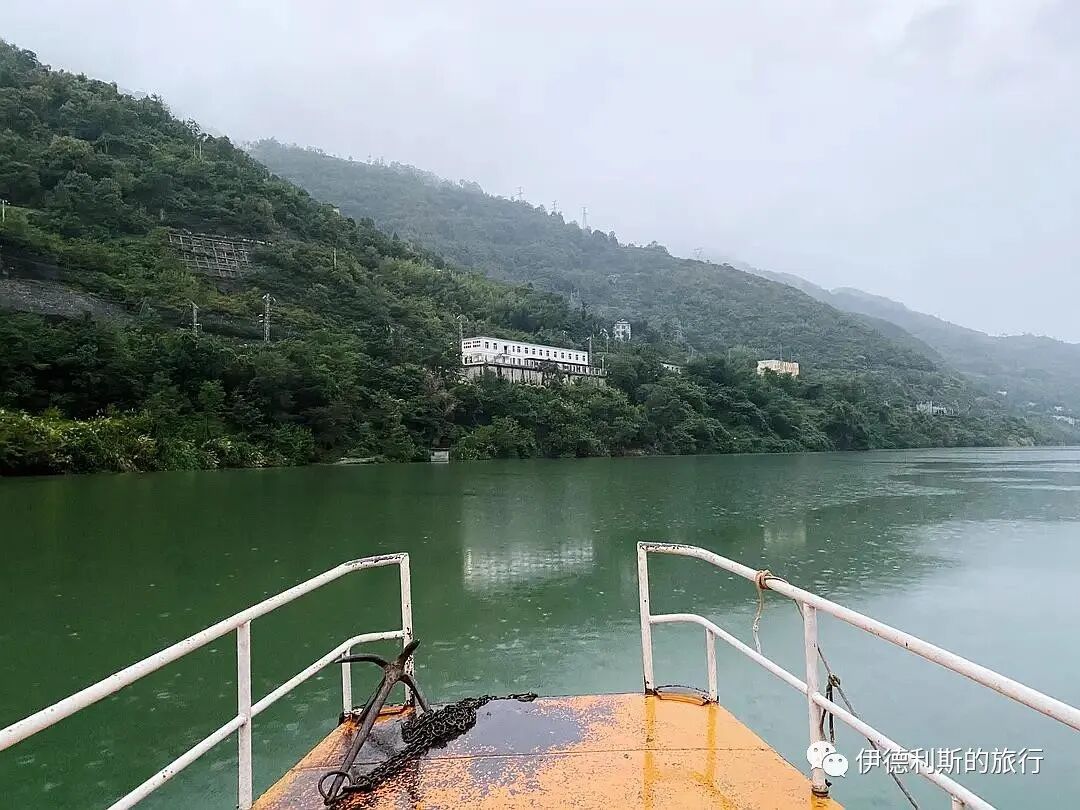
In the light rain of the early morning, we took the ferry from the pier to the train station, watching the Han River slowly wake up. Looking from afar, the Shuhe train station looks like a small white dot on the cliff. As the white dot becomes clearer, we know we are about to leave Shuhe.
[Halal Travel] Shuhe Ancient Town Deep Along the Han River
Articles • ali2007fr posted the article • 0 comments • 257 views • 2026-05-16 23:50
Reposted from the web
Summary: This travel note introduces [Halal Travel] Shuhe Ancient Town Deep Along the Han River. Shuhe Ancient Town is the last town the Han River passes through before flowing from southern Shaanxi into Hubei. It is useful for readers interested in Shuhe Ancient Town, Muslim Travel, China Travel.
Shuhe Ancient Town is the last town the Han River passes through before flowing from southern Shaanxi into Hubei. Near the town, there is a very small train station, with only one K-series train arriving and departing each day. We arrived at Shuhe train station in the light morning rain. The station is built on a hillside with no flat ground around it. After leaving the station, there is only a path of steps leading to the Han River; once you go down, you reach the Han River ferry. Shuhe Town is a few kilometers downstream on the opposite bank of the Han River. The only way to get there from the station is by boat.
Eating lamb saozimian and beef paomo on the streets of Shuhe Town. During the Ming and Qing dynasties, when Han River shipping was prosperous, Shuhe Ancient Town was an important commercial post. Merchants gathered and shops lined the streets. It was also during that time that Hui Muslims moved to Shuhe to settle, and there are still several hundred households today.
Shuhe Mosque is built on a steep cliff behind the ancient town, connected to the streets below by a hundred steps. The mosque was first built during the Jiajing period of the Ming Dynasty, expanded in 1915, severely damaged and occupied during the Cultural Revolution, and renovated again in 1994.
The current main entrance was added during the 1915 expansion, and the original main entrance has now become the back door.
Shuhe Mosque features a 'cat-arched back' fire-blocking wall, which is very unique among traditional Chinese mosques. Some traditional mosques in southern China are built with fire-blocking walls, each with its own regional characteristics, such as the 'wok-ear' walls of the Guilin Old Village Mosque and the 'horse-head' walls of the Jingjue Mosque in Nanjing. The 'cat-arched back' fire-blocking wall is a characteristic style of the Hunan region that extends into the Qinba mountain area. Currently, besides Shuhe Mosque, the only other traditional mosque I know of that has a 'cat-arched back' fire-blocking wall is the Jingziguan Mosque in Xichuan, Henan.
In addition, there are ink paintings and inscriptions on the brick carvings of the fire-blocking wall, which is also a very southern style.
The mosque's courtyard is very small, with a stone-paved concave pool in the middle to collect rainwater from the eaves, which is very suitable for the rainy climate. Behind it are the north and south wing rooms and the main prayer hall. The main hall follows the traditional three-section structure of Chinese mosques: a front porch, a central hall, and a rear kiln-style hall.
Most of the mosque's colorful paintings were destroyed during the Cultural Revolution, with only a portion preserved on the exterior of the rear kiln-style hall, where various traditional Chinese patterns can be seen. Additionally, there are ink paintings on the door frame of the main entrance. One of the mosque's beams bears an inscription from the renovation in the fourth year of the Republic of China (1915), and it still retains Arabic calligraphy from 100 years ago. The last photo shows the mosque right next to the cliff.
Traces of the 1915 expansion of the Ming Dynasty main hall of the mosque.
After performing Jumu'ah prayer at the mosque, we happened to catch a Shuhe-style 'ten-bowl' banquet. Zaynab enjoyed it very much, and in the end, we were even given a lot of youxiang. The ten bowls include lotus root boxes (lotus root stuffed with lamb, coated in egg, fried, and then steamed), lamb meatballs (coated in egg, fried, and then steamed), braised beef, steamed flour-coated meat (lamb coated in flour and steamed with sweet potato chunks), steamed white meat (fatty meat near the lamb cartilage, steamed), chicken (stir-fried until half-cooked and then steamed), fish chunks (grass carp chunks coated in flour, fried, and then steamed), and three vegetable dishes. The dishes at a Hui banquet are different from ordinary home-cooked stir-fries because they usually have to serve many people. Most of the food is prepared half-cooked and then steamed in a large pot, which ensures both efficiency and that the food stays warm.
The hotel we stayed in was converted from an old pawn shop.
The two relatively large halal restaurants in town.
Strolling around the ancient town in the evening.
The Shuhe River flowing into the Han River.
In the light rain of the early morning, we took the ferry from the pier to the train station, watching the Han River slowly wake up. Looking from afar, the Shuhe train station looks like a small white dot on the cliff. As the white dot becomes clearer, we know we are about to leave Shuhe. view all
Summary: This travel note introduces [Halal Travel] Shuhe Ancient Town Deep Along the Han River. Shuhe Ancient Town is the last town the Han River passes through before flowing from southern Shaanxi into Hubei. It is useful for readers interested in Shuhe Ancient Town, Muslim Travel, China Travel.
Shuhe Ancient Town is the last town the Han River passes through before flowing from southern Shaanxi into Hubei. Near the town, there is a very small train station, with only one K-series train arriving and departing each day. We arrived at Shuhe train station in the light morning rain. The station is built on a hillside with no flat ground around it. After leaving the station, there is only a path of steps leading to the Han River; once you go down, you reach the Han River ferry. Shuhe Town is a few kilometers downstream on the opposite bank of the Han River. The only way to get there from the station is by boat.
Eating lamb saozimian and beef paomo on the streets of Shuhe Town. During the Ming and Qing dynasties, when Han River shipping was prosperous, Shuhe Ancient Town was an important commercial post. Merchants gathered and shops lined the streets. It was also during that time that Hui Muslims moved to Shuhe to settle, and there are still several hundred households today.
Shuhe Mosque is built on a steep cliff behind the ancient town, connected to the streets below by a hundred steps. The mosque was first built during the Jiajing period of the Ming Dynasty, expanded in 1915, severely damaged and occupied during the Cultural Revolution, and renovated again in 1994.
The current main entrance was added during the 1915 expansion, and the original main entrance has now become the back door.
Shuhe Mosque features a 'cat-arched back' fire-blocking wall, which is very unique among traditional Chinese mosques. Some traditional mosques in southern China are built with fire-blocking walls, each with its own regional characteristics, such as the 'wok-ear' walls of the Guilin Old Village Mosque and the 'horse-head' walls of the Jingjue Mosque in Nanjing. The 'cat-arched back' fire-blocking wall is a characteristic style of the Hunan region that extends into the Qinba mountain area. Currently, besides Shuhe Mosque, the only other traditional mosque I know of that has a 'cat-arched back' fire-blocking wall is the Jingziguan Mosque in Xichuan, Henan.
In addition, there are ink paintings and inscriptions on the brick carvings of the fire-blocking wall, which is also a very southern style.
The mosque's courtyard is very small, with a stone-paved concave pool in the middle to collect rainwater from the eaves, which is very suitable for the rainy climate. Behind it are the north and south wing rooms and the main prayer hall. The main hall follows the traditional three-section structure of Chinese mosques: a front porch, a central hall, and a rear kiln-style hall.
Most of the mosque's colorful paintings were destroyed during the Cultural Revolution, with only a portion preserved on the exterior of the rear kiln-style hall, where various traditional Chinese patterns can be seen. Additionally, there are ink paintings on the door frame of the main entrance. One of the mosque's beams bears an inscription from the renovation in the fourth year of the Republic of China (1915), and it still retains Arabic calligraphy from 100 years ago. The last photo shows the mosque right next to the cliff.
Traces of the 1915 expansion of the Ming Dynasty main hall of the mosque.
After performing Jumu'ah prayer at the mosque, we happened to catch a Shuhe-style 'ten-bowl' banquet. Zaynab enjoyed it very much, and in the end, we were even given a lot of youxiang. The ten bowls include lotus root boxes (lotus root stuffed with lamb, coated in egg, fried, and then steamed), lamb meatballs (coated in egg, fried, and then steamed), braised beef, steamed flour-coated meat (lamb coated in flour and steamed with sweet potato chunks), steamed white meat (fatty meat near the lamb cartilage, steamed), chicken (stir-fried until half-cooked and then steamed), fish chunks (grass carp chunks coated in flour, fried, and then steamed), and three vegetable dishes. The dishes at a Hui banquet are different from ordinary home-cooked stir-fries because they usually have to serve many people. Most of the food is prepared half-cooked and then steamed in a large pot, which ensures both efficiency and that the food stays warm.
The hotel we stayed in was converted from an old pawn shop.
The two relatively large halal restaurants in town.
Strolling around the ancient town in the evening.
The Shuhe River flowing into the Han River.
In the light rain of the early morning, we took the ferry from the pier to the train station, watching the Han River slowly wake up. Looking from afar, the Shuhe train station looks like a small white dot on the cliff. As the white dot becomes clearer, we know we are about to leave Shuhe. view all
Reposted from the web
Summary: This travel note introduces [Halal Travel] Shuhe Ancient Town Deep Along the Han River. Shuhe Ancient Town is the last town the Han River passes through before flowing from southern Shaanxi into Hubei. It is useful for readers interested in Shuhe Ancient Town, Muslim Travel, China Travel.
Shuhe Ancient Town is the last town the Han River passes through before flowing from southern Shaanxi into Hubei. Near the town, there is a very small train station, with only one K-series train arriving and departing each day. We arrived at Shuhe train station in the light morning rain. The station is built on a hillside with no flat ground around it. After leaving the station, there is only a path of steps leading to the Han River; once you go down, you reach the Han River ferry. Shuhe Town is a few kilometers downstream on the opposite bank of the Han River. The only way to get there from the station is by boat.
Eating lamb saozimian and beef paomo on the streets of Shuhe Town. During the Ming and Qing dynasties, when Han River shipping was prosperous, Shuhe Ancient Town was an important commercial post. Merchants gathered and shops lined the streets. It was also during that time that Hui Muslims moved to Shuhe to settle, and there are still several hundred households today.
Shuhe Mosque is built on a steep cliff behind the ancient town, connected to the streets below by a hundred steps. The mosque was first built during the Jiajing period of the Ming Dynasty, expanded in 1915, severely damaged and occupied during the Cultural Revolution, and renovated again in 1994.
The current main entrance was added during the 1915 expansion, and the original main entrance has now become the back door.
Shuhe Mosque features a 'cat-arched back' fire-blocking wall, which is very unique among traditional Chinese mosques. Some traditional mosques in southern China are built with fire-blocking walls, each with its own regional characteristics, such as the 'wok-ear' walls of the Guilin Old Village Mosque and the 'horse-head' walls of the Jingjue Mosque in Nanjing. The 'cat-arched back' fire-blocking wall is a characteristic style of the Hunan region that extends into the Qinba mountain area. Currently, besides Shuhe Mosque, the only other traditional mosque I know of that has a 'cat-arched back' fire-blocking wall is the Jingziguan Mosque in Xichuan, Henan.
In addition, there are ink paintings and inscriptions on the brick carvings of the fire-blocking wall, which is also a very southern style.
The mosque's courtyard is very small, with a stone-paved concave pool in the middle to collect rainwater from the eaves, which is very suitable for the rainy climate. Behind it are the north and south wing rooms and the main prayer hall. The main hall follows the traditional three-section structure of Chinese mosques: a front porch, a central hall, and a rear kiln-style hall.
Most of the mosque's colorful paintings were destroyed during the Cultural Revolution, with only a portion preserved on the exterior of the rear kiln-style hall, where various traditional Chinese patterns can be seen. Additionally, there are ink paintings on the door frame of the main entrance. One of the mosque's beams bears an inscription from the renovation in the fourth year of the Republic of China (1915), and it still retains Arabic calligraphy from 100 years ago. The last photo shows the mosque right next to the cliff.
Traces of the 1915 expansion of the Ming Dynasty main hall of the mosque.
After performing Jumu'ah prayer at the mosque, we happened to catch a Shuhe-style 'ten-bowl' banquet. Zaynab enjoyed it very much, and in the end, we were even given a lot of youxiang. The ten bowls include lotus root boxes (lotus root stuffed with lamb, coated in egg, fried, and then steamed), lamb meatballs (coated in egg, fried, and then steamed), braised beef, steamed flour-coated meat (lamb coated in flour and steamed with sweet potato chunks), steamed white meat (fatty meat near the lamb cartilage, steamed), chicken (stir-fried until half-cooked and then steamed), fish chunks (grass carp chunks coated in flour, fried, and then steamed), and three vegetable dishes. The dishes at a Hui banquet are different from ordinary home-cooked stir-fries because they usually have to serve many people. Most of the food is prepared half-cooked and then steamed in a large pot, which ensures both efficiency and that the food stays warm.
The hotel we stayed in was converted from an old pawn shop.
The two relatively large halal restaurants in town.
Strolling around the ancient town in the evening.
The Shuhe River flowing into the Han River.
In the light rain of the early morning, we took the ferry from the pier to the train station, watching the Han River slowly wake up. Looking from afar, the Shuhe train station looks like a small white dot on the cliff. As the white dot becomes clearer, we know we are about to leave Shuhe.
Summary: This travel note introduces [Halal Travel] Shuhe Ancient Town Deep Along the Han River. Shuhe Ancient Town is the last town the Han River passes through before flowing from southern Shaanxi into Hubei. It is useful for readers interested in Shuhe Ancient Town, Muslim Travel, China Travel.
Shuhe Ancient Town is the last town the Han River passes through before flowing from southern Shaanxi into Hubei. Near the town, there is a very small train station, with only one K-series train arriving and departing each day. We arrived at Shuhe train station in the light morning rain. The station is built on a hillside with no flat ground around it. After leaving the station, there is only a path of steps leading to the Han River; once you go down, you reach the Han River ferry. Shuhe Town is a few kilometers downstream on the opposite bank of the Han River. The only way to get there from the station is by boat.
Eating lamb saozimian and beef paomo on the streets of Shuhe Town. During the Ming and Qing dynasties, when Han River shipping was prosperous, Shuhe Ancient Town was an important commercial post. Merchants gathered and shops lined the streets. It was also during that time that Hui Muslims moved to Shuhe to settle, and there are still several hundred households today.
Shuhe Mosque is built on a steep cliff behind the ancient town, connected to the streets below by a hundred steps. The mosque was first built during the Jiajing period of the Ming Dynasty, expanded in 1915, severely damaged and occupied during the Cultural Revolution, and renovated again in 1994.
The current main entrance was added during the 1915 expansion, and the original main entrance has now become the back door.
Shuhe Mosque features a 'cat-arched back' fire-blocking wall, which is very unique among traditional Chinese mosques. Some traditional mosques in southern China are built with fire-blocking walls, each with its own regional characteristics, such as the 'wok-ear' walls of the Guilin Old Village Mosque and the 'horse-head' walls of the Jingjue Mosque in Nanjing. The 'cat-arched back' fire-blocking wall is a characteristic style of the Hunan region that extends into the Qinba mountain area. Currently, besides Shuhe Mosque, the only other traditional mosque I know of that has a 'cat-arched back' fire-blocking wall is the Jingziguan Mosque in Xichuan, Henan.
In addition, there are ink paintings and inscriptions on the brick carvings of the fire-blocking wall, which is also a very southern style.
The mosque's courtyard is very small, with a stone-paved concave pool in the middle to collect rainwater from the eaves, which is very suitable for the rainy climate. Behind it are the north and south wing rooms and the main prayer hall. The main hall follows the traditional three-section structure of Chinese mosques: a front porch, a central hall, and a rear kiln-style hall.
Most of the mosque's colorful paintings were destroyed during the Cultural Revolution, with only a portion preserved on the exterior of the rear kiln-style hall, where various traditional Chinese patterns can be seen. Additionally, there are ink paintings on the door frame of the main entrance. One of the mosque's beams bears an inscription from the renovation in the fourth year of the Republic of China (1915), and it still retains Arabic calligraphy from 100 years ago. The last photo shows the mosque right next to the cliff.
Traces of the 1915 expansion of the Ming Dynasty main hall of the mosque.
After performing Jumu'ah prayer at the mosque, we happened to catch a Shuhe-style 'ten-bowl' banquet. Zaynab enjoyed it very much, and in the end, we were even given a lot of youxiang. The ten bowls include lotus root boxes (lotus root stuffed with lamb, coated in egg, fried, and then steamed), lamb meatballs (coated in egg, fried, and then steamed), braised beef, steamed flour-coated meat (lamb coated in flour and steamed with sweet potato chunks), steamed white meat (fatty meat near the lamb cartilage, steamed), chicken (stir-fried until half-cooked and then steamed), fish chunks (grass carp chunks coated in flour, fried, and then steamed), and three vegetable dishes. The dishes at a Hui banquet are different from ordinary home-cooked stir-fries because they usually have to serve many people. Most of the food is prepared half-cooked and then steamed in a large pot, which ensures both efficiency and that the food stays warm.
The hotel we stayed in was converted from an old pawn shop.
The two relatively large halal restaurants in town.
Strolling around the ancient town in the evening.
The Shuhe River flowing into the Han River.
In the light rain of the early morning, we took the ferry from the pier to the train station, watching the Han River slowly wake up. Looking from afar, the Shuhe train station looks like a small white dot on the cliff. As the white dot becomes clearer, we know we are about to leave Shuhe.