

Singapore Food
Halal Food Guide: Singapore - Halal Chinese Food and Muslim-Friendly Eats
Articles • ali2007fr posted the article • 0 comments • 182 views • 2026-05-19 07:24
Reposted from the web
Summary: This Singapore article follows the author through halal Chinese food stops after arriving in the city. It preserves the original restaurant names, dishes, prices, and food observations in clear English.
After landing at Singapore Changi Airport, I took the subway directly to Kembangan station to eat prawn noodles at the famous Chinese Muslim restaurant Deanna's Kitchen, which is the most famous halal prawn noodle spot in Singapore.
The restaurant owner, Denise Chew (also known as Deanna), converted to Islam in 2009 when she married her husband, Asri Ramili, and prawn noodles were her favorite food before she converted. Because traditional Chinese prawn noodles are made with pork bone broth, pork meat, and lard, it took her six years to develop a halal version. Deanna makes the broth by simmering chicken bones, prawn shells, dried shrimp, and anchovies for three hours, and the resulting noodles are so popular that she started selling them online.
Deanna and her husband Asri both worked in banking, but as the prawn noodle business grew, Asri quit his job in 2017 to open a noodle stall. The stall soon had long lines and sold out early every day. That is how the physical Deanna's Kitchen shops opened, and now there is one in Jurong East and one in Kembangan.
They serve regular prawn noodles and a hearty seafood platter. We ordered the top-tier version, which includes one Boston lobster, five tiger prawns, five large prawns, one crayfish, and 20 clams. You can choose different sides and noodles like yellow noodles, laksa noodles, rice vermicelli, or flat rice noodles (kway teow). We chose laksa noodles.
We visited Jason Niang Dou Fu in Kampong Glam to taste traditional Hakka stuffed vegetables. In the Hakka dialect, 'niang' means to fill with stuffing. Legend has it that after the Hakka people migrated south from the Central Plains, they wanted to eat dumplings but had no wheat, so they used tofu instead of flour and invented stuffed tofu (niang dou fu). Besides stuffed tofu, the Hakka are good at using local ingredients. Many foods can be stuffed, such as chili peppers, eggplants, bitter melons, and taro. Tofu, eggplant, and bitter melon are known as the 'three stuffed treasures' (jian niang san bao).
Jason Niang Dou Fu is a bit like a spicy hot pot (malatang) shop in China, where you can pick your own stuffed vegetables and greens from the counter. You can also choose staples like flat rice noodles (kway teow), rice vermicelli, or egg noodles (mian zai). The Teochew taro rice (Yam Rice) and Teochew dry egg noodles (Mee Pok) are both worth a try.
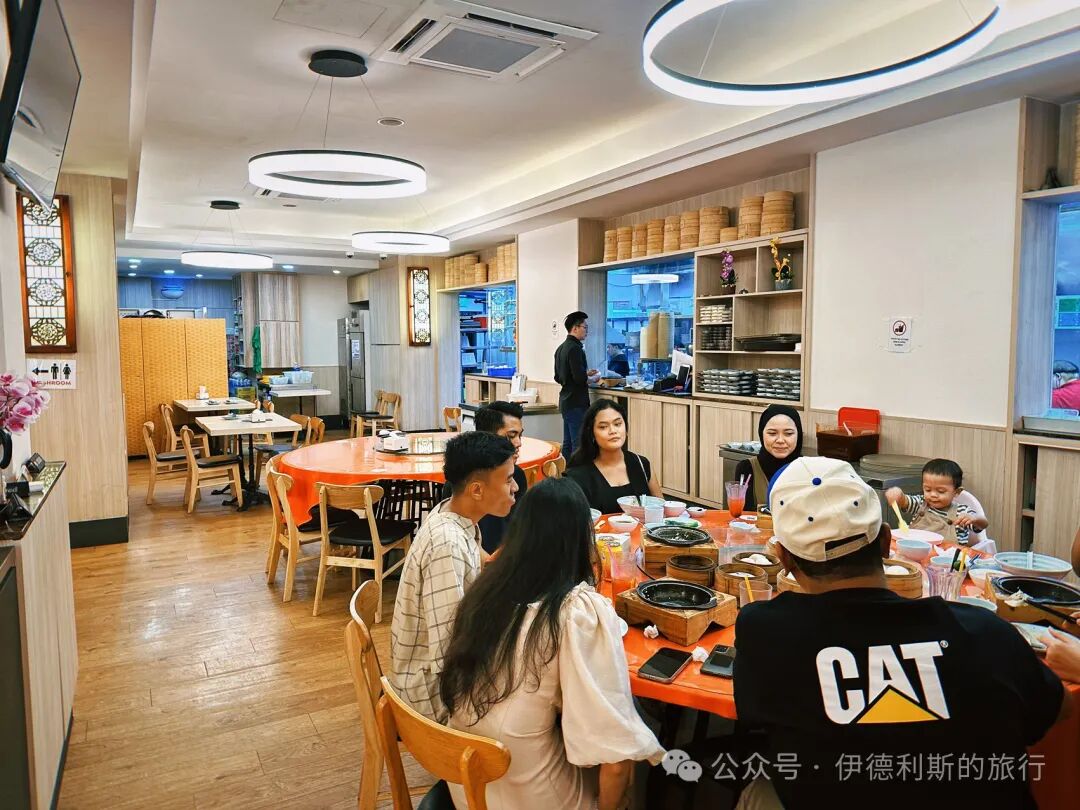
The Dim Sum Place is a very famous halal Hong Kong-style tea restaurant in Singapore, specializing in a wide variety of dim sum and Cantonese dishes. They opened on North Bridge Road in Kampong Glam in 2016 and now have two more branches, making them very popular with Muslims.
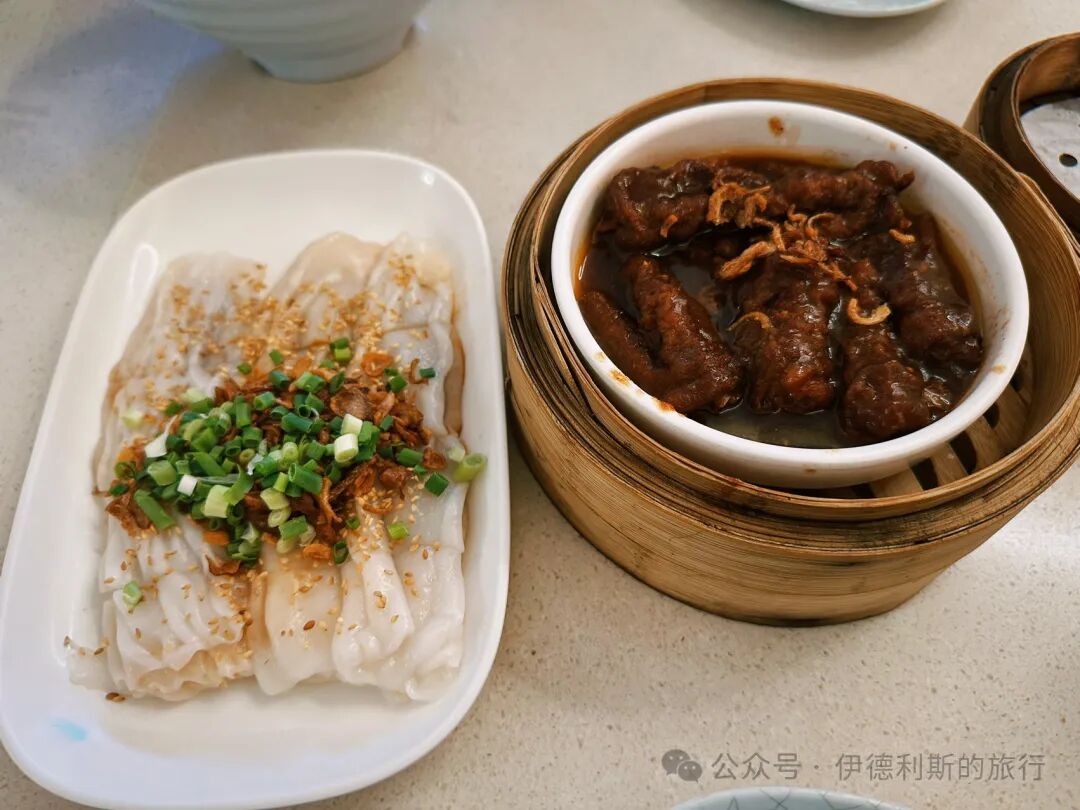
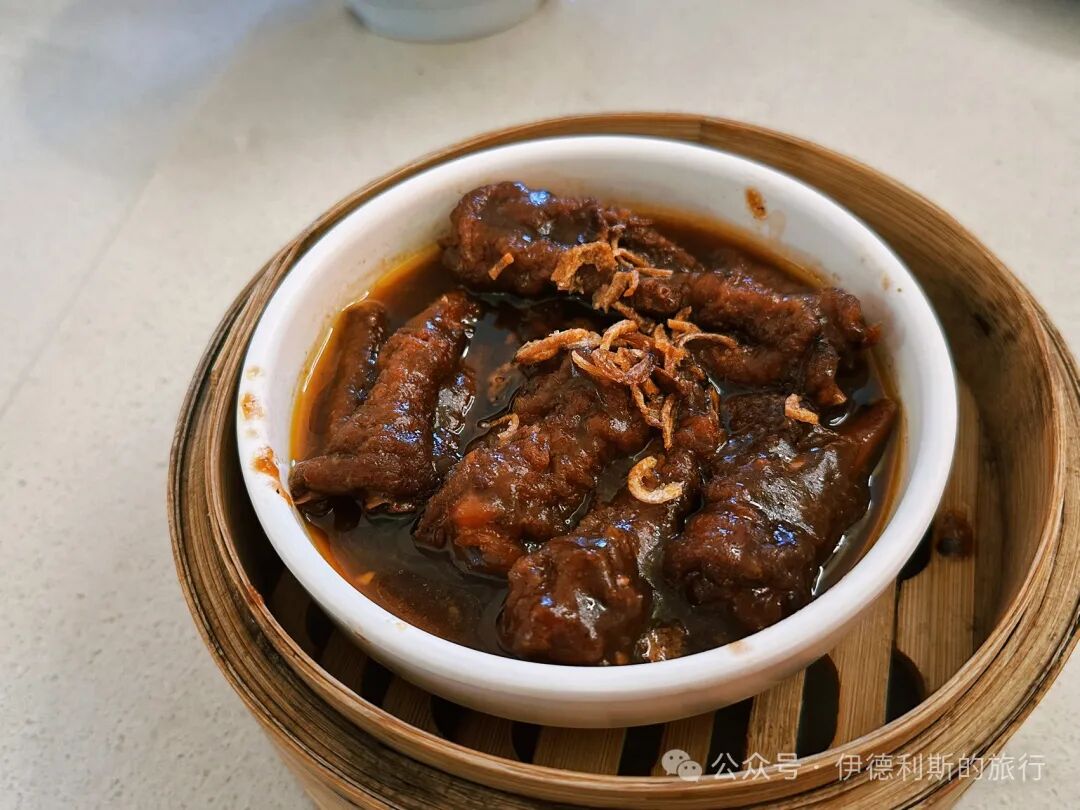
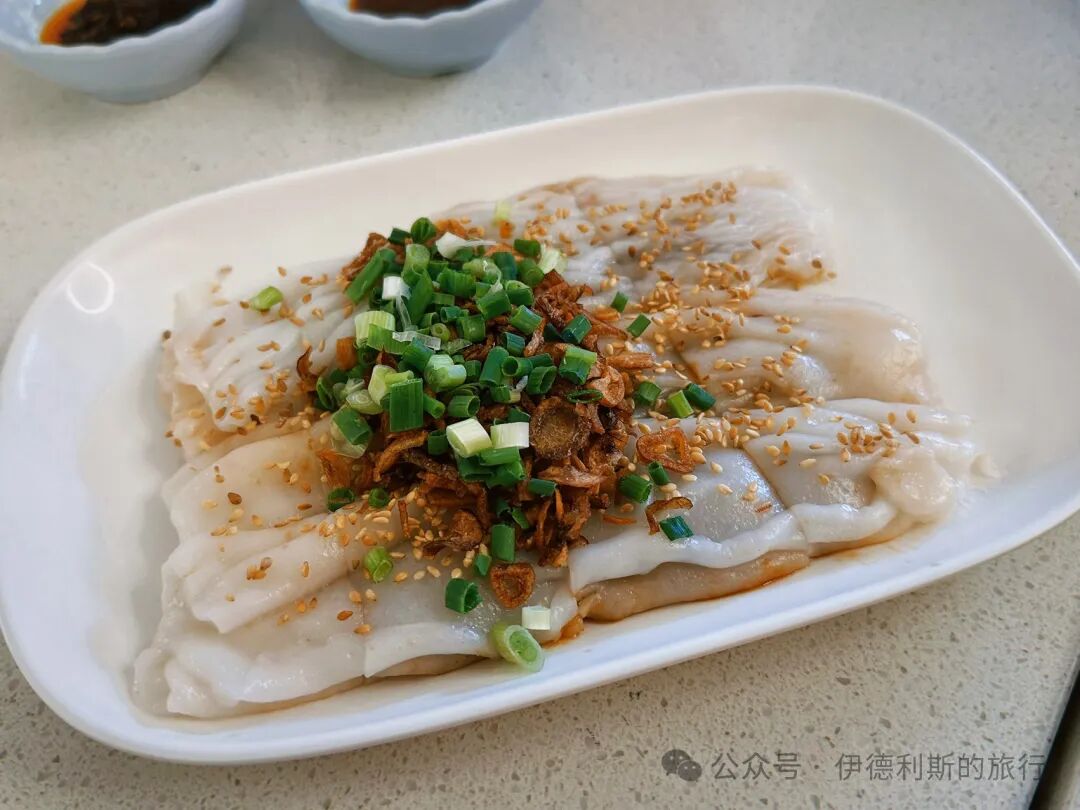
We ordered steamed chicken feet in sauce, shrimp and chicken steamed dumplings (shaomai), roasted chicken char siu rice noodle rolls (cheong fun), fish fillet porridge, and pu'er tea. Since we were there for afternoon tea and not a full meal, there was still a lot we wanted to try but didn't order. We liked the fish fillet porridge the best, and the chicken feet and shaomai were okay, but the rice noodle rolls were just average; they felt too soft and lacked texture.
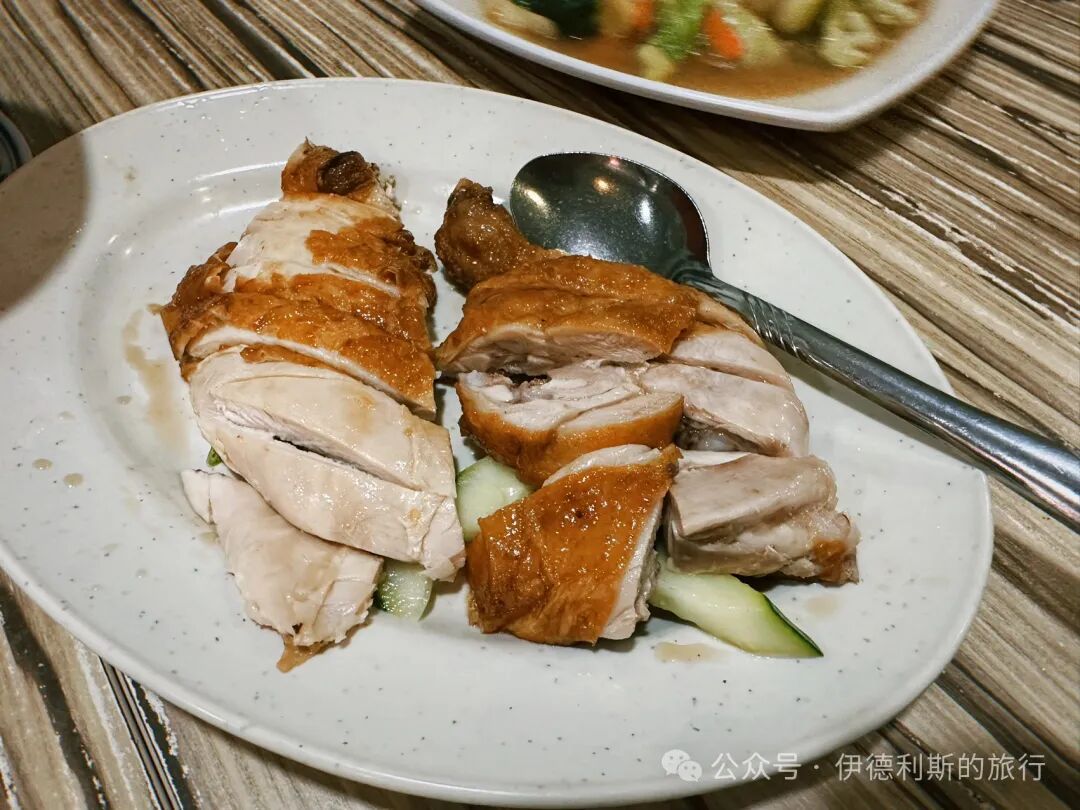
If you visit the National Museum of Singapore and Fort Canning Park, it is well worth stopping by the nearby MacKenzie Rex Restaurant to try their authentic halal Hainanese chicken rice. MacKenzie Rex Restaurant opened in 1966. It is the first and most famous halal Hainanese chicken rice restaurant in Singapore. The owner is a Hainanese Chinese person who speaks great Mandarin and is very happy to introduce the dishes to guests. Besides Hainanese chicken rice, they are also good at making various home-style Chinese dishes, known in Singapore as zi char (home-style stir-fry).
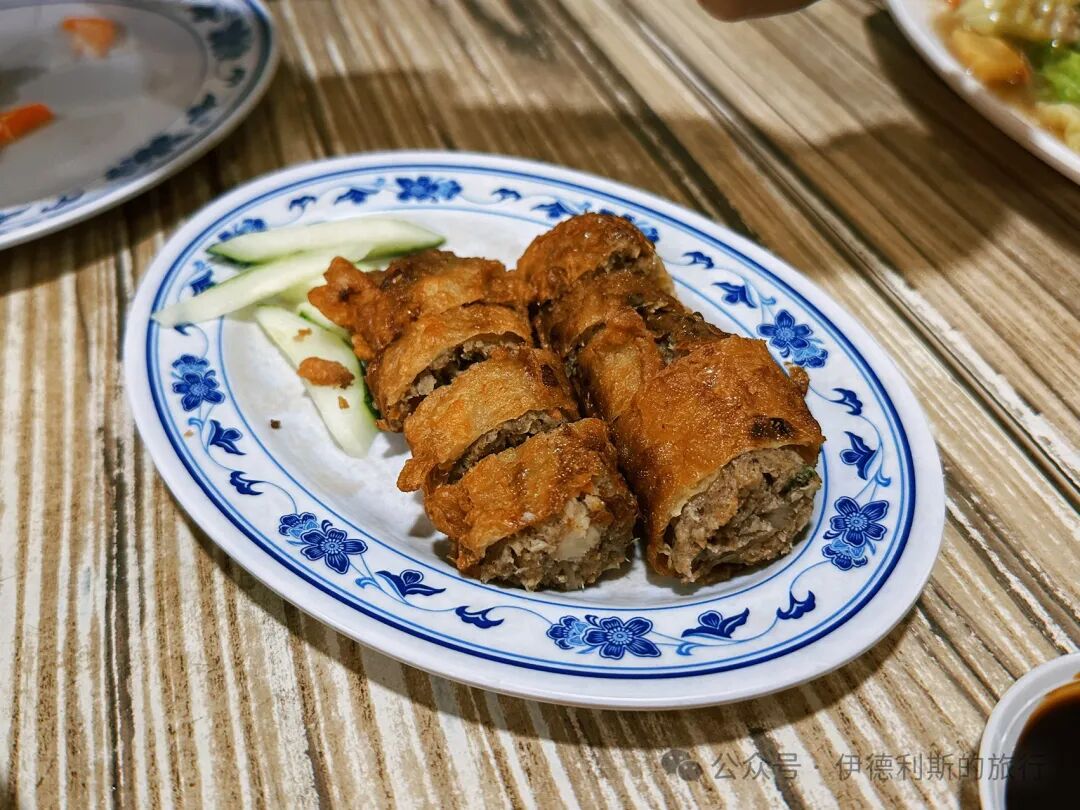
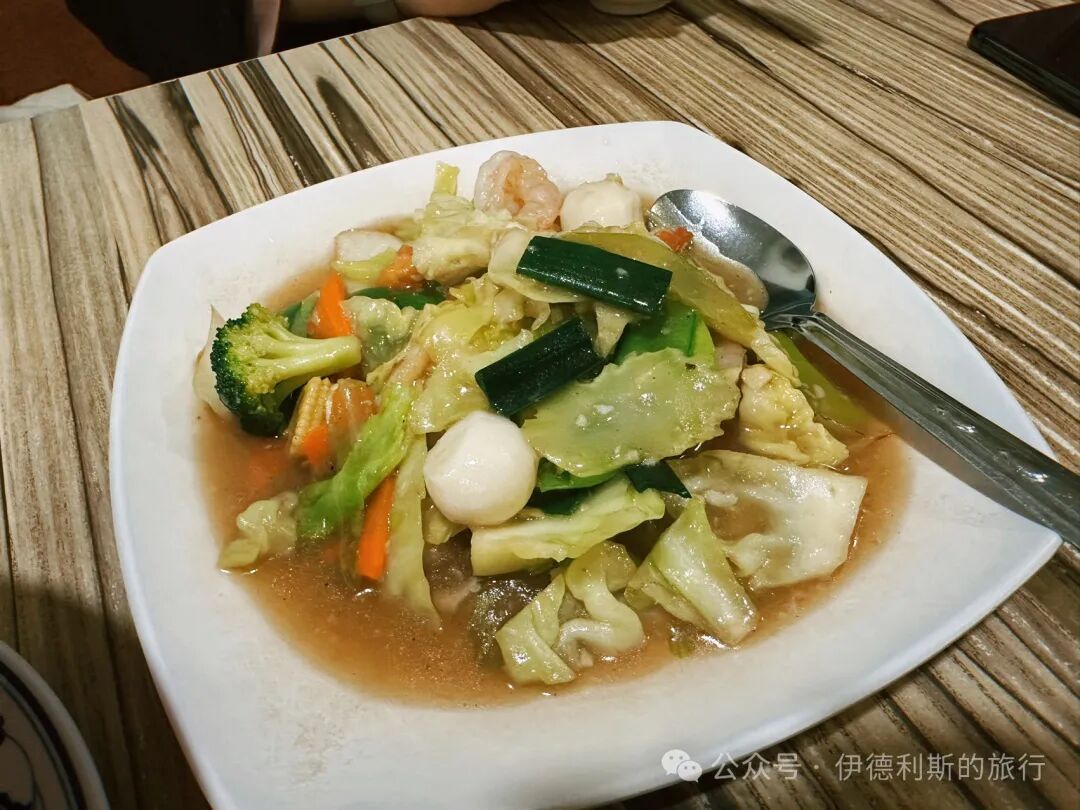
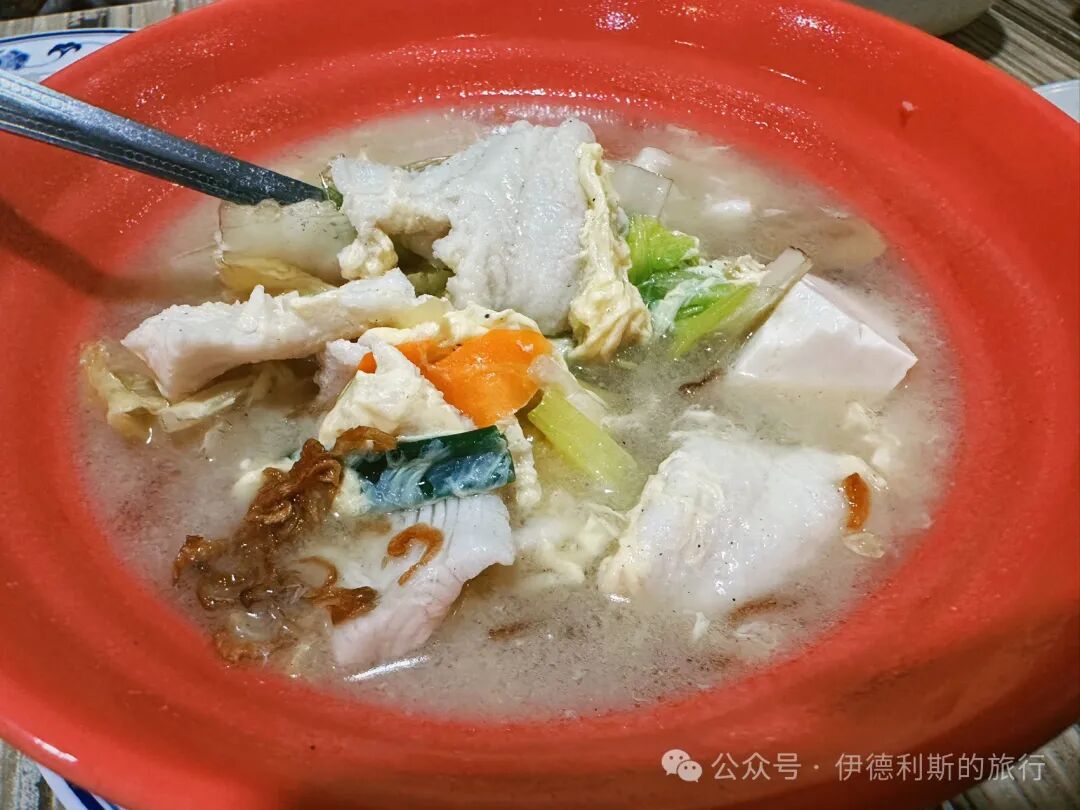
We ordered the classic chicken rice and five-spice meat rolls (ngor hiang), along with stir-fried mixed vegetables and fish soup. Everything was delicious, and it was arguably the best meal of our Singapore trip. The best part of their chicken rice is not the chicken itself, but the rice steamed with chicken fat. You can eat it plain and never want to stop. The halal version of the five-spice meat roll is made by adding five-spice powder to chicken filling, wrapping it in bean curd skin, and deep-frying it. It is very fragrant when freshly fried.
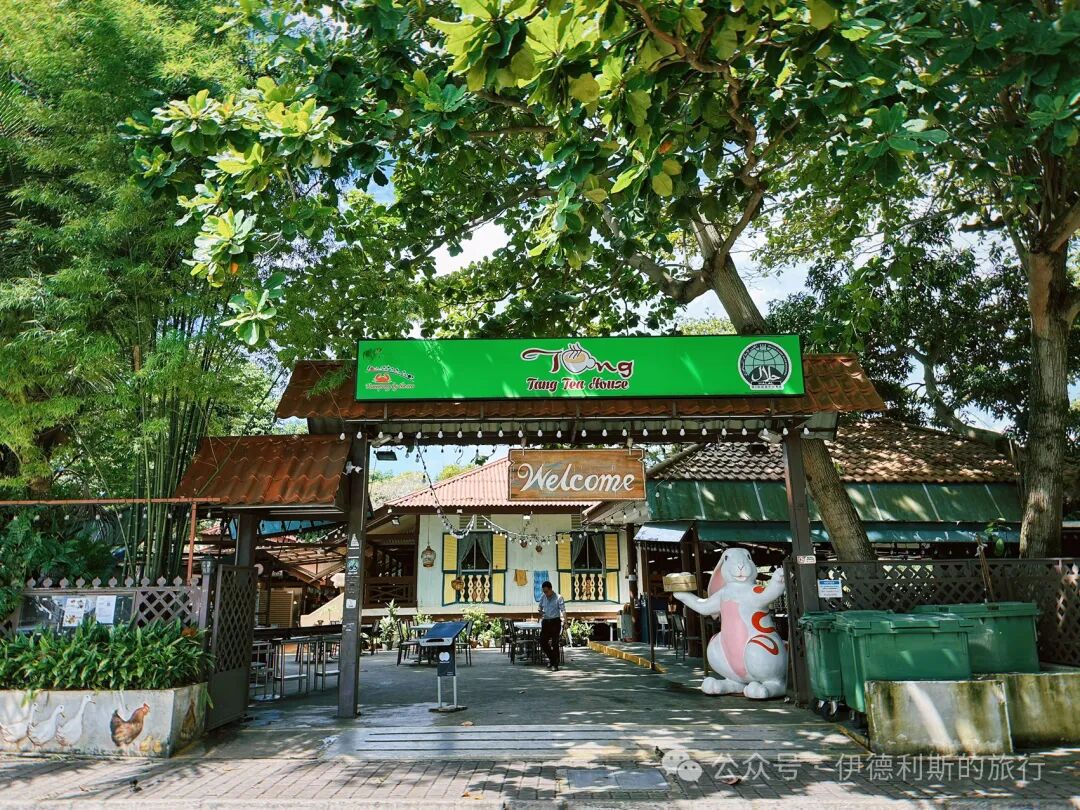
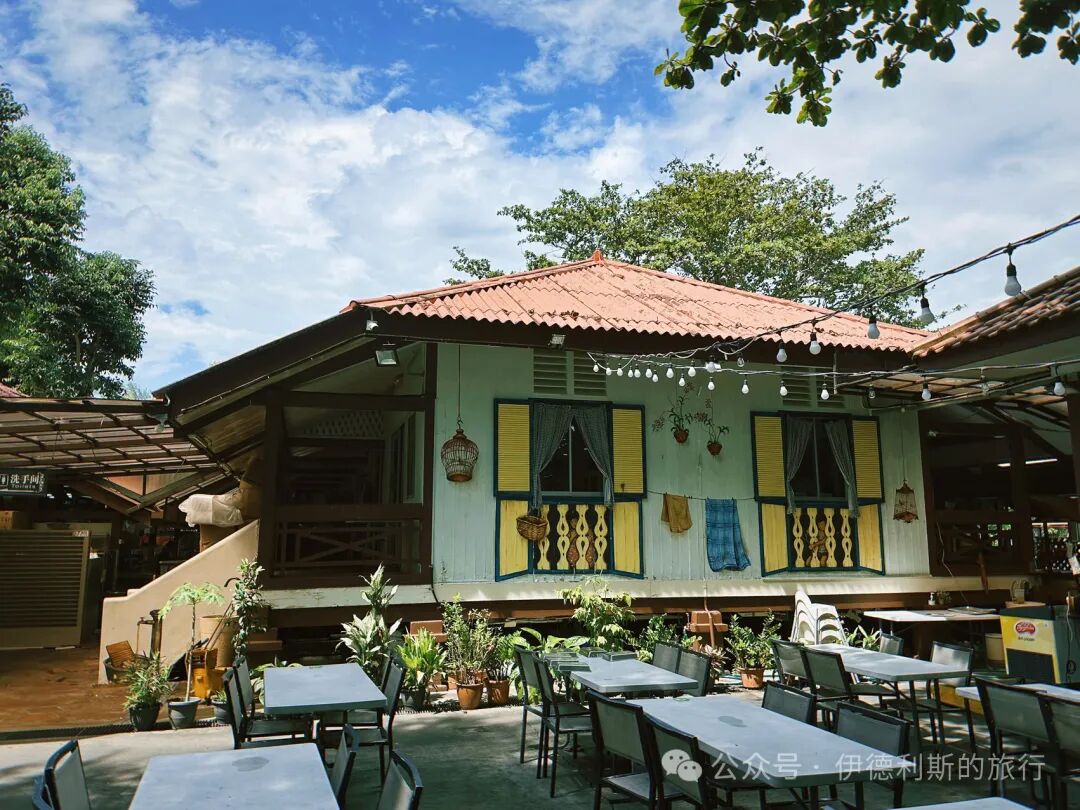
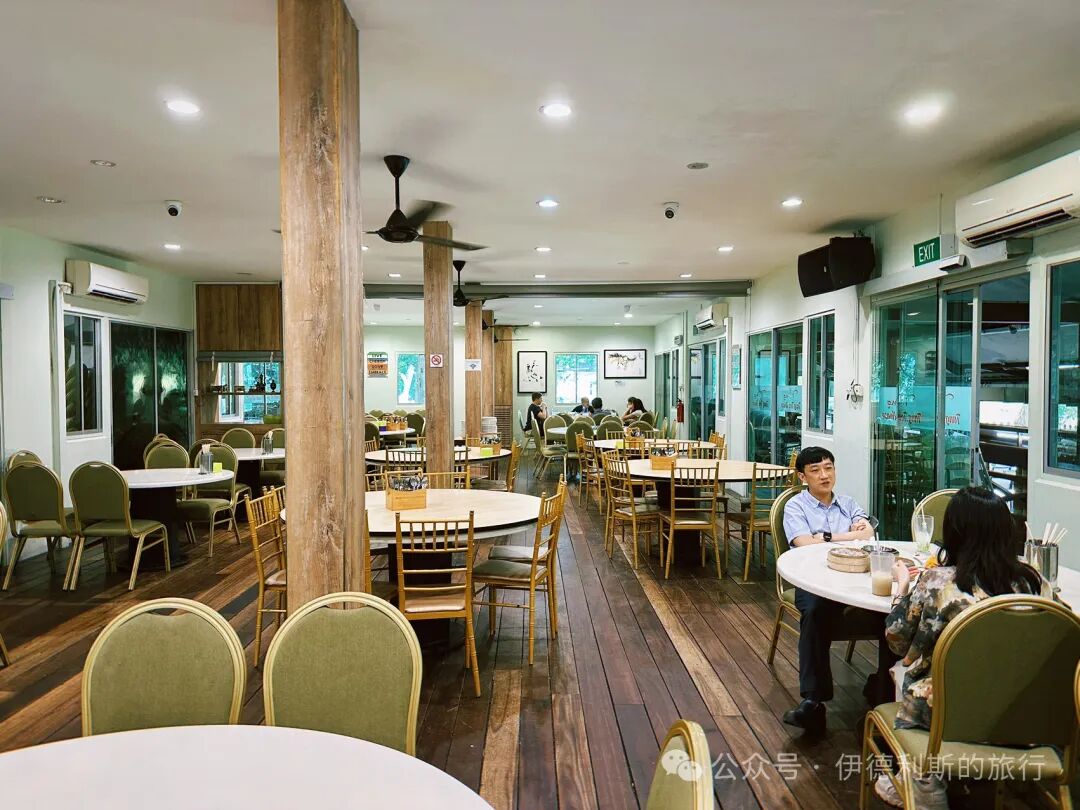
If you take a half-day trip to Pulau Ubin in Singapore, it is perfect to have a meal at the halal tea restaurant Tang Tea House next to the Changi Point Ferry Terminal. They serve authentic halal Chinese stir-fry (tze-char) and dim sum with a huge variety of choices.
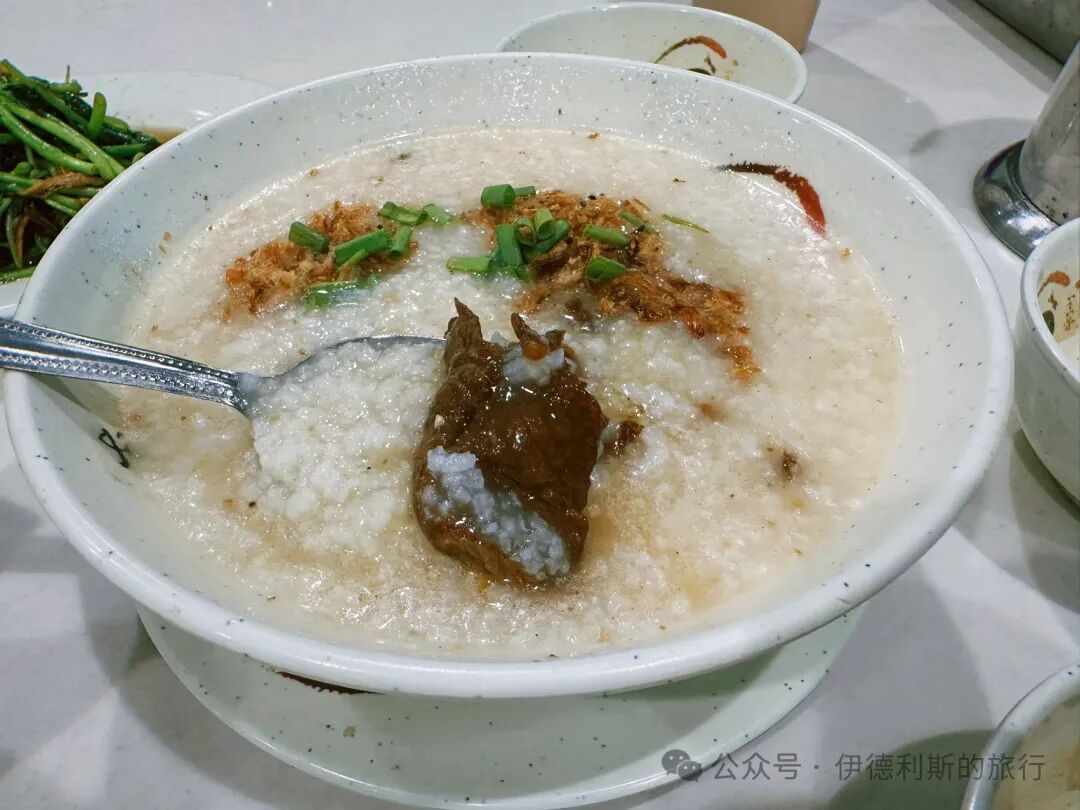
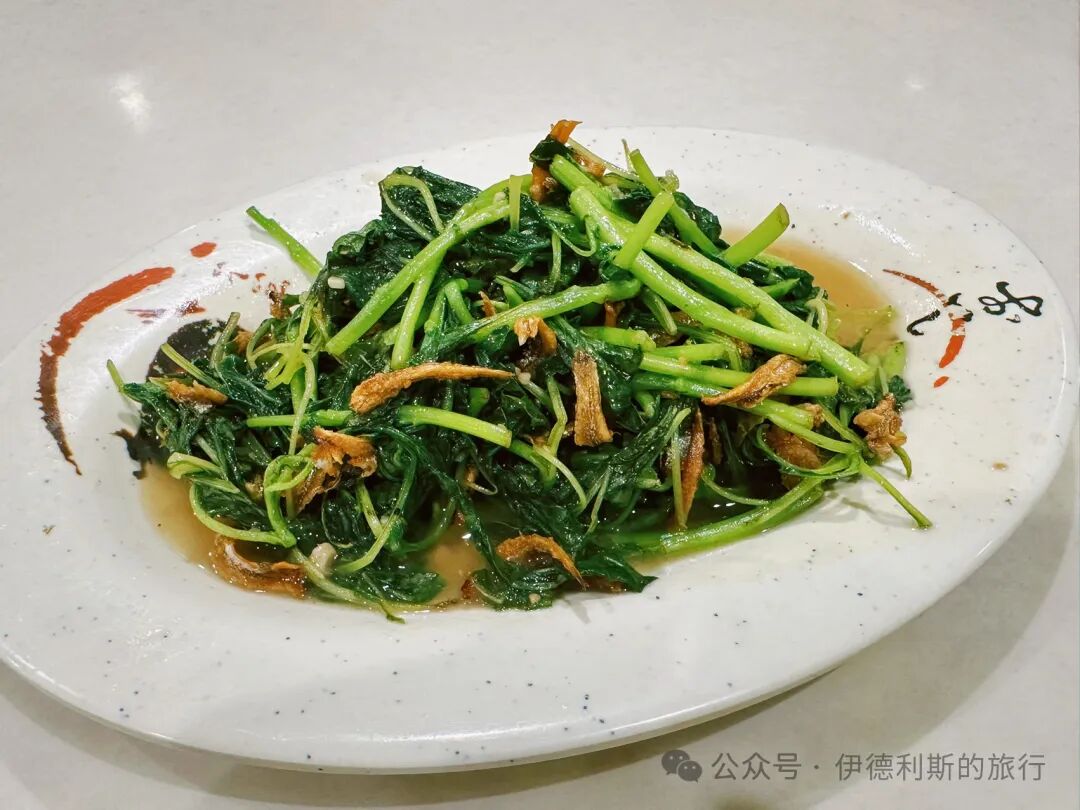
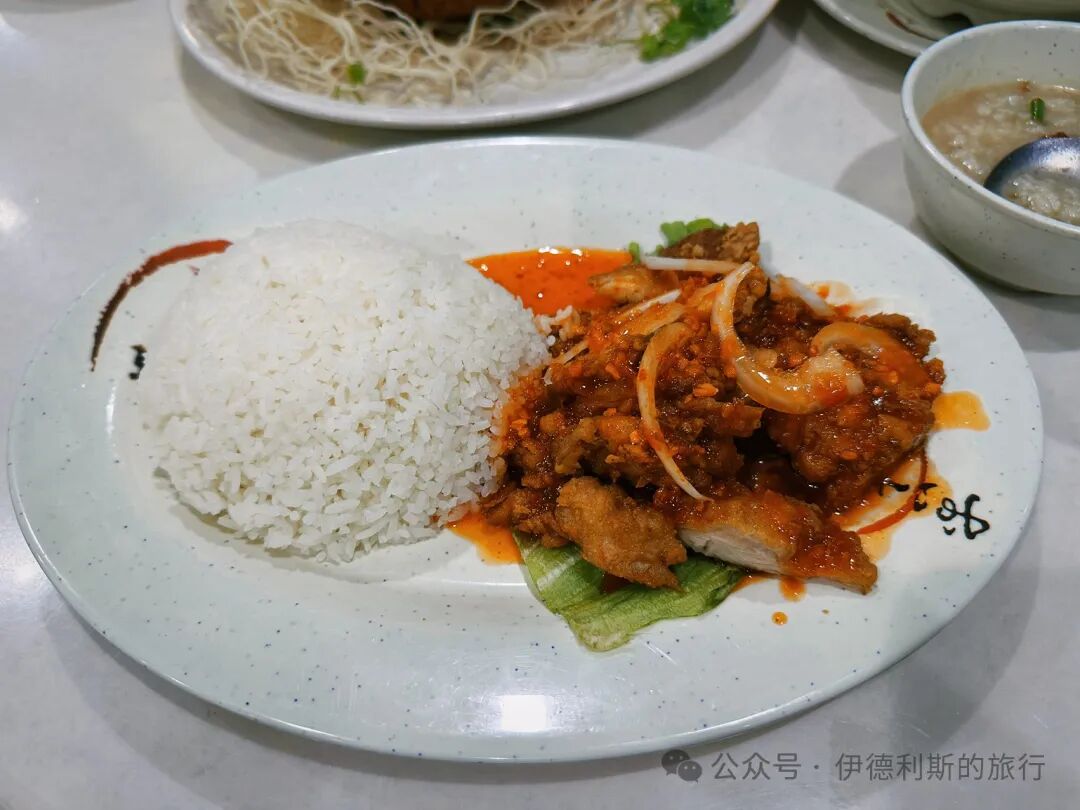
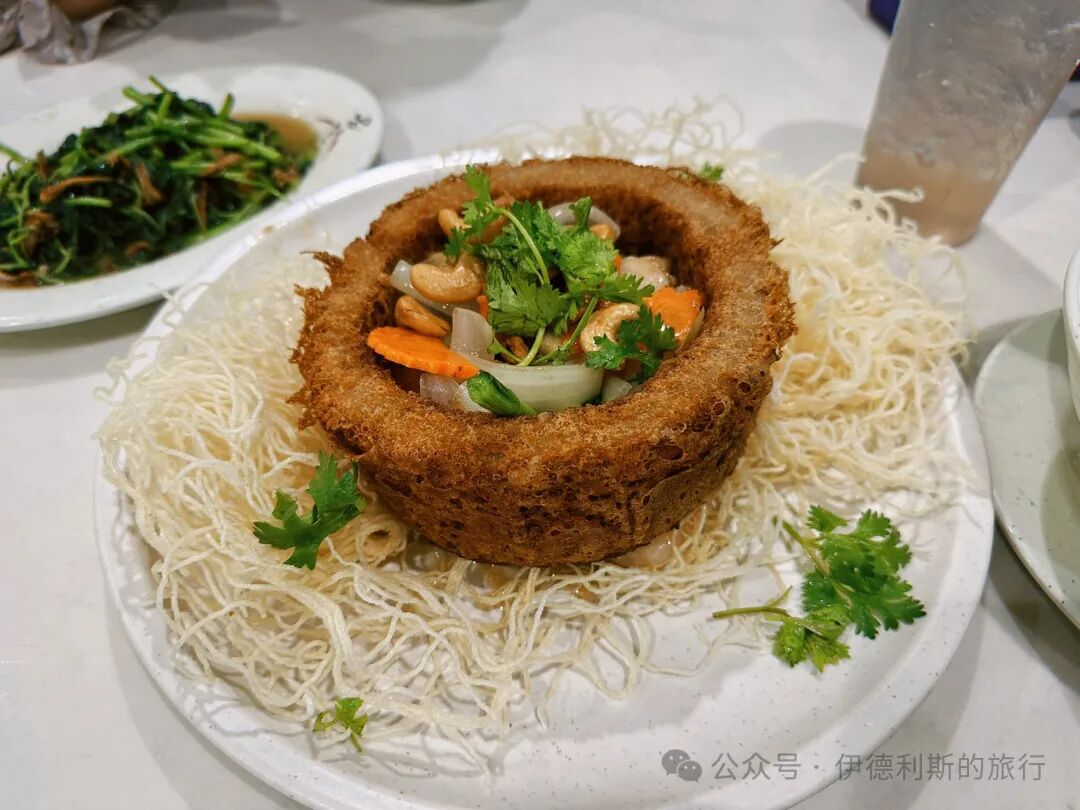
We ordered stir-fried amaranth with anchovies, chicken chop rice, beef porridge, and lemongrass water. We also ordered a classic Malaysian and Singaporean Chinese dish called Buddha's bowl (fo bo piao xiang), which is a taro ring served with cashew chicken and various vegetables. We actually picked it randomly from the menu, but it was surprisingly delicious and we finished it all very quickly.
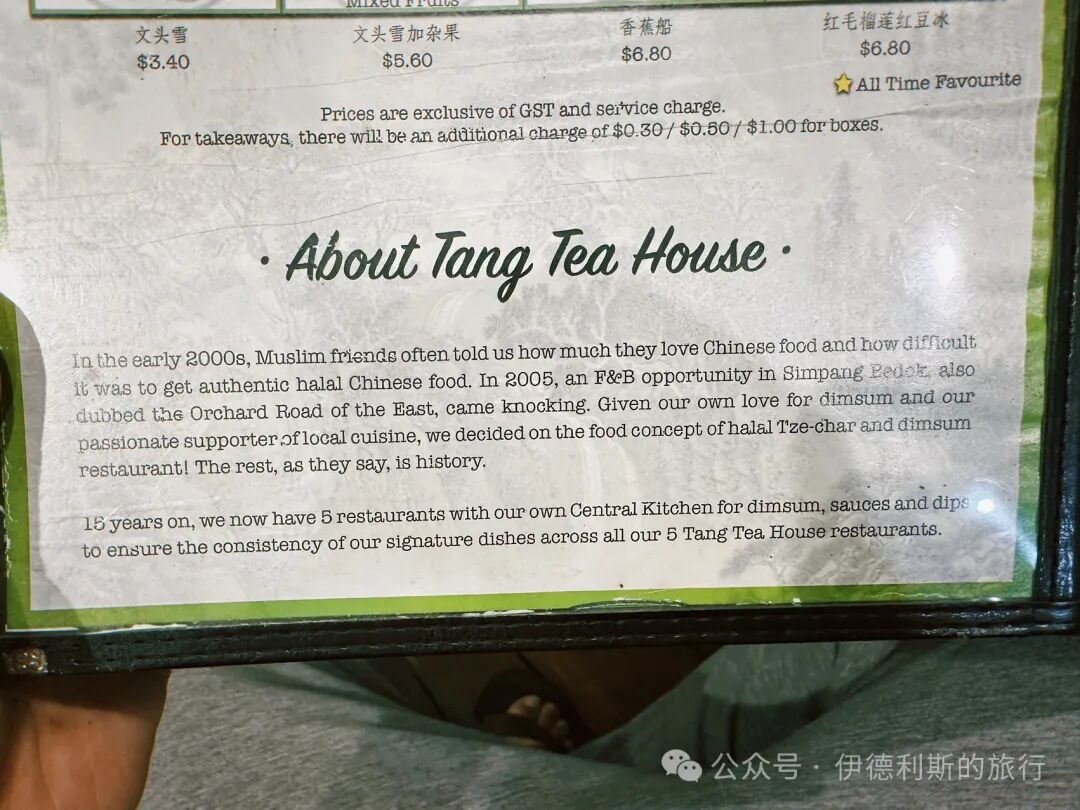
Tang Tea House opened in 2005. It started because many of the owner's Muslim friends told him they wanted to eat Chinese food but rarely found halal Chinese restaurants. He saw the opportunity and opened Tang Tea House, which has now grown to five locations and is doing very well.
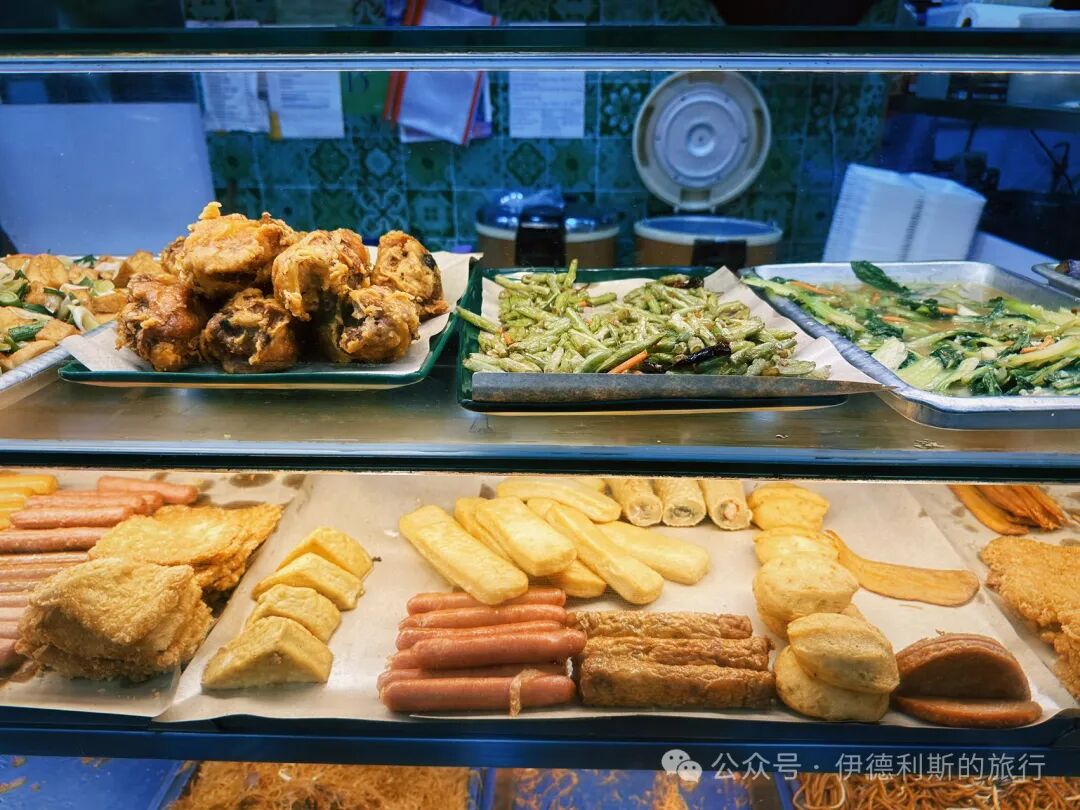
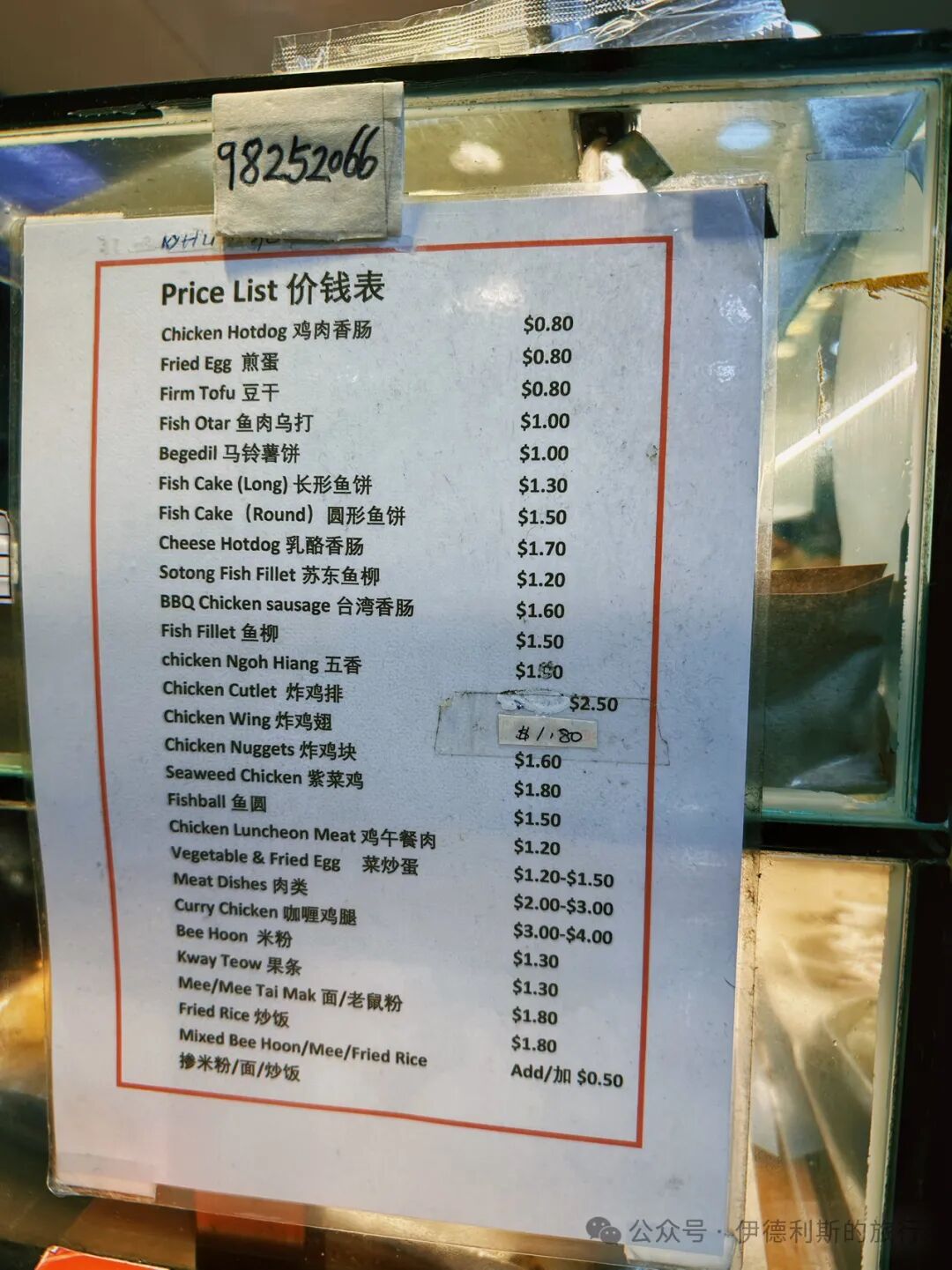
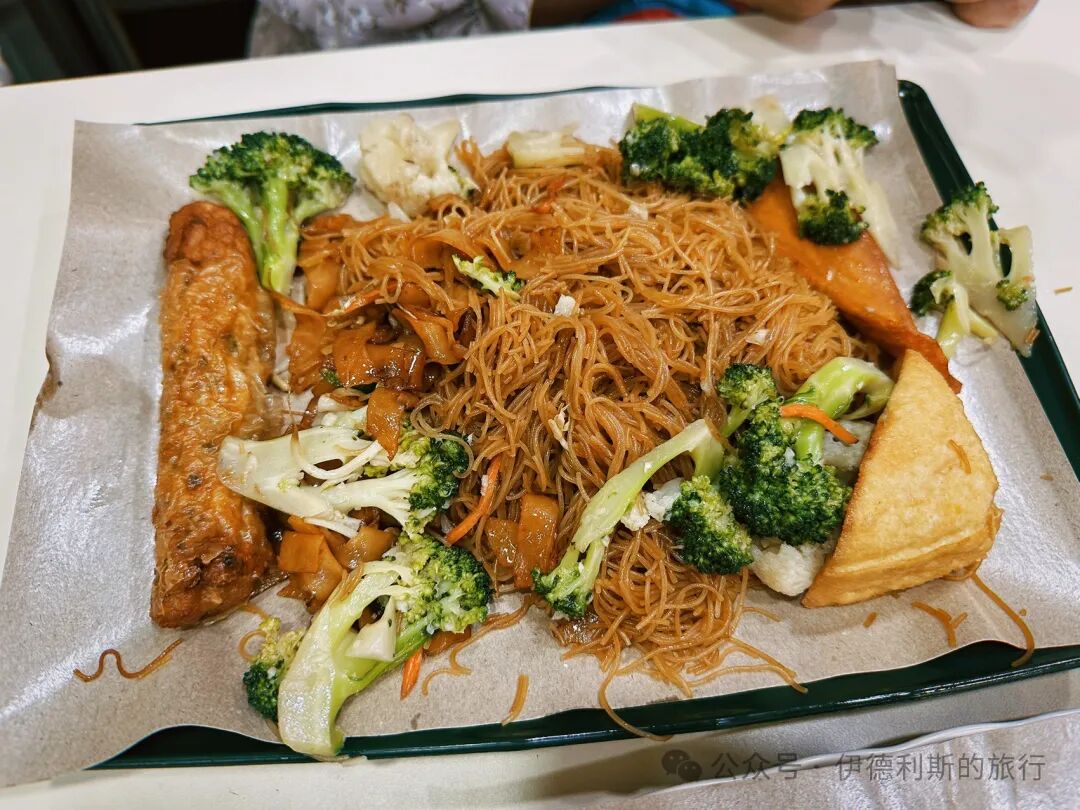
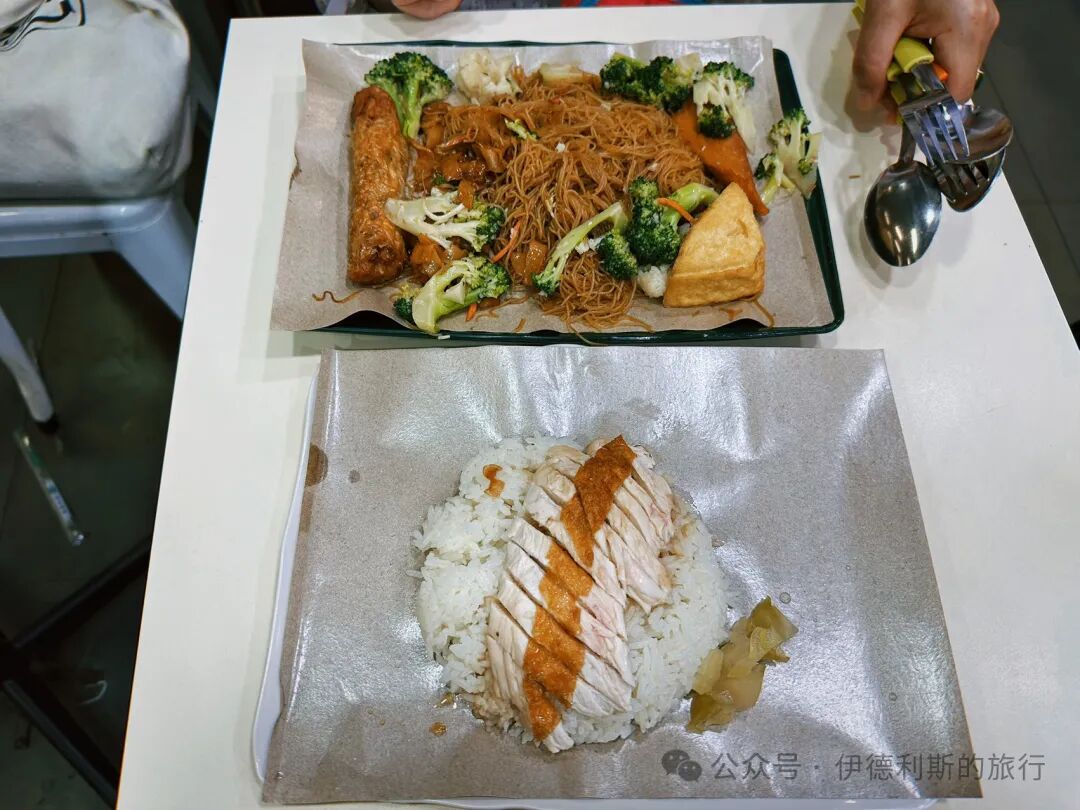
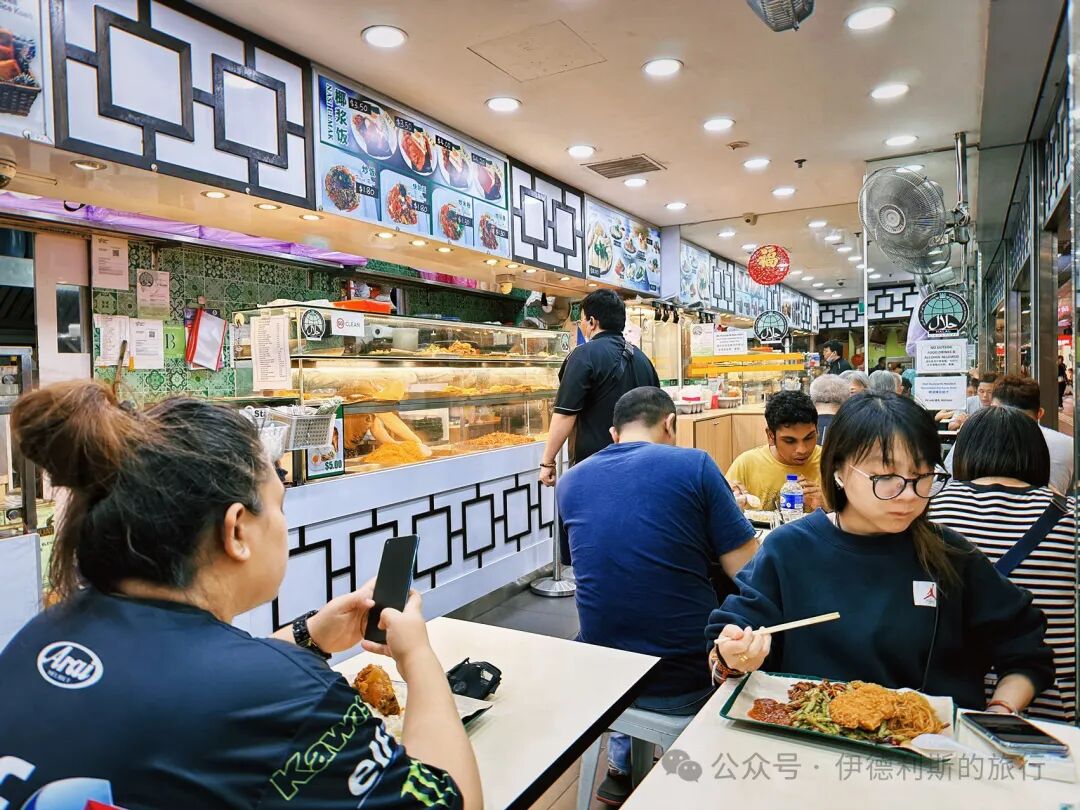
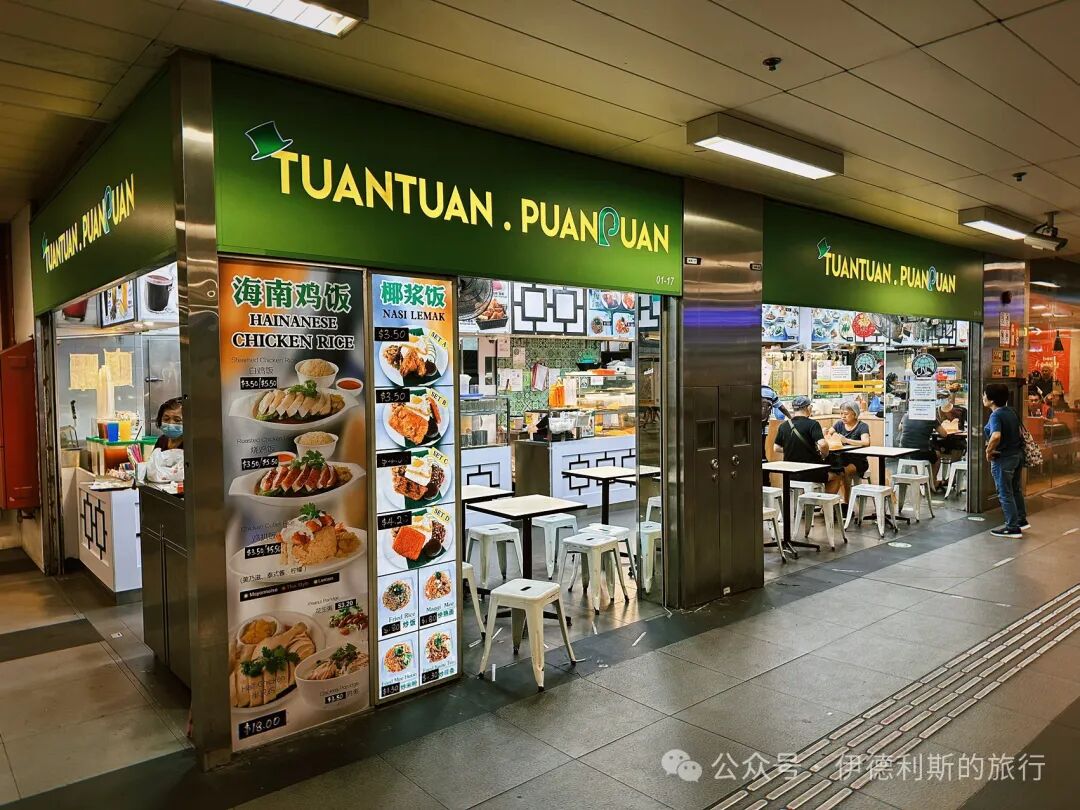
If you travel from Singapore to Johor Bahru, you can grab a quick bite at the TuanTuan. PuanPuan stall at the Woodlands MRT station while transferring. The name means 'ladies and gentlemen' in Malay. There are three stalls inside. The first sells Malay coconut milk rice (nasi lemak), the second sells stir-fried rice vermicelli and stir-fried flat rice noodles (char kway teow) where you can add fish cakes, dried tofu, or five-spice meat rolls, and the third stall sells chicken rice. However, it was quite late when we returned from Johor Bahru and many items were sold out, so we just ordered the chicken rice and stir-fried rice vermicelli. view all
Summary: This Singapore article follows the author through halal Chinese food stops after arriving in the city. It preserves the original restaurant names, dishes, prices, and food observations in clear English.
After landing at Singapore Changi Airport, I took the subway directly to Kembangan station to eat prawn noodles at the famous Chinese Muslim restaurant Deanna's Kitchen, which is the most famous halal prawn noodle spot in Singapore.
The restaurant owner, Denise Chew (also known as Deanna), converted to Islam in 2009 when she married her husband, Asri Ramili, and prawn noodles were her favorite food before she converted. Because traditional Chinese prawn noodles are made with pork bone broth, pork meat, and lard, it took her six years to develop a halal version. Deanna makes the broth by simmering chicken bones, prawn shells, dried shrimp, and anchovies for three hours, and the resulting noodles are so popular that she started selling them online.
Deanna and her husband Asri both worked in banking, but as the prawn noodle business grew, Asri quit his job in 2017 to open a noodle stall. The stall soon had long lines and sold out early every day. That is how the physical Deanna's Kitchen shops opened, and now there is one in Jurong East and one in Kembangan.
They serve regular prawn noodles and a hearty seafood platter. We ordered the top-tier version, which includes one Boston lobster, five tiger prawns, five large prawns, one crayfish, and 20 clams. You can choose different sides and noodles like yellow noodles, laksa noodles, rice vermicelli, or flat rice noodles (kway teow). We chose laksa noodles.
We visited Jason Niang Dou Fu in Kampong Glam to taste traditional Hakka stuffed vegetables. In the Hakka dialect, 'niang' means to fill with stuffing. Legend has it that after the Hakka people migrated south from the Central Plains, they wanted to eat dumplings but had no wheat, so they used tofu instead of flour and invented stuffed tofu (niang dou fu). Besides stuffed tofu, the Hakka are good at using local ingredients. Many foods can be stuffed, such as chili peppers, eggplants, bitter melons, and taro. Tofu, eggplant, and bitter melon are known as the 'three stuffed treasures' (jian niang san bao).
Jason Niang Dou Fu is a bit like a spicy hot pot (malatang) shop in China, where you can pick your own stuffed vegetables and greens from the counter. You can also choose staples like flat rice noodles (kway teow), rice vermicelli, or egg noodles (mian zai). The Teochew taro rice (Yam Rice) and Teochew dry egg noodles (Mee Pok) are both worth a try.
The Dim Sum Place is a very famous halal Hong Kong-style tea restaurant in Singapore, specializing in a wide variety of dim sum and Cantonese dishes. They opened on North Bridge Road in Kampong Glam in 2016 and now have two more branches, making them very popular with Muslims.
We ordered steamed chicken feet in sauce, shrimp and chicken steamed dumplings (shaomai), roasted chicken char siu rice noodle rolls (cheong fun), fish fillet porridge, and pu'er tea. Since we were there for afternoon tea and not a full meal, there was still a lot we wanted to try but didn't order. We liked the fish fillet porridge the best, and the chicken feet and shaomai were okay, but the rice noodle rolls were just average; they felt too soft and lacked texture.
If you visit the National Museum of Singapore and Fort Canning Park, it is well worth stopping by the nearby MacKenzie Rex Restaurant to try their authentic halal Hainanese chicken rice. MacKenzie Rex Restaurant opened in 1966. It is the first and most famous halal Hainanese chicken rice restaurant in Singapore. The owner is a Hainanese Chinese person who speaks great Mandarin and is very happy to introduce the dishes to guests. Besides Hainanese chicken rice, they are also good at making various home-style Chinese dishes, known in Singapore as zi char (home-style stir-fry).
We ordered the classic chicken rice and five-spice meat rolls (ngor hiang), along with stir-fried mixed vegetables and fish soup. Everything was delicious, and it was arguably the best meal of our Singapore trip. The best part of their chicken rice is not the chicken itself, but the rice steamed with chicken fat. You can eat it plain and never want to stop. The halal version of the five-spice meat roll is made by adding five-spice powder to chicken filling, wrapping it in bean curd skin, and deep-frying it. It is very fragrant when freshly fried.
If you take a half-day trip to Pulau Ubin in Singapore, it is perfect to have a meal at the halal tea restaurant Tang Tea House next to the Changi Point Ferry Terminal. They serve authentic halal Chinese stir-fry (tze-char) and dim sum with a huge variety of choices.
We ordered stir-fried amaranth with anchovies, chicken chop rice, beef porridge, and lemongrass water. We also ordered a classic Malaysian and Singaporean Chinese dish called Buddha's bowl (fo bo piao xiang), which is a taro ring served with cashew chicken and various vegetables. We actually picked it randomly from the menu, but it was surprisingly delicious and we finished it all very quickly.
Tang Tea House opened in 2005. It started because many of the owner's Muslim friends told him they wanted to eat Chinese food but rarely found halal Chinese restaurants. He saw the opportunity and opened Tang Tea House, which has now grown to five locations and is doing very well.
If you travel from Singapore to Johor Bahru, you can grab a quick bite at the TuanTuan. PuanPuan stall at the Woodlands MRT station while transferring. The name means 'ladies and gentlemen' in Malay. There are three stalls inside. The first sells Malay coconut milk rice (nasi lemak), the second sells stir-fried rice vermicelli and stir-fried flat rice noodles (char kway teow) where you can add fish cakes, dried tofu, or five-spice meat rolls, and the third stall sells chicken rice. However, it was quite late when we returned from Johor Bahru and many items were sold out, so we just ordered the chicken rice and stir-fried rice vermicelli. view all
Reposted from the web
Summary: This Singapore article follows the author through halal Chinese food stops after arriving in the city. It preserves the original restaurant names, dishes, prices, and food observations in clear English.
After landing at Singapore Changi Airport, I took the subway directly to Kembangan station to eat prawn noodles at the famous Chinese Muslim restaurant Deanna's Kitchen, which is the most famous halal prawn noodle spot in Singapore.
The restaurant owner, Denise Chew (also known as Deanna), converted to Islam in 2009 when she married her husband, Asri Ramili, and prawn noodles were her favorite food before she converted. Because traditional Chinese prawn noodles are made with pork bone broth, pork meat, and lard, it took her six years to develop a halal version. Deanna makes the broth by simmering chicken bones, prawn shells, dried shrimp, and anchovies for three hours, and the resulting noodles are so popular that she started selling them online.
Deanna and her husband Asri both worked in banking, but as the prawn noodle business grew, Asri quit his job in 2017 to open a noodle stall. The stall soon had long lines and sold out early every day. That is how the physical Deanna's Kitchen shops opened, and now there is one in Jurong East and one in Kembangan.
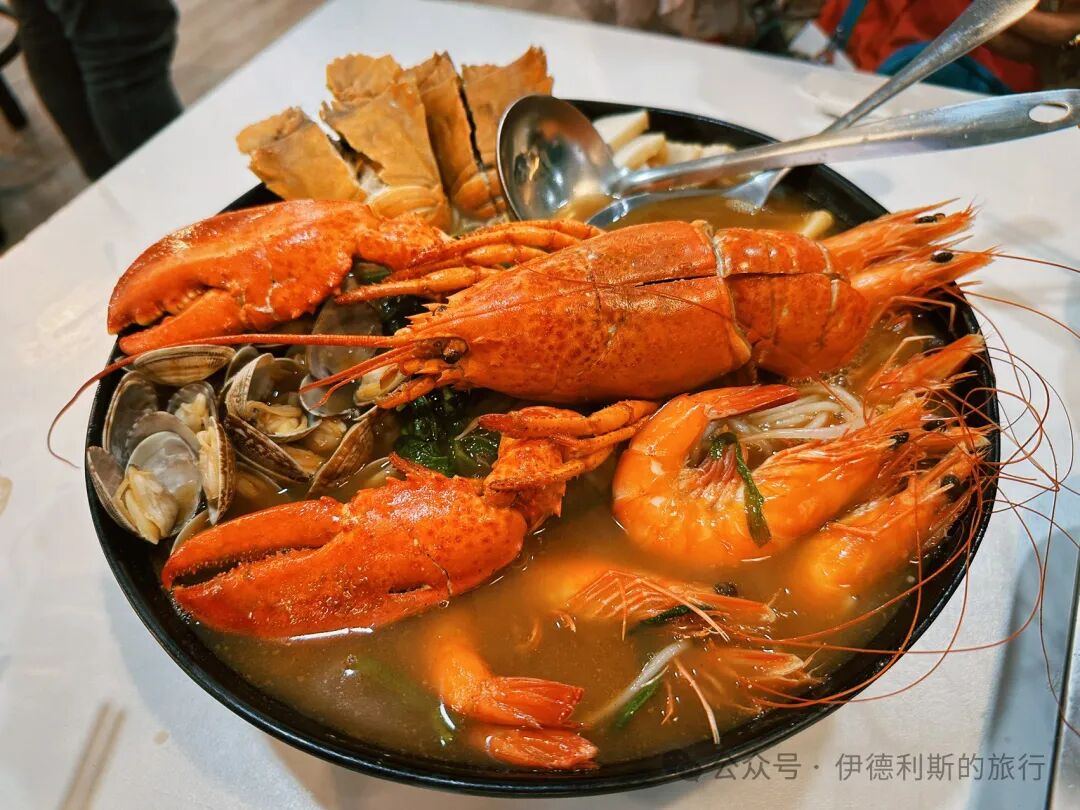
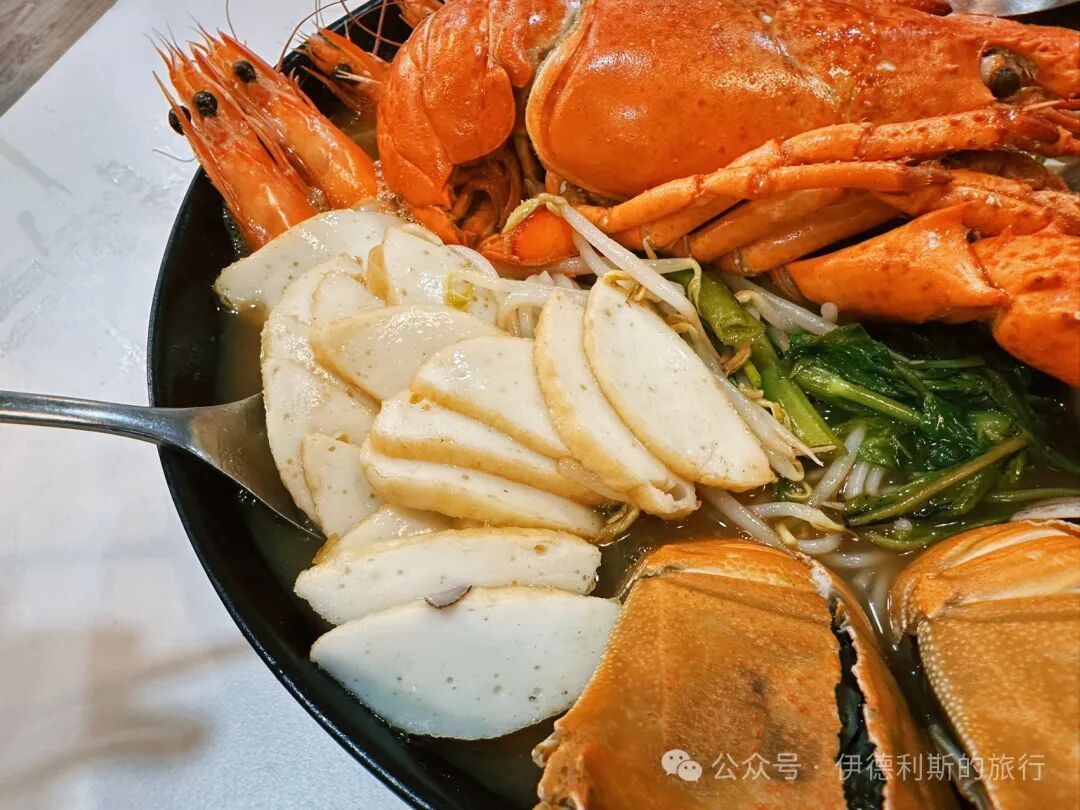
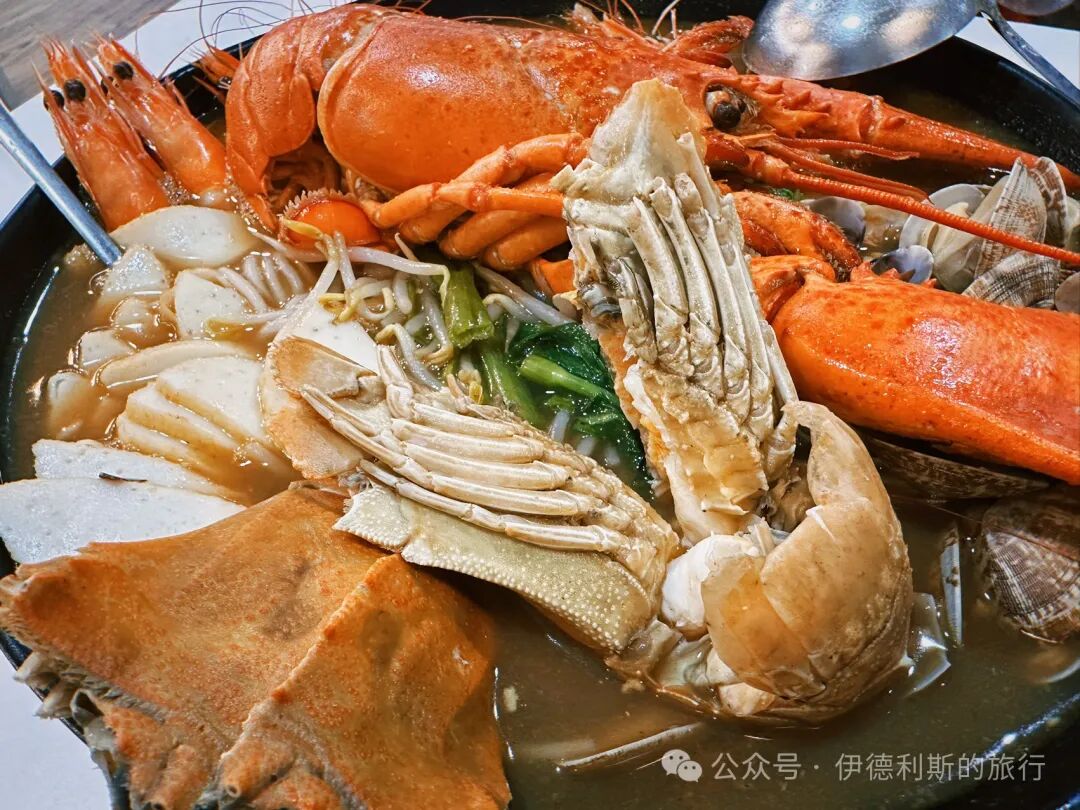
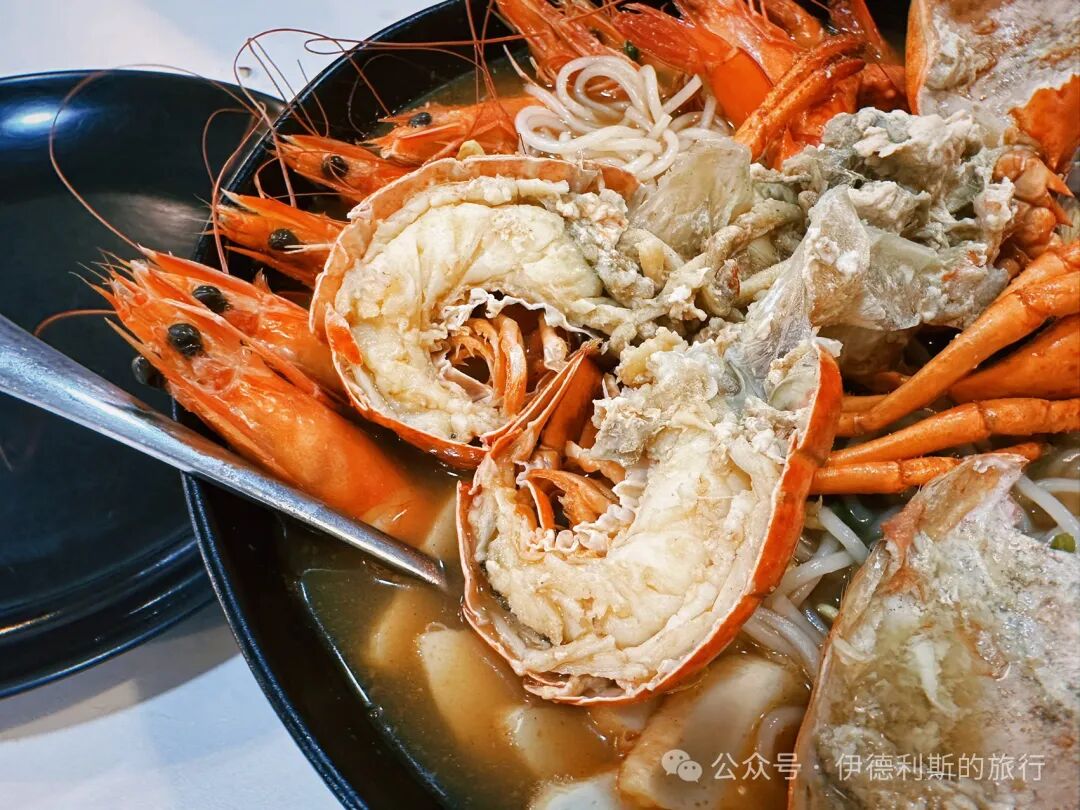
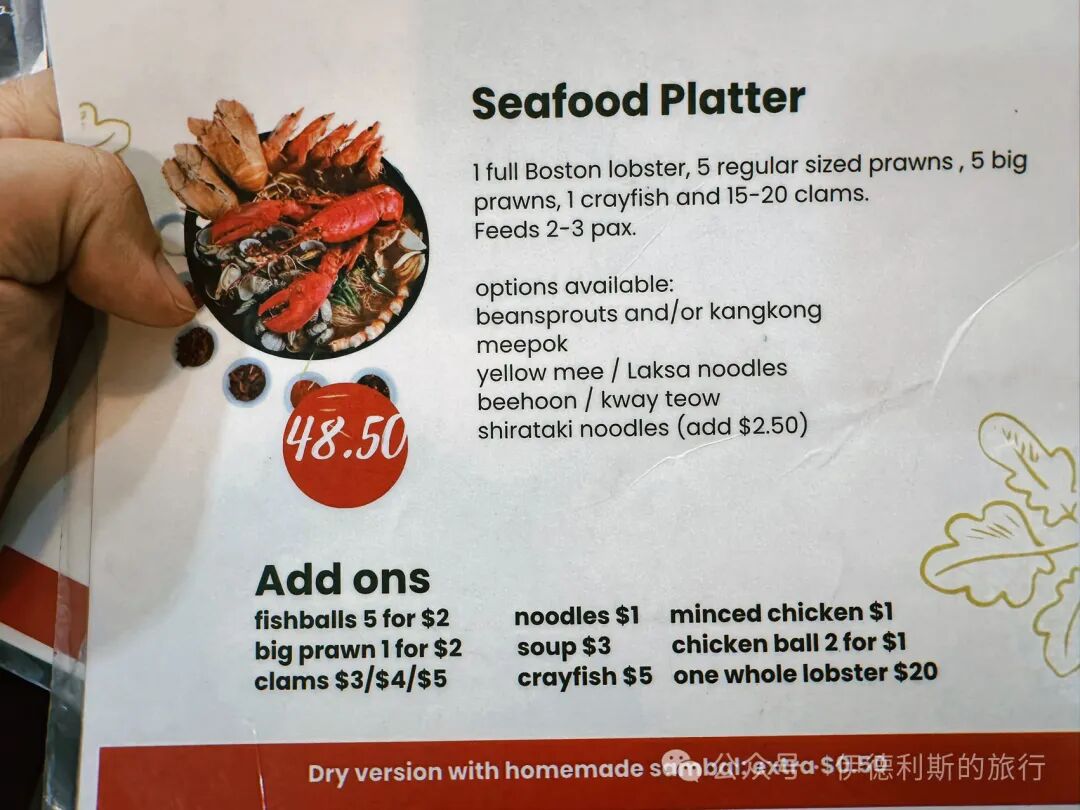
They serve regular prawn noodles and a hearty seafood platter. We ordered the top-tier version, which includes one Boston lobster, five tiger prawns, five large prawns, one crayfish, and 20 clams. You can choose different sides and noodles like yellow noodles, laksa noodles, rice vermicelli, or flat rice noodles (kway teow). We chose laksa noodles.
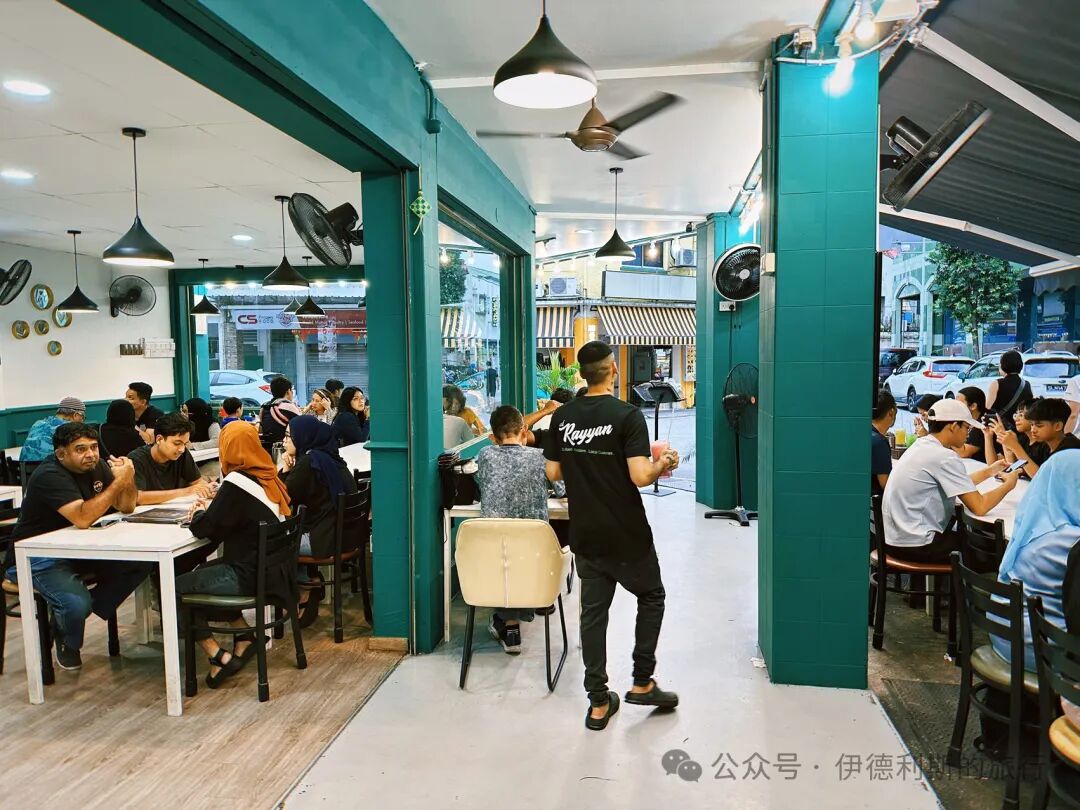
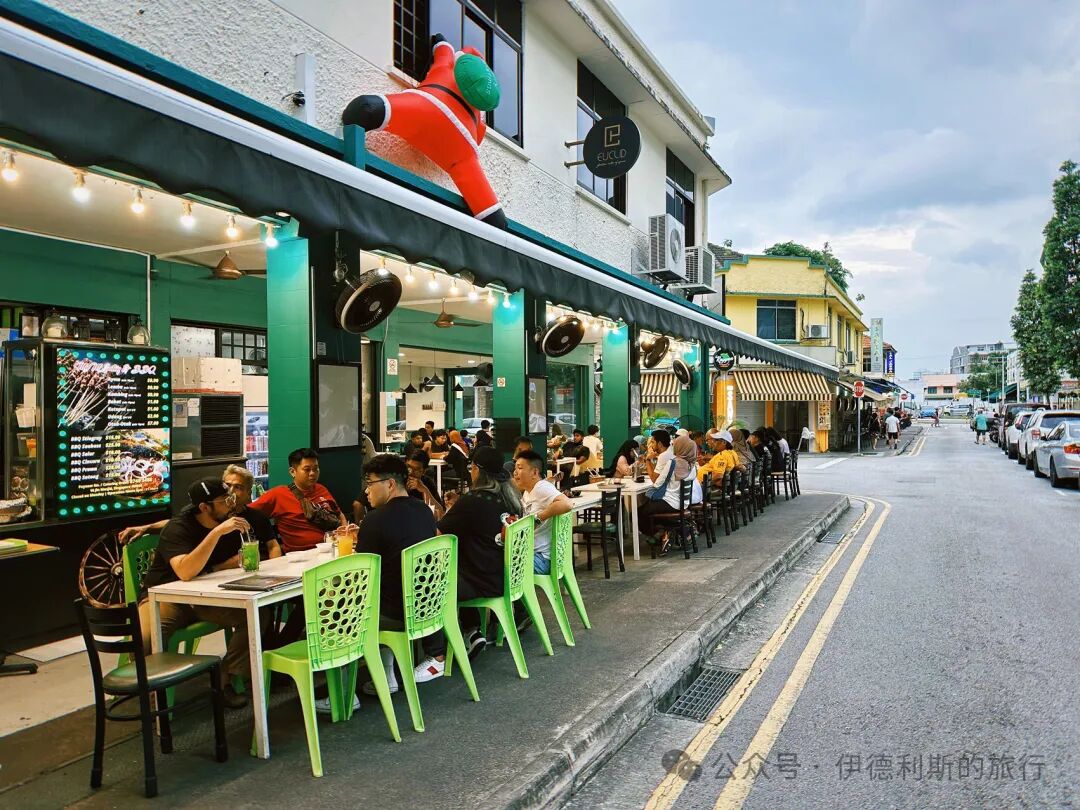
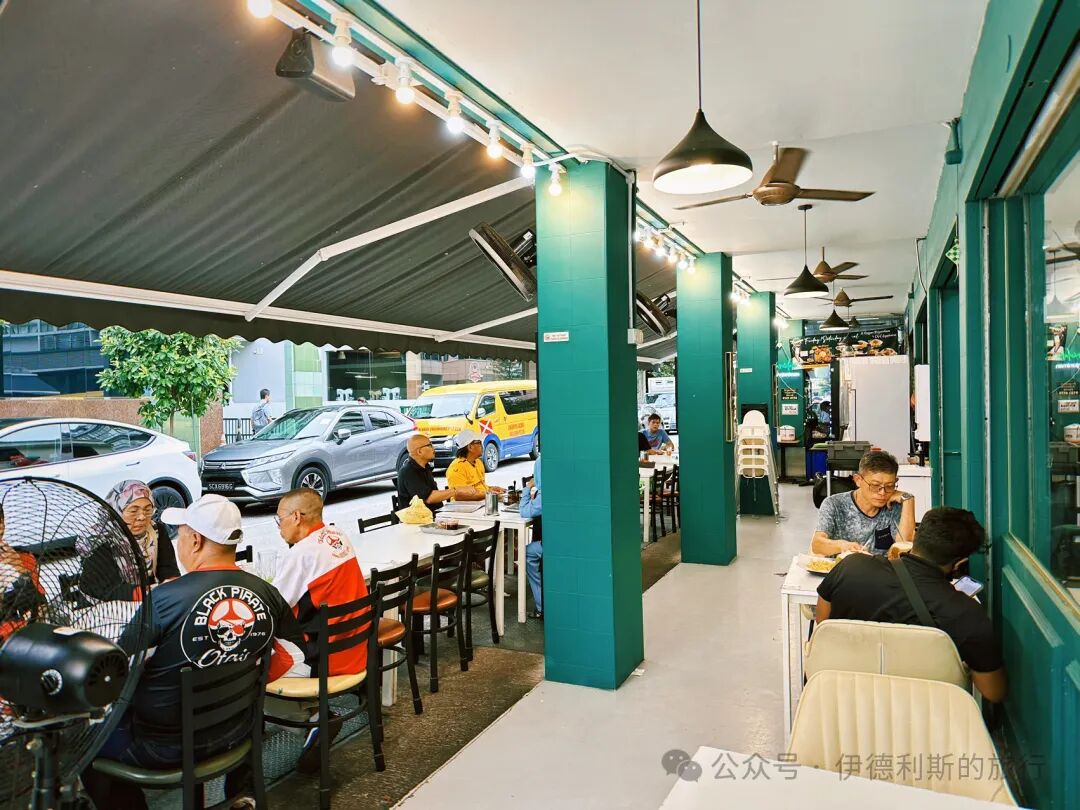
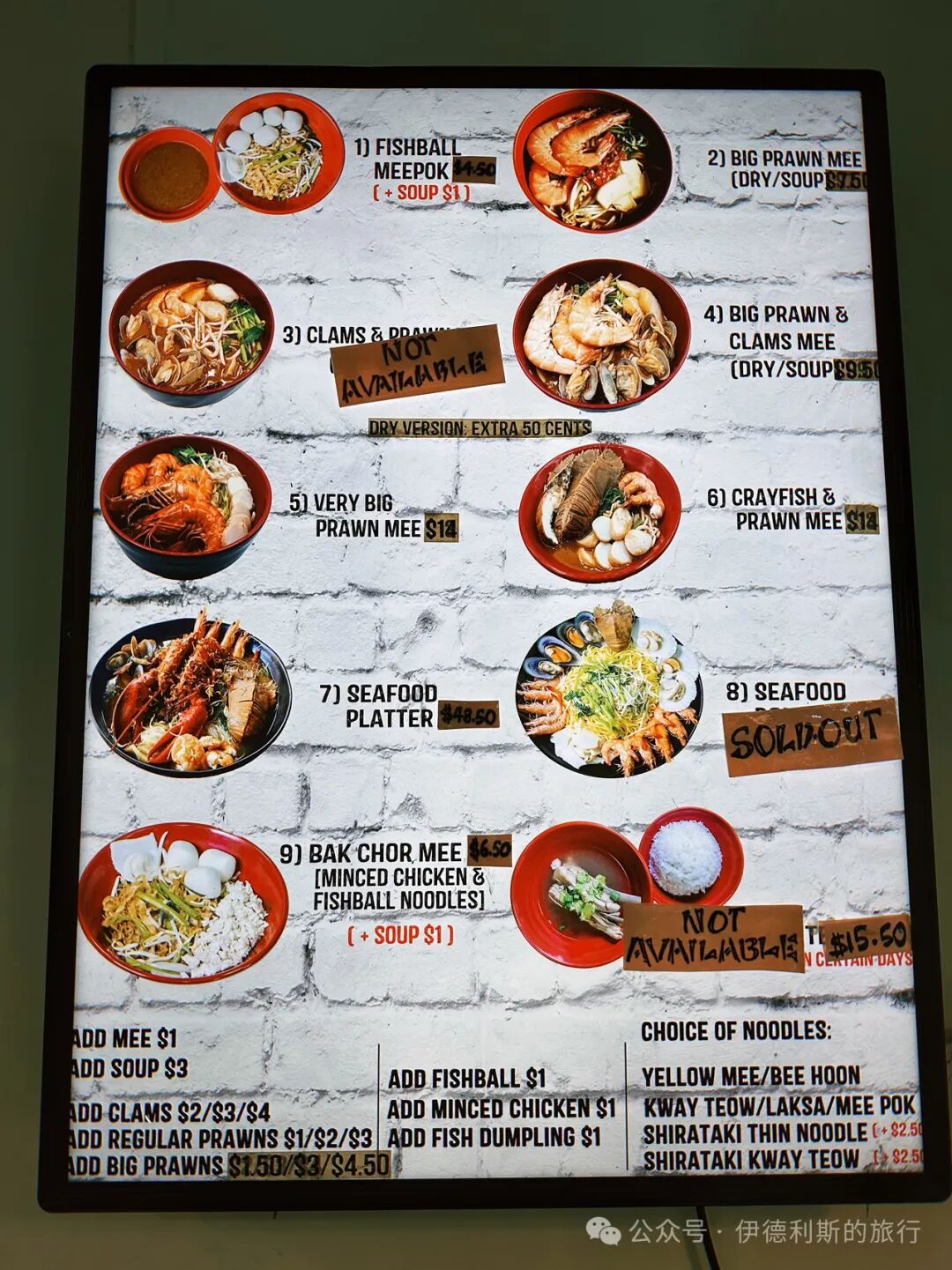
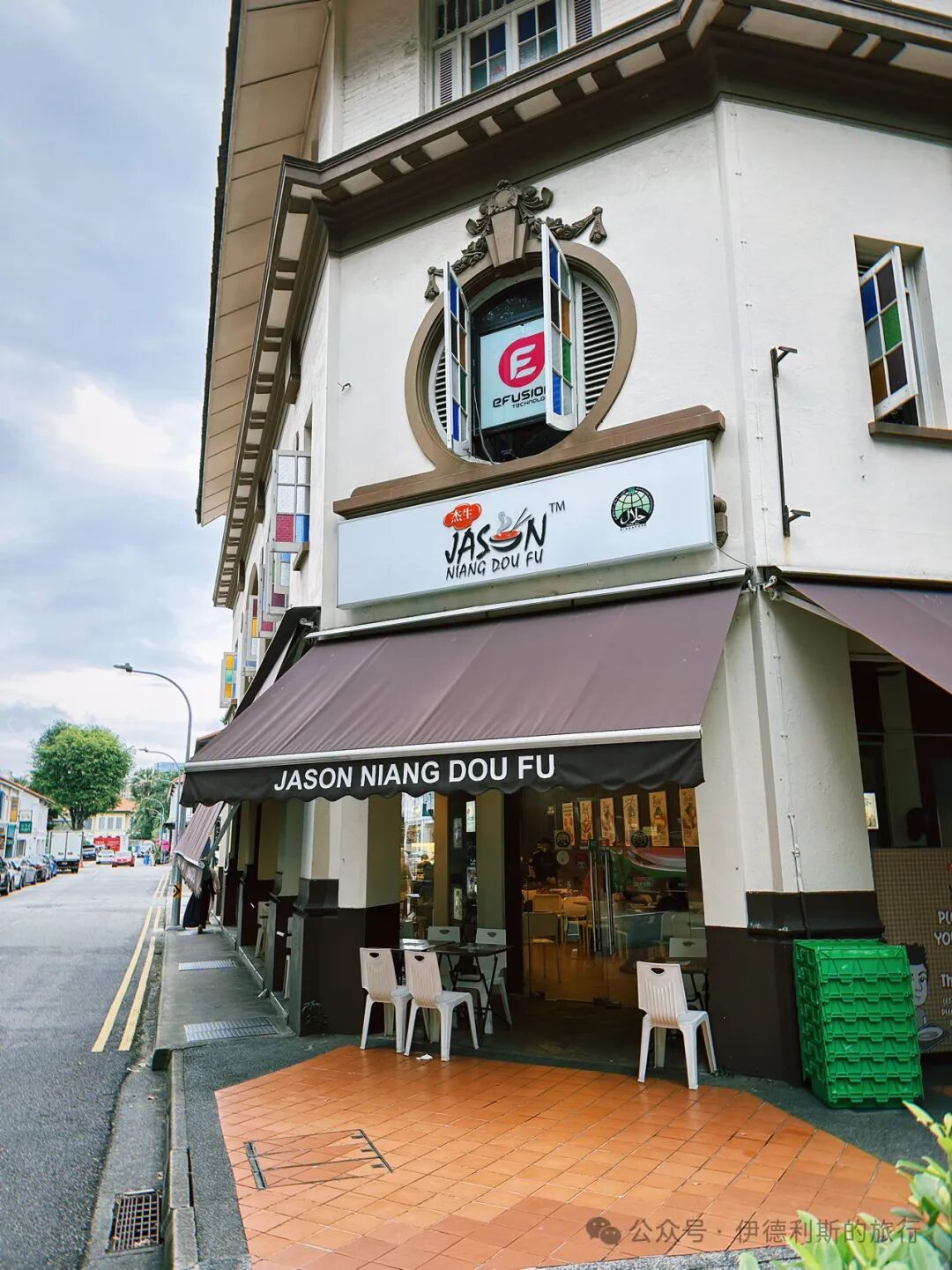
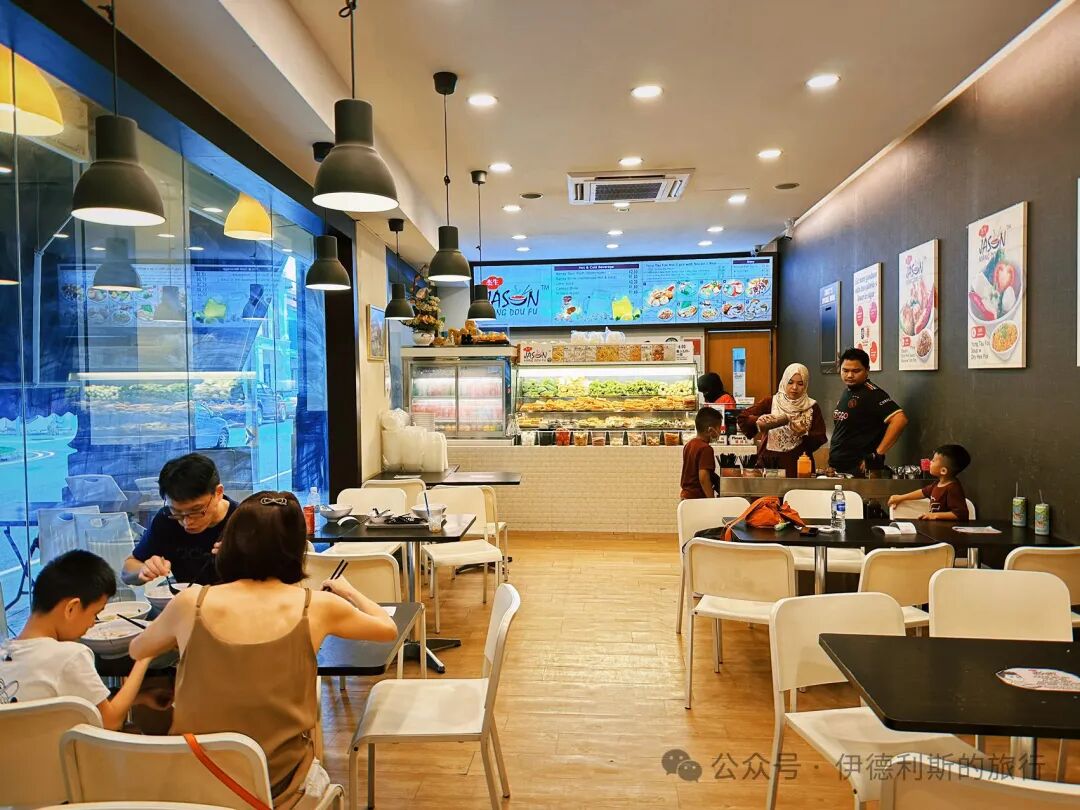
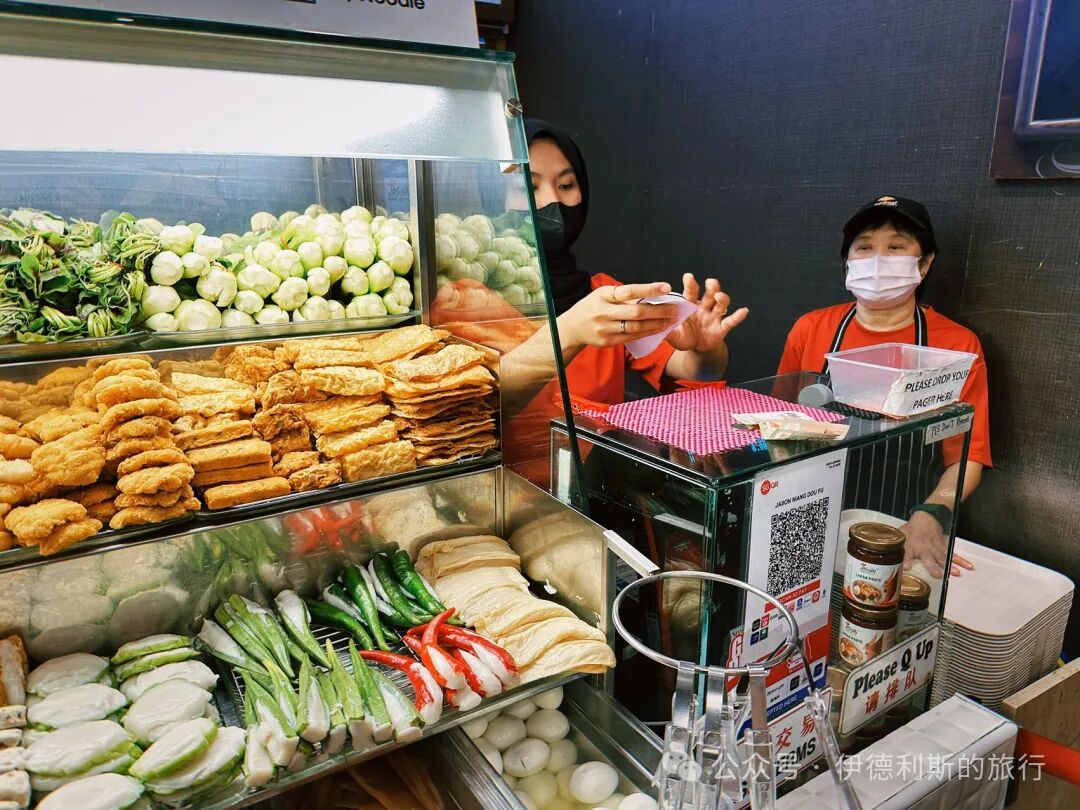
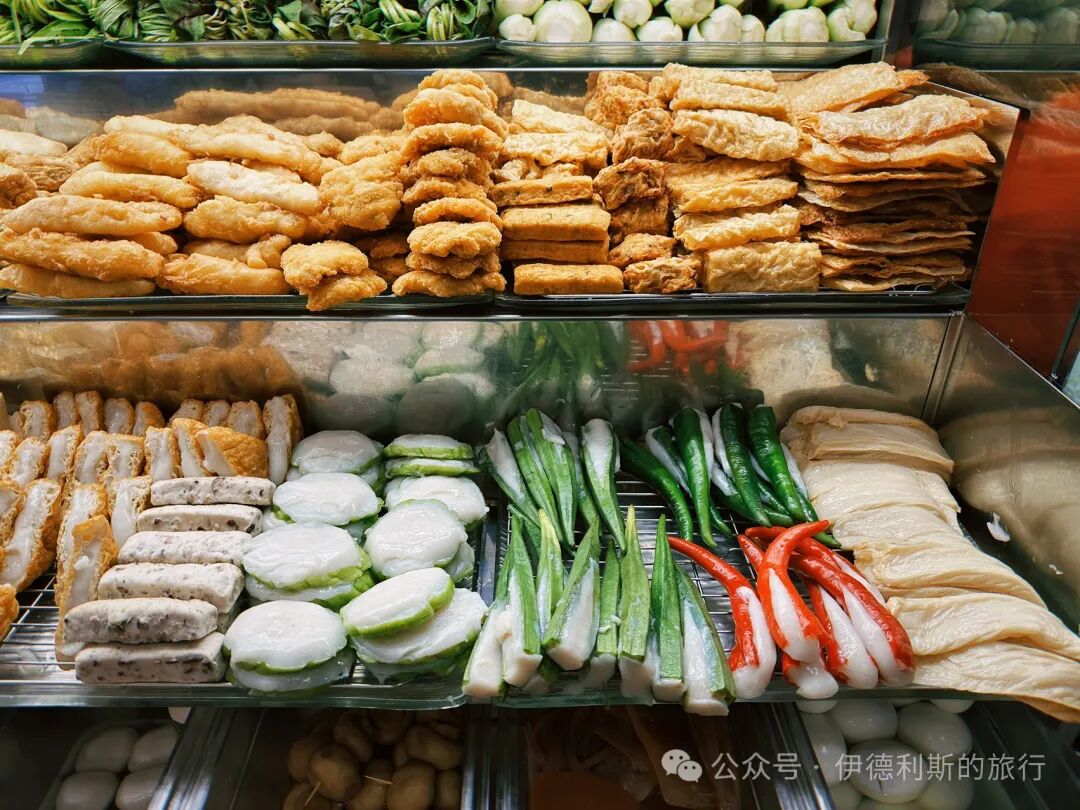
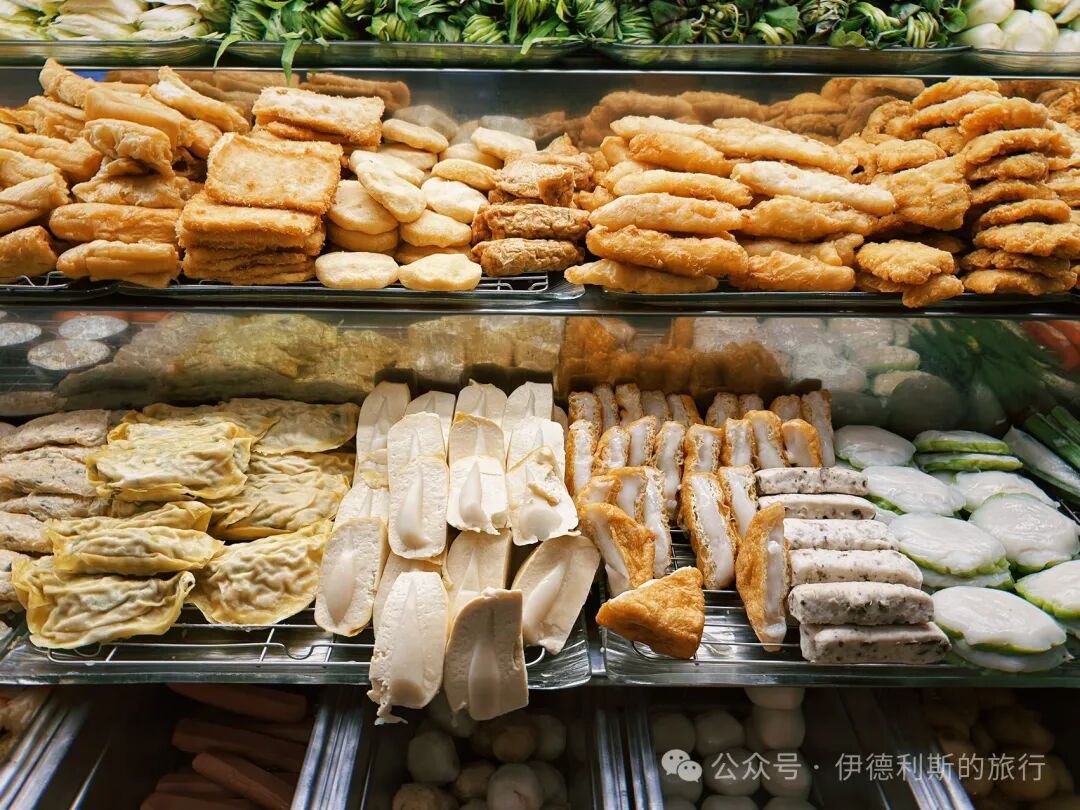
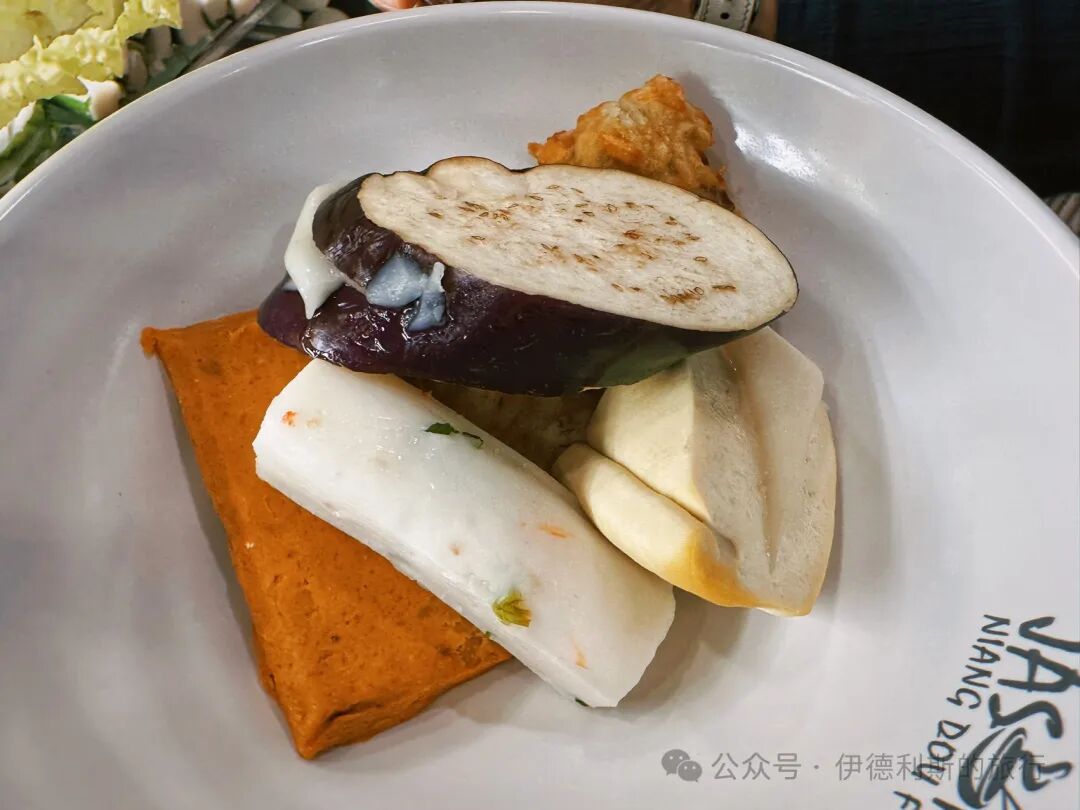
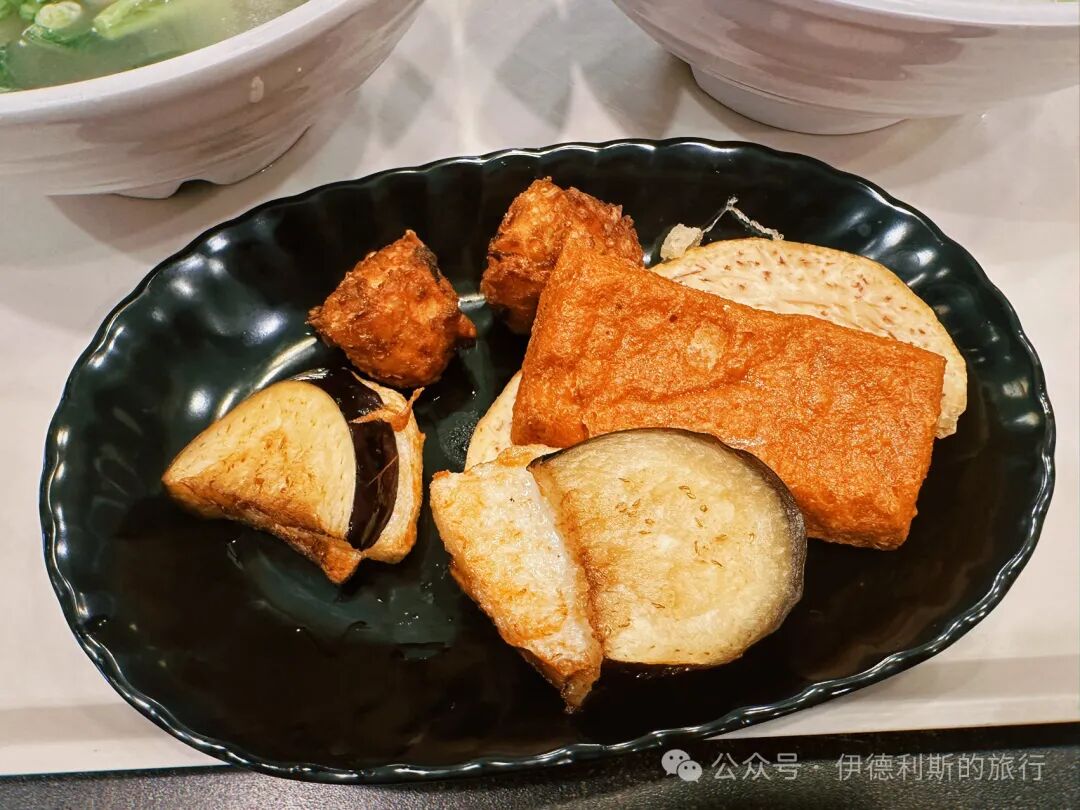
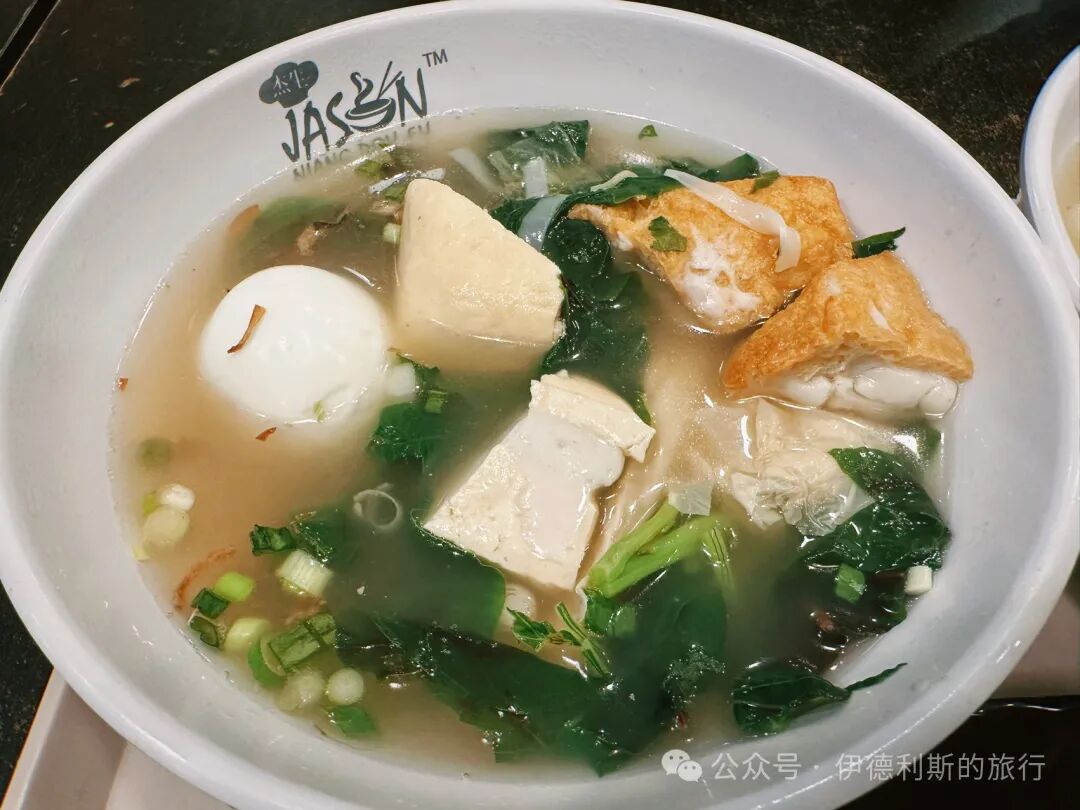
We visited Jason Niang Dou Fu in Kampong Glam to taste traditional Hakka stuffed vegetables. In the Hakka dialect, 'niang' means to fill with stuffing. Legend has it that after the Hakka people migrated south from the Central Plains, they wanted to eat dumplings but had no wheat, so they used tofu instead of flour and invented stuffed tofu (niang dou fu). Besides stuffed tofu, the Hakka are good at using local ingredients. Many foods can be stuffed, such as chili peppers, eggplants, bitter melons, and taro. Tofu, eggplant, and bitter melon are known as the 'three stuffed treasures' (jian niang san bao).
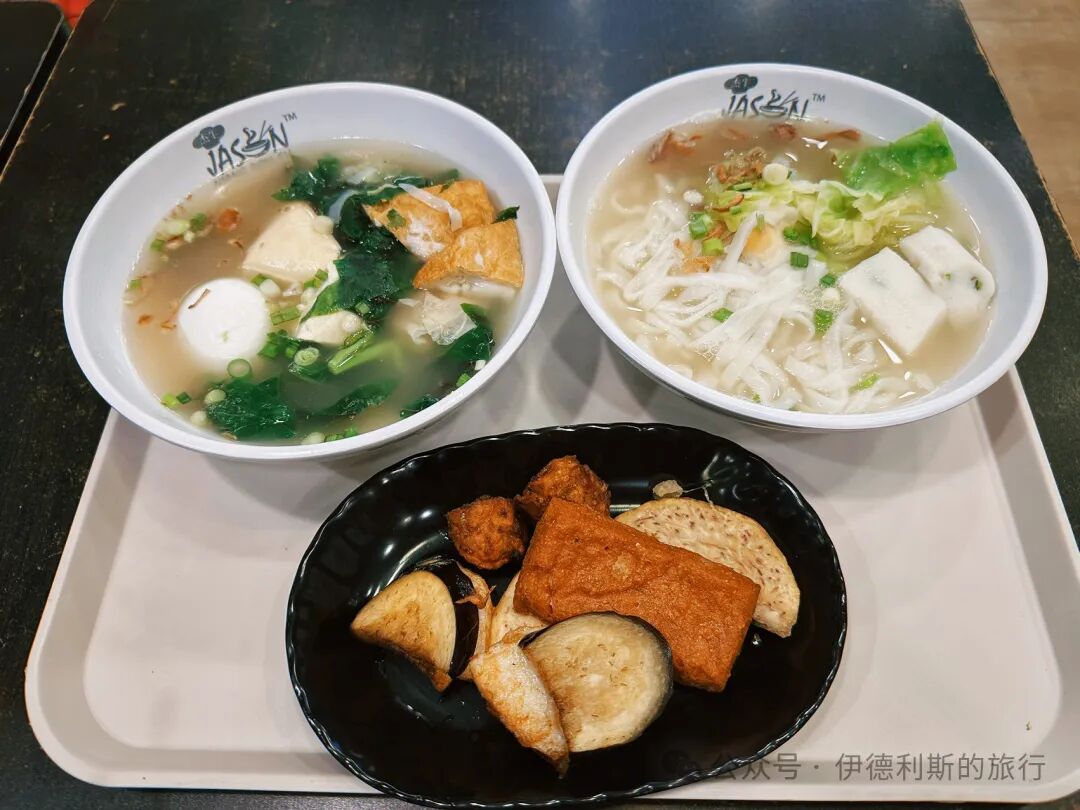
Jason Niang Dou Fu is a bit like a spicy hot pot (malatang) shop in China, where you can pick your own stuffed vegetables and greens from the counter. You can also choose staples like flat rice noodles (kway teow), rice vermicelli, or egg noodles (mian zai). The Teochew taro rice (Yam Rice) and Teochew dry egg noodles (Mee Pok) are both worth a try.
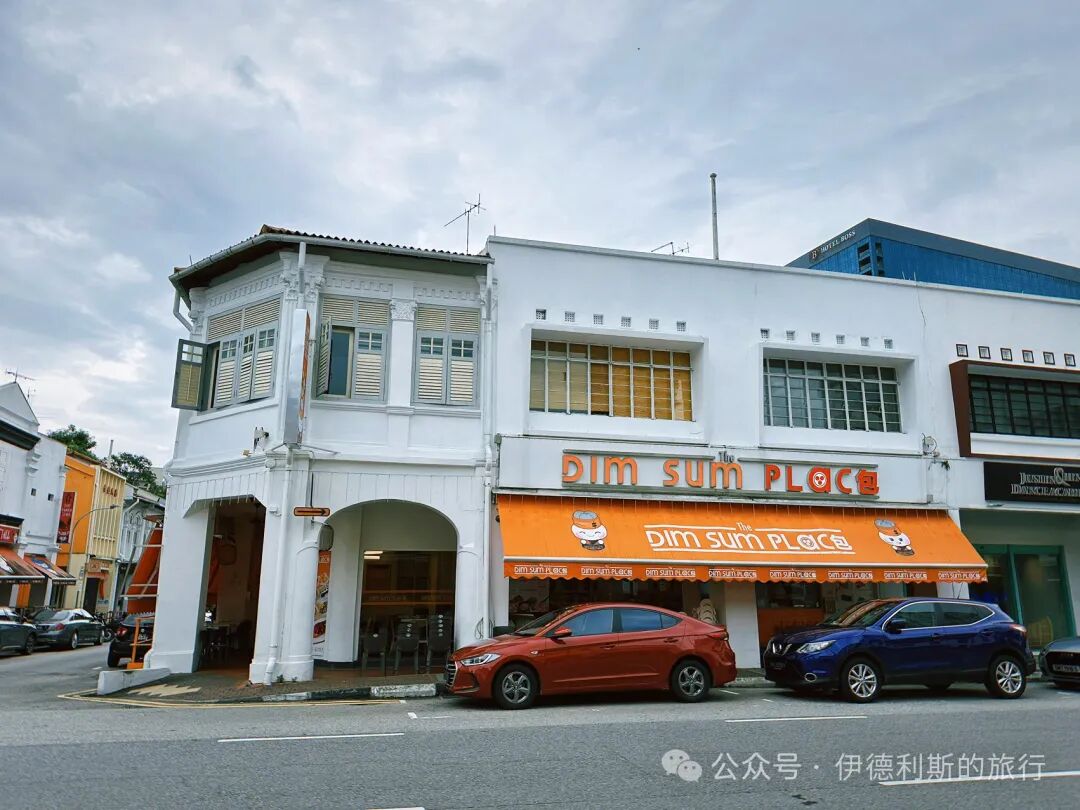
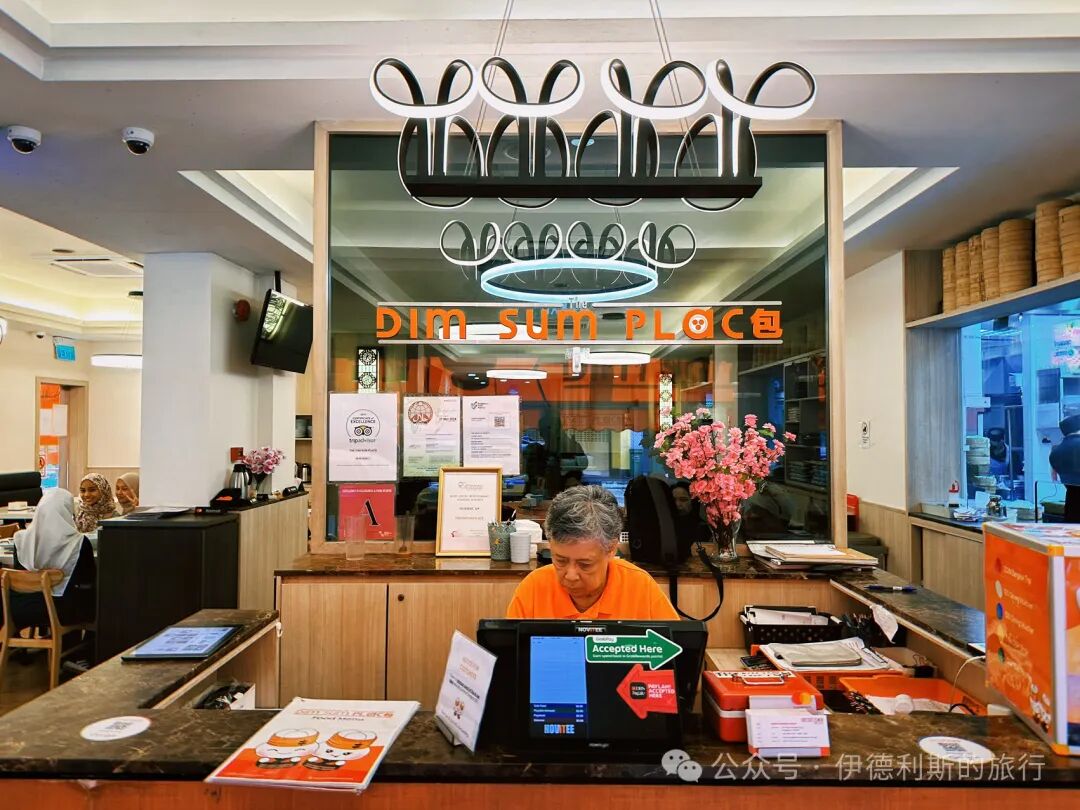
The Dim Sum Place is a very famous halal Hong Kong-style tea restaurant in Singapore, specializing in a wide variety of dim sum and Cantonese dishes. They opened on North Bridge Road in Kampong Glam in 2016 and now have two more branches, making them very popular with Muslims.
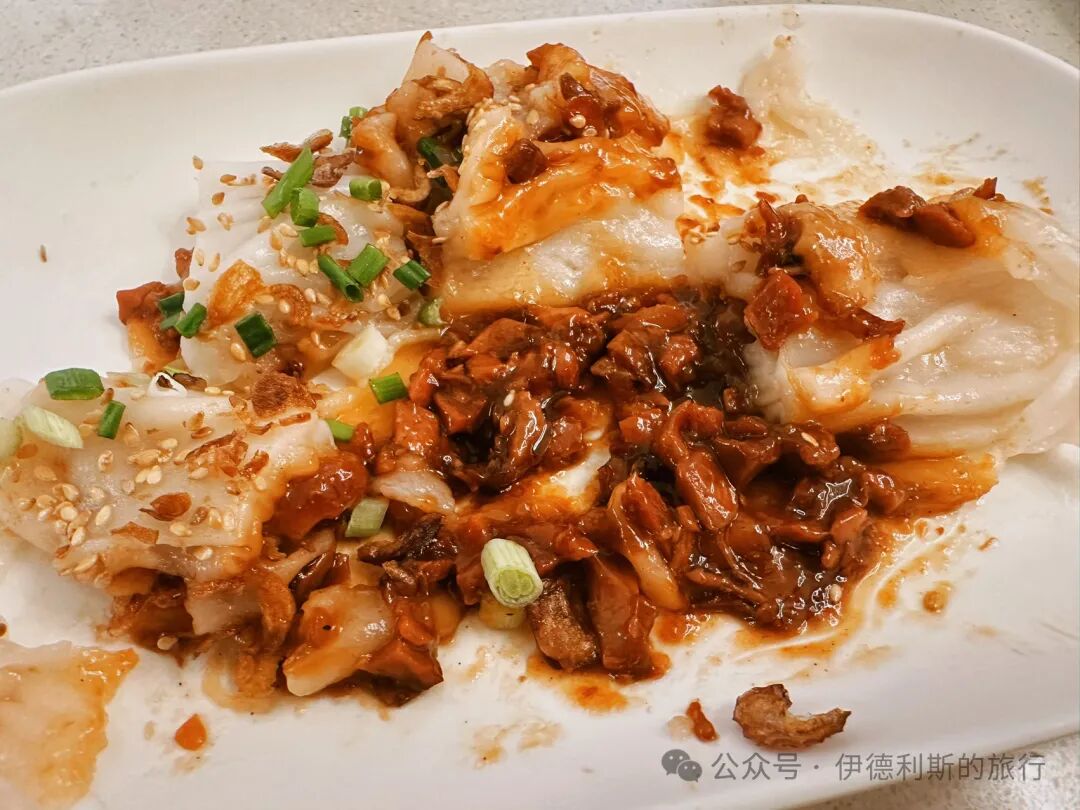
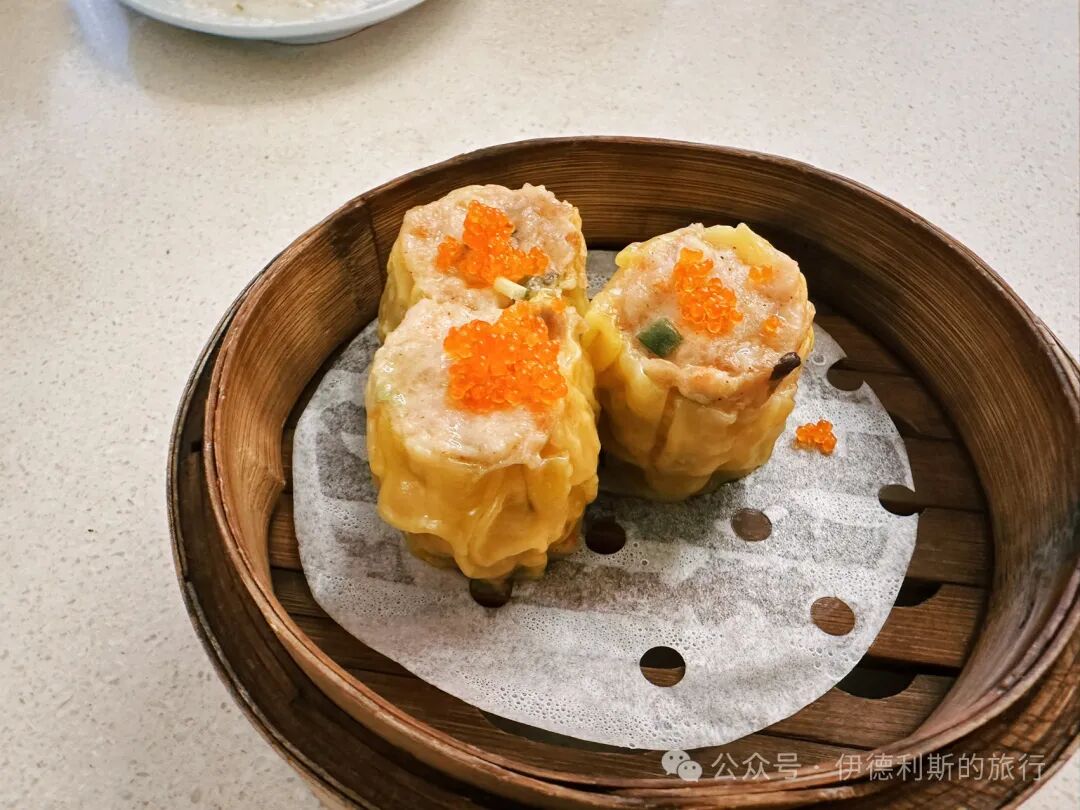
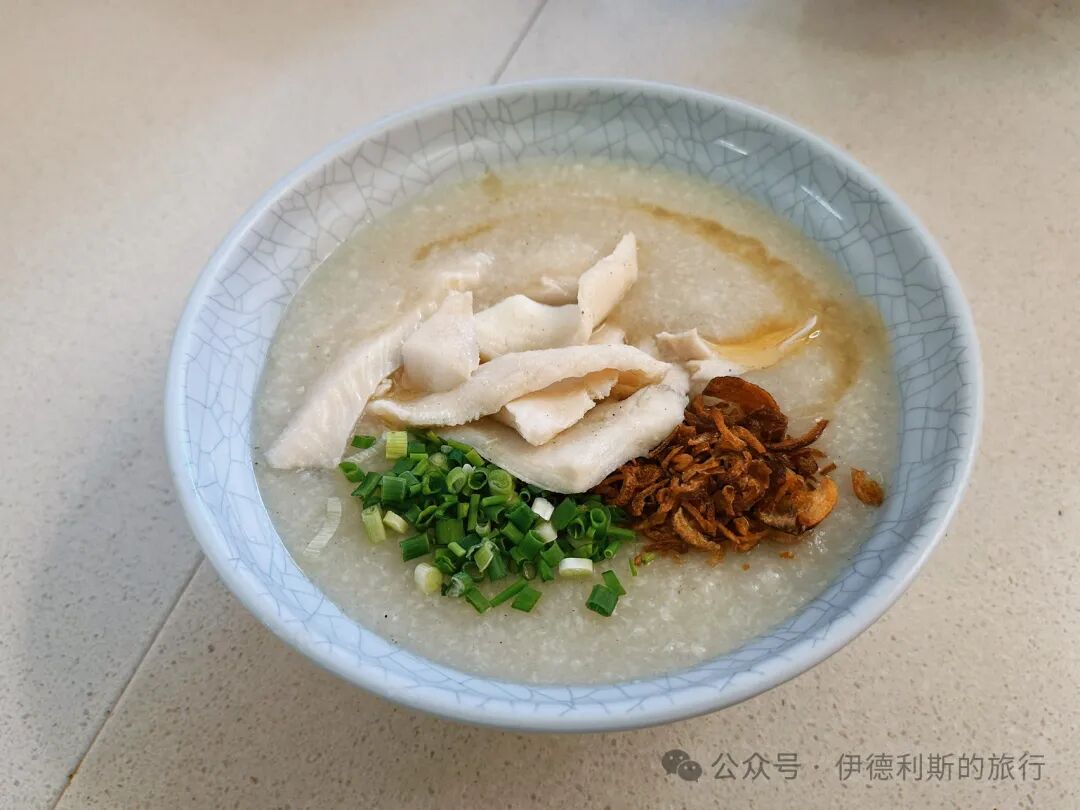
We ordered steamed chicken feet in sauce, shrimp and chicken steamed dumplings (shaomai), roasted chicken char siu rice noodle rolls (cheong fun), fish fillet porridge, and pu'er tea. Since we were there for afternoon tea and not a full meal, there was still a lot we wanted to try but didn't order. We liked the fish fillet porridge the best, and the chicken feet and shaomai were okay, but the rice noodle rolls were just average; they felt too soft and lacked texture.
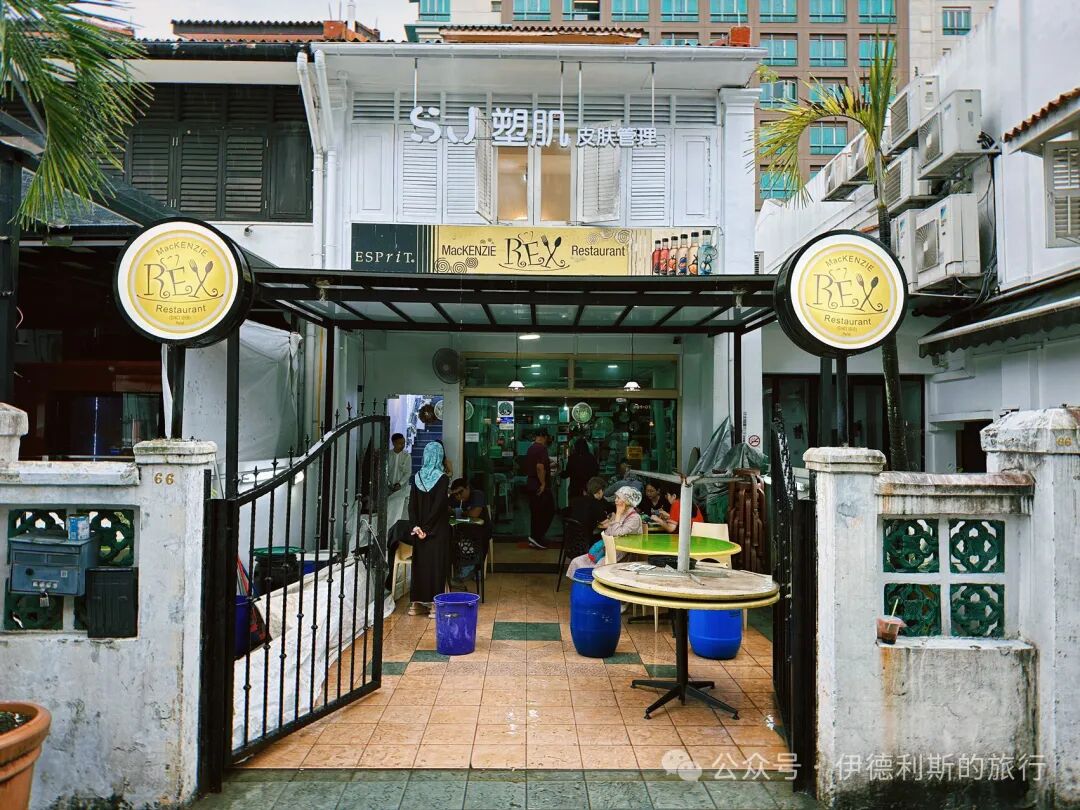
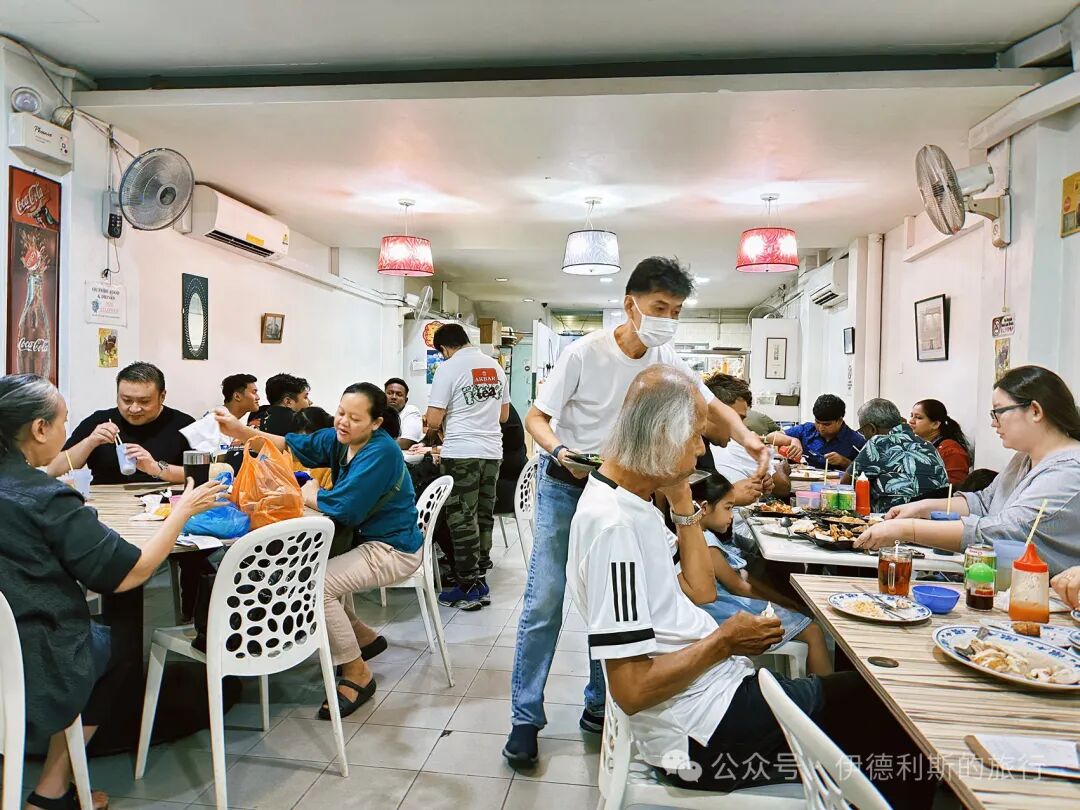
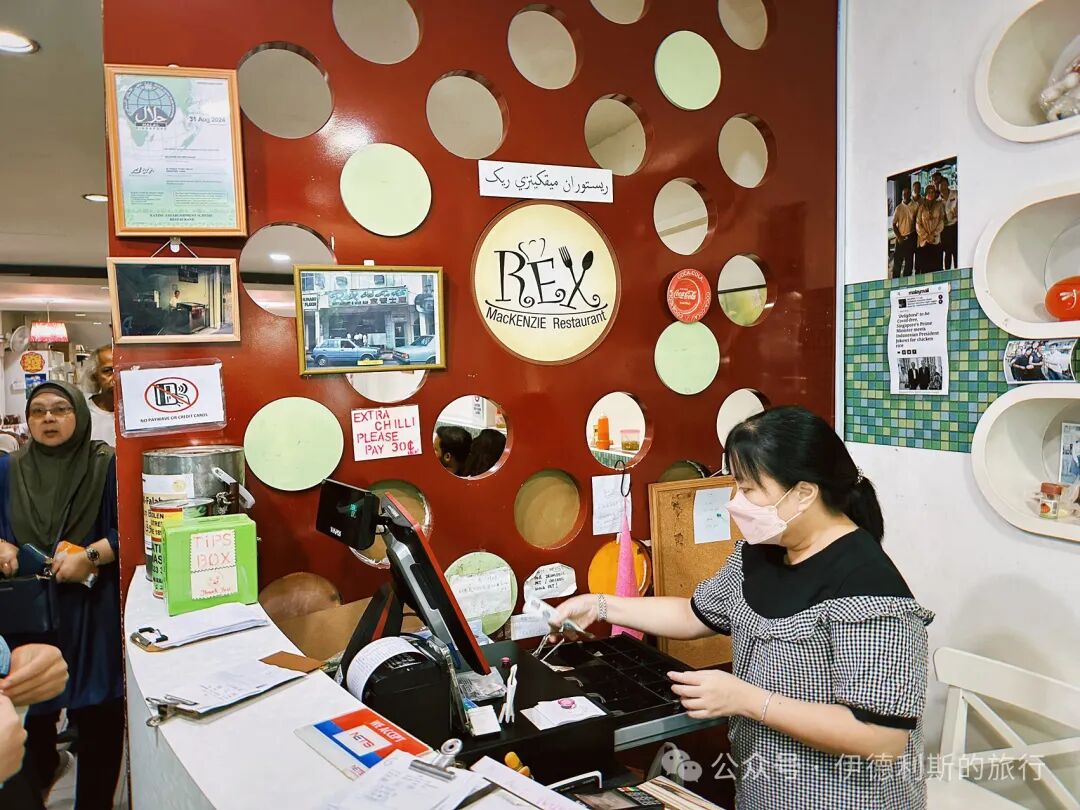
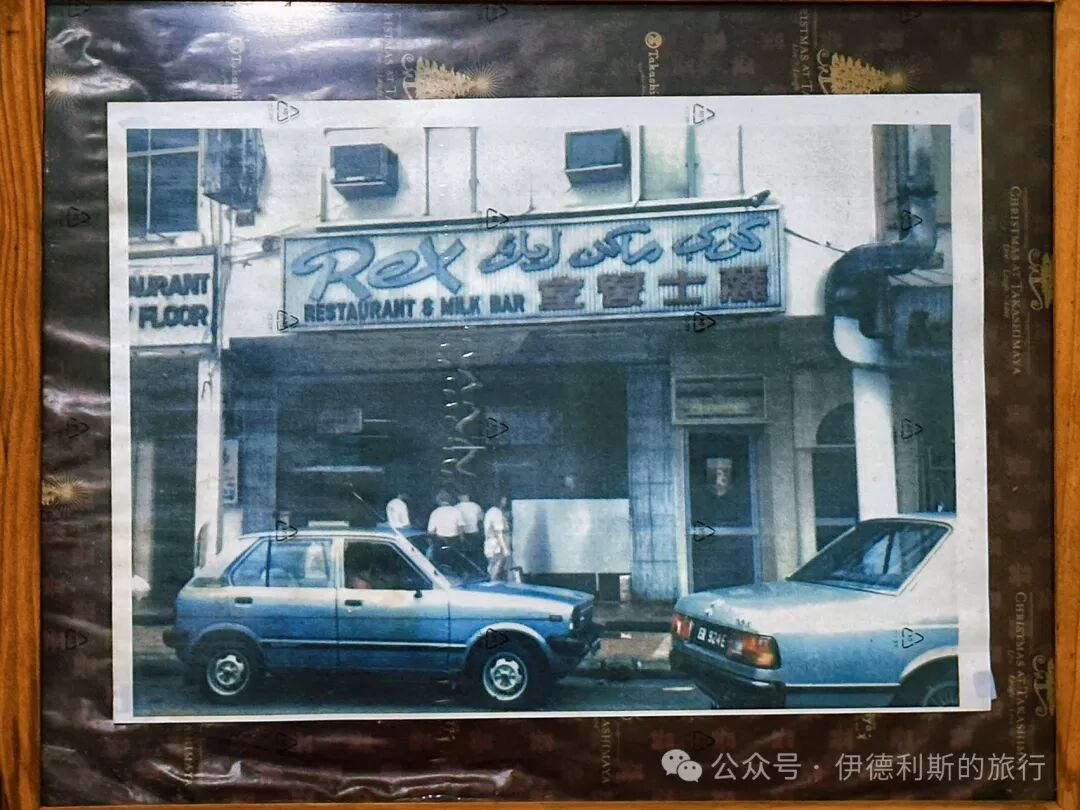
If you visit the National Museum of Singapore and Fort Canning Park, it is well worth stopping by the nearby MacKenzie Rex Restaurant to try their authentic halal Hainanese chicken rice. MacKenzie Rex Restaurant opened in 1966. It is the first and most famous halal Hainanese chicken rice restaurant in Singapore. The owner is a Hainanese Chinese person who speaks great Mandarin and is very happy to introduce the dishes to guests. Besides Hainanese chicken rice, they are also good at making various home-style Chinese dishes, known in Singapore as zi char (home-style stir-fry).
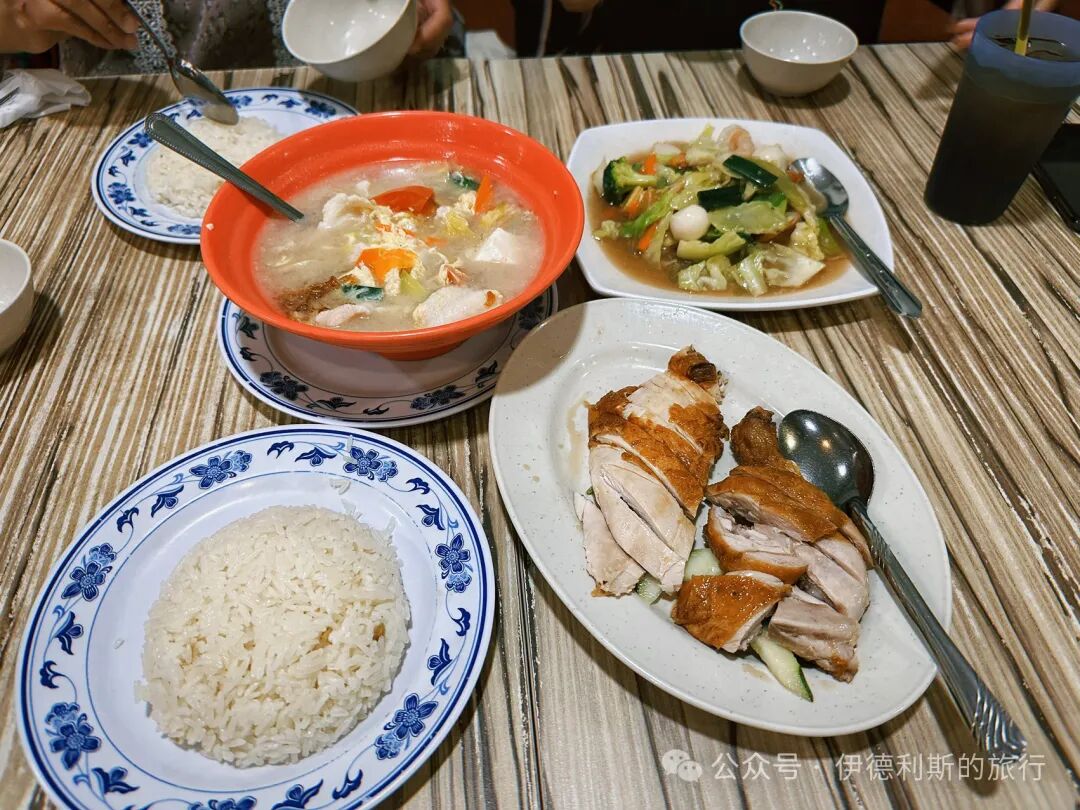
We ordered the classic chicken rice and five-spice meat rolls (ngor hiang), along with stir-fried mixed vegetables and fish soup. Everything was delicious, and it was arguably the best meal of our Singapore trip. The best part of their chicken rice is not the chicken itself, but the rice steamed with chicken fat. You can eat it plain and never want to stop. The halal version of the five-spice meat roll is made by adding five-spice powder to chicken filling, wrapping it in bean curd skin, and deep-frying it. It is very fragrant when freshly fried.
If you take a half-day trip to Pulau Ubin in Singapore, it is perfect to have a meal at the halal tea restaurant Tang Tea House next to the Changi Point Ferry Terminal. They serve authentic halal Chinese stir-fry (tze-char) and dim sum with a huge variety of choices.
We ordered stir-fried amaranth with anchovies, chicken chop rice, beef porridge, and lemongrass water. We also ordered a classic Malaysian and Singaporean Chinese dish called Buddha's bowl (fo bo piao xiang), which is a taro ring served with cashew chicken and various vegetables. We actually picked it randomly from the menu, but it was surprisingly delicious and we finished it all very quickly.
Tang Tea House opened in 2005. It started because many of the owner's Muslim friends told him they wanted to eat Chinese food but rarely found halal Chinese restaurants. He saw the opportunity and opened Tang Tea House, which has now grown to five locations and is doing very well.
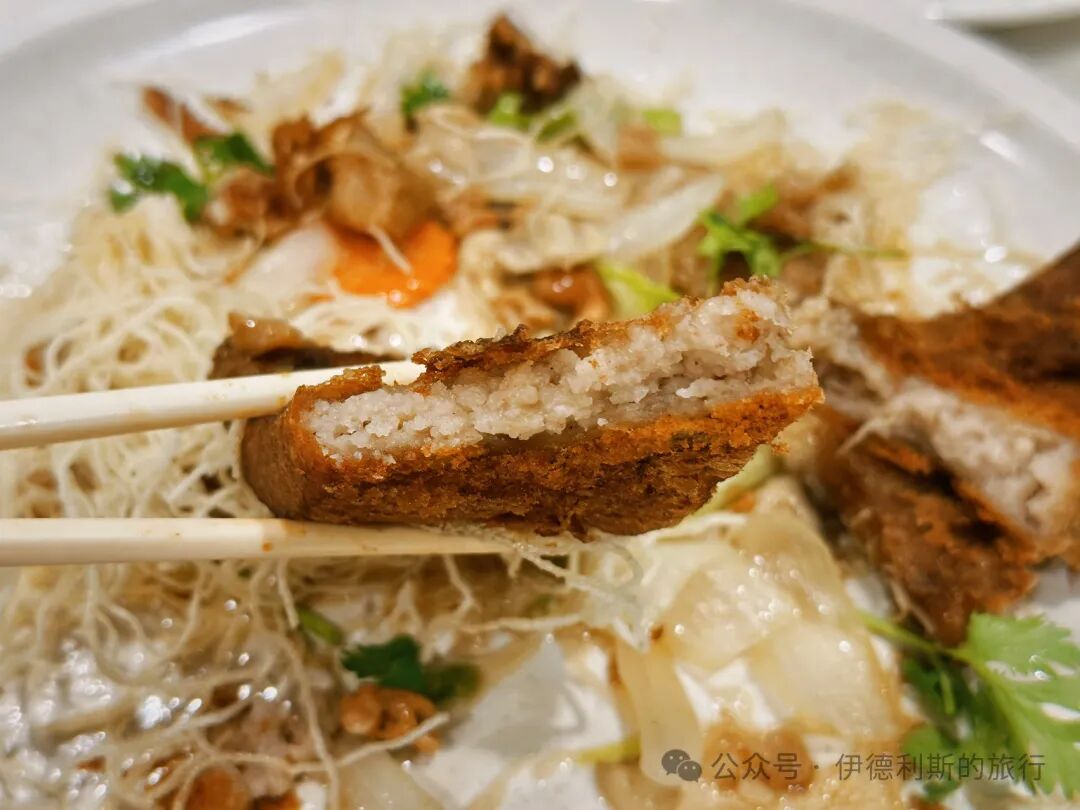
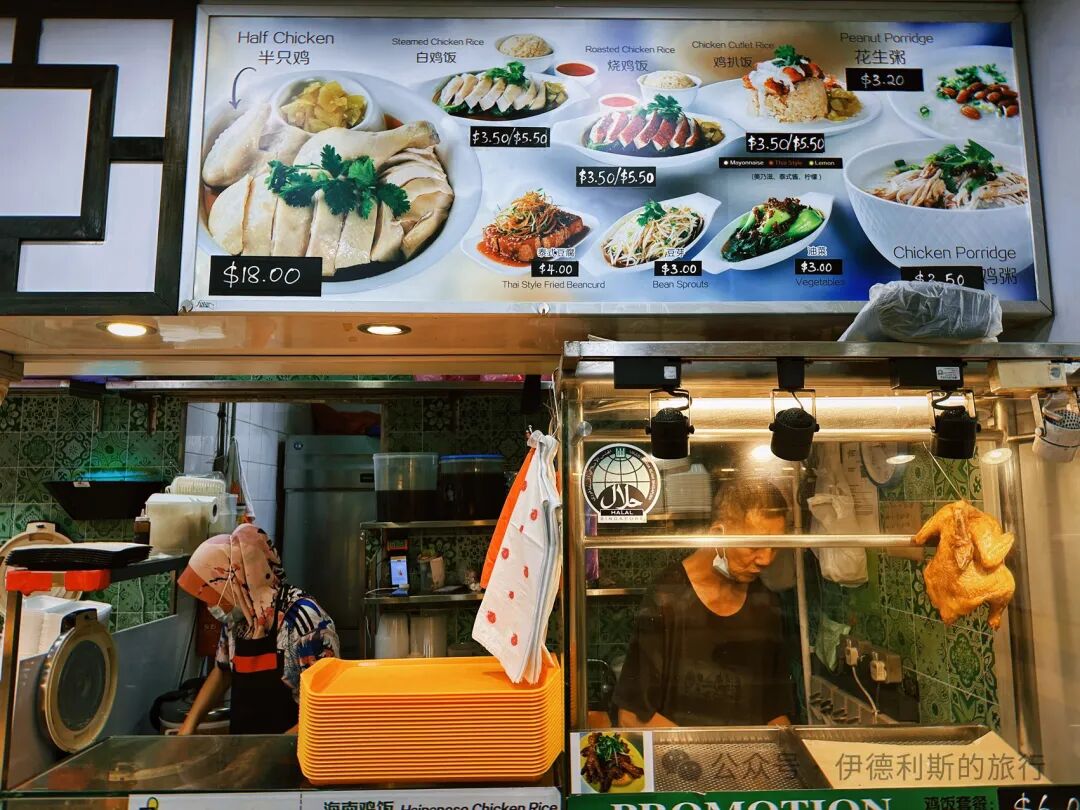
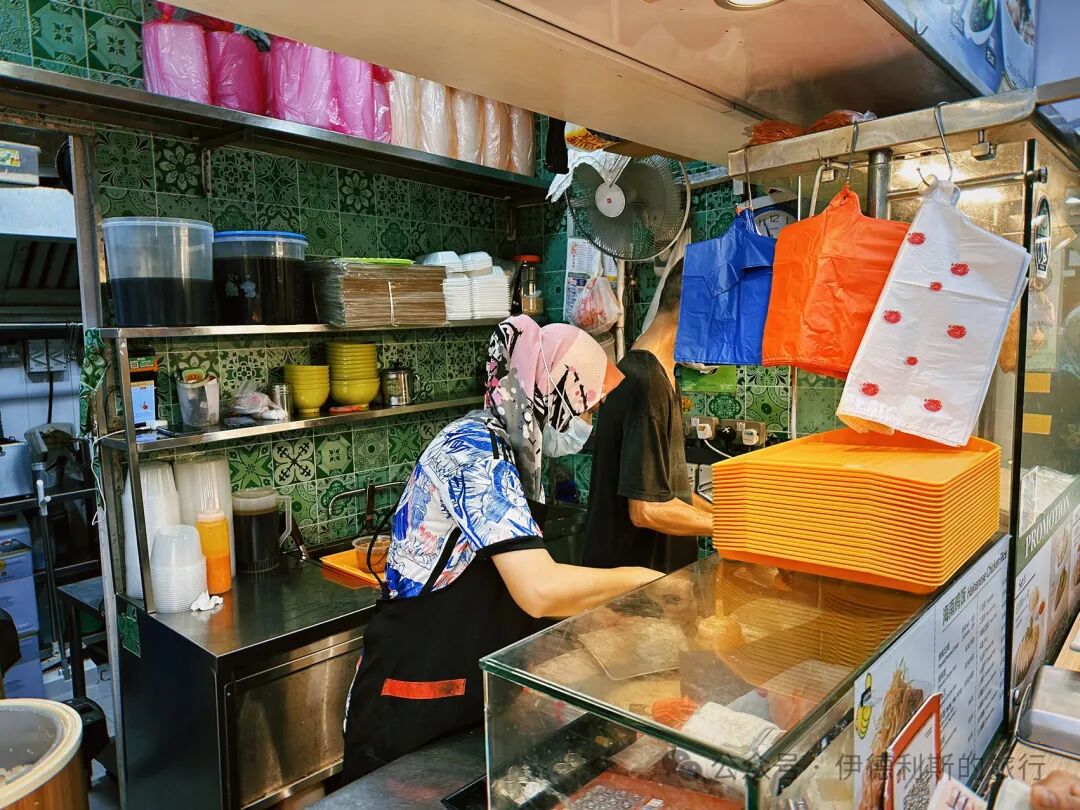
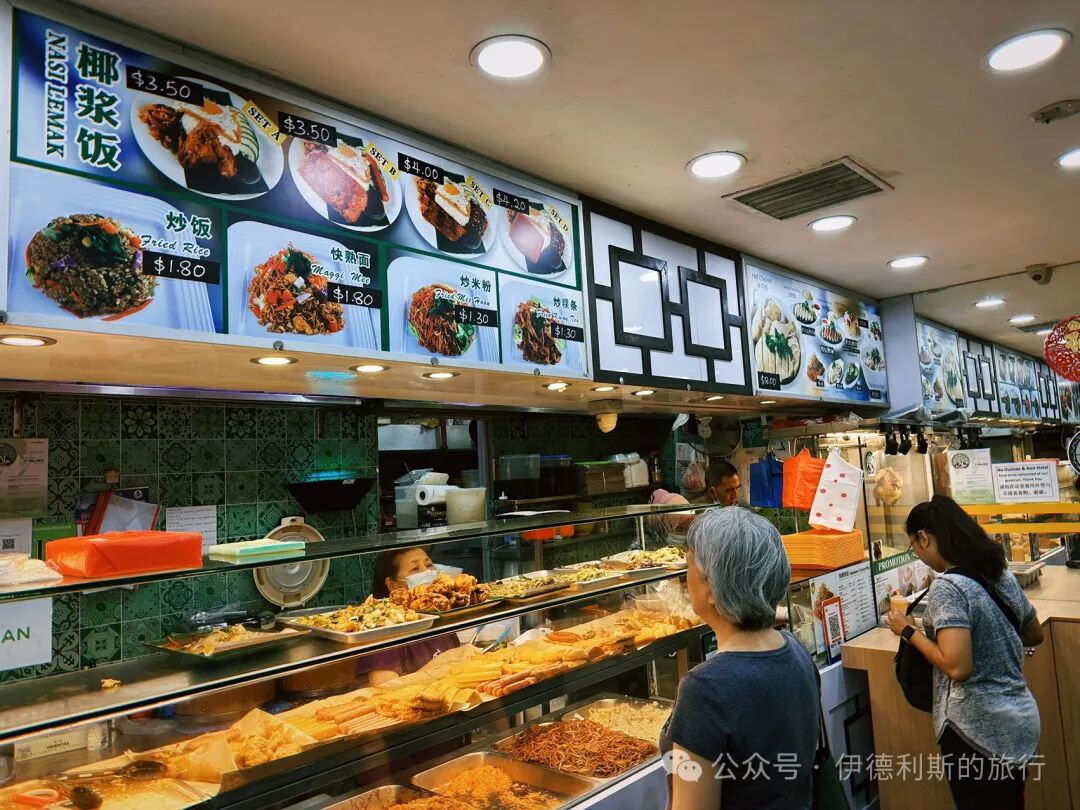
If you travel from Singapore to Johor Bahru, you can grab a quick bite at the TuanTuan. PuanPuan stall at the Woodlands MRT station while transferring. The name means 'ladies and gentlemen' in Malay. There are three stalls inside. The first sells Malay coconut milk rice (nasi lemak), the second sells stir-fried rice vermicelli and stir-fried flat rice noodles (char kway teow) where you can add fish cakes, dried tofu, or five-spice meat rolls, and the third stall sells chicken rice. However, it was quite late when we returned from Johor Bahru and many items were sold out, so we just ordered the chicken rice and stir-fried rice vermicelli.
Summary: This Singapore article follows the author through halal Chinese food stops after arriving in the city. It preserves the original restaurant names, dishes, prices, and food observations in clear English.
After landing at Singapore Changi Airport, I took the subway directly to Kembangan station to eat prawn noodles at the famous Chinese Muslim restaurant Deanna's Kitchen, which is the most famous halal prawn noodle spot in Singapore.
The restaurant owner, Denise Chew (also known as Deanna), converted to Islam in 2009 when she married her husband, Asri Ramili, and prawn noodles were her favorite food before she converted. Because traditional Chinese prawn noodles are made with pork bone broth, pork meat, and lard, it took her six years to develop a halal version. Deanna makes the broth by simmering chicken bones, prawn shells, dried shrimp, and anchovies for three hours, and the resulting noodles are so popular that she started selling them online.
Deanna and her husband Asri both worked in banking, but as the prawn noodle business grew, Asri quit his job in 2017 to open a noodle stall. The stall soon had long lines and sold out early every day. That is how the physical Deanna's Kitchen shops opened, and now there is one in Jurong East and one in Kembangan.
They serve regular prawn noodles and a hearty seafood platter. We ordered the top-tier version, which includes one Boston lobster, five tiger prawns, five large prawns, one crayfish, and 20 clams. You can choose different sides and noodles like yellow noodles, laksa noodles, rice vermicelli, or flat rice noodles (kway teow). We chose laksa noodles.
We visited Jason Niang Dou Fu in Kampong Glam to taste traditional Hakka stuffed vegetables. In the Hakka dialect, 'niang' means to fill with stuffing. Legend has it that after the Hakka people migrated south from the Central Plains, they wanted to eat dumplings but had no wheat, so they used tofu instead of flour and invented stuffed tofu (niang dou fu). Besides stuffed tofu, the Hakka are good at using local ingredients. Many foods can be stuffed, such as chili peppers, eggplants, bitter melons, and taro. Tofu, eggplant, and bitter melon are known as the 'three stuffed treasures' (jian niang san bao).
Jason Niang Dou Fu is a bit like a spicy hot pot (malatang) shop in China, where you can pick your own stuffed vegetables and greens from the counter. You can also choose staples like flat rice noodles (kway teow), rice vermicelli, or egg noodles (mian zai). The Teochew taro rice (Yam Rice) and Teochew dry egg noodles (Mee Pok) are both worth a try.
The Dim Sum Place is a very famous halal Hong Kong-style tea restaurant in Singapore, specializing in a wide variety of dim sum and Cantonese dishes. They opened on North Bridge Road in Kampong Glam in 2016 and now have two more branches, making them very popular with Muslims.
We ordered steamed chicken feet in sauce, shrimp and chicken steamed dumplings (shaomai), roasted chicken char siu rice noodle rolls (cheong fun), fish fillet porridge, and pu'er tea. Since we were there for afternoon tea and not a full meal, there was still a lot we wanted to try but didn't order. We liked the fish fillet porridge the best, and the chicken feet and shaomai were okay, but the rice noodle rolls were just average; they felt too soft and lacked texture.
If you visit the National Museum of Singapore and Fort Canning Park, it is well worth stopping by the nearby MacKenzie Rex Restaurant to try their authentic halal Hainanese chicken rice. MacKenzie Rex Restaurant opened in 1966. It is the first and most famous halal Hainanese chicken rice restaurant in Singapore. The owner is a Hainanese Chinese person who speaks great Mandarin and is very happy to introduce the dishes to guests. Besides Hainanese chicken rice, they are also good at making various home-style Chinese dishes, known in Singapore as zi char (home-style stir-fry).
We ordered the classic chicken rice and five-spice meat rolls (ngor hiang), along with stir-fried mixed vegetables and fish soup. Everything was delicious, and it was arguably the best meal of our Singapore trip. The best part of their chicken rice is not the chicken itself, but the rice steamed with chicken fat. You can eat it plain and never want to stop. The halal version of the five-spice meat roll is made by adding five-spice powder to chicken filling, wrapping it in bean curd skin, and deep-frying it. It is very fragrant when freshly fried.
If you take a half-day trip to Pulau Ubin in Singapore, it is perfect to have a meal at the halal tea restaurant Tang Tea House next to the Changi Point Ferry Terminal. They serve authentic halal Chinese stir-fry (tze-char) and dim sum with a huge variety of choices.
We ordered stir-fried amaranth with anchovies, chicken chop rice, beef porridge, and lemongrass water. We also ordered a classic Malaysian and Singaporean Chinese dish called Buddha's bowl (fo bo piao xiang), which is a taro ring served with cashew chicken and various vegetables. We actually picked it randomly from the menu, but it was surprisingly delicious and we finished it all very quickly.
Tang Tea House opened in 2005. It started because many of the owner's Muslim friends told him they wanted to eat Chinese food but rarely found halal Chinese restaurants. He saw the opportunity and opened Tang Tea House, which has now grown to five locations and is doing very well.
If you travel from Singapore to Johor Bahru, you can grab a quick bite at the TuanTuan. PuanPuan stall at the Woodlands MRT station while transferring. The name means 'ladies and gentlemen' in Malay. There are three stalls inside. The first sells Malay coconut milk rice (nasi lemak), the second sells stir-fried rice vermicelli and stir-fried flat rice noodles (char kway teow) where you can add fish cakes, dried tofu, or five-spice meat rolls, and the third stall sells chicken rice. However, it was quite late when we returned from Johor Bahru and many items were sold out, so we just ordered the chicken rice and stir-fried rice vermicelli.
Halal Food Guide: Singapore - Peranakan Nyonya Cuisine and Muslim Travel
Articles • ali2007fr posted the article • 0 comments • 169 views • 2026-05-19 07:24
Reposted from the web
Summary: This Singapore food note focuses on Peranakan Nyonya cuisine and the dishes the author tasted during the trip. It keeps the original food names, flavors, restaurant details, and travel observations while making the English direct and readable.
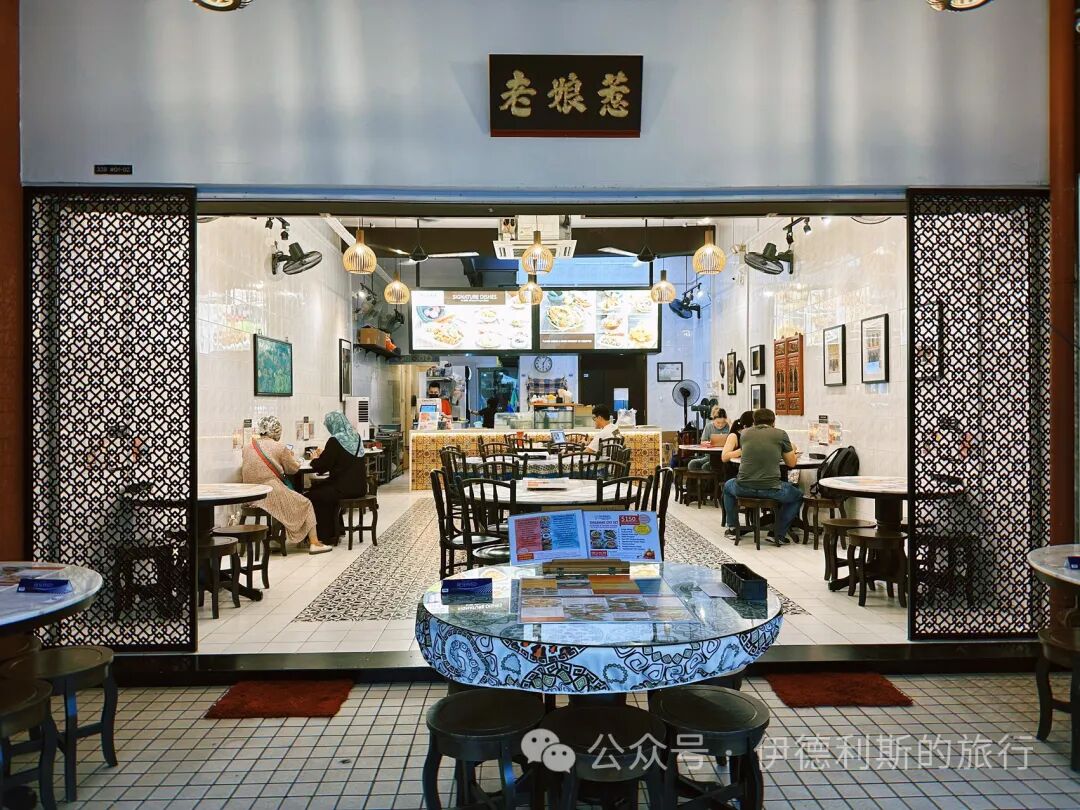
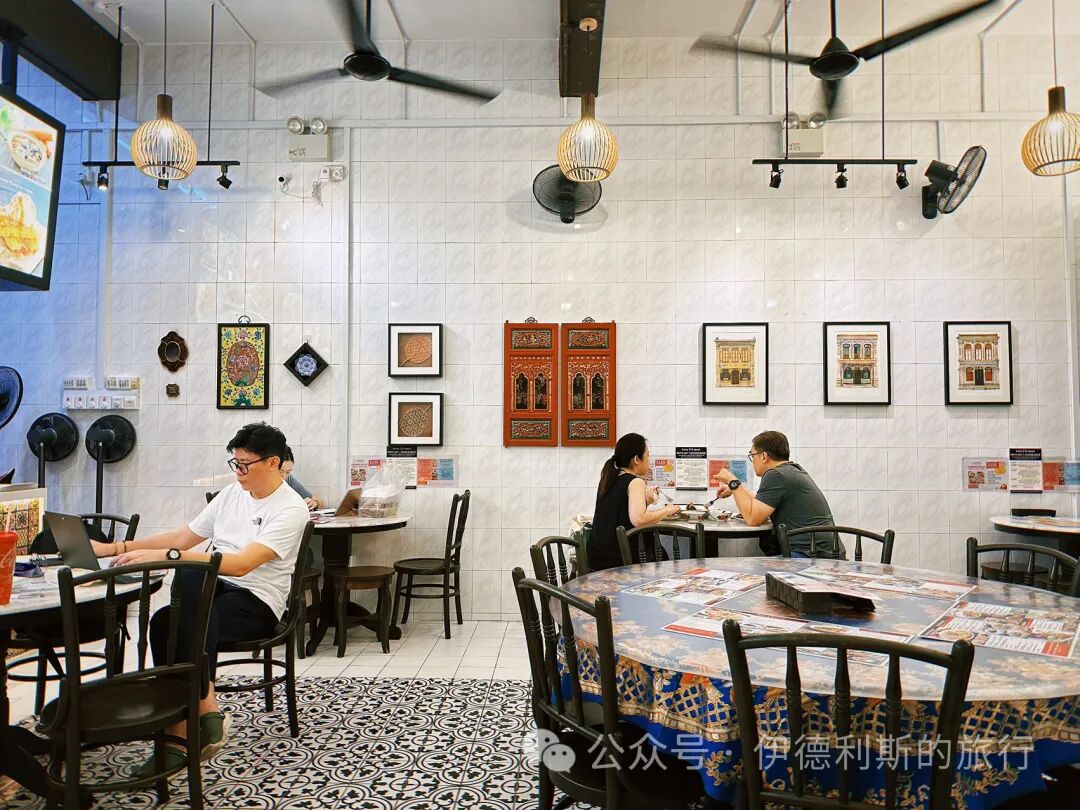
In Singapore, we found a halal-certified Peranakan restaurant called Old Bibik's Peranakan Kitchen on Joo Chiat Road. The owner, Adrian, is a Baba Nyonya himself, and many dishes in the shop come from his late grandmother. The name Old Bibik is in her memory.
Baba Nyonya, also known as Peranakan, are a group formed by Hokkien, Teochew, and Hakka immigrants who moved to Phuket, Penang, Malacca, and Singapore from the 15th century onwards and married local Malays and Sumatrans. The Joo Chiat area, where Old Bibik's Peranakan Kitchen is located, is an important settlement for Singapore's Baba Nyonya people. In the early 19th century, Baba Nyonya merchants like Tan Tock Seng opened nutmeg plantations in areas bordering Singapore's Chinatown and Tanjong Pagar. Many moved to the Joo Chiat area after the 1920s and 1930s. Today, it still preserves many century-old Baba Nyonya shophouses and quite a few Nyonya restaurants.
Baba Nyonya absorbed Malay language and culture, using a Baba Malay language that includes many Hokkien words. They wear batik sarongs, and Nyonya cuisine is a unique style formed by blending Chinese ingredients with Malay and Indonesian spices and cooking methods.
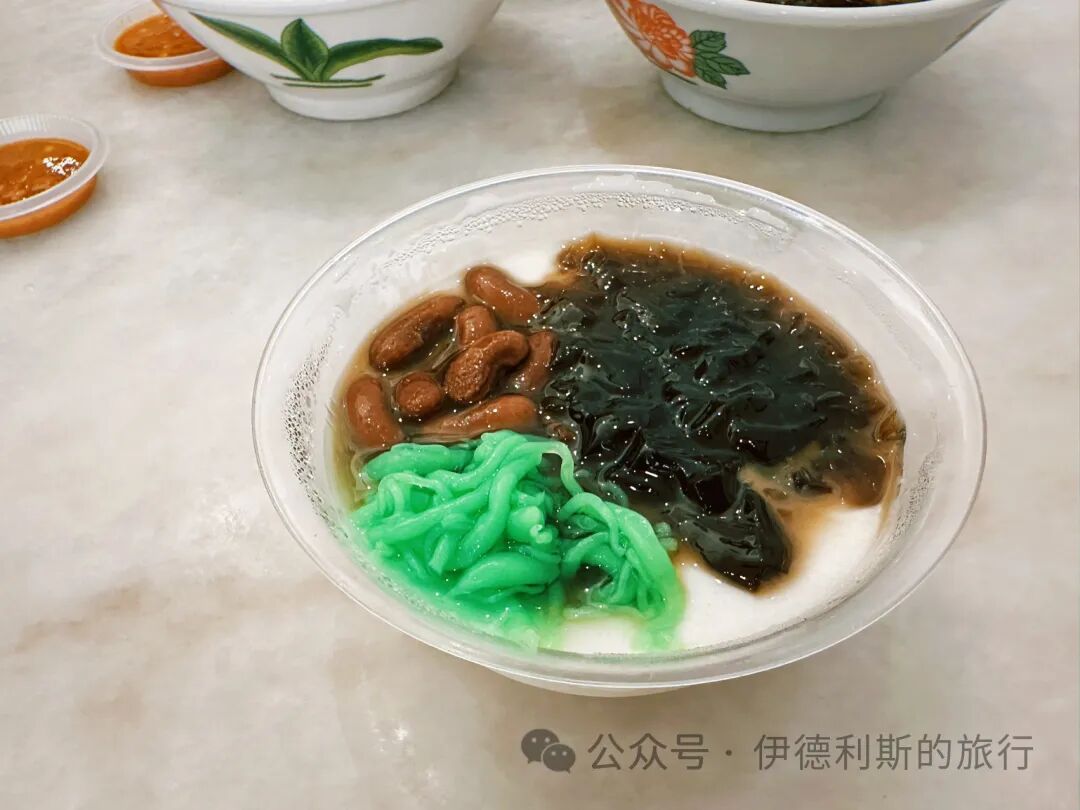
We ordered classic Nyonya dishes: chicken with black nuts (Ayam Buah Keluak), mixed vegetables (Chap Chye), and beef rendang (Rendang) rice. We also had bean curd pudding (Tau Huey).
Chicken with black nuts is chicken stewed with Indonesian black nuts and various spices like tamarind. Singapore's founding Prime Minister Lee Kuan Yew loved this dish. Indonesian black nuts originally came from the mangrove swamps of Java and Sumatra. They were brought to Malacca in the 15th century and became an important spice in Nyonya cuisine.
Mixed vegetables is a Nyonya stir-fry dish originating from Fujian. Various vegetables are chopped and stir-fried, and the ingredients vary by family depending on the season and taste.
Rendang originated in the Minangkabau region of Sumatra. It was brought to Malacca by the Minangkabau people in the 16th century and has since become part of Nyonya cuisine. Rendang is made by slowly cooking meat in coconut milk and various spices until all the liquid dries up and the meat turns dark brown. Dry rendang can be stored for a month, making it perfect for travel.
Nyonya bean curd pudding is a bit like cendol, topped with pandan jelly noodles, red beans, and grass jelly, and can be drizzled with palm sugar syrup.
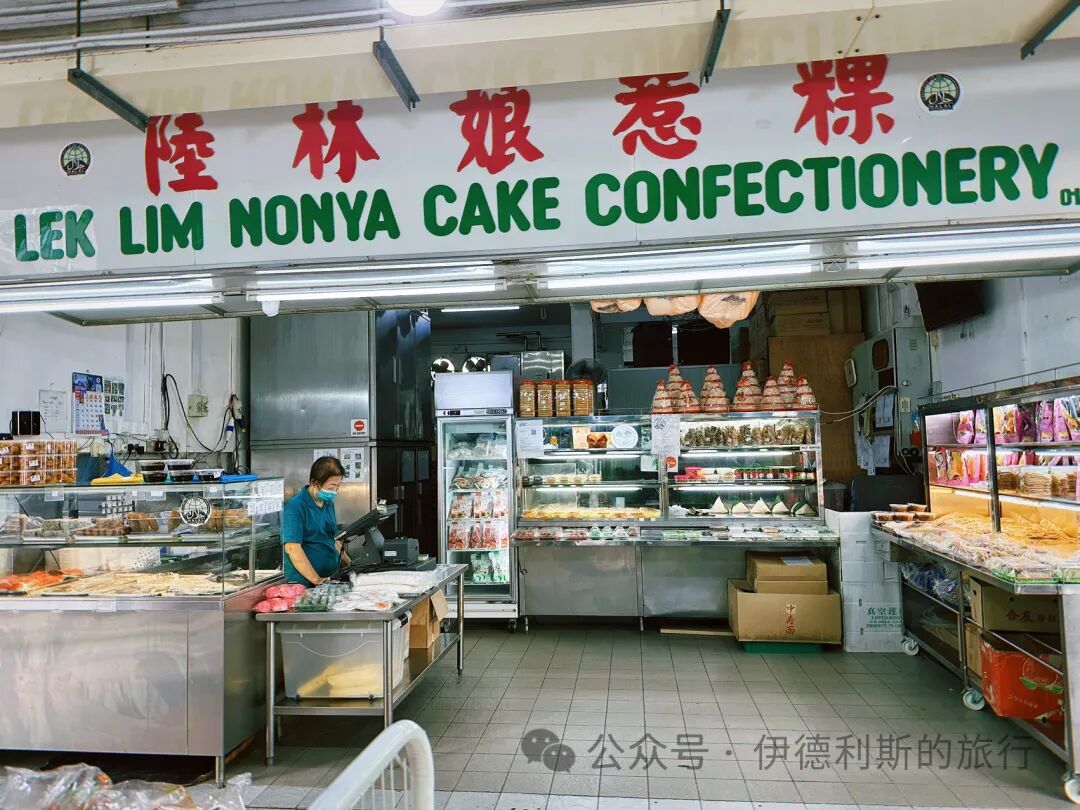
In Bedok North Street in eastern Singapore, there is a 60-year-old shop called Lek Lim Nonya Cake Confectionery. It has a shop in the front and a factory in the back, selling all kinds of halal Nyonya cakes (kuih). Lek Lim started making and selling Nyonya cakes at home in 1960, opened the current shop in 1972, and applied for halal certification in 2011 so that more communities could taste the delicious Nyonya cakes.
Nyonya cakes have a rich variety of flavors. They are made by steaming, frying, or baking, and come in sweet, salty, and spicy versions. The main ingredients include glutinous rice flour, rice flour, and tapioca flour, with toppings like pandan, coconut milk, mung beans, red beans, and peanuts. A soft, chewy texture and bright colors are the main features of Nyonya kuih.
We bought the famous red tortoise cake (ang ku kueh), also called red rice cake (hongban) in Hakka. The skin is made from glutinous rice flour and sweet potato flour, filled with mung beans, peanuts, and sugar, then steamed on a banana leaf. We also bought Nyonya nine-layer cake (jiucenggao). This is a layered dessert steamed with rice flour, coconut milk, sugar, and various food colorings. It has a soft, chewy texture, and you can peel off the layers one by one to eat.
Bamboo shoot dumpling (sunguo) originated in Chaozhou. Although it looks a bit like a dumpling, the skin is actually made of rice flour or tapioca flour, and the filling contains jicama, bamboo shoots, and dried shrimp. Chive dumpling (jiucaiguo) is another type of Chaozhou steamed dumpling. Like the bamboo shoot dumpling, the skin is made of rice flour or tapioca flour, and it is filled with chives and dried shrimp.
Finally, we bought white taro cake (baiyuguo), which is a taro cake made with shiitake mushrooms, dried shrimp, and other ingredients. view all
Summary: This Singapore food note focuses on Peranakan Nyonya cuisine and the dishes the author tasted during the trip. It keeps the original food names, flavors, restaurant details, and travel observations while making the English direct and readable.
In Singapore, we found a halal-certified Peranakan restaurant called Old Bibik's Peranakan Kitchen on Joo Chiat Road. The owner, Adrian, is a Baba Nyonya himself, and many dishes in the shop come from his late grandmother. The name Old Bibik is in her memory.
Baba Nyonya, also known as Peranakan, are a group formed by Hokkien, Teochew, and Hakka immigrants who moved to Phuket, Penang, Malacca, and Singapore from the 15th century onwards and married local Malays and Sumatrans. The Joo Chiat area, where Old Bibik's Peranakan Kitchen is located, is an important settlement for Singapore's Baba Nyonya people. In the early 19th century, Baba Nyonya merchants like Tan Tock Seng opened nutmeg plantations in areas bordering Singapore's Chinatown and Tanjong Pagar. Many moved to the Joo Chiat area after the 1920s and 1930s. Today, it still preserves many century-old Baba Nyonya shophouses and quite a few Nyonya restaurants.
Baba Nyonya absorbed Malay language and culture, using a Baba Malay language that includes many Hokkien words. They wear batik sarongs, and Nyonya cuisine is a unique style formed by blending Chinese ingredients with Malay and Indonesian spices and cooking methods.
We ordered classic Nyonya dishes: chicken with black nuts (Ayam Buah Keluak), mixed vegetables (Chap Chye), and beef rendang (Rendang) rice. We also had bean curd pudding (Tau Huey).
Chicken with black nuts is chicken stewed with Indonesian black nuts and various spices like tamarind. Singapore's founding Prime Minister Lee Kuan Yew loved this dish. Indonesian black nuts originally came from the mangrove swamps of Java and Sumatra. They were brought to Malacca in the 15th century and became an important spice in Nyonya cuisine.
Mixed vegetables is a Nyonya stir-fry dish originating from Fujian. Various vegetables are chopped and stir-fried, and the ingredients vary by family depending on the season and taste.
Rendang originated in the Minangkabau region of Sumatra. It was brought to Malacca by the Minangkabau people in the 16th century and has since become part of Nyonya cuisine. Rendang is made by slowly cooking meat in coconut milk and various spices until all the liquid dries up and the meat turns dark brown. Dry rendang can be stored for a month, making it perfect for travel.
Nyonya bean curd pudding is a bit like cendol, topped with pandan jelly noodles, red beans, and grass jelly, and can be drizzled with palm sugar syrup.
In Bedok North Street in eastern Singapore, there is a 60-year-old shop called Lek Lim Nonya Cake Confectionery. It has a shop in the front and a factory in the back, selling all kinds of halal Nyonya cakes (kuih). Lek Lim started making and selling Nyonya cakes at home in 1960, opened the current shop in 1972, and applied for halal certification in 2011 so that more communities could taste the delicious Nyonya cakes.
Nyonya cakes have a rich variety of flavors. They are made by steaming, frying, or baking, and come in sweet, salty, and spicy versions. The main ingredients include glutinous rice flour, rice flour, and tapioca flour, with toppings like pandan, coconut milk, mung beans, red beans, and peanuts. A soft, chewy texture and bright colors are the main features of Nyonya kuih.
We bought the famous red tortoise cake (ang ku kueh), also called red rice cake (hongban) in Hakka. The skin is made from glutinous rice flour and sweet potato flour, filled with mung beans, peanuts, and sugar, then steamed on a banana leaf. We also bought Nyonya nine-layer cake (jiucenggao). This is a layered dessert steamed with rice flour, coconut milk, sugar, and various food colorings. It has a soft, chewy texture, and you can peel off the layers one by one to eat.
Bamboo shoot dumpling (sunguo) originated in Chaozhou. Although it looks a bit like a dumpling, the skin is actually made of rice flour or tapioca flour, and the filling contains jicama, bamboo shoots, and dried shrimp. Chive dumpling (jiucaiguo) is another type of Chaozhou steamed dumpling. Like the bamboo shoot dumpling, the skin is made of rice flour or tapioca flour, and it is filled with chives and dried shrimp.
Finally, we bought white taro cake (baiyuguo), which is a taro cake made with shiitake mushrooms, dried shrimp, and other ingredients. view all
Reposted from the web
Summary: This Singapore food note focuses on Peranakan Nyonya cuisine and the dishes the author tasted during the trip. It keeps the original food names, flavors, restaurant details, and travel observations while making the English direct and readable.
In Singapore, we found a halal-certified Peranakan restaurant called Old Bibik's Peranakan Kitchen on Joo Chiat Road. The owner, Adrian, is a Baba Nyonya himself, and many dishes in the shop come from his late grandmother. The name Old Bibik is in her memory.
Baba Nyonya, also known as Peranakan, are a group formed by Hokkien, Teochew, and Hakka immigrants who moved to Phuket, Penang, Malacca, and Singapore from the 15th century onwards and married local Malays and Sumatrans. The Joo Chiat area, where Old Bibik's Peranakan Kitchen is located, is an important settlement for Singapore's Baba Nyonya people. In the early 19th century, Baba Nyonya merchants like Tan Tock Seng opened nutmeg plantations in areas bordering Singapore's Chinatown and Tanjong Pagar. Many moved to the Joo Chiat area after the 1920s and 1930s. Today, it still preserves many century-old Baba Nyonya shophouses and quite a few Nyonya restaurants.
Baba Nyonya absorbed Malay language and culture, using a Baba Malay language that includes many Hokkien words. They wear batik sarongs, and Nyonya cuisine is a unique style formed by blending Chinese ingredients with Malay and Indonesian spices and cooking methods.
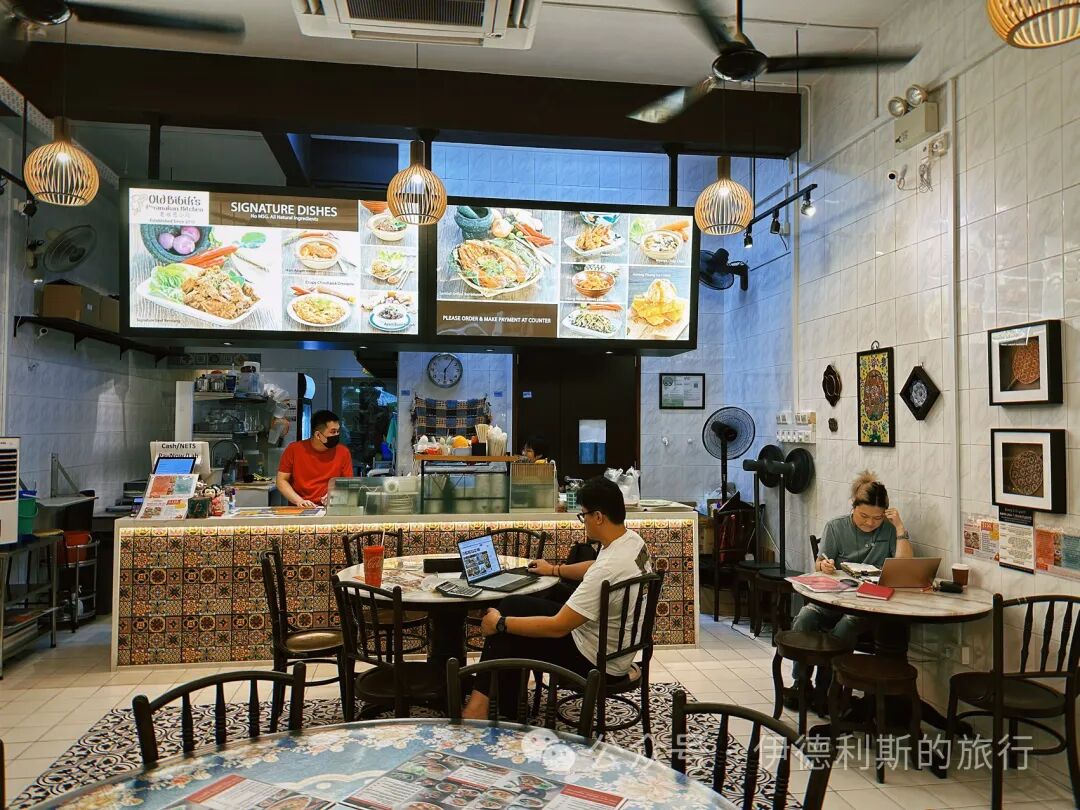
We ordered classic Nyonya dishes: chicken with black nuts (Ayam Buah Keluak), mixed vegetables (Chap Chye), and beef rendang (Rendang) rice. We also had bean curd pudding (Tau Huey).
Chicken with black nuts is chicken stewed with Indonesian black nuts and various spices like tamarind. Singapore's founding Prime Minister Lee Kuan Yew loved this dish. Indonesian black nuts originally came from the mangrove swamps of Java and Sumatra. They were brought to Malacca in the 15th century and became an important spice in Nyonya cuisine.
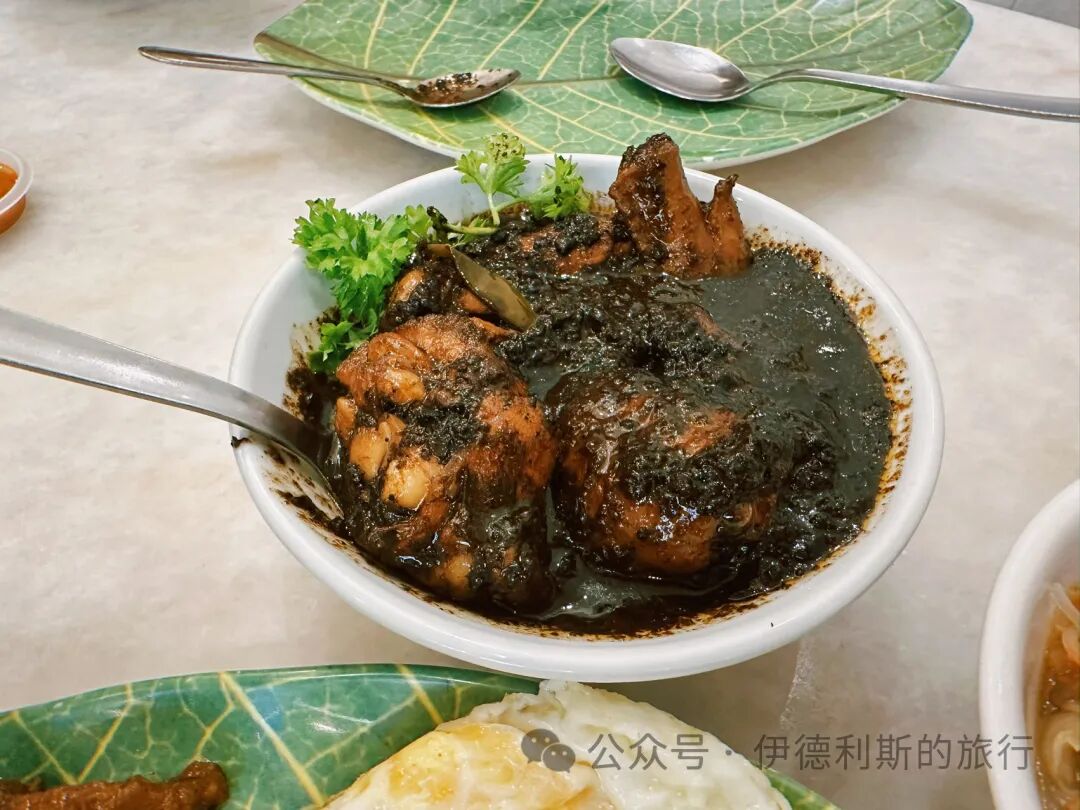
Mixed vegetables is a Nyonya stir-fry dish originating from Fujian. Various vegetables are chopped and stir-fried, and the ingredients vary by family depending on the season and taste.
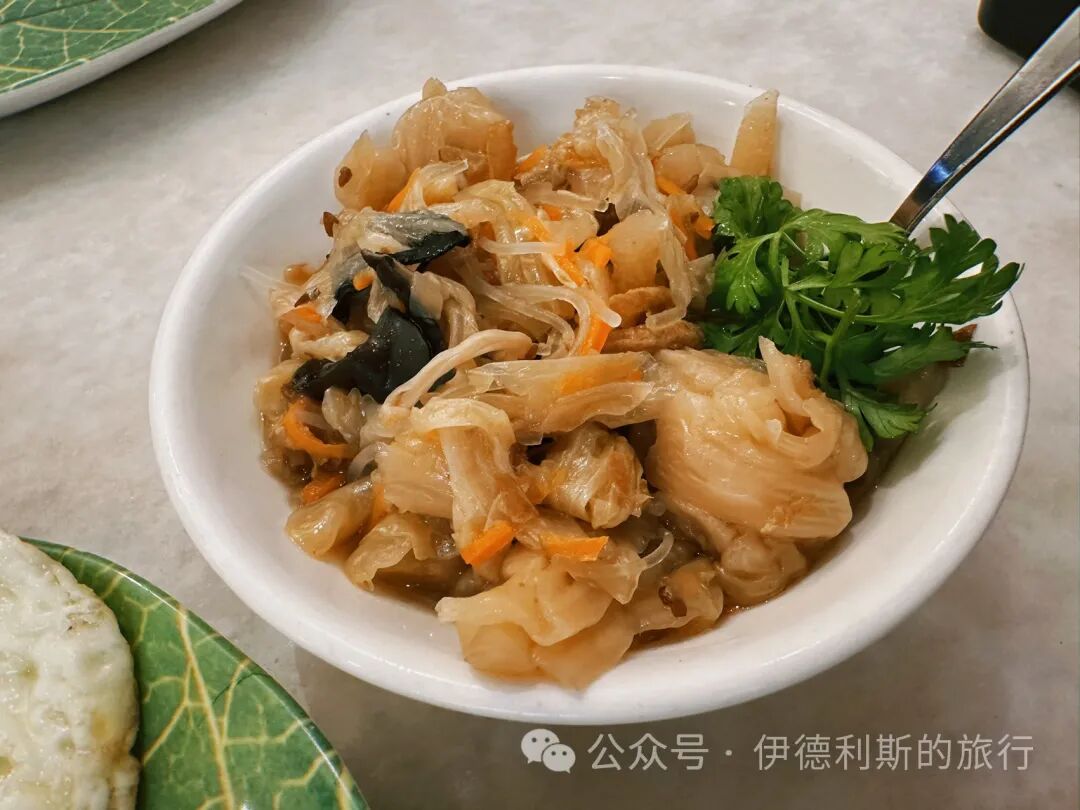
Rendang originated in the Minangkabau region of Sumatra. It was brought to Malacca by the Minangkabau people in the 16th century and has since become part of Nyonya cuisine. Rendang is made by slowly cooking meat in coconut milk and various spices until all the liquid dries up and the meat turns dark brown. Dry rendang can be stored for a month, making it perfect for travel.
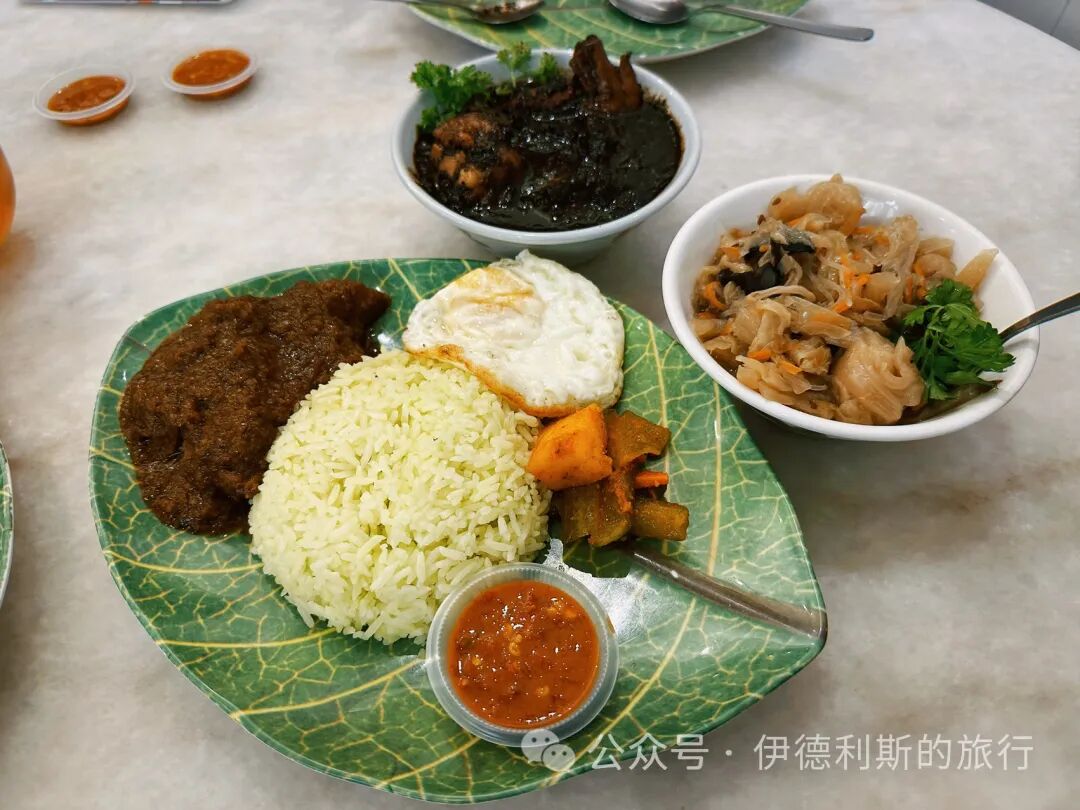
Nyonya bean curd pudding is a bit like cendol, topped with pandan jelly noodles, red beans, and grass jelly, and can be drizzled with palm sugar syrup.
In Bedok North Street in eastern Singapore, there is a 60-year-old shop called Lek Lim Nonya Cake Confectionery. It has a shop in the front and a factory in the back, selling all kinds of halal Nyonya cakes (kuih). Lek Lim started making and selling Nyonya cakes at home in 1960, opened the current shop in 1972, and applied for halal certification in 2011 so that more communities could taste the delicious Nyonya cakes.
Nyonya cakes have a rich variety of flavors. They are made by steaming, frying, or baking, and come in sweet, salty, and spicy versions. The main ingredients include glutinous rice flour, rice flour, and tapioca flour, with toppings like pandan, coconut milk, mung beans, red beans, and peanuts. A soft, chewy texture and bright colors are the main features of Nyonya kuih.
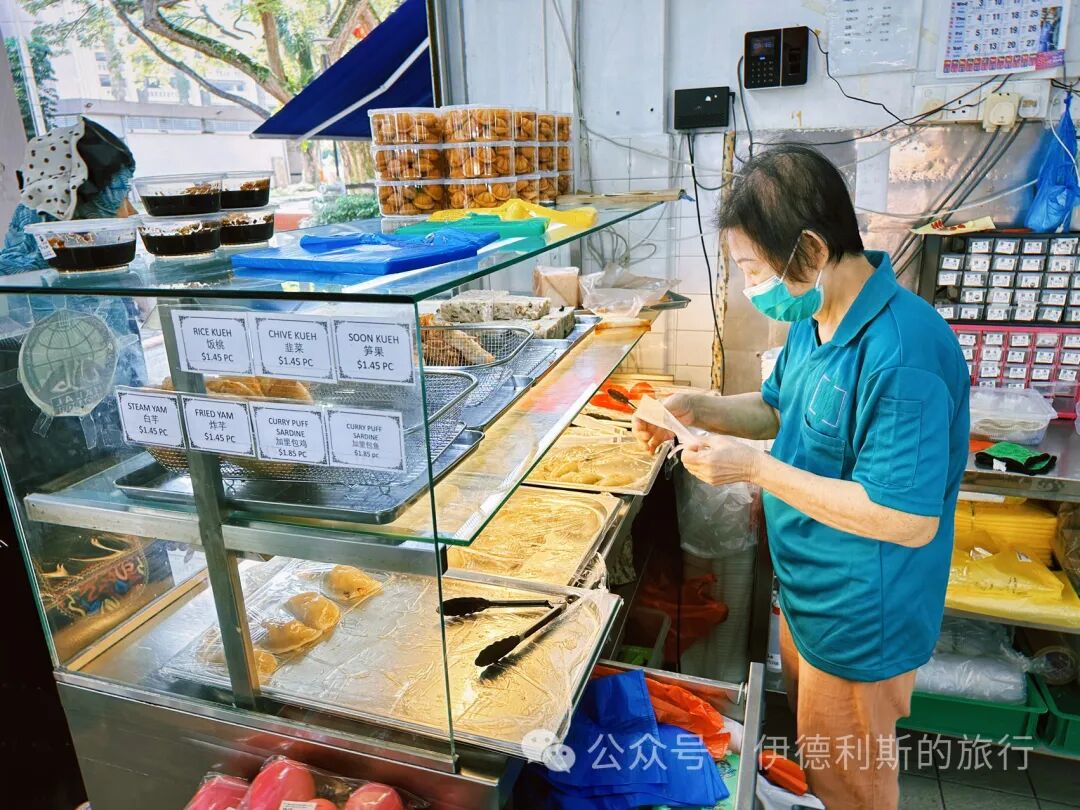
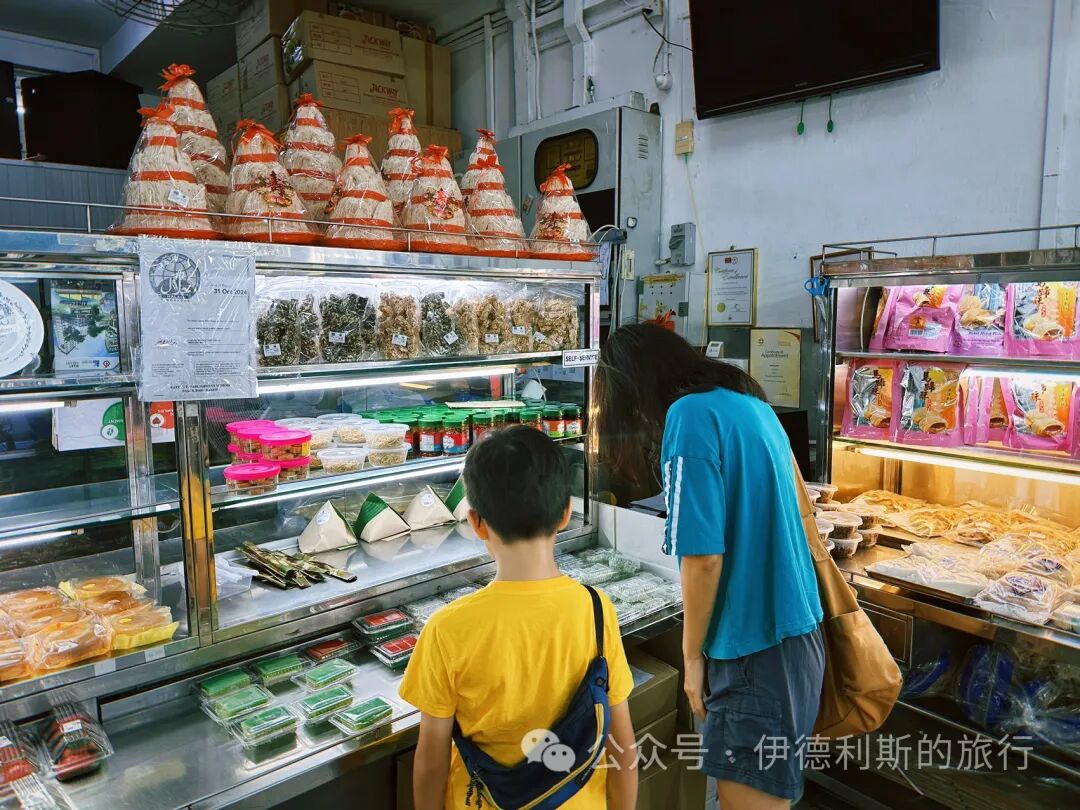
We bought the famous red tortoise cake (ang ku kueh), also called red rice cake (hongban) in Hakka. The skin is made from glutinous rice flour and sweet potato flour, filled with mung beans, peanuts, and sugar, then steamed on a banana leaf. We also bought Nyonya nine-layer cake (jiucenggao). This is a layered dessert steamed with rice flour, coconut milk, sugar, and various food colorings. It has a soft, chewy texture, and you can peel off the layers one by one to eat.
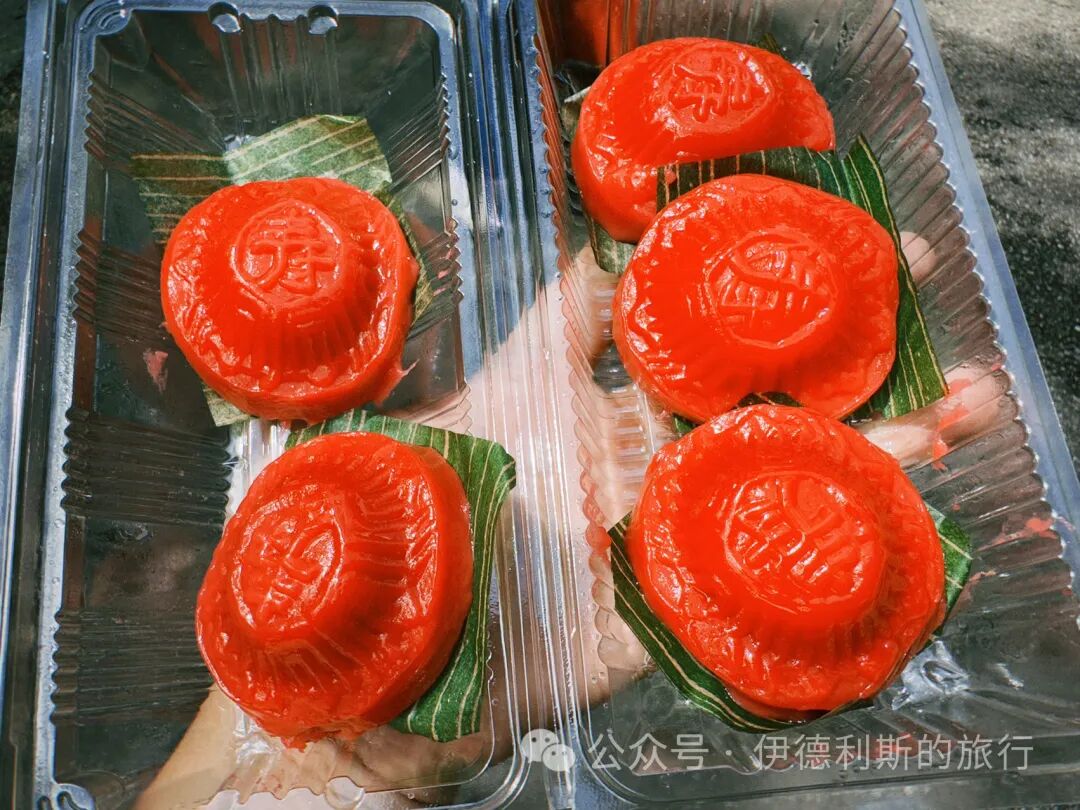
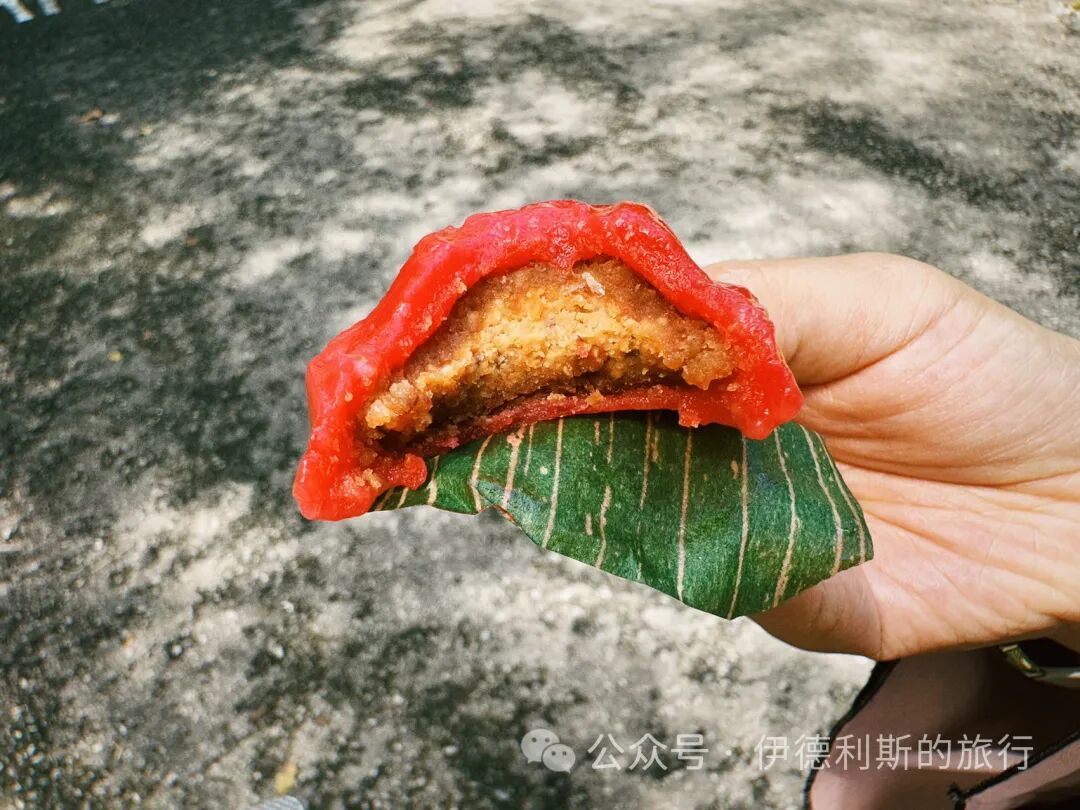
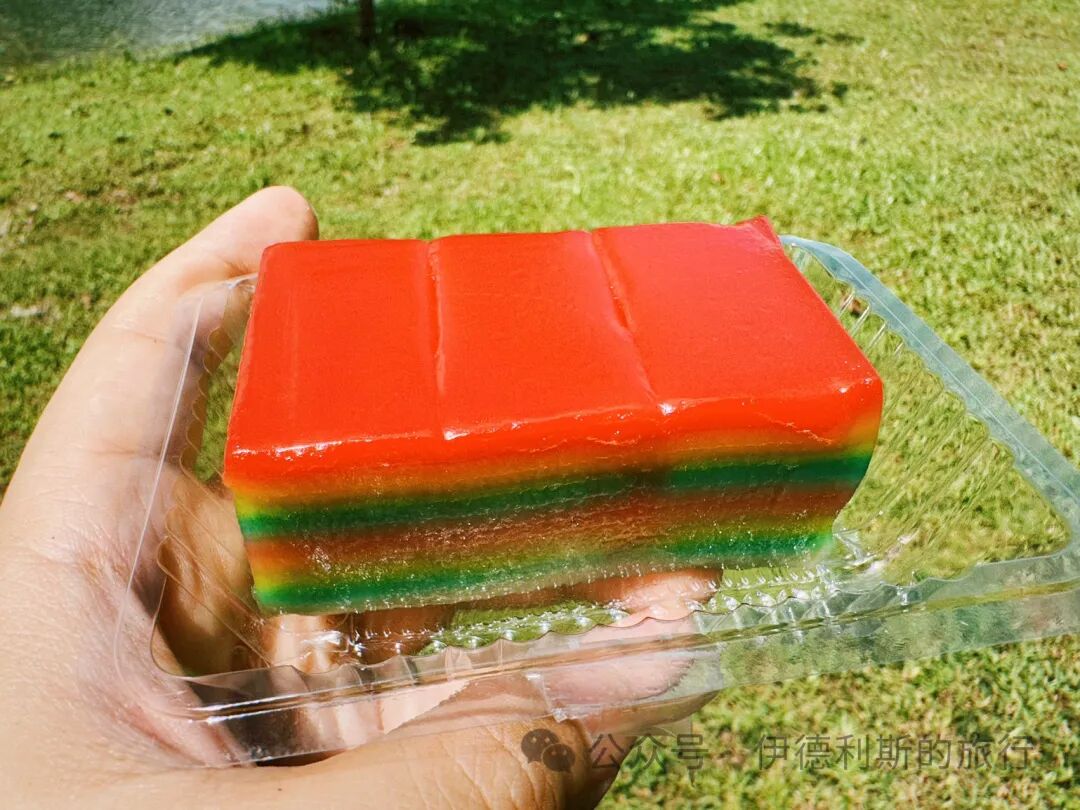
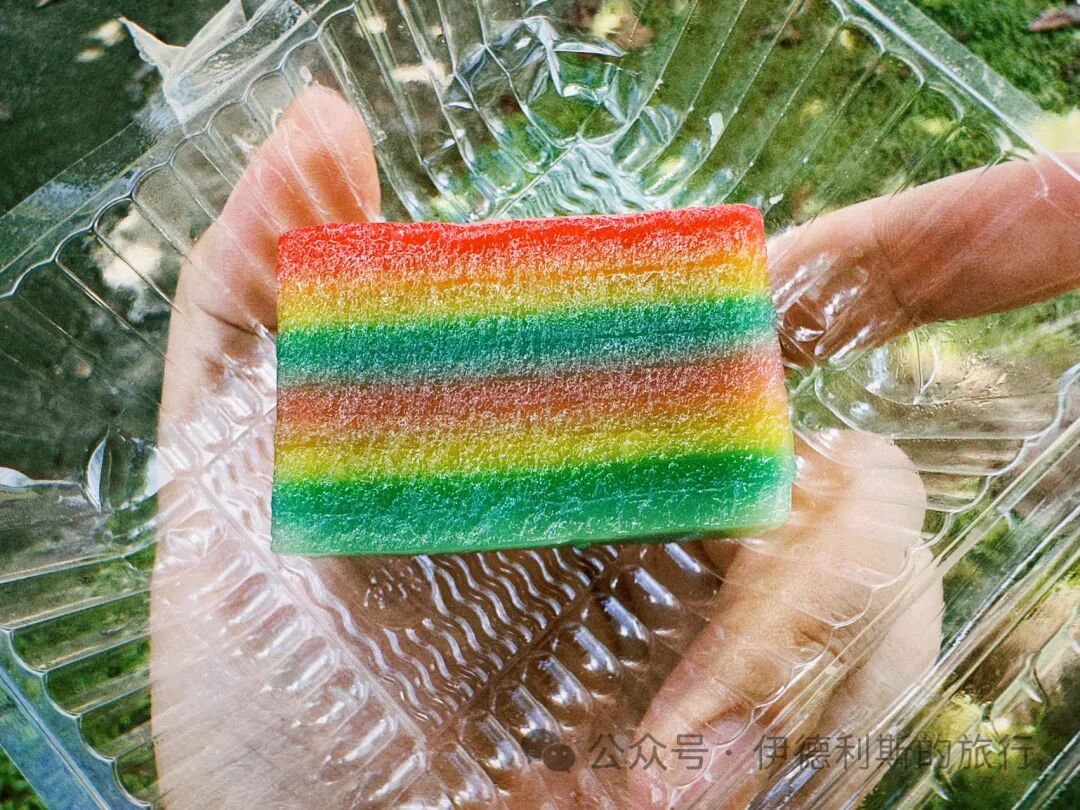
Bamboo shoot dumpling (sunguo) originated in Chaozhou. Although it looks a bit like a dumpling, the skin is actually made of rice flour or tapioca flour, and the filling contains jicama, bamboo shoots, and dried shrimp. Chive dumpling (jiucaiguo) is another type of Chaozhou steamed dumpling. Like the bamboo shoot dumpling, the skin is made of rice flour or tapioca flour, and it is filled with chives and dried shrimp.
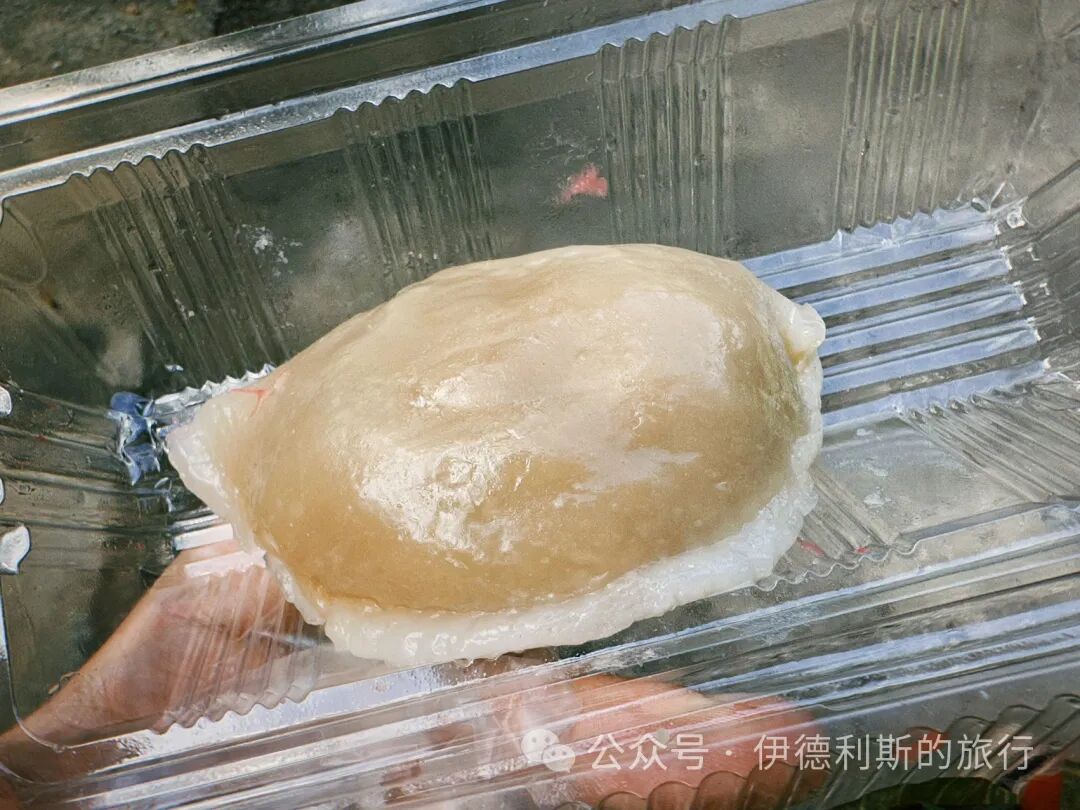
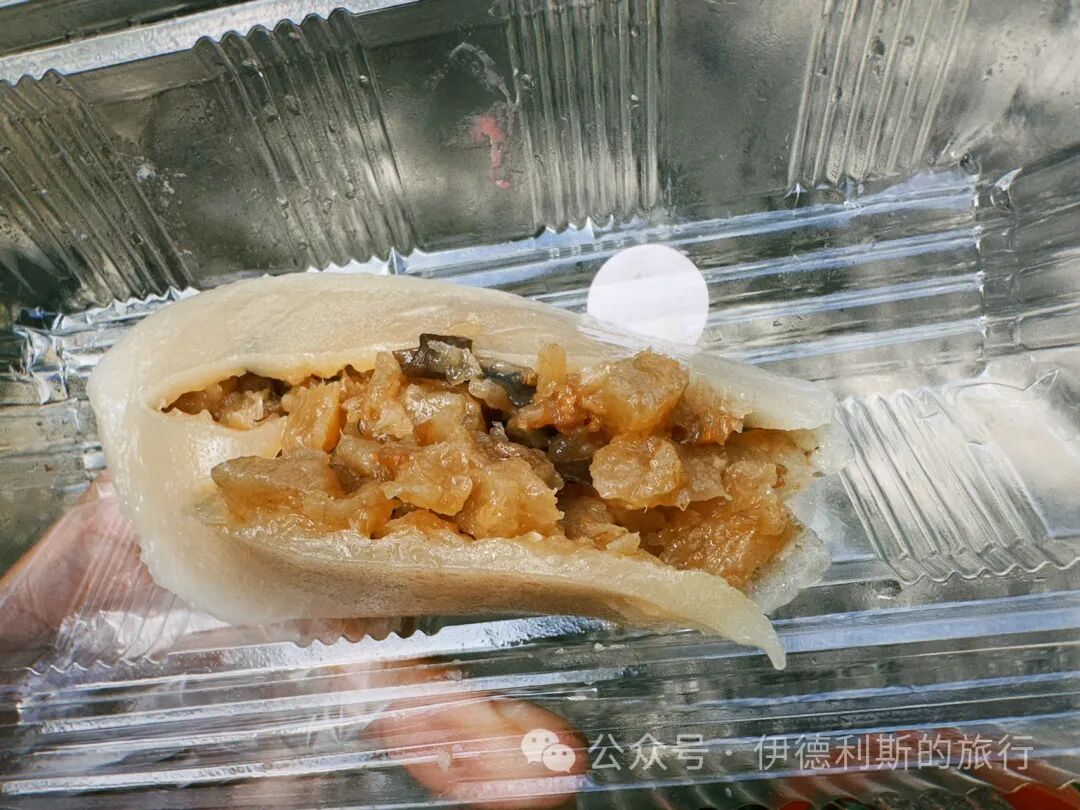
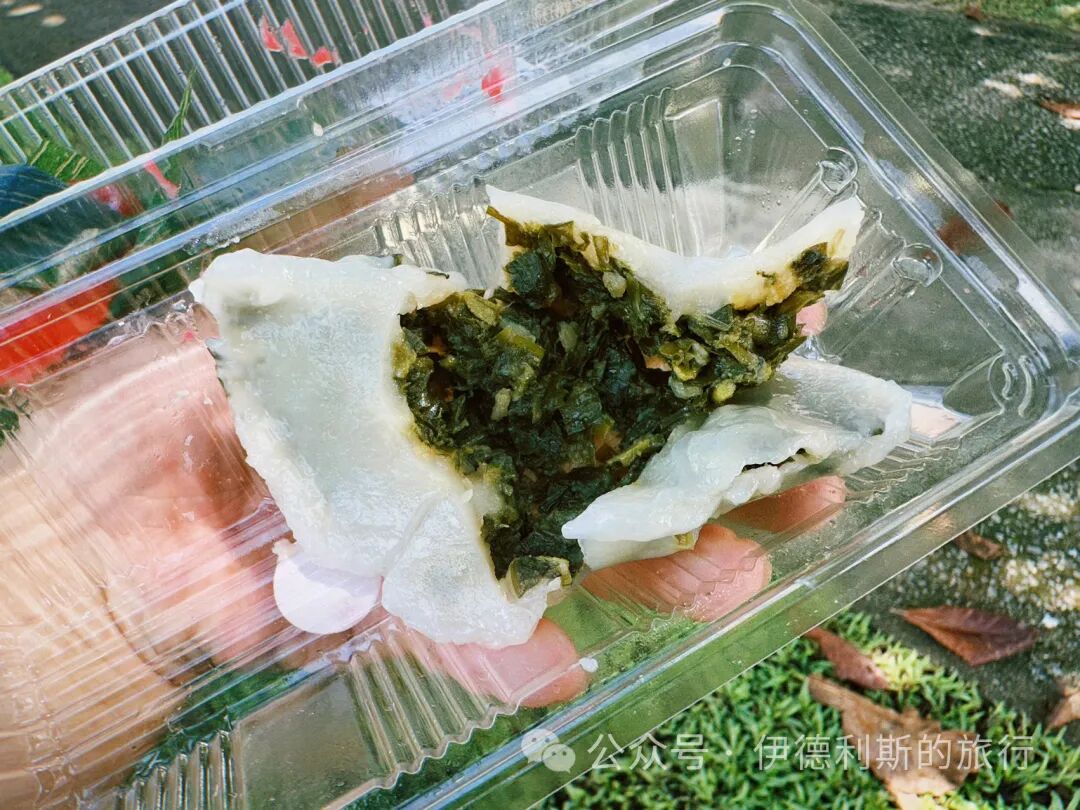
Finally, we bought white taro cake (baiyuguo), which is a taro cake made with shiitake mushrooms, dried shrimp, and other ingredients.
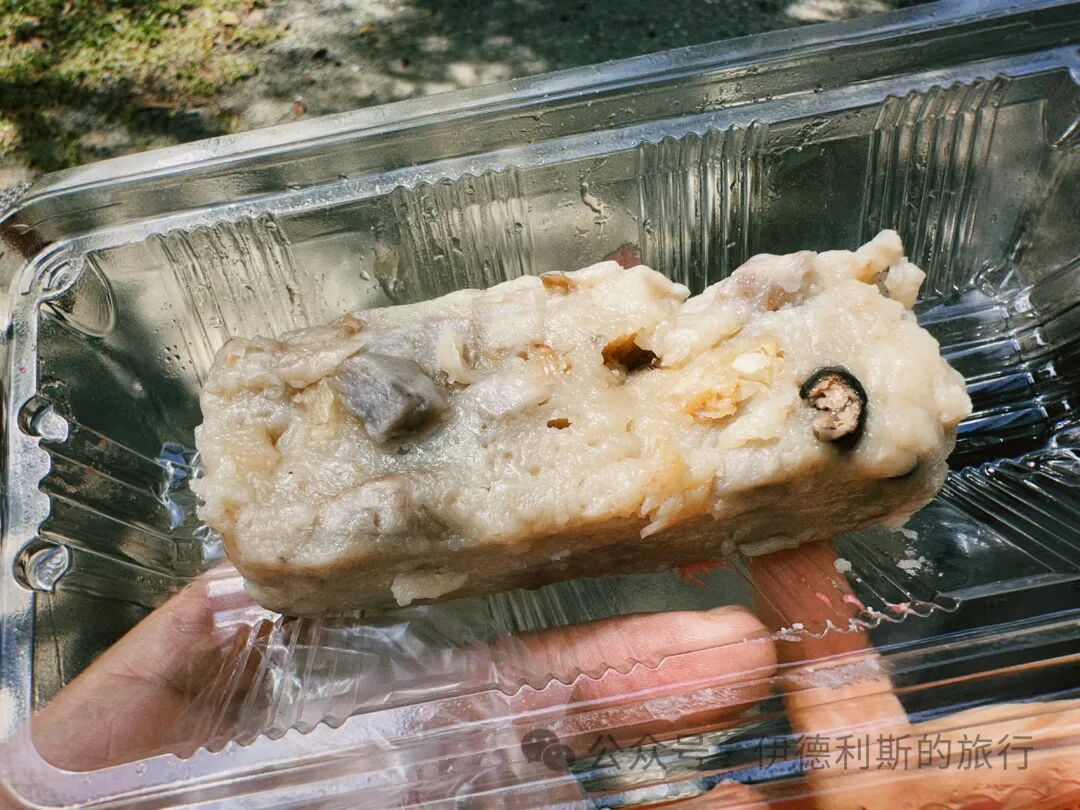
Summary: This Singapore food note focuses on Peranakan Nyonya cuisine and the dishes the author tasted during the trip. It keeps the original food names, flavors, restaurant details, and travel observations while making the English direct and readable.
In Singapore, we found a halal-certified Peranakan restaurant called Old Bibik's Peranakan Kitchen on Joo Chiat Road. The owner, Adrian, is a Baba Nyonya himself, and many dishes in the shop come from his late grandmother. The name Old Bibik is in her memory.
Baba Nyonya, also known as Peranakan, are a group formed by Hokkien, Teochew, and Hakka immigrants who moved to Phuket, Penang, Malacca, and Singapore from the 15th century onwards and married local Malays and Sumatrans. The Joo Chiat area, where Old Bibik's Peranakan Kitchen is located, is an important settlement for Singapore's Baba Nyonya people. In the early 19th century, Baba Nyonya merchants like Tan Tock Seng opened nutmeg plantations in areas bordering Singapore's Chinatown and Tanjong Pagar. Many moved to the Joo Chiat area after the 1920s and 1930s. Today, it still preserves many century-old Baba Nyonya shophouses and quite a few Nyonya restaurants.
Baba Nyonya absorbed Malay language and culture, using a Baba Malay language that includes many Hokkien words. They wear batik sarongs, and Nyonya cuisine is a unique style formed by blending Chinese ingredients with Malay and Indonesian spices and cooking methods.
We ordered classic Nyonya dishes: chicken with black nuts (Ayam Buah Keluak), mixed vegetables (Chap Chye), and beef rendang (Rendang) rice. We also had bean curd pudding (Tau Huey).
Chicken with black nuts is chicken stewed with Indonesian black nuts and various spices like tamarind. Singapore's founding Prime Minister Lee Kuan Yew loved this dish. Indonesian black nuts originally came from the mangrove swamps of Java and Sumatra. They were brought to Malacca in the 15th century and became an important spice in Nyonya cuisine.
Mixed vegetables is a Nyonya stir-fry dish originating from Fujian. Various vegetables are chopped and stir-fried, and the ingredients vary by family depending on the season and taste.
Rendang originated in the Minangkabau region of Sumatra. It was brought to Malacca by the Minangkabau people in the 16th century and has since become part of Nyonya cuisine. Rendang is made by slowly cooking meat in coconut milk and various spices until all the liquid dries up and the meat turns dark brown. Dry rendang can be stored for a month, making it perfect for travel.
Nyonya bean curd pudding is a bit like cendol, topped with pandan jelly noodles, red beans, and grass jelly, and can be drizzled with palm sugar syrup.
In Bedok North Street in eastern Singapore, there is a 60-year-old shop called Lek Lim Nonya Cake Confectionery. It has a shop in the front and a factory in the back, selling all kinds of halal Nyonya cakes (kuih). Lek Lim started making and selling Nyonya cakes at home in 1960, opened the current shop in 1972, and applied for halal certification in 2011 so that more communities could taste the delicious Nyonya cakes.
Nyonya cakes have a rich variety of flavors. They are made by steaming, frying, or baking, and come in sweet, salty, and spicy versions. The main ingredients include glutinous rice flour, rice flour, and tapioca flour, with toppings like pandan, coconut milk, mung beans, red beans, and peanuts. A soft, chewy texture and bright colors are the main features of Nyonya kuih.
We bought the famous red tortoise cake (ang ku kueh), also called red rice cake (hongban) in Hakka. The skin is made from glutinous rice flour and sweet potato flour, filled with mung beans, peanuts, and sugar, then steamed on a banana leaf. We also bought Nyonya nine-layer cake (jiucenggao). This is a layered dessert steamed with rice flour, coconut milk, sugar, and various food colorings. It has a soft, chewy texture, and you can peel off the layers one by one to eat.
Bamboo shoot dumpling (sunguo) originated in Chaozhou. Although it looks a bit like a dumpling, the skin is actually made of rice flour or tapioca flour, and the filling contains jicama, bamboo shoots, and dried shrimp. Chive dumpling (jiucaiguo) is another type of Chaozhou steamed dumpling. Like the bamboo shoot dumpling, the skin is made of rice flour or tapioca flour, and it is filled with chives and dried shrimp.
Finally, we bought white taro cake (baiyuguo), which is a taro cake made with shiitake mushrooms, dried shrimp, and other ingredients.
Halal Food Guide: Singapore - Halal Chinese Food and Muslim-Friendly Eats
Articles • ali2007fr posted the article • 0 comments • 182 views • 2026-05-19 07:24
Reposted from the web
Summary: This Singapore article follows the author through halal Chinese food stops after arriving in the city. It preserves the original restaurant names, dishes, prices, and food observations in clear English.
After landing at Singapore Changi Airport, I took the subway directly to Kembangan station to eat prawn noodles at the famous Chinese Muslim restaurant Deanna's Kitchen, which is the most famous halal prawn noodle spot in Singapore.
The restaurant owner, Denise Chew (also known as Deanna), converted to Islam in 2009 when she married her husband, Asri Ramili, and prawn noodles were her favorite food before she converted. Because traditional Chinese prawn noodles are made with pork bone broth, pork meat, and lard, it took her six years to develop a halal version. Deanna makes the broth by simmering chicken bones, prawn shells, dried shrimp, and anchovies for three hours, and the resulting noodles are so popular that she started selling them online.
Deanna and her husband Asri both worked in banking, but as the prawn noodle business grew, Asri quit his job in 2017 to open a noodle stall. The stall soon had long lines and sold out early every day. That is how the physical Deanna's Kitchen shops opened, and now there is one in Jurong East and one in Kembangan.
They serve regular prawn noodles and a hearty seafood platter. We ordered the top-tier version, which includes one Boston lobster, five tiger prawns, five large prawns, one crayfish, and 20 clams. You can choose different sides and noodles like yellow noodles, laksa noodles, rice vermicelli, or flat rice noodles (kway teow). We chose laksa noodles.
We visited Jason Niang Dou Fu in Kampong Glam to taste traditional Hakka stuffed vegetables. In the Hakka dialect, 'niang' means to fill with stuffing. Legend has it that after the Hakka people migrated south from the Central Plains, they wanted to eat dumplings but had no wheat, so they used tofu instead of flour and invented stuffed tofu (niang dou fu). Besides stuffed tofu, the Hakka are good at using local ingredients. Many foods can be stuffed, such as chili peppers, eggplants, bitter melons, and taro. Tofu, eggplant, and bitter melon are known as the 'three stuffed treasures' (jian niang san bao).
Jason Niang Dou Fu is a bit like a spicy hot pot (malatang) shop in China, where you can pick your own stuffed vegetables and greens from the counter. You can also choose staples like flat rice noodles (kway teow), rice vermicelli, or egg noodles (mian zai). The Teochew taro rice (Yam Rice) and Teochew dry egg noodles (Mee Pok) are both worth a try.
The Dim Sum Place is a very famous halal Hong Kong-style tea restaurant in Singapore, specializing in a wide variety of dim sum and Cantonese dishes. They opened on North Bridge Road in Kampong Glam in 2016 and now have two more branches, making them very popular with Muslims.
We ordered steamed chicken feet in sauce, shrimp and chicken steamed dumplings (shaomai), roasted chicken char siu rice noodle rolls (cheong fun), fish fillet porridge, and pu'er tea. Since we were there for afternoon tea and not a full meal, there was still a lot we wanted to try but didn't order. We liked the fish fillet porridge the best, and the chicken feet and shaomai were okay, but the rice noodle rolls were just average; they felt too soft and lacked texture.
If you visit the National Museum of Singapore and Fort Canning Park, it is well worth stopping by the nearby MacKenzie Rex Restaurant to try their authentic halal Hainanese chicken rice. MacKenzie Rex Restaurant opened in 1966. It is the first and most famous halal Hainanese chicken rice restaurant in Singapore. The owner is a Hainanese Chinese person who speaks great Mandarin and is very happy to introduce the dishes to guests. Besides Hainanese chicken rice, they are also good at making various home-style Chinese dishes, known in Singapore as zi char (home-style stir-fry).
We ordered the classic chicken rice and five-spice meat rolls (ngor hiang), along with stir-fried mixed vegetables and fish soup. Everything was delicious, and it was arguably the best meal of our Singapore trip. The best part of their chicken rice is not the chicken itself, but the rice steamed with chicken fat. You can eat it plain and never want to stop. The halal version of the five-spice meat roll is made by adding five-spice powder to chicken filling, wrapping it in bean curd skin, and deep-frying it. It is very fragrant when freshly fried.
If you take a half-day trip to Pulau Ubin in Singapore, it is perfect to have a meal at the halal tea restaurant Tang Tea House next to the Changi Point Ferry Terminal. They serve authentic halal Chinese stir-fry (tze-char) and dim sum with a huge variety of choices.
We ordered stir-fried amaranth with anchovies, chicken chop rice, beef porridge, and lemongrass water. We also ordered a classic Malaysian and Singaporean Chinese dish called Buddha's bowl (fo bo piao xiang), which is a taro ring served with cashew chicken and various vegetables. We actually picked it randomly from the menu, but it was surprisingly delicious and we finished it all very quickly.
Tang Tea House opened in 2005. It started because many of the owner's Muslim friends told him they wanted to eat Chinese food but rarely found halal Chinese restaurants. He saw the opportunity and opened Tang Tea House, which has now grown to five locations and is doing very well.
If you travel from Singapore to Johor Bahru, you can grab a quick bite at the TuanTuan. PuanPuan stall at the Woodlands MRT station while transferring. The name means 'ladies and gentlemen' in Malay. There are three stalls inside. The first sells Malay coconut milk rice (nasi lemak), the second sells stir-fried rice vermicelli and stir-fried flat rice noodles (char kway teow) where you can add fish cakes, dried tofu, or five-spice meat rolls, and the third stall sells chicken rice. However, it was quite late when we returned from Johor Bahru and many items were sold out, so we just ordered the chicken rice and stir-fried rice vermicelli. view all
Summary: This Singapore article follows the author through halal Chinese food stops after arriving in the city. It preserves the original restaurant names, dishes, prices, and food observations in clear English.
After landing at Singapore Changi Airport, I took the subway directly to Kembangan station to eat prawn noodles at the famous Chinese Muslim restaurant Deanna's Kitchen, which is the most famous halal prawn noodle spot in Singapore.
The restaurant owner, Denise Chew (also known as Deanna), converted to Islam in 2009 when she married her husband, Asri Ramili, and prawn noodles were her favorite food before she converted. Because traditional Chinese prawn noodles are made with pork bone broth, pork meat, and lard, it took her six years to develop a halal version. Deanna makes the broth by simmering chicken bones, prawn shells, dried shrimp, and anchovies for three hours, and the resulting noodles are so popular that she started selling them online.
Deanna and her husband Asri both worked in banking, but as the prawn noodle business grew, Asri quit his job in 2017 to open a noodle stall. The stall soon had long lines and sold out early every day. That is how the physical Deanna's Kitchen shops opened, and now there is one in Jurong East and one in Kembangan.
They serve regular prawn noodles and a hearty seafood platter. We ordered the top-tier version, which includes one Boston lobster, five tiger prawns, five large prawns, one crayfish, and 20 clams. You can choose different sides and noodles like yellow noodles, laksa noodles, rice vermicelli, or flat rice noodles (kway teow). We chose laksa noodles.
We visited Jason Niang Dou Fu in Kampong Glam to taste traditional Hakka stuffed vegetables. In the Hakka dialect, 'niang' means to fill with stuffing. Legend has it that after the Hakka people migrated south from the Central Plains, they wanted to eat dumplings but had no wheat, so they used tofu instead of flour and invented stuffed tofu (niang dou fu). Besides stuffed tofu, the Hakka are good at using local ingredients. Many foods can be stuffed, such as chili peppers, eggplants, bitter melons, and taro. Tofu, eggplant, and bitter melon are known as the 'three stuffed treasures' (jian niang san bao).
Jason Niang Dou Fu is a bit like a spicy hot pot (malatang) shop in China, where you can pick your own stuffed vegetables and greens from the counter. You can also choose staples like flat rice noodles (kway teow), rice vermicelli, or egg noodles (mian zai). The Teochew taro rice (Yam Rice) and Teochew dry egg noodles (Mee Pok) are both worth a try.
The Dim Sum Place is a very famous halal Hong Kong-style tea restaurant in Singapore, specializing in a wide variety of dim sum and Cantonese dishes. They opened on North Bridge Road in Kampong Glam in 2016 and now have two more branches, making them very popular with Muslims.
We ordered steamed chicken feet in sauce, shrimp and chicken steamed dumplings (shaomai), roasted chicken char siu rice noodle rolls (cheong fun), fish fillet porridge, and pu'er tea. Since we were there for afternoon tea and not a full meal, there was still a lot we wanted to try but didn't order. We liked the fish fillet porridge the best, and the chicken feet and shaomai were okay, but the rice noodle rolls were just average; they felt too soft and lacked texture.
If you visit the National Museum of Singapore and Fort Canning Park, it is well worth stopping by the nearby MacKenzie Rex Restaurant to try their authentic halal Hainanese chicken rice. MacKenzie Rex Restaurant opened in 1966. It is the first and most famous halal Hainanese chicken rice restaurant in Singapore. The owner is a Hainanese Chinese person who speaks great Mandarin and is very happy to introduce the dishes to guests. Besides Hainanese chicken rice, they are also good at making various home-style Chinese dishes, known in Singapore as zi char (home-style stir-fry).
We ordered the classic chicken rice and five-spice meat rolls (ngor hiang), along with stir-fried mixed vegetables and fish soup. Everything was delicious, and it was arguably the best meal of our Singapore trip. The best part of their chicken rice is not the chicken itself, but the rice steamed with chicken fat. You can eat it plain and never want to stop. The halal version of the five-spice meat roll is made by adding five-spice powder to chicken filling, wrapping it in bean curd skin, and deep-frying it. It is very fragrant when freshly fried.
If you take a half-day trip to Pulau Ubin in Singapore, it is perfect to have a meal at the halal tea restaurant Tang Tea House next to the Changi Point Ferry Terminal. They serve authentic halal Chinese stir-fry (tze-char) and dim sum with a huge variety of choices.
We ordered stir-fried amaranth with anchovies, chicken chop rice, beef porridge, and lemongrass water. We also ordered a classic Malaysian and Singaporean Chinese dish called Buddha's bowl (fo bo piao xiang), which is a taro ring served with cashew chicken and various vegetables. We actually picked it randomly from the menu, but it was surprisingly delicious and we finished it all very quickly.
Tang Tea House opened in 2005. It started because many of the owner's Muslim friends told him they wanted to eat Chinese food but rarely found halal Chinese restaurants. He saw the opportunity and opened Tang Tea House, which has now grown to five locations and is doing very well.
If you travel from Singapore to Johor Bahru, you can grab a quick bite at the TuanTuan. PuanPuan stall at the Woodlands MRT station while transferring. The name means 'ladies and gentlemen' in Malay. There are three stalls inside. The first sells Malay coconut milk rice (nasi lemak), the second sells stir-fried rice vermicelli and stir-fried flat rice noodles (char kway teow) where you can add fish cakes, dried tofu, or five-spice meat rolls, and the third stall sells chicken rice. However, it was quite late when we returned from Johor Bahru and many items were sold out, so we just ordered the chicken rice and stir-fried rice vermicelli. view all
Reposted from the web
Summary: This Singapore article follows the author through halal Chinese food stops after arriving in the city. It preserves the original restaurant names, dishes, prices, and food observations in clear English.
After landing at Singapore Changi Airport, I took the subway directly to Kembangan station to eat prawn noodles at the famous Chinese Muslim restaurant Deanna's Kitchen, which is the most famous halal prawn noodle spot in Singapore.
The restaurant owner, Denise Chew (also known as Deanna), converted to Islam in 2009 when she married her husband, Asri Ramili, and prawn noodles were her favorite food before she converted. Because traditional Chinese prawn noodles are made with pork bone broth, pork meat, and lard, it took her six years to develop a halal version. Deanna makes the broth by simmering chicken bones, prawn shells, dried shrimp, and anchovies for three hours, and the resulting noodles are so popular that she started selling them online.
Deanna and her husband Asri both worked in banking, but as the prawn noodle business grew, Asri quit his job in 2017 to open a noodle stall. The stall soon had long lines and sold out early every day. That is how the physical Deanna's Kitchen shops opened, and now there is one in Jurong East and one in Kembangan.
They serve regular prawn noodles and a hearty seafood platter. We ordered the top-tier version, which includes one Boston lobster, five tiger prawns, five large prawns, one crayfish, and 20 clams. You can choose different sides and noodles like yellow noodles, laksa noodles, rice vermicelli, or flat rice noodles (kway teow). We chose laksa noodles.
We visited Jason Niang Dou Fu in Kampong Glam to taste traditional Hakka stuffed vegetables. In the Hakka dialect, 'niang' means to fill with stuffing. Legend has it that after the Hakka people migrated south from the Central Plains, they wanted to eat dumplings but had no wheat, so they used tofu instead of flour and invented stuffed tofu (niang dou fu). Besides stuffed tofu, the Hakka are good at using local ingredients. Many foods can be stuffed, such as chili peppers, eggplants, bitter melons, and taro. Tofu, eggplant, and bitter melon are known as the 'three stuffed treasures' (jian niang san bao).
Jason Niang Dou Fu is a bit like a spicy hot pot (malatang) shop in China, where you can pick your own stuffed vegetables and greens from the counter. You can also choose staples like flat rice noodles (kway teow), rice vermicelli, or egg noodles (mian zai). The Teochew taro rice (Yam Rice) and Teochew dry egg noodles (Mee Pok) are both worth a try.
The Dim Sum Place is a very famous halal Hong Kong-style tea restaurant in Singapore, specializing in a wide variety of dim sum and Cantonese dishes. They opened on North Bridge Road in Kampong Glam in 2016 and now have two more branches, making them very popular with Muslims.
We ordered steamed chicken feet in sauce, shrimp and chicken steamed dumplings (shaomai), roasted chicken char siu rice noodle rolls (cheong fun), fish fillet porridge, and pu'er tea. Since we were there for afternoon tea and not a full meal, there was still a lot we wanted to try but didn't order. We liked the fish fillet porridge the best, and the chicken feet and shaomai were okay, but the rice noodle rolls were just average; they felt too soft and lacked texture.
If you visit the National Museum of Singapore and Fort Canning Park, it is well worth stopping by the nearby MacKenzie Rex Restaurant to try their authentic halal Hainanese chicken rice. MacKenzie Rex Restaurant opened in 1966. It is the first and most famous halal Hainanese chicken rice restaurant in Singapore. The owner is a Hainanese Chinese person who speaks great Mandarin and is very happy to introduce the dishes to guests. Besides Hainanese chicken rice, they are also good at making various home-style Chinese dishes, known in Singapore as zi char (home-style stir-fry).
We ordered the classic chicken rice and five-spice meat rolls (ngor hiang), along with stir-fried mixed vegetables and fish soup. Everything was delicious, and it was arguably the best meal of our Singapore trip. The best part of their chicken rice is not the chicken itself, but the rice steamed with chicken fat. You can eat it plain and never want to stop. The halal version of the five-spice meat roll is made by adding five-spice powder to chicken filling, wrapping it in bean curd skin, and deep-frying it. It is very fragrant when freshly fried.
If you take a half-day trip to Pulau Ubin in Singapore, it is perfect to have a meal at the halal tea restaurant Tang Tea House next to the Changi Point Ferry Terminal. They serve authentic halal Chinese stir-fry (tze-char) and dim sum with a huge variety of choices.
We ordered stir-fried amaranth with anchovies, chicken chop rice, beef porridge, and lemongrass water. We also ordered a classic Malaysian and Singaporean Chinese dish called Buddha's bowl (fo bo piao xiang), which is a taro ring served with cashew chicken and various vegetables. We actually picked it randomly from the menu, but it was surprisingly delicious and we finished it all very quickly.
Tang Tea House opened in 2005. It started because many of the owner's Muslim friends told him they wanted to eat Chinese food but rarely found halal Chinese restaurants. He saw the opportunity and opened Tang Tea House, which has now grown to five locations and is doing very well.
If you travel from Singapore to Johor Bahru, you can grab a quick bite at the TuanTuan. PuanPuan stall at the Woodlands MRT station while transferring. The name means 'ladies and gentlemen' in Malay. There are three stalls inside. The first sells Malay coconut milk rice (nasi lemak), the second sells stir-fried rice vermicelli and stir-fried flat rice noodles (char kway teow) where you can add fish cakes, dried tofu, or five-spice meat rolls, and the third stall sells chicken rice. However, it was quite late when we returned from Johor Bahru and many items were sold out, so we just ordered the chicken rice and stir-fried rice vermicelli.
Summary: This Singapore article follows the author through halal Chinese food stops after arriving in the city. It preserves the original restaurant names, dishes, prices, and food observations in clear English.
After landing at Singapore Changi Airport, I took the subway directly to Kembangan station to eat prawn noodles at the famous Chinese Muslim restaurant Deanna's Kitchen, which is the most famous halal prawn noodle spot in Singapore.
The restaurant owner, Denise Chew (also known as Deanna), converted to Islam in 2009 when she married her husband, Asri Ramili, and prawn noodles were her favorite food before she converted. Because traditional Chinese prawn noodles are made with pork bone broth, pork meat, and lard, it took her six years to develop a halal version. Deanna makes the broth by simmering chicken bones, prawn shells, dried shrimp, and anchovies for three hours, and the resulting noodles are so popular that she started selling them online.
Deanna and her husband Asri both worked in banking, but as the prawn noodle business grew, Asri quit his job in 2017 to open a noodle stall. The stall soon had long lines and sold out early every day. That is how the physical Deanna's Kitchen shops opened, and now there is one in Jurong East and one in Kembangan.
They serve regular prawn noodles and a hearty seafood platter. We ordered the top-tier version, which includes one Boston lobster, five tiger prawns, five large prawns, one crayfish, and 20 clams. You can choose different sides and noodles like yellow noodles, laksa noodles, rice vermicelli, or flat rice noodles (kway teow). We chose laksa noodles.
We visited Jason Niang Dou Fu in Kampong Glam to taste traditional Hakka stuffed vegetables. In the Hakka dialect, 'niang' means to fill with stuffing. Legend has it that after the Hakka people migrated south from the Central Plains, they wanted to eat dumplings but had no wheat, so they used tofu instead of flour and invented stuffed tofu (niang dou fu). Besides stuffed tofu, the Hakka are good at using local ingredients. Many foods can be stuffed, such as chili peppers, eggplants, bitter melons, and taro. Tofu, eggplant, and bitter melon are known as the 'three stuffed treasures' (jian niang san bao).
Jason Niang Dou Fu is a bit like a spicy hot pot (malatang) shop in China, where you can pick your own stuffed vegetables and greens from the counter. You can also choose staples like flat rice noodles (kway teow), rice vermicelli, or egg noodles (mian zai). The Teochew taro rice (Yam Rice) and Teochew dry egg noodles (Mee Pok) are both worth a try.
The Dim Sum Place is a very famous halal Hong Kong-style tea restaurant in Singapore, specializing in a wide variety of dim sum and Cantonese dishes. They opened on North Bridge Road in Kampong Glam in 2016 and now have two more branches, making them very popular with Muslims.
We ordered steamed chicken feet in sauce, shrimp and chicken steamed dumplings (shaomai), roasted chicken char siu rice noodle rolls (cheong fun), fish fillet porridge, and pu'er tea. Since we were there for afternoon tea and not a full meal, there was still a lot we wanted to try but didn't order. We liked the fish fillet porridge the best, and the chicken feet and shaomai were okay, but the rice noodle rolls were just average; they felt too soft and lacked texture.
If you visit the National Museum of Singapore and Fort Canning Park, it is well worth stopping by the nearby MacKenzie Rex Restaurant to try their authentic halal Hainanese chicken rice. MacKenzie Rex Restaurant opened in 1966. It is the first and most famous halal Hainanese chicken rice restaurant in Singapore. The owner is a Hainanese Chinese person who speaks great Mandarin and is very happy to introduce the dishes to guests. Besides Hainanese chicken rice, they are also good at making various home-style Chinese dishes, known in Singapore as zi char (home-style stir-fry).
We ordered the classic chicken rice and five-spice meat rolls (ngor hiang), along with stir-fried mixed vegetables and fish soup. Everything was delicious, and it was arguably the best meal of our Singapore trip. The best part of their chicken rice is not the chicken itself, but the rice steamed with chicken fat. You can eat it plain and never want to stop. The halal version of the five-spice meat roll is made by adding five-spice powder to chicken filling, wrapping it in bean curd skin, and deep-frying it. It is very fragrant when freshly fried.
If you take a half-day trip to Pulau Ubin in Singapore, it is perfect to have a meal at the halal tea restaurant Tang Tea House next to the Changi Point Ferry Terminal. They serve authentic halal Chinese stir-fry (tze-char) and dim sum with a huge variety of choices.
We ordered stir-fried amaranth with anchovies, chicken chop rice, beef porridge, and lemongrass water. We also ordered a classic Malaysian and Singaporean Chinese dish called Buddha's bowl (fo bo piao xiang), which is a taro ring served with cashew chicken and various vegetables. We actually picked it randomly from the menu, but it was surprisingly delicious and we finished it all very quickly.
Tang Tea House opened in 2005. It started because many of the owner's Muslim friends told him they wanted to eat Chinese food but rarely found halal Chinese restaurants. He saw the opportunity and opened Tang Tea House, which has now grown to five locations and is doing very well.
If you travel from Singapore to Johor Bahru, you can grab a quick bite at the TuanTuan. PuanPuan stall at the Woodlands MRT station while transferring. The name means 'ladies and gentlemen' in Malay. There are three stalls inside. The first sells Malay coconut milk rice (nasi lemak), the second sells stir-fried rice vermicelli and stir-fried flat rice noodles (char kway teow) where you can add fish cakes, dried tofu, or five-spice meat rolls, and the third stall sells chicken rice. However, it was quite late when we returned from Johor Bahru and many items were sold out, so we just ordered the chicken rice and stir-fried rice vermicelli.
Halal Food Guide: Singapore - Peranakan Nyonya Cuisine and Muslim Travel
Articles • ali2007fr posted the article • 0 comments • 169 views • 2026-05-19 07:24
Reposted from the web
Summary: This Singapore food note focuses on Peranakan Nyonya cuisine and the dishes the author tasted during the trip. It keeps the original food names, flavors, restaurant details, and travel observations while making the English direct and readable.
In Singapore, we found a halal-certified Peranakan restaurant called Old Bibik's Peranakan Kitchen on Joo Chiat Road. The owner, Adrian, is a Baba Nyonya himself, and many dishes in the shop come from his late grandmother. The name Old Bibik is in her memory.
Baba Nyonya, also known as Peranakan, are a group formed by Hokkien, Teochew, and Hakka immigrants who moved to Phuket, Penang, Malacca, and Singapore from the 15th century onwards and married local Malays and Sumatrans. The Joo Chiat area, where Old Bibik's Peranakan Kitchen is located, is an important settlement for Singapore's Baba Nyonya people. In the early 19th century, Baba Nyonya merchants like Tan Tock Seng opened nutmeg plantations in areas bordering Singapore's Chinatown and Tanjong Pagar. Many moved to the Joo Chiat area after the 1920s and 1930s. Today, it still preserves many century-old Baba Nyonya shophouses and quite a few Nyonya restaurants.
Baba Nyonya absorbed Malay language and culture, using a Baba Malay language that includes many Hokkien words. They wear batik sarongs, and Nyonya cuisine is a unique style formed by blending Chinese ingredients with Malay and Indonesian spices and cooking methods.
We ordered classic Nyonya dishes: chicken with black nuts (Ayam Buah Keluak), mixed vegetables (Chap Chye), and beef rendang (Rendang) rice. We also had bean curd pudding (Tau Huey).
Chicken with black nuts is chicken stewed with Indonesian black nuts and various spices like tamarind. Singapore's founding Prime Minister Lee Kuan Yew loved this dish. Indonesian black nuts originally came from the mangrove swamps of Java and Sumatra. They were brought to Malacca in the 15th century and became an important spice in Nyonya cuisine.
Mixed vegetables is a Nyonya stir-fry dish originating from Fujian. Various vegetables are chopped and stir-fried, and the ingredients vary by family depending on the season and taste.
Rendang originated in the Minangkabau region of Sumatra. It was brought to Malacca by the Minangkabau people in the 16th century and has since become part of Nyonya cuisine. Rendang is made by slowly cooking meat in coconut milk and various spices until all the liquid dries up and the meat turns dark brown. Dry rendang can be stored for a month, making it perfect for travel.
Nyonya bean curd pudding is a bit like cendol, topped with pandan jelly noodles, red beans, and grass jelly, and can be drizzled with palm sugar syrup.
In Bedok North Street in eastern Singapore, there is a 60-year-old shop called Lek Lim Nonya Cake Confectionery. It has a shop in the front and a factory in the back, selling all kinds of halal Nyonya cakes (kuih). Lek Lim started making and selling Nyonya cakes at home in 1960, opened the current shop in 1972, and applied for halal certification in 2011 so that more communities could taste the delicious Nyonya cakes.
Nyonya cakes have a rich variety of flavors. They are made by steaming, frying, or baking, and come in sweet, salty, and spicy versions. The main ingredients include glutinous rice flour, rice flour, and tapioca flour, with toppings like pandan, coconut milk, mung beans, red beans, and peanuts. A soft, chewy texture and bright colors are the main features of Nyonya kuih.
We bought the famous red tortoise cake (ang ku kueh), also called red rice cake (hongban) in Hakka. The skin is made from glutinous rice flour and sweet potato flour, filled with mung beans, peanuts, and sugar, then steamed on a banana leaf. We also bought Nyonya nine-layer cake (jiucenggao). This is a layered dessert steamed with rice flour, coconut milk, sugar, and various food colorings. It has a soft, chewy texture, and you can peel off the layers one by one to eat.
Bamboo shoot dumpling (sunguo) originated in Chaozhou. Although it looks a bit like a dumpling, the skin is actually made of rice flour or tapioca flour, and the filling contains jicama, bamboo shoots, and dried shrimp. Chive dumpling (jiucaiguo) is another type of Chaozhou steamed dumpling. Like the bamboo shoot dumpling, the skin is made of rice flour or tapioca flour, and it is filled with chives and dried shrimp.
Finally, we bought white taro cake (baiyuguo), which is a taro cake made with shiitake mushrooms, dried shrimp, and other ingredients. view all
Summary: This Singapore food note focuses on Peranakan Nyonya cuisine and the dishes the author tasted during the trip. It keeps the original food names, flavors, restaurant details, and travel observations while making the English direct and readable.
In Singapore, we found a halal-certified Peranakan restaurant called Old Bibik's Peranakan Kitchen on Joo Chiat Road. The owner, Adrian, is a Baba Nyonya himself, and many dishes in the shop come from his late grandmother. The name Old Bibik is in her memory.
Baba Nyonya, also known as Peranakan, are a group formed by Hokkien, Teochew, and Hakka immigrants who moved to Phuket, Penang, Malacca, and Singapore from the 15th century onwards and married local Malays and Sumatrans. The Joo Chiat area, where Old Bibik's Peranakan Kitchen is located, is an important settlement for Singapore's Baba Nyonya people. In the early 19th century, Baba Nyonya merchants like Tan Tock Seng opened nutmeg plantations in areas bordering Singapore's Chinatown and Tanjong Pagar. Many moved to the Joo Chiat area after the 1920s and 1930s. Today, it still preserves many century-old Baba Nyonya shophouses and quite a few Nyonya restaurants.
Baba Nyonya absorbed Malay language and culture, using a Baba Malay language that includes many Hokkien words. They wear batik sarongs, and Nyonya cuisine is a unique style formed by blending Chinese ingredients with Malay and Indonesian spices and cooking methods.
We ordered classic Nyonya dishes: chicken with black nuts (Ayam Buah Keluak), mixed vegetables (Chap Chye), and beef rendang (Rendang) rice. We also had bean curd pudding (Tau Huey).
Chicken with black nuts is chicken stewed with Indonesian black nuts and various spices like tamarind. Singapore's founding Prime Minister Lee Kuan Yew loved this dish. Indonesian black nuts originally came from the mangrove swamps of Java and Sumatra. They were brought to Malacca in the 15th century and became an important spice in Nyonya cuisine.
Mixed vegetables is a Nyonya stir-fry dish originating from Fujian. Various vegetables are chopped and stir-fried, and the ingredients vary by family depending on the season and taste.
Rendang originated in the Minangkabau region of Sumatra. It was brought to Malacca by the Minangkabau people in the 16th century and has since become part of Nyonya cuisine. Rendang is made by slowly cooking meat in coconut milk and various spices until all the liquid dries up and the meat turns dark brown. Dry rendang can be stored for a month, making it perfect for travel.
Nyonya bean curd pudding is a bit like cendol, topped with pandan jelly noodles, red beans, and grass jelly, and can be drizzled with palm sugar syrup.
In Bedok North Street in eastern Singapore, there is a 60-year-old shop called Lek Lim Nonya Cake Confectionery. It has a shop in the front and a factory in the back, selling all kinds of halal Nyonya cakes (kuih). Lek Lim started making and selling Nyonya cakes at home in 1960, opened the current shop in 1972, and applied for halal certification in 2011 so that more communities could taste the delicious Nyonya cakes.
Nyonya cakes have a rich variety of flavors. They are made by steaming, frying, or baking, and come in sweet, salty, and spicy versions. The main ingredients include glutinous rice flour, rice flour, and tapioca flour, with toppings like pandan, coconut milk, mung beans, red beans, and peanuts. A soft, chewy texture and bright colors are the main features of Nyonya kuih.
We bought the famous red tortoise cake (ang ku kueh), also called red rice cake (hongban) in Hakka. The skin is made from glutinous rice flour and sweet potato flour, filled with mung beans, peanuts, and sugar, then steamed on a banana leaf. We also bought Nyonya nine-layer cake (jiucenggao). This is a layered dessert steamed with rice flour, coconut milk, sugar, and various food colorings. It has a soft, chewy texture, and you can peel off the layers one by one to eat.
Bamboo shoot dumpling (sunguo) originated in Chaozhou. Although it looks a bit like a dumpling, the skin is actually made of rice flour or tapioca flour, and the filling contains jicama, bamboo shoots, and dried shrimp. Chive dumpling (jiucaiguo) is another type of Chaozhou steamed dumpling. Like the bamboo shoot dumpling, the skin is made of rice flour or tapioca flour, and it is filled with chives and dried shrimp.
Finally, we bought white taro cake (baiyuguo), which is a taro cake made with shiitake mushrooms, dried shrimp, and other ingredients. view all
Reposted from the web
Summary: This Singapore food note focuses on Peranakan Nyonya cuisine and the dishes the author tasted during the trip. It keeps the original food names, flavors, restaurant details, and travel observations while making the English direct and readable.
In Singapore, we found a halal-certified Peranakan restaurant called Old Bibik's Peranakan Kitchen on Joo Chiat Road. The owner, Adrian, is a Baba Nyonya himself, and many dishes in the shop come from his late grandmother. The name Old Bibik is in her memory.
Baba Nyonya, also known as Peranakan, are a group formed by Hokkien, Teochew, and Hakka immigrants who moved to Phuket, Penang, Malacca, and Singapore from the 15th century onwards and married local Malays and Sumatrans. The Joo Chiat area, where Old Bibik's Peranakan Kitchen is located, is an important settlement for Singapore's Baba Nyonya people. In the early 19th century, Baba Nyonya merchants like Tan Tock Seng opened nutmeg plantations in areas bordering Singapore's Chinatown and Tanjong Pagar. Many moved to the Joo Chiat area after the 1920s and 1930s. Today, it still preserves many century-old Baba Nyonya shophouses and quite a few Nyonya restaurants.
Baba Nyonya absorbed Malay language and culture, using a Baba Malay language that includes many Hokkien words. They wear batik sarongs, and Nyonya cuisine is a unique style formed by blending Chinese ingredients with Malay and Indonesian spices and cooking methods.
We ordered classic Nyonya dishes: chicken with black nuts (Ayam Buah Keluak), mixed vegetables (Chap Chye), and beef rendang (Rendang) rice. We also had bean curd pudding (Tau Huey).
Chicken with black nuts is chicken stewed with Indonesian black nuts and various spices like tamarind. Singapore's founding Prime Minister Lee Kuan Yew loved this dish. Indonesian black nuts originally came from the mangrove swamps of Java and Sumatra. They were brought to Malacca in the 15th century and became an important spice in Nyonya cuisine.
Mixed vegetables is a Nyonya stir-fry dish originating from Fujian. Various vegetables are chopped and stir-fried, and the ingredients vary by family depending on the season and taste.
Rendang originated in the Minangkabau region of Sumatra. It was brought to Malacca by the Minangkabau people in the 16th century and has since become part of Nyonya cuisine. Rendang is made by slowly cooking meat in coconut milk and various spices until all the liquid dries up and the meat turns dark brown. Dry rendang can be stored for a month, making it perfect for travel.
Nyonya bean curd pudding is a bit like cendol, topped with pandan jelly noodles, red beans, and grass jelly, and can be drizzled with palm sugar syrup.
In Bedok North Street in eastern Singapore, there is a 60-year-old shop called Lek Lim Nonya Cake Confectionery. It has a shop in the front and a factory in the back, selling all kinds of halal Nyonya cakes (kuih). Lek Lim started making and selling Nyonya cakes at home in 1960, opened the current shop in 1972, and applied for halal certification in 2011 so that more communities could taste the delicious Nyonya cakes.
Nyonya cakes have a rich variety of flavors. They are made by steaming, frying, or baking, and come in sweet, salty, and spicy versions. The main ingredients include glutinous rice flour, rice flour, and tapioca flour, with toppings like pandan, coconut milk, mung beans, red beans, and peanuts. A soft, chewy texture and bright colors are the main features of Nyonya kuih.
We bought the famous red tortoise cake (ang ku kueh), also called red rice cake (hongban) in Hakka. The skin is made from glutinous rice flour and sweet potato flour, filled with mung beans, peanuts, and sugar, then steamed on a banana leaf. We also bought Nyonya nine-layer cake (jiucenggao). This is a layered dessert steamed with rice flour, coconut milk, sugar, and various food colorings. It has a soft, chewy texture, and you can peel off the layers one by one to eat.
Bamboo shoot dumpling (sunguo) originated in Chaozhou. Although it looks a bit like a dumpling, the skin is actually made of rice flour or tapioca flour, and the filling contains jicama, bamboo shoots, and dried shrimp. Chive dumpling (jiucaiguo) is another type of Chaozhou steamed dumpling. Like the bamboo shoot dumpling, the skin is made of rice flour or tapioca flour, and it is filled with chives and dried shrimp.
Finally, we bought white taro cake (baiyuguo), which is a taro cake made with shiitake mushrooms, dried shrimp, and other ingredients.
Summary: This Singapore food note focuses on Peranakan Nyonya cuisine and the dishes the author tasted during the trip. It keeps the original food names, flavors, restaurant details, and travel observations while making the English direct and readable.
In Singapore, we found a halal-certified Peranakan restaurant called Old Bibik's Peranakan Kitchen on Joo Chiat Road. The owner, Adrian, is a Baba Nyonya himself, and many dishes in the shop come from his late grandmother. The name Old Bibik is in her memory.
Baba Nyonya, also known as Peranakan, are a group formed by Hokkien, Teochew, and Hakka immigrants who moved to Phuket, Penang, Malacca, and Singapore from the 15th century onwards and married local Malays and Sumatrans. The Joo Chiat area, where Old Bibik's Peranakan Kitchen is located, is an important settlement for Singapore's Baba Nyonya people. In the early 19th century, Baba Nyonya merchants like Tan Tock Seng opened nutmeg plantations in areas bordering Singapore's Chinatown and Tanjong Pagar. Many moved to the Joo Chiat area after the 1920s and 1930s. Today, it still preserves many century-old Baba Nyonya shophouses and quite a few Nyonya restaurants.
Baba Nyonya absorbed Malay language and culture, using a Baba Malay language that includes many Hokkien words. They wear batik sarongs, and Nyonya cuisine is a unique style formed by blending Chinese ingredients with Malay and Indonesian spices and cooking methods.
We ordered classic Nyonya dishes: chicken with black nuts (Ayam Buah Keluak), mixed vegetables (Chap Chye), and beef rendang (Rendang) rice. We also had bean curd pudding (Tau Huey).
Chicken with black nuts is chicken stewed with Indonesian black nuts and various spices like tamarind. Singapore's founding Prime Minister Lee Kuan Yew loved this dish. Indonesian black nuts originally came from the mangrove swamps of Java and Sumatra. They were brought to Malacca in the 15th century and became an important spice in Nyonya cuisine.
Mixed vegetables is a Nyonya stir-fry dish originating from Fujian. Various vegetables are chopped and stir-fried, and the ingredients vary by family depending on the season and taste.
Rendang originated in the Minangkabau region of Sumatra. It was brought to Malacca by the Minangkabau people in the 16th century and has since become part of Nyonya cuisine. Rendang is made by slowly cooking meat in coconut milk and various spices until all the liquid dries up and the meat turns dark brown. Dry rendang can be stored for a month, making it perfect for travel.
Nyonya bean curd pudding is a bit like cendol, topped with pandan jelly noodles, red beans, and grass jelly, and can be drizzled with palm sugar syrup.
In Bedok North Street in eastern Singapore, there is a 60-year-old shop called Lek Lim Nonya Cake Confectionery. It has a shop in the front and a factory in the back, selling all kinds of halal Nyonya cakes (kuih). Lek Lim started making and selling Nyonya cakes at home in 1960, opened the current shop in 1972, and applied for halal certification in 2011 so that more communities could taste the delicious Nyonya cakes.
Nyonya cakes have a rich variety of flavors. They are made by steaming, frying, or baking, and come in sweet, salty, and spicy versions. The main ingredients include glutinous rice flour, rice flour, and tapioca flour, with toppings like pandan, coconut milk, mung beans, red beans, and peanuts. A soft, chewy texture and bright colors are the main features of Nyonya kuih.
We bought the famous red tortoise cake (ang ku kueh), also called red rice cake (hongban) in Hakka. The skin is made from glutinous rice flour and sweet potato flour, filled with mung beans, peanuts, and sugar, then steamed on a banana leaf. We also bought Nyonya nine-layer cake (jiucenggao). This is a layered dessert steamed with rice flour, coconut milk, sugar, and various food colorings. It has a soft, chewy texture, and you can peel off the layers one by one to eat.
Bamboo shoot dumpling (sunguo) originated in Chaozhou. Although it looks a bit like a dumpling, the skin is actually made of rice flour or tapioca flour, and the filling contains jicama, bamboo shoots, and dried shrimp. Chive dumpling (jiucaiguo) is another type of Chaozhou steamed dumpling. Like the bamboo shoot dumpling, the skin is made of rice flour or tapioca flour, and it is filled with chives and dried shrimp.
Finally, we bought white taro cake (baiyuguo), which is a taro cake made with shiitake mushrooms, dried shrimp, and other ingredients.