

Singapore Islamic Centre
Muslim Travel Guide Singapore: Islamic Centre Mosque, Prayer Hall and Council Complex
Articles • Hasan09 posted the article • 0 comments • 308 views • 2026-05-24 01:47
Reposted from the web
Summary: This Singapore Muslim travel guide focuses on the mosque inside the Singapore Islamic Centre. It preserves the three-floor layout, open interior view, prayer-hall details, and council-complex context.
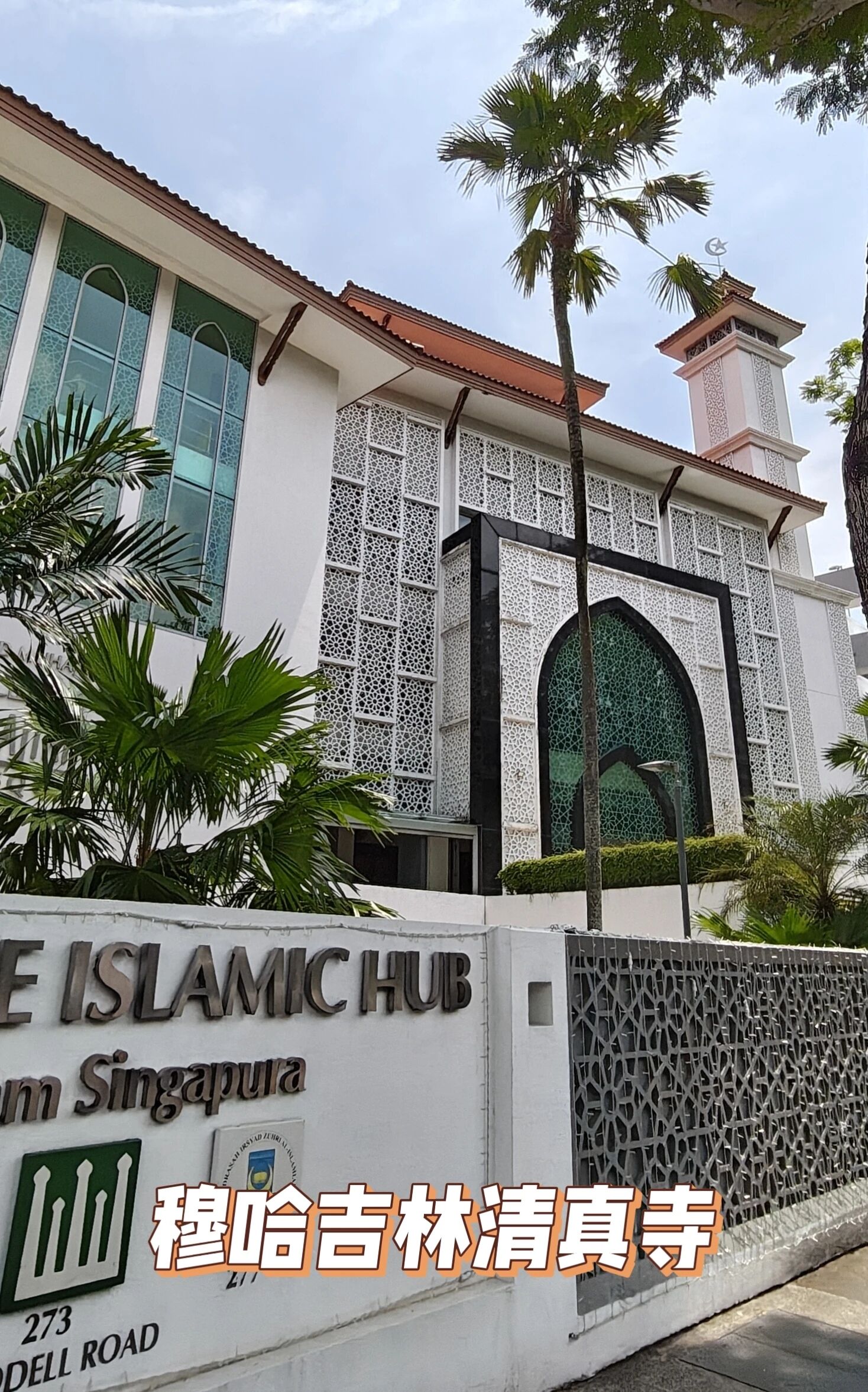
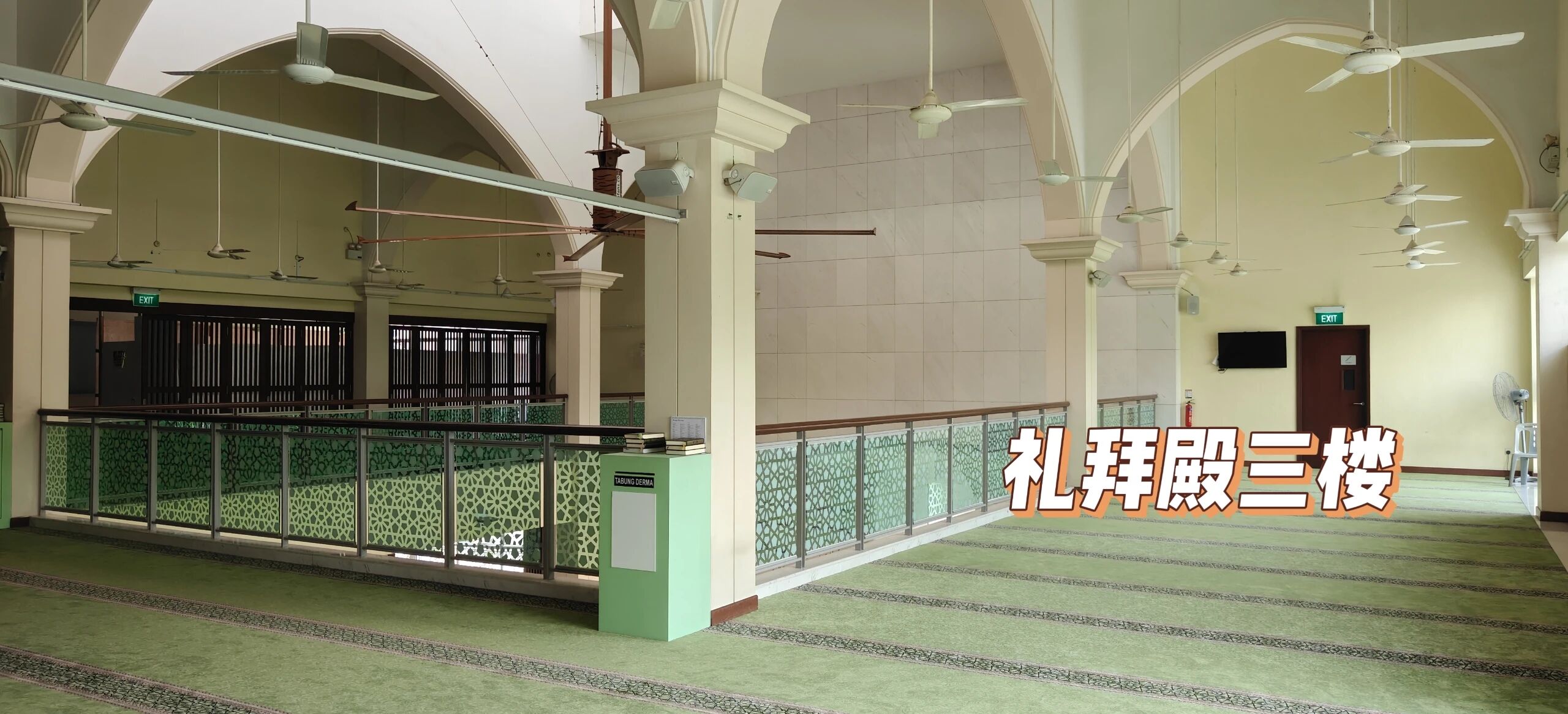
In this issue, we focus on the mosque. It has three floors, and the space between the second and third floors is open, so you can look straight up to the third floor from the ground floor. I visited on a Friday, and the ground floor was already full, so I had to go up to the second floor.
The second floor was also quite crowded, with people lining up to perform wudu.
There was no room left on the carpet, so people started laying out straw mats (caoxi) (Image 5) to use as prayer rugs.
The craziest thing happened near the end of the prayer when I saw a man walking toward me who looked exactly like Lee Hsien Loong. He looked so much like him that I couldn't help but stare.
Another thing worth mentioning is the restroom. The toilets (Image 11) have grab bars installed next to them to help elderly people stand up and sit down, which is very thoughtful.
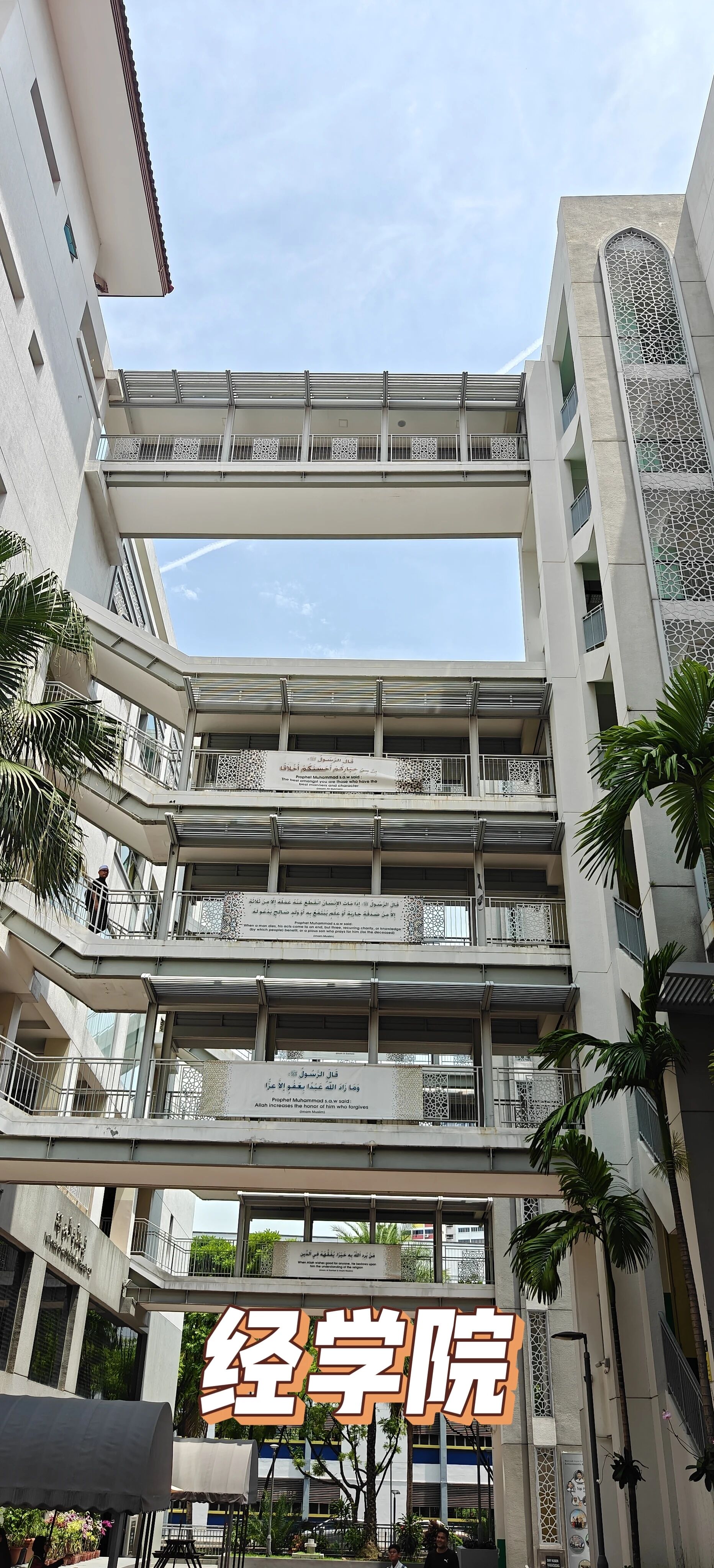
I went down to the ground floor to take some photos, then sat for a while on a bench near the elevator. Students from the Islamic seminary (jingxueyuan) (Image 13), wearing their uniforms, had finished their prayers and were getting ready for class.
They looked to be about twelve or thirteen years old.
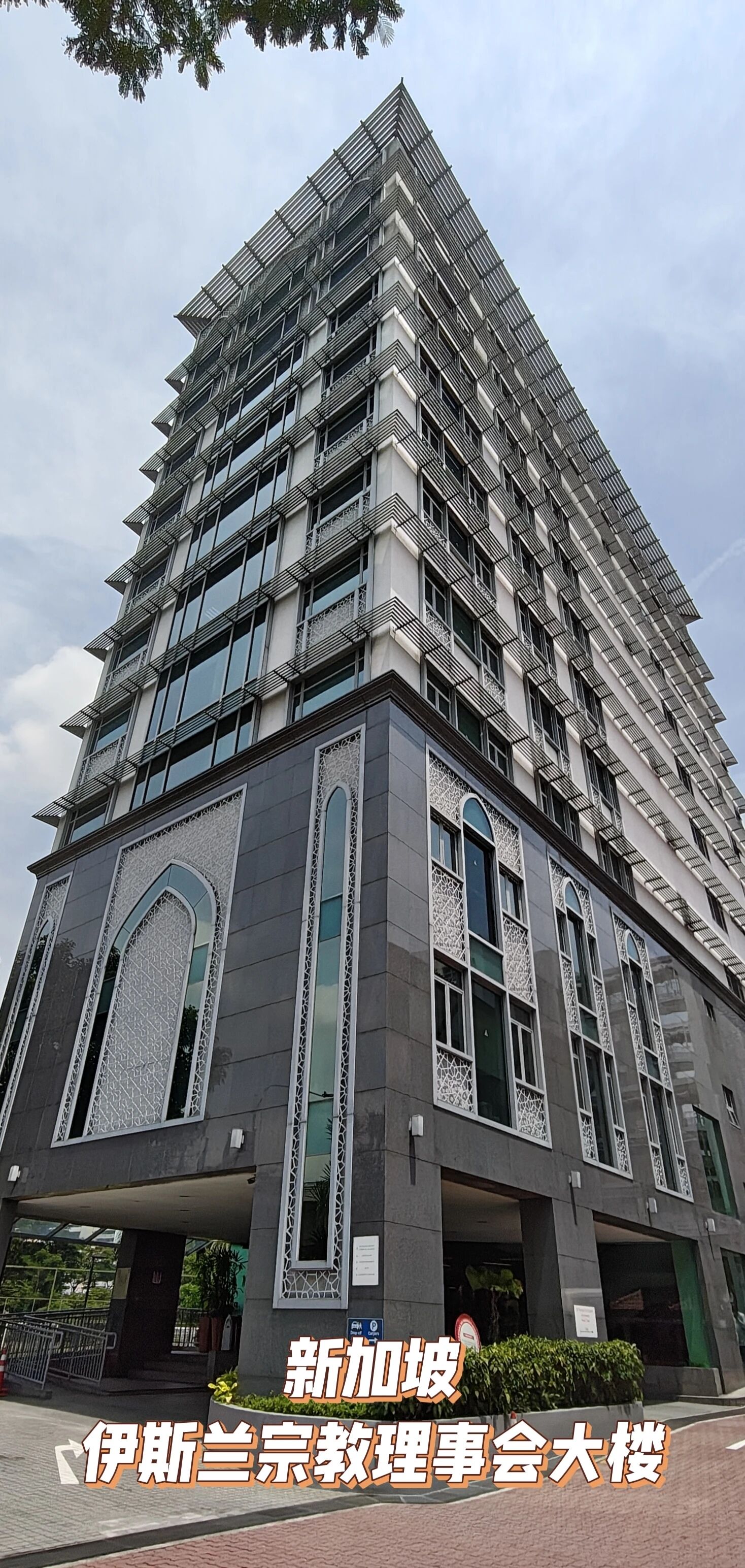
Finally, I went to the Islamic Religious Council of Singapore next to the mosque. There is a small museum on the ground floor, but what kind of exhibits are inside? We will reveal that in the next issue. view all
Summary: This Singapore Muslim travel guide focuses on the mosque inside the Singapore Islamic Centre. It preserves the three-floor layout, open interior view, prayer-hall details, and council-complex context.
In this issue, we focus on the mosque. It has three floors, and the space between the second and third floors is open, so you can look straight up to the third floor from the ground floor. I visited on a Friday, and the ground floor was already full, so I had to go up to the second floor.
The second floor was also quite crowded, with people lining up to perform wudu.
There was no room left on the carpet, so people started laying out straw mats (caoxi) (Image 5) to use as prayer rugs.
The craziest thing happened near the end of the prayer when I saw a man walking toward me who looked exactly like Lee Hsien Loong. He looked so much like him that I couldn't help but stare.
Another thing worth mentioning is the restroom. The toilets (Image 11) have grab bars installed next to them to help elderly people stand up and sit down, which is very thoughtful.
I went down to the ground floor to take some photos, then sat for a while on a bench near the elevator. Students from the Islamic seminary (jingxueyuan) (Image 13), wearing their uniforms, had finished their prayers and were getting ready for class.
They looked to be about twelve or thirteen years old.
Finally, I went to the Islamic Religious Council of Singapore next to the mosque. There is a small museum on the ground floor, but what kind of exhibits are inside? We will reveal that in the next issue. view all
Reposted from the web
Summary: This Singapore Muslim travel guide focuses on the mosque inside the Singapore Islamic Centre. It preserves the three-floor layout, open interior view, prayer-hall details, and council-complex context.
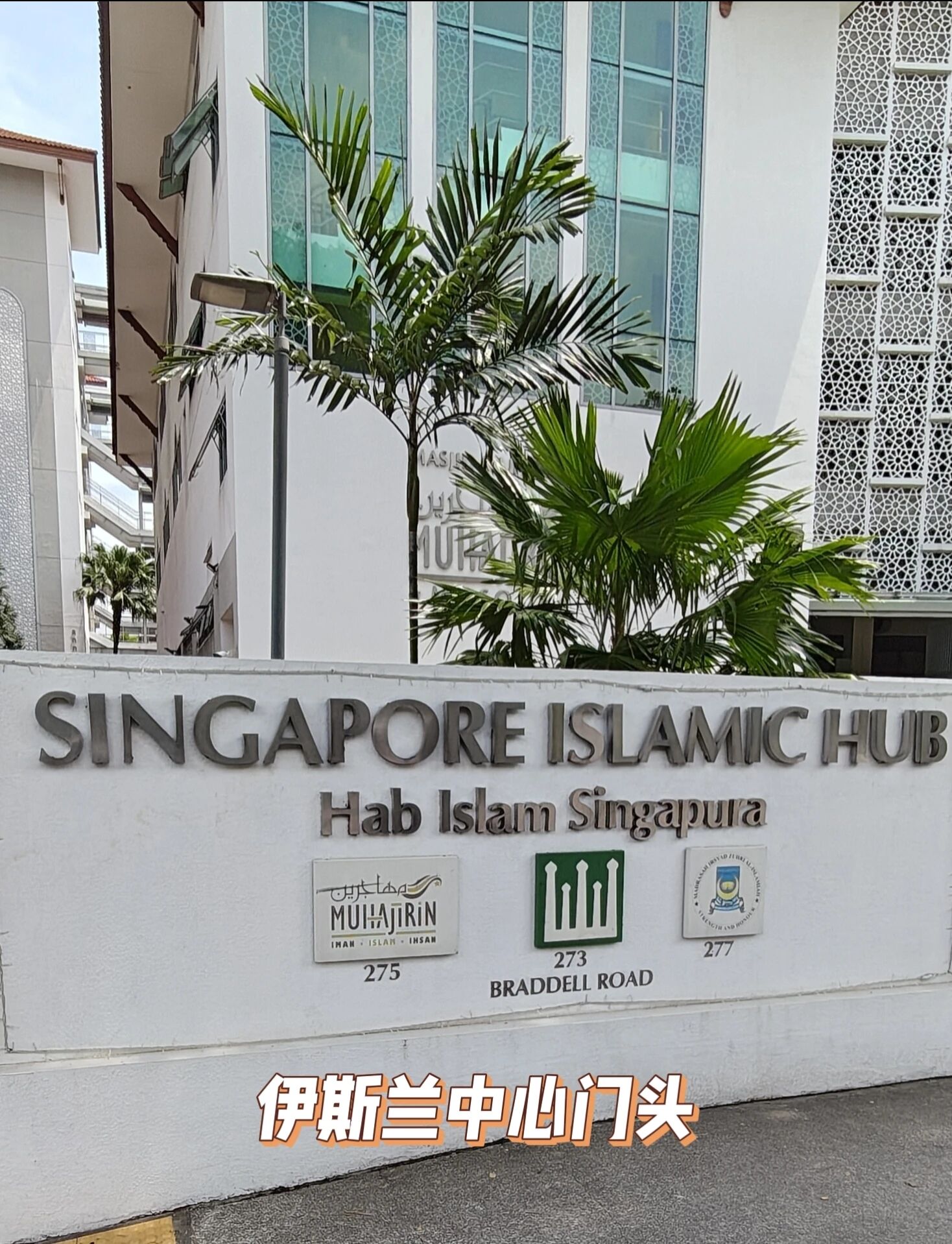
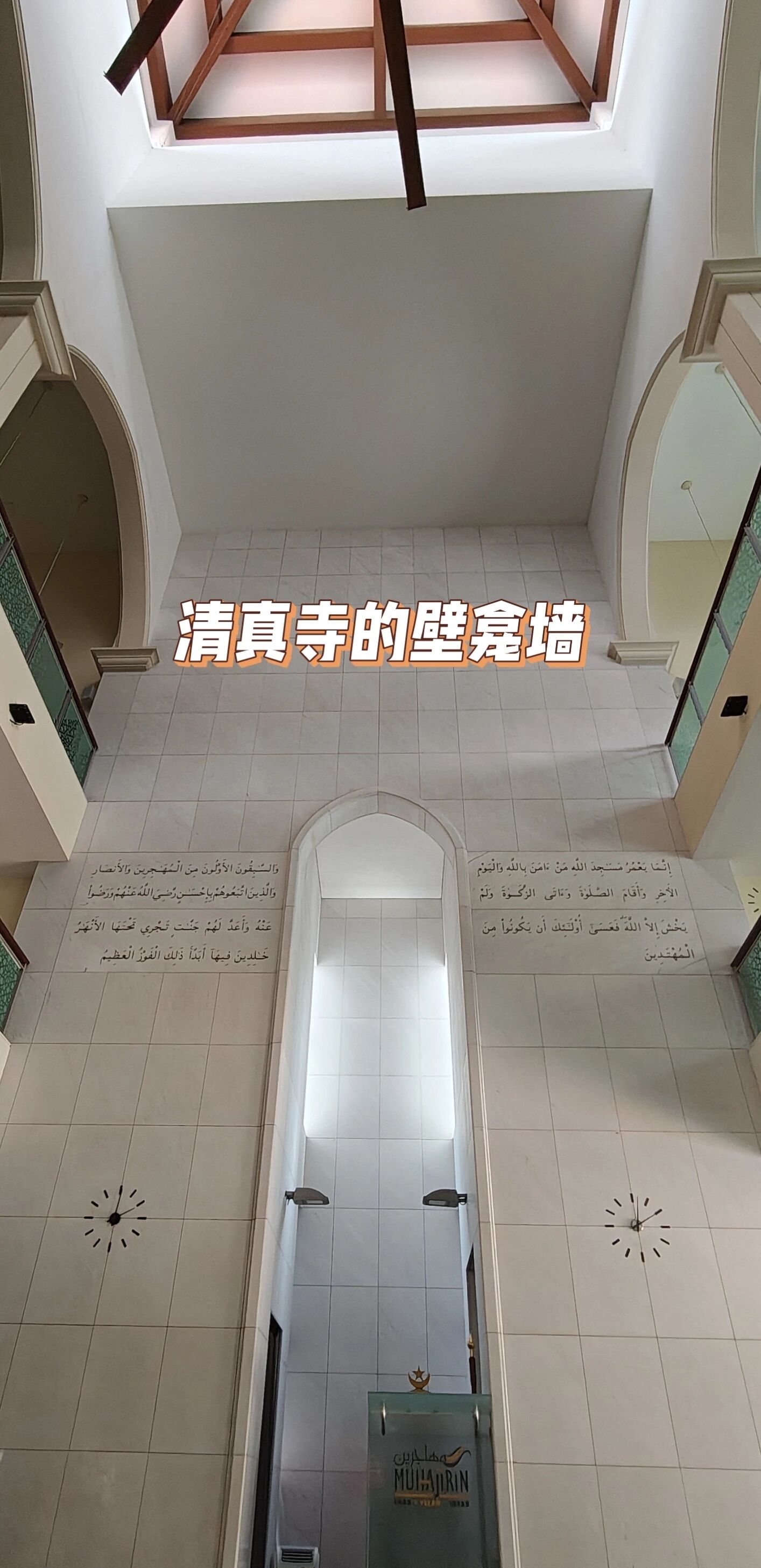
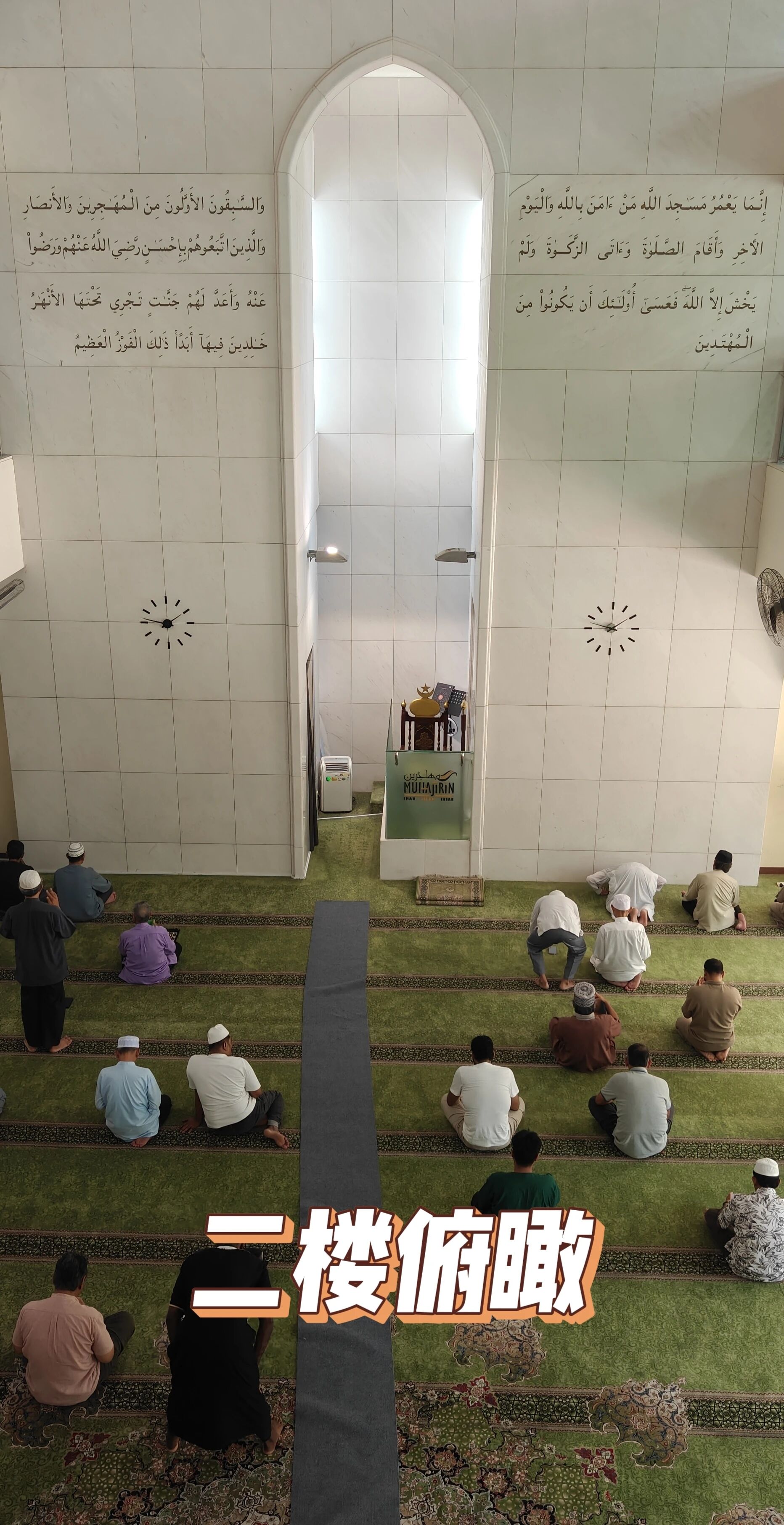
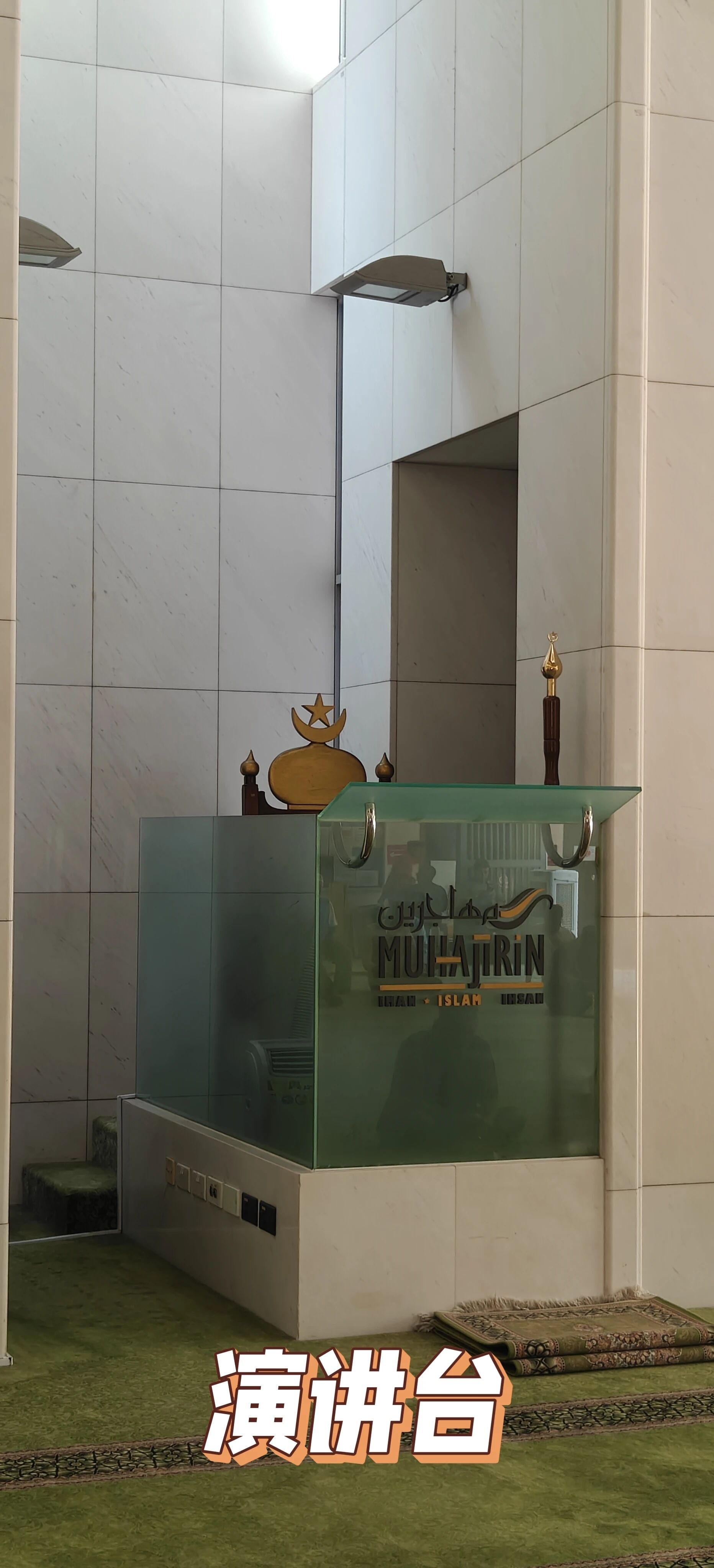
In this issue, we focus on the mosque. It has three floors, and the space between the second and third floors is open, so you can look straight up to the third floor from the ground floor. I visited on a Friday, and the ground floor was already full, so I had to go up to the second floor.
The second floor was also quite crowded, with people lining up to perform wudu.
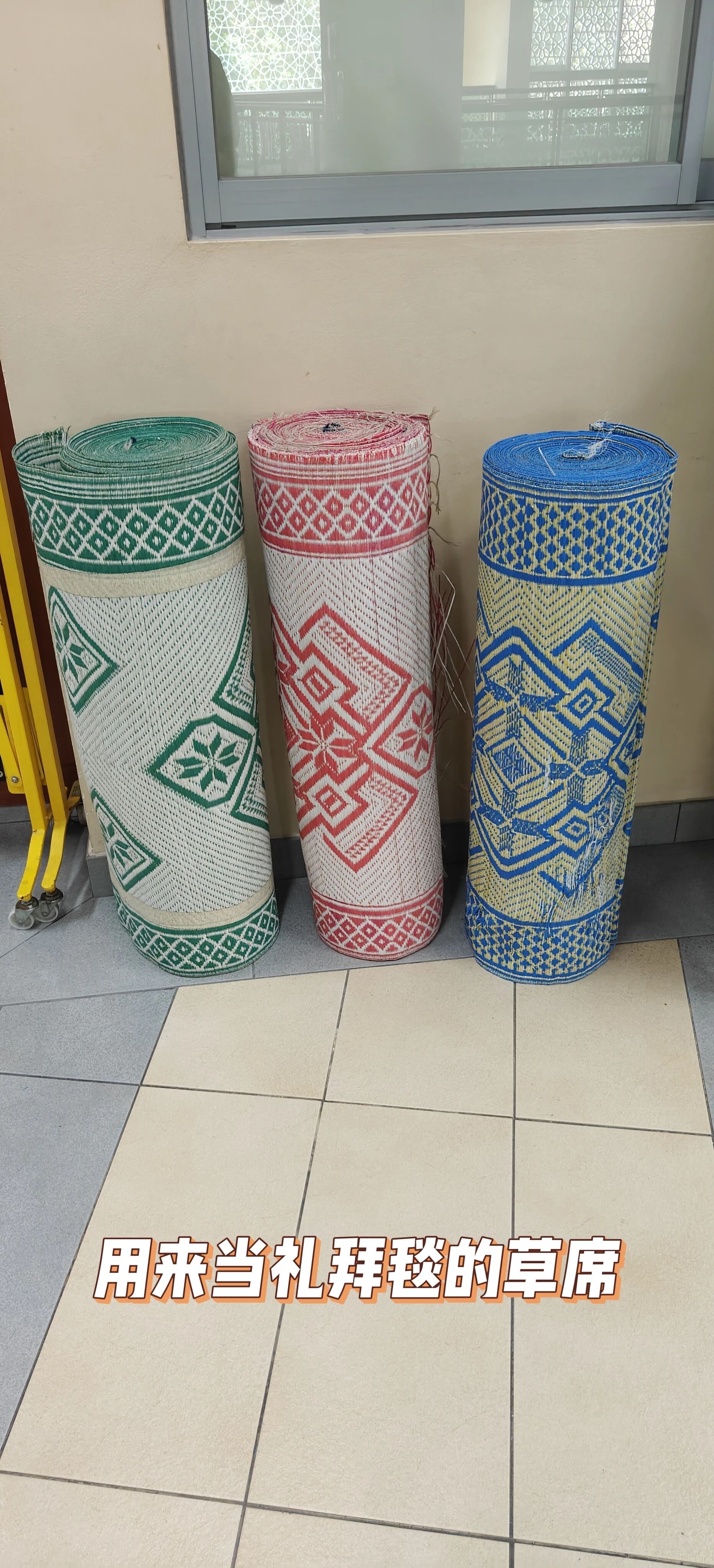
There was no room left on the carpet, so people started laying out straw mats (caoxi) (Image 5) to use as prayer rugs.
The craziest thing happened near the end of the prayer when I saw a man walking toward me who looked exactly like Lee Hsien Loong. He looked so much like him that I couldn't help but stare.
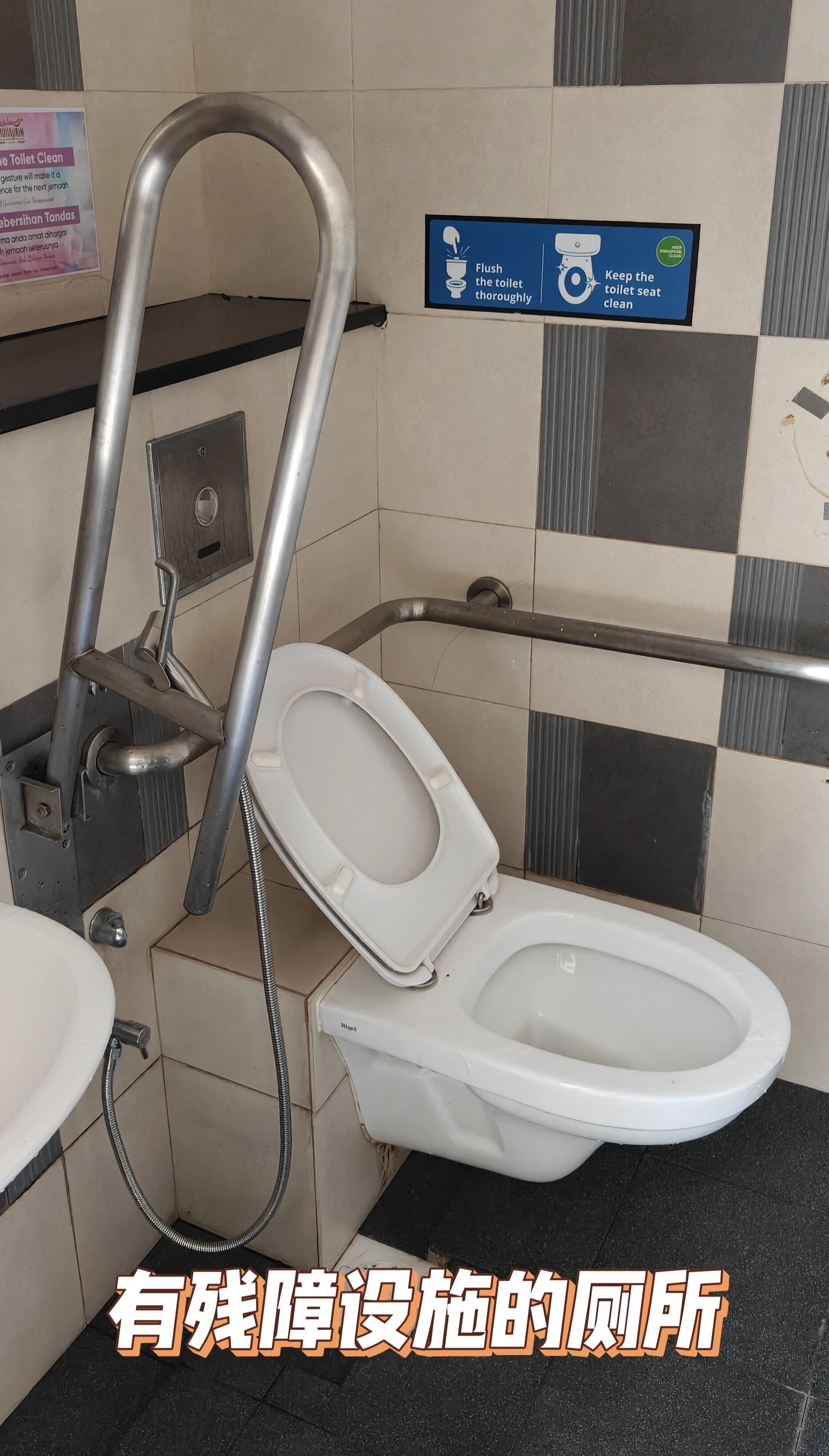
Another thing worth mentioning is the restroom. The toilets (Image 11) have grab bars installed next to them to help elderly people stand up and sit down, which is very thoughtful.
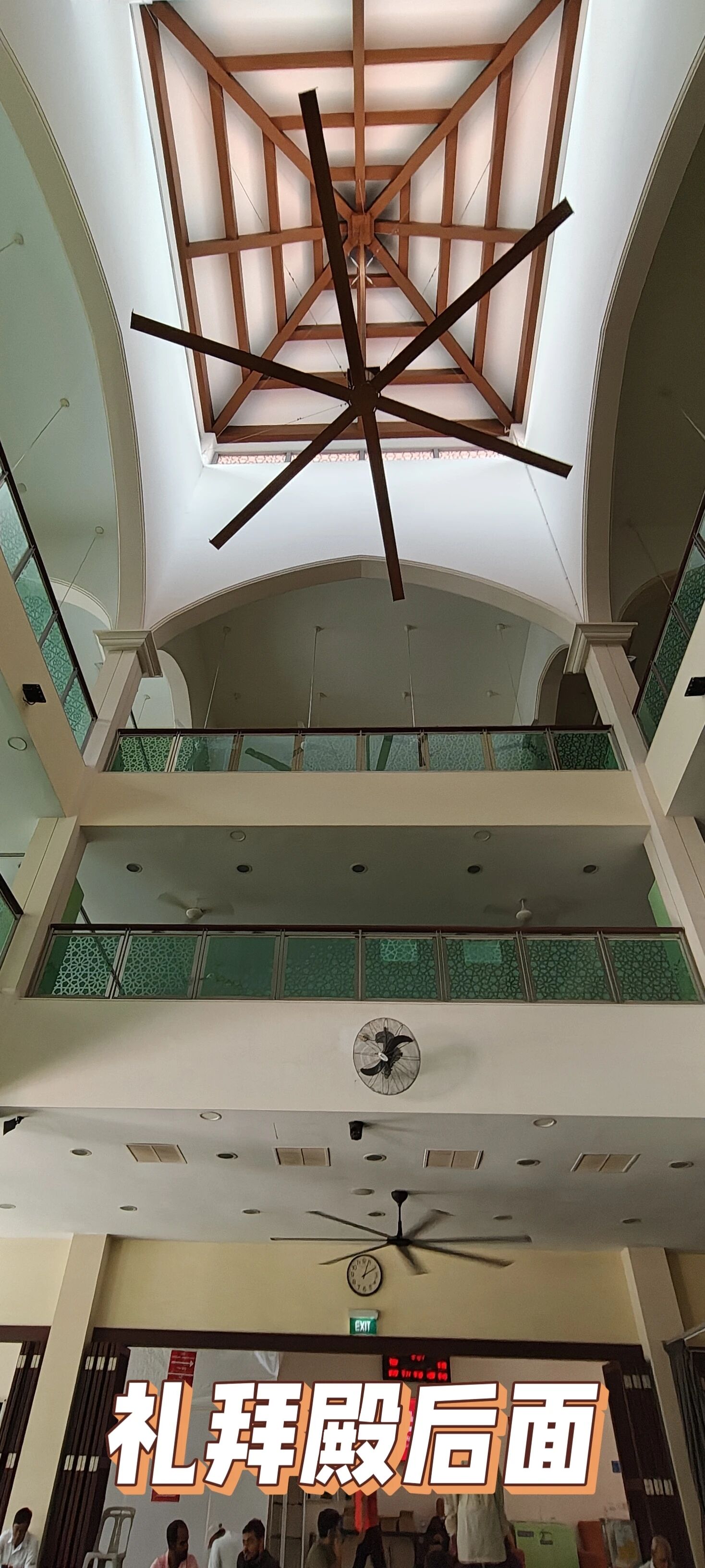
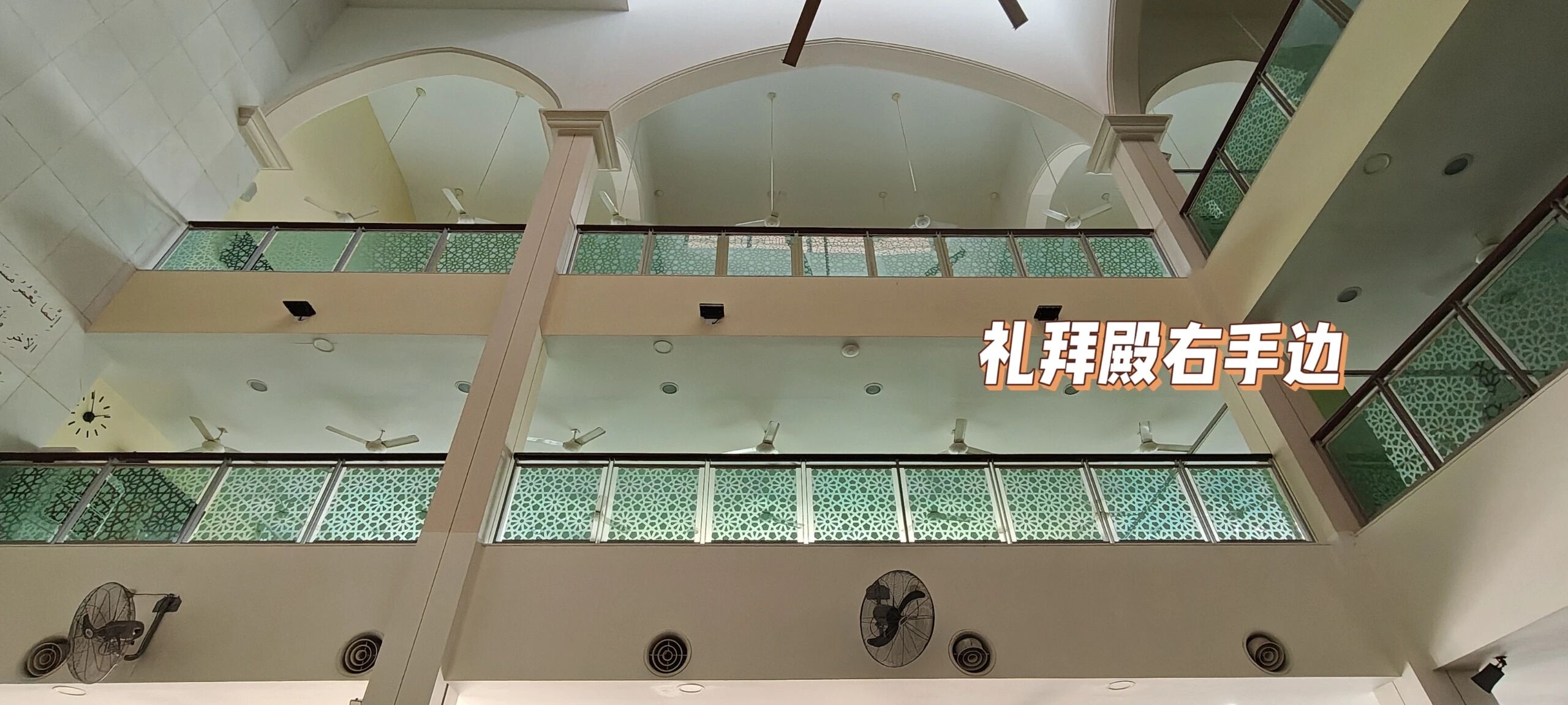
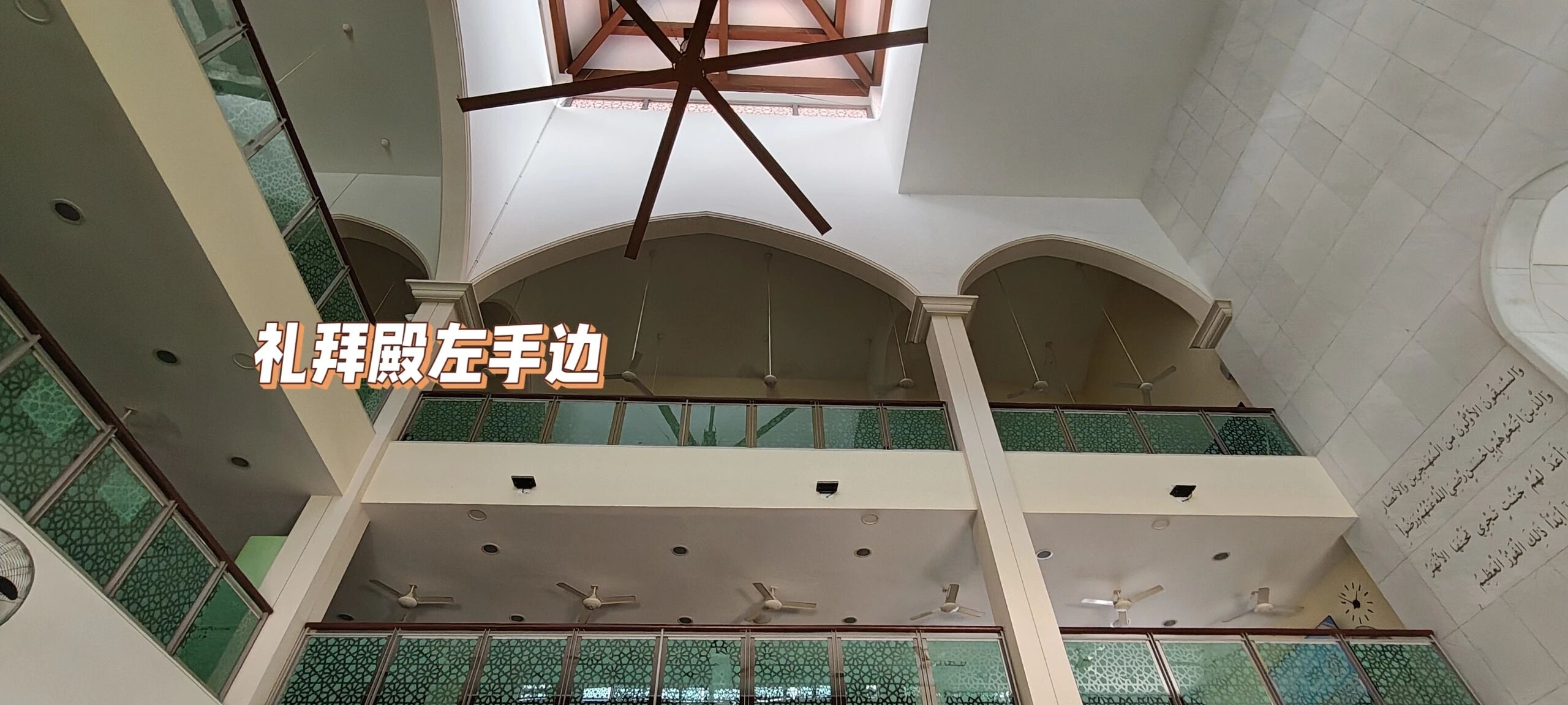
I went down to the ground floor to take some photos, then sat for a while on a bench near the elevator. Students from the Islamic seminary (jingxueyuan) (Image 13), wearing their uniforms, had finished their prayers and were getting ready for class.
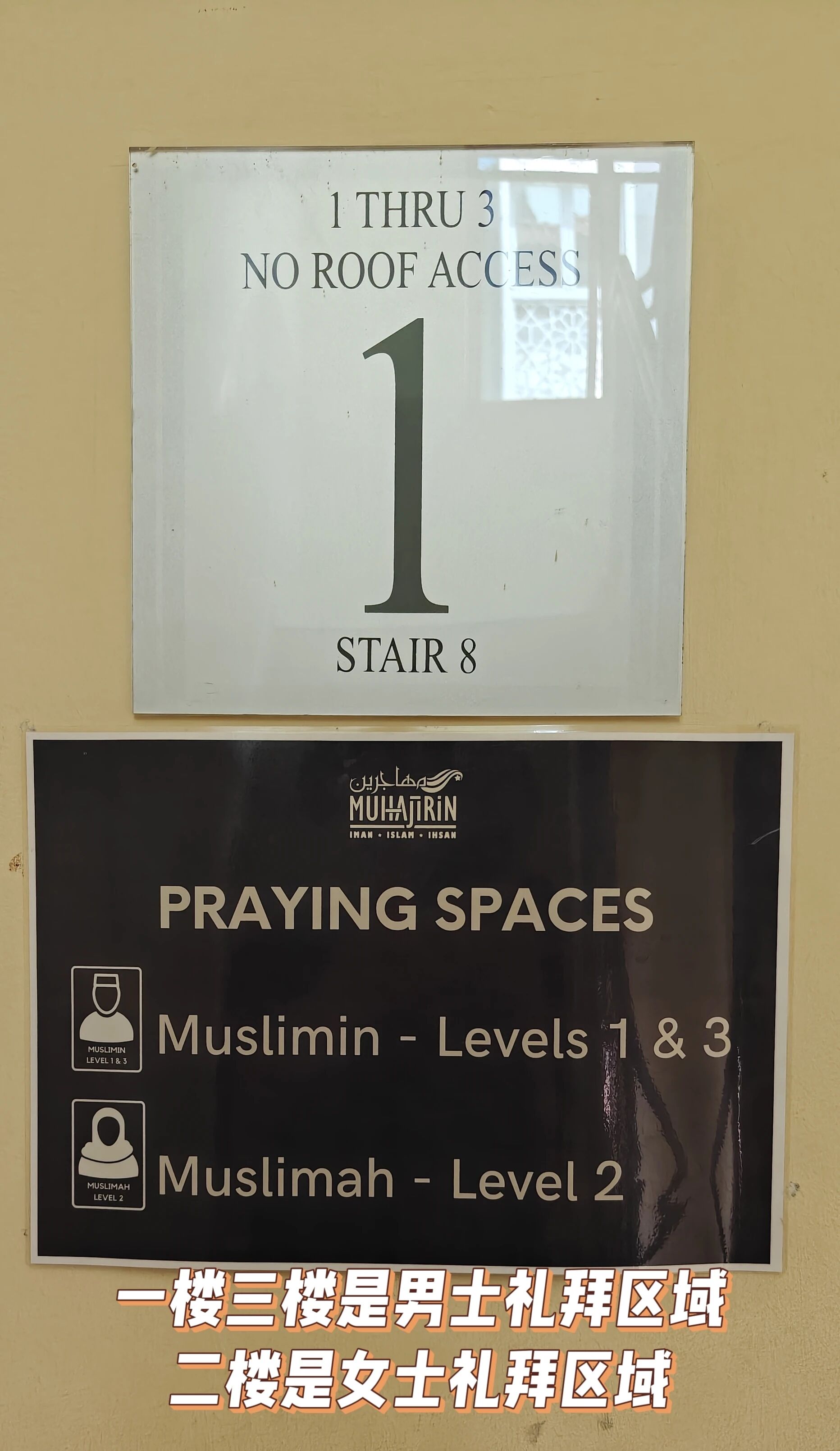
They looked to be about twelve or thirteen years old.
Finally, I went to the Islamic Religious Council of Singapore next to the mosque. There is a small museum on the ground floor, but what kind of exhibits are inside? We will reveal that in the next issue.
Summary: This Singapore Muslim travel guide focuses on the mosque inside the Singapore Islamic Centre. It preserves the three-floor layout, open interior view, prayer-hall details, and council-complex context.
In this issue, we focus on the mosque. It has three floors, and the space between the second and third floors is open, so you can look straight up to the third floor from the ground floor. I visited on a Friday, and the ground floor was already full, so I had to go up to the second floor.
The second floor was also quite crowded, with people lining up to perform wudu.
There was no room left on the carpet, so people started laying out straw mats (caoxi) (Image 5) to use as prayer rugs.
The craziest thing happened near the end of the prayer when I saw a man walking toward me who looked exactly like Lee Hsien Loong. He looked so much like him that I couldn't help but stare.
Another thing worth mentioning is the restroom. The toilets (Image 11) have grab bars installed next to them to help elderly people stand up and sit down, which is very thoughtful.
I went down to the ground floor to take some photos, then sat for a while on a bench near the elevator. Students from the Islamic seminary (jingxueyuan) (Image 13), wearing their uniforms, had finished their prayers and were getting ready for class.
They looked to be about twelve or thirteen years old.
Finally, I went to the Islamic Religious Council of Singapore next to the mosque. There is a small museum on the ground floor, but what kind of exhibits are inside? We will reveal that in the next issue.
Muslim Travel Guide Singapore: Islamic Religious Council Exhibition, Muslim Community and Heritage
Articles • Hasan09 posted the article • 0 comments • 326 views • 2026-05-24 01:47
Reposted from the web
Summary: This Singapore Muslim travel guide visits the exhibition area inside the Islamic Religious Council building in the Singapore Islamic Centre complex. It keeps the source notes on the building, displays, and community context.
Inside the Singapore Islamic Centre complex, one building houses the Islamic Religious Council of Singapore. There is an exhibition area on the first floor. However, this exhibition area is actually not open to the public. I explained my purpose to the person in charge after I went in, and they made an exception for me to visit for a few minutes.
The exhibition mainly features items used by Singaporean Muslims in their religious life.
For example, look at the wooden object hanging in the first picture.
This piece of wood is called a beduk. For instance, during Ramadan, when it is time to break the fast, the mosque will strike the beduk to remind everyone. They also strike the beduk on Jumu'ah to call people to prayer. These are common in Malaysia, and you can still see them in some mosques in Singapore today.
If I have the chance to visit Singapore again, I will show you all one.
The belt-like item in the second picture is actually similar to a name tag.
It is an identification badge worn by pilgrims from Singapore during Hajj. The vests issued to Chinese pilgrims feature the Chinese flag and the word China, which serve the same purpose.
The photo in image three shows a mufti named Said, who is focused on using the compass above to find the direction of the Kaaba in Mecca.
Since they were building the Mosque of the Faithful (Qianxinzhe Qingzhensi) at the time, they had to determine the direction of the Kaaba before construction began.
The object in image four looks like a sundial, but it is not for telling time; it is used with a compass to pinpoint the exact direction of the Kaaba in Mecca.
The photos in the image five exhibit record major events in the history of Islam in Singapore by year, such as the founding of the Mosque of the Faithful and the election of the first official president of the Islamic Religious Council.
Images six and seven
show Islamic books published in Singapore over the years in Tamil (a South Indian language from the Dravidian family), Malay, and English. view all
Summary: This Singapore Muslim travel guide visits the exhibition area inside the Islamic Religious Council building in the Singapore Islamic Centre complex. It keeps the source notes on the building, displays, and community context.
Inside the Singapore Islamic Centre complex, one building houses the Islamic Religious Council of Singapore. There is an exhibition area on the first floor. However, this exhibition area is actually not open to the public. I explained my purpose to the person in charge after I went in, and they made an exception for me to visit for a few minutes.
The exhibition mainly features items used by Singaporean Muslims in their religious life.
For example, look at the wooden object hanging in the first picture.
This piece of wood is called a beduk. For instance, during Ramadan, when it is time to break the fast, the mosque will strike the beduk to remind everyone. They also strike the beduk on Jumu'ah to call people to prayer. These are common in Malaysia, and you can still see them in some mosques in Singapore today.
If I have the chance to visit Singapore again, I will show you all one.
The belt-like item in the second picture is actually similar to a name tag.
It is an identification badge worn by pilgrims from Singapore during Hajj. The vests issued to Chinese pilgrims feature the Chinese flag and the word China, which serve the same purpose.
The photo in image three shows a mufti named Said, who is focused on using the compass above to find the direction of the Kaaba in Mecca.
Since they were building the Mosque of the Faithful (Qianxinzhe Qingzhensi) at the time, they had to determine the direction of the Kaaba before construction began.
The object in image four looks like a sundial, but it is not for telling time; it is used with a compass to pinpoint the exact direction of the Kaaba in Mecca.
The photos in the image five exhibit record major events in the history of Islam in Singapore by year, such as the founding of the Mosque of the Faithful and the election of the first official president of the Islamic Religious Council.
Images six and seven
show Islamic books published in Singapore over the years in Tamil (a South Indian language from the Dravidian family), Malay, and English. view all
Reposted from the web
Summary: This Singapore Muslim travel guide visits the exhibition area inside the Islamic Religious Council building in the Singapore Islamic Centre complex. It keeps the source notes on the building, displays, and community context.
Inside the Singapore Islamic Centre complex, one building houses the Islamic Religious Council of Singapore. There is an exhibition area on the first floor. However, this exhibition area is actually not open to the public. I explained my purpose to the person in charge after I went in, and they made an exception for me to visit for a few minutes.
The exhibition mainly features items used by Singaporean Muslims in their religious life.
For example, look at the wooden object hanging in the first picture.
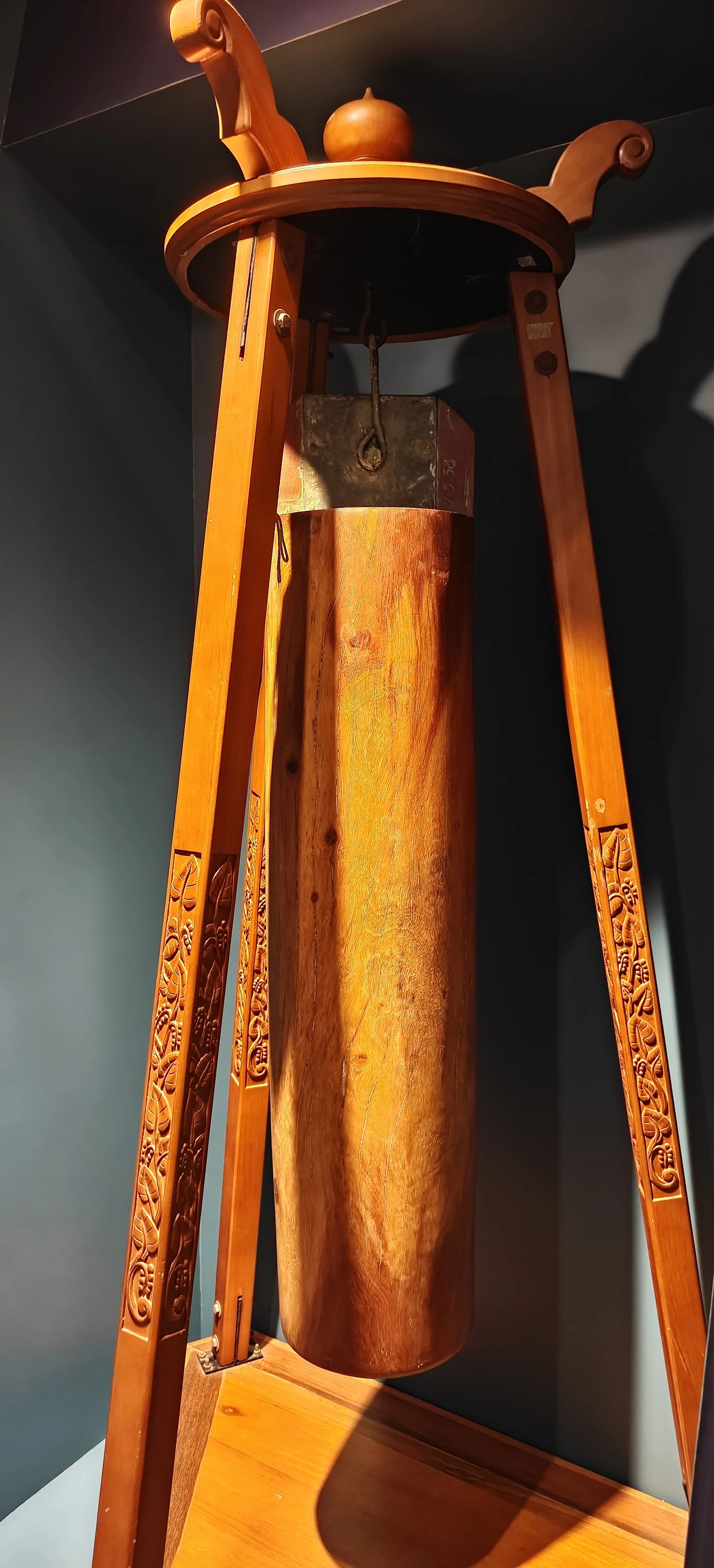
This piece of wood is called a beduk. For instance, during Ramadan, when it is time to break the fast, the mosque will strike the beduk to remind everyone. They also strike the beduk on Jumu'ah to call people to prayer. These are common in Malaysia, and you can still see them in some mosques in Singapore today.
If I have the chance to visit Singapore again, I will show you all one.
The belt-like item in the second picture is actually similar to a name tag.
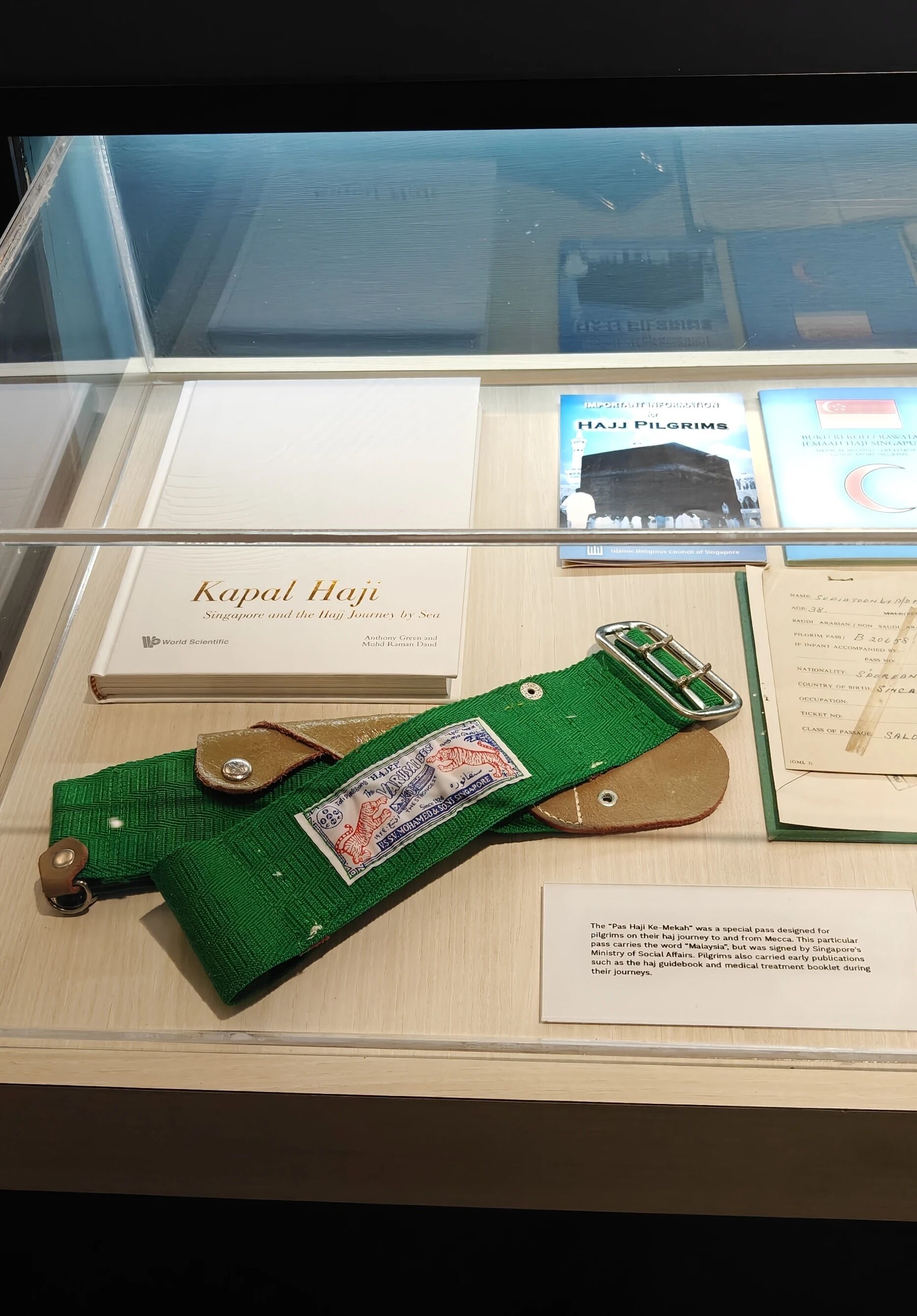
It is an identification badge worn by pilgrims from Singapore during Hajj. The vests issued to Chinese pilgrims feature the Chinese flag and the word China, which serve the same purpose.
The photo in image three shows a mufti named Said, who is focused on using the compass above to find the direction of the Kaaba in Mecca.
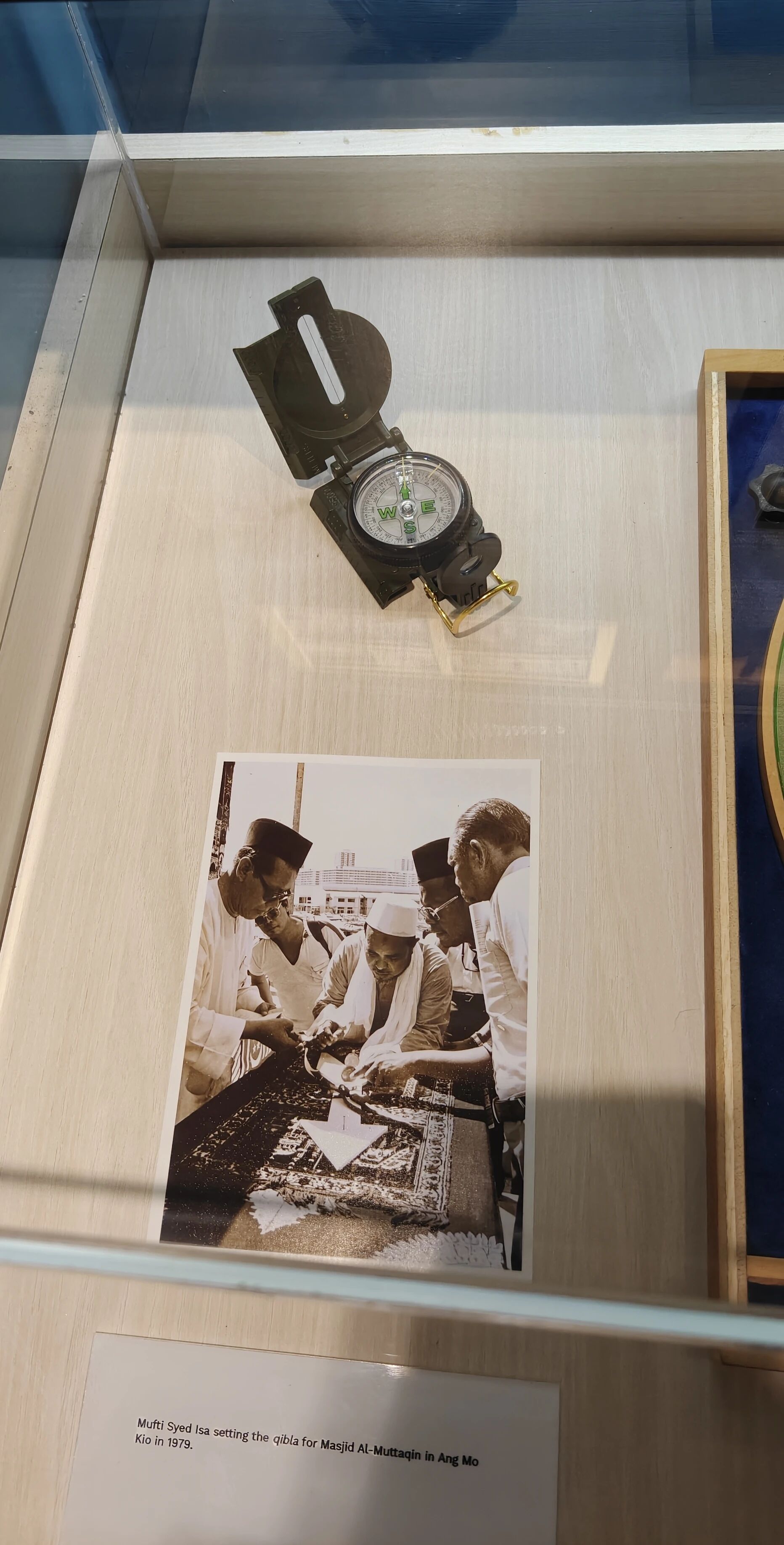
Since they were building the Mosque of the Faithful (Qianxinzhe Qingzhensi) at the time, they had to determine the direction of the Kaaba before construction began.
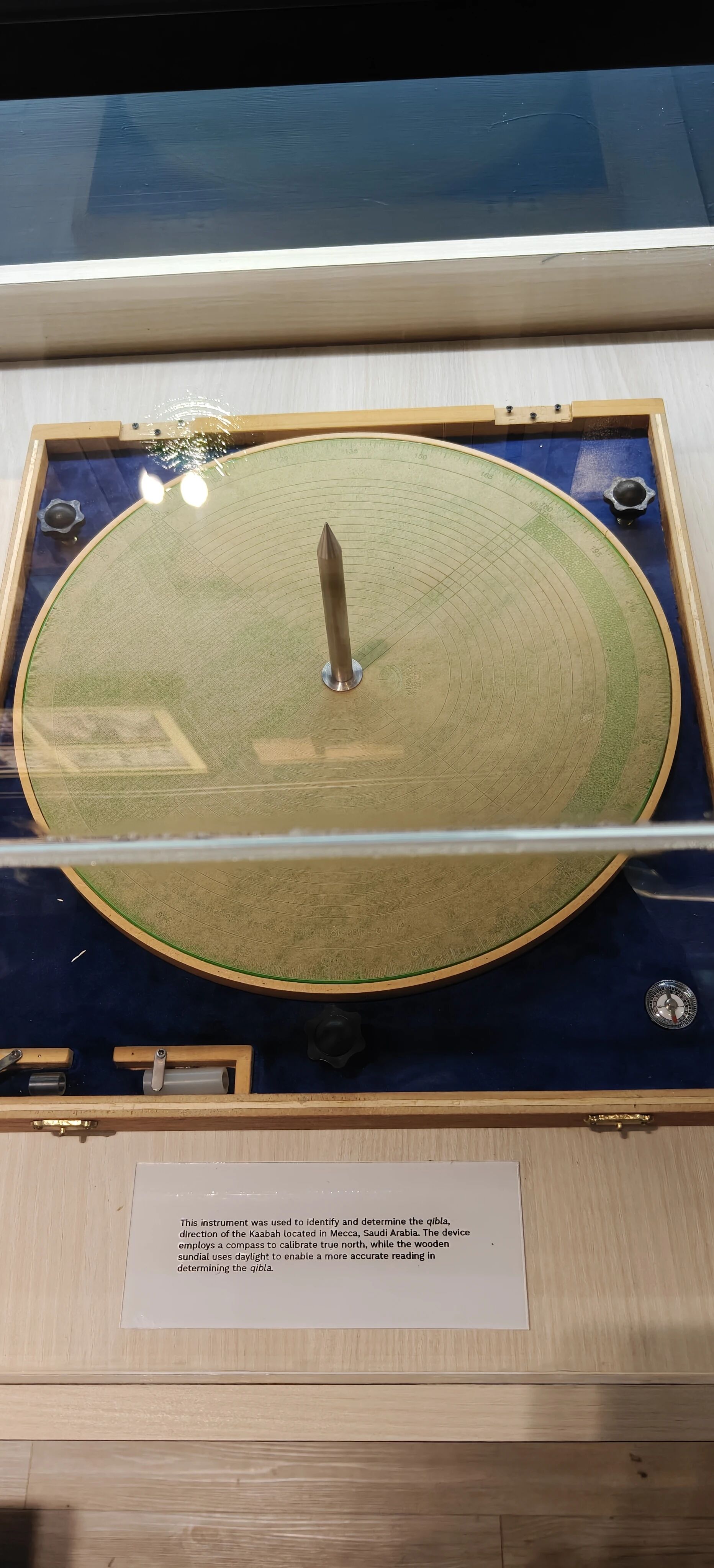
The object in image four looks like a sundial, but it is not for telling time; it is used with a compass to pinpoint the exact direction of the Kaaba in Mecca.
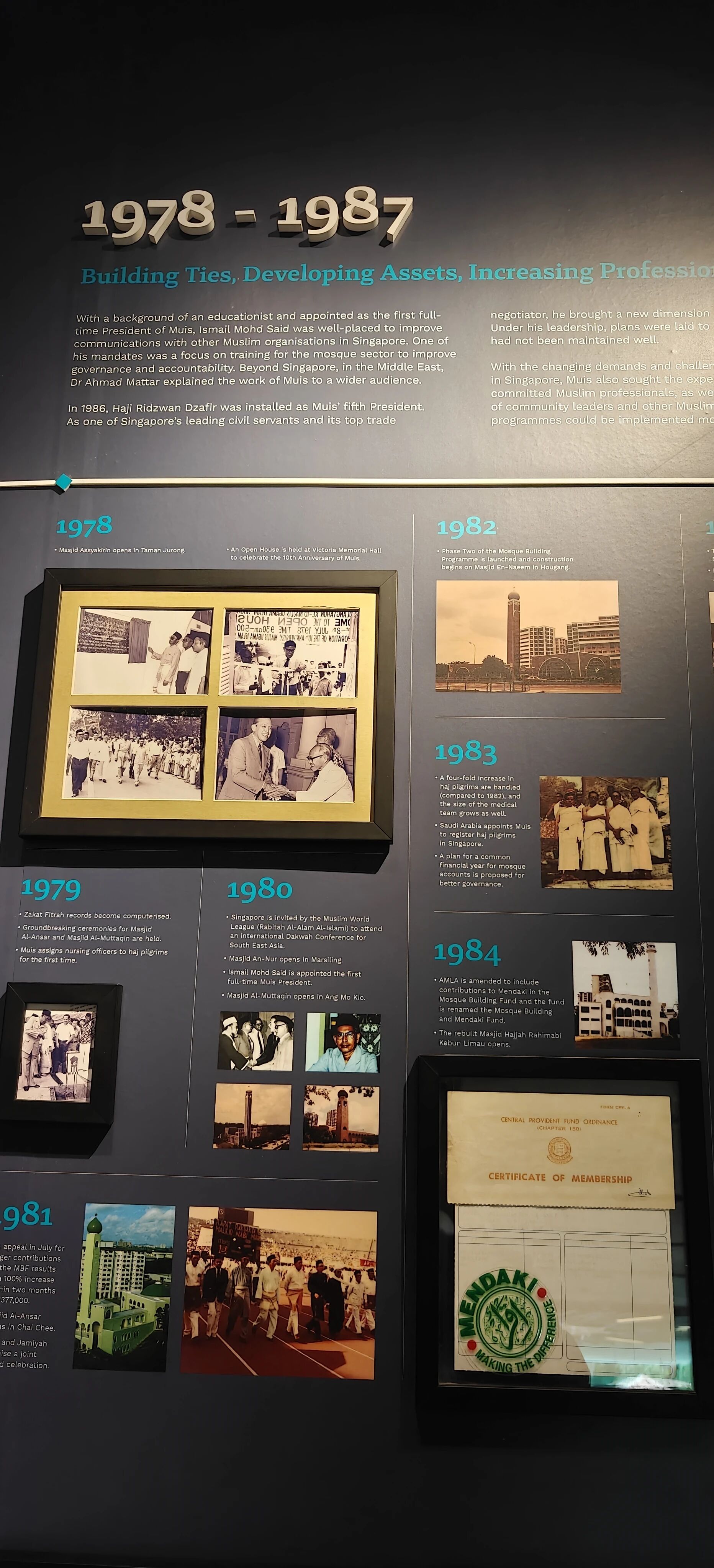
The photos in the image five exhibit record major events in the history of Islam in Singapore by year, such as the founding of the Mosque of the Faithful and the election of the first official president of the Islamic Religious Council.
Images six and seven
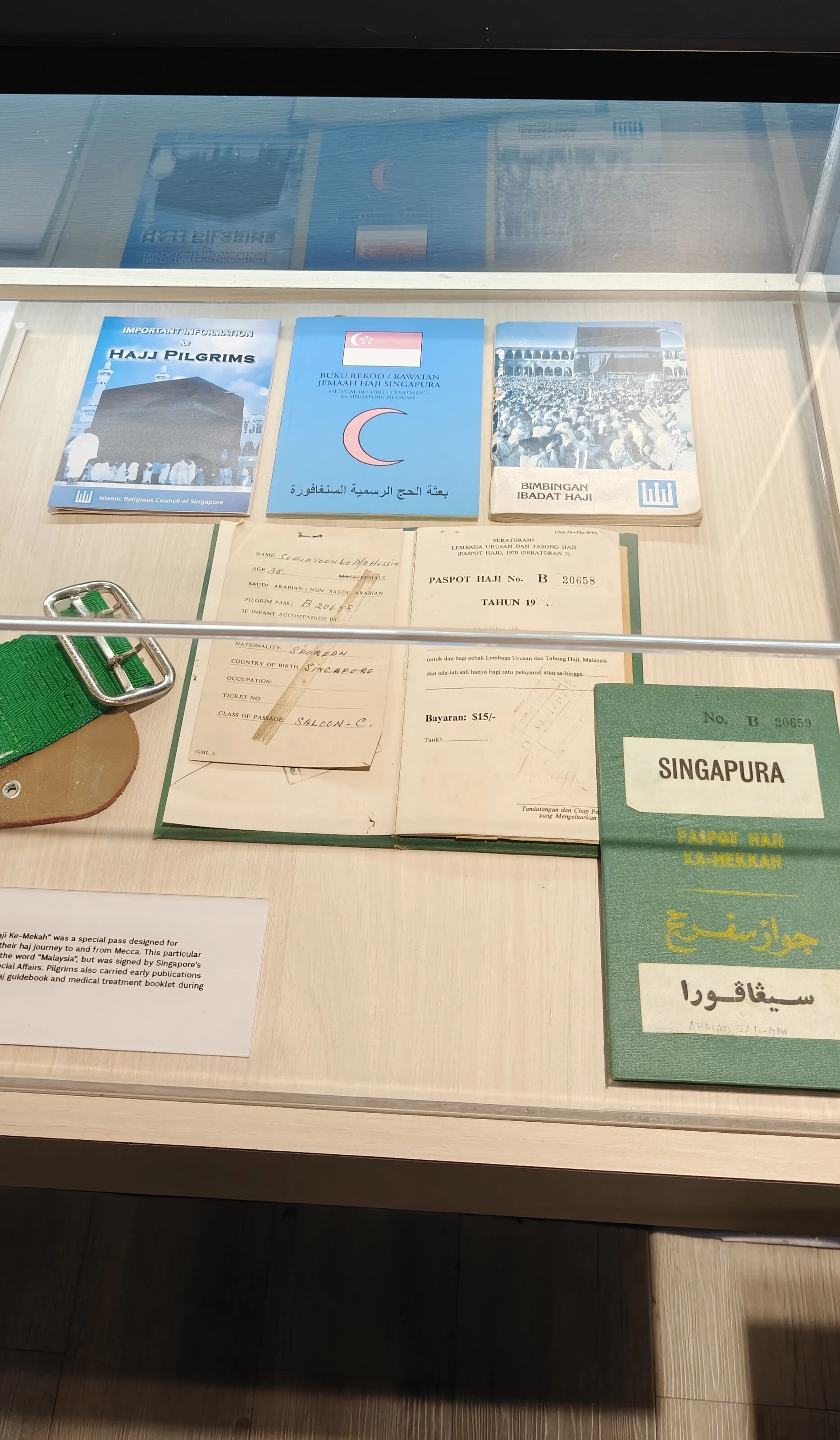
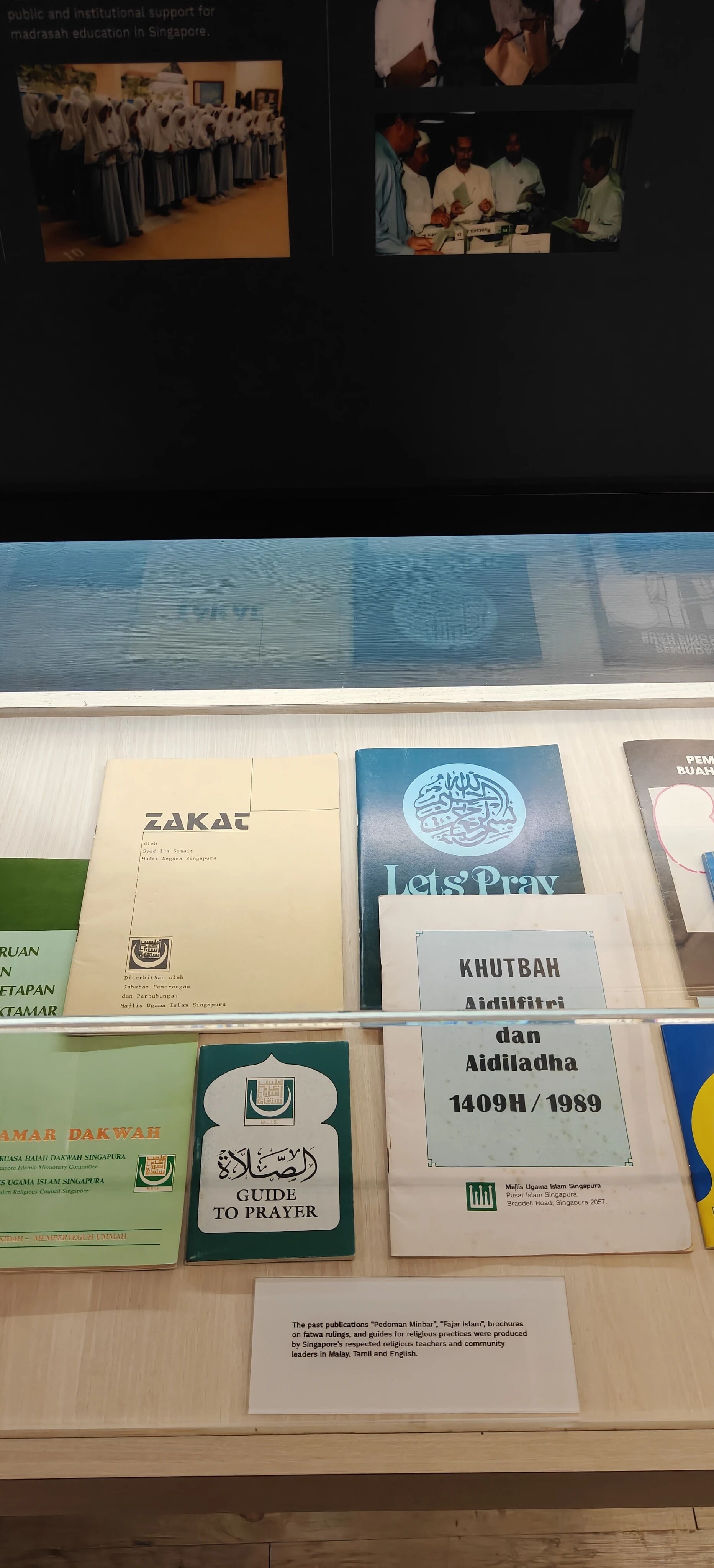
show Islamic books published in Singapore over the years in Tamil (a South Indian language from the Dravidian family), Malay, and English.
Summary: This Singapore Muslim travel guide visits the exhibition area inside the Islamic Religious Council building in the Singapore Islamic Centre complex. It keeps the source notes on the building, displays, and community context.
Inside the Singapore Islamic Centre complex, one building houses the Islamic Religious Council of Singapore. There is an exhibition area on the first floor. However, this exhibition area is actually not open to the public. I explained my purpose to the person in charge after I went in, and they made an exception for me to visit for a few minutes.
The exhibition mainly features items used by Singaporean Muslims in their religious life.
For example, look at the wooden object hanging in the first picture.
This piece of wood is called a beduk. For instance, during Ramadan, when it is time to break the fast, the mosque will strike the beduk to remind everyone. They also strike the beduk on Jumu'ah to call people to prayer. These are common in Malaysia, and you can still see them in some mosques in Singapore today.
If I have the chance to visit Singapore again, I will show you all one.
The belt-like item in the second picture is actually similar to a name tag.
It is an identification badge worn by pilgrims from Singapore during Hajj. The vests issued to Chinese pilgrims feature the Chinese flag and the word China, which serve the same purpose.
The photo in image three shows a mufti named Said, who is focused on using the compass above to find the direction of the Kaaba in Mecca.
Since they were building the Mosque of the Faithful (Qianxinzhe Qingzhensi) at the time, they had to determine the direction of the Kaaba before construction began.
The object in image four looks like a sundial, but it is not for telling time; it is used with a compass to pinpoint the exact direction of the Kaaba in Mecca.
The photos in the image five exhibit record major events in the history of Islam in Singapore by year, such as the founding of the Mosque of the Faithful and the election of the first official president of the Islamic Religious Council.
Images six and seven
show Islamic books published in Singapore over the years in Tamil (a South Indian language from the Dravidian family), Malay, and English.
Muslim Travel Guide Singapore: Islamic Centre Mosque, Prayer Hall and Council Complex
Articles • Hasan09 posted the article • 0 comments • 308 views • 2026-05-24 01:47
Reposted from the web
Summary: This Singapore Muslim travel guide focuses on the mosque inside the Singapore Islamic Centre. It preserves the three-floor layout, open interior view, prayer-hall details, and council-complex context.
In this issue, we focus on the mosque. It has three floors, and the space between the second and third floors is open, so you can look straight up to the third floor from the ground floor. I visited on a Friday, and the ground floor was already full, so I had to go up to the second floor.
The second floor was also quite crowded, with people lining up to perform wudu.
There was no room left on the carpet, so people started laying out straw mats (caoxi) (Image 5) to use as prayer rugs.
The craziest thing happened near the end of the prayer when I saw a man walking toward me who looked exactly like Lee Hsien Loong. He looked so much like him that I couldn't help but stare.
Another thing worth mentioning is the restroom. The toilets (Image 11) have grab bars installed next to them to help elderly people stand up and sit down, which is very thoughtful.
I went down to the ground floor to take some photos, then sat for a while on a bench near the elevator. Students from the Islamic seminary (jingxueyuan) (Image 13), wearing their uniforms, had finished their prayers and were getting ready for class.
They looked to be about twelve or thirteen years old.
Finally, I went to the Islamic Religious Council of Singapore next to the mosque. There is a small museum on the ground floor, but what kind of exhibits are inside? We will reveal that in the next issue. view all
Summary: This Singapore Muslim travel guide focuses on the mosque inside the Singapore Islamic Centre. It preserves the three-floor layout, open interior view, prayer-hall details, and council-complex context.
In this issue, we focus on the mosque. It has three floors, and the space between the second and third floors is open, so you can look straight up to the third floor from the ground floor. I visited on a Friday, and the ground floor was already full, so I had to go up to the second floor.
The second floor was also quite crowded, with people lining up to perform wudu.
There was no room left on the carpet, so people started laying out straw mats (caoxi) (Image 5) to use as prayer rugs.
The craziest thing happened near the end of the prayer when I saw a man walking toward me who looked exactly like Lee Hsien Loong. He looked so much like him that I couldn't help but stare.
Another thing worth mentioning is the restroom. The toilets (Image 11) have grab bars installed next to them to help elderly people stand up and sit down, which is very thoughtful.
I went down to the ground floor to take some photos, then sat for a while on a bench near the elevator. Students from the Islamic seminary (jingxueyuan) (Image 13), wearing their uniforms, had finished their prayers and were getting ready for class.
They looked to be about twelve or thirteen years old.
Finally, I went to the Islamic Religious Council of Singapore next to the mosque. There is a small museum on the ground floor, but what kind of exhibits are inside? We will reveal that in the next issue. view all
Reposted from the web
Summary: This Singapore Muslim travel guide focuses on the mosque inside the Singapore Islamic Centre. It preserves the three-floor layout, open interior view, prayer-hall details, and council-complex context.
In this issue, we focus on the mosque. It has three floors, and the space between the second and third floors is open, so you can look straight up to the third floor from the ground floor. I visited on a Friday, and the ground floor was already full, so I had to go up to the second floor.
The second floor was also quite crowded, with people lining up to perform wudu.
There was no room left on the carpet, so people started laying out straw mats (caoxi) (Image 5) to use as prayer rugs.
The craziest thing happened near the end of the prayer when I saw a man walking toward me who looked exactly like Lee Hsien Loong. He looked so much like him that I couldn't help but stare.
Another thing worth mentioning is the restroom. The toilets (Image 11) have grab bars installed next to them to help elderly people stand up and sit down, which is very thoughtful.
I went down to the ground floor to take some photos, then sat for a while on a bench near the elevator. Students from the Islamic seminary (jingxueyuan) (Image 13), wearing their uniforms, had finished their prayers and were getting ready for class.
They looked to be about twelve or thirteen years old.
Finally, I went to the Islamic Religious Council of Singapore next to the mosque. There is a small museum on the ground floor, but what kind of exhibits are inside? We will reveal that in the next issue.
Summary: This Singapore Muslim travel guide focuses on the mosque inside the Singapore Islamic Centre. It preserves the three-floor layout, open interior view, prayer-hall details, and council-complex context.
In this issue, we focus on the mosque. It has three floors, and the space between the second and third floors is open, so you can look straight up to the third floor from the ground floor. I visited on a Friday, and the ground floor was already full, so I had to go up to the second floor.
The second floor was also quite crowded, with people lining up to perform wudu.
There was no room left on the carpet, so people started laying out straw mats (caoxi) (Image 5) to use as prayer rugs.
The craziest thing happened near the end of the prayer when I saw a man walking toward me who looked exactly like Lee Hsien Loong. He looked so much like him that I couldn't help but stare.
Another thing worth mentioning is the restroom. The toilets (Image 11) have grab bars installed next to them to help elderly people stand up and sit down, which is very thoughtful.
I went down to the ground floor to take some photos, then sat for a while on a bench near the elevator. Students from the Islamic seminary (jingxueyuan) (Image 13), wearing their uniforms, had finished their prayers and were getting ready for class.
They looked to be about twelve or thirteen years old.
Finally, I went to the Islamic Religious Council of Singapore next to the mosque. There is a small museum on the ground floor, but what kind of exhibits are inside? We will reveal that in the next issue.
Muslim Travel Guide Singapore: Islamic Religious Council Exhibition, Muslim Community and Heritage
Articles • Hasan09 posted the article • 0 comments • 326 views • 2026-05-24 01:47
Reposted from the web
Summary: This Singapore Muslim travel guide visits the exhibition area inside the Islamic Religious Council building in the Singapore Islamic Centre complex. It keeps the source notes on the building, displays, and community context.
Inside the Singapore Islamic Centre complex, one building houses the Islamic Religious Council of Singapore. There is an exhibition area on the first floor. However, this exhibition area is actually not open to the public. I explained my purpose to the person in charge after I went in, and they made an exception for me to visit for a few minutes.
The exhibition mainly features items used by Singaporean Muslims in their religious life.
For example, look at the wooden object hanging in the first picture.
This piece of wood is called a beduk. For instance, during Ramadan, when it is time to break the fast, the mosque will strike the beduk to remind everyone. They also strike the beduk on Jumu'ah to call people to prayer. These are common in Malaysia, and you can still see them in some mosques in Singapore today.
If I have the chance to visit Singapore again, I will show you all one.
The belt-like item in the second picture is actually similar to a name tag.
It is an identification badge worn by pilgrims from Singapore during Hajj. The vests issued to Chinese pilgrims feature the Chinese flag and the word China, which serve the same purpose.
The photo in image three shows a mufti named Said, who is focused on using the compass above to find the direction of the Kaaba in Mecca.
Since they were building the Mosque of the Faithful (Qianxinzhe Qingzhensi) at the time, they had to determine the direction of the Kaaba before construction began.
The object in image four looks like a sundial, but it is not for telling time; it is used with a compass to pinpoint the exact direction of the Kaaba in Mecca.
The photos in the image five exhibit record major events in the history of Islam in Singapore by year, such as the founding of the Mosque of the Faithful and the election of the first official president of the Islamic Religious Council.
Images six and seven
show Islamic books published in Singapore over the years in Tamil (a South Indian language from the Dravidian family), Malay, and English. view all
Summary: This Singapore Muslim travel guide visits the exhibition area inside the Islamic Religious Council building in the Singapore Islamic Centre complex. It keeps the source notes on the building, displays, and community context.
Inside the Singapore Islamic Centre complex, one building houses the Islamic Religious Council of Singapore. There is an exhibition area on the first floor. However, this exhibition area is actually not open to the public. I explained my purpose to the person in charge after I went in, and they made an exception for me to visit for a few minutes.
The exhibition mainly features items used by Singaporean Muslims in their religious life.
For example, look at the wooden object hanging in the first picture.
This piece of wood is called a beduk. For instance, during Ramadan, when it is time to break the fast, the mosque will strike the beduk to remind everyone. They also strike the beduk on Jumu'ah to call people to prayer. These are common in Malaysia, and you can still see them in some mosques in Singapore today.
If I have the chance to visit Singapore again, I will show you all one.
The belt-like item in the second picture is actually similar to a name tag.
It is an identification badge worn by pilgrims from Singapore during Hajj. The vests issued to Chinese pilgrims feature the Chinese flag and the word China, which serve the same purpose.
The photo in image three shows a mufti named Said, who is focused on using the compass above to find the direction of the Kaaba in Mecca.
Since they were building the Mosque of the Faithful (Qianxinzhe Qingzhensi) at the time, they had to determine the direction of the Kaaba before construction began.
The object in image four looks like a sundial, but it is not for telling time; it is used with a compass to pinpoint the exact direction of the Kaaba in Mecca.
The photos in the image five exhibit record major events in the history of Islam in Singapore by year, such as the founding of the Mosque of the Faithful and the election of the first official president of the Islamic Religious Council.
Images six and seven
show Islamic books published in Singapore over the years in Tamil (a South Indian language from the Dravidian family), Malay, and English. view all
Reposted from the web
Summary: This Singapore Muslim travel guide visits the exhibition area inside the Islamic Religious Council building in the Singapore Islamic Centre complex. It keeps the source notes on the building, displays, and community context.
Inside the Singapore Islamic Centre complex, one building houses the Islamic Religious Council of Singapore. There is an exhibition area on the first floor. However, this exhibition area is actually not open to the public. I explained my purpose to the person in charge after I went in, and they made an exception for me to visit for a few minutes.
The exhibition mainly features items used by Singaporean Muslims in their religious life.
For example, look at the wooden object hanging in the first picture.
This piece of wood is called a beduk. For instance, during Ramadan, when it is time to break the fast, the mosque will strike the beduk to remind everyone. They also strike the beduk on Jumu'ah to call people to prayer. These are common in Malaysia, and you can still see them in some mosques in Singapore today.
If I have the chance to visit Singapore again, I will show you all one.
The belt-like item in the second picture is actually similar to a name tag.
It is an identification badge worn by pilgrims from Singapore during Hajj. The vests issued to Chinese pilgrims feature the Chinese flag and the word China, which serve the same purpose.
The photo in image three shows a mufti named Said, who is focused on using the compass above to find the direction of the Kaaba in Mecca.
Since they were building the Mosque of the Faithful (Qianxinzhe Qingzhensi) at the time, they had to determine the direction of the Kaaba before construction began.
The object in image four looks like a sundial, but it is not for telling time; it is used with a compass to pinpoint the exact direction of the Kaaba in Mecca.
The photos in the image five exhibit record major events in the history of Islam in Singapore by year, such as the founding of the Mosque of the Faithful and the election of the first official president of the Islamic Religious Council.
Images six and seven
show Islamic books published in Singapore over the years in Tamil (a South Indian language from the Dravidian family), Malay, and English.
Summary: This Singapore Muslim travel guide visits the exhibition area inside the Islamic Religious Council building in the Singapore Islamic Centre complex. It keeps the source notes on the building, displays, and community context.
Inside the Singapore Islamic Centre complex, one building houses the Islamic Religious Council of Singapore. There is an exhibition area on the first floor. However, this exhibition area is actually not open to the public. I explained my purpose to the person in charge after I went in, and they made an exception for me to visit for a few minutes.
The exhibition mainly features items used by Singaporean Muslims in their religious life.
For example, look at the wooden object hanging in the first picture.
This piece of wood is called a beduk. For instance, during Ramadan, when it is time to break the fast, the mosque will strike the beduk to remind everyone. They also strike the beduk on Jumu'ah to call people to prayer. These are common in Malaysia, and you can still see them in some mosques in Singapore today.
If I have the chance to visit Singapore again, I will show you all one.
The belt-like item in the second picture is actually similar to a name tag.
It is an identification badge worn by pilgrims from Singapore during Hajj. The vests issued to Chinese pilgrims feature the Chinese flag and the word China, which serve the same purpose.
The photo in image three shows a mufti named Said, who is focused on using the compass above to find the direction of the Kaaba in Mecca.
Since they were building the Mosque of the Faithful (Qianxinzhe Qingzhensi) at the time, they had to determine the direction of the Kaaba before construction began.
The object in image four looks like a sundial, but it is not for telling time; it is used with a compass to pinpoint the exact direction of the Kaaba in Mecca.
The photos in the image five exhibit record major events in the history of Islam in Singapore by year, such as the founding of the Mosque of the Faithful and the election of the first official president of the Islamic Religious Council.
Images six and seven
show Islamic books published in Singapore over the years in Tamil (a South Indian language from the Dravidian family), Malay, and English.