

Singapore Oldest Mosque
Muslim Travel Guide Singapore: Oldest Mosque, Kampong Malacca and Early Muslim Community
Articles • Hasan09 posted the article • 0 comments • 354 views • 2026-05-24 01:46
Reposted from the web
Summary: This Singapore Muslim travel guide visits the mosque described as the oldest mosque in Singapore, located around Kampong Malacca and built in 1820. It keeps the history, location, and mosque observations from the original account.
This place is not far from the underground mosque I mentioned last time. Located in the Kampong Malacca area of Singapore, it was built in 1820 and is the oldest mosque in Singapore. It is older than other early mosques, such as the South Indian-style Jamae Mosque, which I shared before and was built in 1826.
That is a few years later than this mosque.
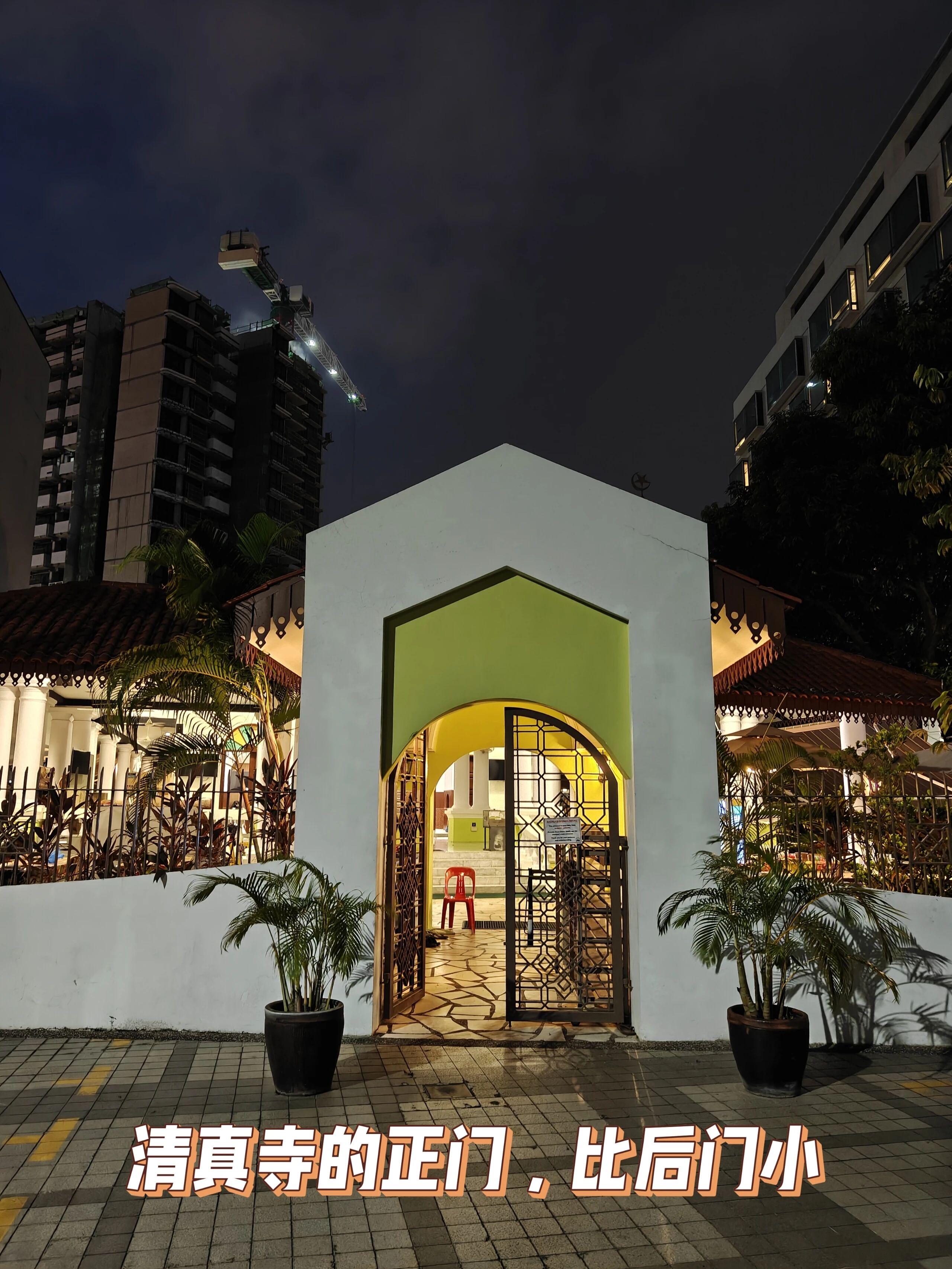
Back to the main topic, the roof of this oldest mosque in Singapore (Picture 1) looks very much like a traditional Malay hut.
After entering, you can see the renovation plaque on the back of the prayer hall (Picture 2). The mosque was first built in 1820 and finished its renovation in 1984.
The founder of this mosque was named Syed Omar, and he was an Arab merchant.
Today, members of his family are buried in the tomb next to the mosque's minaret (Picture 4).
Let's look at the mosque's notice board. It says in English, Malay, Bengali, and Tamil that staying overnight without permission is prohibited (Picture 6).
This shows that the people who visit this mosque the most are Malays, Tamils, and Bengalis.
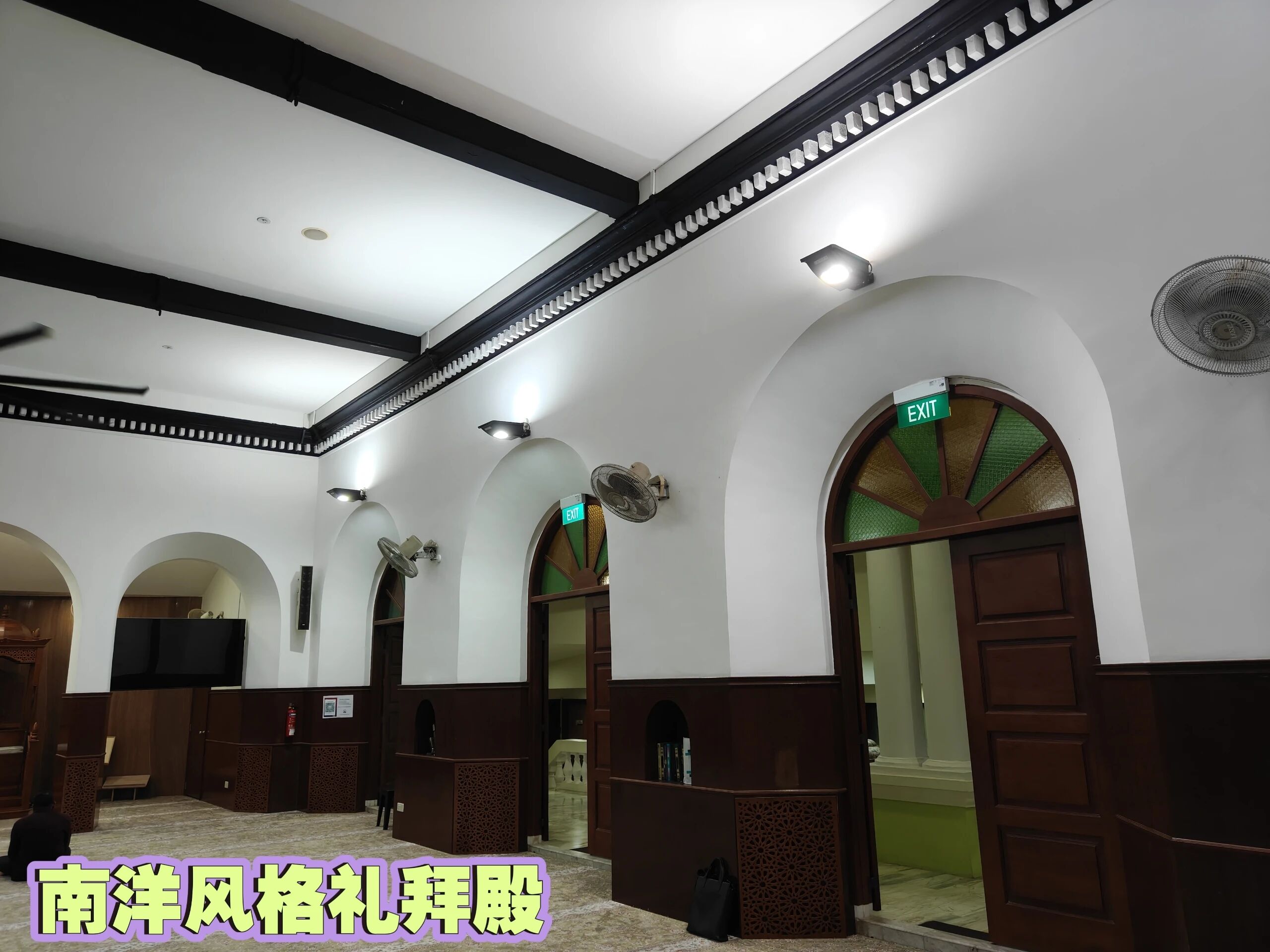
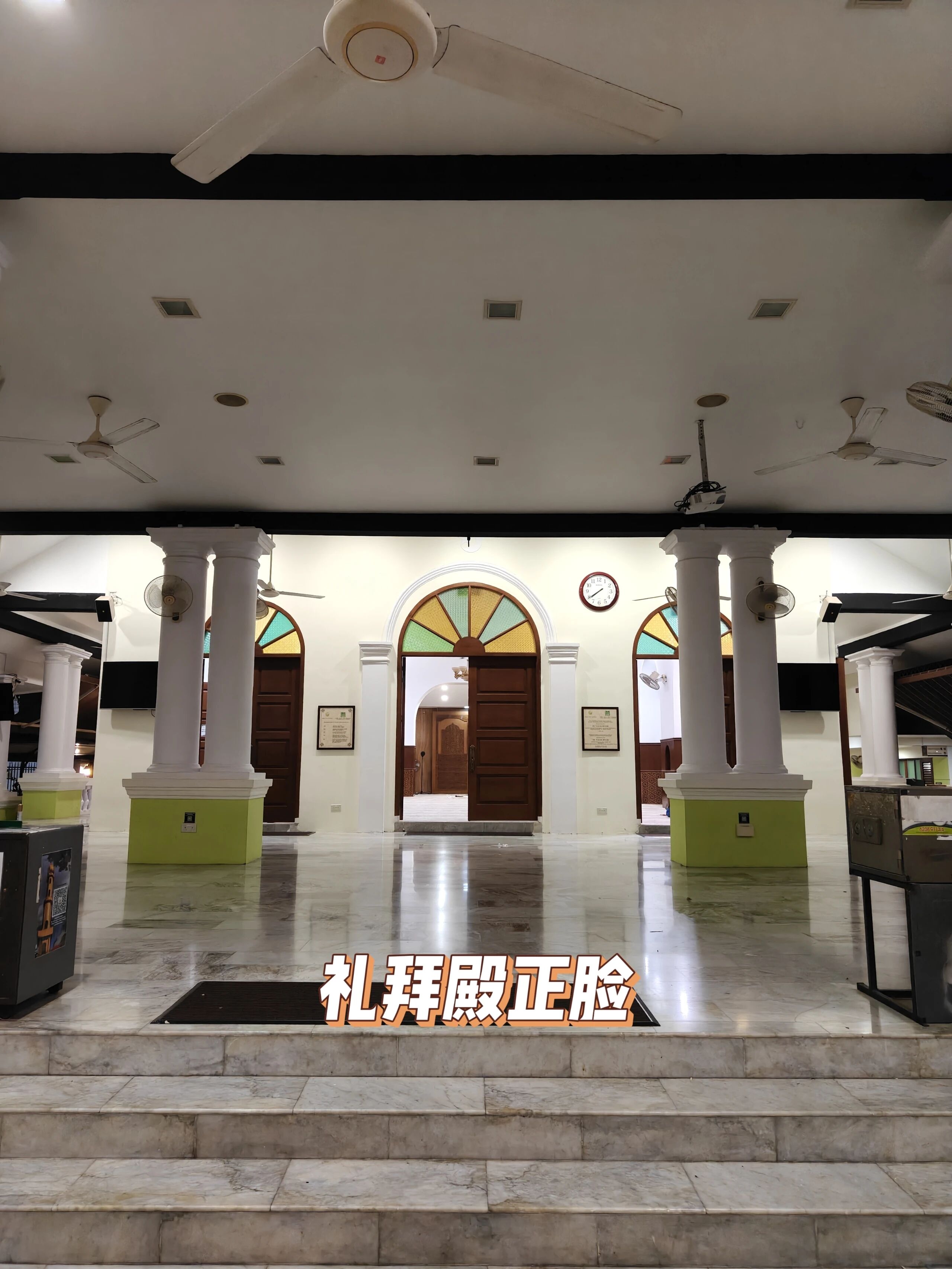
Entering the prayer hall, I feel the architectural style is very beautiful, and the door frames tilt toward the ceiling (Picture 8, Picture 9).
I remember seeing this kind of design in some old Western castles. When I came here last time, I remember the Malay imam was very young and polite. I asked him if he was the imam, and he said the imam was busy these two days, so he was filling in.
He also asked if I had encountered any trouble in Singapore and told me I could contact him anytime if I had any problems.
When I visited again this time, the imam was still very young, but it was not the same person as last time.
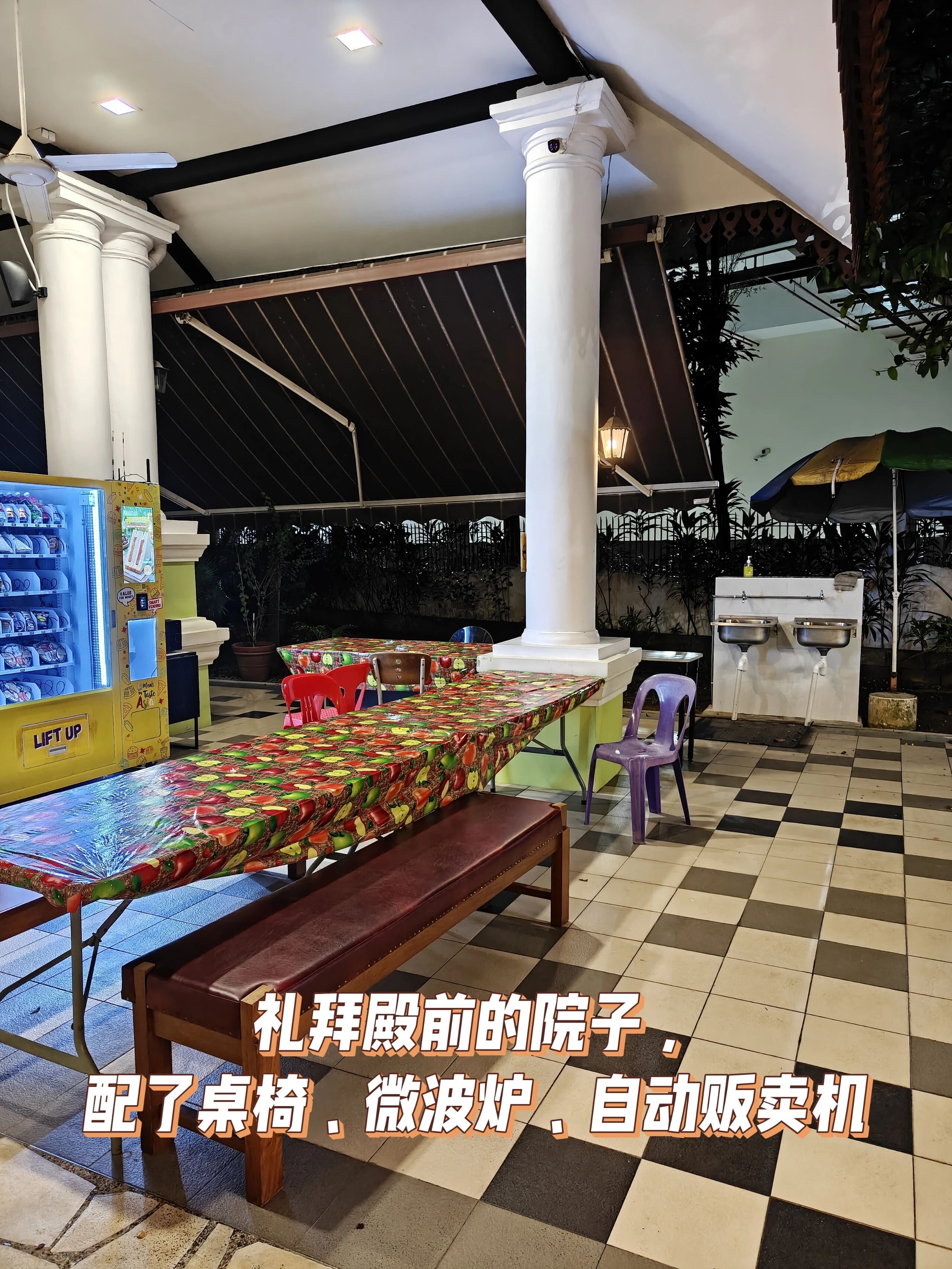
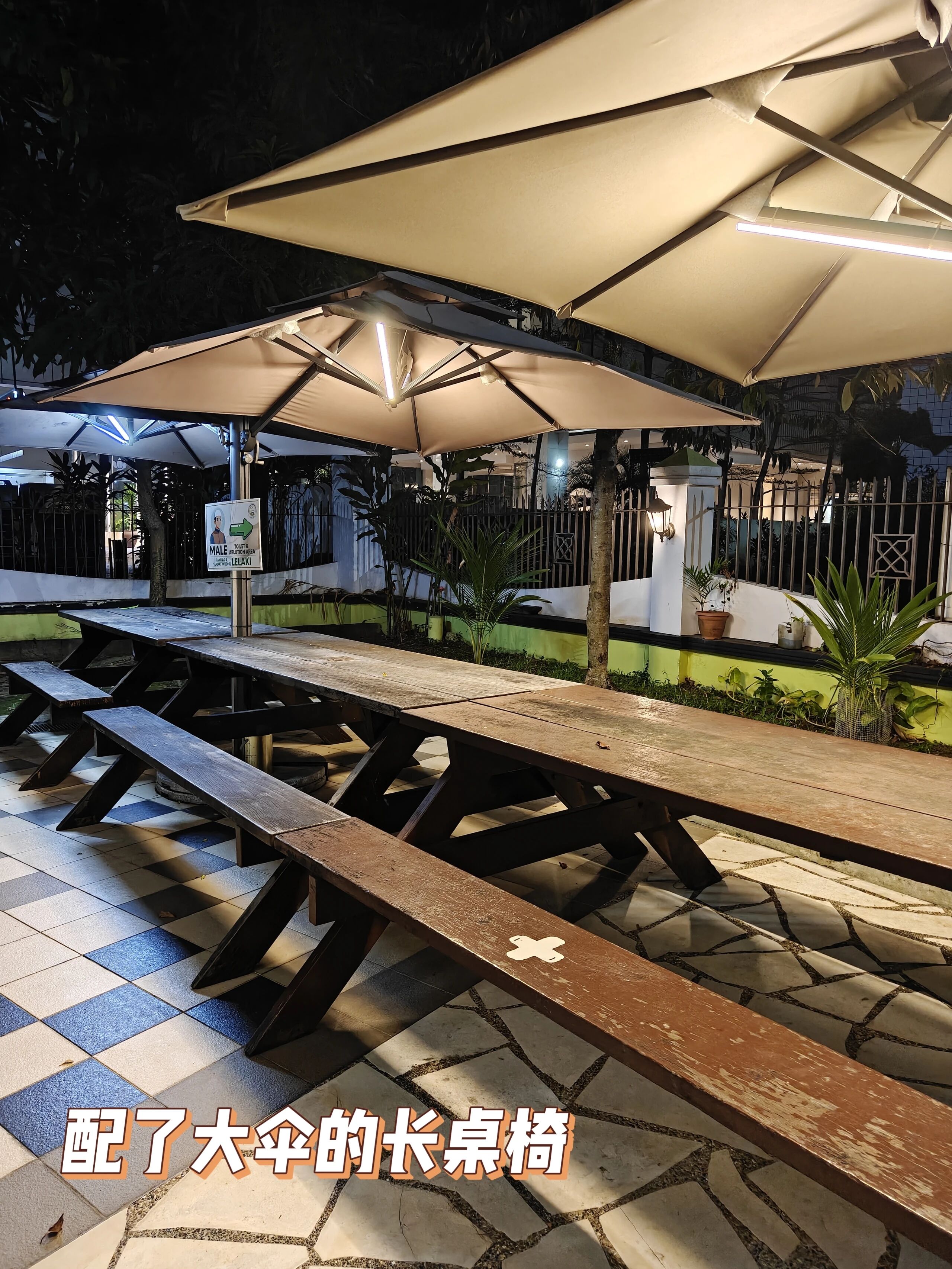
After the namaz ended, I went to the courtyard to take a look. There were long benches and tables set up (Photo 14), and next to the tables was a vending machine (Photo 15) selling various types of instant food.
Many of the instant foods in convenience stores here in Singapore have halal labels, so it is quite convenient to find a meal.
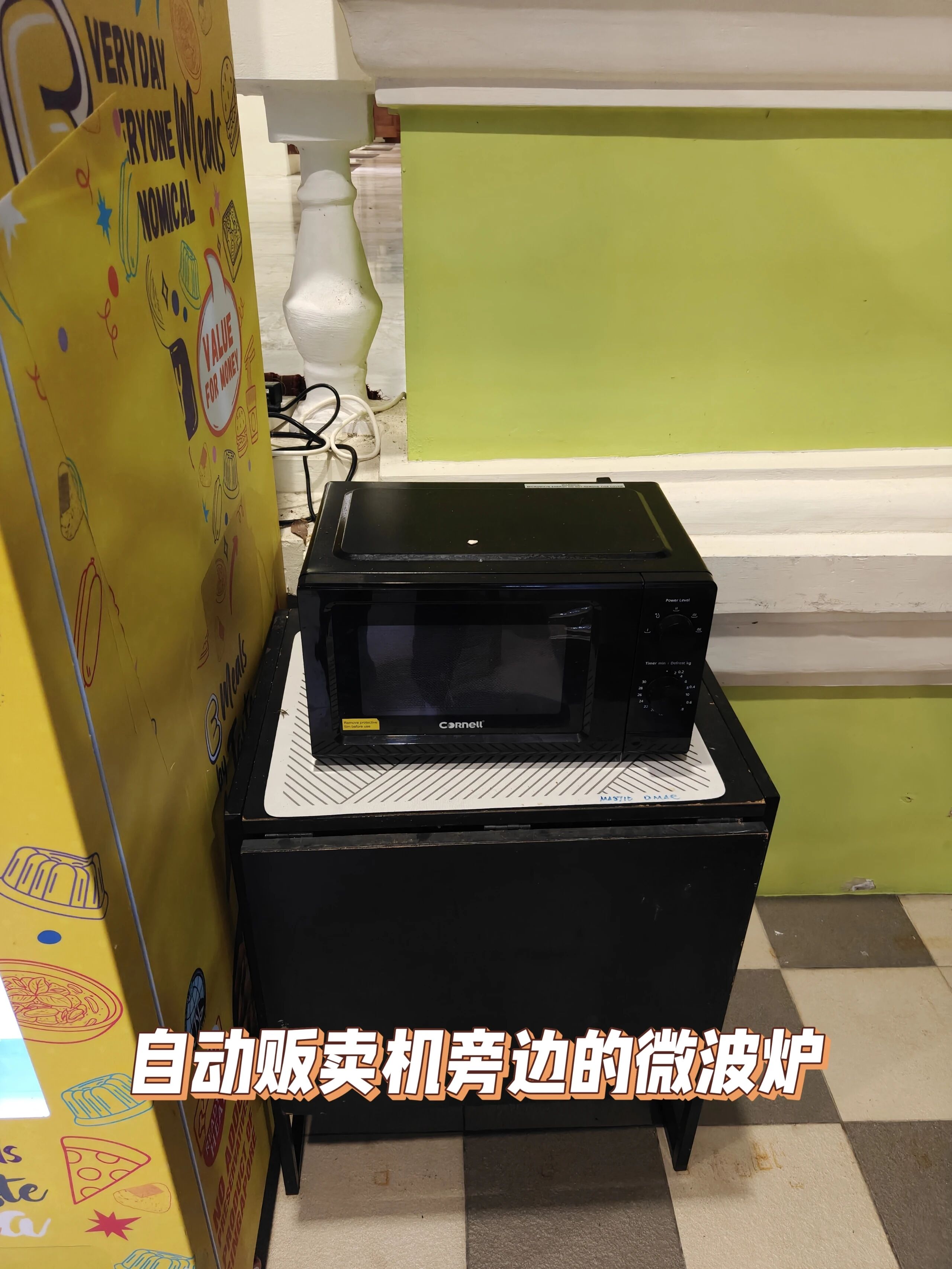
There is a microwave (Photo 16) nearby, so you can heat up what you buy and sit at the table to eat.
In the next article, I will take you to continue exploring mosques in Singapore. See you then. view all
Summary: This Singapore Muslim travel guide visits the mosque described as the oldest mosque in Singapore, located around Kampong Malacca and built in 1820. It keeps the history, location, and mosque observations from the original account.
This place is not far from the underground mosque I mentioned last time. Located in the Kampong Malacca area of Singapore, it was built in 1820 and is the oldest mosque in Singapore. It is older than other early mosques, such as the South Indian-style Jamae Mosque, which I shared before and was built in 1826.
That is a few years later than this mosque.
Back to the main topic, the roof of this oldest mosque in Singapore (Picture 1) looks very much like a traditional Malay hut.
After entering, you can see the renovation plaque on the back of the prayer hall (Picture 2). The mosque was first built in 1820 and finished its renovation in 1984.
The founder of this mosque was named Syed Omar, and he was an Arab merchant.
Today, members of his family are buried in the tomb next to the mosque's minaret (Picture 4).
Let's look at the mosque's notice board. It says in English, Malay, Bengali, and Tamil that staying overnight without permission is prohibited (Picture 6).
This shows that the people who visit this mosque the most are Malays, Tamils, and Bengalis.
Entering the prayer hall, I feel the architectural style is very beautiful, and the door frames tilt toward the ceiling (Picture 8, Picture 9).
I remember seeing this kind of design in some old Western castles. When I came here last time, I remember the Malay imam was very young and polite. I asked him if he was the imam, and he said the imam was busy these two days, so he was filling in.
He also asked if I had encountered any trouble in Singapore and told me I could contact him anytime if I had any problems.
When I visited again this time, the imam was still very young, but it was not the same person as last time.
After the namaz ended, I went to the courtyard to take a look. There were long benches and tables set up (Photo 14), and next to the tables was a vending machine (Photo 15) selling various types of instant food.
Many of the instant foods in convenience stores here in Singapore have halal labels, so it is quite convenient to find a meal.
There is a microwave (Photo 16) nearby, so you can heat up what you buy and sit at the table to eat.
In the next article, I will take you to continue exploring mosques in Singapore. See you then. view all
Reposted from the web
Summary: This Singapore Muslim travel guide visits the mosque described as the oldest mosque in Singapore, located around Kampong Malacca and built in 1820. It keeps the history, location, and mosque observations from the original account.
This place is not far from the underground mosque I mentioned last time. Located in the Kampong Malacca area of Singapore, it was built in 1820 and is the oldest mosque in Singapore. It is older than other early mosques, such as the South Indian-style Jamae Mosque, which I shared before and was built in 1826.
That is a few years later than this mosque.
Back to the main topic, the roof of this oldest mosque in Singapore (Picture 1) looks very much like a traditional Malay hut.
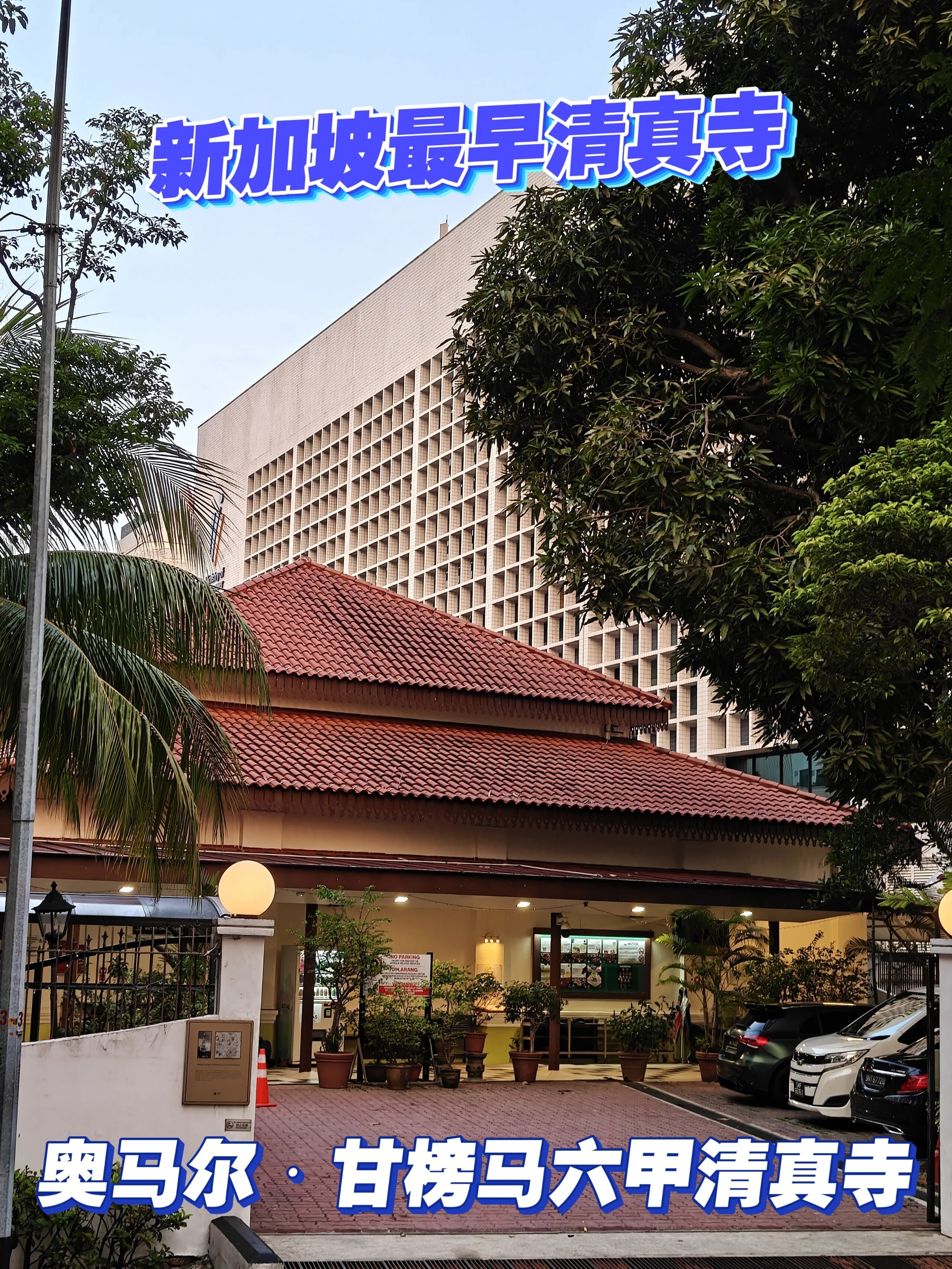
After entering, you can see the renovation plaque on the back of the prayer hall (Picture 2). The mosque was first built in 1820 and finished its renovation in 1984.
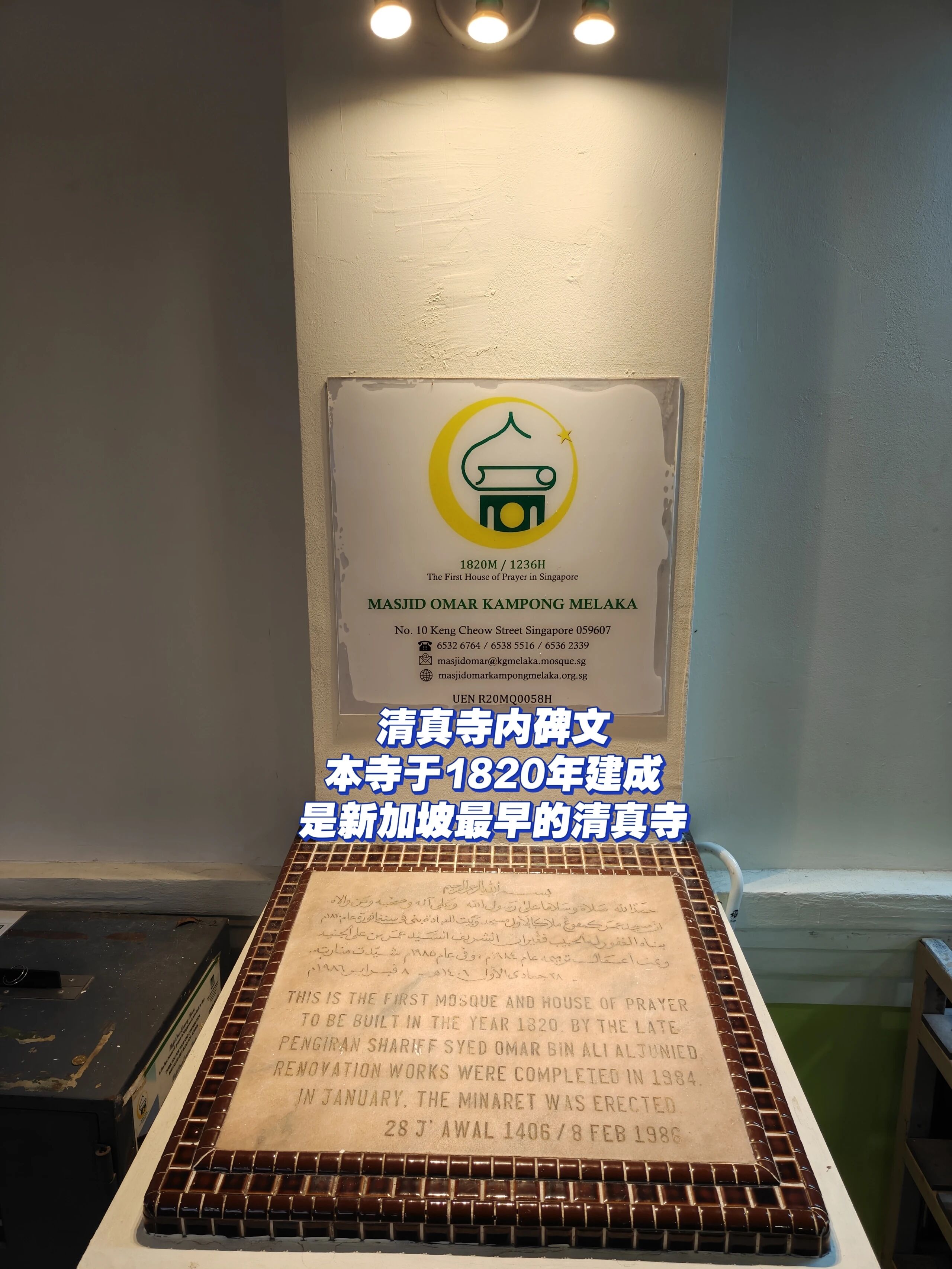
The founder of this mosque was named Syed Omar, and he was an Arab merchant.
Today, members of his family are buried in the tomb next to the mosque's minaret (Picture 4).
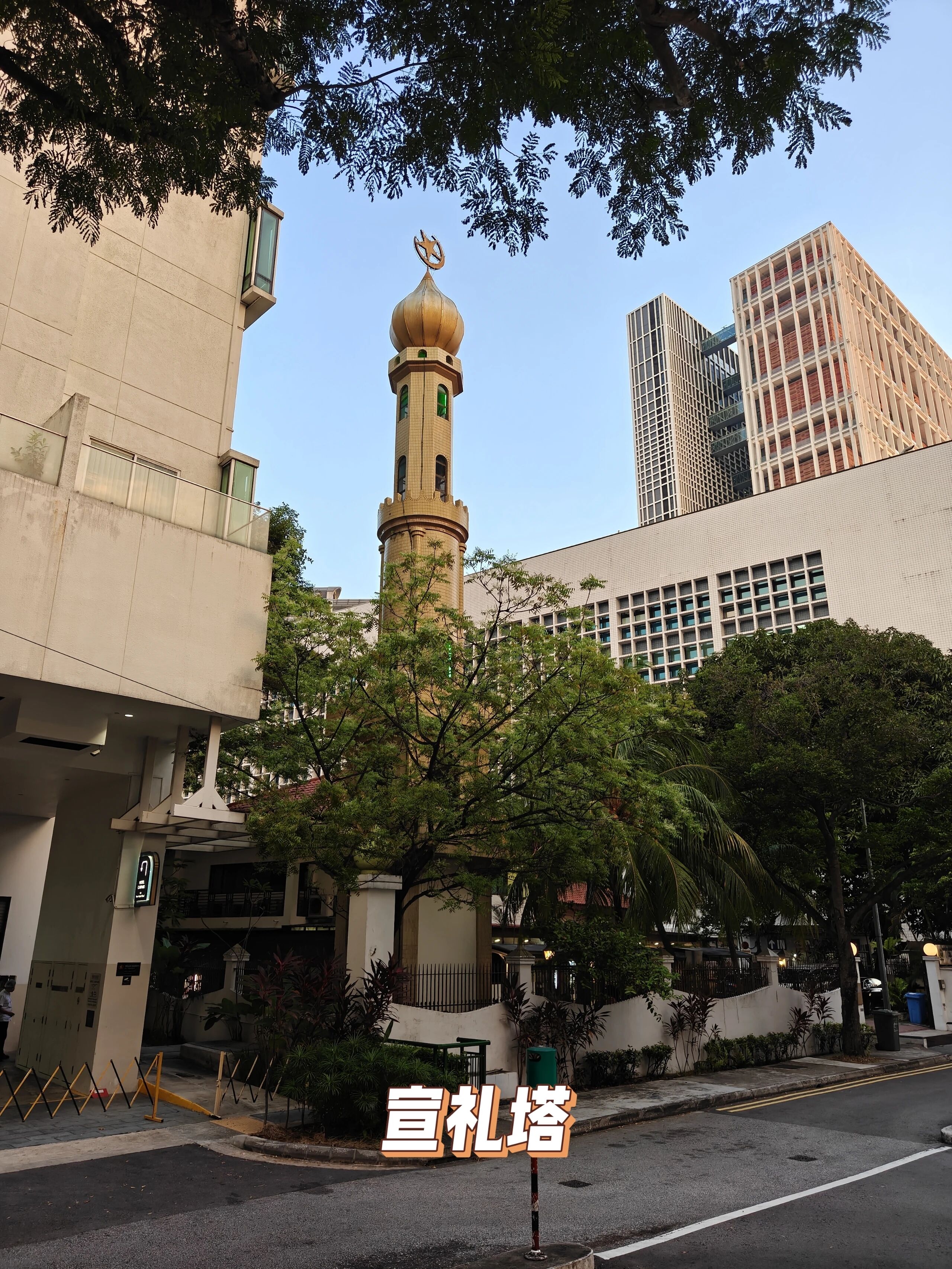
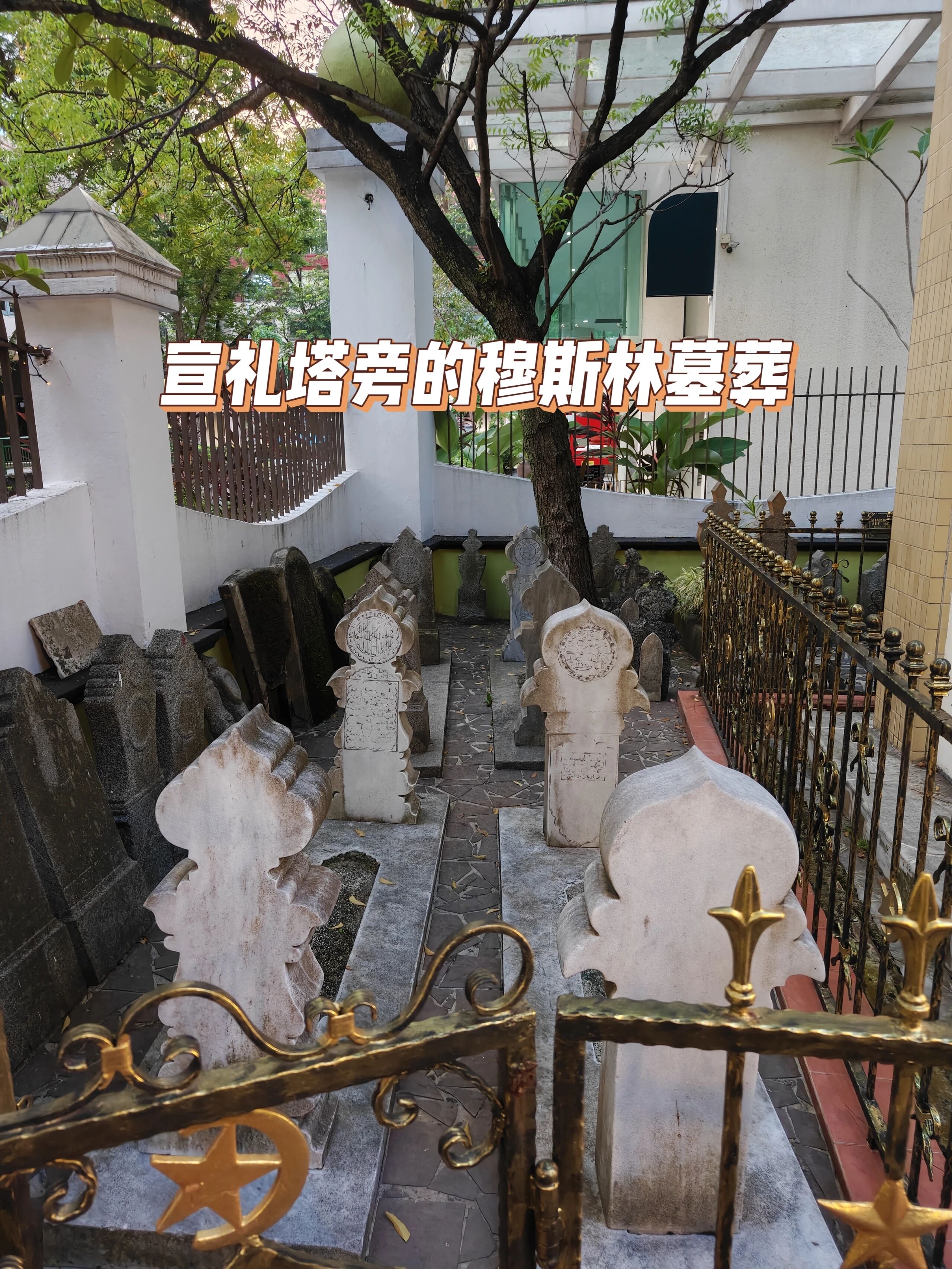
Let's look at the mosque's notice board. It says in English, Malay, Bengali, and Tamil that staying overnight without permission is prohibited (Picture 6).
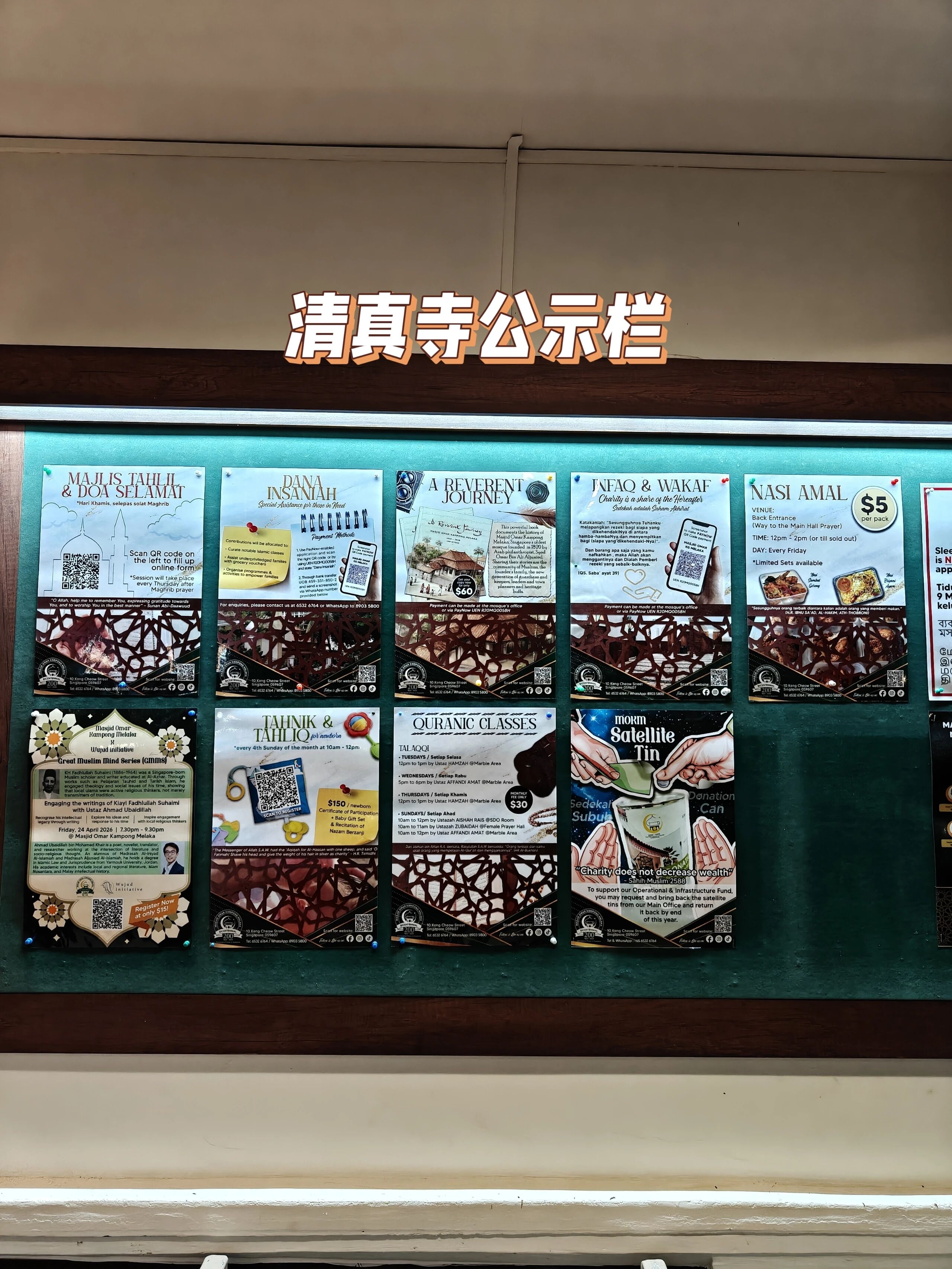
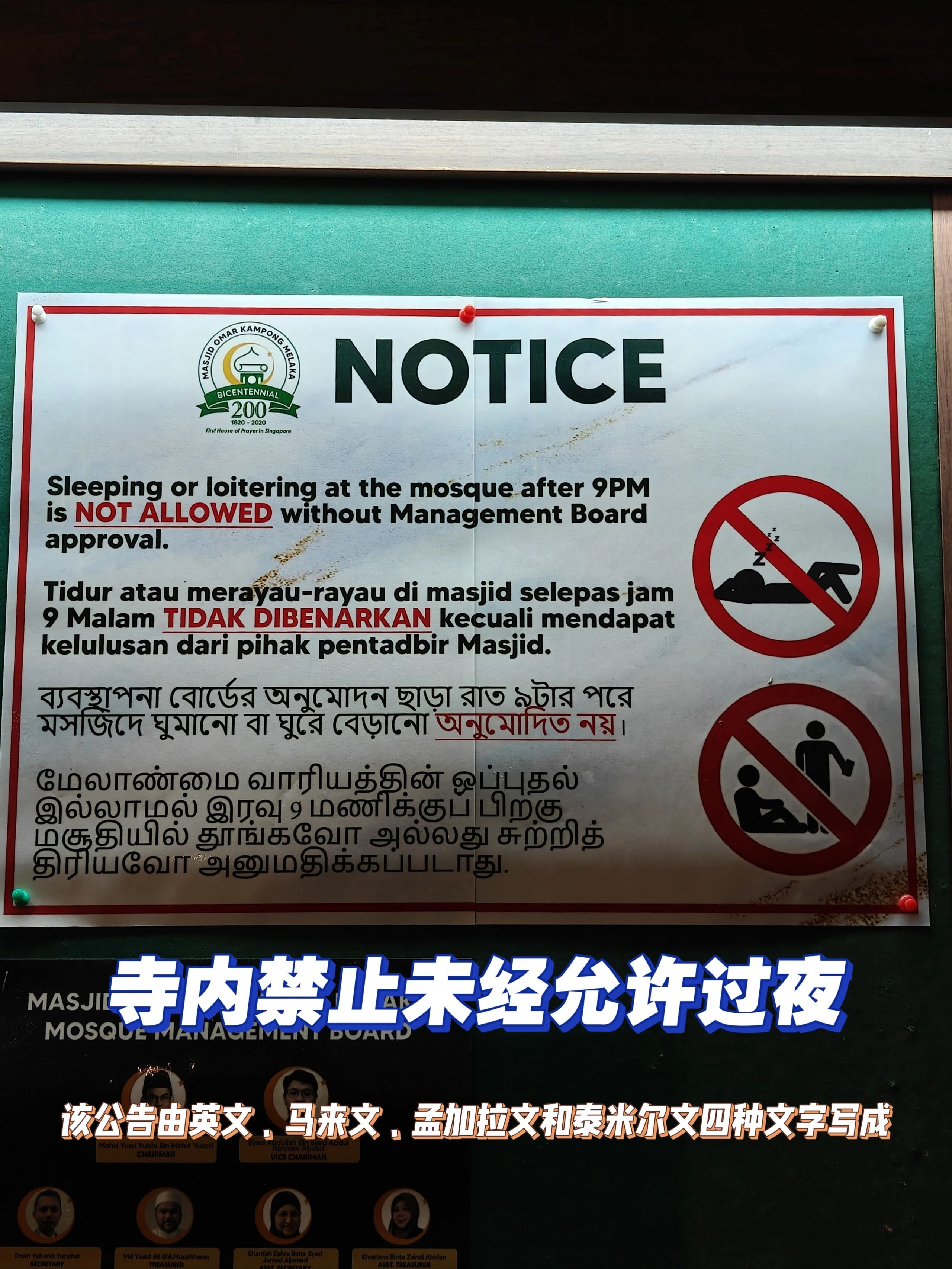
This shows that the people who visit this mosque the most are Malays, Tamils, and Bengalis.
Entering the prayer hall, I feel the architectural style is very beautiful, and the door frames tilt toward the ceiling (Picture 8, Picture 9).
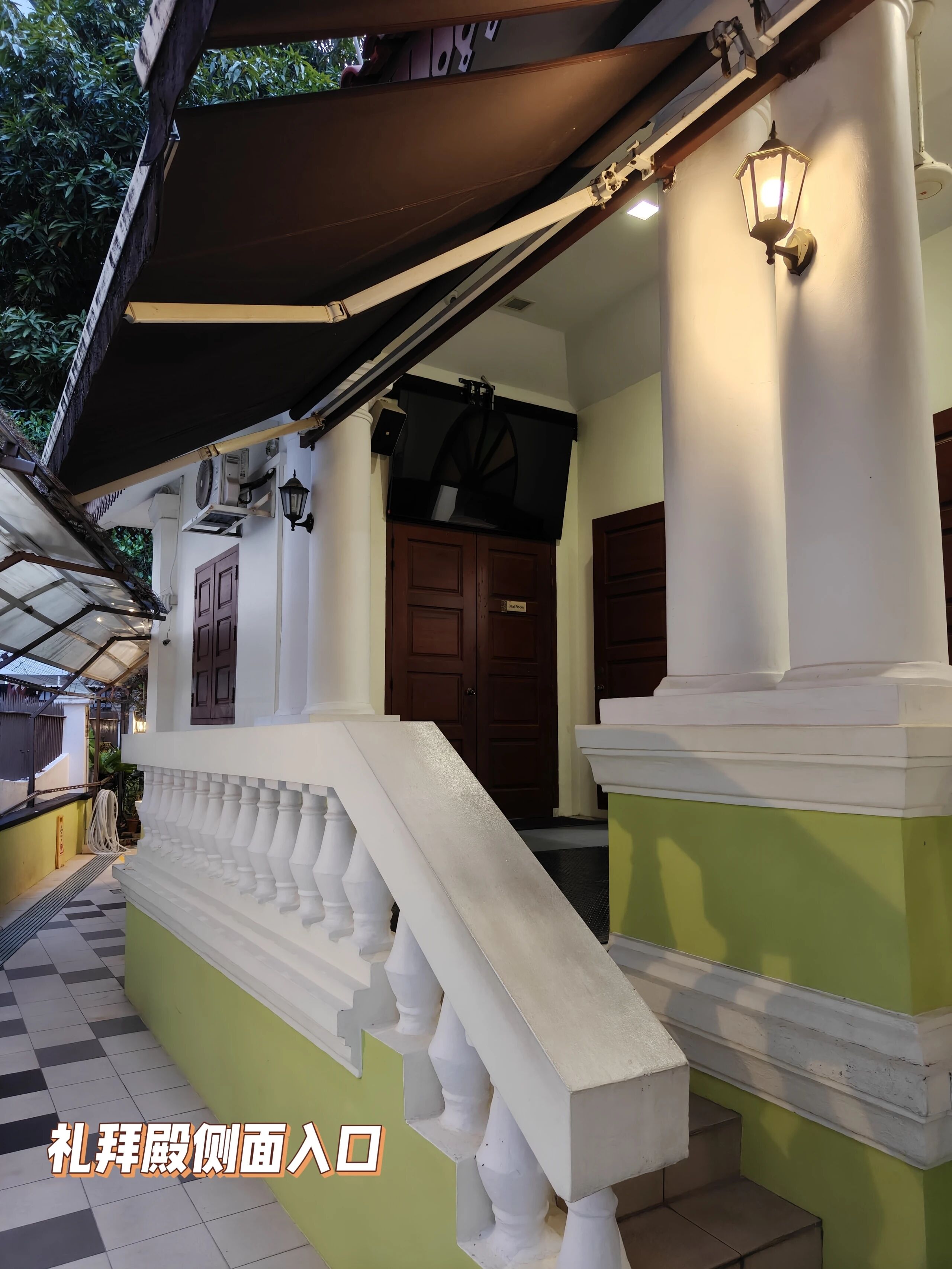
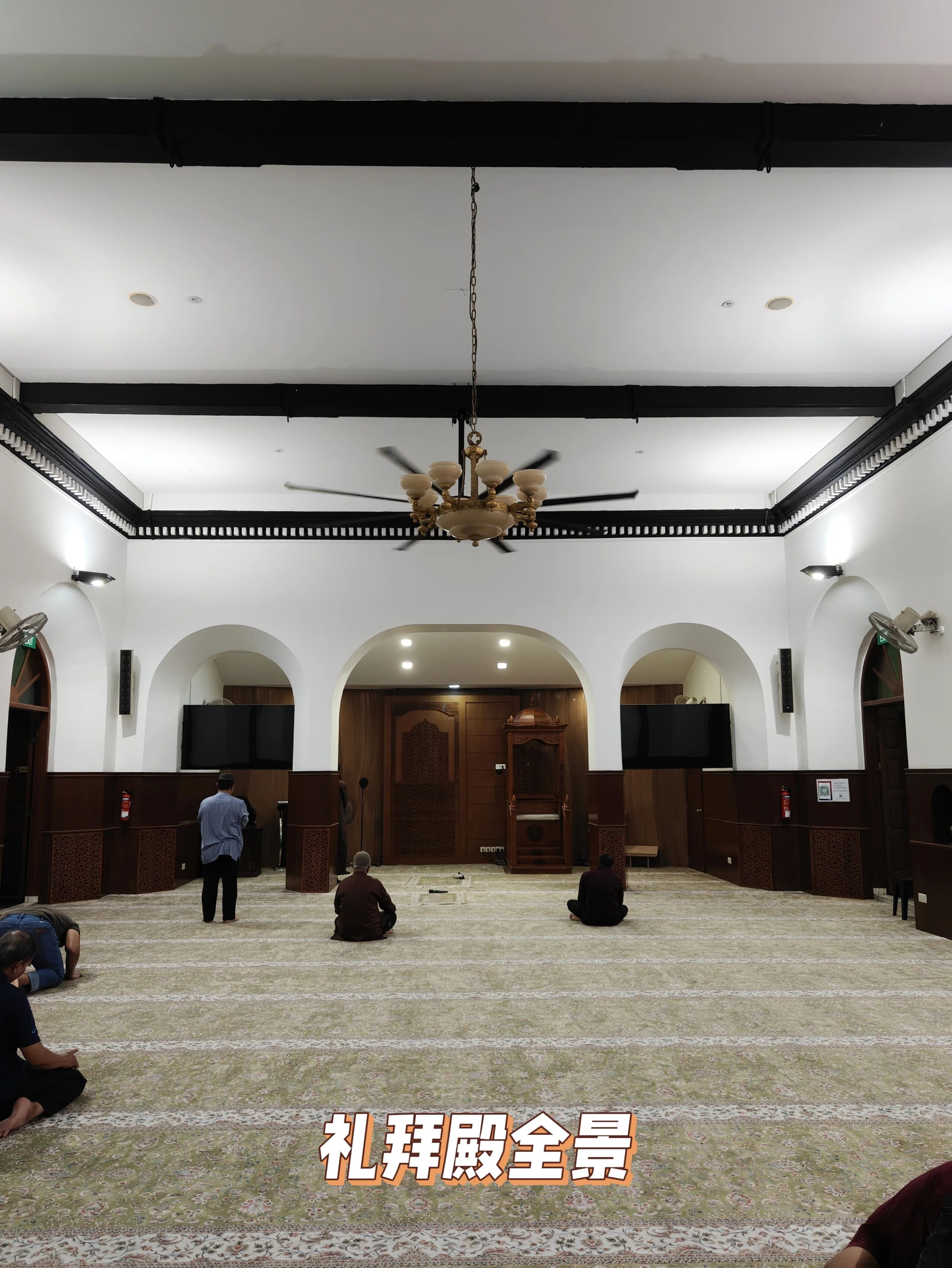
I remember seeing this kind of design in some old Western castles. When I came here last time, I remember the Malay imam was very young and polite. I asked him if he was the imam, and he said the imam was busy these two days, so he was filling in.
He also asked if I had encountered any trouble in Singapore and told me I could contact him anytime if I had any problems.
When I visited again this time, the imam was still very young, but it was not the same person as last time.
After the namaz ended, I went to the courtyard to take a look. There were long benches and tables set up (Photo 14), and next to the tables was a vending machine (Photo 15) selling various types of instant food.

Many of the instant foods in convenience stores here in Singapore have halal labels, so it is quite convenient to find a meal.
There is a microwave (Photo 16) nearby, so you can heat up what you buy and sit at the table to eat.
In the next article, I will take you to continue exploring mosques in Singapore. See you then.
Summary: This Singapore Muslim travel guide visits the mosque described as the oldest mosque in Singapore, located around Kampong Malacca and built in 1820. It keeps the history, location, and mosque observations from the original account.
This place is not far from the underground mosque I mentioned last time. Located in the Kampong Malacca area of Singapore, it was built in 1820 and is the oldest mosque in Singapore. It is older than other early mosques, such as the South Indian-style Jamae Mosque, which I shared before and was built in 1826.
That is a few years later than this mosque.
Back to the main topic, the roof of this oldest mosque in Singapore (Picture 1) looks very much like a traditional Malay hut.
After entering, you can see the renovation plaque on the back of the prayer hall (Picture 2). The mosque was first built in 1820 and finished its renovation in 1984.
The founder of this mosque was named Syed Omar, and he was an Arab merchant.
Today, members of his family are buried in the tomb next to the mosque's minaret (Picture 4).
Let's look at the mosque's notice board. It says in English, Malay, Bengali, and Tamil that staying overnight without permission is prohibited (Picture 6).
This shows that the people who visit this mosque the most are Malays, Tamils, and Bengalis.
Entering the prayer hall, I feel the architectural style is very beautiful, and the door frames tilt toward the ceiling (Picture 8, Picture 9).
I remember seeing this kind of design in some old Western castles. When I came here last time, I remember the Malay imam was very young and polite. I asked him if he was the imam, and he said the imam was busy these two days, so he was filling in.
He also asked if I had encountered any trouble in Singapore and told me I could contact him anytime if I had any problems.
When I visited again this time, the imam was still very young, but it was not the same person as last time.
After the namaz ended, I went to the courtyard to take a look. There were long benches and tables set up (Photo 14), and next to the tables was a vending machine (Photo 15) selling various types of instant food.
Many of the instant foods in convenience stores here in Singapore have halal labels, so it is quite convenient to find a meal.
There is a microwave (Photo 16) nearby, so you can heat up what you buy and sit at the table to eat.
In the next article, I will take you to continue exploring mosques in Singapore. See you then.
Muslim Travel Guide Singapore: Oldest Mosque, Kampong Malacca and Early Muslim Community
Articles • Hasan09 posted the article • 0 comments • 354 views • 2026-05-24 01:46
Reposted from the web
Summary: This Singapore Muslim travel guide visits the mosque described as the oldest mosque in Singapore, located around Kampong Malacca and built in 1820. It keeps the history, location, and mosque observations from the original account.
This place is not far from the underground mosque I mentioned last time. Located in the Kampong Malacca area of Singapore, it was built in 1820 and is the oldest mosque in Singapore. It is older than other early mosques, such as the South Indian-style Jamae Mosque, which I shared before and was built in 1826.
That is a few years later than this mosque.
Back to the main topic, the roof of this oldest mosque in Singapore (Picture 1) looks very much like a traditional Malay hut.
After entering, you can see the renovation plaque on the back of the prayer hall (Picture 2). The mosque was first built in 1820 and finished its renovation in 1984.
The founder of this mosque was named Syed Omar, and he was an Arab merchant.
Today, members of his family are buried in the tomb next to the mosque's minaret (Picture 4).
Let's look at the mosque's notice board. It says in English, Malay, Bengali, and Tamil that staying overnight without permission is prohibited (Picture 6).
This shows that the people who visit this mosque the most are Malays, Tamils, and Bengalis.
Entering the prayer hall, I feel the architectural style is very beautiful, and the door frames tilt toward the ceiling (Picture 8, Picture 9).
I remember seeing this kind of design in some old Western castles. When I came here last time, I remember the Malay imam was very young and polite. I asked him if he was the imam, and he said the imam was busy these two days, so he was filling in.
He also asked if I had encountered any trouble in Singapore and told me I could contact him anytime if I had any problems.
When I visited again this time, the imam was still very young, but it was not the same person as last time.
After the namaz ended, I went to the courtyard to take a look. There were long benches and tables set up (Photo 14), and next to the tables was a vending machine (Photo 15) selling various types of instant food.
Many of the instant foods in convenience stores here in Singapore have halal labels, so it is quite convenient to find a meal.
There is a microwave (Photo 16) nearby, so you can heat up what you buy and sit at the table to eat.
In the next article, I will take you to continue exploring mosques in Singapore. See you then. view all
Summary: This Singapore Muslim travel guide visits the mosque described as the oldest mosque in Singapore, located around Kampong Malacca and built in 1820. It keeps the history, location, and mosque observations from the original account.
This place is not far from the underground mosque I mentioned last time. Located in the Kampong Malacca area of Singapore, it was built in 1820 and is the oldest mosque in Singapore. It is older than other early mosques, such as the South Indian-style Jamae Mosque, which I shared before and was built in 1826.
That is a few years later than this mosque.
Back to the main topic, the roof of this oldest mosque in Singapore (Picture 1) looks very much like a traditional Malay hut.
After entering, you can see the renovation plaque on the back of the prayer hall (Picture 2). The mosque was first built in 1820 and finished its renovation in 1984.
The founder of this mosque was named Syed Omar, and he was an Arab merchant.
Today, members of his family are buried in the tomb next to the mosque's minaret (Picture 4).
Let's look at the mosque's notice board. It says in English, Malay, Bengali, and Tamil that staying overnight without permission is prohibited (Picture 6).
This shows that the people who visit this mosque the most are Malays, Tamils, and Bengalis.
Entering the prayer hall, I feel the architectural style is very beautiful, and the door frames tilt toward the ceiling (Picture 8, Picture 9).
I remember seeing this kind of design in some old Western castles. When I came here last time, I remember the Malay imam was very young and polite. I asked him if he was the imam, and he said the imam was busy these two days, so he was filling in.
He also asked if I had encountered any trouble in Singapore and told me I could contact him anytime if I had any problems.
When I visited again this time, the imam was still very young, but it was not the same person as last time.
After the namaz ended, I went to the courtyard to take a look. There were long benches and tables set up (Photo 14), and next to the tables was a vending machine (Photo 15) selling various types of instant food.
Many of the instant foods in convenience stores here in Singapore have halal labels, so it is quite convenient to find a meal.
There is a microwave (Photo 16) nearby, so you can heat up what you buy and sit at the table to eat.
In the next article, I will take you to continue exploring mosques in Singapore. See you then. view all
Reposted from the web
Summary: This Singapore Muslim travel guide visits the mosque described as the oldest mosque in Singapore, located around Kampong Malacca and built in 1820. It keeps the history, location, and mosque observations from the original account.
This place is not far from the underground mosque I mentioned last time. Located in the Kampong Malacca area of Singapore, it was built in 1820 and is the oldest mosque in Singapore. It is older than other early mosques, such as the South Indian-style Jamae Mosque, which I shared before and was built in 1826.
That is a few years later than this mosque.
Back to the main topic, the roof of this oldest mosque in Singapore (Picture 1) looks very much like a traditional Malay hut.
After entering, you can see the renovation plaque on the back of the prayer hall (Picture 2). The mosque was first built in 1820 and finished its renovation in 1984.
The founder of this mosque was named Syed Omar, and he was an Arab merchant.
Today, members of his family are buried in the tomb next to the mosque's minaret (Picture 4).
Let's look at the mosque's notice board. It says in English, Malay, Bengali, and Tamil that staying overnight without permission is prohibited (Picture 6).
This shows that the people who visit this mosque the most are Malays, Tamils, and Bengalis.
Entering the prayer hall, I feel the architectural style is very beautiful, and the door frames tilt toward the ceiling (Picture 8, Picture 9).
I remember seeing this kind of design in some old Western castles. When I came here last time, I remember the Malay imam was very young and polite. I asked him if he was the imam, and he said the imam was busy these two days, so he was filling in.
He also asked if I had encountered any trouble in Singapore and told me I could contact him anytime if I had any problems.
When I visited again this time, the imam was still very young, but it was not the same person as last time.
After the namaz ended, I went to the courtyard to take a look. There were long benches and tables set up (Photo 14), and next to the tables was a vending machine (Photo 15) selling various types of instant food.
Many of the instant foods in convenience stores here in Singapore have halal labels, so it is quite convenient to find a meal.
There is a microwave (Photo 16) nearby, so you can heat up what you buy and sit at the table to eat.
In the next article, I will take you to continue exploring mosques in Singapore. See you then.
Summary: This Singapore Muslim travel guide visits the mosque described as the oldest mosque in Singapore, located around Kampong Malacca and built in 1820. It keeps the history, location, and mosque observations from the original account.
This place is not far from the underground mosque I mentioned last time. Located in the Kampong Malacca area of Singapore, it was built in 1820 and is the oldest mosque in Singapore. It is older than other early mosques, such as the South Indian-style Jamae Mosque, which I shared before and was built in 1826.
That is a few years later than this mosque.
Back to the main topic, the roof of this oldest mosque in Singapore (Picture 1) looks very much like a traditional Malay hut.
After entering, you can see the renovation plaque on the back of the prayer hall (Picture 2). The mosque was first built in 1820 and finished its renovation in 1984.
The founder of this mosque was named Syed Omar, and he was an Arab merchant.
Today, members of his family are buried in the tomb next to the mosque's minaret (Picture 4).
Let's look at the mosque's notice board. It says in English, Malay, Bengali, and Tamil that staying overnight without permission is prohibited (Picture 6).
This shows that the people who visit this mosque the most are Malays, Tamils, and Bengalis.
Entering the prayer hall, I feel the architectural style is very beautiful, and the door frames tilt toward the ceiling (Picture 8, Picture 9).
I remember seeing this kind of design in some old Western castles. When I came here last time, I remember the Malay imam was very young and polite. I asked him if he was the imam, and he said the imam was busy these two days, so he was filling in.
He also asked if I had encountered any trouble in Singapore and told me I could contact him anytime if I had any problems.
When I visited again this time, the imam was still very young, but it was not the same person as last time.
After the namaz ended, I went to the courtyard to take a look. There were long benches and tables set up (Photo 14), and next to the tables was a vending machine (Photo 15) selling various types of instant food.
Many of the instant foods in convenience stores here in Singapore have halal labels, so it is quite convenient to find a meal.
There is a microwave (Photo 16) nearby, so you can heat up what you buy and sit at the table to eat.
In the next article, I will take you to continue exploring mosques in Singapore. See you then.