

Sira Literature
Islamic History and Hadith Studies: Evolution of Early Sira Literature and Quranic Citation Analysis
Articles • Hasan09 posted the article • 0 comments • 10 views • 15 hours ago
[Internet Repost]
Drawing on the doctoral research of a Malaysian scholar concerning early biography of the Prophet (Sira) literature, this article explores the evolving interplay between early historical transmissions and Quranic textual citations, showcasing the rigorous yet rich trajectory of early Islamic historiography.
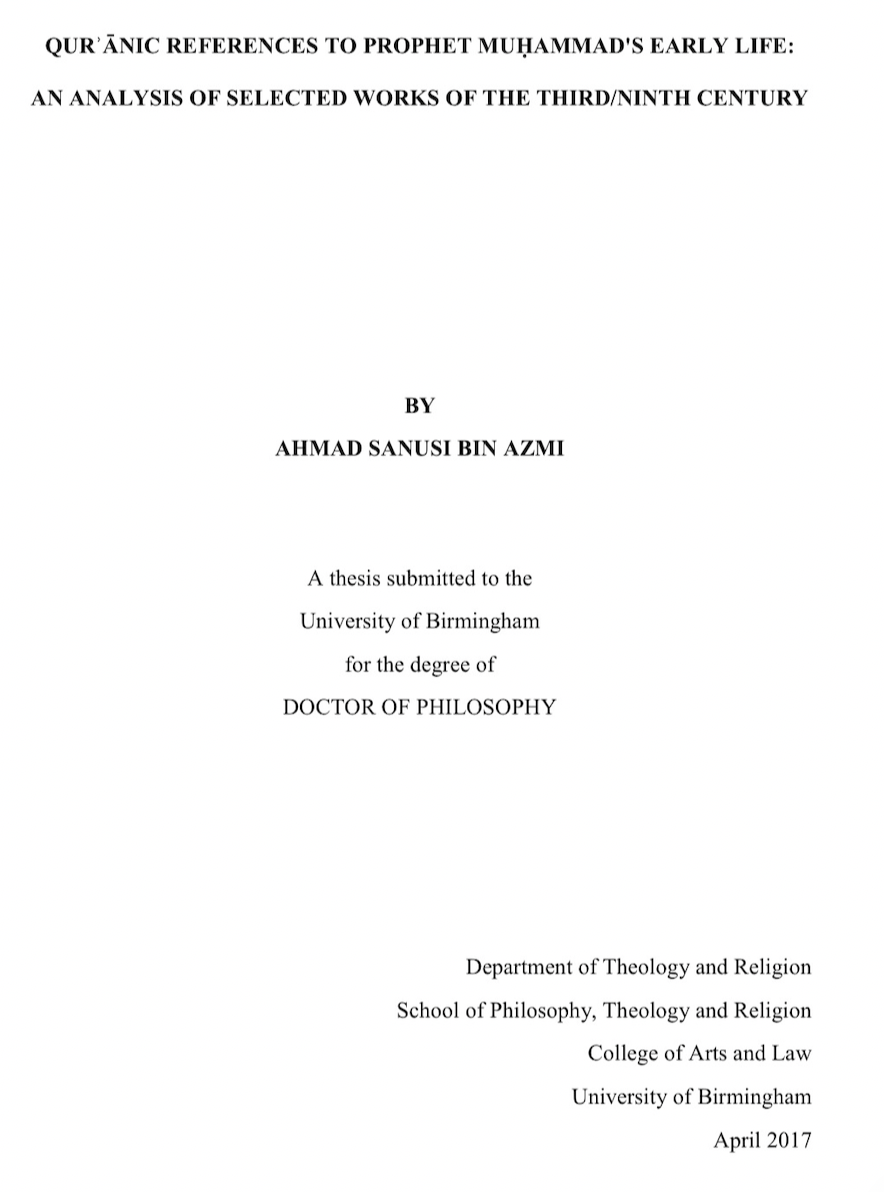
Ahmad Sanusi bin Azmi, a Malaysian scholar, wrote a doctoral dissertation focusing on citations related to the early life of the Prophet. The dissertation points out that early prophetic tradition citations rarely drew directly from scripture, and instances of inconsistent scriptural citations emerged later on. The more recent the work, the more frequent the use of scripture to illustrate the Prophet's life. Meanwhile, scripture itself is not a prophetic tradition and contains almost no direct accounts of the Prophet's early life; the correspondences established in later literature were largely a matter of personal imagination.
During his study of prophetic traditions, Azmi discovered that the frequency of scriptural citations varied vastly among different authors. For instance, Ibn Hishām used only 14 scriptural citations in the narrative prior to Muhammad receiving revelation, while Ibn Saʿd used 21. Later authors, however, extensively added new scriptural citations not used by previous generations. The later the timeline, the more scriptural verses were interpreted as pointing to the early life of Muhammad.
Certain verses were interpreted by later generations as pointing to the early years of Muhammad, yet scholars in the 9th century held starkly different understandings of the exact same verse. A typical example is the verse 'Did We not expand for you your breast? (94:1)'; al-Tirmidhī linked it to the miracle of the 'splitting of the chest', whereas contemporaries like Ibn Hishām and Ibn Saʿd did not use it in this manner. Many such connections were gradually generated only in later times.
In surviving literature from the 8th century, it is nearly impossible to find material connecting scripture to prophetic traditions, a phenomenon that became increasingly common only after the 9th century. The reality is that the contextual referents of the verses were ambiguous, and Azmi argues this phenomenon should be studied in conjunction with the social backgrounds of the scholars of that era.
For example, regarding verse (26:219), 8th-century commentaries interpreted it as describing the state of the Prophet during his prayers, having nothing to do with lineage. However, by the 9th century, Ibn Saʿd cited a transmission from Ibn Abbās, interpreting the verse to mean that the soul of the Prophet was passed down generation through generation among the families of past prophets, thereby proving the nobility of the Prophet's lineage. Azmi's textual research revealed that this chain of transmission contained unidentified narrators, and this interpretation was not widely adopted in commentaries until the 10th century and later, representing a later interpretation.
Looking further at Chapter 105, 'The Elephant' (Al-Fīl), the verse itself only records the event of the elephant army being destroyed and does not mention the birth of the Prophet. 8th-century commentaries provided only linguistic and literal explanations unrelated to the advent of the Prophet. By the 9th century, however, al-Jāhiz was the first to interpret this chapter as an omen for the birth of the Prophet. Following the 10th and 11th centuries, an increasing number of commentaries treated the destruction of the elephant army as an omen preceding the birth of the Prophet, with Ibn Kathīr further interpreting it as Allah saving the Kaaba to welcome the birth of the Prophet.
Ibn Ishāq, one of the earliest authors of prophetic traditions, recorded in his original work that wondrous visions appeared when the mother of the Prophet was pregnant (radiant light illuminating palaces as far away as Syria), but the chapter on his birth contained no such visions. By the time of Ibn Saʿd, however, this vision was shifted to the birth section, though without citing any scriptural basis, relying entirely on Hadith transmission. Early commentaries understood the light as scripture itself, while later commentaries interpreted it as Muhammad himself. Moving into the 14th to 16th centuries, authors of prophetic traditions directly tied verse (5:15) to a luminous miracle.
Early prophetic tradition authors Ibn Ishāq and Ibn Hishām recorded the story of the 'splitting of the chest and purification of the heart' without citing verse (94:1) at all. 8th-century commentaries largely interpreted this verse metaphorically, with heavy burdens interpreted as 'sin'. It was not until the 9th century, in the Hadith collection of al-Tirmidhī, that verse (94:1) was linked for the first time to the story of the chest-splitting. 13th-century commentaries then adopted the literal interpretation of the story, and Ibn Kathīr further categorized the event under the Night Journey and Ascension (Isra and Mi'raj).
Azmi believes that the social background driving this phenomenon was the rise of the Mu'tazilites during the Abbasid era. This school championed rationalism, and many miracle narratives faced rational skepticism. To fend off rational critique, some individuals believed that associating miracles with scripture could counter rational doubts.
In the Sahih al-Bukhari Hadith collection, there is also almost no content linking scripture with prophetic traditions, and Bukhari opposed literal interpretations of miracles. The core of his work was jurisprudence (fiqh) rather than providing scriptural proof for prophetic traditions. Al-Tirmidhī valued using Hadith to interpret scripture, binding verse (94:1) to the miracle of the chest-splitting. Although other scholars of the same era recorded this Hadith, they did not connect it to the verse. Azmi infers that this may have been al-Tirmidhī's personal innovation, reflecting the growing reverence for the lofty status of the Prophet in the 9th century.
Ahmad ibn Hanbal's Hadith collection, the Musnad, likewise hardly contains any content linking scripture to prophetic traditions, and the biographical traditions he collected relied entirely on Hadiths. Ibn Hanbal also opposed Ibn Saʿd's interpretation regarding the lineage of the Prophet based on verse (26:219). view all
[Internet Repost]
Drawing on the doctoral research of a Malaysian scholar concerning early biography of the Prophet (Sira) literature, this article explores the evolving interplay between early historical transmissions and Quranic textual citations, showcasing the rigorous yet rich trajectory of early Islamic historiography.
Ahmad Sanusi bin Azmi, a Malaysian scholar, wrote a doctoral dissertation focusing on citations related to the early life of the Prophet. The dissertation points out that early prophetic tradition citations rarely drew directly from scripture, and instances of inconsistent scriptural citations emerged later on. The more recent the work, the more frequent the use of scripture to illustrate the Prophet's life. Meanwhile, scripture itself is not a prophetic tradition and contains almost no direct accounts of the Prophet's early life; the correspondences established in later literature were largely a matter of personal imagination.
During his study of prophetic traditions, Azmi discovered that the frequency of scriptural citations varied vastly among different authors. For instance, Ibn Hishām used only 14 scriptural citations in the narrative prior to Muhammad receiving revelation, while Ibn Saʿd used 21. Later authors, however, extensively added new scriptural citations not used by previous generations. The later the timeline, the more scriptural verses were interpreted as pointing to the early life of Muhammad.
Certain verses were interpreted by later generations as pointing to the early years of Muhammad, yet scholars in the 9th century held starkly different understandings of the exact same verse. A typical example is the verse 'Did We not expand for you your breast? (94:1)'; al-Tirmidhī linked it to the miracle of the 'splitting of the chest', whereas contemporaries like Ibn Hishām and Ibn Saʿd did not use it in this manner. Many such connections were gradually generated only in later times.
In surviving literature from the 8th century, it is nearly impossible to find material connecting scripture to prophetic traditions, a phenomenon that became increasingly common only after the 9th century. The reality is that the contextual referents of the verses were ambiguous, and Azmi argues this phenomenon should be studied in conjunction with the social backgrounds of the scholars of that era.
For example, regarding verse (26:219), 8th-century commentaries interpreted it as describing the state of the Prophet during his prayers, having nothing to do with lineage. However, by the 9th century, Ibn Saʿd cited a transmission from Ibn Abbās, interpreting the verse to mean that the soul of the Prophet was passed down generation through generation among the families of past prophets, thereby proving the nobility of the Prophet's lineage. Azmi's textual research revealed that this chain of transmission contained unidentified narrators, and this interpretation was not widely adopted in commentaries until the 10th century and later, representing a later interpretation.
Looking further at Chapter 105, 'The Elephant' (Al-Fīl), the verse itself only records the event of the elephant army being destroyed and does not mention the birth of the Prophet. 8th-century commentaries provided only linguistic and literal explanations unrelated to the advent of the Prophet. By the 9th century, however, al-Jāhiz was the first to interpret this chapter as an omen for the birth of the Prophet. Following the 10th and 11th centuries, an increasing number of commentaries treated the destruction of the elephant army as an omen preceding the birth of the Prophet, with Ibn Kathīr further interpreting it as Allah saving the Kaaba to welcome the birth of the Prophet.
Ibn Ishāq, one of the earliest authors of prophetic traditions, recorded in his original work that wondrous visions appeared when the mother of the Prophet was pregnant (radiant light illuminating palaces as far away as Syria), but the chapter on his birth contained no such visions. By the time of Ibn Saʿd, however, this vision was shifted to the birth section, though without citing any scriptural basis, relying entirely on Hadith transmission. Early commentaries understood the light as scripture itself, while later commentaries interpreted it as Muhammad himself. Moving into the 14th to 16th centuries, authors of prophetic traditions directly tied verse (5:15) to a luminous miracle.
Early prophetic tradition authors Ibn Ishāq and Ibn Hishām recorded the story of the 'splitting of the chest and purification of the heart' without citing verse (94:1) at all. 8th-century commentaries largely interpreted this verse metaphorically, with heavy burdens interpreted as 'sin'. It was not until the 9th century, in the Hadith collection of al-Tirmidhī, that verse (94:1) was linked for the first time to the story of the chest-splitting. 13th-century commentaries then adopted the literal interpretation of the story, and Ibn Kathīr further categorized the event under the Night Journey and Ascension (Isra and Mi'raj).
Azmi believes that the social background driving this phenomenon was the rise of the Mu'tazilites during the Abbasid era. This school championed rationalism, and many miracle narratives faced rational skepticism. To fend off rational critique, some individuals believed that associating miracles with scripture could counter rational doubts.
In the Sahih al-Bukhari Hadith collection, there is also almost no content linking scripture with prophetic traditions, and Bukhari opposed literal interpretations of miracles. The core of his work was jurisprudence (fiqh) rather than providing scriptural proof for prophetic traditions. Al-Tirmidhī valued using Hadith to interpret scripture, binding verse (94:1) to the miracle of the chest-splitting. Although other scholars of the same era recorded this Hadith, they did not connect it to the verse. Azmi infers that this may have been al-Tirmidhī's personal innovation, reflecting the growing reverence for the lofty status of the Prophet in the 9th century.
Ahmad ibn Hanbal's Hadith collection, the Musnad, likewise hardly contains any content linking scripture to prophetic traditions, and the biographical traditions he collected relied entirely on Hadiths. Ibn Hanbal also opposed Ibn Saʿd's interpretation regarding the lineage of the Prophet based on verse (26:219).
Drawing on the doctoral research of a Malaysian scholar concerning early biography of the Prophet (Sira) literature, this article explores the evolving interplay between early historical transmissions and Quranic textual citations, showcasing the rigorous yet rich trajectory of early Islamic historiography.
Ahmad Sanusi bin Azmi, a Malaysian scholar, wrote a doctoral dissertation focusing on citations related to the early life of the Prophet. The dissertation points out that early prophetic tradition citations rarely drew directly from scripture, and instances of inconsistent scriptural citations emerged later on. The more recent the work, the more frequent the use of scripture to illustrate the Prophet's life. Meanwhile, scripture itself is not a prophetic tradition and contains almost no direct accounts of the Prophet's early life; the correspondences established in later literature were largely a matter of personal imagination.
During his study of prophetic traditions, Azmi discovered that the frequency of scriptural citations varied vastly among different authors. For instance, Ibn Hishām used only 14 scriptural citations in the narrative prior to Muhammad receiving revelation, while Ibn Saʿd used 21. Later authors, however, extensively added new scriptural citations not used by previous generations. The later the timeline, the more scriptural verses were interpreted as pointing to the early life of Muhammad.
Certain verses were interpreted by later generations as pointing to the early years of Muhammad, yet scholars in the 9th century held starkly different understandings of the exact same verse. A typical example is the verse 'Did We not expand for you your breast? (94:1)'; al-Tirmidhī linked it to the miracle of the 'splitting of the chest', whereas contemporaries like Ibn Hishām and Ibn Saʿd did not use it in this manner. Many such connections were gradually generated only in later times.
In surviving literature from the 8th century, it is nearly impossible to find material connecting scripture to prophetic traditions, a phenomenon that became increasingly common only after the 9th century. The reality is that the contextual referents of the verses were ambiguous, and Azmi argues this phenomenon should be studied in conjunction with the social backgrounds of the scholars of that era.
For example, regarding verse (26:219), 8th-century commentaries interpreted it as describing the state of the Prophet during his prayers, having nothing to do with lineage. However, by the 9th century, Ibn Saʿd cited a transmission from Ibn Abbās, interpreting the verse to mean that the soul of the Prophet was passed down generation through generation among the families of past prophets, thereby proving the nobility of the Prophet's lineage. Azmi's textual research revealed that this chain of transmission contained unidentified narrators, and this interpretation was not widely adopted in commentaries until the 10th century and later, representing a later interpretation.
Looking further at Chapter 105, 'The Elephant' (Al-Fīl), the verse itself only records the event of the elephant army being destroyed and does not mention the birth of the Prophet. 8th-century commentaries provided only linguistic and literal explanations unrelated to the advent of the Prophet. By the 9th century, however, al-Jāhiz was the first to interpret this chapter as an omen for the birth of the Prophet. Following the 10th and 11th centuries, an increasing number of commentaries treated the destruction of the elephant army as an omen preceding the birth of the Prophet, with Ibn Kathīr further interpreting it as Allah saving the Kaaba to welcome the birth of the Prophet.
Ibn Ishāq, one of the earliest authors of prophetic traditions, recorded in his original work that wondrous visions appeared when the mother of the Prophet was pregnant (radiant light illuminating palaces as far away as Syria), but the chapter on his birth contained no such visions. By the time of Ibn Saʿd, however, this vision was shifted to the birth section, though without citing any scriptural basis, relying entirely on Hadith transmission. Early commentaries understood the light as scripture itself, while later commentaries interpreted it as Muhammad himself. Moving into the 14th to 16th centuries, authors of prophetic traditions directly tied verse (5:15) to a luminous miracle.
Early prophetic tradition authors Ibn Ishāq and Ibn Hishām recorded the story of the 'splitting of the chest and purification of the heart' without citing verse (94:1) at all. 8th-century commentaries largely interpreted this verse metaphorically, with heavy burdens interpreted as 'sin'. It was not until the 9th century, in the Hadith collection of al-Tirmidhī, that verse (94:1) was linked for the first time to the story of the chest-splitting. 13th-century commentaries then adopted the literal interpretation of the story, and Ibn Kathīr further categorized the event under the Night Journey and Ascension (Isra and Mi'raj).
Azmi believes that the social background driving this phenomenon was the rise of the Mu'tazilites during the Abbasid era. This school championed rationalism, and many miracle narratives faced rational skepticism. To fend off rational critique, some individuals believed that associating miracles with scripture could counter rational doubts.
In the Sahih al-Bukhari Hadith collection, there is also almost no content linking scripture with prophetic traditions, and Bukhari opposed literal interpretations of miracles. The core of his work was jurisprudence (fiqh) rather than providing scriptural proof for prophetic traditions. Al-Tirmidhī valued using Hadith to interpret scripture, binding verse (94:1) to the miracle of the chest-splitting. Although other scholars of the same era recorded this Hadith, they did not connect it to the verse. Azmi infers that this may have been al-Tirmidhī's personal innovation, reflecting the growing reverence for the lofty status of the Prophet in the 9th century.
Ahmad ibn Hanbal's Hadith collection, the Musnad, likewise hardly contains any content linking scripture to prophetic traditions, and the biographical traditions he collected relied entirely on Hadiths. Ibn Hanbal also opposed Ibn Saʿd's interpretation regarding the lineage of the Prophet based on verse (26:219).
Islamic History and Hadith Studies: Evolution of Early Sira Literature and Quranic Citation Analysis
Articles • Hasan09 posted the article • 0 comments • 10 views • 15 hours ago
[Internet Repost]
Drawing on the doctoral research of a Malaysian scholar concerning early biography of the Prophet (Sira) literature, this article explores the evolving interplay between early historical transmissions and Quranic textual citations, showcasing the rigorous yet rich trajectory of early Islamic historiography.
Ahmad Sanusi bin Azmi, a Malaysian scholar, wrote a doctoral dissertation focusing on citations related to the early life of the Prophet. The dissertation points out that early prophetic tradition citations rarely drew directly from scripture, and instances of inconsistent scriptural citations emerged later on. The more recent the work, the more frequent the use of scripture to illustrate the Prophet's life. Meanwhile, scripture itself is not a prophetic tradition and contains almost no direct accounts of the Prophet's early life; the correspondences established in later literature were largely a matter of personal imagination.
During his study of prophetic traditions, Azmi discovered that the frequency of scriptural citations varied vastly among different authors. For instance, Ibn Hishām used only 14 scriptural citations in the narrative prior to Muhammad receiving revelation, while Ibn Saʿd used 21. Later authors, however, extensively added new scriptural citations not used by previous generations. The later the timeline, the more scriptural verses were interpreted as pointing to the early life of Muhammad.
Certain verses were interpreted by later generations as pointing to the early years of Muhammad, yet scholars in the 9th century held starkly different understandings of the exact same verse. A typical example is the verse 'Did We not expand for you your breast? (94:1)'; al-Tirmidhī linked it to the miracle of the 'splitting of the chest', whereas contemporaries like Ibn Hishām and Ibn Saʿd did not use it in this manner. Many such connections were gradually generated only in later times.
In surviving literature from the 8th century, it is nearly impossible to find material connecting scripture to prophetic traditions, a phenomenon that became increasingly common only after the 9th century. The reality is that the contextual referents of the verses were ambiguous, and Azmi argues this phenomenon should be studied in conjunction with the social backgrounds of the scholars of that era.
For example, regarding verse (26:219), 8th-century commentaries interpreted it as describing the state of the Prophet during his prayers, having nothing to do with lineage. However, by the 9th century, Ibn Saʿd cited a transmission from Ibn Abbās, interpreting the verse to mean that the soul of the Prophet was passed down generation through generation among the families of past prophets, thereby proving the nobility of the Prophet's lineage. Azmi's textual research revealed that this chain of transmission contained unidentified narrators, and this interpretation was not widely adopted in commentaries until the 10th century and later, representing a later interpretation.
Looking further at Chapter 105, 'The Elephant' (Al-Fīl), the verse itself only records the event of the elephant army being destroyed and does not mention the birth of the Prophet. 8th-century commentaries provided only linguistic and literal explanations unrelated to the advent of the Prophet. By the 9th century, however, al-Jāhiz was the first to interpret this chapter as an omen for the birth of the Prophet. Following the 10th and 11th centuries, an increasing number of commentaries treated the destruction of the elephant army as an omen preceding the birth of the Prophet, with Ibn Kathīr further interpreting it as Allah saving the Kaaba to welcome the birth of the Prophet.
Ibn Ishāq, one of the earliest authors of prophetic traditions, recorded in his original work that wondrous visions appeared when the mother of the Prophet was pregnant (radiant light illuminating palaces as far away as Syria), but the chapter on his birth contained no such visions. By the time of Ibn Saʿd, however, this vision was shifted to the birth section, though without citing any scriptural basis, relying entirely on Hadith transmission. Early commentaries understood the light as scripture itself, while later commentaries interpreted it as Muhammad himself. Moving into the 14th to 16th centuries, authors of prophetic traditions directly tied verse (5:15) to a luminous miracle.
Early prophetic tradition authors Ibn Ishāq and Ibn Hishām recorded the story of the 'splitting of the chest and purification of the heart' without citing verse (94:1) at all. 8th-century commentaries largely interpreted this verse metaphorically, with heavy burdens interpreted as 'sin'. It was not until the 9th century, in the Hadith collection of al-Tirmidhī, that verse (94:1) was linked for the first time to the story of the chest-splitting. 13th-century commentaries then adopted the literal interpretation of the story, and Ibn Kathīr further categorized the event under the Night Journey and Ascension (Isra and Mi'raj).
Azmi believes that the social background driving this phenomenon was the rise of the Mu'tazilites during the Abbasid era. This school championed rationalism, and many miracle narratives faced rational skepticism. To fend off rational critique, some individuals believed that associating miracles with scripture could counter rational doubts.
In the Sahih al-Bukhari Hadith collection, there is also almost no content linking scripture with prophetic traditions, and Bukhari opposed literal interpretations of miracles. The core of his work was jurisprudence (fiqh) rather than providing scriptural proof for prophetic traditions. Al-Tirmidhī valued using Hadith to interpret scripture, binding verse (94:1) to the miracle of the chest-splitting. Although other scholars of the same era recorded this Hadith, they did not connect it to the verse. Azmi infers that this may have been al-Tirmidhī's personal innovation, reflecting the growing reverence for the lofty status of the Prophet in the 9th century.
Ahmad ibn Hanbal's Hadith collection, the Musnad, likewise hardly contains any content linking scripture to prophetic traditions, and the biographical traditions he collected relied entirely on Hadiths. Ibn Hanbal also opposed Ibn Saʿd's interpretation regarding the lineage of the Prophet based on verse (26:219). view all
Drawing on the doctoral research of a Malaysian scholar concerning early biography of the Prophet (Sira) literature, this article explores the evolving interplay between early historical transmissions and Quranic textual citations, showcasing the rigorous yet rich trajectory of early Islamic historiography.
Ahmad Sanusi bin Azmi, a Malaysian scholar, wrote a doctoral dissertation focusing on citations related to the early life of the Prophet. The dissertation points out that early prophetic tradition citations rarely drew directly from scripture, and instances of inconsistent scriptural citations emerged later on. The more recent the work, the more frequent the use of scripture to illustrate the Prophet's life. Meanwhile, scripture itself is not a prophetic tradition and contains almost no direct accounts of the Prophet's early life; the correspondences established in later literature were largely a matter of personal imagination.
During his study of prophetic traditions, Azmi discovered that the frequency of scriptural citations varied vastly among different authors. For instance, Ibn Hishām used only 14 scriptural citations in the narrative prior to Muhammad receiving revelation, while Ibn Saʿd used 21. Later authors, however, extensively added new scriptural citations not used by previous generations. The later the timeline, the more scriptural verses were interpreted as pointing to the early life of Muhammad.
Certain verses were interpreted by later generations as pointing to the early years of Muhammad, yet scholars in the 9th century held starkly different understandings of the exact same verse. A typical example is the verse 'Did We not expand for you your breast? (94:1)'; al-Tirmidhī linked it to the miracle of the 'splitting of the chest', whereas contemporaries like Ibn Hishām and Ibn Saʿd did not use it in this manner. Many such connections were gradually generated only in later times.
In surviving literature from the 8th century, it is nearly impossible to find material connecting scripture to prophetic traditions, a phenomenon that became increasingly common only after the 9th century. The reality is that the contextual referents of the verses were ambiguous, and Azmi argues this phenomenon should be studied in conjunction with the social backgrounds of the scholars of that era.
For example, regarding verse (26:219), 8th-century commentaries interpreted it as describing the state of the Prophet during his prayers, having nothing to do with lineage. However, by the 9th century, Ibn Saʿd cited a transmission from Ibn Abbās, interpreting the verse to mean that the soul of the Prophet was passed down generation through generation among the families of past prophets, thereby proving the nobility of the Prophet's lineage. Azmi's textual research revealed that this chain of transmission contained unidentified narrators, and this interpretation was not widely adopted in commentaries until the 10th century and later, representing a later interpretation.
Looking further at Chapter 105, 'The Elephant' (Al-Fīl), the verse itself only records the event of the elephant army being destroyed and does not mention the birth of the Prophet. 8th-century commentaries provided only linguistic and literal explanations unrelated to the advent of the Prophet. By the 9th century, however, al-Jāhiz was the first to interpret this chapter as an omen for the birth of the Prophet. Following the 10th and 11th centuries, an increasing number of commentaries treated the destruction of the elephant army as an omen preceding the birth of the Prophet, with Ibn Kathīr further interpreting it as Allah saving the Kaaba to welcome the birth of the Prophet.
Ibn Ishāq, one of the earliest authors of prophetic traditions, recorded in his original work that wondrous visions appeared when the mother of the Prophet was pregnant (radiant light illuminating palaces as far away as Syria), but the chapter on his birth contained no such visions. By the time of Ibn Saʿd, however, this vision was shifted to the birth section, though without citing any scriptural basis, relying entirely on Hadith transmission. Early commentaries understood the light as scripture itself, while later commentaries interpreted it as Muhammad himself. Moving into the 14th to 16th centuries, authors of prophetic traditions directly tied verse (5:15) to a luminous miracle.
Early prophetic tradition authors Ibn Ishāq and Ibn Hishām recorded the story of the 'splitting of the chest and purification of the heart' without citing verse (94:1) at all. 8th-century commentaries largely interpreted this verse metaphorically, with heavy burdens interpreted as 'sin'. It was not until the 9th century, in the Hadith collection of al-Tirmidhī, that verse (94:1) was linked for the first time to the story of the chest-splitting. 13th-century commentaries then adopted the literal interpretation of the story, and Ibn Kathīr further categorized the event under the Night Journey and Ascension (Isra and Mi'raj).
Azmi believes that the social background driving this phenomenon was the rise of the Mu'tazilites during the Abbasid era. This school championed rationalism, and many miracle narratives faced rational skepticism. To fend off rational critique, some individuals believed that associating miracles with scripture could counter rational doubts.
In the Sahih al-Bukhari Hadith collection, there is also almost no content linking scripture with prophetic traditions, and Bukhari opposed literal interpretations of miracles. The core of his work was jurisprudence (fiqh) rather than providing scriptural proof for prophetic traditions. Al-Tirmidhī valued using Hadith to interpret scripture, binding verse (94:1) to the miracle of the chest-splitting. Although other scholars of the same era recorded this Hadith, they did not connect it to the verse. Azmi infers that this may have been al-Tirmidhī's personal innovation, reflecting the growing reverence for the lofty status of the Prophet in the 9th century.
Ahmad ibn Hanbal's Hadith collection, the Musnad, likewise hardly contains any content linking scripture to prophetic traditions, and the biographical traditions he collected relied entirely on Hadiths. Ibn Hanbal also opposed Ibn Saʿd's interpretation regarding the lineage of the Prophet based on verse (26:219). view all
[Internet Repost]
Drawing on the doctoral research of a Malaysian scholar concerning early biography of the Prophet (Sira) literature, this article explores the evolving interplay between early historical transmissions and Quranic textual citations, showcasing the rigorous yet rich trajectory of early Islamic historiography.
Ahmad Sanusi bin Azmi, a Malaysian scholar, wrote a doctoral dissertation focusing on citations related to the early life of the Prophet. The dissertation points out that early prophetic tradition citations rarely drew directly from scripture, and instances of inconsistent scriptural citations emerged later on. The more recent the work, the more frequent the use of scripture to illustrate the Prophet's life. Meanwhile, scripture itself is not a prophetic tradition and contains almost no direct accounts of the Prophet's early life; the correspondences established in later literature were largely a matter of personal imagination.
During his study of prophetic traditions, Azmi discovered that the frequency of scriptural citations varied vastly among different authors. For instance, Ibn Hishām used only 14 scriptural citations in the narrative prior to Muhammad receiving revelation, while Ibn Saʿd used 21. Later authors, however, extensively added new scriptural citations not used by previous generations. The later the timeline, the more scriptural verses were interpreted as pointing to the early life of Muhammad.
Certain verses were interpreted by later generations as pointing to the early years of Muhammad, yet scholars in the 9th century held starkly different understandings of the exact same verse. A typical example is the verse 'Did We not expand for you your breast? (94:1)'; al-Tirmidhī linked it to the miracle of the 'splitting of the chest', whereas contemporaries like Ibn Hishām and Ibn Saʿd did not use it in this manner. Many such connections were gradually generated only in later times.
In surviving literature from the 8th century, it is nearly impossible to find material connecting scripture to prophetic traditions, a phenomenon that became increasingly common only after the 9th century. The reality is that the contextual referents of the verses were ambiguous, and Azmi argues this phenomenon should be studied in conjunction with the social backgrounds of the scholars of that era.
For example, regarding verse (26:219), 8th-century commentaries interpreted it as describing the state of the Prophet during his prayers, having nothing to do with lineage. However, by the 9th century, Ibn Saʿd cited a transmission from Ibn Abbās, interpreting the verse to mean that the soul of the Prophet was passed down generation through generation among the families of past prophets, thereby proving the nobility of the Prophet's lineage. Azmi's textual research revealed that this chain of transmission contained unidentified narrators, and this interpretation was not widely adopted in commentaries until the 10th century and later, representing a later interpretation.
Looking further at Chapter 105, 'The Elephant' (Al-Fīl), the verse itself only records the event of the elephant army being destroyed and does not mention the birth of the Prophet. 8th-century commentaries provided only linguistic and literal explanations unrelated to the advent of the Prophet. By the 9th century, however, al-Jāhiz was the first to interpret this chapter as an omen for the birth of the Prophet. Following the 10th and 11th centuries, an increasing number of commentaries treated the destruction of the elephant army as an omen preceding the birth of the Prophet, with Ibn Kathīr further interpreting it as Allah saving the Kaaba to welcome the birth of the Prophet.
Ibn Ishāq, one of the earliest authors of prophetic traditions, recorded in his original work that wondrous visions appeared when the mother of the Prophet was pregnant (radiant light illuminating palaces as far away as Syria), but the chapter on his birth contained no such visions. By the time of Ibn Saʿd, however, this vision was shifted to the birth section, though without citing any scriptural basis, relying entirely on Hadith transmission. Early commentaries understood the light as scripture itself, while later commentaries interpreted it as Muhammad himself. Moving into the 14th to 16th centuries, authors of prophetic traditions directly tied verse (5:15) to a luminous miracle.
Early prophetic tradition authors Ibn Ishāq and Ibn Hishām recorded the story of the 'splitting of the chest and purification of the heart' without citing verse (94:1) at all. 8th-century commentaries largely interpreted this verse metaphorically, with heavy burdens interpreted as 'sin'. It was not until the 9th century, in the Hadith collection of al-Tirmidhī, that verse (94:1) was linked for the first time to the story of the chest-splitting. 13th-century commentaries then adopted the literal interpretation of the story, and Ibn Kathīr further categorized the event under the Night Journey and Ascension (Isra and Mi'raj).
Azmi believes that the social background driving this phenomenon was the rise of the Mu'tazilites during the Abbasid era. This school championed rationalism, and many miracle narratives faced rational skepticism. To fend off rational critique, some individuals believed that associating miracles with scripture could counter rational doubts.
In the Sahih al-Bukhari Hadith collection, there is also almost no content linking scripture with prophetic traditions, and Bukhari opposed literal interpretations of miracles. The core of his work was jurisprudence (fiqh) rather than providing scriptural proof for prophetic traditions. Al-Tirmidhī valued using Hadith to interpret scripture, binding verse (94:1) to the miracle of the chest-splitting. Although other scholars of the same era recorded this Hadith, they did not connect it to the verse. Azmi infers that this may have been al-Tirmidhī's personal innovation, reflecting the growing reverence for the lofty status of the Prophet in the 9th century.
Ahmad ibn Hanbal's Hadith collection, the Musnad, likewise hardly contains any content linking scripture to prophetic traditions, and the biographical traditions he collected relied entirely on Hadiths. Ibn Hanbal also opposed Ibn Saʿd's interpretation regarding the lineage of the Prophet based on verse (26:219).