

Sousse Medina
Muslim Travel Guide Tunisia Sousse: UNESCO Medina, Halal Food and Old City Mosques
Articles • yusuf908 posted the article • 0 comments • 250 views • 2026-05-23 23:30
Reposted from the web
Summary: Sousse's old medina became a UNESCO World Heritage site in 1988 and remains less commercialized than the medina of Tunis. This travel account follows the source's route through the old city, mosque sights, markets, restaurants, seafood, and street observations.
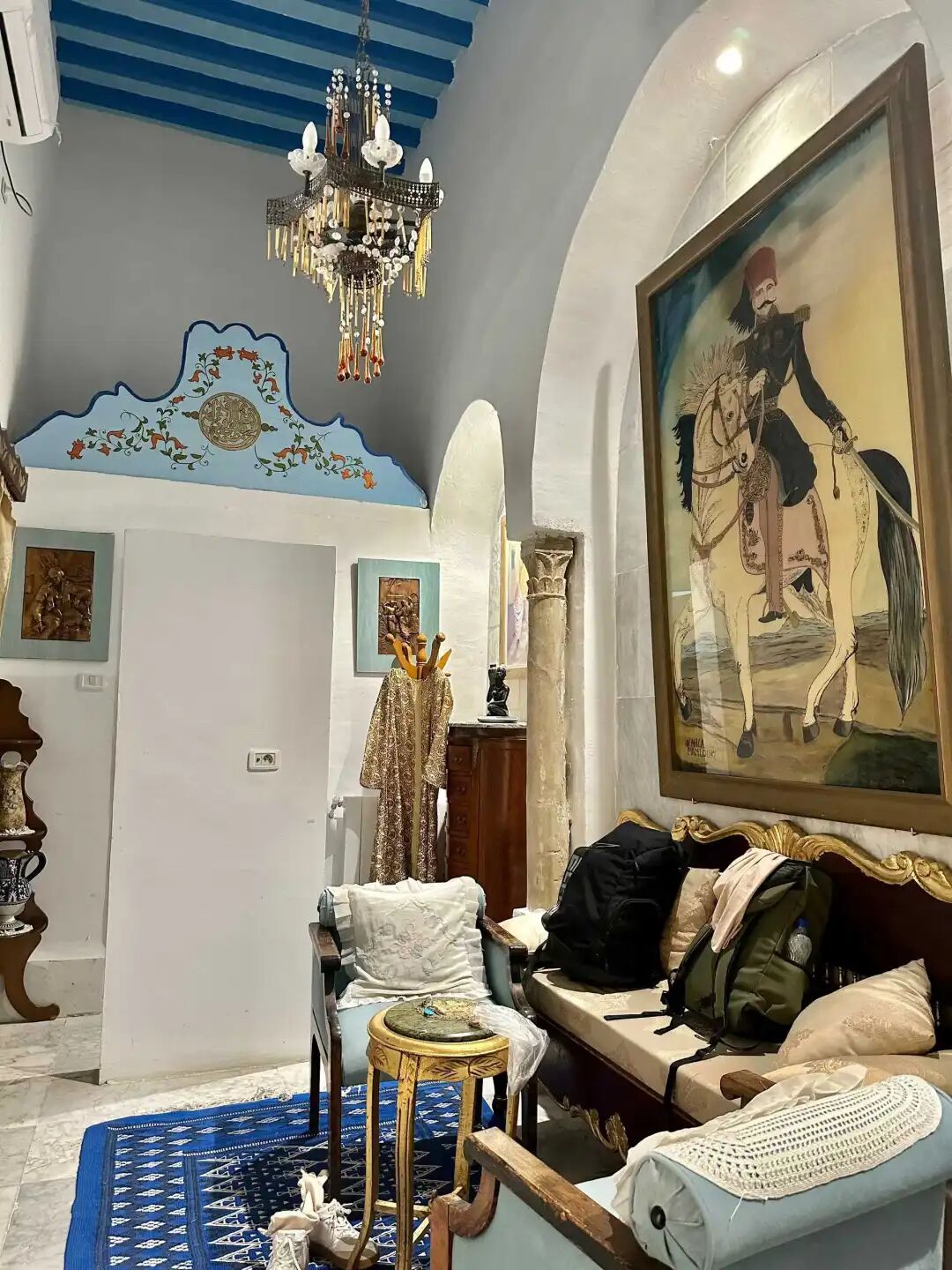
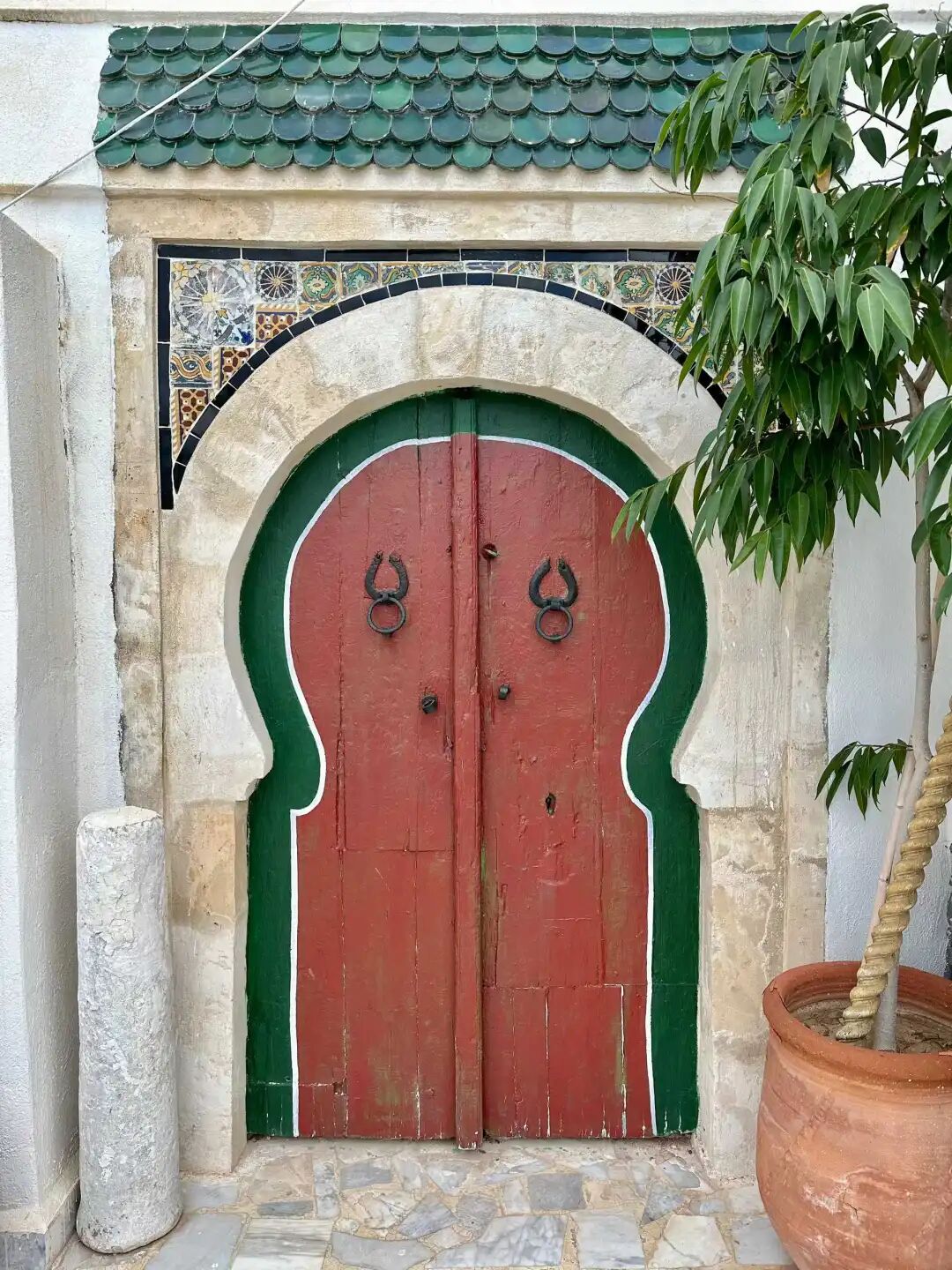
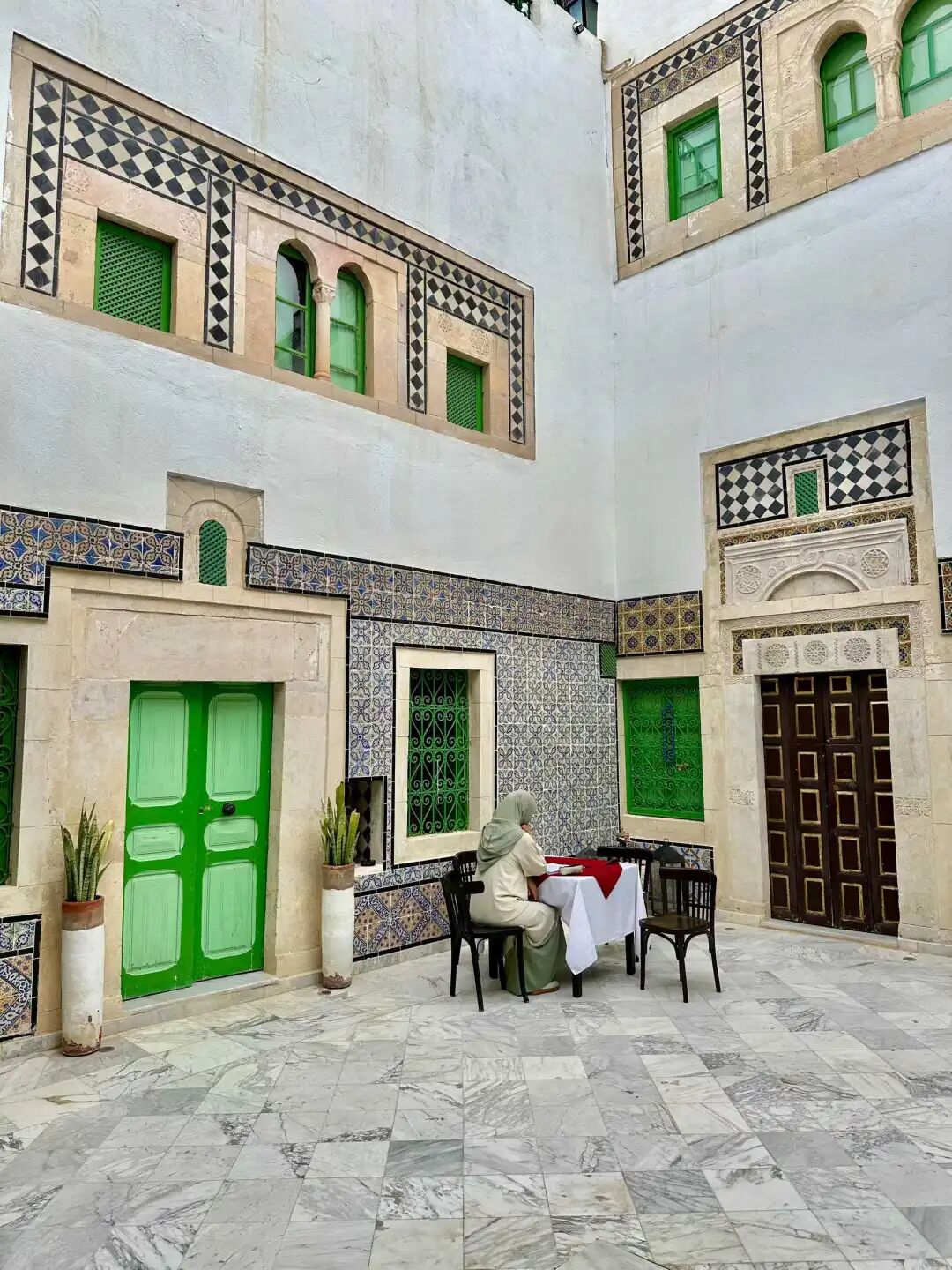
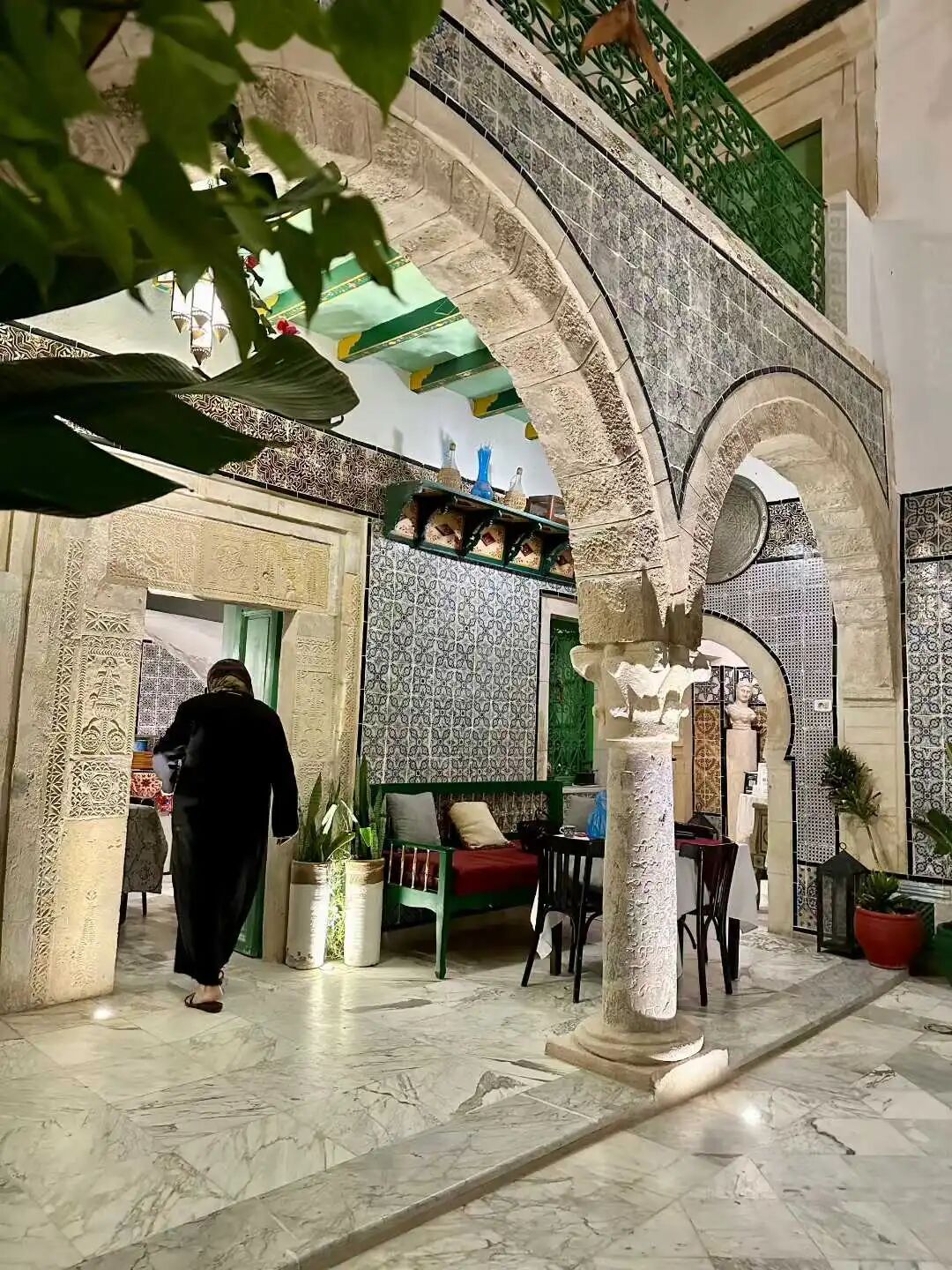
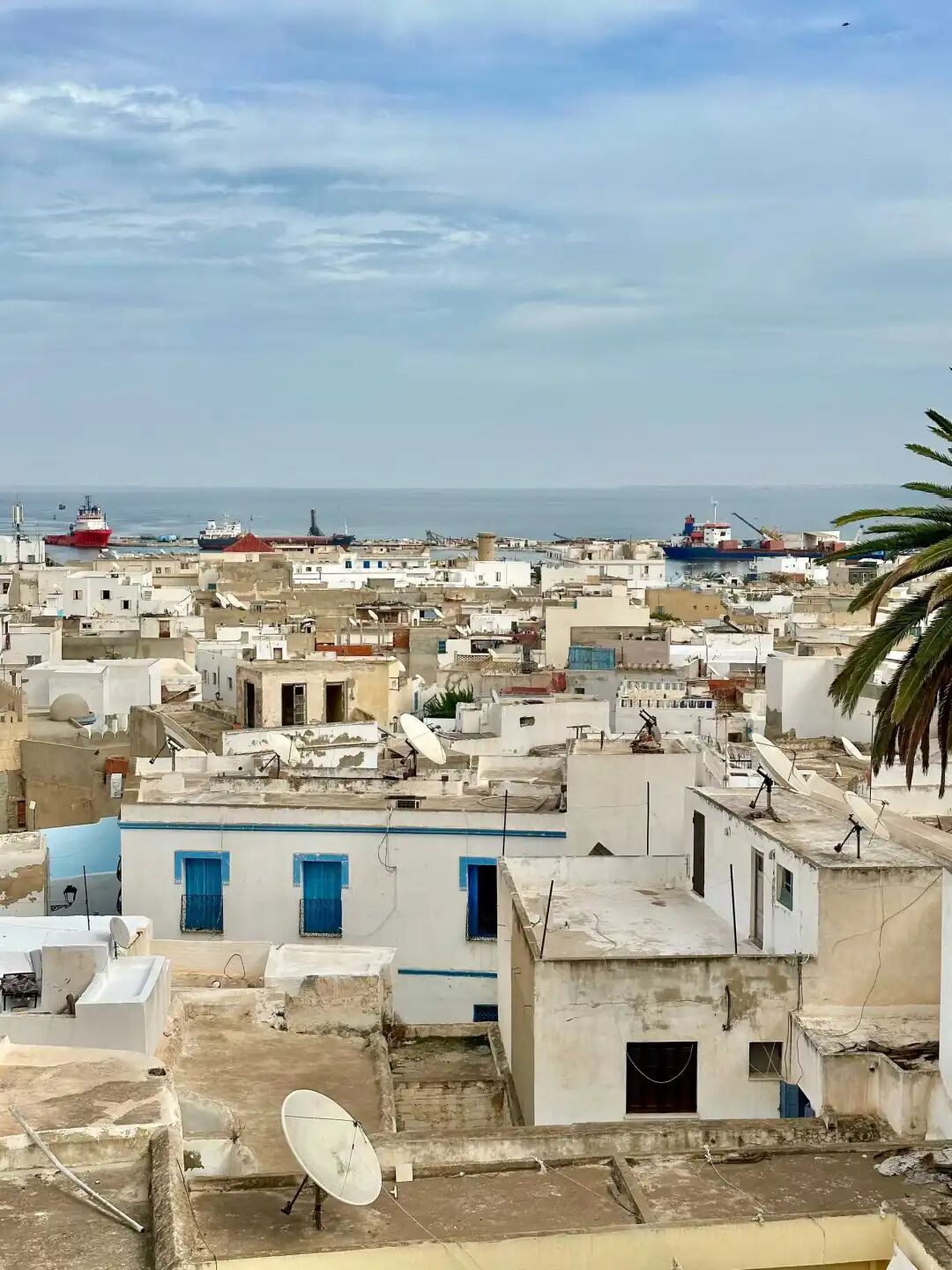
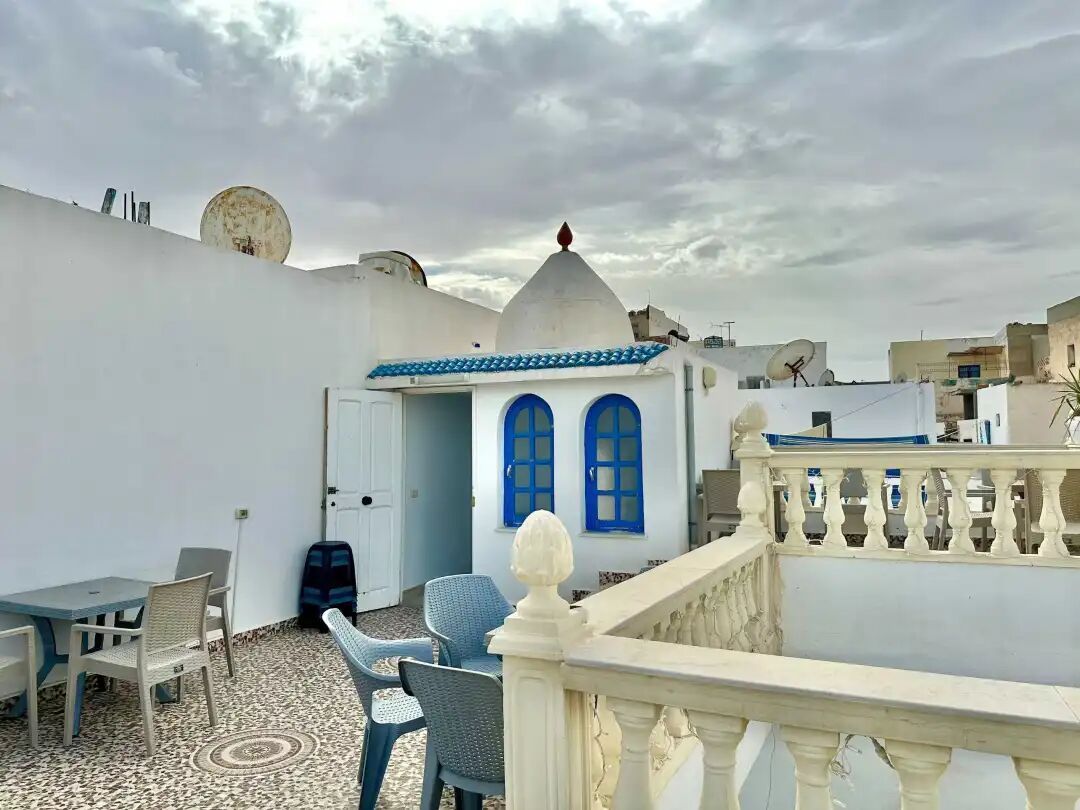
The old medina in Sousse, Tunisia, was named a UNESCO World Heritage site back in 1988, but it is much less developed for tourism than the medina in Tunis, which became a World Heritage site in 1979. The Tunis medina has many guesthouses and hotels converted from historic homes, ranging from budget to high-end options. We searched for a long time, but found very few historic guesthouses in the Sousse medina, so we finally chose Dar Badiaa.
The atmosphere at Dar Badiaa is lovely, but the rooms in these historic buildings are quite small. Don't trust the room sizes listed on booking websites; they are just guesses. The lady who checked us in didn't speak English, only French, so we spent a long time struggling to understand each other.
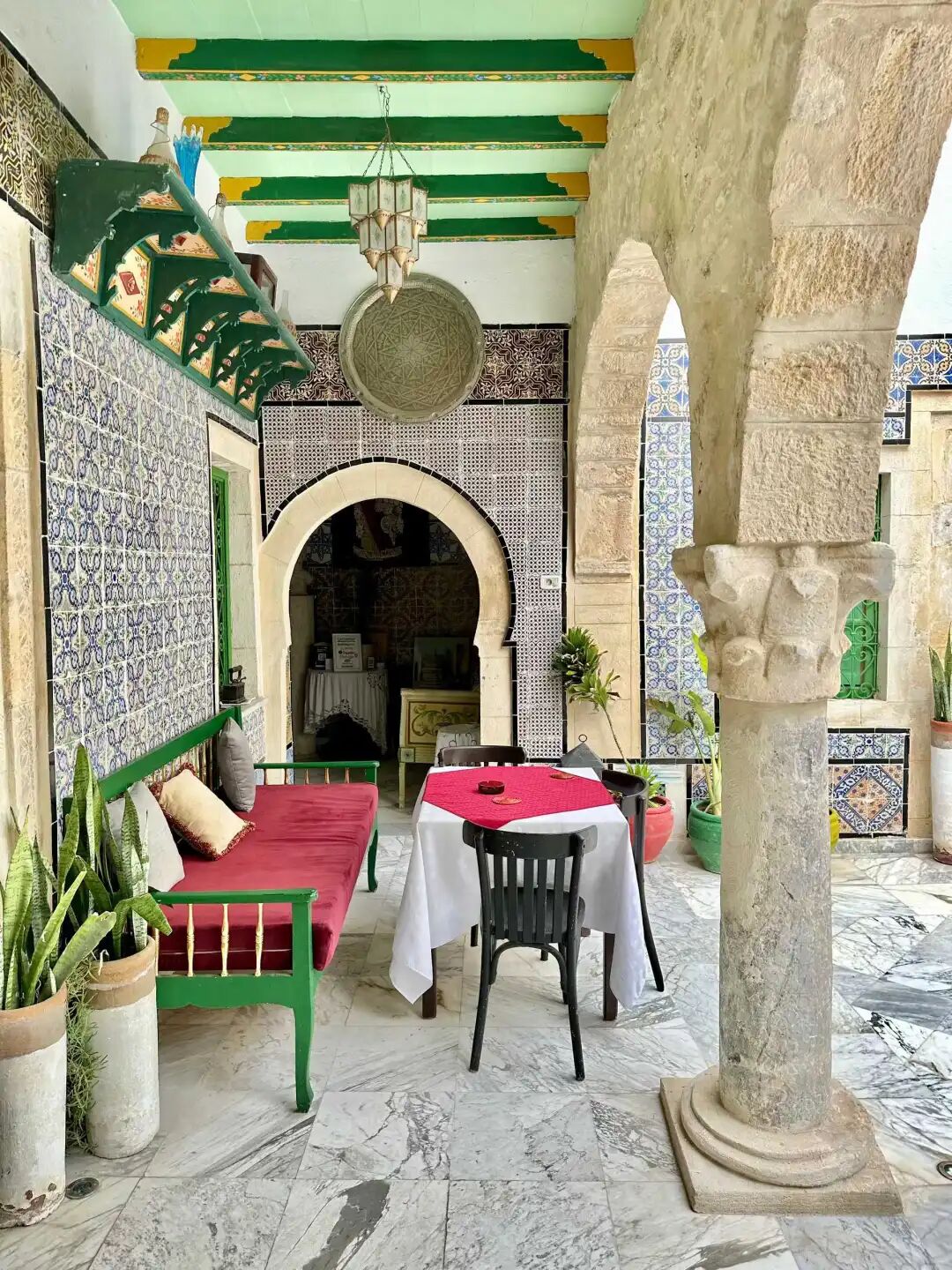
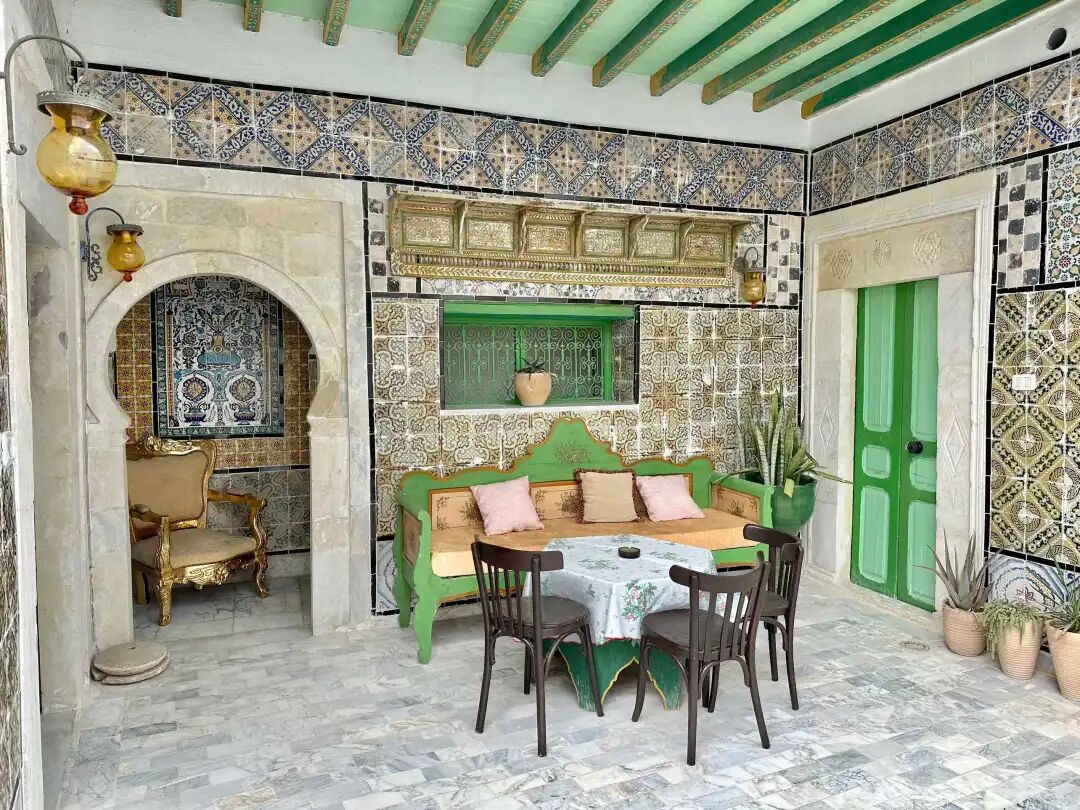
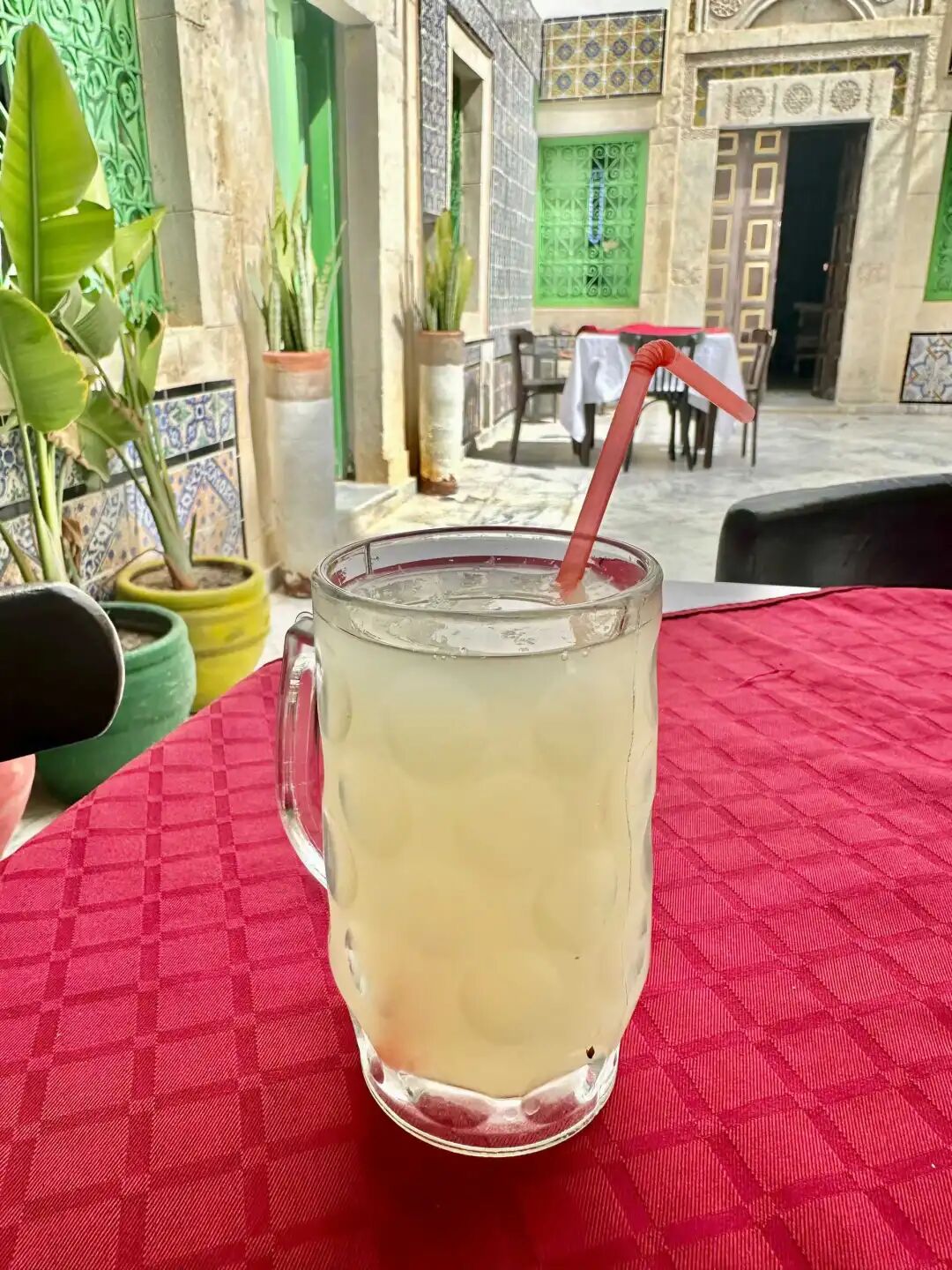
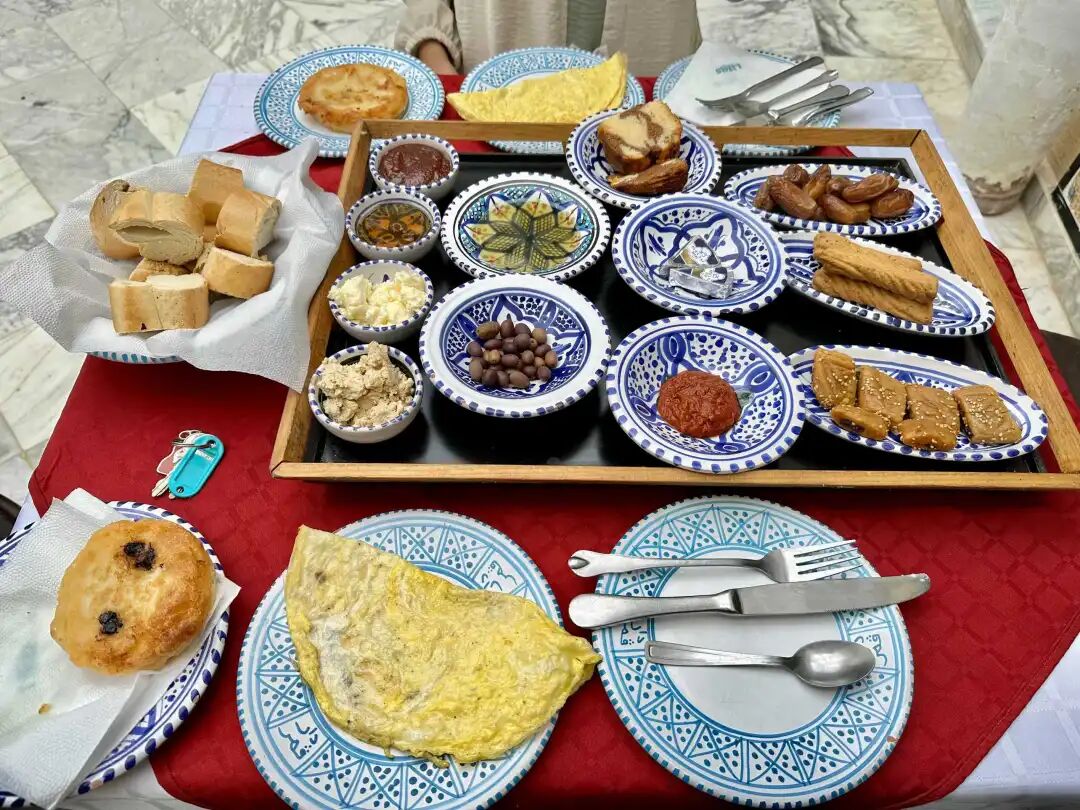
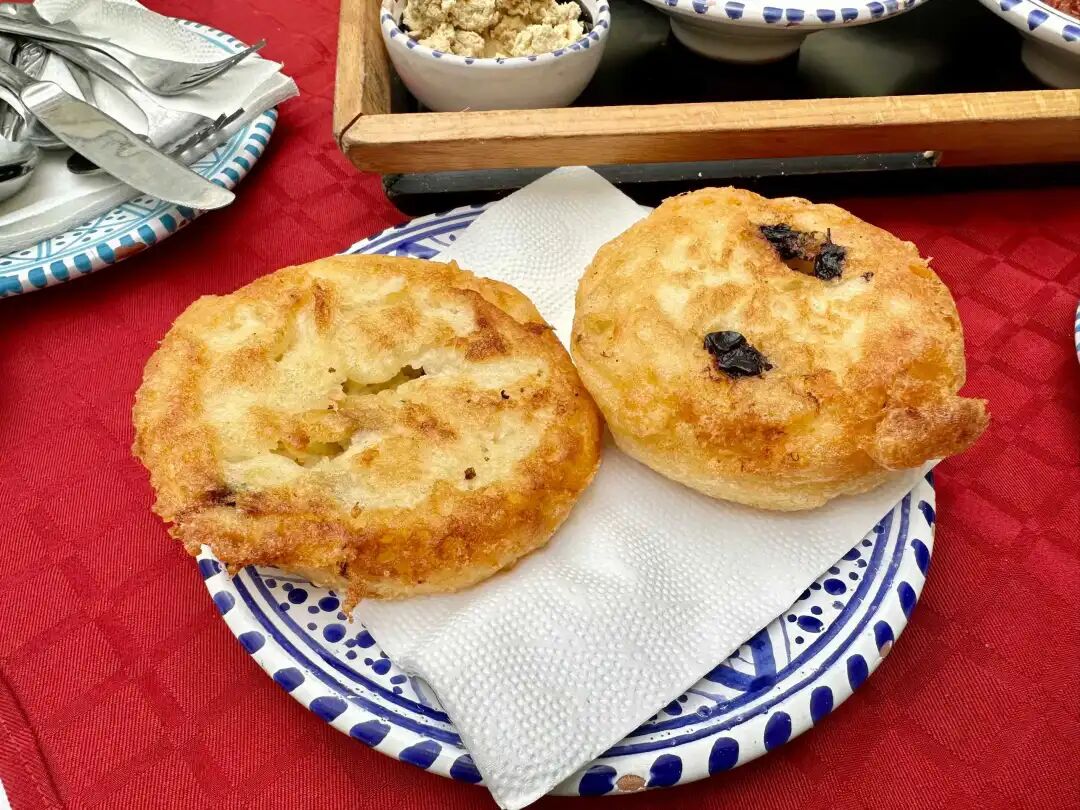
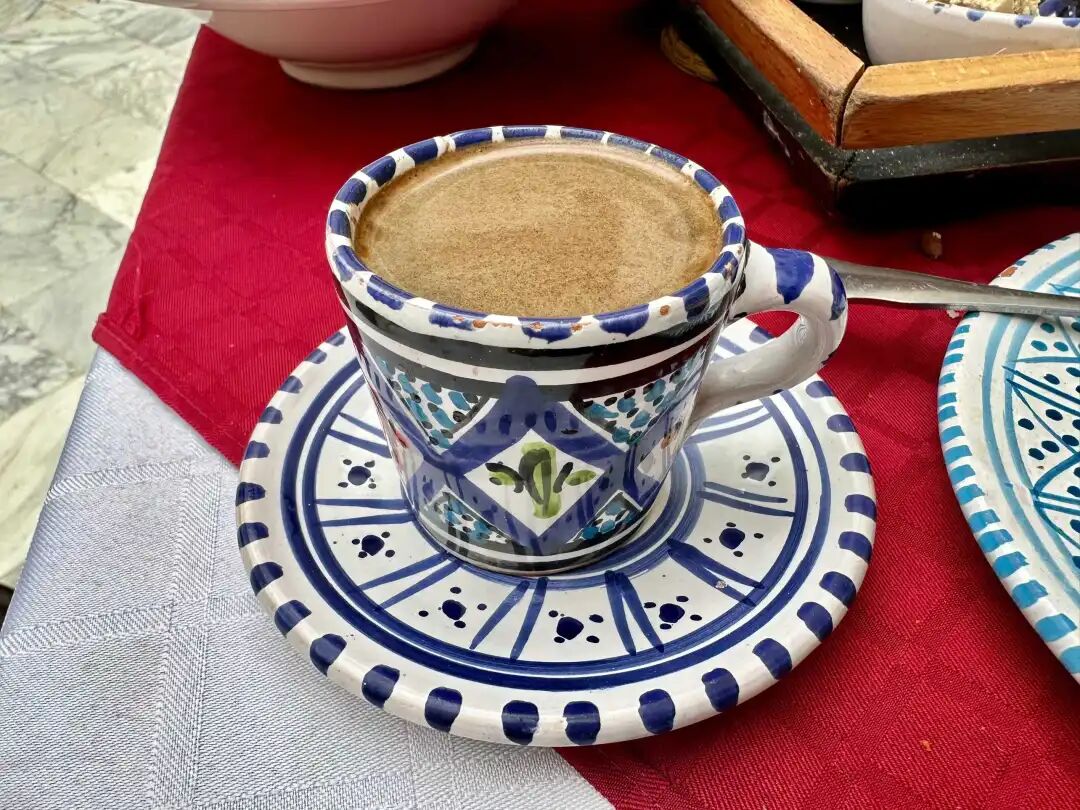
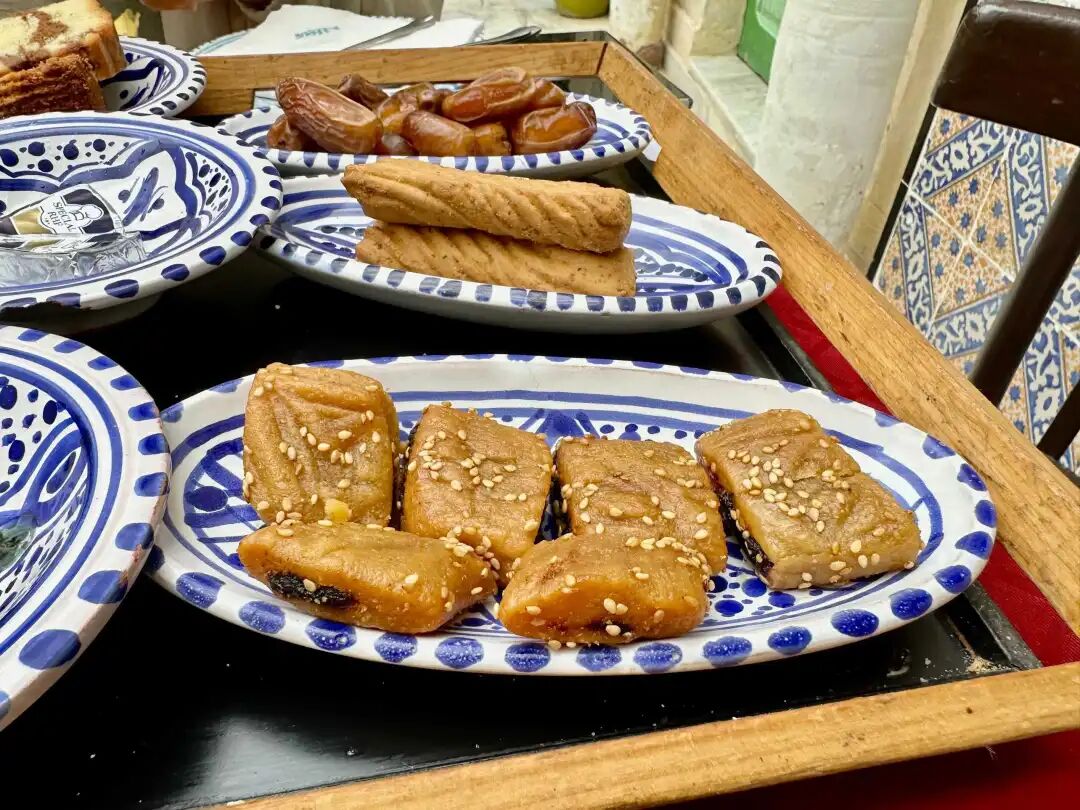
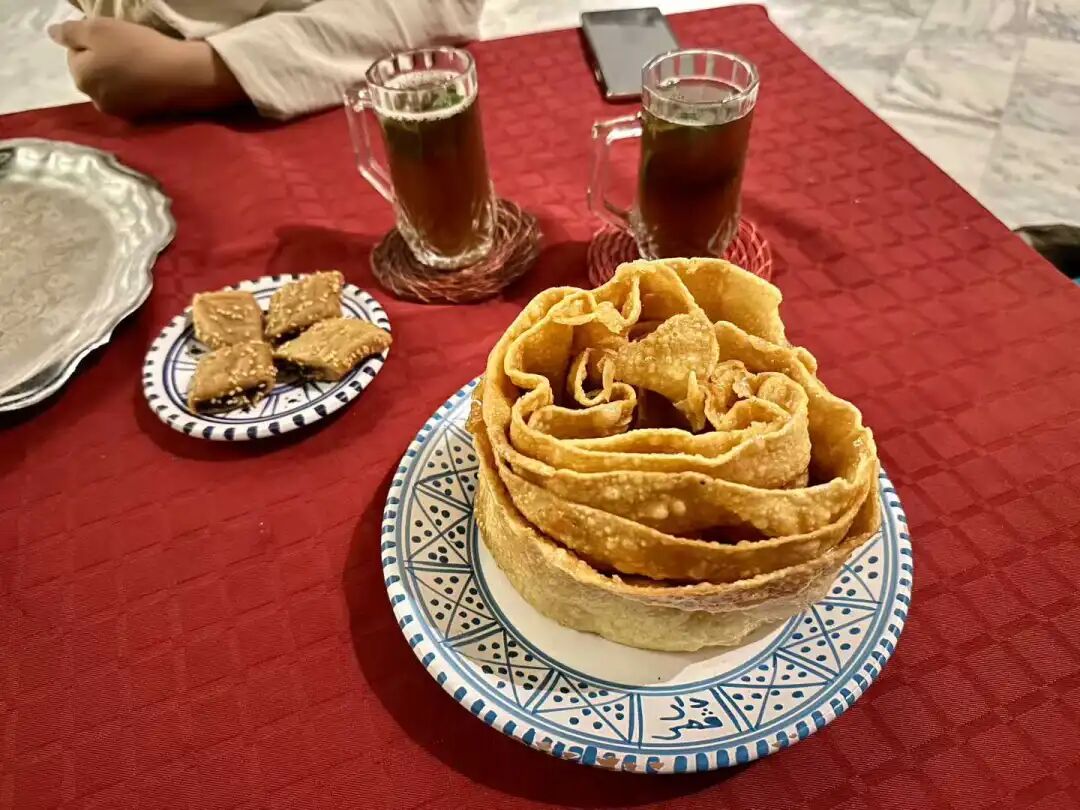
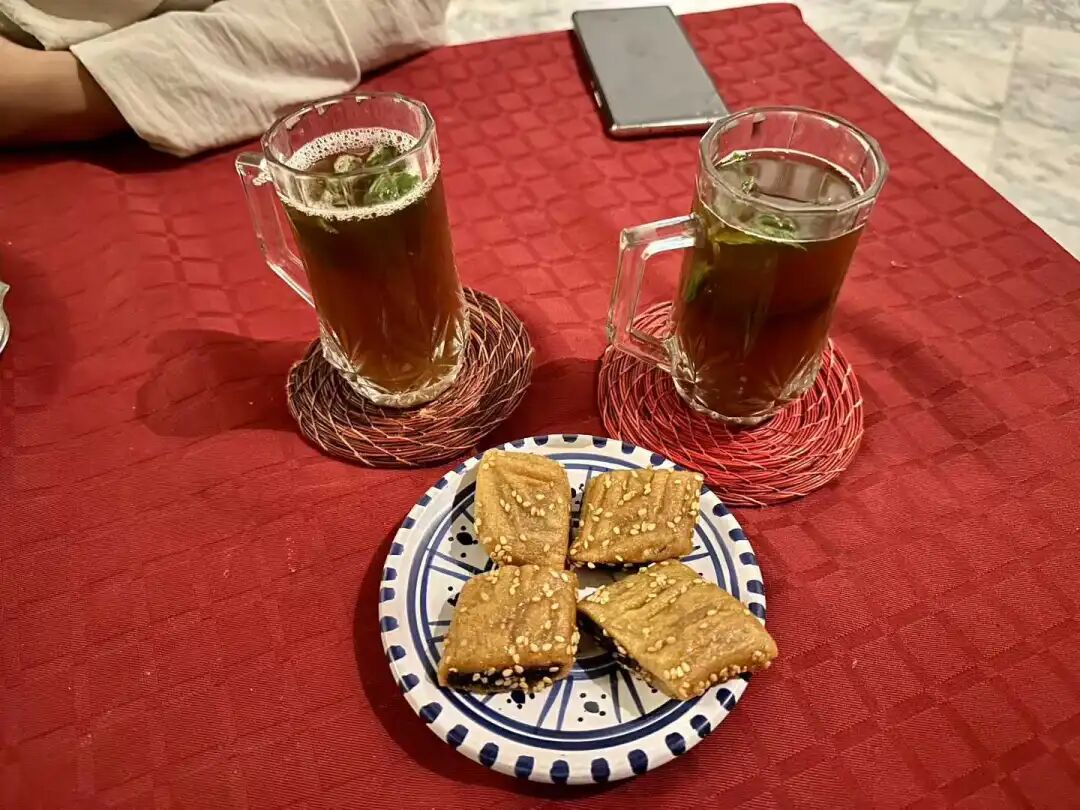
Breakfast at the Dar Badiaa historic guesthouse is quite generous, featuring egg pancakes (danbing), flaky pastries (subing), French bread (fagun), curd (ruza), cheese, various jams, pickled olives, Tunisian chili paste (harissa), and local Tunisian desserts, served with strong Tunisian coffee. While we were chatting in the courtyard at night, the guesthouse lady served us classic Tunisian mint black tea and date-filled semolina cookies (makroudh). Makroudh is a classic treat for breaking the fast in the North African Maghreb region. It has a semolina crust, a filling of date paste and dried fruit, and is soaked in syrup after baking.
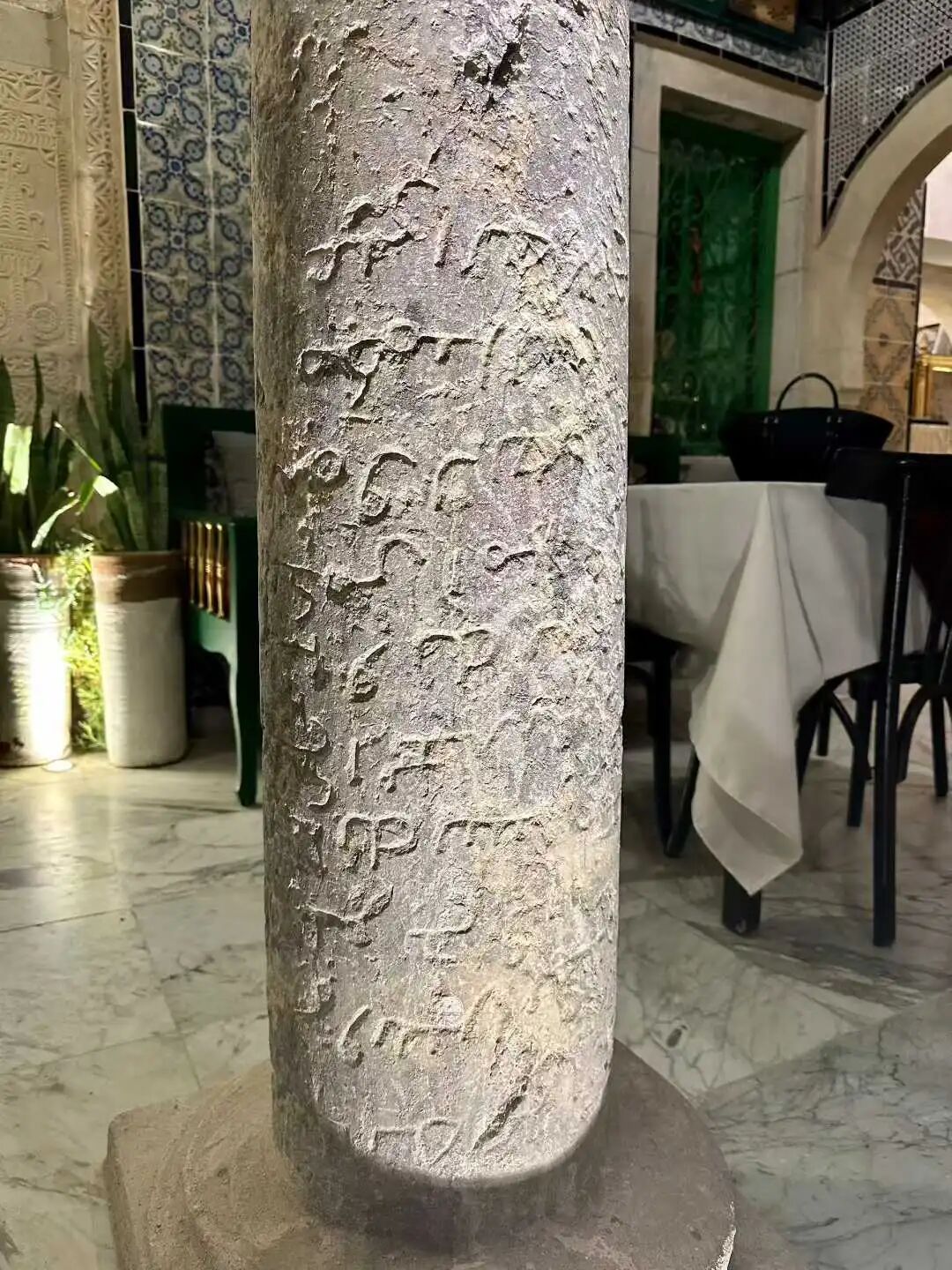
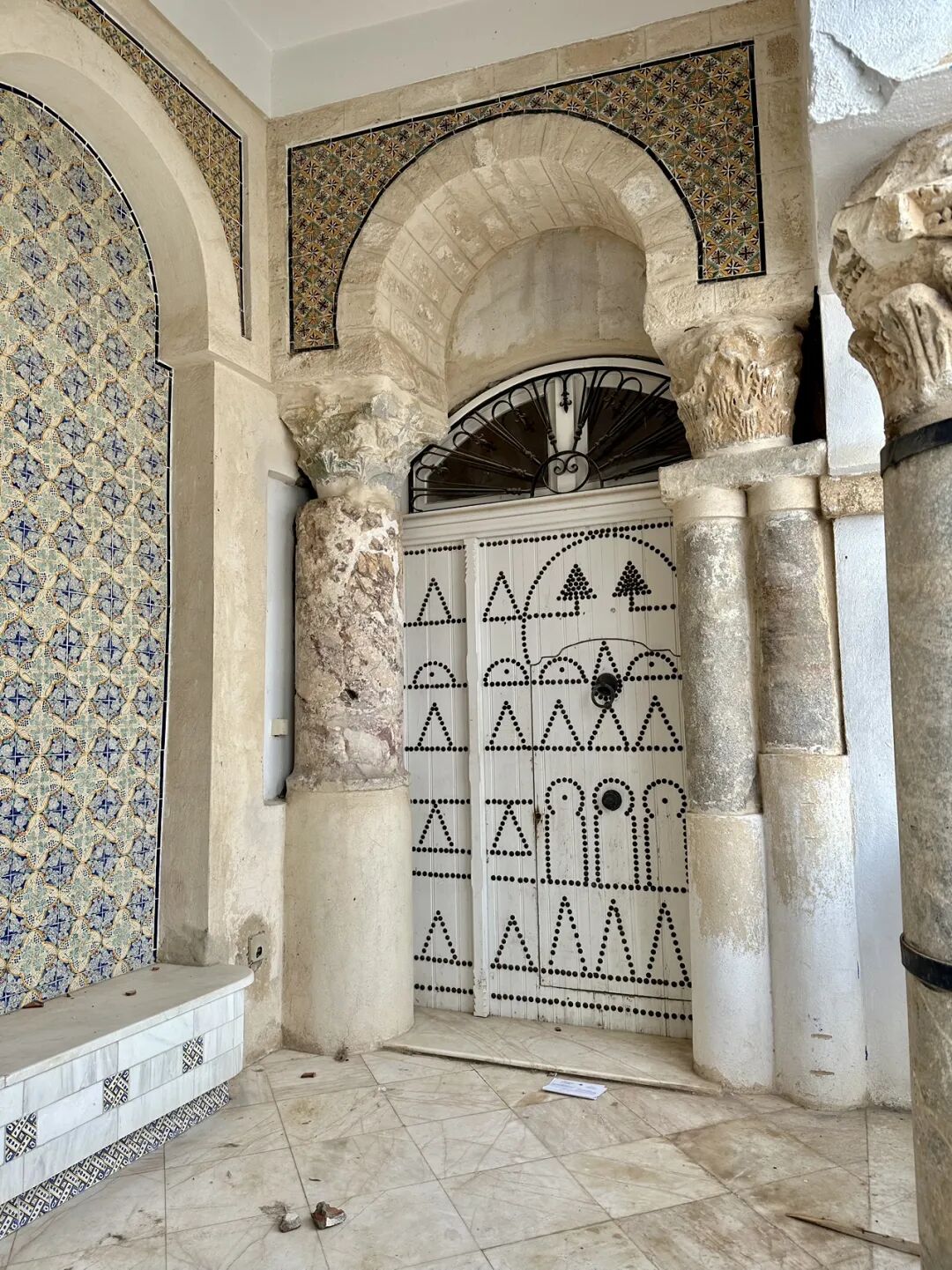
While drinking tea and chatting that night, we noticed some very old writing on one of the stone pillars in the house. We aren't sure if it is Phoenician.
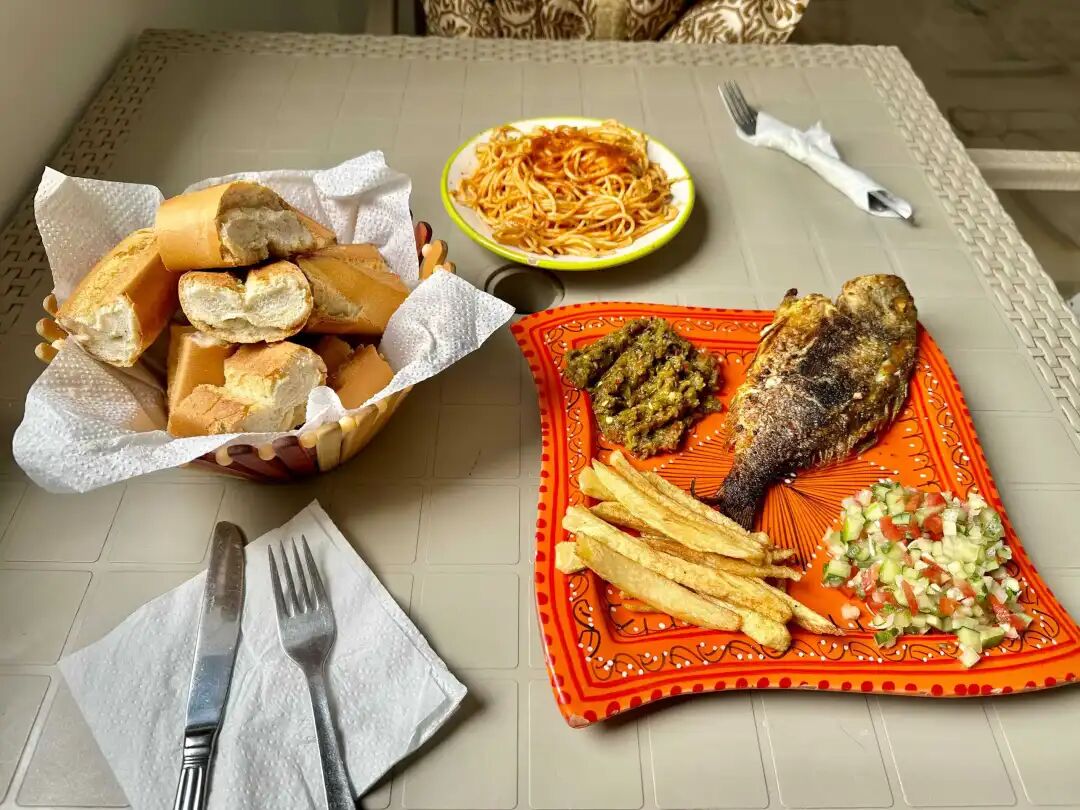
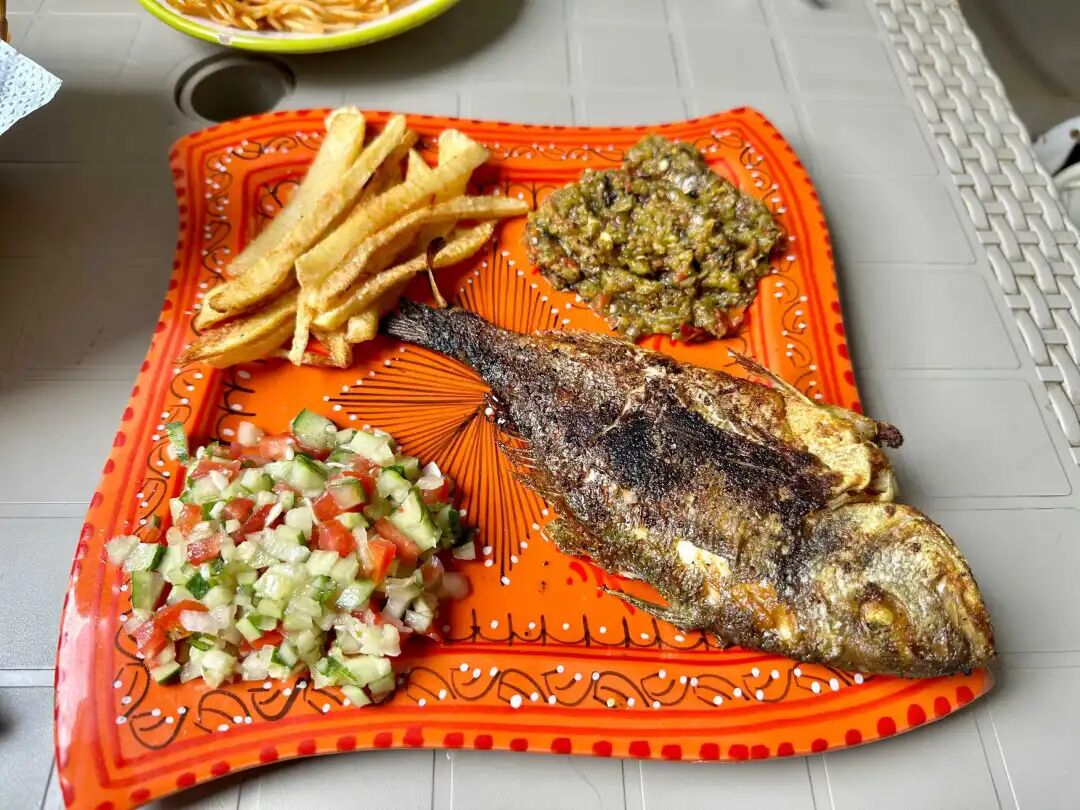
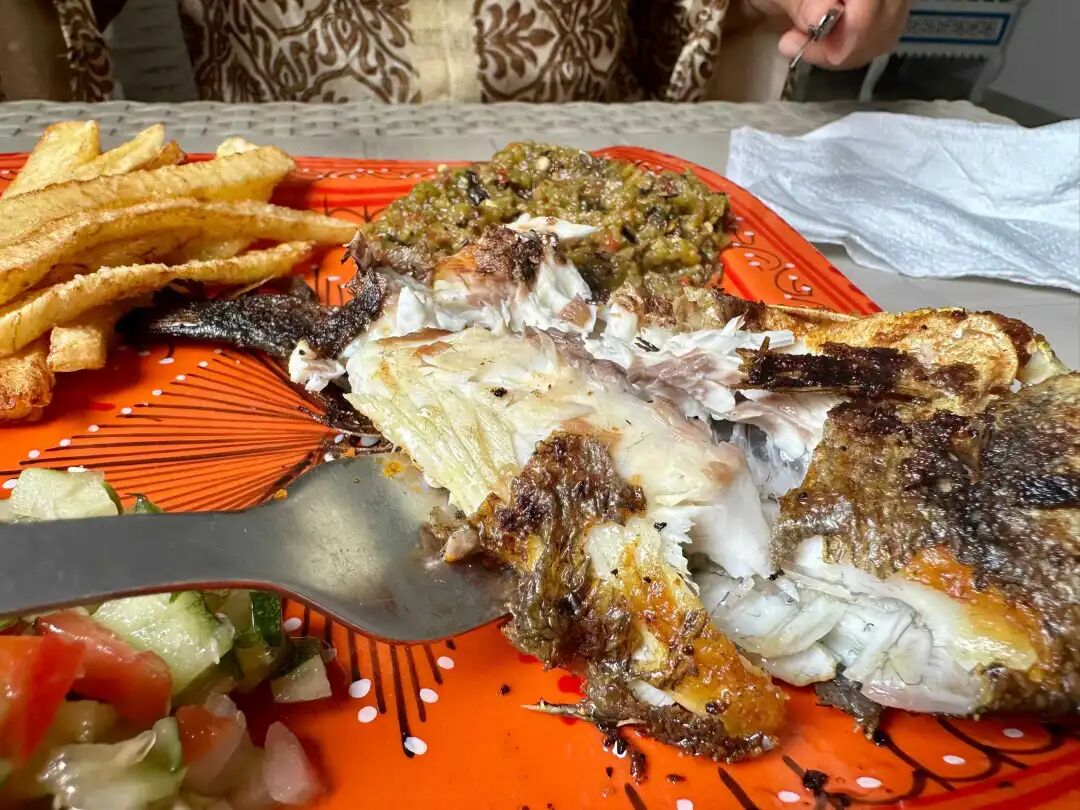
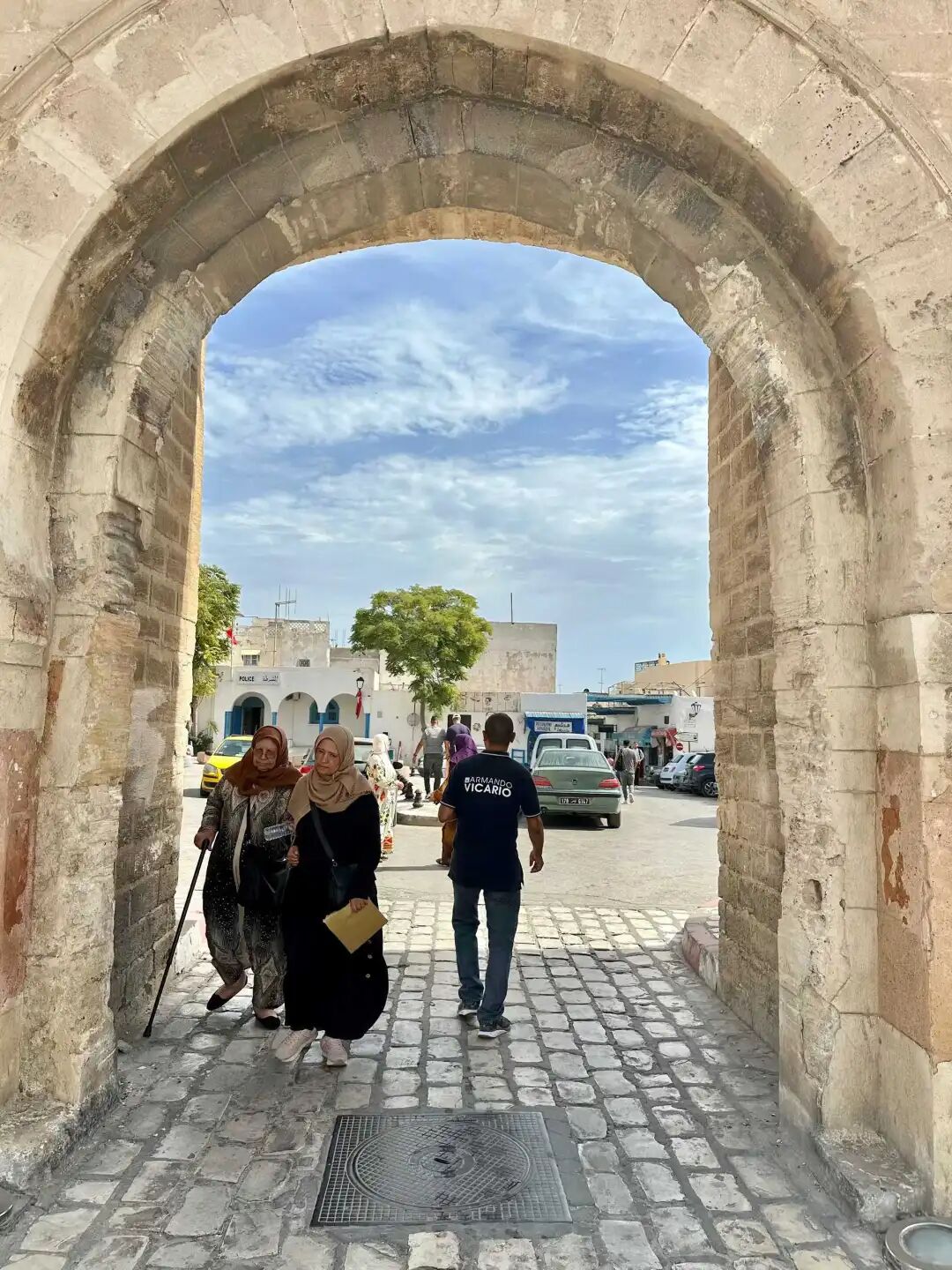
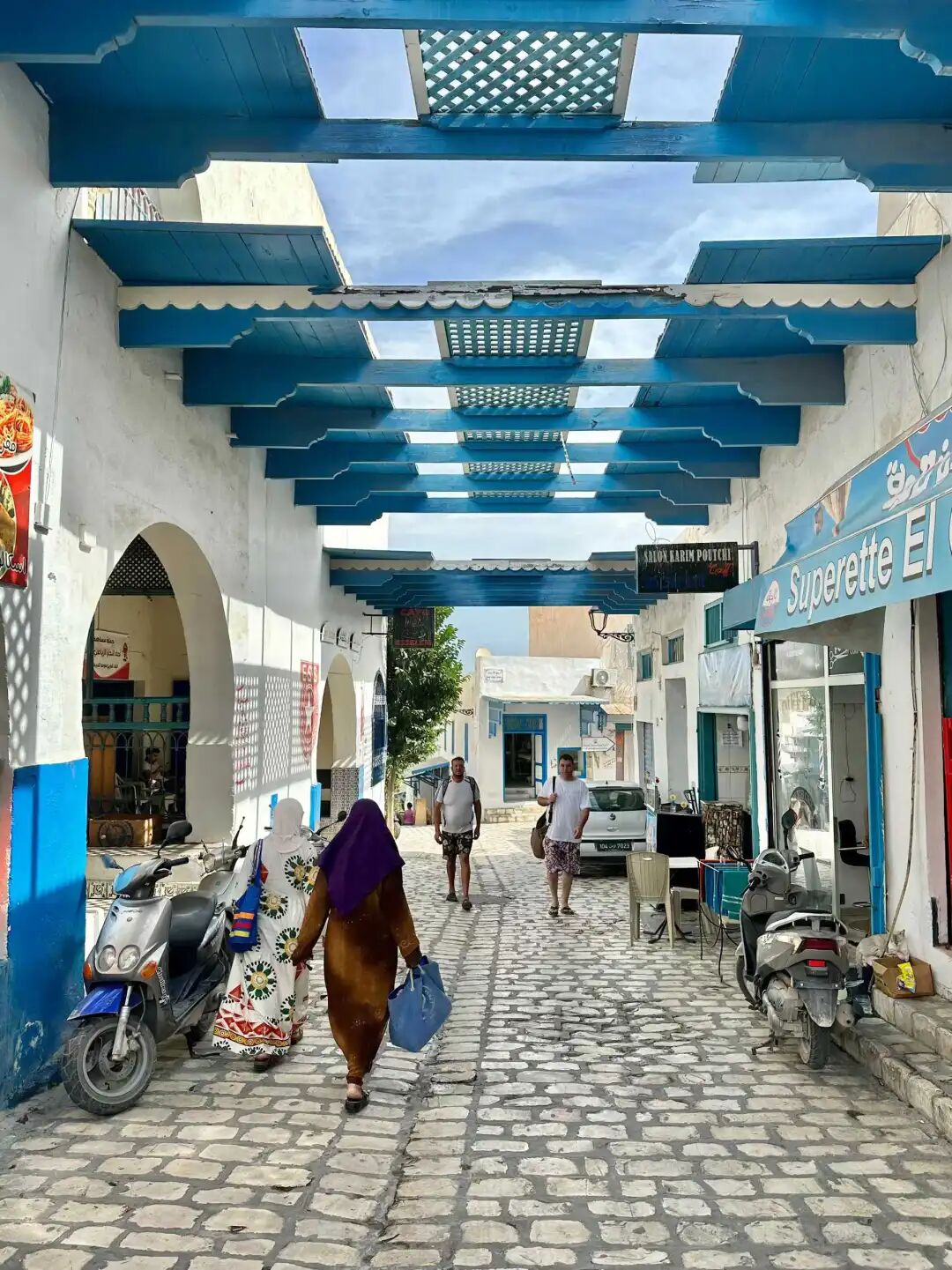
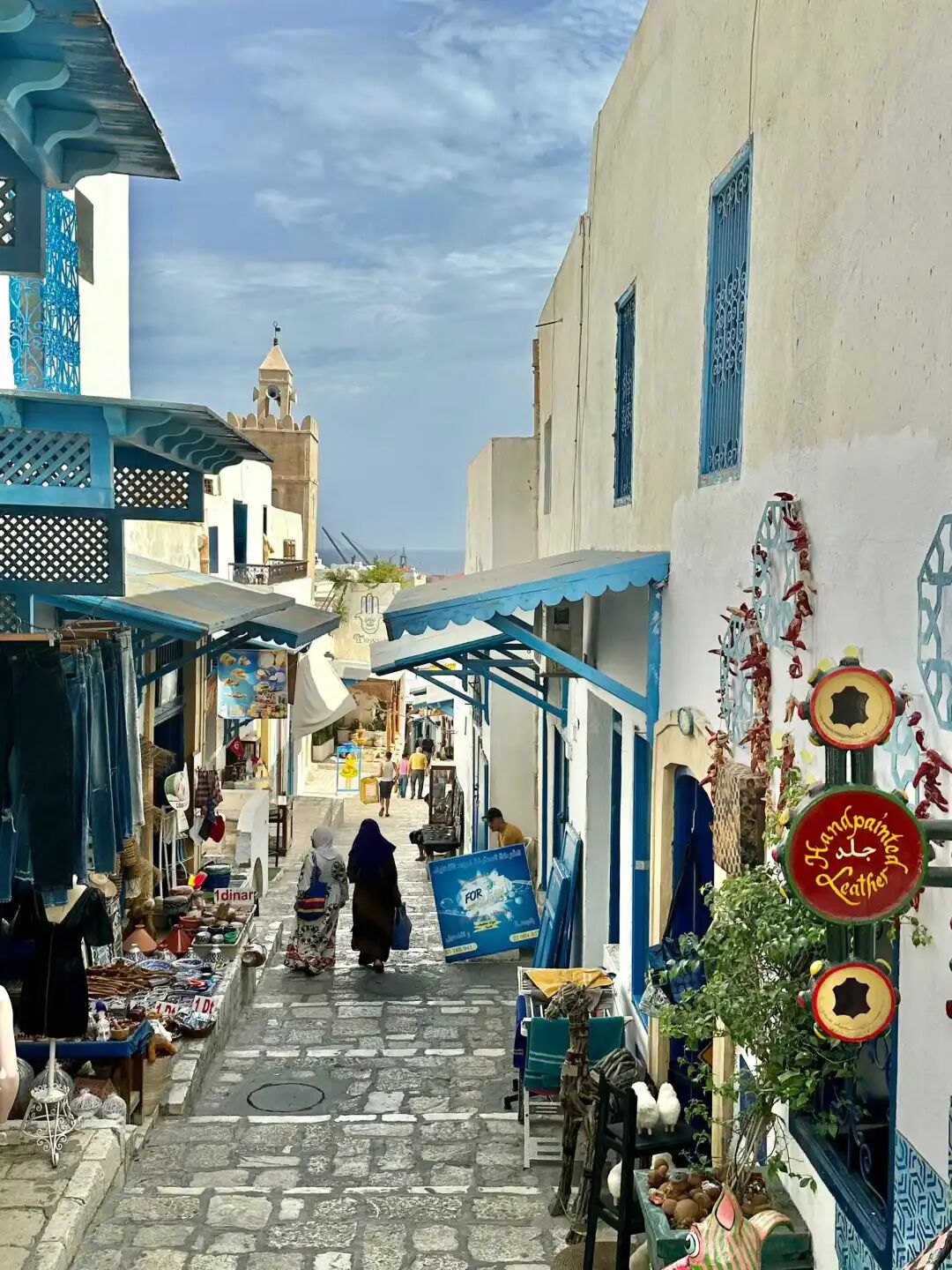
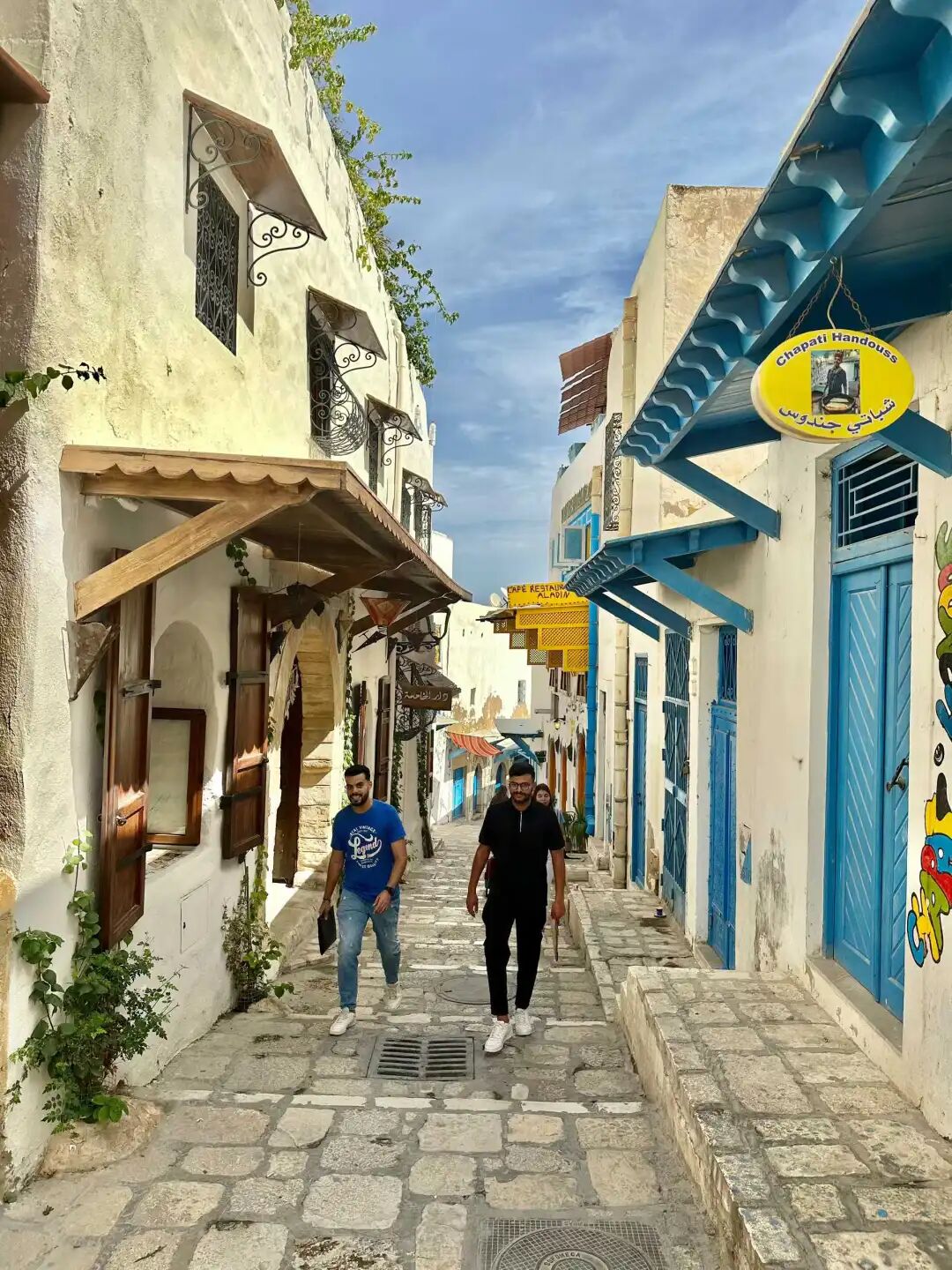
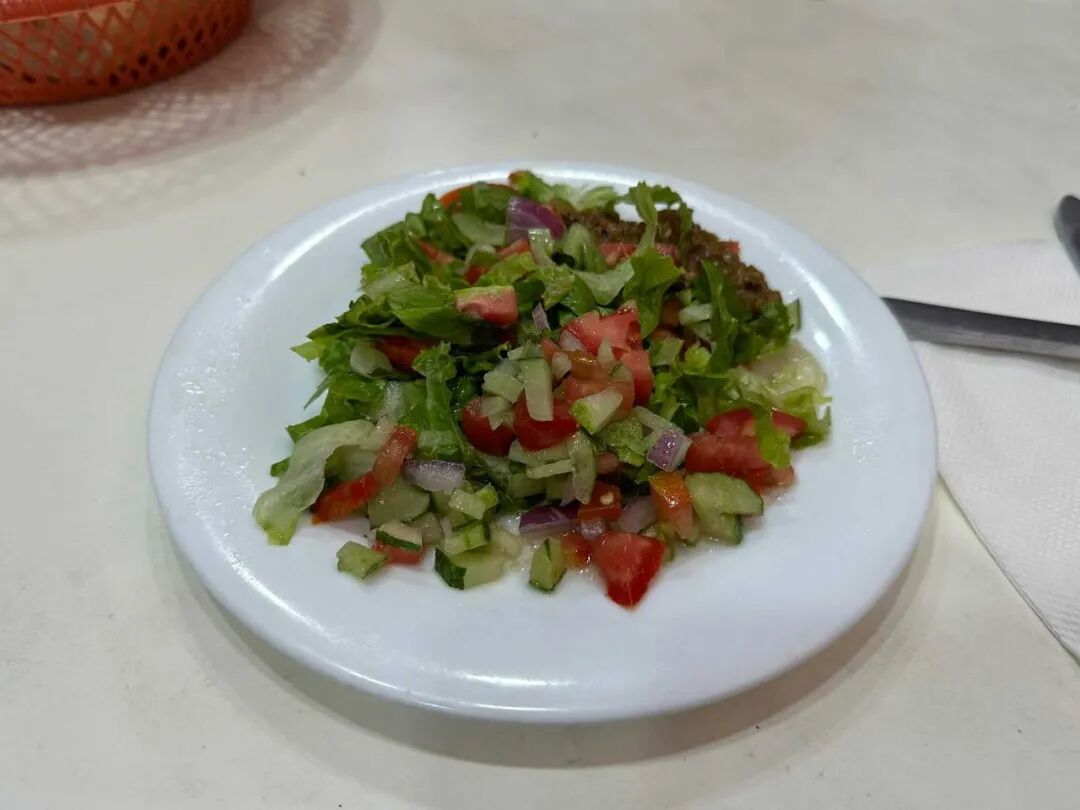
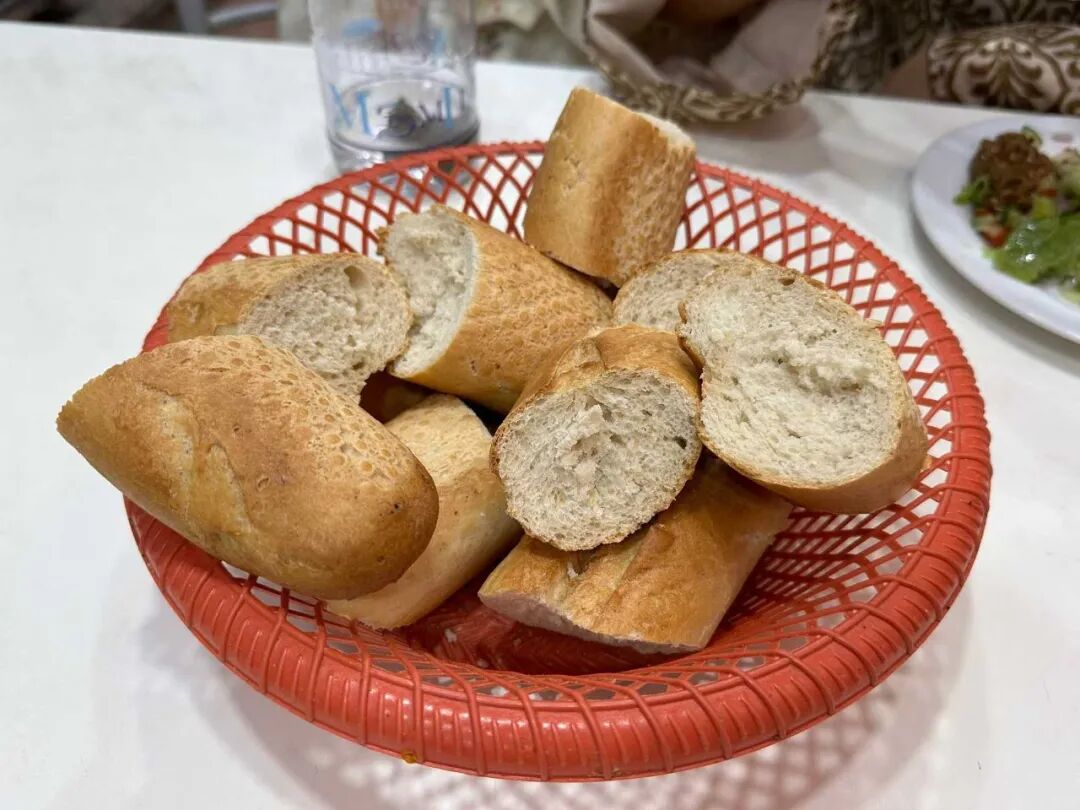
The World Heritage old medina of Sousse, Tunisia. The area with better tourism development is the main street, Souk el Cald, which starts from the west gate of the old city, Bab El-Gharbi. It has many small shops and restaurants. We ate at a restaurant on the street called Dar Amna. We chose grilled fish for our main course, which came with French bread, french fries, roasted pepper salad (mechouia), and a Tunisian salad made of cucumber, tomato, and onion. Tunisia became a French protectorate in 1881, which is why French bread became a staple food here. Personally, I find the French bread dry and hard, and not nearly as good as the staple breads in the eastern Arab world.
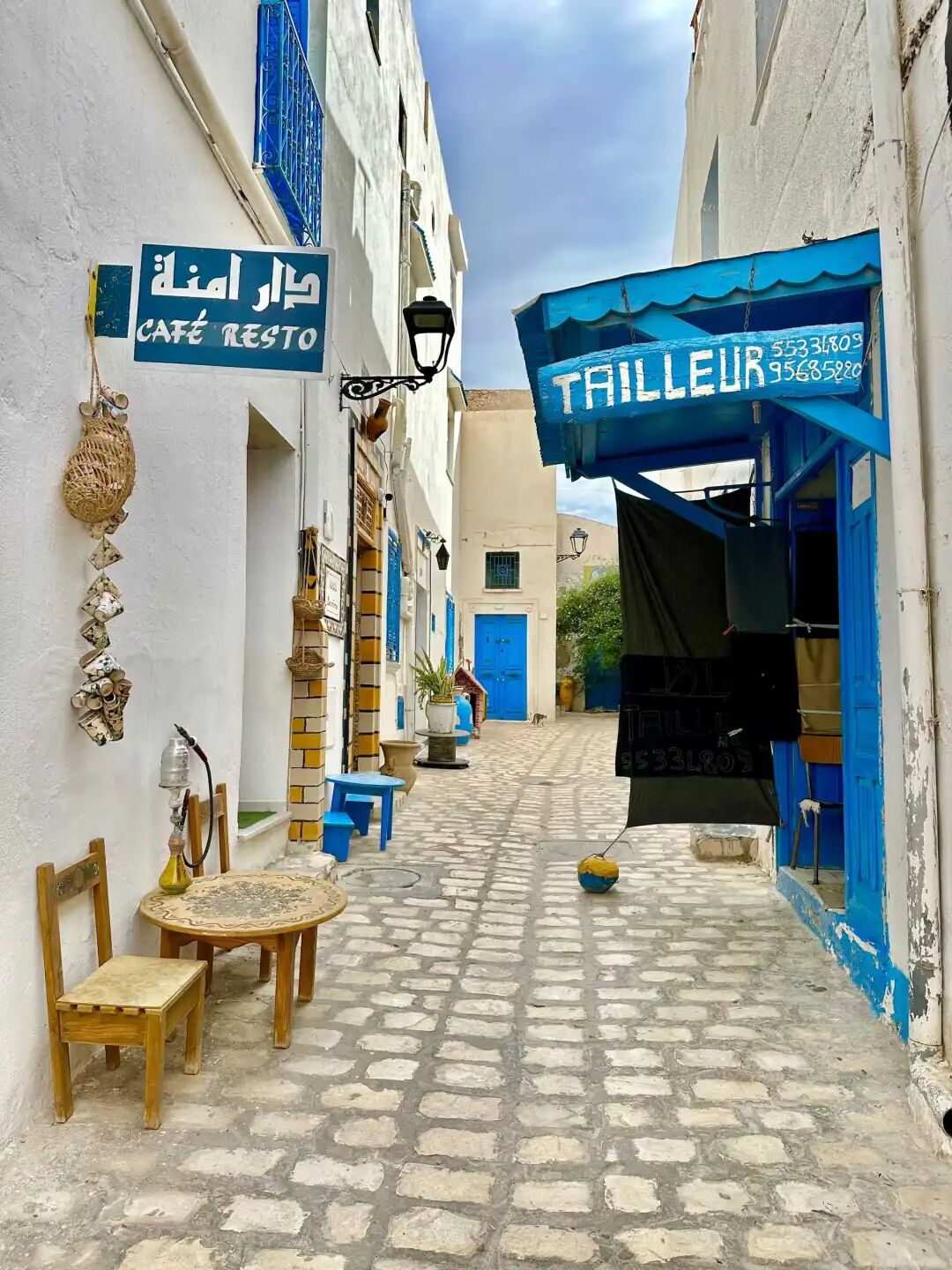
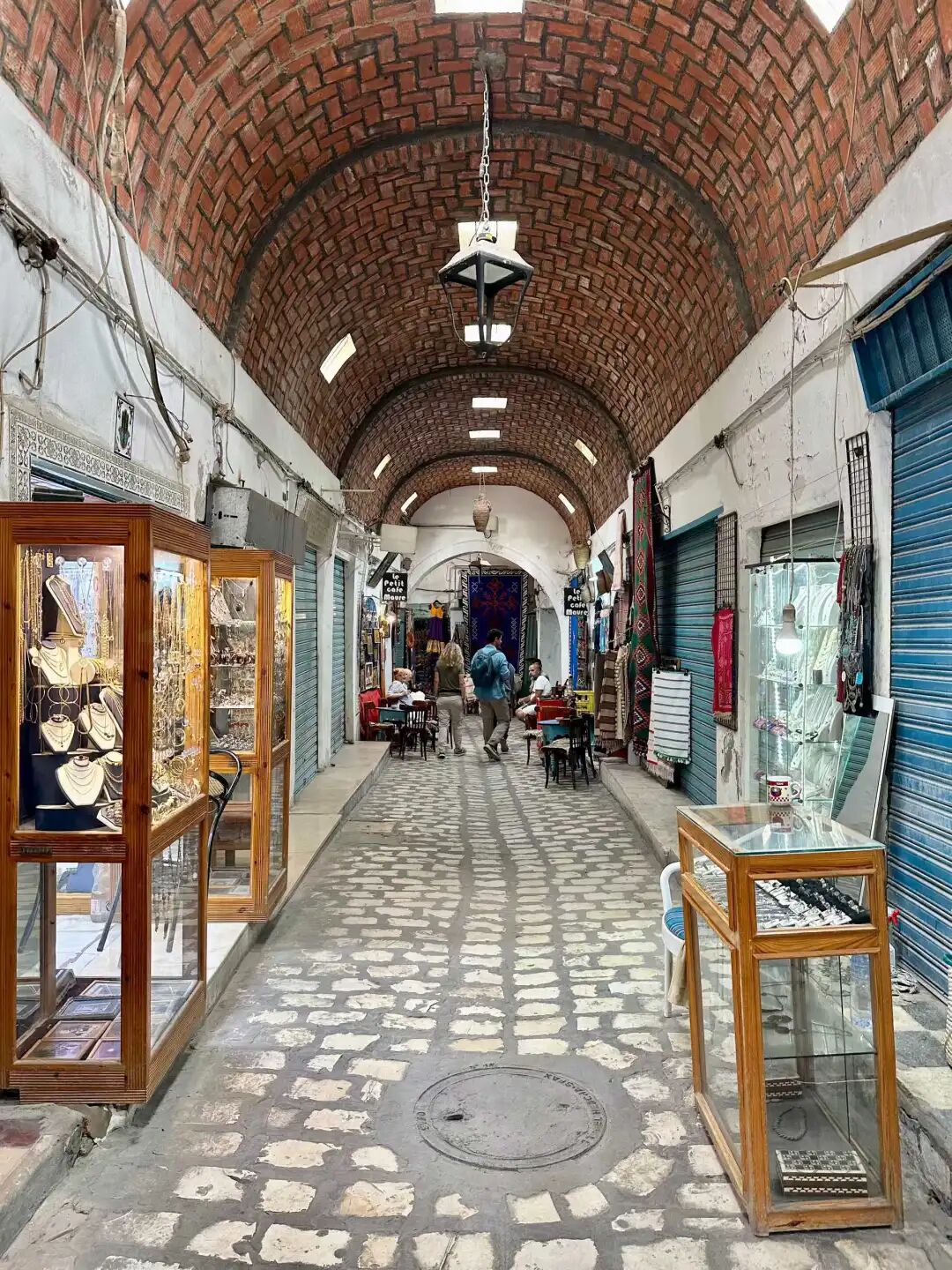
Street view of Souk el Cald, the main road starting from the old city's west gate, Bab El-Gharbi.
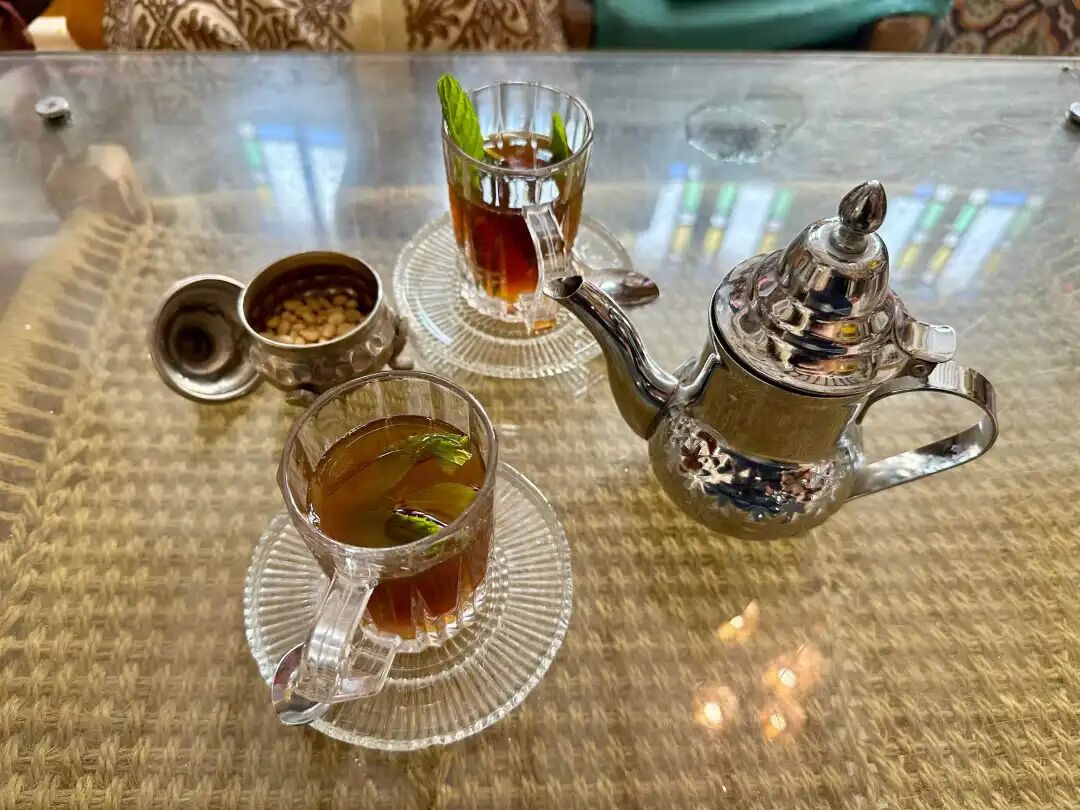
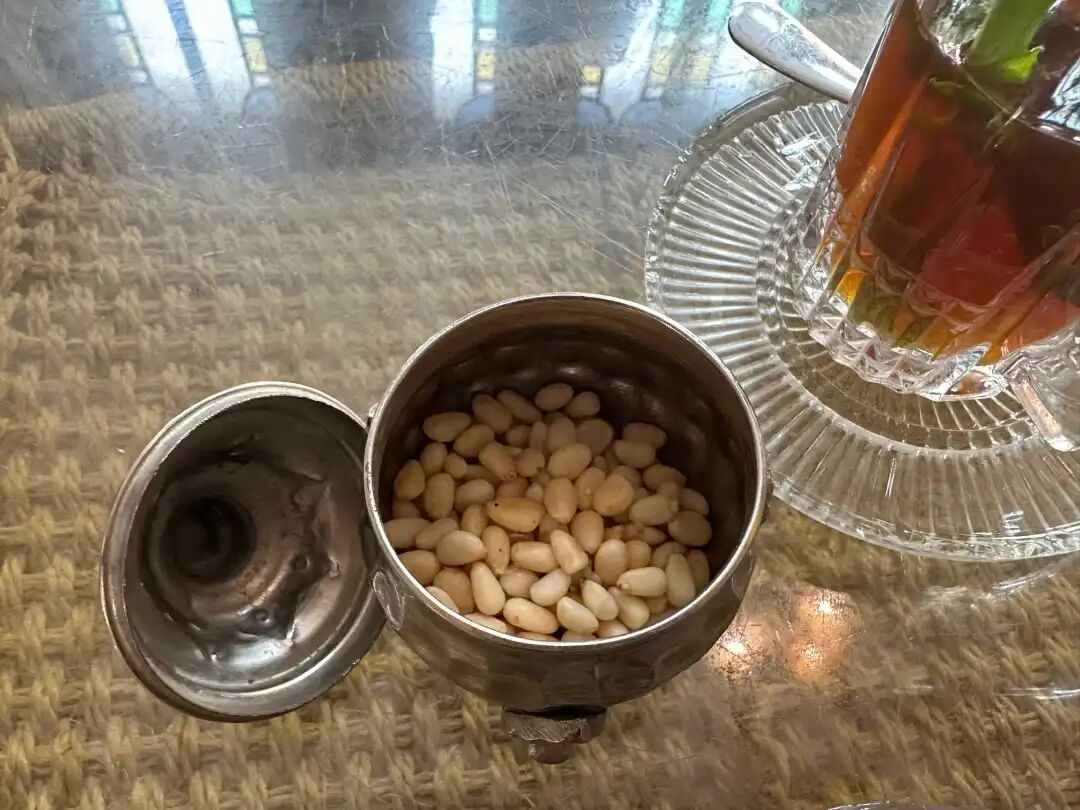
Souk el Cald has many tea houses and cafes perfect for taking photos. You can drink local mint tea, eat some pine nuts, and enjoy a slow pace of life.
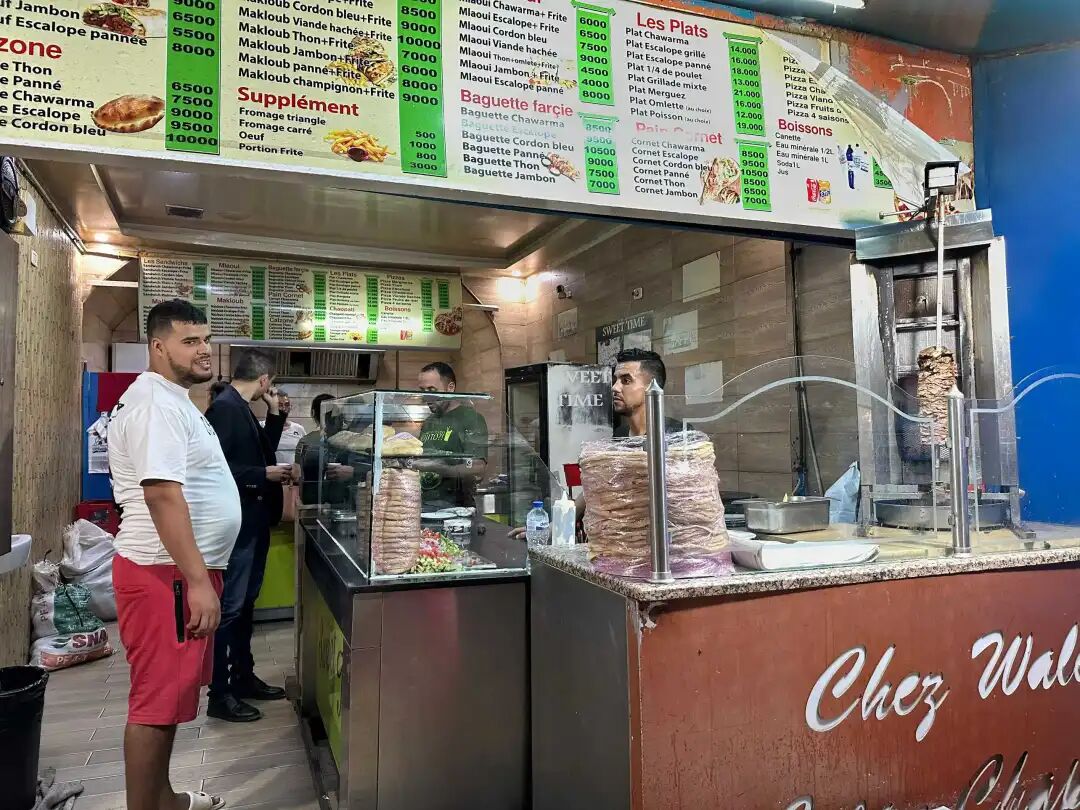
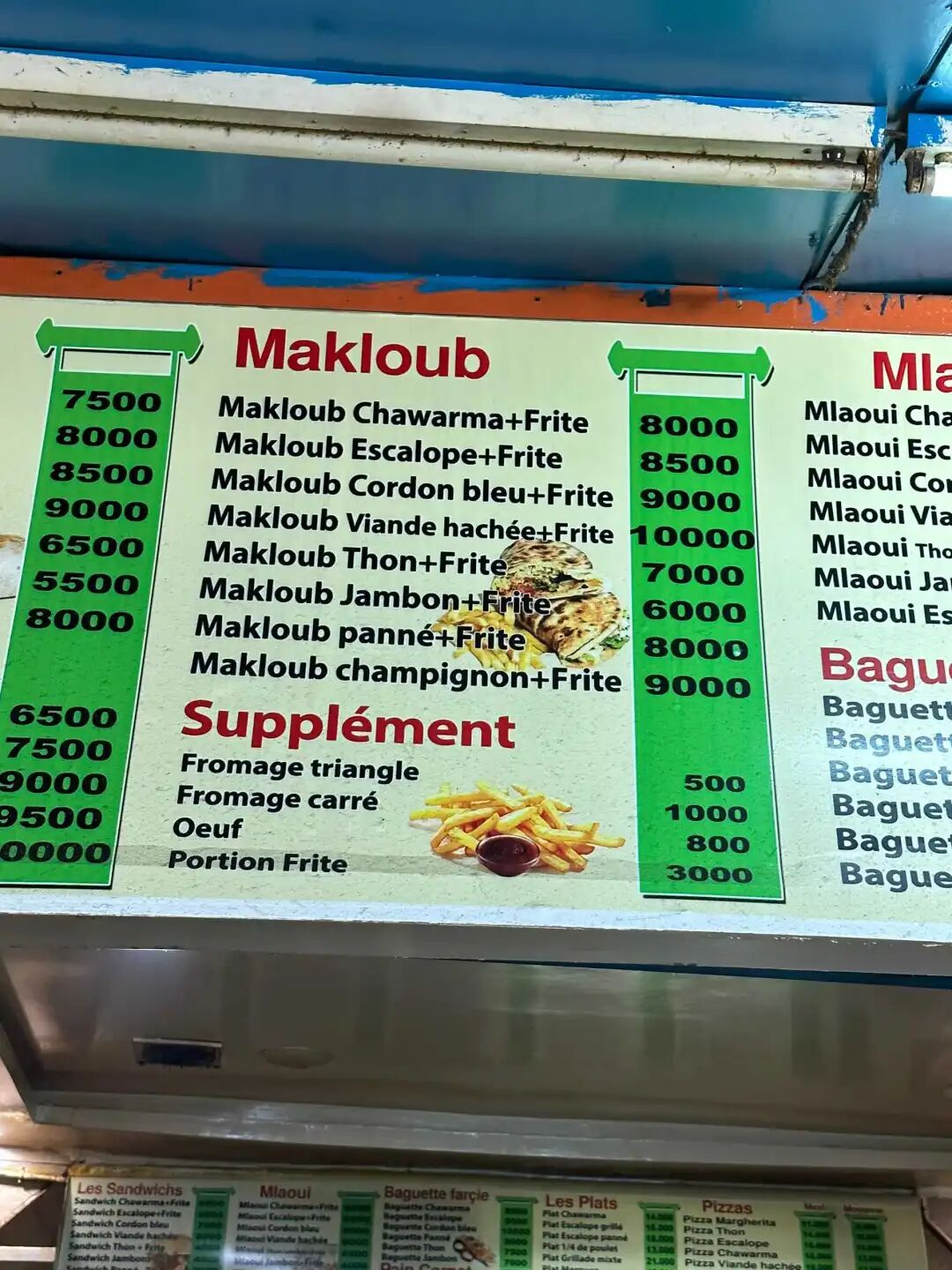
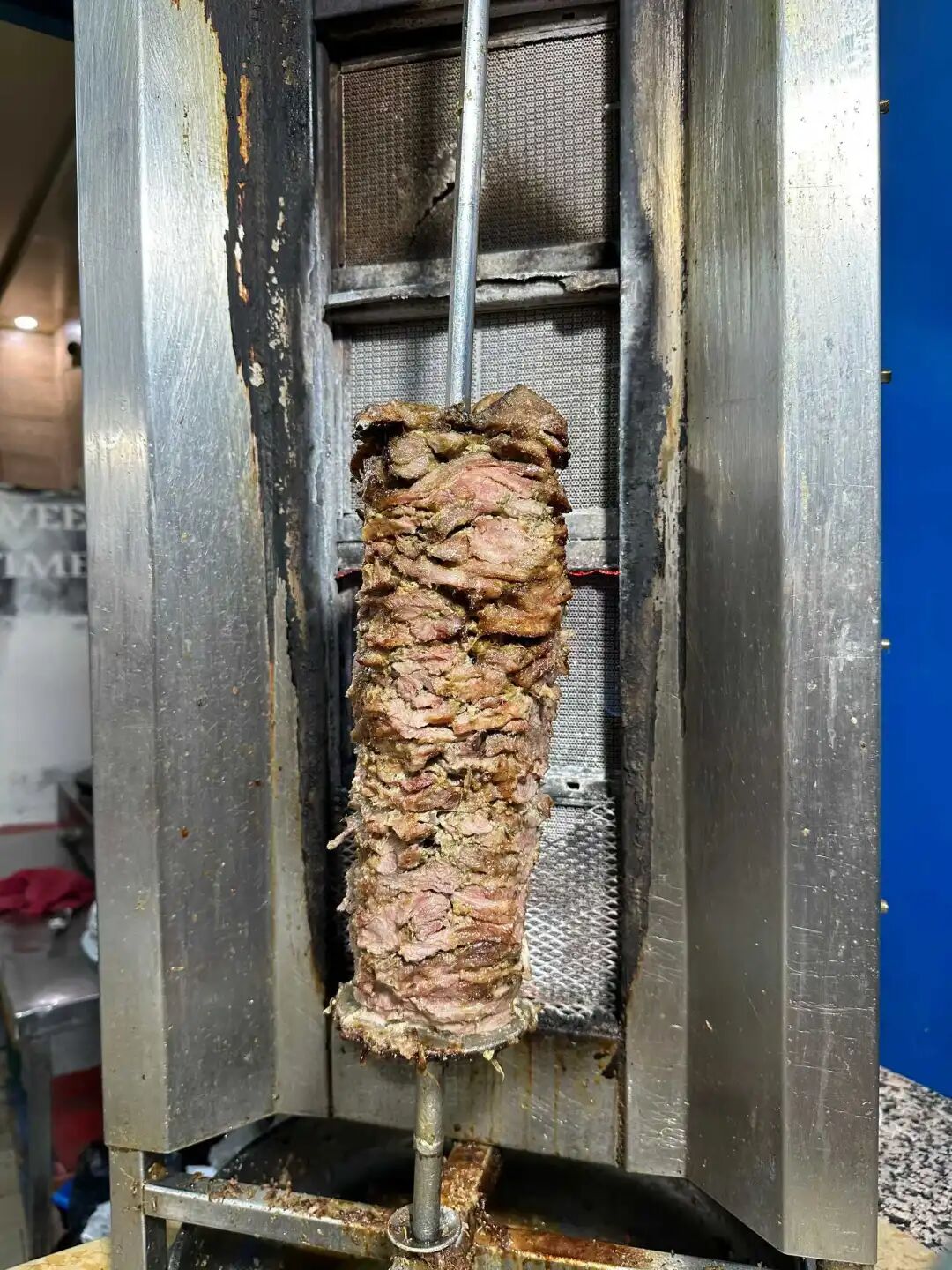
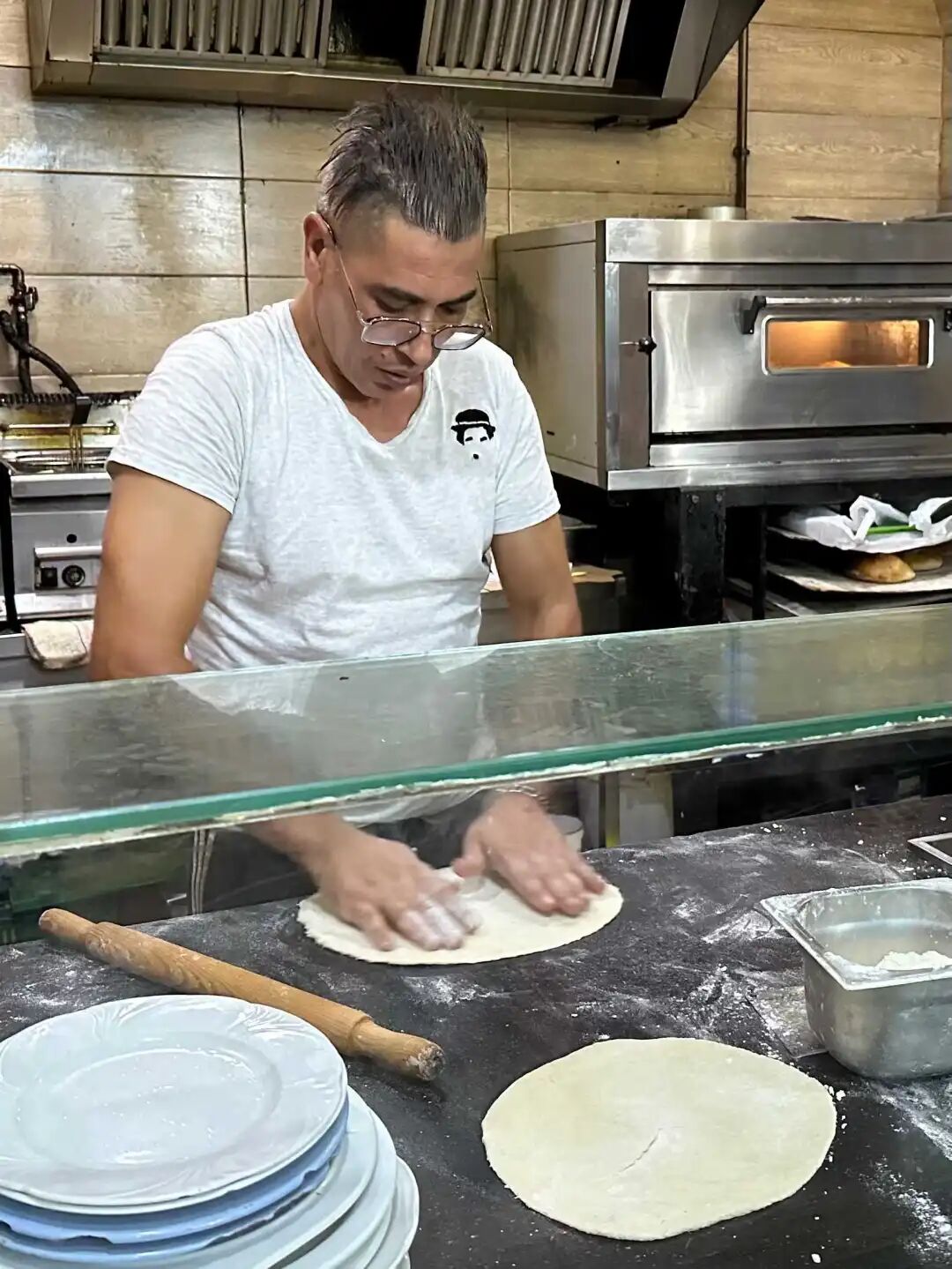
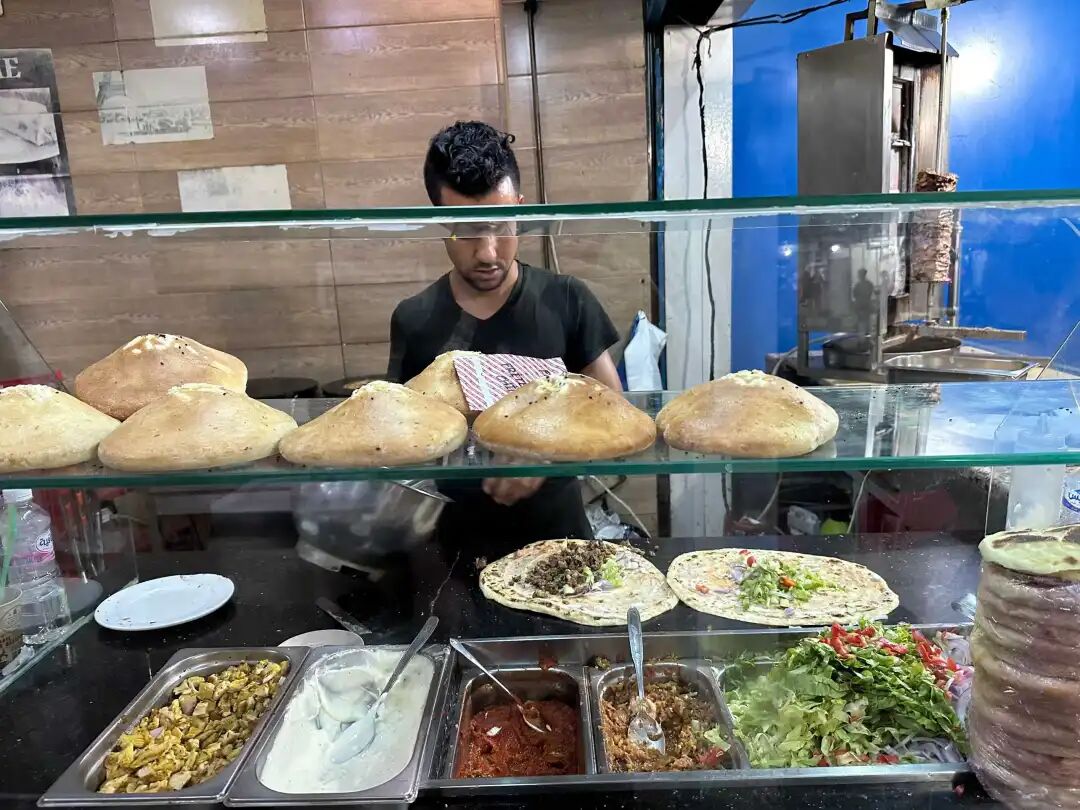
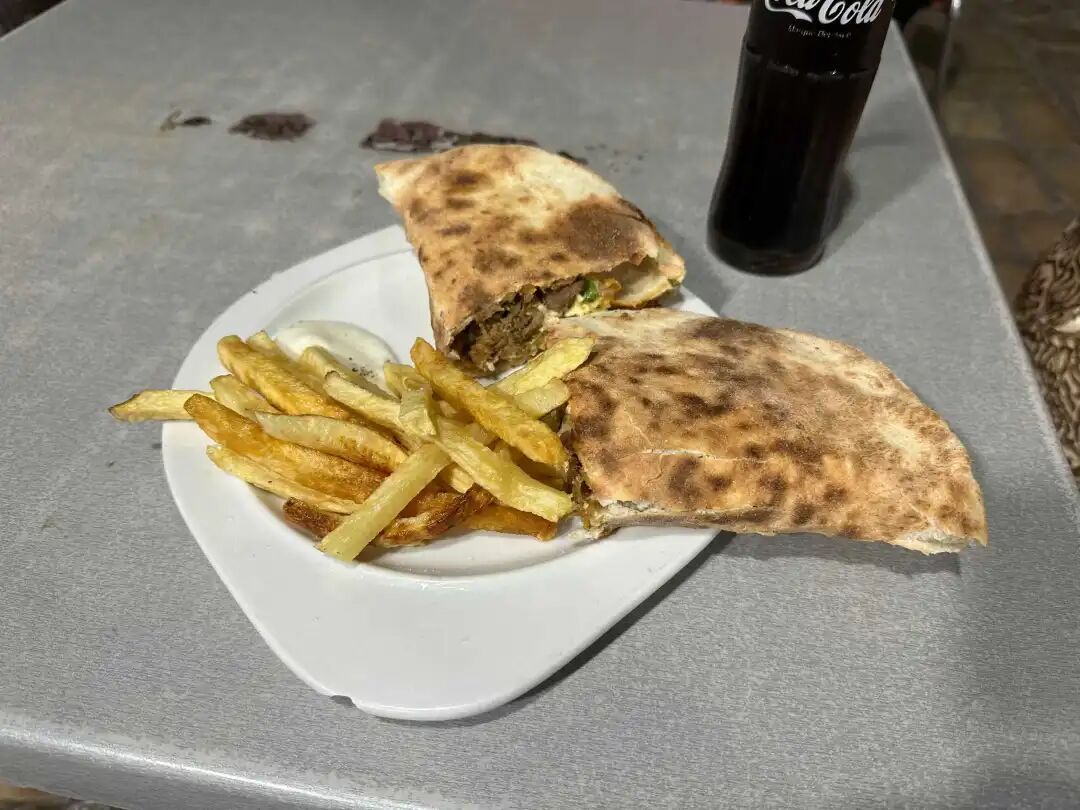
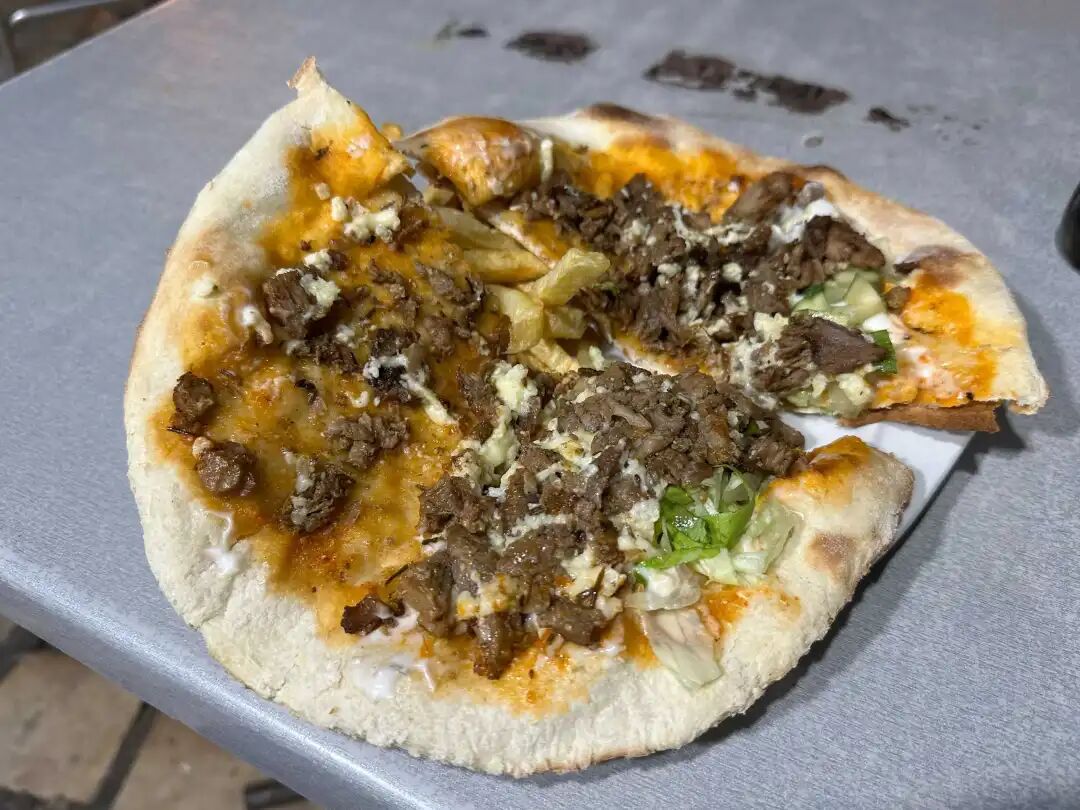
At the snack shop by the entrance of the Great Mosque of Sousse, they specialize in Tunisian folded sandwiches (makloub). It is like a mix of shawarma and pizza; the crust is like pizza dough, filled with grilled meat, cheese, harissa, and mayonnaise, then rolled up to eat.
Restaurant du Peuple, located under the north city wall, specializes in traditional Tunisian food. We ordered the fisherman's stew and Berber lamb tagine, which represent the coastal and inland cultures of Tunisia, respectively. The fisherman's stew contains fish, shrimp, and shellfish, while the lamb tagine is a potato and meat stew. In Tunisian restaurants, you just need to order the main dish. Once you order, they bring out French bread, harissa soup, roasted pepper salad (mechouia), Tunisian salad, and deep-fried Tunisian spring rolls (brik). After you finish, they serve mint black tea.
The Berbers are the indigenous people of Tunisia. Centuries of Arab migration starting in the 7th century led to the Arabization of most Berbers, and by the 15th century, Tunisia was essentially fully Arabized. Although the Berbers and Arabs in Tunisia have merged today, many traditional Berber cultural elements remain, including unique Berber food and music.
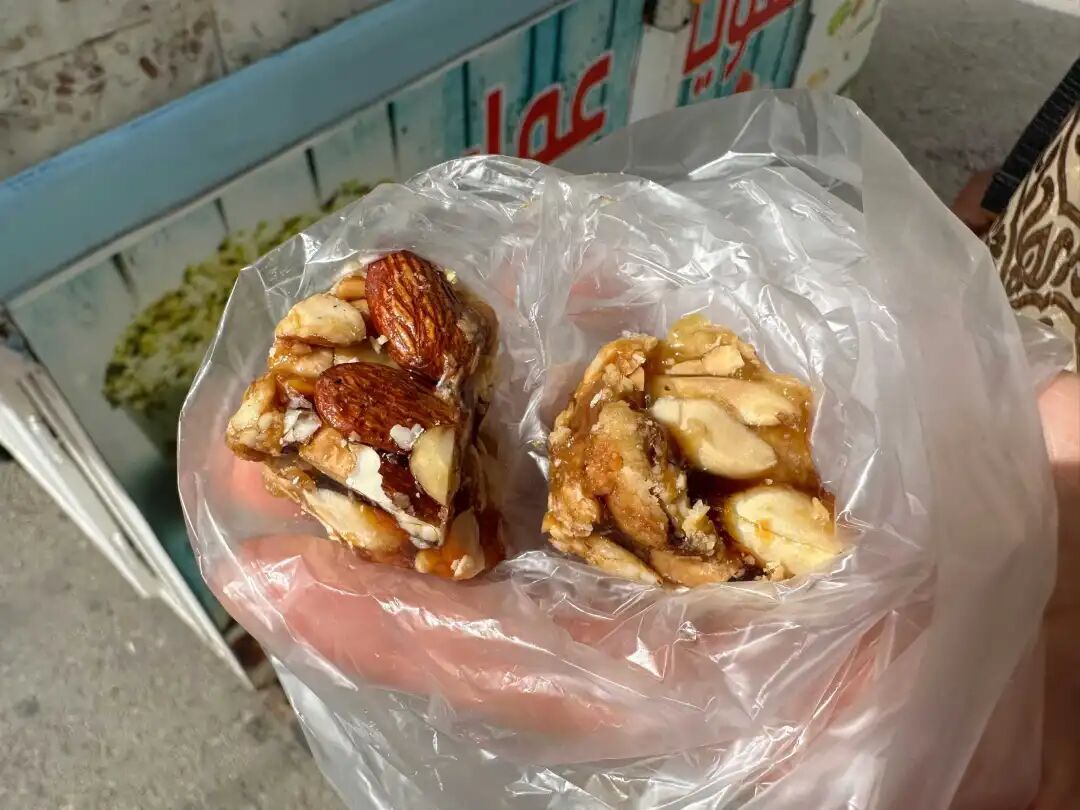
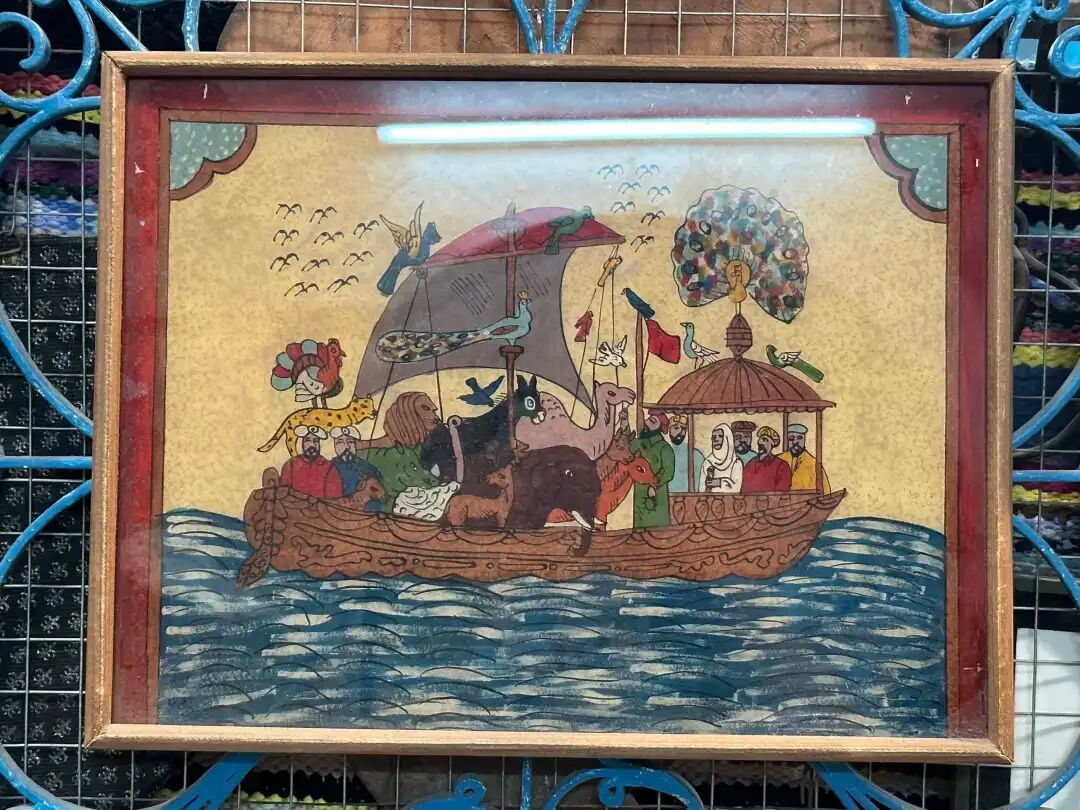
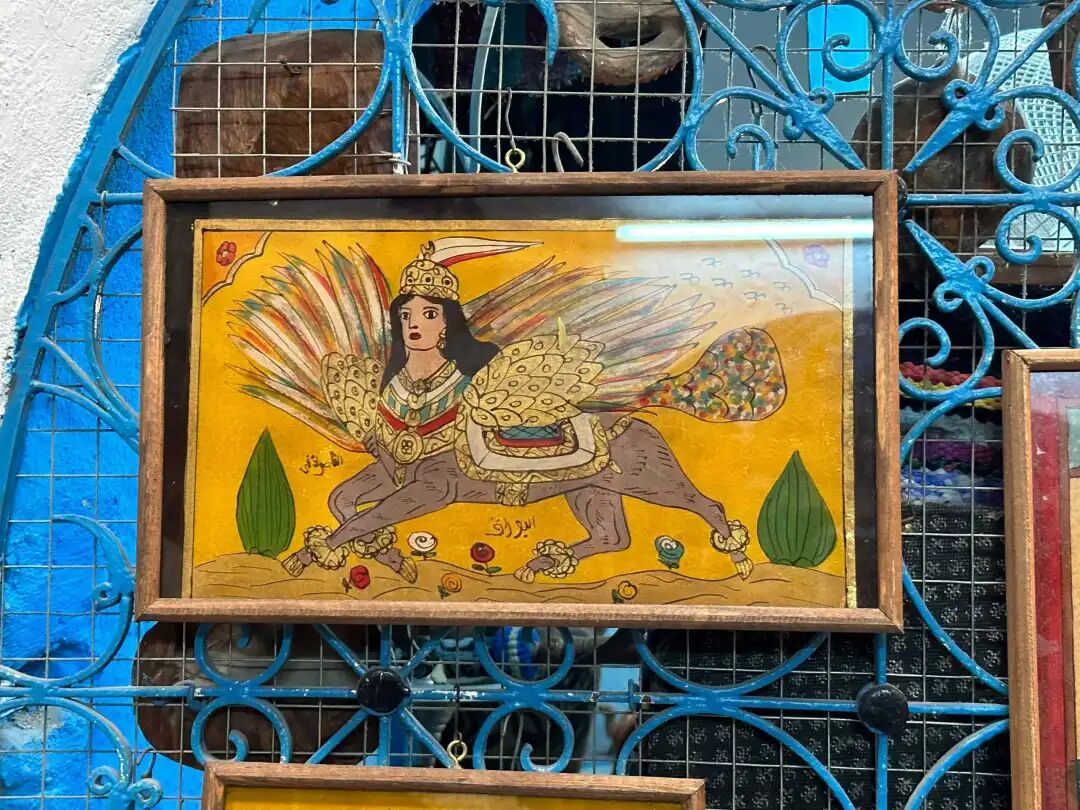
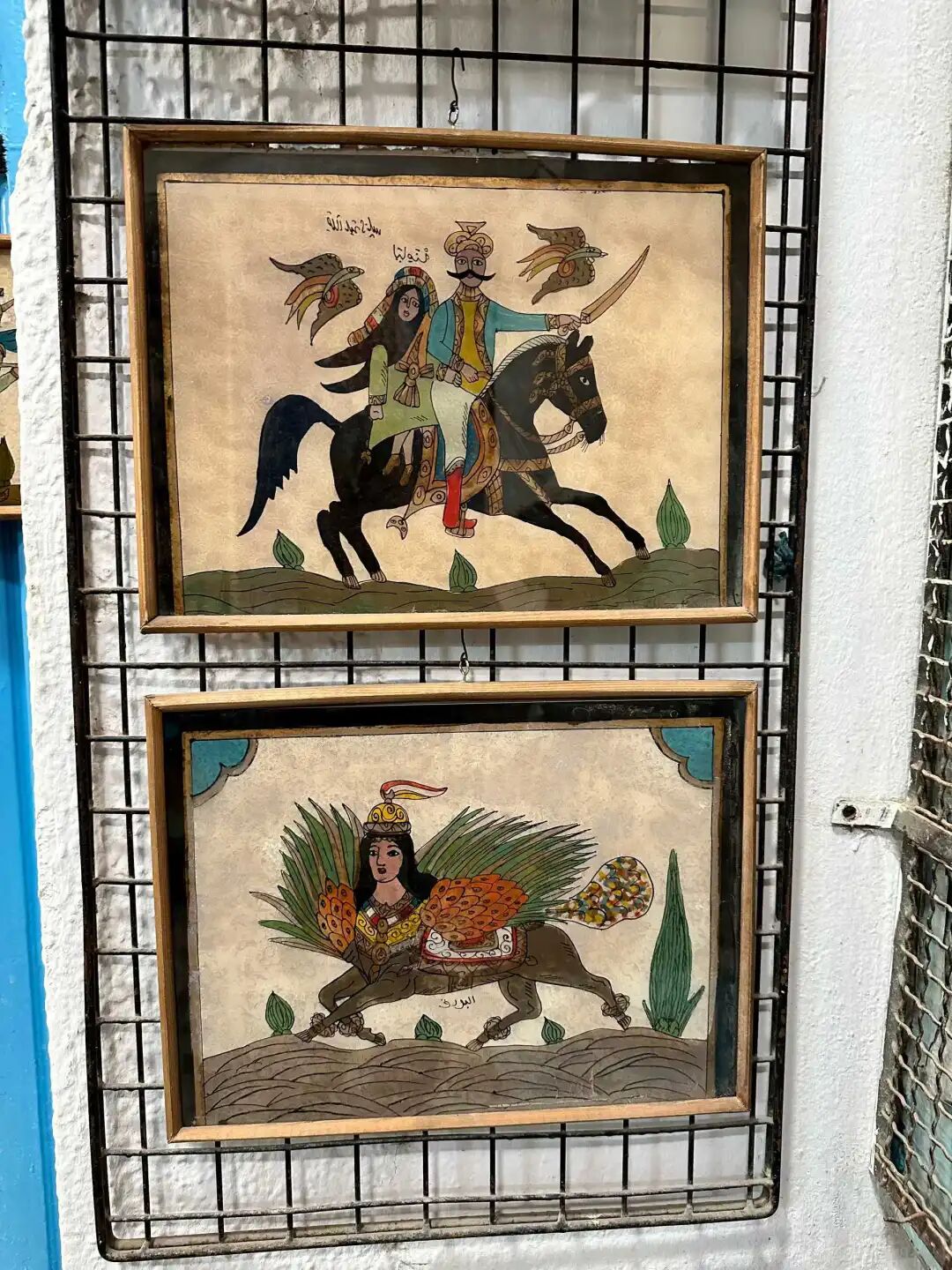
A candy stall on the old city street selling something like Xinjiang nut cake (qiegao), and the old-fashioned balance scale is a rare sight. Behind are some decorations from the old town streets, featuring classic Islamic themes like the Nuh boat, the Buraq ridden during the Ascension, and Hamsa (Fatima's hand) tiles.
Before the 19th century, all of Sousse's residents lived inside the old medina. After Tunisia became a French protectorate in 1881, the French began building a new city north of the Sousse medina. Sousse was bombed repeatedly between 1942 and 1943, and the new city suffered heavy damage. Authorities began rebuilding the new city in 1946, which eventually led to its current appearance.
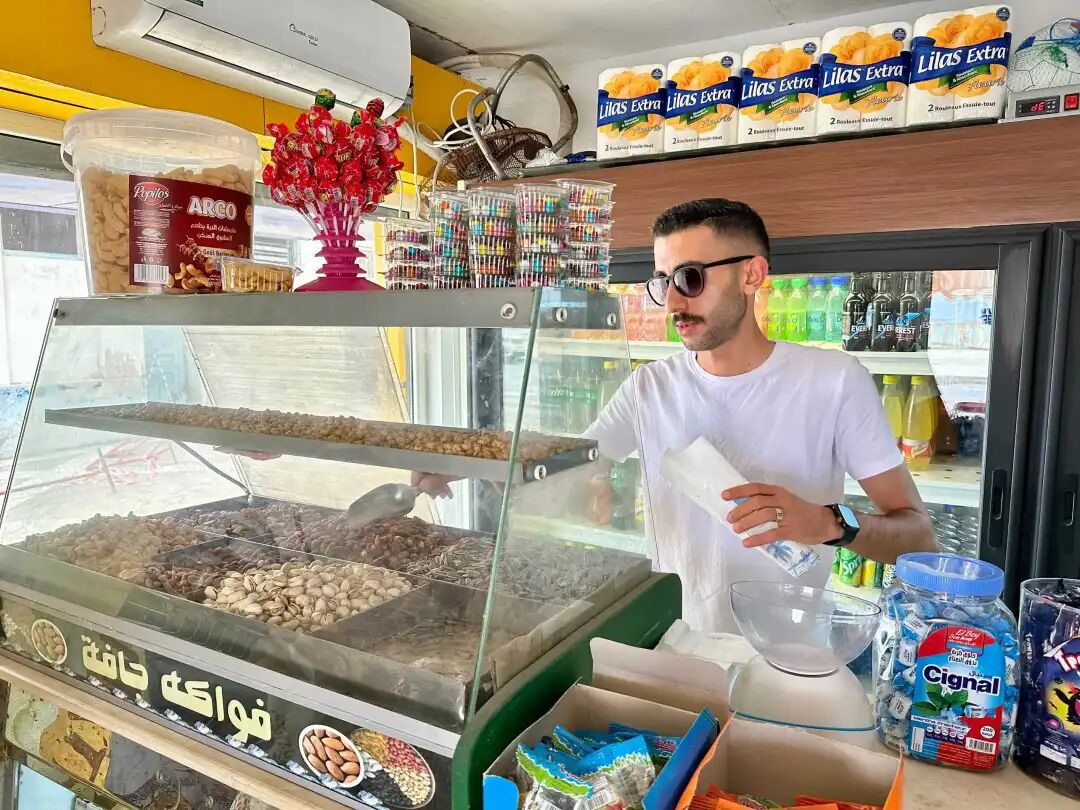
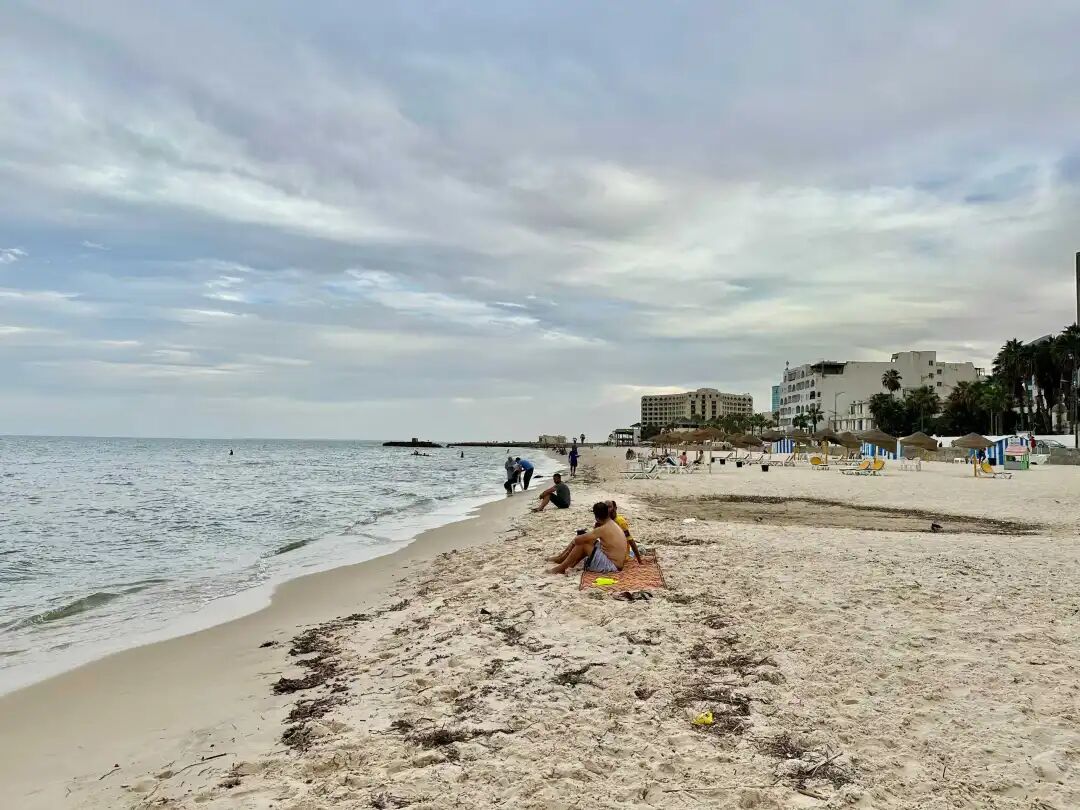
Sousse is a major coastal city in Tunisia, but the beach is not very busy and has little entertainment. People mostly just walk, chat, zone out, or drink coffee at the seaside cafes. While strolling by the sea, we were surprised to find a shop called "Justinian" with a portrait of the Byzantine Emperor Justinian I printed on it. We bought some pistachios from a handsome young man in the shop and learned to zone out by the sea just like the locals.
During the reign of Justinian I (527-565), many territories lost by the Western Roman Empire were reclaimed, including Tunisia. In 533, the Byzantine army under Justinian I landed in Tunisia and quickly defeated the Germanic Vandal Kingdom, allowing Tunisia to remain prosperous for over a hundred years.
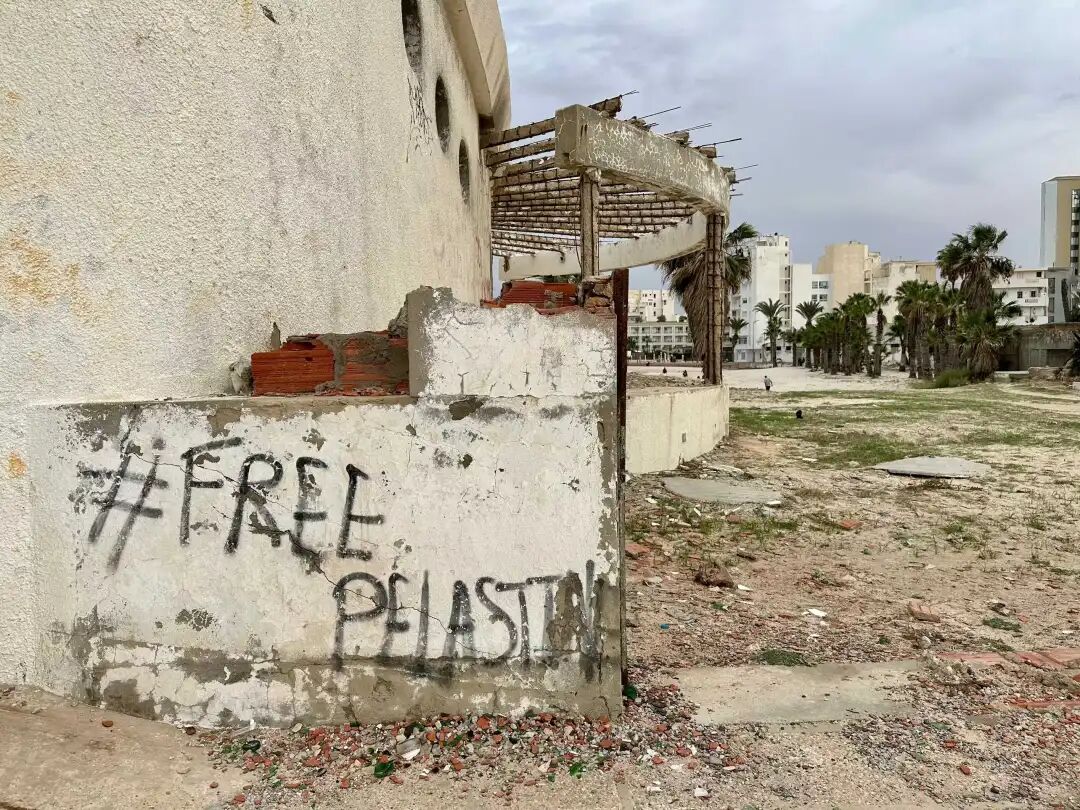
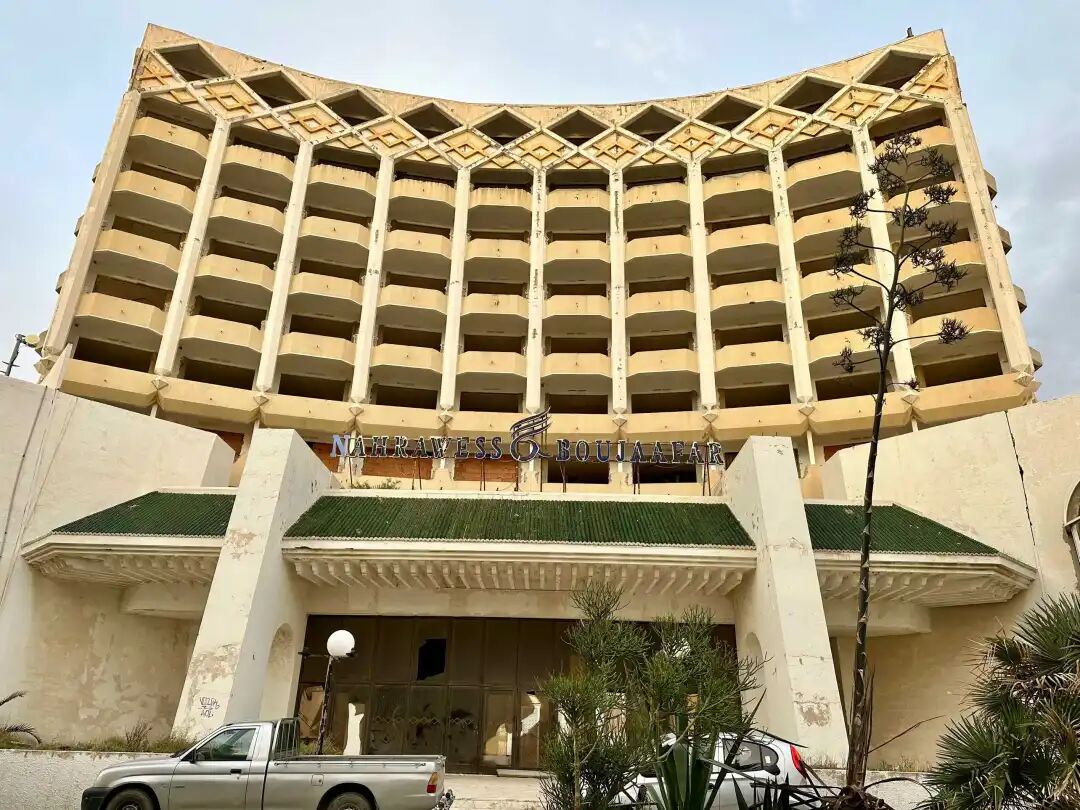
The ABOU NAWAS BOU JAAFAR hotel by the Sousse beach is now abandoned, but surprisingly, their official website is still up. Looking at old photos, it was very luxurious back then.
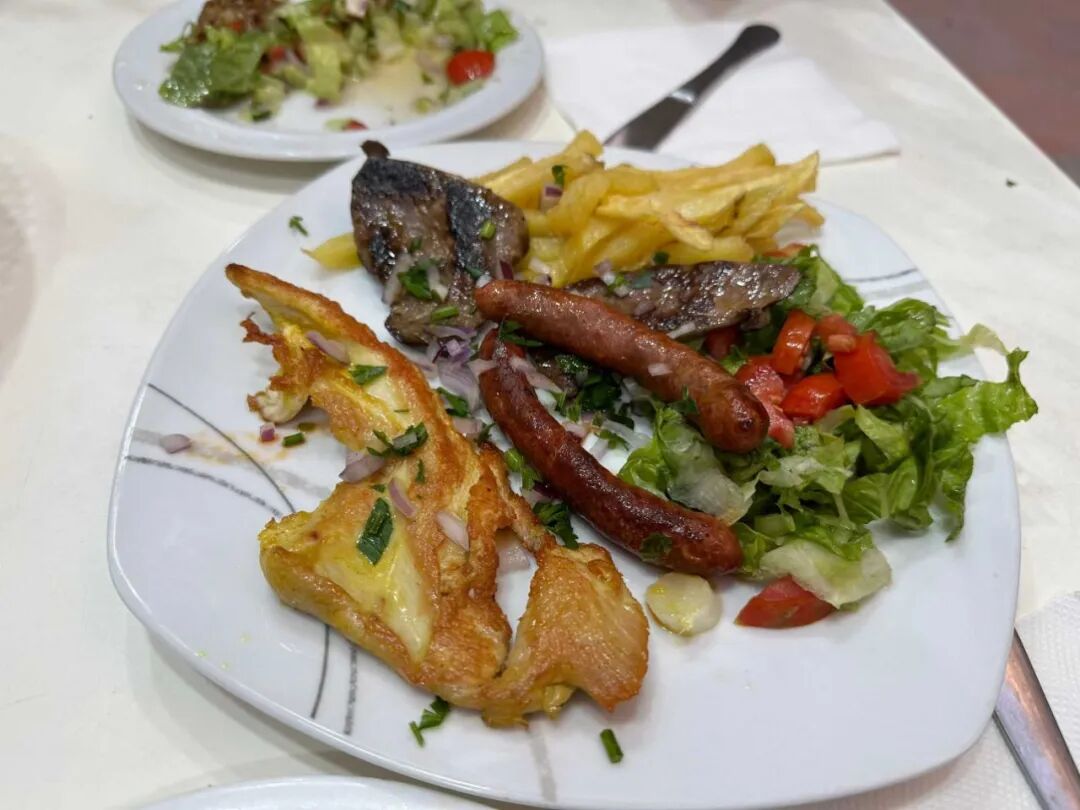
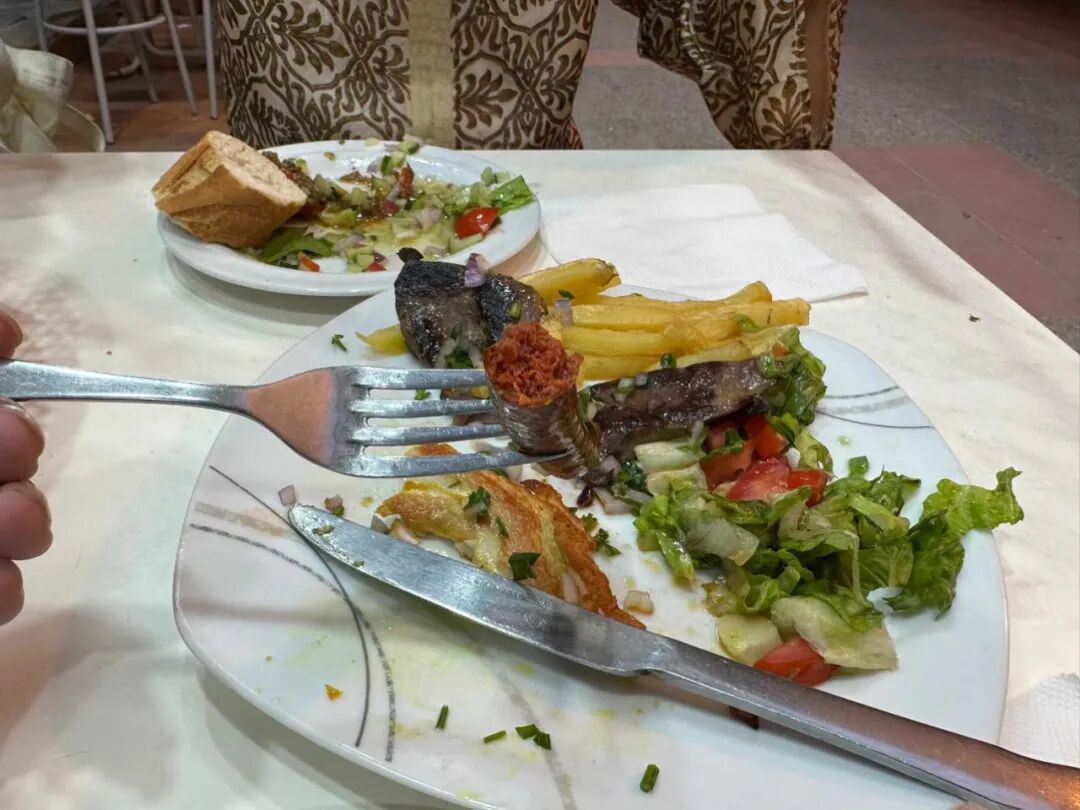
At a small restaurant in the new city, we had a grilled meat platter, which was still served with a baguette and Tunisian salad. The platter included chicken, beef, and Tunisian sausage (Merguez).
Merguez is made with lamb and beef, mixed with cumin, harissa, chili, and various other spices, and is usually grilled. Merguez sausage was first seen in the 12th century in Andalusia, which was southern Spain under Arab rule, and later spread throughout North Africa.
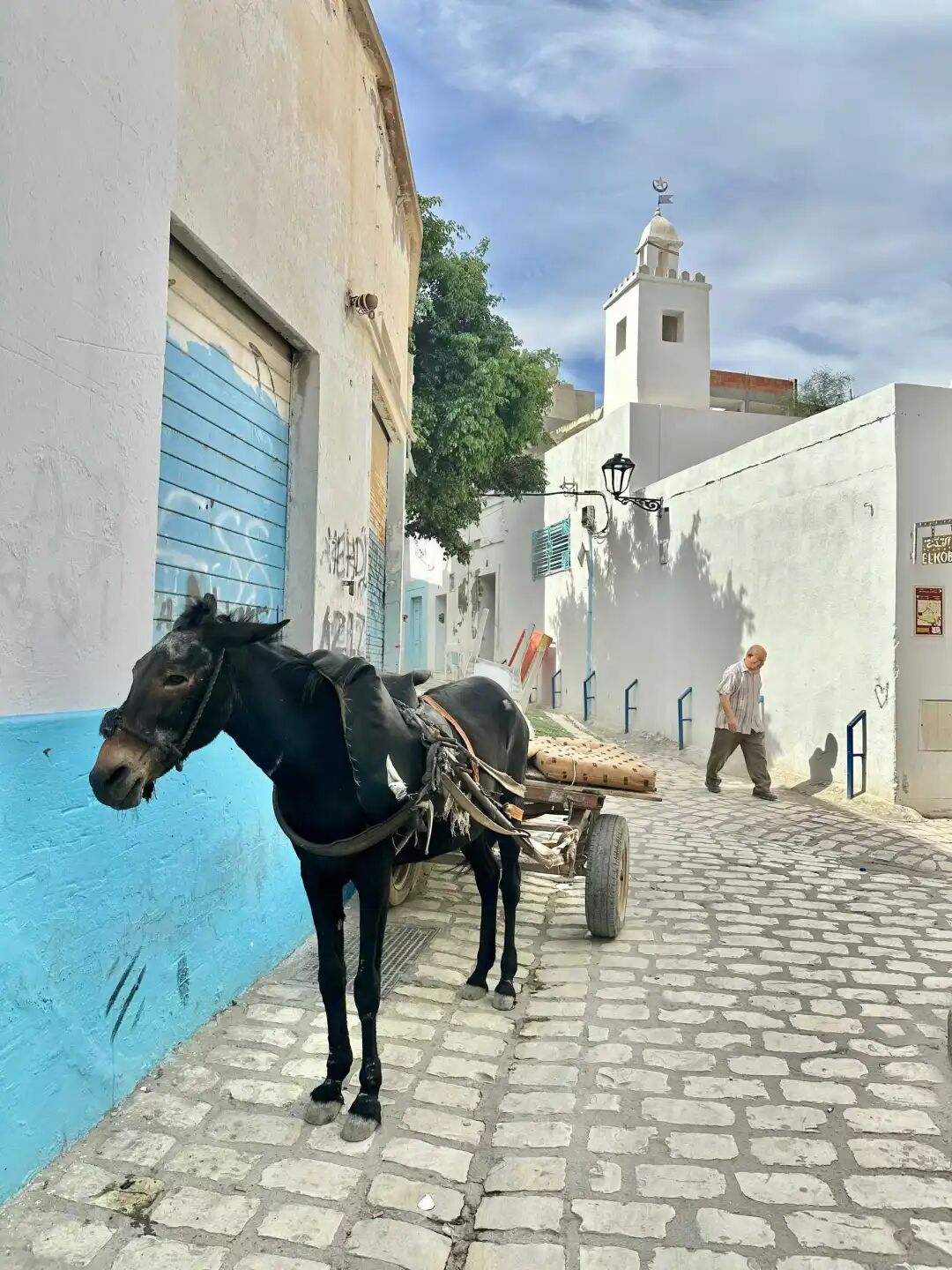
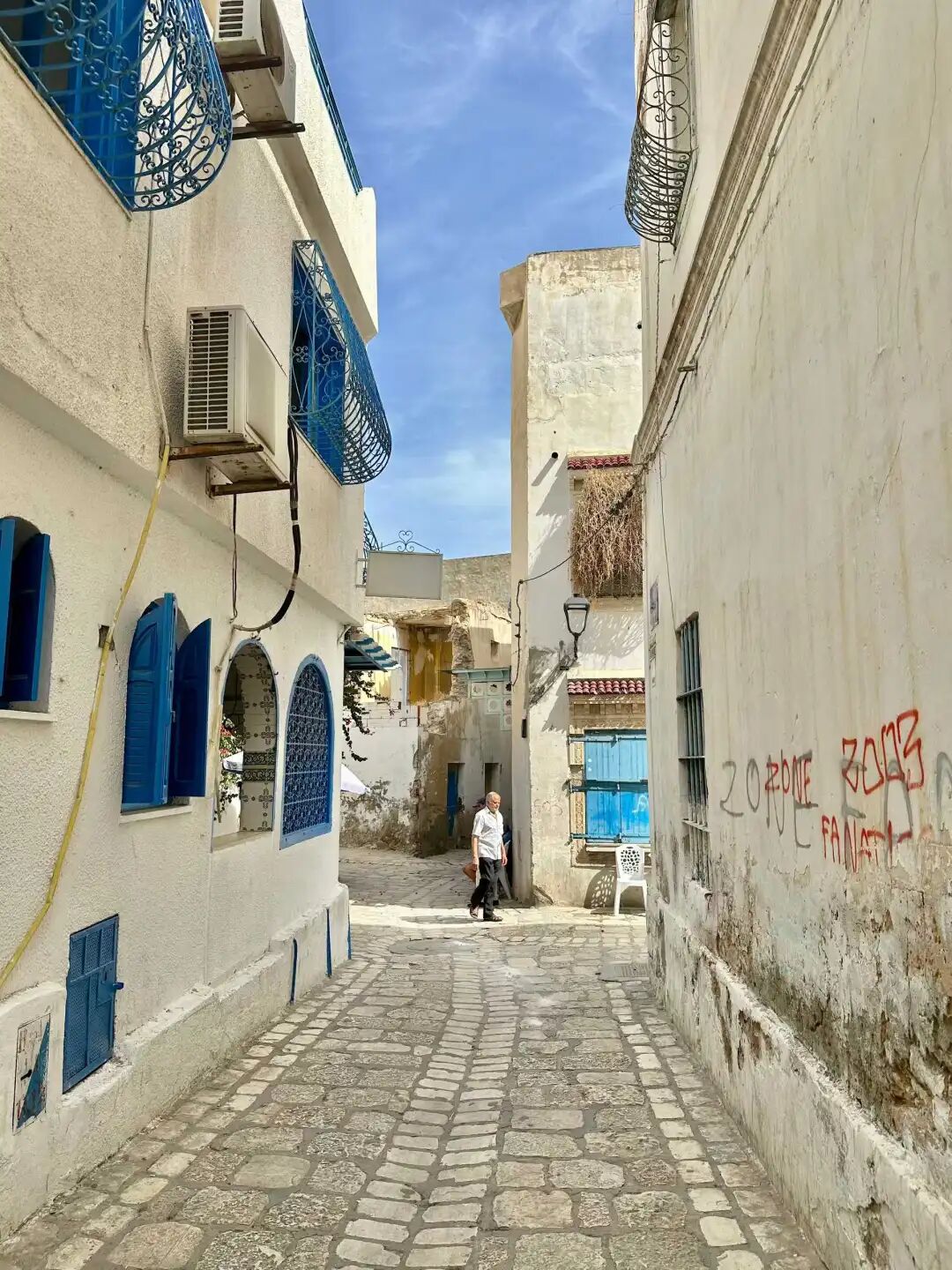
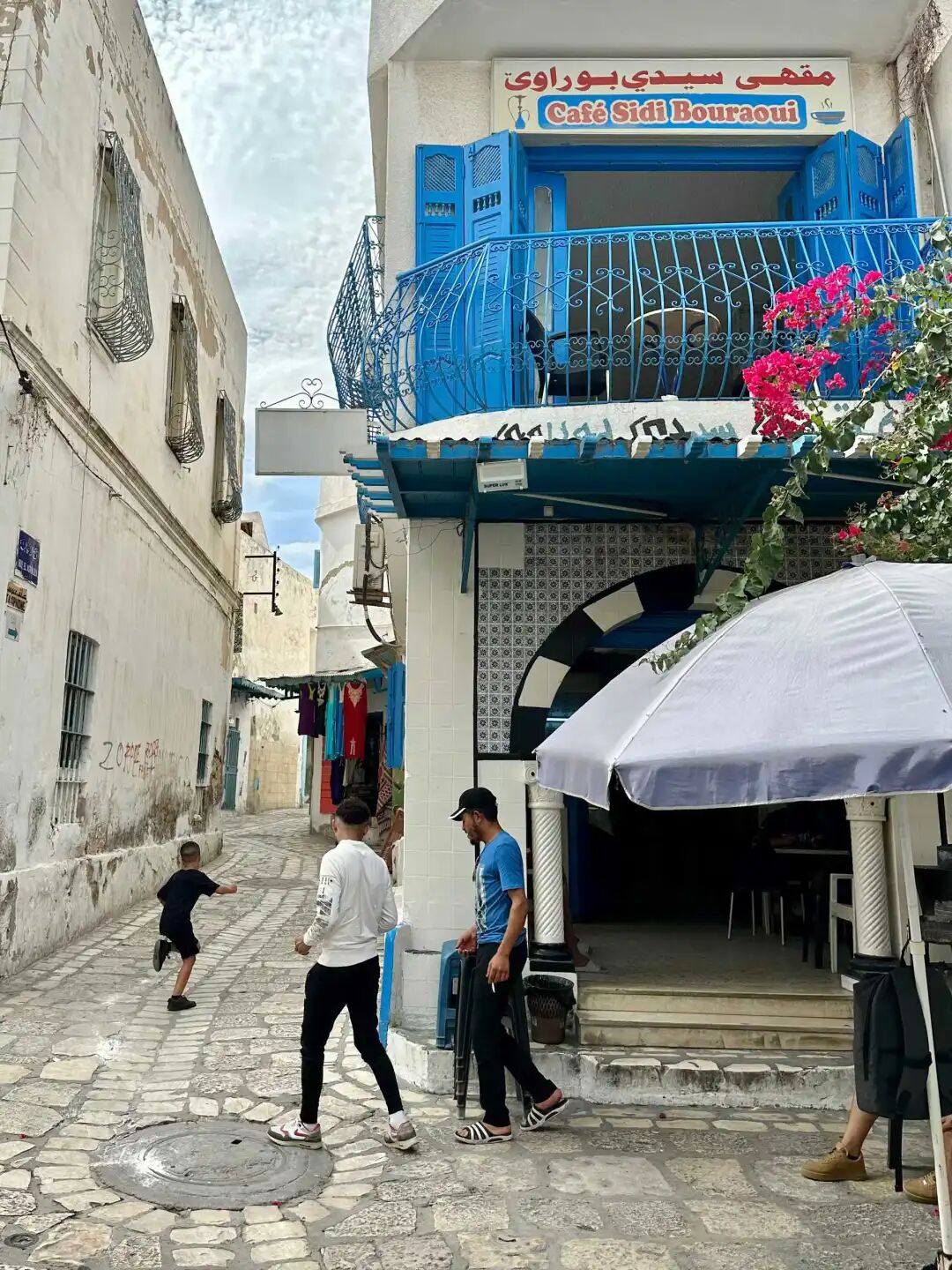
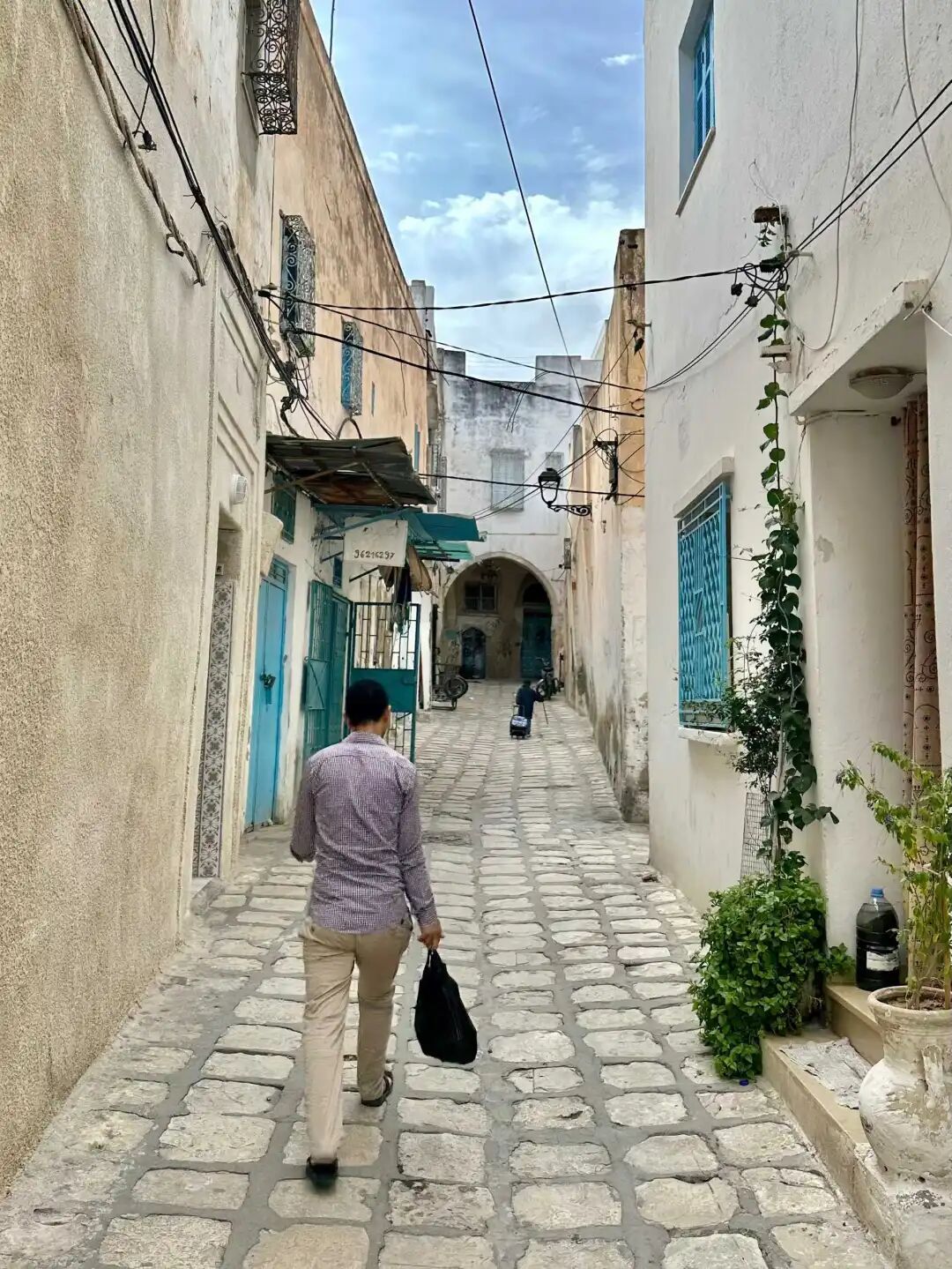
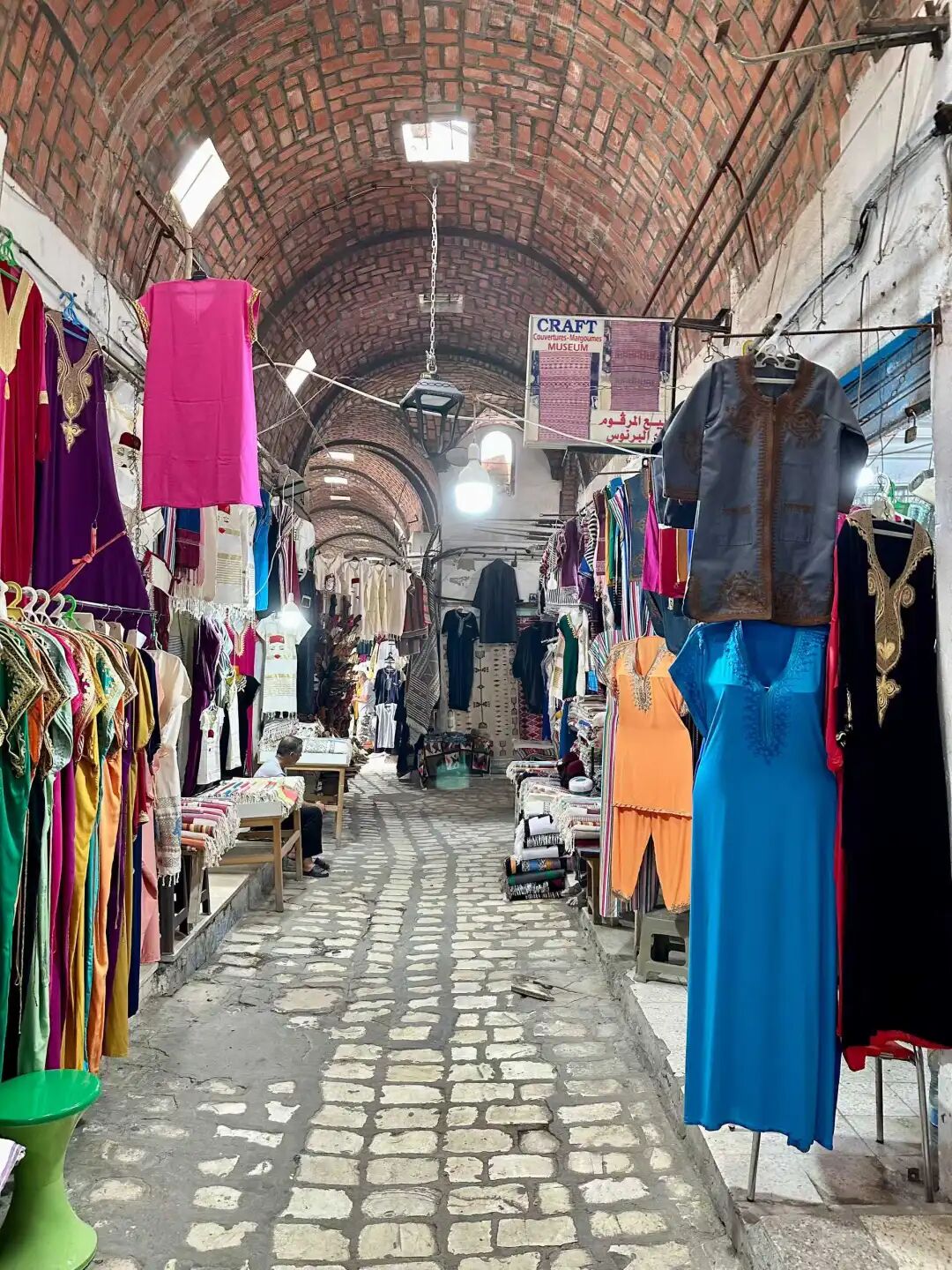
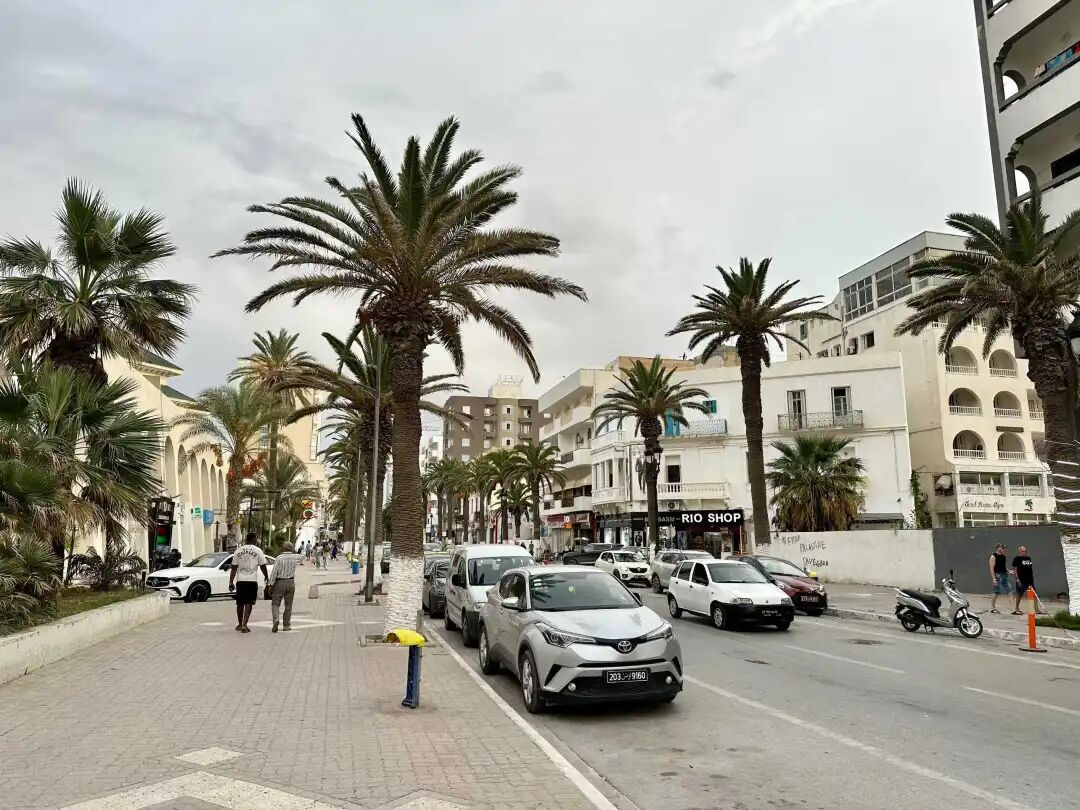
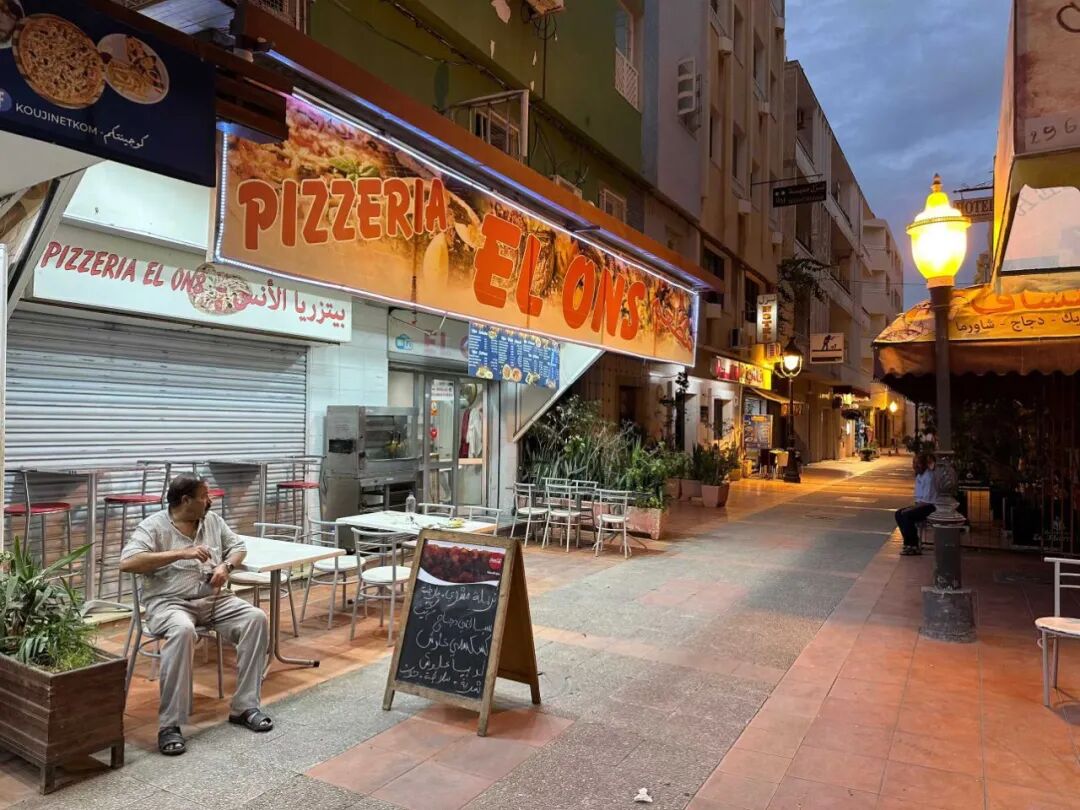
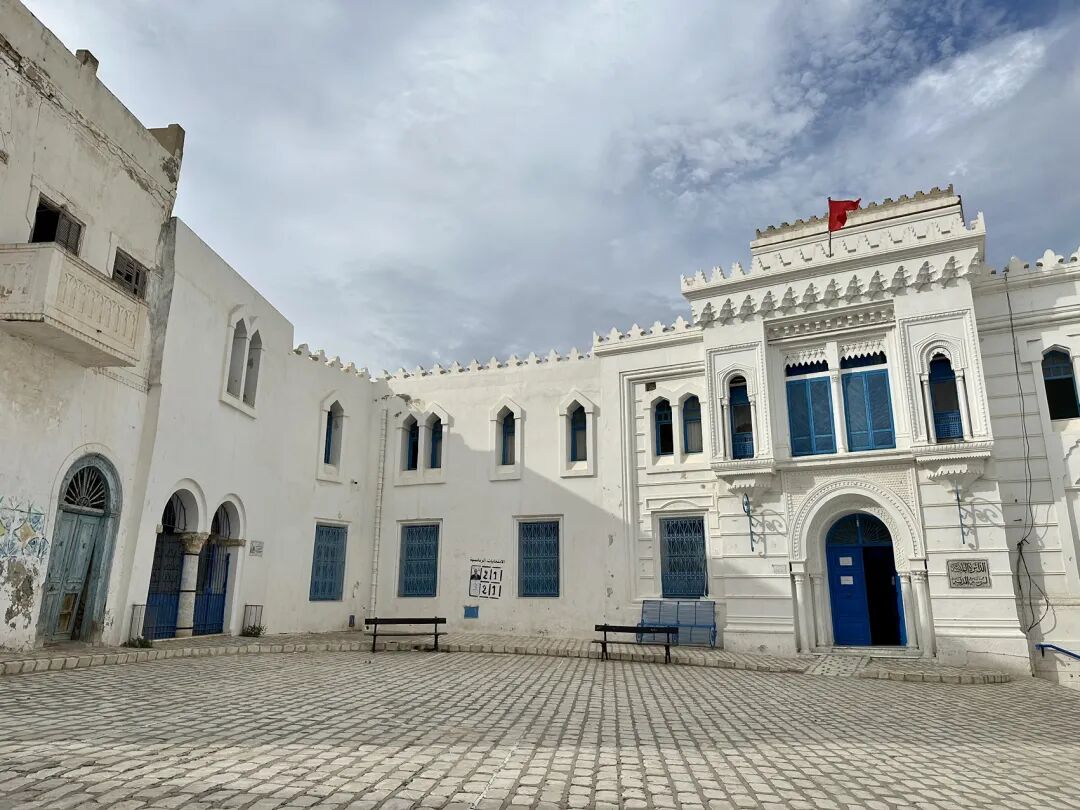
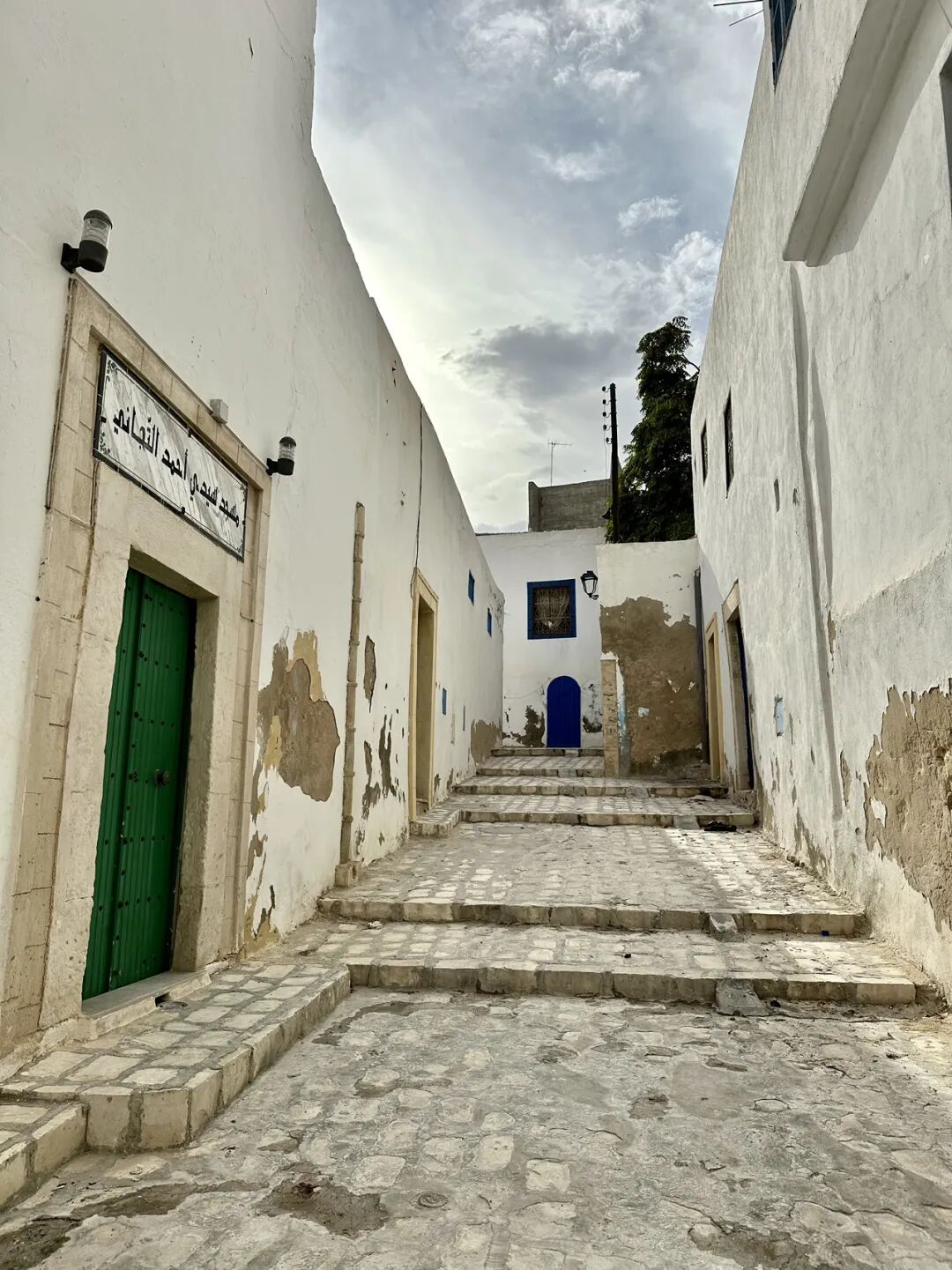
Finally, here are some more street scenes from the old medina of Sousse. view all
Summary: Sousse's old medina became a UNESCO World Heritage site in 1988 and remains less commercialized than the medina of Tunis. This travel account follows the source's route through the old city, mosque sights, markets, restaurants, seafood, and street observations.
The old medina in Sousse, Tunisia, was named a UNESCO World Heritage site back in 1988, but it is much less developed for tourism than the medina in Tunis, which became a World Heritage site in 1979. The Tunis medina has many guesthouses and hotels converted from historic homes, ranging from budget to high-end options. We searched for a long time, but found very few historic guesthouses in the Sousse medina, so we finally chose Dar Badiaa.
The atmosphere at Dar Badiaa is lovely, but the rooms in these historic buildings are quite small. Don't trust the room sizes listed on booking websites; they are just guesses. The lady who checked us in didn't speak English, only French, so we spent a long time struggling to understand each other.
Breakfast at the Dar Badiaa historic guesthouse is quite generous, featuring egg pancakes (danbing), flaky pastries (subing), French bread (fagun), curd (ruza), cheese, various jams, pickled olives, Tunisian chili paste (harissa), and local Tunisian desserts, served with strong Tunisian coffee. While we were chatting in the courtyard at night, the guesthouse lady served us classic Tunisian mint black tea and date-filled semolina cookies (makroudh). Makroudh is a classic treat for breaking the fast in the North African Maghreb region. It has a semolina crust, a filling of date paste and dried fruit, and is soaked in syrup after baking.
While drinking tea and chatting that night, we noticed some very old writing on one of the stone pillars in the house. We aren't sure if it is Phoenician.
The World Heritage old medina of Sousse, Tunisia. The area with better tourism development is the main street, Souk el Cald, which starts from the west gate of the old city, Bab El-Gharbi. It has many small shops and restaurants. We ate at a restaurant on the street called Dar Amna. We chose grilled fish for our main course, which came with French bread, french fries, roasted pepper salad (mechouia), and a Tunisian salad made of cucumber, tomato, and onion. Tunisia became a French protectorate in 1881, which is why French bread became a staple food here. Personally, I find the French bread dry and hard, and not nearly as good as the staple breads in the eastern Arab world.
Street view of Souk el Cald, the main road starting from the old city's west gate, Bab El-Gharbi.
Souk el Cald has many tea houses and cafes perfect for taking photos. You can drink local mint tea, eat some pine nuts, and enjoy a slow pace of life.
At the snack shop by the entrance of the Great Mosque of Sousse, they specialize in Tunisian folded sandwiches (makloub). It is like a mix of shawarma and pizza; the crust is like pizza dough, filled with grilled meat, cheese, harissa, and mayonnaise, then rolled up to eat.
Restaurant du Peuple, located under the north city wall, specializes in traditional Tunisian food. We ordered the fisherman's stew and Berber lamb tagine, which represent the coastal and inland cultures of Tunisia, respectively. The fisherman's stew contains fish, shrimp, and shellfish, while the lamb tagine is a potato and meat stew. In Tunisian restaurants, you just need to order the main dish. Once you order, they bring out French bread, harissa soup, roasted pepper salad (mechouia), Tunisian salad, and deep-fried Tunisian spring rolls (brik). After you finish, they serve mint black tea.
The Berbers are the indigenous people of Tunisia. Centuries of Arab migration starting in the 7th century led to the Arabization of most Berbers, and by the 15th century, Tunisia was essentially fully Arabized. Although the Berbers and Arabs in Tunisia have merged today, many traditional Berber cultural elements remain, including unique Berber food and music.
A candy stall on the old city street selling something like Xinjiang nut cake (qiegao), and the old-fashioned balance scale is a rare sight. Behind are some decorations from the old town streets, featuring classic Islamic themes like the Nuh boat, the Buraq ridden during the Ascension, and Hamsa (Fatima's hand) tiles.
Before the 19th century, all of Sousse's residents lived inside the old medina. After Tunisia became a French protectorate in 1881, the French began building a new city north of the Sousse medina. Sousse was bombed repeatedly between 1942 and 1943, and the new city suffered heavy damage. Authorities began rebuilding the new city in 1946, which eventually led to its current appearance.
Sousse is a major coastal city in Tunisia, but the beach is not very busy and has little entertainment. People mostly just walk, chat, zone out, or drink coffee at the seaside cafes. While strolling by the sea, we were surprised to find a shop called "Justinian" with a portrait of the Byzantine Emperor Justinian I printed on it. We bought some pistachios from a handsome young man in the shop and learned to zone out by the sea just like the locals.
During the reign of Justinian I (527-565), many territories lost by the Western Roman Empire were reclaimed, including Tunisia. In 533, the Byzantine army under Justinian I landed in Tunisia and quickly defeated the Germanic Vandal Kingdom, allowing Tunisia to remain prosperous for over a hundred years.
The ABOU NAWAS BOU JAAFAR hotel by the Sousse beach is now abandoned, but surprisingly, their official website is still up. Looking at old photos, it was very luxurious back then.
At a small restaurant in the new city, we had a grilled meat platter, which was still served with a baguette and Tunisian salad. The platter included chicken, beef, and Tunisian sausage (Merguez).
Merguez is made with lamb and beef, mixed with cumin, harissa, chili, and various other spices, and is usually grilled. Merguez sausage was first seen in the 12th century in Andalusia, which was southern Spain under Arab rule, and later spread throughout North Africa.
Finally, here are some more street scenes from the old medina of Sousse. view all
Reposted from the web
Summary: Sousse's old medina became a UNESCO World Heritage site in 1988 and remains less commercialized than the medina of Tunis. This travel account follows the source's route through the old city, mosque sights, markets, restaurants, seafood, and street observations.
The old medina in Sousse, Tunisia, was named a UNESCO World Heritage site back in 1988, but it is much less developed for tourism than the medina in Tunis, which became a World Heritage site in 1979. The Tunis medina has many guesthouses and hotels converted from historic homes, ranging from budget to high-end options. We searched for a long time, but found very few historic guesthouses in the Sousse medina, so we finally chose Dar Badiaa.
The atmosphere at Dar Badiaa is lovely, but the rooms in these historic buildings are quite small. Don't trust the room sizes listed on booking websites; they are just guesses. The lady who checked us in didn't speak English, only French, so we spent a long time struggling to understand each other.
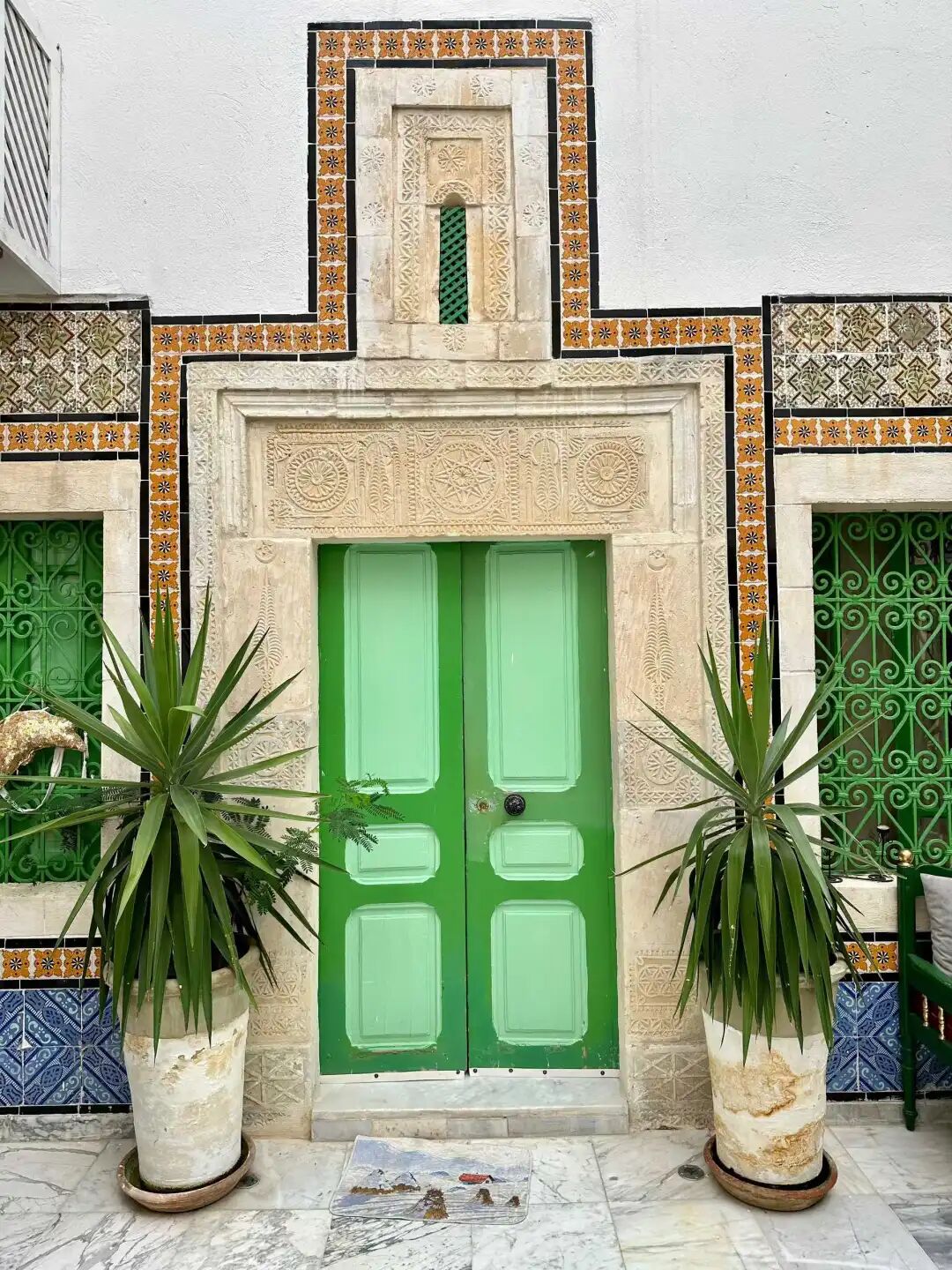
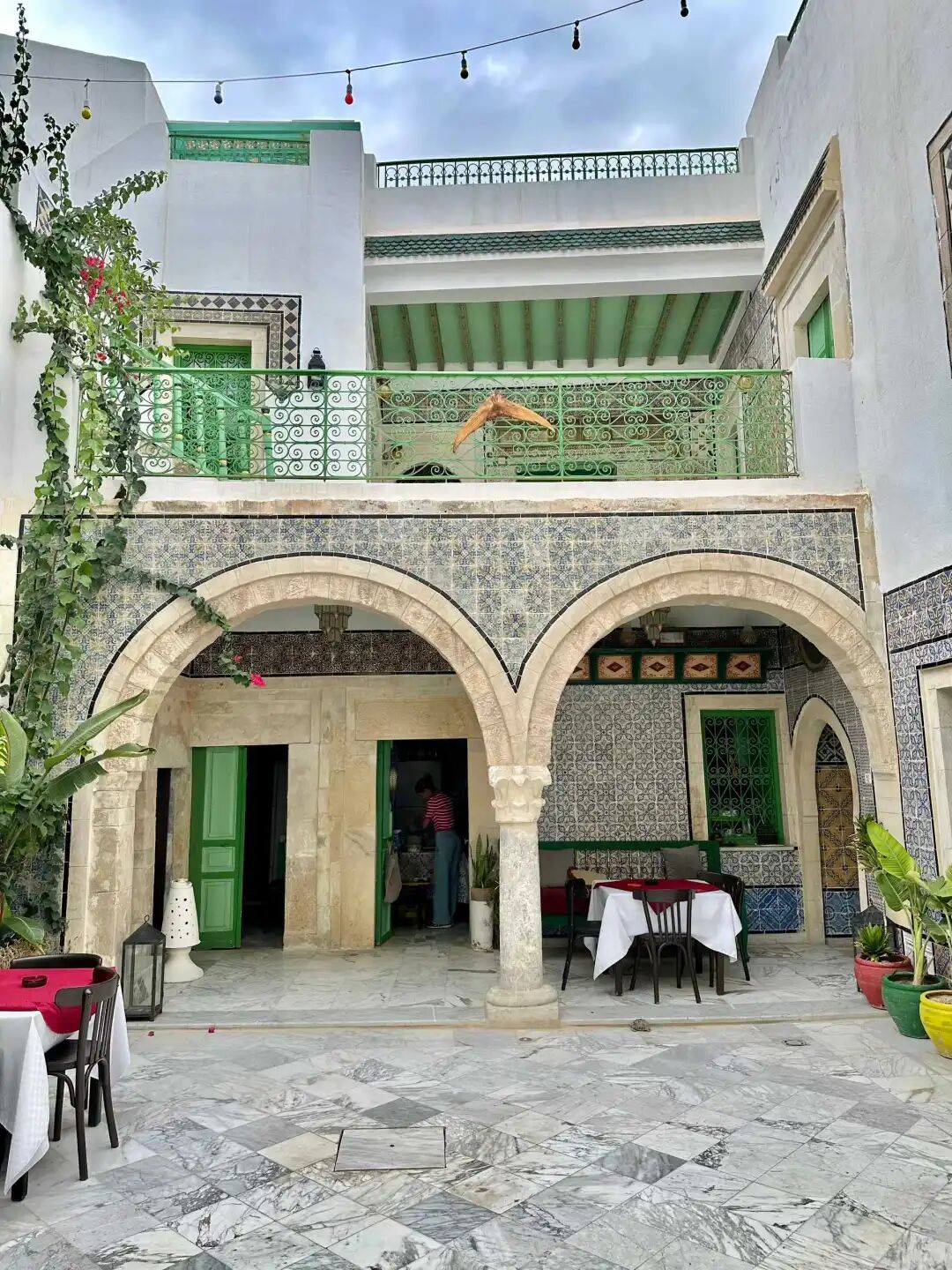
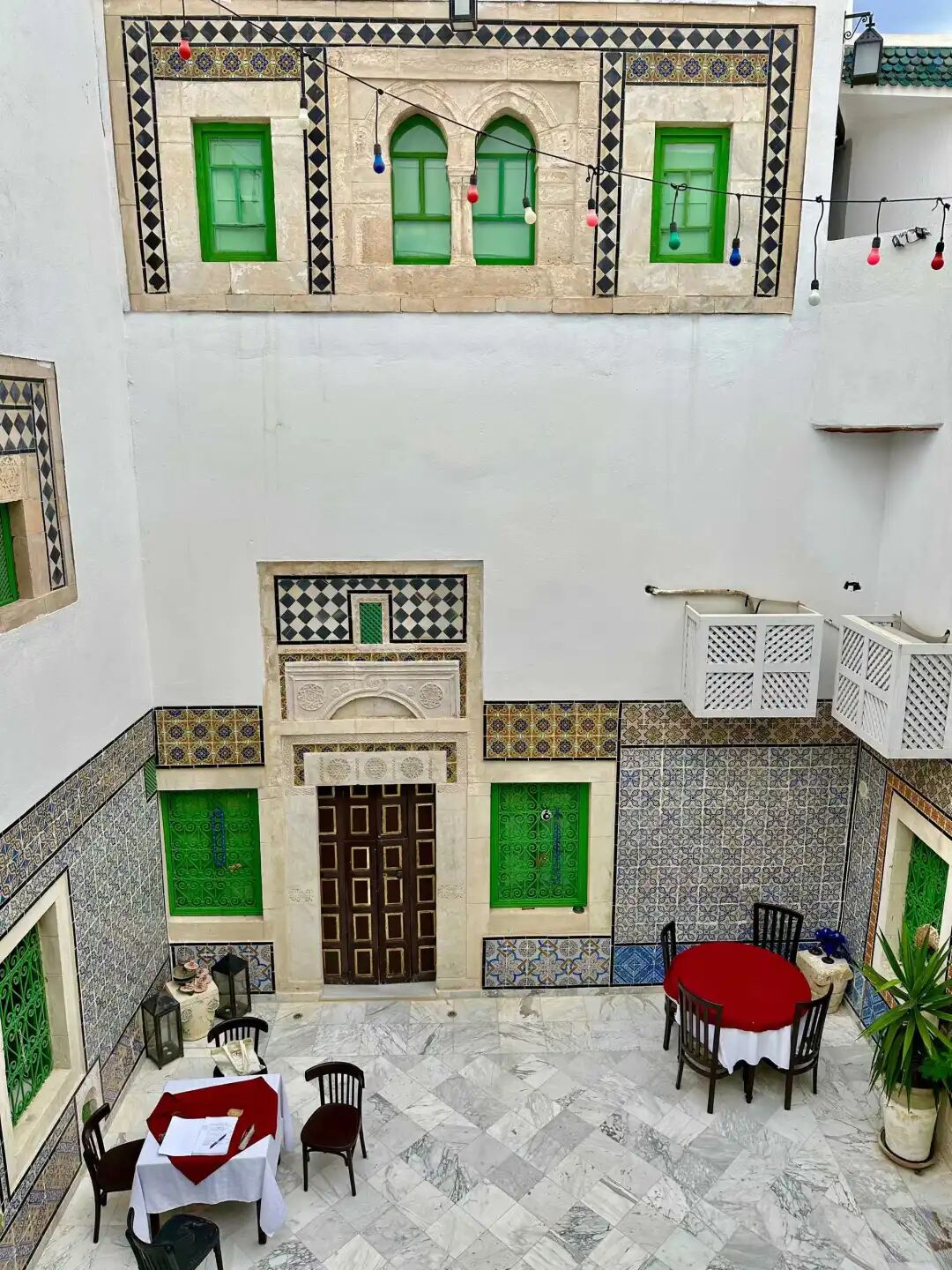
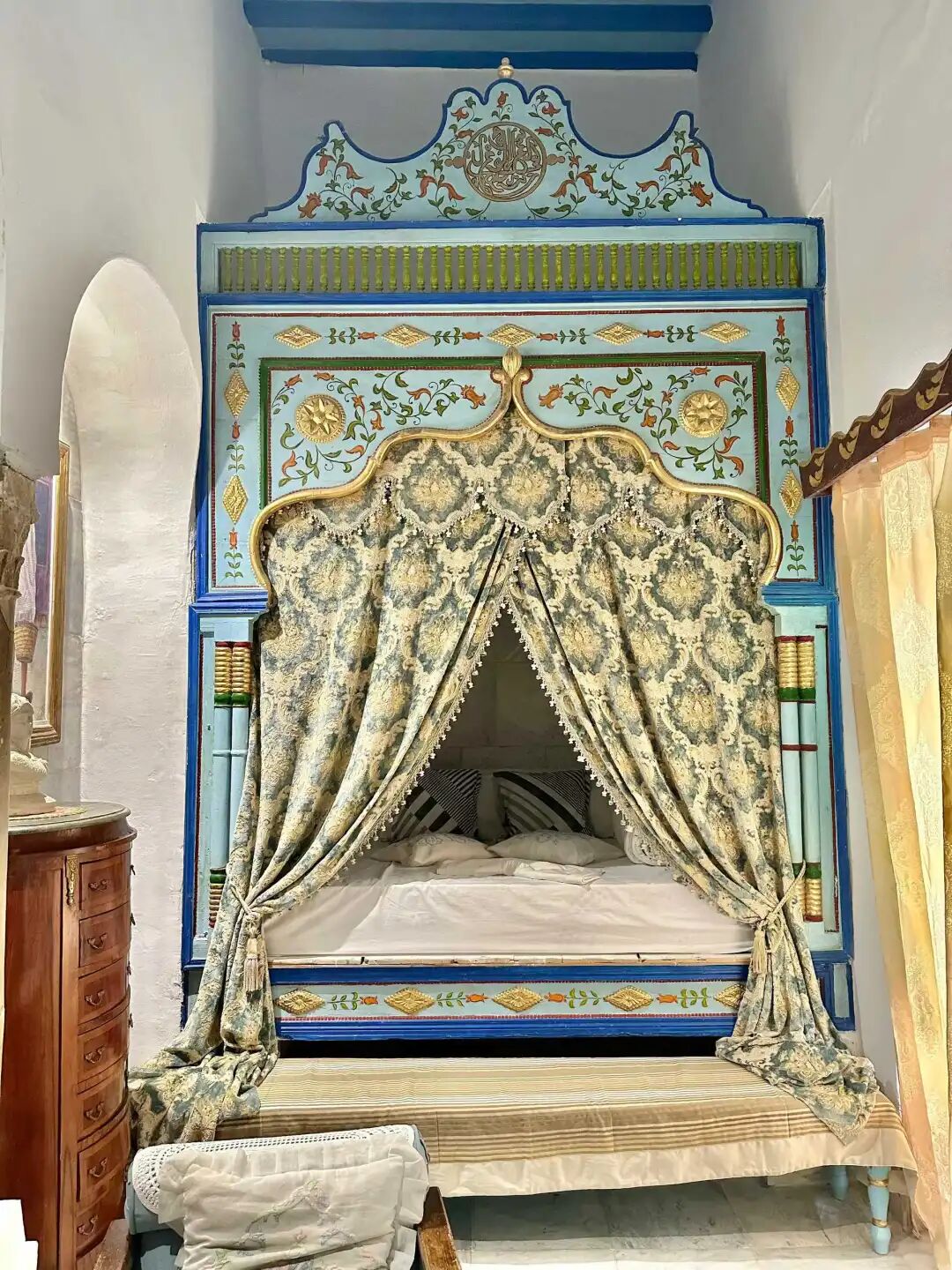
Breakfast at the Dar Badiaa historic guesthouse is quite generous, featuring egg pancakes (danbing), flaky pastries (subing), French bread (fagun), curd (ruza), cheese, various jams, pickled olives, Tunisian chili paste (harissa), and local Tunisian desserts, served with strong Tunisian coffee. While we were chatting in the courtyard at night, the guesthouse lady served us classic Tunisian mint black tea and date-filled semolina cookies (makroudh). Makroudh is a classic treat for breaking the fast in the North African Maghreb region. It has a semolina crust, a filling of date paste and dried fruit, and is soaked in syrup after baking.
While drinking tea and chatting that night, we noticed some very old writing on one of the stone pillars in the house. We aren't sure if it is Phoenician.
The World Heritage old medina of Sousse, Tunisia. The area with better tourism development is the main street, Souk el Cald, which starts from the west gate of the old city, Bab El-Gharbi. It has many small shops and restaurants. We ate at a restaurant on the street called Dar Amna. We chose grilled fish for our main course, which came with French bread, french fries, roasted pepper salad (mechouia), and a Tunisian salad made of cucumber, tomato, and onion. Tunisia became a French protectorate in 1881, which is why French bread became a staple food here. Personally, I find the French bread dry and hard, and not nearly as good as the staple breads in the eastern Arab world.
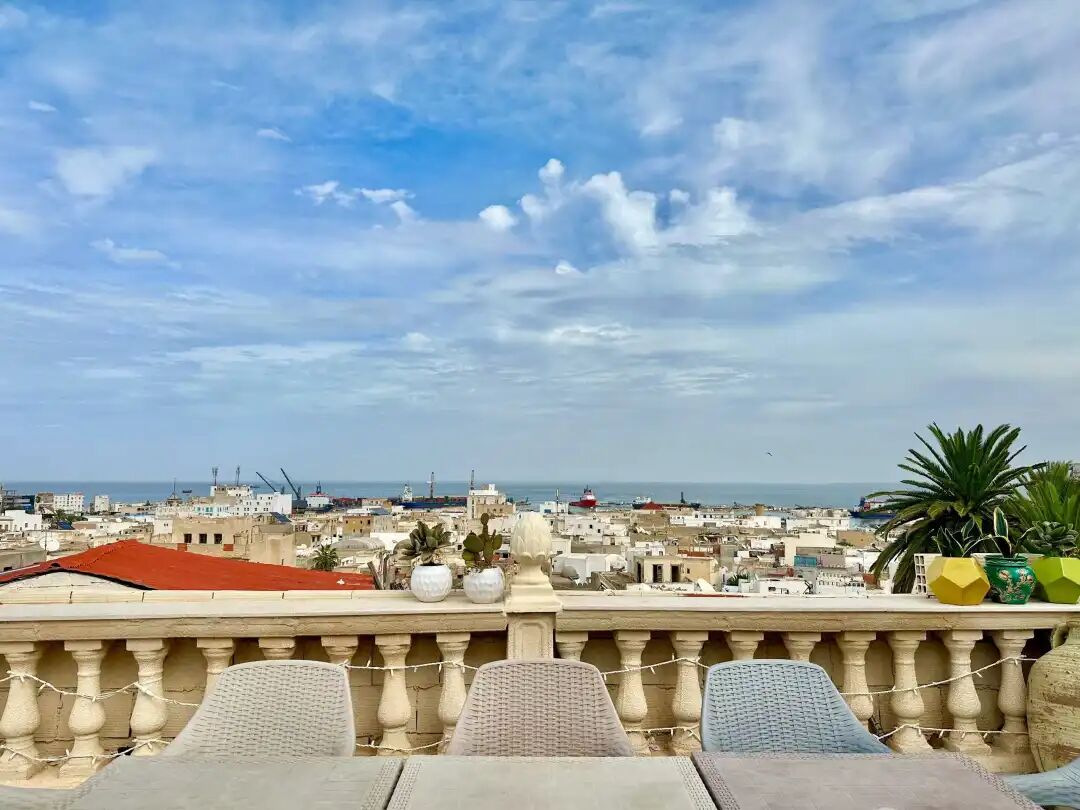
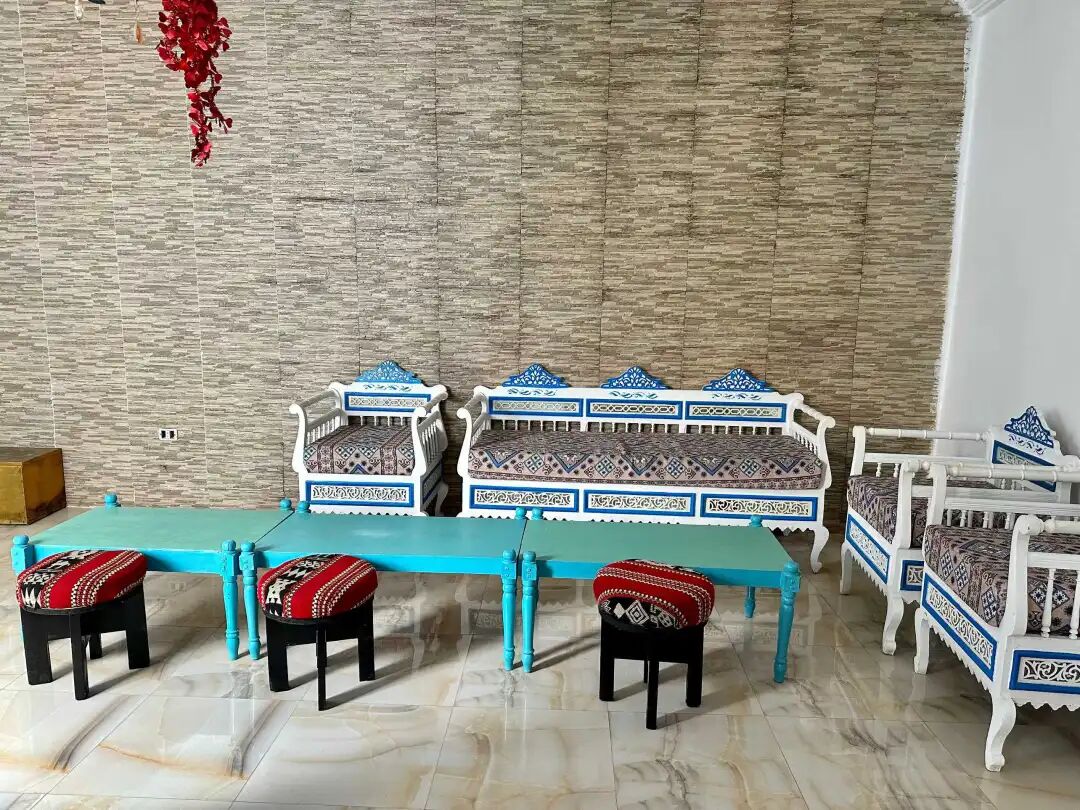
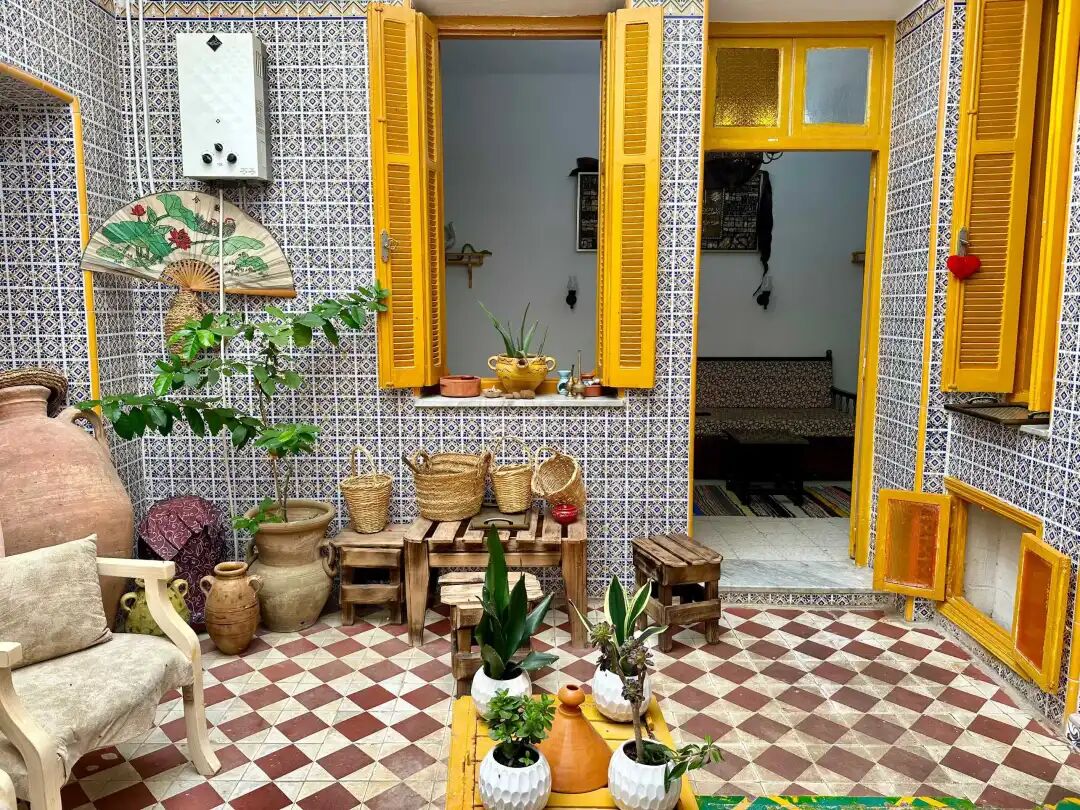
Street view of Souk el Cald, the main road starting from the old city's west gate, Bab El-Gharbi.
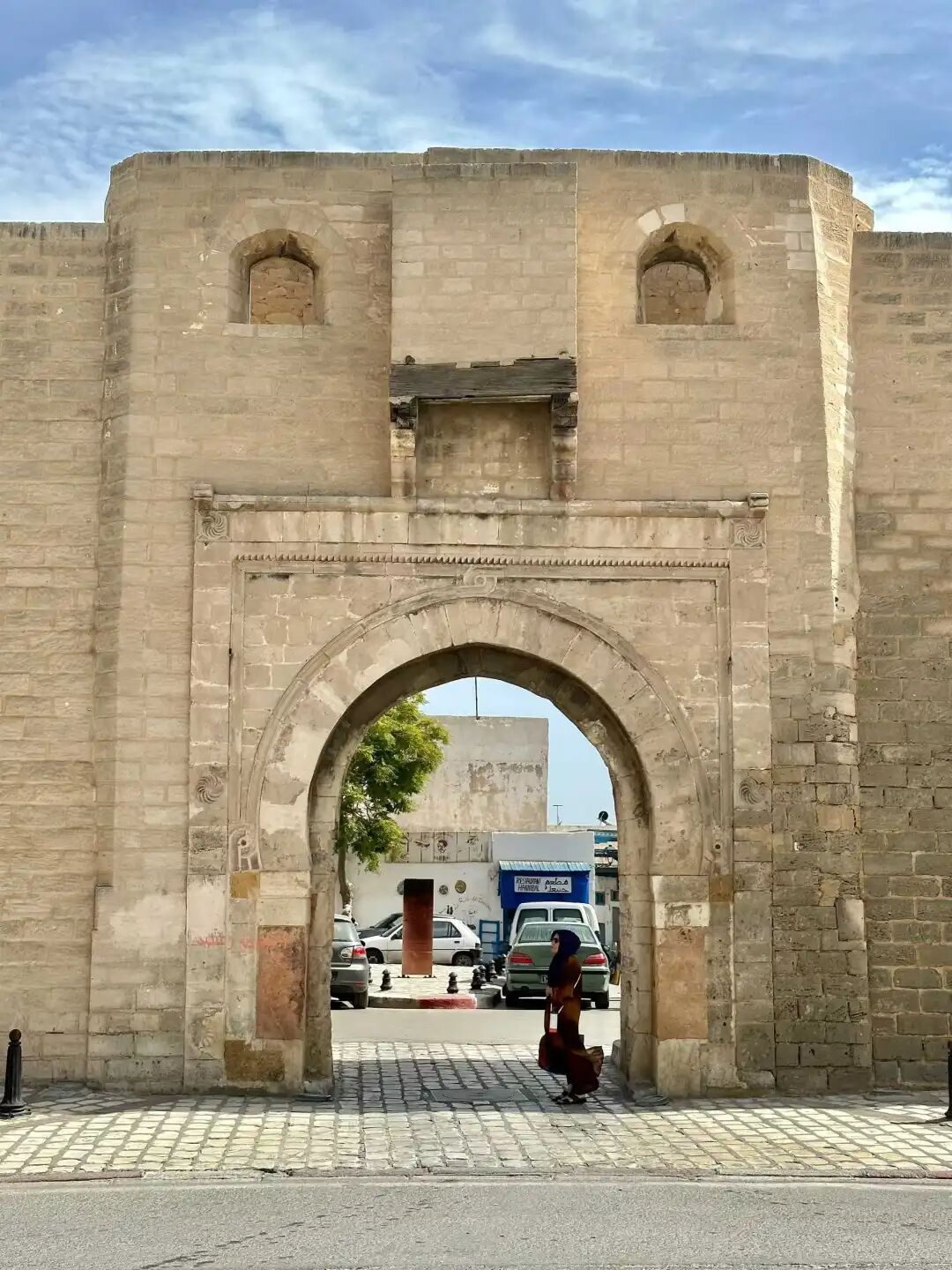
Souk el Cald has many tea houses and cafes perfect for taking photos. You can drink local mint tea, eat some pine nuts, and enjoy a slow pace of life.
At the snack shop by the entrance of the Great Mosque of Sousse, they specialize in Tunisian folded sandwiches (makloub). It is like a mix of shawarma and pizza; the crust is like pizza dough, filled with grilled meat, cheese, harissa, and mayonnaise, then rolled up to eat.
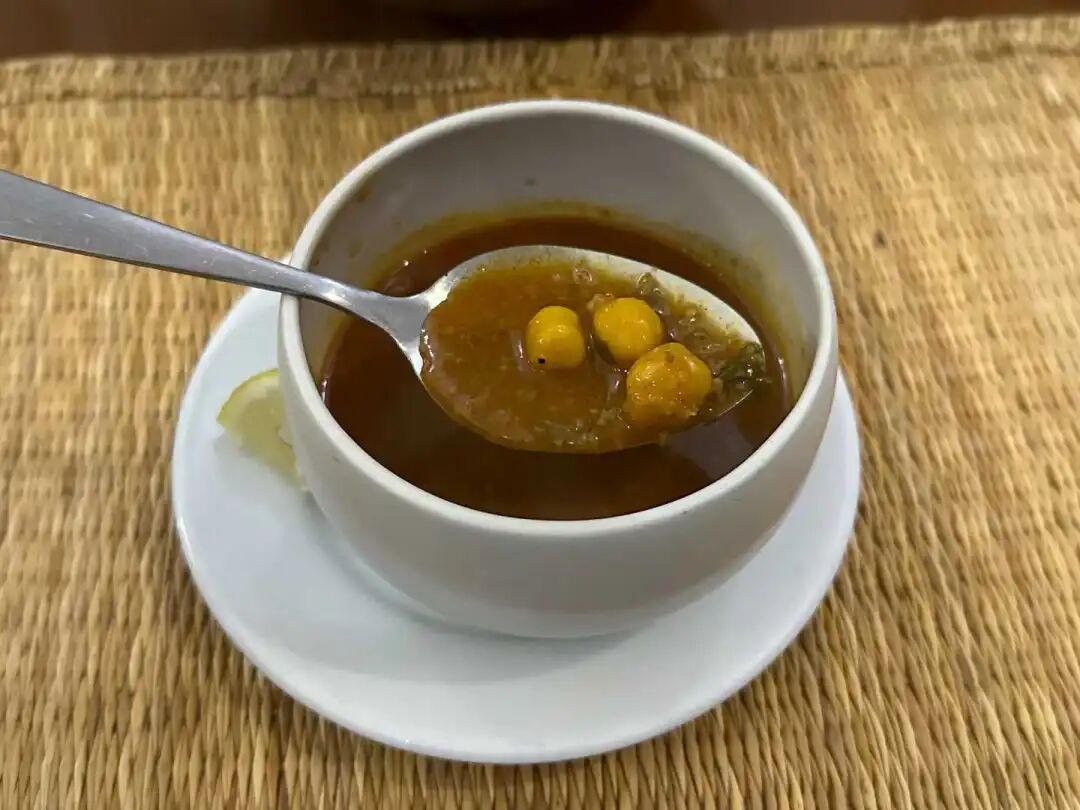
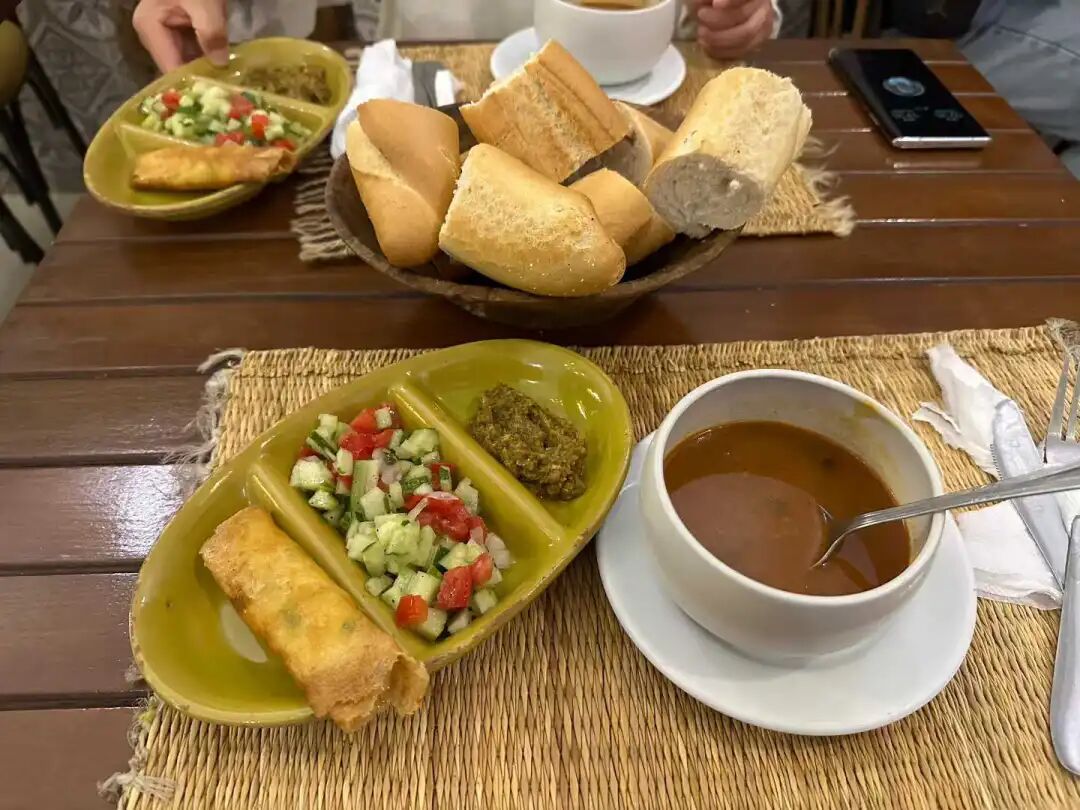
Restaurant du Peuple, located under the north city wall, specializes in traditional Tunisian food. We ordered the fisherman's stew and Berber lamb tagine, which represent the coastal and inland cultures of Tunisia, respectively. The fisherman's stew contains fish, shrimp, and shellfish, while the lamb tagine is a potato and meat stew. In Tunisian restaurants, you just need to order the main dish. Once you order, they bring out French bread, harissa soup, roasted pepper salad (mechouia), Tunisian salad, and deep-fried Tunisian spring rolls (brik). After you finish, they serve mint black tea.
The Berbers are the indigenous people of Tunisia. Centuries of Arab migration starting in the 7th century led to the Arabization of most Berbers, and by the 15th century, Tunisia was essentially fully Arabized. Although the Berbers and Arabs in Tunisia have merged today, many traditional Berber cultural elements remain, including unique Berber food and music.
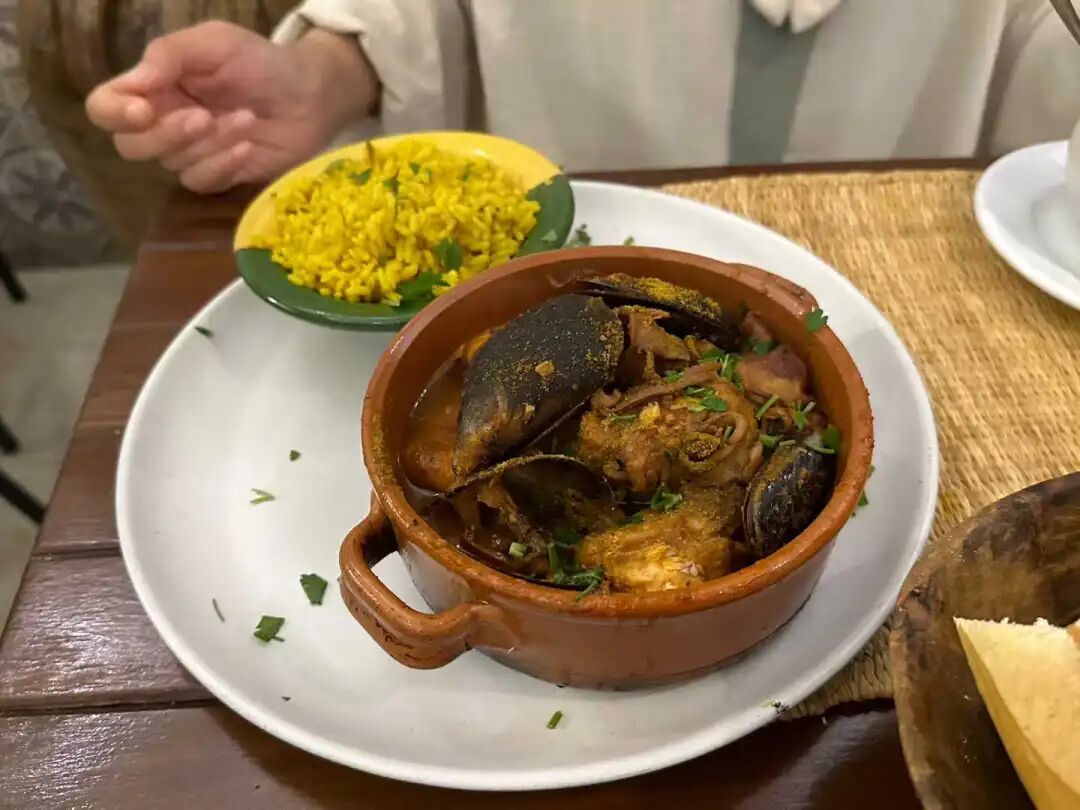
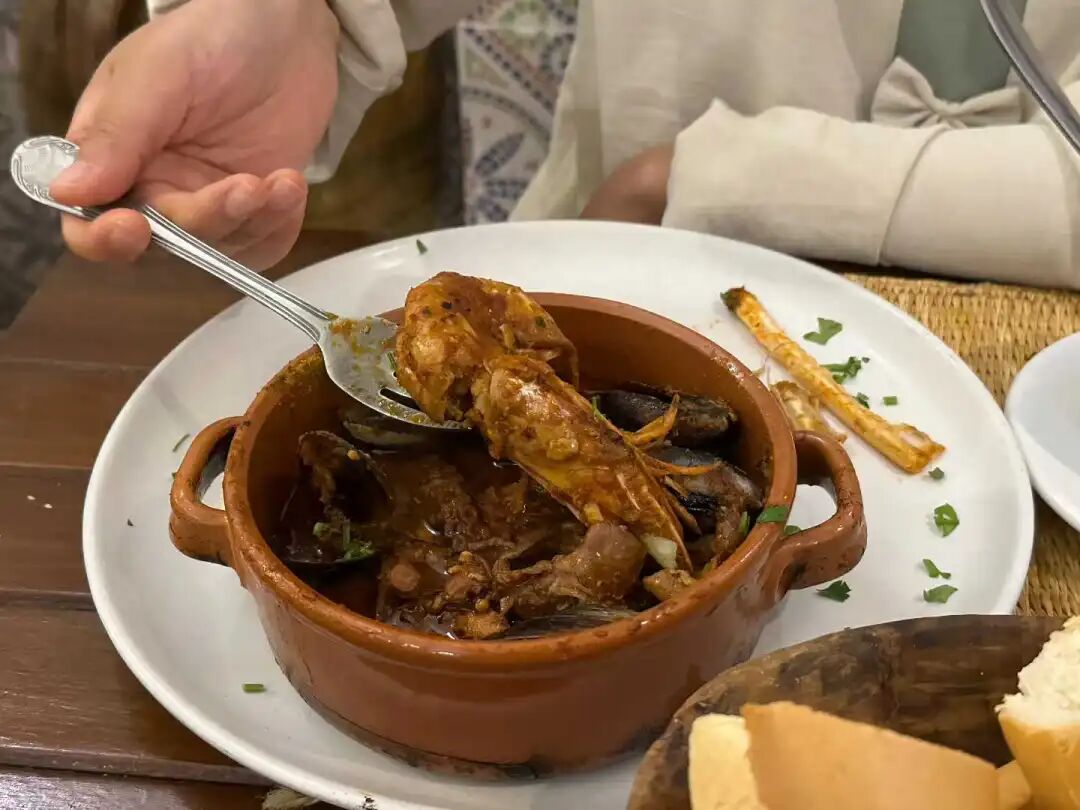
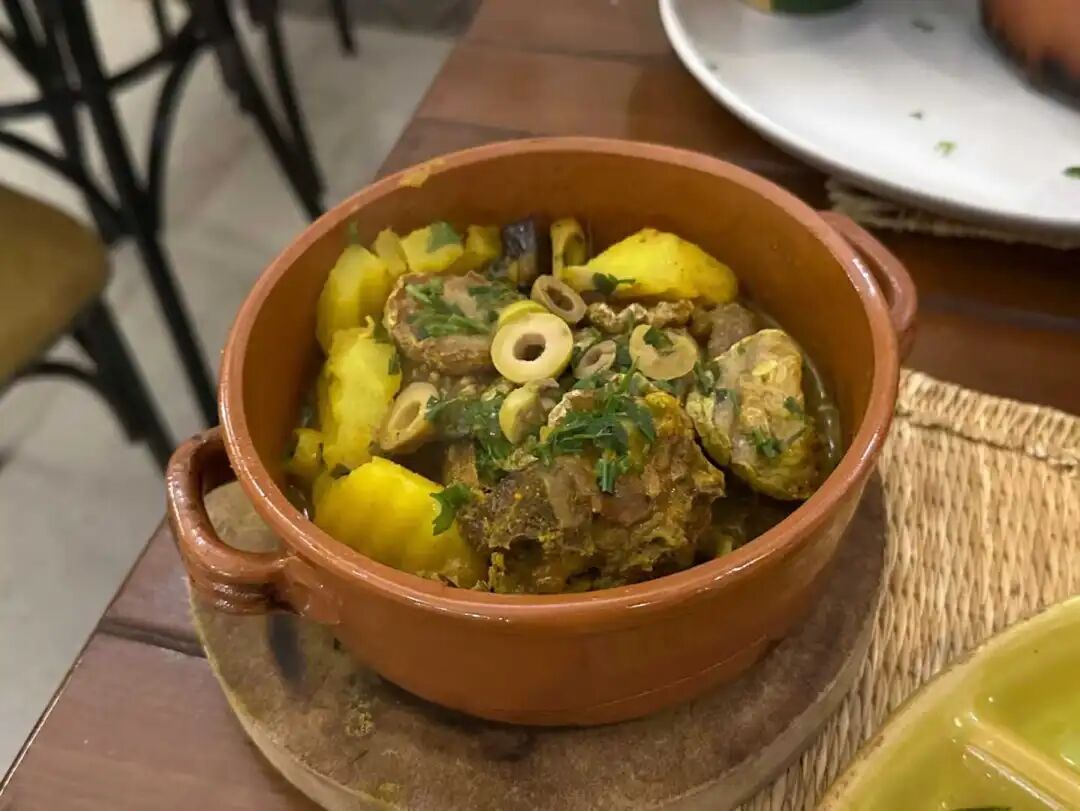
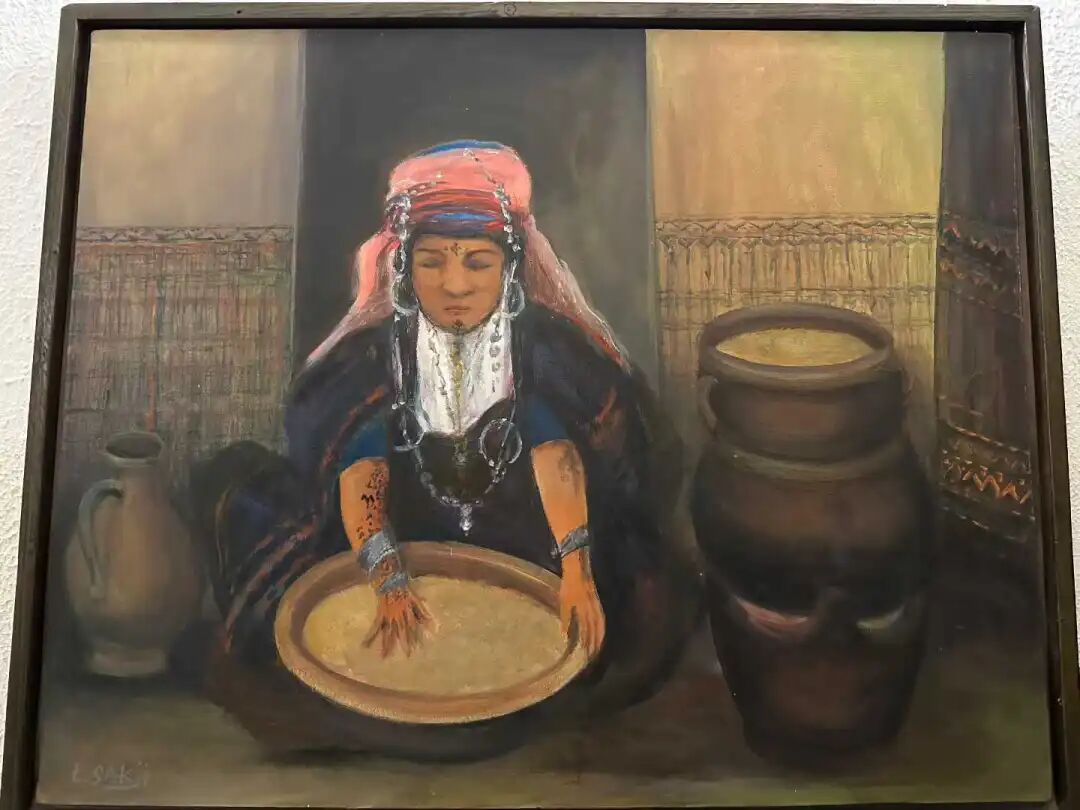
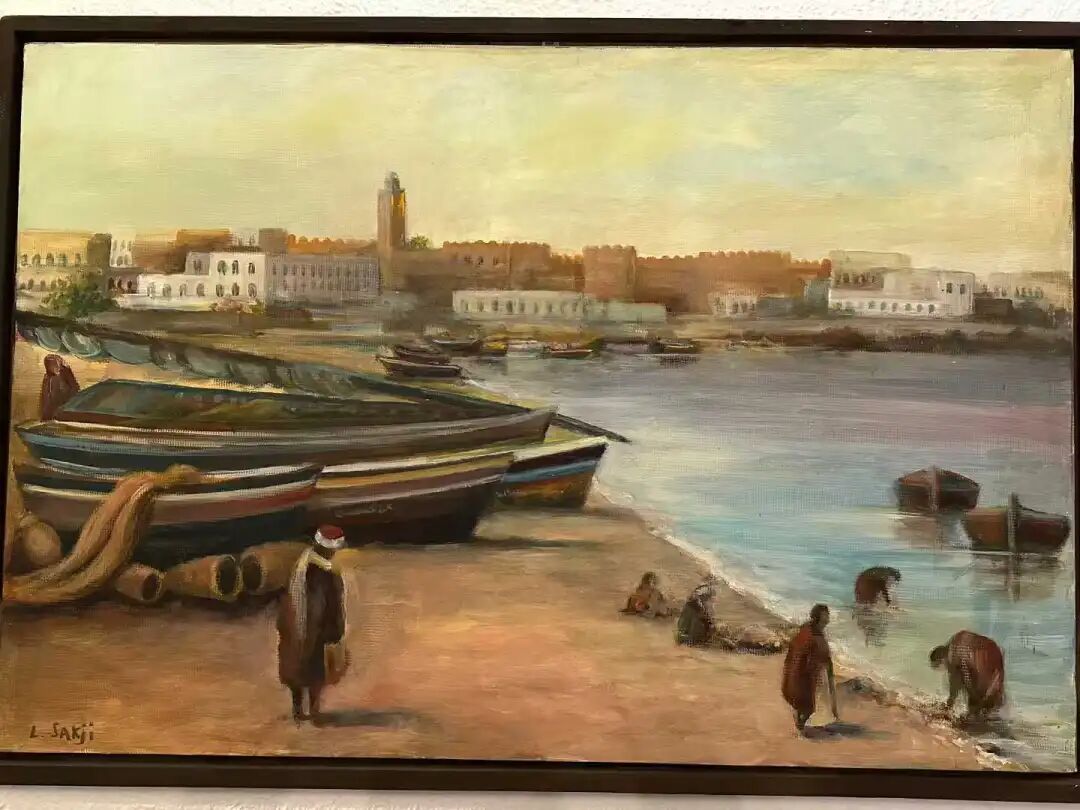
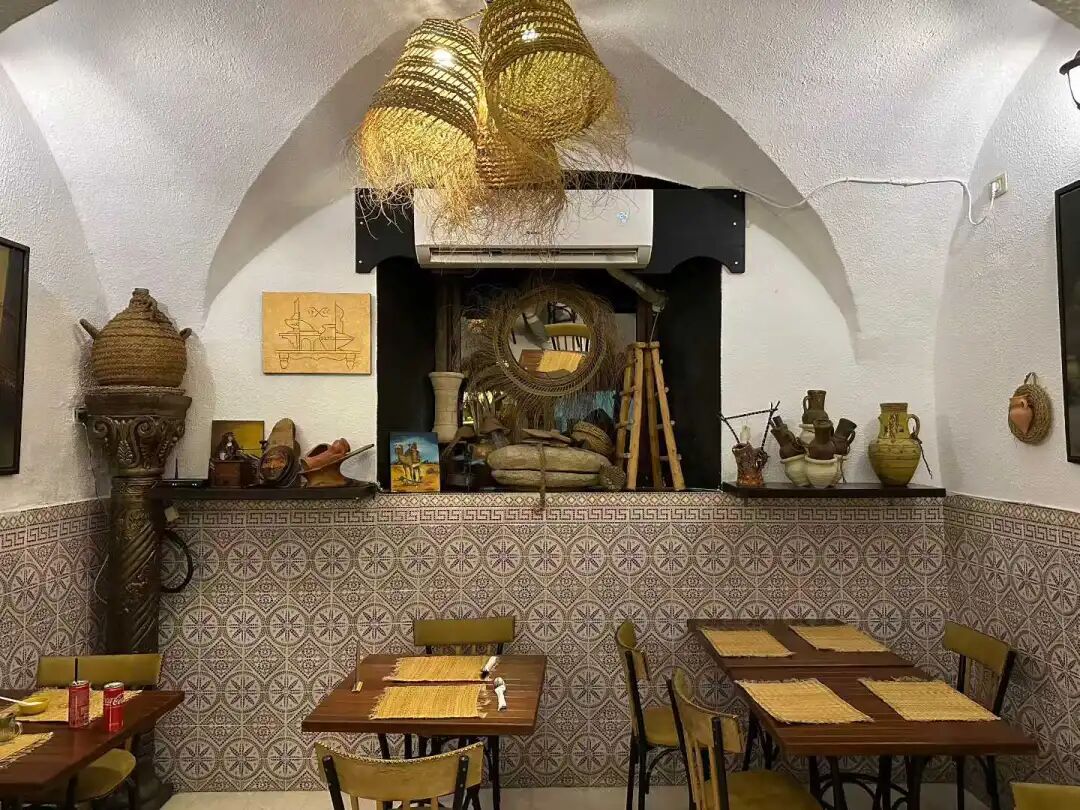
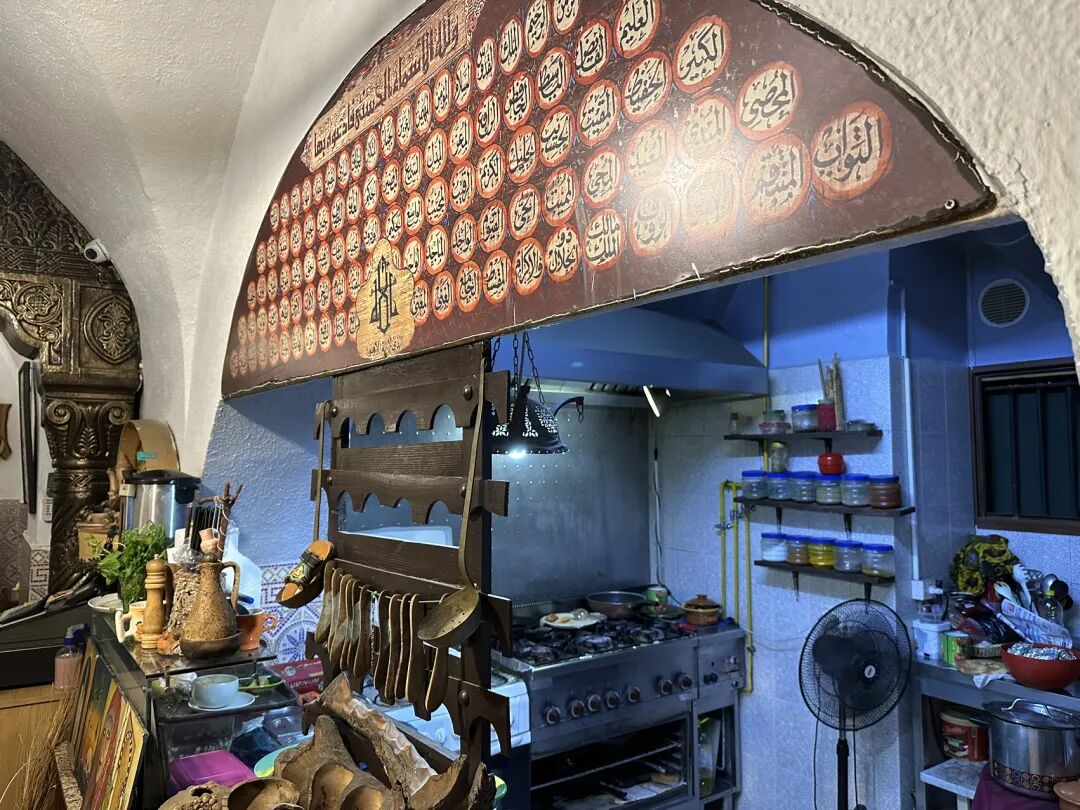
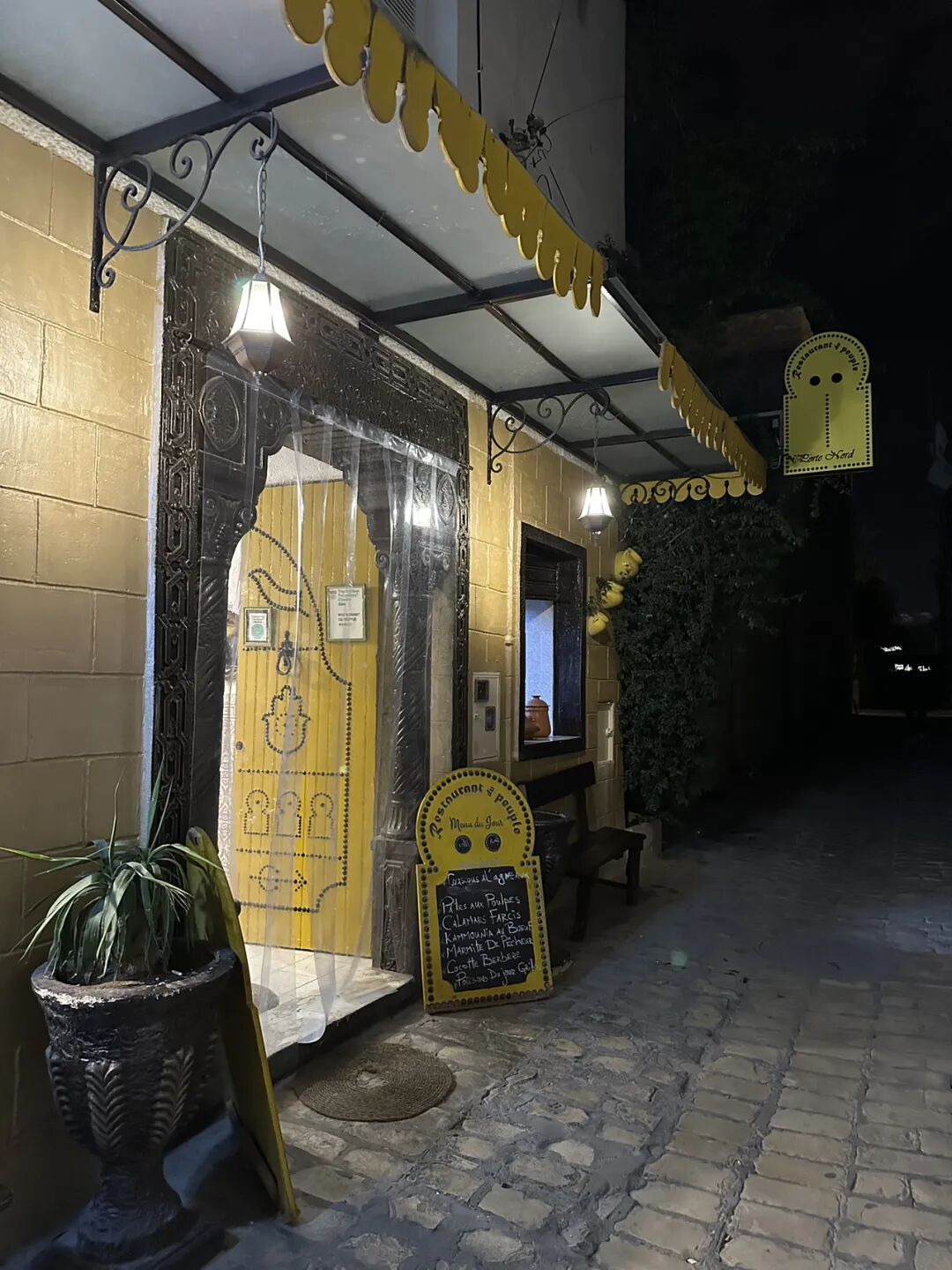
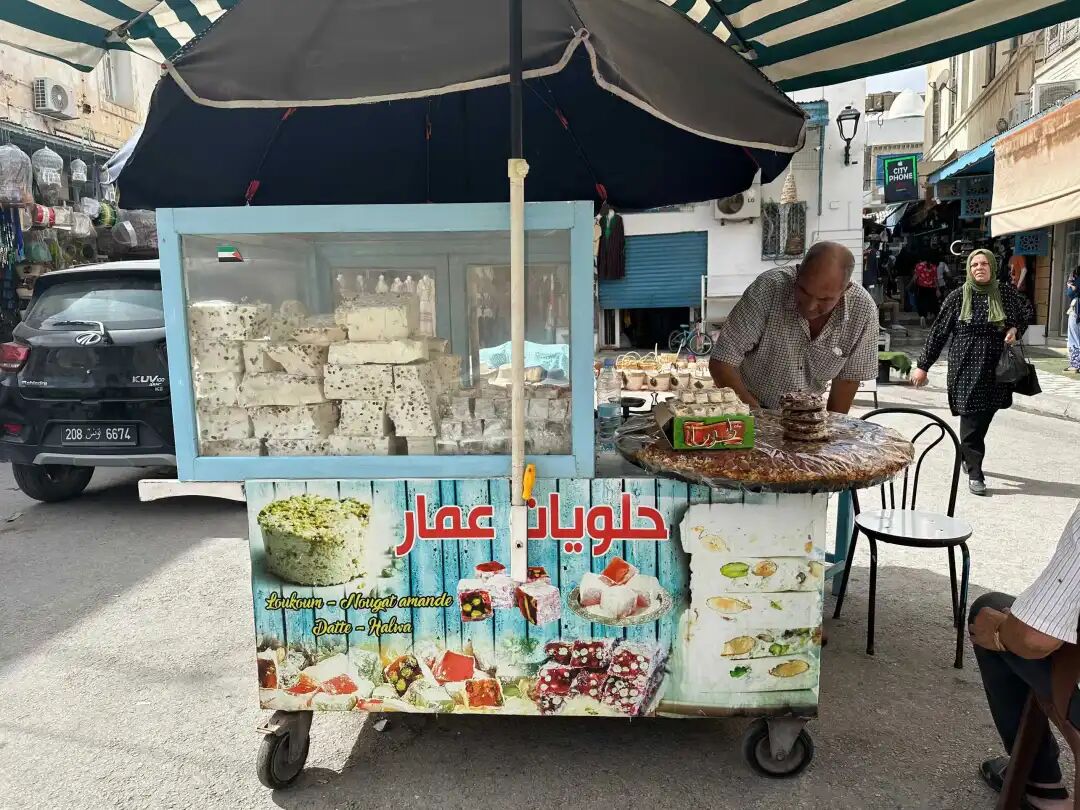
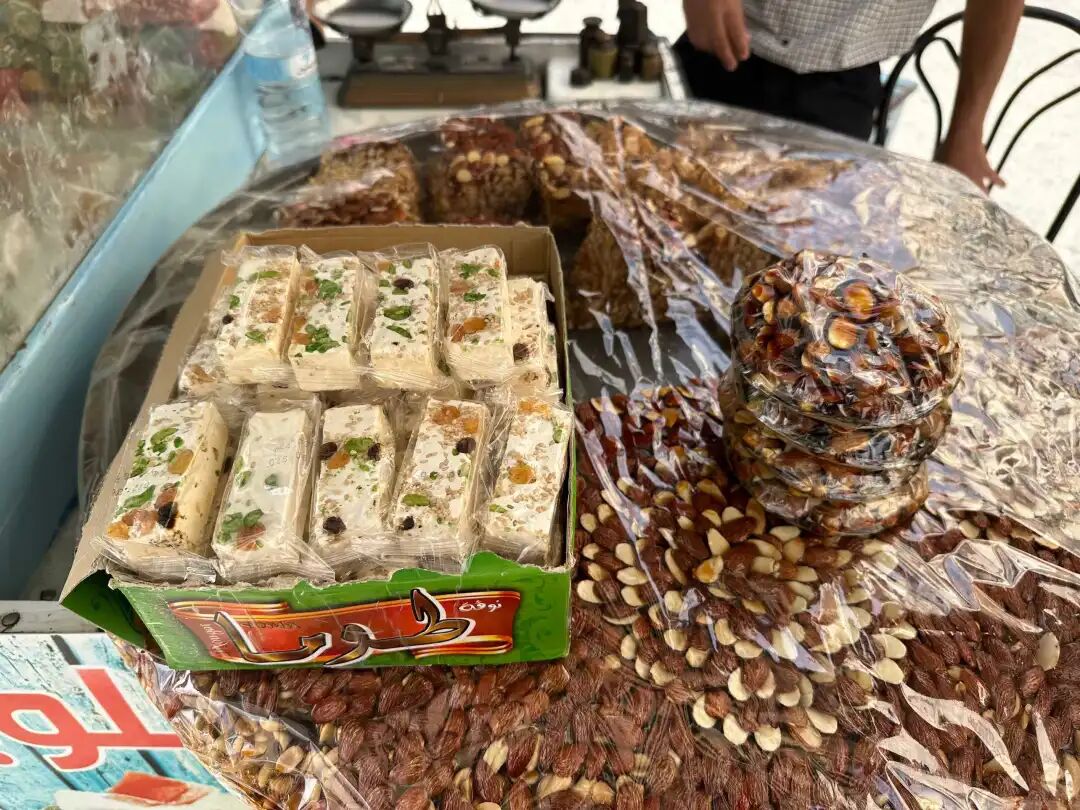
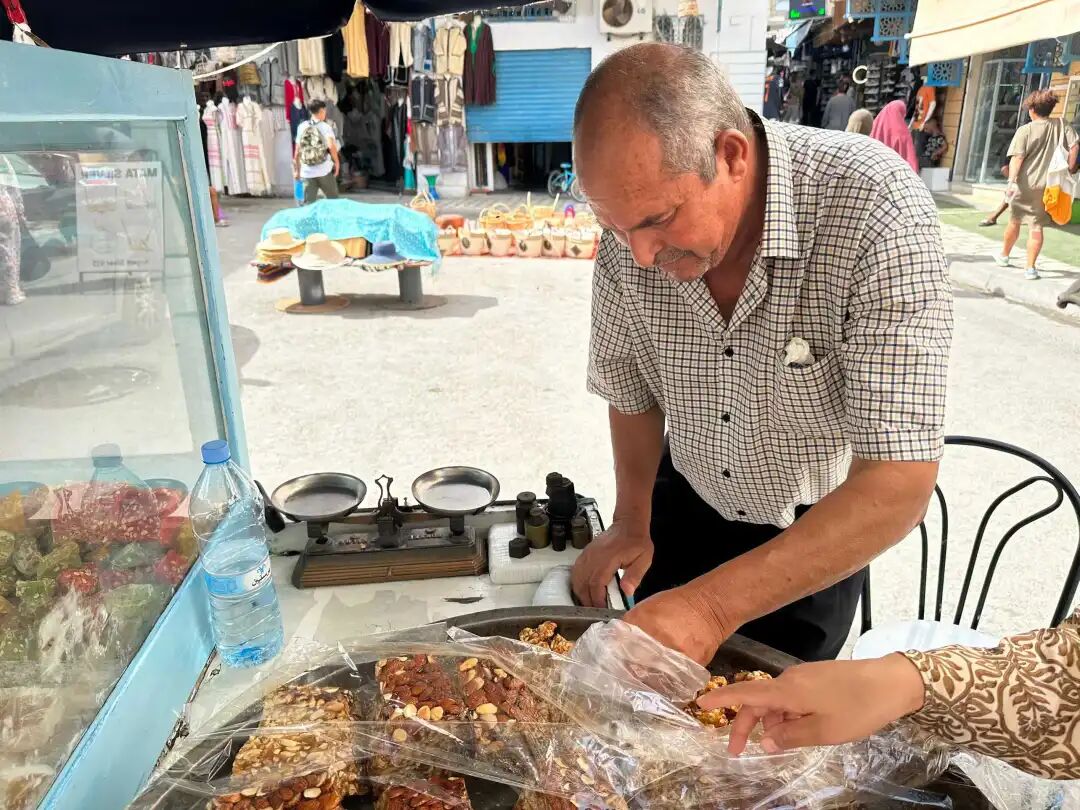
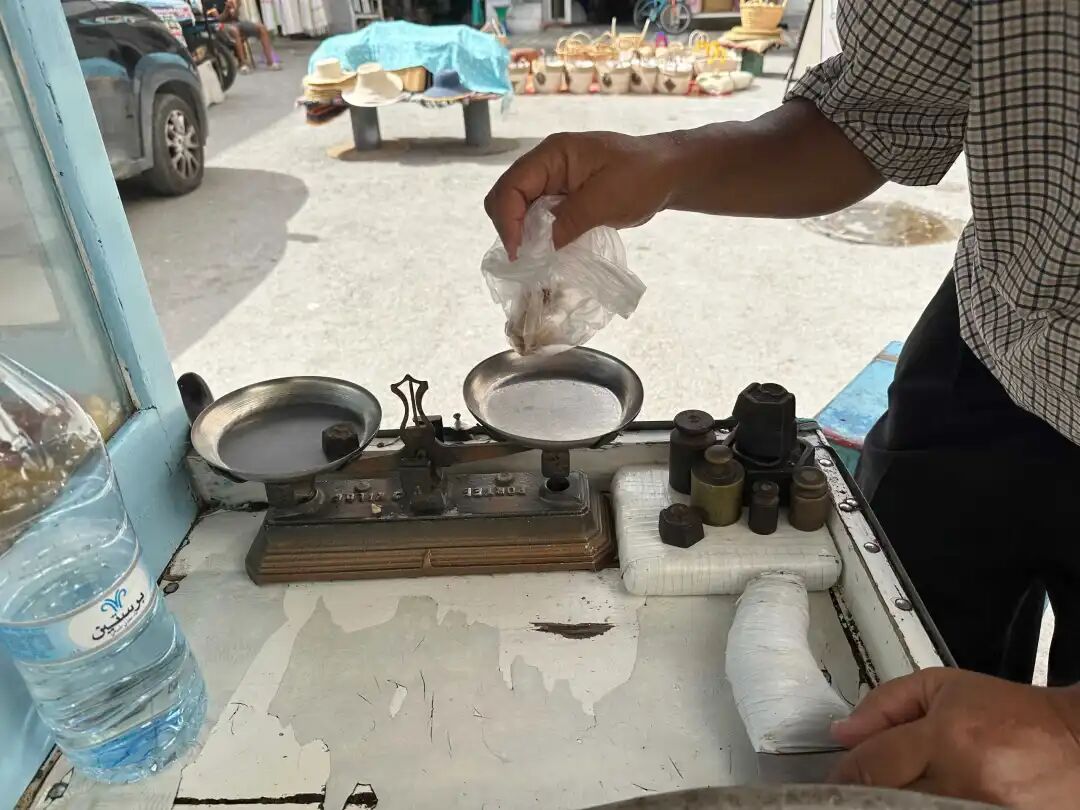
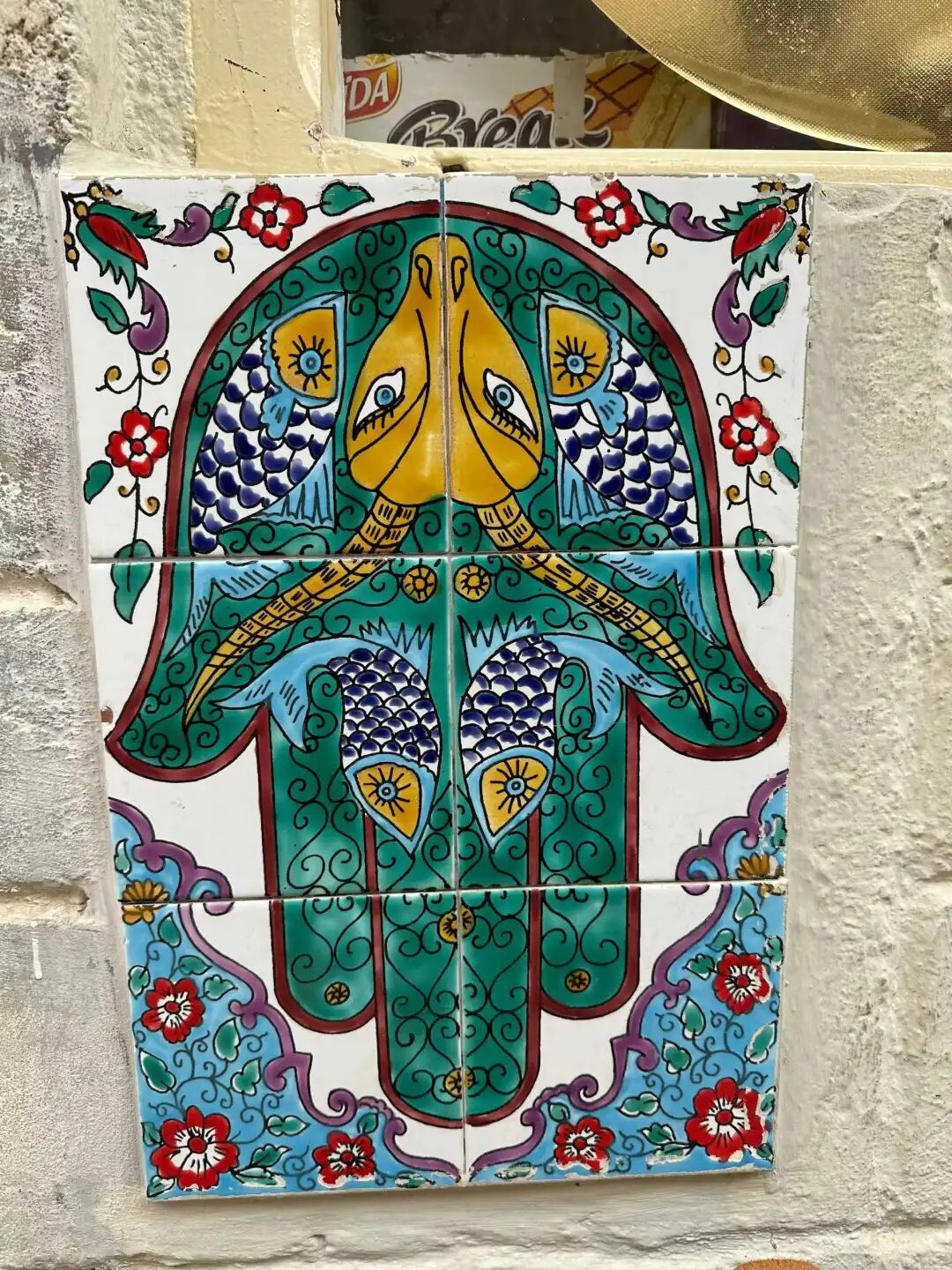
A candy stall on the old city street selling something like Xinjiang nut cake (qiegao), and the old-fashioned balance scale is a rare sight. Behind are some decorations from the old town streets, featuring classic Islamic themes like the Nuh boat, the Buraq ridden during the Ascension, and Hamsa (Fatima's hand) tiles.
Before the 19th century, all of Sousse's residents lived inside the old medina. After Tunisia became a French protectorate in 1881, the French began building a new city north of the Sousse medina. Sousse was bombed repeatedly between 1942 and 1943, and the new city suffered heavy damage. Authorities began rebuilding the new city in 1946, which eventually led to its current appearance.
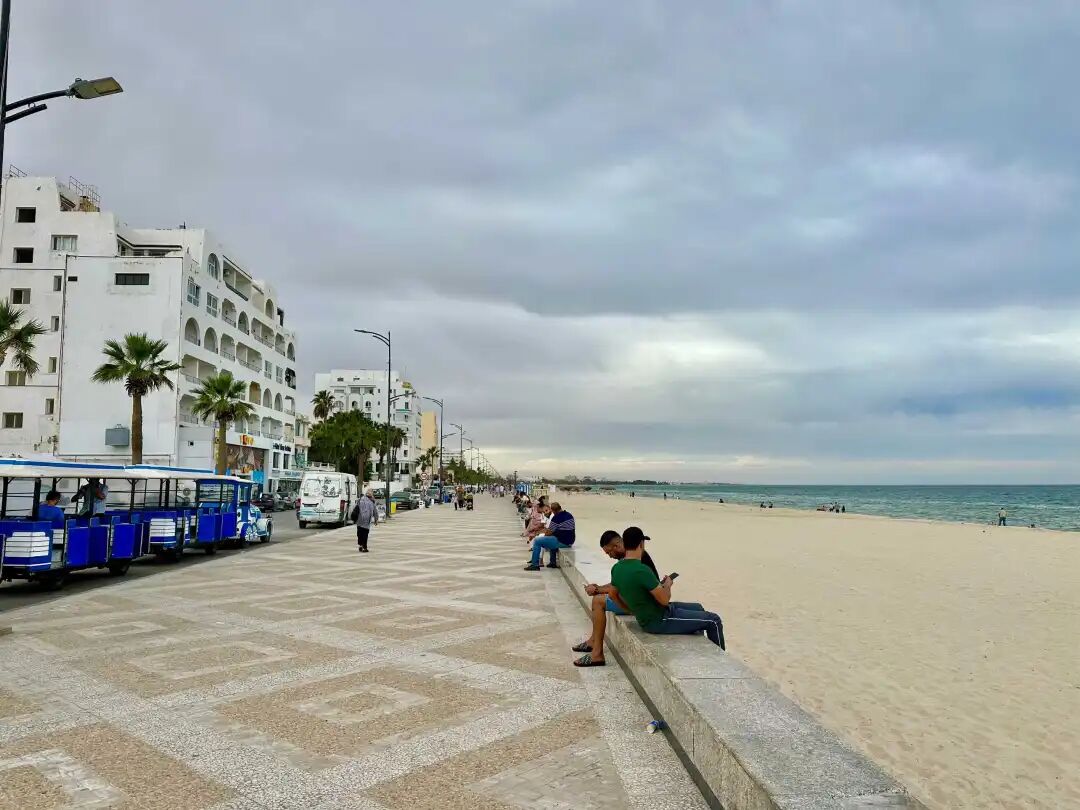
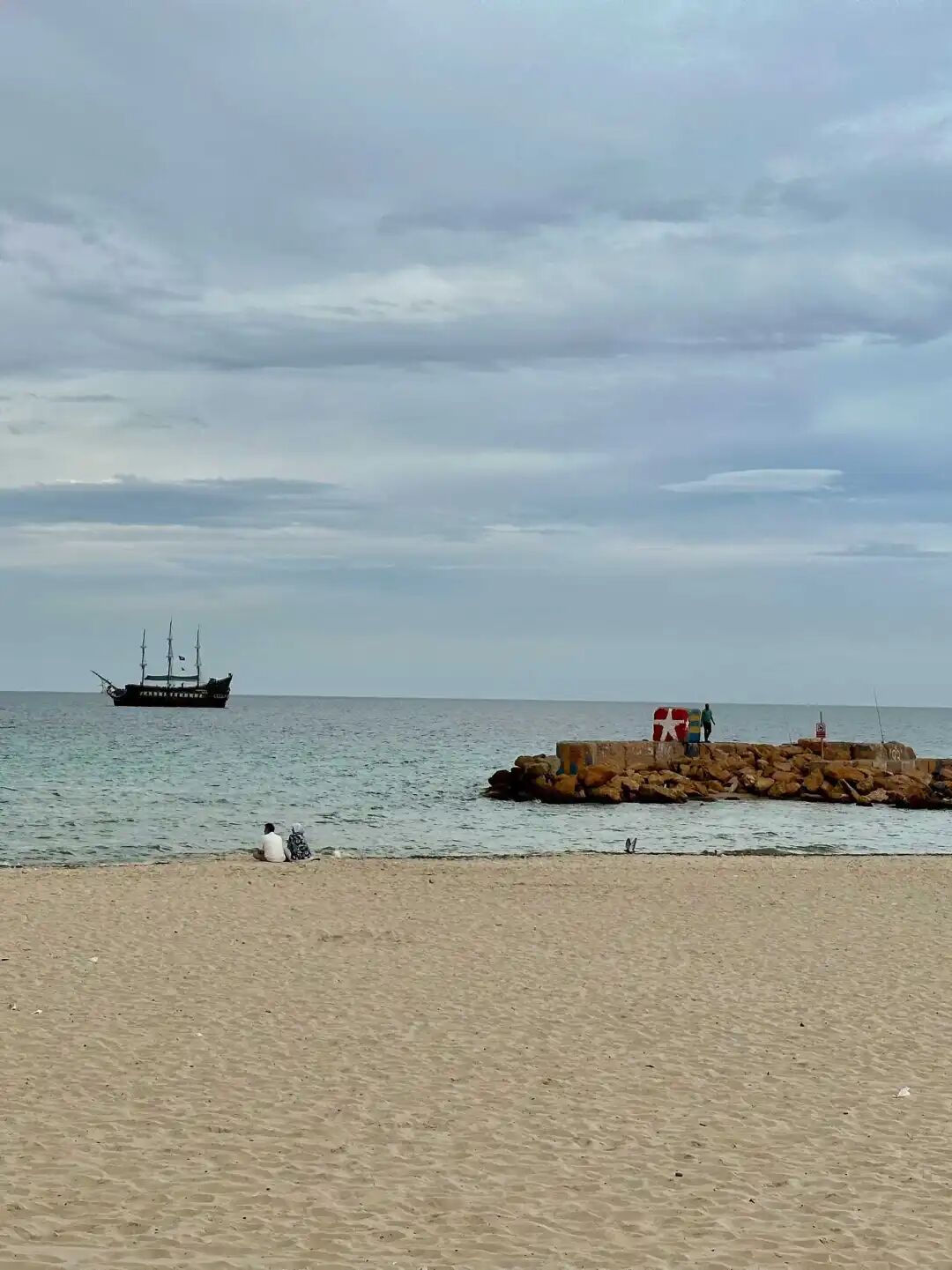
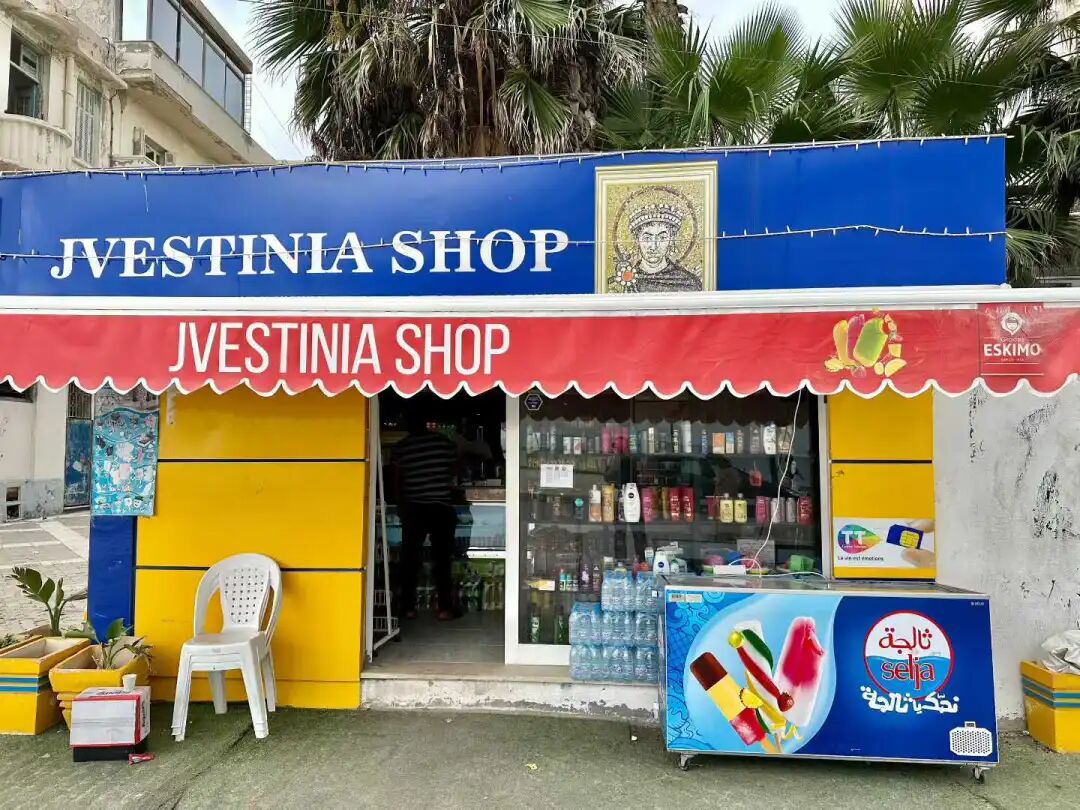
Sousse is a major coastal city in Tunisia, but the beach is not very busy and has little entertainment. People mostly just walk, chat, zone out, or drink coffee at the seaside cafes. While strolling by the sea, we were surprised to find a shop called "Justinian" with a portrait of the Byzantine Emperor Justinian I printed on it. We bought some pistachios from a handsome young man in the shop and learned to zone out by the sea just like the locals.
During the reign of Justinian I (527-565), many territories lost by the Western Roman Empire were reclaimed, including Tunisia. In 533, the Byzantine army under Justinian I landed in Tunisia and quickly defeated the Germanic Vandal Kingdom, allowing Tunisia to remain prosperous for over a hundred years.
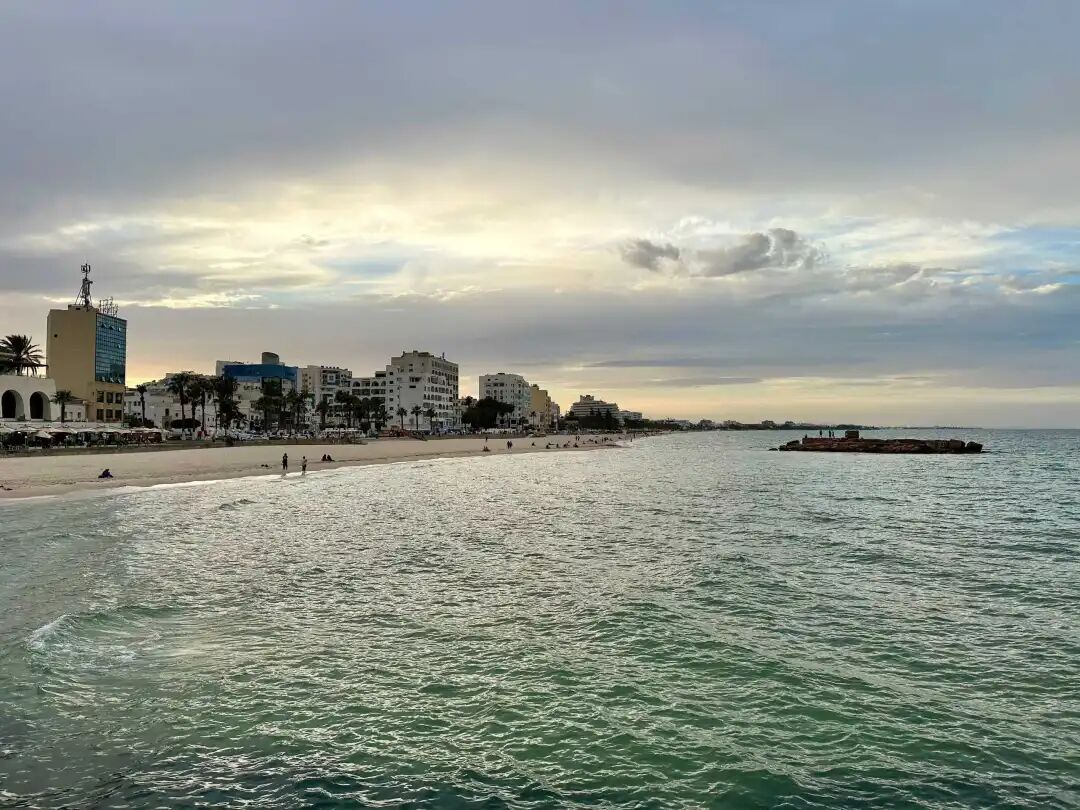
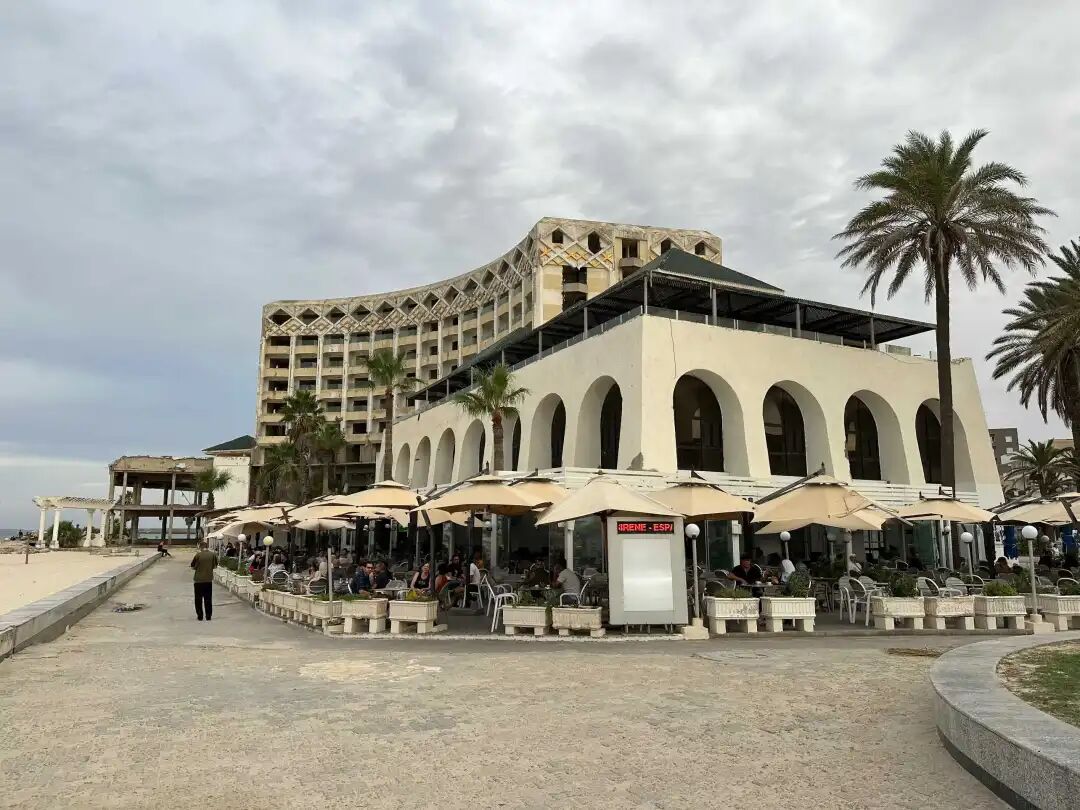
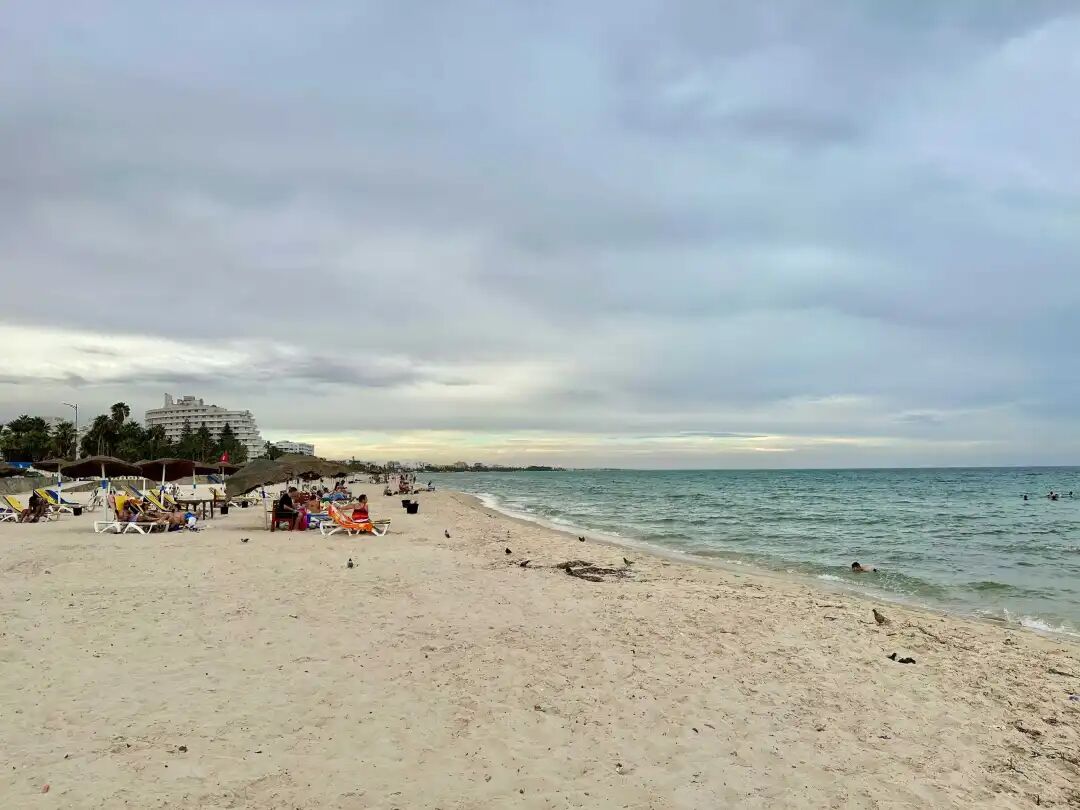
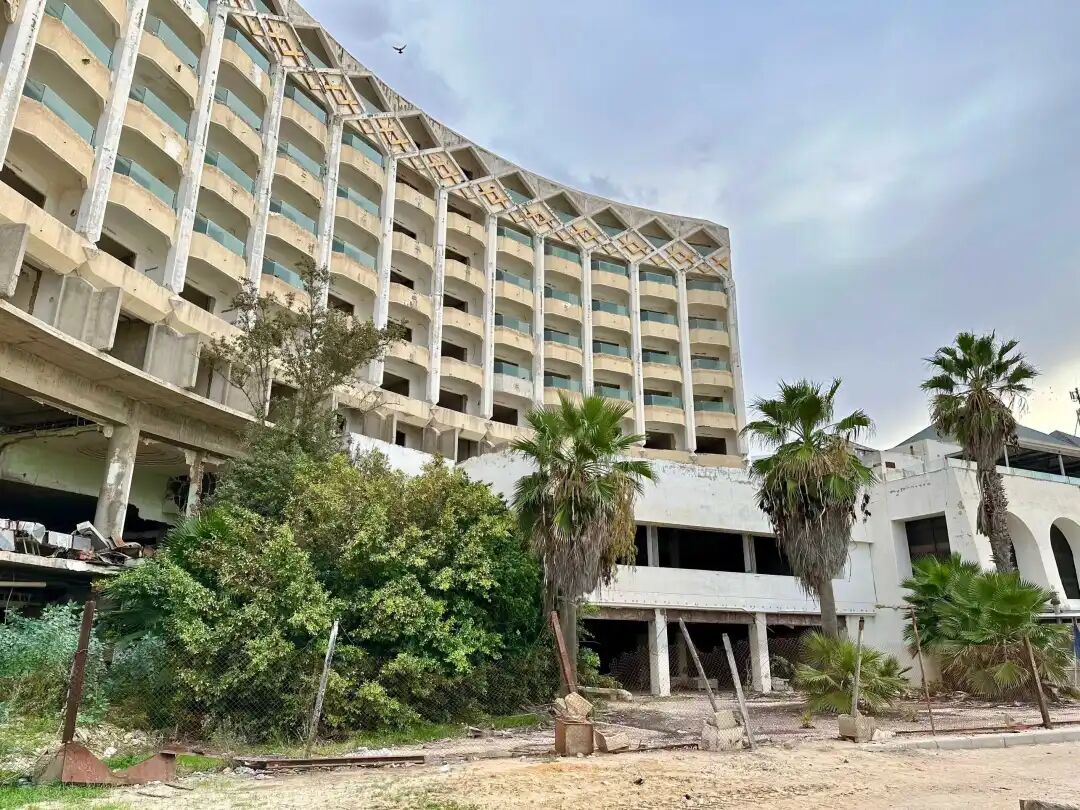
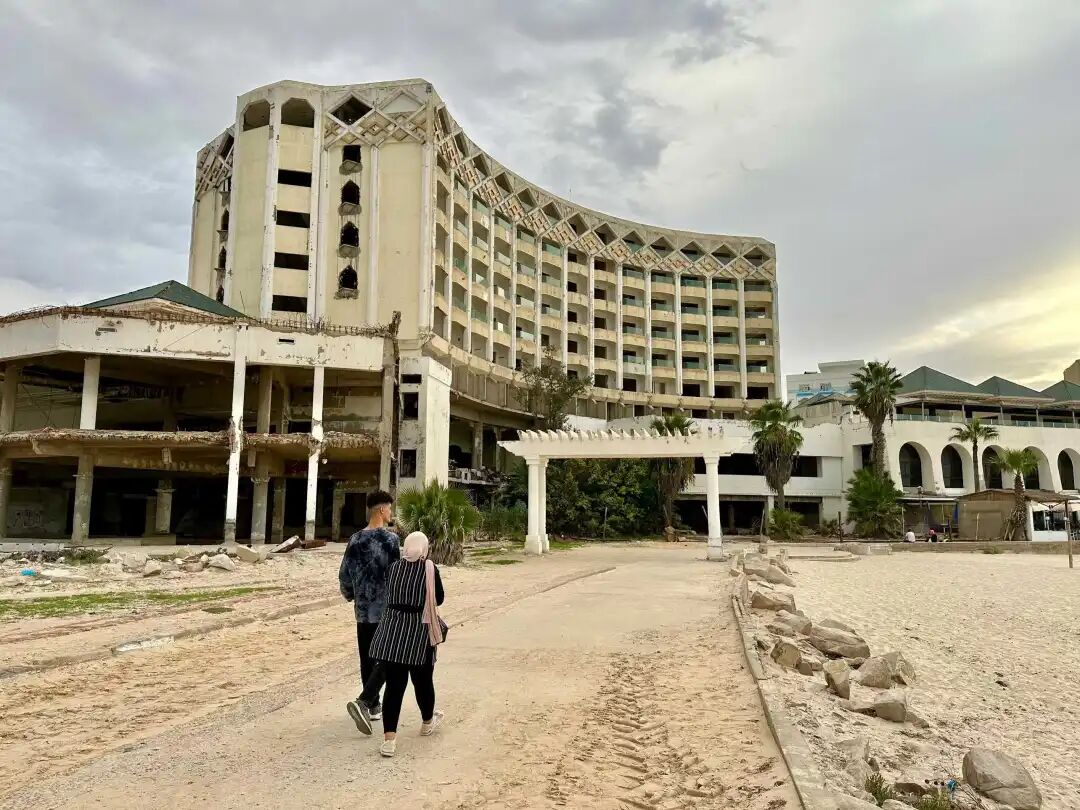
The ABOU NAWAS BOU JAAFAR hotel by the Sousse beach is now abandoned, but surprisingly, their official website is still up. Looking at old photos, it was very luxurious back then.
At a small restaurant in the new city, we had a grilled meat platter, which was still served with a baguette and Tunisian salad. The platter included chicken, beef, and Tunisian sausage (Merguez).
Merguez is made with lamb and beef, mixed with cumin, harissa, chili, and various other spices, and is usually grilled. Merguez sausage was first seen in the 12th century in Andalusia, which was southern Spain under Arab rule, and later spread throughout North Africa.
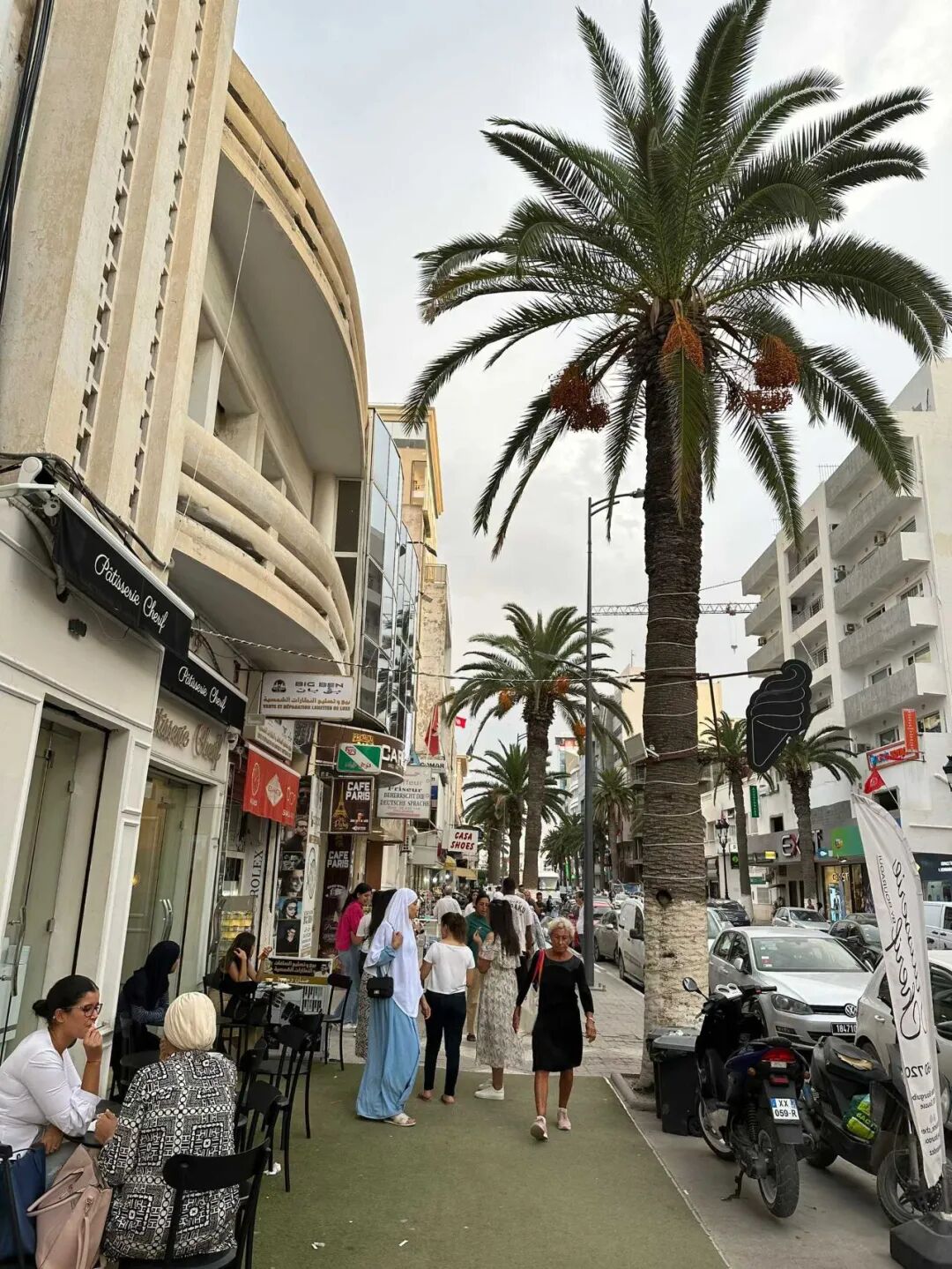
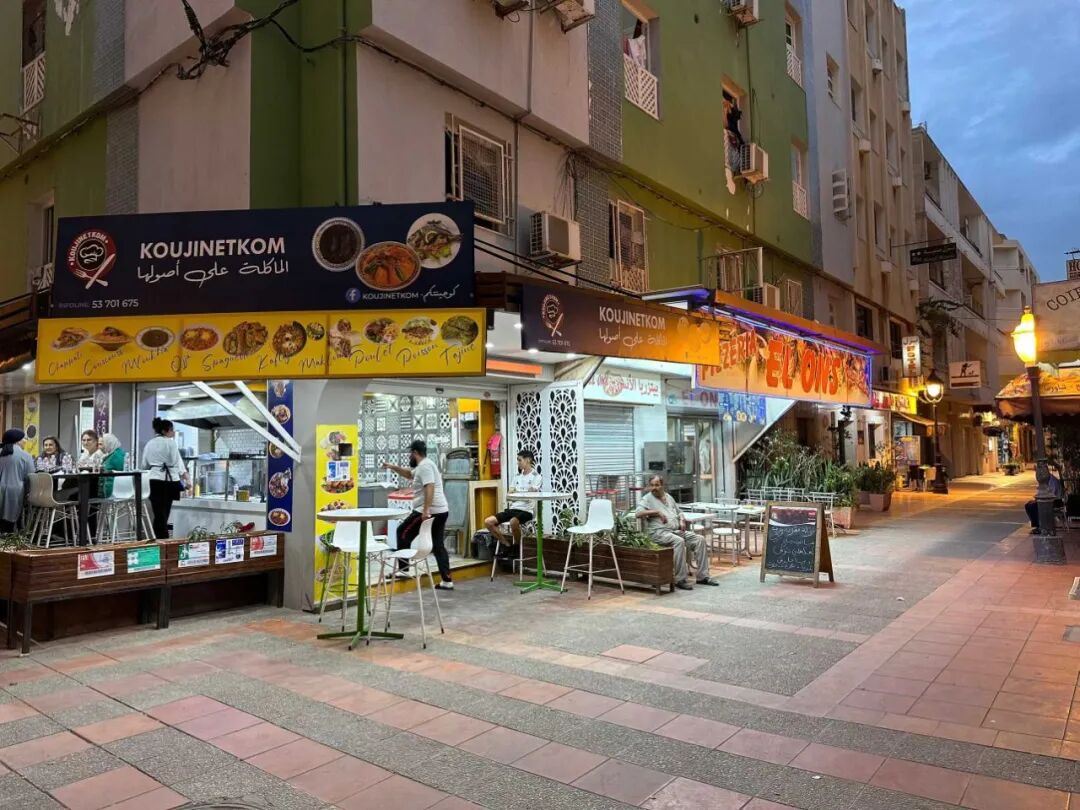
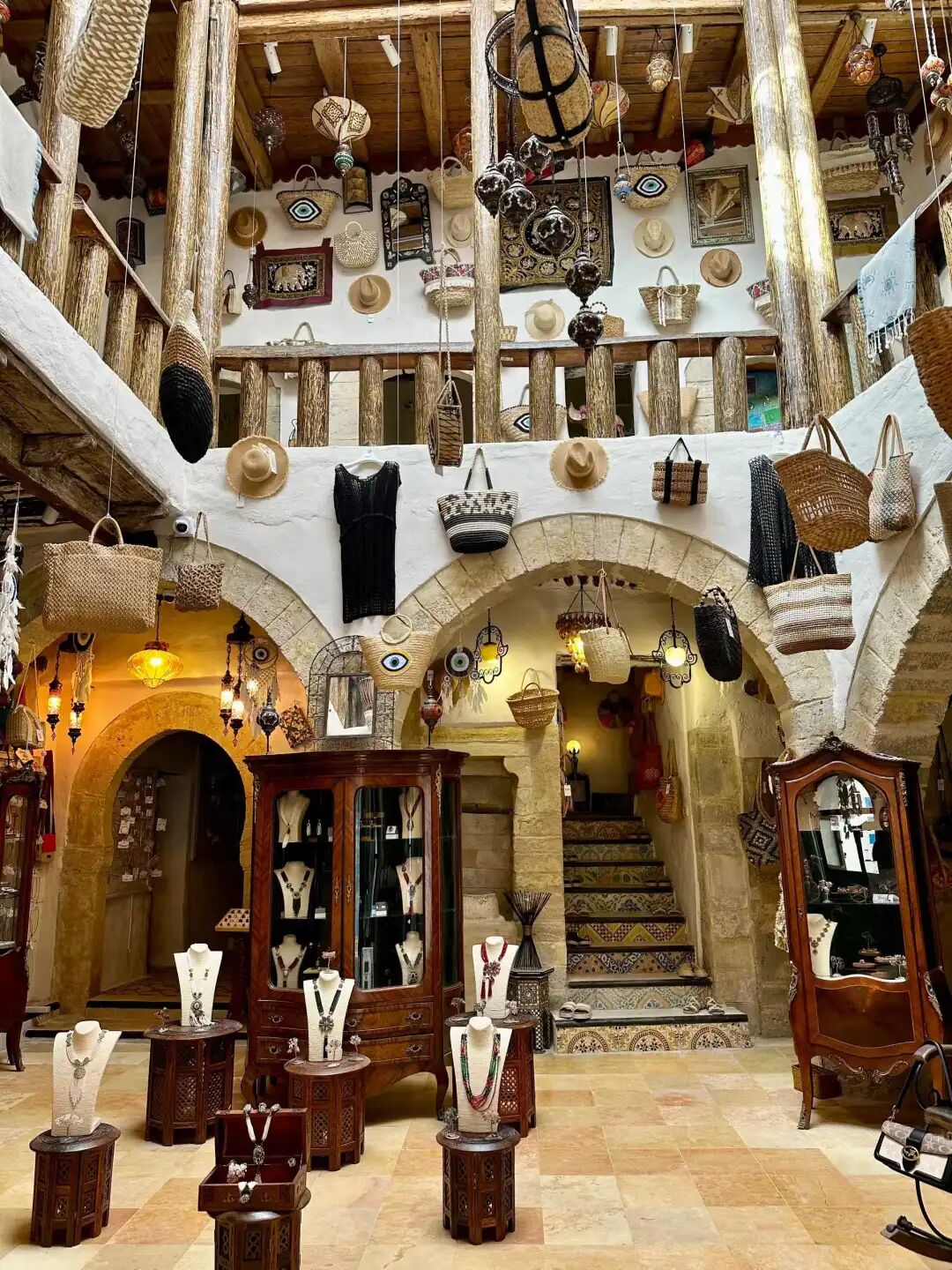
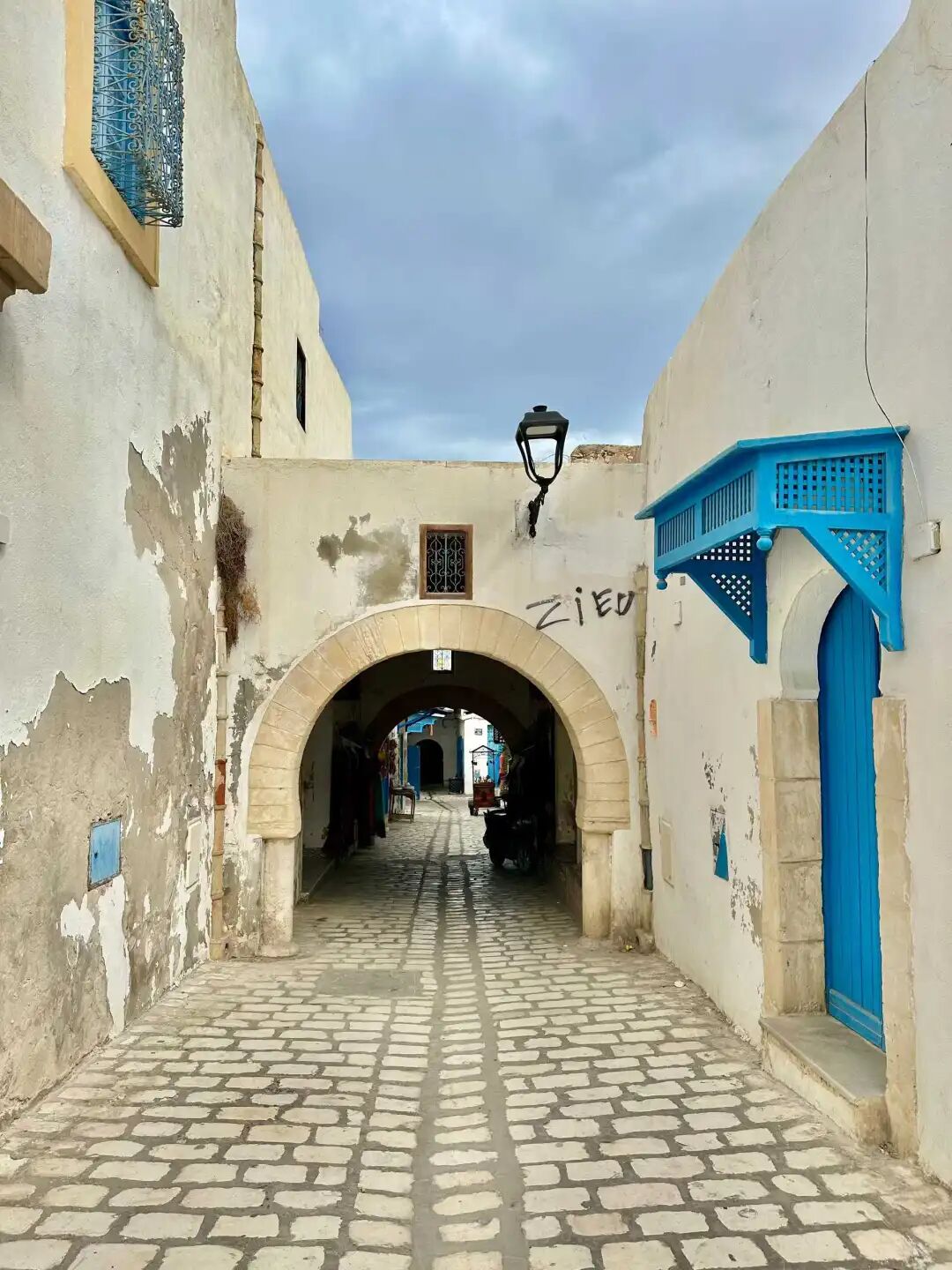
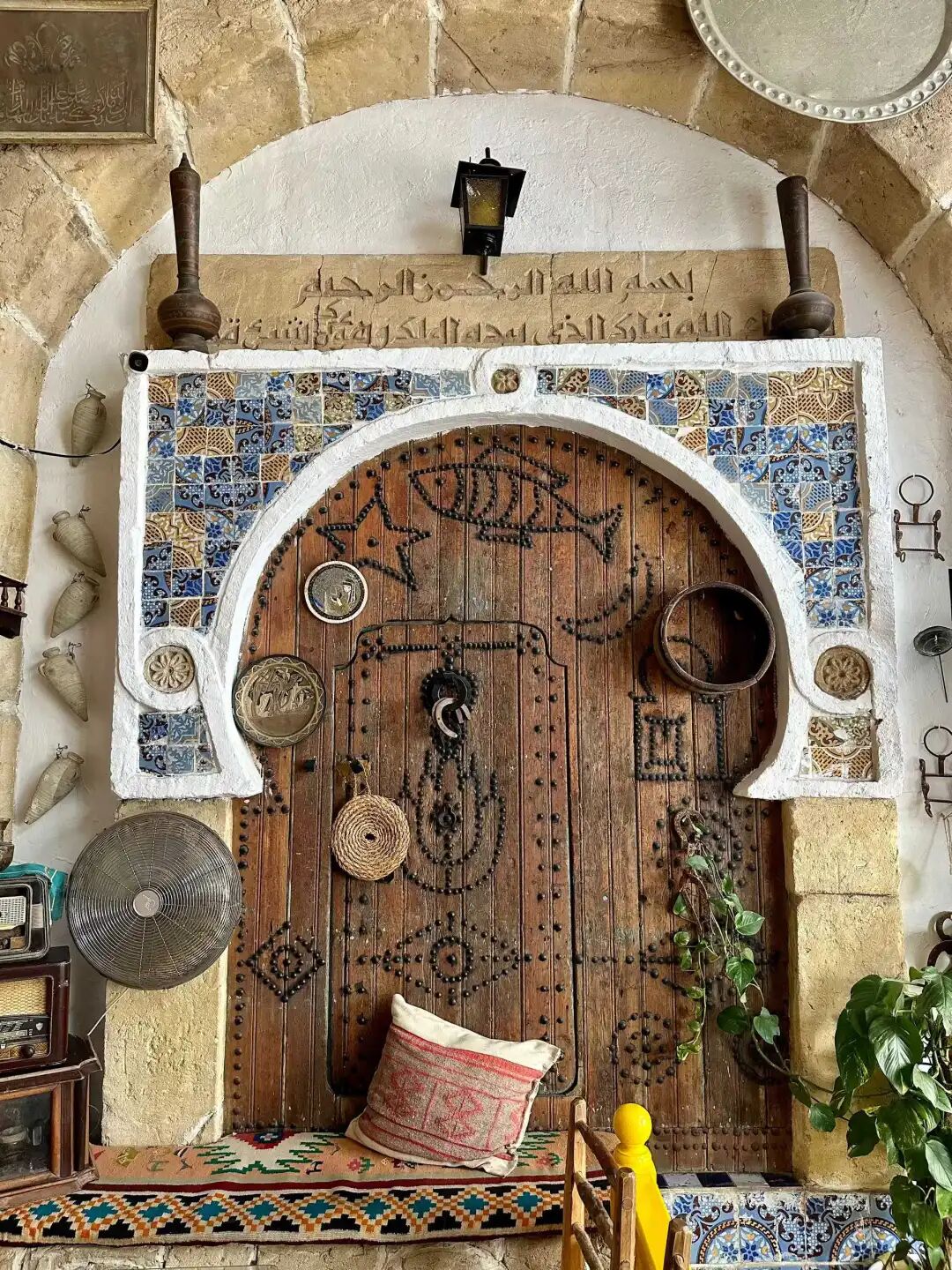
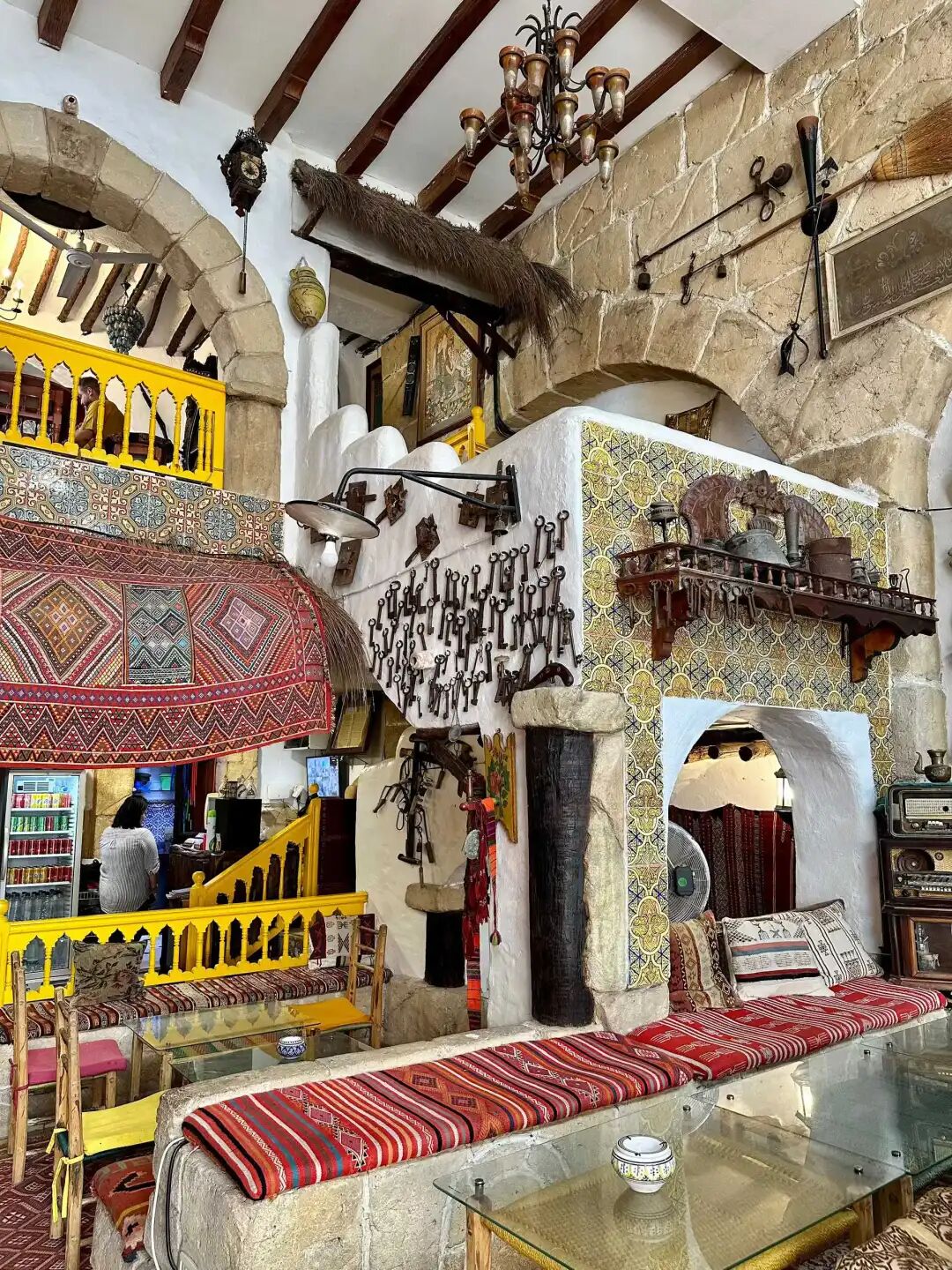
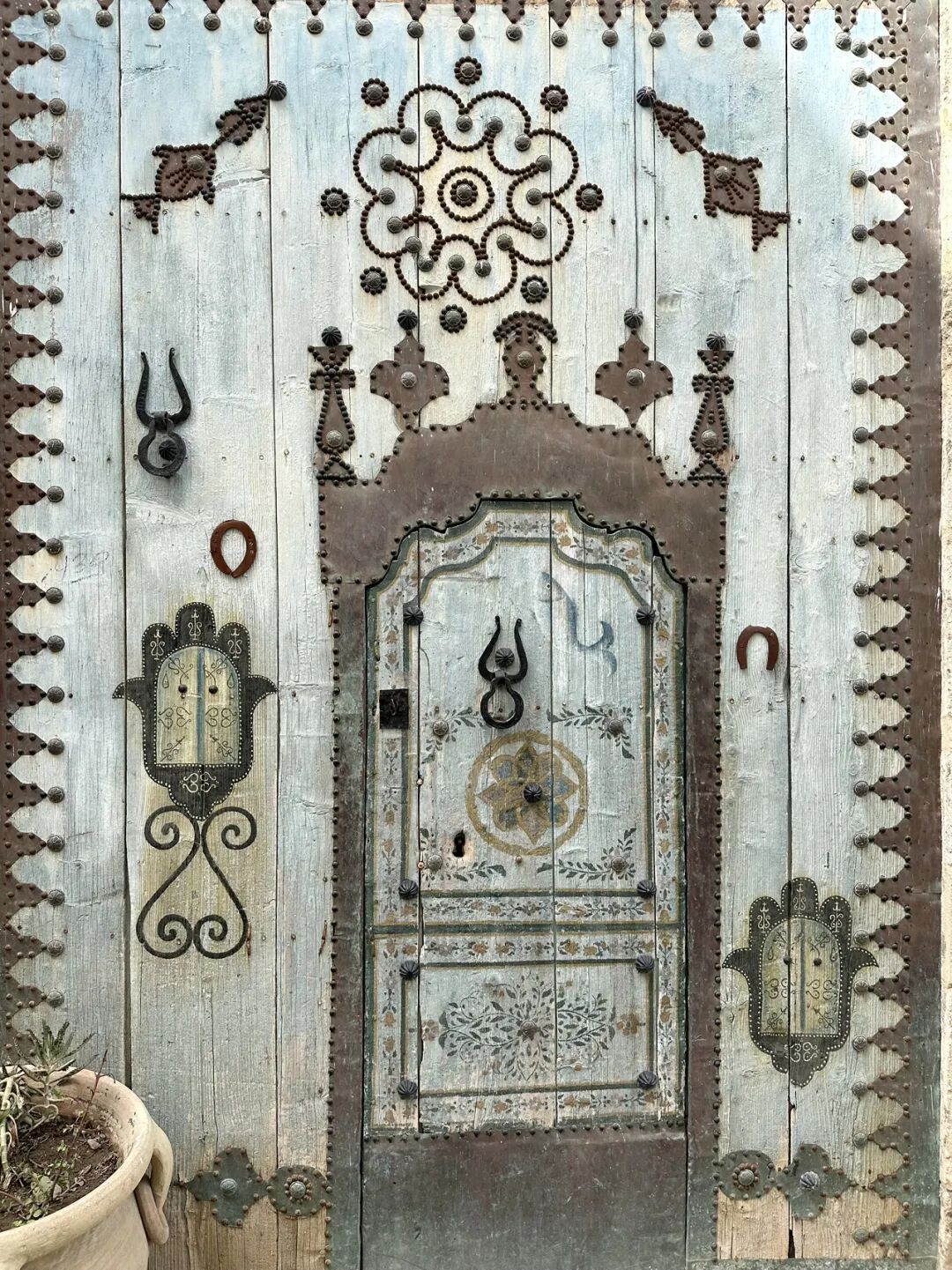
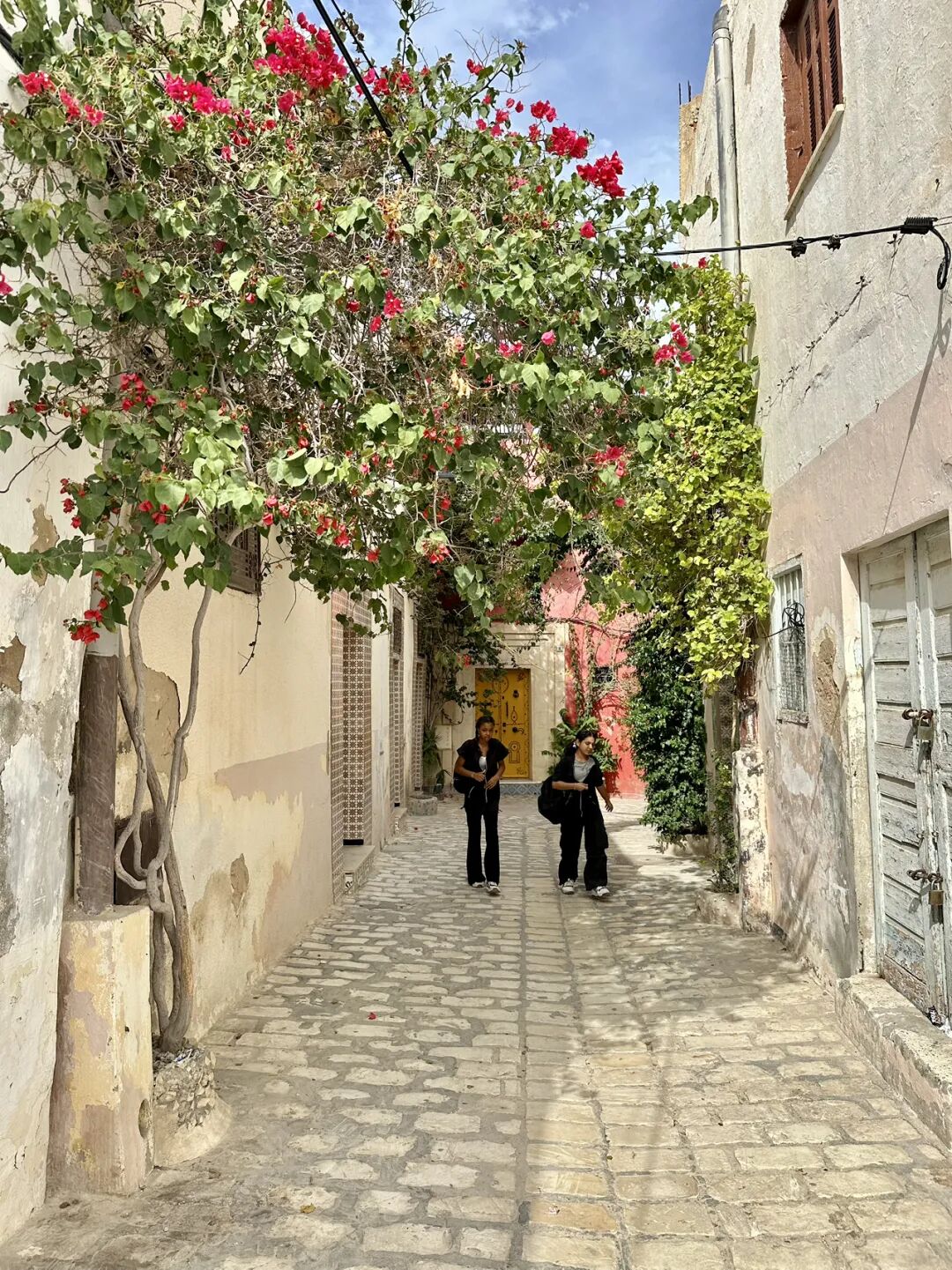
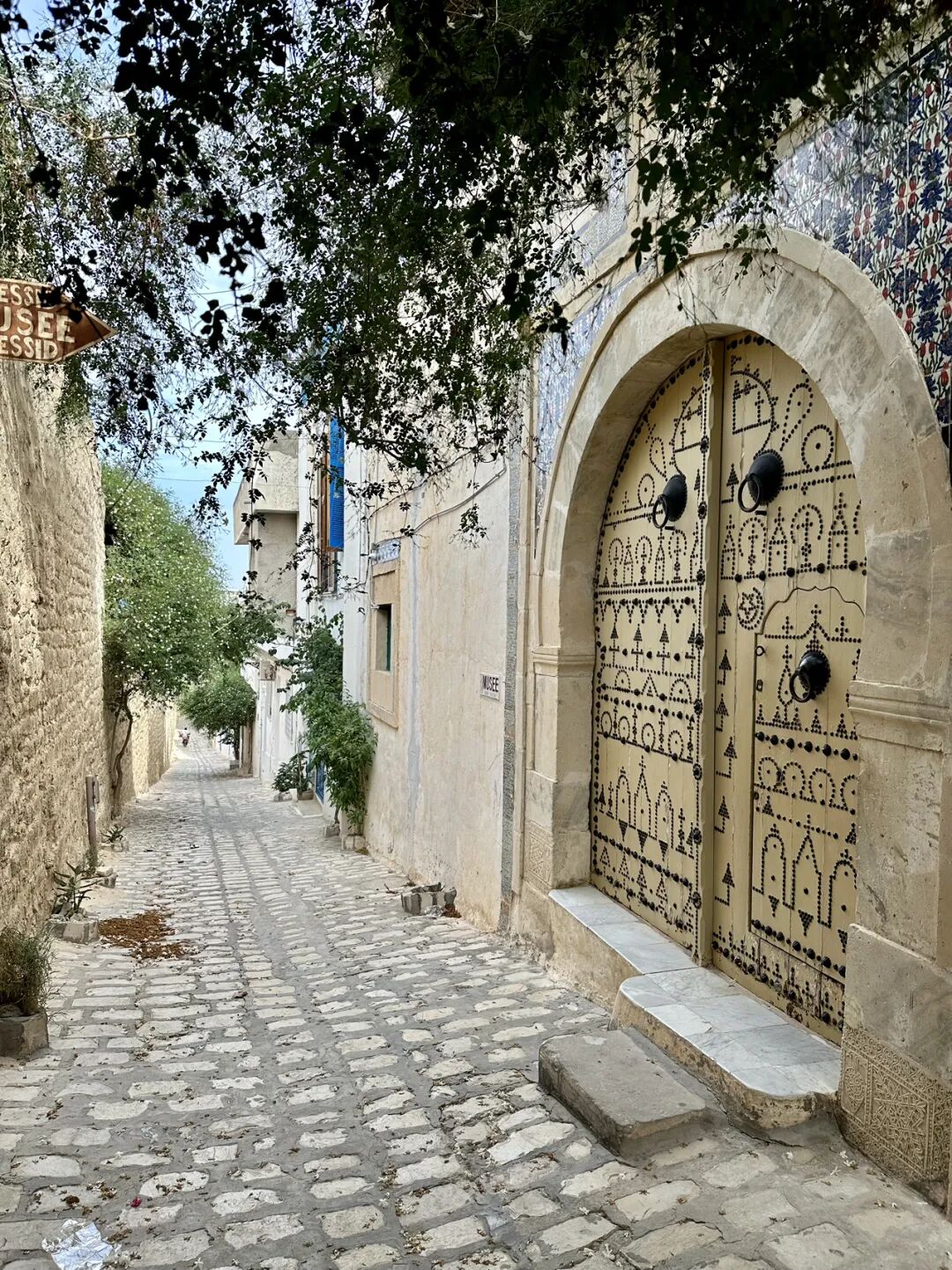
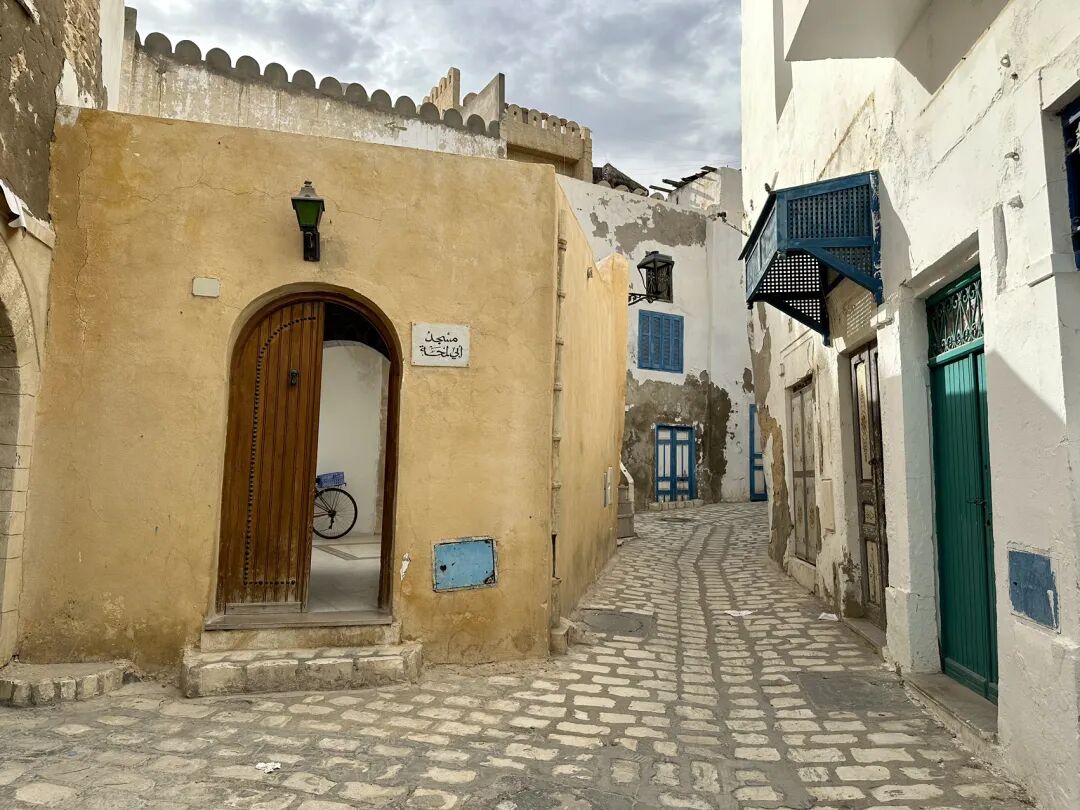
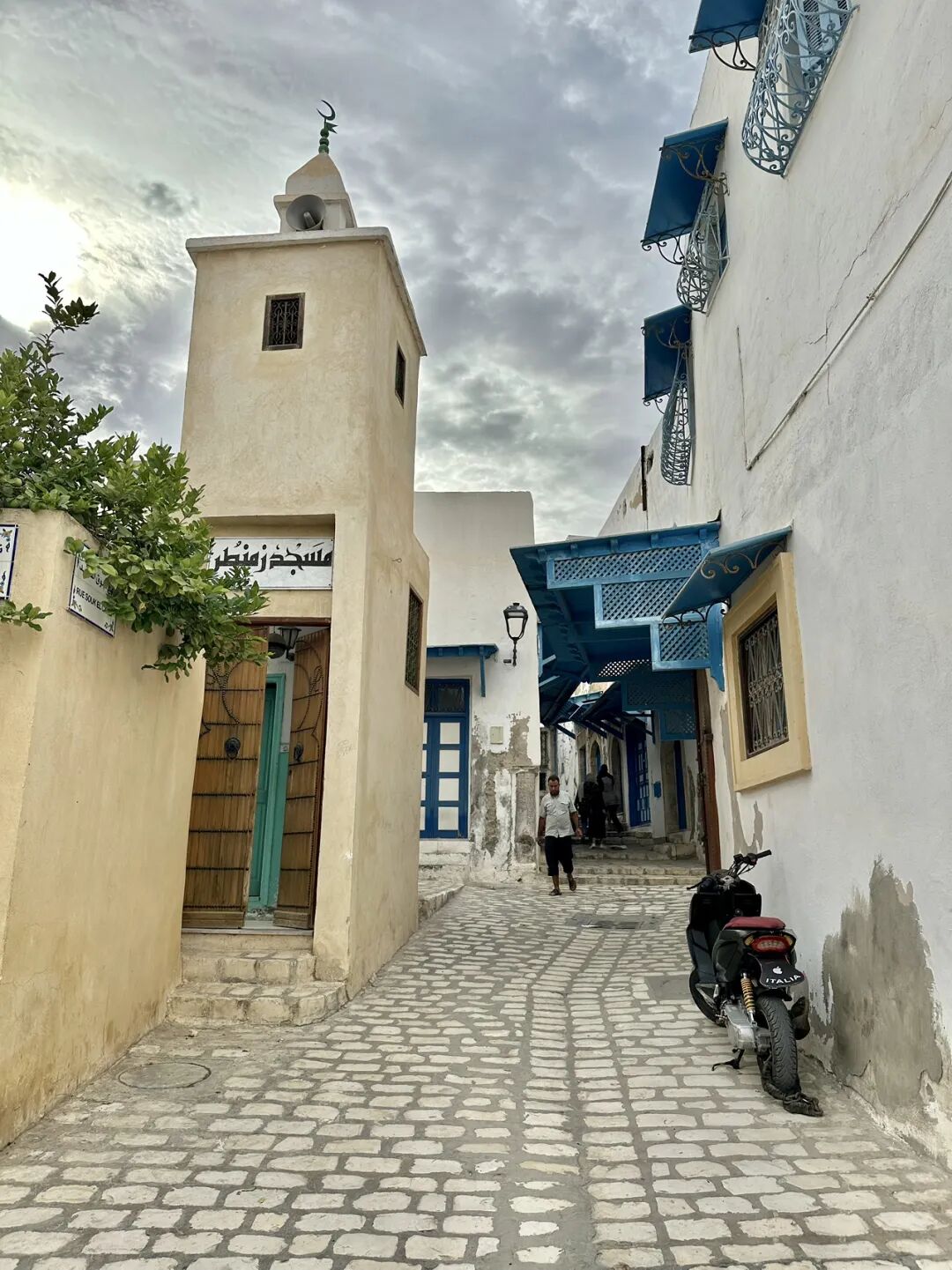
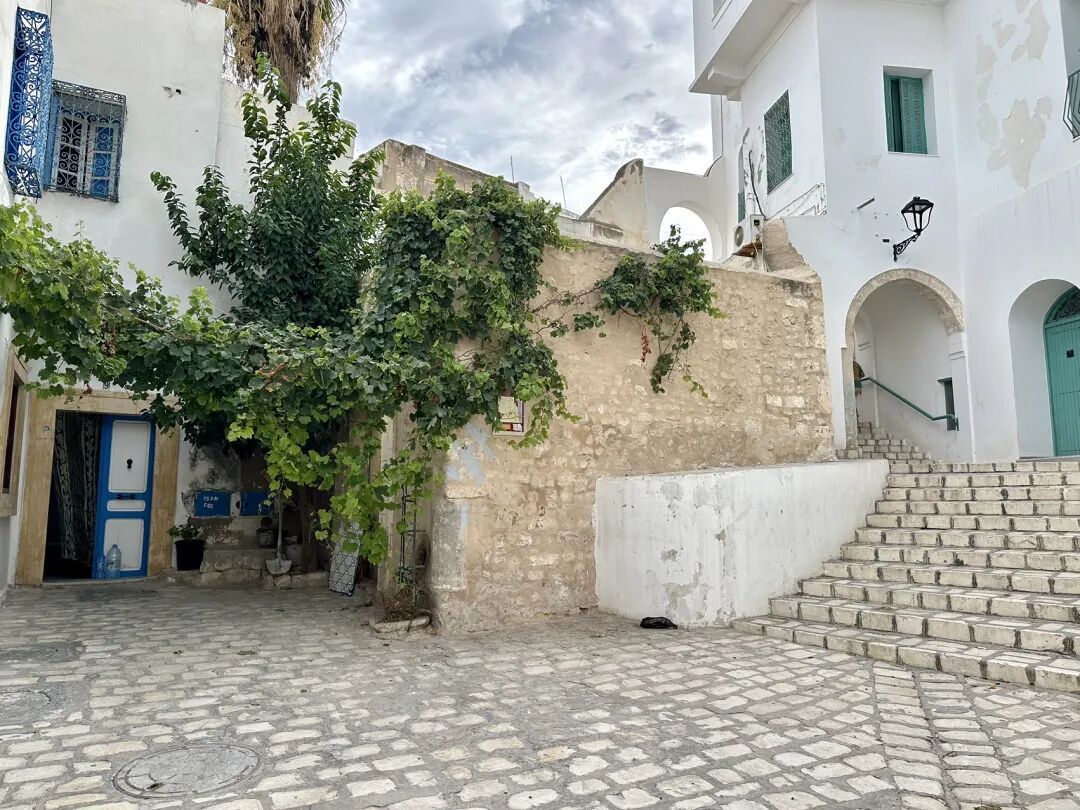
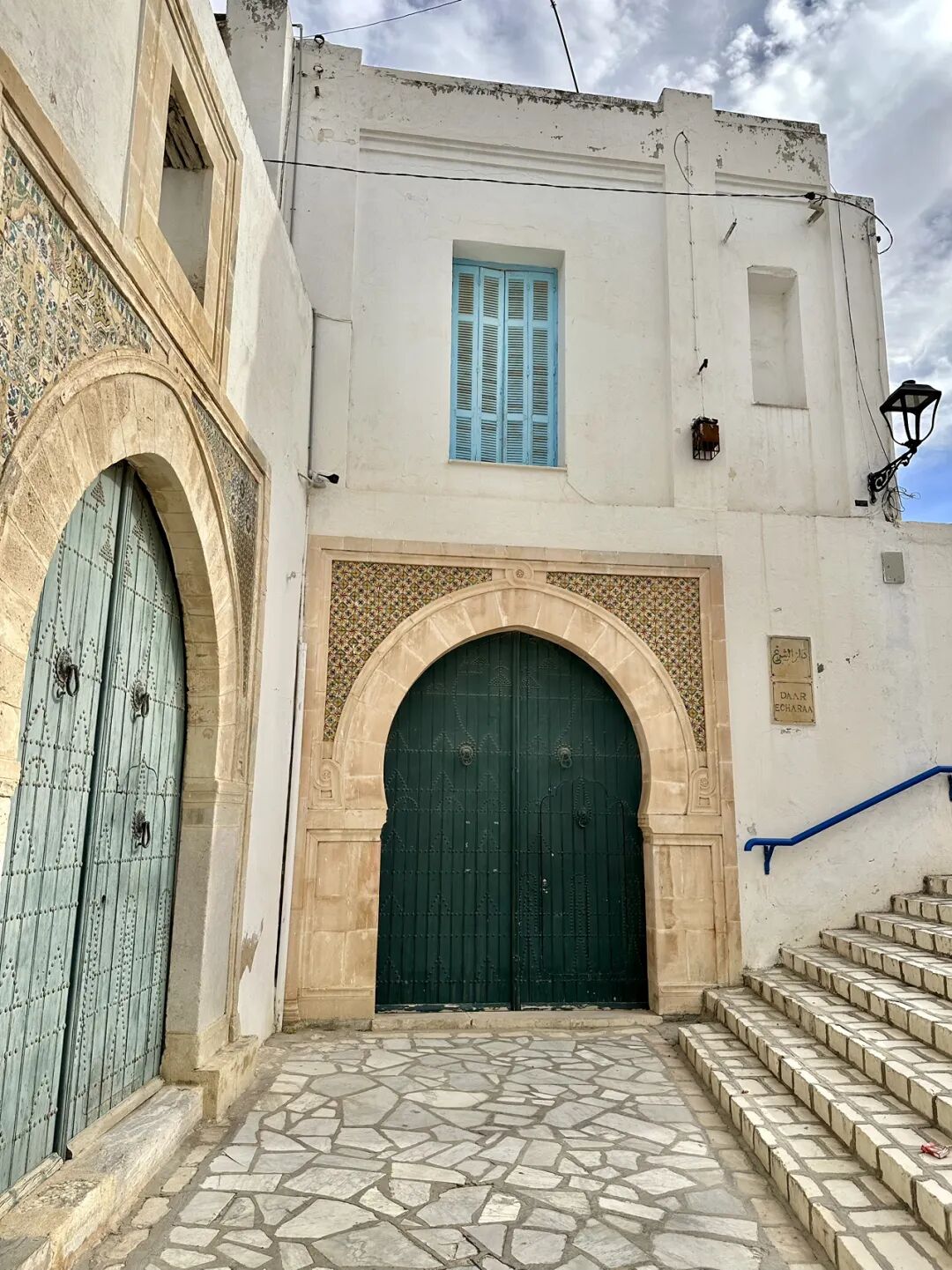
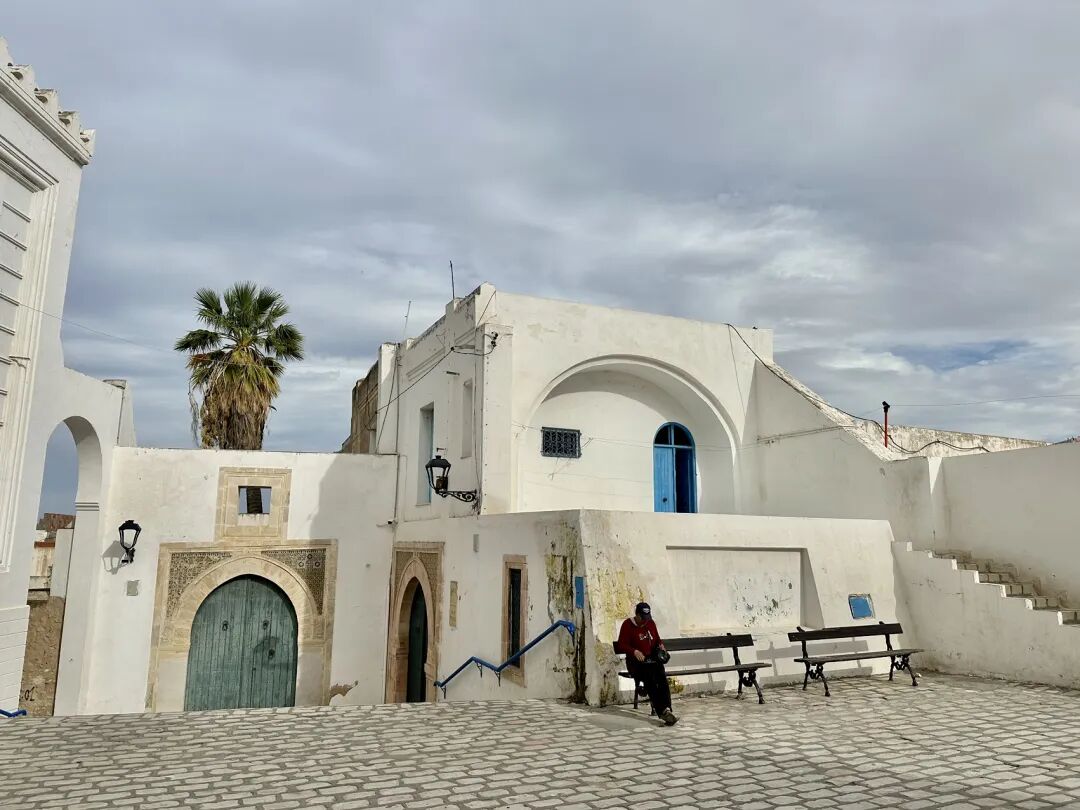
Finally, here are some more street scenes from the old medina of Sousse.
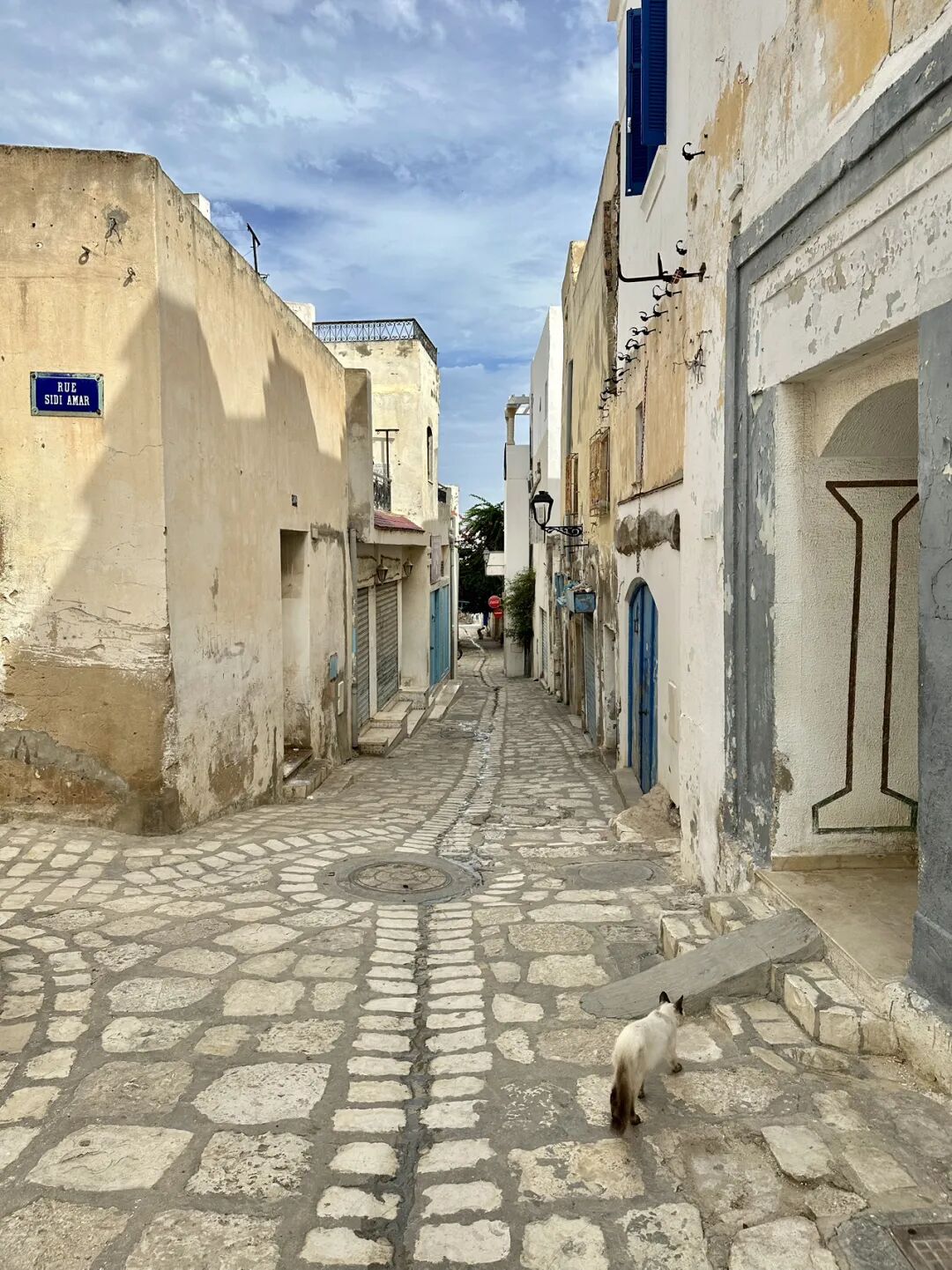
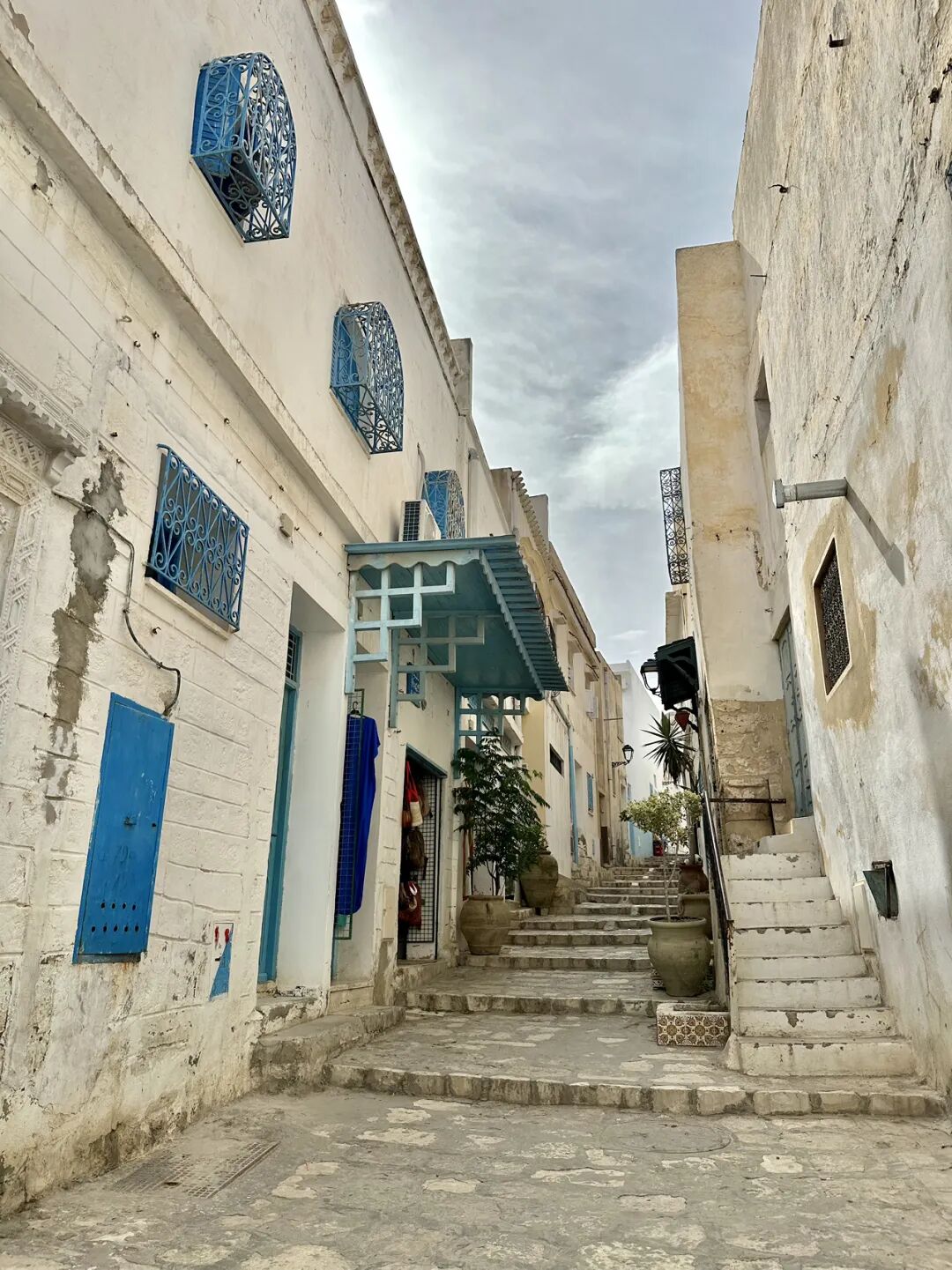
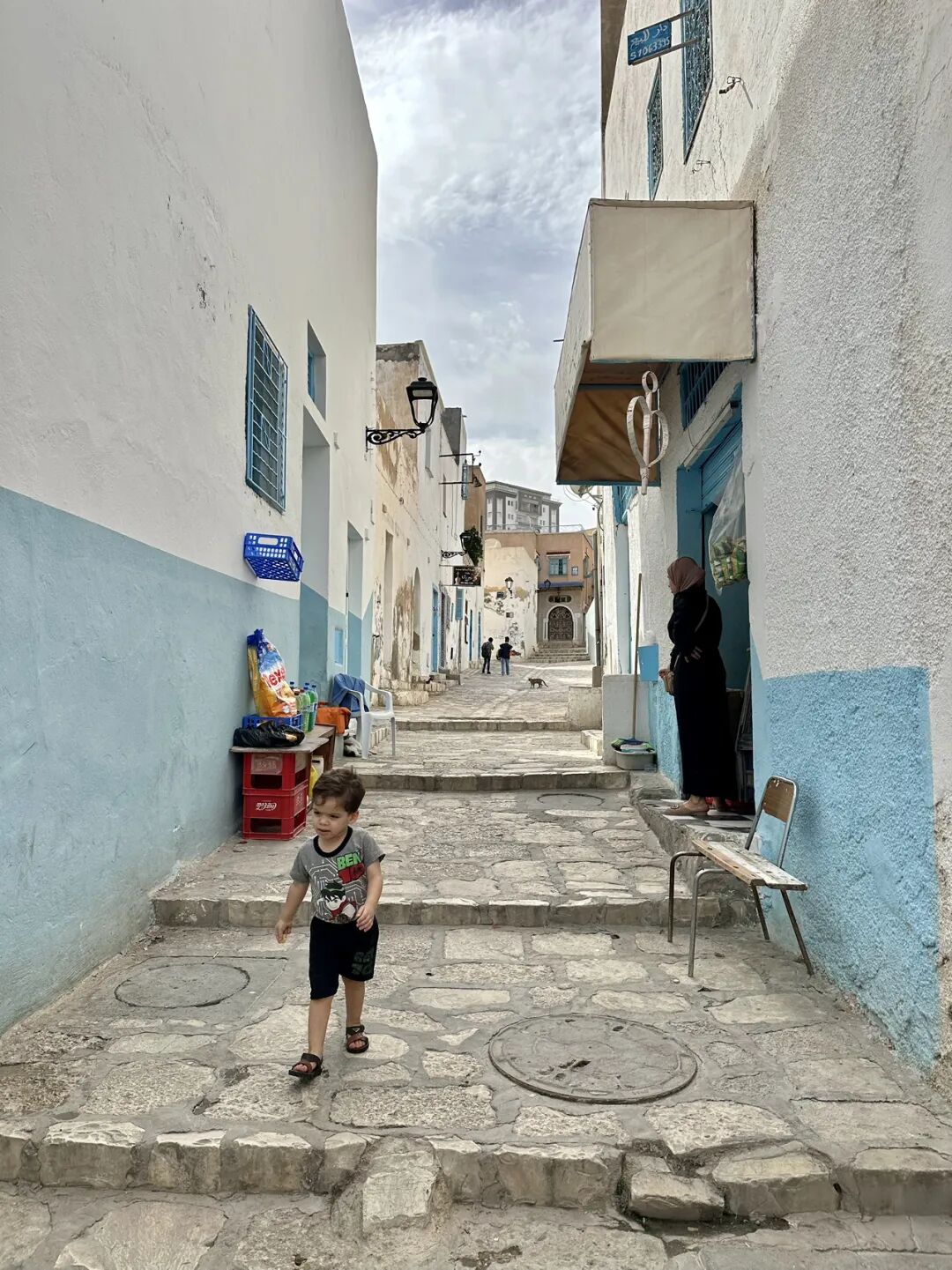
Summary: Sousse's old medina became a UNESCO World Heritage site in 1988 and remains less commercialized than the medina of Tunis. This travel account follows the source's route through the old city, mosque sights, markets, restaurants, seafood, and street observations.
The old medina in Sousse, Tunisia, was named a UNESCO World Heritage site back in 1988, but it is much less developed for tourism than the medina in Tunis, which became a World Heritage site in 1979. The Tunis medina has many guesthouses and hotels converted from historic homes, ranging from budget to high-end options. We searched for a long time, but found very few historic guesthouses in the Sousse medina, so we finally chose Dar Badiaa.
The atmosphere at Dar Badiaa is lovely, but the rooms in these historic buildings are quite small. Don't trust the room sizes listed on booking websites; they are just guesses. The lady who checked us in didn't speak English, only French, so we spent a long time struggling to understand each other.
Breakfast at the Dar Badiaa historic guesthouse is quite generous, featuring egg pancakes (danbing), flaky pastries (subing), French bread (fagun), curd (ruza), cheese, various jams, pickled olives, Tunisian chili paste (harissa), and local Tunisian desserts, served with strong Tunisian coffee. While we were chatting in the courtyard at night, the guesthouse lady served us classic Tunisian mint black tea and date-filled semolina cookies (makroudh). Makroudh is a classic treat for breaking the fast in the North African Maghreb region. It has a semolina crust, a filling of date paste and dried fruit, and is soaked in syrup after baking.
While drinking tea and chatting that night, we noticed some very old writing on one of the stone pillars in the house. We aren't sure if it is Phoenician.
The World Heritage old medina of Sousse, Tunisia. The area with better tourism development is the main street, Souk el Cald, which starts from the west gate of the old city, Bab El-Gharbi. It has many small shops and restaurants. We ate at a restaurant on the street called Dar Amna. We chose grilled fish for our main course, which came with French bread, french fries, roasted pepper salad (mechouia), and a Tunisian salad made of cucumber, tomato, and onion. Tunisia became a French protectorate in 1881, which is why French bread became a staple food here. Personally, I find the French bread dry and hard, and not nearly as good as the staple breads in the eastern Arab world.
Street view of Souk el Cald, the main road starting from the old city's west gate, Bab El-Gharbi.
Souk el Cald has many tea houses and cafes perfect for taking photos. You can drink local mint tea, eat some pine nuts, and enjoy a slow pace of life.
At the snack shop by the entrance of the Great Mosque of Sousse, they specialize in Tunisian folded sandwiches (makloub). It is like a mix of shawarma and pizza; the crust is like pizza dough, filled with grilled meat, cheese, harissa, and mayonnaise, then rolled up to eat.
Restaurant du Peuple, located under the north city wall, specializes in traditional Tunisian food. We ordered the fisherman's stew and Berber lamb tagine, which represent the coastal and inland cultures of Tunisia, respectively. The fisherman's stew contains fish, shrimp, and shellfish, while the lamb tagine is a potato and meat stew. In Tunisian restaurants, you just need to order the main dish. Once you order, they bring out French bread, harissa soup, roasted pepper salad (mechouia), Tunisian salad, and deep-fried Tunisian spring rolls (brik). After you finish, they serve mint black tea.
The Berbers are the indigenous people of Tunisia. Centuries of Arab migration starting in the 7th century led to the Arabization of most Berbers, and by the 15th century, Tunisia was essentially fully Arabized. Although the Berbers and Arabs in Tunisia have merged today, many traditional Berber cultural elements remain, including unique Berber food and music.
A candy stall on the old city street selling something like Xinjiang nut cake (qiegao), and the old-fashioned balance scale is a rare sight. Behind are some decorations from the old town streets, featuring classic Islamic themes like the Nuh boat, the Buraq ridden during the Ascension, and Hamsa (Fatima's hand) tiles.
Before the 19th century, all of Sousse's residents lived inside the old medina. After Tunisia became a French protectorate in 1881, the French began building a new city north of the Sousse medina. Sousse was bombed repeatedly between 1942 and 1943, and the new city suffered heavy damage. Authorities began rebuilding the new city in 1946, which eventually led to its current appearance.
Sousse is a major coastal city in Tunisia, but the beach is not very busy and has little entertainment. People mostly just walk, chat, zone out, or drink coffee at the seaside cafes. While strolling by the sea, we were surprised to find a shop called "Justinian" with a portrait of the Byzantine Emperor Justinian I printed on it. We bought some pistachios from a handsome young man in the shop and learned to zone out by the sea just like the locals.
During the reign of Justinian I (527-565), many territories lost by the Western Roman Empire were reclaimed, including Tunisia. In 533, the Byzantine army under Justinian I landed in Tunisia and quickly defeated the Germanic Vandal Kingdom, allowing Tunisia to remain prosperous for over a hundred years.
The ABOU NAWAS BOU JAAFAR hotel by the Sousse beach is now abandoned, but surprisingly, their official website is still up. Looking at old photos, it was very luxurious back then.
At a small restaurant in the new city, we had a grilled meat platter, which was still served with a baguette and Tunisian salad. The platter included chicken, beef, and Tunisian sausage (Merguez).
Merguez is made with lamb and beef, mixed with cumin, harissa, chili, and various other spices, and is usually grilled. Merguez sausage was first seen in the 12th century in Andalusia, which was southern Spain under Arab rule, and later spread throughout North Africa.
Finally, here are some more street scenes from the old medina of Sousse.
Muslim Travel Guide Tunisia Sousse: UNESCO Medina, Halal Food and Old City Mosques
Articles • yusuf908 posted the article • 0 comments • 250 views • 2026-05-23 23:30
Reposted from the web
Summary: Sousse's old medina became a UNESCO World Heritage site in 1988 and remains less commercialized than the medina of Tunis. This travel account follows the source's route through the old city, mosque sights, markets, restaurants, seafood, and street observations.
The old medina in Sousse, Tunisia, was named a UNESCO World Heritage site back in 1988, but it is much less developed for tourism than the medina in Tunis, which became a World Heritage site in 1979. The Tunis medina has many guesthouses and hotels converted from historic homes, ranging from budget to high-end options. We searched for a long time, but found very few historic guesthouses in the Sousse medina, so we finally chose Dar Badiaa.
The atmosphere at Dar Badiaa is lovely, but the rooms in these historic buildings are quite small. Don't trust the room sizes listed on booking websites; they are just guesses. The lady who checked us in didn't speak English, only French, so we spent a long time struggling to understand each other.
Breakfast at the Dar Badiaa historic guesthouse is quite generous, featuring egg pancakes (danbing), flaky pastries (subing), French bread (fagun), curd (ruza), cheese, various jams, pickled olives, Tunisian chili paste (harissa), and local Tunisian desserts, served with strong Tunisian coffee. While we were chatting in the courtyard at night, the guesthouse lady served us classic Tunisian mint black tea and date-filled semolina cookies (makroudh). Makroudh is a classic treat for breaking the fast in the North African Maghreb region. It has a semolina crust, a filling of date paste and dried fruit, and is soaked in syrup after baking.
While drinking tea and chatting that night, we noticed some very old writing on one of the stone pillars in the house. We aren't sure if it is Phoenician.
The World Heritage old medina of Sousse, Tunisia. The area with better tourism development is the main street, Souk el Cald, which starts from the west gate of the old city, Bab El-Gharbi. It has many small shops and restaurants. We ate at a restaurant on the street called Dar Amna. We chose grilled fish for our main course, which came with French bread, french fries, roasted pepper salad (mechouia), and a Tunisian salad made of cucumber, tomato, and onion. Tunisia became a French protectorate in 1881, which is why French bread became a staple food here. Personally, I find the French bread dry and hard, and not nearly as good as the staple breads in the eastern Arab world.
Street view of Souk el Cald, the main road starting from the old city's west gate, Bab El-Gharbi.
Souk el Cald has many tea houses and cafes perfect for taking photos. You can drink local mint tea, eat some pine nuts, and enjoy a slow pace of life.
At the snack shop by the entrance of the Great Mosque of Sousse, they specialize in Tunisian folded sandwiches (makloub). It is like a mix of shawarma and pizza; the crust is like pizza dough, filled with grilled meat, cheese, harissa, and mayonnaise, then rolled up to eat.
Restaurant du Peuple, located under the north city wall, specializes in traditional Tunisian food. We ordered the fisherman's stew and Berber lamb tagine, which represent the coastal and inland cultures of Tunisia, respectively. The fisherman's stew contains fish, shrimp, and shellfish, while the lamb tagine is a potato and meat stew. In Tunisian restaurants, you just need to order the main dish. Once you order, they bring out French bread, harissa soup, roasted pepper salad (mechouia), Tunisian salad, and deep-fried Tunisian spring rolls (brik). After you finish, they serve mint black tea.
The Berbers are the indigenous people of Tunisia. Centuries of Arab migration starting in the 7th century led to the Arabization of most Berbers, and by the 15th century, Tunisia was essentially fully Arabized. Although the Berbers and Arabs in Tunisia have merged today, many traditional Berber cultural elements remain, including unique Berber food and music.
A candy stall on the old city street selling something like Xinjiang nut cake (qiegao), and the old-fashioned balance scale is a rare sight. Behind are some decorations from the old town streets, featuring classic Islamic themes like the Nuh boat, the Buraq ridden during the Ascension, and Hamsa (Fatima's hand) tiles.
Before the 19th century, all of Sousse's residents lived inside the old medina. After Tunisia became a French protectorate in 1881, the French began building a new city north of the Sousse medina. Sousse was bombed repeatedly between 1942 and 1943, and the new city suffered heavy damage. Authorities began rebuilding the new city in 1946, which eventually led to its current appearance.
Sousse is a major coastal city in Tunisia, but the beach is not very busy and has little entertainment. People mostly just walk, chat, zone out, or drink coffee at the seaside cafes. While strolling by the sea, we were surprised to find a shop called "Justinian" with a portrait of the Byzantine Emperor Justinian I printed on it. We bought some pistachios from a handsome young man in the shop and learned to zone out by the sea just like the locals.
During the reign of Justinian I (527-565), many territories lost by the Western Roman Empire were reclaimed, including Tunisia. In 533, the Byzantine army under Justinian I landed in Tunisia and quickly defeated the Germanic Vandal Kingdom, allowing Tunisia to remain prosperous for over a hundred years.
The ABOU NAWAS BOU JAAFAR hotel by the Sousse beach is now abandoned, but surprisingly, their official website is still up. Looking at old photos, it was very luxurious back then.
At a small restaurant in the new city, we had a grilled meat platter, which was still served with a baguette and Tunisian salad. The platter included chicken, beef, and Tunisian sausage (Merguez).
Merguez is made with lamb and beef, mixed with cumin, harissa, chili, and various other spices, and is usually grilled. Merguez sausage was first seen in the 12th century in Andalusia, which was southern Spain under Arab rule, and later spread throughout North Africa.
Finally, here are some more street scenes from the old medina of Sousse. view all
Summary: Sousse's old medina became a UNESCO World Heritage site in 1988 and remains less commercialized than the medina of Tunis. This travel account follows the source's route through the old city, mosque sights, markets, restaurants, seafood, and street observations.
The old medina in Sousse, Tunisia, was named a UNESCO World Heritage site back in 1988, but it is much less developed for tourism than the medina in Tunis, which became a World Heritage site in 1979. The Tunis medina has many guesthouses and hotels converted from historic homes, ranging from budget to high-end options. We searched for a long time, but found very few historic guesthouses in the Sousse medina, so we finally chose Dar Badiaa.
The atmosphere at Dar Badiaa is lovely, but the rooms in these historic buildings are quite small. Don't trust the room sizes listed on booking websites; they are just guesses. The lady who checked us in didn't speak English, only French, so we spent a long time struggling to understand each other.
Breakfast at the Dar Badiaa historic guesthouse is quite generous, featuring egg pancakes (danbing), flaky pastries (subing), French bread (fagun), curd (ruza), cheese, various jams, pickled olives, Tunisian chili paste (harissa), and local Tunisian desserts, served with strong Tunisian coffee. While we were chatting in the courtyard at night, the guesthouse lady served us classic Tunisian mint black tea and date-filled semolina cookies (makroudh). Makroudh is a classic treat for breaking the fast in the North African Maghreb region. It has a semolina crust, a filling of date paste and dried fruit, and is soaked in syrup after baking.
While drinking tea and chatting that night, we noticed some very old writing on one of the stone pillars in the house. We aren't sure if it is Phoenician.
The World Heritage old medina of Sousse, Tunisia. The area with better tourism development is the main street, Souk el Cald, which starts from the west gate of the old city, Bab El-Gharbi. It has many small shops and restaurants. We ate at a restaurant on the street called Dar Amna. We chose grilled fish for our main course, which came with French bread, french fries, roasted pepper salad (mechouia), and a Tunisian salad made of cucumber, tomato, and onion. Tunisia became a French protectorate in 1881, which is why French bread became a staple food here. Personally, I find the French bread dry and hard, and not nearly as good as the staple breads in the eastern Arab world.
Street view of Souk el Cald, the main road starting from the old city's west gate, Bab El-Gharbi.
Souk el Cald has many tea houses and cafes perfect for taking photos. You can drink local mint tea, eat some pine nuts, and enjoy a slow pace of life.
At the snack shop by the entrance of the Great Mosque of Sousse, they specialize in Tunisian folded sandwiches (makloub). It is like a mix of shawarma and pizza; the crust is like pizza dough, filled with grilled meat, cheese, harissa, and mayonnaise, then rolled up to eat.
Restaurant du Peuple, located under the north city wall, specializes in traditional Tunisian food. We ordered the fisherman's stew and Berber lamb tagine, which represent the coastal and inland cultures of Tunisia, respectively. The fisherman's stew contains fish, shrimp, and shellfish, while the lamb tagine is a potato and meat stew. In Tunisian restaurants, you just need to order the main dish. Once you order, they bring out French bread, harissa soup, roasted pepper salad (mechouia), Tunisian salad, and deep-fried Tunisian spring rolls (brik). After you finish, they serve mint black tea.
The Berbers are the indigenous people of Tunisia. Centuries of Arab migration starting in the 7th century led to the Arabization of most Berbers, and by the 15th century, Tunisia was essentially fully Arabized. Although the Berbers and Arabs in Tunisia have merged today, many traditional Berber cultural elements remain, including unique Berber food and music.
A candy stall on the old city street selling something like Xinjiang nut cake (qiegao), and the old-fashioned balance scale is a rare sight. Behind are some decorations from the old town streets, featuring classic Islamic themes like the Nuh boat, the Buraq ridden during the Ascension, and Hamsa (Fatima's hand) tiles.
Before the 19th century, all of Sousse's residents lived inside the old medina. After Tunisia became a French protectorate in 1881, the French began building a new city north of the Sousse medina. Sousse was bombed repeatedly between 1942 and 1943, and the new city suffered heavy damage. Authorities began rebuilding the new city in 1946, which eventually led to its current appearance.
Sousse is a major coastal city in Tunisia, but the beach is not very busy and has little entertainment. People mostly just walk, chat, zone out, or drink coffee at the seaside cafes. While strolling by the sea, we were surprised to find a shop called "Justinian" with a portrait of the Byzantine Emperor Justinian I printed on it. We bought some pistachios from a handsome young man in the shop and learned to zone out by the sea just like the locals.
During the reign of Justinian I (527-565), many territories lost by the Western Roman Empire were reclaimed, including Tunisia. In 533, the Byzantine army under Justinian I landed in Tunisia and quickly defeated the Germanic Vandal Kingdom, allowing Tunisia to remain prosperous for over a hundred years.
The ABOU NAWAS BOU JAAFAR hotel by the Sousse beach is now abandoned, but surprisingly, their official website is still up. Looking at old photos, it was very luxurious back then.
At a small restaurant in the new city, we had a grilled meat platter, which was still served with a baguette and Tunisian salad. The platter included chicken, beef, and Tunisian sausage (Merguez).
Merguez is made with lamb and beef, mixed with cumin, harissa, chili, and various other spices, and is usually grilled. Merguez sausage was first seen in the 12th century in Andalusia, which was southern Spain under Arab rule, and later spread throughout North Africa.
Finally, here are some more street scenes from the old medina of Sousse. view all
Reposted from the web
Summary: Sousse's old medina became a UNESCO World Heritage site in 1988 and remains less commercialized than the medina of Tunis. This travel account follows the source's route through the old city, mosque sights, markets, restaurants, seafood, and street observations.
The old medina in Sousse, Tunisia, was named a UNESCO World Heritage site back in 1988, but it is much less developed for tourism than the medina in Tunis, which became a World Heritage site in 1979. The Tunis medina has many guesthouses and hotels converted from historic homes, ranging from budget to high-end options. We searched for a long time, but found very few historic guesthouses in the Sousse medina, so we finally chose Dar Badiaa.
The atmosphere at Dar Badiaa is lovely, but the rooms in these historic buildings are quite small. Don't trust the room sizes listed on booking websites; they are just guesses. The lady who checked us in didn't speak English, only French, so we spent a long time struggling to understand each other.
Breakfast at the Dar Badiaa historic guesthouse is quite generous, featuring egg pancakes (danbing), flaky pastries (subing), French bread (fagun), curd (ruza), cheese, various jams, pickled olives, Tunisian chili paste (harissa), and local Tunisian desserts, served with strong Tunisian coffee. While we were chatting in the courtyard at night, the guesthouse lady served us classic Tunisian mint black tea and date-filled semolina cookies (makroudh). Makroudh is a classic treat for breaking the fast in the North African Maghreb region. It has a semolina crust, a filling of date paste and dried fruit, and is soaked in syrup after baking.
While drinking tea and chatting that night, we noticed some very old writing on one of the stone pillars in the house. We aren't sure if it is Phoenician.
The World Heritage old medina of Sousse, Tunisia. The area with better tourism development is the main street, Souk el Cald, which starts from the west gate of the old city, Bab El-Gharbi. It has many small shops and restaurants. We ate at a restaurant on the street called Dar Amna. We chose grilled fish for our main course, which came with French bread, french fries, roasted pepper salad (mechouia), and a Tunisian salad made of cucumber, tomato, and onion. Tunisia became a French protectorate in 1881, which is why French bread became a staple food here. Personally, I find the French bread dry and hard, and not nearly as good as the staple breads in the eastern Arab world.
Street view of Souk el Cald, the main road starting from the old city's west gate, Bab El-Gharbi.
Souk el Cald has many tea houses and cafes perfect for taking photos. You can drink local mint tea, eat some pine nuts, and enjoy a slow pace of life.
At the snack shop by the entrance of the Great Mosque of Sousse, they specialize in Tunisian folded sandwiches (makloub). It is like a mix of shawarma and pizza; the crust is like pizza dough, filled with grilled meat, cheese, harissa, and mayonnaise, then rolled up to eat.
Restaurant du Peuple, located under the north city wall, specializes in traditional Tunisian food. We ordered the fisherman's stew and Berber lamb tagine, which represent the coastal and inland cultures of Tunisia, respectively. The fisherman's stew contains fish, shrimp, and shellfish, while the lamb tagine is a potato and meat stew. In Tunisian restaurants, you just need to order the main dish. Once you order, they bring out French bread, harissa soup, roasted pepper salad (mechouia), Tunisian salad, and deep-fried Tunisian spring rolls (brik). After you finish, they serve mint black tea.
The Berbers are the indigenous people of Tunisia. Centuries of Arab migration starting in the 7th century led to the Arabization of most Berbers, and by the 15th century, Tunisia was essentially fully Arabized. Although the Berbers and Arabs in Tunisia have merged today, many traditional Berber cultural elements remain, including unique Berber food and music.
A candy stall on the old city street selling something like Xinjiang nut cake (qiegao), and the old-fashioned balance scale is a rare sight. Behind are some decorations from the old town streets, featuring classic Islamic themes like the Nuh boat, the Buraq ridden during the Ascension, and Hamsa (Fatima's hand) tiles.
Before the 19th century, all of Sousse's residents lived inside the old medina. After Tunisia became a French protectorate in 1881, the French began building a new city north of the Sousse medina. Sousse was bombed repeatedly between 1942 and 1943, and the new city suffered heavy damage. Authorities began rebuilding the new city in 1946, which eventually led to its current appearance.
Sousse is a major coastal city in Tunisia, but the beach is not very busy and has little entertainment. People mostly just walk, chat, zone out, or drink coffee at the seaside cafes. While strolling by the sea, we were surprised to find a shop called "Justinian" with a portrait of the Byzantine Emperor Justinian I printed on it. We bought some pistachios from a handsome young man in the shop and learned to zone out by the sea just like the locals.
During the reign of Justinian I (527-565), many territories lost by the Western Roman Empire were reclaimed, including Tunisia. In 533, the Byzantine army under Justinian I landed in Tunisia and quickly defeated the Germanic Vandal Kingdom, allowing Tunisia to remain prosperous for over a hundred years.
The ABOU NAWAS BOU JAAFAR hotel by the Sousse beach is now abandoned, but surprisingly, their official website is still up. Looking at old photos, it was very luxurious back then.
At a small restaurant in the new city, we had a grilled meat platter, which was still served with a baguette and Tunisian salad. The platter included chicken, beef, and Tunisian sausage (Merguez).
Merguez is made with lamb and beef, mixed with cumin, harissa, chili, and various other spices, and is usually grilled. Merguez sausage was first seen in the 12th century in Andalusia, which was southern Spain under Arab rule, and later spread throughout North Africa.
Finally, here are some more street scenes from the old medina of Sousse.
Summary: Sousse's old medina became a UNESCO World Heritage site in 1988 and remains less commercialized than the medina of Tunis. This travel account follows the source's route through the old city, mosque sights, markets, restaurants, seafood, and street observations.
The old medina in Sousse, Tunisia, was named a UNESCO World Heritage site back in 1988, but it is much less developed for tourism than the medina in Tunis, which became a World Heritage site in 1979. The Tunis medina has many guesthouses and hotels converted from historic homes, ranging from budget to high-end options. We searched for a long time, but found very few historic guesthouses in the Sousse medina, so we finally chose Dar Badiaa.
The atmosphere at Dar Badiaa is lovely, but the rooms in these historic buildings are quite small. Don't trust the room sizes listed on booking websites; they are just guesses. The lady who checked us in didn't speak English, only French, so we spent a long time struggling to understand each other.
Breakfast at the Dar Badiaa historic guesthouse is quite generous, featuring egg pancakes (danbing), flaky pastries (subing), French bread (fagun), curd (ruza), cheese, various jams, pickled olives, Tunisian chili paste (harissa), and local Tunisian desserts, served with strong Tunisian coffee. While we were chatting in the courtyard at night, the guesthouse lady served us classic Tunisian mint black tea and date-filled semolina cookies (makroudh). Makroudh is a classic treat for breaking the fast in the North African Maghreb region. It has a semolina crust, a filling of date paste and dried fruit, and is soaked in syrup after baking.
While drinking tea and chatting that night, we noticed some very old writing on one of the stone pillars in the house. We aren't sure if it is Phoenician.
The World Heritage old medina of Sousse, Tunisia. The area with better tourism development is the main street, Souk el Cald, which starts from the west gate of the old city, Bab El-Gharbi. It has many small shops and restaurants. We ate at a restaurant on the street called Dar Amna. We chose grilled fish for our main course, which came with French bread, french fries, roasted pepper salad (mechouia), and a Tunisian salad made of cucumber, tomato, and onion. Tunisia became a French protectorate in 1881, which is why French bread became a staple food here. Personally, I find the French bread dry and hard, and not nearly as good as the staple breads in the eastern Arab world.
Street view of Souk el Cald, the main road starting from the old city's west gate, Bab El-Gharbi.
Souk el Cald has many tea houses and cafes perfect for taking photos. You can drink local mint tea, eat some pine nuts, and enjoy a slow pace of life.
At the snack shop by the entrance of the Great Mosque of Sousse, they specialize in Tunisian folded sandwiches (makloub). It is like a mix of shawarma and pizza; the crust is like pizza dough, filled with grilled meat, cheese, harissa, and mayonnaise, then rolled up to eat.
Restaurant du Peuple, located under the north city wall, specializes in traditional Tunisian food. We ordered the fisherman's stew and Berber lamb tagine, which represent the coastal and inland cultures of Tunisia, respectively. The fisherman's stew contains fish, shrimp, and shellfish, while the lamb tagine is a potato and meat stew. In Tunisian restaurants, you just need to order the main dish. Once you order, they bring out French bread, harissa soup, roasted pepper salad (mechouia), Tunisian salad, and deep-fried Tunisian spring rolls (brik). After you finish, they serve mint black tea.
The Berbers are the indigenous people of Tunisia. Centuries of Arab migration starting in the 7th century led to the Arabization of most Berbers, and by the 15th century, Tunisia was essentially fully Arabized. Although the Berbers and Arabs in Tunisia have merged today, many traditional Berber cultural elements remain, including unique Berber food and music.
A candy stall on the old city street selling something like Xinjiang nut cake (qiegao), and the old-fashioned balance scale is a rare sight. Behind are some decorations from the old town streets, featuring classic Islamic themes like the Nuh boat, the Buraq ridden during the Ascension, and Hamsa (Fatima's hand) tiles.
Before the 19th century, all of Sousse's residents lived inside the old medina. After Tunisia became a French protectorate in 1881, the French began building a new city north of the Sousse medina. Sousse was bombed repeatedly between 1942 and 1943, and the new city suffered heavy damage. Authorities began rebuilding the new city in 1946, which eventually led to its current appearance.
Sousse is a major coastal city in Tunisia, but the beach is not very busy and has little entertainment. People mostly just walk, chat, zone out, or drink coffee at the seaside cafes. While strolling by the sea, we were surprised to find a shop called "Justinian" with a portrait of the Byzantine Emperor Justinian I printed on it. We bought some pistachios from a handsome young man in the shop and learned to zone out by the sea just like the locals.
During the reign of Justinian I (527-565), many territories lost by the Western Roman Empire were reclaimed, including Tunisia. In 533, the Byzantine army under Justinian I landed in Tunisia and quickly defeated the Germanic Vandal Kingdom, allowing Tunisia to remain prosperous for over a hundred years.
The ABOU NAWAS BOU JAAFAR hotel by the Sousse beach is now abandoned, but surprisingly, their official website is still up. Looking at old photos, it was very luxurious back then.
At a small restaurant in the new city, we had a grilled meat platter, which was still served with a baguette and Tunisian salad. The platter included chicken, beef, and Tunisian sausage (Merguez).
Merguez is made with lamb and beef, mixed with cumin, harissa, chili, and various other spices, and is usually grilled. Merguez sausage was first seen in the 12th century in Andalusia, which was southern Spain under Arab rule, and later spread throughout North Africa.
Finally, here are some more street scenes from the old medina of Sousse.