

South Asian Food
Halal Food Guide: Dubai — South Asian Restaurants and Everyday Eats
Articles • ali2007fr posted the article • 0 comments • 124 views • 2026-05-18 06:13
Reposted from the web
Summary: Halal Food Guide: Dubai — South Asian Restaurants and Everyday Eats is presented here as a firsthand travel account in clear English, beginning with this scene: Although the UAE is a Gulf Arab country, people from South Asia make up the majority of its population. The account keeps its focus on Dubai Halal Food, South Asian Food, Muslim Travel while preserving the names, places, food, and historical details from the Chinese source.
Although the UAE is a Gulf Arab country, people from South Asia make up the majority of its population. Currently, over 2.8 million Indians, 1.2 million Pakistanis, and 1 million Bangladeshis live in the UAE, with most of them in the cities of Abu Dhabi, Dubai, and Sharjah.
As a transit hub between the Middle East and South Asia, Dubai has had very close historical ties with South Asia. Many South Asian merchants traveled frequently between Dubai and South Asia as early as the 18th century to trade pearls, and South Asian merchants have long dominated Dubai's gold and textile trade.
After Dubai signed a perpetual truce with Britain in 1853, it came under the administration of British India, used rupees and stamps issued by British India, and grew even closer to South Asia.
After oil was discovered in 1966, a large number of South Asian workers began pouring into Dubai, and at that time, it took three days by ship to travel from Mumbai to Dubai. Most of these workers came from Maharashtra state, where Mumbai is located, and there were also many Arab-descended Indians, a group that had migrated from various parts of the Arab world to India hundreds of years ago.
As Dubai's status as a free trade port rose, its South Asian population increased sharply in the 1970s and 1980s, with most Indians coming from the southernmost states of Kerala and Tamil Nadu, while most Pakistanis were Punjabis and Pashtuns.
Some South Asians in Dubai are now second or even third generation, forming a distinct South Asian community in the city. You can find all kinds of South Asian food here.
Bur Dubai Souk
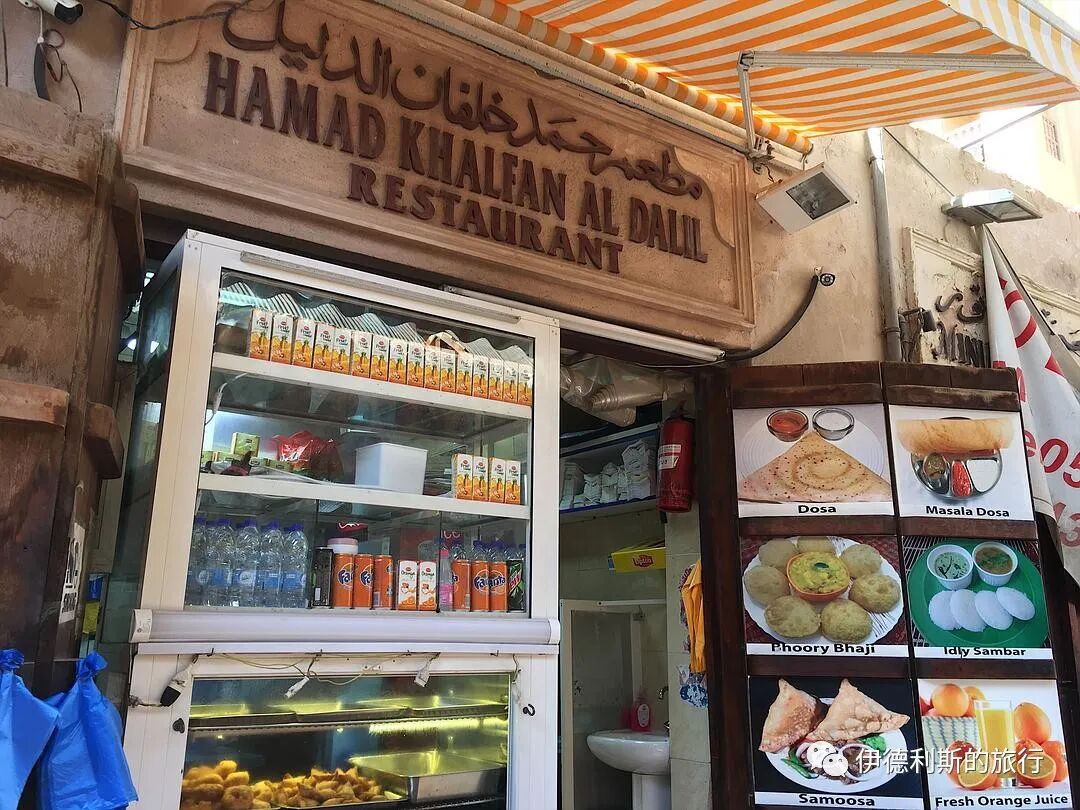
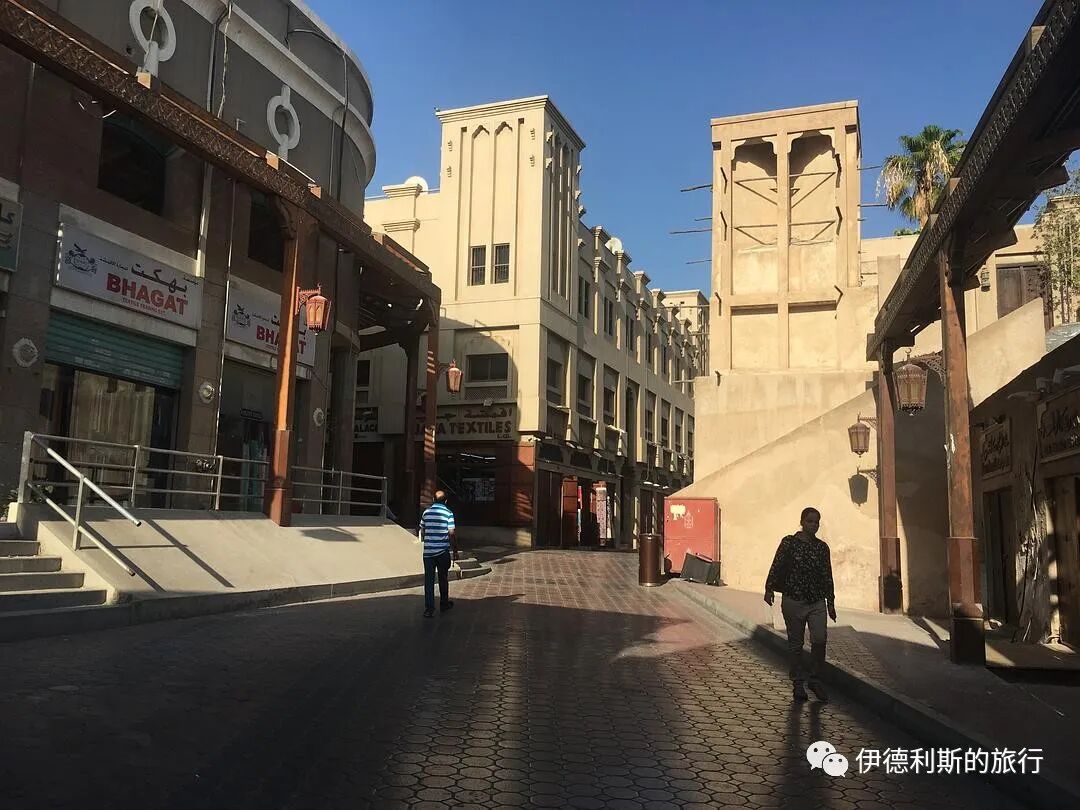
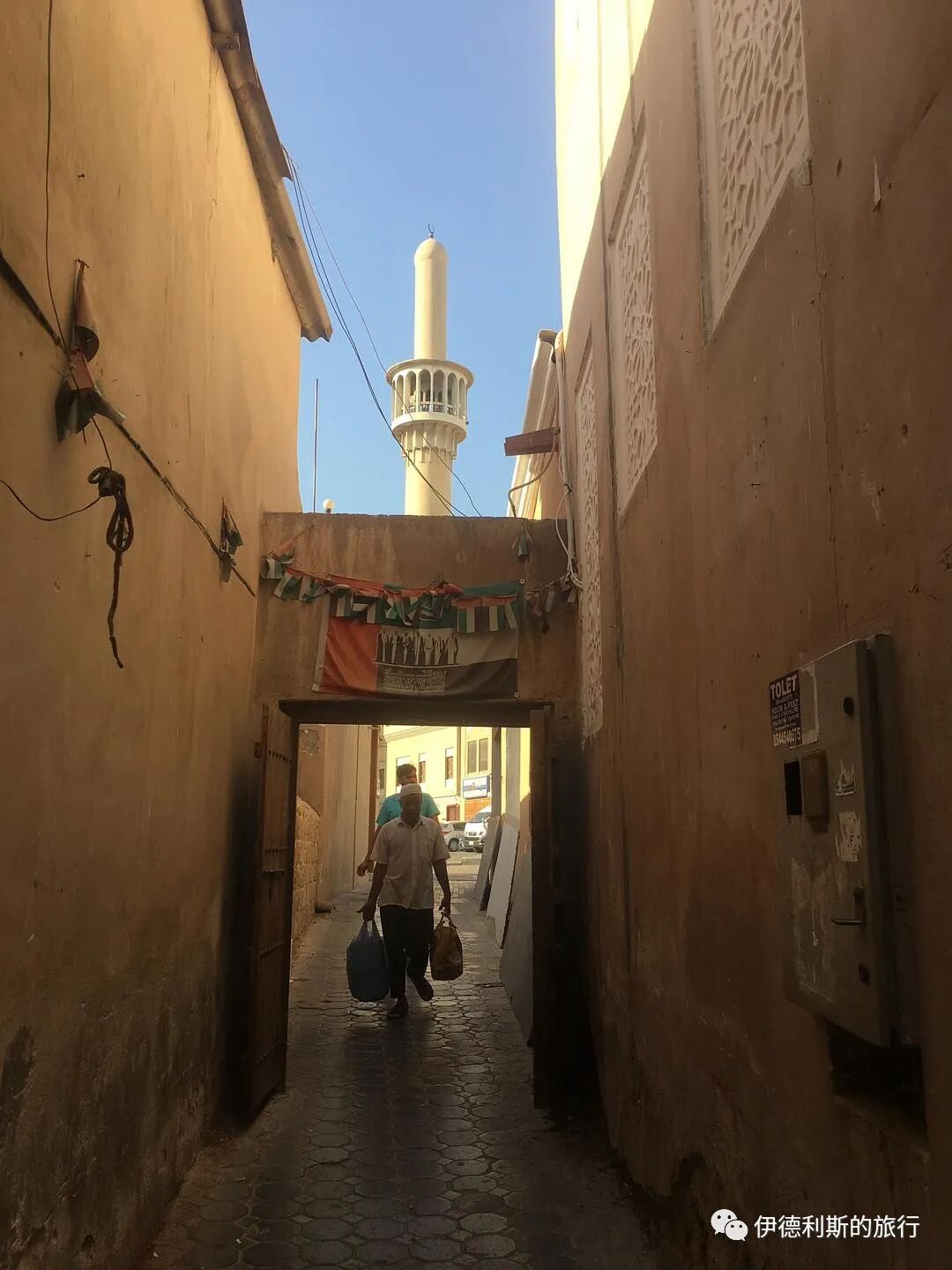
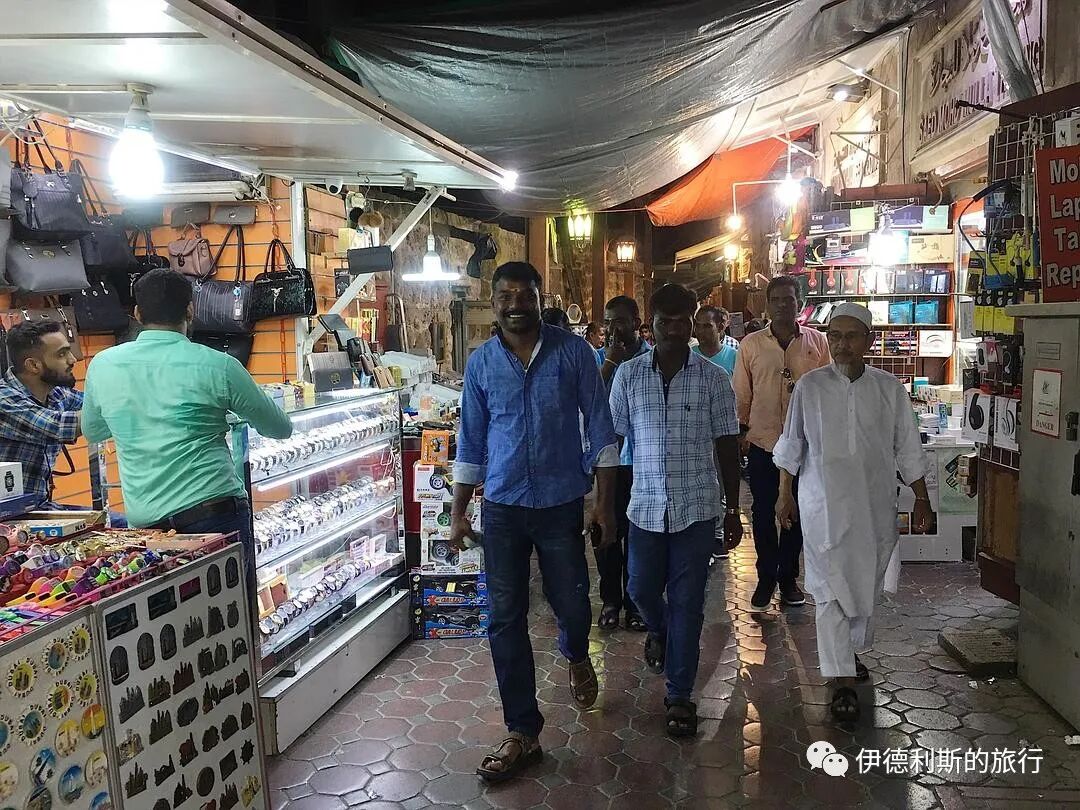
Bur Dubai Souk is the oldest market in Dubai. It has become a hub for South Asians and houses several small South Asian snack shops.
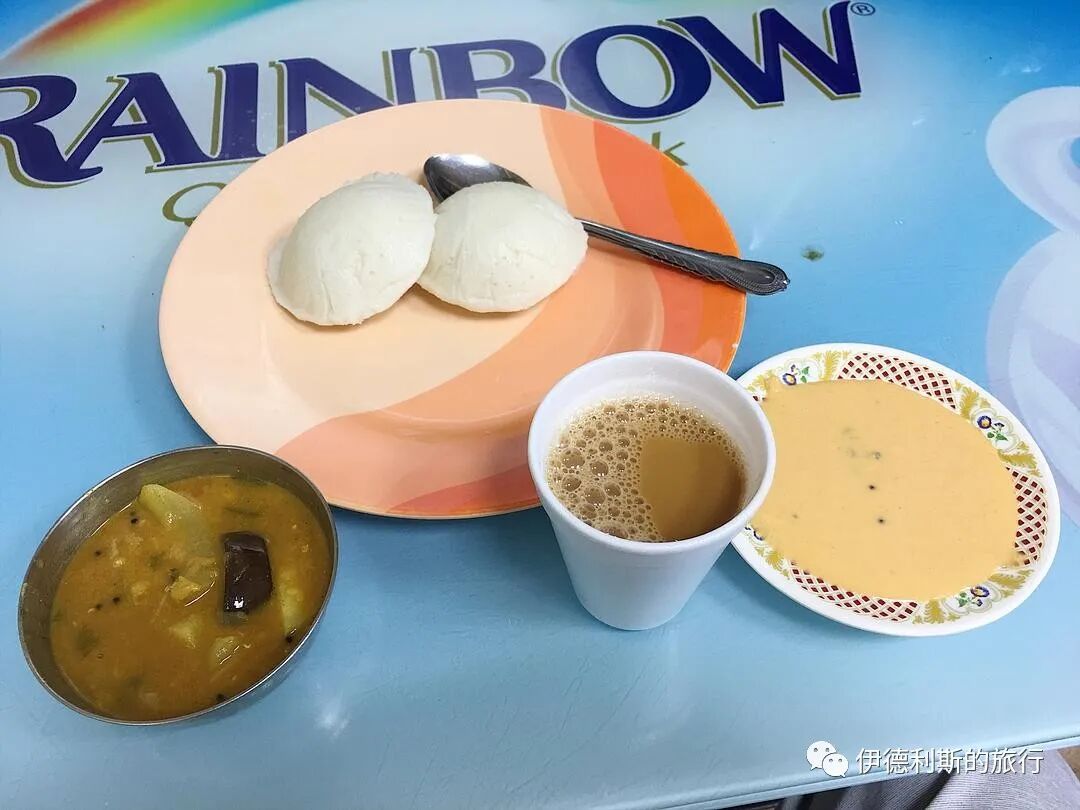
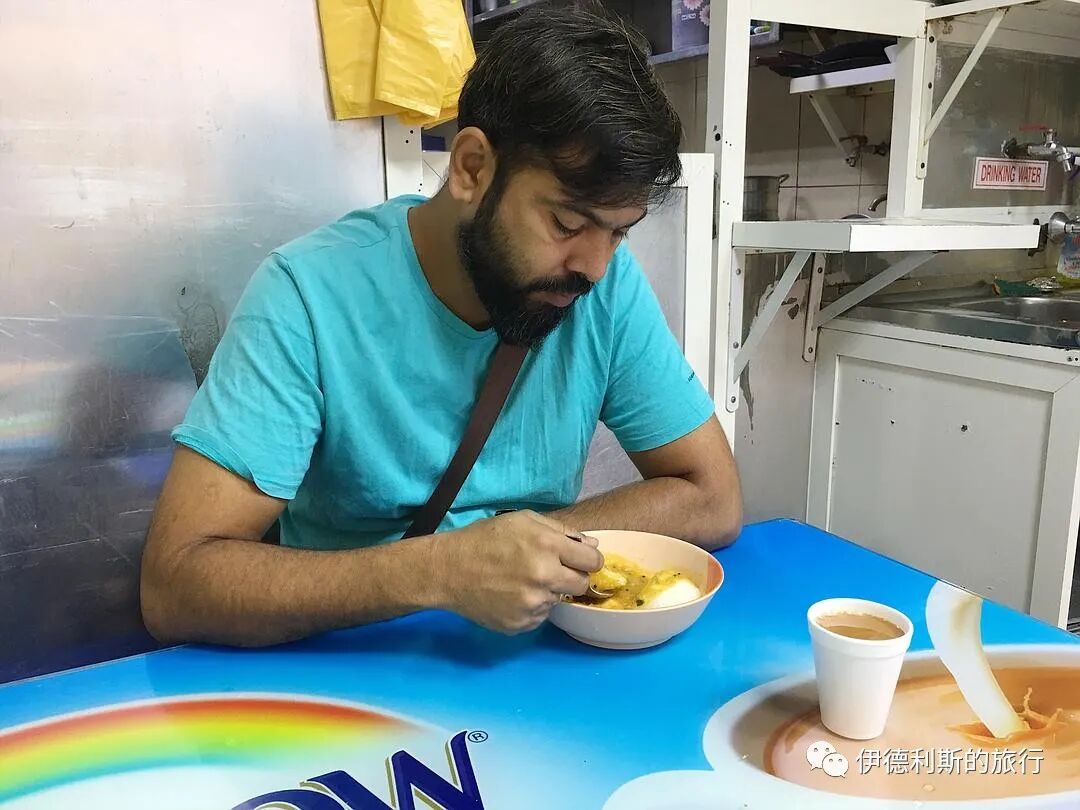
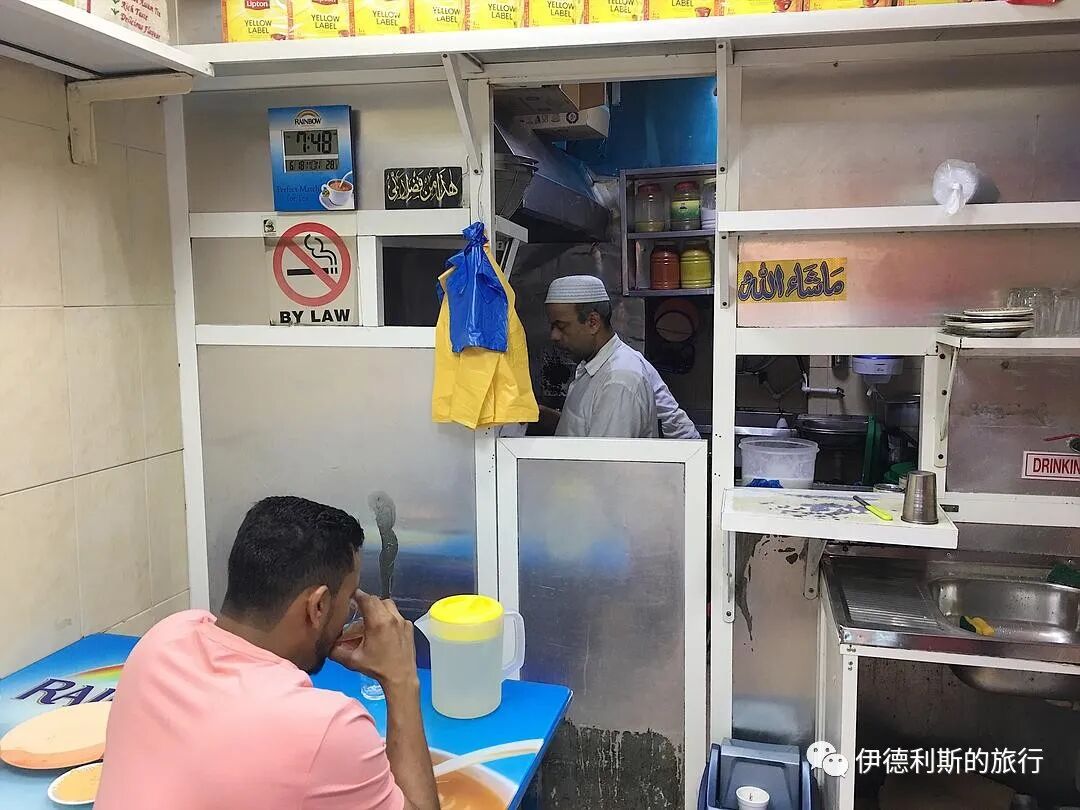
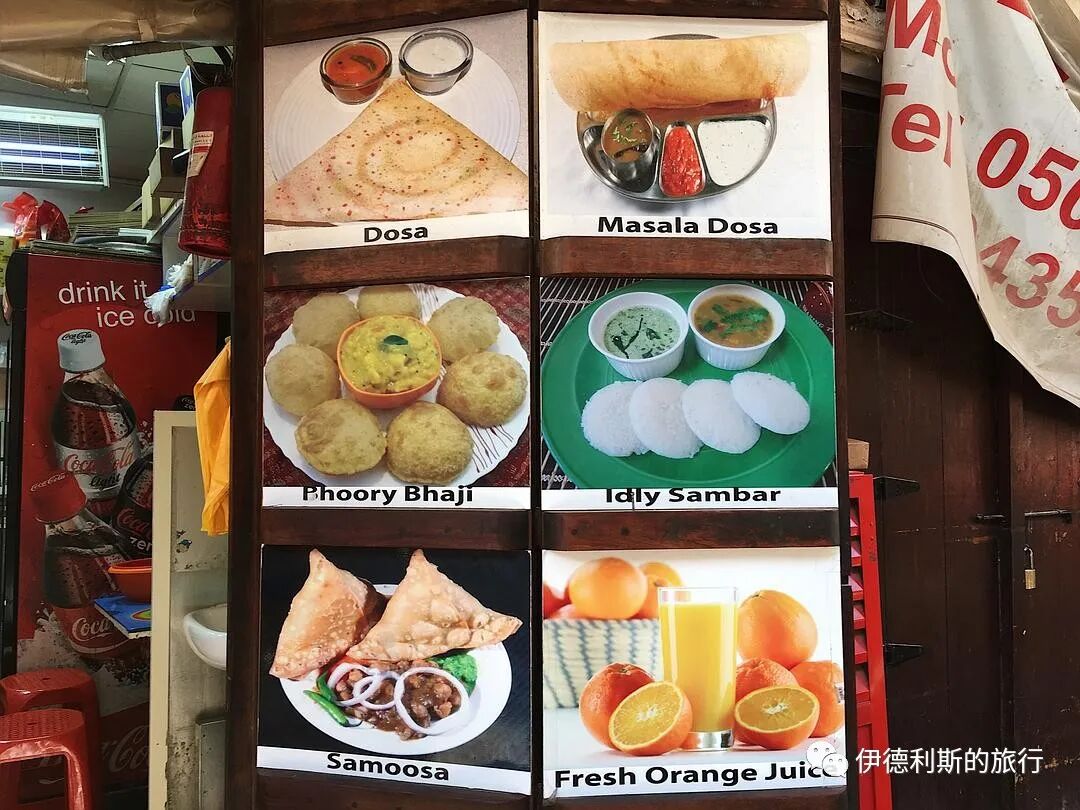
I started at one shop with a classic South Indian breakfast of steamed rice cakes (idli) with lentil stew (sambar) and Indian milk tea.
Idli is a popular savory rice cake in India and northern Sri Lanka. It is made by mixing rice and white lentils with spices, fermenting the batter overnight, and steaming it in molds for 10 to 25 minutes.
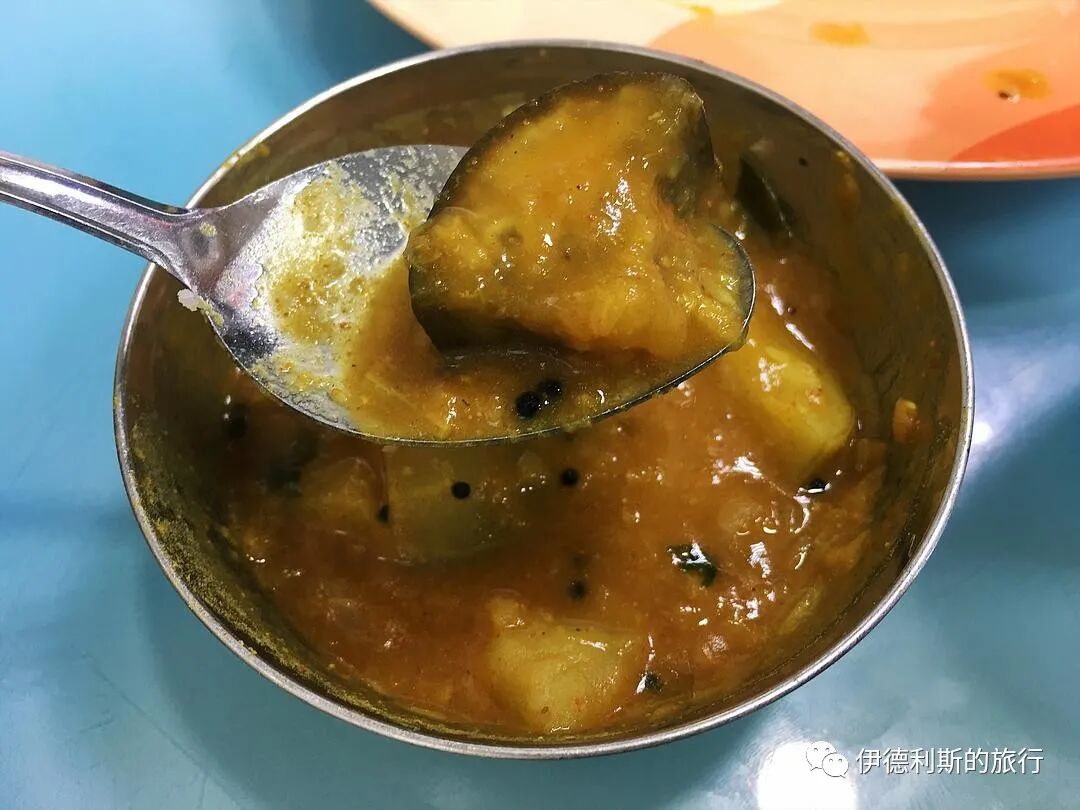
Sambar is a lentil stew also popular in South India and Sri Lanka. It represents the long tradition of eating lentils in South India.
In South India, idli served with sambar is a classic breakfast or late-night snack that you can often see at street stalls.
Because of the hot weather in Dubai, the market is almost empty during the day. After night falls, the temperature drops a little and the market starts to get busy.
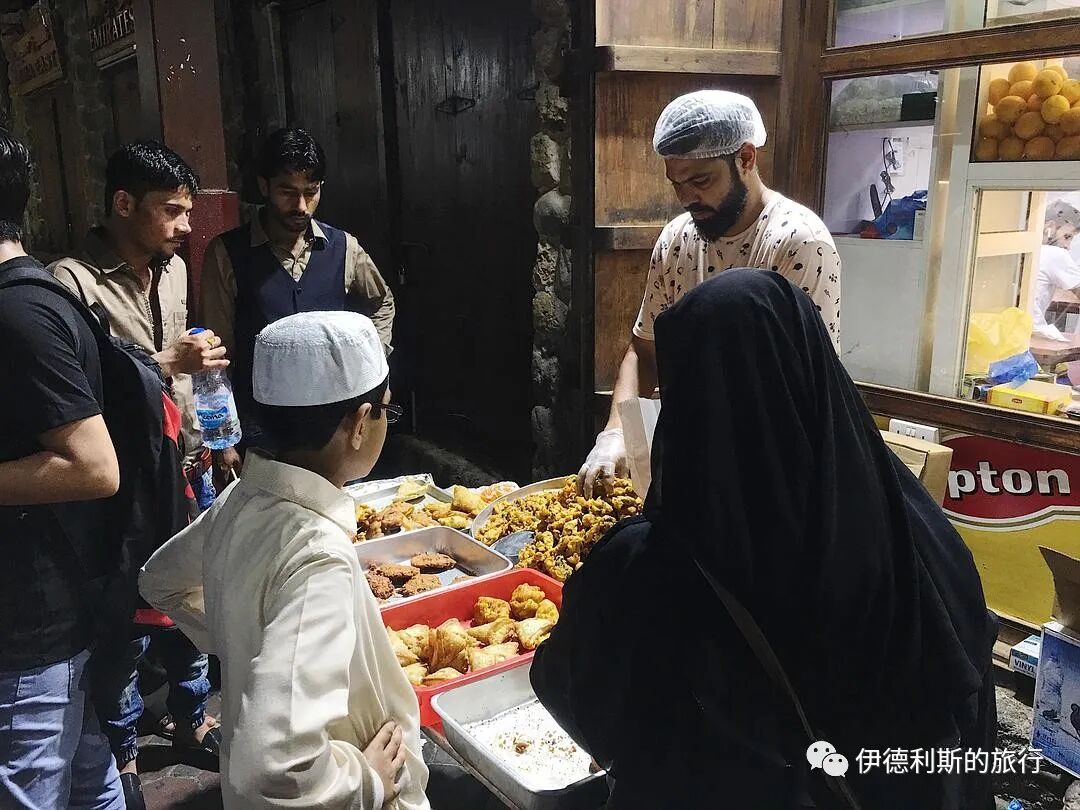
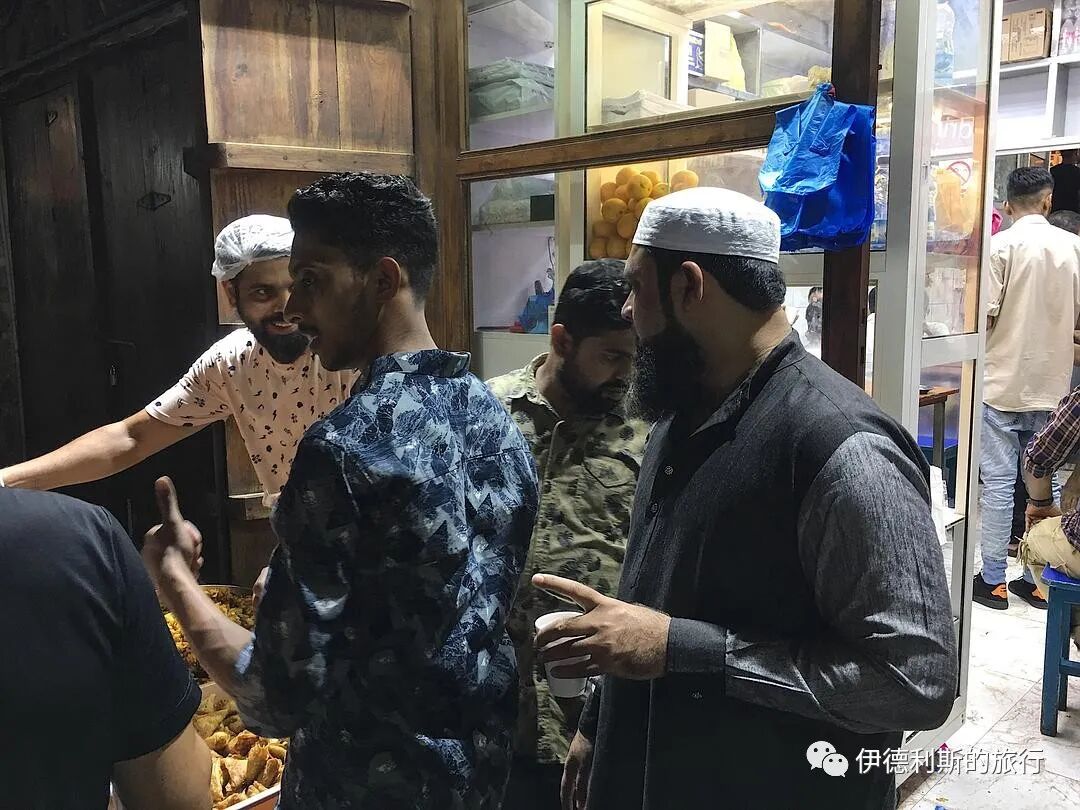
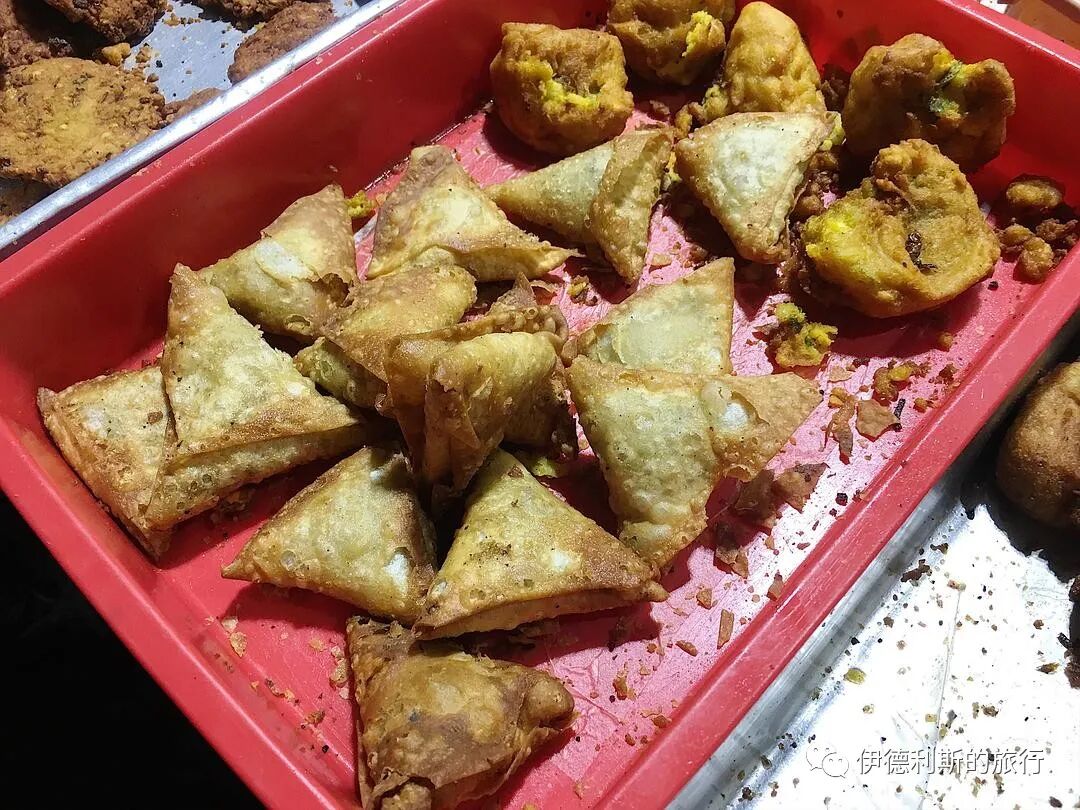
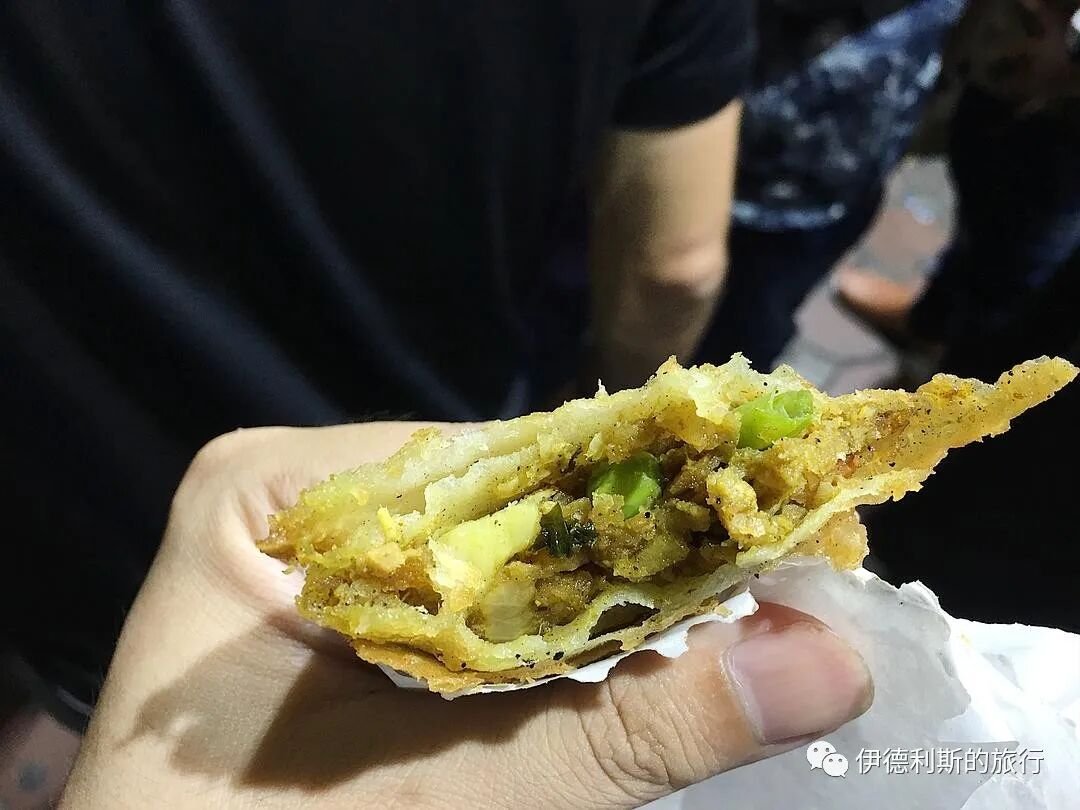
I ate a fried triangular pastry (samosa) at a shop.
A classic Indian samosa uses a dough made from vegetable oil, melted butter, warm water, salt, and wheat flour. The filling is mashed potatoes, onions, green peas, spices, and green chilies, then it is fried until golden brown. The South Asian samosa, along with the Arab sanbusak, Afghan sambosa, Tajik samboosa, Turkic samsa, and the Somali and Ethiopian sambusa, all come from the Persian word sanbosag.
Persian poetry began praising the samosa as early as the 10th century. This snack was very popular in Iran until the 16th century, but now it is only found in a few areas. In the 13th or 14th century, Central Asian Muslim merchants brought the samosa to South Asia, where it became a favorite of the Delhi Sultanate royal family. A scholar from the Delhi Sultanate wrote in 1300 that princes and nobles enjoyed samosas made with meat, ghee, and onions. In the 14th century, the famous traveler Ibn Battuta visited the court of the Tughlaq dynasty in the Delhi Sultanate. In his book, The Travels of Ibn Battuta, he wrote about eating a stuffed pastry called sambusak at the Sultan's court, which was filled with minced meat, almonds, pistachios, walnuts, and spices.
South Asian buffet
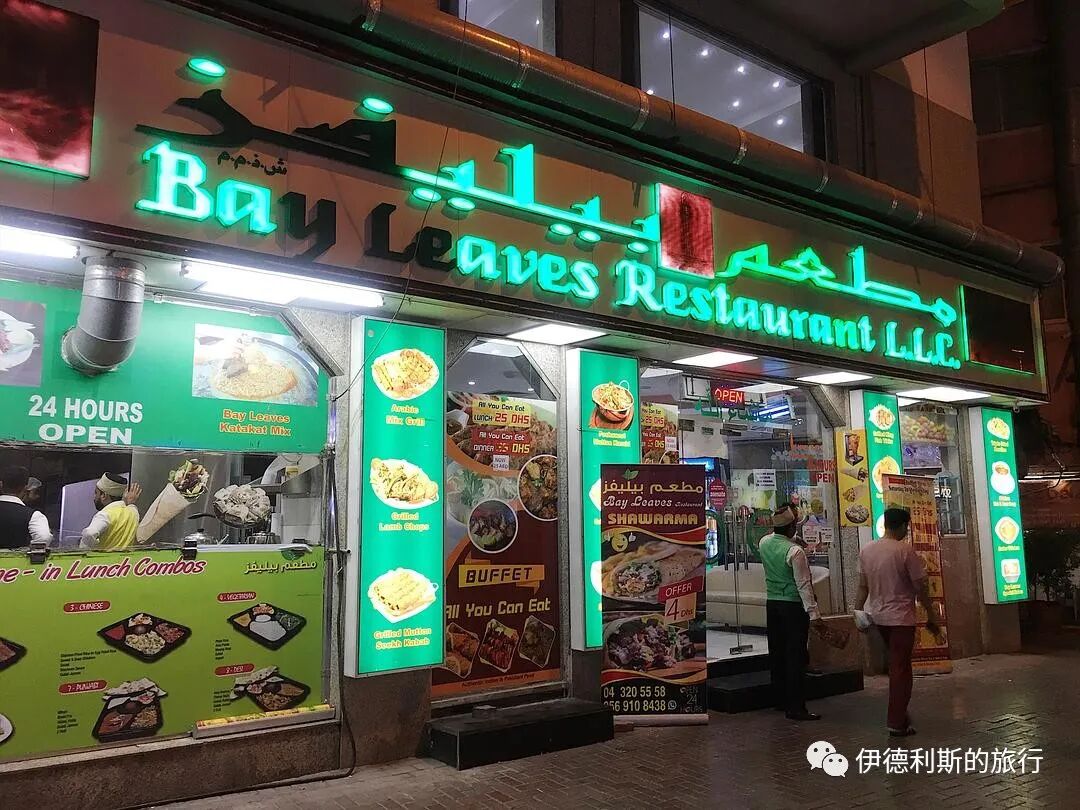
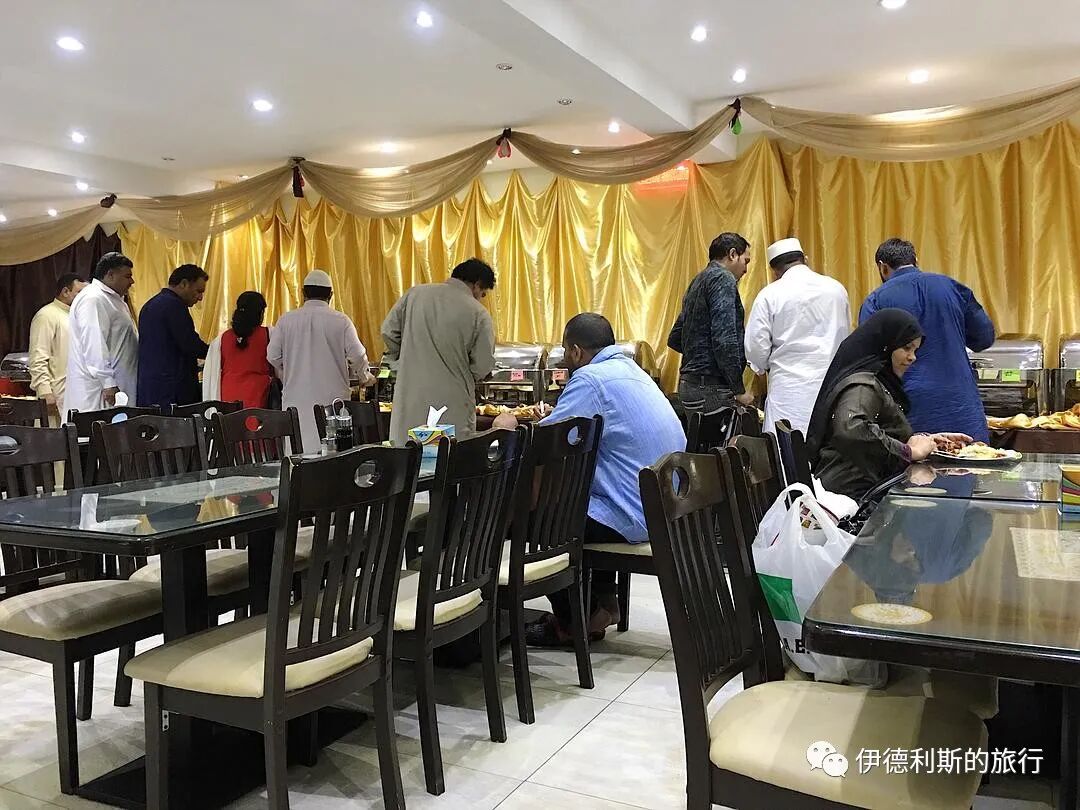
In the old town of Bur Dubai, South Asian restaurants are packed side by side. To try as many dishes as possible, I chose this buffet. It turned out that this restaurant was a great surprise for a solo traveler! I tasted 13 different dishes, and since each one had a name tag, I finally learned what they were.
This buffet cost 25 dirhams, which is about 44 yuan, making it a pretty good deal.
Let's start with the hearty stuff.
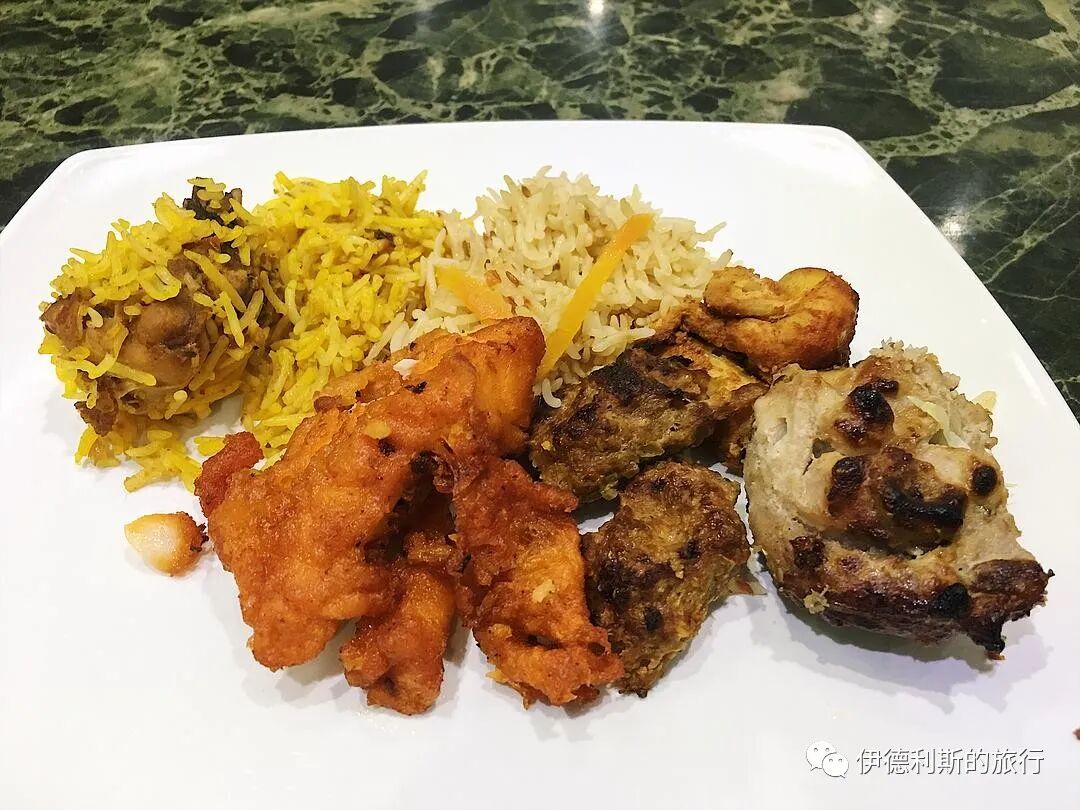
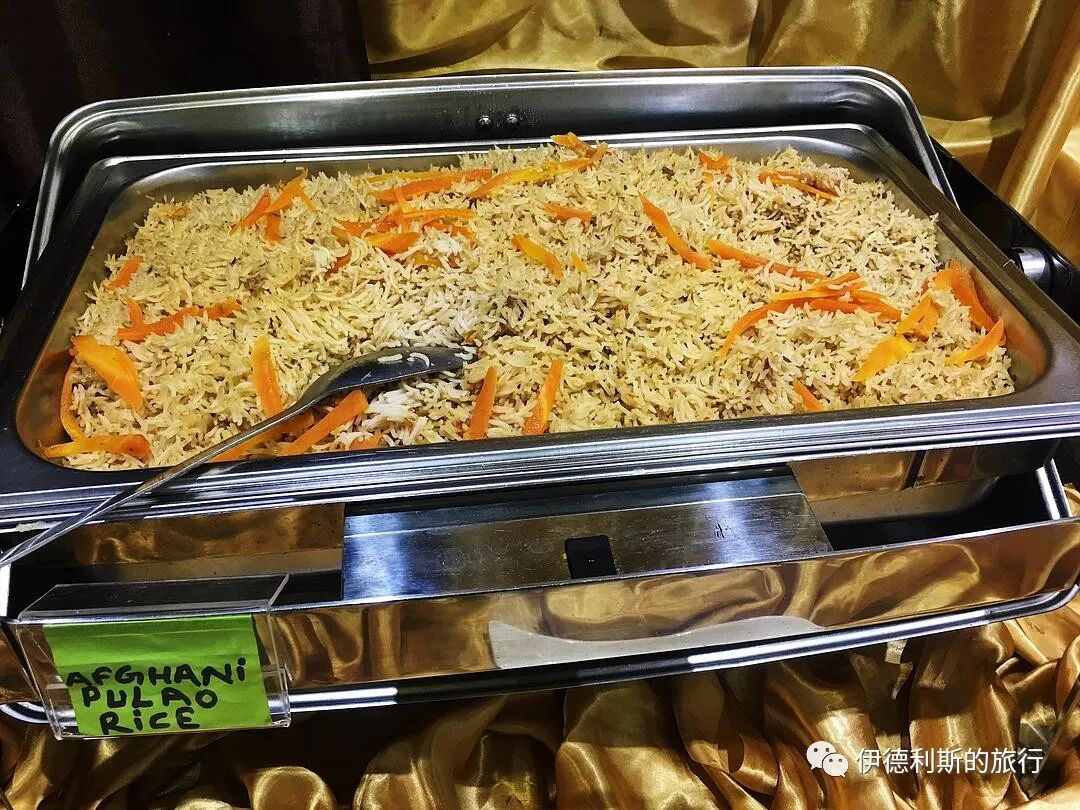
Afghan rice pilaf (pulao); this rice is super delicious.
Pilaf (zhuafan) is a way of cooking rice found across Central Asia, South Asia, West Asia, the Caucasus, East Africa, and all the way to the Balkan Peninsula. In English, it is called pilaf, which comes from the Greek word pilafi. This comes from the Turkish word pilav, which comes from the Persian word polow, which comes from the Hindi word pulāo. The original source is the Sanskrit word pulāka, which means a lump of rice. Ancient Indian texts use the words pulao or pallao to describe a dish where rice and meat are cooked together.
The first recipe for pilaf comes from the 10th-century Persian scholar Abu Ali Ibn Sina. He described the pros and cons of different types of pilaf in a medical book. Because of this, most people believe modern pilaf started in Persia and then spread to other places.
The carrot and meat pilaf in the picture below is similar to Xinjiang pilaf, while authentic Indian pilaf includes various vegetables like peas and potatoes.
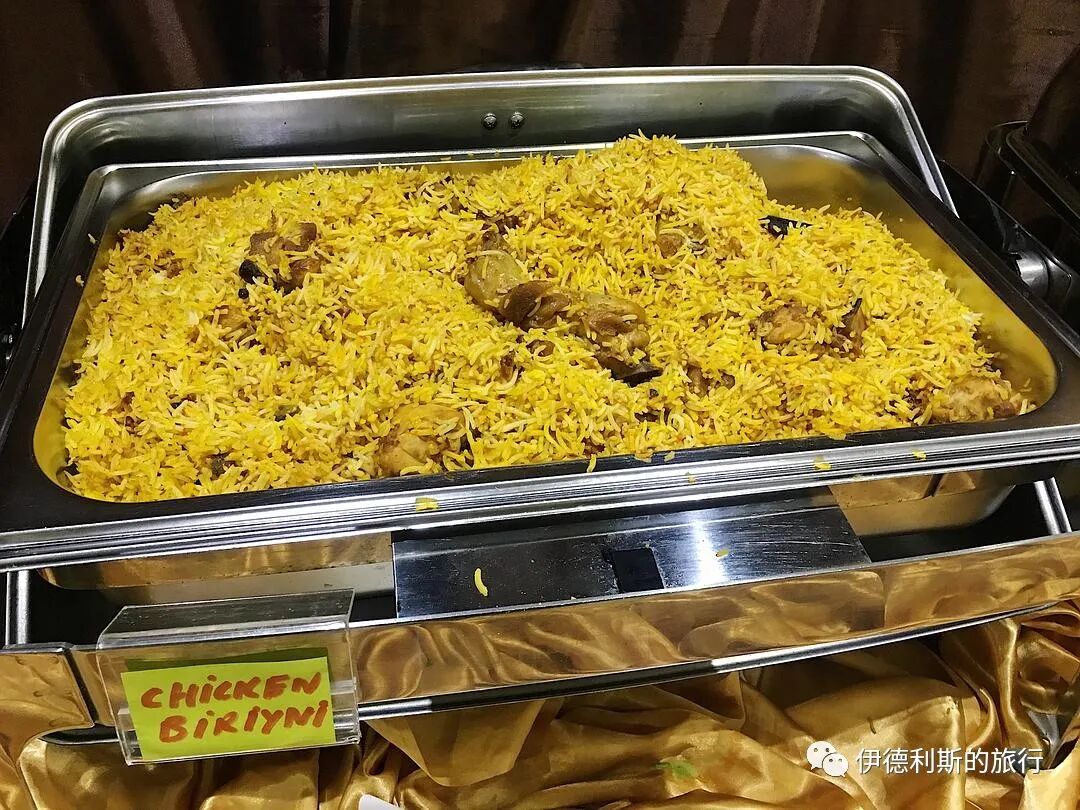
South Asian chicken rice (biryani) is probably the most popular way to cook rice in South Asia. Biryani comes from South Asian Muslims. It is a Persian loanword in Urdu, and it is generally believed to come from the Persian word for rice, birinj.
Historian Lizzie Collingham says modern biryani likely started in the royal kitchens of the Mughal Empire, where chefs combined spicy Indian rice with Persian pilaf. However, some people believe biryani existed even before the Mughal Empire. Documents from the 16th-century Mughal era mention both biryanis and pulao, but the terms were interchangeable back then. Another historian, Pratibha Karan, thinks biryani formed after Arab traders brought Middle Eastern pilaf to South India.
People generally agree there are three main differences between biryani and Indian pilaf:
1. Biryani uses more spices and has a stronger curry flavor, while Indian pilaf uses almost no spices.
2. Biryani is usually made with two layers of rice covering the meat in the middle, while Indian pilaf is not layered.
3. Biryani is usually made by cooking the rice and meat separately, while Indian pilaf is cooked all together.
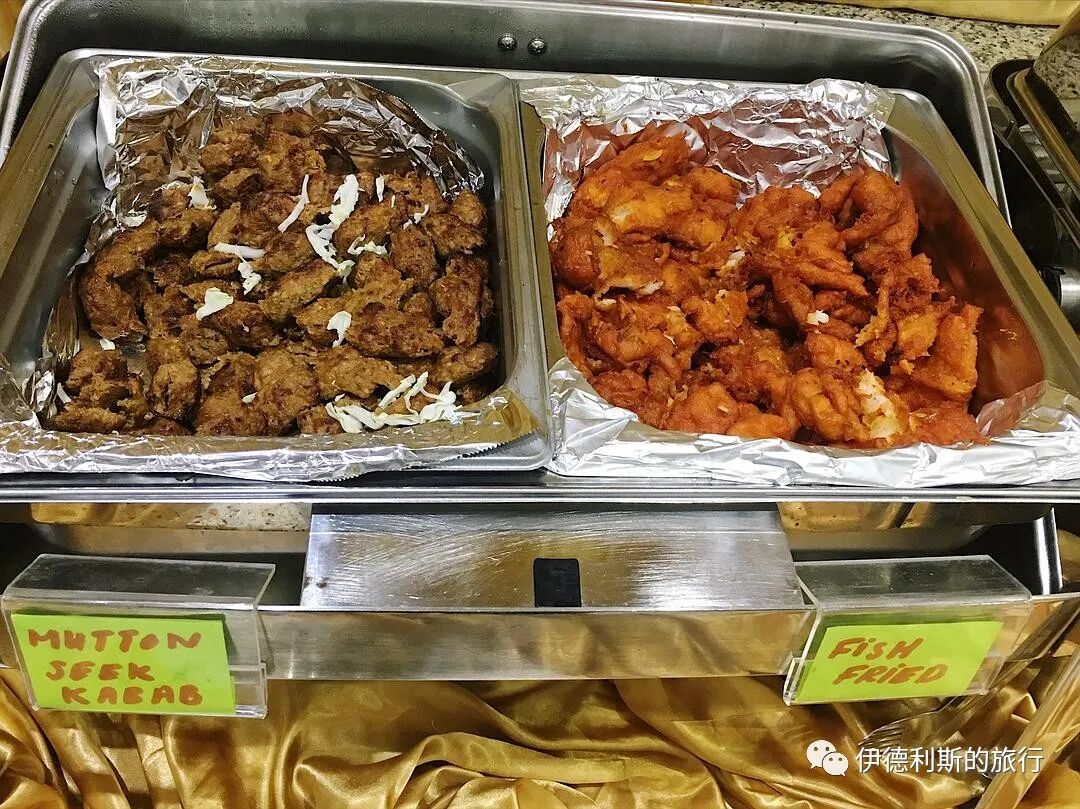
Roasted lamb and fried fish, I love roasted lamb!
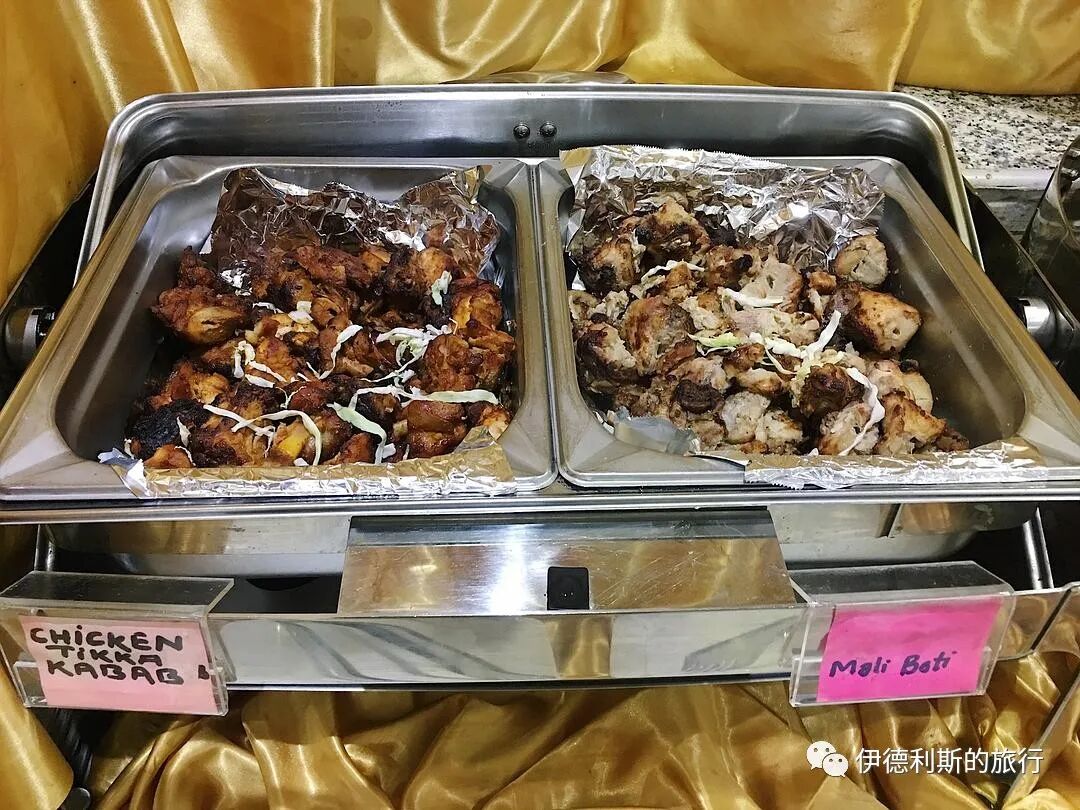
On the left is chicken tikka. Tikka means 'pieces' and is a marinating style from the Punjab region. Chicken tikka is made by marinating small, boneless chicken pieces in spices and yogurt before roasting. It is basically a boneless version of another South Asian specialty, tandoori chicken.
I am not sure what the mali beti on the right is yet.
Let's have a few more with sauce.
Eat it wrapped in South Asian flatbread (naan).
Dal means 'split' in Sanskrit. In South Asia, it refers to hulled legumes like peas and lentils, which can be eaten dry or with sauce.
Aloo gobi is a South Asian vegetable dish where 'aloo' means potato and 'gobi' means cauliflower. This dish contains a variety of spices. The yellow color mainly comes from turmeric, and it usually includes green onion, ginger, garlic, cilantro, tomatoes, peas, and cumin.
The word 'Palak' in Aloo Palak means spinach, and it is another South Asian vegetarian dish.
Karhi is a thick gravy made with chickpea flour, and it usually includes yogurt.
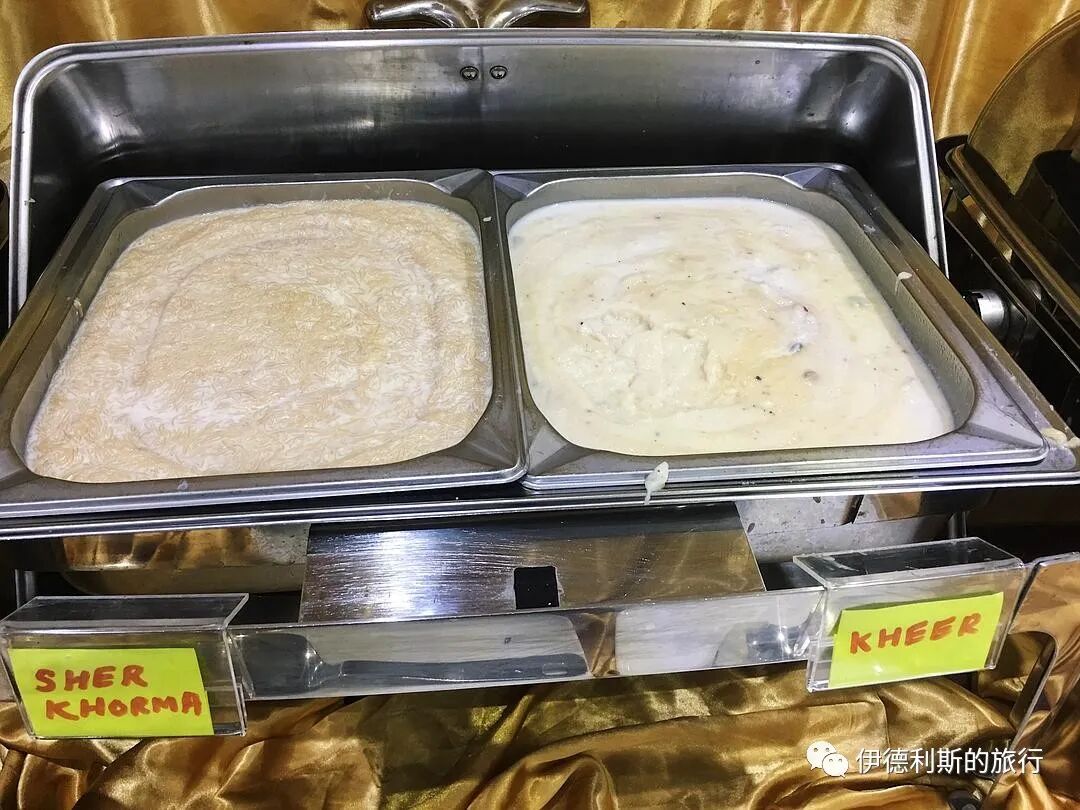
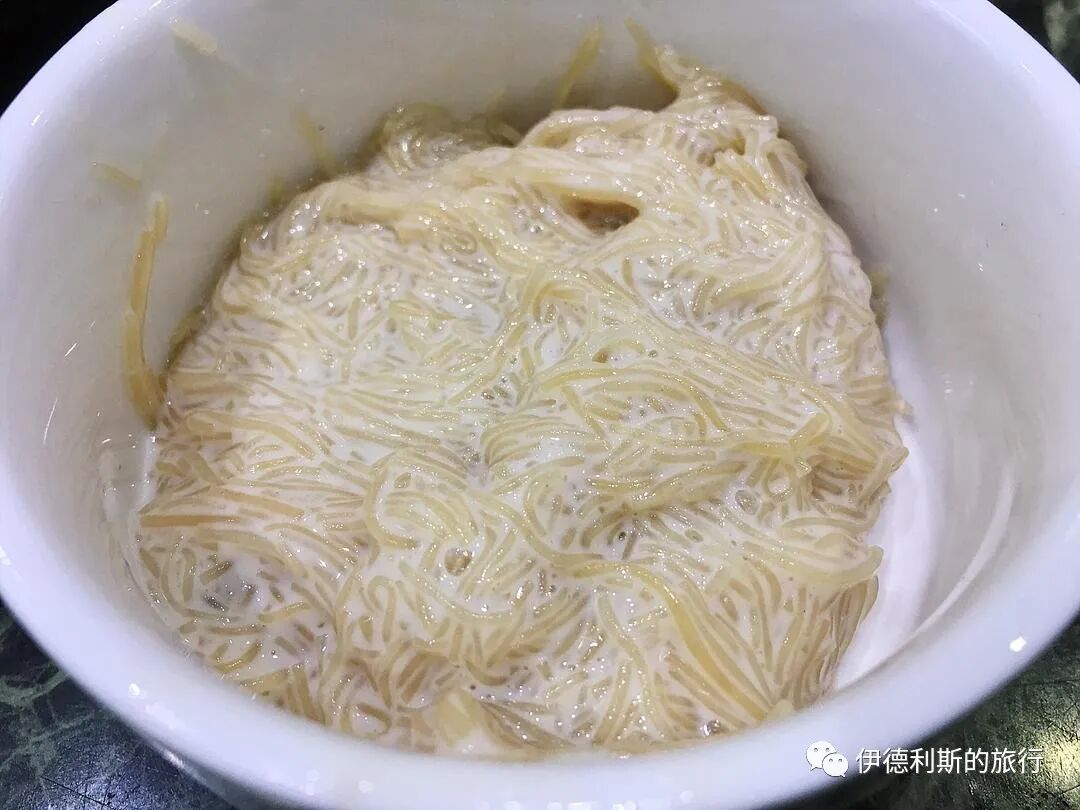
Kheer is a South Asian rice pudding that is often served during both Hindu and Muslim festivals. The word Kheer likely comes from the Sanskrit word for milk, 'Ksheera'.
Kheer is made from rice, wheat, tapioca, or vermicelli mixed with milk and sugar, and it is flavored with cardamom, raisins, saffron, cashews, pistachios, or almonds.
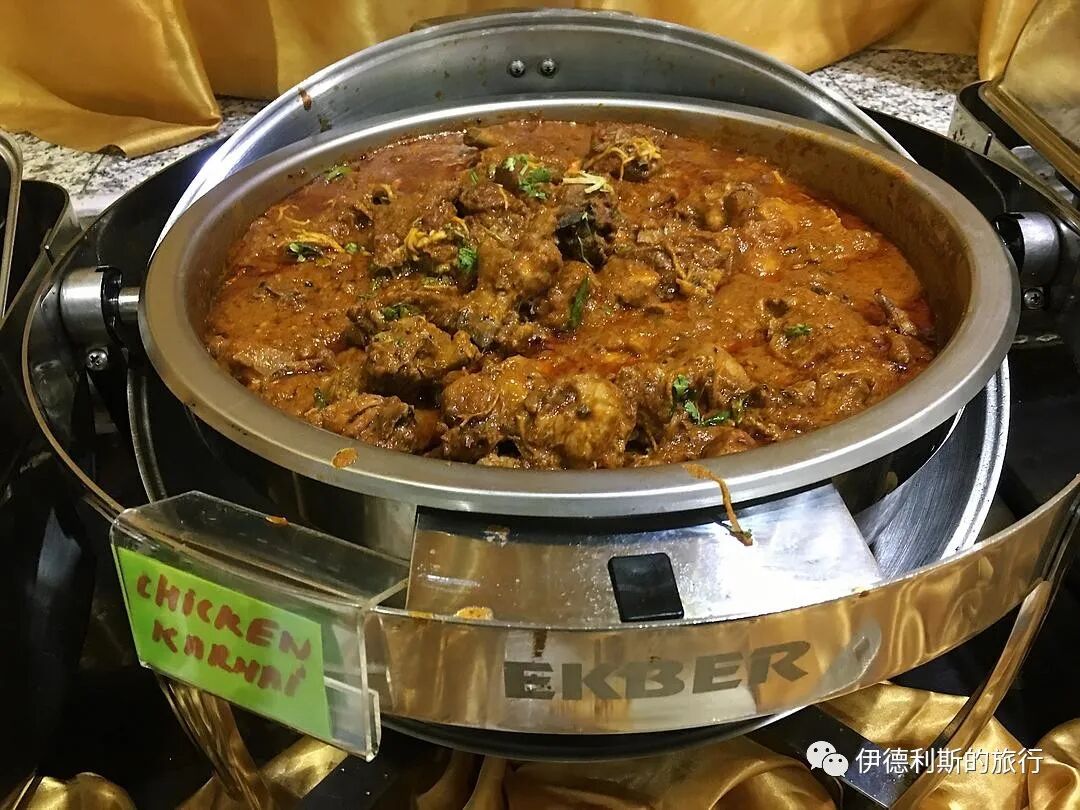
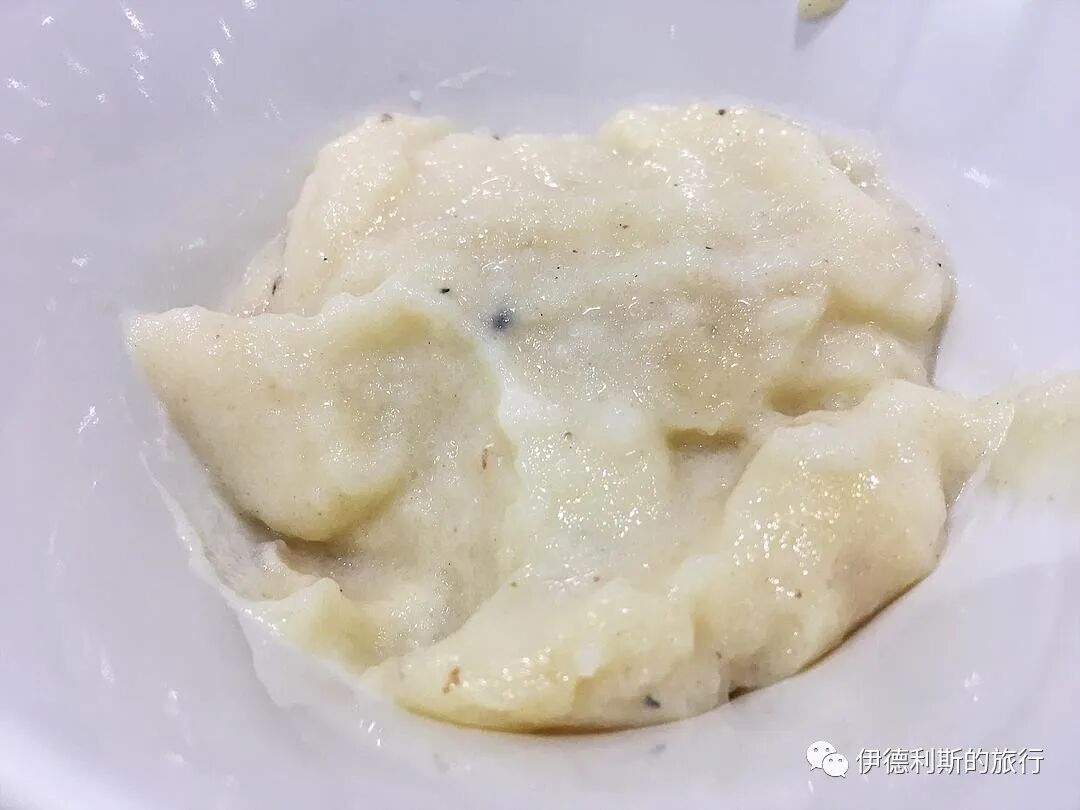
Korma is a dish made by mixing yogurt (dahi), cream, and water with various spices. It is usually cooked over low heat, allowing the yogurt to blend slowly into the gravy without curdling. The way I had Korma and Kheer served together this time is quite rare.
The word korma is actually an English spelling of the Urdu word qormā, which means to stew or braise. Urdu's qormā, Persian's ghormeh, and Azerbaijani's qovurma all come from the Turkic word qawirma, which means to fry. However, the modern South Asian korma has a completely different meaning than its related words in other regions. It comes from the Mughal Empire's royal court and was a dish the Mughal royals often ate.
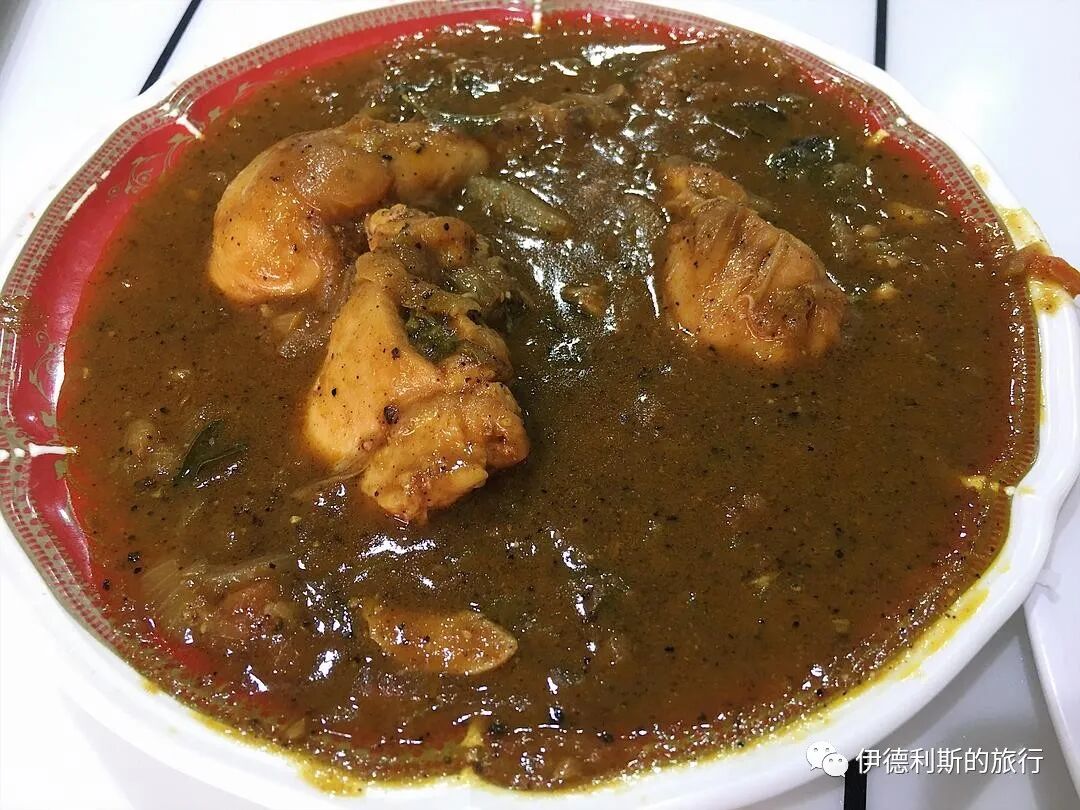
Pepper chicken
I ate pepper chicken at a South Asian restaurant.
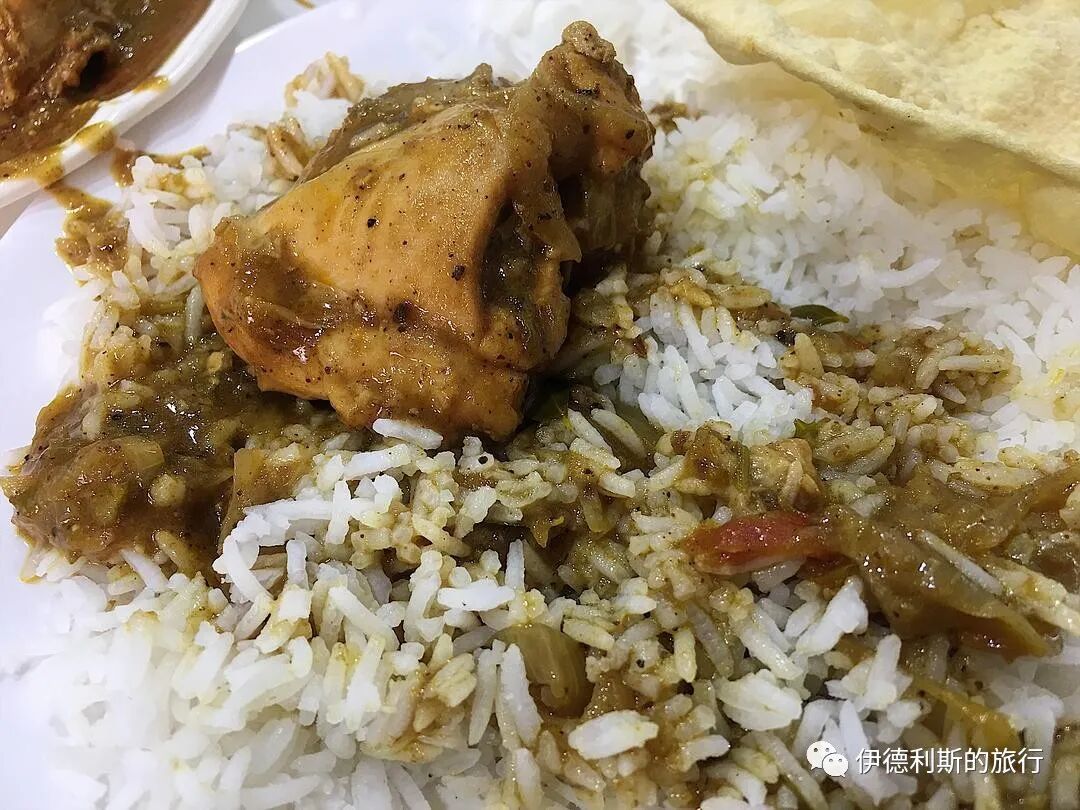
The bread on the rice is a South Asian snack called poori (or puri). The word comes from the Sanskrit word pūrikā, which means to fry. Poori is usually eaten for breakfast and is also used as food for religious ceremonies.
Poori is made by kneading wheat flour into dough and then frying it in ghee or vegetable oil until it turns golden brown. When frying, the water inside the dough turns into steam and expands, causing the dough to puff up into a round ball. If you poke the dough with a fork before frying, the steam escapes through the holes, making the finished poori flatter.
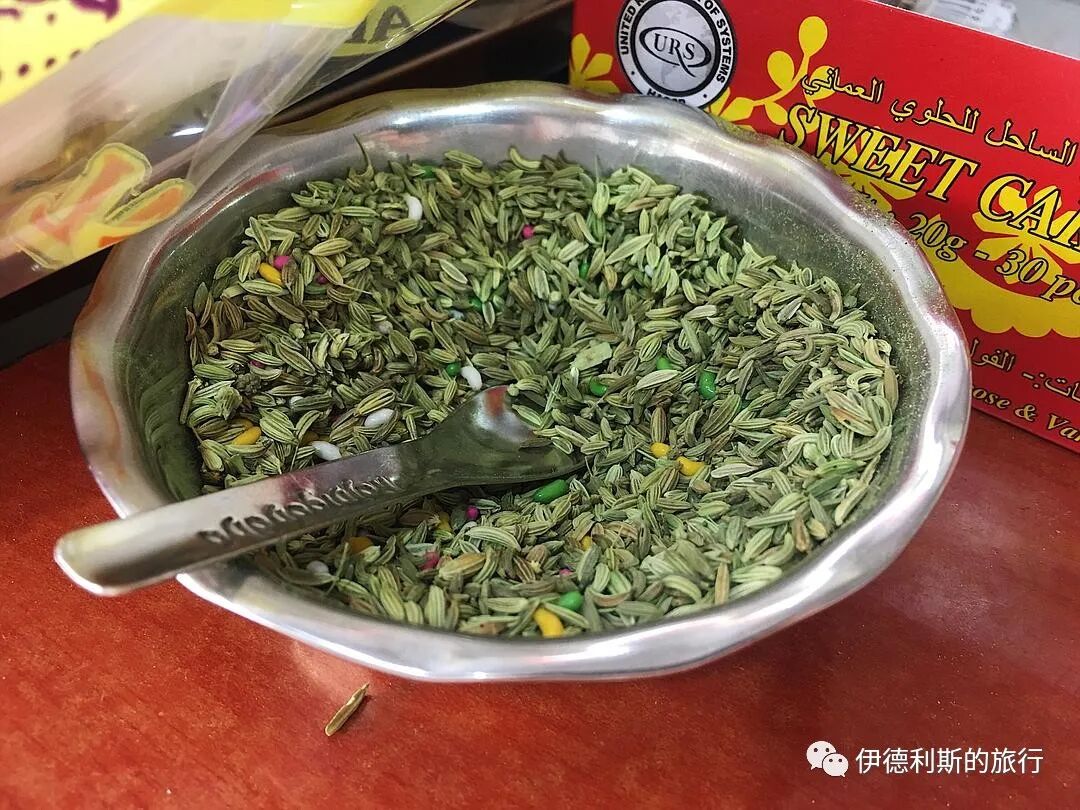
After the meal, use fennel seeds to freshen your breath.
Cold drinks.
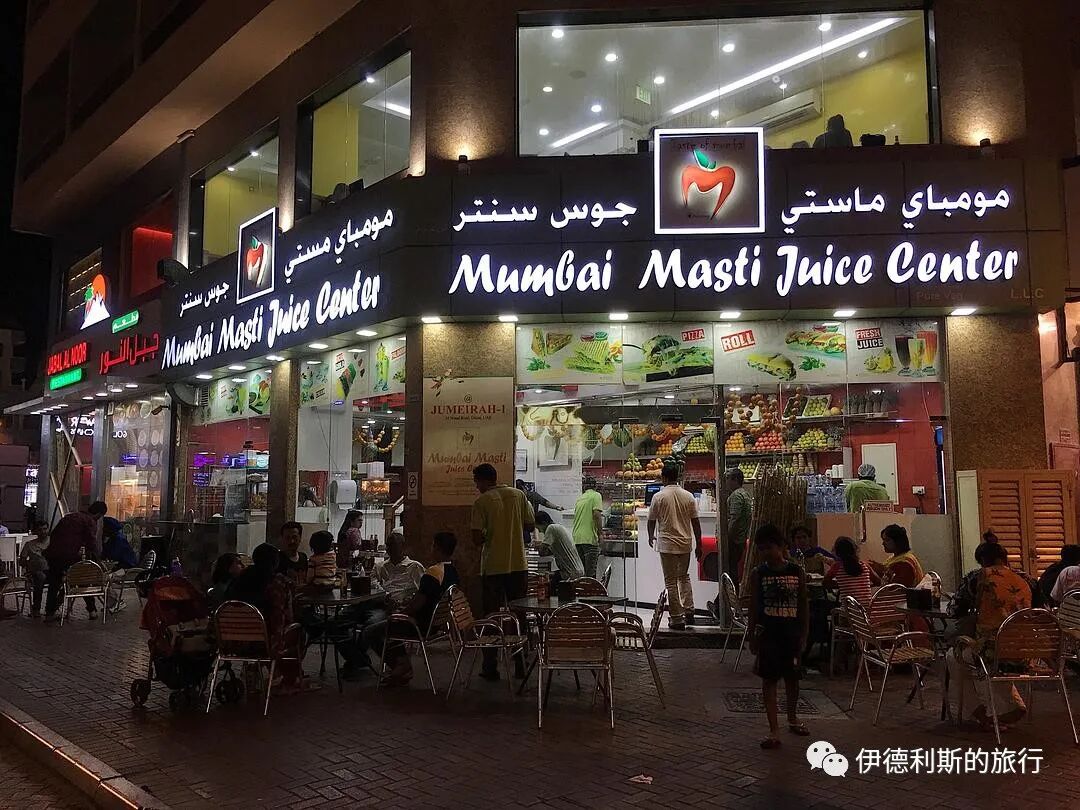
This is a very busy South Asian cold drink shop in Bur Dubai.
I ordered the South Asian specialty ice cream, falooda. Besides rose syrup, sweet basil seeds, jelly, and milk, the most unique part of falooda is the addition of noodles made from wheat, arrowroot, cornstarch, and sago.
Falooda originated in Persia and was brought to India by Muslim merchants between the 16th and 18th centuries, where it developed during the Mughal Empire. Today, falooda is an important part of Pakistani culture and appears at Islamic holidays and all kinds of celebrations.
I ordered a tabakath, a cold drink mixed with avocado, mango, and strawberry, at another South Asian restaurant.
Finally, I will share some scenes from the South Asian community in Dubai.
The biggest thing I noticed in Dubai is that everyone really follows the traffic rules.
Large shopping mall
McDonald's in Dubai
A carousel inside a large shopping mall.
Night view of Bur Dubai
The Dubai Creek ferry in Deira Dubai connects two important South Asian neighborhoods.
Across the river, the area is filled with small South Asian shops.
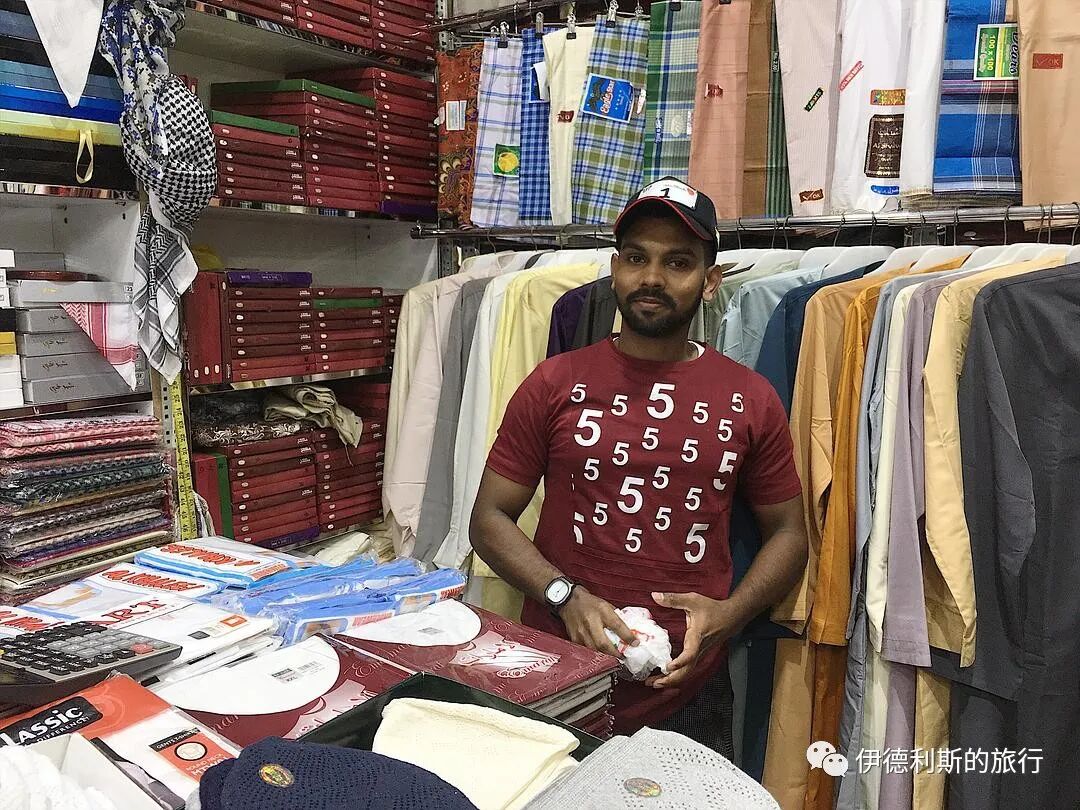
Clothing malls.
A young man selling clothes. view all
Summary: Halal Food Guide: Dubai — South Asian Restaurants and Everyday Eats is presented here as a firsthand travel account in clear English, beginning with this scene: Although the UAE is a Gulf Arab country, people from South Asia make up the majority of its population. The account keeps its focus on Dubai Halal Food, South Asian Food, Muslim Travel while preserving the names, places, food, and historical details from the Chinese source.
Although the UAE is a Gulf Arab country, people from South Asia make up the majority of its population. Currently, over 2.8 million Indians, 1.2 million Pakistanis, and 1 million Bangladeshis live in the UAE, with most of them in the cities of Abu Dhabi, Dubai, and Sharjah.
As a transit hub between the Middle East and South Asia, Dubai has had very close historical ties with South Asia. Many South Asian merchants traveled frequently between Dubai and South Asia as early as the 18th century to trade pearls, and South Asian merchants have long dominated Dubai's gold and textile trade.
After Dubai signed a perpetual truce with Britain in 1853, it came under the administration of British India, used rupees and stamps issued by British India, and grew even closer to South Asia.
After oil was discovered in 1966, a large number of South Asian workers began pouring into Dubai, and at that time, it took three days by ship to travel from Mumbai to Dubai. Most of these workers came from Maharashtra state, where Mumbai is located, and there were also many Arab-descended Indians, a group that had migrated from various parts of the Arab world to India hundreds of years ago.
As Dubai's status as a free trade port rose, its South Asian population increased sharply in the 1970s and 1980s, with most Indians coming from the southernmost states of Kerala and Tamil Nadu, while most Pakistanis were Punjabis and Pashtuns.
Some South Asians in Dubai are now second or even third generation, forming a distinct South Asian community in the city. You can find all kinds of South Asian food here.
Bur Dubai Souk
Bur Dubai Souk is the oldest market in Dubai. It has become a hub for South Asians and houses several small South Asian snack shops.
I started at one shop with a classic South Indian breakfast of steamed rice cakes (idli) with lentil stew (sambar) and Indian milk tea.
Idli is a popular savory rice cake in India and northern Sri Lanka. It is made by mixing rice and white lentils with spices, fermenting the batter overnight, and steaming it in molds for 10 to 25 minutes.
Sambar is a lentil stew also popular in South India and Sri Lanka. It represents the long tradition of eating lentils in South India.
In South India, idli served with sambar is a classic breakfast or late-night snack that you can often see at street stalls.
Because of the hot weather in Dubai, the market is almost empty during the day. After night falls, the temperature drops a little and the market starts to get busy.
I ate a fried triangular pastry (samosa) at a shop.
A classic Indian samosa uses a dough made from vegetable oil, melted butter, warm water, salt, and wheat flour. The filling is mashed potatoes, onions, green peas, spices, and green chilies, then it is fried until golden brown. The South Asian samosa, along with the Arab sanbusak, Afghan sambosa, Tajik samboosa, Turkic samsa, and the Somali and Ethiopian sambusa, all come from the Persian word sanbosag.
Persian poetry began praising the samosa as early as the 10th century. This snack was very popular in Iran until the 16th century, but now it is only found in a few areas. In the 13th or 14th century, Central Asian Muslim merchants brought the samosa to South Asia, where it became a favorite of the Delhi Sultanate royal family. A scholar from the Delhi Sultanate wrote in 1300 that princes and nobles enjoyed samosas made with meat, ghee, and onions. In the 14th century, the famous traveler Ibn Battuta visited the court of the Tughlaq dynasty in the Delhi Sultanate. In his book, The Travels of Ibn Battuta, he wrote about eating a stuffed pastry called sambusak at the Sultan's court, which was filled with minced meat, almonds, pistachios, walnuts, and spices.
South Asian buffet
In the old town of Bur Dubai, South Asian restaurants are packed side by side. To try as many dishes as possible, I chose this buffet. It turned out that this restaurant was a great surprise for a solo traveler! I tasted 13 different dishes, and since each one had a name tag, I finally learned what they were.
This buffet cost 25 dirhams, which is about 44 yuan, making it a pretty good deal.
Let's start with the hearty stuff.
Afghan rice pilaf (pulao); this rice is super delicious.
Pilaf (zhuafan) is a way of cooking rice found across Central Asia, South Asia, West Asia, the Caucasus, East Africa, and all the way to the Balkan Peninsula. In English, it is called pilaf, which comes from the Greek word pilafi. This comes from the Turkish word pilav, which comes from the Persian word polow, which comes from the Hindi word pulāo. The original source is the Sanskrit word pulāka, which means a lump of rice. Ancient Indian texts use the words pulao or pallao to describe a dish where rice and meat are cooked together.
The first recipe for pilaf comes from the 10th-century Persian scholar Abu Ali Ibn Sina. He described the pros and cons of different types of pilaf in a medical book. Because of this, most people believe modern pilaf started in Persia and then spread to other places.
The carrot and meat pilaf in the picture below is similar to Xinjiang pilaf, while authentic Indian pilaf includes various vegetables like peas and potatoes.
South Asian chicken rice (biryani) is probably the most popular way to cook rice in South Asia. Biryani comes from South Asian Muslims. It is a Persian loanword in Urdu, and it is generally believed to come from the Persian word for rice, birinj.
Historian Lizzie Collingham says modern biryani likely started in the royal kitchens of the Mughal Empire, where chefs combined spicy Indian rice with Persian pilaf. However, some people believe biryani existed even before the Mughal Empire. Documents from the 16th-century Mughal era mention both biryanis and pulao, but the terms were interchangeable back then. Another historian, Pratibha Karan, thinks biryani formed after Arab traders brought Middle Eastern pilaf to South India.
People generally agree there are three main differences between biryani and Indian pilaf:
1. Biryani uses more spices and has a stronger curry flavor, while Indian pilaf uses almost no spices.
2. Biryani is usually made with two layers of rice covering the meat in the middle, while Indian pilaf is not layered.
3. Biryani is usually made by cooking the rice and meat separately, while Indian pilaf is cooked all together.
Roasted lamb and fried fish, I love roasted lamb!
On the left is chicken tikka. Tikka means 'pieces' and is a marinating style from the Punjab region. Chicken tikka is made by marinating small, boneless chicken pieces in spices and yogurt before roasting. It is basically a boneless version of another South Asian specialty, tandoori chicken.
I am not sure what the mali beti on the right is yet.
Let's have a few more with sauce.
Eat it wrapped in South Asian flatbread (naan).
Dal means 'split' in Sanskrit. In South Asia, it refers to hulled legumes like peas and lentils, which can be eaten dry or with sauce.
Aloo gobi is a South Asian vegetable dish where 'aloo' means potato and 'gobi' means cauliflower. This dish contains a variety of spices. The yellow color mainly comes from turmeric, and it usually includes green onion, ginger, garlic, cilantro, tomatoes, peas, and cumin.
The word 'Palak' in Aloo Palak means spinach, and it is another South Asian vegetarian dish.
Karhi is a thick gravy made with chickpea flour, and it usually includes yogurt.
Kheer is a South Asian rice pudding that is often served during both Hindu and Muslim festivals. The word Kheer likely comes from the Sanskrit word for milk, 'Ksheera'.
Kheer is made from rice, wheat, tapioca, or vermicelli mixed with milk and sugar, and it is flavored with cardamom, raisins, saffron, cashews, pistachios, or almonds.
Korma is a dish made by mixing yogurt (dahi), cream, and water with various spices. It is usually cooked over low heat, allowing the yogurt to blend slowly into the gravy without curdling. The way I had Korma and Kheer served together this time is quite rare.
The word korma is actually an English spelling of the Urdu word qormā, which means to stew or braise. Urdu's qormā, Persian's ghormeh, and Azerbaijani's qovurma all come from the Turkic word qawirma, which means to fry. However, the modern South Asian korma has a completely different meaning than its related words in other regions. It comes from the Mughal Empire's royal court and was a dish the Mughal royals often ate.
Pepper chicken
I ate pepper chicken at a South Asian restaurant.
The bread on the rice is a South Asian snack called poori (or puri). The word comes from the Sanskrit word pūrikā, which means to fry. Poori is usually eaten for breakfast and is also used as food for religious ceremonies.
Poori is made by kneading wheat flour into dough and then frying it in ghee or vegetable oil until it turns golden brown. When frying, the water inside the dough turns into steam and expands, causing the dough to puff up into a round ball. If you poke the dough with a fork before frying, the steam escapes through the holes, making the finished poori flatter.
After the meal, use fennel seeds to freshen your breath.
Cold drinks.
This is a very busy South Asian cold drink shop in Bur Dubai.
I ordered the South Asian specialty ice cream, falooda. Besides rose syrup, sweet basil seeds, jelly, and milk, the most unique part of falooda is the addition of noodles made from wheat, arrowroot, cornstarch, and sago.
Falooda originated in Persia and was brought to India by Muslim merchants between the 16th and 18th centuries, where it developed during the Mughal Empire. Today, falooda is an important part of Pakistani culture and appears at Islamic holidays and all kinds of celebrations.
I ordered a tabakath, a cold drink mixed with avocado, mango, and strawberry, at another South Asian restaurant.
Finally, I will share some scenes from the South Asian community in Dubai.
The biggest thing I noticed in Dubai is that everyone really follows the traffic rules.
Large shopping mall
McDonald's in Dubai
A carousel inside a large shopping mall.
Night view of Bur Dubai
The Dubai Creek ferry in Deira Dubai connects two important South Asian neighborhoods.
Across the river, the area is filled with small South Asian shops.
Clothing malls.
A young man selling clothes. view all
Reposted from the web
Summary: Halal Food Guide: Dubai — South Asian Restaurants and Everyday Eats is presented here as a firsthand travel account in clear English, beginning with this scene: Although the UAE is a Gulf Arab country, people from South Asia make up the majority of its population. The account keeps its focus on Dubai Halal Food, South Asian Food, Muslim Travel while preserving the names, places, food, and historical details from the Chinese source.
Although the UAE is a Gulf Arab country, people from South Asia make up the majority of its population. Currently, over 2.8 million Indians, 1.2 million Pakistanis, and 1 million Bangladeshis live in the UAE, with most of them in the cities of Abu Dhabi, Dubai, and Sharjah.
As a transit hub between the Middle East and South Asia, Dubai has had very close historical ties with South Asia. Many South Asian merchants traveled frequently between Dubai and South Asia as early as the 18th century to trade pearls, and South Asian merchants have long dominated Dubai's gold and textile trade.
After Dubai signed a perpetual truce with Britain in 1853, it came under the administration of British India, used rupees and stamps issued by British India, and grew even closer to South Asia.
After oil was discovered in 1966, a large number of South Asian workers began pouring into Dubai, and at that time, it took three days by ship to travel from Mumbai to Dubai. Most of these workers came from Maharashtra state, where Mumbai is located, and there were also many Arab-descended Indians, a group that had migrated from various parts of the Arab world to India hundreds of years ago.
As Dubai's status as a free trade port rose, its South Asian population increased sharply in the 1970s and 1980s, with most Indians coming from the southernmost states of Kerala and Tamil Nadu, while most Pakistanis were Punjabis and Pashtuns.
Some South Asians in Dubai are now second or even third generation, forming a distinct South Asian community in the city. You can find all kinds of South Asian food here.
Bur Dubai Souk
Bur Dubai Souk is the oldest market in Dubai. It has become a hub for South Asians and houses several small South Asian snack shops.
I started at one shop with a classic South Indian breakfast of steamed rice cakes (idli) with lentil stew (sambar) and Indian milk tea.
Idli is a popular savory rice cake in India and northern Sri Lanka. It is made by mixing rice and white lentils with spices, fermenting the batter overnight, and steaming it in molds for 10 to 25 minutes.
Sambar is a lentil stew also popular in South India and Sri Lanka. It represents the long tradition of eating lentils in South India.
In South India, idli served with sambar is a classic breakfast or late-night snack that you can often see at street stalls.
Because of the hot weather in Dubai, the market is almost empty during the day. After night falls, the temperature drops a little and the market starts to get busy.
I ate a fried triangular pastry (samosa) at a shop.
A classic Indian samosa uses a dough made from vegetable oil, melted butter, warm water, salt, and wheat flour. The filling is mashed potatoes, onions, green peas, spices, and green chilies, then it is fried until golden brown. The South Asian samosa, along with the Arab sanbusak, Afghan sambosa, Tajik samboosa, Turkic samsa, and the Somali and Ethiopian sambusa, all come from the Persian word sanbosag.
Persian poetry began praising the samosa as early as the 10th century. This snack was very popular in Iran until the 16th century, but now it is only found in a few areas. In the 13th or 14th century, Central Asian Muslim merchants brought the samosa to South Asia, where it became a favorite of the Delhi Sultanate royal family. A scholar from the Delhi Sultanate wrote in 1300 that princes and nobles enjoyed samosas made with meat, ghee, and onions. In the 14th century, the famous traveler Ibn Battuta visited the court of the Tughlaq dynasty in the Delhi Sultanate. In his book, The Travels of Ibn Battuta, he wrote about eating a stuffed pastry called sambusak at the Sultan's court, which was filled with minced meat, almonds, pistachios, walnuts, and spices.
South Asian buffet
In the old town of Bur Dubai, South Asian restaurants are packed side by side. To try as many dishes as possible, I chose this buffet. It turned out that this restaurant was a great surprise for a solo traveler! I tasted 13 different dishes, and since each one had a name tag, I finally learned what they were.
This buffet cost 25 dirhams, which is about 44 yuan, making it a pretty good deal.
Let's start with the hearty stuff.
Afghan rice pilaf (pulao); this rice is super delicious.
Pilaf (zhuafan) is a way of cooking rice found across Central Asia, South Asia, West Asia, the Caucasus, East Africa, and all the way to the Balkan Peninsula. In English, it is called pilaf, which comes from the Greek word pilafi. This comes from the Turkish word pilav, which comes from the Persian word polow, which comes from the Hindi word pulāo. The original source is the Sanskrit word pulāka, which means a lump of rice. Ancient Indian texts use the words pulao or pallao to describe a dish where rice and meat are cooked together.
The first recipe for pilaf comes from the 10th-century Persian scholar Abu Ali Ibn Sina. He described the pros and cons of different types of pilaf in a medical book. Because of this, most people believe modern pilaf started in Persia and then spread to other places.
The carrot and meat pilaf in the picture below is similar to Xinjiang pilaf, while authentic Indian pilaf includes various vegetables like peas and potatoes.
South Asian chicken rice (biryani) is probably the most popular way to cook rice in South Asia. Biryani comes from South Asian Muslims. It is a Persian loanword in Urdu, and it is generally believed to come from the Persian word for rice, birinj.
Historian Lizzie Collingham says modern biryani likely started in the royal kitchens of the Mughal Empire, where chefs combined spicy Indian rice with Persian pilaf. However, some people believe biryani existed even before the Mughal Empire. Documents from the 16th-century Mughal era mention both biryanis and pulao, but the terms were interchangeable back then. Another historian, Pratibha Karan, thinks biryani formed after Arab traders brought Middle Eastern pilaf to South India.
People generally agree there are three main differences between biryani and Indian pilaf:
1. Biryani uses more spices and has a stronger curry flavor, while Indian pilaf uses almost no spices.
2. Biryani is usually made with two layers of rice covering the meat in the middle, while Indian pilaf is not layered.
3. Biryani is usually made by cooking the rice and meat separately, while Indian pilaf is cooked all together.
Roasted lamb and fried fish, I love roasted lamb!
On the left is chicken tikka. Tikka means 'pieces' and is a marinating style from the Punjab region. Chicken tikka is made by marinating small, boneless chicken pieces in spices and yogurt before roasting. It is basically a boneless version of another South Asian specialty, tandoori chicken.
I am not sure what the mali beti on the right is yet.
Let's have a few more with sauce.
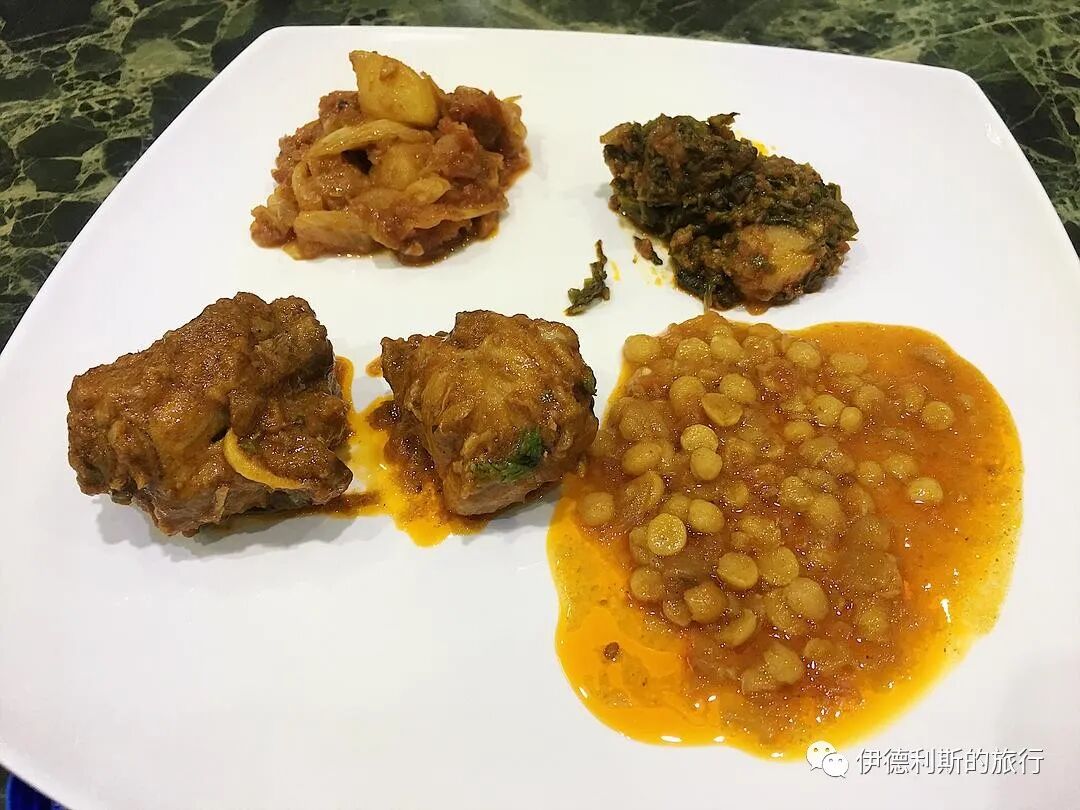
Eat it wrapped in South Asian flatbread (naan).
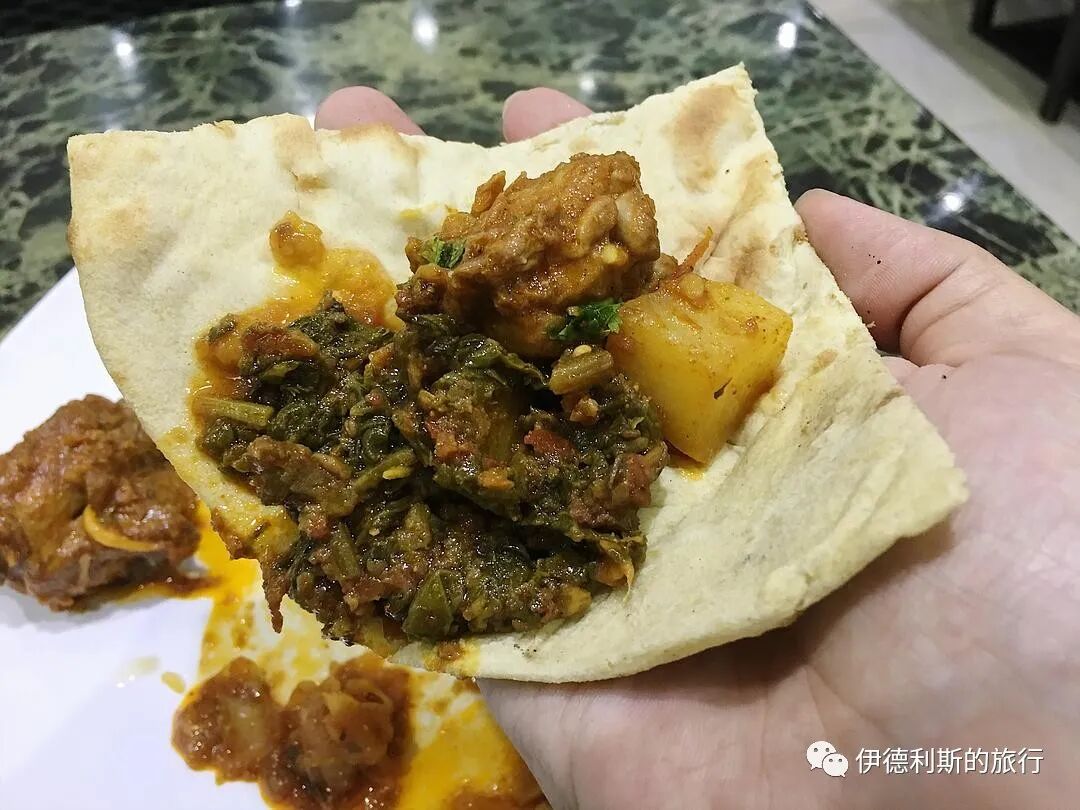
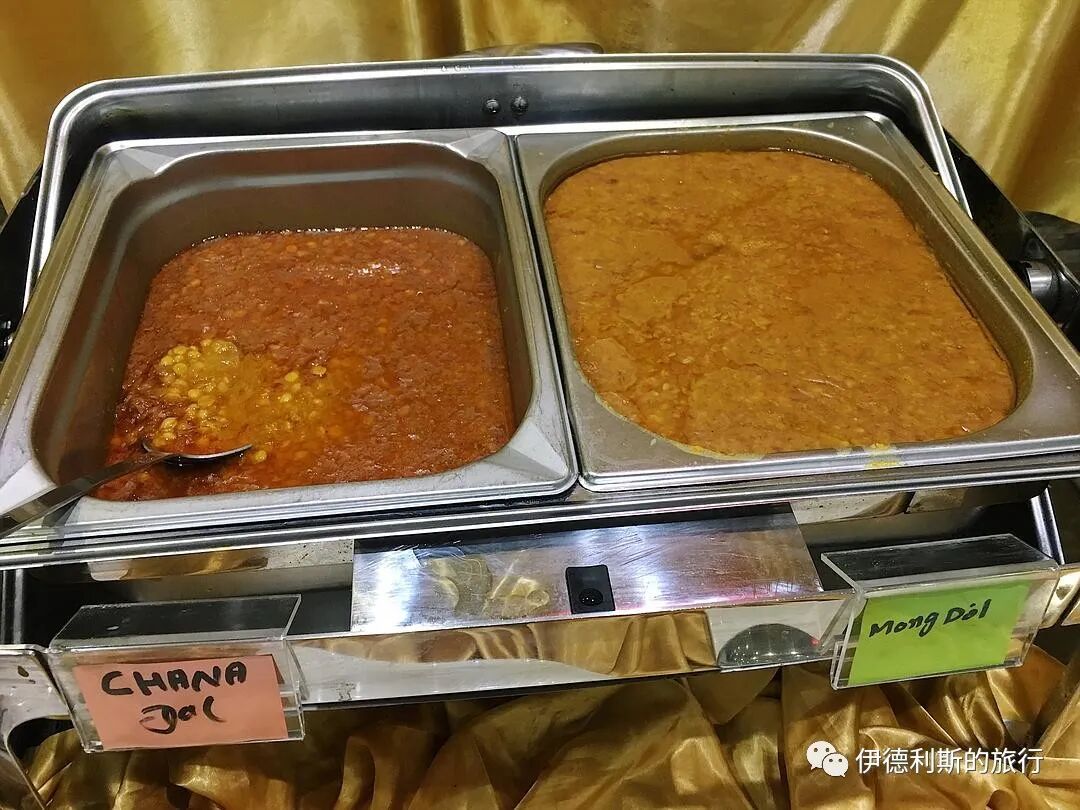
Dal means 'split' in Sanskrit. In South Asia, it refers to hulled legumes like peas and lentils, which can be eaten dry or with sauce.
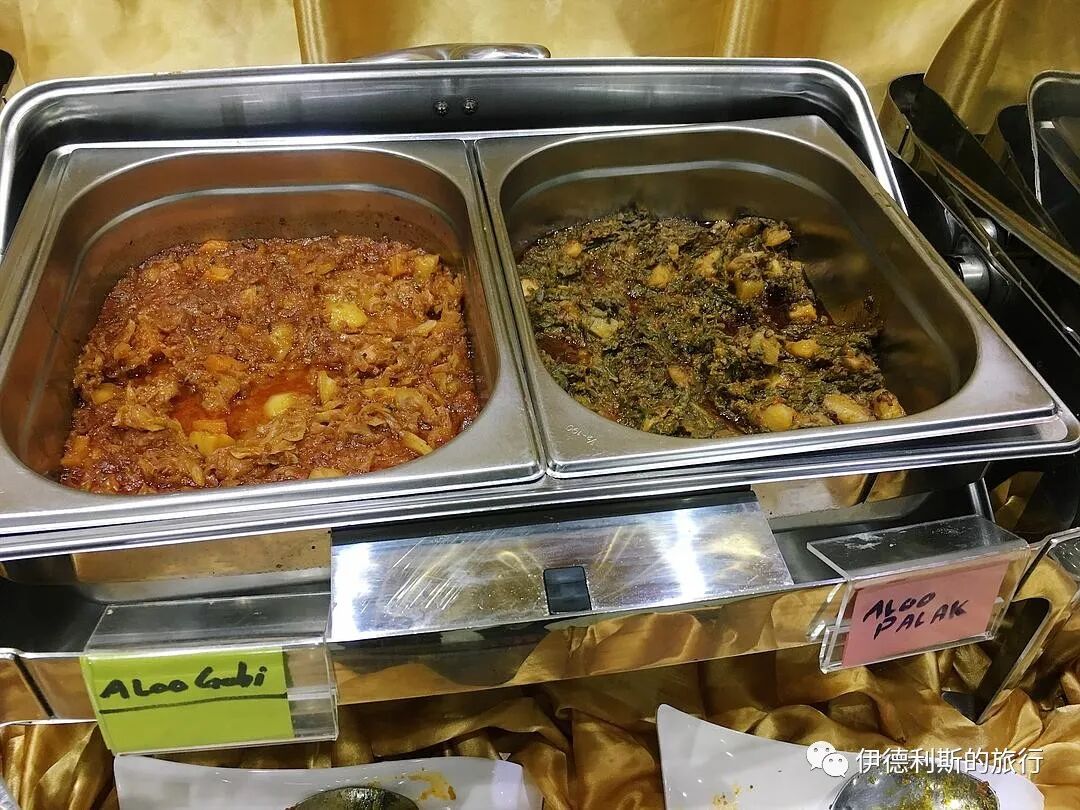
Aloo gobi is a South Asian vegetable dish where 'aloo' means potato and 'gobi' means cauliflower. This dish contains a variety of spices. The yellow color mainly comes from turmeric, and it usually includes green onion, ginger, garlic, cilantro, tomatoes, peas, and cumin.
The word 'Palak' in Aloo Palak means spinach, and it is another South Asian vegetarian dish.
Karhi is a thick gravy made with chickpea flour, and it usually includes yogurt.
Kheer is a South Asian rice pudding that is often served during both Hindu and Muslim festivals. The word Kheer likely comes from the Sanskrit word for milk, 'Ksheera'.
Kheer is made from rice, wheat, tapioca, or vermicelli mixed with milk and sugar, and it is flavored with cardamom, raisins, saffron, cashews, pistachios, or almonds.
Korma is a dish made by mixing yogurt (dahi), cream, and water with various spices. It is usually cooked over low heat, allowing the yogurt to blend slowly into the gravy without curdling. The way I had Korma and Kheer served together this time is quite rare.
The word korma is actually an English spelling of the Urdu word qormā, which means to stew or braise. Urdu's qormā, Persian's ghormeh, and Azerbaijani's qovurma all come from the Turkic word qawirma, which means to fry. However, the modern South Asian korma has a completely different meaning than its related words in other regions. It comes from the Mughal Empire's royal court and was a dish the Mughal royals often ate.
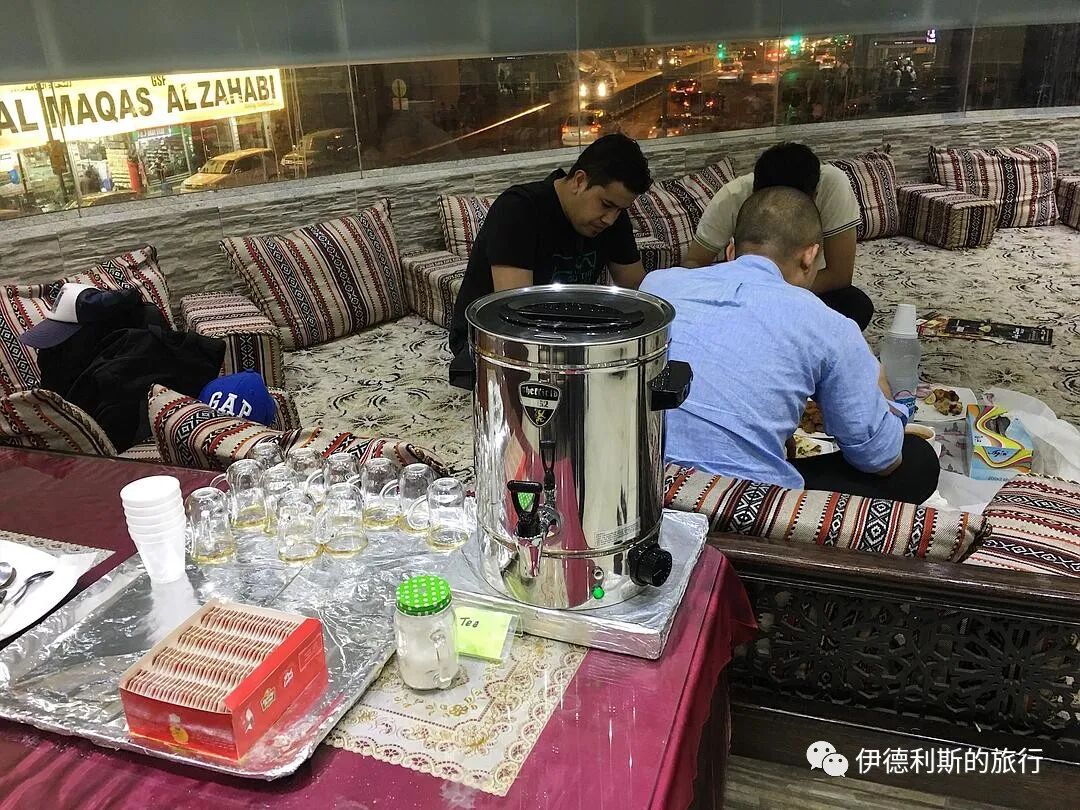
Pepper chicken
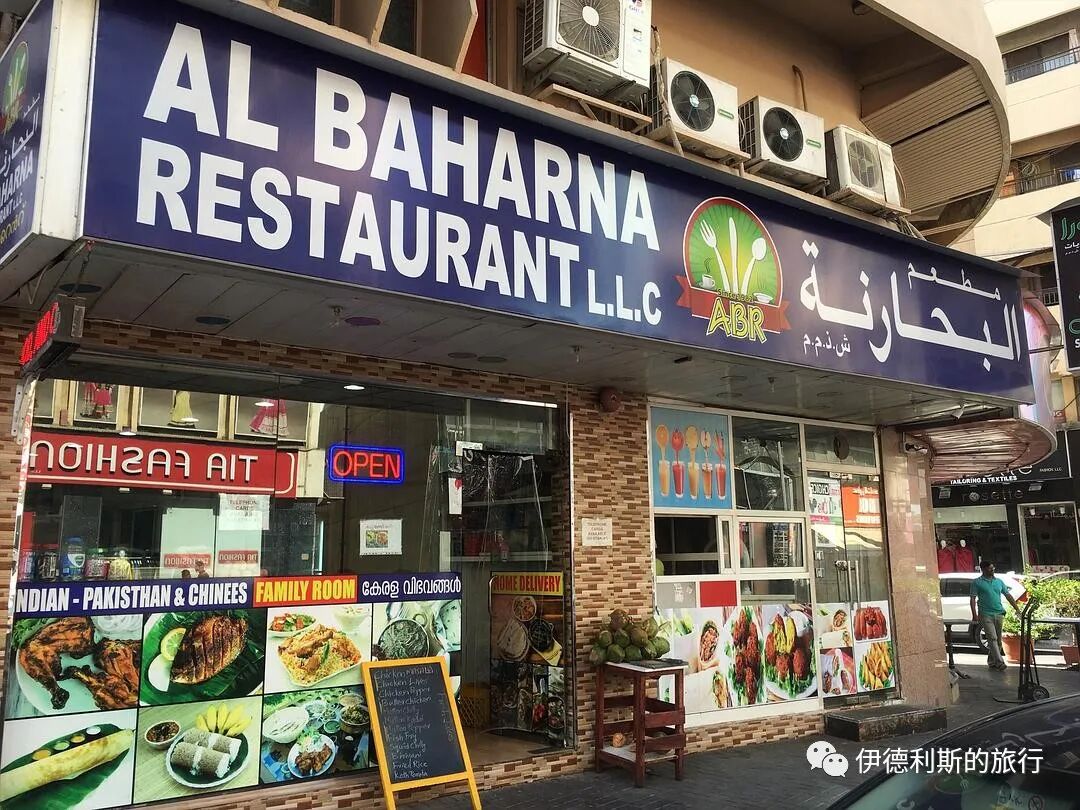
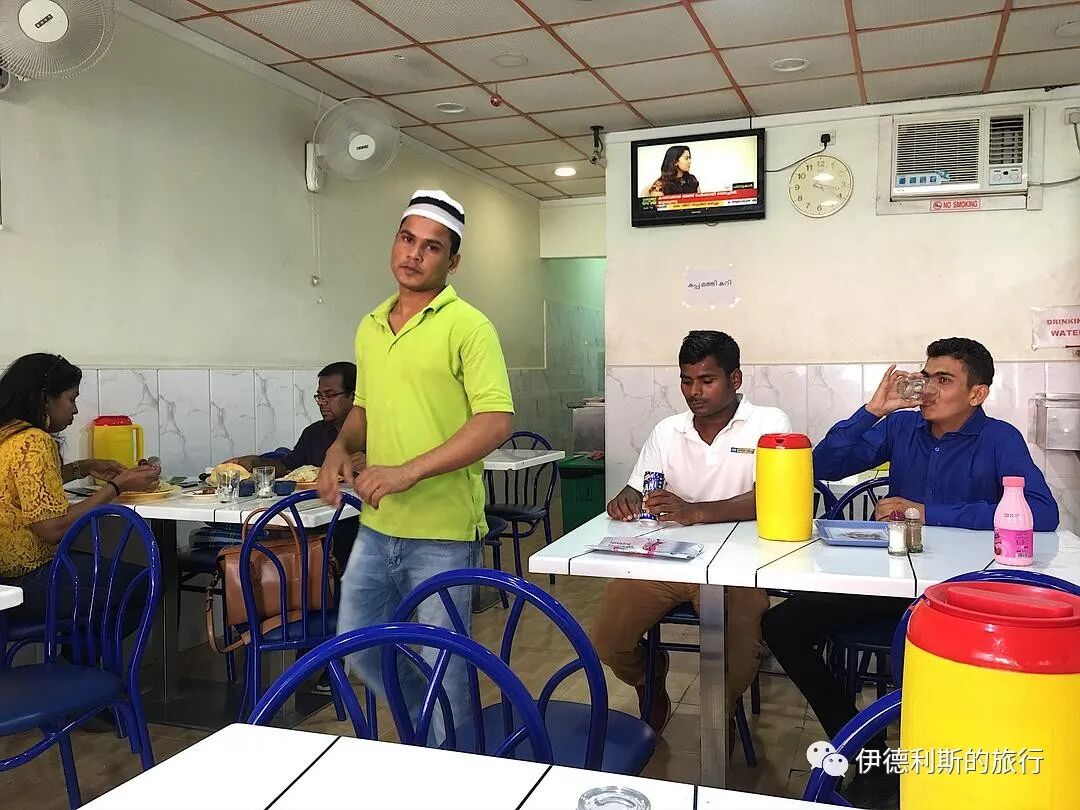
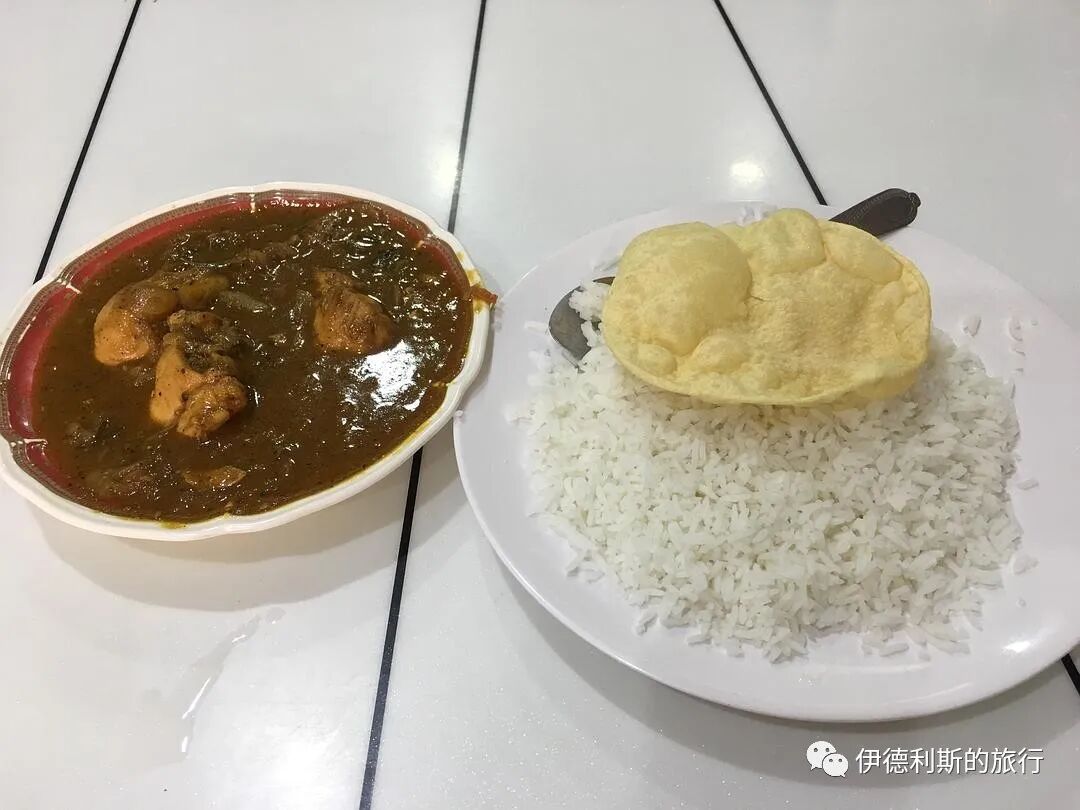
I ate pepper chicken at a South Asian restaurant.
The bread on the rice is a South Asian snack called poori (or puri). The word comes from the Sanskrit word pūrikā, which means to fry. Poori is usually eaten for breakfast and is also used as food for religious ceremonies.
Poori is made by kneading wheat flour into dough and then frying it in ghee or vegetable oil until it turns golden brown. When frying, the water inside the dough turns into steam and expands, causing the dough to puff up into a round ball. If you poke the dough with a fork before frying, the steam escapes through the holes, making the finished poori flatter.
After the meal, use fennel seeds to freshen your breath.
Cold drinks.
This is a very busy South Asian cold drink shop in Bur Dubai.
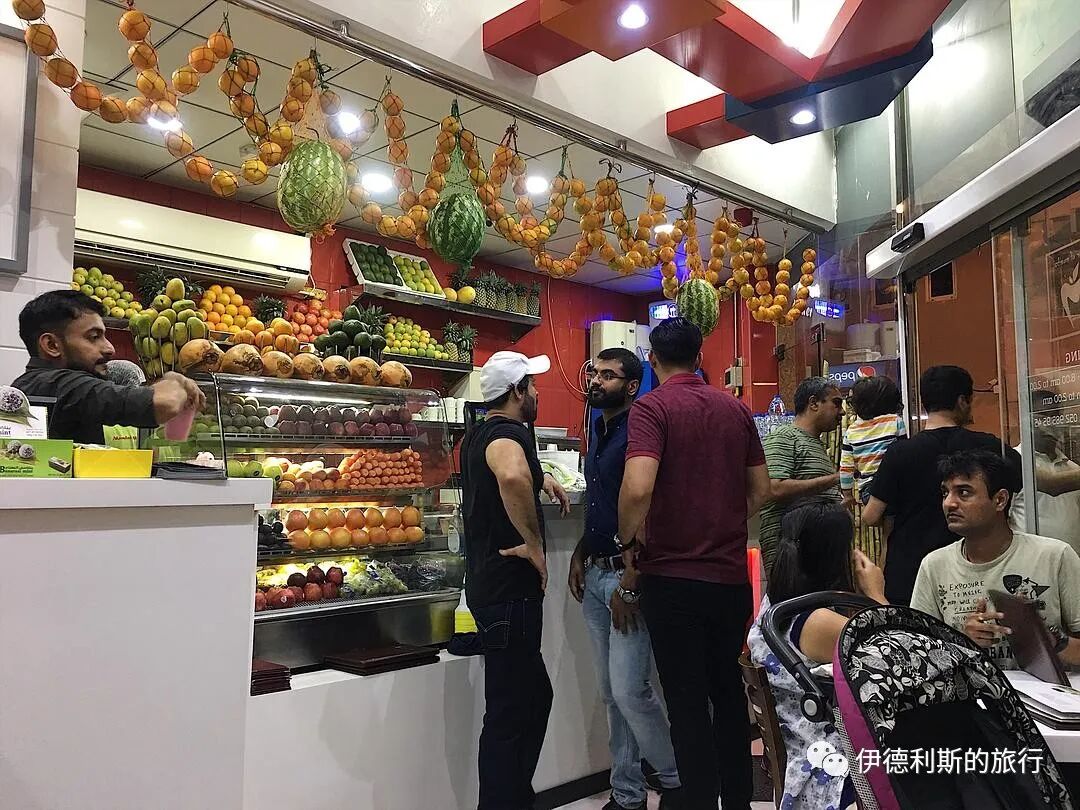
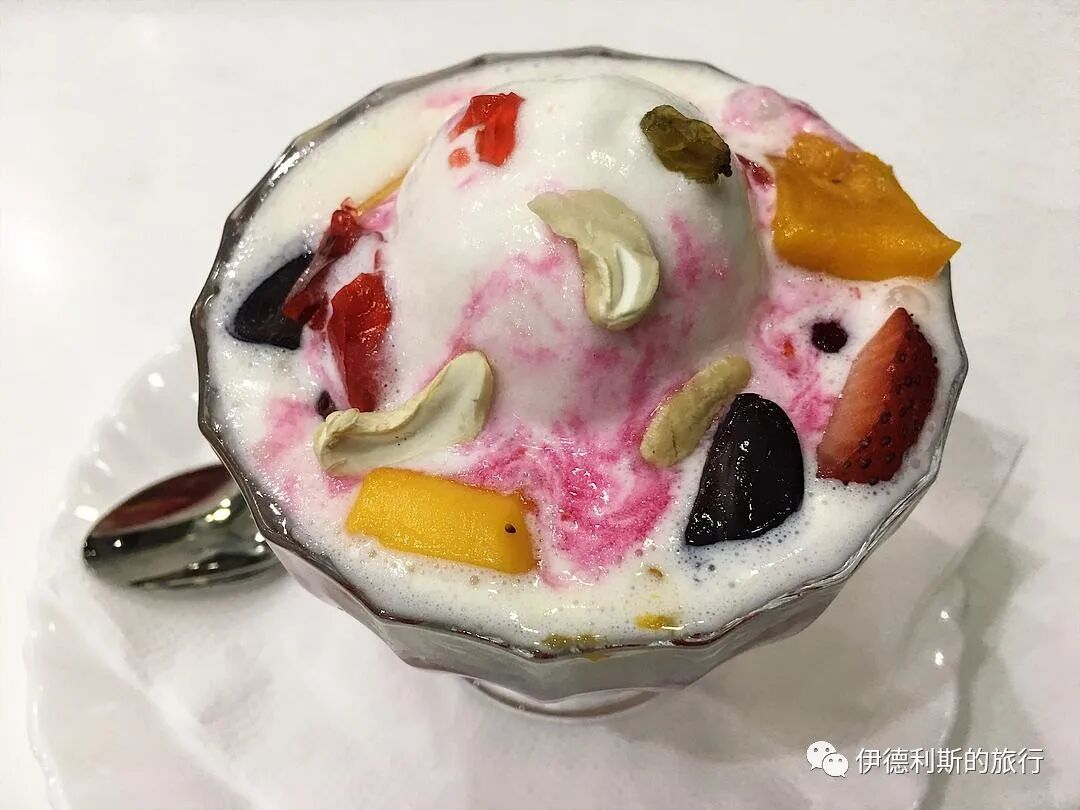
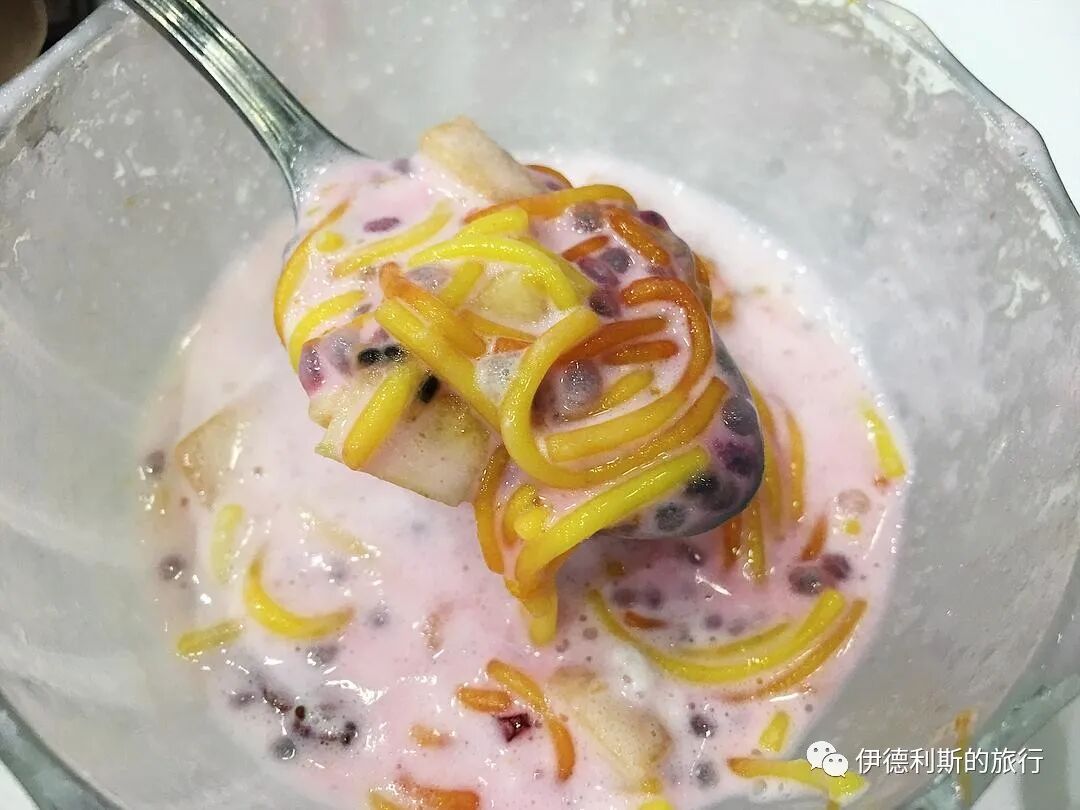
I ordered the South Asian specialty ice cream, falooda. Besides rose syrup, sweet basil seeds, jelly, and milk, the most unique part of falooda is the addition of noodles made from wheat, arrowroot, cornstarch, and sago.
Falooda originated in Persia and was brought to India by Muslim merchants between the 16th and 18th centuries, where it developed during the Mughal Empire. Today, falooda is an important part of Pakistani culture and appears at Islamic holidays and all kinds of celebrations.
I ordered a tabakath, a cold drink mixed with avocado, mango, and strawberry, at another South Asian restaurant.
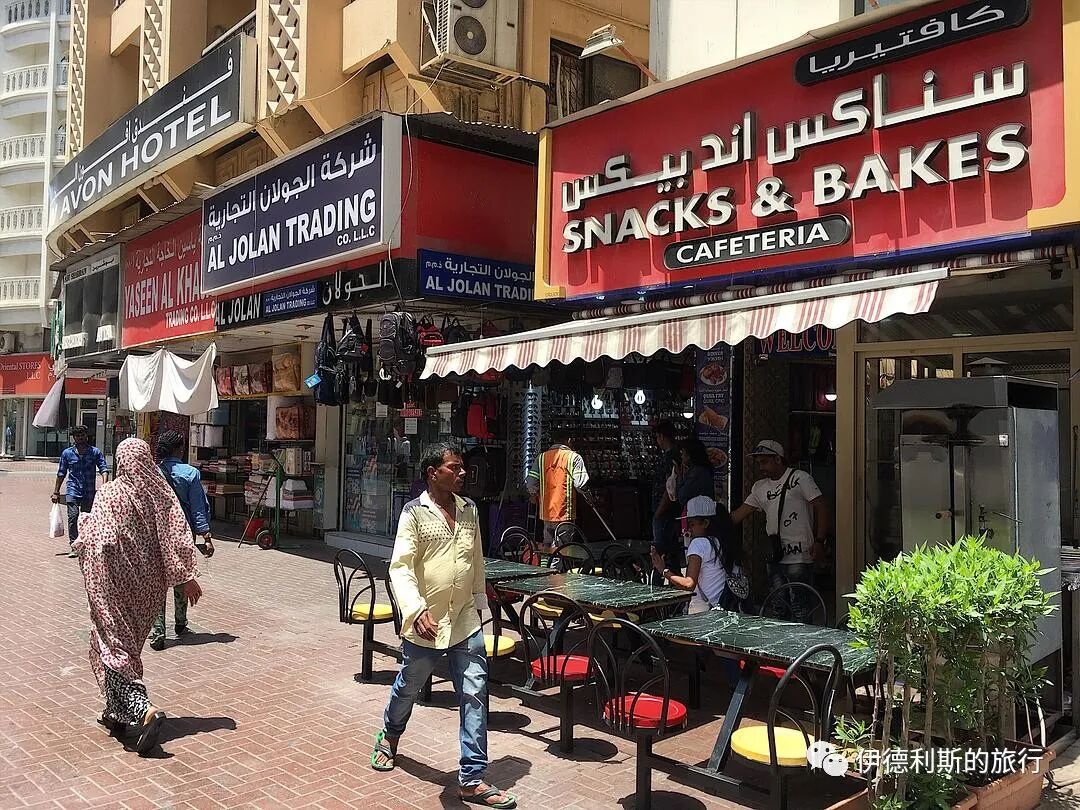
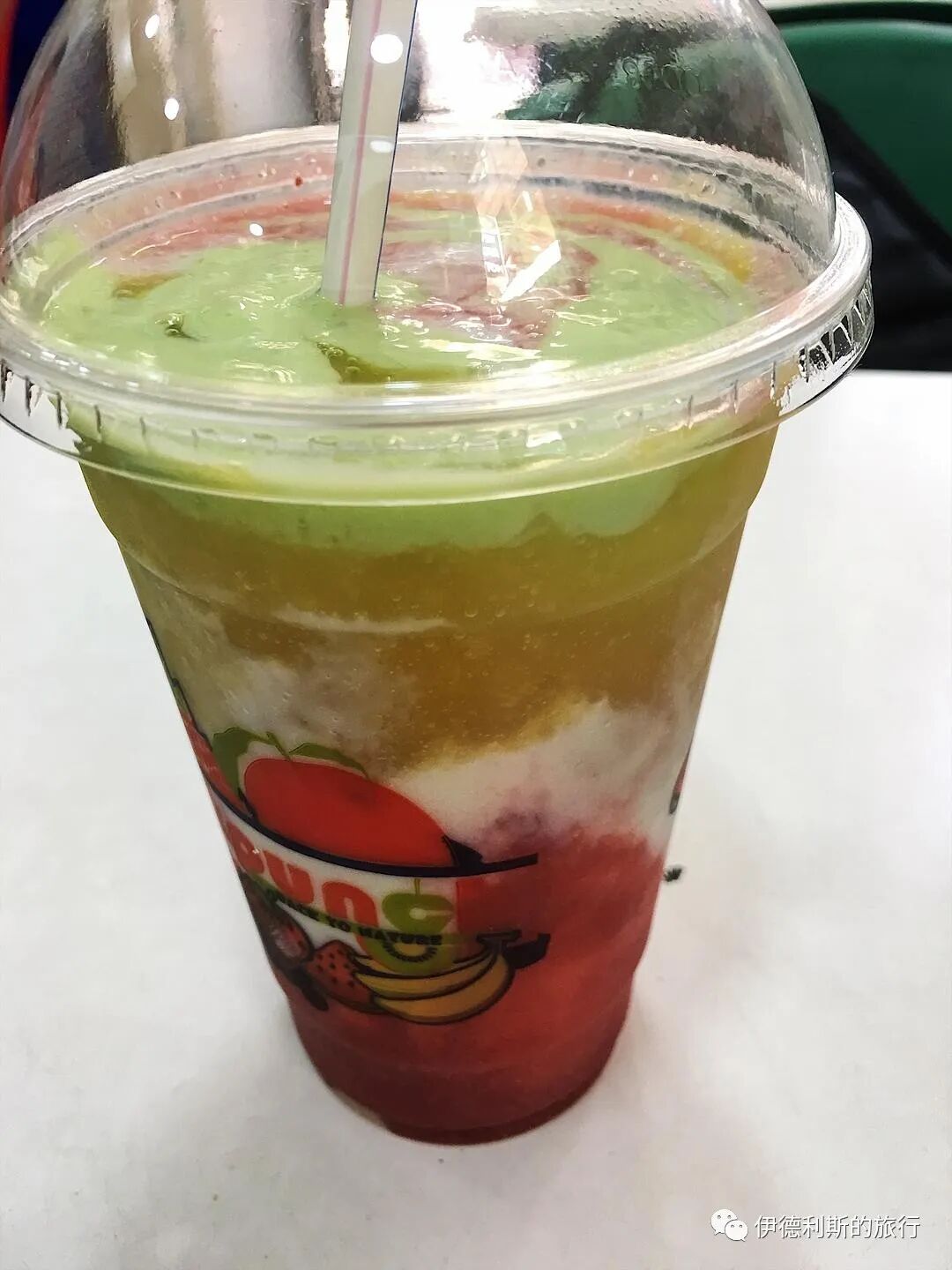
Finally, I will share some scenes from the South Asian community in Dubai.
The biggest thing I noticed in Dubai is that everyone really follows the traffic rules.
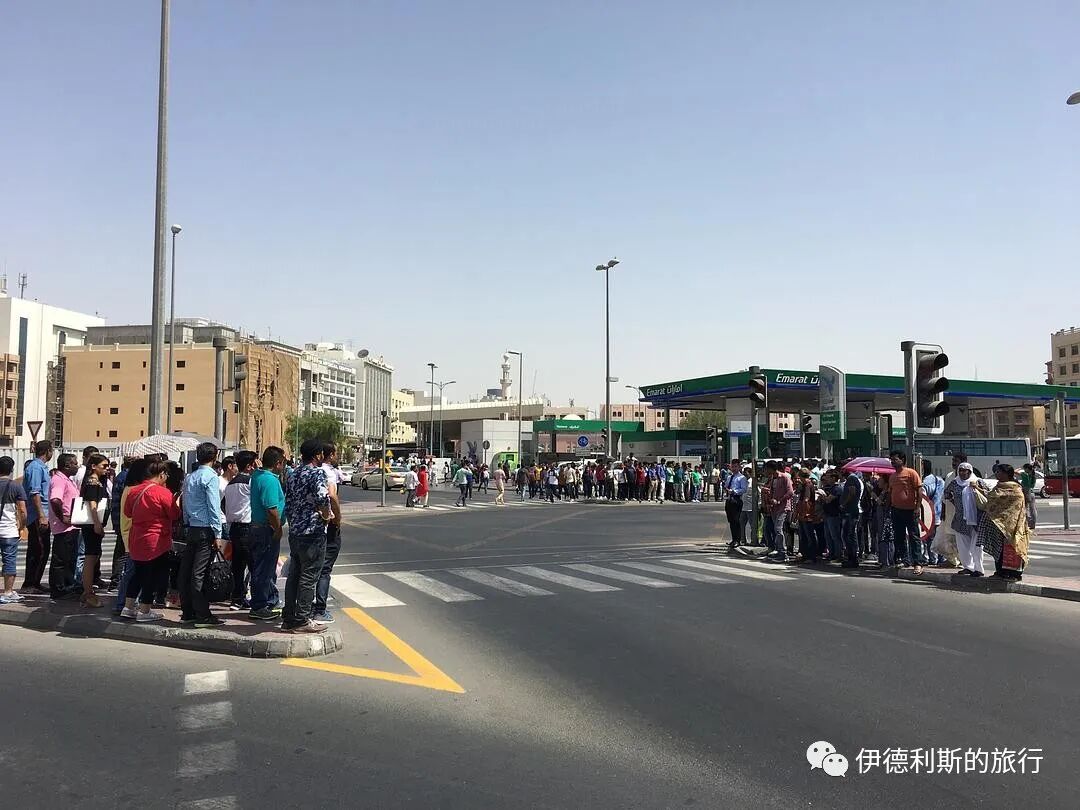
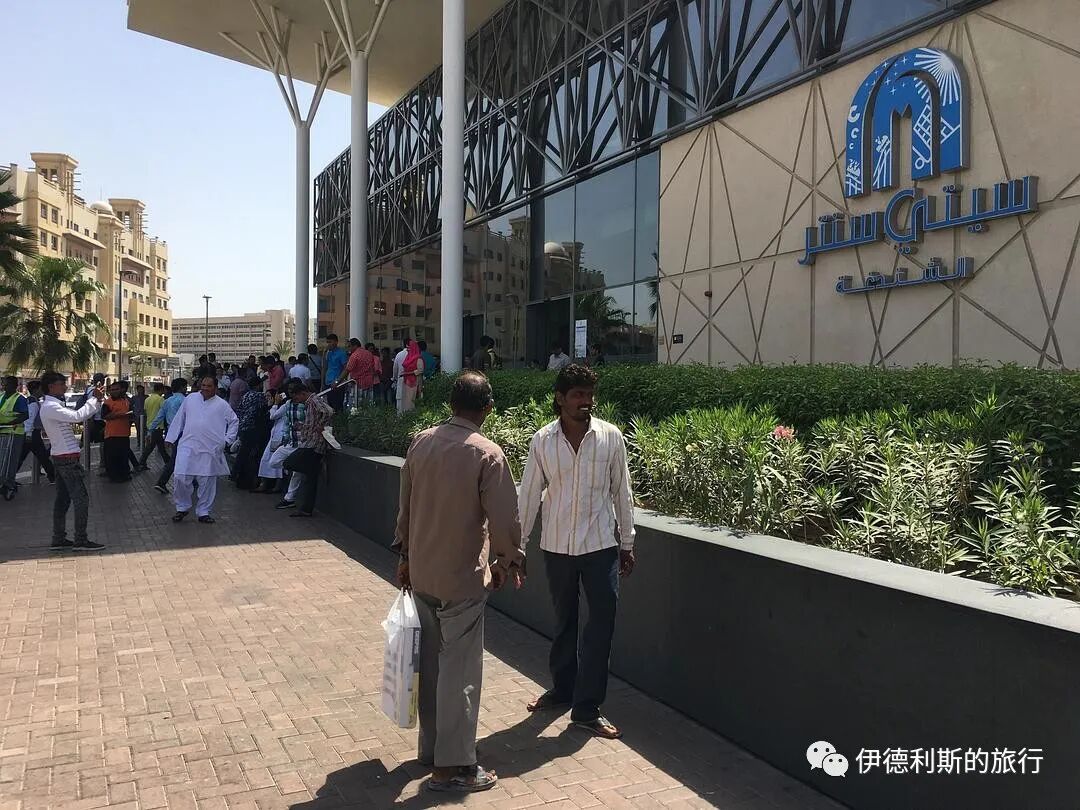
Large shopping mall
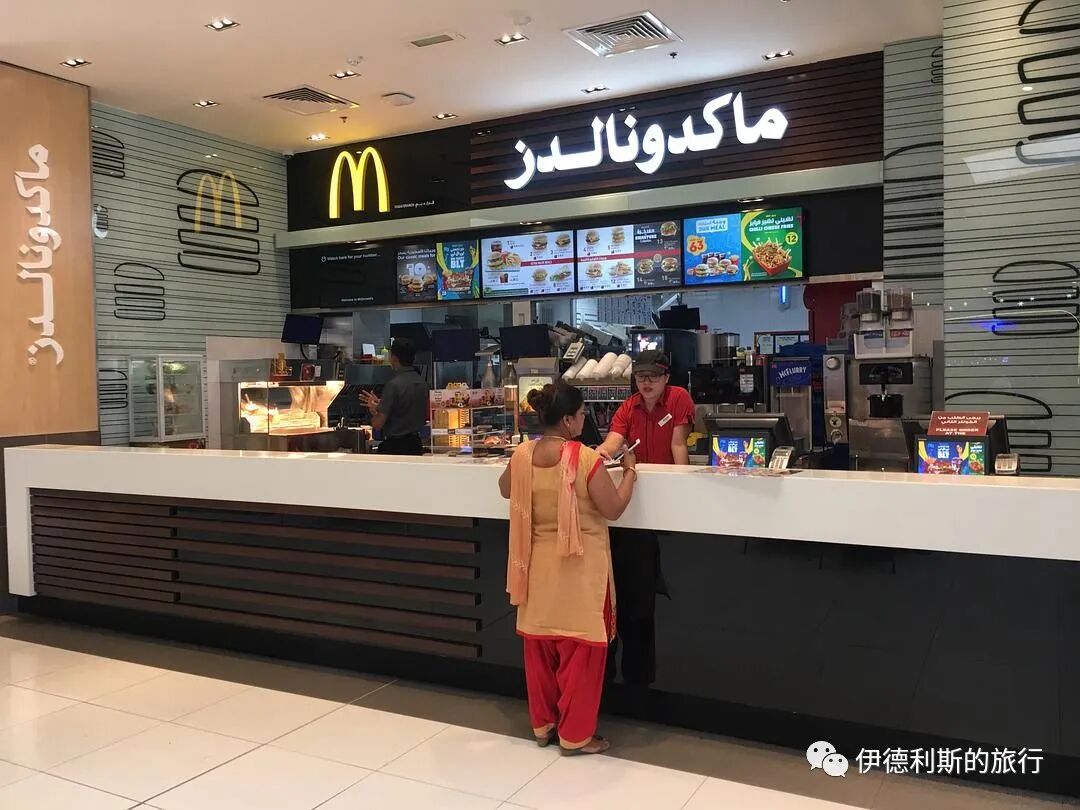
McDonald's in Dubai
A carousel inside a large shopping mall.
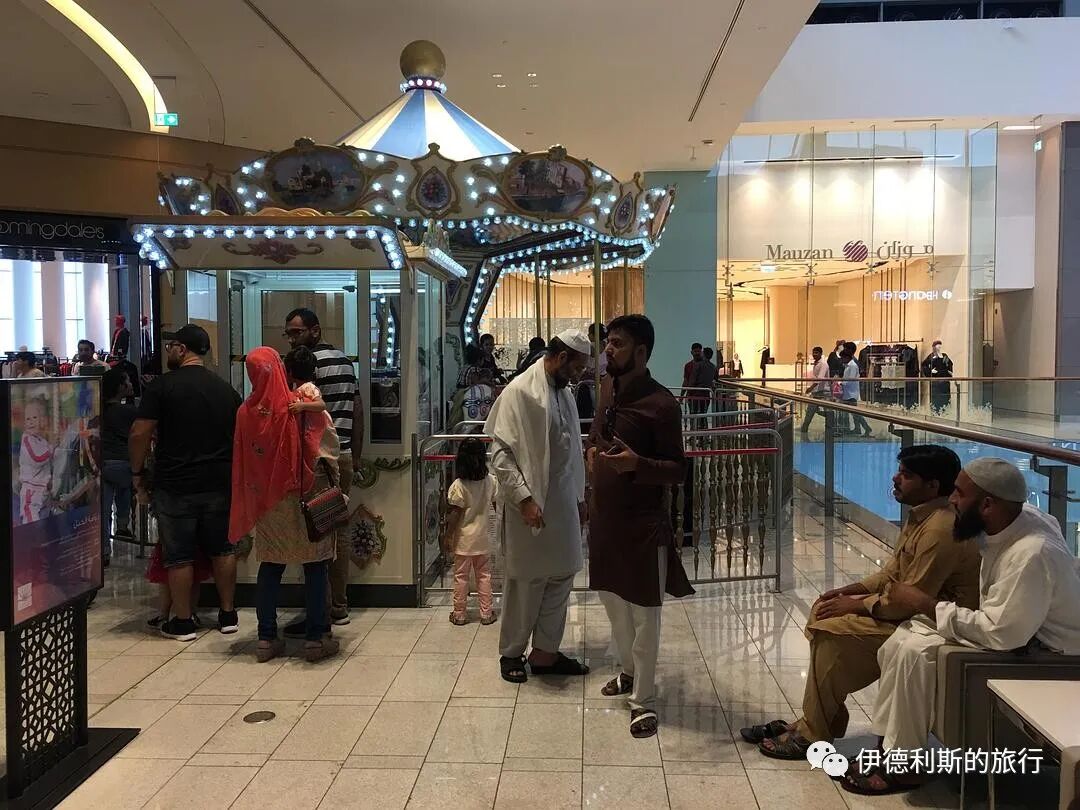
Night view of Bur Dubai
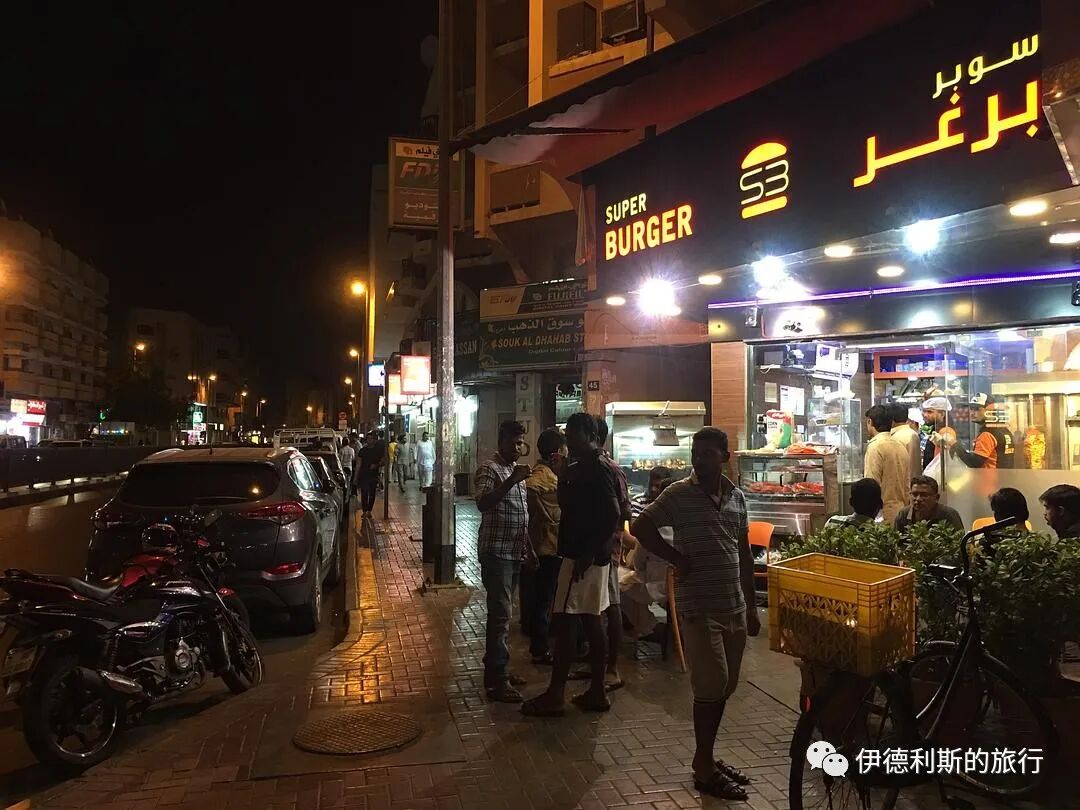
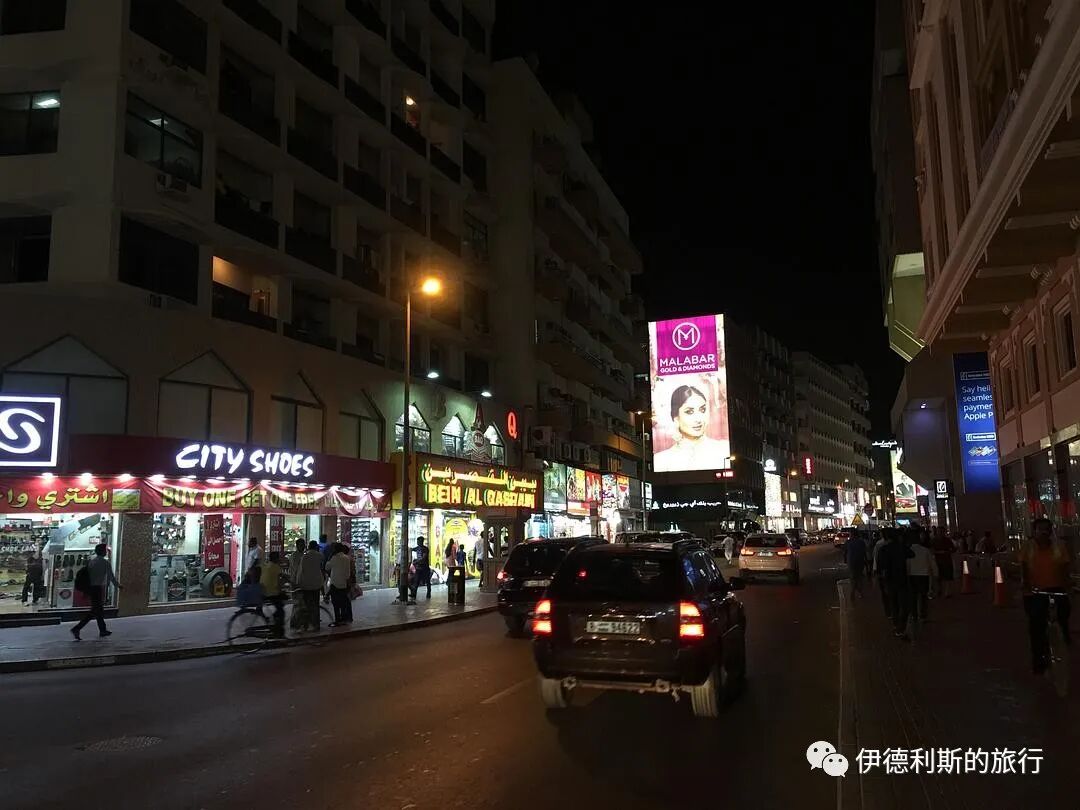
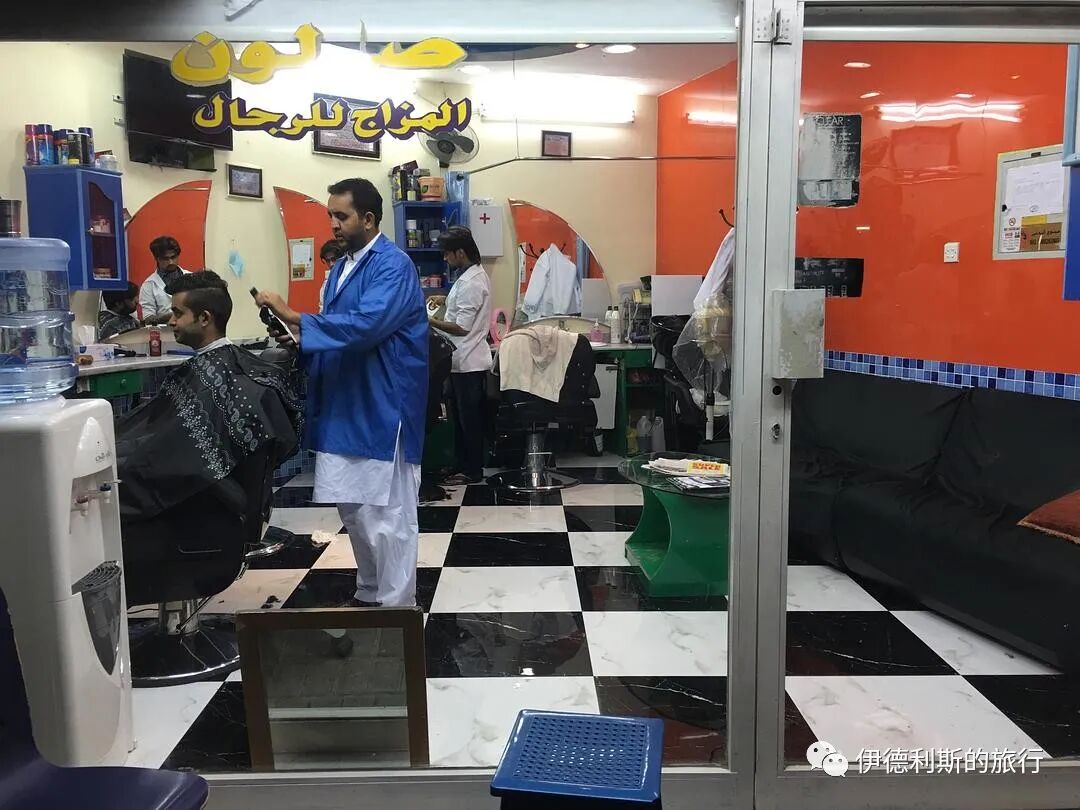
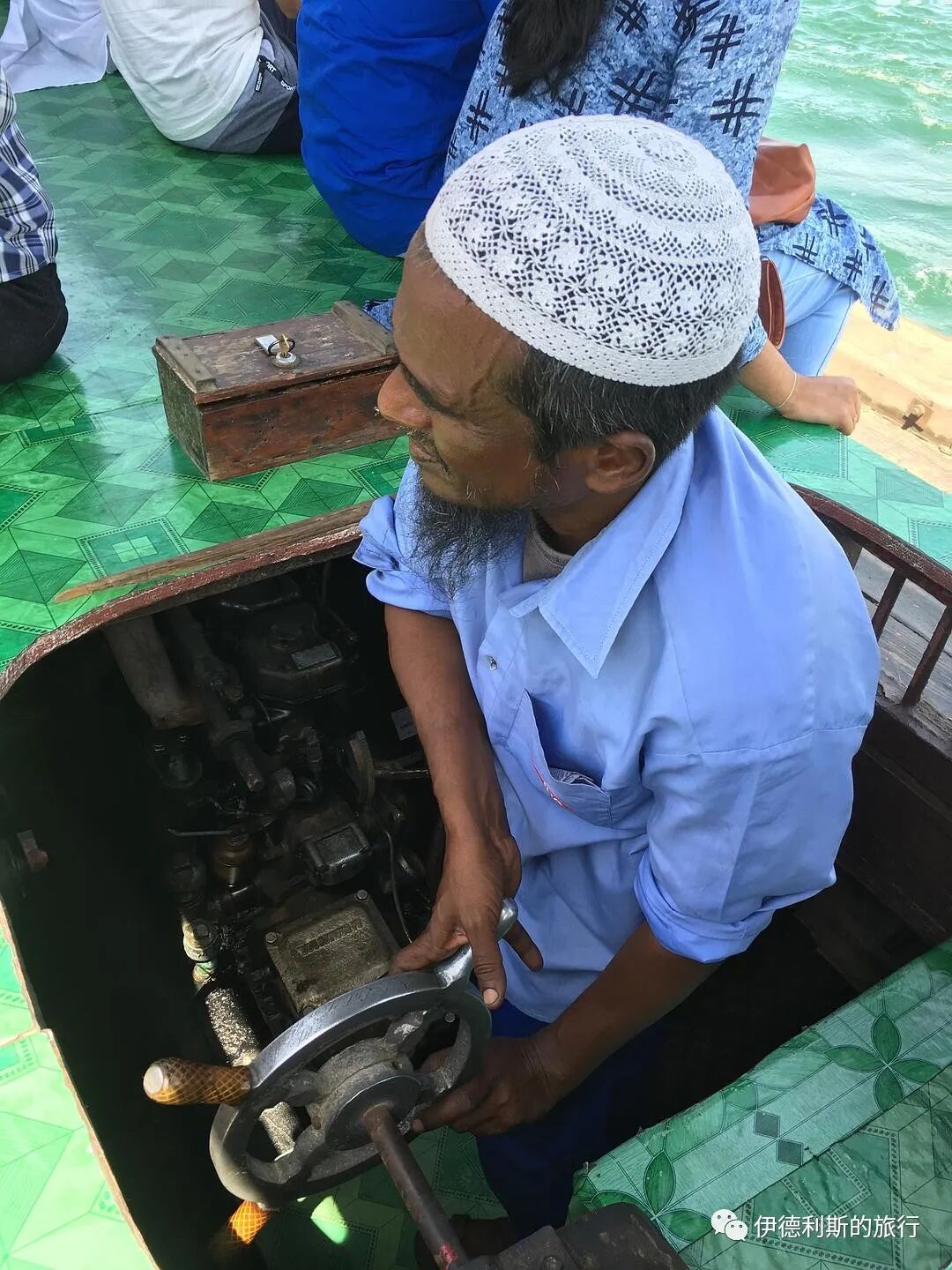
The Dubai Creek ferry in Deira Dubai connects two important South Asian neighborhoods.
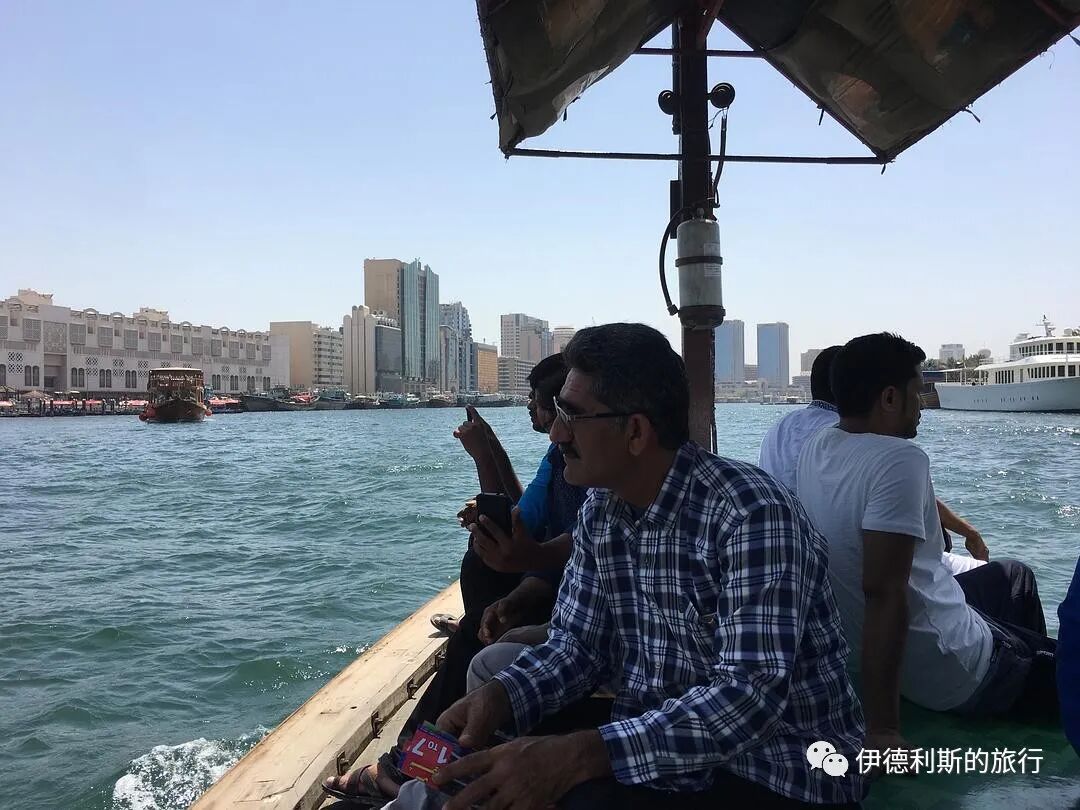
Across the river, the area is filled with small South Asian shops.
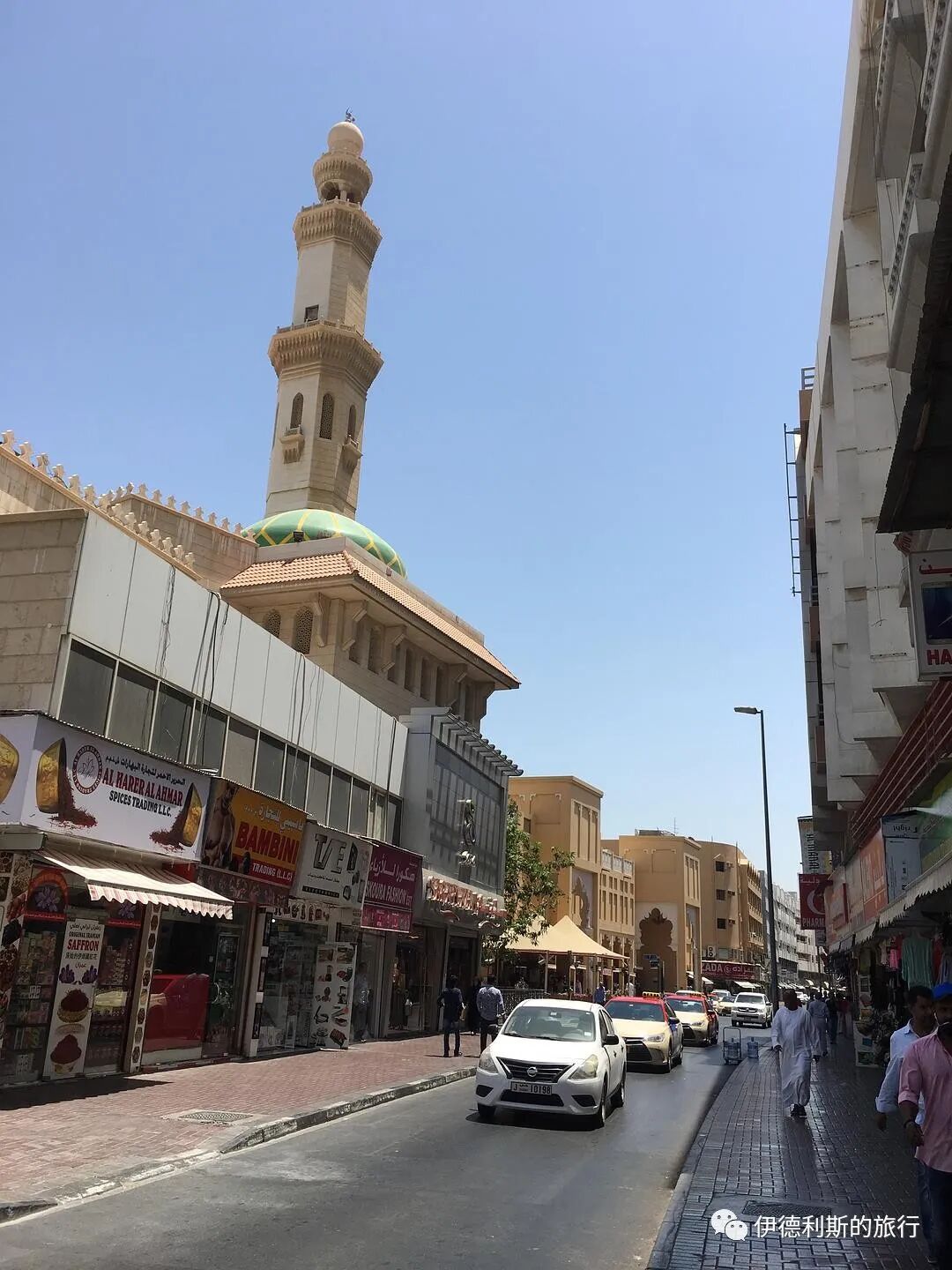
Clothing malls.
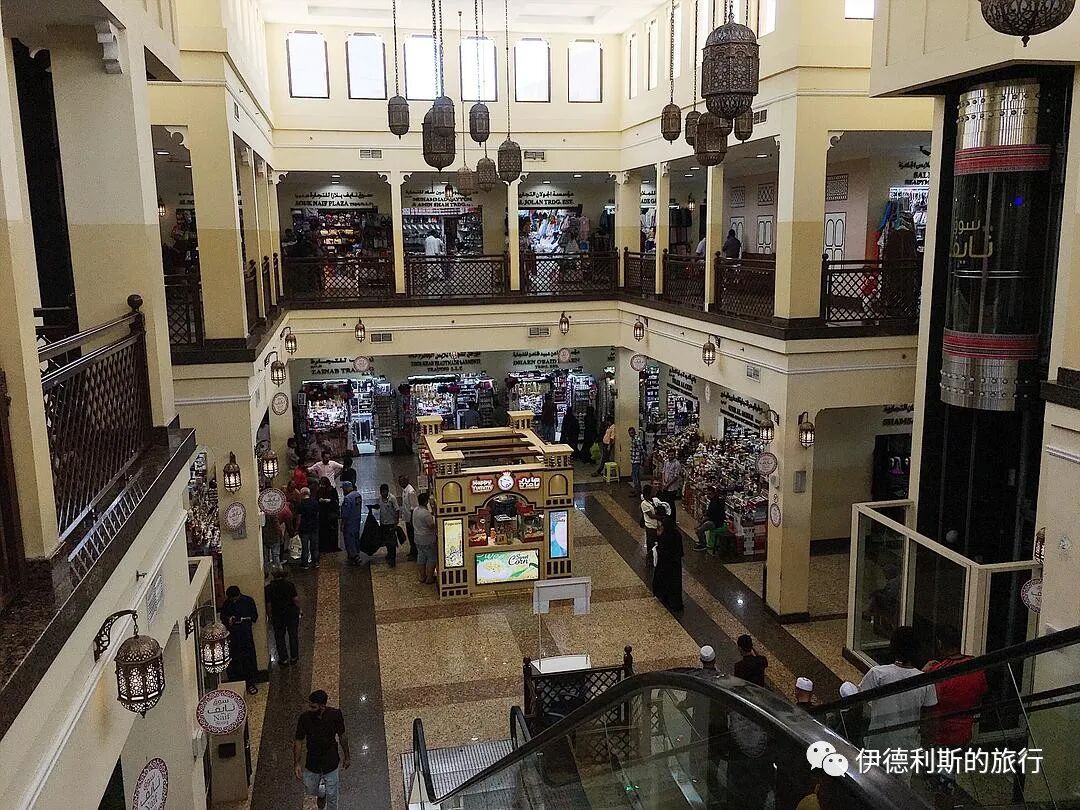
A young man selling clothes.

Summary: Halal Food Guide: Dubai — South Asian Restaurants and Everyday Eats is presented here as a firsthand travel account in clear English, beginning with this scene: Although the UAE is a Gulf Arab country, people from South Asia make up the majority of its population. The account keeps its focus on Dubai Halal Food, South Asian Food, Muslim Travel while preserving the names, places, food, and historical details from the Chinese source.
Although the UAE is a Gulf Arab country, people from South Asia make up the majority of its population. Currently, over 2.8 million Indians, 1.2 million Pakistanis, and 1 million Bangladeshis live in the UAE, with most of them in the cities of Abu Dhabi, Dubai, and Sharjah.
As a transit hub between the Middle East and South Asia, Dubai has had very close historical ties with South Asia. Many South Asian merchants traveled frequently between Dubai and South Asia as early as the 18th century to trade pearls, and South Asian merchants have long dominated Dubai's gold and textile trade.
After Dubai signed a perpetual truce with Britain in 1853, it came under the administration of British India, used rupees and stamps issued by British India, and grew even closer to South Asia.
After oil was discovered in 1966, a large number of South Asian workers began pouring into Dubai, and at that time, it took three days by ship to travel from Mumbai to Dubai. Most of these workers came from Maharashtra state, where Mumbai is located, and there were also many Arab-descended Indians, a group that had migrated from various parts of the Arab world to India hundreds of years ago.
As Dubai's status as a free trade port rose, its South Asian population increased sharply in the 1970s and 1980s, with most Indians coming from the southernmost states of Kerala and Tamil Nadu, while most Pakistanis were Punjabis and Pashtuns.
Some South Asians in Dubai are now second or even third generation, forming a distinct South Asian community in the city. You can find all kinds of South Asian food here.
Bur Dubai Souk
Bur Dubai Souk is the oldest market in Dubai. It has become a hub for South Asians and houses several small South Asian snack shops.
I started at one shop with a classic South Indian breakfast of steamed rice cakes (idli) with lentil stew (sambar) and Indian milk tea.
Idli is a popular savory rice cake in India and northern Sri Lanka. It is made by mixing rice and white lentils with spices, fermenting the batter overnight, and steaming it in molds for 10 to 25 minutes.
Sambar is a lentil stew also popular in South India and Sri Lanka. It represents the long tradition of eating lentils in South India.
In South India, idli served with sambar is a classic breakfast or late-night snack that you can often see at street stalls.
Because of the hot weather in Dubai, the market is almost empty during the day. After night falls, the temperature drops a little and the market starts to get busy.
I ate a fried triangular pastry (samosa) at a shop.
A classic Indian samosa uses a dough made from vegetable oil, melted butter, warm water, salt, and wheat flour. The filling is mashed potatoes, onions, green peas, spices, and green chilies, then it is fried until golden brown. The South Asian samosa, along with the Arab sanbusak, Afghan sambosa, Tajik samboosa, Turkic samsa, and the Somali and Ethiopian sambusa, all come from the Persian word sanbosag.
Persian poetry began praising the samosa as early as the 10th century. This snack was very popular in Iran until the 16th century, but now it is only found in a few areas. In the 13th or 14th century, Central Asian Muslim merchants brought the samosa to South Asia, where it became a favorite of the Delhi Sultanate royal family. A scholar from the Delhi Sultanate wrote in 1300 that princes and nobles enjoyed samosas made with meat, ghee, and onions. In the 14th century, the famous traveler Ibn Battuta visited the court of the Tughlaq dynasty in the Delhi Sultanate. In his book, The Travels of Ibn Battuta, he wrote about eating a stuffed pastry called sambusak at the Sultan's court, which was filled with minced meat, almonds, pistachios, walnuts, and spices.
South Asian buffet
In the old town of Bur Dubai, South Asian restaurants are packed side by side. To try as many dishes as possible, I chose this buffet. It turned out that this restaurant was a great surprise for a solo traveler! I tasted 13 different dishes, and since each one had a name tag, I finally learned what they were.
This buffet cost 25 dirhams, which is about 44 yuan, making it a pretty good deal.
Let's start with the hearty stuff.
Afghan rice pilaf (pulao); this rice is super delicious.
Pilaf (zhuafan) is a way of cooking rice found across Central Asia, South Asia, West Asia, the Caucasus, East Africa, and all the way to the Balkan Peninsula. In English, it is called pilaf, which comes from the Greek word pilafi. This comes from the Turkish word pilav, which comes from the Persian word polow, which comes from the Hindi word pulāo. The original source is the Sanskrit word pulāka, which means a lump of rice. Ancient Indian texts use the words pulao or pallao to describe a dish where rice and meat are cooked together.
The first recipe for pilaf comes from the 10th-century Persian scholar Abu Ali Ibn Sina. He described the pros and cons of different types of pilaf in a medical book. Because of this, most people believe modern pilaf started in Persia and then spread to other places.
The carrot and meat pilaf in the picture below is similar to Xinjiang pilaf, while authentic Indian pilaf includes various vegetables like peas and potatoes.
South Asian chicken rice (biryani) is probably the most popular way to cook rice in South Asia. Biryani comes from South Asian Muslims. It is a Persian loanword in Urdu, and it is generally believed to come from the Persian word for rice, birinj.
Historian Lizzie Collingham says modern biryani likely started in the royal kitchens of the Mughal Empire, where chefs combined spicy Indian rice with Persian pilaf. However, some people believe biryani existed even before the Mughal Empire. Documents from the 16th-century Mughal era mention both biryanis and pulao, but the terms were interchangeable back then. Another historian, Pratibha Karan, thinks biryani formed after Arab traders brought Middle Eastern pilaf to South India.
People generally agree there are three main differences between biryani and Indian pilaf:
1. Biryani uses more spices and has a stronger curry flavor, while Indian pilaf uses almost no spices.
2. Biryani is usually made with two layers of rice covering the meat in the middle, while Indian pilaf is not layered.
3. Biryani is usually made by cooking the rice and meat separately, while Indian pilaf is cooked all together.
Roasted lamb and fried fish, I love roasted lamb!
On the left is chicken tikka. Tikka means 'pieces' and is a marinating style from the Punjab region. Chicken tikka is made by marinating small, boneless chicken pieces in spices and yogurt before roasting. It is basically a boneless version of another South Asian specialty, tandoori chicken.
I am not sure what the mali beti on the right is yet.
Let's have a few more with sauce.
Eat it wrapped in South Asian flatbread (naan).
Dal means 'split' in Sanskrit. In South Asia, it refers to hulled legumes like peas and lentils, which can be eaten dry or with sauce.
Aloo gobi is a South Asian vegetable dish where 'aloo' means potato and 'gobi' means cauliflower. This dish contains a variety of spices. The yellow color mainly comes from turmeric, and it usually includes green onion, ginger, garlic, cilantro, tomatoes, peas, and cumin.
The word 'Palak' in Aloo Palak means spinach, and it is another South Asian vegetarian dish.
Karhi is a thick gravy made with chickpea flour, and it usually includes yogurt.
Kheer is a South Asian rice pudding that is often served during both Hindu and Muslim festivals. The word Kheer likely comes from the Sanskrit word for milk, 'Ksheera'.
Kheer is made from rice, wheat, tapioca, or vermicelli mixed with milk and sugar, and it is flavored with cardamom, raisins, saffron, cashews, pistachios, or almonds.
Korma is a dish made by mixing yogurt (dahi), cream, and water with various spices. It is usually cooked over low heat, allowing the yogurt to blend slowly into the gravy without curdling. The way I had Korma and Kheer served together this time is quite rare.
The word korma is actually an English spelling of the Urdu word qormā, which means to stew or braise. Urdu's qormā, Persian's ghormeh, and Azerbaijani's qovurma all come from the Turkic word qawirma, which means to fry. However, the modern South Asian korma has a completely different meaning than its related words in other regions. It comes from the Mughal Empire's royal court and was a dish the Mughal royals often ate.
Pepper chicken
I ate pepper chicken at a South Asian restaurant.
The bread on the rice is a South Asian snack called poori (or puri). The word comes from the Sanskrit word pūrikā, which means to fry. Poori is usually eaten for breakfast and is also used as food for religious ceremonies.
Poori is made by kneading wheat flour into dough and then frying it in ghee or vegetable oil until it turns golden brown. When frying, the water inside the dough turns into steam and expands, causing the dough to puff up into a round ball. If you poke the dough with a fork before frying, the steam escapes through the holes, making the finished poori flatter.
After the meal, use fennel seeds to freshen your breath.
Cold drinks.
This is a very busy South Asian cold drink shop in Bur Dubai.
I ordered the South Asian specialty ice cream, falooda. Besides rose syrup, sweet basil seeds, jelly, and milk, the most unique part of falooda is the addition of noodles made from wheat, arrowroot, cornstarch, and sago.
Falooda originated in Persia and was brought to India by Muslim merchants between the 16th and 18th centuries, where it developed during the Mughal Empire. Today, falooda is an important part of Pakistani culture and appears at Islamic holidays and all kinds of celebrations.
I ordered a tabakath, a cold drink mixed with avocado, mango, and strawberry, at another South Asian restaurant.
Finally, I will share some scenes from the South Asian community in Dubai.
The biggest thing I noticed in Dubai is that everyone really follows the traffic rules.
Large shopping mall
McDonald's in Dubai
A carousel inside a large shopping mall.
Night view of Bur Dubai
The Dubai Creek ferry in Deira Dubai connects two important South Asian neighborhoods.
Across the river, the area is filled with small South Asian shops.
Clothing malls.
A young man selling clothes.
Halal Food Guide: Beijing — South Asian and Middle Eastern Halal Restaurants
Articles • ali2007fr posted the article • 0 comments • 141 views • 2026-05-18 01:28
Reposted from the web
Summary: Halal Food Guide: Beijing — South Asian and Middle Eastern Halal Restaurants is presented here as a firsthand travel account in clear English, beginning with this scene: I have organized some dishes I ate at various South Asian and Middle Eastern restaurants in Beijing, hoping this helps you when ordering. The account keeps its focus on Beijing Halal Food, Middle Eastern Food, South Asian Food while preserving the names, places, food, and historical details from the Chinese source.
I have organized some dishes I ate at various South Asian and Middle Eastern restaurants in Beijing, hoping this helps you when ordering.
1. The Levant
Falafel (fried chickpea balls)
Falafel is known as the national dish of Egypt, Israel, and Palestine. These fried chickpea balls likely originated in the Nile Delta of ancient Egypt and spread to the Levant through trade in the port of Alexandria. In the Levant, falafel changed from being made with fried fava beans to fried chickpeas. To make falafel, soak the chickpeas overnight, grind them with parsley, cumin, cilantro, and other spices, shape them into balls, and deep-fry them. After frying, the inside of the falafel remains soft.
Falafel in pita bread at the Jordanian restaurant Al Safir:
Falafel at the Arabic fast-food restaurant Taiba:
Falafel at the Palestinian restaurant Zayton:
Kibbeh (fried meat balls)
Kibbeh is made of cracked wheat wrapped around a filling of minced meat, chopped onions, and Middle Eastern spices like cinnamon, nutmeg, cloves, and allspice. Kibbeh is the North Levantine dialect version of the classical Arabic word kubbah, which translates literally to "ball." Kibbeh is most famous in Aleppo, northern Syria, where there are 17 different varieties. Besides the original flavor, they can be made with yogurt, lemon juice, pomegranate molasses, or cherry sauce.
Yogurt kibbeh at the Jordanian restaurant Al Safir:
Kibbeh at the Lebanese restaurant Alameen:
Mahashi (stuffed vegetables with rice and meat)
Mahashi is made by stuffing Lebanese zucchini (kusa) and eggplant with minced meat and rice, then cooking them in tomato sauce, cumin, and broth. Mahashi is a classic Ottoman dish found throughout former Ottoman territories from the Balkans to the Levant (the eastern Mediterranean coast) and Egypt, with each region having its own unique way of making it. Mahashi is a common dish served at weddings, family gatherings, and during Eid al-Fitr.
Mahashi at the Lebanese restaurant Al Ameen:
Lahmacun (meat flatbread)
Lahmacun comes from Arabic and translates literally to "meat with dough." During the Ottoman era, lahmacun spread from the Arab world to Turkey, Armenia, and other former Ottoman regions. Because of this, it is also called "Turkish pizza" or "Armenian pizza," though the basic method is always a thin flatbread topped with minced meat.
Lahmacun at the Turkish restaurant Rumi's Secret:
Lahmacun at the Arabic fast food shop Taiba:
Lahmacun at the Turkish restaurant Doner & Kebab:
Lahmacun at the Turkish restaurant Kubei:
Lahmacun at the Turkish restaurant Dardanelles:
Za'atar Manakeesh flatbread
Manakeesh is a type of Arab flatbread. Za'atar is a Levantine spice blend made from Syrian oregano (also called Lebanese oregano), toasted sesame seeds, dried sumac, and thyme, mixed with olive oil before eating. Syrian oregano is also considered the hyssop mentioned in the Bible. People in Syria and Lebanon often find wild oregano in the fields, pick the leaves to dry in the sun, and then grind them into a powder to make the spice. Za'atar has an earthy taste with a hint of citrus and nuttiness. It feels very unique the first time you eat it.
Za'atar Manakeesh flatbread at the Arabic restaurant Taiba:
Mandi lamb rice
Mandi originated in Yemen and is popular in the Arabian Peninsula, Egypt, and the Levant. Mandi is usually made with rice, meat (lamb, camel, or chicken), and Hawaij spice. Hawaij is also a specialty spice from Yemen used for cooking, soups, and coffee. Its main ingredients are cumin, black pepper, turmeric, and cardamom. The texture of Mandi is drier than regular curry rice.
Mandi lamb rice at the Syrian restaurant BRBR:
Mandi lamb rice at the Syrian restaurant One Thousand and One Nights:
Chickpea yogurt salad (Fatteh)
Fatteh means "crushed" in Arabic. It is a snack from the southern Levant region, found in Damascus, Beirut, Jordan, and Palestine, but not in the northern Levant. The main ingredient of Fatteh is crushed flatbread (Khubz). It is topped with yogurt, steamed chickpeas, olive oil, and other ingredients, then sprinkled with cumin. Sometimes it includes eggplant, carrots, chicken, or lamb.
Fatteh at the Palestinian restaurant Zayton:
Tabbouleh salad
Tabbouleh is a Levantine Meze (appetizer). It is made of chopped parsley, tomatoes, mint, onions, and bulgur (crushed dried wheat). It is seasoned with olive oil, lemon juice, salt, and pepper. The word "tabbūle" in Levantine Arabic comes from the ancient Aramaic root "t-b-l," which means "to season" or "to dip." Tabbouleh salad comes from the mountains of Lebanon and Syria. Wheat grown in the Beqaa Valley of Lebanon was once known as the best for making bulgur.
Tabbouleh at the Palestinian restaurant Zayton:
Tabbouleh salad at the Syrian restaurant BRBR:
Chickpea dip (hummus)
Hummus is short for the Arabic term "ḥummuṣ bi ṭaḥīna" (chickpeas with sesame paste). Hummus is a mix of chickpeas, sesame paste (tahini), olive oil, lemon juice, and garlic. It is very popular across the Middle East and the Mediterranean.
Lamb hummus at the Jordanian restaurant Al Safir:
Hummus at the Arabic fast food shop Taiba:
Hummus at the Turkish restaurant Xiting Xiuse:
Hummus at the Turkish restaurant Kubei (in the middle):
Beef hummus at the Palestinian restaurant Zayton:
Pine nut hummus at the Syrian restaurant One Thousand and One Nights:
Eggplant dip (baba ghanoush)
To make baba ghanoush, you roast eggplant until soft, mash it, and add olive oil and lemon juice. Sometimes people also add sesame paste, onions, or tomatoes.
Baba ghanoush at the Syrian restaurant BRBR:
Lentil soup
Lentil soup is made from lentils and has a very long history. You can use many types of lentils for lentil soup, including green, brown, red, yellow, and black lentils. Genesis chapter 25 mentions, "Then Jacob gave Esau bread and pottage of lentils; and he did eat and drink, and rose up, and went his way." This refers to red lentil soup.
Lentil soup at the Lebanese restaurant Al Ameen:
Lentil soup at the Arabic fast food shop Taiba:
Lentil soup at the Syrian restaurant BRBR:
Lentil and wheat grain soup at a Turkish mother's home:
Lentil soup at the Turkish restaurant Rumi's Secret:
Lentil soup at the Turkish restaurant Xiting Xiuse:
Lentil soup at the Azerbaijani/Turkish restaurant Doner & Kebab:
Kofta meatballs
The word kofta comes from the Persian word "kufte," which means "ground meat." Kofta recipes appeared in early Arabic cookbooks, originally as large lamb meatballs with saffron and egg yolk.
Kofta meatball soup at the Syrian restaurant One Thousand and One Nights:
2. Maghreb Chapter (Tunisia)
Harira bean soup
Harira bean soup is a classic appetizer in the Maghreb region (Algeria, Libya, Mauritania, Morocco, and Tunisia). It is most commonly made for breaking the fast during Ramadan. Every region makes Harira differently. The version we had included tomatoes, lentils, chickpeas, lamb, and various spices.
Harira bean soup at the Tunisian restaurant La Medina:
Brik pastry
Brik pastry is a North African Berber dish that was later brought to Israel by Tunisian Jews. The filling usually contains eggs, tuna, harissa sauce (Harissa), and parsley. It is then wrapped in a crispy dough called Malsouka or Warka and deep-fried.
Brik pastry at the Tunisian restaurant La Medina:
Couscous
Couscous (Couscous) is a staple of Berber cuisine. It is made by rubbing semolina into millet-sized grains and then drying them in the sun. Couscous was first seen in North Africa between the 11th and 13th centuries. The famous 13th-century Andalusian scholar and gourmet Ibn Razin al-Tuyibi first recorded the method for making couscous in his book, The Andalusian Cookbook.
Couscous at the Tunisian restaurant La Medina:
North African sausage (merguez)
North African sausage (Merguez) is made with lamb and beef, mixed with cumin, harissa sauce, chili, and other spices. It is usually grilled. Merguez sausage was first seen in the 12th century in Andalusia, which was southern Spain under Arab rule, and later spread throughout North Africa.
North African sausage (merguez) at the Tunisian restaurant La Medina:
Tajine pot (tajine)
The tagine (Tajine) is a North African Berber specialty that appeared in the 9th-century classic One Thousand and One Nights. Modern tagines are made of pottery, sometimes glazed. They have a round, flat bottom and a conical or domed top. This design allows evaporated steam to return to the bottom, and water can be added through a hole in the lid.
Tajine at the Tunisian restaurant La Medina:
3. Turkey Chapter
Pide pizza
Pide may come from the ancient Greek word "pítta" and refers to three types of bread in Turkey. One is a flatbread similar to Arabic pita, one is a soft leavened bread served during Ramadan, and the third is a large boat-shaped pizza. To make Pide pizza, you put various cheeses and meats on dough and bake it in an oven.
Lamb and cheese Pide at Dardanelles:
Three-topping Pide with cheese, meat, and vegetables at Rumi's Secret:
Spinach Pide at Xiting Xiuse during Ramadan:
Beef and cheese Pide at Xiting Xiuse:
Assorted Pide at Desert Rose:
Double cheese Pide at Kubei:
Mevlana meat Pide at Kubei:
Sultan's Delight (Hünkar Beğendi)
Sultan's Delight (Hünkar Beğendi) is a dish that started in the Ottoman palace. It uses rich lamb stew served over creamy roasted eggplant puree and is quite rare in Beijing.
Sultan's Delight at Turkish Mom:
Beef sausage fried eggs (Sucuklu yumurta)
The "Sujuk" in Sucuklu yumurta first appeared in the Compendium of the Turkic Dialects. It is made by grinding beef, adding tail fat and other fats, stuffing it into casings, tying it with string, and letting it ferment gradually.
Sucuklu yumurta at the Turkish/Azerbaijani restaurant Xiting Xiuse:
Pottery kebab (Testi kebabı)
Testi kebabı is a popular way of eating in central Anatolia and the west-central Black Sea region. You put beef, mushrooms, tomatoes, and shallots into a clay pot, seal the opening with bread, and slow-cook it in an oven. After the stew is ready, sear it in butter on an iron plate. Then, crack open the clay pot and toss the bread and the stew inside onto the plate. The aroma is incredible!
Sucuklu yumurta at the Turkish/Azerbaijani restaurant Xiting Xiuse:
Simit bagel
The earliest record of the simit bagel in Istanbul dates back to 1525. According to the famous 17th-century Ottoman traveler Evliya Celebi, there were 70 simit bakeries in Istanbul in the 1630s.
Simit at the Turkish restaurant Kubei:
Baklava dessert
Baklava is the most famous dessert of the Ottoman Empire, developed by the royal chefs at the Topkapi Palace. On the 15th day of Ramadan each year, the Ottoman Sultan would attend a ceremony called 'Baklava Alayı' to distribute trays of Baklava to the Janissaries. Baklava is a flaky pastry made by layering very thin unleavened filo dough, filled with crushed pistachios, walnuts, syrup, or honey.
Baklava from a Turkish mom:
Baklava at Kubei:
Baklava at Desert Rose:
Salty yogurt drink (Ayran)
Ayran is a drink made by mixing yogurt, salt, and water. You can also add mint or carbonated water. It is perfect with grilled meat in the summer. The word Ayran comes from Turkic and first appeared in the 'Compendium of the Turkic Dialects' written by Mahmud al-Kashgari in the 1070s.
Ayran at Xiting Xiuse:
Ayran at Kubei:
4. Caucasus Chapter
Karabakh Pilaf
Karabakh is a region on the border of Azerbaijan and Armenia. Its name comes from the Turkic word 'Kara' (black) and the Persian word 'Bagh' (garden). Most people living there now are Azerbaijanis. The Karabakh Pilaf we ate was stewed lamb with apricots. The rice is yellow because it is stained with saffron juice. When I was in Baku before, I ate this apricot and saffron pilaf while listening to Azerbaijani mugham music. It felt very familiar to eat it again this time.
Karabakh Pilaf at the Turkish/Azerbaijani restaurant Xiting Xiuse:
5. South Asia
Samosa curry pastry (samosa)
Muslim merchants from Central Asia brought the samosa to South Asia from Persia during the 13th and 14th centuries. Around 1300, the Delhi Sultanate scholar Amir Khusro wrote that princes and nobles in the Delhi Sultanate enjoyed "samosas made with meat, clarified butter (ghee), and onions."
Samosa at the Kolkata restaurant Saduri:
Samosa at the Pakistani restaurant Khan Baba:
Thin yogurt drink (lassi)
Lassi comes from the Sanskrit word 'lasika,' which originally meant serum. Lassi comes in sweet and salty versions. The sweet version is mainly found in Gujarat, Rajasthan, and Sindh, while the salty version is widely distributed across other parts of North India.
Lassi at the Kolkata restaurant Saduri:
Vegetable yogurt (raita)
Raita is a Hindi word formed by combining the Sanskrit words 'rajika' and 'tiktaka,' meaning 'black mustard seeds' and 'pungent.' This is because making raita involves frying black mustard seeds and cumin, mixing them into chopped vegetables, and then adding them to yogurt.
Raita at the Kolkata restaurant Saduri:
Fried curry (bhuna)
Bhuna means 'to fry' in Urdu. It usually includes onion, ginger, and garlic. When cooking, the curry is fried in hot oil until it becomes a paste. I think it tastes better than regular curry.
Beef bhuna at the Kolkata restaurant Saduri:
Stewed curry (korma)
Korma is a type of curry stewed with coconut milk or yogurt. The word 'korma' comes from the Turkic word 'qawirma,' which originally meant to fry, but evolved into the Urdu word for stew. Korma is a classic Mughal court dish that originated in the 16th century. People say Shah Jahan ate korma with his guests at the banquet celebrating the completion of the Taj Mahal.
Vegetable korma at the Kolkata restaurant Saduri:
Lamb korma at Mirch Masala:
Spice blend curry (masala)
Masala is a famous South Asian spice blend. Its main ingredients are garlic, ginger, onion, chili, and tomato. There is no fixed recipe for masala tea, but it usually includes black tea, milk, sugar, cardamom, black pepper, and ginger. Other spices include cinnamon, star anise, fennel seeds, and cloves.
Masala fish stew at the Pakistani restaurant Khan Baba:
Masala tea at the Indian Kitchen:
Potato rice crepe (dosa) with potato sauce and masala curry at the Indian Kitchen:
Masala lamb at the Kolkata restaurant Sadhu:
Pickled chickpea curry (achari chana masala) at the Pakistani restaurant Lahore Restaurant:
Clay pot (handi)
Handi is a popular way to eat curry in northern South Asia. It uses many rich spices like cardamom, cinnamon, and cloves. The biggest difference from regular South Asian curry is that handi does not use ginger, but uses garlic and onions instead.
Lamb handi at the Pakistani restaurant Khan Baba:
Chicken pickled curry (achari handi) at the Pakistani restaurant Khan Baba:
Curried chickpeas (dall chana)
Dal means split in Sanskrit. In South Asia, it refers to hulled legumes, including chickpeas, peas, and lentils. You can eat them dry or with soup.
Curried chickpeas (dall chana) at the Pakistani restaurant Khan Baba:
Biryani rice
Biryani is a Persian loanword in Urdu. It likely originated in the Mughal court. People say Mughal royal chefs created it by combining Indian spicy rice with Persian pilaf. Mughal documents mention both biryanis and pilaf (pulao), and the two terms were interchangeable at the time. People generally think biryani contains more spices and has a stronger curry flavor than pilaf.
Biryani at the Pakistani restaurant Zam Zam:
Biryani at the Pakistani restaurant Khan Baba:
Biryani at the Pakistani restaurant Lahore Restaurant:
Biryani at the restaurant Mirch Masala:
Raisin pilaf (shejhani pulao)
Although rice has been grown in Eurasia for a very long time, the style of cooking rice in a large pot only became popular from Andalusia to Afghanistan during the Abbasid Caliphate. The word pilaf (pilāv) comes from Persian. The earliest record of pilaf dates back to the 10th-century writings of the Persian scholar Ibn Sina, which is why some people call him the father of modern pilaf. After the 16th century, pilaf became popular in India as the Mughal Empire flourished.
Shejhani Pulao at the Kolkata restaurant Sadri:
Tikka grilled meat chunks
Tikka comes from the Turkic word tikkü, which means piece. The Mughal Empire brought this style of grilling spiced, boneless meat or vegetable chunks to India. The most common version is chicken tikka.
The tikka platter at the Pakistani restaurant ZAM ZAM includes mint chicken (Haryali Tikka), lamb tikka, beef tikka, and fish tikka.
Grilled salmon tikka at the Kolkata restaurant Sadri:
Grilled tofu (Paneer Tikka) at the Indian Little Kitchen. view all
Summary: Halal Food Guide: Beijing — South Asian and Middle Eastern Halal Restaurants is presented here as a firsthand travel account in clear English, beginning with this scene: I have organized some dishes I ate at various South Asian and Middle Eastern restaurants in Beijing, hoping this helps you when ordering. The account keeps its focus on Beijing Halal Food, Middle Eastern Food, South Asian Food while preserving the names, places, food, and historical details from the Chinese source.
I have organized some dishes I ate at various South Asian and Middle Eastern restaurants in Beijing, hoping this helps you when ordering.
1. The Levant
Falafel (fried chickpea balls)
Falafel is known as the national dish of Egypt, Israel, and Palestine. These fried chickpea balls likely originated in the Nile Delta of ancient Egypt and spread to the Levant through trade in the port of Alexandria. In the Levant, falafel changed from being made with fried fava beans to fried chickpeas. To make falafel, soak the chickpeas overnight, grind them with parsley, cumin, cilantro, and other spices, shape them into balls, and deep-fry them. After frying, the inside of the falafel remains soft.
Falafel in pita bread at the Jordanian restaurant Al Safir:
Falafel at the Arabic fast-food restaurant Taiba:
Falafel at the Palestinian restaurant Zayton:
Kibbeh (fried meat balls)
Kibbeh is made of cracked wheat wrapped around a filling of minced meat, chopped onions, and Middle Eastern spices like cinnamon, nutmeg, cloves, and allspice. Kibbeh is the North Levantine dialect version of the classical Arabic word kubbah, which translates literally to "ball." Kibbeh is most famous in Aleppo, northern Syria, where there are 17 different varieties. Besides the original flavor, they can be made with yogurt, lemon juice, pomegranate molasses, or cherry sauce.
Yogurt kibbeh at the Jordanian restaurant Al Safir:
Kibbeh at the Lebanese restaurant Alameen:
Mahashi (stuffed vegetables with rice and meat)
Mahashi is made by stuffing Lebanese zucchini (kusa) and eggplant with minced meat and rice, then cooking them in tomato sauce, cumin, and broth. Mahashi is a classic Ottoman dish found throughout former Ottoman territories from the Balkans to the Levant (the eastern Mediterranean coast) and Egypt, with each region having its own unique way of making it. Mahashi is a common dish served at weddings, family gatherings, and during Eid al-Fitr.
Mahashi at the Lebanese restaurant Al Ameen:
Lahmacun (meat flatbread)
Lahmacun comes from Arabic and translates literally to "meat with dough." During the Ottoman era, lahmacun spread from the Arab world to Turkey, Armenia, and other former Ottoman regions. Because of this, it is also called "Turkish pizza" or "Armenian pizza," though the basic method is always a thin flatbread topped with minced meat.
Lahmacun at the Turkish restaurant Rumi's Secret:
Lahmacun at the Arabic fast food shop Taiba:
Lahmacun at the Turkish restaurant Doner & Kebab:
Lahmacun at the Turkish restaurant Kubei:
Lahmacun at the Turkish restaurant Dardanelles:
Za'atar Manakeesh flatbread
Manakeesh is a type of Arab flatbread. Za'atar is a Levantine spice blend made from Syrian oregano (also called Lebanese oregano), toasted sesame seeds, dried sumac, and thyme, mixed with olive oil before eating. Syrian oregano is also considered the hyssop mentioned in the Bible. People in Syria and Lebanon often find wild oregano in the fields, pick the leaves to dry in the sun, and then grind them into a powder to make the spice. Za'atar has an earthy taste with a hint of citrus and nuttiness. It feels very unique the first time you eat it.
Za'atar Manakeesh flatbread at the Arabic restaurant Taiba:
Mandi lamb rice
Mandi originated in Yemen and is popular in the Arabian Peninsula, Egypt, and the Levant. Mandi is usually made with rice, meat (lamb, camel, or chicken), and Hawaij spice. Hawaij is also a specialty spice from Yemen used for cooking, soups, and coffee. Its main ingredients are cumin, black pepper, turmeric, and cardamom. The texture of Mandi is drier than regular curry rice.
Mandi lamb rice at the Syrian restaurant BRBR:
Mandi lamb rice at the Syrian restaurant One Thousand and One Nights:
Chickpea yogurt salad (Fatteh)
Fatteh means "crushed" in Arabic. It is a snack from the southern Levant region, found in Damascus, Beirut, Jordan, and Palestine, but not in the northern Levant. The main ingredient of Fatteh is crushed flatbread (Khubz). It is topped with yogurt, steamed chickpeas, olive oil, and other ingredients, then sprinkled with cumin. Sometimes it includes eggplant, carrots, chicken, or lamb.
Fatteh at the Palestinian restaurant Zayton:
Tabbouleh salad
Tabbouleh is a Levantine Meze (appetizer). It is made of chopped parsley, tomatoes, mint, onions, and bulgur (crushed dried wheat). It is seasoned with olive oil, lemon juice, salt, and pepper. The word "tabbūle" in Levantine Arabic comes from the ancient Aramaic root "t-b-l," which means "to season" or "to dip." Tabbouleh salad comes from the mountains of Lebanon and Syria. Wheat grown in the Beqaa Valley of Lebanon was once known as the best for making bulgur.
Tabbouleh at the Palestinian restaurant Zayton:
Tabbouleh salad at the Syrian restaurant BRBR:
Chickpea dip (hummus)
Hummus is short for the Arabic term "ḥummuṣ bi ṭaḥīna" (chickpeas with sesame paste). Hummus is a mix of chickpeas, sesame paste (tahini), olive oil, lemon juice, and garlic. It is very popular across the Middle East and the Mediterranean.
Lamb hummus at the Jordanian restaurant Al Safir:
Hummus at the Arabic fast food shop Taiba:
Hummus at the Turkish restaurant Xiting Xiuse:
Hummus at the Turkish restaurant Kubei (in the middle):
Beef hummus at the Palestinian restaurant Zayton:
Pine nut hummus at the Syrian restaurant One Thousand and One Nights:
Eggplant dip (baba ghanoush)
To make baba ghanoush, you roast eggplant until soft, mash it, and add olive oil and lemon juice. Sometimes people also add sesame paste, onions, or tomatoes.
Baba ghanoush at the Syrian restaurant BRBR:
Lentil soup
Lentil soup is made from lentils and has a very long history. You can use many types of lentils for lentil soup, including green, brown, red, yellow, and black lentils. Genesis chapter 25 mentions, "Then Jacob gave Esau bread and pottage of lentils; and he did eat and drink, and rose up, and went his way." This refers to red lentil soup.
Lentil soup at the Lebanese restaurant Al Ameen:
Lentil soup at the Arabic fast food shop Taiba:
Lentil soup at the Syrian restaurant BRBR:
Lentil and wheat grain soup at a Turkish mother's home:
Lentil soup at the Turkish restaurant Rumi's Secret:
Lentil soup at the Turkish restaurant Xiting Xiuse:
Lentil soup at the Azerbaijani/Turkish restaurant Doner & Kebab:
Kofta meatballs
The word kofta comes from the Persian word "kufte," which means "ground meat." Kofta recipes appeared in early Arabic cookbooks, originally as large lamb meatballs with saffron and egg yolk.
Kofta meatball soup at the Syrian restaurant One Thousand and One Nights:
2. Maghreb Chapter (Tunisia)
Harira bean soup
Harira bean soup is a classic appetizer in the Maghreb region (Algeria, Libya, Mauritania, Morocco, and Tunisia). It is most commonly made for breaking the fast during Ramadan. Every region makes Harira differently. The version we had included tomatoes, lentils, chickpeas, lamb, and various spices.
Harira bean soup at the Tunisian restaurant La Medina:
Brik pastry
Brik pastry is a North African Berber dish that was later brought to Israel by Tunisian Jews. The filling usually contains eggs, tuna, harissa sauce (Harissa), and parsley. It is then wrapped in a crispy dough called Malsouka or Warka and deep-fried.
Brik pastry at the Tunisian restaurant La Medina:
Couscous
Couscous (Couscous) is a staple of Berber cuisine. It is made by rubbing semolina into millet-sized grains and then drying them in the sun. Couscous was first seen in North Africa between the 11th and 13th centuries. The famous 13th-century Andalusian scholar and gourmet Ibn Razin al-Tuyibi first recorded the method for making couscous in his book, The Andalusian Cookbook.
Couscous at the Tunisian restaurant La Medina:
North African sausage (merguez)
North African sausage (Merguez) is made with lamb and beef, mixed with cumin, harissa sauce, chili, and other spices. It is usually grilled. Merguez sausage was first seen in the 12th century in Andalusia, which was southern Spain under Arab rule, and later spread throughout North Africa.
North African sausage (merguez) at the Tunisian restaurant La Medina:
Tajine pot (tajine)
The tagine (Tajine) is a North African Berber specialty that appeared in the 9th-century classic One Thousand and One Nights. Modern tagines are made of pottery, sometimes glazed. They have a round, flat bottom and a conical or domed top. This design allows evaporated steam to return to the bottom, and water can be added through a hole in the lid.
Tajine at the Tunisian restaurant La Medina:
3. Turkey Chapter
Pide pizza
Pide may come from the ancient Greek word "pítta" and refers to three types of bread in Turkey. One is a flatbread similar to Arabic pita, one is a soft leavened bread served during Ramadan, and the third is a large boat-shaped pizza. To make Pide pizza, you put various cheeses and meats on dough and bake it in an oven.
Lamb and cheese Pide at Dardanelles:
Three-topping Pide with cheese, meat, and vegetables at Rumi's Secret:
Spinach Pide at Xiting Xiuse during Ramadan:
Beef and cheese Pide at Xiting Xiuse:
Assorted Pide at Desert Rose:
Double cheese Pide at Kubei:
Mevlana meat Pide at Kubei:
Sultan's Delight (Hünkar Beğendi)
Sultan's Delight (Hünkar Beğendi) is a dish that started in the Ottoman palace. It uses rich lamb stew served over creamy roasted eggplant puree and is quite rare in Beijing.
Sultan's Delight at Turkish Mom:
Beef sausage fried eggs (Sucuklu yumurta)
The "Sujuk" in Sucuklu yumurta first appeared in the Compendium of the Turkic Dialects. It is made by grinding beef, adding tail fat and other fats, stuffing it into casings, tying it with string, and letting it ferment gradually.
Sucuklu yumurta at the Turkish/Azerbaijani restaurant Xiting Xiuse:
Pottery kebab (Testi kebabı)
Testi kebabı is a popular way of eating in central Anatolia and the west-central Black Sea region. You put beef, mushrooms, tomatoes, and shallots into a clay pot, seal the opening with bread, and slow-cook it in an oven. After the stew is ready, sear it in butter on an iron plate. Then, crack open the clay pot and toss the bread and the stew inside onto the plate. The aroma is incredible!
Sucuklu yumurta at the Turkish/Azerbaijani restaurant Xiting Xiuse:
Simit bagel
The earliest record of the simit bagel in Istanbul dates back to 1525. According to the famous 17th-century Ottoman traveler Evliya Celebi, there were 70 simit bakeries in Istanbul in the 1630s.
Simit at the Turkish restaurant Kubei:
Baklava dessert
Baklava is the most famous dessert of the Ottoman Empire, developed by the royal chefs at the Topkapi Palace. On the 15th day of Ramadan each year, the Ottoman Sultan would attend a ceremony called 'Baklava Alayı' to distribute trays of Baklava to the Janissaries. Baklava is a flaky pastry made by layering very thin unleavened filo dough, filled with crushed pistachios, walnuts, syrup, or honey.
Baklava from a Turkish mom:
Baklava at Kubei:
Baklava at Desert Rose:
Salty yogurt drink (Ayran)
Ayran is a drink made by mixing yogurt, salt, and water. You can also add mint or carbonated water. It is perfect with grilled meat in the summer. The word Ayran comes from Turkic and first appeared in the 'Compendium of the Turkic Dialects' written by Mahmud al-Kashgari in the 1070s.
Ayran at Xiting Xiuse:
Ayran at Kubei:
4. Caucasus Chapter
Karabakh Pilaf
Karabakh is a region on the border of Azerbaijan and Armenia. Its name comes from the Turkic word 'Kara' (black) and the Persian word 'Bagh' (garden). Most people living there now are Azerbaijanis. The Karabakh Pilaf we ate was stewed lamb with apricots. The rice is yellow because it is stained with saffron juice. When I was in Baku before, I ate this apricot and saffron pilaf while listening to Azerbaijani mugham music. It felt very familiar to eat it again this time.
Karabakh Pilaf at the Turkish/Azerbaijani restaurant Xiting Xiuse:
5. South Asia
Samosa curry pastry (samosa)
Muslim merchants from Central Asia brought the samosa to South Asia from Persia during the 13th and 14th centuries. Around 1300, the Delhi Sultanate scholar Amir Khusro wrote that princes and nobles in the Delhi Sultanate enjoyed "samosas made with meat, clarified butter (ghee), and onions."
Samosa at the Kolkata restaurant Saduri:
Samosa at the Pakistani restaurant Khan Baba:
Thin yogurt drink (lassi)
Lassi comes from the Sanskrit word 'lasika,' which originally meant serum. Lassi comes in sweet and salty versions. The sweet version is mainly found in Gujarat, Rajasthan, and Sindh, while the salty version is widely distributed across other parts of North India.
Lassi at the Kolkata restaurant Saduri:
Vegetable yogurt (raita)
Raita is a Hindi word formed by combining the Sanskrit words 'rajika' and 'tiktaka,' meaning 'black mustard seeds' and 'pungent.' This is because making raita involves frying black mustard seeds and cumin, mixing them into chopped vegetables, and then adding them to yogurt.
Raita at the Kolkata restaurant Saduri:
Fried curry (bhuna)
Bhuna means 'to fry' in Urdu. It usually includes onion, ginger, and garlic. When cooking, the curry is fried in hot oil until it becomes a paste. I think it tastes better than regular curry.
Beef bhuna at the Kolkata restaurant Saduri:
Stewed curry (korma)
Korma is a type of curry stewed with coconut milk or yogurt. The word 'korma' comes from the Turkic word 'qawirma,' which originally meant to fry, but evolved into the Urdu word for stew. Korma is a classic Mughal court dish that originated in the 16th century. People say Shah Jahan ate korma with his guests at the banquet celebrating the completion of the Taj Mahal.
Vegetable korma at the Kolkata restaurant Saduri:
Lamb korma at Mirch Masala:
Spice blend curry (masala)
Masala is a famous South Asian spice blend. Its main ingredients are garlic, ginger, onion, chili, and tomato. There is no fixed recipe for masala tea, but it usually includes black tea, milk, sugar, cardamom, black pepper, and ginger. Other spices include cinnamon, star anise, fennel seeds, and cloves.
Masala fish stew at the Pakistani restaurant Khan Baba:
Masala tea at the Indian Kitchen:
Potato rice crepe (dosa) with potato sauce and masala curry at the Indian Kitchen:
Masala lamb at the Kolkata restaurant Sadhu:
Pickled chickpea curry (achari chana masala) at the Pakistani restaurant Lahore Restaurant:
Clay pot (handi)
Handi is a popular way to eat curry in northern South Asia. It uses many rich spices like cardamom, cinnamon, and cloves. The biggest difference from regular South Asian curry is that handi does not use ginger, but uses garlic and onions instead.
Lamb handi at the Pakistani restaurant Khan Baba:
Chicken pickled curry (achari handi) at the Pakistani restaurant Khan Baba:
Curried chickpeas (dall chana)
Dal means split in Sanskrit. In South Asia, it refers to hulled legumes, including chickpeas, peas, and lentils. You can eat them dry or with soup.
Curried chickpeas (dall chana) at the Pakistani restaurant Khan Baba:
Biryani rice
Biryani is a Persian loanword in Urdu. It likely originated in the Mughal court. People say Mughal royal chefs created it by combining Indian spicy rice with Persian pilaf. Mughal documents mention both biryanis and pilaf (pulao), and the two terms were interchangeable at the time. People generally think biryani contains more spices and has a stronger curry flavor than pilaf.
Biryani at the Pakistani restaurant Zam Zam:
Biryani at the Pakistani restaurant Khan Baba:
Biryani at the Pakistani restaurant Lahore Restaurant:
Biryani at the restaurant Mirch Masala:
Raisin pilaf (shejhani pulao)
Although rice has been grown in Eurasia for a very long time, the style of cooking rice in a large pot only became popular from Andalusia to Afghanistan during the Abbasid Caliphate. The word pilaf (pilāv) comes from Persian. The earliest record of pilaf dates back to the 10th-century writings of the Persian scholar Ibn Sina, which is why some people call him the father of modern pilaf. After the 16th century, pilaf became popular in India as the Mughal Empire flourished.
Shejhani Pulao at the Kolkata restaurant Sadri:
Tikka grilled meat chunks
Tikka comes from the Turkic word tikkü, which means piece. The Mughal Empire brought this style of grilling spiced, boneless meat or vegetable chunks to India. The most common version is chicken tikka.
The tikka platter at the Pakistani restaurant ZAM ZAM includes mint chicken (Haryali Tikka), lamb tikka, beef tikka, and fish tikka.
Grilled salmon tikka at the Kolkata restaurant Sadri:
Grilled tofu (Paneer Tikka) at the Indian Little Kitchen. view all
Reposted from the web
Summary: Halal Food Guide: Beijing — South Asian and Middle Eastern Halal Restaurants is presented here as a firsthand travel account in clear English, beginning with this scene: I have organized some dishes I ate at various South Asian and Middle Eastern restaurants in Beijing, hoping this helps you when ordering. The account keeps its focus on Beijing Halal Food, Middle Eastern Food, South Asian Food while preserving the names, places, food, and historical details from the Chinese source.
I have organized some dishes I ate at various South Asian and Middle Eastern restaurants in Beijing, hoping this helps you when ordering.
1. The Levant
Falafel (fried chickpea balls)
Falafel is known as the national dish of Egypt, Israel, and Palestine. These fried chickpea balls likely originated in the Nile Delta of ancient Egypt and spread to the Levant through trade in the port of Alexandria. In the Levant, falafel changed from being made with fried fava beans to fried chickpeas. To make falafel, soak the chickpeas overnight, grind them with parsley, cumin, cilantro, and other spices, shape them into balls, and deep-fry them. After frying, the inside of the falafel remains soft.
Falafel in pita bread at the Jordanian restaurant Al Safir:
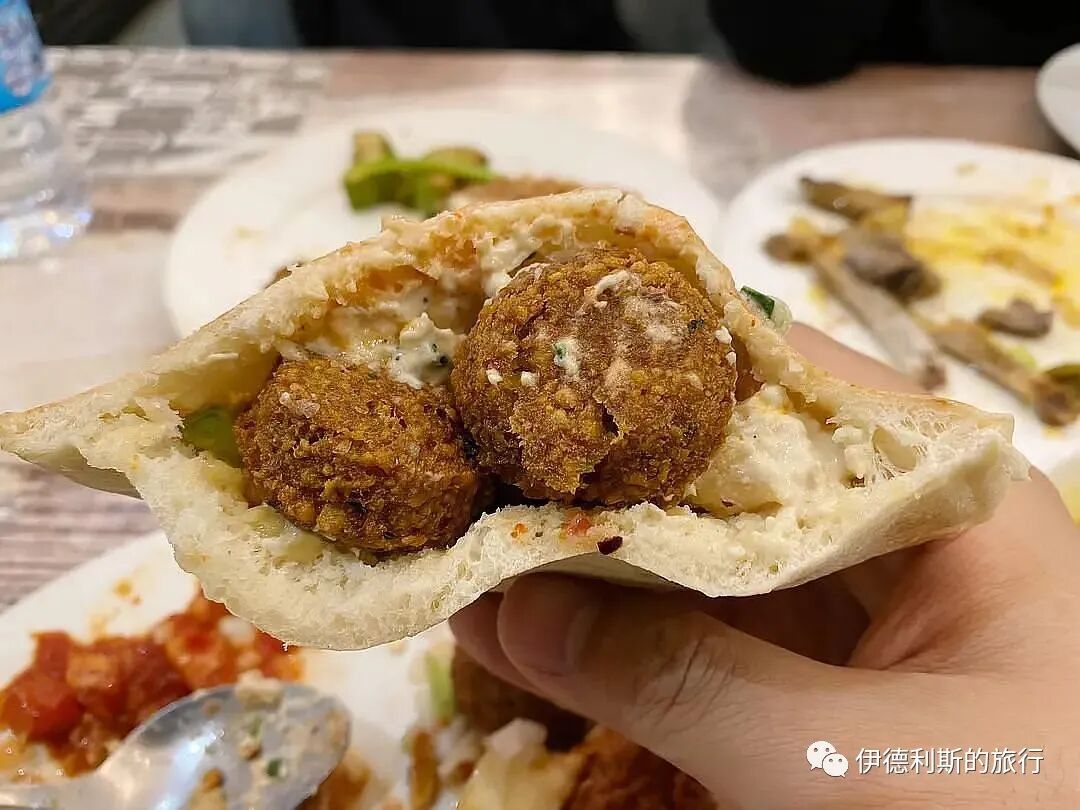
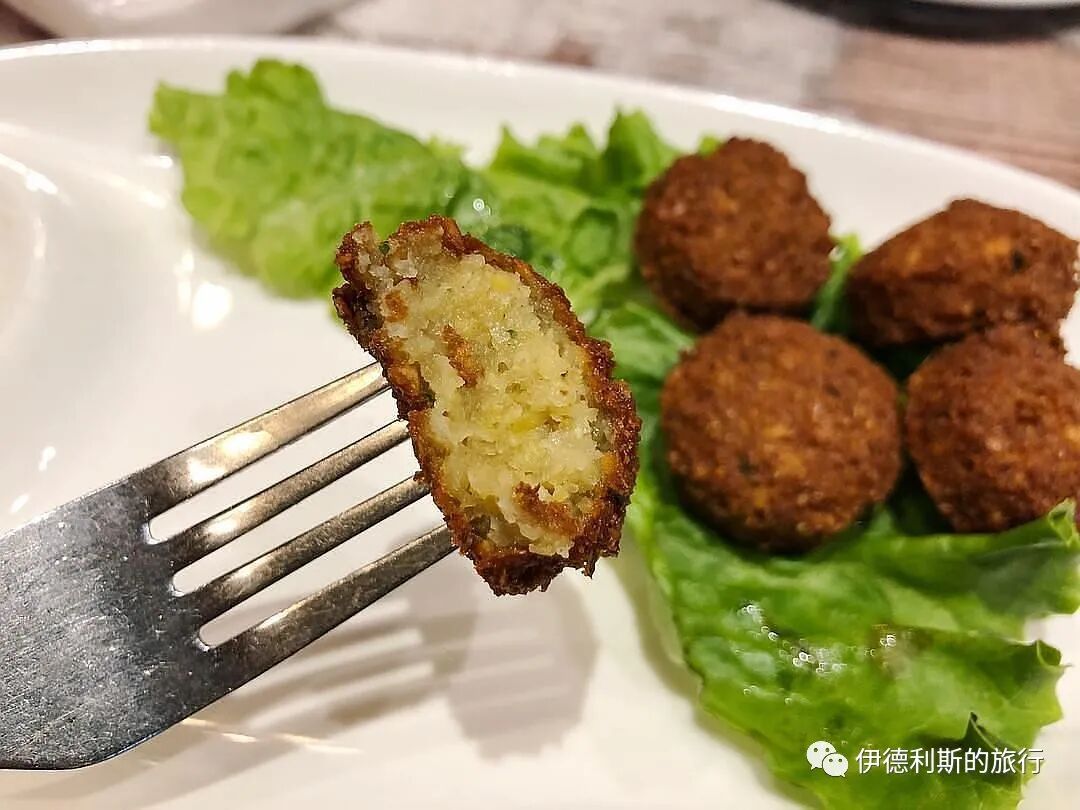
Falafel at the Arabic fast-food restaurant Taiba:
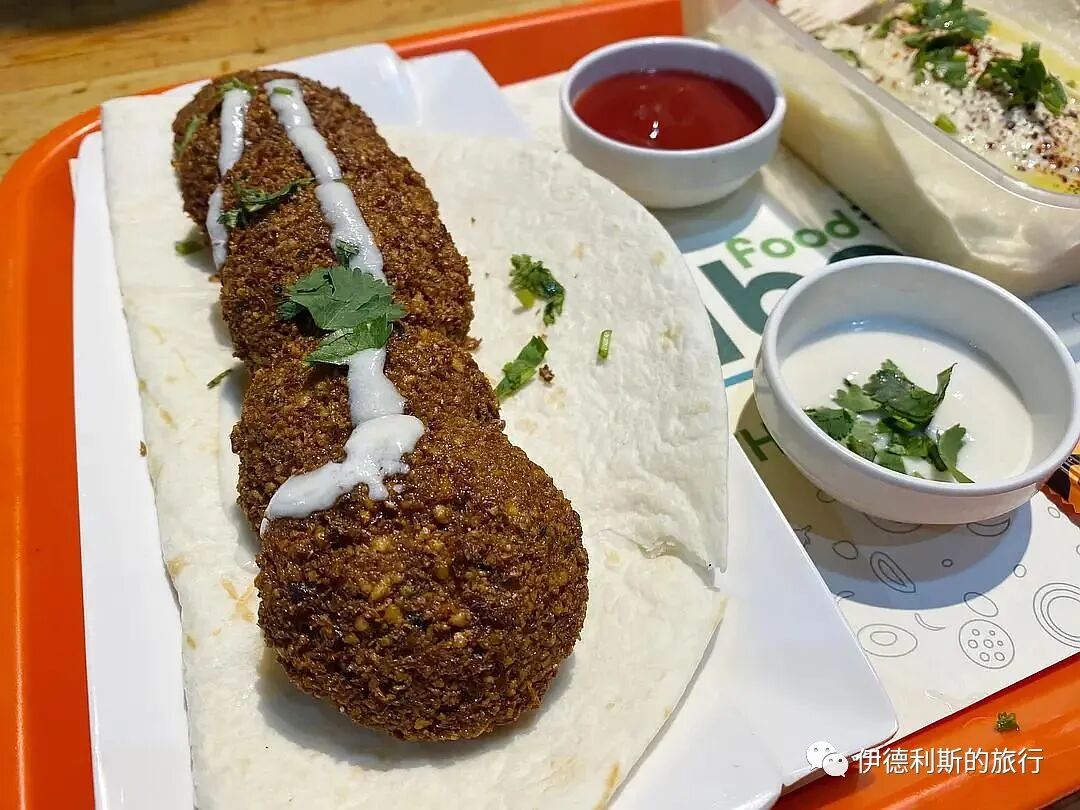
Falafel at the Palestinian restaurant Zayton:
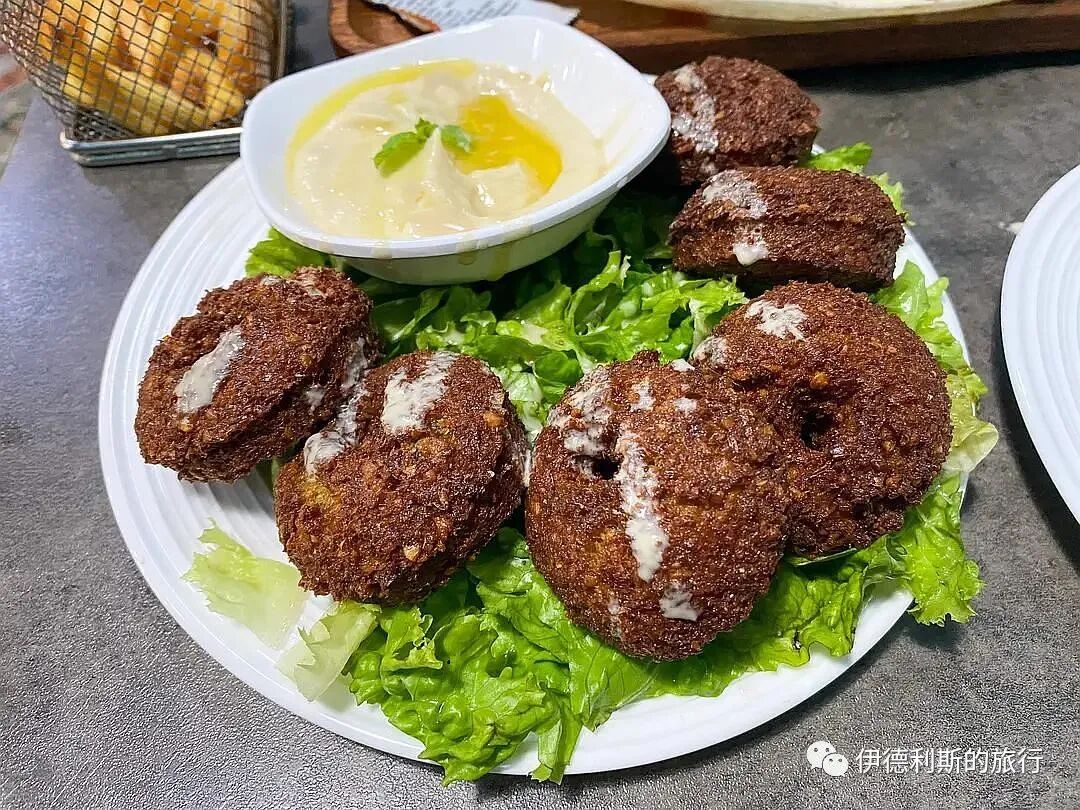
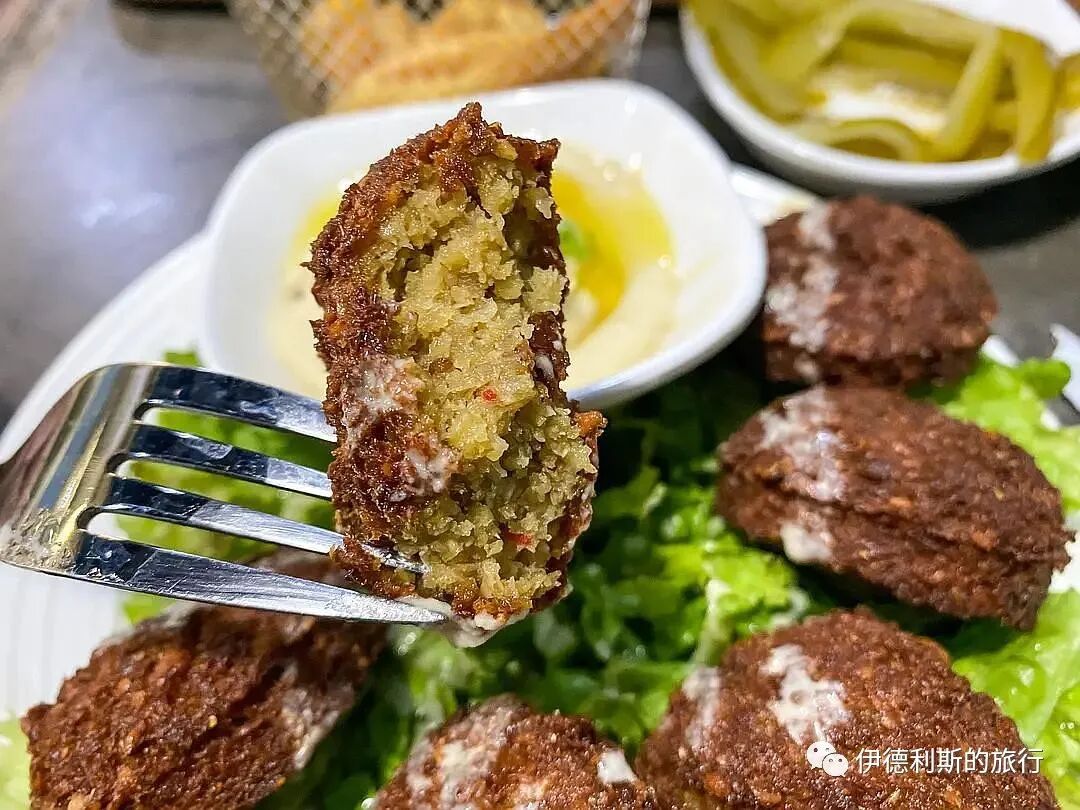
Kibbeh (fried meat balls)
Kibbeh is made of cracked wheat wrapped around a filling of minced meat, chopped onions, and Middle Eastern spices like cinnamon, nutmeg, cloves, and allspice. Kibbeh is the North Levantine dialect version of the classical Arabic word kubbah, which translates literally to "ball." Kibbeh is most famous in Aleppo, northern Syria, where there are 17 different varieties. Besides the original flavor, they can be made with yogurt, lemon juice, pomegranate molasses, or cherry sauce.
Yogurt kibbeh at the Jordanian restaurant Al Safir:
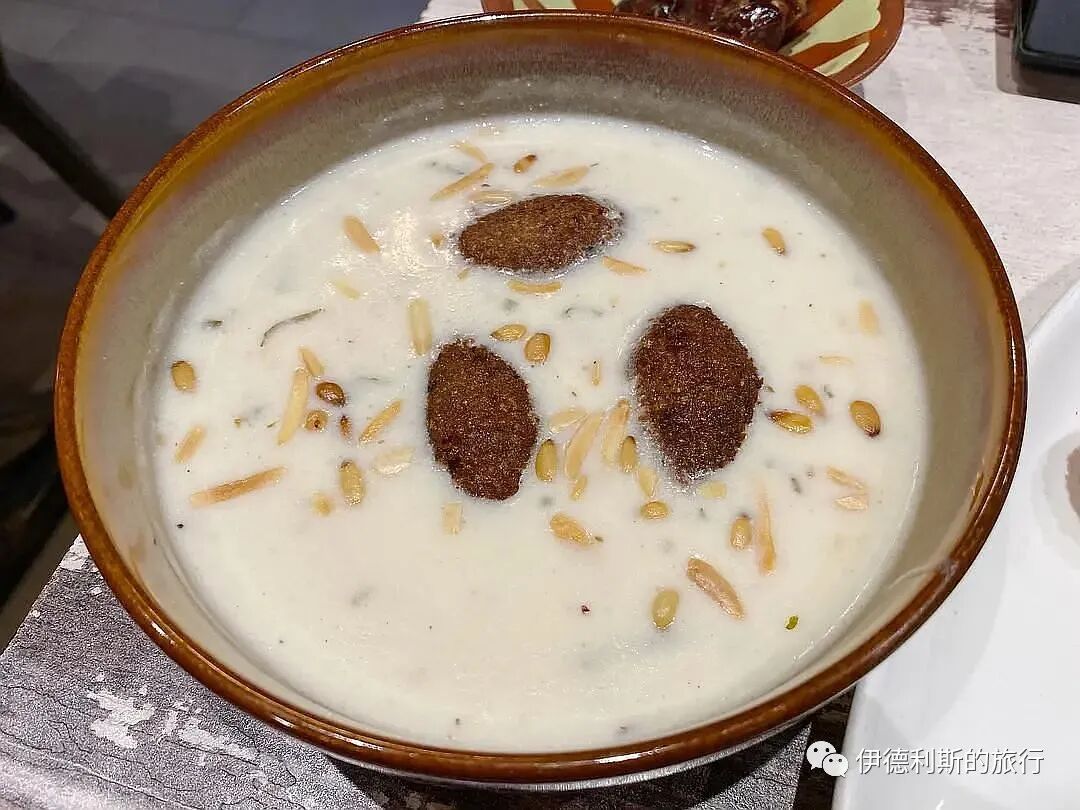
Kibbeh at the Lebanese restaurant Alameen:
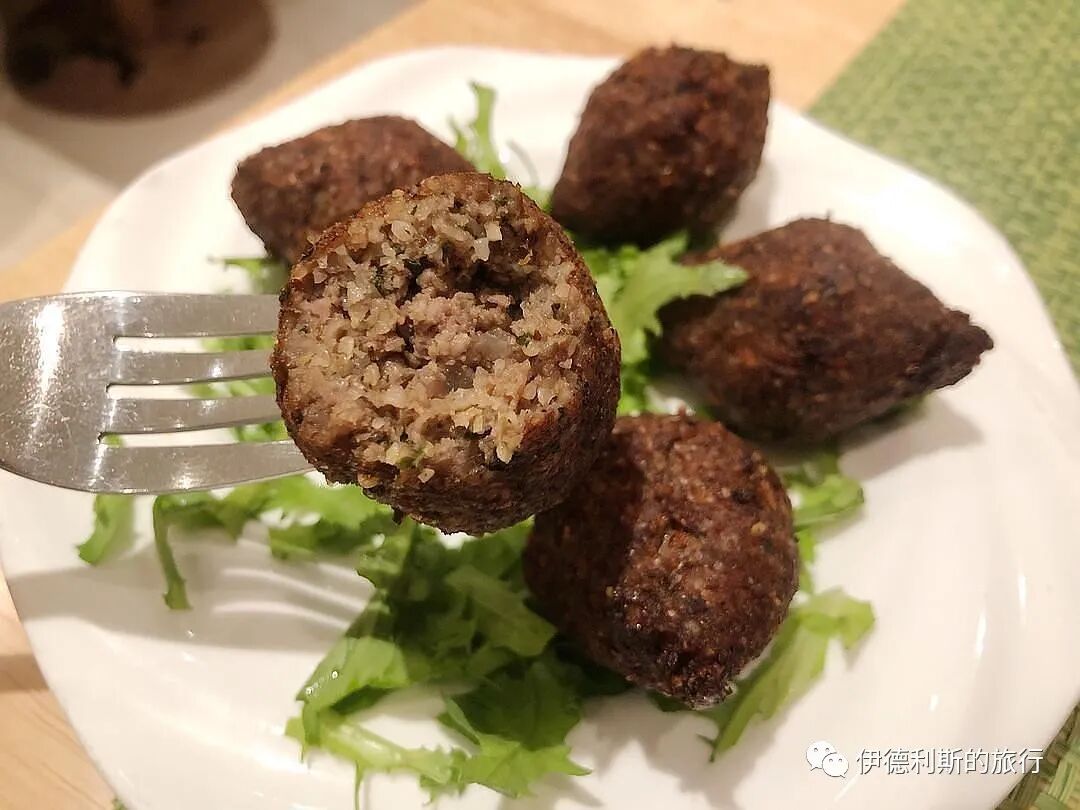
Mahashi (stuffed vegetables with rice and meat)
Mahashi is made by stuffing Lebanese zucchini (kusa) and eggplant with minced meat and rice, then cooking them in tomato sauce, cumin, and broth. Mahashi is a classic Ottoman dish found throughout former Ottoman territories from the Balkans to the Levant (the eastern Mediterranean coast) and Egypt, with each region having its own unique way of making it. Mahashi is a common dish served at weddings, family gatherings, and during Eid al-Fitr.
Mahashi at the Lebanese restaurant Al Ameen:
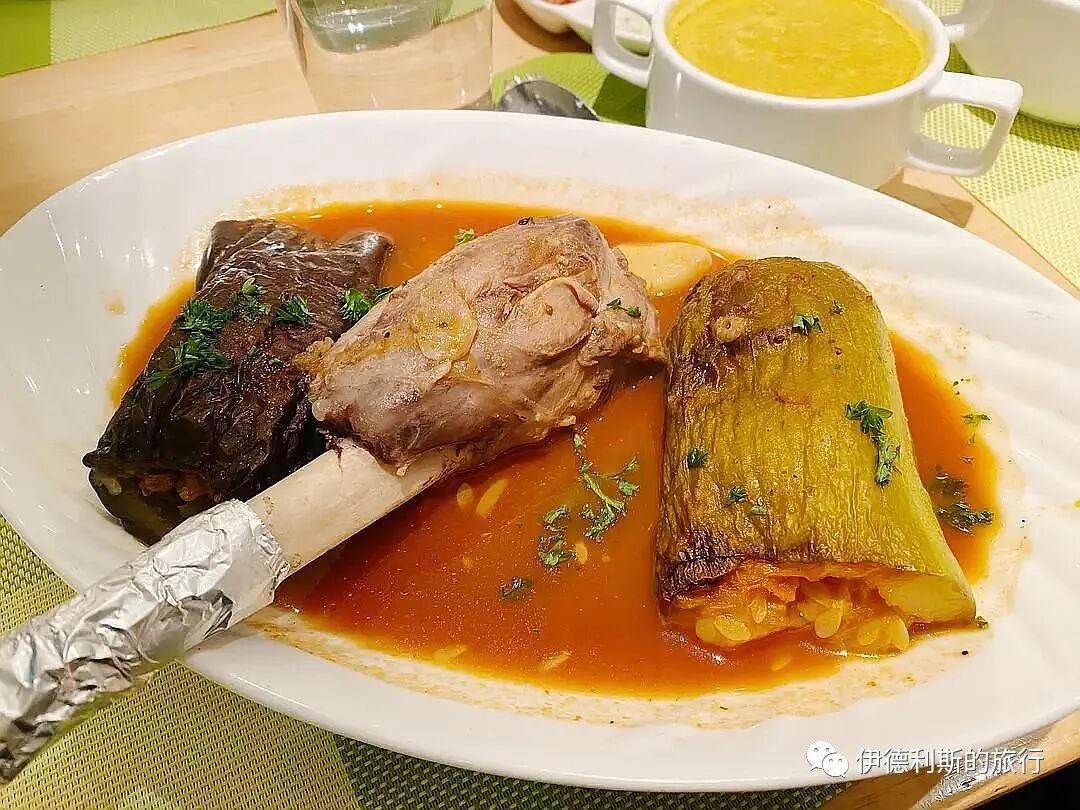
Lahmacun (meat flatbread)
Lahmacun comes from Arabic and translates literally to "meat with dough." During the Ottoman era, lahmacun spread from the Arab world to Turkey, Armenia, and other former Ottoman regions. Because of this, it is also called "Turkish pizza" or "Armenian pizza," though the basic method is always a thin flatbread topped with minced meat.
Lahmacun at the Turkish restaurant Rumi's Secret:
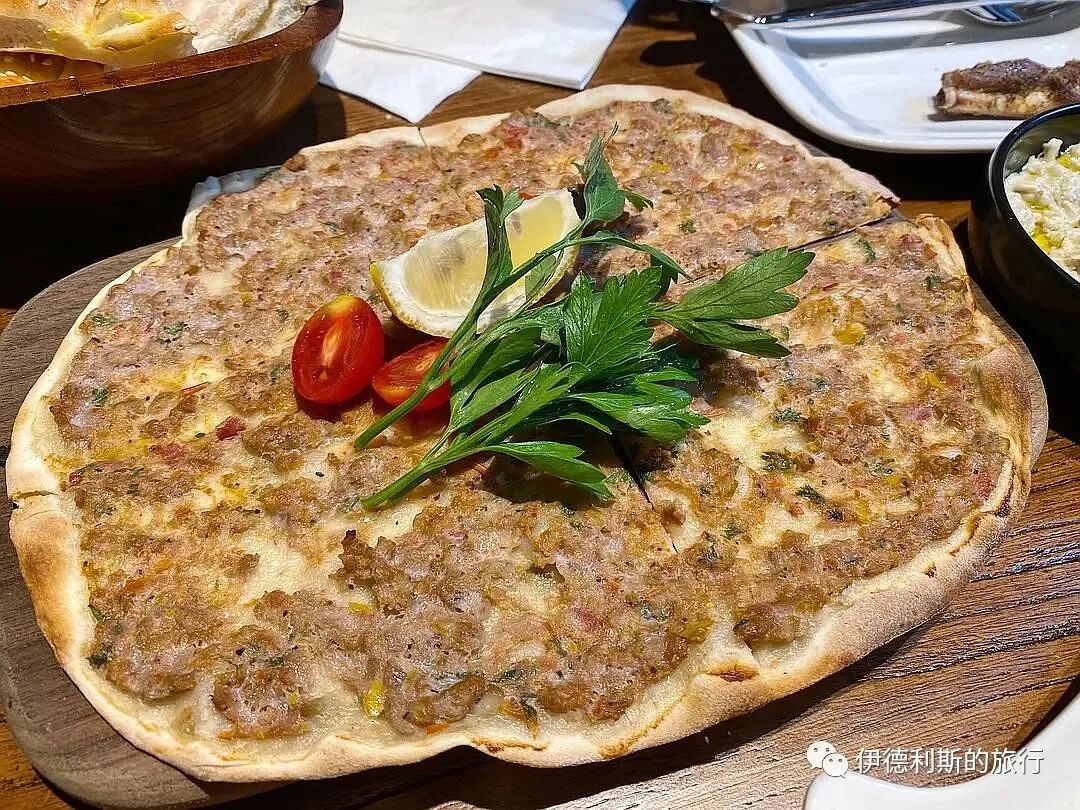
Lahmacun at the Arabic fast food shop Taiba:
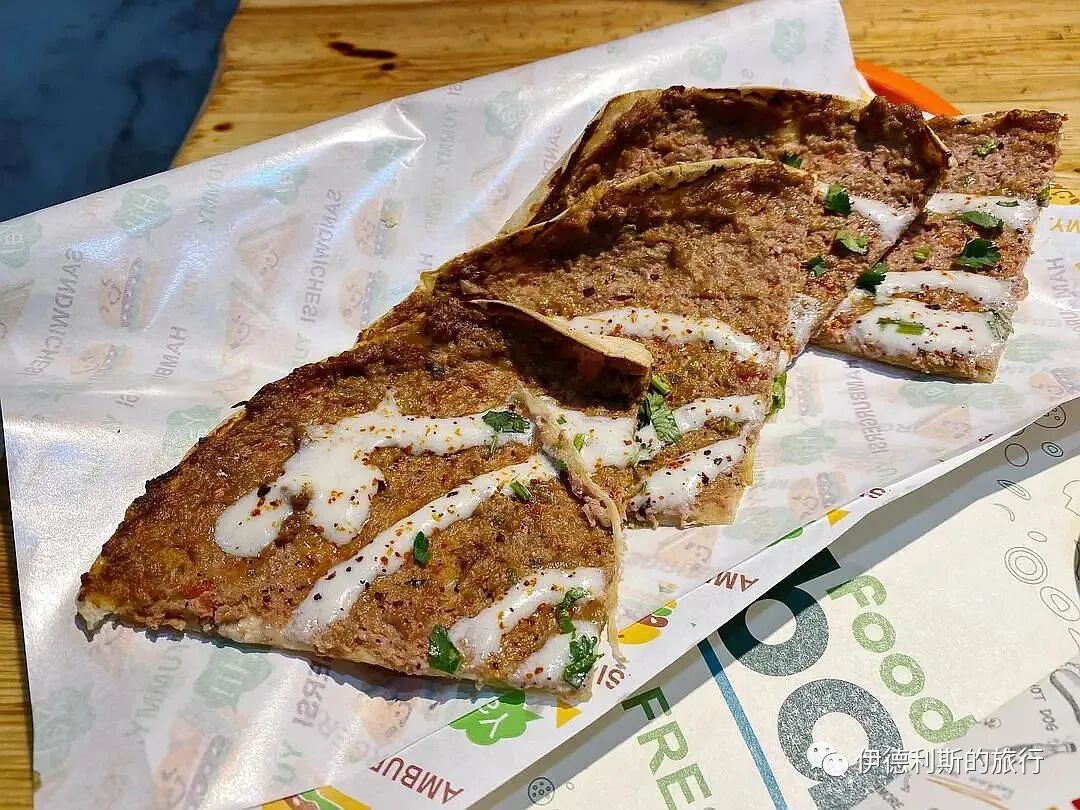
Lahmacun at the Turkish restaurant Doner & Kebab:
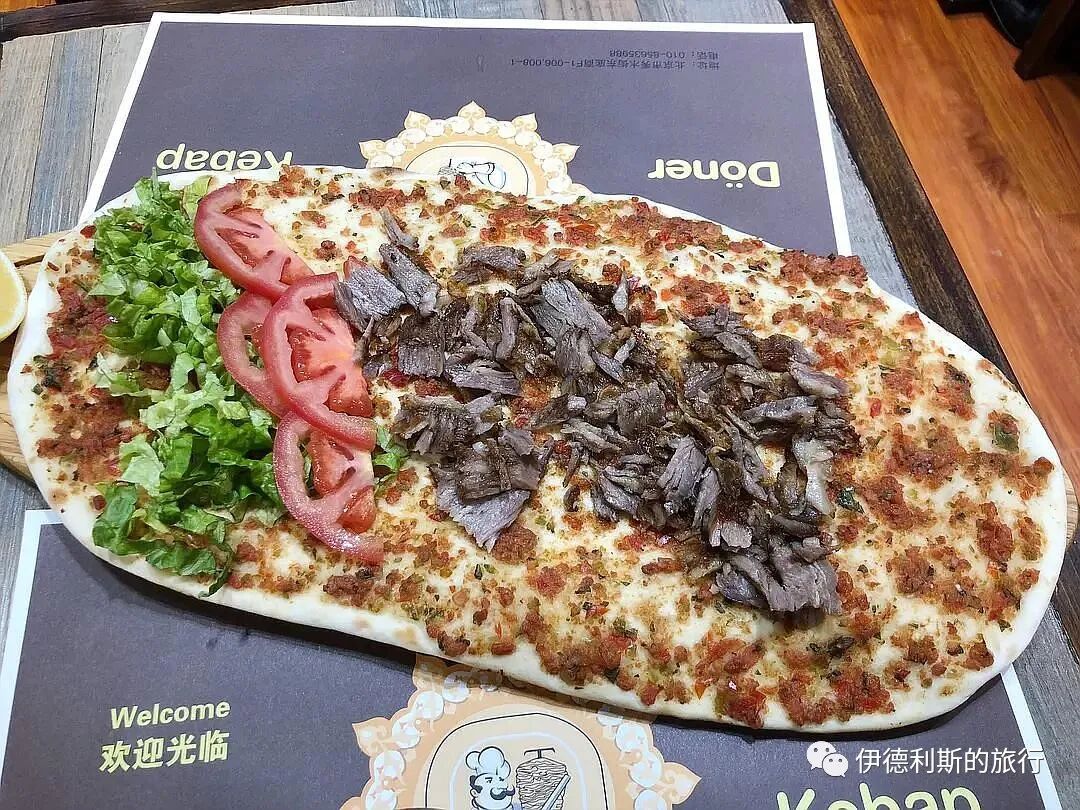
Lahmacun at the Turkish restaurant Kubei:
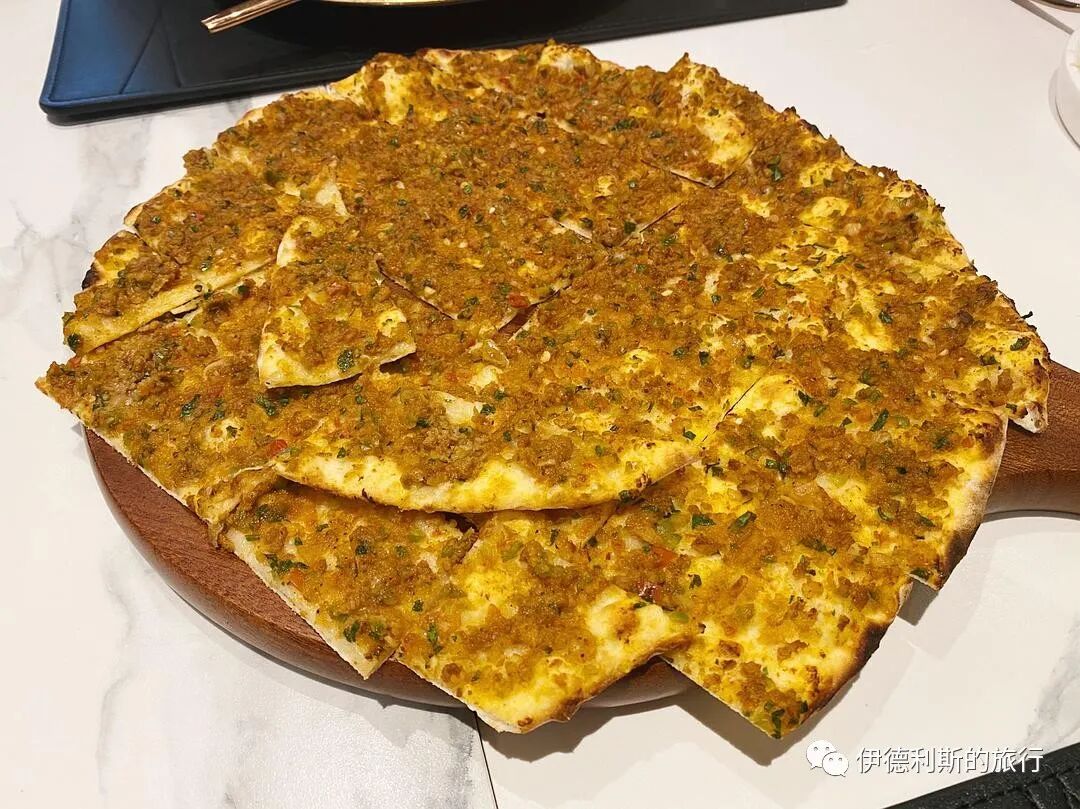
Lahmacun at the Turkish restaurant Dardanelles:
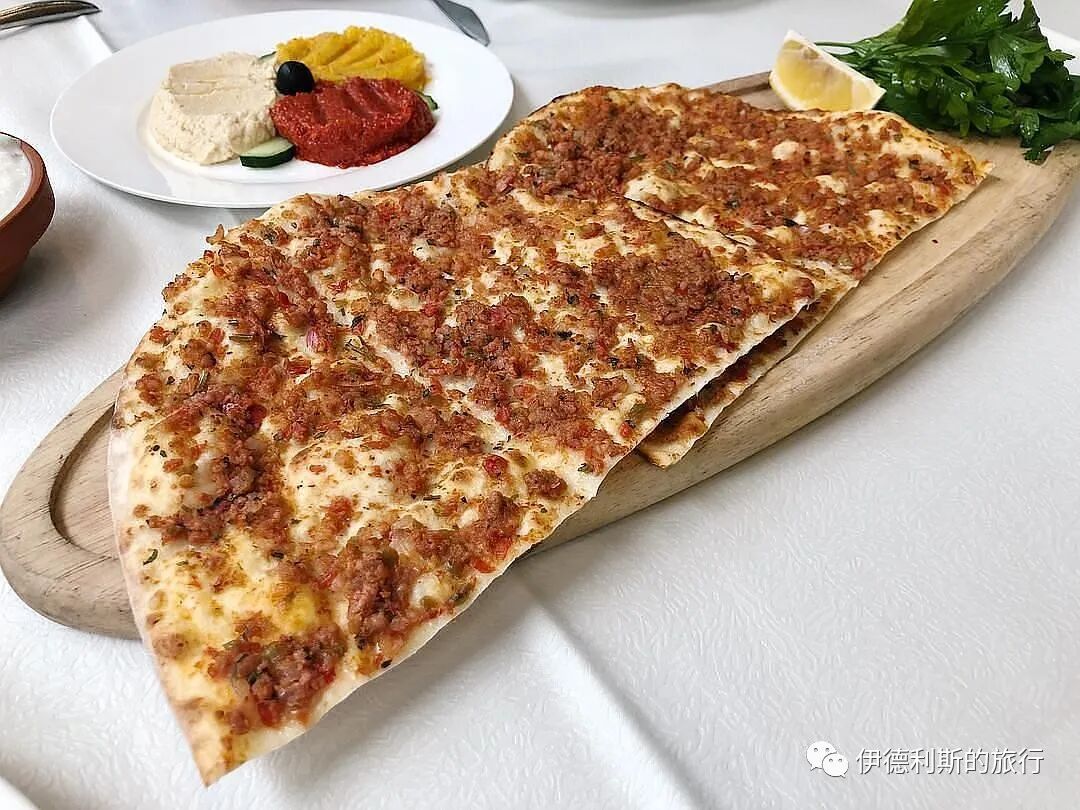
Za'atar Manakeesh flatbread
Manakeesh is a type of Arab flatbread. Za'atar is a Levantine spice blend made from Syrian oregano (also called Lebanese oregano), toasted sesame seeds, dried sumac, and thyme, mixed with olive oil before eating. Syrian oregano is also considered the hyssop mentioned in the Bible. People in Syria and Lebanon often find wild oregano in the fields, pick the leaves to dry in the sun, and then grind them into a powder to make the spice. Za'atar has an earthy taste with a hint of citrus and nuttiness. It feels very unique the first time you eat it.
Za'atar Manakeesh flatbread at the Arabic restaurant Taiba:
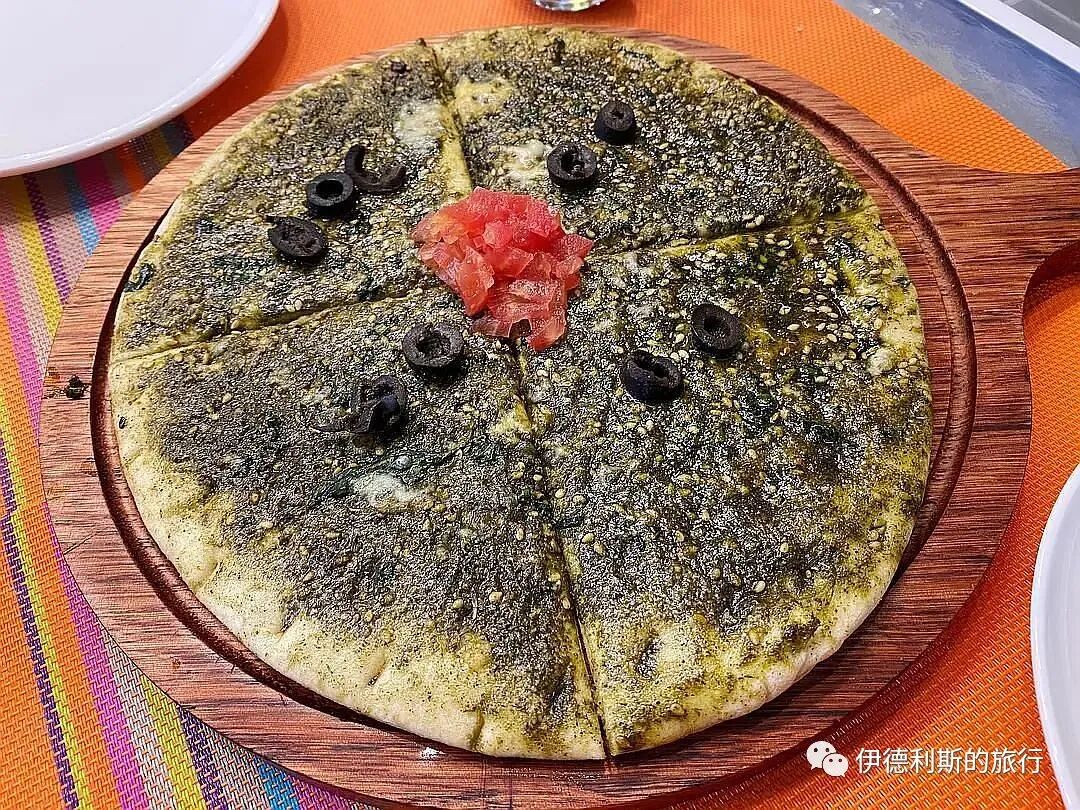
Mandi lamb rice
Mandi originated in Yemen and is popular in the Arabian Peninsula, Egypt, and the Levant. Mandi is usually made with rice, meat (lamb, camel, or chicken), and Hawaij spice. Hawaij is also a specialty spice from Yemen used for cooking, soups, and coffee. Its main ingredients are cumin, black pepper, turmeric, and cardamom. The texture of Mandi is drier than regular curry rice.
Mandi lamb rice at the Syrian restaurant BRBR:
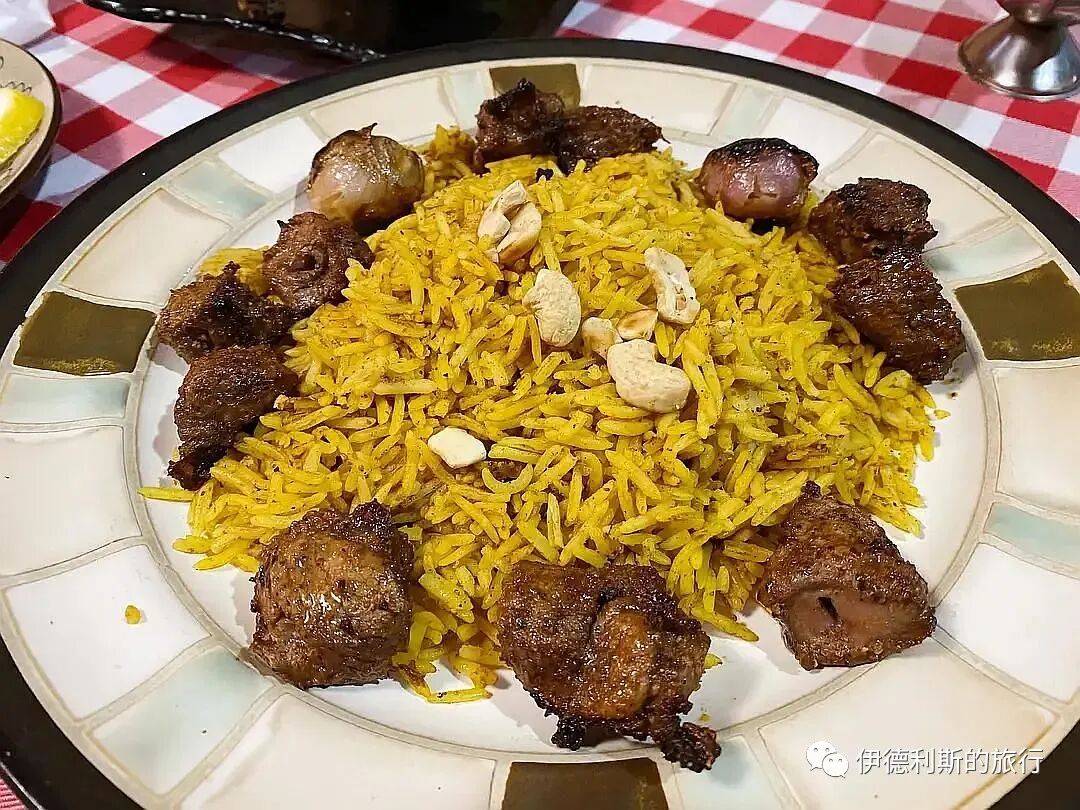
Mandi lamb rice at the Syrian restaurant One Thousand and One Nights:
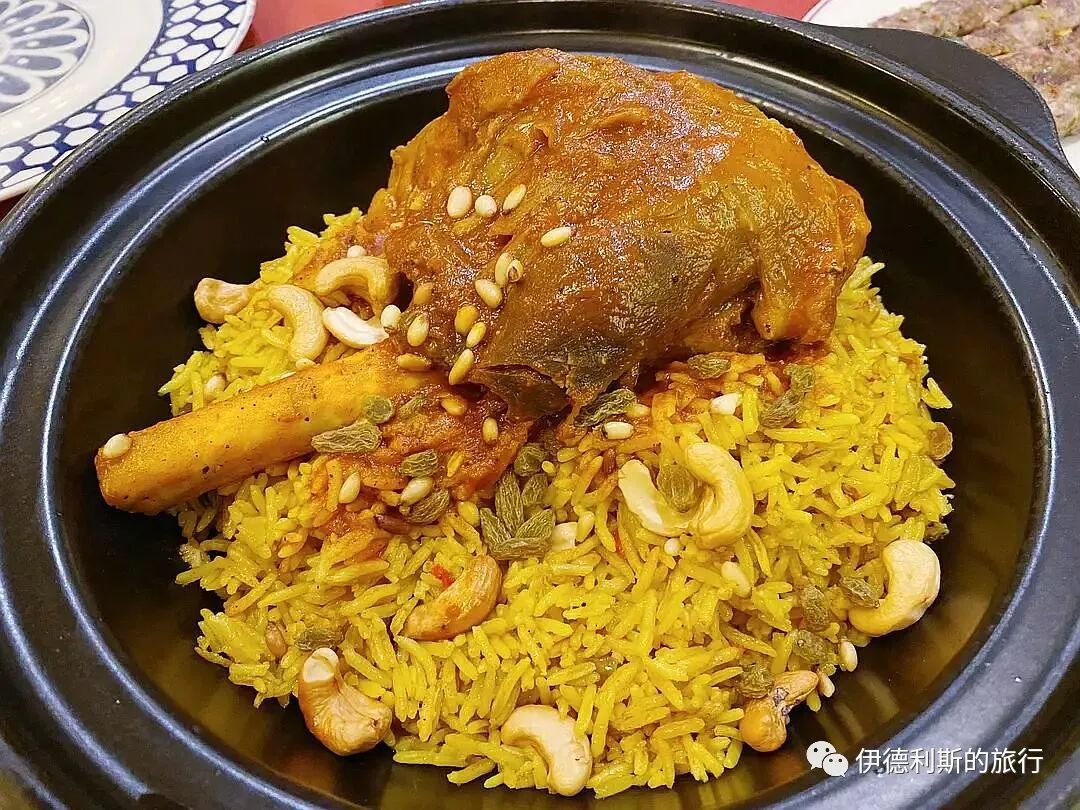
Chickpea yogurt salad (Fatteh)
Fatteh means "crushed" in Arabic. It is a snack from the southern Levant region, found in Damascus, Beirut, Jordan, and Palestine, but not in the northern Levant. The main ingredient of Fatteh is crushed flatbread (Khubz). It is topped with yogurt, steamed chickpeas, olive oil, and other ingredients, then sprinkled with cumin. Sometimes it includes eggplant, carrots, chicken, or lamb.
Fatteh at the Palestinian restaurant Zayton:
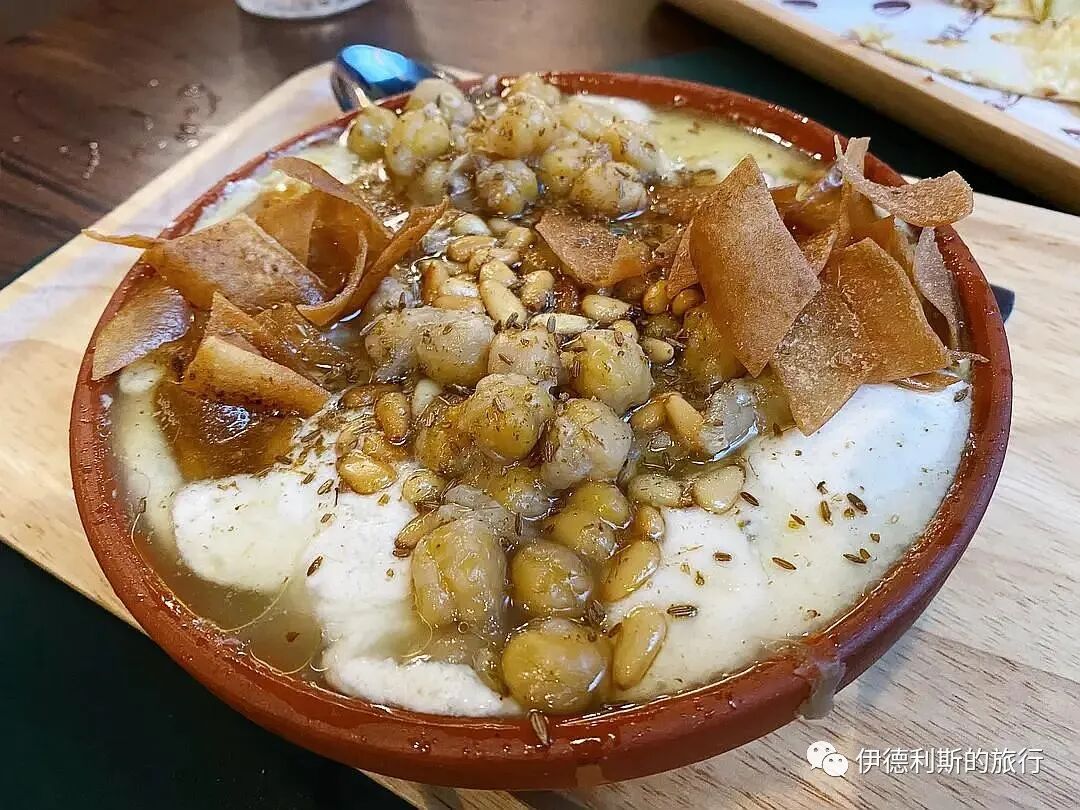
Tabbouleh salad
Tabbouleh is a Levantine Meze (appetizer). It is made of chopped parsley, tomatoes, mint, onions, and bulgur (crushed dried wheat). It is seasoned with olive oil, lemon juice, salt, and pepper. The word "tabbūle" in Levantine Arabic comes from the ancient Aramaic root "t-b-l," which means "to season" or "to dip." Tabbouleh salad comes from the mountains of Lebanon and Syria. Wheat grown in the Beqaa Valley of Lebanon was once known as the best for making bulgur.
Tabbouleh at the Palestinian restaurant Zayton:
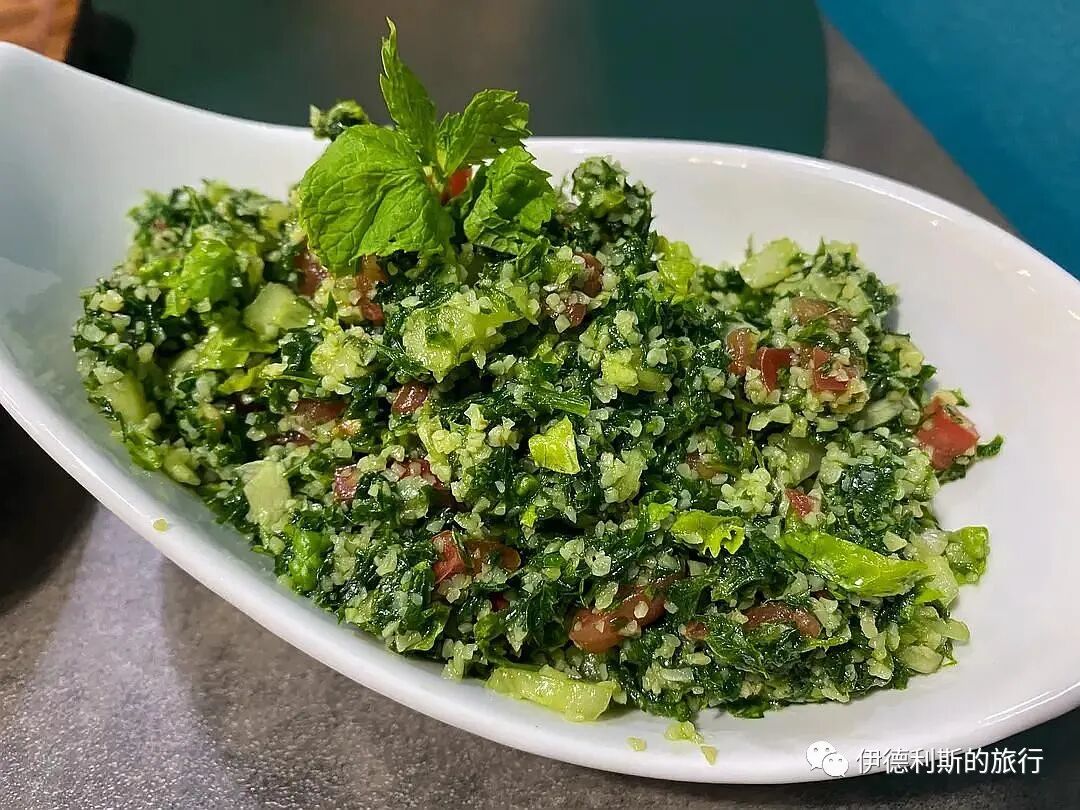
Tabbouleh salad at the Syrian restaurant BRBR:
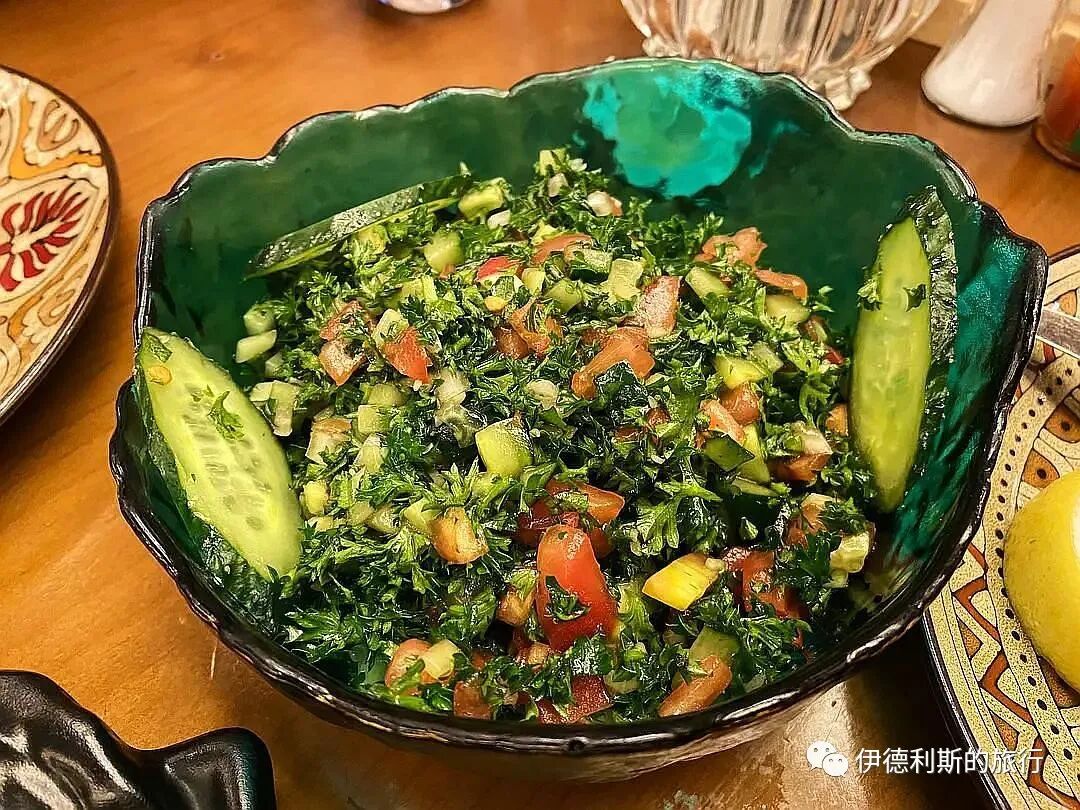
Chickpea dip (hummus)
Hummus is short for the Arabic term "ḥummuṣ bi ṭaḥīna" (chickpeas with sesame paste). Hummus is a mix of chickpeas, sesame paste (tahini), olive oil, lemon juice, and garlic. It is very popular across the Middle East and the Mediterranean.
Lamb hummus at the Jordanian restaurant Al Safir:
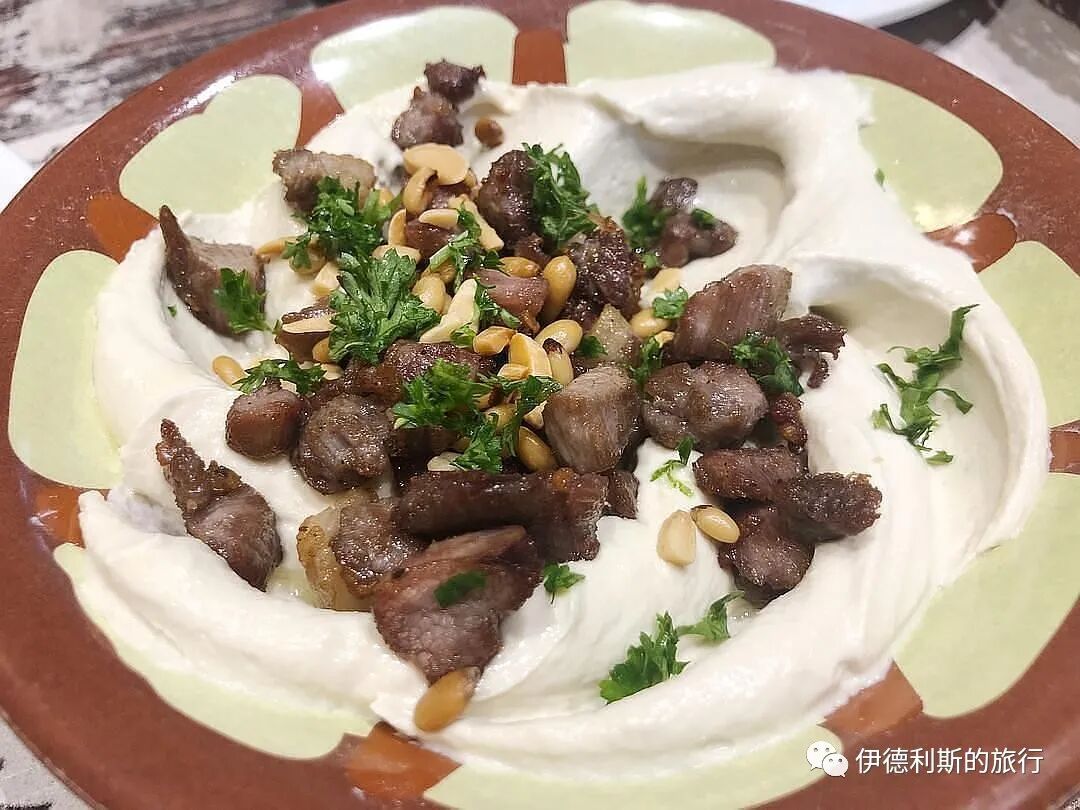
Hummus at the Arabic fast food shop Taiba:
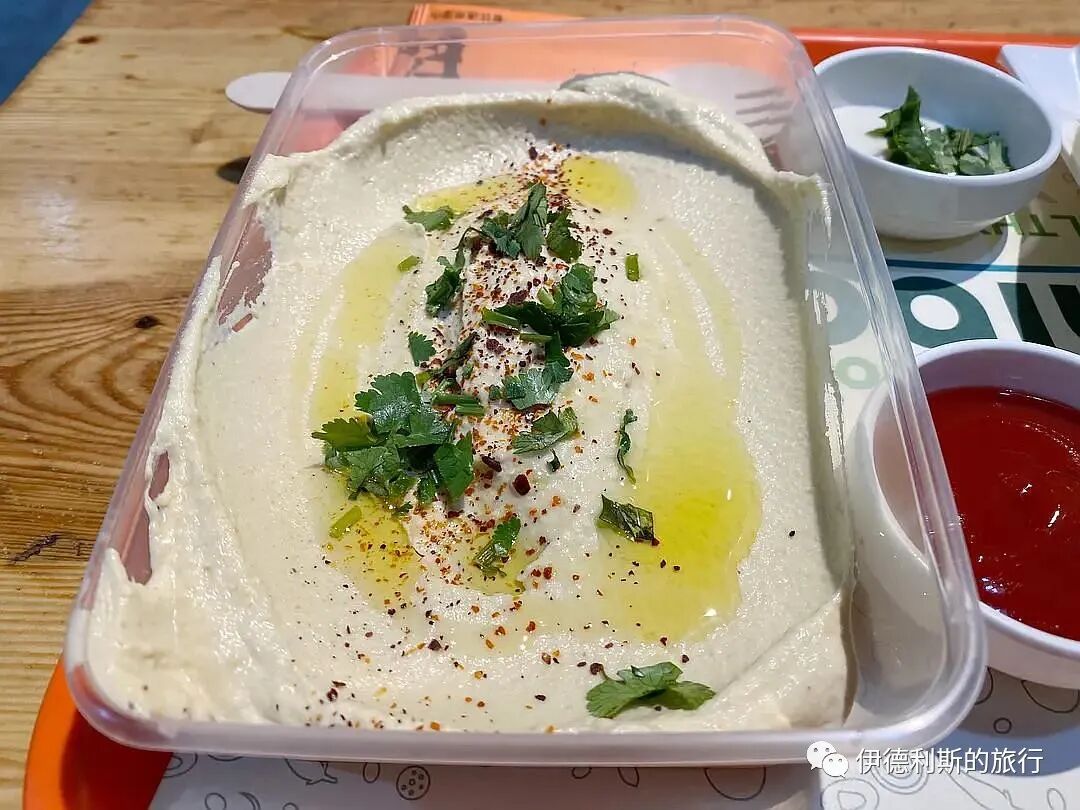
Hummus at the Turkish restaurant Xiting Xiuse:
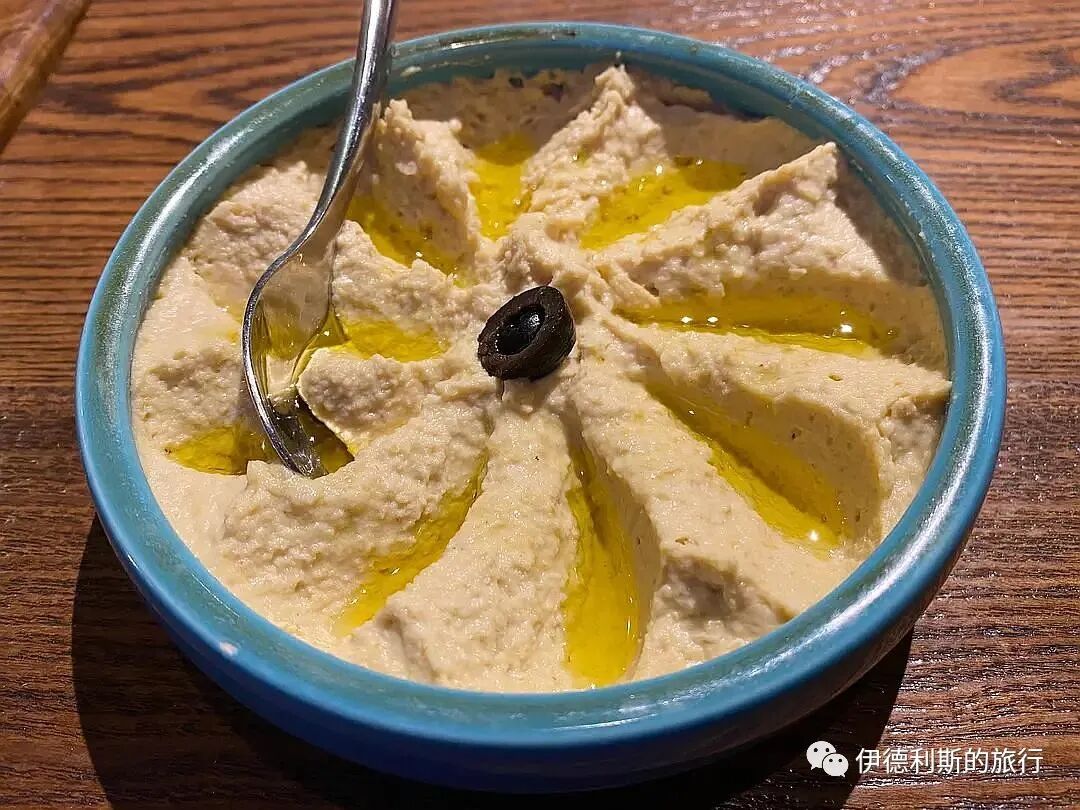
Hummus at the Turkish restaurant Kubei (in the middle):
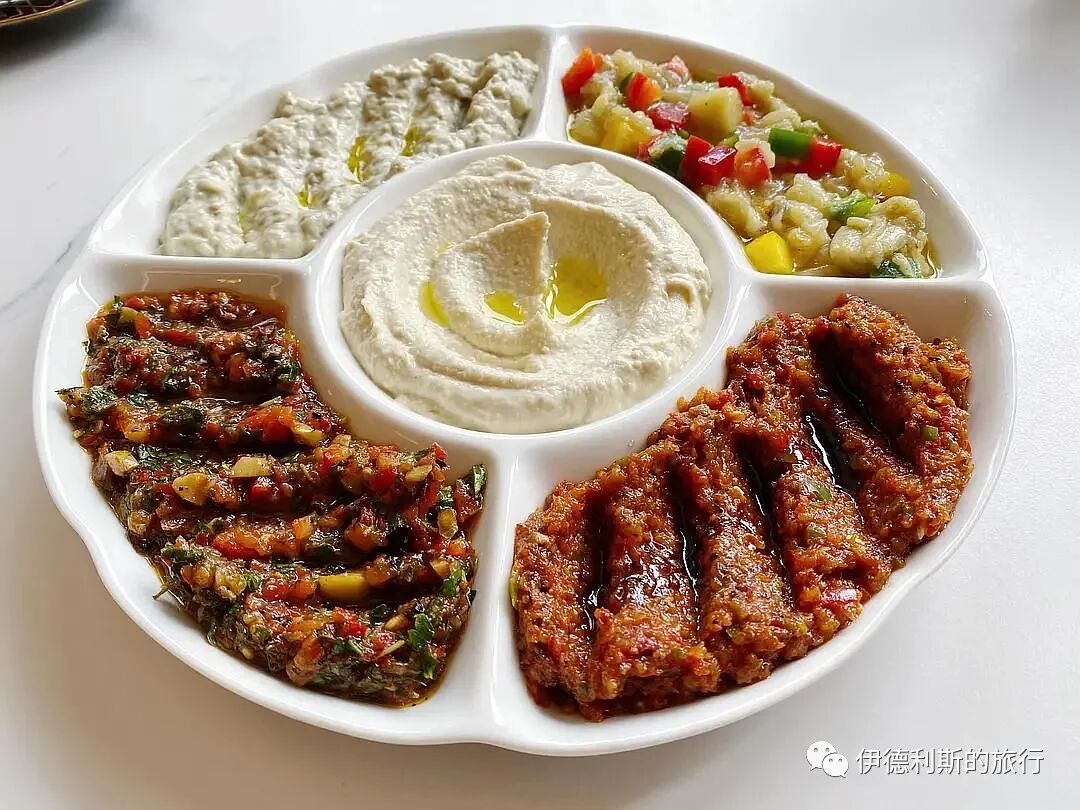
Beef hummus at the Palestinian restaurant Zayton:
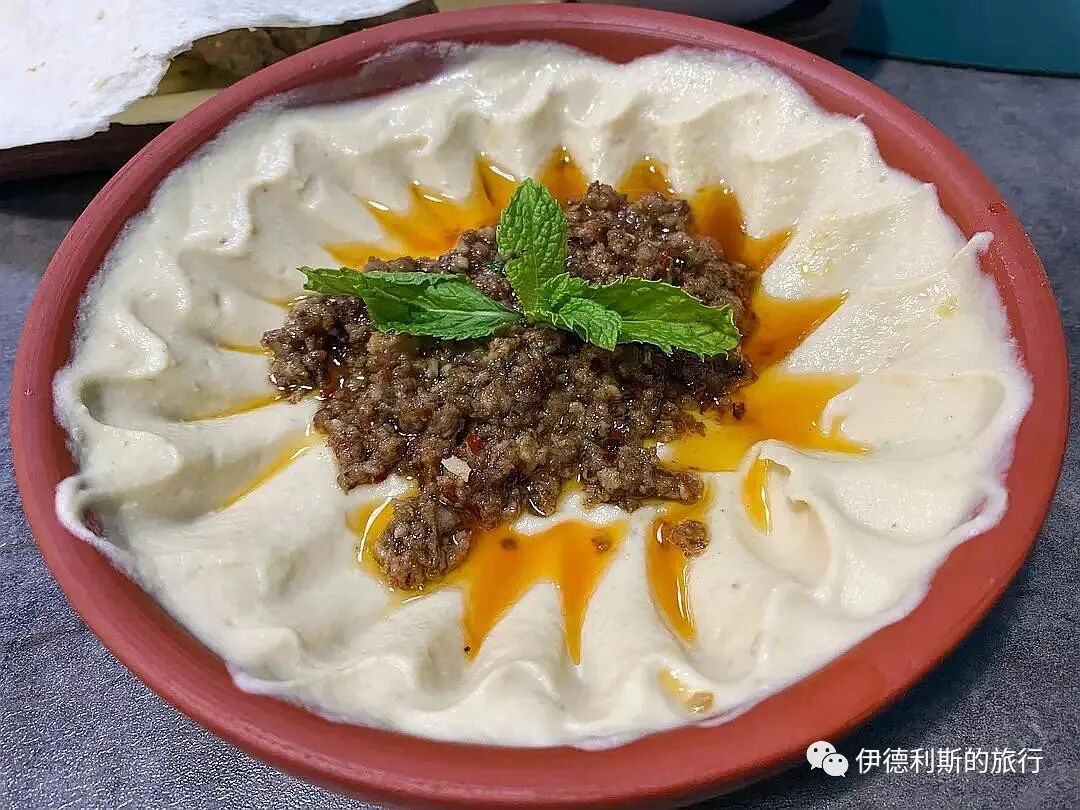
Pine nut hummus at the Syrian restaurant One Thousand and One Nights:
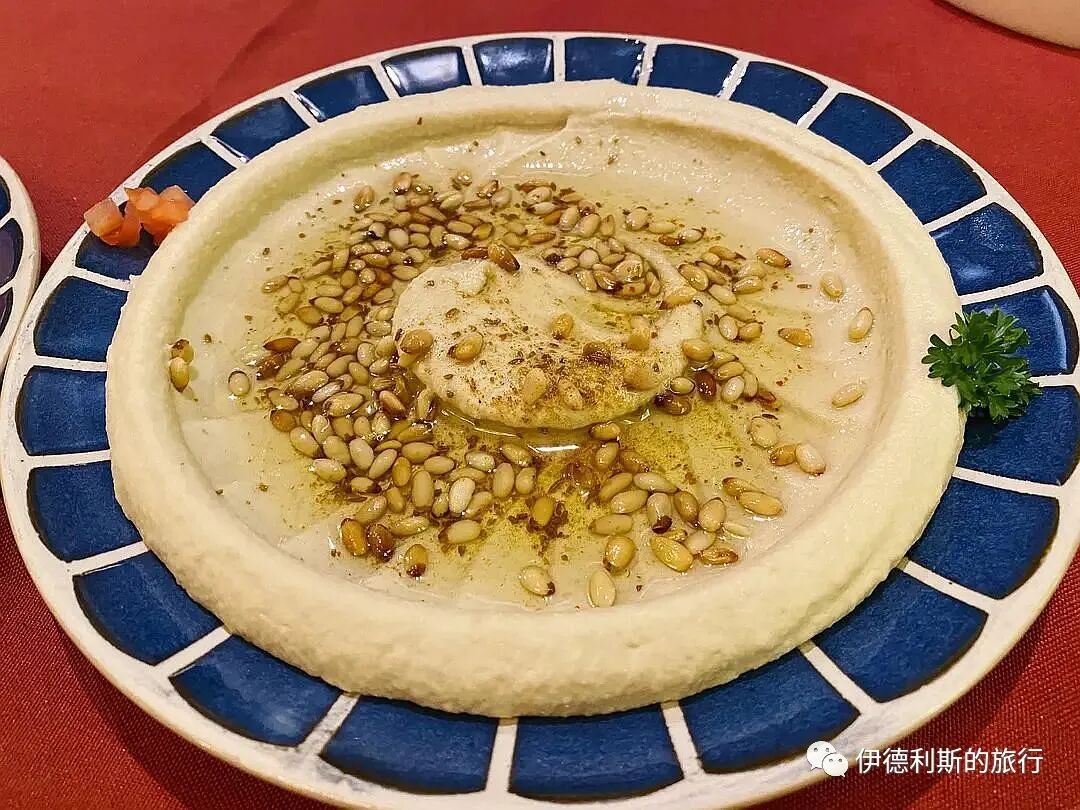
Eggplant dip (baba ghanoush)
To make baba ghanoush, you roast eggplant until soft, mash it, and add olive oil and lemon juice. Sometimes people also add sesame paste, onions, or tomatoes.
Baba ghanoush at the Syrian restaurant BRBR:
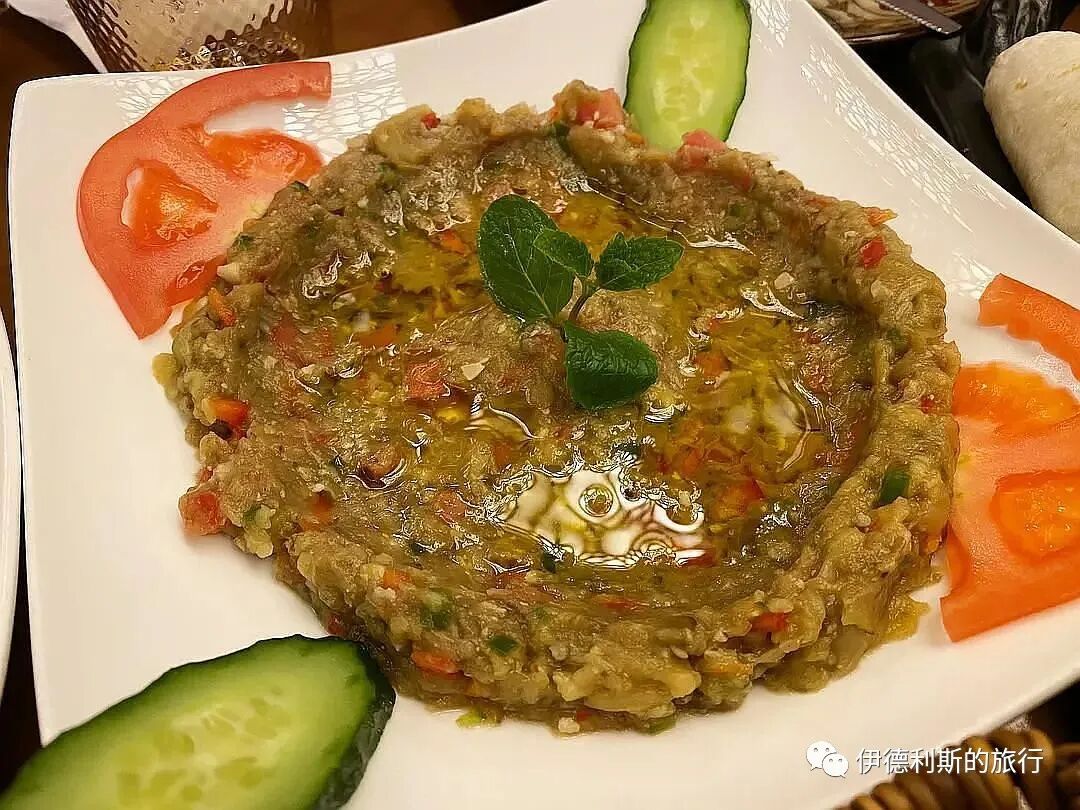
Lentil soup
Lentil soup is made from lentils and has a very long history. You can use many types of lentils for lentil soup, including green, brown, red, yellow, and black lentils. Genesis chapter 25 mentions, "Then Jacob gave Esau bread and pottage of lentils; and he did eat and drink, and rose up, and went his way." This refers to red lentil soup.
Lentil soup at the Lebanese restaurant Al Ameen:
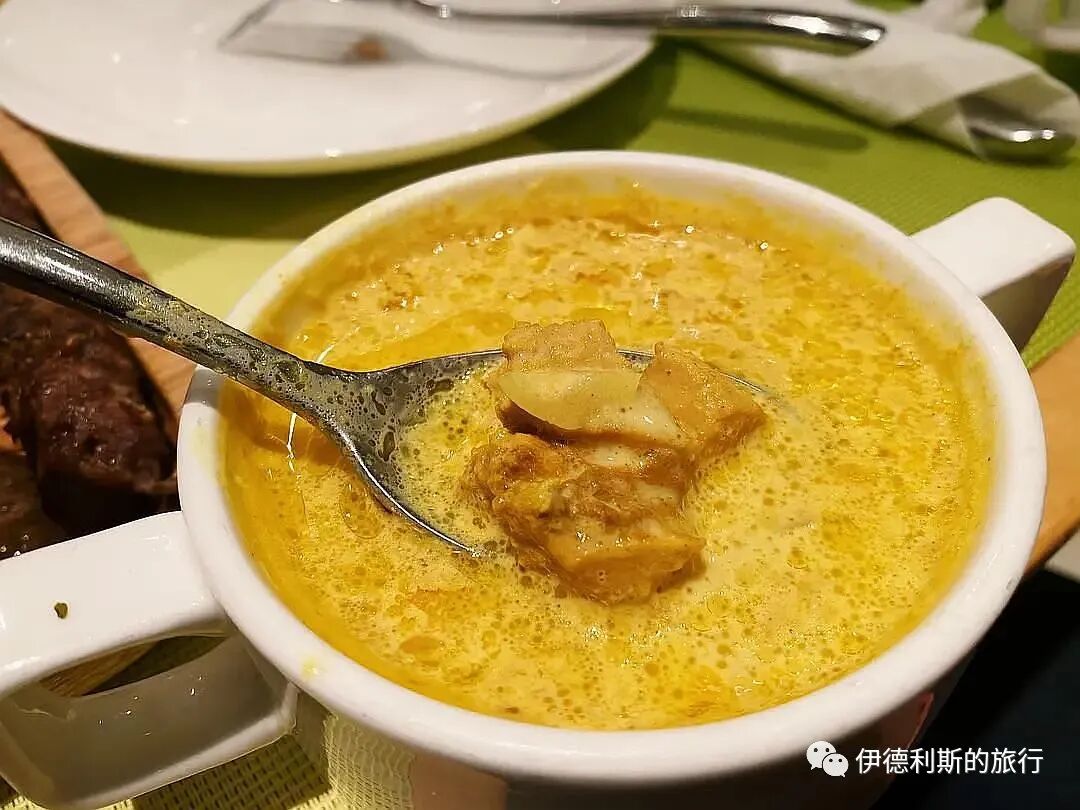
Lentil soup at the Arabic fast food shop Taiba:
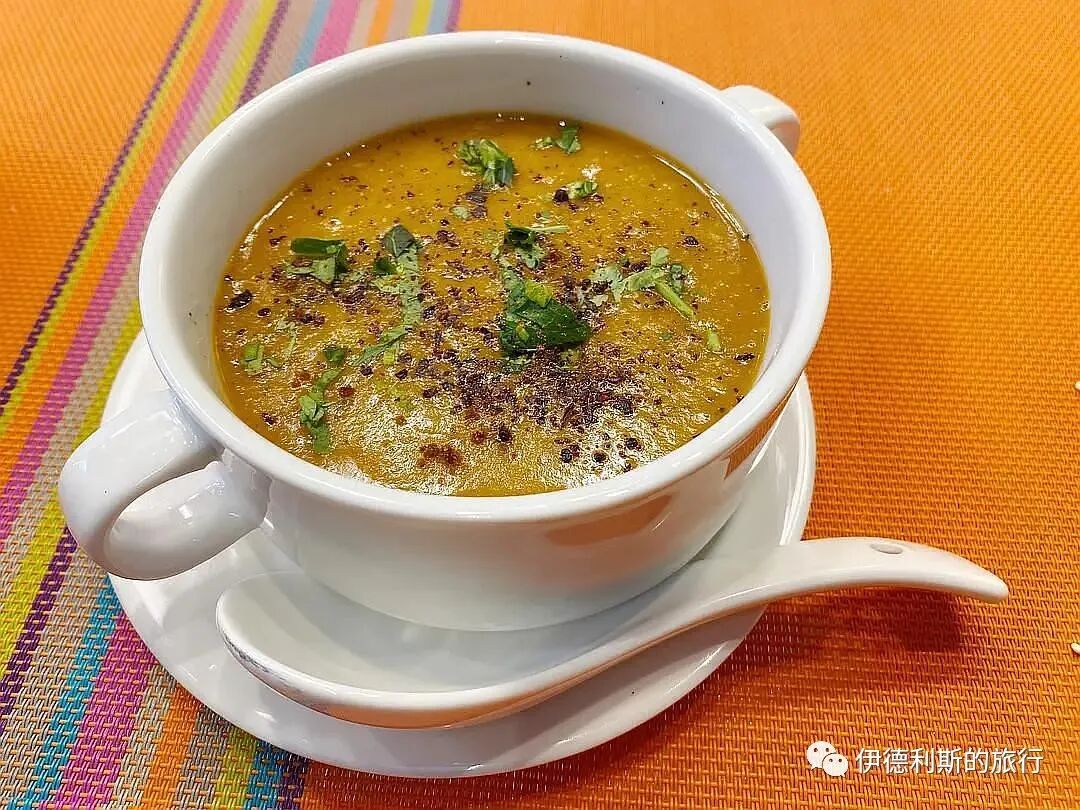
Lentil soup at the Syrian restaurant BRBR:
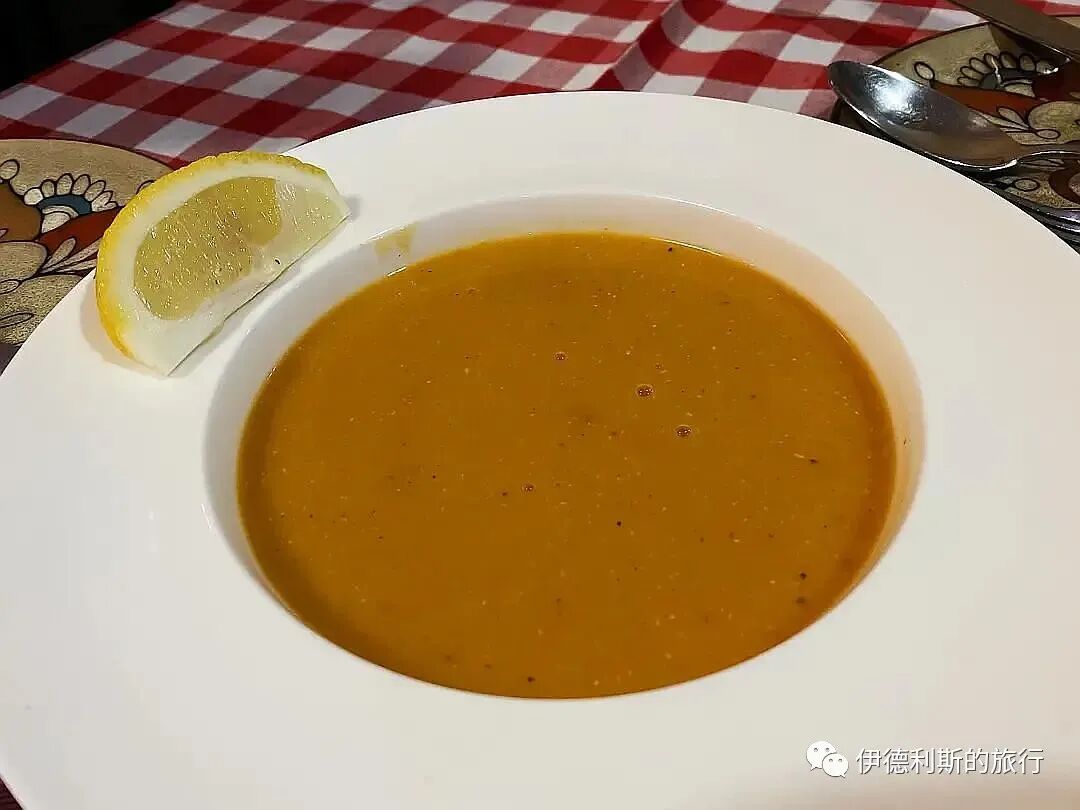
Lentil and wheat grain soup at a Turkish mother's home:
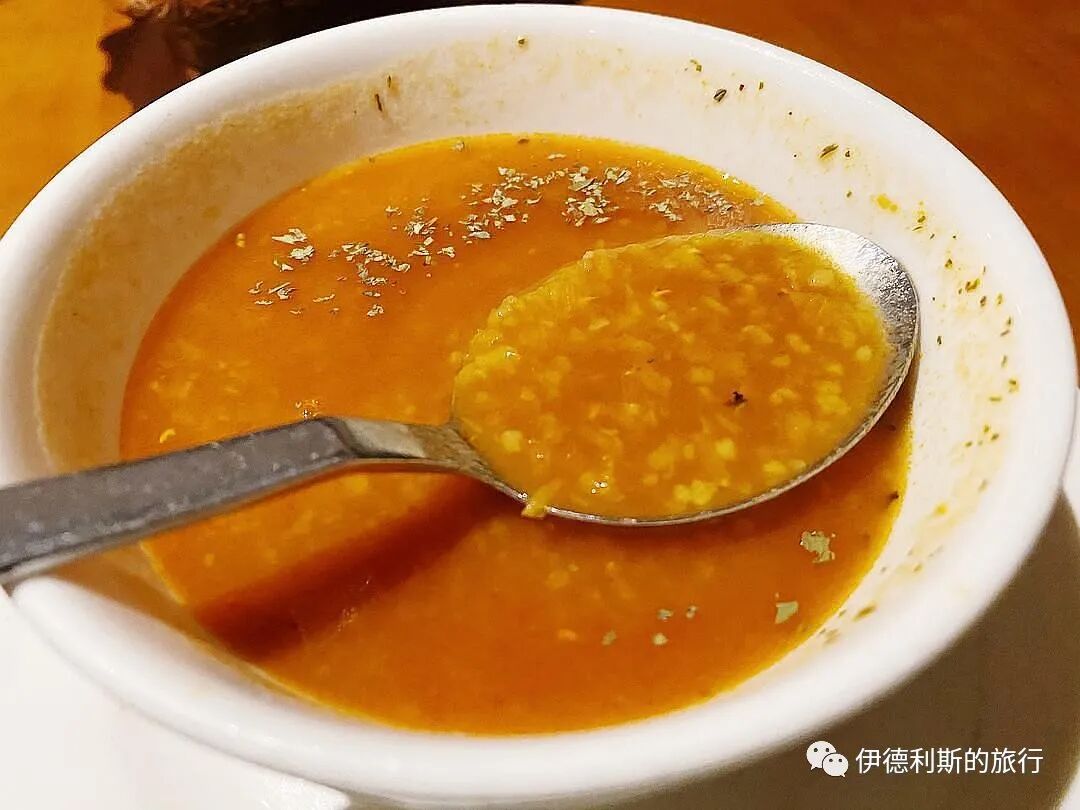
Lentil soup at the Turkish restaurant Rumi's Secret:
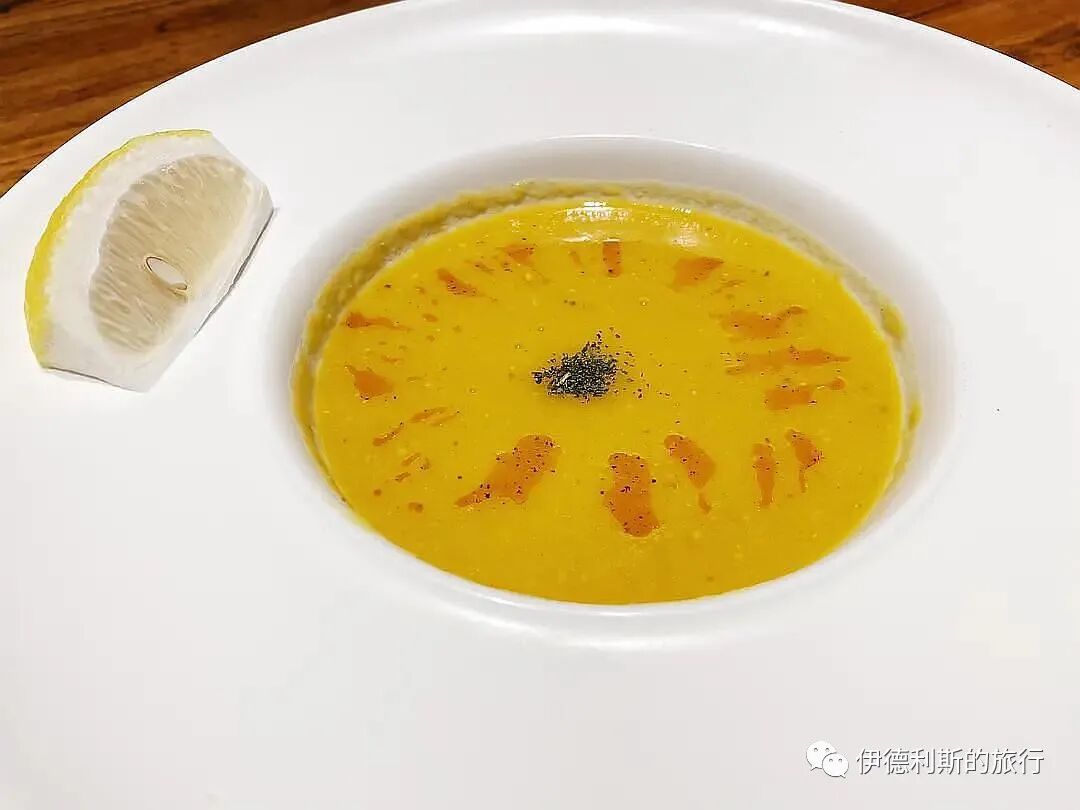
Lentil soup at the Turkish restaurant Xiting Xiuse:
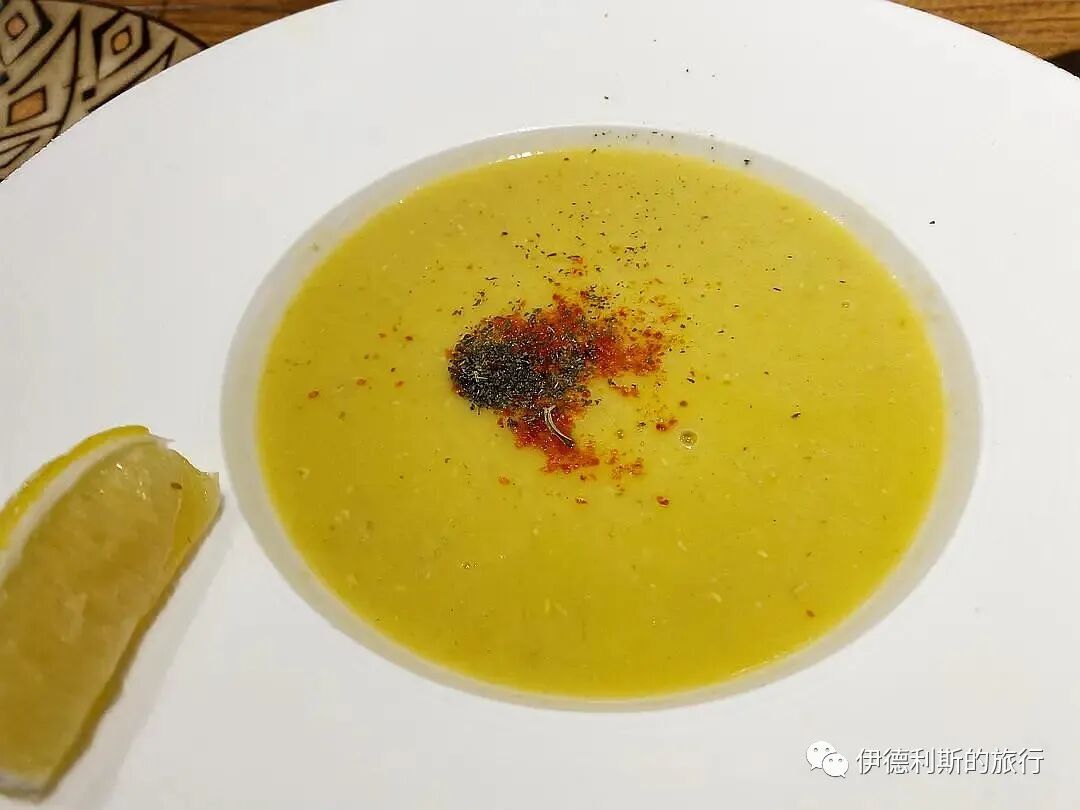
Lentil soup at the Azerbaijani/Turkish restaurant Doner & Kebab:
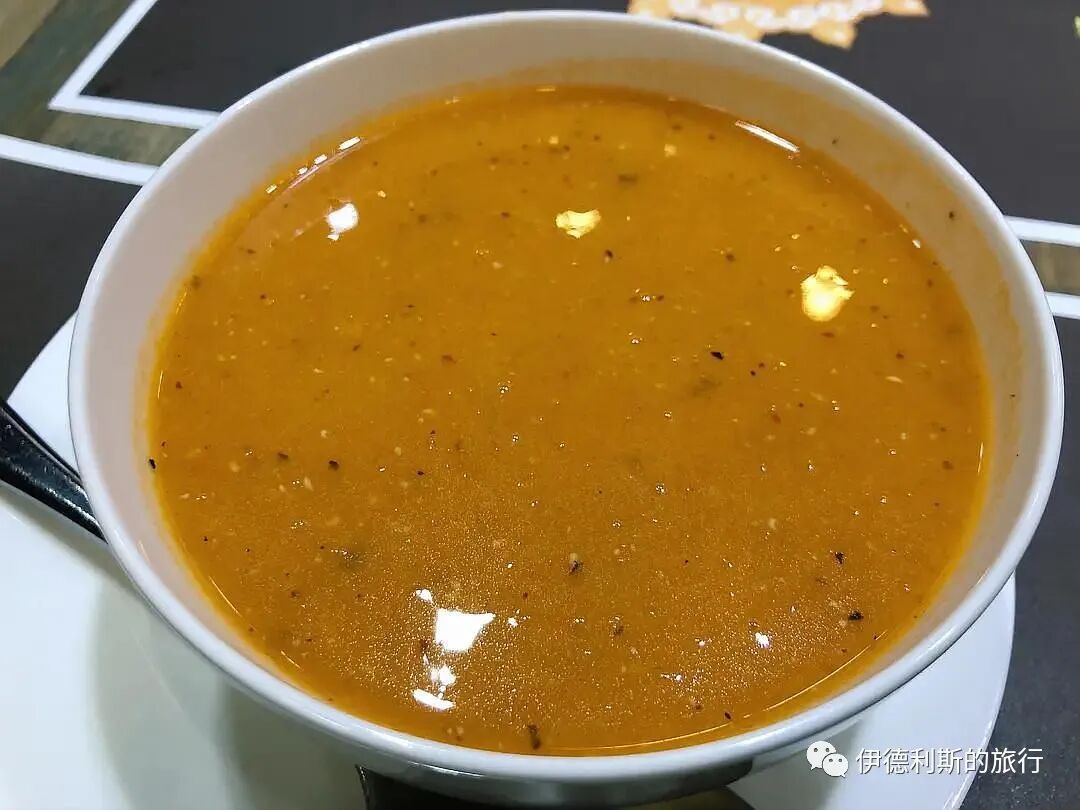
Kofta meatballs
The word kofta comes from the Persian word "kufte," which means "ground meat." Kofta recipes appeared in early Arabic cookbooks, originally as large lamb meatballs with saffron and egg yolk.
Kofta meatball soup at the Syrian restaurant One Thousand and One Nights:
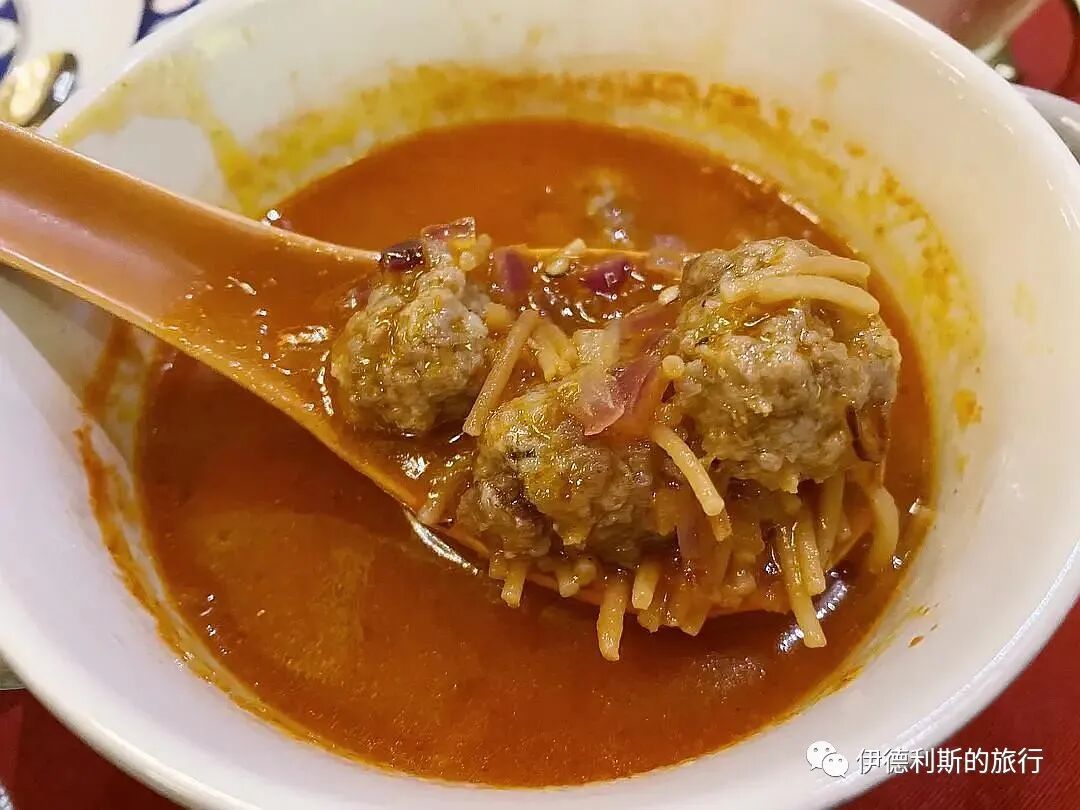
2. Maghreb Chapter (Tunisia)
Harira bean soup
Harira bean soup is a classic appetizer in the Maghreb region (Algeria, Libya, Mauritania, Morocco, and Tunisia). It is most commonly made for breaking the fast during Ramadan. Every region makes Harira differently. The version we had included tomatoes, lentils, chickpeas, lamb, and various spices.
Harira bean soup at the Tunisian restaurant La Medina:
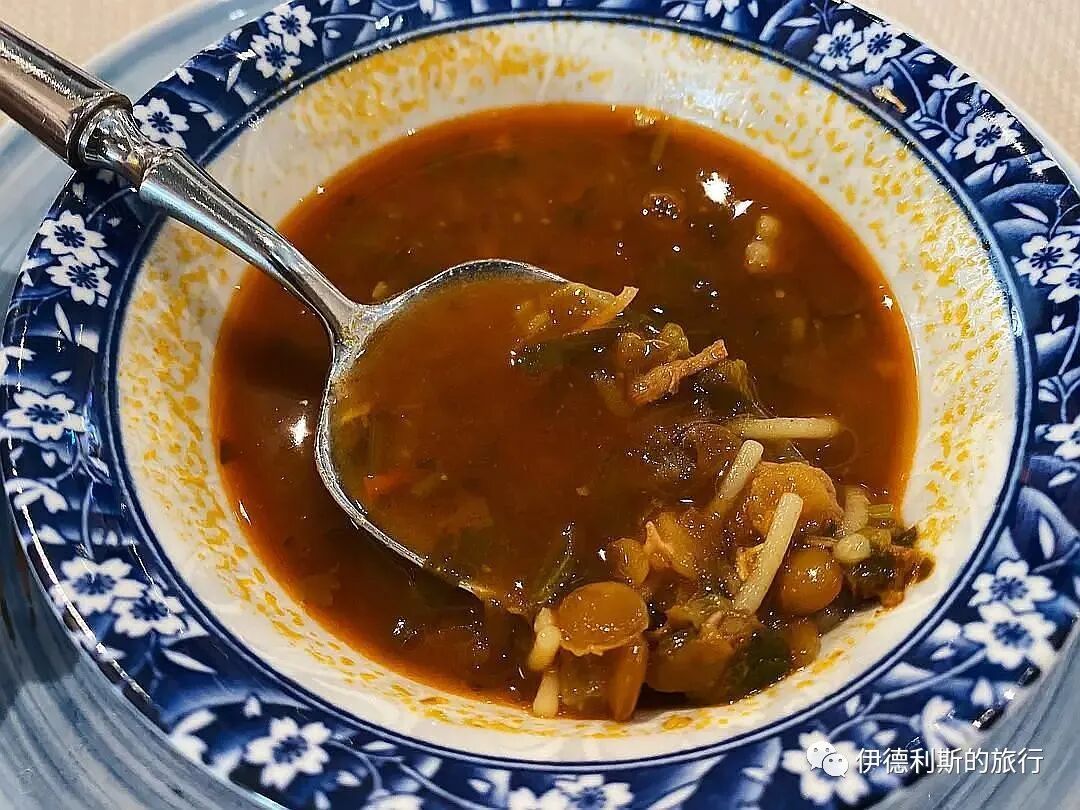
Brik pastry
Brik pastry is a North African Berber dish that was later brought to Israel by Tunisian Jews. The filling usually contains eggs, tuna, harissa sauce (Harissa), and parsley. It is then wrapped in a crispy dough called Malsouka or Warka and deep-fried.
Brik pastry at the Tunisian restaurant La Medina:
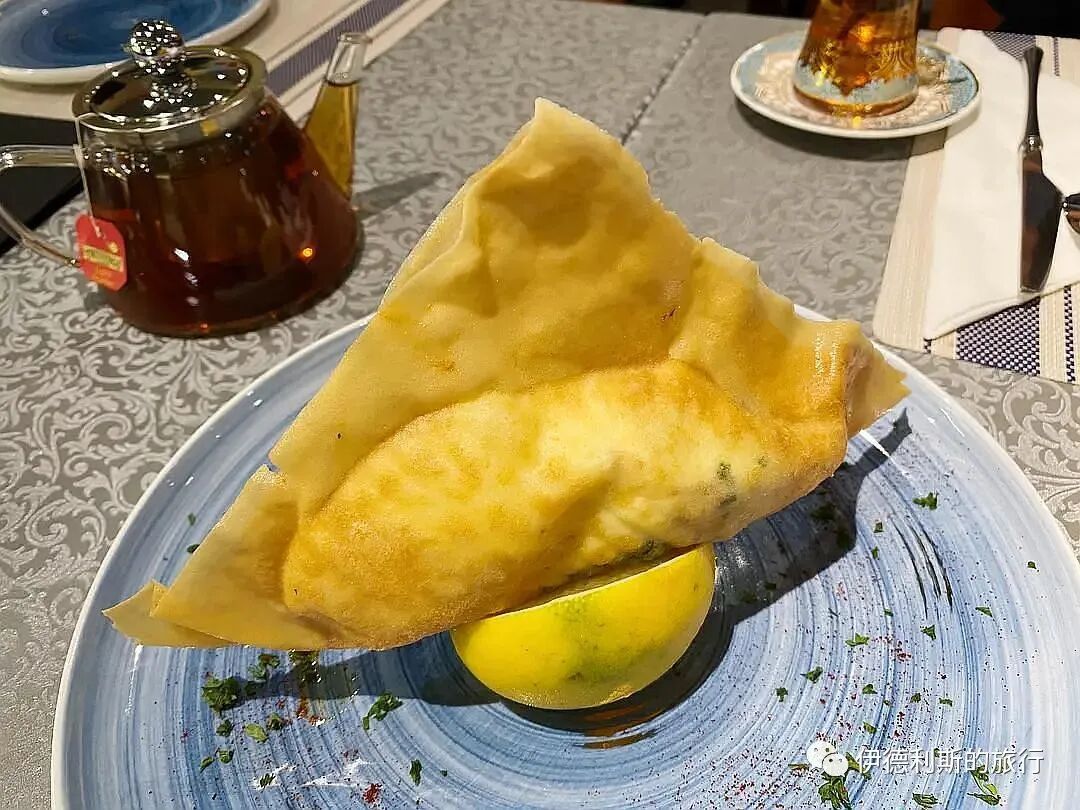
Couscous
Couscous (Couscous) is a staple of Berber cuisine. It is made by rubbing semolina into millet-sized grains and then drying them in the sun. Couscous was first seen in North Africa between the 11th and 13th centuries. The famous 13th-century Andalusian scholar and gourmet Ibn Razin al-Tuyibi first recorded the method for making couscous in his book, The Andalusian Cookbook.
Couscous at the Tunisian restaurant La Medina:
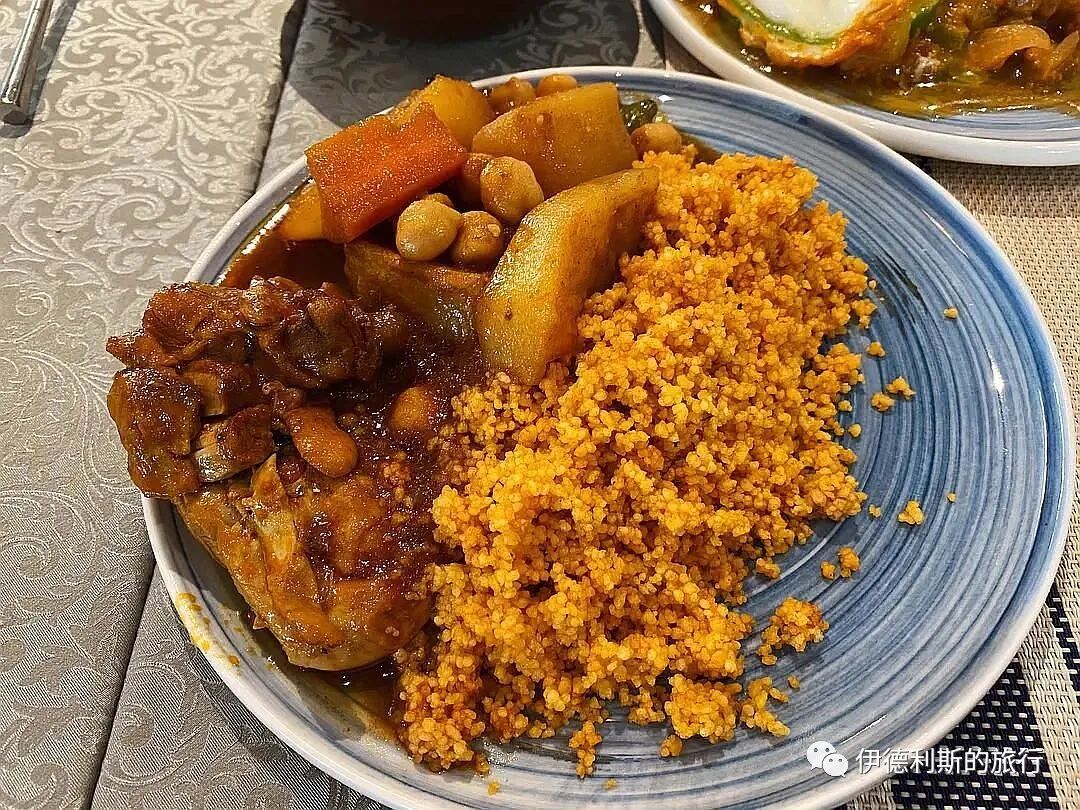
North African sausage (merguez)
North African sausage (Merguez) is made with lamb and beef, mixed with cumin, harissa sauce, chili, and other spices. It is usually grilled. Merguez sausage was first seen in the 12th century in Andalusia, which was southern Spain under Arab rule, and later spread throughout North Africa.
North African sausage (merguez) at the Tunisian restaurant La Medina:
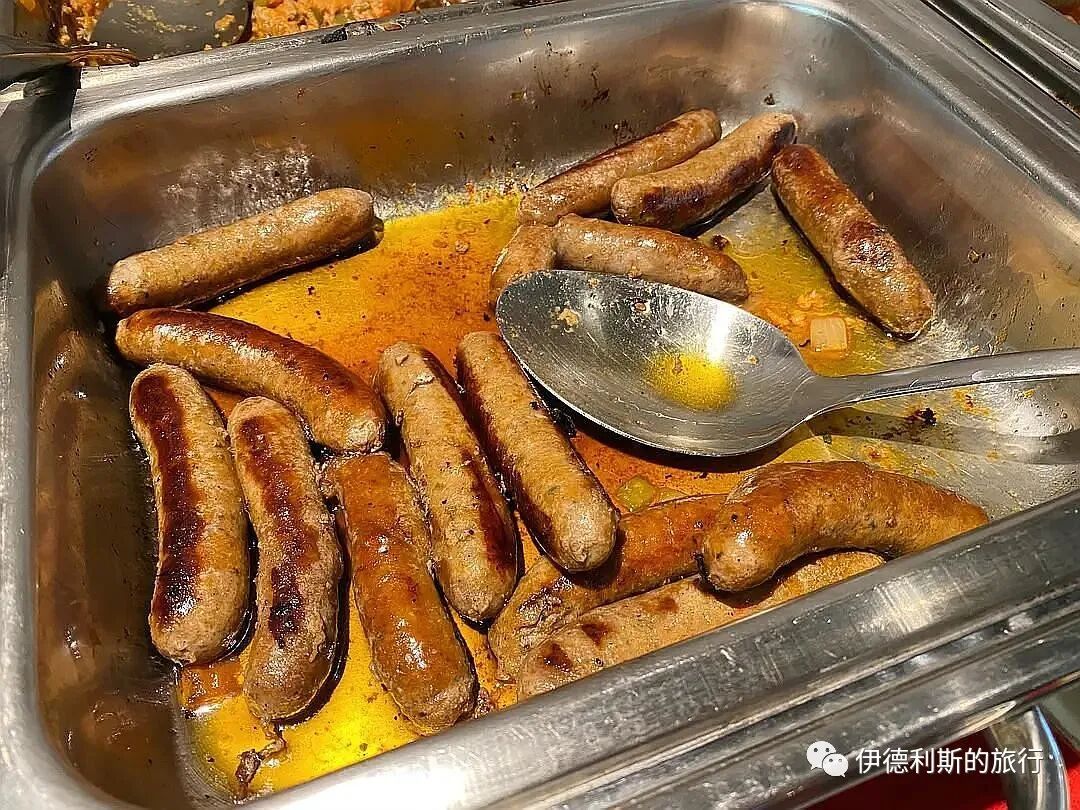
Tajine pot (tajine)
The tagine (Tajine) is a North African Berber specialty that appeared in the 9th-century classic One Thousand and One Nights. Modern tagines are made of pottery, sometimes glazed. They have a round, flat bottom and a conical or domed top. This design allows evaporated steam to return to the bottom, and water can be added through a hole in the lid.
Tajine at the Tunisian restaurant La Medina:
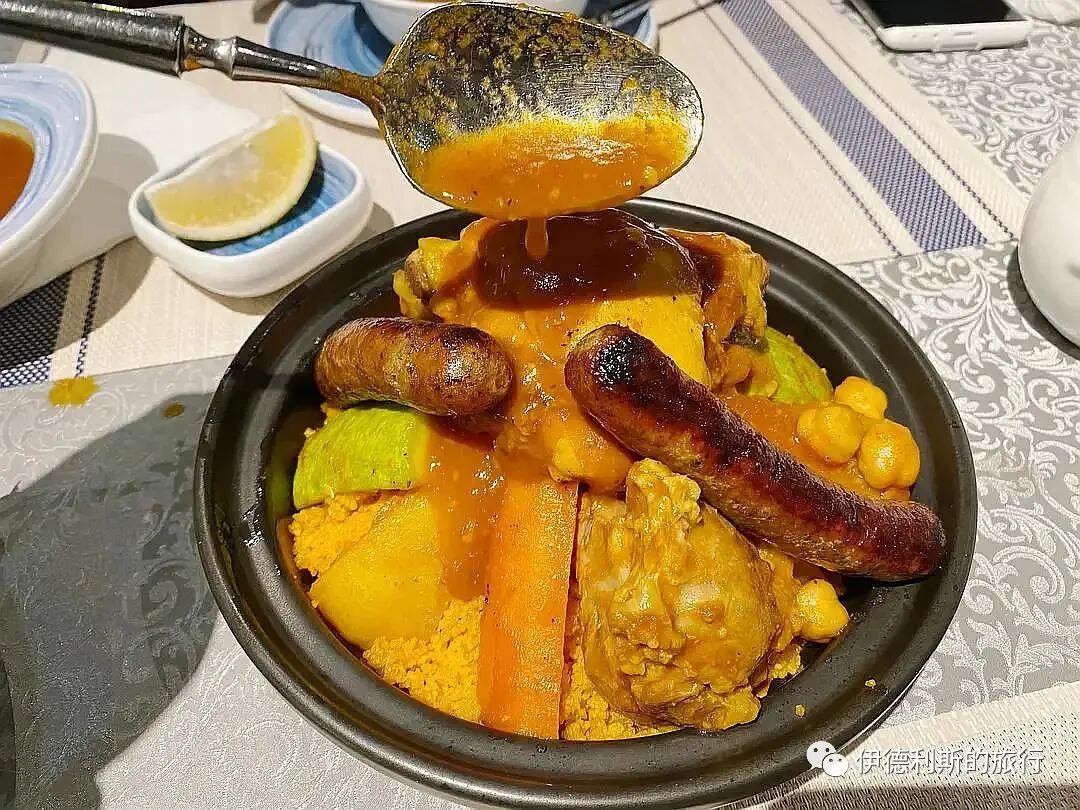
3. Turkey Chapter
Pide pizza
Pide may come from the ancient Greek word "pítta" and refers to three types of bread in Turkey. One is a flatbread similar to Arabic pita, one is a soft leavened bread served during Ramadan, and the third is a large boat-shaped pizza. To make Pide pizza, you put various cheeses and meats on dough and bake it in an oven.
Lamb and cheese Pide at Dardanelles:
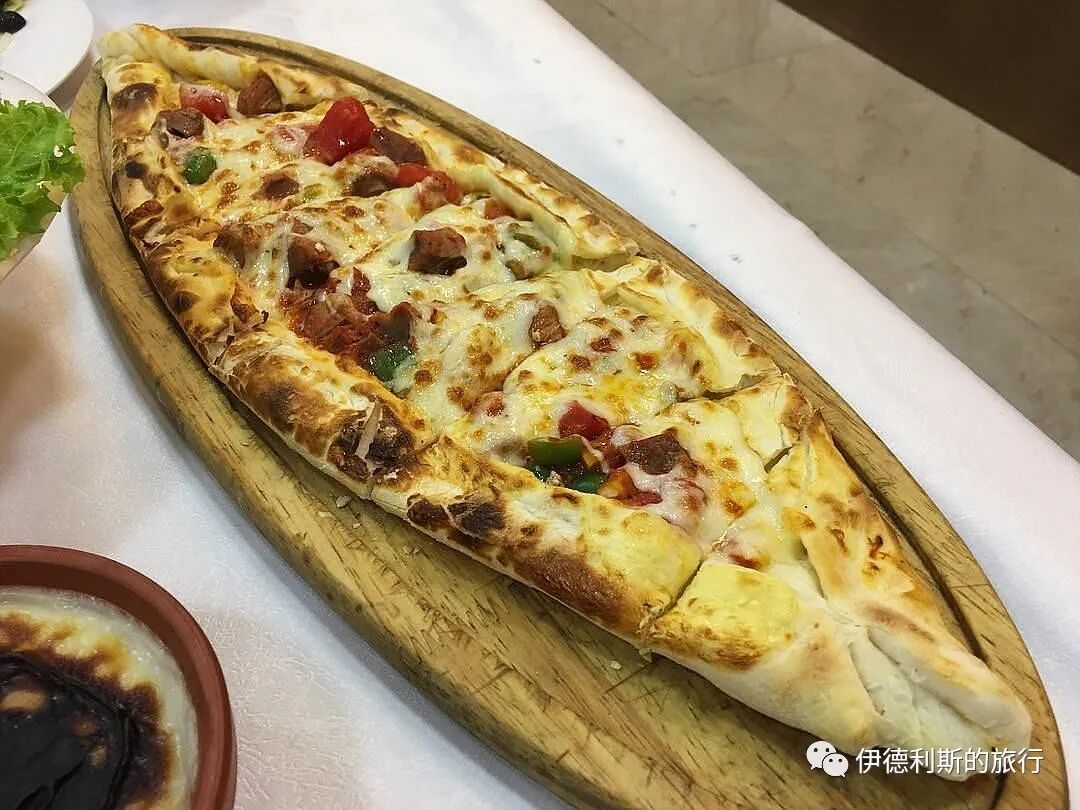
Three-topping Pide with cheese, meat, and vegetables at Rumi's Secret:
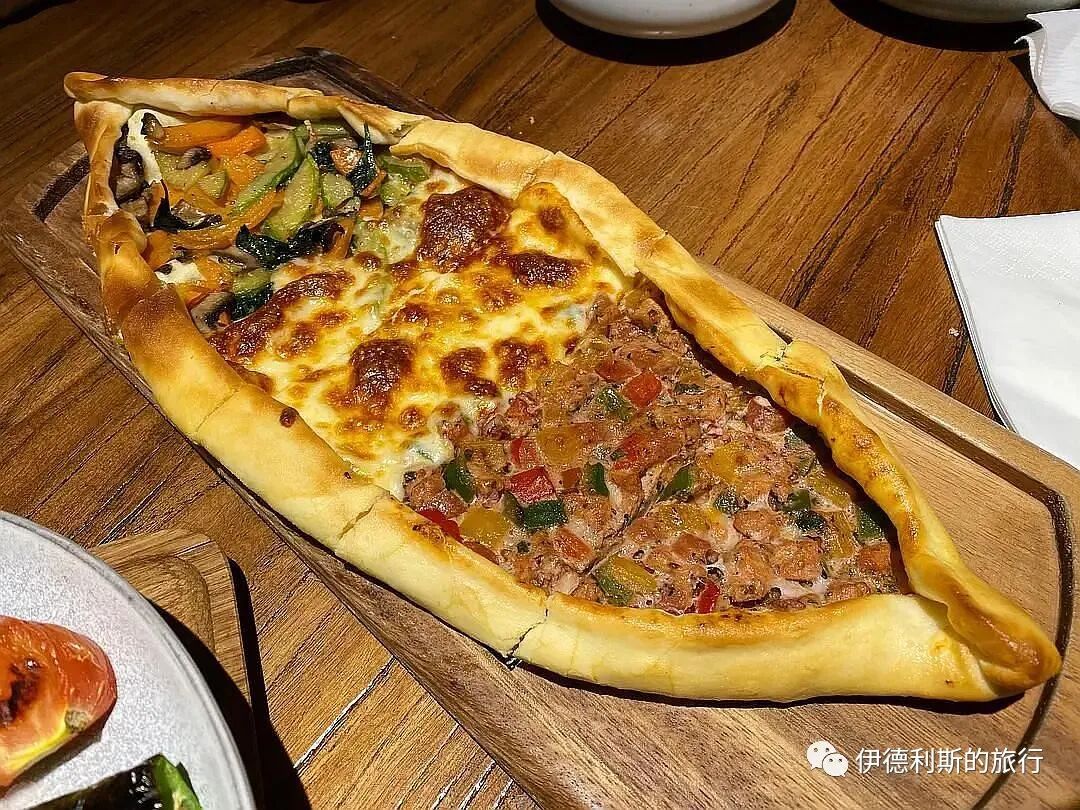
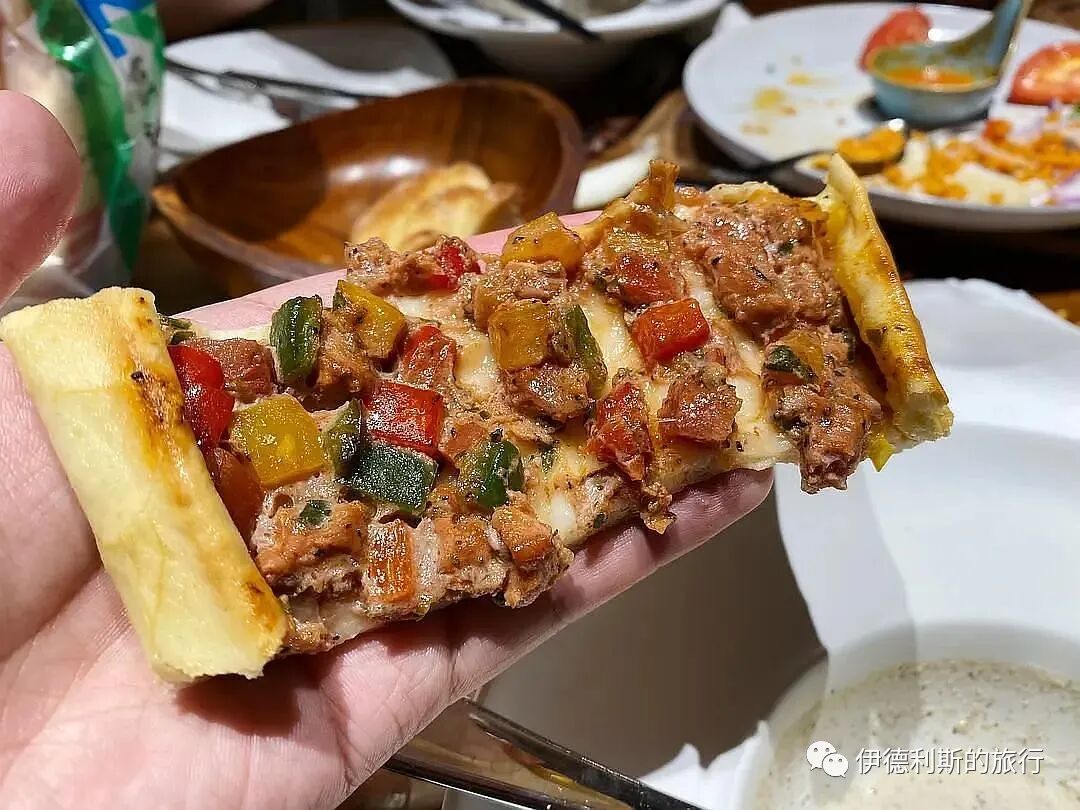
Spinach Pide at Xiting Xiuse during Ramadan:
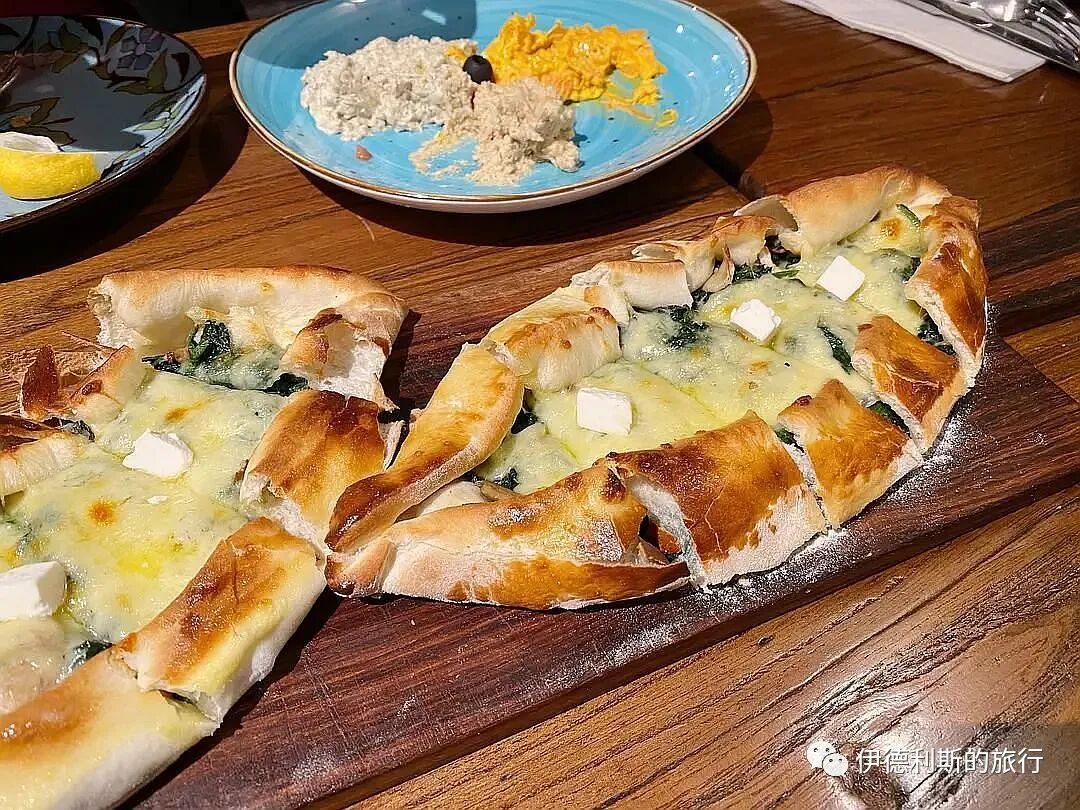
Beef and cheese Pide at Xiting Xiuse:
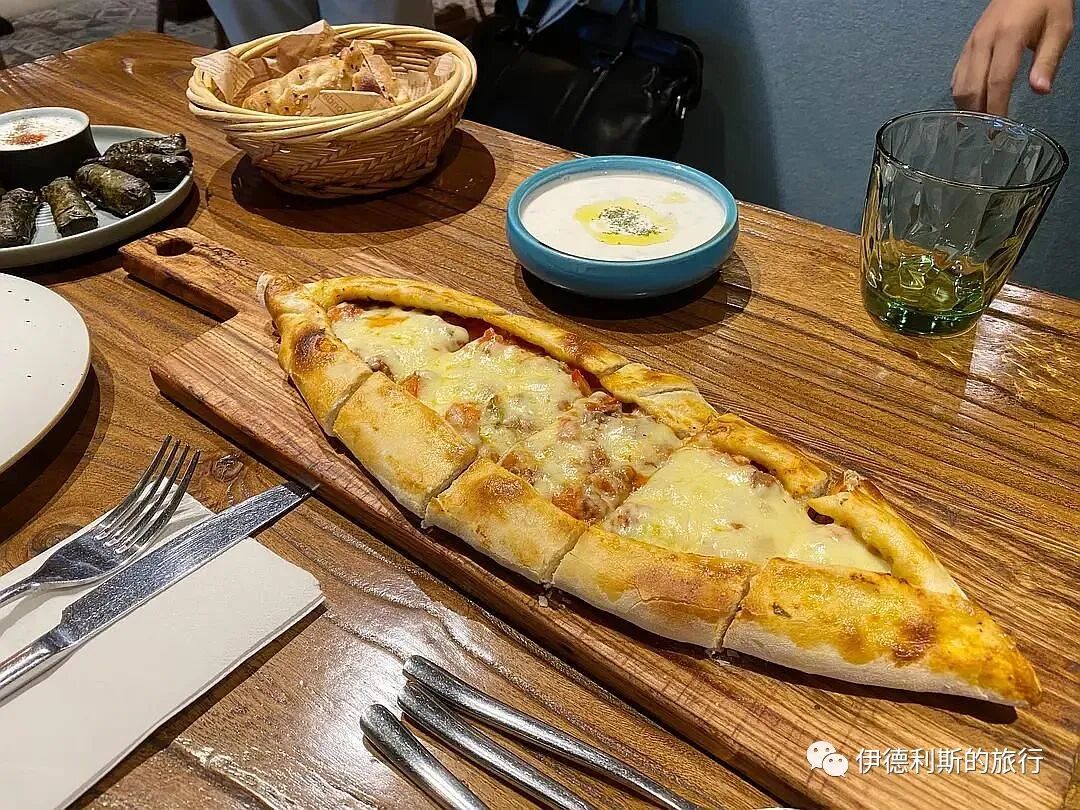
Assorted Pide at Desert Rose:
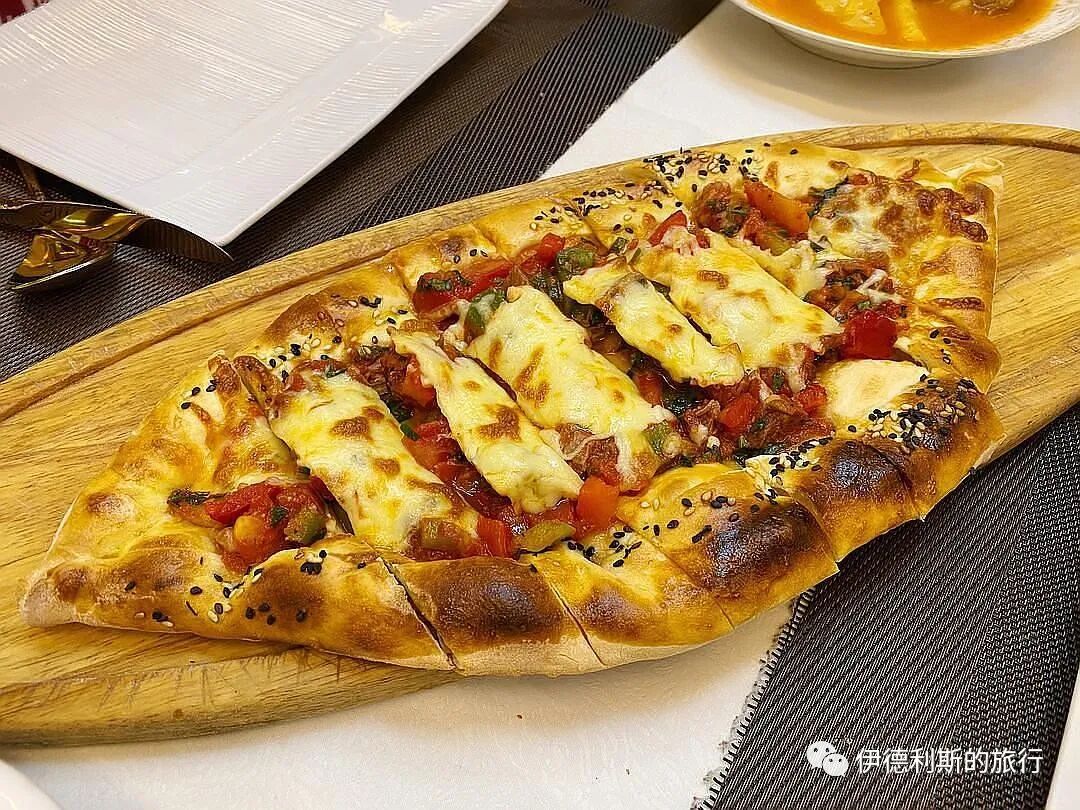
Double cheese Pide at Kubei:
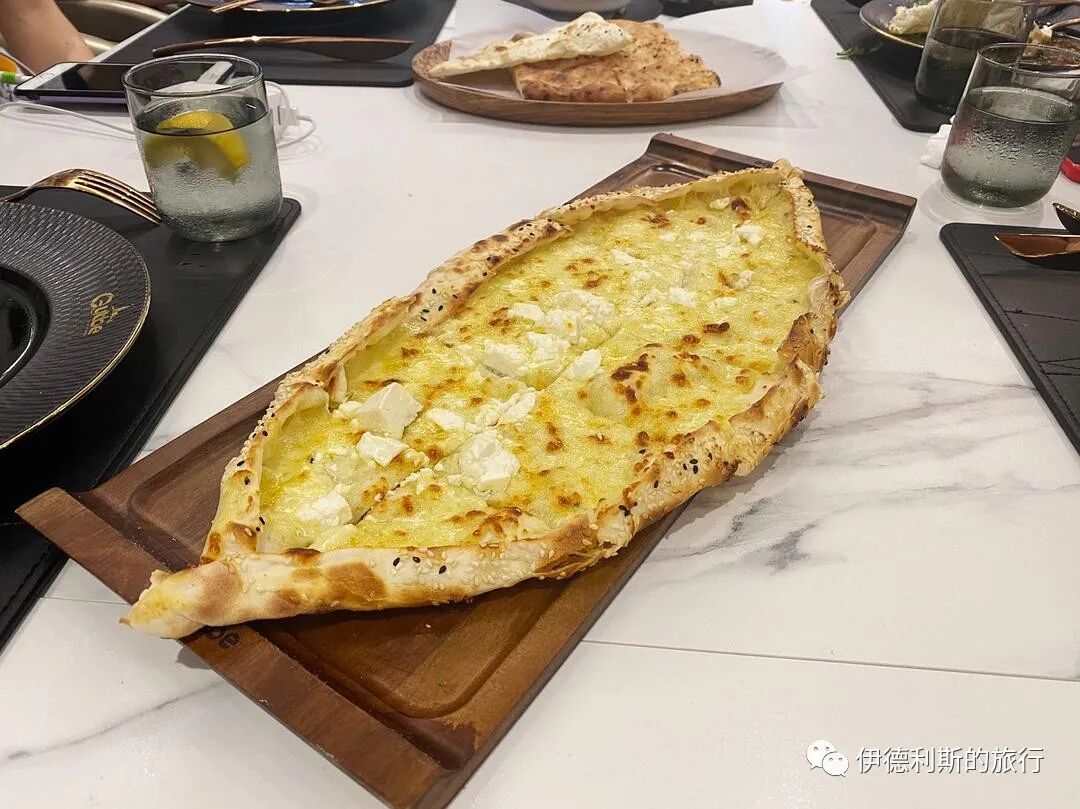
Mevlana meat Pide at Kubei:
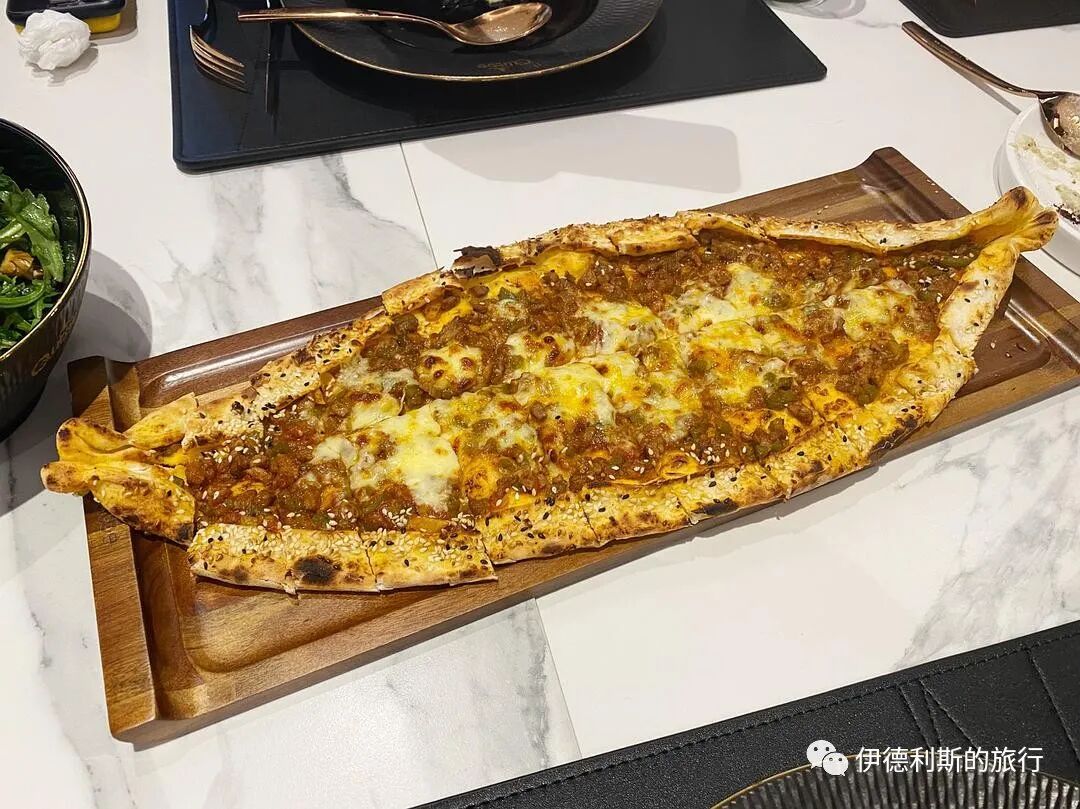
Sultan's Delight (Hünkar Beğendi)
Sultan's Delight (Hünkar Beğendi) is a dish that started in the Ottoman palace. It uses rich lamb stew served over creamy roasted eggplant puree and is quite rare in Beijing.
Sultan's Delight at Turkish Mom:
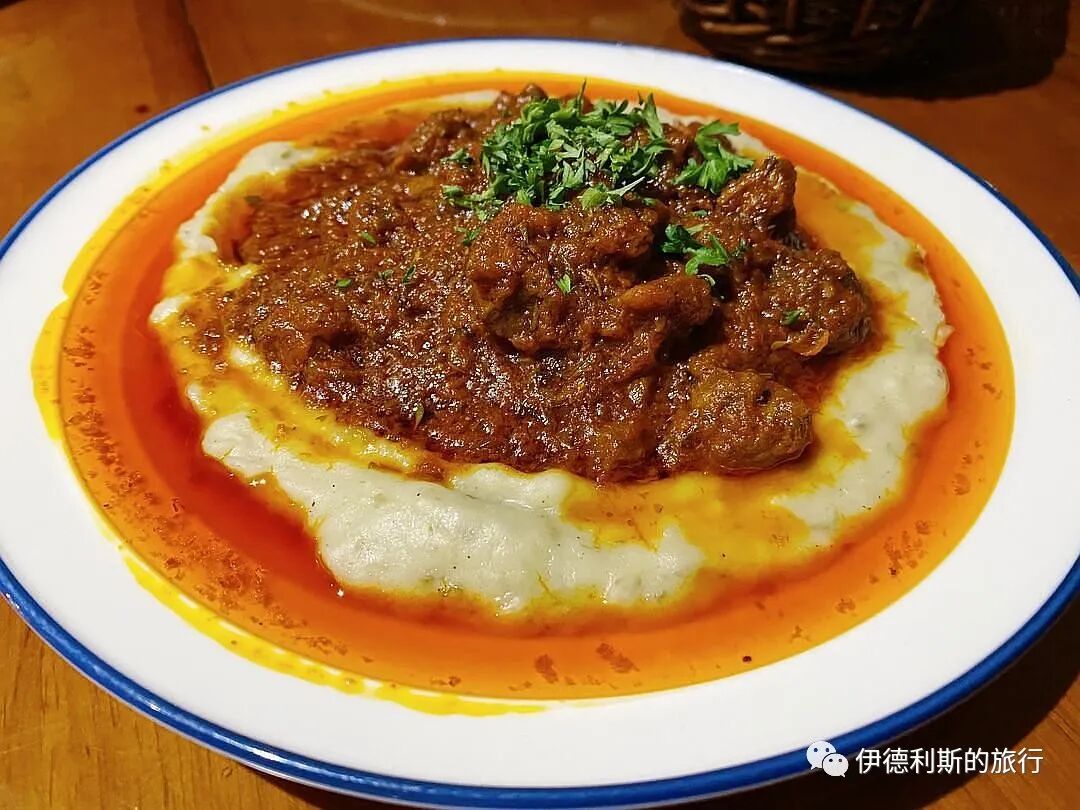
Beef sausage fried eggs (Sucuklu yumurta)
The "Sujuk" in Sucuklu yumurta first appeared in the Compendium of the Turkic Dialects. It is made by grinding beef, adding tail fat and other fats, stuffing it into casings, tying it with string, and letting it ferment gradually.
Sucuklu yumurta at the Turkish/Azerbaijani restaurant Xiting Xiuse:
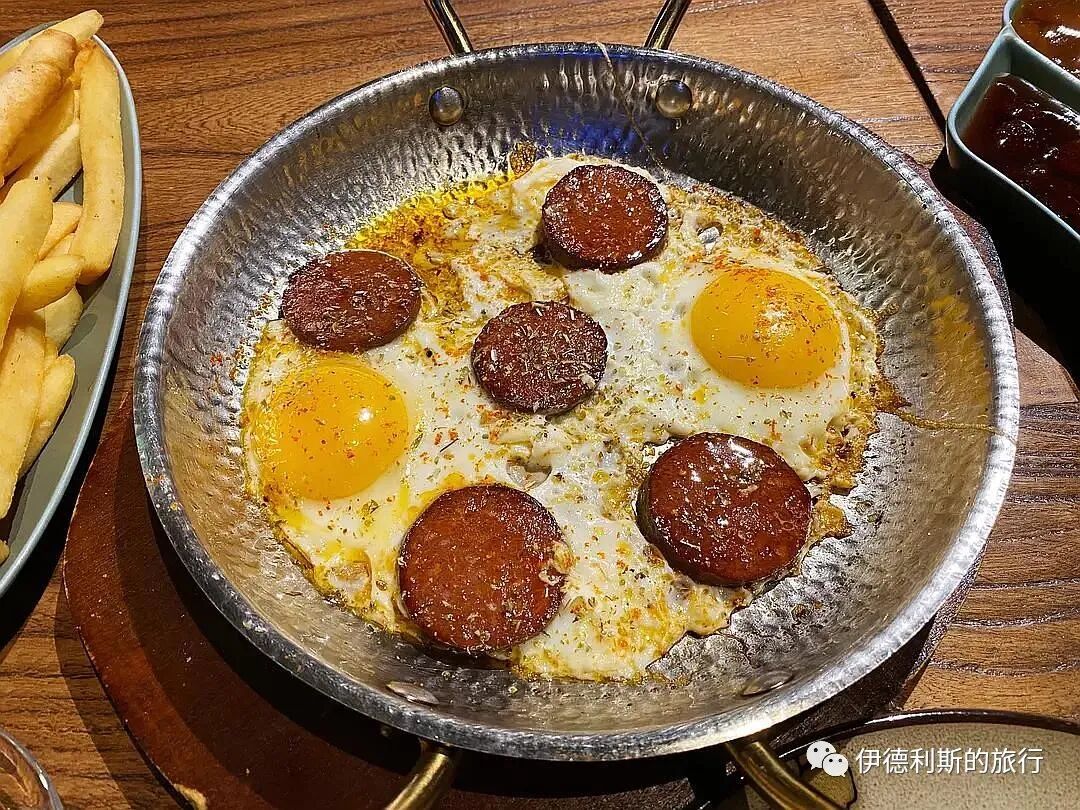
Pottery kebab (Testi kebabı)
Testi kebabı is a popular way of eating in central Anatolia and the west-central Black Sea region. You put beef, mushrooms, tomatoes, and shallots into a clay pot, seal the opening with bread, and slow-cook it in an oven. After the stew is ready, sear it in butter on an iron plate. Then, crack open the clay pot and toss the bread and the stew inside onto the plate. The aroma is incredible!
Sucuklu yumurta at the Turkish/Azerbaijani restaurant Xiting Xiuse:
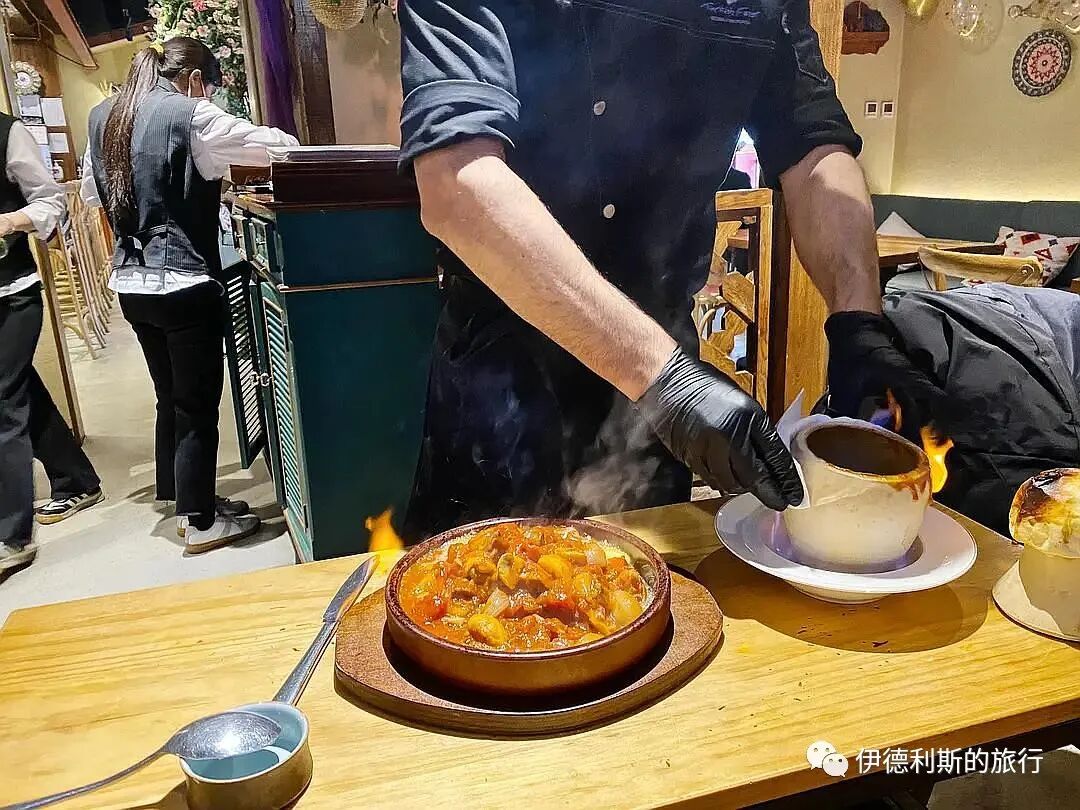
Simit bagel
The earliest record of the simit bagel in Istanbul dates back to 1525. According to the famous 17th-century Ottoman traveler Evliya Celebi, there were 70 simit bakeries in Istanbul in the 1630s.
Simit at the Turkish restaurant Kubei:
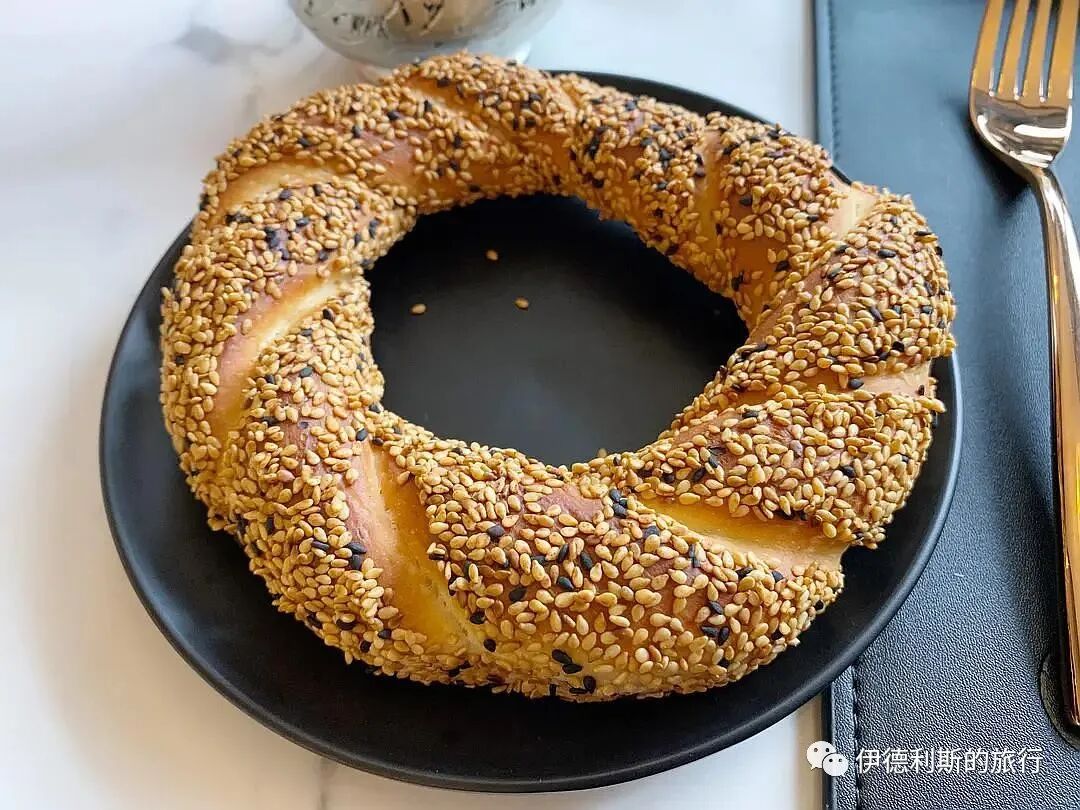
Baklava dessert
Baklava is the most famous dessert of the Ottoman Empire, developed by the royal chefs at the Topkapi Palace. On the 15th day of Ramadan each year, the Ottoman Sultan would attend a ceremony called 'Baklava Alayı' to distribute trays of Baklava to the Janissaries. Baklava is a flaky pastry made by layering very thin unleavened filo dough, filled with crushed pistachios, walnuts, syrup, or honey.
Baklava from a Turkish mom:
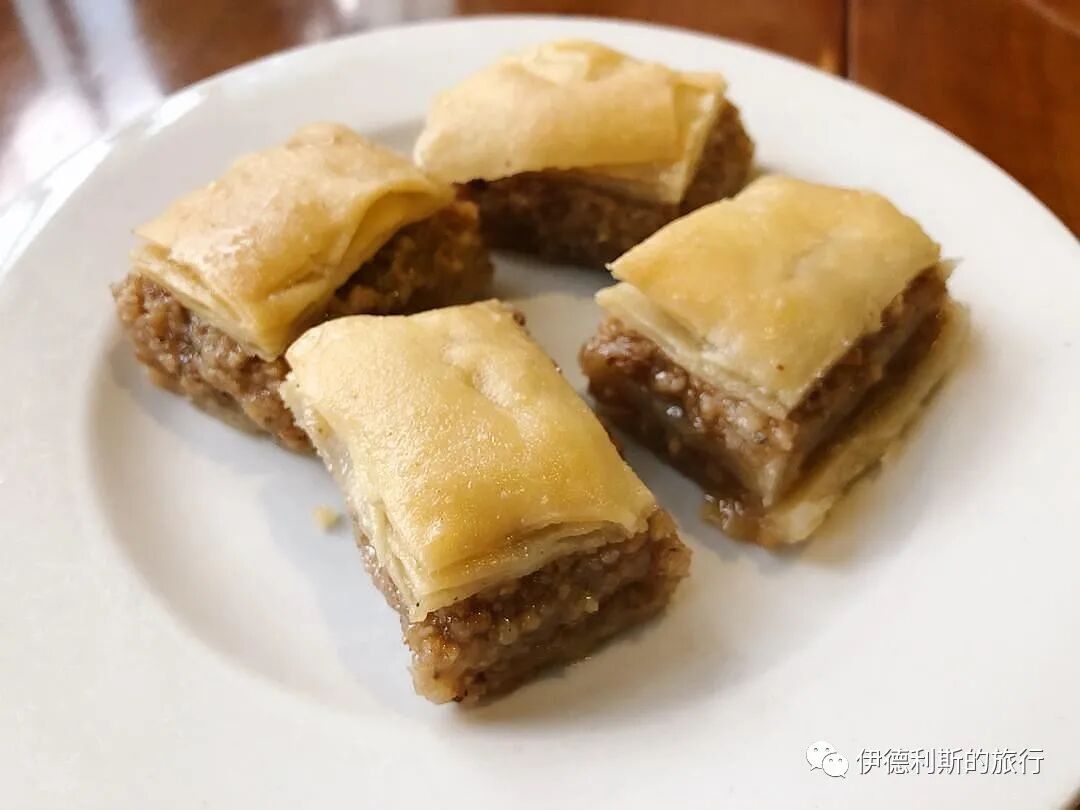
Baklava at Kubei:
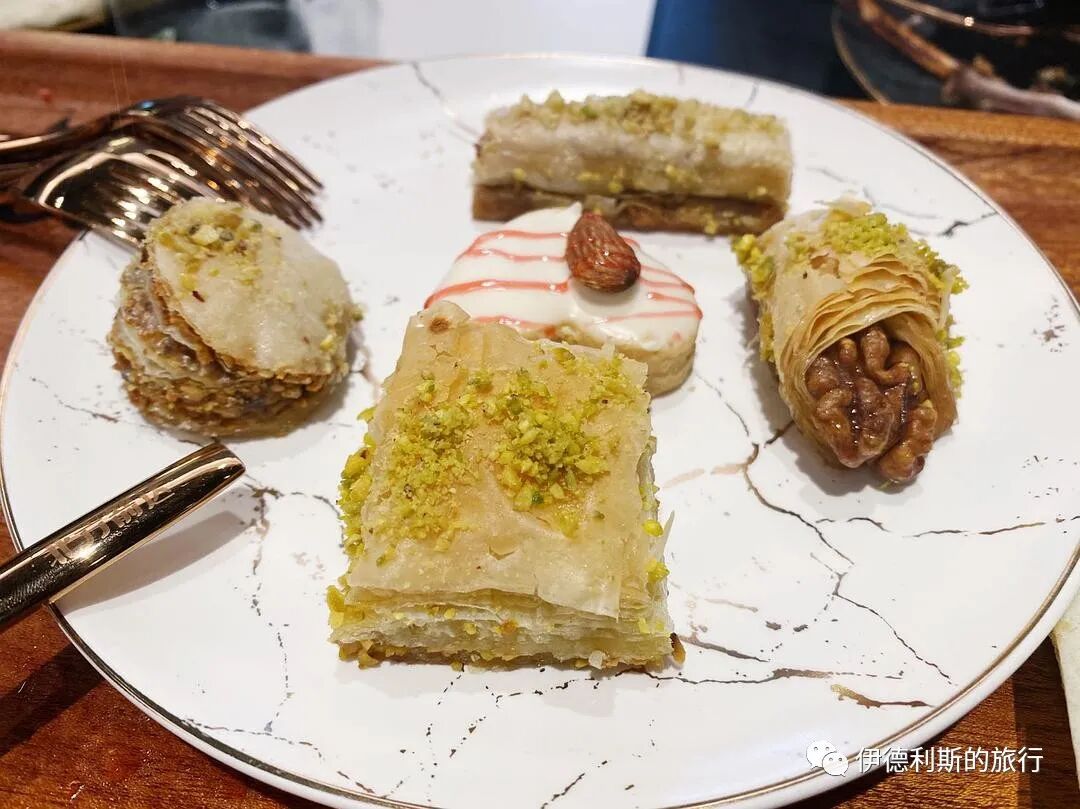
Baklava at Desert Rose:
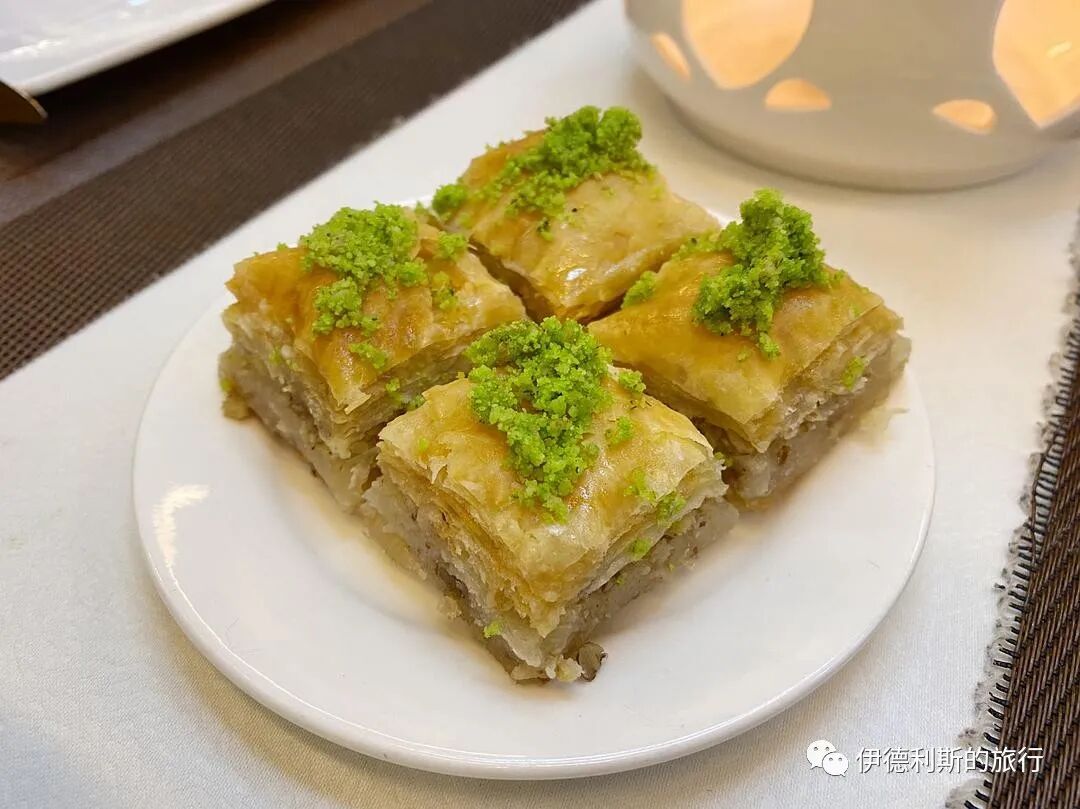
Salty yogurt drink (Ayran)
Ayran is a drink made by mixing yogurt, salt, and water. You can also add mint or carbonated water. It is perfect with grilled meat in the summer. The word Ayran comes from Turkic and first appeared in the 'Compendium of the Turkic Dialects' written by Mahmud al-Kashgari in the 1070s.
Ayran at Xiting Xiuse:
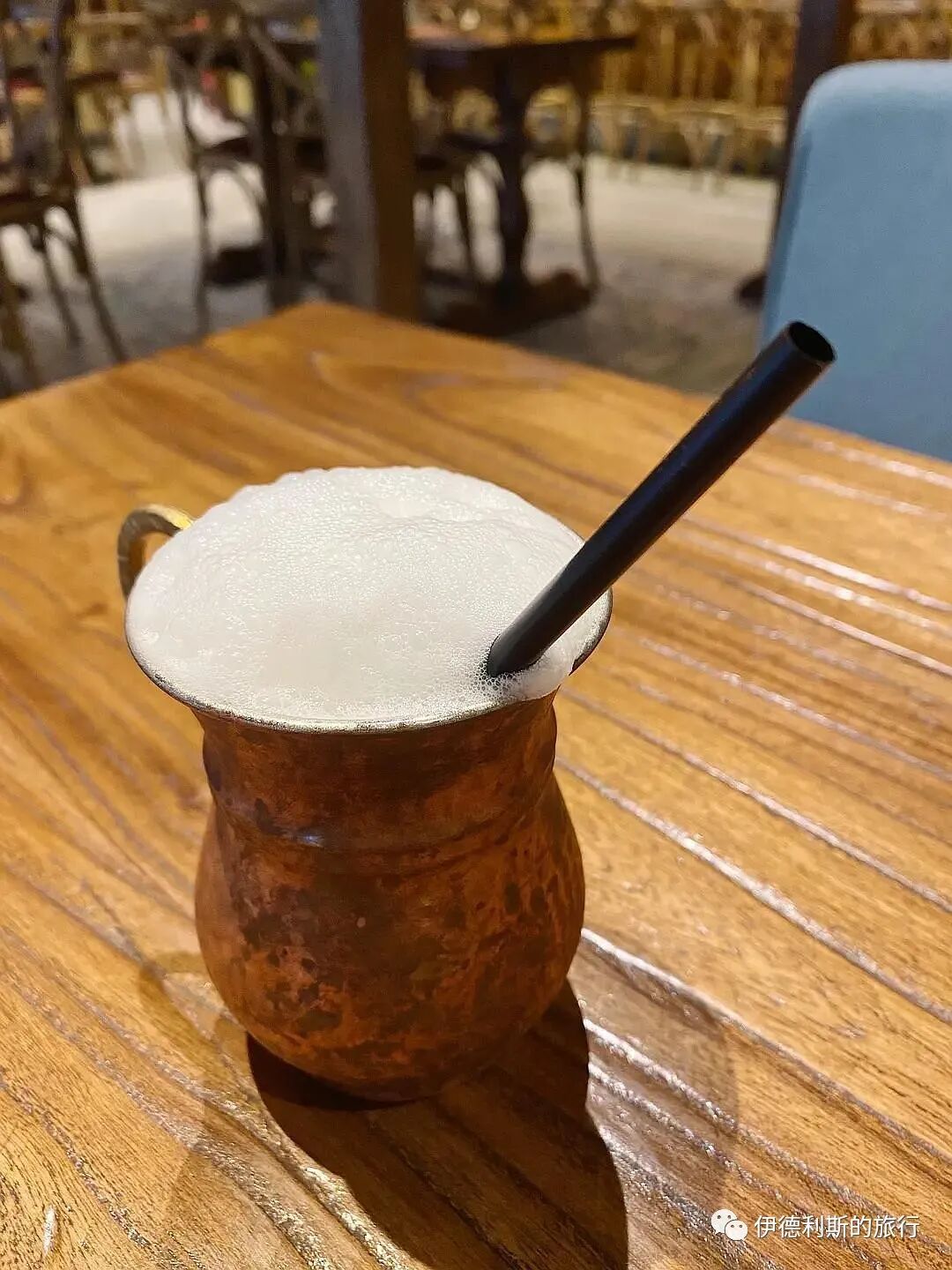
Ayran at Kubei:
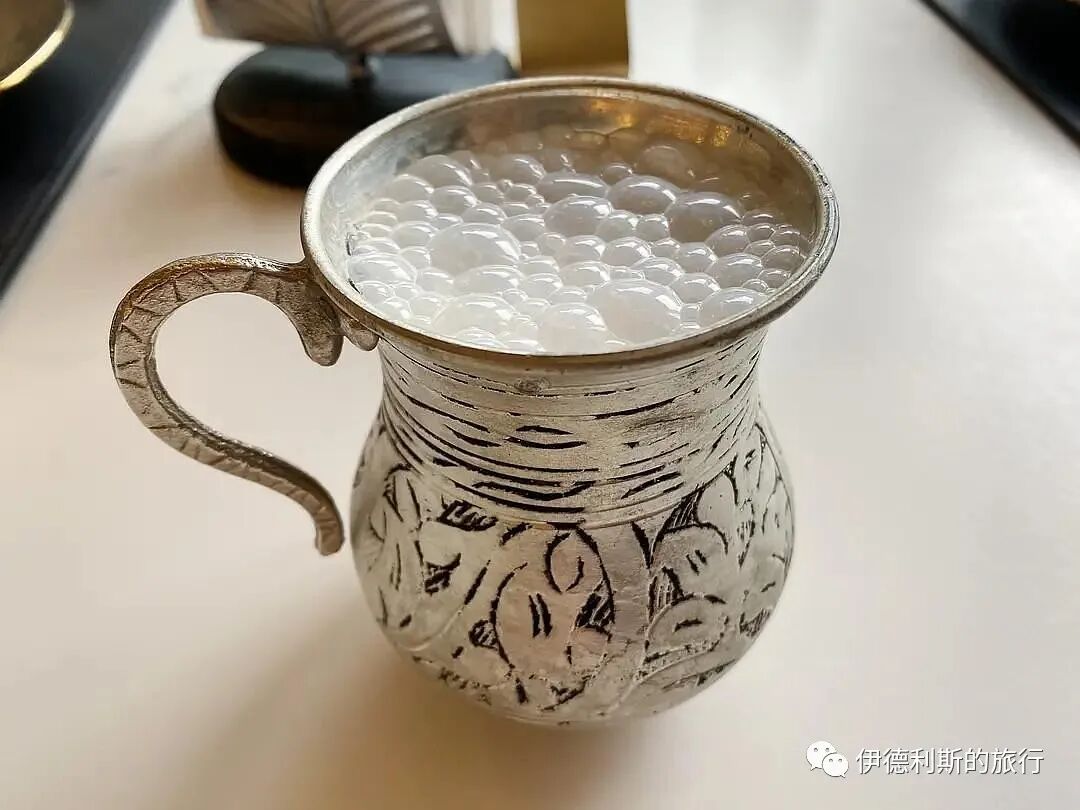
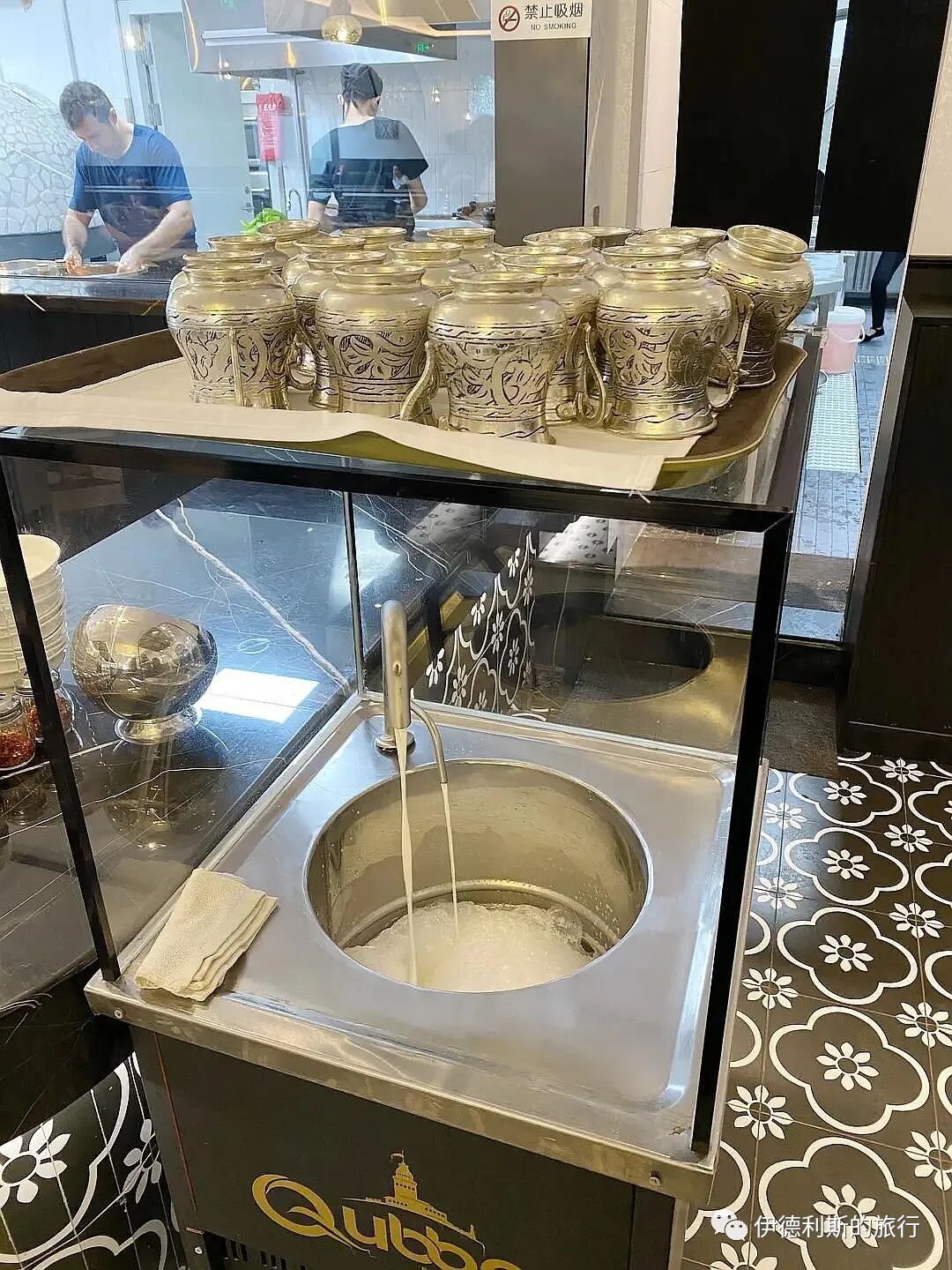
4. Caucasus Chapter
Karabakh Pilaf
Karabakh is a region on the border of Azerbaijan and Armenia. Its name comes from the Turkic word 'Kara' (black) and the Persian word 'Bagh' (garden). Most people living there now are Azerbaijanis. The Karabakh Pilaf we ate was stewed lamb with apricots. The rice is yellow because it is stained with saffron juice. When I was in Baku before, I ate this apricot and saffron pilaf while listening to Azerbaijani mugham music. It felt very familiar to eat it again this time.
Karabakh Pilaf at the Turkish/Azerbaijani restaurant Xiting Xiuse:
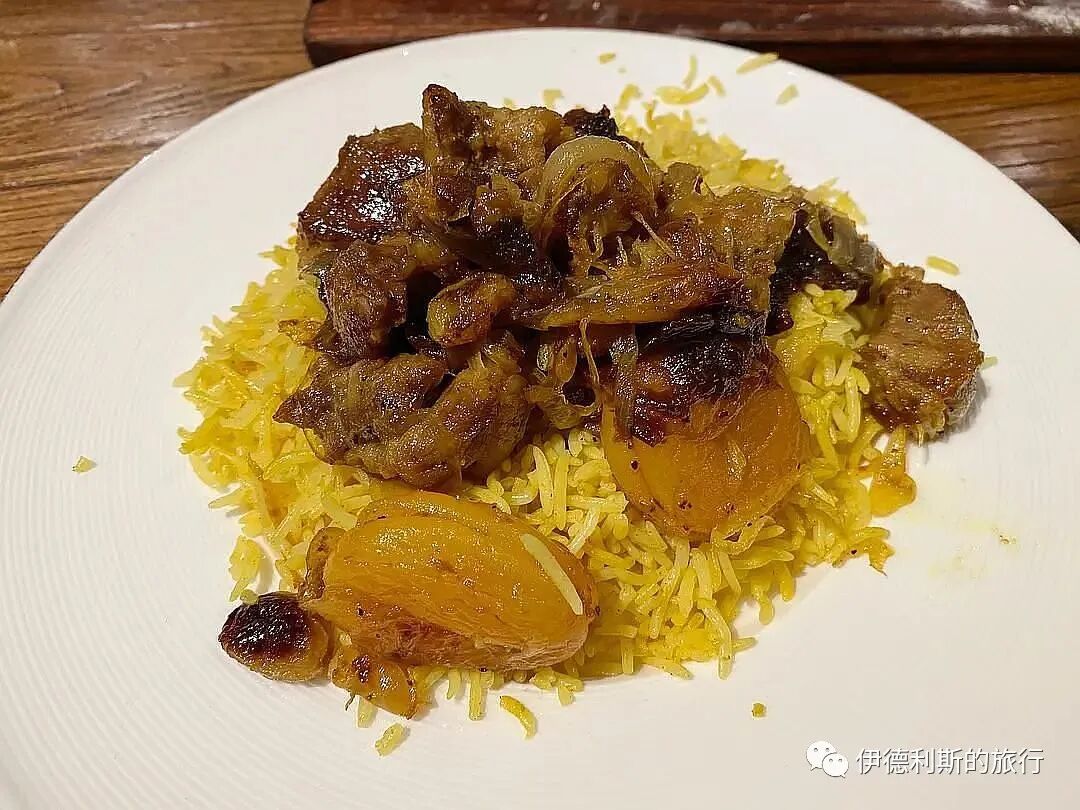
5. South Asia
Samosa curry pastry (samosa)
Muslim merchants from Central Asia brought the samosa to South Asia from Persia during the 13th and 14th centuries. Around 1300, the Delhi Sultanate scholar Amir Khusro wrote that princes and nobles in the Delhi Sultanate enjoyed "samosas made with meat, clarified butter (ghee), and onions."
Samosa at the Kolkata restaurant Saduri:
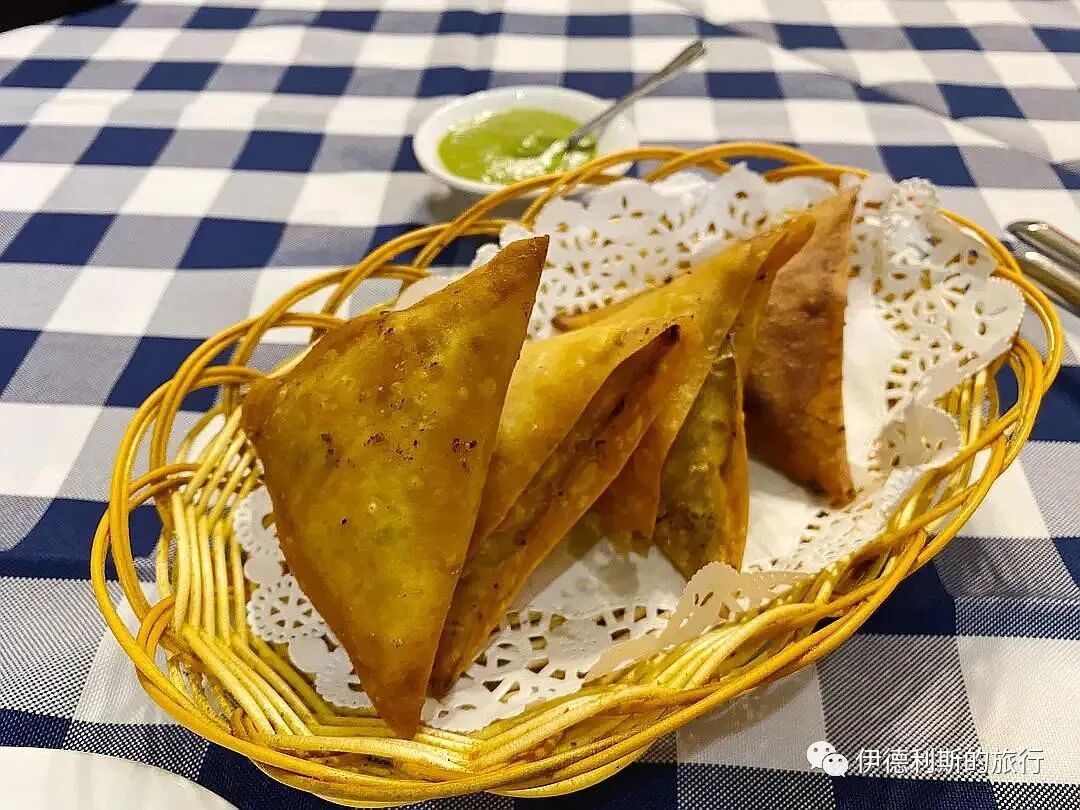
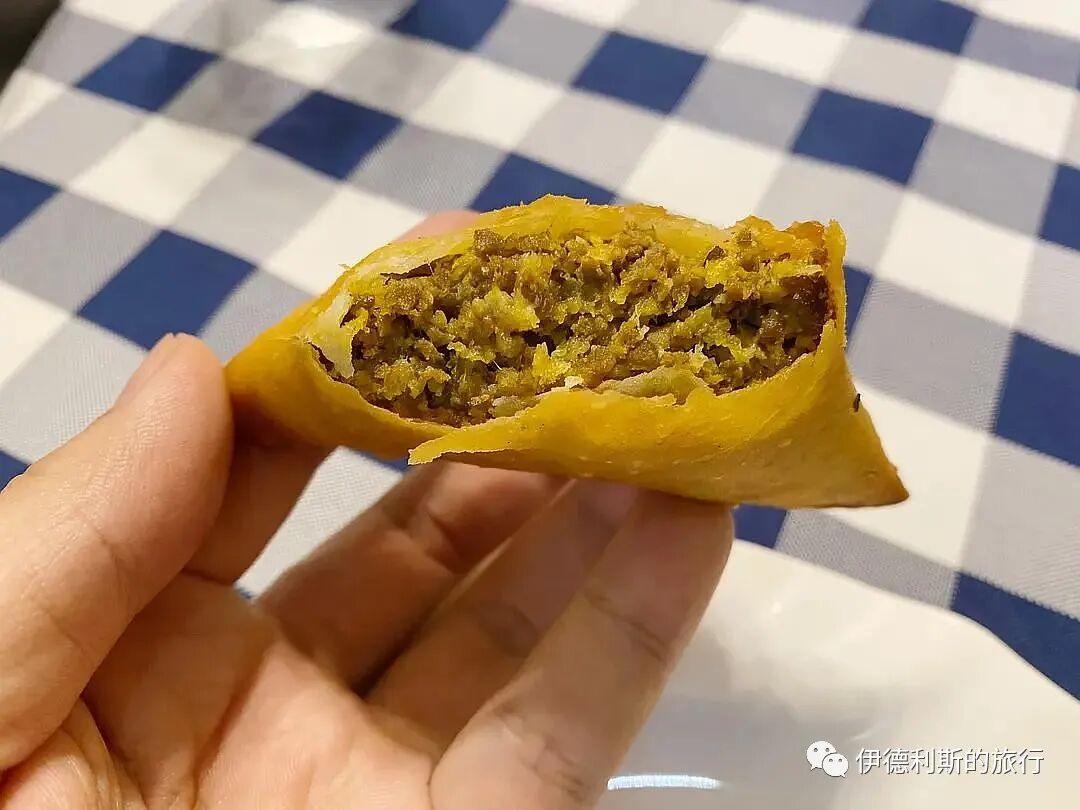
Samosa at the Pakistani restaurant Khan Baba:
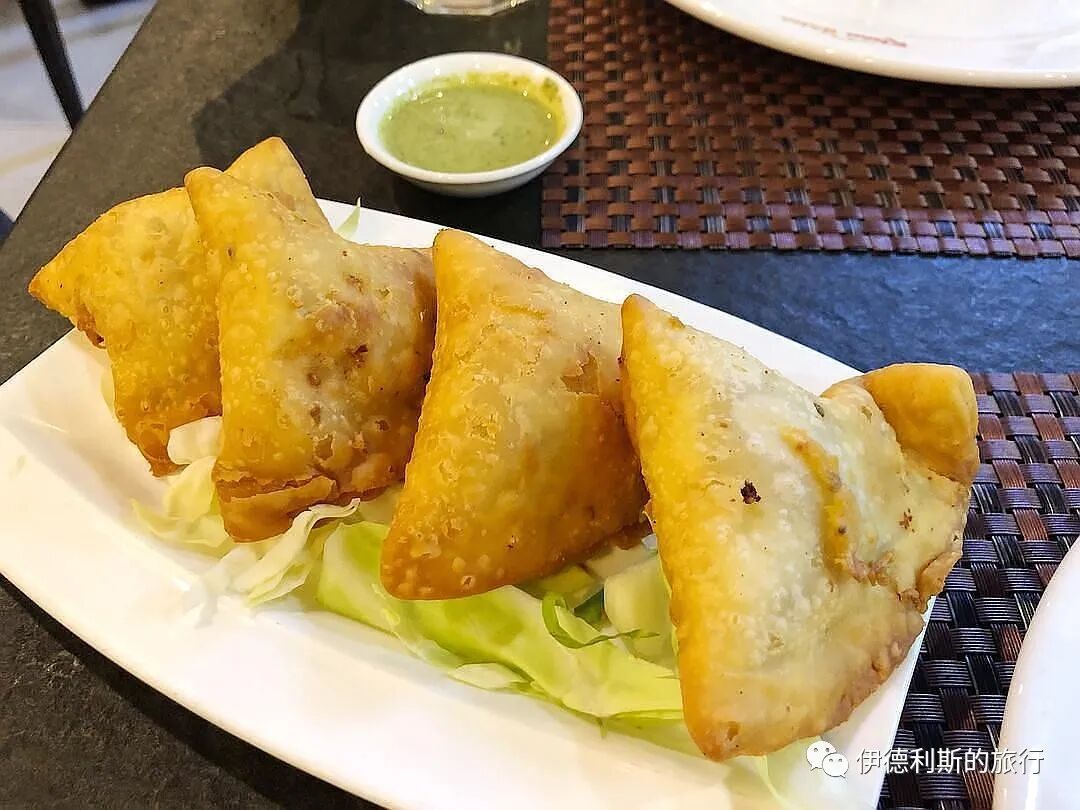
Thin yogurt drink (lassi)
Lassi comes from the Sanskrit word 'lasika,' which originally meant serum. Lassi comes in sweet and salty versions. The sweet version is mainly found in Gujarat, Rajasthan, and Sindh, while the salty version is widely distributed across other parts of North India.
Lassi at the Kolkata restaurant Saduri:
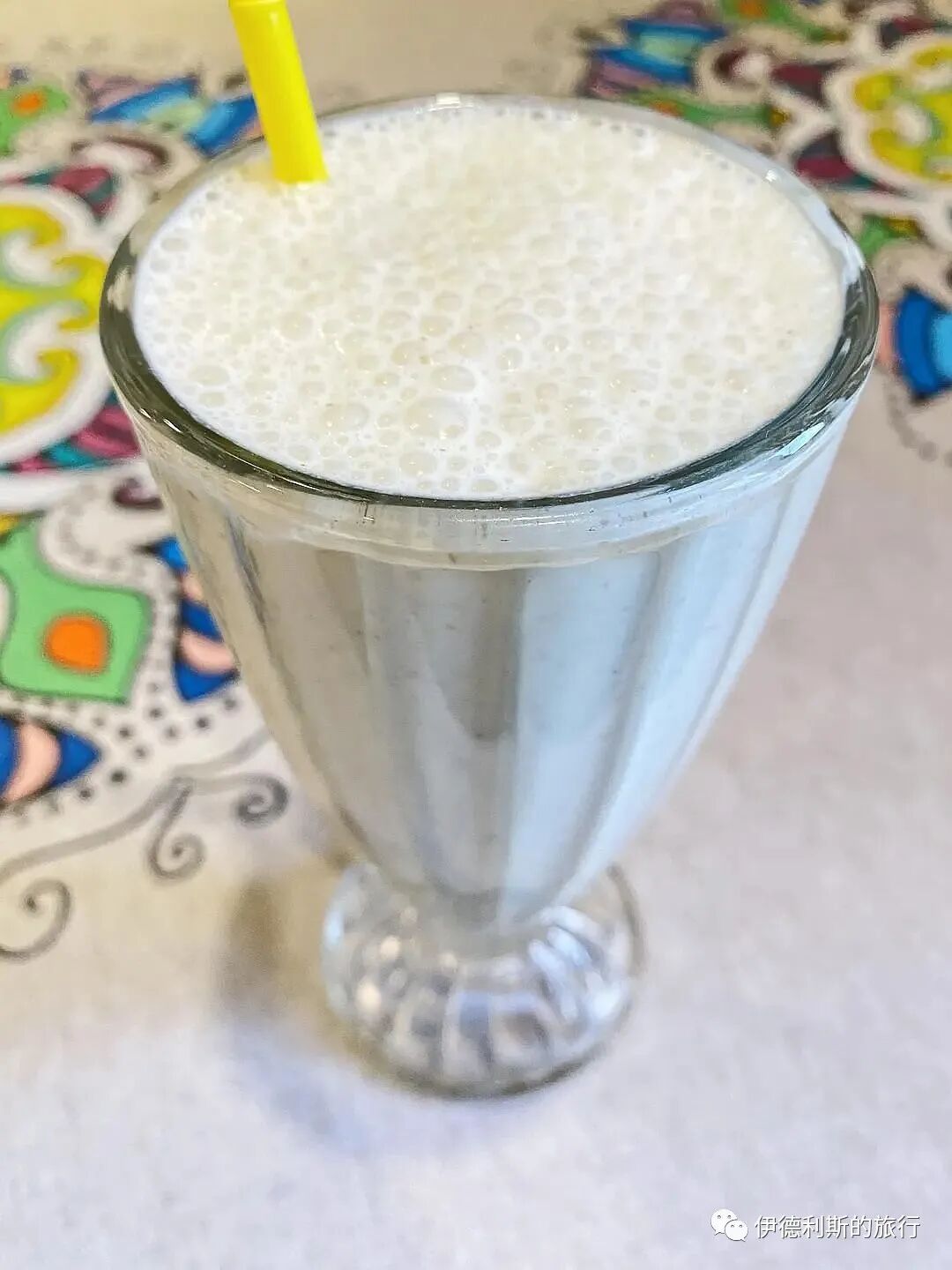
Vegetable yogurt (raita)
Raita is a Hindi word formed by combining the Sanskrit words 'rajika' and 'tiktaka,' meaning 'black mustard seeds' and 'pungent.' This is because making raita involves frying black mustard seeds and cumin, mixing them into chopped vegetables, and then adding them to yogurt.
Raita at the Kolkata restaurant Saduri:
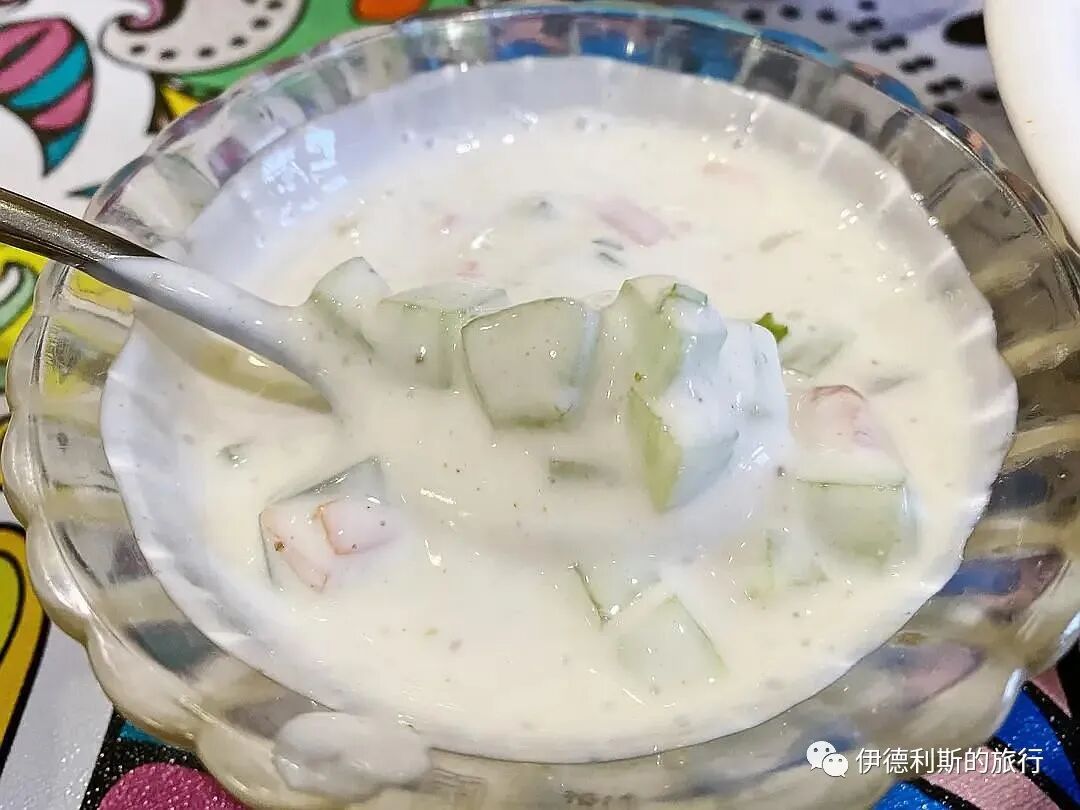
Fried curry (bhuna)
Bhuna means 'to fry' in Urdu. It usually includes onion, ginger, and garlic. When cooking, the curry is fried in hot oil until it becomes a paste. I think it tastes better than regular curry.
Beef bhuna at the Kolkata restaurant Saduri:
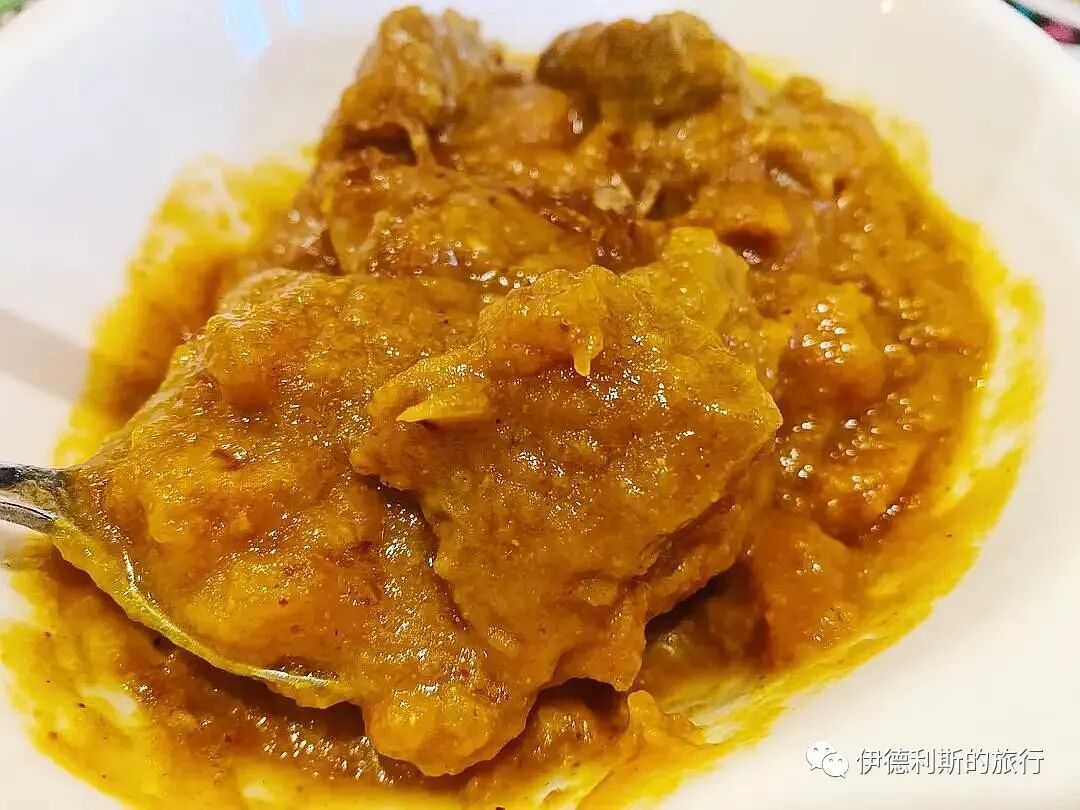
Stewed curry (korma)
Korma is a type of curry stewed with coconut milk or yogurt. The word 'korma' comes from the Turkic word 'qawirma,' which originally meant to fry, but evolved into the Urdu word for stew. Korma is a classic Mughal court dish that originated in the 16th century. People say Shah Jahan ate korma with his guests at the banquet celebrating the completion of the Taj Mahal.
Vegetable korma at the Kolkata restaurant Saduri:
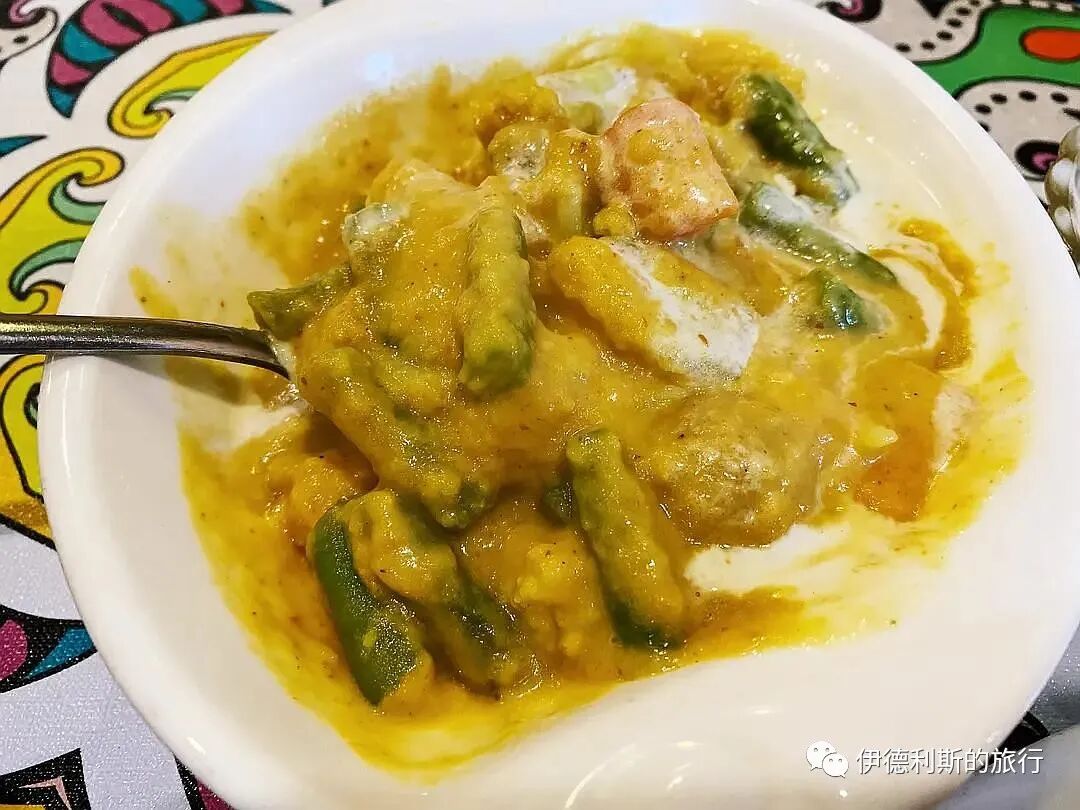
Lamb korma at Mirch Masala:
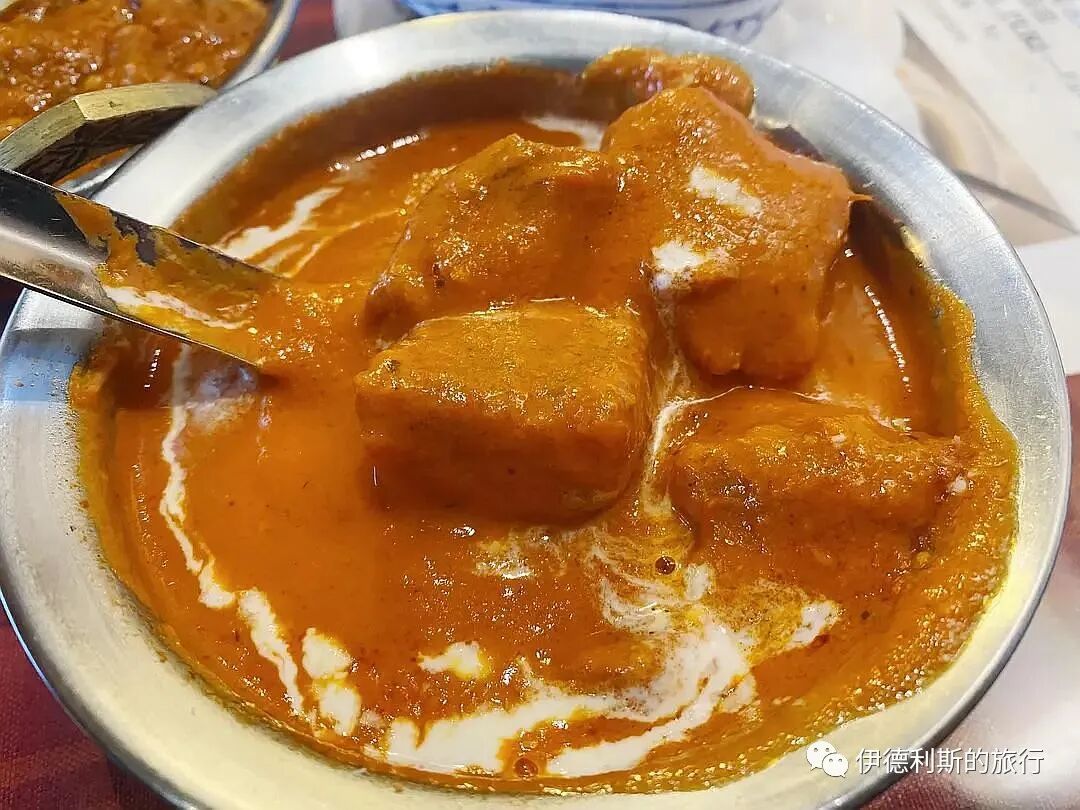
Spice blend curry (masala)
Masala is a famous South Asian spice blend. Its main ingredients are garlic, ginger, onion, chili, and tomato. There is no fixed recipe for masala tea, but it usually includes black tea, milk, sugar, cardamom, black pepper, and ginger. Other spices include cinnamon, star anise, fennel seeds, and cloves.
Masala fish stew at the Pakistani restaurant Khan Baba:
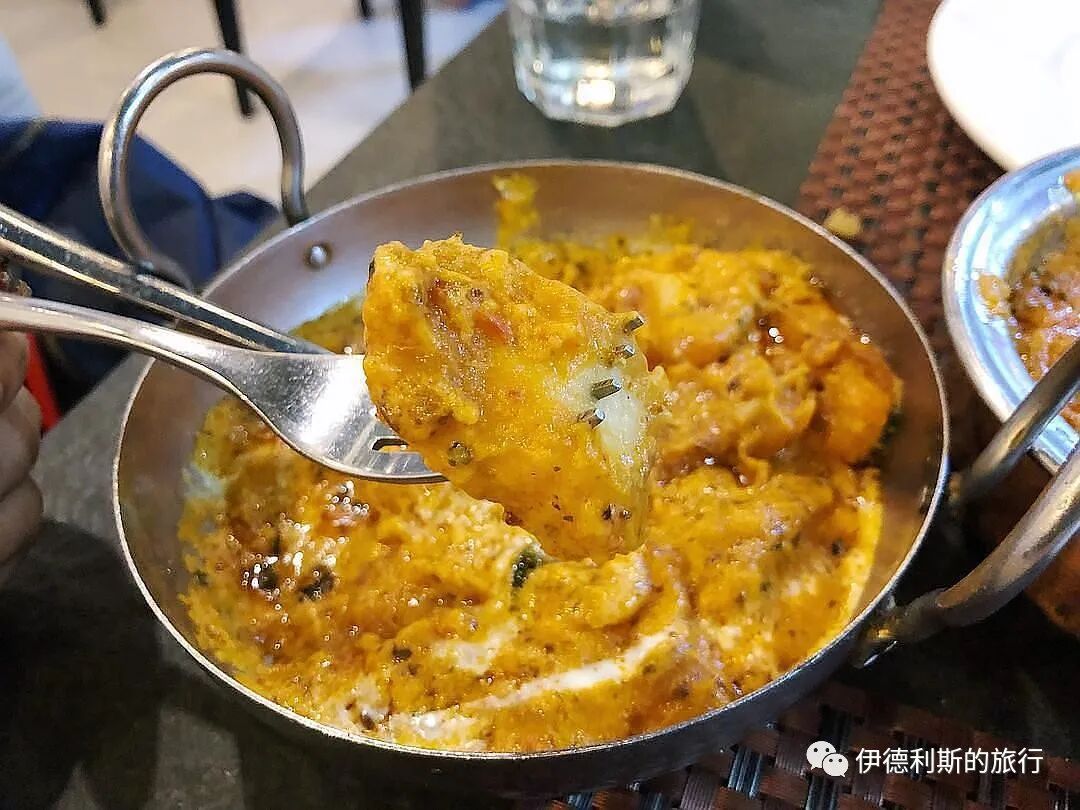
Masala tea at the Indian Kitchen:
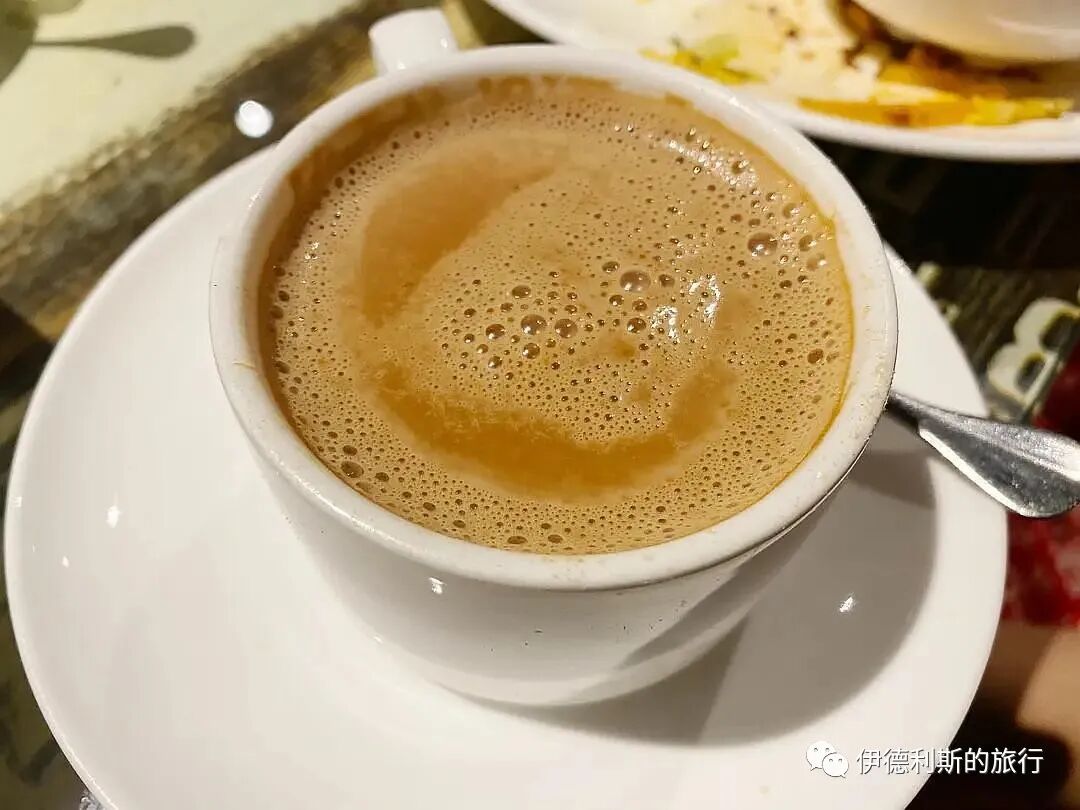
Potato rice crepe (dosa) with potato sauce and masala curry at the Indian Kitchen:
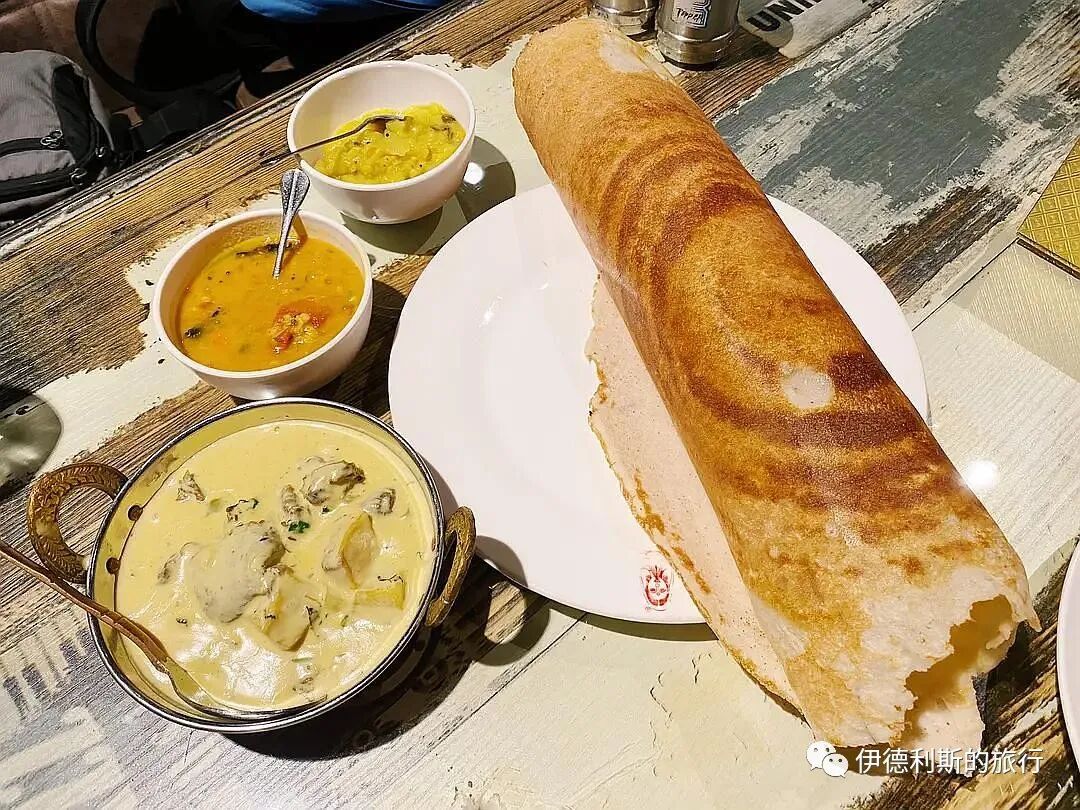
Masala lamb at the Kolkata restaurant Sadhu:
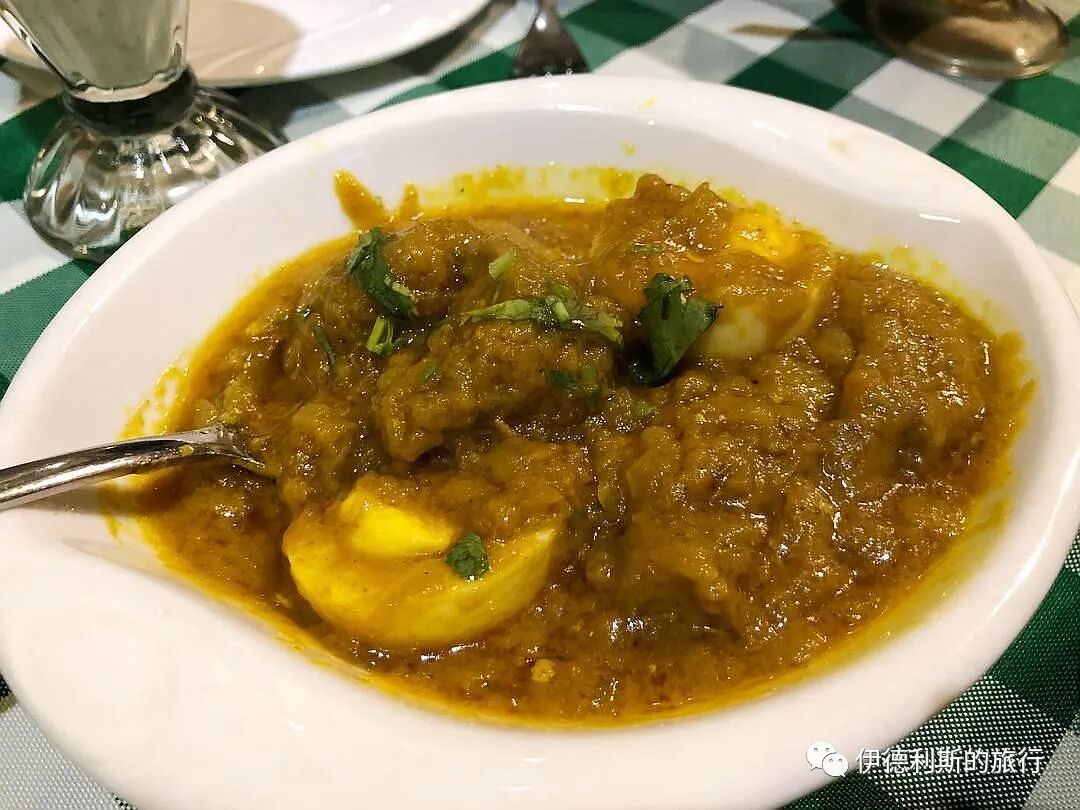
Pickled chickpea curry (achari chana masala) at the Pakistani restaurant Lahore Restaurant:
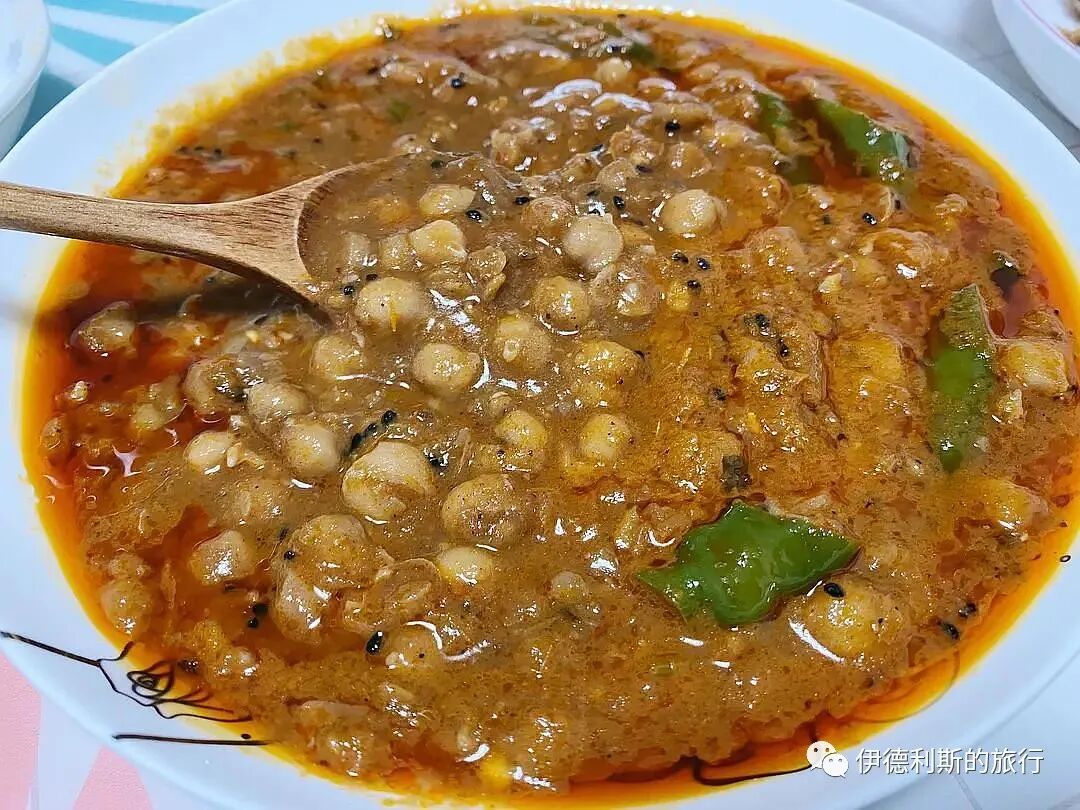
Clay pot (handi)
Handi is a popular way to eat curry in northern South Asia. It uses many rich spices like cardamom, cinnamon, and cloves. The biggest difference from regular South Asian curry is that handi does not use ginger, but uses garlic and onions instead.
Lamb handi at the Pakistani restaurant Khan Baba:
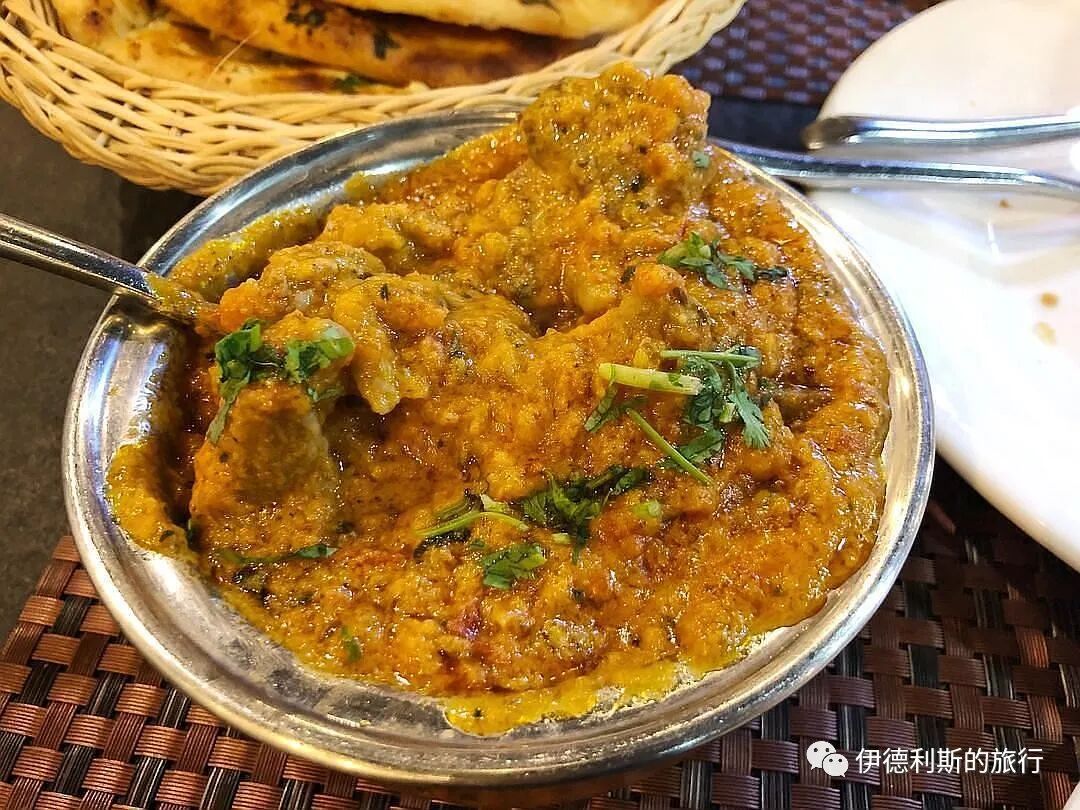
Chicken pickled curry (achari handi) at the Pakistani restaurant Khan Baba:
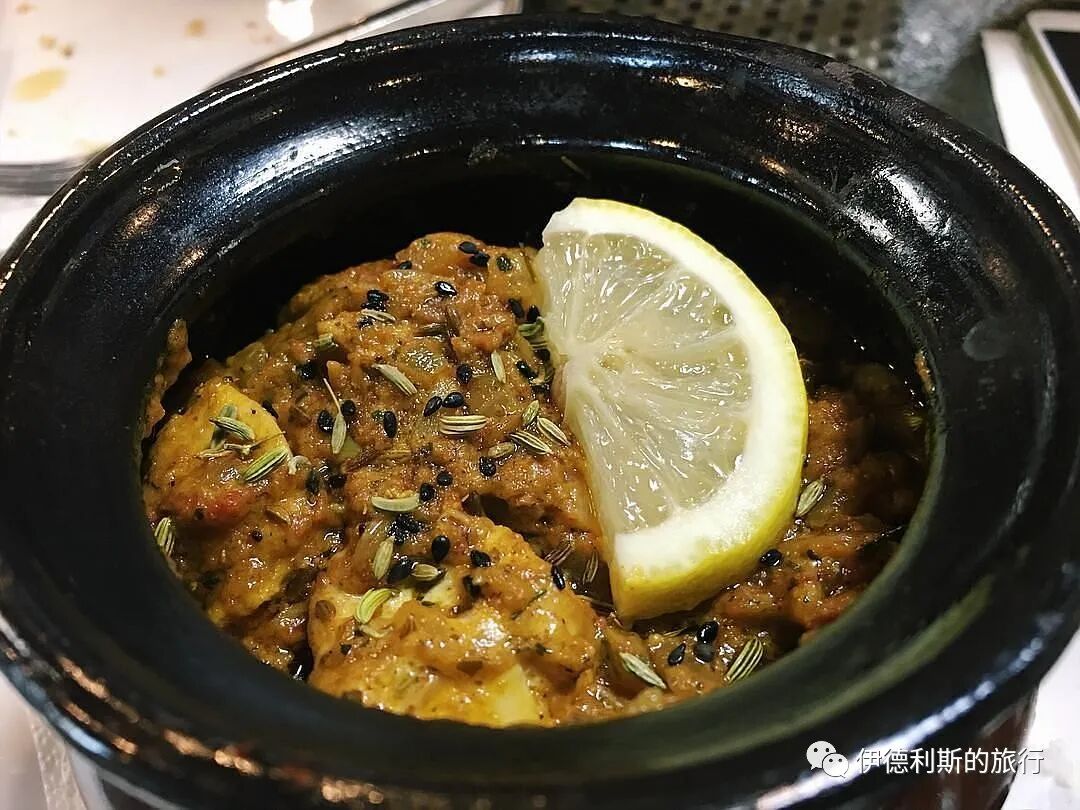
Curried chickpeas (dall chana)
Dal means split in Sanskrit. In South Asia, it refers to hulled legumes, including chickpeas, peas, and lentils. You can eat them dry or with soup.
Curried chickpeas (dall chana) at the Pakistani restaurant Khan Baba:
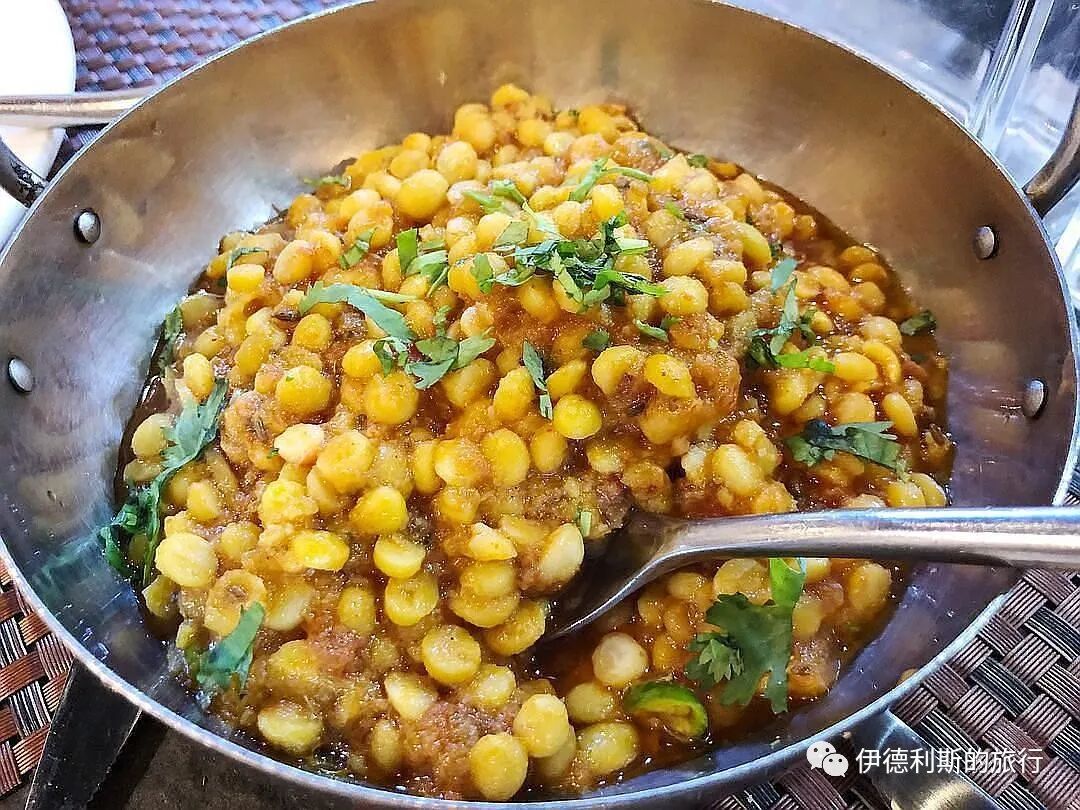
Biryani rice
Biryani is a Persian loanword in Urdu. It likely originated in the Mughal court. People say Mughal royal chefs created it by combining Indian spicy rice with Persian pilaf. Mughal documents mention both biryanis and pilaf (pulao), and the two terms were interchangeable at the time. People generally think biryani contains more spices and has a stronger curry flavor than pilaf.
Biryani at the Pakistani restaurant Zam Zam:
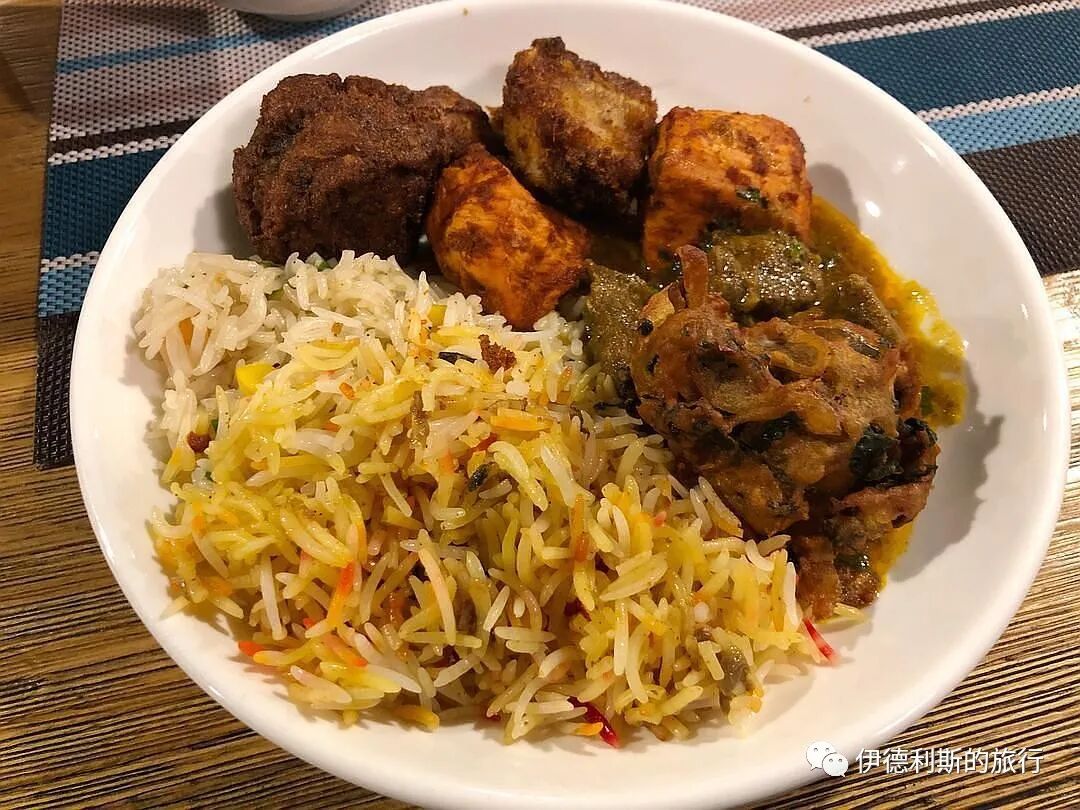
Biryani at the Pakistani restaurant Khan Baba:
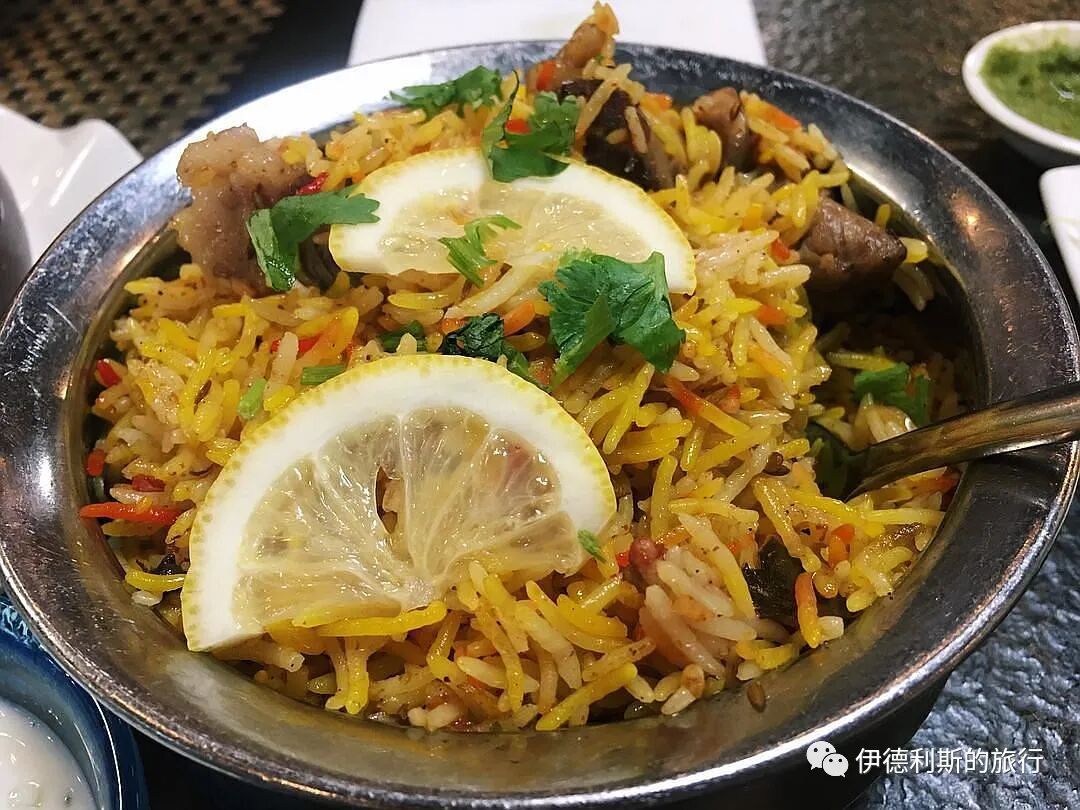
Biryani at the Pakistani restaurant Lahore Restaurant:
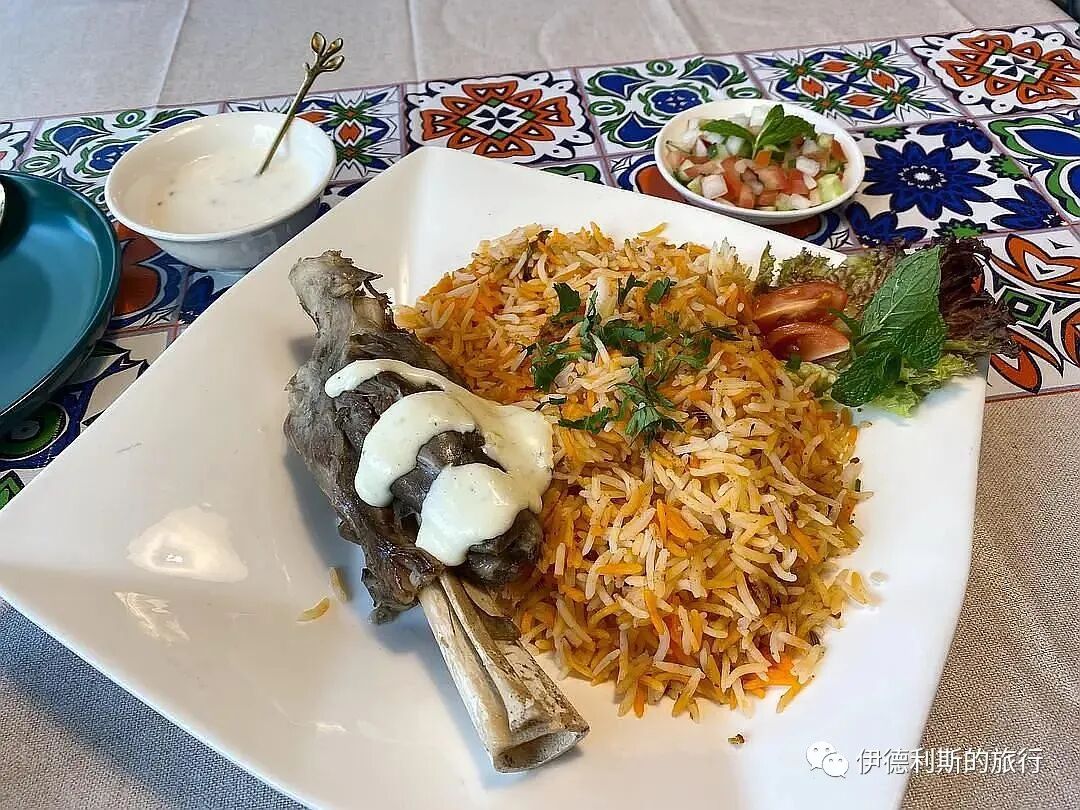
Biryani at the restaurant Mirch Masala:
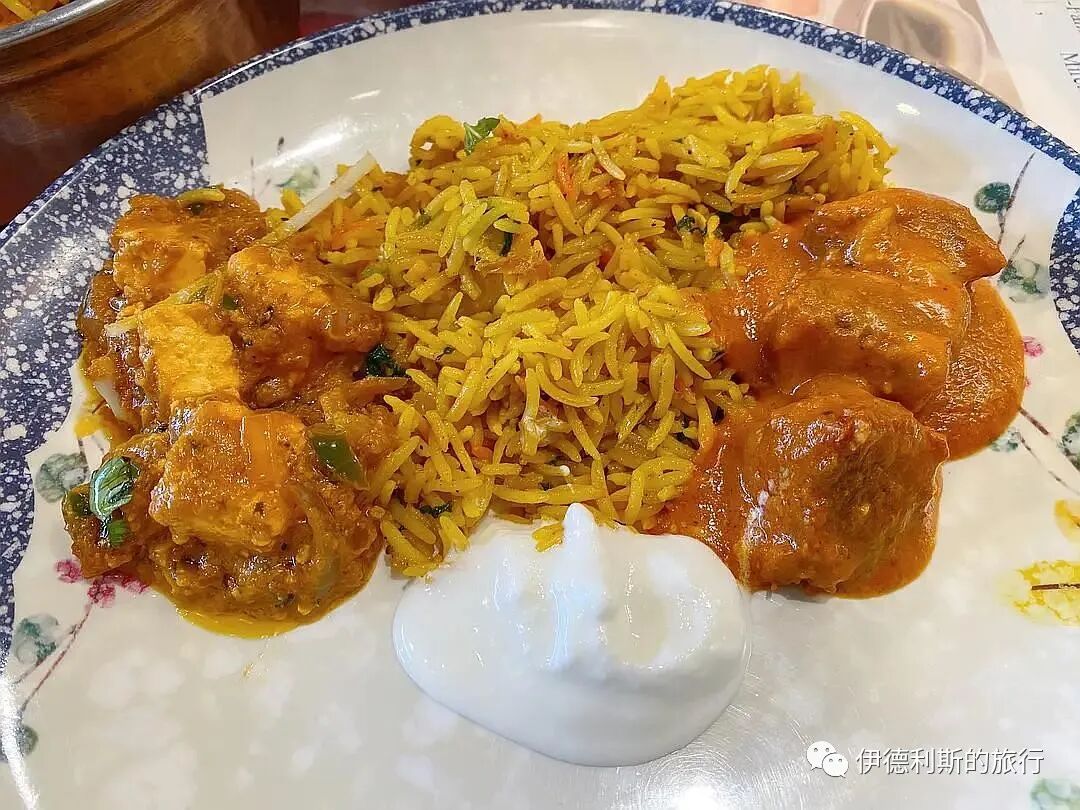
Raisin pilaf (shejhani pulao)
Although rice has been grown in Eurasia for a very long time, the style of cooking rice in a large pot only became popular from Andalusia to Afghanistan during the Abbasid Caliphate. The word pilaf (pilāv) comes from Persian. The earliest record of pilaf dates back to the 10th-century writings of the Persian scholar Ibn Sina, which is why some people call him the father of modern pilaf. After the 16th century, pilaf became popular in India as the Mughal Empire flourished.
Shejhani Pulao at the Kolkata restaurant Sadri:
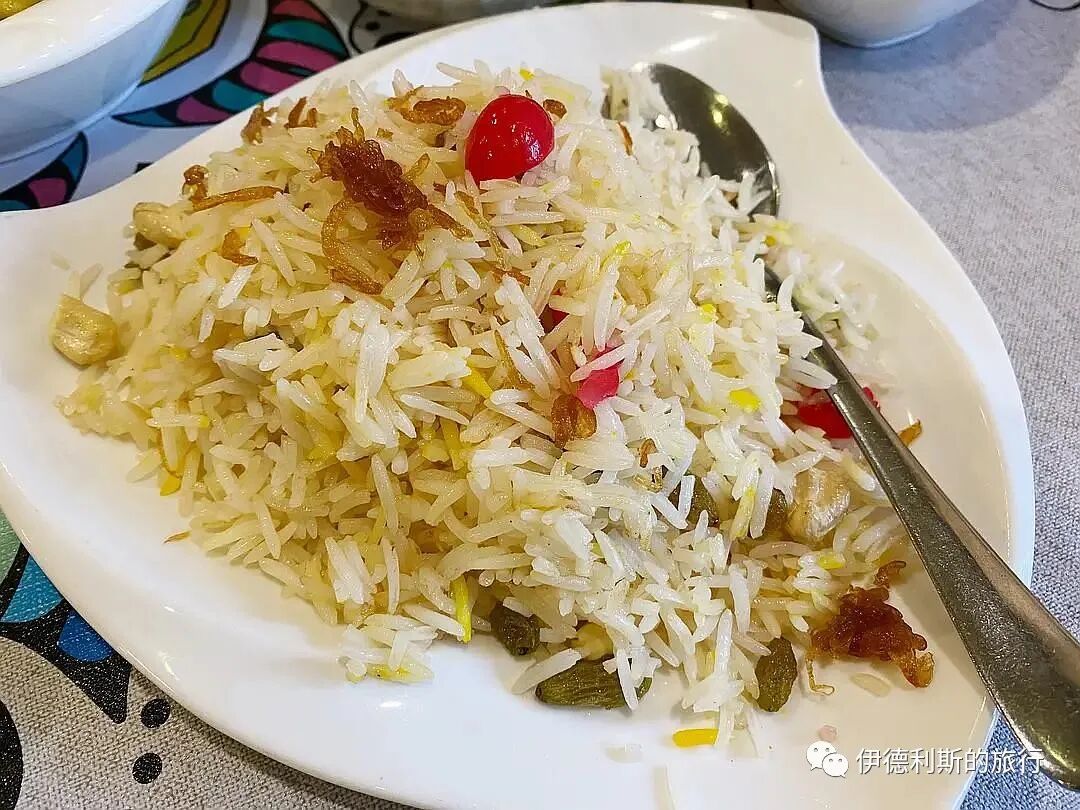
Tikka grilled meat chunks
Tikka comes from the Turkic word tikkü, which means piece. The Mughal Empire brought this style of grilling spiced, boneless meat or vegetable chunks to India. The most common version is chicken tikka.
The tikka platter at the Pakistani restaurant ZAM ZAM includes mint chicken (Haryali Tikka), lamb tikka, beef tikka, and fish tikka.
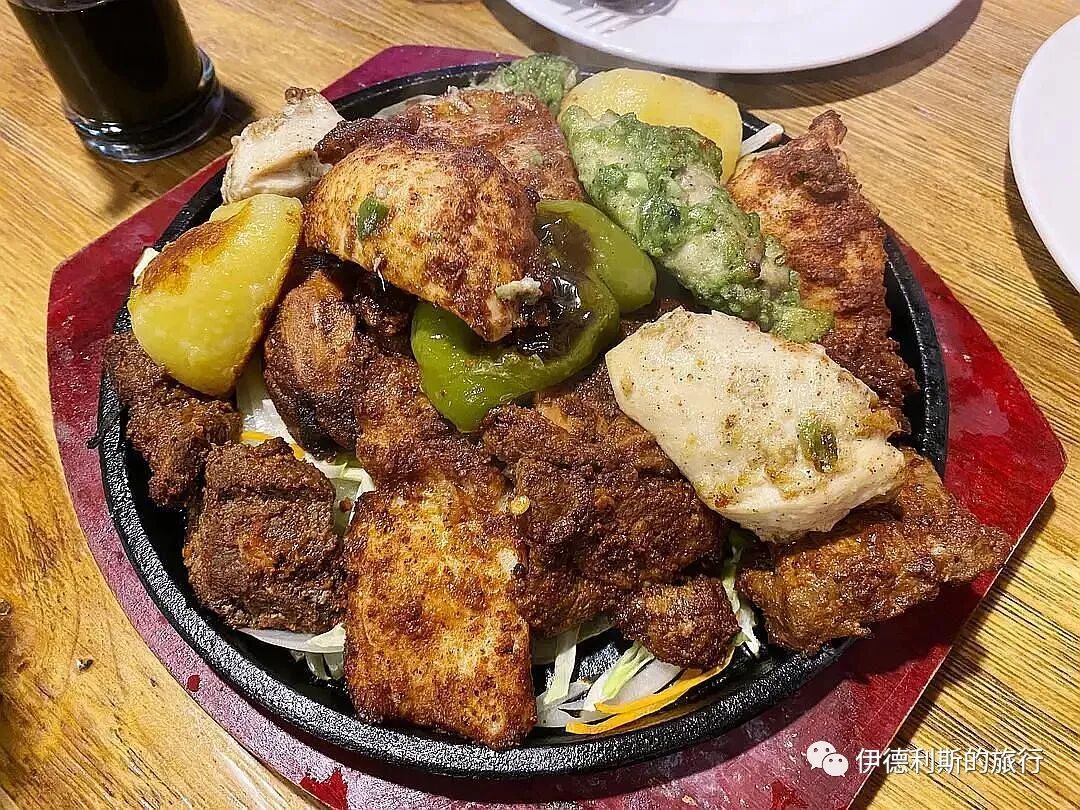
Grilled salmon tikka at the Kolkata restaurant Sadri:
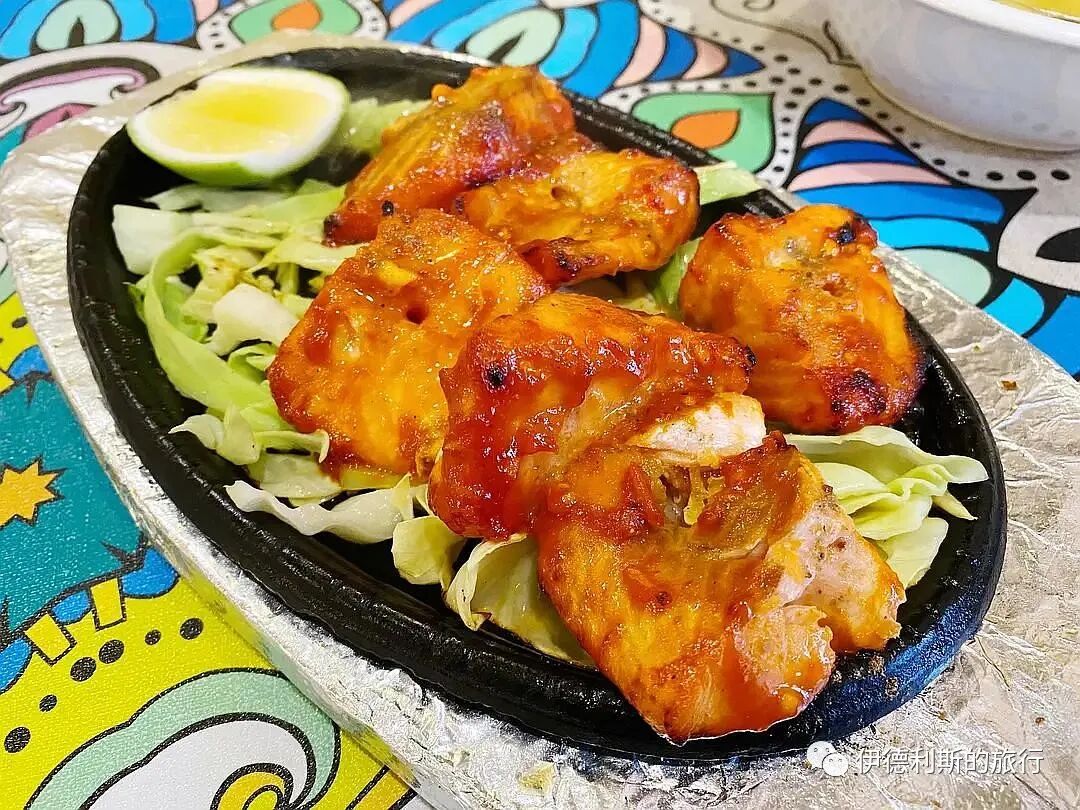
Grilled tofu (Paneer Tikka) at the Indian Little Kitchen.
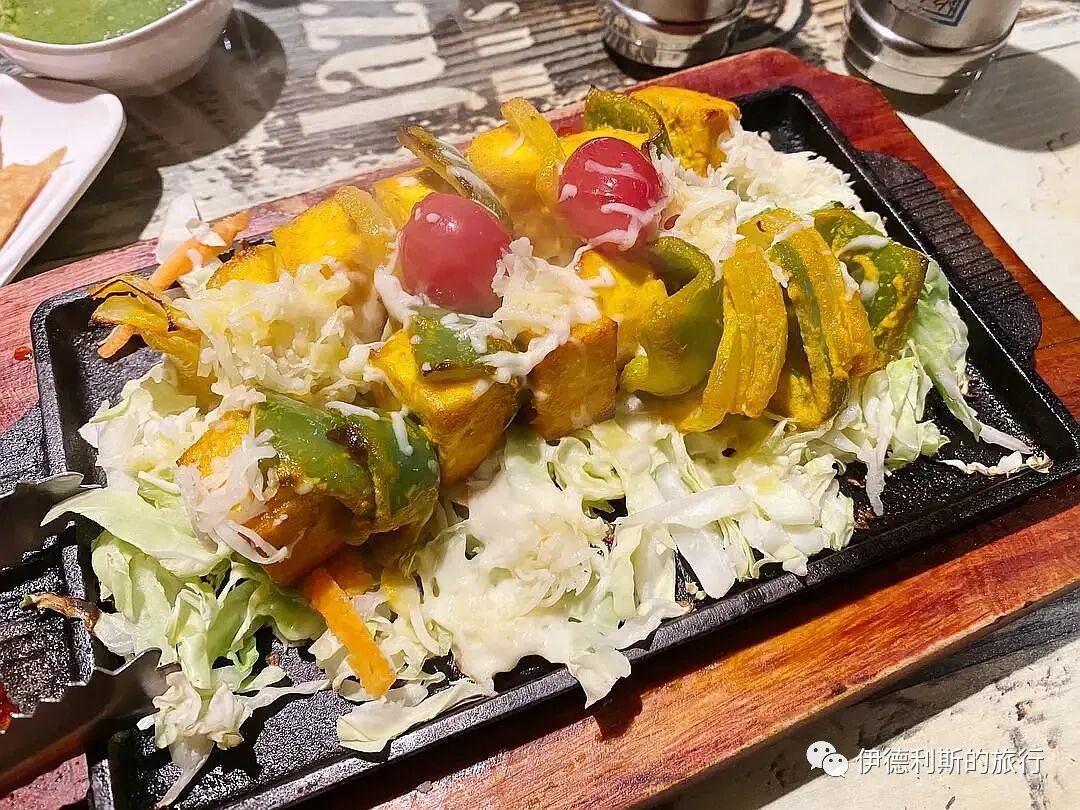
Summary: Halal Food Guide: Beijing — South Asian and Middle Eastern Halal Restaurants is presented here as a firsthand travel account in clear English, beginning with this scene: I have organized some dishes I ate at various South Asian and Middle Eastern restaurants in Beijing, hoping this helps you when ordering. The account keeps its focus on Beijing Halal Food, Middle Eastern Food, South Asian Food while preserving the names, places, food, and historical details from the Chinese source.
I have organized some dishes I ate at various South Asian and Middle Eastern restaurants in Beijing, hoping this helps you when ordering.
1. The Levant
Falafel (fried chickpea balls)
Falafel is known as the national dish of Egypt, Israel, and Palestine. These fried chickpea balls likely originated in the Nile Delta of ancient Egypt and spread to the Levant through trade in the port of Alexandria. In the Levant, falafel changed from being made with fried fava beans to fried chickpeas. To make falafel, soak the chickpeas overnight, grind them with parsley, cumin, cilantro, and other spices, shape them into balls, and deep-fry them. After frying, the inside of the falafel remains soft.
Falafel in pita bread at the Jordanian restaurant Al Safir:
Falafel at the Arabic fast-food restaurant Taiba:
Falafel at the Palestinian restaurant Zayton:
Kibbeh (fried meat balls)
Kibbeh is made of cracked wheat wrapped around a filling of minced meat, chopped onions, and Middle Eastern spices like cinnamon, nutmeg, cloves, and allspice. Kibbeh is the North Levantine dialect version of the classical Arabic word kubbah, which translates literally to "ball." Kibbeh is most famous in Aleppo, northern Syria, where there are 17 different varieties. Besides the original flavor, they can be made with yogurt, lemon juice, pomegranate molasses, or cherry sauce.
Yogurt kibbeh at the Jordanian restaurant Al Safir:
Kibbeh at the Lebanese restaurant Alameen:
Mahashi (stuffed vegetables with rice and meat)
Mahashi is made by stuffing Lebanese zucchini (kusa) and eggplant with minced meat and rice, then cooking them in tomato sauce, cumin, and broth. Mahashi is a classic Ottoman dish found throughout former Ottoman territories from the Balkans to the Levant (the eastern Mediterranean coast) and Egypt, with each region having its own unique way of making it. Mahashi is a common dish served at weddings, family gatherings, and during Eid al-Fitr.
Mahashi at the Lebanese restaurant Al Ameen:
Lahmacun (meat flatbread)
Lahmacun comes from Arabic and translates literally to "meat with dough." During the Ottoman era, lahmacun spread from the Arab world to Turkey, Armenia, and other former Ottoman regions. Because of this, it is also called "Turkish pizza" or "Armenian pizza," though the basic method is always a thin flatbread topped with minced meat.
Lahmacun at the Turkish restaurant Rumi's Secret:
Lahmacun at the Arabic fast food shop Taiba:
Lahmacun at the Turkish restaurant Doner & Kebab:
Lahmacun at the Turkish restaurant Kubei:
Lahmacun at the Turkish restaurant Dardanelles:
Za'atar Manakeesh flatbread
Manakeesh is a type of Arab flatbread. Za'atar is a Levantine spice blend made from Syrian oregano (also called Lebanese oregano), toasted sesame seeds, dried sumac, and thyme, mixed with olive oil before eating. Syrian oregano is also considered the hyssop mentioned in the Bible. People in Syria and Lebanon often find wild oregano in the fields, pick the leaves to dry in the sun, and then grind them into a powder to make the spice. Za'atar has an earthy taste with a hint of citrus and nuttiness. It feels very unique the first time you eat it.
Za'atar Manakeesh flatbread at the Arabic restaurant Taiba:
Mandi lamb rice
Mandi originated in Yemen and is popular in the Arabian Peninsula, Egypt, and the Levant. Mandi is usually made with rice, meat (lamb, camel, or chicken), and Hawaij spice. Hawaij is also a specialty spice from Yemen used for cooking, soups, and coffee. Its main ingredients are cumin, black pepper, turmeric, and cardamom. The texture of Mandi is drier than regular curry rice.
Mandi lamb rice at the Syrian restaurant BRBR:
Mandi lamb rice at the Syrian restaurant One Thousand and One Nights:
Chickpea yogurt salad (Fatteh)
Fatteh means "crushed" in Arabic. It is a snack from the southern Levant region, found in Damascus, Beirut, Jordan, and Palestine, but not in the northern Levant. The main ingredient of Fatteh is crushed flatbread (Khubz). It is topped with yogurt, steamed chickpeas, olive oil, and other ingredients, then sprinkled with cumin. Sometimes it includes eggplant, carrots, chicken, or lamb.
Fatteh at the Palestinian restaurant Zayton:
Tabbouleh salad
Tabbouleh is a Levantine Meze (appetizer). It is made of chopped parsley, tomatoes, mint, onions, and bulgur (crushed dried wheat). It is seasoned with olive oil, lemon juice, salt, and pepper. The word "tabbūle" in Levantine Arabic comes from the ancient Aramaic root "t-b-l," which means "to season" or "to dip." Tabbouleh salad comes from the mountains of Lebanon and Syria. Wheat grown in the Beqaa Valley of Lebanon was once known as the best for making bulgur.
Tabbouleh at the Palestinian restaurant Zayton:
Tabbouleh salad at the Syrian restaurant BRBR:
Chickpea dip (hummus)
Hummus is short for the Arabic term "ḥummuṣ bi ṭaḥīna" (chickpeas with sesame paste). Hummus is a mix of chickpeas, sesame paste (tahini), olive oil, lemon juice, and garlic. It is very popular across the Middle East and the Mediterranean.
Lamb hummus at the Jordanian restaurant Al Safir:
Hummus at the Arabic fast food shop Taiba:
Hummus at the Turkish restaurant Xiting Xiuse:
Hummus at the Turkish restaurant Kubei (in the middle):
Beef hummus at the Palestinian restaurant Zayton:
Pine nut hummus at the Syrian restaurant One Thousand and One Nights:
Eggplant dip (baba ghanoush)
To make baba ghanoush, you roast eggplant until soft, mash it, and add olive oil and lemon juice. Sometimes people also add sesame paste, onions, or tomatoes.
Baba ghanoush at the Syrian restaurant BRBR:
Lentil soup
Lentil soup is made from lentils and has a very long history. You can use many types of lentils for lentil soup, including green, brown, red, yellow, and black lentils. Genesis chapter 25 mentions, "Then Jacob gave Esau bread and pottage of lentils; and he did eat and drink, and rose up, and went his way." This refers to red lentil soup.
Lentil soup at the Lebanese restaurant Al Ameen:
Lentil soup at the Arabic fast food shop Taiba:
Lentil soup at the Syrian restaurant BRBR:
Lentil and wheat grain soup at a Turkish mother's home:
Lentil soup at the Turkish restaurant Rumi's Secret:
Lentil soup at the Turkish restaurant Xiting Xiuse:
Lentil soup at the Azerbaijani/Turkish restaurant Doner & Kebab:
Kofta meatballs
The word kofta comes from the Persian word "kufte," which means "ground meat." Kofta recipes appeared in early Arabic cookbooks, originally as large lamb meatballs with saffron and egg yolk.
Kofta meatball soup at the Syrian restaurant One Thousand and One Nights:
2. Maghreb Chapter (Tunisia)
Harira bean soup
Harira bean soup is a classic appetizer in the Maghreb region (Algeria, Libya, Mauritania, Morocco, and Tunisia). It is most commonly made for breaking the fast during Ramadan. Every region makes Harira differently. The version we had included tomatoes, lentils, chickpeas, lamb, and various spices.
Harira bean soup at the Tunisian restaurant La Medina:
Brik pastry
Brik pastry is a North African Berber dish that was later brought to Israel by Tunisian Jews. The filling usually contains eggs, tuna, harissa sauce (Harissa), and parsley. It is then wrapped in a crispy dough called Malsouka or Warka and deep-fried.
Brik pastry at the Tunisian restaurant La Medina:
Couscous
Couscous (Couscous) is a staple of Berber cuisine. It is made by rubbing semolina into millet-sized grains and then drying them in the sun. Couscous was first seen in North Africa between the 11th and 13th centuries. The famous 13th-century Andalusian scholar and gourmet Ibn Razin al-Tuyibi first recorded the method for making couscous in his book, The Andalusian Cookbook.
Couscous at the Tunisian restaurant La Medina:
North African sausage (merguez)
North African sausage (Merguez) is made with lamb and beef, mixed with cumin, harissa sauce, chili, and other spices. It is usually grilled. Merguez sausage was first seen in the 12th century in Andalusia, which was southern Spain under Arab rule, and later spread throughout North Africa.
North African sausage (merguez) at the Tunisian restaurant La Medina:
Tajine pot (tajine)
The tagine (Tajine) is a North African Berber specialty that appeared in the 9th-century classic One Thousand and One Nights. Modern tagines are made of pottery, sometimes glazed. They have a round, flat bottom and a conical or domed top. This design allows evaporated steam to return to the bottom, and water can be added through a hole in the lid.
Tajine at the Tunisian restaurant La Medina:
3. Turkey Chapter
Pide pizza
Pide may come from the ancient Greek word "pítta" and refers to three types of bread in Turkey. One is a flatbread similar to Arabic pita, one is a soft leavened bread served during Ramadan, and the third is a large boat-shaped pizza. To make Pide pizza, you put various cheeses and meats on dough and bake it in an oven.
Lamb and cheese Pide at Dardanelles:
Three-topping Pide with cheese, meat, and vegetables at Rumi's Secret:
Spinach Pide at Xiting Xiuse during Ramadan:
Beef and cheese Pide at Xiting Xiuse:
Assorted Pide at Desert Rose:
Double cheese Pide at Kubei:
Mevlana meat Pide at Kubei:
Sultan's Delight (Hünkar Beğendi)
Sultan's Delight (Hünkar Beğendi) is a dish that started in the Ottoman palace. It uses rich lamb stew served over creamy roasted eggplant puree and is quite rare in Beijing.
Sultan's Delight at Turkish Mom:
Beef sausage fried eggs (Sucuklu yumurta)
The "Sujuk" in Sucuklu yumurta first appeared in the Compendium of the Turkic Dialects. It is made by grinding beef, adding tail fat and other fats, stuffing it into casings, tying it with string, and letting it ferment gradually.
Sucuklu yumurta at the Turkish/Azerbaijani restaurant Xiting Xiuse:
Pottery kebab (Testi kebabı)
Testi kebabı is a popular way of eating in central Anatolia and the west-central Black Sea region. You put beef, mushrooms, tomatoes, and shallots into a clay pot, seal the opening with bread, and slow-cook it in an oven. After the stew is ready, sear it in butter on an iron plate. Then, crack open the clay pot and toss the bread and the stew inside onto the plate. The aroma is incredible!
Sucuklu yumurta at the Turkish/Azerbaijani restaurant Xiting Xiuse:
Simit bagel
The earliest record of the simit bagel in Istanbul dates back to 1525. According to the famous 17th-century Ottoman traveler Evliya Celebi, there were 70 simit bakeries in Istanbul in the 1630s.
Simit at the Turkish restaurant Kubei:
Baklava dessert
Baklava is the most famous dessert of the Ottoman Empire, developed by the royal chefs at the Topkapi Palace. On the 15th day of Ramadan each year, the Ottoman Sultan would attend a ceremony called 'Baklava Alayı' to distribute trays of Baklava to the Janissaries. Baklava is a flaky pastry made by layering very thin unleavened filo dough, filled with crushed pistachios, walnuts, syrup, or honey.
Baklava from a Turkish mom:
Baklava at Kubei:
Baklava at Desert Rose:
Salty yogurt drink (Ayran)
Ayran is a drink made by mixing yogurt, salt, and water. You can also add mint or carbonated water. It is perfect with grilled meat in the summer. The word Ayran comes from Turkic and first appeared in the 'Compendium of the Turkic Dialects' written by Mahmud al-Kashgari in the 1070s.
Ayran at Xiting Xiuse:
Ayran at Kubei:
4. Caucasus Chapter
Karabakh Pilaf
Karabakh is a region on the border of Azerbaijan and Armenia. Its name comes from the Turkic word 'Kara' (black) and the Persian word 'Bagh' (garden). Most people living there now are Azerbaijanis. The Karabakh Pilaf we ate was stewed lamb with apricots. The rice is yellow because it is stained with saffron juice. When I was in Baku before, I ate this apricot and saffron pilaf while listening to Azerbaijani mugham music. It felt very familiar to eat it again this time.
Karabakh Pilaf at the Turkish/Azerbaijani restaurant Xiting Xiuse:
5. South Asia
Samosa curry pastry (samosa)
Muslim merchants from Central Asia brought the samosa to South Asia from Persia during the 13th and 14th centuries. Around 1300, the Delhi Sultanate scholar Amir Khusro wrote that princes and nobles in the Delhi Sultanate enjoyed "samosas made with meat, clarified butter (ghee), and onions."
Samosa at the Kolkata restaurant Saduri:
Samosa at the Pakistani restaurant Khan Baba:
Thin yogurt drink (lassi)
Lassi comes from the Sanskrit word 'lasika,' which originally meant serum. Lassi comes in sweet and salty versions. The sweet version is mainly found in Gujarat, Rajasthan, and Sindh, while the salty version is widely distributed across other parts of North India.
Lassi at the Kolkata restaurant Saduri:
Vegetable yogurt (raita)
Raita is a Hindi word formed by combining the Sanskrit words 'rajika' and 'tiktaka,' meaning 'black mustard seeds' and 'pungent.' This is because making raita involves frying black mustard seeds and cumin, mixing them into chopped vegetables, and then adding them to yogurt.
Raita at the Kolkata restaurant Saduri:
Fried curry (bhuna)
Bhuna means 'to fry' in Urdu. It usually includes onion, ginger, and garlic. When cooking, the curry is fried in hot oil until it becomes a paste. I think it tastes better than regular curry.
Beef bhuna at the Kolkata restaurant Saduri:
Stewed curry (korma)
Korma is a type of curry stewed with coconut milk or yogurt. The word 'korma' comes from the Turkic word 'qawirma,' which originally meant to fry, but evolved into the Urdu word for stew. Korma is a classic Mughal court dish that originated in the 16th century. People say Shah Jahan ate korma with his guests at the banquet celebrating the completion of the Taj Mahal.
Vegetable korma at the Kolkata restaurant Saduri:
Lamb korma at Mirch Masala:
Spice blend curry (masala)
Masala is a famous South Asian spice blend. Its main ingredients are garlic, ginger, onion, chili, and tomato. There is no fixed recipe for masala tea, but it usually includes black tea, milk, sugar, cardamom, black pepper, and ginger. Other spices include cinnamon, star anise, fennel seeds, and cloves.
Masala fish stew at the Pakistani restaurant Khan Baba:
Masala tea at the Indian Kitchen:
Potato rice crepe (dosa) with potato sauce and masala curry at the Indian Kitchen:
Masala lamb at the Kolkata restaurant Sadhu:
Pickled chickpea curry (achari chana masala) at the Pakistani restaurant Lahore Restaurant:
Clay pot (handi)
Handi is a popular way to eat curry in northern South Asia. It uses many rich spices like cardamom, cinnamon, and cloves. The biggest difference from regular South Asian curry is that handi does not use ginger, but uses garlic and onions instead.
Lamb handi at the Pakistani restaurant Khan Baba:
Chicken pickled curry (achari handi) at the Pakistani restaurant Khan Baba:
Curried chickpeas (dall chana)
Dal means split in Sanskrit. In South Asia, it refers to hulled legumes, including chickpeas, peas, and lentils. You can eat them dry or with soup.
Curried chickpeas (dall chana) at the Pakistani restaurant Khan Baba:
Biryani rice
Biryani is a Persian loanword in Urdu. It likely originated in the Mughal court. People say Mughal royal chefs created it by combining Indian spicy rice with Persian pilaf. Mughal documents mention both biryanis and pilaf (pulao), and the two terms were interchangeable at the time. People generally think biryani contains more spices and has a stronger curry flavor than pilaf.
Biryani at the Pakistani restaurant Zam Zam:
Biryani at the Pakistani restaurant Khan Baba:
Biryani at the Pakistani restaurant Lahore Restaurant:
Biryani at the restaurant Mirch Masala:
Raisin pilaf (shejhani pulao)
Although rice has been grown in Eurasia for a very long time, the style of cooking rice in a large pot only became popular from Andalusia to Afghanistan during the Abbasid Caliphate. The word pilaf (pilāv) comes from Persian. The earliest record of pilaf dates back to the 10th-century writings of the Persian scholar Ibn Sina, which is why some people call him the father of modern pilaf. After the 16th century, pilaf became popular in India as the Mughal Empire flourished.
Shejhani Pulao at the Kolkata restaurant Sadri:
Tikka grilled meat chunks
Tikka comes from the Turkic word tikkü, which means piece. The Mughal Empire brought this style of grilling spiced, boneless meat or vegetable chunks to India. The most common version is chicken tikka.
The tikka platter at the Pakistani restaurant ZAM ZAM includes mint chicken (Haryali Tikka), lamb tikka, beef tikka, and fish tikka.
Grilled salmon tikka at the Kolkata restaurant Sadri:
Grilled tofu (Paneer Tikka) at the Indian Little Kitchen.
Halal Food Guide: Dubai — South Asian Restaurants and Everyday Eats
Articles • ali2007fr posted the article • 0 comments • 124 views • 2026-05-18 06:13
Reposted from the web
Summary: Halal Food Guide: Dubai — South Asian Restaurants and Everyday Eats is presented here as a firsthand travel account in clear English, beginning with this scene: Although the UAE is a Gulf Arab country, people from South Asia make up the majority of its population. The account keeps its focus on Dubai Halal Food, South Asian Food, Muslim Travel while preserving the names, places, food, and historical details from the Chinese source.
Although the UAE is a Gulf Arab country, people from South Asia make up the majority of its population. Currently, over 2.8 million Indians, 1.2 million Pakistanis, and 1 million Bangladeshis live in the UAE, with most of them in the cities of Abu Dhabi, Dubai, and Sharjah.
As a transit hub between the Middle East and South Asia, Dubai has had very close historical ties with South Asia. Many South Asian merchants traveled frequently between Dubai and South Asia as early as the 18th century to trade pearls, and South Asian merchants have long dominated Dubai's gold and textile trade.
After Dubai signed a perpetual truce with Britain in 1853, it came under the administration of British India, used rupees and stamps issued by British India, and grew even closer to South Asia.
After oil was discovered in 1966, a large number of South Asian workers began pouring into Dubai, and at that time, it took three days by ship to travel from Mumbai to Dubai. Most of these workers came from Maharashtra state, where Mumbai is located, and there were also many Arab-descended Indians, a group that had migrated from various parts of the Arab world to India hundreds of years ago.
As Dubai's status as a free trade port rose, its South Asian population increased sharply in the 1970s and 1980s, with most Indians coming from the southernmost states of Kerala and Tamil Nadu, while most Pakistanis were Punjabis and Pashtuns.
Some South Asians in Dubai are now second or even third generation, forming a distinct South Asian community in the city. You can find all kinds of South Asian food here.
Bur Dubai Souk
Bur Dubai Souk is the oldest market in Dubai. It has become a hub for South Asians and houses several small South Asian snack shops.
I started at one shop with a classic South Indian breakfast of steamed rice cakes (idli) with lentil stew (sambar) and Indian milk tea.
Idli is a popular savory rice cake in India and northern Sri Lanka. It is made by mixing rice and white lentils with spices, fermenting the batter overnight, and steaming it in molds for 10 to 25 minutes.
Sambar is a lentil stew also popular in South India and Sri Lanka. It represents the long tradition of eating lentils in South India.
In South India, idli served with sambar is a classic breakfast or late-night snack that you can often see at street stalls.
Because of the hot weather in Dubai, the market is almost empty during the day. After night falls, the temperature drops a little and the market starts to get busy.
I ate a fried triangular pastry (samosa) at a shop.
A classic Indian samosa uses a dough made from vegetable oil, melted butter, warm water, salt, and wheat flour. The filling is mashed potatoes, onions, green peas, spices, and green chilies, then it is fried until golden brown. The South Asian samosa, along with the Arab sanbusak, Afghan sambosa, Tajik samboosa, Turkic samsa, and the Somali and Ethiopian sambusa, all come from the Persian word sanbosag.
Persian poetry began praising the samosa as early as the 10th century. This snack was very popular in Iran until the 16th century, but now it is only found in a few areas. In the 13th or 14th century, Central Asian Muslim merchants brought the samosa to South Asia, where it became a favorite of the Delhi Sultanate royal family. A scholar from the Delhi Sultanate wrote in 1300 that princes and nobles enjoyed samosas made with meat, ghee, and onions. In the 14th century, the famous traveler Ibn Battuta visited the court of the Tughlaq dynasty in the Delhi Sultanate. In his book, The Travels of Ibn Battuta, he wrote about eating a stuffed pastry called sambusak at the Sultan's court, which was filled with minced meat, almonds, pistachios, walnuts, and spices.
South Asian buffet
In the old town of Bur Dubai, South Asian restaurants are packed side by side. To try as many dishes as possible, I chose this buffet. It turned out that this restaurant was a great surprise for a solo traveler! I tasted 13 different dishes, and since each one had a name tag, I finally learned what they were.
This buffet cost 25 dirhams, which is about 44 yuan, making it a pretty good deal.
Let's start with the hearty stuff.
Afghan rice pilaf (pulao); this rice is super delicious.
Pilaf (zhuafan) is a way of cooking rice found across Central Asia, South Asia, West Asia, the Caucasus, East Africa, and all the way to the Balkan Peninsula. In English, it is called pilaf, which comes from the Greek word pilafi. This comes from the Turkish word pilav, which comes from the Persian word polow, which comes from the Hindi word pulāo. The original source is the Sanskrit word pulāka, which means a lump of rice. Ancient Indian texts use the words pulao or pallao to describe a dish where rice and meat are cooked together.
The first recipe for pilaf comes from the 10th-century Persian scholar Abu Ali Ibn Sina. He described the pros and cons of different types of pilaf in a medical book. Because of this, most people believe modern pilaf started in Persia and then spread to other places.
The carrot and meat pilaf in the picture below is similar to Xinjiang pilaf, while authentic Indian pilaf includes various vegetables like peas and potatoes.
South Asian chicken rice (biryani) is probably the most popular way to cook rice in South Asia. Biryani comes from South Asian Muslims. It is a Persian loanword in Urdu, and it is generally believed to come from the Persian word for rice, birinj.
Historian Lizzie Collingham says modern biryani likely started in the royal kitchens of the Mughal Empire, where chefs combined spicy Indian rice with Persian pilaf. However, some people believe biryani existed even before the Mughal Empire. Documents from the 16th-century Mughal era mention both biryanis and pulao, but the terms were interchangeable back then. Another historian, Pratibha Karan, thinks biryani formed after Arab traders brought Middle Eastern pilaf to South India.
People generally agree there are three main differences between biryani and Indian pilaf:
1. Biryani uses more spices and has a stronger curry flavor, while Indian pilaf uses almost no spices.
2. Biryani is usually made with two layers of rice covering the meat in the middle, while Indian pilaf is not layered.
3. Biryani is usually made by cooking the rice and meat separately, while Indian pilaf is cooked all together.
Roasted lamb and fried fish, I love roasted lamb!
On the left is chicken tikka. Tikka means 'pieces' and is a marinating style from the Punjab region. Chicken tikka is made by marinating small, boneless chicken pieces in spices and yogurt before roasting. It is basically a boneless version of another South Asian specialty, tandoori chicken.
I am not sure what the mali beti on the right is yet.
Let's have a few more with sauce.
Eat it wrapped in South Asian flatbread (naan).
Dal means 'split' in Sanskrit. In South Asia, it refers to hulled legumes like peas and lentils, which can be eaten dry or with sauce.
Aloo gobi is a South Asian vegetable dish where 'aloo' means potato and 'gobi' means cauliflower. This dish contains a variety of spices. The yellow color mainly comes from turmeric, and it usually includes green onion, ginger, garlic, cilantro, tomatoes, peas, and cumin.
The word 'Palak' in Aloo Palak means spinach, and it is another South Asian vegetarian dish.
Karhi is a thick gravy made with chickpea flour, and it usually includes yogurt.
Kheer is a South Asian rice pudding that is often served during both Hindu and Muslim festivals. The word Kheer likely comes from the Sanskrit word for milk, 'Ksheera'.
Kheer is made from rice, wheat, tapioca, or vermicelli mixed with milk and sugar, and it is flavored with cardamom, raisins, saffron, cashews, pistachios, or almonds.
Korma is a dish made by mixing yogurt (dahi), cream, and water with various spices. It is usually cooked over low heat, allowing the yogurt to blend slowly into the gravy without curdling. The way I had Korma and Kheer served together this time is quite rare.
The word korma is actually an English spelling of the Urdu word qormā, which means to stew or braise. Urdu's qormā, Persian's ghormeh, and Azerbaijani's qovurma all come from the Turkic word qawirma, which means to fry. However, the modern South Asian korma has a completely different meaning than its related words in other regions. It comes from the Mughal Empire's royal court and was a dish the Mughal royals often ate.
Pepper chicken
I ate pepper chicken at a South Asian restaurant.
The bread on the rice is a South Asian snack called poori (or puri). The word comes from the Sanskrit word pūrikā, which means to fry. Poori is usually eaten for breakfast and is also used as food for religious ceremonies.
Poori is made by kneading wheat flour into dough and then frying it in ghee or vegetable oil until it turns golden brown. When frying, the water inside the dough turns into steam and expands, causing the dough to puff up into a round ball. If you poke the dough with a fork before frying, the steam escapes through the holes, making the finished poori flatter.
After the meal, use fennel seeds to freshen your breath.
Cold drinks.
This is a very busy South Asian cold drink shop in Bur Dubai.
I ordered the South Asian specialty ice cream, falooda. Besides rose syrup, sweet basil seeds, jelly, and milk, the most unique part of falooda is the addition of noodles made from wheat, arrowroot, cornstarch, and sago.
Falooda originated in Persia and was brought to India by Muslim merchants between the 16th and 18th centuries, where it developed during the Mughal Empire. Today, falooda is an important part of Pakistani culture and appears at Islamic holidays and all kinds of celebrations.
I ordered a tabakath, a cold drink mixed with avocado, mango, and strawberry, at another South Asian restaurant.
Finally, I will share some scenes from the South Asian community in Dubai.
The biggest thing I noticed in Dubai is that everyone really follows the traffic rules.
Large shopping mall
McDonald's in Dubai
A carousel inside a large shopping mall.
Night view of Bur Dubai
The Dubai Creek ferry in Deira Dubai connects two important South Asian neighborhoods.
Across the river, the area is filled with small South Asian shops.
Clothing malls.
A young man selling clothes. view all
Summary: Halal Food Guide: Dubai — South Asian Restaurants and Everyday Eats is presented here as a firsthand travel account in clear English, beginning with this scene: Although the UAE is a Gulf Arab country, people from South Asia make up the majority of its population. The account keeps its focus on Dubai Halal Food, South Asian Food, Muslim Travel while preserving the names, places, food, and historical details from the Chinese source.
Although the UAE is a Gulf Arab country, people from South Asia make up the majority of its population. Currently, over 2.8 million Indians, 1.2 million Pakistanis, and 1 million Bangladeshis live in the UAE, with most of them in the cities of Abu Dhabi, Dubai, and Sharjah.
As a transit hub between the Middle East and South Asia, Dubai has had very close historical ties with South Asia. Many South Asian merchants traveled frequently between Dubai and South Asia as early as the 18th century to trade pearls, and South Asian merchants have long dominated Dubai's gold and textile trade.
After Dubai signed a perpetual truce with Britain in 1853, it came under the administration of British India, used rupees and stamps issued by British India, and grew even closer to South Asia.
After oil was discovered in 1966, a large number of South Asian workers began pouring into Dubai, and at that time, it took three days by ship to travel from Mumbai to Dubai. Most of these workers came from Maharashtra state, where Mumbai is located, and there were also many Arab-descended Indians, a group that had migrated from various parts of the Arab world to India hundreds of years ago.
As Dubai's status as a free trade port rose, its South Asian population increased sharply in the 1970s and 1980s, with most Indians coming from the southernmost states of Kerala and Tamil Nadu, while most Pakistanis were Punjabis and Pashtuns.
Some South Asians in Dubai are now second or even third generation, forming a distinct South Asian community in the city. You can find all kinds of South Asian food here.
Bur Dubai Souk
Bur Dubai Souk is the oldest market in Dubai. It has become a hub for South Asians and houses several small South Asian snack shops.
I started at one shop with a classic South Indian breakfast of steamed rice cakes (idli) with lentil stew (sambar) and Indian milk tea.
Idli is a popular savory rice cake in India and northern Sri Lanka. It is made by mixing rice and white lentils with spices, fermenting the batter overnight, and steaming it in molds for 10 to 25 minutes.
Sambar is a lentil stew also popular in South India and Sri Lanka. It represents the long tradition of eating lentils in South India.
In South India, idli served with sambar is a classic breakfast or late-night snack that you can often see at street stalls.
Because of the hot weather in Dubai, the market is almost empty during the day. After night falls, the temperature drops a little and the market starts to get busy.
I ate a fried triangular pastry (samosa) at a shop.
A classic Indian samosa uses a dough made from vegetable oil, melted butter, warm water, salt, and wheat flour. The filling is mashed potatoes, onions, green peas, spices, and green chilies, then it is fried until golden brown. The South Asian samosa, along with the Arab sanbusak, Afghan sambosa, Tajik samboosa, Turkic samsa, and the Somali and Ethiopian sambusa, all come from the Persian word sanbosag.
Persian poetry began praising the samosa as early as the 10th century. This snack was very popular in Iran until the 16th century, but now it is only found in a few areas. In the 13th or 14th century, Central Asian Muslim merchants brought the samosa to South Asia, where it became a favorite of the Delhi Sultanate royal family. A scholar from the Delhi Sultanate wrote in 1300 that princes and nobles enjoyed samosas made with meat, ghee, and onions. In the 14th century, the famous traveler Ibn Battuta visited the court of the Tughlaq dynasty in the Delhi Sultanate. In his book, The Travels of Ibn Battuta, he wrote about eating a stuffed pastry called sambusak at the Sultan's court, which was filled with minced meat, almonds, pistachios, walnuts, and spices.
South Asian buffet
In the old town of Bur Dubai, South Asian restaurants are packed side by side. To try as many dishes as possible, I chose this buffet. It turned out that this restaurant was a great surprise for a solo traveler! I tasted 13 different dishes, and since each one had a name tag, I finally learned what they were.
This buffet cost 25 dirhams, which is about 44 yuan, making it a pretty good deal.
Let's start with the hearty stuff.
Afghan rice pilaf (pulao); this rice is super delicious.
Pilaf (zhuafan) is a way of cooking rice found across Central Asia, South Asia, West Asia, the Caucasus, East Africa, and all the way to the Balkan Peninsula. In English, it is called pilaf, which comes from the Greek word pilafi. This comes from the Turkish word pilav, which comes from the Persian word polow, which comes from the Hindi word pulāo. The original source is the Sanskrit word pulāka, which means a lump of rice. Ancient Indian texts use the words pulao or pallao to describe a dish where rice and meat are cooked together.
The first recipe for pilaf comes from the 10th-century Persian scholar Abu Ali Ibn Sina. He described the pros and cons of different types of pilaf in a medical book. Because of this, most people believe modern pilaf started in Persia and then spread to other places.
The carrot and meat pilaf in the picture below is similar to Xinjiang pilaf, while authentic Indian pilaf includes various vegetables like peas and potatoes.
South Asian chicken rice (biryani) is probably the most popular way to cook rice in South Asia. Biryani comes from South Asian Muslims. It is a Persian loanword in Urdu, and it is generally believed to come from the Persian word for rice, birinj.
Historian Lizzie Collingham says modern biryani likely started in the royal kitchens of the Mughal Empire, where chefs combined spicy Indian rice with Persian pilaf. However, some people believe biryani existed even before the Mughal Empire. Documents from the 16th-century Mughal era mention both biryanis and pulao, but the terms were interchangeable back then. Another historian, Pratibha Karan, thinks biryani formed after Arab traders brought Middle Eastern pilaf to South India.
People generally agree there are three main differences between biryani and Indian pilaf:
1. Biryani uses more spices and has a stronger curry flavor, while Indian pilaf uses almost no spices.
2. Biryani is usually made with two layers of rice covering the meat in the middle, while Indian pilaf is not layered.
3. Biryani is usually made by cooking the rice and meat separately, while Indian pilaf is cooked all together.
Roasted lamb and fried fish, I love roasted lamb!
On the left is chicken tikka. Tikka means 'pieces' and is a marinating style from the Punjab region. Chicken tikka is made by marinating small, boneless chicken pieces in spices and yogurt before roasting. It is basically a boneless version of another South Asian specialty, tandoori chicken.
I am not sure what the mali beti on the right is yet.
Let's have a few more with sauce.
Eat it wrapped in South Asian flatbread (naan).
Dal means 'split' in Sanskrit. In South Asia, it refers to hulled legumes like peas and lentils, which can be eaten dry or with sauce.
Aloo gobi is a South Asian vegetable dish where 'aloo' means potato and 'gobi' means cauliflower. This dish contains a variety of spices. The yellow color mainly comes from turmeric, and it usually includes green onion, ginger, garlic, cilantro, tomatoes, peas, and cumin.
The word 'Palak' in Aloo Palak means spinach, and it is another South Asian vegetarian dish.
Karhi is a thick gravy made with chickpea flour, and it usually includes yogurt.
Kheer is a South Asian rice pudding that is often served during both Hindu and Muslim festivals. The word Kheer likely comes from the Sanskrit word for milk, 'Ksheera'.
Kheer is made from rice, wheat, tapioca, or vermicelli mixed with milk and sugar, and it is flavored with cardamom, raisins, saffron, cashews, pistachios, or almonds.
Korma is a dish made by mixing yogurt (dahi), cream, and water with various spices. It is usually cooked over low heat, allowing the yogurt to blend slowly into the gravy without curdling. The way I had Korma and Kheer served together this time is quite rare.
The word korma is actually an English spelling of the Urdu word qormā, which means to stew or braise. Urdu's qormā, Persian's ghormeh, and Azerbaijani's qovurma all come from the Turkic word qawirma, which means to fry. However, the modern South Asian korma has a completely different meaning than its related words in other regions. It comes from the Mughal Empire's royal court and was a dish the Mughal royals often ate.
Pepper chicken
I ate pepper chicken at a South Asian restaurant.
The bread on the rice is a South Asian snack called poori (or puri). The word comes from the Sanskrit word pūrikā, which means to fry. Poori is usually eaten for breakfast and is also used as food for religious ceremonies.
Poori is made by kneading wheat flour into dough and then frying it in ghee or vegetable oil until it turns golden brown. When frying, the water inside the dough turns into steam and expands, causing the dough to puff up into a round ball. If you poke the dough with a fork before frying, the steam escapes through the holes, making the finished poori flatter.
After the meal, use fennel seeds to freshen your breath.
Cold drinks.
This is a very busy South Asian cold drink shop in Bur Dubai.
I ordered the South Asian specialty ice cream, falooda. Besides rose syrup, sweet basil seeds, jelly, and milk, the most unique part of falooda is the addition of noodles made from wheat, arrowroot, cornstarch, and sago.
Falooda originated in Persia and was brought to India by Muslim merchants between the 16th and 18th centuries, where it developed during the Mughal Empire. Today, falooda is an important part of Pakistani culture and appears at Islamic holidays and all kinds of celebrations.
I ordered a tabakath, a cold drink mixed with avocado, mango, and strawberry, at another South Asian restaurant.
Finally, I will share some scenes from the South Asian community in Dubai.
The biggest thing I noticed in Dubai is that everyone really follows the traffic rules.
Large shopping mall
McDonald's in Dubai
A carousel inside a large shopping mall.
Night view of Bur Dubai
The Dubai Creek ferry in Deira Dubai connects two important South Asian neighborhoods.
Across the river, the area is filled with small South Asian shops.
Clothing malls.
A young man selling clothes. view all
Reposted from the web
Summary: Halal Food Guide: Dubai — South Asian Restaurants and Everyday Eats is presented here as a firsthand travel account in clear English, beginning with this scene: Although the UAE is a Gulf Arab country, people from South Asia make up the majority of its population. The account keeps its focus on Dubai Halal Food, South Asian Food, Muslim Travel while preserving the names, places, food, and historical details from the Chinese source.
Although the UAE is a Gulf Arab country, people from South Asia make up the majority of its population. Currently, over 2.8 million Indians, 1.2 million Pakistanis, and 1 million Bangladeshis live in the UAE, with most of them in the cities of Abu Dhabi, Dubai, and Sharjah.
As a transit hub between the Middle East and South Asia, Dubai has had very close historical ties with South Asia. Many South Asian merchants traveled frequently between Dubai and South Asia as early as the 18th century to trade pearls, and South Asian merchants have long dominated Dubai's gold and textile trade.
After Dubai signed a perpetual truce with Britain in 1853, it came under the administration of British India, used rupees and stamps issued by British India, and grew even closer to South Asia.
After oil was discovered in 1966, a large number of South Asian workers began pouring into Dubai, and at that time, it took three days by ship to travel from Mumbai to Dubai. Most of these workers came from Maharashtra state, where Mumbai is located, and there were also many Arab-descended Indians, a group that had migrated from various parts of the Arab world to India hundreds of years ago.
As Dubai's status as a free trade port rose, its South Asian population increased sharply in the 1970s and 1980s, with most Indians coming from the southernmost states of Kerala and Tamil Nadu, while most Pakistanis were Punjabis and Pashtuns.
Some South Asians in Dubai are now second or even third generation, forming a distinct South Asian community in the city. You can find all kinds of South Asian food here.
Bur Dubai Souk
Bur Dubai Souk is the oldest market in Dubai. It has become a hub for South Asians and houses several small South Asian snack shops.
I started at one shop with a classic South Indian breakfast of steamed rice cakes (idli) with lentil stew (sambar) and Indian milk tea.
Idli is a popular savory rice cake in India and northern Sri Lanka. It is made by mixing rice and white lentils with spices, fermenting the batter overnight, and steaming it in molds for 10 to 25 minutes.
Sambar is a lentil stew also popular in South India and Sri Lanka. It represents the long tradition of eating lentils in South India.
In South India, idli served with sambar is a classic breakfast or late-night snack that you can often see at street stalls.
Because of the hot weather in Dubai, the market is almost empty during the day. After night falls, the temperature drops a little and the market starts to get busy.
I ate a fried triangular pastry (samosa) at a shop.
A classic Indian samosa uses a dough made from vegetable oil, melted butter, warm water, salt, and wheat flour. The filling is mashed potatoes, onions, green peas, spices, and green chilies, then it is fried until golden brown. The South Asian samosa, along with the Arab sanbusak, Afghan sambosa, Tajik samboosa, Turkic samsa, and the Somali and Ethiopian sambusa, all come from the Persian word sanbosag.
Persian poetry began praising the samosa as early as the 10th century. This snack was very popular in Iran until the 16th century, but now it is only found in a few areas. In the 13th or 14th century, Central Asian Muslim merchants brought the samosa to South Asia, where it became a favorite of the Delhi Sultanate royal family. A scholar from the Delhi Sultanate wrote in 1300 that princes and nobles enjoyed samosas made with meat, ghee, and onions. In the 14th century, the famous traveler Ibn Battuta visited the court of the Tughlaq dynasty in the Delhi Sultanate. In his book, The Travels of Ibn Battuta, he wrote about eating a stuffed pastry called sambusak at the Sultan's court, which was filled with minced meat, almonds, pistachios, walnuts, and spices.
South Asian buffet
In the old town of Bur Dubai, South Asian restaurants are packed side by side. To try as many dishes as possible, I chose this buffet. It turned out that this restaurant was a great surprise for a solo traveler! I tasted 13 different dishes, and since each one had a name tag, I finally learned what they were.
This buffet cost 25 dirhams, which is about 44 yuan, making it a pretty good deal.
Let's start with the hearty stuff.
Afghan rice pilaf (pulao); this rice is super delicious.
Pilaf (zhuafan) is a way of cooking rice found across Central Asia, South Asia, West Asia, the Caucasus, East Africa, and all the way to the Balkan Peninsula. In English, it is called pilaf, which comes from the Greek word pilafi. This comes from the Turkish word pilav, which comes from the Persian word polow, which comes from the Hindi word pulāo. The original source is the Sanskrit word pulāka, which means a lump of rice. Ancient Indian texts use the words pulao or pallao to describe a dish where rice and meat are cooked together.
The first recipe for pilaf comes from the 10th-century Persian scholar Abu Ali Ibn Sina. He described the pros and cons of different types of pilaf in a medical book. Because of this, most people believe modern pilaf started in Persia and then spread to other places.
The carrot and meat pilaf in the picture below is similar to Xinjiang pilaf, while authentic Indian pilaf includes various vegetables like peas and potatoes.
South Asian chicken rice (biryani) is probably the most popular way to cook rice in South Asia. Biryani comes from South Asian Muslims. It is a Persian loanword in Urdu, and it is generally believed to come from the Persian word for rice, birinj.
Historian Lizzie Collingham says modern biryani likely started in the royal kitchens of the Mughal Empire, where chefs combined spicy Indian rice with Persian pilaf. However, some people believe biryani existed even before the Mughal Empire. Documents from the 16th-century Mughal era mention both biryanis and pulao, but the terms were interchangeable back then. Another historian, Pratibha Karan, thinks biryani formed after Arab traders brought Middle Eastern pilaf to South India.
People generally agree there are three main differences between biryani and Indian pilaf:
1. Biryani uses more spices and has a stronger curry flavor, while Indian pilaf uses almost no spices.
2. Biryani is usually made with two layers of rice covering the meat in the middle, while Indian pilaf is not layered.
3. Biryani is usually made by cooking the rice and meat separately, while Indian pilaf is cooked all together.
Roasted lamb and fried fish, I love roasted lamb!
On the left is chicken tikka. Tikka means 'pieces' and is a marinating style from the Punjab region. Chicken tikka is made by marinating small, boneless chicken pieces in spices and yogurt before roasting. It is basically a boneless version of another South Asian specialty, tandoori chicken.
I am not sure what the mali beti on the right is yet.
Let's have a few more with sauce.
Eat it wrapped in South Asian flatbread (naan).
Dal means 'split' in Sanskrit. In South Asia, it refers to hulled legumes like peas and lentils, which can be eaten dry or with sauce.
Aloo gobi is a South Asian vegetable dish where 'aloo' means potato and 'gobi' means cauliflower. This dish contains a variety of spices. The yellow color mainly comes from turmeric, and it usually includes green onion, ginger, garlic, cilantro, tomatoes, peas, and cumin.
The word 'Palak' in Aloo Palak means spinach, and it is another South Asian vegetarian dish.
Karhi is a thick gravy made with chickpea flour, and it usually includes yogurt.
Kheer is a South Asian rice pudding that is often served during both Hindu and Muslim festivals. The word Kheer likely comes from the Sanskrit word for milk, 'Ksheera'.
Kheer is made from rice, wheat, tapioca, or vermicelli mixed with milk and sugar, and it is flavored with cardamom, raisins, saffron, cashews, pistachios, or almonds.
Korma is a dish made by mixing yogurt (dahi), cream, and water with various spices. It is usually cooked over low heat, allowing the yogurt to blend slowly into the gravy without curdling. The way I had Korma and Kheer served together this time is quite rare.
The word korma is actually an English spelling of the Urdu word qormā, which means to stew or braise. Urdu's qormā, Persian's ghormeh, and Azerbaijani's qovurma all come from the Turkic word qawirma, which means to fry. However, the modern South Asian korma has a completely different meaning than its related words in other regions. It comes from the Mughal Empire's royal court and was a dish the Mughal royals often ate.
Pepper chicken
I ate pepper chicken at a South Asian restaurant.
The bread on the rice is a South Asian snack called poori (or puri). The word comes from the Sanskrit word pūrikā, which means to fry. Poori is usually eaten for breakfast and is also used as food for religious ceremonies.
Poori is made by kneading wheat flour into dough and then frying it in ghee or vegetable oil until it turns golden brown. When frying, the water inside the dough turns into steam and expands, causing the dough to puff up into a round ball. If you poke the dough with a fork before frying, the steam escapes through the holes, making the finished poori flatter.
After the meal, use fennel seeds to freshen your breath.
Cold drinks.
This is a very busy South Asian cold drink shop in Bur Dubai.
I ordered the South Asian specialty ice cream, falooda. Besides rose syrup, sweet basil seeds, jelly, and milk, the most unique part of falooda is the addition of noodles made from wheat, arrowroot, cornstarch, and sago.
Falooda originated in Persia and was brought to India by Muslim merchants between the 16th and 18th centuries, where it developed during the Mughal Empire. Today, falooda is an important part of Pakistani culture and appears at Islamic holidays and all kinds of celebrations.
I ordered a tabakath, a cold drink mixed with avocado, mango, and strawberry, at another South Asian restaurant.
Finally, I will share some scenes from the South Asian community in Dubai.
The biggest thing I noticed in Dubai is that everyone really follows the traffic rules.
Large shopping mall
McDonald's in Dubai
A carousel inside a large shopping mall.
Night view of Bur Dubai
The Dubai Creek ferry in Deira Dubai connects two important South Asian neighborhoods.
Across the river, the area is filled with small South Asian shops.
Clothing malls.
A young man selling clothes.
Summary: Halal Food Guide: Dubai — South Asian Restaurants and Everyday Eats is presented here as a firsthand travel account in clear English, beginning with this scene: Although the UAE is a Gulf Arab country, people from South Asia make up the majority of its population. The account keeps its focus on Dubai Halal Food, South Asian Food, Muslim Travel while preserving the names, places, food, and historical details from the Chinese source.
Although the UAE is a Gulf Arab country, people from South Asia make up the majority of its population. Currently, over 2.8 million Indians, 1.2 million Pakistanis, and 1 million Bangladeshis live in the UAE, with most of them in the cities of Abu Dhabi, Dubai, and Sharjah.
As a transit hub between the Middle East and South Asia, Dubai has had very close historical ties with South Asia. Many South Asian merchants traveled frequently between Dubai and South Asia as early as the 18th century to trade pearls, and South Asian merchants have long dominated Dubai's gold and textile trade.
After Dubai signed a perpetual truce with Britain in 1853, it came under the administration of British India, used rupees and stamps issued by British India, and grew even closer to South Asia.
After oil was discovered in 1966, a large number of South Asian workers began pouring into Dubai, and at that time, it took three days by ship to travel from Mumbai to Dubai. Most of these workers came from Maharashtra state, where Mumbai is located, and there were also many Arab-descended Indians, a group that had migrated from various parts of the Arab world to India hundreds of years ago.
As Dubai's status as a free trade port rose, its South Asian population increased sharply in the 1970s and 1980s, with most Indians coming from the southernmost states of Kerala and Tamil Nadu, while most Pakistanis were Punjabis and Pashtuns.
Some South Asians in Dubai are now second or even third generation, forming a distinct South Asian community in the city. You can find all kinds of South Asian food here.
Bur Dubai Souk
Bur Dubai Souk is the oldest market in Dubai. It has become a hub for South Asians and houses several small South Asian snack shops.
I started at one shop with a classic South Indian breakfast of steamed rice cakes (idli) with lentil stew (sambar) and Indian milk tea.
Idli is a popular savory rice cake in India and northern Sri Lanka. It is made by mixing rice and white lentils with spices, fermenting the batter overnight, and steaming it in molds for 10 to 25 minutes.
Sambar is a lentil stew also popular in South India and Sri Lanka. It represents the long tradition of eating lentils in South India.
In South India, idli served with sambar is a classic breakfast or late-night snack that you can often see at street stalls.
Because of the hot weather in Dubai, the market is almost empty during the day. After night falls, the temperature drops a little and the market starts to get busy.
I ate a fried triangular pastry (samosa) at a shop.
A classic Indian samosa uses a dough made from vegetable oil, melted butter, warm water, salt, and wheat flour. The filling is mashed potatoes, onions, green peas, spices, and green chilies, then it is fried until golden brown. The South Asian samosa, along with the Arab sanbusak, Afghan sambosa, Tajik samboosa, Turkic samsa, and the Somali and Ethiopian sambusa, all come from the Persian word sanbosag.
Persian poetry began praising the samosa as early as the 10th century. This snack was very popular in Iran until the 16th century, but now it is only found in a few areas. In the 13th or 14th century, Central Asian Muslim merchants brought the samosa to South Asia, where it became a favorite of the Delhi Sultanate royal family. A scholar from the Delhi Sultanate wrote in 1300 that princes and nobles enjoyed samosas made with meat, ghee, and onions. In the 14th century, the famous traveler Ibn Battuta visited the court of the Tughlaq dynasty in the Delhi Sultanate. In his book, The Travels of Ibn Battuta, he wrote about eating a stuffed pastry called sambusak at the Sultan's court, which was filled with minced meat, almonds, pistachios, walnuts, and spices.
South Asian buffet
In the old town of Bur Dubai, South Asian restaurants are packed side by side. To try as many dishes as possible, I chose this buffet. It turned out that this restaurant was a great surprise for a solo traveler! I tasted 13 different dishes, and since each one had a name tag, I finally learned what they were.
This buffet cost 25 dirhams, which is about 44 yuan, making it a pretty good deal.
Let's start with the hearty stuff.
Afghan rice pilaf (pulao); this rice is super delicious.
Pilaf (zhuafan) is a way of cooking rice found across Central Asia, South Asia, West Asia, the Caucasus, East Africa, and all the way to the Balkan Peninsula. In English, it is called pilaf, which comes from the Greek word pilafi. This comes from the Turkish word pilav, which comes from the Persian word polow, which comes from the Hindi word pulāo. The original source is the Sanskrit word pulāka, which means a lump of rice. Ancient Indian texts use the words pulao or pallao to describe a dish where rice and meat are cooked together.
The first recipe for pilaf comes from the 10th-century Persian scholar Abu Ali Ibn Sina. He described the pros and cons of different types of pilaf in a medical book. Because of this, most people believe modern pilaf started in Persia and then spread to other places.
The carrot and meat pilaf in the picture below is similar to Xinjiang pilaf, while authentic Indian pilaf includes various vegetables like peas and potatoes.
South Asian chicken rice (biryani) is probably the most popular way to cook rice in South Asia. Biryani comes from South Asian Muslims. It is a Persian loanword in Urdu, and it is generally believed to come from the Persian word for rice, birinj.
Historian Lizzie Collingham says modern biryani likely started in the royal kitchens of the Mughal Empire, where chefs combined spicy Indian rice with Persian pilaf. However, some people believe biryani existed even before the Mughal Empire. Documents from the 16th-century Mughal era mention both biryanis and pulao, but the terms were interchangeable back then. Another historian, Pratibha Karan, thinks biryani formed after Arab traders brought Middle Eastern pilaf to South India.
People generally agree there are three main differences between biryani and Indian pilaf:
1. Biryani uses more spices and has a stronger curry flavor, while Indian pilaf uses almost no spices.
2. Biryani is usually made with two layers of rice covering the meat in the middle, while Indian pilaf is not layered.
3. Biryani is usually made by cooking the rice and meat separately, while Indian pilaf is cooked all together.
Roasted lamb and fried fish, I love roasted lamb!
On the left is chicken tikka. Tikka means 'pieces' and is a marinating style from the Punjab region. Chicken tikka is made by marinating small, boneless chicken pieces in spices and yogurt before roasting. It is basically a boneless version of another South Asian specialty, tandoori chicken.
I am not sure what the mali beti on the right is yet.
Let's have a few more with sauce.
Eat it wrapped in South Asian flatbread (naan).
Dal means 'split' in Sanskrit. In South Asia, it refers to hulled legumes like peas and lentils, which can be eaten dry or with sauce.
Aloo gobi is a South Asian vegetable dish where 'aloo' means potato and 'gobi' means cauliflower. This dish contains a variety of spices. The yellow color mainly comes from turmeric, and it usually includes green onion, ginger, garlic, cilantro, tomatoes, peas, and cumin.
The word 'Palak' in Aloo Palak means spinach, and it is another South Asian vegetarian dish.
Karhi is a thick gravy made with chickpea flour, and it usually includes yogurt.
Kheer is a South Asian rice pudding that is often served during both Hindu and Muslim festivals. The word Kheer likely comes from the Sanskrit word for milk, 'Ksheera'.
Kheer is made from rice, wheat, tapioca, or vermicelli mixed with milk and sugar, and it is flavored with cardamom, raisins, saffron, cashews, pistachios, or almonds.
Korma is a dish made by mixing yogurt (dahi), cream, and water with various spices. It is usually cooked over low heat, allowing the yogurt to blend slowly into the gravy without curdling. The way I had Korma and Kheer served together this time is quite rare.
The word korma is actually an English spelling of the Urdu word qormā, which means to stew or braise. Urdu's qormā, Persian's ghormeh, and Azerbaijani's qovurma all come from the Turkic word qawirma, which means to fry. However, the modern South Asian korma has a completely different meaning than its related words in other regions. It comes from the Mughal Empire's royal court and was a dish the Mughal royals often ate.
Pepper chicken
I ate pepper chicken at a South Asian restaurant.
The bread on the rice is a South Asian snack called poori (or puri). The word comes from the Sanskrit word pūrikā, which means to fry. Poori is usually eaten for breakfast and is also used as food for religious ceremonies.
Poori is made by kneading wheat flour into dough and then frying it in ghee or vegetable oil until it turns golden brown. When frying, the water inside the dough turns into steam and expands, causing the dough to puff up into a round ball. If you poke the dough with a fork before frying, the steam escapes through the holes, making the finished poori flatter.
After the meal, use fennel seeds to freshen your breath.
Cold drinks.
This is a very busy South Asian cold drink shop in Bur Dubai.
I ordered the South Asian specialty ice cream, falooda. Besides rose syrup, sweet basil seeds, jelly, and milk, the most unique part of falooda is the addition of noodles made from wheat, arrowroot, cornstarch, and sago.
Falooda originated in Persia and was brought to India by Muslim merchants between the 16th and 18th centuries, where it developed during the Mughal Empire. Today, falooda is an important part of Pakistani culture and appears at Islamic holidays and all kinds of celebrations.
I ordered a tabakath, a cold drink mixed with avocado, mango, and strawberry, at another South Asian restaurant.
Finally, I will share some scenes from the South Asian community in Dubai.
The biggest thing I noticed in Dubai is that everyone really follows the traffic rules.
Large shopping mall
McDonald's in Dubai
A carousel inside a large shopping mall.
Night view of Bur Dubai
The Dubai Creek ferry in Deira Dubai connects two important South Asian neighborhoods.
Across the river, the area is filled with small South Asian shops.
Clothing malls.
A young man selling clothes.
Halal Food Guide: Beijing — South Asian and Middle Eastern Halal Restaurants
Articles • ali2007fr posted the article • 0 comments • 141 views • 2026-05-18 01:28
Reposted from the web
Summary: Halal Food Guide: Beijing — South Asian and Middle Eastern Halal Restaurants is presented here as a firsthand travel account in clear English, beginning with this scene: I have organized some dishes I ate at various South Asian and Middle Eastern restaurants in Beijing, hoping this helps you when ordering. The account keeps its focus on Beijing Halal Food, Middle Eastern Food, South Asian Food while preserving the names, places, food, and historical details from the Chinese source.
I have organized some dishes I ate at various South Asian and Middle Eastern restaurants in Beijing, hoping this helps you when ordering.
1. The Levant
Falafel (fried chickpea balls)
Falafel is known as the national dish of Egypt, Israel, and Palestine. These fried chickpea balls likely originated in the Nile Delta of ancient Egypt and spread to the Levant through trade in the port of Alexandria. In the Levant, falafel changed from being made with fried fava beans to fried chickpeas. To make falafel, soak the chickpeas overnight, grind them with parsley, cumin, cilantro, and other spices, shape them into balls, and deep-fry them. After frying, the inside of the falafel remains soft.
Falafel in pita bread at the Jordanian restaurant Al Safir:
Falafel at the Arabic fast-food restaurant Taiba:
Falafel at the Palestinian restaurant Zayton:
Kibbeh (fried meat balls)
Kibbeh is made of cracked wheat wrapped around a filling of minced meat, chopped onions, and Middle Eastern spices like cinnamon, nutmeg, cloves, and allspice. Kibbeh is the North Levantine dialect version of the classical Arabic word kubbah, which translates literally to "ball." Kibbeh is most famous in Aleppo, northern Syria, where there are 17 different varieties. Besides the original flavor, they can be made with yogurt, lemon juice, pomegranate molasses, or cherry sauce.
Yogurt kibbeh at the Jordanian restaurant Al Safir:
Kibbeh at the Lebanese restaurant Alameen:
Mahashi (stuffed vegetables with rice and meat)
Mahashi is made by stuffing Lebanese zucchini (kusa) and eggplant with minced meat and rice, then cooking them in tomato sauce, cumin, and broth. Mahashi is a classic Ottoman dish found throughout former Ottoman territories from the Balkans to the Levant (the eastern Mediterranean coast) and Egypt, with each region having its own unique way of making it. Mahashi is a common dish served at weddings, family gatherings, and during Eid al-Fitr.
Mahashi at the Lebanese restaurant Al Ameen:
Lahmacun (meat flatbread)
Lahmacun comes from Arabic and translates literally to "meat with dough." During the Ottoman era, lahmacun spread from the Arab world to Turkey, Armenia, and other former Ottoman regions. Because of this, it is also called "Turkish pizza" or "Armenian pizza," though the basic method is always a thin flatbread topped with minced meat.
Lahmacun at the Turkish restaurant Rumi's Secret:
Lahmacun at the Arabic fast food shop Taiba:
Lahmacun at the Turkish restaurant Doner & Kebab:
Lahmacun at the Turkish restaurant Kubei:
Lahmacun at the Turkish restaurant Dardanelles:
Za'atar Manakeesh flatbread
Manakeesh is a type of Arab flatbread. Za'atar is a Levantine spice blend made from Syrian oregano (also called Lebanese oregano), toasted sesame seeds, dried sumac, and thyme, mixed with olive oil before eating. Syrian oregano is also considered the hyssop mentioned in the Bible. People in Syria and Lebanon often find wild oregano in the fields, pick the leaves to dry in the sun, and then grind them into a powder to make the spice. Za'atar has an earthy taste with a hint of citrus and nuttiness. It feels very unique the first time you eat it.
Za'atar Manakeesh flatbread at the Arabic restaurant Taiba:
Mandi lamb rice
Mandi originated in Yemen and is popular in the Arabian Peninsula, Egypt, and the Levant. Mandi is usually made with rice, meat (lamb, camel, or chicken), and Hawaij spice. Hawaij is also a specialty spice from Yemen used for cooking, soups, and coffee. Its main ingredients are cumin, black pepper, turmeric, and cardamom. The texture of Mandi is drier than regular curry rice.
Mandi lamb rice at the Syrian restaurant BRBR:
Mandi lamb rice at the Syrian restaurant One Thousand and One Nights:
Chickpea yogurt salad (Fatteh)
Fatteh means "crushed" in Arabic. It is a snack from the southern Levant region, found in Damascus, Beirut, Jordan, and Palestine, but not in the northern Levant. The main ingredient of Fatteh is crushed flatbread (Khubz). It is topped with yogurt, steamed chickpeas, olive oil, and other ingredients, then sprinkled with cumin. Sometimes it includes eggplant, carrots, chicken, or lamb.
Fatteh at the Palestinian restaurant Zayton:
Tabbouleh salad
Tabbouleh is a Levantine Meze (appetizer). It is made of chopped parsley, tomatoes, mint, onions, and bulgur (crushed dried wheat). It is seasoned with olive oil, lemon juice, salt, and pepper. The word "tabbūle" in Levantine Arabic comes from the ancient Aramaic root "t-b-l," which means "to season" or "to dip." Tabbouleh salad comes from the mountains of Lebanon and Syria. Wheat grown in the Beqaa Valley of Lebanon was once known as the best for making bulgur.
Tabbouleh at the Palestinian restaurant Zayton:
Tabbouleh salad at the Syrian restaurant BRBR:
Chickpea dip (hummus)
Hummus is short for the Arabic term "ḥummuṣ bi ṭaḥīna" (chickpeas with sesame paste). Hummus is a mix of chickpeas, sesame paste (tahini), olive oil, lemon juice, and garlic. It is very popular across the Middle East and the Mediterranean.
Lamb hummus at the Jordanian restaurant Al Safir:
Hummus at the Arabic fast food shop Taiba:
Hummus at the Turkish restaurant Xiting Xiuse:
Hummus at the Turkish restaurant Kubei (in the middle):
Beef hummus at the Palestinian restaurant Zayton:
Pine nut hummus at the Syrian restaurant One Thousand and One Nights:
Eggplant dip (baba ghanoush)
To make baba ghanoush, you roast eggplant until soft, mash it, and add olive oil and lemon juice. Sometimes people also add sesame paste, onions, or tomatoes.
Baba ghanoush at the Syrian restaurant BRBR:
Lentil soup
Lentil soup is made from lentils and has a very long history. You can use many types of lentils for lentil soup, including green, brown, red, yellow, and black lentils. Genesis chapter 25 mentions, "Then Jacob gave Esau bread and pottage of lentils; and he did eat and drink, and rose up, and went his way." This refers to red lentil soup.
Lentil soup at the Lebanese restaurant Al Ameen:
Lentil soup at the Arabic fast food shop Taiba:
Lentil soup at the Syrian restaurant BRBR:
Lentil and wheat grain soup at a Turkish mother's home:
Lentil soup at the Turkish restaurant Rumi's Secret:
Lentil soup at the Turkish restaurant Xiting Xiuse:
Lentil soup at the Azerbaijani/Turkish restaurant Doner & Kebab:
Kofta meatballs
The word kofta comes from the Persian word "kufte," which means "ground meat." Kofta recipes appeared in early Arabic cookbooks, originally as large lamb meatballs with saffron and egg yolk.
Kofta meatball soup at the Syrian restaurant One Thousand and One Nights:
2. Maghreb Chapter (Tunisia)
Harira bean soup
Harira bean soup is a classic appetizer in the Maghreb region (Algeria, Libya, Mauritania, Morocco, and Tunisia). It is most commonly made for breaking the fast during Ramadan. Every region makes Harira differently. The version we had included tomatoes, lentils, chickpeas, lamb, and various spices.
Harira bean soup at the Tunisian restaurant La Medina:
Brik pastry
Brik pastry is a North African Berber dish that was later brought to Israel by Tunisian Jews. The filling usually contains eggs, tuna, harissa sauce (Harissa), and parsley. It is then wrapped in a crispy dough called Malsouka or Warka and deep-fried.
Brik pastry at the Tunisian restaurant La Medina:
Couscous
Couscous (Couscous) is a staple of Berber cuisine. It is made by rubbing semolina into millet-sized grains and then drying them in the sun. Couscous was first seen in North Africa between the 11th and 13th centuries. The famous 13th-century Andalusian scholar and gourmet Ibn Razin al-Tuyibi first recorded the method for making couscous in his book, The Andalusian Cookbook.
Couscous at the Tunisian restaurant La Medina:
North African sausage (merguez)
North African sausage (Merguez) is made with lamb and beef, mixed with cumin, harissa sauce, chili, and other spices. It is usually grilled. Merguez sausage was first seen in the 12th century in Andalusia, which was southern Spain under Arab rule, and later spread throughout North Africa.
North African sausage (merguez) at the Tunisian restaurant La Medina:
Tajine pot (tajine)
The tagine (Tajine) is a North African Berber specialty that appeared in the 9th-century classic One Thousand and One Nights. Modern tagines are made of pottery, sometimes glazed. They have a round, flat bottom and a conical or domed top. This design allows evaporated steam to return to the bottom, and water can be added through a hole in the lid.
Tajine at the Tunisian restaurant La Medina:
3. Turkey Chapter
Pide pizza
Pide may come from the ancient Greek word "pítta" and refers to three types of bread in Turkey. One is a flatbread similar to Arabic pita, one is a soft leavened bread served during Ramadan, and the third is a large boat-shaped pizza. To make Pide pizza, you put various cheeses and meats on dough and bake it in an oven.
Lamb and cheese Pide at Dardanelles:
Three-topping Pide with cheese, meat, and vegetables at Rumi's Secret:
Spinach Pide at Xiting Xiuse during Ramadan:
Beef and cheese Pide at Xiting Xiuse:
Assorted Pide at Desert Rose:
Double cheese Pide at Kubei:
Mevlana meat Pide at Kubei:
Sultan's Delight (Hünkar Beğendi)
Sultan's Delight (Hünkar Beğendi) is a dish that started in the Ottoman palace. It uses rich lamb stew served over creamy roasted eggplant puree and is quite rare in Beijing.
Sultan's Delight at Turkish Mom:
Beef sausage fried eggs (Sucuklu yumurta)
The "Sujuk" in Sucuklu yumurta first appeared in the Compendium of the Turkic Dialects. It is made by grinding beef, adding tail fat and other fats, stuffing it into casings, tying it with string, and letting it ferment gradually.
Sucuklu yumurta at the Turkish/Azerbaijani restaurant Xiting Xiuse:
Pottery kebab (Testi kebabı)
Testi kebabı is a popular way of eating in central Anatolia and the west-central Black Sea region. You put beef, mushrooms, tomatoes, and shallots into a clay pot, seal the opening with bread, and slow-cook it in an oven. After the stew is ready, sear it in butter on an iron plate. Then, crack open the clay pot and toss the bread and the stew inside onto the plate. The aroma is incredible!
Sucuklu yumurta at the Turkish/Azerbaijani restaurant Xiting Xiuse:
Simit bagel
The earliest record of the simit bagel in Istanbul dates back to 1525. According to the famous 17th-century Ottoman traveler Evliya Celebi, there were 70 simit bakeries in Istanbul in the 1630s.
Simit at the Turkish restaurant Kubei:
Baklava dessert
Baklava is the most famous dessert of the Ottoman Empire, developed by the royal chefs at the Topkapi Palace. On the 15th day of Ramadan each year, the Ottoman Sultan would attend a ceremony called 'Baklava Alayı' to distribute trays of Baklava to the Janissaries. Baklava is a flaky pastry made by layering very thin unleavened filo dough, filled with crushed pistachios, walnuts, syrup, or honey.
Baklava from a Turkish mom:
Baklava at Kubei:
Baklava at Desert Rose:
Salty yogurt drink (Ayran)
Ayran is a drink made by mixing yogurt, salt, and water. You can also add mint or carbonated water. It is perfect with grilled meat in the summer. The word Ayran comes from Turkic and first appeared in the 'Compendium of the Turkic Dialects' written by Mahmud al-Kashgari in the 1070s.
Ayran at Xiting Xiuse:
Ayran at Kubei:
4. Caucasus Chapter
Karabakh Pilaf
Karabakh is a region on the border of Azerbaijan and Armenia. Its name comes from the Turkic word 'Kara' (black) and the Persian word 'Bagh' (garden). Most people living there now are Azerbaijanis. The Karabakh Pilaf we ate was stewed lamb with apricots. The rice is yellow because it is stained with saffron juice. When I was in Baku before, I ate this apricot and saffron pilaf while listening to Azerbaijani mugham music. It felt very familiar to eat it again this time.
Karabakh Pilaf at the Turkish/Azerbaijani restaurant Xiting Xiuse:
5. South Asia
Samosa curry pastry (samosa)
Muslim merchants from Central Asia brought the samosa to South Asia from Persia during the 13th and 14th centuries. Around 1300, the Delhi Sultanate scholar Amir Khusro wrote that princes and nobles in the Delhi Sultanate enjoyed "samosas made with meat, clarified butter (ghee), and onions."
Samosa at the Kolkata restaurant Saduri:
Samosa at the Pakistani restaurant Khan Baba:
Thin yogurt drink (lassi)
Lassi comes from the Sanskrit word 'lasika,' which originally meant serum. Lassi comes in sweet and salty versions. The sweet version is mainly found in Gujarat, Rajasthan, and Sindh, while the salty version is widely distributed across other parts of North India.
Lassi at the Kolkata restaurant Saduri:
Vegetable yogurt (raita)
Raita is a Hindi word formed by combining the Sanskrit words 'rajika' and 'tiktaka,' meaning 'black mustard seeds' and 'pungent.' This is because making raita involves frying black mustard seeds and cumin, mixing them into chopped vegetables, and then adding them to yogurt.
Raita at the Kolkata restaurant Saduri:
Fried curry (bhuna)
Bhuna means 'to fry' in Urdu. It usually includes onion, ginger, and garlic. When cooking, the curry is fried in hot oil until it becomes a paste. I think it tastes better than regular curry.
Beef bhuna at the Kolkata restaurant Saduri:
Stewed curry (korma)
Korma is a type of curry stewed with coconut milk or yogurt. The word 'korma' comes from the Turkic word 'qawirma,' which originally meant to fry, but evolved into the Urdu word for stew. Korma is a classic Mughal court dish that originated in the 16th century. People say Shah Jahan ate korma with his guests at the banquet celebrating the completion of the Taj Mahal.
Vegetable korma at the Kolkata restaurant Saduri:
Lamb korma at Mirch Masala:
Spice blend curry (masala)
Masala is a famous South Asian spice blend. Its main ingredients are garlic, ginger, onion, chili, and tomato. There is no fixed recipe for masala tea, but it usually includes black tea, milk, sugar, cardamom, black pepper, and ginger. Other spices include cinnamon, star anise, fennel seeds, and cloves.
Masala fish stew at the Pakistani restaurant Khan Baba:
Masala tea at the Indian Kitchen:
Potato rice crepe (dosa) with potato sauce and masala curry at the Indian Kitchen:
Masala lamb at the Kolkata restaurant Sadhu:
Pickled chickpea curry (achari chana masala) at the Pakistani restaurant Lahore Restaurant:
Clay pot (handi)
Handi is a popular way to eat curry in northern South Asia. It uses many rich spices like cardamom, cinnamon, and cloves. The biggest difference from regular South Asian curry is that handi does not use ginger, but uses garlic and onions instead.
Lamb handi at the Pakistani restaurant Khan Baba:
Chicken pickled curry (achari handi) at the Pakistani restaurant Khan Baba:
Curried chickpeas (dall chana)
Dal means split in Sanskrit. In South Asia, it refers to hulled legumes, including chickpeas, peas, and lentils. You can eat them dry or with soup.
Curried chickpeas (dall chana) at the Pakistani restaurant Khan Baba:
Biryani rice
Biryani is a Persian loanword in Urdu. It likely originated in the Mughal court. People say Mughal royal chefs created it by combining Indian spicy rice with Persian pilaf. Mughal documents mention both biryanis and pilaf (pulao), and the two terms were interchangeable at the time. People generally think biryani contains more spices and has a stronger curry flavor than pilaf.
Biryani at the Pakistani restaurant Zam Zam:
Biryani at the Pakistani restaurant Khan Baba:
Biryani at the Pakistani restaurant Lahore Restaurant:
Biryani at the restaurant Mirch Masala:
Raisin pilaf (shejhani pulao)
Although rice has been grown in Eurasia for a very long time, the style of cooking rice in a large pot only became popular from Andalusia to Afghanistan during the Abbasid Caliphate. The word pilaf (pilāv) comes from Persian. The earliest record of pilaf dates back to the 10th-century writings of the Persian scholar Ibn Sina, which is why some people call him the father of modern pilaf. After the 16th century, pilaf became popular in India as the Mughal Empire flourished.
Shejhani Pulao at the Kolkata restaurant Sadri:
Tikka grilled meat chunks
Tikka comes from the Turkic word tikkü, which means piece. The Mughal Empire brought this style of grilling spiced, boneless meat or vegetable chunks to India. The most common version is chicken tikka.
The tikka platter at the Pakistani restaurant ZAM ZAM includes mint chicken (Haryali Tikka), lamb tikka, beef tikka, and fish tikka.
Grilled salmon tikka at the Kolkata restaurant Sadri:
Grilled tofu (Paneer Tikka) at the Indian Little Kitchen. view all
Summary: Halal Food Guide: Beijing — South Asian and Middle Eastern Halal Restaurants is presented here as a firsthand travel account in clear English, beginning with this scene: I have organized some dishes I ate at various South Asian and Middle Eastern restaurants in Beijing, hoping this helps you when ordering. The account keeps its focus on Beijing Halal Food, Middle Eastern Food, South Asian Food while preserving the names, places, food, and historical details from the Chinese source.
I have organized some dishes I ate at various South Asian and Middle Eastern restaurants in Beijing, hoping this helps you when ordering.
1. The Levant
Falafel (fried chickpea balls)
Falafel is known as the national dish of Egypt, Israel, and Palestine. These fried chickpea balls likely originated in the Nile Delta of ancient Egypt and spread to the Levant through trade in the port of Alexandria. In the Levant, falafel changed from being made with fried fava beans to fried chickpeas. To make falafel, soak the chickpeas overnight, grind them with parsley, cumin, cilantro, and other spices, shape them into balls, and deep-fry them. After frying, the inside of the falafel remains soft.
Falafel in pita bread at the Jordanian restaurant Al Safir:
Falafel at the Arabic fast-food restaurant Taiba:
Falafel at the Palestinian restaurant Zayton:
Kibbeh (fried meat balls)
Kibbeh is made of cracked wheat wrapped around a filling of minced meat, chopped onions, and Middle Eastern spices like cinnamon, nutmeg, cloves, and allspice. Kibbeh is the North Levantine dialect version of the classical Arabic word kubbah, which translates literally to "ball." Kibbeh is most famous in Aleppo, northern Syria, where there are 17 different varieties. Besides the original flavor, they can be made with yogurt, lemon juice, pomegranate molasses, or cherry sauce.
Yogurt kibbeh at the Jordanian restaurant Al Safir:
Kibbeh at the Lebanese restaurant Alameen:
Mahashi (stuffed vegetables with rice and meat)
Mahashi is made by stuffing Lebanese zucchini (kusa) and eggplant with minced meat and rice, then cooking them in tomato sauce, cumin, and broth. Mahashi is a classic Ottoman dish found throughout former Ottoman territories from the Balkans to the Levant (the eastern Mediterranean coast) and Egypt, with each region having its own unique way of making it. Mahashi is a common dish served at weddings, family gatherings, and during Eid al-Fitr.
Mahashi at the Lebanese restaurant Al Ameen:
Lahmacun (meat flatbread)
Lahmacun comes from Arabic and translates literally to "meat with dough." During the Ottoman era, lahmacun spread from the Arab world to Turkey, Armenia, and other former Ottoman regions. Because of this, it is also called "Turkish pizza" or "Armenian pizza," though the basic method is always a thin flatbread topped with minced meat.
Lahmacun at the Turkish restaurant Rumi's Secret:
Lahmacun at the Arabic fast food shop Taiba:
Lahmacun at the Turkish restaurant Doner & Kebab:
Lahmacun at the Turkish restaurant Kubei:
Lahmacun at the Turkish restaurant Dardanelles:
Za'atar Manakeesh flatbread
Manakeesh is a type of Arab flatbread. Za'atar is a Levantine spice blend made from Syrian oregano (also called Lebanese oregano), toasted sesame seeds, dried sumac, and thyme, mixed with olive oil before eating. Syrian oregano is also considered the hyssop mentioned in the Bible. People in Syria and Lebanon often find wild oregano in the fields, pick the leaves to dry in the sun, and then grind them into a powder to make the spice. Za'atar has an earthy taste with a hint of citrus and nuttiness. It feels very unique the first time you eat it.
Za'atar Manakeesh flatbread at the Arabic restaurant Taiba:
Mandi lamb rice
Mandi originated in Yemen and is popular in the Arabian Peninsula, Egypt, and the Levant. Mandi is usually made with rice, meat (lamb, camel, or chicken), and Hawaij spice. Hawaij is also a specialty spice from Yemen used for cooking, soups, and coffee. Its main ingredients are cumin, black pepper, turmeric, and cardamom. The texture of Mandi is drier than regular curry rice.
Mandi lamb rice at the Syrian restaurant BRBR:
Mandi lamb rice at the Syrian restaurant One Thousand and One Nights:
Chickpea yogurt salad (Fatteh)
Fatteh means "crushed" in Arabic. It is a snack from the southern Levant region, found in Damascus, Beirut, Jordan, and Palestine, but not in the northern Levant. The main ingredient of Fatteh is crushed flatbread (Khubz). It is topped with yogurt, steamed chickpeas, olive oil, and other ingredients, then sprinkled with cumin. Sometimes it includes eggplant, carrots, chicken, or lamb.
Fatteh at the Palestinian restaurant Zayton:
Tabbouleh salad
Tabbouleh is a Levantine Meze (appetizer). It is made of chopped parsley, tomatoes, mint, onions, and bulgur (crushed dried wheat). It is seasoned with olive oil, lemon juice, salt, and pepper. The word "tabbūle" in Levantine Arabic comes from the ancient Aramaic root "t-b-l," which means "to season" or "to dip." Tabbouleh salad comes from the mountains of Lebanon and Syria. Wheat grown in the Beqaa Valley of Lebanon was once known as the best for making bulgur.
Tabbouleh at the Palestinian restaurant Zayton:
Tabbouleh salad at the Syrian restaurant BRBR:
Chickpea dip (hummus)
Hummus is short for the Arabic term "ḥummuṣ bi ṭaḥīna" (chickpeas with sesame paste). Hummus is a mix of chickpeas, sesame paste (tahini), olive oil, lemon juice, and garlic. It is very popular across the Middle East and the Mediterranean.
Lamb hummus at the Jordanian restaurant Al Safir:
Hummus at the Arabic fast food shop Taiba:
Hummus at the Turkish restaurant Xiting Xiuse:
Hummus at the Turkish restaurant Kubei (in the middle):
Beef hummus at the Palestinian restaurant Zayton:
Pine nut hummus at the Syrian restaurant One Thousand and One Nights:
Eggplant dip (baba ghanoush)
To make baba ghanoush, you roast eggplant until soft, mash it, and add olive oil and lemon juice. Sometimes people also add sesame paste, onions, or tomatoes.
Baba ghanoush at the Syrian restaurant BRBR:
Lentil soup
Lentil soup is made from lentils and has a very long history. You can use many types of lentils for lentil soup, including green, brown, red, yellow, and black lentils. Genesis chapter 25 mentions, "Then Jacob gave Esau bread and pottage of lentils; and he did eat and drink, and rose up, and went his way." This refers to red lentil soup.
Lentil soup at the Lebanese restaurant Al Ameen:
Lentil soup at the Arabic fast food shop Taiba:
Lentil soup at the Syrian restaurant BRBR:
Lentil and wheat grain soup at a Turkish mother's home:
Lentil soup at the Turkish restaurant Rumi's Secret:
Lentil soup at the Turkish restaurant Xiting Xiuse:
Lentil soup at the Azerbaijani/Turkish restaurant Doner & Kebab:
Kofta meatballs
The word kofta comes from the Persian word "kufte," which means "ground meat." Kofta recipes appeared in early Arabic cookbooks, originally as large lamb meatballs with saffron and egg yolk.
Kofta meatball soup at the Syrian restaurant One Thousand and One Nights:
2. Maghreb Chapter (Tunisia)
Harira bean soup
Harira bean soup is a classic appetizer in the Maghreb region (Algeria, Libya, Mauritania, Morocco, and Tunisia). It is most commonly made for breaking the fast during Ramadan. Every region makes Harira differently. The version we had included tomatoes, lentils, chickpeas, lamb, and various spices.
Harira bean soup at the Tunisian restaurant La Medina:
Brik pastry
Brik pastry is a North African Berber dish that was later brought to Israel by Tunisian Jews. The filling usually contains eggs, tuna, harissa sauce (Harissa), and parsley. It is then wrapped in a crispy dough called Malsouka or Warka and deep-fried.
Brik pastry at the Tunisian restaurant La Medina:
Couscous
Couscous (Couscous) is a staple of Berber cuisine. It is made by rubbing semolina into millet-sized grains and then drying them in the sun. Couscous was first seen in North Africa between the 11th and 13th centuries. The famous 13th-century Andalusian scholar and gourmet Ibn Razin al-Tuyibi first recorded the method for making couscous in his book, The Andalusian Cookbook.
Couscous at the Tunisian restaurant La Medina:
North African sausage (merguez)
North African sausage (Merguez) is made with lamb and beef, mixed with cumin, harissa sauce, chili, and other spices. It is usually grilled. Merguez sausage was first seen in the 12th century in Andalusia, which was southern Spain under Arab rule, and later spread throughout North Africa.
North African sausage (merguez) at the Tunisian restaurant La Medina:
Tajine pot (tajine)
The tagine (Tajine) is a North African Berber specialty that appeared in the 9th-century classic One Thousand and One Nights. Modern tagines are made of pottery, sometimes glazed. They have a round, flat bottom and a conical or domed top. This design allows evaporated steam to return to the bottom, and water can be added through a hole in the lid.
Tajine at the Tunisian restaurant La Medina:
3. Turkey Chapter
Pide pizza
Pide may come from the ancient Greek word "pítta" and refers to three types of bread in Turkey. One is a flatbread similar to Arabic pita, one is a soft leavened bread served during Ramadan, and the third is a large boat-shaped pizza. To make Pide pizza, you put various cheeses and meats on dough and bake it in an oven.
Lamb and cheese Pide at Dardanelles:
Three-topping Pide with cheese, meat, and vegetables at Rumi's Secret:
Spinach Pide at Xiting Xiuse during Ramadan:
Beef and cheese Pide at Xiting Xiuse:
Assorted Pide at Desert Rose:
Double cheese Pide at Kubei:
Mevlana meat Pide at Kubei:
Sultan's Delight (Hünkar Beğendi)
Sultan's Delight (Hünkar Beğendi) is a dish that started in the Ottoman palace. It uses rich lamb stew served over creamy roasted eggplant puree and is quite rare in Beijing.
Sultan's Delight at Turkish Mom:
Beef sausage fried eggs (Sucuklu yumurta)
The "Sujuk" in Sucuklu yumurta first appeared in the Compendium of the Turkic Dialects. It is made by grinding beef, adding tail fat and other fats, stuffing it into casings, tying it with string, and letting it ferment gradually.
Sucuklu yumurta at the Turkish/Azerbaijani restaurant Xiting Xiuse:
Pottery kebab (Testi kebabı)
Testi kebabı is a popular way of eating in central Anatolia and the west-central Black Sea region. You put beef, mushrooms, tomatoes, and shallots into a clay pot, seal the opening with bread, and slow-cook it in an oven. After the stew is ready, sear it in butter on an iron plate. Then, crack open the clay pot and toss the bread and the stew inside onto the plate. The aroma is incredible!
Sucuklu yumurta at the Turkish/Azerbaijani restaurant Xiting Xiuse:
Simit bagel
The earliest record of the simit bagel in Istanbul dates back to 1525. According to the famous 17th-century Ottoman traveler Evliya Celebi, there were 70 simit bakeries in Istanbul in the 1630s.
Simit at the Turkish restaurant Kubei:
Baklava dessert
Baklava is the most famous dessert of the Ottoman Empire, developed by the royal chefs at the Topkapi Palace. On the 15th day of Ramadan each year, the Ottoman Sultan would attend a ceremony called 'Baklava Alayı' to distribute trays of Baklava to the Janissaries. Baklava is a flaky pastry made by layering very thin unleavened filo dough, filled with crushed pistachios, walnuts, syrup, or honey.
Baklava from a Turkish mom:
Baklava at Kubei:
Baklava at Desert Rose:
Salty yogurt drink (Ayran)
Ayran is a drink made by mixing yogurt, salt, and water. You can also add mint or carbonated water. It is perfect with grilled meat in the summer. The word Ayran comes from Turkic and first appeared in the 'Compendium of the Turkic Dialects' written by Mahmud al-Kashgari in the 1070s.
Ayran at Xiting Xiuse:
Ayran at Kubei:
4. Caucasus Chapter
Karabakh Pilaf
Karabakh is a region on the border of Azerbaijan and Armenia. Its name comes from the Turkic word 'Kara' (black) and the Persian word 'Bagh' (garden). Most people living there now are Azerbaijanis. The Karabakh Pilaf we ate was stewed lamb with apricots. The rice is yellow because it is stained with saffron juice. When I was in Baku before, I ate this apricot and saffron pilaf while listening to Azerbaijani mugham music. It felt very familiar to eat it again this time.
Karabakh Pilaf at the Turkish/Azerbaijani restaurant Xiting Xiuse:
5. South Asia
Samosa curry pastry (samosa)
Muslim merchants from Central Asia brought the samosa to South Asia from Persia during the 13th and 14th centuries. Around 1300, the Delhi Sultanate scholar Amir Khusro wrote that princes and nobles in the Delhi Sultanate enjoyed "samosas made with meat, clarified butter (ghee), and onions."
Samosa at the Kolkata restaurant Saduri:
Samosa at the Pakistani restaurant Khan Baba:
Thin yogurt drink (lassi)
Lassi comes from the Sanskrit word 'lasika,' which originally meant serum. Lassi comes in sweet and salty versions. The sweet version is mainly found in Gujarat, Rajasthan, and Sindh, while the salty version is widely distributed across other parts of North India.
Lassi at the Kolkata restaurant Saduri:
Vegetable yogurt (raita)
Raita is a Hindi word formed by combining the Sanskrit words 'rajika' and 'tiktaka,' meaning 'black mustard seeds' and 'pungent.' This is because making raita involves frying black mustard seeds and cumin, mixing them into chopped vegetables, and then adding them to yogurt.
Raita at the Kolkata restaurant Saduri:
Fried curry (bhuna)
Bhuna means 'to fry' in Urdu. It usually includes onion, ginger, and garlic. When cooking, the curry is fried in hot oil until it becomes a paste. I think it tastes better than regular curry.
Beef bhuna at the Kolkata restaurant Saduri:
Stewed curry (korma)
Korma is a type of curry stewed with coconut milk or yogurt. The word 'korma' comes from the Turkic word 'qawirma,' which originally meant to fry, but evolved into the Urdu word for stew. Korma is a classic Mughal court dish that originated in the 16th century. People say Shah Jahan ate korma with his guests at the banquet celebrating the completion of the Taj Mahal.
Vegetable korma at the Kolkata restaurant Saduri:
Lamb korma at Mirch Masala:
Spice blend curry (masala)
Masala is a famous South Asian spice blend. Its main ingredients are garlic, ginger, onion, chili, and tomato. There is no fixed recipe for masala tea, but it usually includes black tea, milk, sugar, cardamom, black pepper, and ginger. Other spices include cinnamon, star anise, fennel seeds, and cloves.
Masala fish stew at the Pakistani restaurant Khan Baba:
Masala tea at the Indian Kitchen:
Potato rice crepe (dosa) with potato sauce and masala curry at the Indian Kitchen:
Masala lamb at the Kolkata restaurant Sadhu:
Pickled chickpea curry (achari chana masala) at the Pakistani restaurant Lahore Restaurant:
Clay pot (handi)
Handi is a popular way to eat curry in northern South Asia. It uses many rich spices like cardamom, cinnamon, and cloves. The biggest difference from regular South Asian curry is that handi does not use ginger, but uses garlic and onions instead.
Lamb handi at the Pakistani restaurant Khan Baba:
Chicken pickled curry (achari handi) at the Pakistani restaurant Khan Baba:
Curried chickpeas (dall chana)
Dal means split in Sanskrit. In South Asia, it refers to hulled legumes, including chickpeas, peas, and lentils. You can eat them dry or with soup.
Curried chickpeas (dall chana) at the Pakistani restaurant Khan Baba:
Biryani rice
Biryani is a Persian loanword in Urdu. It likely originated in the Mughal court. People say Mughal royal chefs created it by combining Indian spicy rice with Persian pilaf. Mughal documents mention both biryanis and pilaf (pulao), and the two terms were interchangeable at the time. People generally think biryani contains more spices and has a stronger curry flavor than pilaf.
Biryani at the Pakistani restaurant Zam Zam:
Biryani at the Pakistani restaurant Khan Baba:
Biryani at the Pakistani restaurant Lahore Restaurant:
Biryani at the restaurant Mirch Masala:
Raisin pilaf (shejhani pulao)
Although rice has been grown in Eurasia for a very long time, the style of cooking rice in a large pot only became popular from Andalusia to Afghanistan during the Abbasid Caliphate. The word pilaf (pilāv) comes from Persian. The earliest record of pilaf dates back to the 10th-century writings of the Persian scholar Ibn Sina, which is why some people call him the father of modern pilaf. After the 16th century, pilaf became popular in India as the Mughal Empire flourished.
Shejhani Pulao at the Kolkata restaurant Sadri:
Tikka grilled meat chunks
Tikka comes from the Turkic word tikkü, which means piece. The Mughal Empire brought this style of grilling spiced, boneless meat or vegetable chunks to India. The most common version is chicken tikka.
The tikka platter at the Pakistani restaurant ZAM ZAM includes mint chicken (Haryali Tikka), lamb tikka, beef tikka, and fish tikka.
Grilled salmon tikka at the Kolkata restaurant Sadri:
Grilled tofu (Paneer Tikka) at the Indian Little Kitchen. view all
Reposted from the web
Summary: Halal Food Guide: Beijing — South Asian and Middle Eastern Halal Restaurants is presented here as a firsthand travel account in clear English, beginning with this scene: I have organized some dishes I ate at various South Asian and Middle Eastern restaurants in Beijing, hoping this helps you when ordering. The account keeps its focus on Beijing Halal Food, Middle Eastern Food, South Asian Food while preserving the names, places, food, and historical details from the Chinese source.
I have organized some dishes I ate at various South Asian and Middle Eastern restaurants in Beijing, hoping this helps you when ordering.
1. The Levant
Falafel (fried chickpea balls)
Falafel is known as the national dish of Egypt, Israel, and Palestine. These fried chickpea balls likely originated in the Nile Delta of ancient Egypt and spread to the Levant through trade in the port of Alexandria. In the Levant, falafel changed from being made with fried fava beans to fried chickpeas. To make falafel, soak the chickpeas overnight, grind them with parsley, cumin, cilantro, and other spices, shape them into balls, and deep-fry them. After frying, the inside of the falafel remains soft.
Falafel in pita bread at the Jordanian restaurant Al Safir:
Falafel at the Arabic fast-food restaurant Taiba:
Falafel at the Palestinian restaurant Zayton:
Kibbeh (fried meat balls)
Kibbeh is made of cracked wheat wrapped around a filling of minced meat, chopped onions, and Middle Eastern spices like cinnamon, nutmeg, cloves, and allspice. Kibbeh is the North Levantine dialect version of the classical Arabic word kubbah, which translates literally to "ball." Kibbeh is most famous in Aleppo, northern Syria, where there are 17 different varieties. Besides the original flavor, they can be made with yogurt, lemon juice, pomegranate molasses, or cherry sauce.
Yogurt kibbeh at the Jordanian restaurant Al Safir:
Kibbeh at the Lebanese restaurant Alameen:
Mahashi (stuffed vegetables with rice and meat)
Mahashi is made by stuffing Lebanese zucchini (kusa) and eggplant with minced meat and rice, then cooking them in tomato sauce, cumin, and broth. Mahashi is a classic Ottoman dish found throughout former Ottoman territories from the Balkans to the Levant (the eastern Mediterranean coast) and Egypt, with each region having its own unique way of making it. Mahashi is a common dish served at weddings, family gatherings, and during Eid al-Fitr.
Mahashi at the Lebanese restaurant Al Ameen:
Lahmacun (meat flatbread)
Lahmacun comes from Arabic and translates literally to "meat with dough." During the Ottoman era, lahmacun spread from the Arab world to Turkey, Armenia, and other former Ottoman regions. Because of this, it is also called "Turkish pizza" or "Armenian pizza," though the basic method is always a thin flatbread topped with minced meat.
Lahmacun at the Turkish restaurant Rumi's Secret:
Lahmacun at the Arabic fast food shop Taiba:
Lahmacun at the Turkish restaurant Doner & Kebab:
Lahmacun at the Turkish restaurant Kubei:
Lahmacun at the Turkish restaurant Dardanelles:
Za'atar Manakeesh flatbread
Manakeesh is a type of Arab flatbread. Za'atar is a Levantine spice blend made from Syrian oregano (also called Lebanese oregano), toasted sesame seeds, dried sumac, and thyme, mixed with olive oil before eating. Syrian oregano is also considered the hyssop mentioned in the Bible. People in Syria and Lebanon often find wild oregano in the fields, pick the leaves to dry in the sun, and then grind them into a powder to make the spice. Za'atar has an earthy taste with a hint of citrus and nuttiness. It feels very unique the first time you eat it.
Za'atar Manakeesh flatbread at the Arabic restaurant Taiba:
Mandi lamb rice
Mandi originated in Yemen and is popular in the Arabian Peninsula, Egypt, and the Levant. Mandi is usually made with rice, meat (lamb, camel, or chicken), and Hawaij spice. Hawaij is also a specialty spice from Yemen used for cooking, soups, and coffee. Its main ingredients are cumin, black pepper, turmeric, and cardamom. The texture of Mandi is drier than regular curry rice.
Mandi lamb rice at the Syrian restaurant BRBR:
Mandi lamb rice at the Syrian restaurant One Thousand and One Nights:
Chickpea yogurt salad (Fatteh)
Fatteh means "crushed" in Arabic. It is a snack from the southern Levant region, found in Damascus, Beirut, Jordan, and Palestine, but not in the northern Levant. The main ingredient of Fatteh is crushed flatbread (Khubz). It is topped with yogurt, steamed chickpeas, olive oil, and other ingredients, then sprinkled with cumin. Sometimes it includes eggplant, carrots, chicken, or lamb.
Fatteh at the Palestinian restaurant Zayton:
Tabbouleh salad
Tabbouleh is a Levantine Meze (appetizer). It is made of chopped parsley, tomatoes, mint, onions, and bulgur (crushed dried wheat). It is seasoned with olive oil, lemon juice, salt, and pepper. The word "tabbūle" in Levantine Arabic comes from the ancient Aramaic root "t-b-l," which means "to season" or "to dip." Tabbouleh salad comes from the mountains of Lebanon and Syria. Wheat grown in the Beqaa Valley of Lebanon was once known as the best for making bulgur.
Tabbouleh at the Palestinian restaurant Zayton:
Tabbouleh salad at the Syrian restaurant BRBR:
Chickpea dip (hummus)
Hummus is short for the Arabic term "ḥummuṣ bi ṭaḥīna" (chickpeas with sesame paste). Hummus is a mix of chickpeas, sesame paste (tahini), olive oil, lemon juice, and garlic. It is very popular across the Middle East and the Mediterranean.
Lamb hummus at the Jordanian restaurant Al Safir:
Hummus at the Arabic fast food shop Taiba:
Hummus at the Turkish restaurant Xiting Xiuse:
Hummus at the Turkish restaurant Kubei (in the middle):
Beef hummus at the Palestinian restaurant Zayton:
Pine nut hummus at the Syrian restaurant One Thousand and One Nights:
Eggplant dip (baba ghanoush)
To make baba ghanoush, you roast eggplant until soft, mash it, and add olive oil and lemon juice. Sometimes people also add sesame paste, onions, or tomatoes.
Baba ghanoush at the Syrian restaurant BRBR:
Lentil soup
Lentil soup is made from lentils and has a very long history. You can use many types of lentils for lentil soup, including green, brown, red, yellow, and black lentils. Genesis chapter 25 mentions, "Then Jacob gave Esau bread and pottage of lentils; and he did eat and drink, and rose up, and went his way." This refers to red lentil soup.
Lentil soup at the Lebanese restaurant Al Ameen:
Lentil soup at the Arabic fast food shop Taiba:
Lentil soup at the Syrian restaurant BRBR:
Lentil and wheat grain soup at a Turkish mother's home:
Lentil soup at the Turkish restaurant Rumi's Secret:
Lentil soup at the Turkish restaurant Xiting Xiuse:
Lentil soup at the Azerbaijani/Turkish restaurant Doner & Kebab:
Kofta meatballs
The word kofta comes from the Persian word "kufte," which means "ground meat." Kofta recipes appeared in early Arabic cookbooks, originally as large lamb meatballs with saffron and egg yolk.
Kofta meatball soup at the Syrian restaurant One Thousand and One Nights:
2. Maghreb Chapter (Tunisia)
Harira bean soup
Harira bean soup is a classic appetizer in the Maghreb region (Algeria, Libya, Mauritania, Morocco, and Tunisia). It is most commonly made for breaking the fast during Ramadan. Every region makes Harira differently. The version we had included tomatoes, lentils, chickpeas, lamb, and various spices.
Harira bean soup at the Tunisian restaurant La Medina:
Brik pastry
Brik pastry is a North African Berber dish that was later brought to Israel by Tunisian Jews. The filling usually contains eggs, tuna, harissa sauce (Harissa), and parsley. It is then wrapped in a crispy dough called Malsouka or Warka and deep-fried.
Brik pastry at the Tunisian restaurant La Medina:
Couscous
Couscous (Couscous) is a staple of Berber cuisine. It is made by rubbing semolina into millet-sized grains and then drying them in the sun. Couscous was first seen in North Africa between the 11th and 13th centuries. The famous 13th-century Andalusian scholar and gourmet Ibn Razin al-Tuyibi first recorded the method for making couscous in his book, The Andalusian Cookbook.
Couscous at the Tunisian restaurant La Medina:
North African sausage (merguez)
North African sausage (Merguez) is made with lamb and beef, mixed with cumin, harissa sauce, chili, and other spices. It is usually grilled. Merguez sausage was first seen in the 12th century in Andalusia, which was southern Spain under Arab rule, and later spread throughout North Africa.
North African sausage (merguez) at the Tunisian restaurant La Medina:
Tajine pot (tajine)
The tagine (Tajine) is a North African Berber specialty that appeared in the 9th-century classic One Thousand and One Nights. Modern tagines are made of pottery, sometimes glazed. They have a round, flat bottom and a conical or domed top. This design allows evaporated steam to return to the bottom, and water can be added through a hole in the lid.
Tajine at the Tunisian restaurant La Medina:
3. Turkey Chapter
Pide pizza
Pide may come from the ancient Greek word "pítta" and refers to three types of bread in Turkey. One is a flatbread similar to Arabic pita, one is a soft leavened bread served during Ramadan, and the third is a large boat-shaped pizza. To make Pide pizza, you put various cheeses and meats on dough and bake it in an oven.
Lamb and cheese Pide at Dardanelles:
Three-topping Pide with cheese, meat, and vegetables at Rumi's Secret:
Spinach Pide at Xiting Xiuse during Ramadan:
Beef and cheese Pide at Xiting Xiuse:
Assorted Pide at Desert Rose:
Double cheese Pide at Kubei:
Mevlana meat Pide at Kubei:
Sultan's Delight (Hünkar Beğendi)
Sultan's Delight (Hünkar Beğendi) is a dish that started in the Ottoman palace. It uses rich lamb stew served over creamy roasted eggplant puree and is quite rare in Beijing.
Sultan's Delight at Turkish Mom:
Beef sausage fried eggs (Sucuklu yumurta)
The "Sujuk" in Sucuklu yumurta first appeared in the Compendium of the Turkic Dialects. It is made by grinding beef, adding tail fat and other fats, stuffing it into casings, tying it with string, and letting it ferment gradually.
Sucuklu yumurta at the Turkish/Azerbaijani restaurant Xiting Xiuse:
Pottery kebab (Testi kebabı)
Testi kebabı is a popular way of eating in central Anatolia and the west-central Black Sea region. You put beef, mushrooms, tomatoes, and shallots into a clay pot, seal the opening with bread, and slow-cook it in an oven. After the stew is ready, sear it in butter on an iron plate. Then, crack open the clay pot and toss the bread and the stew inside onto the plate. The aroma is incredible!
Sucuklu yumurta at the Turkish/Azerbaijani restaurant Xiting Xiuse:
Simit bagel
The earliest record of the simit bagel in Istanbul dates back to 1525. According to the famous 17th-century Ottoman traveler Evliya Celebi, there were 70 simit bakeries in Istanbul in the 1630s.
Simit at the Turkish restaurant Kubei:
Baklava dessert
Baklava is the most famous dessert of the Ottoman Empire, developed by the royal chefs at the Topkapi Palace. On the 15th day of Ramadan each year, the Ottoman Sultan would attend a ceremony called 'Baklava Alayı' to distribute trays of Baklava to the Janissaries. Baklava is a flaky pastry made by layering very thin unleavened filo dough, filled with crushed pistachios, walnuts, syrup, or honey.
Baklava from a Turkish mom:
Baklava at Kubei:
Baklava at Desert Rose:
Salty yogurt drink (Ayran)
Ayran is a drink made by mixing yogurt, salt, and water. You can also add mint or carbonated water. It is perfect with grilled meat in the summer. The word Ayran comes from Turkic and first appeared in the 'Compendium of the Turkic Dialects' written by Mahmud al-Kashgari in the 1070s.
Ayran at Xiting Xiuse:
Ayran at Kubei:
4. Caucasus Chapter
Karabakh Pilaf
Karabakh is a region on the border of Azerbaijan and Armenia. Its name comes from the Turkic word 'Kara' (black) and the Persian word 'Bagh' (garden). Most people living there now are Azerbaijanis. The Karabakh Pilaf we ate was stewed lamb with apricots. The rice is yellow because it is stained with saffron juice. When I was in Baku before, I ate this apricot and saffron pilaf while listening to Azerbaijani mugham music. It felt very familiar to eat it again this time.
Karabakh Pilaf at the Turkish/Azerbaijani restaurant Xiting Xiuse:
5. South Asia
Samosa curry pastry (samosa)
Muslim merchants from Central Asia brought the samosa to South Asia from Persia during the 13th and 14th centuries. Around 1300, the Delhi Sultanate scholar Amir Khusro wrote that princes and nobles in the Delhi Sultanate enjoyed "samosas made with meat, clarified butter (ghee), and onions."
Samosa at the Kolkata restaurant Saduri:
Samosa at the Pakistani restaurant Khan Baba:
Thin yogurt drink (lassi)
Lassi comes from the Sanskrit word 'lasika,' which originally meant serum. Lassi comes in sweet and salty versions. The sweet version is mainly found in Gujarat, Rajasthan, and Sindh, while the salty version is widely distributed across other parts of North India.
Lassi at the Kolkata restaurant Saduri:
Vegetable yogurt (raita)
Raita is a Hindi word formed by combining the Sanskrit words 'rajika' and 'tiktaka,' meaning 'black mustard seeds' and 'pungent.' This is because making raita involves frying black mustard seeds and cumin, mixing them into chopped vegetables, and then adding them to yogurt.
Raita at the Kolkata restaurant Saduri:
Fried curry (bhuna)
Bhuna means 'to fry' in Urdu. It usually includes onion, ginger, and garlic. When cooking, the curry is fried in hot oil until it becomes a paste. I think it tastes better than regular curry.
Beef bhuna at the Kolkata restaurant Saduri:
Stewed curry (korma)
Korma is a type of curry stewed with coconut milk or yogurt. The word 'korma' comes from the Turkic word 'qawirma,' which originally meant to fry, but evolved into the Urdu word for stew. Korma is a classic Mughal court dish that originated in the 16th century. People say Shah Jahan ate korma with his guests at the banquet celebrating the completion of the Taj Mahal.
Vegetable korma at the Kolkata restaurant Saduri:
Lamb korma at Mirch Masala:
Spice blend curry (masala)
Masala is a famous South Asian spice blend. Its main ingredients are garlic, ginger, onion, chili, and tomato. There is no fixed recipe for masala tea, but it usually includes black tea, milk, sugar, cardamom, black pepper, and ginger. Other spices include cinnamon, star anise, fennel seeds, and cloves.
Masala fish stew at the Pakistani restaurant Khan Baba:
Masala tea at the Indian Kitchen:
Potato rice crepe (dosa) with potato sauce and masala curry at the Indian Kitchen:
Masala lamb at the Kolkata restaurant Sadhu:
Pickled chickpea curry (achari chana masala) at the Pakistani restaurant Lahore Restaurant:
Clay pot (handi)
Handi is a popular way to eat curry in northern South Asia. It uses many rich spices like cardamom, cinnamon, and cloves. The biggest difference from regular South Asian curry is that handi does not use ginger, but uses garlic and onions instead.
Lamb handi at the Pakistani restaurant Khan Baba:
Chicken pickled curry (achari handi) at the Pakistani restaurant Khan Baba:
Curried chickpeas (dall chana)
Dal means split in Sanskrit. In South Asia, it refers to hulled legumes, including chickpeas, peas, and lentils. You can eat them dry or with soup.
Curried chickpeas (dall chana) at the Pakistani restaurant Khan Baba:
Biryani rice
Biryani is a Persian loanword in Urdu. It likely originated in the Mughal court. People say Mughal royal chefs created it by combining Indian spicy rice with Persian pilaf. Mughal documents mention both biryanis and pilaf (pulao), and the two terms were interchangeable at the time. People generally think biryani contains more spices and has a stronger curry flavor than pilaf.
Biryani at the Pakistani restaurant Zam Zam:
Biryani at the Pakistani restaurant Khan Baba:
Biryani at the Pakistani restaurant Lahore Restaurant:
Biryani at the restaurant Mirch Masala:
Raisin pilaf (shejhani pulao)
Although rice has been grown in Eurasia for a very long time, the style of cooking rice in a large pot only became popular from Andalusia to Afghanistan during the Abbasid Caliphate. The word pilaf (pilāv) comes from Persian. The earliest record of pilaf dates back to the 10th-century writings of the Persian scholar Ibn Sina, which is why some people call him the father of modern pilaf. After the 16th century, pilaf became popular in India as the Mughal Empire flourished.
Shejhani Pulao at the Kolkata restaurant Sadri:
Tikka grilled meat chunks
Tikka comes from the Turkic word tikkü, which means piece. The Mughal Empire brought this style of grilling spiced, boneless meat or vegetable chunks to India. The most common version is chicken tikka.
The tikka platter at the Pakistani restaurant ZAM ZAM includes mint chicken (Haryali Tikka), lamb tikka, beef tikka, and fish tikka.
Grilled salmon tikka at the Kolkata restaurant Sadri:
Grilled tofu (Paneer Tikka) at the Indian Little Kitchen.
Summary: Halal Food Guide: Beijing — South Asian and Middle Eastern Halal Restaurants is presented here as a firsthand travel account in clear English, beginning with this scene: I have organized some dishes I ate at various South Asian and Middle Eastern restaurants in Beijing, hoping this helps you when ordering. The account keeps its focus on Beijing Halal Food, Middle Eastern Food, South Asian Food while preserving the names, places, food, and historical details from the Chinese source.
I have organized some dishes I ate at various South Asian and Middle Eastern restaurants in Beijing, hoping this helps you when ordering.
1. The Levant
Falafel (fried chickpea balls)
Falafel is known as the national dish of Egypt, Israel, and Palestine. These fried chickpea balls likely originated in the Nile Delta of ancient Egypt and spread to the Levant through trade in the port of Alexandria. In the Levant, falafel changed from being made with fried fava beans to fried chickpeas. To make falafel, soak the chickpeas overnight, grind them with parsley, cumin, cilantro, and other spices, shape them into balls, and deep-fry them. After frying, the inside of the falafel remains soft.
Falafel in pita bread at the Jordanian restaurant Al Safir:
Falafel at the Arabic fast-food restaurant Taiba:
Falafel at the Palestinian restaurant Zayton:
Kibbeh (fried meat balls)
Kibbeh is made of cracked wheat wrapped around a filling of minced meat, chopped onions, and Middle Eastern spices like cinnamon, nutmeg, cloves, and allspice. Kibbeh is the North Levantine dialect version of the classical Arabic word kubbah, which translates literally to "ball." Kibbeh is most famous in Aleppo, northern Syria, where there are 17 different varieties. Besides the original flavor, they can be made with yogurt, lemon juice, pomegranate molasses, or cherry sauce.
Yogurt kibbeh at the Jordanian restaurant Al Safir:
Kibbeh at the Lebanese restaurant Alameen:
Mahashi (stuffed vegetables with rice and meat)
Mahashi is made by stuffing Lebanese zucchini (kusa) and eggplant with minced meat and rice, then cooking them in tomato sauce, cumin, and broth. Mahashi is a classic Ottoman dish found throughout former Ottoman territories from the Balkans to the Levant (the eastern Mediterranean coast) and Egypt, with each region having its own unique way of making it. Mahashi is a common dish served at weddings, family gatherings, and during Eid al-Fitr.
Mahashi at the Lebanese restaurant Al Ameen:
Lahmacun (meat flatbread)
Lahmacun comes from Arabic and translates literally to "meat with dough." During the Ottoman era, lahmacun spread from the Arab world to Turkey, Armenia, and other former Ottoman regions. Because of this, it is also called "Turkish pizza" or "Armenian pizza," though the basic method is always a thin flatbread topped with minced meat.
Lahmacun at the Turkish restaurant Rumi's Secret:
Lahmacun at the Arabic fast food shop Taiba:
Lahmacun at the Turkish restaurant Doner & Kebab:
Lahmacun at the Turkish restaurant Kubei:
Lahmacun at the Turkish restaurant Dardanelles:
Za'atar Manakeesh flatbread
Manakeesh is a type of Arab flatbread. Za'atar is a Levantine spice blend made from Syrian oregano (also called Lebanese oregano), toasted sesame seeds, dried sumac, and thyme, mixed with olive oil before eating. Syrian oregano is also considered the hyssop mentioned in the Bible. People in Syria and Lebanon often find wild oregano in the fields, pick the leaves to dry in the sun, and then grind them into a powder to make the spice. Za'atar has an earthy taste with a hint of citrus and nuttiness. It feels very unique the first time you eat it.
Za'atar Manakeesh flatbread at the Arabic restaurant Taiba:
Mandi lamb rice
Mandi originated in Yemen and is popular in the Arabian Peninsula, Egypt, and the Levant. Mandi is usually made with rice, meat (lamb, camel, or chicken), and Hawaij spice. Hawaij is also a specialty spice from Yemen used for cooking, soups, and coffee. Its main ingredients are cumin, black pepper, turmeric, and cardamom. The texture of Mandi is drier than regular curry rice.
Mandi lamb rice at the Syrian restaurant BRBR:
Mandi lamb rice at the Syrian restaurant One Thousand and One Nights:
Chickpea yogurt salad (Fatteh)
Fatteh means "crushed" in Arabic. It is a snack from the southern Levant region, found in Damascus, Beirut, Jordan, and Palestine, but not in the northern Levant. The main ingredient of Fatteh is crushed flatbread (Khubz). It is topped with yogurt, steamed chickpeas, olive oil, and other ingredients, then sprinkled with cumin. Sometimes it includes eggplant, carrots, chicken, or lamb.
Fatteh at the Palestinian restaurant Zayton:
Tabbouleh salad
Tabbouleh is a Levantine Meze (appetizer). It is made of chopped parsley, tomatoes, mint, onions, and bulgur (crushed dried wheat). It is seasoned with olive oil, lemon juice, salt, and pepper. The word "tabbūle" in Levantine Arabic comes from the ancient Aramaic root "t-b-l," which means "to season" or "to dip." Tabbouleh salad comes from the mountains of Lebanon and Syria. Wheat grown in the Beqaa Valley of Lebanon was once known as the best for making bulgur.
Tabbouleh at the Palestinian restaurant Zayton:
Tabbouleh salad at the Syrian restaurant BRBR:
Chickpea dip (hummus)
Hummus is short for the Arabic term "ḥummuṣ bi ṭaḥīna" (chickpeas with sesame paste). Hummus is a mix of chickpeas, sesame paste (tahini), olive oil, lemon juice, and garlic. It is very popular across the Middle East and the Mediterranean.
Lamb hummus at the Jordanian restaurant Al Safir:
Hummus at the Arabic fast food shop Taiba:
Hummus at the Turkish restaurant Xiting Xiuse:
Hummus at the Turkish restaurant Kubei (in the middle):
Beef hummus at the Palestinian restaurant Zayton:
Pine nut hummus at the Syrian restaurant One Thousand and One Nights:
Eggplant dip (baba ghanoush)
To make baba ghanoush, you roast eggplant until soft, mash it, and add olive oil and lemon juice. Sometimes people also add sesame paste, onions, or tomatoes.
Baba ghanoush at the Syrian restaurant BRBR:
Lentil soup
Lentil soup is made from lentils and has a very long history. You can use many types of lentils for lentil soup, including green, brown, red, yellow, and black lentils. Genesis chapter 25 mentions, "Then Jacob gave Esau bread and pottage of lentils; and he did eat and drink, and rose up, and went his way." This refers to red lentil soup.
Lentil soup at the Lebanese restaurant Al Ameen:
Lentil soup at the Arabic fast food shop Taiba:
Lentil soup at the Syrian restaurant BRBR:
Lentil and wheat grain soup at a Turkish mother's home:
Lentil soup at the Turkish restaurant Rumi's Secret:
Lentil soup at the Turkish restaurant Xiting Xiuse:
Lentil soup at the Azerbaijani/Turkish restaurant Doner & Kebab:
Kofta meatballs
The word kofta comes from the Persian word "kufte," which means "ground meat." Kofta recipes appeared in early Arabic cookbooks, originally as large lamb meatballs with saffron and egg yolk.
Kofta meatball soup at the Syrian restaurant One Thousand and One Nights:
2. Maghreb Chapter (Tunisia)
Harira bean soup
Harira bean soup is a classic appetizer in the Maghreb region (Algeria, Libya, Mauritania, Morocco, and Tunisia). It is most commonly made for breaking the fast during Ramadan. Every region makes Harira differently. The version we had included tomatoes, lentils, chickpeas, lamb, and various spices.
Harira bean soup at the Tunisian restaurant La Medina:
Brik pastry
Brik pastry is a North African Berber dish that was later brought to Israel by Tunisian Jews. The filling usually contains eggs, tuna, harissa sauce (Harissa), and parsley. It is then wrapped in a crispy dough called Malsouka or Warka and deep-fried.
Brik pastry at the Tunisian restaurant La Medina:
Couscous
Couscous (Couscous) is a staple of Berber cuisine. It is made by rubbing semolina into millet-sized grains and then drying them in the sun. Couscous was first seen in North Africa between the 11th and 13th centuries. The famous 13th-century Andalusian scholar and gourmet Ibn Razin al-Tuyibi first recorded the method for making couscous in his book, The Andalusian Cookbook.
Couscous at the Tunisian restaurant La Medina:
North African sausage (merguez)
North African sausage (Merguez) is made with lamb and beef, mixed with cumin, harissa sauce, chili, and other spices. It is usually grilled. Merguez sausage was first seen in the 12th century in Andalusia, which was southern Spain under Arab rule, and later spread throughout North Africa.
North African sausage (merguez) at the Tunisian restaurant La Medina:
Tajine pot (tajine)
The tagine (Tajine) is a North African Berber specialty that appeared in the 9th-century classic One Thousand and One Nights. Modern tagines are made of pottery, sometimes glazed. They have a round, flat bottom and a conical or domed top. This design allows evaporated steam to return to the bottom, and water can be added through a hole in the lid.
Tajine at the Tunisian restaurant La Medina:
3. Turkey Chapter
Pide pizza
Pide may come from the ancient Greek word "pítta" and refers to three types of bread in Turkey. One is a flatbread similar to Arabic pita, one is a soft leavened bread served during Ramadan, and the third is a large boat-shaped pizza. To make Pide pizza, you put various cheeses and meats on dough and bake it in an oven.
Lamb and cheese Pide at Dardanelles:
Three-topping Pide with cheese, meat, and vegetables at Rumi's Secret:
Spinach Pide at Xiting Xiuse during Ramadan:
Beef and cheese Pide at Xiting Xiuse:
Assorted Pide at Desert Rose:
Double cheese Pide at Kubei:
Mevlana meat Pide at Kubei:
Sultan's Delight (Hünkar Beğendi)
Sultan's Delight (Hünkar Beğendi) is a dish that started in the Ottoman palace. It uses rich lamb stew served over creamy roasted eggplant puree and is quite rare in Beijing.
Sultan's Delight at Turkish Mom:
Beef sausage fried eggs (Sucuklu yumurta)
The "Sujuk" in Sucuklu yumurta first appeared in the Compendium of the Turkic Dialects. It is made by grinding beef, adding tail fat and other fats, stuffing it into casings, tying it with string, and letting it ferment gradually.
Sucuklu yumurta at the Turkish/Azerbaijani restaurant Xiting Xiuse:
Pottery kebab (Testi kebabı)
Testi kebabı is a popular way of eating in central Anatolia and the west-central Black Sea region. You put beef, mushrooms, tomatoes, and shallots into a clay pot, seal the opening with bread, and slow-cook it in an oven. After the stew is ready, sear it in butter on an iron plate. Then, crack open the clay pot and toss the bread and the stew inside onto the plate. The aroma is incredible!
Sucuklu yumurta at the Turkish/Azerbaijani restaurant Xiting Xiuse:
Simit bagel
The earliest record of the simit bagel in Istanbul dates back to 1525. According to the famous 17th-century Ottoman traveler Evliya Celebi, there were 70 simit bakeries in Istanbul in the 1630s.
Simit at the Turkish restaurant Kubei:
Baklava dessert
Baklava is the most famous dessert of the Ottoman Empire, developed by the royal chefs at the Topkapi Palace. On the 15th day of Ramadan each year, the Ottoman Sultan would attend a ceremony called 'Baklava Alayı' to distribute trays of Baklava to the Janissaries. Baklava is a flaky pastry made by layering very thin unleavened filo dough, filled with crushed pistachios, walnuts, syrup, or honey.
Baklava from a Turkish mom:
Baklava at Kubei:
Baklava at Desert Rose:
Salty yogurt drink (Ayran)
Ayran is a drink made by mixing yogurt, salt, and water. You can also add mint or carbonated water. It is perfect with grilled meat in the summer. The word Ayran comes from Turkic and first appeared in the 'Compendium of the Turkic Dialects' written by Mahmud al-Kashgari in the 1070s.
Ayran at Xiting Xiuse:
Ayran at Kubei:
4. Caucasus Chapter
Karabakh Pilaf
Karabakh is a region on the border of Azerbaijan and Armenia. Its name comes from the Turkic word 'Kara' (black) and the Persian word 'Bagh' (garden). Most people living there now are Azerbaijanis. The Karabakh Pilaf we ate was stewed lamb with apricots. The rice is yellow because it is stained with saffron juice. When I was in Baku before, I ate this apricot and saffron pilaf while listening to Azerbaijani mugham music. It felt very familiar to eat it again this time.
Karabakh Pilaf at the Turkish/Azerbaijani restaurant Xiting Xiuse:
5. South Asia
Samosa curry pastry (samosa)
Muslim merchants from Central Asia brought the samosa to South Asia from Persia during the 13th and 14th centuries. Around 1300, the Delhi Sultanate scholar Amir Khusro wrote that princes and nobles in the Delhi Sultanate enjoyed "samosas made with meat, clarified butter (ghee), and onions."
Samosa at the Kolkata restaurant Saduri:
Samosa at the Pakistani restaurant Khan Baba:
Thin yogurt drink (lassi)
Lassi comes from the Sanskrit word 'lasika,' which originally meant serum. Lassi comes in sweet and salty versions. The sweet version is mainly found in Gujarat, Rajasthan, and Sindh, while the salty version is widely distributed across other parts of North India.
Lassi at the Kolkata restaurant Saduri:
Vegetable yogurt (raita)
Raita is a Hindi word formed by combining the Sanskrit words 'rajika' and 'tiktaka,' meaning 'black mustard seeds' and 'pungent.' This is because making raita involves frying black mustard seeds and cumin, mixing them into chopped vegetables, and then adding them to yogurt.
Raita at the Kolkata restaurant Saduri:
Fried curry (bhuna)
Bhuna means 'to fry' in Urdu. It usually includes onion, ginger, and garlic. When cooking, the curry is fried in hot oil until it becomes a paste. I think it tastes better than regular curry.
Beef bhuna at the Kolkata restaurant Saduri:
Stewed curry (korma)
Korma is a type of curry stewed with coconut milk or yogurt. The word 'korma' comes from the Turkic word 'qawirma,' which originally meant to fry, but evolved into the Urdu word for stew. Korma is a classic Mughal court dish that originated in the 16th century. People say Shah Jahan ate korma with his guests at the banquet celebrating the completion of the Taj Mahal.
Vegetable korma at the Kolkata restaurant Saduri:
Lamb korma at Mirch Masala:
Spice blend curry (masala)
Masala is a famous South Asian spice blend. Its main ingredients are garlic, ginger, onion, chili, and tomato. There is no fixed recipe for masala tea, but it usually includes black tea, milk, sugar, cardamom, black pepper, and ginger. Other spices include cinnamon, star anise, fennel seeds, and cloves.
Masala fish stew at the Pakistani restaurant Khan Baba:
Masala tea at the Indian Kitchen:
Potato rice crepe (dosa) with potato sauce and masala curry at the Indian Kitchen:
Masala lamb at the Kolkata restaurant Sadhu:
Pickled chickpea curry (achari chana masala) at the Pakistani restaurant Lahore Restaurant:
Clay pot (handi)
Handi is a popular way to eat curry in northern South Asia. It uses many rich spices like cardamom, cinnamon, and cloves. The biggest difference from regular South Asian curry is that handi does not use ginger, but uses garlic and onions instead.
Lamb handi at the Pakistani restaurant Khan Baba:
Chicken pickled curry (achari handi) at the Pakistani restaurant Khan Baba:
Curried chickpeas (dall chana)
Dal means split in Sanskrit. In South Asia, it refers to hulled legumes, including chickpeas, peas, and lentils. You can eat them dry or with soup.
Curried chickpeas (dall chana) at the Pakistani restaurant Khan Baba:
Biryani rice
Biryani is a Persian loanword in Urdu. It likely originated in the Mughal court. People say Mughal royal chefs created it by combining Indian spicy rice with Persian pilaf. Mughal documents mention both biryanis and pilaf (pulao), and the two terms were interchangeable at the time. People generally think biryani contains more spices and has a stronger curry flavor than pilaf.
Biryani at the Pakistani restaurant Zam Zam:
Biryani at the Pakistani restaurant Khan Baba:
Biryani at the Pakistani restaurant Lahore Restaurant:
Biryani at the restaurant Mirch Masala:
Raisin pilaf (shejhani pulao)
Although rice has been grown in Eurasia for a very long time, the style of cooking rice in a large pot only became popular from Andalusia to Afghanistan during the Abbasid Caliphate. The word pilaf (pilāv) comes from Persian. The earliest record of pilaf dates back to the 10th-century writings of the Persian scholar Ibn Sina, which is why some people call him the father of modern pilaf. After the 16th century, pilaf became popular in India as the Mughal Empire flourished.
Shejhani Pulao at the Kolkata restaurant Sadri:
Tikka grilled meat chunks
Tikka comes from the Turkic word tikkü, which means piece. The Mughal Empire brought this style of grilling spiced, boneless meat or vegetable chunks to India. The most common version is chicken tikka.
The tikka platter at the Pakistani restaurant ZAM ZAM includes mint chicken (Haryali Tikka), lamb tikka, beef tikka, and fish tikka.
Grilled salmon tikka at the Kolkata restaurant Sadri:
Grilled tofu (Paneer Tikka) at the Indian Little Kitchen.