

Southeast Asia
Halal Food Guide Malaysia Singapore Brunei: Hainanese Chicken Rice, Kopitiam and Muslim-Friendly Cafes
Articles • yusuf908 posted the article • 0 comments • 281 views • 2026-05-23 23:30
Reposted from the web
Summary: This halal Hainanese food guide follows the first half of a trip through Malaysia, Singapore, and Brunei, covering chicken rice, kopitiam cafes, noodles, seafood, and Nanyang-style Muslim-friendly restaurants.
Malaysia
The Chicken Rice Shop in Kuala Lumpur
Oriental Kopi at Kuala Lumpur Airport
Hua Mui Restaurant in Johor Bahru
Yut Loy Coffee Shop in Kuala Kangsar
Sin Hua Air-Conditioned Restaurant in Kota Bharu
Fook Yuen Coffee Shop in Kota Kinabalu
Yit Chang Coffee Shop in Kota Kinabalu
Yee Fung Coffee Shop in Kota Kinabalu
Ling Long Seafood in Kuching
Rex Restaurant in Singapore
Ying Chew Restaurant in Brunei
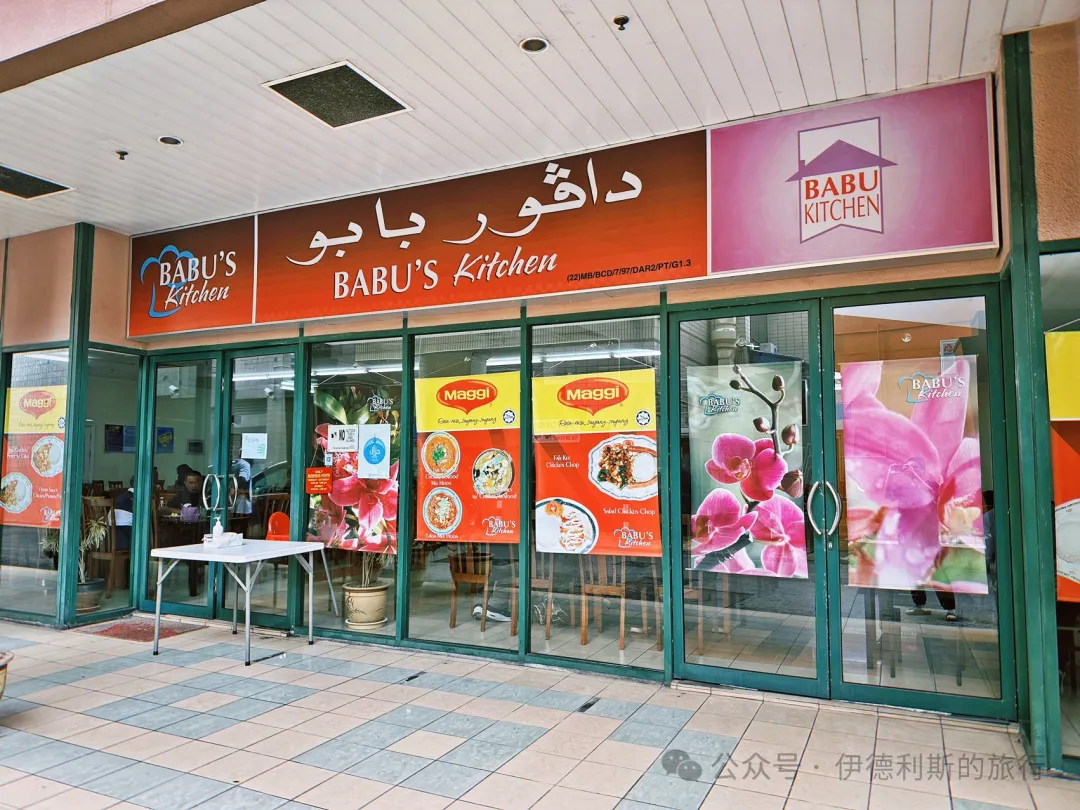
Babu's Kitchen in Brunei
Mei Guang Coffee Shop in Brunei
Malaysia
The Chicken Rice Shop in Kuala Lumpur
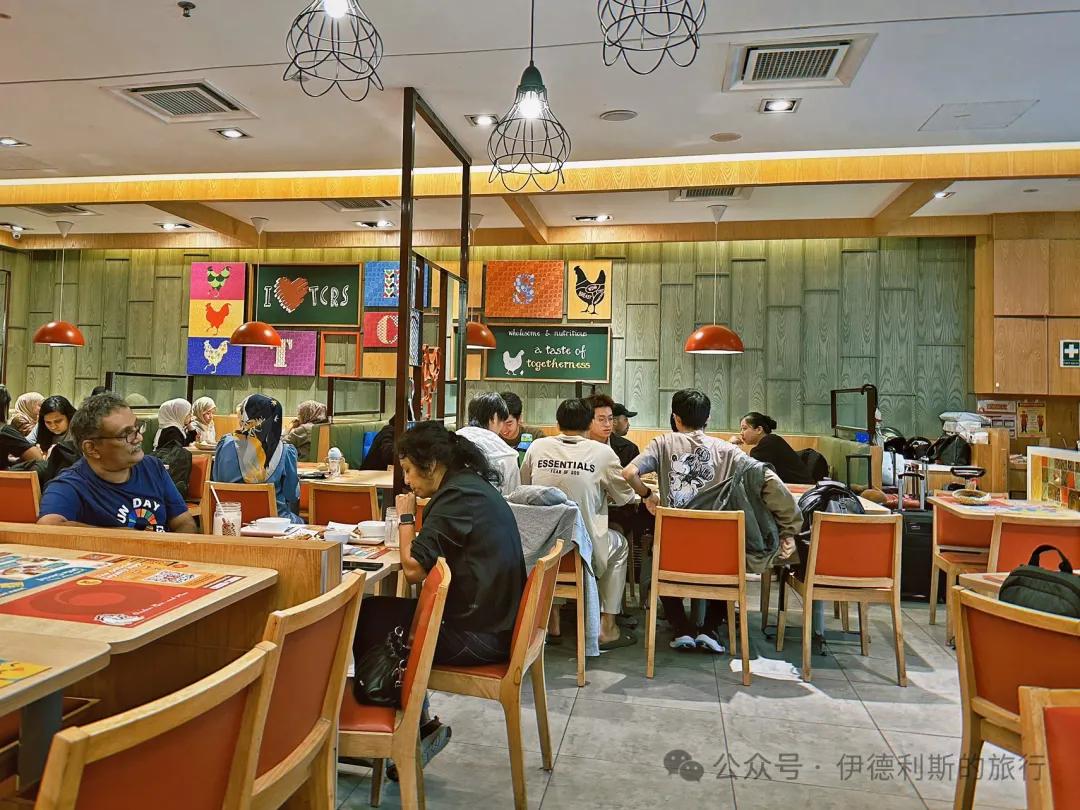
After getting off the plane at Kuala Lumpur Airport, we take the airport express train to the final stop, KL Sentral. Once we go upstairs, we are at the Nu Sentral shopping mall. We eat there almost every time we visit Kuala Lumpur. There are many types of restaurants in the mall. There are three halal Nyonya cuisine restaurants alone, and many other halal Chinese restaurants.
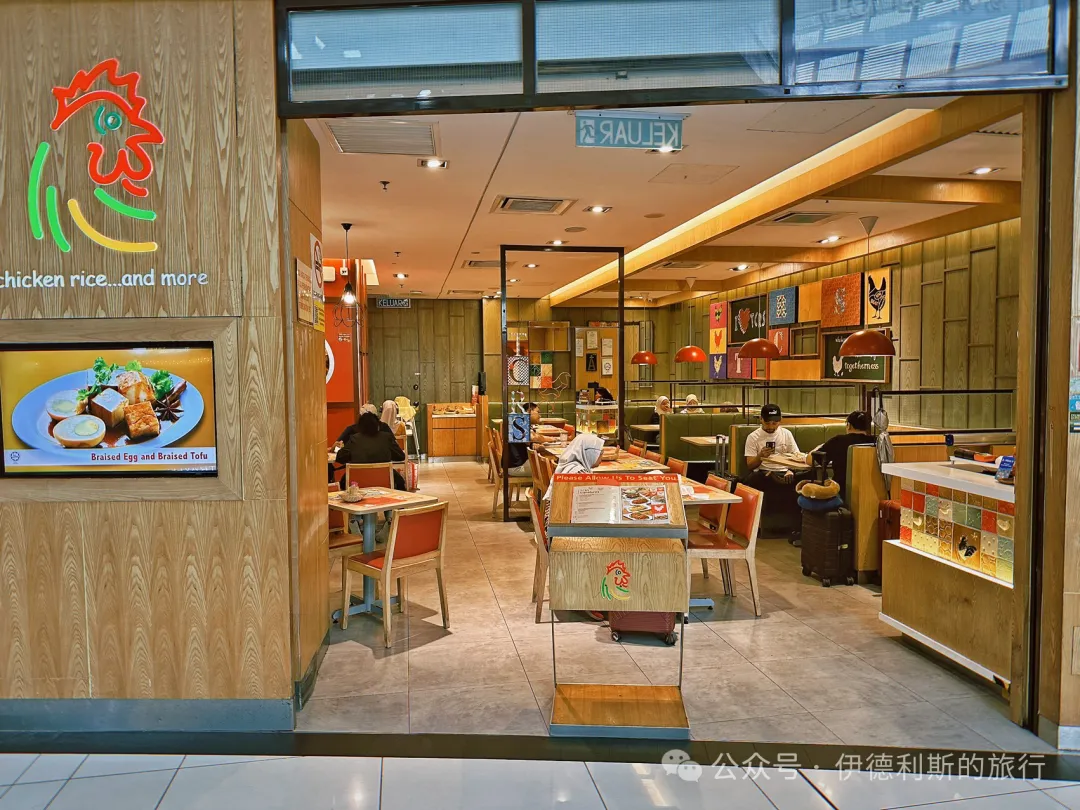
This time, we ate at the famous halal Hainanese chicken rice chain in Malaysia, The Chicken Rice Shop. The founder, Wong Kah Bee, was once an executive director at KFC Malaysia. She had worked in the fast-food industry for 25 years before starting her own business. In 2000, 54-year-old Wong Kah Bee and her daughter, Wong Jia Lian, opened the first The Chicken Rice Shop in Taipan, Selangor, officially launching their halal Hainanese chicken rice brand.
Wong Kah Bee's parents were from Penang and her grandmother was from Hainan. She loved Hainanese chicken rice very much since she was a child. During the 20th century, Hainanese chicken rice was mostly sold at food stalls, and almost none of it was halal. When Wong Kah Bee and her daughter started the business, they had a clear goal: to bring Hainanese chicken rice into shopping malls with clean, comfortable, and independent storefronts suitable for family meals, and to make it halal food for everyone. Today, The Chicken Rice Shop has 135 locations, making it the largest halal Hainanese chicken rice chain in Malaysia. Led by them, halal Chinese food is growing in Malaysia, allowing friends (dosti) from all over the world to enjoy delicious Chinese cuisine here.
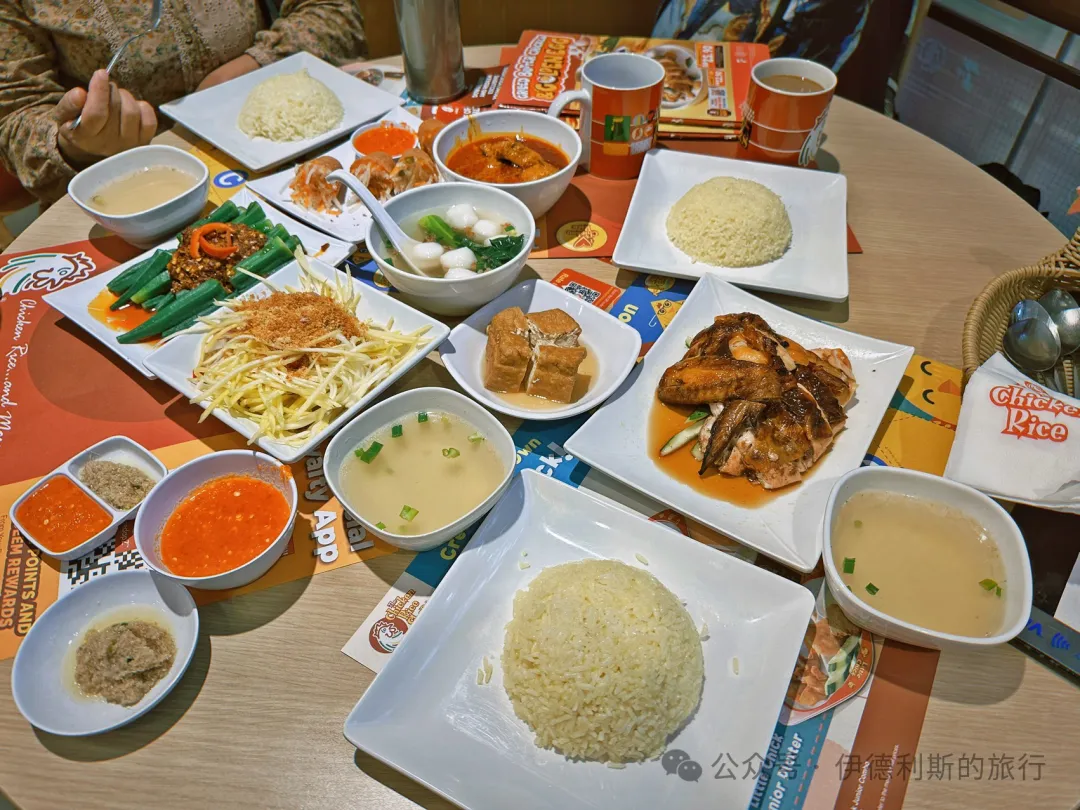
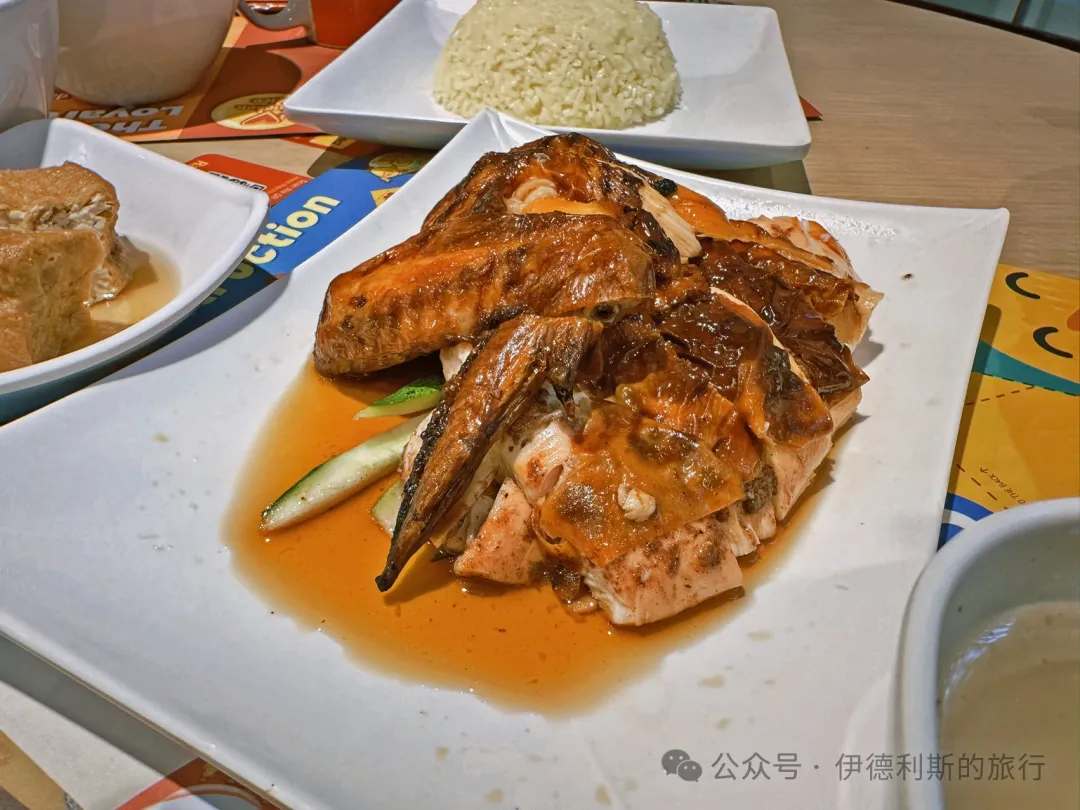
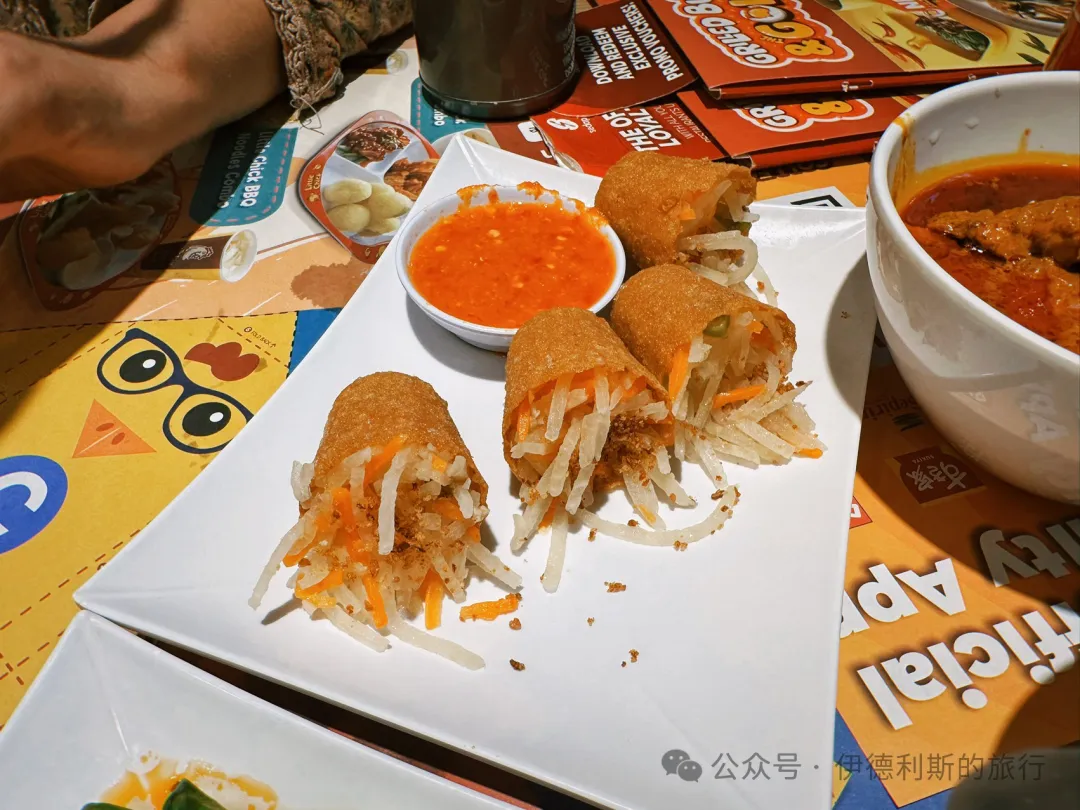
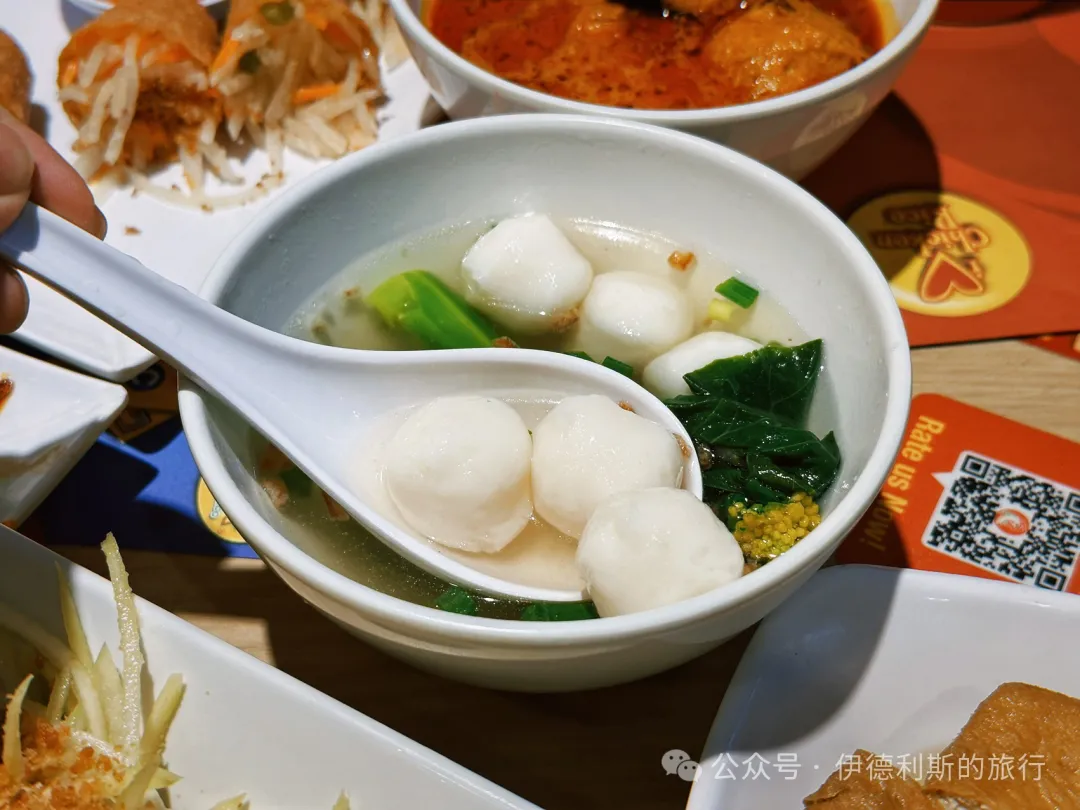
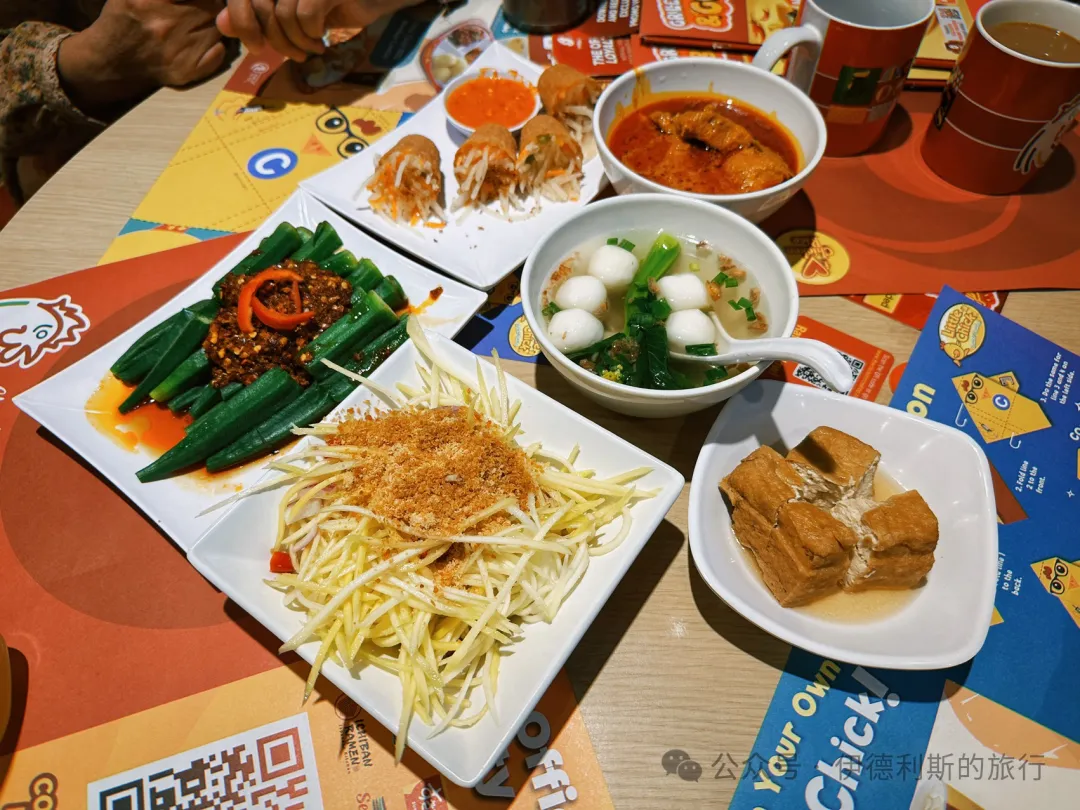
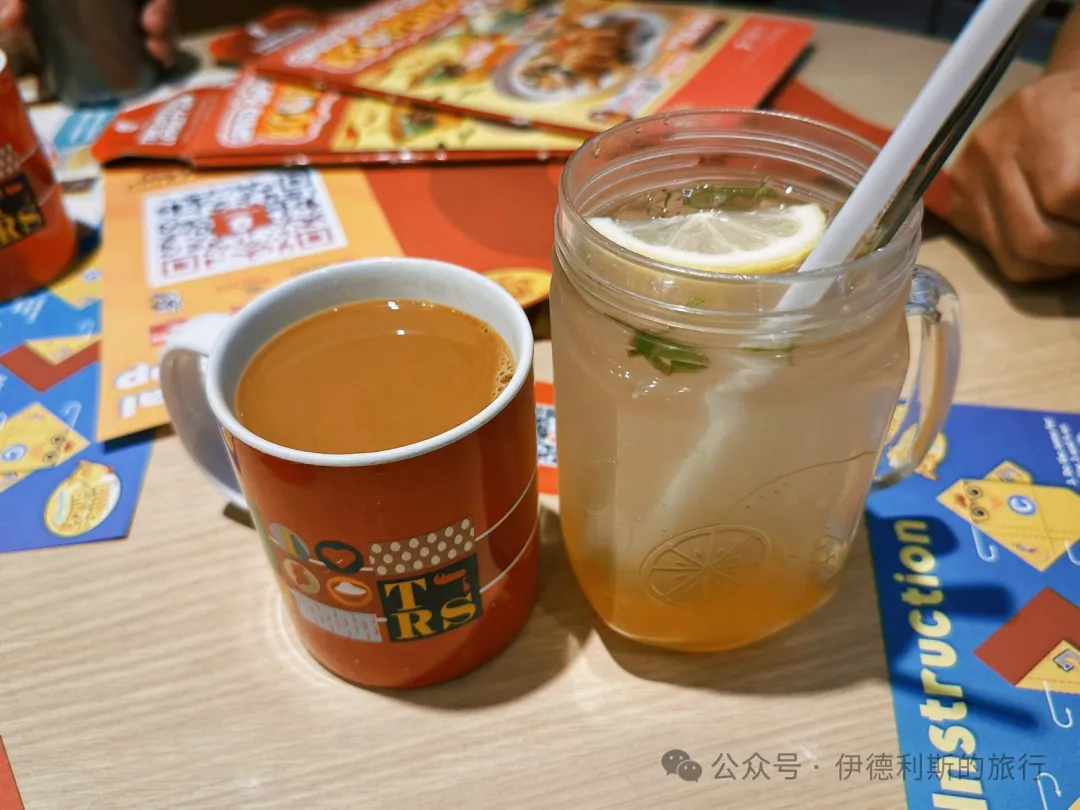
We ordered a set meal for three, which included Nyonya top hats (pai tee), mango salad, roasted chicken, Hainanese curry chicken, okra, wolf herring fish balls (sai tou yu wan), and rice. We also ordered an extra side of roasted tofu, which was perfect for our family. Top hats (pai tee) are a classic snack for weddings and New Year celebrations among the Peranakan Chinese in Malaysia. They originated in Singapore, where they are also called little gold cups (xiao jin bei), and are filled with shredded carrots and white radishes. Wolf herring fish balls (sai tou yu wan) are Teochew-style fish balls made from wolf herring, and they are very popular in Malaysia.
Oriental Kopi at Kuala Lumpur Airport
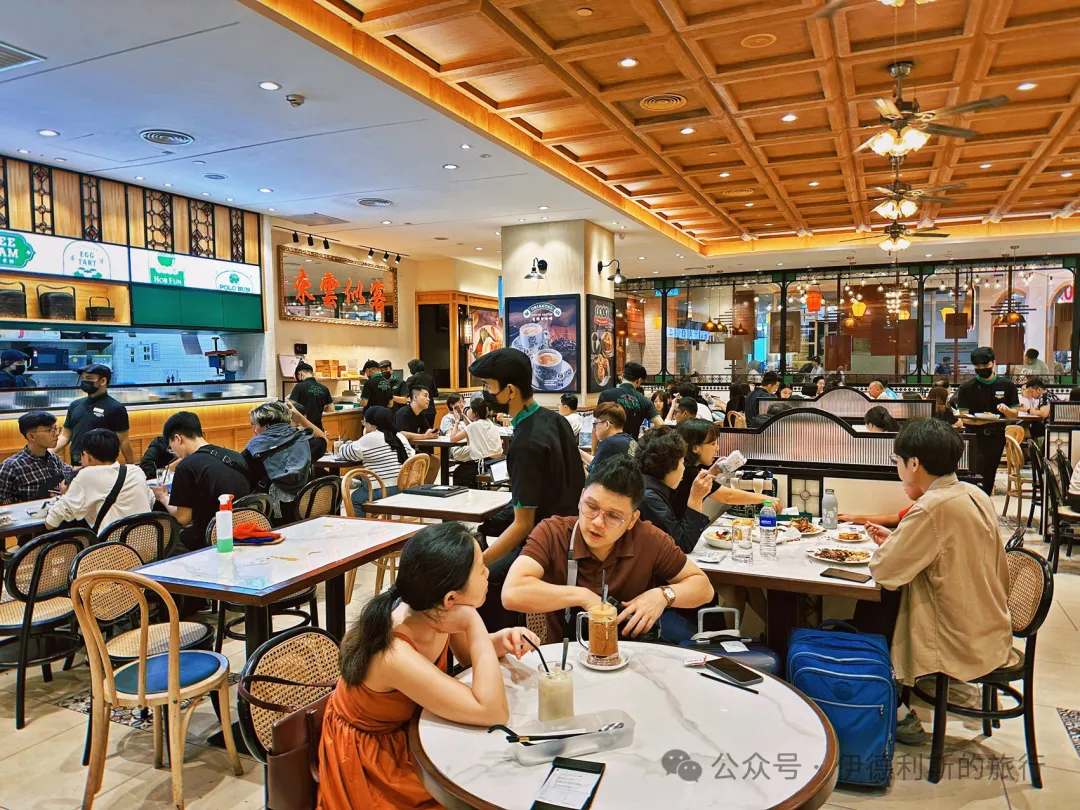
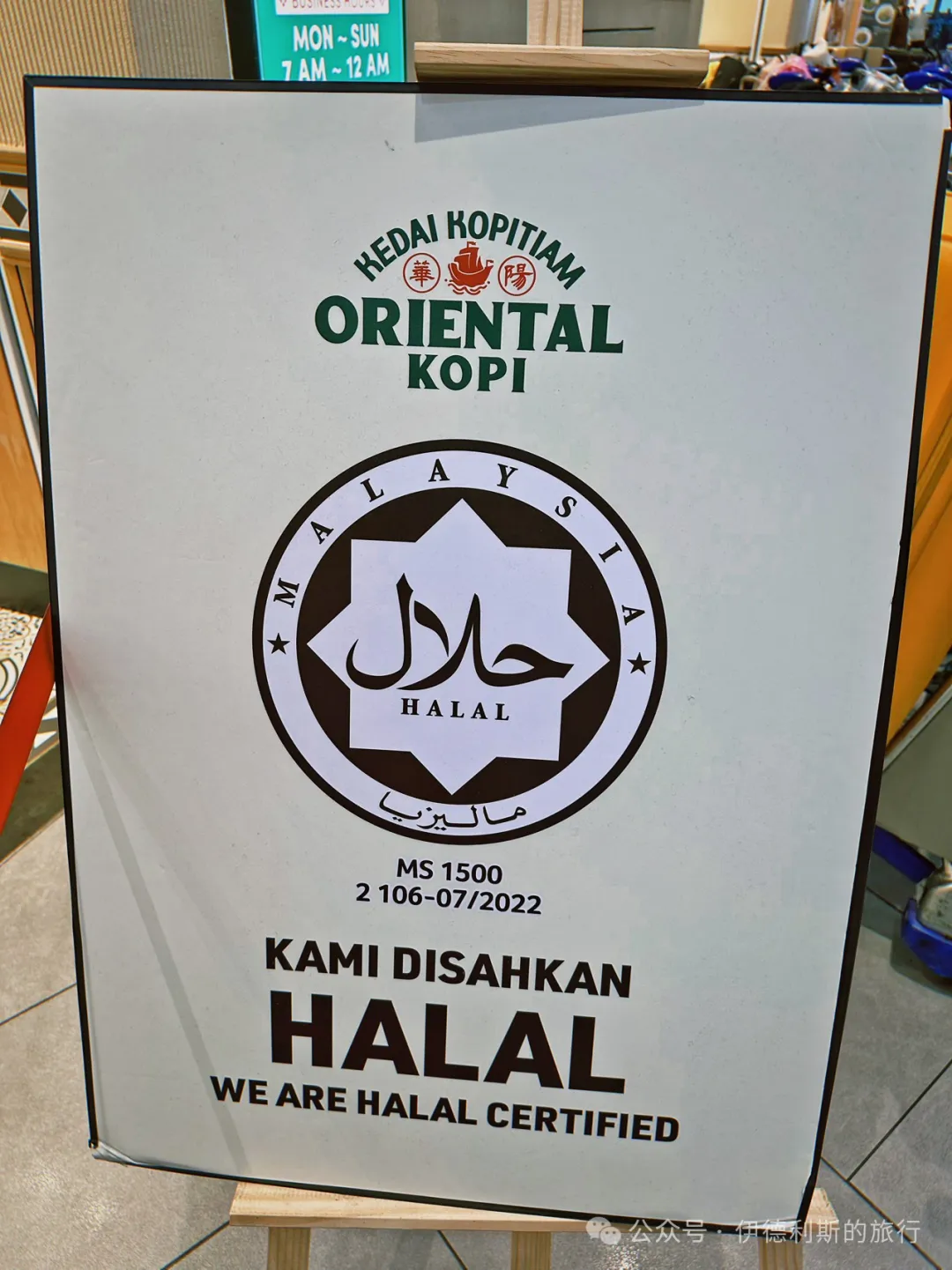
Taking a car from Malacca back to Kuala Lumpur Airport, the most popular restaurant at Terminal 2 is the Hainanese coffee shop chain Oriental Kopi (huayang). There is almost always a line whenever you go.
They have a huge variety of dishes and are currently one of the most famous halal Hainanese coffee shops. Hainanese people began immigrating to Malaysia in the 19th century. Many early immigrants worked as chefs and servers in British hotels and restaurants, while some worked as servants for British officers. Influenced by their British employers, the Hainanese learned to cook Western food and combined it with Hainanese culinary elements to create the unique Hainanese coffee shop (Hailam Kopitiam) culture.
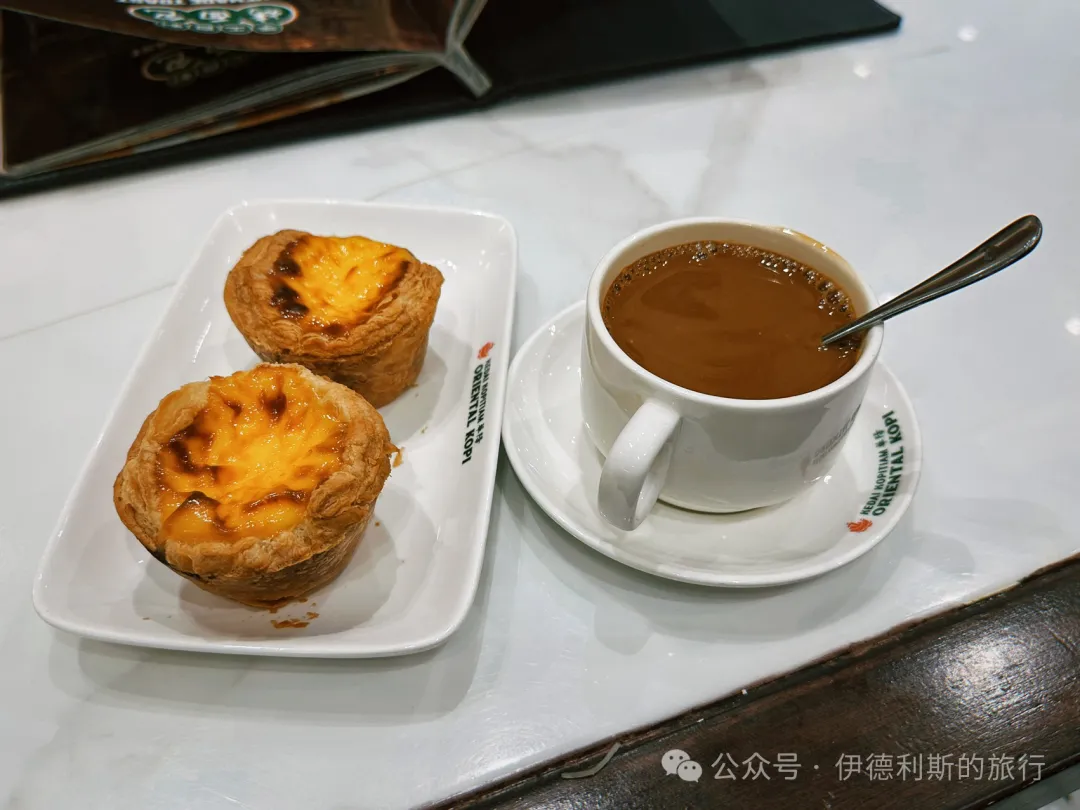
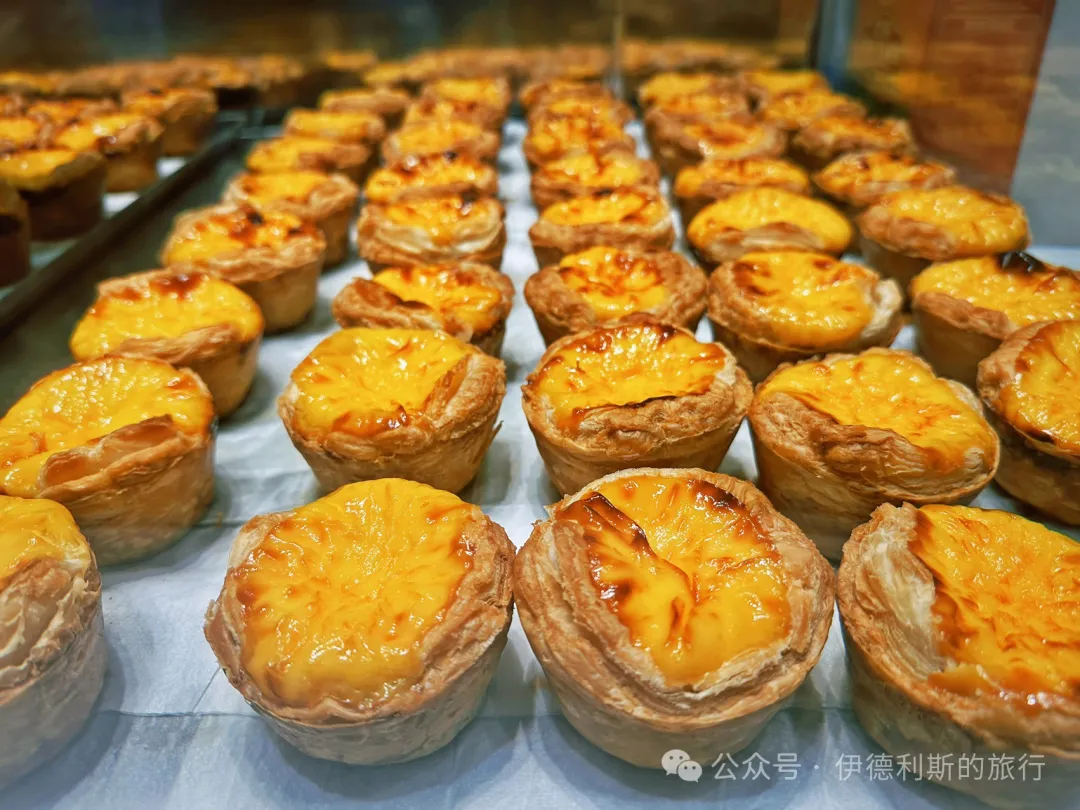
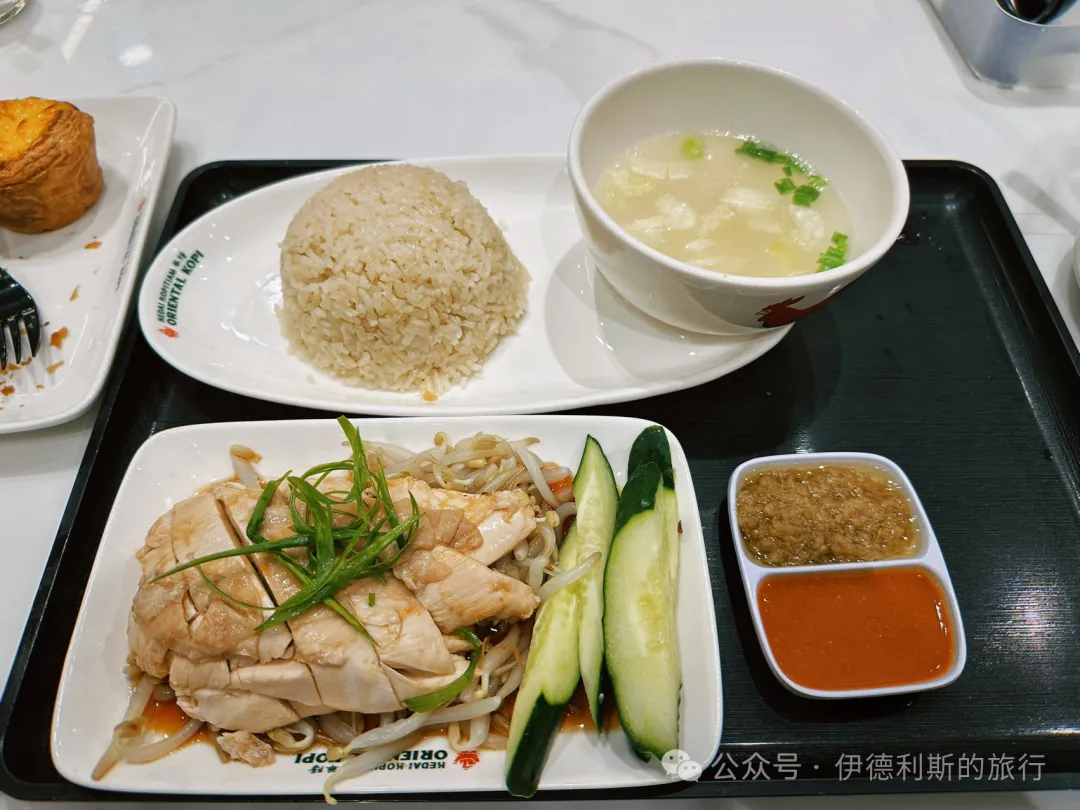
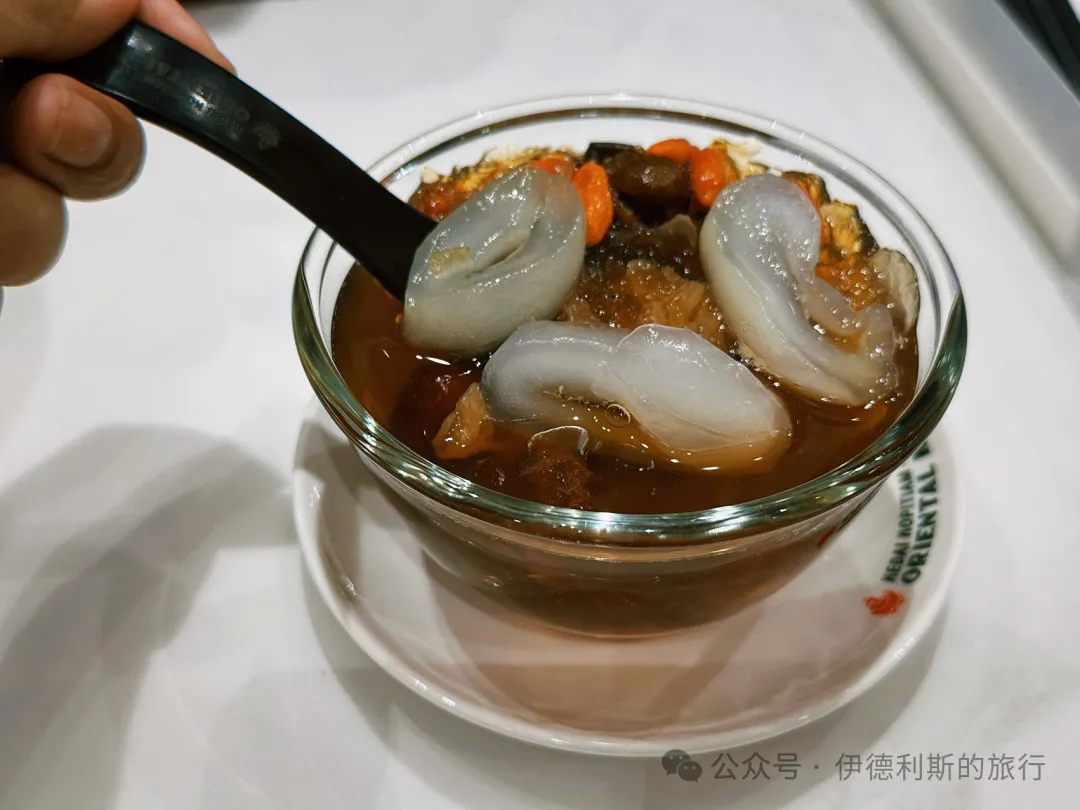
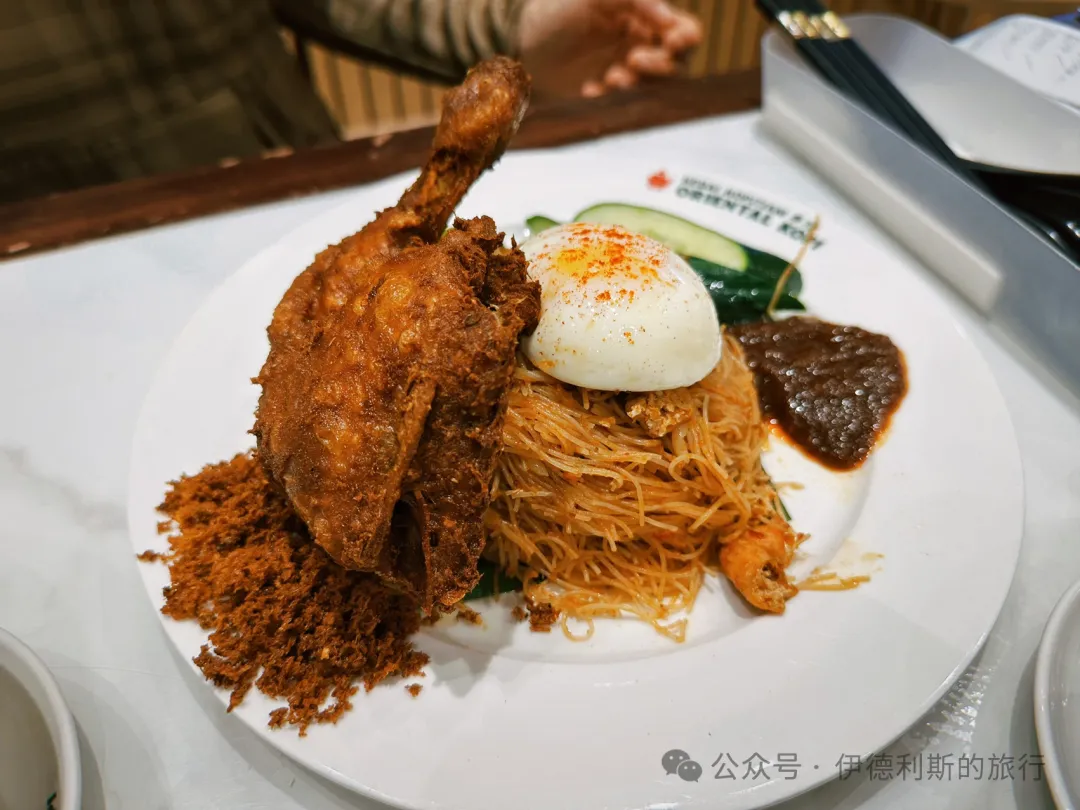
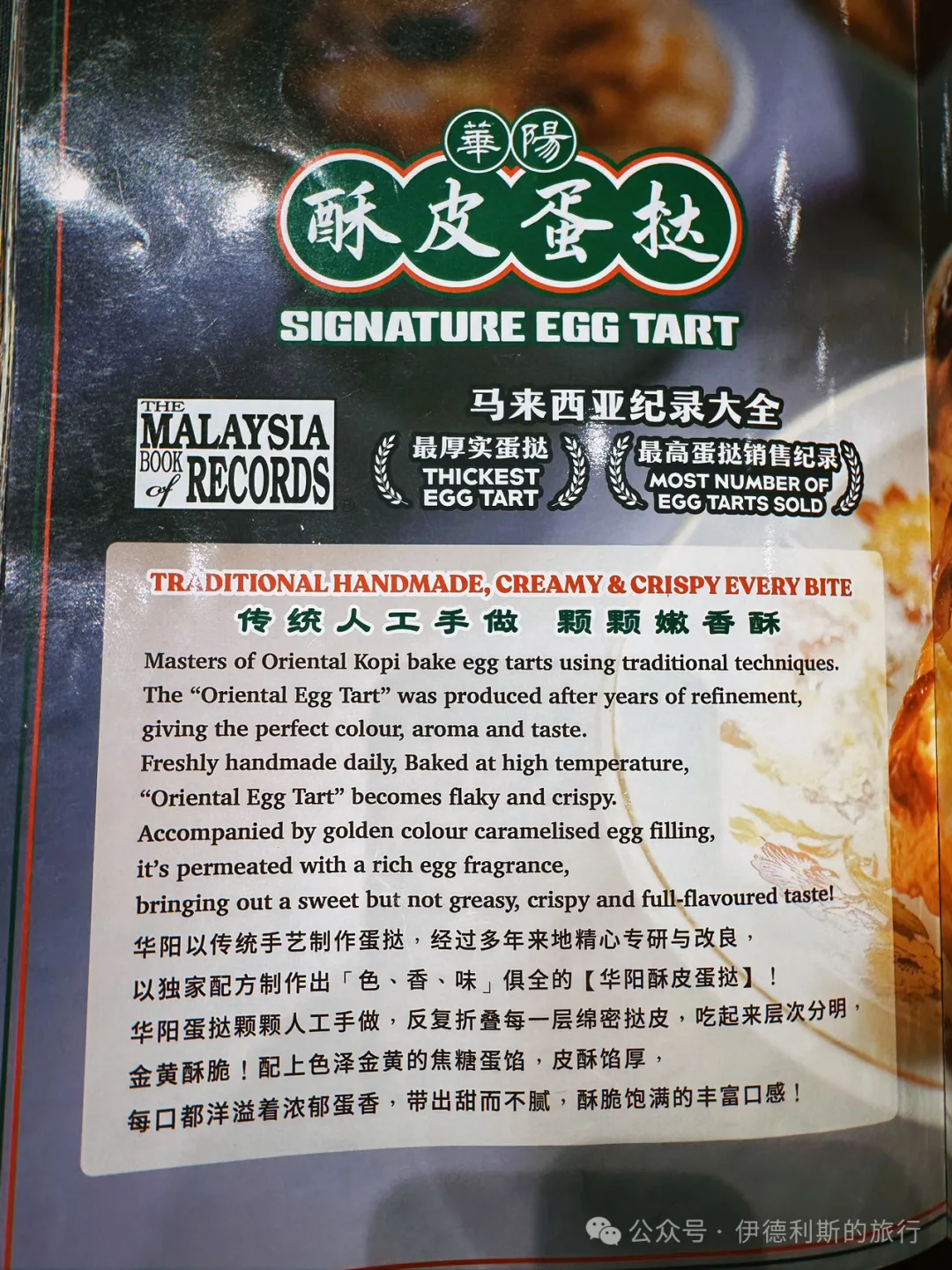
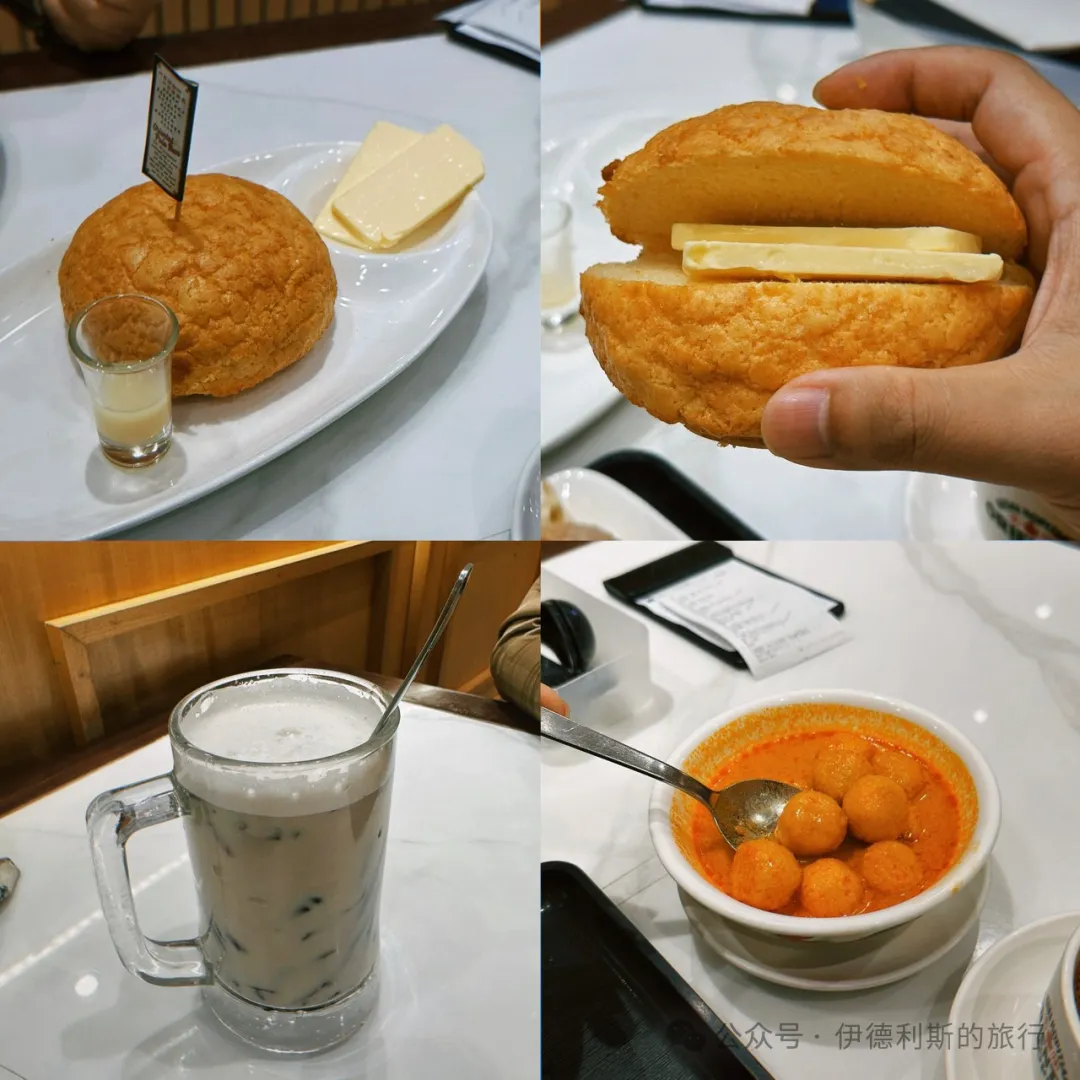
We ordered flaky egg tarts, pineapple buns with butter (bing huo bo luo bao), Hainanese chicken rice, classic mee siam, curry fish balls, coffee, soy milk with grass jelly, and longan sea coconut sweet soup (tang shui). The coffee, flaky egg tarts, and pineapple buns with butter are known as the 'Oriental Kopi Three Treasures' and make a classic Nanyang breakfast combination. Their flaky egg tarts are indeed well-made, with a very tender egg custard and a rich aroma. Their sweet soup (tang shui) is also delicious. We rarely drank sweet soup in the north, so it felt very authentic to the Nanyang style.
However, their Hainanese chicken rice was not good. The quality of the rice seemed poor, and it felt gritty, lacking the texture of rice at other places.
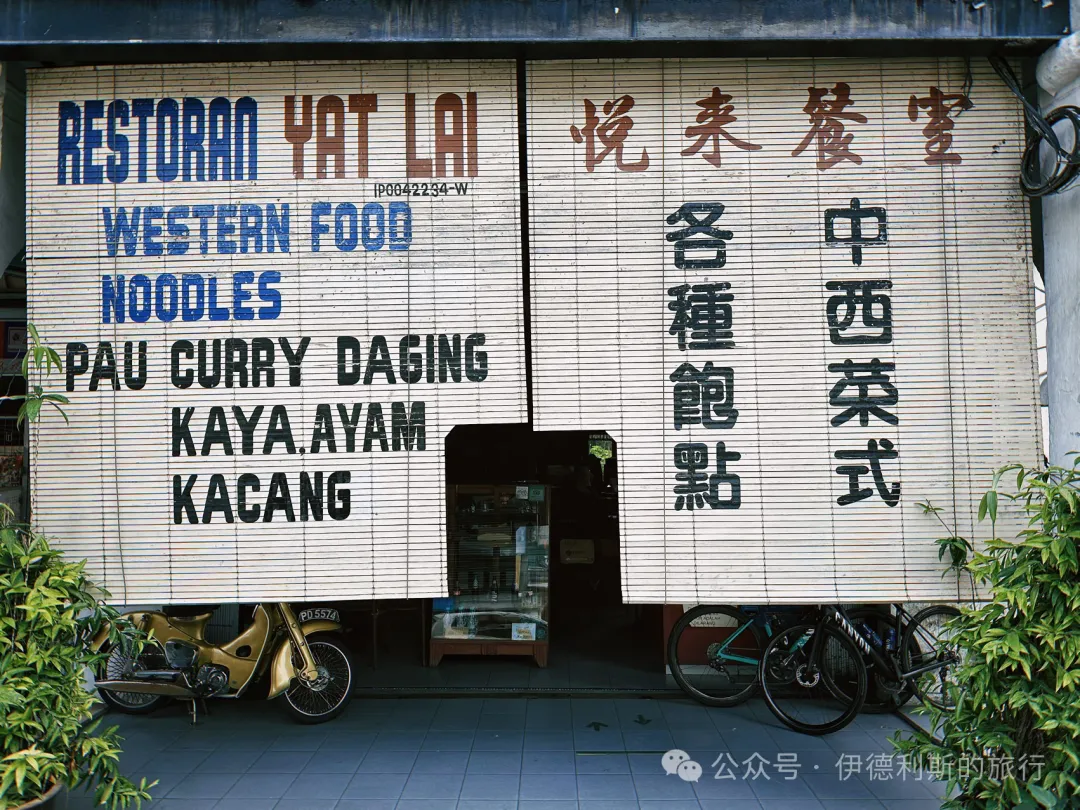
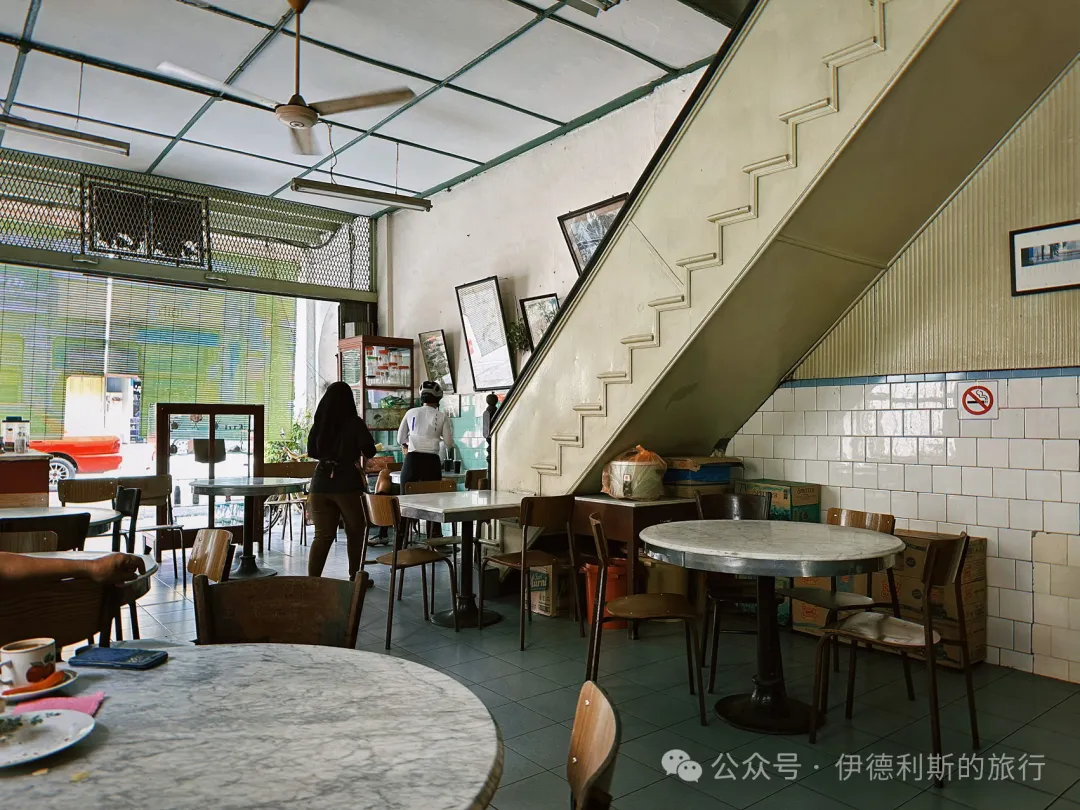
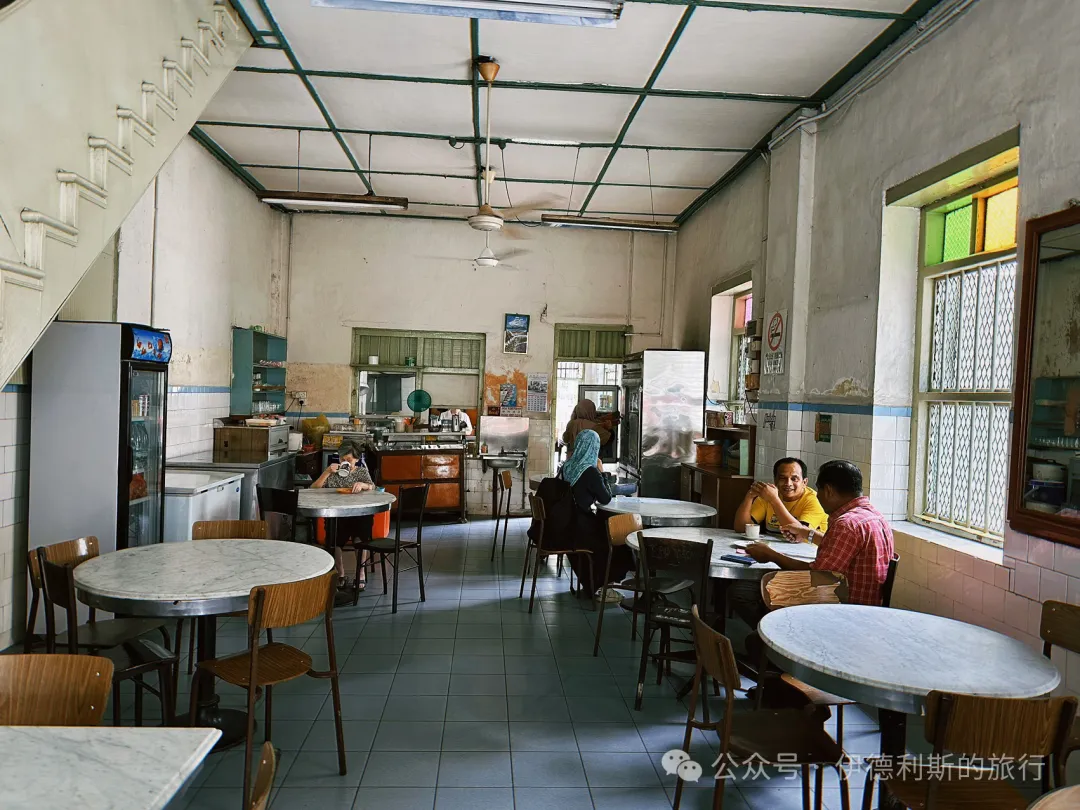
Hua Mui Restaurant in Johor Bahru
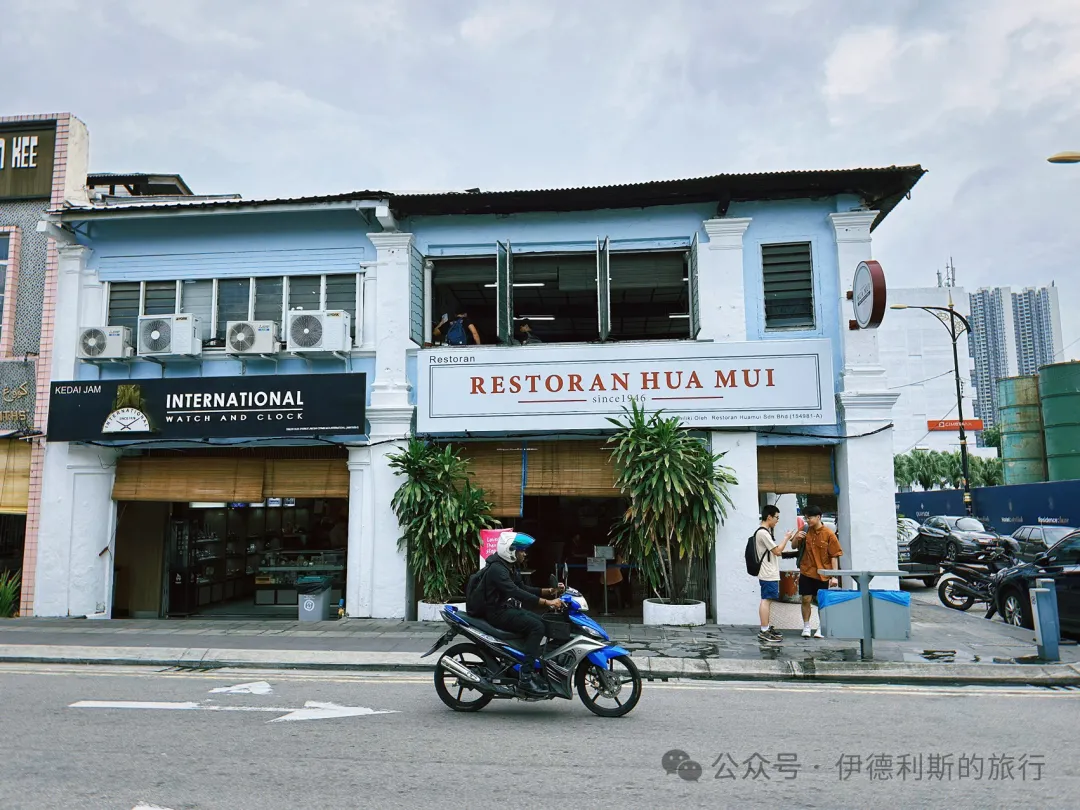
We took the train from Woodlands, Singapore, in the morning and arrived at the Johor Bahru station in Malaysia in 5 minutes. We walked from the Johor Bahru station to the old town to visit Restoran Hua Mui to experience an authentic Hainanese coffee shop (Hailam Kopitiam).
Restoran Hua Mui opened in 1946 and has a 78-year history, making it the oldest Hainanese coffee shop in Johor Bahru. Like many old-school Hainanese coffee shops in Malaysia, although the owner is Hainanese Chinese, they hire Malay chefs and staff so that Chinese, Malay, and Indian customers can all enjoy the food.
The term coffee shop (kopitiam) is made up of the Malay word 'kopi' (coffee) and the Hokkien word 'tiam' (shop), specializing in charcoal-grilled toast, white coffee, and soft-boiled eggs. Early Hainanese coffee shops were very popular with the British. Today, they have become places where older people discuss news and daily life, serving as important social hubs.
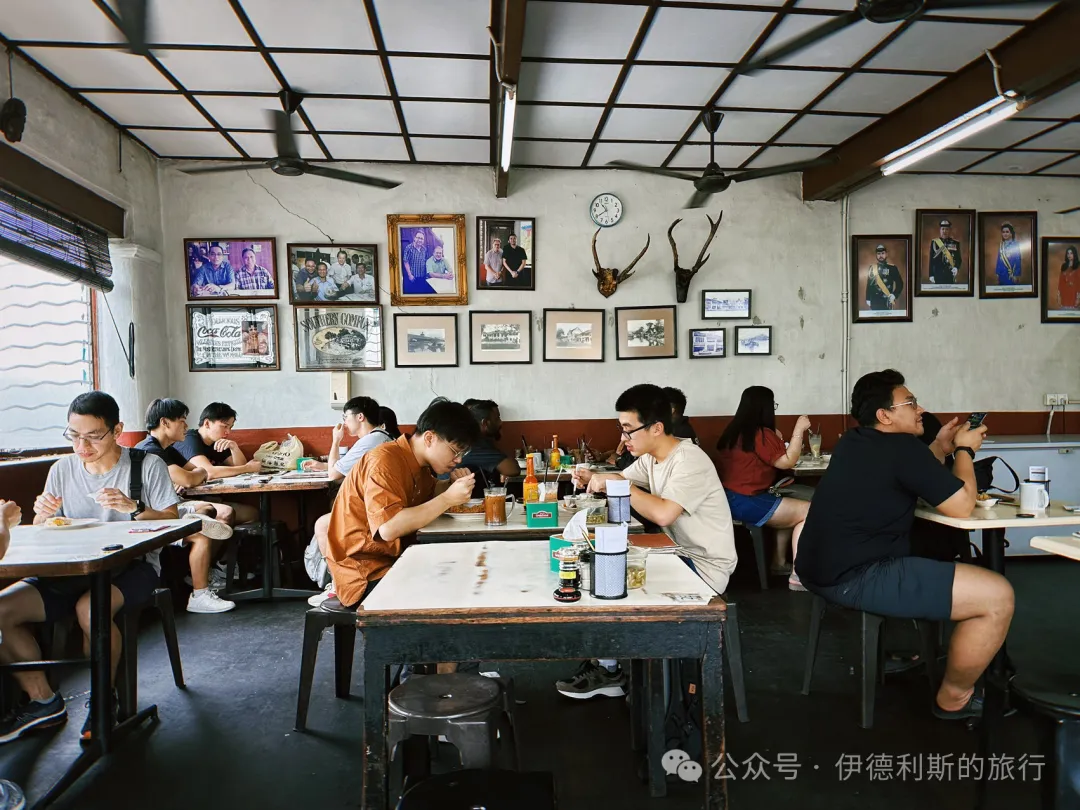
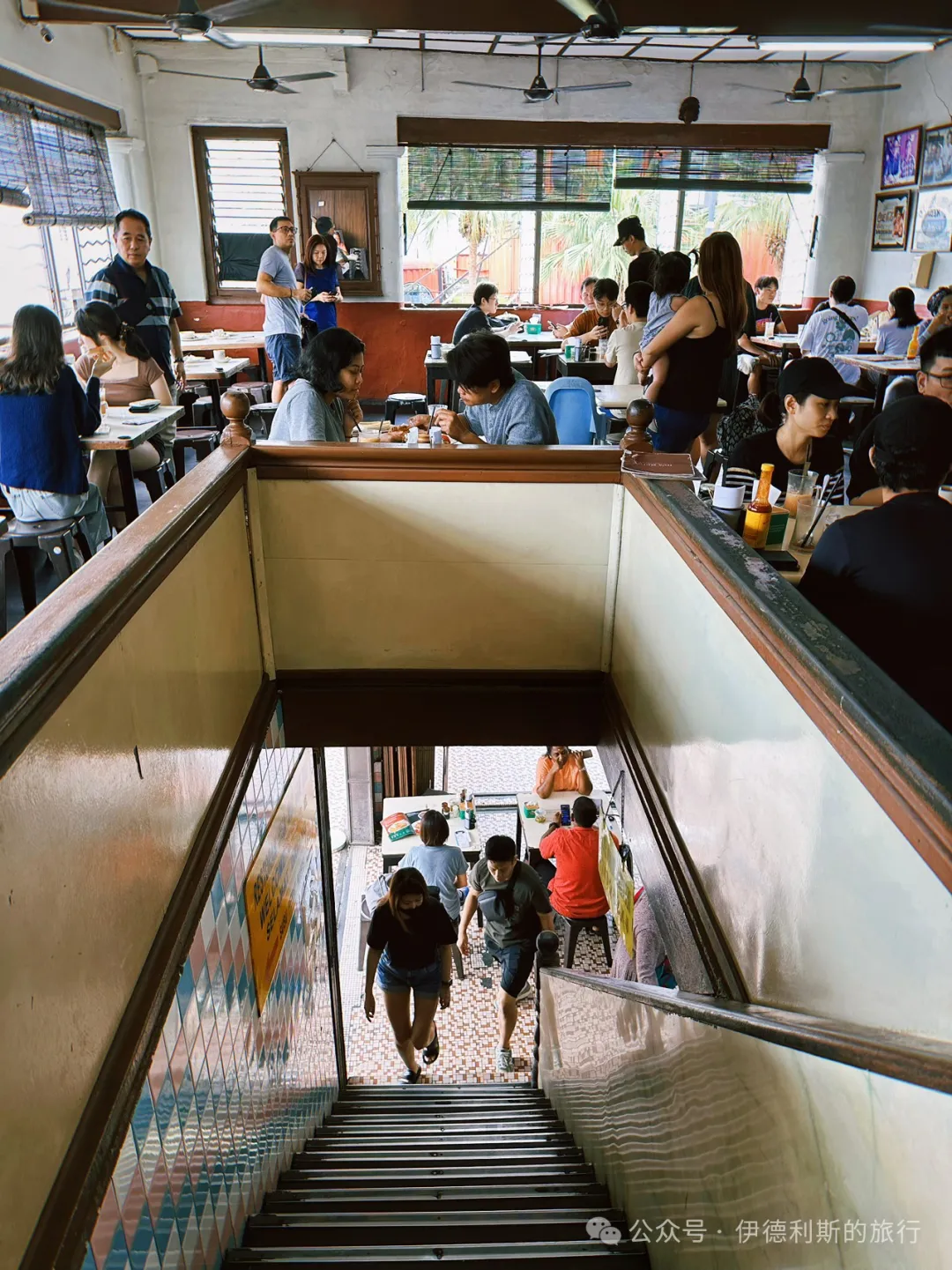
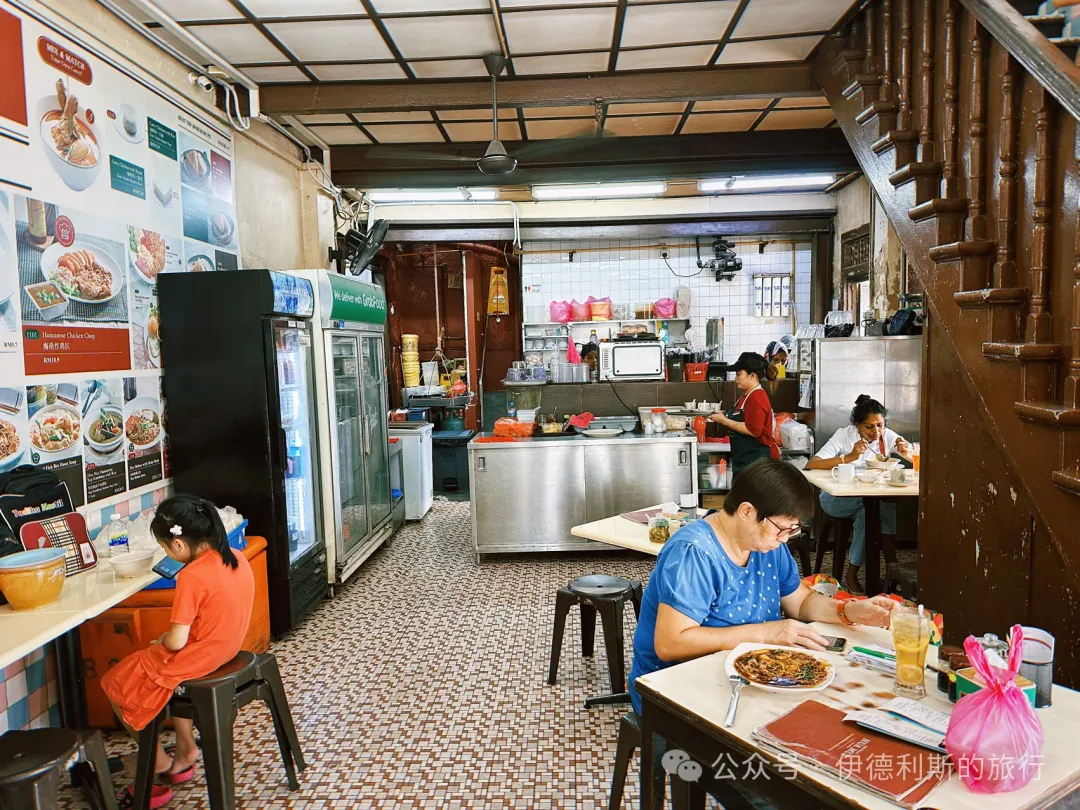
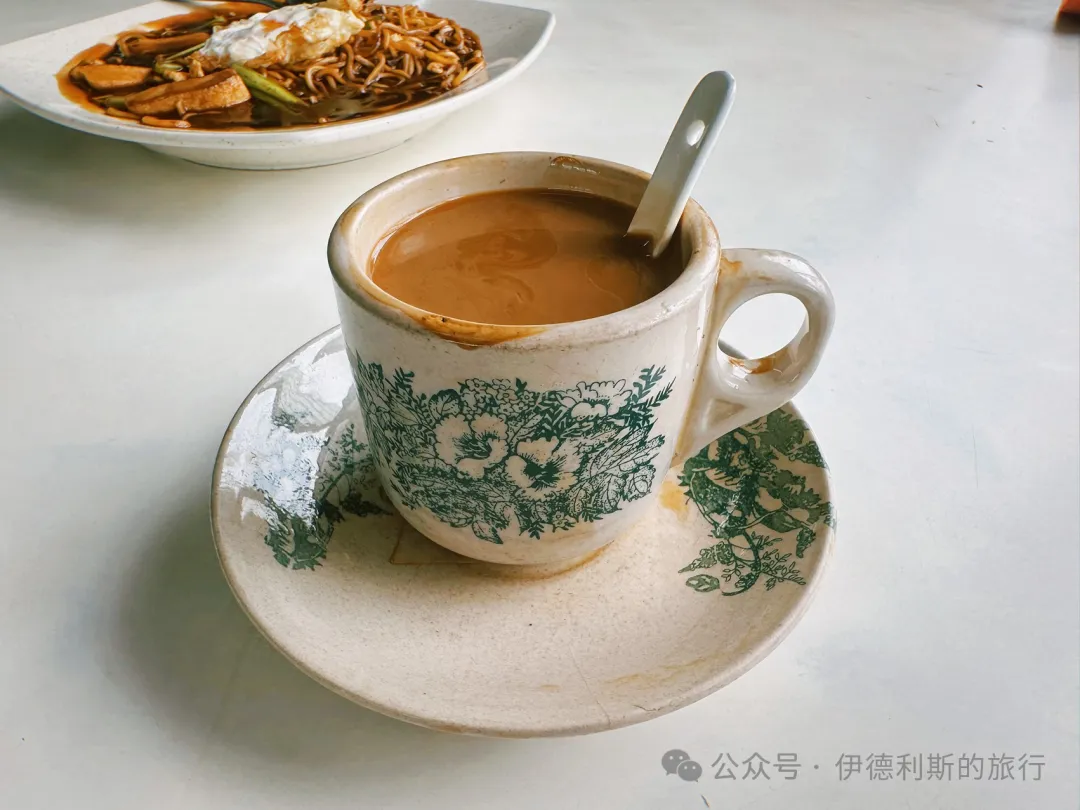
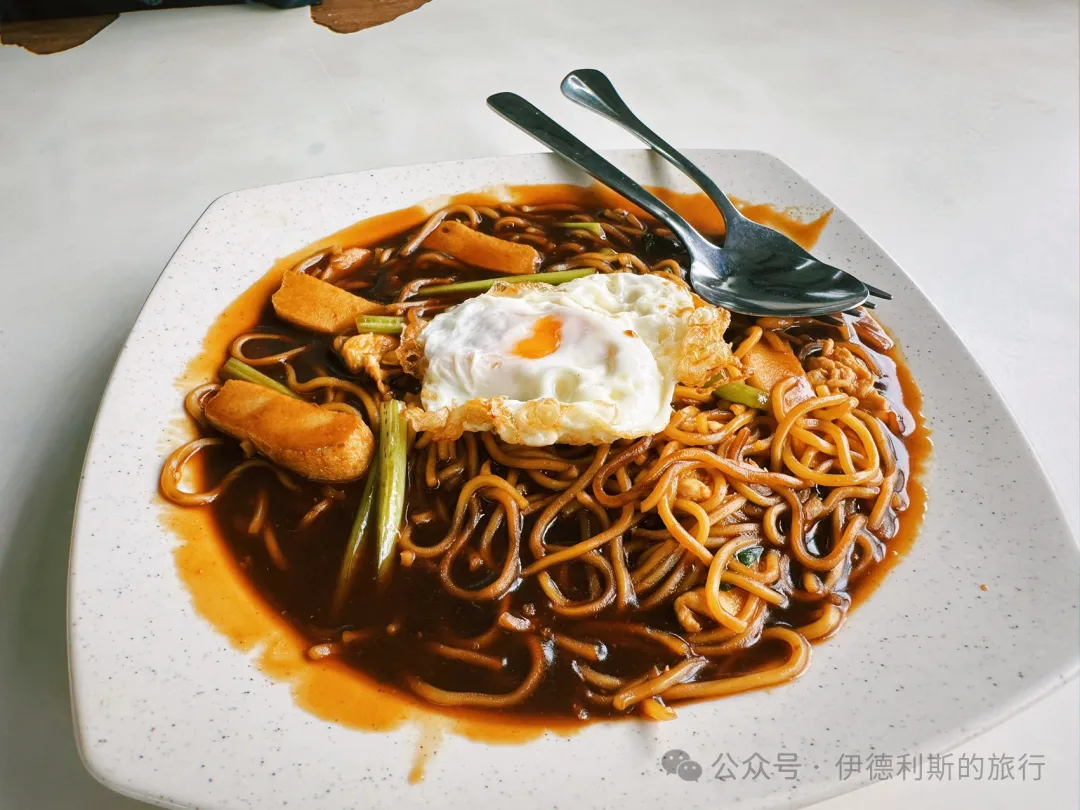
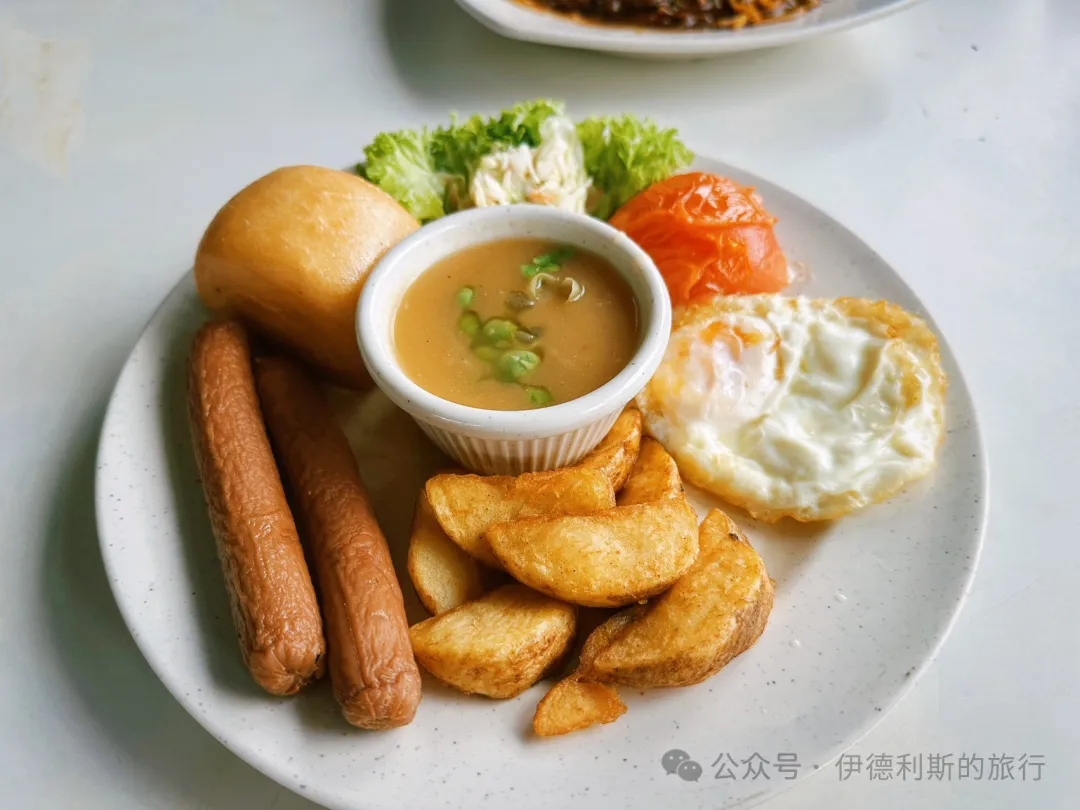
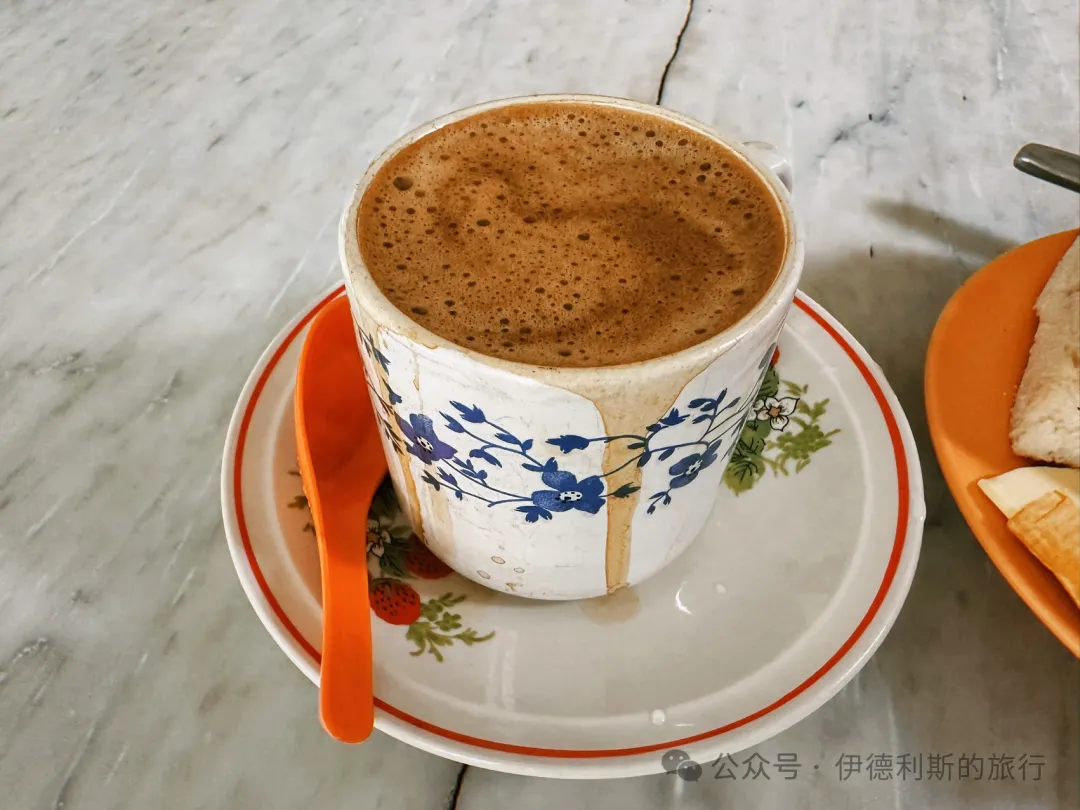
At Hua Mui, we ordered mutton stew rice, Hainanese noodles, coffee and tea mix (cham c), and a breakfast platter. Coffee and tea mix (cham c) is just coffee, tea, and milk. The restaurant's setting is still very traditional, with a classic two-story arcade building (qilou) and bamboo curtains hanging on the doors and windows, easily bringing to mind the old days.
Yut Loy Coffee Shop in Kuala Kangsar
Taking the train north from Ipoh, it is a 30-minute ride to Kuala Kangsar District. Kuala Kangsar has been the royal city of the Sultan of Perak since the 18th century. The town center still keeps an old street of arcade buildings, where you can find an old-school Hainanese coffee shop called Yut Loy Coffee Shop (Yue Lai Cha Shi). The Hainanese owner hires Malay staff here, allowing the three major ethnic groups—Chinese, Malay, and Indian—to all dine in the shop.
Since Yut Loy Coffee Shop only serves main meals after 1:00 PM, we spent the morning there having coffee with toast, topped with honey and butter. In Nanyang-themed novels, I often read about old people sitting in these Hainanese coffee shops all morning with a cup of coffee, a piece of toast, and a newspaper. This time, we got to experience it ourselves.
Sin Hua Air-Conditioned Restaurant in Kota Bharu
Hainanese people are an important part of the Chinese community in Kelantan. We ate at the Sin Hua Air-Conditioned Restaurant, a long-standing Hainanese eatery in Kota Bharu with over 50 years of history. We had Hainanese chicken chop, Hainanese noodles, and toasted bread, all of which are authentic Nanyang Hainanese dishes. Next door, there is also a Sin Shing Coffee Shop (Xin Cheng Cha Can Shi), which is said to have the best Hainanese chicken rice in Kota Bharu.
Fook Yuen Coffee Shop in Kota Kinabalu
Although there are many Hakka and Hokkien people on Gaya Street in Kota Kinabalu, the restaurants are still mostly run by Hainanese people. I started my morning with breakfast at Fook Yuen Coffee Shop (Fuyuan Cha Canting), which is very popular and crowded with tourists. Ordering is semi-self-service. They offer Cantonese-style congee and dim sum, Malay coconut milk rice (nasi lemak), and Western-style bread and coffee, meeting the needs of all ethnic groups in Malaysia. I had a serving of Hainanese chicken rice, two portions of steamed dumplings (shaomai), and a glass of iced milk tea. Their chicken rice is a modified version; they add dried small fish to the rice, a style that should be more popular with Malay customers.
Yit Chang Coffee Shop in Kota Kinabalu
Opened in 1896, Yee Fung Coffee Shop (Yue Chang Cha Shi) is the oldest Hainanese restaurant in Kota Kinabalu, with a history even longer than the city itself. The shop was originally located at the headquarters of the British North Borneo Chartered Company on Gaya Island. After the settlement on the island was destroyed in 1898 by an anti-British uprising led by the indigenous leader Mat Salleh, the shop moved to its current location on Gaya Street. You could say Yee Fung Coffee Shop has witnessed the entire transformation of Kota Kinabalu. Old photos hang on their walls, including one from the 1960s showing Yee Fung Coffee Shop in the exact same spot as today.
The shop is divided into two sections, with the Hainanese owner personally making coffee and toasting bread. The owner is very enthusiastic, provides excellent service, and speaks great Korean, which helps him attract many Korean guests. Another stall invites Muslim sisters to make Hainanese beef offal noodles (niuzamian) and various Malay dishes, which is a major feature of traditional Hainanese coffee shops. To attract customers from all ethnic groups, they must make food that suits everyone's taste. This is why many long-standing Hainanese restaurants in Malaysia have been open for decades or even a century.
We ordered white coffee, three-layer coffee, monk fruit herbal tea (luohanguo liangcha), oats, toast, and beef offal noodles. Monk fruit herbal tea and barley water (yimi shui) are really perfect for the weather here.
Yee Fung Coffee Shop in Kota Kinabalu
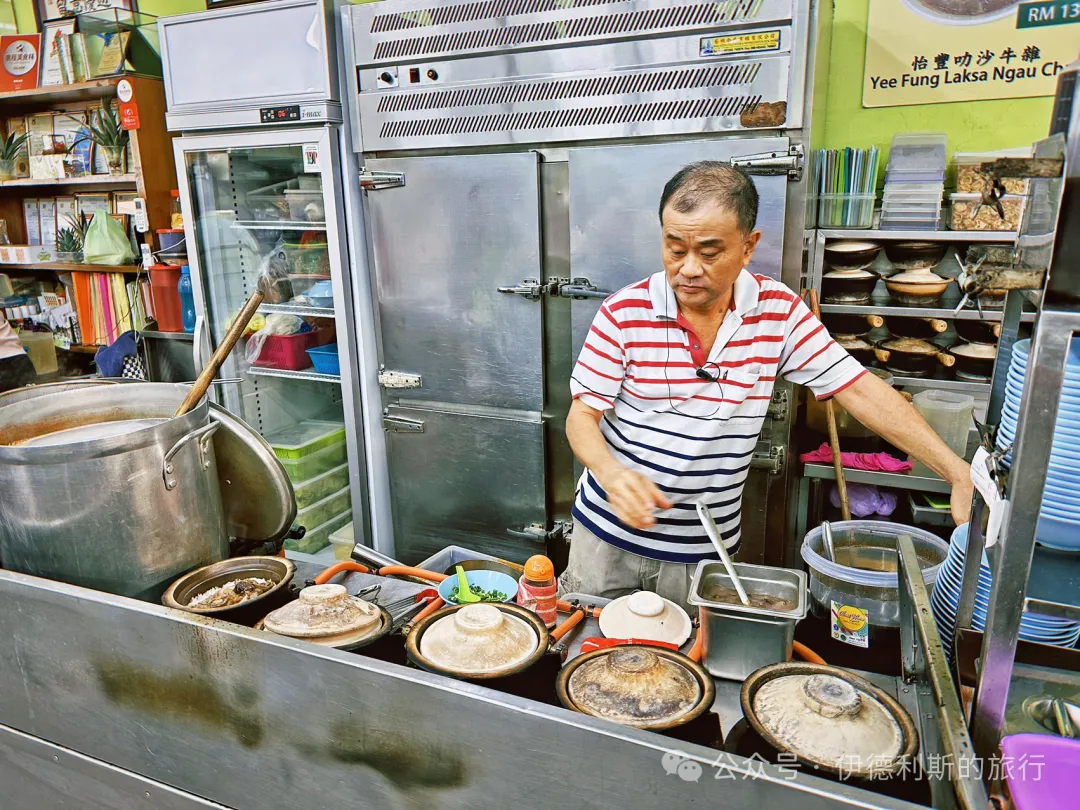
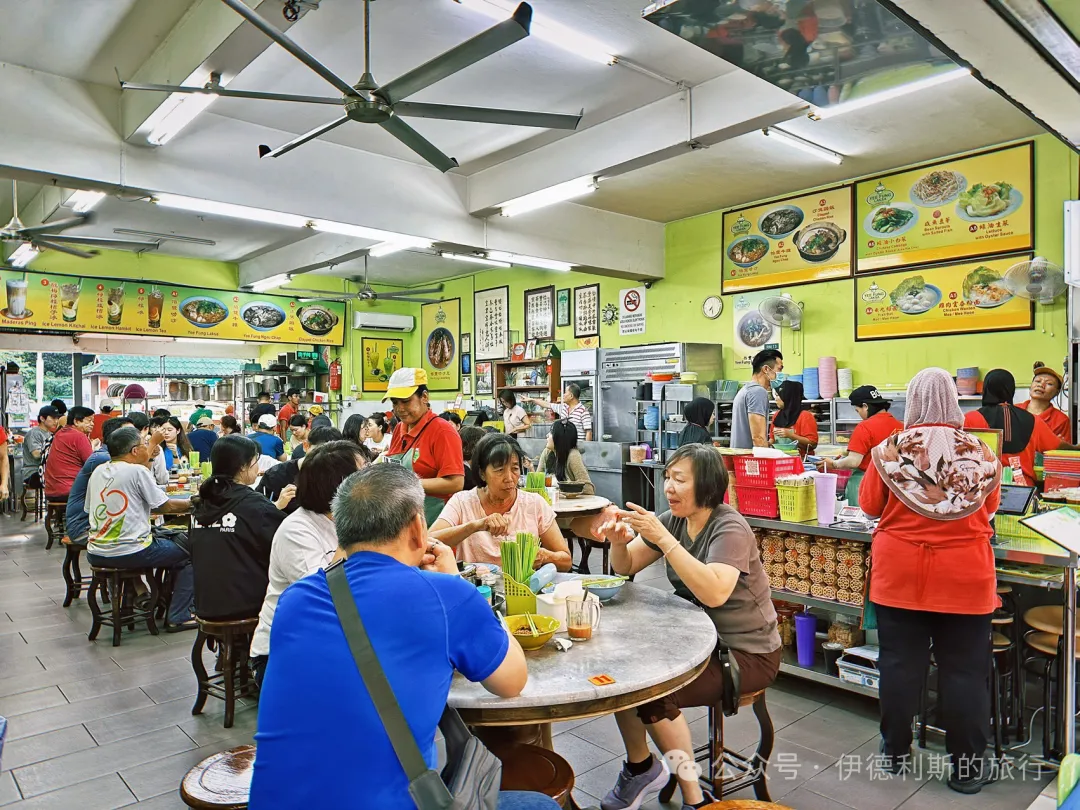
The most popular halal Chinese restaurant on Gaya Street in Kota Kinabalu is Yee Fung Tea House. The owner of Yee Fung Tea House, Zhuang Qiuwang, is from Johor. He started selling laksa on Gaya Street in 1984, which is exactly 40 years ago. Like many halal Chinese restaurants in Malaysia, they hire Muslim chefs and staff to ensure the ingredients are halal.
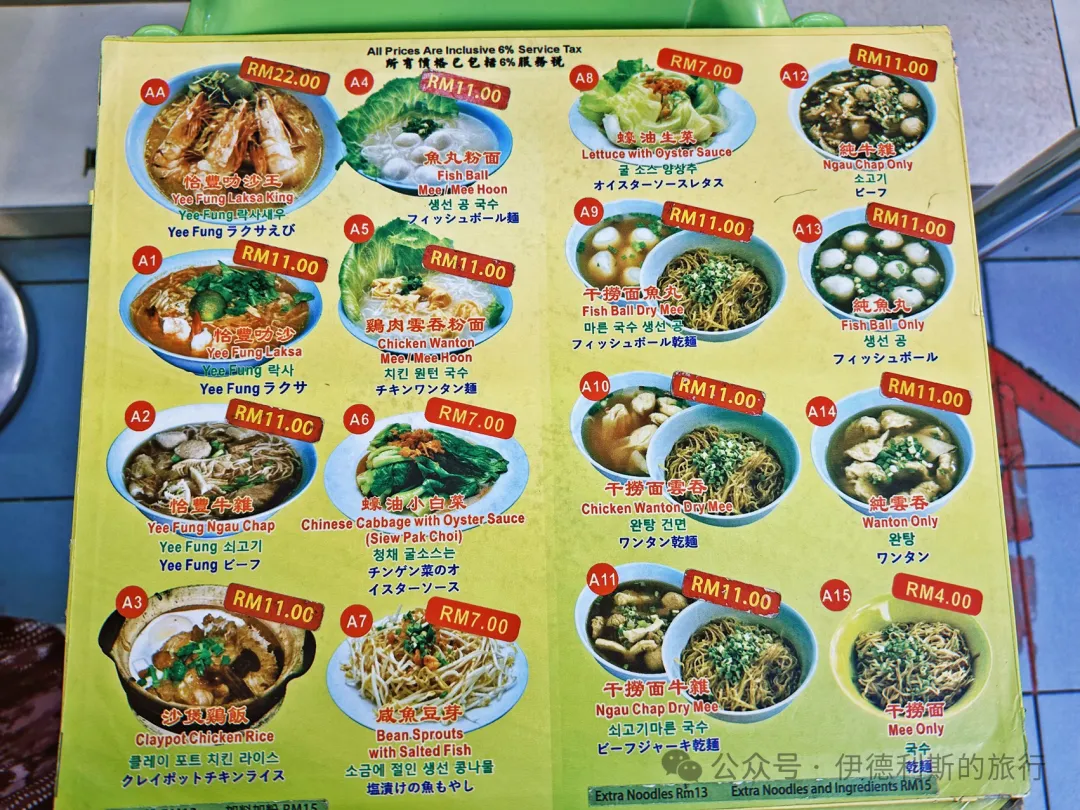
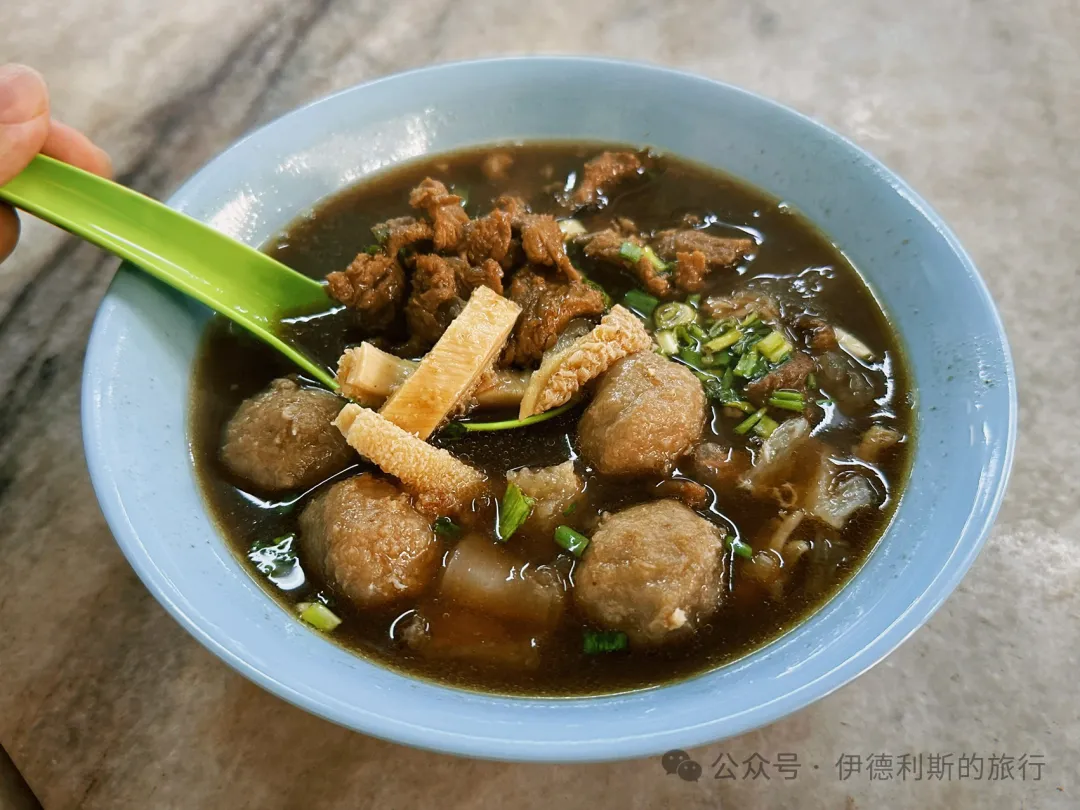
Their signature dishes are the "three treasures": laksa, claypot chicken rice, and beef offal. We ordered lettuce with oyster sauce, plain beef offal, plain fish balls, and chicken wonton noodles. Hainanese beef offal mainly includes beef balls, beef tripe, stewed beef, and beef slices. Many Hainanese restaurants in Kota Kinabalu serve it, and it is a major local specialty. Authentic Hainanese beef offal does not use MSG. It relies purely on spices to stew out the flavor, so you do not feel thirsty after eating it.
Ling Long Seafood in Kuching
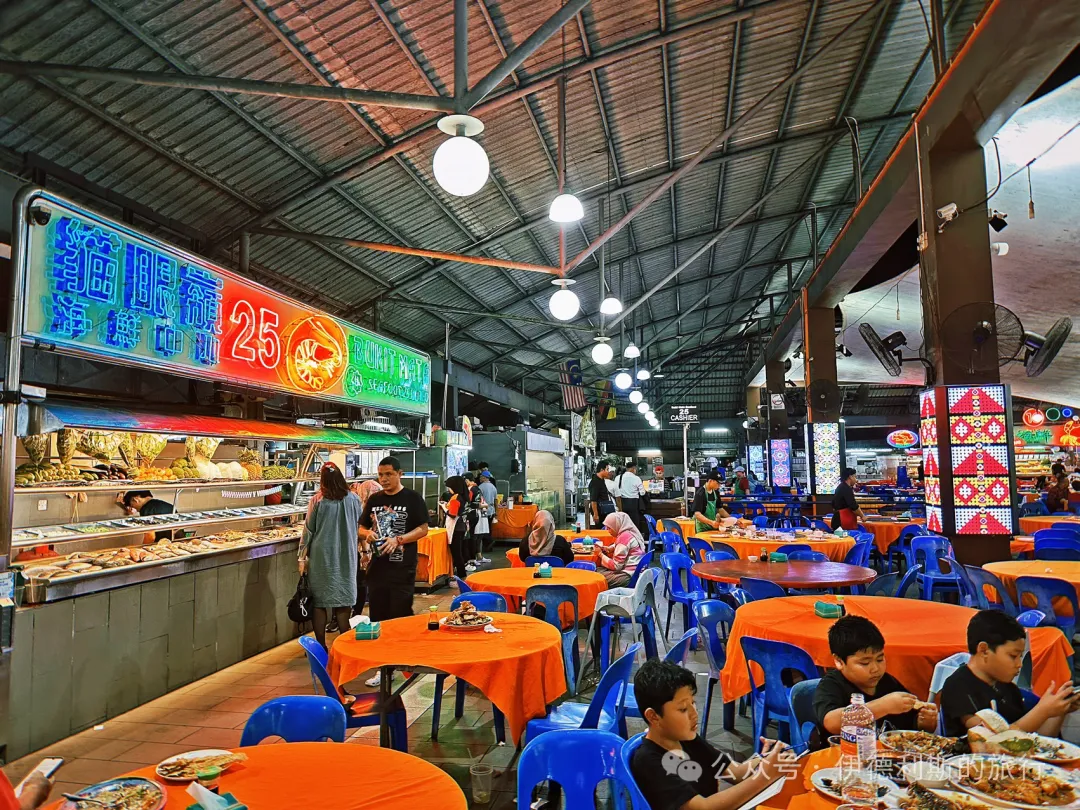
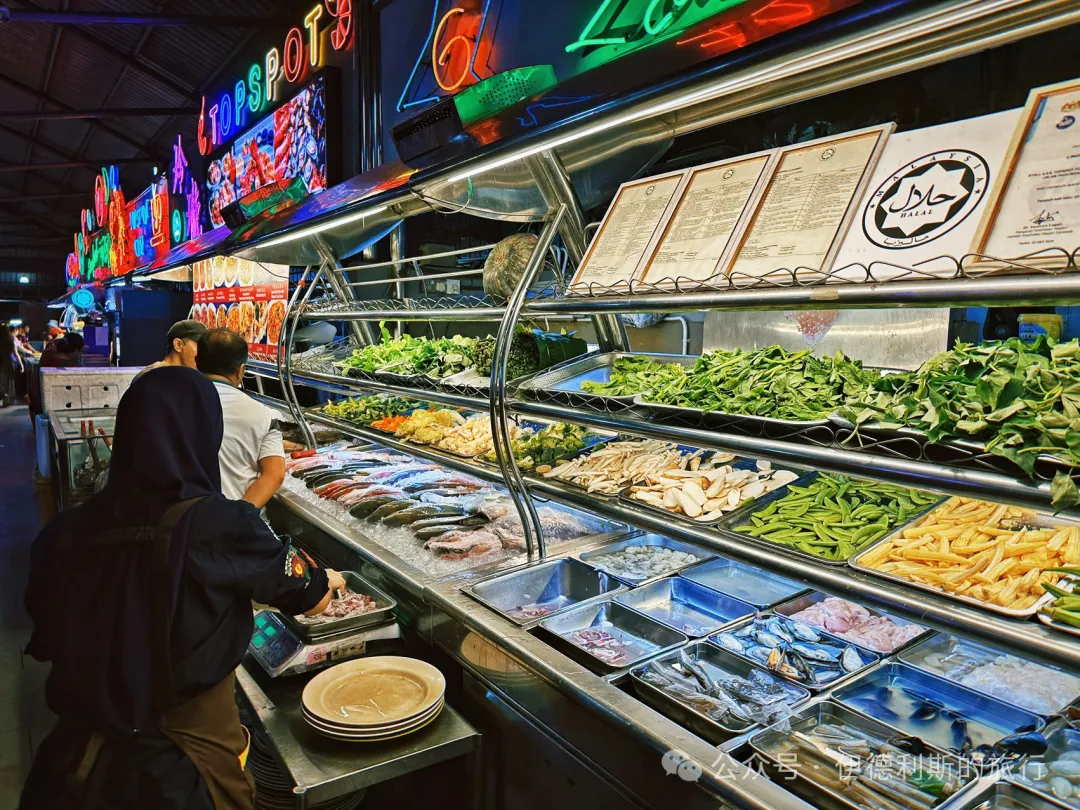
I strongly recommend the Top Spot Food Court in the city center to friends (dosti) visiting Kuching. It is a Chinese halal seafood city with a Nanyang style. The food court is open from 5 p.m. to 10 p.m. It looks like a very plain parking garage from the outside, but once you take the elevator to the top floor, you enter a very lively seafood open-air food court. Most of the stalls in the food court are Chinese-run with halal certifications. Various fish, shrimp, and vegetables are displayed openly, so you can pick whatever you want to eat.
We chose a stall called "Ling Long Seafood." The lady who took our order is Hainanese. Hainanese people running halal Chinese restaurants in Malaysia is also a major feature. The lady spoke great Mandarin and enthusiastically helped us order according to our needs. We ordered Sarawak-style stir-fried midin (a type of fern) with shrimp paste and stir-fried mani cai (a local vegetable) with eggs. Their stir-fried dishes come in small, medium, and large sizes, so even one person can eat very well.
Midin is a fern native to Borneo. It is not bitter at all when stir-fried and has a very fresh fragrance. Mani cai, also known as star gooseberry leaves, is a wild vegetable that Sarawak Hakka people love to cook. You can find it in homes and small restaurants. The picked mani cai leaves must be crushed in water and drained to remove toxins, and the small stems must be picked out before stir-frying, so it is much more troublesome than other vegetables.
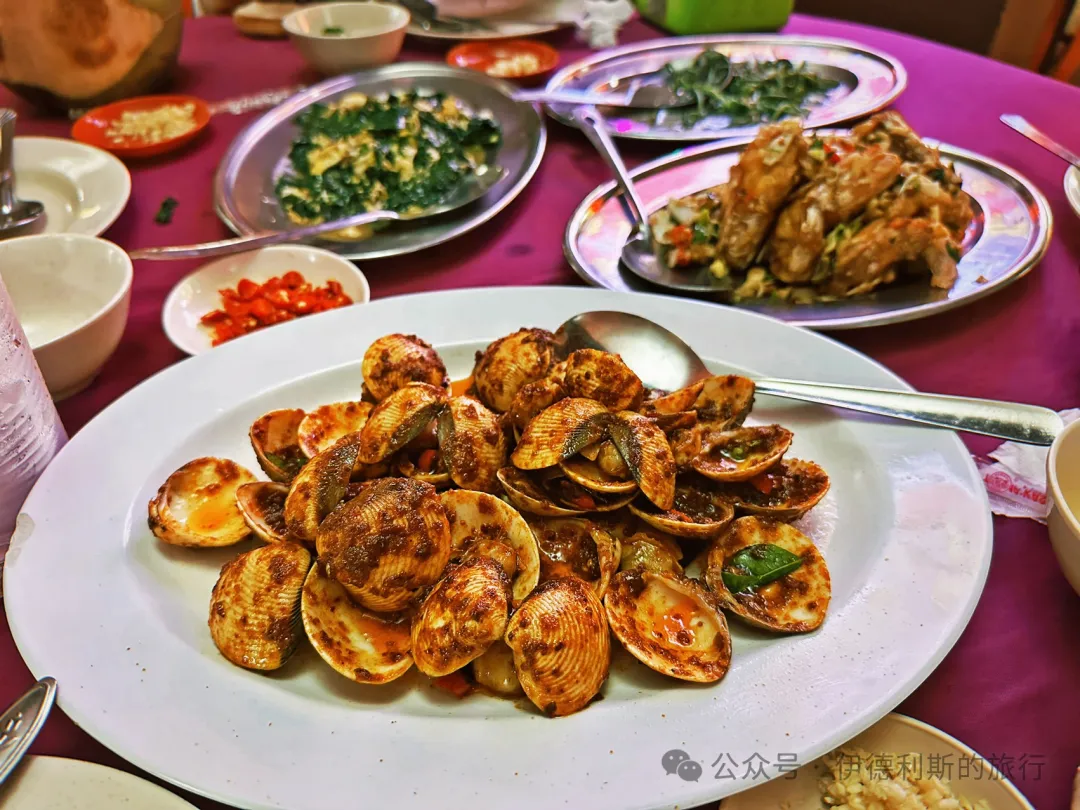
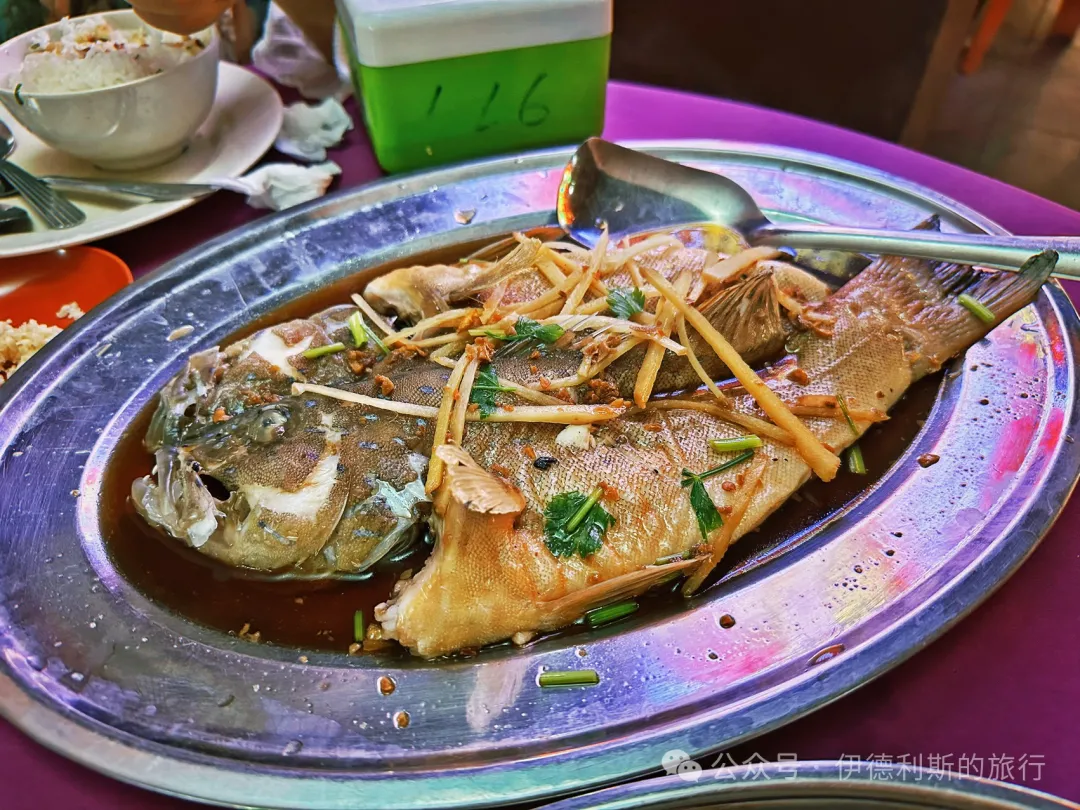
For seafood, we ordered lokan (white clams), sea shrimp, and seven-star grouper. The waiter told us which ones were the freshest and which were frozen. After we ordered, the food was indeed very delicious. Since this is a food court by the sea in the city center, I am not sure if other stalls overcharge, but I think this one offers good value for money. In the end, our five dishes, rice, and 6% sales tax cost 313 RMB in total. Small stir-fried dishes were 24 RMB each, a seven-star grouper was 148 RMB, though they have cheaper fish too. A plate of sea shrimp was 48 RMB, and a plate of clams was 40 RMB.
Rex Restaurant in Singapore
If you visit the National Museum of Singapore and Fort Canning Park, it is well worth going to the nearby MacKenzie Rex Restaurant to taste authentic halal Hainanese chicken rice. MacKenzie Rex Restaurant opened in 1966. It is the first and most famous halal Hainanese chicken rice restaurant in Singapore. The owner is a Hainanese Chinese who speaks good Mandarin and is happy to introduce dishes to guests. Besides Hainanese chicken rice, they are also good at making various home-style Chinese dishes, known in Singapore as Zi char (home-style stir-fry).
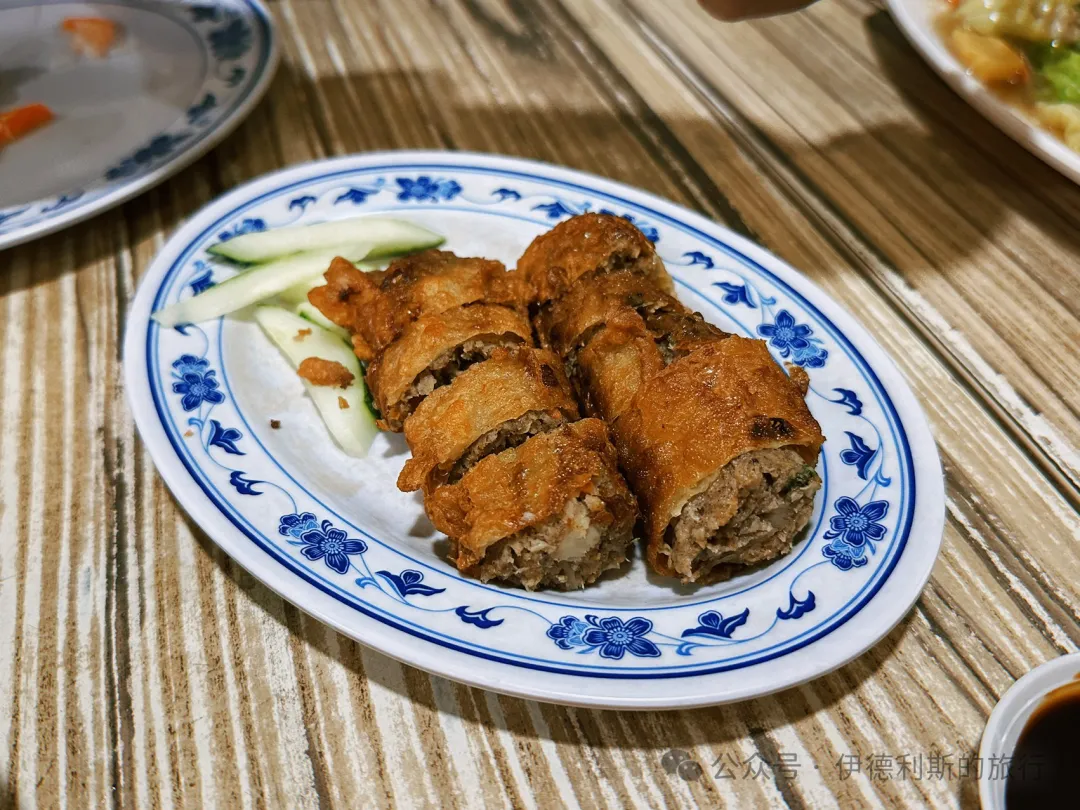
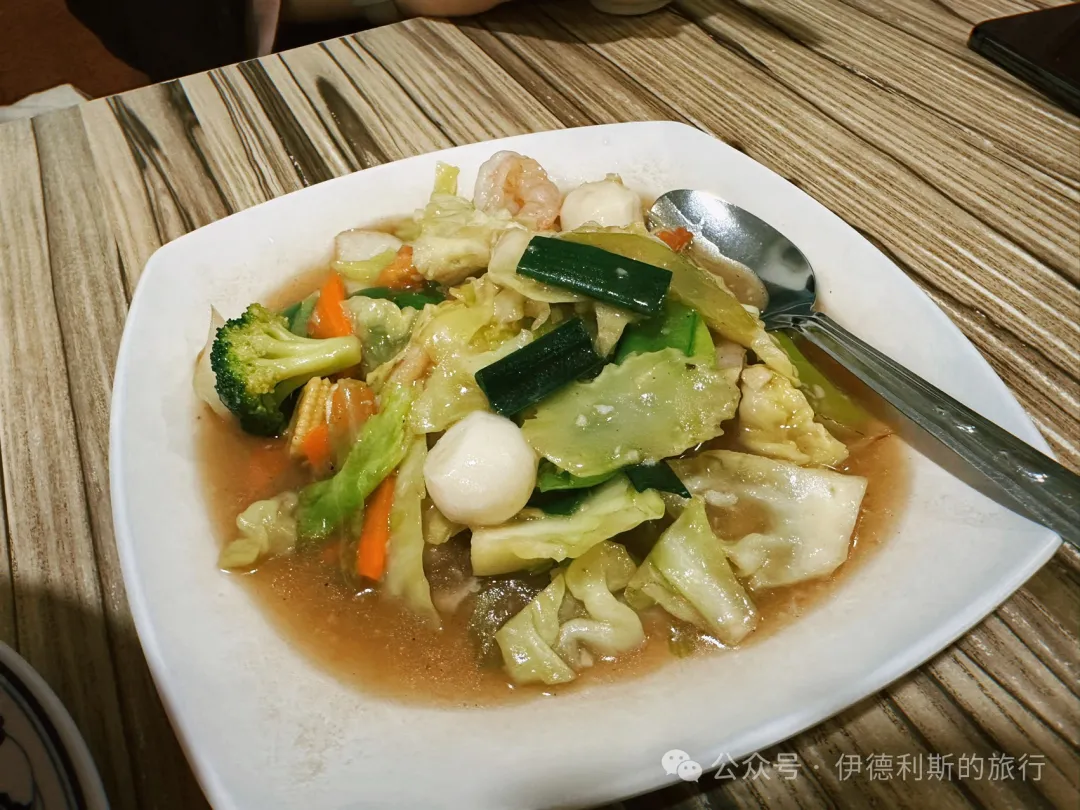
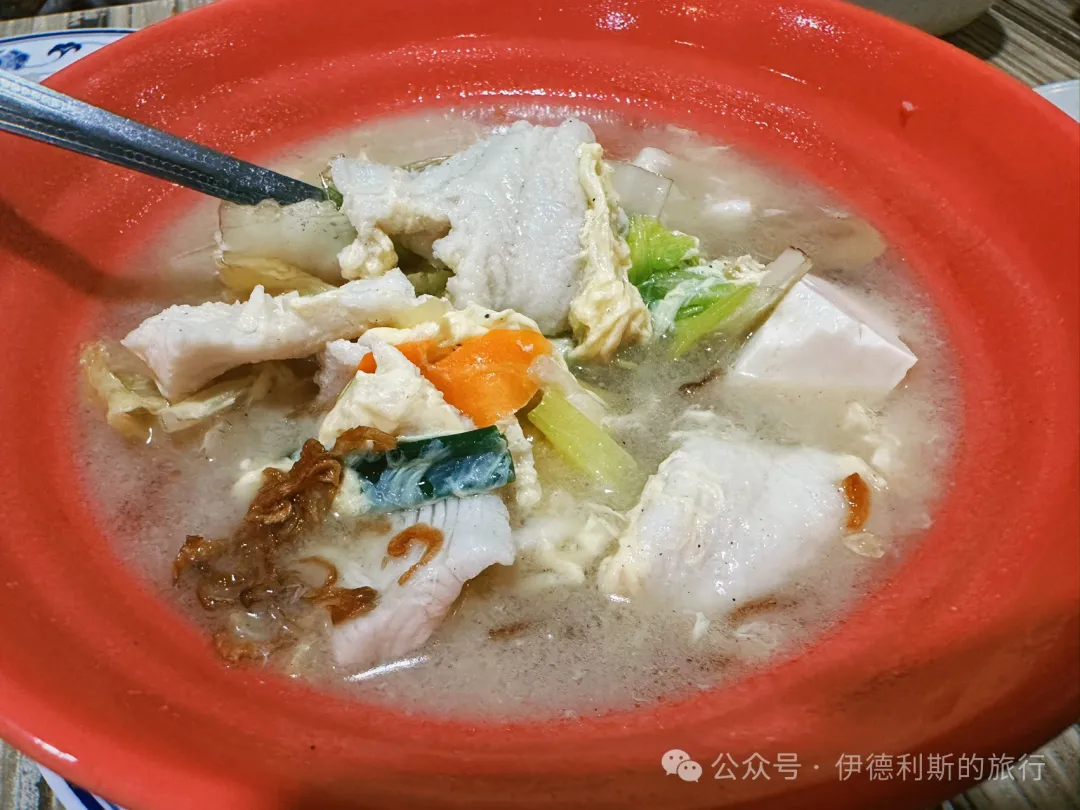
We ordered the classic chicken rice and five-spice meat rolls (Ngor Hiang per roll), plus stir-fried mixed vegetables and fish soup. Everything was delicious, and it was arguably the best meal of our Singapore trip. The best part of their chicken rice is not the chicken itself, but the rice steamed with chicken fat. You can eat it plain and never want to stop. The halal version of the five-spice meat roll adds five-spice powder to the chicken filling, which is then wrapped in bean curd skin and deep-fried. It is very fragrant when freshly fried.
Ying Chew Restaurant in Brunei
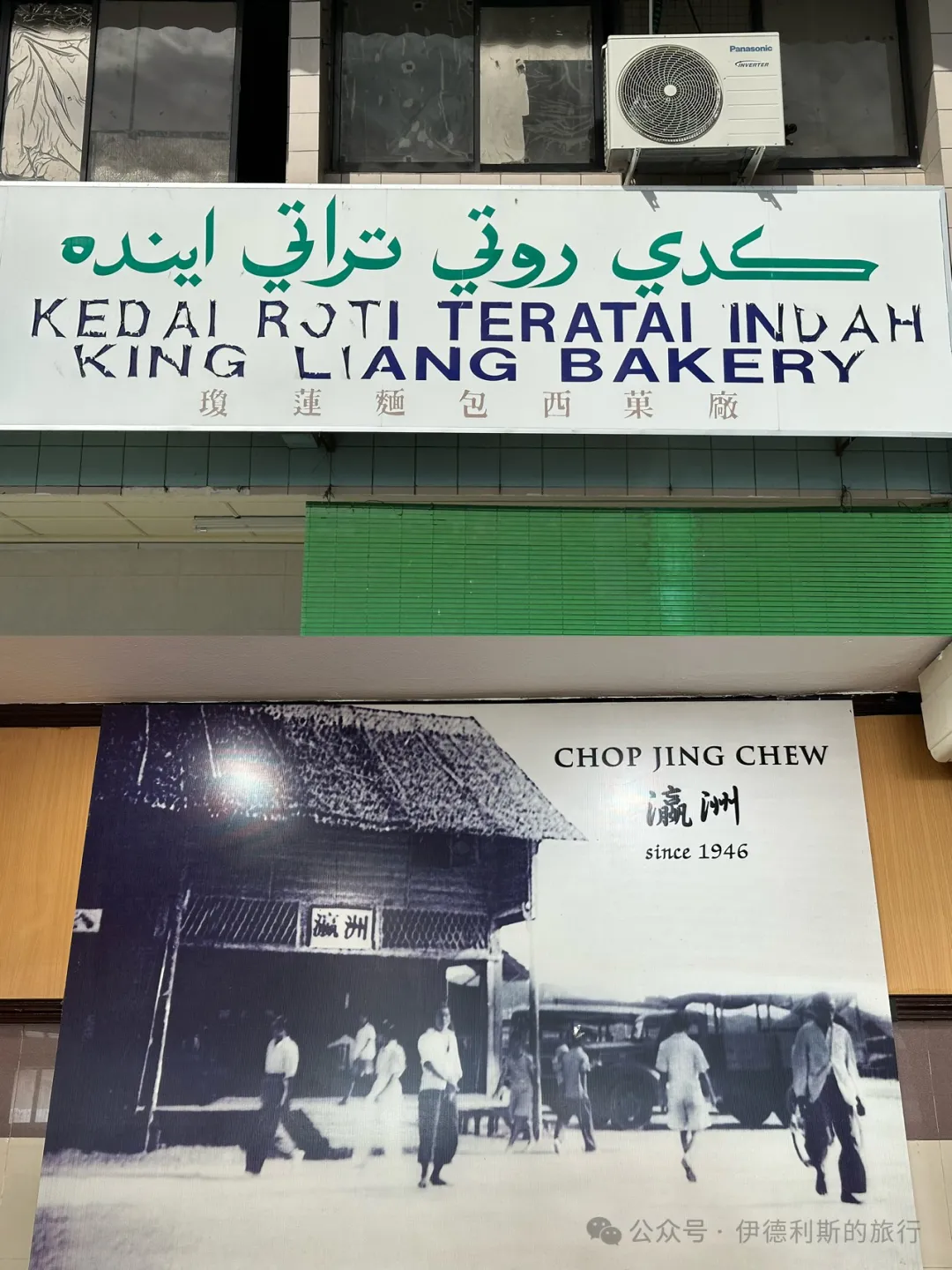
When traveling in Brunei, you must visit the most famous legendary Hainanese teahouse, Ying Chew (Yingzhou Hao).
The founder of Ying Chew, Han Qiongyuan, was from Wenchang, Hainan. During the Japanese invasion of China in 1939, 17-year-old Han Qiongyuan traveled to Southeast Asia and arrived in Brunei to work as a helper in his uncle's coffee shop. In 1946, Han Qiongyuan officially opened Ying Chew Teahouse, selling coffee, bread, and other food. It became widely known for its longevity bread (Roti Kuning). As the teahouse business grew, Han Qiongyuan expanded into real estate and led the construction of the Brunei Hainan Building. After 1993, Han Qiongyuan returned to his hometown every year to visit relatives and invested heavily there. He was awarded the title of 'Patriotic Hainanese' by Hainan Province three times.
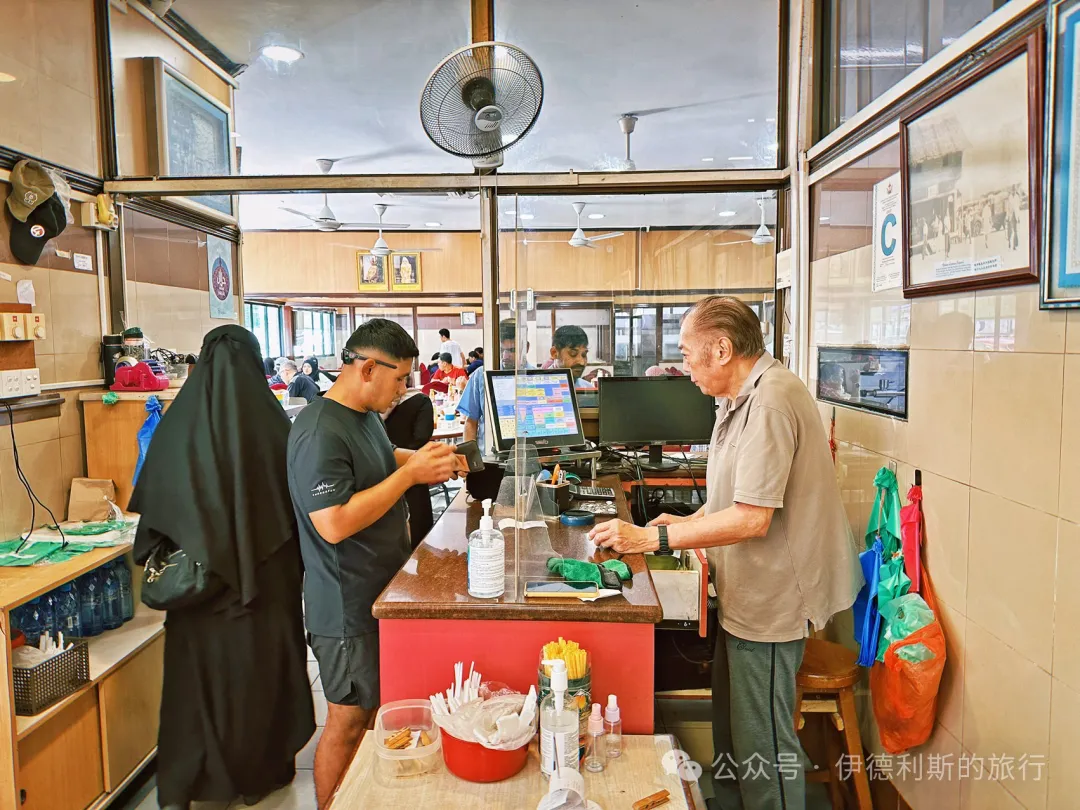
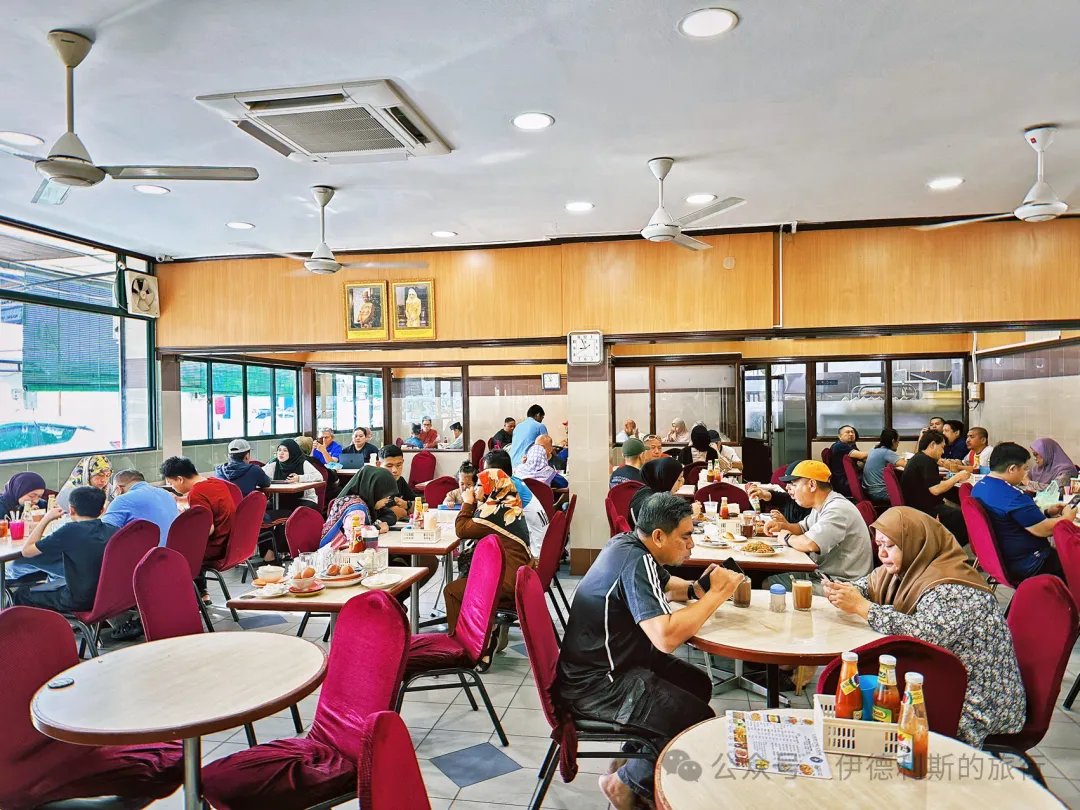
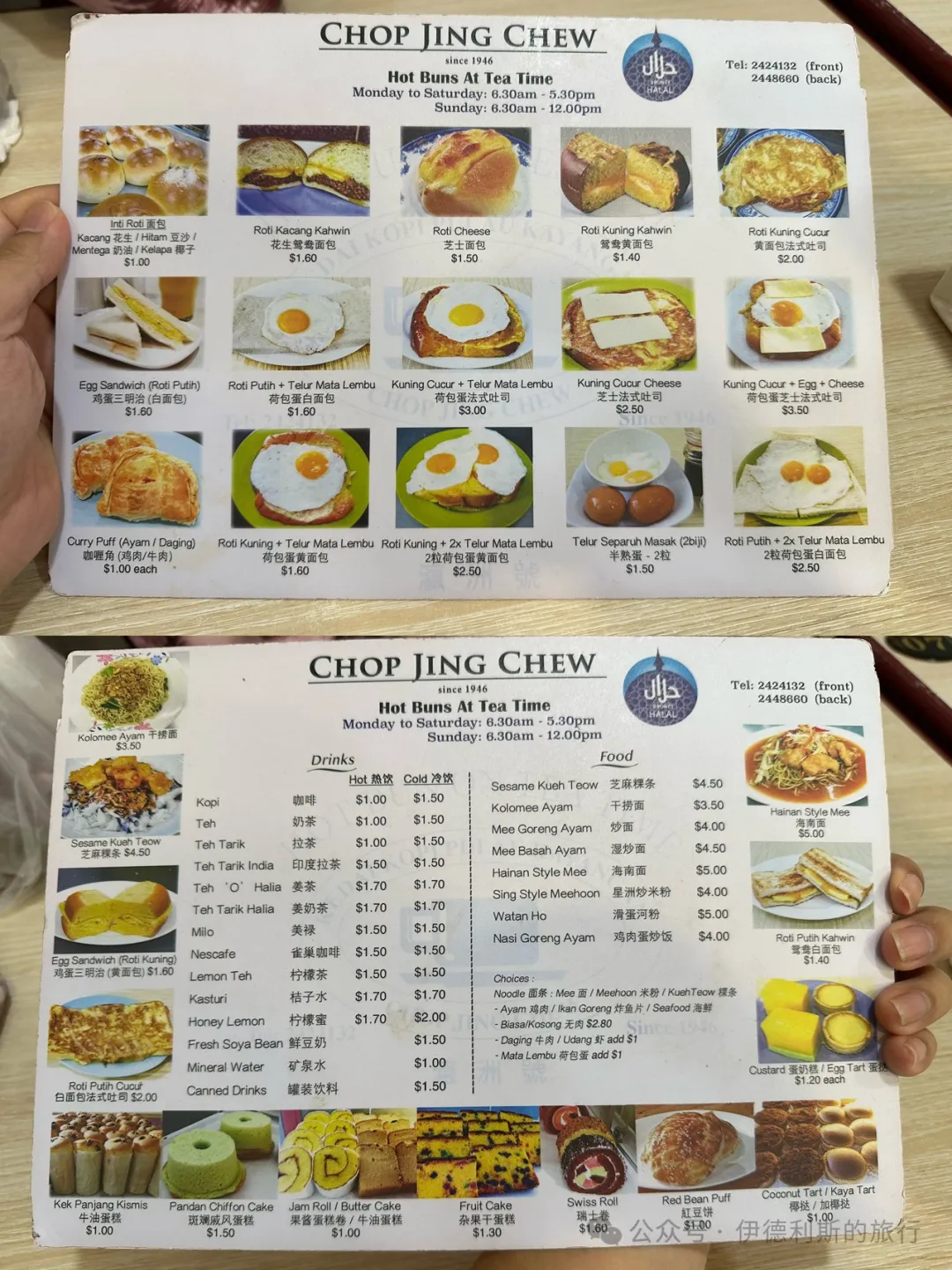
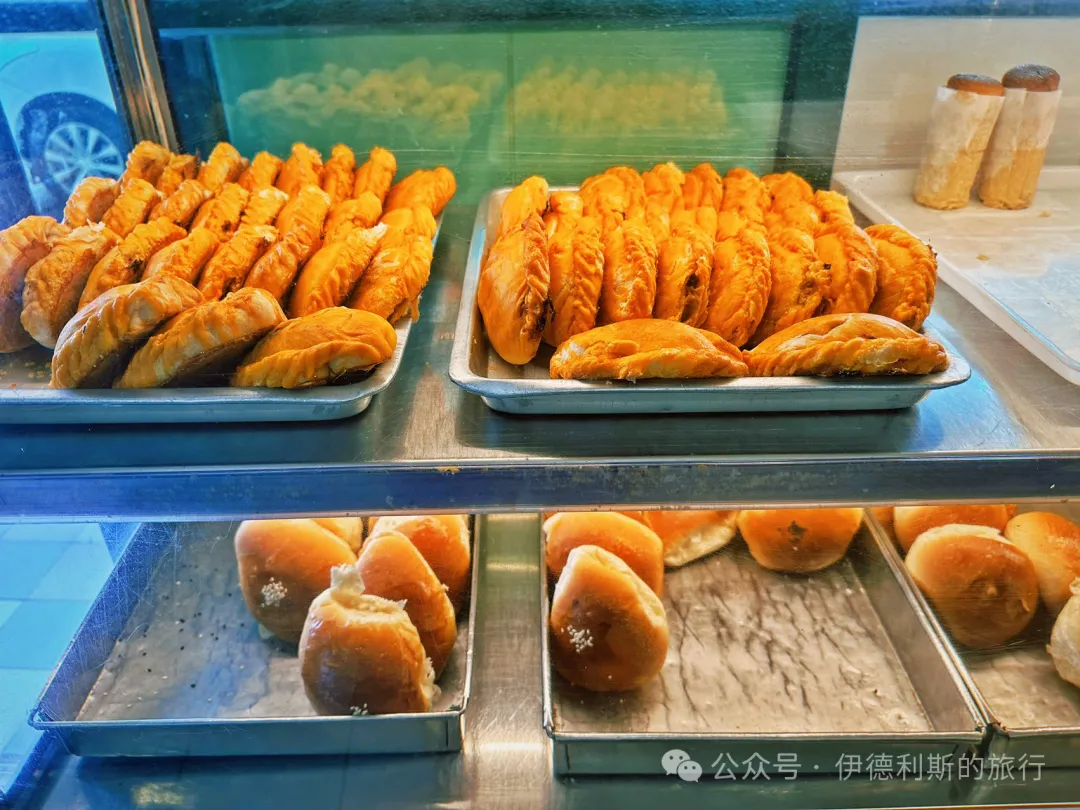
Like many old-fashioned Nanyang Hainanese teahouses, they serve halal food and have Brunei halal certification, making them popular with all ethnic groups. They have a very rich variety of bread. The most classic sandwich breads come in four flavors: peanut, red bean paste, butter, and coconut. There are also peanut and kaya mix bread, cheese bread, yellow bread with kaya and butter, and French toast. You can add a fried egg and cheese, or order a soft-boiled egg on the side. Cakes include custard cakes, egg tarts, coconut tarts, red bean cakes, butter cakes, pandan cakes, and more. Western-style breads and pastries were learned by Hainanese people while working as kitchen helpers for the British in the 19th century. Today, they have become a classic part of Nanyang Hainanese restaurants.
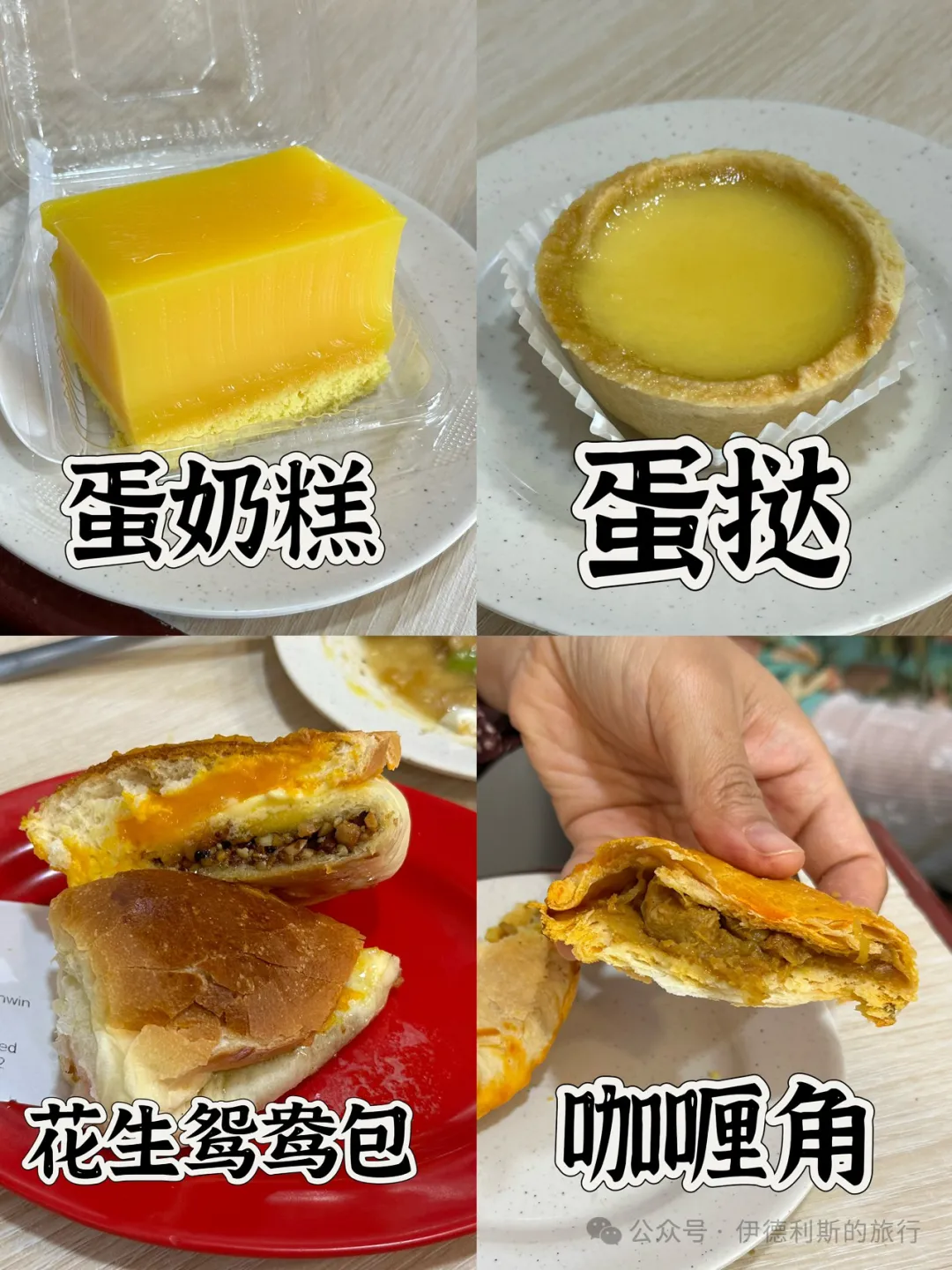
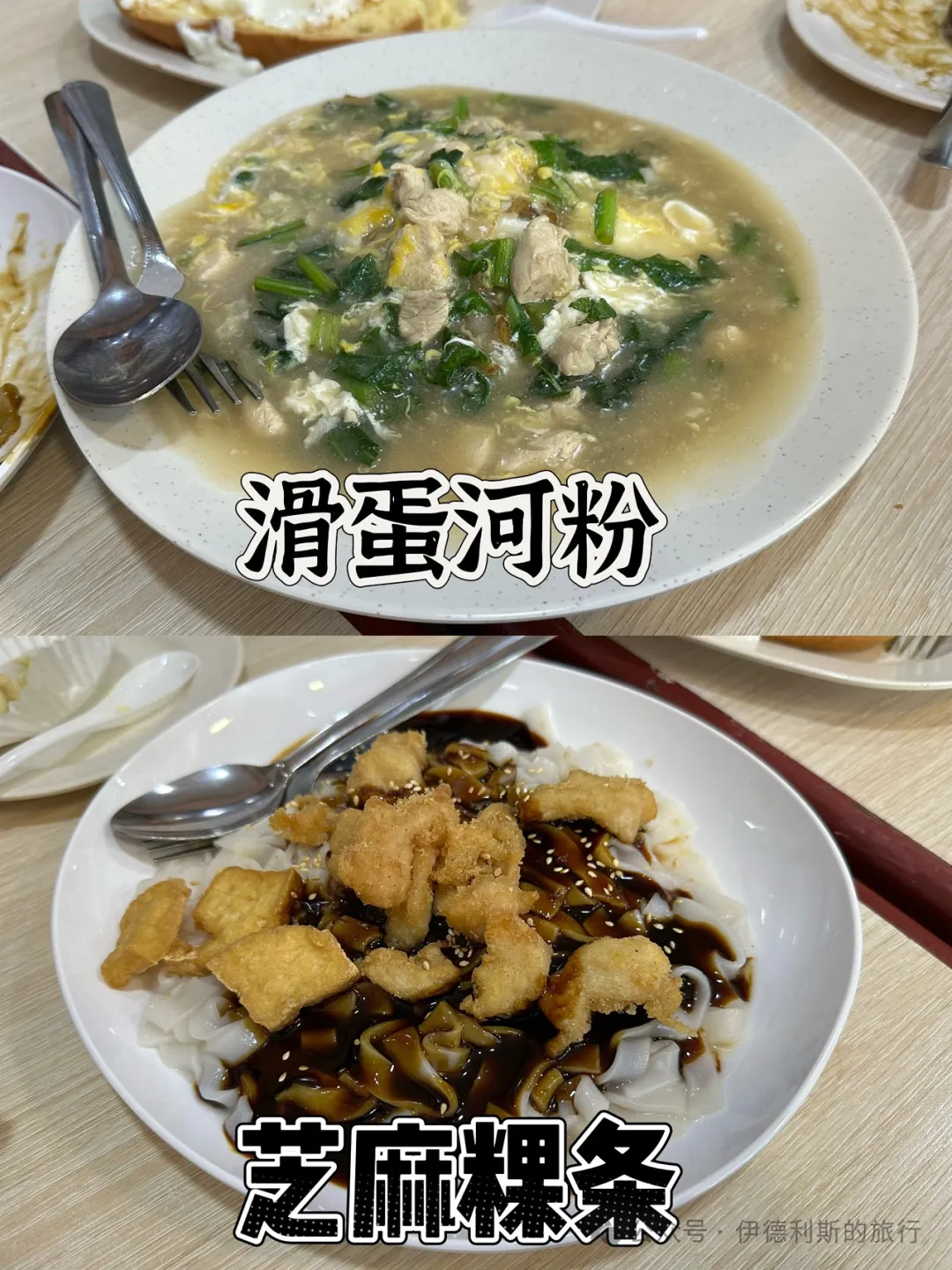
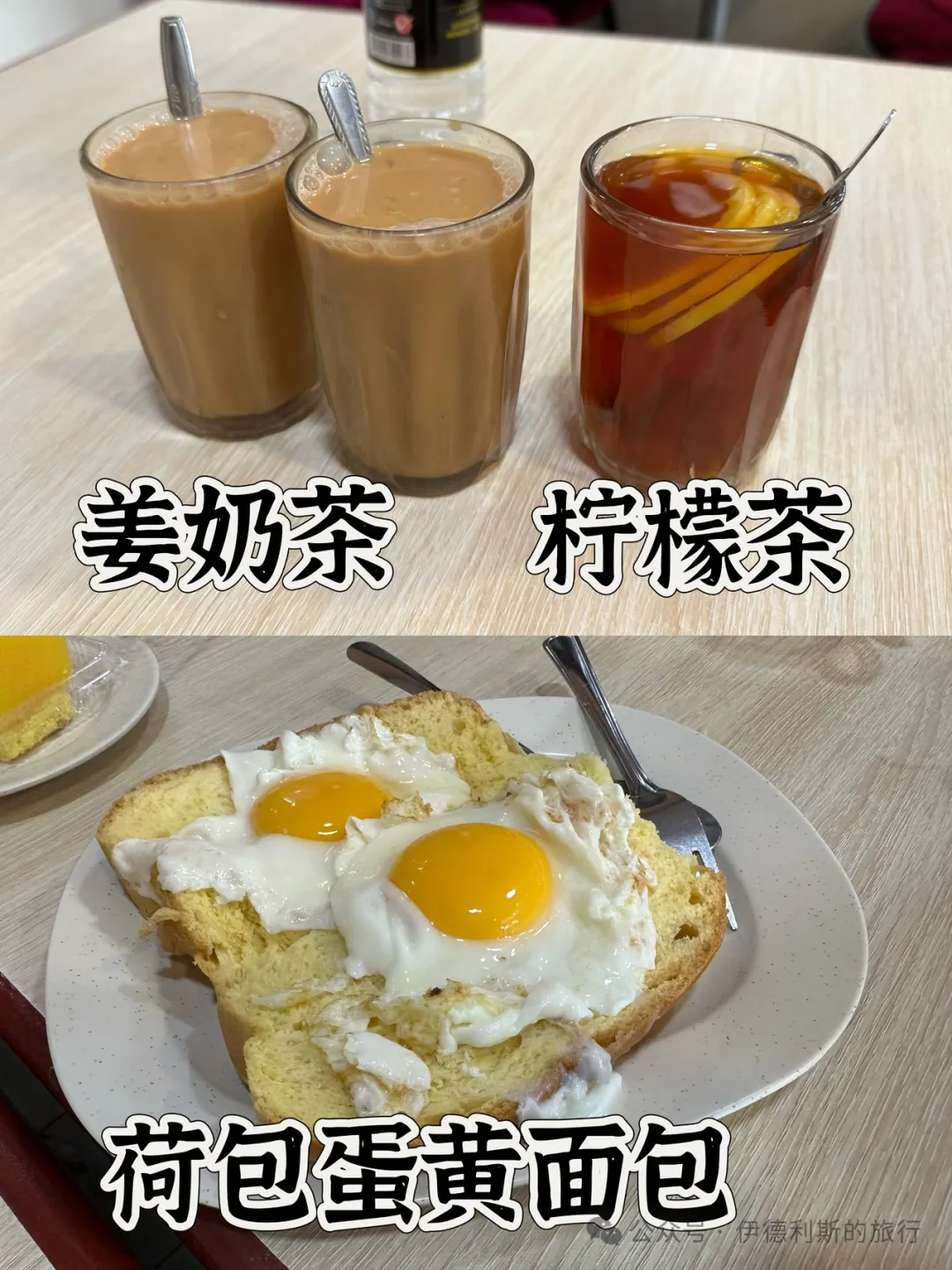
Besides bread and pastries, they also have various noodles, such as sesame flat rice noodles (guotiao), dry-tossed noodles, stir-fried noodles, Hainanese noodles, stir-fried rice vermicelli, and silky egg flat rice noodles (hefen). These suit Chinese tastes very well. We ordered silky egg flat rice noodles, sesame flat rice noodles, egg tarts, custard cakes, yellow bread with fried egg, chicken curry puffs, peanut and kaya mix bread, ginger milk tea, and lemon tea for a mix of Chinese and Western flavors. The peanut and kaya mix bread contains kaya jam, butter, and crushed peanuts, giving it a very rich texture. The sesame rice noodles (zhima guotiao) are a mix of sweet, salty, and spicy, served with fried tofu and fried fish chunks. They are a signature dish at this shop.
Babu's Kitchen in Brunei
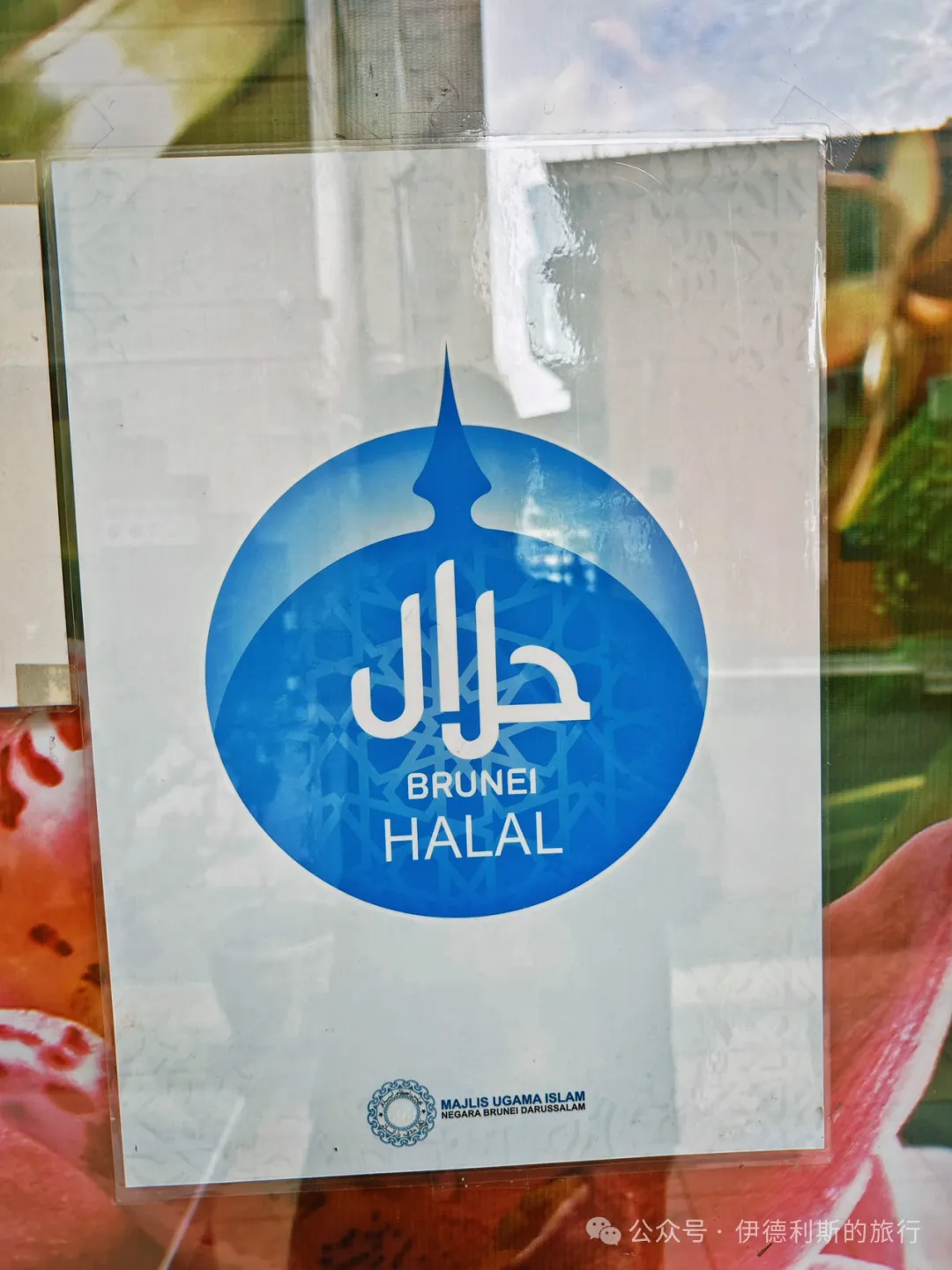
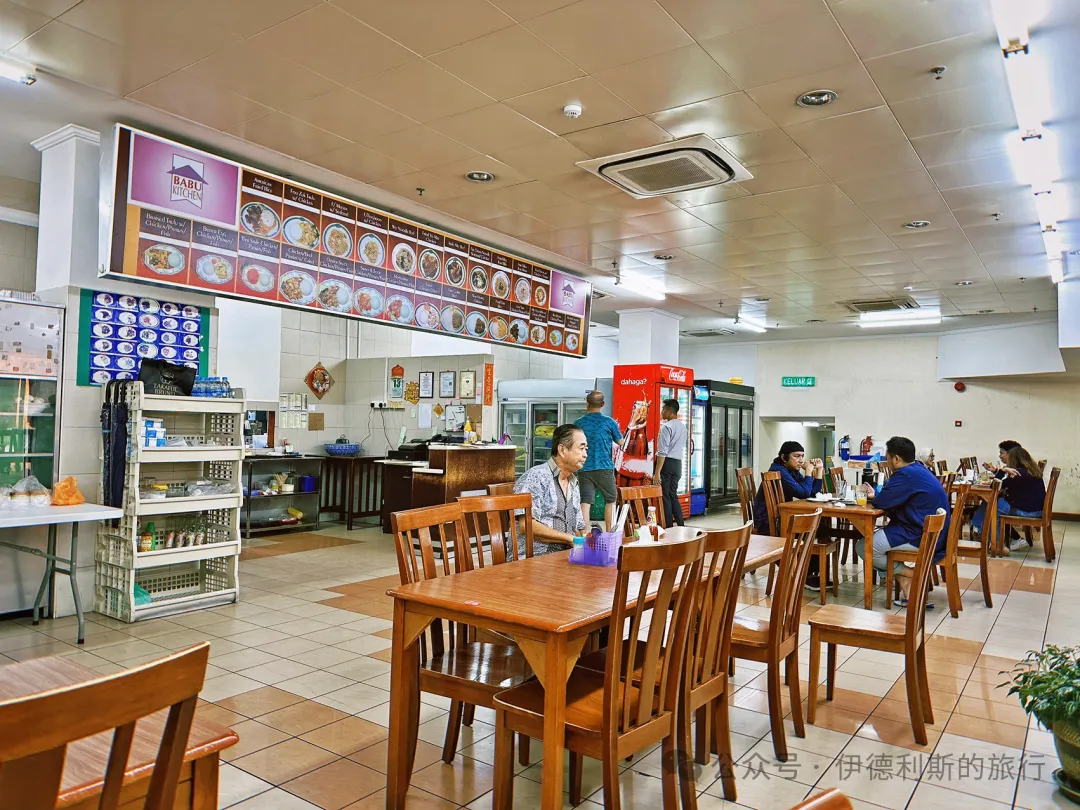
We had lunch in the old town of Brunei Town. There are many Chinese-owned shops here, and it is also a great place to find halal Hainanese restaurants. We chose a place called Babu's Kitchen. It was very busy at lunchtime with Chinese, Malay, and Indian customers, which is a classic scene at a Hainanese restaurant. Since they did not have a Chinese menu, we asked the owner to recommend dishes. We ordered the Assam fish fillets, salted egg fried mushrooms, beef yee mee noodles, and bean curd skin with tofu and chicken. Just like in Malaysia, the Chinese people in Brunei speak very standard Mandarin. Overall, the food was very good. It blends Chinese cooking with Malay flavors, but it is still very easy for Chinese people to enjoy. view all
Summary: This halal Hainanese food guide follows the first half of a trip through Malaysia, Singapore, and Brunei, covering chicken rice, kopitiam cafes, noodles, seafood, and Nanyang-style Muslim-friendly restaurants.
Malaysia
The Chicken Rice Shop in Kuala Lumpur
Oriental Kopi at Kuala Lumpur Airport
Hua Mui Restaurant in Johor Bahru
Yut Loy Coffee Shop in Kuala Kangsar
Sin Hua Air-Conditioned Restaurant in Kota Bharu
Fook Yuen Coffee Shop in Kota Kinabalu
Yit Chang Coffee Shop in Kota Kinabalu
Yee Fung Coffee Shop in Kota Kinabalu
Ling Long Seafood in Kuching
Rex Restaurant in Singapore
Ying Chew Restaurant in Brunei
Babu's Kitchen in Brunei
Mei Guang Coffee Shop in Brunei
Malaysia
The Chicken Rice Shop in Kuala Lumpur
After getting off the plane at Kuala Lumpur Airport, we take the airport express train to the final stop, KL Sentral. Once we go upstairs, we are at the Nu Sentral shopping mall. We eat there almost every time we visit Kuala Lumpur. There are many types of restaurants in the mall. There are three halal Nyonya cuisine restaurants alone, and many other halal Chinese restaurants.
This time, we ate at the famous halal Hainanese chicken rice chain in Malaysia, The Chicken Rice Shop. The founder, Wong Kah Bee, was once an executive director at KFC Malaysia. She had worked in the fast-food industry for 25 years before starting her own business. In 2000, 54-year-old Wong Kah Bee and her daughter, Wong Jia Lian, opened the first The Chicken Rice Shop in Taipan, Selangor, officially launching their halal Hainanese chicken rice brand.
Wong Kah Bee's parents were from Penang and her grandmother was from Hainan. She loved Hainanese chicken rice very much since she was a child. During the 20th century, Hainanese chicken rice was mostly sold at food stalls, and almost none of it was halal. When Wong Kah Bee and her daughter started the business, they had a clear goal: to bring Hainanese chicken rice into shopping malls with clean, comfortable, and independent storefronts suitable for family meals, and to make it halal food for everyone. Today, The Chicken Rice Shop has 135 locations, making it the largest halal Hainanese chicken rice chain in Malaysia. Led by them, halal Chinese food is growing in Malaysia, allowing friends (dosti) from all over the world to enjoy delicious Chinese cuisine here.
We ordered a set meal for three, which included Nyonya top hats (pai tee), mango salad, roasted chicken, Hainanese curry chicken, okra, wolf herring fish balls (sai tou yu wan), and rice. We also ordered an extra side of roasted tofu, which was perfect for our family. Top hats (pai tee) are a classic snack for weddings and New Year celebrations among the Peranakan Chinese in Malaysia. They originated in Singapore, where they are also called little gold cups (xiao jin bei), and are filled with shredded carrots and white radishes. Wolf herring fish balls (sai tou yu wan) are Teochew-style fish balls made from wolf herring, and they are very popular in Malaysia.
Oriental Kopi at Kuala Lumpur Airport
Taking a car from Malacca back to Kuala Lumpur Airport, the most popular restaurant at Terminal 2 is the Hainanese coffee shop chain Oriental Kopi (huayang). There is almost always a line whenever you go.
They have a huge variety of dishes and are currently one of the most famous halal Hainanese coffee shops. Hainanese people began immigrating to Malaysia in the 19th century. Many early immigrants worked as chefs and servers in British hotels and restaurants, while some worked as servants for British officers. Influenced by their British employers, the Hainanese learned to cook Western food and combined it with Hainanese culinary elements to create the unique Hainanese coffee shop (Hailam Kopitiam) culture.
We ordered flaky egg tarts, pineapple buns with butter (bing huo bo luo bao), Hainanese chicken rice, classic mee siam, curry fish balls, coffee, soy milk with grass jelly, and longan sea coconut sweet soup (tang shui). The coffee, flaky egg tarts, and pineapple buns with butter are known as the 'Oriental Kopi Three Treasures' and make a classic Nanyang breakfast combination. Their flaky egg tarts are indeed well-made, with a very tender egg custard and a rich aroma. Their sweet soup (tang shui) is also delicious. We rarely drank sweet soup in the north, so it felt very authentic to the Nanyang style.
However, their Hainanese chicken rice was not good. The quality of the rice seemed poor, and it felt gritty, lacking the texture of rice at other places.
Hua Mui Restaurant in Johor Bahru
We took the train from Woodlands, Singapore, in the morning and arrived at the Johor Bahru station in Malaysia in 5 minutes. We walked from the Johor Bahru station to the old town to visit Restoran Hua Mui to experience an authentic Hainanese coffee shop (Hailam Kopitiam).
Restoran Hua Mui opened in 1946 and has a 78-year history, making it the oldest Hainanese coffee shop in Johor Bahru. Like many old-school Hainanese coffee shops in Malaysia, although the owner is Hainanese Chinese, they hire Malay chefs and staff so that Chinese, Malay, and Indian customers can all enjoy the food.
The term coffee shop (kopitiam) is made up of the Malay word 'kopi' (coffee) and the Hokkien word 'tiam' (shop), specializing in charcoal-grilled toast, white coffee, and soft-boiled eggs. Early Hainanese coffee shops were very popular with the British. Today, they have become places where older people discuss news and daily life, serving as important social hubs.
At Hua Mui, we ordered mutton stew rice, Hainanese noodles, coffee and tea mix (cham c), and a breakfast platter. Coffee and tea mix (cham c) is just coffee, tea, and milk. The restaurant's setting is still very traditional, with a classic two-story arcade building (qilou) and bamboo curtains hanging on the doors and windows, easily bringing to mind the old days.
Yut Loy Coffee Shop in Kuala Kangsar
Taking the train north from Ipoh, it is a 30-minute ride to Kuala Kangsar District. Kuala Kangsar has been the royal city of the Sultan of Perak since the 18th century. The town center still keeps an old street of arcade buildings, where you can find an old-school Hainanese coffee shop called Yut Loy Coffee Shop (Yue Lai Cha Shi). The Hainanese owner hires Malay staff here, allowing the three major ethnic groups—Chinese, Malay, and Indian—to all dine in the shop.
Since Yut Loy Coffee Shop only serves main meals after 1:00 PM, we spent the morning there having coffee with toast, topped with honey and butter. In Nanyang-themed novels, I often read about old people sitting in these Hainanese coffee shops all morning with a cup of coffee, a piece of toast, and a newspaper. This time, we got to experience it ourselves.
Sin Hua Air-Conditioned Restaurant in Kota Bharu
Hainanese people are an important part of the Chinese community in Kelantan. We ate at the Sin Hua Air-Conditioned Restaurant, a long-standing Hainanese eatery in Kota Bharu with over 50 years of history. We had Hainanese chicken chop, Hainanese noodles, and toasted bread, all of which are authentic Nanyang Hainanese dishes. Next door, there is also a Sin Shing Coffee Shop (Xin Cheng Cha Can Shi), which is said to have the best Hainanese chicken rice in Kota Bharu.
Fook Yuen Coffee Shop in Kota Kinabalu
Although there are many Hakka and Hokkien people on Gaya Street in Kota Kinabalu, the restaurants are still mostly run by Hainanese people. I started my morning with breakfast at Fook Yuen Coffee Shop (Fuyuan Cha Canting), which is very popular and crowded with tourists. Ordering is semi-self-service. They offer Cantonese-style congee and dim sum, Malay coconut milk rice (nasi lemak), and Western-style bread and coffee, meeting the needs of all ethnic groups in Malaysia. I had a serving of Hainanese chicken rice, two portions of steamed dumplings (shaomai), and a glass of iced milk tea. Their chicken rice is a modified version; they add dried small fish to the rice, a style that should be more popular with Malay customers.
Yit Chang Coffee Shop in Kota Kinabalu
Opened in 1896, Yee Fung Coffee Shop (Yue Chang Cha Shi) is the oldest Hainanese restaurant in Kota Kinabalu, with a history even longer than the city itself. The shop was originally located at the headquarters of the British North Borneo Chartered Company on Gaya Island. After the settlement on the island was destroyed in 1898 by an anti-British uprising led by the indigenous leader Mat Salleh, the shop moved to its current location on Gaya Street. You could say Yee Fung Coffee Shop has witnessed the entire transformation of Kota Kinabalu. Old photos hang on their walls, including one from the 1960s showing Yee Fung Coffee Shop in the exact same spot as today.
The shop is divided into two sections, with the Hainanese owner personally making coffee and toasting bread. The owner is very enthusiastic, provides excellent service, and speaks great Korean, which helps him attract many Korean guests. Another stall invites Muslim sisters to make Hainanese beef offal noodles (niuzamian) and various Malay dishes, which is a major feature of traditional Hainanese coffee shops. To attract customers from all ethnic groups, they must make food that suits everyone's taste. This is why many long-standing Hainanese restaurants in Malaysia have been open for decades or even a century.
We ordered white coffee, three-layer coffee, monk fruit herbal tea (luohanguo liangcha), oats, toast, and beef offal noodles. Monk fruit herbal tea and barley water (yimi shui) are really perfect for the weather here.
Yee Fung Coffee Shop in Kota Kinabalu
The most popular halal Chinese restaurant on Gaya Street in Kota Kinabalu is Yee Fung Tea House. The owner of Yee Fung Tea House, Zhuang Qiuwang, is from Johor. He started selling laksa on Gaya Street in 1984, which is exactly 40 years ago. Like many halal Chinese restaurants in Malaysia, they hire Muslim chefs and staff to ensure the ingredients are halal.
Their signature dishes are the "three treasures": laksa, claypot chicken rice, and beef offal. We ordered lettuce with oyster sauce, plain beef offal, plain fish balls, and chicken wonton noodles. Hainanese beef offal mainly includes beef balls, beef tripe, stewed beef, and beef slices. Many Hainanese restaurants in Kota Kinabalu serve it, and it is a major local specialty. Authentic Hainanese beef offal does not use MSG. It relies purely on spices to stew out the flavor, so you do not feel thirsty after eating it.
Ling Long Seafood in Kuching
I strongly recommend the Top Spot Food Court in the city center to friends (dosti) visiting Kuching. It is a Chinese halal seafood city with a Nanyang style. The food court is open from 5 p.m. to 10 p.m. It looks like a very plain parking garage from the outside, but once you take the elevator to the top floor, you enter a very lively seafood open-air food court. Most of the stalls in the food court are Chinese-run with halal certifications. Various fish, shrimp, and vegetables are displayed openly, so you can pick whatever you want to eat.
We chose a stall called "Ling Long Seafood." The lady who took our order is Hainanese. Hainanese people running halal Chinese restaurants in Malaysia is also a major feature. The lady spoke great Mandarin and enthusiastically helped us order according to our needs. We ordered Sarawak-style stir-fried midin (a type of fern) with shrimp paste and stir-fried mani cai (a local vegetable) with eggs. Their stir-fried dishes come in small, medium, and large sizes, so even one person can eat very well.
Midin is a fern native to Borneo. It is not bitter at all when stir-fried and has a very fresh fragrance. Mani cai, also known as star gooseberry leaves, is a wild vegetable that Sarawak Hakka people love to cook. You can find it in homes and small restaurants. The picked mani cai leaves must be crushed in water and drained to remove toxins, and the small stems must be picked out before stir-frying, so it is much more troublesome than other vegetables.
For seafood, we ordered lokan (white clams), sea shrimp, and seven-star grouper. The waiter told us which ones were the freshest and which were frozen. After we ordered, the food was indeed very delicious. Since this is a food court by the sea in the city center, I am not sure if other stalls overcharge, but I think this one offers good value for money. In the end, our five dishes, rice, and 6% sales tax cost 313 RMB in total. Small stir-fried dishes were 24 RMB each, a seven-star grouper was 148 RMB, though they have cheaper fish too. A plate of sea shrimp was 48 RMB, and a plate of clams was 40 RMB.
Rex Restaurant in Singapore
If you visit the National Museum of Singapore and Fort Canning Park, it is well worth going to the nearby MacKenzie Rex Restaurant to taste authentic halal Hainanese chicken rice. MacKenzie Rex Restaurant opened in 1966. It is the first and most famous halal Hainanese chicken rice restaurant in Singapore. The owner is a Hainanese Chinese who speaks good Mandarin and is happy to introduce dishes to guests. Besides Hainanese chicken rice, they are also good at making various home-style Chinese dishes, known in Singapore as Zi char (home-style stir-fry).
We ordered the classic chicken rice and five-spice meat rolls (Ngor Hiang per roll), plus stir-fried mixed vegetables and fish soup. Everything was delicious, and it was arguably the best meal of our Singapore trip. The best part of their chicken rice is not the chicken itself, but the rice steamed with chicken fat. You can eat it plain and never want to stop. The halal version of the five-spice meat roll adds five-spice powder to the chicken filling, which is then wrapped in bean curd skin and deep-fried. It is very fragrant when freshly fried.
Ying Chew Restaurant in Brunei
When traveling in Brunei, you must visit the most famous legendary Hainanese teahouse, Ying Chew (Yingzhou Hao).
The founder of Ying Chew, Han Qiongyuan, was from Wenchang, Hainan. During the Japanese invasion of China in 1939, 17-year-old Han Qiongyuan traveled to Southeast Asia and arrived in Brunei to work as a helper in his uncle's coffee shop. In 1946, Han Qiongyuan officially opened Ying Chew Teahouse, selling coffee, bread, and other food. It became widely known for its longevity bread (Roti Kuning). As the teahouse business grew, Han Qiongyuan expanded into real estate and led the construction of the Brunei Hainan Building. After 1993, Han Qiongyuan returned to his hometown every year to visit relatives and invested heavily there. He was awarded the title of 'Patriotic Hainanese' by Hainan Province three times.
Like many old-fashioned Nanyang Hainanese teahouses, they serve halal food and have Brunei halal certification, making them popular with all ethnic groups. They have a very rich variety of bread. The most classic sandwich breads come in four flavors: peanut, red bean paste, butter, and coconut. There are also peanut and kaya mix bread, cheese bread, yellow bread with kaya and butter, and French toast. You can add a fried egg and cheese, or order a soft-boiled egg on the side. Cakes include custard cakes, egg tarts, coconut tarts, red bean cakes, butter cakes, pandan cakes, and more. Western-style breads and pastries were learned by Hainanese people while working as kitchen helpers for the British in the 19th century. Today, they have become a classic part of Nanyang Hainanese restaurants.
Besides bread and pastries, they also have various noodles, such as sesame flat rice noodles (guotiao), dry-tossed noodles, stir-fried noodles, Hainanese noodles, stir-fried rice vermicelli, and silky egg flat rice noodles (hefen). These suit Chinese tastes very well. We ordered silky egg flat rice noodles, sesame flat rice noodles, egg tarts, custard cakes, yellow bread with fried egg, chicken curry puffs, peanut and kaya mix bread, ginger milk tea, and lemon tea for a mix of Chinese and Western flavors. The peanut and kaya mix bread contains kaya jam, butter, and crushed peanuts, giving it a very rich texture. The sesame rice noodles (zhima guotiao) are a mix of sweet, salty, and spicy, served with fried tofu and fried fish chunks. They are a signature dish at this shop.
Babu's Kitchen in Brunei
We had lunch in the old town of Brunei Town. There are many Chinese-owned shops here, and it is also a great place to find halal Hainanese restaurants. We chose a place called Babu's Kitchen. It was very busy at lunchtime with Chinese, Malay, and Indian customers, which is a classic scene at a Hainanese restaurant. Since they did not have a Chinese menu, we asked the owner to recommend dishes. We ordered the Assam fish fillets, salted egg fried mushrooms, beef yee mee noodles, and bean curd skin with tofu and chicken. Just like in Malaysia, the Chinese people in Brunei speak very standard Mandarin. Overall, the food was very good. It blends Chinese cooking with Malay flavors, but it is still very easy for Chinese people to enjoy. view all
Reposted from the web
Summary: This halal Hainanese food guide follows the first half of a trip through Malaysia, Singapore, and Brunei, covering chicken rice, kopitiam cafes, noodles, seafood, and Nanyang-style Muslim-friendly restaurants.
Malaysia
The Chicken Rice Shop in Kuala Lumpur
Oriental Kopi at Kuala Lumpur Airport
Hua Mui Restaurant in Johor Bahru
Yut Loy Coffee Shop in Kuala Kangsar
Sin Hua Air-Conditioned Restaurant in Kota Bharu
Fook Yuen Coffee Shop in Kota Kinabalu
Yit Chang Coffee Shop in Kota Kinabalu
Yee Fung Coffee Shop in Kota Kinabalu
Ling Long Seafood in Kuching
Rex Restaurant in Singapore
Ying Chew Restaurant in Brunei
Babu's Kitchen in Brunei
Mei Guang Coffee Shop in Brunei
Malaysia
The Chicken Rice Shop in Kuala Lumpur
After getting off the plane at Kuala Lumpur Airport, we take the airport express train to the final stop, KL Sentral. Once we go upstairs, we are at the Nu Sentral shopping mall. We eat there almost every time we visit Kuala Lumpur. There are many types of restaurants in the mall. There are three halal Nyonya cuisine restaurants alone, and many other halal Chinese restaurants.
This time, we ate at the famous halal Hainanese chicken rice chain in Malaysia, The Chicken Rice Shop. The founder, Wong Kah Bee, was once an executive director at KFC Malaysia. She had worked in the fast-food industry for 25 years before starting her own business. In 2000, 54-year-old Wong Kah Bee and her daughter, Wong Jia Lian, opened the first The Chicken Rice Shop in Taipan, Selangor, officially launching their halal Hainanese chicken rice brand.
Wong Kah Bee's parents were from Penang and her grandmother was from Hainan. She loved Hainanese chicken rice very much since she was a child. During the 20th century, Hainanese chicken rice was mostly sold at food stalls, and almost none of it was halal. When Wong Kah Bee and her daughter started the business, they had a clear goal: to bring Hainanese chicken rice into shopping malls with clean, comfortable, and independent storefronts suitable for family meals, and to make it halal food for everyone. Today, The Chicken Rice Shop has 135 locations, making it the largest halal Hainanese chicken rice chain in Malaysia. Led by them, halal Chinese food is growing in Malaysia, allowing friends (dosti) from all over the world to enjoy delicious Chinese cuisine here.
We ordered a set meal for three, which included Nyonya top hats (pai tee), mango salad, roasted chicken, Hainanese curry chicken, okra, wolf herring fish balls (sai tou yu wan), and rice. We also ordered an extra side of roasted tofu, which was perfect for our family. Top hats (pai tee) are a classic snack for weddings and New Year celebrations among the Peranakan Chinese in Malaysia. They originated in Singapore, where they are also called little gold cups (xiao jin bei), and are filled with shredded carrots and white radishes. Wolf herring fish balls (sai tou yu wan) are Teochew-style fish balls made from wolf herring, and they are very popular in Malaysia.
Oriental Kopi at Kuala Lumpur Airport
Taking a car from Malacca back to Kuala Lumpur Airport, the most popular restaurant at Terminal 2 is the Hainanese coffee shop chain Oriental Kopi (huayang). There is almost always a line whenever you go.
They have a huge variety of dishes and are currently one of the most famous halal Hainanese coffee shops. Hainanese people began immigrating to Malaysia in the 19th century. Many early immigrants worked as chefs and servers in British hotels and restaurants, while some worked as servants for British officers. Influenced by their British employers, the Hainanese learned to cook Western food and combined it with Hainanese culinary elements to create the unique Hainanese coffee shop (Hailam Kopitiam) culture.
We ordered flaky egg tarts, pineapple buns with butter (bing huo bo luo bao), Hainanese chicken rice, classic mee siam, curry fish balls, coffee, soy milk with grass jelly, and longan sea coconut sweet soup (tang shui). The coffee, flaky egg tarts, and pineapple buns with butter are known as the 'Oriental Kopi Three Treasures' and make a classic Nanyang breakfast combination. Their flaky egg tarts are indeed well-made, with a very tender egg custard and a rich aroma. Their sweet soup (tang shui) is also delicious. We rarely drank sweet soup in the north, so it felt very authentic to the Nanyang style.
However, their Hainanese chicken rice was not good. The quality of the rice seemed poor, and it felt gritty, lacking the texture of rice at other places.
Hua Mui Restaurant in Johor Bahru
We took the train from Woodlands, Singapore, in the morning and arrived at the Johor Bahru station in Malaysia in 5 minutes. We walked from the Johor Bahru station to the old town to visit Restoran Hua Mui to experience an authentic Hainanese coffee shop (Hailam Kopitiam).
Restoran Hua Mui opened in 1946 and has a 78-year history, making it the oldest Hainanese coffee shop in Johor Bahru. Like many old-school Hainanese coffee shops in Malaysia, although the owner is Hainanese Chinese, they hire Malay chefs and staff so that Chinese, Malay, and Indian customers can all enjoy the food.
The term coffee shop (kopitiam) is made up of the Malay word 'kopi' (coffee) and the Hokkien word 'tiam' (shop), specializing in charcoal-grilled toast, white coffee, and soft-boiled eggs. Early Hainanese coffee shops were very popular with the British. Today, they have become places where older people discuss news and daily life, serving as important social hubs.
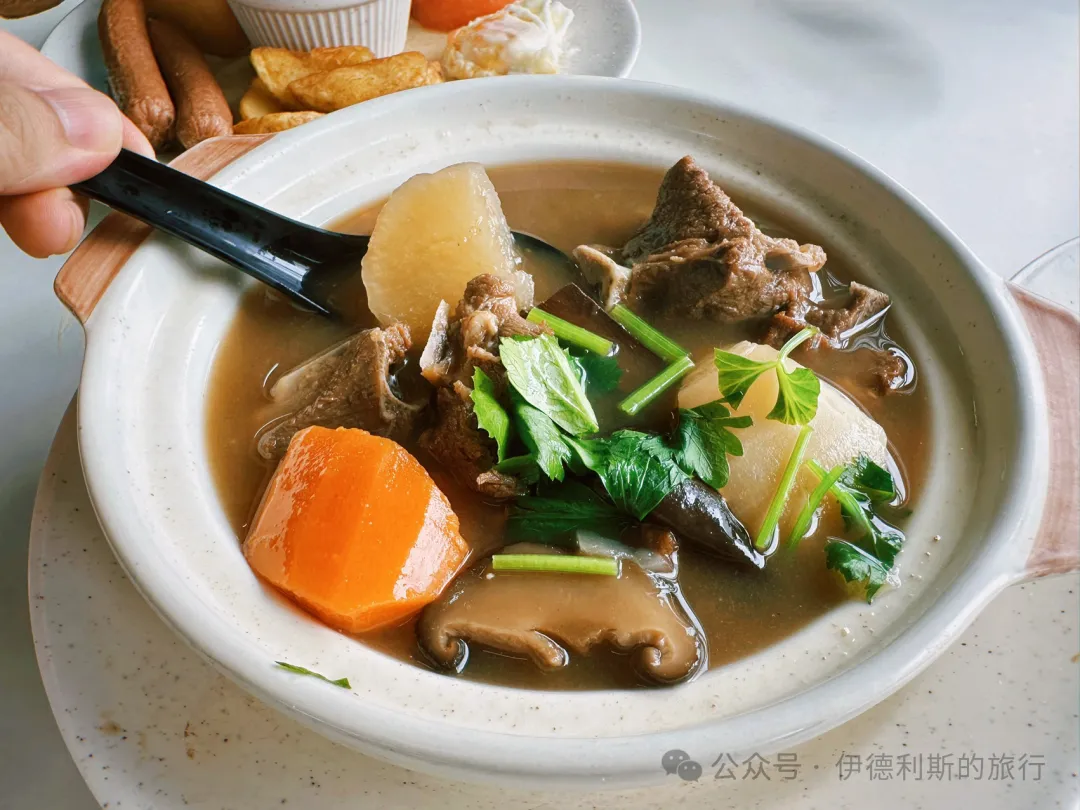
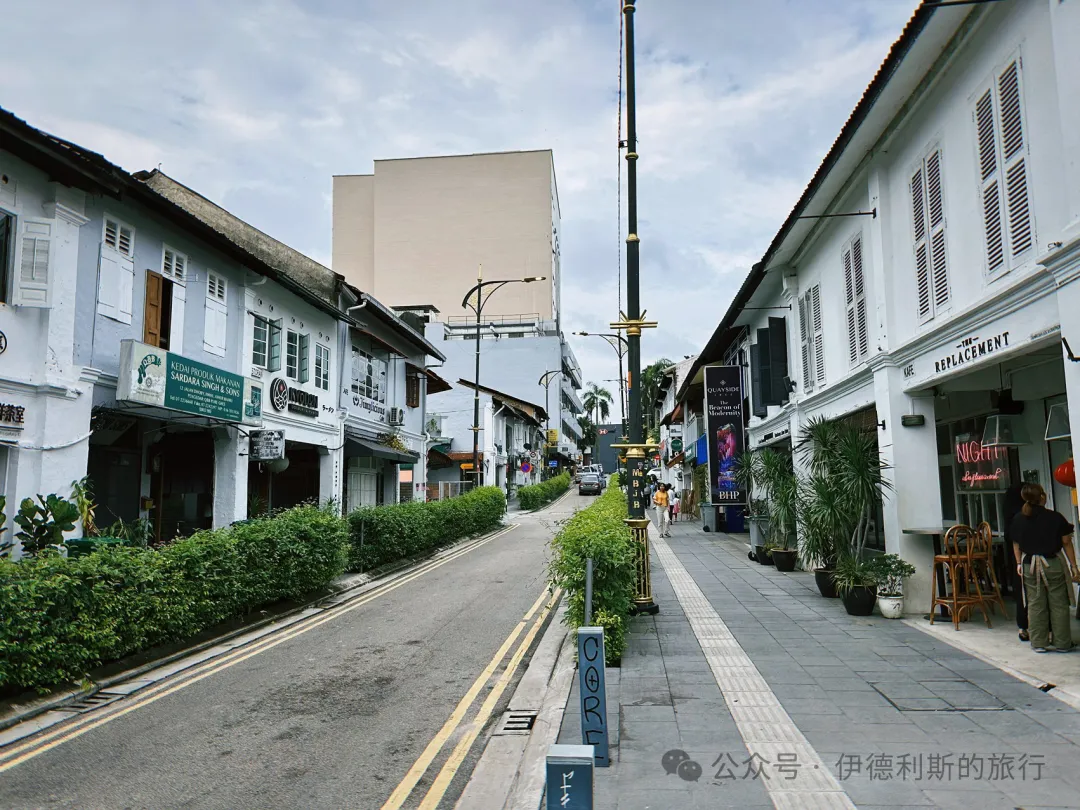
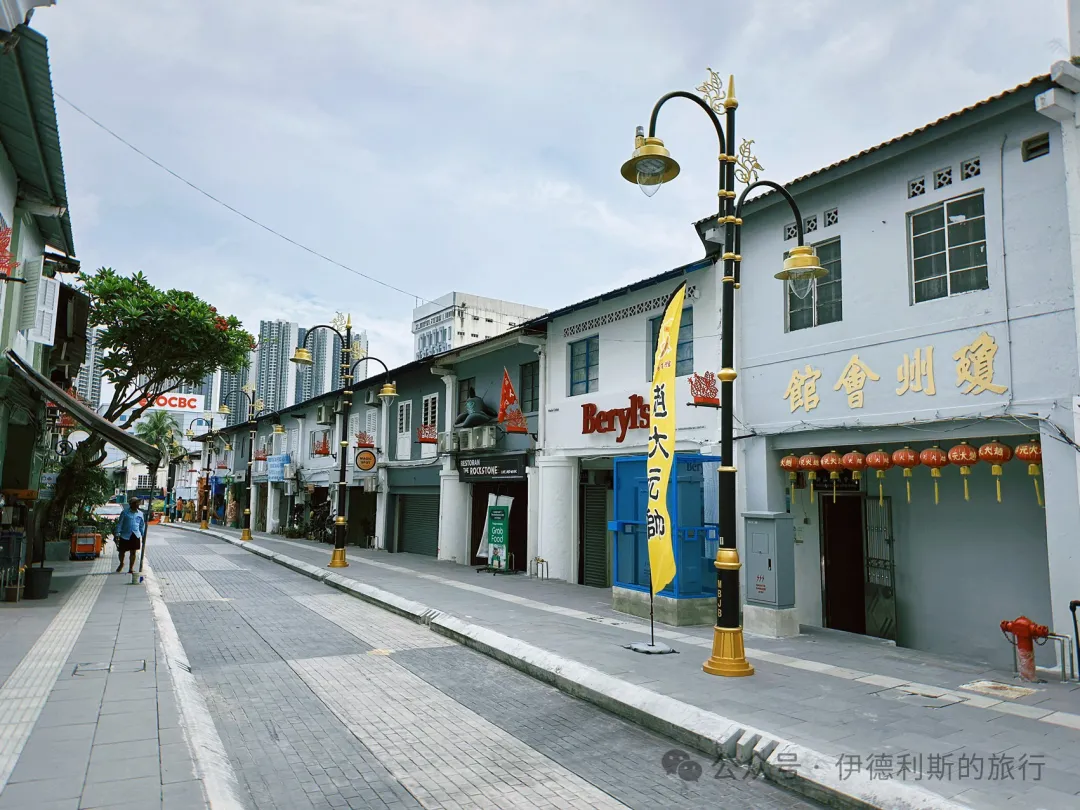
At Hua Mui, we ordered mutton stew rice, Hainanese noodles, coffee and tea mix (cham c), and a breakfast platter. Coffee and tea mix (cham c) is just coffee, tea, and milk. The restaurant's setting is still very traditional, with a classic two-story arcade building (qilou) and bamboo curtains hanging on the doors and windows, easily bringing to mind the old days.
Yut Loy Coffee Shop in Kuala Kangsar
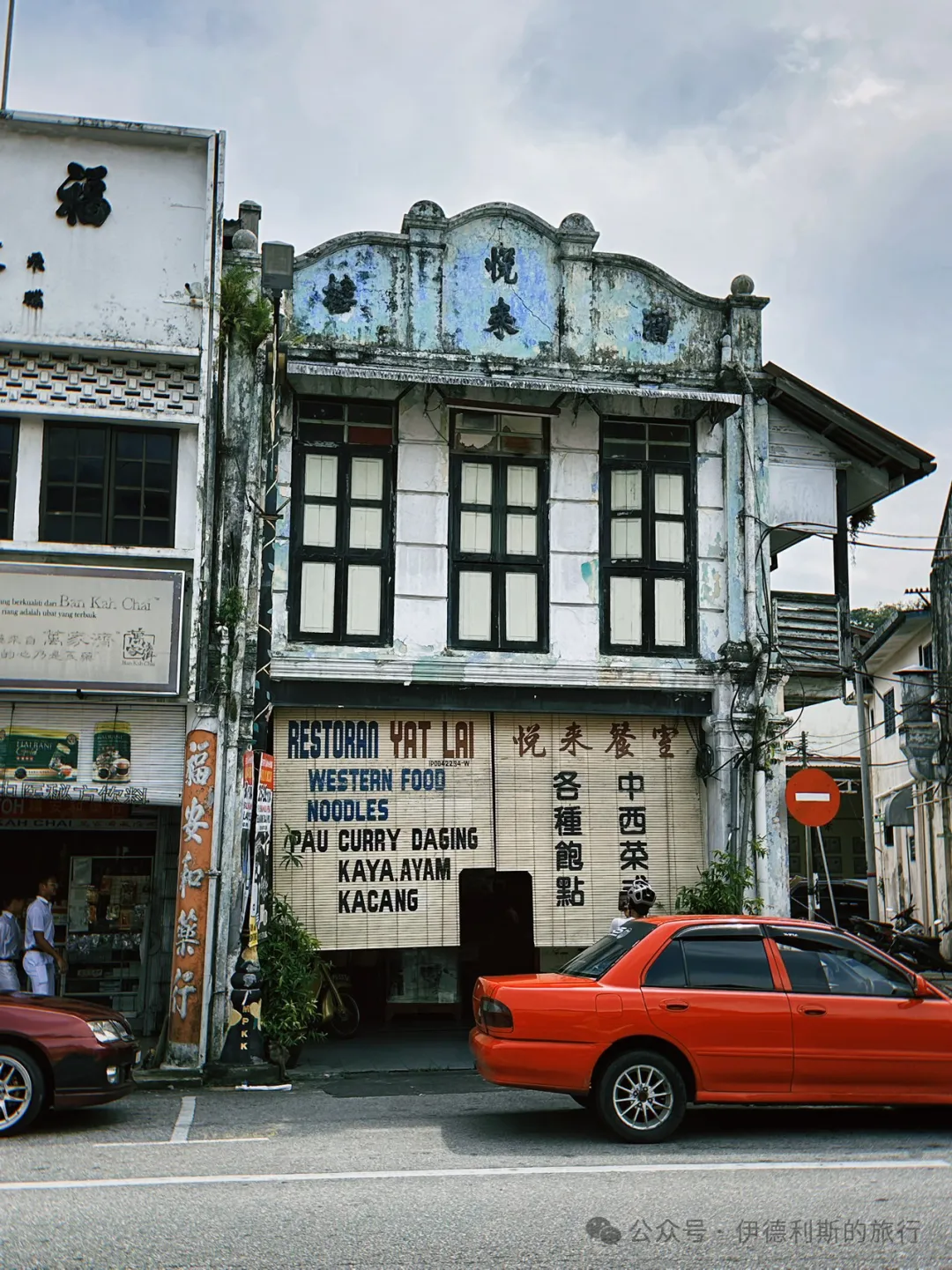
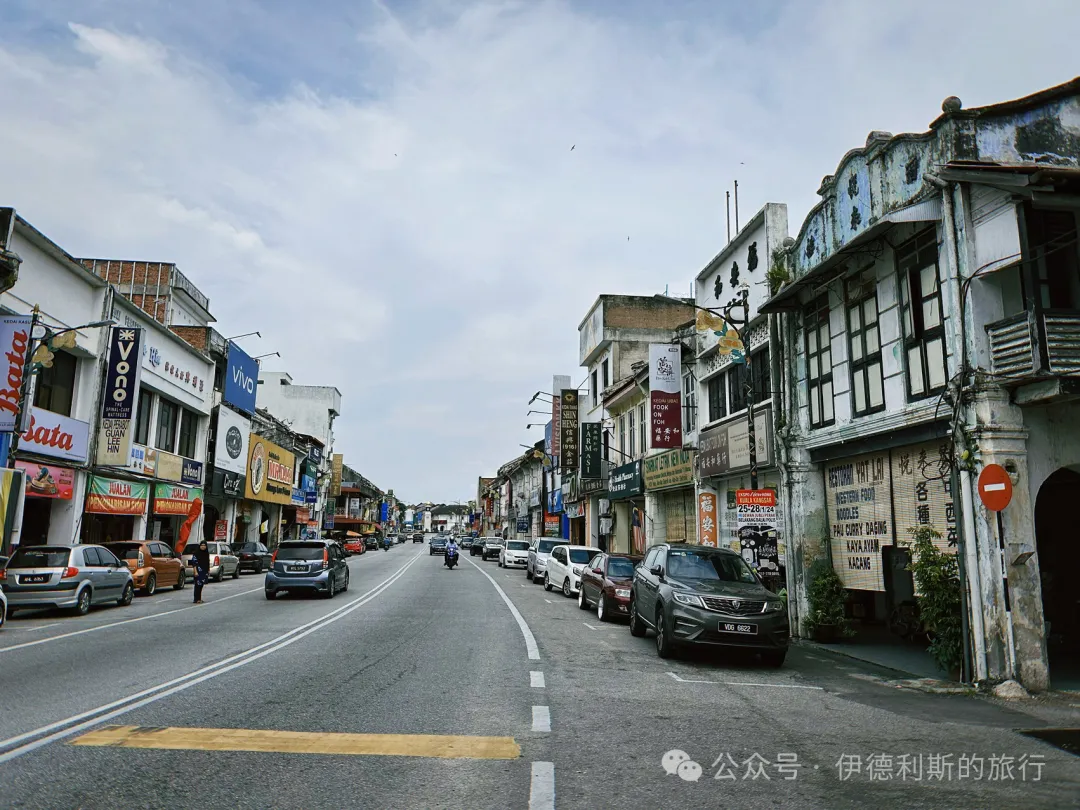
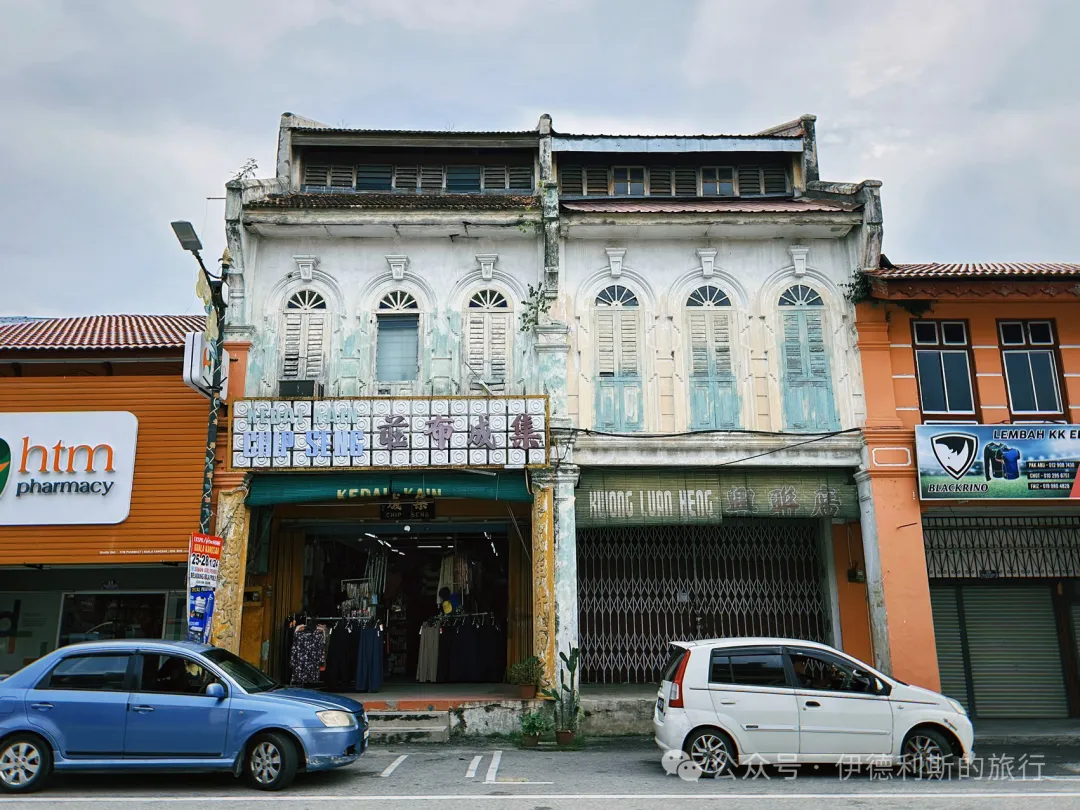
Taking the train north from Ipoh, it is a 30-minute ride to Kuala Kangsar District. Kuala Kangsar has been the royal city of the Sultan of Perak since the 18th century. The town center still keeps an old street of arcade buildings, where you can find an old-school Hainanese coffee shop called Yut Loy Coffee Shop (Yue Lai Cha Shi). The Hainanese owner hires Malay staff here, allowing the three major ethnic groups—Chinese, Malay, and Indian—to all dine in the shop.
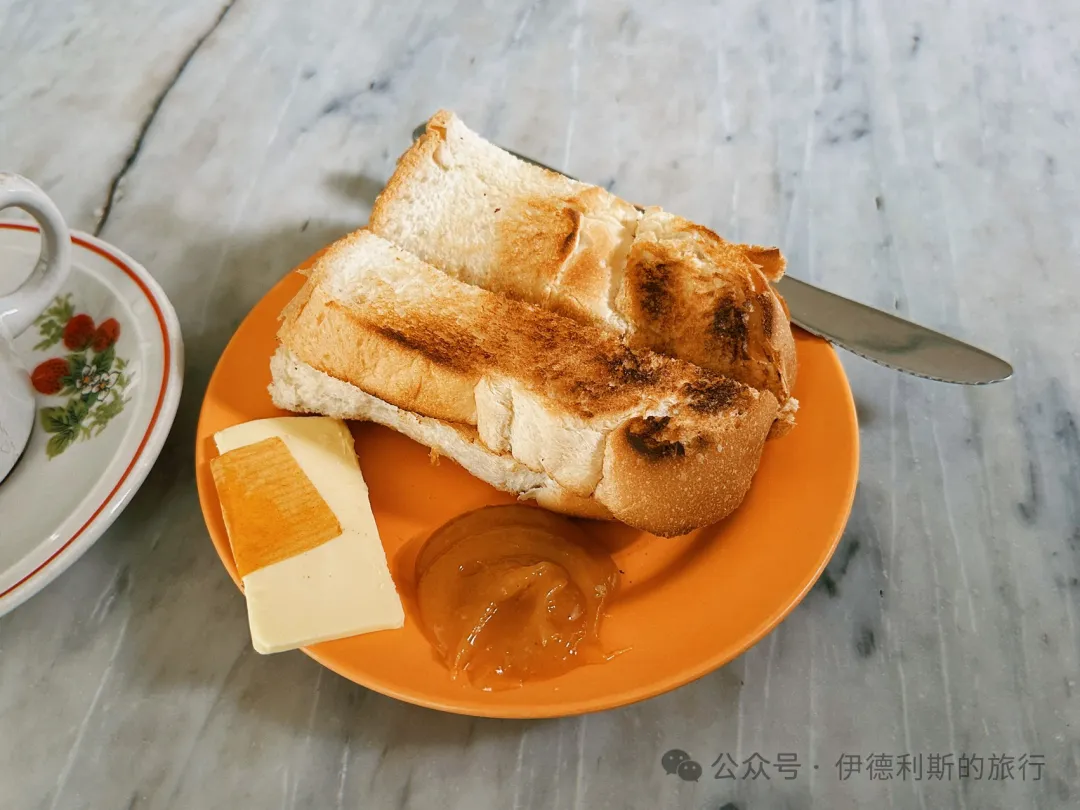
Since Yut Loy Coffee Shop only serves main meals after 1:00 PM, we spent the morning there having coffee with toast, topped with honey and butter. In Nanyang-themed novels, I often read about old people sitting in these Hainanese coffee shops all morning with a cup of coffee, a piece of toast, and a newspaper. This time, we got to experience it ourselves.
Sin Hua Air-Conditioned Restaurant in Kota Bharu
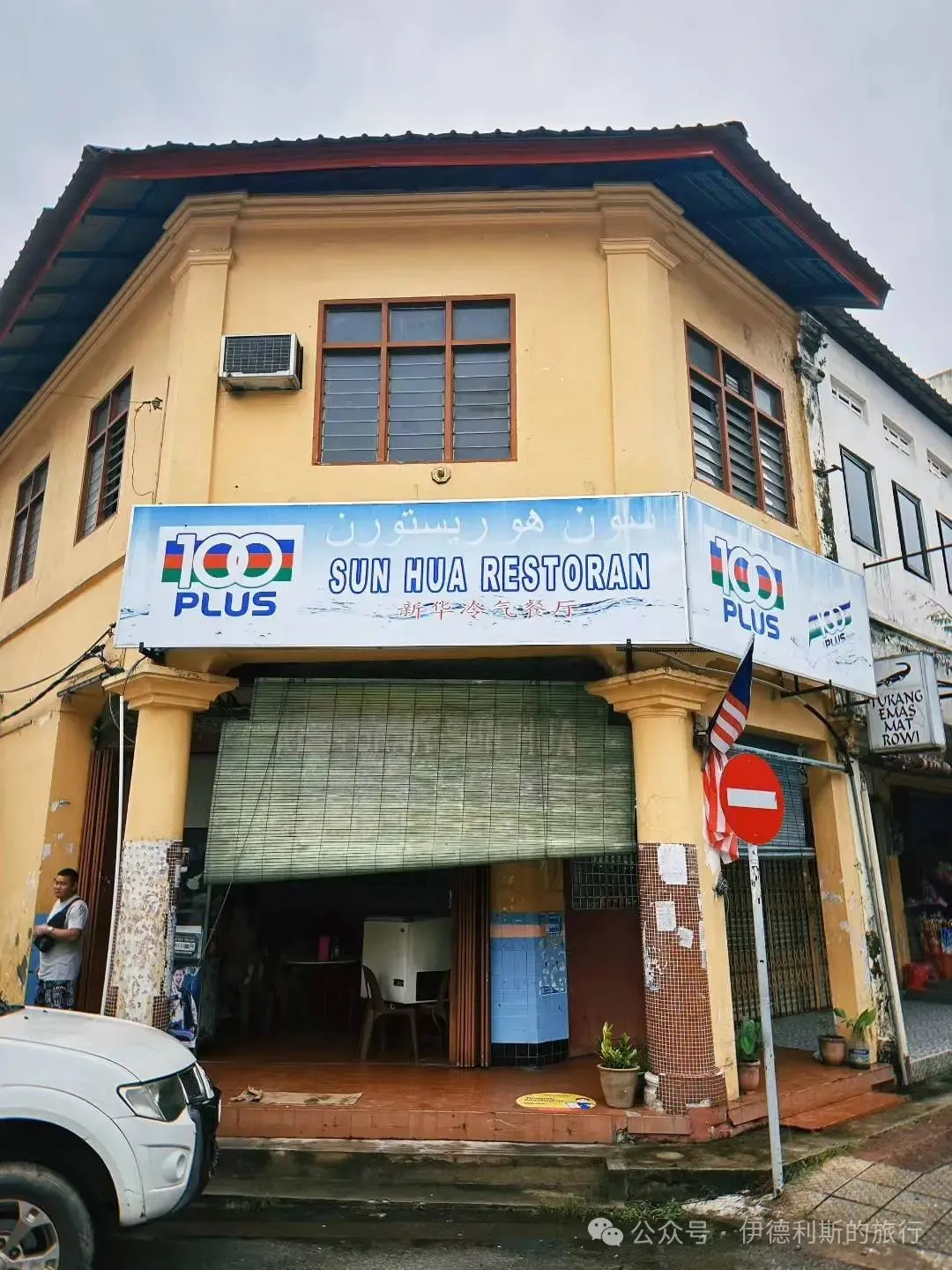
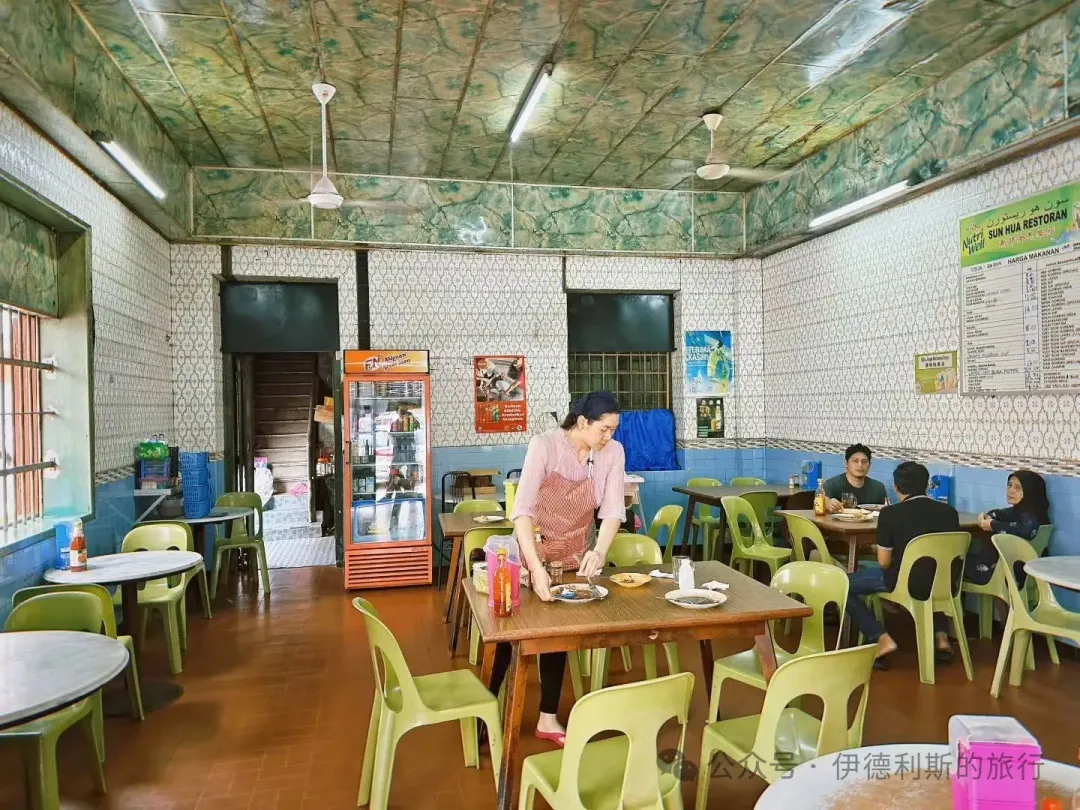
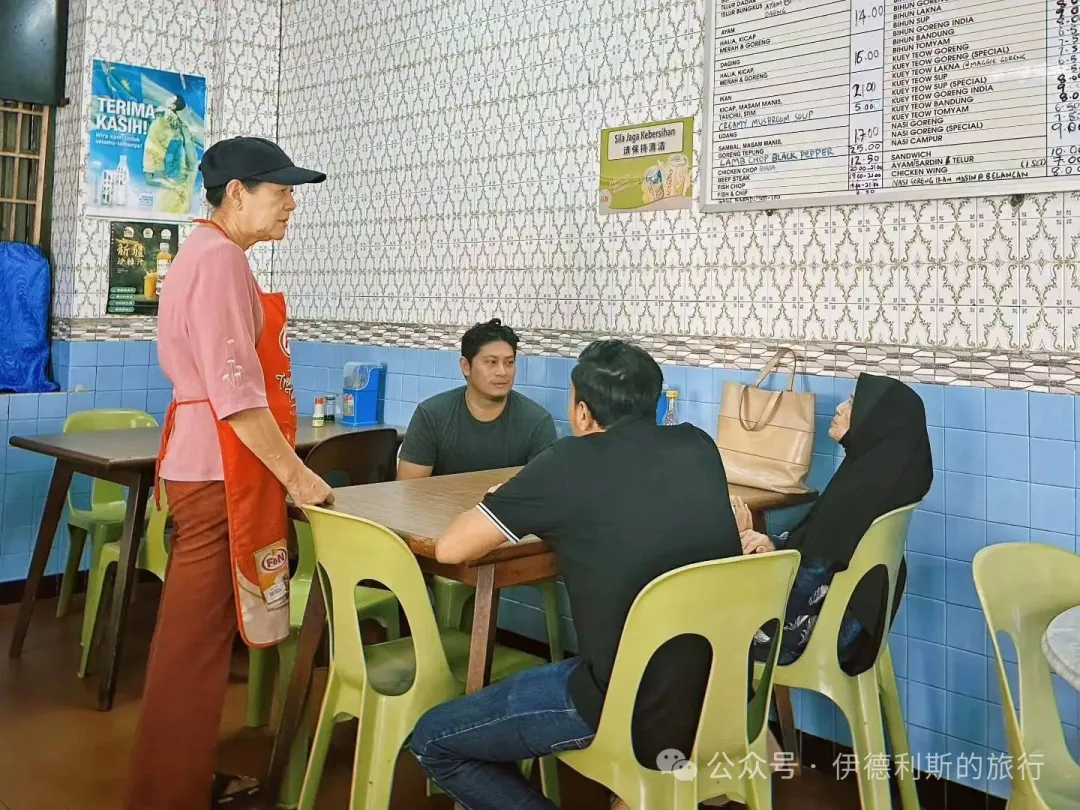
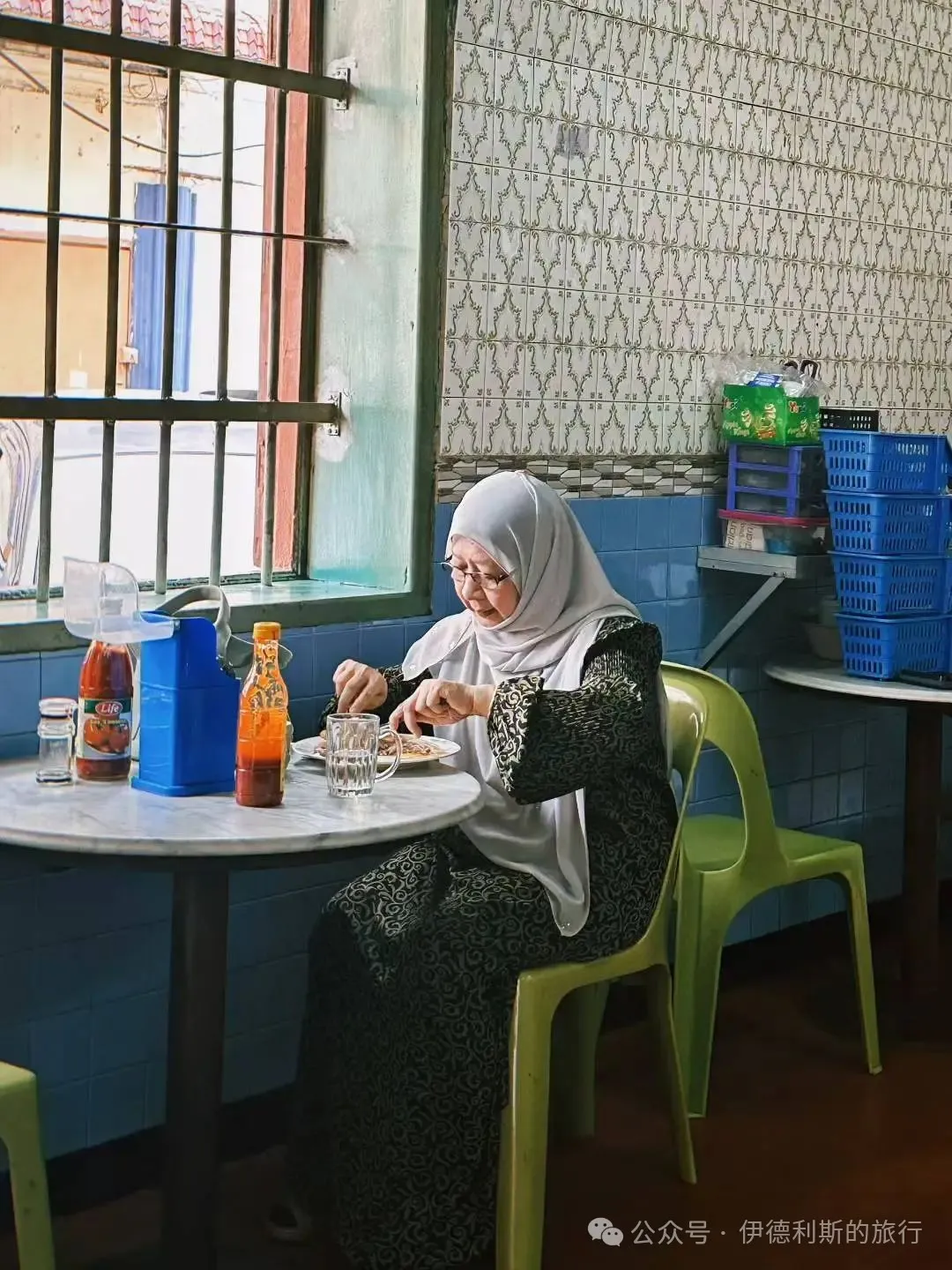
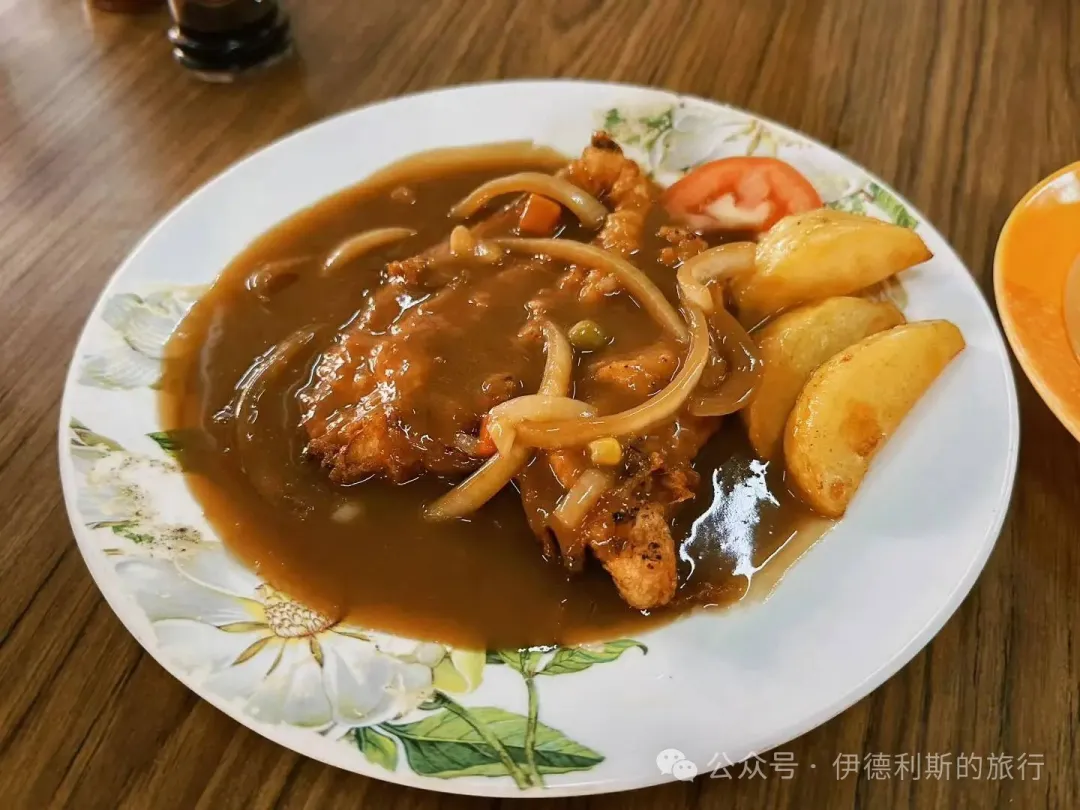
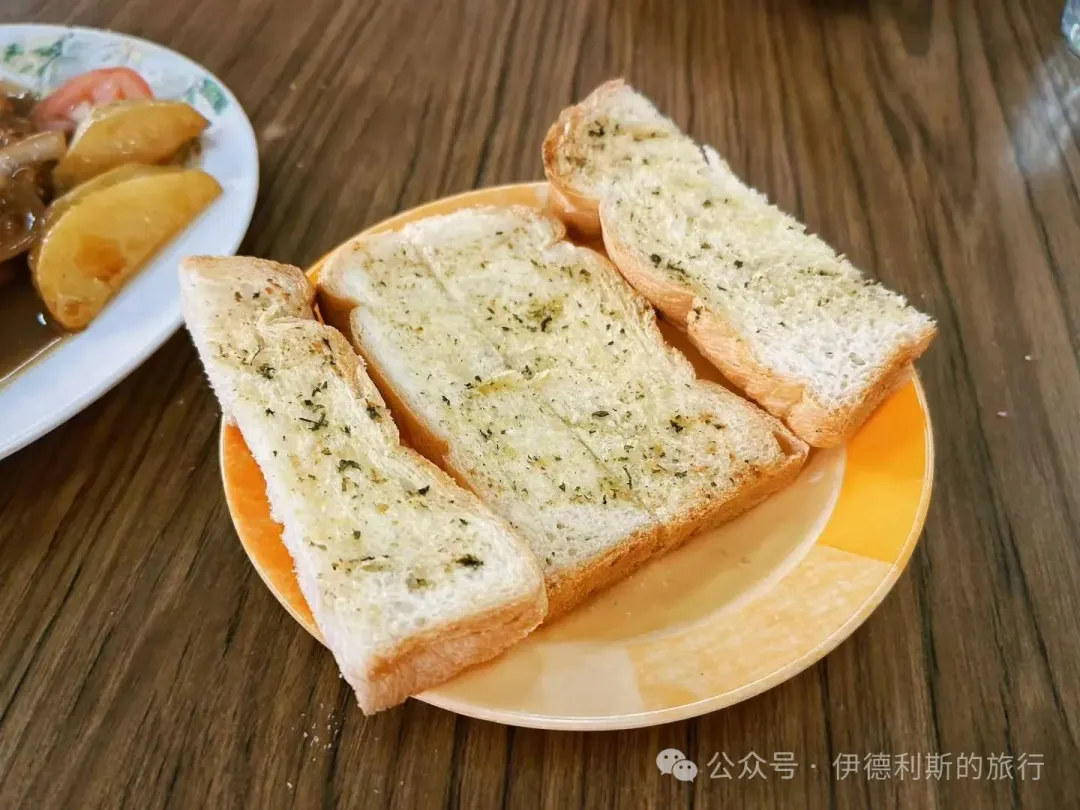
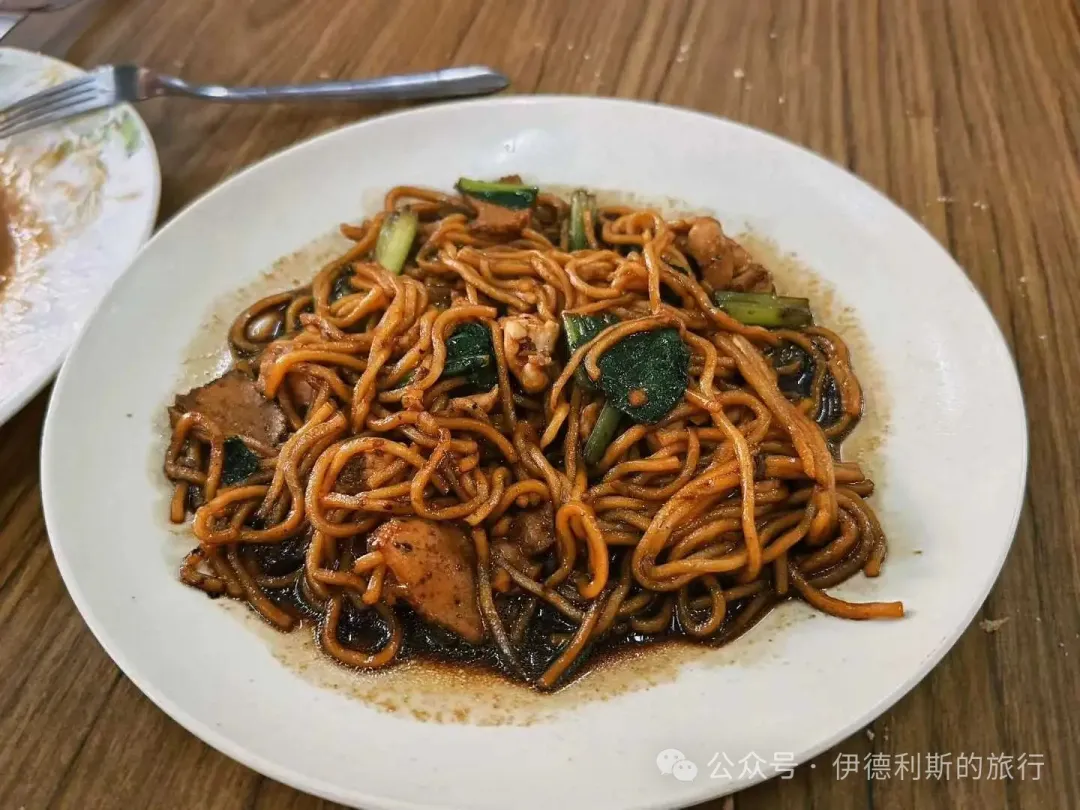
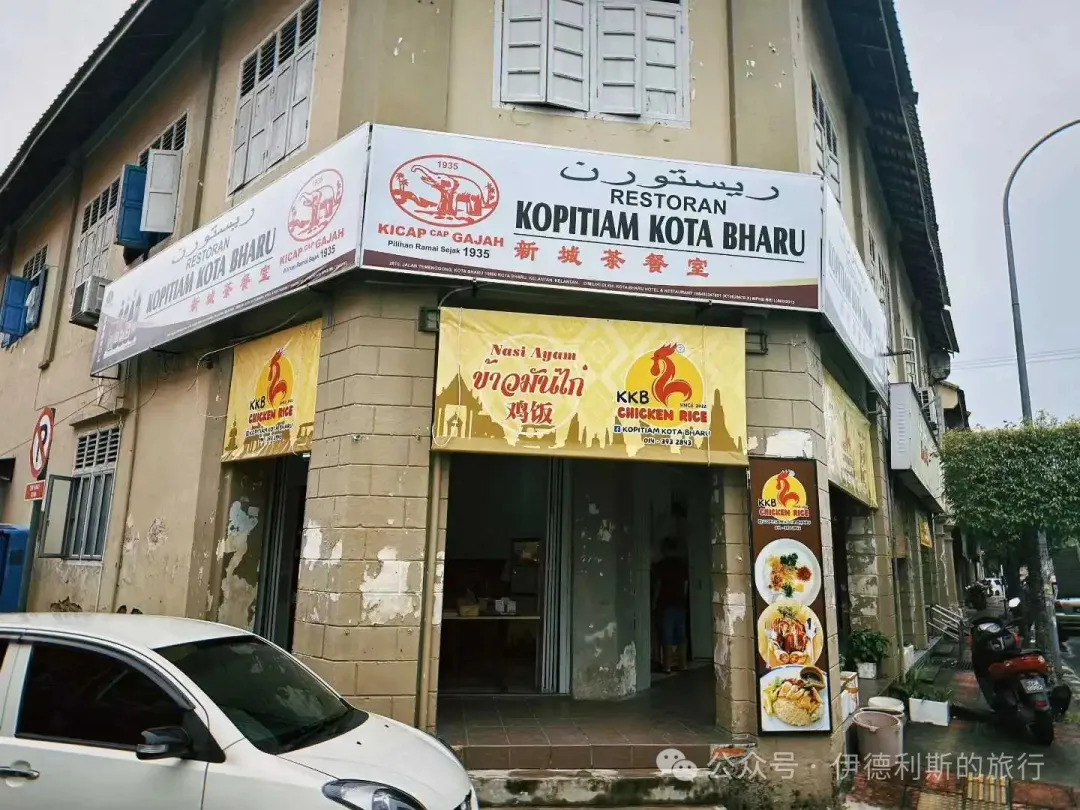
Hainanese people are an important part of the Chinese community in Kelantan. We ate at the Sin Hua Air-Conditioned Restaurant, a long-standing Hainanese eatery in Kota Bharu with over 50 years of history. We had Hainanese chicken chop, Hainanese noodles, and toasted bread, all of which are authentic Nanyang Hainanese dishes. Next door, there is also a Sin Shing Coffee Shop (Xin Cheng Cha Can Shi), which is said to have the best Hainanese chicken rice in Kota Bharu.
Fook Yuen Coffee Shop in Kota Kinabalu
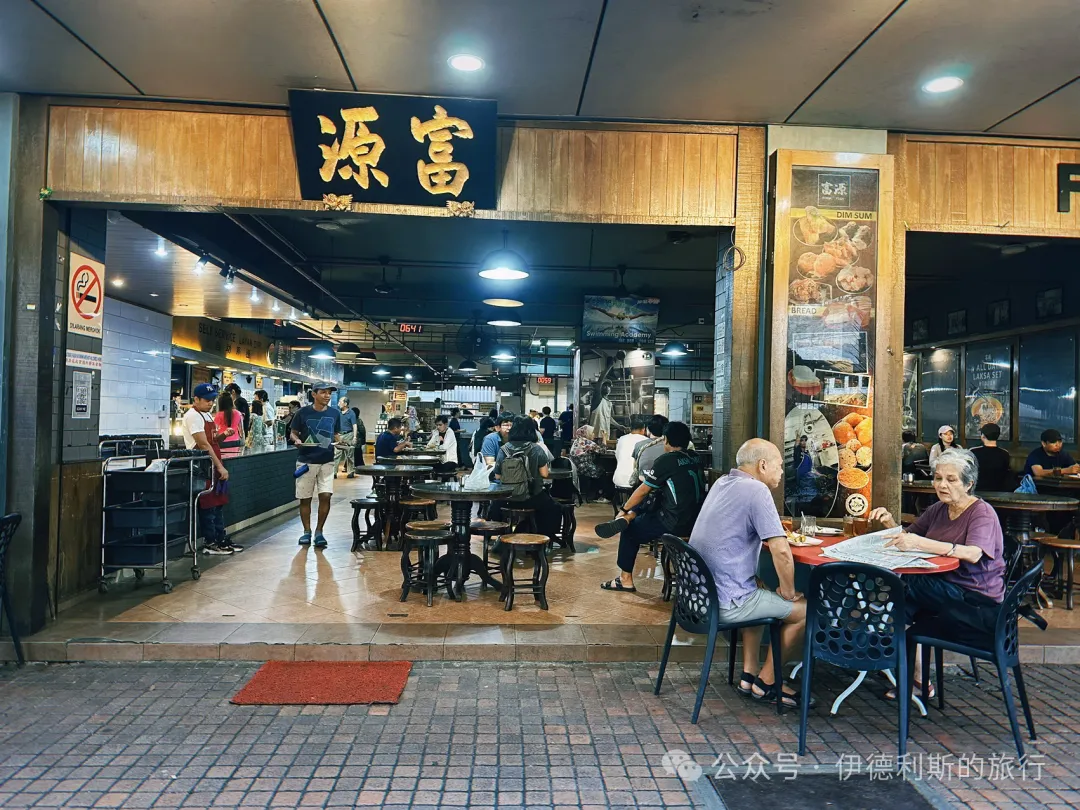
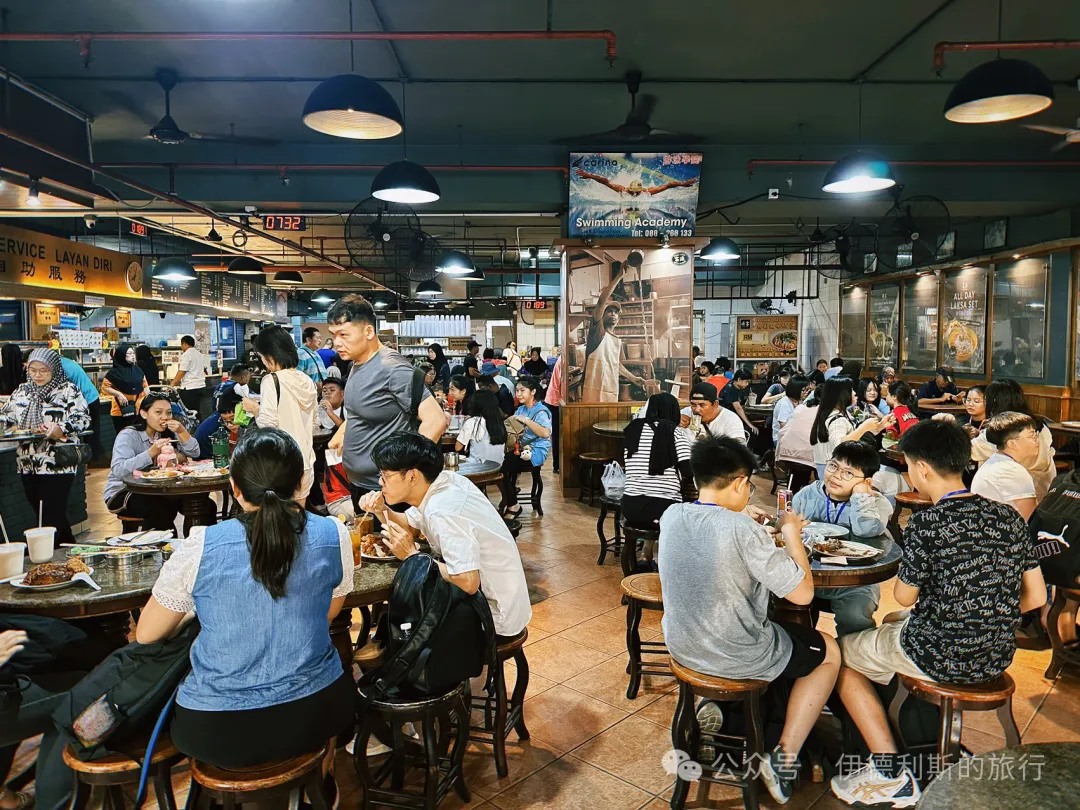
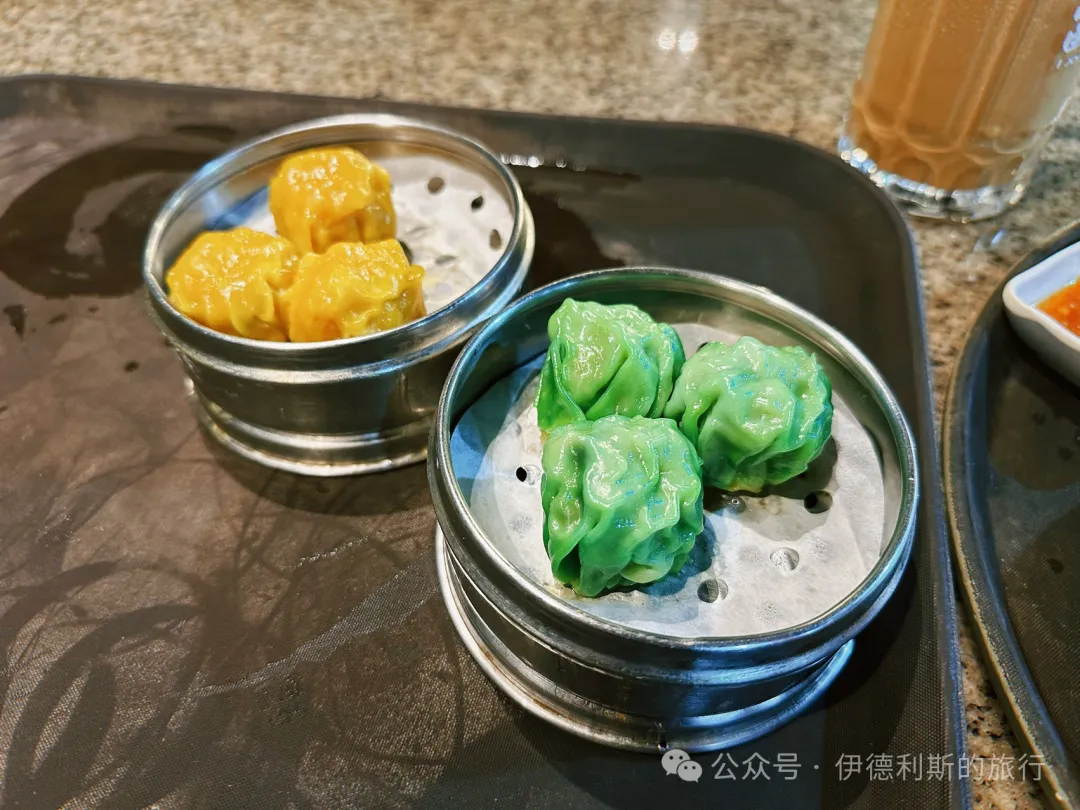
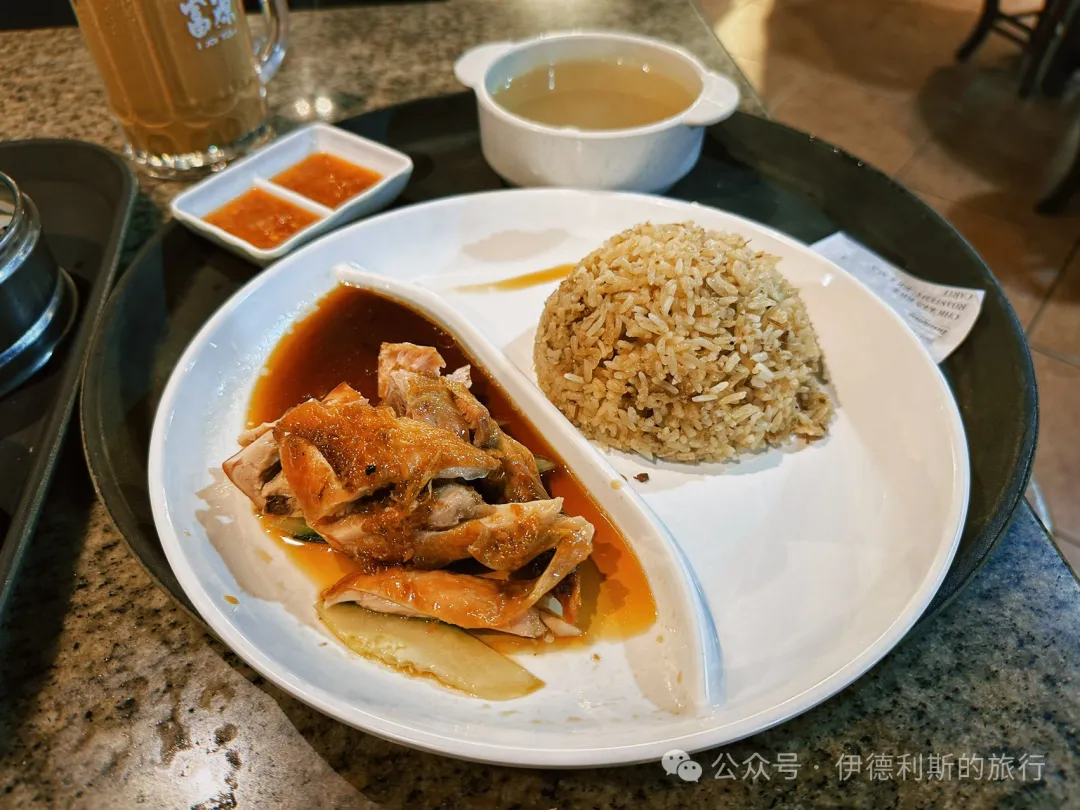
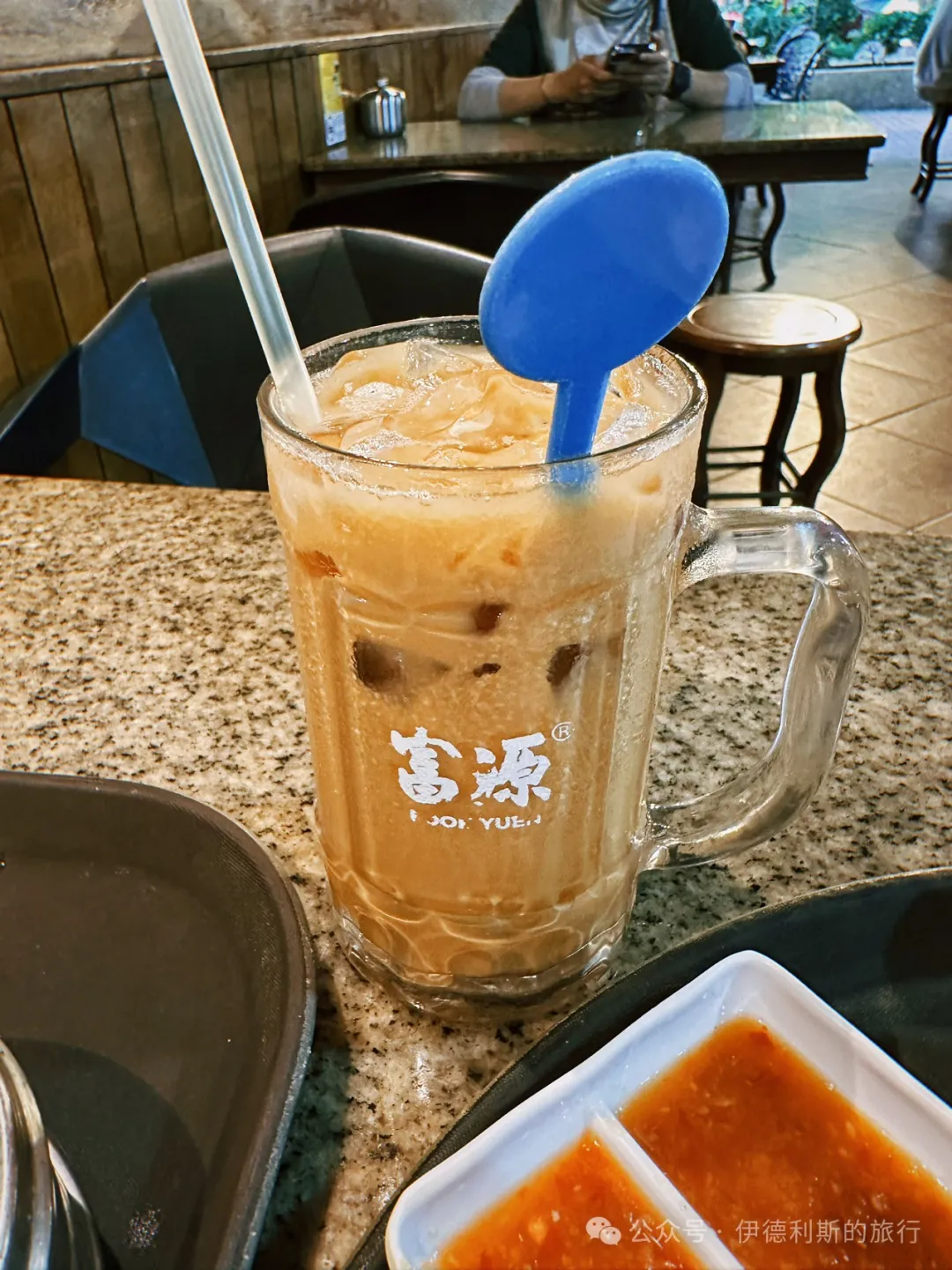
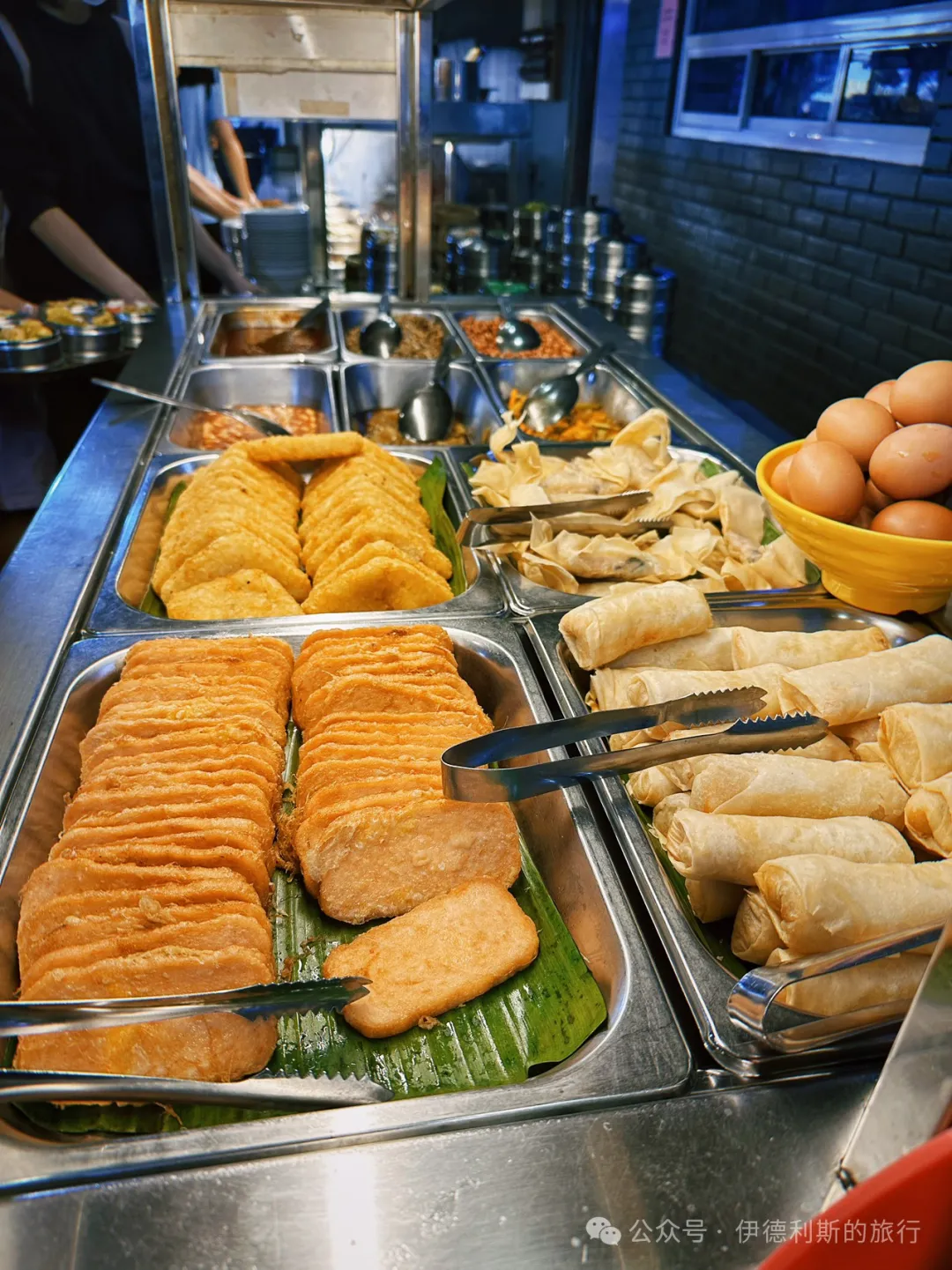
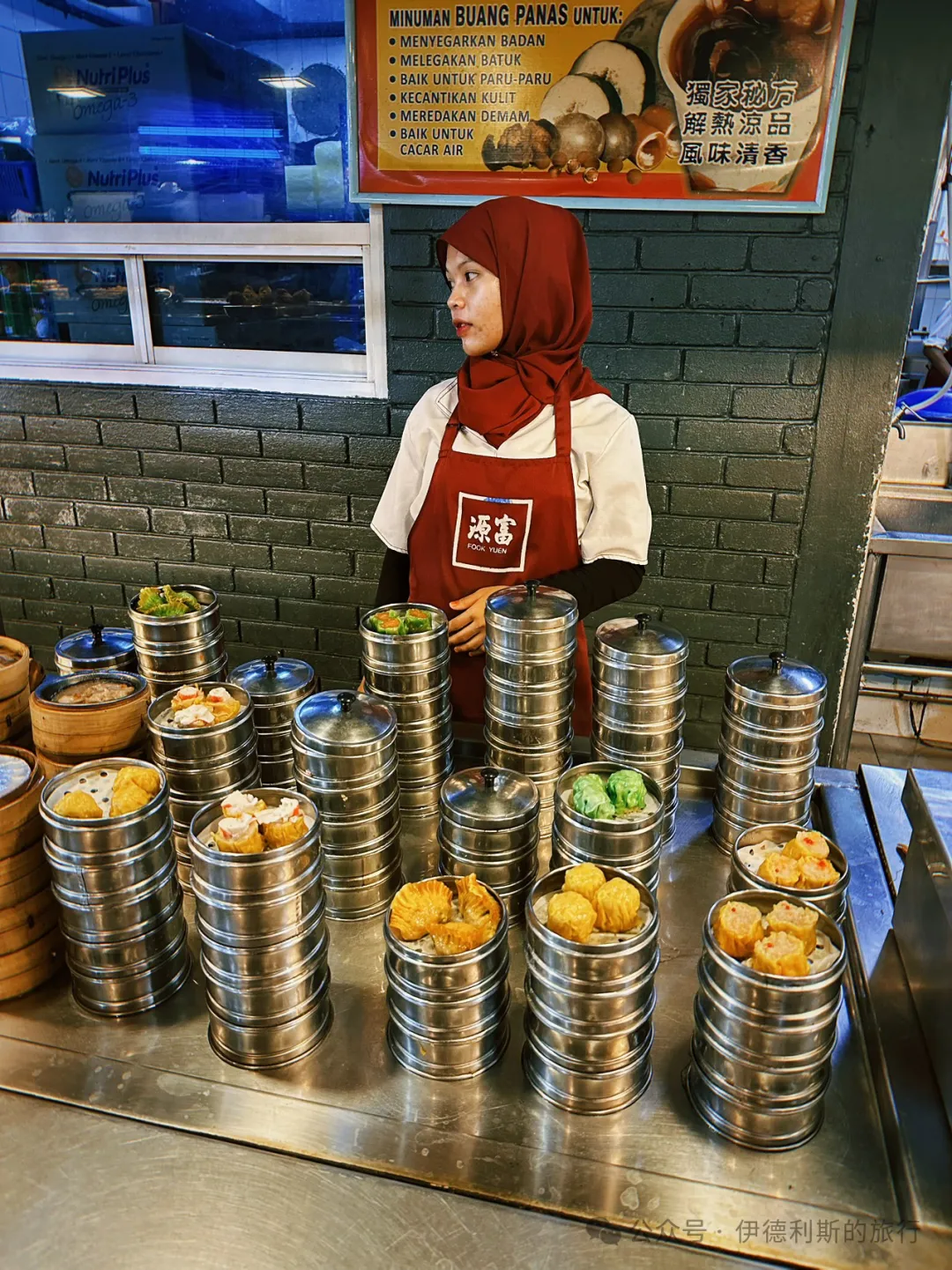
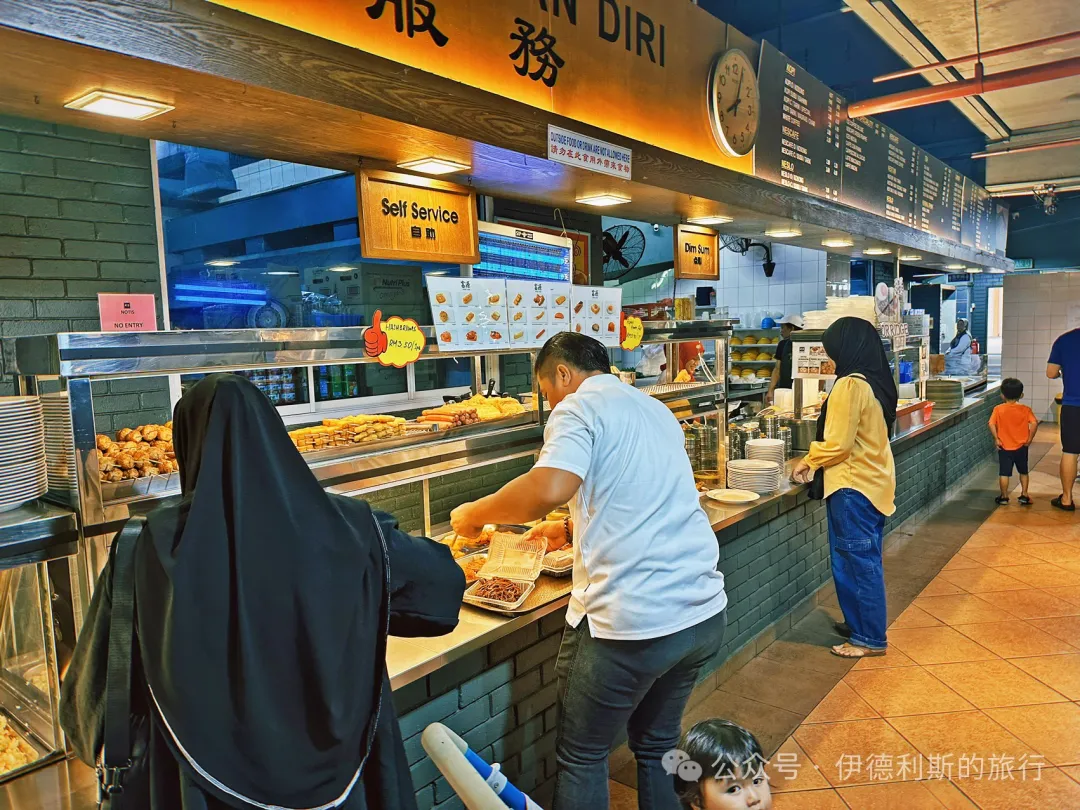
Although there are many Hakka and Hokkien people on Gaya Street in Kota Kinabalu, the restaurants are still mostly run by Hainanese people. I started my morning with breakfast at Fook Yuen Coffee Shop (Fuyuan Cha Canting), which is very popular and crowded with tourists. Ordering is semi-self-service. They offer Cantonese-style congee and dim sum, Malay coconut milk rice (nasi lemak), and Western-style bread and coffee, meeting the needs of all ethnic groups in Malaysia. I had a serving of Hainanese chicken rice, two portions of steamed dumplings (shaomai), and a glass of iced milk tea. Their chicken rice is a modified version; they add dried small fish to the rice, a style that should be more popular with Malay customers.
Yit Chang Coffee Shop in Kota Kinabalu
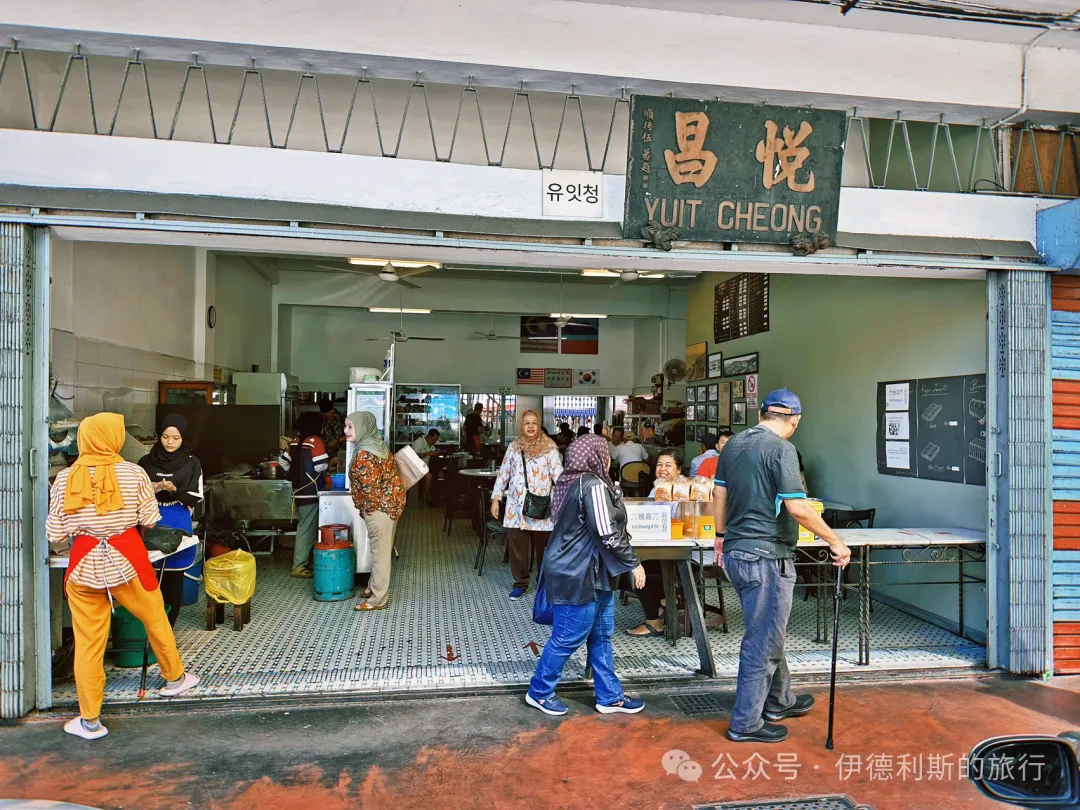
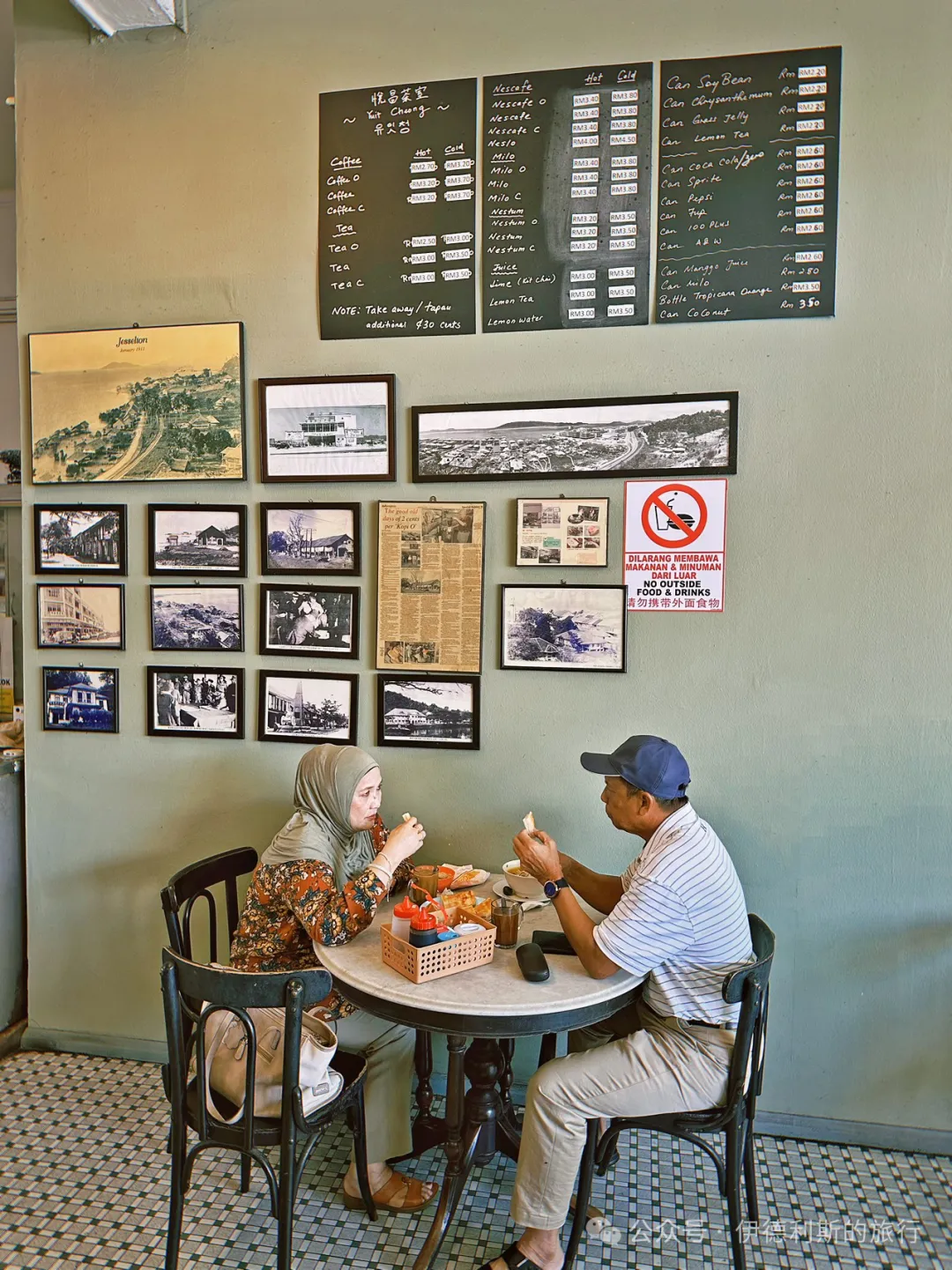
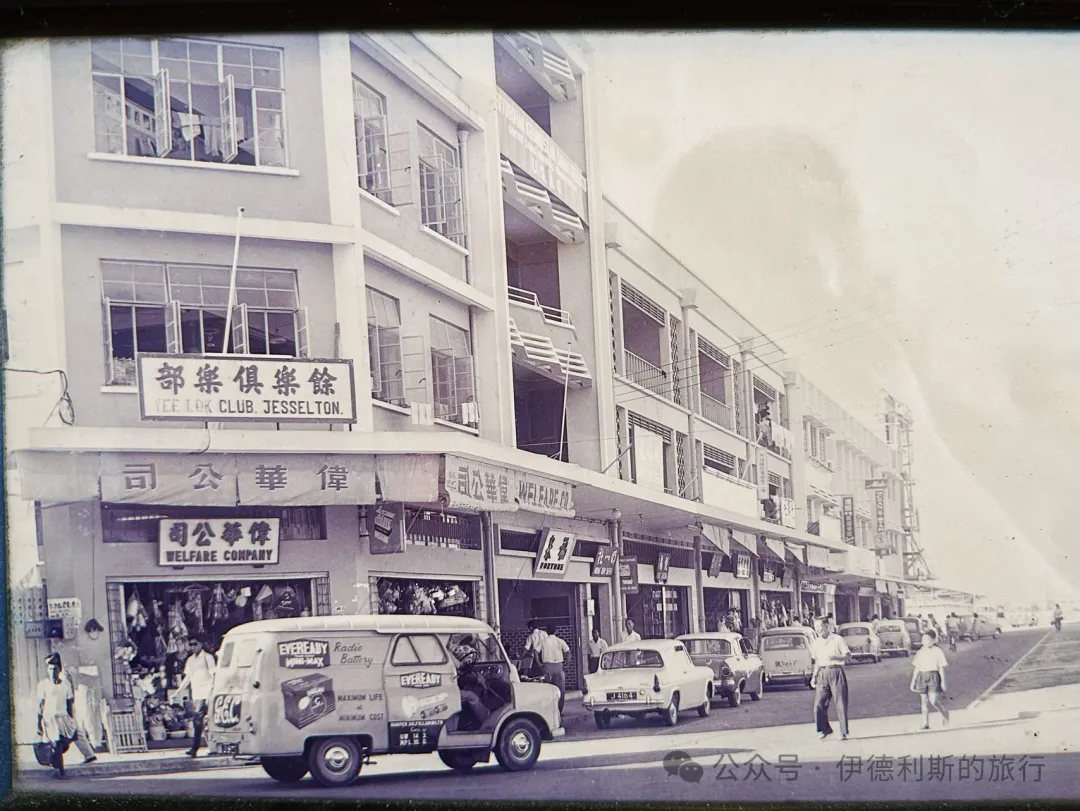
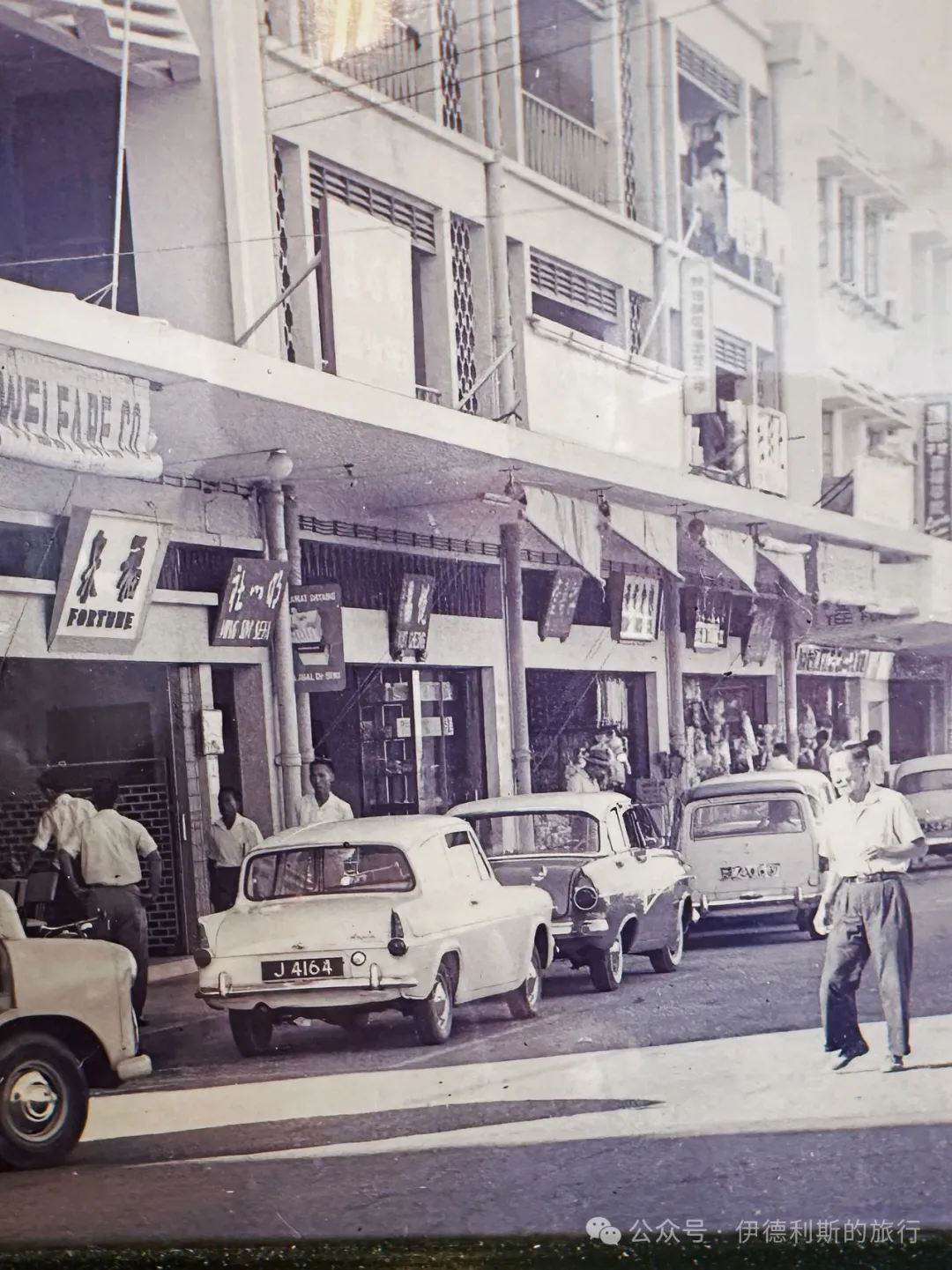
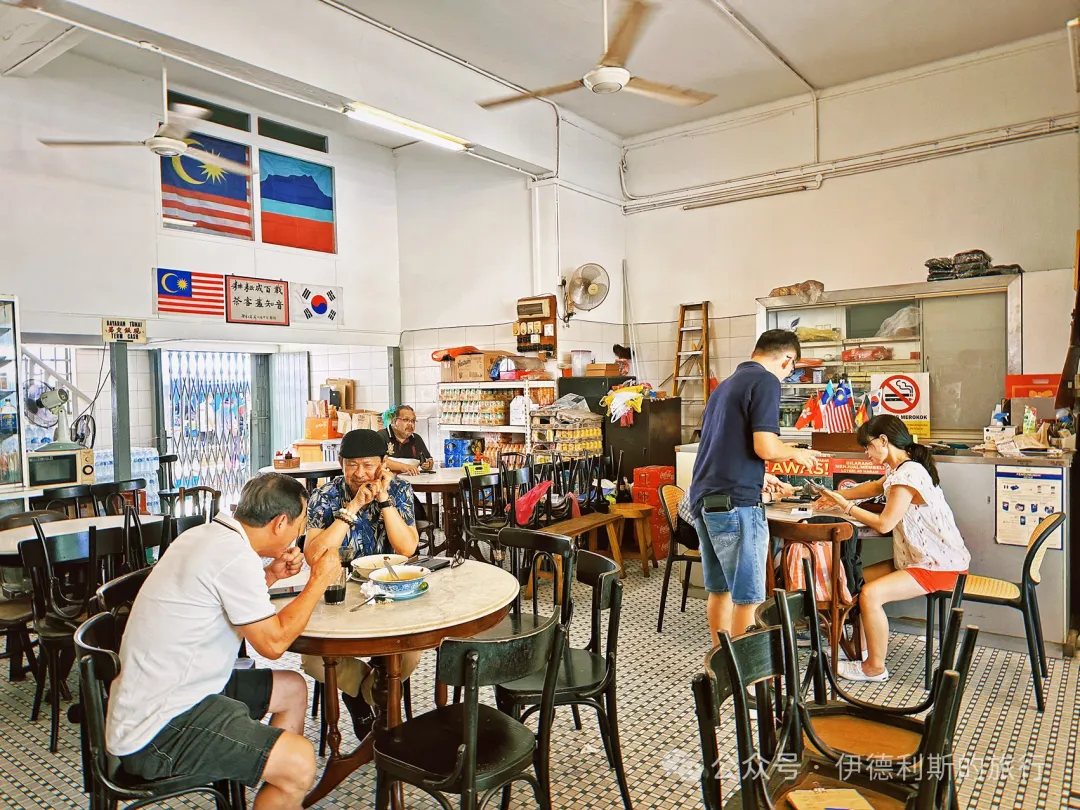
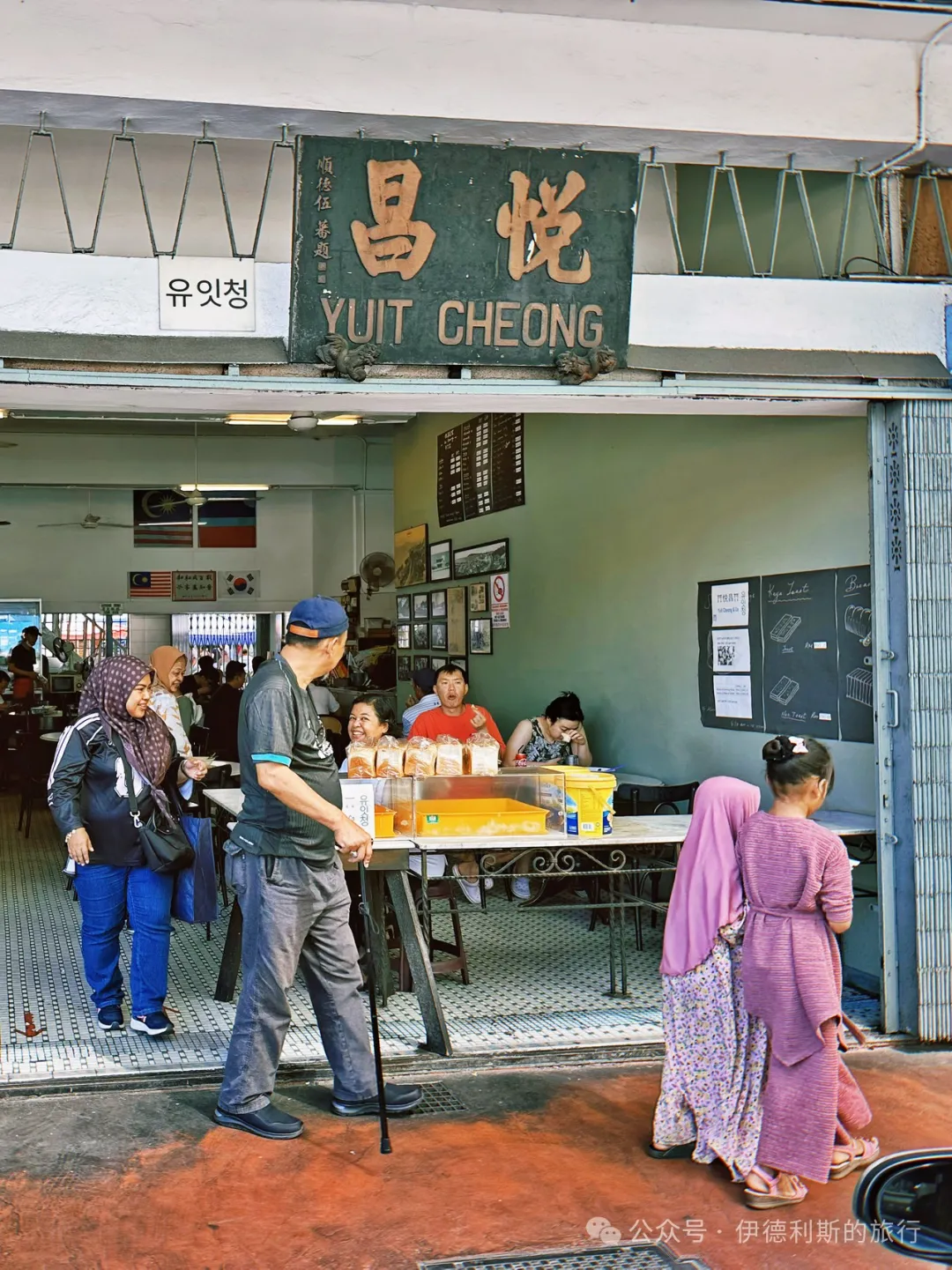
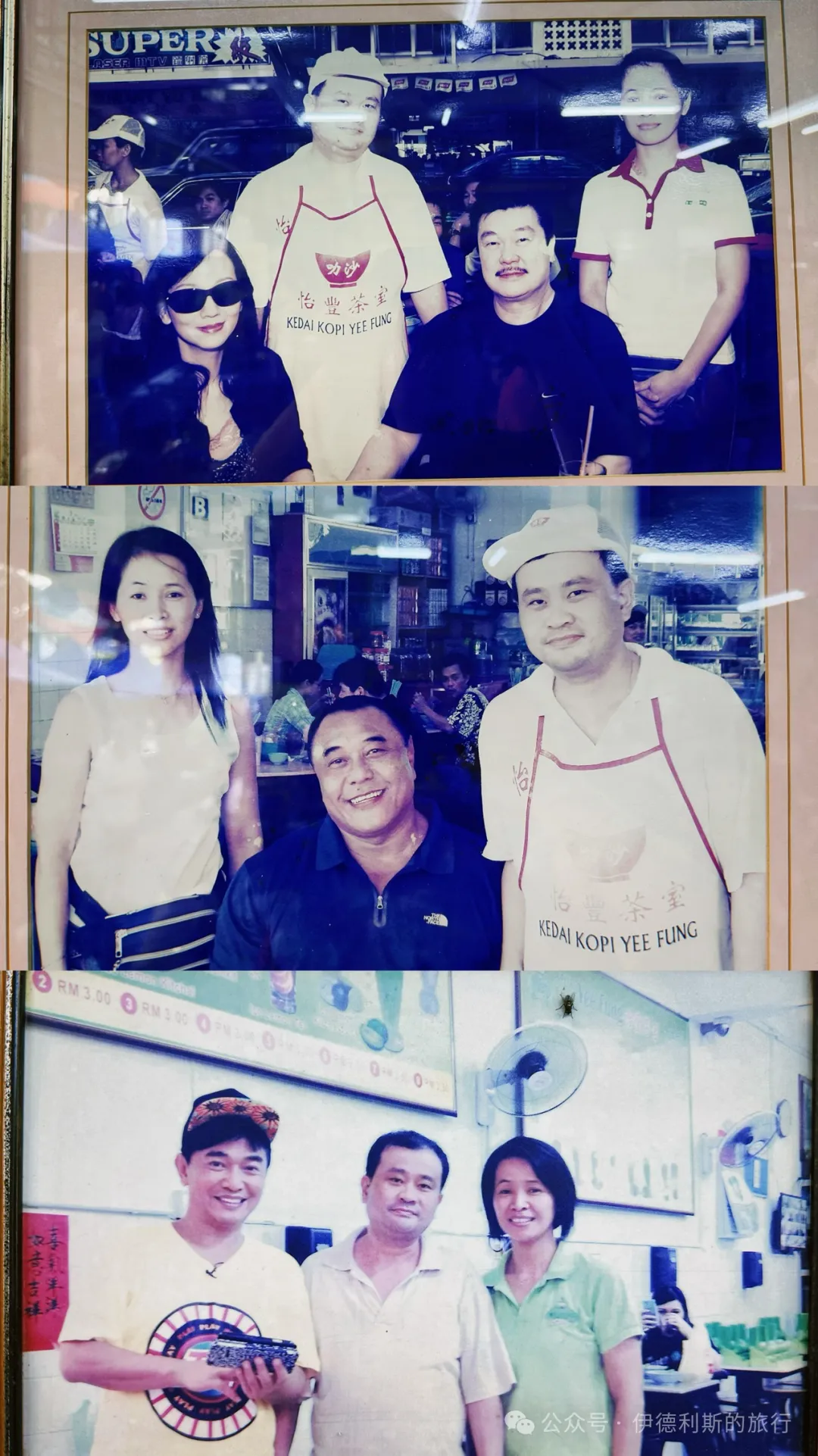
Opened in 1896, Yee Fung Coffee Shop (Yue Chang Cha Shi) is the oldest Hainanese restaurant in Kota Kinabalu, with a history even longer than the city itself. The shop was originally located at the headquarters of the British North Borneo Chartered Company on Gaya Island. After the settlement on the island was destroyed in 1898 by an anti-British uprising led by the indigenous leader Mat Salleh, the shop moved to its current location on Gaya Street. You could say Yee Fung Coffee Shop has witnessed the entire transformation of Kota Kinabalu. Old photos hang on their walls, including one from the 1960s showing Yee Fung Coffee Shop in the exact same spot as today.
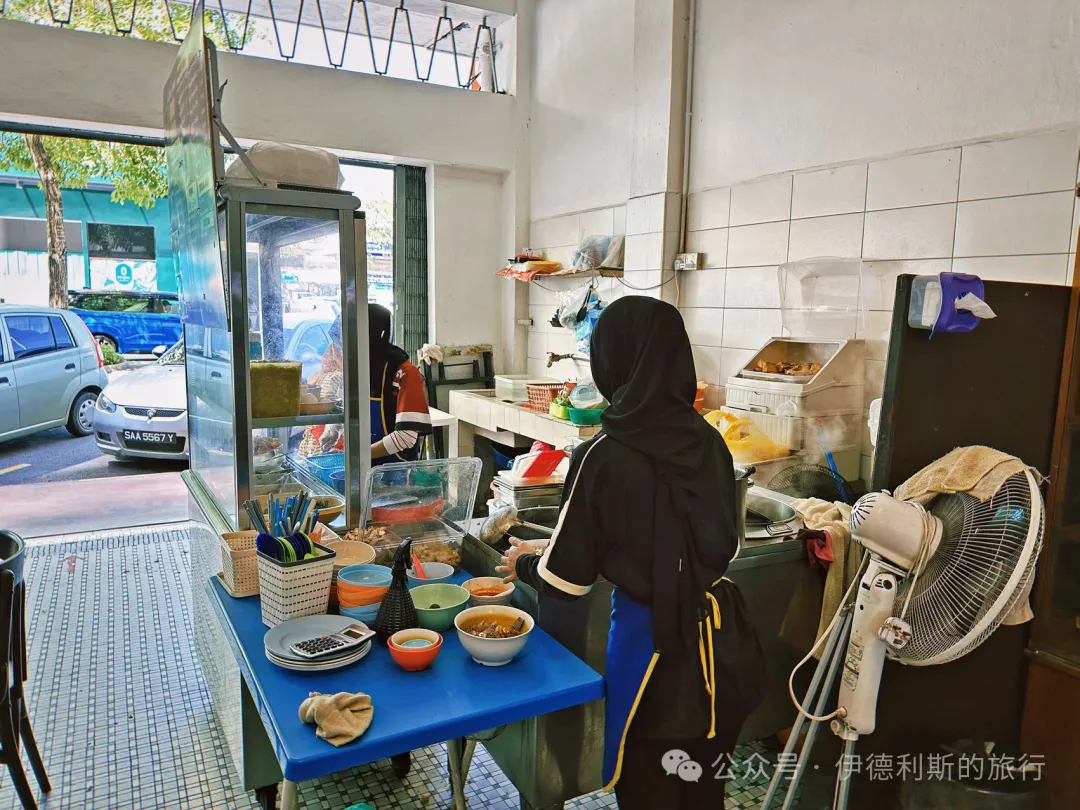
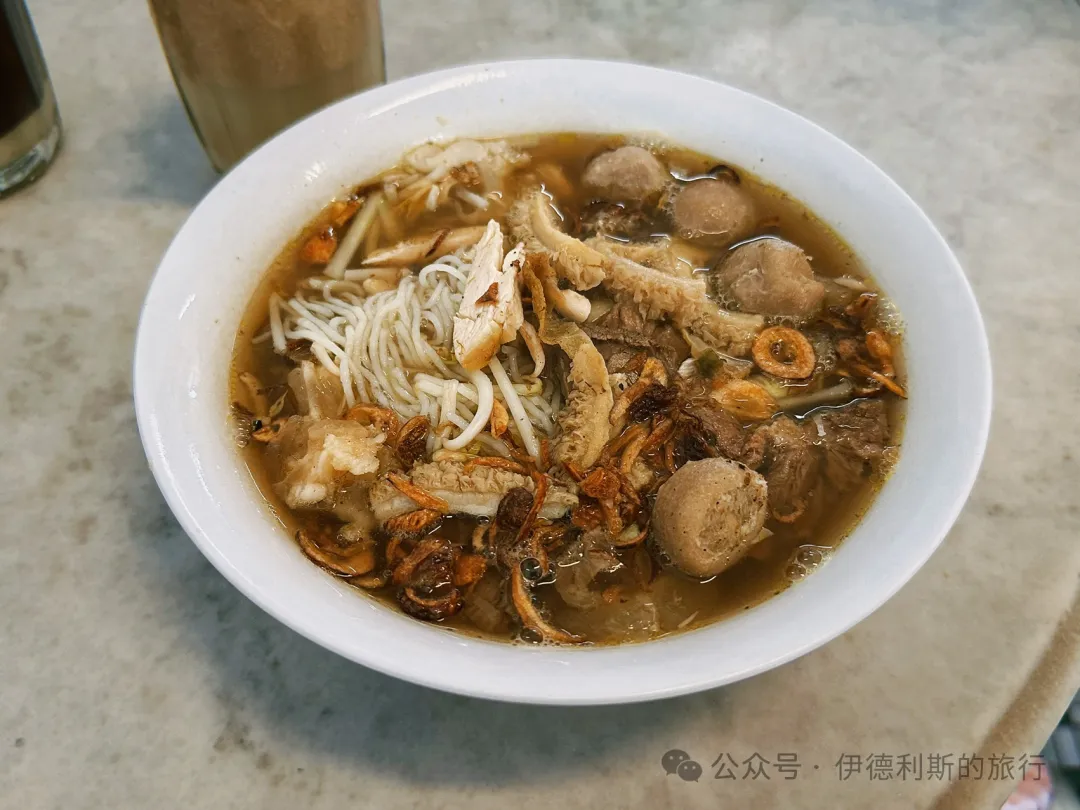
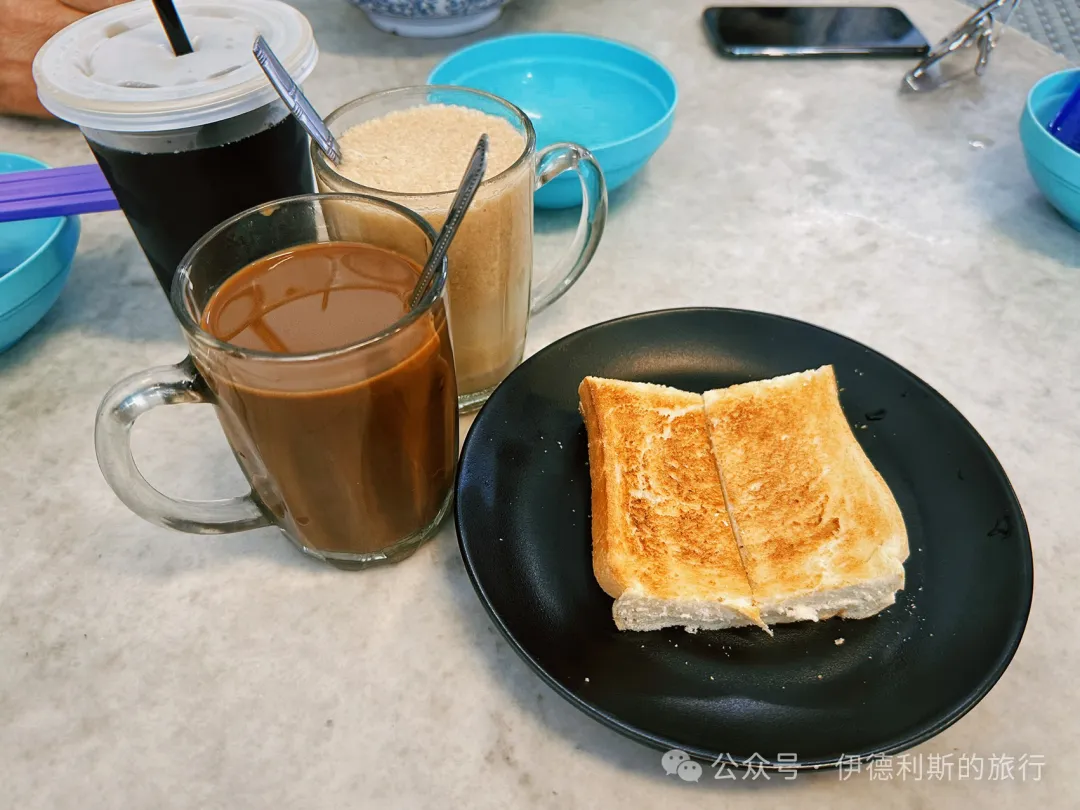
The shop is divided into two sections, with the Hainanese owner personally making coffee and toasting bread. The owner is very enthusiastic, provides excellent service, and speaks great Korean, which helps him attract many Korean guests. Another stall invites Muslim sisters to make Hainanese beef offal noodles (niuzamian) and various Malay dishes, which is a major feature of traditional Hainanese coffee shops. To attract customers from all ethnic groups, they must make food that suits everyone's taste. This is why many long-standing Hainanese restaurants in Malaysia have been open for decades or even a century.
We ordered white coffee, three-layer coffee, monk fruit herbal tea (luohanguo liangcha), oats, toast, and beef offal noodles. Monk fruit herbal tea and barley water (yimi shui) are really perfect for the weather here.
Yee Fung Coffee Shop in Kota Kinabalu
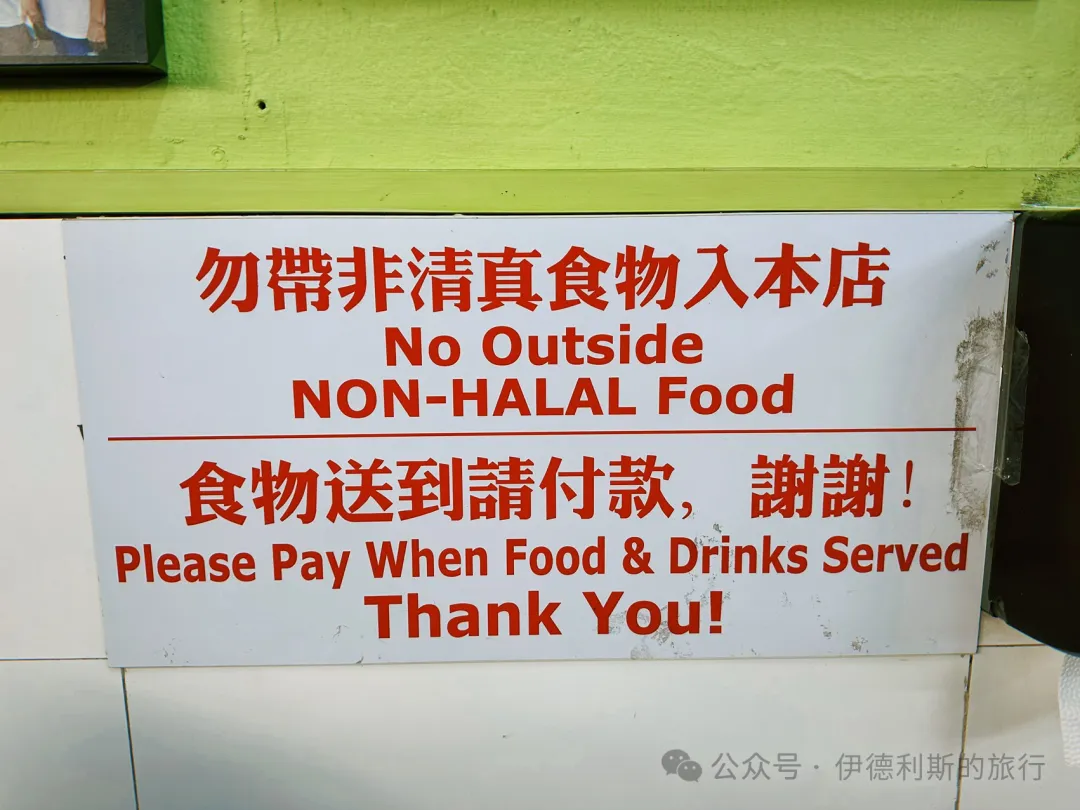
The most popular halal Chinese restaurant on Gaya Street in Kota Kinabalu is Yee Fung Tea House. The owner of Yee Fung Tea House, Zhuang Qiuwang, is from Johor. He started selling laksa on Gaya Street in 1984, which is exactly 40 years ago. Like many halal Chinese restaurants in Malaysia, they hire Muslim chefs and staff to ensure the ingredients are halal.
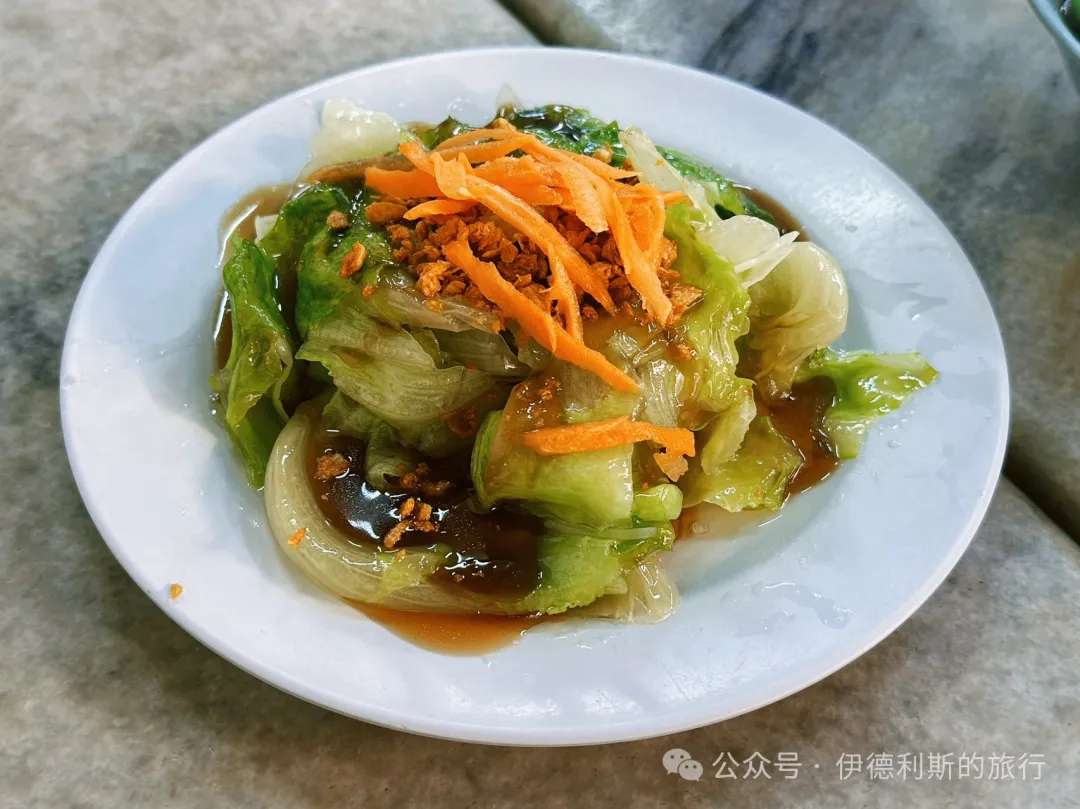
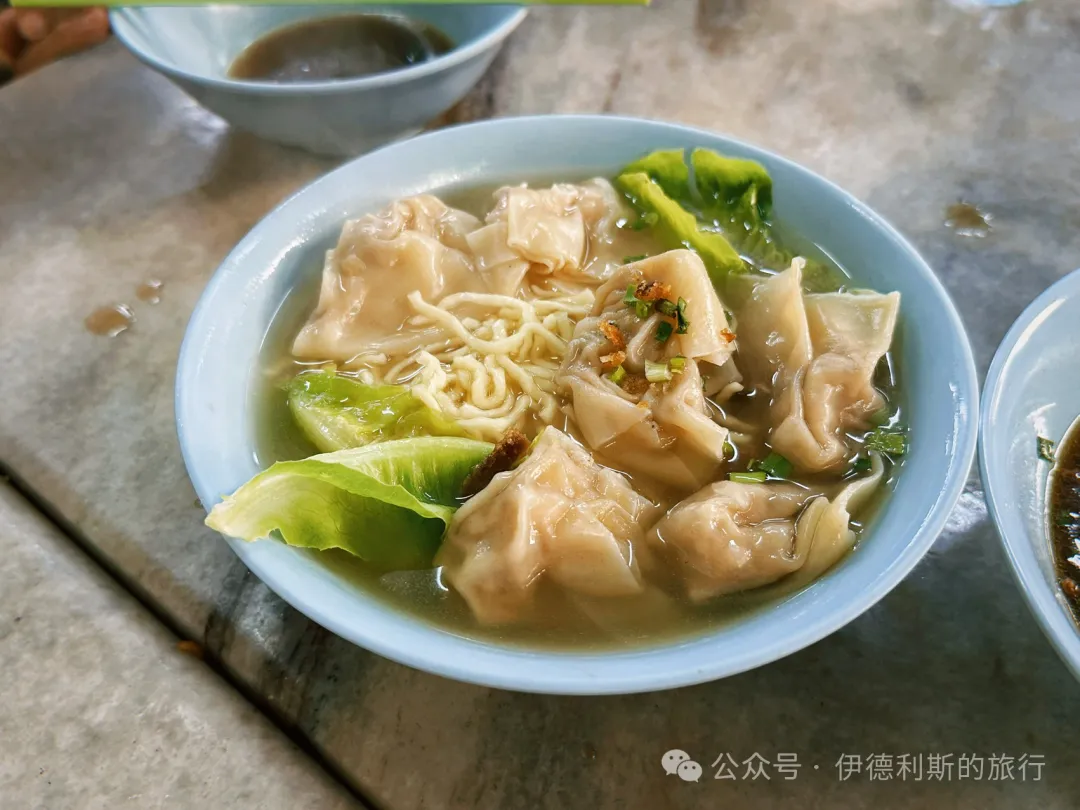
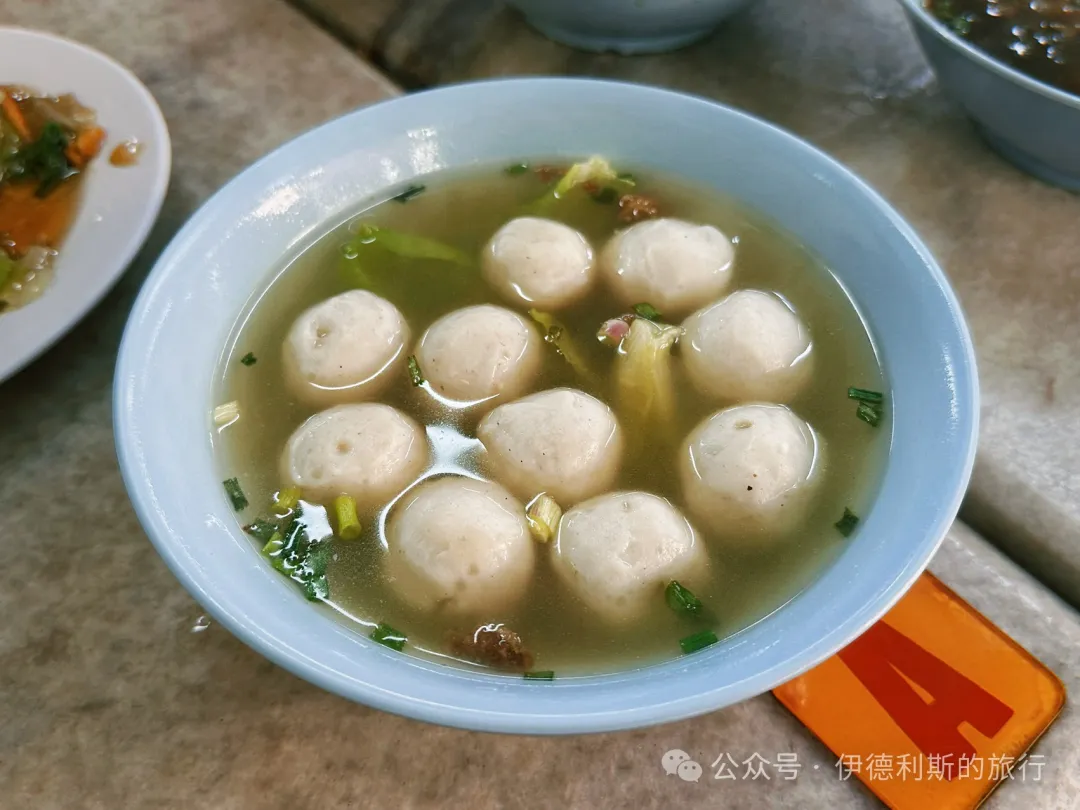
Their signature dishes are the "three treasures": laksa, claypot chicken rice, and beef offal. We ordered lettuce with oyster sauce, plain beef offal, plain fish balls, and chicken wonton noodles. Hainanese beef offal mainly includes beef balls, beef tripe, stewed beef, and beef slices. Many Hainanese restaurants in Kota Kinabalu serve it, and it is a major local specialty. Authentic Hainanese beef offal does not use MSG. It relies purely on spices to stew out the flavor, so you do not feel thirsty after eating it.
Ling Long Seafood in Kuching
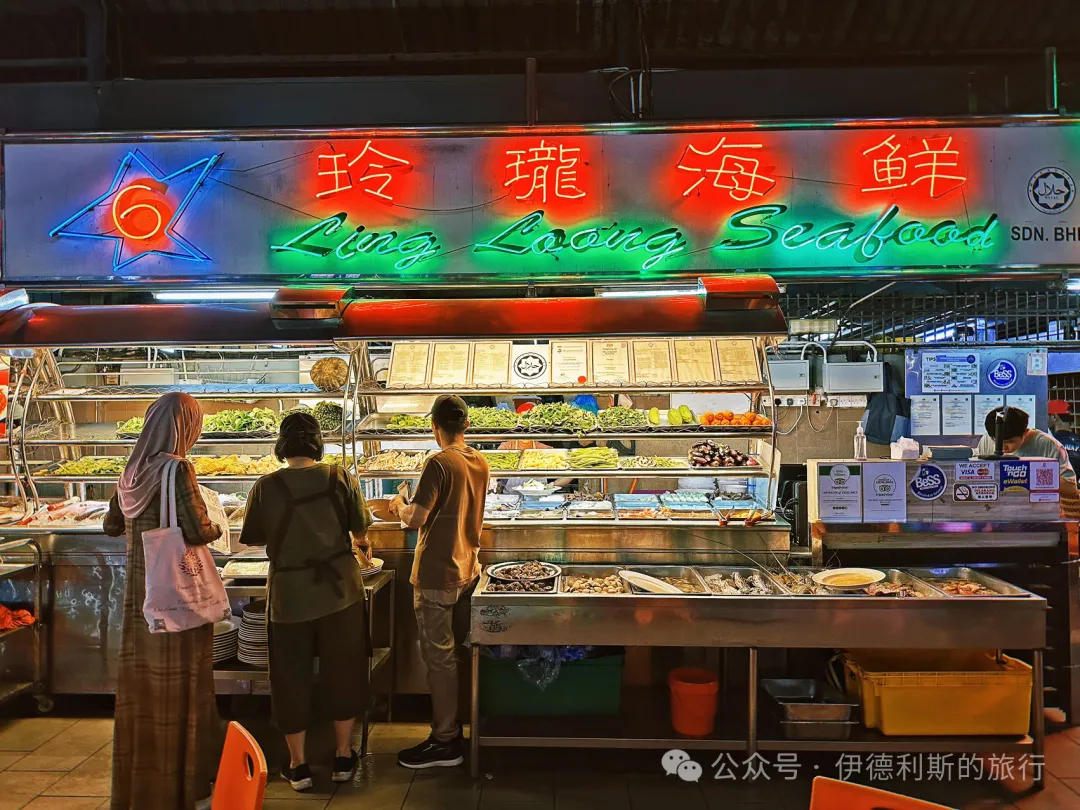
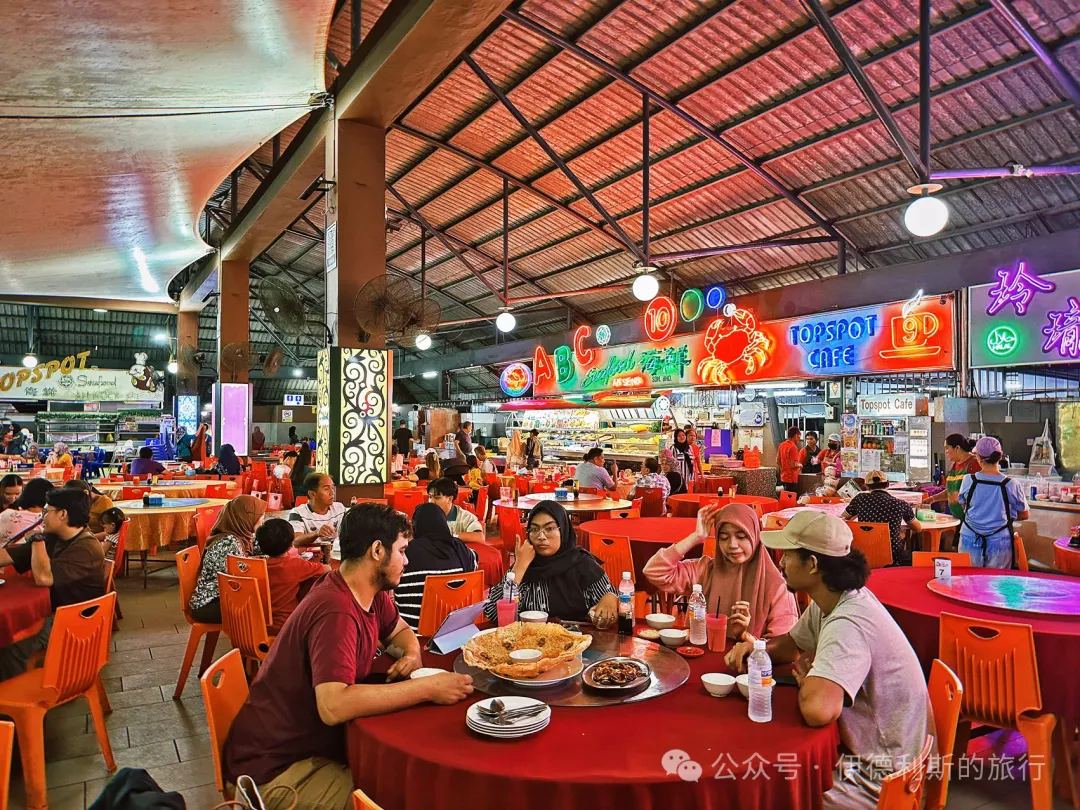
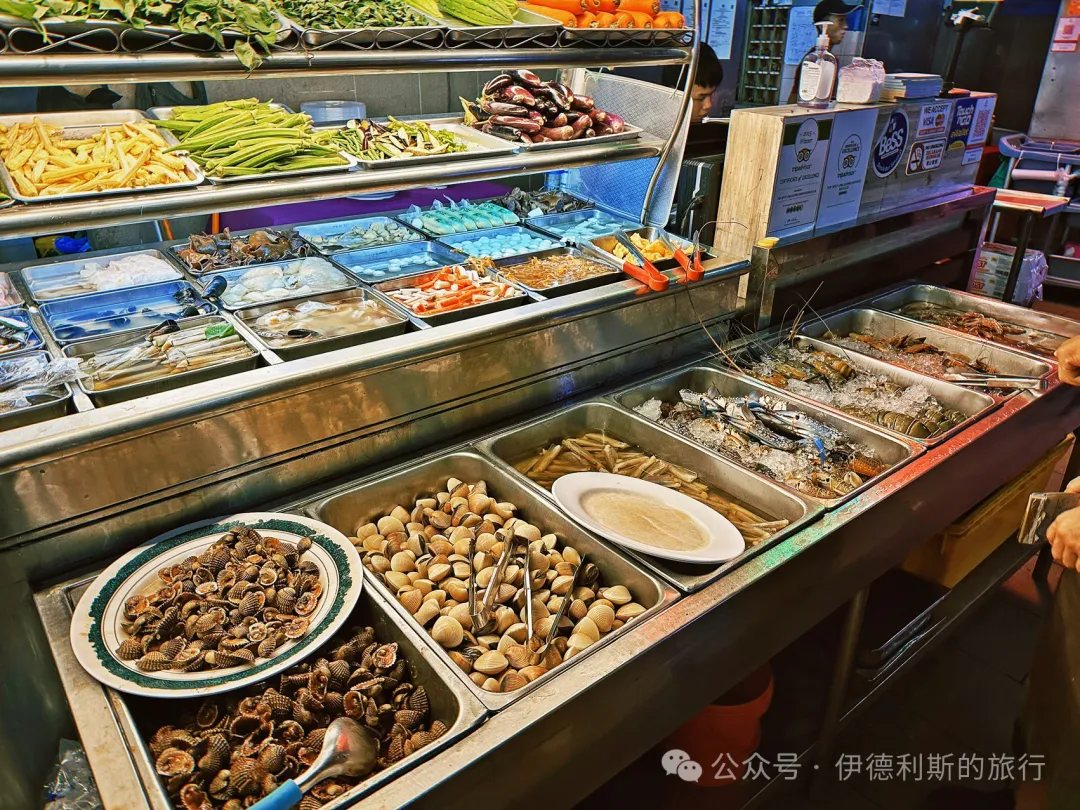
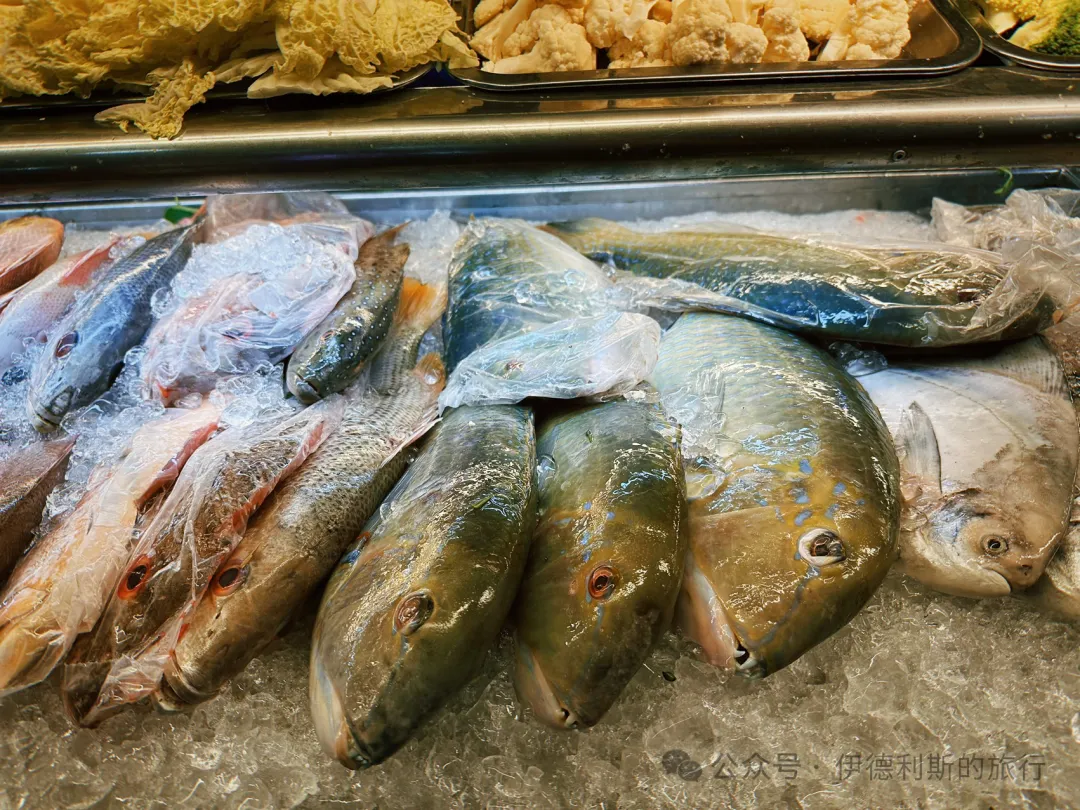
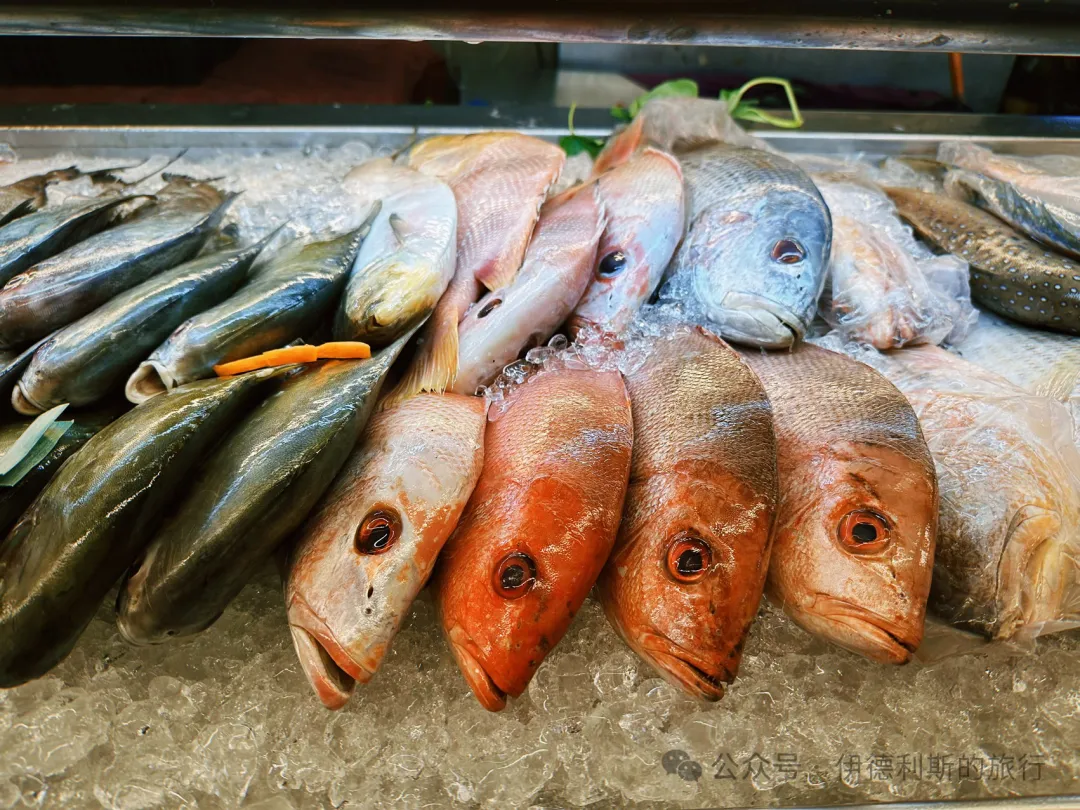
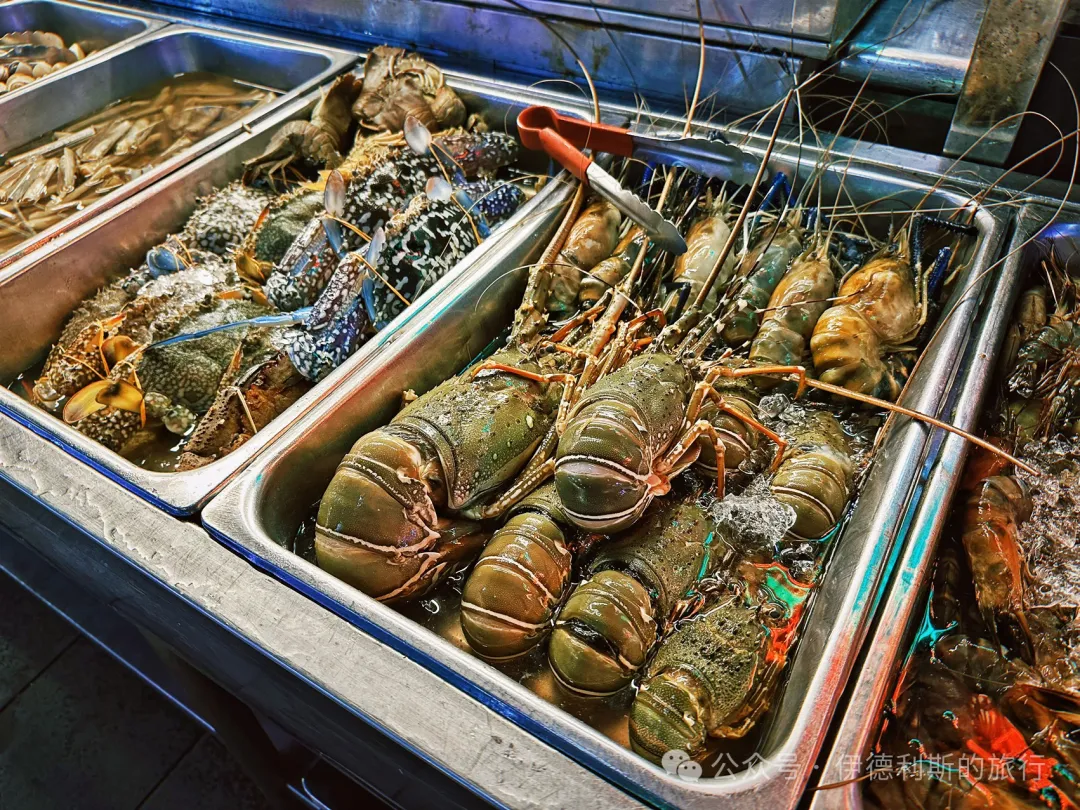
I strongly recommend the Top Spot Food Court in the city center to friends (dosti) visiting Kuching. It is a Chinese halal seafood city with a Nanyang style. The food court is open from 5 p.m. to 10 p.m. It looks like a very plain parking garage from the outside, but once you take the elevator to the top floor, you enter a very lively seafood open-air food court. Most of the stalls in the food court are Chinese-run with halal certifications. Various fish, shrimp, and vegetables are displayed openly, so you can pick whatever you want to eat.
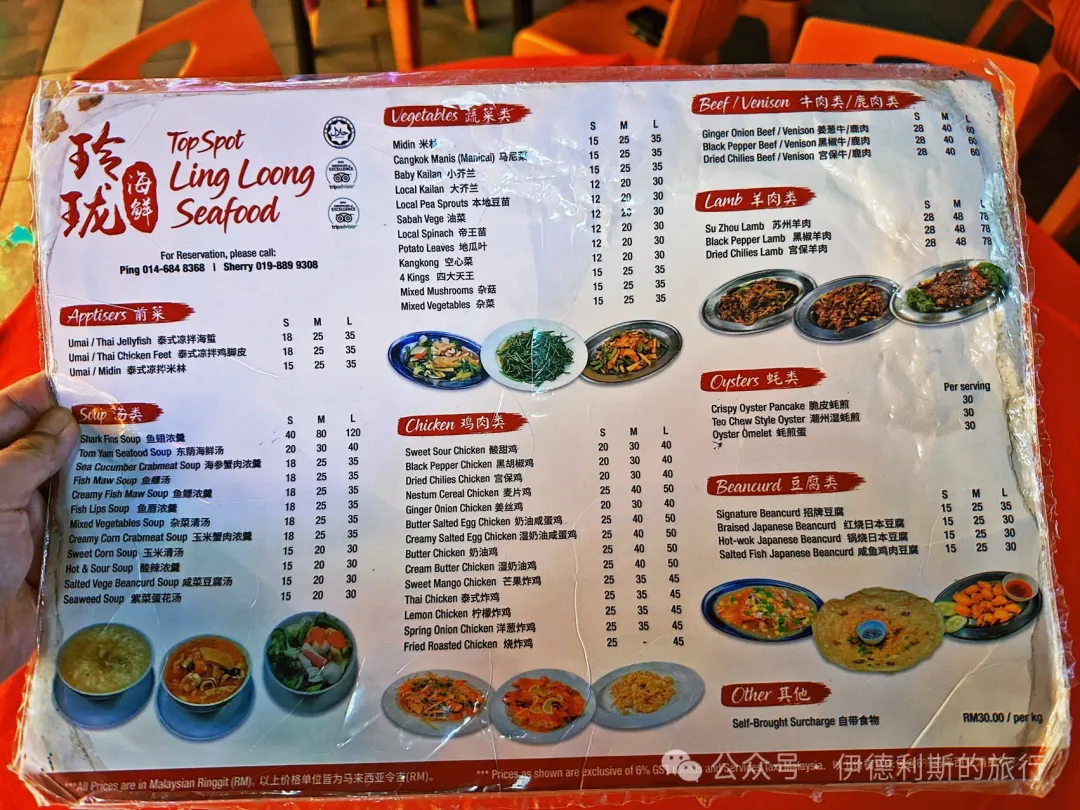
We chose a stall called "Ling Long Seafood." The lady who took our order is Hainanese. Hainanese people running halal Chinese restaurants in Malaysia is also a major feature. The lady spoke great Mandarin and enthusiastically helped us order according to our needs. We ordered Sarawak-style stir-fried midin (a type of fern) with shrimp paste and stir-fried mani cai (a local vegetable) with eggs. Their stir-fried dishes come in small, medium, and large sizes, so even one person can eat very well.
Midin is a fern native to Borneo. It is not bitter at all when stir-fried and has a very fresh fragrance. Mani cai, also known as star gooseberry leaves, is a wild vegetable that Sarawak Hakka people love to cook. You can find it in homes and small restaurants. The picked mani cai leaves must be crushed in water and drained to remove toxins, and the small stems must be picked out before stir-frying, so it is much more troublesome than other vegetables.
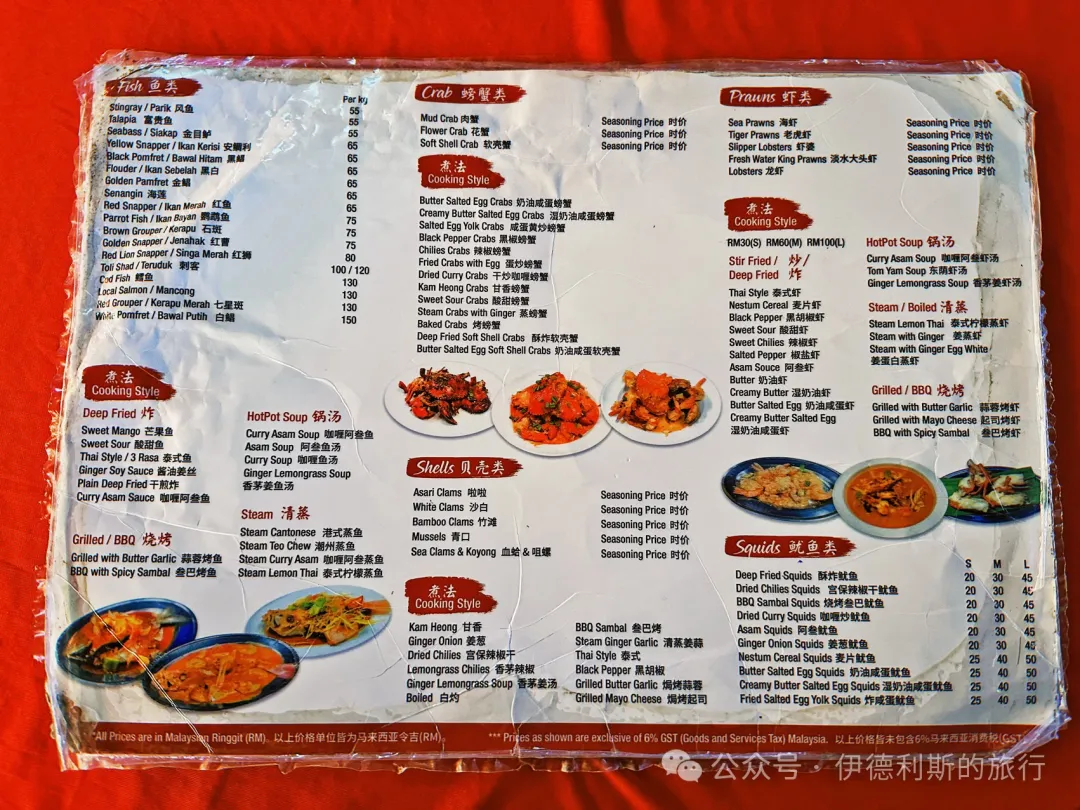
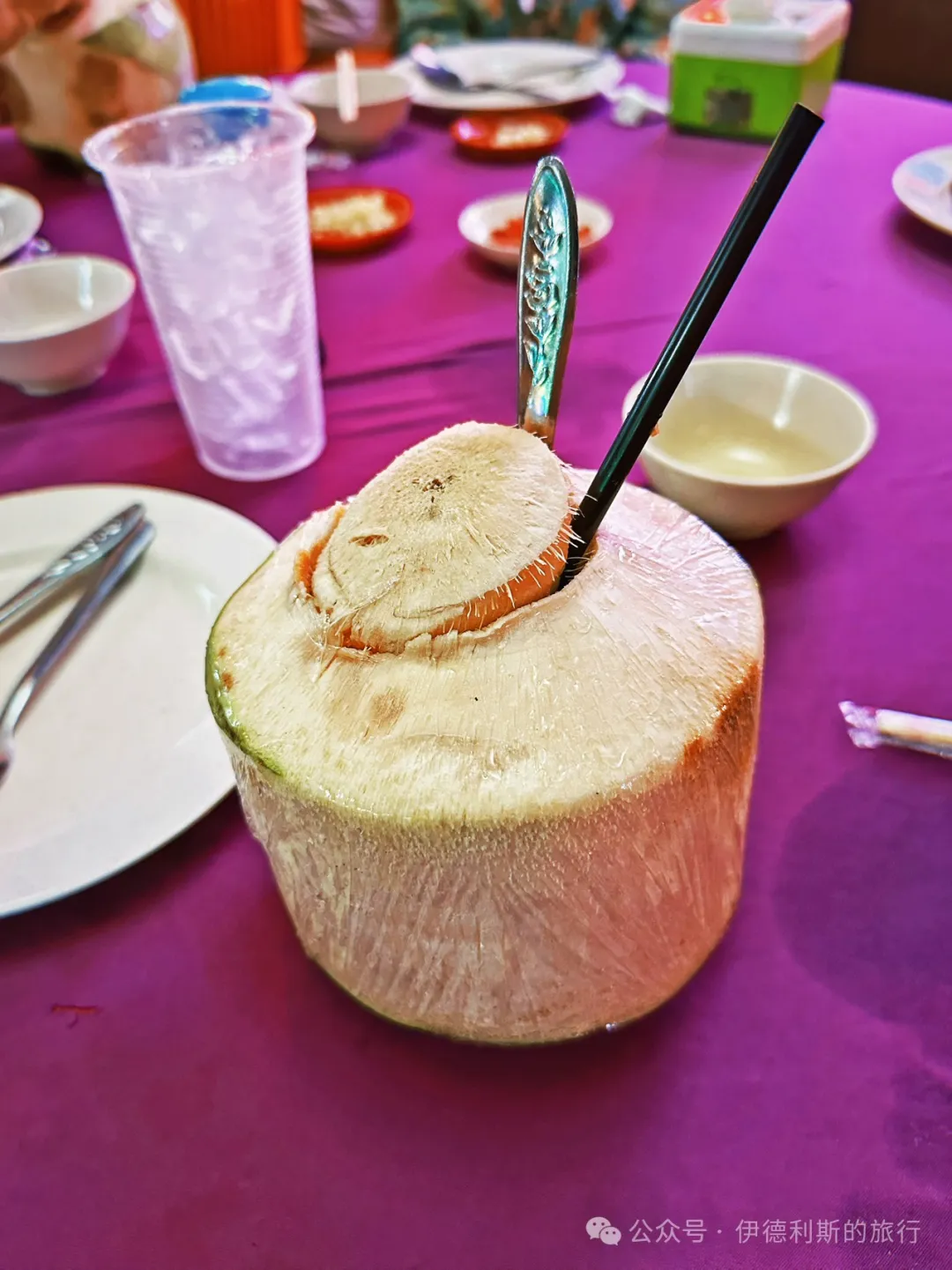
For seafood, we ordered lokan (white clams), sea shrimp, and seven-star grouper. The waiter told us which ones were the freshest and which were frozen. After we ordered, the food was indeed very delicious. Since this is a food court by the sea in the city center, I am not sure if other stalls overcharge, but I think this one offers good value for money. In the end, our five dishes, rice, and 6% sales tax cost 313 RMB in total. Small stir-fried dishes were 24 RMB each, a seven-star grouper was 148 RMB, though they have cheaper fish too. A plate of sea shrimp was 48 RMB, and a plate of clams was 40 RMB.
Rex Restaurant in Singapore
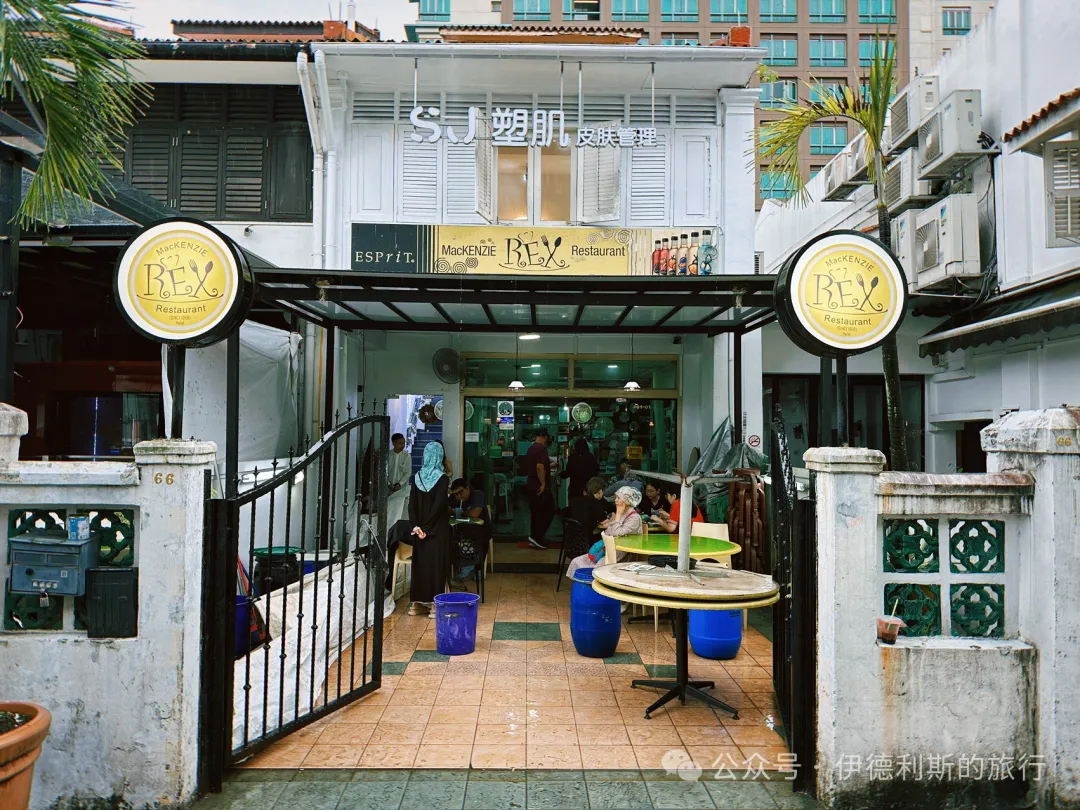
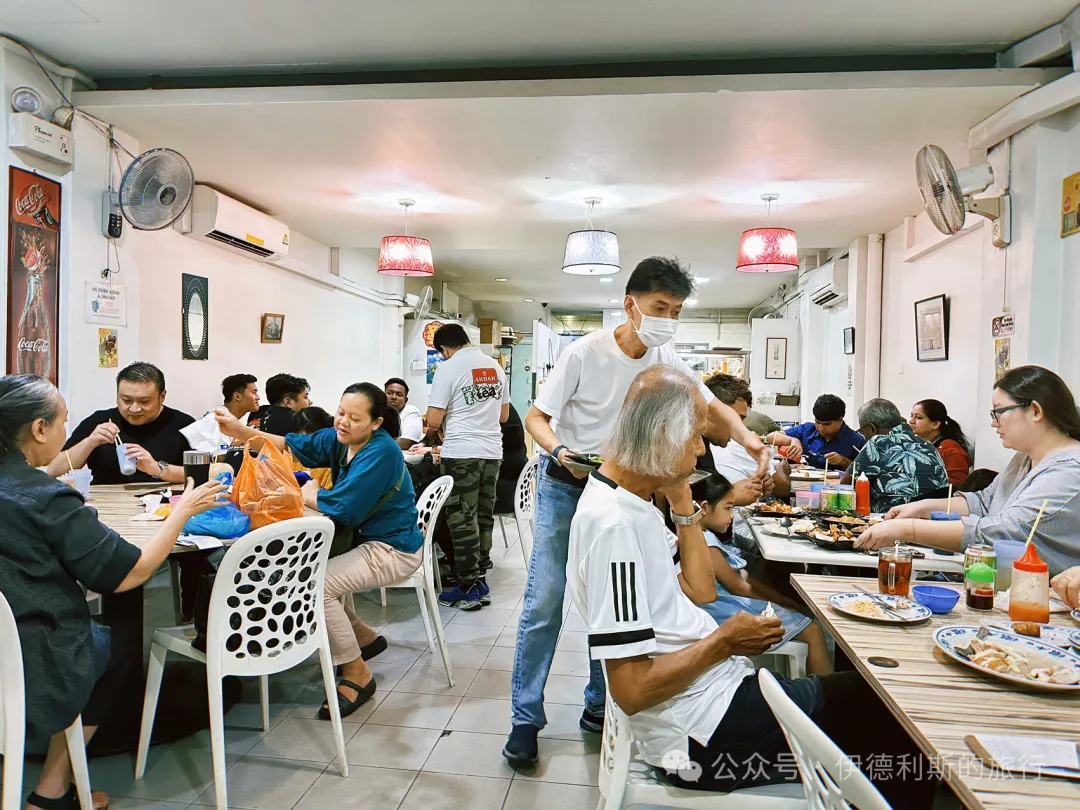
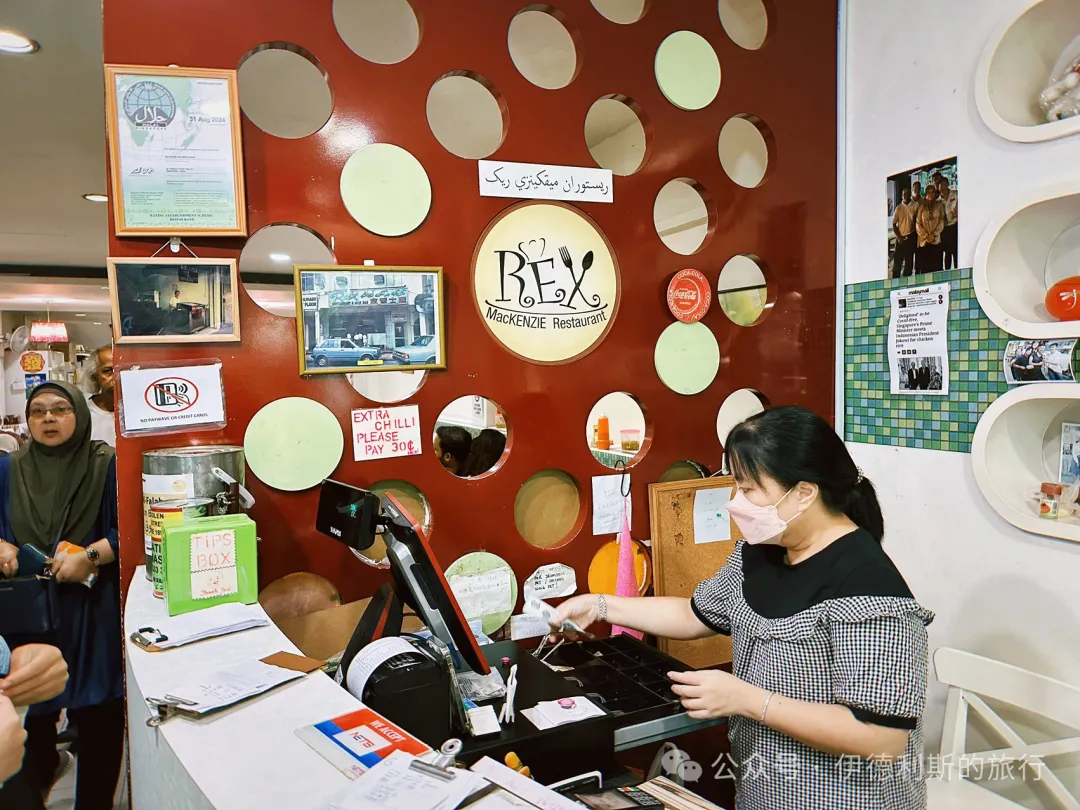
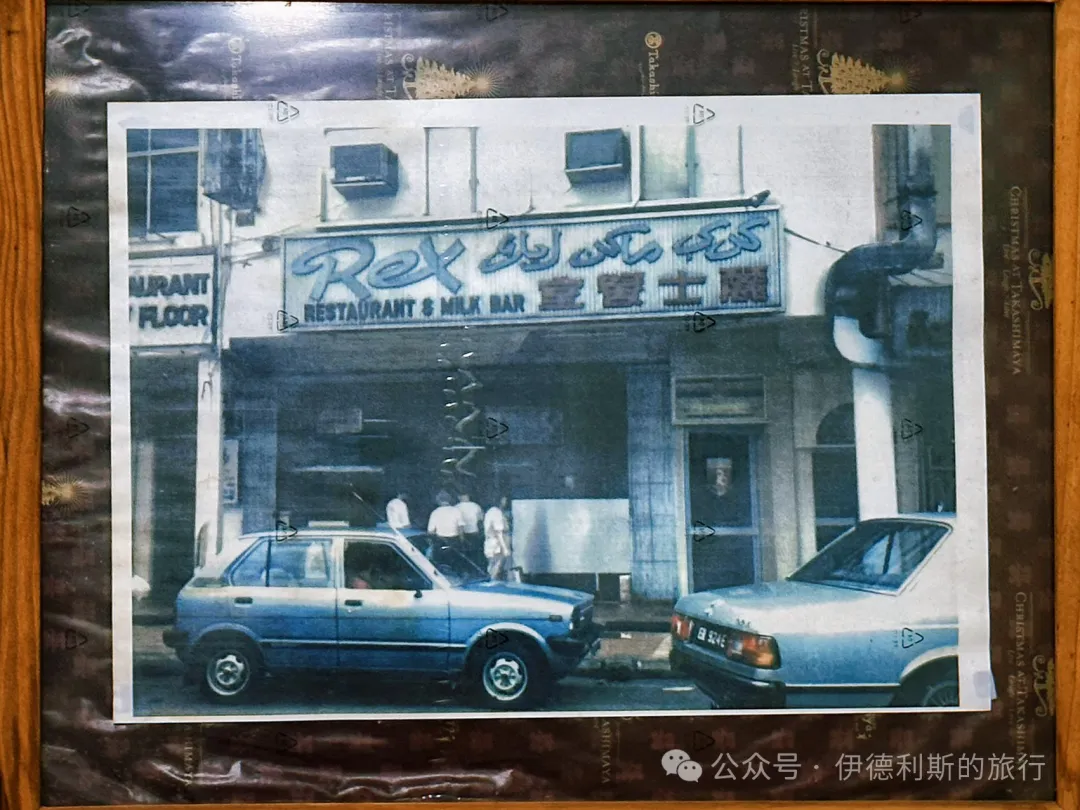
If you visit the National Museum of Singapore and Fort Canning Park, it is well worth going to the nearby MacKenzie Rex Restaurant to taste authentic halal Hainanese chicken rice. MacKenzie Rex Restaurant opened in 1966. It is the first and most famous halal Hainanese chicken rice restaurant in Singapore. The owner is a Hainanese Chinese who speaks good Mandarin and is happy to introduce dishes to guests. Besides Hainanese chicken rice, they are also good at making various home-style Chinese dishes, known in Singapore as Zi char (home-style stir-fry).
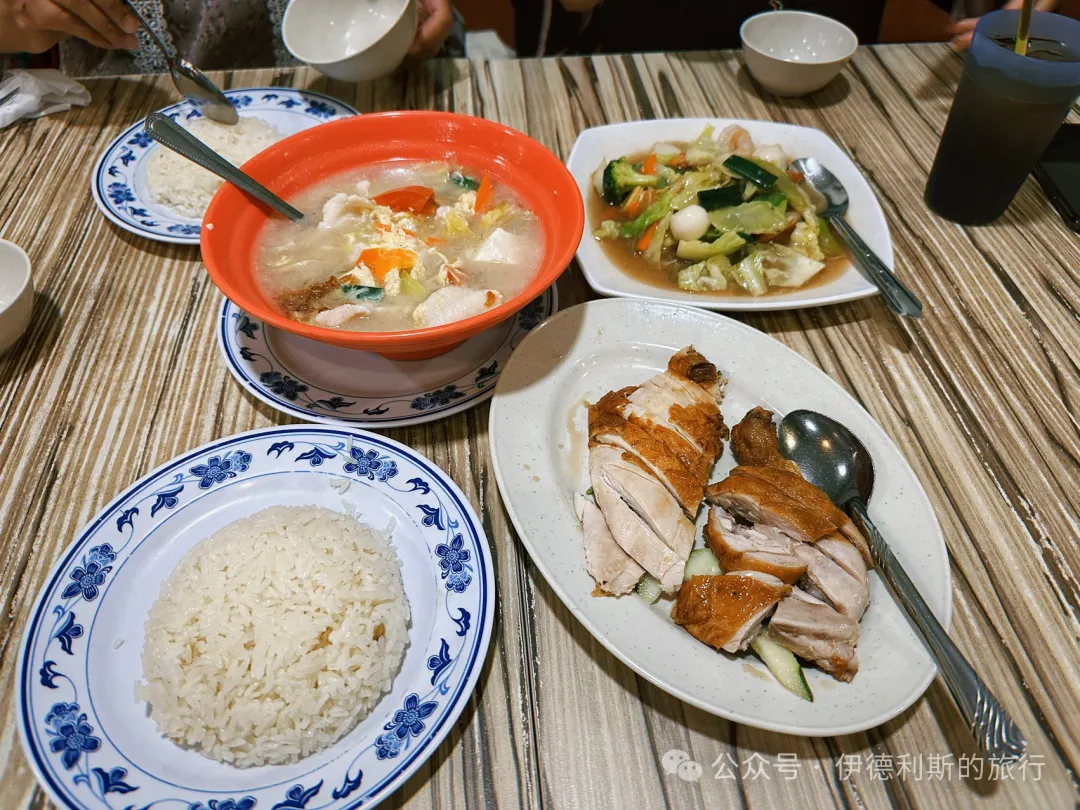
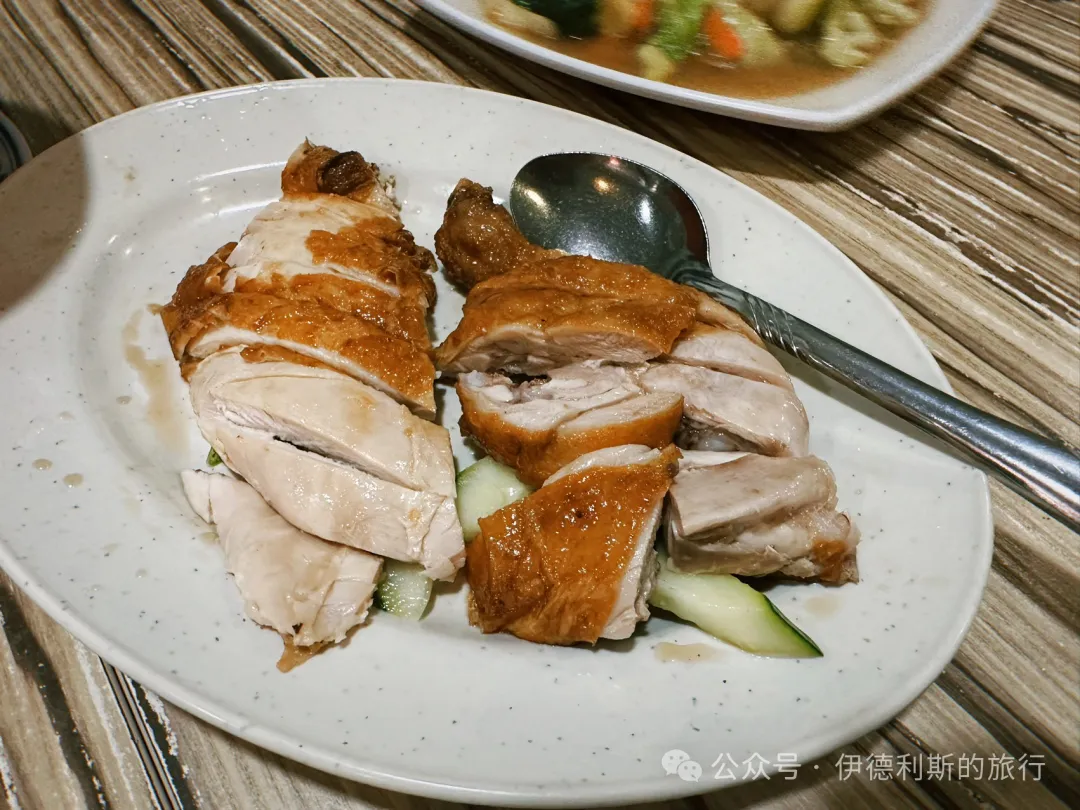
We ordered the classic chicken rice and five-spice meat rolls (Ngor Hiang per roll), plus stir-fried mixed vegetables and fish soup. Everything was delicious, and it was arguably the best meal of our Singapore trip. The best part of their chicken rice is not the chicken itself, but the rice steamed with chicken fat. You can eat it plain and never want to stop. The halal version of the five-spice meat roll adds five-spice powder to the chicken filling, which is then wrapped in bean curd skin and deep-fried. It is very fragrant when freshly fried.
Ying Chew Restaurant in Brunei
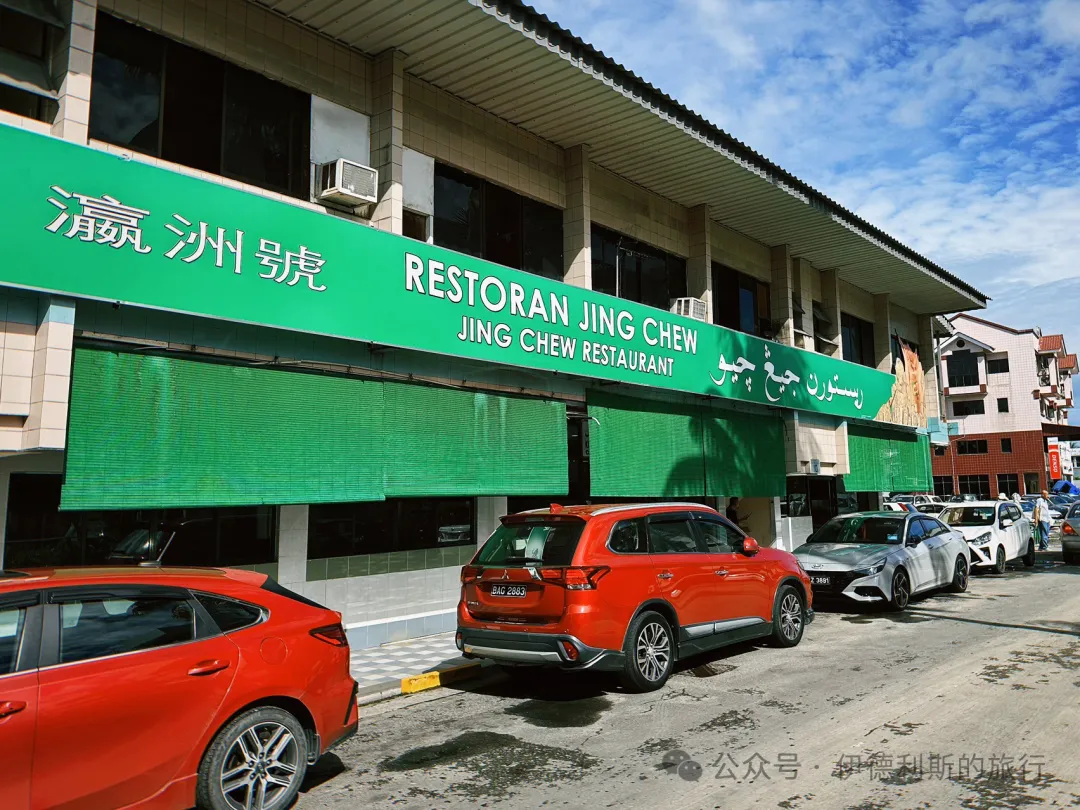
When traveling in Brunei, you must visit the most famous legendary Hainanese teahouse, Ying Chew (Yingzhou Hao).
The founder of Ying Chew, Han Qiongyuan, was from Wenchang, Hainan. During the Japanese invasion of China in 1939, 17-year-old Han Qiongyuan traveled to Southeast Asia and arrived in Brunei to work as a helper in his uncle's coffee shop. In 1946, Han Qiongyuan officially opened Ying Chew Teahouse, selling coffee, bread, and other food. It became widely known for its longevity bread (Roti Kuning). As the teahouse business grew, Han Qiongyuan expanded into real estate and led the construction of the Brunei Hainan Building. After 1993, Han Qiongyuan returned to his hometown every year to visit relatives and invested heavily there. He was awarded the title of 'Patriotic Hainanese' by Hainan Province three times.
Like many old-fashioned Nanyang Hainanese teahouses, they serve halal food and have Brunei halal certification, making them popular with all ethnic groups. They have a very rich variety of bread. The most classic sandwich breads come in four flavors: peanut, red bean paste, butter, and coconut. There are also peanut and kaya mix bread, cheese bread, yellow bread with kaya and butter, and French toast. You can add a fried egg and cheese, or order a soft-boiled egg on the side. Cakes include custard cakes, egg tarts, coconut tarts, red bean cakes, butter cakes, pandan cakes, and more. Western-style breads and pastries were learned by Hainanese people while working as kitchen helpers for the British in the 19th century. Today, they have become a classic part of Nanyang Hainanese restaurants.
Besides bread and pastries, they also have various noodles, such as sesame flat rice noodles (guotiao), dry-tossed noodles, stir-fried noodles, Hainanese noodles, stir-fried rice vermicelli, and silky egg flat rice noodles (hefen). These suit Chinese tastes very well. We ordered silky egg flat rice noodles, sesame flat rice noodles, egg tarts, custard cakes, yellow bread with fried egg, chicken curry puffs, peanut and kaya mix bread, ginger milk tea, and lemon tea for a mix of Chinese and Western flavors. The peanut and kaya mix bread contains kaya jam, butter, and crushed peanuts, giving it a very rich texture. The sesame rice noodles (zhima guotiao) are a mix of sweet, salty, and spicy, served with fried tofu and fried fish chunks. They are a signature dish at this shop.
Babu's Kitchen in Brunei
We had lunch in the old town of Brunei Town. There are many Chinese-owned shops here, and it is also a great place to find halal Hainanese restaurants. We chose a place called Babu's Kitchen. It was very busy at lunchtime with Chinese, Malay, and Indian customers, which is a classic scene at a Hainanese restaurant. Since they did not have a Chinese menu, we asked the owner to recommend dishes. We ordered the Assam fish fillets, salted egg fried mushrooms, beef yee mee noodles, and bean curd skin with tofu and chicken. Just like in Malaysia, the Chinese people in Brunei speak very standard Mandarin. Overall, the food was very good. It blends Chinese cooking with Malay flavors, but it is still very easy for Chinese people to enjoy.
Summary: This halal Hainanese food guide follows the first half of a trip through Malaysia, Singapore, and Brunei, covering chicken rice, kopitiam cafes, noodles, seafood, and Nanyang-style Muslim-friendly restaurants.
Malaysia
The Chicken Rice Shop in Kuala Lumpur
Oriental Kopi at Kuala Lumpur Airport
Hua Mui Restaurant in Johor Bahru
Yut Loy Coffee Shop in Kuala Kangsar
Sin Hua Air-Conditioned Restaurant in Kota Bharu
Fook Yuen Coffee Shop in Kota Kinabalu
Yit Chang Coffee Shop in Kota Kinabalu
Yee Fung Coffee Shop in Kota Kinabalu
Ling Long Seafood in Kuching
Rex Restaurant in Singapore
Ying Chew Restaurant in Brunei
Babu's Kitchen in Brunei
Mei Guang Coffee Shop in Brunei
Malaysia
The Chicken Rice Shop in Kuala Lumpur
After getting off the plane at Kuala Lumpur Airport, we take the airport express train to the final stop, KL Sentral. Once we go upstairs, we are at the Nu Sentral shopping mall. We eat there almost every time we visit Kuala Lumpur. There are many types of restaurants in the mall. There are three halal Nyonya cuisine restaurants alone, and many other halal Chinese restaurants.
This time, we ate at the famous halal Hainanese chicken rice chain in Malaysia, The Chicken Rice Shop. The founder, Wong Kah Bee, was once an executive director at KFC Malaysia. She had worked in the fast-food industry for 25 years before starting her own business. In 2000, 54-year-old Wong Kah Bee and her daughter, Wong Jia Lian, opened the first The Chicken Rice Shop in Taipan, Selangor, officially launching their halal Hainanese chicken rice brand.
Wong Kah Bee's parents were from Penang and her grandmother was from Hainan. She loved Hainanese chicken rice very much since she was a child. During the 20th century, Hainanese chicken rice was mostly sold at food stalls, and almost none of it was halal. When Wong Kah Bee and her daughter started the business, they had a clear goal: to bring Hainanese chicken rice into shopping malls with clean, comfortable, and independent storefronts suitable for family meals, and to make it halal food for everyone. Today, The Chicken Rice Shop has 135 locations, making it the largest halal Hainanese chicken rice chain in Malaysia. Led by them, halal Chinese food is growing in Malaysia, allowing friends (dosti) from all over the world to enjoy delicious Chinese cuisine here.
We ordered a set meal for three, which included Nyonya top hats (pai tee), mango salad, roasted chicken, Hainanese curry chicken, okra, wolf herring fish balls (sai tou yu wan), and rice. We also ordered an extra side of roasted tofu, which was perfect for our family. Top hats (pai tee) are a classic snack for weddings and New Year celebrations among the Peranakan Chinese in Malaysia. They originated in Singapore, where they are also called little gold cups (xiao jin bei), and are filled with shredded carrots and white radishes. Wolf herring fish balls (sai tou yu wan) are Teochew-style fish balls made from wolf herring, and they are very popular in Malaysia.
Oriental Kopi at Kuala Lumpur Airport
Taking a car from Malacca back to Kuala Lumpur Airport, the most popular restaurant at Terminal 2 is the Hainanese coffee shop chain Oriental Kopi (huayang). There is almost always a line whenever you go.
They have a huge variety of dishes and are currently one of the most famous halal Hainanese coffee shops. Hainanese people began immigrating to Malaysia in the 19th century. Many early immigrants worked as chefs and servers in British hotels and restaurants, while some worked as servants for British officers. Influenced by their British employers, the Hainanese learned to cook Western food and combined it with Hainanese culinary elements to create the unique Hainanese coffee shop (Hailam Kopitiam) culture.
We ordered flaky egg tarts, pineapple buns with butter (bing huo bo luo bao), Hainanese chicken rice, classic mee siam, curry fish balls, coffee, soy milk with grass jelly, and longan sea coconut sweet soup (tang shui). The coffee, flaky egg tarts, and pineapple buns with butter are known as the 'Oriental Kopi Three Treasures' and make a classic Nanyang breakfast combination. Their flaky egg tarts are indeed well-made, with a very tender egg custard and a rich aroma. Their sweet soup (tang shui) is also delicious. We rarely drank sweet soup in the north, so it felt very authentic to the Nanyang style.
However, their Hainanese chicken rice was not good. The quality of the rice seemed poor, and it felt gritty, lacking the texture of rice at other places.
Hua Mui Restaurant in Johor Bahru
We took the train from Woodlands, Singapore, in the morning and arrived at the Johor Bahru station in Malaysia in 5 minutes. We walked from the Johor Bahru station to the old town to visit Restoran Hua Mui to experience an authentic Hainanese coffee shop (Hailam Kopitiam).
Restoran Hua Mui opened in 1946 and has a 78-year history, making it the oldest Hainanese coffee shop in Johor Bahru. Like many old-school Hainanese coffee shops in Malaysia, although the owner is Hainanese Chinese, they hire Malay chefs and staff so that Chinese, Malay, and Indian customers can all enjoy the food.
The term coffee shop (kopitiam) is made up of the Malay word 'kopi' (coffee) and the Hokkien word 'tiam' (shop), specializing in charcoal-grilled toast, white coffee, and soft-boiled eggs. Early Hainanese coffee shops were very popular with the British. Today, they have become places where older people discuss news and daily life, serving as important social hubs.
At Hua Mui, we ordered mutton stew rice, Hainanese noodles, coffee and tea mix (cham c), and a breakfast platter. Coffee and tea mix (cham c) is just coffee, tea, and milk. The restaurant's setting is still very traditional, with a classic two-story arcade building (qilou) and bamboo curtains hanging on the doors and windows, easily bringing to mind the old days.
Yut Loy Coffee Shop in Kuala Kangsar
Taking the train north from Ipoh, it is a 30-minute ride to Kuala Kangsar District. Kuala Kangsar has been the royal city of the Sultan of Perak since the 18th century. The town center still keeps an old street of arcade buildings, where you can find an old-school Hainanese coffee shop called Yut Loy Coffee Shop (Yue Lai Cha Shi). The Hainanese owner hires Malay staff here, allowing the three major ethnic groups—Chinese, Malay, and Indian—to all dine in the shop.
Since Yut Loy Coffee Shop only serves main meals after 1:00 PM, we spent the morning there having coffee with toast, topped with honey and butter. In Nanyang-themed novels, I often read about old people sitting in these Hainanese coffee shops all morning with a cup of coffee, a piece of toast, and a newspaper. This time, we got to experience it ourselves.
Sin Hua Air-Conditioned Restaurant in Kota Bharu
Hainanese people are an important part of the Chinese community in Kelantan. We ate at the Sin Hua Air-Conditioned Restaurant, a long-standing Hainanese eatery in Kota Bharu with over 50 years of history. We had Hainanese chicken chop, Hainanese noodles, and toasted bread, all of which are authentic Nanyang Hainanese dishes. Next door, there is also a Sin Shing Coffee Shop (Xin Cheng Cha Can Shi), which is said to have the best Hainanese chicken rice in Kota Bharu.
Fook Yuen Coffee Shop in Kota Kinabalu
Although there are many Hakka and Hokkien people on Gaya Street in Kota Kinabalu, the restaurants are still mostly run by Hainanese people. I started my morning with breakfast at Fook Yuen Coffee Shop (Fuyuan Cha Canting), which is very popular and crowded with tourists. Ordering is semi-self-service. They offer Cantonese-style congee and dim sum, Malay coconut milk rice (nasi lemak), and Western-style bread and coffee, meeting the needs of all ethnic groups in Malaysia. I had a serving of Hainanese chicken rice, two portions of steamed dumplings (shaomai), and a glass of iced milk tea. Their chicken rice is a modified version; they add dried small fish to the rice, a style that should be more popular with Malay customers.
Yit Chang Coffee Shop in Kota Kinabalu
Opened in 1896, Yee Fung Coffee Shop (Yue Chang Cha Shi) is the oldest Hainanese restaurant in Kota Kinabalu, with a history even longer than the city itself. The shop was originally located at the headquarters of the British North Borneo Chartered Company on Gaya Island. After the settlement on the island was destroyed in 1898 by an anti-British uprising led by the indigenous leader Mat Salleh, the shop moved to its current location on Gaya Street. You could say Yee Fung Coffee Shop has witnessed the entire transformation of Kota Kinabalu. Old photos hang on their walls, including one from the 1960s showing Yee Fung Coffee Shop in the exact same spot as today.
The shop is divided into two sections, with the Hainanese owner personally making coffee and toasting bread. The owner is very enthusiastic, provides excellent service, and speaks great Korean, which helps him attract many Korean guests. Another stall invites Muslim sisters to make Hainanese beef offal noodles (niuzamian) and various Malay dishes, which is a major feature of traditional Hainanese coffee shops. To attract customers from all ethnic groups, they must make food that suits everyone's taste. This is why many long-standing Hainanese restaurants in Malaysia have been open for decades or even a century.
We ordered white coffee, three-layer coffee, monk fruit herbal tea (luohanguo liangcha), oats, toast, and beef offal noodles. Monk fruit herbal tea and barley water (yimi shui) are really perfect for the weather here.
Yee Fung Coffee Shop in Kota Kinabalu
The most popular halal Chinese restaurant on Gaya Street in Kota Kinabalu is Yee Fung Tea House. The owner of Yee Fung Tea House, Zhuang Qiuwang, is from Johor. He started selling laksa on Gaya Street in 1984, which is exactly 40 years ago. Like many halal Chinese restaurants in Malaysia, they hire Muslim chefs and staff to ensure the ingredients are halal.
Their signature dishes are the "three treasures": laksa, claypot chicken rice, and beef offal. We ordered lettuce with oyster sauce, plain beef offal, plain fish balls, and chicken wonton noodles. Hainanese beef offal mainly includes beef balls, beef tripe, stewed beef, and beef slices. Many Hainanese restaurants in Kota Kinabalu serve it, and it is a major local specialty. Authentic Hainanese beef offal does not use MSG. It relies purely on spices to stew out the flavor, so you do not feel thirsty after eating it.
Ling Long Seafood in Kuching
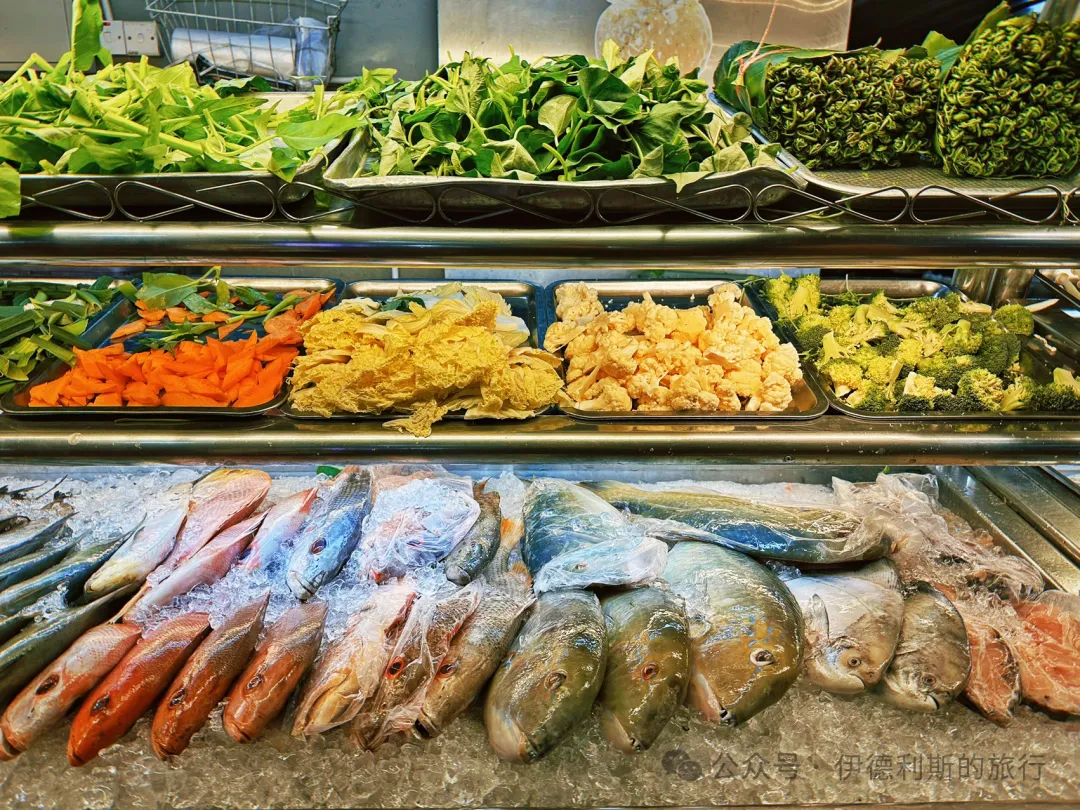
I strongly recommend the Top Spot Food Court in the city center to friends (dosti) visiting Kuching. It is a Chinese halal seafood city with a Nanyang style. The food court is open from 5 p.m. to 10 p.m. It looks like a very plain parking garage from the outside, but once you take the elevator to the top floor, you enter a very lively seafood open-air food court. Most of the stalls in the food court are Chinese-run with halal certifications. Various fish, shrimp, and vegetables are displayed openly, so you can pick whatever you want to eat.
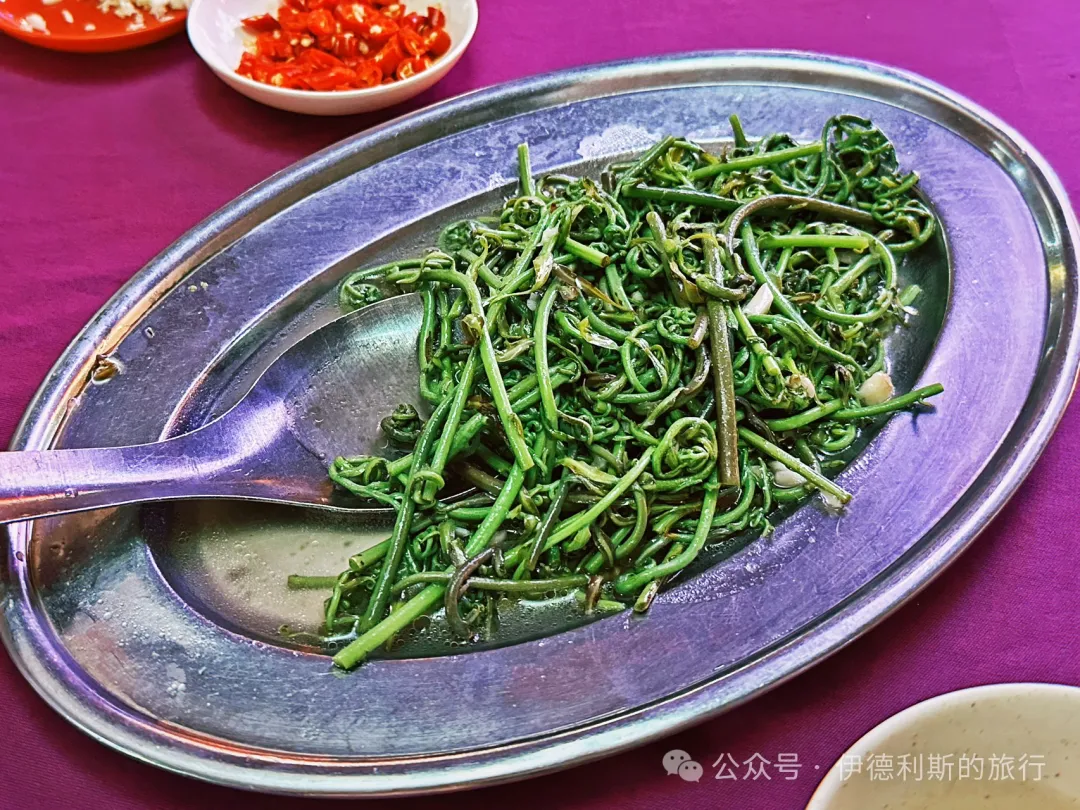
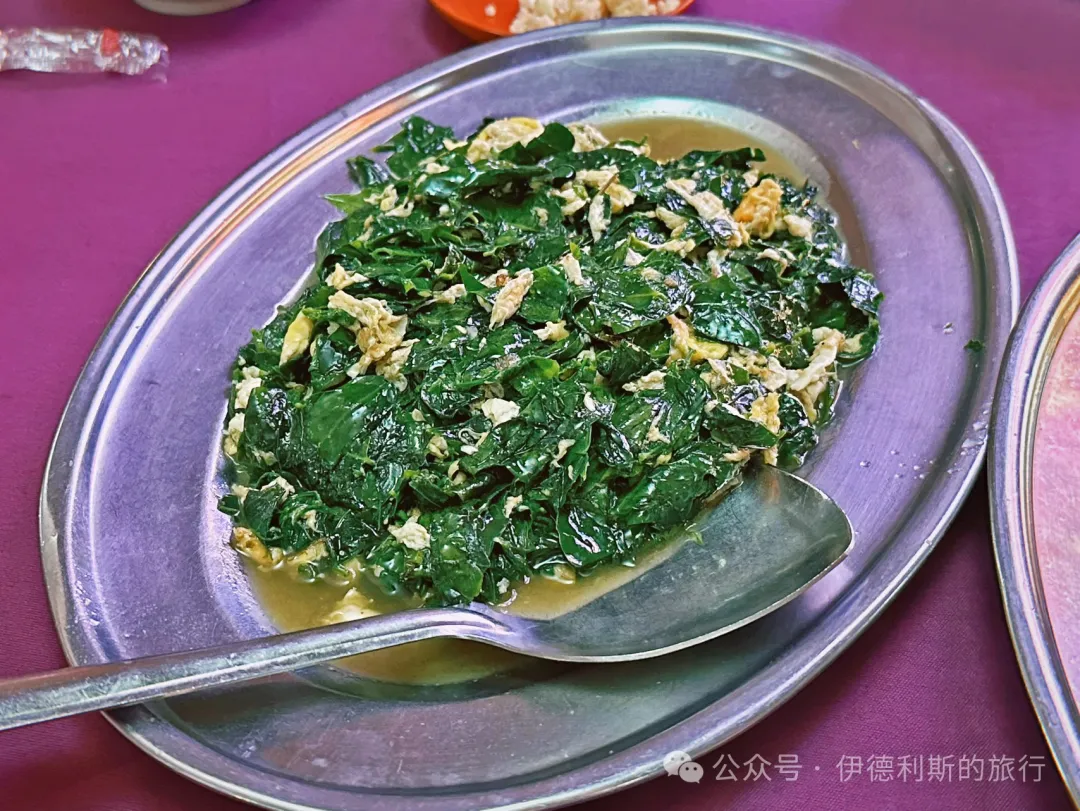
We chose a stall called "Ling Long Seafood." The lady who took our order is Hainanese. Hainanese people running halal Chinese restaurants in Malaysia is also a major feature. The lady spoke great Mandarin and enthusiastically helped us order according to our needs. We ordered Sarawak-style stir-fried midin (a type of fern) with shrimp paste and stir-fried mani cai (a local vegetable) with eggs. Their stir-fried dishes come in small, medium, and large sizes, so even one person can eat very well.
Midin is a fern native to Borneo. It is not bitter at all when stir-fried and has a very fresh fragrance. Mani cai, also known as star gooseberry leaves, is a wild vegetable that Sarawak Hakka people love to cook. You can find it in homes and small restaurants. The picked mani cai leaves must be crushed in water and drained to remove toxins, and the small stems must be picked out before stir-frying, so it is much more troublesome than other vegetables.
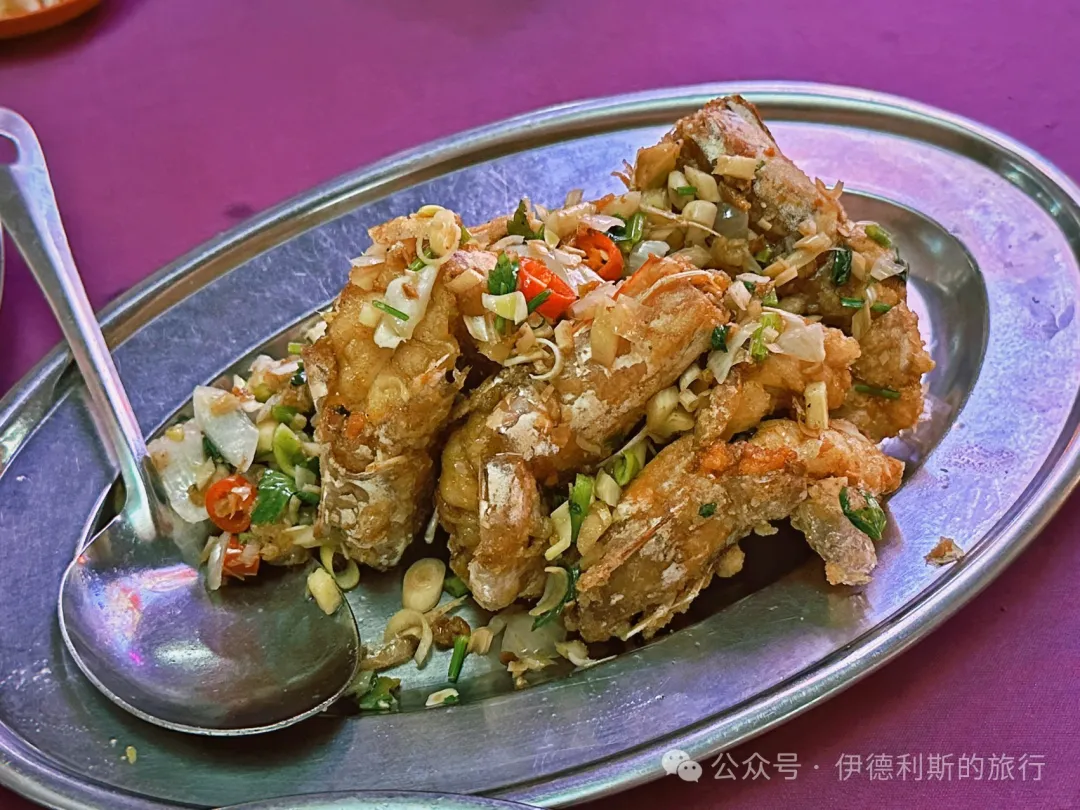
For seafood, we ordered lokan (white clams), sea shrimp, and seven-star grouper. The waiter told us which ones were the freshest and which were frozen. After we ordered, the food was indeed very delicious. Since this is a food court by the sea in the city center, I am not sure if other stalls overcharge, but I think this one offers good value for money. In the end, our five dishes, rice, and 6% sales tax cost 313 RMB in total. Small stir-fried dishes were 24 RMB each, a seven-star grouper was 148 RMB, though they have cheaper fish too. A plate of sea shrimp was 48 RMB, and a plate of clams was 40 RMB.
Rex Restaurant in Singapore
If you visit the National Museum of Singapore and Fort Canning Park, it is well worth going to the nearby MacKenzie Rex Restaurant to taste authentic halal Hainanese chicken rice. MacKenzie Rex Restaurant opened in 1966. It is the first and most famous halal Hainanese chicken rice restaurant in Singapore. The owner is a Hainanese Chinese who speaks good Mandarin and is happy to introduce dishes to guests. Besides Hainanese chicken rice, they are also good at making various home-style Chinese dishes, known in Singapore as Zi char (home-style stir-fry).
We ordered the classic chicken rice and five-spice meat rolls (Ngor Hiang per roll), plus stir-fried mixed vegetables and fish soup. Everything was delicious, and it was arguably the best meal of our Singapore trip. The best part of their chicken rice is not the chicken itself, but the rice steamed with chicken fat. You can eat it plain and never want to stop. The halal version of the five-spice meat roll adds five-spice powder to the chicken filling, which is then wrapped in bean curd skin and deep-fried. It is very fragrant when freshly fried.
Ying Chew Restaurant in Brunei
When traveling in Brunei, you must visit the most famous legendary Hainanese teahouse, Ying Chew (Yingzhou Hao).
The founder of Ying Chew, Han Qiongyuan, was from Wenchang, Hainan. During the Japanese invasion of China in 1939, 17-year-old Han Qiongyuan traveled to Southeast Asia and arrived in Brunei to work as a helper in his uncle's coffee shop. In 1946, Han Qiongyuan officially opened Ying Chew Teahouse, selling coffee, bread, and other food. It became widely known for its longevity bread (Roti Kuning). As the teahouse business grew, Han Qiongyuan expanded into real estate and led the construction of the Brunei Hainan Building. After 1993, Han Qiongyuan returned to his hometown every year to visit relatives and invested heavily there. He was awarded the title of 'Patriotic Hainanese' by Hainan Province three times.
Like many old-fashioned Nanyang Hainanese teahouses, they serve halal food and have Brunei halal certification, making them popular with all ethnic groups. They have a very rich variety of bread. The most classic sandwich breads come in four flavors: peanut, red bean paste, butter, and coconut. There are also peanut and kaya mix bread, cheese bread, yellow bread with kaya and butter, and French toast. You can add a fried egg and cheese, or order a soft-boiled egg on the side. Cakes include custard cakes, egg tarts, coconut tarts, red bean cakes, butter cakes, pandan cakes, and more. Western-style breads and pastries were learned by Hainanese people while working as kitchen helpers for the British in the 19th century. Today, they have become a classic part of Nanyang Hainanese restaurants.
Besides bread and pastries, they also have various noodles, such as sesame flat rice noodles (guotiao), dry-tossed noodles, stir-fried noodles, Hainanese noodles, stir-fried rice vermicelli, and silky egg flat rice noodles (hefen). These suit Chinese tastes very well. We ordered silky egg flat rice noodles, sesame flat rice noodles, egg tarts, custard cakes, yellow bread with fried egg, chicken curry puffs, peanut and kaya mix bread, ginger milk tea, and lemon tea for a mix of Chinese and Western flavors. The peanut and kaya mix bread contains kaya jam, butter, and crushed peanuts, giving it a very rich texture. The sesame rice noodles (zhima guotiao) are a mix of sweet, salty, and spicy, served with fried tofu and fried fish chunks. They are a signature dish at this shop.
Babu's Kitchen in Brunei
We had lunch in the old town of Brunei Town. There are many Chinese-owned shops here, and it is also a great place to find halal Hainanese restaurants. We chose a place called Babu's Kitchen. It was very busy at lunchtime with Chinese, Malay, and Indian customers, which is a classic scene at a Hainanese restaurant. Since they did not have a Chinese menu, we asked the owner to recommend dishes. We ordered the Assam fish fillets, salted egg fried mushrooms, beef yee mee noodles, and bean curd skin with tofu and chicken. Just like in Malaysia, the Chinese people in Brunei speak very standard Mandarin. Overall, the food was very good. It blends Chinese cooking with Malay flavors, but it is still very easy for Chinese people to enjoy.
Halal Food Guide Southeast Asia: Malaysia, Singapore and Indonesia Drinks and Muslim Travel Notes
Articles • yusuf908 posted the article • 0 comments • 186 views • 2026-05-23 23:23
Reposted from the web
Summary: This article follows a tasting route through drinks from Malaysia, Singapore, and Indonesia, from street-side juices to regional bottled drinks and cafe favorites. It keeps the original drink names, places, prices, photos, and travel notes for readers looking for everyday food culture in Southeast Asia.
Malaysia
Malacca: avocado juice, longan lemon tea, and lime plum juice (lime plum shuizhi).
Penang: sour plum guava juice, Penang nutmeg water, and Arabian rose water.
Seremban: lychee water.
Kuala Lumpur: blue pea flower tea and barley lime water.
Singapore
Clear soup (chee kong), three-layer milk tea, pulled tea (teh tarik), Milo dinosaur, and ginger tea.
Indonesia
Yogyakarta: cendol drink (es dawet ayu), dragon fruit juice, and ginger herbal drink (sekoteng).
Solo: basil seed cendol (es dawet telasih), durian cendol (es dawet durian), and herbal medicine (jamu).
Kudus: fruit ice (es buah).
Banten: mixed ice dessert (es campur).
Jakarta: layered rice flour jelly drink (selendang mayang).
Malaysia
Malacca
Avocado juice
Across from Dataran Pahlawan in Malacca, there is a large Malay night market that seems to open only on weekends, offering endless varieties of snacks. We had just finished a meal and were too full to eat, so we bought a huge avocado juice. Tropical fruits are cheap all over Malaysia. As long as you don't buy durian in tourist areas, you can basically eat as much fruit as you want.
Longan lemon tea
In Kampung Hulu, there is a lovely cake shop called Malaiqa By Gula Cakery that is very popular with young people. The shop is located in a shophouse built in 1941. The decor is fresh and simple, showing a great example of revitalizing the old city. We ordered the longan lemon tea, and it tasted great. These fresh, small shops in Malaysia are really wonderful, though we usually go for traditional food and don't visit places like this very often.
Lime plum drink (juzi suanmei shui)
As the birthplace of Nyonya culture, you must try Nyonya food when visiting Malacca. There are many halal Nyonya restaurants on the east side of Malacca's old town along Merdeka Street (Jln Merdeka), with Atlantic and Cottage Spices being the most famous. Both places had lines when we arrived, so we took numbers for both. Cottage Spices had an opening first, so we ate there. We ordered the lime plum drink (juzi suanmei shui), which was tart and very appetizing.
Penang
Sour plum guava juice
Lagenda Cafe in Penang is a themed restaurant honoring the godfather of Malay film and music, P. Ramlee (1929-1973), and it plays his classic songs on a loop. We drank Asam Boi & Guava Tea, made with lime, mint, black tea, sour plum, and fresh-pressed guava juice; it was very refreshing and smooth.
Penang nutmeg drink and Arabian rose water (sherbet)
A unique group called Jawi Peranakan lives in Penang and Singapore. They are a Malay-speaking community formed by the intermarriage of Indian (as well as Arab and Persian) men and Malay women. "Jawi" means "Southeast Asia" in Arabic, and "Peranakan" means "locally born" in Malay.
After the 20th century, as the British Empire declined, the Jawi Peranakan community began to integrate into the Malay population. Today, the government counts most Jawi Peranakan as "Malay." Even so, the Jawi Peranakan community still works hard to pass on its unique culture, which shows in their architecture, clothing, jewelry, and food.
Today, the best place in Penang to experience Jawi Peranakan culture is the Jawi House Cafe Gallery. The building was originally a Straits Eclectic-style Chinese shophouse built in the 1860s with Malay-style decorations, and it later served as an Indian coppersmith shop. The street where the shop is located, Armenian Street (Lebuh Armenian, formerly Malay lane), was the earliest settlement area for the Jawi Peranakan community. In 2012, the Karim family, who have lived in Penang for six generations and have Punjabi roots, opened Jawi House here to make authentic Jawi Peranakan food.
We drank the Penang Nutmeg and Arabian Sherbet here. Nutmeg is a local Penang specialty, and this drink is mixed with honey and lemon for a sweet and sour taste.
Sherbet comes from the Persian word "Sharbat," which means a non-alcoholic sugary drink. In medieval Arabia, people loved to add syrup and honey to Sharbat for sweetness, along with almonds, lemon, apple, pomegranate, tamarind, dates, sumac, musk, and mint. Spread by Arabs and Persians, Sharbat is now popular across West Asia, South Asia, and the Malay Archipelago, especially during Ramadan. The Arabian Sherbet at Jawi House is made with rose syrup, mallow nuts, gum arabic, and basil seeds, giving it a very rich flavor.
Hibiscus
Lychee water
Mohd Chan is likely the most famous and largest halal Cantonese restaurant chain in Malaysia, now with 19 locations including restaurants, dim sum shops, and takeout spots. The founder of Mohd Chan, Dato HJ Mohd Chan, was born in Gombak, Selangor. Influenced by his Malay friends, he converted to Islam in 2007 and started his halal Cantonese restaurant that same year, focusing on blending Cantonese cuisine with local flavors. We drank their lychee water, which was packed with plenty of ingredients.
Kuala Lumpur
Blue pea flower tea and barley lime water
Whether it is halal Chinese food or halal Nyonya cuisine, the Klang Valley area where Kuala Lumpur is located has the highest number of options in Malaysia. Just inside the NU Sentral mall opposite Kuala Lumpur Sentral station, there are three halal Nyonya restaurants, making it a great place for traveling friends (dosti) to grab a bite. We ate at the largest of the three, Peranakan Place, which has several branches in Kuala Lumpur and Malacca. We ordered the blue pea flower tea and barley lime water, both of which were very unique.
Singapore
Chee Kong clear soup (qing tang)
Geylang Serai is located near the Geylang River in eastern Singapore. The Geylang Serai Malay bazaar (market) dates back to the 1920s. During World War II, the Japanese turned it into an amusement park, but after the war, it returned to being a bustling Malay bazaar where local Malay residents come to shop. The only Chinese stall in the bazaar is Chee Kong clear soup (qing tang), an old shop that opened in the 1950s. You can add longan, sweet potato, and ginkgo nuts to the clear soup, and it can be served hot or cold. Drinking a bowl of clear soup is very refreshing after eating spicy Malay food.
Three-layer milk tea
Haig Road Market & Food Centre has a lot of Malay delicacies. We drank the classic three-layer milk tea, which uses palm sugar, milk, and black tea to create three distinct layers with a rich taste.
Pulled tea (teh tarik) and Milo Dinosaur
We had a cup of the classic Nanyang pulled tea (teh tarik) at Tarik, a shop next to the Sultan Mosque in Kampong Glam. Local Malay youth really love this place. Tarik means 'pull' in Malay. By mixing black tea and condensed milk and pouring it back and forth between two containers with outstretched arms, the tea cools down and becomes frothy. We also ordered a cup of Milo, which is a chocolate malt powder from Nestlé. People in Malaysia and Singapore like to sprinkle Milo powder on iced Milo, which they call Milo Dinosaur.
Ginger tea
Bhai Sarbat on Baghdad Street was started by an Indian Muslim in the 1950s and has been around for 70 years. Bhai means brother in Urdu. Bhai Sarbat started as a street pushcart stall and moved into this shophouse on Baghdad Street in the 1970s. Today it sells hundreds of drinks, but the ginger tea is still the most famous.
Indonesia
Yogyakarta
Es Dawet Ayu
Es Dawet Ayu is a specialty iced drink from Central Java that comes from the small town of Banjarnegara. Its main ingredients are rice flour, glutinous rice flour, coconut milk, palm sugar syrup, and grass jelly.
Dragon fruit juice
Freshly squeezed dragon fruit juice on the streets of Yogyakarta. The juices in Java are really rich.
Sekoteng
Sekoteng is a Javanese specialty hot ginger drink made with peanuts, bread slices, and pearl flowers. Hot drinks are still quite rare in Java. It feels like the ginger helps remove dampness.
Solo
Es Dawet Telasih
Es Dawet Telasih is a Solo specialty iced drink made of coconut milk, palm sugar, cendol (rice flour jelly), bubur sumsum (coconut rice pudding), basil seeds, and black glutinous rice.
Es Dawet Durian is Es Dawet Telasih with durian added.
Jamu
Jamu is a specialty Javanese drink, which is a traditional Javanese herbal medicine mixed with honey and palm sugar.
Kudus
Es Buah
I drank Es Buah, a Javanese iced drink with various fruits added, in Kudus.
Banten
Mixed ice drink (Es Campur)
As a holy site, the Great Mosque of Banten attracts a constant stream of visitors every day, and a very lively bazaar has formed around it. At the bazaar, I drank a mixed ice drink (Es Campur) made with coconut milk, red sugar syrup, coconut meat, and fruit jelly.
Jakarta
Layered rice flour drink (Selendang Mayang)
Jakarta Old Town (Kota Tua Jakarta), also called Old Batavia (Oud Batavia), was the most important Dutch colonial outpost in Southeast Asia and served as the headquarters for the Dutch East India Company from the 17th to the 19th century. The center of Old Batavia is Fatahillah Square, where the main building is the Jakarta History Museum. The Jakarta History Museum was built in 1710 and was formerly the Batavia City Hall. The museum courtyard has a small area dedicated to traditional Betawi snacks, where I drank a rare, historic Batavian ice drink called layered rice flour drink (Selendang Mayang). Layered rice flour drink (Selendang Mayang) is made from rice flour, vanilla powder, pandan leaves, red sugar syrup, and coconut milk.
The Betawi people are a unique ethnic group that formed in Jakarta. In 1619, the Dutch established Batavia as the trade and administrative center for the Dutch East India Company. After the Dutch East India Company signed a formal peace treaty with the Sultanate of Banten in 1684, the swampy areas around Batavia could finally be cultivated. More and more people lived outside the city walls, including Malays, Sundanese, Javanese, Minangkabau, and Bugis people. Between the 18th and 19th centuries, the various ethnic groups living in Batavia began to merge. Over the course of a hundred years, they finally formed the modern Betawi people by the early 20th century. The Betawi people speak a version of Malay mixed with many words from Fujian Chinese, Arabic, and Dutch, known as Betawi Malay. It is the only Malay-speaking region on the northern coast of Java. Betawi cuisine is also strongly influenced by Indonesian Chinese, Arab, European, and local Sundanese and Javanese food. view all
Summary: This article follows a tasting route through drinks from Malaysia, Singapore, and Indonesia, from street-side juices to regional bottled drinks and cafe favorites. It keeps the original drink names, places, prices, photos, and travel notes for readers looking for everyday food culture in Southeast Asia.
Malaysia
Malacca: avocado juice, longan lemon tea, and lime plum juice (lime plum shuizhi).
Penang: sour plum guava juice, Penang nutmeg water, and Arabian rose water.
Seremban: lychee water.
Kuala Lumpur: blue pea flower tea and barley lime water.
Singapore
Clear soup (chee kong), three-layer milk tea, pulled tea (teh tarik), Milo dinosaur, and ginger tea.
Indonesia
Yogyakarta: cendol drink (es dawet ayu), dragon fruit juice, and ginger herbal drink (sekoteng).
Solo: basil seed cendol (es dawet telasih), durian cendol (es dawet durian), and herbal medicine (jamu).
Kudus: fruit ice (es buah).
Banten: mixed ice dessert (es campur).
Jakarta: layered rice flour jelly drink (selendang mayang).
Malaysia
Malacca
Avocado juice
Across from Dataran Pahlawan in Malacca, there is a large Malay night market that seems to open only on weekends, offering endless varieties of snacks. We had just finished a meal and were too full to eat, so we bought a huge avocado juice. Tropical fruits are cheap all over Malaysia. As long as you don't buy durian in tourist areas, you can basically eat as much fruit as you want.
Longan lemon tea
In Kampung Hulu, there is a lovely cake shop called Malaiqa By Gula Cakery that is very popular with young people. The shop is located in a shophouse built in 1941. The decor is fresh and simple, showing a great example of revitalizing the old city. We ordered the longan lemon tea, and it tasted great. These fresh, small shops in Malaysia are really wonderful, though we usually go for traditional food and don't visit places like this very often.
Lime plum drink (juzi suanmei shui)
As the birthplace of Nyonya culture, you must try Nyonya food when visiting Malacca. There are many halal Nyonya restaurants on the east side of Malacca's old town along Merdeka Street (Jln Merdeka), with Atlantic and Cottage Spices being the most famous. Both places had lines when we arrived, so we took numbers for both. Cottage Spices had an opening first, so we ate there. We ordered the lime plum drink (juzi suanmei shui), which was tart and very appetizing.
Penang
Sour plum guava juice
Lagenda Cafe in Penang is a themed restaurant honoring the godfather of Malay film and music, P. Ramlee (1929-1973), and it plays his classic songs on a loop. We drank Asam Boi & Guava Tea, made with lime, mint, black tea, sour plum, and fresh-pressed guava juice; it was very refreshing and smooth.
Penang nutmeg drink and Arabian rose water (sherbet)
A unique group called Jawi Peranakan lives in Penang and Singapore. They are a Malay-speaking community formed by the intermarriage of Indian (as well as Arab and Persian) men and Malay women. "Jawi" means "Southeast Asia" in Arabic, and "Peranakan" means "locally born" in Malay.
After the 20th century, as the British Empire declined, the Jawi Peranakan community began to integrate into the Malay population. Today, the government counts most Jawi Peranakan as "Malay." Even so, the Jawi Peranakan community still works hard to pass on its unique culture, which shows in their architecture, clothing, jewelry, and food.
Today, the best place in Penang to experience Jawi Peranakan culture is the Jawi House Cafe Gallery. The building was originally a Straits Eclectic-style Chinese shophouse built in the 1860s with Malay-style decorations, and it later served as an Indian coppersmith shop. The street where the shop is located, Armenian Street (Lebuh Armenian, formerly Malay lane), was the earliest settlement area for the Jawi Peranakan community. In 2012, the Karim family, who have lived in Penang for six generations and have Punjabi roots, opened Jawi House here to make authentic Jawi Peranakan food.
We drank the Penang Nutmeg and Arabian Sherbet here. Nutmeg is a local Penang specialty, and this drink is mixed with honey and lemon for a sweet and sour taste.
Sherbet comes from the Persian word "Sharbat," which means a non-alcoholic sugary drink. In medieval Arabia, people loved to add syrup and honey to Sharbat for sweetness, along with almonds, lemon, apple, pomegranate, tamarind, dates, sumac, musk, and mint. Spread by Arabs and Persians, Sharbat is now popular across West Asia, South Asia, and the Malay Archipelago, especially during Ramadan. The Arabian Sherbet at Jawi House is made with rose syrup, mallow nuts, gum arabic, and basil seeds, giving it a very rich flavor.
Hibiscus
Lychee water
Mohd Chan is likely the most famous and largest halal Cantonese restaurant chain in Malaysia, now with 19 locations including restaurants, dim sum shops, and takeout spots. The founder of Mohd Chan, Dato HJ Mohd Chan, was born in Gombak, Selangor. Influenced by his Malay friends, he converted to Islam in 2007 and started his halal Cantonese restaurant that same year, focusing on blending Cantonese cuisine with local flavors. We drank their lychee water, which was packed with plenty of ingredients.
Kuala Lumpur
Blue pea flower tea and barley lime water
Whether it is halal Chinese food or halal Nyonya cuisine, the Klang Valley area where Kuala Lumpur is located has the highest number of options in Malaysia. Just inside the NU Sentral mall opposite Kuala Lumpur Sentral station, there are three halal Nyonya restaurants, making it a great place for traveling friends (dosti) to grab a bite. We ate at the largest of the three, Peranakan Place, which has several branches in Kuala Lumpur and Malacca. We ordered the blue pea flower tea and barley lime water, both of which were very unique.
Singapore
Chee Kong clear soup (qing tang)
Geylang Serai is located near the Geylang River in eastern Singapore. The Geylang Serai Malay bazaar (market) dates back to the 1920s. During World War II, the Japanese turned it into an amusement park, but after the war, it returned to being a bustling Malay bazaar where local Malay residents come to shop. The only Chinese stall in the bazaar is Chee Kong clear soup (qing tang), an old shop that opened in the 1950s. You can add longan, sweet potato, and ginkgo nuts to the clear soup, and it can be served hot or cold. Drinking a bowl of clear soup is very refreshing after eating spicy Malay food.
Three-layer milk tea
Haig Road Market & Food Centre has a lot of Malay delicacies. We drank the classic three-layer milk tea, which uses palm sugar, milk, and black tea to create three distinct layers with a rich taste.
Pulled tea (teh tarik) and Milo Dinosaur
We had a cup of the classic Nanyang pulled tea (teh tarik) at Tarik, a shop next to the Sultan Mosque in Kampong Glam. Local Malay youth really love this place. Tarik means 'pull' in Malay. By mixing black tea and condensed milk and pouring it back and forth between two containers with outstretched arms, the tea cools down and becomes frothy. We also ordered a cup of Milo, which is a chocolate malt powder from Nestlé. People in Malaysia and Singapore like to sprinkle Milo powder on iced Milo, which they call Milo Dinosaur.
Ginger tea
Bhai Sarbat on Baghdad Street was started by an Indian Muslim in the 1950s and has been around for 70 years. Bhai means brother in Urdu. Bhai Sarbat started as a street pushcart stall and moved into this shophouse on Baghdad Street in the 1970s. Today it sells hundreds of drinks, but the ginger tea is still the most famous.
Indonesia
Yogyakarta
Es Dawet Ayu
Es Dawet Ayu is a specialty iced drink from Central Java that comes from the small town of Banjarnegara. Its main ingredients are rice flour, glutinous rice flour, coconut milk, palm sugar syrup, and grass jelly.
Dragon fruit juice
Freshly squeezed dragon fruit juice on the streets of Yogyakarta. The juices in Java are really rich.
Sekoteng
Sekoteng is a Javanese specialty hot ginger drink made with peanuts, bread slices, and pearl flowers. Hot drinks are still quite rare in Java. It feels like the ginger helps remove dampness.
Solo
Es Dawet Telasih
Es Dawet Telasih is a Solo specialty iced drink made of coconut milk, palm sugar, cendol (rice flour jelly), bubur sumsum (coconut rice pudding), basil seeds, and black glutinous rice.
Es Dawet Durian is Es Dawet Telasih with durian added.
Jamu
Jamu is a specialty Javanese drink, which is a traditional Javanese herbal medicine mixed with honey and palm sugar.
Kudus
Es Buah
I drank Es Buah, a Javanese iced drink with various fruits added, in Kudus.
Banten
Mixed ice drink (Es Campur)
As a holy site, the Great Mosque of Banten attracts a constant stream of visitors every day, and a very lively bazaar has formed around it. At the bazaar, I drank a mixed ice drink (Es Campur) made with coconut milk, red sugar syrup, coconut meat, and fruit jelly.
Jakarta
Layered rice flour drink (Selendang Mayang)
Jakarta Old Town (Kota Tua Jakarta), also called Old Batavia (Oud Batavia), was the most important Dutch colonial outpost in Southeast Asia and served as the headquarters for the Dutch East India Company from the 17th to the 19th century. The center of Old Batavia is Fatahillah Square, where the main building is the Jakarta History Museum. The Jakarta History Museum was built in 1710 and was formerly the Batavia City Hall. The museum courtyard has a small area dedicated to traditional Betawi snacks, where I drank a rare, historic Batavian ice drink called layered rice flour drink (Selendang Mayang). Layered rice flour drink (Selendang Mayang) is made from rice flour, vanilla powder, pandan leaves, red sugar syrup, and coconut milk.
The Betawi people are a unique ethnic group that formed in Jakarta. In 1619, the Dutch established Batavia as the trade and administrative center for the Dutch East India Company. After the Dutch East India Company signed a formal peace treaty with the Sultanate of Banten in 1684, the swampy areas around Batavia could finally be cultivated. More and more people lived outside the city walls, including Malays, Sundanese, Javanese, Minangkabau, and Bugis people. Between the 18th and 19th centuries, the various ethnic groups living in Batavia began to merge. Over the course of a hundred years, they finally formed the modern Betawi people by the early 20th century. The Betawi people speak a version of Malay mixed with many words from Fujian Chinese, Arabic, and Dutch, known as Betawi Malay. It is the only Malay-speaking region on the northern coast of Java. Betawi cuisine is also strongly influenced by Indonesian Chinese, Arab, European, and local Sundanese and Javanese food. view all
Reposted from the web
Summary: This article follows a tasting route through drinks from Malaysia, Singapore, and Indonesia, from street-side juices to regional bottled drinks and cafe favorites. It keeps the original drink names, places, prices, photos, and travel notes for readers looking for everyday food culture in Southeast Asia.
Malaysia
Malacca: avocado juice, longan lemon tea, and lime plum juice (lime plum shuizhi).
Penang: sour plum guava juice, Penang nutmeg water, and Arabian rose water.
Seremban: lychee water.
Kuala Lumpur: blue pea flower tea and barley lime water.
Singapore
Clear soup (chee kong), three-layer milk tea, pulled tea (teh tarik), Milo dinosaur, and ginger tea.
Indonesia
Yogyakarta: cendol drink (es dawet ayu), dragon fruit juice, and ginger herbal drink (sekoteng).
Solo: basil seed cendol (es dawet telasih), durian cendol (es dawet durian), and herbal medicine (jamu).
Kudus: fruit ice (es buah).
Banten: mixed ice dessert (es campur).
Jakarta: layered rice flour jelly drink (selendang mayang).
Malaysia
Malacca
Avocado juice
Across from Dataran Pahlawan in Malacca, there is a large Malay night market that seems to open only on weekends, offering endless varieties of snacks. We had just finished a meal and were too full to eat, so we bought a huge avocado juice. Tropical fruits are cheap all over Malaysia. As long as you don't buy durian in tourist areas, you can basically eat as much fruit as you want.
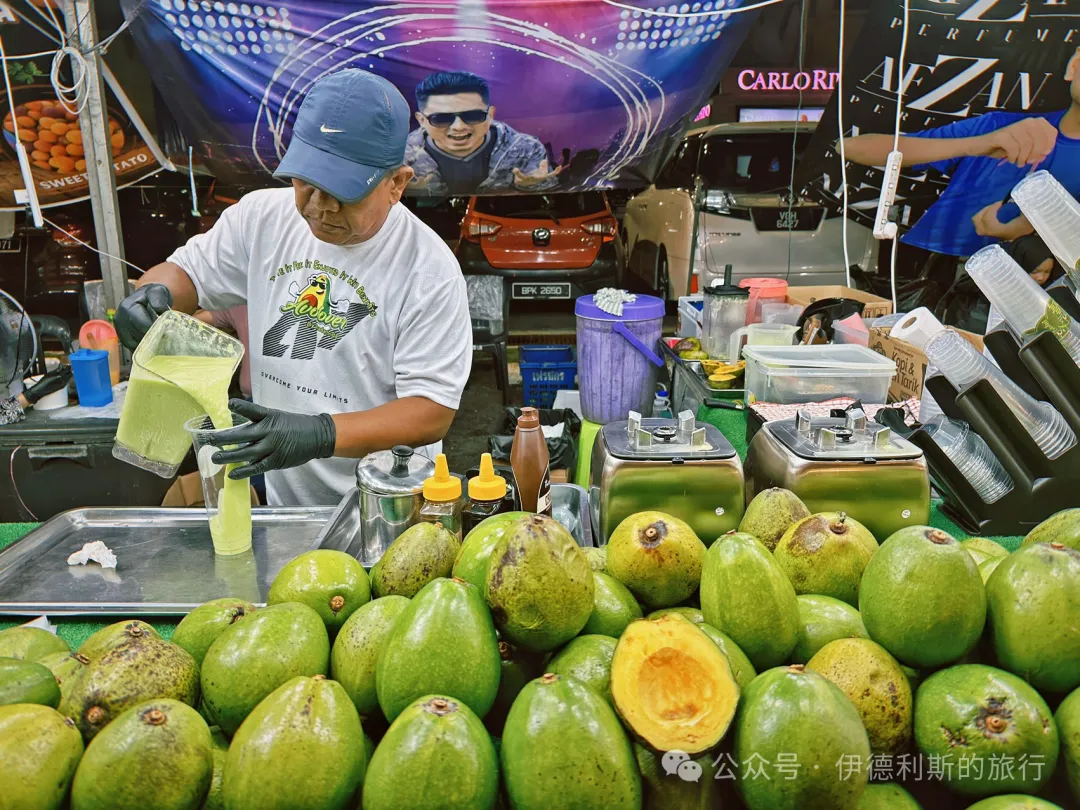
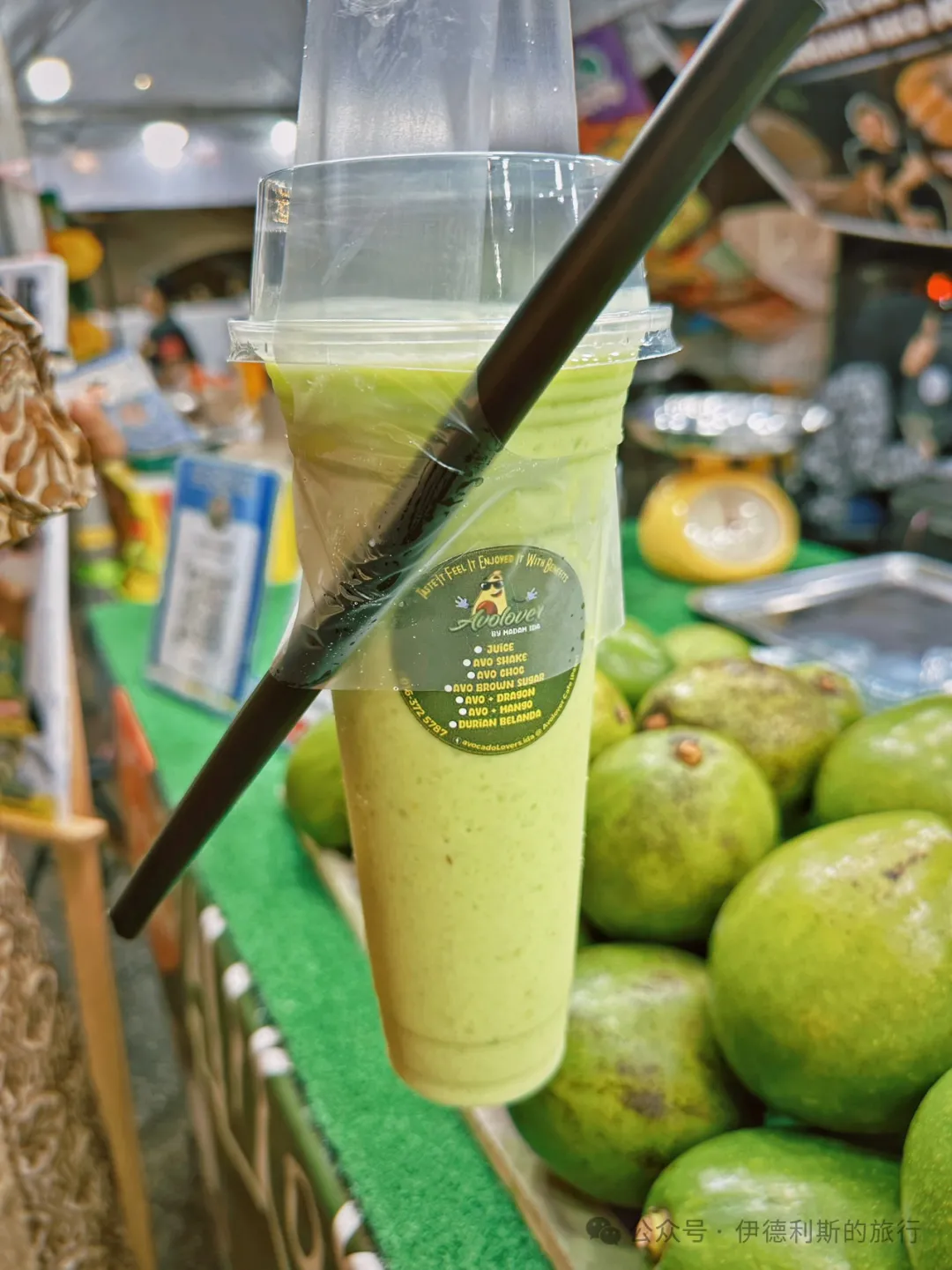
Longan lemon tea
In Kampung Hulu, there is a lovely cake shop called Malaiqa By Gula Cakery that is very popular with young people. The shop is located in a shophouse built in 1941. The decor is fresh and simple, showing a great example of revitalizing the old city. We ordered the longan lemon tea, and it tasted great. These fresh, small shops in Malaysia are really wonderful, though we usually go for traditional food and don't visit places like this very often.
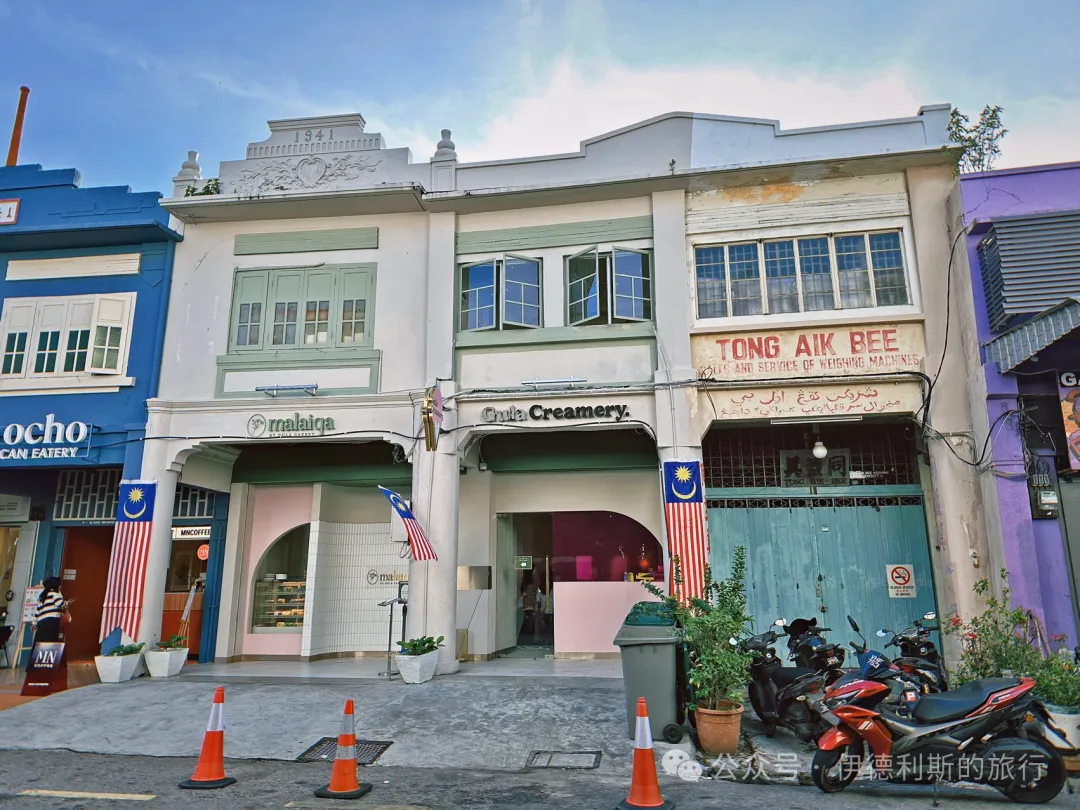
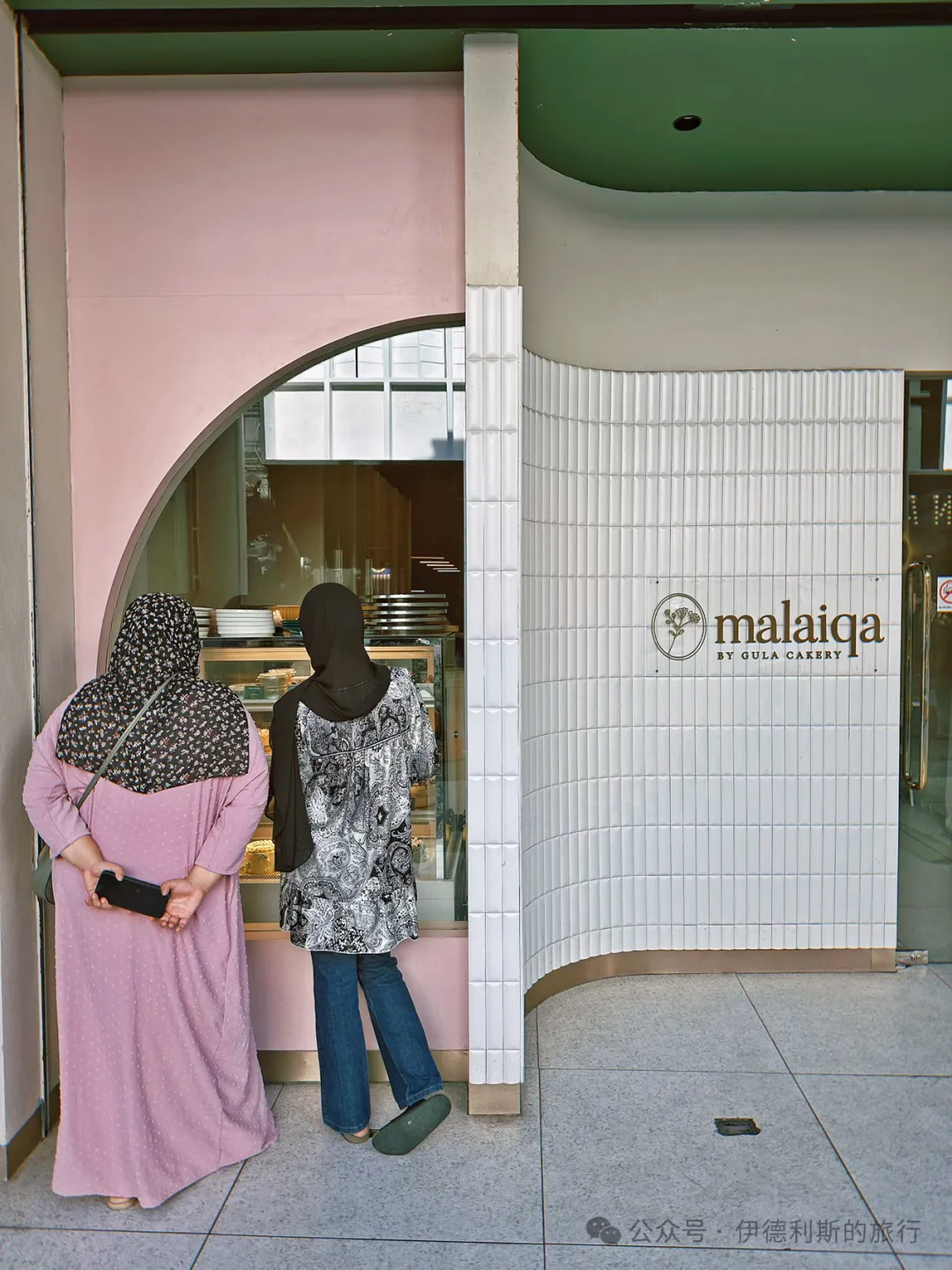
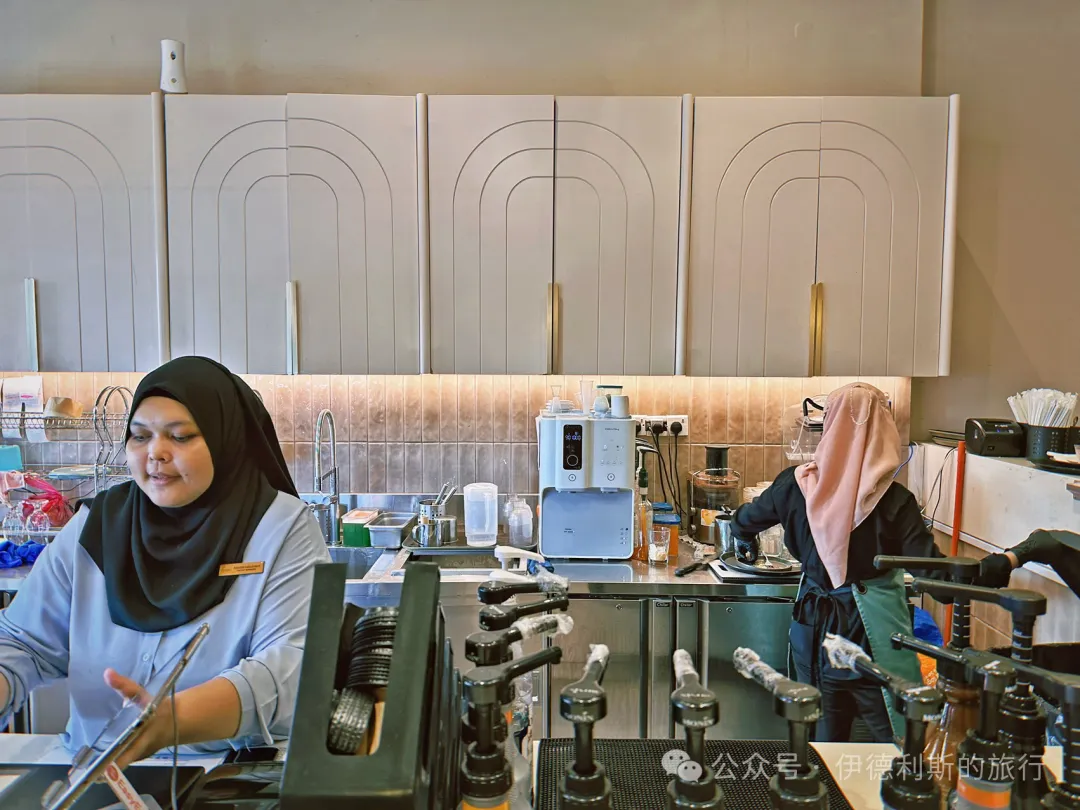
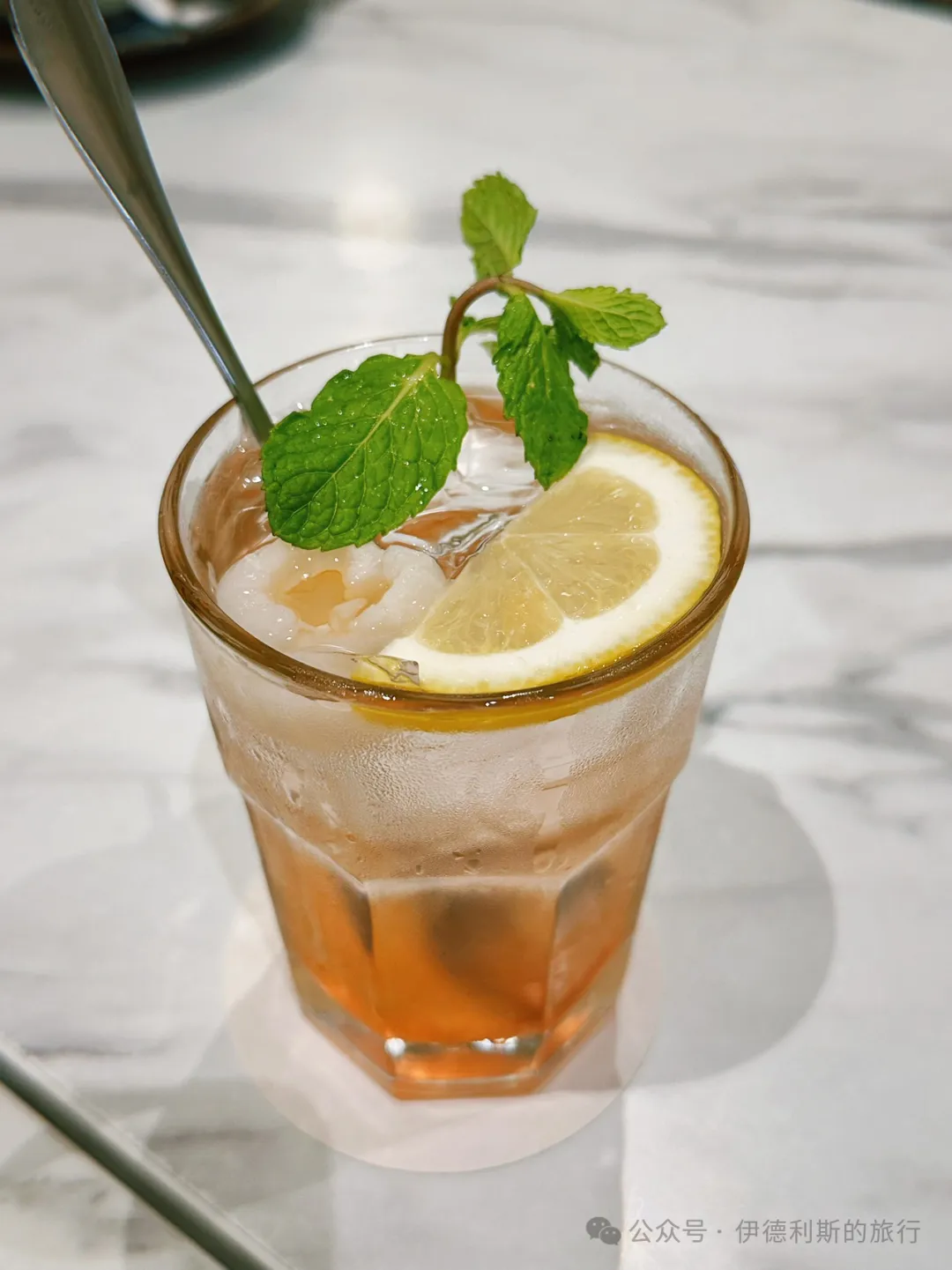
Lime plum drink (juzi suanmei shui)
As the birthplace of Nyonya culture, you must try Nyonya food when visiting Malacca. There are many halal Nyonya restaurants on the east side of Malacca's old town along Merdeka Street (Jln Merdeka), with Atlantic and Cottage Spices being the most famous. Both places had lines when we arrived, so we took numbers for both. Cottage Spices had an opening first, so we ate there. We ordered the lime plum drink (juzi suanmei shui), which was tart and very appetizing.
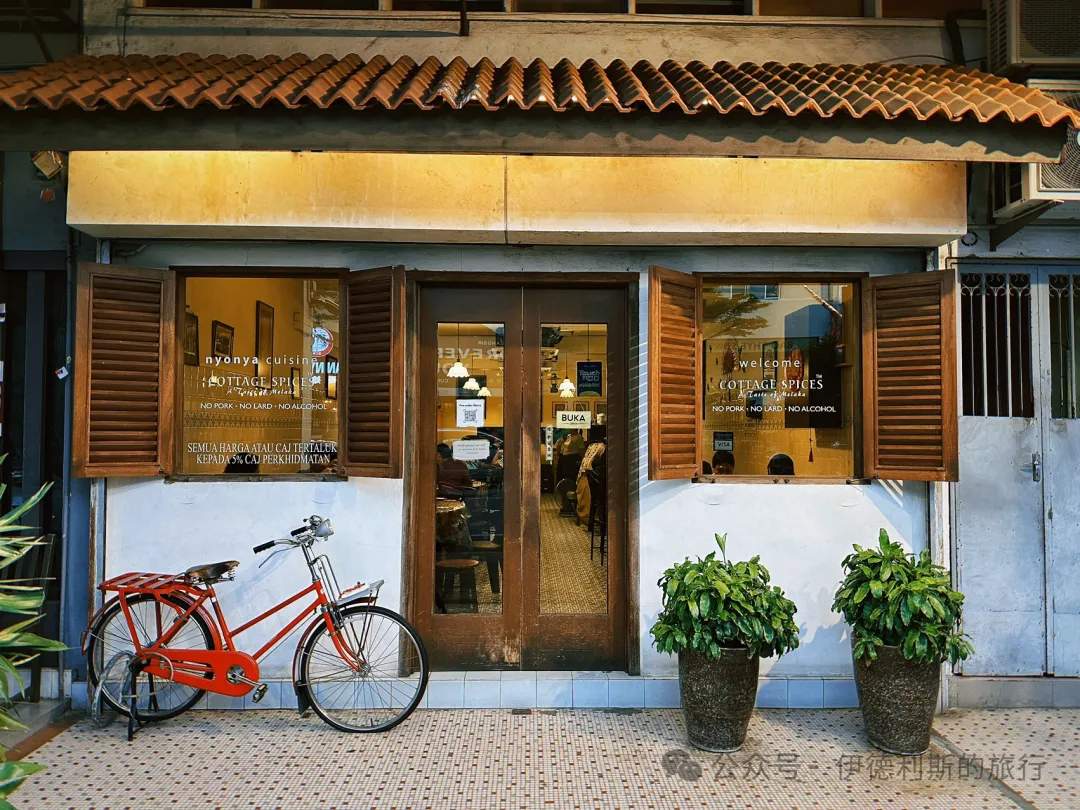
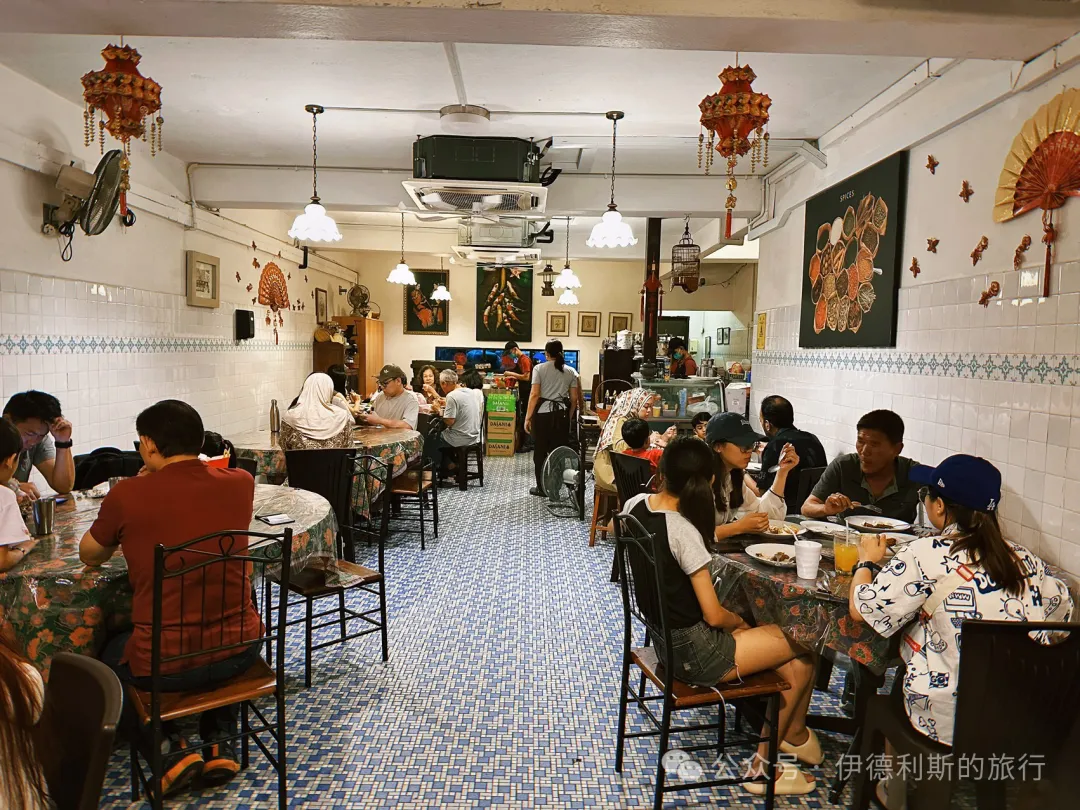
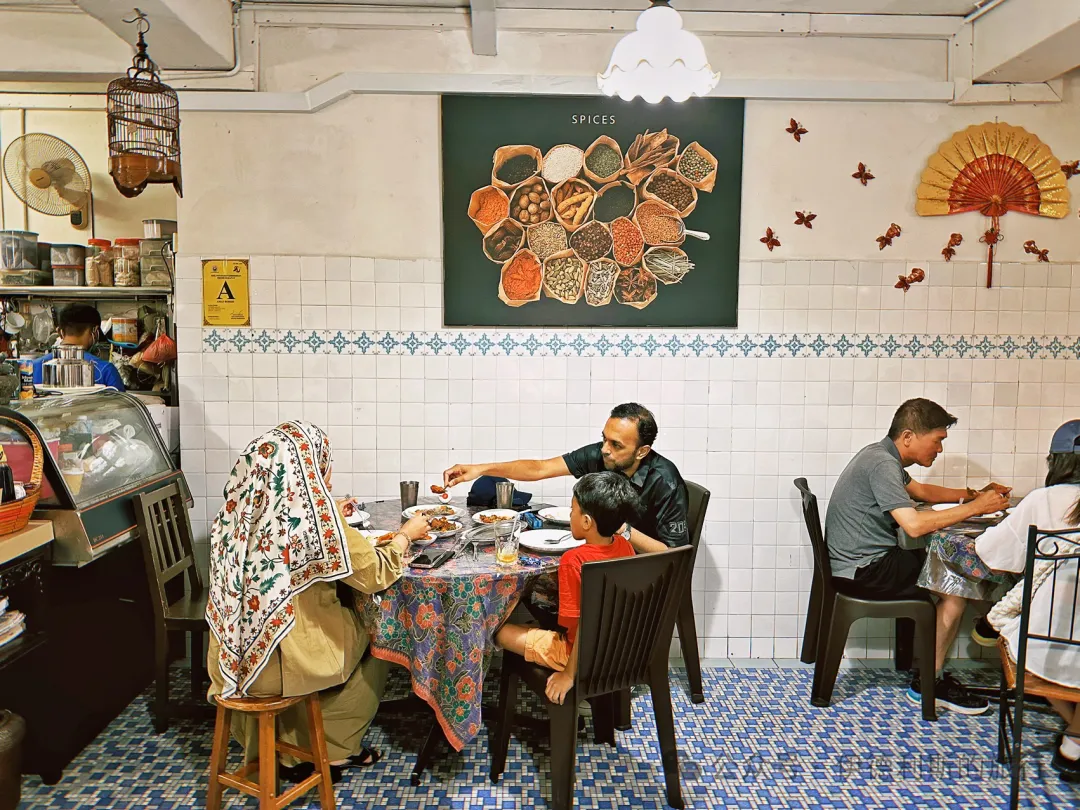
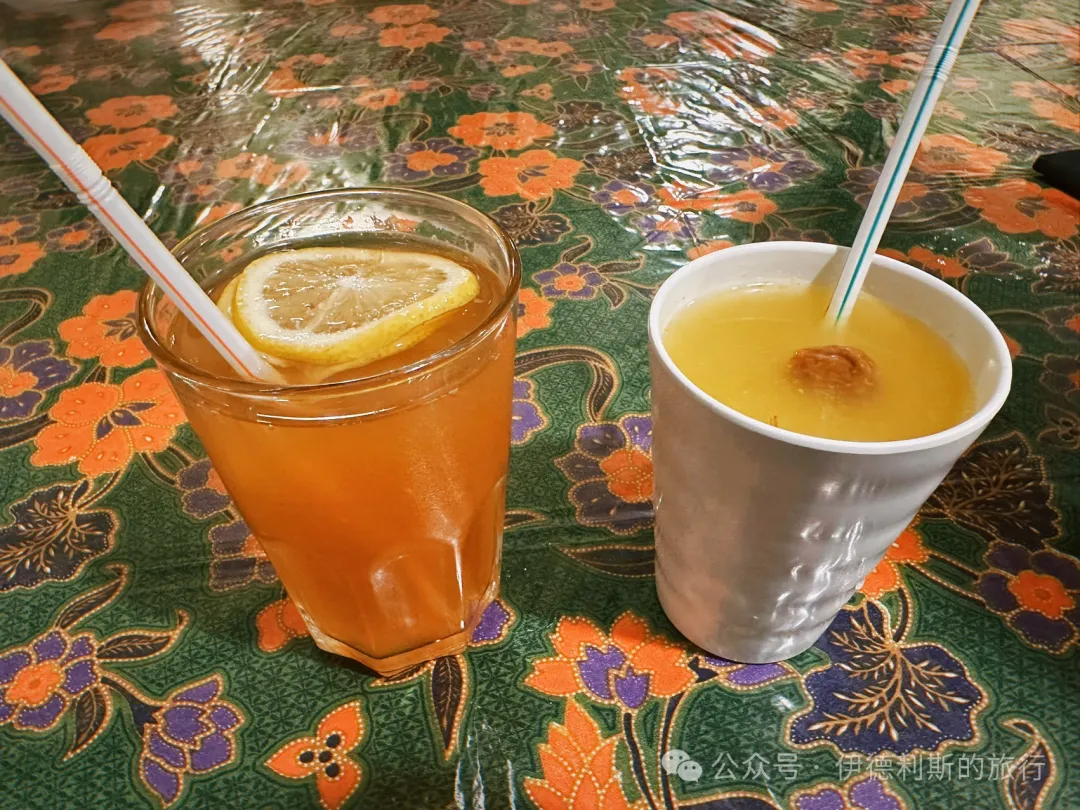
Penang
Sour plum guava juice
Lagenda Cafe in Penang is a themed restaurant honoring the godfather of Malay film and music, P. Ramlee (1929-1973), and it plays his classic songs on a loop. We drank Asam Boi & Guava Tea, made with lime, mint, black tea, sour plum, and fresh-pressed guava juice; it was very refreshing and smooth.
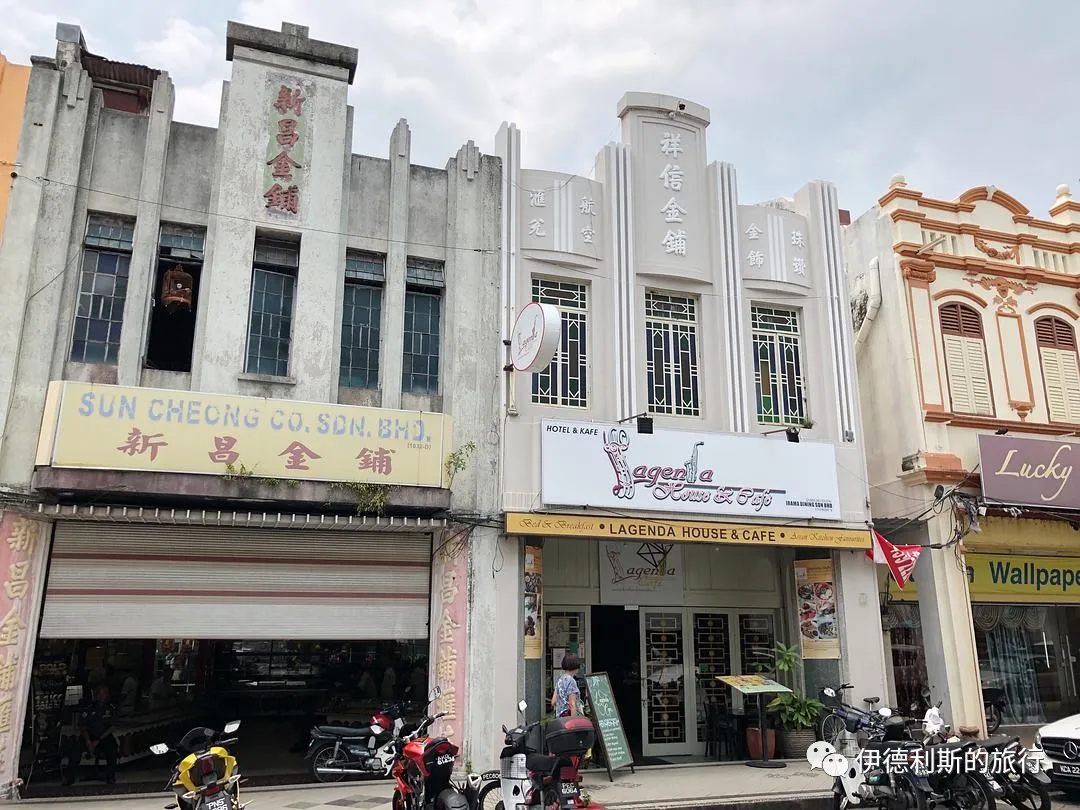
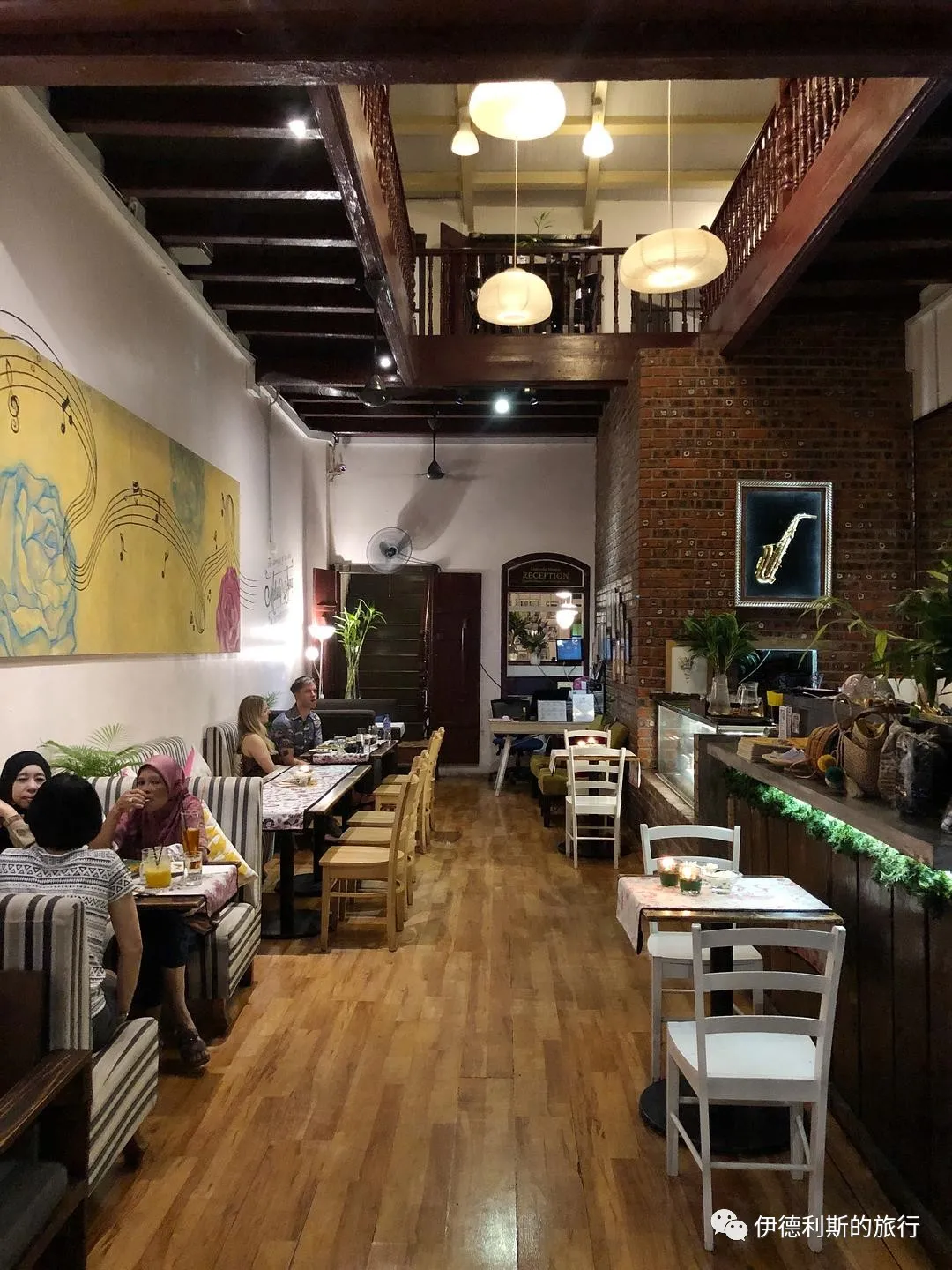
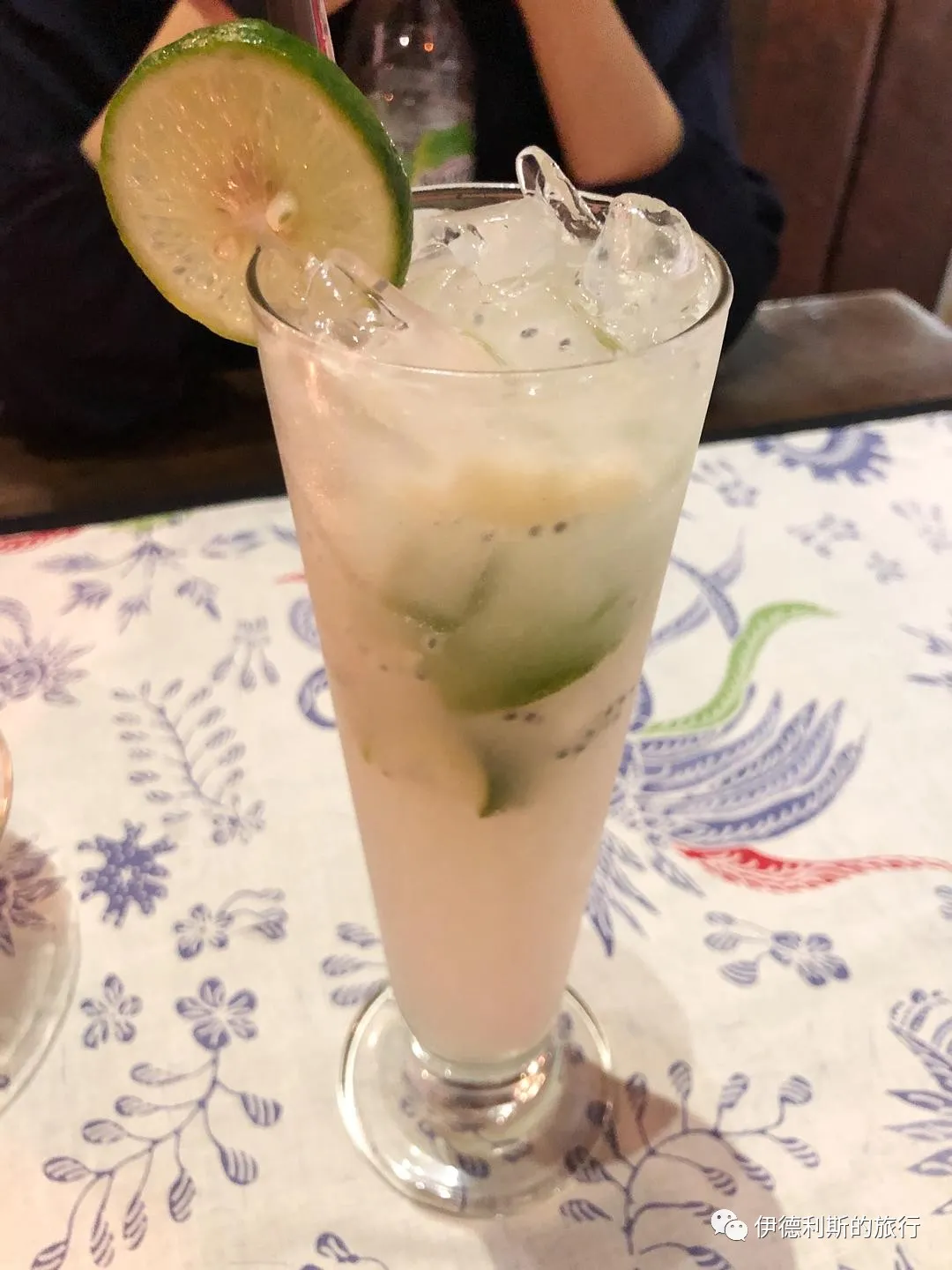
Penang nutmeg drink and Arabian rose water (sherbet)
A unique group called Jawi Peranakan lives in Penang and Singapore. They are a Malay-speaking community formed by the intermarriage of Indian (as well as Arab and Persian) men and Malay women. "Jawi" means "Southeast Asia" in Arabic, and "Peranakan" means "locally born" in Malay.
After the 20th century, as the British Empire declined, the Jawi Peranakan community began to integrate into the Malay population. Today, the government counts most Jawi Peranakan as "Malay." Even so, the Jawi Peranakan community still works hard to pass on its unique culture, which shows in their architecture, clothing, jewelry, and food.
Today, the best place in Penang to experience Jawi Peranakan culture is the Jawi House Cafe Gallery. The building was originally a Straits Eclectic-style Chinese shophouse built in the 1860s with Malay-style decorations, and it later served as an Indian coppersmith shop. The street where the shop is located, Armenian Street (Lebuh Armenian, formerly Malay lane), was the earliest settlement area for the Jawi Peranakan community. In 2012, the Karim family, who have lived in Penang for six generations and have Punjabi roots, opened Jawi House here to make authentic Jawi Peranakan food.
We drank the Penang Nutmeg and Arabian Sherbet here. Nutmeg is a local Penang specialty, and this drink is mixed with honey and lemon for a sweet and sour taste.
Sherbet comes from the Persian word "Sharbat," which means a non-alcoholic sugary drink. In medieval Arabia, people loved to add syrup and honey to Sharbat for sweetness, along with almonds, lemon, apple, pomegranate, tamarind, dates, sumac, musk, and mint. Spread by Arabs and Persians, Sharbat is now popular across West Asia, South Asia, and the Malay Archipelago, especially during Ramadan. The Arabian Sherbet at Jawi House is made with rose syrup, mallow nuts, gum arabic, and basil seeds, giving it a very rich flavor.
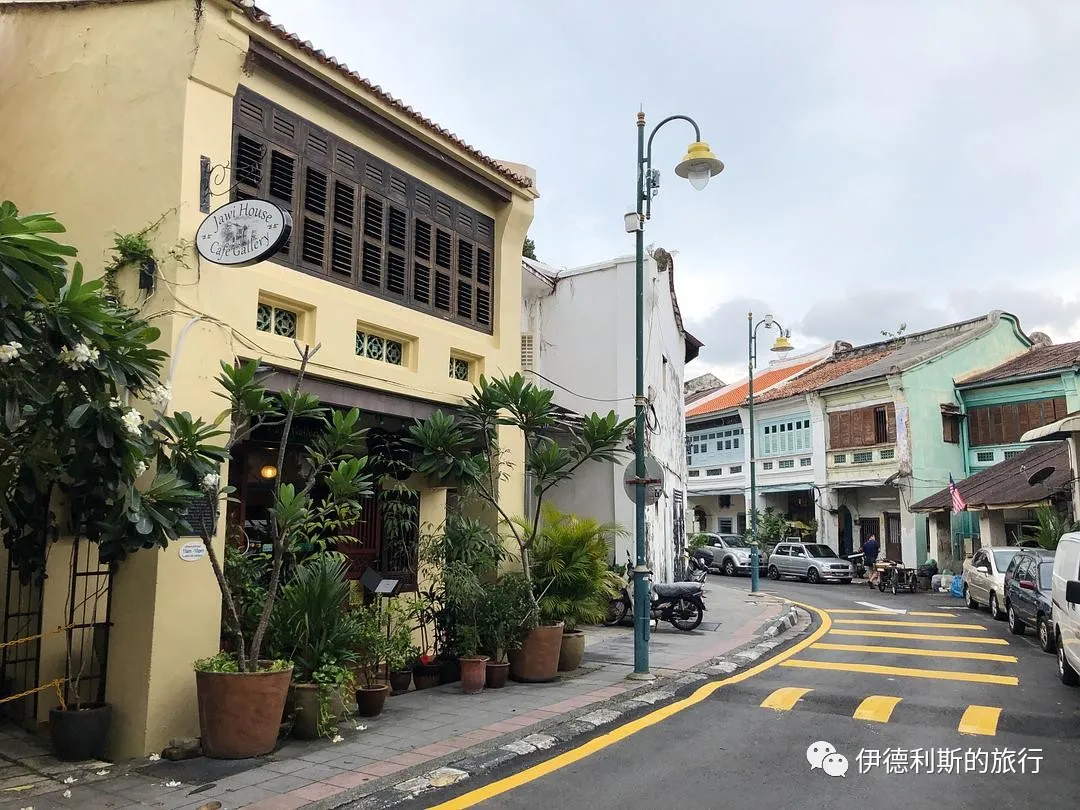
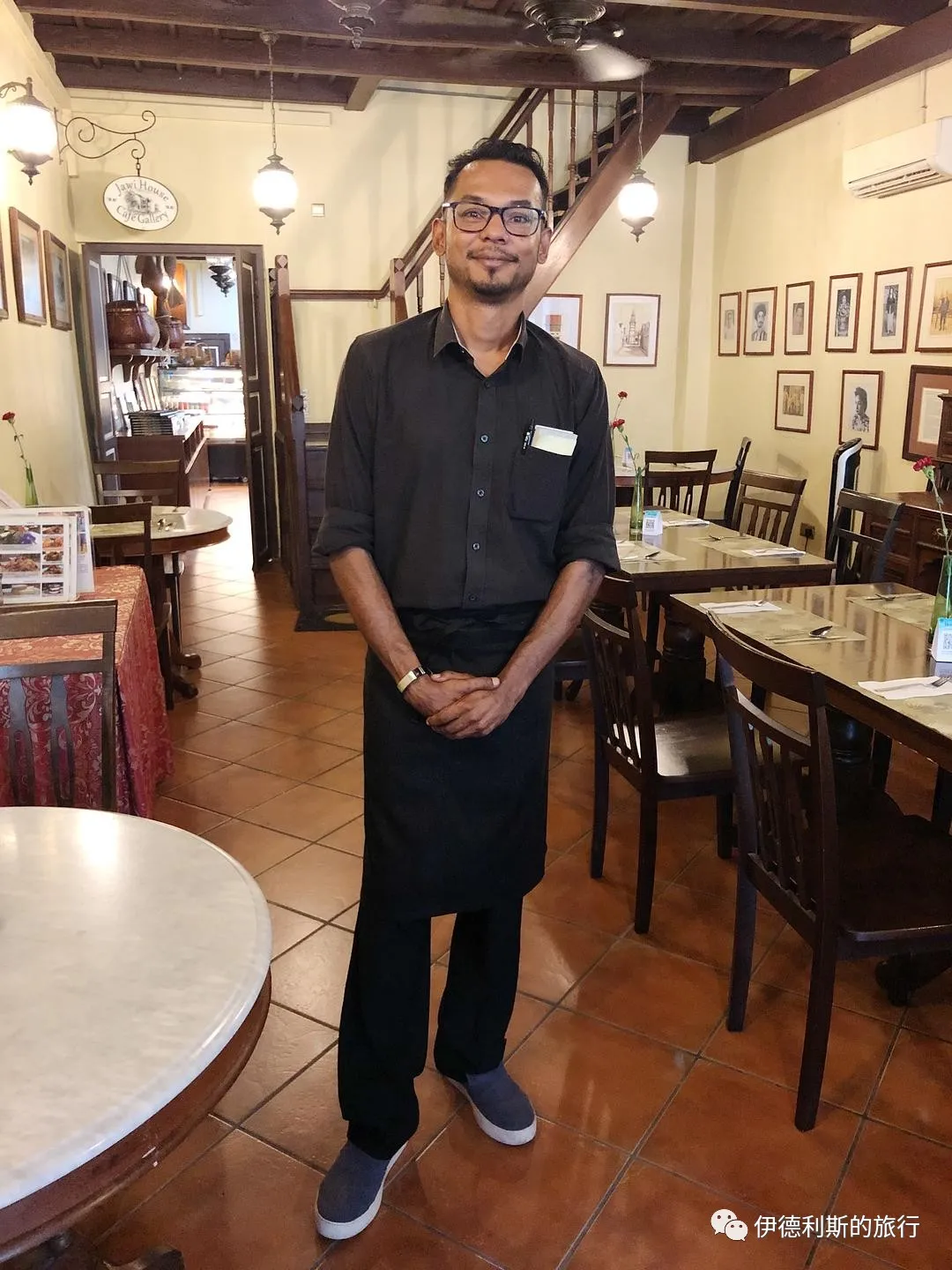
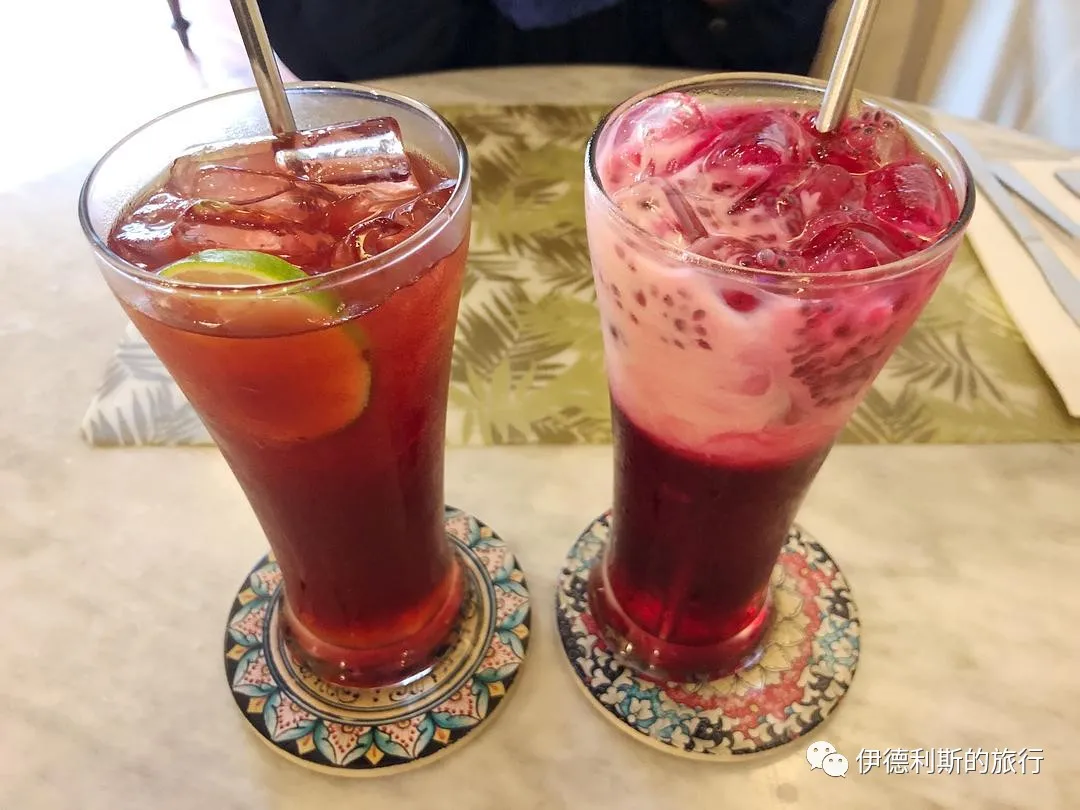
Hibiscus
Lychee water
Mohd Chan is likely the most famous and largest halal Cantonese restaurant chain in Malaysia, now with 19 locations including restaurants, dim sum shops, and takeout spots. The founder of Mohd Chan, Dato HJ Mohd Chan, was born in Gombak, Selangor. Influenced by his Malay friends, he converted to Islam in 2007 and started his halal Cantonese restaurant that same year, focusing on blending Cantonese cuisine with local flavors. We drank their lychee water, which was packed with plenty of ingredients.
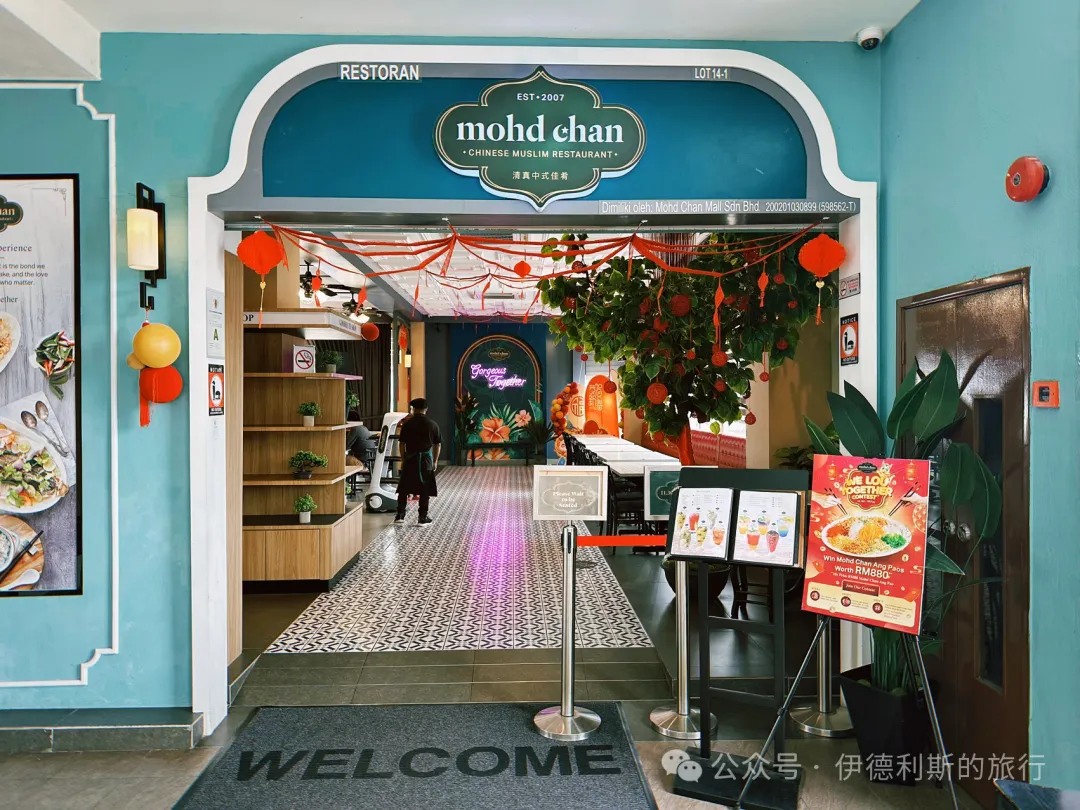
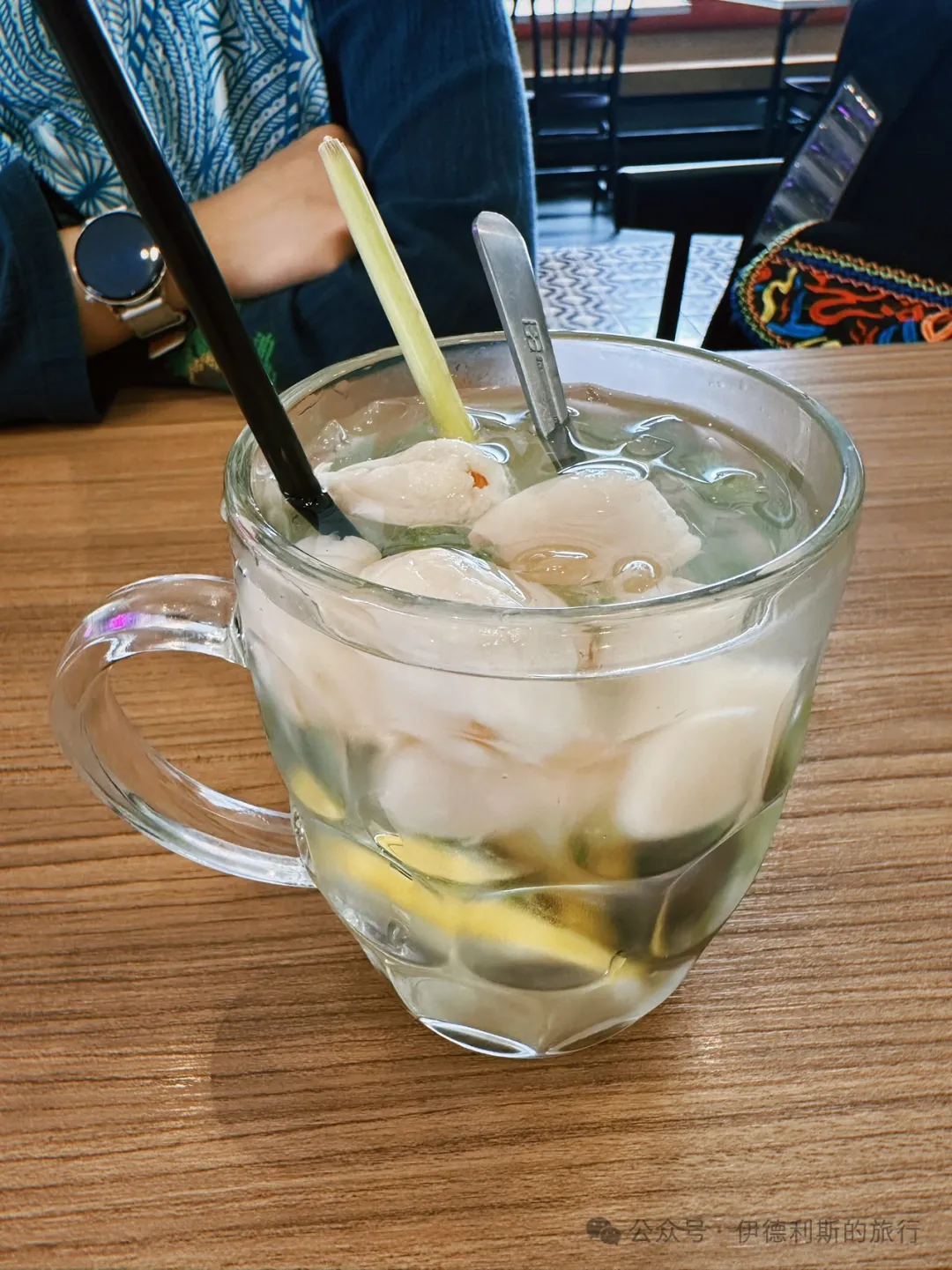
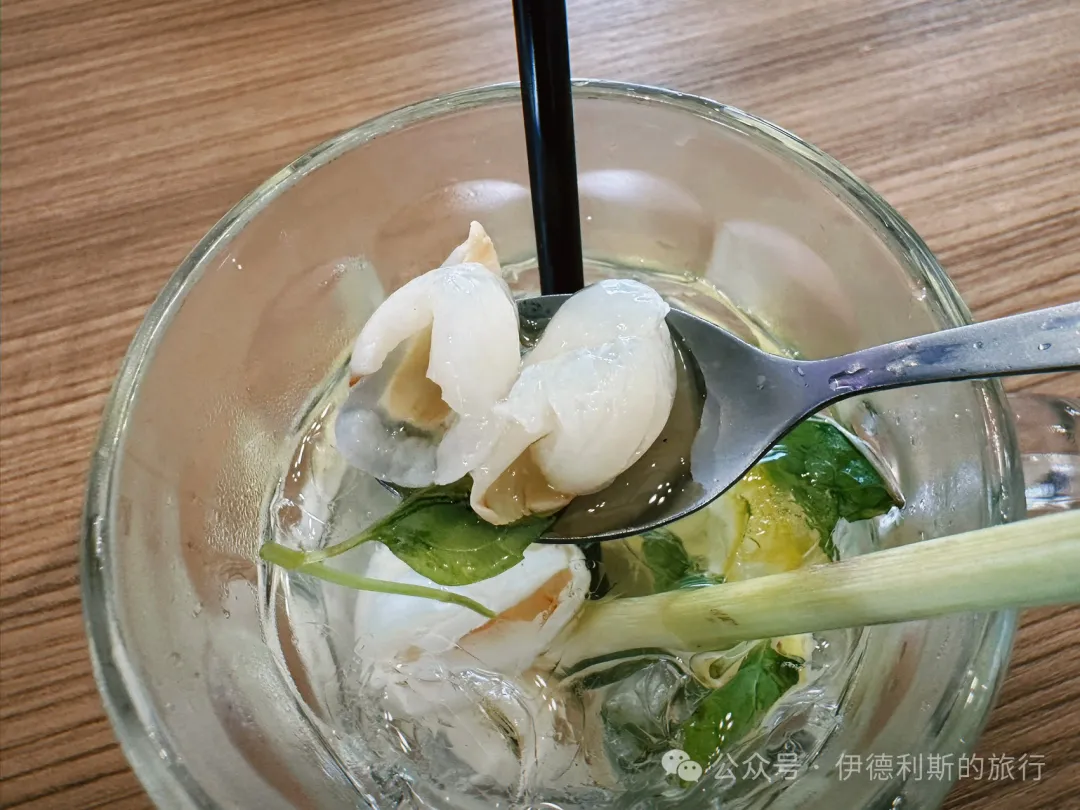
Kuala Lumpur
Blue pea flower tea and barley lime water
Whether it is halal Chinese food or halal Nyonya cuisine, the Klang Valley area where Kuala Lumpur is located has the highest number of options in Malaysia. Just inside the NU Sentral mall opposite Kuala Lumpur Sentral station, there are three halal Nyonya restaurants, making it a great place for traveling friends (dosti) to grab a bite. We ate at the largest of the three, Peranakan Place, which has several branches in Kuala Lumpur and Malacca. We ordered the blue pea flower tea and barley lime water, both of which were very unique.
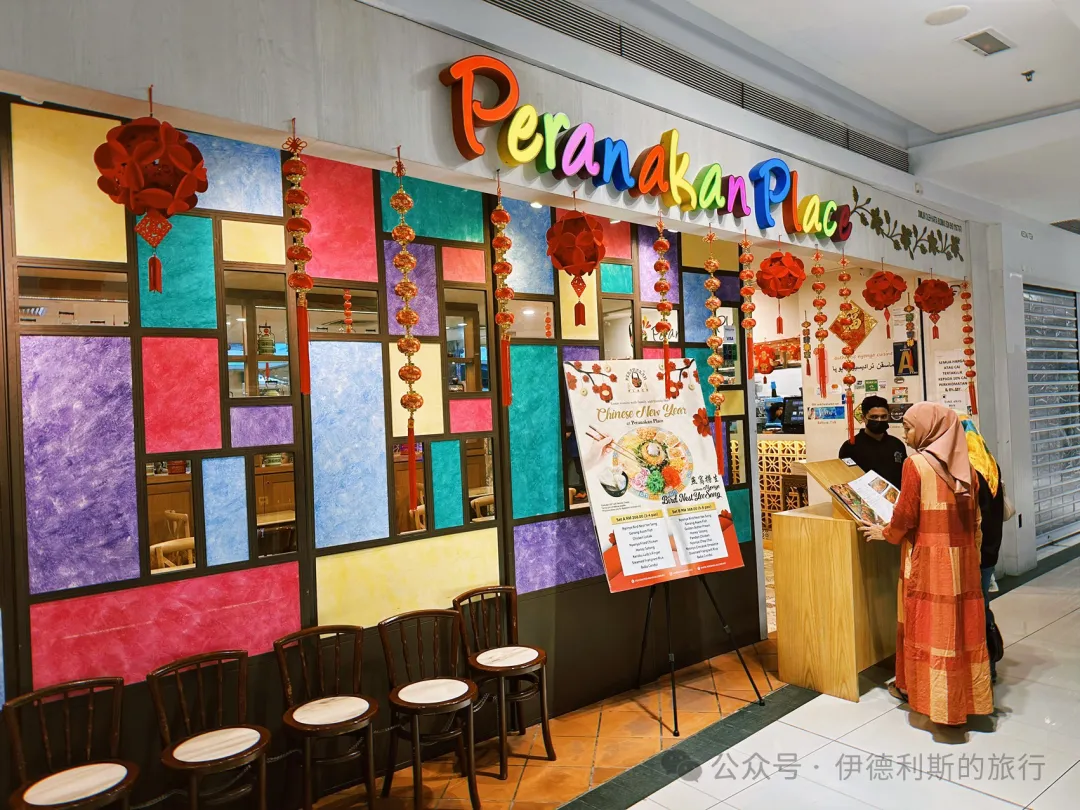
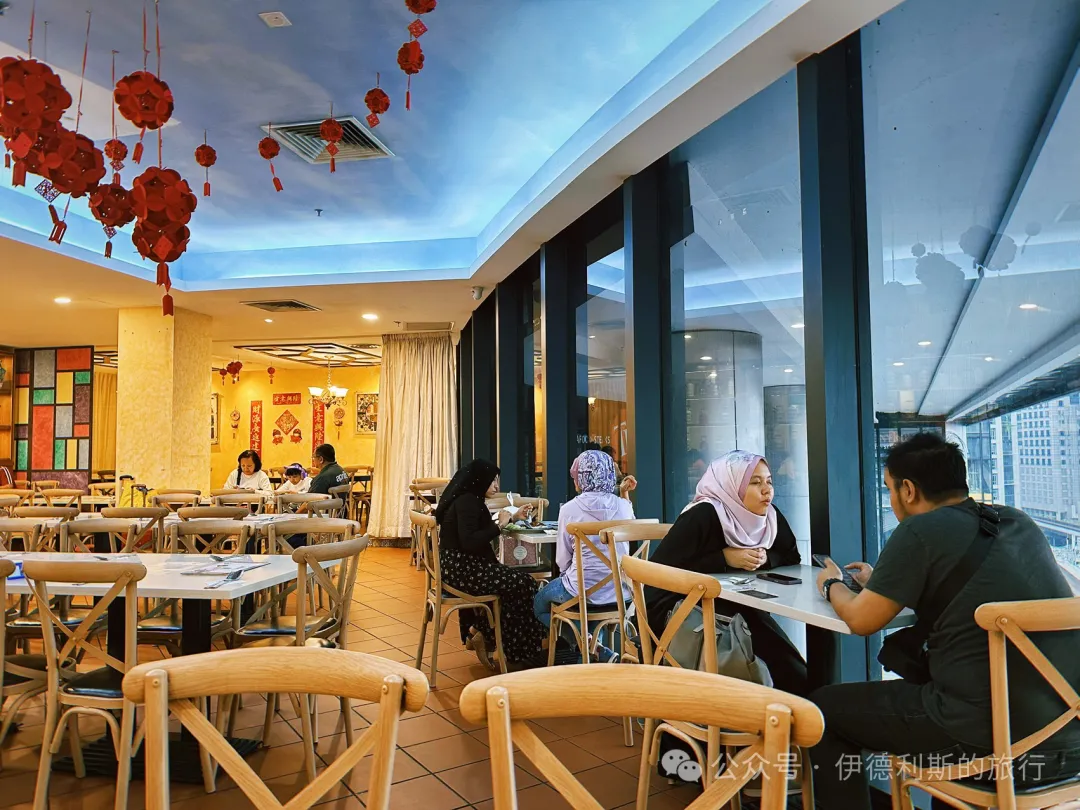
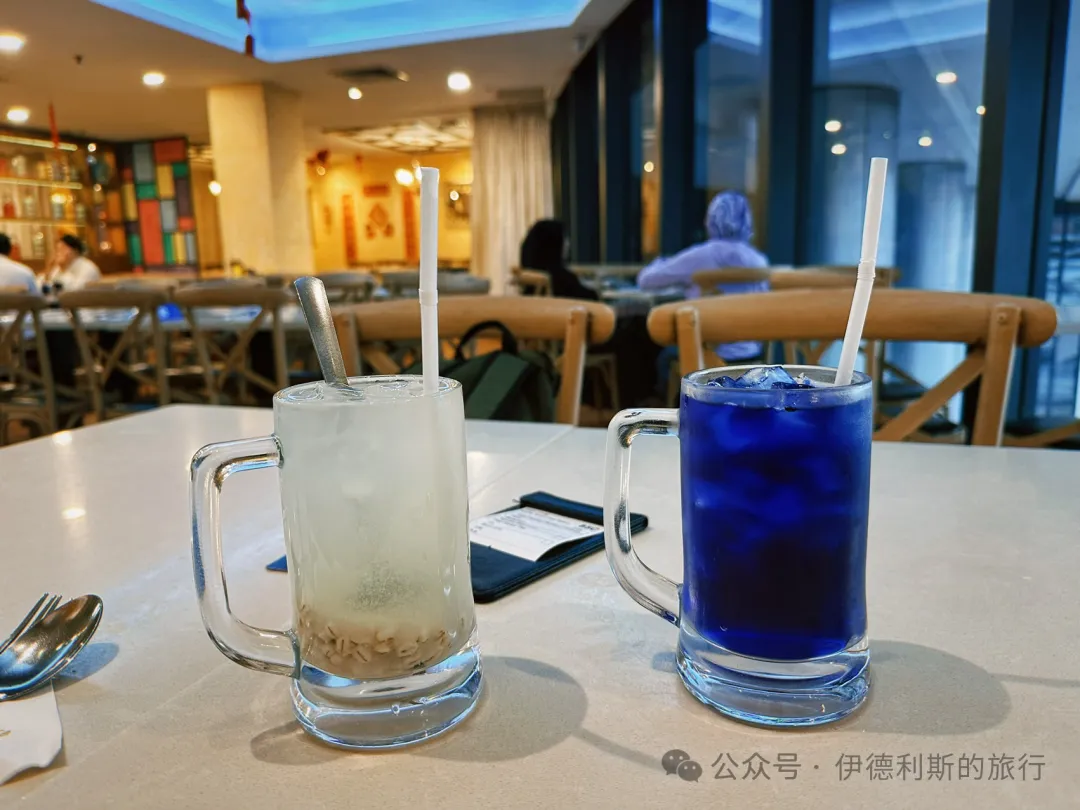
Singapore
Chee Kong clear soup (qing tang)
Geylang Serai is located near the Geylang River in eastern Singapore. The Geylang Serai Malay bazaar (market) dates back to the 1920s. During World War II, the Japanese turned it into an amusement park, but after the war, it returned to being a bustling Malay bazaar where local Malay residents come to shop. The only Chinese stall in the bazaar is Chee Kong clear soup (qing tang), an old shop that opened in the 1950s. You can add longan, sweet potato, and ginkgo nuts to the clear soup, and it can be served hot or cold. Drinking a bowl of clear soup is very refreshing after eating spicy Malay food.
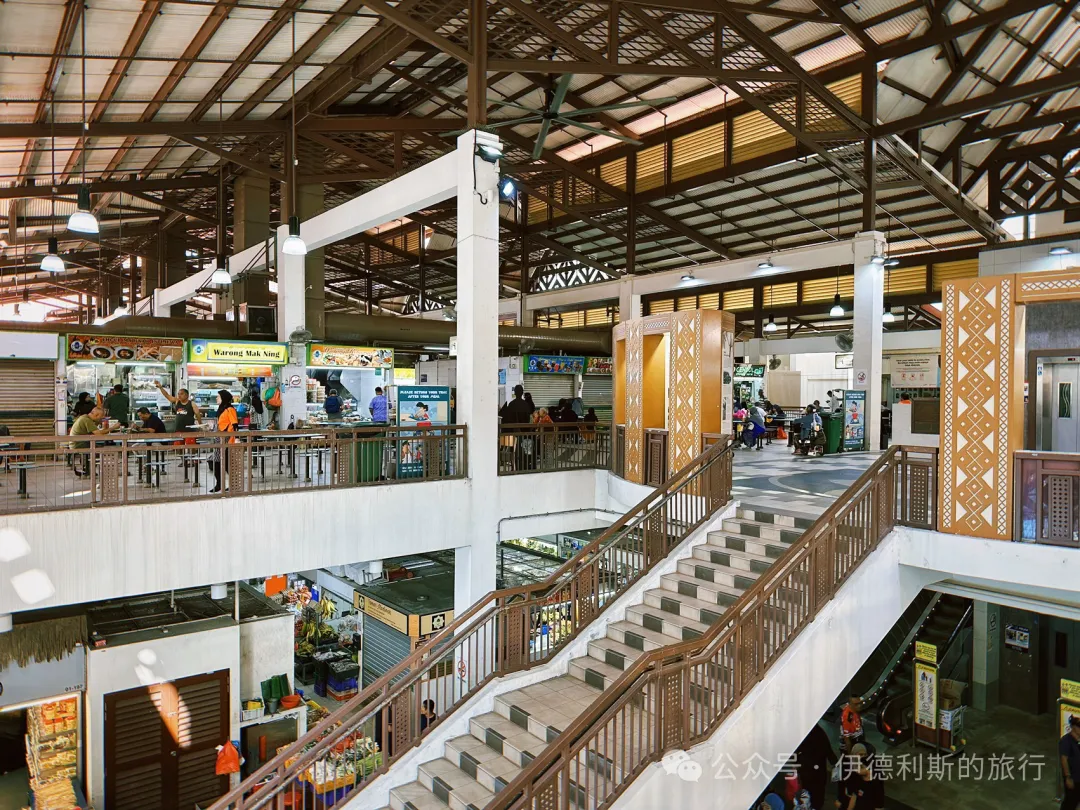
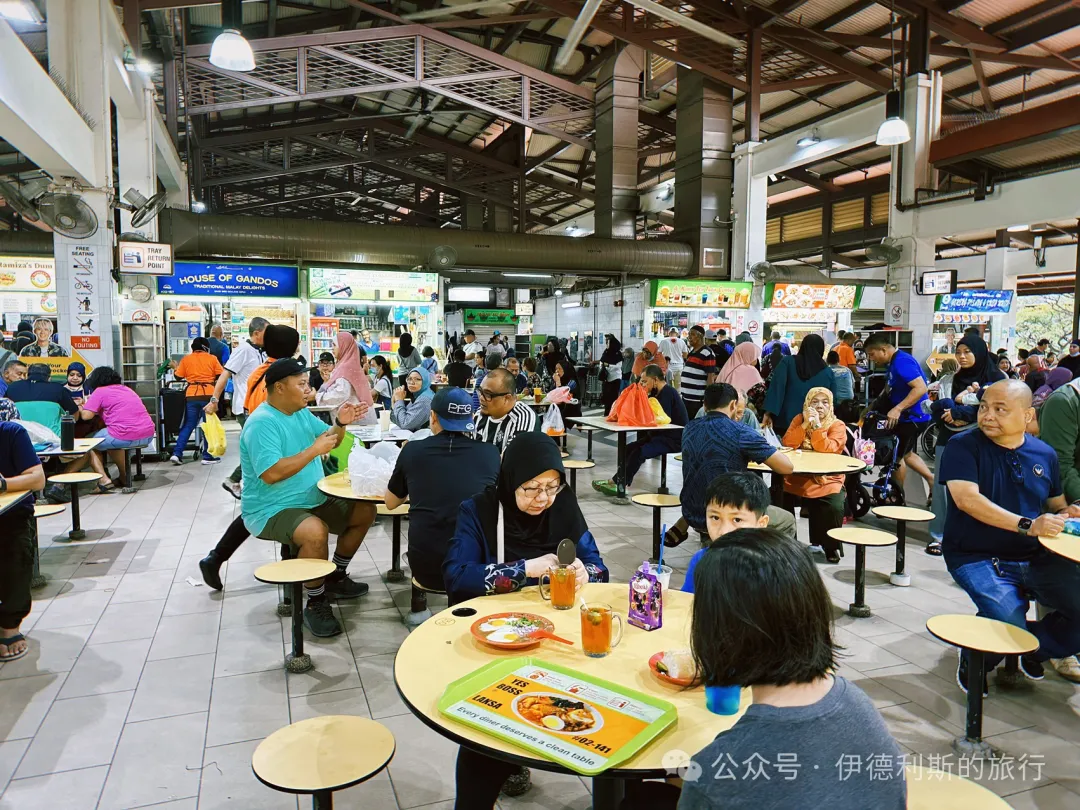
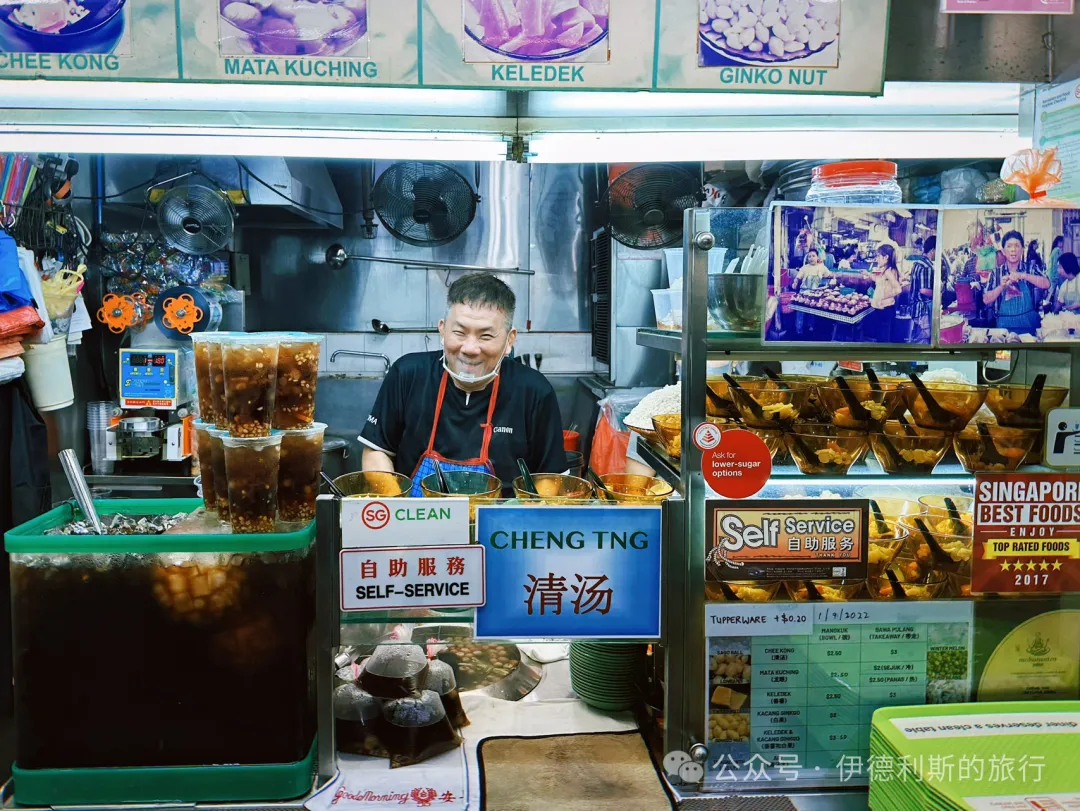
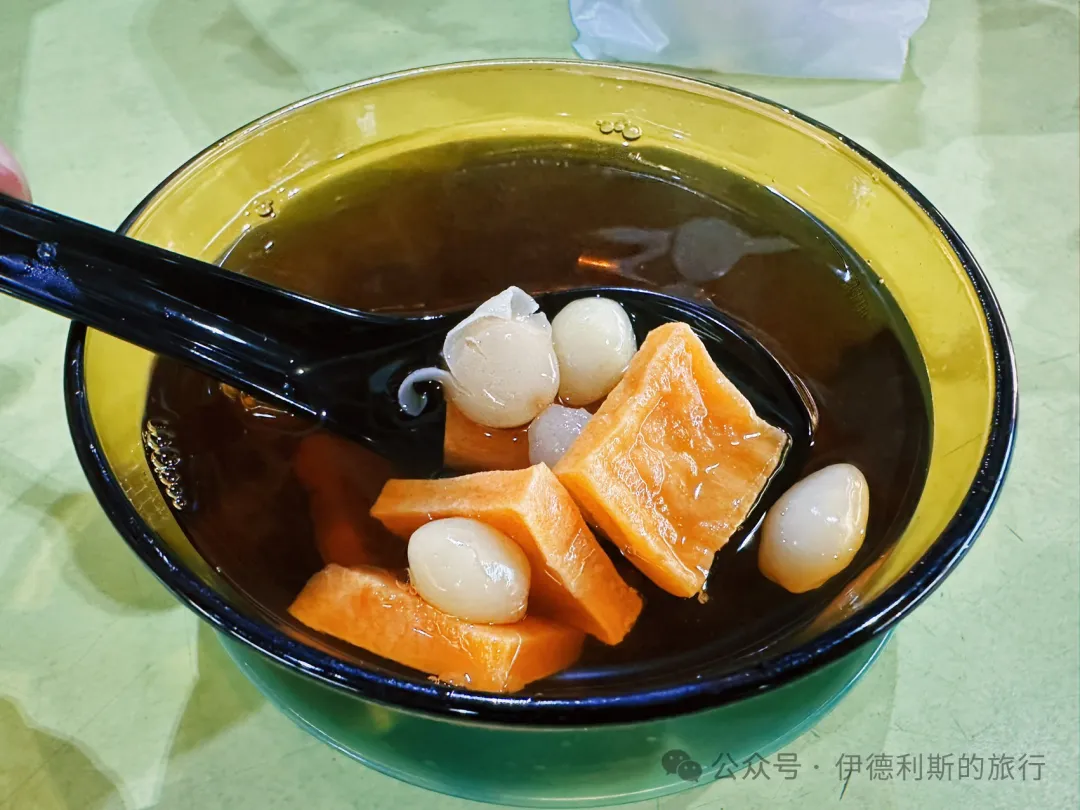
Three-layer milk tea
Haig Road Market & Food Centre has a lot of Malay delicacies. We drank the classic three-layer milk tea, which uses palm sugar, milk, and black tea to create three distinct layers with a rich taste.
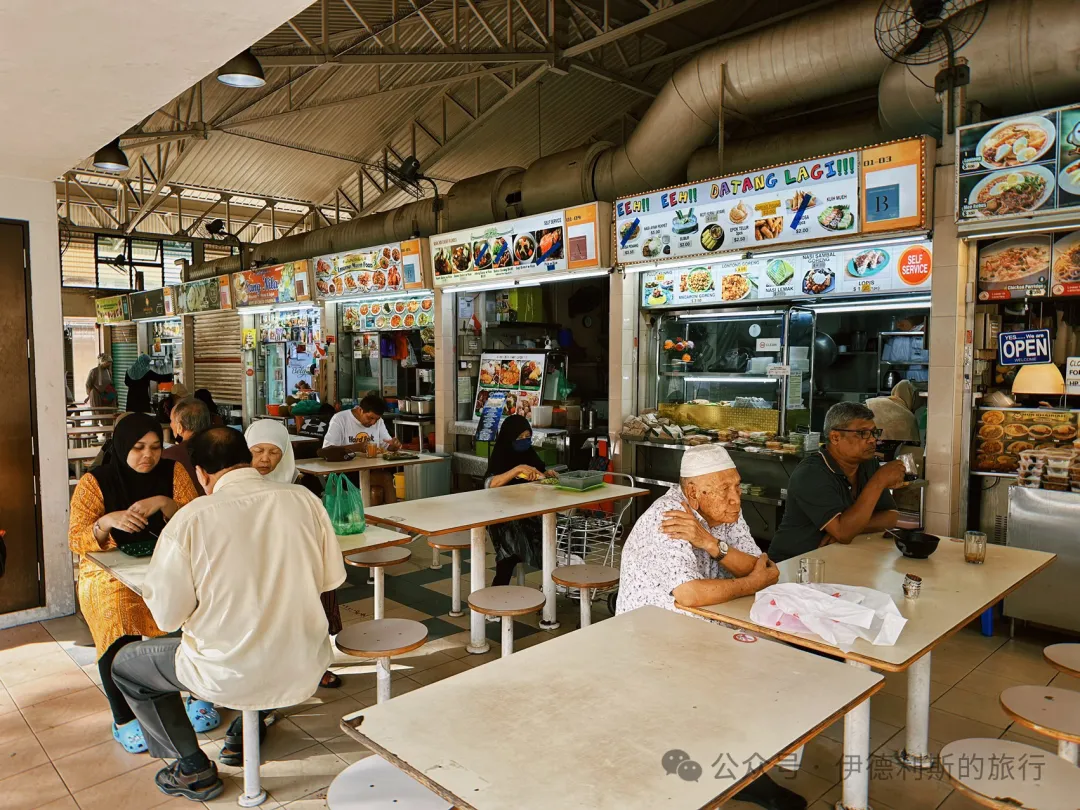
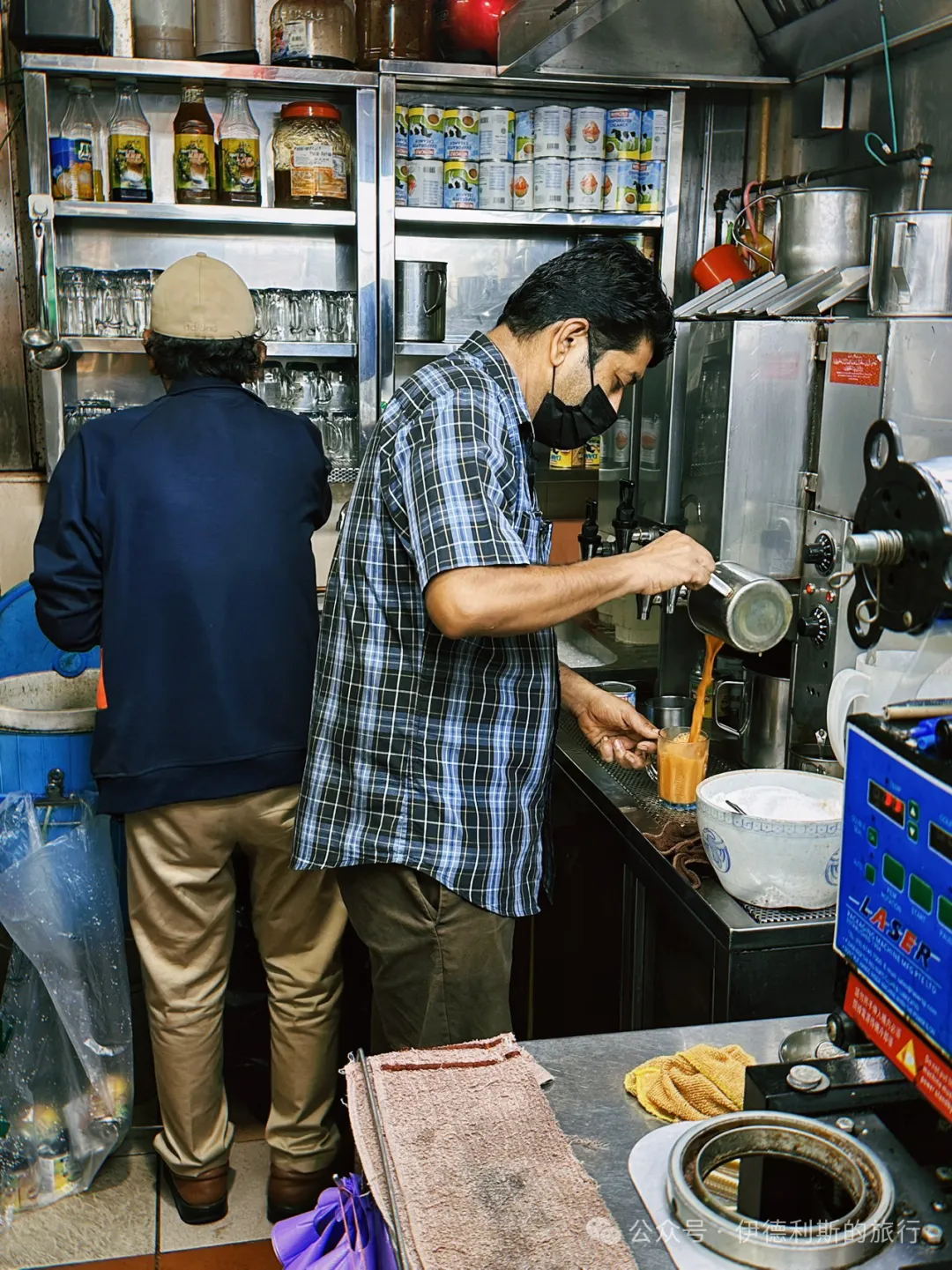
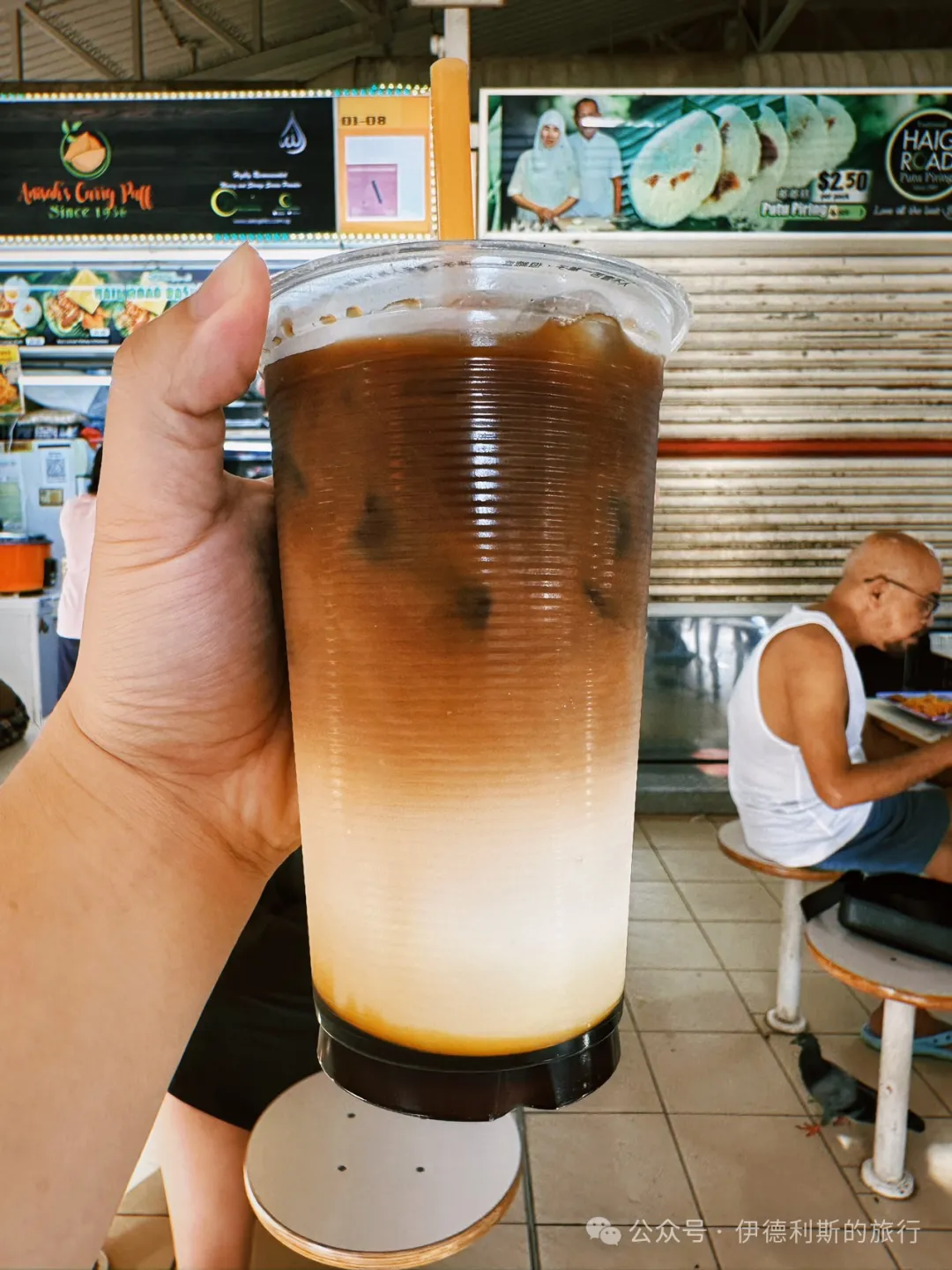
Pulled tea (teh tarik) and Milo Dinosaur
We had a cup of the classic Nanyang pulled tea (teh tarik) at Tarik, a shop next to the Sultan Mosque in Kampong Glam. Local Malay youth really love this place. Tarik means 'pull' in Malay. By mixing black tea and condensed milk and pouring it back and forth between two containers with outstretched arms, the tea cools down and becomes frothy. We also ordered a cup of Milo, which is a chocolate malt powder from Nestlé. People in Malaysia and Singapore like to sprinkle Milo powder on iced Milo, which they call Milo Dinosaur.
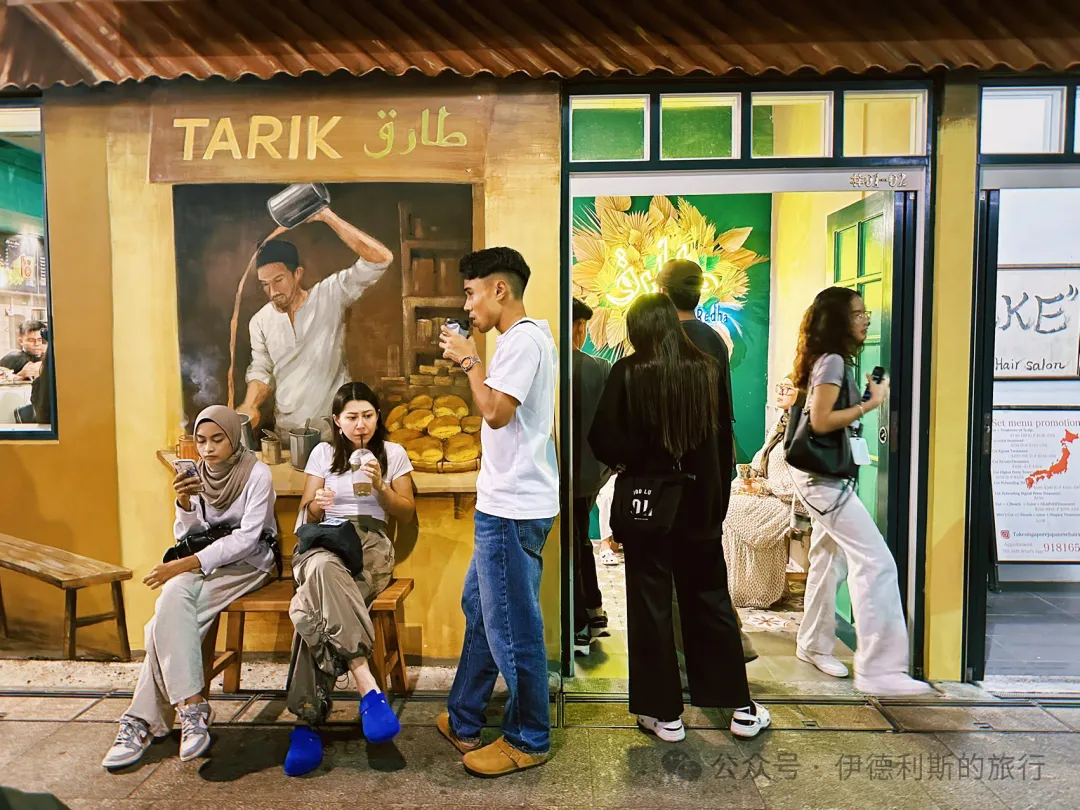
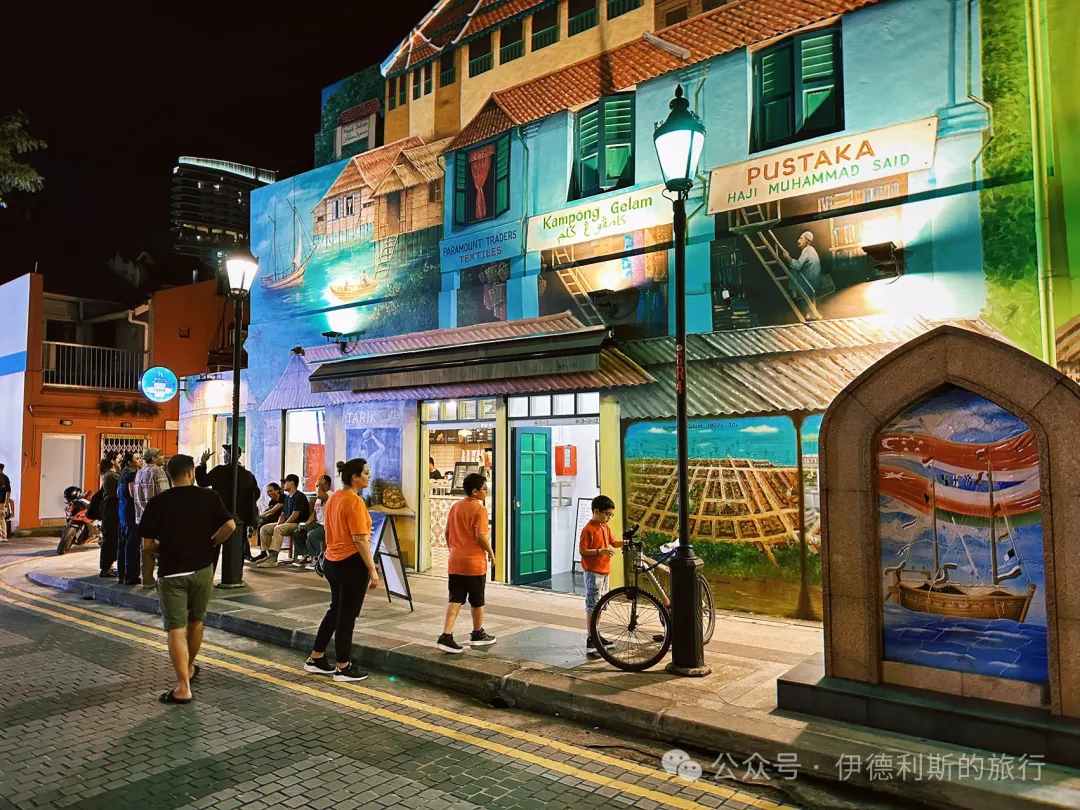
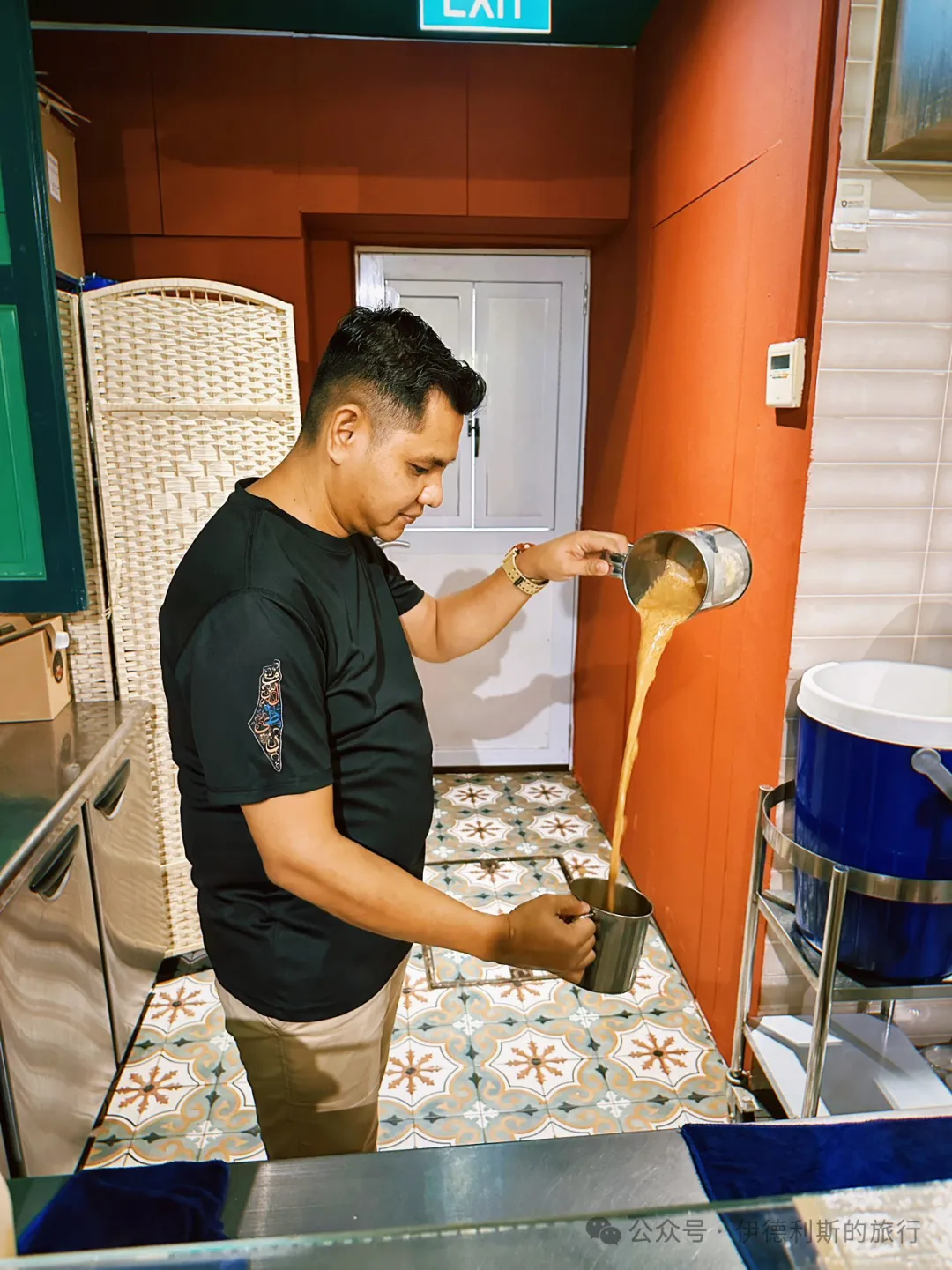
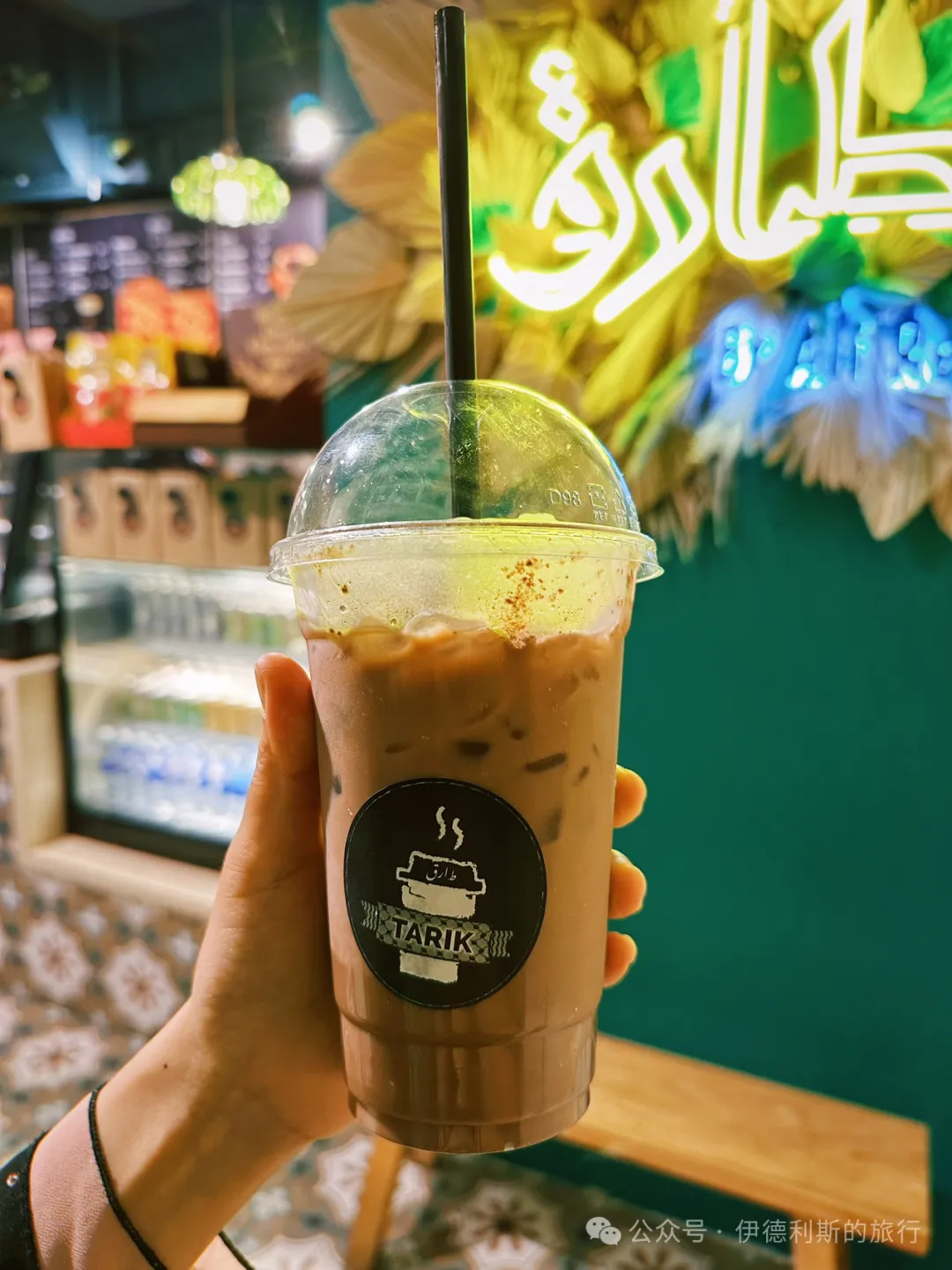
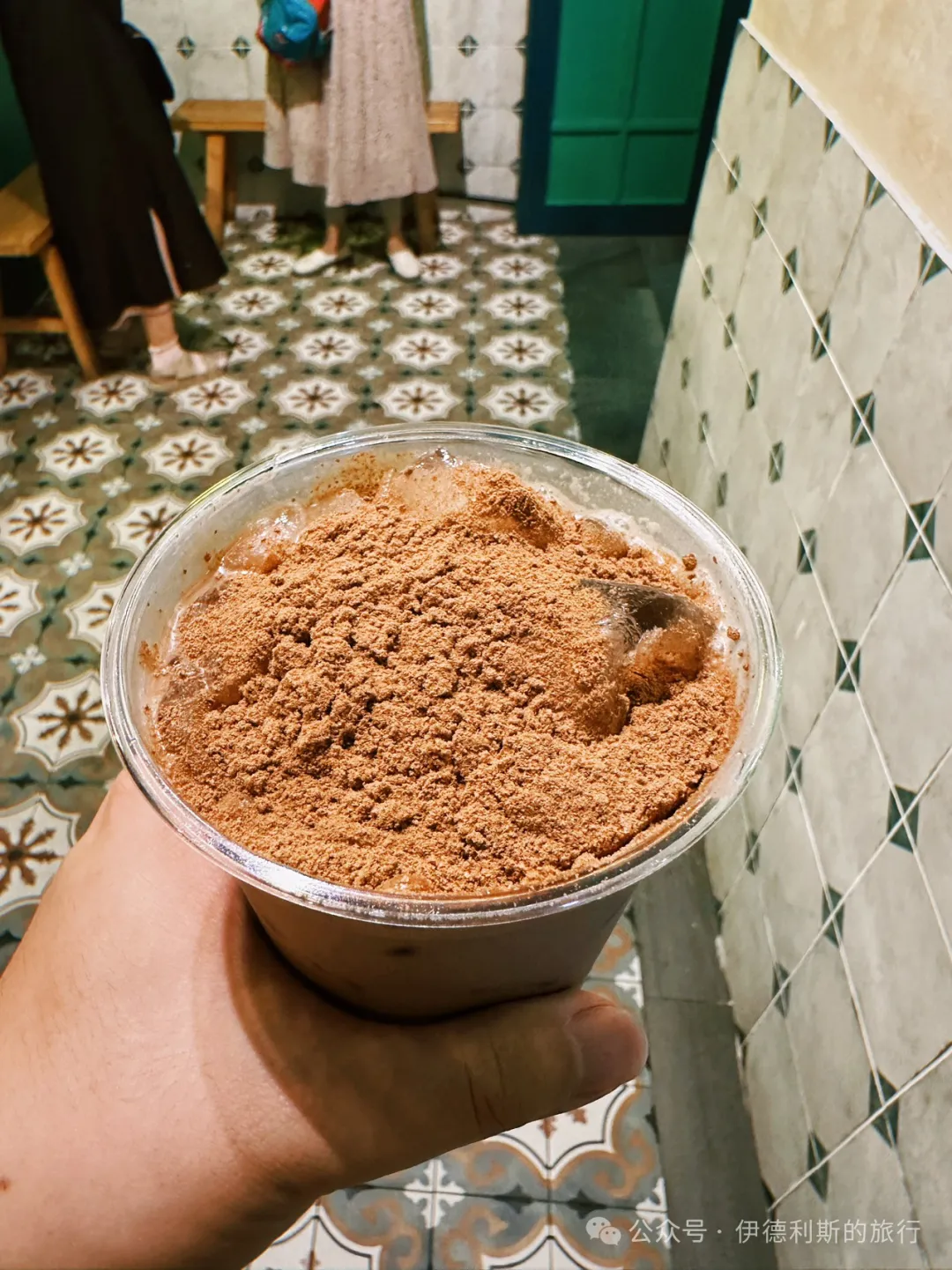
Ginger tea
Bhai Sarbat on Baghdad Street was started by an Indian Muslim in the 1950s and has been around for 70 years. Bhai means brother in Urdu. Bhai Sarbat started as a street pushcart stall and moved into this shophouse on Baghdad Street in the 1970s. Today it sells hundreds of drinks, but the ginger tea is still the most famous.
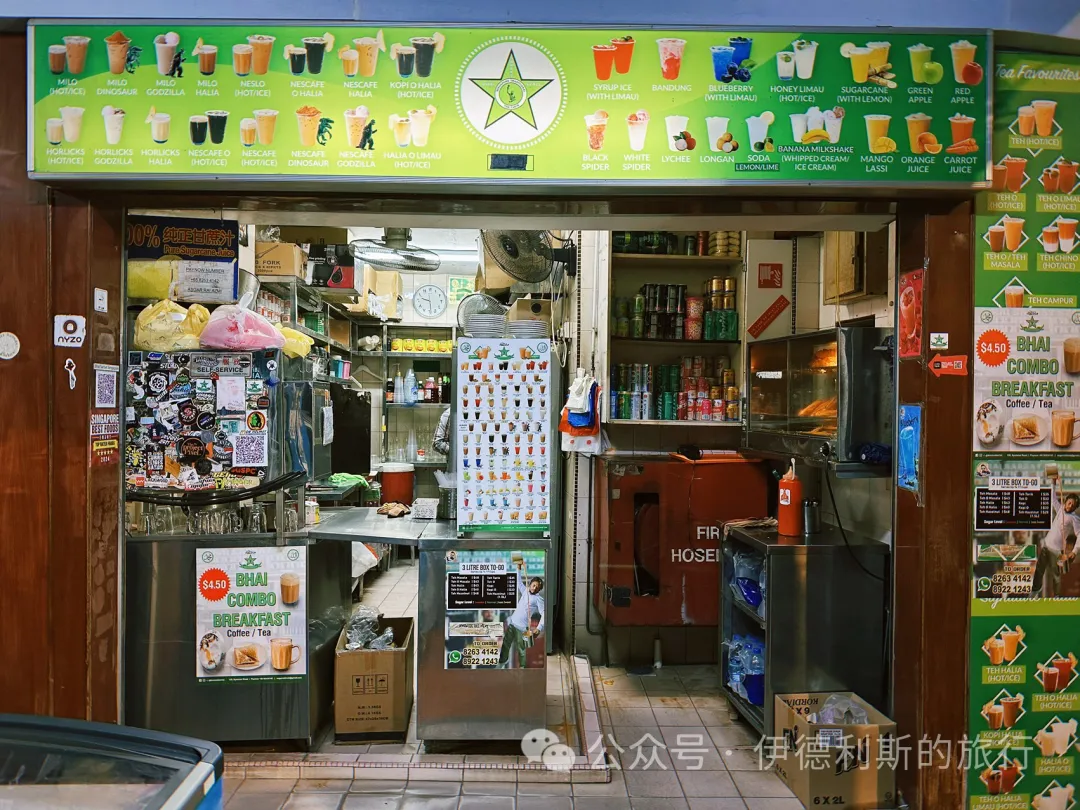
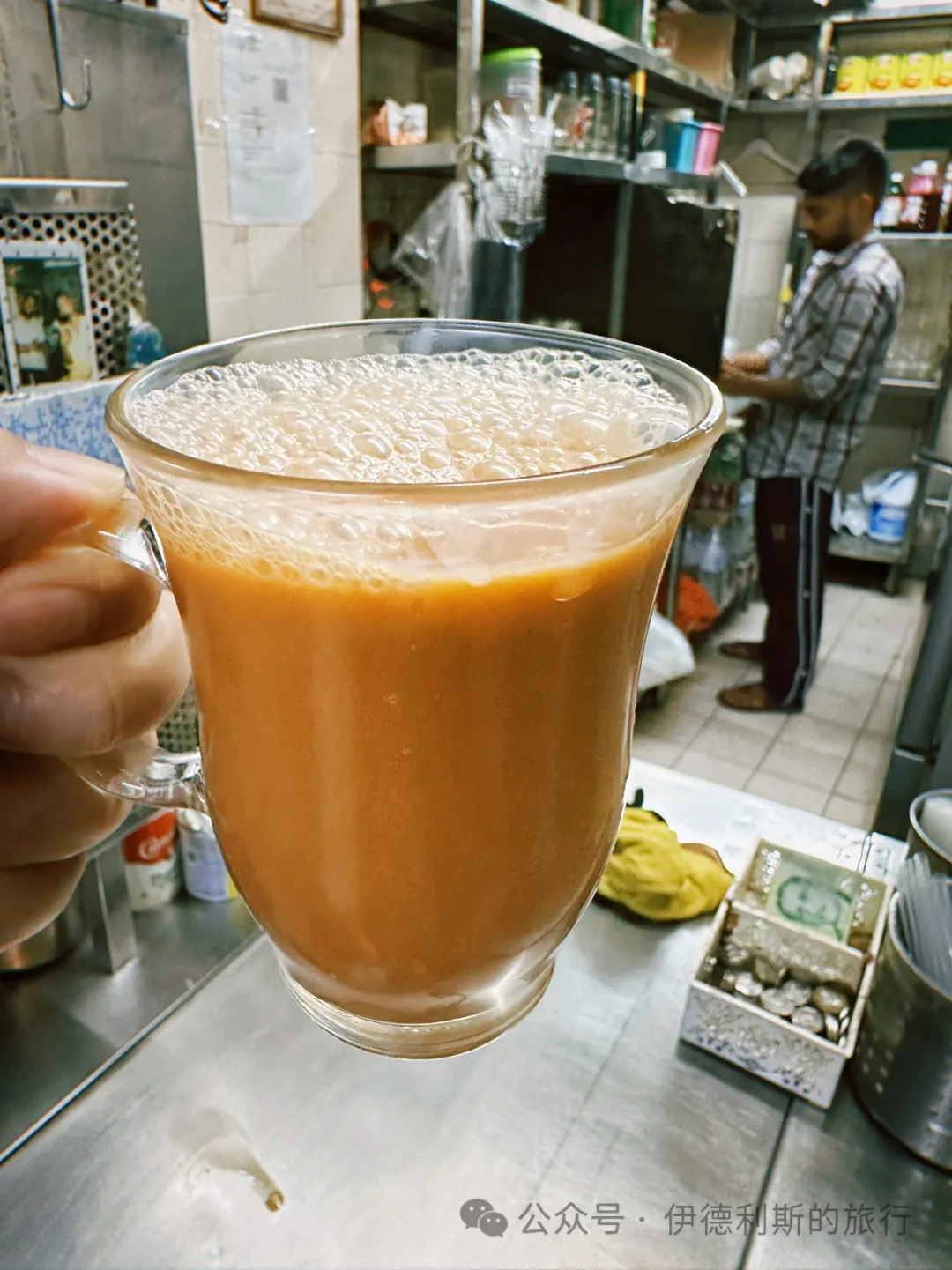
Indonesia
Yogyakarta
Es Dawet Ayu
Es Dawet Ayu is a specialty iced drink from Central Java that comes from the small town of Banjarnegara. Its main ingredients are rice flour, glutinous rice flour, coconut milk, palm sugar syrup, and grass jelly.
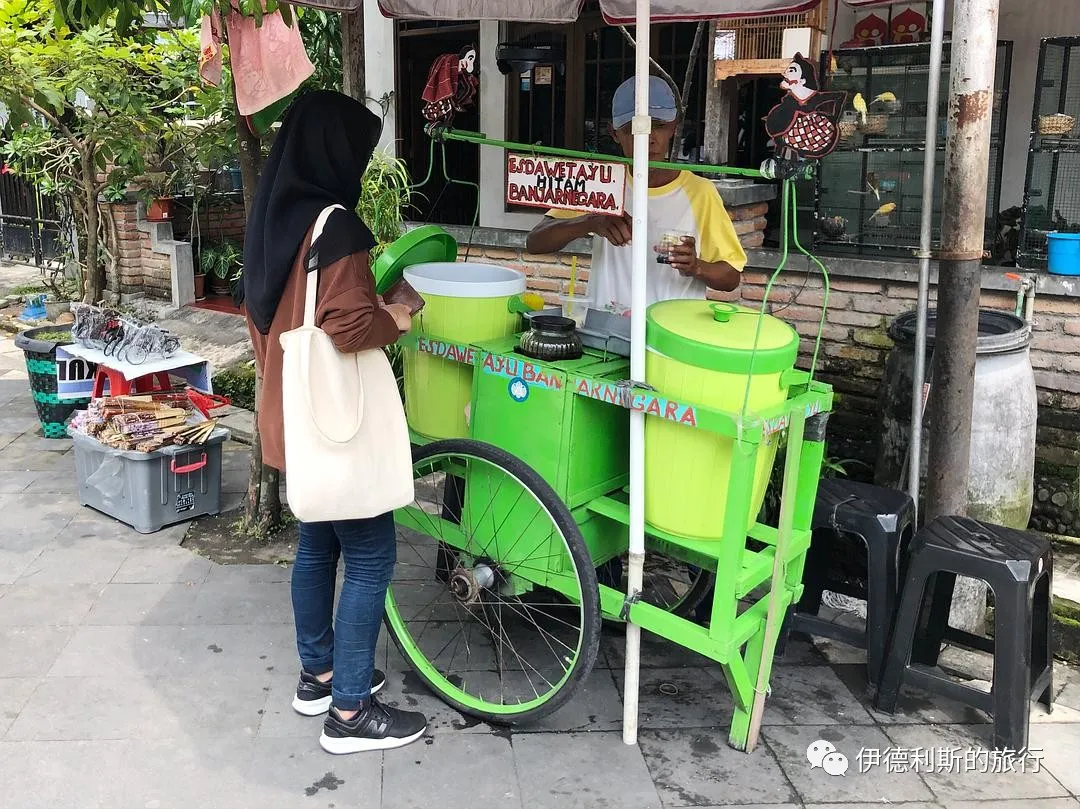
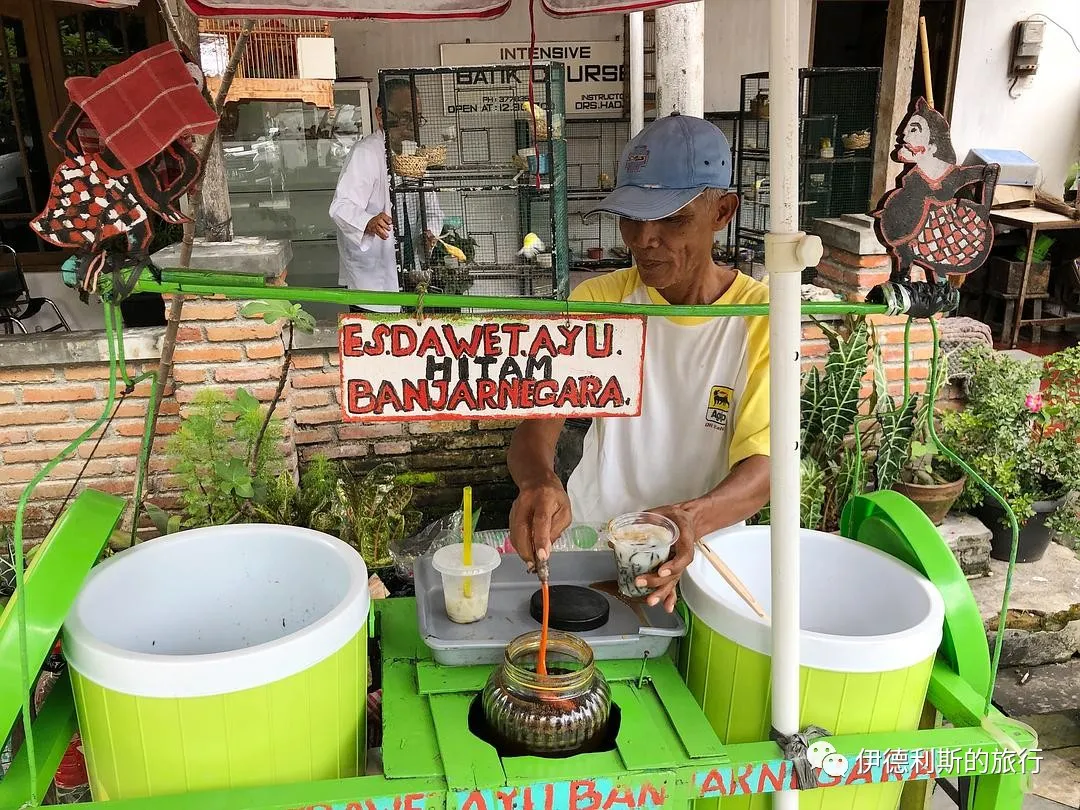
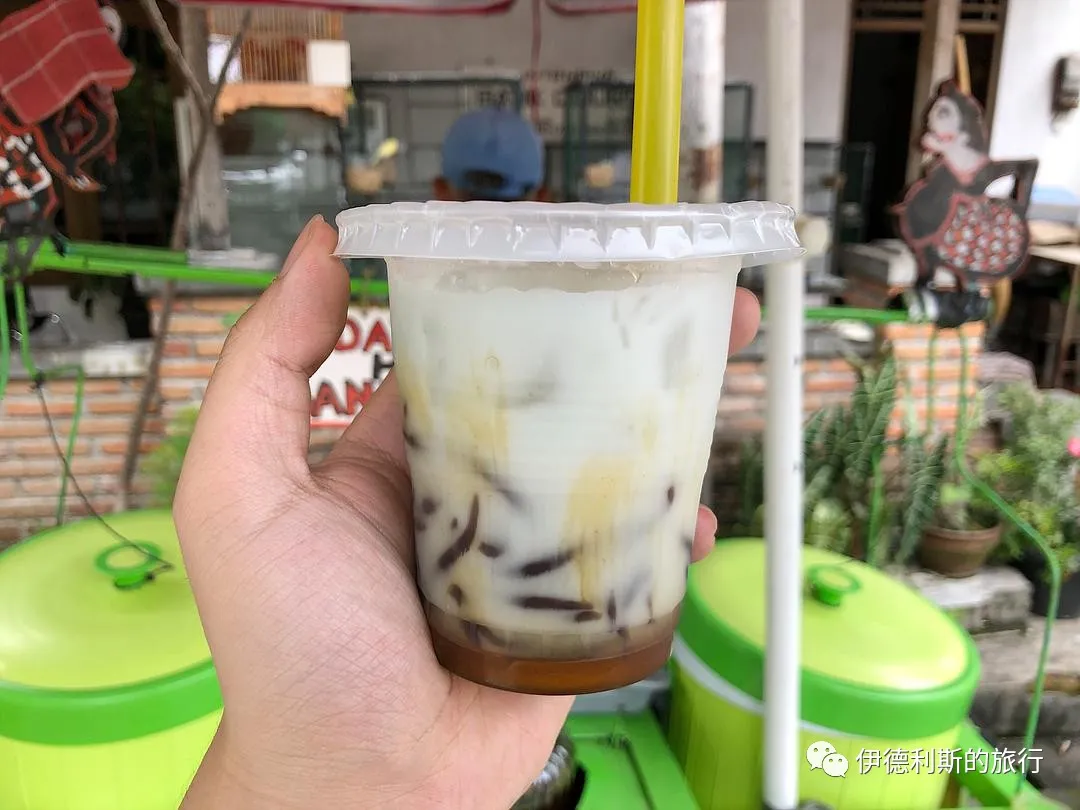
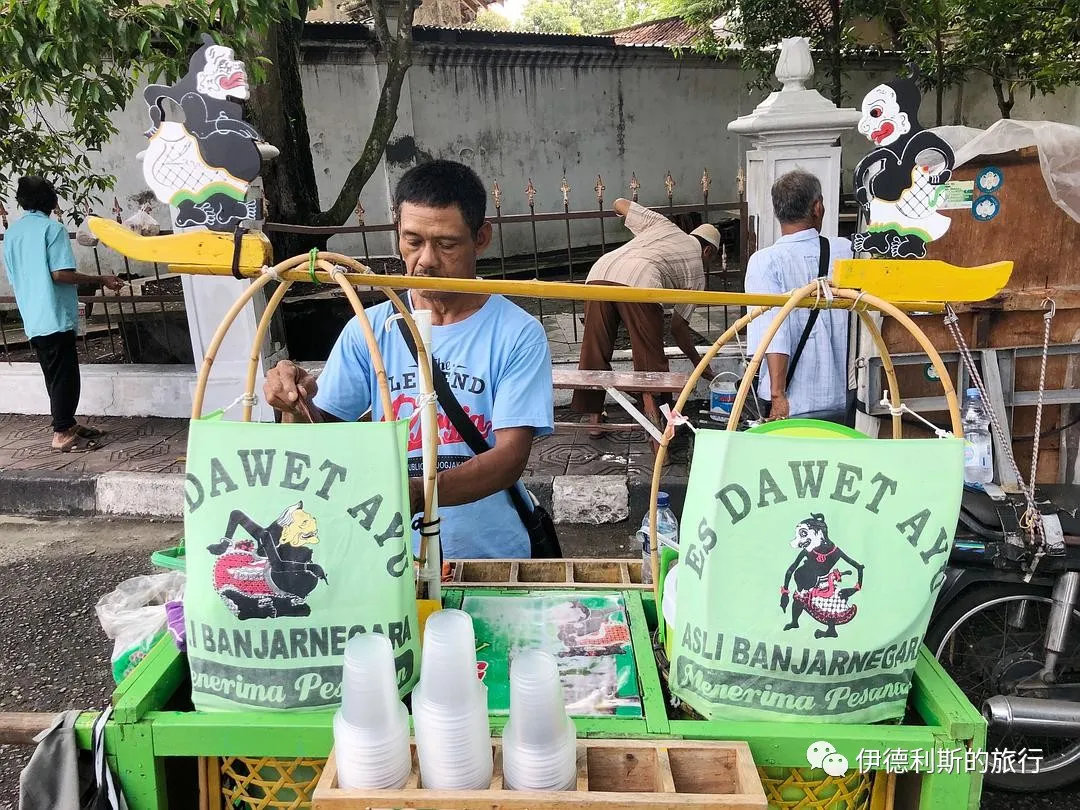
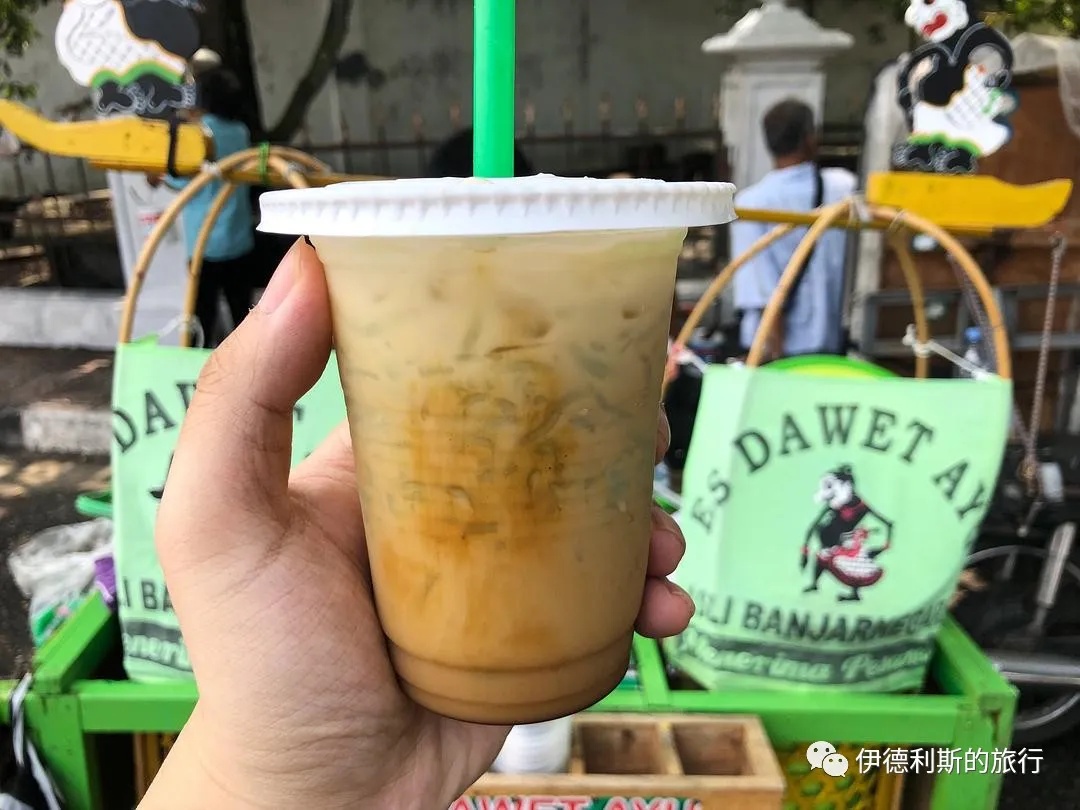
Dragon fruit juice
Freshly squeezed dragon fruit juice on the streets of Yogyakarta. The juices in Java are really rich.
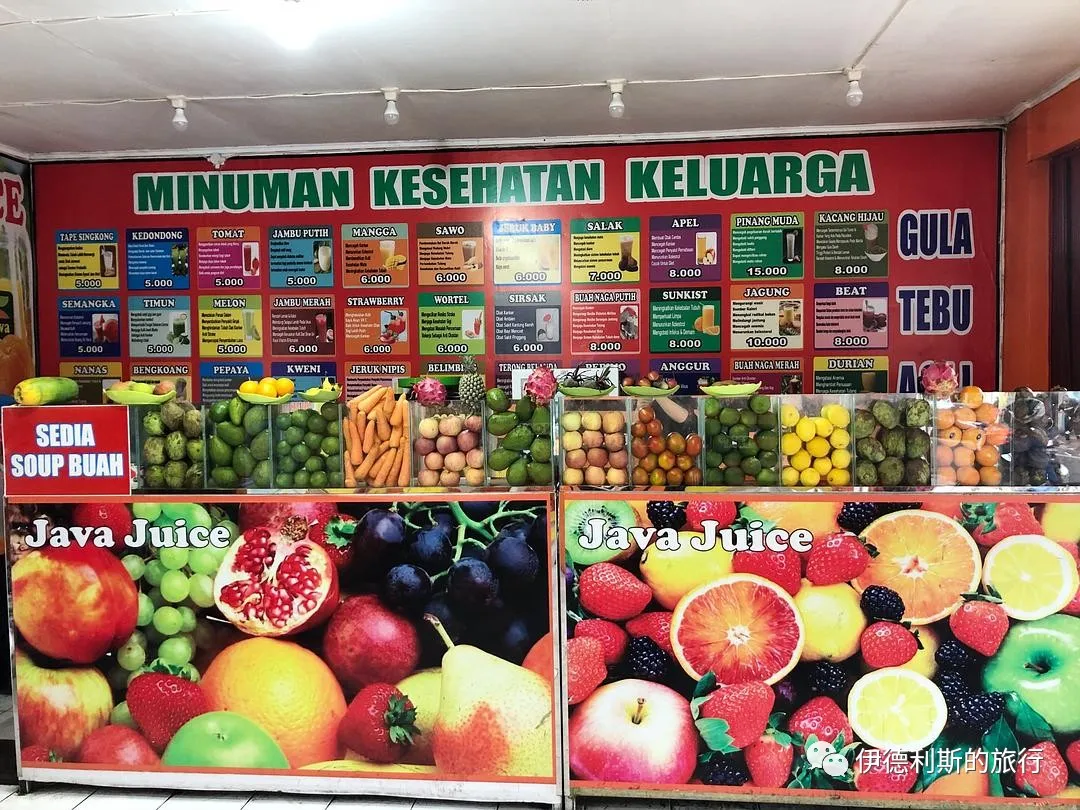
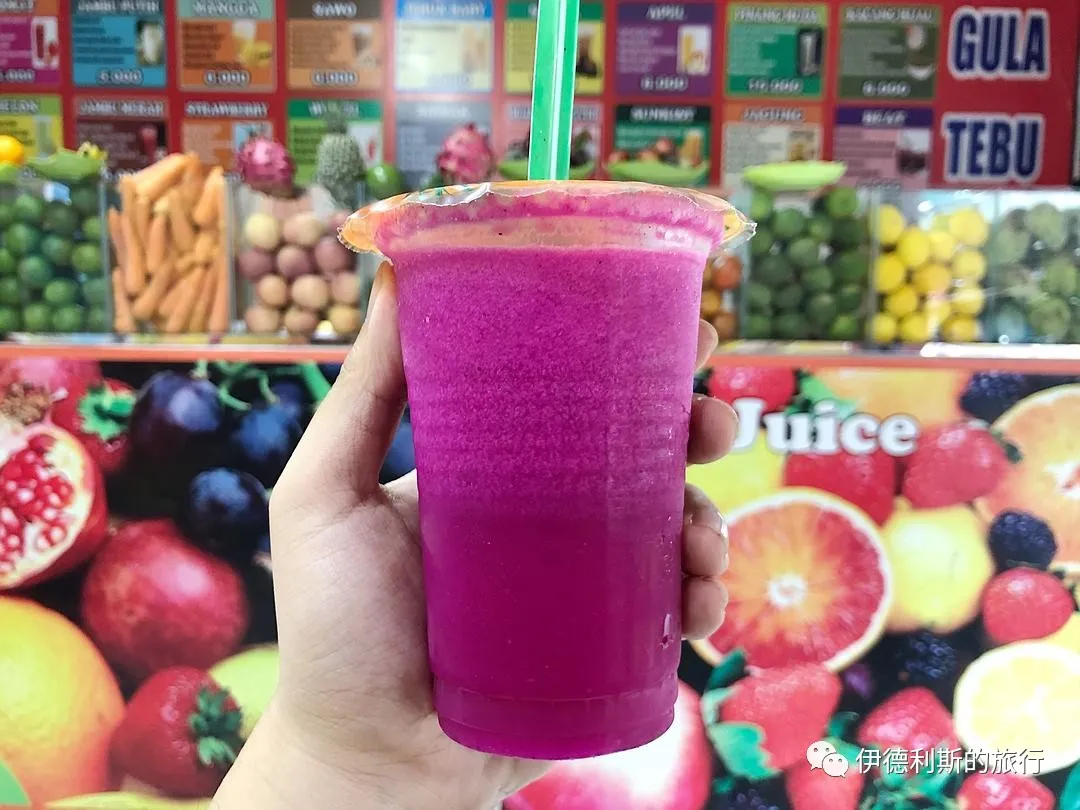
Sekoteng
Sekoteng is a Javanese specialty hot ginger drink made with peanuts, bread slices, and pearl flowers. Hot drinks are still quite rare in Java. It feels like the ginger helps remove dampness.
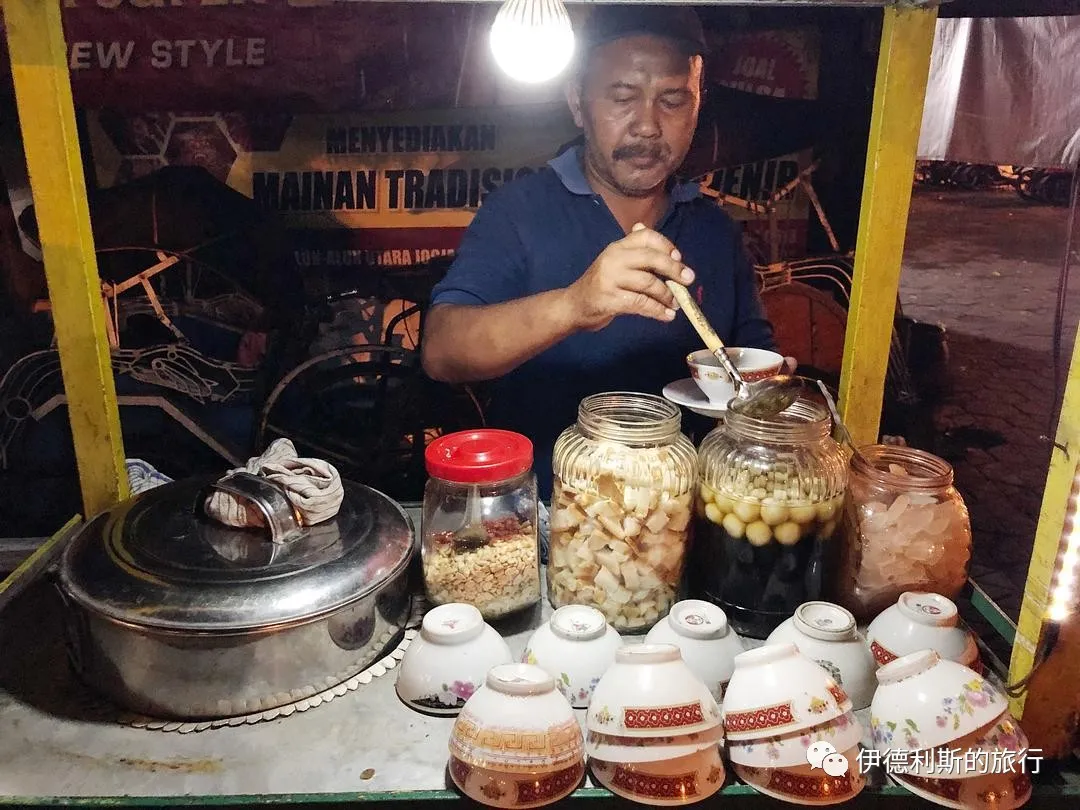
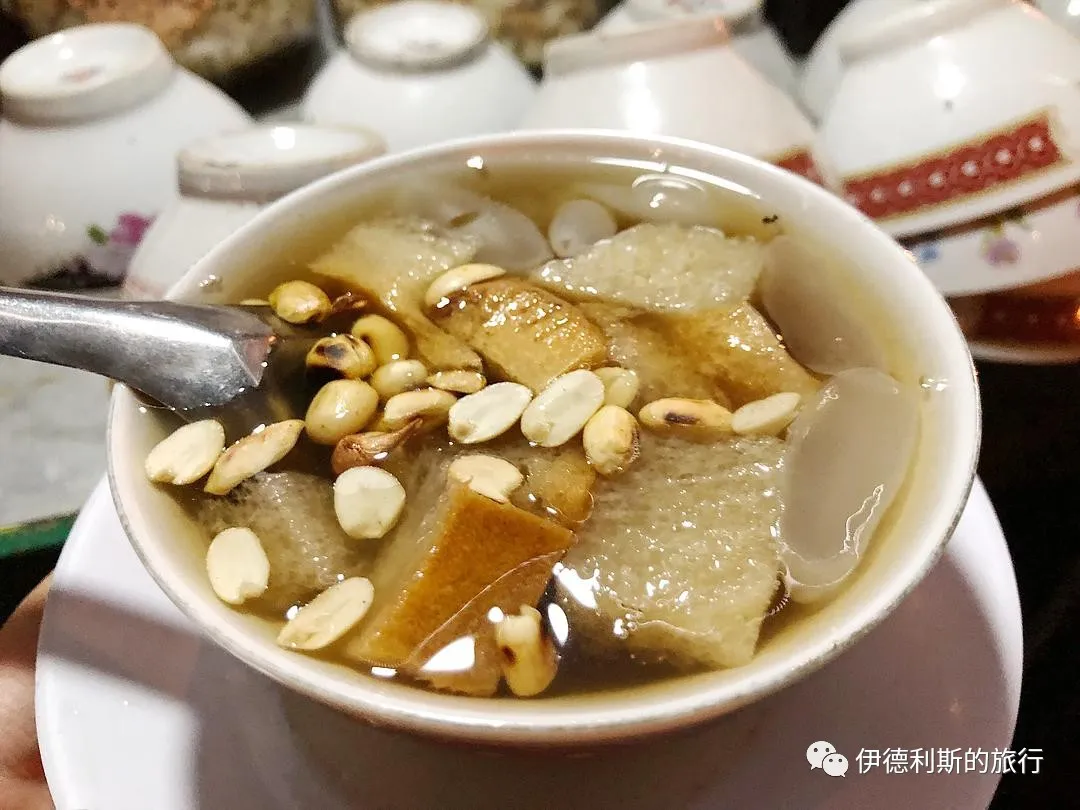
Solo
Es Dawet Telasih
Es Dawet Telasih is a Solo specialty iced drink made of coconut milk, palm sugar, cendol (rice flour jelly), bubur sumsum (coconut rice pudding), basil seeds, and black glutinous rice.
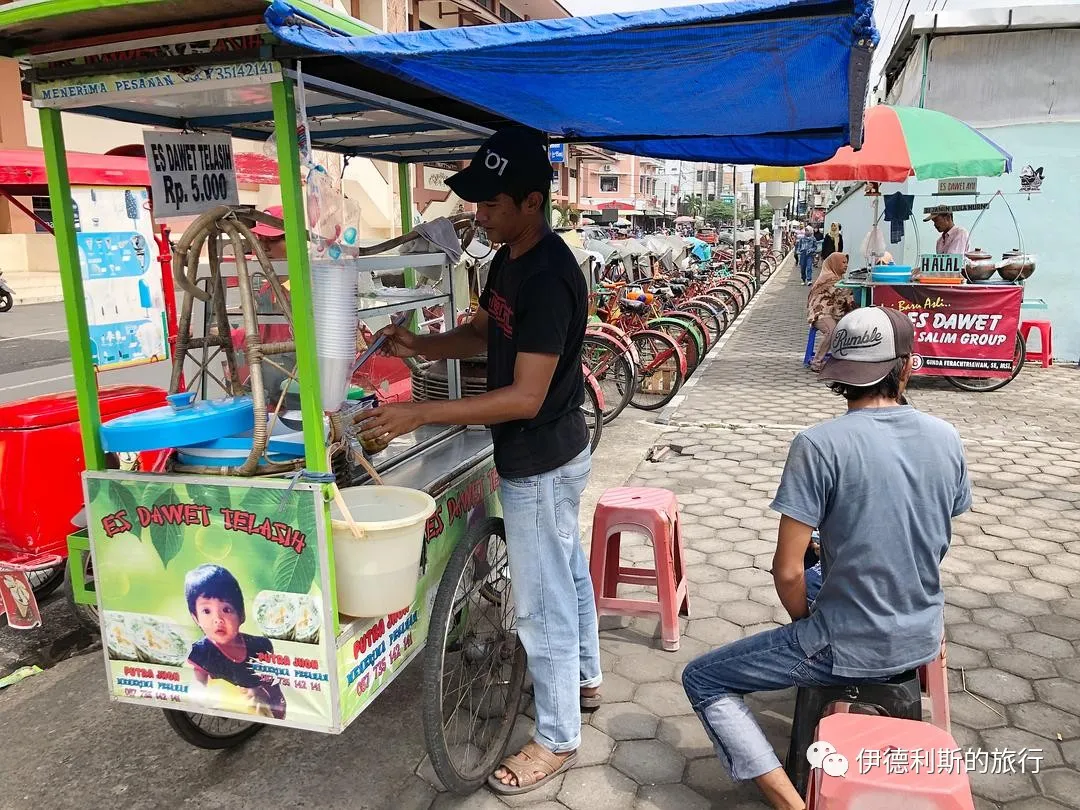
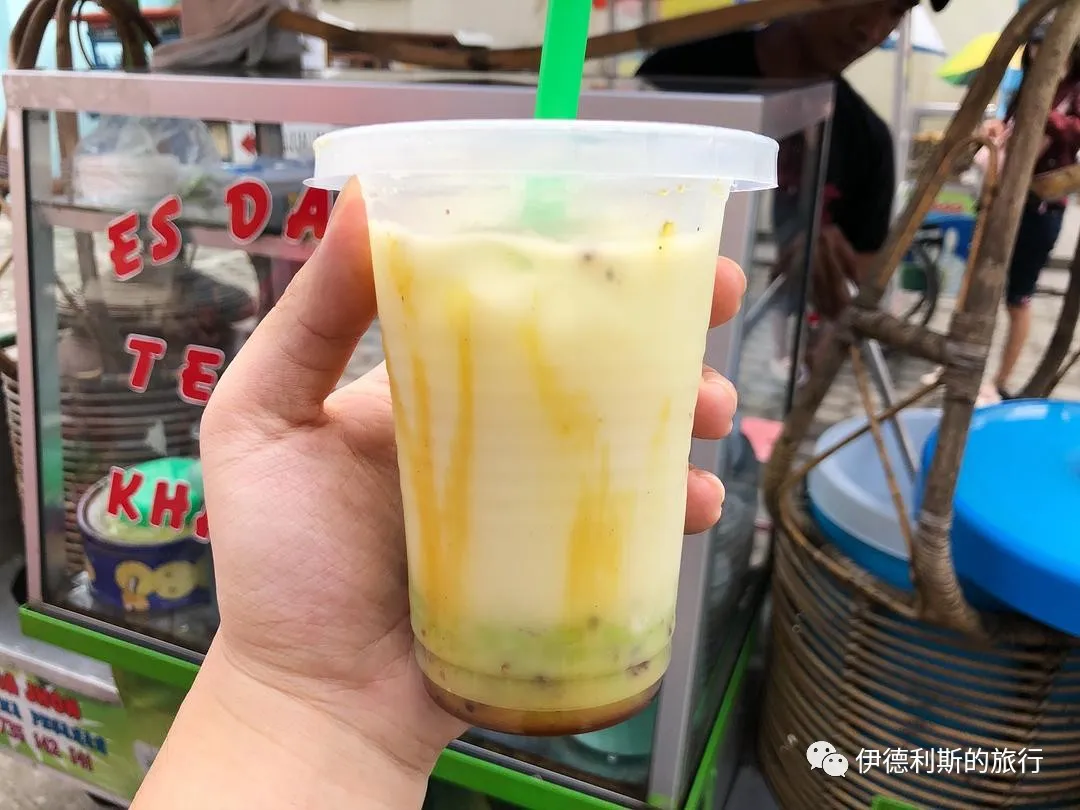
Es Dawet Durian is Es Dawet Telasih with durian added.
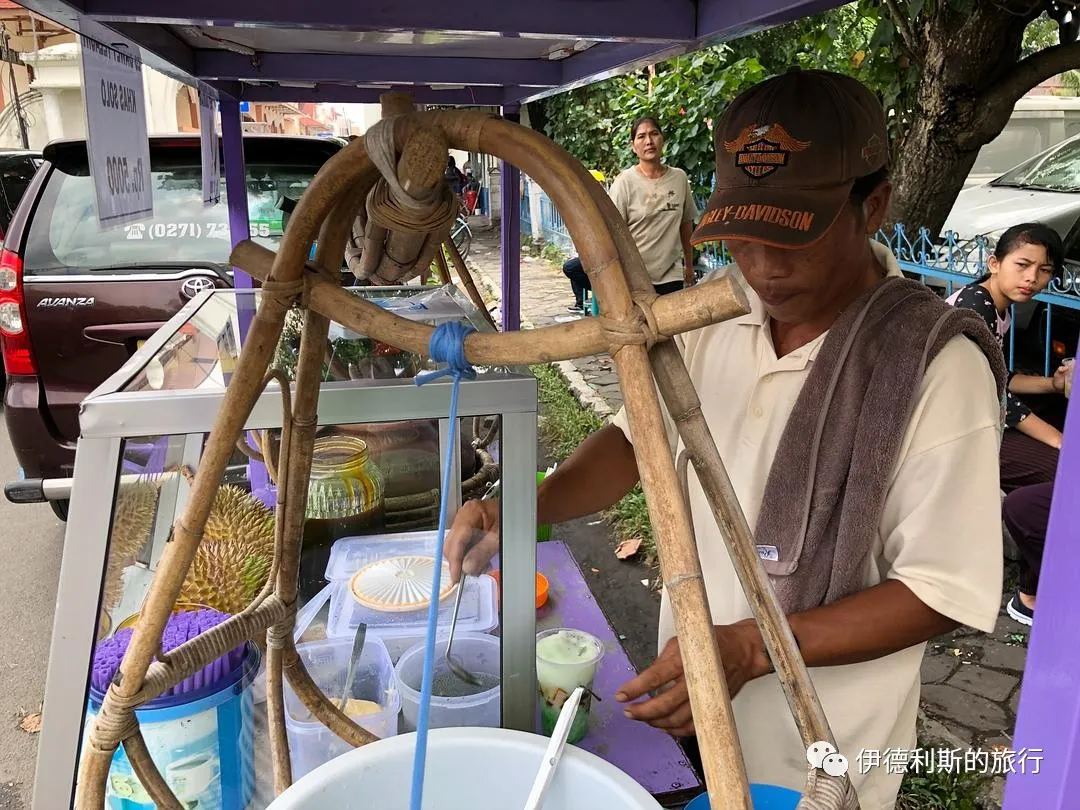
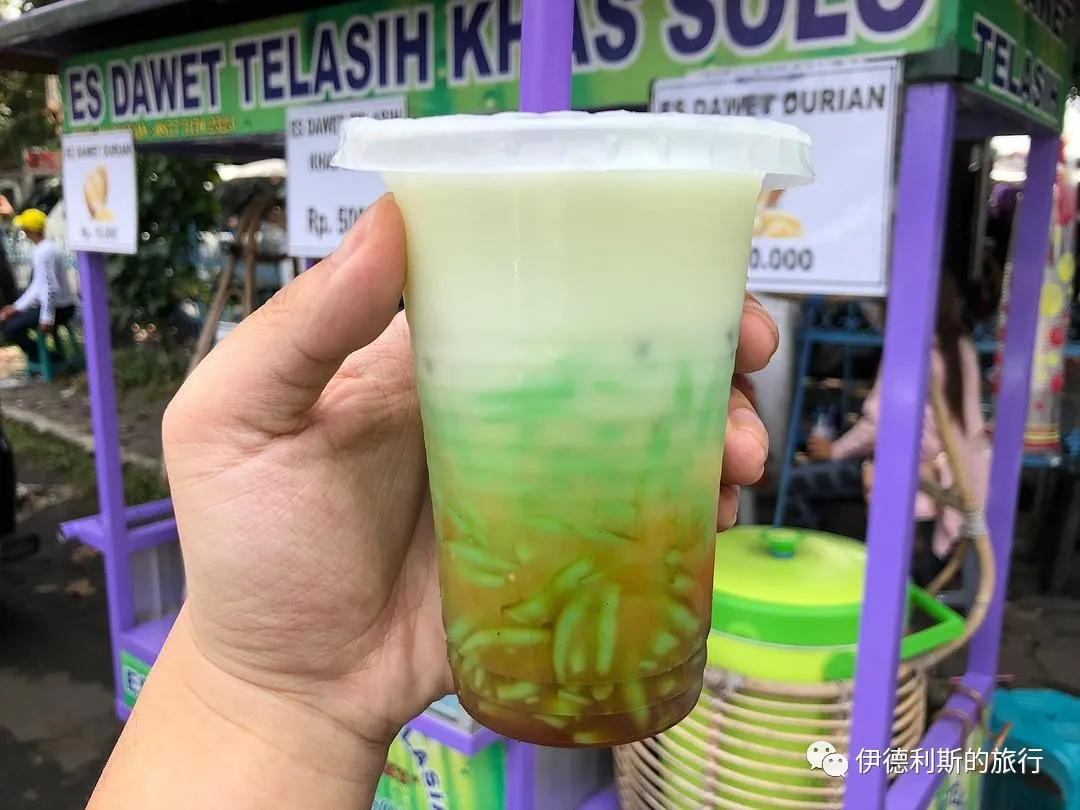
Jamu
Jamu is a specialty Javanese drink, which is a traditional Javanese herbal medicine mixed with honey and palm sugar.
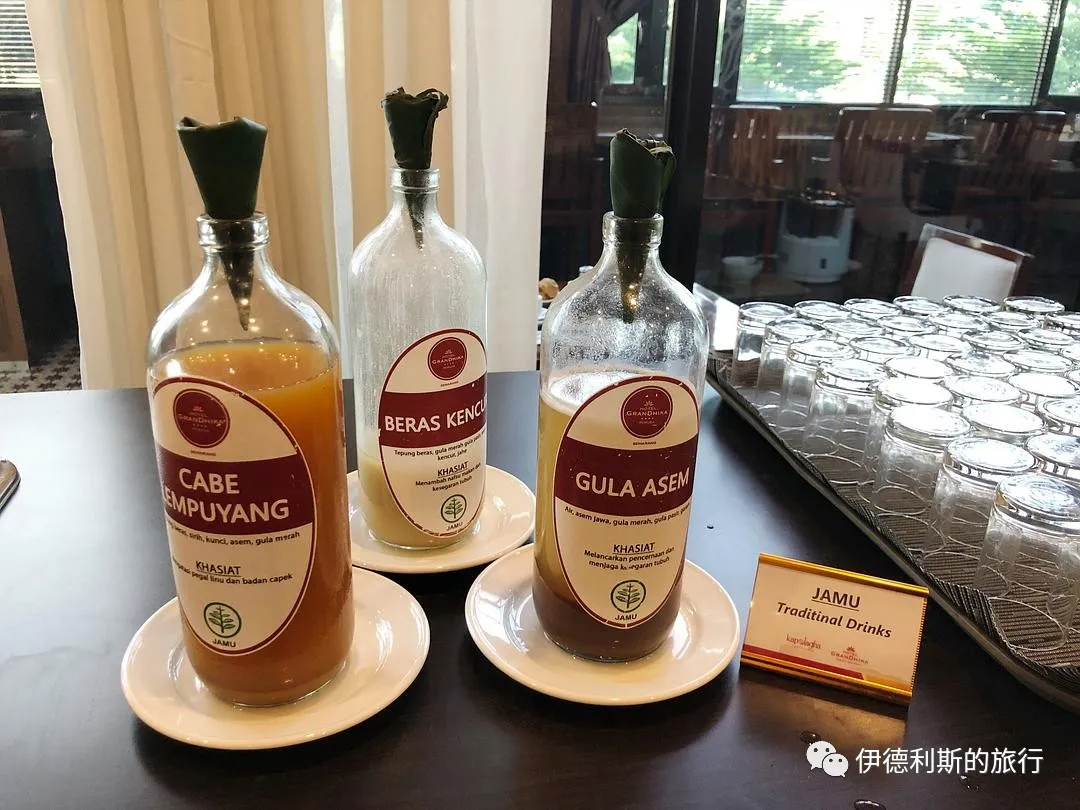
Kudus
Es Buah
I drank Es Buah, a Javanese iced drink with various fruits added, in Kudus.
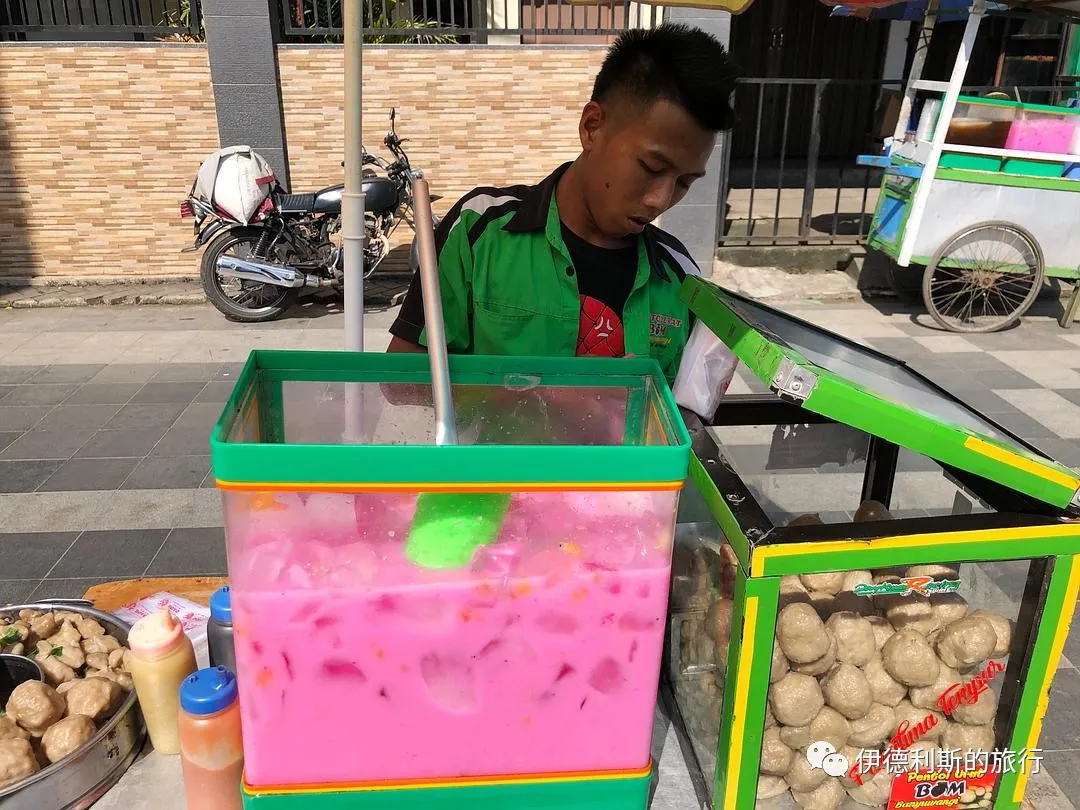
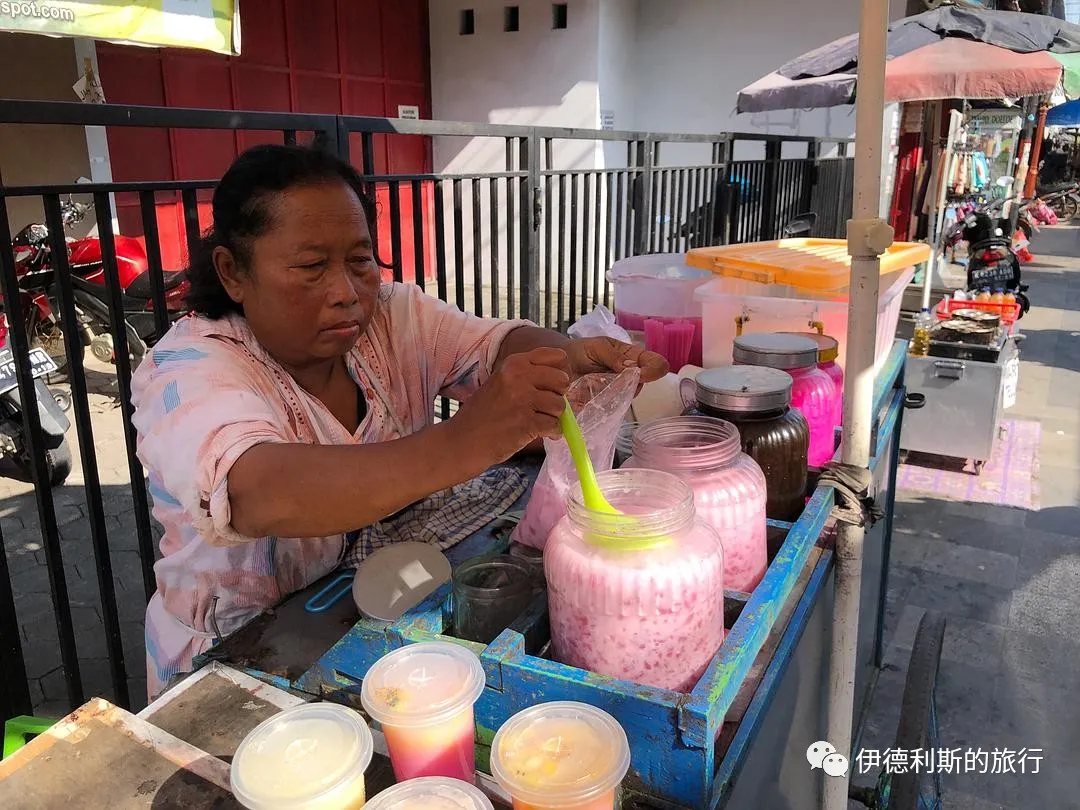
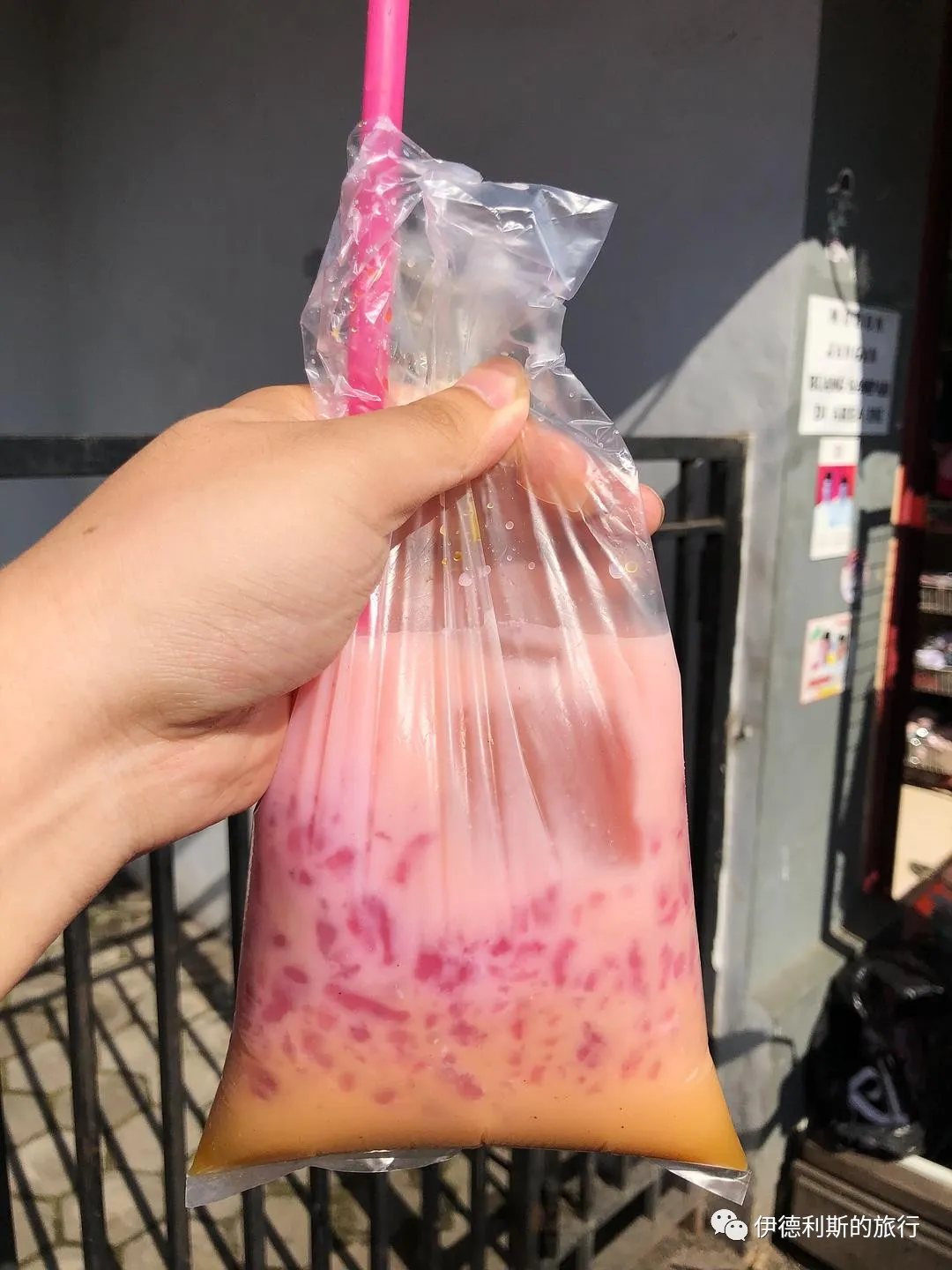
Banten
Mixed ice drink (Es Campur)
As a holy site, the Great Mosque of Banten attracts a constant stream of visitors every day, and a very lively bazaar has formed around it. At the bazaar, I drank a mixed ice drink (Es Campur) made with coconut milk, red sugar syrup, coconut meat, and fruit jelly.
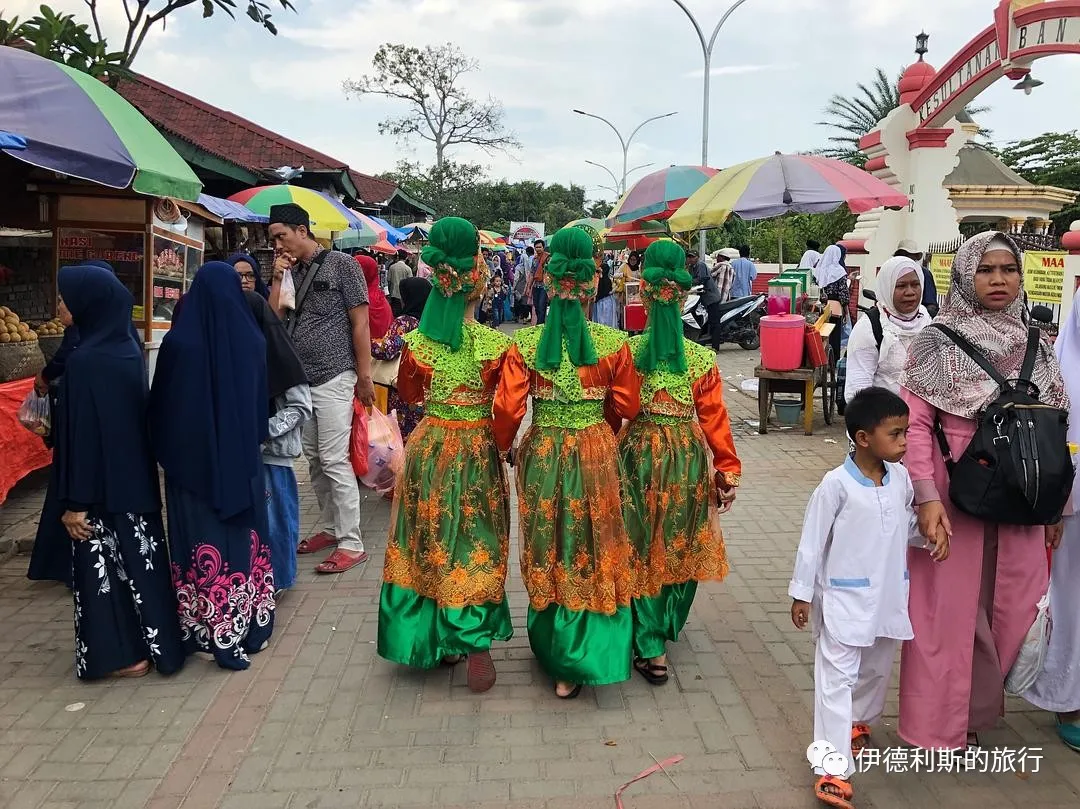
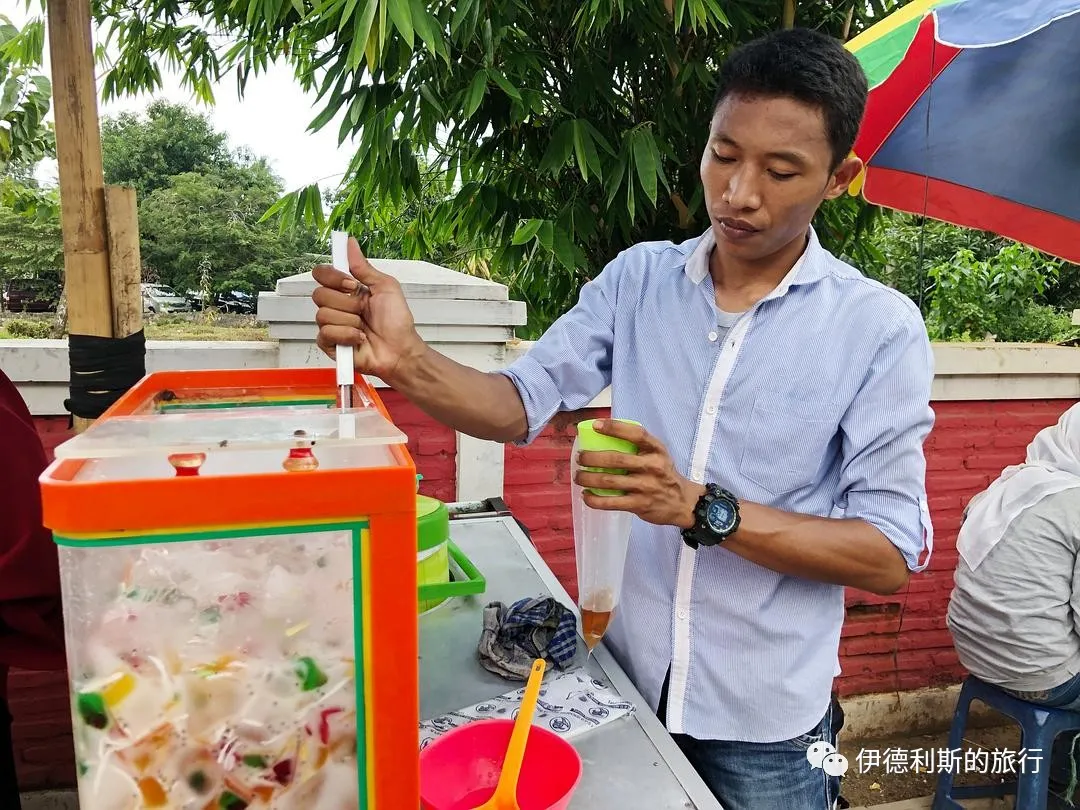
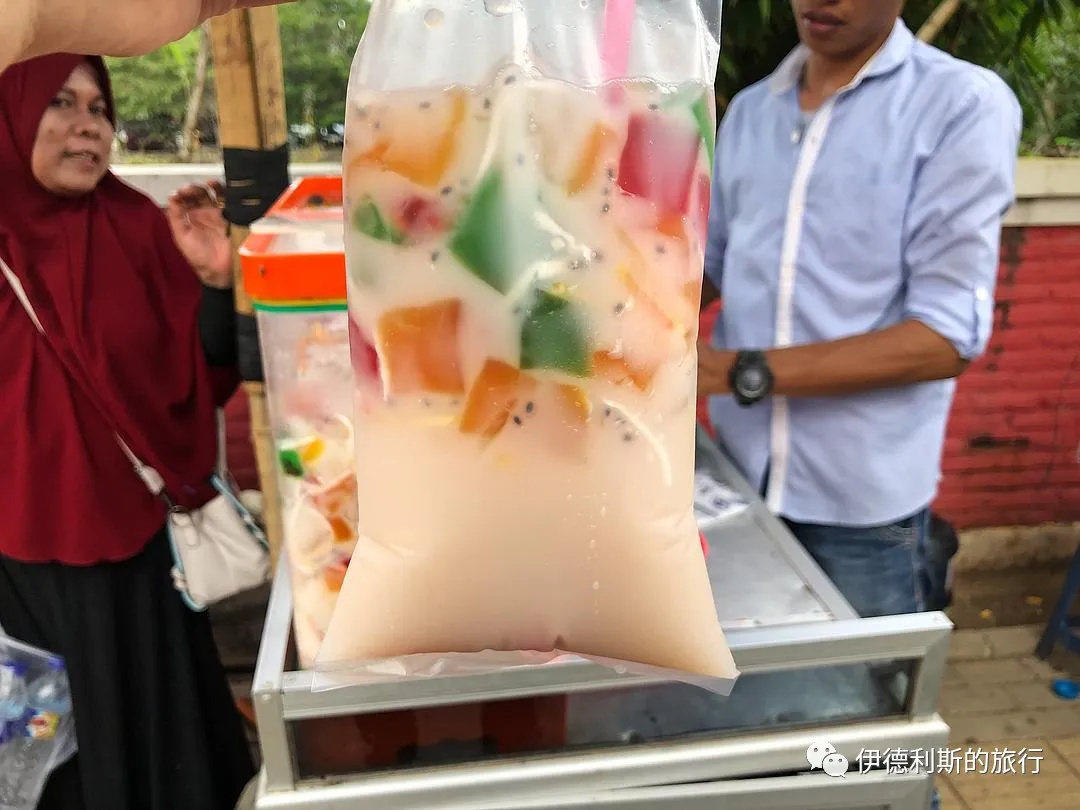
Jakarta
Layered rice flour drink (Selendang Mayang)
Jakarta Old Town (Kota Tua Jakarta), also called Old Batavia (Oud Batavia), was the most important Dutch colonial outpost in Southeast Asia and served as the headquarters for the Dutch East India Company from the 17th to the 19th century. The center of Old Batavia is Fatahillah Square, where the main building is the Jakarta History Museum. The Jakarta History Museum was built in 1710 and was formerly the Batavia City Hall. The museum courtyard has a small area dedicated to traditional Betawi snacks, where I drank a rare, historic Batavian ice drink called layered rice flour drink (Selendang Mayang). Layered rice flour drink (Selendang Mayang) is made from rice flour, vanilla powder, pandan leaves, red sugar syrup, and coconut milk.
The Betawi people are a unique ethnic group that formed in Jakarta. In 1619, the Dutch established Batavia as the trade and administrative center for the Dutch East India Company. After the Dutch East India Company signed a formal peace treaty with the Sultanate of Banten in 1684, the swampy areas around Batavia could finally be cultivated. More and more people lived outside the city walls, including Malays, Sundanese, Javanese, Minangkabau, and Bugis people. Between the 18th and 19th centuries, the various ethnic groups living in Batavia began to merge. Over the course of a hundred years, they finally formed the modern Betawi people by the early 20th century. The Betawi people speak a version of Malay mixed with many words from Fujian Chinese, Arabic, and Dutch, known as Betawi Malay. It is the only Malay-speaking region on the northern coast of Java. Betawi cuisine is also strongly influenced by Indonesian Chinese, Arab, European, and local Sundanese and Javanese food.
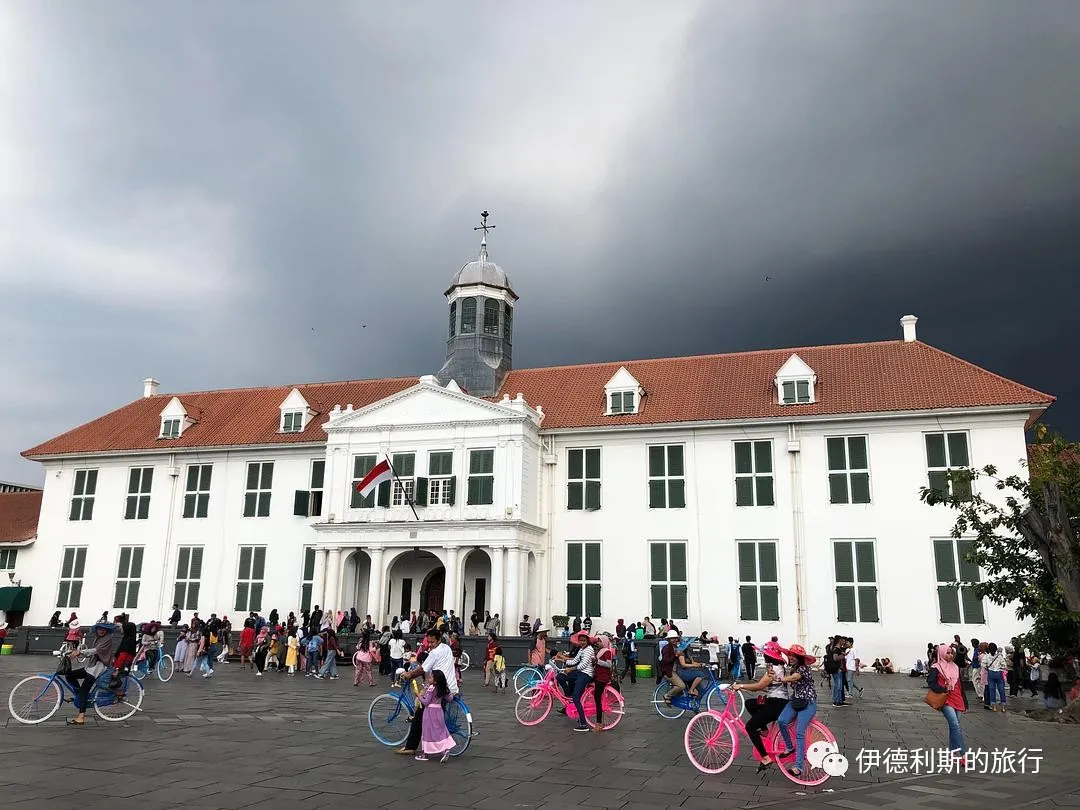
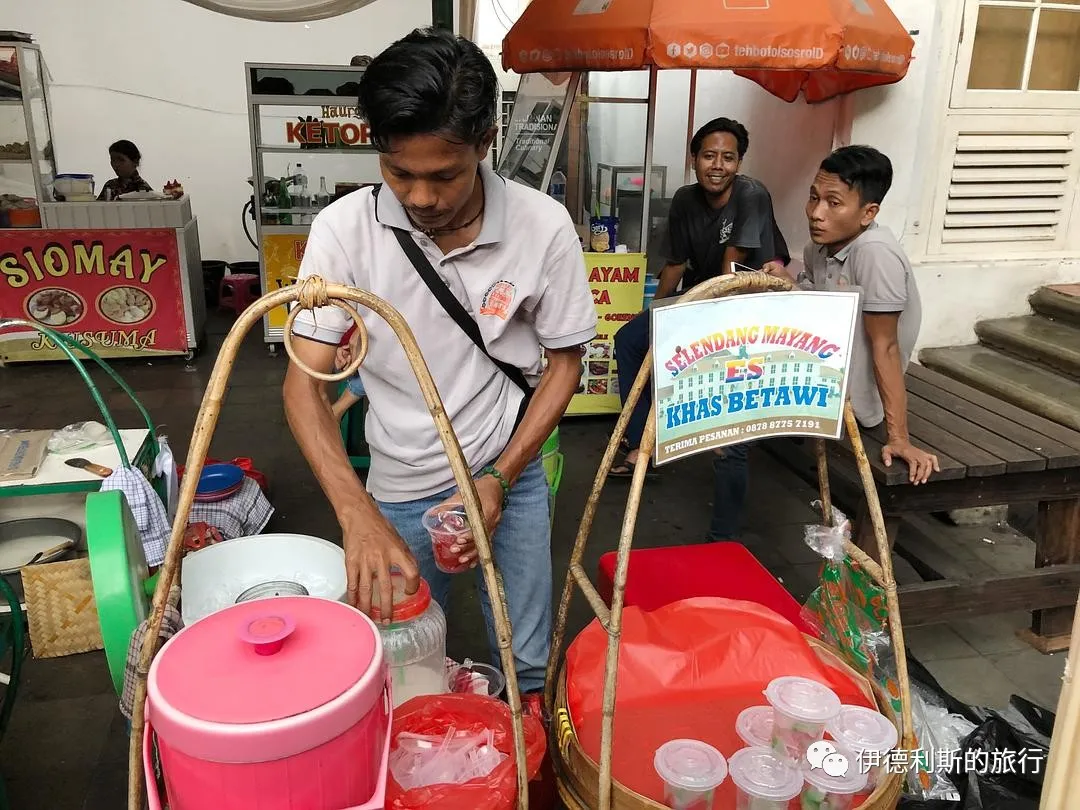
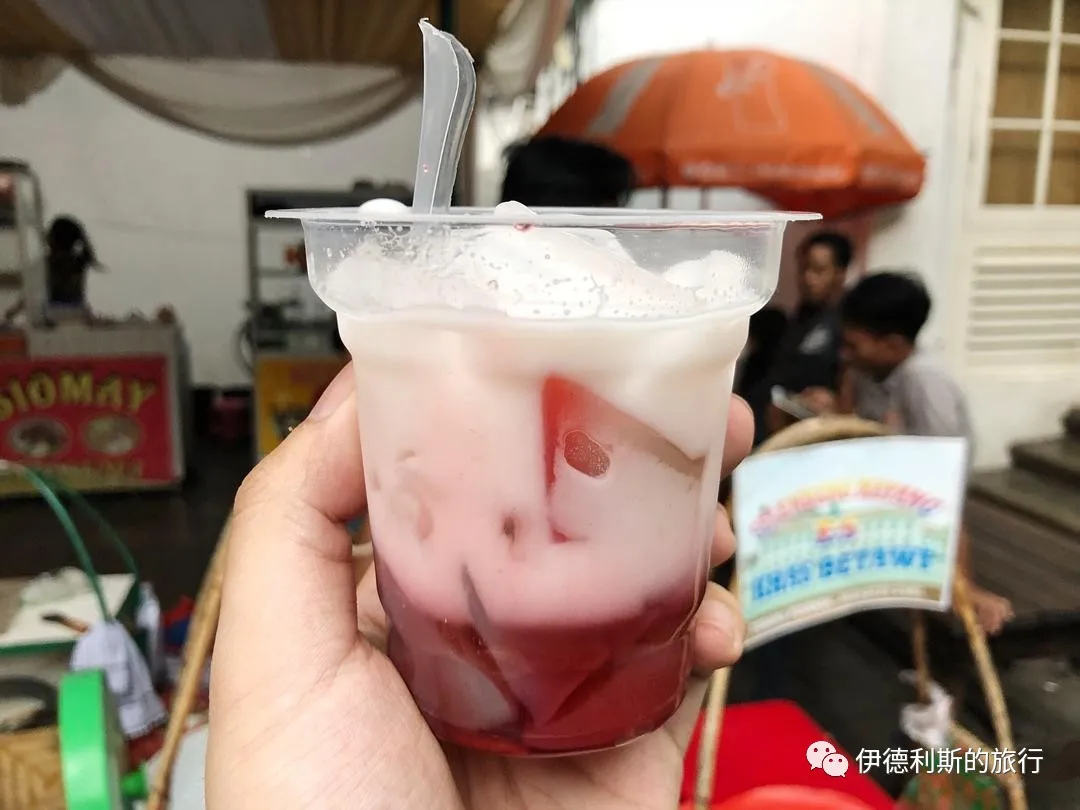
Summary: This article follows a tasting route through drinks from Malaysia, Singapore, and Indonesia, from street-side juices to regional bottled drinks and cafe favorites. It keeps the original drink names, places, prices, photos, and travel notes for readers looking for everyday food culture in Southeast Asia.
Malaysia
Malacca: avocado juice, longan lemon tea, and lime plum juice (lime plum shuizhi).
Penang: sour plum guava juice, Penang nutmeg water, and Arabian rose water.
Seremban: lychee water.
Kuala Lumpur: blue pea flower tea and barley lime water.
Singapore
Clear soup (chee kong), three-layer milk tea, pulled tea (teh tarik), Milo dinosaur, and ginger tea.
Indonesia
Yogyakarta: cendol drink (es dawet ayu), dragon fruit juice, and ginger herbal drink (sekoteng).
Solo: basil seed cendol (es dawet telasih), durian cendol (es dawet durian), and herbal medicine (jamu).
Kudus: fruit ice (es buah).
Banten: mixed ice dessert (es campur).
Jakarta: layered rice flour jelly drink (selendang mayang).
Malaysia
Malacca
Avocado juice
Across from Dataran Pahlawan in Malacca, there is a large Malay night market that seems to open only on weekends, offering endless varieties of snacks. We had just finished a meal and were too full to eat, so we bought a huge avocado juice. Tropical fruits are cheap all over Malaysia. As long as you don't buy durian in tourist areas, you can basically eat as much fruit as you want.
Longan lemon tea
In Kampung Hulu, there is a lovely cake shop called Malaiqa By Gula Cakery that is very popular with young people. The shop is located in a shophouse built in 1941. The decor is fresh and simple, showing a great example of revitalizing the old city. We ordered the longan lemon tea, and it tasted great. These fresh, small shops in Malaysia are really wonderful, though we usually go for traditional food and don't visit places like this very often.
Lime plum drink (juzi suanmei shui)
As the birthplace of Nyonya culture, you must try Nyonya food when visiting Malacca. There are many halal Nyonya restaurants on the east side of Malacca's old town along Merdeka Street (Jln Merdeka), with Atlantic and Cottage Spices being the most famous. Both places had lines when we arrived, so we took numbers for both. Cottage Spices had an opening first, so we ate there. We ordered the lime plum drink (juzi suanmei shui), which was tart and very appetizing.
Penang
Sour plum guava juice
Lagenda Cafe in Penang is a themed restaurant honoring the godfather of Malay film and music, P. Ramlee (1929-1973), and it plays his classic songs on a loop. We drank Asam Boi & Guava Tea, made with lime, mint, black tea, sour plum, and fresh-pressed guava juice; it was very refreshing and smooth.
Penang nutmeg drink and Arabian rose water (sherbet)
A unique group called Jawi Peranakan lives in Penang and Singapore. They are a Malay-speaking community formed by the intermarriage of Indian (as well as Arab and Persian) men and Malay women. "Jawi" means "Southeast Asia" in Arabic, and "Peranakan" means "locally born" in Malay.
After the 20th century, as the British Empire declined, the Jawi Peranakan community began to integrate into the Malay population. Today, the government counts most Jawi Peranakan as "Malay." Even so, the Jawi Peranakan community still works hard to pass on its unique culture, which shows in their architecture, clothing, jewelry, and food.
Today, the best place in Penang to experience Jawi Peranakan culture is the Jawi House Cafe Gallery. The building was originally a Straits Eclectic-style Chinese shophouse built in the 1860s with Malay-style decorations, and it later served as an Indian coppersmith shop. The street where the shop is located, Armenian Street (Lebuh Armenian, formerly Malay lane), was the earliest settlement area for the Jawi Peranakan community. In 2012, the Karim family, who have lived in Penang for six generations and have Punjabi roots, opened Jawi House here to make authentic Jawi Peranakan food.
We drank the Penang Nutmeg and Arabian Sherbet here. Nutmeg is a local Penang specialty, and this drink is mixed with honey and lemon for a sweet and sour taste.
Sherbet comes from the Persian word "Sharbat," which means a non-alcoholic sugary drink. In medieval Arabia, people loved to add syrup and honey to Sharbat for sweetness, along with almonds, lemon, apple, pomegranate, tamarind, dates, sumac, musk, and mint. Spread by Arabs and Persians, Sharbat is now popular across West Asia, South Asia, and the Malay Archipelago, especially during Ramadan. The Arabian Sherbet at Jawi House is made with rose syrup, mallow nuts, gum arabic, and basil seeds, giving it a very rich flavor.
Hibiscus
Lychee water
Mohd Chan is likely the most famous and largest halal Cantonese restaurant chain in Malaysia, now with 19 locations including restaurants, dim sum shops, and takeout spots. The founder of Mohd Chan, Dato HJ Mohd Chan, was born in Gombak, Selangor. Influenced by his Malay friends, he converted to Islam in 2007 and started his halal Cantonese restaurant that same year, focusing on blending Cantonese cuisine with local flavors. We drank their lychee water, which was packed with plenty of ingredients.
Kuala Lumpur
Blue pea flower tea and barley lime water
Whether it is halal Chinese food or halal Nyonya cuisine, the Klang Valley area where Kuala Lumpur is located has the highest number of options in Malaysia. Just inside the NU Sentral mall opposite Kuala Lumpur Sentral station, there are three halal Nyonya restaurants, making it a great place for traveling friends (dosti) to grab a bite. We ate at the largest of the three, Peranakan Place, which has several branches in Kuala Lumpur and Malacca. We ordered the blue pea flower tea and barley lime water, both of which were very unique.
Singapore
Chee Kong clear soup (qing tang)
Geylang Serai is located near the Geylang River in eastern Singapore. The Geylang Serai Malay bazaar (market) dates back to the 1920s. During World War II, the Japanese turned it into an amusement park, but after the war, it returned to being a bustling Malay bazaar where local Malay residents come to shop. The only Chinese stall in the bazaar is Chee Kong clear soup (qing tang), an old shop that opened in the 1950s. You can add longan, sweet potato, and ginkgo nuts to the clear soup, and it can be served hot or cold. Drinking a bowl of clear soup is very refreshing after eating spicy Malay food.
Three-layer milk tea
Haig Road Market & Food Centre has a lot of Malay delicacies. We drank the classic three-layer milk tea, which uses palm sugar, milk, and black tea to create three distinct layers with a rich taste.
Pulled tea (teh tarik) and Milo Dinosaur
We had a cup of the classic Nanyang pulled tea (teh tarik) at Tarik, a shop next to the Sultan Mosque in Kampong Glam. Local Malay youth really love this place. Tarik means 'pull' in Malay. By mixing black tea and condensed milk and pouring it back and forth between two containers with outstretched arms, the tea cools down and becomes frothy. We also ordered a cup of Milo, which is a chocolate malt powder from Nestlé. People in Malaysia and Singapore like to sprinkle Milo powder on iced Milo, which they call Milo Dinosaur.
Ginger tea
Bhai Sarbat on Baghdad Street was started by an Indian Muslim in the 1950s and has been around for 70 years. Bhai means brother in Urdu. Bhai Sarbat started as a street pushcart stall and moved into this shophouse on Baghdad Street in the 1970s. Today it sells hundreds of drinks, but the ginger tea is still the most famous.
Indonesia
Yogyakarta
Es Dawet Ayu
Es Dawet Ayu is a specialty iced drink from Central Java that comes from the small town of Banjarnegara. Its main ingredients are rice flour, glutinous rice flour, coconut milk, palm sugar syrup, and grass jelly.
Dragon fruit juice
Freshly squeezed dragon fruit juice on the streets of Yogyakarta. The juices in Java are really rich.
Sekoteng
Sekoteng is a Javanese specialty hot ginger drink made with peanuts, bread slices, and pearl flowers. Hot drinks are still quite rare in Java. It feels like the ginger helps remove dampness.
Solo
Es Dawet Telasih
Es Dawet Telasih is a Solo specialty iced drink made of coconut milk, palm sugar, cendol (rice flour jelly), bubur sumsum (coconut rice pudding), basil seeds, and black glutinous rice.
Es Dawet Durian is Es Dawet Telasih with durian added.
Jamu
Jamu is a specialty Javanese drink, which is a traditional Javanese herbal medicine mixed with honey and palm sugar.
Kudus
Es Buah
I drank Es Buah, a Javanese iced drink with various fruits added, in Kudus.
Banten
Mixed ice drink (Es Campur)
As a holy site, the Great Mosque of Banten attracts a constant stream of visitors every day, and a very lively bazaar has formed around it. At the bazaar, I drank a mixed ice drink (Es Campur) made with coconut milk, red sugar syrup, coconut meat, and fruit jelly.
Jakarta
Layered rice flour drink (Selendang Mayang)
Jakarta Old Town (Kota Tua Jakarta), also called Old Batavia (Oud Batavia), was the most important Dutch colonial outpost in Southeast Asia and served as the headquarters for the Dutch East India Company from the 17th to the 19th century. The center of Old Batavia is Fatahillah Square, where the main building is the Jakarta History Museum. The Jakarta History Museum was built in 1710 and was formerly the Batavia City Hall. The museum courtyard has a small area dedicated to traditional Betawi snacks, where I drank a rare, historic Batavian ice drink called layered rice flour drink (Selendang Mayang). Layered rice flour drink (Selendang Mayang) is made from rice flour, vanilla powder, pandan leaves, red sugar syrup, and coconut milk.
The Betawi people are a unique ethnic group that formed in Jakarta. In 1619, the Dutch established Batavia as the trade and administrative center for the Dutch East India Company. After the Dutch East India Company signed a formal peace treaty with the Sultanate of Banten in 1684, the swampy areas around Batavia could finally be cultivated. More and more people lived outside the city walls, including Malays, Sundanese, Javanese, Minangkabau, and Bugis people. Between the 18th and 19th centuries, the various ethnic groups living in Batavia began to merge. Over the course of a hundred years, they finally formed the modern Betawi people by the early 20th century. The Betawi people speak a version of Malay mixed with many words from Fujian Chinese, Arabic, and Dutch, known as Betawi Malay. It is the only Malay-speaking region on the northern coast of Java. Betawi cuisine is also strongly influenced by Indonesian Chinese, Arab, European, and local Sundanese and Javanese food.
Travel Food Guide: Southeast Asia Drinks - Malaysia, Singapore and Indonesia
Articles • ali2007fr posted the article • 0 comments • 210 views • 2026-05-19 22:56
Reposted from the web
Summary: This article follows a tasting route through drinks from Malaysia, Singapore, and Indonesia, from street-side juices to regional bottled drinks and cafe favorites. It keeps the original drink names, places, prices, photos, and travel notes for readers looking for everyday food culture in Southeast Asia.
Malaysia
Malacca: avocado juice, longan lemon tea, and lime plum juice (lime plum shuizhi).
Penang: sour plum guava juice, Penang nutmeg water, and Arabian rose water.
Seremban: lychee water.
Kuala Lumpur: blue pea flower tea and barley lime water.
Singapore
Clear soup (chee kong), three-layer milk tea, pulled tea (teh tarik), Milo dinosaur, and ginger tea.
Indonesia
Yogyakarta: cendol drink (es dawet ayu), dragon fruit juice, and ginger herbal drink (sekoteng).
Solo: basil seed cendol (es dawet telasih), durian cendol (es dawet durian), and herbal medicine (jamu).
Kudus: fruit ice (es buah).
Banten: mixed ice dessert (es campur).
Jakarta: layered rice flour jelly drink (selendang mayang).
Malaysia
Malacca
Avocado juice
Across from Dataran Pahlawan in Malacca, there is a large Malay night market that seems to open only on weekends, offering endless varieties of snacks. We had just finished a meal and were too full to eat, so we bought a huge avocado juice. Tropical fruits are cheap all over Malaysia. As long as you don't buy durian in tourist areas, you can basically eat as much fruit as you want.
Longan lemon tea
In Kampung Hulu, there is a lovely cake shop called Malaiqa By Gula Cakery that is very popular with young people. The shop is located in a shophouse built in 1941. The decor is fresh and simple, showing a great example of revitalizing the old city. We ordered the longan lemon tea, and it tasted great. These fresh, small shops in Malaysia are really wonderful, though we usually go for traditional food and don't visit places like this very often.
Lime plum drink (juzi suanmei shui)
As the birthplace of Nyonya culture, you must try Nyonya food when visiting Malacca. There are many halal Nyonya restaurants on the east side of Malacca's old town along Merdeka Street (Jln Merdeka), with Atlantic and Cottage Spices being the most famous. Both places had lines when we arrived, so we took numbers for both. Cottage Spices had an opening first, so we ate there. We ordered the lime plum drink (juzi suanmei shui), which was tart and very appetizing.
Penang
Sour plum guava juice
Lagenda Cafe in Penang is a themed restaurant honoring the godfather of Malay film and music, P. Ramlee (1929-1973), and it plays his classic songs on a loop. We drank Asam Boi & Guava Tea, made with lime, mint, black tea, sour plum, and fresh-pressed guava juice; it was very refreshing and smooth.
Penang nutmeg drink and Arabian rose water (sherbet)
A unique group called Jawi Peranakan lives in Penang and Singapore. They are a Malay-speaking community formed by the intermarriage of Indian (as well as Arab and Persian) men and Malay women. "Jawi" means "Southeast Asia" in Arabic, and "Peranakan" means "locally born" in Malay.
After the 20th century, as the British Empire declined, the Jawi Peranakan community began to integrate into the Malay population. Today, the government counts most Jawi Peranakan as "Malay." Even so, the Jawi Peranakan community still works hard to pass on its unique culture, which shows in their architecture, clothing, jewelry, and food.
Today, the best place in Penang to experience Jawi Peranakan culture is the Jawi House Cafe Gallery. The building was originally a Straits Eclectic-style Chinese shophouse built in the 1860s with Malay-style decorations, and it later served as an Indian coppersmith shop. The street where the shop is located, Armenian Street (Lebuh Armenian, formerly Malay lane), was the earliest settlement area for the Jawi Peranakan community. In 2012, the Karim family, who have lived in Penang for six generations and have Punjabi roots, opened Jawi House here to make authentic Jawi Peranakan food.
We drank the Penang Nutmeg and Arabian Sherbet here. Nutmeg is a local Penang specialty, and this drink is mixed with honey and lemon for a sweet and sour taste.
Sherbet comes from the Persian word "Sharbat," which means a non-alcoholic sugary drink. In medieval Arabia, people loved to add syrup and honey to Sharbat for sweetness, along with almonds, lemon, apple, pomegranate, tamarind, dates, sumac, musk, and mint. Spread by Arabs and Persians, Sharbat is now popular across West Asia, South Asia, and the Malay Archipelago, especially during Ramadan. The Arabian Sherbet at Jawi House is made with rose syrup, mallow nuts, gum arabic, and basil seeds, giving it a very rich flavor.
Hibiscus
Lychee water
Mohd Chan is likely the most famous and largest halal Cantonese restaurant chain in Malaysia, now with 19 locations including restaurants, dim sum shops, and takeout spots. The founder of Mohd Chan, Dato HJ Mohd Chan, was born in Gombak, Selangor. Influenced by his Malay friends, he converted to Islam in 2007 and started his halal Cantonese restaurant that same year, focusing on blending Cantonese cuisine with local flavors. We drank their lychee water, which was packed with plenty of ingredients.
Kuala Lumpur
Blue pea flower tea and barley lime water
Whether it is halal Chinese food or halal Nyonya cuisine, the Klang Valley area where Kuala Lumpur is located has the highest number of options in Malaysia. Just inside the NU Sentral mall opposite Kuala Lumpur Sentral station, there are three halal Nyonya restaurants, making it a great place for traveling friends (dosti) to grab a bite. We ate at the largest of the three, Peranakan Place, which has several branches in Kuala Lumpur and Malacca. We ordered the blue pea flower tea and barley lime water, both of which were very unique.
Singapore
Chee Kong clear soup (qing tang)
Geylang Serai is located near the Geylang River in eastern Singapore. The Geylang Serai Malay bazaar (market) dates back to the 1920s. During World War II, the Japanese turned it into an amusement park, but after the war, it returned to being a bustling Malay bazaar where local Malay residents come to shop. The only Chinese stall in the bazaar is Chee Kong clear soup (qing tang), an old shop that opened in the 1950s. You can add longan, sweet potato, and ginkgo nuts to the clear soup, and it can be served hot or cold. Drinking a bowl of clear soup is very refreshing after eating spicy Malay food.
Three-layer milk tea
Haig Road Market & Food Centre has a lot of Malay delicacies. We drank the classic three-layer milk tea, which uses palm sugar, milk, and black tea to create three distinct layers with a rich taste.
Pulled tea (teh tarik) and Milo Dinosaur
We had a cup of the classic Nanyang pulled tea (teh tarik) at Tarik, a shop next to the Sultan Mosque in Kampong Glam. Local Malay youth really love this place. Tarik means 'pull' in Malay. By mixing black tea and condensed milk and pouring it back and forth between two containers with outstretched arms, the tea cools down and becomes frothy. We also ordered a cup of Milo, which is a chocolate malt powder from Nestlé. People in Malaysia and Singapore like to sprinkle Milo powder on iced Milo, which they call Milo Dinosaur.
Ginger tea
Bhai Sarbat on Baghdad Street was started by an Indian Muslim in the 1950s and has been around for 70 years. Bhai means brother in Urdu. Bhai Sarbat started as a street pushcart stall and moved into this shophouse on Baghdad Street in the 1970s. Today it sells hundreds of drinks, but the ginger tea is still the most famous.
Indonesia
Yogyakarta
Es Dawet Ayu
Es Dawet Ayu is a specialty iced drink from Central Java that comes from the small town of Banjarnegara. Its main ingredients are rice flour, glutinous rice flour, coconut milk, palm sugar syrup, and grass jelly.
Dragon fruit juice
Freshly squeezed dragon fruit juice on the streets of Yogyakarta. The juices in Java are really rich.
Sekoteng
Sekoteng is a Javanese specialty hot ginger drink made with peanuts, bread slices, and pearl flowers. Hot drinks are still quite rare in Java. It feels like the ginger helps remove dampness.
Solo
Es Dawet Telasih
Es Dawet Telasih is a Solo specialty iced drink made of coconut milk, palm sugar, cendol (rice flour jelly), bubur sumsum (coconut rice pudding), basil seeds, and black glutinous rice.
Es Dawet Durian is Es Dawet Telasih with durian added.
Jamu
Jamu is a specialty Javanese drink, which is a traditional Javanese herbal medicine mixed with honey and palm sugar.
Kudus
Es Buah
I drank Es Buah, a Javanese iced drink with various fruits added, in Kudus.
Banten
Mixed ice drink (Es Campur)
As a holy site, the Great Mosque of Banten attracts a constant stream of visitors every day, and a very lively bazaar has formed around it. At the bazaar, I drank a mixed ice drink (Es Campur) made with coconut milk, red sugar syrup, coconut meat, and fruit jelly.
Jakarta
Layered rice flour drink (Selendang Mayang)
Jakarta Old Town (Kota Tua Jakarta), also called Old Batavia (Oud Batavia), was the most important Dutch colonial outpost in Southeast Asia and served as the headquarters for the Dutch East India Company from the 17th to the 19th century. The center of Old Batavia is Fatahillah Square, where the main building is the Jakarta History Museum. The Jakarta History Museum was built in 1710 and was formerly the Batavia City Hall. The museum courtyard has a small area dedicated to traditional Betawi snacks, where I drank a rare, historic Batavian ice drink called layered rice flour drink (Selendang Mayang). Layered rice flour drink (Selendang Mayang) is made from rice flour, vanilla powder, pandan leaves, red sugar syrup, and coconut milk.
The Betawi people are a unique ethnic group that formed in Jakarta. In 1619, the Dutch established Batavia as the trade and administrative center for the Dutch East India Company. After the Dutch East India Company signed a formal peace treaty with the Sultanate of Banten in 1684, the swampy areas around Batavia could finally be cultivated. More and more people lived outside the city walls, including Malays, Sundanese, Javanese, Minangkabau, and Bugis people. Between the 18th and 19th centuries, the various ethnic groups living in Batavia began to merge. Over the course of a hundred years, they finally formed the modern Betawi people by the early 20th century. The Betawi people speak a version of Malay mixed with many words from Fujian Chinese, Arabic, and Dutch, known as Betawi Malay. It is the only Malay-speaking region on the northern coast of Java. Betawi cuisine is also strongly influenced by Indonesian Chinese, Arab, European, and local Sundanese and Javanese food. view all
Summary: This article follows a tasting route through drinks from Malaysia, Singapore, and Indonesia, from street-side juices to regional bottled drinks and cafe favorites. It keeps the original drink names, places, prices, photos, and travel notes for readers looking for everyday food culture in Southeast Asia.
Malaysia
Malacca: avocado juice, longan lemon tea, and lime plum juice (lime plum shuizhi).
Penang: sour plum guava juice, Penang nutmeg water, and Arabian rose water.
Seremban: lychee water.
Kuala Lumpur: blue pea flower tea and barley lime water.
Singapore
Clear soup (chee kong), three-layer milk tea, pulled tea (teh tarik), Milo dinosaur, and ginger tea.
Indonesia
Yogyakarta: cendol drink (es dawet ayu), dragon fruit juice, and ginger herbal drink (sekoteng).
Solo: basil seed cendol (es dawet telasih), durian cendol (es dawet durian), and herbal medicine (jamu).
Kudus: fruit ice (es buah).
Banten: mixed ice dessert (es campur).
Jakarta: layered rice flour jelly drink (selendang mayang).
Malaysia
Malacca
Avocado juice
Across from Dataran Pahlawan in Malacca, there is a large Malay night market that seems to open only on weekends, offering endless varieties of snacks. We had just finished a meal and were too full to eat, so we bought a huge avocado juice. Tropical fruits are cheap all over Malaysia. As long as you don't buy durian in tourist areas, you can basically eat as much fruit as you want.
Longan lemon tea
In Kampung Hulu, there is a lovely cake shop called Malaiqa By Gula Cakery that is very popular with young people. The shop is located in a shophouse built in 1941. The decor is fresh and simple, showing a great example of revitalizing the old city. We ordered the longan lemon tea, and it tasted great. These fresh, small shops in Malaysia are really wonderful, though we usually go for traditional food and don't visit places like this very often.
Lime plum drink (juzi suanmei shui)
As the birthplace of Nyonya culture, you must try Nyonya food when visiting Malacca. There are many halal Nyonya restaurants on the east side of Malacca's old town along Merdeka Street (Jln Merdeka), with Atlantic and Cottage Spices being the most famous. Both places had lines when we arrived, so we took numbers for both. Cottage Spices had an opening first, so we ate there. We ordered the lime plum drink (juzi suanmei shui), which was tart and very appetizing.
Penang
Sour plum guava juice
Lagenda Cafe in Penang is a themed restaurant honoring the godfather of Malay film and music, P. Ramlee (1929-1973), and it plays his classic songs on a loop. We drank Asam Boi & Guava Tea, made with lime, mint, black tea, sour plum, and fresh-pressed guava juice; it was very refreshing and smooth.
Penang nutmeg drink and Arabian rose water (sherbet)
A unique group called Jawi Peranakan lives in Penang and Singapore. They are a Malay-speaking community formed by the intermarriage of Indian (as well as Arab and Persian) men and Malay women. "Jawi" means "Southeast Asia" in Arabic, and "Peranakan" means "locally born" in Malay.
After the 20th century, as the British Empire declined, the Jawi Peranakan community began to integrate into the Malay population. Today, the government counts most Jawi Peranakan as "Malay." Even so, the Jawi Peranakan community still works hard to pass on its unique culture, which shows in their architecture, clothing, jewelry, and food.
Today, the best place in Penang to experience Jawi Peranakan culture is the Jawi House Cafe Gallery. The building was originally a Straits Eclectic-style Chinese shophouse built in the 1860s with Malay-style decorations, and it later served as an Indian coppersmith shop. The street where the shop is located, Armenian Street (Lebuh Armenian, formerly Malay lane), was the earliest settlement area for the Jawi Peranakan community. In 2012, the Karim family, who have lived in Penang for six generations and have Punjabi roots, opened Jawi House here to make authentic Jawi Peranakan food.
We drank the Penang Nutmeg and Arabian Sherbet here. Nutmeg is a local Penang specialty, and this drink is mixed with honey and lemon for a sweet and sour taste.
Sherbet comes from the Persian word "Sharbat," which means a non-alcoholic sugary drink. In medieval Arabia, people loved to add syrup and honey to Sharbat for sweetness, along with almonds, lemon, apple, pomegranate, tamarind, dates, sumac, musk, and mint. Spread by Arabs and Persians, Sharbat is now popular across West Asia, South Asia, and the Malay Archipelago, especially during Ramadan. The Arabian Sherbet at Jawi House is made with rose syrup, mallow nuts, gum arabic, and basil seeds, giving it a very rich flavor.
Hibiscus
Lychee water
Mohd Chan is likely the most famous and largest halal Cantonese restaurant chain in Malaysia, now with 19 locations including restaurants, dim sum shops, and takeout spots. The founder of Mohd Chan, Dato HJ Mohd Chan, was born in Gombak, Selangor. Influenced by his Malay friends, he converted to Islam in 2007 and started his halal Cantonese restaurant that same year, focusing on blending Cantonese cuisine with local flavors. We drank their lychee water, which was packed with plenty of ingredients.
Kuala Lumpur
Blue pea flower tea and barley lime water
Whether it is halal Chinese food or halal Nyonya cuisine, the Klang Valley area where Kuala Lumpur is located has the highest number of options in Malaysia. Just inside the NU Sentral mall opposite Kuala Lumpur Sentral station, there are three halal Nyonya restaurants, making it a great place for traveling friends (dosti) to grab a bite. We ate at the largest of the three, Peranakan Place, which has several branches in Kuala Lumpur and Malacca. We ordered the blue pea flower tea and barley lime water, both of which were very unique.
Singapore
Chee Kong clear soup (qing tang)
Geylang Serai is located near the Geylang River in eastern Singapore. The Geylang Serai Malay bazaar (market) dates back to the 1920s. During World War II, the Japanese turned it into an amusement park, but after the war, it returned to being a bustling Malay bazaar where local Malay residents come to shop. The only Chinese stall in the bazaar is Chee Kong clear soup (qing tang), an old shop that opened in the 1950s. You can add longan, sweet potato, and ginkgo nuts to the clear soup, and it can be served hot or cold. Drinking a bowl of clear soup is very refreshing after eating spicy Malay food.
Three-layer milk tea
Haig Road Market & Food Centre has a lot of Malay delicacies. We drank the classic three-layer milk tea, which uses palm sugar, milk, and black tea to create three distinct layers with a rich taste.
Pulled tea (teh tarik) and Milo Dinosaur
We had a cup of the classic Nanyang pulled tea (teh tarik) at Tarik, a shop next to the Sultan Mosque in Kampong Glam. Local Malay youth really love this place. Tarik means 'pull' in Malay. By mixing black tea and condensed milk and pouring it back and forth between two containers with outstretched arms, the tea cools down and becomes frothy. We also ordered a cup of Milo, which is a chocolate malt powder from Nestlé. People in Malaysia and Singapore like to sprinkle Milo powder on iced Milo, which they call Milo Dinosaur.
Ginger tea
Bhai Sarbat on Baghdad Street was started by an Indian Muslim in the 1950s and has been around for 70 years. Bhai means brother in Urdu. Bhai Sarbat started as a street pushcart stall and moved into this shophouse on Baghdad Street in the 1970s. Today it sells hundreds of drinks, but the ginger tea is still the most famous.
Indonesia
Yogyakarta
Es Dawet Ayu
Es Dawet Ayu is a specialty iced drink from Central Java that comes from the small town of Banjarnegara. Its main ingredients are rice flour, glutinous rice flour, coconut milk, palm sugar syrup, and grass jelly.
Dragon fruit juice
Freshly squeezed dragon fruit juice on the streets of Yogyakarta. The juices in Java are really rich.
Sekoteng
Sekoteng is a Javanese specialty hot ginger drink made with peanuts, bread slices, and pearl flowers. Hot drinks are still quite rare in Java. It feels like the ginger helps remove dampness.
Solo
Es Dawet Telasih
Es Dawet Telasih is a Solo specialty iced drink made of coconut milk, palm sugar, cendol (rice flour jelly), bubur sumsum (coconut rice pudding), basil seeds, and black glutinous rice.
Es Dawet Durian is Es Dawet Telasih with durian added.
Jamu
Jamu is a specialty Javanese drink, which is a traditional Javanese herbal medicine mixed with honey and palm sugar.
Kudus
Es Buah
I drank Es Buah, a Javanese iced drink with various fruits added, in Kudus.
Banten
Mixed ice drink (Es Campur)
As a holy site, the Great Mosque of Banten attracts a constant stream of visitors every day, and a very lively bazaar has formed around it. At the bazaar, I drank a mixed ice drink (Es Campur) made with coconut milk, red sugar syrup, coconut meat, and fruit jelly.
Jakarta
Layered rice flour drink (Selendang Mayang)
Jakarta Old Town (Kota Tua Jakarta), also called Old Batavia (Oud Batavia), was the most important Dutch colonial outpost in Southeast Asia and served as the headquarters for the Dutch East India Company from the 17th to the 19th century. The center of Old Batavia is Fatahillah Square, where the main building is the Jakarta History Museum. The Jakarta History Museum was built in 1710 and was formerly the Batavia City Hall. The museum courtyard has a small area dedicated to traditional Betawi snacks, where I drank a rare, historic Batavian ice drink called layered rice flour drink (Selendang Mayang). Layered rice flour drink (Selendang Mayang) is made from rice flour, vanilla powder, pandan leaves, red sugar syrup, and coconut milk.
The Betawi people are a unique ethnic group that formed in Jakarta. In 1619, the Dutch established Batavia as the trade and administrative center for the Dutch East India Company. After the Dutch East India Company signed a formal peace treaty with the Sultanate of Banten in 1684, the swampy areas around Batavia could finally be cultivated. More and more people lived outside the city walls, including Malays, Sundanese, Javanese, Minangkabau, and Bugis people. Between the 18th and 19th centuries, the various ethnic groups living in Batavia began to merge. Over the course of a hundred years, they finally formed the modern Betawi people by the early 20th century. The Betawi people speak a version of Malay mixed with many words from Fujian Chinese, Arabic, and Dutch, known as Betawi Malay. It is the only Malay-speaking region on the northern coast of Java. Betawi cuisine is also strongly influenced by Indonesian Chinese, Arab, European, and local Sundanese and Javanese food. view all
Reposted from the web
Summary: This article follows a tasting route through drinks from Malaysia, Singapore, and Indonesia, from street-side juices to regional bottled drinks and cafe favorites. It keeps the original drink names, places, prices, photos, and travel notes for readers looking for everyday food culture in Southeast Asia.
Malaysia
Malacca: avocado juice, longan lemon tea, and lime plum juice (lime plum shuizhi).
Penang: sour plum guava juice, Penang nutmeg water, and Arabian rose water.
Seremban: lychee water.
Kuala Lumpur: blue pea flower tea and barley lime water.
Singapore
Clear soup (chee kong), three-layer milk tea, pulled tea (teh tarik), Milo dinosaur, and ginger tea.
Indonesia
Yogyakarta: cendol drink (es dawet ayu), dragon fruit juice, and ginger herbal drink (sekoteng).
Solo: basil seed cendol (es dawet telasih), durian cendol (es dawet durian), and herbal medicine (jamu).
Kudus: fruit ice (es buah).
Banten: mixed ice dessert (es campur).
Jakarta: layered rice flour jelly drink (selendang mayang).
Malaysia
Malacca
Avocado juice
Across from Dataran Pahlawan in Malacca, there is a large Malay night market that seems to open only on weekends, offering endless varieties of snacks. We had just finished a meal and were too full to eat, so we bought a huge avocado juice. Tropical fruits are cheap all over Malaysia. As long as you don't buy durian in tourist areas, you can basically eat as much fruit as you want.
Longan lemon tea
In Kampung Hulu, there is a lovely cake shop called Malaiqa By Gula Cakery that is very popular with young people. The shop is located in a shophouse built in 1941. The decor is fresh and simple, showing a great example of revitalizing the old city. We ordered the longan lemon tea, and it tasted great. These fresh, small shops in Malaysia are really wonderful, though we usually go for traditional food and don't visit places like this very often.
Lime plum drink (juzi suanmei shui)
As the birthplace of Nyonya culture, you must try Nyonya food when visiting Malacca. There are many halal Nyonya restaurants on the east side of Malacca's old town along Merdeka Street (Jln Merdeka), with Atlantic and Cottage Spices being the most famous. Both places had lines when we arrived, so we took numbers for both. Cottage Spices had an opening first, so we ate there. We ordered the lime plum drink (juzi suanmei shui), which was tart and very appetizing.
Penang
Sour plum guava juice
Lagenda Cafe in Penang is a themed restaurant honoring the godfather of Malay film and music, P. Ramlee (1929-1973), and it plays his classic songs on a loop. We drank Asam Boi & Guava Tea, made with lime, mint, black tea, sour plum, and fresh-pressed guava juice; it was very refreshing and smooth.
Penang nutmeg drink and Arabian rose water (sherbet)
A unique group called Jawi Peranakan lives in Penang and Singapore. They are a Malay-speaking community formed by the intermarriage of Indian (as well as Arab and Persian) men and Malay women. "Jawi" means "Southeast Asia" in Arabic, and "Peranakan" means "locally born" in Malay.
After the 20th century, as the British Empire declined, the Jawi Peranakan community began to integrate into the Malay population. Today, the government counts most Jawi Peranakan as "Malay." Even so, the Jawi Peranakan community still works hard to pass on its unique culture, which shows in their architecture, clothing, jewelry, and food.
Today, the best place in Penang to experience Jawi Peranakan culture is the Jawi House Cafe Gallery. The building was originally a Straits Eclectic-style Chinese shophouse built in the 1860s with Malay-style decorations, and it later served as an Indian coppersmith shop. The street where the shop is located, Armenian Street (Lebuh Armenian, formerly Malay lane), was the earliest settlement area for the Jawi Peranakan community. In 2012, the Karim family, who have lived in Penang for six generations and have Punjabi roots, opened Jawi House here to make authentic Jawi Peranakan food.
We drank the Penang Nutmeg and Arabian Sherbet here. Nutmeg is a local Penang specialty, and this drink is mixed with honey and lemon for a sweet and sour taste.
Sherbet comes from the Persian word "Sharbat," which means a non-alcoholic sugary drink. In medieval Arabia, people loved to add syrup and honey to Sharbat for sweetness, along with almonds, lemon, apple, pomegranate, tamarind, dates, sumac, musk, and mint. Spread by Arabs and Persians, Sharbat is now popular across West Asia, South Asia, and the Malay Archipelago, especially during Ramadan. The Arabian Sherbet at Jawi House is made with rose syrup, mallow nuts, gum arabic, and basil seeds, giving it a very rich flavor.
Hibiscus
Lychee water
Mohd Chan is likely the most famous and largest halal Cantonese restaurant chain in Malaysia, now with 19 locations including restaurants, dim sum shops, and takeout spots. The founder of Mohd Chan, Dato HJ Mohd Chan, was born in Gombak, Selangor. Influenced by his Malay friends, he converted to Islam in 2007 and started his halal Cantonese restaurant that same year, focusing on blending Cantonese cuisine with local flavors. We drank their lychee water, which was packed with plenty of ingredients.
Kuala Lumpur
Blue pea flower tea and barley lime water
Whether it is halal Chinese food or halal Nyonya cuisine, the Klang Valley area where Kuala Lumpur is located has the highest number of options in Malaysia. Just inside the NU Sentral mall opposite Kuala Lumpur Sentral station, there are three halal Nyonya restaurants, making it a great place for traveling friends (dosti) to grab a bite. We ate at the largest of the three, Peranakan Place, which has several branches in Kuala Lumpur and Malacca. We ordered the blue pea flower tea and barley lime water, both of which were very unique.
Singapore
Chee Kong clear soup (qing tang)
Geylang Serai is located near the Geylang River in eastern Singapore. The Geylang Serai Malay bazaar (market) dates back to the 1920s. During World War II, the Japanese turned it into an amusement park, but after the war, it returned to being a bustling Malay bazaar where local Malay residents come to shop. The only Chinese stall in the bazaar is Chee Kong clear soup (qing tang), an old shop that opened in the 1950s. You can add longan, sweet potato, and ginkgo nuts to the clear soup, and it can be served hot or cold. Drinking a bowl of clear soup is very refreshing after eating spicy Malay food.
Three-layer milk tea
Haig Road Market & Food Centre has a lot of Malay delicacies. We drank the classic three-layer milk tea, which uses palm sugar, milk, and black tea to create three distinct layers with a rich taste.
Pulled tea (teh tarik) and Milo Dinosaur
We had a cup of the classic Nanyang pulled tea (teh tarik) at Tarik, a shop next to the Sultan Mosque in Kampong Glam. Local Malay youth really love this place. Tarik means 'pull' in Malay. By mixing black tea and condensed milk and pouring it back and forth between two containers with outstretched arms, the tea cools down and becomes frothy. We also ordered a cup of Milo, which is a chocolate malt powder from Nestlé. People in Malaysia and Singapore like to sprinkle Milo powder on iced Milo, which they call Milo Dinosaur.
Ginger tea
Bhai Sarbat on Baghdad Street was started by an Indian Muslim in the 1950s and has been around for 70 years. Bhai means brother in Urdu. Bhai Sarbat started as a street pushcart stall and moved into this shophouse on Baghdad Street in the 1970s. Today it sells hundreds of drinks, but the ginger tea is still the most famous.
Indonesia
Yogyakarta
Es Dawet Ayu
Es Dawet Ayu is a specialty iced drink from Central Java that comes from the small town of Banjarnegara. Its main ingredients are rice flour, glutinous rice flour, coconut milk, palm sugar syrup, and grass jelly.
Dragon fruit juice
Freshly squeezed dragon fruit juice on the streets of Yogyakarta. The juices in Java are really rich.
Sekoteng
Sekoteng is a Javanese specialty hot ginger drink made with peanuts, bread slices, and pearl flowers. Hot drinks are still quite rare in Java. It feels like the ginger helps remove dampness.
Solo
Es Dawet Telasih
Es Dawet Telasih is a Solo specialty iced drink made of coconut milk, palm sugar, cendol (rice flour jelly), bubur sumsum (coconut rice pudding), basil seeds, and black glutinous rice.
Es Dawet Durian is Es Dawet Telasih with durian added.
Jamu
Jamu is a specialty Javanese drink, which is a traditional Javanese herbal medicine mixed with honey and palm sugar.
Kudus
Es Buah
I drank Es Buah, a Javanese iced drink with various fruits added, in Kudus.
Banten
Mixed ice drink (Es Campur)
As a holy site, the Great Mosque of Banten attracts a constant stream of visitors every day, and a very lively bazaar has formed around it. At the bazaar, I drank a mixed ice drink (Es Campur) made with coconut milk, red sugar syrup, coconut meat, and fruit jelly.
Jakarta
Layered rice flour drink (Selendang Mayang)
Jakarta Old Town (Kota Tua Jakarta), also called Old Batavia (Oud Batavia), was the most important Dutch colonial outpost in Southeast Asia and served as the headquarters for the Dutch East India Company from the 17th to the 19th century. The center of Old Batavia is Fatahillah Square, where the main building is the Jakarta History Museum. The Jakarta History Museum was built in 1710 and was formerly the Batavia City Hall. The museum courtyard has a small area dedicated to traditional Betawi snacks, where I drank a rare, historic Batavian ice drink called layered rice flour drink (Selendang Mayang). Layered rice flour drink (Selendang Mayang) is made from rice flour, vanilla powder, pandan leaves, red sugar syrup, and coconut milk.
The Betawi people are a unique ethnic group that formed in Jakarta. In 1619, the Dutch established Batavia as the trade and administrative center for the Dutch East India Company. After the Dutch East India Company signed a formal peace treaty with the Sultanate of Banten in 1684, the swampy areas around Batavia could finally be cultivated. More and more people lived outside the city walls, including Malays, Sundanese, Javanese, Minangkabau, and Bugis people. Between the 18th and 19th centuries, the various ethnic groups living in Batavia began to merge. Over the course of a hundred years, they finally formed the modern Betawi people by the early 20th century. The Betawi people speak a version of Malay mixed with many words from Fujian Chinese, Arabic, and Dutch, known as Betawi Malay. It is the only Malay-speaking region on the northern coast of Java. Betawi cuisine is also strongly influenced by Indonesian Chinese, Arab, European, and local Sundanese and Javanese food.
Summary: This article follows a tasting route through drinks from Malaysia, Singapore, and Indonesia, from street-side juices to regional bottled drinks and cafe favorites. It keeps the original drink names, places, prices, photos, and travel notes for readers looking for everyday food culture in Southeast Asia.
Malaysia
Malacca: avocado juice, longan lemon tea, and lime plum juice (lime plum shuizhi).
Penang: sour plum guava juice, Penang nutmeg water, and Arabian rose water.
Seremban: lychee water.
Kuala Lumpur: blue pea flower tea and barley lime water.
Singapore
Clear soup (chee kong), three-layer milk tea, pulled tea (teh tarik), Milo dinosaur, and ginger tea.
Indonesia
Yogyakarta: cendol drink (es dawet ayu), dragon fruit juice, and ginger herbal drink (sekoteng).
Solo: basil seed cendol (es dawet telasih), durian cendol (es dawet durian), and herbal medicine (jamu).
Kudus: fruit ice (es buah).
Banten: mixed ice dessert (es campur).
Jakarta: layered rice flour jelly drink (selendang mayang).
Malaysia
Malacca
Avocado juice
Across from Dataran Pahlawan in Malacca, there is a large Malay night market that seems to open only on weekends, offering endless varieties of snacks. We had just finished a meal and were too full to eat, so we bought a huge avocado juice. Tropical fruits are cheap all over Malaysia. As long as you don't buy durian in tourist areas, you can basically eat as much fruit as you want.
Longan lemon tea
In Kampung Hulu, there is a lovely cake shop called Malaiqa By Gula Cakery that is very popular with young people. The shop is located in a shophouse built in 1941. The decor is fresh and simple, showing a great example of revitalizing the old city. We ordered the longan lemon tea, and it tasted great. These fresh, small shops in Malaysia are really wonderful, though we usually go for traditional food and don't visit places like this very often.
Lime plum drink (juzi suanmei shui)
As the birthplace of Nyonya culture, you must try Nyonya food when visiting Malacca. There are many halal Nyonya restaurants on the east side of Malacca's old town along Merdeka Street (Jln Merdeka), with Atlantic and Cottage Spices being the most famous. Both places had lines when we arrived, so we took numbers for both. Cottage Spices had an opening first, so we ate there. We ordered the lime plum drink (juzi suanmei shui), which was tart and very appetizing.
Penang
Sour plum guava juice
Lagenda Cafe in Penang is a themed restaurant honoring the godfather of Malay film and music, P. Ramlee (1929-1973), and it plays his classic songs on a loop. We drank Asam Boi & Guava Tea, made with lime, mint, black tea, sour plum, and fresh-pressed guava juice; it was very refreshing and smooth.
Penang nutmeg drink and Arabian rose water (sherbet)
A unique group called Jawi Peranakan lives in Penang and Singapore. They are a Malay-speaking community formed by the intermarriage of Indian (as well as Arab and Persian) men and Malay women. "Jawi" means "Southeast Asia" in Arabic, and "Peranakan" means "locally born" in Malay.
After the 20th century, as the British Empire declined, the Jawi Peranakan community began to integrate into the Malay population. Today, the government counts most Jawi Peranakan as "Malay." Even so, the Jawi Peranakan community still works hard to pass on its unique culture, which shows in their architecture, clothing, jewelry, and food.
Today, the best place in Penang to experience Jawi Peranakan culture is the Jawi House Cafe Gallery. The building was originally a Straits Eclectic-style Chinese shophouse built in the 1860s with Malay-style decorations, and it later served as an Indian coppersmith shop. The street where the shop is located, Armenian Street (Lebuh Armenian, formerly Malay lane), was the earliest settlement area for the Jawi Peranakan community. In 2012, the Karim family, who have lived in Penang for six generations and have Punjabi roots, opened Jawi House here to make authentic Jawi Peranakan food.
We drank the Penang Nutmeg and Arabian Sherbet here. Nutmeg is a local Penang specialty, and this drink is mixed with honey and lemon for a sweet and sour taste.
Sherbet comes from the Persian word "Sharbat," which means a non-alcoholic sugary drink. In medieval Arabia, people loved to add syrup and honey to Sharbat for sweetness, along with almonds, lemon, apple, pomegranate, tamarind, dates, sumac, musk, and mint. Spread by Arabs and Persians, Sharbat is now popular across West Asia, South Asia, and the Malay Archipelago, especially during Ramadan. The Arabian Sherbet at Jawi House is made with rose syrup, mallow nuts, gum arabic, and basil seeds, giving it a very rich flavor.
Hibiscus
Lychee water
Mohd Chan is likely the most famous and largest halal Cantonese restaurant chain in Malaysia, now with 19 locations including restaurants, dim sum shops, and takeout spots. The founder of Mohd Chan, Dato HJ Mohd Chan, was born in Gombak, Selangor. Influenced by his Malay friends, he converted to Islam in 2007 and started his halal Cantonese restaurant that same year, focusing on blending Cantonese cuisine with local flavors. We drank their lychee water, which was packed with plenty of ingredients.
Kuala Lumpur
Blue pea flower tea and barley lime water
Whether it is halal Chinese food or halal Nyonya cuisine, the Klang Valley area where Kuala Lumpur is located has the highest number of options in Malaysia. Just inside the NU Sentral mall opposite Kuala Lumpur Sentral station, there are three halal Nyonya restaurants, making it a great place for traveling friends (dosti) to grab a bite. We ate at the largest of the three, Peranakan Place, which has several branches in Kuala Lumpur and Malacca. We ordered the blue pea flower tea and barley lime water, both of which were very unique.
Singapore
Chee Kong clear soup (qing tang)
Geylang Serai is located near the Geylang River in eastern Singapore. The Geylang Serai Malay bazaar (market) dates back to the 1920s. During World War II, the Japanese turned it into an amusement park, but after the war, it returned to being a bustling Malay bazaar where local Malay residents come to shop. The only Chinese stall in the bazaar is Chee Kong clear soup (qing tang), an old shop that opened in the 1950s. You can add longan, sweet potato, and ginkgo nuts to the clear soup, and it can be served hot or cold. Drinking a bowl of clear soup is very refreshing after eating spicy Malay food.
Three-layer milk tea
Haig Road Market & Food Centre has a lot of Malay delicacies. We drank the classic three-layer milk tea, which uses palm sugar, milk, and black tea to create three distinct layers with a rich taste.
Pulled tea (teh tarik) and Milo Dinosaur
We had a cup of the classic Nanyang pulled tea (teh tarik) at Tarik, a shop next to the Sultan Mosque in Kampong Glam. Local Malay youth really love this place. Tarik means 'pull' in Malay. By mixing black tea and condensed milk and pouring it back and forth between two containers with outstretched arms, the tea cools down and becomes frothy. We also ordered a cup of Milo, which is a chocolate malt powder from Nestlé. People in Malaysia and Singapore like to sprinkle Milo powder on iced Milo, which they call Milo Dinosaur.
Ginger tea
Bhai Sarbat on Baghdad Street was started by an Indian Muslim in the 1950s and has been around for 70 years. Bhai means brother in Urdu. Bhai Sarbat started as a street pushcart stall and moved into this shophouse on Baghdad Street in the 1970s. Today it sells hundreds of drinks, but the ginger tea is still the most famous.
Indonesia
Yogyakarta
Es Dawet Ayu
Es Dawet Ayu is a specialty iced drink from Central Java that comes from the small town of Banjarnegara. Its main ingredients are rice flour, glutinous rice flour, coconut milk, palm sugar syrup, and grass jelly.
Dragon fruit juice
Freshly squeezed dragon fruit juice on the streets of Yogyakarta. The juices in Java are really rich.
Sekoteng
Sekoteng is a Javanese specialty hot ginger drink made with peanuts, bread slices, and pearl flowers. Hot drinks are still quite rare in Java. It feels like the ginger helps remove dampness.
Solo
Es Dawet Telasih
Es Dawet Telasih is a Solo specialty iced drink made of coconut milk, palm sugar, cendol (rice flour jelly), bubur sumsum (coconut rice pudding), basil seeds, and black glutinous rice.
Es Dawet Durian is Es Dawet Telasih with durian added.
Jamu
Jamu is a specialty Javanese drink, which is a traditional Javanese herbal medicine mixed with honey and palm sugar.
Kudus
Es Buah
I drank Es Buah, a Javanese iced drink with various fruits added, in Kudus.
Banten
Mixed ice drink (Es Campur)
As a holy site, the Great Mosque of Banten attracts a constant stream of visitors every day, and a very lively bazaar has formed around it. At the bazaar, I drank a mixed ice drink (Es Campur) made with coconut milk, red sugar syrup, coconut meat, and fruit jelly.
Jakarta
Layered rice flour drink (Selendang Mayang)
Jakarta Old Town (Kota Tua Jakarta), also called Old Batavia (Oud Batavia), was the most important Dutch colonial outpost in Southeast Asia and served as the headquarters for the Dutch East India Company from the 17th to the 19th century. The center of Old Batavia is Fatahillah Square, where the main building is the Jakarta History Museum. The Jakarta History Museum was built in 1710 and was formerly the Batavia City Hall. The museum courtyard has a small area dedicated to traditional Betawi snacks, where I drank a rare, historic Batavian ice drink called layered rice flour drink (Selendang Mayang). Layered rice flour drink (Selendang Mayang) is made from rice flour, vanilla powder, pandan leaves, red sugar syrup, and coconut milk.
The Betawi people are a unique ethnic group that formed in Jakarta. In 1619, the Dutch established Batavia as the trade and administrative center for the Dutch East India Company. After the Dutch East India Company signed a formal peace treaty with the Sultanate of Banten in 1684, the swampy areas around Batavia could finally be cultivated. More and more people lived outside the city walls, including Malays, Sundanese, Javanese, Minangkabau, and Bugis people. Between the 18th and 19th centuries, the various ethnic groups living in Batavia began to merge. Over the course of a hundred years, they finally formed the modern Betawi people by the early 20th century. The Betawi people speak a version of Malay mixed with many words from Fujian Chinese, Arabic, and Dutch, known as Betawi Malay. It is the only Malay-speaking region on the northern coast of Java. Betawi cuisine is also strongly influenced by Indonesian Chinese, Arab, European, and local Sundanese and Javanese food.
Halal Food Guide Malaysia Singapore Brunei: Hainanese Chicken Rice, Kopitiam and Muslim-Friendly Cafes
Articles • yusuf908 posted the article • 0 comments • 281 views • 2026-05-23 23:30
Reposted from the web
Summary: This halal Hainanese food guide follows the first half of a trip through Malaysia, Singapore, and Brunei, covering chicken rice, kopitiam cafes, noodles, seafood, and Nanyang-style Muslim-friendly restaurants.
Malaysia
The Chicken Rice Shop in Kuala Lumpur
Oriental Kopi at Kuala Lumpur Airport
Hua Mui Restaurant in Johor Bahru
Yut Loy Coffee Shop in Kuala Kangsar
Sin Hua Air-Conditioned Restaurant in Kota Bharu
Fook Yuen Coffee Shop in Kota Kinabalu
Yit Chang Coffee Shop in Kota Kinabalu
Yee Fung Coffee Shop in Kota Kinabalu
Ling Long Seafood in Kuching
Rex Restaurant in Singapore
Ying Chew Restaurant in Brunei
Babu's Kitchen in Brunei
Mei Guang Coffee Shop in Brunei
Malaysia
The Chicken Rice Shop in Kuala Lumpur
After getting off the plane at Kuala Lumpur Airport, we take the airport express train to the final stop, KL Sentral. Once we go upstairs, we are at the Nu Sentral shopping mall. We eat there almost every time we visit Kuala Lumpur. There are many types of restaurants in the mall. There are three halal Nyonya cuisine restaurants alone, and many other halal Chinese restaurants.
This time, we ate at the famous halal Hainanese chicken rice chain in Malaysia, The Chicken Rice Shop. The founder, Wong Kah Bee, was once an executive director at KFC Malaysia. She had worked in the fast-food industry for 25 years before starting her own business. In 2000, 54-year-old Wong Kah Bee and her daughter, Wong Jia Lian, opened the first The Chicken Rice Shop in Taipan, Selangor, officially launching their halal Hainanese chicken rice brand.
Wong Kah Bee's parents were from Penang and her grandmother was from Hainan. She loved Hainanese chicken rice very much since she was a child. During the 20th century, Hainanese chicken rice was mostly sold at food stalls, and almost none of it was halal. When Wong Kah Bee and her daughter started the business, they had a clear goal: to bring Hainanese chicken rice into shopping malls with clean, comfortable, and independent storefronts suitable for family meals, and to make it halal food for everyone. Today, The Chicken Rice Shop has 135 locations, making it the largest halal Hainanese chicken rice chain in Malaysia. Led by them, halal Chinese food is growing in Malaysia, allowing friends (dosti) from all over the world to enjoy delicious Chinese cuisine here.
We ordered a set meal for three, which included Nyonya top hats (pai tee), mango salad, roasted chicken, Hainanese curry chicken, okra, wolf herring fish balls (sai tou yu wan), and rice. We also ordered an extra side of roasted tofu, which was perfect for our family. Top hats (pai tee) are a classic snack for weddings and New Year celebrations among the Peranakan Chinese in Malaysia. They originated in Singapore, where they are also called little gold cups (xiao jin bei), and are filled with shredded carrots and white radishes. Wolf herring fish balls (sai tou yu wan) are Teochew-style fish balls made from wolf herring, and they are very popular in Malaysia.
Oriental Kopi at Kuala Lumpur Airport
Taking a car from Malacca back to Kuala Lumpur Airport, the most popular restaurant at Terminal 2 is the Hainanese coffee shop chain Oriental Kopi (huayang). There is almost always a line whenever you go.
They have a huge variety of dishes and are currently one of the most famous halal Hainanese coffee shops. Hainanese people began immigrating to Malaysia in the 19th century. Many early immigrants worked as chefs and servers in British hotels and restaurants, while some worked as servants for British officers. Influenced by their British employers, the Hainanese learned to cook Western food and combined it with Hainanese culinary elements to create the unique Hainanese coffee shop (Hailam Kopitiam) culture.
We ordered flaky egg tarts, pineapple buns with butter (bing huo bo luo bao), Hainanese chicken rice, classic mee siam, curry fish balls, coffee, soy milk with grass jelly, and longan sea coconut sweet soup (tang shui). The coffee, flaky egg tarts, and pineapple buns with butter are known as the 'Oriental Kopi Three Treasures' and make a classic Nanyang breakfast combination. Their flaky egg tarts are indeed well-made, with a very tender egg custard and a rich aroma. Their sweet soup (tang shui) is also delicious. We rarely drank sweet soup in the north, so it felt very authentic to the Nanyang style.
However, their Hainanese chicken rice was not good. The quality of the rice seemed poor, and it felt gritty, lacking the texture of rice at other places.
Hua Mui Restaurant in Johor Bahru
We took the train from Woodlands, Singapore, in the morning and arrived at the Johor Bahru station in Malaysia in 5 minutes. We walked from the Johor Bahru station to the old town to visit Restoran Hua Mui to experience an authentic Hainanese coffee shop (Hailam Kopitiam).
Restoran Hua Mui opened in 1946 and has a 78-year history, making it the oldest Hainanese coffee shop in Johor Bahru. Like many old-school Hainanese coffee shops in Malaysia, although the owner is Hainanese Chinese, they hire Malay chefs and staff so that Chinese, Malay, and Indian customers can all enjoy the food.
The term coffee shop (kopitiam) is made up of the Malay word 'kopi' (coffee) and the Hokkien word 'tiam' (shop), specializing in charcoal-grilled toast, white coffee, and soft-boiled eggs. Early Hainanese coffee shops were very popular with the British. Today, they have become places where older people discuss news and daily life, serving as important social hubs.
At Hua Mui, we ordered mutton stew rice, Hainanese noodles, coffee and tea mix (cham c), and a breakfast platter. Coffee and tea mix (cham c) is just coffee, tea, and milk. The restaurant's setting is still very traditional, with a classic two-story arcade building (qilou) and bamboo curtains hanging on the doors and windows, easily bringing to mind the old days.
Yut Loy Coffee Shop in Kuala Kangsar
Taking the train north from Ipoh, it is a 30-minute ride to Kuala Kangsar District. Kuala Kangsar has been the royal city of the Sultan of Perak since the 18th century. The town center still keeps an old street of arcade buildings, where you can find an old-school Hainanese coffee shop called Yut Loy Coffee Shop (Yue Lai Cha Shi). The Hainanese owner hires Malay staff here, allowing the three major ethnic groups—Chinese, Malay, and Indian—to all dine in the shop.
Since Yut Loy Coffee Shop only serves main meals after 1:00 PM, we spent the morning there having coffee with toast, topped with honey and butter. In Nanyang-themed novels, I often read about old people sitting in these Hainanese coffee shops all morning with a cup of coffee, a piece of toast, and a newspaper. This time, we got to experience it ourselves.
Sin Hua Air-Conditioned Restaurant in Kota Bharu
Hainanese people are an important part of the Chinese community in Kelantan. We ate at the Sin Hua Air-Conditioned Restaurant, a long-standing Hainanese eatery in Kota Bharu with over 50 years of history. We had Hainanese chicken chop, Hainanese noodles, and toasted bread, all of which are authentic Nanyang Hainanese dishes. Next door, there is also a Sin Shing Coffee Shop (Xin Cheng Cha Can Shi), which is said to have the best Hainanese chicken rice in Kota Bharu.
Fook Yuen Coffee Shop in Kota Kinabalu
Although there are many Hakka and Hokkien people on Gaya Street in Kota Kinabalu, the restaurants are still mostly run by Hainanese people. I started my morning with breakfast at Fook Yuen Coffee Shop (Fuyuan Cha Canting), which is very popular and crowded with tourists. Ordering is semi-self-service. They offer Cantonese-style congee and dim sum, Malay coconut milk rice (nasi lemak), and Western-style bread and coffee, meeting the needs of all ethnic groups in Malaysia. I had a serving of Hainanese chicken rice, two portions of steamed dumplings (shaomai), and a glass of iced milk tea. Their chicken rice is a modified version; they add dried small fish to the rice, a style that should be more popular with Malay customers.
Yit Chang Coffee Shop in Kota Kinabalu
Opened in 1896, Yee Fung Coffee Shop (Yue Chang Cha Shi) is the oldest Hainanese restaurant in Kota Kinabalu, with a history even longer than the city itself. The shop was originally located at the headquarters of the British North Borneo Chartered Company on Gaya Island. After the settlement on the island was destroyed in 1898 by an anti-British uprising led by the indigenous leader Mat Salleh, the shop moved to its current location on Gaya Street. You could say Yee Fung Coffee Shop has witnessed the entire transformation of Kota Kinabalu. Old photos hang on their walls, including one from the 1960s showing Yee Fung Coffee Shop in the exact same spot as today.
The shop is divided into two sections, with the Hainanese owner personally making coffee and toasting bread. The owner is very enthusiastic, provides excellent service, and speaks great Korean, which helps him attract many Korean guests. Another stall invites Muslim sisters to make Hainanese beef offal noodles (niuzamian) and various Malay dishes, which is a major feature of traditional Hainanese coffee shops. To attract customers from all ethnic groups, they must make food that suits everyone's taste. This is why many long-standing Hainanese restaurants in Malaysia have been open for decades or even a century.
We ordered white coffee, three-layer coffee, monk fruit herbal tea (luohanguo liangcha), oats, toast, and beef offal noodles. Monk fruit herbal tea and barley water (yimi shui) are really perfect for the weather here.
Yee Fung Coffee Shop in Kota Kinabalu
The most popular halal Chinese restaurant on Gaya Street in Kota Kinabalu is Yee Fung Tea House. The owner of Yee Fung Tea House, Zhuang Qiuwang, is from Johor. He started selling laksa on Gaya Street in 1984, which is exactly 40 years ago. Like many halal Chinese restaurants in Malaysia, they hire Muslim chefs and staff to ensure the ingredients are halal.
Their signature dishes are the "three treasures": laksa, claypot chicken rice, and beef offal. We ordered lettuce with oyster sauce, plain beef offal, plain fish balls, and chicken wonton noodles. Hainanese beef offal mainly includes beef balls, beef tripe, stewed beef, and beef slices. Many Hainanese restaurants in Kota Kinabalu serve it, and it is a major local specialty. Authentic Hainanese beef offal does not use MSG. It relies purely on spices to stew out the flavor, so you do not feel thirsty after eating it.
Ling Long Seafood in Kuching
I strongly recommend the Top Spot Food Court in the city center to friends (dosti) visiting Kuching. It is a Chinese halal seafood city with a Nanyang style. The food court is open from 5 p.m. to 10 p.m. It looks like a very plain parking garage from the outside, but once you take the elevator to the top floor, you enter a very lively seafood open-air food court. Most of the stalls in the food court are Chinese-run with halal certifications. Various fish, shrimp, and vegetables are displayed openly, so you can pick whatever you want to eat.
We chose a stall called "Ling Long Seafood." The lady who took our order is Hainanese. Hainanese people running halal Chinese restaurants in Malaysia is also a major feature. The lady spoke great Mandarin and enthusiastically helped us order according to our needs. We ordered Sarawak-style stir-fried midin (a type of fern) with shrimp paste and stir-fried mani cai (a local vegetable) with eggs. Their stir-fried dishes come in small, medium, and large sizes, so even one person can eat very well.
Midin is a fern native to Borneo. It is not bitter at all when stir-fried and has a very fresh fragrance. Mani cai, also known as star gooseberry leaves, is a wild vegetable that Sarawak Hakka people love to cook. You can find it in homes and small restaurants. The picked mani cai leaves must be crushed in water and drained to remove toxins, and the small stems must be picked out before stir-frying, so it is much more troublesome than other vegetables.
For seafood, we ordered lokan (white clams), sea shrimp, and seven-star grouper. The waiter told us which ones were the freshest and which were frozen. After we ordered, the food was indeed very delicious. Since this is a food court by the sea in the city center, I am not sure if other stalls overcharge, but I think this one offers good value for money. In the end, our five dishes, rice, and 6% sales tax cost 313 RMB in total. Small stir-fried dishes were 24 RMB each, a seven-star grouper was 148 RMB, though they have cheaper fish too. A plate of sea shrimp was 48 RMB, and a plate of clams was 40 RMB.
Rex Restaurant in Singapore
If you visit the National Museum of Singapore and Fort Canning Park, it is well worth going to the nearby MacKenzie Rex Restaurant to taste authentic halal Hainanese chicken rice. MacKenzie Rex Restaurant opened in 1966. It is the first and most famous halal Hainanese chicken rice restaurant in Singapore. The owner is a Hainanese Chinese who speaks good Mandarin and is happy to introduce dishes to guests. Besides Hainanese chicken rice, they are also good at making various home-style Chinese dishes, known in Singapore as Zi char (home-style stir-fry).
We ordered the classic chicken rice and five-spice meat rolls (Ngor Hiang per roll), plus stir-fried mixed vegetables and fish soup. Everything was delicious, and it was arguably the best meal of our Singapore trip. The best part of their chicken rice is not the chicken itself, but the rice steamed with chicken fat. You can eat it plain and never want to stop. The halal version of the five-spice meat roll adds five-spice powder to the chicken filling, which is then wrapped in bean curd skin and deep-fried. It is very fragrant when freshly fried.
Ying Chew Restaurant in Brunei
When traveling in Brunei, you must visit the most famous legendary Hainanese teahouse, Ying Chew (Yingzhou Hao).
The founder of Ying Chew, Han Qiongyuan, was from Wenchang, Hainan. During the Japanese invasion of China in 1939, 17-year-old Han Qiongyuan traveled to Southeast Asia and arrived in Brunei to work as a helper in his uncle's coffee shop. In 1946, Han Qiongyuan officially opened Ying Chew Teahouse, selling coffee, bread, and other food. It became widely known for its longevity bread (Roti Kuning). As the teahouse business grew, Han Qiongyuan expanded into real estate and led the construction of the Brunei Hainan Building. After 1993, Han Qiongyuan returned to his hometown every year to visit relatives and invested heavily there. He was awarded the title of 'Patriotic Hainanese' by Hainan Province three times.
Like many old-fashioned Nanyang Hainanese teahouses, they serve halal food and have Brunei halal certification, making them popular with all ethnic groups. They have a very rich variety of bread. The most classic sandwich breads come in four flavors: peanut, red bean paste, butter, and coconut. There are also peanut and kaya mix bread, cheese bread, yellow bread with kaya and butter, and French toast. You can add a fried egg and cheese, or order a soft-boiled egg on the side. Cakes include custard cakes, egg tarts, coconut tarts, red bean cakes, butter cakes, pandan cakes, and more. Western-style breads and pastries were learned by Hainanese people while working as kitchen helpers for the British in the 19th century. Today, they have become a classic part of Nanyang Hainanese restaurants.
Besides bread and pastries, they also have various noodles, such as sesame flat rice noodles (guotiao), dry-tossed noodles, stir-fried noodles, Hainanese noodles, stir-fried rice vermicelli, and silky egg flat rice noodles (hefen). These suit Chinese tastes very well. We ordered silky egg flat rice noodles, sesame flat rice noodles, egg tarts, custard cakes, yellow bread with fried egg, chicken curry puffs, peanut and kaya mix bread, ginger milk tea, and lemon tea for a mix of Chinese and Western flavors. The peanut and kaya mix bread contains kaya jam, butter, and crushed peanuts, giving it a very rich texture. The sesame rice noodles (zhima guotiao) are a mix of sweet, salty, and spicy, served with fried tofu and fried fish chunks. They are a signature dish at this shop.
Babu's Kitchen in Brunei
We had lunch in the old town of Brunei Town. There are many Chinese-owned shops here, and it is also a great place to find halal Hainanese restaurants. We chose a place called Babu's Kitchen. It was very busy at lunchtime with Chinese, Malay, and Indian customers, which is a classic scene at a Hainanese restaurant. Since they did not have a Chinese menu, we asked the owner to recommend dishes. We ordered the Assam fish fillets, salted egg fried mushrooms, beef yee mee noodles, and bean curd skin with tofu and chicken. Just like in Malaysia, the Chinese people in Brunei speak very standard Mandarin. Overall, the food was very good. It blends Chinese cooking with Malay flavors, but it is still very easy for Chinese people to enjoy. view all
Summary: This halal Hainanese food guide follows the first half of a trip through Malaysia, Singapore, and Brunei, covering chicken rice, kopitiam cafes, noodles, seafood, and Nanyang-style Muslim-friendly restaurants.
Malaysia
The Chicken Rice Shop in Kuala Lumpur
Oriental Kopi at Kuala Lumpur Airport
Hua Mui Restaurant in Johor Bahru
Yut Loy Coffee Shop in Kuala Kangsar
Sin Hua Air-Conditioned Restaurant in Kota Bharu
Fook Yuen Coffee Shop in Kota Kinabalu
Yit Chang Coffee Shop in Kota Kinabalu
Yee Fung Coffee Shop in Kota Kinabalu
Ling Long Seafood in Kuching
Rex Restaurant in Singapore
Ying Chew Restaurant in Brunei
Babu's Kitchen in Brunei
Mei Guang Coffee Shop in Brunei
Malaysia
The Chicken Rice Shop in Kuala Lumpur
After getting off the plane at Kuala Lumpur Airport, we take the airport express train to the final stop, KL Sentral. Once we go upstairs, we are at the Nu Sentral shopping mall. We eat there almost every time we visit Kuala Lumpur. There are many types of restaurants in the mall. There are three halal Nyonya cuisine restaurants alone, and many other halal Chinese restaurants.
This time, we ate at the famous halal Hainanese chicken rice chain in Malaysia, The Chicken Rice Shop. The founder, Wong Kah Bee, was once an executive director at KFC Malaysia. She had worked in the fast-food industry for 25 years before starting her own business. In 2000, 54-year-old Wong Kah Bee and her daughter, Wong Jia Lian, opened the first The Chicken Rice Shop in Taipan, Selangor, officially launching their halal Hainanese chicken rice brand.
Wong Kah Bee's parents were from Penang and her grandmother was from Hainan. She loved Hainanese chicken rice very much since she was a child. During the 20th century, Hainanese chicken rice was mostly sold at food stalls, and almost none of it was halal. When Wong Kah Bee and her daughter started the business, they had a clear goal: to bring Hainanese chicken rice into shopping malls with clean, comfortable, and independent storefronts suitable for family meals, and to make it halal food for everyone. Today, The Chicken Rice Shop has 135 locations, making it the largest halal Hainanese chicken rice chain in Malaysia. Led by them, halal Chinese food is growing in Malaysia, allowing friends (dosti) from all over the world to enjoy delicious Chinese cuisine here.
We ordered a set meal for three, which included Nyonya top hats (pai tee), mango salad, roasted chicken, Hainanese curry chicken, okra, wolf herring fish balls (sai tou yu wan), and rice. We also ordered an extra side of roasted tofu, which was perfect for our family. Top hats (pai tee) are a classic snack for weddings and New Year celebrations among the Peranakan Chinese in Malaysia. They originated in Singapore, where they are also called little gold cups (xiao jin bei), and are filled with shredded carrots and white radishes. Wolf herring fish balls (sai tou yu wan) are Teochew-style fish balls made from wolf herring, and they are very popular in Malaysia.
Oriental Kopi at Kuala Lumpur Airport
Taking a car from Malacca back to Kuala Lumpur Airport, the most popular restaurant at Terminal 2 is the Hainanese coffee shop chain Oriental Kopi (huayang). There is almost always a line whenever you go.
They have a huge variety of dishes and are currently one of the most famous halal Hainanese coffee shops. Hainanese people began immigrating to Malaysia in the 19th century. Many early immigrants worked as chefs and servers in British hotels and restaurants, while some worked as servants for British officers. Influenced by their British employers, the Hainanese learned to cook Western food and combined it with Hainanese culinary elements to create the unique Hainanese coffee shop (Hailam Kopitiam) culture.
We ordered flaky egg tarts, pineapple buns with butter (bing huo bo luo bao), Hainanese chicken rice, classic mee siam, curry fish balls, coffee, soy milk with grass jelly, and longan sea coconut sweet soup (tang shui). The coffee, flaky egg tarts, and pineapple buns with butter are known as the 'Oriental Kopi Three Treasures' and make a classic Nanyang breakfast combination. Their flaky egg tarts are indeed well-made, with a very tender egg custard and a rich aroma. Their sweet soup (tang shui) is also delicious. We rarely drank sweet soup in the north, so it felt very authentic to the Nanyang style.
However, their Hainanese chicken rice was not good. The quality of the rice seemed poor, and it felt gritty, lacking the texture of rice at other places.
Hua Mui Restaurant in Johor Bahru
We took the train from Woodlands, Singapore, in the morning and arrived at the Johor Bahru station in Malaysia in 5 minutes. We walked from the Johor Bahru station to the old town to visit Restoran Hua Mui to experience an authentic Hainanese coffee shop (Hailam Kopitiam).
Restoran Hua Mui opened in 1946 and has a 78-year history, making it the oldest Hainanese coffee shop in Johor Bahru. Like many old-school Hainanese coffee shops in Malaysia, although the owner is Hainanese Chinese, they hire Malay chefs and staff so that Chinese, Malay, and Indian customers can all enjoy the food.
The term coffee shop (kopitiam) is made up of the Malay word 'kopi' (coffee) and the Hokkien word 'tiam' (shop), specializing in charcoal-grilled toast, white coffee, and soft-boiled eggs. Early Hainanese coffee shops were very popular with the British. Today, they have become places where older people discuss news and daily life, serving as important social hubs.
At Hua Mui, we ordered mutton stew rice, Hainanese noodles, coffee and tea mix (cham c), and a breakfast platter. Coffee and tea mix (cham c) is just coffee, tea, and milk. The restaurant's setting is still very traditional, with a classic two-story arcade building (qilou) and bamboo curtains hanging on the doors and windows, easily bringing to mind the old days.
Yut Loy Coffee Shop in Kuala Kangsar
Taking the train north from Ipoh, it is a 30-minute ride to Kuala Kangsar District. Kuala Kangsar has been the royal city of the Sultan of Perak since the 18th century. The town center still keeps an old street of arcade buildings, where you can find an old-school Hainanese coffee shop called Yut Loy Coffee Shop (Yue Lai Cha Shi). The Hainanese owner hires Malay staff here, allowing the three major ethnic groups—Chinese, Malay, and Indian—to all dine in the shop.
Since Yut Loy Coffee Shop only serves main meals after 1:00 PM, we spent the morning there having coffee with toast, topped with honey and butter. In Nanyang-themed novels, I often read about old people sitting in these Hainanese coffee shops all morning with a cup of coffee, a piece of toast, and a newspaper. This time, we got to experience it ourselves.
Sin Hua Air-Conditioned Restaurant in Kota Bharu
Hainanese people are an important part of the Chinese community in Kelantan. We ate at the Sin Hua Air-Conditioned Restaurant, a long-standing Hainanese eatery in Kota Bharu with over 50 years of history. We had Hainanese chicken chop, Hainanese noodles, and toasted bread, all of which are authentic Nanyang Hainanese dishes. Next door, there is also a Sin Shing Coffee Shop (Xin Cheng Cha Can Shi), which is said to have the best Hainanese chicken rice in Kota Bharu.
Fook Yuen Coffee Shop in Kota Kinabalu
Although there are many Hakka and Hokkien people on Gaya Street in Kota Kinabalu, the restaurants are still mostly run by Hainanese people. I started my morning with breakfast at Fook Yuen Coffee Shop (Fuyuan Cha Canting), which is very popular and crowded with tourists. Ordering is semi-self-service. They offer Cantonese-style congee and dim sum, Malay coconut milk rice (nasi lemak), and Western-style bread and coffee, meeting the needs of all ethnic groups in Malaysia. I had a serving of Hainanese chicken rice, two portions of steamed dumplings (shaomai), and a glass of iced milk tea. Their chicken rice is a modified version; they add dried small fish to the rice, a style that should be more popular with Malay customers.
Yit Chang Coffee Shop in Kota Kinabalu
Opened in 1896, Yee Fung Coffee Shop (Yue Chang Cha Shi) is the oldest Hainanese restaurant in Kota Kinabalu, with a history even longer than the city itself. The shop was originally located at the headquarters of the British North Borneo Chartered Company on Gaya Island. After the settlement on the island was destroyed in 1898 by an anti-British uprising led by the indigenous leader Mat Salleh, the shop moved to its current location on Gaya Street. You could say Yee Fung Coffee Shop has witnessed the entire transformation of Kota Kinabalu. Old photos hang on their walls, including one from the 1960s showing Yee Fung Coffee Shop in the exact same spot as today.
The shop is divided into two sections, with the Hainanese owner personally making coffee and toasting bread. The owner is very enthusiastic, provides excellent service, and speaks great Korean, which helps him attract many Korean guests. Another stall invites Muslim sisters to make Hainanese beef offal noodles (niuzamian) and various Malay dishes, which is a major feature of traditional Hainanese coffee shops. To attract customers from all ethnic groups, they must make food that suits everyone's taste. This is why many long-standing Hainanese restaurants in Malaysia have been open for decades or even a century.
We ordered white coffee, three-layer coffee, monk fruit herbal tea (luohanguo liangcha), oats, toast, and beef offal noodles. Monk fruit herbal tea and barley water (yimi shui) are really perfect for the weather here.
Yee Fung Coffee Shop in Kota Kinabalu
The most popular halal Chinese restaurant on Gaya Street in Kota Kinabalu is Yee Fung Tea House. The owner of Yee Fung Tea House, Zhuang Qiuwang, is from Johor. He started selling laksa on Gaya Street in 1984, which is exactly 40 years ago. Like many halal Chinese restaurants in Malaysia, they hire Muslim chefs and staff to ensure the ingredients are halal.
Their signature dishes are the "three treasures": laksa, claypot chicken rice, and beef offal. We ordered lettuce with oyster sauce, plain beef offal, plain fish balls, and chicken wonton noodles. Hainanese beef offal mainly includes beef balls, beef tripe, stewed beef, and beef slices. Many Hainanese restaurants in Kota Kinabalu serve it, and it is a major local specialty. Authentic Hainanese beef offal does not use MSG. It relies purely on spices to stew out the flavor, so you do not feel thirsty after eating it.
Ling Long Seafood in Kuching
I strongly recommend the Top Spot Food Court in the city center to friends (dosti) visiting Kuching. It is a Chinese halal seafood city with a Nanyang style. The food court is open from 5 p.m. to 10 p.m. It looks like a very plain parking garage from the outside, but once you take the elevator to the top floor, you enter a very lively seafood open-air food court. Most of the stalls in the food court are Chinese-run with halal certifications. Various fish, shrimp, and vegetables are displayed openly, so you can pick whatever you want to eat.
We chose a stall called "Ling Long Seafood." The lady who took our order is Hainanese. Hainanese people running halal Chinese restaurants in Malaysia is also a major feature. The lady spoke great Mandarin and enthusiastically helped us order according to our needs. We ordered Sarawak-style stir-fried midin (a type of fern) with shrimp paste and stir-fried mani cai (a local vegetable) with eggs. Their stir-fried dishes come in small, medium, and large sizes, so even one person can eat very well.
Midin is a fern native to Borneo. It is not bitter at all when stir-fried and has a very fresh fragrance. Mani cai, also known as star gooseberry leaves, is a wild vegetable that Sarawak Hakka people love to cook. You can find it in homes and small restaurants. The picked mani cai leaves must be crushed in water and drained to remove toxins, and the small stems must be picked out before stir-frying, so it is much more troublesome than other vegetables.
For seafood, we ordered lokan (white clams), sea shrimp, and seven-star grouper. The waiter told us which ones were the freshest and which were frozen. After we ordered, the food was indeed very delicious. Since this is a food court by the sea in the city center, I am not sure if other stalls overcharge, but I think this one offers good value for money. In the end, our five dishes, rice, and 6% sales tax cost 313 RMB in total. Small stir-fried dishes were 24 RMB each, a seven-star grouper was 148 RMB, though they have cheaper fish too. A plate of sea shrimp was 48 RMB, and a plate of clams was 40 RMB.
Rex Restaurant in Singapore
If you visit the National Museum of Singapore and Fort Canning Park, it is well worth going to the nearby MacKenzie Rex Restaurant to taste authentic halal Hainanese chicken rice. MacKenzie Rex Restaurant opened in 1966. It is the first and most famous halal Hainanese chicken rice restaurant in Singapore. The owner is a Hainanese Chinese who speaks good Mandarin and is happy to introduce dishes to guests. Besides Hainanese chicken rice, they are also good at making various home-style Chinese dishes, known in Singapore as Zi char (home-style stir-fry).
We ordered the classic chicken rice and five-spice meat rolls (Ngor Hiang per roll), plus stir-fried mixed vegetables and fish soup. Everything was delicious, and it was arguably the best meal of our Singapore trip. The best part of their chicken rice is not the chicken itself, but the rice steamed with chicken fat. You can eat it plain and never want to stop. The halal version of the five-spice meat roll adds five-spice powder to the chicken filling, which is then wrapped in bean curd skin and deep-fried. It is very fragrant when freshly fried.
Ying Chew Restaurant in Brunei
When traveling in Brunei, you must visit the most famous legendary Hainanese teahouse, Ying Chew (Yingzhou Hao).
The founder of Ying Chew, Han Qiongyuan, was from Wenchang, Hainan. During the Japanese invasion of China in 1939, 17-year-old Han Qiongyuan traveled to Southeast Asia and arrived in Brunei to work as a helper in his uncle's coffee shop. In 1946, Han Qiongyuan officially opened Ying Chew Teahouse, selling coffee, bread, and other food. It became widely known for its longevity bread (Roti Kuning). As the teahouse business grew, Han Qiongyuan expanded into real estate and led the construction of the Brunei Hainan Building. After 1993, Han Qiongyuan returned to his hometown every year to visit relatives and invested heavily there. He was awarded the title of 'Patriotic Hainanese' by Hainan Province three times.
Like many old-fashioned Nanyang Hainanese teahouses, they serve halal food and have Brunei halal certification, making them popular with all ethnic groups. They have a very rich variety of bread. The most classic sandwich breads come in four flavors: peanut, red bean paste, butter, and coconut. There are also peanut and kaya mix bread, cheese bread, yellow bread with kaya and butter, and French toast. You can add a fried egg and cheese, or order a soft-boiled egg on the side. Cakes include custard cakes, egg tarts, coconut tarts, red bean cakes, butter cakes, pandan cakes, and more. Western-style breads and pastries were learned by Hainanese people while working as kitchen helpers for the British in the 19th century. Today, they have become a classic part of Nanyang Hainanese restaurants.
Besides bread and pastries, they also have various noodles, such as sesame flat rice noodles (guotiao), dry-tossed noodles, stir-fried noodles, Hainanese noodles, stir-fried rice vermicelli, and silky egg flat rice noodles (hefen). These suit Chinese tastes very well. We ordered silky egg flat rice noodles, sesame flat rice noodles, egg tarts, custard cakes, yellow bread with fried egg, chicken curry puffs, peanut and kaya mix bread, ginger milk tea, and lemon tea for a mix of Chinese and Western flavors. The peanut and kaya mix bread contains kaya jam, butter, and crushed peanuts, giving it a very rich texture. The sesame rice noodles (zhima guotiao) are a mix of sweet, salty, and spicy, served with fried tofu and fried fish chunks. They are a signature dish at this shop.
Babu's Kitchen in Brunei
We had lunch in the old town of Brunei Town. There are many Chinese-owned shops here, and it is also a great place to find halal Hainanese restaurants. We chose a place called Babu's Kitchen. It was very busy at lunchtime with Chinese, Malay, and Indian customers, which is a classic scene at a Hainanese restaurant. Since they did not have a Chinese menu, we asked the owner to recommend dishes. We ordered the Assam fish fillets, salted egg fried mushrooms, beef yee mee noodles, and bean curd skin with tofu and chicken. Just like in Malaysia, the Chinese people in Brunei speak very standard Mandarin. Overall, the food was very good. It blends Chinese cooking with Malay flavors, but it is still very easy for Chinese people to enjoy. view all
Reposted from the web
Summary: This halal Hainanese food guide follows the first half of a trip through Malaysia, Singapore, and Brunei, covering chicken rice, kopitiam cafes, noodles, seafood, and Nanyang-style Muslim-friendly restaurants.
Malaysia
The Chicken Rice Shop in Kuala Lumpur
Oriental Kopi at Kuala Lumpur Airport
Hua Mui Restaurant in Johor Bahru
Yut Loy Coffee Shop in Kuala Kangsar
Sin Hua Air-Conditioned Restaurant in Kota Bharu
Fook Yuen Coffee Shop in Kota Kinabalu
Yit Chang Coffee Shop in Kota Kinabalu
Yee Fung Coffee Shop in Kota Kinabalu
Ling Long Seafood in Kuching
Rex Restaurant in Singapore
Ying Chew Restaurant in Brunei
Babu's Kitchen in Brunei
Mei Guang Coffee Shop in Brunei
Malaysia
The Chicken Rice Shop in Kuala Lumpur
After getting off the plane at Kuala Lumpur Airport, we take the airport express train to the final stop, KL Sentral. Once we go upstairs, we are at the Nu Sentral shopping mall. We eat there almost every time we visit Kuala Lumpur. There are many types of restaurants in the mall. There are three halal Nyonya cuisine restaurants alone, and many other halal Chinese restaurants.
This time, we ate at the famous halal Hainanese chicken rice chain in Malaysia, The Chicken Rice Shop. The founder, Wong Kah Bee, was once an executive director at KFC Malaysia. She had worked in the fast-food industry for 25 years before starting her own business. In 2000, 54-year-old Wong Kah Bee and her daughter, Wong Jia Lian, opened the first The Chicken Rice Shop in Taipan, Selangor, officially launching their halal Hainanese chicken rice brand.
Wong Kah Bee's parents were from Penang and her grandmother was from Hainan. She loved Hainanese chicken rice very much since she was a child. During the 20th century, Hainanese chicken rice was mostly sold at food stalls, and almost none of it was halal. When Wong Kah Bee and her daughter started the business, they had a clear goal: to bring Hainanese chicken rice into shopping malls with clean, comfortable, and independent storefronts suitable for family meals, and to make it halal food for everyone. Today, The Chicken Rice Shop has 135 locations, making it the largest halal Hainanese chicken rice chain in Malaysia. Led by them, halal Chinese food is growing in Malaysia, allowing friends (dosti) from all over the world to enjoy delicious Chinese cuisine here.
We ordered a set meal for three, which included Nyonya top hats (pai tee), mango salad, roasted chicken, Hainanese curry chicken, okra, wolf herring fish balls (sai tou yu wan), and rice. We also ordered an extra side of roasted tofu, which was perfect for our family. Top hats (pai tee) are a classic snack for weddings and New Year celebrations among the Peranakan Chinese in Malaysia. They originated in Singapore, where they are also called little gold cups (xiao jin bei), and are filled with shredded carrots and white radishes. Wolf herring fish balls (sai tou yu wan) are Teochew-style fish balls made from wolf herring, and they are very popular in Malaysia.
Oriental Kopi at Kuala Lumpur Airport
Taking a car from Malacca back to Kuala Lumpur Airport, the most popular restaurant at Terminal 2 is the Hainanese coffee shop chain Oriental Kopi (huayang). There is almost always a line whenever you go.
They have a huge variety of dishes and are currently one of the most famous halal Hainanese coffee shops. Hainanese people began immigrating to Malaysia in the 19th century. Many early immigrants worked as chefs and servers in British hotels and restaurants, while some worked as servants for British officers. Influenced by their British employers, the Hainanese learned to cook Western food and combined it with Hainanese culinary elements to create the unique Hainanese coffee shop (Hailam Kopitiam) culture.
We ordered flaky egg tarts, pineapple buns with butter (bing huo bo luo bao), Hainanese chicken rice, classic mee siam, curry fish balls, coffee, soy milk with grass jelly, and longan sea coconut sweet soup (tang shui). The coffee, flaky egg tarts, and pineapple buns with butter are known as the 'Oriental Kopi Three Treasures' and make a classic Nanyang breakfast combination. Their flaky egg tarts are indeed well-made, with a very tender egg custard and a rich aroma. Their sweet soup (tang shui) is also delicious. We rarely drank sweet soup in the north, so it felt very authentic to the Nanyang style.
However, their Hainanese chicken rice was not good. The quality of the rice seemed poor, and it felt gritty, lacking the texture of rice at other places.
Hua Mui Restaurant in Johor Bahru
We took the train from Woodlands, Singapore, in the morning and arrived at the Johor Bahru station in Malaysia in 5 minutes. We walked from the Johor Bahru station to the old town to visit Restoran Hua Mui to experience an authentic Hainanese coffee shop (Hailam Kopitiam).
Restoran Hua Mui opened in 1946 and has a 78-year history, making it the oldest Hainanese coffee shop in Johor Bahru. Like many old-school Hainanese coffee shops in Malaysia, although the owner is Hainanese Chinese, they hire Malay chefs and staff so that Chinese, Malay, and Indian customers can all enjoy the food.
The term coffee shop (kopitiam) is made up of the Malay word 'kopi' (coffee) and the Hokkien word 'tiam' (shop), specializing in charcoal-grilled toast, white coffee, and soft-boiled eggs. Early Hainanese coffee shops were very popular with the British. Today, they have become places where older people discuss news and daily life, serving as important social hubs.
At Hua Mui, we ordered mutton stew rice, Hainanese noodles, coffee and tea mix (cham c), and a breakfast platter. Coffee and tea mix (cham c) is just coffee, tea, and milk. The restaurant's setting is still very traditional, with a classic two-story arcade building (qilou) and bamboo curtains hanging on the doors and windows, easily bringing to mind the old days.
Yut Loy Coffee Shop in Kuala Kangsar
Taking the train north from Ipoh, it is a 30-minute ride to Kuala Kangsar District. Kuala Kangsar has been the royal city of the Sultan of Perak since the 18th century. The town center still keeps an old street of arcade buildings, where you can find an old-school Hainanese coffee shop called Yut Loy Coffee Shop (Yue Lai Cha Shi). The Hainanese owner hires Malay staff here, allowing the three major ethnic groups—Chinese, Malay, and Indian—to all dine in the shop.
Since Yut Loy Coffee Shop only serves main meals after 1:00 PM, we spent the morning there having coffee with toast, topped with honey and butter. In Nanyang-themed novels, I often read about old people sitting in these Hainanese coffee shops all morning with a cup of coffee, a piece of toast, and a newspaper. This time, we got to experience it ourselves.
Sin Hua Air-Conditioned Restaurant in Kota Bharu
Hainanese people are an important part of the Chinese community in Kelantan. We ate at the Sin Hua Air-Conditioned Restaurant, a long-standing Hainanese eatery in Kota Bharu with over 50 years of history. We had Hainanese chicken chop, Hainanese noodles, and toasted bread, all of which are authentic Nanyang Hainanese dishes. Next door, there is also a Sin Shing Coffee Shop (Xin Cheng Cha Can Shi), which is said to have the best Hainanese chicken rice in Kota Bharu.
Fook Yuen Coffee Shop in Kota Kinabalu
Although there are many Hakka and Hokkien people on Gaya Street in Kota Kinabalu, the restaurants are still mostly run by Hainanese people. I started my morning with breakfast at Fook Yuen Coffee Shop (Fuyuan Cha Canting), which is very popular and crowded with tourists. Ordering is semi-self-service. They offer Cantonese-style congee and dim sum, Malay coconut milk rice (nasi lemak), and Western-style bread and coffee, meeting the needs of all ethnic groups in Malaysia. I had a serving of Hainanese chicken rice, two portions of steamed dumplings (shaomai), and a glass of iced milk tea. Their chicken rice is a modified version; they add dried small fish to the rice, a style that should be more popular with Malay customers.
Yit Chang Coffee Shop in Kota Kinabalu
Opened in 1896, Yee Fung Coffee Shop (Yue Chang Cha Shi) is the oldest Hainanese restaurant in Kota Kinabalu, with a history even longer than the city itself. The shop was originally located at the headquarters of the British North Borneo Chartered Company on Gaya Island. After the settlement on the island was destroyed in 1898 by an anti-British uprising led by the indigenous leader Mat Salleh, the shop moved to its current location on Gaya Street. You could say Yee Fung Coffee Shop has witnessed the entire transformation of Kota Kinabalu. Old photos hang on their walls, including one from the 1960s showing Yee Fung Coffee Shop in the exact same spot as today.
The shop is divided into two sections, with the Hainanese owner personally making coffee and toasting bread. The owner is very enthusiastic, provides excellent service, and speaks great Korean, which helps him attract many Korean guests. Another stall invites Muslim sisters to make Hainanese beef offal noodles (niuzamian) and various Malay dishes, which is a major feature of traditional Hainanese coffee shops. To attract customers from all ethnic groups, they must make food that suits everyone's taste. This is why many long-standing Hainanese restaurants in Malaysia have been open for decades or even a century.
We ordered white coffee, three-layer coffee, monk fruit herbal tea (luohanguo liangcha), oats, toast, and beef offal noodles. Monk fruit herbal tea and barley water (yimi shui) are really perfect for the weather here.
Yee Fung Coffee Shop in Kota Kinabalu
The most popular halal Chinese restaurant on Gaya Street in Kota Kinabalu is Yee Fung Tea House. The owner of Yee Fung Tea House, Zhuang Qiuwang, is from Johor. He started selling laksa on Gaya Street in 1984, which is exactly 40 years ago. Like many halal Chinese restaurants in Malaysia, they hire Muslim chefs and staff to ensure the ingredients are halal.
Their signature dishes are the "three treasures": laksa, claypot chicken rice, and beef offal. We ordered lettuce with oyster sauce, plain beef offal, plain fish balls, and chicken wonton noodles. Hainanese beef offal mainly includes beef balls, beef tripe, stewed beef, and beef slices. Many Hainanese restaurants in Kota Kinabalu serve it, and it is a major local specialty. Authentic Hainanese beef offal does not use MSG. It relies purely on spices to stew out the flavor, so you do not feel thirsty after eating it.
Ling Long Seafood in Kuching
I strongly recommend the Top Spot Food Court in the city center to friends (dosti) visiting Kuching. It is a Chinese halal seafood city with a Nanyang style. The food court is open from 5 p.m. to 10 p.m. It looks like a very plain parking garage from the outside, but once you take the elevator to the top floor, you enter a very lively seafood open-air food court. Most of the stalls in the food court are Chinese-run with halal certifications. Various fish, shrimp, and vegetables are displayed openly, so you can pick whatever you want to eat.
We chose a stall called "Ling Long Seafood." The lady who took our order is Hainanese. Hainanese people running halal Chinese restaurants in Malaysia is also a major feature. The lady spoke great Mandarin and enthusiastically helped us order according to our needs. We ordered Sarawak-style stir-fried midin (a type of fern) with shrimp paste and stir-fried mani cai (a local vegetable) with eggs. Their stir-fried dishes come in small, medium, and large sizes, so even one person can eat very well.
Midin is a fern native to Borneo. It is not bitter at all when stir-fried and has a very fresh fragrance. Mani cai, also known as star gooseberry leaves, is a wild vegetable that Sarawak Hakka people love to cook. You can find it in homes and small restaurants. The picked mani cai leaves must be crushed in water and drained to remove toxins, and the small stems must be picked out before stir-frying, so it is much more troublesome than other vegetables.
For seafood, we ordered lokan (white clams), sea shrimp, and seven-star grouper. The waiter told us which ones were the freshest and which were frozen. After we ordered, the food was indeed very delicious. Since this is a food court by the sea in the city center, I am not sure if other stalls overcharge, but I think this one offers good value for money. In the end, our five dishes, rice, and 6% sales tax cost 313 RMB in total. Small stir-fried dishes were 24 RMB each, a seven-star grouper was 148 RMB, though they have cheaper fish too. A plate of sea shrimp was 48 RMB, and a plate of clams was 40 RMB.
Rex Restaurant in Singapore
If you visit the National Museum of Singapore and Fort Canning Park, it is well worth going to the nearby MacKenzie Rex Restaurant to taste authentic halal Hainanese chicken rice. MacKenzie Rex Restaurant opened in 1966. It is the first and most famous halal Hainanese chicken rice restaurant in Singapore. The owner is a Hainanese Chinese who speaks good Mandarin and is happy to introduce dishes to guests. Besides Hainanese chicken rice, they are also good at making various home-style Chinese dishes, known in Singapore as Zi char (home-style stir-fry).
We ordered the classic chicken rice and five-spice meat rolls (Ngor Hiang per roll), plus stir-fried mixed vegetables and fish soup. Everything was delicious, and it was arguably the best meal of our Singapore trip. The best part of their chicken rice is not the chicken itself, but the rice steamed with chicken fat. You can eat it plain and never want to stop. The halal version of the five-spice meat roll adds five-spice powder to the chicken filling, which is then wrapped in bean curd skin and deep-fried. It is very fragrant when freshly fried.
Ying Chew Restaurant in Brunei
When traveling in Brunei, you must visit the most famous legendary Hainanese teahouse, Ying Chew (Yingzhou Hao).
The founder of Ying Chew, Han Qiongyuan, was from Wenchang, Hainan. During the Japanese invasion of China in 1939, 17-year-old Han Qiongyuan traveled to Southeast Asia and arrived in Brunei to work as a helper in his uncle's coffee shop. In 1946, Han Qiongyuan officially opened Ying Chew Teahouse, selling coffee, bread, and other food. It became widely known for its longevity bread (Roti Kuning). As the teahouse business grew, Han Qiongyuan expanded into real estate and led the construction of the Brunei Hainan Building. After 1993, Han Qiongyuan returned to his hometown every year to visit relatives and invested heavily there. He was awarded the title of 'Patriotic Hainanese' by Hainan Province three times.
Like many old-fashioned Nanyang Hainanese teahouses, they serve halal food and have Brunei halal certification, making them popular with all ethnic groups. They have a very rich variety of bread. The most classic sandwich breads come in four flavors: peanut, red bean paste, butter, and coconut. There are also peanut and kaya mix bread, cheese bread, yellow bread with kaya and butter, and French toast. You can add a fried egg and cheese, or order a soft-boiled egg on the side. Cakes include custard cakes, egg tarts, coconut tarts, red bean cakes, butter cakes, pandan cakes, and more. Western-style breads and pastries were learned by Hainanese people while working as kitchen helpers for the British in the 19th century. Today, they have become a classic part of Nanyang Hainanese restaurants.
Besides bread and pastries, they also have various noodles, such as sesame flat rice noodles (guotiao), dry-tossed noodles, stir-fried noodles, Hainanese noodles, stir-fried rice vermicelli, and silky egg flat rice noodles (hefen). These suit Chinese tastes very well. We ordered silky egg flat rice noodles, sesame flat rice noodles, egg tarts, custard cakes, yellow bread with fried egg, chicken curry puffs, peanut and kaya mix bread, ginger milk tea, and lemon tea for a mix of Chinese and Western flavors. The peanut and kaya mix bread contains kaya jam, butter, and crushed peanuts, giving it a very rich texture. The sesame rice noodles (zhima guotiao) are a mix of sweet, salty, and spicy, served with fried tofu and fried fish chunks. They are a signature dish at this shop.
Babu's Kitchen in Brunei
We had lunch in the old town of Brunei Town. There are many Chinese-owned shops here, and it is also a great place to find halal Hainanese restaurants. We chose a place called Babu's Kitchen. It was very busy at lunchtime with Chinese, Malay, and Indian customers, which is a classic scene at a Hainanese restaurant. Since they did not have a Chinese menu, we asked the owner to recommend dishes. We ordered the Assam fish fillets, salted egg fried mushrooms, beef yee mee noodles, and bean curd skin with tofu and chicken. Just like in Malaysia, the Chinese people in Brunei speak very standard Mandarin. Overall, the food was very good. It blends Chinese cooking with Malay flavors, but it is still very easy for Chinese people to enjoy.
Summary: This halal Hainanese food guide follows the first half of a trip through Malaysia, Singapore, and Brunei, covering chicken rice, kopitiam cafes, noodles, seafood, and Nanyang-style Muslim-friendly restaurants.
Malaysia
The Chicken Rice Shop in Kuala Lumpur
Oriental Kopi at Kuala Lumpur Airport
Hua Mui Restaurant in Johor Bahru
Yut Loy Coffee Shop in Kuala Kangsar
Sin Hua Air-Conditioned Restaurant in Kota Bharu
Fook Yuen Coffee Shop in Kota Kinabalu
Yit Chang Coffee Shop in Kota Kinabalu
Yee Fung Coffee Shop in Kota Kinabalu
Ling Long Seafood in Kuching
Rex Restaurant in Singapore
Ying Chew Restaurant in Brunei
Babu's Kitchen in Brunei
Mei Guang Coffee Shop in Brunei
Malaysia
The Chicken Rice Shop in Kuala Lumpur
After getting off the plane at Kuala Lumpur Airport, we take the airport express train to the final stop, KL Sentral. Once we go upstairs, we are at the Nu Sentral shopping mall. We eat there almost every time we visit Kuala Lumpur. There are many types of restaurants in the mall. There are three halal Nyonya cuisine restaurants alone, and many other halal Chinese restaurants.
This time, we ate at the famous halal Hainanese chicken rice chain in Malaysia, The Chicken Rice Shop. The founder, Wong Kah Bee, was once an executive director at KFC Malaysia. She had worked in the fast-food industry for 25 years before starting her own business. In 2000, 54-year-old Wong Kah Bee and her daughter, Wong Jia Lian, opened the first The Chicken Rice Shop in Taipan, Selangor, officially launching their halal Hainanese chicken rice brand.
Wong Kah Bee's parents were from Penang and her grandmother was from Hainan. She loved Hainanese chicken rice very much since she was a child. During the 20th century, Hainanese chicken rice was mostly sold at food stalls, and almost none of it was halal. When Wong Kah Bee and her daughter started the business, they had a clear goal: to bring Hainanese chicken rice into shopping malls with clean, comfortable, and independent storefronts suitable for family meals, and to make it halal food for everyone. Today, The Chicken Rice Shop has 135 locations, making it the largest halal Hainanese chicken rice chain in Malaysia. Led by them, halal Chinese food is growing in Malaysia, allowing friends (dosti) from all over the world to enjoy delicious Chinese cuisine here.
We ordered a set meal for three, which included Nyonya top hats (pai tee), mango salad, roasted chicken, Hainanese curry chicken, okra, wolf herring fish balls (sai tou yu wan), and rice. We also ordered an extra side of roasted tofu, which was perfect for our family. Top hats (pai tee) are a classic snack for weddings and New Year celebrations among the Peranakan Chinese in Malaysia. They originated in Singapore, where they are also called little gold cups (xiao jin bei), and are filled with shredded carrots and white radishes. Wolf herring fish balls (sai tou yu wan) are Teochew-style fish balls made from wolf herring, and they are very popular in Malaysia.
Oriental Kopi at Kuala Lumpur Airport
Taking a car from Malacca back to Kuala Lumpur Airport, the most popular restaurant at Terminal 2 is the Hainanese coffee shop chain Oriental Kopi (huayang). There is almost always a line whenever you go.
They have a huge variety of dishes and are currently one of the most famous halal Hainanese coffee shops. Hainanese people began immigrating to Malaysia in the 19th century. Many early immigrants worked as chefs and servers in British hotels and restaurants, while some worked as servants for British officers. Influenced by their British employers, the Hainanese learned to cook Western food and combined it with Hainanese culinary elements to create the unique Hainanese coffee shop (Hailam Kopitiam) culture.
We ordered flaky egg tarts, pineapple buns with butter (bing huo bo luo bao), Hainanese chicken rice, classic mee siam, curry fish balls, coffee, soy milk with grass jelly, and longan sea coconut sweet soup (tang shui). The coffee, flaky egg tarts, and pineapple buns with butter are known as the 'Oriental Kopi Three Treasures' and make a classic Nanyang breakfast combination. Their flaky egg tarts are indeed well-made, with a very tender egg custard and a rich aroma. Their sweet soup (tang shui) is also delicious. We rarely drank sweet soup in the north, so it felt very authentic to the Nanyang style.
However, their Hainanese chicken rice was not good. The quality of the rice seemed poor, and it felt gritty, lacking the texture of rice at other places.
Hua Mui Restaurant in Johor Bahru
We took the train from Woodlands, Singapore, in the morning and arrived at the Johor Bahru station in Malaysia in 5 minutes. We walked from the Johor Bahru station to the old town to visit Restoran Hua Mui to experience an authentic Hainanese coffee shop (Hailam Kopitiam).
Restoran Hua Mui opened in 1946 and has a 78-year history, making it the oldest Hainanese coffee shop in Johor Bahru. Like many old-school Hainanese coffee shops in Malaysia, although the owner is Hainanese Chinese, they hire Malay chefs and staff so that Chinese, Malay, and Indian customers can all enjoy the food.
The term coffee shop (kopitiam) is made up of the Malay word 'kopi' (coffee) and the Hokkien word 'tiam' (shop), specializing in charcoal-grilled toast, white coffee, and soft-boiled eggs. Early Hainanese coffee shops were very popular with the British. Today, they have become places where older people discuss news and daily life, serving as important social hubs.
At Hua Mui, we ordered mutton stew rice, Hainanese noodles, coffee and tea mix (cham c), and a breakfast platter. Coffee and tea mix (cham c) is just coffee, tea, and milk. The restaurant's setting is still very traditional, with a classic two-story arcade building (qilou) and bamboo curtains hanging on the doors and windows, easily bringing to mind the old days.
Yut Loy Coffee Shop in Kuala Kangsar
Taking the train north from Ipoh, it is a 30-minute ride to Kuala Kangsar District. Kuala Kangsar has been the royal city of the Sultan of Perak since the 18th century. The town center still keeps an old street of arcade buildings, where you can find an old-school Hainanese coffee shop called Yut Loy Coffee Shop (Yue Lai Cha Shi). The Hainanese owner hires Malay staff here, allowing the three major ethnic groups—Chinese, Malay, and Indian—to all dine in the shop.
Since Yut Loy Coffee Shop only serves main meals after 1:00 PM, we spent the morning there having coffee with toast, topped with honey and butter. In Nanyang-themed novels, I often read about old people sitting in these Hainanese coffee shops all morning with a cup of coffee, a piece of toast, and a newspaper. This time, we got to experience it ourselves.
Sin Hua Air-Conditioned Restaurant in Kota Bharu
Hainanese people are an important part of the Chinese community in Kelantan. We ate at the Sin Hua Air-Conditioned Restaurant, a long-standing Hainanese eatery in Kota Bharu with over 50 years of history. We had Hainanese chicken chop, Hainanese noodles, and toasted bread, all of which are authentic Nanyang Hainanese dishes. Next door, there is also a Sin Shing Coffee Shop (Xin Cheng Cha Can Shi), which is said to have the best Hainanese chicken rice in Kota Bharu.
Fook Yuen Coffee Shop in Kota Kinabalu
Although there are many Hakka and Hokkien people on Gaya Street in Kota Kinabalu, the restaurants are still mostly run by Hainanese people. I started my morning with breakfast at Fook Yuen Coffee Shop (Fuyuan Cha Canting), which is very popular and crowded with tourists. Ordering is semi-self-service. They offer Cantonese-style congee and dim sum, Malay coconut milk rice (nasi lemak), and Western-style bread and coffee, meeting the needs of all ethnic groups in Malaysia. I had a serving of Hainanese chicken rice, two portions of steamed dumplings (shaomai), and a glass of iced milk tea. Their chicken rice is a modified version; they add dried small fish to the rice, a style that should be more popular with Malay customers.
Yit Chang Coffee Shop in Kota Kinabalu
Opened in 1896, Yee Fung Coffee Shop (Yue Chang Cha Shi) is the oldest Hainanese restaurant in Kota Kinabalu, with a history even longer than the city itself. The shop was originally located at the headquarters of the British North Borneo Chartered Company on Gaya Island. After the settlement on the island was destroyed in 1898 by an anti-British uprising led by the indigenous leader Mat Salleh, the shop moved to its current location on Gaya Street. You could say Yee Fung Coffee Shop has witnessed the entire transformation of Kota Kinabalu. Old photos hang on their walls, including one from the 1960s showing Yee Fung Coffee Shop in the exact same spot as today.
The shop is divided into two sections, with the Hainanese owner personally making coffee and toasting bread. The owner is very enthusiastic, provides excellent service, and speaks great Korean, which helps him attract many Korean guests. Another stall invites Muslim sisters to make Hainanese beef offal noodles (niuzamian) and various Malay dishes, which is a major feature of traditional Hainanese coffee shops. To attract customers from all ethnic groups, they must make food that suits everyone's taste. This is why many long-standing Hainanese restaurants in Malaysia have been open for decades or even a century.
We ordered white coffee, three-layer coffee, monk fruit herbal tea (luohanguo liangcha), oats, toast, and beef offal noodles. Monk fruit herbal tea and barley water (yimi shui) are really perfect for the weather here.
Yee Fung Coffee Shop in Kota Kinabalu
The most popular halal Chinese restaurant on Gaya Street in Kota Kinabalu is Yee Fung Tea House. The owner of Yee Fung Tea House, Zhuang Qiuwang, is from Johor. He started selling laksa on Gaya Street in 1984, which is exactly 40 years ago. Like many halal Chinese restaurants in Malaysia, they hire Muslim chefs and staff to ensure the ingredients are halal.
Their signature dishes are the "three treasures": laksa, claypot chicken rice, and beef offal. We ordered lettuce with oyster sauce, plain beef offal, plain fish balls, and chicken wonton noodles. Hainanese beef offal mainly includes beef balls, beef tripe, stewed beef, and beef slices. Many Hainanese restaurants in Kota Kinabalu serve it, and it is a major local specialty. Authentic Hainanese beef offal does not use MSG. It relies purely on spices to stew out the flavor, so you do not feel thirsty after eating it.
Ling Long Seafood in Kuching
I strongly recommend the Top Spot Food Court in the city center to friends (dosti) visiting Kuching. It is a Chinese halal seafood city with a Nanyang style. The food court is open from 5 p.m. to 10 p.m. It looks like a very plain parking garage from the outside, but once you take the elevator to the top floor, you enter a very lively seafood open-air food court. Most of the stalls in the food court are Chinese-run with halal certifications. Various fish, shrimp, and vegetables are displayed openly, so you can pick whatever you want to eat.
We chose a stall called "Ling Long Seafood." The lady who took our order is Hainanese. Hainanese people running halal Chinese restaurants in Malaysia is also a major feature. The lady spoke great Mandarin and enthusiastically helped us order according to our needs. We ordered Sarawak-style stir-fried midin (a type of fern) with shrimp paste and stir-fried mani cai (a local vegetable) with eggs. Their stir-fried dishes come in small, medium, and large sizes, so even one person can eat very well.
Midin is a fern native to Borneo. It is not bitter at all when stir-fried and has a very fresh fragrance. Mani cai, also known as star gooseberry leaves, is a wild vegetable that Sarawak Hakka people love to cook. You can find it in homes and small restaurants. The picked mani cai leaves must be crushed in water and drained to remove toxins, and the small stems must be picked out before stir-frying, so it is much more troublesome than other vegetables.
For seafood, we ordered lokan (white clams), sea shrimp, and seven-star grouper. The waiter told us which ones were the freshest and which were frozen. After we ordered, the food was indeed very delicious. Since this is a food court by the sea in the city center, I am not sure if other stalls overcharge, but I think this one offers good value for money. In the end, our five dishes, rice, and 6% sales tax cost 313 RMB in total. Small stir-fried dishes were 24 RMB each, a seven-star grouper was 148 RMB, though they have cheaper fish too. A plate of sea shrimp was 48 RMB, and a plate of clams was 40 RMB.
Rex Restaurant in Singapore
If you visit the National Museum of Singapore and Fort Canning Park, it is well worth going to the nearby MacKenzie Rex Restaurant to taste authentic halal Hainanese chicken rice. MacKenzie Rex Restaurant opened in 1966. It is the first and most famous halal Hainanese chicken rice restaurant in Singapore. The owner is a Hainanese Chinese who speaks good Mandarin and is happy to introduce dishes to guests. Besides Hainanese chicken rice, they are also good at making various home-style Chinese dishes, known in Singapore as Zi char (home-style stir-fry).
We ordered the classic chicken rice and five-spice meat rolls (Ngor Hiang per roll), plus stir-fried mixed vegetables and fish soup. Everything was delicious, and it was arguably the best meal of our Singapore trip. The best part of their chicken rice is not the chicken itself, but the rice steamed with chicken fat. You can eat it plain and never want to stop. The halal version of the five-spice meat roll adds five-spice powder to the chicken filling, which is then wrapped in bean curd skin and deep-fried. It is very fragrant when freshly fried.
Ying Chew Restaurant in Brunei
When traveling in Brunei, you must visit the most famous legendary Hainanese teahouse, Ying Chew (Yingzhou Hao).
The founder of Ying Chew, Han Qiongyuan, was from Wenchang, Hainan. During the Japanese invasion of China in 1939, 17-year-old Han Qiongyuan traveled to Southeast Asia and arrived in Brunei to work as a helper in his uncle's coffee shop. In 1946, Han Qiongyuan officially opened Ying Chew Teahouse, selling coffee, bread, and other food. It became widely known for its longevity bread (Roti Kuning). As the teahouse business grew, Han Qiongyuan expanded into real estate and led the construction of the Brunei Hainan Building. After 1993, Han Qiongyuan returned to his hometown every year to visit relatives and invested heavily there. He was awarded the title of 'Patriotic Hainanese' by Hainan Province three times.
Like many old-fashioned Nanyang Hainanese teahouses, they serve halal food and have Brunei halal certification, making them popular with all ethnic groups. They have a very rich variety of bread. The most classic sandwich breads come in four flavors: peanut, red bean paste, butter, and coconut. There are also peanut and kaya mix bread, cheese bread, yellow bread with kaya and butter, and French toast. You can add a fried egg and cheese, or order a soft-boiled egg on the side. Cakes include custard cakes, egg tarts, coconut tarts, red bean cakes, butter cakes, pandan cakes, and more. Western-style breads and pastries were learned by Hainanese people while working as kitchen helpers for the British in the 19th century. Today, they have become a classic part of Nanyang Hainanese restaurants.
Besides bread and pastries, they also have various noodles, such as sesame flat rice noodles (guotiao), dry-tossed noodles, stir-fried noodles, Hainanese noodles, stir-fried rice vermicelli, and silky egg flat rice noodles (hefen). These suit Chinese tastes very well. We ordered silky egg flat rice noodles, sesame flat rice noodles, egg tarts, custard cakes, yellow bread with fried egg, chicken curry puffs, peanut and kaya mix bread, ginger milk tea, and lemon tea for a mix of Chinese and Western flavors. The peanut and kaya mix bread contains kaya jam, butter, and crushed peanuts, giving it a very rich texture. The sesame rice noodles (zhima guotiao) are a mix of sweet, salty, and spicy, served with fried tofu and fried fish chunks. They are a signature dish at this shop.
Babu's Kitchen in Brunei
We had lunch in the old town of Brunei Town. There are many Chinese-owned shops here, and it is also a great place to find halal Hainanese restaurants. We chose a place called Babu's Kitchen. It was very busy at lunchtime with Chinese, Malay, and Indian customers, which is a classic scene at a Hainanese restaurant. Since they did not have a Chinese menu, we asked the owner to recommend dishes. We ordered the Assam fish fillets, salted egg fried mushrooms, beef yee mee noodles, and bean curd skin with tofu and chicken. Just like in Malaysia, the Chinese people in Brunei speak very standard Mandarin. Overall, the food was very good. It blends Chinese cooking with Malay flavors, but it is still very easy for Chinese people to enjoy.
Halal Food Guide Southeast Asia: Malaysia, Singapore and Indonesia Drinks and Muslim Travel Notes
Articles • yusuf908 posted the article • 0 comments • 186 views • 2026-05-23 23:23
Reposted from the web
Summary: This article follows a tasting route through drinks from Malaysia, Singapore, and Indonesia, from street-side juices to regional bottled drinks and cafe favorites. It keeps the original drink names, places, prices, photos, and travel notes for readers looking for everyday food culture in Southeast Asia.
Malaysia
Malacca: avocado juice, longan lemon tea, and lime plum juice (lime plum shuizhi).
Penang: sour plum guava juice, Penang nutmeg water, and Arabian rose water.
Seremban: lychee water.
Kuala Lumpur: blue pea flower tea and barley lime water.
Singapore
Clear soup (chee kong), three-layer milk tea, pulled tea (teh tarik), Milo dinosaur, and ginger tea.
Indonesia
Yogyakarta: cendol drink (es dawet ayu), dragon fruit juice, and ginger herbal drink (sekoteng).
Solo: basil seed cendol (es dawet telasih), durian cendol (es dawet durian), and herbal medicine (jamu).
Kudus: fruit ice (es buah).
Banten: mixed ice dessert (es campur).
Jakarta: layered rice flour jelly drink (selendang mayang).
Malaysia
Malacca
Avocado juice
Across from Dataran Pahlawan in Malacca, there is a large Malay night market that seems to open only on weekends, offering endless varieties of snacks. We had just finished a meal and were too full to eat, so we bought a huge avocado juice. Tropical fruits are cheap all over Malaysia. As long as you don't buy durian in tourist areas, you can basically eat as much fruit as you want.
Longan lemon tea
In Kampung Hulu, there is a lovely cake shop called Malaiqa By Gula Cakery that is very popular with young people. The shop is located in a shophouse built in 1941. The decor is fresh and simple, showing a great example of revitalizing the old city. We ordered the longan lemon tea, and it tasted great. These fresh, small shops in Malaysia are really wonderful, though we usually go for traditional food and don't visit places like this very often.
Lime plum drink (juzi suanmei shui)
As the birthplace of Nyonya culture, you must try Nyonya food when visiting Malacca. There are many halal Nyonya restaurants on the east side of Malacca's old town along Merdeka Street (Jln Merdeka), with Atlantic and Cottage Spices being the most famous. Both places had lines when we arrived, so we took numbers for both. Cottage Spices had an opening first, so we ate there. We ordered the lime plum drink (juzi suanmei shui), which was tart and very appetizing.
Penang
Sour plum guava juice
Lagenda Cafe in Penang is a themed restaurant honoring the godfather of Malay film and music, P. Ramlee (1929-1973), and it plays his classic songs on a loop. We drank Asam Boi & Guava Tea, made with lime, mint, black tea, sour plum, and fresh-pressed guava juice; it was very refreshing and smooth.
Penang nutmeg drink and Arabian rose water (sherbet)
A unique group called Jawi Peranakan lives in Penang and Singapore. They are a Malay-speaking community formed by the intermarriage of Indian (as well as Arab and Persian) men and Malay women. "Jawi" means "Southeast Asia" in Arabic, and "Peranakan" means "locally born" in Malay.
After the 20th century, as the British Empire declined, the Jawi Peranakan community began to integrate into the Malay population. Today, the government counts most Jawi Peranakan as "Malay." Even so, the Jawi Peranakan community still works hard to pass on its unique culture, which shows in their architecture, clothing, jewelry, and food.
Today, the best place in Penang to experience Jawi Peranakan culture is the Jawi House Cafe Gallery. The building was originally a Straits Eclectic-style Chinese shophouse built in the 1860s with Malay-style decorations, and it later served as an Indian coppersmith shop. The street where the shop is located, Armenian Street (Lebuh Armenian, formerly Malay lane), was the earliest settlement area for the Jawi Peranakan community. In 2012, the Karim family, who have lived in Penang for six generations and have Punjabi roots, opened Jawi House here to make authentic Jawi Peranakan food.
We drank the Penang Nutmeg and Arabian Sherbet here. Nutmeg is a local Penang specialty, and this drink is mixed with honey and lemon for a sweet and sour taste.
Sherbet comes from the Persian word "Sharbat," which means a non-alcoholic sugary drink. In medieval Arabia, people loved to add syrup and honey to Sharbat for sweetness, along with almonds, lemon, apple, pomegranate, tamarind, dates, sumac, musk, and mint. Spread by Arabs and Persians, Sharbat is now popular across West Asia, South Asia, and the Malay Archipelago, especially during Ramadan. The Arabian Sherbet at Jawi House is made with rose syrup, mallow nuts, gum arabic, and basil seeds, giving it a very rich flavor.
Hibiscus
Lychee water
Mohd Chan is likely the most famous and largest halal Cantonese restaurant chain in Malaysia, now with 19 locations including restaurants, dim sum shops, and takeout spots. The founder of Mohd Chan, Dato HJ Mohd Chan, was born in Gombak, Selangor. Influenced by his Malay friends, he converted to Islam in 2007 and started his halal Cantonese restaurant that same year, focusing on blending Cantonese cuisine with local flavors. We drank their lychee water, which was packed with plenty of ingredients.
Kuala Lumpur
Blue pea flower tea and barley lime water
Whether it is halal Chinese food or halal Nyonya cuisine, the Klang Valley area where Kuala Lumpur is located has the highest number of options in Malaysia. Just inside the NU Sentral mall opposite Kuala Lumpur Sentral station, there are three halal Nyonya restaurants, making it a great place for traveling friends (dosti) to grab a bite. We ate at the largest of the three, Peranakan Place, which has several branches in Kuala Lumpur and Malacca. We ordered the blue pea flower tea and barley lime water, both of which were very unique.
Singapore
Chee Kong clear soup (qing tang)
Geylang Serai is located near the Geylang River in eastern Singapore. The Geylang Serai Malay bazaar (market) dates back to the 1920s. During World War II, the Japanese turned it into an amusement park, but after the war, it returned to being a bustling Malay bazaar where local Malay residents come to shop. The only Chinese stall in the bazaar is Chee Kong clear soup (qing tang), an old shop that opened in the 1950s. You can add longan, sweet potato, and ginkgo nuts to the clear soup, and it can be served hot or cold. Drinking a bowl of clear soup is very refreshing after eating spicy Malay food.
Three-layer milk tea
Haig Road Market & Food Centre has a lot of Malay delicacies. We drank the classic three-layer milk tea, which uses palm sugar, milk, and black tea to create three distinct layers with a rich taste.
Pulled tea (teh tarik) and Milo Dinosaur
We had a cup of the classic Nanyang pulled tea (teh tarik) at Tarik, a shop next to the Sultan Mosque in Kampong Glam. Local Malay youth really love this place. Tarik means 'pull' in Malay. By mixing black tea and condensed milk and pouring it back and forth between two containers with outstretched arms, the tea cools down and becomes frothy. We also ordered a cup of Milo, which is a chocolate malt powder from Nestlé. People in Malaysia and Singapore like to sprinkle Milo powder on iced Milo, which they call Milo Dinosaur.
Ginger tea
Bhai Sarbat on Baghdad Street was started by an Indian Muslim in the 1950s and has been around for 70 years. Bhai means brother in Urdu. Bhai Sarbat started as a street pushcart stall and moved into this shophouse on Baghdad Street in the 1970s. Today it sells hundreds of drinks, but the ginger tea is still the most famous.
Indonesia
Yogyakarta
Es Dawet Ayu
Es Dawet Ayu is a specialty iced drink from Central Java that comes from the small town of Banjarnegara. Its main ingredients are rice flour, glutinous rice flour, coconut milk, palm sugar syrup, and grass jelly.
Dragon fruit juice
Freshly squeezed dragon fruit juice on the streets of Yogyakarta. The juices in Java are really rich.
Sekoteng
Sekoteng is a Javanese specialty hot ginger drink made with peanuts, bread slices, and pearl flowers. Hot drinks are still quite rare in Java. It feels like the ginger helps remove dampness.
Solo
Es Dawet Telasih
Es Dawet Telasih is a Solo specialty iced drink made of coconut milk, palm sugar, cendol (rice flour jelly), bubur sumsum (coconut rice pudding), basil seeds, and black glutinous rice.
Es Dawet Durian is Es Dawet Telasih with durian added.
Jamu
Jamu is a specialty Javanese drink, which is a traditional Javanese herbal medicine mixed with honey and palm sugar.
Kudus
Es Buah
I drank Es Buah, a Javanese iced drink with various fruits added, in Kudus.
Banten
Mixed ice drink (Es Campur)
As a holy site, the Great Mosque of Banten attracts a constant stream of visitors every day, and a very lively bazaar has formed around it. At the bazaar, I drank a mixed ice drink (Es Campur) made with coconut milk, red sugar syrup, coconut meat, and fruit jelly.
Jakarta
Layered rice flour drink (Selendang Mayang)
Jakarta Old Town (Kota Tua Jakarta), also called Old Batavia (Oud Batavia), was the most important Dutch colonial outpost in Southeast Asia and served as the headquarters for the Dutch East India Company from the 17th to the 19th century. The center of Old Batavia is Fatahillah Square, where the main building is the Jakarta History Museum. The Jakarta History Museum was built in 1710 and was formerly the Batavia City Hall. The museum courtyard has a small area dedicated to traditional Betawi snacks, where I drank a rare, historic Batavian ice drink called layered rice flour drink (Selendang Mayang). Layered rice flour drink (Selendang Mayang) is made from rice flour, vanilla powder, pandan leaves, red sugar syrup, and coconut milk.
The Betawi people are a unique ethnic group that formed in Jakarta. In 1619, the Dutch established Batavia as the trade and administrative center for the Dutch East India Company. After the Dutch East India Company signed a formal peace treaty with the Sultanate of Banten in 1684, the swampy areas around Batavia could finally be cultivated. More and more people lived outside the city walls, including Malays, Sundanese, Javanese, Minangkabau, and Bugis people. Between the 18th and 19th centuries, the various ethnic groups living in Batavia began to merge. Over the course of a hundred years, they finally formed the modern Betawi people by the early 20th century. The Betawi people speak a version of Malay mixed with many words from Fujian Chinese, Arabic, and Dutch, known as Betawi Malay. It is the only Malay-speaking region on the northern coast of Java. Betawi cuisine is also strongly influenced by Indonesian Chinese, Arab, European, and local Sundanese and Javanese food. view all
Summary: This article follows a tasting route through drinks from Malaysia, Singapore, and Indonesia, from street-side juices to regional bottled drinks and cafe favorites. It keeps the original drink names, places, prices, photos, and travel notes for readers looking for everyday food culture in Southeast Asia.
Malaysia
Malacca: avocado juice, longan lemon tea, and lime plum juice (lime plum shuizhi).
Penang: sour plum guava juice, Penang nutmeg water, and Arabian rose water.
Seremban: lychee water.
Kuala Lumpur: blue pea flower tea and barley lime water.
Singapore
Clear soup (chee kong), three-layer milk tea, pulled tea (teh tarik), Milo dinosaur, and ginger tea.
Indonesia
Yogyakarta: cendol drink (es dawet ayu), dragon fruit juice, and ginger herbal drink (sekoteng).
Solo: basil seed cendol (es dawet telasih), durian cendol (es dawet durian), and herbal medicine (jamu).
Kudus: fruit ice (es buah).
Banten: mixed ice dessert (es campur).
Jakarta: layered rice flour jelly drink (selendang mayang).
Malaysia
Malacca
Avocado juice
Across from Dataran Pahlawan in Malacca, there is a large Malay night market that seems to open only on weekends, offering endless varieties of snacks. We had just finished a meal and were too full to eat, so we bought a huge avocado juice. Tropical fruits are cheap all over Malaysia. As long as you don't buy durian in tourist areas, you can basically eat as much fruit as you want.
Longan lemon tea
In Kampung Hulu, there is a lovely cake shop called Malaiqa By Gula Cakery that is very popular with young people. The shop is located in a shophouse built in 1941. The decor is fresh and simple, showing a great example of revitalizing the old city. We ordered the longan lemon tea, and it tasted great. These fresh, small shops in Malaysia are really wonderful, though we usually go for traditional food and don't visit places like this very often.
Lime plum drink (juzi suanmei shui)
As the birthplace of Nyonya culture, you must try Nyonya food when visiting Malacca. There are many halal Nyonya restaurants on the east side of Malacca's old town along Merdeka Street (Jln Merdeka), with Atlantic and Cottage Spices being the most famous. Both places had lines when we arrived, so we took numbers for both. Cottage Spices had an opening first, so we ate there. We ordered the lime plum drink (juzi suanmei shui), which was tart and very appetizing.
Penang
Sour plum guava juice
Lagenda Cafe in Penang is a themed restaurant honoring the godfather of Malay film and music, P. Ramlee (1929-1973), and it plays his classic songs on a loop. We drank Asam Boi & Guava Tea, made with lime, mint, black tea, sour plum, and fresh-pressed guava juice; it was very refreshing and smooth.
Penang nutmeg drink and Arabian rose water (sherbet)
A unique group called Jawi Peranakan lives in Penang and Singapore. They are a Malay-speaking community formed by the intermarriage of Indian (as well as Arab and Persian) men and Malay women. "Jawi" means "Southeast Asia" in Arabic, and "Peranakan" means "locally born" in Malay.
After the 20th century, as the British Empire declined, the Jawi Peranakan community began to integrate into the Malay population. Today, the government counts most Jawi Peranakan as "Malay." Even so, the Jawi Peranakan community still works hard to pass on its unique culture, which shows in their architecture, clothing, jewelry, and food.
Today, the best place in Penang to experience Jawi Peranakan culture is the Jawi House Cafe Gallery. The building was originally a Straits Eclectic-style Chinese shophouse built in the 1860s with Malay-style decorations, and it later served as an Indian coppersmith shop. The street where the shop is located, Armenian Street (Lebuh Armenian, formerly Malay lane), was the earliest settlement area for the Jawi Peranakan community. In 2012, the Karim family, who have lived in Penang for six generations and have Punjabi roots, opened Jawi House here to make authentic Jawi Peranakan food.
We drank the Penang Nutmeg and Arabian Sherbet here. Nutmeg is a local Penang specialty, and this drink is mixed with honey and lemon for a sweet and sour taste.
Sherbet comes from the Persian word "Sharbat," which means a non-alcoholic sugary drink. In medieval Arabia, people loved to add syrup and honey to Sharbat for sweetness, along with almonds, lemon, apple, pomegranate, tamarind, dates, sumac, musk, and mint. Spread by Arabs and Persians, Sharbat is now popular across West Asia, South Asia, and the Malay Archipelago, especially during Ramadan. The Arabian Sherbet at Jawi House is made with rose syrup, mallow nuts, gum arabic, and basil seeds, giving it a very rich flavor.
Hibiscus
Lychee water
Mohd Chan is likely the most famous and largest halal Cantonese restaurant chain in Malaysia, now with 19 locations including restaurants, dim sum shops, and takeout spots. The founder of Mohd Chan, Dato HJ Mohd Chan, was born in Gombak, Selangor. Influenced by his Malay friends, he converted to Islam in 2007 and started his halal Cantonese restaurant that same year, focusing on blending Cantonese cuisine with local flavors. We drank their lychee water, which was packed with plenty of ingredients.
Kuala Lumpur
Blue pea flower tea and barley lime water
Whether it is halal Chinese food or halal Nyonya cuisine, the Klang Valley area where Kuala Lumpur is located has the highest number of options in Malaysia. Just inside the NU Sentral mall opposite Kuala Lumpur Sentral station, there are three halal Nyonya restaurants, making it a great place for traveling friends (dosti) to grab a bite. We ate at the largest of the three, Peranakan Place, which has several branches in Kuala Lumpur and Malacca. We ordered the blue pea flower tea and barley lime water, both of which were very unique.
Singapore
Chee Kong clear soup (qing tang)
Geylang Serai is located near the Geylang River in eastern Singapore. The Geylang Serai Malay bazaar (market) dates back to the 1920s. During World War II, the Japanese turned it into an amusement park, but after the war, it returned to being a bustling Malay bazaar where local Malay residents come to shop. The only Chinese stall in the bazaar is Chee Kong clear soup (qing tang), an old shop that opened in the 1950s. You can add longan, sweet potato, and ginkgo nuts to the clear soup, and it can be served hot or cold. Drinking a bowl of clear soup is very refreshing after eating spicy Malay food.
Three-layer milk tea
Haig Road Market & Food Centre has a lot of Malay delicacies. We drank the classic three-layer milk tea, which uses palm sugar, milk, and black tea to create three distinct layers with a rich taste.
Pulled tea (teh tarik) and Milo Dinosaur
We had a cup of the classic Nanyang pulled tea (teh tarik) at Tarik, a shop next to the Sultan Mosque in Kampong Glam. Local Malay youth really love this place. Tarik means 'pull' in Malay. By mixing black tea and condensed milk and pouring it back and forth between two containers with outstretched arms, the tea cools down and becomes frothy. We also ordered a cup of Milo, which is a chocolate malt powder from Nestlé. People in Malaysia and Singapore like to sprinkle Milo powder on iced Milo, which they call Milo Dinosaur.
Ginger tea
Bhai Sarbat on Baghdad Street was started by an Indian Muslim in the 1950s and has been around for 70 years. Bhai means brother in Urdu. Bhai Sarbat started as a street pushcart stall and moved into this shophouse on Baghdad Street in the 1970s. Today it sells hundreds of drinks, but the ginger tea is still the most famous.
Indonesia
Yogyakarta
Es Dawet Ayu
Es Dawet Ayu is a specialty iced drink from Central Java that comes from the small town of Banjarnegara. Its main ingredients are rice flour, glutinous rice flour, coconut milk, palm sugar syrup, and grass jelly.
Dragon fruit juice
Freshly squeezed dragon fruit juice on the streets of Yogyakarta. The juices in Java are really rich.
Sekoteng
Sekoteng is a Javanese specialty hot ginger drink made with peanuts, bread slices, and pearl flowers. Hot drinks are still quite rare in Java. It feels like the ginger helps remove dampness.
Solo
Es Dawet Telasih
Es Dawet Telasih is a Solo specialty iced drink made of coconut milk, palm sugar, cendol (rice flour jelly), bubur sumsum (coconut rice pudding), basil seeds, and black glutinous rice.
Es Dawet Durian is Es Dawet Telasih with durian added.
Jamu
Jamu is a specialty Javanese drink, which is a traditional Javanese herbal medicine mixed with honey and palm sugar.
Kudus
Es Buah
I drank Es Buah, a Javanese iced drink with various fruits added, in Kudus.
Banten
Mixed ice drink (Es Campur)
As a holy site, the Great Mosque of Banten attracts a constant stream of visitors every day, and a very lively bazaar has formed around it. At the bazaar, I drank a mixed ice drink (Es Campur) made with coconut milk, red sugar syrup, coconut meat, and fruit jelly.
Jakarta
Layered rice flour drink (Selendang Mayang)
Jakarta Old Town (Kota Tua Jakarta), also called Old Batavia (Oud Batavia), was the most important Dutch colonial outpost in Southeast Asia and served as the headquarters for the Dutch East India Company from the 17th to the 19th century. The center of Old Batavia is Fatahillah Square, where the main building is the Jakarta History Museum. The Jakarta History Museum was built in 1710 and was formerly the Batavia City Hall. The museum courtyard has a small area dedicated to traditional Betawi snacks, where I drank a rare, historic Batavian ice drink called layered rice flour drink (Selendang Mayang). Layered rice flour drink (Selendang Mayang) is made from rice flour, vanilla powder, pandan leaves, red sugar syrup, and coconut milk.
The Betawi people are a unique ethnic group that formed in Jakarta. In 1619, the Dutch established Batavia as the trade and administrative center for the Dutch East India Company. After the Dutch East India Company signed a formal peace treaty with the Sultanate of Banten in 1684, the swampy areas around Batavia could finally be cultivated. More and more people lived outside the city walls, including Malays, Sundanese, Javanese, Minangkabau, and Bugis people. Between the 18th and 19th centuries, the various ethnic groups living in Batavia began to merge. Over the course of a hundred years, they finally formed the modern Betawi people by the early 20th century. The Betawi people speak a version of Malay mixed with many words from Fujian Chinese, Arabic, and Dutch, known as Betawi Malay. It is the only Malay-speaking region on the northern coast of Java. Betawi cuisine is also strongly influenced by Indonesian Chinese, Arab, European, and local Sundanese and Javanese food. view all
Reposted from the web
Summary: This article follows a tasting route through drinks from Malaysia, Singapore, and Indonesia, from street-side juices to regional bottled drinks and cafe favorites. It keeps the original drink names, places, prices, photos, and travel notes for readers looking for everyday food culture in Southeast Asia.
Malaysia
Malacca: avocado juice, longan lemon tea, and lime plum juice (lime plum shuizhi).
Penang: sour plum guava juice, Penang nutmeg water, and Arabian rose water.
Seremban: lychee water.
Kuala Lumpur: blue pea flower tea and barley lime water.
Singapore
Clear soup (chee kong), three-layer milk tea, pulled tea (teh tarik), Milo dinosaur, and ginger tea.
Indonesia
Yogyakarta: cendol drink (es dawet ayu), dragon fruit juice, and ginger herbal drink (sekoteng).
Solo: basil seed cendol (es dawet telasih), durian cendol (es dawet durian), and herbal medicine (jamu).
Kudus: fruit ice (es buah).
Banten: mixed ice dessert (es campur).
Jakarta: layered rice flour jelly drink (selendang mayang).
Malaysia
Malacca
Avocado juice
Across from Dataran Pahlawan in Malacca, there is a large Malay night market that seems to open only on weekends, offering endless varieties of snacks. We had just finished a meal and were too full to eat, so we bought a huge avocado juice. Tropical fruits are cheap all over Malaysia. As long as you don't buy durian in tourist areas, you can basically eat as much fruit as you want.
Longan lemon tea
In Kampung Hulu, there is a lovely cake shop called Malaiqa By Gula Cakery that is very popular with young people. The shop is located in a shophouse built in 1941. The decor is fresh and simple, showing a great example of revitalizing the old city. We ordered the longan lemon tea, and it tasted great. These fresh, small shops in Malaysia are really wonderful, though we usually go for traditional food and don't visit places like this very often.
Lime plum drink (juzi suanmei shui)
As the birthplace of Nyonya culture, you must try Nyonya food when visiting Malacca. There are many halal Nyonya restaurants on the east side of Malacca's old town along Merdeka Street (Jln Merdeka), with Atlantic and Cottage Spices being the most famous. Both places had lines when we arrived, so we took numbers for both. Cottage Spices had an opening first, so we ate there. We ordered the lime plum drink (juzi suanmei shui), which was tart and very appetizing.
Penang
Sour plum guava juice
Lagenda Cafe in Penang is a themed restaurant honoring the godfather of Malay film and music, P. Ramlee (1929-1973), and it plays his classic songs on a loop. We drank Asam Boi & Guava Tea, made with lime, mint, black tea, sour plum, and fresh-pressed guava juice; it was very refreshing and smooth.
Penang nutmeg drink and Arabian rose water (sherbet)
A unique group called Jawi Peranakan lives in Penang and Singapore. They are a Malay-speaking community formed by the intermarriage of Indian (as well as Arab and Persian) men and Malay women. "Jawi" means "Southeast Asia" in Arabic, and "Peranakan" means "locally born" in Malay.
After the 20th century, as the British Empire declined, the Jawi Peranakan community began to integrate into the Malay population. Today, the government counts most Jawi Peranakan as "Malay." Even so, the Jawi Peranakan community still works hard to pass on its unique culture, which shows in their architecture, clothing, jewelry, and food.
Today, the best place in Penang to experience Jawi Peranakan culture is the Jawi House Cafe Gallery. The building was originally a Straits Eclectic-style Chinese shophouse built in the 1860s with Malay-style decorations, and it later served as an Indian coppersmith shop. The street where the shop is located, Armenian Street (Lebuh Armenian, formerly Malay lane), was the earliest settlement area for the Jawi Peranakan community. In 2012, the Karim family, who have lived in Penang for six generations and have Punjabi roots, opened Jawi House here to make authentic Jawi Peranakan food.
We drank the Penang Nutmeg and Arabian Sherbet here. Nutmeg is a local Penang specialty, and this drink is mixed with honey and lemon for a sweet and sour taste.
Sherbet comes from the Persian word "Sharbat," which means a non-alcoholic sugary drink. In medieval Arabia, people loved to add syrup and honey to Sharbat for sweetness, along with almonds, lemon, apple, pomegranate, tamarind, dates, sumac, musk, and mint. Spread by Arabs and Persians, Sharbat is now popular across West Asia, South Asia, and the Malay Archipelago, especially during Ramadan. The Arabian Sherbet at Jawi House is made with rose syrup, mallow nuts, gum arabic, and basil seeds, giving it a very rich flavor.
Hibiscus
Lychee water
Mohd Chan is likely the most famous and largest halal Cantonese restaurant chain in Malaysia, now with 19 locations including restaurants, dim sum shops, and takeout spots. The founder of Mohd Chan, Dato HJ Mohd Chan, was born in Gombak, Selangor. Influenced by his Malay friends, he converted to Islam in 2007 and started his halal Cantonese restaurant that same year, focusing on blending Cantonese cuisine with local flavors. We drank their lychee water, which was packed with plenty of ingredients.
Kuala Lumpur
Blue pea flower tea and barley lime water
Whether it is halal Chinese food or halal Nyonya cuisine, the Klang Valley area where Kuala Lumpur is located has the highest number of options in Malaysia. Just inside the NU Sentral mall opposite Kuala Lumpur Sentral station, there are three halal Nyonya restaurants, making it a great place for traveling friends (dosti) to grab a bite. We ate at the largest of the three, Peranakan Place, which has several branches in Kuala Lumpur and Malacca. We ordered the blue pea flower tea and barley lime water, both of which were very unique.
Singapore
Chee Kong clear soup (qing tang)
Geylang Serai is located near the Geylang River in eastern Singapore. The Geylang Serai Malay bazaar (market) dates back to the 1920s. During World War II, the Japanese turned it into an amusement park, but after the war, it returned to being a bustling Malay bazaar where local Malay residents come to shop. The only Chinese stall in the bazaar is Chee Kong clear soup (qing tang), an old shop that opened in the 1950s. You can add longan, sweet potato, and ginkgo nuts to the clear soup, and it can be served hot or cold. Drinking a bowl of clear soup is very refreshing after eating spicy Malay food.
Three-layer milk tea
Haig Road Market & Food Centre has a lot of Malay delicacies. We drank the classic three-layer milk tea, which uses palm sugar, milk, and black tea to create three distinct layers with a rich taste.
Pulled tea (teh tarik) and Milo Dinosaur
We had a cup of the classic Nanyang pulled tea (teh tarik) at Tarik, a shop next to the Sultan Mosque in Kampong Glam. Local Malay youth really love this place. Tarik means 'pull' in Malay. By mixing black tea and condensed milk and pouring it back and forth between two containers with outstretched arms, the tea cools down and becomes frothy. We also ordered a cup of Milo, which is a chocolate malt powder from Nestlé. People in Malaysia and Singapore like to sprinkle Milo powder on iced Milo, which they call Milo Dinosaur.
Ginger tea
Bhai Sarbat on Baghdad Street was started by an Indian Muslim in the 1950s and has been around for 70 years. Bhai means brother in Urdu. Bhai Sarbat started as a street pushcart stall and moved into this shophouse on Baghdad Street in the 1970s. Today it sells hundreds of drinks, but the ginger tea is still the most famous.
Indonesia
Yogyakarta
Es Dawet Ayu
Es Dawet Ayu is a specialty iced drink from Central Java that comes from the small town of Banjarnegara. Its main ingredients are rice flour, glutinous rice flour, coconut milk, palm sugar syrup, and grass jelly.
Dragon fruit juice
Freshly squeezed dragon fruit juice on the streets of Yogyakarta. The juices in Java are really rich.
Sekoteng
Sekoteng is a Javanese specialty hot ginger drink made with peanuts, bread slices, and pearl flowers. Hot drinks are still quite rare in Java. It feels like the ginger helps remove dampness.
Solo
Es Dawet Telasih
Es Dawet Telasih is a Solo specialty iced drink made of coconut milk, palm sugar, cendol (rice flour jelly), bubur sumsum (coconut rice pudding), basil seeds, and black glutinous rice.
Es Dawet Durian is Es Dawet Telasih with durian added.
Jamu
Jamu is a specialty Javanese drink, which is a traditional Javanese herbal medicine mixed with honey and palm sugar.
Kudus
Es Buah
I drank Es Buah, a Javanese iced drink with various fruits added, in Kudus.
Banten
Mixed ice drink (Es Campur)
As a holy site, the Great Mosque of Banten attracts a constant stream of visitors every day, and a very lively bazaar has formed around it. At the bazaar, I drank a mixed ice drink (Es Campur) made with coconut milk, red sugar syrup, coconut meat, and fruit jelly.
Jakarta
Layered rice flour drink (Selendang Mayang)
Jakarta Old Town (Kota Tua Jakarta), also called Old Batavia (Oud Batavia), was the most important Dutch colonial outpost in Southeast Asia and served as the headquarters for the Dutch East India Company from the 17th to the 19th century. The center of Old Batavia is Fatahillah Square, where the main building is the Jakarta History Museum. The Jakarta History Museum was built in 1710 and was formerly the Batavia City Hall. The museum courtyard has a small area dedicated to traditional Betawi snacks, where I drank a rare, historic Batavian ice drink called layered rice flour drink (Selendang Mayang). Layered rice flour drink (Selendang Mayang) is made from rice flour, vanilla powder, pandan leaves, red sugar syrup, and coconut milk.
The Betawi people are a unique ethnic group that formed in Jakarta. In 1619, the Dutch established Batavia as the trade and administrative center for the Dutch East India Company. After the Dutch East India Company signed a formal peace treaty with the Sultanate of Banten in 1684, the swampy areas around Batavia could finally be cultivated. More and more people lived outside the city walls, including Malays, Sundanese, Javanese, Minangkabau, and Bugis people. Between the 18th and 19th centuries, the various ethnic groups living in Batavia began to merge. Over the course of a hundred years, they finally formed the modern Betawi people by the early 20th century. The Betawi people speak a version of Malay mixed with many words from Fujian Chinese, Arabic, and Dutch, known as Betawi Malay. It is the only Malay-speaking region on the northern coast of Java. Betawi cuisine is also strongly influenced by Indonesian Chinese, Arab, European, and local Sundanese and Javanese food.
Summary: This article follows a tasting route through drinks from Malaysia, Singapore, and Indonesia, from street-side juices to regional bottled drinks and cafe favorites. It keeps the original drink names, places, prices, photos, and travel notes for readers looking for everyday food culture in Southeast Asia.
Malaysia
Malacca: avocado juice, longan lemon tea, and lime plum juice (lime plum shuizhi).
Penang: sour plum guava juice, Penang nutmeg water, and Arabian rose water.
Seremban: lychee water.
Kuala Lumpur: blue pea flower tea and barley lime water.
Singapore
Clear soup (chee kong), three-layer milk tea, pulled tea (teh tarik), Milo dinosaur, and ginger tea.
Indonesia
Yogyakarta: cendol drink (es dawet ayu), dragon fruit juice, and ginger herbal drink (sekoteng).
Solo: basil seed cendol (es dawet telasih), durian cendol (es dawet durian), and herbal medicine (jamu).
Kudus: fruit ice (es buah).
Banten: mixed ice dessert (es campur).
Jakarta: layered rice flour jelly drink (selendang mayang).
Malaysia
Malacca
Avocado juice
Across from Dataran Pahlawan in Malacca, there is a large Malay night market that seems to open only on weekends, offering endless varieties of snacks. We had just finished a meal and were too full to eat, so we bought a huge avocado juice. Tropical fruits are cheap all over Malaysia. As long as you don't buy durian in tourist areas, you can basically eat as much fruit as you want.
Longan lemon tea
In Kampung Hulu, there is a lovely cake shop called Malaiqa By Gula Cakery that is very popular with young people. The shop is located in a shophouse built in 1941. The decor is fresh and simple, showing a great example of revitalizing the old city. We ordered the longan lemon tea, and it tasted great. These fresh, small shops in Malaysia are really wonderful, though we usually go for traditional food and don't visit places like this very often.
Lime plum drink (juzi suanmei shui)
As the birthplace of Nyonya culture, you must try Nyonya food when visiting Malacca. There are many halal Nyonya restaurants on the east side of Malacca's old town along Merdeka Street (Jln Merdeka), with Atlantic and Cottage Spices being the most famous. Both places had lines when we arrived, so we took numbers for both. Cottage Spices had an opening first, so we ate there. We ordered the lime plum drink (juzi suanmei shui), which was tart and very appetizing.
Penang
Sour plum guava juice
Lagenda Cafe in Penang is a themed restaurant honoring the godfather of Malay film and music, P. Ramlee (1929-1973), and it plays his classic songs on a loop. We drank Asam Boi & Guava Tea, made with lime, mint, black tea, sour plum, and fresh-pressed guava juice; it was very refreshing and smooth.
Penang nutmeg drink and Arabian rose water (sherbet)
A unique group called Jawi Peranakan lives in Penang and Singapore. They are a Malay-speaking community formed by the intermarriage of Indian (as well as Arab and Persian) men and Malay women. "Jawi" means "Southeast Asia" in Arabic, and "Peranakan" means "locally born" in Malay.
After the 20th century, as the British Empire declined, the Jawi Peranakan community began to integrate into the Malay population. Today, the government counts most Jawi Peranakan as "Malay." Even so, the Jawi Peranakan community still works hard to pass on its unique culture, which shows in their architecture, clothing, jewelry, and food.
Today, the best place in Penang to experience Jawi Peranakan culture is the Jawi House Cafe Gallery. The building was originally a Straits Eclectic-style Chinese shophouse built in the 1860s with Malay-style decorations, and it later served as an Indian coppersmith shop. The street where the shop is located, Armenian Street (Lebuh Armenian, formerly Malay lane), was the earliest settlement area for the Jawi Peranakan community. In 2012, the Karim family, who have lived in Penang for six generations and have Punjabi roots, opened Jawi House here to make authentic Jawi Peranakan food.
We drank the Penang Nutmeg and Arabian Sherbet here. Nutmeg is a local Penang specialty, and this drink is mixed with honey and lemon for a sweet and sour taste.
Sherbet comes from the Persian word "Sharbat," which means a non-alcoholic sugary drink. In medieval Arabia, people loved to add syrup and honey to Sharbat for sweetness, along with almonds, lemon, apple, pomegranate, tamarind, dates, sumac, musk, and mint. Spread by Arabs and Persians, Sharbat is now popular across West Asia, South Asia, and the Malay Archipelago, especially during Ramadan. The Arabian Sherbet at Jawi House is made with rose syrup, mallow nuts, gum arabic, and basil seeds, giving it a very rich flavor.
Hibiscus
Lychee water
Mohd Chan is likely the most famous and largest halal Cantonese restaurant chain in Malaysia, now with 19 locations including restaurants, dim sum shops, and takeout spots. The founder of Mohd Chan, Dato HJ Mohd Chan, was born in Gombak, Selangor. Influenced by his Malay friends, he converted to Islam in 2007 and started his halal Cantonese restaurant that same year, focusing on blending Cantonese cuisine with local flavors. We drank their lychee water, which was packed with plenty of ingredients.
Kuala Lumpur
Blue pea flower tea and barley lime water
Whether it is halal Chinese food or halal Nyonya cuisine, the Klang Valley area where Kuala Lumpur is located has the highest number of options in Malaysia. Just inside the NU Sentral mall opposite Kuala Lumpur Sentral station, there are three halal Nyonya restaurants, making it a great place for traveling friends (dosti) to grab a bite. We ate at the largest of the three, Peranakan Place, which has several branches in Kuala Lumpur and Malacca. We ordered the blue pea flower tea and barley lime water, both of which were very unique.
Singapore
Chee Kong clear soup (qing tang)
Geylang Serai is located near the Geylang River in eastern Singapore. The Geylang Serai Malay bazaar (market) dates back to the 1920s. During World War II, the Japanese turned it into an amusement park, but after the war, it returned to being a bustling Malay bazaar where local Malay residents come to shop. The only Chinese stall in the bazaar is Chee Kong clear soup (qing tang), an old shop that opened in the 1950s. You can add longan, sweet potato, and ginkgo nuts to the clear soup, and it can be served hot or cold. Drinking a bowl of clear soup is very refreshing after eating spicy Malay food.
Three-layer milk tea
Haig Road Market & Food Centre has a lot of Malay delicacies. We drank the classic three-layer milk tea, which uses palm sugar, milk, and black tea to create three distinct layers with a rich taste.
Pulled tea (teh tarik) and Milo Dinosaur
We had a cup of the classic Nanyang pulled tea (teh tarik) at Tarik, a shop next to the Sultan Mosque in Kampong Glam. Local Malay youth really love this place. Tarik means 'pull' in Malay. By mixing black tea and condensed milk and pouring it back and forth between two containers with outstretched arms, the tea cools down and becomes frothy. We also ordered a cup of Milo, which is a chocolate malt powder from Nestlé. People in Malaysia and Singapore like to sprinkle Milo powder on iced Milo, which they call Milo Dinosaur.
Ginger tea
Bhai Sarbat on Baghdad Street was started by an Indian Muslim in the 1950s and has been around for 70 years. Bhai means brother in Urdu. Bhai Sarbat started as a street pushcart stall and moved into this shophouse on Baghdad Street in the 1970s. Today it sells hundreds of drinks, but the ginger tea is still the most famous.
Indonesia
Yogyakarta
Es Dawet Ayu
Es Dawet Ayu is a specialty iced drink from Central Java that comes from the small town of Banjarnegara. Its main ingredients are rice flour, glutinous rice flour, coconut milk, palm sugar syrup, and grass jelly.
Dragon fruit juice
Freshly squeezed dragon fruit juice on the streets of Yogyakarta. The juices in Java are really rich.
Sekoteng
Sekoteng is a Javanese specialty hot ginger drink made with peanuts, bread slices, and pearl flowers. Hot drinks are still quite rare in Java. It feels like the ginger helps remove dampness.
Solo
Es Dawet Telasih
Es Dawet Telasih is a Solo specialty iced drink made of coconut milk, palm sugar, cendol (rice flour jelly), bubur sumsum (coconut rice pudding), basil seeds, and black glutinous rice.
Es Dawet Durian is Es Dawet Telasih with durian added.
Jamu
Jamu is a specialty Javanese drink, which is a traditional Javanese herbal medicine mixed with honey and palm sugar.
Kudus
Es Buah
I drank Es Buah, a Javanese iced drink with various fruits added, in Kudus.
Banten
Mixed ice drink (Es Campur)
As a holy site, the Great Mosque of Banten attracts a constant stream of visitors every day, and a very lively bazaar has formed around it. At the bazaar, I drank a mixed ice drink (Es Campur) made with coconut milk, red sugar syrup, coconut meat, and fruit jelly.
Jakarta
Layered rice flour drink (Selendang Mayang)
Jakarta Old Town (Kota Tua Jakarta), also called Old Batavia (Oud Batavia), was the most important Dutch colonial outpost in Southeast Asia and served as the headquarters for the Dutch East India Company from the 17th to the 19th century. The center of Old Batavia is Fatahillah Square, where the main building is the Jakarta History Museum. The Jakarta History Museum was built in 1710 and was formerly the Batavia City Hall. The museum courtyard has a small area dedicated to traditional Betawi snacks, where I drank a rare, historic Batavian ice drink called layered rice flour drink (Selendang Mayang). Layered rice flour drink (Selendang Mayang) is made from rice flour, vanilla powder, pandan leaves, red sugar syrup, and coconut milk.
The Betawi people are a unique ethnic group that formed in Jakarta. In 1619, the Dutch established Batavia as the trade and administrative center for the Dutch East India Company. After the Dutch East India Company signed a formal peace treaty with the Sultanate of Banten in 1684, the swampy areas around Batavia could finally be cultivated. More and more people lived outside the city walls, including Malays, Sundanese, Javanese, Minangkabau, and Bugis people. Between the 18th and 19th centuries, the various ethnic groups living in Batavia began to merge. Over the course of a hundred years, they finally formed the modern Betawi people by the early 20th century. The Betawi people speak a version of Malay mixed with many words from Fujian Chinese, Arabic, and Dutch, known as Betawi Malay. It is the only Malay-speaking region on the northern coast of Java. Betawi cuisine is also strongly influenced by Indonesian Chinese, Arab, European, and local Sundanese and Javanese food.
Travel Food Guide: Southeast Asia Drinks - Malaysia, Singapore and Indonesia
Articles • ali2007fr posted the article • 0 comments • 210 views • 2026-05-19 22:56
Reposted from the web
Summary: This article follows a tasting route through drinks from Malaysia, Singapore, and Indonesia, from street-side juices to regional bottled drinks and cafe favorites. It keeps the original drink names, places, prices, photos, and travel notes for readers looking for everyday food culture in Southeast Asia.
Malaysia
Malacca: avocado juice, longan lemon tea, and lime plum juice (lime plum shuizhi).
Penang: sour plum guava juice, Penang nutmeg water, and Arabian rose water.
Seremban: lychee water.
Kuala Lumpur: blue pea flower tea and barley lime water.
Singapore
Clear soup (chee kong), three-layer milk tea, pulled tea (teh tarik), Milo dinosaur, and ginger tea.
Indonesia
Yogyakarta: cendol drink (es dawet ayu), dragon fruit juice, and ginger herbal drink (sekoteng).
Solo: basil seed cendol (es dawet telasih), durian cendol (es dawet durian), and herbal medicine (jamu).
Kudus: fruit ice (es buah).
Banten: mixed ice dessert (es campur).
Jakarta: layered rice flour jelly drink (selendang mayang).
Malaysia
Malacca
Avocado juice
Across from Dataran Pahlawan in Malacca, there is a large Malay night market that seems to open only on weekends, offering endless varieties of snacks. We had just finished a meal and were too full to eat, so we bought a huge avocado juice. Tropical fruits are cheap all over Malaysia. As long as you don't buy durian in tourist areas, you can basically eat as much fruit as you want.
Longan lemon tea
In Kampung Hulu, there is a lovely cake shop called Malaiqa By Gula Cakery that is very popular with young people. The shop is located in a shophouse built in 1941. The decor is fresh and simple, showing a great example of revitalizing the old city. We ordered the longan lemon tea, and it tasted great. These fresh, small shops in Malaysia are really wonderful, though we usually go for traditional food and don't visit places like this very often.
Lime plum drink (juzi suanmei shui)
As the birthplace of Nyonya culture, you must try Nyonya food when visiting Malacca. There are many halal Nyonya restaurants on the east side of Malacca's old town along Merdeka Street (Jln Merdeka), with Atlantic and Cottage Spices being the most famous. Both places had lines when we arrived, so we took numbers for both. Cottage Spices had an opening first, so we ate there. We ordered the lime plum drink (juzi suanmei shui), which was tart and very appetizing.
Penang
Sour plum guava juice
Lagenda Cafe in Penang is a themed restaurant honoring the godfather of Malay film and music, P. Ramlee (1929-1973), and it plays his classic songs on a loop. We drank Asam Boi & Guava Tea, made with lime, mint, black tea, sour plum, and fresh-pressed guava juice; it was very refreshing and smooth.
Penang nutmeg drink and Arabian rose water (sherbet)
A unique group called Jawi Peranakan lives in Penang and Singapore. They are a Malay-speaking community formed by the intermarriage of Indian (as well as Arab and Persian) men and Malay women. "Jawi" means "Southeast Asia" in Arabic, and "Peranakan" means "locally born" in Malay.
After the 20th century, as the British Empire declined, the Jawi Peranakan community began to integrate into the Malay population. Today, the government counts most Jawi Peranakan as "Malay." Even so, the Jawi Peranakan community still works hard to pass on its unique culture, which shows in their architecture, clothing, jewelry, and food.
Today, the best place in Penang to experience Jawi Peranakan culture is the Jawi House Cafe Gallery. The building was originally a Straits Eclectic-style Chinese shophouse built in the 1860s with Malay-style decorations, and it later served as an Indian coppersmith shop. The street where the shop is located, Armenian Street (Lebuh Armenian, formerly Malay lane), was the earliest settlement area for the Jawi Peranakan community. In 2012, the Karim family, who have lived in Penang for six generations and have Punjabi roots, opened Jawi House here to make authentic Jawi Peranakan food.
We drank the Penang Nutmeg and Arabian Sherbet here. Nutmeg is a local Penang specialty, and this drink is mixed with honey and lemon for a sweet and sour taste.
Sherbet comes from the Persian word "Sharbat," which means a non-alcoholic sugary drink. In medieval Arabia, people loved to add syrup and honey to Sharbat for sweetness, along with almonds, lemon, apple, pomegranate, tamarind, dates, sumac, musk, and mint. Spread by Arabs and Persians, Sharbat is now popular across West Asia, South Asia, and the Malay Archipelago, especially during Ramadan. The Arabian Sherbet at Jawi House is made with rose syrup, mallow nuts, gum arabic, and basil seeds, giving it a very rich flavor.
Hibiscus
Lychee water
Mohd Chan is likely the most famous and largest halal Cantonese restaurant chain in Malaysia, now with 19 locations including restaurants, dim sum shops, and takeout spots. The founder of Mohd Chan, Dato HJ Mohd Chan, was born in Gombak, Selangor. Influenced by his Malay friends, he converted to Islam in 2007 and started his halal Cantonese restaurant that same year, focusing on blending Cantonese cuisine with local flavors. We drank their lychee water, which was packed with plenty of ingredients.
Kuala Lumpur
Blue pea flower tea and barley lime water
Whether it is halal Chinese food or halal Nyonya cuisine, the Klang Valley area where Kuala Lumpur is located has the highest number of options in Malaysia. Just inside the NU Sentral mall opposite Kuala Lumpur Sentral station, there are three halal Nyonya restaurants, making it a great place for traveling friends (dosti) to grab a bite. We ate at the largest of the three, Peranakan Place, which has several branches in Kuala Lumpur and Malacca. We ordered the blue pea flower tea and barley lime water, both of which were very unique.
Singapore
Chee Kong clear soup (qing tang)
Geylang Serai is located near the Geylang River in eastern Singapore. The Geylang Serai Malay bazaar (market) dates back to the 1920s. During World War II, the Japanese turned it into an amusement park, but after the war, it returned to being a bustling Malay bazaar where local Malay residents come to shop. The only Chinese stall in the bazaar is Chee Kong clear soup (qing tang), an old shop that opened in the 1950s. You can add longan, sweet potato, and ginkgo nuts to the clear soup, and it can be served hot or cold. Drinking a bowl of clear soup is very refreshing after eating spicy Malay food.
Three-layer milk tea
Haig Road Market & Food Centre has a lot of Malay delicacies. We drank the classic three-layer milk tea, which uses palm sugar, milk, and black tea to create three distinct layers with a rich taste.
Pulled tea (teh tarik) and Milo Dinosaur
We had a cup of the classic Nanyang pulled tea (teh tarik) at Tarik, a shop next to the Sultan Mosque in Kampong Glam. Local Malay youth really love this place. Tarik means 'pull' in Malay. By mixing black tea and condensed milk and pouring it back and forth between two containers with outstretched arms, the tea cools down and becomes frothy. We also ordered a cup of Milo, which is a chocolate malt powder from Nestlé. People in Malaysia and Singapore like to sprinkle Milo powder on iced Milo, which they call Milo Dinosaur.
Ginger tea
Bhai Sarbat on Baghdad Street was started by an Indian Muslim in the 1950s and has been around for 70 years. Bhai means brother in Urdu. Bhai Sarbat started as a street pushcart stall and moved into this shophouse on Baghdad Street in the 1970s. Today it sells hundreds of drinks, but the ginger tea is still the most famous.
Indonesia
Yogyakarta
Es Dawet Ayu
Es Dawet Ayu is a specialty iced drink from Central Java that comes from the small town of Banjarnegara. Its main ingredients are rice flour, glutinous rice flour, coconut milk, palm sugar syrup, and grass jelly.
Dragon fruit juice
Freshly squeezed dragon fruit juice on the streets of Yogyakarta. The juices in Java are really rich.
Sekoteng
Sekoteng is a Javanese specialty hot ginger drink made with peanuts, bread slices, and pearl flowers. Hot drinks are still quite rare in Java. It feels like the ginger helps remove dampness.
Solo
Es Dawet Telasih
Es Dawet Telasih is a Solo specialty iced drink made of coconut milk, palm sugar, cendol (rice flour jelly), bubur sumsum (coconut rice pudding), basil seeds, and black glutinous rice.
Es Dawet Durian is Es Dawet Telasih with durian added.
Jamu
Jamu is a specialty Javanese drink, which is a traditional Javanese herbal medicine mixed with honey and palm sugar.
Kudus
Es Buah
I drank Es Buah, a Javanese iced drink with various fruits added, in Kudus.
Banten
Mixed ice drink (Es Campur)
As a holy site, the Great Mosque of Banten attracts a constant stream of visitors every day, and a very lively bazaar has formed around it. At the bazaar, I drank a mixed ice drink (Es Campur) made with coconut milk, red sugar syrup, coconut meat, and fruit jelly.
Jakarta
Layered rice flour drink (Selendang Mayang)
Jakarta Old Town (Kota Tua Jakarta), also called Old Batavia (Oud Batavia), was the most important Dutch colonial outpost in Southeast Asia and served as the headquarters for the Dutch East India Company from the 17th to the 19th century. The center of Old Batavia is Fatahillah Square, where the main building is the Jakarta History Museum. The Jakarta History Museum was built in 1710 and was formerly the Batavia City Hall. The museum courtyard has a small area dedicated to traditional Betawi snacks, where I drank a rare, historic Batavian ice drink called layered rice flour drink (Selendang Mayang). Layered rice flour drink (Selendang Mayang) is made from rice flour, vanilla powder, pandan leaves, red sugar syrup, and coconut milk.
The Betawi people are a unique ethnic group that formed in Jakarta. In 1619, the Dutch established Batavia as the trade and administrative center for the Dutch East India Company. After the Dutch East India Company signed a formal peace treaty with the Sultanate of Banten in 1684, the swampy areas around Batavia could finally be cultivated. More and more people lived outside the city walls, including Malays, Sundanese, Javanese, Minangkabau, and Bugis people. Between the 18th and 19th centuries, the various ethnic groups living in Batavia began to merge. Over the course of a hundred years, they finally formed the modern Betawi people by the early 20th century. The Betawi people speak a version of Malay mixed with many words from Fujian Chinese, Arabic, and Dutch, known as Betawi Malay. It is the only Malay-speaking region on the northern coast of Java. Betawi cuisine is also strongly influenced by Indonesian Chinese, Arab, European, and local Sundanese and Javanese food. view all
Summary: This article follows a tasting route through drinks from Malaysia, Singapore, and Indonesia, from street-side juices to regional bottled drinks and cafe favorites. It keeps the original drink names, places, prices, photos, and travel notes for readers looking for everyday food culture in Southeast Asia.
Malaysia
Malacca: avocado juice, longan lemon tea, and lime plum juice (lime plum shuizhi).
Penang: sour plum guava juice, Penang nutmeg water, and Arabian rose water.
Seremban: lychee water.
Kuala Lumpur: blue pea flower tea and barley lime water.
Singapore
Clear soup (chee kong), three-layer milk tea, pulled tea (teh tarik), Milo dinosaur, and ginger tea.
Indonesia
Yogyakarta: cendol drink (es dawet ayu), dragon fruit juice, and ginger herbal drink (sekoteng).
Solo: basil seed cendol (es dawet telasih), durian cendol (es dawet durian), and herbal medicine (jamu).
Kudus: fruit ice (es buah).
Banten: mixed ice dessert (es campur).
Jakarta: layered rice flour jelly drink (selendang mayang).
Malaysia
Malacca
Avocado juice
Across from Dataran Pahlawan in Malacca, there is a large Malay night market that seems to open only on weekends, offering endless varieties of snacks. We had just finished a meal and were too full to eat, so we bought a huge avocado juice. Tropical fruits are cheap all over Malaysia. As long as you don't buy durian in tourist areas, you can basically eat as much fruit as you want.
Longan lemon tea
In Kampung Hulu, there is a lovely cake shop called Malaiqa By Gula Cakery that is very popular with young people. The shop is located in a shophouse built in 1941. The decor is fresh and simple, showing a great example of revitalizing the old city. We ordered the longan lemon tea, and it tasted great. These fresh, small shops in Malaysia are really wonderful, though we usually go for traditional food and don't visit places like this very often.
Lime plum drink (juzi suanmei shui)
As the birthplace of Nyonya culture, you must try Nyonya food when visiting Malacca. There are many halal Nyonya restaurants on the east side of Malacca's old town along Merdeka Street (Jln Merdeka), with Atlantic and Cottage Spices being the most famous. Both places had lines when we arrived, so we took numbers for both. Cottage Spices had an opening first, so we ate there. We ordered the lime plum drink (juzi suanmei shui), which was tart and very appetizing.
Penang
Sour plum guava juice
Lagenda Cafe in Penang is a themed restaurant honoring the godfather of Malay film and music, P. Ramlee (1929-1973), and it plays his classic songs on a loop. We drank Asam Boi & Guava Tea, made with lime, mint, black tea, sour plum, and fresh-pressed guava juice; it was very refreshing and smooth.
Penang nutmeg drink and Arabian rose water (sherbet)
A unique group called Jawi Peranakan lives in Penang and Singapore. They are a Malay-speaking community formed by the intermarriage of Indian (as well as Arab and Persian) men and Malay women. "Jawi" means "Southeast Asia" in Arabic, and "Peranakan" means "locally born" in Malay.
After the 20th century, as the British Empire declined, the Jawi Peranakan community began to integrate into the Malay population. Today, the government counts most Jawi Peranakan as "Malay." Even so, the Jawi Peranakan community still works hard to pass on its unique culture, which shows in their architecture, clothing, jewelry, and food.
Today, the best place in Penang to experience Jawi Peranakan culture is the Jawi House Cafe Gallery. The building was originally a Straits Eclectic-style Chinese shophouse built in the 1860s with Malay-style decorations, and it later served as an Indian coppersmith shop. The street where the shop is located, Armenian Street (Lebuh Armenian, formerly Malay lane), was the earliest settlement area for the Jawi Peranakan community. In 2012, the Karim family, who have lived in Penang for six generations and have Punjabi roots, opened Jawi House here to make authentic Jawi Peranakan food.
We drank the Penang Nutmeg and Arabian Sherbet here. Nutmeg is a local Penang specialty, and this drink is mixed with honey and lemon for a sweet and sour taste.
Sherbet comes from the Persian word "Sharbat," which means a non-alcoholic sugary drink. In medieval Arabia, people loved to add syrup and honey to Sharbat for sweetness, along with almonds, lemon, apple, pomegranate, tamarind, dates, sumac, musk, and mint. Spread by Arabs and Persians, Sharbat is now popular across West Asia, South Asia, and the Malay Archipelago, especially during Ramadan. The Arabian Sherbet at Jawi House is made with rose syrup, mallow nuts, gum arabic, and basil seeds, giving it a very rich flavor.
Hibiscus
Lychee water
Mohd Chan is likely the most famous and largest halal Cantonese restaurant chain in Malaysia, now with 19 locations including restaurants, dim sum shops, and takeout spots. The founder of Mohd Chan, Dato HJ Mohd Chan, was born in Gombak, Selangor. Influenced by his Malay friends, he converted to Islam in 2007 and started his halal Cantonese restaurant that same year, focusing on blending Cantonese cuisine with local flavors. We drank their lychee water, which was packed with plenty of ingredients.
Kuala Lumpur
Blue pea flower tea and barley lime water
Whether it is halal Chinese food or halal Nyonya cuisine, the Klang Valley area where Kuala Lumpur is located has the highest number of options in Malaysia. Just inside the NU Sentral mall opposite Kuala Lumpur Sentral station, there are three halal Nyonya restaurants, making it a great place for traveling friends (dosti) to grab a bite. We ate at the largest of the three, Peranakan Place, which has several branches in Kuala Lumpur and Malacca. We ordered the blue pea flower tea and barley lime water, both of which were very unique.
Singapore
Chee Kong clear soup (qing tang)
Geylang Serai is located near the Geylang River in eastern Singapore. The Geylang Serai Malay bazaar (market) dates back to the 1920s. During World War II, the Japanese turned it into an amusement park, but after the war, it returned to being a bustling Malay bazaar where local Malay residents come to shop. The only Chinese stall in the bazaar is Chee Kong clear soup (qing tang), an old shop that opened in the 1950s. You can add longan, sweet potato, and ginkgo nuts to the clear soup, and it can be served hot or cold. Drinking a bowl of clear soup is very refreshing after eating spicy Malay food.
Three-layer milk tea
Haig Road Market & Food Centre has a lot of Malay delicacies. We drank the classic three-layer milk tea, which uses palm sugar, milk, and black tea to create three distinct layers with a rich taste.
Pulled tea (teh tarik) and Milo Dinosaur
We had a cup of the classic Nanyang pulled tea (teh tarik) at Tarik, a shop next to the Sultan Mosque in Kampong Glam. Local Malay youth really love this place. Tarik means 'pull' in Malay. By mixing black tea and condensed milk and pouring it back and forth between two containers with outstretched arms, the tea cools down and becomes frothy. We also ordered a cup of Milo, which is a chocolate malt powder from Nestlé. People in Malaysia and Singapore like to sprinkle Milo powder on iced Milo, which they call Milo Dinosaur.
Ginger tea
Bhai Sarbat on Baghdad Street was started by an Indian Muslim in the 1950s and has been around for 70 years. Bhai means brother in Urdu. Bhai Sarbat started as a street pushcart stall and moved into this shophouse on Baghdad Street in the 1970s. Today it sells hundreds of drinks, but the ginger tea is still the most famous.
Indonesia
Yogyakarta
Es Dawet Ayu
Es Dawet Ayu is a specialty iced drink from Central Java that comes from the small town of Banjarnegara. Its main ingredients are rice flour, glutinous rice flour, coconut milk, palm sugar syrup, and grass jelly.
Dragon fruit juice
Freshly squeezed dragon fruit juice on the streets of Yogyakarta. The juices in Java are really rich.
Sekoteng
Sekoteng is a Javanese specialty hot ginger drink made with peanuts, bread slices, and pearl flowers. Hot drinks are still quite rare in Java. It feels like the ginger helps remove dampness.
Solo
Es Dawet Telasih
Es Dawet Telasih is a Solo specialty iced drink made of coconut milk, palm sugar, cendol (rice flour jelly), bubur sumsum (coconut rice pudding), basil seeds, and black glutinous rice.
Es Dawet Durian is Es Dawet Telasih with durian added.
Jamu
Jamu is a specialty Javanese drink, which is a traditional Javanese herbal medicine mixed with honey and palm sugar.
Kudus
Es Buah
I drank Es Buah, a Javanese iced drink with various fruits added, in Kudus.
Banten
Mixed ice drink (Es Campur)
As a holy site, the Great Mosque of Banten attracts a constant stream of visitors every day, and a very lively bazaar has formed around it. At the bazaar, I drank a mixed ice drink (Es Campur) made with coconut milk, red sugar syrup, coconut meat, and fruit jelly.
Jakarta
Layered rice flour drink (Selendang Mayang)
Jakarta Old Town (Kota Tua Jakarta), also called Old Batavia (Oud Batavia), was the most important Dutch colonial outpost in Southeast Asia and served as the headquarters for the Dutch East India Company from the 17th to the 19th century. The center of Old Batavia is Fatahillah Square, where the main building is the Jakarta History Museum. The Jakarta History Museum was built in 1710 and was formerly the Batavia City Hall. The museum courtyard has a small area dedicated to traditional Betawi snacks, where I drank a rare, historic Batavian ice drink called layered rice flour drink (Selendang Mayang). Layered rice flour drink (Selendang Mayang) is made from rice flour, vanilla powder, pandan leaves, red sugar syrup, and coconut milk.
The Betawi people are a unique ethnic group that formed in Jakarta. In 1619, the Dutch established Batavia as the trade and administrative center for the Dutch East India Company. After the Dutch East India Company signed a formal peace treaty with the Sultanate of Banten in 1684, the swampy areas around Batavia could finally be cultivated. More and more people lived outside the city walls, including Malays, Sundanese, Javanese, Minangkabau, and Bugis people. Between the 18th and 19th centuries, the various ethnic groups living in Batavia began to merge. Over the course of a hundred years, they finally formed the modern Betawi people by the early 20th century. The Betawi people speak a version of Malay mixed with many words from Fujian Chinese, Arabic, and Dutch, known as Betawi Malay. It is the only Malay-speaking region on the northern coast of Java. Betawi cuisine is also strongly influenced by Indonesian Chinese, Arab, European, and local Sundanese and Javanese food. view all
Reposted from the web
Summary: This article follows a tasting route through drinks from Malaysia, Singapore, and Indonesia, from street-side juices to regional bottled drinks and cafe favorites. It keeps the original drink names, places, prices, photos, and travel notes for readers looking for everyday food culture in Southeast Asia.
Malaysia
Malacca: avocado juice, longan lemon tea, and lime plum juice (lime plum shuizhi).
Penang: sour plum guava juice, Penang nutmeg water, and Arabian rose water.
Seremban: lychee water.
Kuala Lumpur: blue pea flower tea and barley lime water.
Singapore
Clear soup (chee kong), three-layer milk tea, pulled tea (teh tarik), Milo dinosaur, and ginger tea.
Indonesia
Yogyakarta: cendol drink (es dawet ayu), dragon fruit juice, and ginger herbal drink (sekoteng).
Solo: basil seed cendol (es dawet telasih), durian cendol (es dawet durian), and herbal medicine (jamu).
Kudus: fruit ice (es buah).
Banten: mixed ice dessert (es campur).
Jakarta: layered rice flour jelly drink (selendang mayang).
Malaysia
Malacca
Avocado juice
Across from Dataran Pahlawan in Malacca, there is a large Malay night market that seems to open only on weekends, offering endless varieties of snacks. We had just finished a meal and were too full to eat, so we bought a huge avocado juice. Tropical fruits are cheap all over Malaysia. As long as you don't buy durian in tourist areas, you can basically eat as much fruit as you want.
Longan lemon tea
In Kampung Hulu, there is a lovely cake shop called Malaiqa By Gula Cakery that is very popular with young people. The shop is located in a shophouse built in 1941. The decor is fresh and simple, showing a great example of revitalizing the old city. We ordered the longan lemon tea, and it tasted great. These fresh, small shops in Malaysia are really wonderful, though we usually go for traditional food and don't visit places like this very often.
Lime plum drink (juzi suanmei shui)
As the birthplace of Nyonya culture, you must try Nyonya food when visiting Malacca. There are many halal Nyonya restaurants on the east side of Malacca's old town along Merdeka Street (Jln Merdeka), with Atlantic and Cottage Spices being the most famous. Both places had lines when we arrived, so we took numbers for both. Cottage Spices had an opening first, so we ate there. We ordered the lime plum drink (juzi suanmei shui), which was tart and very appetizing.
Penang
Sour plum guava juice
Lagenda Cafe in Penang is a themed restaurant honoring the godfather of Malay film and music, P. Ramlee (1929-1973), and it plays his classic songs on a loop. We drank Asam Boi & Guava Tea, made with lime, mint, black tea, sour plum, and fresh-pressed guava juice; it was very refreshing and smooth.
Penang nutmeg drink and Arabian rose water (sherbet)
A unique group called Jawi Peranakan lives in Penang and Singapore. They are a Malay-speaking community formed by the intermarriage of Indian (as well as Arab and Persian) men and Malay women. "Jawi" means "Southeast Asia" in Arabic, and "Peranakan" means "locally born" in Malay.
After the 20th century, as the British Empire declined, the Jawi Peranakan community began to integrate into the Malay population. Today, the government counts most Jawi Peranakan as "Malay." Even so, the Jawi Peranakan community still works hard to pass on its unique culture, which shows in their architecture, clothing, jewelry, and food.
Today, the best place in Penang to experience Jawi Peranakan culture is the Jawi House Cafe Gallery. The building was originally a Straits Eclectic-style Chinese shophouse built in the 1860s with Malay-style decorations, and it later served as an Indian coppersmith shop. The street where the shop is located, Armenian Street (Lebuh Armenian, formerly Malay lane), was the earliest settlement area for the Jawi Peranakan community. In 2012, the Karim family, who have lived in Penang for six generations and have Punjabi roots, opened Jawi House here to make authentic Jawi Peranakan food.
We drank the Penang Nutmeg and Arabian Sherbet here. Nutmeg is a local Penang specialty, and this drink is mixed with honey and lemon for a sweet and sour taste.
Sherbet comes from the Persian word "Sharbat," which means a non-alcoholic sugary drink. In medieval Arabia, people loved to add syrup and honey to Sharbat for sweetness, along with almonds, lemon, apple, pomegranate, tamarind, dates, sumac, musk, and mint. Spread by Arabs and Persians, Sharbat is now popular across West Asia, South Asia, and the Malay Archipelago, especially during Ramadan. The Arabian Sherbet at Jawi House is made with rose syrup, mallow nuts, gum arabic, and basil seeds, giving it a very rich flavor.
Hibiscus
Lychee water
Mohd Chan is likely the most famous and largest halal Cantonese restaurant chain in Malaysia, now with 19 locations including restaurants, dim sum shops, and takeout spots. The founder of Mohd Chan, Dato HJ Mohd Chan, was born in Gombak, Selangor. Influenced by his Malay friends, he converted to Islam in 2007 and started his halal Cantonese restaurant that same year, focusing on blending Cantonese cuisine with local flavors. We drank their lychee water, which was packed with plenty of ingredients.
Kuala Lumpur
Blue pea flower tea and barley lime water
Whether it is halal Chinese food or halal Nyonya cuisine, the Klang Valley area where Kuala Lumpur is located has the highest number of options in Malaysia. Just inside the NU Sentral mall opposite Kuala Lumpur Sentral station, there are three halal Nyonya restaurants, making it a great place for traveling friends (dosti) to grab a bite. We ate at the largest of the three, Peranakan Place, which has several branches in Kuala Lumpur and Malacca. We ordered the blue pea flower tea and barley lime water, both of which were very unique.
Singapore
Chee Kong clear soup (qing tang)
Geylang Serai is located near the Geylang River in eastern Singapore. The Geylang Serai Malay bazaar (market) dates back to the 1920s. During World War II, the Japanese turned it into an amusement park, but after the war, it returned to being a bustling Malay bazaar where local Malay residents come to shop. The only Chinese stall in the bazaar is Chee Kong clear soup (qing tang), an old shop that opened in the 1950s. You can add longan, sweet potato, and ginkgo nuts to the clear soup, and it can be served hot or cold. Drinking a bowl of clear soup is very refreshing after eating spicy Malay food.
Three-layer milk tea
Haig Road Market & Food Centre has a lot of Malay delicacies. We drank the classic three-layer milk tea, which uses palm sugar, milk, and black tea to create three distinct layers with a rich taste.
Pulled tea (teh tarik) and Milo Dinosaur
We had a cup of the classic Nanyang pulled tea (teh tarik) at Tarik, a shop next to the Sultan Mosque in Kampong Glam. Local Malay youth really love this place. Tarik means 'pull' in Malay. By mixing black tea and condensed milk and pouring it back and forth between two containers with outstretched arms, the tea cools down and becomes frothy. We also ordered a cup of Milo, which is a chocolate malt powder from Nestlé. People in Malaysia and Singapore like to sprinkle Milo powder on iced Milo, which they call Milo Dinosaur.
Ginger tea
Bhai Sarbat on Baghdad Street was started by an Indian Muslim in the 1950s and has been around for 70 years. Bhai means brother in Urdu. Bhai Sarbat started as a street pushcart stall and moved into this shophouse on Baghdad Street in the 1970s. Today it sells hundreds of drinks, but the ginger tea is still the most famous.
Indonesia
Yogyakarta
Es Dawet Ayu
Es Dawet Ayu is a specialty iced drink from Central Java that comes from the small town of Banjarnegara. Its main ingredients are rice flour, glutinous rice flour, coconut milk, palm sugar syrup, and grass jelly.
Dragon fruit juice
Freshly squeezed dragon fruit juice on the streets of Yogyakarta. The juices in Java are really rich.
Sekoteng
Sekoteng is a Javanese specialty hot ginger drink made with peanuts, bread slices, and pearl flowers. Hot drinks are still quite rare in Java. It feels like the ginger helps remove dampness.
Solo
Es Dawet Telasih
Es Dawet Telasih is a Solo specialty iced drink made of coconut milk, palm sugar, cendol (rice flour jelly), bubur sumsum (coconut rice pudding), basil seeds, and black glutinous rice.
Es Dawet Durian is Es Dawet Telasih with durian added.
Jamu
Jamu is a specialty Javanese drink, which is a traditional Javanese herbal medicine mixed with honey and palm sugar.
Kudus
Es Buah
I drank Es Buah, a Javanese iced drink with various fruits added, in Kudus.
Banten
Mixed ice drink (Es Campur)
As a holy site, the Great Mosque of Banten attracts a constant stream of visitors every day, and a very lively bazaar has formed around it. At the bazaar, I drank a mixed ice drink (Es Campur) made with coconut milk, red sugar syrup, coconut meat, and fruit jelly.
Jakarta
Layered rice flour drink (Selendang Mayang)
Jakarta Old Town (Kota Tua Jakarta), also called Old Batavia (Oud Batavia), was the most important Dutch colonial outpost in Southeast Asia and served as the headquarters for the Dutch East India Company from the 17th to the 19th century. The center of Old Batavia is Fatahillah Square, where the main building is the Jakarta History Museum. The Jakarta History Museum was built in 1710 and was formerly the Batavia City Hall. The museum courtyard has a small area dedicated to traditional Betawi snacks, where I drank a rare, historic Batavian ice drink called layered rice flour drink (Selendang Mayang). Layered rice flour drink (Selendang Mayang) is made from rice flour, vanilla powder, pandan leaves, red sugar syrup, and coconut milk.
The Betawi people are a unique ethnic group that formed in Jakarta. In 1619, the Dutch established Batavia as the trade and administrative center for the Dutch East India Company. After the Dutch East India Company signed a formal peace treaty with the Sultanate of Banten in 1684, the swampy areas around Batavia could finally be cultivated. More and more people lived outside the city walls, including Malays, Sundanese, Javanese, Minangkabau, and Bugis people. Between the 18th and 19th centuries, the various ethnic groups living in Batavia began to merge. Over the course of a hundred years, they finally formed the modern Betawi people by the early 20th century. The Betawi people speak a version of Malay mixed with many words from Fujian Chinese, Arabic, and Dutch, known as Betawi Malay. It is the only Malay-speaking region on the northern coast of Java. Betawi cuisine is also strongly influenced by Indonesian Chinese, Arab, European, and local Sundanese and Javanese food.
Summary: This article follows a tasting route through drinks from Malaysia, Singapore, and Indonesia, from street-side juices to regional bottled drinks and cafe favorites. It keeps the original drink names, places, prices, photos, and travel notes for readers looking for everyday food culture in Southeast Asia.
Malaysia
Malacca: avocado juice, longan lemon tea, and lime plum juice (lime plum shuizhi).
Penang: sour plum guava juice, Penang nutmeg water, and Arabian rose water.
Seremban: lychee water.
Kuala Lumpur: blue pea flower tea and barley lime water.
Singapore
Clear soup (chee kong), three-layer milk tea, pulled tea (teh tarik), Milo dinosaur, and ginger tea.
Indonesia
Yogyakarta: cendol drink (es dawet ayu), dragon fruit juice, and ginger herbal drink (sekoteng).
Solo: basil seed cendol (es dawet telasih), durian cendol (es dawet durian), and herbal medicine (jamu).
Kudus: fruit ice (es buah).
Banten: mixed ice dessert (es campur).
Jakarta: layered rice flour jelly drink (selendang mayang).
Malaysia
Malacca
Avocado juice
Across from Dataran Pahlawan in Malacca, there is a large Malay night market that seems to open only on weekends, offering endless varieties of snacks. We had just finished a meal and were too full to eat, so we bought a huge avocado juice. Tropical fruits are cheap all over Malaysia. As long as you don't buy durian in tourist areas, you can basically eat as much fruit as you want.
Longan lemon tea
In Kampung Hulu, there is a lovely cake shop called Malaiqa By Gula Cakery that is very popular with young people. The shop is located in a shophouse built in 1941. The decor is fresh and simple, showing a great example of revitalizing the old city. We ordered the longan lemon tea, and it tasted great. These fresh, small shops in Malaysia are really wonderful, though we usually go for traditional food and don't visit places like this very often.
Lime plum drink (juzi suanmei shui)
As the birthplace of Nyonya culture, you must try Nyonya food when visiting Malacca. There are many halal Nyonya restaurants on the east side of Malacca's old town along Merdeka Street (Jln Merdeka), with Atlantic and Cottage Spices being the most famous. Both places had lines when we arrived, so we took numbers for both. Cottage Spices had an opening first, so we ate there. We ordered the lime plum drink (juzi suanmei shui), which was tart and very appetizing.
Penang
Sour plum guava juice
Lagenda Cafe in Penang is a themed restaurant honoring the godfather of Malay film and music, P. Ramlee (1929-1973), and it plays his classic songs on a loop. We drank Asam Boi & Guava Tea, made with lime, mint, black tea, sour plum, and fresh-pressed guava juice; it was very refreshing and smooth.
Penang nutmeg drink and Arabian rose water (sherbet)
A unique group called Jawi Peranakan lives in Penang and Singapore. They are a Malay-speaking community formed by the intermarriage of Indian (as well as Arab and Persian) men and Malay women. "Jawi" means "Southeast Asia" in Arabic, and "Peranakan" means "locally born" in Malay.
After the 20th century, as the British Empire declined, the Jawi Peranakan community began to integrate into the Malay population. Today, the government counts most Jawi Peranakan as "Malay." Even so, the Jawi Peranakan community still works hard to pass on its unique culture, which shows in their architecture, clothing, jewelry, and food.
Today, the best place in Penang to experience Jawi Peranakan culture is the Jawi House Cafe Gallery. The building was originally a Straits Eclectic-style Chinese shophouse built in the 1860s with Malay-style decorations, and it later served as an Indian coppersmith shop. The street where the shop is located, Armenian Street (Lebuh Armenian, formerly Malay lane), was the earliest settlement area for the Jawi Peranakan community. In 2012, the Karim family, who have lived in Penang for six generations and have Punjabi roots, opened Jawi House here to make authentic Jawi Peranakan food.
We drank the Penang Nutmeg and Arabian Sherbet here. Nutmeg is a local Penang specialty, and this drink is mixed with honey and lemon for a sweet and sour taste.
Sherbet comes from the Persian word "Sharbat," which means a non-alcoholic sugary drink. In medieval Arabia, people loved to add syrup and honey to Sharbat for sweetness, along with almonds, lemon, apple, pomegranate, tamarind, dates, sumac, musk, and mint. Spread by Arabs and Persians, Sharbat is now popular across West Asia, South Asia, and the Malay Archipelago, especially during Ramadan. The Arabian Sherbet at Jawi House is made with rose syrup, mallow nuts, gum arabic, and basil seeds, giving it a very rich flavor.
Hibiscus
Lychee water
Mohd Chan is likely the most famous and largest halal Cantonese restaurant chain in Malaysia, now with 19 locations including restaurants, dim sum shops, and takeout spots. The founder of Mohd Chan, Dato HJ Mohd Chan, was born in Gombak, Selangor. Influenced by his Malay friends, he converted to Islam in 2007 and started his halal Cantonese restaurant that same year, focusing on blending Cantonese cuisine with local flavors. We drank their lychee water, which was packed with plenty of ingredients.
Kuala Lumpur
Blue pea flower tea and barley lime water
Whether it is halal Chinese food or halal Nyonya cuisine, the Klang Valley area where Kuala Lumpur is located has the highest number of options in Malaysia. Just inside the NU Sentral mall opposite Kuala Lumpur Sentral station, there are three halal Nyonya restaurants, making it a great place for traveling friends (dosti) to grab a bite. We ate at the largest of the three, Peranakan Place, which has several branches in Kuala Lumpur and Malacca. We ordered the blue pea flower tea and barley lime water, both of which were very unique.
Singapore
Chee Kong clear soup (qing tang)
Geylang Serai is located near the Geylang River in eastern Singapore. The Geylang Serai Malay bazaar (market) dates back to the 1920s. During World War II, the Japanese turned it into an amusement park, but after the war, it returned to being a bustling Malay bazaar where local Malay residents come to shop. The only Chinese stall in the bazaar is Chee Kong clear soup (qing tang), an old shop that opened in the 1950s. You can add longan, sweet potato, and ginkgo nuts to the clear soup, and it can be served hot or cold. Drinking a bowl of clear soup is very refreshing after eating spicy Malay food.
Three-layer milk tea
Haig Road Market & Food Centre has a lot of Malay delicacies. We drank the classic three-layer milk tea, which uses palm sugar, milk, and black tea to create three distinct layers with a rich taste.
Pulled tea (teh tarik) and Milo Dinosaur
We had a cup of the classic Nanyang pulled tea (teh tarik) at Tarik, a shop next to the Sultan Mosque in Kampong Glam. Local Malay youth really love this place. Tarik means 'pull' in Malay. By mixing black tea and condensed milk and pouring it back and forth between two containers with outstretched arms, the tea cools down and becomes frothy. We also ordered a cup of Milo, which is a chocolate malt powder from Nestlé. People in Malaysia and Singapore like to sprinkle Milo powder on iced Milo, which they call Milo Dinosaur.
Ginger tea
Bhai Sarbat on Baghdad Street was started by an Indian Muslim in the 1950s and has been around for 70 years. Bhai means brother in Urdu. Bhai Sarbat started as a street pushcart stall and moved into this shophouse on Baghdad Street in the 1970s. Today it sells hundreds of drinks, but the ginger tea is still the most famous.
Indonesia
Yogyakarta
Es Dawet Ayu
Es Dawet Ayu is a specialty iced drink from Central Java that comes from the small town of Banjarnegara. Its main ingredients are rice flour, glutinous rice flour, coconut milk, palm sugar syrup, and grass jelly.
Dragon fruit juice
Freshly squeezed dragon fruit juice on the streets of Yogyakarta. The juices in Java are really rich.
Sekoteng
Sekoteng is a Javanese specialty hot ginger drink made with peanuts, bread slices, and pearl flowers. Hot drinks are still quite rare in Java. It feels like the ginger helps remove dampness.
Solo
Es Dawet Telasih
Es Dawet Telasih is a Solo specialty iced drink made of coconut milk, palm sugar, cendol (rice flour jelly), bubur sumsum (coconut rice pudding), basil seeds, and black glutinous rice.
Es Dawet Durian is Es Dawet Telasih with durian added.
Jamu
Jamu is a specialty Javanese drink, which is a traditional Javanese herbal medicine mixed with honey and palm sugar.
Kudus
Es Buah
I drank Es Buah, a Javanese iced drink with various fruits added, in Kudus.
Banten
Mixed ice drink (Es Campur)
As a holy site, the Great Mosque of Banten attracts a constant stream of visitors every day, and a very lively bazaar has formed around it. At the bazaar, I drank a mixed ice drink (Es Campur) made with coconut milk, red sugar syrup, coconut meat, and fruit jelly.
Jakarta
Layered rice flour drink (Selendang Mayang)
Jakarta Old Town (Kota Tua Jakarta), also called Old Batavia (Oud Batavia), was the most important Dutch colonial outpost in Southeast Asia and served as the headquarters for the Dutch East India Company from the 17th to the 19th century. The center of Old Batavia is Fatahillah Square, where the main building is the Jakarta History Museum. The Jakarta History Museum was built in 1710 and was formerly the Batavia City Hall. The museum courtyard has a small area dedicated to traditional Betawi snacks, where I drank a rare, historic Batavian ice drink called layered rice flour drink (Selendang Mayang). Layered rice flour drink (Selendang Mayang) is made from rice flour, vanilla powder, pandan leaves, red sugar syrup, and coconut milk.
The Betawi people are a unique ethnic group that formed in Jakarta. In 1619, the Dutch established Batavia as the trade and administrative center for the Dutch East India Company. After the Dutch East India Company signed a formal peace treaty with the Sultanate of Banten in 1684, the swampy areas around Batavia could finally be cultivated. More and more people lived outside the city walls, including Malays, Sundanese, Javanese, Minangkabau, and Bugis people. Between the 18th and 19th centuries, the various ethnic groups living in Batavia began to merge. Over the course of a hundred years, they finally formed the modern Betawi people by the early 20th century. The Betawi people speak a version of Malay mixed with many words from Fujian Chinese, Arabic, and Dutch, known as Betawi Malay. It is the only Malay-speaking region on the northern coast of Java. Betawi cuisine is also strongly influenced by Indonesian Chinese, Arab, European, and local Sundanese and Javanese food.