

Southern China Food
Halal Food Guide: Southern China — Rice Noodles, Hui Muslim Food and Local Flavor
Articles • ali2007fr posted the article • 0 comments • 129 views • 2026-05-18 01:28
Reposted from the web
Summary: Halal Food Guide: Southern China — Rice Noodles, Hui Muslim Food and Local Flavor is presented here as a firsthand travel account in clear English, beginning with this scene: 5. Beef rice noodles (niurou migan) in Manluanhui, Menghai, Xishuangbanna, Yunnan; bridge-crossing rice noodles (guoqiao mixian) in Mengzi; grass sprout bridge-crossing rice noodles (caoya guoqiao mixian) in Jianshui. The account keeps its focus on Southern China Food, Rice Noodles, Halal Food while preserving the names, places, food, and historical details from the Chinese source.
1. Hot dry noodles (reganmian) in Jingzhou, Hubei; spicy beef rice noodles (hongyou niurou fen) in Wuhan; and beef noodles (niurou mian) in Xiangyang.
2. Fish maw noodles (yudu mian), beef noodles, smoked fish noodles (xunyu mian), and beef heart noodles (niuxin mian) in Nanjing, Jiangsu; spiced dried tofu noodles (xianggan mian) in Zhenjiang; and wonton noodles (huntun mian) and shredded chicken noodles (jisi mian) in Huai'an.
3. Eel shredded cold noodles (shansi lengmian), beef noodles, and lamb noodles (yangrou mian) in Shanghai.
4. Beef rice noodles and Sichuan-style beef noodles in Nanchong, Sichuan; minced meat noodles (zajiang mian) in Chengdu; beef offal rice noodles (niuza fen) in Tuqiao, Chengdu; and goose soup noodles (etang mian) in Mimou Town, Chengdu.
5. Beef rice noodles (niurou migan) in Manluanhui, Menghai, Xishuangbanna, Yunnan; bridge-crossing rice noodles (guoqiao mixian) in Mengzi; grass sprout bridge-crossing rice noodles (caoya guoqiao mixian) in Jianshui; beef rolled rice noodles (niurou juanfen) in Najiaying, Yuxi; spicy rice noodles (ran mixian) and lamb rice noodles in Zhaotong; pea starch jelly (wandou fen), cold rice noodles (liang mixian), and rice noodles (ersi) in Kunming; local cold chicken rice noodles (tu liangji mixian) in Dali Ancient City; braised meat rice noodles (menrou mixian) in Xiaguan, Dali; and Burmese fried tofu mixed noodles in Ruili.
6. Tibetan noodles (zangmian) from Hui Muslims in Lhasa, Tibet.
7. Beef brisket noodles (niunan mian) and chicken rice noodles in Huihui Village, Sanya, Hainan.
1. Hubei
1. Hot dry noodles (reganmian) in Jingzhou
Yingxi Hui Muslim Street is located inside Yingxi Gate, the northwest gate of the Tu City in Shashi, Jingzhou. In the early years of the Republic of China, some Hui Muslims from Nanyang, Henan, came to Shashi as refugees and settled on Yingxi Street. They built a mosque there in 1925. I ate hot dry noodles at an unnamed halal restaurant on Yingxi Street. The hot dry noodles in Shashi are different from those in Wuhan because they add sweet bean sauce (tianmianjiang).
2. Spicy beef rice noodles (hongyou niurou fen) in Wuhan
After the Wuchang Prefecture city was built during the Hongwu reign of the Ming Dynasty, the area outside Zhonghe Gate in the south of the city was originally a wasteland used as a material yard for building the city walls. In the late Ming Dynasty, a group of Hui Muslims who moved from Maguoyuan, Shaanxi, began to live here, working in cattle slaughtering, general goods, and the halal food industry. During the Daoguang reign of the Qing Dynasty, another group of Hui Muslims from Mianyang, Hubei, moved here due to floods, and the number of Hui Muslims outside Zhonghe Gate gradually increased.
Before the demolition in 2020, there was a lively morning market on Qiyi Street every day, crowded and full of life. On Xiangbi Street (the eastern section of Bao'an Street), which intersects with Qiyi Street, there is a halal breakfast shop called "Qingzhen Dajia Hongyou Niurou Fen Mian Guan." It is open daily from around 6:00 or 7:00 AM to 10:00 AM. I ate the spicy beef thin rice noodles there.
3. Beef noodles (niurou mian) in Xiangyang
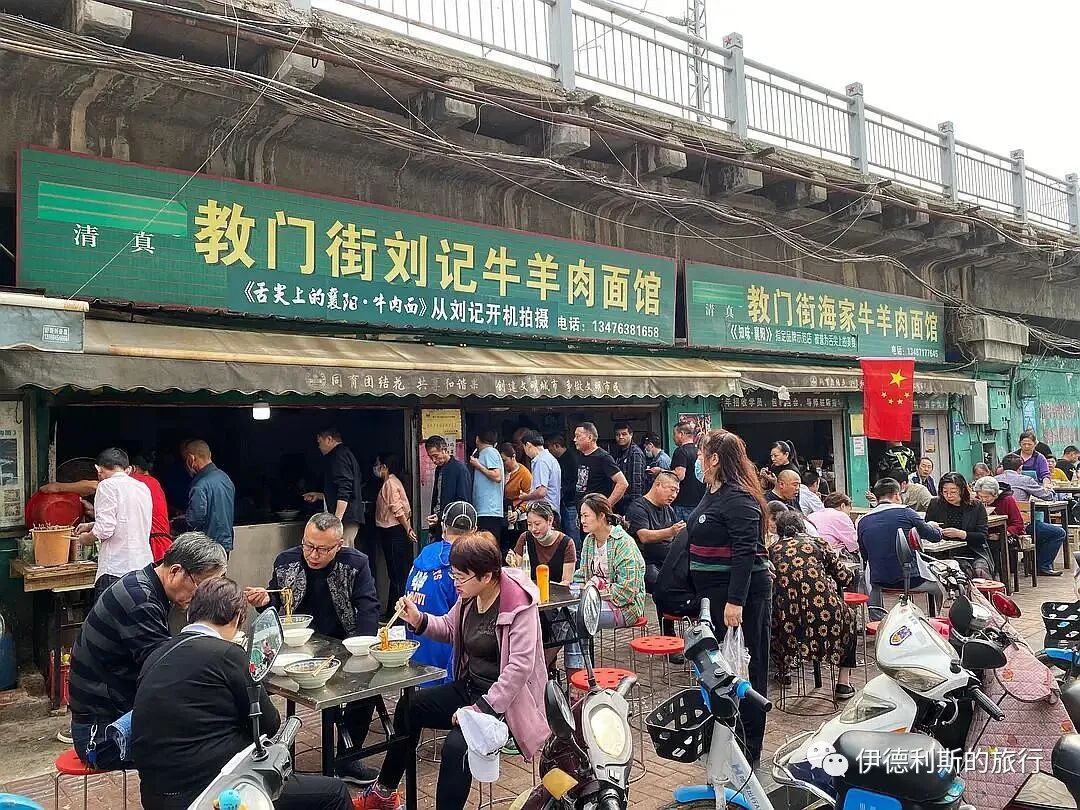
As the most important commercial hub in the middle reaches of the Han River, Fancheng has had Hui Muslim residents since the Yuan and Ming dynasties. The Hui Muslims in Fancheng were mainly concentrated on Jiaomen Street, where the mosque is located. When the Fancheng Mosque was rebuilt in 1792 (the 57th year of the Qianlong reign), there were 222 local Hui Muslim households who donated funds. In 2015, all of Jiaomen Street was demolished for new construction. Now, only a row of shops selling beef noodles and raw beef remains at the bridgehead of the Han River Bridge.
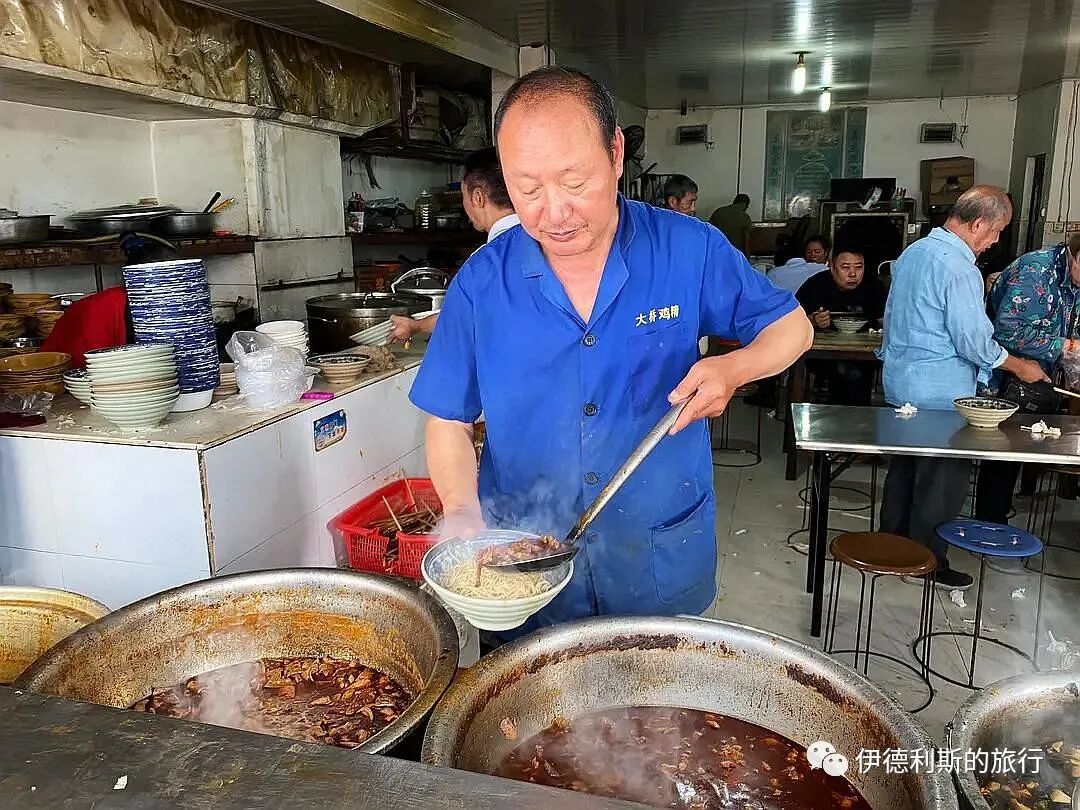
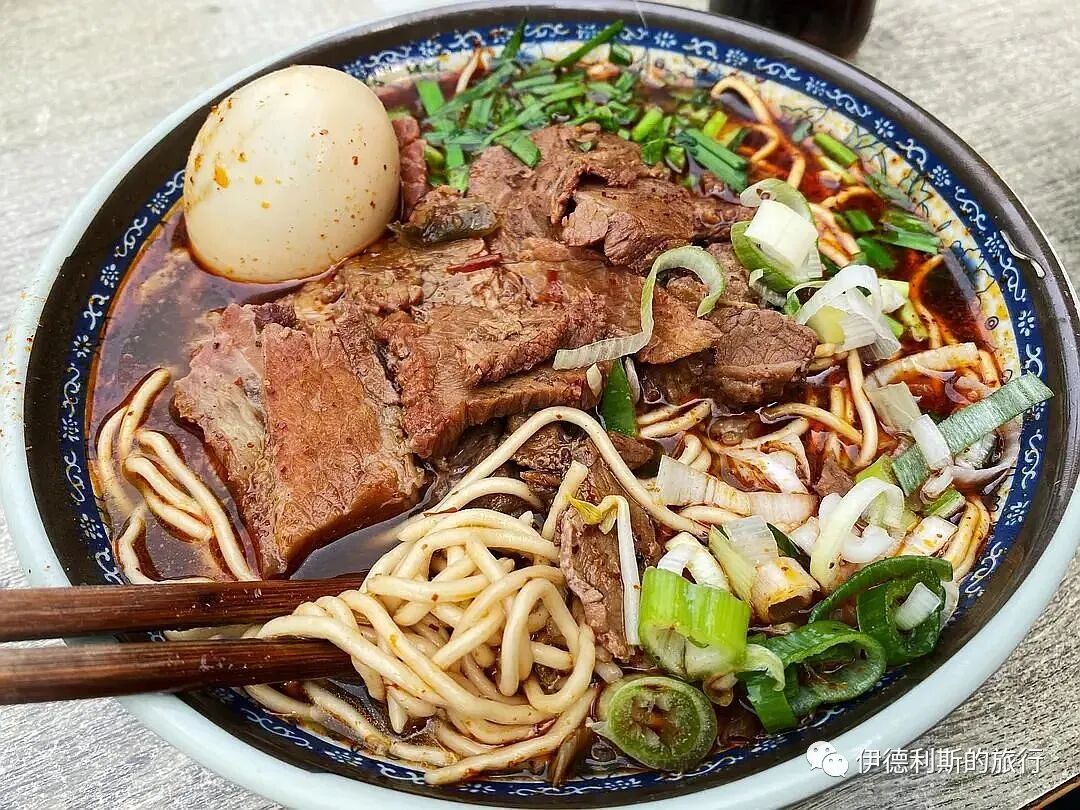
Early in the morning, we went to the bridgehead to eat beef noodles at Liu's shop from Jiaomen Street. Liu's is run by the son of Liu Donghan, an old imam at the Fancheng mosque, and it is quite famous. When I was in college, our halal cafeteria had a stall for Xiangfan beef noodles, and my impression back then was that it was really spicy! This time, I finally got to taste the authentic version. After eating the authentic version, I felt it was indeed a bit spicy, haha. We specifically asked for no chili, but the braised beef broth itself is a little spicy. But besides the spice, the beef is really fragrant! They must use plenty of meat, and it is stewed until very flavorful.
2. Jiangsu
1. Nanjing's fish maw noodles, beef noodles, smoked fish noodles, and beef heart noodles.
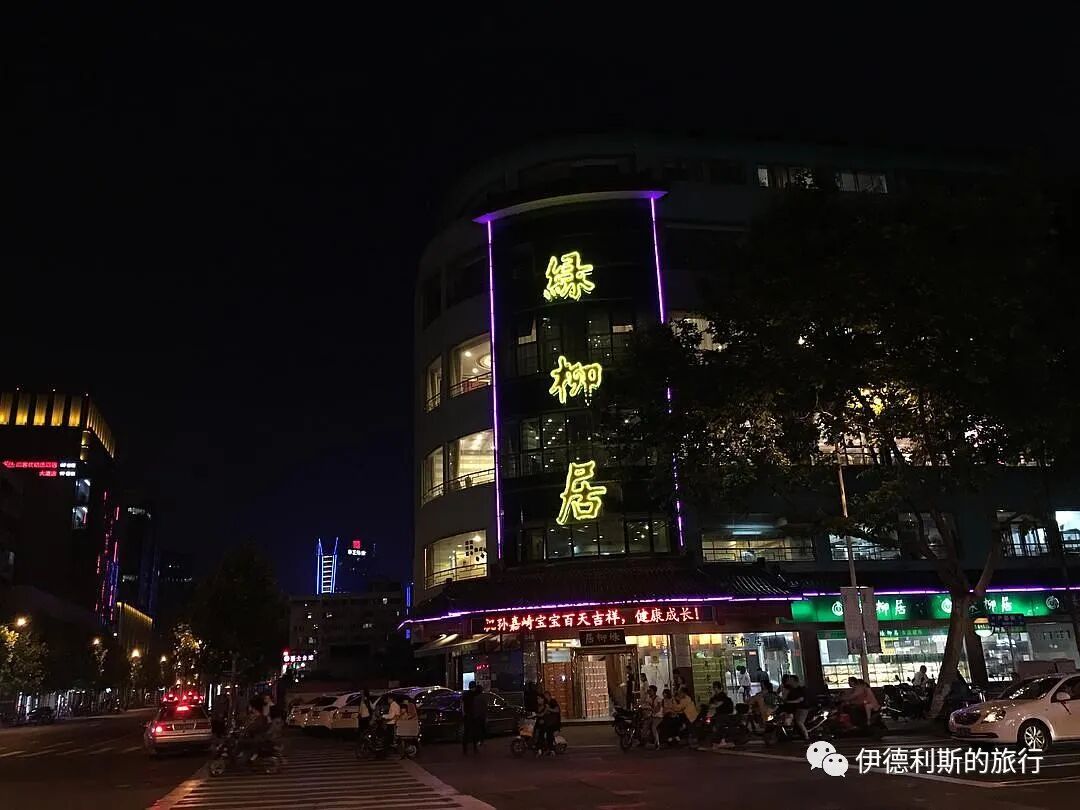
Lvliuju was founded in 1912 by Taoye Ferry on the banks of the Qinhuai River. It started as a high-end vegetarian restaurant, and people like Kong Xiangxi, Chiang Ching-kuo, Bai Chongxi, and the Soong sisters often dined here. After 1949, Lvliuju closed for a time. It did not reopen until 1963 at Yanggongjing on Taiping South Road, where they hired the famous chef Chen Bingyu to continue serving authentic vegetarian food. A major feature of Lvliuju is vegetarian dishes made to taste like meat. Their vegetarian chicken (suji) and vegetarian duck (suya), made from tofu skin, gluten, and dried bean curd sticks with Chinese herbal seasonings, are delicious.
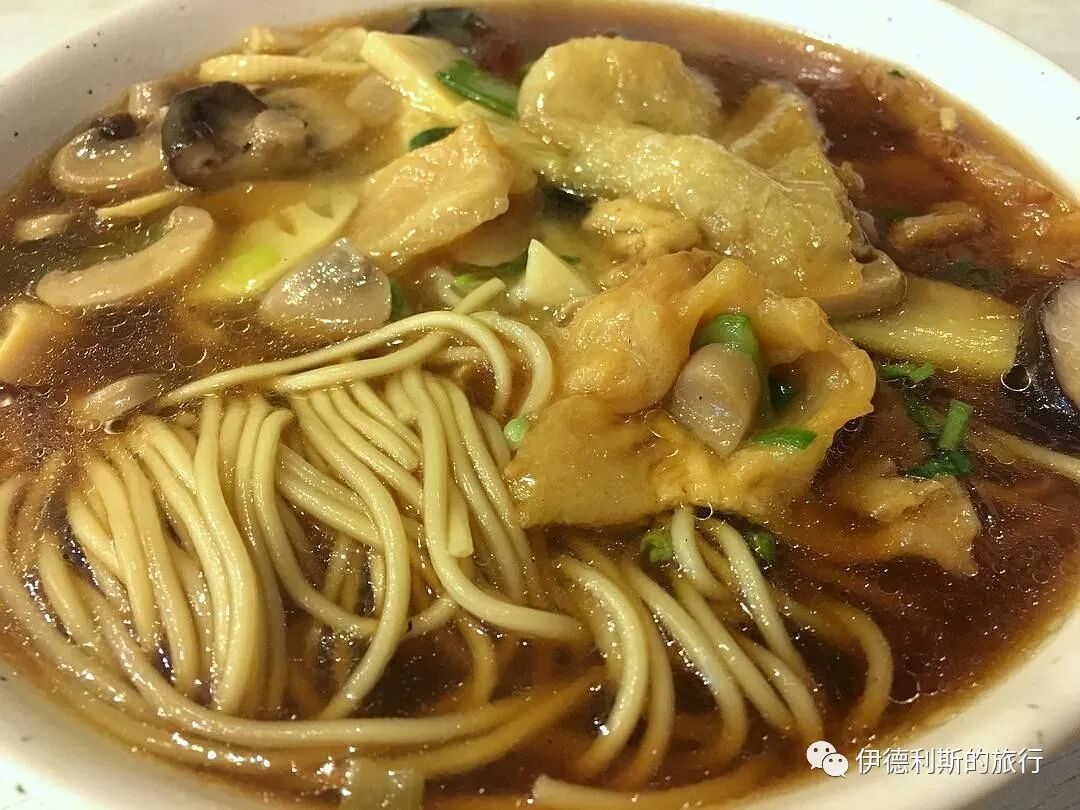
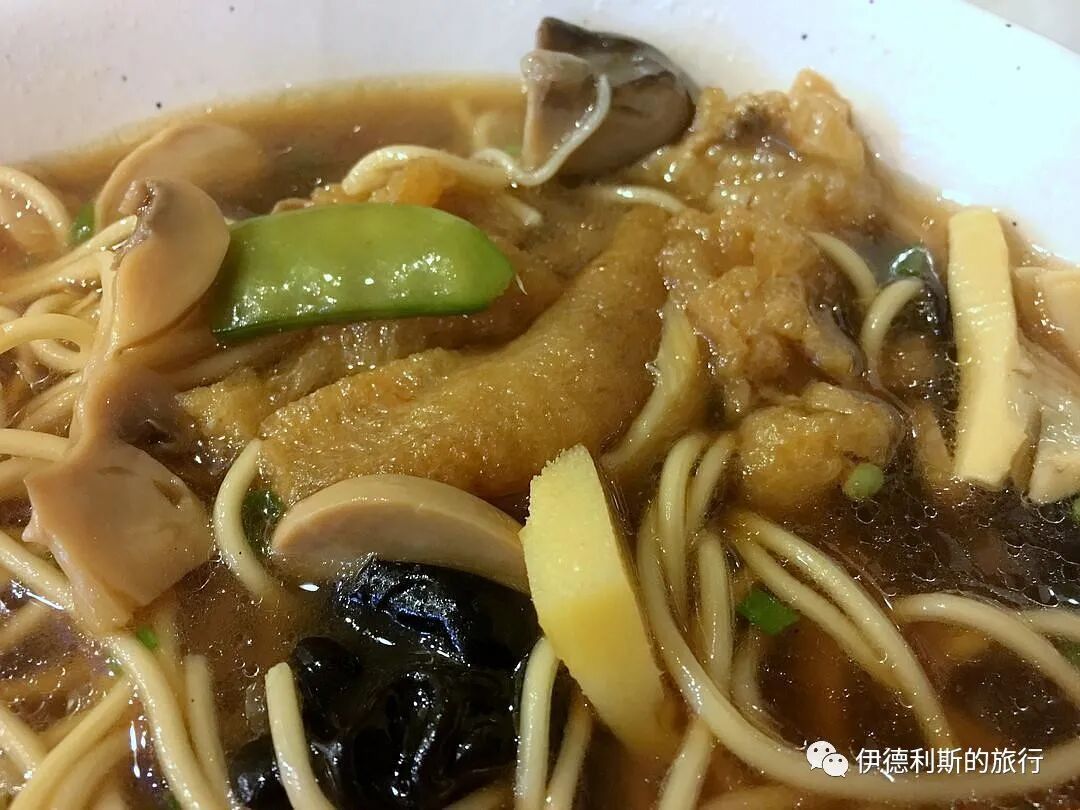
In 1987, Lvliuju added halal dishes to its vegetarian menu and became a halal restaurant, though vegetarian food remains its specialty. In 1995, it was rebuilt on the same site into the current five-story building, becoming a large halal restaurant in Nanjing. We ate fish maw noodles at Lvliuju, which also contained mushrooms, bamboo shoots, wood ear mushrooms, and green peas.
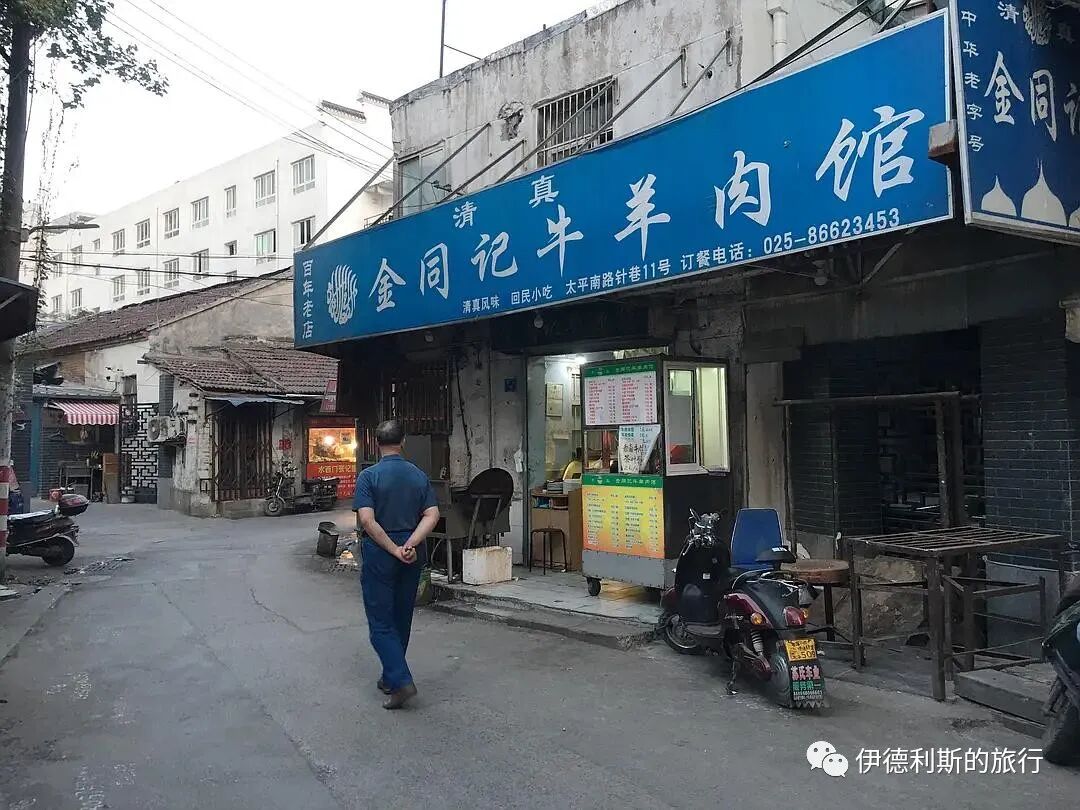
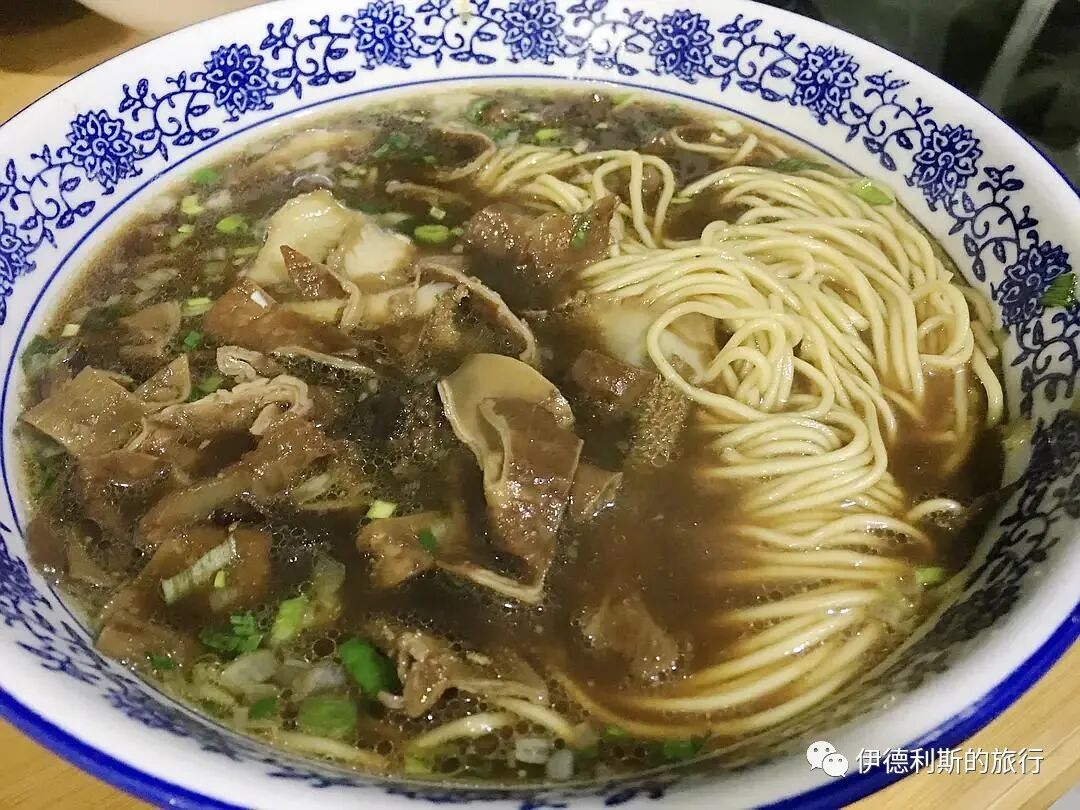
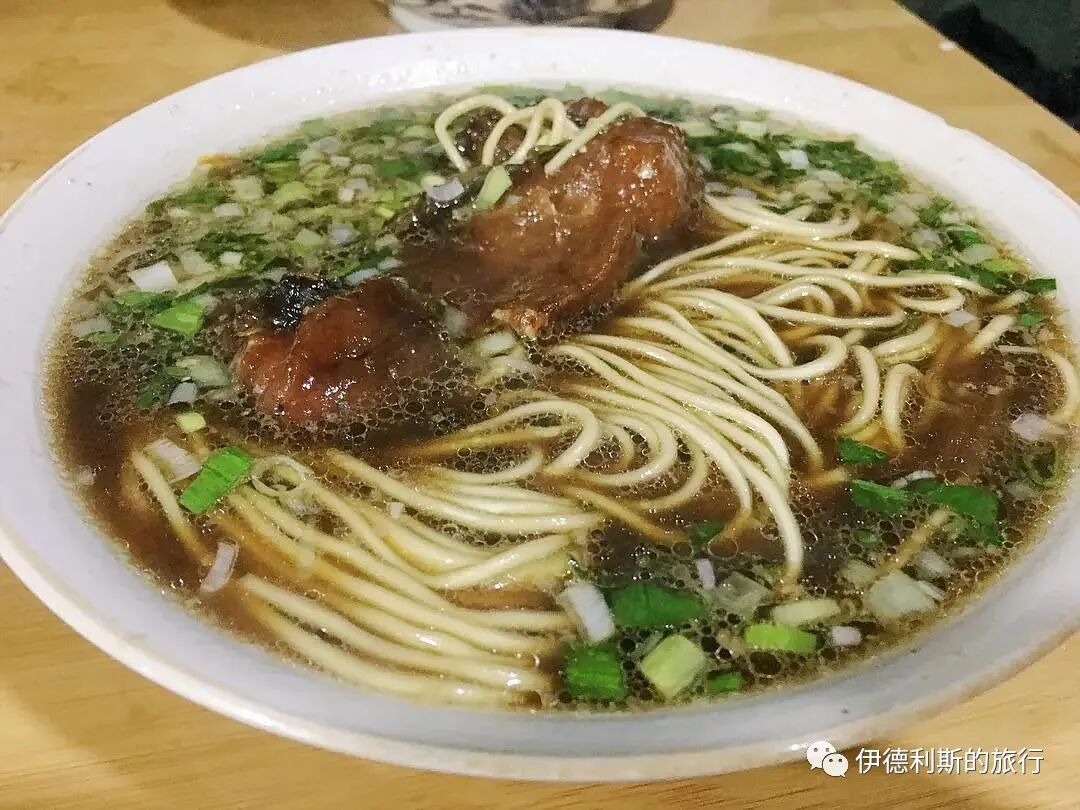
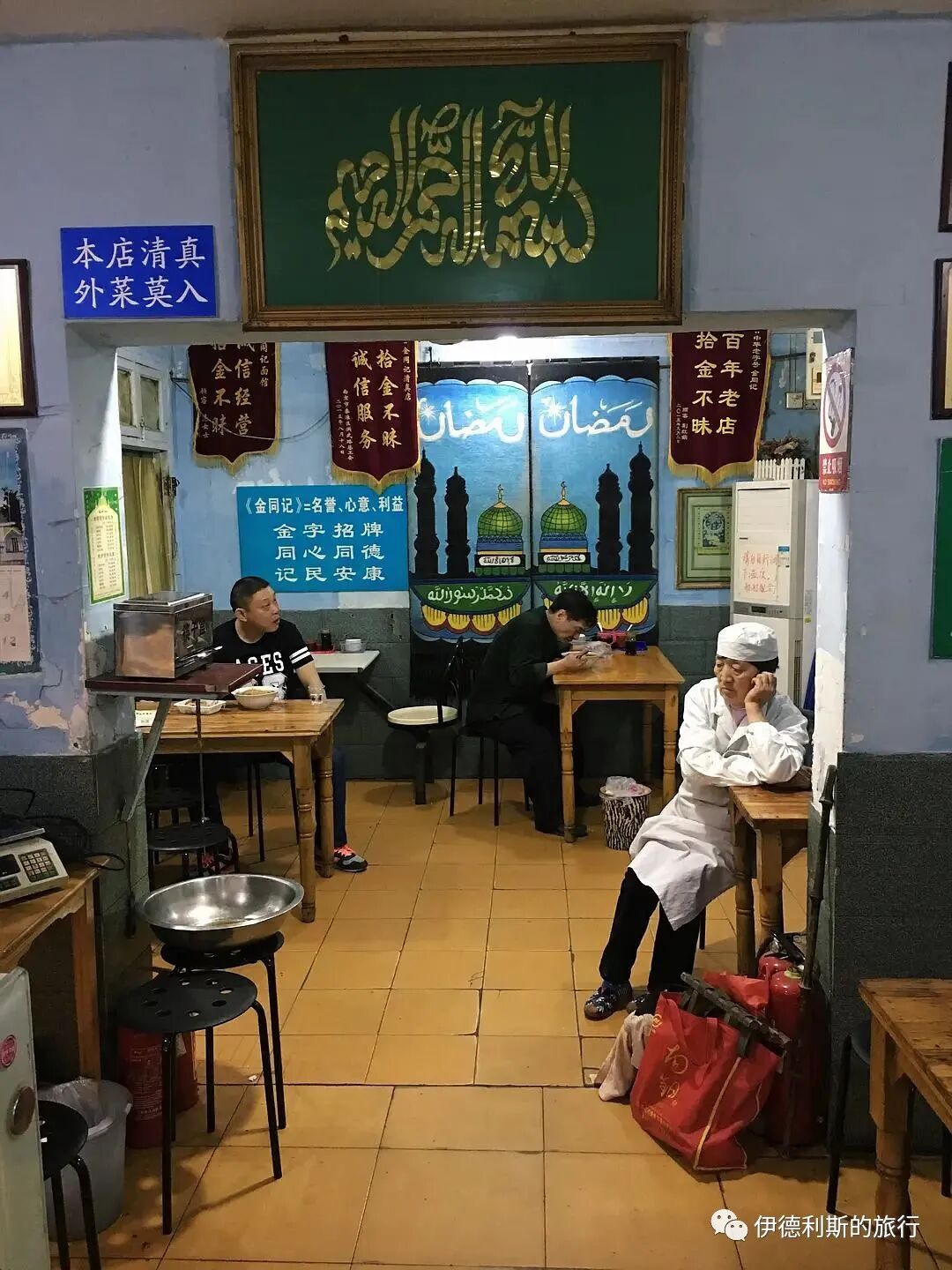
We ate at Jintongji Beef and Mutton Restaurant north of the Nanjing Confucius Temple, where we ordered a huge portion of Jintongji noodles with beef, beef tendon, beef tripe, and beef intestine, as well as smoked fish noodles. The black sweet beef was so delicious! It is very addictive, and the sweet smoked fish is also super tasty. (This is the old Jintongji shop; it has now moved to a new address.)
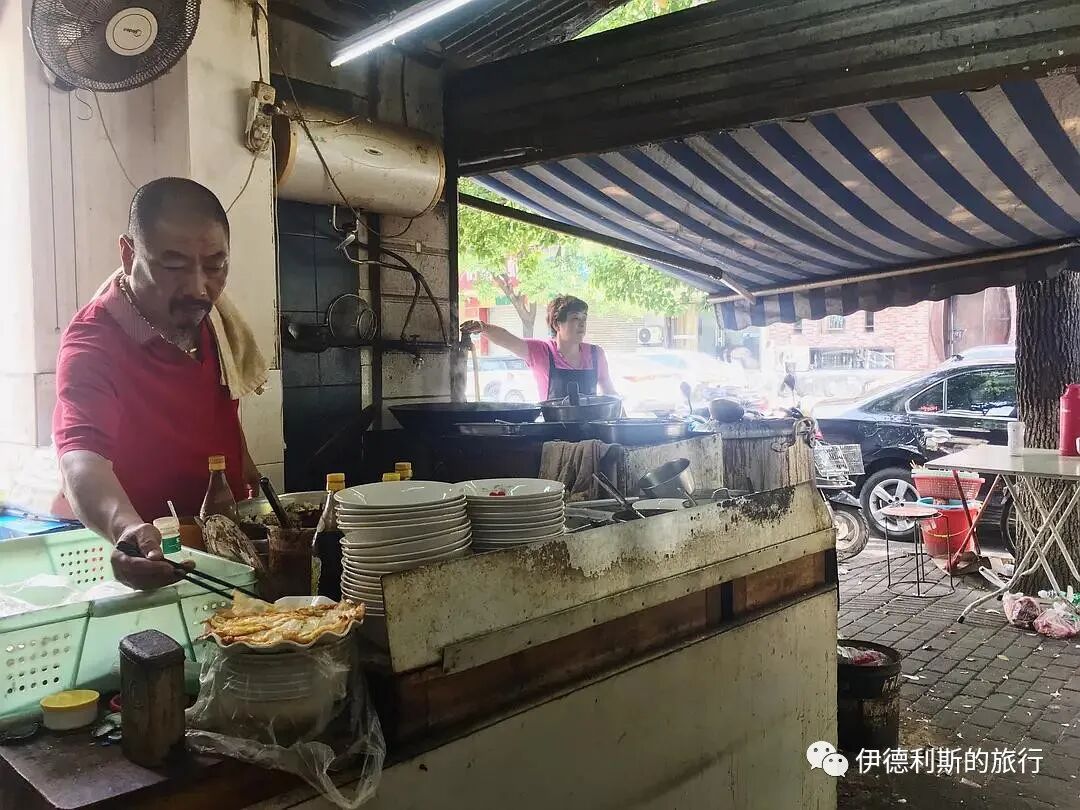
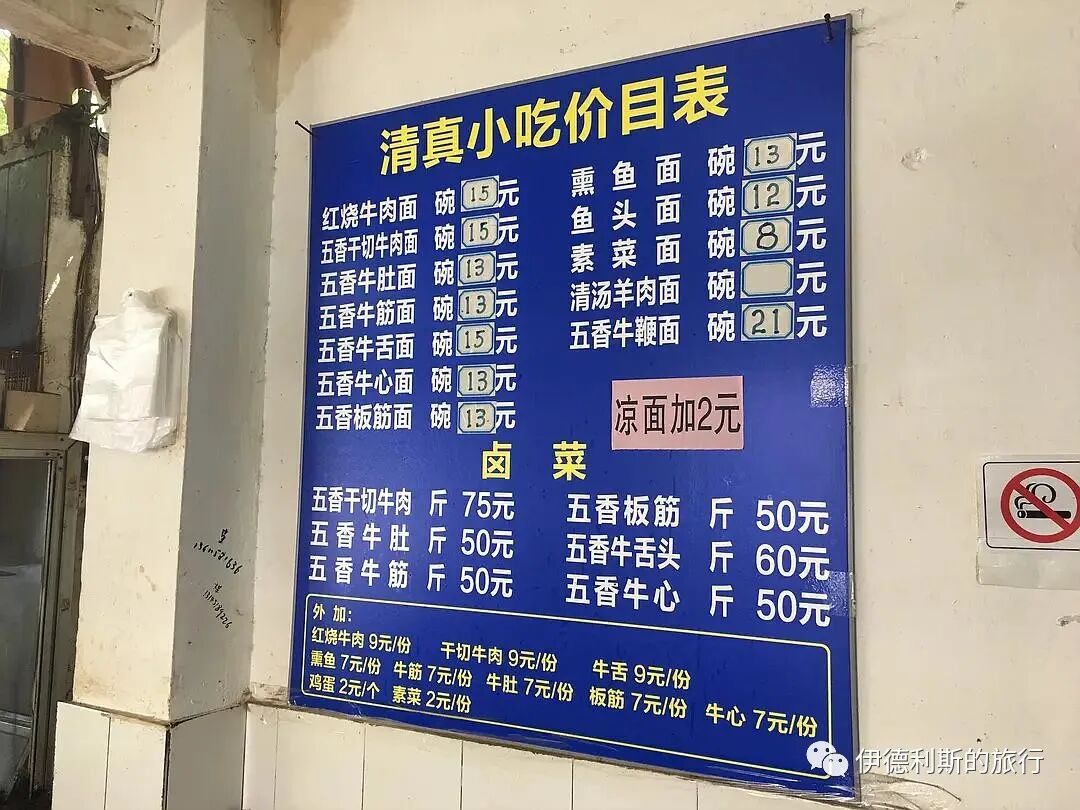
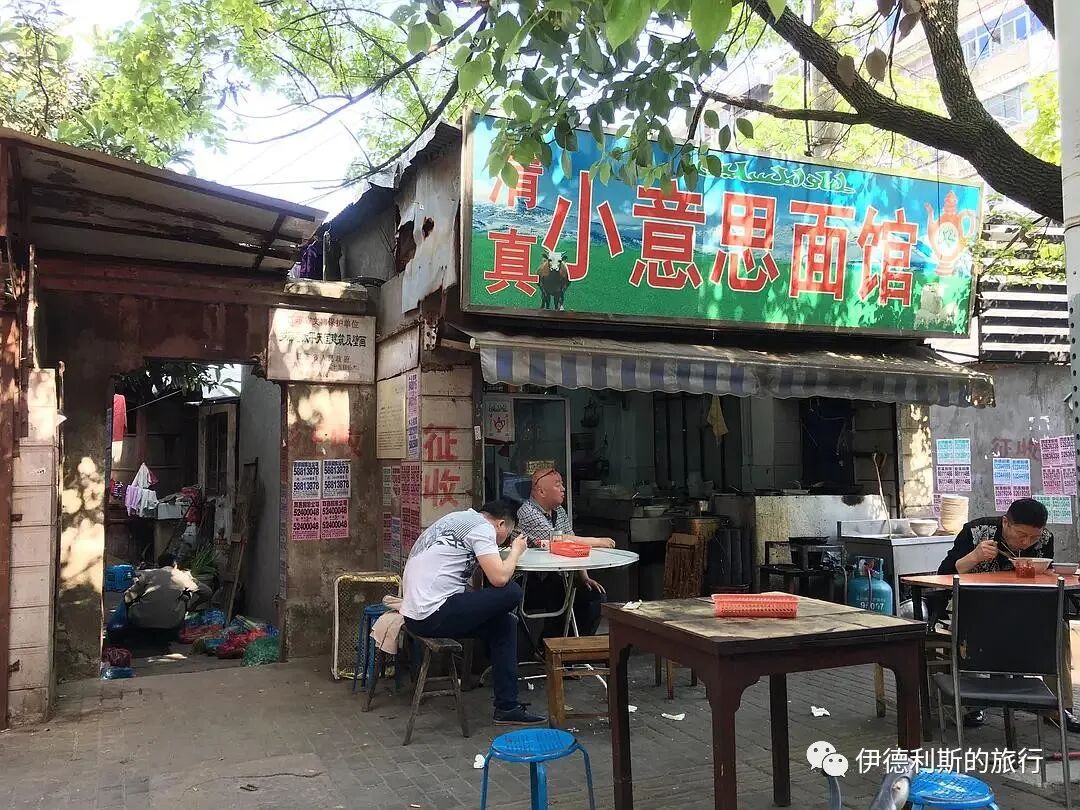
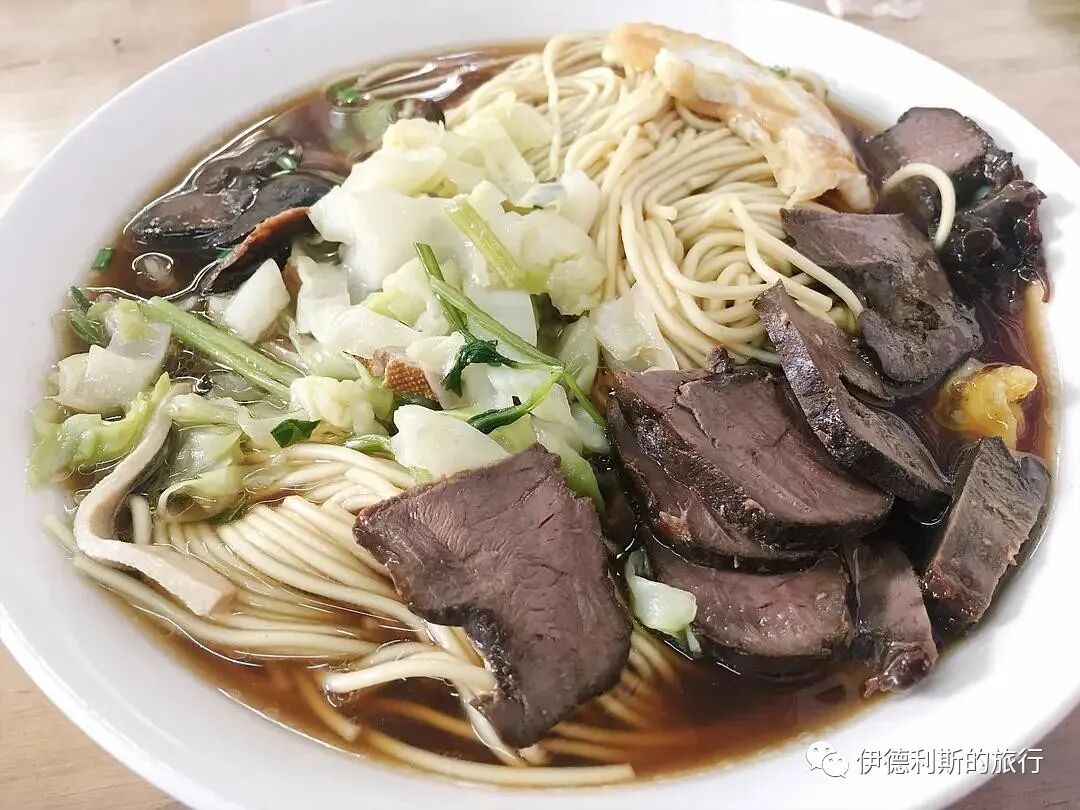
We had beef heart noodles at Xiaoyisi Noodle Shop on Luolang Lane in Nanjing (this is the old location; it has now moved to a new address). This shop has also been open for many years. It is a husband-and-wife business, and the owner is an uncle who wears a gold chain. Next to the noodle shop is the famous provincial cultural heritage site, the Taiping Heavenly Kingdom architecture and murals on Luolang Lane.
2. Zhenjiang's dried tofu noodles (xianggan mian).
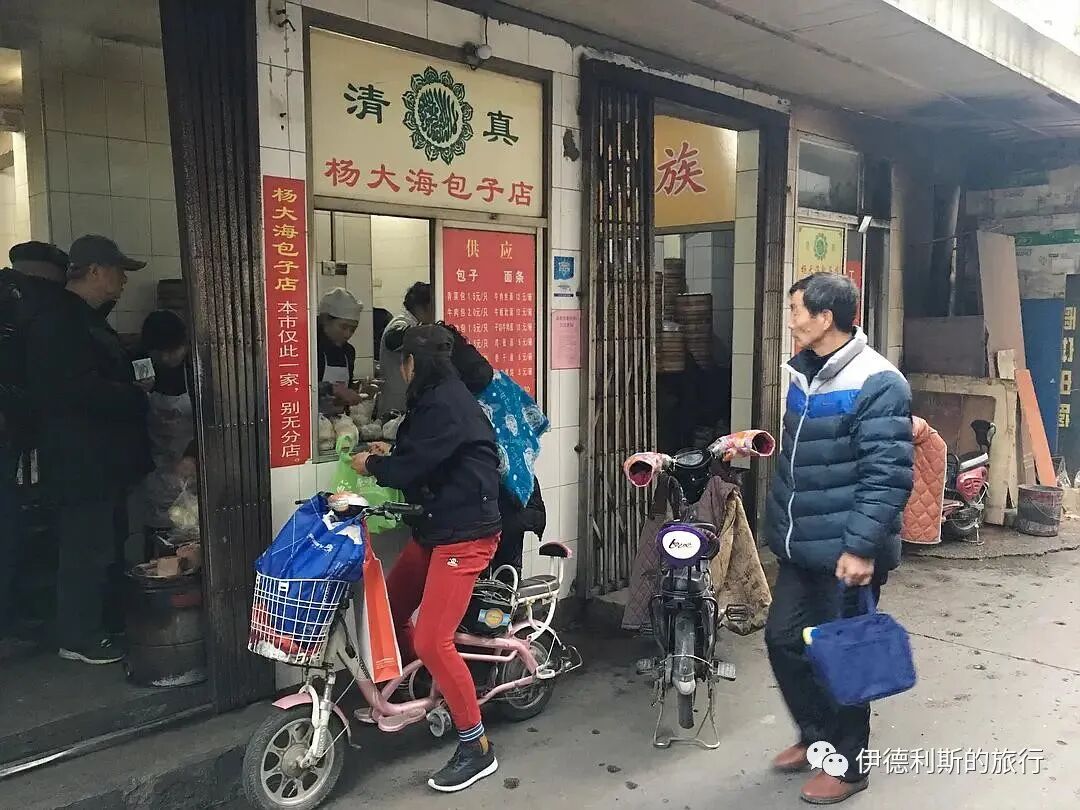
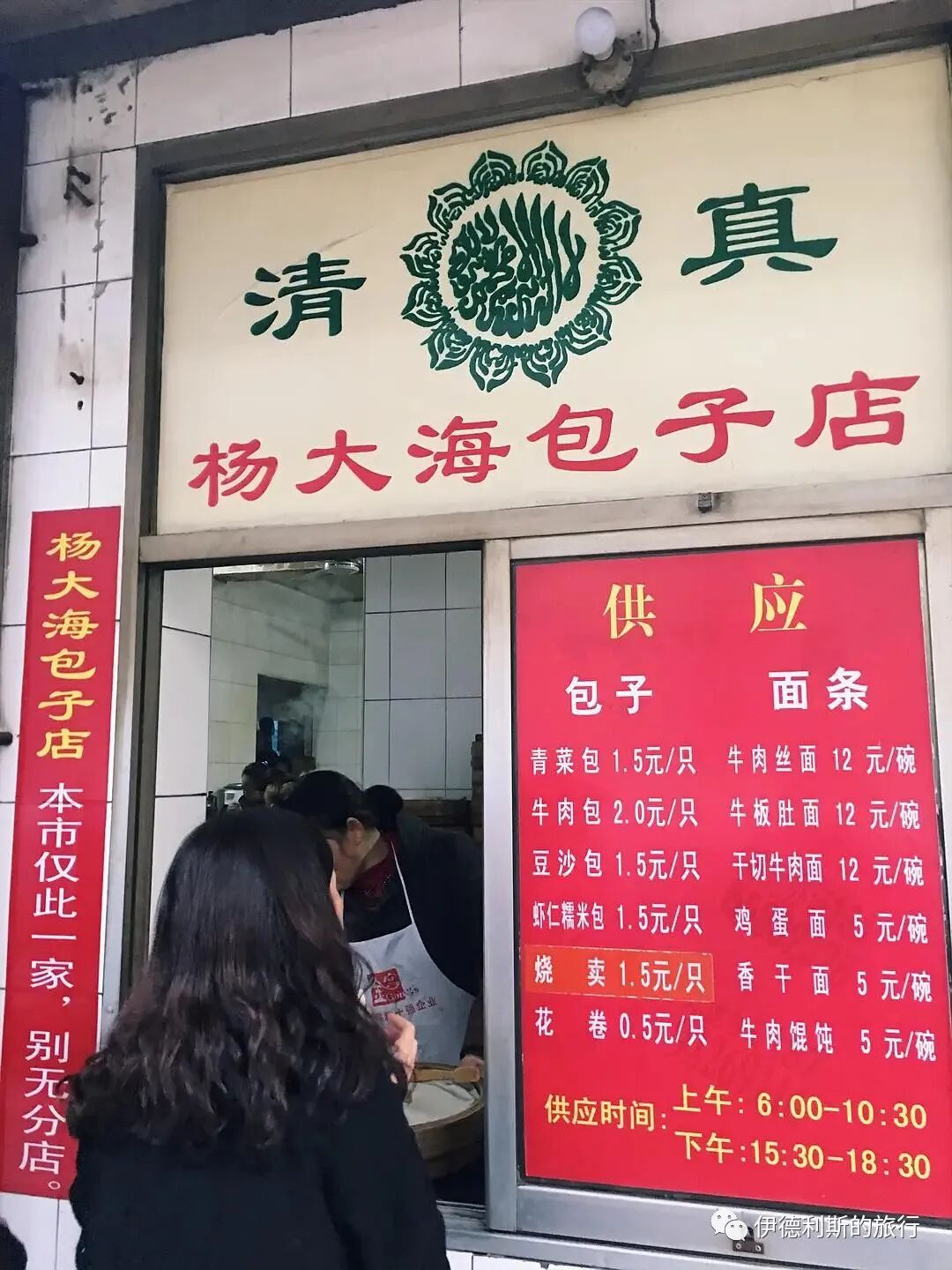
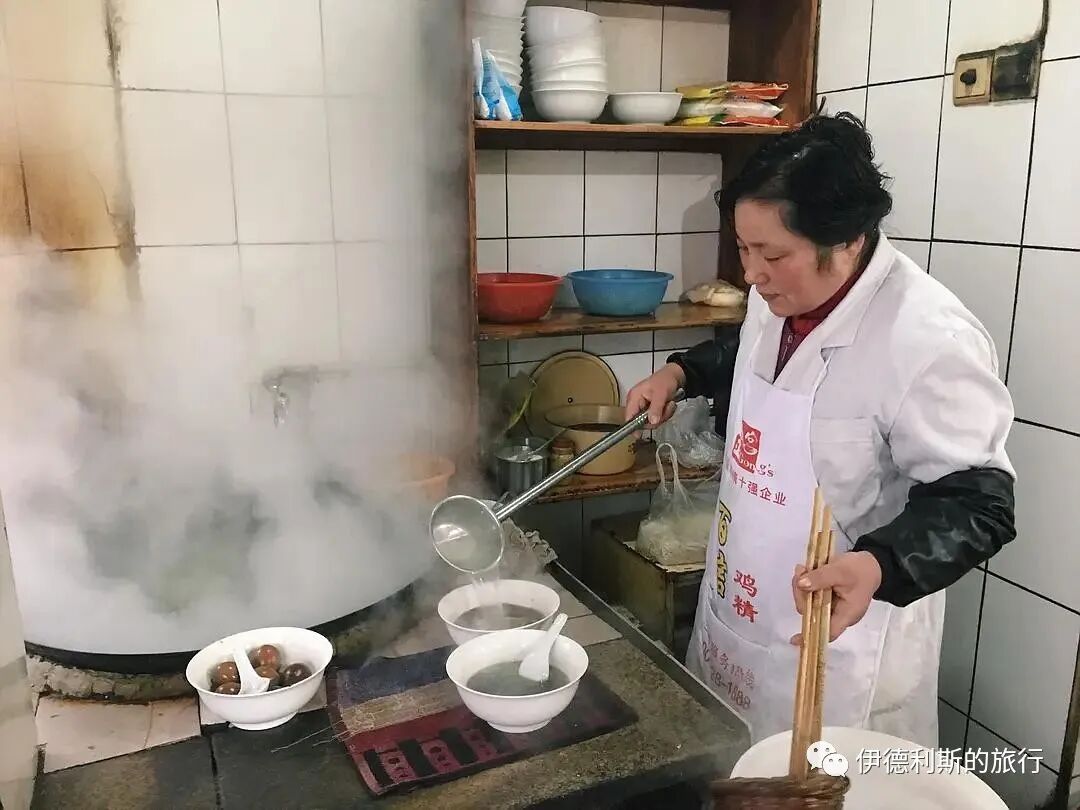
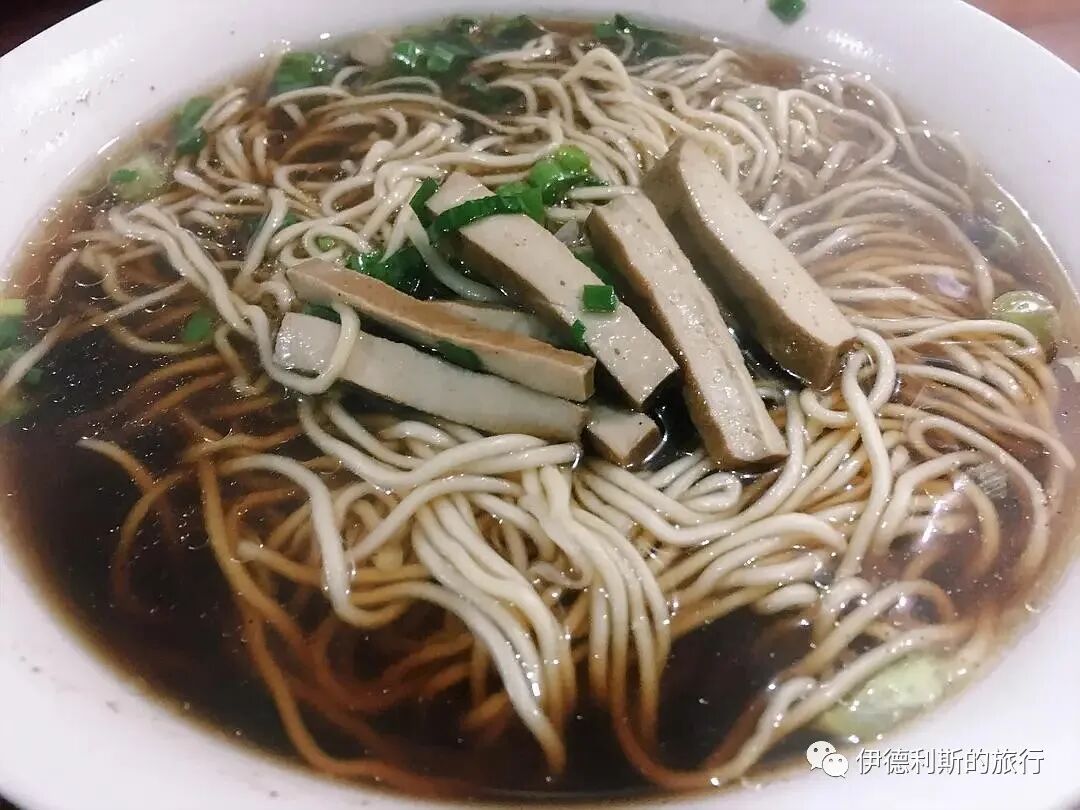
The ancient Runzhou Mosque (Runzhou libaisi) from the Yuan Dynasty in Zhenjiang was moved to Jianzi Lane in the city in 1602 (the 30th year of the Wanli reign) and has since been called the Jianzi Lane Mosque. In 2005, the Jianzi Lane Mosque was demolished due to the construction of the Zhenjiang First Building commercial pedestrian street, but there are still many halal restaurants nearby. We ate dried tofu noodles (xianggan mian) at Yang Dahai Steamed Bun Shop in the small alley north of Jianzi Lane. They had a slightly sweet taste, and the noodle broth was very much in the Jianghuai style.
3. Chicken shredded noodles (jisi mian) of Huai'an
Because navigating the Yellow River section of the Grand Canal was very dangerous, and waiting times to pass through locks after entering Shandong were too long, many merchants chose to leave their boats at Qingjiangpu in Huai'an, Jiangsu. They would cross the Yellow River and switch to horse-drawn carriages to continue north, making Qingjiangpu a transportation hub for southern boats and northern horses. Hui Muslims have been doing business on Yuehe Street in front of the Imperial Wharf since the Ming Dynasty, and the Qingjiang Mosque was built during the Jiajing period of the Ming Dynasty.
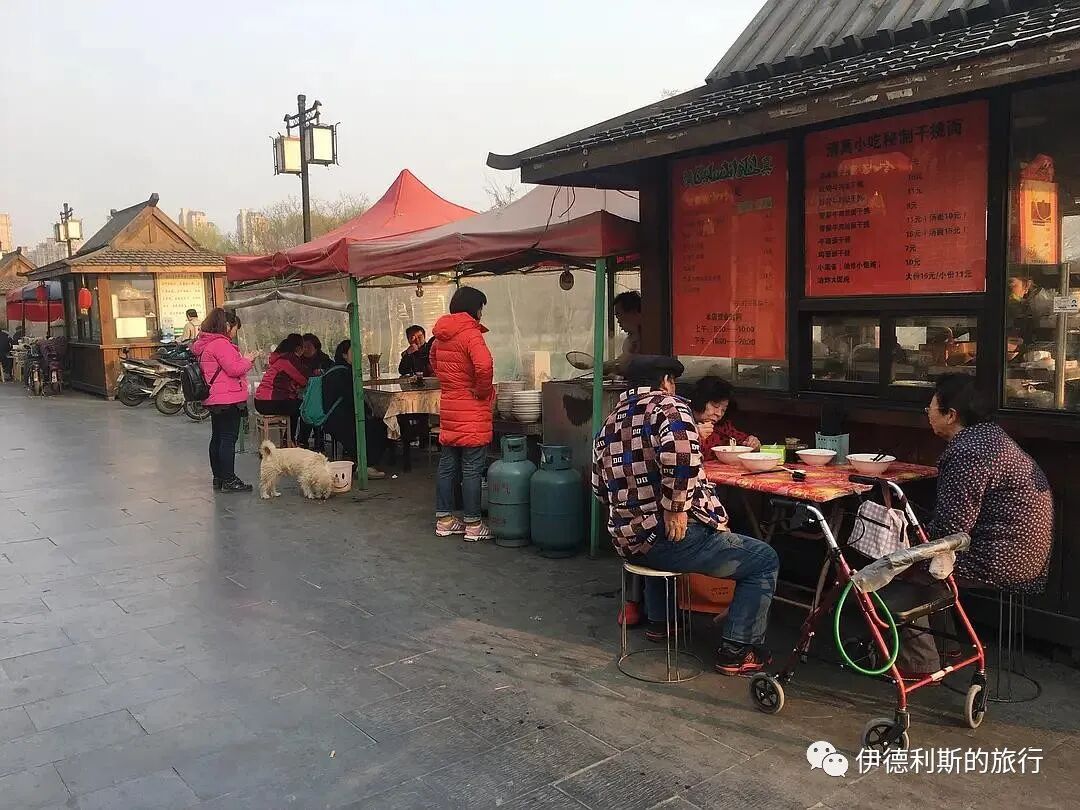
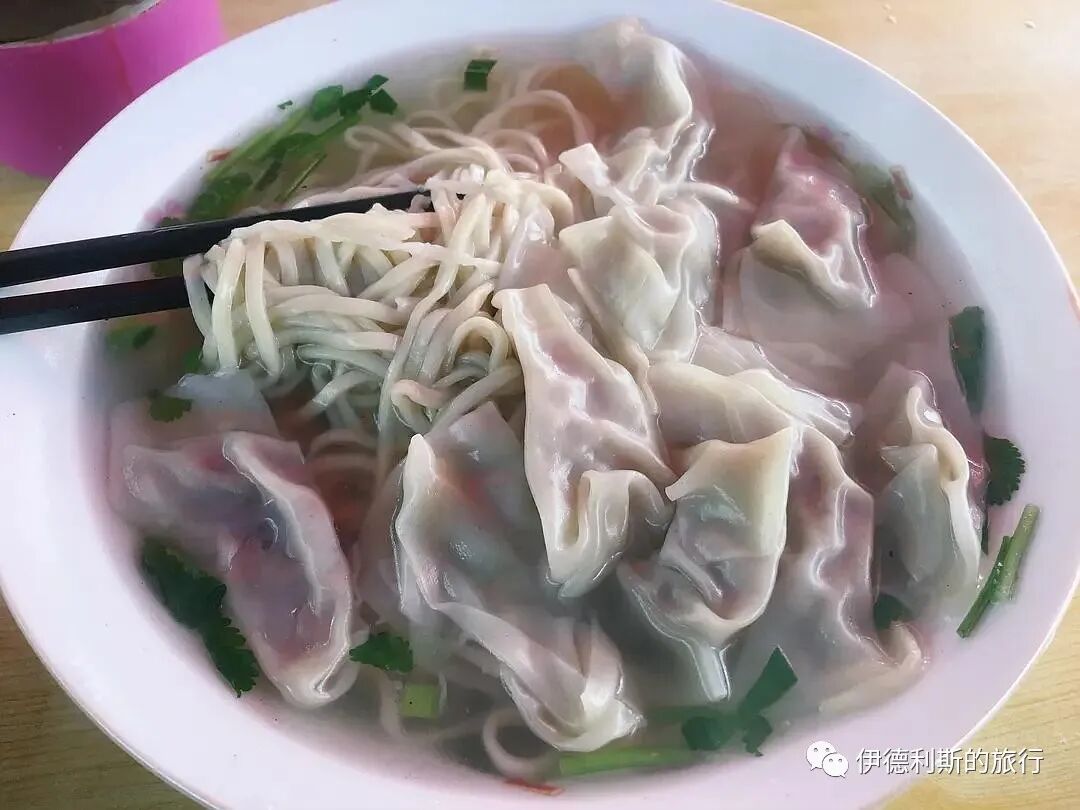
Eating wonton noodles at the entrance of the Qingjiangpu Mosque.
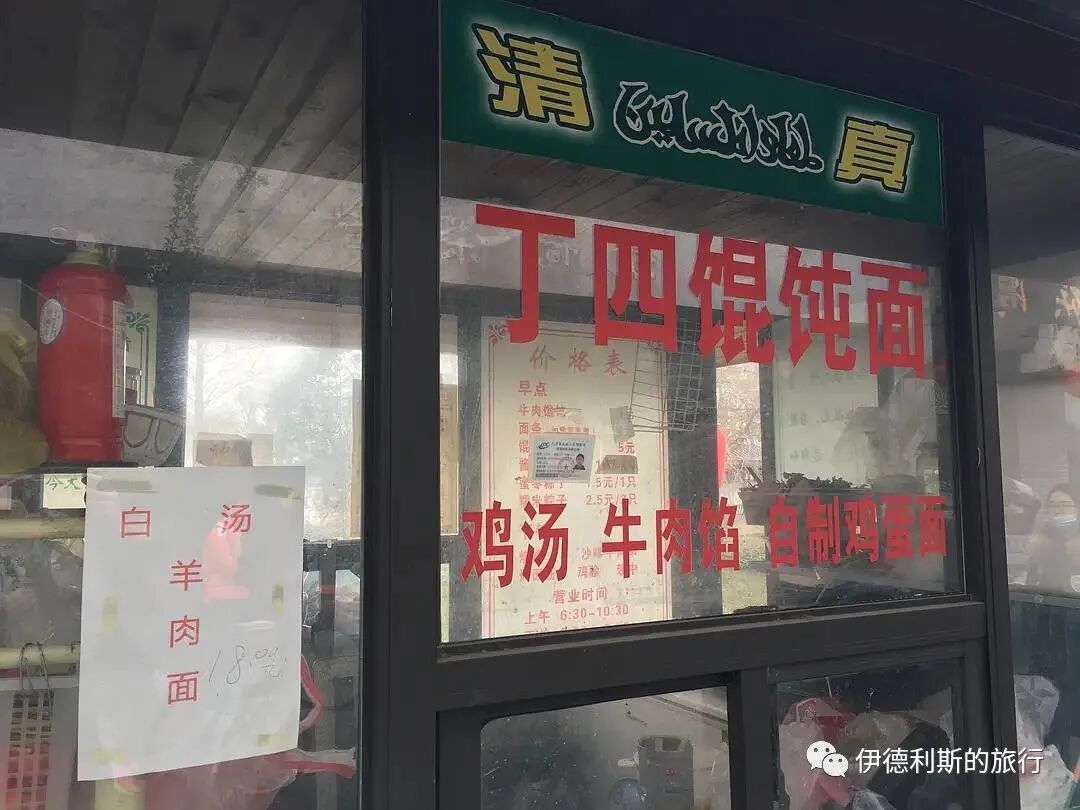
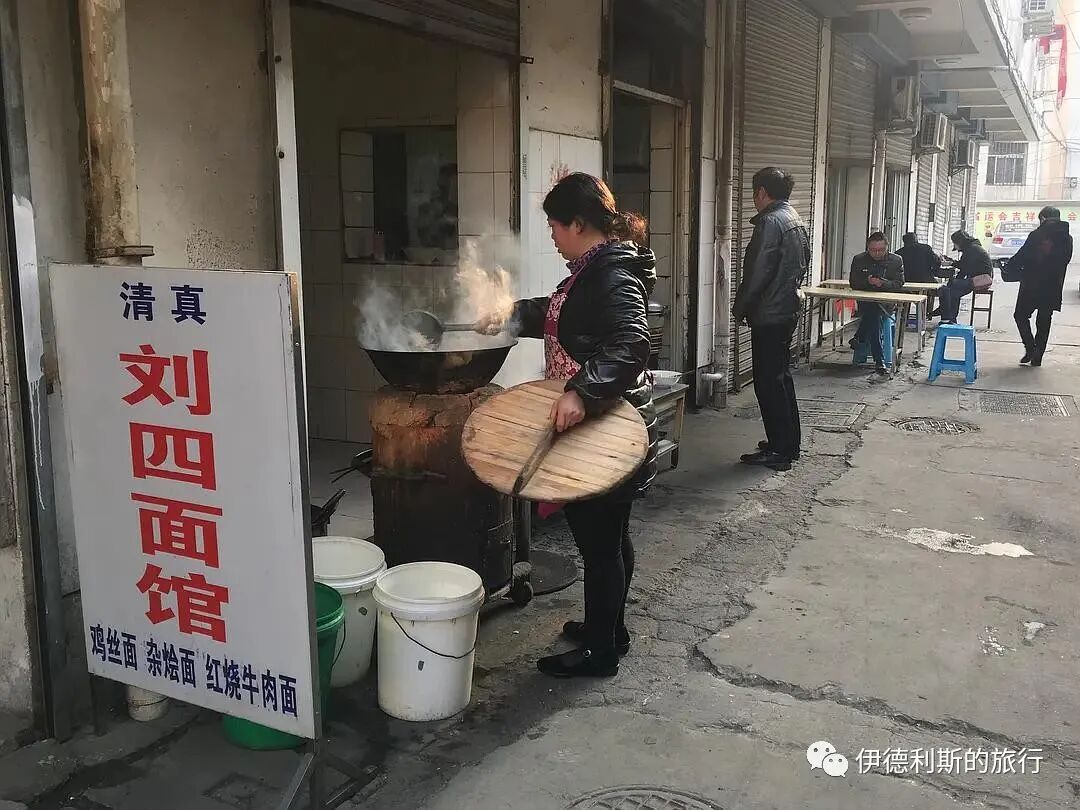
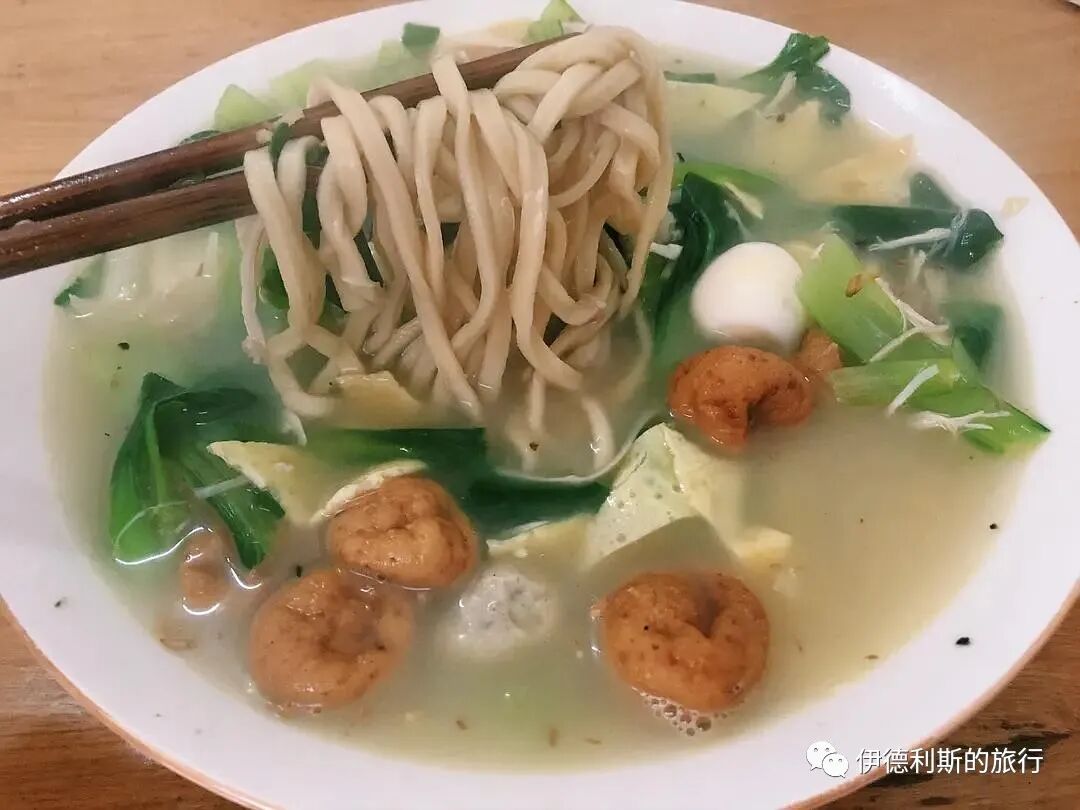
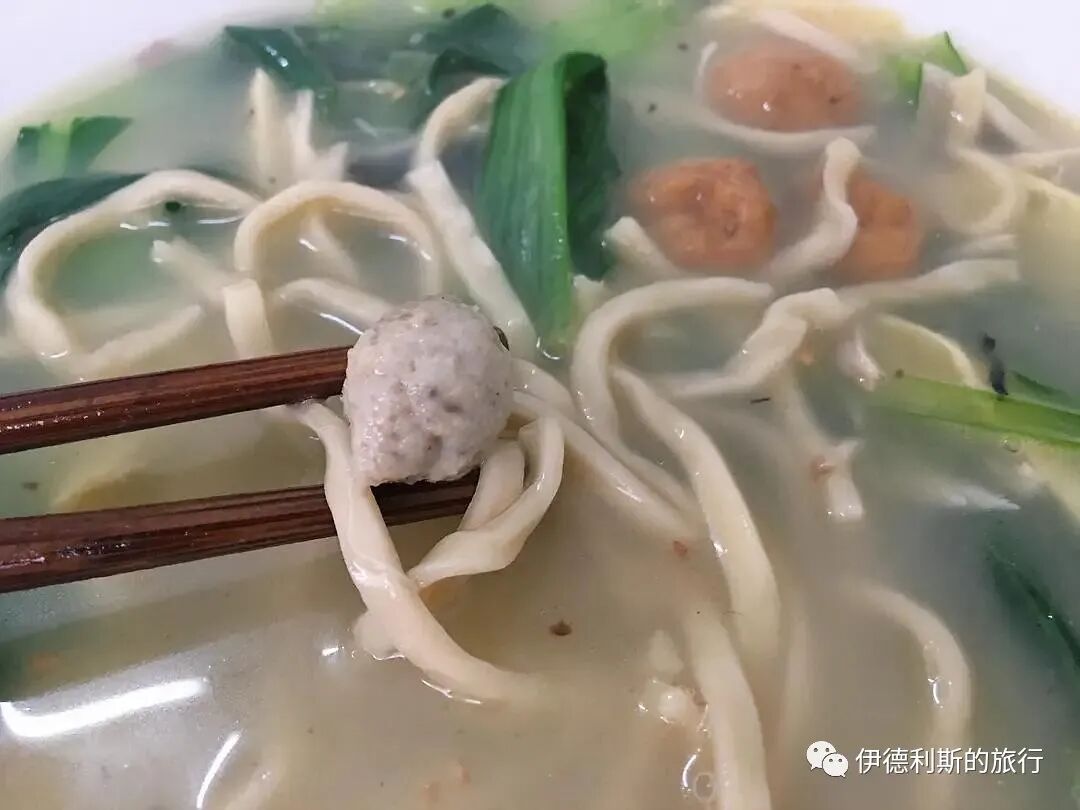
I ate chicken shredded noodles at Liu Si Noodle Shop. It had fish balls, beef balls, and squid inside. The fish balls were super delicious, the soup was excellent, and it felt great to finish the meal.
Heading south along the canal from Qingjiangpu, you reach the ancient town of Hexia, not far northwest of the Huai'an prefectural city. Hexia is the largest town in the suburbs of Huai'an. Its official historical name was Manpu, and it developed into an important canal town during the Song and Yuan dynasties. Because the salt production and quality in the coastal salt fields north of the Huai River were very high, many salt merchants from the northwest and Anhui came to the region in the late Ming Dynasty to work in the salt industry. The wealth brought by these merchants made Hexia a prosperous commercial center. Many Hui Muslims also came to settle in Hexia, and the Hexia Mosque was first built during the Ming Dynasty.
We had some very fragrant chicken shredded noodles at a halal snack shop on Zhugan Lane in Hexia Town. When eating noodles in Jiangsu, the soup is more important than the noodles themselves.
4. Shanghai
1. Shanghai's eel shredded cold noodles (shansi lengmian), beef noodles, and lamb noodles
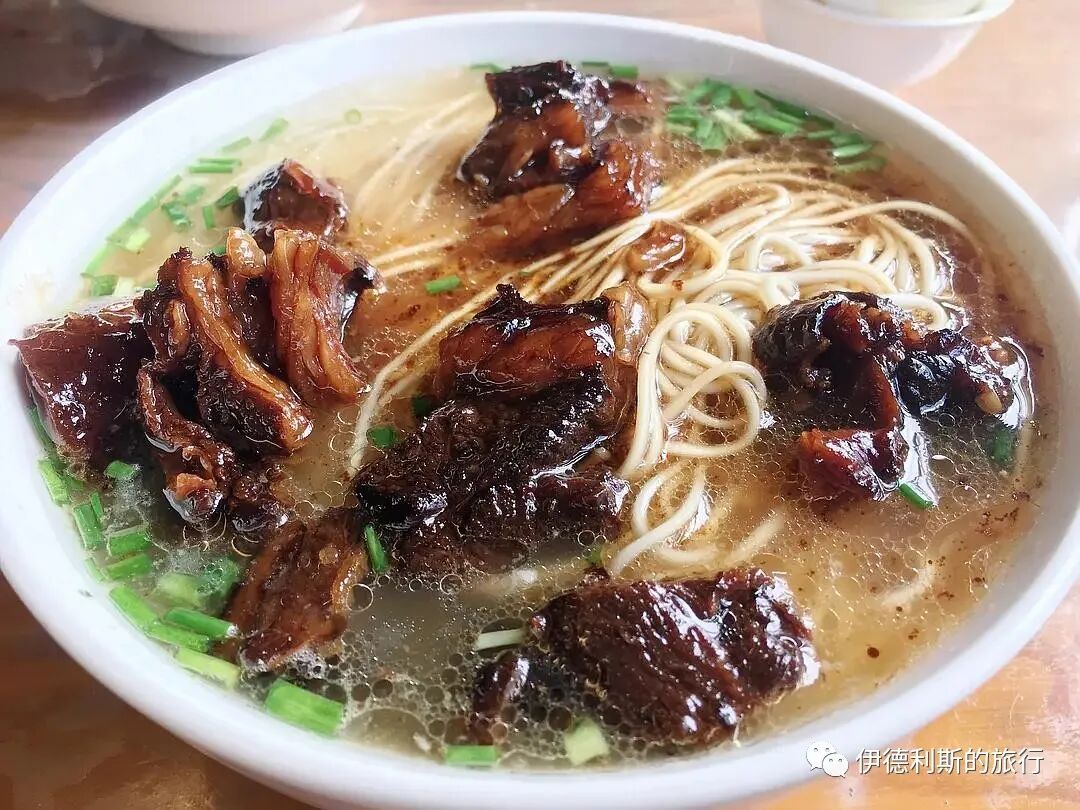
Yixinzhai is an old shop on Pingliang Road in Yangpu District that opened in 1958. It is most famous for its pan-fried beef buns (niurou jianbao) and three-yellow chicken (sanhuangji). In the summer, they also sell shaved ice and cold noodles. I ate the eel shredded cold noodles here. The topping was made with two types of mushrooms and three shredded ingredients, and it was truly delicious.
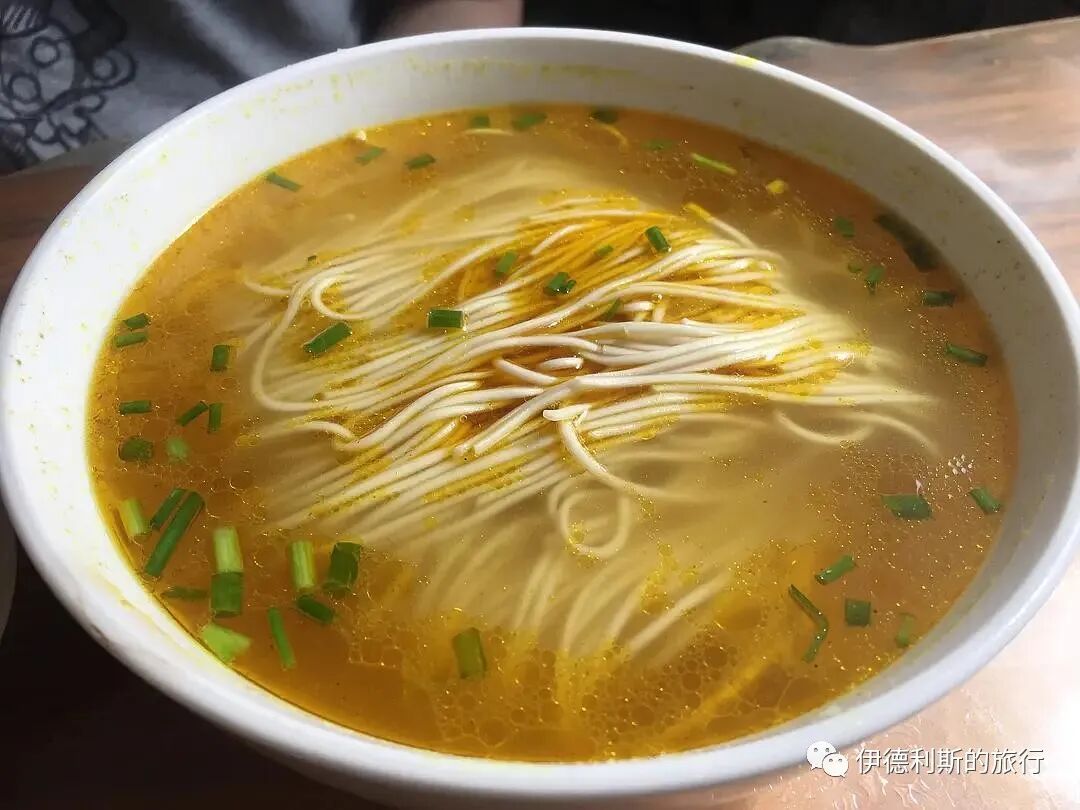
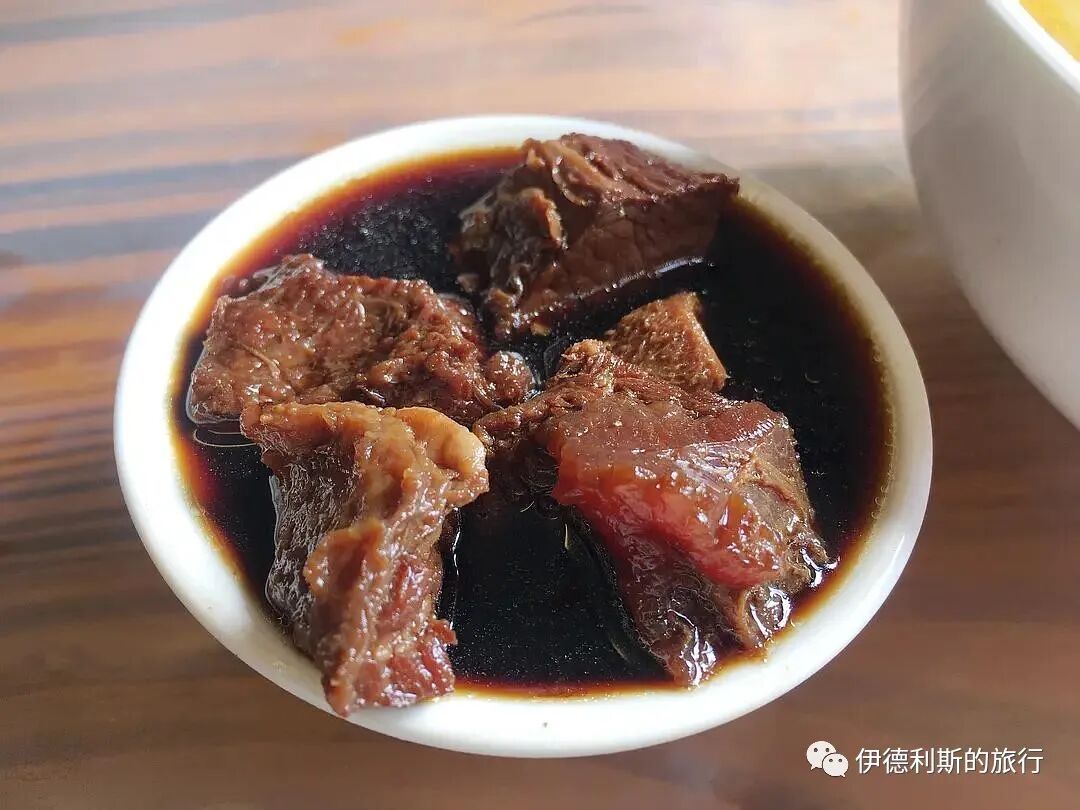
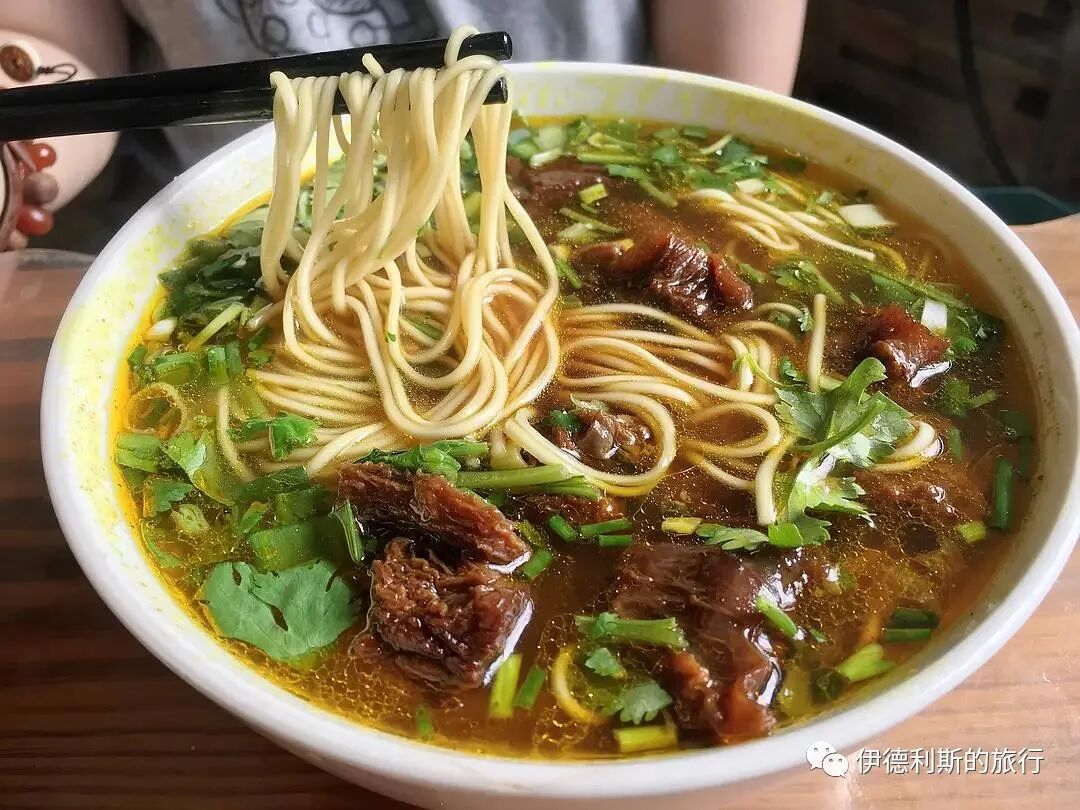
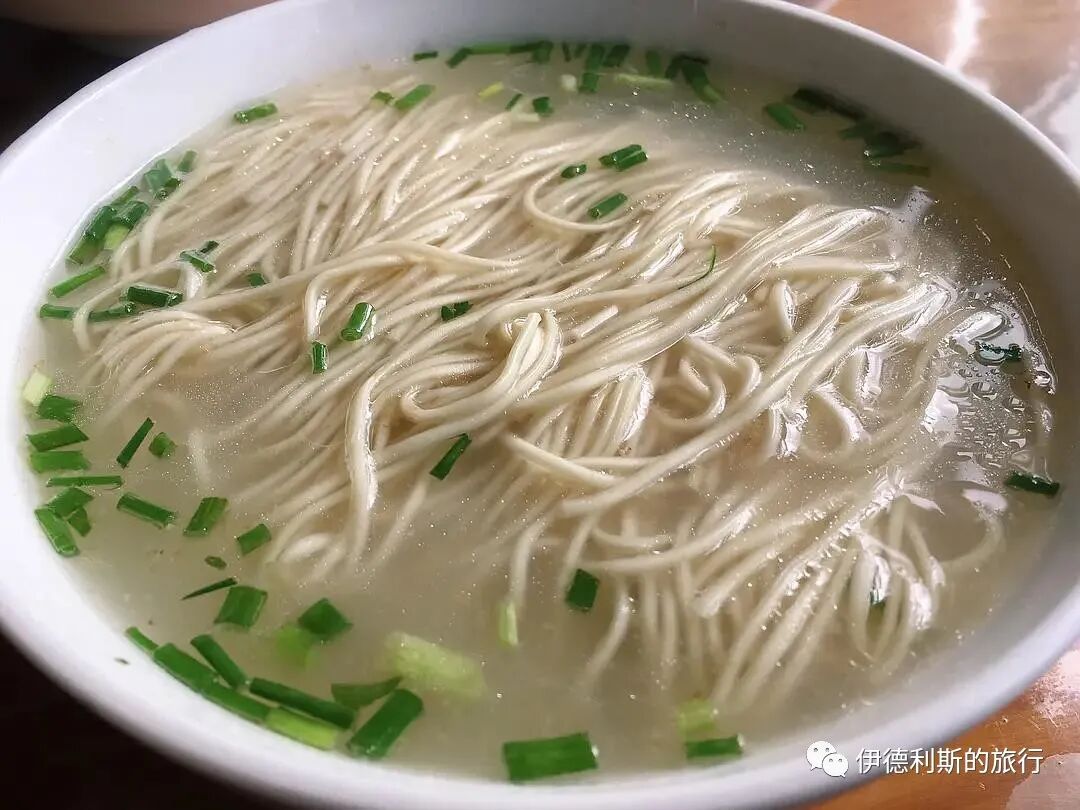
At Zhang Xuchang Old Man Noodle Shop on Houjia Road, the lamb noodles and beef noodles are served with the toppings on the side. The beef comes with yellow curry, and the lamb is served in a clear white broth.
5. Sichuan
1. Nanchong beef rice noodles (niurou fen) and Sichuan-style beef noodles
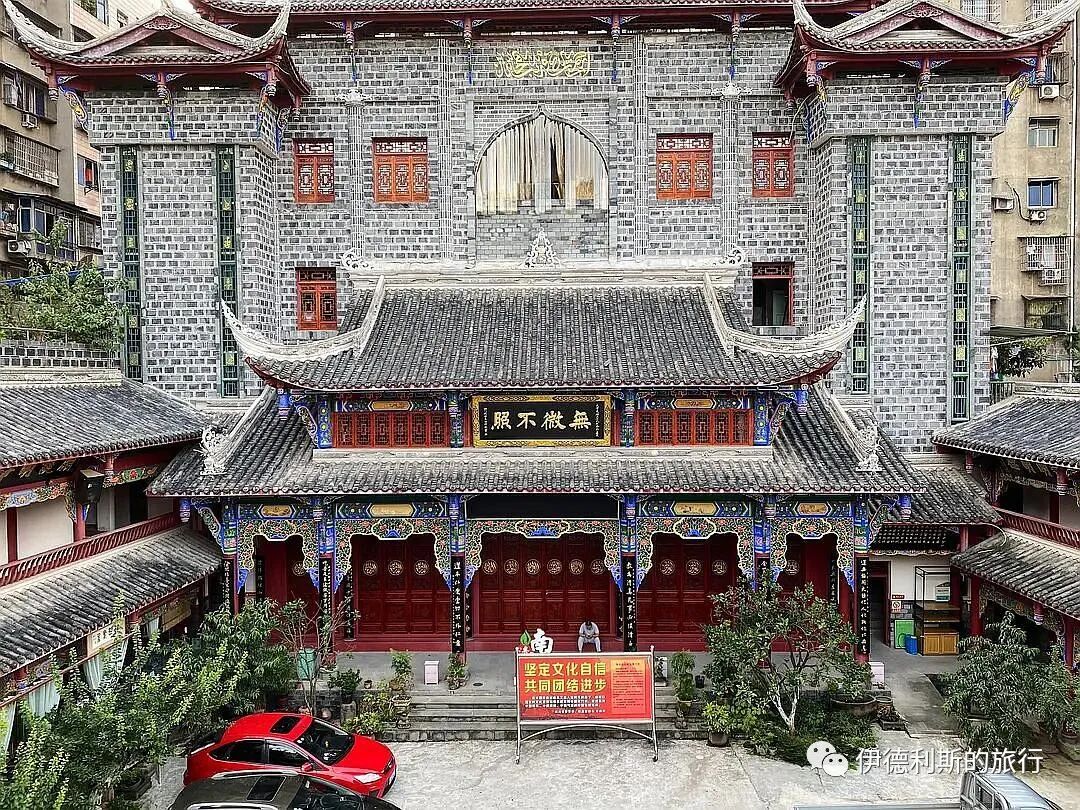
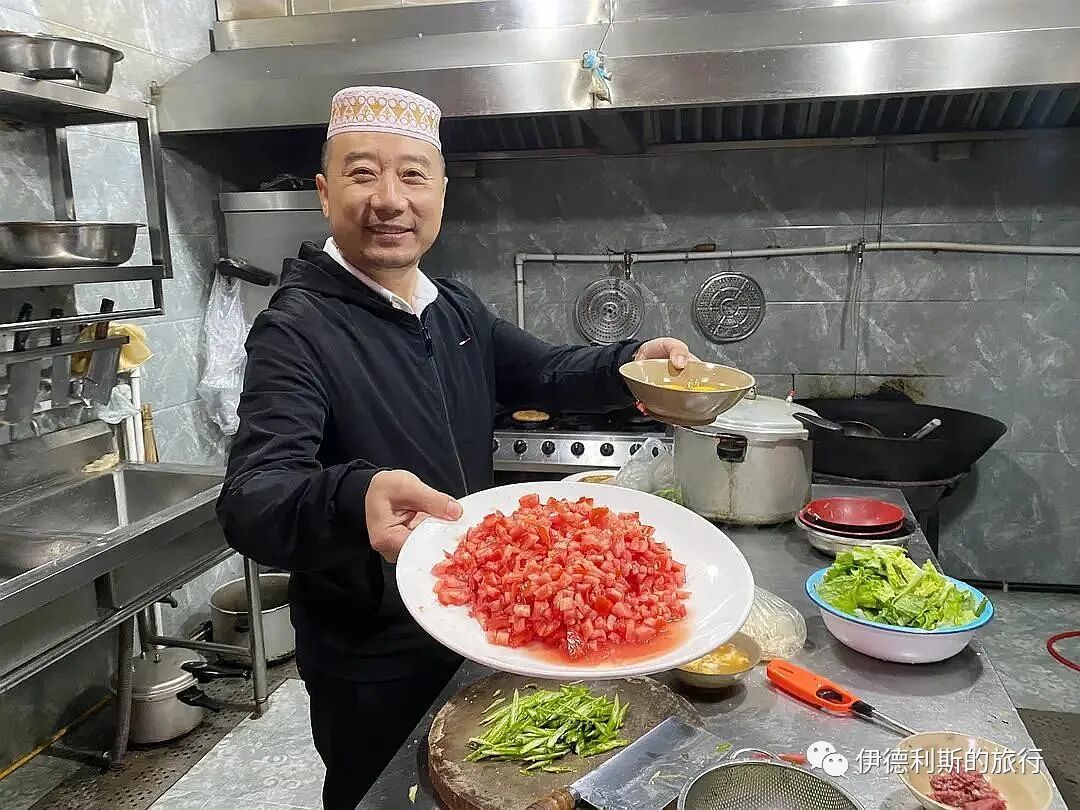
The ancestors of Imam Feng Yong from the Nanchong Mosque moved to Nanchong from Shaanxi during the Qing Dynasty. During the Republic of China era, the Feng family joined forces through marriage with three other families: Yang Fangyun who ran "Red Lantern Dried Beef," Ma Yutu who ran "Ma Laizi Canned Beef," and Zhang Dechao who ran "Beef Crispy Cakes." The Imam's grandfather, Feng Zifeng, founded the "Shixian" brand on Fu Street and opened a halal restaurant. Today, Imam Feng Yong's family still runs an authentic Sichuan halal food business at the entrance of the mosque.
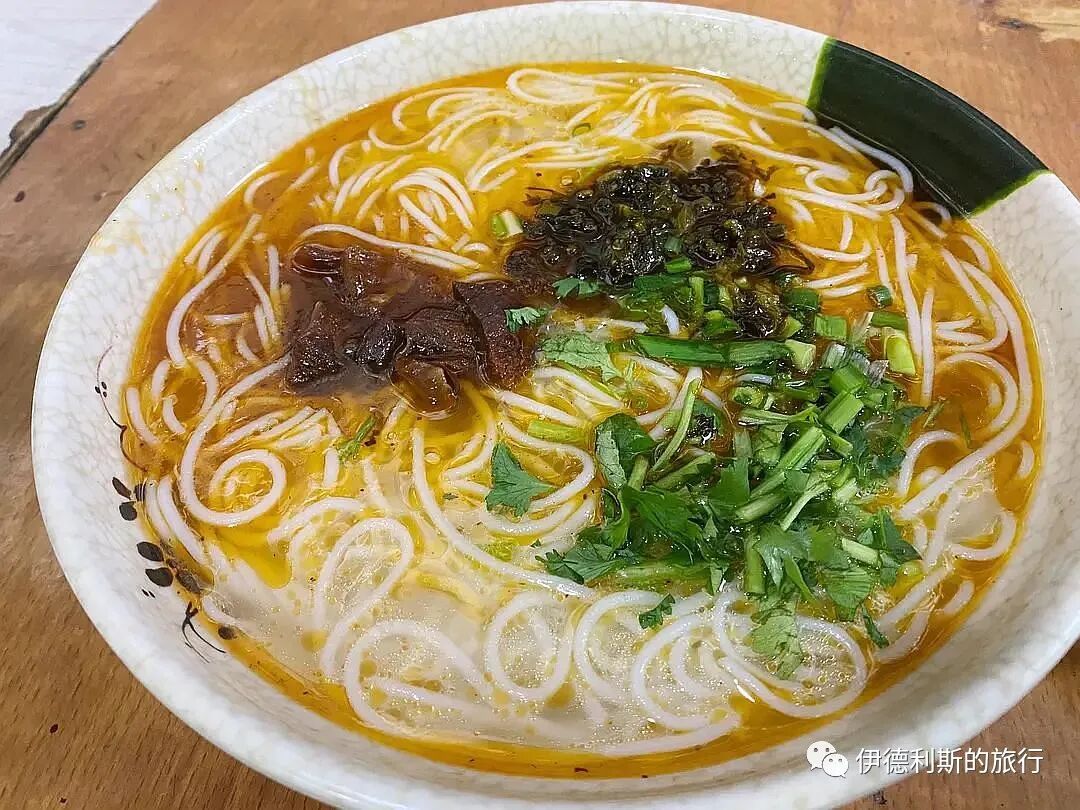
At the Nanchong Mosque, people eat beef rice noodles or beef tripe rice noodles for breakfast every day.
You can also eat Sichuan-style beef noodles here.
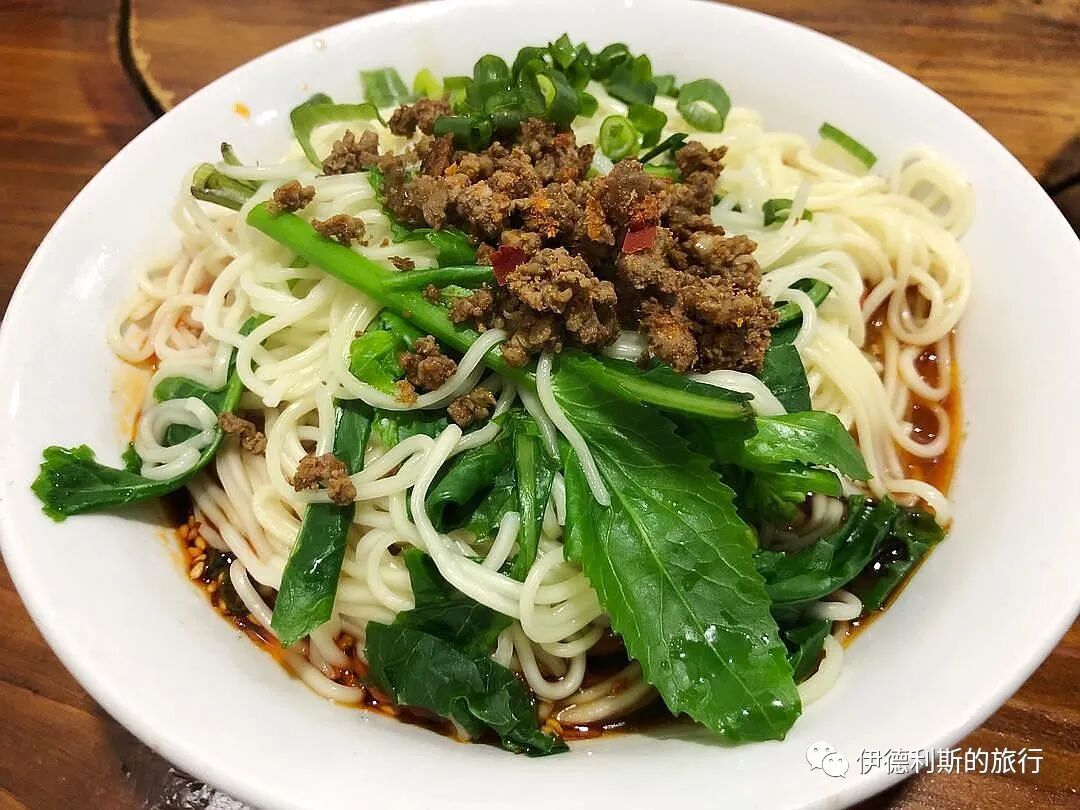
2. Chengdu's minced meat noodles (zajiangmian).
There is a halal hot pot restaurant called Dawude on Renhou Street near Kuanzhai Alley. Most local halal restaurants in downtown Chengdu do not serve breakfast, but this is one of the few I know that does. The owner is a Hui Muslim from Qingchuan, Guangyuan. I had the minced meat noodles (zajiangmian) here, and they tasted very authentic.
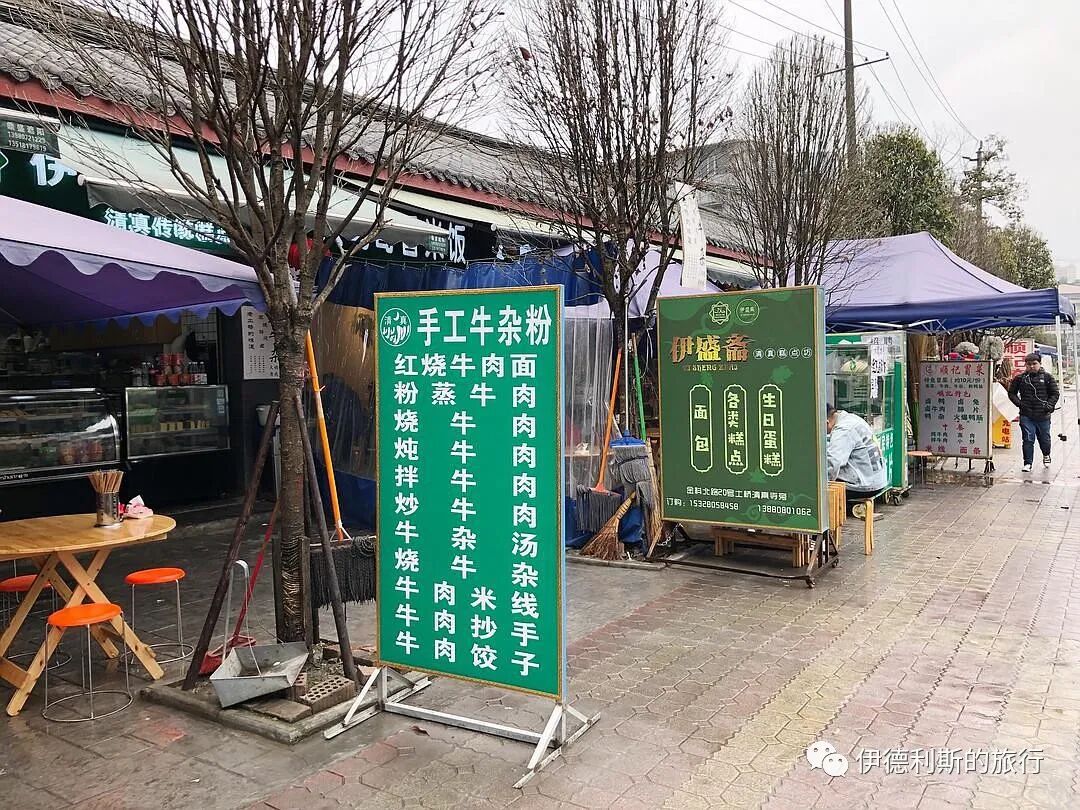
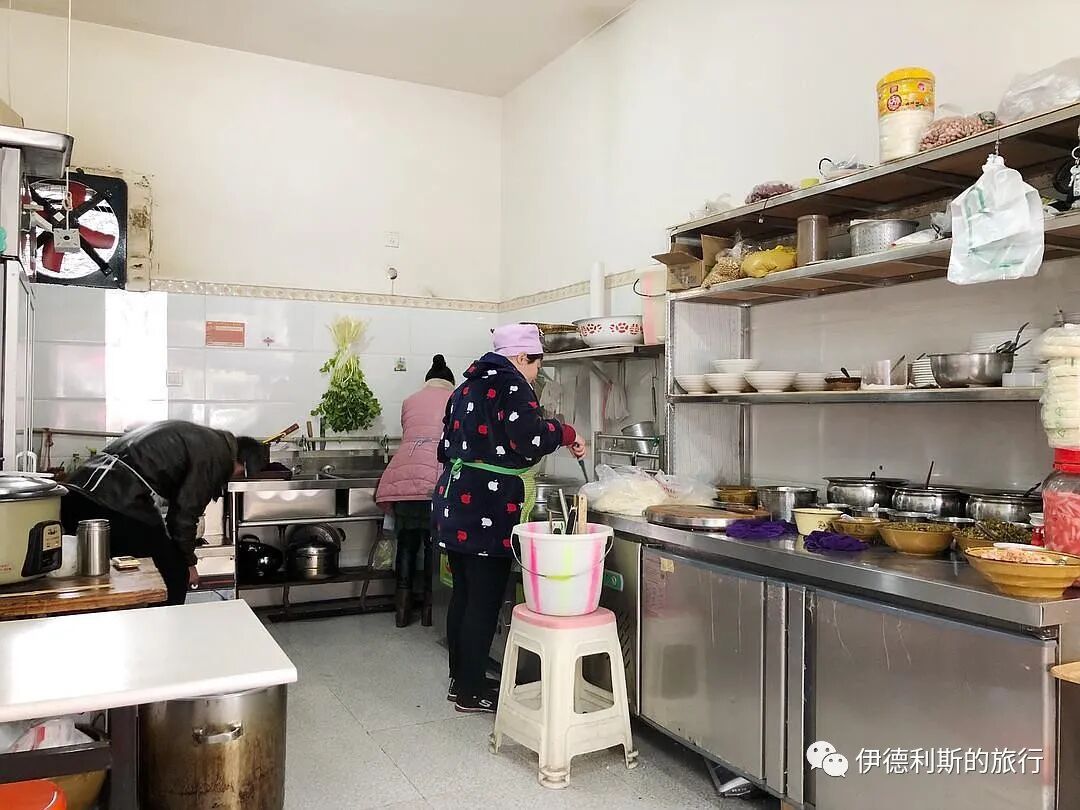
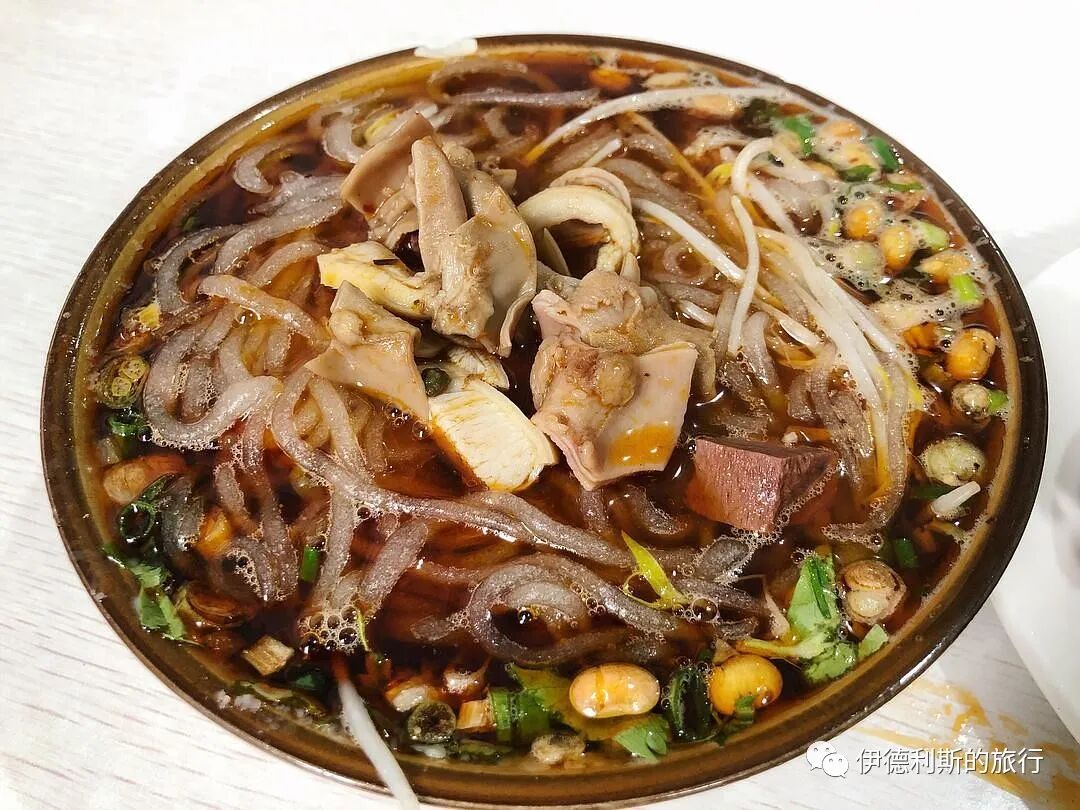
3. Beef offal rice noodles (niuzhafen) in Tuqiao, Chengdu.
After the Huangchengba Muslim community was dissolved, Tuqiao Town in the northwest suburbs became the closest traditional Muslim community to downtown Chengdu. Many local Hui Muslims come here for Friday namaz. Although Tuqiao Town has gone through demolition, the traditional mosque and the halal snack shops at its entrance are still there, so it remains very lively. I arrived in Tuqiao before the Friday namaz and had beef offal rice noodles (niuzhafen) at a snack shop by the entrance.
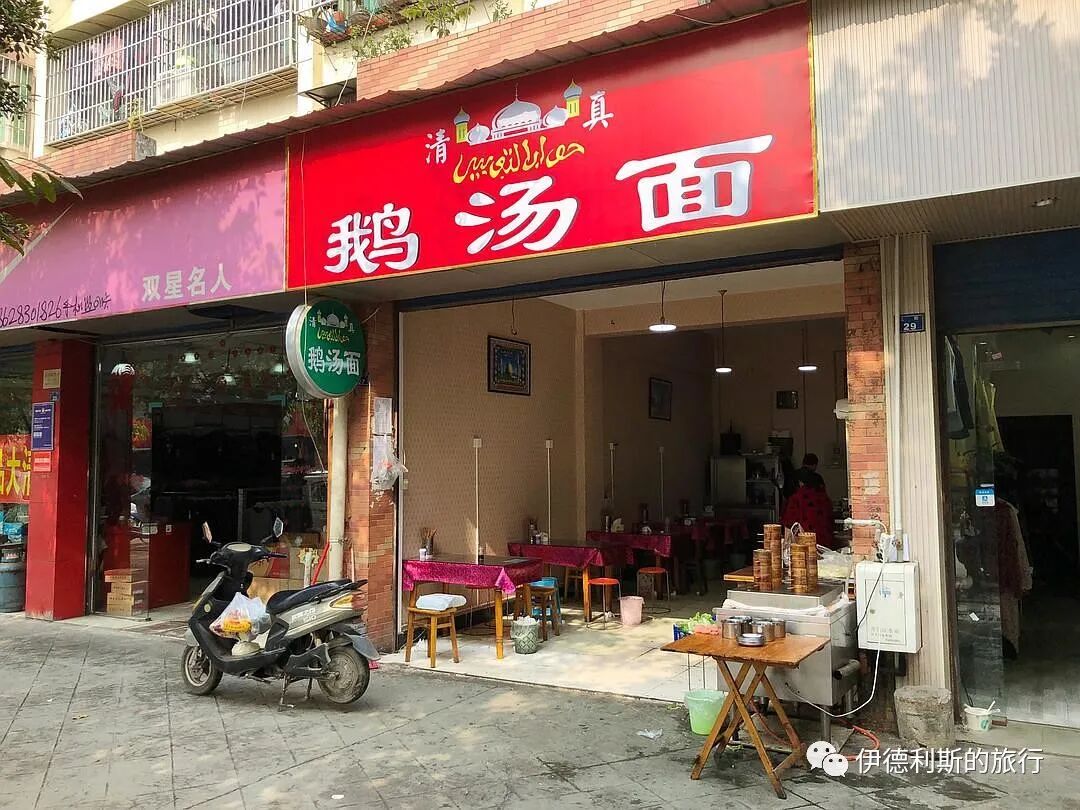
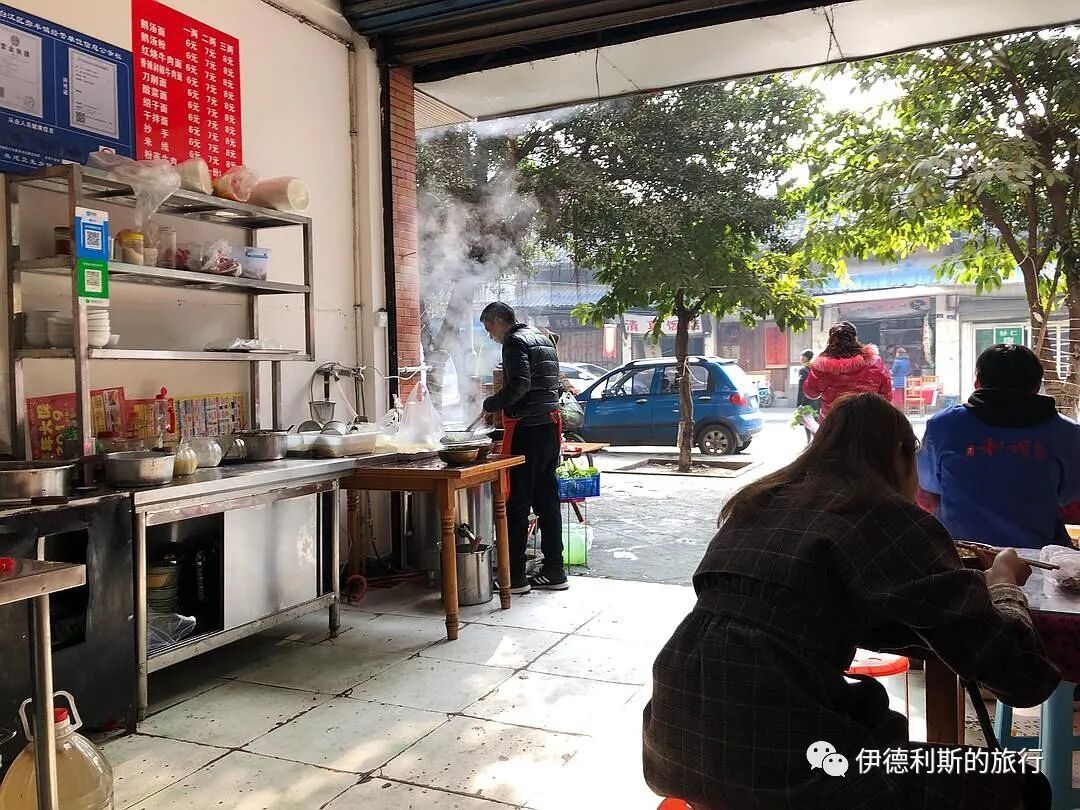
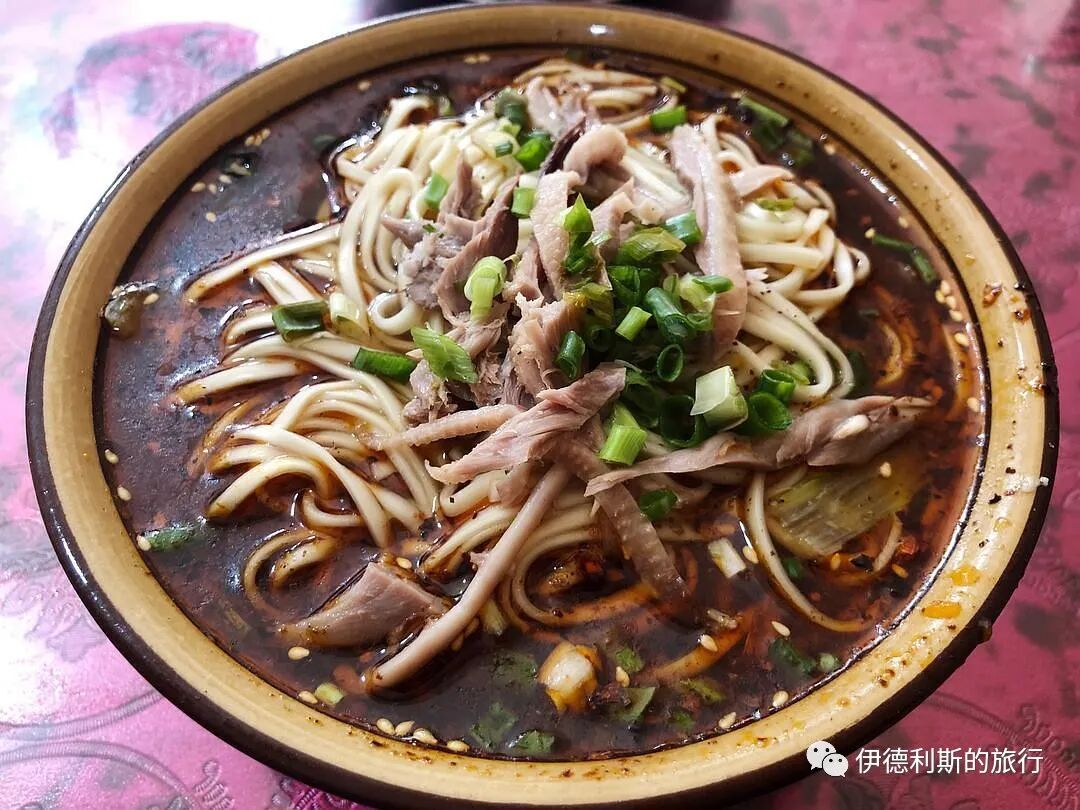
4. Goose soup noodles (etangmian) in Mimou Town, Chengdu.
Mimou Town is located in the Qingbaijiang District, on the border between Chengdu and Guanghan. Hui Muslims have lived here since the Ming Dynasty. After the Kangxi period, many Hui Muslims from Shaanxi and Hunan moved to the area around Mimou Town and built six mosques one after another.
Unlike the heavily developed ancient city of Guanxian in Dujiangyan, Mimou Town has no traces of tourism. It is full of daily life and keeps its own pace. I had goose soup noodles (etangmian) here.
V. Yunnan
1. Beef rice noodles (niurou migan) in Manluanhui, Menghai, Xishuangbanna.
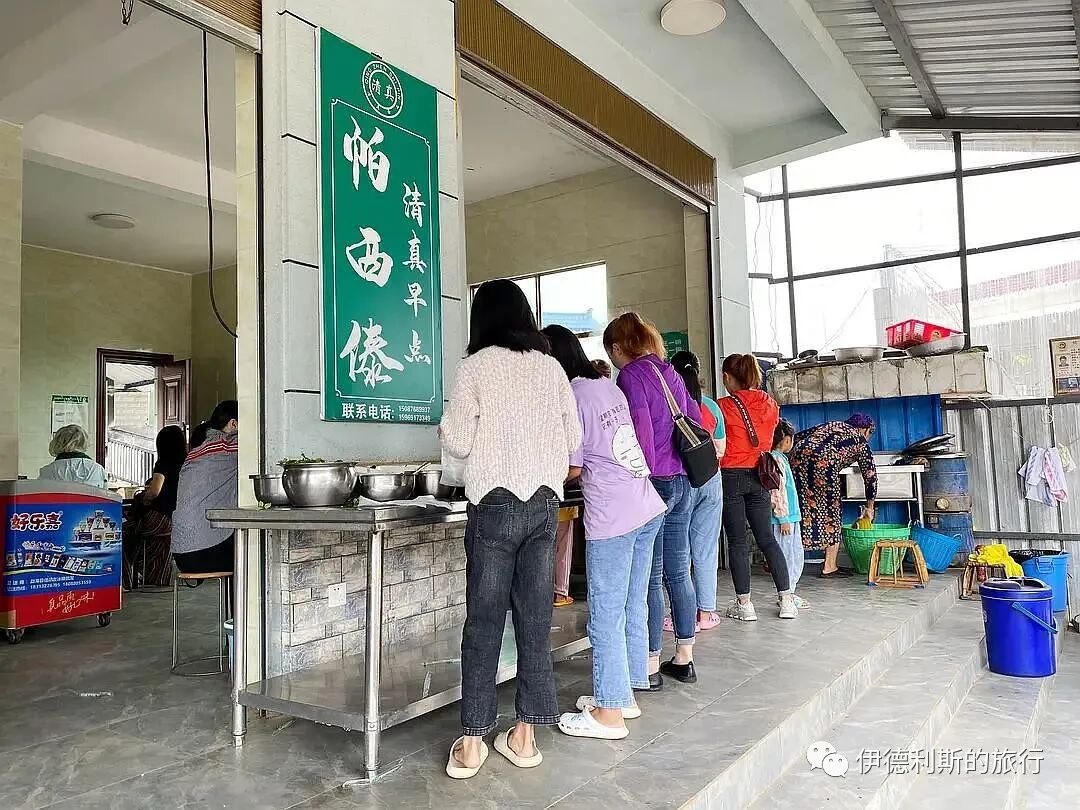
The Paxi Dai people live in two villages in Menghai County, Xishuangbanna: Manluanhui and Mansaihui. In the Dai language, "man" means village. The Paxi Dai call themselves "Paxi." They follow Islam and observe the faith, but they speak the Dai language, use the Dai script, and make halal Dai-style food. You could say they have kept their Hui Muslim identity while blending into Dai culture.
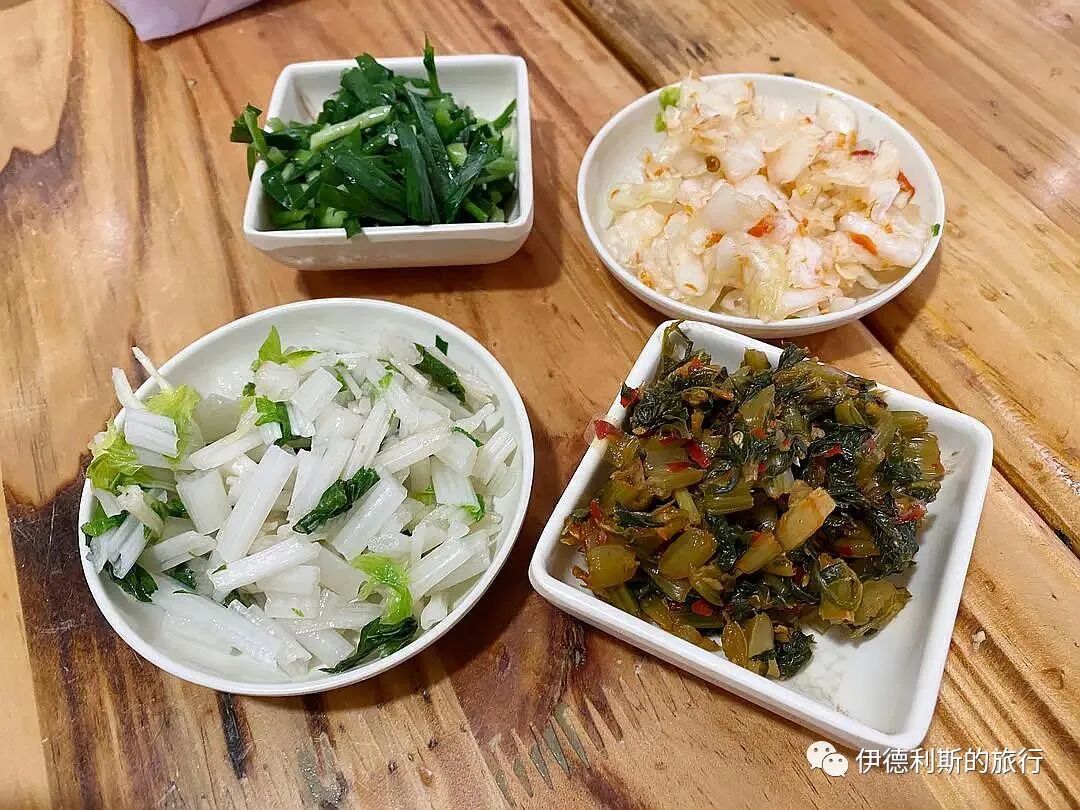
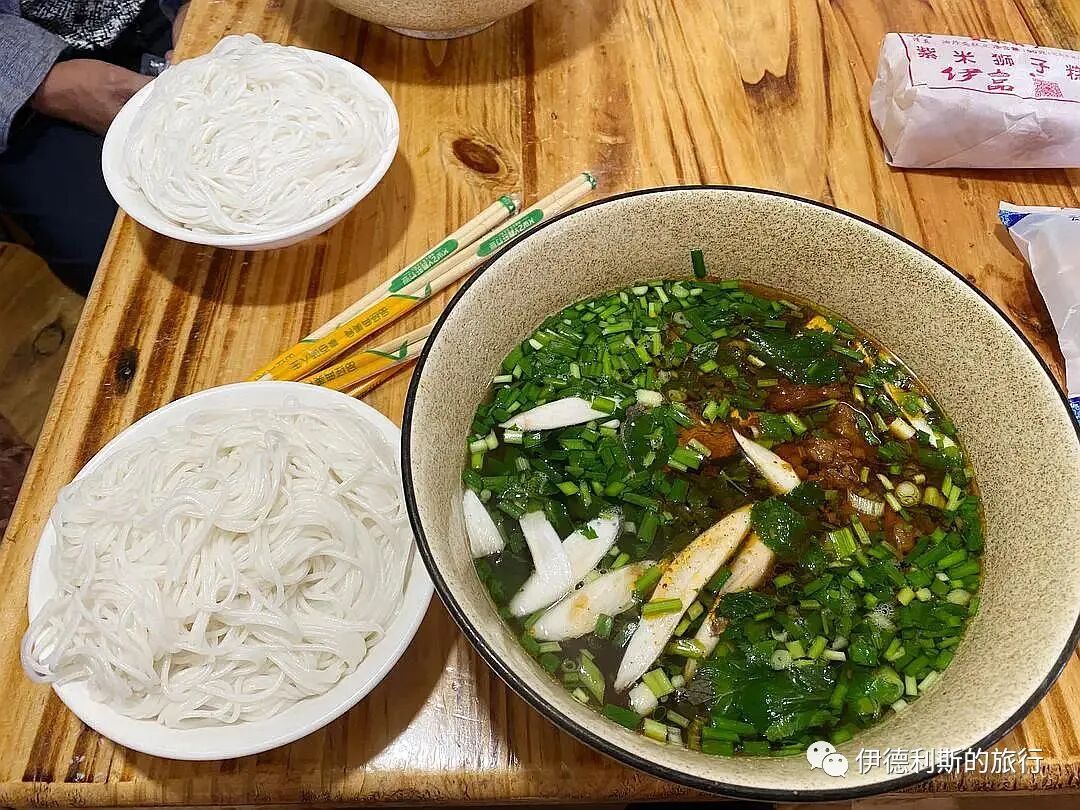
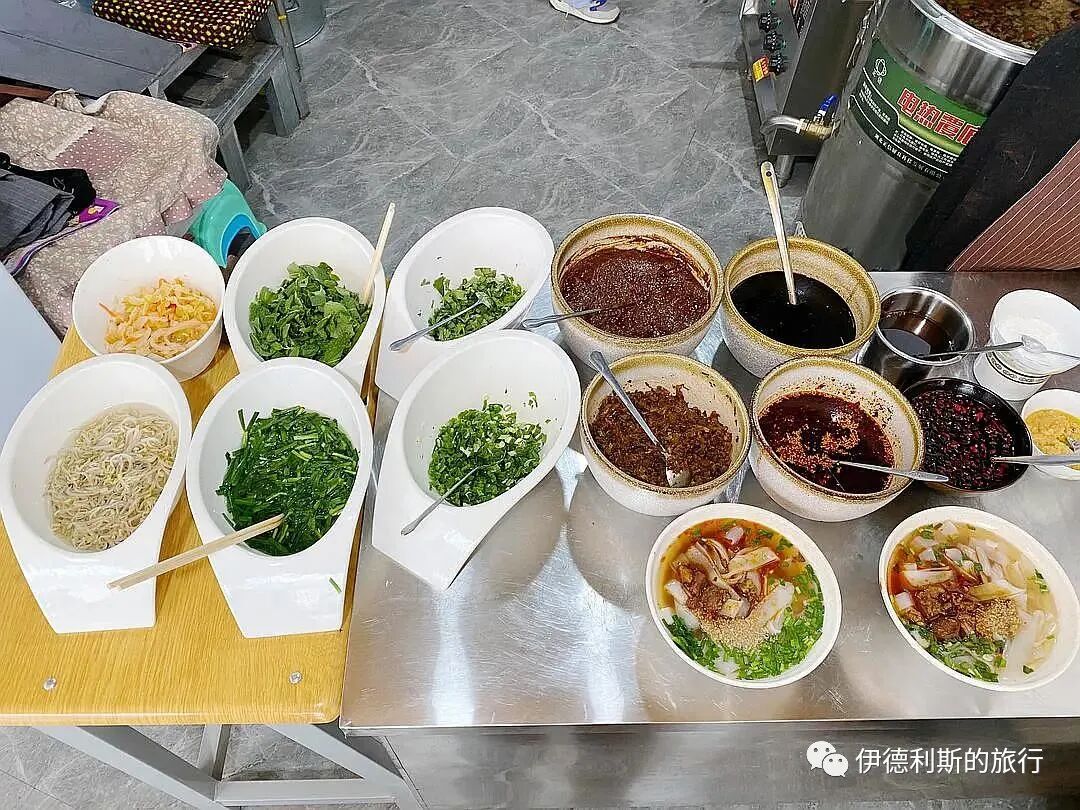
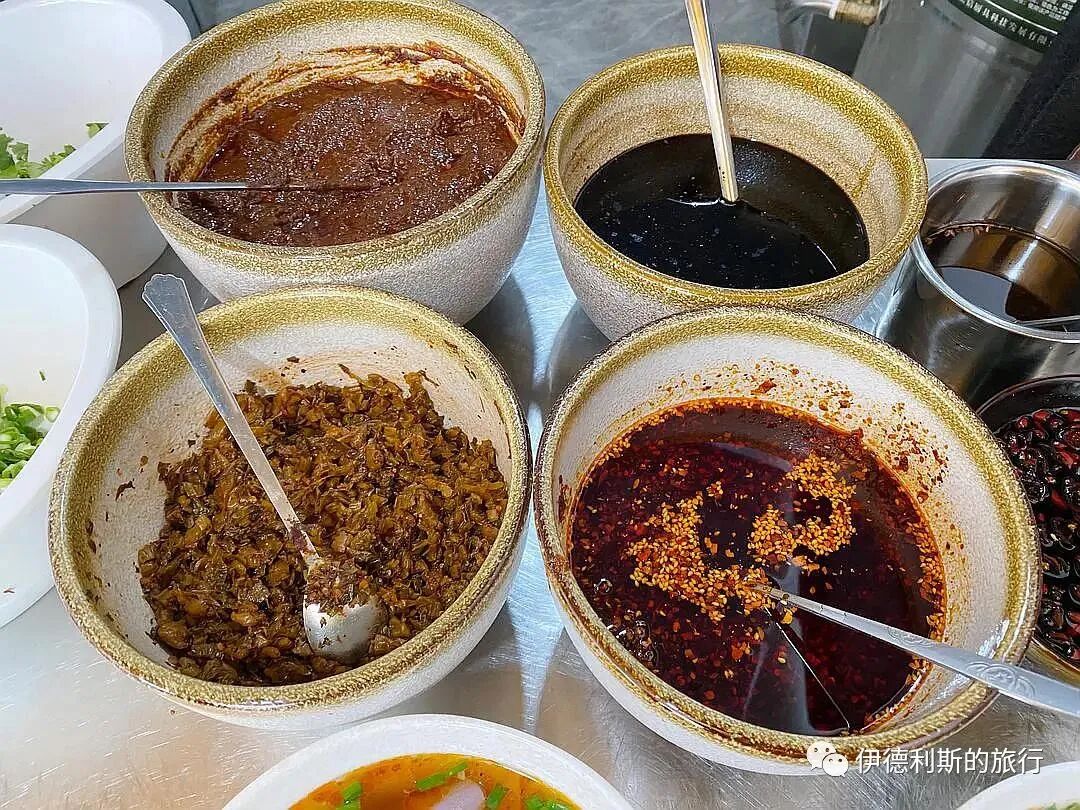
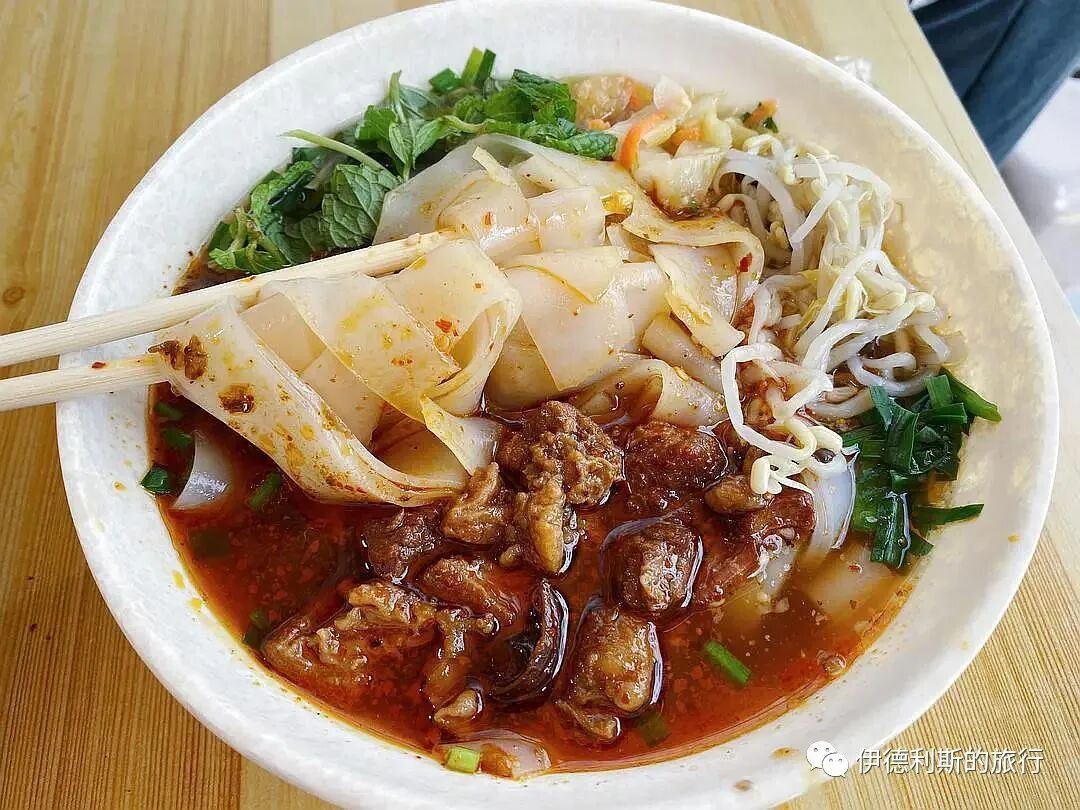
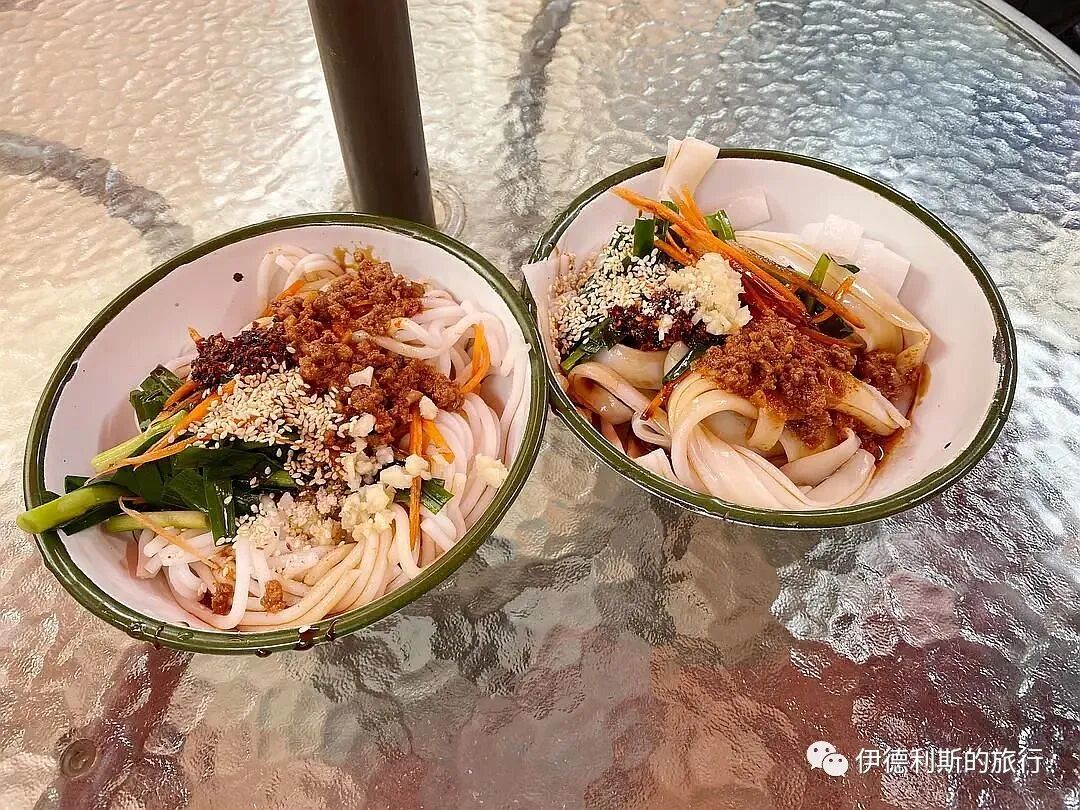
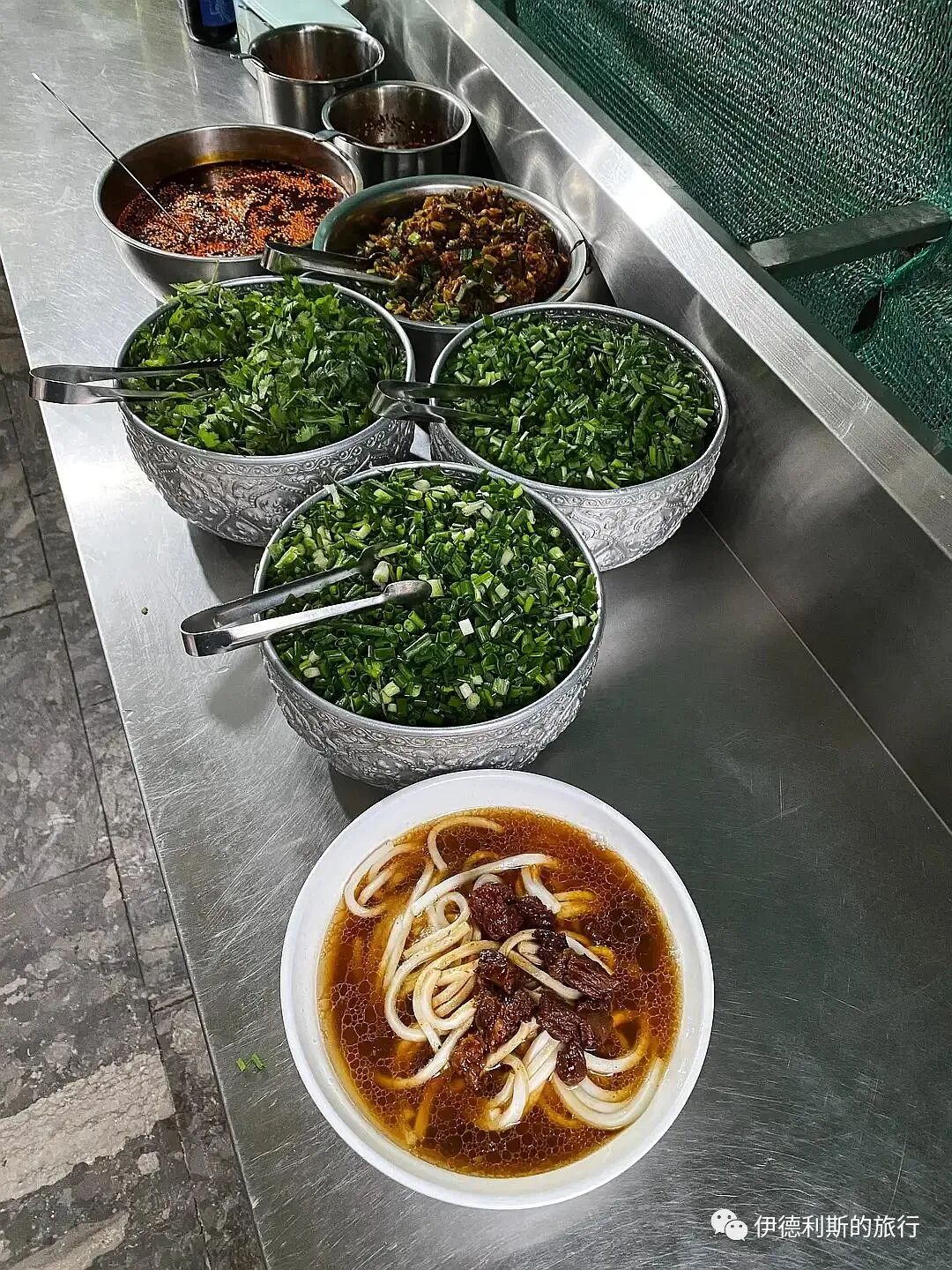
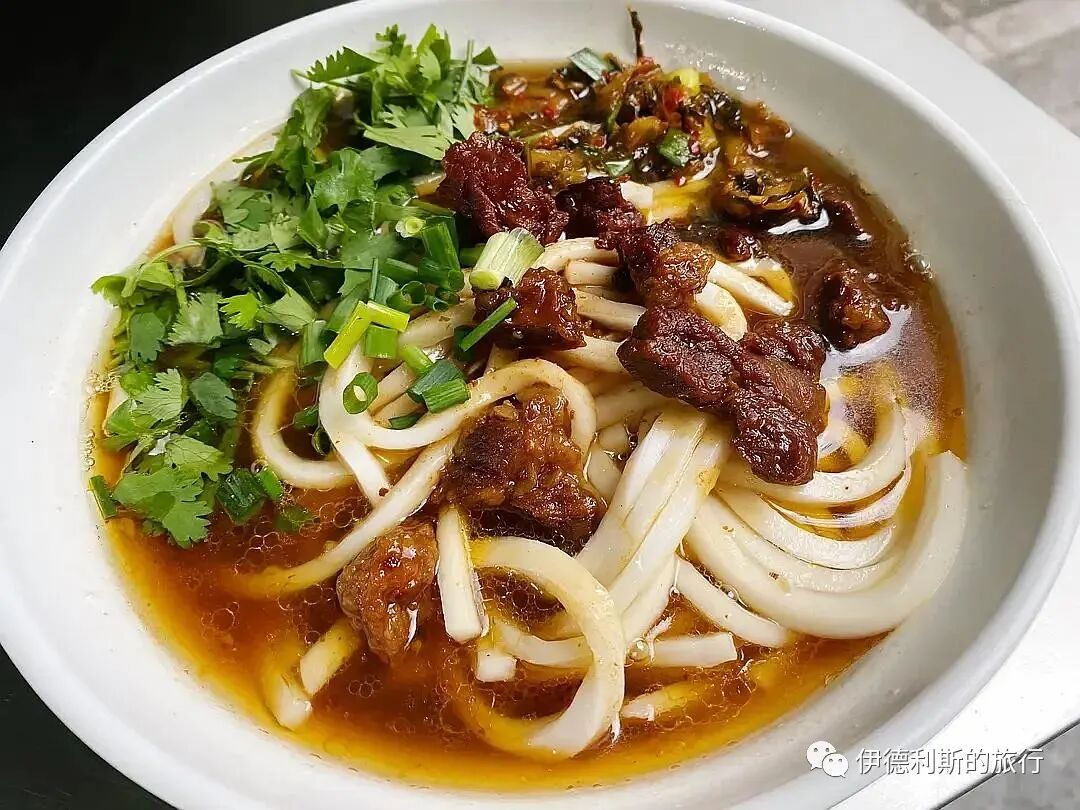
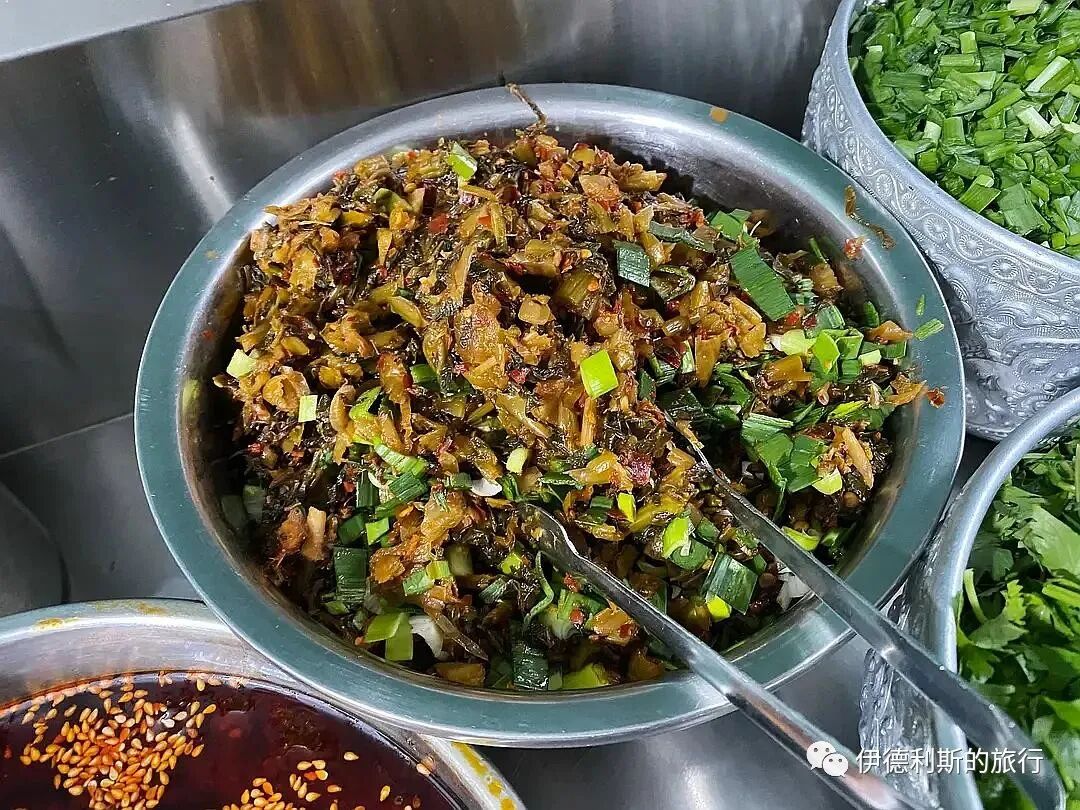
We had a halal Dai-style breakfast in Manluanhui at a restaurant called Paxi Dai. In the morning, Paxi Dai people mainly eat beef rice noodles (niurou mixian) and flat rice noodles (migan). We ordered the flat rice noodles. The variety of side dishes here is really rich, including pea tips, chives, bean sprouts, and various dipping sauces. The best part is that their beef is delicious! It is a little sweet and very fragrant.
2. Crossing-the-bridge rice noodles (guoqiao mixian) in Mengzi.
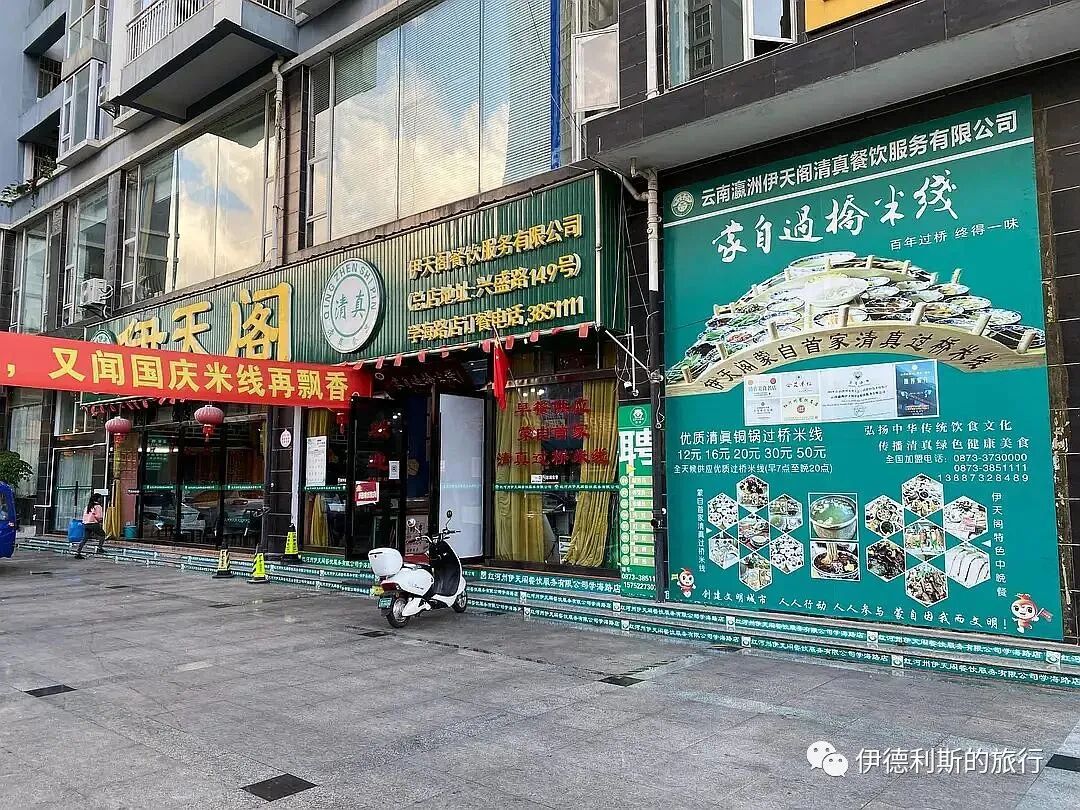
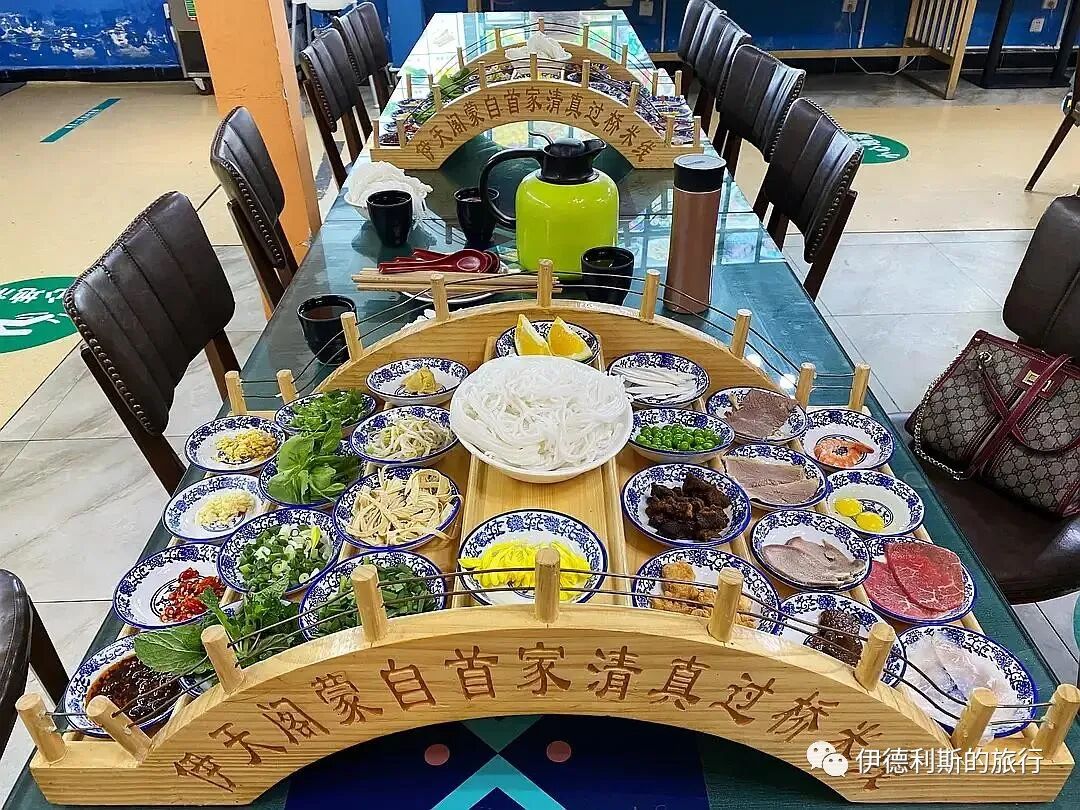
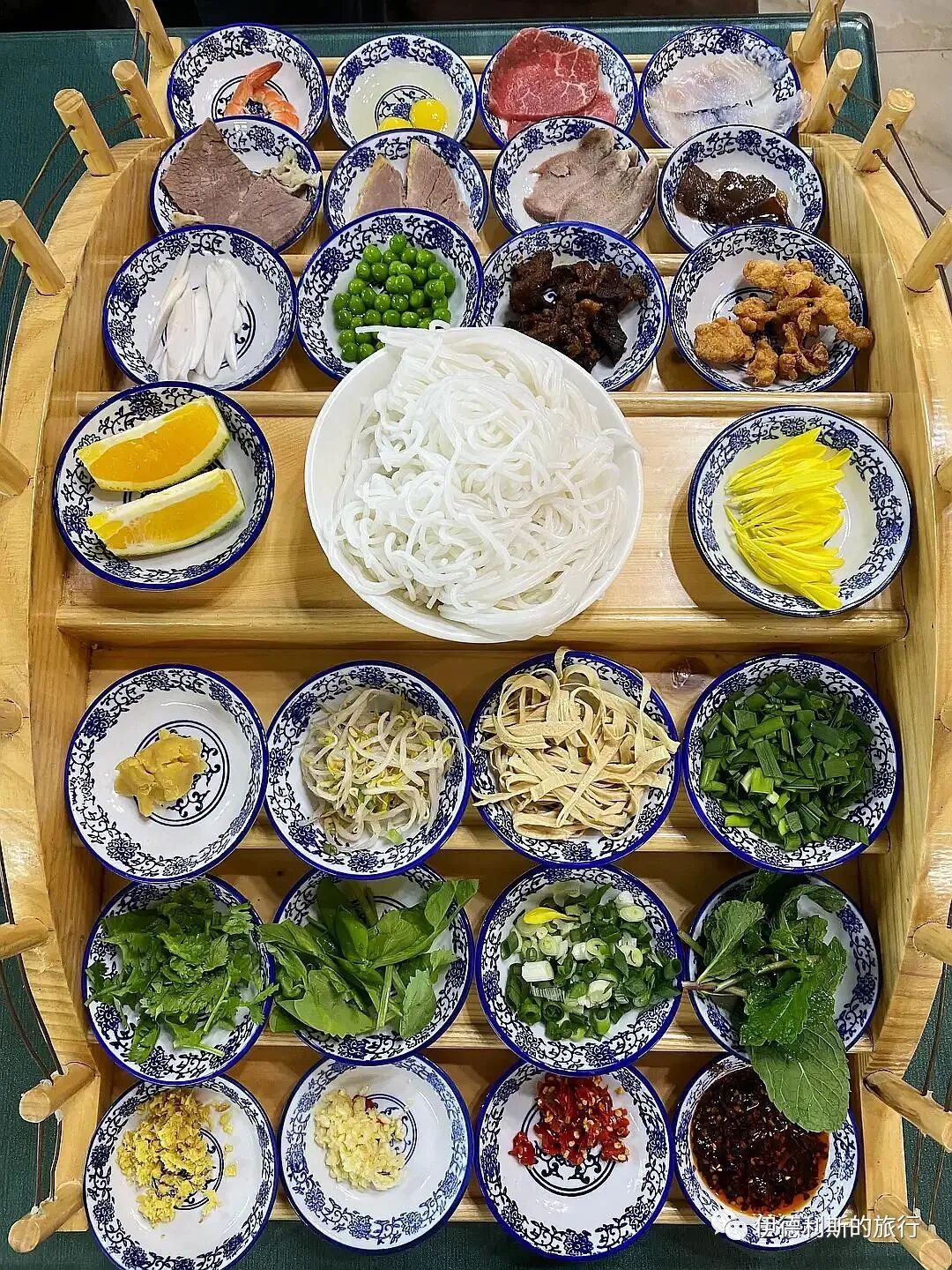
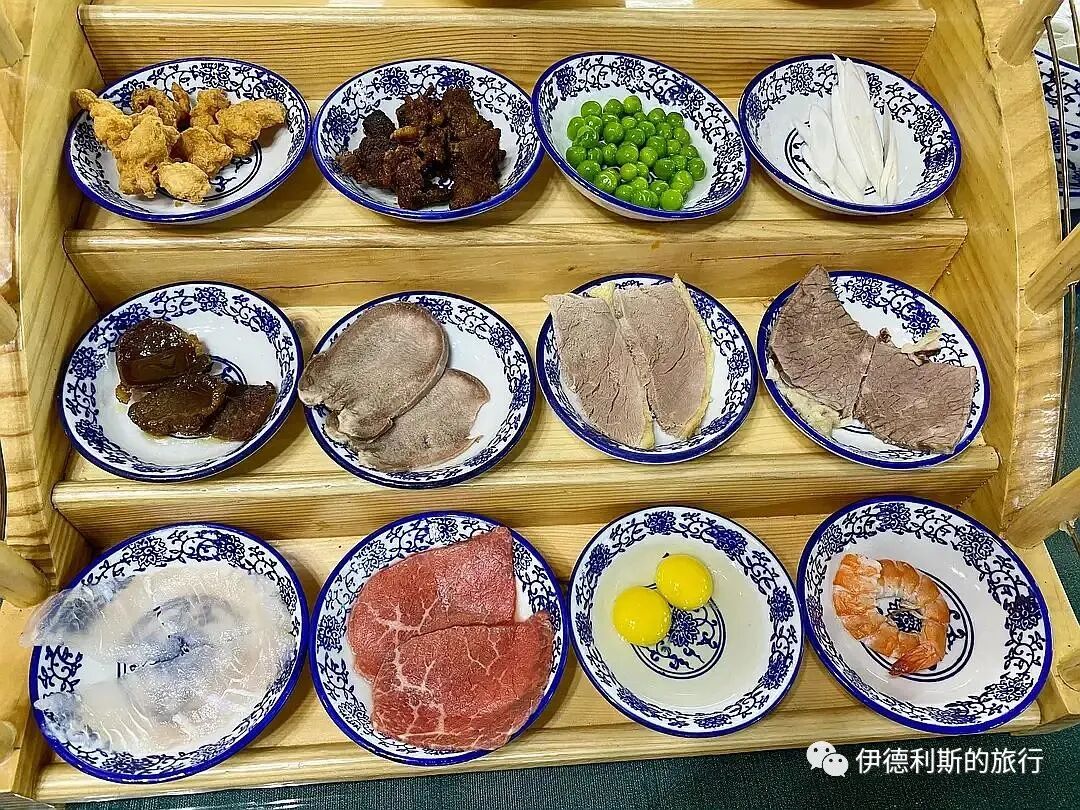
In Mengzi, I ate at a very popular halal crossing-the-bridge rice noodles (guoqiao mixian) restaurant called Yitiange. They have copper pot crossing-the-bridge rice noodles ranging from 12 to 50 yuan. We ordered the 50-yuan deluxe version, which came with 26 small plates. The broth and rice noodles can be refilled as much as you want. The plates included raw fish slices, raw beef slices, raw quail eggs, shrimp, dried beef (niuganba), beef tongue, cold duck slices, cold beef slices, crispy beef fat, braised beef, grass sprouts, chrysanthemum, pea paste, bean sprouts, bean curd skin, chives, cilantro, mint, chopped green onions, melon tips, ginger, garlic, chili, and chili sauce. The variety is the most complete I have ever eaten!
3. Jianshui's grass sprout bridge-crossing rice noodles (guoqiao mixian).
I ate the local specialty, grass sprout bridge-crossing rice noodles, on Mashi Street near the Chaoyang Tower in the old town of Jianshui.
4. Yuxi Najiaying's beef rolled rice noodles (juanfen).
I ate beef rolled rice noodles in Najiaying, Yuxi, in the morning.
5. Zhaotong's spicy oil rice noodles (ran mixian) and lamb rice noodles.
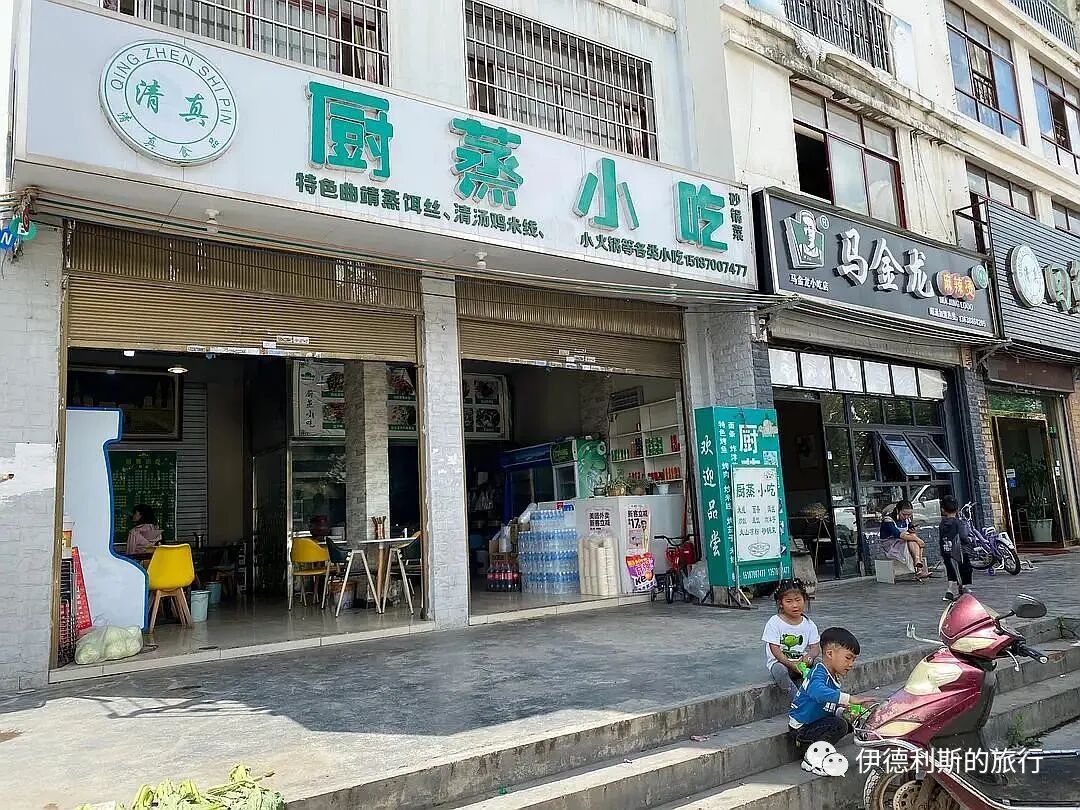
I ate spicy oil rice noodles at the entrance of the Zhaotong East Mosque (Dongdasi).
I ate lamb rice noodles across from the Zhaotong East Mosque. Many places in Yunnan serve beef rice noodles, but this was my first time eating the lamb version.
6. Kunming's pea starch jelly (wandoufen), cold rice noodles (liang mixian), and thick rice noodles (ersi).
I ate cold pea starch jelly, a mix of thick and thin, on Shuncheng Halal Street in Kunming.
Imam Ma Cong treated us to Niangniang cold rice noodles at the entrance of the Jinniu Street Mosque in Kunming; we had one bowl each of rolled rice noodles and rice noodles, and they tasted amazing.
In the late 19th century, as Hui Muslim caravans traveling through Kunming and Dali to Myanmar and Thailand flourished, Hui Muslims from western Yunnan, such as those from Weishan in Dali, began to settle in the Qingyun Street area of Kunming. In 1899 (the 25th year of the Guangxu reign), Hui Muslims from western Yunnan in Kunming and the Xing Shun He firm, founded by Yuxi Hui Muslims, jointly raised funds to build the Chongshan Guild Hall at the east end of Qingyun Street. Later, Dali Hui Muslims merged the Zhuiyuan Hall, Chengyi Hall, and Baozhen Hall with the Chongshan Guild Hall. In 1919, it was renamed Chongshan Society by order of Yunnan Governor Tang Jiyao. It was officially renamed the Yixigong Mosque in 1942, and in 1951, it was also known as the Kunming Overseas Chinese Mosque.
I ate Dali thick rice noodles at the entrance of the Kunming Yixigong Mosque in the morning.
7. Dali Ancient City's local cold chicken rice noodles.
Zaihuishou is a very famous halal snack shop in Dali Ancient City, and its specialty is cold chicken rice noodles.
8. Dali Xiaguan's braised meat rice noodles.
I ate braised meat rice noodles on the Hui Muslim street in Xiaguan, Dali.
9. Ruili's Burmese fried tofu mixed noodles.
Between the opening of the border in 1985 and its closure in 2020, many Burmese Muslims came to Ruili to do business, forming a Burmese halal snack street in the East Alley of Baijing, Ruili. The Muslims in Ruili are mainly Bamar Muslims, an ethnic group formed by the intermarriage of South Asian Muslims and the Bamar people. After the British occupied Myanmar in the 19th century, a large number of South Asian Muslims came to make a living, spreading to almost every city in Myanmar. Burmese Muslims speak Burmese and share similar customs with the Burmese people, and they make up the largest group of Muslims in Myanmar.
The paste on this auntie's face is called thanaka. It is made by grinding yellow fragrant wood branches into powder and mixing it with water. It keeps mosquitoes away and feels cool on the skin.
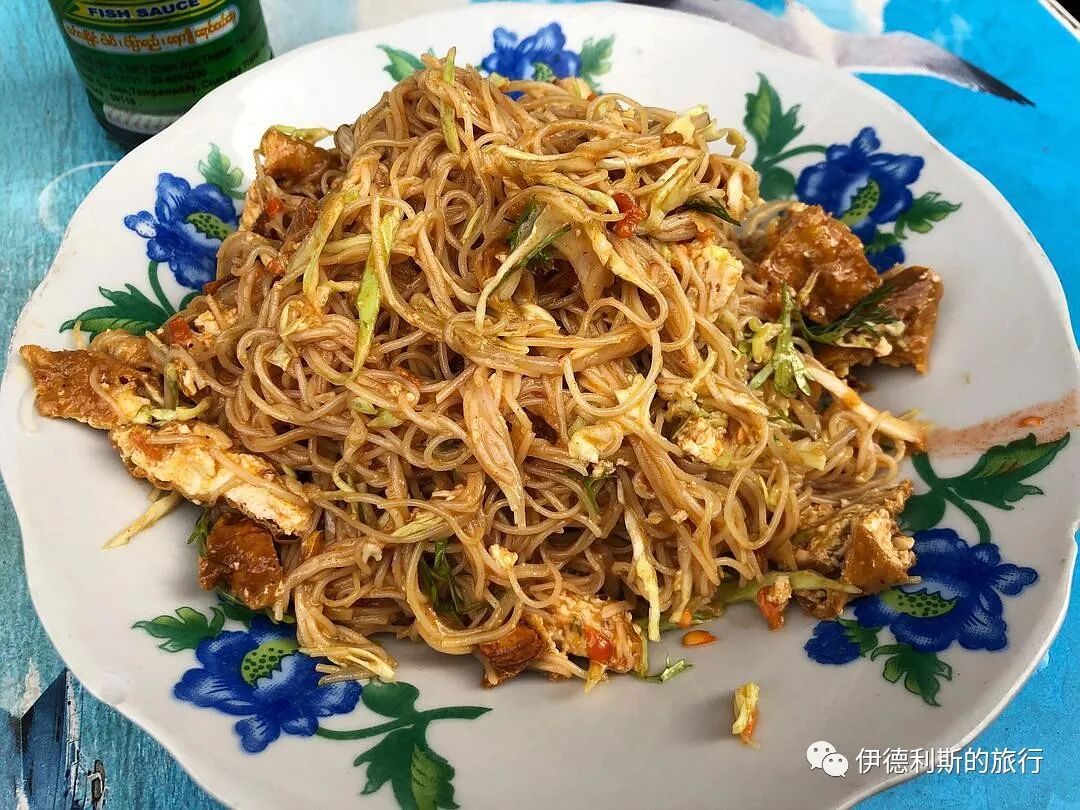
In front of her are various types of mixed noodles, ranging from thick to thin: nan ji, lat, and thay thout. The white ones are glass noodles (ja zan). I ate mixed noodles made with Burmese fried tofu.
6. Tibet
1. Tibetan noodles from the Tibetan Hui Muslims in Lhasa
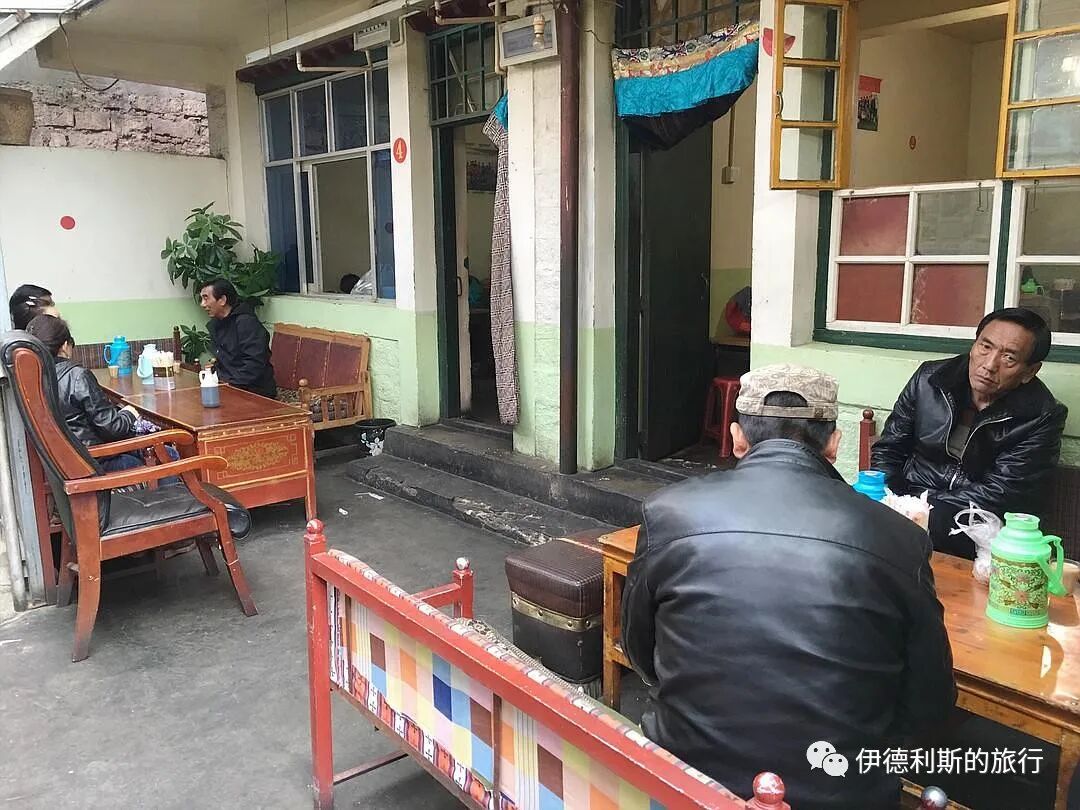
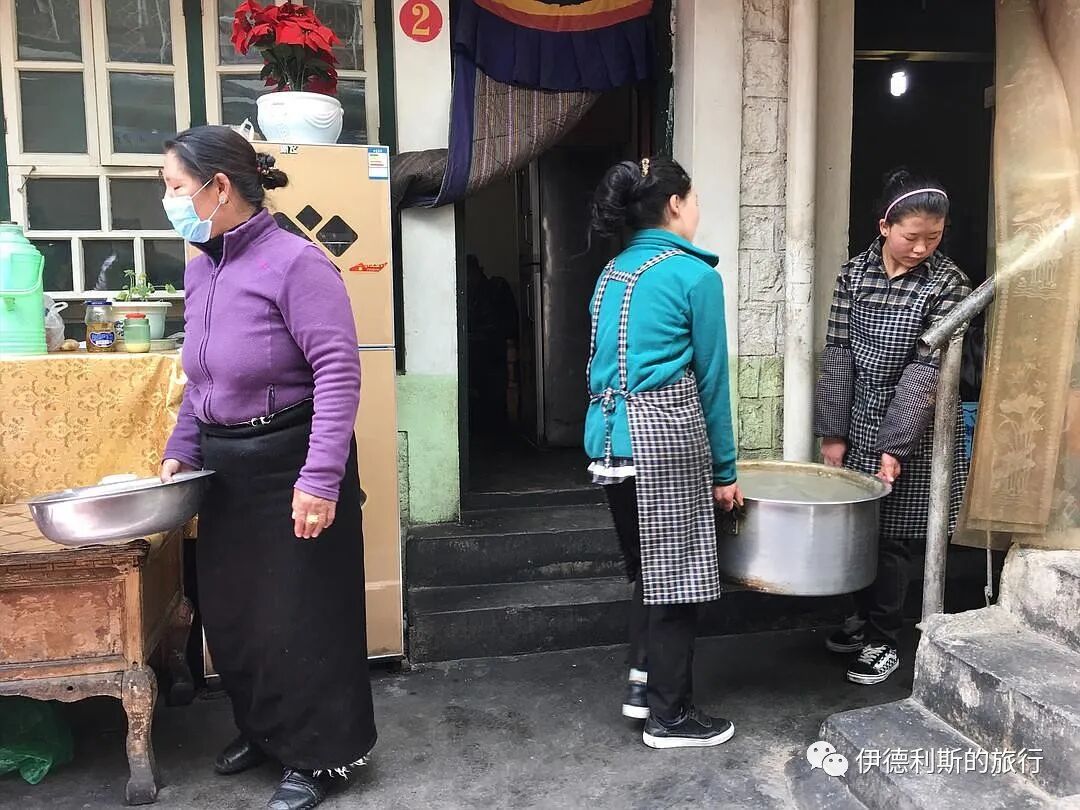
In the southeast of the ancient Barkhor city in Lhasa, there is an area called Hebalin, which used to be a forest on the banks of the Lhasa River. Many Muslims live here who speak Tibetan, wear Tibetan clothes, and eat Tibetan food. They are also called Hebalin Tibetan Hui Muslims. Most of these Tibetan Hui Muslims are descendants of Hui Muslim officers and soldiers from the Qing army stationed in Tibet after the 18th century.
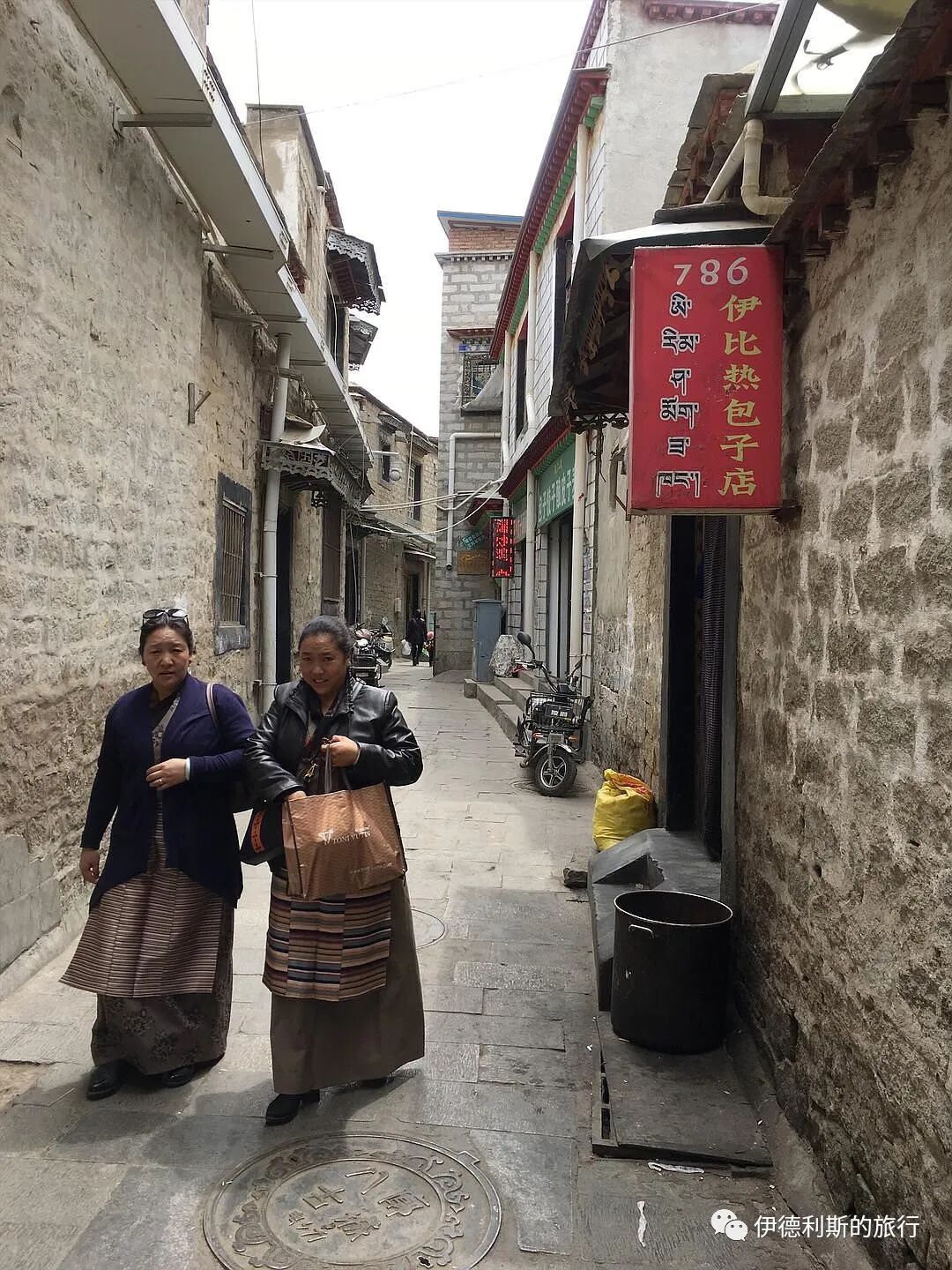
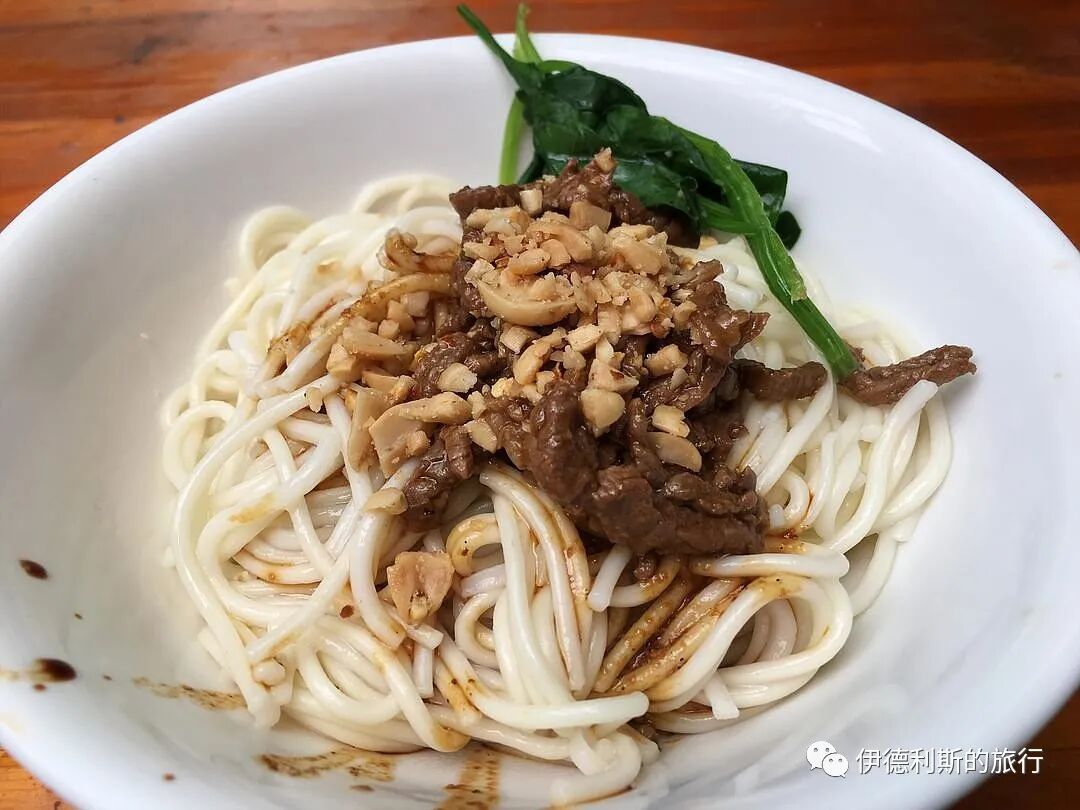
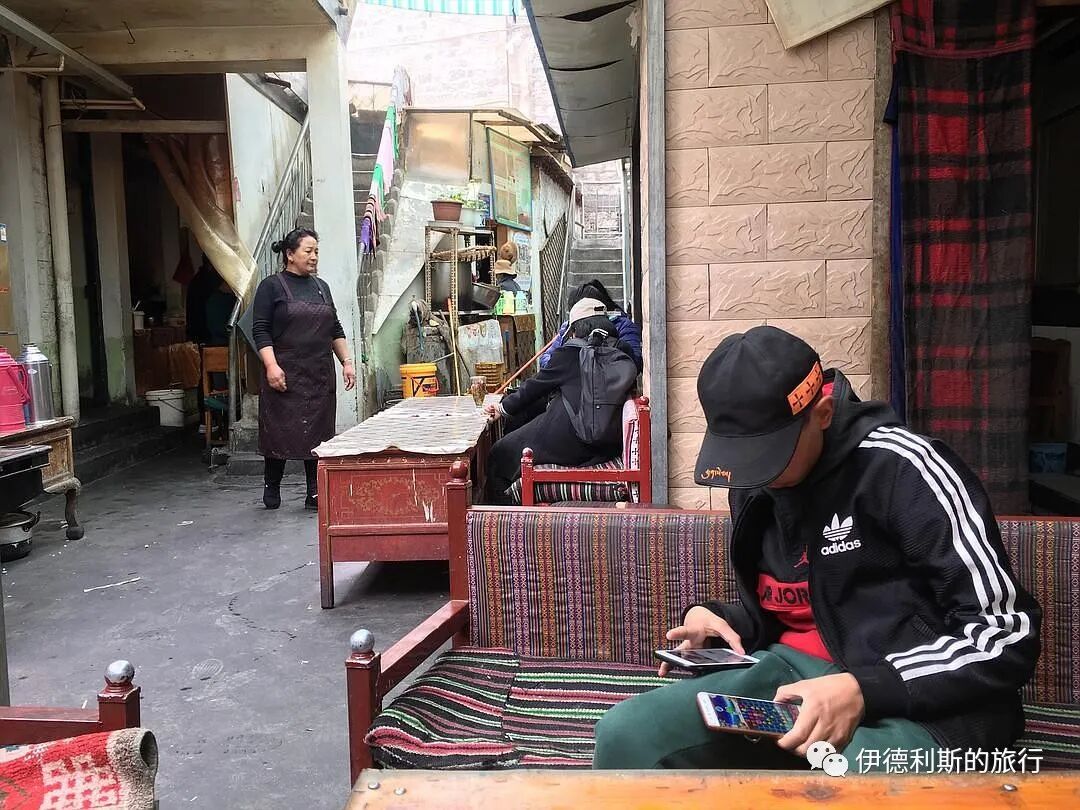
I ate Tibetan noodles at a Tibetan Hui Muslim restaurant called Yibire Steamed Bun Shop in the small alleys of Hebalin.
7. Hainan
1. Beef brisket noodles and chicken rice noodles of the Huihui people in Sanya
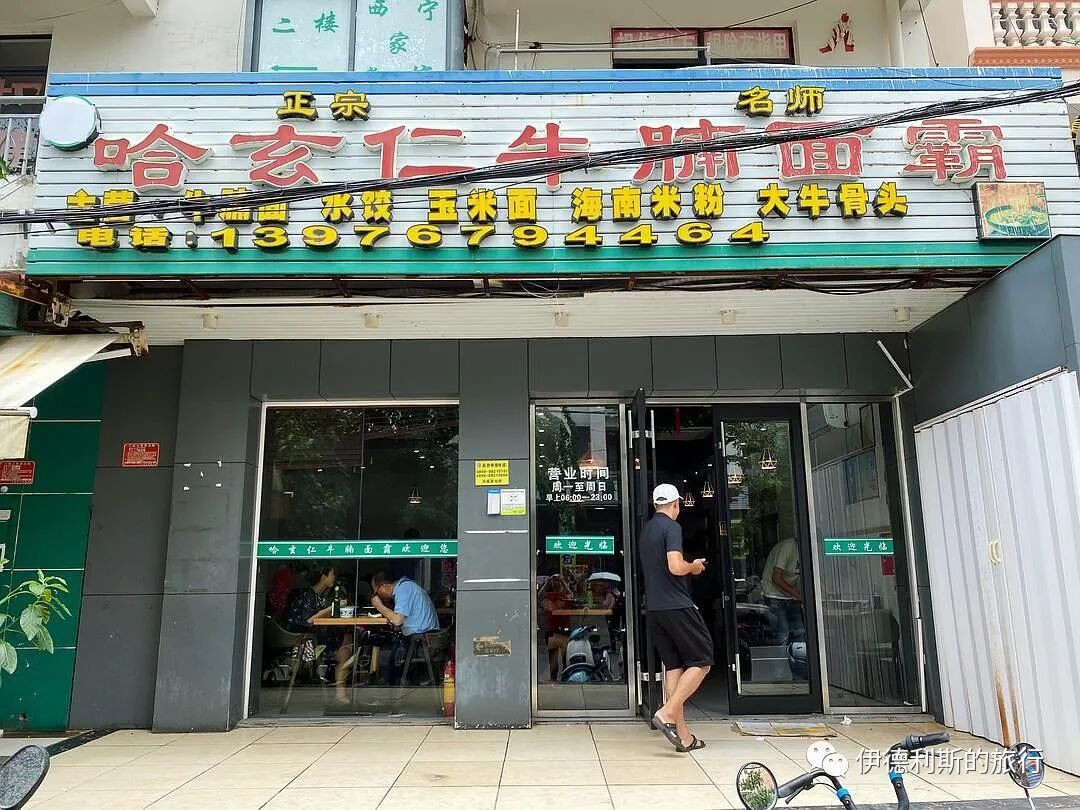
The Ha family of the Sanya Huihui people traces their ancestry back to Pu Chengshipeng, Pu Chengxiang, Pu Chengxi, Pu Chengfu, and Pu Chengrui. According to Ha Bingzhong, a seventh-generation descendant of Pu Chengshipeng born in 1871, Pu Chengshipeng's father moved from Shaanxi to Guangta Street in Guangzhou, then brought his whole family to Dadan Port in Yazhou, Hainan, before moving to Huihui Village in Sanya during the late Ming and early Qing dynasties.
The Ha Xuanren Beef Brisket Noodle Shop opened by the Ha family in Huihui Village is very famous.
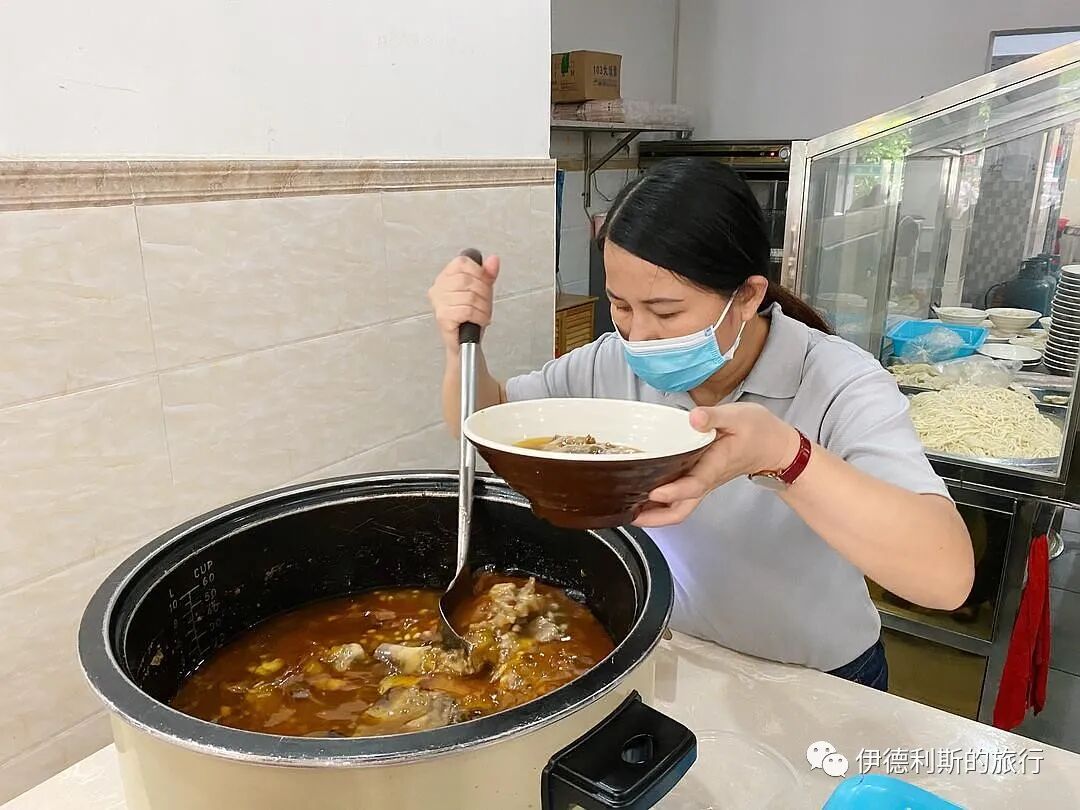
I had chicken rice noodles at the Li Family Rice Noodle shop in Huixin Village, Sanya, in the morning. It was super fresh! view all
Summary: Halal Food Guide: Southern China — Rice Noodles, Hui Muslim Food and Local Flavor is presented here as a firsthand travel account in clear English, beginning with this scene: 5. Beef rice noodles (niurou migan) in Manluanhui, Menghai, Xishuangbanna, Yunnan; bridge-crossing rice noodles (guoqiao mixian) in Mengzi; grass sprout bridge-crossing rice noodles (caoya guoqiao mixian) in Jianshui. The account keeps its focus on Southern China Food, Rice Noodles, Halal Food while preserving the names, places, food, and historical details from the Chinese source.
1. Hot dry noodles (reganmian) in Jingzhou, Hubei; spicy beef rice noodles (hongyou niurou fen) in Wuhan; and beef noodles (niurou mian) in Xiangyang.
2. Fish maw noodles (yudu mian), beef noodles, smoked fish noodles (xunyu mian), and beef heart noodles (niuxin mian) in Nanjing, Jiangsu; spiced dried tofu noodles (xianggan mian) in Zhenjiang; and wonton noodles (huntun mian) and shredded chicken noodles (jisi mian) in Huai'an.
3. Eel shredded cold noodles (shansi lengmian), beef noodles, and lamb noodles (yangrou mian) in Shanghai.
4. Beef rice noodles and Sichuan-style beef noodles in Nanchong, Sichuan; minced meat noodles (zajiang mian) in Chengdu; beef offal rice noodles (niuza fen) in Tuqiao, Chengdu; and goose soup noodles (etang mian) in Mimou Town, Chengdu.
5. Beef rice noodles (niurou migan) in Manluanhui, Menghai, Xishuangbanna, Yunnan; bridge-crossing rice noodles (guoqiao mixian) in Mengzi; grass sprout bridge-crossing rice noodles (caoya guoqiao mixian) in Jianshui; beef rolled rice noodles (niurou juanfen) in Najiaying, Yuxi; spicy rice noodles (ran mixian) and lamb rice noodles in Zhaotong; pea starch jelly (wandou fen), cold rice noodles (liang mixian), and rice noodles (ersi) in Kunming; local cold chicken rice noodles (tu liangji mixian) in Dali Ancient City; braised meat rice noodles (menrou mixian) in Xiaguan, Dali; and Burmese fried tofu mixed noodles in Ruili.
6. Tibetan noodles (zangmian) from Hui Muslims in Lhasa, Tibet.
7. Beef brisket noodles (niunan mian) and chicken rice noodles in Huihui Village, Sanya, Hainan.
1. Hubei
1. Hot dry noodles (reganmian) in Jingzhou
Yingxi Hui Muslim Street is located inside Yingxi Gate, the northwest gate of the Tu City in Shashi, Jingzhou. In the early years of the Republic of China, some Hui Muslims from Nanyang, Henan, came to Shashi as refugees and settled on Yingxi Street. They built a mosque there in 1925. I ate hot dry noodles at an unnamed halal restaurant on Yingxi Street. The hot dry noodles in Shashi are different from those in Wuhan because they add sweet bean sauce (tianmianjiang).
2. Spicy beef rice noodles (hongyou niurou fen) in Wuhan
After the Wuchang Prefecture city was built during the Hongwu reign of the Ming Dynasty, the area outside Zhonghe Gate in the south of the city was originally a wasteland used as a material yard for building the city walls. In the late Ming Dynasty, a group of Hui Muslims who moved from Maguoyuan, Shaanxi, began to live here, working in cattle slaughtering, general goods, and the halal food industry. During the Daoguang reign of the Qing Dynasty, another group of Hui Muslims from Mianyang, Hubei, moved here due to floods, and the number of Hui Muslims outside Zhonghe Gate gradually increased.
Before the demolition in 2020, there was a lively morning market on Qiyi Street every day, crowded and full of life. On Xiangbi Street (the eastern section of Bao'an Street), which intersects with Qiyi Street, there is a halal breakfast shop called "Qingzhen Dajia Hongyou Niurou Fen Mian Guan." It is open daily from around 6:00 or 7:00 AM to 10:00 AM. I ate the spicy beef thin rice noodles there.
3. Beef noodles (niurou mian) in Xiangyang
As the most important commercial hub in the middle reaches of the Han River, Fancheng has had Hui Muslim residents since the Yuan and Ming dynasties. The Hui Muslims in Fancheng were mainly concentrated on Jiaomen Street, where the mosque is located. When the Fancheng Mosque was rebuilt in 1792 (the 57th year of the Qianlong reign), there were 222 local Hui Muslim households who donated funds. In 2015, all of Jiaomen Street was demolished for new construction. Now, only a row of shops selling beef noodles and raw beef remains at the bridgehead of the Han River Bridge.
Early in the morning, we went to the bridgehead to eat beef noodles at Liu's shop from Jiaomen Street. Liu's is run by the son of Liu Donghan, an old imam at the Fancheng mosque, and it is quite famous. When I was in college, our halal cafeteria had a stall for Xiangfan beef noodles, and my impression back then was that it was really spicy! This time, I finally got to taste the authentic version. After eating the authentic version, I felt it was indeed a bit spicy, haha. We specifically asked for no chili, but the braised beef broth itself is a little spicy. But besides the spice, the beef is really fragrant! They must use plenty of meat, and it is stewed until very flavorful.
2. Jiangsu
1. Nanjing's fish maw noodles, beef noodles, smoked fish noodles, and beef heart noodles.
Lvliuju was founded in 1912 by Taoye Ferry on the banks of the Qinhuai River. It started as a high-end vegetarian restaurant, and people like Kong Xiangxi, Chiang Ching-kuo, Bai Chongxi, and the Soong sisters often dined here. After 1949, Lvliuju closed for a time. It did not reopen until 1963 at Yanggongjing on Taiping South Road, where they hired the famous chef Chen Bingyu to continue serving authentic vegetarian food. A major feature of Lvliuju is vegetarian dishes made to taste like meat. Their vegetarian chicken (suji) and vegetarian duck (suya), made from tofu skin, gluten, and dried bean curd sticks with Chinese herbal seasonings, are delicious.
In 1987, Lvliuju added halal dishes to its vegetarian menu and became a halal restaurant, though vegetarian food remains its specialty. In 1995, it was rebuilt on the same site into the current five-story building, becoming a large halal restaurant in Nanjing. We ate fish maw noodles at Lvliuju, which also contained mushrooms, bamboo shoots, wood ear mushrooms, and green peas.
We ate at Jintongji Beef and Mutton Restaurant north of the Nanjing Confucius Temple, where we ordered a huge portion of Jintongji noodles with beef, beef tendon, beef tripe, and beef intestine, as well as smoked fish noodles. The black sweet beef was so delicious! It is very addictive, and the sweet smoked fish is also super tasty. (This is the old Jintongji shop; it has now moved to a new address.)
We had beef heart noodles at Xiaoyisi Noodle Shop on Luolang Lane in Nanjing (this is the old location; it has now moved to a new address). This shop has also been open for many years. It is a husband-and-wife business, and the owner is an uncle who wears a gold chain. Next to the noodle shop is the famous provincial cultural heritage site, the Taiping Heavenly Kingdom architecture and murals on Luolang Lane.
2. Zhenjiang's dried tofu noodles (xianggan mian).
The ancient Runzhou Mosque (Runzhou libaisi) from the Yuan Dynasty in Zhenjiang was moved to Jianzi Lane in the city in 1602 (the 30th year of the Wanli reign) and has since been called the Jianzi Lane Mosque. In 2005, the Jianzi Lane Mosque was demolished due to the construction of the Zhenjiang First Building commercial pedestrian street, but there are still many halal restaurants nearby. We ate dried tofu noodles (xianggan mian) at Yang Dahai Steamed Bun Shop in the small alley north of Jianzi Lane. They had a slightly sweet taste, and the noodle broth was very much in the Jianghuai style.
3. Chicken shredded noodles (jisi mian) of Huai'an
Because navigating the Yellow River section of the Grand Canal was very dangerous, and waiting times to pass through locks after entering Shandong were too long, many merchants chose to leave their boats at Qingjiangpu in Huai'an, Jiangsu. They would cross the Yellow River and switch to horse-drawn carriages to continue north, making Qingjiangpu a transportation hub for southern boats and northern horses. Hui Muslims have been doing business on Yuehe Street in front of the Imperial Wharf since the Ming Dynasty, and the Qingjiang Mosque was built during the Jiajing period of the Ming Dynasty.
Eating wonton noodles at the entrance of the Qingjiangpu Mosque.
I ate chicken shredded noodles at Liu Si Noodle Shop. It had fish balls, beef balls, and squid inside. The fish balls were super delicious, the soup was excellent, and it felt great to finish the meal.
Heading south along the canal from Qingjiangpu, you reach the ancient town of Hexia, not far northwest of the Huai'an prefectural city. Hexia is the largest town in the suburbs of Huai'an. Its official historical name was Manpu, and it developed into an important canal town during the Song and Yuan dynasties. Because the salt production and quality in the coastal salt fields north of the Huai River were very high, many salt merchants from the northwest and Anhui came to the region in the late Ming Dynasty to work in the salt industry. The wealth brought by these merchants made Hexia a prosperous commercial center. Many Hui Muslims also came to settle in Hexia, and the Hexia Mosque was first built during the Ming Dynasty.
We had some very fragrant chicken shredded noodles at a halal snack shop on Zhugan Lane in Hexia Town. When eating noodles in Jiangsu, the soup is more important than the noodles themselves.
4. Shanghai
1. Shanghai's eel shredded cold noodles (shansi lengmian), beef noodles, and lamb noodles
Yixinzhai is an old shop on Pingliang Road in Yangpu District that opened in 1958. It is most famous for its pan-fried beef buns (niurou jianbao) and three-yellow chicken (sanhuangji). In the summer, they also sell shaved ice and cold noodles. I ate the eel shredded cold noodles here. The topping was made with two types of mushrooms and three shredded ingredients, and it was truly delicious.
At Zhang Xuchang Old Man Noodle Shop on Houjia Road, the lamb noodles and beef noodles are served with the toppings on the side. The beef comes with yellow curry, and the lamb is served in a clear white broth.
5. Sichuan
1. Nanchong beef rice noodles (niurou fen) and Sichuan-style beef noodles
The ancestors of Imam Feng Yong from the Nanchong Mosque moved to Nanchong from Shaanxi during the Qing Dynasty. During the Republic of China era, the Feng family joined forces through marriage with three other families: Yang Fangyun who ran "Red Lantern Dried Beef," Ma Yutu who ran "Ma Laizi Canned Beef," and Zhang Dechao who ran "Beef Crispy Cakes." The Imam's grandfather, Feng Zifeng, founded the "Shixian" brand on Fu Street and opened a halal restaurant. Today, Imam Feng Yong's family still runs an authentic Sichuan halal food business at the entrance of the mosque.
At the Nanchong Mosque, people eat beef rice noodles or beef tripe rice noodles for breakfast every day.
You can also eat Sichuan-style beef noodles here.
2. Chengdu's minced meat noodles (zajiangmian).
There is a halal hot pot restaurant called Dawude on Renhou Street near Kuanzhai Alley. Most local halal restaurants in downtown Chengdu do not serve breakfast, but this is one of the few I know that does. The owner is a Hui Muslim from Qingchuan, Guangyuan. I had the minced meat noodles (zajiangmian) here, and they tasted very authentic.
3. Beef offal rice noodles (niuzhafen) in Tuqiao, Chengdu.
After the Huangchengba Muslim community was dissolved, Tuqiao Town in the northwest suburbs became the closest traditional Muslim community to downtown Chengdu. Many local Hui Muslims come here for Friday namaz. Although Tuqiao Town has gone through demolition, the traditional mosque and the halal snack shops at its entrance are still there, so it remains very lively. I arrived in Tuqiao before the Friday namaz and had beef offal rice noodles (niuzhafen) at a snack shop by the entrance.
4. Goose soup noodles (etangmian) in Mimou Town, Chengdu.
Mimou Town is located in the Qingbaijiang District, on the border between Chengdu and Guanghan. Hui Muslims have lived here since the Ming Dynasty. After the Kangxi period, many Hui Muslims from Shaanxi and Hunan moved to the area around Mimou Town and built six mosques one after another.
Unlike the heavily developed ancient city of Guanxian in Dujiangyan, Mimou Town has no traces of tourism. It is full of daily life and keeps its own pace. I had goose soup noodles (etangmian) here.
V. Yunnan
1. Beef rice noodles (niurou migan) in Manluanhui, Menghai, Xishuangbanna.
The Paxi Dai people live in two villages in Menghai County, Xishuangbanna: Manluanhui and Mansaihui. In the Dai language, "man" means village. The Paxi Dai call themselves "Paxi." They follow Islam and observe the faith, but they speak the Dai language, use the Dai script, and make halal Dai-style food. You could say they have kept their Hui Muslim identity while blending into Dai culture.
We had a halal Dai-style breakfast in Manluanhui at a restaurant called Paxi Dai. In the morning, Paxi Dai people mainly eat beef rice noodles (niurou mixian) and flat rice noodles (migan). We ordered the flat rice noodles. The variety of side dishes here is really rich, including pea tips, chives, bean sprouts, and various dipping sauces. The best part is that their beef is delicious! It is a little sweet and very fragrant.
2. Crossing-the-bridge rice noodles (guoqiao mixian) in Mengzi.
In Mengzi, I ate at a very popular halal crossing-the-bridge rice noodles (guoqiao mixian) restaurant called Yitiange. They have copper pot crossing-the-bridge rice noodles ranging from 12 to 50 yuan. We ordered the 50-yuan deluxe version, which came with 26 small plates. The broth and rice noodles can be refilled as much as you want. The plates included raw fish slices, raw beef slices, raw quail eggs, shrimp, dried beef (niuganba), beef tongue, cold duck slices, cold beef slices, crispy beef fat, braised beef, grass sprouts, chrysanthemum, pea paste, bean sprouts, bean curd skin, chives, cilantro, mint, chopped green onions, melon tips, ginger, garlic, chili, and chili sauce. The variety is the most complete I have ever eaten!
3. Jianshui's grass sprout bridge-crossing rice noodles (guoqiao mixian).
I ate the local specialty, grass sprout bridge-crossing rice noodles, on Mashi Street near the Chaoyang Tower in the old town of Jianshui.
4. Yuxi Najiaying's beef rolled rice noodles (juanfen).
I ate beef rolled rice noodles in Najiaying, Yuxi, in the morning.
5. Zhaotong's spicy oil rice noodles (ran mixian) and lamb rice noodles.
I ate spicy oil rice noodles at the entrance of the Zhaotong East Mosque (Dongdasi).
I ate lamb rice noodles across from the Zhaotong East Mosque. Many places in Yunnan serve beef rice noodles, but this was my first time eating the lamb version.
6. Kunming's pea starch jelly (wandoufen), cold rice noodles (liang mixian), and thick rice noodles (ersi).
I ate cold pea starch jelly, a mix of thick and thin, on Shuncheng Halal Street in Kunming.
Imam Ma Cong treated us to Niangniang cold rice noodles at the entrance of the Jinniu Street Mosque in Kunming; we had one bowl each of rolled rice noodles and rice noodles, and they tasted amazing.
In the late 19th century, as Hui Muslim caravans traveling through Kunming and Dali to Myanmar and Thailand flourished, Hui Muslims from western Yunnan, such as those from Weishan in Dali, began to settle in the Qingyun Street area of Kunming. In 1899 (the 25th year of the Guangxu reign), Hui Muslims from western Yunnan in Kunming and the Xing Shun He firm, founded by Yuxi Hui Muslims, jointly raised funds to build the Chongshan Guild Hall at the east end of Qingyun Street. Later, Dali Hui Muslims merged the Zhuiyuan Hall, Chengyi Hall, and Baozhen Hall with the Chongshan Guild Hall. In 1919, it was renamed Chongshan Society by order of Yunnan Governor Tang Jiyao. It was officially renamed the Yixigong Mosque in 1942, and in 1951, it was also known as the Kunming Overseas Chinese Mosque.
I ate Dali thick rice noodles at the entrance of the Kunming Yixigong Mosque in the morning.
7. Dali Ancient City's local cold chicken rice noodles.
Zaihuishou is a very famous halal snack shop in Dali Ancient City, and its specialty is cold chicken rice noodles.
8. Dali Xiaguan's braised meat rice noodles.
I ate braised meat rice noodles on the Hui Muslim street in Xiaguan, Dali.
9. Ruili's Burmese fried tofu mixed noodles.
Between the opening of the border in 1985 and its closure in 2020, many Burmese Muslims came to Ruili to do business, forming a Burmese halal snack street in the East Alley of Baijing, Ruili. The Muslims in Ruili are mainly Bamar Muslims, an ethnic group formed by the intermarriage of South Asian Muslims and the Bamar people. After the British occupied Myanmar in the 19th century, a large number of South Asian Muslims came to make a living, spreading to almost every city in Myanmar. Burmese Muslims speak Burmese and share similar customs with the Burmese people, and they make up the largest group of Muslims in Myanmar.
The paste on this auntie's face is called thanaka. It is made by grinding yellow fragrant wood branches into powder and mixing it with water. It keeps mosquitoes away and feels cool on the skin.
In front of her are various types of mixed noodles, ranging from thick to thin: nan ji, lat, and thay thout. The white ones are glass noodles (ja zan). I ate mixed noodles made with Burmese fried tofu.
6. Tibet
1. Tibetan noodles from the Tibetan Hui Muslims in Lhasa
In the southeast of the ancient Barkhor city in Lhasa, there is an area called Hebalin, which used to be a forest on the banks of the Lhasa River. Many Muslims live here who speak Tibetan, wear Tibetan clothes, and eat Tibetan food. They are also called Hebalin Tibetan Hui Muslims. Most of these Tibetan Hui Muslims are descendants of Hui Muslim officers and soldiers from the Qing army stationed in Tibet after the 18th century.
I ate Tibetan noodles at a Tibetan Hui Muslim restaurant called Yibire Steamed Bun Shop in the small alleys of Hebalin.
7. Hainan
1. Beef brisket noodles and chicken rice noodles of the Huihui people in Sanya
The Ha family of the Sanya Huihui people traces their ancestry back to Pu Chengshipeng, Pu Chengxiang, Pu Chengxi, Pu Chengfu, and Pu Chengrui. According to Ha Bingzhong, a seventh-generation descendant of Pu Chengshipeng born in 1871, Pu Chengshipeng's father moved from Shaanxi to Guangta Street in Guangzhou, then brought his whole family to Dadan Port in Yazhou, Hainan, before moving to Huihui Village in Sanya during the late Ming and early Qing dynasties.
The Ha Xuanren Beef Brisket Noodle Shop opened by the Ha family in Huihui Village is very famous.
I had chicken rice noodles at the Li Family Rice Noodle shop in Huixin Village, Sanya, in the morning. It was super fresh! view all
Reposted from the web
Summary: Halal Food Guide: Southern China — Rice Noodles, Hui Muslim Food and Local Flavor is presented here as a firsthand travel account in clear English, beginning with this scene: 5. Beef rice noodles (niurou migan) in Manluanhui, Menghai, Xishuangbanna, Yunnan; bridge-crossing rice noodles (guoqiao mixian) in Mengzi; grass sprout bridge-crossing rice noodles (caoya guoqiao mixian) in Jianshui. The account keeps its focus on Southern China Food, Rice Noodles, Halal Food while preserving the names, places, food, and historical details from the Chinese source.
1. Hot dry noodles (reganmian) in Jingzhou, Hubei; spicy beef rice noodles (hongyou niurou fen) in Wuhan; and beef noodles (niurou mian) in Xiangyang.
2. Fish maw noodles (yudu mian), beef noodles, smoked fish noodles (xunyu mian), and beef heart noodles (niuxin mian) in Nanjing, Jiangsu; spiced dried tofu noodles (xianggan mian) in Zhenjiang; and wonton noodles (huntun mian) and shredded chicken noodles (jisi mian) in Huai'an.
3. Eel shredded cold noodles (shansi lengmian), beef noodles, and lamb noodles (yangrou mian) in Shanghai.
4. Beef rice noodles and Sichuan-style beef noodles in Nanchong, Sichuan; minced meat noodles (zajiang mian) in Chengdu; beef offal rice noodles (niuza fen) in Tuqiao, Chengdu; and goose soup noodles (etang mian) in Mimou Town, Chengdu.
5. Beef rice noodles (niurou migan) in Manluanhui, Menghai, Xishuangbanna, Yunnan; bridge-crossing rice noodles (guoqiao mixian) in Mengzi; grass sprout bridge-crossing rice noodles (caoya guoqiao mixian) in Jianshui; beef rolled rice noodles (niurou juanfen) in Najiaying, Yuxi; spicy rice noodles (ran mixian) and lamb rice noodles in Zhaotong; pea starch jelly (wandou fen), cold rice noodles (liang mixian), and rice noodles (ersi) in Kunming; local cold chicken rice noodles (tu liangji mixian) in Dali Ancient City; braised meat rice noodles (menrou mixian) in Xiaguan, Dali; and Burmese fried tofu mixed noodles in Ruili.
6. Tibetan noodles (zangmian) from Hui Muslims in Lhasa, Tibet.
7. Beef brisket noodles (niunan mian) and chicken rice noodles in Huihui Village, Sanya, Hainan.
1. Hubei
1. Hot dry noodles (reganmian) in Jingzhou
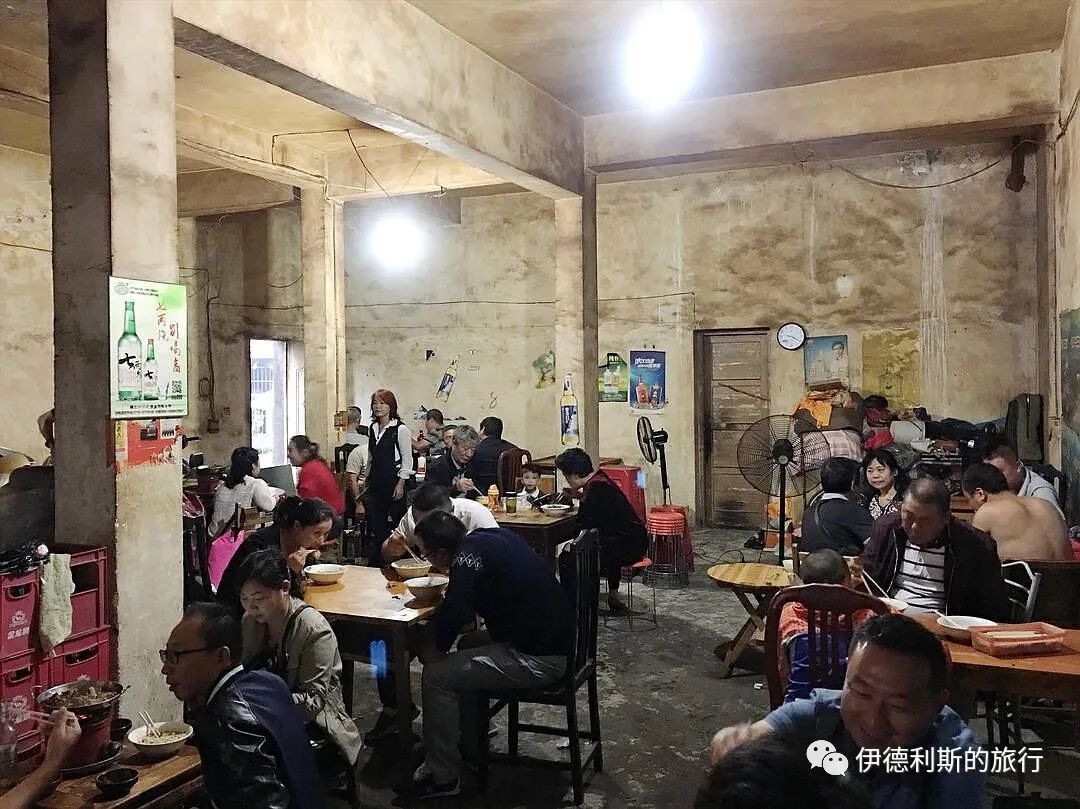
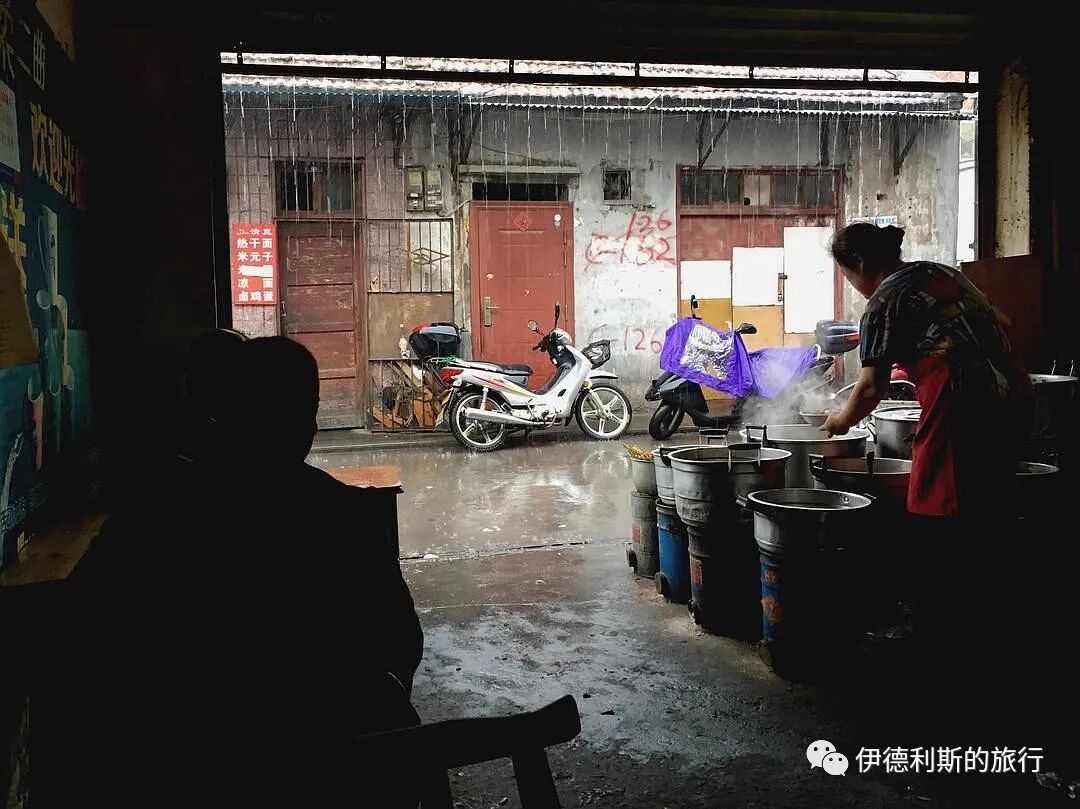
Yingxi Hui Muslim Street is located inside Yingxi Gate, the northwest gate of the Tu City in Shashi, Jingzhou. In the early years of the Republic of China, some Hui Muslims from Nanyang, Henan, came to Shashi as refugees and settled on Yingxi Street. They built a mosque there in 1925. I ate hot dry noodles at an unnamed halal restaurant on Yingxi Street. The hot dry noodles in Shashi are different from those in Wuhan because they add sweet bean sauce (tianmianjiang).
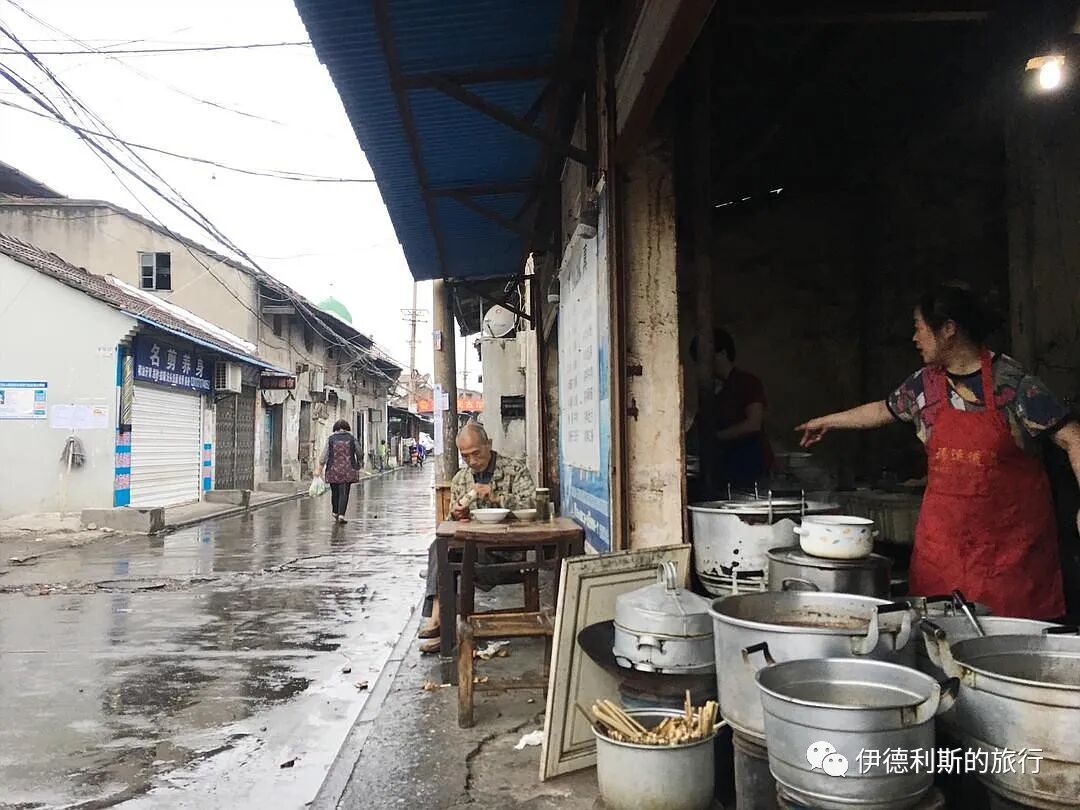
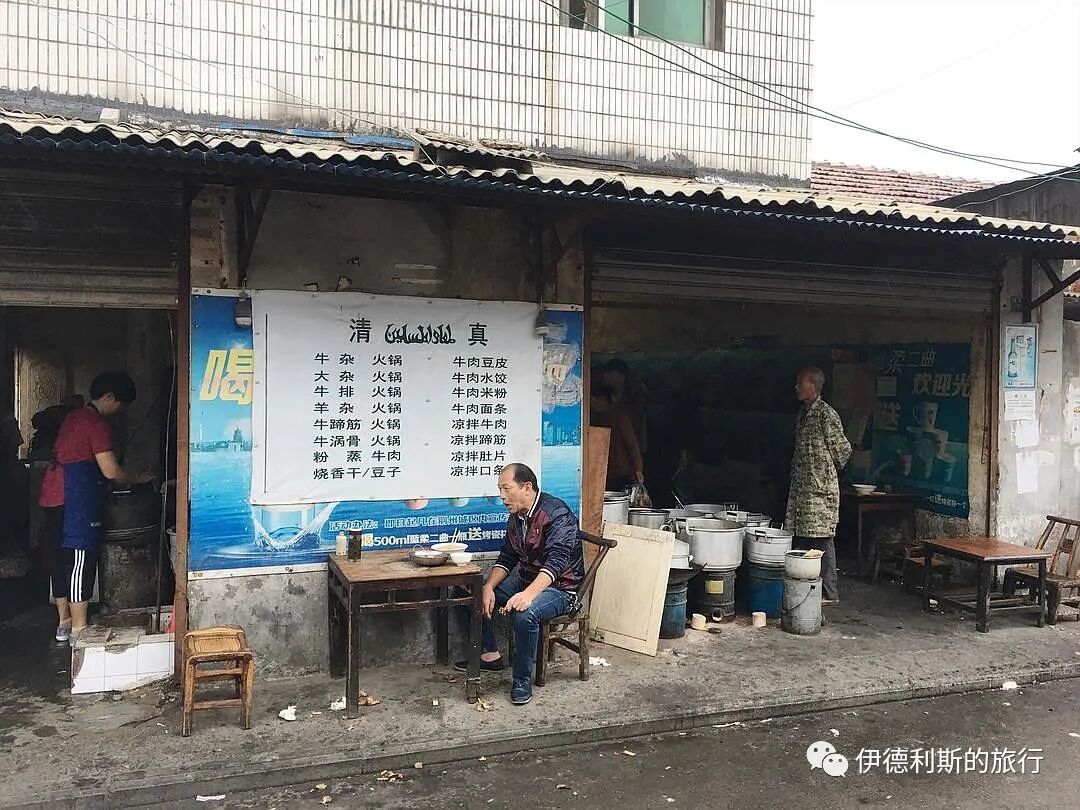
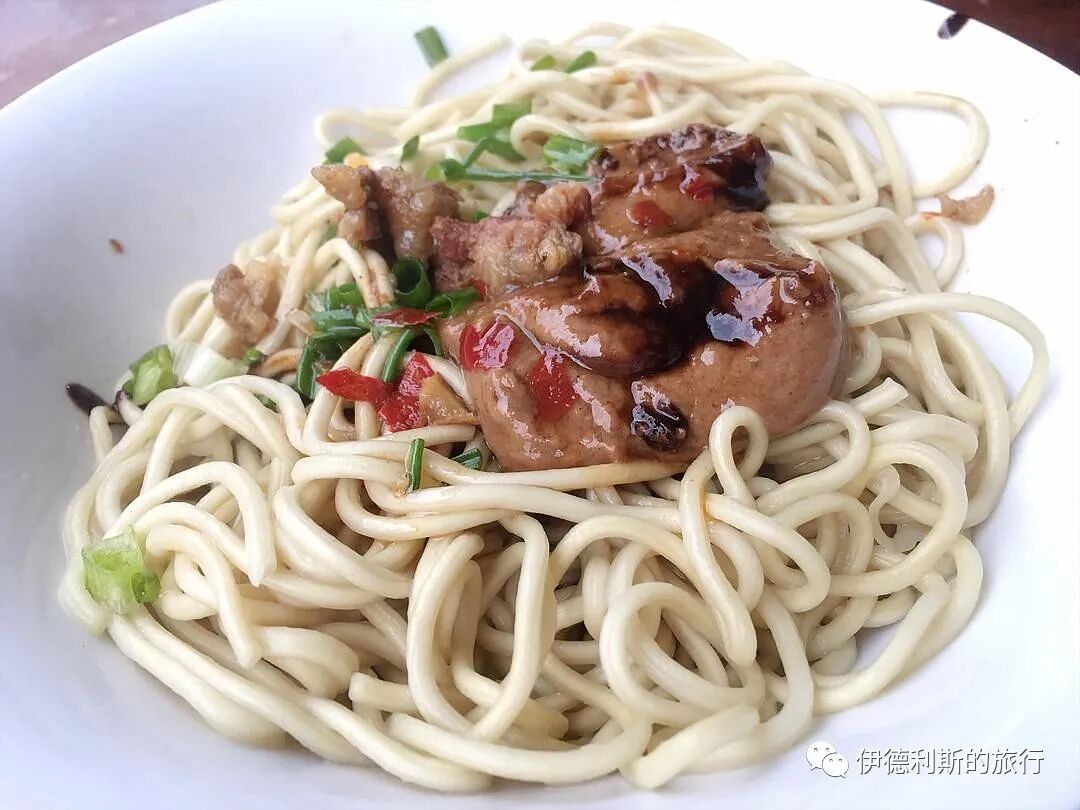
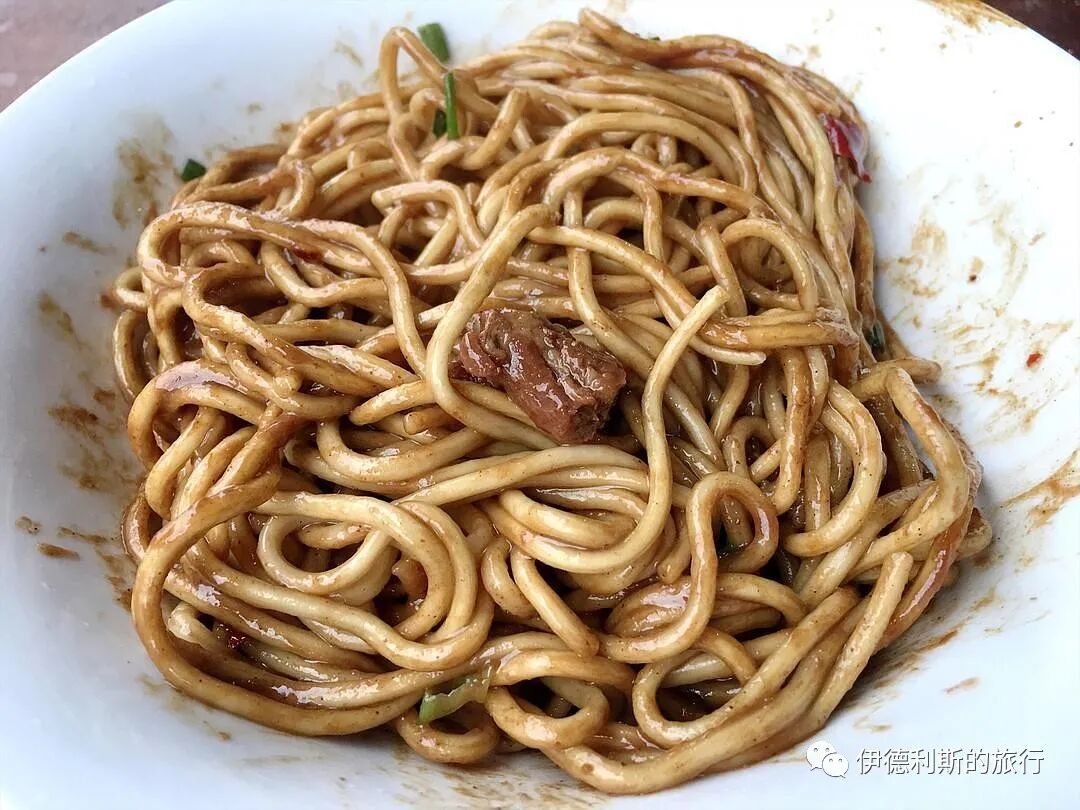
2. Spicy beef rice noodles (hongyou niurou fen) in Wuhan
After the Wuchang Prefecture city was built during the Hongwu reign of the Ming Dynasty, the area outside Zhonghe Gate in the south of the city was originally a wasteland used as a material yard for building the city walls. In the late Ming Dynasty, a group of Hui Muslims who moved from Maguoyuan, Shaanxi, began to live here, working in cattle slaughtering, general goods, and the halal food industry. During the Daoguang reign of the Qing Dynasty, another group of Hui Muslims from Mianyang, Hubei, moved here due to floods, and the number of Hui Muslims outside Zhonghe Gate gradually increased.
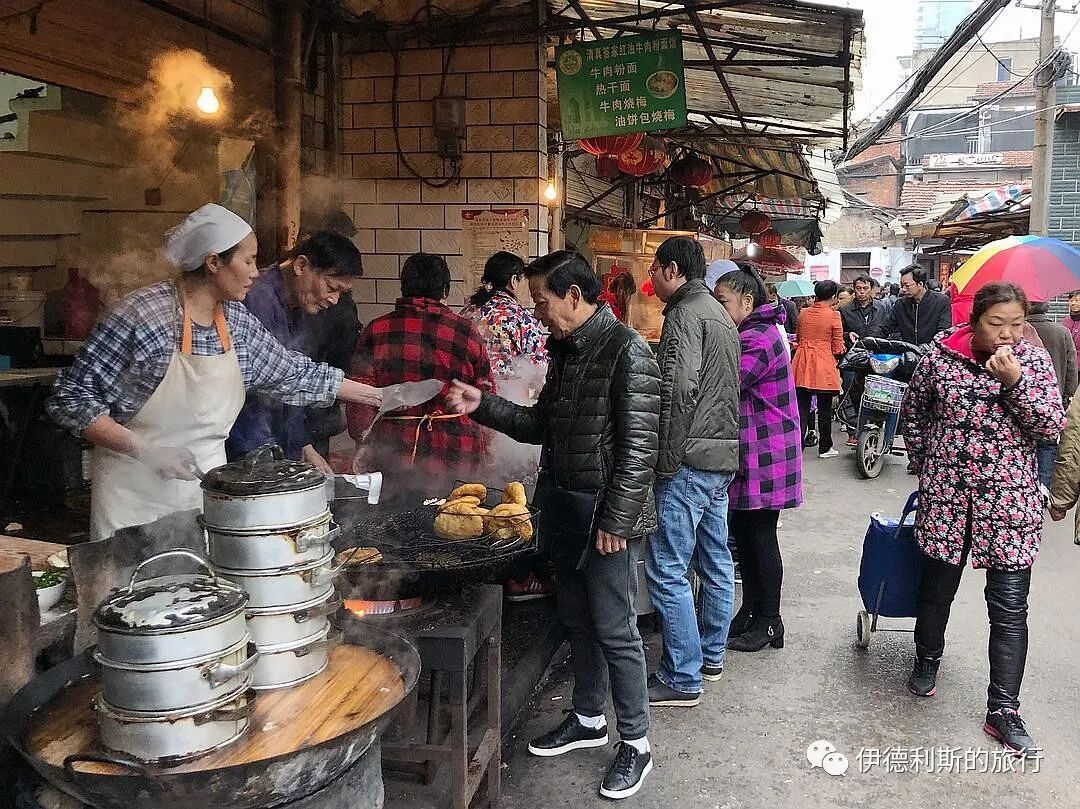
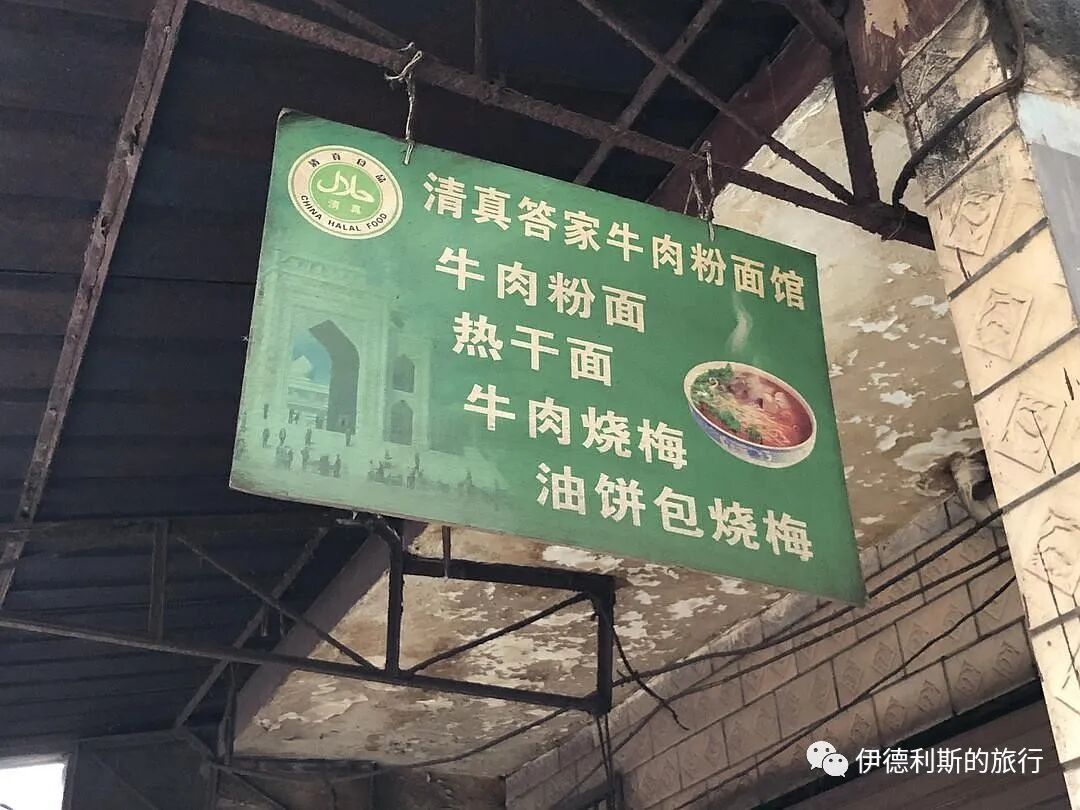
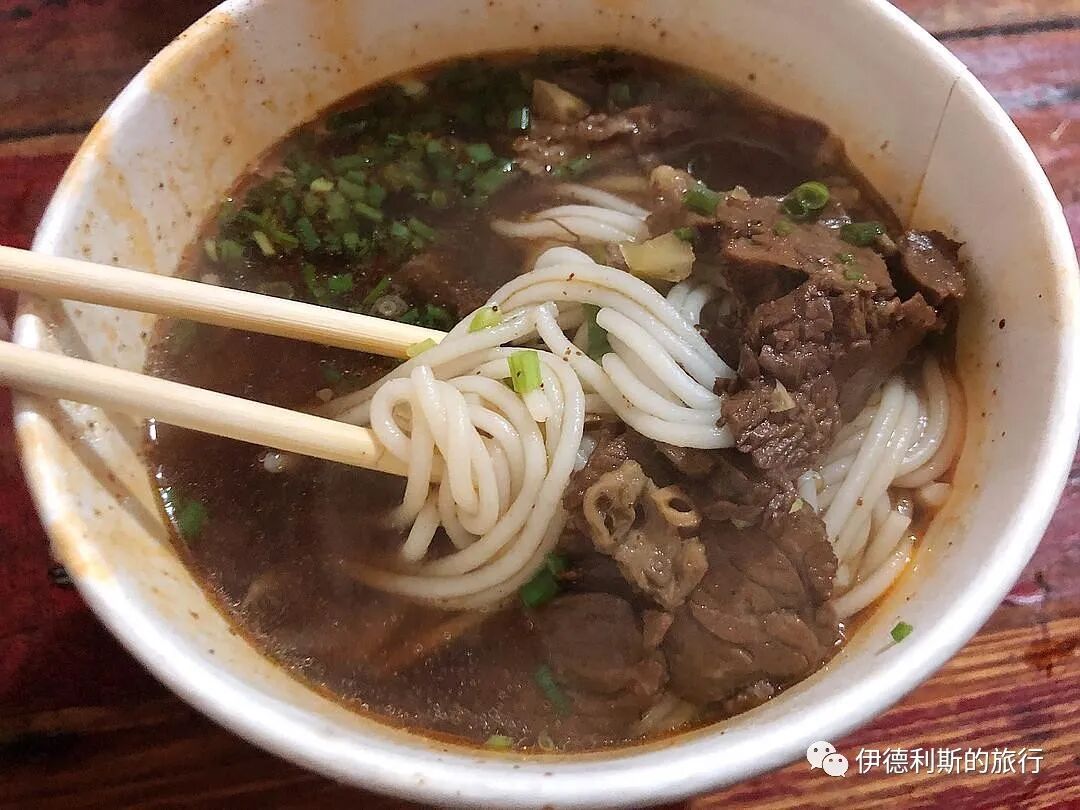
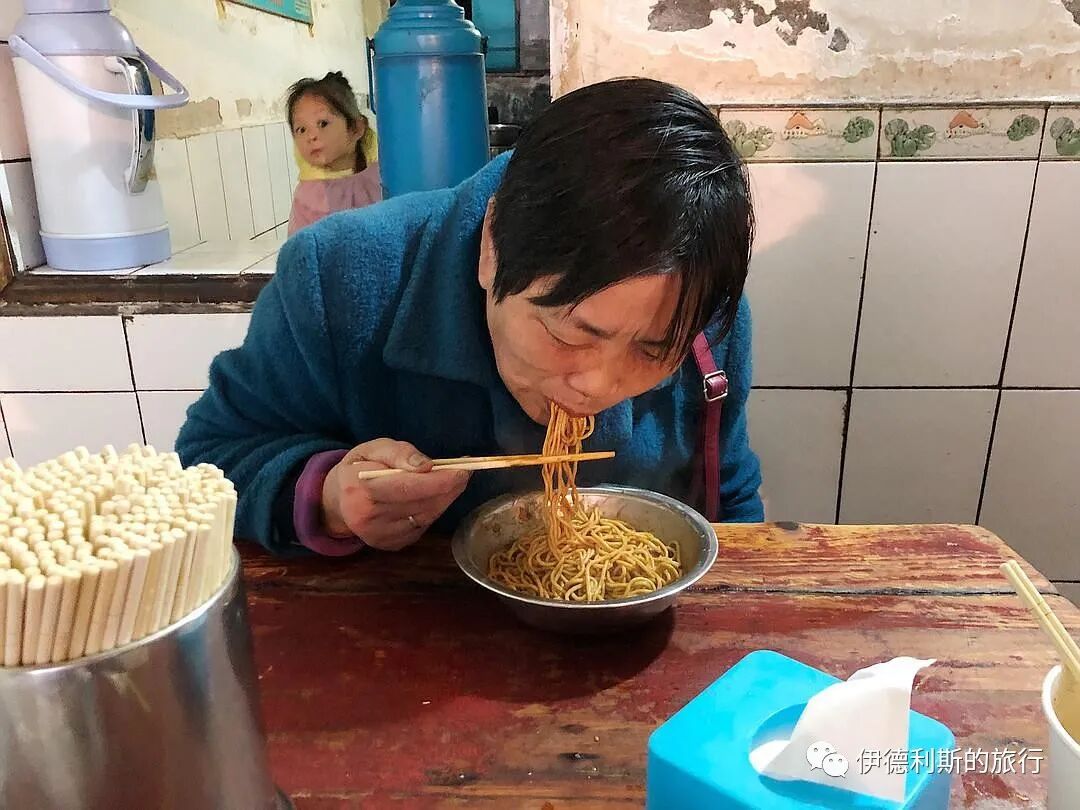
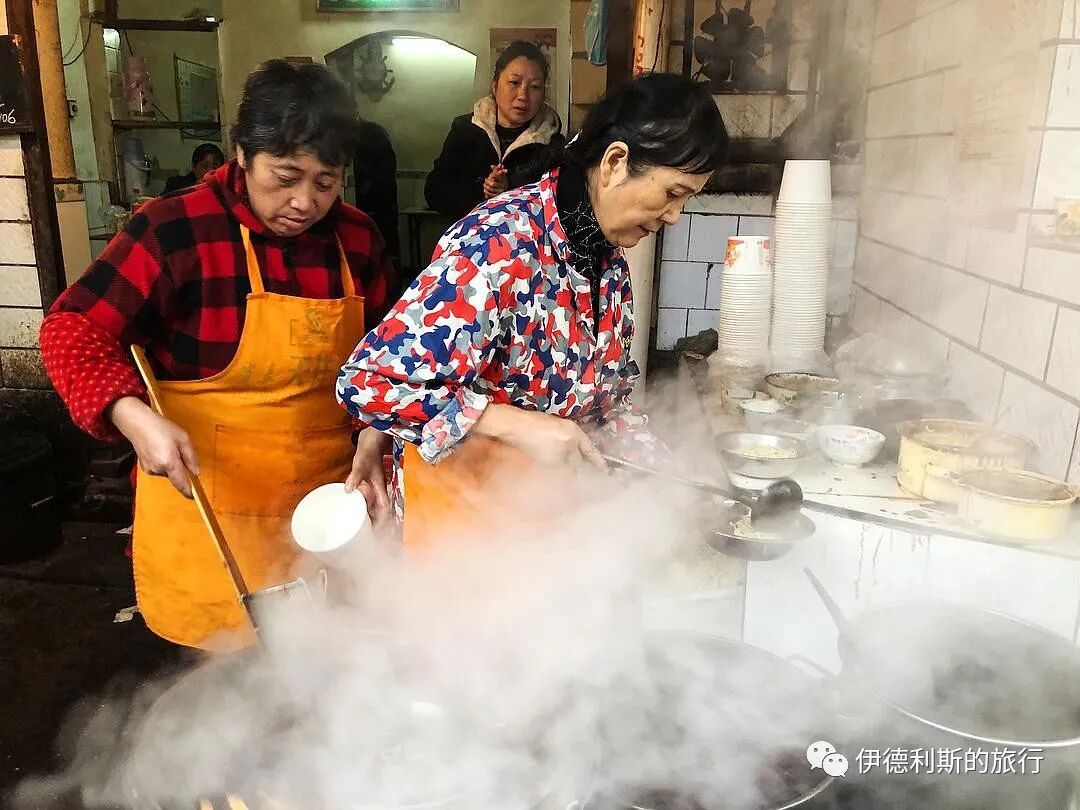
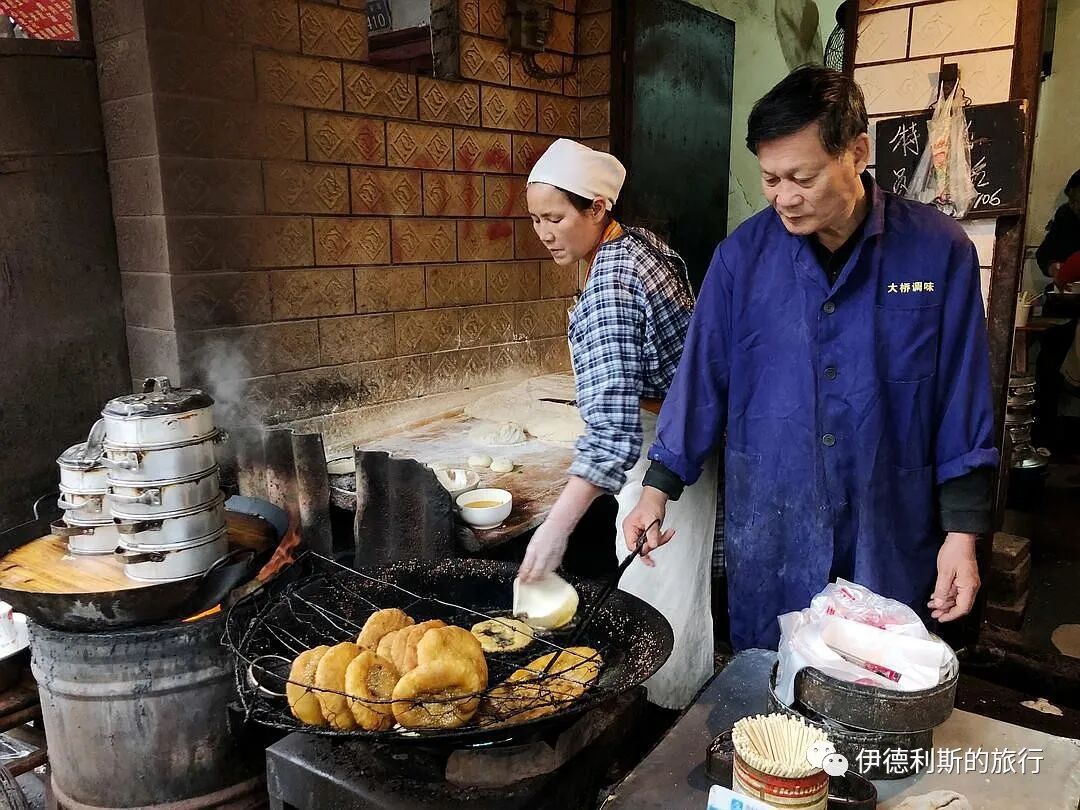
Before the demolition in 2020, there was a lively morning market on Qiyi Street every day, crowded and full of life. On Xiangbi Street (the eastern section of Bao'an Street), which intersects with Qiyi Street, there is a halal breakfast shop called "Qingzhen Dajia Hongyou Niurou Fen Mian Guan." It is open daily from around 6:00 or 7:00 AM to 10:00 AM. I ate the spicy beef thin rice noodles there.
3. Beef noodles (niurou mian) in Xiangyang
As the most important commercial hub in the middle reaches of the Han River, Fancheng has had Hui Muslim residents since the Yuan and Ming dynasties. The Hui Muslims in Fancheng were mainly concentrated on Jiaomen Street, where the mosque is located. When the Fancheng Mosque was rebuilt in 1792 (the 57th year of the Qianlong reign), there were 222 local Hui Muslim households who donated funds. In 2015, all of Jiaomen Street was demolished for new construction. Now, only a row of shops selling beef noodles and raw beef remains at the bridgehead of the Han River Bridge.
Early in the morning, we went to the bridgehead to eat beef noodles at Liu's shop from Jiaomen Street. Liu's is run by the son of Liu Donghan, an old imam at the Fancheng mosque, and it is quite famous. When I was in college, our halal cafeteria had a stall for Xiangfan beef noodles, and my impression back then was that it was really spicy! This time, I finally got to taste the authentic version. After eating the authentic version, I felt it was indeed a bit spicy, haha. We specifically asked for no chili, but the braised beef broth itself is a little spicy. But besides the spice, the beef is really fragrant! They must use plenty of meat, and it is stewed until very flavorful.
2. Jiangsu
1. Nanjing's fish maw noodles, beef noodles, smoked fish noodles, and beef heart noodles.
Lvliuju was founded in 1912 by Taoye Ferry on the banks of the Qinhuai River. It started as a high-end vegetarian restaurant, and people like Kong Xiangxi, Chiang Ching-kuo, Bai Chongxi, and the Soong sisters often dined here. After 1949, Lvliuju closed for a time. It did not reopen until 1963 at Yanggongjing on Taiping South Road, where they hired the famous chef Chen Bingyu to continue serving authentic vegetarian food. A major feature of Lvliuju is vegetarian dishes made to taste like meat. Their vegetarian chicken (suji) and vegetarian duck (suya), made from tofu skin, gluten, and dried bean curd sticks with Chinese herbal seasonings, are delicious.
In 1987, Lvliuju added halal dishes to its vegetarian menu and became a halal restaurant, though vegetarian food remains its specialty. In 1995, it was rebuilt on the same site into the current five-story building, becoming a large halal restaurant in Nanjing. We ate fish maw noodles at Lvliuju, which also contained mushrooms, bamboo shoots, wood ear mushrooms, and green peas.
We ate at Jintongji Beef and Mutton Restaurant north of the Nanjing Confucius Temple, where we ordered a huge portion of Jintongji noodles with beef, beef tendon, beef tripe, and beef intestine, as well as smoked fish noodles. The black sweet beef was so delicious! It is very addictive, and the sweet smoked fish is also super tasty. (This is the old Jintongji shop; it has now moved to a new address.)
We had beef heart noodles at Xiaoyisi Noodle Shop on Luolang Lane in Nanjing (this is the old location; it has now moved to a new address). This shop has also been open for many years. It is a husband-and-wife business, and the owner is an uncle who wears a gold chain. Next to the noodle shop is the famous provincial cultural heritage site, the Taiping Heavenly Kingdom architecture and murals on Luolang Lane.
2. Zhenjiang's dried tofu noodles (xianggan mian).
The ancient Runzhou Mosque (Runzhou libaisi) from the Yuan Dynasty in Zhenjiang was moved to Jianzi Lane in the city in 1602 (the 30th year of the Wanli reign) and has since been called the Jianzi Lane Mosque. In 2005, the Jianzi Lane Mosque was demolished due to the construction of the Zhenjiang First Building commercial pedestrian street, but there are still many halal restaurants nearby. We ate dried tofu noodles (xianggan mian) at Yang Dahai Steamed Bun Shop in the small alley north of Jianzi Lane. They had a slightly sweet taste, and the noodle broth was very much in the Jianghuai style.
3. Chicken shredded noodles (jisi mian) of Huai'an
Because navigating the Yellow River section of the Grand Canal was very dangerous, and waiting times to pass through locks after entering Shandong were too long, many merchants chose to leave their boats at Qingjiangpu in Huai'an, Jiangsu. They would cross the Yellow River and switch to horse-drawn carriages to continue north, making Qingjiangpu a transportation hub for southern boats and northern horses. Hui Muslims have been doing business on Yuehe Street in front of the Imperial Wharf since the Ming Dynasty, and the Qingjiang Mosque was built during the Jiajing period of the Ming Dynasty.
Eating wonton noodles at the entrance of the Qingjiangpu Mosque.
I ate chicken shredded noodles at Liu Si Noodle Shop. It had fish balls, beef balls, and squid inside. The fish balls were super delicious, the soup was excellent, and it felt great to finish the meal.
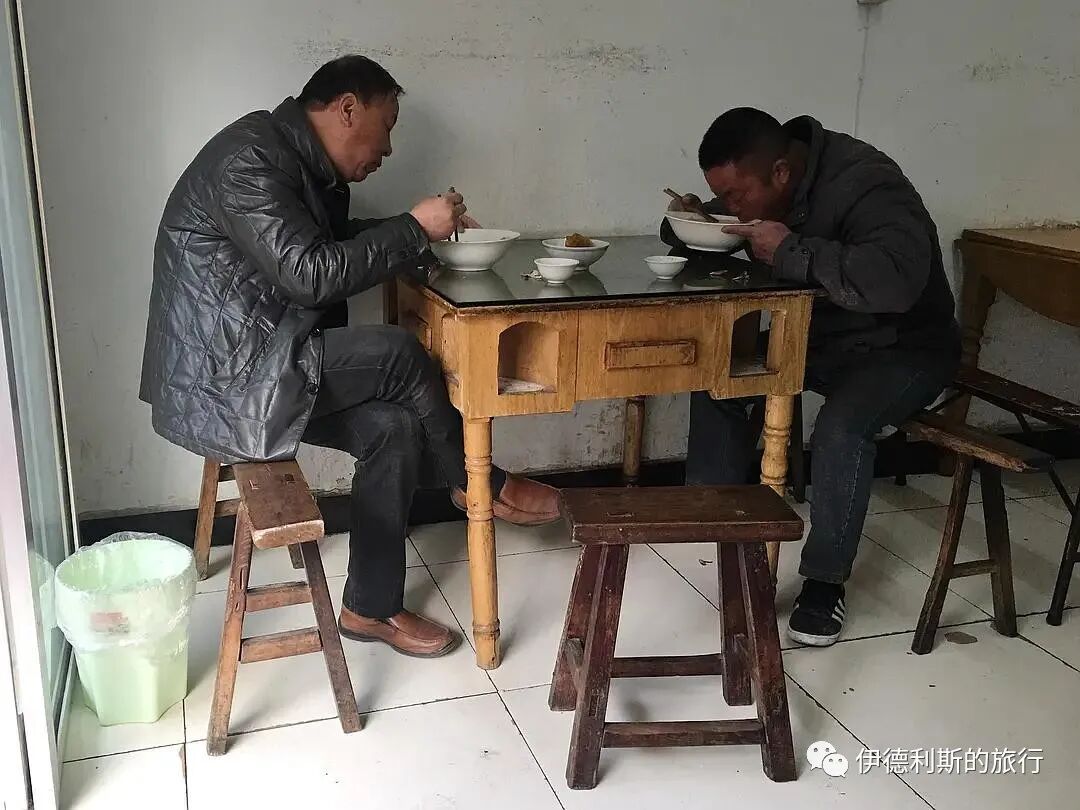
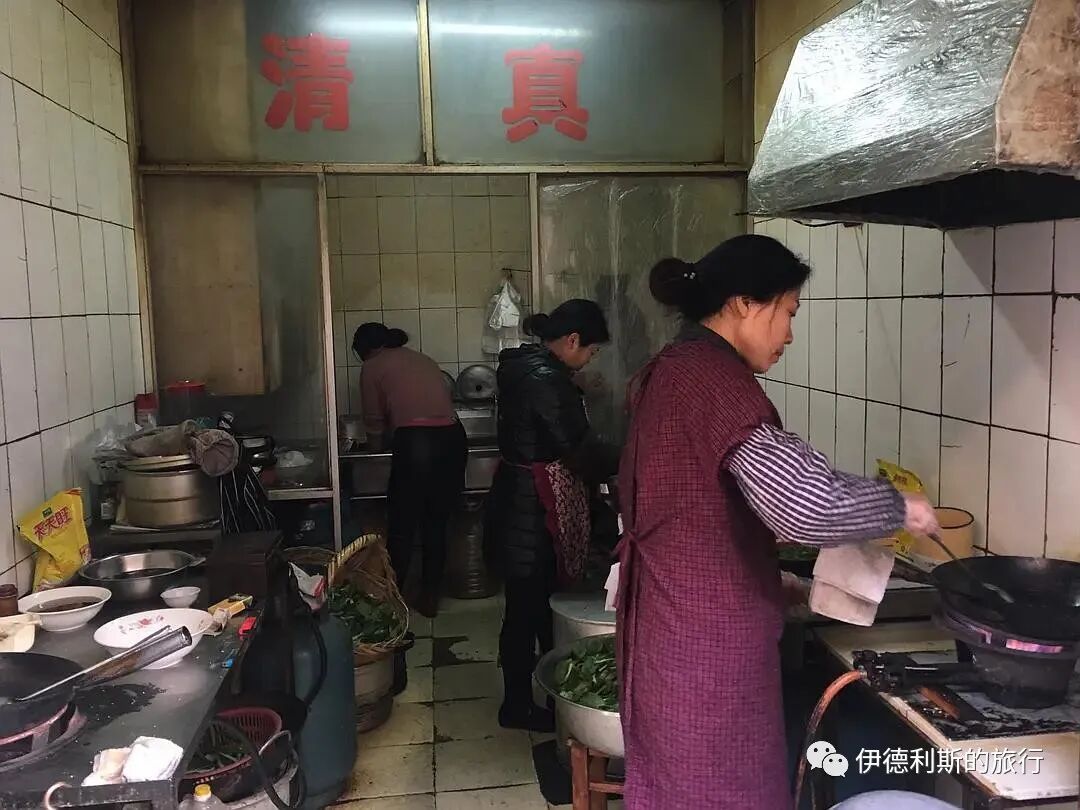
Heading south along the canal from Qingjiangpu, you reach the ancient town of Hexia, not far northwest of the Huai'an prefectural city. Hexia is the largest town in the suburbs of Huai'an. Its official historical name was Manpu, and it developed into an important canal town during the Song and Yuan dynasties. Because the salt production and quality in the coastal salt fields north of the Huai River were very high, many salt merchants from the northwest and Anhui came to the region in the late Ming Dynasty to work in the salt industry. The wealth brought by these merchants made Hexia a prosperous commercial center. Many Hui Muslims also came to settle in Hexia, and the Hexia Mosque was first built during the Ming Dynasty.
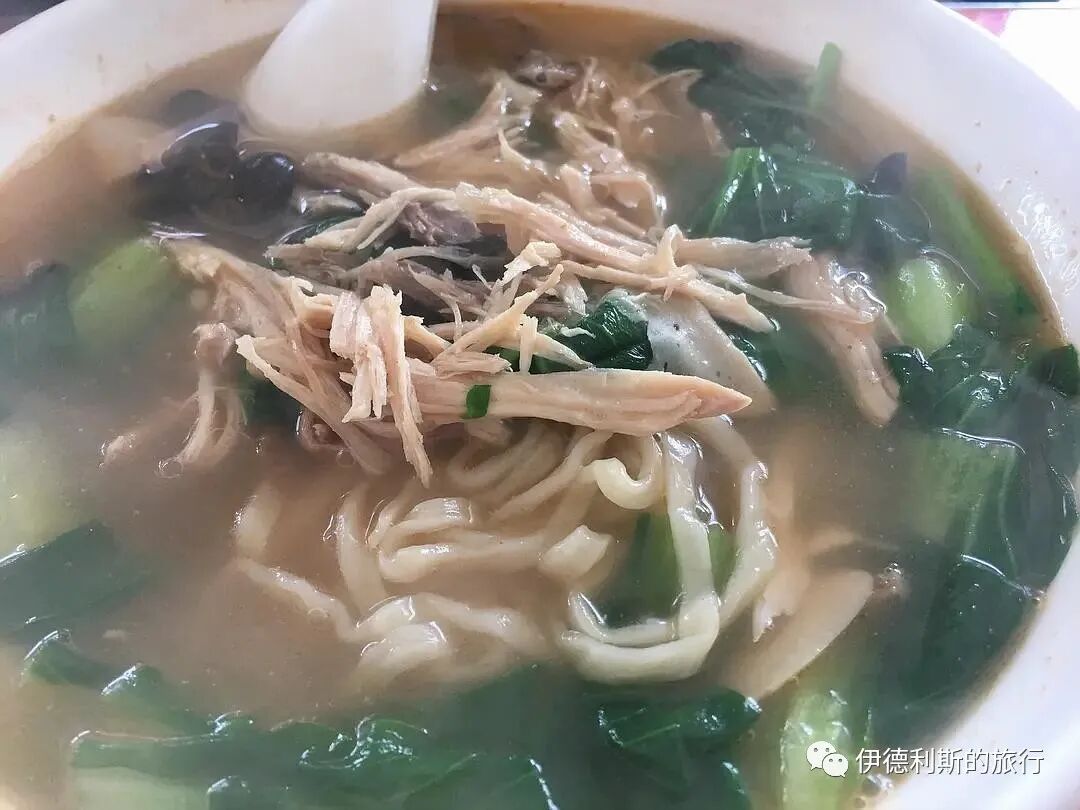
We had some very fragrant chicken shredded noodles at a halal snack shop on Zhugan Lane in Hexia Town. When eating noodles in Jiangsu, the soup is more important than the noodles themselves.
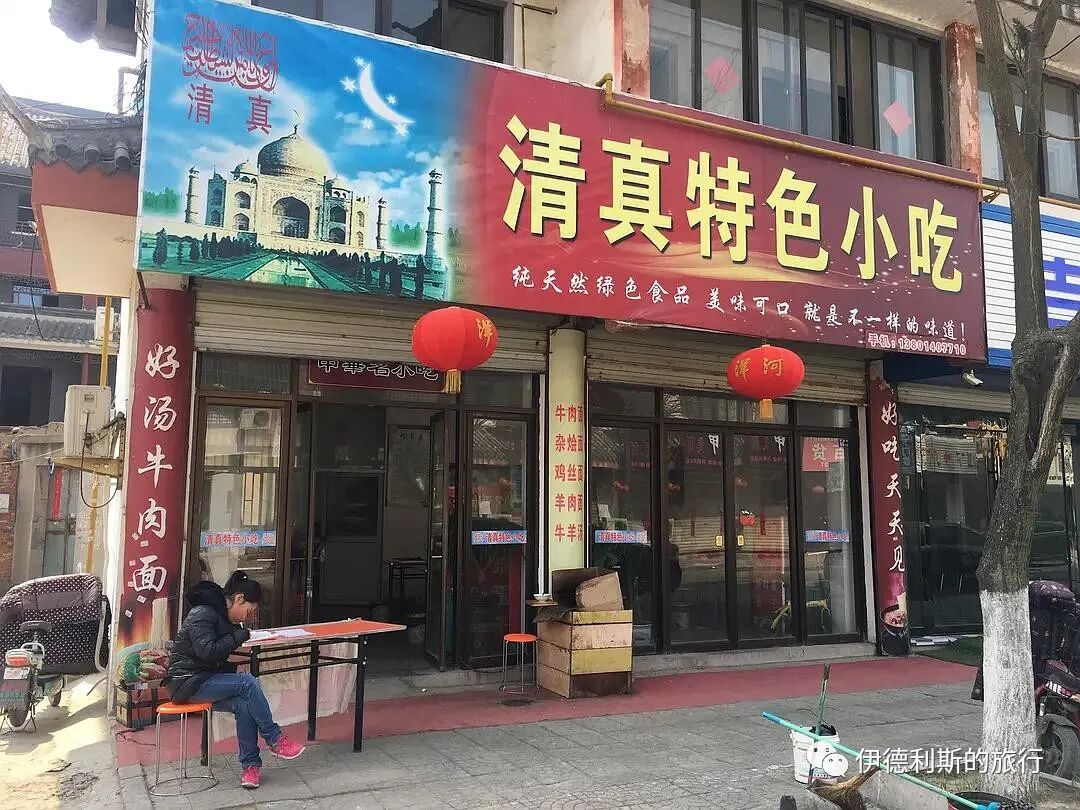
4. Shanghai
1. Shanghai's eel shredded cold noodles (shansi lengmian), beef noodles, and lamb noodles
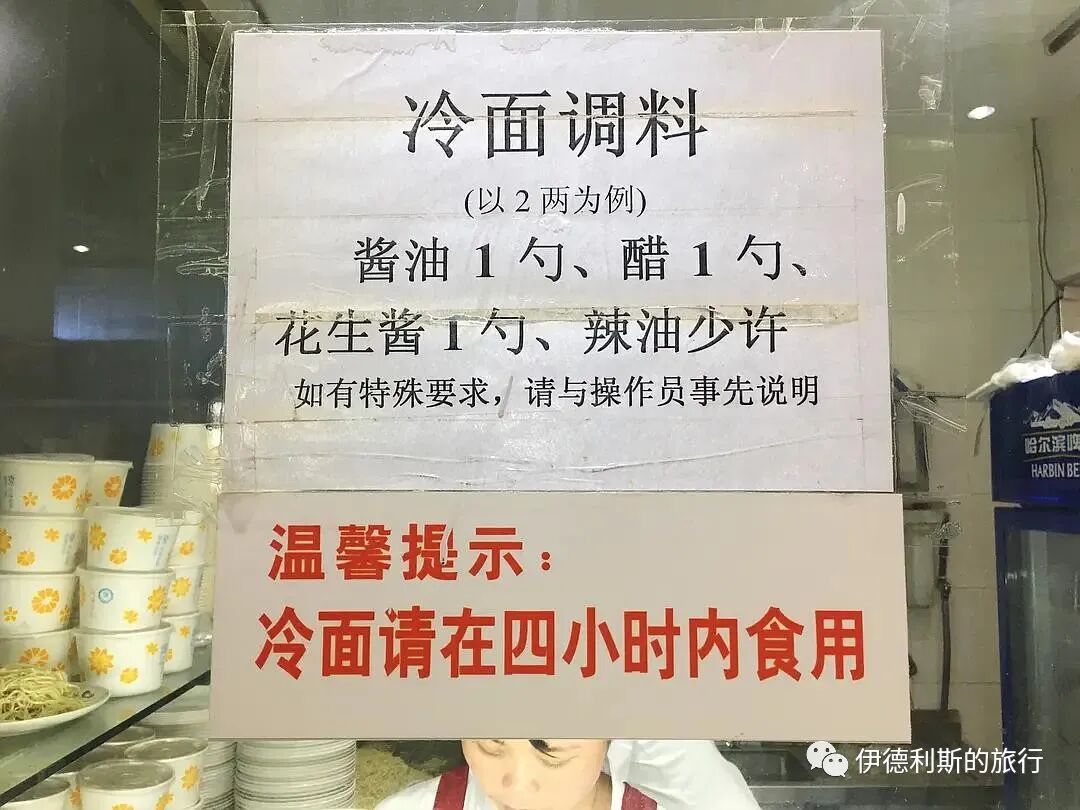
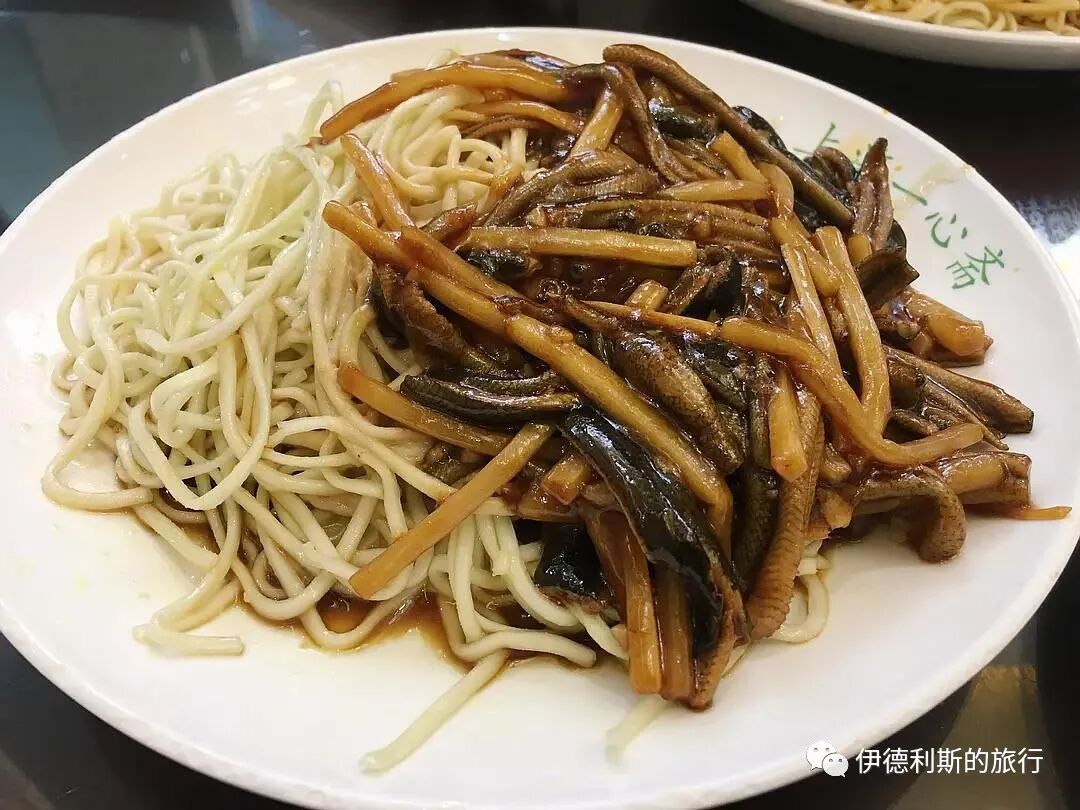
Yixinzhai is an old shop on Pingliang Road in Yangpu District that opened in 1958. It is most famous for its pan-fried beef buns (niurou jianbao) and three-yellow chicken (sanhuangji). In the summer, they also sell shaved ice and cold noodles. I ate the eel shredded cold noodles here. The topping was made with two types of mushrooms and three shredded ingredients, and it was truly delicious.
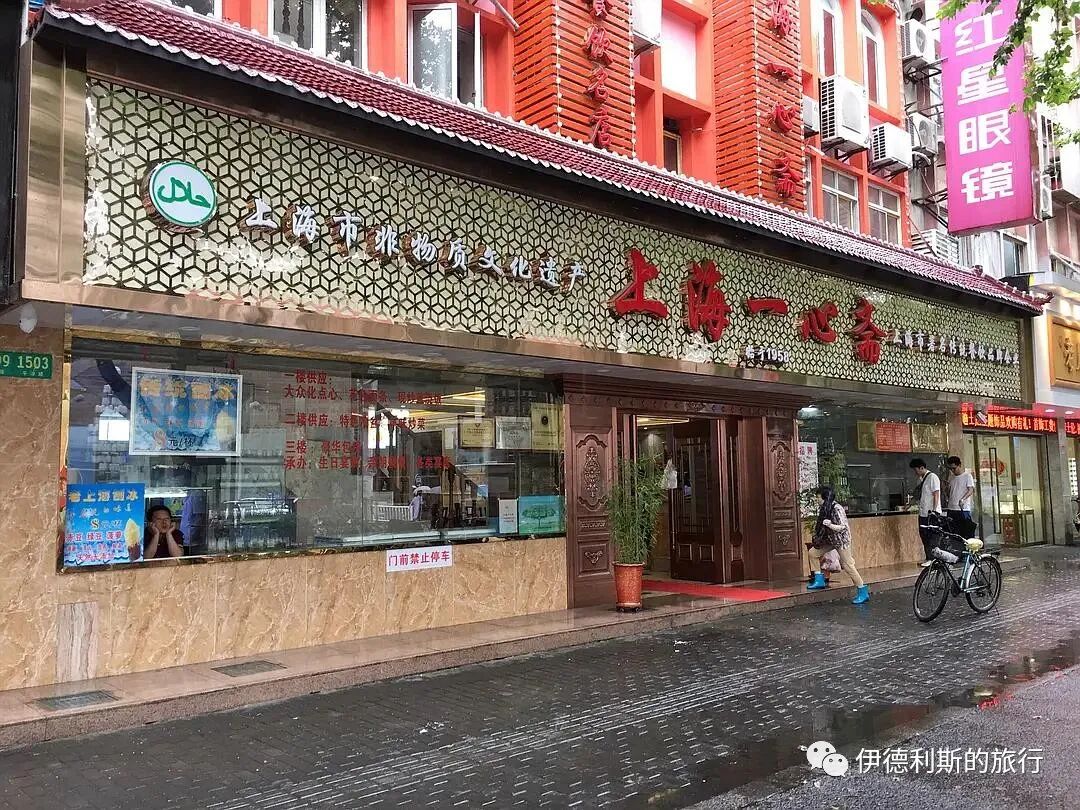
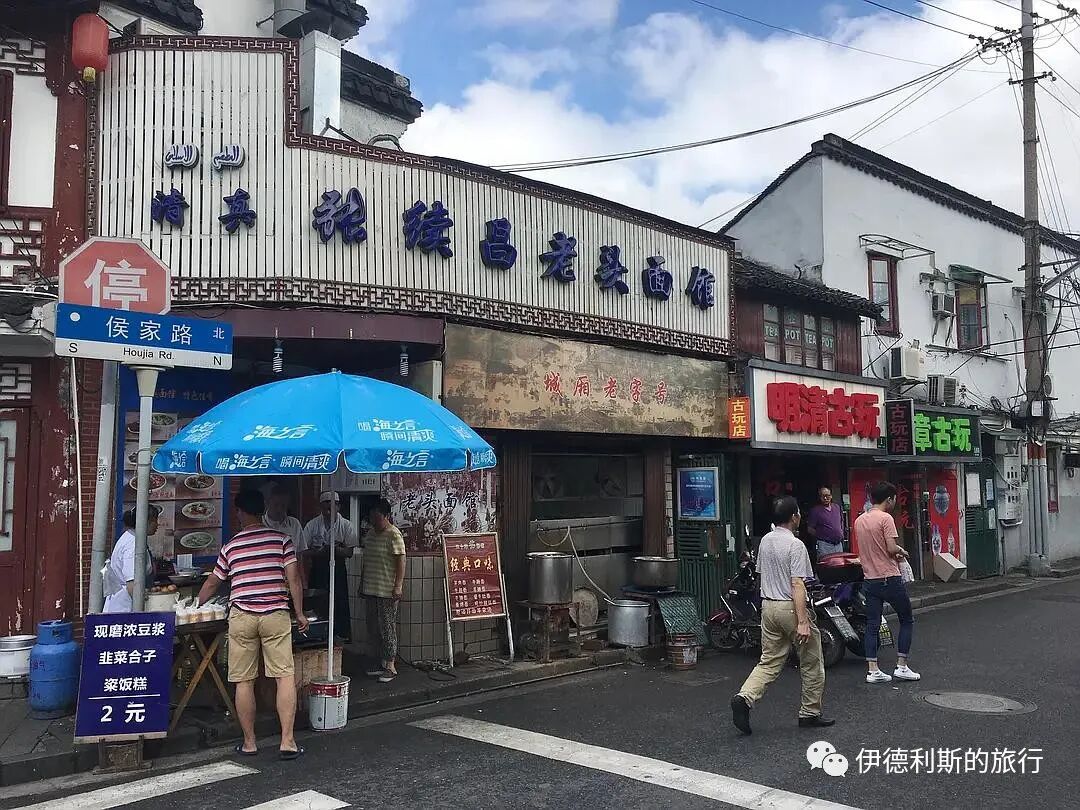
At Zhang Xuchang Old Man Noodle Shop on Houjia Road, the lamb noodles and beef noodles are served with the toppings on the side. The beef comes with yellow curry, and the lamb is served in a clear white broth.
5. Sichuan
1. Nanchong beef rice noodles (niurou fen) and Sichuan-style beef noodles
The ancestors of Imam Feng Yong from the Nanchong Mosque moved to Nanchong from Shaanxi during the Qing Dynasty. During the Republic of China era, the Feng family joined forces through marriage with three other families: Yang Fangyun who ran "Red Lantern Dried Beef," Ma Yutu who ran "Ma Laizi Canned Beef," and Zhang Dechao who ran "Beef Crispy Cakes." The Imam's grandfather, Feng Zifeng, founded the "Shixian" brand on Fu Street and opened a halal restaurant. Today, Imam Feng Yong's family still runs an authentic Sichuan halal food business at the entrance of the mosque.
At the Nanchong Mosque, people eat beef rice noodles or beef tripe rice noodles for breakfast every day.
You can also eat Sichuan-style beef noodles here.
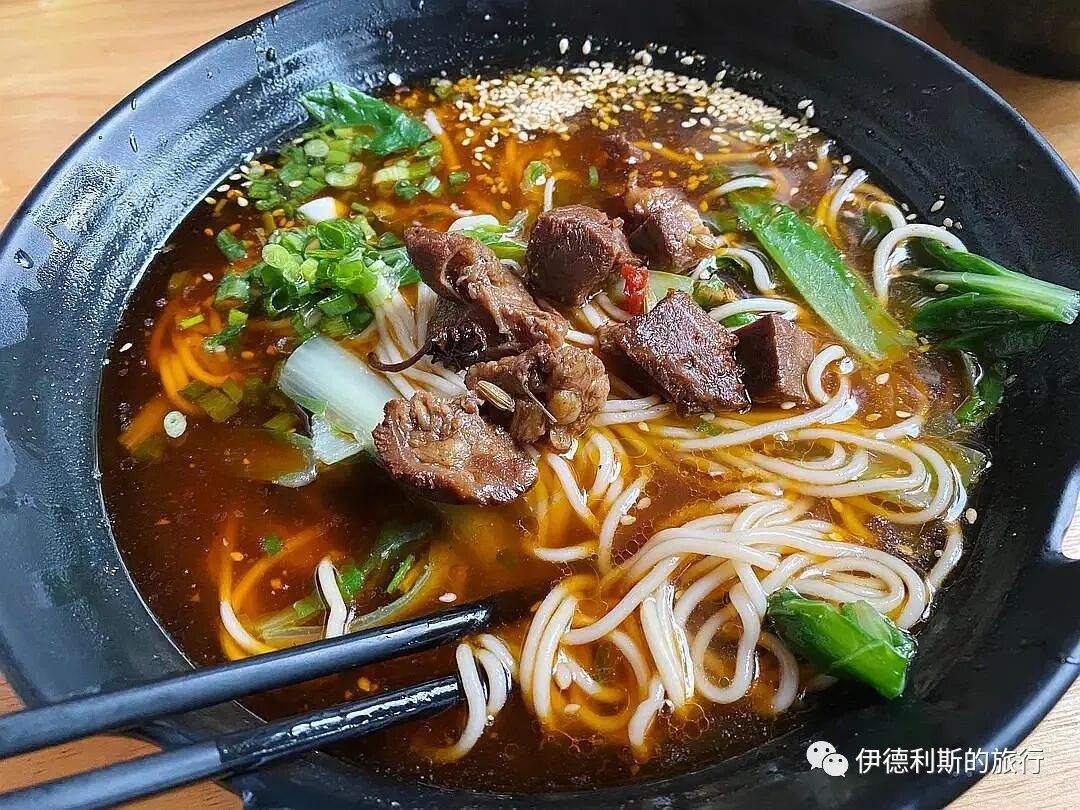
2. Chengdu's minced meat noodles (zajiangmian).
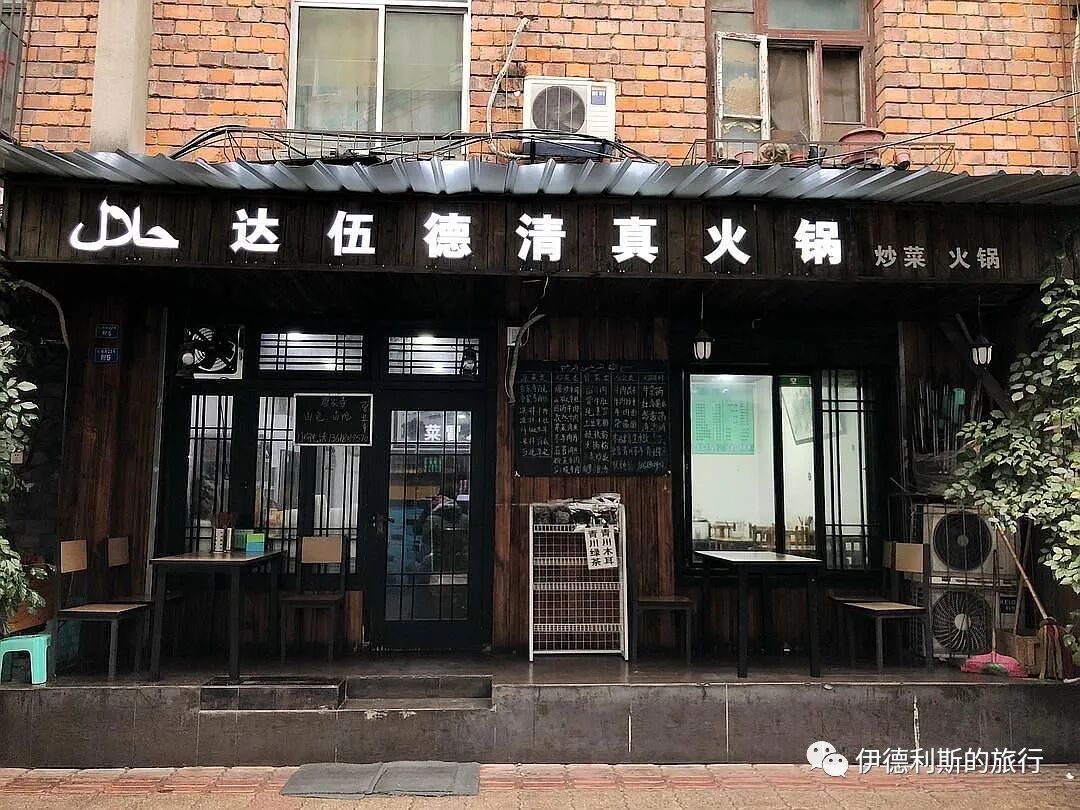
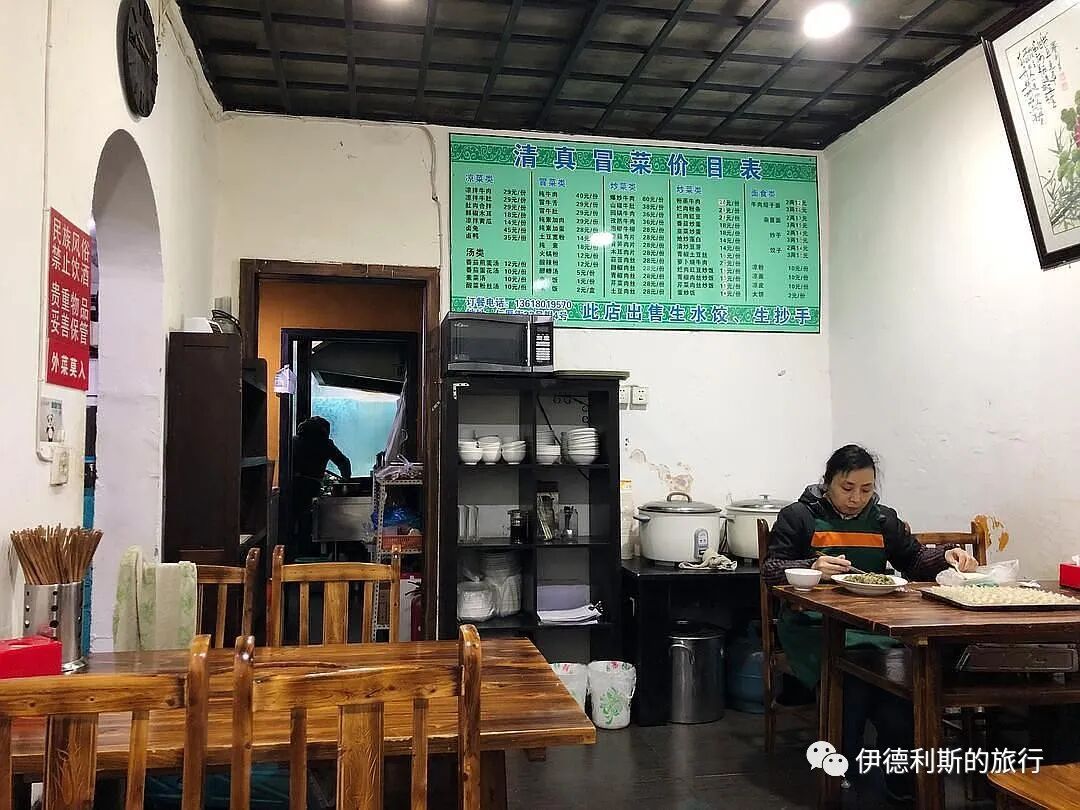
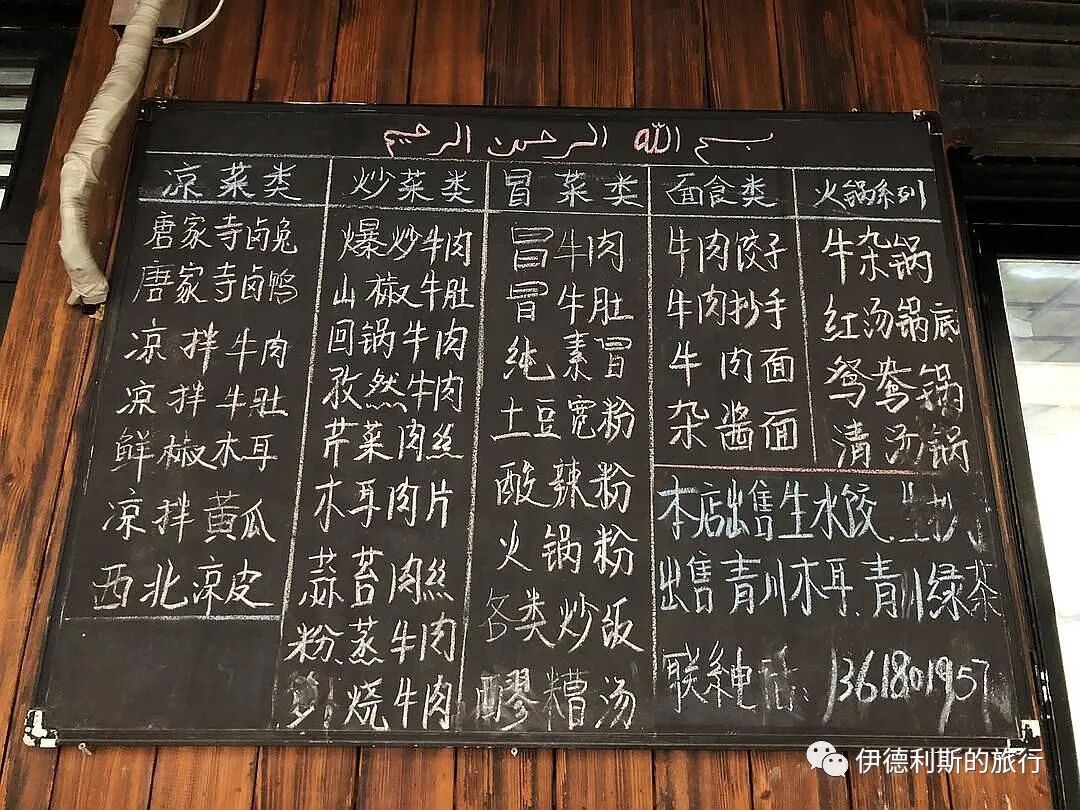
There is a halal hot pot restaurant called Dawude on Renhou Street near Kuanzhai Alley. Most local halal restaurants in downtown Chengdu do not serve breakfast, but this is one of the few I know that does. The owner is a Hui Muslim from Qingchuan, Guangyuan. I had the minced meat noodles (zajiangmian) here, and they tasted very authentic.
3. Beef offal rice noodles (niuzhafen) in Tuqiao, Chengdu.
After the Huangchengba Muslim community was dissolved, Tuqiao Town in the northwest suburbs became the closest traditional Muslim community to downtown Chengdu. Many local Hui Muslims come here for Friday namaz. Although Tuqiao Town has gone through demolition, the traditional mosque and the halal snack shops at its entrance are still there, so it remains very lively. I arrived in Tuqiao before the Friday namaz and had beef offal rice noodles (niuzhafen) at a snack shop by the entrance.
4. Goose soup noodles (etangmian) in Mimou Town, Chengdu.
Mimou Town is located in the Qingbaijiang District, on the border between Chengdu and Guanghan. Hui Muslims have lived here since the Ming Dynasty. After the Kangxi period, many Hui Muslims from Shaanxi and Hunan moved to the area around Mimou Town and built six mosques one after another.
Unlike the heavily developed ancient city of Guanxian in Dujiangyan, Mimou Town has no traces of tourism. It is full of daily life and keeps its own pace. I had goose soup noodles (etangmian) here.
V. Yunnan
1. Beef rice noodles (niurou migan) in Manluanhui, Menghai, Xishuangbanna.
The Paxi Dai people live in two villages in Menghai County, Xishuangbanna: Manluanhui and Mansaihui. In the Dai language, "man" means village. The Paxi Dai call themselves "Paxi." They follow Islam and observe the faith, but they speak the Dai language, use the Dai script, and make halal Dai-style food. You could say they have kept their Hui Muslim identity while blending into Dai culture.
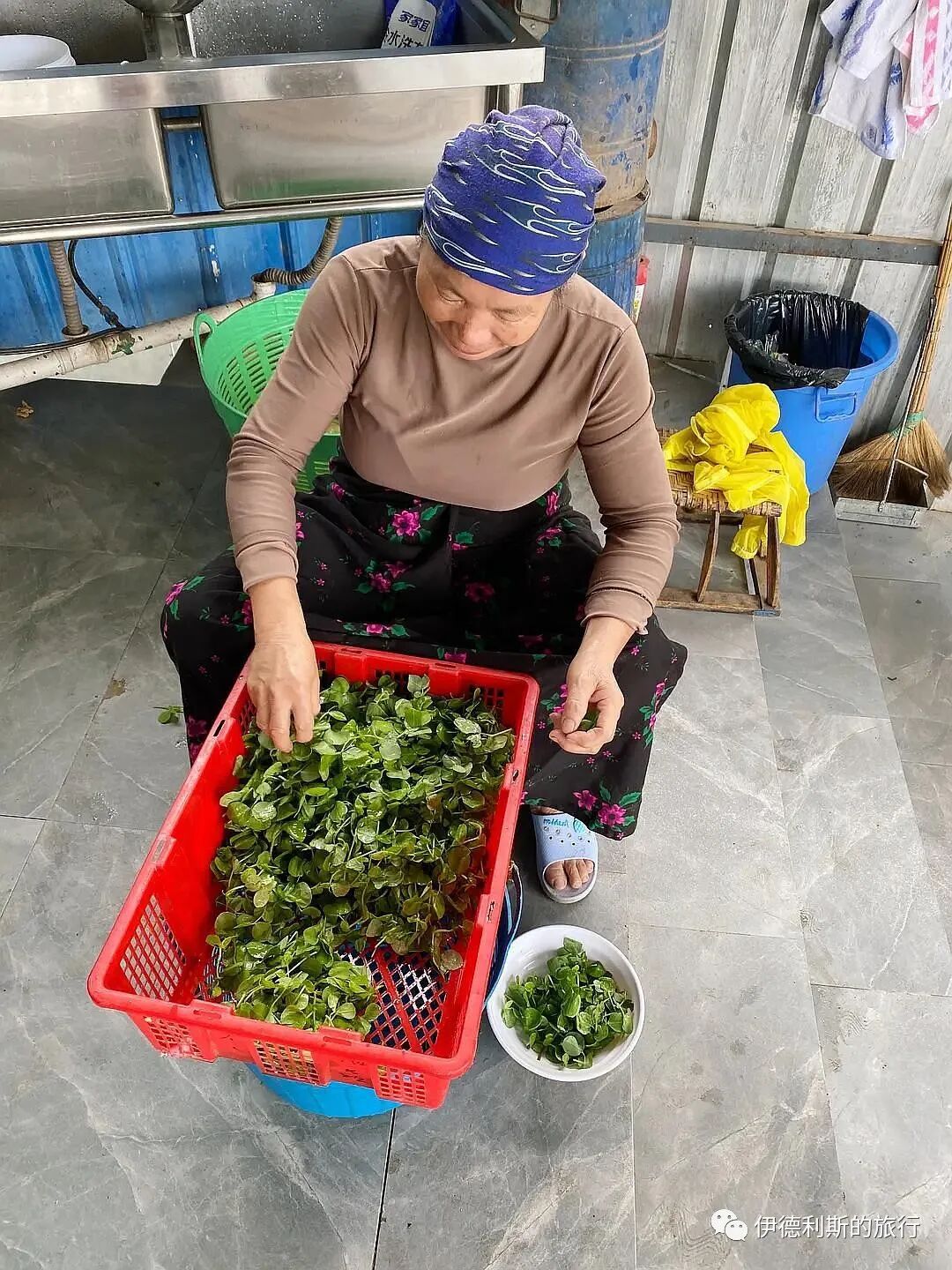
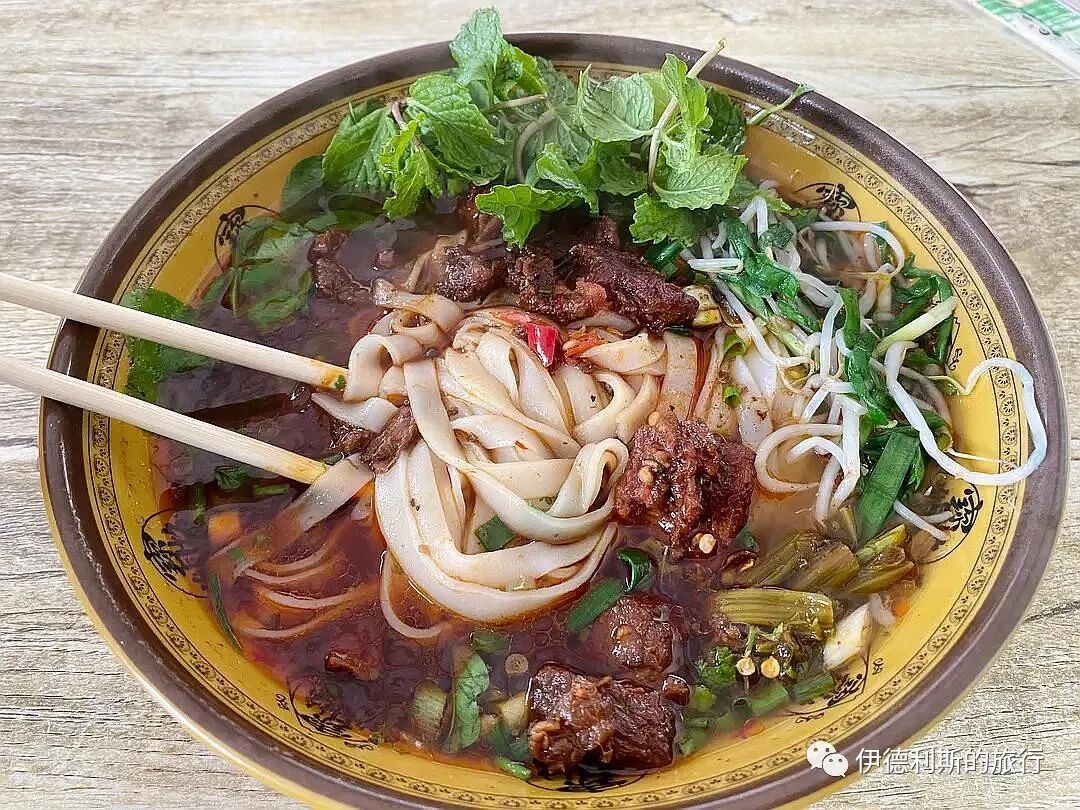
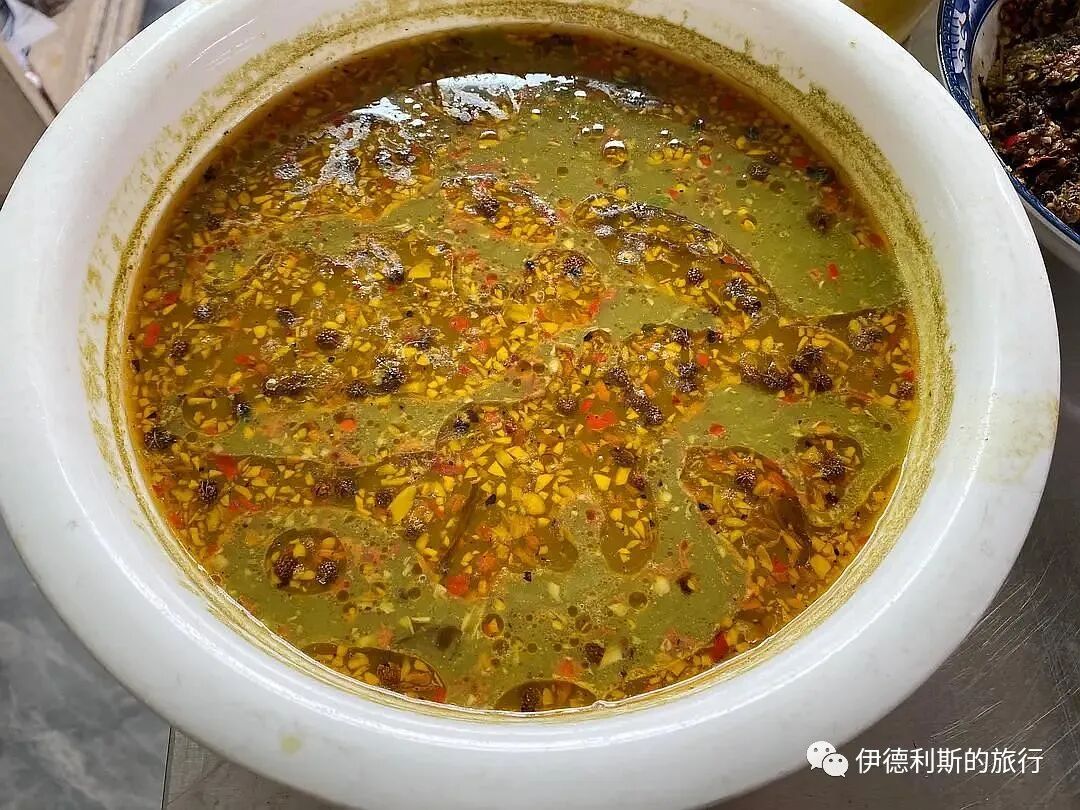
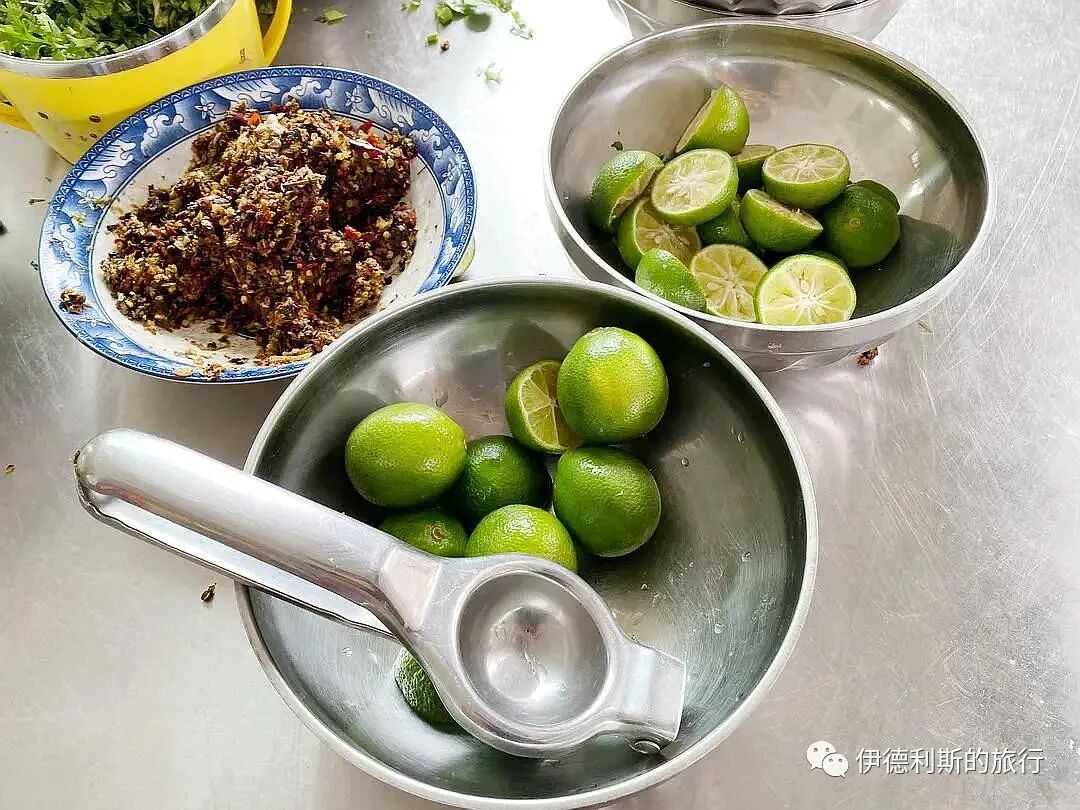
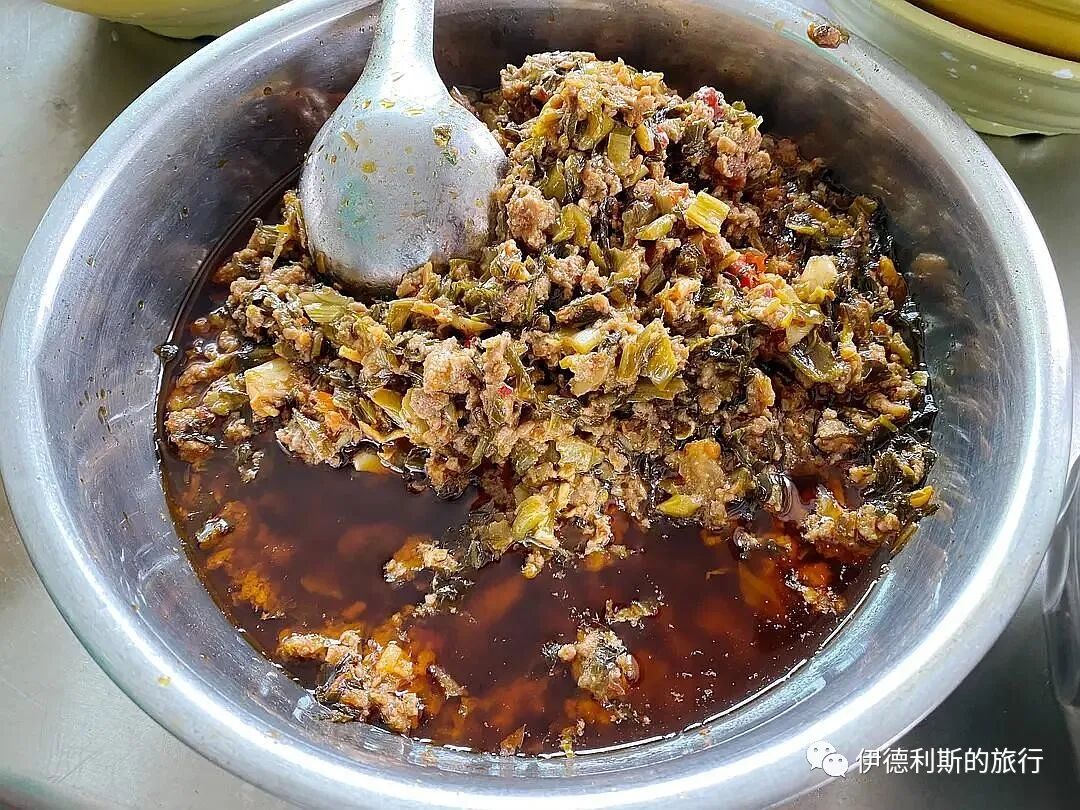
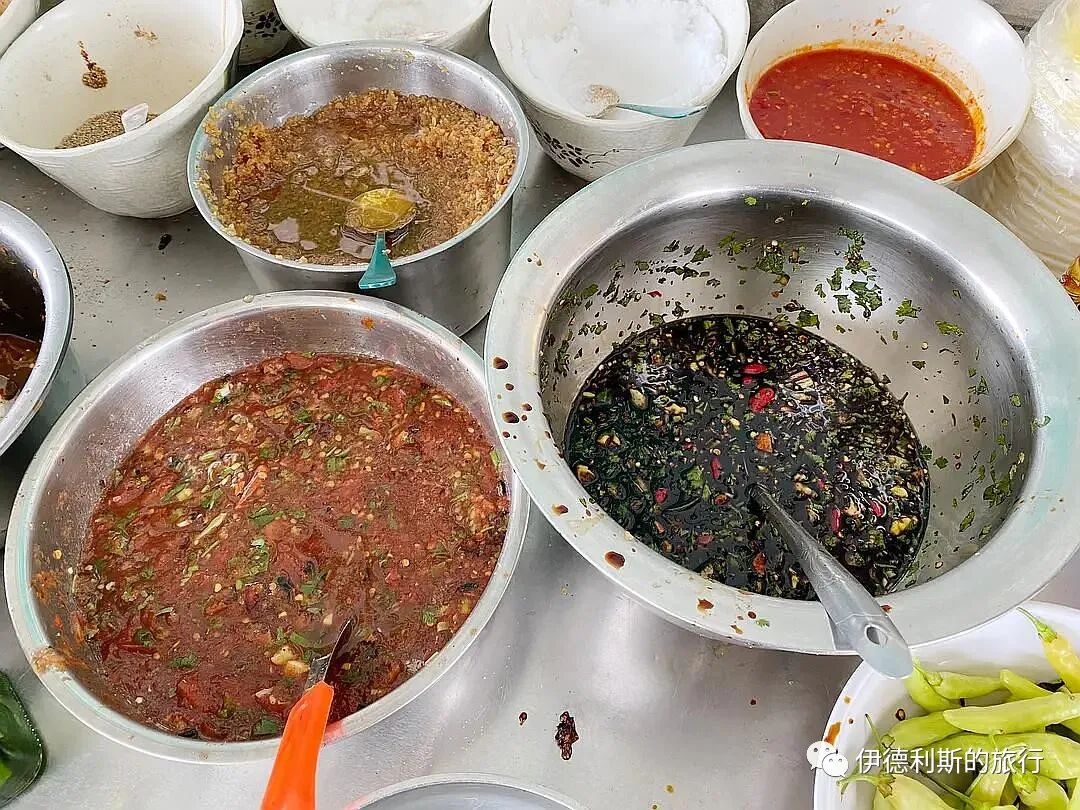
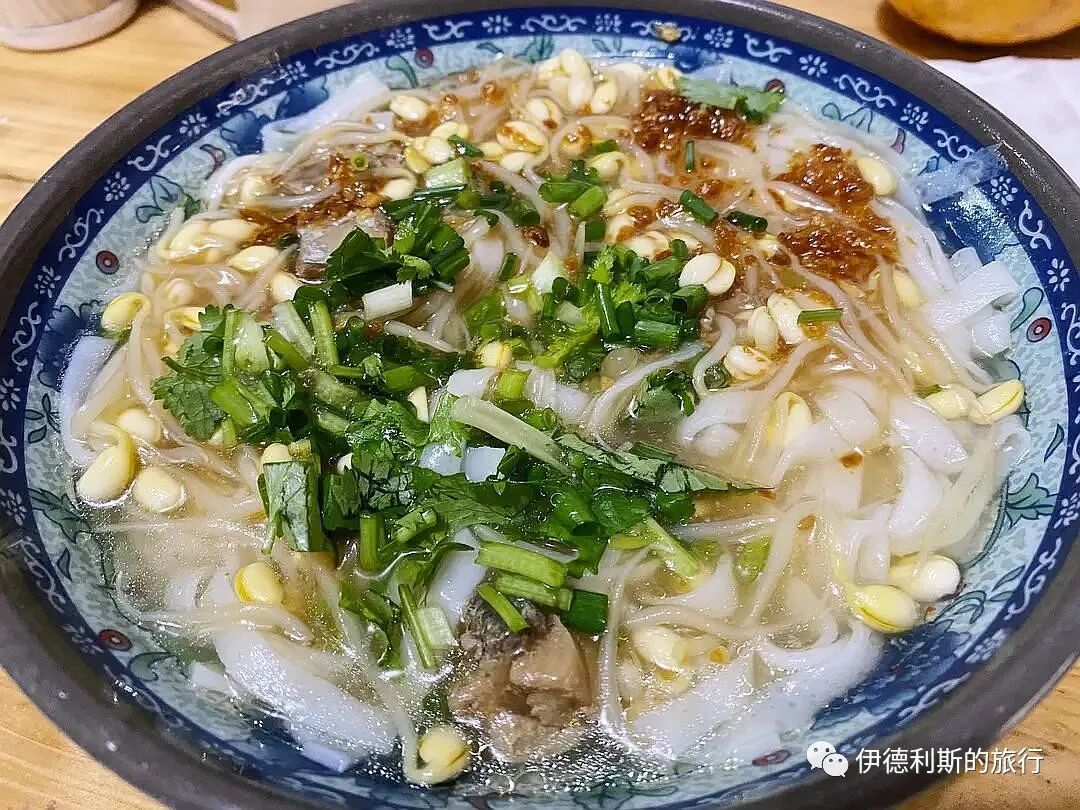
We had a halal Dai-style breakfast in Manluanhui at a restaurant called Paxi Dai. In the morning, Paxi Dai people mainly eat beef rice noodles (niurou mixian) and flat rice noodles (migan). We ordered the flat rice noodles. The variety of side dishes here is really rich, including pea tips, chives, bean sprouts, and various dipping sauces. The best part is that their beef is delicious! It is a little sweet and very fragrant.
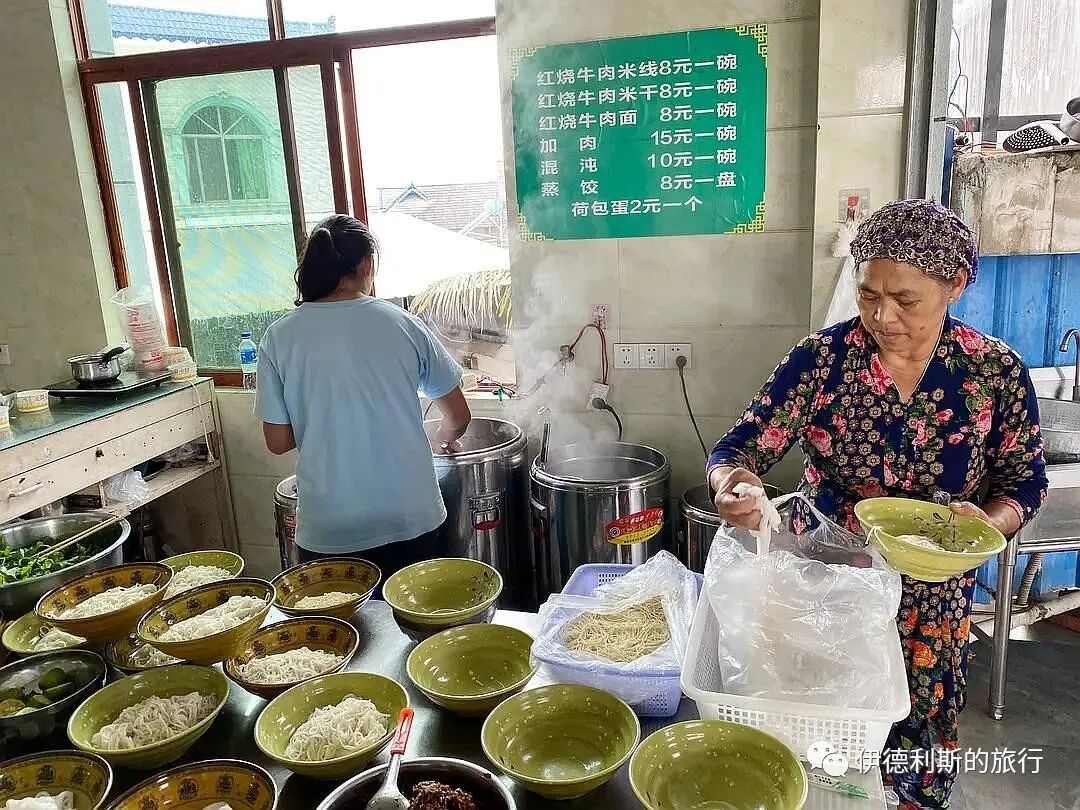
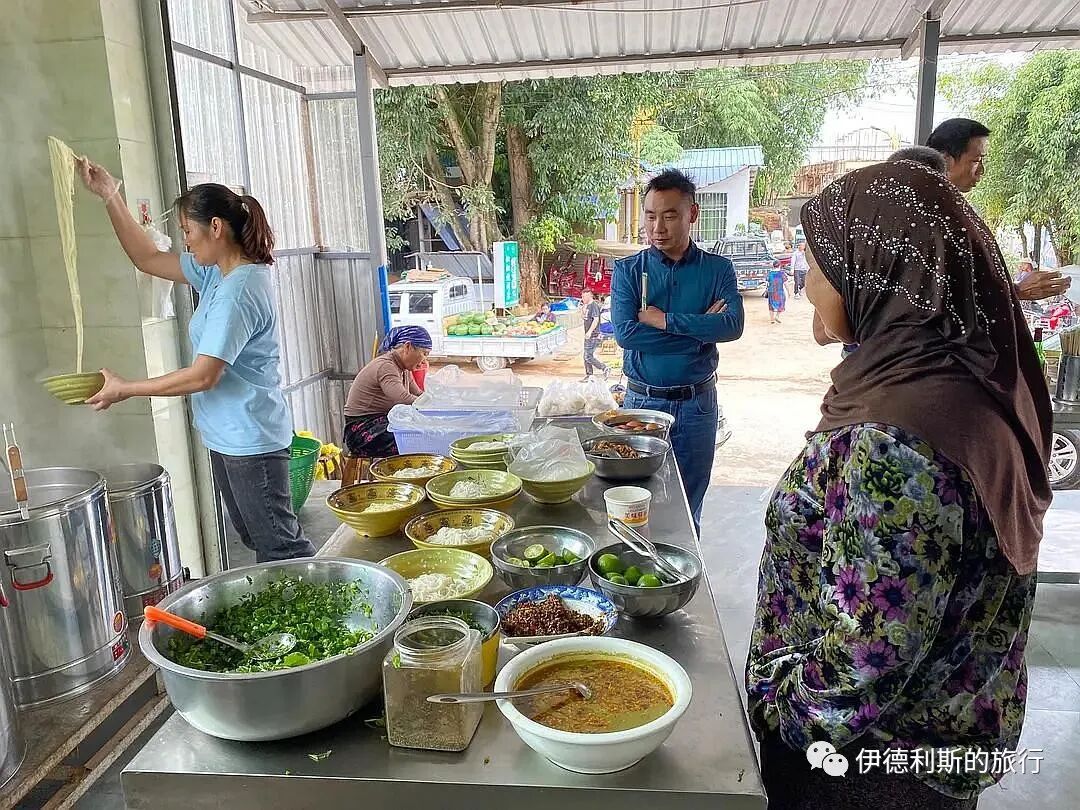
2. Crossing-the-bridge rice noodles (guoqiao mixian) in Mengzi.
In Mengzi, I ate at a very popular halal crossing-the-bridge rice noodles (guoqiao mixian) restaurant called Yitiange. They have copper pot crossing-the-bridge rice noodles ranging from 12 to 50 yuan. We ordered the 50-yuan deluxe version, which came with 26 small plates. The broth and rice noodles can be refilled as much as you want. The plates included raw fish slices, raw beef slices, raw quail eggs, shrimp, dried beef (niuganba), beef tongue, cold duck slices, cold beef slices, crispy beef fat, braised beef, grass sprouts, chrysanthemum, pea paste, bean sprouts, bean curd skin, chives, cilantro, mint, chopped green onions, melon tips, ginger, garlic, chili, and chili sauce. The variety is the most complete I have ever eaten!
3. Jianshui's grass sprout bridge-crossing rice noodles (guoqiao mixian).
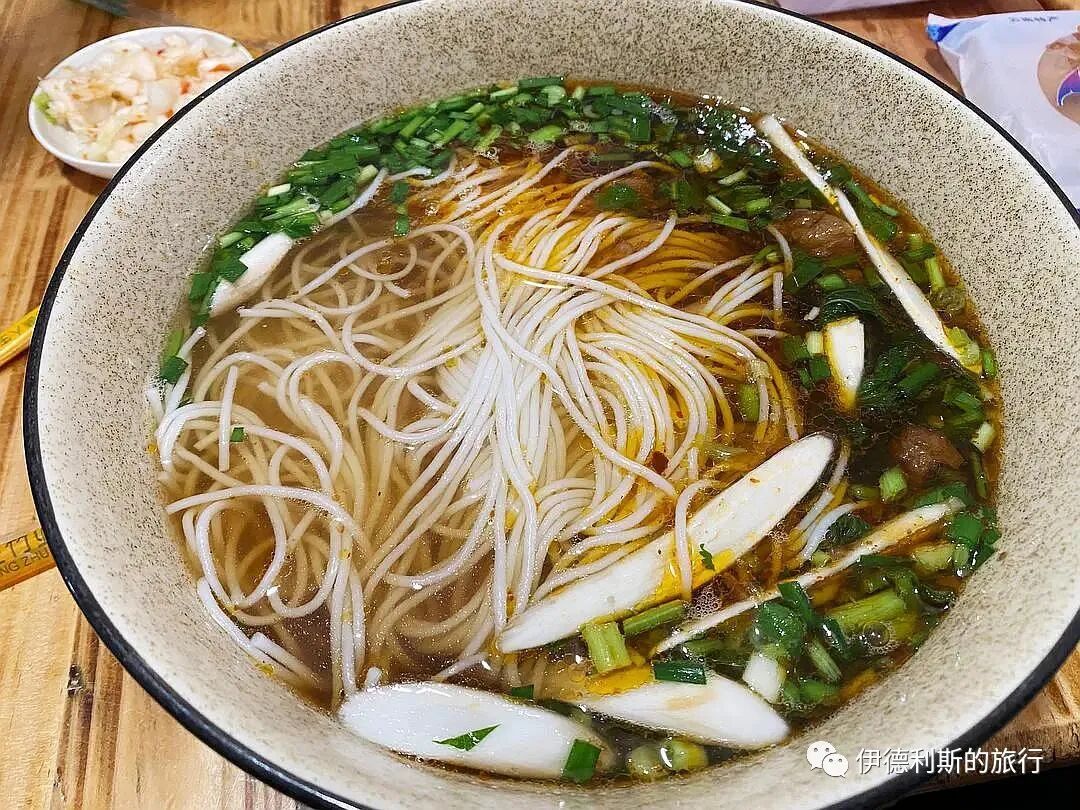
I ate the local specialty, grass sprout bridge-crossing rice noodles, on Mashi Street near the Chaoyang Tower in the old town of Jianshui.
4. Yuxi Najiaying's beef rolled rice noodles (juanfen).
I ate beef rolled rice noodles in Najiaying, Yuxi, in the morning.
5. Zhaotong's spicy oil rice noodles (ran mixian) and lamb rice noodles.
I ate spicy oil rice noodles at the entrance of the Zhaotong East Mosque (Dongdasi).
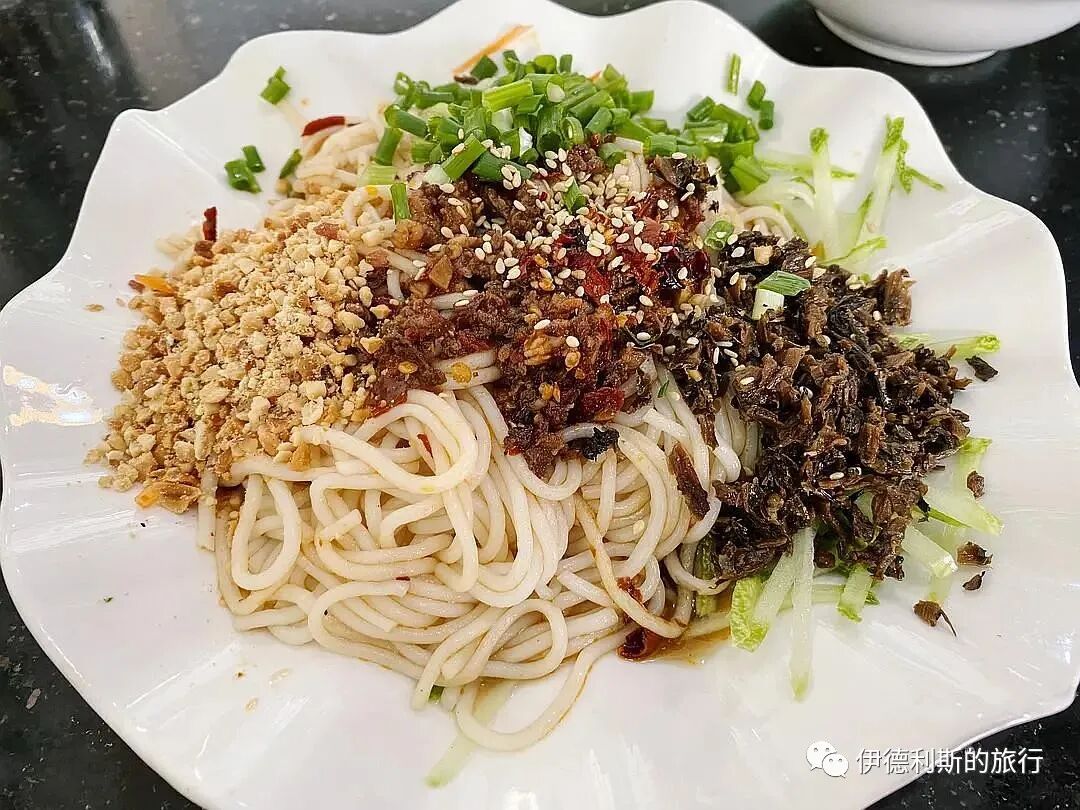
I ate lamb rice noodles across from the Zhaotong East Mosque. Many places in Yunnan serve beef rice noodles, but this was my first time eating the lamb version.
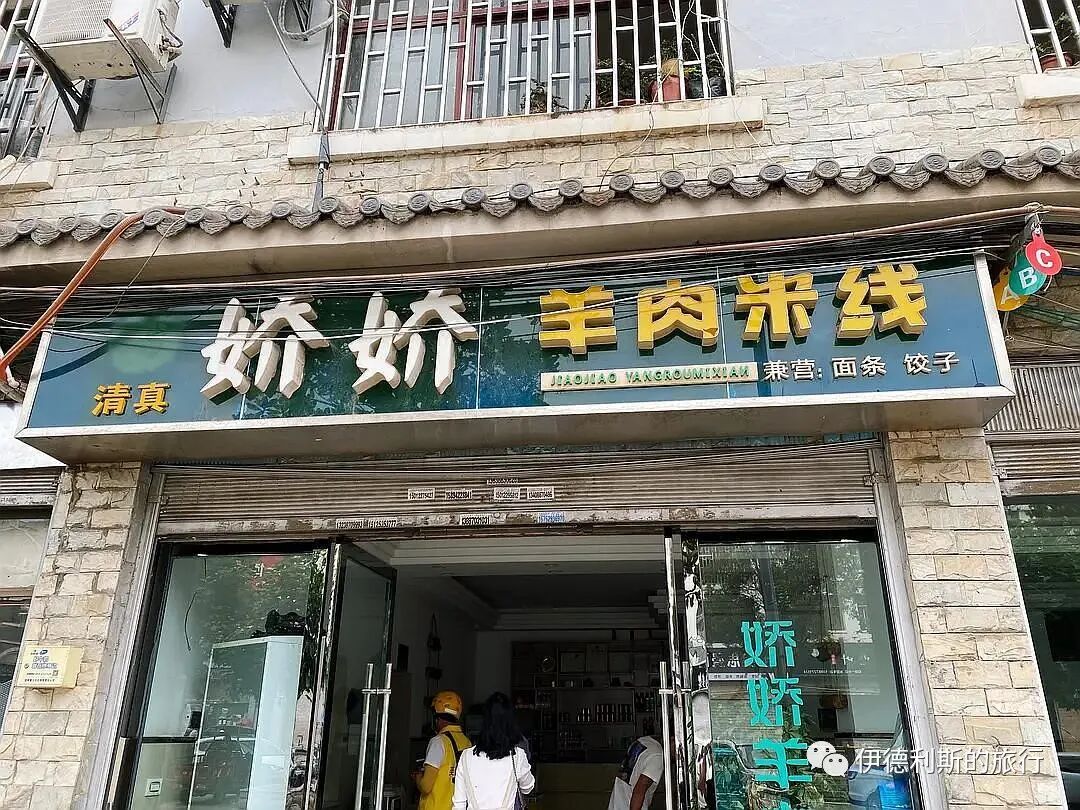
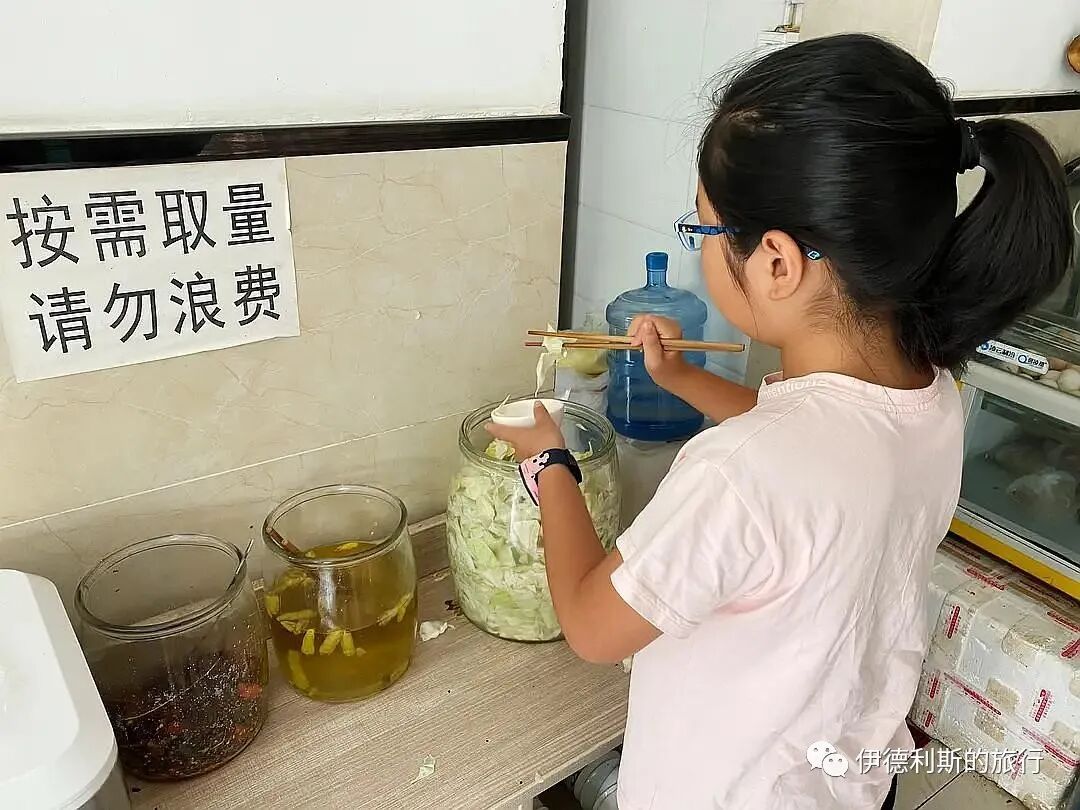
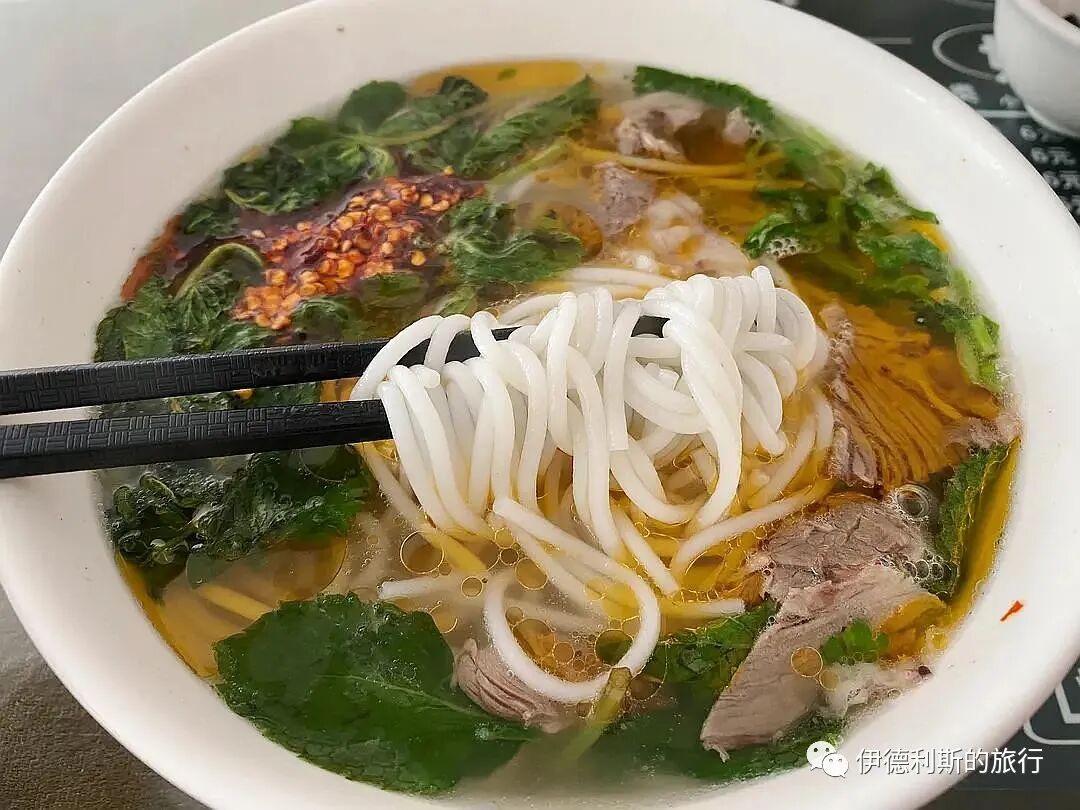
6. Kunming's pea starch jelly (wandoufen), cold rice noodles (liang mixian), and thick rice noodles (ersi).
I ate cold pea starch jelly, a mix of thick and thin, on Shuncheng Halal Street in Kunming.
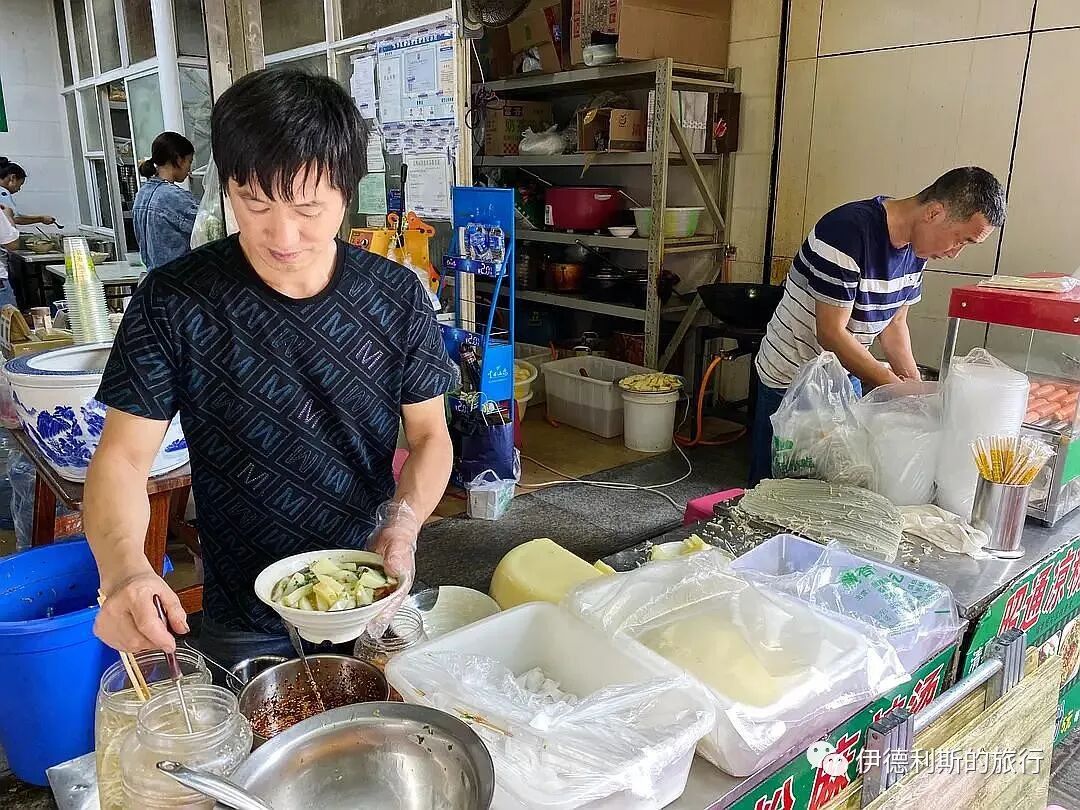
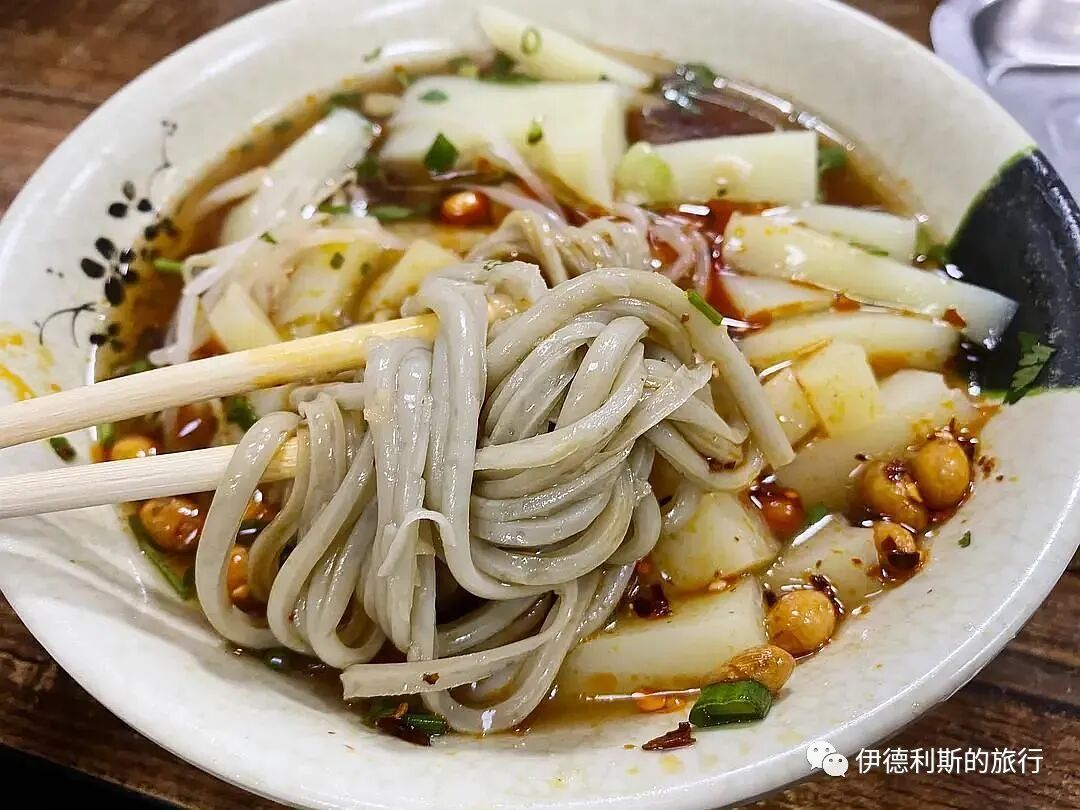
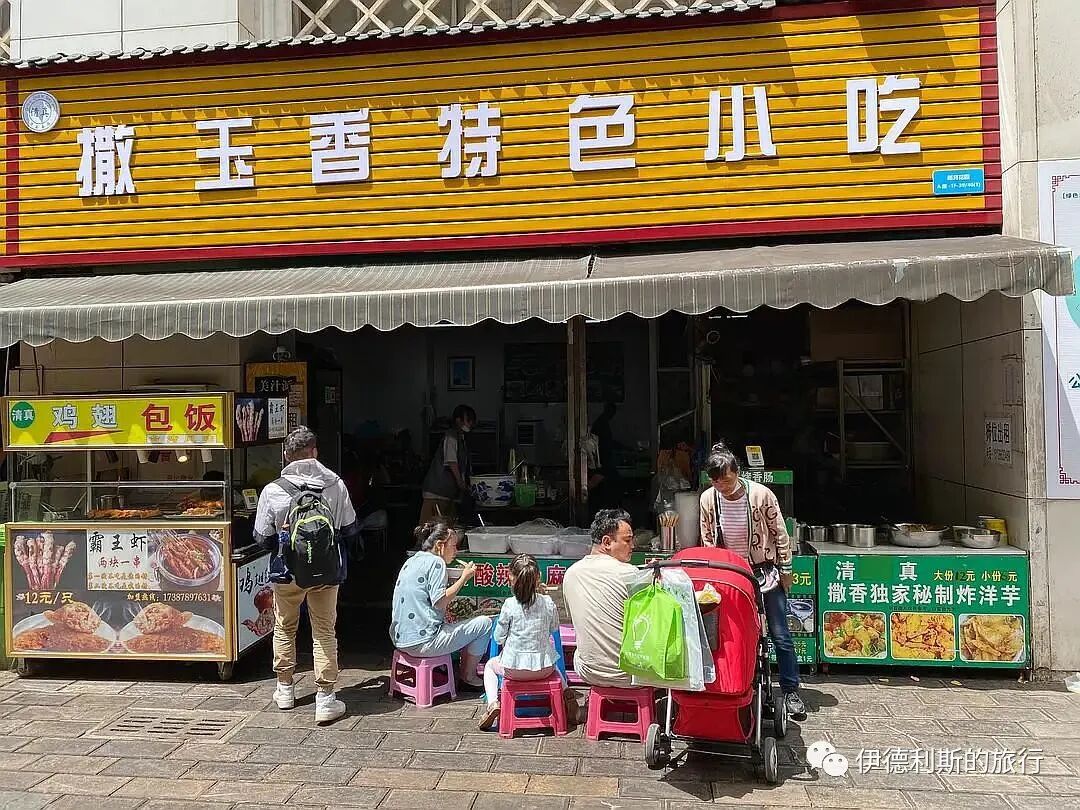
Imam Ma Cong treated us to Niangniang cold rice noodles at the entrance of the Jinniu Street Mosque in Kunming; we had one bowl each of rolled rice noodles and rice noodles, and they tasted amazing.
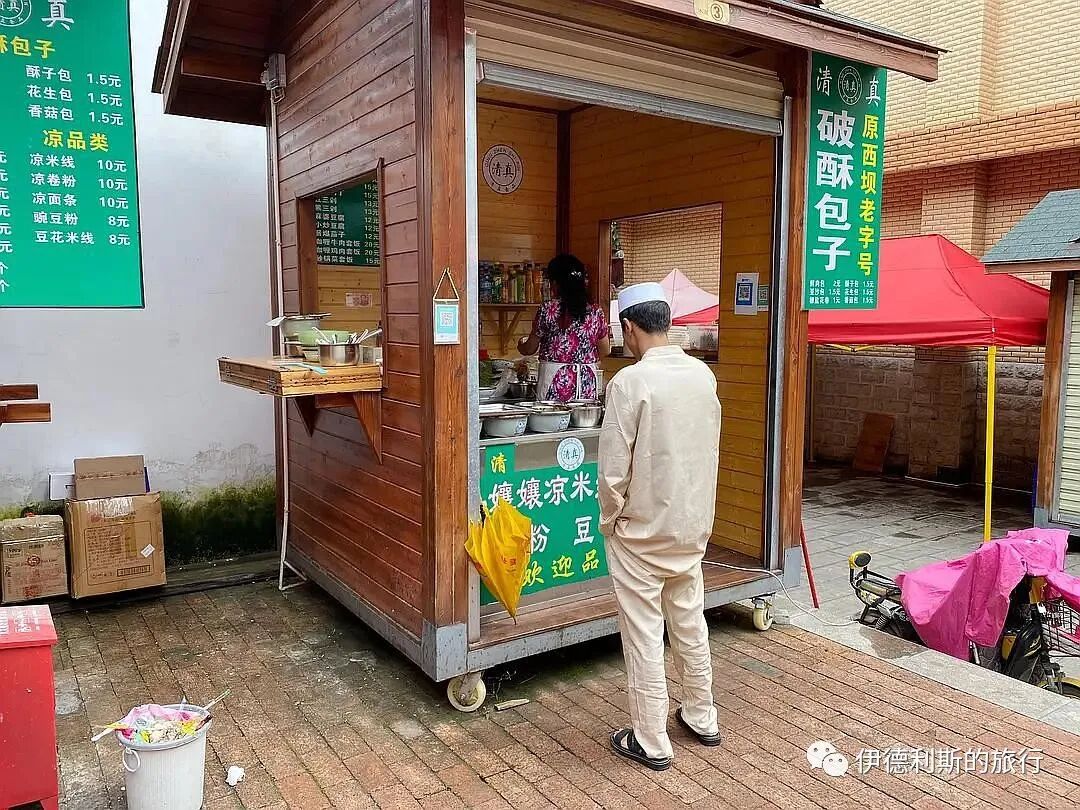
In the late 19th century, as Hui Muslim caravans traveling through Kunming and Dali to Myanmar and Thailand flourished, Hui Muslims from western Yunnan, such as those from Weishan in Dali, began to settle in the Qingyun Street area of Kunming. In 1899 (the 25th year of the Guangxu reign), Hui Muslims from western Yunnan in Kunming and the Xing Shun He firm, founded by Yuxi Hui Muslims, jointly raised funds to build the Chongshan Guild Hall at the east end of Qingyun Street. Later, Dali Hui Muslims merged the Zhuiyuan Hall, Chengyi Hall, and Baozhen Hall with the Chongshan Guild Hall. In 1919, it was renamed Chongshan Society by order of Yunnan Governor Tang Jiyao. It was officially renamed the Yixigong Mosque in 1942, and in 1951, it was also known as the Kunming Overseas Chinese Mosque.
I ate Dali thick rice noodles at the entrance of the Kunming Yixigong Mosque in the morning.
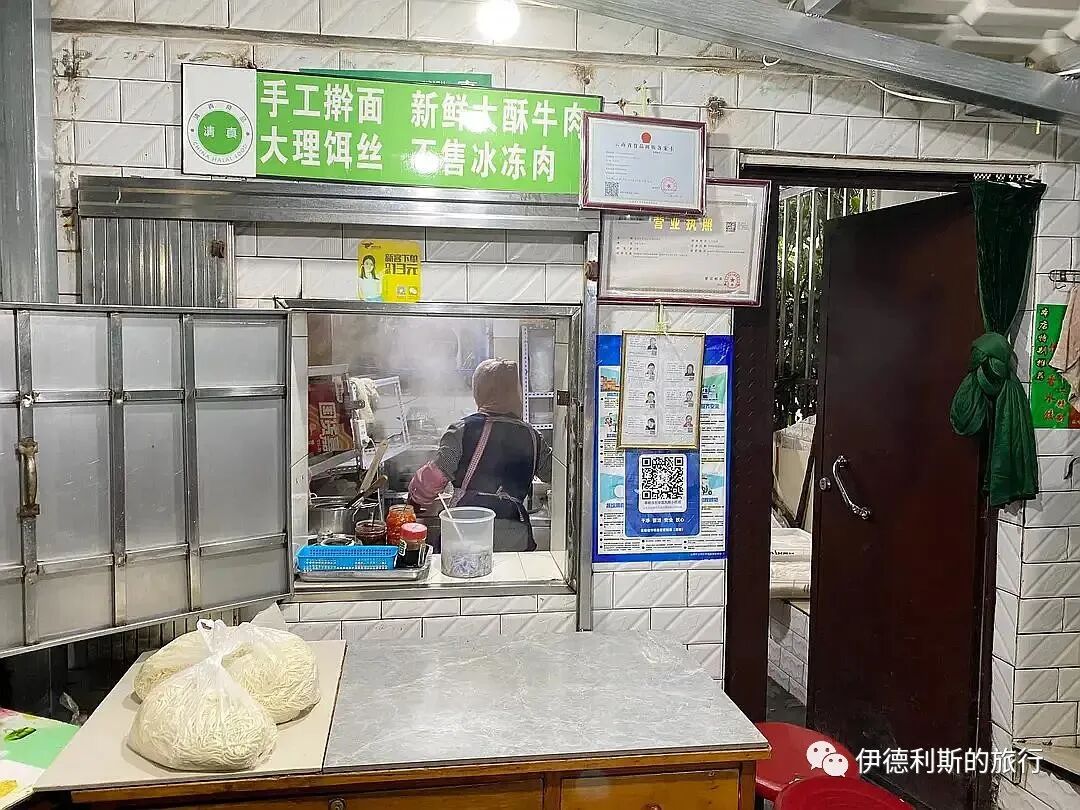
7. Dali Ancient City's local cold chicken rice noodles.
Zaihuishou is a very famous halal snack shop in Dali Ancient City, and its specialty is cold chicken rice noodles.
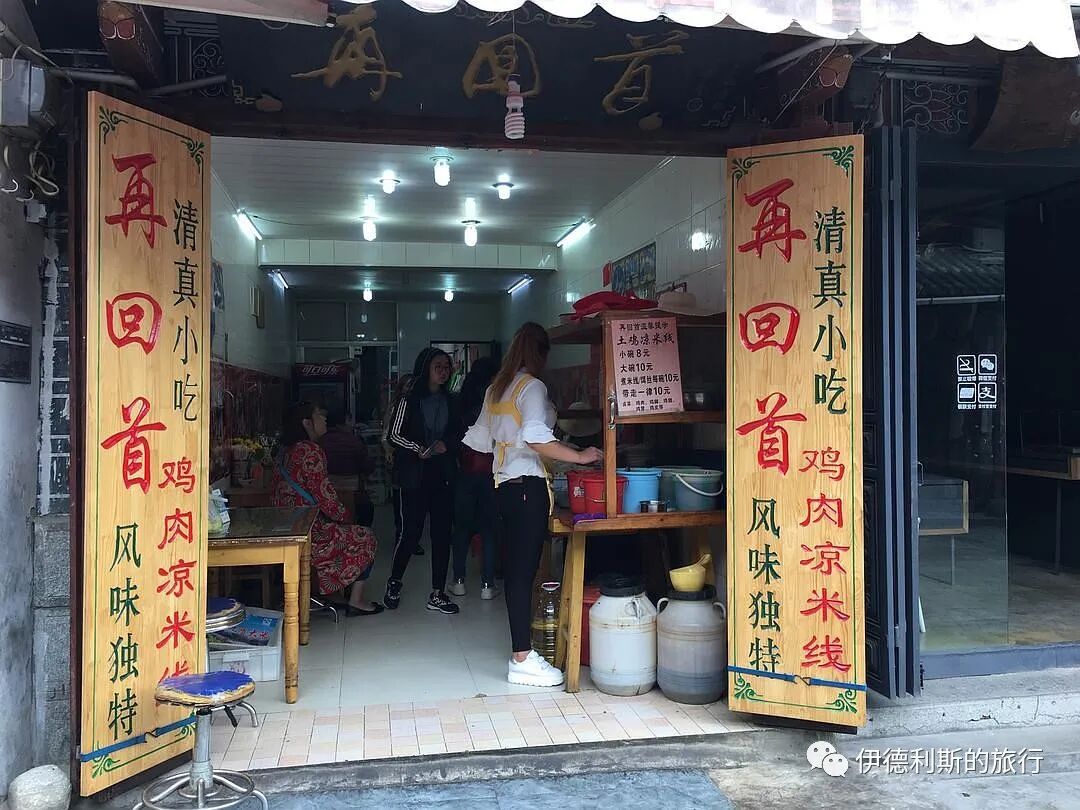
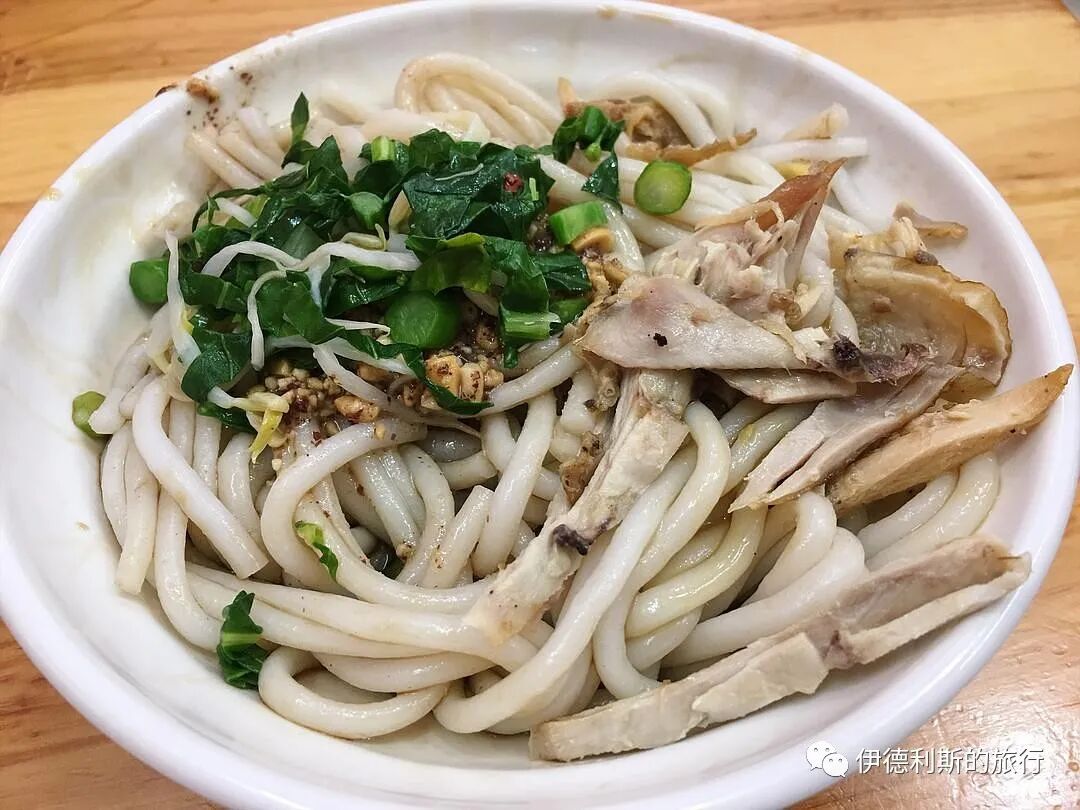
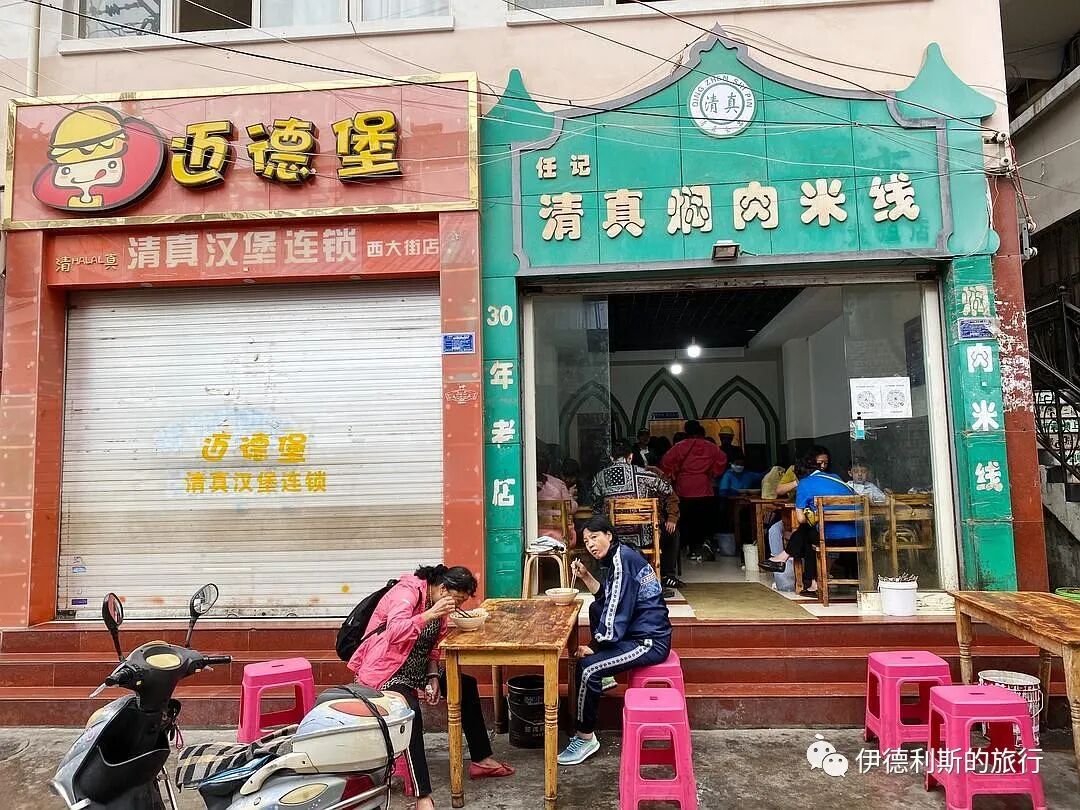
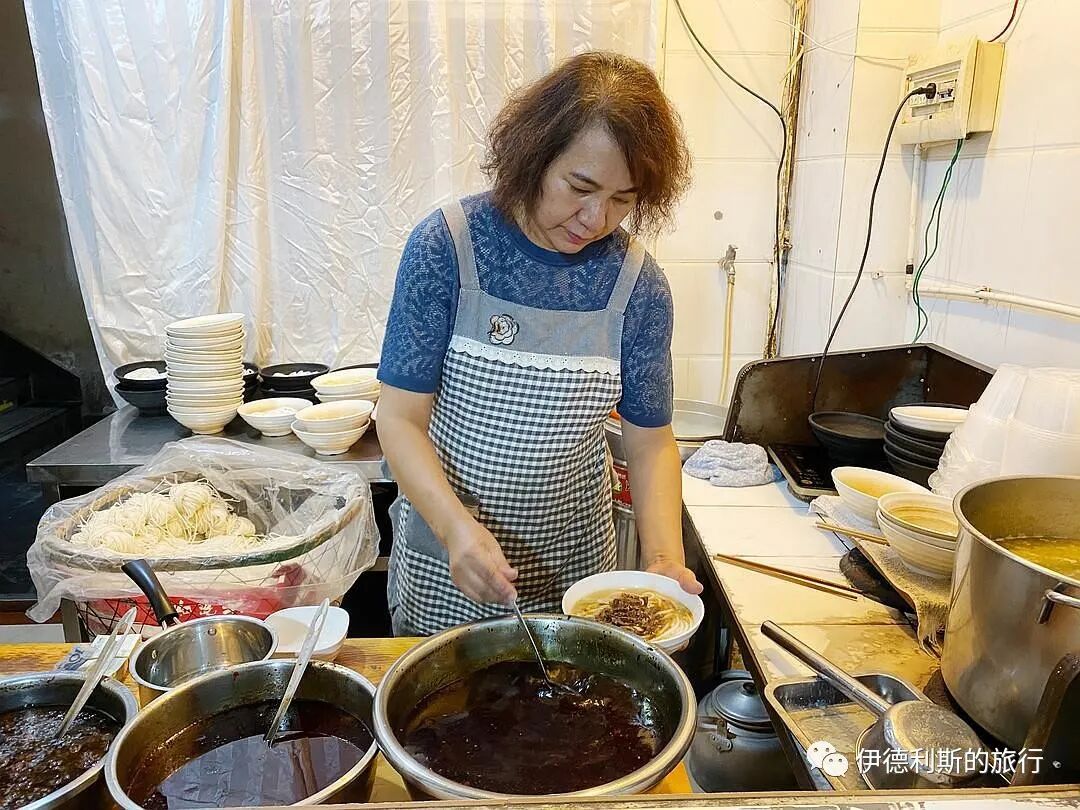
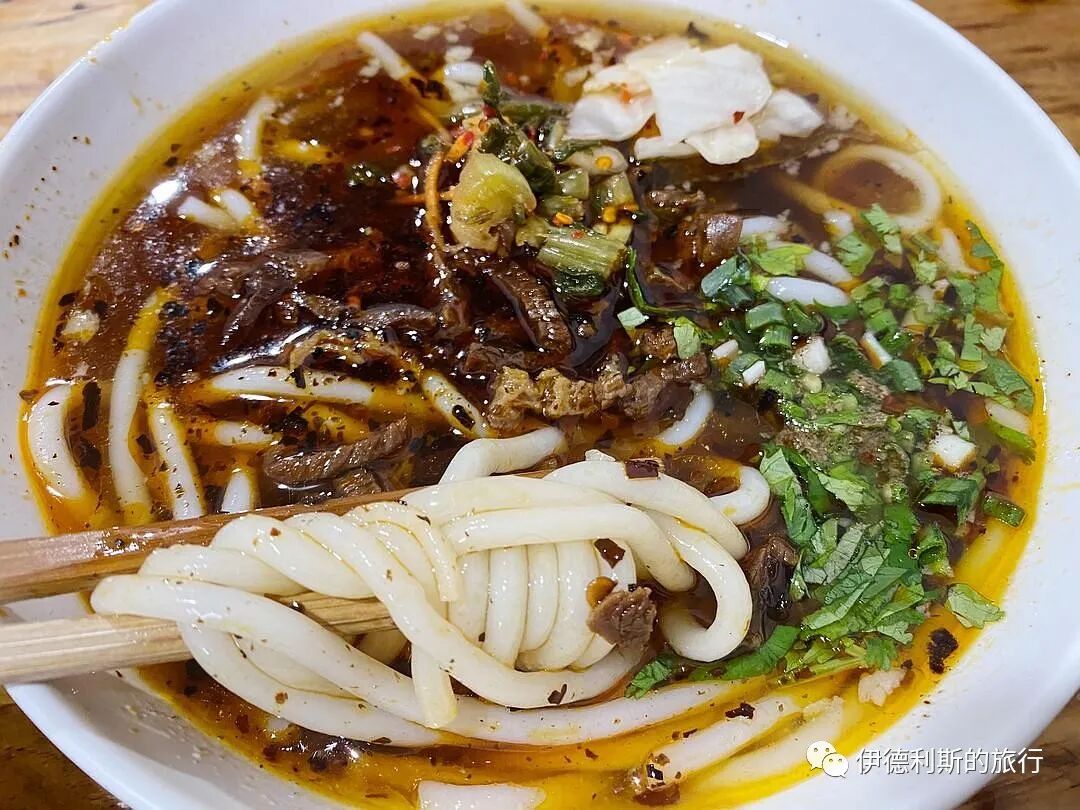
8. Dali Xiaguan's braised meat rice noodles.
I ate braised meat rice noodles on the Hui Muslim street in Xiaguan, Dali.
9. Ruili's Burmese fried tofu mixed noodles.
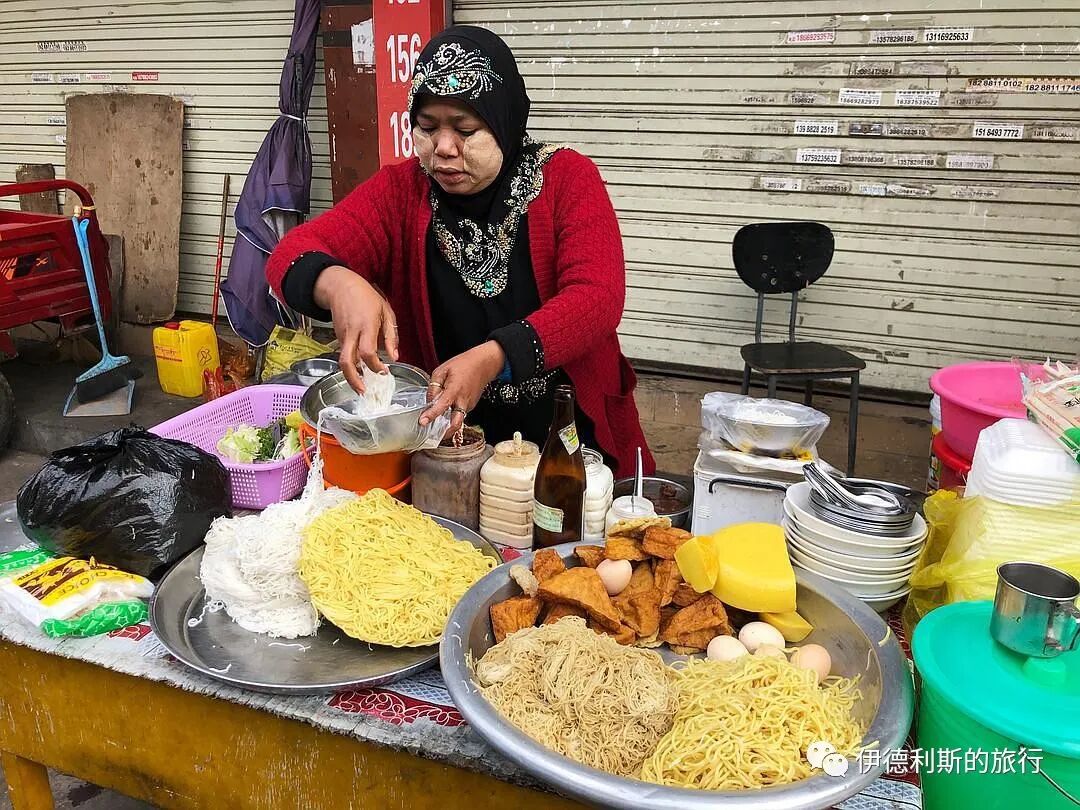
Between the opening of the border in 1985 and its closure in 2020, many Burmese Muslims came to Ruili to do business, forming a Burmese halal snack street in the East Alley of Baijing, Ruili. The Muslims in Ruili are mainly Bamar Muslims, an ethnic group formed by the intermarriage of South Asian Muslims and the Bamar people. After the British occupied Myanmar in the 19th century, a large number of South Asian Muslims came to make a living, spreading to almost every city in Myanmar. Burmese Muslims speak Burmese and share similar customs with the Burmese people, and they make up the largest group of Muslims in Myanmar.
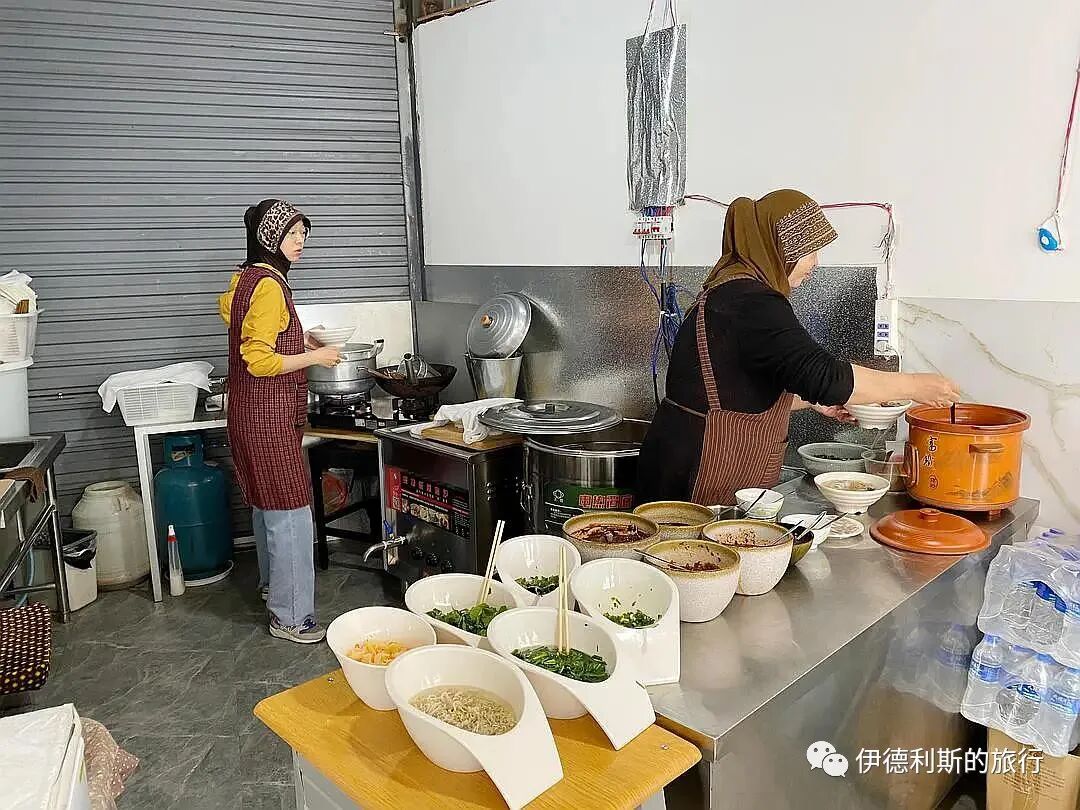
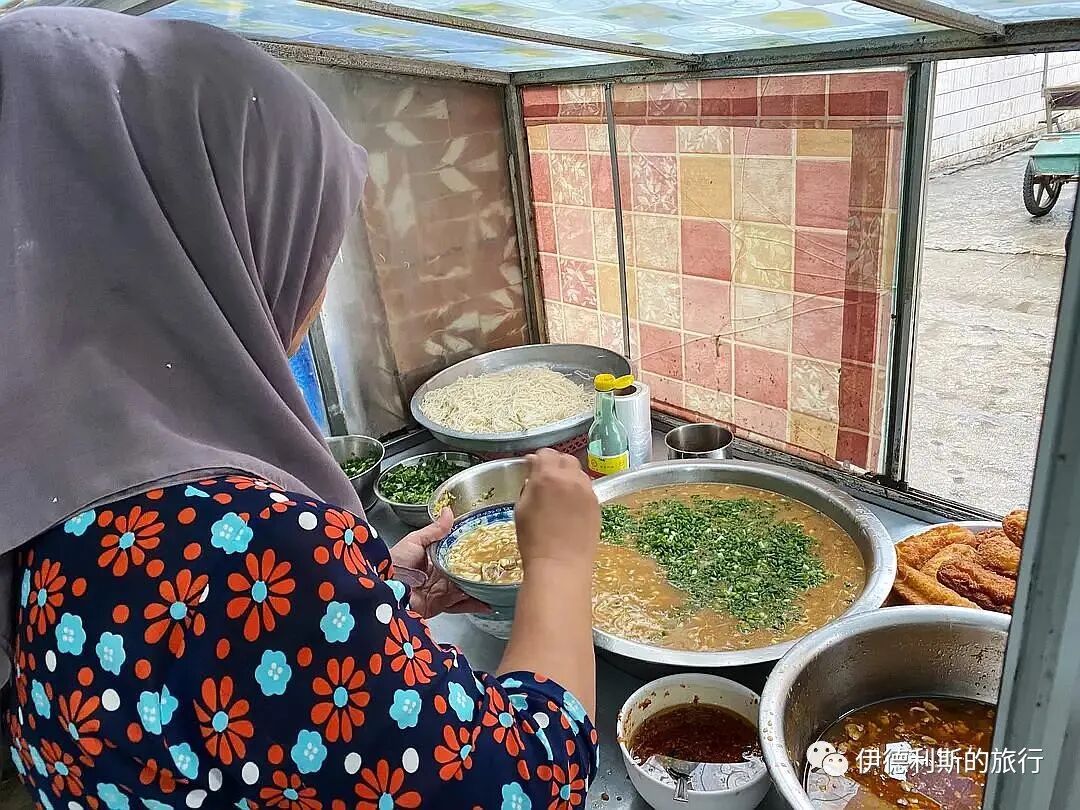
The paste on this auntie's face is called thanaka. It is made by grinding yellow fragrant wood branches into powder and mixing it with water. It keeps mosquitoes away and feels cool on the skin.
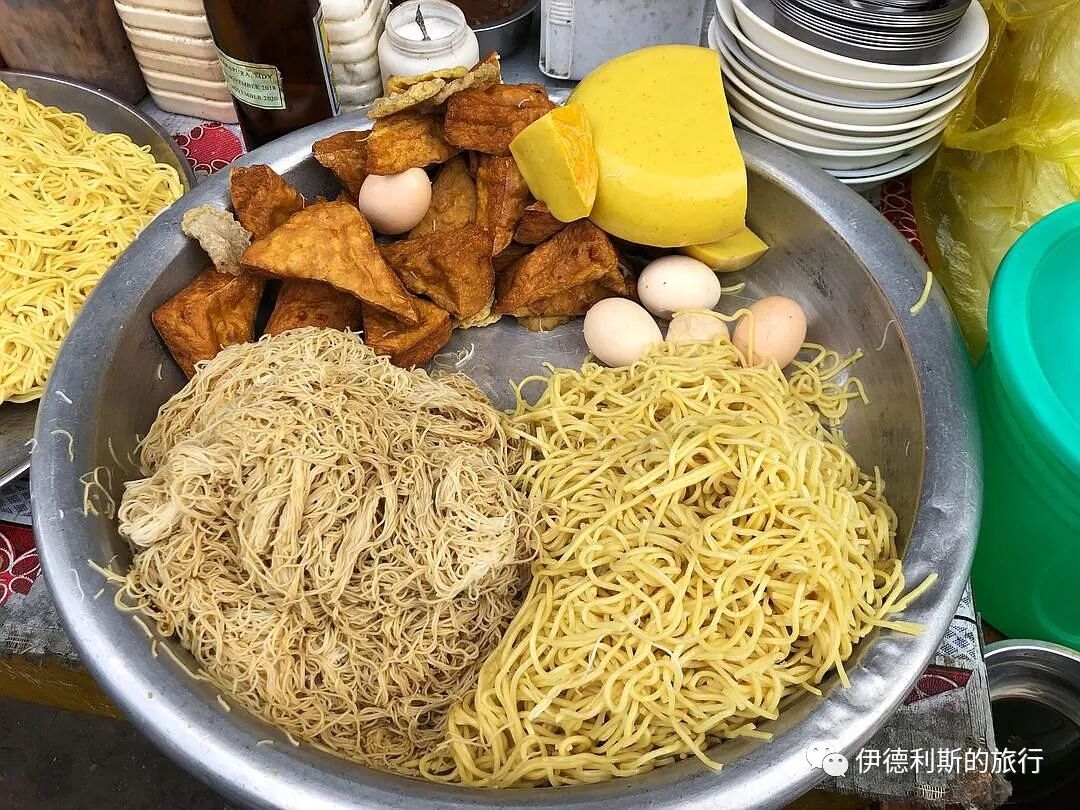
In front of her are various types of mixed noodles, ranging from thick to thin: nan ji, lat, and thay thout. The white ones are glass noodles (ja zan). I ate mixed noodles made with Burmese fried tofu.
6. Tibet
1. Tibetan noodles from the Tibetan Hui Muslims in Lhasa
In the southeast of the ancient Barkhor city in Lhasa, there is an area called Hebalin, which used to be a forest on the banks of the Lhasa River. Many Muslims live here who speak Tibetan, wear Tibetan clothes, and eat Tibetan food. They are also called Hebalin Tibetan Hui Muslims. Most of these Tibetan Hui Muslims are descendants of Hui Muslim officers and soldiers from the Qing army stationed in Tibet after the 18th century.
I ate Tibetan noodles at a Tibetan Hui Muslim restaurant called Yibire Steamed Bun Shop in the small alleys of Hebalin.
7. Hainan
1. Beef brisket noodles and chicken rice noodles of the Huihui people in Sanya
The Ha family of the Sanya Huihui people traces their ancestry back to Pu Chengshipeng, Pu Chengxiang, Pu Chengxi, Pu Chengfu, and Pu Chengrui. According to Ha Bingzhong, a seventh-generation descendant of Pu Chengshipeng born in 1871, Pu Chengshipeng's father moved from Shaanxi to Guangta Street in Guangzhou, then brought his whole family to Dadan Port in Yazhou, Hainan, before moving to Huihui Village in Sanya during the late Ming and early Qing dynasties.
The Ha Xuanren Beef Brisket Noodle Shop opened by the Ha family in Huihui Village is very famous.
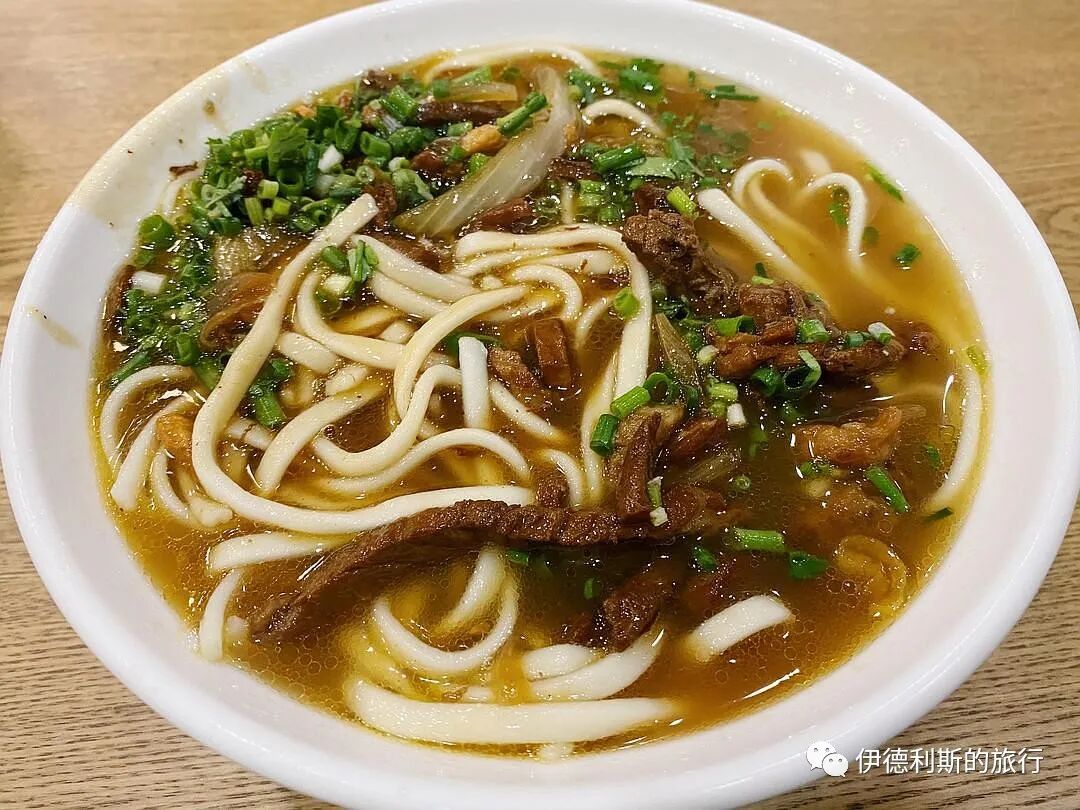
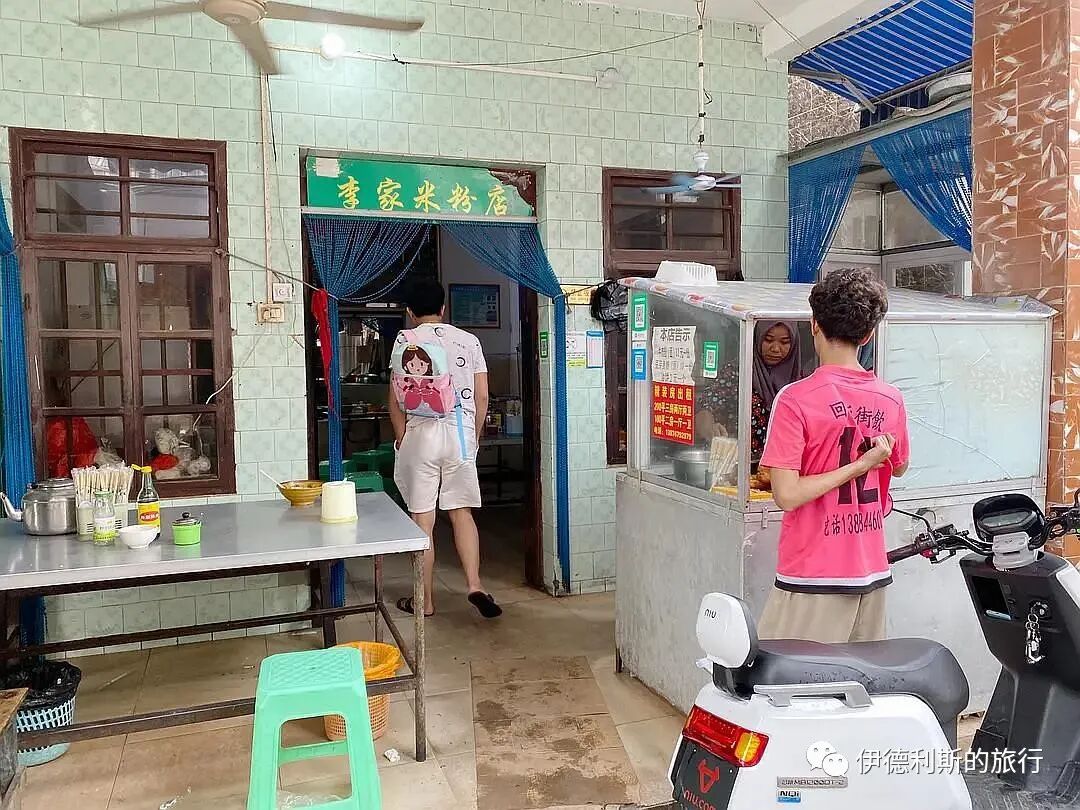
I had chicken rice noodles at the Li Family Rice Noodle shop in Huixin Village, Sanya, in the morning. It was super fresh!
Summary: Halal Food Guide: Southern China — Rice Noodles, Hui Muslim Food and Local Flavor is presented here as a firsthand travel account in clear English, beginning with this scene: 5. Beef rice noodles (niurou migan) in Manluanhui, Menghai, Xishuangbanna, Yunnan; bridge-crossing rice noodles (guoqiao mixian) in Mengzi; grass sprout bridge-crossing rice noodles (caoya guoqiao mixian) in Jianshui. The account keeps its focus on Southern China Food, Rice Noodles, Halal Food while preserving the names, places, food, and historical details from the Chinese source.
1. Hot dry noodles (reganmian) in Jingzhou, Hubei; spicy beef rice noodles (hongyou niurou fen) in Wuhan; and beef noodles (niurou mian) in Xiangyang.
2. Fish maw noodles (yudu mian), beef noodles, smoked fish noodles (xunyu mian), and beef heart noodles (niuxin mian) in Nanjing, Jiangsu; spiced dried tofu noodles (xianggan mian) in Zhenjiang; and wonton noodles (huntun mian) and shredded chicken noodles (jisi mian) in Huai'an.
3. Eel shredded cold noodles (shansi lengmian), beef noodles, and lamb noodles (yangrou mian) in Shanghai.
4. Beef rice noodles and Sichuan-style beef noodles in Nanchong, Sichuan; minced meat noodles (zajiang mian) in Chengdu; beef offal rice noodles (niuza fen) in Tuqiao, Chengdu; and goose soup noodles (etang mian) in Mimou Town, Chengdu.
5. Beef rice noodles (niurou migan) in Manluanhui, Menghai, Xishuangbanna, Yunnan; bridge-crossing rice noodles (guoqiao mixian) in Mengzi; grass sprout bridge-crossing rice noodles (caoya guoqiao mixian) in Jianshui; beef rolled rice noodles (niurou juanfen) in Najiaying, Yuxi; spicy rice noodles (ran mixian) and lamb rice noodles in Zhaotong; pea starch jelly (wandou fen), cold rice noodles (liang mixian), and rice noodles (ersi) in Kunming; local cold chicken rice noodles (tu liangji mixian) in Dali Ancient City; braised meat rice noodles (menrou mixian) in Xiaguan, Dali; and Burmese fried tofu mixed noodles in Ruili.
6. Tibetan noodles (zangmian) from Hui Muslims in Lhasa, Tibet.
7. Beef brisket noodles (niunan mian) and chicken rice noodles in Huihui Village, Sanya, Hainan.
1. Hubei
1. Hot dry noodles (reganmian) in Jingzhou
Yingxi Hui Muslim Street is located inside Yingxi Gate, the northwest gate of the Tu City in Shashi, Jingzhou. In the early years of the Republic of China, some Hui Muslims from Nanyang, Henan, came to Shashi as refugees and settled on Yingxi Street. They built a mosque there in 1925. I ate hot dry noodles at an unnamed halal restaurant on Yingxi Street. The hot dry noodles in Shashi are different from those in Wuhan because they add sweet bean sauce (tianmianjiang).
2. Spicy beef rice noodles (hongyou niurou fen) in Wuhan
After the Wuchang Prefecture city was built during the Hongwu reign of the Ming Dynasty, the area outside Zhonghe Gate in the south of the city was originally a wasteland used as a material yard for building the city walls. In the late Ming Dynasty, a group of Hui Muslims who moved from Maguoyuan, Shaanxi, began to live here, working in cattle slaughtering, general goods, and the halal food industry. During the Daoguang reign of the Qing Dynasty, another group of Hui Muslims from Mianyang, Hubei, moved here due to floods, and the number of Hui Muslims outside Zhonghe Gate gradually increased.
Before the demolition in 2020, there was a lively morning market on Qiyi Street every day, crowded and full of life. On Xiangbi Street (the eastern section of Bao'an Street), which intersects with Qiyi Street, there is a halal breakfast shop called "Qingzhen Dajia Hongyou Niurou Fen Mian Guan." It is open daily from around 6:00 or 7:00 AM to 10:00 AM. I ate the spicy beef thin rice noodles there.
3. Beef noodles (niurou mian) in Xiangyang
As the most important commercial hub in the middle reaches of the Han River, Fancheng has had Hui Muslim residents since the Yuan and Ming dynasties. The Hui Muslims in Fancheng were mainly concentrated on Jiaomen Street, where the mosque is located. When the Fancheng Mosque was rebuilt in 1792 (the 57th year of the Qianlong reign), there were 222 local Hui Muslim households who donated funds. In 2015, all of Jiaomen Street was demolished for new construction. Now, only a row of shops selling beef noodles and raw beef remains at the bridgehead of the Han River Bridge.
Early in the morning, we went to the bridgehead to eat beef noodles at Liu's shop from Jiaomen Street. Liu's is run by the son of Liu Donghan, an old imam at the Fancheng mosque, and it is quite famous. When I was in college, our halal cafeteria had a stall for Xiangfan beef noodles, and my impression back then was that it was really spicy! This time, I finally got to taste the authentic version. After eating the authentic version, I felt it was indeed a bit spicy, haha. We specifically asked for no chili, but the braised beef broth itself is a little spicy. But besides the spice, the beef is really fragrant! They must use plenty of meat, and it is stewed until very flavorful.
2. Jiangsu
1. Nanjing's fish maw noodles, beef noodles, smoked fish noodles, and beef heart noodles.
Lvliuju was founded in 1912 by Taoye Ferry on the banks of the Qinhuai River. It started as a high-end vegetarian restaurant, and people like Kong Xiangxi, Chiang Ching-kuo, Bai Chongxi, and the Soong sisters often dined here. After 1949, Lvliuju closed for a time. It did not reopen until 1963 at Yanggongjing on Taiping South Road, where they hired the famous chef Chen Bingyu to continue serving authentic vegetarian food. A major feature of Lvliuju is vegetarian dishes made to taste like meat. Their vegetarian chicken (suji) and vegetarian duck (suya), made from tofu skin, gluten, and dried bean curd sticks with Chinese herbal seasonings, are delicious.
In 1987, Lvliuju added halal dishes to its vegetarian menu and became a halal restaurant, though vegetarian food remains its specialty. In 1995, it was rebuilt on the same site into the current five-story building, becoming a large halal restaurant in Nanjing. We ate fish maw noodles at Lvliuju, which also contained mushrooms, bamboo shoots, wood ear mushrooms, and green peas.
We ate at Jintongji Beef and Mutton Restaurant north of the Nanjing Confucius Temple, where we ordered a huge portion of Jintongji noodles with beef, beef tendon, beef tripe, and beef intestine, as well as smoked fish noodles. The black sweet beef was so delicious! It is very addictive, and the sweet smoked fish is also super tasty. (This is the old Jintongji shop; it has now moved to a new address.)
We had beef heart noodles at Xiaoyisi Noodle Shop on Luolang Lane in Nanjing (this is the old location; it has now moved to a new address). This shop has also been open for many years. It is a husband-and-wife business, and the owner is an uncle who wears a gold chain. Next to the noodle shop is the famous provincial cultural heritage site, the Taiping Heavenly Kingdom architecture and murals on Luolang Lane.
2. Zhenjiang's dried tofu noodles (xianggan mian).
The ancient Runzhou Mosque (Runzhou libaisi) from the Yuan Dynasty in Zhenjiang was moved to Jianzi Lane in the city in 1602 (the 30th year of the Wanli reign) and has since been called the Jianzi Lane Mosque. In 2005, the Jianzi Lane Mosque was demolished due to the construction of the Zhenjiang First Building commercial pedestrian street, but there are still many halal restaurants nearby. We ate dried tofu noodles (xianggan mian) at Yang Dahai Steamed Bun Shop in the small alley north of Jianzi Lane. They had a slightly sweet taste, and the noodle broth was very much in the Jianghuai style.
3. Chicken shredded noodles (jisi mian) of Huai'an
Because navigating the Yellow River section of the Grand Canal was very dangerous, and waiting times to pass through locks after entering Shandong were too long, many merchants chose to leave their boats at Qingjiangpu in Huai'an, Jiangsu. They would cross the Yellow River and switch to horse-drawn carriages to continue north, making Qingjiangpu a transportation hub for southern boats and northern horses. Hui Muslims have been doing business on Yuehe Street in front of the Imperial Wharf since the Ming Dynasty, and the Qingjiang Mosque was built during the Jiajing period of the Ming Dynasty.
Eating wonton noodles at the entrance of the Qingjiangpu Mosque.
I ate chicken shredded noodles at Liu Si Noodle Shop. It had fish balls, beef balls, and squid inside. The fish balls were super delicious, the soup was excellent, and it felt great to finish the meal.
Heading south along the canal from Qingjiangpu, you reach the ancient town of Hexia, not far northwest of the Huai'an prefectural city. Hexia is the largest town in the suburbs of Huai'an. Its official historical name was Manpu, and it developed into an important canal town during the Song and Yuan dynasties. Because the salt production and quality in the coastal salt fields north of the Huai River were very high, many salt merchants from the northwest and Anhui came to the region in the late Ming Dynasty to work in the salt industry. The wealth brought by these merchants made Hexia a prosperous commercial center. Many Hui Muslims also came to settle in Hexia, and the Hexia Mosque was first built during the Ming Dynasty.
We had some very fragrant chicken shredded noodles at a halal snack shop on Zhugan Lane in Hexia Town. When eating noodles in Jiangsu, the soup is more important than the noodles themselves.
4. Shanghai
1. Shanghai's eel shredded cold noodles (shansi lengmian), beef noodles, and lamb noodles
Yixinzhai is an old shop on Pingliang Road in Yangpu District that opened in 1958. It is most famous for its pan-fried beef buns (niurou jianbao) and three-yellow chicken (sanhuangji). In the summer, they also sell shaved ice and cold noodles. I ate the eel shredded cold noodles here. The topping was made with two types of mushrooms and three shredded ingredients, and it was truly delicious.
At Zhang Xuchang Old Man Noodle Shop on Houjia Road, the lamb noodles and beef noodles are served with the toppings on the side. The beef comes with yellow curry, and the lamb is served in a clear white broth.
5. Sichuan
1. Nanchong beef rice noodles (niurou fen) and Sichuan-style beef noodles
The ancestors of Imam Feng Yong from the Nanchong Mosque moved to Nanchong from Shaanxi during the Qing Dynasty. During the Republic of China era, the Feng family joined forces through marriage with three other families: Yang Fangyun who ran "Red Lantern Dried Beef," Ma Yutu who ran "Ma Laizi Canned Beef," and Zhang Dechao who ran "Beef Crispy Cakes." The Imam's grandfather, Feng Zifeng, founded the "Shixian" brand on Fu Street and opened a halal restaurant. Today, Imam Feng Yong's family still runs an authentic Sichuan halal food business at the entrance of the mosque.
At the Nanchong Mosque, people eat beef rice noodles or beef tripe rice noodles for breakfast every day.
You can also eat Sichuan-style beef noodles here.
2. Chengdu's minced meat noodles (zajiangmian).
There is a halal hot pot restaurant called Dawude on Renhou Street near Kuanzhai Alley. Most local halal restaurants in downtown Chengdu do not serve breakfast, but this is one of the few I know that does. The owner is a Hui Muslim from Qingchuan, Guangyuan. I had the minced meat noodles (zajiangmian) here, and they tasted very authentic.
3. Beef offal rice noodles (niuzhafen) in Tuqiao, Chengdu.
After the Huangchengba Muslim community was dissolved, Tuqiao Town in the northwest suburbs became the closest traditional Muslim community to downtown Chengdu. Many local Hui Muslims come here for Friday namaz. Although Tuqiao Town has gone through demolition, the traditional mosque and the halal snack shops at its entrance are still there, so it remains very lively. I arrived in Tuqiao before the Friday namaz and had beef offal rice noodles (niuzhafen) at a snack shop by the entrance.
4. Goose soup noodles (etangmian) in Mimou Town, Chengdu.
Mimou Town is located in the Qingbaijiang District, on the border between Chengdu and Guanghan. Hui Muslims have lived here since the Ming Dynasty. After the Kangxi period, many Hui Muslims from Shaanxi and Hunan moved to the area around Mimou Town and built six mosques one after another.
Unlike the heavily developed ancient city of Guanxian in Dujiangyan, Mimou Town has no traces of tourism. It is full of daily life and keeps its own pace. I had goose soup noodles (etangmian) here.
V. Yunnan
1. Beef rice noodles (niurou migan) in Manluanhui, Menghai, Xishuangbanna.
The Paxi Dai people live in two villages in Menghai County, Xishuangbanna: Manluanhui and Mansaihui. In the Dai language, "man" means village. The Paxi Dai call themselves "Paxi." They follow Islam and observe the faith, but they speak the Dai language, use the Dai script, and make halal Dai-style food. You could say they have kept their Hui Muslim identity while blending into Dai culture.
We had a halal Dai-style breakfast in Manluanhui at a restaurant called Paxi Dai. In the morning, Paxi Dai people mainly eat beef rice noodles (niurou mixian) and flat rice noodles (migan). We ordered the flat rice noodles. The variety of side dishes here is really rich, including pea tips, chives, bean sprouts, and various dipping sauces. The best part is that their beef is delicious! It is a little sweet and very fragrant.
2. Crossing-the-bridge rice noodles (guoqiao mixian) in Mengzi.
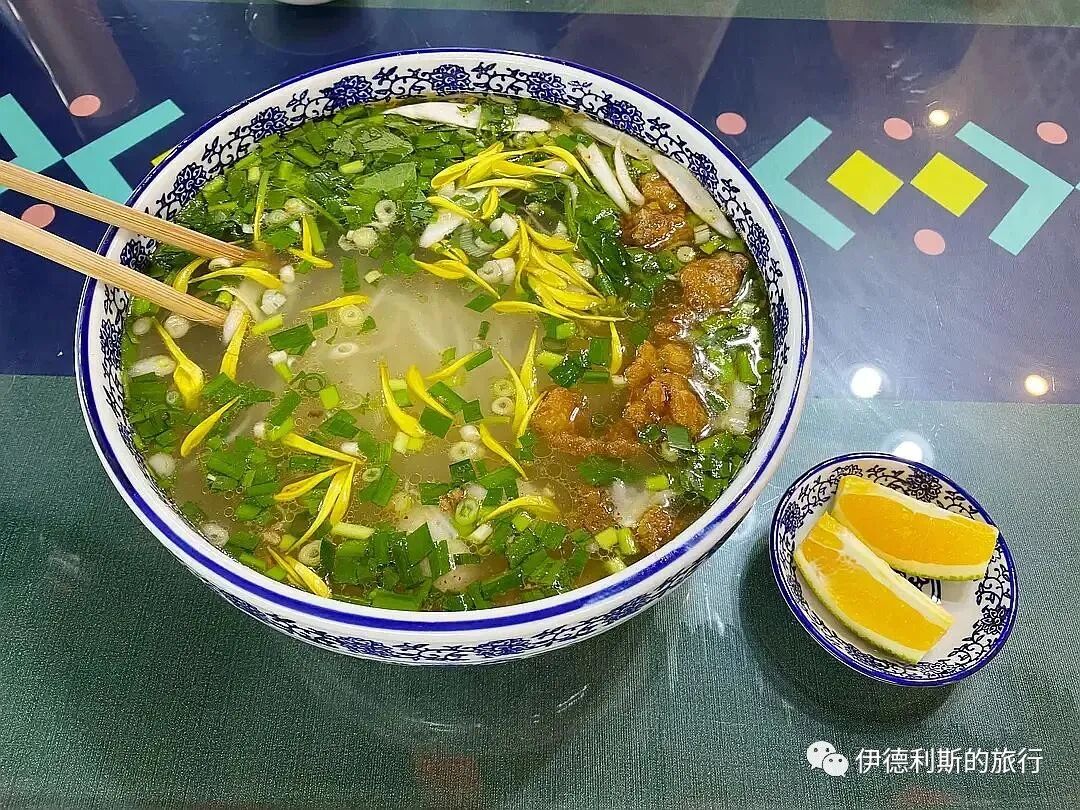
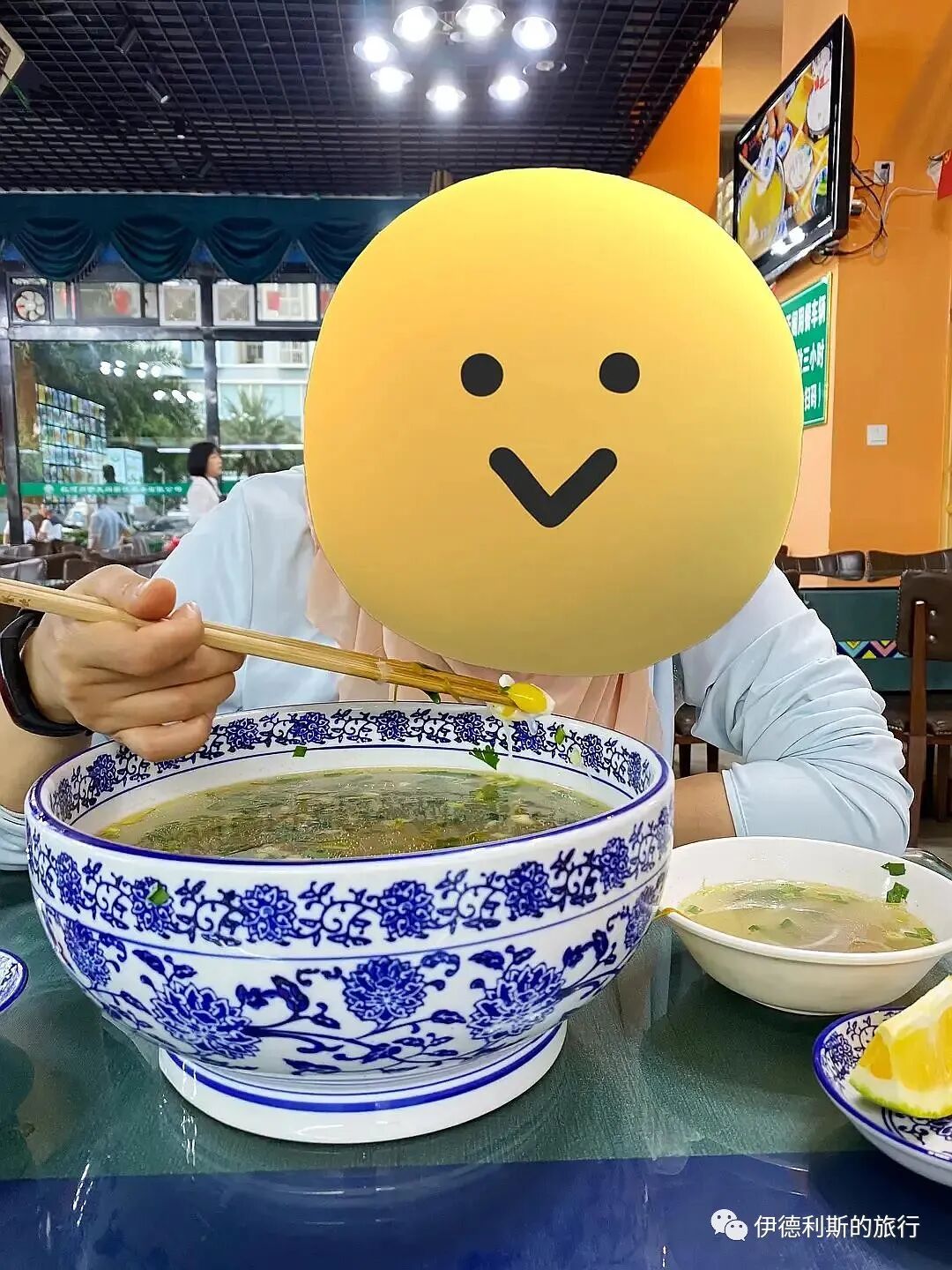
In Mengzi, I ate at a very popular halal crossing-the-bridge rice noodles (guoqiao mixian) restaurant called Yitiange. They have copper pot crossing-the-bridge rice noodles ranging from 12 to 50 yuan. We ordered the 50-yuan deluxe version, which came with 26 small plates. The broth and rice noodles can be refilled as much as you want. The plates included raw fish slices, raw beef slices, raw quail eggs, shrimp, dried beef (niuganba), beef tongue, cold duck slices, cold beef slices, crispy beef fat, braised beef, grass sprouts, chrysanthemum, pea paste, bean sprouts, bean curd skin, chives, cilantro, mint, chopped green onions, melon tips, ginger, garlic, chili, and chili sauce. The variety is the most complete I have ever eaten!
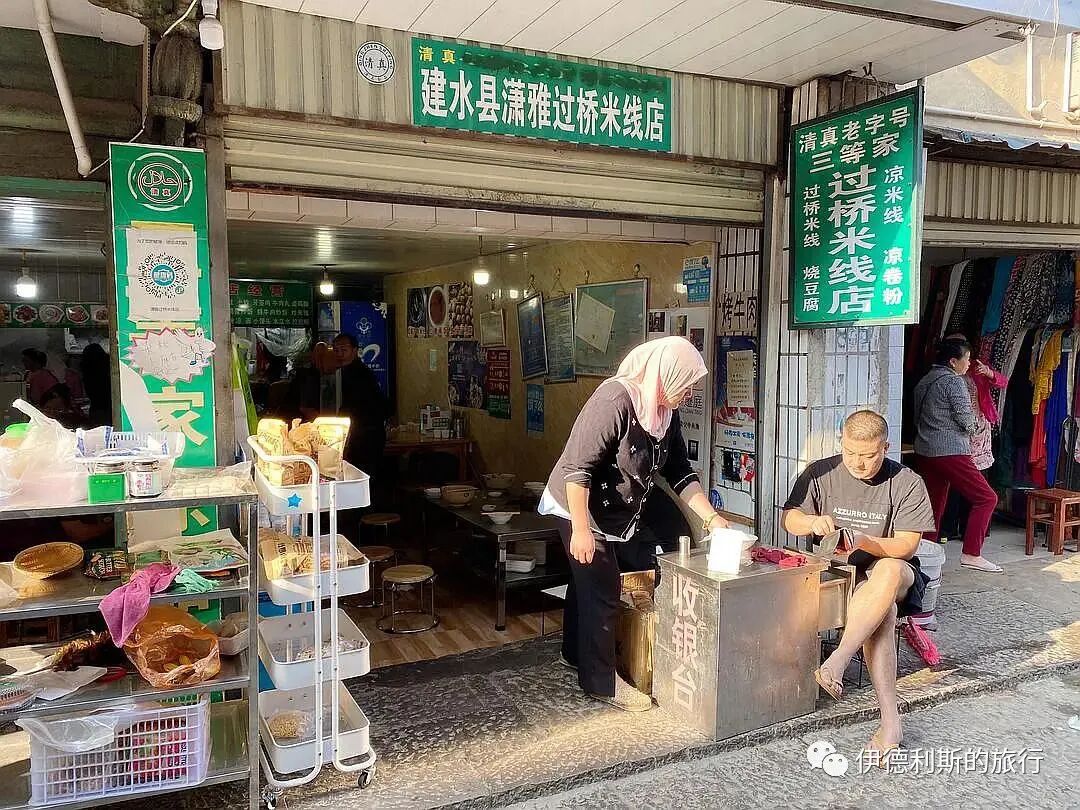
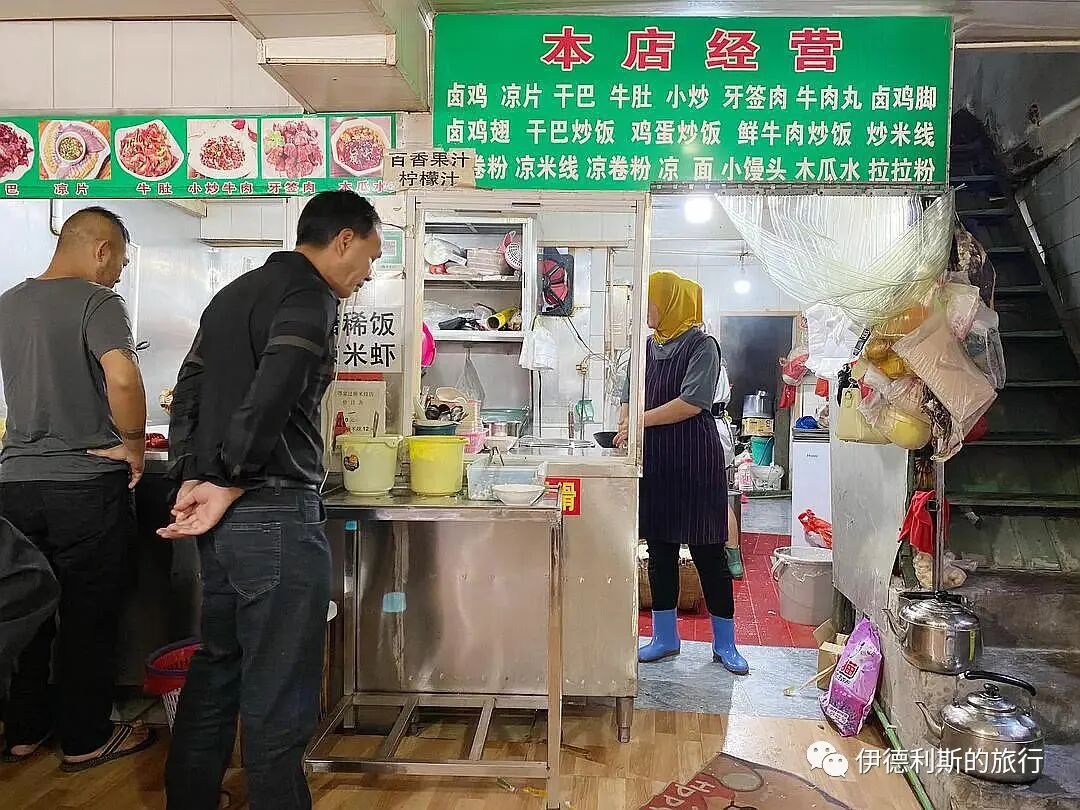
3. Jianshui's grass sprout bridge-crossing rice noodles (guoqiao mixian).
I ate the local specialty, grass sprout bridge-crossing rice noodles, on Mashi Street near the Chaoyang Tower in the old town of Jianshui.
4. Yuxi Najiaying's beef rolled rice noodles (juanfen).
I ate beef rolled rice noodles in Najiaying, Yuxi, in the morning.
5. Zhaotong's spicy oil rice noodles (ran mixian) and lamb rice noodles.
I ate spicy oil rice noodles at the entrance of the Zhaotong East Mosque (Dongdasi).
I ate lamb rice noodles across from the Zhaotong East Mosque. Many places in Yunnan serve beef rice noodles, but this was my first time eating the lamb version.
6. Kunming's pea starch jelly (wandoufen), cold rice noodles (liang mixian), and thick rice noodles (ersi).
I ate cold pea starch jelly, a mix of thick and thin, on Shuncheng Halal Street in Kunming.
Imam Ma Cong treated us to Niangniang cold rice noodles at the entrance of the Jinniu Street Mosque in Kunming; we had one bowl each of rolled rice noodles and rice noodles, and they tasted amazing.
In the late 19th century, as Hui Muslim caravans traveling through Kunming and Dali to Myanmar and Thailand flourished, Hui Muslims from western Yunnan, such as those from Weishan in Dali, began to settle in the Qingyun Street area of Kunming. In 1899 (the 25th year of the Guangxu reign), Hui Muslims from western Yunnan in Kunming and the Xing Shun He firm, founded by Yuxi Hui Muslims, jointly raised funds to build the Chongshan Guild Hall at the east end of Qingyun Street. Later, Dali Hui Muslims merged the Zhuiyuan Hall, Chengyi Hall, and Baozhen Hall with the Chongshan Guild Hall. In 1919, it was renamed Chongshan Society by order of Yunnan Governor Tang Jiyao. It was officially renamed the Yixigong Mosque in 1942, and in 1951, it was also known as the Kunming Overseas Chinese Mosque.
I ate Dali thick rice noodles at the entrance of the Kunming Yixigong Mosque in the morning.
7. Dali Ancient City's local cold chicken rice noodles.
Zaihuishou is a very famous halal snack shop in Dali Ancient City, and its specialty is cold chicken rice noodles.
8. Dali Xiaguan's braised meat rice noodles.
I ate braised meat rice noodles on the Hui Muslim street in Xiaguan, Dali.
9. Ruili's Burmese fried tofu mixed noodles.
Between the opening of the border in 1985 and its closure in 2020, many Burmese Muslims came to Ruili to do business, forming a Burmese halal snack street in the East Alley of Baijing, Ruili. The Muslims in Ruili are mainly Bamar Muslims, an ethnic group formed by the intermarriage of South Asian Muslims and the Bamar people. After the British occupied Myanmar in the 19th century, a large number of South Asian Muslims came to make a living, spreading to almost every city in Myanmar. Burmese Muslims speak Burmese and share similar customs with the Burmese people, and they make up the largest group of Muslims in Myanmar.
The paste on this auntie's face is called thanaka. It is made by grinding yellow fragrant wood branches into powder and mixing it with water. It keeps mosquitoes away and feels cool on the skin.
In front of her are various types of mixed noodles, ranging from thick to thin: nan ji, lat, and thay thout. The white ones are glass noodles (ja zan). I ate mixed noodles made with Burmese fried tofu.
6. Tibet
1. Tibetan noodles from the Tibetan Hui Muslims in Lhasa
In the southeast of the ancient Barkhor city in Lhasa, there is an area called Hebalin, which used to be a forest on the banks of the Lhasa River. Many Muslims live here who speak Tibetan, wear Tibetan clothes, and eat Tibetan food. They are also called Hebalin Tibetan Hui Muslims. Most of these Tibetan Hui Muslims are descendants of Hui Muslim officers and soldiers from the Qing army stationed in Tibet after the 18th century.
I ate Tibetan noodles at a Tibetan Hui Muslim restaurant called Yibire Steamed Bun Shop in the small alleys of Hebalin.
7. Hainan
1. Beef brisket noodles and chicken rice noodles of the Huihui people in Sanya
The Ha family of the Sanya Huihui people traces their ancestry back to Pu Chengshipeng, Pu Chengxiang, Pu Chengxi, Pu Chengfu, and Pu Chengrui. According to Ha Bingzhong, a seventh-generation descendant of Pu Chengshipeng born in 1871, Pu Chengshipeng's father moved from Shaanxi to Guangta Street in Guangzhou, then brought his whole family to Dadan Port in Yazhou, Hainan, before moving to Huihui Village in Sanya during the late Ming and early Qing dynasties.
The Ha Xuanren Beef Brisket Noodle Shop opened by the Ha family in Huihui Village is very famous.
I had chicken rice noodles at the Li Family Rice Noodle shop in Huixin Village, Sanya, in the morning. It was super fresh!
Halal Food Guide: Southern China — Rice Noodles, Hui Muslim Food and Local Flavor
Articles • ali2007fr posted the article • 0 comments • 129 views • 2026-05-18 01:28
Reposted from the web
Summary: Halal Food Guide: Southern China — Rice Noodles, Hui Muslim Food and Local Flavor is presented here as a firsthand travel account in clear English, beginning with this scene: 5. Beef rice noodles (niurou migan) in Manluanhui, Menghai, Xishuangbanna, Yunnan; bridge-crossing rice noodles (guoqiao mixian) in Mengzi; grass sprout bridge-crossing rice noodles (caoya guoqiao mixian) in Jianshui. The account keeps its focus on Southern China Food, Rice Noodles, Halal Food while preserving the names, places, food, and historical details from the Chinese source.
1. Hot dry noodles (reganmian) in Jingzhou, Hubei; spicy beef rice noodles (hongyou niurou fen) in Wuhan; and beef noodles (niurou mian) in Xiangyang.
2. Fish maw noodles (yudu mian), beef noodles, smoked fish noodles (xunyu mian), and beef heart noodles (niuxin mian) in Nanjing, Jiangsu; spiced dried tofu noodles (xianggan mian) in Zhenjiang; and wonton noodles (huntun mian) and shredded chicken noodles (jisi mian) in Huai'an.
3. Eel shredded cold noodles (shansi lengmian), beef noodles, and lamb noodles (yangrou mian) in Shanghai.
4. Beef rice noodles and Sichuan-style beef noodles in Nanchong, Sichuan; minced meat noodles (zajiang mian) in Chengdu; beef offal rice noodles (niuza fen) in Tuqiao, Chengdu; and goose soup noodles (etang mian) in Mimou Town, Chengdu.
5. Beef rice noodles (niurou migan) in Manluanhui, Menghai, Xishuangbanna, Yunnan; bridge-crossing rice noodles (guoqiao mixian) in Mengzi; grass sprout bridge-crossing rice noodles (caoya guoqiao mixian) in Jianshui; beef rolled rice noodles (niurou juanfen) in Najiaying, Yuxi; spicy rice noodles (ran mixian) and lamb rice noodles in Zhaotong; pea starch jelly (wandou fen), cold rice noodles (liang mixian), and rice noodles (ersi) in Kunming; local cold chicken rice noodles (tu liangji mixian) in Dali Ancient City; braised meat rice noodles (menrou mixian) in Xiaguan, Dali; and Burmese fried tofu mixed noodles in Ruili.
6. Tibetan noodles (zangmian) from Hui Muslims in Lhasa, Tibet.
7. Beef brisket noodles (niunan mian) and chicken rice noodles in Huihui Village, Sanya, Hainan.
1. Hubei
1. Hot dry noodles (reganmian) in Jingzhou
Yingxi Hui Muslim Street is located inside Yingxi Gate, the northwest gate of the Tu City in Shashi, Jingzhou. In the early years of the Republic of China, some Hui Muslims from Nanyang, Henan, came to Shashi as refugees and settled on Yingxi Street. They built a mosque there in 1925. I ate hot dry noodles at an unnamed halal restaurant on Yingxi Street. The hot dry noodles in Shashi are different from those in Wuhan because they add sweet bean sauce (tianmianjiang).
2. Spicy beef rice noodles (hongyou niurou fen) in Wuhan
After the Wuchang Prefecture city was built during the Hongwu reign of the Ming Dynasty, the area outside Zhonghe Gate in the south of the city was originally a wasteland used as a material yard for building the city walls. In the late Ming Dynasty, a group of Hui Muslims who moved from Maguoyuan, Shaanxi, began to live here, working in cattle slaughtering, general goods, and the halal food industry. During the Daoguang reign of the Qing Dynasty, another group of Hui Muslims from Mianyang, Hubei, moved here due to floods, and the number of Hui Muslims outside Zhonghe Gate gradually increased.
Before the demolition in 2020, there was a lively morning market on Qiyi Street every day, crowded and full of life. On Xiangbi Street (the eastern section of Bao'an Street), which intersects with Qiyi Street, there is a halal breakfast shop called "Qingzhen Dajia Hongyou Niurou Fen Mian Guan." It is open daily from around 6:00 or 7:00 AM to 10:00 AM. I ate the spicy beef thin rice noodles there.
3. Beef noodles (niurou mian) in Xiangyang
As the most important commercial hub in the middle reaches of the Han River, Fancheng has had Hui Muslim residents since the Yuan and Ming dynasties. The Hui Muslims in Fancheng were mainly concentrated on Jiaomen Street, where the mosque is located. When the Fancheng Mosque was rebuilt in 1792 (the 57th year of the Qianlong reign), there were 222 local Hui Muslim households who donated funds. In 2015, all of Jiaomen Street was demolished for new construction. Now, only a row of shops selling beef noodles and raw beef remains at the bridgehead of the Han River Bridge.
Early in the morning, we went to the bridgehead to eat beef noodles at Liu's shop from Jiaomen Street. Liu's is run by the son of Liu Donghan, an old imam at the Fancheng mosque, and it is quite famous. When I was in college, our halal cafeteria had a stall for Xiangfan beef noodles, and my impression back then was that it was really spicy! This time, I finally got to taste the authentic version. After eating the authentic version, I felt it was indeed a bit spicy, haha. We specifically asked for no chili, but the braised beef broth itself is a little spicy. But besides the spice, the beef is really fragrant! They must use plenty of meat, and it is stewed until very flavorful.
2. Jiangsu
1. Nanjing's fish maw noodles, beef noodles, smoked fish noodles, and beef heart noodles.
Lvliuju was founded in 1912 by Taoye Ferry on the banks of the Qinhuai River. It started as a high-end vegetarian restaurant, and people like Kong Xiangxi, Chiang Ching-kuo, Bai Chongxi, and the Soong sisters often dined here. After 1949, Lvliuju closed for a time. It did not reopen until 1963 at Yanggongjing on Taiping South Road, where they hired the famous chef Chen Bingyu to continue serving authentic vegetarian food. A major feature of Lvliuju is vegetarian dishes made to taste like meat. Their vegetarian chicken (suji) and vegetarian duck (suya), made from tofu skin, gluten, and dried bean curd sticks with Chinese herbal seasonings, are delicious.
In 1987, Lvliuju added halal dishes to its vegetarian menu and became a halal restaurant, though vegetarian food remains its specialty. In 1995, it was rebuilt on the same site into the current five-story building, becoming a large halal restaurant in Nanjing. We ate fish maw noodles at Lvliuju, which also contained mushrooms, bamboo shoots, wood ear mushrooms, and green peas.
We ate at Jintongji Beef and Mutton Restaurant north of the Nanjing Confucius Temple, where we ordered a huge portion of Jintongji noodles with beef, beef tendon, beef tripe, and beef intestine, as well as smoked fish noodles. The black sweet beef was so delicious! It is very addictive, and the sweet smoked fish is also super tasty. (This is the old Jintongji shop; it has now moved to a new address.)
We had beef heart noodles at Xiaoyisi Noodle Shop on Luolang Lane in Nanjing (this is the old location; it has now moved to a new address). This shop has also been open for many years. It is a husband-and-wife business, and the owner is an uncle who wears a gold chain. Next to the noodle shop is the famous provincial cultural heritage site, the Taiping Heavenly Kingdom architecture and murals on Luolang Lane.
2. Zhenjiang's dried tofu noodles (xianggan mian).
The ancient Runzhou Mosque (Runzhou libaisi) from the Yuan Dynasty in Zhenjiang was moved to Jianzi Lane in the city in 1602 (the 30th year of the Wanli reign) and has since been called the Jianzi Lane Mosque. In 2005, the Jianzi Lane Mosque was demolished due to the construction of the Zhenjiang First Building commercial pedestrian street, but there are still many halal restaurants nearby. We ate dried tofu noodles (xianggan mian) at Yang Dahai Steamed Bun Shop in the small alley north of Jianzi Lane. They had a slightly sweet taste, and the noodle broth was very much in the Jianghuai style.
3. Chicken shredded noodles (jisi mian) of Huai'an
Because navigating the Yellow River section of the Grand Canal was very dangerous, and waiting times to pass through locks after entering Shandong were too long, many merchants chose to leave their boats at Qingjiangpu in Huai'an, Jiangsu. They would cross the Yellow River and switch to horse-drawn carriages to continue north, making Qingjiangpu a transportation hub for southern boats and northern horses. Hui Muslims have been doing business on Yuehe Street in front of the Imperial Wharf since the Ming Dynasty, and the Qingjiang Mosque was built during the Jiajing period of the Ming Dynasty.
Eating wonton noodles at the entrance of the Qingjiangpu Mosque.
I ate chicken shredded noodles at Liu Si Noodle Shop. It had fish balls, beef balls, and squid inside. The fish balls were super delicious, the soup was excellent, and it felt great to finish the meal.
Heading south along the canal from Qingjiangpu, you reach the ancient town of Hexia, not far northwest of the Huai'an prefectural city. Hexia is the largest town in the suburbs of Huai'an. Its official historical name was Manpu, and it developed into an important canal town during the Song and Yuan dynasties. Because the salt production and quality in the coastal salt fields north of the Huai River were very high, many salt merchants from the northwest and Anhui came to the region in the late Ming Dynasty to work in the salt industry. The wealth brought by these merchants made Hexia a prosperous commercial center. Many Hui Muslims also came to settle in Hexia, and the Hexia Mosque was first built during the Ming Dynasty.
We had some very fragrant chicken shredded noodles at a halal snack shop on Zhugan Lane in Hexia Town. When eating noodles in Jiangsu, the soup is more important than the noodles themselves.
4. Shanghai
1. Shanghai's eel shredded cold noodles (shansi lengmian), beef noodles, and lamb noodles
Yixinzhai is an old shop on Pingliang Road in Yangpu District that opened in 1958. It is most famous for its pan-fried beef buns (niurou jianbao) and three-yellow chicken (sanhuangji). In the summer, they also sell shaved ice and cold noodles. I ate the eel shredded cold noodles here. The topping was made with two types of mushrooms and three shredded ingredients, and it was truly delicious.
At Zhang Xuchang Old Man Noodle Shop on Houjia Road, the lamb noodles and beef noodles are served with the toppings on the side. The beef comes with yellow curry, and the lamb is served in a clear white broth.
5. Sichuan
1. Nanchong beef rice noodles (niurou fen) and Sichuan-style beef noodles
The ancestors of Imam Feng Yong from the Nanchong Mosque moved to Nanchong from Shaanxi during the Qing Dynasty. During the Republic of China era, the Feng family joined forces through marriage with three other families: Yang Fangyun who ran "Red Lantern Dried Beef," Ma Yutu who ran "Ma Laizi Canned Beef," and Zhang Dechao who ran "Beef Crispy Cakes." The Imam's grandfather, Feng Zifeng, founded the "Shixian" brand on Fu Street and opened a halal restaurant. Today, Imam Feng Yong's family still runs an authentic Sichuan halal food business at the entrance of the mosque.
At the Nanchong Mosque, people eat beef rice noodles or beef tripe rice noodles for breakfast every day.
You can also eat Sichuan-style beef noodles here.
2. Chengdu's minced meat noodles (zajiangmian).
There is a halal hot pot restaurant called Dawude on Renhou Street near Kuanzhai Alley. Most local halal restaurants in downtown Chengdu do not serve breakfast, but this is one of the few I know that does. The owner is a Hui Muslim from Qingchuan, Guangyuan. I had the minced meat noodles (zajiangmian) here, and they tasted very authentic.
3. Beef offal rice noodles (niuzhafen) in Tuqiao, Chengdu.
After the Huangchengba Muslim community was dissolved, Tuqiao Town in the northwest suburbs became the closest traditional Muslim community to downtown Chengdu. Many local Hui Muslims come here for Friday namaz. Although Tuqiao Town has gone through demolition, the traditional mosque and the halal snack shops at its entrance are still there, so it remains very lively. I arrived in Tuqiao before the Friday namaz and had beef offal rice noodles (niuzhafen) at a snack shop by the entrance.
4. Goose soup noodles (etangmian) in Mimou Town, Chengdu.
Mimou Town is located in the Qingbaijiang District, on the border between Chengdu and Guanghan. Hui Muslims have lived here since the Ming Dynasty. After the Kangxi period, many Hui Muslims from Shaanxi and Hunan moved to the area around Mimou Town and built six mosques one after another.
Unlike the heavily developed ancient city of Guanxian in Dujiangyan, Mimou Town has no traces of tourism. It is full of daily life and keeps its own pace. I had goose soup noodles (etangmian) here.
V. Yunnan
1. Beef rice noodles (niurou migan) in Manluanhui, Menghai, Xishuangbanna.
The Paxi Dai people live in two villages in Menghai County, Xishuangbanna: Manluanhui and Mansaihui. In the Dai language, "man" means village. The Paxi Dai call themselves "Paxi." They follow Islam and observe the faith, but they speak the Dai language, use the Dai script, and make halal Dai-style food. You could say they have kept their Hui Muslim identity while blending into Dai culture.
We had a halal Dai-style breakfast in Manluanhui at a restaurant called Paxi Dai. In the morning, Paxi Dai people mainly eat beef rice noodles (niurou mixian) and flat rice noodles (migan). We ordered the flat rice noodles. The variety of side dishes here is really rich, including pea tips, chives, bean sprouts, and various dipping sauces. The best part is that their beef is delicious! It is a little sweet and very fragrant.
2. Crossing-the-bridge rice noodles (guoqiao mixian) in Mengzi.
In Mengzi, I ate at a very popular halal crossing-the-bridge rice noodles (guoqiao mixian) restaurant called Yitiange. They have copper pot crossing-the-bridge rice noodles ranging from 12 to 50 yuan. We ordered the 50-yuan deluxe version, which came with 26 small plates. The broth and rice noodles can be refilled as much as you want. The plates included raw fish slices, raw beef slices, raw quail eggs, shrimp, dried beef (niuganba), beef tongue, cold duck slices, cold beef slices, crispy beef fat, braised beef, grass sprouts, chrysanthemum, pea paste, bean sprouts, bean curd skin, chives, cilantro, mint, chopped green onions, melon tips, ginger, garlic, chili, and chili sauce. The variety is the most complete I have ever eaten!
3. Jianshui's grass sprout bridge-crossing rice noodles (guoqiao mixian).
I ate the local specialty, grass sprout bridge-crossing rice noodles, on Mashi Street near the Chaoyang Tower in the old town of Jianshui.
4. Yuxi Najiaying's beef rolled rice noodles (juanfen).
I ate beef rolled rice noodles in Najiaying, Yuxi, in the morning.
5. Zhaotong's spicy oil rice noodles (ran mixian) and lamb rice noodles.
I ate spicy oil rice noodles at the entrance of the Zhaotong East Mosque (Dongdasi).
I ate lamb rice noodles across from the Zhaotong East Mosque. Many places in Yunnan serve beef rice noodles, but this was my first time eating the lamb version.
6. Kunming's pea starch jelly (wandoufen), cold rice noodles (liang mixian), and thick rice noodles (ersi).
I ate cold pea starch jelly, a mix of thick and thin, on Shuncheng Halal Street in Kunming.
Imam Ma Cong treated us to Niangniang cold rice noodles at the entrance of the Jinniu Street Mosque in Kunming; we had one bowl each of rolled rice noodles and rice noodles, and they tasted amazing.
In the late 19th century, as Hui Muslim caravans traveling through Kunming and Dali to Myanmar and Thailand flourished, Hui Muslims from western Yunnan, such as those from Weishan in Dali, began to settle in the Qingyun Street area of Kunming. In 1899 (the 25th year of the Guangxu reign), Hui Muslims from western Yunnan in Kunming and the Xing Shun He firm, founded by Yuxi Hui Muslims, jointly raised funds to build the Chongshan Guild Hall at the east end of Qingyun Street. Later, Dali Hui Muslims merged the Zhuiyuan Hall, Chengyi Hall, and Baozhen Hall with the Chongshan Guild Hall. In 1919, it was renamed Chongshan Society by order of Yunnan Governor Tang Jiyao. It was officially renamed the Yixigong Mosque in 1942, and in 1951, it was also known as the Kunming Overseas Chinese Mosque.
I ate Dali thick rice noodles at the entrance of the Kunming Yixigong Mosque in the morning.
7. Dali Ancient City's local cold chicken rice noodles.
Zaihuishou is a very famous halal snack shop in Dali Ancient City, and its specialty is cold chicken rice noodles.
8. Dali Xiaguan's braised meat rice noodles.
I ate braised meat rice noodles on the Hui Muslim street in Xiaguan, Dali.
9. Ruili's Burmese fried tofu mixed noodles.
Between the opening of the border in 1985 and its closure in 2020, many Burmese Muslims came to Ruili to do business, forming a Burmese halal snack street in the East Alley of Baijing, Ruili. The Muslims in Ruili are mainly Bamar Muslims, an ethnic group formed by the intermarriage of South Asian Muslims and the Bamar people. After the British occupied Myanmar in the 19th century, a large number of South Asian Muslims came to make a living, spreading to almost every city in Myanmar. Burmese Muslims speak Burmese and share similar customs with the Burmese people, and they make up the largest group of Muslims in Myanmar.
The paste on this auntie's face is called thanaka. It is made by grinding yellow fragrant wood branches into powder and mixing it with water. It keeps mosquitoes away and feels cool on the skin.
In front of her are various types of mixed noodles, ranging from thick to thin: nan ji, lat, and thay thout. The white ones are glass noodles (ja zan). I ate mixed noodles made with Burmese fried tofu.
6. Tibet
1. Tibetan noodles from the Tibetan Hui Muslims in Lhasa
In the southeast of the ancient Barkhor city in Lhasa, there is an area called Hebalin, which used to be a forest on the banks of the Lhasa River. Many Muslims live here who speak Tibetan, wear Tibetan clothes, and eat Tibetan food. They are also called Hebalin Tibetan Hui Muslims. Most of these Tibetan Hui Muslims are descendants of Hui Muslim officers and soldiers from the Qing army stationed in Tibet after the 18th century.
I ate Tibetan noodles at a Tibetan Hui Muslim restaurant called Yibire Steamed Bun Shop in the small alleys of Hebalin.
7. Hainan
1. Beef brisket noodles and chicken rice noodles of the Huihui people in Sanya
The Ha family of the Sanya Huihui people traces their ancestry back to Pu Chengshipeng, Pu Chengxiang, Pu Chengxi, Pu Chengfu, and Pu Chengrui. According to Ha Bingzhong, a seventh-generation descendant of Pu Chengshipeng born in 1871, Pu Chengshipeng's father moved from Shaanxi to Guangta Street in Guangzhou, then brought his whole family to Dadan Port in Yazhou, Hainan, before moving to Huihui Village in Sanya during the late Ming and early Qing dynasties.
The Ha Xuanren Beef Brisket Noodle Shop opened by the Ha family in Huihui Village is very famous.
I had chicken rice noodles at the Li Family Rice Noodle shop in Huixin Village, Sanya, in the morning. It was super fresh! view all
Summary: Halal Food Guide: Southern China — Rice Noodles, Hui Muslim Food and Local Flavor is presented here as a firsthand travel account in clear English, beginning with this scene: 5. Beef rice noodles (niurou migan) in Manluanhui, Menghai, Xishuangbanna, Yunnan; bridge-crossing rice noodles (guoqiao mixian) in Mengzi; grass sprout bridge-crossing rice noodles (caoya guoqiao mixian) in Jianshui. The account keeps its focus on Southern China Food, Rice Noodles, Halal Food while preserving the names, places, food, and historical details from the Chinese source.
1. Hot dry noodles (reganmian) in Jingzhou, Hubei; spicy beef rice noodles (hongyou niurou fen) in Wuhan; and beef noodles (niurou mian) in Xiangyang.
2. Fish maw noodles (yudu mian), beef noodles, smoked fish noodles (xunyu mian), and beef heart noodles (niuxin mian) in Nanjing, Jiangsu; spiced dried tofu noodles (xianggan mian) in Zhenjiang; and wonton noodles (huntun mian) and shredded chicken noodles (jisi mian) in Huai'an.
3. Eel shredded cold noodles (shansi lengmian), beef noodles, and lamb noodles (yangrou mian) in Shanghai.
4. Beef rice noodles and Sichuan-style beef noodles in Nanchong, Sichuan; minced meat noodles (zajiang mian) in Chengdu; beef offal rice noodles (niuza fen) in Tuqiao, Chengdu; and goose soup noodles (etang mian) in Mimou Town, Chengdu.
5. Beef rice noodles (niurou migan) in Manluanhui, Menghai, Xishuangbanna, Yunnan; bridge-crossing rice noodles (guoqiao mixian) in Mengzi; grass sprout bridge-crossing rice noodles (caoya guoqiao mixian) in Jianshui; beef rolled rice noodles (niurou juanfen) in Najiaying, Yuxi; spicy rice noodles (ran mixian) and lamb rice noodles in Zhaotong; pea starch jelly (wandou fen), cold rice noodles (liang mixian), and rice noodles (ersi) in Kunming; local cold chicken rice noodles (tu liangji mixian) in Dali Ancient City; braised meat rice noodles (menrou mixian) in Xiaguan, Dali; and Burmese fried tofu mixed noodles in Ruili.
6. Tibetan noodles (zangmian) from Hui Muslims in Lhasa, Tibet.
7. Beef brisket noodles (niunan mian) and chicken rice noodles in Huihui Village, Sanya, Hainan.
1. Hubei
1. Hot dry noodles (reganmian) in Jingzhou
Yingxi Hui Muslim Street is located inside Yingxi Gate, the northwest gate of the Tu City in Shashi, Jingzhou. In the early years of the Republic of China, some Hui Muslims from Nanyang, Henan, came to Shashi as refugees and settled on Yingxi Street. They built a mosque there in 1925. I ate hot dry noodles at an unnamed halal restaurant on Yingxi Street. The hot dry noodles in Shashi are different from those in Wuhan because they add sweet bean sauce (tianmianjiang).
2. Spicy beef rice noodles (hongyou niurou fen) in Wuhan
After the Wuchang Prefecture city was built during the Hongwu reign of the Ming Dynasty, the area outside Zhonghe Gate in the south of the city was originally a wasteland used as a material yard for building the city walls. In the late Ming Dynasty, a group of Hui Muslims who moved from Maguoyuan, Shaanxi, began to live here, working in cattle slaughtering, general goods, and the halal food industry. During the Daoguang reign of the Qing Dynasty, another group of Hui Muslims from Mianyang, Hubei, moved here due to floods, and the number of Hui Muslims outside Zhonghe Gate gradually increased.
Before the demolition in 2020, there was a lively morning market on Qiyi Street every day, crowded and full of life. On Xiangbi Street (the eastern section of Bao'an Street), which intersects with Qiyi Street, there is a halal breakfast shop called "Qingzhen Dajia Hongyou Niurou Fen Mian Guan." It is open daily from around 6:00 or 7:00 AM to 10:00 AM. I ate the spicy beef thin rice noodles there.
3. Beef noodles (niurou mian) in Xiangyang
As the most important commercial hub in the middle reaches of the Han River, Fancheng has had Hui Muslim residents since the Yuan and Ming dynasties. The Hui Muslims in Fancheng were mainly concentrated on Jiaomen Street, where the mosque is located. When the Fancheng Mosque was rebuilt in 1792 (the 57th year of the Qianlong reign), there were 222 local Hui Muslim households who donated funds. In 2015, all of Jiaomen Street was demolished for new construction. Now, only a row of shops selling beef noodles and raw beef remains at the bridgehead of the Han River Bridge.
Early in the morning, we went to the bridgehead to eat beef noodles at Liu's shop from Jiaomen Street. Liu's is run by the son of Liu Donghan, an old imam at the Fancheng mosque, and it is quite famous. When I was in college, our halal cafeteria had a stall for Xiangfan beef noodles, and my impression back then was that it was really spicy! This time, I finally got to taste the authentic version. After eating the authentic version, I felt it was indeed a bit spicy, haha. We specifically asked for no chili, but the braised beef broth itself is a little spicy. But besides the spice, the beef is really fragrant! They must use plenty of meat, and it is stewed until very flavorful.
2. Jiangsu
1. Nanjing's fish maw noodles, beef noodles, smoked fish noodles, and beef heart noodles.
Lvliuju was founded in 1912 by Taoye Ferry on the banks of the Qinhuai River. It started as a high-end vegetarian restaurant, and people like Kong Xiangxi, Chiang Ching-kuo, Bai Chongxi, and the Soong sisters often dined here. After 1949, Lvliuju closed for a time. It did not reopen until 1963 at Yanggongjing on Taiping South Road, where they hired the famous chef Chen Bingyu to continue serving authentic vegetarian food. A major feature of Lvliuju is vegetarian dishes made to taste like meat. Their vegetarian chicken (suji) and vegetarian duck (suya), made from tofu skin, gluten, and dried bean curd sticks with Chinese herbal seasonings, are delicious.
In 1987, Lvliuju added halal dishes to its vegetarian menu and became a halal restaurant, though vegetarian food remains its specialty. In 1995, it was rebuilt on the same site into the current five-story building, becoming a large halal restaurant in Nanjing. We ate fish maw noodles at Lvliuju, which also contained mushrooms, bamboo shoots, wood ear mushrooms, and green peas.
We ate at Jintongji Beef and Mutton Restaurant north of the Nanjing Confucius Temple, where we ordered a huge portion of Jintongji noodles with beef, beef tendon, beef tripe, and beef intestine, as well as smoked fish noodles. The black sweet beef was so delicious! It is very addictive, and the sweet smoked fish is also super tasty. (This is the old Jintongji shop; it has now moved to a new address.)
We had beef heart noodles at Xiaoyisi Noodle Shop on Luolang Lane in Nanjing (this is the old location; it has now moved to a new address). This shop has also been open for many years. It is a husband-and-wife business, and the owner is an uncle who wears a gold chain. Next to the noodle shop is the famous provincial cultural heritage site, the Taiping Heavenly Kingdom architecture and murals on Luolang Lane.
2. Zhenjiang's dried tofu noodles (xianggan mian).
The ancient Runzhou Mosque (Runzhou libaisi) from the Yuan Dynasty in Zhenjiang was moved to Jianzi Lane in the city in 1602 (the 30th year of the Wanli reign) and has since been called the Jianzi Lane Mosque. In 2005, the Jianzi Lane Mosque was demolished due to the construction of the Zhenjiang First Building commercial pedestrian street, but there are still many halal restaurants nearby. We ate dried tofu noodles (xianggan mian) at Yang Dahai Steamed Bun Shop in the small alley north of Jianzi Lane. They had a slightly sweet taste, and the noodle broth was very much in the Jianghuai style.
3. Chicken shredded noodles (jisi mian) of Huai'an
Because navigating the Yellow River section of the Grand Canal was very dangerous, and waiting times to pass through locks after entering Shandong were too long, many merchants chose to leave their boats at Qingjiangpu in Huai'an, Jiangsu. They would cross the Yellow River and switch to horse-drawn carriages to continue north, making Qingjiangpu a transportation hub for southern boats and northern horses. Hui Muslims have been doing business on Yuehe Street in front of the Imperial Wharf since the Ming Dynasty, and the Qingjiang Mosque was built during the Jiajing period of the Ming Dynasty.
Eating wonton noodles at the entrance of the Qingjiangpu Mosque.
I ate chicken shredded noodles at Liu Si Noodle Shop. It had fish balls, beef balls, and squid inside. The fish balls were super delicious, the soup was excellent, and it felt great to finish the meal.
Heading south along the canal from Qingjiangpu, you reach the ancient town of Hexia, not far northwest of the Huai'an prefectural city. Hexia is the largest town in the suburbs of Huai'an. Its official historical name was Manpu, and it developed into an important canal town during the Song and Yuan dynasties. Because the salt production and quality in the coastal salt fields north of the Huai River were very high, many salt merchants from the northwest and Anhui came to the region in the late Ming Dynasty to work in the salt industry. The wealth brought by these merchants made Hexia a prosperous commercial center. Many Hui Muslims also came to settle in Hexia, and the Hexia Mosque was first built during the Ming Dynasty.
We had some very fragrant chicken shredded noodles at a halal snack shop on Zhugan Lane in Hexia Town. When eating noodles in Jiangsu, the soup is more important than the noodles themselves.
4. Shanghai
1. Shanghai's eel shredded cold noodles (shansi lengmian), beef noodles, and lamb noodles
Yixinzhai is an old shop on Pingliang Road in Yangpu District that opened in 1958. It is most famous for its pan-fried beef buns (niurou jianbao) and three-yellow chicken (sanhuangji). In the summer, they also sell shaved ice and cold noodles. I ate the eel shredded cold noodles here. The topping was made with two types of mushrooms and three shredded ingredients, and it was truly delicious.
At Zhang Xuchang Old Man Noodle Shop on Houjia Road, the lamb noodles and beef noodles are served with the toppings on the side. The beef comes with yellow curry, and the lamb is served in a clear white broth.
5. Sichuan
1. Nanchong beef rice noodles (niurou fen) and Sichuan-style beef noodles
The ancestors of Imam Feng Yong from the Nanchong Mosque moved to Nanchong from Shaanxi during the Qing Dynasty. During the Republic of China era, the Feng family joined forces through marriage with three other families: Yang Fangyun who ran "Red Lantern Dried Beef," Ma Yutu who ran "Ma Laizi Canned Beef," and Zhang Dechao who ran "Beef Crispy Cakes." The Imam's grandfather, Feng Zifeng, founded the "Shixian" brand on Fu Street and opened a halal restaurant. Today, Imam Feng Yong's family still runs an authentic Sichuan halal food business at the entrance of the mosque.
At the Nanchong Mosque, people eat beef rice noodles or beef tripe rice noodles for breakfast every day.
You can also eat Sichuan-style beef noodles here.
2. Chengdu's minced meat noodles (zajiangmian).
There is a halal hot pot restaurant called Dawude on Renhou Street near Kuanzhai Alley. Most local halal restaurants in downtown Chengdu do not serve breakfast, but this is one of the few I know that does. The owner is a Hui Muslim from Qingchuan, Guangyuan. I had the minced meat noodles (zajiangmian) here, and they tasted very authentic.
3. Beef offal rice noodles (niuzhafen) in Tuqiao, Chengdu.
After the Huangchengba Muslim community was dissolved, Tuqiao Town in the northwest suburbs became the closest traditional Muslim community to downtown Chengdu. Many local Hui Muslims come here for Friday namaz. Although Tuqiao Town has gone through demolition, the traditional mosque and the halal snack shops at its entrance are still there, so it remains very lively. I arrived in Tuqiao before the Friday namaz and had beef offal rice noodles (niuzhafen) at a snack shop by the entrance.
4. Goose soup noodles (etangmian) in Mimou Town, Chengdu.
Mimou Town is located in the Qingbaijiang District, on the border between Chengdu and Guanghan. Hui Muslims have lived here since the Ming Dynasty. After the Kangxi period, many Hui Muslims from Shaanxi and Hunan moved to the area around Mimou Town and built six mosques one after another.
Unlike the heavily developed ancient city of Guanxian in Dujiangyan, Mimou Town has no traces of tourism. It is full of daily life and keeps its own pace. I had goose soup noodles (etangmian) here.
V. Yunnan
1. Beef rice noodles (niurou migan) in Manluanhui, Menghai, Xishuangbanna.
The Paxi Dai people live in two villages in Menghai County, Xishuangbanna: Manluanhui and Mansaihui. In the Dai language, "man" means village. The Paxi Dai call themselves "Paxi." They follow Islam and observe the faith, but they speak the Dai language, use the Dai script, and make halal Dai-style food. You could say they have kept their Hui Muslim identity while blending into Dai culture.
We had a halal Dai-style breakfast in Manluanhui at a restaurant called Paxi Dai. In the morning, Paxi Dai people mainly eat beef rice noodles (niurou mixian) and flat rice noodles (migan). We ordered the flat rice noodles. The variety of side dishes here is really rich, including pea tips, chives, bean sprouts, and various dipping sauces. The best part is that their beef is delicious! It is a little sweet and very fragrant.
2. Crossing-the-bridge rice noodles (guoqiao mixian) in Mengzi.
In Mengzi, I ate at a very popular halal crossing-the-bridge rice noodles (guoqiao mixian) restaurant called Yitiange. They have copper pot crossing-the-bridge rice noodles ranging from 12 to 50 yuan. We ordered the 50-yuan deluxe version, which came with 26 small plates. The broth and rice noodles can be refilled as much as you want. The plates included raw fish slices, raw beef slices, raw quail eggs, shrimp, dried beef (niuganba), beef tongue, cold duck slices, cold beef slices, crispy beef fat, braised beef, grass sprouts, chrysanthemum, pea paste, bean sprouts, bean curd skin, chives, cilantro, mint, chopped green onions, melon tips, ginger, garlic, chili, and chili sauce. The variety is the most complete I have ever eaten!
3. Jianshui's grass sprout bridge-crossing rice noodles (guoqiao mixian).
I ate the local specialty, grass sprout bridge-crossing rice noodles, on Mashi Street near the Chaoyang Tower in the old town of Jianshui.
4. Yuxi Najiaying's beef rolled rice noodles (juanfen).
I ate beef rolled rice noodles in Najiaying, Yuxi, in the morning.
5. Zhaotong's spicy oil rice noodles (ran mixian) and lamb rice noodles.
I ate spicy oil rice noodles at the entrance of the Zhaotong East Mosque (Dongdasi).
I ate lamb rice noodles across from the Zhaotong East Mosque. Many places in Yunnan serve beef rice noodles, but this was my first time eating the lamb version.
6. Kunming's pea starch jelly (wandoufen), cold rice noodles (liang mixian), and thick rice noodles (ersi).
I ate cold pea starch jelly, a mix of thick and thin, on Shuncheng Halal Street in Kunming.
Imam Ma Cong treated us to Niangniang cold rice noodles at the entrance of the Jinniu Street Mosque in Kunming; we had one bowl each of rolled rice noodles and rice noodles, and they tasted amazing.
In the late 19th century, as Hui Muslim caravans traveling through Kunming and Dali to Myanmar and Thailand flourished, Hui Muslims from western Yunnan, such as those from Weishan in Dali, began to settle in the Qingyun Street area of Kunming. In 1899 (the 25th year of the Guangxu reign), Hui Muslims from western Yunnan in Kunming and the Xing Shun He firm, founded by Yuxi Hui Muslims, jointly raised funds to build the Chongshan Guild Hall at the east end of Qingyun Street. Later, Dali Hui Muslims merged the Zhuiyuan Hall, Chengyi Hall, and Baozhen Hall with the Chongshan Guild Hall. In 1919, it was renamed Chongshan Society by order of Yunnan Governor Tang Jiyao. It was officially renamed the Yixigong Mosque in 1942, and in 1951, it was also known as the Kunming Overseas Chinese Mosque.
I ate Dali thick rice noodles at the entrance of the Kunming Yixigong Mosque in the morning.
7. Dali Ancient City's local cold chicken rice noodles.
Zaihuishou is a very famous halal snack shop in Dali Ancient City, and its specialty is cold chicken rice noodles.
8. Dali Xiaguan's braised meat rice noodles.
I ate braised meat rice noodles on the Hui Muslim street in Xiaguan, Dali.
9. Ruili's Burmese fried tofu mixed noodles.
Between the opening of the border in 1985 and its closure in 2020, many Burmese Muslims came to Ruili to do business, forming a Burmese halal snack street in the East Alley of Baijing, Ruili. The Muslims in Ruili are mainly Bamar Muslims, an ethnic group formed by the intermarriage of South Asian Muslims and the Bamar people. After the British occupied Myanmar in the 19th century, a large number of South Asian Muslims came to make a living, spreading to almost every city in Myanmar. Burmese Muslims speak Burmese and share similar customs with the Burmese people, and they make up the largest group of Muslims in Myanmar.
The paste on this auntie's face is called thanaka. It is made by grinding yellow fragrant wood branches into powder and mixing it with water. It keeps mosquitoes away and feels cool on the skin.
In front of her are various types of mixed noodles, ranging from thick to thin: nan ji, lat, and thay thout. The white ones are glass noodles (ja zan). I ate mixed noodles made with Burmese fried tofu.
6. Tibet
1. Tibetan noodles from the Tibetan Hui Muslims in Lhasa
In the southeast of the ancient Barkhor city in Lhasa, there is an area called Hebalin, which used to be a forest on the banks of the Lhasa River. Many Muslims live here who speak Tibetan, wear Tibetan clothes, and eat Tibetan food. They are also called Hebalin Tibetan Hui Muslims. Most of these Tibetan Hui Muslims are descendants of Hui Muslim officers and soldiers from the Qing army stationed in Tibet after the 18th century.
I ate Tibetan noodles at a Tibetan Hui Muslim restaurant called Yibire Steamed Bun Shop in the small alleys of Hebalin.
7. Hainan
1. Beef brisket noodles and chicken rice noodles of the Huihui people in Sanya
The Ha family of the Sanya Huihui people traces their ancestry back to Pu Chengshipeng, Pu Chengxiang, Pu Chengxi, Pu Chengfu, and Pu Chengrui. According to Ha Bingzhong, a seventh-generation descendant of Pu Chengshipeng born in 1871, Pu Chengshipeng's father moved from Shaanxi to Guangta Street in Guangzhou, then brought his whole family to Dadan Port in Yazhou, Hainan, before moving to Huihui Village in Sanya during the late Ming and early Qing dynasties.
The Ha Xuanren Beef Brisket Noodle Shop opened by the Ha family in Huihui Village is very famous.
I had chicken rice noodles at the Li Family Rice Noodle shop in Huixin Village, Sanya, in the morning. It was super fresh! view all
Reposted from the web
Summary: Halal Food Guide: Southern China — Rice Noodles, Hui Muslim Food and Local Flavor is presented here as a firsthand travel account in clear English, beginning with this scene: 5. Beef rice noodles (niurou migan) in Manluanhui, Menghai, Xishuangbanna, Yunnan; bridge-crossing rice noodles (guoqiao mixian) in Mengzi; grass sprout bridge-crossing rice noodles (caoya guoqiao mixian) in Jianshui. The account keeps its focus on Southern China Food, Rice Noodles, Halal Food while preserving the names, places, food, and historical details from the Chinese source.
1. Hot dry noodles (reganmian) in Jingzhou, Hubei; spicy beef rice noodles (hongyou niurou fen) in Wuhan; and beef noodles (niurou mian) in Xiangyang.
2. Fish maw noodles (yudu mian), beef noodles, smoked fish noodles (xunyu mian), and beef heart noodles (niuxin mian) in Nanjing, Jiangsu; spiced dried tofu noodles (xianggan mian) in Zhenjiang; and wonton noodles (huntun mian) and shredded chicken noodles (jisi mian) in Huai'an.
3. Eel shredded cold noodles (shansi lengmian), beef noodles, and lamb noodles (yangrou mian) in Shanghai.
4. Beef rice noodles and Sichuan-style beef noodles in Nanchong, Sichuan; minced meat noodles (zajiang mian) in Chengdu; beef offal rice noodles (niuza fen) in Tuqiao, Chengdu; and goose soup noodles (etang mian) in Mimou Town, Chengdu.
5. Beef rice noodles (niurou migan) in Manluanhui, Menghai, Xishuangbanna, Yunnan; bridge-crossing rice noodles (guoqiao mixian) in Mengzi; grass sprout bridge-crossing rice noodles (caoya guoqiao mixian) in Jianshui; beef rolled rice noodles (niurou juanfen) in Najiaying, Yuxi; spicy rice noodles (ran mixian) and lamb rice noodles in Zhaotong; pea starch jelly (wandou fen), cold rice noodles (liang mixian), and rice noodles (ersi) in Kunming; local cold chicken rice noodles (tu liangji mixian) in Dali Ancient City; braised meat rice noodles (menrou mixian) in Xiaguan, Dali; and Burmese fried tofu mixed noodles in Ruili.
6. Tibetan noodles (zangmian) from Hui Muslims in Lhasa, Tibet.
7. Beef brisket noodles (niunan mian) and chicken rice noodles in Huihui Village, Sanya, Hainan.
1. Hubei
1. Hot dry noodles (reganmian) in Jingzhou
Yingxi Hui Muslim Street is located inside Yingxi Gate, the northwest gate of the Tu City in Shashi, Jingzhou. In the early years of the Republic of China, some Hui Muslims from Nanyang, Henan, came to Shashi as refugees and settled on Yingxi Street. They built a mosque there in 1925. I ate hot dry noodles at an unnamed halal restaurant on Yingxi Street. The hot dry noodles in Shashi are different from those in Wuhan because they add sweet bean sauce (tianmianjiang).
2. Spicy beef rice noodles (hongyou niurou fen) in Wuhan
After the Wuchang Prefecture city was built during the Hongwu reign of the Ming Dynasty, the area outside Zhonghe Gate in the south of the city was originally a wasteland used as a material yard for building the city walls. In the late Ming Dynasty, a group of Hui Muslims who moved from Maguoyuan, Shaanxi, began to live here, working in cattle slaughtering, general goods, and the halal food industry. During the Daoguang reign of the Qing Dynasty, another group of Hui Muslims from Mianyang, Hubei, moved here due to floods, and the number of Hui Muslims outside Zhonghe Gate gradually increased.
Before the demolition in 2020, there was a lively morning market on Qiyi Street every day, crowded and full of life. On Xiangbi Street (the eastern section of Bao'an Street), which intersects with Qiyi Street, there is a halal breakfast shop called "Qingzhen Dajia Hongyou Niurou Fen Mian Guan." It is open daily from around 6:00 or 7:00 AM to 10:00 AM. I ate the spicy beef thin rice noodles there.
3. Beef noodles (niurou mian) in Xiangyang
As the most important commercial hub in the middle reaches of the Han River, Fancheng has had Hui Muslim residents since the Yuan and Ming dynasties. The Hui Muslims in Fancheng were mainly concentrated on Jiaomen Street, where the mosque is located. When the Fancheng Mosque was rebuilt in 1792 (the 57th year of the Qianlong reign), there were 222 local Hui Muslim households who donated funds. In 2015, all of Jiaomen Street was demolished for new construction. Now, only a row of shops selling beef noodles and raw beef remains at the bridgehead of the Han River Bridge.
Early in the morning, we went to the bridgehead to eat beef noodles at Liu's shop from Jiaomen Street. Liu's is run by the son of Liu Donghan, an old imam at the Fancheng mosque, and it is quite famous. When I was in college, our halal cafeteria had a stall for Xiangfan beef noodles, and my impression back then was that it was really spicy! This time, I finally got to taste the authentic version. After eating the authentic version, I felt it was indeed a bit spicy, haha. We specifically asked for no chili, but the braised beef broth itself is a little spicy. But besides the spice, the beef is really fragrant! They must use plenty of meat, and it is stewed until very flavorful.
2. Jiangsu
1. Nanjing's fish maw noodles, beef noodles, smoked fish noodles, and beef heart noodles.
Lvliuju was founded in 1912 by Taoye Ferry on the banks of the Qinhuai River. It started as a high-end vegetarian restaurant, and people like Kong Xiangxi, Chiang Ching-kuo, Bai Chongxi, and the Soong sisters often dined here. After 1949, Lvliuju closed for a time. It did not reopen until 1963 at Yanggongjing on Taiping South Road, where they hired the famous chef Chen Bingyu to continue serving authentic vegetarian food. A major feature of Lvliuju is vegetarian dishes made to taste like meat. Their vegetarian chicken (suji) and vegetarian duck (suya), made from tofu skin, gluten, and dried bean curd sticks with Chinese herbal seasonings, are delicious.
In 1987, Lvliuju added halal dishes to its vegetarian menu and became a halal restaurant, though vegetarian food remains its specialty. In 1995, it was rebuilt on the same site into the current five-story building, becoming a large halal restaurant in Nanjing. We ate fish maw noodles at Lvliuju, which also contained mushrooms, bamboo shoots, wood ear mushrooms, and green peas.
We ate at Jintongji Beef and Mutton Restaurant north of the Nanjing Confucius Temple, where we ordered a huge portion of Jintongji noodles with beef, beef tendon, beef tripe, and beef intestine, as well as smoked fish noodles. The black sweet beef was so delicious! It is very addictive, and the sweet smoked fish is also super tasty. (This is the old Jintongji shop; it has now moved to a new address.)
We had beef heart noodles at Xiaoyisi Noodle Shop on Luolang Lane in Nanjing (this is the old location; it has now moved to a new address). This shop has also been open for many years. It is a husband-and-wife business, and the owner is an uncle who wears a gold chain. Next to the noodle shop is the famous provincial cultural heritage site, the Taiping Heavenly Kingdom architecture and murals on Luolang Lane.
2. Zhenjiang's dried tofu noodles (xianggan mian).
The ancient Runzhou Mosque (Runzhou libaisi) from the Yuan Dynasty in Zhenjiang was moved to Jianzi Lane in the city in 1602 (the 30th year of the Wanli reign) and has since been called the Jianzi Lane Mosque. In 2005, the Jianzi Lane Mosque was demolished due to the construction of the Zhenjiang First Building commercial pedestrian street, but there are still many halal restaurants nearby. We ate dried tofu noodles (xianggan mian) at Yang Dahai Steamed Bun Shop in the small alley north of Jianzi Lane. They had a slightly sweet taste, and the noodle broth was very much in the Jianghuai style.
3. Chicken shredded noodles (jisi mian) of Huai'an
Because navigating the Yellow River section of the Grand Canal was very dangerous, and waiting times to pass through locks after entering Shandong were too long, many merchants chose to leave their boats at Qingjiangpu in Huai'an, Jiangsu. They would cross the Yellow River and switch to horse-drawn carriages to continue north, making Qingjiangpu a transportation hub for southern boats and northern horses. Hui Muslims have been doing business on Yuehe Street in front of the Imperial Wharf since the Ming Dynasty, and the Qingjiang Mosque was built during the Jiajing period of the Ming Dynasty.
Eating wonton noodles at the entrance of the Qingjiangpu Mosque.
I ate chicken shredded noodles at Liu Si Noodle Shop. It had fish balls, beef balls, and squid inside. The fish balls were super delicious, the soup was excellent, and it felt great to finish the meal.
Heading south along the canal from Qingjiangpu, you reach the ancient town of Hexia, not far northwest of the Huai'an prefectural city. Hexia is the largest town in the suburbs of Huai'an. Its official historical name was Manpu, and it developed into an important canal town during the Song and Yuan dynasties. Because the salt production and quality in the coastal salt fields north of the Huai River were very high, many salt merchants from the northwest and Anhui came to the region in the late Ming Dynasty to work in the salt industry. The wealth brought by these merchants made Hexia a prosperous commercial center. Many Hui Muslims also came to settle in Hexia, and the Hexia Mosque was first built during the Ming Dynasty.
We had some very fragrant chicken shredded noodles at a halal snack shop on Zhugan Lane in Hexia Town. When eating noodles in Jiangsu, the soup is more important than the noodles themselves.
4. Shanghai
1. Shanghai's eel shredded cold noodles (shansi lengmian), beef noodles, and lamb noodles
Yixinzhai is an old shop on Pingliang Road in Yangpu District that opened in 1958. It is most famous for its pan-fried beef buns (niurou jianbao) and three-yellow chicken (sanhuangji). In the summer, they also sell shaved ice and cold noodles. I ate the eel shredded cold noodles here. The topping was made with two types of mushrooms and three shredded ingredients, and it was truly delicious.
At Zhang Xuchang Old Man Noodle Shop on Houjia Road, the lamb noodles and beef noodles are served with the toppings on the side. The beef comes with yellow curry, and the lamb is served in a clear white broth.
5. Sichuan
1. Nanchong beef rice noodles (niurou fen) and Sichuan-style beef noodles
The ancestors of Imam Feng Yong from the Nanchong Mosque moved to Nanchong from Shaanxi during the Qing Dynasty. During the Republic of China era, the Feng family joined forces through marriage with three other families: Yang Fangyun who ran "Red Lantern Dried Beef," Ma Yutu who ran "Ma Laizi Canned Beef," and Zhang Dechao who ran "Beef Crispy Cakes." The Imam's grandfather, Feng Zifeng, founded the "Shixian" brand on Fu Street and opened a halal restaurant. Today, Imam Feng Yong's family still runs an authentic Sichuan halal food business at the entrance of the mosque.
At the Nanchong Mosque, people eat beef rice noodles or beef tripe rice noodles for breakfast every day.
You can also eat Sichuan-style beef noodles here.
2. Chengdu's minced meat noodles (zajiangmian).
There is a halal hot pot restaurant called Dawude on Renhou Street near Kuanzhai Alley. Most local halal restaurants in downtown Chengdu do not serve breakfast, but this is one of the few I know that does. The owner is a Hui Muslim from Qingchuan, Guangyuan. I had the minced meat noodles (zajiangmian) here, and they tasted very authentic.
3. Beef offal rice noodles (niuzhafen) in Tuqiao, Chengdu.
After the Huangchengba Muslim community was dissolved, Tuqiao Town in the northwest suburbs became the closest traditional Muslim community to downtown Chengdu. Many local Hui Muslims come here for Friday namaz. Although Tuqiao Town has gone through demolition, the traditional mosque and the halal snack shops at its entrance are still there, so it remains very lively. I arrived in Tuqiao before the Friday namaz and had beef offal rice noodles (niuzhafen) at a snack shop by the entrance.
4. Goose soup noodles (etangmian) in Mimou Town, Chengdu.
Mimou Town is located in the Qingbaijiang District, on the border between Chengdu and Guanghan. Hui Muslims have lived here since the Ming Dynasty. After the Kangxi period, many Hui Muslims from Shaanxi and Hunan moved to the area around Mimou Town and built six mosques one after another.
Unlike the heavily developed ancient city of Guanxian in Dujiangyan, Mimou Town has no traces of tourism. It is full of daily life and keeps its own pace. I had goose soup noodles (etangmian) here.
V. Yunnan
1. Beef rice noodles (niurou migan) in Manluanhui, Menghai, Xishuangbanna.
The Paxi Dai people live in two villages in Menghai County, Xishuangbanna: Manluanhui and Mansaihui. In the Dai language, "man" means village. The Paxi Dai call themselves "Paxi." They follow Islam and observe the faith, but they speak the Dai language, use the Dai script, and make halal Dai-style food. You could say they have kept their Hui Muslim identity while blending into Dai culture.
We had a halal Dai-style breakfast in Manluanhui at a restaurant called Paxi Dai. In the morning, Paxi Dai people mainly eat beef rice noodles (niurou mixian) and flat rice noodles (migan). We ordered the flat rice noodles. The variety of side dishes here is really rich, including pea tips, chives, bean sprouts, and various dipping sauces. The best part is that their beef is delicious! It is a little sweet and very fragrant.
2. Crossing-the-bridge rice noodles (guoqiao mixian) in Mengzi.
In Mengzi, I ate at a very popular halal crossing-the-bridge rice noodles (guoqiao mixian) restaurant called Yitiange. They have copper pot crossing-the-bridge rice noodles ranging from 12 to 50 yuan. We ordered the 50-yuan deluxe version, which came with 26 small plates. The broth and rice noodles can be refilled as much as you want. The plates included raw fish slices, raw beef slices, raw quail eggs, shrimp, dried beef (niuganba), beef tongue, cold duck slices, cold beef slices, crispy beef fat, braised beef, grass sprouts, chrysanthemum, pea paste, bean sprouts, bean curd skin, chives, cilantro, mint, chopped green onions, melon tips, ginger, garlic, chili, and chili sauce. The variety is the most complete I have ever eaten!
3. Jianshui's grass sprout bridge-crossing rice noodles (guoqiao mixian).
I ate the local specialty, grass sprout bridge-crossing rice noodles, on Mashi Street near the Chaoyang Tower in the old town of Jianshui.
4. Yuxi Najiaying's beef rolled rice noodles (juanfen).
I ate beef rolled rice noodles in Najiaying, Yuxi, in the morning.
5. Zhaotong's spicy oil rice noodles (ran mixian) and lamb rice noodles.
I ate spicy oil rice noodles at the entrance of the Zhaotong East Mosque (Dongdasi).
I ate lamb rice noodles across from the Zhaotong East Mosque. Many places in Yunnan serve beef rice noodles, but this was my first time eating the lamb version.
6. Kunming's pea starch jelly (wandoufen), cold rice noodles (liang mixian), and thick rice noodles (ersi).
I ate cold pea starch jelly, a mix of thick and thin, on Shuncheng Halal Street in Kunming.
Imam Ma Cong treated us to Niangniang cold rice noodles at the entrance of the Jinniu Street Mosque in Kunming; we had one bowl each of rolled rice noodles and rice noodles, and they tasted amazing.
In the late 19th century, as Hui Muslim caravans traveling through Kunming and Dali to Myanmar and Thailand flourished, Hui Muslims from western Yunnan, such as those from Weishan in Dali, began to settle in the Qingyun Street area of Kunming. In 1899 (the 25th year of the Guangxu reign), Hui Muslims from western Yunnan in Kunming and the Xing Shun He firm, founded by Yuxi Hui Muslims, jointly raised funds to build the Chongshan Guild Hall at the east end of Qingyun Street. Later, Dali Hui Muslims merged the Zhuiyuan Hall, Chengyi Hall, and Baozhen Hall with the Chongshan Guild Hall. In 1919, it was renamed Chongshan Society by order of Yunnan Governor Tang Jiyao. It was officially renamed the Yixigong Mosque in 1942, and in 1951, it was also known as the Kunming Overseas Chinese Mosque.
I ate Dali thick rice noodles at the entrance of the Kunming Yixigong Mosque in the morning.
7. Dali Ancient City's local cold chicken rice noodles.
Zaihuishou is a very famous halal snack shop in Dali Ancient City, and its specialty is cold chicken rice noodles.
8. Dali Xiaguan's braised meat rice noodles.
I ate braised meat rice noodles on the Hui Muslim street in Xiaguan, Dali.
9. Ruili's Burmese fried tofu mixed noodles.
Between the opening of the border in 1985 and its closure in 2020, many Burmese Muslims came to Ruili to do business, forming a Burmese halal snack street in the East Alley of Baijing, Ruili. The Muslims in Ruili are mainly Bamar Muslims, an ethnic group formed by the intermarriage of South Asian Muslims and the Bamar people. After the British occupied Myanmar in the 19th century, a large number of South Asian Muslims came to make a living, spreading to almost every city in Myanmar. Burmese Muslims speak Burmese and share similar customs with the Burmese people, and they make up the largest group of Muslims in Myanmar.
The paste on this auntie's face is called thanaka. It is made by grinding yellow fragrant wood branches into powder and mixing it with water. It keeps mosquitoes away and feels cool on the skin.
In front of her are various types of mixed noodles, ranging from thick to thin: nan ji, lat, and thay thout. The white ones are glass noodles (ja zan). I ate mixed noodles made with Burmese fried tofu.
6. Tibet
1. Tibetan noodles from the Tibetan Hui Muslims in Lhasa
In the southeast of the ancient Barkhor city in Lhasa, there is an area called Hebalin, which used to be a forest on the banks of the Lhasa River. Many Muslims live here who speak Tibetan, wear Tibetan clothes, and eat Tibetan food. They are also called Hebalin Tibetan Hui Muslims. Most of these Tibetan Hui Muslims are descendants of Hui Muslim officers and soldiers from the Qing army stationed in Tibet after the 18th century.
I ate Tibetan noodles at a Tibetan Hui Muslim restaurant called Yibire Steamed Bun Shop in the small alleys of Hebalin.
7. Hainan
1. Beef brisket noodles and chicken rice noodles of the Huihui people in Sanya
The Ha family of the Sanya Huihui people traces their ancestry back to Pu Chengshipeng, Pu Chengxiang, Pu Chengxi, Pu Chengfu, and Pu Chengrui. According to Ha Bingzhong, a seventh-generation descendant of Pu Chengshipeng born in 1871, Pu Chengshipeng's father moved from Shaanxi to Guangta Street in Guangzhou, then brought his whole family to Dadan Port in Yazhou, Hainan, before moving to Huihui Village in Sanya during the late Ming and early Qing dynasties.
The Ha Xuanren Beef Brisket Noodle Shop opened by the Ha family in Huihui Village is very famous.
I had chicken rice noodles at the Li Family Rice Noodle shop in Huixin Village, Sanya, in the morning. It was super fresh!
Summary: Halal Food Guide: Southern China — Rice Noodles, Hui Muslim Food and Local Flavor is presented here as a firsthand travel account in clear English, beginning with this scene: 5. Beef rice noodles (niurou migan) in Manluanhui, Menghai, Xishuangbanna, Yunnan; bridge-crossing rice noodles (guoqiao mixian) in Mengzi; grass sprout bridge-crossing rice noodles (caoya guoqiao mixian) in Jianshui. The account keeps its focus on Southern China Food, Rice Noodles, Halal Food while preserving the names, places, food, and historical details from the Chinese source.
1. Hot dry noodles (reganmian) in Jingzhou, Hubei; spicy beef rice noodles (hongyou niurou fen) in Wuhan; and beef noodles (niurou mian) in Xiangyang.
2. Fish maw noodles (yudu mian), beef noodles, smoked fish noodles (xunyu mian), and beef heart noodles (niuxin mian) in Nanjing, Jiangsu; spiced dried tofu noodles (xianggan mian) in Zhenjiang; and wonton noodles (huntun mian) and shredded chicken noodles (jisi mian) in Huai'an.
3. Eel shredded cold noodles (shansi lengmian), beef noodles, and lamb noodles (yangrou mian) in Shanghai.
4. Beef rice noodles and Sichuan-style beef noodles in Nanchong, Sichuan; minced meat noodles (zajiang mian) in Chengdu; beef offal rice noodles (niuza fen) in Tuqiao, Chengdu; and goose soup noodles (etang mian) in Mimou Town, Chengdu.
5. Beef rice noodles (niurou migan) in Manluanhui, Menghai, Xishuangbanna, Yunnan; bridge-crossing rice noodles (guoqiao mixian) in Mengzi; grass sprout bridge-crossing rice noodles (caoya guoqiao mixian) in Jianshui; beef rolled rice noodles (niurou juanfen) in Najiaying, Yuxi; spicy rice noodles (ran mixian) and lamb rice noodles in Zhaotong; pea starch jelly (wandou fen), cold rice noodles (liang mixian), and rice noodles (ersi) in Kunming; local cold chicken rice noodles (tu liangji mixian) in Dali Ancient City; braised meat rice noodles (menrou mixian) in Xiaguan, Dali; and Burmese fried tofu mixed noodles in Ruili.
6. Tibetan noodles (zangmian) from Hui Muslims in Lhasa, Tibet.
7. Beef brisket noodles (niunan mian) and chicken rice noodles in Huihui Village, Sanya, Hainan.
1. Hubei
1. Hot dry noodles (reganmian) in Jingzhou
Yingxi Hui Muslim Street is located inside Yingxi Gate, the northwest gate of the Tu City in Shashi, Jingzhou. In the early years of the Republic of China, some Hui Muslims from Nanyang, Henan, came to Shashi as refugees and settled on Yingxi Street. They built a mosque there in 1925. I ate hot dry noodles at an unnamed halal restaurant on Yingxi Street. The hot dry noodles in Shashi are different from those in Wuhan because they add sweet bean sauce (tianmianjiang).
2. Spicy beef rice noodles (hongyou niurou fen) in Wuhan
After the Wuchang Prefecture city was built during the Hongwu reign of the Ming Dynasty, the area outside Zhonghe Gate in the south of the city was originally a wasteland used as a material yard for building the city walls. In the late Ming Dynasty, a group of Hui Muslims who moved from Maguoyuan, Shaanxi, began to live here, working in cattle slaughtering, general goods, and the halal food industry. During the Daoguang reign of the Qing Dynasty, another group of Hui Muslims from Mianyang, Hubei, moved here due to floods, and the number of Hui Muslims outside Zhonghe Gate gradually increased.
Before the demolition in 2020, there was a lively morning market on Qiyi Street every day, crowded and full of life. On Xiangbi Street (the eastern section of Bao'an Street), which intersects with Qiyi Street, there is a halal breakfast shop called "Qingzhen Dajia Hongyou Niurou Fen Mian Guan." It is open daily from around 6:00 or 7:00 AM to 10:00 AM. I ate the spicy beef thin rice noodles there.
3. Beef noodles (niurou mian) in Xiangyang
As the most important commercial hub in the middle reaches of the Han River, Fancheng has had Hui Muslim residents since the Yuan and Ming dynasties. The Hui Muslims in Fancheng were mainly concentrated on Jiaomen Street, where the mosque is located. When the Fancheng Mosque was rebuilt in 1792 (the 57th year of the Qianlong reign), there were 222 local Hui Muslim households who donated funds. In 2015, all of Jiaomen Street was demolished for new construction. Now, only a row of shops selling beef noodles and raw beef remains at the bridgehead of the Han River Bridge.
Early in the morning, we went to the bridgehead to eat beef noodles at Liu's shop from Jiaomen Street. Liu's is run by the son of Liu Donghan, an old imam at the Fancheng mosque, and it is quite famous. When I was in college, our halal cafeteria had a stall for Xiangfan beef noodles, and my impression back then was that it was really spicy! This time, I finally got to taste the authentic version. After eating the authentic version, I felt it was indeed a bit spicy, haha. We specifically asked for no chili, but the braised beef broth itself is a little spicy. But besides the spice, the beef is really fragrant! They must use plenty of meat, and it is stewed until very flavorful.
2. Jiangsu
1. Nanjing's fish maw noodles, beef noodles, smoked fish noodles, and beef heart noodles.
Lvliuju was founded in 1912 by Taoye Ferry on the banks of the Qinhuai River. It started as a high-end vegetarian restaurant, and people like Kong Xiangxi, Chiang Ching-kuo, Bai Chongxi, and the Soong sisters often dined here. After 1949, Lvliuju closed for a time. It did not reopen until 1963 at Yanggongjing on Taiping South Road, where they hired the famous chef Chen Bingyu to continue serving authentic vegetarian food. A major feature of Lvliuju is vegetarian dishes made to taste like meat. Their vegetarian chicken (suji) and vegetarian duck (suya), made from tofu skin, gluten, and dried bean curd sticks with Chinese herbal seasonings, are delicious.
In 1987, Lvliuju added halal dishes to its vegetarian menu and became a halal restaurant, though vegetarian food remains its specialty. In 1995, it was rebuilt on the same site into the current five-story building, becoming a large halal restaurant in Nanjing. We ate fish maw noodles at Lvliuju, which also contained mushrooms, bamboo shoots, wood ear mushrooms, and green peas.
We ate at Jintongji Beef and Mutton Restaurant north of the Nanjing Confucius Temple, where we ordered a huge portion of Jintongji noodles with beef, beef tendon, beef tripe, and beef intestine, as well as smoked fish noodles. The black sweet beef was so delicious! It is very addictive, and the sweet smoked fish is also super tasty. (This is the old Jintongji shop; it has now moved to a new address.)
We had beef heart noodles at Xiaoyisi Noodle Shop on Luolang Lane in Nanjing (this is the old location; it has now moved to a new address). This shop has also been open for many years. It is a husband-and-wife business, and the owner is an uncle who wears a gold chain. Next to the noodle shop is the famous provincial cultural heritage site, the Taiping Heavenly Kingdom architecture and murals on Luolang Lane.
2. Zhenjiang's dried tofu noodles (xianggan mian).
The ancient Runzhou Mosque (Runzhou libaisi) from the Yuan Dynasty in Zhenjiang was moved to Jianzi Lane in the city in 1602 (the 30th year of the Wanli reign) and has since been called the Jianzi Lane Mosque. In 2005, the Jianzi Lane Mosque was demolished due to the construction of the Zhenjiang First Building commercial pedestrian street, but there are still many halal restaurants nearby. We ate dried tofu noodles (xianggan mian) at Yang Dahai Steamed Bun Shop in the small alley north of Jianzi Lane. They had a slightly sweet taste, and the noodle broth was very much in the Jianghuai style.
3. Chicken shredded noodles (jisi mian) of Huai'an
Because navigating the Yellow River section of the Grand Canal was very dangerous, and waiting times to pass through locks after entering Shandong were too long, many merchants chose to leave their boats at Qingjiangpu in Huai'an, Jiangsu. They would cross the Yellow River and switch to horse-drawn carriages to continue north, making Qingjiangpu a transportation hub for southern boats and northern horses. Hui Muslims have been doing business on Yuehe Street in front of the Imperial Wharf since the Ming Dynasty, and the Qingjiang Mosque was built during the Jiajing period of the Ming Dynasty.
Eating wonton noodles at the entrance of the Qingjiangpu Mosque.
I ate chicken shredded noodles at Liu Si Noodle Shop. It had fish balls, beef balls, and squid inside. The fish balls were super delicious, the soup was excellent, and it felt great to finish the meal.
Heading south along the canal from Qingjiangpu, you reach the ancient town of Hexia, not far northwest of the Huai'an prefectural city. Hexia is the largest town in the suburbs of Huai'an. Its official historical name was Manpu, and it developed into an important canal town during the Song and Yuan dynasties. Because the salt production and quality in the coastal salt fields north of the Huai River were very high, many salt merchants from the northwest and Anhui came to the region in the late Ming Dynasty to work in the salt industry. The wealth brought by these merchants made Hexia a prosperous commercial center. Many Hui Muslims also came to settle in Hexia, and the Hexia Mosque was first built during the Ming Dynasty.
We had some very fragrant chicken shredded noodles at a halal snack shop on Zhugan Lane in Hexia Town. When eating noodles in Jiangsu, the soup is more important than the noodles themselves.
4. Shanghai
1. Shanghai's eel shredded cold noodles (shansi lengmian), beef noodles, and lamb noodles
Yixinzhai is an old shop on Pingliang Road in Yangpu District that opened in 1958. It is most famous for its pan-fried beef buns (niurou jianbao) and three-yellow chicken (sanhuangji). In the summer, they also sell shaved ice and cold noodles. I ate the eel shredded cold noodles here. The topping was made with two types of mushrooms and three shredded ingredients, and it was truly delicious.
At Zhang Xuchang Old Man Noodle Shop on Houjia Road, the lamb noodles and beef noodles are served with the toppings on the side. The beef comes with yellow curry, and the lamb is served in a clear white broth.
5. Sichuan
1. Nanchong beef rice noodles (niurou fen) and Sichuan-style beef noodles
The ancestors of Imam Feng Yong from the Nanchong Mosque moved to Nanchong from Shaanxi during the Qing Dynasty. During the Republic of China era, the Feng family joined forces through marriage with three other families: Yang Fangyun who ran "Red Lantern Dried Beef," Ma Yutu who ran "Ma Laizi Canned Beef," and Zhang Dechao who ran "Beef Crispy Cakes." The Imam's grandfather, Feng Zifeng, founded the "Shixian" brand on Fu Street and opened a halal restaurant. Today, Imam Feng Yong's family still runs an authentic Sichuan halal food business at the entrance of the mosque.
At the Nanchong Mosque, people eat beef rice noodles or beef tripe rice noodles for breakfast every day.
You can also eat Sichuan-style beef noodles here.
2. Chengdu's minced meat noodles (zajiangmian).
There is a halal hot pot restaurant called Dawude on Renhou Street near Kuanzhai Alley. Most local halal restaurants in downtown Chengdu do not serve breakfast, but this is one of the few I know that does. The owner is a Hui Muslim from Qingchuan, Guangyuan. I had the minced meat noodles (zajiangmian) here, and they tasted very authentic.
3. Beef offal rice noodles (niuzhafen) in Tuqiao, Chengdu.
After the Huangchengba Muslim community was dissolved, Tuqiao Town in the northwest suburbs became the closest traditional Muslim community to downtown Chengdu. Many local Hui Muslims come here for Friday namaz. Although Tuqiao Town has gone through demolition, the traditional mosque and the halal snack shops at its entrance are still there, so it remains very lively. I arrived in Tuqiao before the Friday namaz and had beef offal rice noodles (niuzhafen) at a snack shop by the entrance.
4. Goose soup noodles (etangmian) in Mimou Town, Chengdu.
Mimou Town is located in the Qingbaijiang District, on the border between Chengdu and Guanghan. Hui Muslims have lived here since the Ming Dynasty. After the Kangxi period, many Hui Muslims from Shaanxi and Hunan moved to the area around Mimou Town and built six mosques one after another.
Unlike the heavily developed ancient city of Guanxian in Dujiangyan, Mimou Town has no traces of tourism. It is full of daily life and keeps its own pace. I had goose soup noodles (etangmian) here.
V. Yunnan
1. Beef rice noodles (niurou migan) in Manluanhui, Menghai, Xishuangbanna.
The Paxi Dai people live in two villages in Menghai County, Xishuangbanna: Manluanhui and Mansaihui. In the Dai language, "man" means village. The Paxi Dai call themselves "Paxi." They follow Islam and observe the faith, but they speak the Dai language, use the Dai script, and make halal Dai-style food. You could say they have kept their Hui Muslim identity while blending into Dai culture.
We had a halal Dai-style breakfast in Manluanhui at a restaurant called Paxi Dai. In the morning, Paxi Dai people mainly eat beef rice noodles (niurou mixian) and flat rice noodles (migan). We ordered the flat rice noodles. The variety of side dishes here is really rich, including pea tips, chives, bean sprouts, and various dipping sauces. The best part is that their beef is delicious! It is a little sweet and very fragrant.
2. Crossing-the-bridge rice noodles (guoqiao mixian) in Mengzi.
In Mengzi, I ate at a very popular halal crossing-the-bridge rice noodles (guoqiao mixian) restaurant called Yitiange. They have copper pot crossing-the-bridge rice noodles ranging from 12 to 50 yuan. We ordered the 50-yuan deluxe version, which came with 26 small plates. The broth and rice noodles can be refilled as much as you want. The plates included raw fish slices, raw beef slices, raw quail eggs, shrimp, dried beef (niuganba), beef tongue, cold duck slices, cold beef slices, crispy beef fat, braised beef, grass sprouts, chrysanthemum, pea paste, bean sprouts, bean curd skin, chives, cilantro, mint, chopped green onions, melon tips, ginger, garlic, chili, and chili sauce. The variety is the most complete I have ever eaten!
3. Jianshui's grass sprout bridge-crossing rice noodles (guoqiao mixian).
I ate the local specialty, grass sprout bridge-crossing rice noodles, on Mashi Street near the Chaoyang Tower in the old town of Jianshui.
4. Yuxi Najiaying's beef rolled rice noodles (juanfen).
I ate beef rolled rice noodles in Najiaying, Yuxi, in the morning.
5. Zhaotong's spicy oil rice noodles (ran mixian) and lamb rice noodles.
I ate spicy oil rice noodles at the entrance of the Zhaotong East Mosque (Dongdasi).
I ate lamb rice noodles across from the Zhaotong East Mosque. Many places in Yunnan serve beef rice noodles, but this was my first time eating the lamb version.
6. Kunming's pea starch jelly (wandoufen), cold rice noodles (liang mixian), and thick rice noodles (ersi).
I ate cold pea starch jelly, a mix of thick and thin, on Shuncheng Halal Street in Kunming.
Imam Ma Cong treated us to Niangniang cold rice noodles at the entrance of the Jinniu Street Mosque in Kunming; we had one bowl each of rolled rice noodles and rice noodles, and they tasted amazing.
In the late 19th century, as Hui Muslim caravans traveling through Kunming and Dali to Myanmar and Thailand flourished, Hui Muslims from western Yunnan, such as those from Weishan in Dali, began to settle in the Qingyun Street area of Kunming. In 1899 (the 25th year of the Guangxu reign), Hui Muslims from western Yunnan in Kunming and the Xing Shun He firm, founded by Yuxi Hui Muslims, jointly raised funds to build the Chongshan Guild Hall at the east end of Qingyun Street. Later, Dali Hui Muslims merged the Zhuiyuan Hall, Chengyi Hall, and Baozhen Hall with the Chongshan Guild Hall. In 1919, it was renamed Chongshan Society by order of Yunnan Governor Tang Jiyao. It was officially renamed the Yixigong Mosque in 1942, and in 1951, it was also known as the Kunming Overseas Chinese Mosque.
I ate Dali thick rice noodles at the entrance of the Kunming Yixigong Mosque in the morning.
7. Dali Ancient City's local cold chicken rice noodles.
Zaihuishou is a very famous halal snack shop in Dali Ancient City, and its specialty is cold chicken rice noodles.
8. Dali Xiaguan's braised meat rice noodles.
I ate braised meat rice noodles on the Hui Muslim street in Xiaguan, Dali.
9. Ruili's Burmese fried tofu mixed noodles.
Between the opening of the border in 1985 and its closure in 2020, many Burmese Muslims came to Ruili to do business, forming a Burmese halal snack street in the East Alley of Baijing, Ruili. The Muslims in Ruili are mainly Bamar Muslims, an ethnic group formed by the intermarriage of South Asian Muslims and the Bamar people. After the British occupied Myanmar in the 19th century, a large number of South Asian Muslims came to make a living, spreading to almost every city in Myanmar. Burmese Muslims speak Burmese and share similar customs with the Burmese people, and they make up the largest group of Muslims in Myanmar.
The paste on this auntie's face is called thanaka. It is made by grinding yellow fragrant wood branches into powder and mixing it with water. It keeps mosquitoes away and feels cool on the skin.
In front of her are various types of mixed noodles, ranging from thick to thin: nan ji, lat, and thay thout. The white ones are glass noodles (ja zan). I ate mixed noodles made with Burmese fried tofu.
6. Tibet
1. Tibetan noodles from the Tibetan Hui Muslims in Lhasa
In the southeast of the ancient Barkhor city in Lhasa, there is an area called Hebalin, which used to be a forest on the banks of the Lhasa River. Many Muslims live here who speak Tibetan, wear Tibetan clothes, and eat Tibetan food. They are also called Hebalin Tibetan Hui Muslims. Most of these Tibetan Hui Muslims are descendants of Hui Muslim officers and soldiers from the Qing army stationed in Tibet after the 18th century.
I ate Tibetan noodles at a Tibetan Hui Muslim restaurant called Yibire Steamed Bun Shop in the small alleys of Hebalin.
7. Hainan
1. Beef brisket noodles and chicken rice noodles of the Huihui people in Sanya
The Ha family of the Sanya Huihui people traces their ancestry back to Pu Chengshipeng, Pu Chengxiang, Pu Chengxi, Pu Chengfu, and Pu Chengrui. According to Ha Bingzhong, a seventh-generation descendant of Pu Chengshipeng born in 1871, Pu Chengshipeng's father moved from Shaanxi to Guangta Street in Guangzhou, then brought his whole family to Dadan Port in Yazhou, Hainan, before moving to Huihui Village in Sanya during the late Ming and early Qing dynasties.
The Ha Xuanren Beef Brisket Noodle Shop opened by the Ha family in Huihui Village is very famous.
I had chicken rice noodles at the Li Family Rice Noodle shop in Huixin Village, Sanya, in the morning. It was super fresh!