

Sufi Shrines Ningxia
Exploring Ningxia’s Hidden Sufi Shrines & Historic Northwest Muslim Heritage
Articles • Hasan09 posted the article • 0 comments • 4 views • 3 hours ago
[Internet Repost]
Large-Format Photographic Series of the Northwest: Exploring the Unnamed Shuangtingzi Gongbei and Rubbings of Black-and-White Historic Sites
Abstract:
Recording the unnamed Shuangtingzi gongbei in Ningxia through the classic language of black-and-white large-format photography. Using light and shadow to sculpt the weathered, rustic hexagonal double pavilions, crumbling brick carvings, and the mottled woodwork of time, deeply touching the quiet echoes of the historical pulse of Northwest Sufism.
Black-and-White Large-Format Photographic Series: Rubbings of Historic Sites and the Pulse of History
Gongbei (derived from the Arabic Qubbah) is an Islamic architectural style that first became popular in Arabia, Persia, and Central Asia. Over time, it came to specifically refer to dome-shaped structures built over the tombs of Sufi shaykhs (spiritual masters), descendants of the Prophet, and revered saints for the purpose of veneration and visitation. Sufism was introduced to China during the Yuan dynasty and spread widely across the Northwest during the Ming and Qing dynasties. It gradually fused with traditional Chinese garden architecture, retaining Arabic-style domes for the mausoleums while adding Chinese-style prayer halls, scripture-chanting halls, and meditation rooms. Most modern gongbei structures are hexagonal or octagonal double-eaved pagodas with brick-carved walls, decorated with Quranic calligraphy and floral motifs. Due to complex historical evolution, Ningxia gave birth to numerous large and small menhuan (Sufi orders / brotherhoods) that are independent of one another, primarily the Khufiyya, Jahriyya, and Qadiriyya, all carrying a distinct Sufi mystical flavor. The Khufiyya includes the Hongmen, Xianmen, and Tonggui sub-orders. The Jahriyya is divided into the Shagou and Banqiao menhuan. The Qadiriyya is split into the Jiucaiping, Qi family, and Mingyue Daotang menhuan. Aside from the Guitubu gongbei, the old masters' gongbei of various menhuan, the murshid gongbei, and the khalifa gongbei, Ningxia also features other types of gongbei: those built at places where murshids, old masters, or other awliya (saints) experienced karamat (miracles); those built at locations where a murshid or old master once slept on the earth, or built over their personal relics; and those built to honor senior imams who sacrificed their lives for the religious community. A gongbei is a sacred sanctuary in the hearts of Muslims, where they regularly or irregularly visit graves and perform niyah/nietian (charitable giving/remembrance), solemnly honoring saints and sages, drawing close to the prophets, and seeking divine protection and forgiveness.
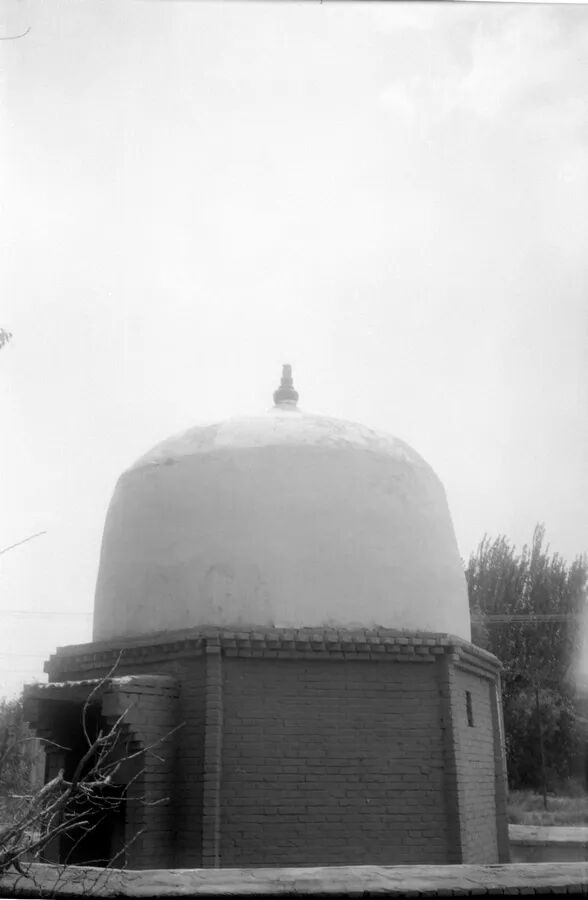
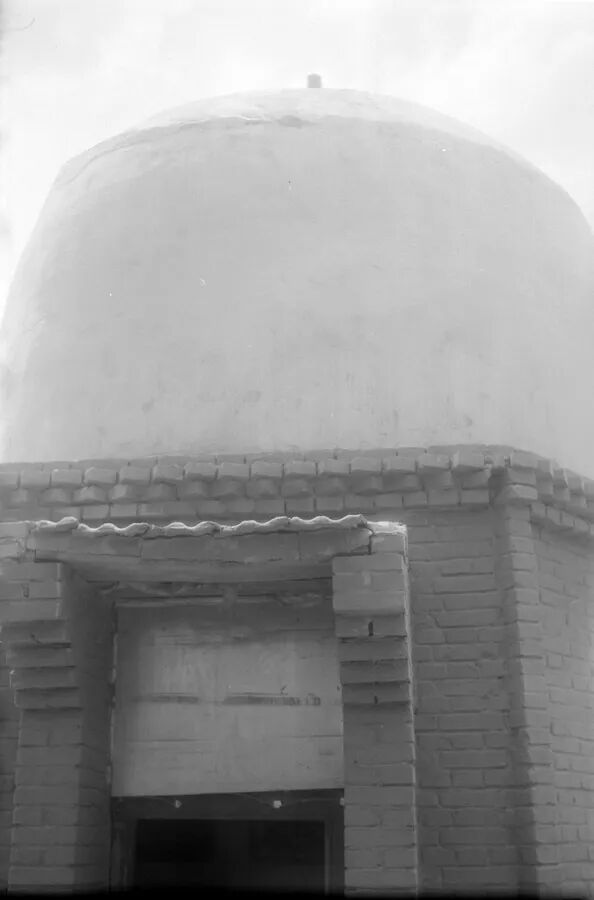
After publishing our previous piece and photos on the "Unnamed Gongbei," we miraculously received messages from two kind-hearted villagers who provided the exact location of the Shuangtingzi gongbei, which sits just a few kilometers away from the unnamed one—one to the northwest, the other to the southeast. I drove twice to Shuangtingzi Village in Litong District, Wuzhong City. The gongbei is located in the fields and village outskirts on the south side of the Han Canal. It is dome-shaped, standing several meters high and hexagonal in structure, surrounded by a low brick wall with entryways facing north and south, sitting tens of meters apart. Consulting limited historical records, I deduce that this is likely an old master's gongbei of a Sufi order, initially built around the late Qing dynasty to the Republic period, much like other gongbei in the surrounding area. Conversations with nearby villagers revealed that it was built to commemorate elders surnamed Wei and Yang, but was destroyed and abandoned during the social movements of the 1960s and 70s. After religious policies were reinstated, descendants rebuilt it on the original site following a dream sent by the old masters. Every year on the death anniversary, the descendants of the elders come to the gongbei to perform grave visits and pay their respects. In recent years, the number of visitors has dwindled, and the site is slowly slipping into oblivion.
▲ Click the image to open the previous article and photos of the Unnamed Gongbei
▲ The Shuangtingzi gongbei architecture situated on an empty plot near the village
▲ A close-up of the dome and front facade of the northern gongbei
▲ A full view of the southern gongbei structure
▲ A close-up of the dome and front facade of the southern gongbei
▲ An accidental shot capturing the interior of the southern gongbei structure view all
Large-Format Photographic Series of the Northwest: Exploring the Unnamed Shuangtingzi Gongbei and Rubbings of Black-and-White Historic Sites
Abstract:
Recording the unnamed Shuangtingzi gongbei in Ningxia through the classic language of black-and-white large-format photography. Using light and shadow to sculpt the weathered, rustic hexagonal double pavilions, crumbling brick carvings, and the mottled woodwork of time, deeply touching the quiet echoes of the historical pulse of Northwest Sufism.
Black-and-White Large-Format Photographic Series: Rubbings of Historic Sites and the Pulse of History
Gongbei (derived from the Arabic Qubbah) is an Islamic architectural style that first became popular in Arabia, Persia, and Central Asia. Over time, it came to specifically refer to dome-shaped structures built over the tombs of Sufi shaykhs (spiritual masters), descendants of the Prophet, and revered saints for the purpose of veneration and visitation. Sufism was introduced to China during the Yuan dynasty and spread widely across the Northwest during the Ming and Qing dynasties. It gradually fused with traditional Chinese garden architecture, retaining Arabic-style domes for the mausoleums while adding Chinese-style prayer halls, scripture-chanting halls, and meditation rooms. Most modern gongbei structures are hexagonal or octagonal double-eaved pagodas with brick-carved walls, decorated with Quranic calligraphy and floral motifs. Due to complex historical evolution, Ningxia gave birth to numerous large and small menhuan (Sufi orders / brotherhoods) that are independent of one another, primarily the Khufiyya, Jahriyya, and Qadiriyya, all carrying a distinct Sufi mystical flavor. The Khufiyya includes the Hongmen, Xianmen, and Tonggui sub-orders. The Jahriyya is divided into the Shagou and Banqiao menhuan. The Qadiriyya is split into the Jiucaiping, Qi family, and Mingyue Daotang menhuan. Aside from the Guitubu gongbei, the old masters' gongbei of various menhuan, the murshid gongbei, and the khalifa gongbei, Ningxia also features other types of gongbei: those built at places where murshids, old masters, or other awliya (saints) experienced karamat (miracles); those built at locations where a murshid or old master once slept on the earth, or built over their personal relics; and those built to honor senior imams who sacrificed their lives for the religious community. A gongbei is a sacred sanctuary in the hearts of Muslims, where they regularly or irregularly visit graves and perform niyah/nietian (charitable giving/remembrance), solemnly honoring saints and sages, drawing close to the prophets, and seeking divine protection and forgiveness.
After publishing our previous piece and photos on the "Unnamed Gongbei," we miraculously received messages from two kind-hearted villagers who provided the exact location of the Shuangtingzi gongbei, which sits just a few kilometers away from the unnamed one—one to the northwest, the other to the southeast. I drove twice to Shuangtingzi Village in Litong District, Wuzhong City. The gongbei is located in the fields and village outskirts on the south side of the Han Canal. It is dome-shaped, standing several meters high and hexagonal in structure, surrounded by a low brick wall with entryways facing north and south, sitting tens of meters apart. Consulting limited historical records, I deduce that this is likely an old master's gongbei of a Sufi order, initially built around the late Qing dynasty to the Republic period, much like other gongbei in the surrounding area. Conversations with nearby villagers revealed that it was built to commemorate elders surnamed Wei and Yang, but was destroyed and abandoned during the social movements of the 1960s and 70s. After religious policies were reinstated, descendants rebuilt it on the original site following a dream sent by the old masters. Every year on the death anniversary, the descendants of the elders come to the gongbei to perform grave visits and pay their respects. In recent years, the number of visitors has dwindled, and the site is slowly slipping into oblivion.
▲ Click the image to open the previous article and photos of the Unnamed Gongbei
▲ The Shuangtingzi gongbei architecture situated on an empty plot near the village
▲ A close-up of the dome and front facade of the northern gongbei
▲ A full view of the southern gongbei structure
▲ A close-up of the dome and front facade of the southern gongbei
▲ An accidental shot capturing the interior of the southern gongbei structure view all
[Internet Repost]
Large-Format Photographic Series of the Northwest: Exploring the Unnamed Shuangtingzi Gongbei and Rubbings of Black-and-White Historic Sites
Abstract:
Recording the unnamed Shuangtingzi gongbei in Ningxia through the classic language of black-and-white large-format photography. Using light and shadow to sculpt the weathered, rustic hexagonal double pavilions, crumbling brick carvings, and the mottled woodwork of time, deeply touching the quiet echoes of the historical pulse of Northwest Sufism.
Black-and-White Large-Format Photographic Series: Rubbings of Historic Sites and the Pulse of History
Gongbei (derived from the Arabic Qubbah) is an Islamic architectural style that first became popular in Arabia, Persia, and Central Asia. Over time, it came to specifically refer to dome-shaped structures built over the tombs of Sufi shaykhs (spiritual masters), descendants of the Prophet, and revered saints for the purpose of veneration and visitation. Sufism was introduced to China during the Yuan dynasty and spread widely across the Northwest during the Ming and Qing dynasties. It gradually fused with traditional Chinese garden architecture, retaining Arabic-style domes for the mausoleums while adding Chinese-style prayer halls, scripture-chanting halls, and meditation rooms. Most modern gongbei structures are hexagonal or octagonal double-eaved pagodas with brick-carved walls, decorated with Quranic calligraphy and floral motifs. Due to complex historical evolution, Ningxia gave birth to numerous large and small menhuan (Sufi orders / brotherhoods) that are independent of one another, primarily the Khufiyya, Jahriyya, and Qadiriyya, all carrying a distinct Sufi mystical flavor. The Khufiyya includes the Hongmen, Xianmen, and Tonggui sub-orders. The Jahriyya is divided into the Shagou and Banqiao menhuan. The Qadiriyya is split into the Jiucaiping, Qi family, and Mingyue Daotang menhuan. Aside from the Guitubu gongbei, the old masters' gongbei of various menhuan, the murshid gongbei, and the khalifa gongbei, Ningxia also features other types of gongbei: those built at places where murshids, old masters, or other awliya (saints) experienced karamat (miracles); those built at locations where a murshid or old master once slept on the earth, or built over their personal relics; and those built to honor senior imams who sacrificed their lives for the religious community. A gongbei is a sacred sanctuary in the hearts of Muslims, where they regularly or irregularly visit graves and perform niyah/nietian (charitable giving/remembrance), solemnly honoring saints and sages, drawing close to the prophets, and seeking divine protection and forgiveness.
After publishing our previous piece and photos on the "Unnamed Gongbei," we miraculously received messages from two kind-hearted villagers who provided the exact location of the Shuangtingzi gongbei, which sits just a few kilometers away from the unnamed one—one to the northwest, the other to the southeast. I drove twice to Shuangtingzi Village in Litong District, Wuzhong City. The gongbei is located in the fields and village outskirts on the south side of the Han Canal. It is dome-shaped, standing several meters high and hexagonal in structure, surrounded by a low brick wall with entryways facing north and south, sitting tens of meters apart. Consulting limited historical records, I deduce that this is likely an old master's gongbei of a Sufi order, initially built around the late Qing dynasty to the Republic period, much like other gongbei in the surrounding area. Conversations with nearby villagers revealed that it was built to commemorate elders surnamed Wei and Yang, but was destroyed and abandoned during the social movements of the 1960s and 70s. After religious policies were reinstated, descendants rebuilt it on the original site following a dream sent by the old masters. Every year on the death anniversary, the descendants of the elders come to the gongbei to perform grave visits and pay their respects. In recent years, the number of visitors has dwindled, and the site is slowly slipping into oblivion.
▲ Click the image to open the previous article and photos of the Unnamed Gongbei
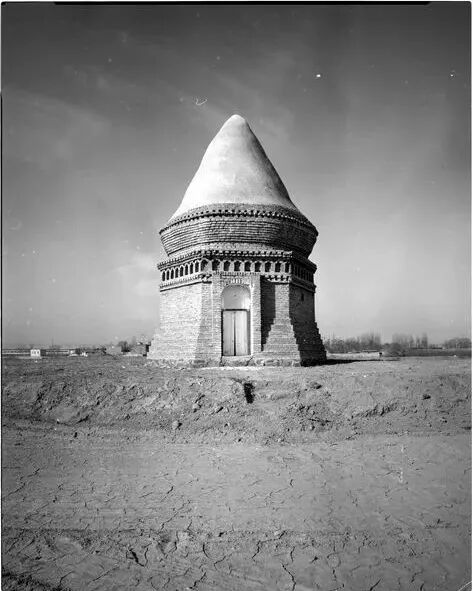
▲ The Shuangtingzi gongbei architecture situated on an empty plot near the village
▲ A close-up of the dome and front facade of the northern gongbei
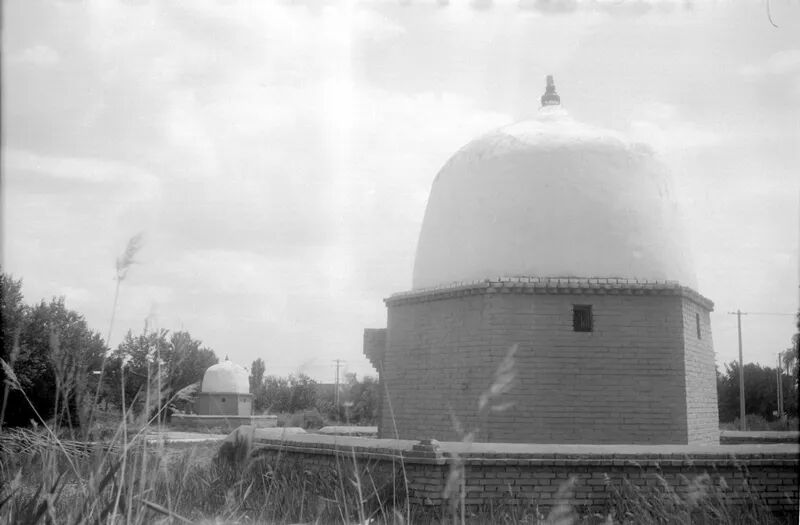
▲ A full view of the southern gongbei structure
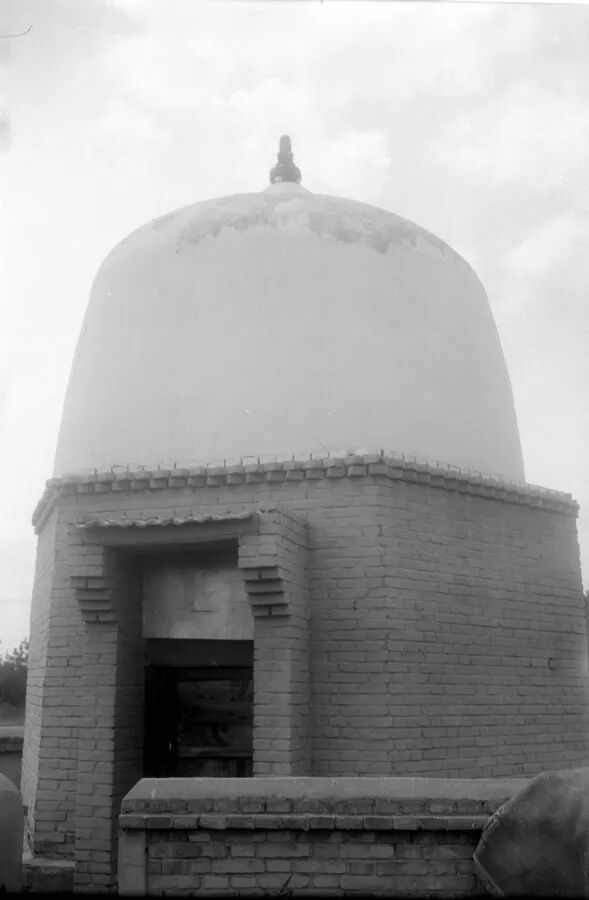
▲ A close-up of the dome and front facade of the southern gongbei
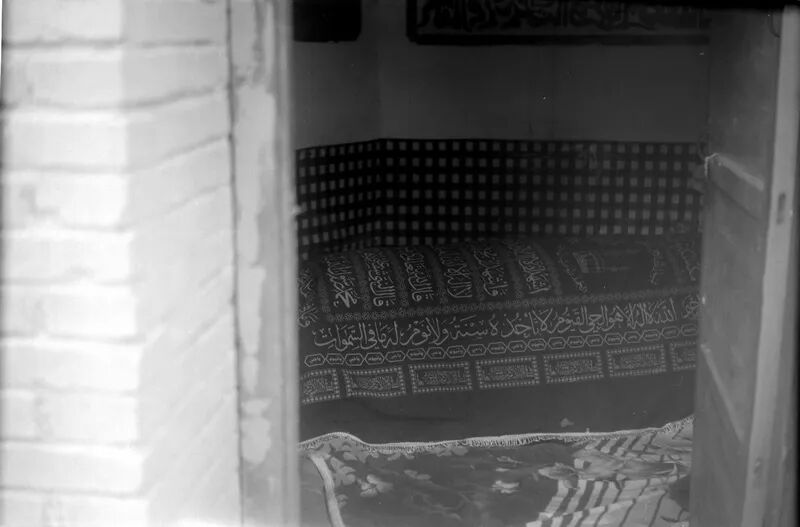
▲ An accidental shot capturing the interior of the southern gongbei structure
Large-Format Photographic Series of the Northwest: Exploring the Unnamed Shuangtingzi Gongbei and Rubbings of Black-and-White Historic Sites
Abstract:
Recording the unnamed Shuangtingzi gongbei in Ningxia through the classic language of black-and-white large-format photography. Using light and shadow to sculpt the weathered, rustic hexagonal double pavilions, crumbling brick carvings, and the mottled woodwork of time, deeply touching the quiet echoes of the historical pulse of Northwest Sufism.
Black-and-White Large-Format Photographic Series: Rubbings of Historic Sites and the Pulse of History
Gongbei (derived from the Arabic Qubbah) is an Islamic architectural style that first became popular in Arabia, Persia, and Central Asia. Over time, it came to specifically refer to dome-shaped structures built over the tombs of Sufi shaykhs (spiritual masters), descendants of the Prophet, and revered saints for the purpose of veneration and visitation. Sufism was introduced to China during the Yuan dynasty and spread widely across the Northwest during the Ming and Qing dynasties. It gradually fused with traditional Chinese garden architecture, retaining Arabic-style domes for the mausoleums while adding Chinese-style prayer halls, scripture-chanting halls, and meditation rooms. Most modern gongbei structures are hexagonal or octagonal double-eaved pagodas with brick-carved walls, decorated with Quranic calligraphy and floral motifs. Due to complex historical evolution, Ningxia gave birth to numerous large and small menhuan (Sufi orders / brotherhoods) that are independent of one another, primarily the Khufiyya, Jahriyya, and Qadiriyya, all carrying a distinct Sufi mystical flavor. The Khufiyya includes the Hongmen, Xianmen, and Tonggui sub-orders. The Jahriyya is divided into the Shagou and Banqiao menhuan. The Qadiriyya is split into the Jiucaiping, Qi family, and Mingyue Daotang menhuan. Aside from the Guitubu gongbei, the old masters' gongbei of various menhuan, the murshid gongbei, and the khalifa gongbei, Ningxia also features other types of gongbei: those built at places where murshids, old masters, or other awliya (saints) experienced karamat (miracles); those built at locations where a murshid or old master once slept on the earth, or built over their personal relics; and those built to honor senior imams who sacrificed their lives for the religious community. A gongbei is a sacred sanctuary in the hearts of Muslims, where they regularly or irregularly visit graves and perform niyah/nietian (charitable giving/remembrance), solemnly honoring saints and sages, drawing close to the prophets, and seeking divine protection and forgiveness.
After publishing our previous piece and photos on the "Unnamed Gongbei," we miraculously received messages from two kind-hearted villagers who provided the exact location of the Shuangtingzi gongbei, which sits just a few kilometers away from the unnamed one—one to the northwest, the other to the southeast. I drove twice to Shuangtingzi Village in Litong District, Wuzhong City. The gongbei is located in the fields and village outskirts on the south side of the Han Canal. It is dome-shaped, standing several meters high and hexagonal in structure, surrounded by a low brick wall with entryways facing north and south, sitting tens of meters apart. Consulting limited historical records, I deduce that this is likely an old master's gongbei of a Sufi order, initially built around the late Qing dynasty to the Republic period, much like other gongbei in the surrounding area. Conversations with nearby villagers revealed that it was built to commemorate elders surnamed Wei and Yang, but was destroyed and abandoned during the social movements of the 1960s and 70s. After religious policies were reinstated, descendants rebuilt it on the original site following a dream sent by the old masters. Every year on the death anniversary, the descendants of the elders come to the gongbei to perform grave visits and pay their respects. In recent years, the number of visitors has dwindled, and the site is slowly slipping into oblivion.
▲ Click the image to open the previous article and photos of the Unnamed Gongbei
▲ The Shuangtingzi gongbei architecture situated on an empty plot near the village
▲ A close-up of the dome and front facade of the northern gongbei
▲ A full view of the southern gongbei structure
▲ A close-up of the dome and front facade of the southern gongbei
▲ An accidental shot capturing the interior of the southern gongbei structure
Exploring Honglefu Daotang in Qingtongxia: History of Jahriyya Sufi Shrine & Ma Yide Gongbei in Ningxia
Articles • Hasan09 posted the article • 0 comments • 3 views • 3 hours ago
[Internet Repost]
Exploring Honglefu Daotang in Qingtongxia: A Historical Overview of the Fourth Master Ma Yide's Gongbei of the Jahriyya Sufi Order
Abstract:
A visit to Honglefu Daotang (Sufi shrine and hall) and the Ma Yide gongbei (Sufi shrine / mausoleum complex), located in Renqiao Village, Xiakou Town, Qingtongxia City, Ningxia. This field research examines the fourth master Ma Yide's journey of spiritual retreat and the architectural style of this county-level cultural heritage site, shedding light on the historical legacy of Northwest China's Sufi menhuan (Sufi order / brotherhood).
Previously, I introduced the Siqiliangzi gongbei in downtown Wuzhong. Another gongbei, known as the Honglefu gongbei or Honglefu Daotang, is located in Renqiao Village, Xiakou Town, Qingtongxia City.
Honglefu is the resting place of Ma Hualong's father, the fourth master Ma Yide, and others. Born in the 43rd year of the Qianlong reign of the Qing Dynasty (1778), Ma Yide led the order for 32 years, a period of relative peace for the Jahriyya order between two major uprisings. Under his leadership, the Jahriyya experienced a full revival.
On the eighth day of the fourth lunar month in the 29th year of the Daoguang reign (1850), Ma Yide returned to Allah in Lingzhou. Revered by followers as the 'Fourth Month Eighth Master', he was laid to rest next to the tomb of his grandfather, the Seventh Baba. This elevated the fame of the Honglefu gongbei. During the Republican era, followers established a daotang here, which became known as Honglefu Daotang.
Spanning over 300 mu in its entirety, Honglefu once featured not only the gongbei, but also daotang spaces, residences, guest rooms, kitchens, and charitable schoolrooms. It originally consisted of 15 courtyards with over 190 rooms, surrounded by orchards and the graves of community members. Ma Zhenwu, the eighth murshed (spiritual guide), is also buried within the complex.
Destroyed in the 1960s, it was rebuilt on the original site in 2006. The current complex covers about 75 mu and is built in the Tang Dynasty architectural style. In addition to the mausoleum grounds, it features a main prayer hall, a central courtyard gateway, scripture-reciting halls, accommodations for the ahoon (Islamic scholar / imam), a library, guest rooms, and an Islamic scriptural school. (Ning 38, Qingtongxia Cultural Relics Protection Unit, written on December 27, 2024) view all
Exploring Honglefu Daotang in Qingtongxia: A Historical Overview of the Fourth Master Ma Yide's Gongbei of the Jahriyya Sufi Order
Abstract:
A visit to Honglefu Daotang (Sufi shrine and hall) and the Ma Yide gongbei (Sufi shrine / mausoleum complex), located in Renqiao Village, Xiakou Town, Qingtongxia City, Ningxia. This field research examines the fourth master Ma Yide's journey of spiritual retreat and the architectural style of this county-level cultural heritage site, shedding light on the historical legacy of Northwest China's Sufi menhuan (Sufi order / brotherhood).
Previously, I introduced the Siqiliangzi gongbei in downtown Wuzhong. Another gongbei, known as the Honglefu gongbei or Honglefu Daotang, is located in Renqiao Village, Xiakou Town, Qingtongxia City.
Honglefu is the resting place of Ma Hualong's father, the fourth master Ma Yide, and others. Born in the 43rd year of the Qianlong reign of the Qing Dynasty (1778), Ma Yide led the order for 32 years, a period of relative peace for the Jahriyya order between two major uprisings. Under his leadership, the Jahriyya experienced a full revival.
On the eighth day of the fourth lunar month in the 29th year of the Daoguang reign (1850), Ma Yide returned to Allah in Lingzhou. Revered by followers as the 'Fourth Month Eighth Master', he was laid to rest next to the tomb of his grandfather, the Seventh Baba. This elevated the fame of the Honglefu gongbei. During the Republican era, followers established a daotang here, which became known as Honglefu Daotang.
Spanning over 300 mu in its entirety, Honglefu once featured not only the gongbei, but also daotang spaces, residences, guest rooms, kitchens, and charitable schoolrooms. It originally consisted of 15 courtyards with over 190 rooms, surrounded by orchards and the graves of community members. Ma Zhenwu, the eighth murshed (spiritual guide), is also buried within the complex.
Destroyed in the 1960s, it was rebuilt on the original site in 2006. The current complex covers about 75 mu and is built in the Tang Dynasty architectural style. In addition to the mausoleum grounds, it features a main prayer hall, a central courtyard gateway, scripture-reciting halls, accommodations for the ahoon (Islamic scholar / imam), a library, guest rooms, and an Islamic scriptural school. (Ning 38, Qingtongxia Cultural Relics Protection Unit, written on December 27, 2024) view all
[Internet Repost]
Exploring Honglefu Daotang in Qingtongxia: A Historical Overview of the Fourth Master Ma Yide's Gongbei of the Jahriyya Sufi Order

Abstract:

A visit to Honglefu Daotang (Sufi shrine and hall) and the Ma Yide gongbei (Sufi shrine / mausoleum complex), located in Renqiao Village, Xiakou Town, Qingtongxia City, Ningxia. This field research examines the fourth master Ma Yide's journey of spiritual retreat and the architectural style of this county-level cultural heritage site, shedding light on the historical legacy of Northwest China's Sufi menhuan (Sufi order / brotherhood).

Previously, I introduced the Siqiliangzi gongbei in downtown Wuzhong. Another gongbei, known as the Honglefu gongbei or Honglefu Daotang, is located in Renqiao Village, Xiakou Town, Qingtongxia City.

Honglefu is the resting place of Ma Hualong's father, the fourth master Ma Yide, and others. Born in the 43rd year of the Qianlong reign of the Qing Dynasty (1778), Ma Yide led the order for 32 years, a period of relative peace for the Jahriyya order between two major uprisings. Under his leadership, the Jahriyya experienced a full revival.

On the eighth day of the fourth lunar month in the 29th year of the Daoguang reign (1850), Ma Yide returned to Allah in Lingzhou. Revered by followers as the 'Fourth Month Eighth Master', he was laid to rest next to the tomb of his grandfather, the Seventh Baba. This elevated the fame of the Honglefu gongbei. During the Republican era, followers established a daotang here, which became known as Honglefu Daotang.
Spanning over 300 mu in its entirety, Honglefu once featured not only the gongbei, but also daotang spaces, residences, guest rooms, kitchens, and charitable schoolrooms. It originally consisted of 15 courtyards with over 190 rooms, surrounded by orchards and the graves of community members. Ma Zhenwu, the eighth murshed (spiritual guide), is also buried within the complex.
Destroyed in the 1960s, it was rebuilt on the original site in 2006. The current complex covers about 75 mu and is built in the Tang Dynasty architectural style. In addition to the mausoleum grounds, it features a main prayer hall, a central courtyard gateway, scripture-reciting halls, accommodations for the ahoon (Islamic scholar / imam), a library, guest rooms, and an Islamic scriptural school. (Ning 38, Qingtongxia Cultural Relics Protection Unit, written on December 27, 2024)
Exploring Honglefu Daotang in Qingtongxia: A Historical Overview of the Fourth Master Ma Yide's Gongbei of the Jahriyya Sufi Order
Abstract:
A visit to Honglefu Daotang (Sufi shrine and hall) and the Ma Yide gongbei (Sufi shrine / mausoleum complex), located in Renqiao Village, Xiakou Town, Qingtongxia City, Ningxia. This field research examines the fourth master Ma Yide's journey of spiritual retreat and the architectural style of this county-level cultural heritage site, shedding light on the historical legacy of Northwest China's Sufi menhuan (Sufi order / brotherhood).
Previously, I introduced the Siqiliangzi gongbei in downtown Wuzhong. Another gongbei, known as the Honglefu gongbei or Honglefu Daotang, is located in Renqiao Village, Xiakou Town, Qingtongxia City.
Honglefu is the resting place of Ma Hualong's father, the fourth master Ma Yide, and others. Born in the 43rd year of the Qianlong reign of the Qing Dynasty (1778), Ma Yide led the order for 32 years, a period of relative peace for the Jahriyya order between two major uprisings. Under his leadership, the Jahriyya experienced a full revival.
On the eighth day of the fourth lunar month in the 29th year of the Daoguang reign (1850), Ma Yide returned to Allah in Lingzhou. Revered by followers as the 'Fourth Month Eighth Master', he was laid to rest next to the tomb of his grandfather, the Seventh Baba. This elevated the fame of the Honglefu gongbei. During the Republican era, followers established a daotang here, which became known as Honglefu Daotang.
Spanning over 300 mu in its entirety, Honglefu once featured not only the gongbei, but also daotang spaces, residences, guest rooms, kitchens, and charitable schoolrooms. It originally consisted of 15 courtyards with over 190 rooms, surrounded by orchards and the graves of community members. Ma Zhenwu, the eighth murshed (spiritual guide), is also buried within the complex.
Destroyed in the 1960s, it was rebuilt on the original site in 2006. The current complex covers about 75 mu and is built in the Tang Dynasty architectural style. In addition to the mausoleum grounds, it features a main prayer hall, a central courtyard gateway, scripture-reciting halls, accommodations for the ahoon (Islamic scholar / imam), a library, guest rooms, and an Islamic scriptural school. (Ning 38, Qingtongxia Cultural Relics Protection Unit, written on December 27, 2024)
Exploring Ningxia’s Hidden Sufi Shrines & Historic Northwest Muslim Heritage
Articles • Hasan09 posted the article • 0 comments • 4 views • 3 hours ago
[Internet Repost]
Large-Format Photographic Series of the Northwest: Exploring the Unnamed Shuangtingzi Gongbei and Rubbings of Black-and-White Historic Sites
Abstract:
Recording the unnamed Shuangtingzi gongbei in Ningxia through the classic language of black-and-white large-format photography. Using light and shadow to sculpt the weathered, rustic hexagonal double pavilions, crumbling brick carvings, and the mottled woodwork of time, deeply touching the quiet echoes of the historical pulse of Northwest Sufism.
Black-and-White Large-Format Photographic Series: Rubbings of Historic Sites and the Pulse of History
Gongbei (derived from the Arabic Qubbah) is an Islamic architectural style that first became popular in Arabia, Persia, and Central Asia. Over time, it came to specifically refer to dome-shaped structures built over the tombs of Sufi shaykhs (spiritual masters), descendants of the Prophet, and revered saints for the purpose of veneration and visitation. Sufism was introduced to China during the Yuan dynasty and spread widely across the Northwest during the Ming and Qing dynasties. It gradually fused with traditional Chinese garden architecture, retaining Arabic-style domes for the mausoleums while adding Chinese-style prayer halls, scripture-chanting halls, and meditation rooms. Most modern gongbei structures are hexagonal or octagonal double-eaved pagodas with brick-carved walls, decorated with Quranic calligraphy and floral motifs. Due to complex historical evolution, Ningxia gave birth to numerous large and small menhuan (Sufi orders / brotherhoods) that are independent of one another, primarily the Khufiyya, Jahriyya, and Qadiriyya, all carrying a distinct Sufi mystical flavor. The Khufiyya includes the Hongmen, Xianmen, and Tonggui sub-orders. The Jahriyya is divided into the Shagou and Banqiao menhuan. The Qadiriyya is split into the Jiucaiping, Qi family, and Mingyue Daotang menhuan. Aside from the Guitubu gongbei, the old masters' gongbei of various menhuan, the murshid gongbei, and the khalifa gongbei, Ningxia also features other types of gongbei: those built at places where murshids, old masters, or other awliya (saints) experienced karamat (miracles); those built at locations where a murshid or old master once slept on the earth, or built over their personal relics; and those built to honor senior imams who sacrificed their lives for the religious community. A gongbei is a sacred sanctuary in the hearts of Muslims, where they regularly or irregularly visit graves and perform niyah/nietian (charitable giving/remembrance), solemnly honoring saints and sages, drawing close to the prophets, and seeking divine protection and forgiveness.
After publishing our previous piece and photos on the "Unnamed Gongbei," we miraculously received messages from two kind-hearted villagers who provided the exact location of the Shuangtingzi gongbei, which sits just a few kilometers away from the unnamed one—one to the northwest, the other to the southeast. I drove twice to Shuangtingzi Village in Litong District, Wuzhong City. The gongbei is located in the fields and village outskirts on the south side of the Han Canal. It is dome-shaped, standing several meters high and hexagonal in structure, surrounded by a low brick wall with entryways facing north and south, sitting tens of meters apart. Consulting limited historical records, I deduce that this is likely an old master's gongbei of a Sufi order, initially built around the late Qing dynasty to the Republic period, much like other gongbei in the surrounding area. Conversations with nearby villagers revealed that it was built to commemorate elders surnamed Wei and Yang, but was destroyed and abandoned during the social movements of the 1960s and 70s. After religious policies were reinstated, descendants rebuilt it on the original site following a dream sent by the old masters. Every year on the death anniversary, the descendants of the elders come to the gongbei to perform grave visits and pay their respects. In recent years, the number of visitors has dwindled, and the site is slowly slipping into oblivion.
▲ Click the image to open the previous article and photos of the Unnamed Gongbei
▲ The Shuangtingzi gongbei architecture situated on an empty plot near the village
▲ A close-up of the dome and front facade of the northern gongbei
▲ A full view of the southern gongbei structure
▲ A close-up of the dome and front facade of the southern gongbei
▲ An accidental shot capturing the interior of the southern gongbei structure view all
Large-Format Photographic Series of the Northwest: Exploring the Unnamed Shuangtingzi Gongbei and Rubbings of Black-and-White Historic Sites
Abstract:
Recording the unnamed Shuangtingzi gongbei in Ningxia through the classic language of black-and-white large-format photography. Using light and shadow to sculpt the weathered, rustic hexagonal double pavilions, crumbling brick carvings, and the mottled woodwork of time, deeply touching the quiet echoes of the historical pulse of Northwest Sufism.
Black-and-White Large-Format Photographic Series: Rubbings of Historic Sites and the Pulse of History
Gongbei (derived from the Arabic Qubbah) is an Islamic architectural style that first became popular in Arabia, Persia, and Central Asia. Over time, it came to specifically refer to dome-shaped structures built over the tombs of Sufi shaykhs (spiritual masters), descendants of the Prophet, and revered saints for the purpose of veneration and visitation. Sufism was introduced to China during the Yuan dynasty and spread widely across the Northwest during the Ming and Qing dynasties. It gradually fused with traditional Chinese garden architecture, retaining Arabic-style domes for the mausoleums while adding Chinese-style prayer halls, scripture-chanting halls, and meditation rooms. Most modern gongbei structures are hexagonal or octagonal double-eaved pagodas with brick-carved walls, decorated with Quranic calligraphy and floral motifs. Due to complex historical evolution, Ningxia gave birth to numerous large and small menhuan (Sufi orders / brotherhoods) that are independent of one another, primarily the Khufiyya, Jahriyya, and Qadiriyya, all carrying a distinct Sufi mystical flavor. The Khufiyya includes the Hongmen, Xianmen, and Tonggui sub-orders. The Jahriyya is divided into the Shagou and Banqiao menhuan. The Qadiriyya is split into the Jiucaiping, Qi family, and Mingyue Daotang menhuan. Aside from the Guitubu gongbei, the old masters' gongbei of various menhuan, the murshid gongbei, and the khalifa gongbei, Ningxia also features other types of gongbei: those built at places where murshids, old masters, or other awliya (saints) experienced karamat (miracles); those built at locations where a murshid or old master once slept on the earth, or built over their personal relics; and those built to honor senior imams who sacrificed their lives for the religious community. A gongbei is a sacred sanctuary in the hearts of Muslims, where they regularly or irregularly visit graves and perform niyah/nietian (charitable giving/remembrance), solemnly honoring saints and sages, drawing close to the prophets, and seeking divine protection and forgiveness.
After publishing our previous piece and photos on the "Unnamed Gongbei," we miraculously received messages from two kind-hearted villagers who provided the exact location of the Shuangtingzi gongbei, which sits just a few kilometers away from the unnamed one—one to the northwest, the other to the southeast. I drove twice to Shuangtingzi Village in Litong District, Wuzhong City. The gongbei is located in the fields and village outskirts on the south side of the Han Canal. It is dome-shaped, standing several meters high and hexagonal in structure, surrounded by a low brick wall with entryways facing north and south, sitting tens of meters apart. Consulting limited historical records, I deduce that this is likely an old master's gongbei of a Sufi order, initially built around the late Qing dynasty to the Republic period, much like other gongbei in the surrounding area. Conversations with nearby villagers revealed that it was built to commemorate elders surnamed Wei and Yang, but was destroyed and abandoned during the social movements of the 1960s and 70s. After religious policies were reinstated, descendants rebuilt it on the original site following a dream sent by the old masters. Every year on the death anniversary, the descendants of the elders come to the gongbei to perform grave visits and pay their respects. In recent years, the number of visitors has dwindled, and the site is slowly slipping into oblivion.
▲ Click the image to open the previous article and photos of the Unnamed Gongbei
▲ The Shuangtingzi gongbei architecture situated on an empty plot near the village
▲ A close-up of the dome and front facade of the northern gongbei
▲ A full view of the southern gongbei structure
▲ A close-up of the dome and front facade of the southern gongbei
▲ An accidental shot capturing the interior of the southern gongbei structure view all
[Internet Repost]
Large-Format Photographic Series of the Northwest: Exploring the Unnamed Shuangtingzi Gongbei and Rubbings of Black-and-White Historic Sites
Abstract:
Recording the unnamed Shuangtingzi gongbei in Ningxia through the classic language of black-and-white large-format photography. Using light and shadow to sculpt the weathered, rustic hexagonal double pavilions, crumbling brick carvings, and the mottled woodwork of time, deeply touching the quiet echoes of the historical pulse of Northwest Sufism.
Black-and-White Large-Format Photographic Series: Rubbings of Historic Sites and the Pulse of History
Gongbei (derived from the Arabic Qubbah) is an Islamic architectural style that first became popular in Arabia, Persia, and Central Asia. Over time, it came to specifically refer to dome-shaped structures built over the tombs of Sufi shaykhs (spiritual masters), descendants of the Prophet, and revered saints for the purpose of veneration and visitation. Sufism was introduced to China during the Yuan dynasty and spread widely across the Northwest during the Ming and Qing dynasties. It gradually fused with traditional Chinese garden architecture, retaining Arabic-style domes for the mausoleums while adding Chinese-style prayer halls, scripture-chanting halls, and meditation rooms. Most modern gongbei structures are hexagonal or octagonal double-eaved pagodas with brick-carved walls, decorated with Quranic calligraphy and floral motifs. Due to complex historical evolution, Ningxia gave birth to numerous large and small menhuan (Sufi orders / brotherhoods) that are independent of one another, primarily the Khufiyya, Jahriyya, and Qadiriyya, all carrying a distinct Sufi mystical flavor. The Khufiyya includes the Hongmen, Xianmen, and Tonggui sub-orders. The Jahriyya is divided into the Shagou and Banqiao menhuan. The Qadiriyya is split into the Jiucaiping, Qi family, and Mingyue Daotang menhuan. Aside from the Guitubu gongbei, the old masters' gongbei of various menhuan, the murshid gongbei, and the khalifa gongbei, Ningxia also features other types of gongbei: those built at places where murshids, old masters, or other awliya (saints) experienced karamat (miracles); those built at locations where a murshid or old master once slept on the earth, or built over their personal relics; and those built to honor senior imams who sacrificed their lives for the religious community. A gongbei is a sacred sanctuary in the hearts of Muslims, where they regularly or irregularly visit graves and perform niyah/nietian (charitable giving/remembrance), solemnly honoring saints and sages, drawing close to the prophets, and seeking divine protection and forgiveness.
After publishing our previous piece and photos on the "Unnamed Gongbei," we miraculously received messages from two kind-hearted villagers who provided the exact location of the Shuangtingzi gongbei, which sits just a few kilometers away from the unnamed one—one to the northwest, the other to the southeast. I drove twice to Shuangtingzi Village in Litong District, Wuzhong City. The gongbei is located in the fields and village outskirts on the south side of the Han Canal. It is dome-shaped, standing several meters high and hexagonal in structure, surrounded by a low brick wall with entryways facing north and south, sitting tens of meters apart. Consulting limited historical records, I deduce that this is likely an old master's gongbei of a Sufi order, initially built around the late Qing dynasty to the Republic period, much like other gongbei in the surrounding area. Conversations with nearby villagers revealed that it was built to commemorate elders surnamed Wei and Yang, but was destroyed and abandoned during the social movements of the 1960s and 70s. After religious policies were reinstated, descendants rebuilt it on the original site following a dream sent by the old masters. Every year on the death anniversary, the descendants of the elders come to the gongbei to perform grave visits and pay their respects. In recent years, the number of visitors has dwindled, and the site is slowly slipping into oblivion.
▲ Click the image to open the previous article and photos of the Unnamed Gongbei
▲ The Shuangtingzi gongbei architecture situated on an empty plot near the village
▲ A close-up of the dome and front facade of the northern gongbei
▲ A full view of the southern gongbei structure
▲ A close-up of the dome and front facade of the southern gongbei
▲ An accidental shot capturing the interior of the southern gongbei structure
Large-Format Photographic Series of the Northwest: Exploring the Unnamed Shuangtingzi Gongbei and Rubbings of Black-and-White Historic Sites
Abstract:
Recording the unnamed Shuangtingzi gongbei in Ningxia through the classic language of black-and-white large-format photography. Using light and shadow to sculpt the weathered, rustic hexagonal double pavilions, crumbling brick carvings, and the mottled woodwork of time, deeply touching the quiet echoes of the historical pulse of Northwest Sufism.
Black-and-White Large-Format Photographic Series: Rubbings of Historic Sites and the Pulse of History
Gongbei (derived from the Arabic Qubbah) is an Islamic architectural style that first became popular in Arabia, Persia, and Central Asia. Over time, it came to specifically refer to dome-shaped structures built over the tombs of Sufi shaykhs (spiritual masters), descendants of the Prophet, and revered saints for the purpose of veneration and visitation. Sufism was introduced to China during the Yuan dynasty and spread widely across the Northwest during the Ming and Qing dynasties. It gradually fused with traditional Chinese garden architecture, retaining Arabic-style domes for the mausoleums while adding Chinese-style prayer halls, scripture-chanting halls, and meditation rooms. Most modern gongbei structures are hexagonal or octagonal double-eaved pagodas with brick-carved walls, decorated with Quranic calligraphy and floral motifs. Due to complex historical evolution, Ningxia gave birth to numerous large and small menhuan (Sufi orders / brotherhoods) that are independent of one another, primarily the Khufiyya, Jahriyya, and Qadiriyya, all carrying a distinct Sufi mystical flavor. The Khufiyya includes the Hongmen, Xianmen, and Tonggui sub-orders. The Jahriyya is divided into the Shagou and Banqiao menhuan. The Qadiriyya is split into the Jiucaiping, Qi family, and Mingyue Daotang menhuan. Aside from the Guitubu gongbei, the old masters' gongbei of various menhuan, the murshid gongbei, and the khalifa gongbei, Ningxia also features other types of gongbei: those built at places where murshids, old masters, or other awliya (saints) experienced karamat (miracles); those built at locations where a murshid or old master once slept on the earth, or built over their personal relics; and those built to honor senior imams who sacrificed their lives for the religious community. A gongbei is a sacred sanctuary in the hearts of Muslims, where they regularly or irregularly visit graves and perform niyah/nietian (charitable giving/remembrance), solemnly honoring saints and sages, drawing close to the prophets, and seeking divine protection and forgiveness.
After publishing our previous piece and photos on the "Unnamed Gongbei," we miraculously received messages from two kind-hearted villagers who provided the exact location of the Shuangtingzi gongbei, which sits just a few kilometers away from the unnamed one—one to the northwest, the other to the southeast. I drove twice to Shuangtingzi Village in Litong District, Wuzhong City. The gongbei is located in the fields and village outskirts on the south side of the Han Canal. It is dome-shaped, standing several meters high and hexagonal in structure, surrounded by a low brick wall with entryways facing north and south, sitting tens of meters apart. Consulting limited historical records, I deduce that this is likely an old master's gongbei of a Sufi order, initially built around the late Qing dynasty to the Republic period, much like other gongbei in the surrounding area. Conversations with nearby villagers revealed that it was built to commemorate elders surnamed Wei and Yang, but was destroyed and abandoned during the social movements of the 1960s and 70s. After religious policies were reinstated, descendants rebuilt it on the original site following a dream sent by the old masters. Every year on the death anniversary, the descendants of the elders come to the gongbei to perform grave visits and pay their respects. In recent years, the number of visitors has dwindled, and the site is slowly slipping into oblivion.
▲ Click the image to open the previous article and photos of the Unnamed Gongbei
▲ The Shuangtingzi gongbei architecture situated on an empty plot near the village
▲ A close-up of the dome and front facade of the northern gongbei
▲ A full view of the southern gongbei structure
▲ A close-up of the dome and front facade of the southern gongbei
▲ An accidental shot capturing the interior of the southern gongbei structure
Exploring Honglefu Daotang in Qingtongxia: History of Jahriyya Sufi Shrine & Ma Yide Gongbei in Ningxia
Articles • Hasan09 posted the article • 0 comments • 3 views • 3 hours ago
[Internet Repost]
Exploring Honglefu Daotang in Qingtongxia: A Historical Overview of the Fourth Master Ma Yide's Gongbei of the Jahriyya Sufi Order
Abstract:
A visit to Honglefu Daotang (Sufi shrine and hall) and the Ma Yide gongbei (Sufi shrine / mausoleum complex), located in Renqiao Village, Xiakou Town, Qingtongxia City, Ningxia. This field research examines the fourth master Ma Yide's journey of spiritual retreat and the architectural style of this county-level cultural heritage site, shedding light on the historical legacy of Northwest China's Sufi menhuan (Sufi order / brotherhood).
Previously, I introduced the Siqiliangzi gongbei in downtown Wuzhong. Another gongbei, known as the Honglefu gongbei or Honglefu Daotang, is located in Renqiao Village, Xiakou Town, Qingtongxia City.
Honglefu is the resting place of Ma Hualong's father, the fourth master Ma Yide, and others. Born in the 43rd year of the Qianlong reign of the Qing Dynasty (1778), Ma Yide led the order for 32 years, a period of relative peace for the Jahriyya order between two major uprisings. Under his leadership, the Jahriyya experienced a full revival.
On the eighth day of the fourth lunar month in the 29th year of the Daoguang reign (1850), Ma Yide returned to Allah in Lingzhou. Revered by followers as the 'Fourth Month Eighth Master', he was laid to rest next to the tomb of his grandfather, the Seventh Baba. This elevated the fame of the Honglefu gongbei. During the Republican era, followers established a daotang here, which became known as Honglefu Daotang.
Spanning over 300 mu in its entirety, Honglefu once featured not only the gongbei, but also daotang spaces, residences, guest rooms, kitchens, and charitable schoolrooms. It originally consisted of 15 courtyards with over 190 rooms, surrounded by orchards and the graves of community members. Ma Zhenwu, the eighth murshed (spiritual guide), is also buried within the complex.
Destroyed in the 1960s, it was rebuilt on the original site in 2006. The current complex covers about 75 mu and is built in the Tang Dynasty architectural style. In addition to the mausoleum grounds, it features a main prayer hall, a central courtyard gateway, scripture-reciting halls, accommodations for the ahoon (Islamic scholar / imam), a library, guest rooms, and an Islamic scriptural school. (Ning 38, Qingtongxia Cultural Relics Protection Unit, written on December 27, 2024) view all
Exploring Honglefu Daotang in Qingtongxia: A Historical Overview of the Fourth Master Ma Yide's Gongbei of the Jahriyya Sufi Order
Abstract:
A visit to Honglefu Daotang (Sufi shrine and hall) and the Ma Yide gongbei (Sufi shrine / mausoleum complex), located in Renqiao Village, Xiakou Town, Qingtongxia City, Ningxia. This field research examines the fourth master Ma Yide's journey of spiritual retreat and the architectural style of this county-level cultural heritage site, shedding light on the historical legacy of Northwest China's Sufi menhuan (Sufi order / brotherhood).
Previously, I introduced the Siqiliangzi gongbei in downtown Wuzhong. Another gongbei, known as the Honglefu gongbei or Honglefu Daotang, is located in Renqiao Village, Xiakou Town, Qingtongxia City.
Honglefu is the resting place of Ma Hualong's father, the fourth master Ma Yide, and others. Born in the 43rd year of the Qianlong reign of the Qing Dynasty (1778), Ma Yide led the order for 32 years, a period of relative peace for the Jahriyya order between two major uprisings. Under his leadership, the Jahriyya experienced a full revival.
On the eighth day of the fourth lunar month in the 29th year of the Daoguang reign (1850), Ma Yide returned to Allah in Lingzhou. Revered by followers as the 'Fourth Month Eighth Master', he was laid to rest next to the tomb of his grandfather, the Seventh Baba. This elevated the fame of the Honglefu gongbei. During the Republican era, followers established a daotang here, which became known as Honglefu Daotang.
Spanning over 300 mu in its entirety, Honglefu once featured not only the gongbei, but also daotang spaces, residences, guest rooms, kitchens, and charitable schoolrooms. It originally consisted of 15 courtyards with over 190 rooms, surrounded by orchards and the graves of community members. Ma Zhenwu, the eighth murshed (spiritual guide), is also buried within the complex.
Destroyed in the 1960s, it was rebuilt on the original site in 2006. The current complex covers about 75 mu and is built in the Tang Dynasty architectural style. In addition to the mausoleum grounds, it features a main prayer hall, a central courtyard gateway, scripture-reciting halls, accommodations for the ahoon (Islamic scholar / imam), a library, guest rooms, and an Islamic scriptural school. (Ning 38, Qingtongxia Cultural Relics Protection Unit, written on December 27, 2024) view all
[Internet Repost]
Exploring Honglefu Daotang in Qingtongxia: A Historical Overview of the Fourth Master Ma Yide's Gongbei of the Jahriyya Sufi Order
Abstract:
A visit to Honglefu Daotang (Sufi shrine and hall) and the Ma Yide gongbei (Sufi shrine / mausoleum complex), located in Renqiao Village, Xiakou Town, Qingtongxia City, Ningxia. This field research examines the fourth master Ma Yide's journey of spiritual retreat and the architectural style of this county-level cultural heritage site, shedding light on the historical legacy of Northwest China's Sufi menhuan (Sufi order / brotherhood).
Previously, I introduced the Siqiliangzi gongbei in downtown Wuzhong. Another gongbei, known as the Honglefu gongbei or Honglefu Daotang, is located in Renqiao Village, Xiakou Town, Qingtongxia City.
Honglefu is the resting place of Ma Hualong's father, the fourth master Ma Yide, and others. Born in the 43rd year of the Qianlong reign of the Qing Dynasty (1778), Ma Yide led the order for 32 years, a period of relative peace for the Jahriyya order between two major uprisings. Under his leadership, the Jahriyya experienced a full revival.
On the eighth day of the fourth lunar month in the 29th year of the Daoguang reign (1850), Ma Yide returned to Allah in Lingzhou. Revered by followers as the 'Fourth Month Eighth Master', he was laid to rest next to the tomb of his grandfather, the Seventh Baba. This elevated the fame of the Honglefu gongbei. During the Republican era, followers established a daotang here, which became known as Honglefu Daotang.
Spanning over 300 mu in its entirety, Honglefu once featured not only the gongbei, but also daotang spaces, residences, guest rooms, kitchens, and charitable schoolrooms. It originally consisted of 15 courtyards with over 190 rooms, surrounded by orchards and the graves of community members. Ma Zhenwu, the eighth murshed (spiritual guide), is also buried within the complex.
Destroyed in the 1960s, it was rebuilt on the original site in 2006. The current complex covers about 75 mu and is built in the Tang Dynasty architectural style. In addition to the mausoleum grounds, it features a main prayer hall, a central courtyard gateway, scripture-reciting halls, accommodations for the ahoon (Islamic scholar / imam), a library, guest rooms, and an Islamic scriptural school. (Ning 38, Qingtongxia Cultural Relics Protection Unit, written on December 27, 2024)
Exploring Honglefu Daotang in Qingtongxia: A Historical Overview of the Fourth Master Ma Yide's Gongbei of the Jahriyya Sufi Order
Abstract:
A visit to Honglefu Daotang (Sufi shrine and hall) and the Ma Yide gongbei (Sufi shrine / mausoleum complex), located in Renqiao Village, Xiakou Town, Qingtongxia City, Ningxia. This field research examines the fourth master Ma Yide's journey of spiritual retreat and the architectural style of this county-level cultural heritage site, shedding light on the historical legacy of Northwest China's Sufi menhuan (Sufi order / brotherhood).
Previously, I introduced the Siqiliangzi gongbei in downtown Wuzhong. Another gongbei, known as the Honglefu gongbei or Honglefu Daotang, is located in Renqiao Village, Xiakou Town, Qingtongxia City.
Honglefu is the resting place of Ma Hualong's father, the fourth master Ma Yide, and others. Born in the 43rd year of the Qianlong reign of the Qing Dynasty (1778), Ma Yide led the order for 32 years, a period of relative peace for the Jahriyya order between two major uprisings. Under his leadership, the Jahriyya experienced a full revival.
On the eighth day of the fourth lunar month in the 29th year of the Daoguang reign (1850), Ma Yide returned to Allah in Lingzhou. Revered by followers as the 'Fourth Month Eighth Master', he was laid to rest next to the tomb of his grandfather, the Seventh Baba. This elevated the fame of the Honglefu gongbei. During the Republican era, followers established a daotang here, which became known as Honglefu Daotang.
Spanning over 300 mu in its entirety, Honglefu once featured not only the gongbei, but also daotang spaces, residences, guest rooms, kitchens, and charitable schoolrooms. It originally consisted of 15 courtyards with over 190 rooms, surrounded by orchards and the graves of community members. Ma Zhenwu, the eighth murshed (spiritual guide), is also buried within the complex.
Destroyed in the 1960s, it was rebuilt on the original site in 2006. The current complex covers about 75 mu and is built in the Tang Dynasty architectural style. In addition to the mausoleum grounds, it features a main prayer hall, a central courtyard gateway, scripture-reciting halls, accommodations for the ahoon (Islamic scholar / imam), a library, guest rooms, and an Islamic scriptural school. (Ning 38, Qingtongxia Cultural Relics Protection Unit, written on December 27, 2024)