

Sufi Shrines and Mosques
Ultimate Ningxia Halal Food & Muslim Culture Guide: Shouzhuo Lamb, Mosques, and Sufi Heritage
Articles • Hasan09 posted the article • 0 comments • 1 views • 4 hours ago
[Internet Repost]
Ultimate Yinchuan Halal Food Guide: Authentic Shouzhua Yangrou, Old-School Yangzasui, and Frontier Flavors Tested and Reviewed
Summary:
A full-scale, on-the-ground review of Yinchuan's most iconic and authentic Halal flavors. From tender, game-free traditional original shouzhua yangrou (tender hand-grabbed lamb) and aromatic, spicy morning yangzasui (hearty lamb offal soup with chili oil) to street-side spicy lahuhu and local snacks, this captures the real taste of the frontier.
1. Yingbinlou
An old-school Halal institution in Yinchuan's historic Xingqing District, recommended by a bald local taxi driver. He was a great guy—we caught his cab after visiting the Ningxia Museum. Even though he had a slight stutter, he was super funny and chatty. The whole ride down, while complaining about how tough business is these days, he acted like a gold-star tour guide, giving us the rundown on Ningxia landmarks, administrative districts, and must-eat foods, which totally saved us from making any tourist mistakes.
The first floor mainly serves cold drinks and shabu-shabu hot pot, alongside braised meats, cold deli items, and all kinds of pastries, while the second floor handles stir-fries.
(The cold drink area, decked out with serious retro vibes)
We went for the shabu-shabu hot pot and tried the fennel flatbread, Wuren (five-kernel) ice cream brick, iced red tea popsicle, and shaved ice plum juice. Everything hit the spot!
It’s packed with locals—basically every seat was taken. The overall vibe is pretty basic, but the prices are super budget-friendly, and it's totally buzzing with down-to-earth neighborhood energy. I'd definitely go back!
2. Guoqiang Shouzhua
Hailed as a "National Intangible Cultural Heritage" and featured on *A Bite of China*, this has got to be the most famous shouzhua spot in all of Ningxia!
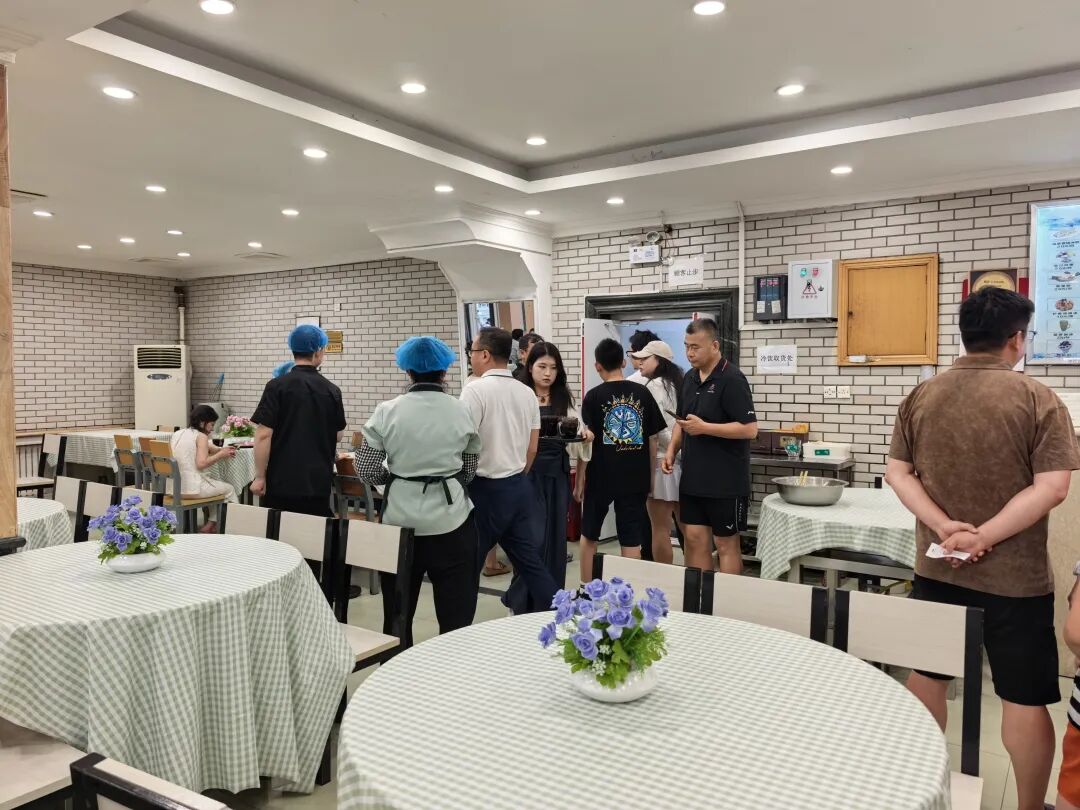
We hit up the VIP Building location. The dining room was bustling with crowds of diners, most of whom looked like travelers who'd made a special pilgrimage here. There were three of us, so the server recommended half a pound of shouzhua. We ordered the premium lean rib cuts, which worked out to one piece per person. The flavor was pretty much identical to the Ma Ming Shouzhua in Hongsibu that I've had before.
Even though it's advertised as premium lean meat, it still had a ring of fat around the edge. The meat quality was stellar—not dry or gamey at all. My wife and son usually aren't big fans of mutton, but this time they both finished a whole piece. Ningxia-style shouzhua keeps the seasoning pretty light, letting you taste the pure flavor of the sheep itself. Of course, authentic Dongxiang shouzhua from Gansu nails the seasoning balance too.
(Guoqiang Premium Lean Ribs)
Price-wise, Guoqiang is way more expensive than Ma Ming, and completely blows away the premium Dongxiang shouzhua spots in Lanzhou and Linxia.
(Lanzhou Xixiao Lake Qishi Shouzhua Premium Ribs)
Guoqiang's premium lean ribs go for 128 RMB a pound, Ma Ming Shouzhua is 90 RMB a pound, while premium Dongxiang shouzhua in Lanzhou and Linxia runs only about 70 to 80 RMB a pound. Of course, both of the former boast about using premium Tan sheep meat.
(Guoqiang Stir-fried Braised Meat)
We also ordered a plate of stir-fried braised meat (chao huirou), which tasted fantastic. Unlike our local Jingyuan stir-fried sliced meat where beef is the default, here they actively ask customers whether they want mutton, beef, or a mix of both.
(Yinshengyuan Huirou Restaurant Stir-Fried Braised Meat)
For instance, at Yinshengyuan Huirou Restaurant down on Zhexui Lane, the stir-fried braised meat we had was made with mutton, and the preparation was completely different from Guoqiang's version. Jingyuan stir-fried sliced meat uses raw meat flash-fried over high heat, giving it a numbing, spicy, and savory profile. Ningxia-style stir-fried braised meat uses pre-cooked meat that's stir-fried and braised together, giving it a tender, melt-in-your-mouth, tangy-savory texture.
We ordered an iced Xixia beer, but I couldn't even finish half of it. Getting old is real—a decade ago I could down these like water.
(Guoqiang Stir-Fried Hubo)
We also tried the chao hubo (stir-fried flatbread pieces), which is basically just flatbread cut into strips and stir-fried. I'm not sure how chao hubo tastes elsewhere, but Guoqiang's version tasted identical to their stir-fried braised meat.
(Guoqiang Youxiang)
We ordered a portion of youxiang (traditional golden fried dough cakes) too, but they were super average, so I won't bother breaking them down.
On the service front: even though Guoqiang seemed to have tons of staff, the customer service was pretty mediocre. For example, the greeters standing at the door only cared about steering guests to empty tables. Then a different server took our order, but they only took the order and nothing else. When it came to pouring tea or refilling water, customers had to handle it themselves or flag down a runner bringing out dishes. By contrast, Halal spots over in Gansu—especially Dongxiang shouzhua restaurants—are generally super warm and welcoming, with staff constantly darting around to refill tea so you're never left sitting there stranded. But hey, that's just regional cultural differences, no need to sweat it too much.
3. Jiang Xiaoxer Northwest Red-Braised Pork (Halal Style)
This was the very first meal we had right after arriving in Yinchuan, recommended by the first taxi driver we met. He was super enthusiastic and told us all about Yinchuan's local customs along the way, which left a great impression on me.
We went to the Zhenshui Lane branch, right across the street from our hotel. The sign claims a four-generation century-old heritage, and it's also recognized as an "Intangible Cultural Heritage" spot.
The so-called Northwest braised pork here is basically braised pork belly with green beans and potatoes, and honestly, you couldn't really taste or see any distinct Northwest vibes in it. Still, the ingredients were super fresh, the meat wasn't dry or greasy at all, and it tasted really good—though it would've been even better if the pork was just a little more melt-in-your-mouth tender.
There were plenty of locals eating there, and the service was solid too. It was my first time ever coming across a Northwest restaurant with all-you-can-eat rice, and we're talking top-tier Wuchang rice—I was honestly shook! Though between the three of us, we only managed two bowls before we were stuffed.
Since it happened to be the Dragon Boat Festival when we went, the restaurant even handed out a complimentary honey jujube zongzi (traditional sticky rice dumpling), which was super tasty.
(They even have a kids' meal featuring a curry rice main and a side of egg custard.)
There's a freezer with free little milk popsicles too, giving off that classic nostalgic vibe. It's super kid-friendly with those dedicated free kids' meals.
The portion sizes were great—everything felt really generous. What I respect the most is how honest and down-to-earth the servers are; if you order too much food, they'll keep reminding you that you won't be able to finish it. In reality, most restaurants and hotels just want you to order as much as possible.
The open stove setup is super unique and makes a really strong first impression. The overall vibe is clean, comfortable, and definitely worth checking out.
3. Ningxia Beef Noodles
We headed over to the Zhongalan beef noodles spot at Yuehai Xintiandi, which online hype claims is the ultimate flagship of Ningxia beef noodles. I made a point to go early, wait in line, and check it out, but man, I was super disappointed.
Price-wise, a bowl of Zhongalan beef noodles goes for 9 RMB, and beef is 12 RMB per liang (about 50 grams)—way pricier than regular Lanzhou beef noodles.
I ordered the *erxi* (medium-thin noodles), but the noodles came out all uneven in thickness and the texture was way off. The chili oil had zero aroma, the broth was ridiculously salty, and to top it all off, I couldn't even track down a vinegar cruet anywhere. The beef was thick, dry, and stringy—not even in the same league as Lanzhou beef noodles! I'm honestly willing to bet that the absolute worst bowl of Lanzhou beef noodles I've ever had completely wipes the floor with Zhongalan.
Every so often, the noodle pullers and servers would all shout out some unintelligible slogans together, giving the whole place major MLM pyramid scheme vibes. Actually, right when I first arrived in Yinchuan and asked a local taxi driver for food recommendations, he straight-up warned me not to waste my time on Ningxia beef noodles, especially Zhongalan!
4. Huaiyuan Night Market
Hailed as a national-level night market, it was definitely packed, but personally, I think it's got nothing on Lanzhou's Zhengguanlu Night Market. Since my wife and son aren't huge on late-night street food, we just grabbed the viral beef pie and potato cake, both of which were pretty good.
This brand of fresh yogurt and milk-skin yogurt cheese was something we tried right after leaving the Ningxia Museum, and it was actually pretty decent.
This night market near the hotel was super dead. For a provincial capital night market, the foot traffic was way lower than what you see in some ordinary little county-level towns. Located around Yuehai Xintiandi, the whole area gives off this vibe of being all high-rises and zero people—super similar to Binhai New Area in Tianjin.
As for other classic Yinchuan local eats like *shengcuanmian* (poached quick-boiled noodles) and *lahuhu* (spicy paste soup), I'd pretty much already tried them before. My wife and kids just couldn't get used to them. Then you've got things like *yangrou cuomian* (hand-rubbed lamb noodles), which a bunch of taxi drivers strongly advised against trying. They told me that nowadays, you rarely find truly authentic hand-rubbed noodles; even if they are genuinely hand-rubbed, the texture is off, they're usually way too oily, and out-of-towners just can't get into them...
During my three days in Yinchuan, I rushed through a super rough and limited taste of these local "delicacies." Food has been a matter of subjective taste since ancient times, so my views only represent my personal perspective and are just an honest, objective expression of my own experience. If readers don't vibe with it, please don't flame me, and don't let it scare you away either. After all, practice brings true knowledge, and if you get the chance, experiencing it for yourself is always better!
Drawn in bits and pieces between June 21 and July 1, 2026 view all
Ultimate Yinchuan Halal Food Guide: Authentic Shouzhua Yangrou, Old-School Yangzasui, and Frontier Flavors Tested and Reviewed
Summary:
A full-scale, on-the-ground review of Yinchuan's most iconic and authentic Halal flavors. From tender, game-free traditional original shouzhua yangrou (tender hand-grabbed lamb) and aromatic, spicy morning yangzasui (hearty lamb offal soup with chili oil) to street-side spicy lahuhu and local snacks, this captures the real taste of the frontier.
1. Yingbinlou
An old-school Halal institution in Yinchuan's historic Xingqing District, recommended by a bald local taxi driver. He was a great guy—we caught his cab after visiting the Ningxia Museum. Even though he had a slight stutter, he was super funny and chatty. The whole ride down, while complaining about how tough business is these days, he acted like a gold-star tour guide, giving us the rundown on Ningxia landmarks, administrative districts, and must-eat foods, which totally saved us from making any tourist mistakes.
The first floor mainly serves cold drinks and shabu-shabu hot pot, alongside braised meats, cold deli items, and all kinds of pastries, while the second floor handles stir-fries.
(The cold drink area, decked out with serious retro vibes)
We went for the shabu-shabu hot pot and tried the fennel flatbread, Wuren (five-kernel) ice cream brick, iced red tea popsicle, and shaved ice plum juice. Everything hit the spot!
It’s packed with locals—basically every seat was taken. The overall vibe is pretty basic, but the prices are super budget-friendly, and it's totally buzzing with down-to-earth neighborhood energy. I'd definitely go back!
2. Guoqiang Shouzhua
Hailed as a "National Intangible Cultural Heritage" and featured on *A Bite of China*, this has got to be the most famous shouzhua spot in all of Ningxia!
We hit up the VIP Building location. The dining room was bustling with crowds of diners, most of whom looked like travelers who'd made a special pilgrimage here. There were three of us, so the server recommended half a pound of shouzhua. We ordered the premium lean rib cuts, which worked out to one piece per person. The flavor was pretty much identical to the Ma Ming Shouzhua in Hongsibu that I've had before.
Even though it's advertised as premium lean meat, it still had a ring of fat around the edge. The meat quality was stellar—not dry or gamey at all. My wife and son usually aren't big fans of mutton, but this time they both finished a whole piece. Ningxia-style shouzhua keeps the seasoning pretty light, letting you taste the pure flavor of the sheep itself. Of course, authentic Dongxiang shouzhua from Gansu nails the seasoning balance too.
(Guoqiang Premium Lean Ribs)
Price-wise, Guoqiang is way more expensive than Ma Ming, and completely blows away the premium Dongxiang shouzhua spots in Lanzhou and Linxia.
(Lanzhou Xixiao Lake Qishi Shouzhua Premium Ribs)
Guoqiang's premium lean ribs go for 128 RMB a pound, Ma Ming Shouzhua is 90 RMB a pound, while premium Dongxiang shouzhua in Lanzhou and Linxia runs only about 70 to 80 RMB a pound. Of course, both of the former boast about using premium Tan sheep meat.
(Guoqiang Stir-fried Braised Meat)
We also ordered a plate of stir-fried braised meat (chao huirou), which tasted fantastic. Unlike our local Jingyuan stir-fried sliced meat where beef is the default, here they actively ask customers whether they want mutton, beef, or a mix of both.
(Yinshengyuan Huirou Restaurant Stir-Fried Braised Meat)
For instance, at Yinshengyuan Huirou Restaurant down on Zhexui Lane, the stir-fried braised meat we had was made with mutton, and the preparation was completely different from Guoqiang's version. Jingyuan stir-fried sliced meat uses raw meat flash-fried over high heat, giving it a numbing, spicy, and savory profile. Ningxia-style stir-fried braised meat uses pre-cooked meat that's stir-fried and braised together, giving it a tender, melt-in-your-mouth, tangy-savory texture.
We ordered an iced Xixia beer, but I couldn't even finish half of it. Getting old is real—a decade ago I could down these like water.
(Guoqiang Stir-Fried Hubo)
We also tried the chao hubo (stir-fried flatbread pieces), which is basically just flatbread cut into strips and stir-fried. I'm not sure how chao hubo tastes elsewhere, but Guoqiang's version tasted identical to their stir-fried braised meat.
(Guoqiang Youxiang)
We ordered a portion of youxiang (traditional golden fried dough cakes) too, but they were super average, so I won't bother breaking them down.
On the service front: even though Guoqiang seemed to have tons of staff, the customer service was pretty mediocre. For example, the greeters standing at the door only cared about steering guests to empty tables. Then a different server took our order, but they only took the order and nothing else. When it came to pouring tea or refilling water, customers had to handle it themselves or flag down a runner bringing out dishes. By contrast, Halal spots over in Gansu—especially Dongxiang shouzhua restaurants—are generally super warm and welcoming, with staff constantly darting around to refill tea so you're never left sitting there stranded. But hey, that's just regional cultural differences, no need to sweat it too much.
3. Jiang Xiaoxer Northwest Red-Braised Pork (Halal Style)
This was the very first meal we had right after arriving in Yinchuan, recommended by the first taxi driver we met. He was super enthusiastic and told us all about Yinchuan's local customs along the way, which left a great impression on me.
We went to the Zhenshui Lane branch, right across the street from our hotel. The sign claims a four-generation century-old heritage, and it's also recognized as an "Intangible Cultural Heritage" spot.
The so-called Northwest braised pork here is basically braised pork belly with green beans and potatoes, and honestly, you couldn't really taste or see any distinct Northwest vibes in it. Still, the ingredients were super fresh, the meat wasn't dry or greasy at all, and it tasted really good—though it would've been even better if the pork was just a little more melt-in-your-mouth tender.
There were plenty of locals eating there, and the service was solid too. It was my first time ever coming across a Northwest restaurant with all-you-can-eat rice, and we're talking top-tier Wuchang rice—I was honestly shook! Though between the three of us, we only managed two bowls before we were stuffed.
Since it happened to be the Dragon Boat Festival when we went, the restaurant even handed out a complimentary honey jujube zongzi (traditional sticky rice dumpling), which was super tasty.
(They even have a kids' meal featuring a curry rice main and a side of egg custard.)
There's a freezer with free little milk popsicles too, giving off that classic nostalgic vibe. It's super kid-friendly with those dedicated free kids' meals.
The portion sizes were great—everything felt really generous. What I respect the most is how honest and down-to-earth the servers are; if you order too much food, they'll keep reminding you that you won't be able to finish it. In reality, most restaurants and hotels just want you to order as much as possible.
The open stove setup is super unique and makes a really strong first impression. The overall vibe is clean, comfortable, and definitely worth checking out.
3. Ningxia Beef Noodles
We headed over to the Zhongalan beef noodles spot at Yuehai Xintiandi, which online hype claims is the ultimate flagship of Ningxia beef noodles. I made a point to go early, wait in line, and check it out, but man, I was super disappointed.
Price-wise, a bowl of Zhongalan beef noodles goes for 9 RMB, and beef is 12 RMB per liang (about 50 grams)—way pricier than regular Lanzhou beef noodles.
I ordered the *erxi* (medium-thin noodles), but the noodles came out all uneven in thickness and the texture was way off. The chili oil had zero aroma, the broth was ridiculously salty, and to top it all off, I couldn't even track down a vinegar cruet anywhere. The beef was thick, dry, and stringy—not even in the same league as Lanzhou beef noodles! I'm honestly willing to bet that the absolute worst bowl of Lanzhou beef noodles I've ever had completely wipes the floor with Zhongalan.
Every so often, the noodle pullers and servers would all shout out some unintelligible slogans together, giving the whole place major MLM pyramid scheme vibes. Actually, right when I first arrived in Yinchuan and asked a local taxi driver for food recommendations, he straight-up warned me not to waste my time on Ningxia beef noodles, especially Zhongalan!
4. Huaiyuan Night Market
Hailed as a national-level night market, it was definitely packed, but personally, I think it's got nothing on Lanzhou's Zhengguanlu Night Market. Since my wife and son aren't huge on late-night street food, we just grabbed the viral beef pie and potato cake, both of which were pretty good.
This brand of fresh yogurt and milk-skin yogurt cheese was something we tried right after leaving the Ningxia Museum, and it was actually pretty decent.
This night market near the hotel was super dead. For a provincial capital night market, the foot traffic was way lower than what you see in some ordinary little county-level towns. Located around Yuehai Xintiandi, the whole area gives off this vibe of being all high-rises and zero people—super similar to Binhai New Area in Tianjin.
As for other classic Yinchuan local eats like *shengcuanmian* (poached quick-boiled noodles) and *lahuhu* (spicy paste soup), I'd pretty much already tried them before. My wife and kids just couldn't get used to them. Then you've got things like *yangrou cuomian* (hand-rubbed lamb noodles), which a bunch of taxi drivers strongly advised against trying. They told me that nowadays, you rarely find truly authentic hand-rubbed noodles; even if they are genuinely hand-rubbed, the texture is off, they're usually way too oily, and out-of-towners just can't get into them...
During my three days in Yinchuan, I rushed through a super rough and limited taste of these local "delicacies." Food has been a matter of subjective taste since ancient times, so my views only represent my personal perspective and are just an honest, objective expression of my own experience. If readers don't vibe with it, please don't flame me, and don't let it scare you away either. After all, practice brings true knowledge, and if you get the chance, experiencing it for yourself is always better!
Drawn in bits and pieces between June 21 and July 1, 2026 view all
[Internet Repost]
Ultimate Yinchuan Halal Food Guide: Authentic Shouzhua Yangrou, Old-School Yangzasui, and Frontier Flavors Tested and Reviewed

Summary:
A full-scale, on-the-ground review of Yinchuan's most iconic and authentic Halal flavors. From tender, game-free traditional original shouzhua yangrou (tender hand-grabbed lamb) and aromatic, spicy morning yangzasui (hearty lamb offal soup with chili oil) to street-side spicy lahuhu and local snacks, this captures the real taste of the frontier.

1. Yingbinlou

An old-school Halal institution in Yinchuan's historic Xingqing District, recommended by a bald local taxi driver. He was a great guy—we caught his cab after visiting the Ningxia Museum. Even though he had a slight stutter, he was super funny and chatty. The whole ride down, while complaining about how tough business is these days, he acted like a gold-star tour guide, giving us the rundown on Ningxia landmarks, administrative districts, and must-eat foods, which totally saved us from making any tourist mistakes.

The first floor mainly serves cold drinks and shabu-shabu hot pot, alongside braised meats, cold deli items, and all kinds of pastries, while the second floor handles stir-fries.

(The cold drink area, decked out with serious retro vibes)

We went for the shabu-shabu hot pot and tried the fennel flatbread, Wuren (five-kernel) ice cream brick, iced red tea popsicle, and shaved ice plum juice. Everything hit the spot!

It’s packed with locals—basically every seat was taken. The overall vibe is pretty basic, but the prices are super budget-friendly, and it's totally buzzing with down-to-earth neighborhood energy. I'd definitely go back!

2. Guoqiang Shouzhua

Hailed as a "National Intangible Cultural Heritage" and featured on *A Bite of China*, this has got to be the most famous shouzhua spot in all of Ningxia!

We hit up the VIP Building location. The dining room was bustling with crowds of diners, most of whom looked like travelers who'd made a special pilgrimage here. There were three of us, so the server recommended half a pound of shouzhua. We ordered the premium lean rib cuts, which worked out to one piece per person. The flavor was pretty much identical to the Ma Ming Shouzhua in Hongsibu that I've had before.

Even though it's advertised as premium lean meat, it still had a ring of fat around the edge. The meat quality was stellar—not dry or gamey at all. My wife and son usually aren't big fans of mutton, but this time they both finished a whole piece. Ningxia-style shouzhua keeps the seasoning pretty light, letting you taste the pure flavor of the sheep itself. Of course, authentic Dongxiang shouzhua from Gansu nails the seasoning balance too.

(Guoqiang Premium Lean Ribs)

Price-wise, Guoqiang is way more expensive than Ma Ming, and completely blows away the premium Dongxiang shouzhua spots in Lanzhou and Linxia.

(Lanzhou Xixiao Lake Qishi Shouzhua Premium Ribs)

Guoqiang's premium lean ribs go for 128 RMB a pound, Ma Ming Shouzhua is 90 RMB a pound, while premium Dongxiang shouzhua in Lanzhou and Linxia runs only about 70 to 80 RMB a pound. Of course, both of the former boast about using premium Tan sheep meat.

(Guoqiang Stir-fried Braised Meat)

We also ordered a plate of stir-fried braised meat (chao huirou), which tasted fantastic. Unlike our local Jingyuan stir-fried sliced meat where beef is the default, here they actively ask customers whether they want mutton, beef, or a mix of both.

(Yinshengyuan Huirou Restaurant Stir-Fried Braised Meat)

For instance, at Yinshengyuan Huirou Restaurant down on Zhexui Lane, the stir-fried braised meat we had was made with mutton, and the preparation was completely different from Guoqiang's version. Jingyuan stir-fried sliced meat uses raw meat flash-fried over high heat, giving it a numbing, spicy, and savory profile. Ningxia-style stir-fried braised meat uses pre-cooked meat that's stir-fried and braised together, giving it a tender, melt-in-your-mouth, tangy-savory texture.

We ordered an iced Xixia beer, but I couldn't even finish half of it. Getting old is real—a decade ago I could down these like water.

(Guoqiang Stir-Fried Hubo)

We also tried the chao hubo (stir-fried flatbread pieces), which is basically just flatbread cut into strips and stir-fried. I'm not sure how chao hubo tastes elsewhere, but Guoqiang's version tasted identical to their stir-fried braised meat.

(Guoqiang Youxiang)

We ordered a portion of youxiang (traditional golden fried dough cakes) too, but they were super average, so I won't bother breaking them down.

On the service front: even though Guoqiang seemed to have tons of staff, the customer service was pretty mediocre. For example, the greeters standing at the door only cared about steering guests to empty tables. Then a different server took our order, but they only took the order and nothing else. When it came to pouring tea or refilling water, customers had to handle it themselves or flag down a runner bringing out dishes. By contrast, Halal spots over in Gansu—especially Dongxiang shouzhua restaurants—are generally super warm and welcoming, with staff constantly darting around to refill tea so you're never left sitting there stranded. But hey, that's just regional cultural differences, no need to sweat it too much.

3. Jiang Xiaoxer Northwest Red-Braised Pork (Halal Style)

This was the very first meal we had right after arriving in Yinchuan, recommended by the first taxi driver we met. He was super enthusiastic and told us all about Yinchuan's local customs along the way, which left a great impression on me.

We went to the Zhenshui Lane branch, right across the street from our hotel. The sign claims a four-generation century-old heritage, and it's also recognized as an "Intangible Cultural Heritage" spot.

The so-called Northwest braised pork here is basically braised pork belly with green beans and potatoes, and honestly, you couldn't really taste or see any distinct Northwest vibes in it. Still, the ingredients were super fresh, the meat wasn't dry or greasy at all, and it tasted really good—though it would've been even better if the pork was just a little more melt-in-your-mouth tender.

There were plenty of locals eating there, and the service was solid too. It was my first time ever coming across a Northwest restaurant with all-you-can-eat rice, and we're talking top-tier Wuchang rice—I was honestly shook! Though between the three of us, we only managed two bowls before we were stuffed.
Since it happened to be the Dragon Boat Festival when we went, the restaurant even handed out a complimentary honey jujube zongzi (traditional sticky rice dumpling), which was super tasty.
(They even have a kids' meal featuring a curry rice main and a side of egg custard.)
There's a freezer with free little milk popsicles too, giving off that classic nostalgic vibe. It's super kid-friendly with those dedicated free kids' meals.
The portion sizes were great—everything felt really generous. What I respect the most is how honest and down-to-earth the servers are; if you order too much food, they'll keep reminding you that you won't be able to finish it. In reality, most restaurants and hotels just want you to order as much as possible.
The open stove setup is super unique and makes a really strong first impression. The overall vibe is clean, comfortable, and definitely worth checking out.
3. Ningxia Beef Noodles
We headed over to the Zhongalan beef noodles spot at Yuehai Xintiandi, which online hype claims is the ultimate flagship of Ningxia beef noodles. I made a point to go early, wait in line, and check it out, but man, I was super disappointed.
Price-wise, a bowl of Zhongalan beef noodles goes for 9 RMB, and beef is 12 RMB per liang (about 50 grams)—way pricier than regular Lanzhou beef noodles.
I ordered the *erxi* (medium-thin noodles), but the noodles came out all uneven in thickness and the texture was way off. The chili oil had zero aroma, the broth was ridiculously salty, and to top it all off, I couldn't even track down a vinegar cruet anywhere. The beef was thick, dry, and stringy—not even in the same league as Lanzhou beef noodles! I'm honestly willing to bet that the absolute worst bowl of Lanzhou beef noodles I've ever had completely wipes the floor with Zhongalan.
Every so often, the noodle pullers and servers would all shout out some unintelligible slogans together, giving the whole place major MLM pyramid scheme vibes. Actually, right when I first arrived in Yinchuan and asked a local taxi driver for food recommendations, he straight-up warned me not to waste my time on Ningxia beef noodles, especially Zhongalan!
4. Huaiyuan Night Market
Hailed as a national-level night market, it was definitely packed, but personally, I think it's got nothing on Lanzhou's Zhengguanlu Night Market. Since my wife and son aren't huge on late-night street food, we just grabbed the viral beef pie and potato cake, both of which were pretty good.
This brand of fresh yogurt and milk-skin yogurt cheese was something we tried right after leaving the Ningxia Museum, and it was actually pretty decent.
This night market near the hotel was super dead. For a provincial capital night market, the foot traffic was way lower than what you see in some ordinary little county-level towns. Located around Yuehai Xintiandi, the whole area gives off this vibe of being all high-rises and zero people—super similar to Binhai New Area in Tianjin.
As for other classic Yinchuan local eats like *shengcuanmian* (poached quick-boiled noodles) and *lahuhu* (spicy paste soup), I'd pretty much already tried them before. My wife and kids just couldn't get used to them. Then you've got things like *yangrou cuomian* (hand-rubbed lamb noodles), which a bunch of taxi drivers strongly advised against trying. They told me that nowadays, you rarely find truly authentic hand-rubbed noodles; even if they are genuinely hand-rubbed, the texture is off, they're usually way too oily, and out-of-towners just can't get into them...
During my three days in Yinchuan, I rushed through a super rough and limited taste of these local "delicacies." Food has been a matter of subjective taste since ancient times, so my views only represent my personal perspective and are just an honest, objective expression of my own experience. If readers don't vibe with it, please don't flame me, and don't let it scare you away either. After all, practice brings true knowledge, and if you get the chance, experiencing it for yourself is always better!
Drawn in bits and pieces between June 21 and July 1, 2026
Ultimate Yinchuan Halal Food Guide: Authentic Shouzhua Yangrou, Old-School Yangzasui, and Frontier Flavors Tested and Reviewed
Summary:
A full-scale, on-the-ground review of Yinchuan's most iconic and authentic Halal flavors. From tender, game-free traditional original shouzhua yangrou (tender hand-grabbed lamb) and aromatic, spicy morning yangzasui (hearty lamb offal soup with chili oil) to street-side spicy lahuhu and local snacks, this captures the real taste of the frontier.
1. Yingbinlou
An old-school Halal institution in Yinchuan's historic Xingqing District, recommended by a bald local taxi driver. He was a great guy—we caught his cab after visiting the Ningxia Museum. Even though he had a slight stutter, he was super funny and chatty. The whole ride down, while complaining about how tough business is these days, he acted like a gold-star tour guide, giving us the rundown on Ningxia landmarks, administrative districts, and must-eat foods, which totally saved us from making any tourist mistakes.
The first floor mainly serves cold drinks and shabu-shabu hot pot, alongside braised meats, cold deli items, and all kinds of pastries, while the second floor handles stir-fries.
(The cold drink area, decked out with serious retro vibes)
We went for the shabu-shabu hot pot and tried the fennel flatbread, Wuren (five-kernel) ice cream brick, iced red tea popsicle, and shaved ice plum juice. Everything hit the spot!
It’s packed with locals—basically every seat was taken. The overall vibe is pretty basic, but the prices are super budget-friendly, and it's totally buzzing with down-to-earth neighborhood energy. I'd definitely go back!
2. Guoqiang Shouzhua
Hailed as a "National Intangible Cultural Heritage" and featured on *A Bite of China*, this has got to be the most famous shouzhua spot in all of Ningxia!
We hit up the VIP Building location. The dining room was bustling with crowds of diners, most of whom looked like travelers who'd made a special pilgrimage here. There were three of us, so the server recommended half a pound of shouzhua. We ordered the premium lean rib cuts, which worked out to one piece per person. The flavor was pretty much identical to the Ma Ming Shouzhua in Hongsibu that I've had before.
Even though it's advertised as premium lean meat, it still had a ring of fat around the edge. The meat quality was stellar—not dry or gamey at all. My wife and son usually aren't big fans of mutton, but this time they both finished a whole piece. Ningxia-style shouzhua keeps the seasoning pretty light, letting you taste the pure flavor of the sheep itself. Of course, authentic Dongxiang shouzhua from Gansu nails the seasoning balance too.
(Guoqiang Premium Lean Ribs)
Price-wise, Guoqiang is way more expensive than Ma Ming, and completely blows away the premium Dongxiang shouzhua spots in Lanzhou and Linxia.
(Lanzhou Xixiao Lake Qishi Shouzhua Premium Ribs)
Guoqiang's premium lean ribs go for 128 RMB a pound, Ma Ming Shouzhua is 90 RMB a pound, while premium Dongxiang shouzhua in Lanzhou and Linxia runs only about 70 to 80 RMB a pound. Of course, both of the former boast about using premium Tan sheep meat.
(Guoqiang Stir-fried Braised Meat)
We also ordered a plate of stir-fried braised meat (chao huirou), which tasted fantastic. Unlike our local Jingyuan stir-fried sliced meat where beef is the default, here they actively ask customers whether they want mutton, beef, or a mix of both.
(Yinshengyuan Huirou Restaurant Stir-Fried Braised Meat)
For instance, at Yinshengyuan Huirou Restaurant down on Zhexui Lane, the stir-fried braised meat we had was made with mutton, and the preparation was completely different from Guoqiang's version. Jingyuan stir-fried sliced meat uses raw meat flash-fried over high heat, giving it a numbing, spicy, and savory profile. Ningxia-style stir-fried braised meat uses pre-cooked meat that's stir-fried and braised together, giving it a tender, melt-in-your-mouth, tangy-savory texture.
We ordered an iced Xixia beer, but I couldn't even finish half of it. Getting old is real—a decade ago I could down these like water.
(Guoqiang Stir-Fried Hubo)
We also tried the chao hubo (stir-fried flatbread pieces), which is basically just flatbread cut into strips and stir-fried. I'm not sure how chao hubo tastes elsewhere, but Guoqiang's version tasted identical to their stir-fried braised meat.
(Guoqiang Youxiang)
We ordered a portion of youxiang (traditional golden fried dough cakes) too, but they were super average, so I won't bother breaking them down.
On the service front: even though Guoqiang seemed to have tons of staff, the customer service was pretty mediocre. For example, the greeters standing at the door only cared about steering guests to empty tables. Then a different server took our order, but they only took the order and nothing else. When it came to pouring tea or refilling water, customers had to handle it themselves or flag down a runner bringing out dishes. By contrast, Halal spots over in Gansu—especially Dongxiang shouzhua restaurants—are generally super warm and welcoming, with staff constantly darting around to refill tea so you're never left sitting there stranded. But hey, that's just regional cultural differences, no need to sweat it too much.
3. Jiang Xiaoxer Northwest Red-Braised Pork (Halal Style)
This was the very first meal we had right after arriving in Yinchuan, recommended by the first taxi driver we met. He was super enthusiastic and told us all about Yinchuan's local customs along the way, which left a great impression on me.
We went to the Zhenshui Lane branch, right across the street from our hotel. The sign claims a four-generation century-old heritage, and it's also recognized as an "Intangible Cultural Heritage" spot.
The so-called Northwest braised pork here is basically braised pork belly with green beans and potatoes, and honestly, you couldn't really taste or see any distinct Northwest vibes in it. Still, the ingredients were super fresh, the meat wasn't dry or greasy at all, and it tasted really good—though it would've been even better if the pork was just a little more melt-in-your-mouth tender.
There were plenty of locals eating there, and the service was solid too. It was my first time ever coming across a Northwest restaurant with all-you-can-eat rice, and we're talking top-tier Wuchang rice—I was honestly shook! Though between the three of us, we only managed two bowls before we were stuffed.
Since it happened to be the Dragon Boat Festival when we went, the restaurant even handed out a complimentary honey jujube zongzi (traditional sticky rice dumpling), which was super tasty.
(They even have a kids' meal featuring a curry rice main and a side of egg custard.)
There's a freezer with free little milk popsicles too, giving off that classic nostalgic vibe. It's super kid-friendly with those dedicated free kids' meals.
The portion sizes were great—everything felt really generous. What I respect the most is how honest and down-to-earth the servers are; if you order too much food, they'll keep reminding you that you won't be able to finish it. In reality, most restaurants and hotels just want you to order as much as possible.
The open stove setup is super unique and makes a really strong first impression. The overall vibe is clean, comfortable, and definitely worth checking out.
3. Ningxia Beef Noodles
We headed over to the Zhongalan beef noodles spot at Yuehai Xintiandi, which online hype claims is the ultimate flagship of Ningxia beef noodles. I made a point to go early, wait in line, and check it out, but man, I was super disappointed.
Price-wise, a bowl of Zhongalan beef noodles goes for 9 RMB, and beef is 12 RMB per liang (about 50 grams)—way pricier than regular Lanzhou beef noodles.
I ordered the *erxi* (medium-thin noodles), but the noodles came out all uneven in thickness and the texture was way off. The chili oil had zero aroma, the broth was ridiculously salty, and to top it all off, I couldn't even track down a vinegar cruet anywhere. The beef was thick, dry, and stringy—not even in the same league as Lanzhou beef noodles! I'm honestly willing to bet that the absolute worst bowl of Lanzhou beef noodles I've ever had completely wipes the floor with Zhongalan.
Every so often, the noodle pullers and servers would all shout out some unintelligible slogans together, giving the whole place major MLM pyramid scheme vibes. Actually, right when I first arrived in Yinchuan and asked a local taxi driver for food recommendations, he straight-up warned me not to waste my time on Ningxia beef noodles, especially Zhongalan!
4. Huaiyuan Night Market
Hailed as a national-level night market, it was definitely packed, but personally, I think it's got nothing on Lanzhou's Zhengguanlu Night Market. Since my wife and son aren't huge on late-night street food, we just grabbed the viral beef pie and potato cake, both of which were pretty good.
This brand of fresh yogurt and milk-skin yogurt cheese was something we tried right after leaving the Ningxia Museum, and it was actually pretty decent.
This night market near the hotel was super dead. For a provincial capital night market, the foot traffic was way lower than what you see in some ordinary little county-level towns. Located around Yuehai Xintiandi, the whole area gives off this vibe of being all high-rises and zero people—super similar to Binhai New Area in Tianjin.
As for other classic Yinchuan local eats like *shengcuanmian* (poached quick-boiled noodles) and *lahuhu* (spicy paste soup), I'd pretty much already tried them before. My wife and kids just couldn't get used to them. Then you've got things like *yangrou cuomian* (hand-rubbed lamb noodles), which a bunch of taxi drivers strongly advised against trying. They told me that nowadays, you rarely find truly authentic hand-rubbed noodles; even if they are genuinely hand-rubbed, the texture is off, they're usually way too oily, and out-of-towners just can't get into them...
During my three days in Yinchuan, I rushed through a super rough and limited taste of these local "delicacies." Food has been a matter of subjective taste since ancient times, so my views only represent my personal perspective and are just an honest, objective expression of my own experience. If readers don't vibe with it, please don't flame me, and don't let it scare you away either. After all, practice brings true knowledge, and if you get the chance, experiencing it for yourself is always better!
Drawn in bits and pieces between June 21 and July 1, 2026
Ultimate Ningxia Halal Food & Muslim Culture Guide: Shouzhuo Lamb, Mosques, and Sufi Heritage
Articles • Hasan09 posted the article • 0 comments • 1 views • 4 hours ago
[Internet Repost]
Ultimate Yinchuan Halal Food Guide: Authentic Shouzhua Yangrou, Old-School Yangzasui, and Frontier Flavors Tested and Reviewed
Summary:
A full-scale, on-the-ground review of Yinchuan's most iconic and authentic Halal flavors. From tender, game-free traditional original shouzhua yangrou (tender hand-grabbed lamb) and aromatic, spicy morning yangzasui (hearty lamb offal soup with chili oil) to street-side spicy lahuhu and local snacks, this captures the real taste of the frontier.
1. Yingbinlou
An old-school Halal institution in Yinchuan's historic Xingqing District, recommended by a bald local taxi driver. He was a great guy—we caught his cab after visiting the Ningxia Museum. Even though he had a slight stutter, he was super funny and chatty. The whole ride down, while complaining about how tough business is these days, he acted like a gold-star tour guide, giving us the rundown on Ningxia landmarks, administrative districts, and must-eat foods, which totally saved us from making any tourist mistakes.
The first floor mainly serves cold drinks and shabu-shabu hot pot, alongside braised meats, cold deli items, and all kinds of pastries, while the second floor handles stir-fries.
(The cold drink area, decked out with serious retro vibes)
We went for the shabu-shabu hot pot and tried the fennel flatbread, Wuren (five-kernel) ice cream brick, iced red tea popsicle, and shaved ice plum juice. Everything hit the spot!
It’s packed with locals—basically every seat was taken. The overall vibe is pretty basic, but the prices are super budget-friendly, and it's totally buzzing with down-to-earth neighborhood energy. I'd definitely go back!
2. Guoqiang Shouzhua
Hailed as a "National Intangible Cultural Heritage" and featured on *A Bite of China*, this has got to be the most famous shouzhua spot in all of Ningxia!
We hit up the VIP Building location. The dining room was bustling with crowds of diners, most of whom looked like travelers who'd made a special pilgrimage here. There were three of us, so the server recommended half a pound of shouzhua. We ordered the premium lean rib cuts, which worked out to one piece per person. The flavor was pretty much identical to the Ma Ming Shouzhua in Hongsibu that I've had before.
Even though it's advertised as premium lean meat, it still had a ring of fat around the edge. The meat quality was stellar—not dry or gamey at all. My wife and son usually aren't big fans of mutton, but this time they both finished a whole piece. Ningxia-style shouzhua keeps the seasoning pretty light, letting you taste the pure flavor of the sheep itself. Of course, authentic Dongxiang shouzhua from Gansu nails the seasoning balance too.
(Guoqiang Premium Lean Ribs)
Price-wise, Guoqiang is way more expensive than Ma Ming, and completely blows away the premium Dongxiang shouzhua spots in Lanzhou and Linxia.
(Lanzhou Xixiao Lake Qishi Shouzhua Premium Ribs)
Guoqiang's premium lean ribs go for 128 RMB a pound, Ma Ming Shouzhua is 90 RMB a pound, while premium Dongxiang shouzhua in Lanzhou and Linxia runs only about 70 to 80 RMB a pound. Of course, both of the former boast about using premium Tan sheep meat.
(Guoqiang Stir-fried Braised Meat)
We also ordered a plate of stir-fried braised meat (chao huirou), which tasted fantastic. Unlike our local Jingyuan stir-fried sliced meat where beef is the default, here they actively ask customers whether they want mutton, beef, or a mix of both.
(Yinshengyuan Huirou Restaurant Stir-Fried Braised Meat)
For instance, at Yinshengyuan Huirou Restaurant down on Zhexui Lane, the stir-fried braised meat we had was made with mutton, and the preparation was completely different from Guoqiang's version. Jingyuan stir-fried sliced meat uses raw meat flash-fried over high heat, giving it a numbing, spicy, and savory profile. Ningxia-style stir-fried braised meat uses pre-cooked meat that's stir-fried and braised together, giving it a tender, melt-in-your-mouth, tangy-savory texture.
We ordered an iced Xixia beer, but I couldn't even finish half of it. Getting old is real—a decade ago I could down these like water.
(Guoqiang Stir-Fried Hubo)
We also tried the chao hubo (stir-fried flatbread pieces), which is basically just flatbread cut into strips and stir-fried. I'm not sure how chao hubo tastes elsewhere, but Guoqiang's version tasted identical to their stir-fried braised meat.
(Guoqiang Youxiang)
We ordered a portion of youxiang (traditional golden fried dough cakes) too, but they were super average, so I won't bother breaking them down.
On the service front: even though Guoqiang seemed to have tons of staff, the customer service was pretty mediocre. For example, the greeters standing at the door only cared about steering guests to empty tables. Then a different server took our order, but they only took the order and nothing else. When it came to pouring tea or refilling water, customers had to handle it themselves or flag down a runner bringing out dishes. By contrast, Halal spots over in Gansu—especially Dongxiang shouzhua restaurants—are generally super warm and welcoming, with staff constantly darting around to refill tea so you're never left sitting there stranded. But hey, that's just regional cultural differences, no need to sweat it too much.
3. Jiang Xiaoxer Northwest Red-Braised Pork (Halal Style)
This was the very first meal we had right after arriving in Yinchuan, recommended by the first taxi driver we met. He was super enthusiastic and told us all about Yinchuan's local customs along the way, which left a great impression on me.
We went to the Zhenshui Lane branch, right across the street from our hotel. The sign claims a four-generation century-old heritage, and it's also recognized as an "Intangible Cultural Heritage" spot.
The so-called Northwest braised pork here is basically braised pork belly with green beans and potatoes, and honestly, you couldn't really taste or see any distinct Northwest vibes in it. Still, the ingredients were super fresh, the meat wasn't dry or greasy at all, and it tasted really good—though it would've been even better if the pork was just a little more melt-in-your-mouth tender.
There were plenty of locals eating there, and the service was solid too. It was my first time ever coming across a Northwest restaurant with all-you-can-eat rice, and we're talking top-tier Wuchang rice—I was honestly shook! Though between the three of us, we only managed two bowls before we were stuffed.
Since it happened to be the Dragon Boat Festival when we went, the restaurant even handed out a complimentary honey jujube zongzi (traditional sticky rice dumpling), which was super tasty.
(They even have a kids' meal featuring a curry rice main and a side of egg custard.)
There's a freezer with free little milk popsicles too, giving off that classic nostalgic vibe. It's super kid-friendly with those dedicated free kids' meals.
The portion sizes were great—everything felt really generous. What I respect the most is how honest and down-to-earth the servers are; if you order too much food, they'll keep reminding you that you won't be able to finish it. In reality, most restaurants and hotels just want you to order as much as possible.
The open stove setup is super unique and makes a really strong first impression. The overall vibe is clean, comfortable, and definitely worth checking out.
3. Ningxia Beef Noodles
We headed over to the Zhongalan beef noodles spot at Yuehai Xintiandi, which online hype claims is the ultimate flagship of Ningxia beef noodles. I made a point to go early, wait in line, and check it out, but man, I was super disappointed.
Price-wise, a bowl of Zhongalan beef noodles goes for 9 RMB, and beef is 12 RMB per liang (about 50 grams)—way pricier than regular Lanzhou beef noodles.
I ordered the *erxi* (medium-thin noodles), but the noodles came out all uneven in thickness and the texture was way off. The chili oil had zero aroma, the broth was ridiculously salty, and to top it all off, I couldn't even track down a vinegar cruet anywhere. The beef was thick, dry, and stringy—not even in the same league as Lanzhou beef noodles! I'm honestly willing to bet that the absolute worst bowl of Lanzhou beef noodles I've ever had completely wipes the floor with Zhongalan.
Every so often, the noodle pullers and servers would all shout out some unintelligible slogans together, giving the whole place major MLM pyramid scheme vibes. Actually, right when I first arrived in Yinchuan and asked a local taxi driver for food recommendations, he straight-up warned me not to waste my time on Ningxia beef noodles, especially Zhongalan!
4. Huaiyuan Night Market
Hailed as a national-level night market, it was definitely packed, but personally, I think it's got nothing on Lanzhou's Zhengguanlu Night Market. Since my wife and son aren't huge on late-night street food, we just grabbed the viral beef pie and potato cake, both of which were pretty good.
This brand of fresh yogurt and milk-skin yogurt cheese was something we tried right after leaving the Ningxia Museum, and it was actually pretty decent.
This night market near the hotel was super dead. For a provincial capital night market, the foot traffic was way lower than what you see in some ordinary little county-level towns. Located around Yuehai Xintiandi, the whole area gives off this vibe of being all high-rises and zero people—super similar to Binhai New Area in Tianjin.
As for other classic Yinchuan local eats like *shengcuanmian* (poached quick-boiled noodles) and *lahuhu* (spicy paste soup), I'd pretty much already tried them before. My wife and kids just couldn't get used to them. Then you've got things like *yangrou cuomian* (hand-rubbed lamb noodles), which a bunch of taxi drivers strongly advised against trying. They told me that nowadays, you rarely find truly authentic hand-rubbed noodles; even if they are genuinely hand-rubbed, the texture is off, they're usually way too oily, and out-of-towners just can't get into them...
During my three days in Yinchuan, I rushed through a super rough and limited taste of these local "delicacies." Food has been a matter of subjective taste since ancient times, so my views only represent my personal perspective and are just an honest, objective expression of my own experience. If readers don't vibe with it, please don't flame me, and don't let it scare you away either. After all, practice brings true knowledge, and if you get the chance, experiencing it for yourself is always better!
Drawn in bits and pieces between June 21 and July 1, 2026 view all
Ultimate Yinchuan Halal Food Guide: Authentic Shouzhua Yangrou, Old-School Yangzasui, and Frontier Flavors Tested and Reviewed
Summary:
A full-scale, on-the-ground review of Yinchuan's most iconic and authentic Halal flavors. From tender, game-free traditional original shouzhua yangrou (tender hand-grabbed lamb) and aromatic, spicy morning yangzasui (hearty lamb offal soup with chili oil) to street-side spicy lahuhu and local snacks, this captures the real taste of the frontier.
1. Yingbinlou
An old-school Halal institution in Yinchuan's historic Xingqing District, recommended by a bald local taxi driver. He was a great guy—we caught his cab after visiting the Ningxia Museum. Even though he had a slight stutter, he was super funny and chatty. The whole ride down, while complaining about how tough business is these days, he acted like a gold-star tour guide, giving us the rundown on Ningxia landmarks, administrative districts, and must-eat foods, which totally saved us from making any tourist mistakes.
The first floor mainly serves cold drinks and shabu-shabu hot pot, alongside braised meats, cold deli items, and all kinds of pastries, while the second floor handles stir-fries.
(The cold drink area, decked out with serious retro vibes)
We went for the shabu-shabu hot pot and tried the fennel flatbread, Wuren (five-kernel) ice cream brick, iced red tea popsicle, and shaved ice plum juice. Everything hit the spot!
It’s packed with locals—basically every seat was taken. The overall vibe is pretty basic, but the prices are super budget-friendly, and it's totally buzzing with down-to-earth neighborhood energy. I'd definitely go back!
2. Guoqiang Shouzhua
Hailed as a "National Intangible Cultural Heritage" and featured on *A Bite of China*, this has got to be the most famous shouzhua spot in all of Ningxia!
We hit up the VIP Building location. The dining room was bustling with crowds of diners, most of whom looked like travelers who'd made a special pilgrimage here. There were three of us, so the server recommended half a pound of shouzhua. We ordered the premium lean rib cuts, which worked out to one piece per person. The flavor was pretty much identical to the Ma Ming Shouzhua in Hongsibu that I've had before.
Even though it's advertised as premium lean meat, it still had a ring of fat around the edge. The meat quality was stellar—not dry or gamey at all. My wife and son usually aren't big fans of mutton, but this time they both finished a whole piece. Ningxia-style shouzhua keeps the seasoning pretty light, letting you taste the pure flavor of the sheep itself. Of course, authentic Dongxiang shouzhua from Gansu nails the seasoning balance too.
(Guoqiang Premium Lean Ribs)
Price-wise, Guoqiang is way more expensive than Ma Ming, and completely blows away the premium Dongxiang shouzhua spots in Lanzhou and Linxia.
(Lanzhou Xixiao Lake Qishi Shouzhua Premium Ribs)
Guoqiang's premium lean ribs go for 128 RMB a pound, Ma Ming Shouzhua is 90 RMB a pound, while premium Dongxiang shouzhua in Lanzhou and Linxia runs only about 70 to 80 RMB a pound. Of course, both of the former boast about using premium Tan sheep meat.
(Guoqiang Stir-fried Braised Meat)
We also ordered a plate of stir-fried braised meat (chao huirou), which tasted fantastic. Unlike our local Jingyuan stir-fried sliced meat where beef is the default, here they actively ask customers whether they want mutton, beef, or a mix of both.
(Yinshengyuan Huirou Restaurant Stir-Fried Braised Meat)
For instance, at Yinshengyuan Huirou Restaurant down on Zhexui Lane, the stir-fried braised meat we had was made with mutton, and the preparation was completely different from Guoqiang's version. Jingyuan stir-fried sliced meat uses raw meat flash-fried over high heat, giving it a numbing, spicy, and savory profile. Ningxia-style stir-fried braised meat uses pre-cooked meat that's stir-fried and braised together, giving it a tender, melt-in-your-mouth, tangy-savory texture.
We ordered an iced Xixia beer, but I couldn't even finish half of it. Getting old is real—a decade ago I could down these like water.
(Guoqiang Stir-Fried Hubo)
We also tried the chao hubo (stir-fried flatbread pieces), which is basically just flatbread cut into strips and stir-fried. I'm not sure how chao hubo tastes elsewhere, but Guoqiang's version tasted identical to their stir-fried braised meat.
(Guoqiang Youxiang)
We ordered a portion of youxiang (traditional golden fried dough cakes) too, but they were super average, so I won't bother breaking them down.
On the service front: even though Guoqiang seemed to have tons of staff, the customer service was pretty mediocre. For example, the greeters standing at the door only cared about steering guests to empty tables. Then a different server took our order, but they only took the order and nothing else. When it came to pouring tea or refilling water, customers had to handle it themselves or flag down a runner bringing out dishes. By contrast, Halal spots over in Gansu—especially Dongxiang shouzhua restaurants—are generally super warm and welcoming, with staff constantly darting around to refill tea so you're never left sitting there stranded. But hey, that's just regional cultural differences, no need to sweat it too much.
3. Jiang Xiaoxer Northwest Red-Braised Pork (Halal Style)
This was the very first meal we had right after arriving in Yinchuan, recommended by the first taxi driver we met. He was super enthusiastic and told us all about Yinchuan's local customs along the way, which left a great impression on me.
We went to the Zhenshui Lane branch, right across the street from our hotel. The sign claims a four-generation century-old heritage, and it's also recognized as an "Intangible Cultural Heritage" spot.
The so-called Northwest braised pork here is basically braised pork belly with green beans and potatoes, and honestly, you couldn't really taste or see any distinct Northwest vibes in it. Still, the ingredients were super fresh, the meat wasn't dry or greasy at all, and it tasted really good—though it would've been even better if the pork was just a little more melt-in-your-mouth tender.
There were plenty of locals eating there, and the service was solid too. It was my first time ever coming across a Northwest restaurant with all-you-can-eat rice, and we're talking top-tier Wuchang rice—I was honestly shook! Though between the three of us, we only managed two bowls before we were stuffed.
Since it happened to be the Dragon Boat Festival when we went, the restaurant even handed out a complimentary honey jujube zongzi (traditional sticky rice dumpling), which was super tasty.
(They even have a kids' meal featuring a curry rice main and a side of egg custard.)
There's a freezer with free little milk popsicles too, giving off that classic nostalgic vibe. It's super kid-friendly with those dedicated free kids' meals.
The portion sizes were great—everything felt really generous. What I respect the most is how honest and down-to-earth the servers are; if you order too much food, they'll keep reminding you that you won't be able to finish it. In reality, most restaurants and hotels just want you to order as much as possible.
The open stove setup is super unique and makes a really strong first impression. The overall vibe is clean, comfortable, and definitely worth checking out.
3. Ningxia Beef Noodles
We headed over to the Zhongalan beef noodles spot at Yuehai Xintiandi, which online hype claims is the ultimate flagship of Ningxia beef noodles. I made a point to go early, wait in line, and check it out, but man, I was super disappointed.
Price-wise, a bowl of Zhongalan beef noodles goes for 9 RMB, and beef is 12 RMB per liang (about 50 grams)—way pricier than regular Lanzhou beef noodles.
I ordered the *erxi* (medium-thin noodles), but the noodles came out all uneven in thickness and the texture was way off. The chili oil had zero aroma, the broth was ridiculously salty, and to top it all off, I couldn't even track down a vinegar cruet anywhere. The beef was thick, dry, and stringy—not even in the same league as Lanzhou beef noodles! I'm honestly willing to bet that the absolute worst bowl of Lanzhou beef noodles I've ever had completely wipes the floor with Zhongalan.
Every so often, the noodle pullers and servers would all shout out some unintelligible slogans together, giving the whole place major MLM pyramid scheme vibes. Actually, right when I first arrived in Yinchuan and asked a local taxi driver for food recommendations, he straight-up warned me not to waste my time on Ningxia beef noodles, especially Zhongalan!
4. Huaiyuan Night Market
Hailed as a national-level night market, it was definitely packed, but personally, I think it's got nothing on Lanzhou's Zhengguanlu Night Market. Since my wife and son aren't huge on late-night street food, we just grabbed the viral beef pie and potato cake, both of which were pretty good.
This brand of fresh yogurt and milk-skin yogurt cheese was something we tried right after leaving the Ningxia Museum, and it was actually pretty decent.
This night market near the hotel was super dead. For a provincial capital night market, the foot traffic was way lower than what you see in some ordinary little county-level towns. Located around Yuehai Xintiandi, the whole area gives off this vibe of being all high-rises and zero people—super similar to Binhai New Area in Tianjin.
As for other classic Yinchuan local eats like *shengcuanmian* (poached quick-boiled noodles) and *lahuhu* (spicy paste soup), I'd pretty much already tried them before. My wife and kids just couldn't get used to them. Then you've got things like *yangrou cuomian* (hand-rubbed lamb noodles), which a bunch of taxi drivers strongly advised against trying. They told me that nowadays, you rarely find truly authentic hand-rubbed noodles; even if they are genuinely hand-rubbed, the texture is off, they're usually way too oily, and out-of-towners just can't get into them...
During my three days in Yinchuan, I rushed through a super rough and limited taste of these local "delicacies." Food has been a matter of subjective taste since ancient times, so my views only represent my personal perspective and are just an honest, objective expression of my own experience. If readers don't vibe with it, please don't flame me, and don't let it scare you away either. After all, practice brings true knowledge, and if you get the chance, experiencing it for yourself is always better!
Drawn in bits and pieces between June 21 and July 1, 2026 view all
[Internet Repost]
Ultimate Yinchuan Halal Food Guide: Authentic Shouzhua Yangrou, Old-School Yangzasui, and Frontier Flavors Tested and Reviewed
Summary:
A full-scale, on-the-ground review of Yinchuan's most iconic and authentic Halal flavors. From tender, game-free traditional original shouzhua yangrou (tender hand-grabbed lamb) and aromatic, spicy morning yangzasui (hearty lamb offal soup with chili oil) to street-side spicy lahuhu and local snacks, this captures the real taste of the frontier.
1. Yingbinlou
An old-school Halal institution in Yinchuan's historic Xingqing District, recommended by a bald local taxi driver. He was a great guy—we caught his cab after visiting the Ningxia Museum. Even though he had a slight stutter, he was super funny and chatty. The whole ride down, while complaining about how tough business is these days, he acted like a gold-star tour guide, giving us the rundown on Ningxia landmarks, administrative districts, and must-eat foods, which totally saved us from making any tourist mistakes.
The first floor mainly serves cold drinks and shabu-shabu hot pot, alongside braised meats, cold deli items, and all kinds of pastries, while the second floor handles stir-fries.
(The cold drink area, decked out with serious retro vibes)
We went for the shabu-shabu hot pot and tried the fennel flatbread, Wuren (five-kernel) ice cream brick, iced red tea popsicle, and shaved ice plum juice. Everything hit the spot!
It’s packed with locals—basically every seat was taken. The overall vibe is pretty basic, but the prices are super budget-friendly, and it's totally buzzing with down-to-earth neighborhood energy. I'd definitely go back!
2. Guoqiang Shouzhua
Hailed as a "National Intangible Cultural Heritage" and featured on *A Bite of China*, this has got to be the most famous shouzhua spot in all of Ningxia!
We hit up the VIP Building location. The dining room was bustling with crowds of diners, most of whom looked like travelers who'd made a special pilgrimage here. There were three of us, so the server recommended half a pound of shouzhua. We ordered the premium lean rib cuts, which worked out to one piece per person. The flavor was pretty much identical to the Ma Ming Shouzhua in Hongsibu that I've had before.
Even though it's advertised as premium lean meat, it still had a ring of fat around the edge. The meat quality was stellar—not dry or gamey at all. My wife and son usually aren't big fans of mutton, but this time they both finished a whole piece. Ningxia-style shouzhua keeps the seasoning pretty light, letting you taste the pure flavor of the sheep itself. Of course, authentic Dongxiang shouzhua from Gansu nails the seasoning balance too.
(Guoqiang Premium Lean Ribs)
Price-wise, Guoqiang is way more expensive than Ma Ming, and completely blows away the premium Dongxiang shouzhua spots in Lanzhou and Linxia.
(Lanzhou Xixiao Lake Qishi Shouzhua Premium Ribs)
Guoqiang's premium lean ribs go for 128 RMB a pound, Ma Ming Shouzhua is 90 RMB a pound, while premium Dongxiang shouzhua in Lanzhou and Linxia runs only about 70 to 80 RMB a pound. Of course, both of the former boast about using premium Tan sheep meat.
(Guoqiang Stir-fried Braised Meat)
We also ordered a plate of stir-fried braised meat (chao huirou), which tasted fantastic. Unlike our local Jingyuan stir-fried sliced meat where beef is the default, here they actively ask customers whether they want mutton, beef, or a mix of both.
(Yinshengyuan Huirou Restaurant Stir-Fried Braised Meat)
For instance, at Yinshengyuan Huirou Restaurant down on Zhexui Lane, the stir-fried braised meat we had was made with mutton, and the preparation was completely different from Guoqiang's version. Jingyuan stir-fried sliced meat uses raw meat flash-fried over high heat, giving it a numbing, spicy, and savory profile. Ningxia-style stir-fried braised meat uses pre-cooked meat that's stir-fried and braised together, giving it a tender, melt-in-your-mouth, tangy-savory texture.
We ordered an iced Xixia beer, but I couldn't even finish half of it. Getting old is real—a decade ago I could down these like water.
(Guoqiang Stir-Fried Hubo)
We also tried the chao hubo (stir-fried flatbread pieces), which is basically just flatbread cut into strips and stir-fried. I'm not sure how chao hubo tastes elsewhere, but Guoqiang's version tasted identical to their stir-fried braised meat.
(Guoqiang Youxiang)
We ordered a portion of youxiang (traditional golden fried dough cakes) too, but they were super average, so I won't bother breaking them down.
On the service front: even though Guoqiang seemed to have tons of staff, the customer service was pretty mediocre. For example, the greeters standing at the door only cared about steering guests to empty tables. Then a different server took our order, but they only took the order and nothing else. When it came to pouring tea or refilling water, customers had to handle it themselves or flag down a runner bringing out dishes. By contrast, Halal spots over in Gansu—especially Dongxiang shouzhua restaurants—are generally super warm and welcoming, with staff constantly darting around to refill tea so you're never left sitting there stranded. But hey, that's just regional cultural differences, no need to sweat it too much.
3. Jiang Xiaoxer Northwest Red-Braised Pork (Halal Style)
This was the very first meal we had right after arriving in Yinchuan, recommended by the first taxi driver we met. He was super enthusiastic and told us all about Yinchuan's local customs along the way, which left a great impression on me.
We went to the Zhenshui Lane branch, right across the street from our hotel. The sign claims a four-generation century-old heritage, and it's also recognized as an "Intangible Cultural Heritage" spot.
The so-called Northwest braised pork here is basically braised pork belly with green beans and potatoes, and honestly, you couldn't really taste or see any distinct Northwest vibes in it. Still, the ingredients were super fresh, the meat wasn't dry or greasy at all, and it tasted really good—though it would've been even better if the pork was just a little more melt-in-your-mouth tender.
There were plenty of locals eating there, and the service was solid too. It was my first time ever coming across a Northwest restaurant with all-you-can-eat rice, and we're talking top-tier Wuchang rice—I was honestly shook! Though between the three of us, we only managed two bowls before we were stuffed.
Since it happened to be the Dragon Boat Festival when we went, the restaurant even handed out a complimentary honey jujube zongzi (traditional sticky rice dumpling), which was super tasty.
(They even have a kids' meal featuring a curry rice main and a side of egg custard.)
There's a freezer with free little milk popsicles too, giving off that classic nostalgic vibe. It's super kid-friendly with those dedicated free kids' meals.
The portion sizes were great—everything felt really generous. What I respect the most is how honest and down-to-earth the servers are; if you order too much food, they'll keep reminding you that you won't be able to finish it. In reality, most restaurants and hotels just want you to order as much as possible.
The open stove setup is super unique and makes a really strong first impression. The overall vibe is clean, comfortable, and definitely worth checking out.
3. Ningxia Beef Noodles
We headed over to the Zhongalan beef noodles spot at Yuehai Xintiandi, which online hype claims is the ultimate flagship of Ningxia beef noodles. I made a point to go early, wait in line, and check it out, but man, I was super disappointed.
Price-wise, a bowl of Zhongalan beef noodles goes for 9 RMB, and beef is 12 RMB per liang (about 50 grams)—way pricier than regular Lanzhou beef noodles.
I ordered the *erxi* (medium-thin noodles), but the noodles came out all uneven in thickness and the texture was way off. The chili oil had zero aroma, the broth was ridiculously salty, and to top it all off, I couldn't even track down a vinegar cruet anywhere. The beef was thick, dry, and stringy—not even in the same league as Lanzhou beef noodles! I'm honestly willing to bet that the absolute worst bowl of Lanzhou beef noodles I've ever had completely wipes the floor with Zhongalan.
Every so often, the noodle pullers and servers would all shout out some unintelligible slogans together, giving the whole place major MLM pyramid scheme vibes. Actually, right when I first arrived in Yinchuan and asked a local taxi driver for food recommendations, he straight-up warned me not to waste my time on Ningxia beef noodles, especially Zhongalan!
4. Huaiyuan Night Market
Hailed as a national-level night market, it was definitely packed, but personally, I think it's got nothing on Lanzhou's Zhengguanlu Night Market. Since my wife and son aren't huge on late-night street food, we just grabbed the viral beef pie and potato cake, both of which were pretty good.
This brand of fresh yogurt and milk-skin yogurt cheese was something we tried right after leaving the Ningxia Museum, and it was actually pretty decent.
This night market near the hotel was super dead. For a provincial capital night market, the foot traffic was way lower than what you see in some ordinary little county-level towns. Located around Yuehai Xintiandi, the whole area gives off this vibe of being all high-rises and zero people—super similar to Binhai New Area in Tianjin.
As for other classic Yinchuan local eats like *shengcuanmian* (poached quick-boiled noodles) and *lahuhu* (spicy paste soup), I'd pretty much already tried them before. My wife and kids just couldn't get used to them. Then you've got things like *yangrou cuomian* (hand-rubbed lamb noodles), which a bunch of taxi drivers strongly advised against trying. They told me that nowadays, you rarely find truly authentic hand-rubbed noodles; even if they are genuinely hand-rubbed, the texture is off, they're usually way too oily, and out-of-towners just can't get into them...
During my three days in Yinchuan, I rushed through a super rough and limited taste of these local "delicacies." Food has been a matter of subjective taste since ancient times, so my views only represent my personal perspective and are just an honest, objective expression of my own experience. If readers don't vibe with it, please don't flame me, and don't let it scare you away either. After all, practice brings true knowledge, and if you get the chance, experiencing it for yourself is always better!
Drawn in bits and pieces between June 21 and July 1, 2026
Ultimate Yinchuan Halal Food Guide: Authentic Shouzhua Yangrou, Old-School Yangzasui, and Frontier Flavors Tested and Reviewed
Summary:
A full-scale, on-the-ground review of Yinchuan's most iconic and authentic Halal flavors. From tender, game-free traditional original shouzhua yangrou (tender hand-grabbed lamb) and aromatic, spicy morning yangzasui (hearty lamb offal soup with chili oil) to street-side spicy lahuhu and local snacks, this captures the real taste of the frontier.
1. Yingbinlou
An old-school Halal institution in Yinchuan's historic Xingqing District, recommended by a bald local taxi driver. He was a great guy—we caught his cab after visiting the Ningxia Museum. Even though he had a slight stutter, he was super funny and chatty. The whole ride down, while complaining about how tough business is these days, he acted like a gold-star tour guide, giving us the rundown on Ningxia landmarks, administrative districts, and must-eat foods, which totally saved us from making any tourist mistakes.
The first floor mainly serves cold drinks and shabu-shabu hot pot, alongside braised meats, cold deli items, and all kinds of pastries, while the second floor handles stir-fries.
(The cold drink area, decked out with serious retro vibes)
We went for the shabu-shabu hot pot and tried the fennel flatbread, Wuren (five-kernel) ice cream brick, iced red tea popsicle, and shaved ice plum juice. Everything hit the spot!
It’s packed with locals—basically every seat was taken. The overall vibe is pretty basic, but the prices are super budget-friendly, and it's totally buzzing with down-to-earth neighborhood energy. I'd definitely go back!
2. Guoqiang Shouzhua
Hailed as a "National Intangible Cultural Heritage" and featured on *A Bite of China*, this has got to be the most famous shouzhua spot in all of Ningxia!
We hit up the VIP Building location. The dining room was bustling with crowds of diners, most of whom looked like travelers who'd made a special pilgrimage here. There were three of us, so the server recommended half a pound of shouzhua. We ordered the premium lean rib cuts, which worked out to one piece per person. The flavor was pretty much identical to the Ma Ming Shouzhua in Hongsibu that I've had before.
Even though it's advertised as premium lean meat, it still had a ring of fat around the edge. The meat quality was stellar—not dry or gamey at all. My wife and son usually aren't big fans of mutton, but this time they both finished a whole piece. Ningxia-style shouzhua keeps the seasoning pretty light, letting you taste the pure flavor of the sheep itself. Of course, authentic Dongxiang shouzhua from Gansu nails the seasoning balance too.
(Guoqiang Premium Lean Ribs)
Price-wise, Guoqiang is way more expensive than Ma Ming, and completely blows away the premium Dongxiang shouzhua spots in Lanzhou and Linxia.
(Lanzhou Xixiao Lake Qishi Shouzhua Premium Ribs)
Guoqiang's premium lean ribs go for 128 RMB a pound, Ma Ming Shouzhua is 90 RMB a pound, while premium Dongxiang shouzhua in Lanzhou and Linxia runs only about 70 to 80 RMB a pound. Of course, both of the former boast about using premium Tan sheep meat.
(Guoqiang Stir-fried Braised Meat)
We also ordered a plate of stir-fried braised meat (chao huirou), which tasted fantastic. Unlike our local Jingyuan stir-fried sliced meat where beef is the default, here they actively ask customers whether they want mutton, beef, or a mix of both.
(Yinshengyuan Huirou Restaurant Stir-Fried Braised Meat)
For instance, at Yinshengyuan Huirou Restaurant down on Zhexui Lane, the stir-fried braised meat we had was made with mutton, and the preparation was completely different from Guoqiang's version. Jingyuan stir-fried sliced meat uses raw meat flash-fried over high heat, giving it a numbing, spicy, and savory profile. Ningxia-style stir-fried braised meat uses pre-cooked meat that's stir-fried and braised together, giving it a tender, melt-in-your-mouth, tangy-savory texture.
We ordered an iced Xixia beer, but I couldn't even finish half of it. Getting old is real—a decade ago I could down these like water.
(Guoqiang Stir-Fried Hubo)
We also tried the chao hubo (stir-fried flatbread pieces), which is basically just flatbread cut into strips and stir-fried. I'm not sure how chao hubo tastes elsewhere, but Guoqiang's version tasted identical to their stir-fried braised meat.
(Guoqiang Youxiang)
We ordered a portion of youxiang (traditional golden fried dough cakes) too, but they were super average, so I won't bother breaking them down.
On the service front: even though Guoqiang seemed to have tons of staff, the customer service was pretty mediocre. For example, the greeters standing at the door only cared about steering guests to empty tables. Then a different server took our order, but they only took the order and nothing else. When it came to pouring tea or refilling water, customers had to handle it themselves or flag down a runner bringing out dishes. By contrast, Halal spots over in Gansu—especially Dongxiang shouzhua restaurants—are generally super warm and welcoming, with staff constantly darting around to refill tea so you're never left sitting there stranded. But hey, that's just regional cultural differences, no need to sweat it too much.
3. Jiang Xiaoxer Northwest Red-Braised Pork (Halal Style)
This was the very first meal we had right after arriving in Yinchuan, recommended by the first taxi driver we met. He was super enthusiastic and told us all about Yinchuan's local customs along the way, which left a great impression on me.
We went to the Zhenshui Lane branch, right across the street from our hotel. The sign claims a four-generation century-old heritage, and it's also recognized as an "Intangible Cultural Heritage" spot.
The so-called Northwest braised pork here is basically braised pork belly with green beans and potatoes, and honestly, you couldn't really taste or see any distinct Northwest vibes in it. Still, the ingredients were super fresh, the meat wasn't dry or greasy at all, and it tasted really good—though it would've been even better if the pork was just a little more melt-in-your-mouth tender.
There were plenty of locals eating there, and the service was solid too. It was my first time ever coming across a Northwest restaurant with all-you-can-eat rice, and we're talking top-tier Wuchang rice—I was honestly shook! Though between the three of us, we only managed two bowls before we were stuffed.
Since it happened to be the Dragon Boat Festival when we went, the restaurant even handed out a complimentary honey jujube zongzi (traditional sticky rice dumpling), which was super tasty.
(They even have a kids' meal featuring a curry rice main and a side of egg custard.)
There's a freezer with free little milk popsicles too, giving off that classic nostalgic vibe. It's super kid-friendly with those dedicated free kids' meals.
The portion sizes were great—everything felt really generous. What I respect the most is how honest and down-to-earth the servers are; if you order too much food, they'll keep reminding you that you won't be able to finish it. In reality, most restaurants and hotels just want you to order as much as possible.
The open stove setup is super unique and makes a really strong first impression. The overall vibe is clean, comfortable, and definitely worth checking out.
3. Ningxia Beef Noodles
We headed over to the Zhongalan beef noodles spot at Yuehai Xintiandi, which online hype claims is the ultimate flagship of Ningxia beef noodles. I made a point to go early, wait in line, and check it out, but man, I was super disappointed.
Price-wise, a bowl of Zhongalan beef noodles goes for 9 RMB, and beef is 12 RMB per liang (about 50 grams)—way pricier than regular Lanzhou beef noodles.
I ordered the *erxi* (medium-thin noodles), but the noodles came out all uneven in thickness and the texture was way off. The chili oil had zero aroma, the broth was ridiculously salty, and to top it all off, I couldn't even track down a vinegar cruet anywhere. The beef was thick, dry, and stringy—not even in the same league as Lanzhou beef noodles! I'm honestly willing to bet that the absolute worst bowl of Lanzhou beef noodles I've ever had completely wipes the floor with Zhongalan.
Every so often, the noodle pullers and servers would all shout out some unintelligible slogans together, giving the whole place major MLM pyramid scheme vibes. Actually, right when I first arrived in Yinchuan and asked a local taxi driver for food recommendations, he straight-up warned me not to waste my time on Ningxia beef noodles, especially Zhongalan!
4. Huaiyuan Night Market
Hailed as a national-level night market, it was definitely packed, but personally, I think it's got nothing on Lanzhou's Zhengguanlu Night Market. Since my wife and son aren't huge on late-night street food, we just grabbed the viral beef pie and potato cake, both of which were pretty good.
This brand of fresh yogurt and milk-skin yogurt cheese was something we tried right after leaving the Ningxia Museum, and it was actually pretty decent.
This night market near the hotel was super dead. For a provincial capital night market, the foot traffic was way lower than what you see in some ordinary little county-level towns. Located around Yuehai Xintiandi, the whole area gives off this vibe of being all high-rises and zero people—super similar to Binhai New Area in Tianjin.
As for other classic Yinchuan local eats like *shengcuanmian* (poached quick-boiled noodles) and *lahuhu* (spicy paste soup), I'd pretty much already tried them before. My wife and kids just couldn't get used to them. Then you've got things like *yangrou cuomian* (hand-rubbed lamb noodles), which a bunch of taxi drivers strongly advised against trying. They told me that nowadays, you rarely find truly authentic hand-rubbed noodles; even if they are genuinely hand-rubbed, the texture is off, they're usually way too oily, and out-of-towners just can't get into them...
During my three days in Yinchuan, I rushed through a super rough and limited taste of these local "delicacies." Food has been a matter of subjective taste since ancient times, so my views only represent my personal perspective and are just an honest, objective expression of my own experience. If readers don't vibe with it, please don't flame me, and don't let it scare you away either. After all, practice brings true knowledge, and if you get the chance, experiencing it for yourself is always better!
Drawn in bits and pieces between June 21 and July 1, 2026