

Suqian Travel
Halal Travel Guide: Suqian Mosques and Majia Restaurant in Jiangsu
Articles • ali2007fr posted the article • 0 comments • 159 views • 2026-05-20 01:49
Reposted from the web
Summary: This travel account visits the old mosque in Yanghe Town, Suqian, and Majia Restaurant in Siyang, Jiangsu. It preserves the original mosque details, food notes, route information, and photographs in clear English.
We traveled northwest from Huai'an to visit the mosque in Yanghe Town, Suqian, and tasted the local specialties at the Ma Family Restaurant in Siyang.
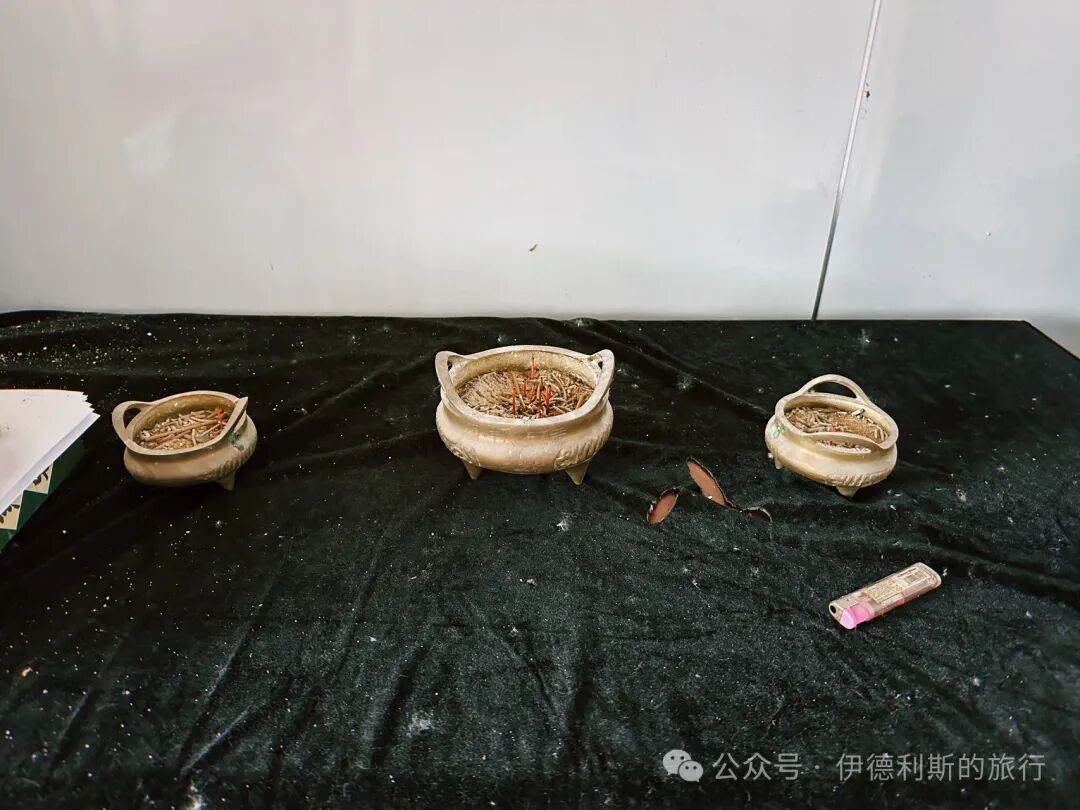
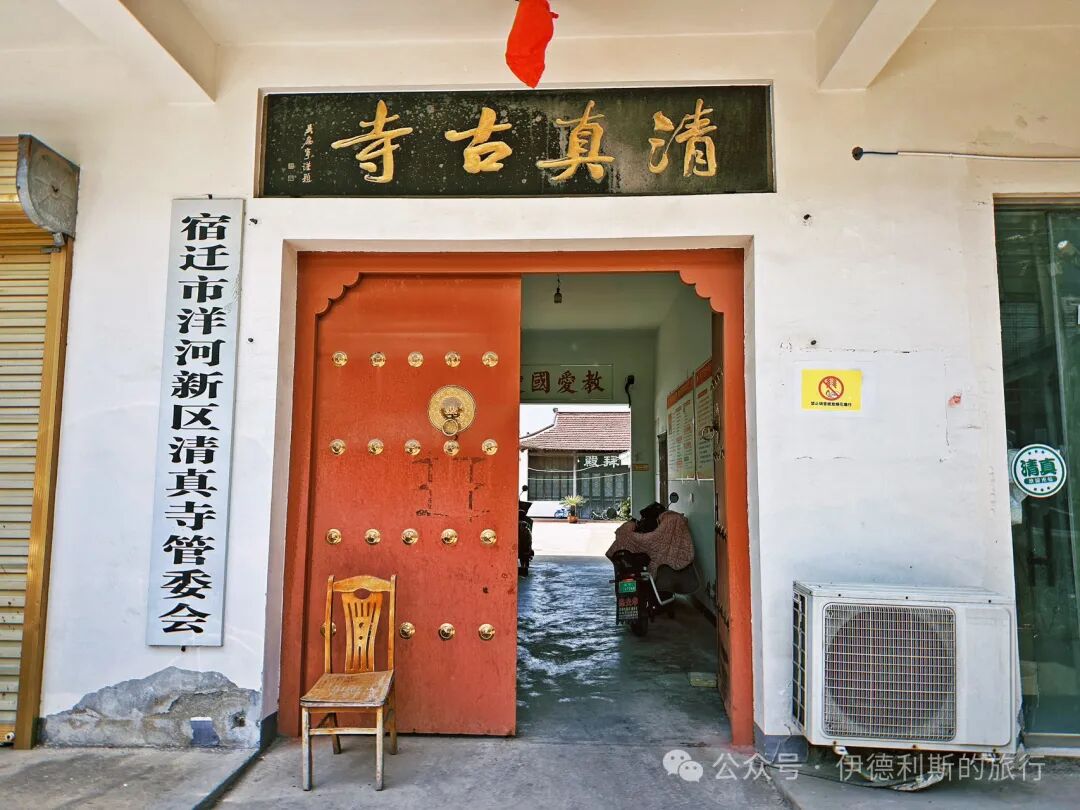
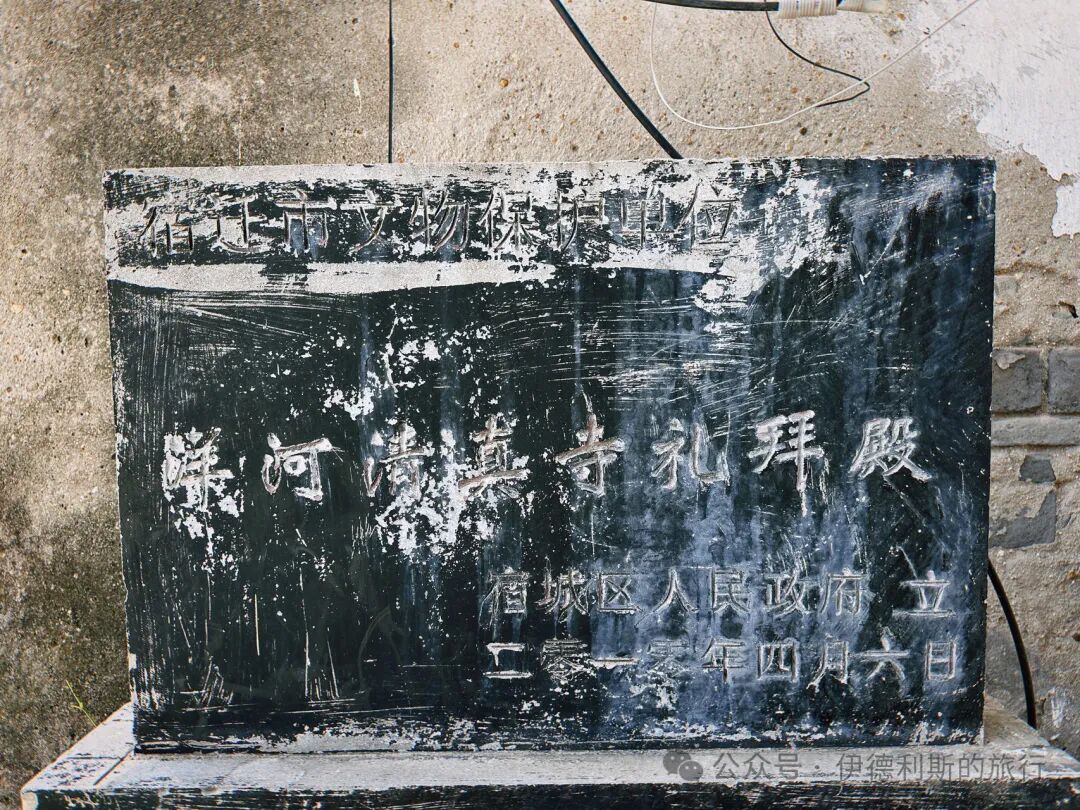
The mosque in Yanghe Town, Suqian, Jiangsu, was built during the Qianlong era. It was funded by Yu Qin, a local scholar from Yanghe who had served as an education official in Lishui, Pizhou, and Ningguo, and was built on Yanghe Rice Market Street. It was destroyed during the Japanese invasion and later rebuilt. The current main hall features a hip-and-gable roof, a beam-lifting structure, and upturned eaves with wind bells hanging from the four corners. It was listed as a cultural heritage site in Suqian in 2010.
The Yanghe Town mosque belongs to the Jahriyya Banqiao Daotang. During the Jiaqing era of the Qing Dynasty, Chang Tingzhang (1785-1870), a Hui Muslim from Siyang, Jiangsu, traveled to Lingzhou (now Lingwu) in Ningxia to study. After completing his studies, he brought the Jahriyya tradition to the Huai-Si region. Chang Tingzhang was famous for his profound knowledge, and he had many students when he started teaching at the Wangjiaying mosque in Huaiyin. Since then, mosques including the Wangjiaying mosque in Huaiyin, the Zhongxing Town mosque in Siyang, and the Yanghe Town mosque have all followed the Jahriyya tradition. Before 1932, the imams of the Yanghe Town mosque were assigned from Ningxia. After 1932, Imam Ma Chengliang served until his passing in 1979.
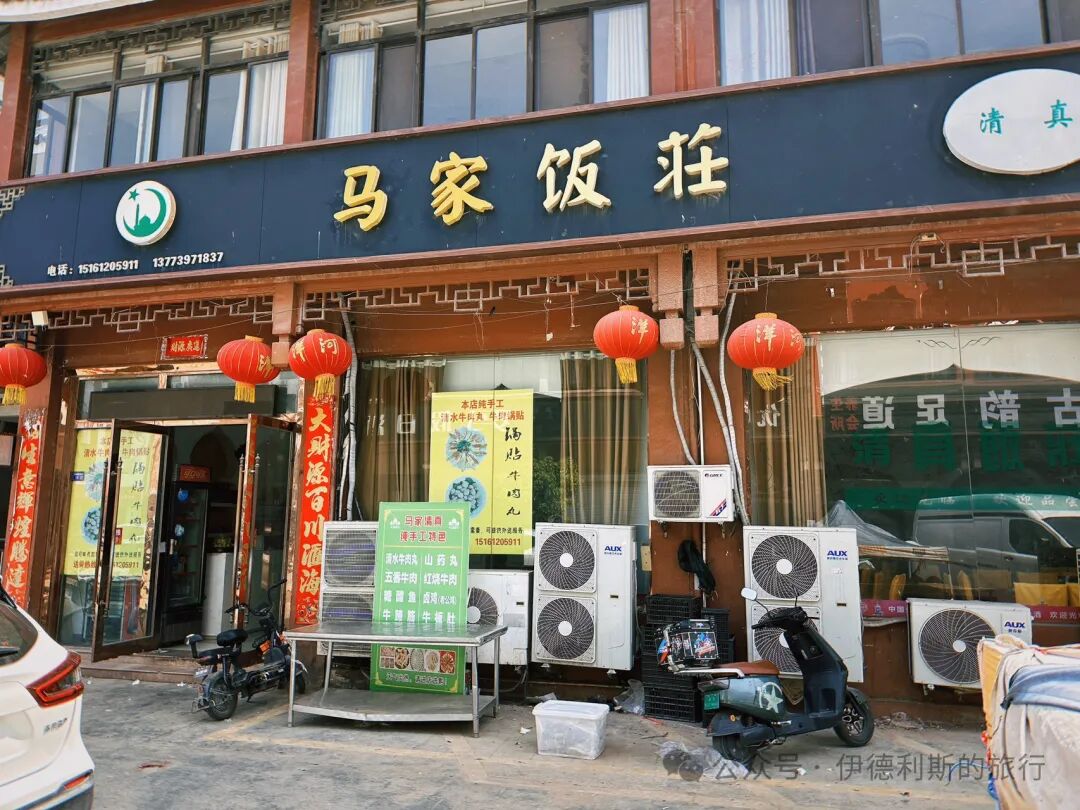
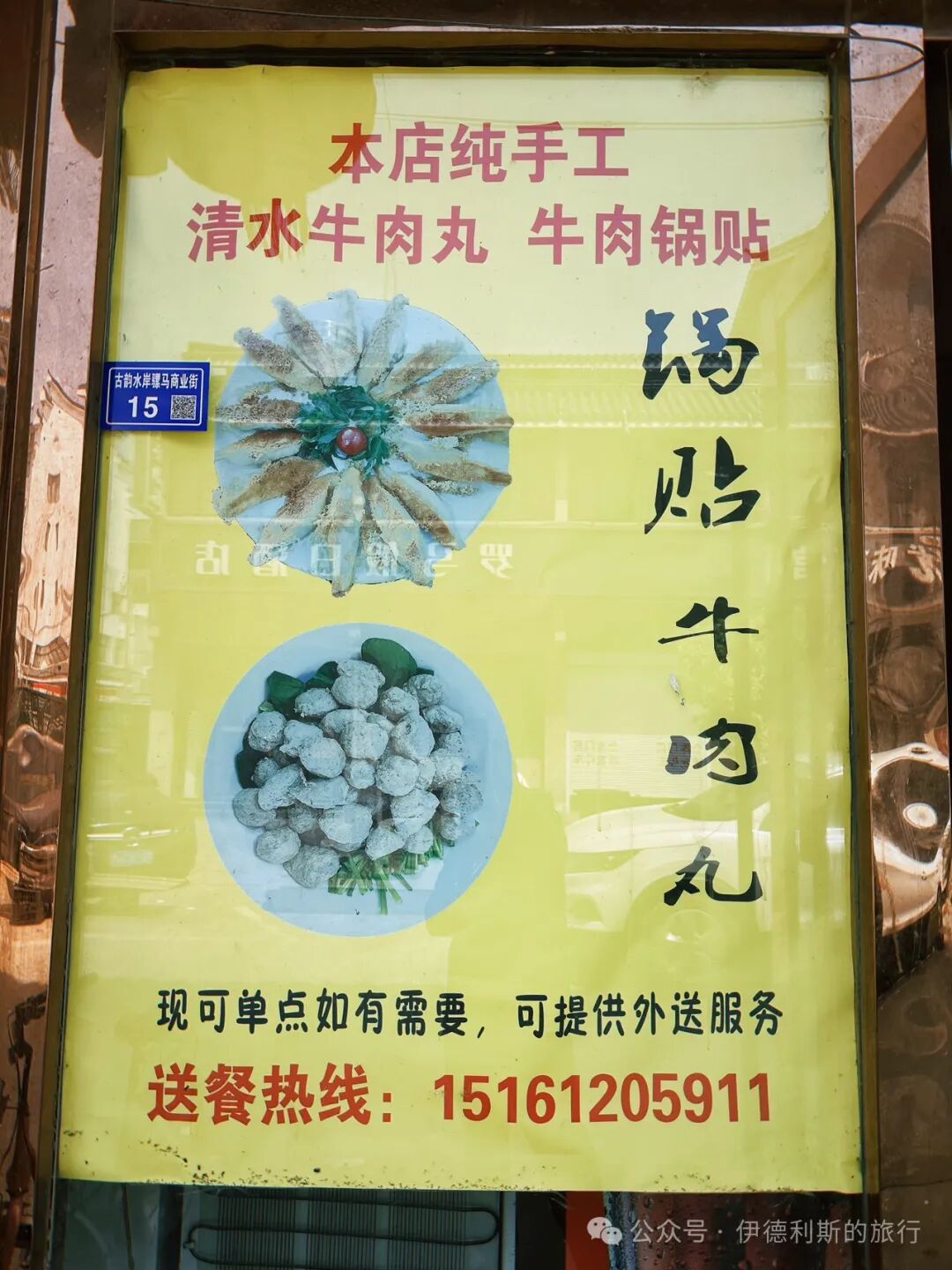
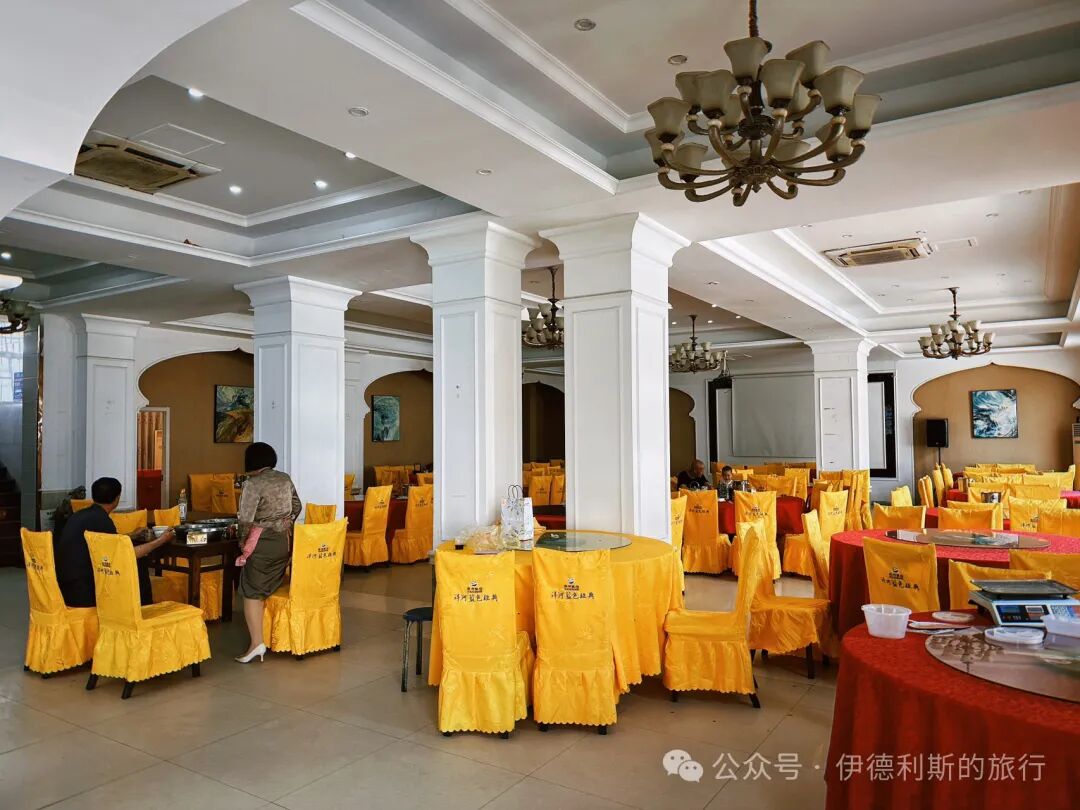
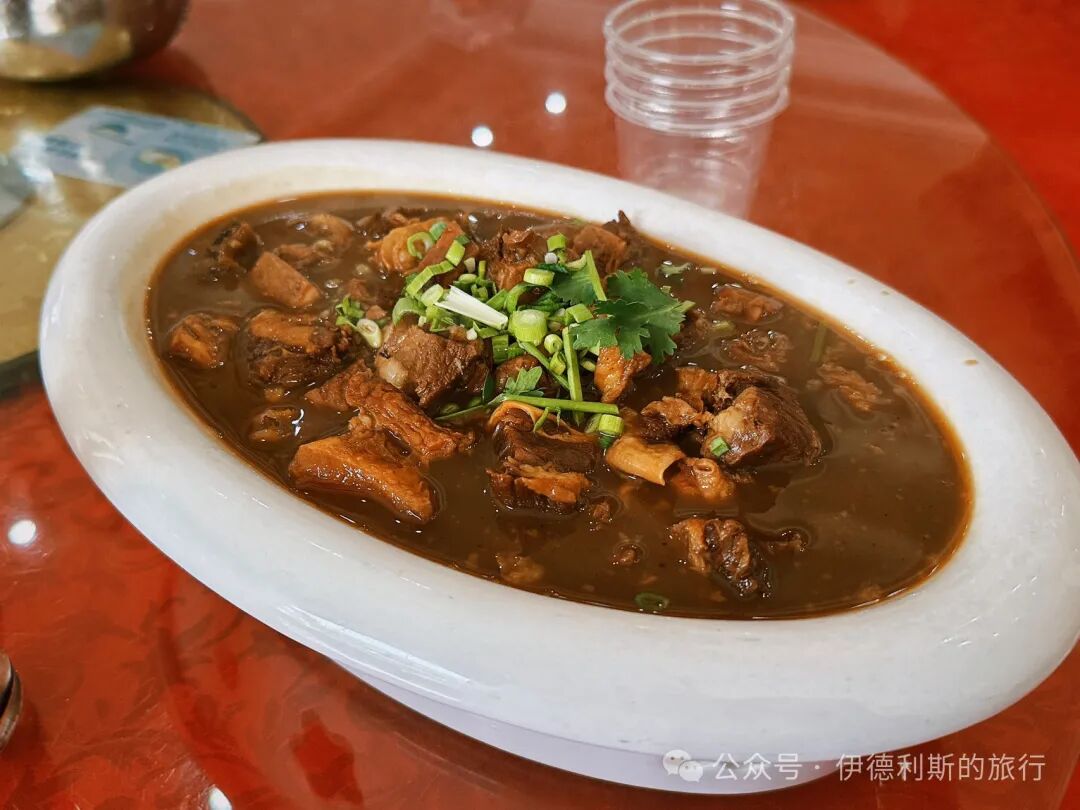
The Ma Family Restaurant is run by local Hui Muslims in Siyang, where you can eat authentic Siyang Hui Muslim food. We ordered soft-wrapped eel (ruandou changyu), braised dried tofu strips (dazhu gansi), clear beef balls (qingshui niuwan), and braised beef (hongshao niuful). Soft-wrapped eel is a signature dish of Huaiyang cuisine. The eel is called 'soft-wrapped' because after the bones are removed, the back is black and the belly is tender yellow. It tastes excellent. Braised dried tofu strips is also a Huaiyang dish. Their tofu strips are cut quite thick, but they are very delicious because they are cooked in chicken broth. Clear beef balls and braised beef are both specialties of Hui Muslim cooking. The clear beef balls are very warming, and the braised beef goes well with rice. We ordered rice at first, but later they brought us steamed buns (mantou). These long steamed buns were golden on one side and very fluffy inside. They were the best staple food we ate on this trip.
Siyang, Jiangsu, is located halfway between Huai'an and Suqian, right next to the Beijing-Hangzhou Grand Canal. Hui Muslims settled in Siyang during the late Ming and early Qing dynasties. They first built the Siyang mosque outside the moat in the northwest corner of the old Siyang city. In 1711 (the 50th year of Kangxi), it was moved inside the North Gate to avoid flooding and was rebuilt in 1759 (the 24th year of Qianlong). It once displayed plaques inscribed by Prince Yi, Prince He, and the local magistrate, but it was demolished in 1959. The Siyang Zhongxing Town mosque was built during the Daoguang era of the Qing Dynasty. It was demolished by Japanese puppet forces in 1937 to build a watchtower. It was later rebuilt at a new site and moved to its current location in 2009.
Because the Siyang Hui Muslim Imam Chang Tingzhang (1785-1870) brought back the Jahriyya tradition after studying in Ningxia, the Hui Muslims in Siyang belong to the Jahriyya Banqiao Daotang. view all
Summary: This travel account visits the old mosque in Yanghe Town, Suqian, and Majia Restaurant in Siyang, Jiangsu. It preserves the original mosque details, food notes, route information, and photographs in clear English.
We traveled northwest from Huai'an to visit the mosque in Yanghe Town, Suqian, and tasted the local specialties at the Ma Family Restaurant in Siyang.
The mosque in Yanghe Town, Suqian, Jiangsu, was built during the Qianlong era. It was funded by Yu Qin, a local scholar from Yanghe who had served as an education official in Lishui, Pizhou, and Ningguo, and was built on Yanghe Rice Market Street. It was destroyed during the Japanese invasion and later rebuilt. The current main hall features a hip-and-gable roof, a beam-lifting structure, and upturned eaves with wind bells hanging from the four corners. It was listed as a cultural heritage site in Suqian in 2010.
The Yanghe Town mosque belongs to the Jahriyya Banqiao Daotang. During the Jiaqing era of the Qing Dynasty, Chang Tingzhang (1785-1870), a Hui Muslim from Siyang, Jiangsu, traveled to Lingzhou (now Lingwu) in Ningxia to study. After completing his studies, he brought the Jahriyya tradition to the Huai-Si region. Chang Tingzhang was famous for his profound knowledge, and he had many students when he started teaching at the Wangjiaying mosque in Huaiyin. Since then, mosques including the Wangjiaying mosque in Huaiyin, the Zhongxing Town mosque in Siyang, and the Yanghe Town mosque have all followed the Jahriyya tradition. Before 1932, the imams of the Yanghe Town mosque were assigned from Ningxia. After 1932, Imam Ma Chengliang served until his passing in 1979.
The Ma Family Restaurant is run by local Hui Muslims in Siyang, where you can eat authentic Siyang Hui Muslim food. We ordered soft-wrapped eel (ruandou changyu), braised dried tofu strips (dazhu gansi), clear beef balls (qingshui niuwan), and braised beef (hongshao niuful). Soft-wrapped eel is a signature dish of Huaiyang cuisine. The eel is called 'soft-wrapped' because after the bones are removed, the back is black and the belly is tender yellow. It tastes excellent. Braised dried tofu strips is also a Huaiyang dish. Their tofu strips are cut quite thick, but they are very delicious because they are cooked in chicken broth. Clear beef balls and braised beef are both specialties of Hui Muslim cooking. The clear beef balls are very warming, and the braised beef goes well with rice. We ordered rice at first, but later they brought us steamed buns (mantou). These long steamed buns were golden on one side and very fluffy inside. They were the best staple food we ate on this trip.
Siyang, Jiangsu, is located halfway between Huai'an and Suqian, right next to the Beijing-Hangzhou Grand Canal. Hui Muslims settled in Siyang during the late Ming and early Qing dynasties. They first built the Siyang mosque outside the moat in the northwest corner of the old Siyang city. In 1711 (the 50th year of Kangxi), it was moved inside the North Gate to avoid flooding and was rebuilt in 1759 (the 24th year of Qianlong). It once displayed plaques inscribed by Prince Yi, Prince He, and the local magistrate, but it was demolished in 1959. The Siyang Zhongxing Town mosque was built during the Daoguang era of the Qing Dynasty. It was demolished by Japanese puppet forces in 1937 to build a watchtower. It was later rebuilt at a new site and moved to its current location in 2009.
Because the Siyang Hui Muslim Imam Chang Tingzhang (1785-1870) brought back the Jahriyya tradition after studying in Ningxia, the Hui Muslims in Siyang belong to the Jahriyya Banqiao Daotang. view all
Reposted from the web
Summary: This travel account visits the old mosque in Yanghe Town, Suqian, and Majia Restaurant in Siyang, Jiangsu. It preserves the original mosque details, food notes, route information, and photographs in clear English.
We traveled northwest from Huai'an to visit the mosque in Yanghe Town, Suqian, and tasted the local specialties at the Ma Family Restaurant in Siyang.
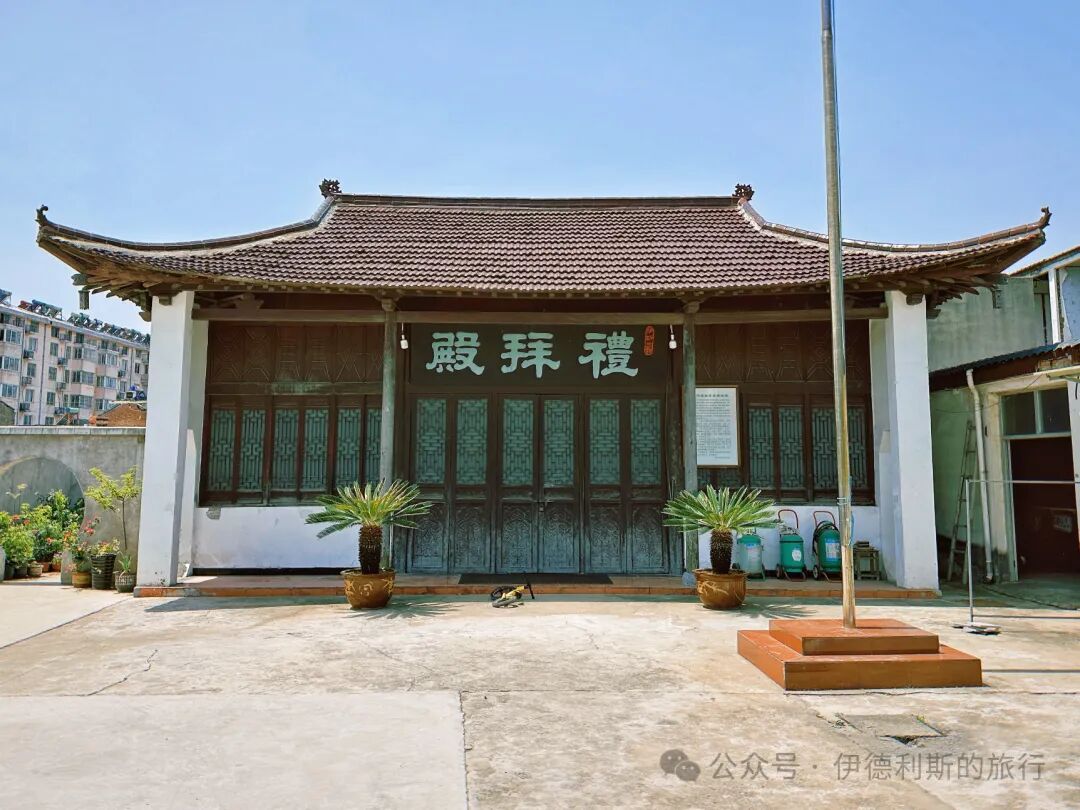
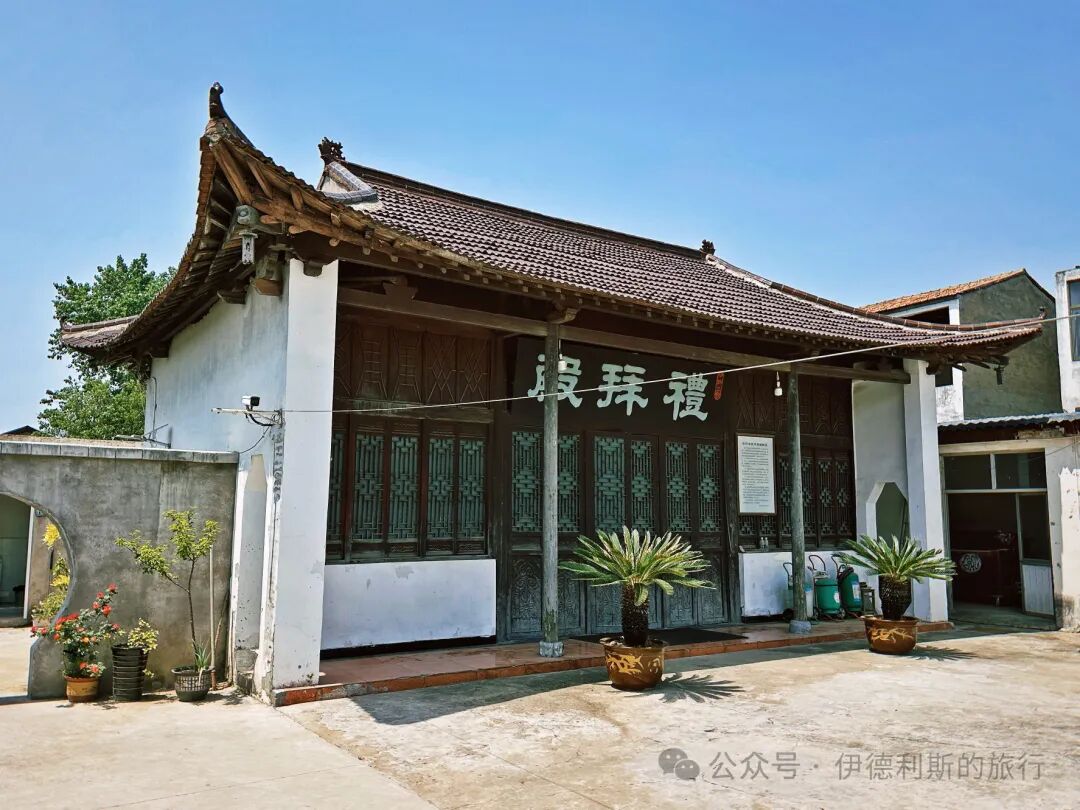
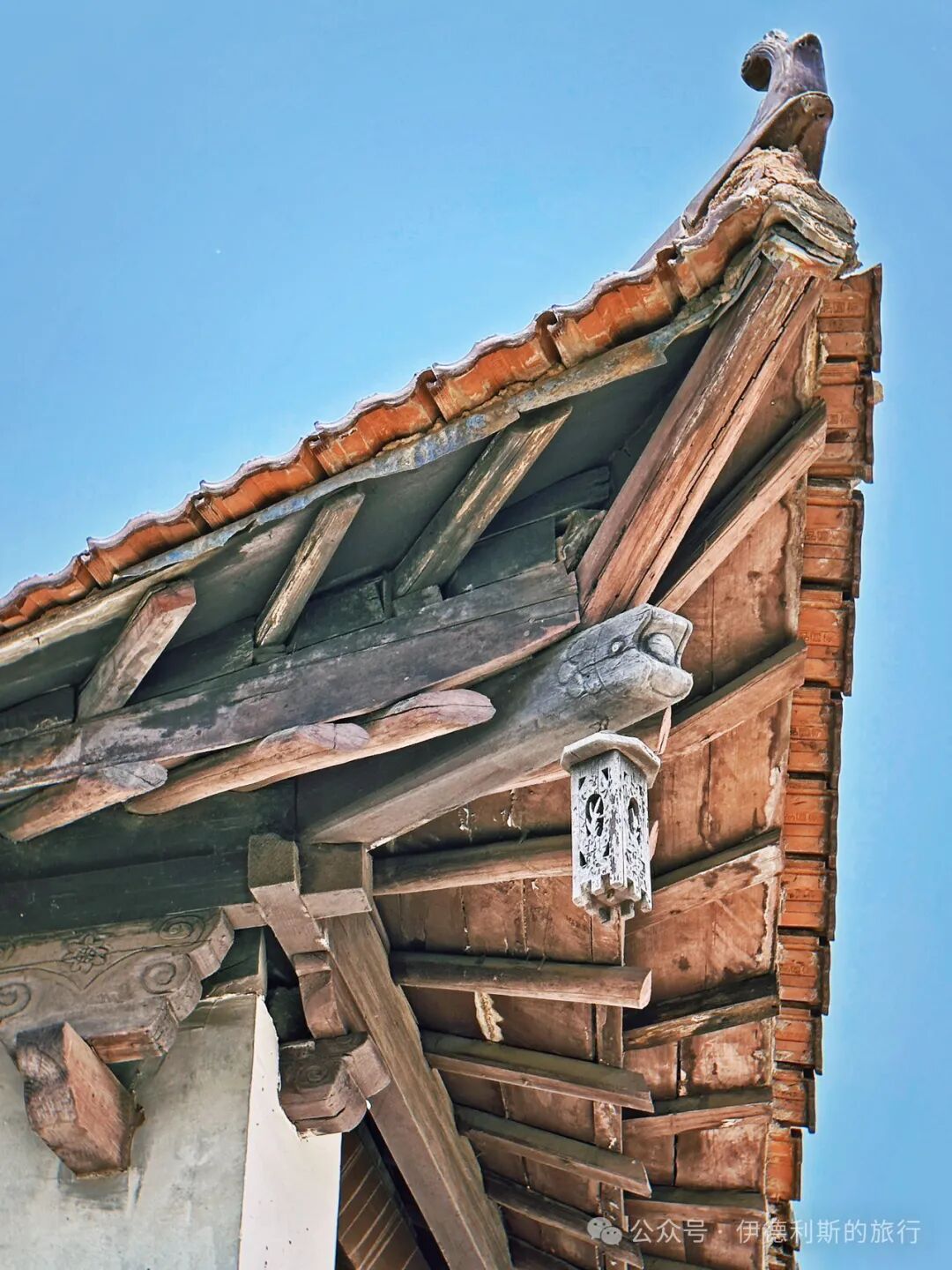
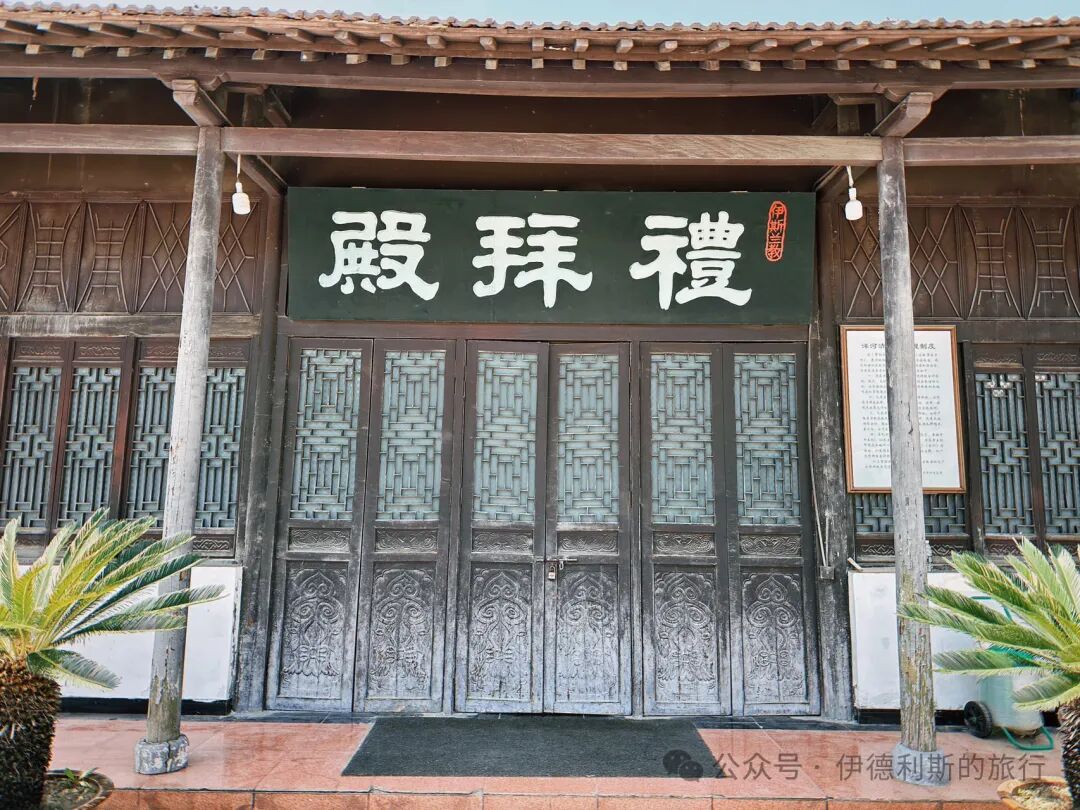
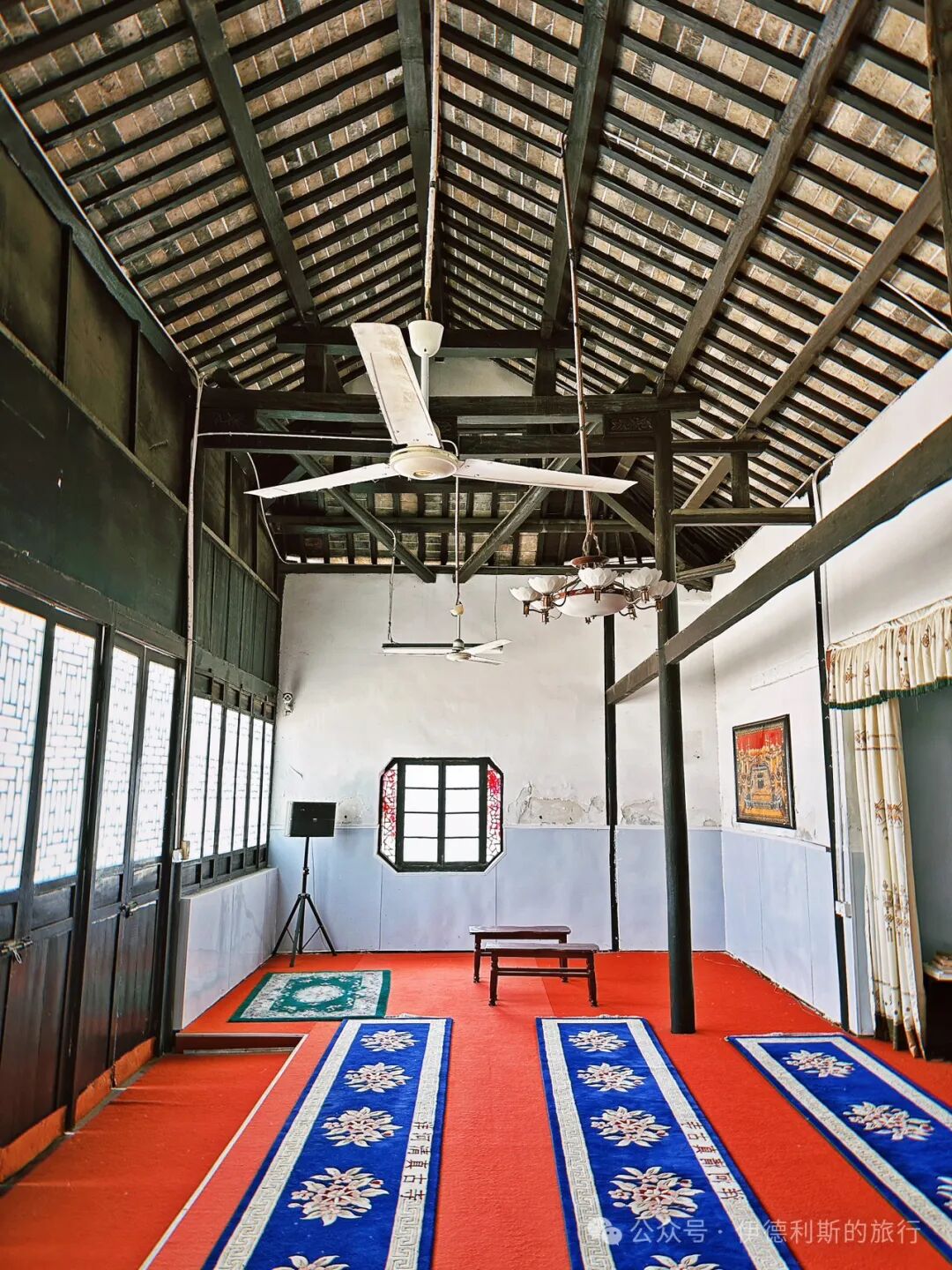
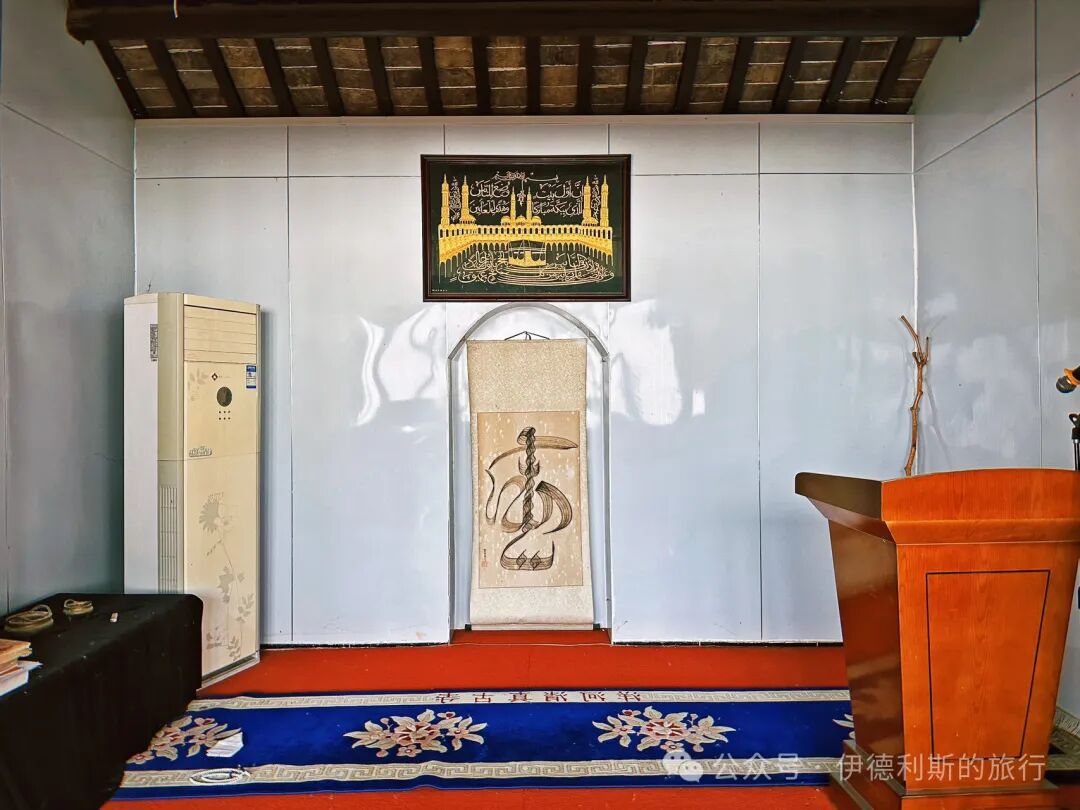
The mosque in Yanghe Town, Suqian, Jiangsu, was built during the Qianlong era. It was funded by Yu Qin, a local scholar from Yanghe who had served as an education official in Lishui, Pizhou, and Ningguo, and was built on Yanghe Rice Market Street. It was destroyed during the Japanese invasion and later rebuilt. The current main hall features a hip-and-gable roof, a beam-lifting structure, and upturned eaves with wind bells hanging from the four corners. It was listed as a cultural heritage site in Suqian in 2010.
The Yanghe Town mosque belongs to the Jahriyya Banqiao Daotang. During the Jiaqing era of the Qing Dynasty, Chang Tingzhang (1785-1870), a Hui Muslim from Siyang, Jiangsu, traveled to Lingzhou (now Lingwu) in Ningxia to study. After completing his studies, he brought the Jahriyya tradition to the Huai-Si region. Chang Tingzhang was famous for his profound knowledge, and he had many students when he started teaching at the Wangjiaying mosque in Huaiyin. Since then, mosques including the Wangjiaying mosque in Huaiyin, the Zhongxing Town mosque in Siyang, and the Yanghe Town mosque have all followed the Jahriyya tradition. Before 1932, the imams of the Yanghe Town mosque were assigned from Ningxia. After 1932, Imam Ma Chengliang served until his passing in 1979.
The Ma Family Restaurant is run by local Hui Muslims in Siyang, where you can eat authentic Siyang Hui Muslim food. We ordered soft-wrapped eel (ruandou changyu), braised dried tofu strips (dazhu gansi), clear beef balls (qingshui niuwan), and braised beef (hongshao niuful). Soft-wrapped eel is a signature dish of Huaiyang cuisine. The eel is called 'soft-wrapped' because after the bones are removed, the back is black and the belly is tender yellow. It tastes excellent. Braised dried tofu strips is also a Huaiyang dish. Their tofu strips are cut quite thick, but they are very delicious because they are cooked in chicken broth. Clear beef balls and braised beef are both specialties of Hui Muslim cooking. The clear beef balls are very warming, and the braised beef goes well with rice. We ordered rice at first, but later they brought us steamed buns (mantou). These long steamed buns were golden on one side and very fluffy inside. They were the best staple food we ate on this trip.
Siyang, Jiangsu, is located halfway between Huai'an and Suqian, right next to the Beijing-Hangzhou Grand Canal. Hui Muslims settled in Siyang during the late Ming and early Qing dynasties. They first built the Siyang mosque outside the moat in the northwest corner of the old Siyang city. In 1711 (the 50th year of Kangxi), it was moved inside the North Gate to avoid flooding and was rebuilt in 1759 (the 24th year of Qianlong). It once displayed plaques inscribed by Prince Yi, Prince He, and the local magistrate, but it was demolished in 1959. The Siyang Zhongxing Town mosque was built during the Daoguang era of the Qing Dynasty. It was demolished by Japanese puppet forces in 1937 to build a watchtower. It was later rebuilt at a new site and moved to its current location in 2009.
Because the Siyang Hui Muslim Imam Chang Tingzhang (1785-1870) brought back the Jahriyya tradition after studying in Ningxia, the Hui Muslims in Siyang belong to the Jahriyya Banqiao Daotang.
Summary: This travel account visits the old mosque in Yanghe Town, Suqian, and Majia Restaurant in Siyang, Jiangsu. It preserves the original mosque details, food notes, route information, and photographs in clear English.
We traveled northwest from Huai'an to visit the mosque in Yanghe Town, Suqian, and tasted the local specialties at the Ma Family Restaurant in Siyang.
The mosque in Yanghe Town, Suqian, Jiangsu, was built during the Qianlong era. It was funded by Yu Qin, a local scholar from Yanghe who had served as an education official in Lishui, Pizhou, and Ningguo, and was built on Yanghe Rice Market Street. It was destroyed during the Japanese invasion and later rebuilt. The current main hall features a hip-and-gable roof, a beam-lifting structure, and upturned eaves with wind bells hanging from the four corners. It was listed as a cultural heritage site in Suqian in 2010.
The Yanghe Town mosque belongs to the Jahriyya Banqiao Daotang. During the Jiaqing era of the Qing Dynasty, Chang Tingzhang (1785-1870), a Hui Muslim from Siyang, Jiangsu, traveled to Lingzhou (now Lingwu) in Ningxia to study. After completing his studies, he brought the Jahriyya tradition to the Huai-Si region. Chang Tingzhang was famous for his profound knowledge, and he had many students when he started teaching at the Wangjiaying mosque in Huaiyin. Since then, mosques including the Wangjiaying mosque in Huaiyin, the Zhongxing Town mosque in Siyang, and the Yanghe Town mosque have all followed the Jahriyya tradition. Before 1932, the imams of the Yanghe Town mosque were assigned from Ningxia. After 1932, Imam Ma Chengliang served until his passing in 1979.
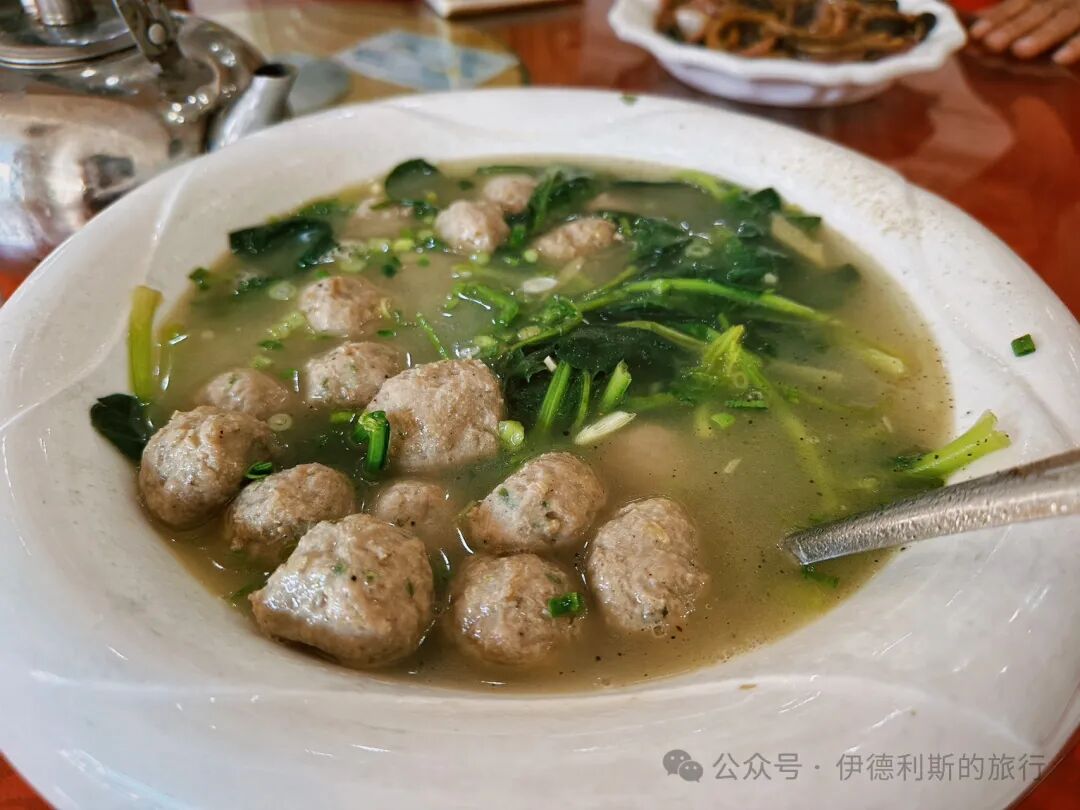
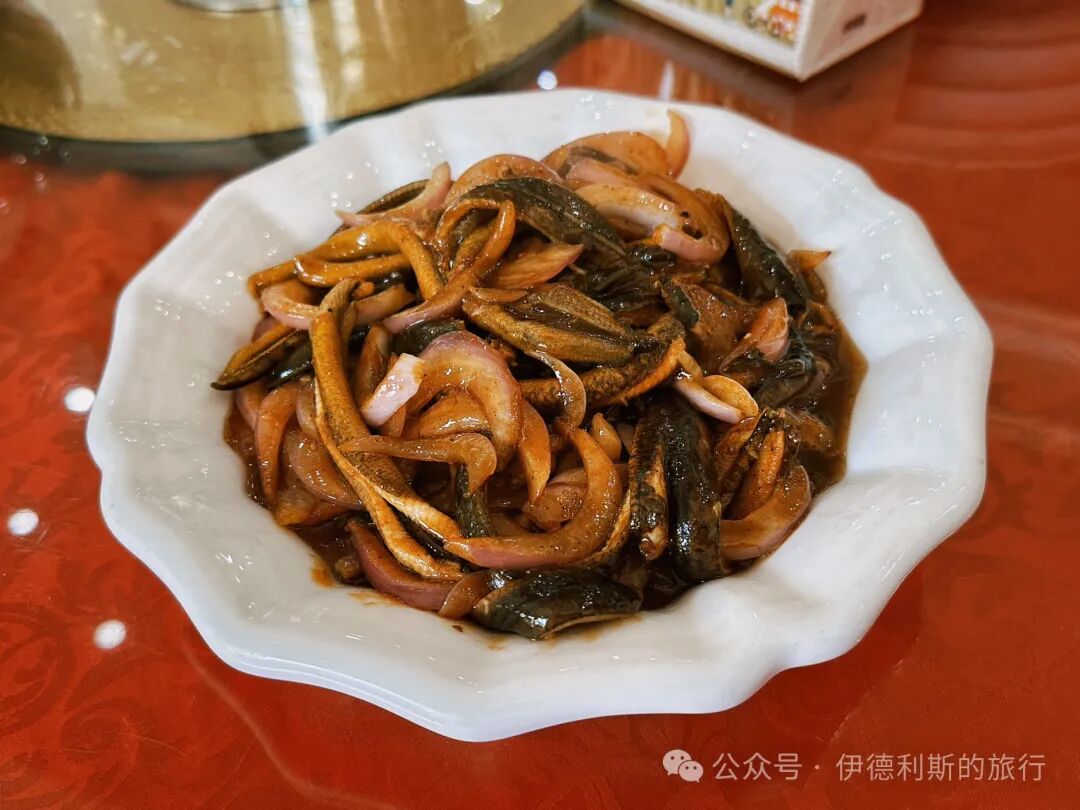
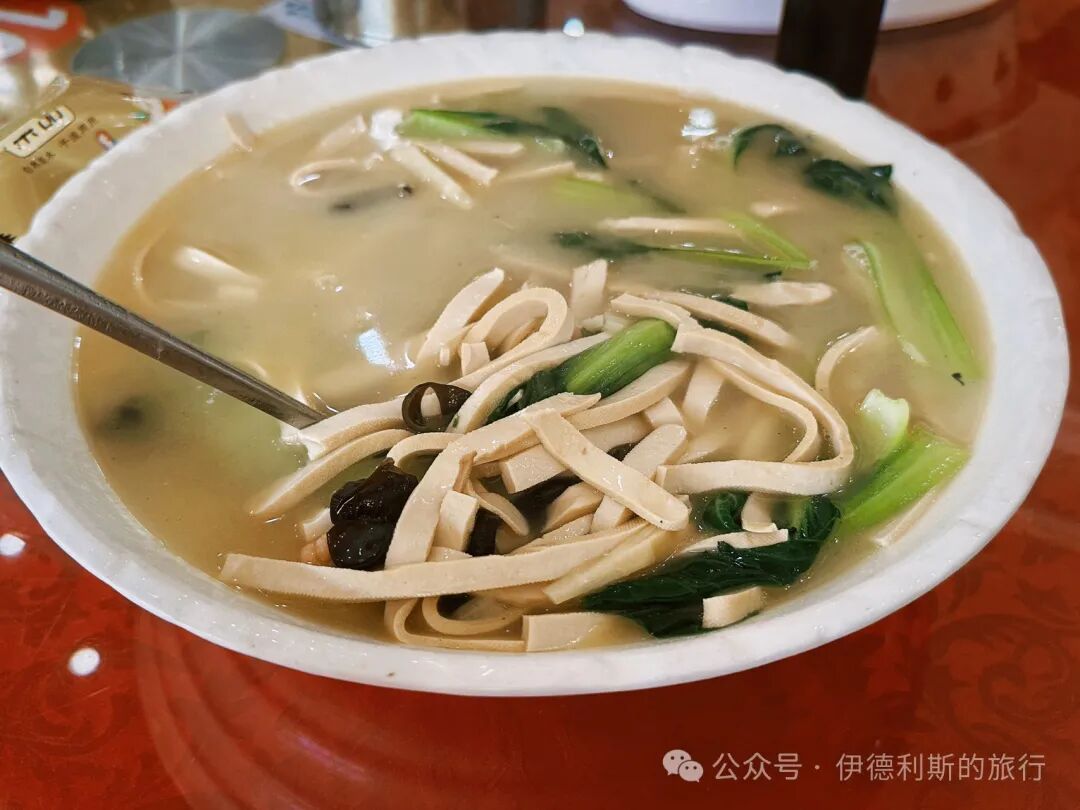
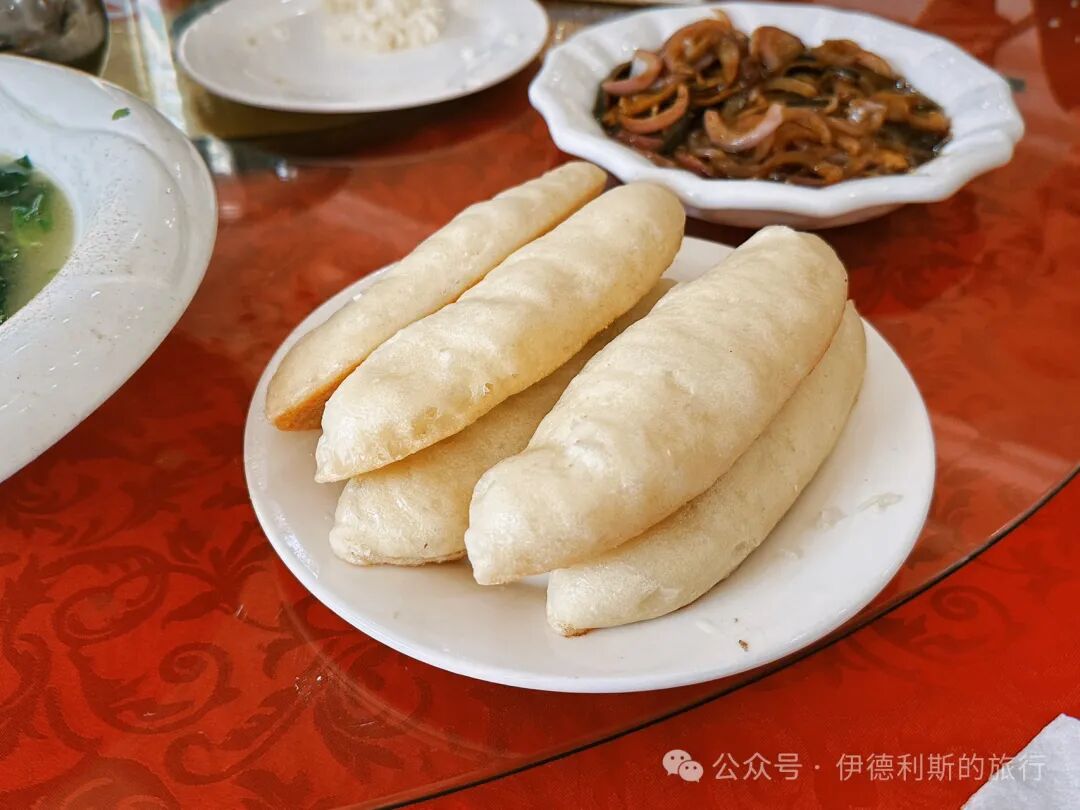
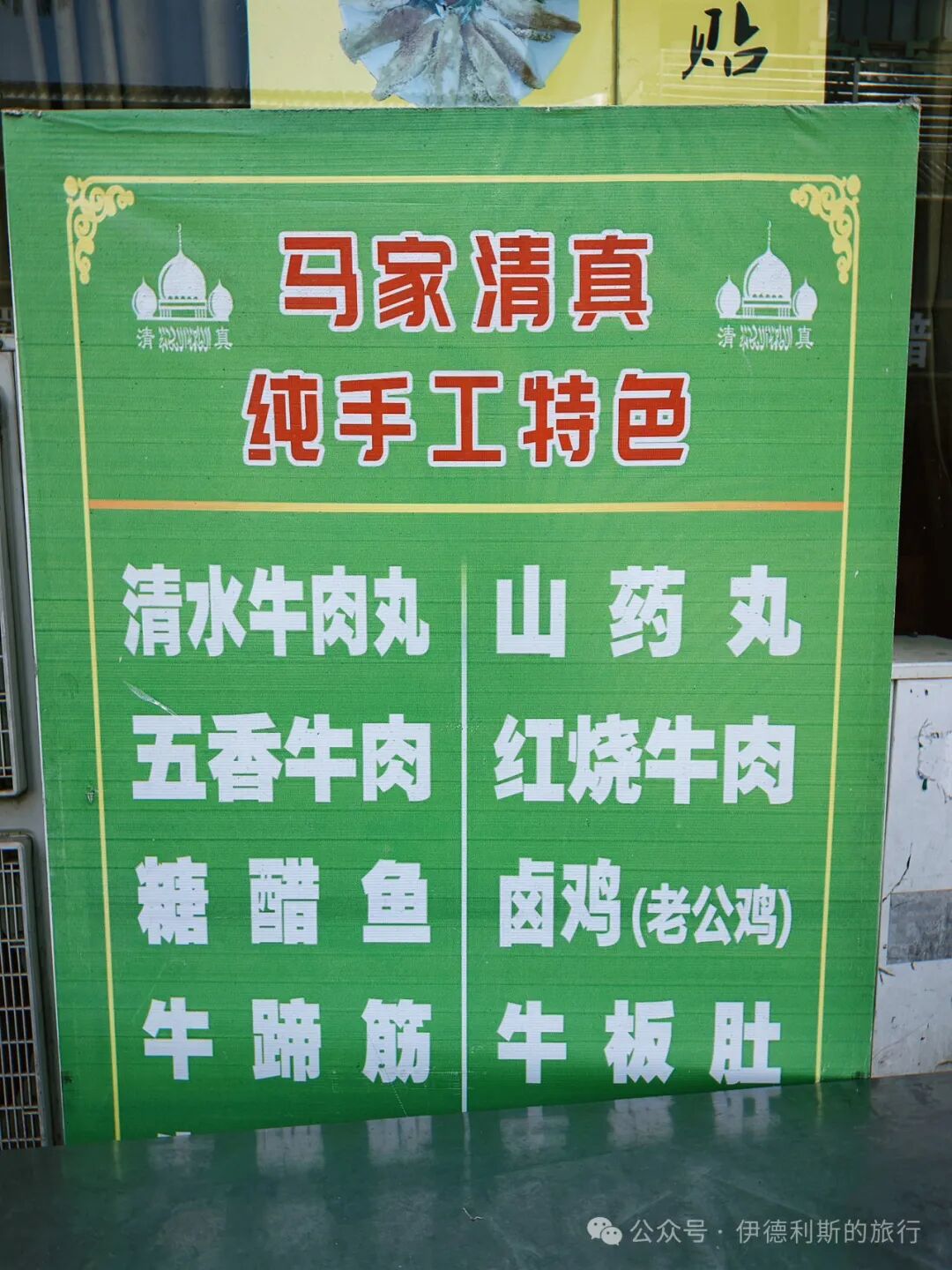
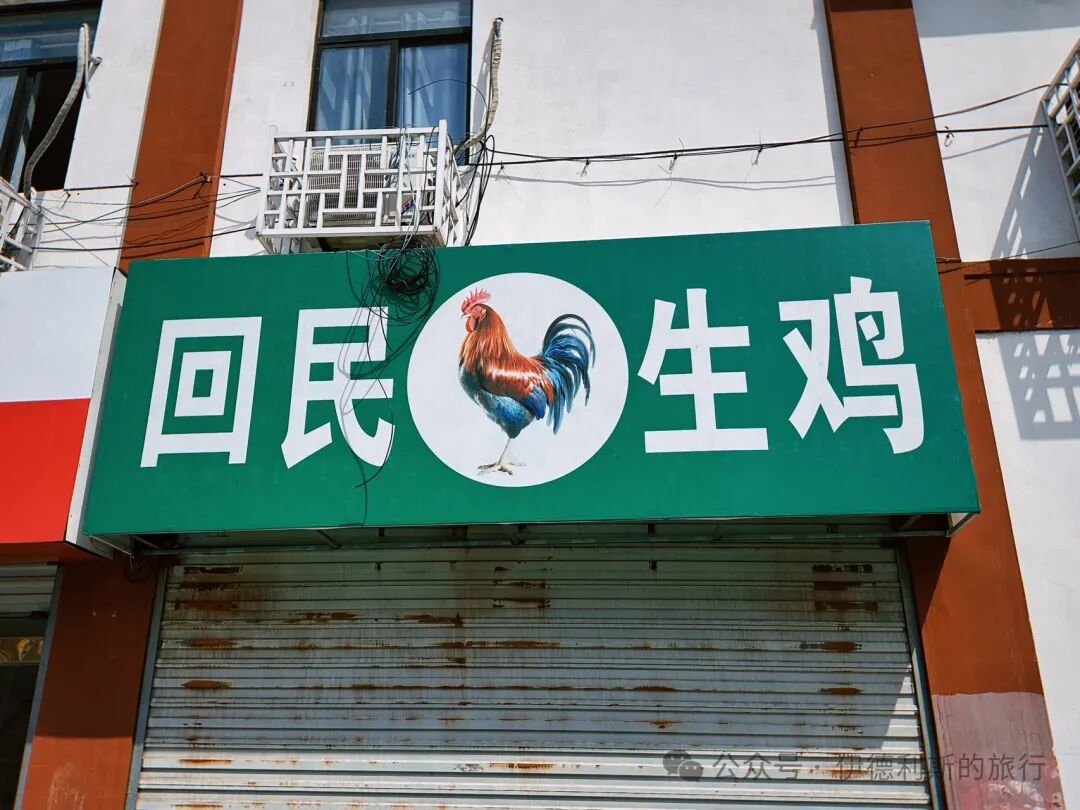
The Ma Family Restaurant is run by local Hui Muslims in Siyang, where you can eat authentic Siyang Hui Muslim food. We ordered soft-wrapped eel (ruandou changyu), braised dried tofu strips (dazhu gansi), clear beef balls (qingshui niuwan), and braised beef (hongshao niuful). Soft-wrapped eel is a signature dish of Huaiyang cuisine. The eel is called 'soft-wrapped' because after the bones are removed, the back is black and the belly is tender yellow. It tastes excellent. Braised dried tofu strips is also a Huaiyang dish. Their tofu strips are cut quite thick, but they are very delicious because they are cooked in chicken broth. Clear beef balls and braised beef are both specialties of Hui Muslim cooking. The clear beef balls are very warming, and the braised beef goes well with rice. We ordered rice at first, but later they brought us steamed buns (mantou). These long steamed buns were golden on one side and very fluffy inside. They were the best staple food we ate on this trip.
Siyang, Jiangsu, is located halfway between Huai'an and Suqian, right next to the Beijing-Hangzhou Grand Canal. Hui Muslims settled in Siyang during the late Ming and early Qing dynasties. They first built the Siyang mosque outside the moat in the northwest corner of the old Siyang city. In 1711 (the 50th year of Kangxi), it was moved inside the North Gate to avoid flooding and was rebuilt in 1759 (the 24th year of Qianlong). It once displayed plaques inscribed by Prince Yi, Prince He, and the local magistrate, but it was demolished in 1959. The Siyang Zhongxing Town mosque was built during the Daoguang era of the Qing Dynasty. It was demolished by Japanese puppet forces in 1937 to build a watchtower. It was later rebuilt at a new site and moved to its current location in 2009.
Because the Siyang Hui Muslim Imam Chang Tingzhang (1785-1870) brought back the Jahriyya tradition after studying in Ningxia, the Hui Muslims in Siyang belong to the Jahriyya Banqiao Daotang.
Halal Travel Guide: Suqian Mosques and Majia Restaurant in Jiangsu
Articles • ali2007fr posted the article • 0 comments • 159 views • 2026-05-20 01:49
Reposted from the web
Summary: This travel account visits the old mosque in Yanghe Town, Suqian, and Majia Restaurant in Siyang, Jiangsu. It preserves the original mosque details, food notes, route information, and photographs in clear English.
We traveled northwest from Huai'an to visit the mosque in Yanghe Town, Suqian, and tasted the local specialties at the Ma Family Restaurant in Siyang.
The mosque in Yanghe Town, Suqian, Jiangsu, was built during the Qianlong era. It was funded by Yu Qin, a local scholar from Yanghe who had served as an education official in Lishui, Pizhou, and Ningguo, and was built on Yanghe Rice Market Street. It was destroyed during the Japanese invasion and later rebuilt. The current main hall features a hip-and-gable roof, a beam-lifting structure, and upturned eaves with wind bells hanging from the four corners. It was listed as a cultural heritage site in Suqian in 2010.
The Yanghe Town mosque belongs to the Jahriyya Banqiao Daotang. During the Jiaqing era of the Qing Dynasty, Chang Tingzhang (1785-1870), a Hui Muslim from Siyang, Jiangsu, traveled to Lingzhou (now Lingwu) in Ningxia to study. After completing his studies, he brought the Jahriyya tradition to the Huai-Si region. Chang Tingzhang was famous for his profound knowledge, and he had many students when he started teaching at the Wangjiaying mosque in Huaiyin. Since then, mosques including the Wangjiaying mosque in Huaiyin, the Zhongxing Town mosque in Siyang, and the Yanghe Town mosque have all followed the Jahriyya tradition. Before 1932, the imams of the Yanghe Town mosque were assigned from Ningxia. After 1932, Imam Ma Chengliang served until his passing in 1979.
The Ma Family Restaurant is run by local Hui Muslims in Siyang, where you can eat authentic Siyang Hui Muslim food. We ordered soft-wrapped eel (ruandou changyu), braised dried tofu strips (dazhu gansi), clear beef balls (qingshui niuwan), and braised beef (hongshao niuful). Soft-wrapped eel is a signature dish of Huaiyang cuisine. The eel is called 'soft-wrapped' because after the bones are removed, the back is black and the belly is tender yellow. It tastes excellent. Braised dried tofu strips is also a Huaiyang dish. Their tofu strips are cut quite thick, but they are very delicious because they are cooked in chicken broth. Clear beef balls and braised beef are both specialties of Hui Muslim cooking. The clear beef balls are very warming, and the braised beef goes well with rice. We ordered rice at first, but later they brought us steamed buns (mantou). These long steamed buns were golden on one side and very fluffy inside. They were the best staple food we ate on this trip.
Siyang, Jiangsu, is located halfway between Huai'an and Suqian, right next to the Beijing-Hangzhou Grand Canal. Hui Muslims settled in Siyang during the late Ming and early Qing dynasties. They first built the Siyang mosque outside the moat in the northwest corner of the old Siyang city. In 1711 (the 50th year of Kangxi), it was moved inside the North Gate to avoid flooding and was rebuilt in 1759 (the 24th year of Qianlong). It once displayed plaques inscribed by Prince Yi, Prince He, and the local magistrate, but it was demolished in 1959. The Siyang Zhongxing Town mosque was built during the Daoguang era of the Qing Dynasty. It was demolished by Japanese puppet forces in 1937 to build a watchtower. It was later rebuilt at a new site and moved to its current location in 2009.
Because the Siyang Hui Muslim Imam Chang Tingzhang (1785-1870) brought back the Jahriyya tradition after studying in Ningxia, the Hui Muslims in Siyang belong to the Jahriyya Banqiao Daotang. view all
Summary: This travel account visits the old mosque in Yanghe Town, Suqian, and Majia Restaurant in Siyang, Jiangsu. It preserves the original mosque details, food notes, route information, and photographs in clear English.
We traveled northwest from Huai'an to visit the mosque in Yanghe Town, Suqian, and tasted the local specialties at the Ma Family Restaurant in Siyang.
The mosque in Yanghe Town, Suqian, Jiangsu, was built during the Qianlong era. It was funded by Yu Qin, a local scholar from Yanghe who had served as an education official in Lishui, Pizhou, and Ningguo, and was built on Yanghe Rice Market Street. It was destroyed during the Japanese invasion and later rebuilt. The current main hall features a hip-and-gable roof, a beam-lifting structure, and upturned eaves with wind bells hanging from the four corners. It was listed as a cultural heritage site in Suqian in 2010.
The Yanghe Town mosque belongs to the Jahriyya Banqiao Daotang. During the Jiaqing era of the Qing Dynasty, Chang Tingzhang (1785-1870), a Hui Muslim from Siyang, Jiangsu, traveled to Lingzhou (now Lingwu) in Ningxia to study. After completing his studies, he brought the Jahriyya tradition to the Huai-Si region. Chang Tingzhang was famous for his profound knowledge, and he had many students when he started teaching at the Wangjiaying mosque in Huaiyin. Since then, mosques including the Wangjiaying mosque in Huaiyin, the Zhongxing Town mosque in Siyang, and the Yanghe Town mosque have all followed the Jahriyya tradition. Before 1932, the imams of the Yanghe Town mosque were assigned from Ningxia. After 1932, Imam Ma Chengliang served until his passing in 1979.
The Ma Family Restaurant is run by local Hui Muslims in Siyang, where you can eat authentic Siyang Hui Muslim food. We ordered soft-wrapped eel (ruandou changyu), braised dried tofu strips (dazhu gansi), clear beef balls (qingshui niuwan), and braised beef (hongshao niuful). Soft-wrapped eel is a signature dish of Huaiyang cuisine. The eel is called 'soft-wrapped' because after the bones are removed, the back is black and the belly is tender yellow. It tastes excellent. Braised dried tofu strips is also a Huaiyang dish. Their tofu strips are cut quite thick, but they are very delicious because they are cooked in chicken broth. Clear beef balls and braised beef are both specialties of Hui Muslim cooking. The clear beef balls are very warming, and the braised beef goes well with rice. We ordered rice at first, but later they brought us steamed buns (mantou). These long steamed buns were golden on one side and very fluffy inside. They were the best staple food we ate on this trip.
Siyang, Jiangsu, is located halfway between Huai'an and Suqian, right next to the Beijing-Hangzhou Grand Canal. Hui Muslims settled in Siyang during the late Ming and early Qing dynasties. They first built the Siyang mosque outside the moat in the northwest corner of the old Siyang city. In 1711 (the 50th year of Kangxi), it was moved inside the North Gate to avoid flooding and was rebuilt in 1759 (the 24th year of Qianlong). It once displayed plaques inscribed by Prince Yi, Prince He, and the local magistrate, but it was demolished in 1959. The Siyang Zhongxing Town mosque was built during the Daoguang era of the Qing Dynasty. It was demolished by Japanese puppet forces in 1937 to build a watchtower. It was later rebuilt at a new site and moved to its current location in 2009.
Because the Siyang Hui Muslim Imam Chang Tingzhang (1785-1870) brought back the Jahriyya tradition after studying in Ningxia, the Hui Muslims in Siyang belong to the Jahriyya Banqiao Daotang. view all
Reposted from the web
Summary: This travel account visits the old mosque in Yanghe Town, Suqian, and Majia Restaurant in Siyang, Jiangsu. It preserves the original mosque details, food notes, route information, and photographs in clear English.
We traveled northwest from Huai'an to visit the mosque in Yanghe Town, Suqian, and tasted the local specialties at the Ma Family Restaurant in Siyang.
The mosque in Yanghe Town, Suqian, Jiangsu, was built during the Qianlong era. It was funded by Yu Qin, a local scholar from Yanghe who had served as an education official in Lishui, Pizhou, and Ningguo, and was built on Yanghe Rice Market Street. It was destroyed during the Japanese invasion and later rebuilt. The current main hall features a hip-and-gable roof, a beam-lifting structure, and upturned eaves with wind bells hanging from the four corners. It was listed as a cultural heritage site in Suqian in 2010.
The Yanghe Town mosque belongs to the Jahriyya Banqiao Daotang. During the Jiaqing era of the Qing Dynasty, Chang Tingzhang (1785-1870), a Hui Muslim from Siyang, Jiangsu, traveled to Lingzhou (now Lingwu) in Ningxia to study. After completing his studies, he brought the Jahriyya tradition to the Huai-Si region. Chang Tingzhang was famous for his profound knowledge, and he had many students when he started teaching at the Wangjiaying mosque in Huaiyin. Since then, mosques including the Wangjiaying mosque in Huaiyin, the Zhongxing Town mosque in Siyang, and the Yanghe Town mosque have all followed the Jahriyya tradition. Before 1932, the imams of the Yanghe Town mosque were assigned from Ningxia. After 1932, Imam Ma Chengliang served until his passing in 1979.
The Ma Family Restaurant is run by local Hui Muslims in Siyang, where you can eat authentic Siyang Hui Muslim food. We ordered soft-wrapped eel (ruandou changyu), braised dried tofu strips (dazhu gansi), clear beef balls (qingshui niuwan), and braised beef (hongshao niuful). Soft-wrapped eel is a signature dish of Huaiyang cuisine. The eel is called 'soft-wrapped' because after the bones are removed, the back is black and the belly is tender yellow. It tastes excellent. Braised dried tofu strips is also a Huaiyang dish. Their tofu strips are cut quite thick, but they are very delicious because they are cooked in chicken broth. Clear beef balls and braised beef are both specialties of Hui Muslim cooking. The clear beef balls are very warming, and the braised beef goes well with rice. We ordered rice at first, but later they brought us steamed buns (mantou). These long steamed buns were golden on one side and very fluffy inside. They were the best staple food we ate on this trip.
Siyang, Jiangsu, is located halfway between Huai'an and Suqian, right next to the Beijing-Hangzhou Grand Canal. Hui Muslims settled in Siyang during the late Ming and early Qing dynasties. They first built the Siyang mosque outside the moat in the northwest corner of the old Siyang city. In 1711 (the 50th year of Kangxi), it was moved inside the North Gate to avoid flooding and was rebuilt in 1759 (the 24th year of Qianlong). It once displayed plaques inscribed by Prince Yi, Prince He, and the local magistrate, but it was demolished in 1959. The Siyang Zhongxing Town mosque was built during the Daoguang era of the Qing Dynasty. It was demolished by Japanese puppet forces in 1937 to build a watchtower. It was later rebuilt at a new site and moved to its current location in 2009.
Because the Siyang Hui Muslim Imam Chang Tingzhang (1785-1870) brought back the Jahriyya tradition after studying in Ningxia, the Hui Muslims in Siyang belong to the Jahriyya Banqiao Daotang.
Summary: This travel account visits the old mosque in Yanghe Town, Suqian, and Majia Restaurant in Siyang, Jiangsu. It preserves the original mosque details, food notes, route information, and photographs in clear English.
We traveled northwest from Huai'an to visit the mosque in Yanghe Town, Suqian, and tasted the local specialties at the Ma Family Restaurant in Siyang.
The mosque in Yanghe Town, Suqian, Jiangsu, was built during the Qianlong era. It was funded by Yu Qin, a local scholar from Yanghe who had served as an education official in Lishui, Pizhou, and Ningguo, and was built on Yanghe Rice Market Street. It was destroyed during the Japanese invasion and later rebuilt. The current main hall features a hip-and-gable roof, a beam-lifting structure, and upturned eaves with wind bells hanging from the four corners. It was listed as a cultural heritage site in Suqian in 2010.
The Yanghe Town mosque belongs to the Jahriyya Banqiao Daotang. During the Jiaqing era of the Qing Dynasty, Chang Tingzhang (1785-1870), a Hui Muslim from Siyang, Jiangsu, traveled to Lingzhou (now Lingwu) in Ningxia to study. After completing his studies, he brought the Jahriyya tradition to the Huai-Si region. Chang Tingzhang was famous for his profound knowledge, and he had many students when he started teaching at the Wangjiaying mosque in Huaiyin. Since then, mosques including the Wangjiaying mosque in Huaiyin, the Zhongxing Town mosque in Siyang, and the Yanghe Town mosque have all followed the Jahriyya tradition. Before 1932, the imams of the Yanghe Town mosque were assigned from Ningxia. After 1932, Imam Ma Chengliang served until his passing in 1979.
The Ma Family Restaurant is run by local Hui Muslims in Siyang, where you can eat authentic Siyang Hui Muslim food. We ordered soft-wrapped eel (ruandou changyu), braised dried tofu strips (dazhu gansi), clear beef balls (qingshui niuwan), and braised beef (hongshao niuful). Soft-wrapped eel is a signature dish of Huaiyang cuisine. The eel is called 'soft-wrapped' because after the bones are removed, the back is black and the belly is tender yellow. It tastes excellent. Braised dried tofu strips is also a Huaiyang dish. Their tofu strips are cut quite thick, but they are very delicious because they are cooked in chicken broth. Clear beef balls and braised beef are both specialties of Hui Muslim cooking. The clear beef balls are very warming, and the braised beef goes well with rice. We ordered rice at first, but later they brought us steamed buns (mantou). These long steamed buns were golden on one side and very fluffy inside. They were the best staple food we ate on this trip.
Siyang, Jiangsu, is located halfway between Huai'an and Suqian, right next to the Beijing-Hangzhou Grand Canal. Hui Muslims settled in Siyang during the late Ming and early Qing dynasties. They first built the Siyang mosque outside the moat in the northwest corner of the old Siyang city. In 1711 (the 50th year of Kangxi), it was moved inside the North Gate to avoid flooding and was rebuilt in 1759 (the 24th year of Qianlong). It once displayed plaques inscribed by Prince Yi, Prince He, and the local magistrate, but it was demolished in 1959. The Siyang Zhongxing Town mosque was built during the Daoguang era of the Qing Dynasty. It was demolished by Japanese puppet forces in 1937 to build a watchtower. It was later rebuilt at a new site and moved to its current location in 2009.
Because the Siyang Hui Muslim Imam Chang Tingzhang (1785-1870) brought back the Jahriyya tradition after studying in Ningxia, the Hui Muslims in Siyang belong to the Jahriyya Banqiao Daotang.