

Syrian Cafe
Beijing Halal Food Guide: Syrian Cafe and Damascus-Style Flavors
Articles • ali2007fr posted the article • 0 comments • 167 views • 2026-05-18 06:54
Reposted from the web
Summary: Beijing Halal Food Guide: Syrian Cafe and Damascus-Style Flavors is presented here as a firsthand travel account in clear English, beginning with this scene: I went to the Syrian cafe BRBR in Wudaokou, Beijing, over the weekend, and the flavors felt like a trip back to Damascus during the Ottoman era. The account keeps its focus on Beijing Halal Food, Syrian Cafe, Damascus Food while preserving the names, places, food, and historical details from the Chinese source.
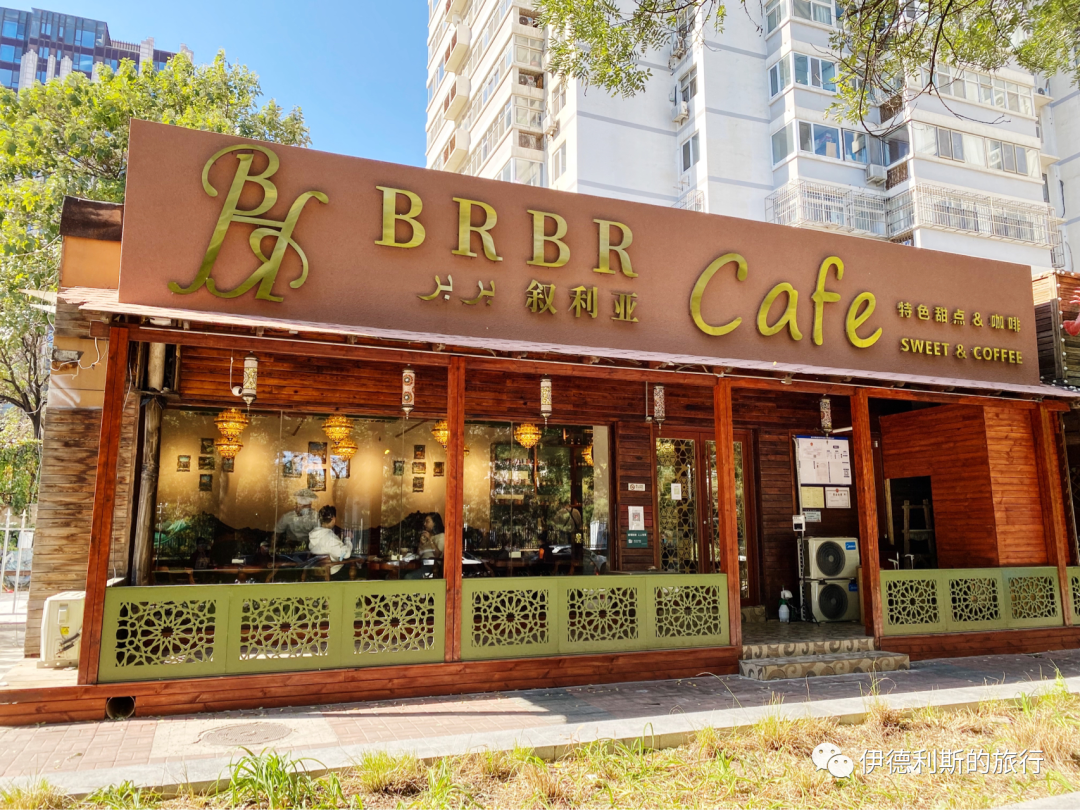
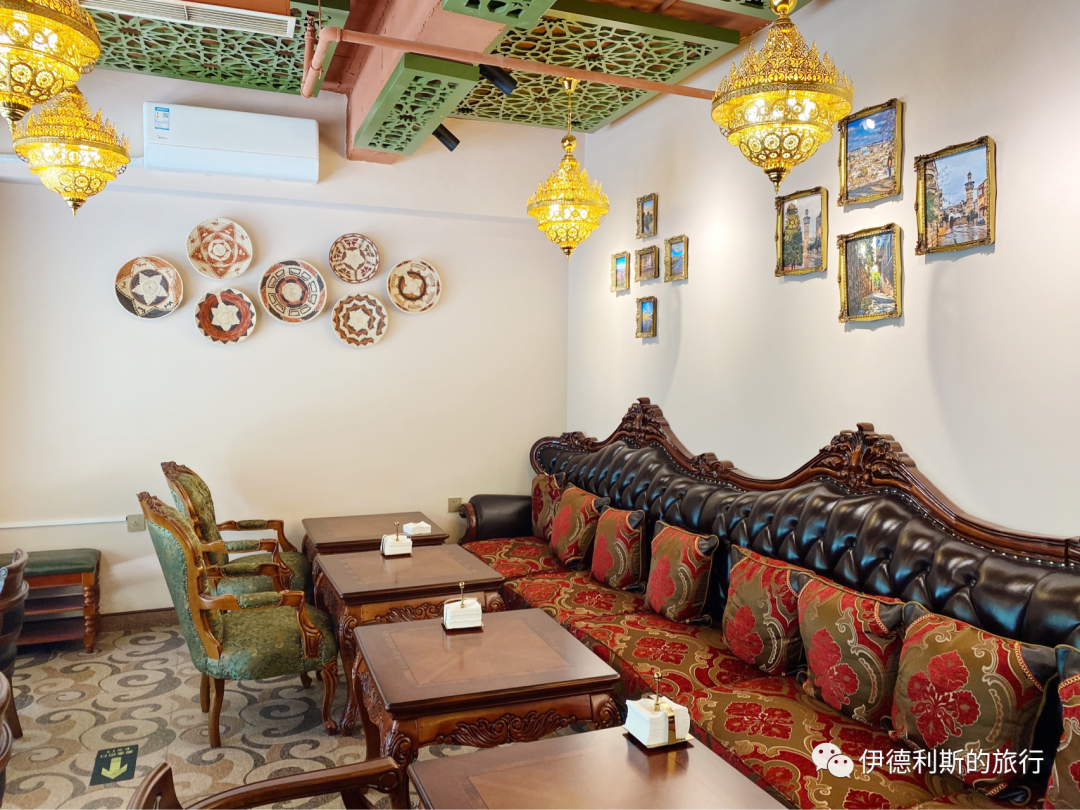
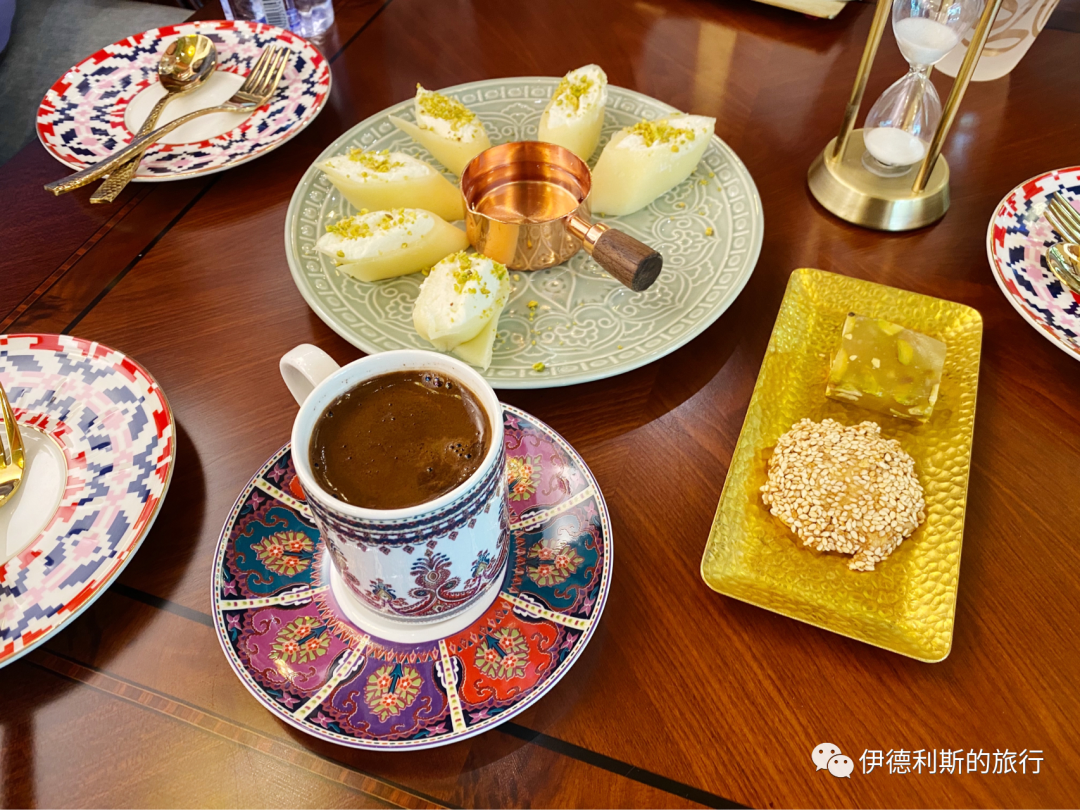
I went to the Syrian cafe BRBR in Wudaokou, Beijing, over the weekend, and the flavors felt like a trip back to Damascus during the Ottoman era. I drank sand-brewed coffee and ate cheese pastry (Kunafa), sweet cheese rolls (Halawa Baljben), sesame cookies (Barazek), pistachio Turkish delight (Raha Alhajaj), and Syrian ice cream (Booza).
Records of coffee drinking in the Arab world date back to the 15th century, when Sufis would drink it to stay alert during their night prayers (qiyam al-layl). In 1555, two merchants from Damascus, Syria, opened the first coffee house of the Ottoman Empire in Istanbul. From then on, coffee houses became an important part of Ottoman culture. Ottoman coffeehouses became important places for sharing news and meeting people. People gathered here to talk about daily events and share their thoughts and feelings. Coffee shops have become a fourth space for people, outside of their homes, workplaces, and the mosque.
Syria sits at the crossroads of Ottoman and Arab cultures, so people drink both Arab and Turkish coffee. Both are strong, unfiltered coffees. The main difference is that Arab coffee is flavored with cardamom and served without sugar.
Sand-boiled coffee is a traditional Ottoman style. It uses a long-handled brass coffee pot called a cezve. The pot sits in a pan filled with hot sand, and you control the brewing temperature by how deep you bury the pot in the sand.
Besides coffee, desserts are a key part of the Ottoman cafe experience.
The top recommendation is the cheese roll (Halawa Baljben), also called Halawet el Jibn. It is a signature Syrian treat and likely the only one of its kind in Beijing. This dessert comes from Hama city in west-central Syria. It uses handmade cheese dough and fresh cheese, topped with crushed pistachios, and you can pour syrup over it yourself.
Kunafa (kunafa) is a classic Arab dessert mentioned as early as in One Thousand and One Nights. It is made of buttery crispy pastry, stretchy cheese, and crushed pistachios. Although it has a history of over a thousand years, this fried, stretchy version first appeared in the mid-15th century during the Ottoman period. It then spread from the Arab world to Greece and Turkey under Ottoman rule.
Syrian ice cream (Booza) is a true specialty of the old markets in Damascus. It is famous for being stretchy and chewy, and BRBR recreates this very well. To make Booza, they add classic Ottoman spices like mastic and salep, along with plenty of nuts, to the milk. Mastic is the resin from the mastic tree, which is recorded as "mashitaqi" in the Hui Muslim medical text Huihui Yaofang. Salep (lanjingfen) is a powder made from orchid tubers and was an important spice during the Ottoman Empire. Booza is not made by churning like regular ice cream; instead, it is made by pounding and constantly stretching the mixture in an ice bucket.
The formal Arabic name for Syrian delight (Raha) is "rāḥat al-hulqūm," which means "throat comfort." The origin of this soft candy is uncertain, but it was already popular in Ottoman regions by the 18th century. It is jelly-like and elastic, and usually contains various nuts.
Sesame cookies (Barazek) are known as the most famous dessert in Syria. They are thought to have originated in Damascus, the Syrian capital, during the Ottoman period. They later spread throughout the Levant region, including Lebanon, Jordan, Palestine, and Syria, and you can often see them on the streets of Jerusalem. view all
Summary: Beijing Halal Food Guide: Syrian Cafe and Damascus-Style Flavors is presented here as a firsthand travel account in clear English, beginning with this scene: I went to the Syrian cafe BRBR in Wudaokou, Beijing, over the weekend, and the flavors felt like a trip back to Damascus during the Ottoman era. The account keeps its focus on Beijing Halal Food, Syrian Cafe, Damascus Food while preserving the names, places, food, and historical details from the Chinese source.
I went to the Syrian cafe BRBR in Wudaokou, Beijing, over the weekend, and the flavors felt like a trip back to Damascus during the Ottoman era. I drank sand-brewed coffee and ate cheese pastry (Kunafa), sweet cheese rolls (Halawa Baljben), sesame cookies (Barazek), pistachio Turkish delight (Raha Alhajaj), and Syrian ice cream (Booza).
Records of coffee drinking in the Arab world date back to the 15th century, when Sufis would drink it to stay alert during their night prayers (qiyam al-layl). In 1555, two merchants from Damascus, Syria, opened the first coffee house of the Ottoman Empire in Istanbul. From then on, coffee houses became an important part of Ottoman culture. Ottoman coffeehouses became important places for sharing news and meeting people. People gathered here to talk about daily events and share their thoughts and feelings. Coffee shops have become a fourth space for people, outside of their homes, workplaces, and the mosque.
Syria sits at the crossroads of Ottoman and Arab cultures, so people drink both Arab and Turkish coffee. Both are strong, unfiltered coffees. The main difference is that Arab coffee is flavored with cardamom and served without sugar.
Sand-boiled coffee is a traditional Ottoman style. It uses a long-handled brass coffee pot called a cezve. The pot sits in a pan filled with hot sand, and you control the brewing temperature by how deep you bury the pot in the sand.
Besides coffee, desserts are a key part of the Ottoman cafe experience.
The top recommendation is the cheese roll (Halawa Baljben), also called Halawet el Jibn. It is a signature Syrian treat and likely the only one of its kind in Beijing. This dessert comes from Hama city in west-central Syria. It uses handmade cheese dough and fresh cheese, topped with crushed pistachios, and you can pour syrup over it yourself.
Kunafa (kunafa) is a classic Arab dessert mentioned as early as in One Thousand and One Nights. It is made of buttery crispy pastry, stretchy cheese, and crushed pistachios. Although it has a history of over a thousand years, this fried, stretchy version first appeared in the mid-15th century during the Ottoman period. It then spread from the Arab world to Greece and Turkey under Ottoman rule.
Syrian ice cream (Booza) is a true specialty of the old markets in Damascus. It is famous for being stretchy and chewy, and BRBR recreates this very well. To make Booza, they add classic Ottoman spices like mastic and salep, along with plenty of nuts, to the milk. Mastic is the resin from the mastic tree, which is recorded as "mashitaqi" in the Hui Muslim medical text Huihui Yaofang. Salep (lanjingfen) is a powder made from orchid tubers and was an important spice during the Ottoman Empire. Booza is not made by churning like regular ice cream; instead, it is made by pounding and constantly stretching the mixture in an ice bucket.
The formal Arabic name for Syrian delight (Raha) is "rāḥat al-hulqūm," which means "throat comfort." The origin of this soft candy is uncertain, but it was already popular in Ottoman regions by the 18th century. It is jelly-like and elastic, and usually contains various nuts.
Sesame cookies (Barazek) are known as the most famous dessert in Syria. They are thought to have originated in Damascus, the Syrian capital, during the Ottoman period. They later spread throughout the Levant region, including Lebanon, Jordan, Palestine, and Syria, and you can often see them on the streets of Jerusalem. view all
Reposted from the web
Summary: Beijing Halal Food Guide: Syrian Cafe and Damascus-Style Flavors is presented here as a firsthand travel account in clear English, beginning with this scene: I went to the Syrian cafe BRBR in Wudaokou, Beijing, over the weekend, and the flavors felt like a trip back to Damascus during the Ottoman era. The account keeps its focus on Beijing Halal Food, Syrian Cafe, Damascus Food while preserving the names, places, food, and historical details from the Chinese source.
I went to the Syrian cafe BRBR in Wudaokou, Beijing, over the weekend, and the flavors felt like a trip back to Damascus during the Ottoman era. I drank sand-brewed coffee and ate cheese pastry (Kunafa), sweet cheese rolls (Halawa Baljben), sesame cookies (Barazek), pistachio Turkish delight (Raha Alhajaj), and Syrian ice cream (Booza).
Records of coffee drinking in the Arab world date back to the 15th century, when Sufis would drink it to stay alert during their night prayers (qiyam al-layl). In 1555, two merchants from Damascus, Syria, opened the first coffee house of the Ottoman Empire in Istanbul. From then on, coffee houses became an important part of Ottoman culture. Ottoman coffeehouses became important places for sharing news and meeting people. People gathered here to talk about daily events and share their thoughts and feelings. Coffee shops have become a fourth space for people, outside of their homes, workplaces, and the mosque.
Syria sits at the crossroads of Ottoman and Arab cultures, so people drink both Arab and Turkish coffee. Both are strong, unfiltered coffees. The main difference is that Arab coffee is flavored with cardamom and served without sugar.
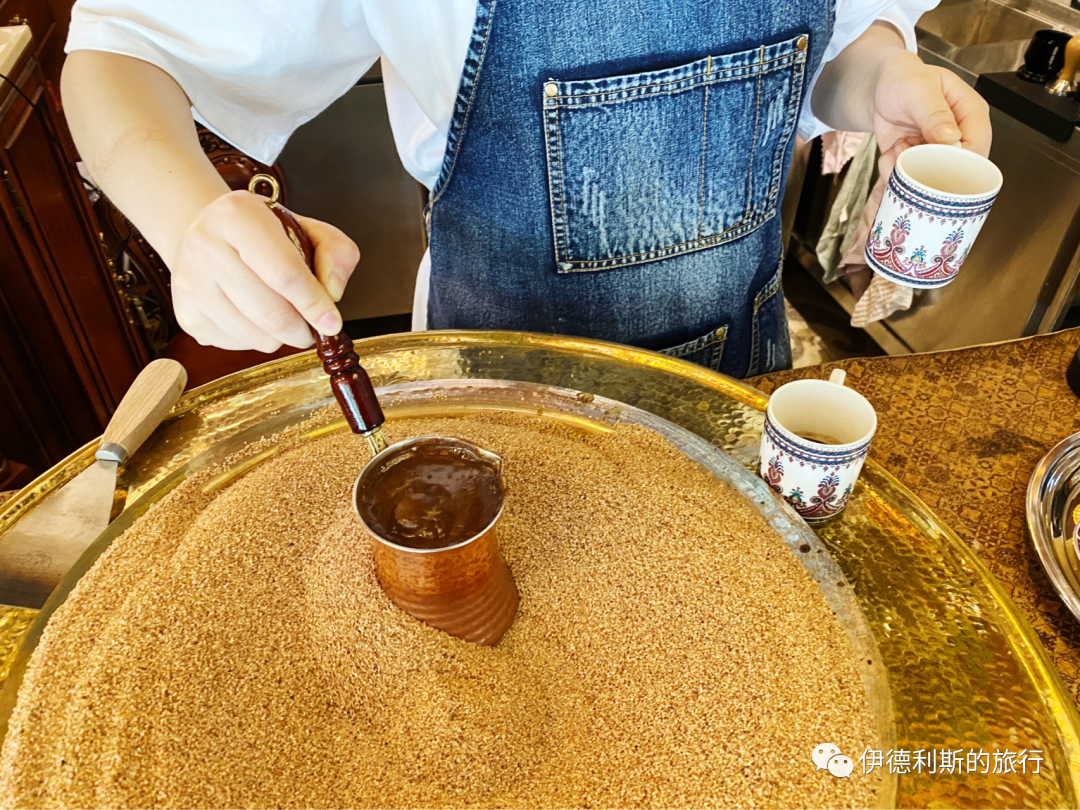
Sand-boiled coffee is a traditional Ottoman style. It uses a long-handled brass coffee pot called a cezve. The pot sits in a pan filled with hot sand, and you control the brewing temperature by how deep you bury the pot in the sand.
Besides coffee, desserts are a key part of the Ottoman cafe experience.
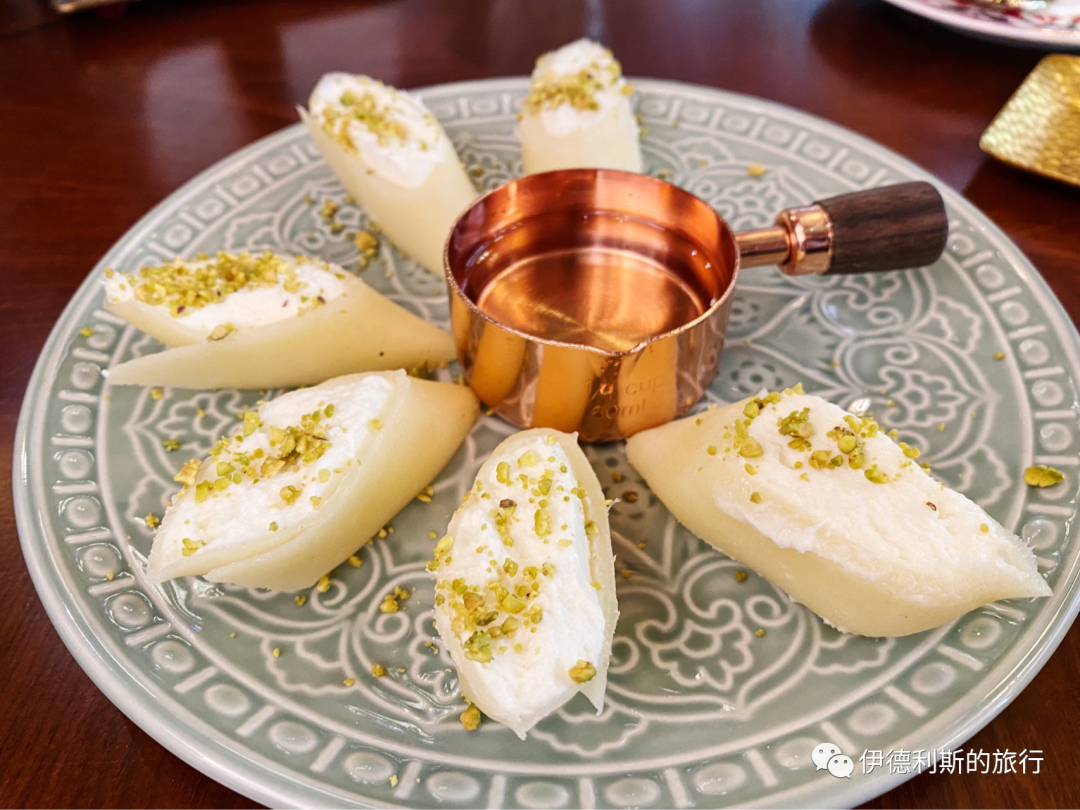
The top recommendation is the cheese roll (Halawa Baljben), also called Halawet el Jibn. It is a signature Syrian treat and likely the only one of its kind in Beijing. This dessert comes from Hama city in west-central Syria. It uses handmade cheese dough and fresh cheese, topped with crushed pistachios, and you can pour syrup over it yourself.
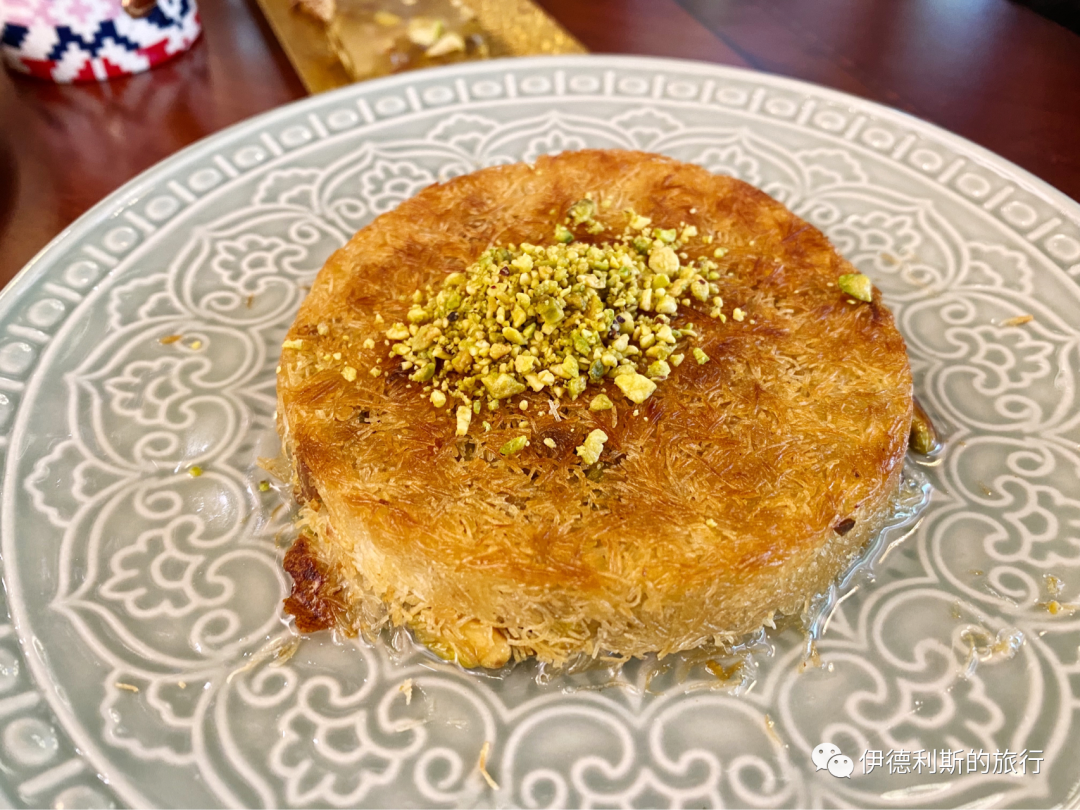
Kunafa (kunafa) is a classic Arab dessert mentioned as early as in One Thousand and One Nights. It is made of buttery crispy pastry, stretchy cheese, and crushed pistachios. Although it has a history of over a thousand years, this fried, stretchy version first appeared in the mid-15th century during the Ottoman period. It then spread from the Arab world to Greece and Turkey under Ottoman rule.
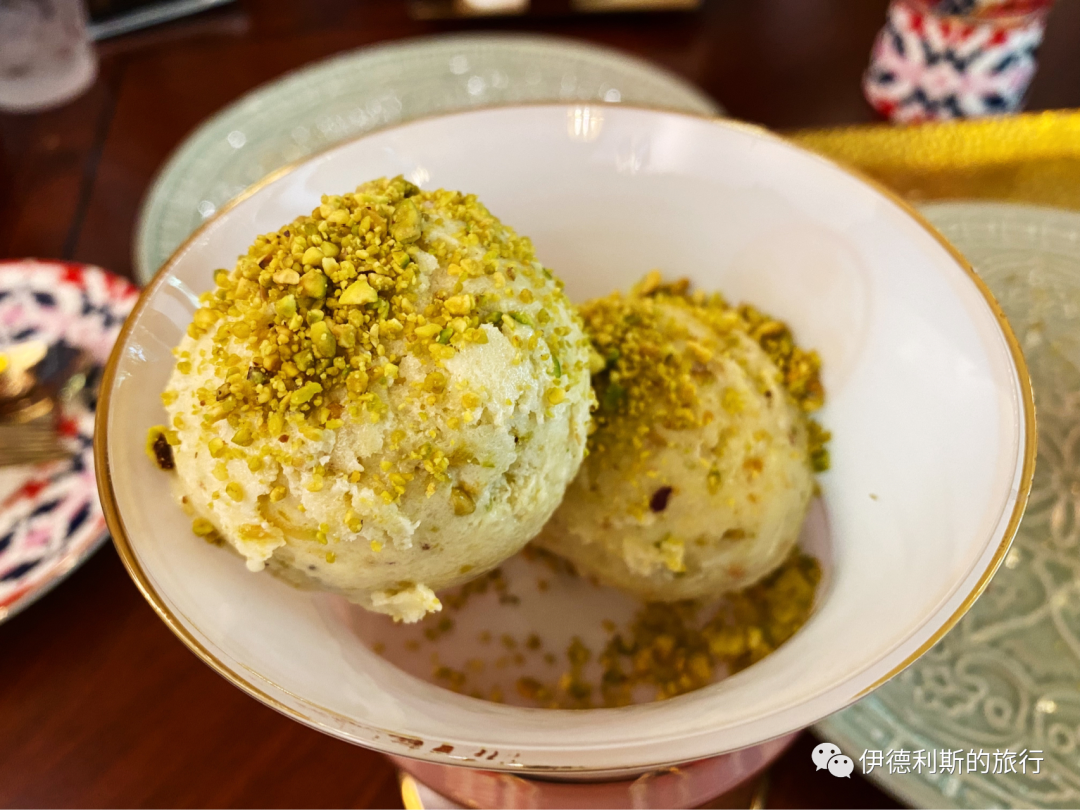
Syrian ice cream (Booza) is a true specialty of the old markets in Damascus. It is famous for being stretchy and chewy, and BRBR recreates this very well. To make Booza, they add classic Ottoman spices like mastic and salep, along with plenty of nuts, to the milk. Mastic is the resin from the mastic tree, which is recorded as "mashitaqi" in the Hui Muslim medical text Huihui Yaofang. Salep (lanjingfen) is a powder made from orchid tubers and was an important spice during the Ottoman Empire. Booza is not made by churning like regular ice cream; instead, it is made by pounding and constantly stretching the mixture in an ice bucket.
The formal Arabic name for Syrian delight (Raha) is "rāḥat al-hulqūm," which means "throat comfort." The origin of this soft candy is uncertain, but it was already popular in Ottoman regions by the 18th century. It is jelly-like and elastic, and usually contains various nuts.
Sesame cookies (Barazek) are known as the most famous dessert in Syria. They are thought to have originated in Damascus, the Syrian capital, during the Ottoman period. They later spread throughout the Levant region, including Lebanon, Jordan, Palestine, and Syria, and you can often see them on the streets of Jerusalem.
Summary: Beijing Halal Food Guide: Syrian Cafe and Damascus-Style Flavors is presented here as a firsthand travel account in clear English, beginning with this scene: I went to the Syrian cafe BRBR in Wudaokou, Beijing, over the weekend, and the flavors felt like a trip back to Damascus during the Ottoman era. The account keeps its focus on Beijing Halal Food, Syrian Cafe, Damascus Food while preserving the names, places, food, and historical details from the Chinese source.
I went to the Syrian cafe BRBR in Wudaokou, Beijing, over the weekend, and the flavors felt like a trip back to Damascus during the Ottoman era. I drank sand-brewed coffee and ate cheese pastry (Kunafa), sweet cheese rolls (Halawa Baljben), sesame cookies (Barazek), pistachio Turkish delight (Raha Alhajaj), and Syrian ice cream (Booza).
Records of coffee drinking in the Arab world date back to the 15th century, when Sufis would drink it to stay alert during their night prayers (qiyam al-layl). In 1555, two merchants from Damascus, Syria, opened the first coffee house of the Ottoman Empire in Istanbul. From then on, coffee houses became an important part of Ottoman culture. Ottoman coffeehouses became important places for sharing news and meeting people. People gathered here to talk about daily events and share their thoughts and feelings. Coffee shops have become a fourth space for people, outside of their homes, workplaces, and the mosque.
Syria sits at the crossroads of Ottoman and Arab cultures, so people drink both Arab and Turkish coffee. Both are strong, unfiltered coffees. The main difference is that Arab coffee is flavored with cardamom and served without sugar.
Sand-boiled coffee is a traditional Ottoman style. It uses a long-handled brass coffee pot called a cezve. The pot sits in a pan filled with hot sand, and you control the brewing temperature by how deep you bury the pot in the sand.
Besides coffee, desserts are a key part of the Ottoman cafe experience.
The top recommendation is the cheese roll (Halawa Baljben), also called Halawet el Jibn. It is a signature Syrian treat and likely the only one of its kind in Beijing. This dessert comes from Hama city in west-central Syria. It uses handmade cheese dough and fresh cheese, topped with crushed pistachios, and you can pour syrup over it yourself.
Kunafa (kunafa) is a classic Arab dessert mentioned as early as in One Thousand and One Nights. It is made of buttery crispy pastry, stretchy cheese, and crushed pistachios. Although it has a history of over a thousand years, this fried, stretchy version first appeared in the mid-15th century during the Ottoman period. It then spread from the Arab world to Greece and Turkey under Ottoman rule.
Syrian ice cream (Booza) is a true specialty of the old markets in Damascus. It is famous for being stretchy and chewy, and BRBR recreates this very well. To make Booza, they add classic Ottoman spices like mastic and salep, along with plenty of nuts, to the milk. Mastic is the resin from the mastic tree, which is recorded as "mashitaqi" in the Hui Muslim medical text Huihui Yaofang. Salep (lanjingfen) is a powder made from orchid tubers and was an important spice during the Ottoman Empire. Booza is not made by churning like regular ice cream; instead, it is made by pounding and constantly stretching the mixture in an ice bucket.
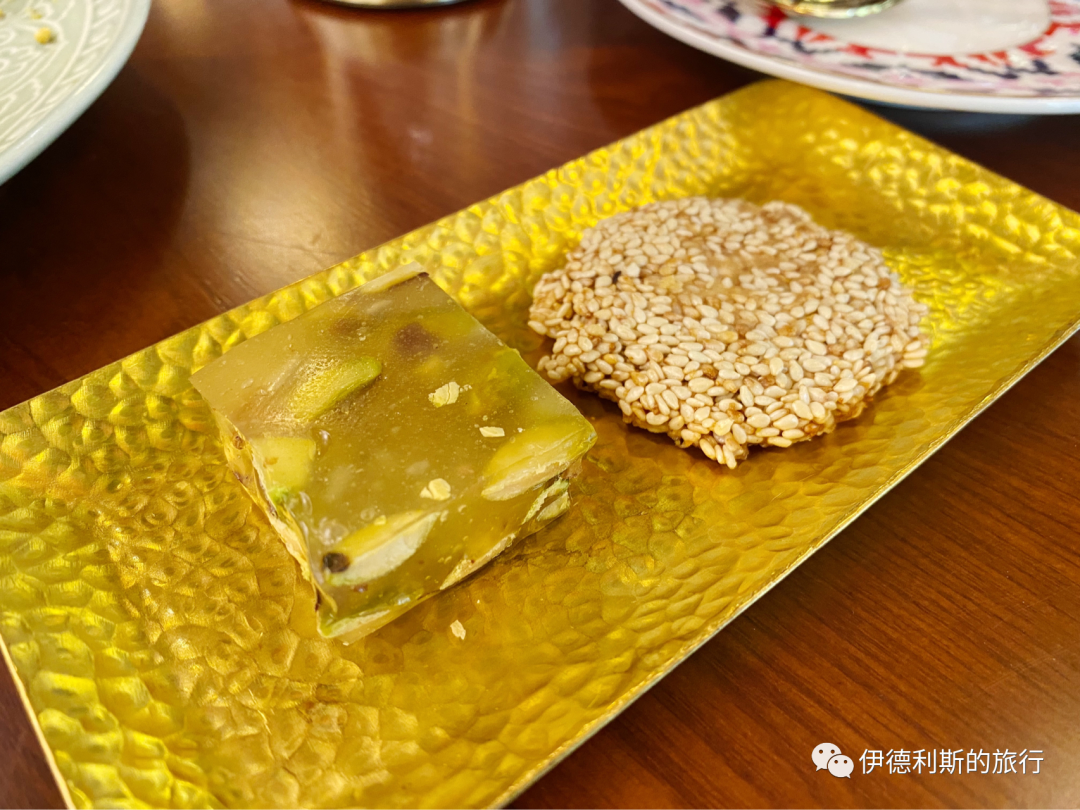
The formal Arabic name for Syrian delight (Raha) is "rāḥat al-hulqūm," which means "throat comfort." The origin of this soft candy is uncertain, but it was already popular in Ottoman regions by the 18th century. It is jelly-like and elastic, and usually contains various nuts.
Sesame cookies (Barazek) are known as the most famous dessert in Syria. They are thought to have originated in Damascus, the Syrian capital, during the Ottoman period. They later spread throughout the Levant region, including Lebanon, Jordan, Palestine, and Syria, and you can often see them on the streets of Jerusalem.
Beijing Halal Food Guide: Syrian Cafe and Damascus-Style Flavors
Articles • ali2007fr posted the article • 0 comments • 167 views • 2026-05-18 06:54
Reposted from the web
Summary: Beijing Halal Food Guide: Syrian Cafe and Damascus-Style Flavors is presented here as a firsthand travel account in clear English, beginning with this scene: I went to the Syrian cafe BRBR in Wudaokou, Beijing, over the weekend, and the flavors felt like a trip back to Damascus during the Ottoman era. The account keeps its focus on Beijing Halal Food, Syrian Cafe, Damascus Food while preserving the names, places, food, and historical details from the Chinese source.
I went to the Syrian cafe BRBR in Wudaokou, Beijing, over the weekend, and the flavors felt like a trip back to Damascus during the Ottoman era. I drank sand-brewed coffee and ate cheese pastry (Kunafa), sweet cheese rolls (Halawa Baljben), sesame cookies (Barazek), pistachio Turkish delight (Raha Alhajaj), and Syrian ice cream (Booza).
Records of coffee drinking in the Arab world date back to the 15th century, when Sufis would drink it to stay alert during their night prayers (qiyam al-layl). In 1555, two merchants from Damascus, Syria, opened the first coffee house of the Ottoman Empire in Istanbul. From then on, coffee houses became an important part of Ottoman culture. Ottoman coffeehouses became important places for sharing news and meeting people. People gathered here to talk about daily events and share their thoughts and feelings. Coffee shops have become a fourth space for people, outside of their homes, workplaces, and the mosque.
Syria sits at the crossroads of Ottoman and Arab cultures, so people drink both Arab and Turkish coffee. Both are strong, unfiltered coffees. The main difference is that Arab coffee is flavored with cardamom and served without sugar.
Sand-boiled coffee is a traditional Ottoman style. It uses a long-handled brass coffee pot called a cezve. The pot sits in a pan filled with hot sand, and you control the brewing temperature by how deep you bury the pot in the sand.
Besides coffee, desserts are a key part of the Ottoman cafe experience.
The top recommendation is the cheese roll (Halawa Baljben), also called Halawet el Jibn. It is a signature Syrian treat and likely the only one of its kind in Beijing. This dessert comes from Hama city in west-central Syria. It uses handmade cheese dough and fresh cheese, topped with crushed pistachios, and you can pour syrup over it yourself.
Kunafa (kunafa) is a classic Arab dessert mentioned as early as in One Thousand and One Nights. It is made of buttery crispy pastry, stretchy cheese, and crushed pistachios. Although it has a history of over a thousand years, this fried, stretchy version first appeared in the mid-15th century during the Ottoman period. It then spread from the Arab world to Greece and Turkey under Ottoman rule.
Syrian ice cream (Booza) is a true specialty of the old markets in Damascus. It is famous for being stretchy and chewy, and BRBR recreates this very well. To make Booza, they add classic Ottoman spices like mastic and salep, along with plenty of nuts, to the milk. Mastic is the resin from the mastic tree, which is recorded as "mashitaqi" in the Hui Muslim medical text Huihui Yaofang. Salep (lanjingfen) is a powder made from orchid tubers and was an important spice during the Ottoman Empire. Booza is not made by churning like regular ice cream; instead, it is made by pounding and constantly stretching the mixture in an ice bucket.
The formal Arabic name for Syrian delight (Raha) is "rāḥat al-hulqūm," which means "throat comfort." The origin of this soft candy is uncertain, but it was already popular in Ottoman regions by the 18th century. It is jelly-like and elastic, and usually contains various nuts.
Sesame cookies (Barazek) are known as the most famous dessert in Syria. They are thought to have originated in Damascus, the Syrian capital, during the Ottoman period. They later spread throughout the Levant region, including Lebanon, Jordan, Palestine, and Syria, and you can often see them on the streets of Jerusalem. view all
Summary: Beijing Halal Food Guide: Syrian Cafe and Damascus-Style Flavors is presented here as a firsthand travel account in clear English, beginning with this scene: I went to the Syrian cafe BRBR in Wudaokou, Beijing, over the weekend, and the flavors felt like a trip back to Damascus during the Ottoman era. The account keeps its focus on Beijing Halal Food, Syrian Cafe, Damascus Food while preserving the names, places, food, and historical details from the Chinese source.
I went to the Syrian cafe BRBR in Wudaokou, Beijing, over the weekend, and the flavors felt like a trip back to Damascus during the Ottoman era. I drank sand-brewed coffee and ate cheese pastry (Kunafa), sweet cheese rolls (Halawa Baljben), sesame cookies (Barazek), pistachio Turkish delight (Raha Alhajaj), and Syrian ice cream (Booza).
Records of coffee drinking in the Arab world date back to the 15th century, when Sufis would drink it to stay alert during their night prayers (qiyam al-layl). In 1555, two merchants from Damascus, Syria, opened the first coffee house of the Ottoman Empire in Istanbul. From then on, coffee houses became an important part of Ottoman culture. Ottoman coffeehouses became important places for sharing news and meeting people. People gathered here to talk about daily events and share their thoughts and feelings. Coffee shops have become a fourth space for people, outside of their homes, workplaces, and the mosque.
Syria sits at the crossroads of Ottoman and Arab cultures, so people drink both Arab and Turkish coffee. Both are strong, unfiltered coffees. The main difference is that Arab coffee is flavored with cardamom and served without sugar.
Sand-boiled coffee is a traditional Ottoman style. It uses a long-handled brass coffee pot called a cezve. The pot sits in a pan filled with hot sand, and you control the brewing temperature by how deep you bury the pot in the sand.
Besides coffee, desserts are a key part of the Ottoman cafe experience.
The top recommendation is the cheese roll (Halawa Baljben), also called Halawet el Jibn. It is a signature Syrian treat and likely the only one of its kind in Beijing. This dessert comes from Hama city in west-central Syria. It uses handmade cheese dough and fresh cheese, topped with crushed pistachios, and you can pour syrup over it yourself.
Kunafa (kunafa) is a classic Arab dessert mentioned as early as in One Thousand and One Nights. It is made of buttery crispy pastry, stretchy cheese, and crushed pistachios. Although it has a history of over a thousand years, this fried, stretchy version first appeared in the mid-15th century during the Ottoman period. It then spread from the Arab world to Greece and Turkey under Ottoman rule.
Syrian ice cream (Booza) is a true specialty of the old markets in Damascus. It is famous for being stretchy and chewy, and BRBR recreates this very well. To make Booza, they add classic Ottoman spices like mastic and salep, along with plenty of nuts, to the milk. Mastic is the resin from the mastic tree, which is recorded as "mashitaqi" in the Hui Muslim medical text Huihui Yaofang. Salep (lanjingfen) is a powder made from orchid tubers and was an important spice during the Ottoman Empire. Booza is not made by churning like regular ice cream; instead, it is made by pounding and constantly stretching the mixture in an ice bucket.
The formal Arabic name for Syrian delight (Raha) is "rāḥat al-hulqūm," which means "throat comfort." The origin of this soft candy is uncertain, but it was already popular in Ottoman regions by the 18th century. It is jelly-like and elastic, and usually contains various nuts.
Sesame cookies (Barazek) are known as the most famous dessert in Syria. They are thought to have originated in Damascus, the Syrian capital, during the Ottoman period. They later spread throughout the Levant region, including Lebanon, Jordan, Palestine, and Syria, and you can often see them on the streets of Jerusalem. view all
Reposted from the web
Summary: Beijing Halal Food Guide: Syrian Cafe and Damascus-Style Flavors is presented here as a firsthand travel account in clear English, beginning with this scene: I went to the Syrian cafe BRBR in Wudaokou, Beijing, over the weekend, and the flavors felt like a trip back to Damascus during the Ottoman era. The account keeps its focus on Beijing Halal Food, Syrian Cafe, Damascus Food while preserving the names, places, food, and historical details from the Chinese source.
I went to the Syrian cafe BRBR in Wudaokou, Beijing, over the weekend, and the flavors felt like a trip back to Damascus during the Ottoman era. I drank sand-brewed coffee and ate cheese pastry (Kunafa), sweet cheese rolls (Halawa Baljben), sesame cookies (Barazek), pistachio Turkish delight (Raha Alhajaj), and Syrian ice cream (Booza).
Records of coffee drinking in the Arab world date back to the 15th century, when Sufis would drink it to stay alert during their night prayers (qiyam al-layl). In 1555, two merchants from Damascus, Syria, opened the first coffee house of the Ottoman Empire in Istanbul. From then on, coffee houses became an important part of Ottoman culture. Ottoman coffeehouses became important places for sharing news and meeting people. People gathered here to talk about daily events and share their thoughts and feelings. Coffee shops have become a fourth space for people, outside of their homes, workplaces, and the mosque.
Syria sits at the crossroads of Ottoman and Arab cultures, so people drink both Arab and Turkish coffee. Both are strong, unfiltered coffees. The main difference is that Arab coffee is flavored with cardamom and served without sugar.
Sand-boiled coffee is a traditional Ottoman style. It uses a long-handled brass coffee pot called a cezve. The pot sits in a pan filled with hot sand, and you control the brewing temperature by how deep you bury the pot in the sand.
Besides coffee, desserts are a key part of the Ottoman cafe experience.
The top recommendation is the cheese roll (Halawa Baljben), also called Halawet el Jibn. It is a signature Syrian treat and likely the only one of its kind in Beijing. This dessert comes from Hama city in west-central Syria. It uses handmade cheese dough and fresh cheese, topped with crushed pistachios, and you can pour syrup over it yourself.
Kunafa (kunafa) is a classic Arab dessert mentioned as early as in One Thousand and One Nights. It is made of buttery crispy pastry, stretchy cheese, and crushed pistachios. Although it has a history of over a thousand years, this fried, stretchy version first appeared in the mid-15th century during the Ottoman period. It then spread from the Arab world to Greece and Turkey under Ottoman rule.
Syrian ice cream (Booza) is a true specialty of the old markets in Damascus. It is famous for being stretchy and chewy, and BRBR recreates this very well. To make Booza, they add classic Ottoman spices like mastic and salep, along with plenty of nuts, to the milk. Mastic is the resin from the mastic tree, which is recorded as "mashitaqi" in the Hui Muslim medical text Huihui Yaofang. Salep (lanjingfen) is a powder made from orchid tubers and was an important spice during the Ottoman Empire. Booza is not made by churning like regular ice cream; instead, it is made by pounding and constantly stretching the mixture in an ice bucket.
The formal Arabic name for Syrian delight (Raha) is "rāḥat al-hulqūm," which means "throat comfort." The origin of this soft candy is uncertain, but it was already popular in Ottoman regions by the 18th century. It is jelly-like and elastic, and usually contains various nuts.
Sesame cookies (Barazek) are known as the most famous dessert in Syria. They are thought to have originated in Damascus, the Syrian capital, during the Ottoman period. They later spread throughout the Levant region, including Lebanon, Jordan, Palestine, and Syria, and you can often see them on the streets of Jerusalem.
Summary: Beijing Halal Food Guide: Syrian Cafe and Damascus-Style Flavors is presented here as a firsthand travel account in clear English, beginning with this scene: I went to the Syrian cafe BRBR in Wudaokou, Beijing, over the weekend, and the flavors felt like a trip back to Damascus during the Ottoman era. The account keeps its focus on Beijing Halal Food, Syrian Cafe, Damascus Food while preserving the names, places, food, and historical details from the Chinese source.
I went to the Syrian cafe BRBR in Wudaokou, Beijing, over the weekend, and the flavors felt like a trip back to Damascus during the Ottoman era. I drank sand-brewed coffee and ate cheese pastry (Kunafa), sweet cheese rolls (Halawa Baljben), sesame cookies (Barazek), pistachio Turkish delight (Raha Alhajaj), and Syrian ice cream (Booza).
Records of coffee drinking in the Arab world date back to the 15th century, when Sufis would drink it to stay alert during their night prayers (qiyam al-layl). In 1555, two merchants from Damascus, Syria, opened the first coffee house of the Ottoman Empire in Istanbul. From then on, coffee houses became an important part of Ottoman culture. Ottoman coffeehouses became important places for sharing news and meeting people. People gathered here to talk about daily events and share their thoughts and feelings. Coffee shops have become a fourth space for people, outside of their homes, workplaces, and the mosque.
Syria sits at the crossroads of Ottoman and Arab cultures, so people drink both Arab and Turkish coffee. Both are strong, unfiltered coffees. The main difference is that Arab coffee is flavored with cardamom and served without sugar.
Sand-boiled coffee is a traditional Ottoman style. It uses a long-handled brass coffee pot called a cezve. The pot sits in a pan filled with hot sand, and you control the brewing temperature by how deep you bury the pot in the sand.
Besides coffee, desserts are a key part of the Ottoman cafe experience.
The top recommendation is the cheese roll (Halawa Baljben), also called Halawet el Jibn. It is a signature Syrian treat and likely the only one of its kind in Beijing. This dessert comes from Hama city in west-central Syria. It uses handmade cheese dough and fresh cheese, topped with crushed pistachios, and you can pour syrup over it yourself.
Kunafa (kunafa) is a classic Arab dessert mentioned as early as in One Thousand and One Nights. It is made of buttery crispy pastry, stretchy cheese, and crushed pistachios. Although it has a history of over a thousand years, this fried, stretchy version first appeared in the mid-15th century during the Ottoman period. It then spread from the Arab world to Greece and Turkey under Ottoman rule.
Syrian ice cream (Booza) is a true specialty of the old markets in Damascus. It is famous for being stretchy and chewy, and BRBR recreates this very well. To make Booza, they add classic Ottoman spices like mastic and salep, along with plenty of nuts, to the milk. Mastic is the resin from the mastic tree, which is recorded as "mashitaqi" in the Hui Muslim medical text Huihui Yaofang. Salep (lanjingfen) is a powder made from orchid tubers and was an important spice during the Ottoman Empire. Booza is not made by churning like regular ice cream; instead, it is made by pounding and constantly stretching the mixture in an ice bucket.
The formal Arabic name for Syrian delight (Raha) is "rāḥat al-hulqūm," which means "throat comfort." The origin of this soft candy is uncertain, but it was already popular in Ottoman regions by the 18th century. It is jelly-like and elastic, and usually contains various nuts.
Sesame cookies (Barazek) are known as the most famous dessert in Syria. They are thought to have originated in Damascus, the Syrian capital, during the Ottoman period. They later spread throughout the Levant region, including Lebanon, Jordan, Palestine, and Syria, and you can often see them on the streets of Jerusalem.