

Taiyuan Mosques
Taiyuan Halal Travel Guide: Historic Mosques and Muslim Food
Articles • ali2007fr posted the article • 0 comments • 184 views • 2026-05-17 06:25
Reposted from the web
Summary: This travel note introduces Taiyuan Halal Travel Guide: Historic Mosques and Muslim Food. I went to Taiyuan for a weekend of sightseeing and eating in early September 2018, arriving in 3 hours by high-speed train from Beijing. It is useful for readers interested in Taiyuan Mosques, Halal Food, Muslim Heritage.
I went to Taiyuan for a weekend of sightseeing and eating in early September 2018, arriving in 3 hours by high-speed train from Beijing. What attracted me most in Taiyuan was the main prayer hall of the mosque from the Ming Dynasty; the mihrab (niche in the wall indicating the direction of Mecca) and minbar (pulpit) inside are both original and very beautiful. In addition, there are many halal restaurants in Taiyuan, ranging from large dining halls to small snack shops, and whether it is lamb soup, shaomai (steamed dumplings), or beef and lamb stir-fries, everything is delicious.
Below, I will share my trip of sightseeing and eating with you all.
I. History of Hui Muslims in Taiyuan
Regarding the history of Hui Muslims in Taiyuan, you can refer to the article "Research on Islam in Taiyuan" by Li Xinghua. The current old city area of Taiyuan was first called Tangming Town, built in 982 (the seventh year of the Taiping Xingguo era of the Song Dynasty), and officially took its shape after expansion in 1376 (the ninth year of the Hongwu era of the Ming Dynasty). Since the Ming and Qing dynasties, the Hui Muslim community in Taiyuan has been located around the South Gate of the old city.
After the Ming Dynasty, Taiyuan gradually formed the "Ten Great Surnames of the Hui," namely the ten surnames: Duo, Luo (some say Ma), Tian, Liang, Li, Jin, Sa, Hai, Dao, and Di. Among them, the Jin surname came to Taiyuan with the army from Nanjing during the Hongwu era of the Ming Dynasty; the Tian surname was transferred to Taiyuan from Jinhua during the Hongwu era (some say they moved to Taiyuan for business from Shandong via Inner Mongolia and settled down); the Duo surname came to Taiyuan for business from Zhending, Jiangsu during the Ming Dynasty; the Ma surname came to Taiyuan for service from Nanjing at the end of the Ming Dynasty; the Liang surname came to Taiyuan for work from Henan during the Yongle era of the Ming Dynasty; the Dao surname came to Taiyuan for work during the Ming Dynasty; the Li surname came to Taiyuan from Henan at the end of the Ming Dynasty; and the Liang surname came to Taiyuan from Nanjing during the Ming Dynasty.
In addition, there are the Yang, Ding, and Ma surnames who came to Taiyuan from the northwest for business and settled down, and the Wen, Ma, and Qiao surnames who moved to Taiyuan from within Shanxi Province.
During the Qing Dynasty, there were over a hundred local Hui Muslim households in Taiyuan, plus more than ten households of Hui Muslims who came from Suiyuan for business, totaling five or six hundred people. After the Zhengtai Railway opened to traffic in 1907, the number of Hui Muslims coming to Taiyuan from Hebei increased significantly, reaching over 1,000 in the 1930s and over 5,100 in the early days of the founding of the People's Republic of China.
According to records, there were once four mosques in Taiyuan's history, among which the Qiao Family Mosque and the Ningxia Mosque were outside the Great South Gate. The record of the Qiao Family Mosque comes from You Cheng's "General Situation of Islam in Taiyuan"; the Qiao Family Mosque had over a hundred households of congregants, all surnamed Qiao, and the ahong (imam) was also surnamed Qiao. The Ningxia Mosque information comes from data provided by Li Dajun, Li Dahong, and Yang Youlin in "Research on Islam in Taiyuan"; the Ningxia Mosque was built 200 years ago, and the congregants were "camel guests" traveling between Ningxia and Taiyuan. Both of these mosques were destroyed along with residential houses in the floods during the Guangxu era of the Qing Dynasty, and currently, neither can be verified.
After the Republic of China, with the operation of the Zhengtai Railway, Hebei Hui Muslims continuously moved to Taiyuan, and the North Mosque was built during the Republican period. By the late Republican period, the North Mosque had taken shape, but it was eventually destroyed. In addition, during the Republican period, there were two women's mosques in Taiyuan, namely the Great South Gate Street Women's Mosque built in 1922 and the Lou'erdi Women's Mosque built at the same time as the North Mosque.
Currently, only one mosque remains in Taiyuan, which is the Taiyuan Mosque.
II. Taiyuan Mosque
The Taiyuan Mosque is located on Niurou Lane (Beef Lane) inside the South Gate. Currently, the mosque's main prayer hall and the Shengxin Tower (minaret) are both Ming Dynasty buildings, which is consistent with the era when the city of Taiyuan took its shape in the Ming Dynasty and Hui Muslims officially settled in Taiyuan.
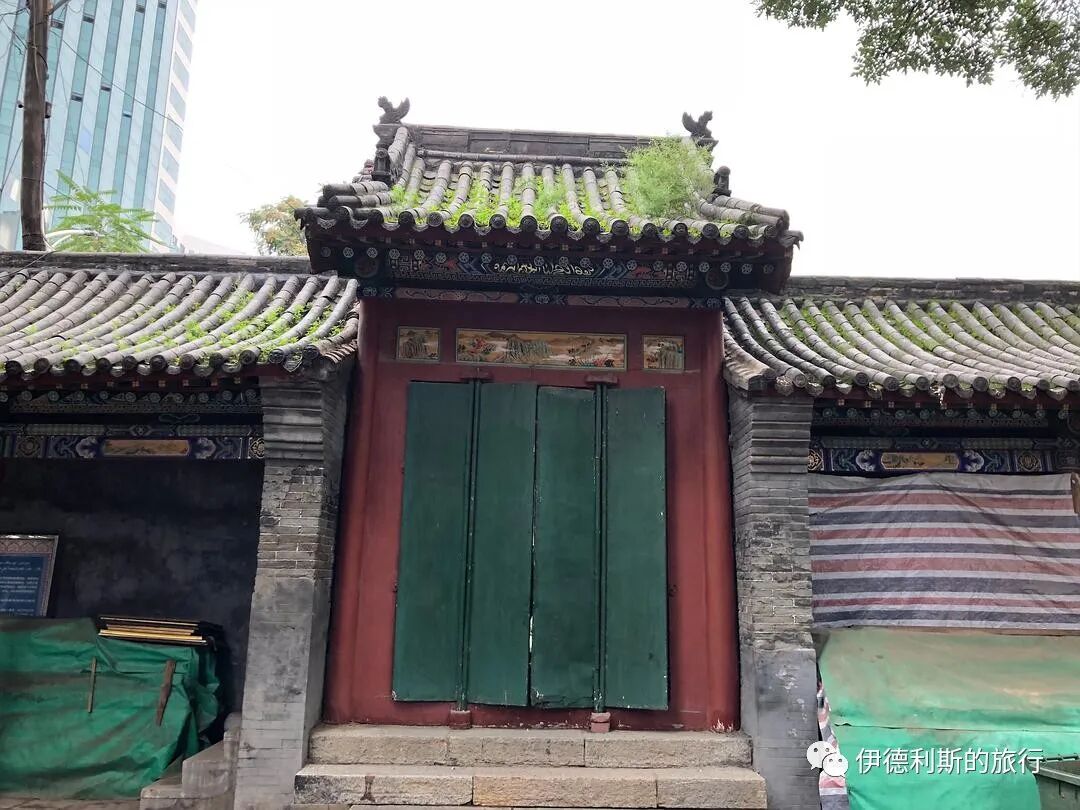
Currently, from west to east, the mosque consists of the main prayer hall, a fire wall, the Shengxin Tower, and the main gate. There are stele pavilions to the north and south of the Shengxin Tower, and side rooms further to the outside. Originally, outside the main gate of the mosque was Niurou Lane, with its back against Great South Gate Street, but later, when Great South Gate Street was widened and renovated, the mosque's moon-viewing tower and the auxiliary courtyard buildings were demolished, and some were converted into shops facing the street. The archway in front of the main gate was moved outside the West Side Gate, and the West Side Gate facing Great South Gate Street thus became the new main gate.
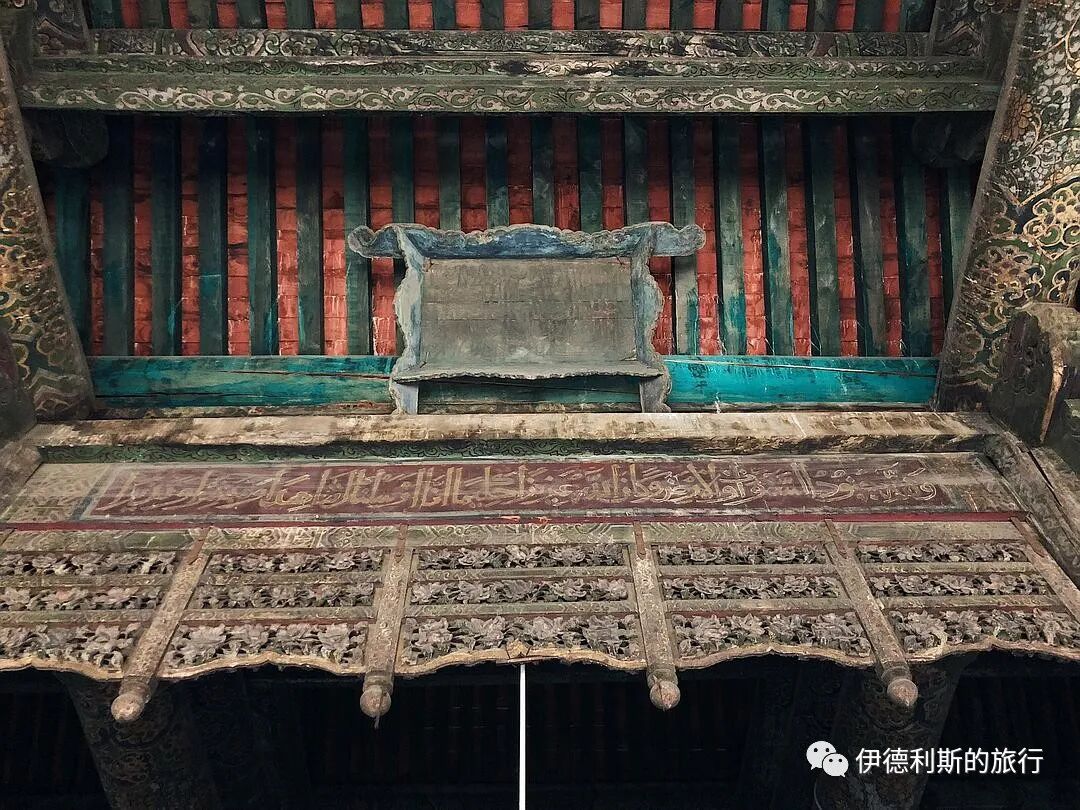
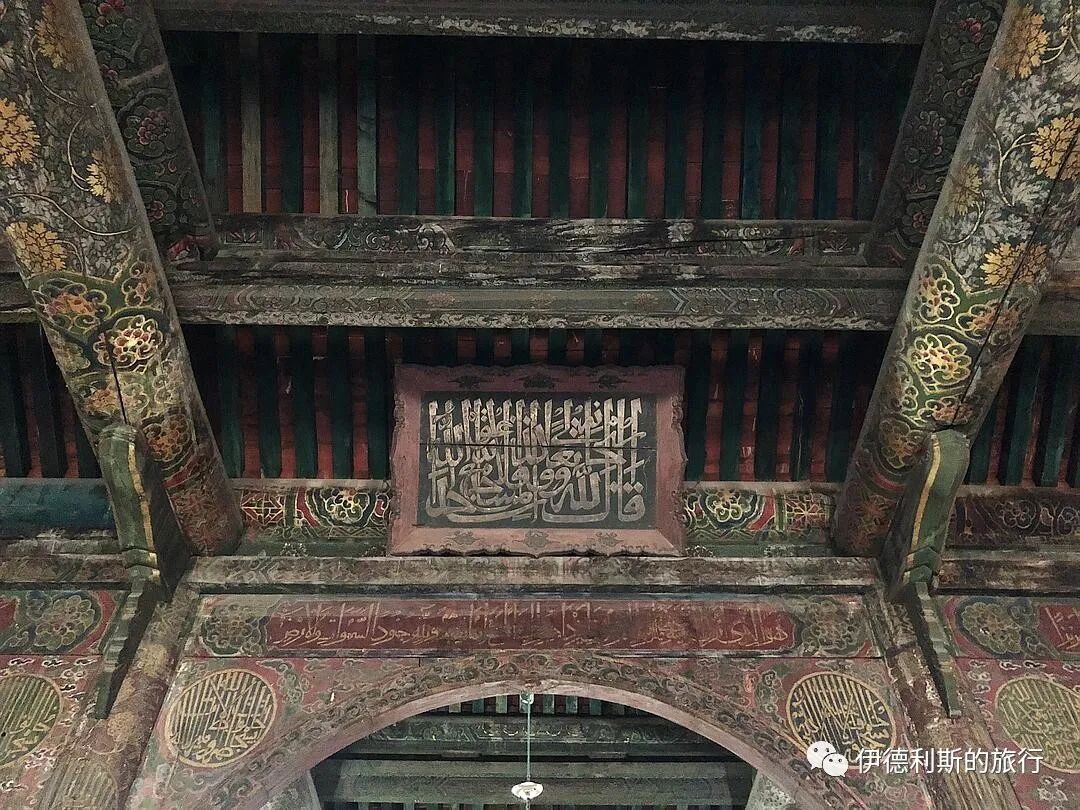
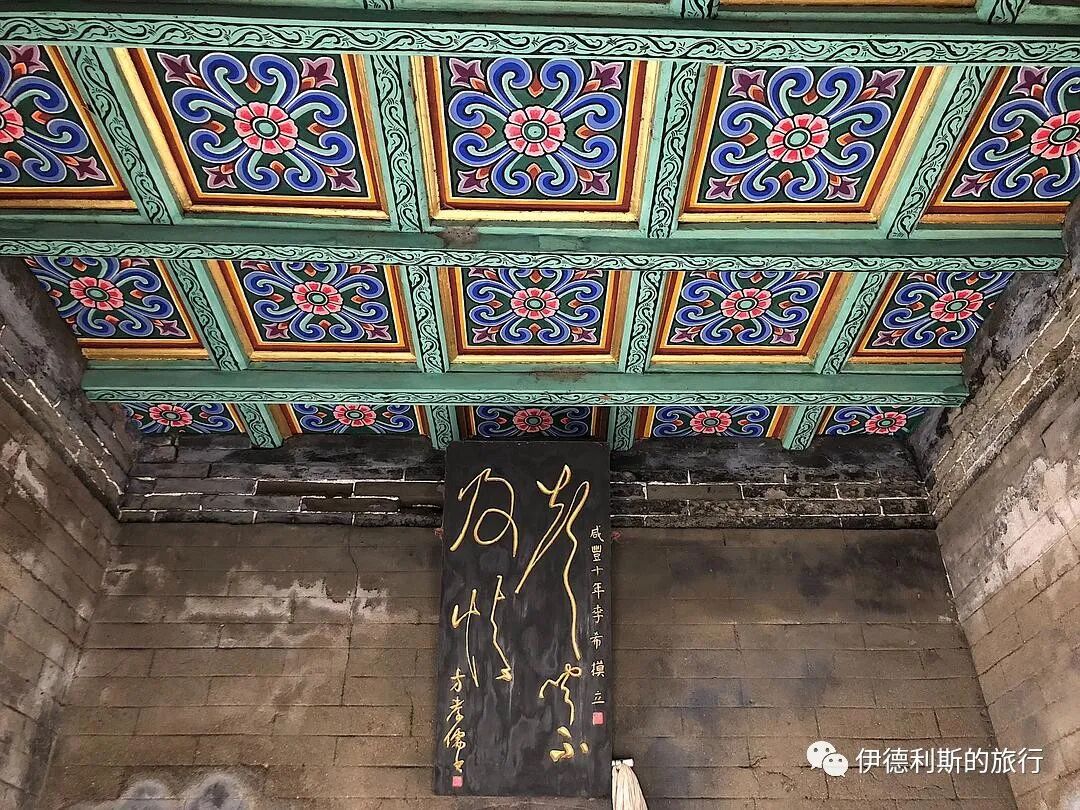
The most important building of the Taiyuan Mosque is the main prayer hall, and the colored paintings on it are very exquisite. The famous architectural historian Liu Zhiping wrote in the book "Chinese Islamic Architecture" after investigating the Taiyuan Mosque in the early 1960s:
The hall does not use dougong (bracket sets), the style is simple and ancient, and the wood is also thick and neat, without inlaying or splicing. The colored paintings on the beams do not use the "hemp-covering and ash-catching" technique, but are painted directly on the wood surface. The central panels of the colored paintings are extra long, and on the panels, many flowers are arranged in a row with very decorative interest, which is different from the general Qing palace-style colored paintings.
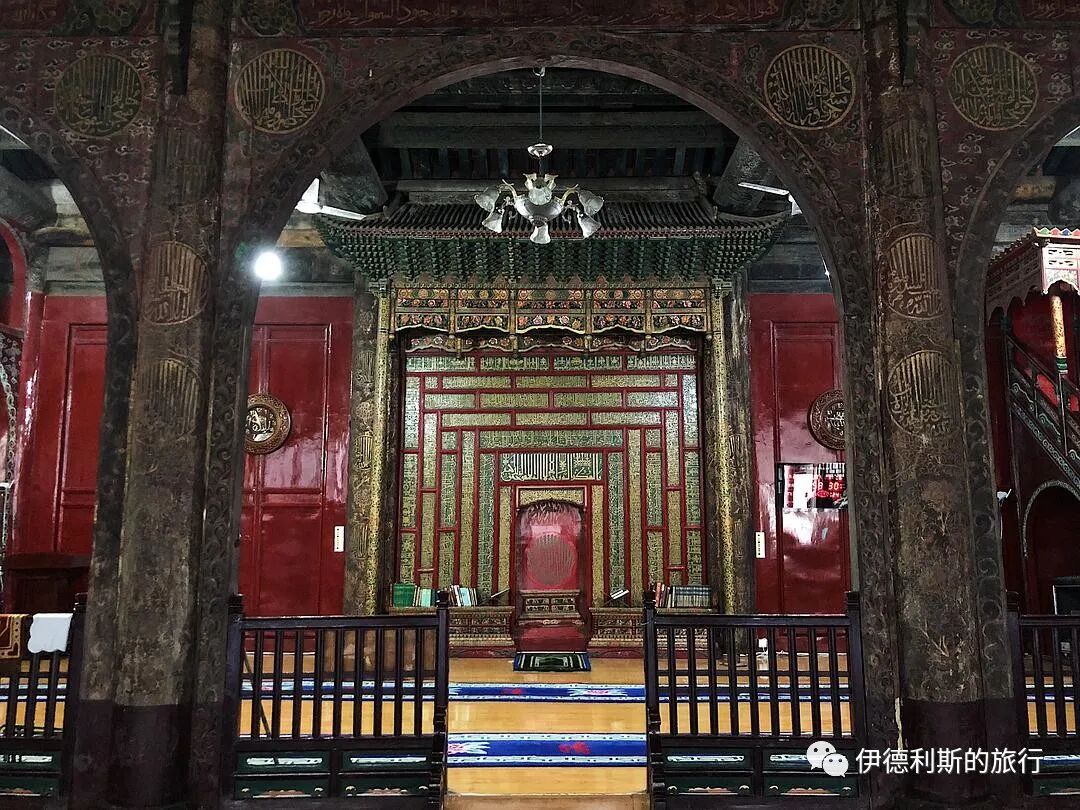
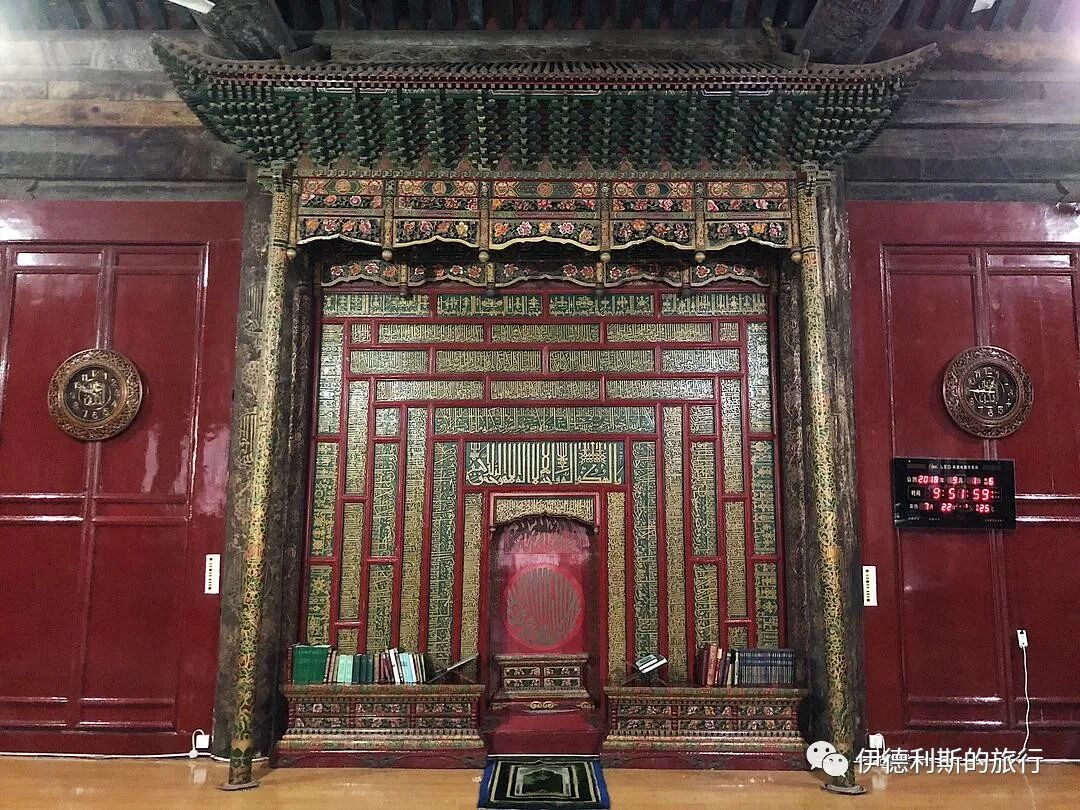
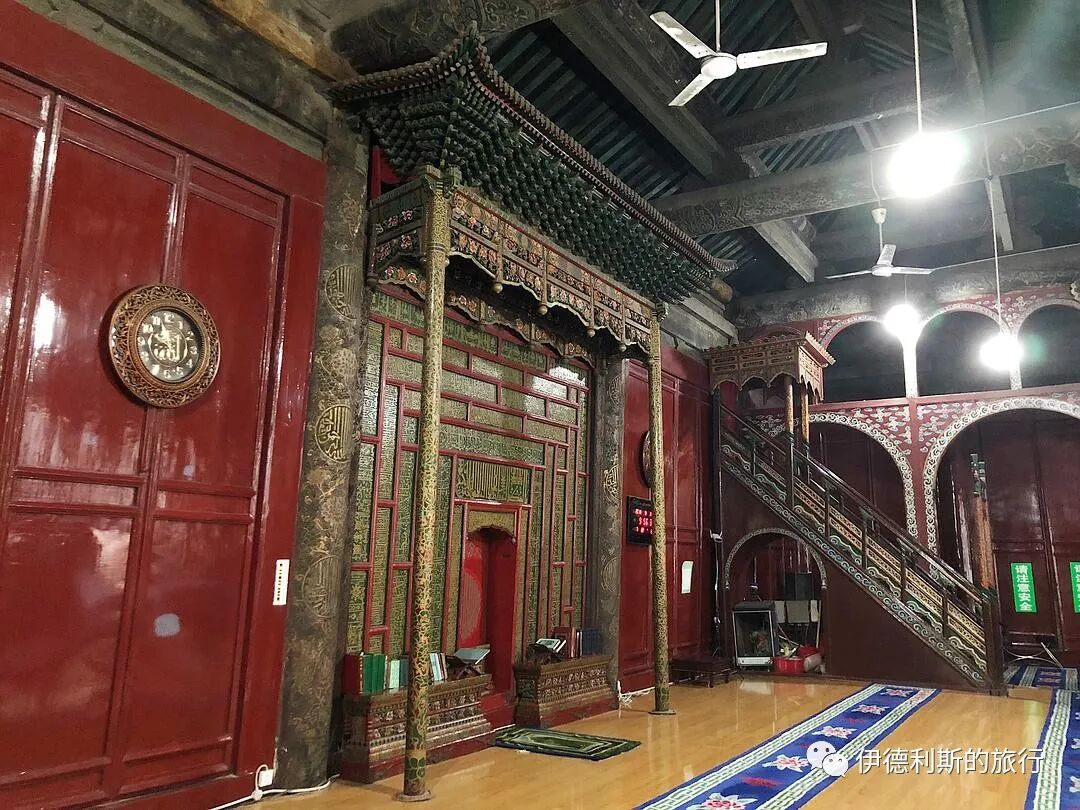
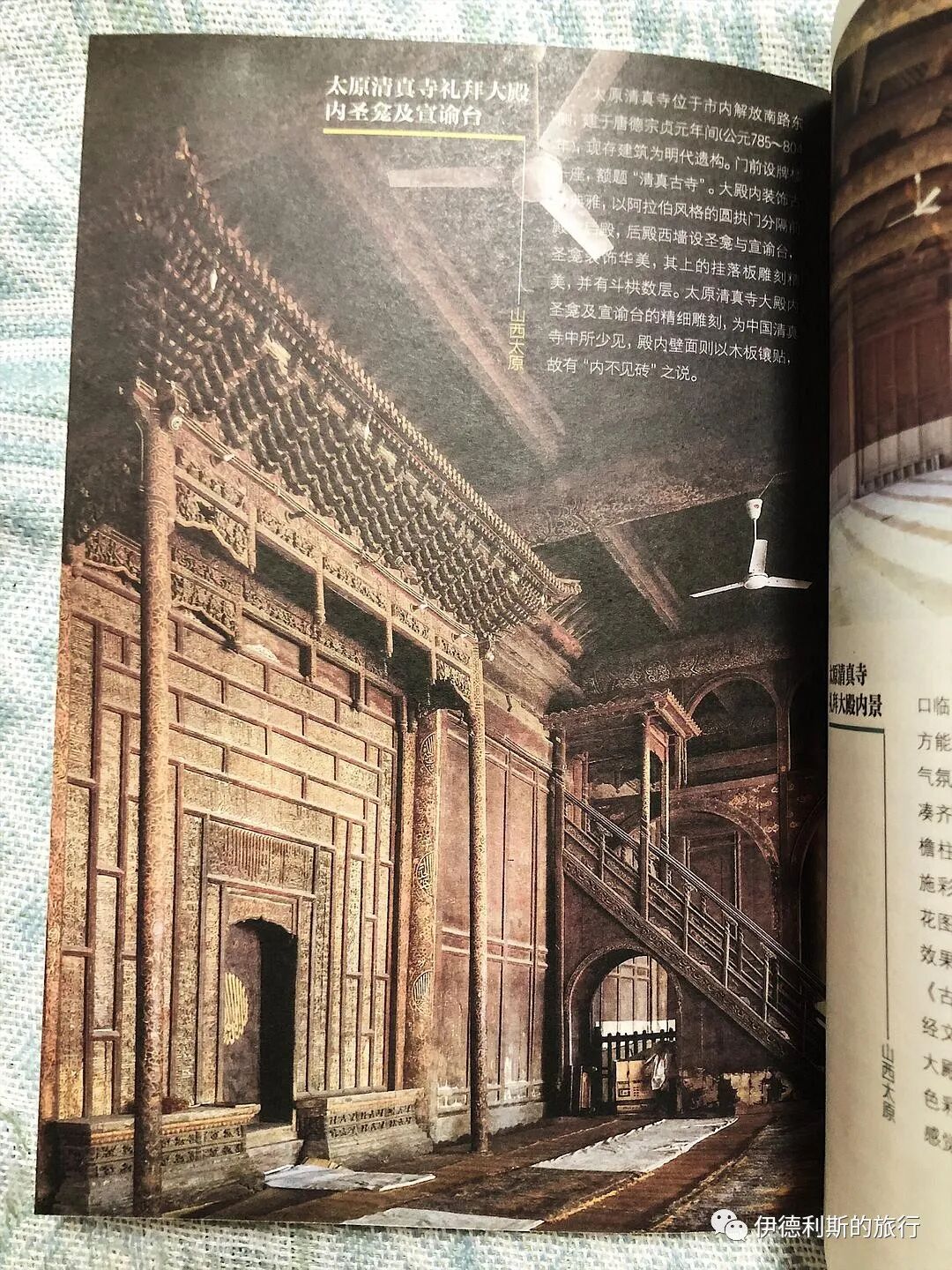
This kind of wood-inlaid mihrab style is very rare.
On the mihrab are some verses from chapters 29 and 30 of the Quran.
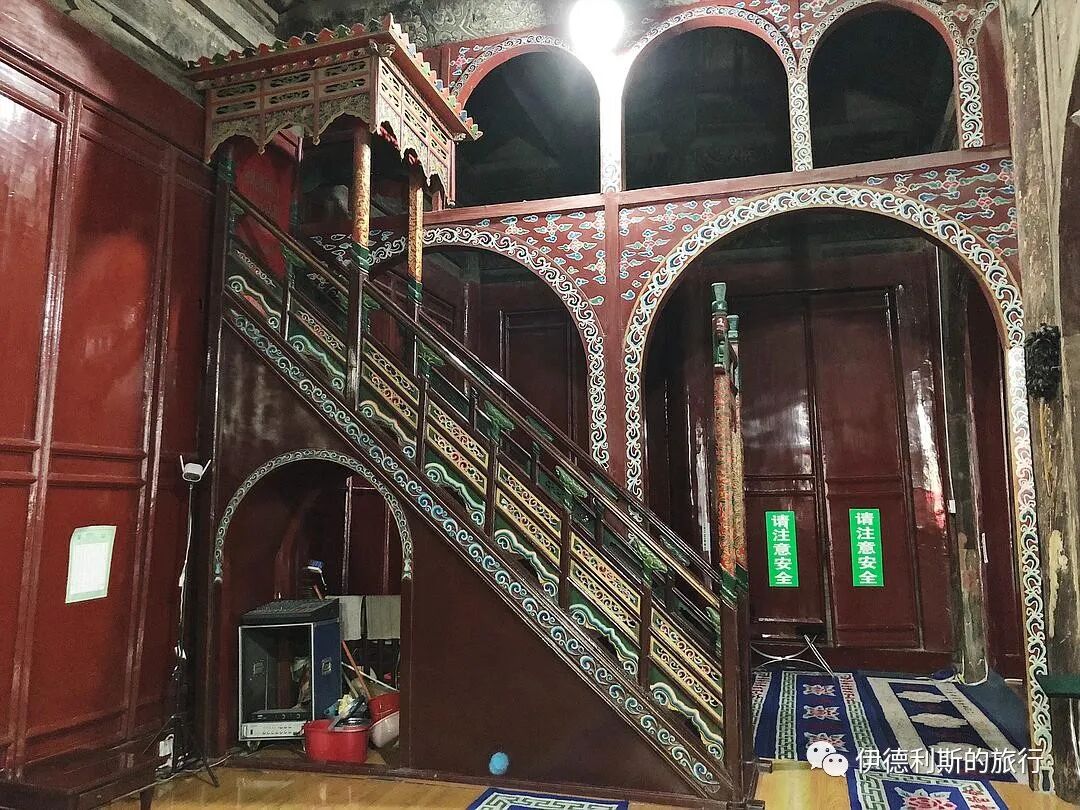
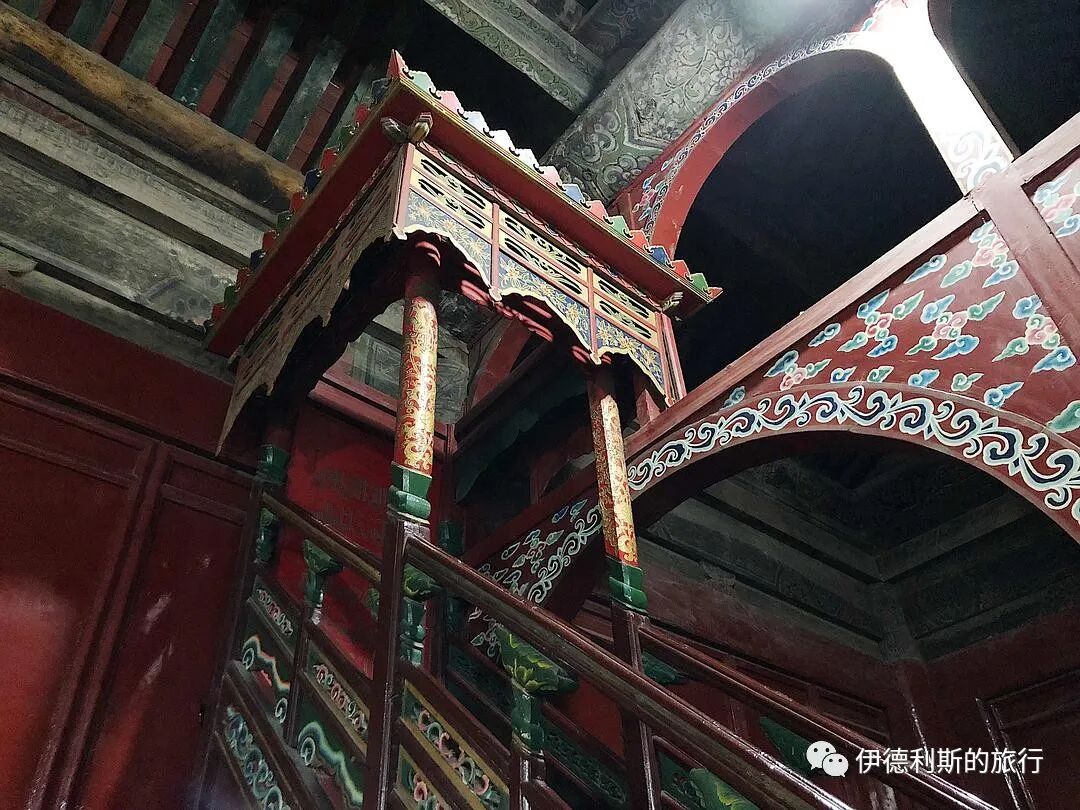
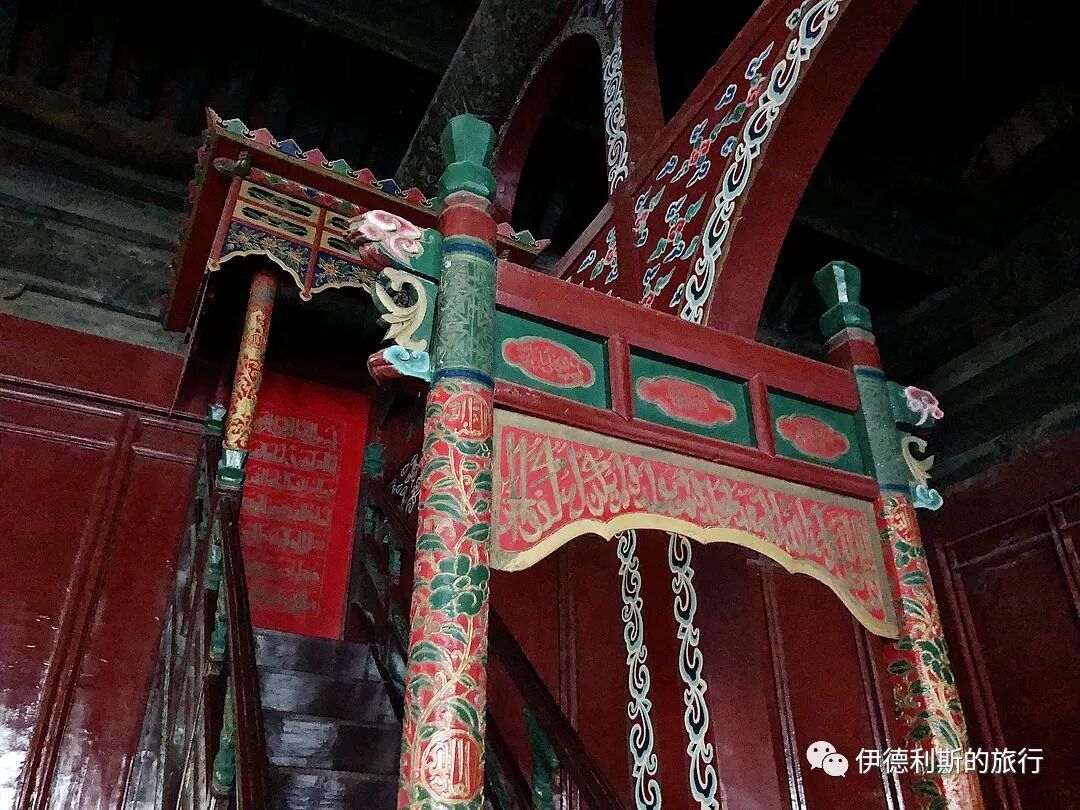
Although the minbar on the north side of the mihrab has been repainted, it is the original piece itself, which is very rare.
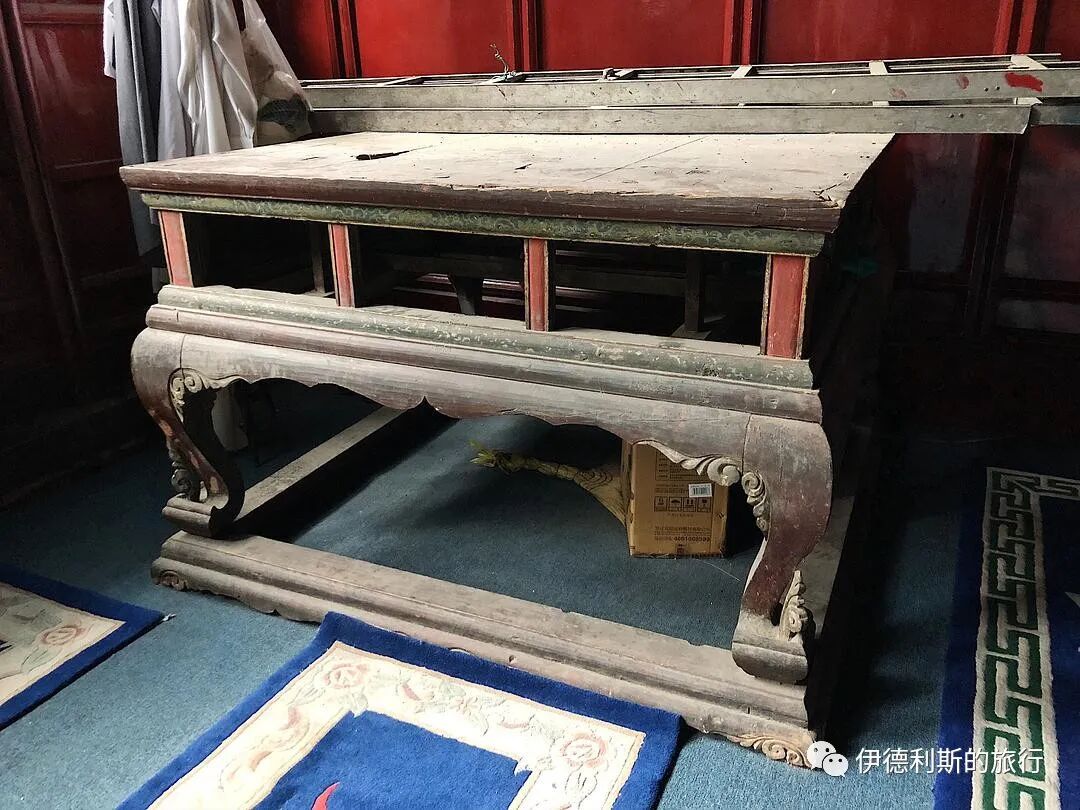
The long-life memorial tablet table inside the main prayer hall is also an original piece.
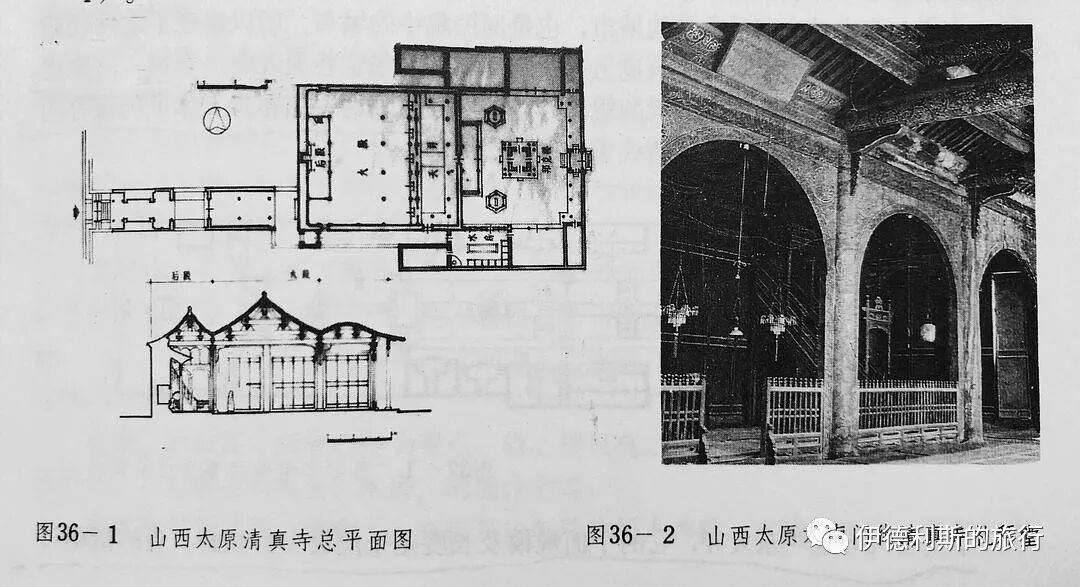
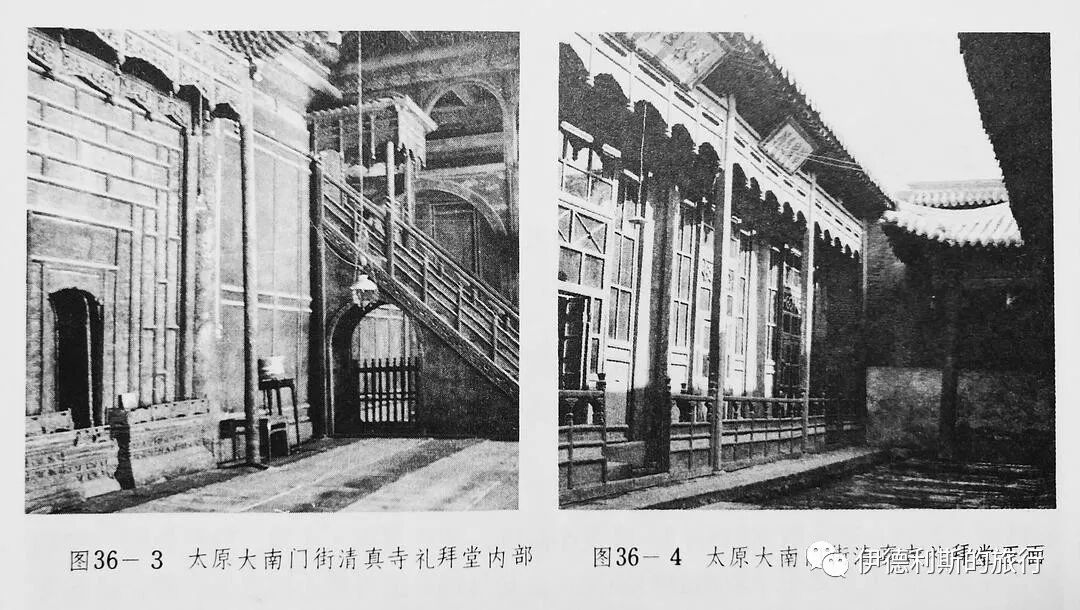
The picture below was taken in the early 1960s by the famous architectural historian Liu Zhiping, who led the Chinese Islamic Architecture Research Group.
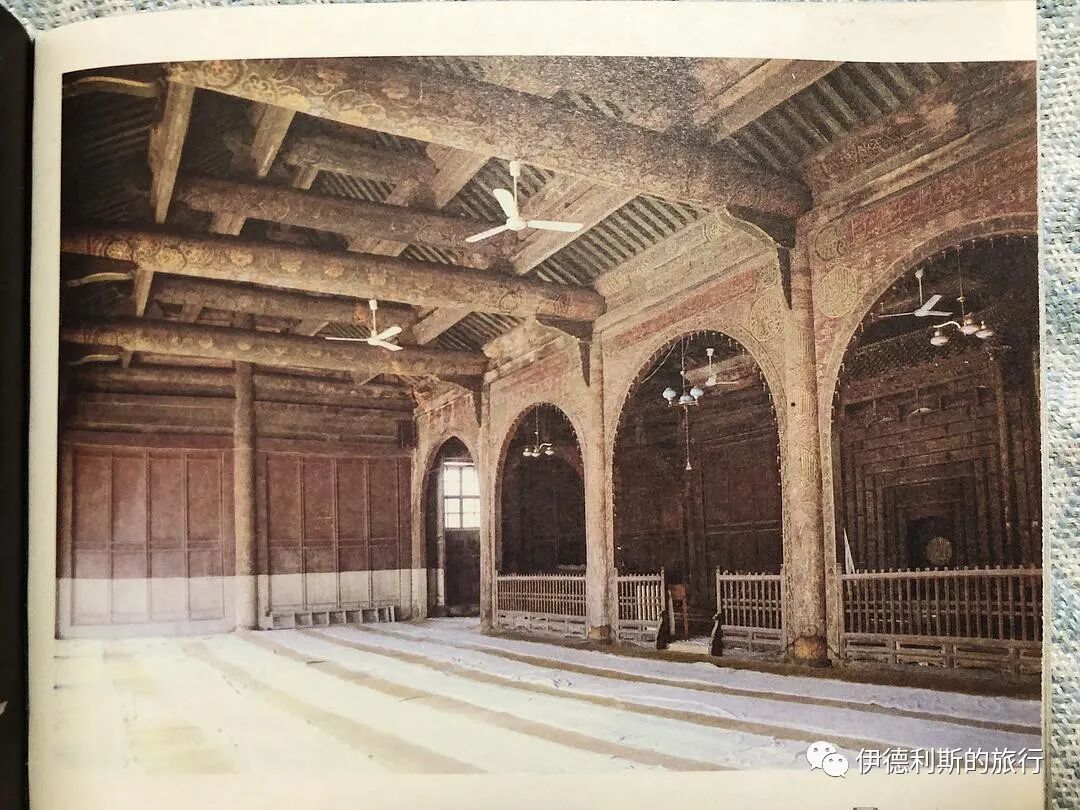
The picture below was taken by the China Architecture and Building Press between 1990 and 1992 for the book "Islamic Architecture."
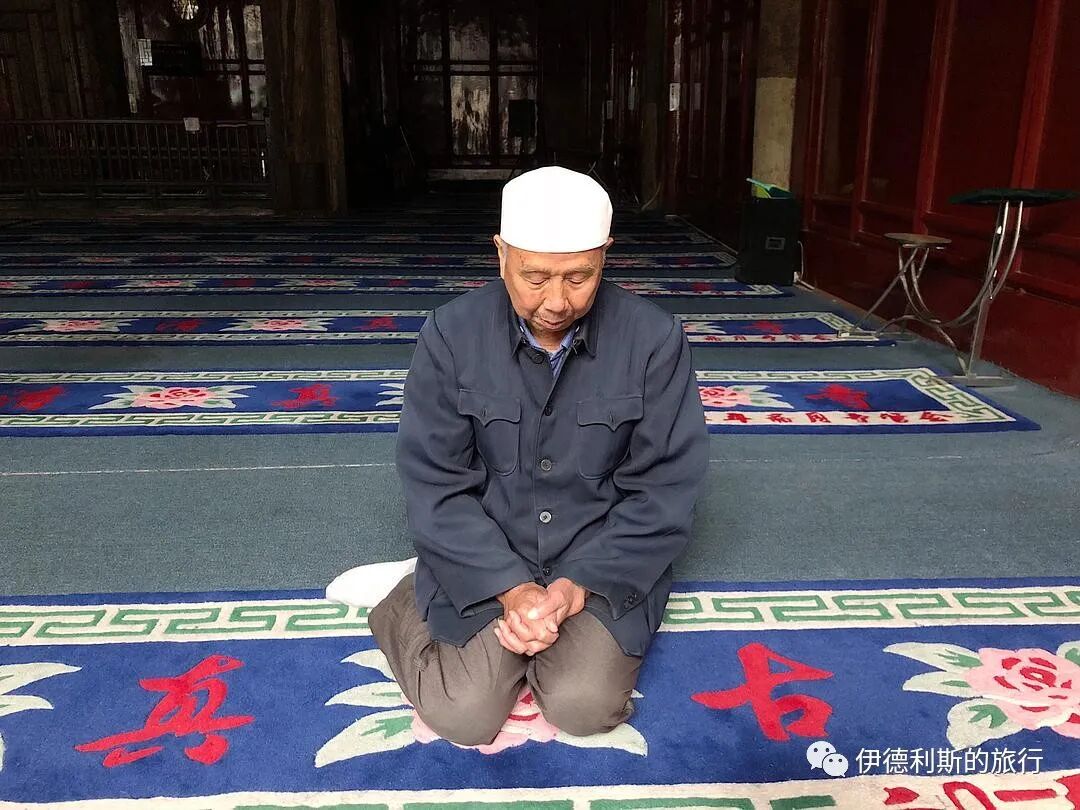
When I went there, Baba Liu in the mosque recited the Peace Dua for me.
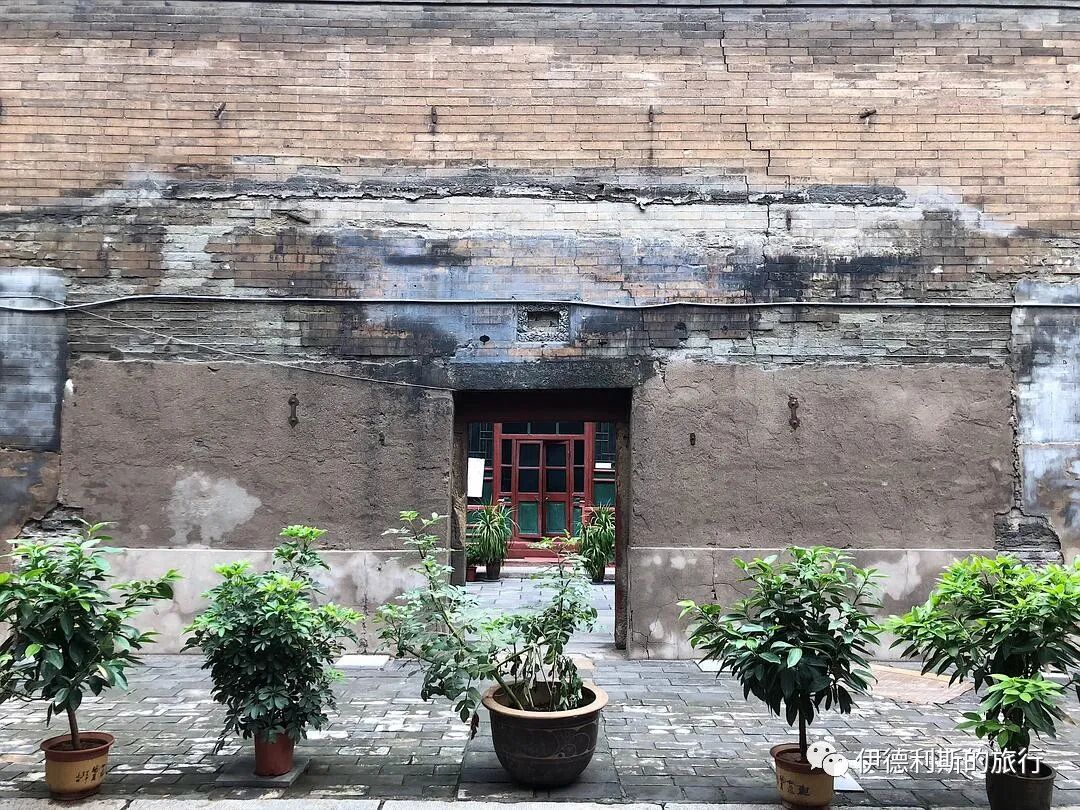
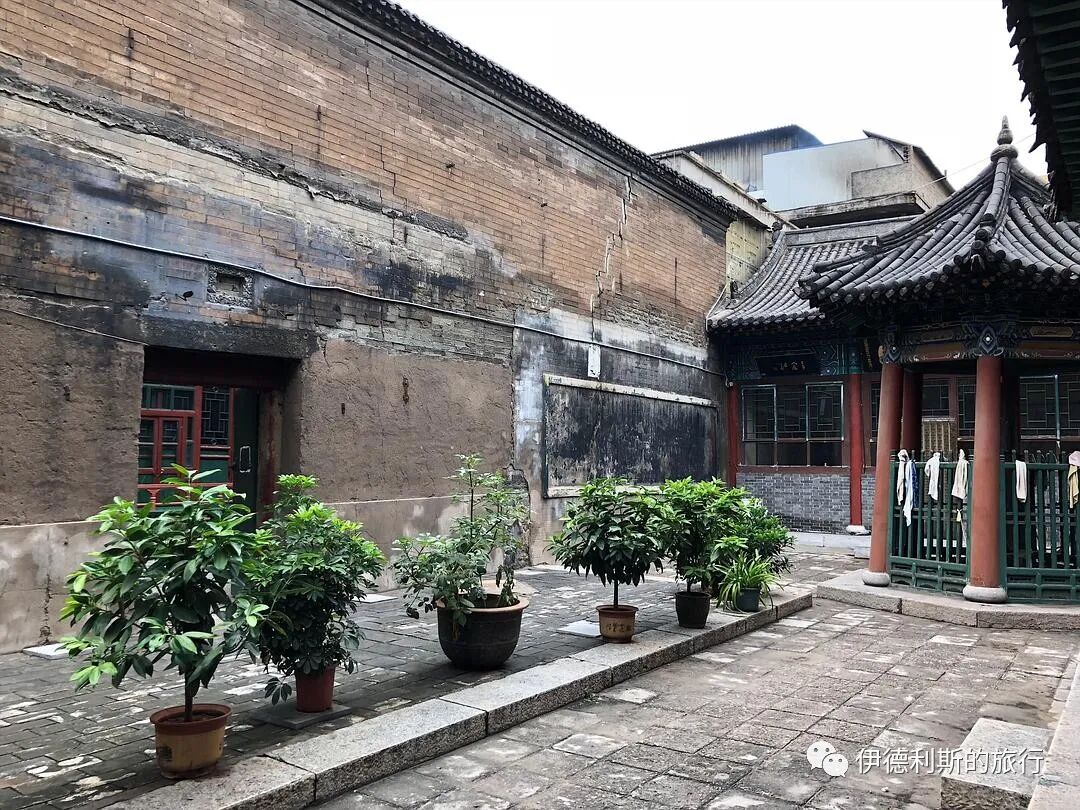
To the east of the main prayer hall is the fire wall, and outside the fire wall, one can see traces of a building that once existed, which is very likely the opposite hall common in mosques.
Outside the fire wall, there are two stele pavilions.
On the stele is the "Hundred-Character Holy Praise" carved in 1868 (the seventh year of the Tongzhi era), and the other side is carved with calligraphy by Huang Tingjian and others from 1881 (the seventh year of the Guangxu era).
In the middle of the stele pavilions is the Shengxin Tower, which is the minaret.
The easternmost side is the original main gate of the mosque.
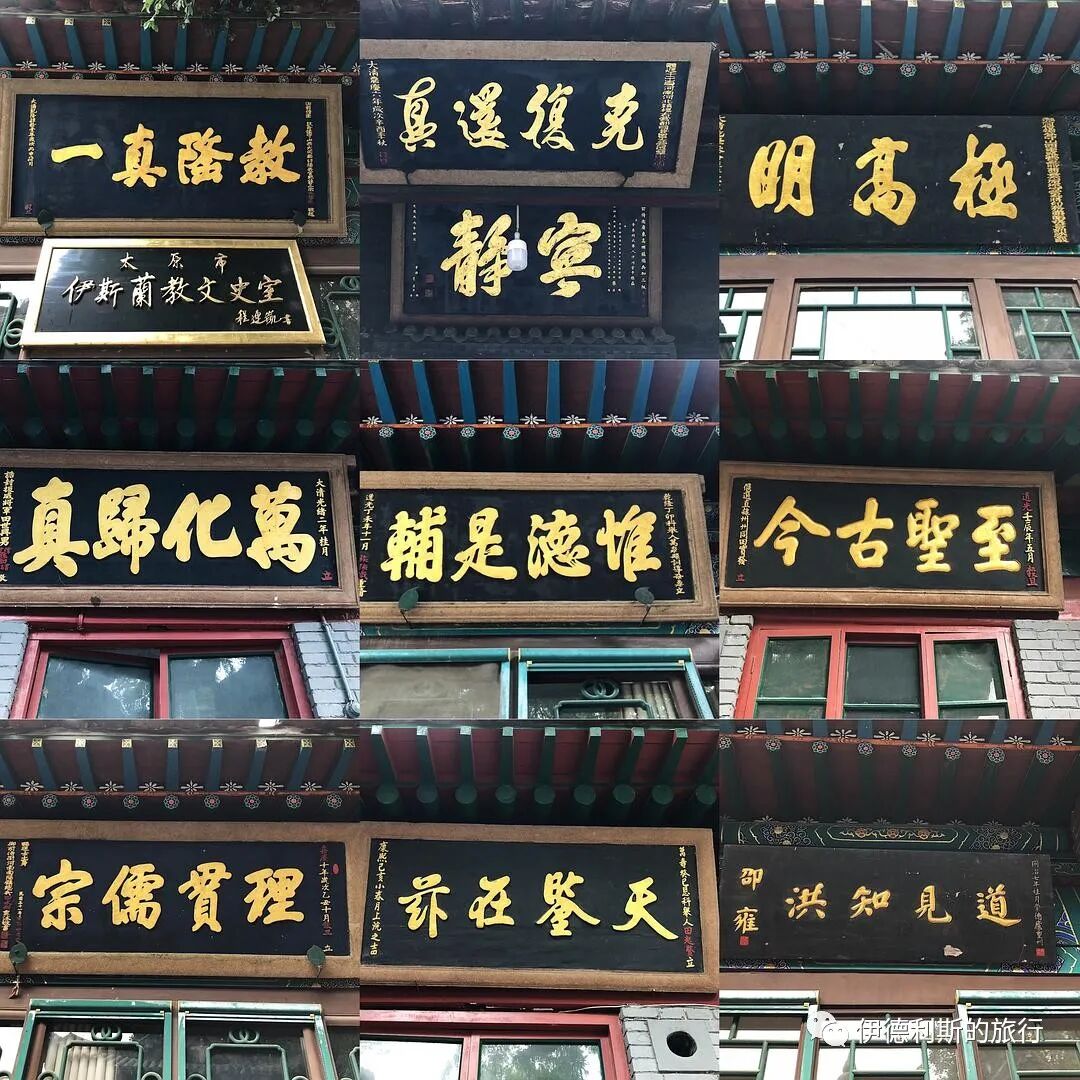
Plaques in the mosque.
III. Outside the Mosque
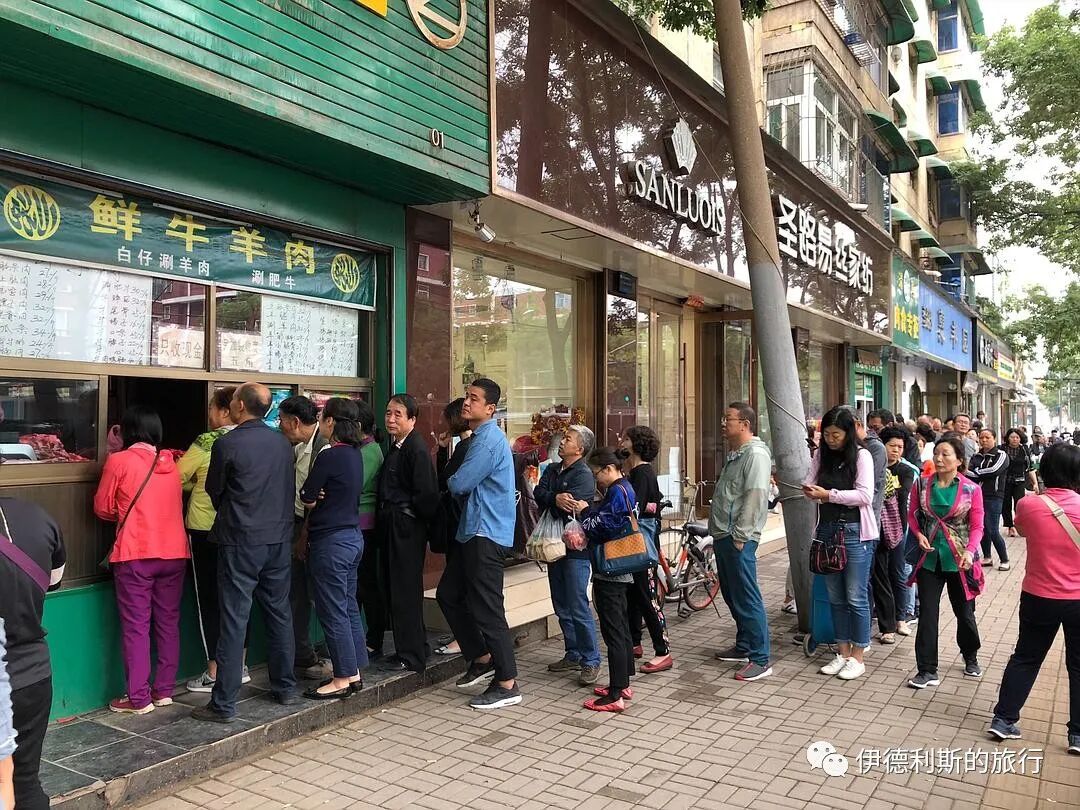
The shops facing the street outside the mosque were built when Great South Gate Street was widened, and when I went in September 2018, they were about to be demolished again due to subway construction. On both sides of the mosque gate are fresh beef and lamb shops, and there is one on the south side that has a long queue all year round.
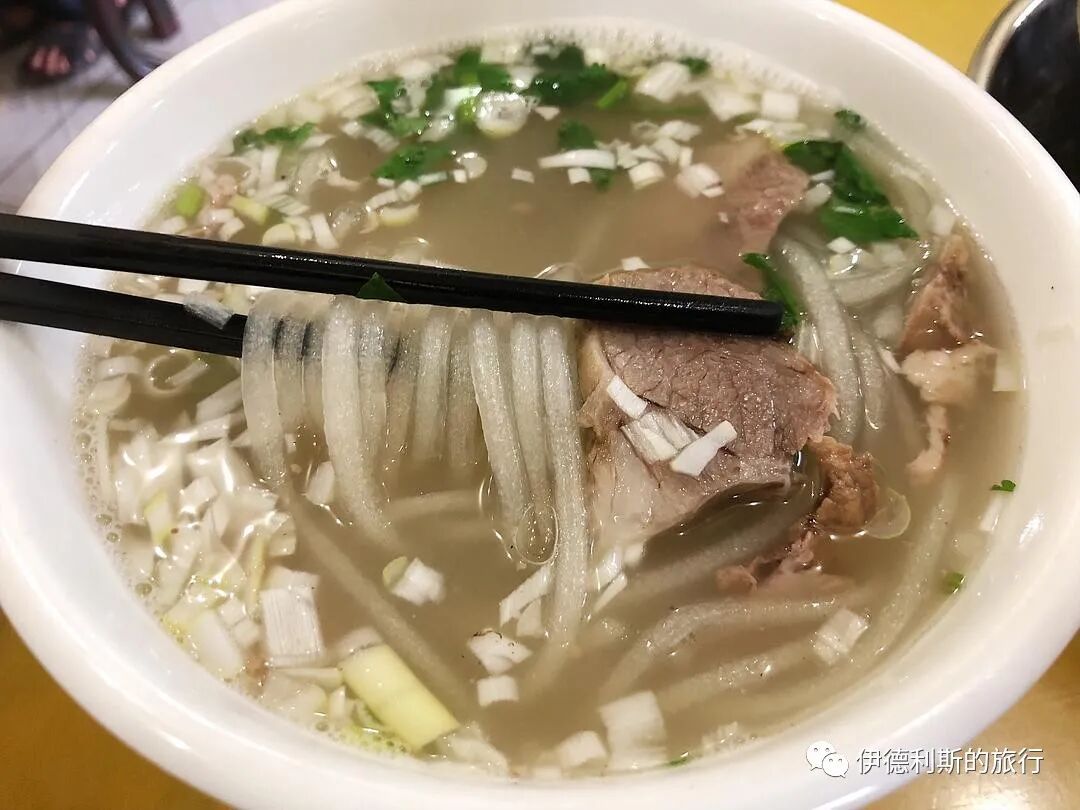
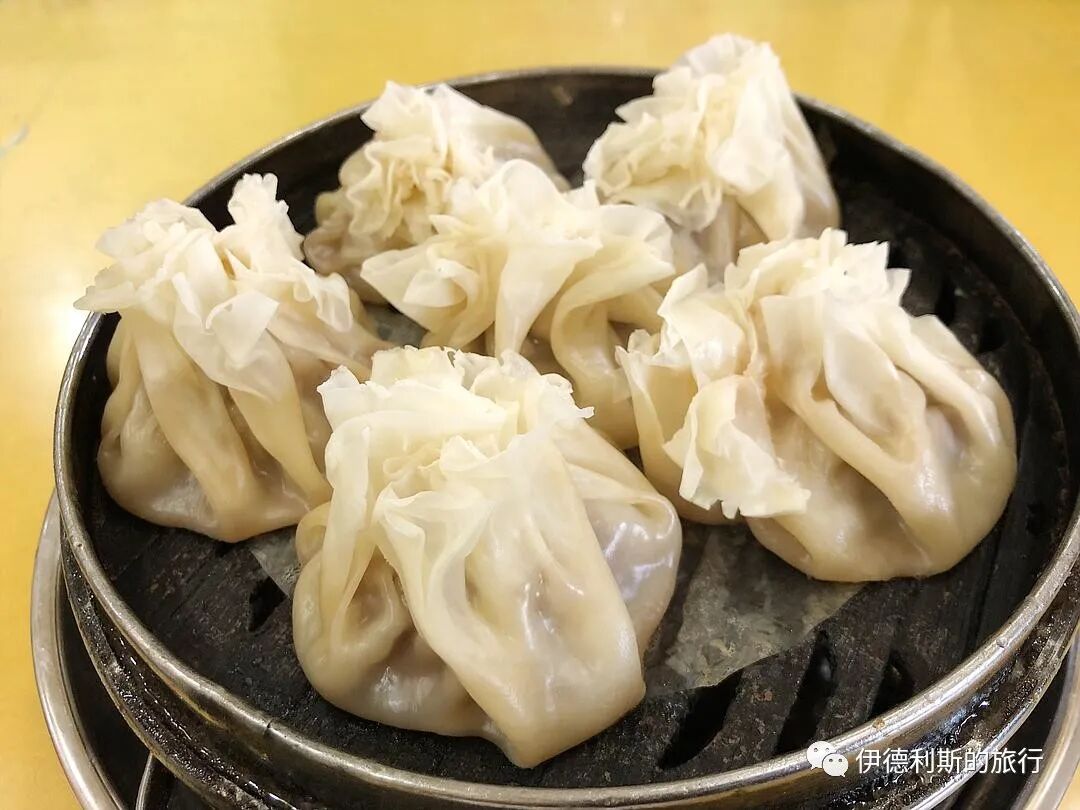
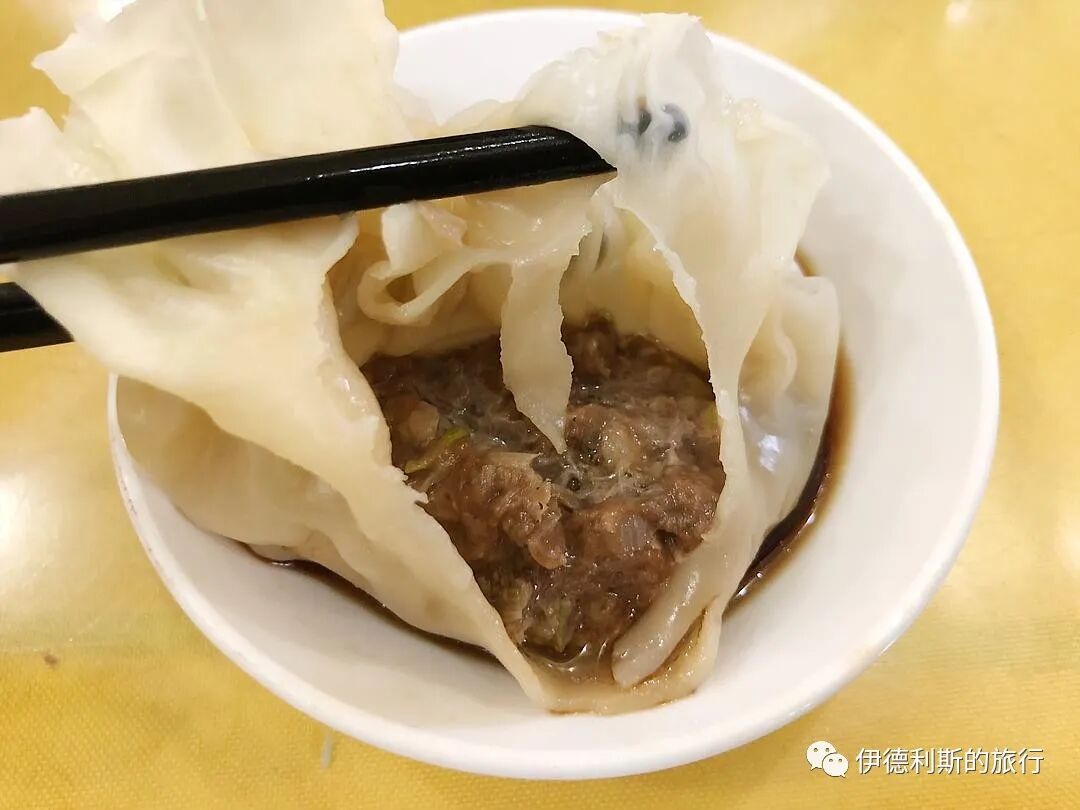
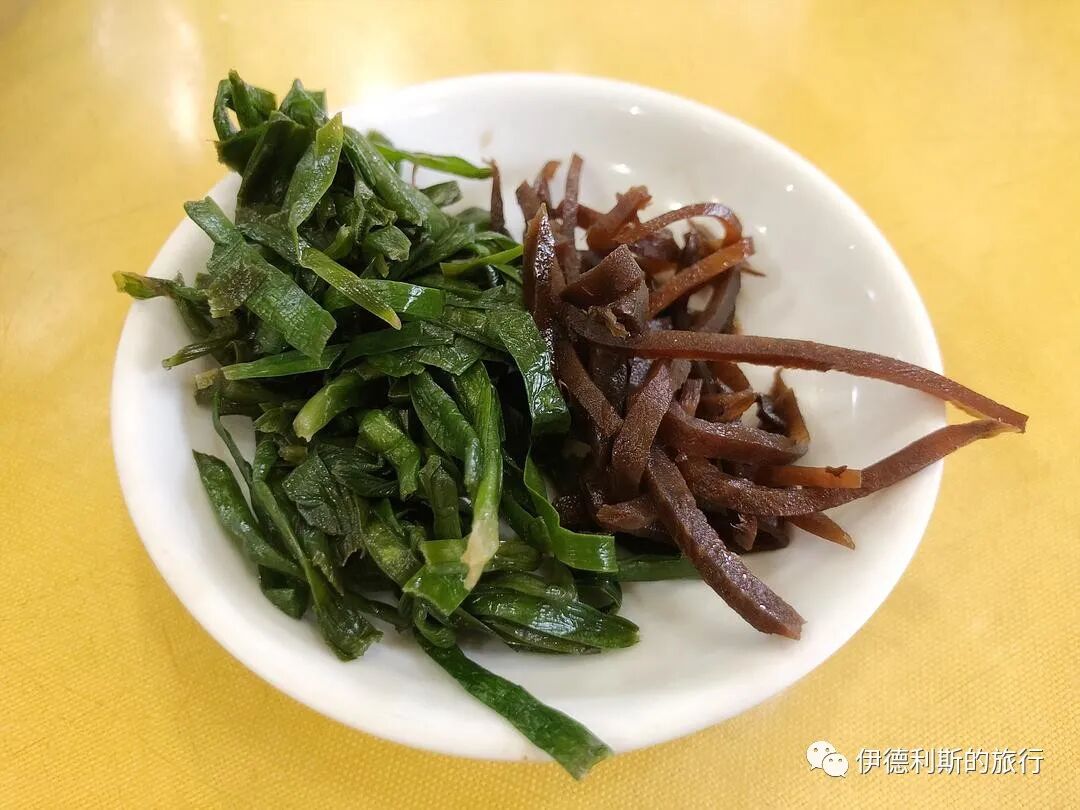
A little further south is the Huifengyuan Restaurant, which sells shaomei (steamed dumplings), lamb soup, meatball soup, and other snacks. I drank lamb soup and ate shaomei here, and both were especially delicious.
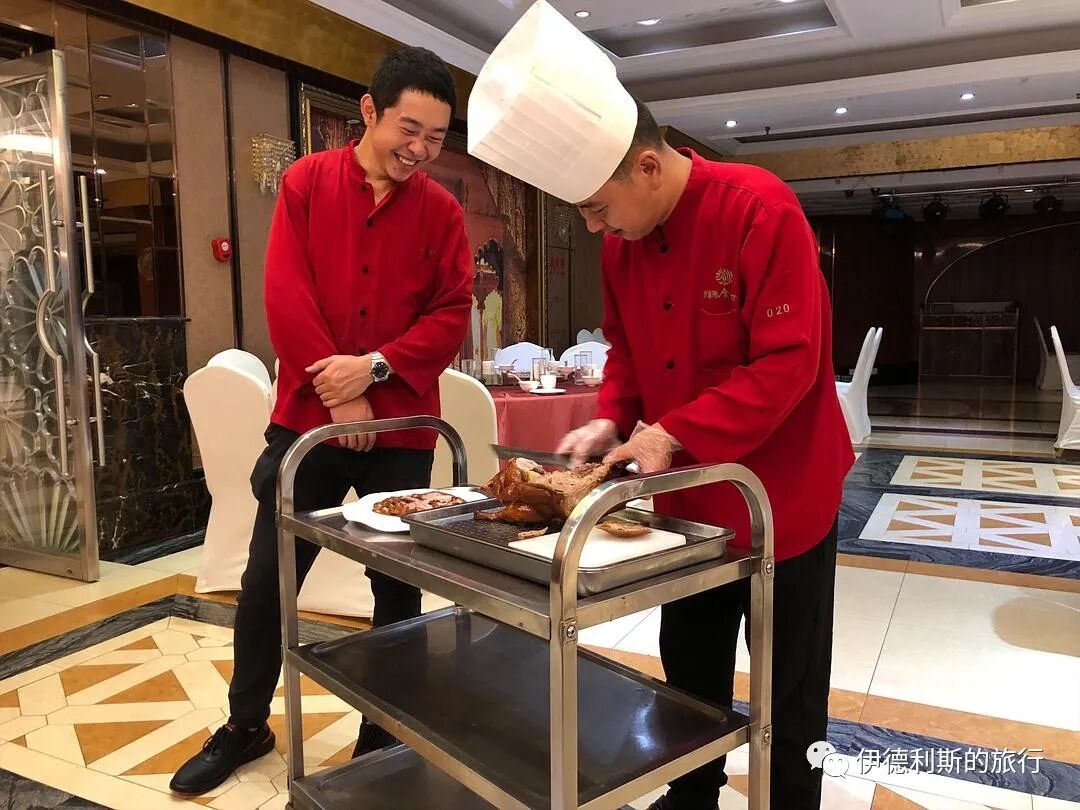
To the north of the mosque is the large restaurant Hongbinlou Roast Duck Restaurant. This is the famous halal restaurant that was in Tianjin during the Qing Dynasty and introduced to Beijing in the 1950s; after being introduced to Taiyuan in 1981, it focused on Beijing roast duck. In the Hongbinlou Pastry Shop, you can buy various Jin-style (Shanxi-style) pastries and mooncakes; I bought tijiang mooncakes (syrup-skin mooncakes), huntang mooncakes (mixed-sugar mooncakes), banqie (a type of pastry), and youxuan (oily spiral pastry).
Banqie (a type of pastry)
Youxuan (oily spiral pastry)
Huntang mooncake (mixed-sugar mooncake)
Tijiang mooncake (syrup-skin mooncake)
IV. Laoqingyuan
The owner of Laoqingyuan, Zhang Yubao, is the son of Zhang Zhidong, the head chef of the old Taiyuan halal brand Qingheyuan, and he began working at Qingheyuan with his father in the 1970s. Zhang Zhidong was born in 1903 and was in the culinary industry before the founding of the People's Republic of China; after the founding, he entered Qingheyuan until he retired, and he continued to teach his skills after retirement. I ate vinegar-poured lamb with maohe (a type of steamed bun) at Laoqingyuan.
V. Qingshengyuan
The most famous halal restaurant in Taiyuan, Qingheyuan, was founded by the Duo family of Taiyuan Hui Muslims. During the Daoguang era, Qingheyuan was passed down to Duo Linfeng to manage; he expanded the restaurant into a two-story building and added various stir-fried dishes. At that time, the lamb was all purchased from Suiyuan, with yincung sandan (a specific lamb dish), lamb brains, lamb tongues, lamb tendons, lamb kidneys, and spinal marrow being the most famous.
In 1956, Qingheyuan merged with the state-run halal restaurant and moved to the T-junction of Qiaotou Street and Dapu Mansion; it closed in 2009 due to the demolition of Dapu Mansion to build the Tongluowan Shopping Mall. Afterwards, Qingheyuan opened several franchise stores in other places, but the taste declined significantly.
Qingshengyuan is a new restaurant opened by the original team after the old Qingheyuan store was demolished. I ate youmian kaolaolao (oat noodle rolls), beef fried guan-chang (a type of sausage), and lamb guoyourou (oil-passed meat) here; the guoyourou was really delicious!
VI. Taiyuan Hui Muslim Street
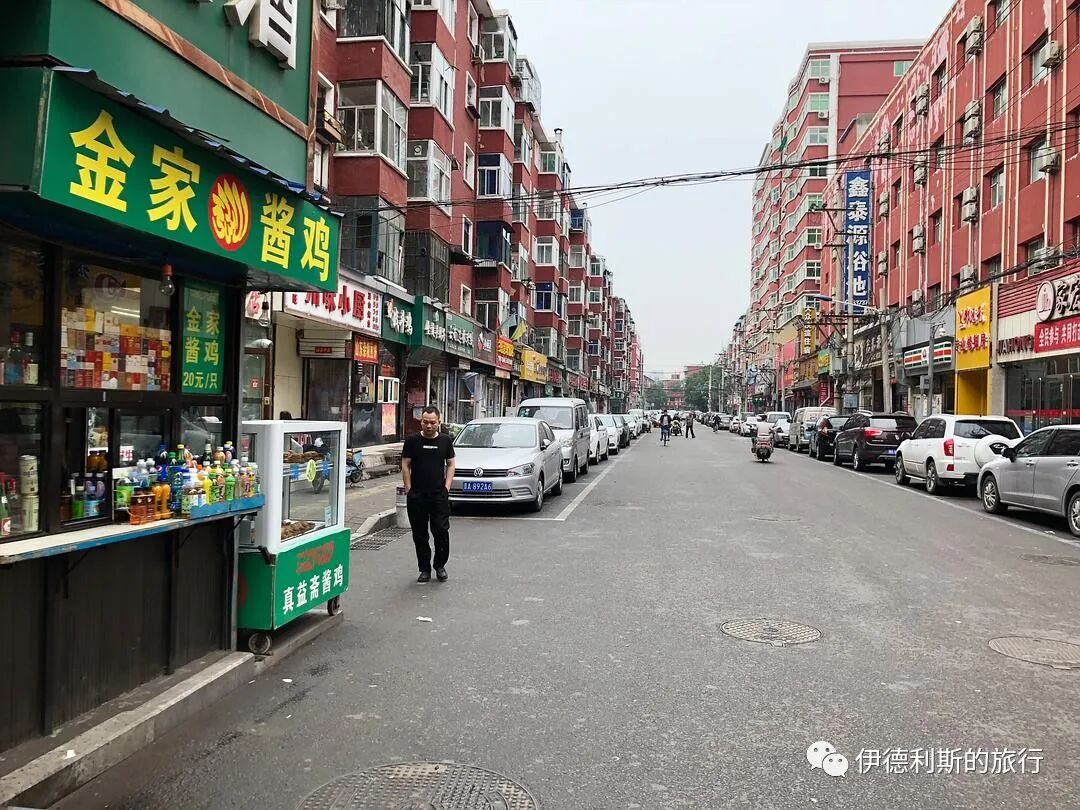
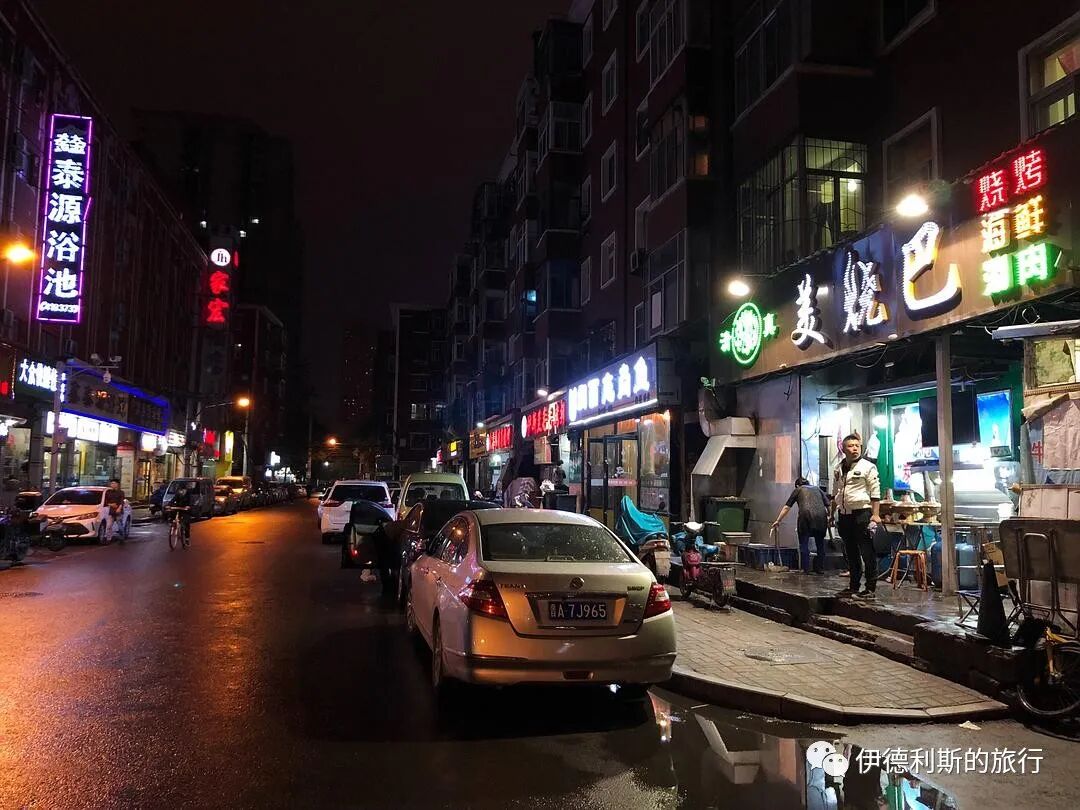
Halal restaurants are relatively concentrated on Jiucheng Street, Nanhaidong Street, Shaojiu Lane, and Nanhai Street opposite the Taiyuan Mosque. This area was originally the Eight Banners barracks of the old Manchu city, and now it is occupied by the staff dormitories of the Provincial Coal Transportation General Company, the Provincial Coal Department, and the Grain Bureau; it is a quiet and peaceful old residential area.
1. Juheyuan Halal Restaurant
I ate beef meatball soup at this place.
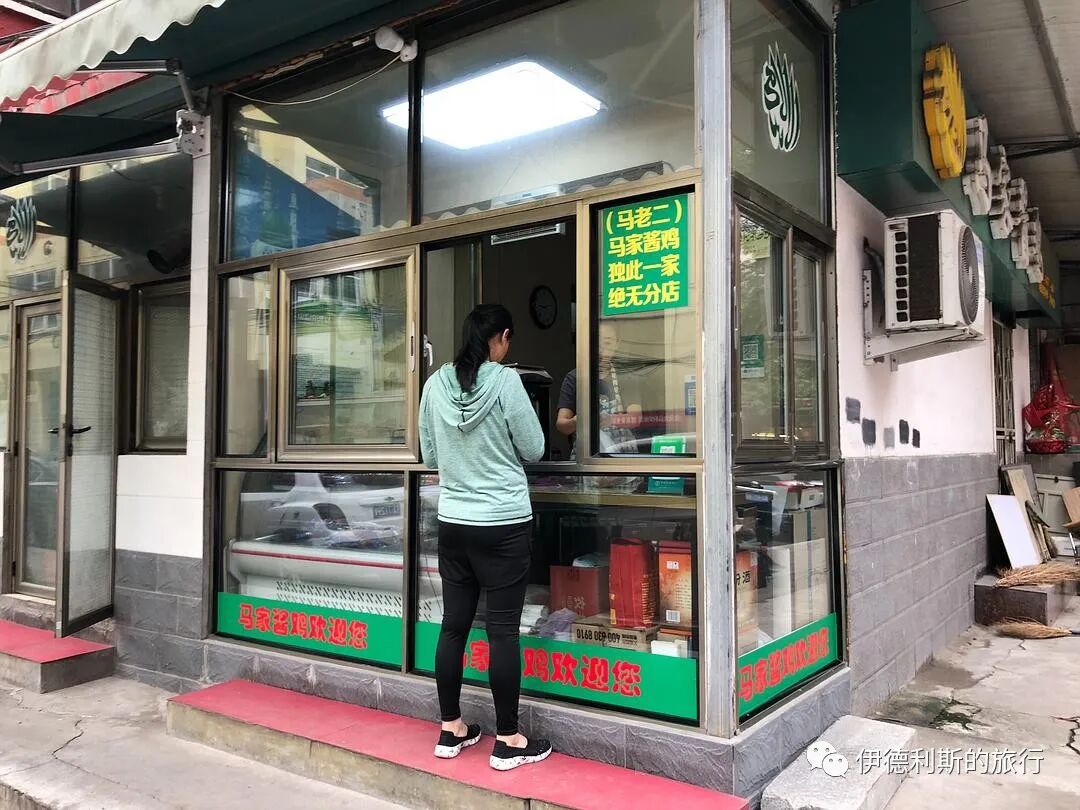
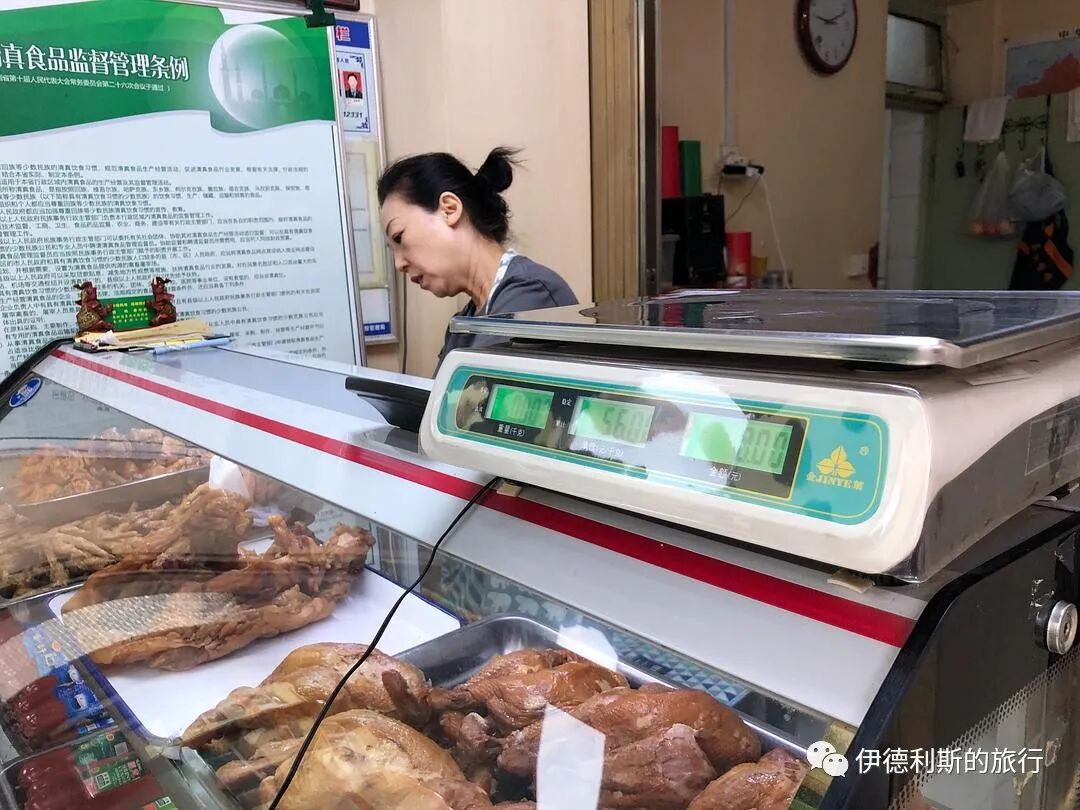
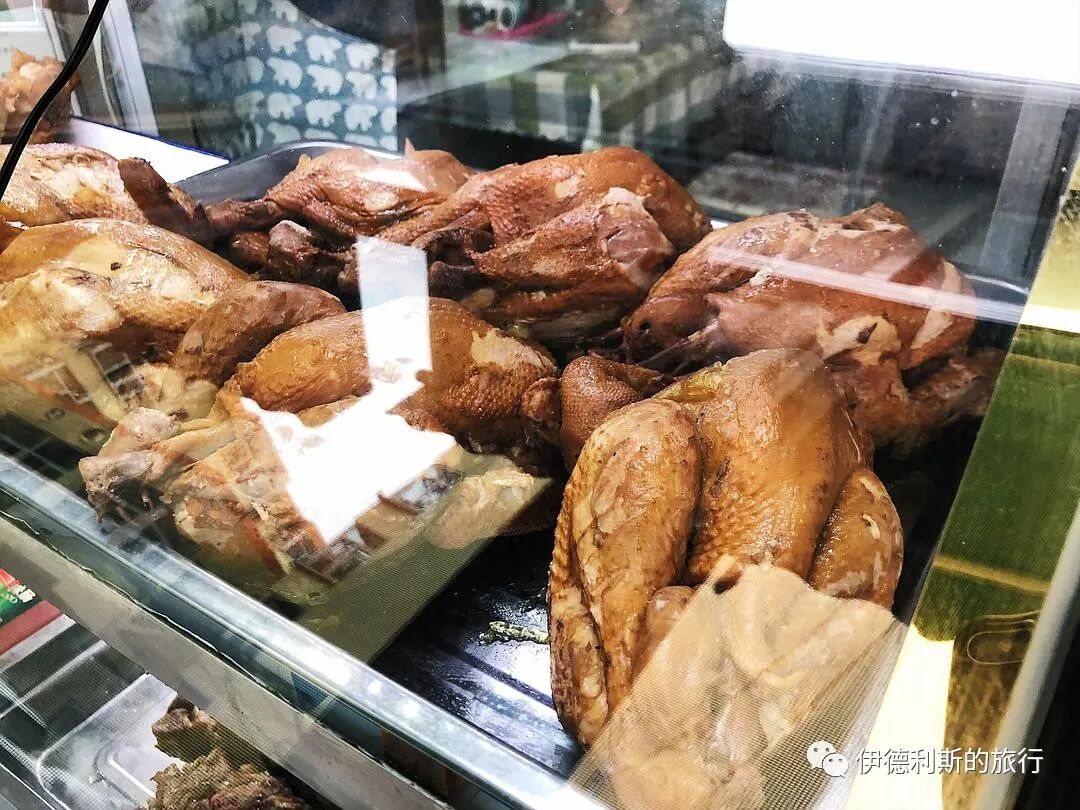
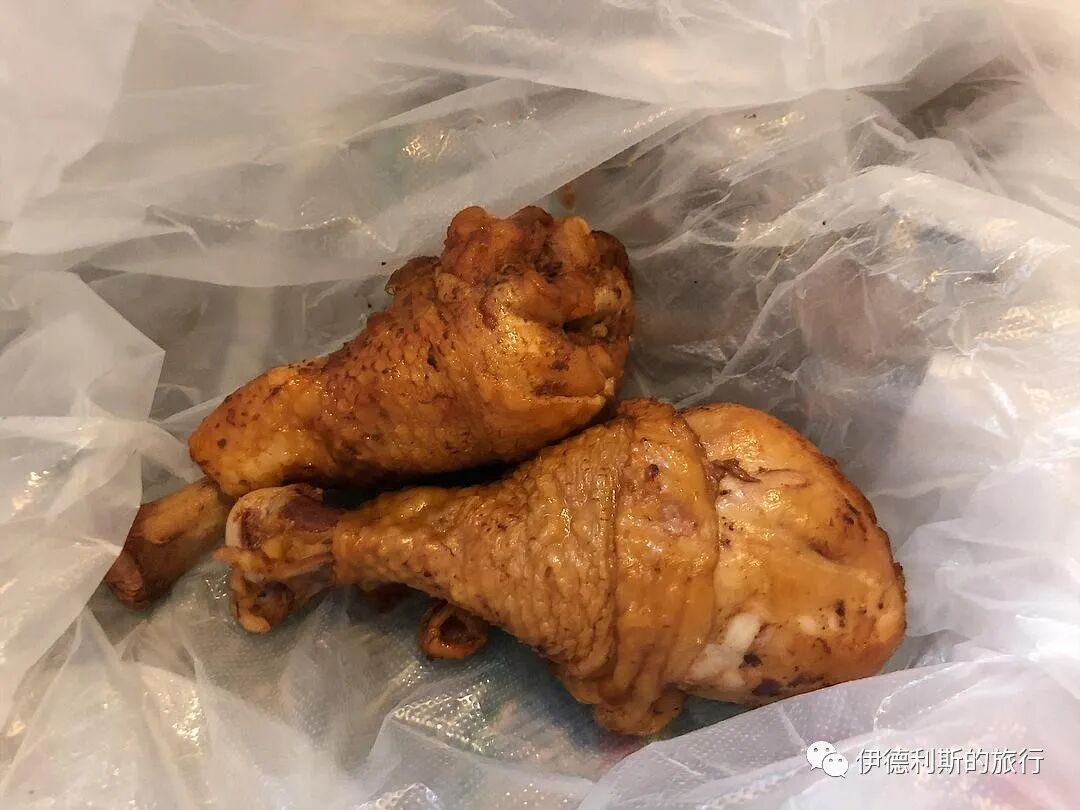
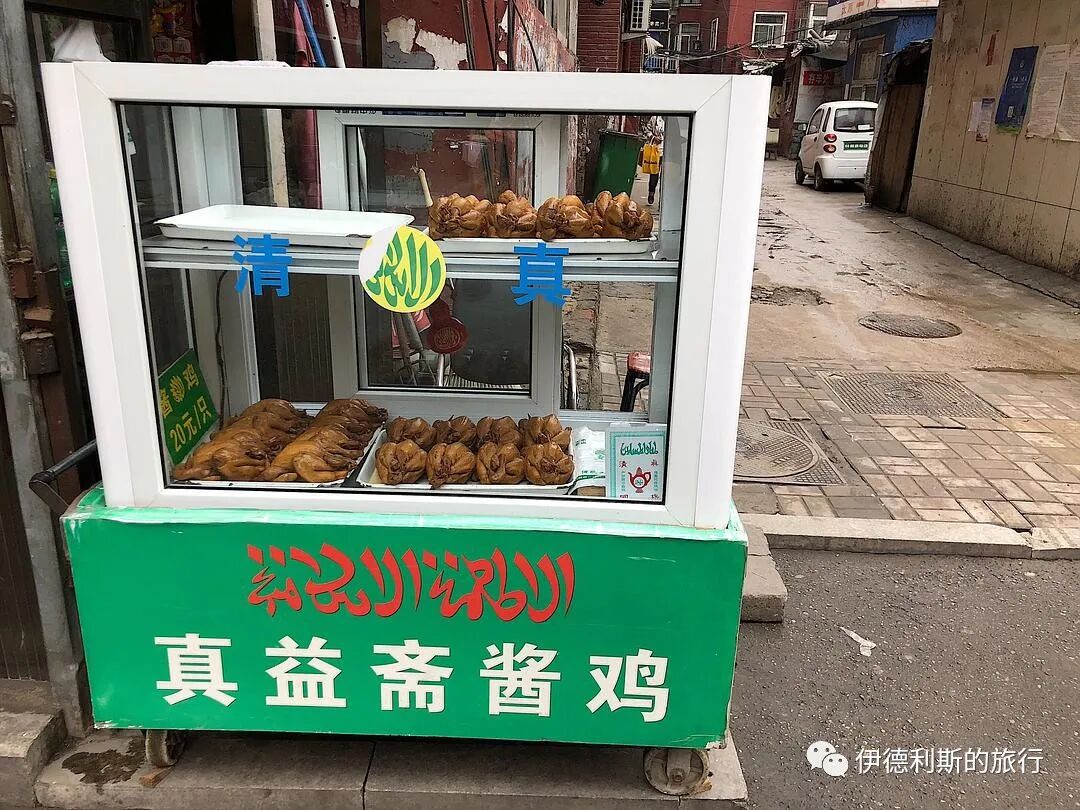
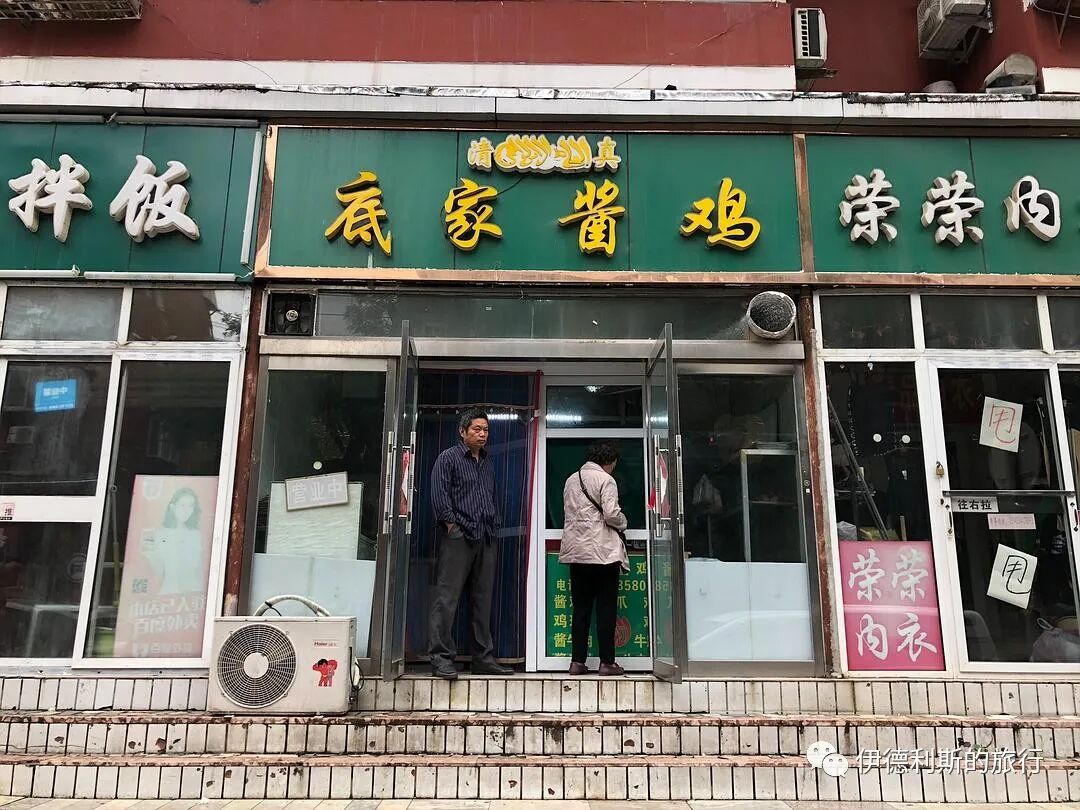
2. Ma Family Braised Chicken
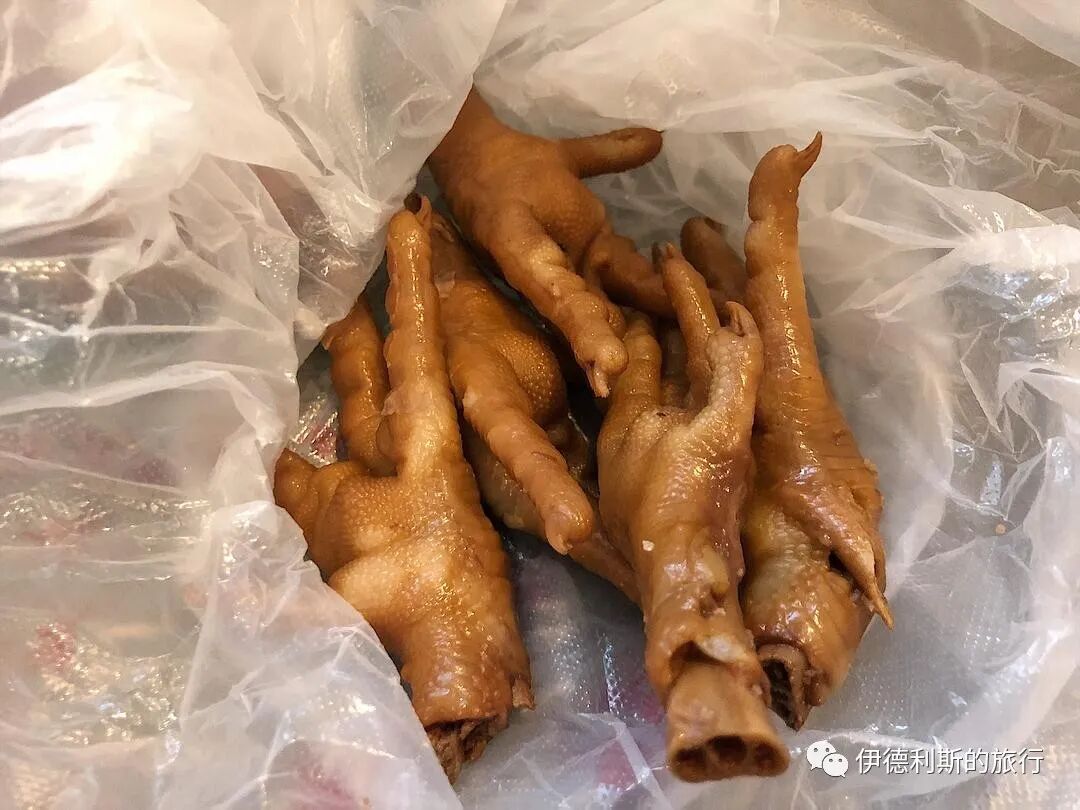
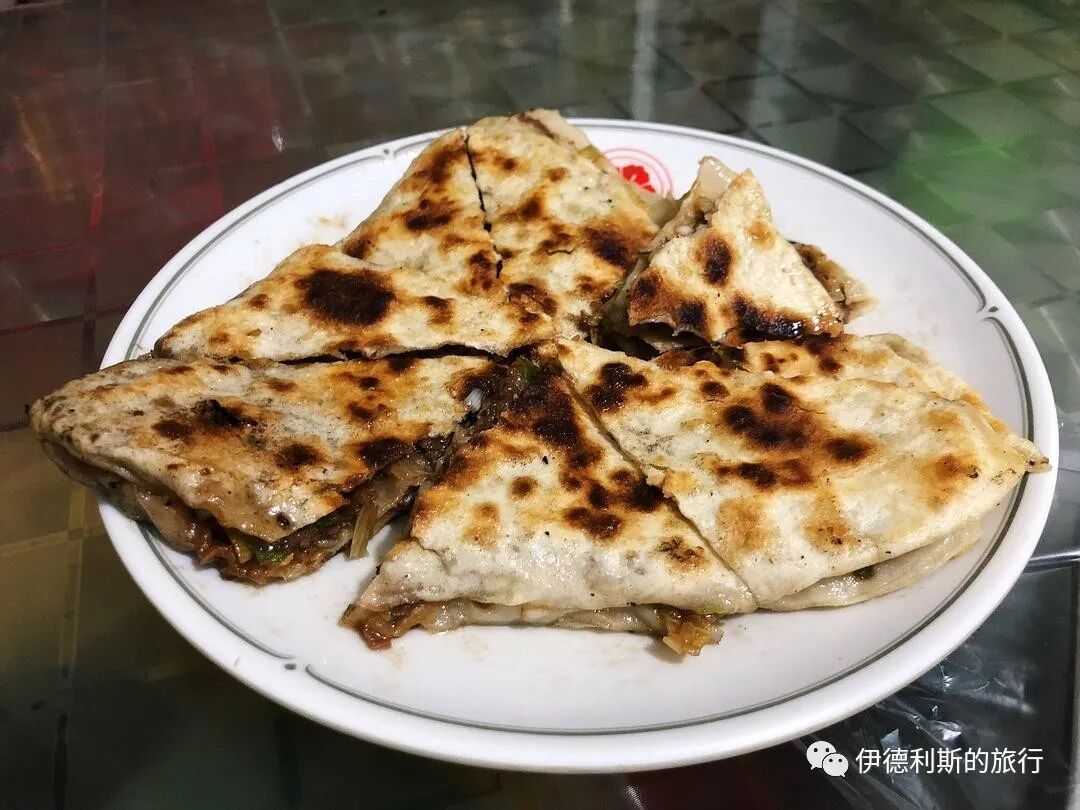
I ate braised chicken legs and chicken feet at this place.
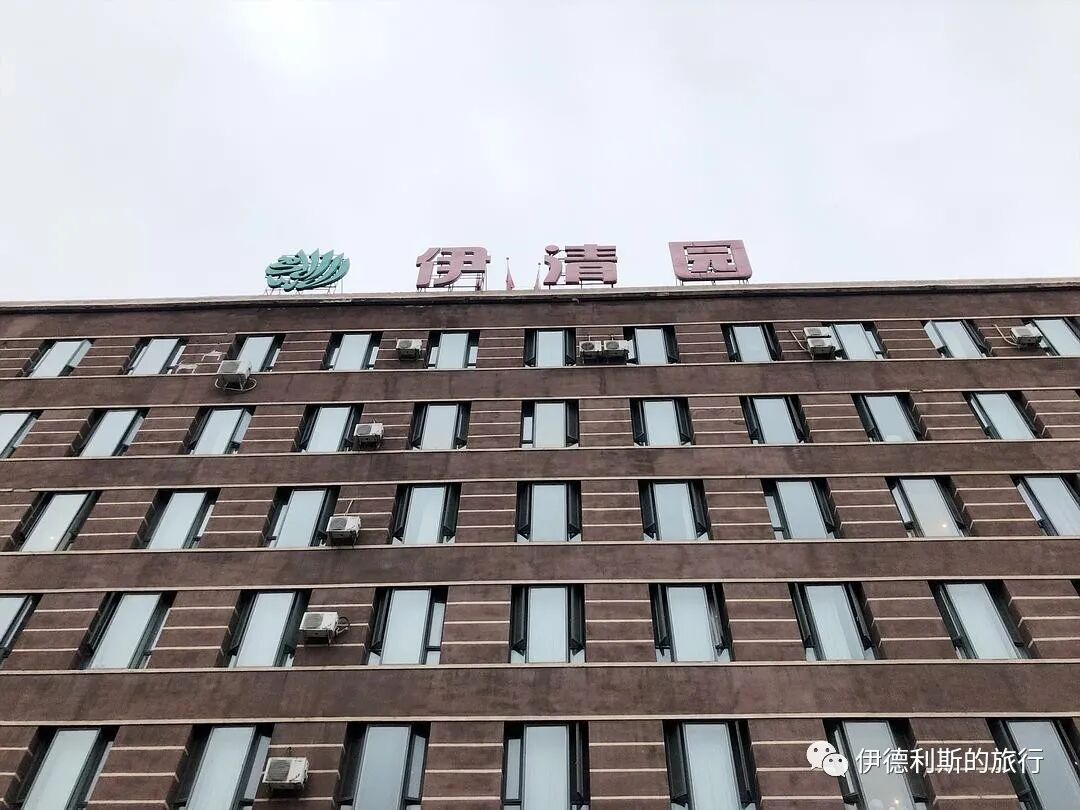
3. Yiqingyuan
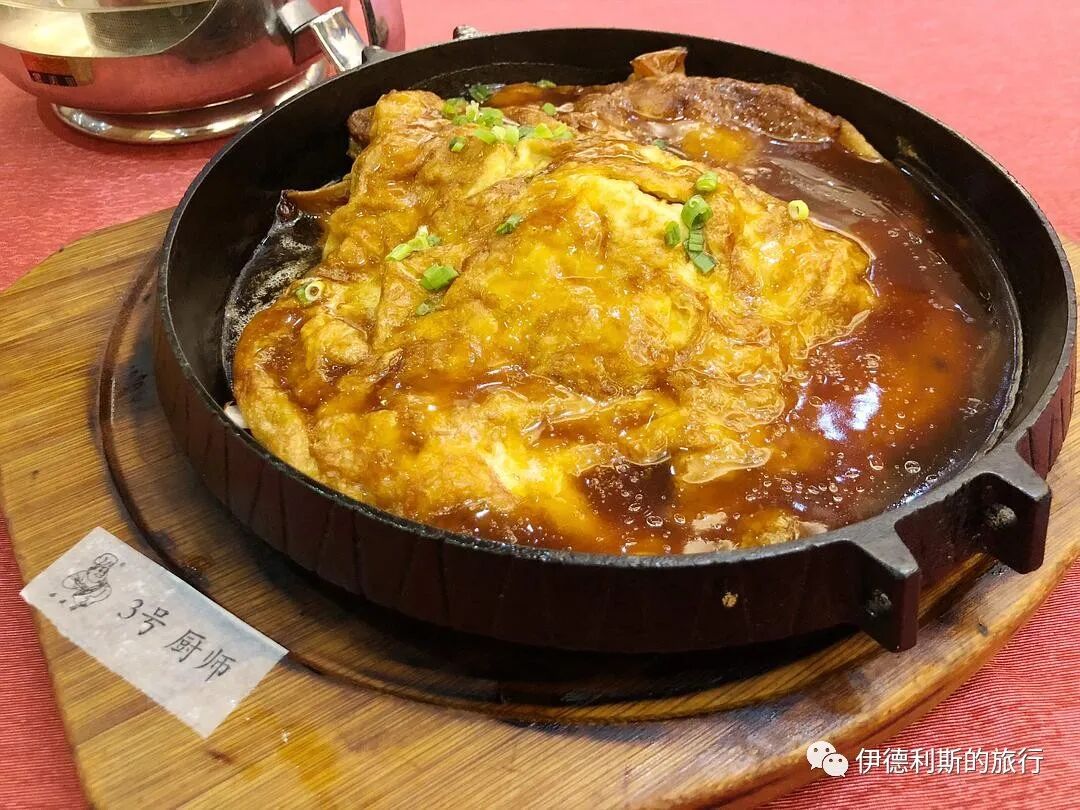
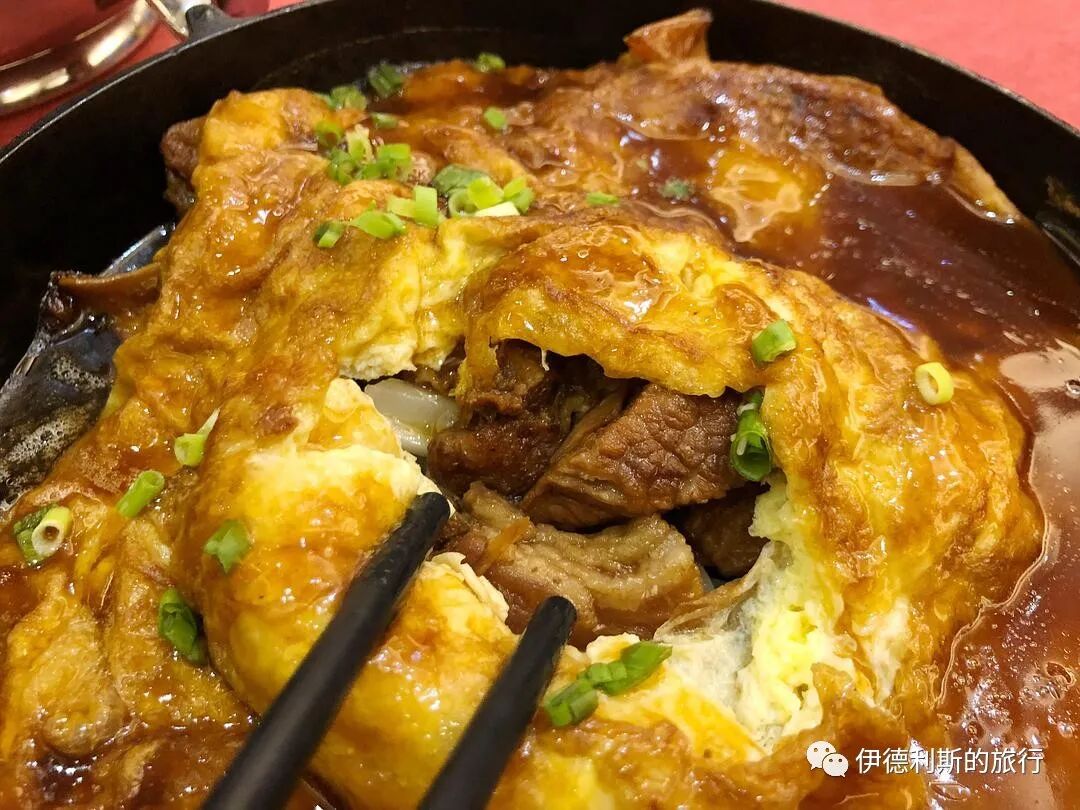
Yiqingyuan is a large halal restaurant in Taiyuan; I ate guotaurou (pan-seared meat), tijian noodles (hand-pulled noodles), and peanut milk balls here. Guotaurou is also made in Beijing, but it is not as big as theirs. The variety of pasta in Shanxi is really rich; tijian noodles are made by using chopsticks to flick the dough into the pot, served with two kinds of sauces: meat sauce and egg and tomato sauce; this bowl of noodles only cost five yuan. Then I must praise the peanut milk; I drank a large pitcher by myself, it was super delicious and very suitable for autumn.
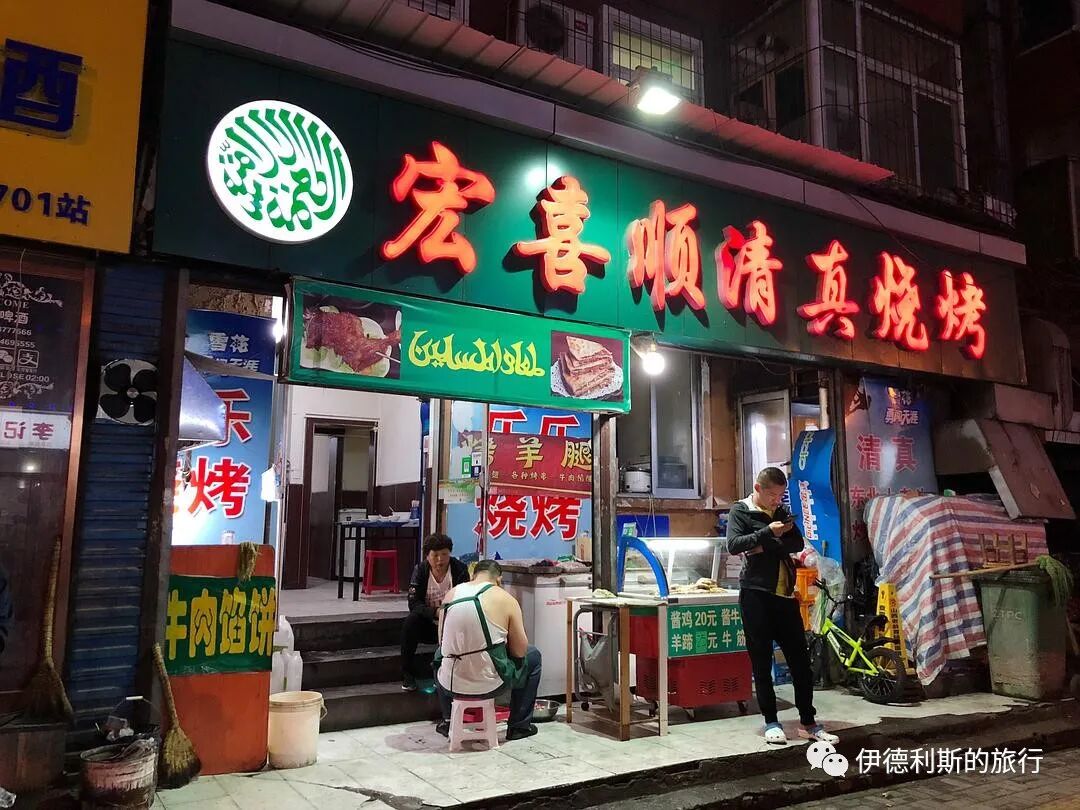
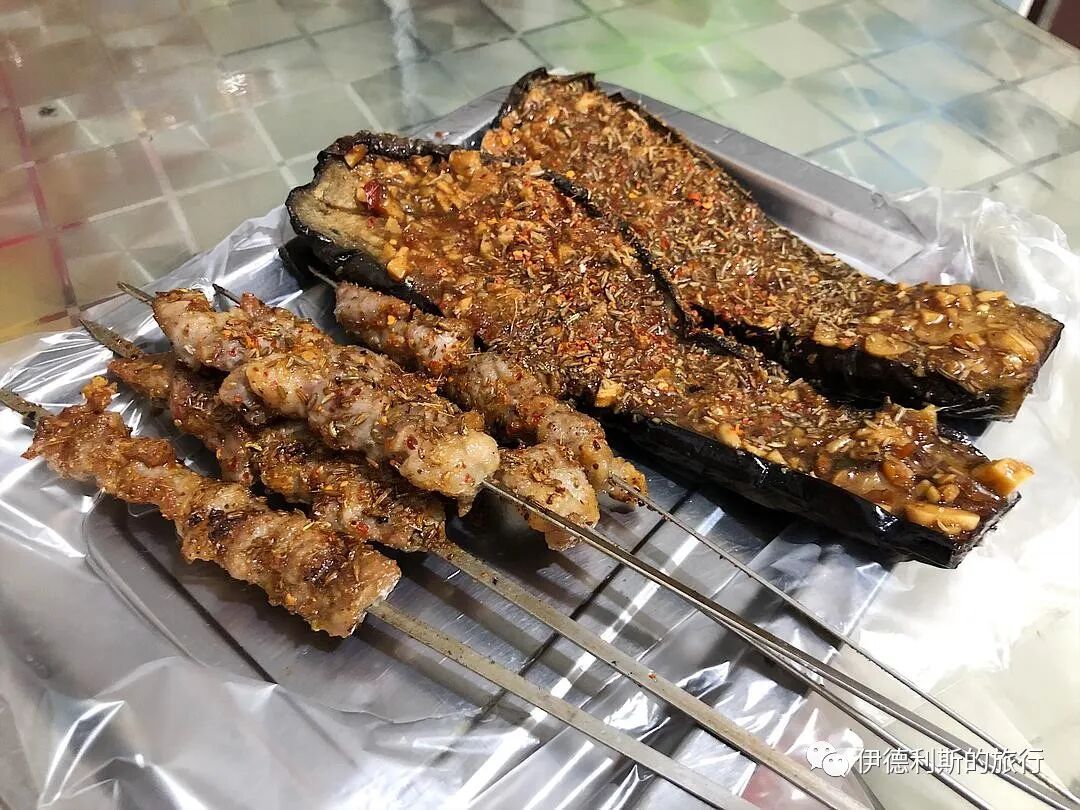
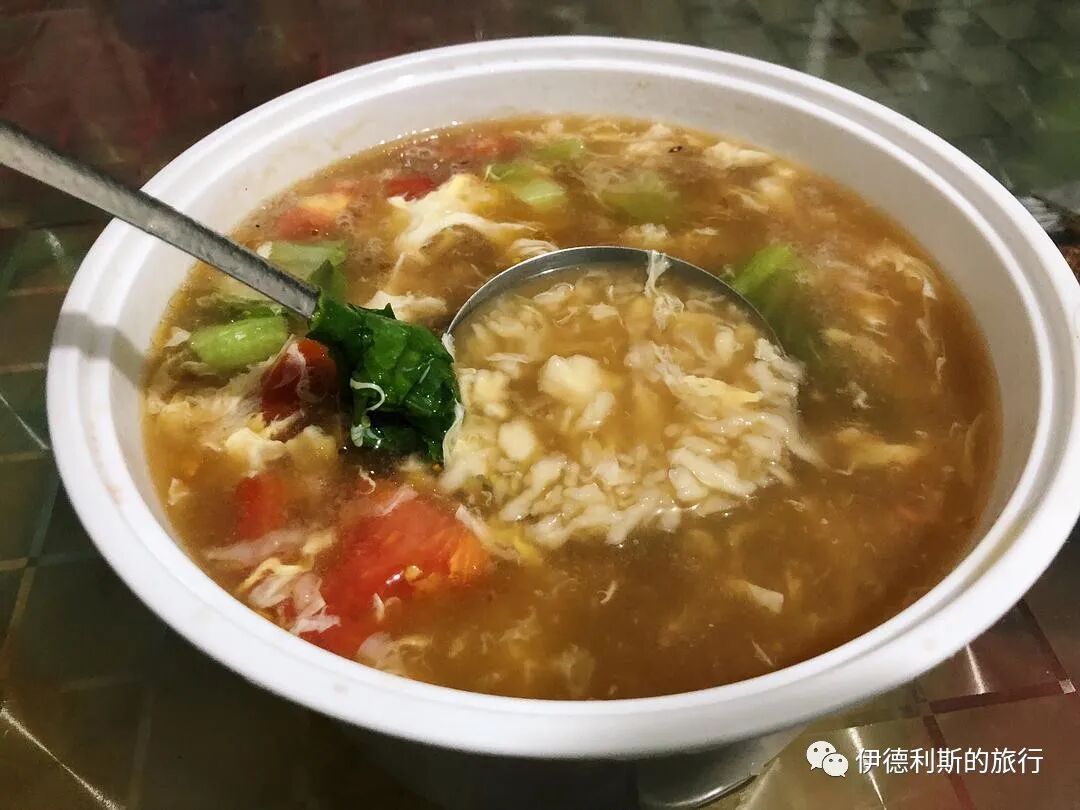
4. Hongxishun Halal Barbecue
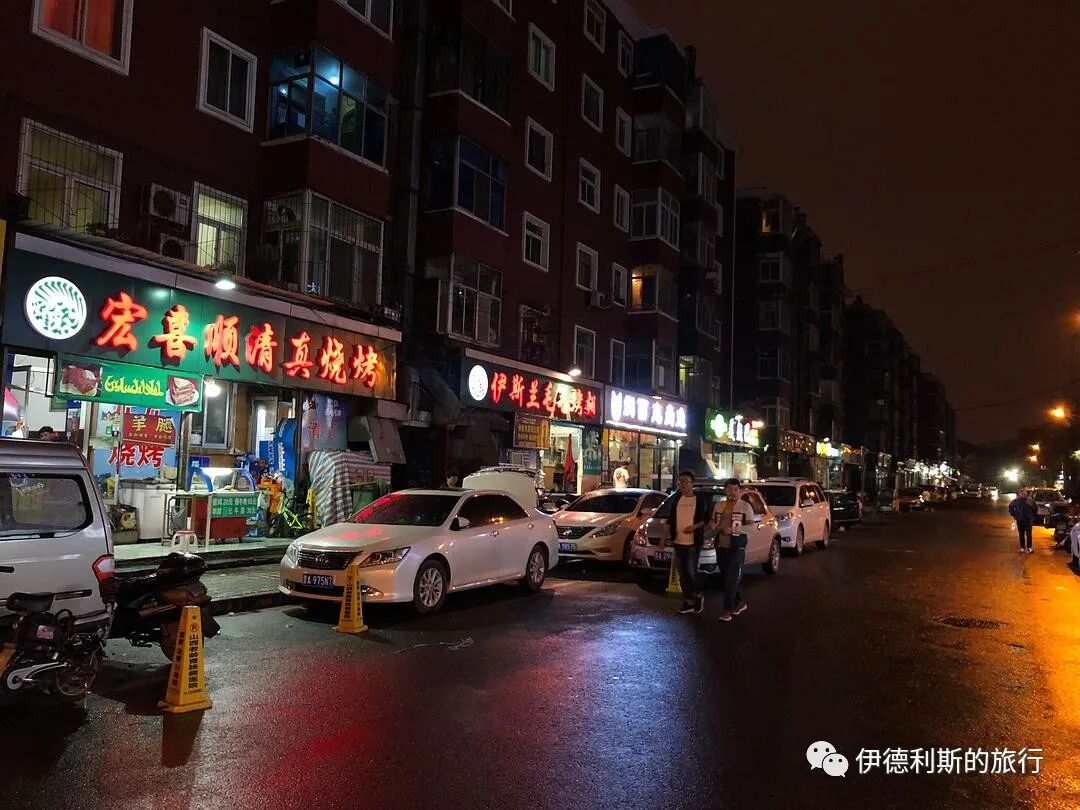
Having a little barbecue at Hongxishun in the evening, the cool weather of over ten degrees in Taiyuan is perfect for drinking bantang (a type of thick soup)! Drinking a few bowls down is very warm.
Besides the few restaurants above, there are still many restaurants I haven't eaten at; I will come to Taiyuan again if I have the chance! view all
Summary: This travel note introduces Taiyuan Halal Travel Guide: Historic Mosques and Muslim Food. I went to Taiyuan for a weekend of sightseeing and eating in early September 2018, arriving in 3 hours by high-speed train from Beijing. It is useful for readers interested in Taiyuan Mosques, Halal Food, Muslim Heritage.
I went to Taiyuan for a weekend of sightseeing and eating in early September 2018, arriving in 3 hours by high-speed train from Beijing. What attracted me most in Taiyuan was the main prayer hall of the mosque from the Ming Dynasty; the mihrab (niche in the wall indicating the direction of Mecca) and minbar (pulpit) inside are both original and very beautiful. In addition, there are many halal restaurants in Taiyuan, ranging from large dining halls to small snack shops, and whether it is lamb soup, shaomai (steamed dumplings), or beef and lamb stir-fries, everything is delicious.
Below, I will share my trip of sightseeing and eating with you all.
I. History of Hui Muslims in Taiyuan
Regarding the history of Hui Muslims in Taiyuan, you can refer to the article "Research on Islam in Taiyuan" by Li Xinghua. The current old city area of Taiyuan was first called Tangming Town, built in 982 (the seventh year of the Taiping Xingguo era of the Song Dynasty), and officially took its shape after expansion in 1376 (the ninth year of the Hongwu era of the Ming Dynasty). Since the Ming and Qing dynasties, the Hui Muslim community in Taiyuan has been located around the South Gate of the old city.
After the Ming Dynasty, Taiyuan gradually formed the "Ten Great Surnames of the Hui," namely the ten surnames: Duo, Luo (some say Ma), Tian, Liang, Li, Jin, Sa, Hai, Dao, and Di. Among them, the Jin surname came to Taiyuan with the army from Nanjing during the Hongwu era of the Ming Dynasty; the Tian surname was transferred to Taiyuan from Jinhua during the Hongwu era (some say they moved to Taiyuan for business from Shandong via Inner Mongolia and settled down); the Duo surname came to Taiyuan for business from Zhending, Jiangsu during the Ming Dynasty; the Ma surname came to Taiyuan for service from Nanjing at the end of the Ming Dynasty; the Liang surname came to Taiyuan for work from Henan during the Yongle era of the Ming Dynasty; the Dao surname came to Taiyuan for work during the Ming Dynasty; the Li surname came to Taiyuan from Henan at the end of the Ming Dynasty; and the Liang surname came to Taiyuan from Nanjing during the Ming Dynasty.
In addition, there are the Yang, Ding, and Ma surnames who came to Taiyuan from the northwest for business and settled down, and the Wen, Ma, and Qiao surnames who moved to Taiyuan from within Shanxi Province.
During the Qing Dynasty, there were over a hundred local Hui Muslim households in Taiyuan, plus more than ten households of Hui Muslims who came from Suiyuan for business, totaling five or six hundred people. After the Zhengtai Railway opened to traffic in 1907, the number of Hui Muslims coming to Taiyuan from Hebei increased significantly, reaching over 1,000 in the 1930s and over 5,100 in the early days of the founding of the People's Republic of China.
According to records, there were once four mosques in Taiyuan's history, among which the Qiao Family Mosque and the Ningxia Mosque were outside the Great South Gate. The record of the Qiao Family Mosque comes from You Cheng's "General Situation of Islam in Taiyuan"; the Qiao Family Mosque had over a hundred households of congregants, all surnamed Qiao, and the ahong (imam) was also surnamed Qiao. The Ningxia Mosque information comes from data provided by Li Dajun, Li Dahong, and Yang Youlin in "Research on Islam in Taiyuan"; the Ningxia Mosque was built 200 years ago, and the congregants were "camel guests" traveling between Ningxia and Taiyuan. Both of these mosques were destroyed along with residential houses in the floods during the Guangxu era of the Qing Dynasty, and currently, neither can be verified.
After the Republic of China, with the operation of the Zhengtai Railway, Hebei Hui Muslims continuously moved to Taiyuan, and the North Mosque was built during the Republican period. By the late Republican period, the North Mosque had taken shape, but it was eventually destroyed. In addition, during the Republican period, there were two women's mosques in Taiyuan, namely the Great South Gate Street Women's Mosque built in 1922 and the Lou'erdi Women's Mosque built at the same time as the North Mosque.
Currently, only one mosque remains in Taiyuan, which is the Taiyuan Mosque.
II. Taiyuan Mosque
The Taiyuan Mosque is located on Niurou Lane (Beef Lane) inside the South Gate. Currently, the mosque's main prayer hall and the Shengxin Tower (minaret) are both Ming Dynasty buildings, which is consistent with the era when the city of Taiyuan took its shape in the Ming Dynasty and Hui Muslims officially settled in Taiyuan.
Currently, from west to east, the mosque consists of the main prayer hall, a fire wall, the Shengxin Tower, and the main gate. There are stele pavilions to the north and south of the Shengxin Tower, and side rooms further to the outside. Originally, outside the main gate of the mosque was Niurou Lane, with its back against Great South Gate Street, but later, when Great South Gate Street was widened and renovated, the mosque's moon-viewing tower and the auxiliary courtyard buildings were demolished, and some were converted into shops facing the street. The archway in front of the main gate was moved outside the West Side Gate, and the West Side Gate facing Great South Gate Street thus became the new main gate.
The most important building of the Taiyuan Mosque is the main prayer hall, and the colored paintings on it are very exquisite. The famous architectural historian Liu Zhiping wrote in the book "Chinese Islamic Architecture" after investigating the Taiyuan Mosque in the early 1960s:
The hall does not use dougong (bracket sets), the style is simple and ancient, and the wood is also thick and neat, without inlaying or splicing. The colored paintings on the beams do not use the "hemp-covering and ash-catching" technique, but are painted directly on the wood surface. The central panels of the colored paintings are extra long, and on the panels, many flowers are arranged in a row with very decorative interest, which is different from the general Qing palace-style colored paintings.
This kind of wood-inlaid mihrab style is very rare.
On the mihrab are some verses from chapters 29 and 30 of the Quran.
Although the minbar on the north side of the mihrab has been repainted, it is the original piece itself, which is very rare.
The long-life memorial tablet table inside the main prayer hall is also an original piece.
The picture below was taken in the early 1960s by the famous architectural historian Liu Zhiping, who led the Chinese Islamic Architecture Research Group.
The picture below was taken by the China Architecture and Building Press between 1990 and 1992 for the book "Islamic Architecture."
When I went there, Baba Liu in the mosque recited the Peace Dua for me.
To the east of the main prayer hall is the fire wall, and outside the fire wall, one can see traces of a building that once existed, which is very likely the opposite hall common in mosques.
Outside the fire wall, there are two stele pavilions.
On the stele is the "Hundred-Character Holy Praise" carved in 1868 (the seventh year of the Tongzhi era), and the other side is carved with calligraphy by Huang Tingjian and others from 1881 (the seventh year of the Guangxu era).
In the middle of the stele pavilions is the Shengxin Tower, which is the minaret.
The easternmost side is the original main gate of the mosque.
Plaques in the mosque.
III. Outside the Mosque
The shops facing the street outside the mosque were built when Great South Gate Street was widened, and when I went in September 2018, they were about to be demolished again due to subway construction. On both sides of the mosque gate are fresh beef and lamb shops, and there is one on the south side that has a long queue all year round.
A little further south is the Huifengyuan Restaurant, which sells shaomei (steamed dumplings), lamb soup, meatball soup, and other snacks. I drank lamb soup and ate shaomei here, and both were especially delicious.
To the north of the mosque is the large restaurant Hongbinlou Roast Duck Restaurant. This is the famous halal restaurant that was in Tianjin during the Qing Dynasty and introduced to Beijing in the 1950s; after being introduced to Taiyuan in 1981, it focused on Beijing roast duck. In the Hongbinlou Pastry Shop, you can buy various Jin-style (Shanxi-style) pastries and mooncakes; I bought tijiang mooncakes (syrup-skin mooncakes), huntang mooncakes (mixed-sugar mooncakes), banqie (a type of pastry), and youxuan (oily spiral pastry).
Banqie (a type of pastry)
Youxuan (oily spiral pastry)
Huntang mooncake (mixed-sugar mooncake)
Tijiang mooncake (syrup-skin mooncake)
IV. Laoqingyuan
The owner of Laoqingyuan, Zhang Yubao, is the son of Zhang Zhidong, the head chef of the old Taiyuan halal brand Qingheyuan, and he began working at Qingheyuan with his father in the 1970s. Zhang Zhidong was born in 1903 and was in the culinary industry before the founding of the People's Republic of China; after the founding, he entered Qingheyuan until he retired, and he continued to teach his skills after retirement. I ate vinegar-poured lamb with maohe (a type of steamed bun) at Laoqingyuan.
V. Qingshengyuan
The most famous halal restaurant in Taiyuan, Qingheyuan, was founded by the Duo family of Taiyuan Hui Muslims. During the Daoguang era, Qingheyuan was passed down to Duo Linfeng to manage; he expanded the restaurant into a two-story building and added various stir-fried dishes. At that time, the lamb was all purchased from Suiyuan, with yincung sandan (a specific lamb dish), lamb brains, lamb tongues, lamb tendons, lamb kidneys, and spinal marrow being the most famous.
In 1956, Qingheyuan merged with the state-run halal restaurant and moved to the T-junction of Qiaotou Street and Dapu Mansion; it closed in 2009 due to the demolition of Dapu Mansion to build the Tongluowan Shopping Mall. Afterwards, Qingheyuan opened several franchise stores in other places, but the taste declined significantly.
Qingshengyuan is a new restaurant opened by the original team after the old Qingheyuan store was demolished. I ate youmian kaolaolao (oat noodle rolls), beef fried guan-chang (a type of sausage), and lamb guoyourou (oil-passed meat) here; the guoyourou was really delicious!
VI. Taiyuan Hui Muslim Street
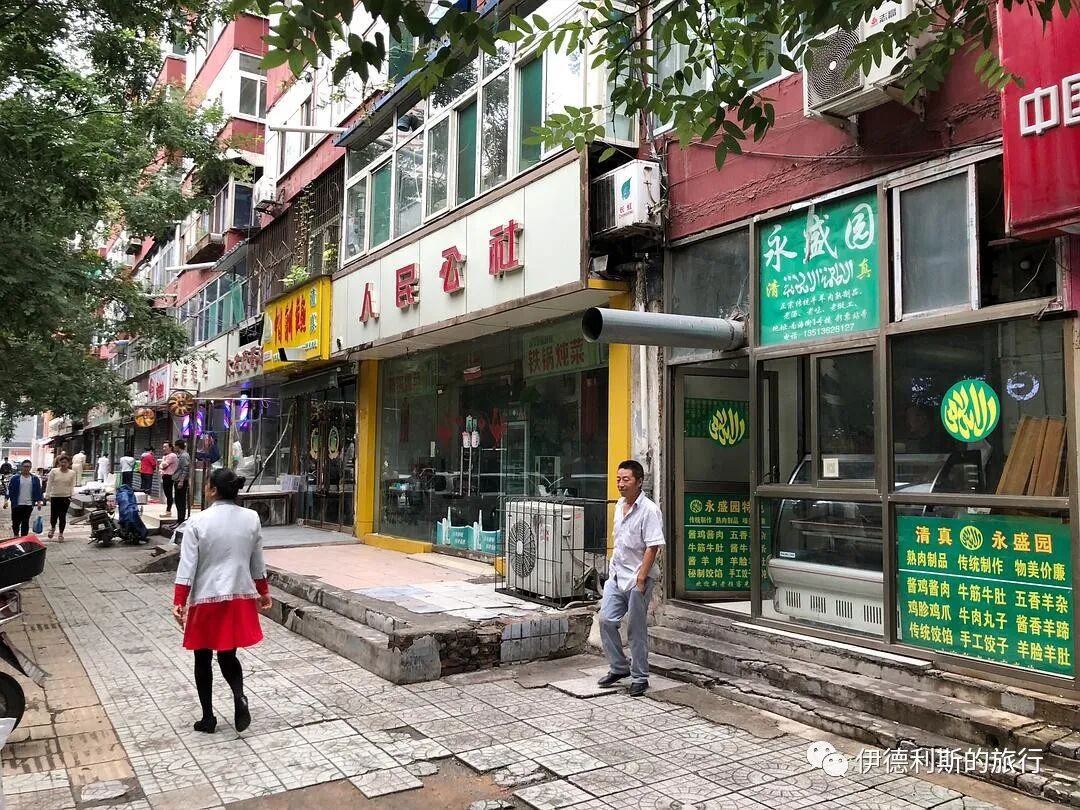
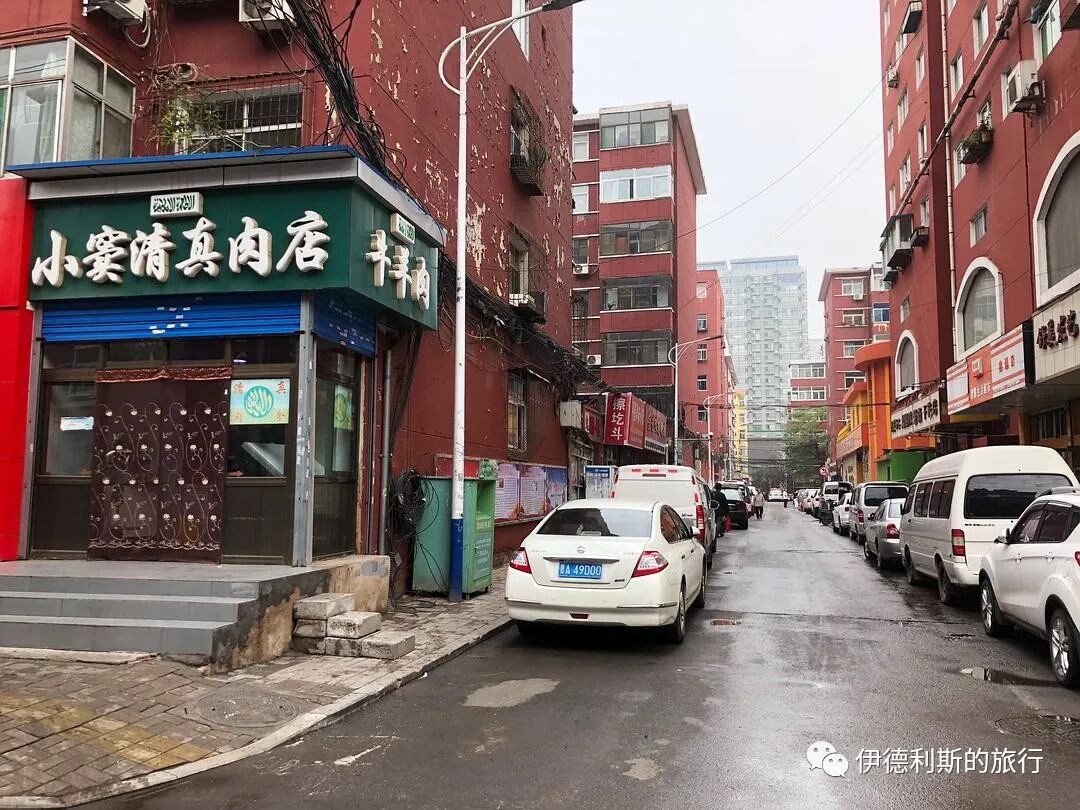
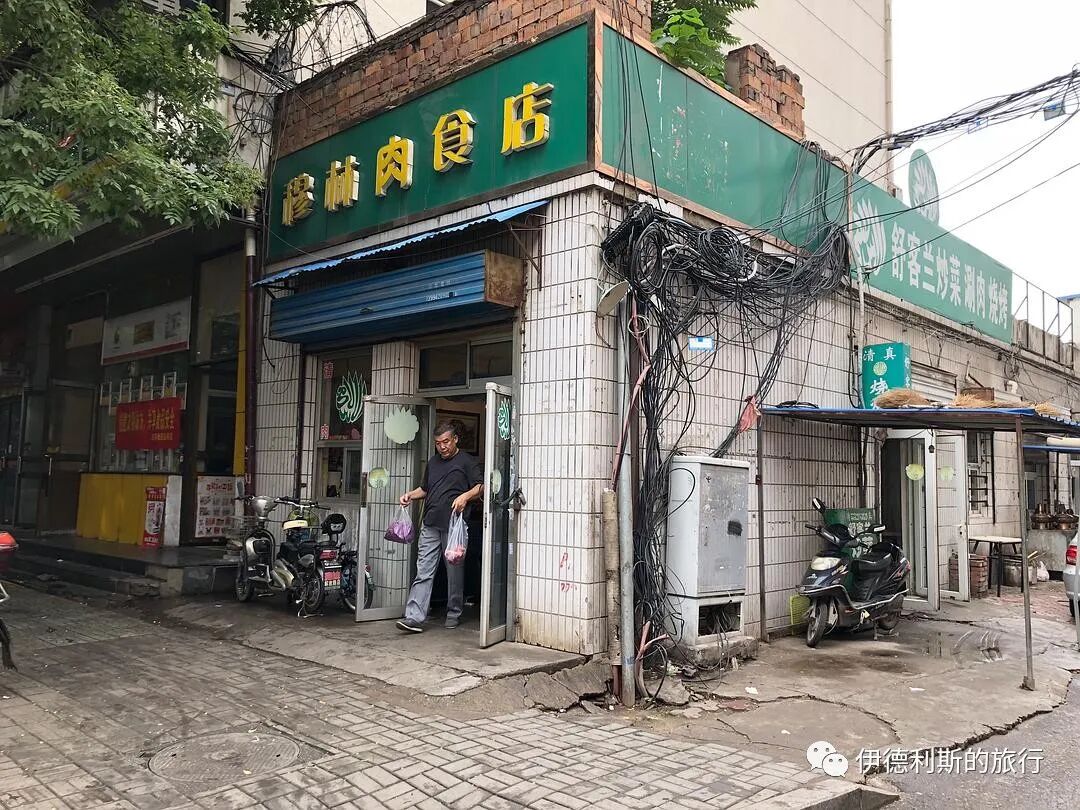
Halal restaurants are relatively concentrated on Jiucheng Street, Nanhaidong Street, Shaojiu Lane, and Nanhai Street opposite the Taiyuan Mosque. This area was originally the Eight Banners barracks of the old Manchu city, and now it is occupied by the staff dormitories of the Provincial Coal Transportation General Company, the Provincial Coal Department, and the Grain Bureau; it is a quiet and peaceful old residential area.
1. Juheyuan Halal Restaurant
I ate beef meatball soup at this place.
2. Ma Family Braised Chicken
I ate braised chicken legs and chicken feet at this place.
3. Yiqingyuan
Yiqingyuan is a large halal restaurant in Taiyuan; I ate guotaurou (pan-seared meat), tijian noodles (hand-pulled noodles), and peanut milk balls here. Guotaurou is also made in Beijing, but it is not as big as theirs. The variety of pasta in Shanxi is really rich; tijian noodles are made by using chopsticks to flick the dough into the pot, served with two kinds of sauces: meat sauce and egg and tomato sauce; this bowl of noodles only cost five yuan. Then I must praise the peanut milk; I drank a large pitcher by myself, it was super delicious and very suitable for autumn.
4. Hongxishun Halal Barbecue
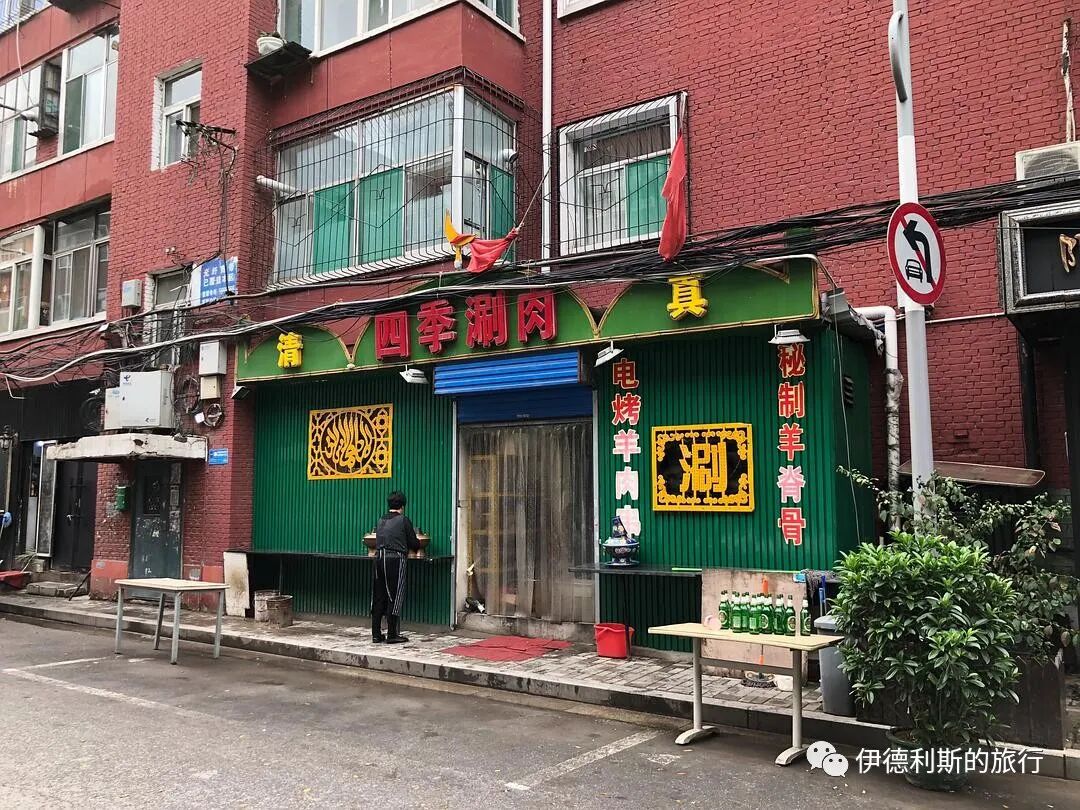
Having a little barbecue at Hongxishun in the evening, the cool weather of over ten degrees in Taiyuan is perfect for drinking bantang (a type of thick soup)! Drinking a few bowls down is very warm.
Besides the few restaurants above, there are still many restaurants I haven't eaten at; I will come to Taiyuan again if I have the chance! view all
Reposted from the web
Summary: This travel note introduces Taiyuan Halal Travel Guide: Historic Mosques and Muslim Food. I went to Taiyuan for a weekend of sightseeing and eating in early September 2018, arriving in 3 hours by high-speed train from Beijing. It is useful for readers interested in Taiyuan Mosques, Halal Food, Muslim Heritage.
I went to Taiyuan for a weekend of sightseeing and eating in early September 2018, arriving in 3 hours by high-speed train from Beijing. What attracted me most in Taiyuan was the main prayer hall of the mosque from the Ming Dynasty; the mihrab (niche in the wall indicating the direction of Mecca) and minbar (pulpit) inside are both original and very beautiful. In addition, there are many halal restaurants in Taiyuan, ranging from large dining halls to small snack shops, and whether it is lamb soup, shaomai (steamed dumplings), or beef and lamb stir-fries, everything is delicious.
Below, I will share my trip of sightseeing and eating with you all.
I. History of Hui Muslims in Taiyuan
Regarding the history of Hui Muslims in Taiyuan, you can refer to the article "Research on Islam in Taiyuan" by Li Xinghua. The current old city area of Taiyuan was first called Tangming Town, built in 982 (the seventh year of the Taiping Xingguo era of the Song Dynasty), and officially took its shape after expansion in 1376 (the ninth year of the Hongwu era of the Ming Dynasty). Since the Ming and Qing dynasties, the Hui Muslim community in Taiyuan has been located around the South Gate of the old city.
After the Ming Dynasty, Taiyuan gradually formed the "Ten Great Surnames of the Hui," namely the ten surnames: Duo, Luo (some say Ma), Tian, Liang, Li, Jin, Sa, Hai, Dao, and Di. Among them, the Jin surname came to Taiyuan with the army from Nanjing during the Hongwu era of the Ming Dynasty; the Tian surname was transferred to Taiyuan from Jinhua during the Hongwu era (some say they moved to Taiyuan for business from Shandong via Inner Mongolia and settled down); the Duo surname came to Taiyuan for business from Zhending, Jiangsu during the Ming Dynasty; the Ma surname came to Taiyuan for service from Nanjing at the end of the Ming Dynasty; the Liang surname came to Taiyuan for work from Henan during the Yongle era of the Ming Dynasty; the Dao surname came to Taiyuan for work during the Ming Dynasty; the Li surname came to Taiyuan from Henan at the end of the Ming Dynasty; and the Liang surname came to Taiyuan from Nanjing during the Ming Dynasty.
In addition, there are the Yang, Ding, and Ma surnames who came to Taiyuan from the northwest for business and settled down, and the Wen, Ma, and Qiao surnames who moved to Taiyuan from within Shanxi Province.
During the Qing Dynasty, there were over a hundred local Hui Muslim households in Taiyuan, plus more than ten households of Hui Muslims who came from Suiyuan for business, totaling five or six hundred people. After the Zhengtai Railway opened to traffic in 1907, the number of Hui Muslims coming to Taiyuan from Hebei increased significantly, reaching over 1,000 in the 1930s and over 5,100 in the early days of the founding of the People's Republic of China.
According to records, there were once four mosques in Taiyuan's history, among which the Qiao Family Mosque and the Ningxia Mosque were outside the Great South Gate. The record of the Qiao Family Mosque comes from You Cheng's "General Situation of Islam in Taiyuan"; the Qiao Family Mosque had over a hundred households of congregants, all surnamed Qiao, and the ahong (imam) was also surnamed Qiao. The Ningxia Mosque information comes from data provided by Li Dajun, Li Dahong, and Yang Youlin in "Research on Islam in Taiyuan"; the Ningxia Mosque was built 200 years ago, and the congregants were "camel guests" traveling between Ningxia and Taiyuan. Both of these mosques were destroyed along with residential houses in the floods during the Guangxu era of the Qing Dynasty, and currently, neither can be verified.
After the Republic of China, with the operation of the Zhengtai Railway, Hebei Hui Muslims continuously moved to Taiyuan, and the North Mosque was built during the Republican period. By the late Republican period, the North Mosque had taken shape, but it was eventually destroyed. In addition, during the Republican period, there were two women's mosques in Taiyuan, namely the Great South Gate Street Women's Mosque built in 1922 and the Lou'erdi Women's Mosque built at the same time as the North Mosque.
Currently, only one mosque remains in Taiyuan, which is the Taiyuan Mosque.
II. Taiyuan Mosque
The Taiyuan Mosque is located on Niurou Lane (Beef Lane) inside the South Gate. Currently, the mosque's main prayer hall and the Shengxin Tower (minaret) are both Ming Dynasty buildings, which is consistent with the era when the city of Taiyuan took its shape in the Ming Dynasty and Hui Muslims officially settled in Taiyuan.
Currently, from west to east, the mosque consists of the main prayer hall, a fire wall, the Shengxin Tower, and the main gate. There are stele pavilions to the north and south of the Shengxin Tower, and side rooms further to the outside. Originally, outside the main gate of the mosque was Niurou Lane, with its back against Great South Gate Street, but later, when Great South Gate Street was widened and renovated, the mosque's moon-viewing tower and the auxiliary courtyard buildings were demolished, and some were converted into shops facing the street. The archway in front of the main gate was moved outside the West Side Gate, and the West Side Gate facing Great South Gate Street thus became the new main gate.
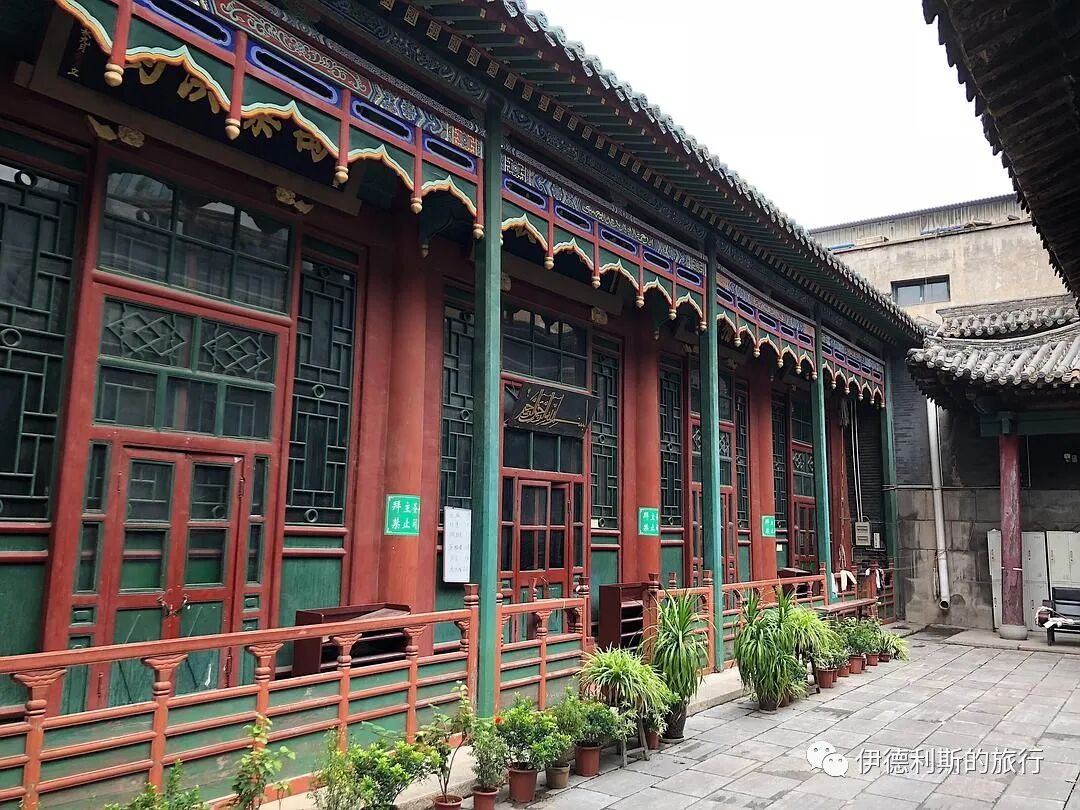
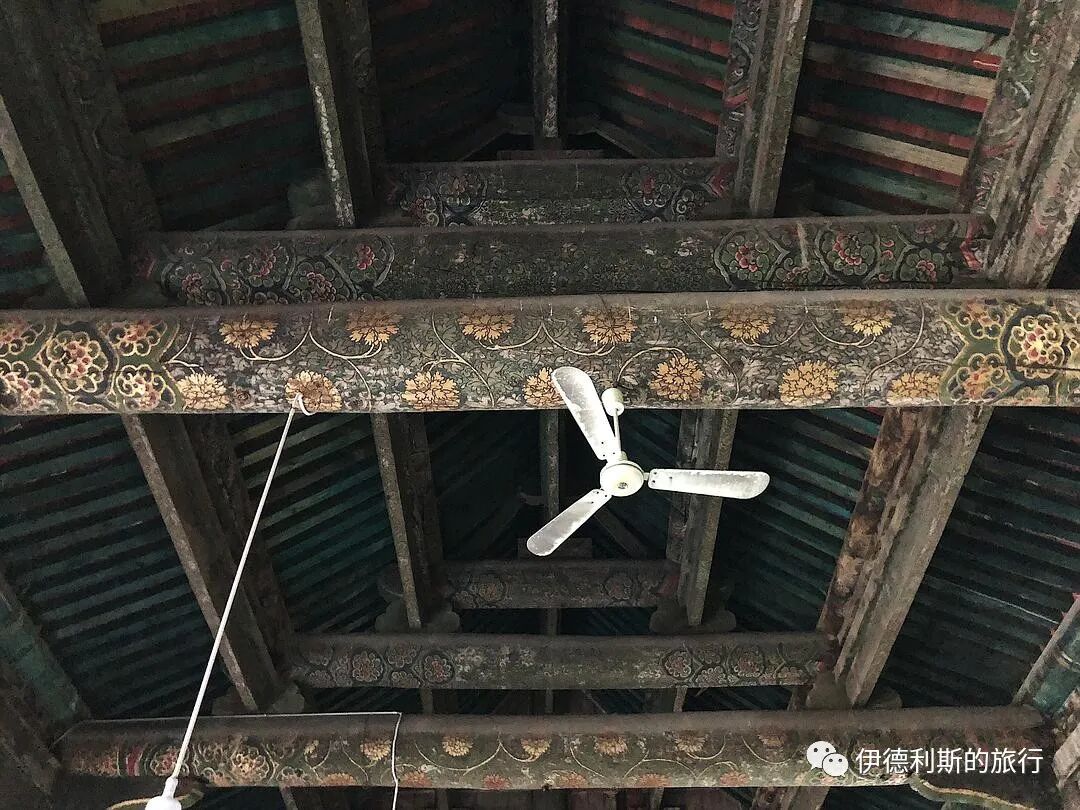
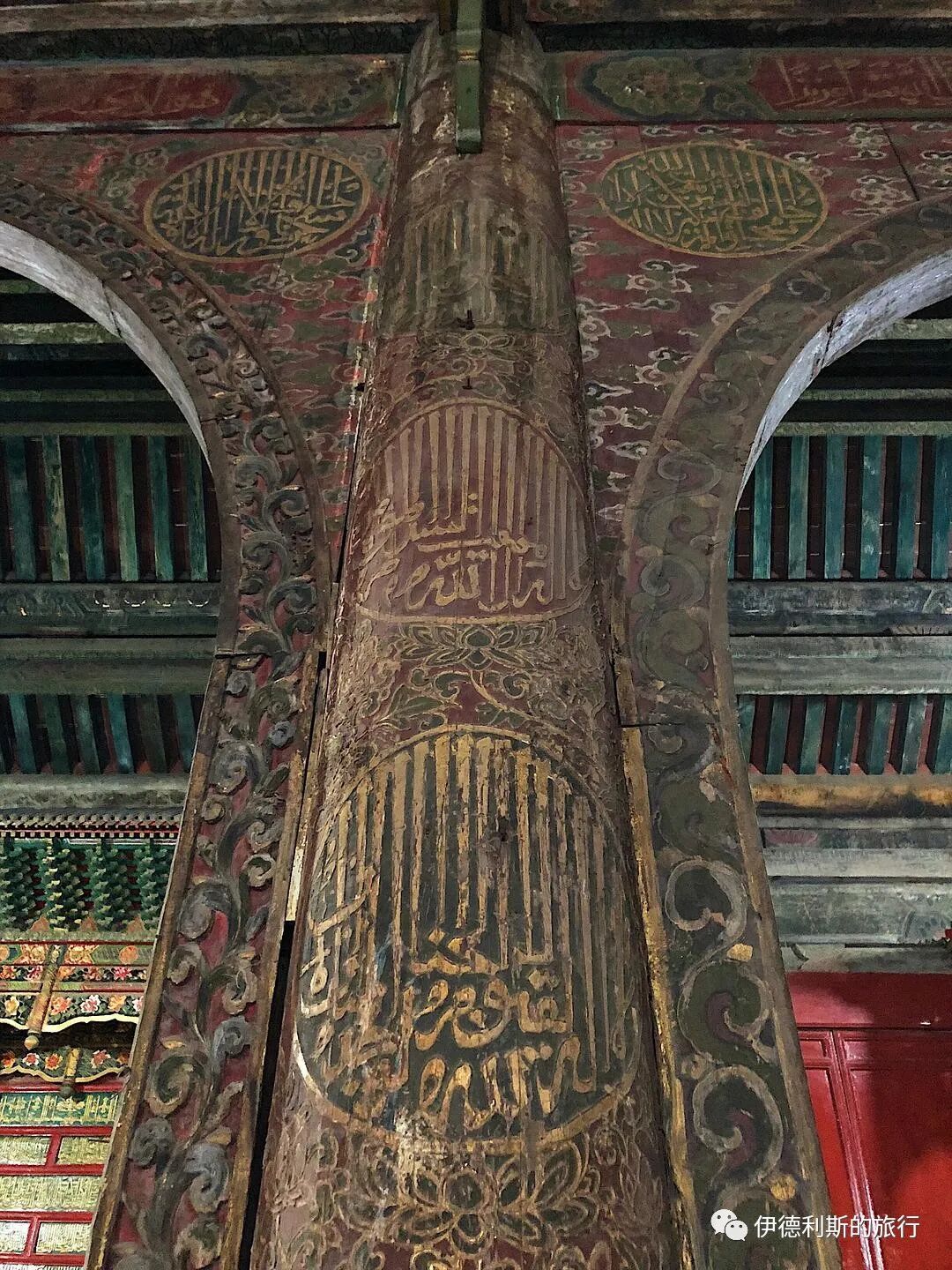
The most important building of the Taiyuan Mosque is the main prayer hall, and the colored paintings on it are very exquisite. The famous architectural historian Liu Zhiping wrote in the book "Chinese Islamic Architecture" after investigating the Taiyuan Mosque in the early 1960s:
The hall does not use dougong (bracket sets), the style is simple and ancient, and the wood is also thick and neat, without inlaying or splicing. The colored paintings on the beams do not use the "hemp-covering and ash-catching" technique, but are painted directly on the wood surface. The central panels of the colored paintings are extra long, and on the panels, many flowers are arranged in a row with very decorative interest, which is different from the general Qing palace-style colored paintings.
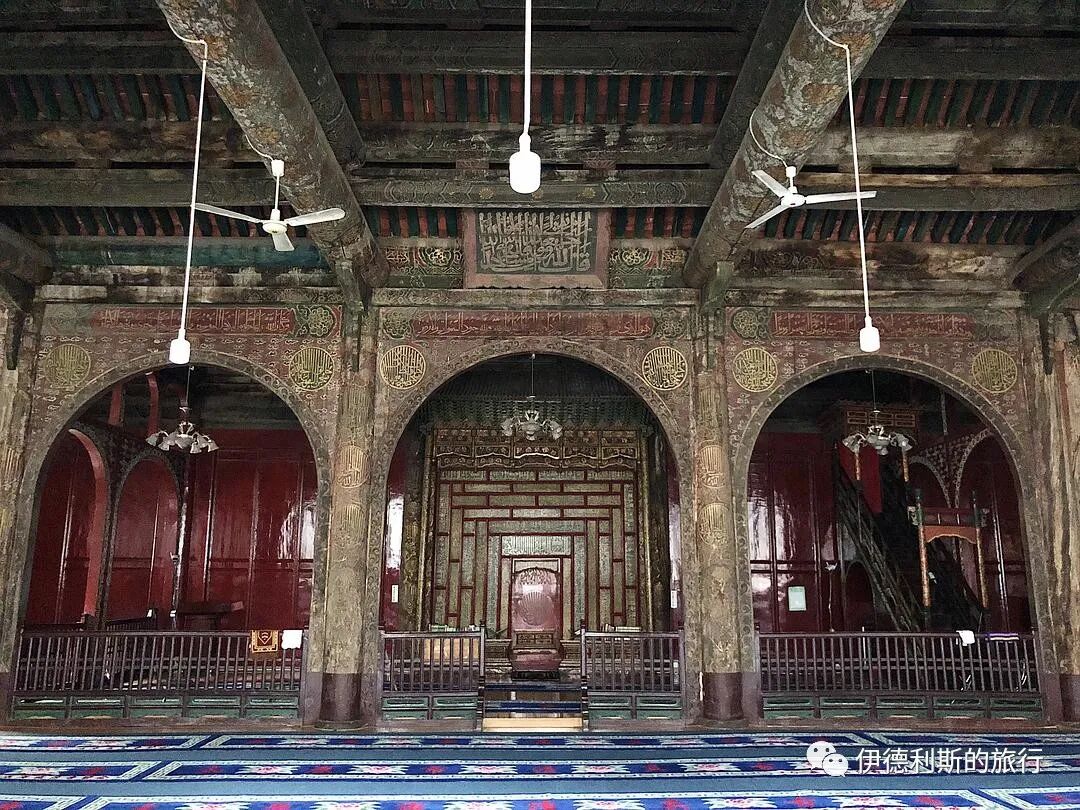
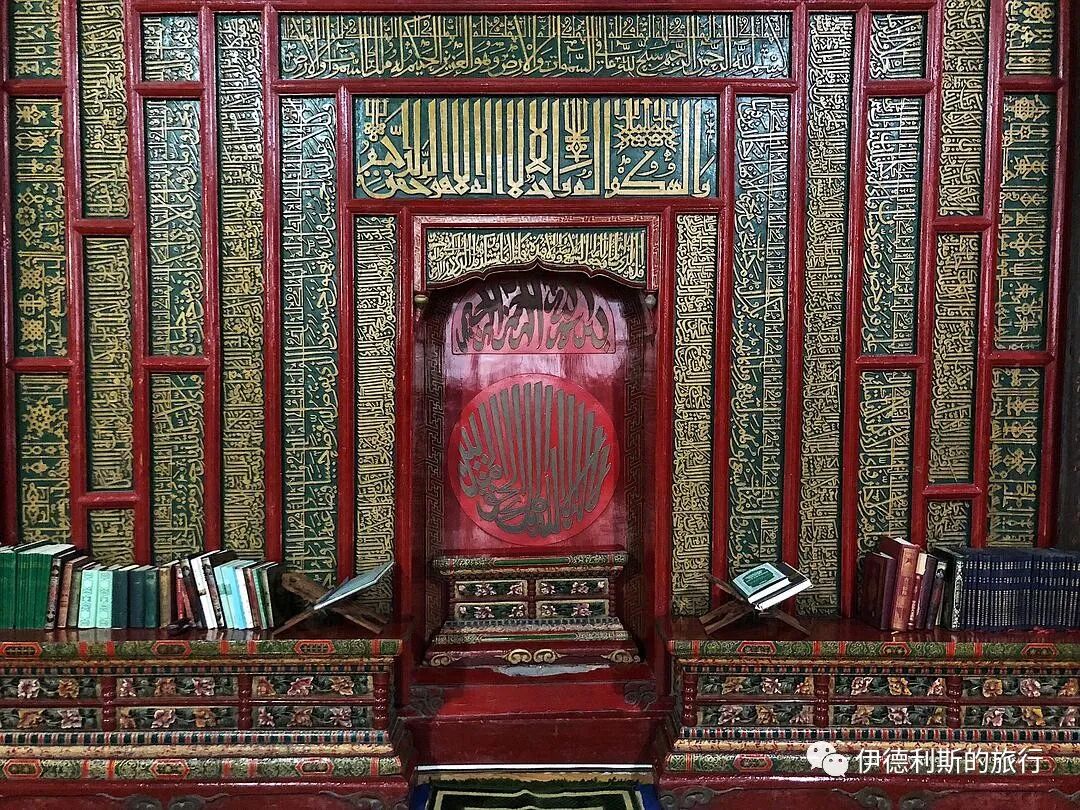
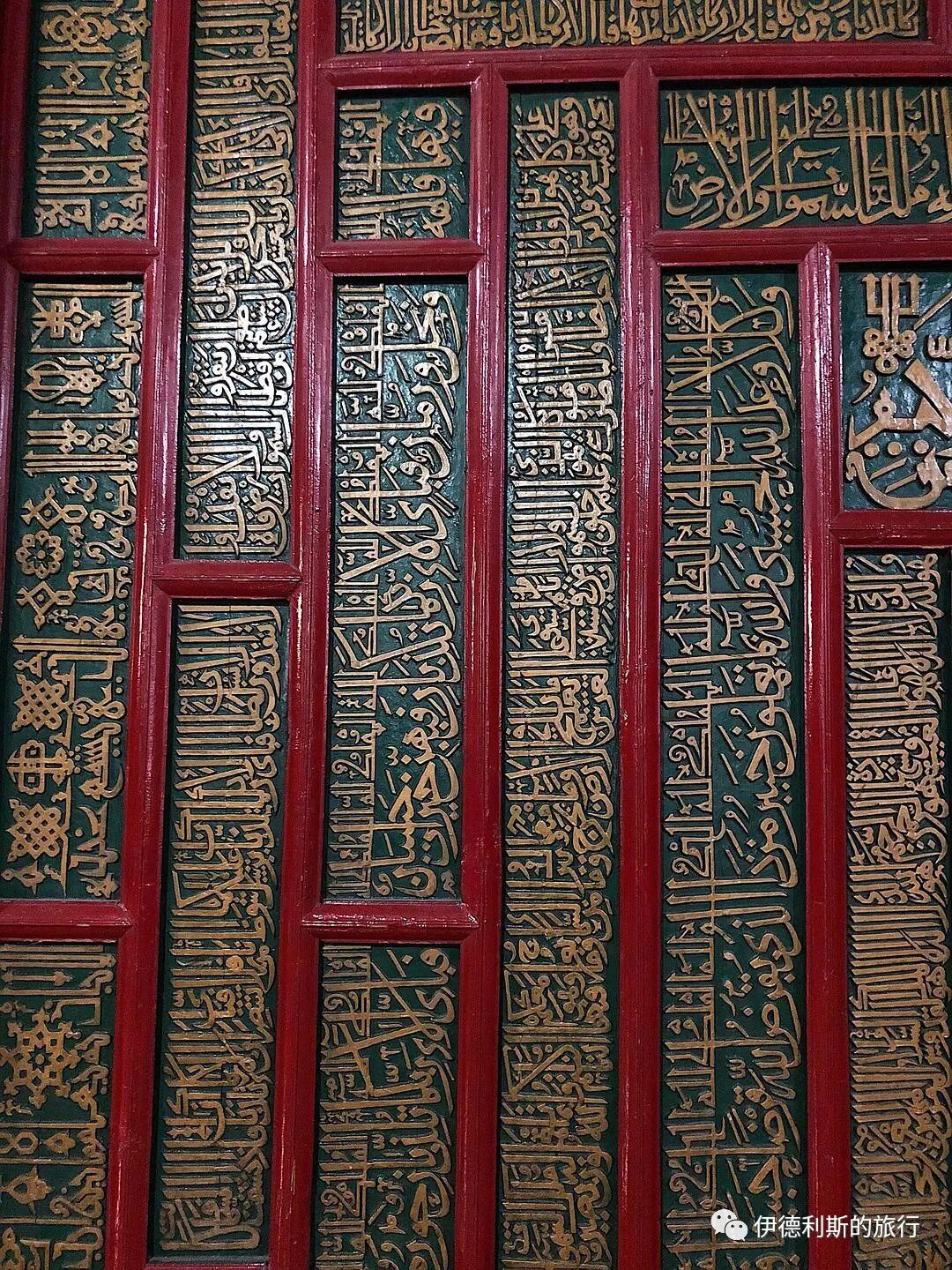
This kind of wood-inlaid mihrab style is very rare.
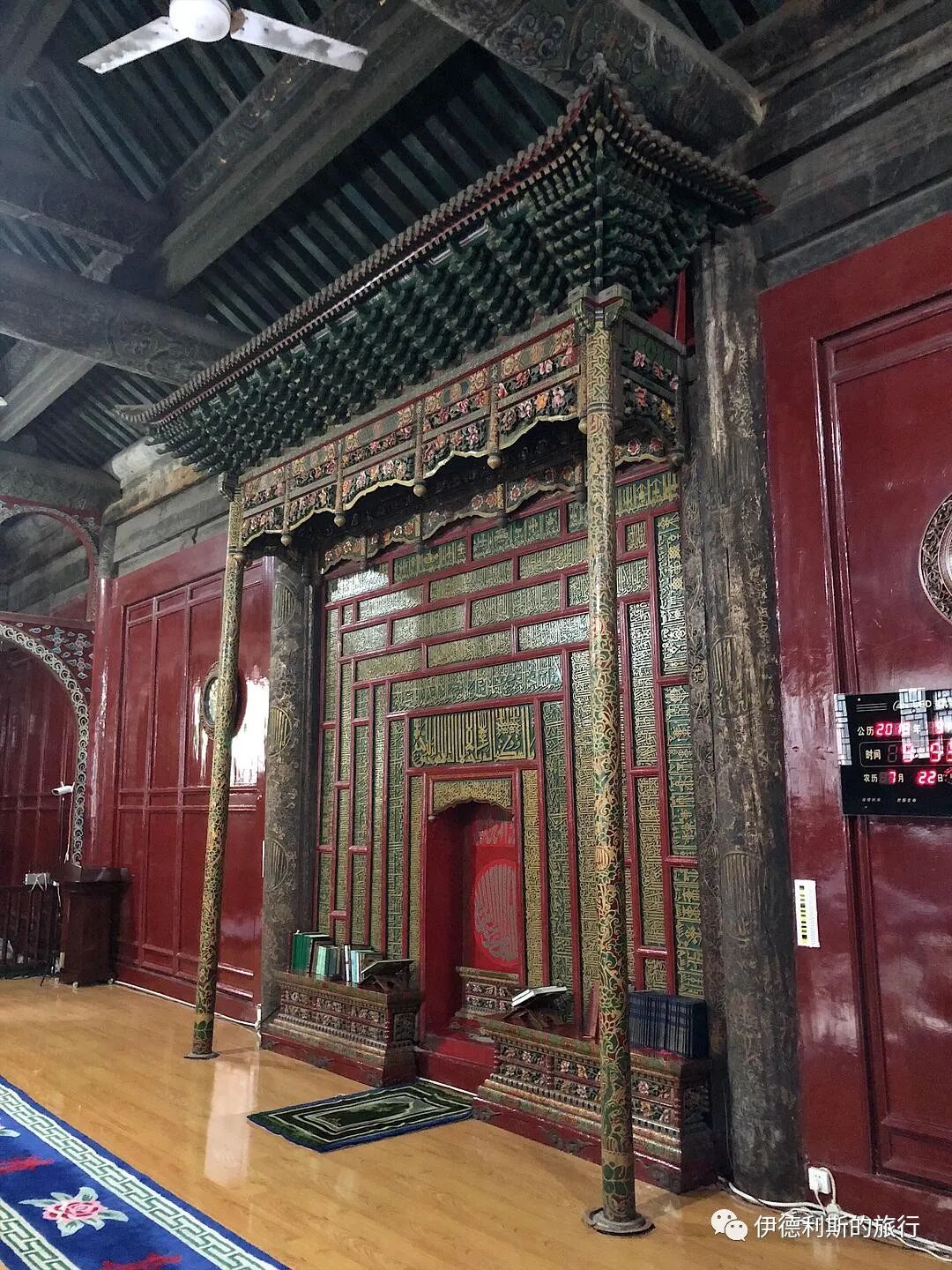
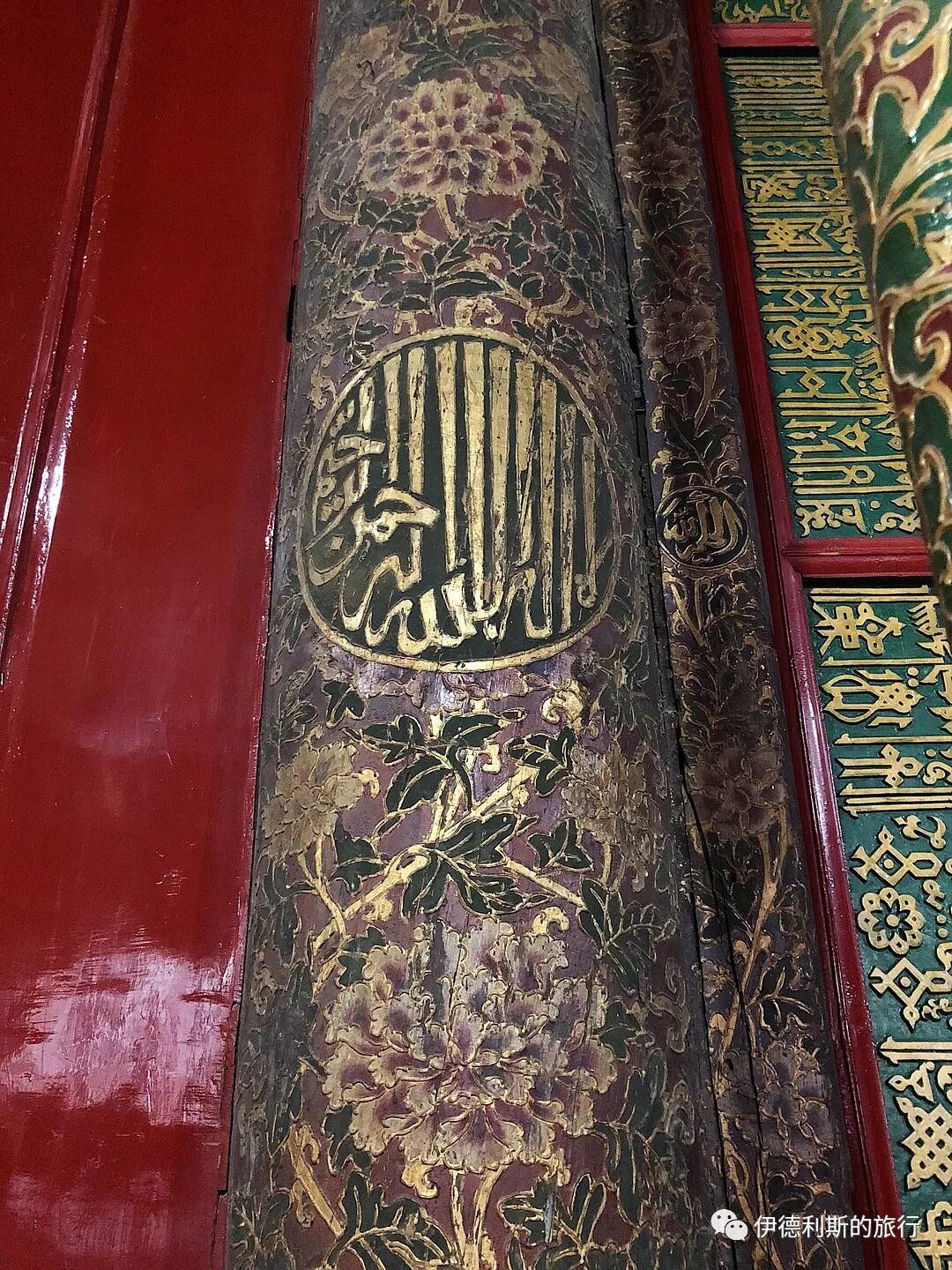
On the mihrab are some verses from chapters 29 and 30 of the Quran.
Although the minbar on the north side of the mihrab has been repainted, it is the original piece itself, which is very rare.
The long-life memorial tablet table inside the main prayer hall is also an original piece.
The picture below was taken in the early 1960s by the famous architectural historian Liu Zhiping, who led the Chinese Islamic Architecture Research Group.
The picture below was taken by the China Architecture and Building Press between 1990 and 1992 for the book "Islamic Architecture."
When I went there, Baba Liu in the mosque recited the Peace Dua for me.
To the east of the main prayer hall is the fire wall, and outside the fire wall, one can see traces of a building that once existed, which is very likely the opposite hall common in mosques.
Outside the fire wall, there are two stele pavilions.
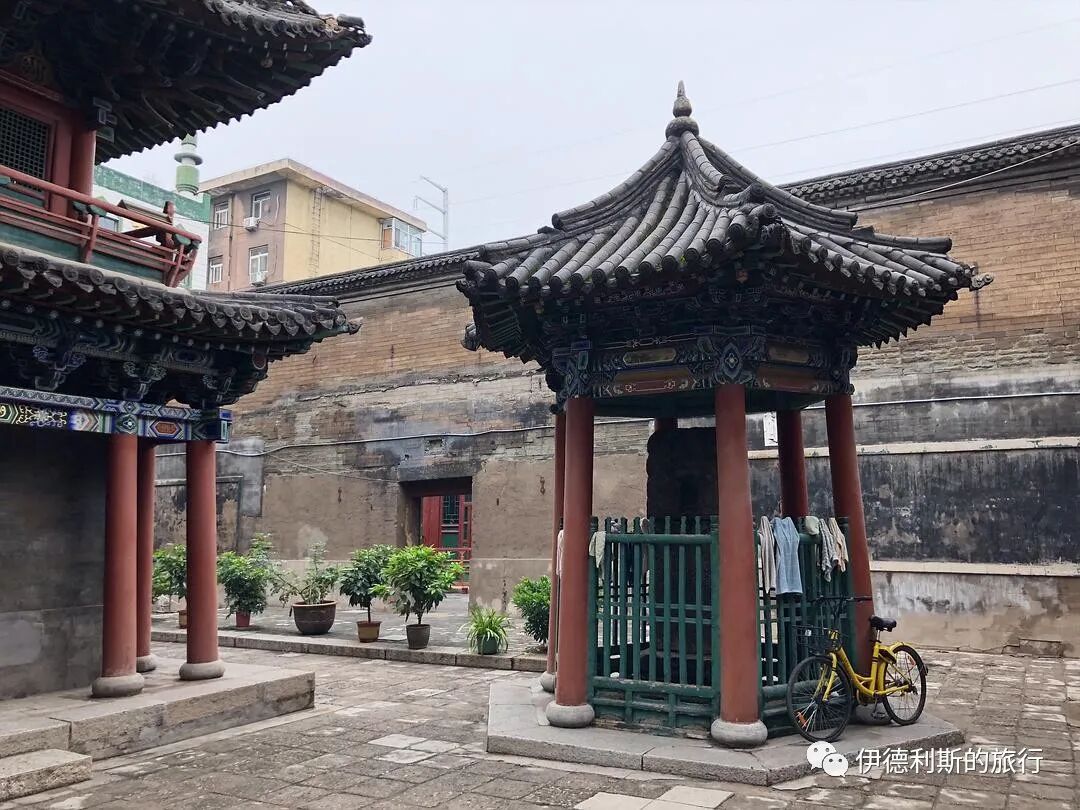
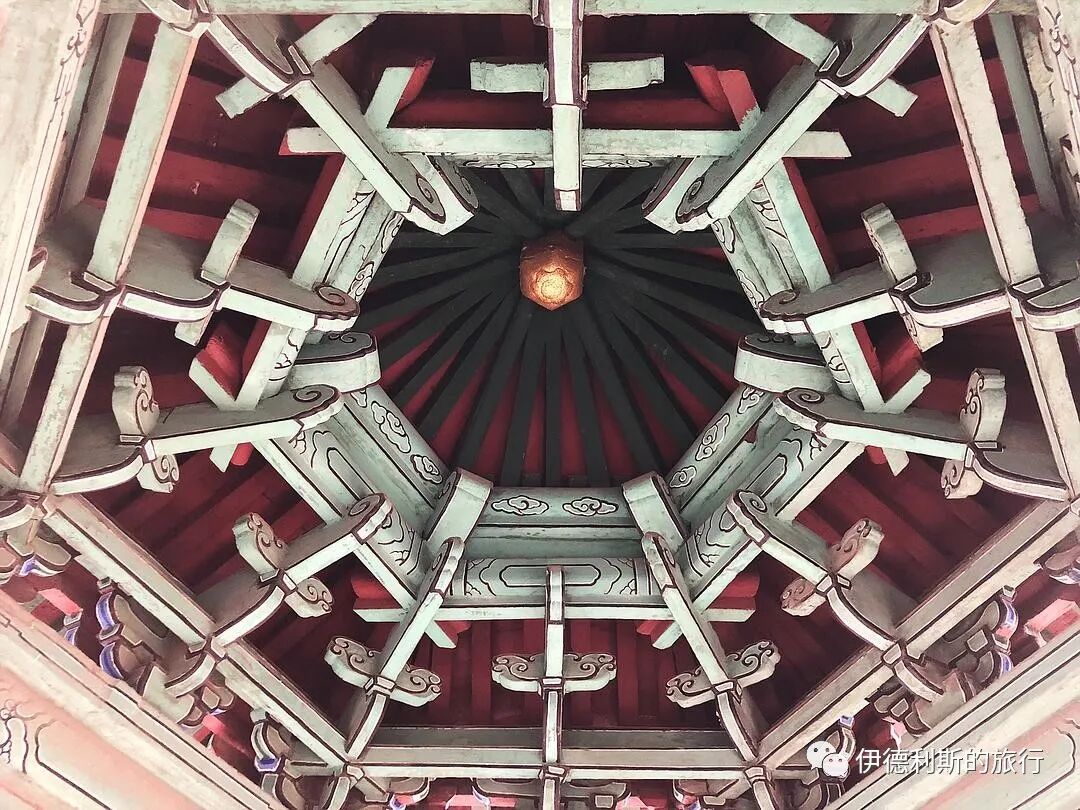
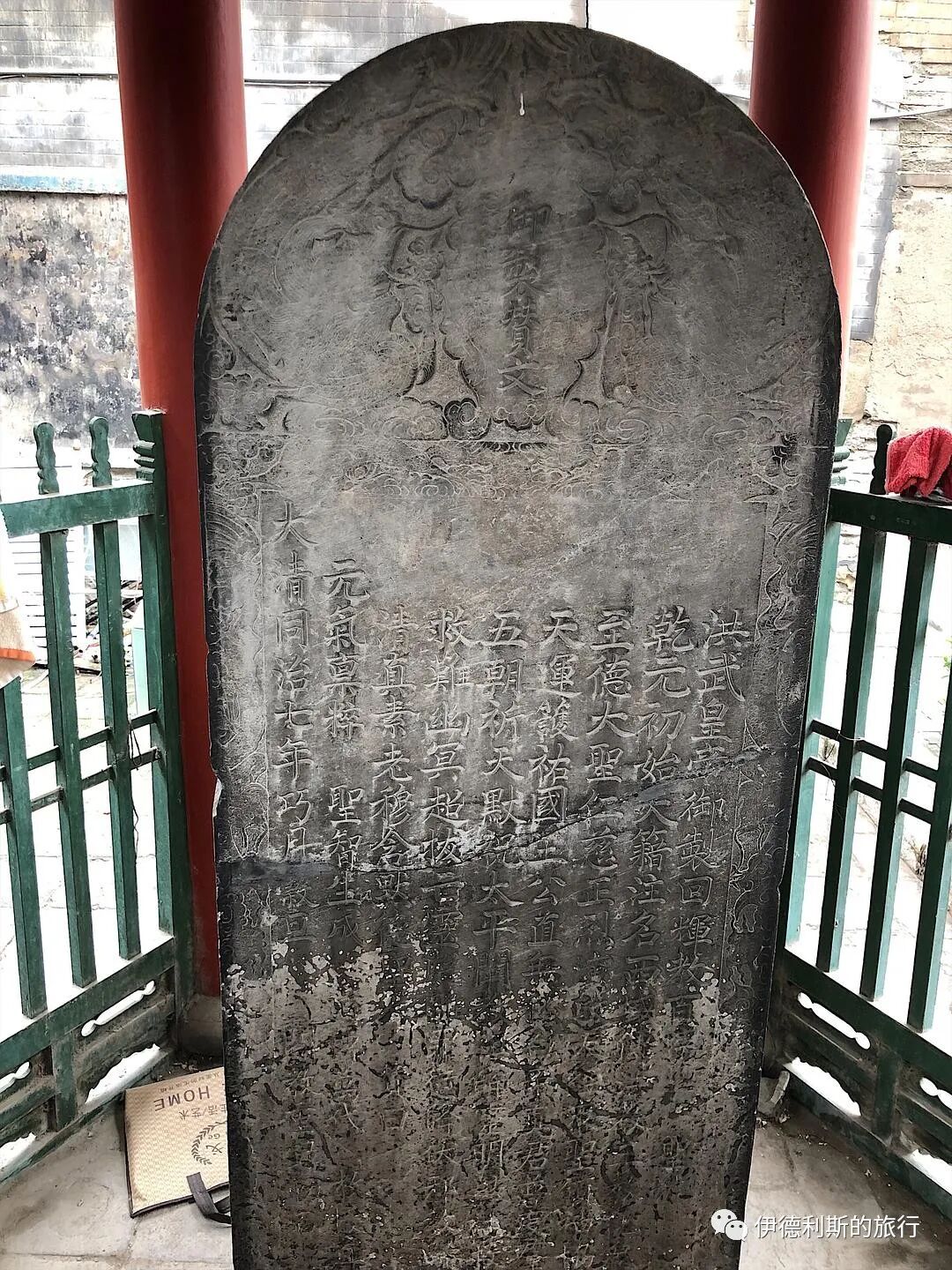
On the stele is the "Hundred-Character Holy Praise" carved in 1868 (the seventh year of the Tongzhi era), and the other side is carved with calligraphy by Huang Tingjian and others from 1881 (the seventh year of the Guangxu era).
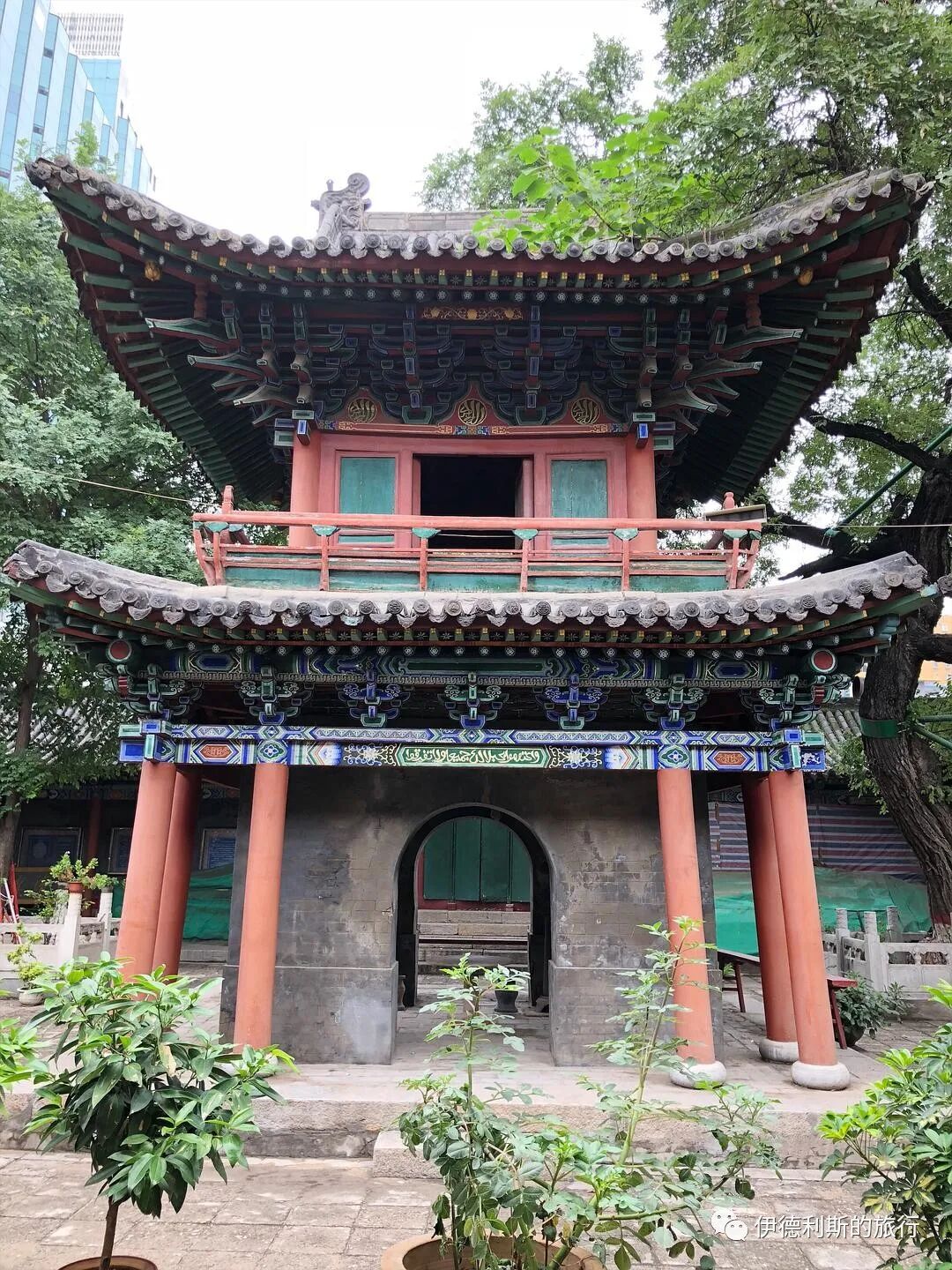
In the middle of the stele pavilions is the Shengxin Tower, which is the minaret.
The easternmost side is the original main gate of the mosque.
Plaques in the mosque.
III. Outside the Mosque
The shops facing the street outside the mosque were built when Great South Gate Street was widened, and when I went in September 2018, they were about to be demolished again due to subway construction. On both sides of the mosque gate are fresh beef and lamb shops, and there is one on the south side that has a long queue all year round.
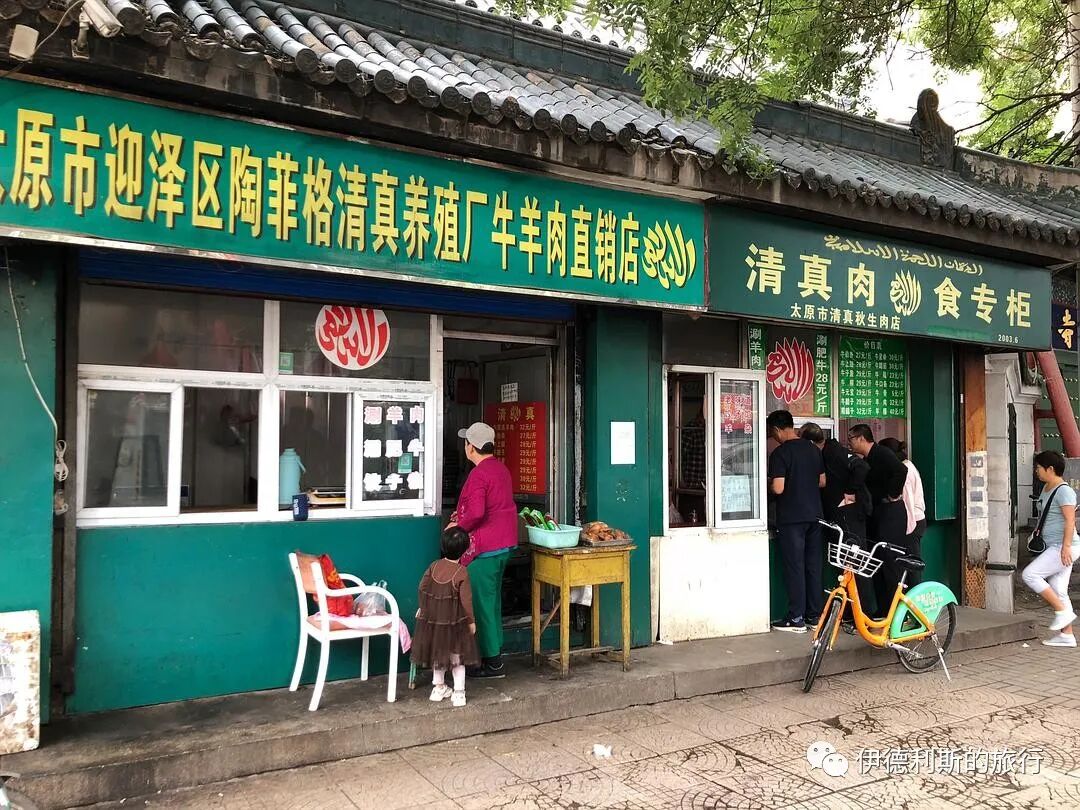
A little further south is the Huifengyuan Restaurant, which sells shaomei (steamed dumplings), lamb soup, meatball soup, and other snacks. I drank lamb soup and ate shaomei here, and both were especially delicious.
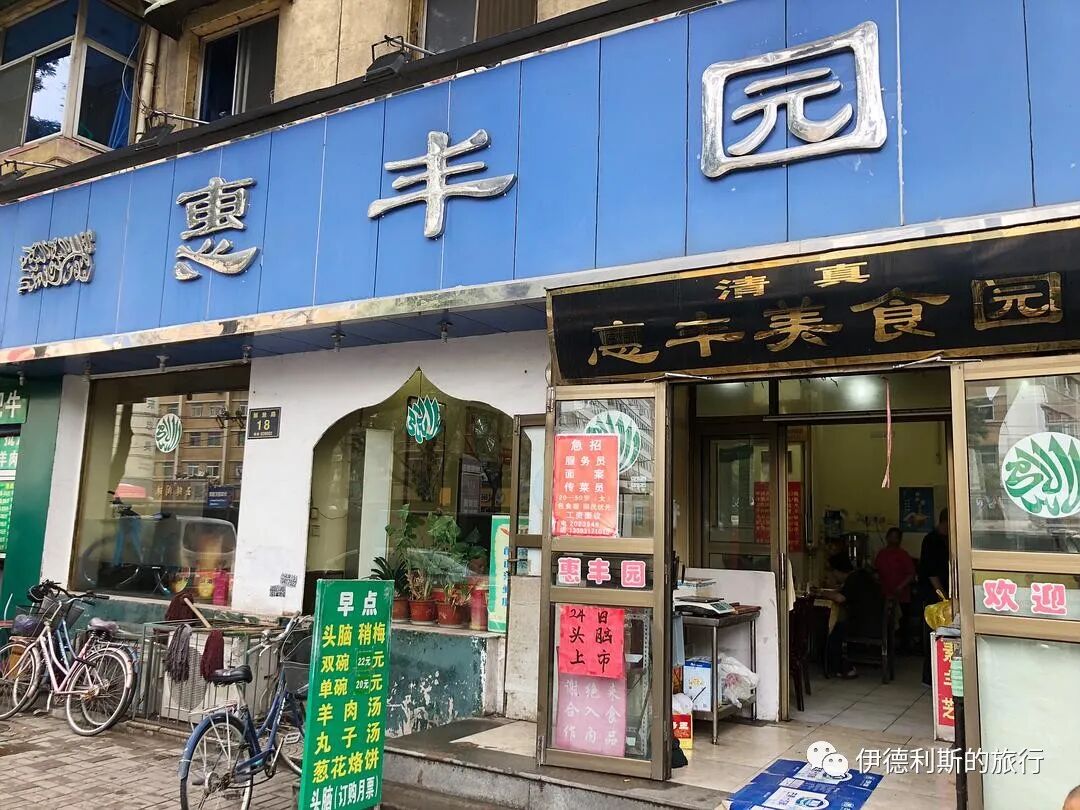
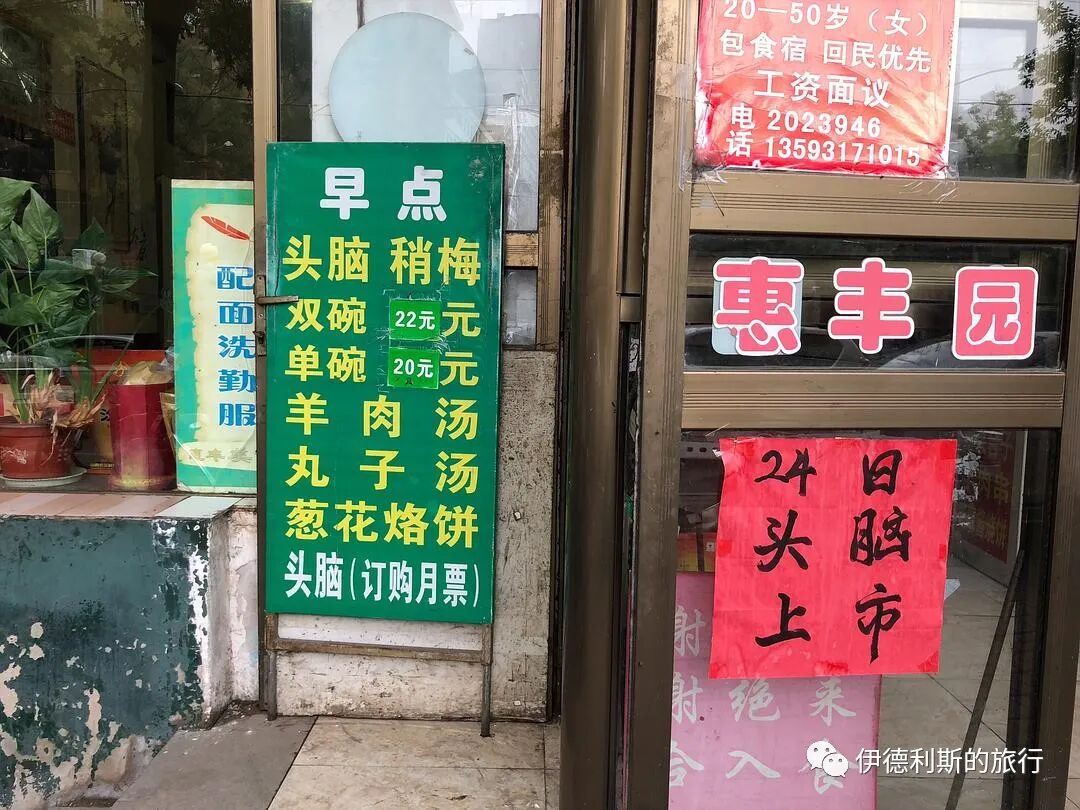
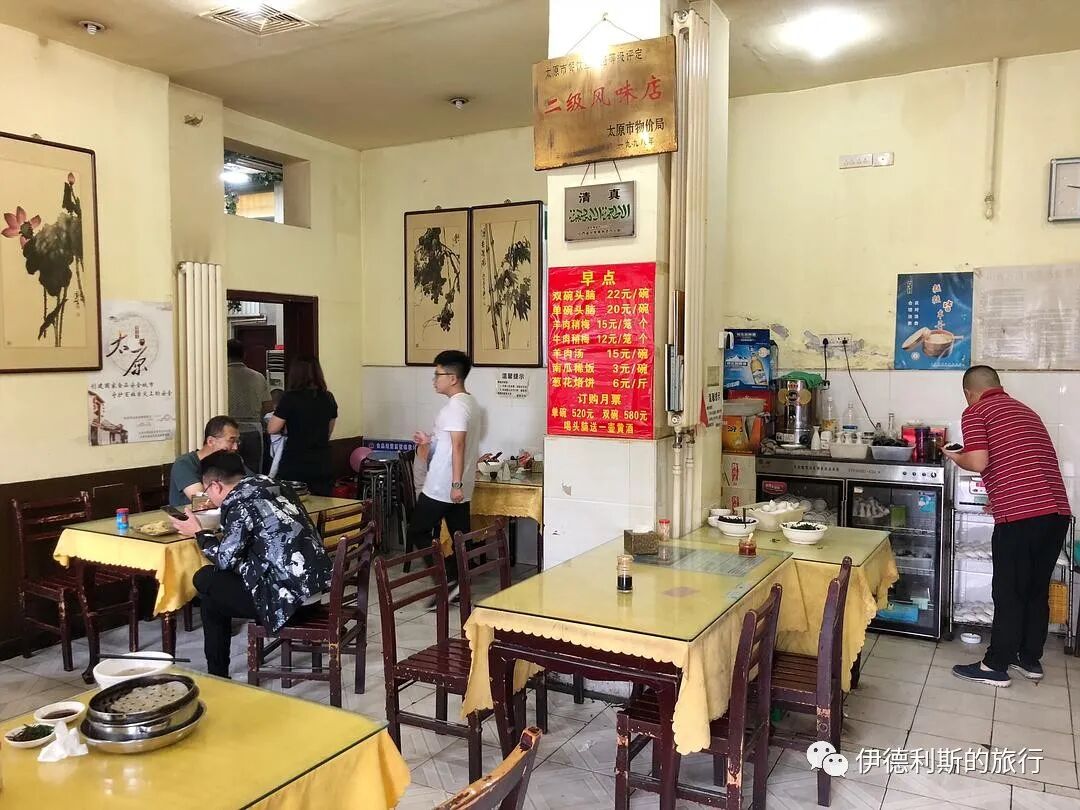
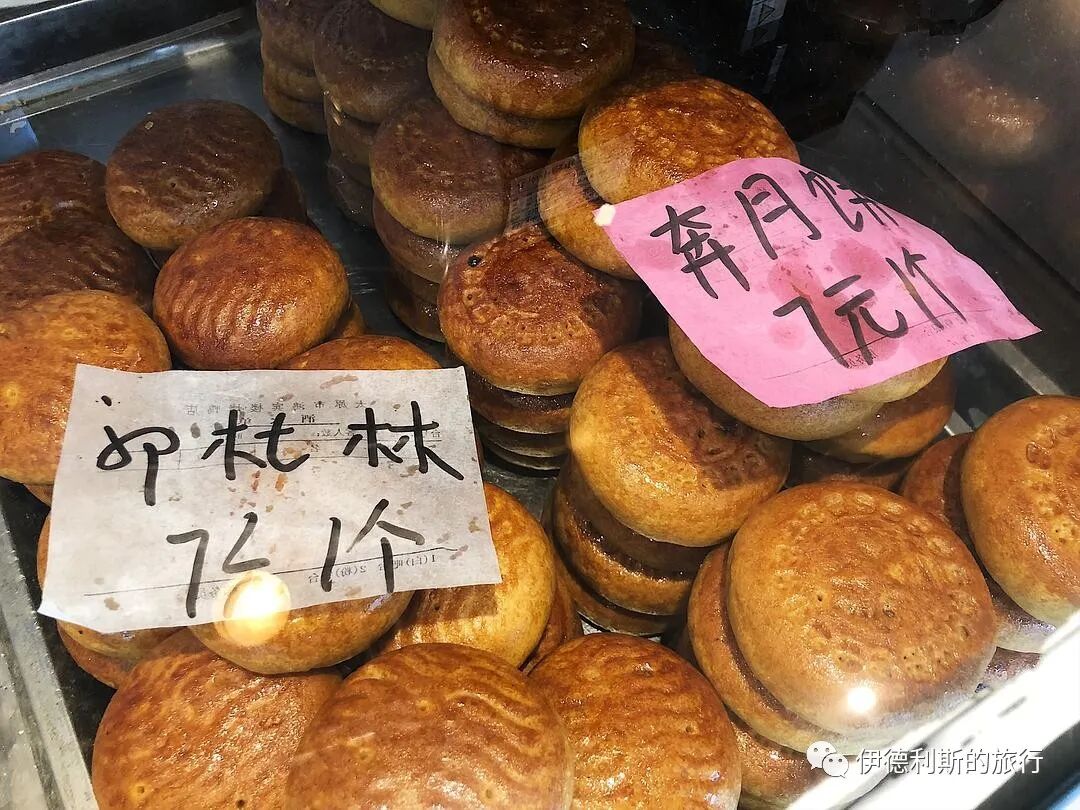
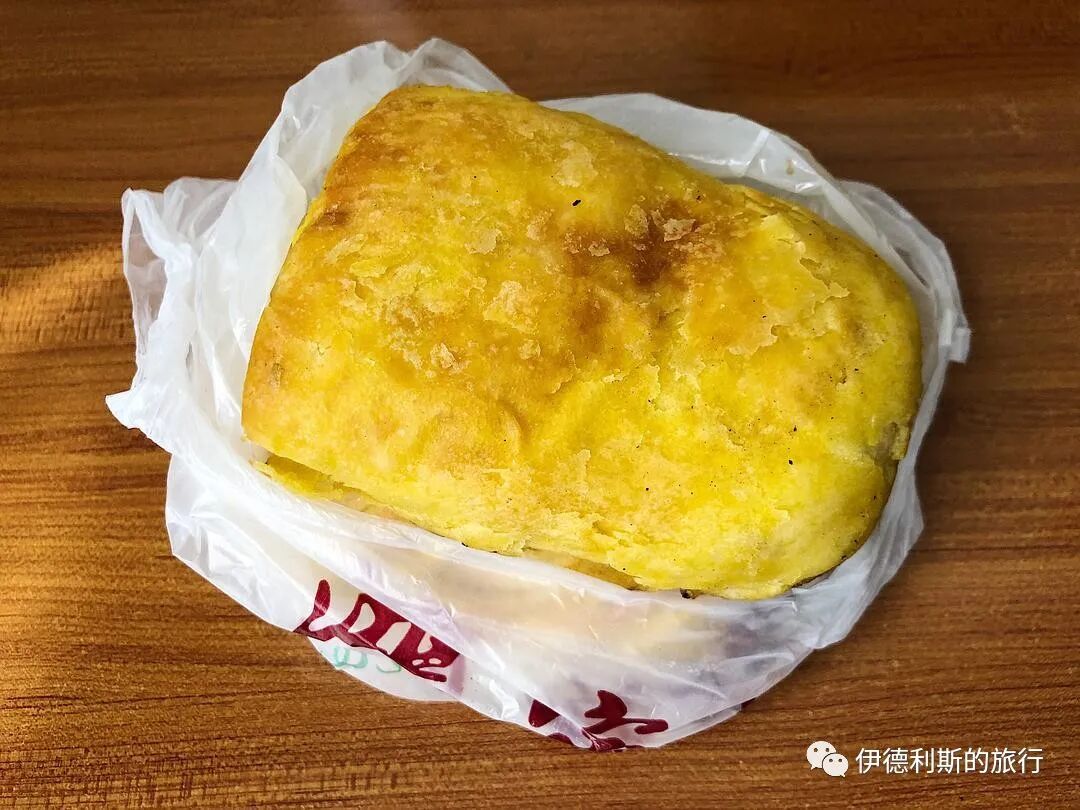
To the north of the mosque is the large restaurant Hongbinlou Roast Duck Restaurant. This is the famous halal restaurant that was in Tianjin during the Qing Dynasty and introduced to Beijing in the 1950s; after being introduced to Taiyuan in 1981, it focused on Beijing roast duck. In the Hongbinlou Pastry Shop, you can buy various Jin-style (Shanxi-style) pastries and mooncakes; I bought tijiang mooncakes (syrup-skin mooncakes), huntang mooncakes (mixed-sugar mooncakes), banqie (a type of pastry), and youxuan (oily spiral pastry).
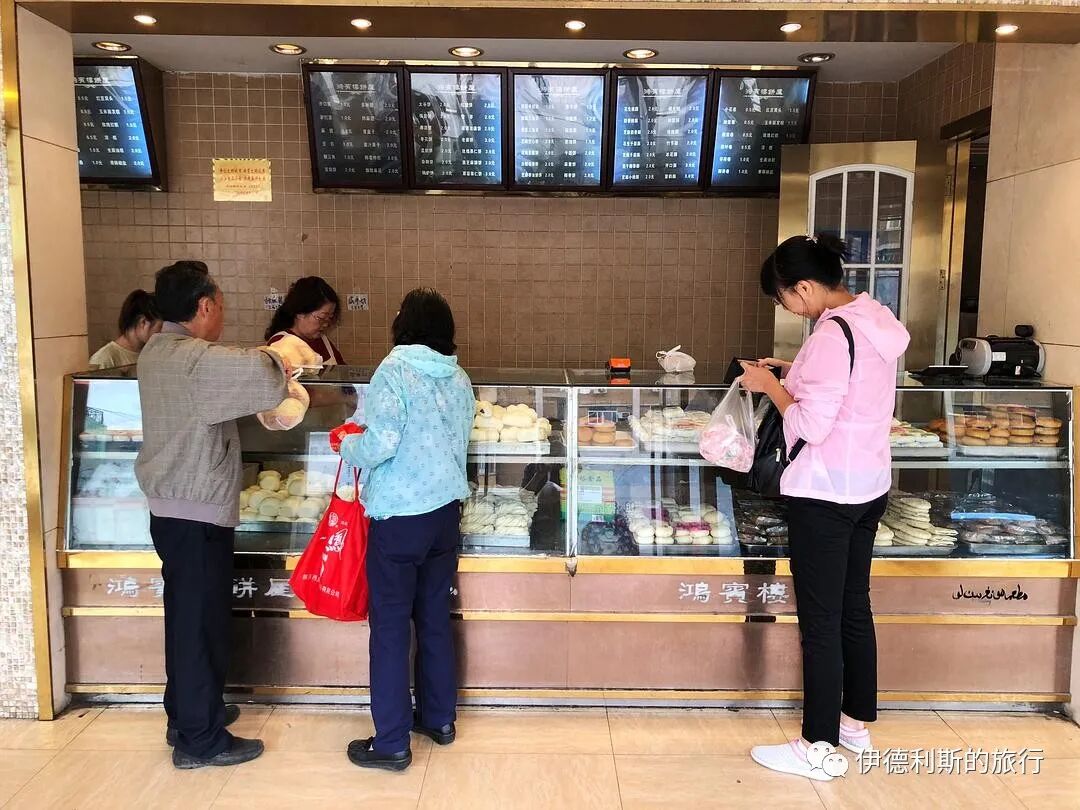
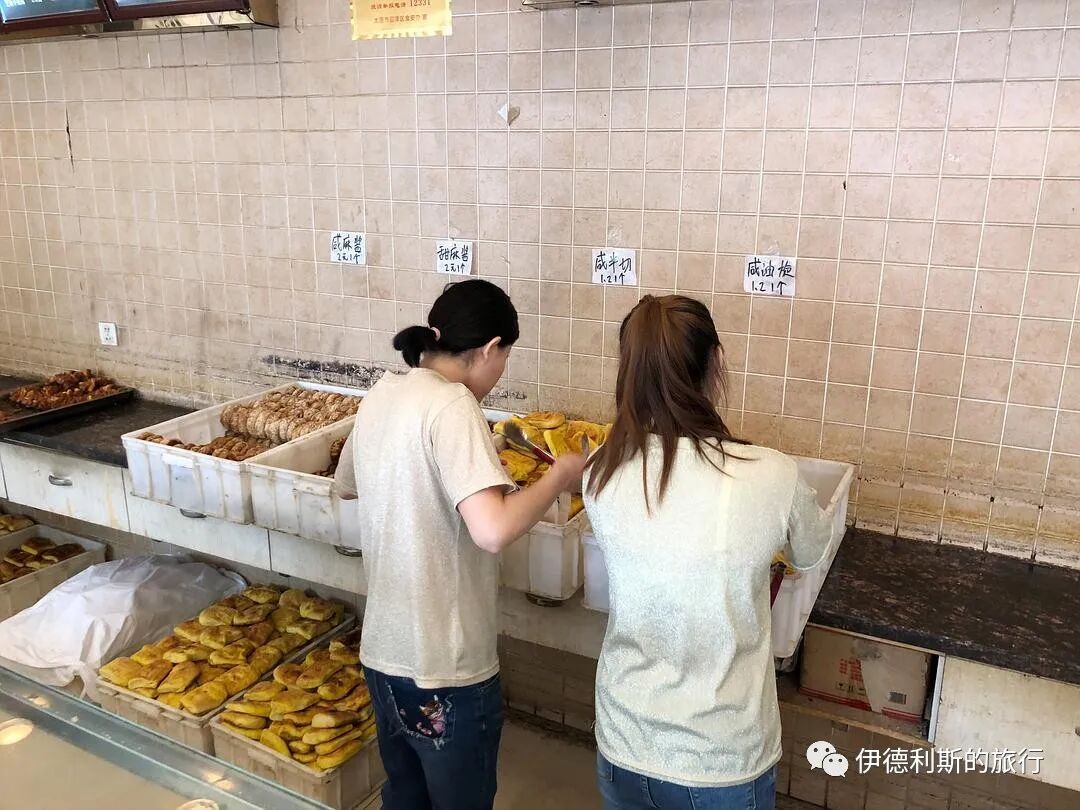
Banqie (a type of pastry)
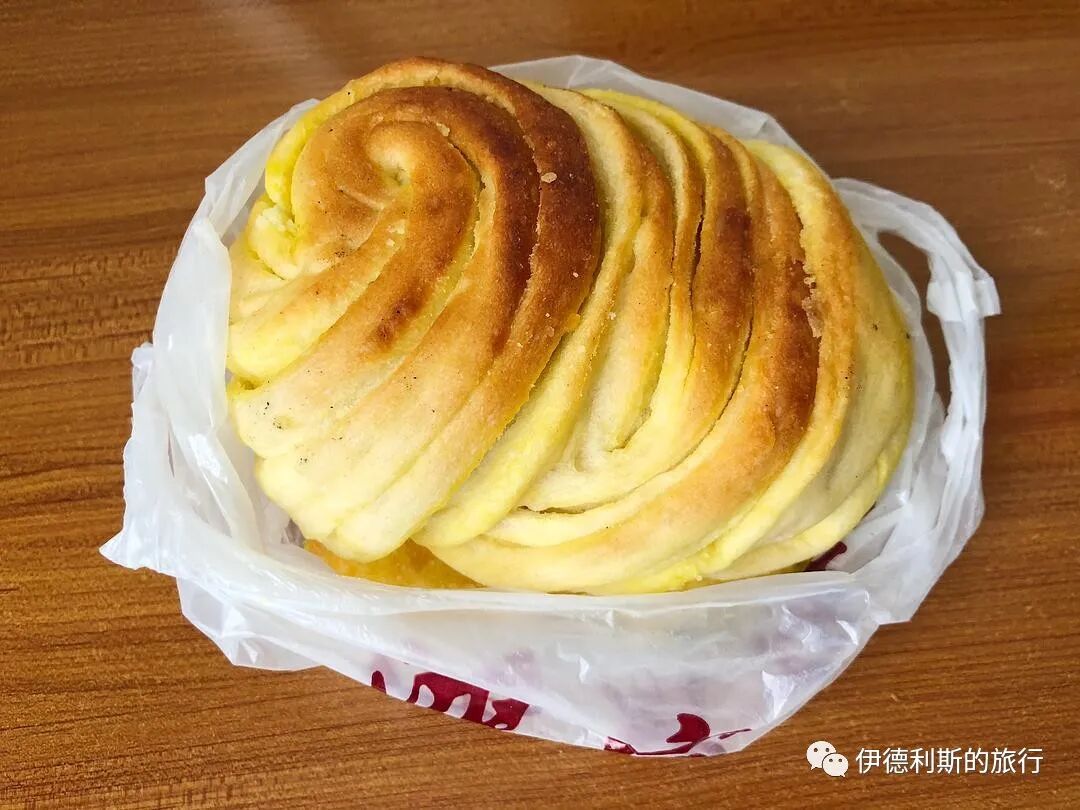
Youxuan (oily spiral pastry)
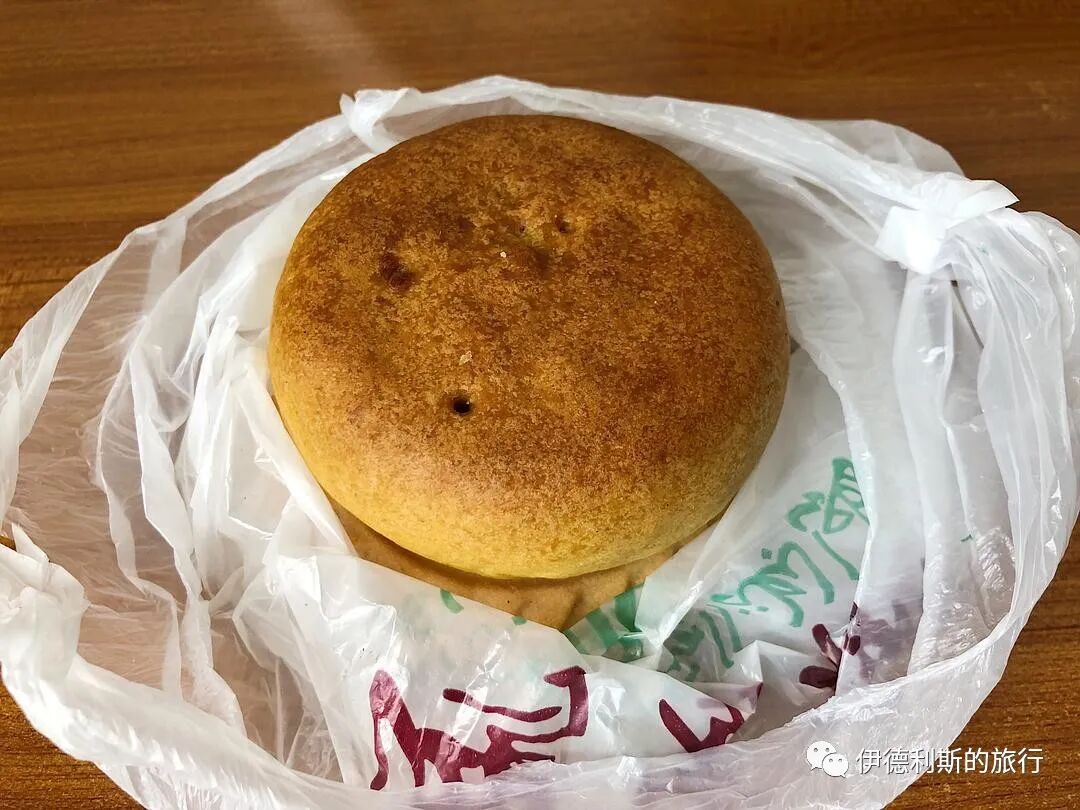
Huntang mooncake (mixed-sugar mooncake)
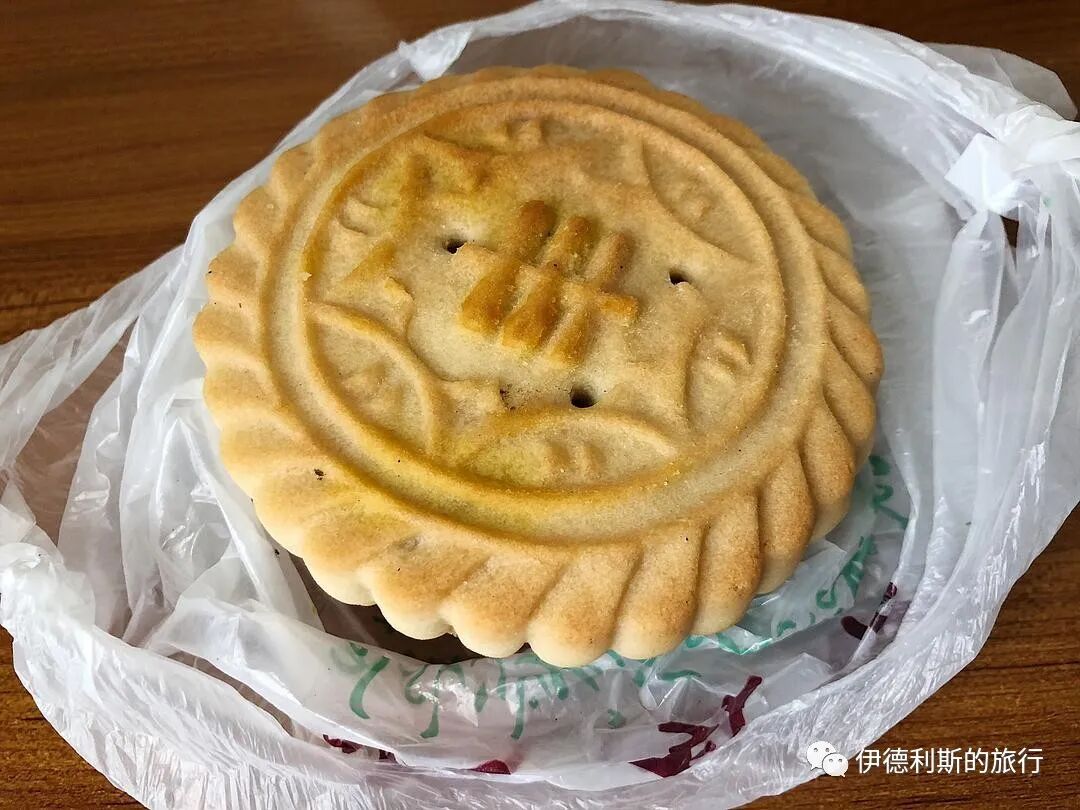
Tijiang mooncake (syrup-skin mooncake)
IV. Laoqingyuan
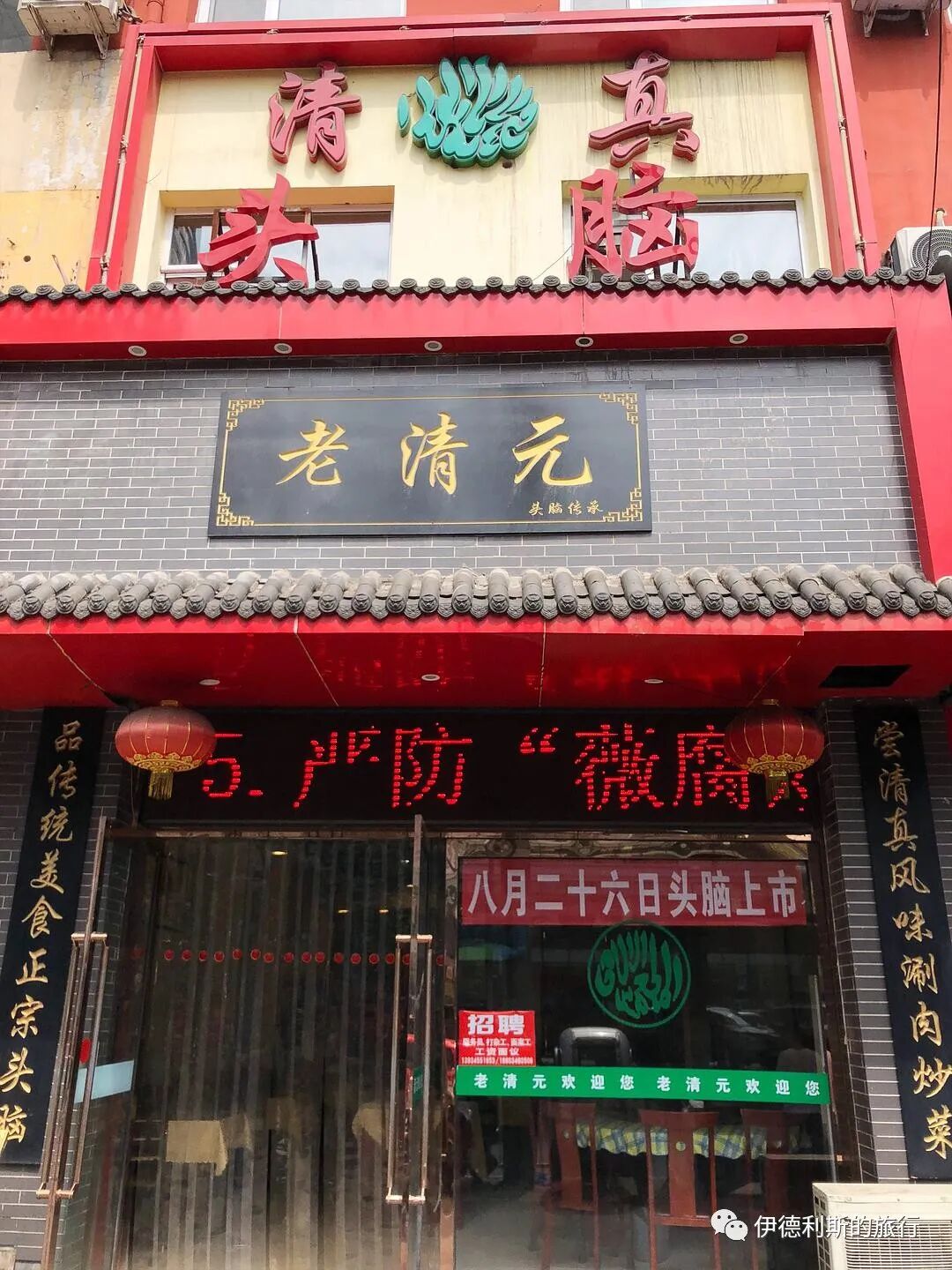
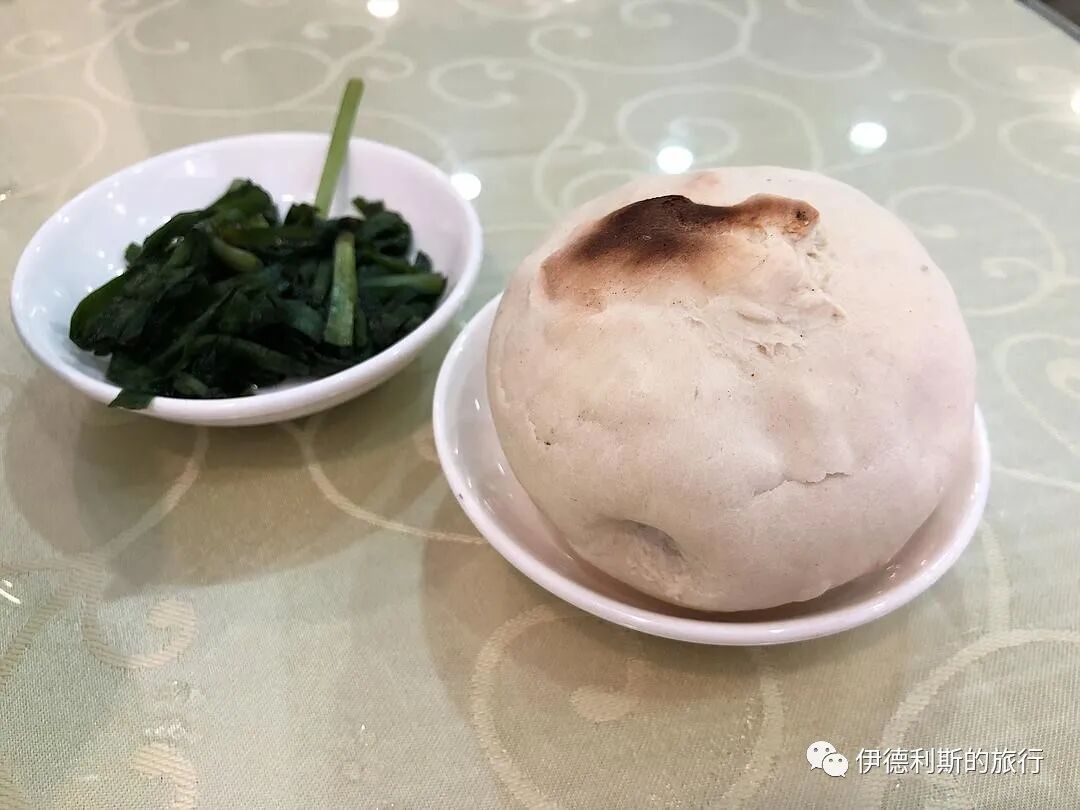
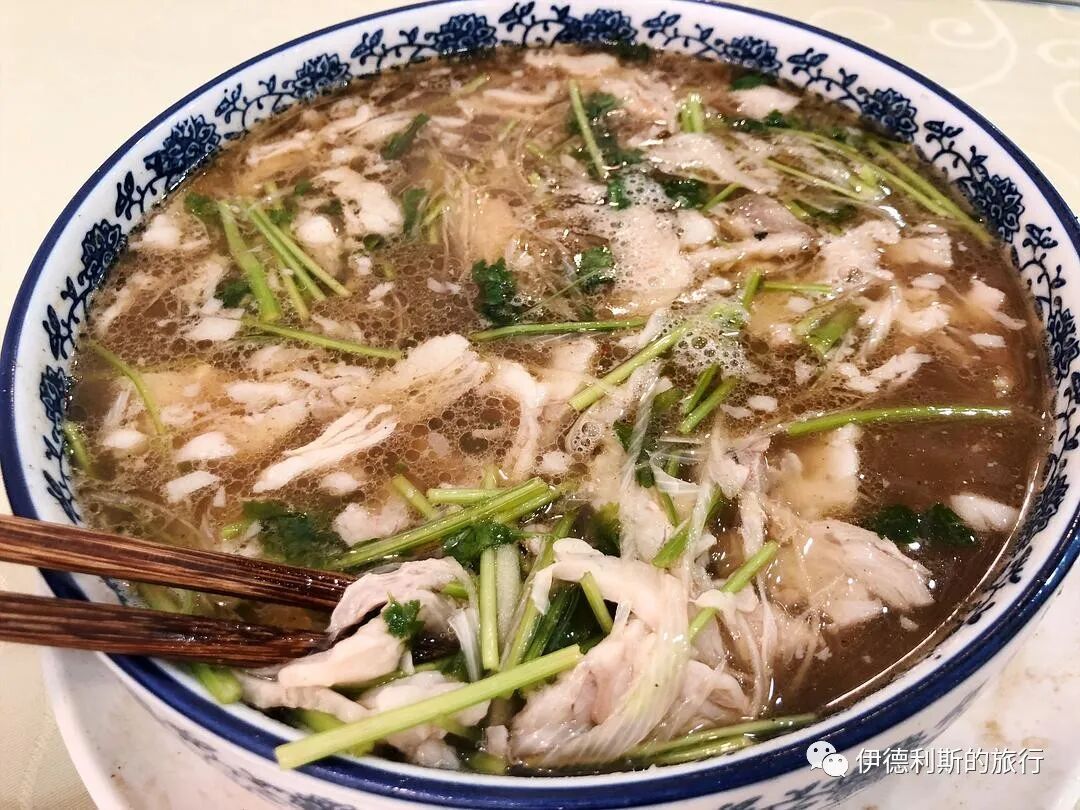
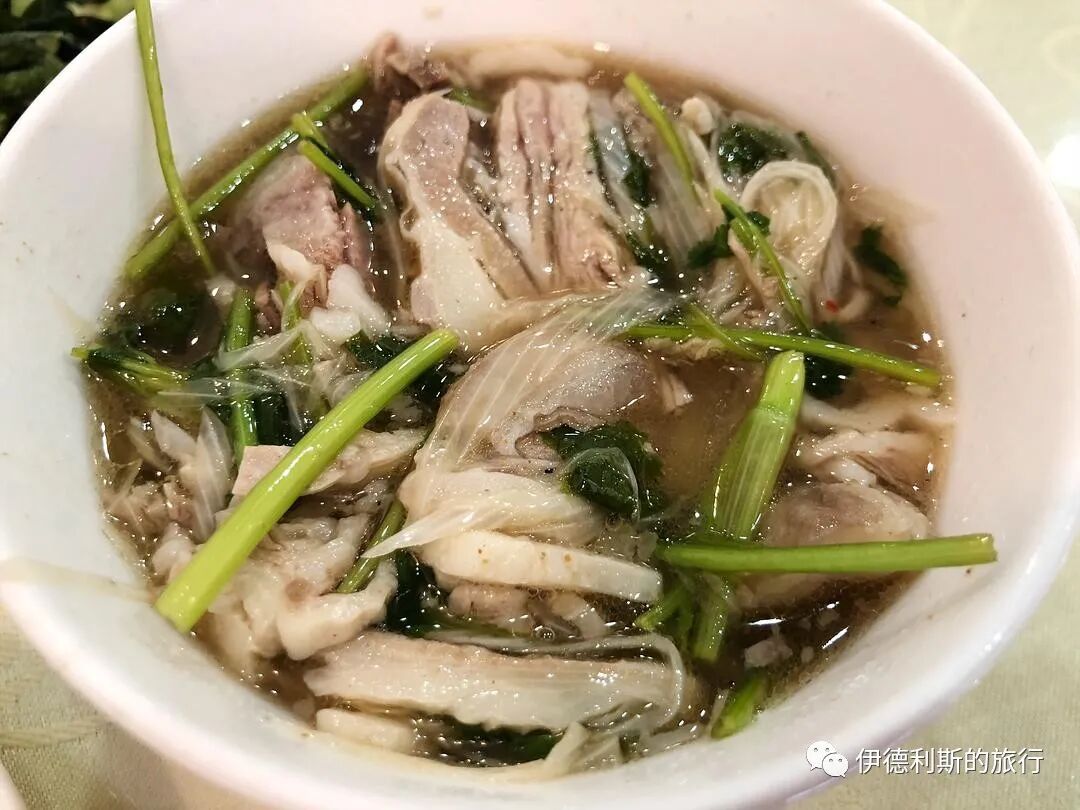
The owner of Laoqingyuan, Zhang Yubao, is the son of Zhang Zhidong, the head chef of the old Taiyuan halal brand Qingheyuan, and he began working at Qingheyuan with his father in the 1970s. Zhang Zhidong was born in 1903 and was in the culinary industry before the founding of the People's Republic of China; after the founding, he entered Qingheyuan until he retired, and he continued to teach his skills after retirement. I ate vinegar-poured lamb with maohe (a type of steamed bun) at Laoqingyuan.
V. Qingshengyuan
The most famous halal restaurant in Taiyuan, Qingheyuan, was founded by the Duo family of Taiyuan Hui Muslims. During the Daoguang era, Qingheyuan was passed down to Duo Linfeng to manage; he expanded the restaurant into a two-story building and added various stir-fried dishes. At that time, the lamb was all purchased from Suiyuan, with yincung sandan (a specific lamb dish), lamb brains, lamb tongues, lamb tendons, lamb kidneys, and spinal marrow being the most famous.
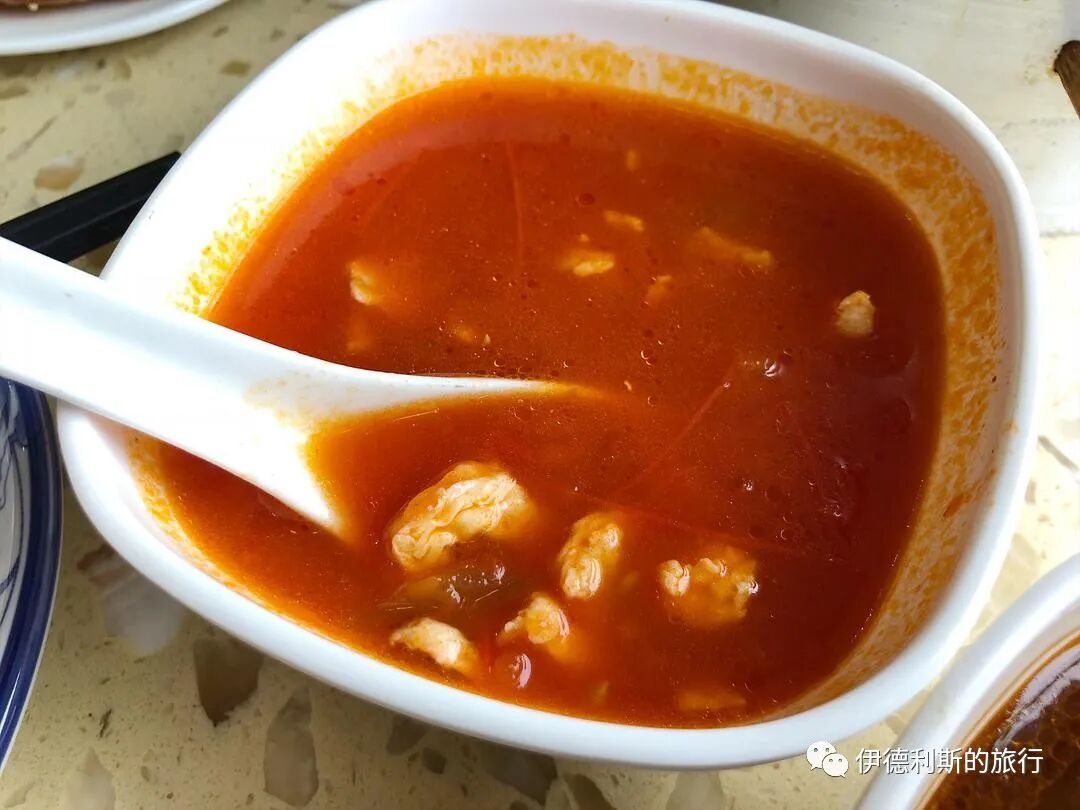
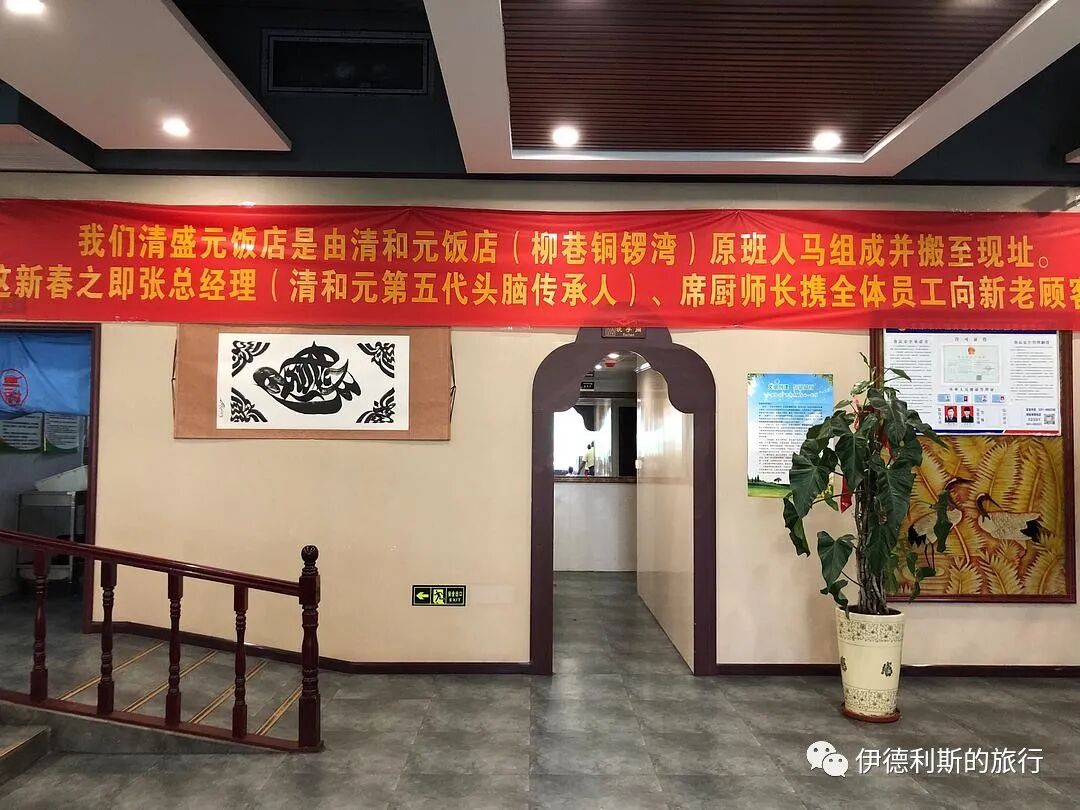
In 1956, Qingheyuan merged with the state-run halal restaurant and moved to the T-junction of Qiaotou Street and Dapu Mansion; it closed in 2009 due to the demolition of Dapu Mansion to build the Tongluowan Shopping Mall. Afterwards, Qingheyuan opened several franchise stores in other places, but the taste declined significantly.
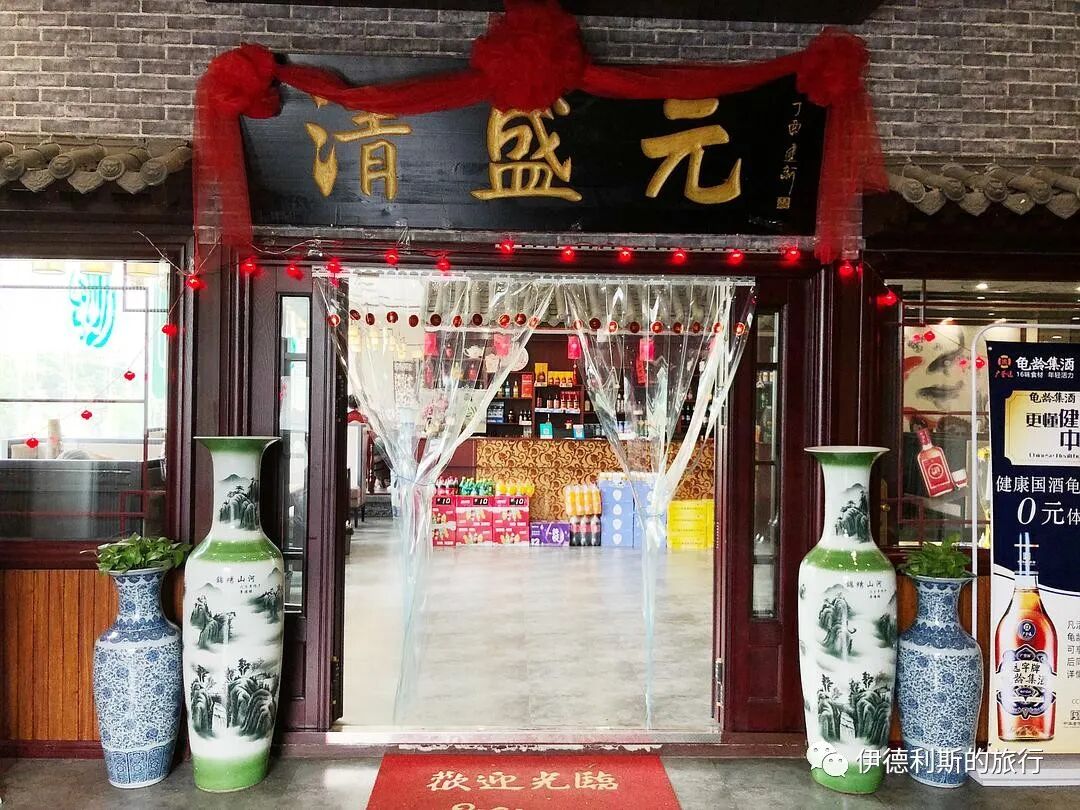
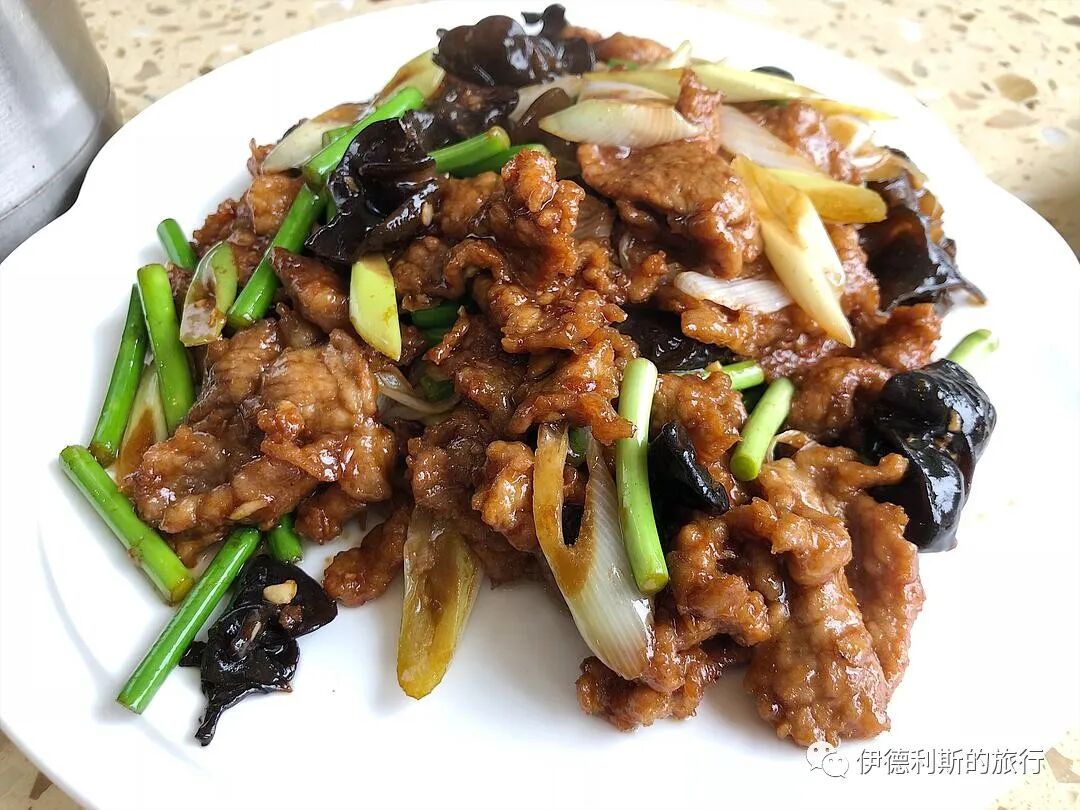
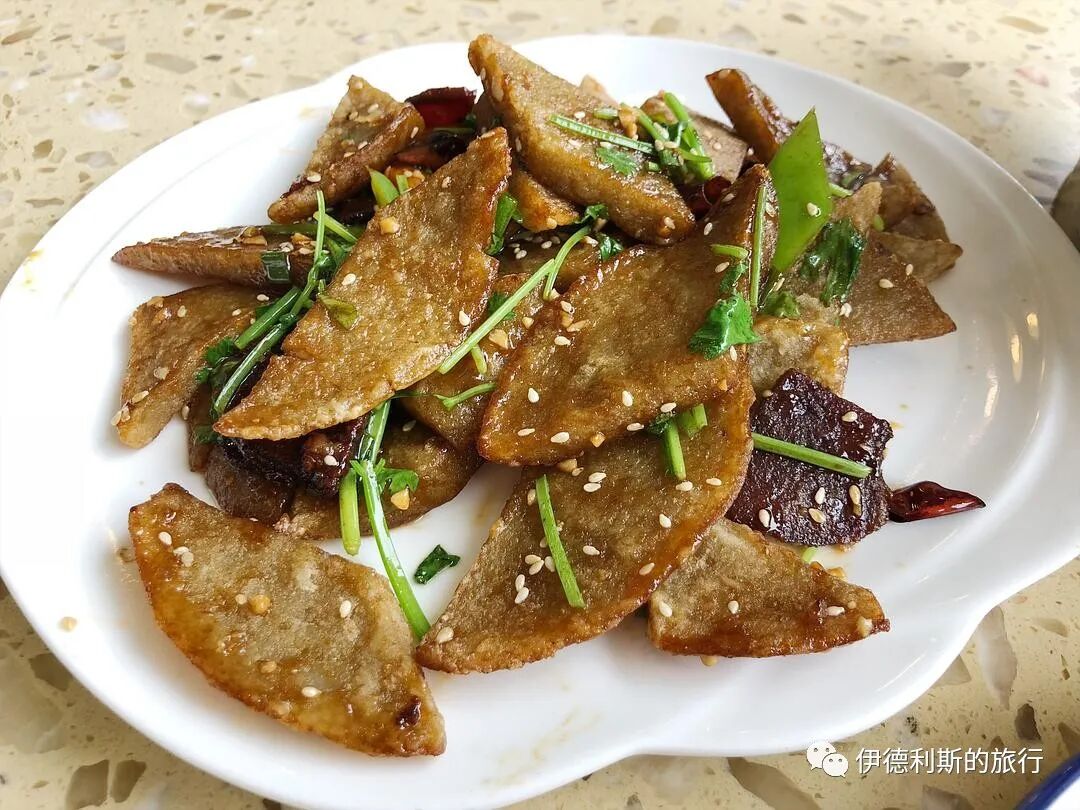
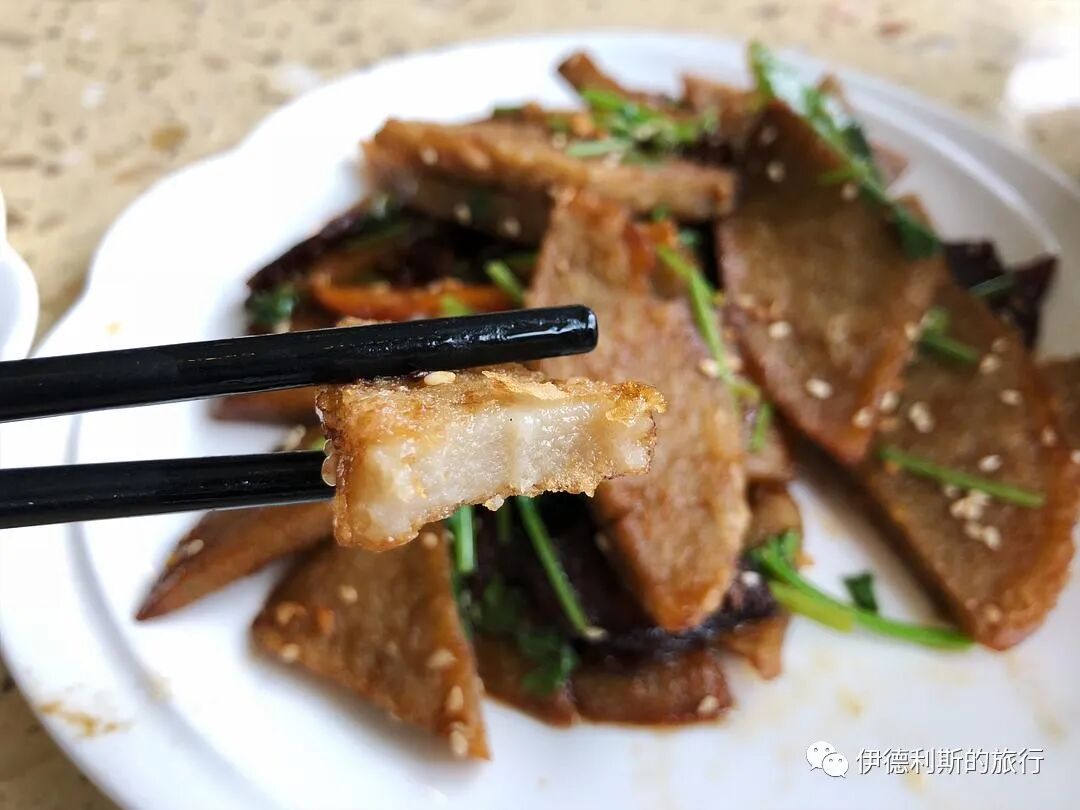
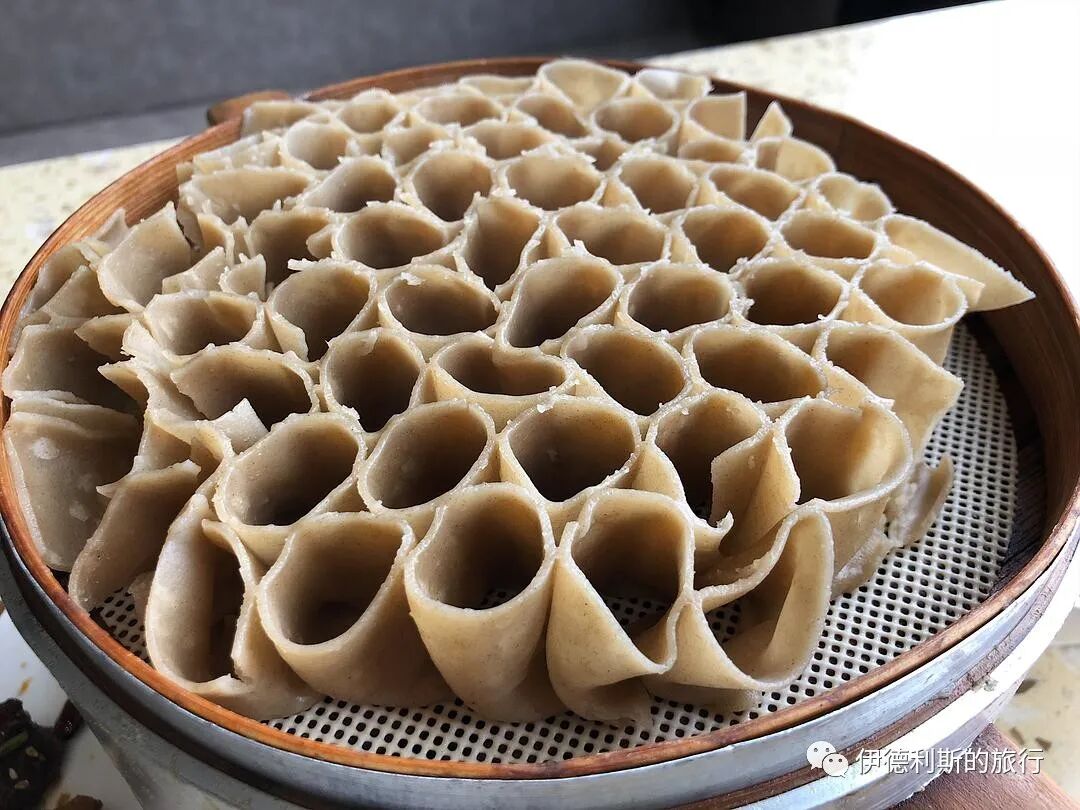
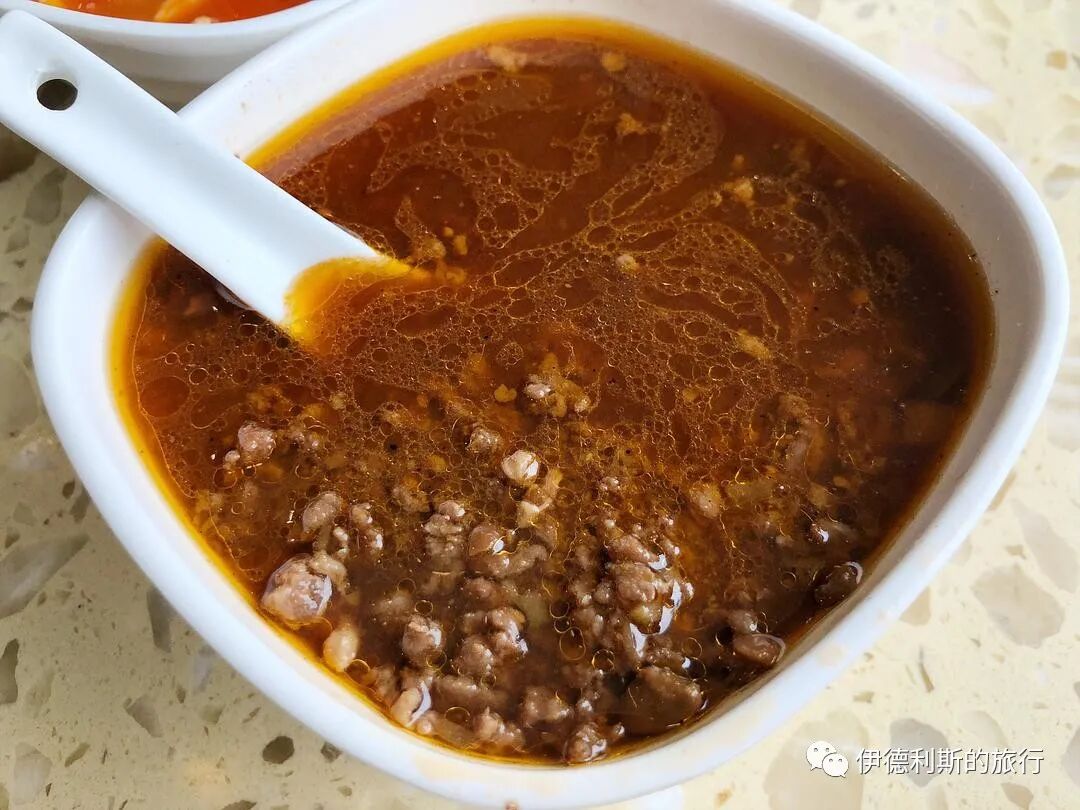
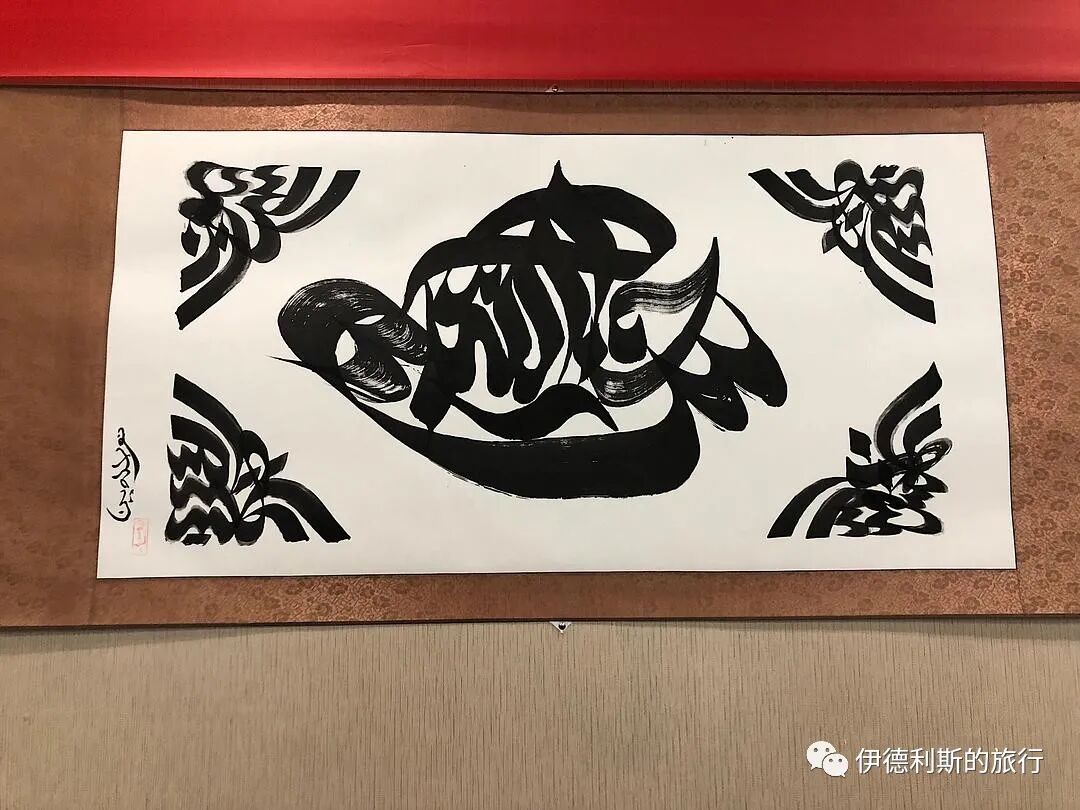
Qingshengyuan is a new restaurant opened by the original team after the old Qingheyuan store was demolished. I ate youmian kaolaolao (oat noodle rolls), beef fried guan-chang (a type of sausage), and lamb guoyourou (oil-passed meat) here; the guoyourou was really delicious!
VI. Taiyuan Hui Muslim Street
Halal restaurants are relatively concentrated on Jiucheng Street, Nanhaidong Street, Shaojiu Lane, and Nanhai Street opposite the Taiyuan Mosque. This area was originally the Eight Banners barracks of the old Manchu city, and now it is occupied by the staff dormitories of the Provincial Coal Transportation General Company, the Provincial Coal Department, and the Grain Bureau; it is a quiet and peaceful old residential area.
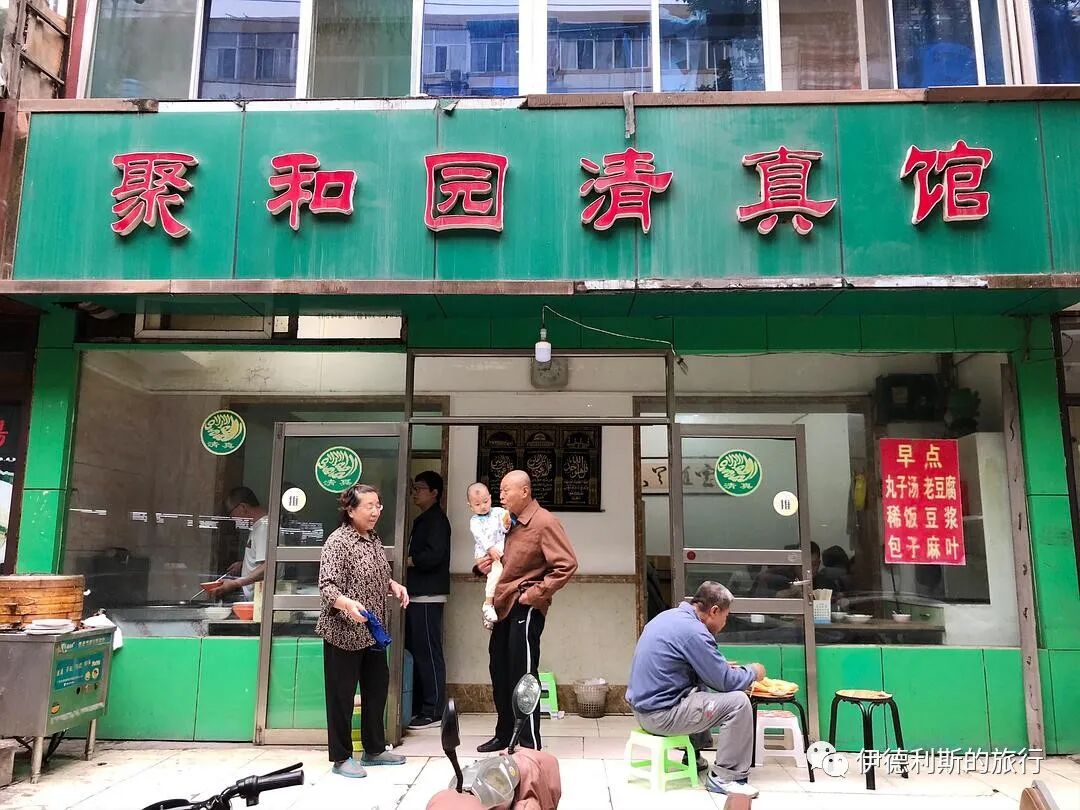
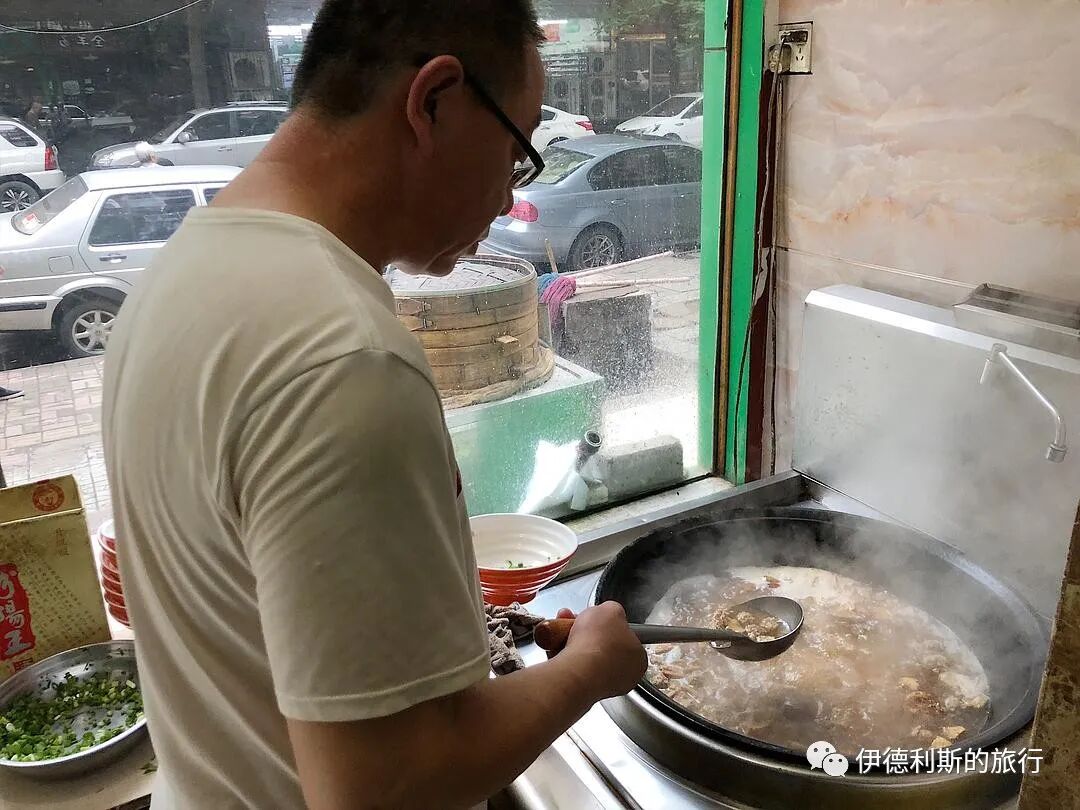
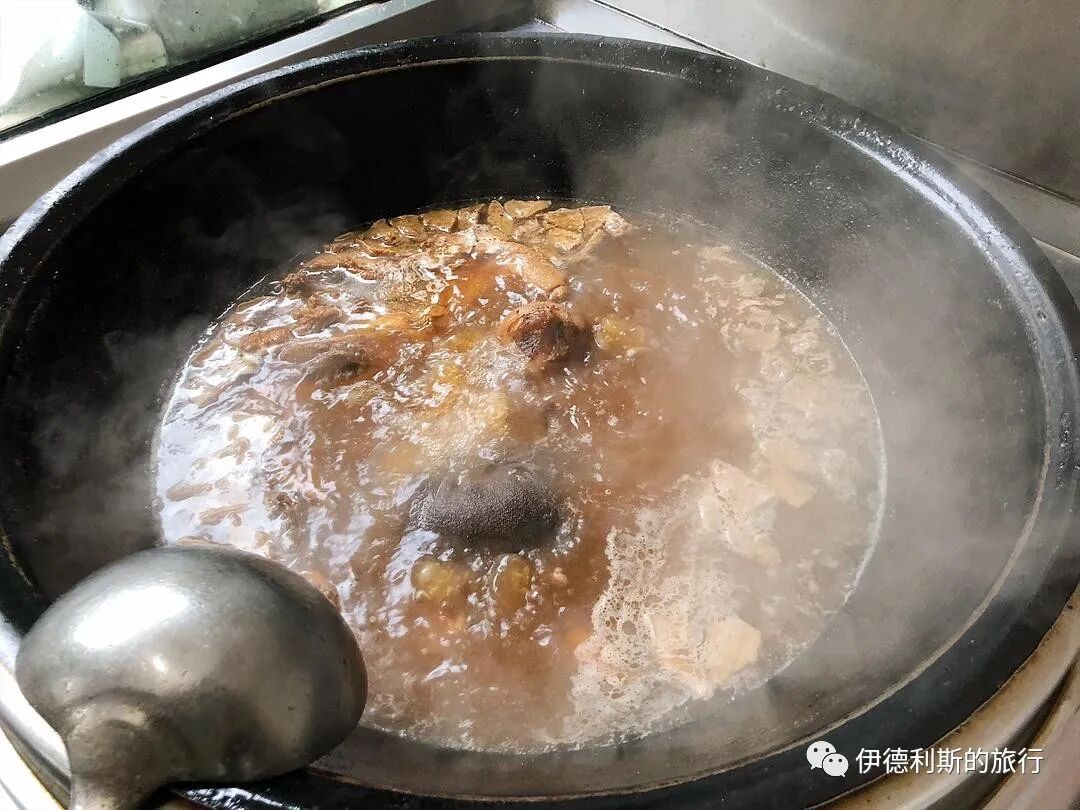
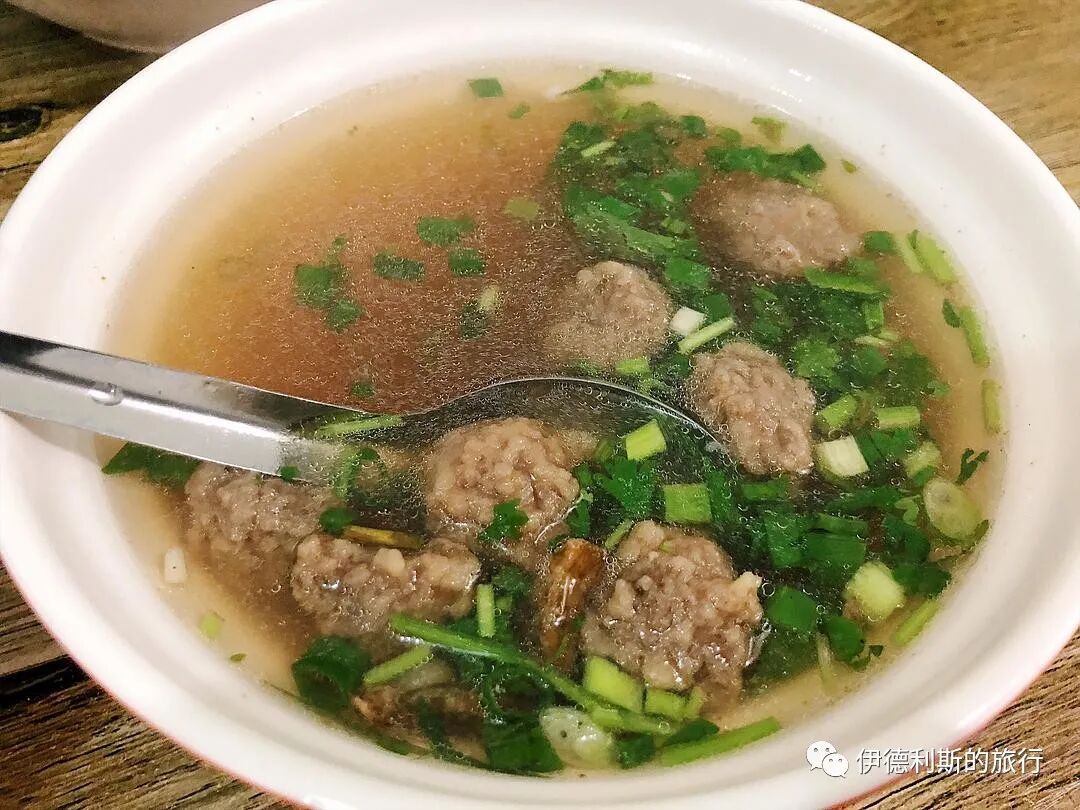
1. Juheyuan Halal Restaurant
I ate beef meatball soup at this place.
2. Ma Family Braised Chicken
I ate braised chicken legs and chicken feet at this place.
3. Yiqingyuan
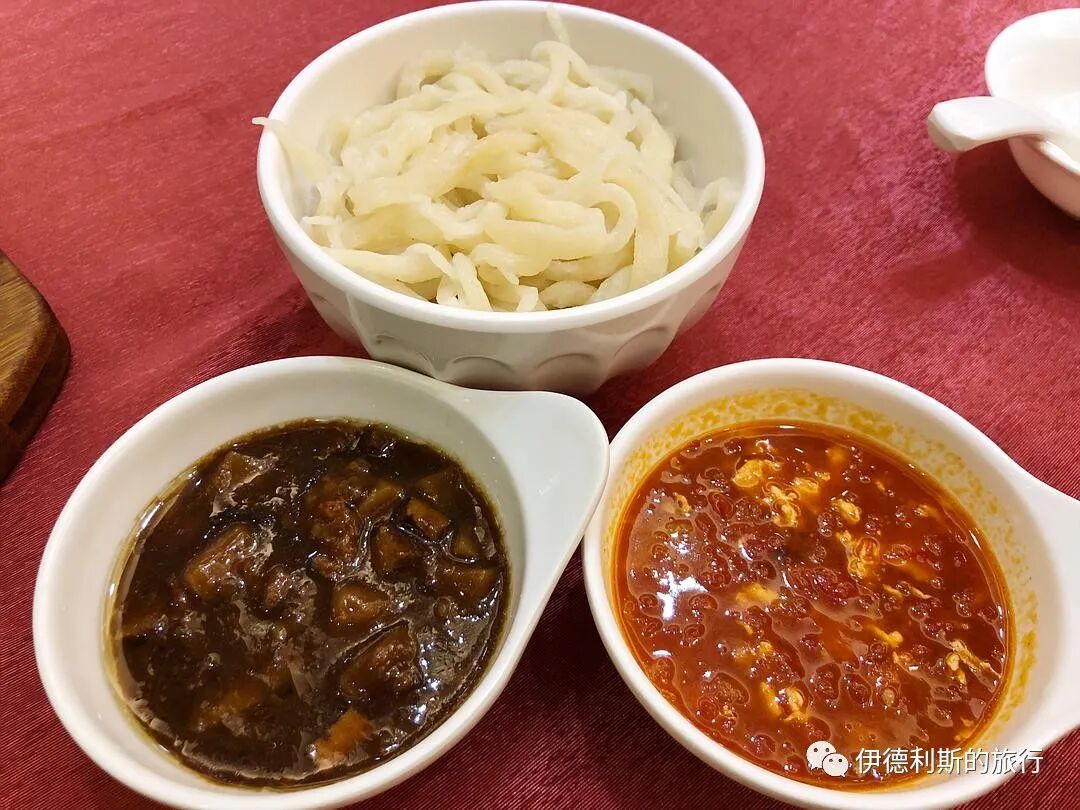
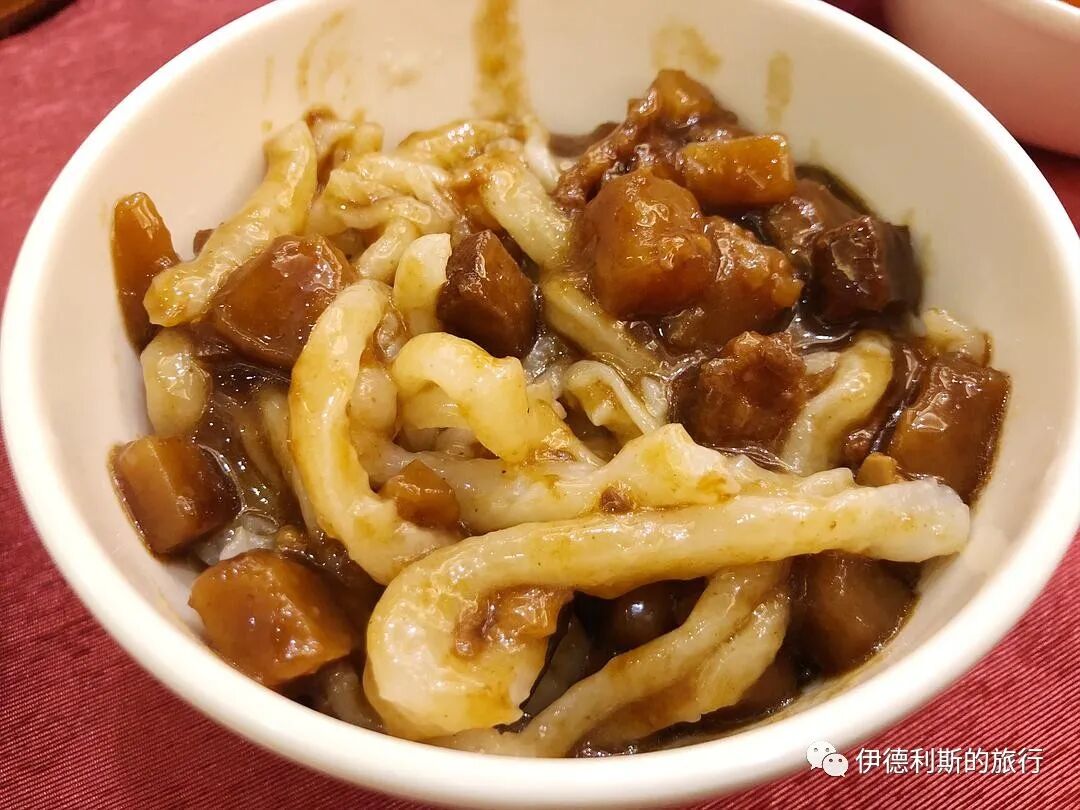
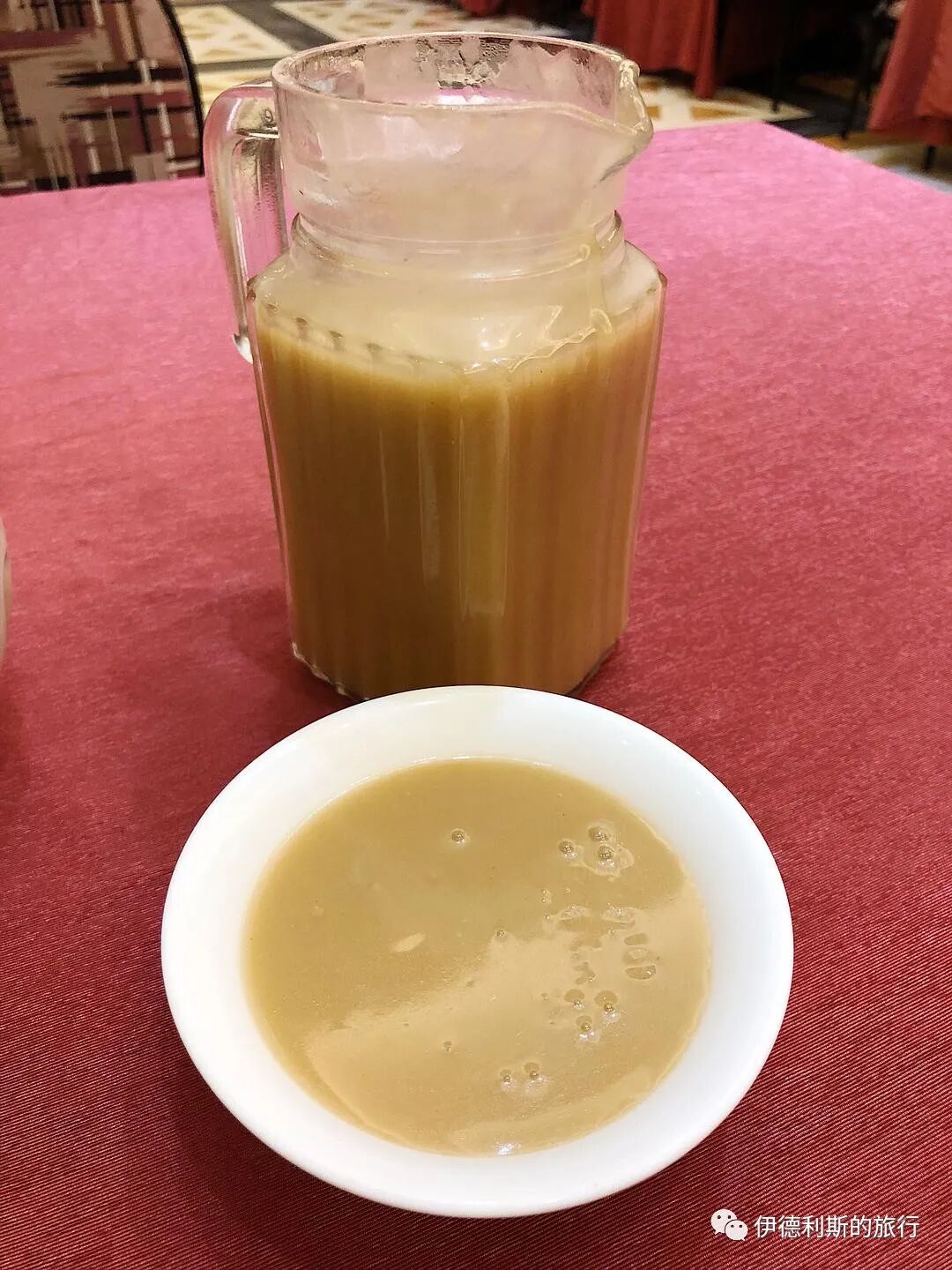
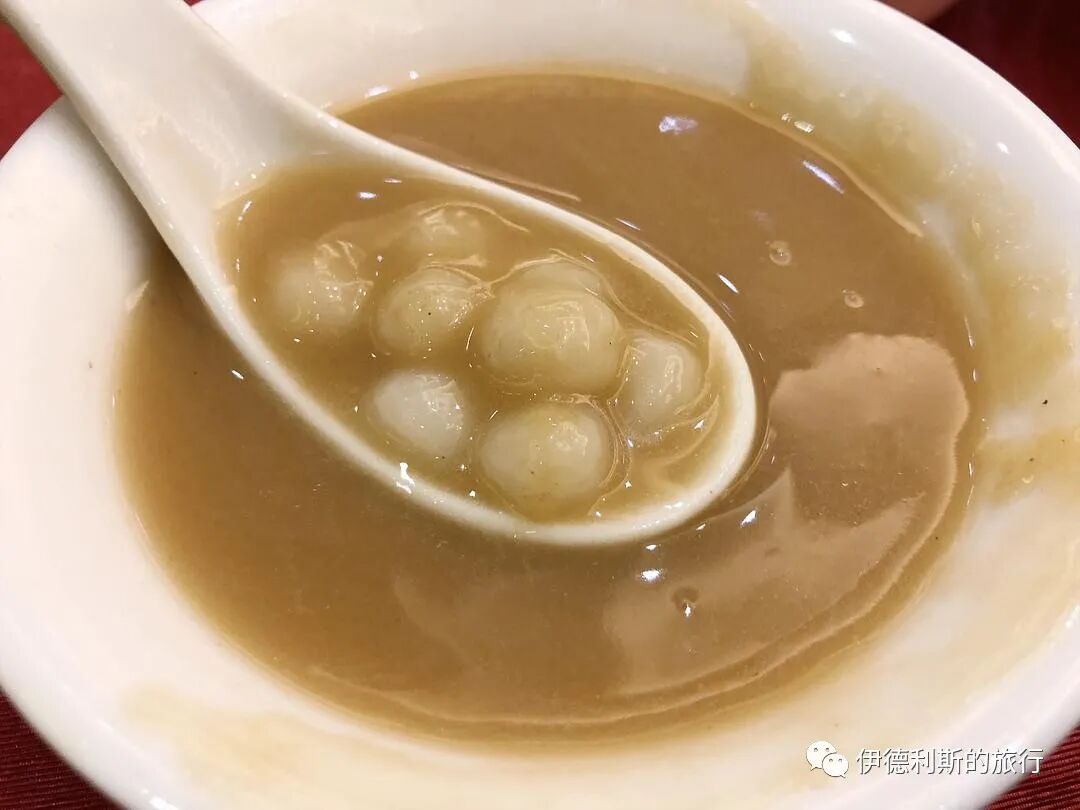
Yiqingyuan is a large halal restaurant in Taiyuan; I ate guotaurou (pan-seared meat), tijian noodles (hand-pulled noodles), and peanut milk balls here. Guotaurou is also made in Beijing, but it is not as big as theirs. The variety of pasta in Shanxi is really rich; tijian noodles are made by using chopsticks to flick the dough into the pot, served with two kinds of sauces: meat sauce and egg and tomato sauce; this bowl of noodles only cost five yuan. Then I must praise the peanut milk; I drank a large pitcher by myself, it was super delicious and very suitable for autumn.
4. Hongxishun Halal Barbecue
Having a little barbecue at Hongxishun in the evening, the cool weather of over ten degrees in Taiyuan is perfect for drinking bantang (a type of thick soup)! Drinking a few bowls down is very warm.
Besides the few restaurants above, there are still many restaurants I haven't eaten at; I will come to Taiyuan again if I have the chance!
Summary: This travel note introduces Taiyuan Halal Travel Guide: Historic Mosques and Muslim Food. I went to Taiyuan for a weekend of sightseeing and eating in early September 2018, arriving in 3 hours by high-speed train from Beijing. It is useful for readers interested in Taiyuan Mosques, Halal Food, Muslim Heritage.
I went to Taiyuan for a weekend of sightseeing and eating in early September 2018, arriving in 3 hours by high-speed train from Beijing. What attracted me most in Taiyuan was the main prayer hall of the mosque from the Ming Dynasty; the mihrab (niche in the wall indicating the direction of Mecca) and minbar (pulpit) inside are both original and very beautiful. In addition, there are many halal restaurants in Taiyuan, ranging from large dining halls to small snack shops, and whether it is lamb soup, shaomai (steamed dumplings), or beef and lamb stir-fries, everything is delicious.
Below, I will share my trip of sightseeing and eating with you all.
I. History of Hui Muslims in Taiyuan
Regarding the history of Hui Muslims in Taiyuan, you can refer to the article "Research on Islam in Taiyuan" by Li Xinghua. The current old city area of Taiyuan was first called Tangming Town, built in 982 (the seventh year of the Taiping Xingguo era of the Song Dynasty), and officially took its shape after expansion in 1376 (the ninth year of the Hongwu era of the Ming Dynasty). Since the Ming and Qing dynasties, the Hui Muslim community in Taiyuan has been located around the South Gate of the old city.
After the Ming Dynasty, Taiyuan gradually formed the "Ten Great Surnames of the Hui," namely the ten surnames: Duo, Luo (some say Ma), Tian, Liang, Li, Jin, Sa, Hai, Dao, and Di. Among them, the Jin surname came to Taiyuan with the army from Nanjing during the Hongwu era of the Ming Dynasty; the Tian surname was transferred to Taiyuan from Jinhua during the Hongwu era (some say they moved to Taiyuan for business from Shandong via Inner Mongolia and settled down); the Duo surname came to Taiyuan for business from Zhending, Jiangsu during the Ming Dynasty; the Ma surname came to Taiyuan for service from Nanjing at the end of the Ming Dynasty; the Liang surname came to Taiyuan for work from Henan during the Yongle era of the Ming Dynasty; the Dao surname came to Taiyuan for work during the Ming Dynasty; the Li surname came to Taiyuan from Henan at the end of the Ming Dynasty; and the Liang surname came to Taiyuan from Nanjing during the Ming Dynasty.
In addition, there are the Yang, Ding, and Ma surnames who came to Taiyuan from the northwest for business and settled down, and the Wen, Ma, and Qiao surnames who moved to Taiyuan from within Shanxi Province.
During the Qing Dynasty, there were over a hundred local Hui Muslim households in Taiyuan, plus more than ten households of Hui Muslims who came from Suiyuan for business, totaling five or six hundred people. After the Zhengtai Railway opened to traffic in 1907, the number of Hui Muslims coming to Taiyuan from Hebei increased significantly, reaching over 1,000 in the 1930s and over 5,100 in the early days of the founding of the People's Republic of China.
According to records, there were once four mosques in Taiyuan's history, among which the Qiao Family Mosque and the Ningxia Mosque were outside the Great South Gate. The record of the Qiao Family Mosque comes from You Cheng's "General Situation of Islam in Taiyuan"; the Qiao Family Mosque had over a hundred households of congregants, all surnamed Qiao, and the ahong (imam) was also surnamed Qiao. The Ningxia Mosque information comes from data provided by Li Dajun, Li Dahong, and Yang Youlin in "Research on Islam in Taiyuan"; the Ningxia Mosque was built 200 years ago, and the congregants were "camel guests" traveling between Ningxia and Taiyuan. Both of these mosques were destroyed along with residential houses in the floods during the Guangxu era of the Qing Dynasty, and currently, neither can be verified.
After the Republic of China, with the operation of the Zhengtai Railway, Hebei Hui Muslims continuously moved to Taiyuan, and the North Mosque was built during the Republican period. By the late Republican period, the North Mosque had taken shape, but it was eventually destroyed. In addition, during the Republican period, there were two women's mosques in Taiyuan, namely the Great South Gate Street Women's Mosque built in 1922 and the Lou'erdi Women's Mosque built at the same time as the North Mosque.
Currently, only one mosque remains in Taiyuan, which is the Taiyuan Mosque.
II. Taiyuan Mosque
The Taiyuan Mosque is located on Niurou Lane (Beef Lane) inside the South Gate. Currently, the mosque's main prayer hall and the Shengxin Tower (minaret) are both Ming Dynasty buildings, which is consistent with the era when the city of Taiyuan took its shape in the Ming Dynasty and Hui Muslims officially settled in Taiyuan.
Currently, from west to east, the mosque consists of the main prayer hall, a fire wall, the Shengxin Tower, and the main gate. There are stele pavilions to the north and south of the Shengxin Tower, and side rooms further to the outside. Originally, outside the main gate of the mosque was Niurou Lane, with its back against Great South Gate Street, but later, when Great South Gate Street was widened and renovated, the mosque's moon-viewing tower and the auxiliary courtyard buildings were demolished, and some were converted into shops facing the street. The archway in front of the main gate was moved outside the West Side Gate, and the West Side Gate facing Great South Gate Street thus became the new main gate.
The most important building of the Taiyuan Mosque is the main prayer hall, and the colored paintings on it are very exquisite. The famous architectural historian Liu Zhiping wrote in the book "Chinese Islamic Architecture" after investigating the Taiyuan Mosque in the early 1960s:
The hall does not use dougong (bracket sets), the style is simple and ancient, and the wood is also thick and neat, without inlaying or splicing. The colored paintings on the beams do not use the "hemp-covering and ash-catching" technique, but are painted directly on the wood surface. The central panels of the colored paintings are extra long, and on the panels, many flowers are arranged in a row with very decorative interest, which is different from the general Qing palace-style colored paintings.
This kind of wood-inlaid mihrab style is very rare.
On the mihrab are some verses from chapters 29 and 30 of the Quran.
Although the minbar on the north side of the mihrab has been repainted, it is the original piece itself, which is very rare.
The long-life memorial tablet table inside the main prayer hall is also an original piece.
The picture below was taken in the early 1960s by the famous architectural historian Liu Zhiping, who led the Chinese Islamic Architecture Research Group.
The picture below was taken by the China Architecture and Building Press between 1990 and 1992 for the book "Islamic Architecture."
When I went there, Baba Liu in the mosque recited the Peace Dua for me.
To the east of the main prayer hall is the fire wall, and outside the fire wall, one can see traces of a building that once existed, which is very likely the opposite hall common in mosques.
Outside the fire wall, there are two stele pavilions.
On the stele is the "Hundred-Character Holy Praise" carved in 1868 (the seventh year of the Tongzhi era), and the other side is carved with calligraphy by Huang Tingjian and others from 1881 (the seventh year of the Guangxu era).
In the middle of the stele pavilions is the Shengxin Tower, which is the minaret.
The easternmost side is the original main gate of the mosque.
Plaques in the mosque.
III. Outside the Mosque
The shops facing the street outside the mosque were built when Great South Gate Street was widened, and when I went in September 2018, they were about to be demolished again due to subway construction. On both sides of the mosque gate are fresh beef and lamb shops, and there is one on the south side that has a long queue all year round.
A little further south is the Huifengyuan Restaurant, which sells shaomei (steamed dumplings), lamb soup, meatball soup, and other snacks. I drank lamb soup and ate shaomei here, and both were especially delicious.
To the north of the mosque is the large restaurant Hongbinlou Roast Duck Restaurant. This is the famous halal restaurant that was in Tianjin during the Qing Dynasty and introduced to Beijing in the 1950s; after being introduced to Taiyuan in 1981, it focused on Beijing roast duck. In the Hongbinlou Pastry Shop, you can buy various Jin-style (Shanxi-style) pastries and mooncakes; I bought tijiang mooncakes (syrup-skin mooncakes), huntang mooncakes (mixed-sugar mooncakes), banqie (a type of pastry), and youxuan (oily spiral pastry).
Banqie (a type of pastry)
Youxuan (oily spiral pastry)
Huntang mooncake (mixed-sugar mooncake)
Tijiang mooncake (syrup-skin mooncake)
IV. Laoqingyuan
The owner of Laoqingyuan, Zhang Yubao, is the son of Zhang Zhidong, the head chef of the old Taiyuan halal brand Qingheyuan, and he began working at Qingheyuan with his father in the 1970s. Zhang Zhidong was born in 1903 and was in the culinary industry before the founding of the People's Republic of China; after the founding, he entered Qingheyuan until he retired, and he continued to teach his skills after retirement. I ate vinegar-poured lamb with maohe (a type of steamed bun) at Laoqingyuan.
V. Qingshengyuan
The most famous halal restaurant in Taiyuan, Qingheyuan, was founded by the Duo family of Taiyuan Hui Muslims. During the Daoguang era, Qingheyuan was passed down to Duo Linfeng to manage; he expanded the restaurant into a two-story building and added various stir-fried dishes. At that time, the lamb was all purchased from Suiyuan, with yincung sandan (a specific lamb dish), lamb brains, lamb tongues, lamb tendons, lamb kidneys, and spinal marrow being the most famous.
In 1956, Qingheyuan merged with the state-run halal restaurant and moved to the T-junction of Qiaotou Street and Dapu Mansion; it closed in 2009 due to the demolition of Dapu Mansion to build the Tongluowan Shopping Mall. Afterwards, Qingheyuan opened several franchise stores in other places, but the taste declined significantly.
Qingshengyuan is a new restaurant opened by the original team after the old Qingheyuan store was demolished. I ate youmian kaolaolao (oat noodle rolls), beef fried guan-chang (a type of sausage), and lamb guoyourou (oil-passed meat) here; the guoyourou was really delicious!
VI. Taiyuan Hui Muslim Street
Halal restaurants are relatively concentrated on Jiucheng Street, Nanhaidong Street, Shaojiu Lane, and Nanhai Street opposite the Taiyuan Mosque. This area was originally the Eight Banners barracks of the old Manchu city, and now it is occupied by the staff dormitories of the Provincial Coal Transportation General Company, the Provincial Coal Department, and the Grain Bureau; it is a quiet and peaceful old residential area.
1. Juheyuan Halal Restaurant
I ate beef meatball soup at this place.
2. Ma Family Braised Chicken
I ate braised chicken legs and chicken feet at this place.
3. Yiqingyuan
Yiqingyuan is a large halal restaurant in Taiyuan; I ate guotaurou (pan-seared meat), tijian noodles (hand-pulled noodles), and peanut milk balls here. Guotaurou is also made in Beijing, but it is not as big as theirs. The variety of pasta in Shanxi is really rich; tijian noodles are made by using chopsticks to flick the dough into the pot, served with two kinds of sauces: meat sauce and egg and tomato sauce; this bowl of noodles only cost five yuan. Then I must praise the peanut milk; I drank a large pitcher by myself, it was super delicious and very suitable for autumn.
4. Hongxishun Halal Barbecue
Having a little barbecue at Hongxishun in the evening, the cool weather of over ten degrees in Taiyuan is perfect for drinking bantang (a type of thick soup)! Drinking a few bowls down is very warm.
Besides the few restaurants above, there are still many restaurants I haven't eaten at; I will come to Taiyuan again if I have the chance!
Taiyuan Halal Travel Guide: Historic Mosques and Muslim Food
Articles • ali2007fr posted the article • 0 comments • 184 views • 2026-05-17 06:25
Reposted from the web
Summary: This travel note introduces Taiyuan Halal Travel Guide: Historic Mosques and Muslim Food. I went to Taiyuan for a weekend of sightseeing and eating in early September 2018, arriving in 3 hours by high-speed train from Beijing. It is useful for readers interested in Taiyuan Mosques, Halal Food, Muslim Heritage.
I went to Taiyuan for a weekend of sightseeing and eating in early September 2018, arriving in 3 hours by high-speed train from Beijing. What attracted me most in Taiyuan was the main prayer hall of the mosque from the Ming Dynasty; the mihrab (niche in the wall indicating the direction of Mecca) and minbar (pulpit) inside are both original and very beautiful. In addition, there are many halal restaurants in Taiyuan, ranging from large dining halls to small snack shops, and whether it is lamb soup, shaomai (steamed dumplings), or beef and lamb stir-fries, everything is delicious.
Below, I will share my trip of sightseeing and eating with you all.
I. History of Hui Muslims in Taiyuan
Regarding the history of Hui Muslims in Taiyuan, you can refer to the article "Research on Islam in Taiyuan" by Li Xinghua. The current old city area of Taiyuan was first called Tangming Town, built in 982 (the seventh year of the Taiping Xingguo era of the Song Dynasty), and officially took its shape after expansion in 1376 (the ninth year of the Hongwu era of the Ming Dynasty). Since the Ming and Qing dynasties, the Hui Muslim community in Taiyuan has been located around the South Gate of the old city.
After the Ming Dynasty, Taiyuan gradually formed the "Ten Great Surnames of the Hui," namely the ten surnames: Duo, Luo (some say Ma), Tian, Liang, Li, Jin, Sa, Hai, Dao, and Di. Among them, the Jin surname came to Taiyuan with the army from Nanjing during the Hongwu era of the Ming Dynasty; the Tian surname was transferred to Taiyuan from Jinhua during the Hongwu era (some say they moved to Taiyuan for business from Shandong via Inner Mongolia and settled down); the Duo surname came to Taiyuan for business from Zhending, Jiangsu during the Ming Dynasty; the Ma surname came to Taiyuan for service from Nanjing at the end of the Ming Dynasty; the Liang surname came to Taiyuan for work from Henan during the Yongle era of the Ming Dynasty; the Dao surname came to Taiyuan for work during the Ming Dynasty; the Li surname came to Taiyuan from Henan at the end of the Ming Dynasty; and the Liang surname came to Taiyuan from Nanjing during the Ming Dynasty.
In addition, there are the Yang, Ding, and Ma surnames who came to Taiyuan from the northwest for business and settled down, and the Wen, Ma, and Qiao surnames who moved to Taiyuan from within Shanxi Province.
During the Qing Dynasty, there were over a hundred local Hui Muslim households in Taiyuan, plus more than ten households of Hui Muslims who came from Suiyuan for business, totaling five or six hundred people. After the Zhengtai Railway opened to traffic in 1907, the number of Hui Muslims coming to Taiyuan from Hebei increased significantly, reaching over 1,000 in the 1930s and over 5,100 in the early days of the founding of the People's Republic of China.
According to records, there were once four mosques in Taiyuan's history, among which the Qiao Family Mosque and the Ningxia Mosque were outside the Great South Gate. The record of the Qiao Family Mosque comes from You Cheng's "General Situation of Islam in Taiyuan"; the Qiao Family Mosque had over a hundred households of congregants, all surnamed Qiao, and the ahong (imam) was also surnamed Qiao. The Ningxia Mosque information comes from data provided by Li Dajun, Li Dahong, and Yang Youlin in "Research on Islam in Taiyuan"; the Ningxia Mosque was built 200 years ago, and the congregants were "camel guests" traveling between Ningxia and Taiyuan. Both of these mosques were destroyed along with residential houses in the floods during the Guangxu era of the Qing Dynasty, and currently, neither can be verified.
After the Republic of China, with the operation of the Zhengtai Railway, Hebei Hui Muslims continuously moved to Taiyuan, and the North Mosque was built during the Republican period. By the late Republican period, the North Mosque had taken shape, but it was eventually destroyed. In addition, during the Republican period, there were two women's mosques in Taiyuan, namely the Great South Gate Street Women's Mosque built in 1922 and the Lou'erdi Women's Mosque built at the same time as the North Mosque.
Currently, only one mosque remains in Taiyuan, which is the Taiyuan Mosque.
II. Taiyuan Mosque
The Taiyuan Mosque is located on Niurou Lane (Beef Lane) inside the South Gate. Currently, the mosque's main prayer hall and the Shengxin Tower (minaret) are both Ming Dynasty buildings, which is consistent with the era when the city of Taiyuan took its shape in the Ming Dynasty and Hui Muslims officially settled in Taiyuan.
Currently, from west to east, the mosque consists of the main prayer hall, a fire wall, the Shengxin Tower, and the main gate. There are stele pavilions to the north and south of the Shengxin Tower, and side rooms further to the outside. Originally, outside the main gate of the mosque was Niurou Lane, with its back against Great South Gate Street, but later, when Great South Gate Street was widened and renovated, the mosque's moon-viewing tower and the auxiliary courtyard buildings were demolished, and some were converted into shops facing the street. The archway in front of the main gate was moved outside the West Side Gate, and the West Side Gate facing Great South Gate Street thus became the new main gate.
The most important building of the Taiyuan Mosque is the main prayer hall, and the colored paintings on it are very exquisite. The famous architectural historian Liu Zhiping wrote in the book "Chinese Islamic Architecture" after investigating the Taiyuan Mosque in the early 1960s:
The hall does not use dougong (bracket sets), the style is simple and ancient, and the wood is also thick and neat, without inlaying or splicing. The colored paintings on the beams do not use the "hemp-covering and ash-catching" technique, but are painted directly on the wood surface. The central panels of the colored paintings are extra long, and on the panels, many flowers are arranged in a row with very decorative interest, which is different from the general Qing palace-style colored paintings.
This kind of wood-inlaid mihrab style is very rare.
On the mihrab are some verses from chapters 29 and 30 of the Quran.
Although the minbar on the north side of the mihrab has been repainted, it is the original piece itself, which is very rare.
The long-life memorial tablet table inside the main prayer hall is also an original piece.
The picture below was taken in the early 1960s by the famous architectural historian Liu Zhiping, who led the Chinese Islamic Architecture Research Group.
The picture below was taken by the China Architecture and Building Press between 1990 and 1992 for the book "Islamic Architecture."
When I went there, Baba Liu in the mosque recited the Peace Dua for me.
To the east of the main prayer hall is the fire wall, and outside the fire wall, one can see traces of a building that once existed, which is very likely the opposite hall common in mosques.
Outside the fire wall, there are two stele pavilions.
On the stele is the "Hundred-Character Holy Praise" carved in 1868 (the seventh year of the Tongzhi era), and the other side is carved with calligraphy by Huang Tingjian and others from 1881 (the seventh year of the Guangxu era).
In the middle of the stele pavilions is the Shengxin Tower, which is the minaret.
The easternmost side is the original main gate of the mosque.
Plaques in the mosque.
III. Outside the Mosque
The shops facing the street outside the mosque were built when Great South Gate Street was widened, and when I went in September 2018, they were about to be demolished again due to subway construction. On both sides of the mosque gate are fresh beef and lamb shops, and there is one on the south side that has a long queue all year round.
A little further south is the Huifengyuan Restaurant, which sells shaomei (steamed dumplings), lamb soup, meatball soup, and other snacks. I drank lamb soup and ate shaomei here, and both were especially delicious.
To the north of the mosque is the large restaurant Hongbinlou Roast Duck Restaurant. This is the famous halal restaurant that was in Tianjin during the Qing Dynasty and introduced to Beijing in the 1950s; after being introduced to Taiyuan in 1981, it focused on Beijing roast duck. In the Hongbinlou Pastry Shop, you can buy various Jin-style (Shanxi-style) pastries and mooncakes; I bought tijiang mooncakes (syrup-skin mooncakes), huntang mooncakes (mixed-sugar mooncakes), banqie (a type of pastry), and youxuan (oily spiral pastry).
Banqie (a type of pastry)
Youxuan (oily spiral pastry)
Huntang mooncake (mixed-sugar mooncake)
Tijiang mooncake (syrup-skin mooncake)
IV. Laoqingyuan
The owner of Laoqingyuan, Zhang Yubao, is the son of Zhang Zhidong, the head chef of the old Taiyuan halal brand Qingheyuan, and he began working at Qingheyuan with his father in the 1970s. Zhang Zhidong was born in 1903 and was in the culinary industry before the founding of the People's Republic of China; after the founding, he entered Qingheyuan until he retired, and he continued to teach his skills after retirement. I ate vinegar-poured lamb with maohe (a type of steamed bun) at Laoqingyuan.
V. Qingshengyuan
The most famous halal restaurant in Taiyuan, Qingheyuan, was founded by the Duo family of Taiyuan Hui Muslims. During the Daoguang era, Qingheyuan was passed down to Duo Linfeng to manage; he expanded the restaurant into a two-story building and added various stir-fried dishes. At that time, the lamb was all purchased from Suiyuan, with yincung sandan (a specific lamb dish), lamb brains, lamb tongues, lamb tendons, lamb kidneys, and spinal marrow being the most famous.
In 1956, Qingheyuan merged with the state-run halal restaurant and moved to the T-junction of Qiaotou Street and Dapu Mansion; it closed in 2009 due to the demolition of Dapu Mansion to build the Tongluowan Shopping Mall. Afterwards, Qingheyuan opened several franchise stores in other places, but the taste declined significantly.
Qingshengyuan is a new restaurant opened by the original team after the old Qingheyuan store was demolished. I ate youmian kaolaolao (oat noodle rolls), beef fried guan-chang (a type of sausage), and lamb guoyourou (oil-passed meat) here; the guoyourou was really delicious!
VI. Taiyuan Hui Muslim Street
Halal restaurants are relatively concentrated on Jiucheng Street, Nanhaidong Street, Shaojiu Lane, and Nanhai Street opposite the Taiyuan Mosque. This area was originally the Eight Banners barracks of the old Manchu city, and now it is occupied by the staff dormitories of the Provincial Coal Transportation General Company, the Provincial Coal Department, and the Grain Bureau; it is a quiet and peaceful old residential area.
1. Juheyuan Halal Restaurant
I ate beef meatball soup at this place.
2. Ma Family Braised Chicken
I ate braised chicken legs and chicken feet at this place.
3. Yiqingyuan
Yiqingyuan is a large halal restaurant in Taiyuan; I ate guotaurou (pan-seared meat), tijian noodles (hand-pulled noodles), and peanut milk balls here. Guotaurou is also made in Beijing, but it is not as big as theirs. The variety of pasta in Shanxi is really rich; tijian noodles are made by using chopsticks to flick the dough into the pot, served with two kinds of sauces: meat sauce and egg and tomato sauce; this bowl of noodles only cost five yuan. Then I must praise the peanut milk; I drank a large pitcher by myself, it was super delicious and very suitable for autumn.
4. Hongxishun Halal Barbecue
Having a little barbecue at Hongxishun in the evening, the cool weather of over ten degrees in Taiyuan is perfect for drinking bantang (a type of thick soup)! Drinking a few bowls down is very warm.
Besides the few restaurants above, there are still many restaurants I haven't eaten at; I will come to Taiyuan again if I have the chance! view all
Summary: This travel note introduces Taiyuan Halal Travel Guide: Historic Mosques and Muslim Food. I went to Taiyuan for a weekend of sightseeing and eating in early September 2018, arriving in 3 hours by high-speed train from Beijing. It is useful for readers interested in Taiyuan Mosques, Halal Food, Muslim Heritage.
I went to Taiyuan for a weekend of sightseeing and eating in early September 2018, arriving in 3 hours by high-speed train from Beijing. What attracted me most in Taiyuan was the main prayer hall of the mosque from the Ming Dynasty; the mihrab (niche in the wall indicating the direction of Mecca) and minbar (pulpit) inside are both original and very beautiful. In addition, there are many halal restaurants in Taiyuan, ranging from large dining halls to small snack shops, and whether it is lamb soup, shaomai (steamed dumplings), or beef and lamb stir-fries, everything is delicious.
Below, I will share my trip of sightseeing and eating with you all.
I. History of Hui Muslims in Taiyuan
Regarding the history of Hui Muslims in Taiyuan, you can refer to the article "Research on Islam in Taiyuan" by Li Xinghua. The current old city area of Taiyuan was first called Tangming Town, built in 982 (the seventh year of the Taiping Xingguo era of the Song Dynasty), and officially took its shape after expansion in 1376 (the ninth year of the Hongwu era of the Ming Dynasty). Since the Ming and Qing dynasties, the Hui Muslim community in Taiyuan has been located around the South Gate of the old city.
After the Ming Dynasty, Taiyuan gradually formed the "Ten Great Surnames of the Hui," namely the ten surnames: Duo, Luo (some say Ma), Tian, Liang, Li, Jin, Sa, Hai, Dao, and Di. Among them, the Jin surname came to Taiyuan with the army from Nanjing during the Hongwu era of the Ming Dynasty; the Tian surname was transferred to Taiyuan from Jinhua during the Hongwu era (some say they moved to Taiyuan for business from Shandong via Inner Mongolia and settled down); the Duo surname came to Taiyuan for business from Zhending, Jiangsu during the Ming Dynasty; the Ma surname came to Taiyuan for service from Nanjing at the end of the Ming Dynasty; the Liang surname came to Taiyuan for work from Henan during the Yongle era of the Ming Dynasty; the Dao surname came to Taiyuan for work during the Ming Dynasty; the Li surname came to Taiyuan from Henan at the end of the Ming Dynasty; and the Liang surname came to Taiyuan from Nanjing during the Ming Dynasty.
In addition, there are the Yang, Ding, and Ma surnames who came to Taiyuan from the northwest for business and settled down, and the Wen, Ma, and Qiao surnames who moved to Taiyuan from within Shanxi Province.
During the Qing Dynasty, there were over a hundred local Hui Muslim households in Taiyuan, plus more than ten households of Hui Muslims who came from Suiyuan for business, totaling five or six hundred people. After the Zhengtai Railway opened to traffic in 1907, the number of Hui Muslims coming to Taiyuan from Hebei increased significantly, reaching over 1,000 in the 1930s and over 5,100 in the early days of the founding of the People's Republic of China.
According to records, there were once four mosques in Taiyuan's history, among which the Qiao Family Mosque and the Ningxia Mosque were outside the Great South Gate. The record of the Qiao Family Mosque comes from You Cheng's "General Situation of Islam in Taiyuan"; the Qiao Family Mosque had over a hundred households of congregants, all surnamed Qiao, and the ahong (imam) was also surnamed Qiao. The Ningxia Mosque information comes from data provided by Li Dajun, Li Dahong, and Yang Youlin in "Research on Islam in Taiyuan"; the Ningxia Mosque was built 200 years ago, and the congregants were "camel guests" traveling between Ningxia and Taiyuan. Both of these mosques were destroyed along with residential houses in the floods during the Guangxu era of the Qing Dynasty, and currently, neither can be verified.
After the Republic of China, with the operation of the Zhengtai Railway, Hebei Hui Muslims continuously moved to Taiyuan, and the North Mosque was built during the Republican period. By the late Republican period, the North Mosque had taken shape, but it was eventually destroyed. In addition, during the Republican period, there were two women's mosques in Taiyuan, namely the Great South Gate Street Women's Mosque built in 1922 and the Lou'erdi Women's Mosque built at the same time as the North Mosque.
Currently, only one mosque remains in Taiyuan, which is the Taiyuan Mosque.
II. Taiyuan Mosque
The Taiyuan Mosque is located on Niurou Lane (Beef Lane) inside the South Gate. Currently, the mosque's main prayer hall and the Shengxin Tower (minaret) are both Ming Dynasty buildings, which is consistent with the era when the city of Taiyuan took its shape in the Ming Dynasty and Hui Muslims officially settled in Taiyuan.
Currently, from west to east, the mosque consists of the main prayer hall, a fire wall, the Shengxin Tower, and the main gate. There are stele pavilions to the north and south of the Shengxin Tower, and side rooms further to the outside. Originally, outside the main gate of the mosque was Niurou Lane, with its back against Great South Gate Street, but later, when Great South Gate Street was widened and renovated, the mosque's moon-viewing tower and the auxiliary courtyard buildings were demolished, and some were converted into shops facing the street. The archway in front of the main gate was moved outside the West Side Gate, and the West Side Gate facing Great South Gate Street thus became the new main gate.
The most important building of the Taiyuan Mosque is the main prayer hall, and the colored paintings on it are very exquisite. The famous architectural historian Liu Zhiping wrote in the book "Chinese Islamic Architecture" after investigating the Taiyuan Mosque in the early 1960s:
The hall does not use dougong (bracket sets), the style is simple and ancient, and the wood is also thick and neat, without inlaying or splicing. The colored paintings on the beams do not use the "hemp-covering and ash-catching" technique, but are painted directly on the wood surface. The central panels of the colored paintings are extra long, and on the panels, many flowers are arranged in a row with very decorative interest, which is different from the general Qing palace-style colored paintings.
This kind of wood-inlaid mihrab style is very rare.
On the mihrab are some verses from chapters 29 and 30 of the Quran.
Although the minbar on the north side of the mihrab has been repainted, it is the original piece itself, which is very rare.
The long-life memorial tablet table inside the main prayer hall is also an original piece.
The picture below was taken in the early 1960s by the famous architectural historian Liu Zhiping, who led the Chinese Islamic Architecture Research Group.
The picture below was taken by the China Architecture and Building Press between 1990 and 1992 for the book "Islamic Architecture."
When I went there, Baba Liu in the mosque recited the Peace Dua for me.
To the east of the main prayer hall is the fire wall, and outside the fire wall, one can see traces of a building that once existed, which is very likely the opposite hall common in mosques.
Outside the fire wall, there are two stele pavilions.
On the stele is the "Hundred-Character Holy Praise" carved in 1868 (the seventh year of the Tongzhi era), and the other side is carved with calligraphy by Huang Tingjian and others from 1881 (the seventh year of the Guangxu era).
In the middle of the stele pavilions is the Shengxin Tower, which is the minaret.
The easternmost side is the original main gate of the mosque.
Plaques in the mosque.
III. Outside the Mosque
The shops facing the street outside the mosque were built when Great South Gate Street was widened, and when I went in September 2018, they were about to be demolished again due to subway construction. On both sides of the mosque gate are fresh beef and lamb shops, and there is one on the south side that has a long queue all year round.
A little further south is the Huifengyuan Restaurant, which sells shaomei (steamed dumplings), lamb soup, meatball soup, and other snacks. I drank lamb soup and ate shaomei here, and both were especially delicious.
To the north of the mosque is the large restaurant Hongbinlou Roast Duck Restaurant. This is the famous halal restaurant that was in Tianjin during the Qing Dynasty and introduced to Beijing in the 1950s; after being introduced to Taiyuan in 1981, it focused on Beijing roast duck. In the Hongbinlou Pastry Shop, you can buy various Jin-style (Shanxi-style) pastries and mooncakes; I bought tijiang mooncakes (syrup-skin mooncakes), huntang mooncakes (mixed-sugar mooncakes), banqie (a type of pastry), and youxuan (oily spiral pastry).
Banqie (a type of pastry)
Youxuan (oily spiral pastry)
Huntang mooncake (mixed-sugar mooncake)
Tijiang mooncake (syrup-skin mooncake)
IV. Laoqingyuan
The owner of Laoqingyuan, Zhang Yubao, is the son of Zhang Zhidong, the head chef of the old Taiyuan halal brand Qingheyuan, and he began working at Qingheyuan with his father in the 1970s. Zhang Zhidong was born in 1903 and was in the culinary industry before the founding of the People's Republic of China; after the founding, he entered Qingheyuan until he retired, and he continued to teach his skills after retirement. I ate vinegar-poured lamb with maohe (a type of steamed bun) at Laoqingyuan.
V. Qingshengyuan
The most famous halal restaurant in Taiyuan, Qingheyuan, was founded by the Duo family of Taiyuan Hui Muslims. During the Daoguang era, Qingheyuan was passed down to Duo Linfeng to manage; he expanded the restaurant into a two-story building and added various stir-fried dishes. At that time, the lamb was all purchased from Suiyuan, with yincung sandan (a specific lamb dish), lamb brains, lamb tongues, lamb tendons, lamb kidneys, and spinal marrow being the most famous.
In 1956, Qingheyuan merged with the state-run halal restaurant and moved to the T-junction of Qiaotou Street and Dapu Mansion; it closed in 2009 due to the demolition of Dapu Mansion to build the Tongluowan Shopping Mall. Afterwards, Qingheyuan opened several franchise stores in other places, but the taste declined significantly.
Qingshengyuan is a new restaurant opened by the original team after the old Qingheyuan store was demolished. I ate youmian kaolaolao (oat noodle rolls), beef fried guan-chang (a type of sausage), and lamb guoyourou (oil-passed meat) here; the guoyourou was really delicious!
VI. Taiyuan Hui Muslim Street
Halal restaurants are relatively concentrated on Jiucheng Street, Nanhaidong Street, Shaojiu Lane, and Nanhai Street opposite the Taiyuan Mosque. This area was originally the Eight Banners barracks of the old Manchu city, and now it is occupied by the staff dormitories of the Provincial Coal Transportation General Company, the Provincial Coal Department, and the Grain Bureau; it is a quiet and peaceful old residential area.
1. Juheyuan Halal Restaurant
I ate beef meatball soup at this place.
2. Ma Family Braised Chicken
I ate braised chicken legs and chicken feet at this place.
3. Yiqingyuan
Yiqingyuan is a large halal restaurant in Taiyuan; I ate guotaurou (pan-seared meat), tijian noodles (hand-pulled noodles), and peanut milk balls here. Guotaurou is also made in Beijing, but it is not as big as theirs. The variety of pasta in Shanxi is really rich; tijian noodles are made by using chopsticks to flick the dough into the pot, served with two kinds of sauces: meat sauce and egg and tomato sauce; this bowl of noodles only cost five yuan. Then I must praise the peanut milk; I drank a large pitcher by myself, it was super delicious and very suitable for autumn.
4. Hongxishun Halal Barbecue
Having a little barbecue at Hongxishun in the evening, the cool weather of over ten degrees in Taiyuan is perfect for drinking bantang (a type of thick soup)! Drinking a few bowls down is very warm.
Besides the few restaurants above, there are still many restaurants I haven't eaten at; I will come to Taiyuan again if I have the chance! view all
Reposted from the web
Summary: This travel note introduces Taiyuan Halal Travel Guide: Historic Mosques and Muslim Food. I went to Taiyuan for a weekend of sightseeing and eating in early September 2018, arriving in 3 hours by high-speed train from Beijing. It is useful for readers interested in Taiyuan Mosques, Halal Food, Muslim Heritage.
I went to Taiyuan for a weekend of sightseeing and eating in early September 2018, arriving in 3 hours by high-speed train from Beijing. What attracted me most in Taiyuan was the main prayer hall of the mosque from the Ming Dynasty; the mihrab (niche in the wall indicating the direction of Mecca) and minbar (pulpit) inside are both original and very beautiful. In addition, there are many halal restaurants in Taiyuan, ranging from large dining halls to small snack shops, and whether it is lamb soup, shaomai (steamed dumplings), or beef and lamb stir-fries, everything is delicious.
Below, I will share my trip of sightseeing and eating with you all.
I. History of Hui Muslims in Taiyuan
Regarding the history of Hui Muslims in Taiyuan, you can refer to the article "Research on Islam in Taiyuan" by Li Xinghua. The current old city area of Taiyuan was first called Tangming Town, built in 982 (the seventh year of the Taiping Xingguo era of the Song Dynasty), and officially took its shape after expansion in 1376 (the ninth year of the Hongwu era of the Ming Dynasty). Since the Ming and Qing dynasties, the Hui Muslim community in Taiyuan has been located around the South Gate of the old city.
After the Ming Dynasty, Taiyuan gradually formed the "Ten Great Surnames of the Hui," namely the ten surnames: Duo, Luo (some say Ma), Tian, Liang, Li, Jin, Sa, Hai, Dao, and Di. Among them, the Jin surname came to Taiyuan with the army from Nanjing during the Hongwu era of the Ming Dynasty; the Tian surname was transferred to Taiyuan from Jinhua during the Hongwu era (some say they moved to Taiyuan for business from Shandong via Inner Mongolia and settled down); the Duo surname came to Taiyuan for business from Zhending, Jiangsu during the Ming Dynasty; the Ma surname came to Taiyuan for service from Nanjing at the end of the Ming Dynasty; the Liang surname came to Taiyuan for work from Henan during the Yongle era of the Ming Dynasty; the Dao surname came to Taiyuan for work during the Ming Dynasty; the Li surname came to Taiyuan from Henan at the end of the Ming Dynasty; and the Liang surname came to Taiyuan from Nanjing during the Ming Dynasty.
In addition, there are the Yang, Ding, and Ma surnames who came to Taiyuan from the northwest for business and settled down, and the Wen, Ma, and Qiao surnames who moved to Taiyuan from within Shanxi Province.
During the Qing Dynasty, there were over a hundred local Hui Muslim households in Taiyuan, plus more than ten households of Hui Muslims who came from Suiyuan for business, totaling five or six hundred people. After the Zhengtai Railway opened to traffic in 1907, the number of Hui Muslims coming to Taiyuan from Hebei increased significantly, reaching over 1,000 in the 1930s and over 5,100 in the early days of the founding of the People's Republic of China.
According to records, there were once four mosques in Taiyuan's history, among which the Qiao Family Mosque and the Ningxia Mosque were outside the Great South Gate. The record of the Qiao Family Mosque comes from You Cheng's "General Situation of Islam in Taiyuan"; the Qiao Family Mosque had over a hundred households of congregants, all surnamed Qiao, and the ahong (imam) was also surnamed Qiao. The Ningxia Mosque information comes from data provided by Li Dajun, Li Dahong, and Yang Youlin in "Research on Islam in Taiyuan"; the Ningxia Mosque was built 200 years ago, and the congregants were "camel guests" traveling between Ningxia and Taiyuan. Both of these mosques were destroyed along with residential houses in the floods during the Guangxu era of the Qing Dynasty, and currently, neither can be verified.
After the Republic of China, with the operation of the Zhengtai Railway, Hebei Hui Muslims continuously moved to Taiyuan, and the North Mosque was built during the Republican period. By the late Republican period, the North Mosque had taken shape, but it was eventually destroyed. In addition, during the Republican period, there were two women's mosques in Taiyuan, namely the Great South Gate Street Women's Mosque built in 1922 and the Lou'erdi Women's Mosque built at the same time as the North Mosque.
Currently, only one mosque remains in Taiyuan, which is the Taiyuan Mosque.
II. Taiyuan Mosque
The Taiyuan Mosque is located on Niurou Lane (Beef Lane) inside the South Gate. Currently, the mosque's main prayer hall and the Shengxin Tower (minaret) are both Ming Dynasty buildings, which is consistent with the era when the city of Taiyuan took its shape in the Ming Dynasty and Hui Muslims officially settled in Taiyuan.
Currently, from west to east, the mosque consists of the main prayer hall, a fire wall, the Shengxin Tower, and the main gate. There are stele pavilions to the north and south of the Shengxin Tower, and side rooms further to the outside. Originally, outside the main gate of the mosque was Niurou Lane, with its back against Great South Gate Street, but later, when Great South Gate Street was widened and renovated, the mosque's moon-viewing tower and the auxiliary courtyard buildings were demolished, and some were converted into shops facing the street. The archway in front of the main gate was moved outside the West Side Gate, and the West Side Gate facing Great South Gate Street thus became the new main gate.
The most important building of the Taiyuan Mosque is the main prayer hall, and the colored paintings on it are very exquisite. The famous architectural historian Liu Zhiping wrote in the book "Chinese Islamic Architecture" after investigating the Taiyuan Mosque in the early 1960s:
The hall does not use dougong (bracket sets), the style is simple and ancient, and the wood is also thick and neat, without inlaying or splicing. The colored paintings on the beams do not use the "hemp-covering and ash-catching" technique, but are painted directly on the wood surface. The central panels of the colored paintings are extra long, and on the panels, many flowers are arranged in a row with very decorative interest, which is different from the general Qing palace-style colored paintings.
This kind of wood-inlaid mihrab style is very rare.
On the mihrab are some verses from chapters 29 and 30 of the Quran.
Although the minbar on the north side of the mihrab has been repainted, it is the original piece itself, which is very rare.
The long-life memorial tablet table inside the main prayer hall is also an original piece.
The picture below was taken in the early 1960s by the famous architectural historian Liu Zhiping, who led the Chinese Islamic Architecture Research Group.
The picture below was taken by the China Architecture and Building Press between 1990 and 1992 for the book "Islamic Architecture."
When I went there, Baba Liu in the mosque recited the Peace Dua for me.
To the east of the main prayer hall is the fire wall, and outside the fire wall, one can see traces of a building that once existed, which is very likely the opposite hall common in mosques.
Outside the fire wall, there are two stele pavilions.
On the stele is the "Hundred-Character Holy Praise" carved in 1868 (the seventh year of the Tongzhi era), and the other side is carved with calligraphy by Huang Tingjian and others from 1881 (the seventh year of the Guangxu era).
In the middle of the stele pavilions is the Shengxin Tower, which is the minaret.
The easternmost side is the original main gate of the mosque.
Plaques in the mosque.
III. Outside the Mosque
The shops facing the street outside the mosque were built when Great South Gate Street was widened, and when I went in September 2018, they were about to be demolished again due to subway construction. On both sides of the mosque gate are fresh beef and lamb shops, and there is one on the south side that has a long queue all year round.
A little further south is the Huifengyuan Restaurant, which sells shaomei (steamed dumplings), lamb soup, meatball soup, and other snacks. I drank lamb soup and ate shaomei here, and both were especially delicious.
To the north of the mosque is the large restaurant Hongbinlou Roast Duck Restaurant. This is the famous halal restaurant that was in Tianjin during the Qing Dynasty and introduced to Beijing in the 1950s; after being introduced to Taiyuan in 1981, it focused on Beijing roast duck. In the Hongbinlou Pastry Shop, you can buy various Jin-style (Shanxi-style) pastries and mooncakes; I bought tijiang mooncakes (syrup-skin mooncakes), huntang mooncakes (mixed-sugar mooncakes), banqie (a type of pastry), and youxuan (oily spiral pastry).
Banqie (a type of pastry)
Youxuan (oily spiral pastry)
Huntang mooncake (mixed-sugar mooncake)
Tijiang mooncake (syrup-skin mooncake)
IV. Laoqingyuan
The owner of Laoqingyuan, Zhang Yubao, is the son of Zhang Zhidong, the head chef of the old Taiyuan halal brand Qingheyuan, and he began working at Qingheyuan with his father in the 1970s. Zhang Zhidong was born in 1903 and was in the culinary industry before the founding of the People's Republic of China; after the founding, he entered Qingheyuan until he retired, and he continued to teach his skills after retirement. I ate vinegar-poured lamb with maohe (a type of steamed bun) at Laoqingyuan.
V. Qingshengyuan
The most famous halal restaurant in Taiyuan, Qingheyuan, was founded by the Duo family of Taiyuan Hui Muslims. During the Daoguang era, Qingheyuan was passed down to Duo Linfeng to manage; he expanded the restaurant into a two-story building and added various stir-fried dishes. At that time, the lamb was all purchased from Suiyuan, with yincung sandan (a specific lamb dish), lamb brains, lamb tongues, lamb tendons, lamb kidneys, and spinal marrow being the most famous.
In 1956, Qingheyuan merged with the state-run halal restaurant and moved to the T-junction of Qiaotou Street and Dapu Mansion; it closed in 2009 due to the demolition of Dapu Mansion to build the Tongluowan Shopping Mall. Afterwards, Qingheyuan opened several franchise stores in other places, but the taste declined significantly.
Qingshengyuan is a new restaurant opened by the original team after the old Qingheyuan store was demolished. I ate youmian kaolaolao (oat noodle rolls), beef fried guan-chang (a type of sausage), and lamb guoyourou (oil-passed meat) here; the guoyourou was really delicious!
VI. Taiyuan Hui Muslim Street
Halal restaurants are relatively concentrated on Jiucheng Street, Nanhaidong Street, Shaojiu Lane, and Nanhai Street opposite the Taiyuan Mosque. This area was originally the Eight Banners barracks of the old Manchu city, and now it is occupied by the staff dormitories of the Provincial Coal Transportation General Company, the Provincial Coal Department, and the Grain Bureau; it is a quiet and peaceful old residential area.
1. Juheyuan Halal Restaurant
I ate beef meatball soup at this place.
2. Ma Family Braised Chicken
I ate braised chicken legs and chicken feet at this place.
3. Yiqingyuan
Yiqingyuan is a large halal restaurant in Taiyuan; I ate guotaurou (pan-seared meat), tijian noodles (hand-pulled noodles), and peanut milk balls here. Guotaurou is also made in Beijing, but it is not as big as theirs. The variety of pasta in Shanxi is really rich; tijian noodles are made by using chopsticks to flick the dough into the pot, served with two kinds of sauces: meat sauce and egg and tomato sauce; this bowl of noodles only cost five yuan. Then I must praise the peanut milk; I drank a large pitcher by myself, it was super delicious and very suitable for autumn.
4. Hongxishun Halal Barbecue
Having a little barbecue at Hongxishun in the evening, the cool weather of over ten degrees in Taiyuan is perfect for drinking bantang (a type of thick soup)! Drinking a few bowls down is very warm.
Besides the few restaurants above, there are still many restaurants I haven't eaten at; I will come to Taiyuan again if I have the chance!
Summary: This travel note introduces Taiyuan Halal Travel Guide: Historic Mosques and Muslim Food. I went to Taiyuan for a weekend of sightseeing and eating in early September 2018, arriving in 3 hours by high-speed train from Beijing. It is useful for readers interested in Taiyuan Mosques, Halal Food, Muslim Heritage.
I went to Taiyuan for a weekend of sightseeing and eating in early September 2018, arriving in 3 hours by high-speed train from Beijing. What attracted me most in Taiyuan was the main prayer hall of the mosque from the Ming Dynasty; the mihrab (niche in the wall indicating the direction of Mecca) and minbar (pulpit) inside are both original and very beautiful. In addition, there are many halal restaurants in Taiyuan, ranging from large dining halls to small snack shops, and whether it is lamb soup, shaomai (steamed dumplings), or beef and lamb stir-fries, everything is delicious.
Below, I will share my trip of sightseeing and eating with you all.
I. History of Hui Muslims in Taiyuan
Regarding the history of Hui Muslims in Taiyuan, you can refer to the article "Research on Islam in Taiyuan" by Li Xinghua. The current old city area of Taiyuan was first called Tangming Town, built in 982 (the seventh year of the Taiping Xingguo era of the Song Dynasty), and officially took its shape after expansion in 1376 (the ninth year of the Hongwu era of the Ming Dynasty). Since the Ming and Qing dynasties, the Hui Muslim community in Taiyuan has been located around the South Gate of the old city.
After the Ming Dynasty, Taiyuan gradually formed the "Ten Great Surnames of the Hui," namely the ten surnames: Duo, Luo (some say Ma), Tian, Liang, Li, Jin, Sa, Hai, Dao, and Di. Among them, the Jin surname came to Taiyuan with the army from Nanjing during the Hongwu era of the Ming Dynasty; the Tian surname was transferred to Taiyuan from Jinhua during the Hongwu era (some say they moved to Taiyuan for business from Shandong via Inner Mongolia and settled down); the Duo surname came to Taiyuan for business from Zhending, Jiangsu during the Ming Dynasty; the Ma surname came to Taiyuan for service from Nanjing at the end of the Ming Dynasty; the Liang surname came to Taiyuan for work from Henan during the Yongle era of the Ming Dynasty; the Dao surname came to Taiyuan for work during the Ming Dynasty; the Li surname came to Taiyuan from Henan at the end of the Ming Dynasty; and the Liang surname came to Taiyuan from Nanjing during the Ming Dynasty.
In addition, there are the Yang, Ding, and Ma surnames who came to Taiyuan from the northwest for business and settled down, and the Wen, Ma, and Qiao surnames who moved to Taiyuan from within Shanxi Province.
During the Qing Dynasty, there were over a hundred local Hui Muslim households in Taiyuan, plus more than ten households of Hui Muslims who came from Suiyuan for business, totaling five or six hundred people. After the Zhengtai Railway opened to traffic in 1907, the number of Hui Muslims coming to Taiyuan from Hebei increased significantly, reaching over 1,000 in the 1930s and over 5,100 in the early days of the founding of the People's Republic of China.
According to records, there were once four mosques in Taiyuan's history, among which the Qiao Family Mosque and the Ningxia Mosque were outside the Great South Gate. The record of the Qiao Family Mosque comes from You Cheng's "General Situation of Islam in Taiyuan"; the Qiao Family Mosque had over a hundred households of congregants, all surnamed Qiao, and the ahong (imam) was also surnamed Qiao. The Ningxia Mosque information comes from data provided by Li Dajun, Li Dahong, and Yang Youlin in "Research on Islam in Taiyuan"; the Ningxia Mosque was built 200 years ago, and the congregants were "camel guests" traveling between Ningxia and Taiyuan. Both of these mosques were destroyed along with residential houses in the floods during the Guangxu era of the Qing Dynasty, and currently, neither can be verified.
After the Republic of China, with the operation of the Zhengtai Railway, Hebei Hui Muslims continuously moved to Taiyuan, and the North Mosque was built during the Republican period. By the late Republican period, the North Mosque had taken shape, but it was eventually destroyed. In addition, during the Republican period, there were two women's mosques in Taiyuan, namely the Great South Gate Street Women's Mosque built in 1922 and the Lou'erdi Women's Mosque built at the same time as the North Mosque.
Currently, only one mosque remains in Taiyuan, which is the Taiyuan Mosque.
II. Taiyuan Mosque
The Taiyuan Mosque is located on Niurou Lane (Beef Lane) inside the South Gate. Currently, the mosque's main prayer hall and the Shengxin Tower (minaret) are both Ming Dynasty buildings, which is consistent with the era when the city of Taiyuan took its shape in the Ming Dynasty and Hui Muslims officially settled in Taiyuan.
Currently, from west to east, the mosque consists of the main prayer hall, a fire wall, the Shengxin Tower, and the main gate. There are stele pavilions to the north and south of the Shengxin Tower, and side rooms further to the outside. Originally, outside the main gate of the mosque was Niurou Lane, with its back against Great South Gate Street, but later, when Great South Gate Street was widened and renovated, the mosque's moon-viewing tower and the auxiliary courtyard buildings were demolished, and some were converted into shops facing the street. The archway in front of the main gate was moved outside the West Side Gate, and the West Side Gate facing Great South Gate Street thus became the new main gate.
The most important building of the Taiyuan Mosque is the main prayer hall, and the colored paintings on it are very exquisite. The famous architectural historian Liu Zhiping wrote in the book "Chinese Islamic Architecture" after investigating the Taiyuan Mosque in the early 1960s:
The hall does not use dougong (bracket sets), the style is simple and ancient, and the wood is also thick and neat, without inlaying or splicing. The colored paintings on the beams do not use the "hemp-covering and ash-catching" technique, but are painted directly on the wood surface. The central panels of the colored paintings are extra long, and on the panels, many flowers are arranged in a row with very decorative interest, which is different from the general Qing palace-style colored paintings.
This kind of wood-inlaid mihrab style is very rare.
On the mihrab are some verses from chapters 29 and 30 of the Quran.
Although the minbar on the north side of the mihrab has been repainted, it is the original piece itself, which is very rare.
The long-life memorial tablet table inside the main prayer hall is also an original piece.
The picture below was taken in the early 1960s by the famous architectural historian Liu Zhiping, who led the Chinese Islamic Architecture Research Group.
The picture below was taken by the China Architecture and Building Press between 1990 and 1992 for the book "Islamic Architecture."
When I went there, Baba Liu in the mosque recited the Peace Dua for me.
To the east of the main prayer hall is the fire wall, and outside the fire wall, one can see traces of a building that once existed, which is very likely the opposite hall common in mosques.
Outside the fire wall, there are two stele pavilions.
On the stele is the "Hundred-Character Holy Praise" carved in 1868 (the seventh year of the Tongzhi era), and the other side is carved with calligraphy by Huang Tingjian and others from 1881 (the seventh year of the Guangxu era).
In the middle of the stele pavilions is the Shengxin Tower, which is the minaret.
The easternmost side is the original main gate of the mosque.
Plaques in the mosque.
III. Outside the Mosque
The shops facing the street outside the mosque were built when Great South Gate Street was widened, and when I went in September 2018, they were about to be demolished again due to subway construction. On both sides of the mosque gate are fresh beef and lamb shops, and there is one on the south side that has a long queue all year round.
A little further south is the Huifengyuan Restaurant, which sells shaomei (steamed dumplings), lamb soup, meatball soup, and other snacks. I drank lamb soup and ate shaomei here, and both were especially delicious.
To the north of the mosque is the large restaurant Hongbinlou Roast Duck Restaurant. This is the famous halal restaurant that was in Tianjin during the Qing Dynasty and introduced to Beijing in the 1950s; after being introduced to Taiyuan in 1981, it focused on Beijing roast duck. In the Hongbinlou Pastry Shop, you can buy various Jin-style (Shanxi-style) pastries and mooncakes; I bought tijiang mooncakes (syrup-skin mooncakes), huntang mooncakes (mixed-sugar mooncakes), banqie (a type of pastry), and youxuan (oily spiral pastry).
Banqie (a type of pastry)
Youxuan (oily spiral pastry)
Huntang mooncake (mixed-sugar mooncake)
Tijiang mooncake (syrup-skin mooncake)
IV. Laoqingyuan
The owner of Laoqingyuan, Zhang Yubao, is the son of Zhang Zhidong, the head chef of the old Taiyuan halal brand Qingheyuan, and he began working at Qingheyuan with his father in the 1970s. Zhang Zhidong was born in 1903 and was in the culinary industry before the founding of the People's Republic of China; after the founding, he entered Qingheyuan until he retired, and he continued to teach his skills after retirement. I ate vinegar-poured lamb with maohe (a type of steamed bun) at Laoqingyuan.
V. Qingshengyuan
The most famous halal restaurant in Taiyuan, Qingheyuan, was founded by the Duo family of Taiyuan Hui Muslims. During the Daoguang era, Qingheyuan was passed down to Duo Linfeng to manage; he expanded the restaurant into a two-story building and added various stir-fried dishes. At that time, the lamb was all purchased from Suiyuan, with yincung sandan (a specific lamb dish), lamb brains, lamb tongues, lamb tendons, lamb kidneys, and spinal marrow being the most famous.
In 1956, Qingheyuan merged with the state-run halal restaurant and moved to the T-junction of Qiaotou Street and Dapu Mansion; it closed in 2009 due to the demolition of Dapu Mansion to build the Tongluowan Shopping Mall. Afterwards, Qingheyuan opened several franchise stores in other places, but the taste declined significantly.
Qingshengyuan is a new restaurant opened by the original team after the old Qingheyuan store was demolished. I ate youmian kaolaolao (oat noodle rolls), beef fried guan-chang (a type of sausage), and lamb guoyourou (oil-passed meat) here; the guoyourou was really delicious!
VI. Taiyuan Hui Muslim Street
Halal restaurants are relatively concentrated on Jiucheng Street, Nanhaidong Street, Shaojiu Lane, and Nanhai Street opposite the Taiyuan Mosque. This area was originally the Eight Banners barracks of the old Manchu city, and now it is occupied by the staff dormitories of the Provincial Coal Transportation General Company, the Provincial Coal Department, and the Grain Bureau; it is a quiet and peaceful old residential area.
1. Juheyuan Halal Restaurant
I ate beef meatball soup at this place.
2. Ma Family Braised Chicken
I ate braised chicken legs and chicken feet at this place.
3. Yiqingyuan
Yiqingyuan is a large halal restaurant in Taiyuan; I ate guotaurou (pan-seared meat), tijian noodles (hand-pulled noodles), and peanut milk balls here. Guotaurou is also made in Beijing, but it is not as big as theirs. The variety of pasta in Shanxi is really rich; tijian noodles are made by using chopsticks to flick the dough into the pot, served with two kinds of sauces: meat sauce and egg and tomato sauce; this bowl of noodles only cost five yuan. Then I must praise the peanut milk; I drank a large pitcher by myself, it was super delicious and very suitable for autumn.
4. Hongxishun Halal Barbecue
Having a little barbecue at Hongxishun in the evening, the cool weather of over ten degrees in Taiyuan is perfect for drinking bantang (a type of thick soup)! Drinking a few bowls down is very warm.
Besides the few restaurants above, there are still many restaurants I haven't eaten at; I will come to Taiyuan again if I have the chance!