

Tamil Muslims
Muslim Travel Guide Singapore Chinatown: Jamae Mosque, Tamil Muslim Heritage and South Indian Style
Articles • Hasan09 posted the article • 0 comments • 311 views • 2026-05-24 01:47
Reposted from the web
Summary: This Singapore Muslim travel guide visits Jamae Mosque and its South Indian style. It preserves the author's Chinatown-area observations, mosque design notes, and Tamil Muslim heritage context.
My phone died just as I was about to finish this last time. When I turned it back on, all my data was gone, otherwise I would have posted this part a long time ago. I went to Singapore again a while ago and visited the same places as before. Let me tell you about this South Indian-style mosque built by South Indian Muslims.
Mosque minarets come in many styles. You have seen plenty of other styles, but this South Indian style is quite rare.
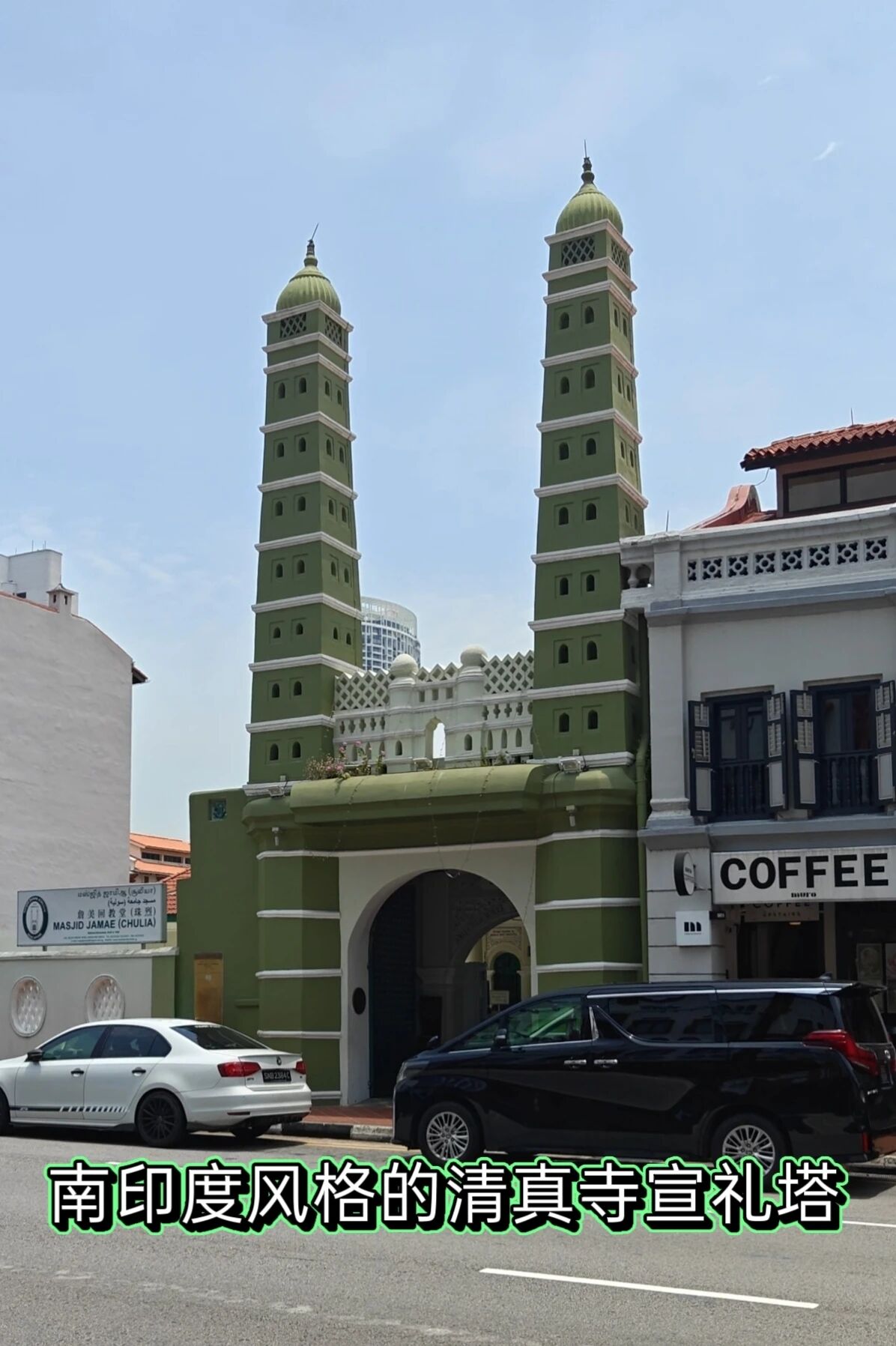
You can basically only see them in southern India, but since there are South Indian Muslim immigrants in Singapore, we can see one in a popular tourist spot here. This Jamae Mosque is actually on the same street as Singapore's famous Buddha Tooth Relic Mosque and Museum.
When you visit the Buddha Tooth Relic Mosque and Museum, you can also see a Hindu mosque and a South Indian-style mosque nearby.
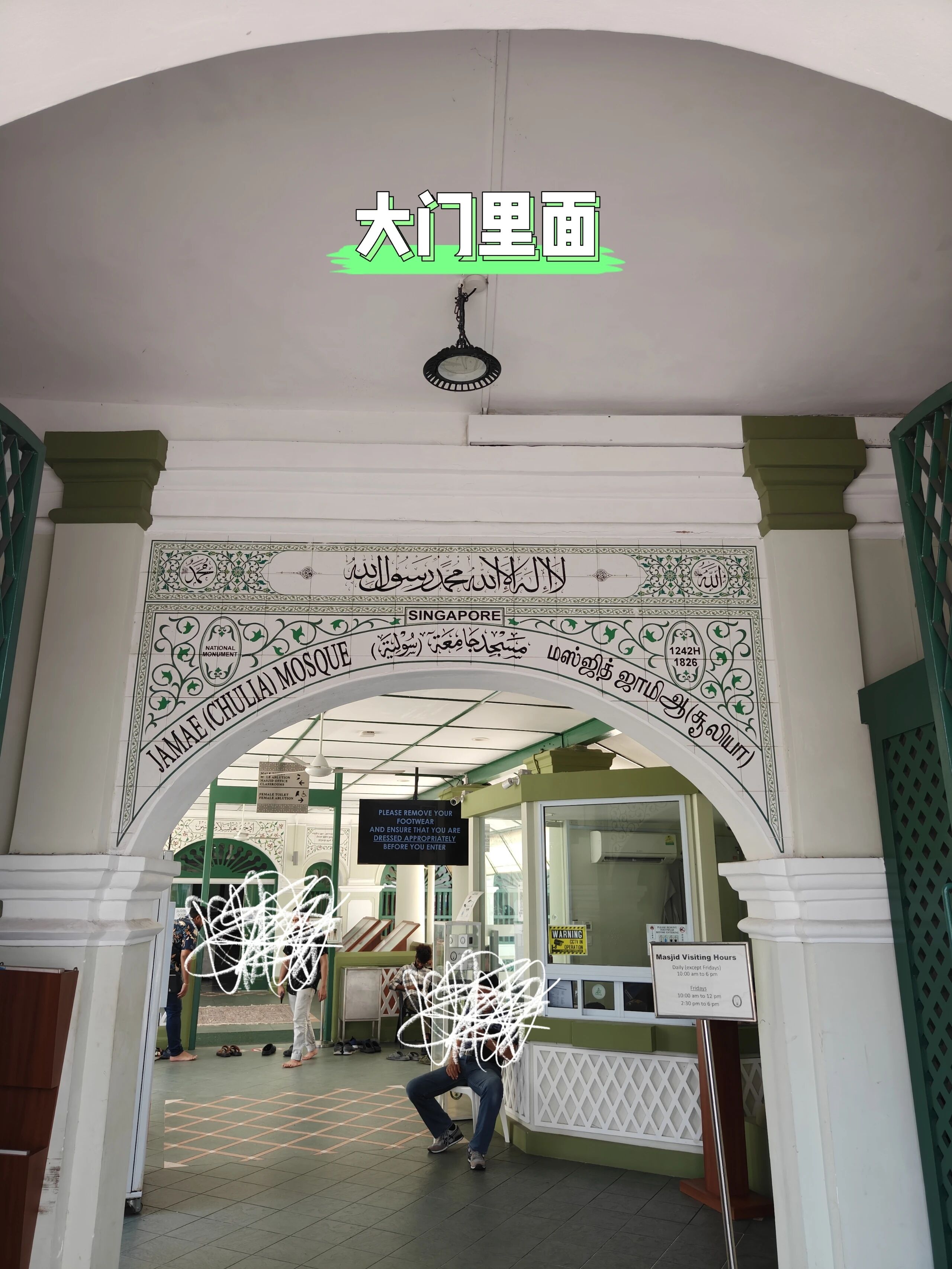
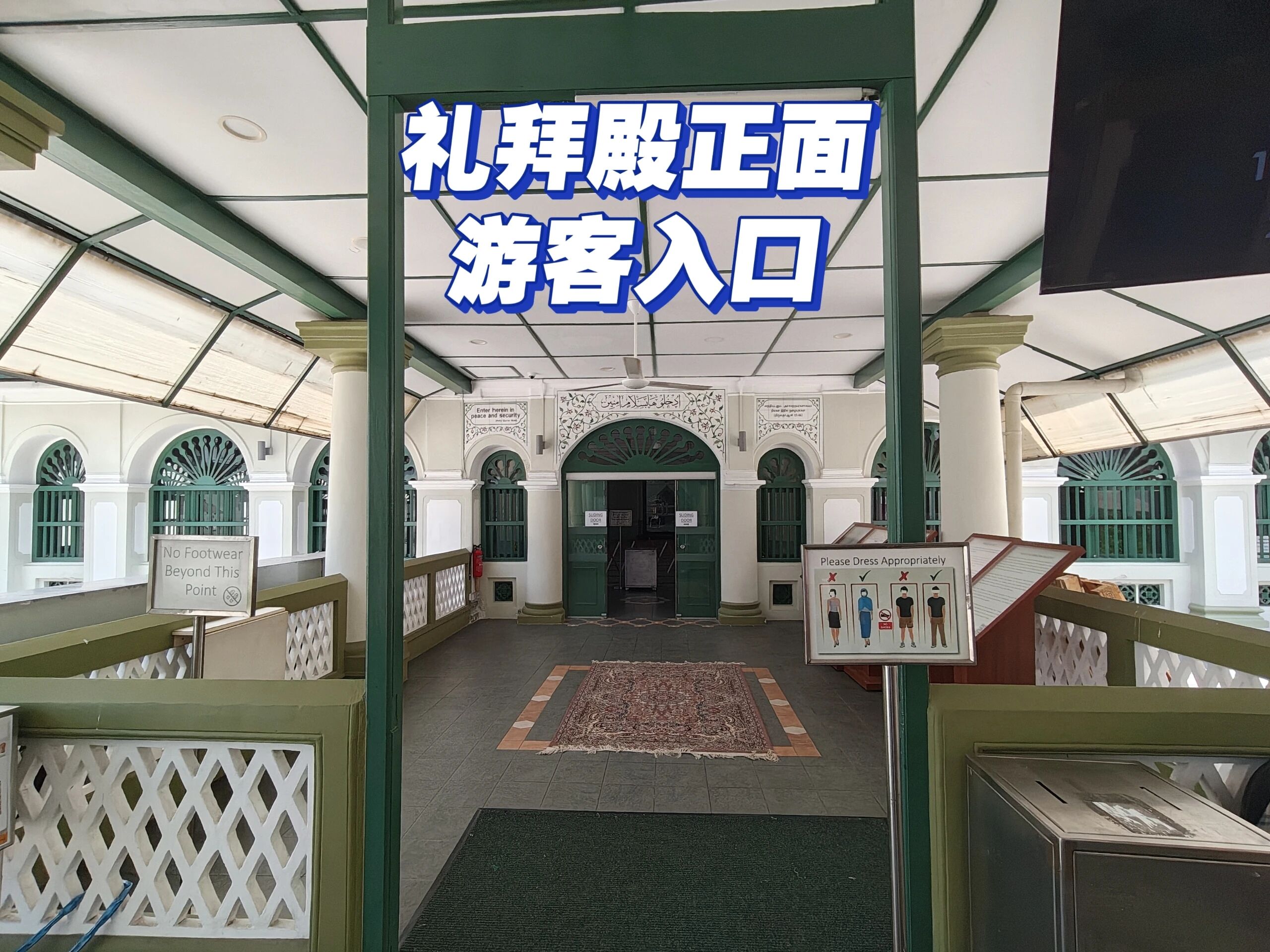
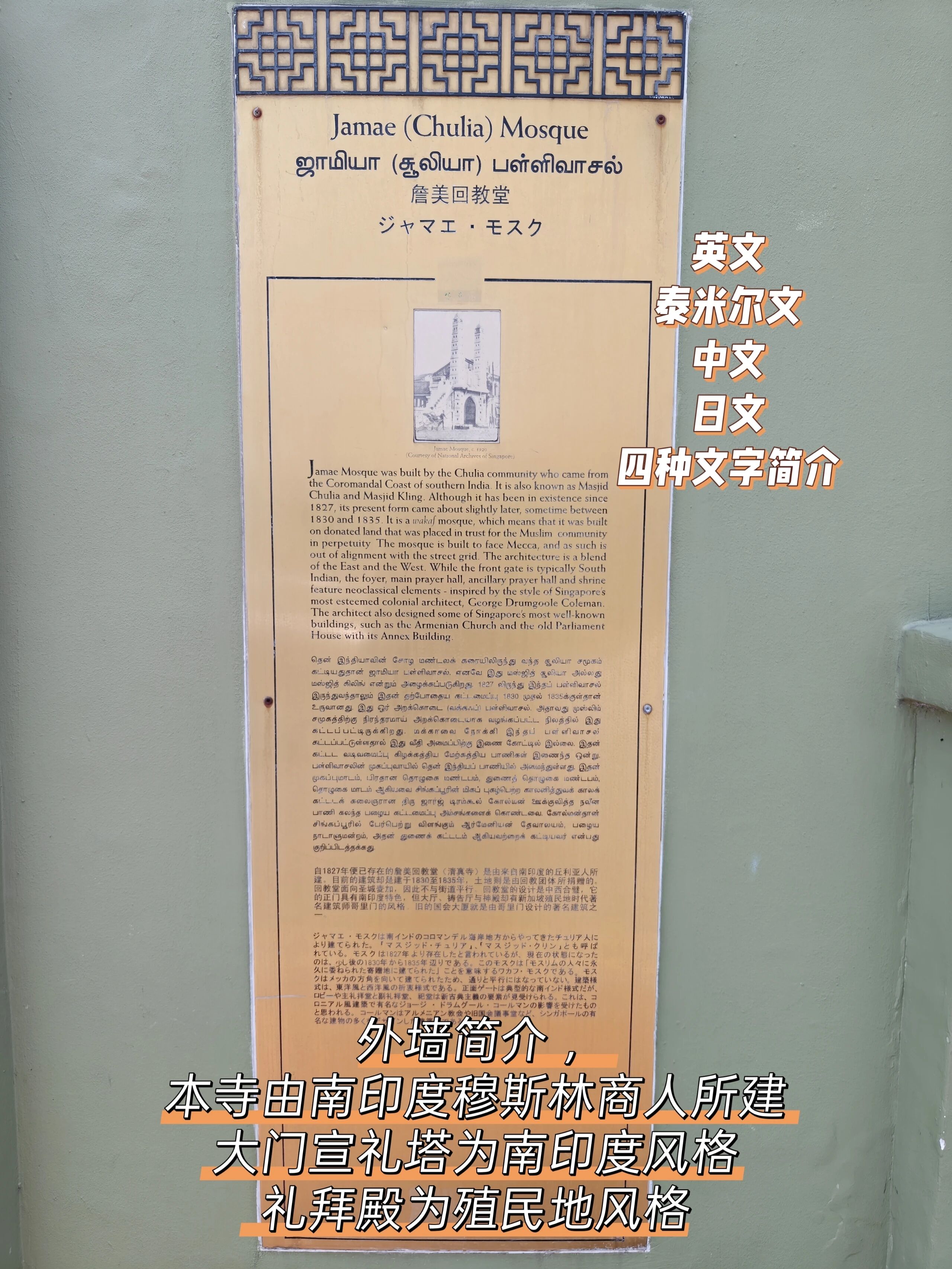
Back to the main topic, the mosque's porch is right under the square minaret of the Jamae Mosque. Walk straight through the porch to find the visitor entrance. Once inside, you can see the interior of the prayer hall. The area without carpets is for visitors. Here, you can see display boards with basic Islamic knowledge, as well as the mosque's fan-shaped doors and windows and thick pillars, which have a distinct Nanyang style.
I performed wudu in the wudu room, which is a large pavilion, and then entered the prayer hall. I saw the front of the hall. On the left is Tamil, a language from southern India. Most Tamil people are Hindu, but some are Muslim.
In the middle is Arabic, and on the right is English. The side texts are translations of the Arabic scripture in the middle, which is from the Quran, Chapter 13, Verse 28. There are also the 99 Names of Allah around the prayer hall.
Leaving the mosque, I saw the Shahada in English at the porch. Across the street are many Chinese shops and a place called Mohamed Ali Lane. I am not sure of the story behind that name.
That is all for this mosque. Next time, I will take you to see the gongbei nearby. Stay tuned. view all
Summary: This Singapore Muslim travel guide visits Jamae Mosque and its South Indian style. It preserves the author's Chinatown-area observations, mosque design notes, and Tamil Muslim heritage context.
My phone died just as I was about to finish this last time. When I turned it back on, all my data was gone, otherwise I would have posted this part a long time ago. I went to Singapore again a while ago and visited the same places as before. Let me tell you about this South Indian-style mosque built by South Indian Muslims.
Mosque minarets come in many styles. You have seen plenty of other styles, but this South Indian style is quite rare.
You can basically only see them in southern India, but since there are South Indian Muslim immigrants in Singapore, we can see one in a popular tourist spot here. This Jamae Mosque is actually on the same street as Singapore's famous Buddha Tooth Relic Mosque and Museum.
When you visit the Buddha Tooth Relic Mosque and Museum, you can also see a Hindu mosque and a South Indian-style mosque nearby.
Back to the main topic, the mosque's porch is right under the square minaret of the Jamae Mosque. Walk straight through the porch to find the visitor entrance. Once inside, you can see the interior of the prayer hall. The area without carpets is for visitors. Here, you can see display boards with basic Islamic knowledge, as well as the mosque's fan-shaped doors and windows and thick pillars, which have a distinct Nanyang style.
I performed wudu in the wudu room, which is a large pavilion, and then entered the prayer hall. I saw the front of the hall. On the left is Tamil, a language from southern India. Most Tamil people are Hindu, but some are Muslim.
In the middle is Arabic, and on the right is English. The side texts are translations of the Arabic scripture in the middle, which is from the Quran, Chapter 13, Verse 28. There are also the 99 Names of Allah around the prayer hall.
Leaving the mosque, I saw the Shahada in English at the porch. Across the street are many Chinese shops and a place called Mohamed Ali Lane. I am not sure of the story behind that name.
That is all for this mosque. Next time, I will take you to see the gongbei nearby. Stay tuned. view all
Reposted from the web
Summary: This Singapore Muslim travel guide visits Jamae Mosque and its South Indian style. It preserves the author's Chinatown-area observations, mosque design notes, and Tamil Muslim heritage context.
My phone died just as I was about to finish this last time. When I turned it back on, all my data was gone, otherwise I would have posted this part a long time ago. I went to Singapore again a while ago and visited the same places as before. Let me tell you about this South Indian-style mosque built by South Indian Muslims.
Mosque minarets come in many styles. You have seen plenty of other styles, but this South Indian style is quite rare.
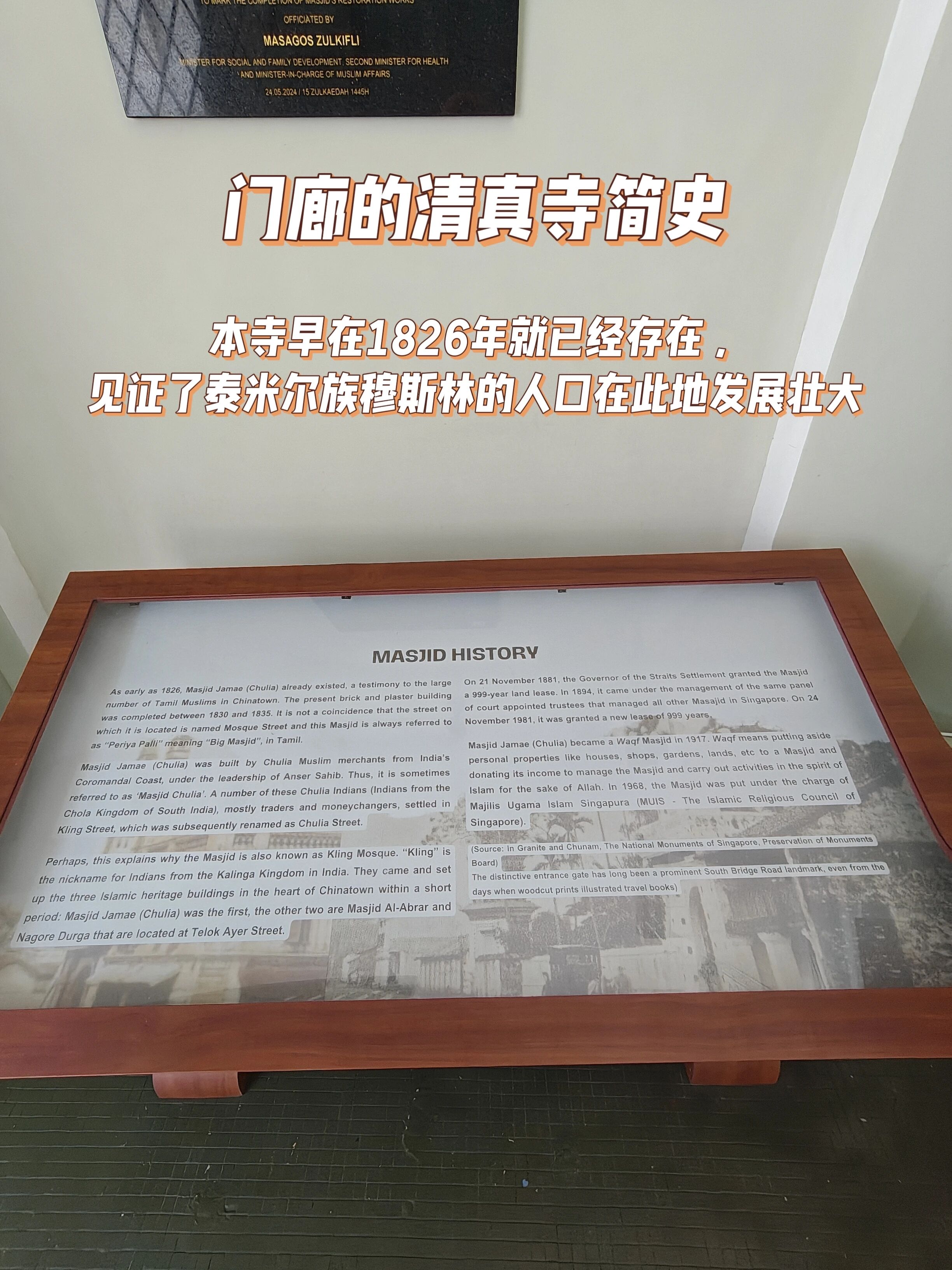
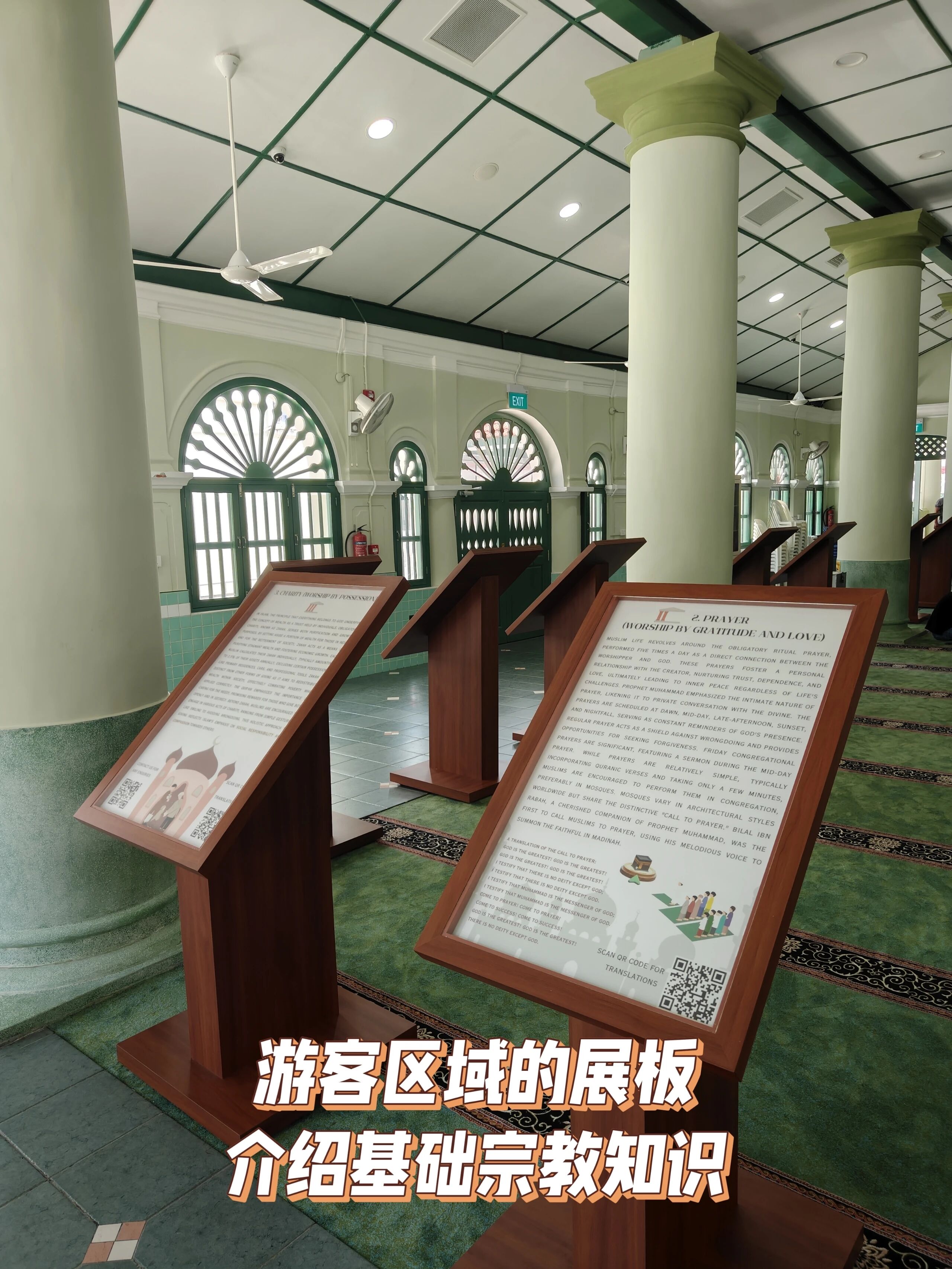
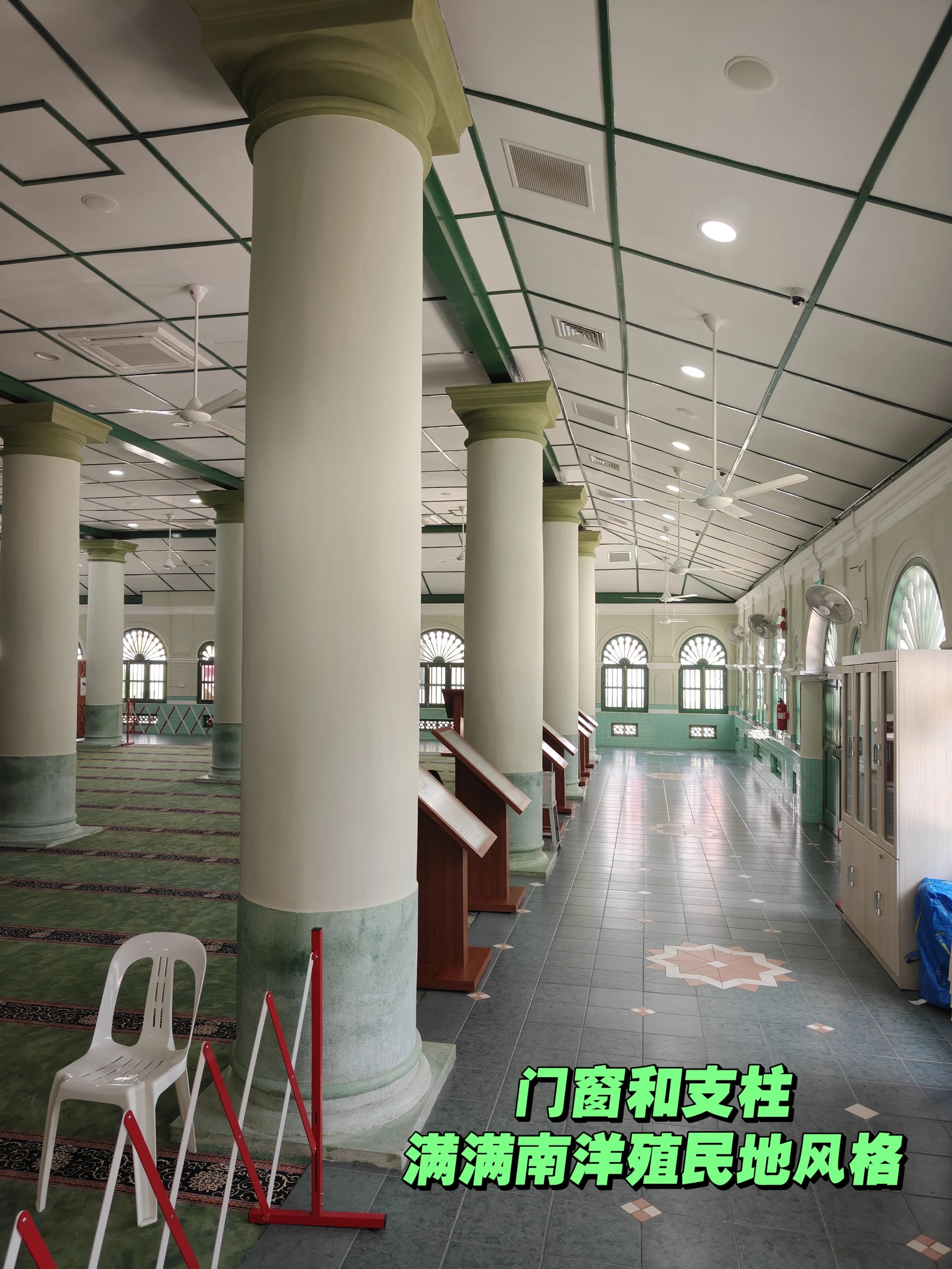
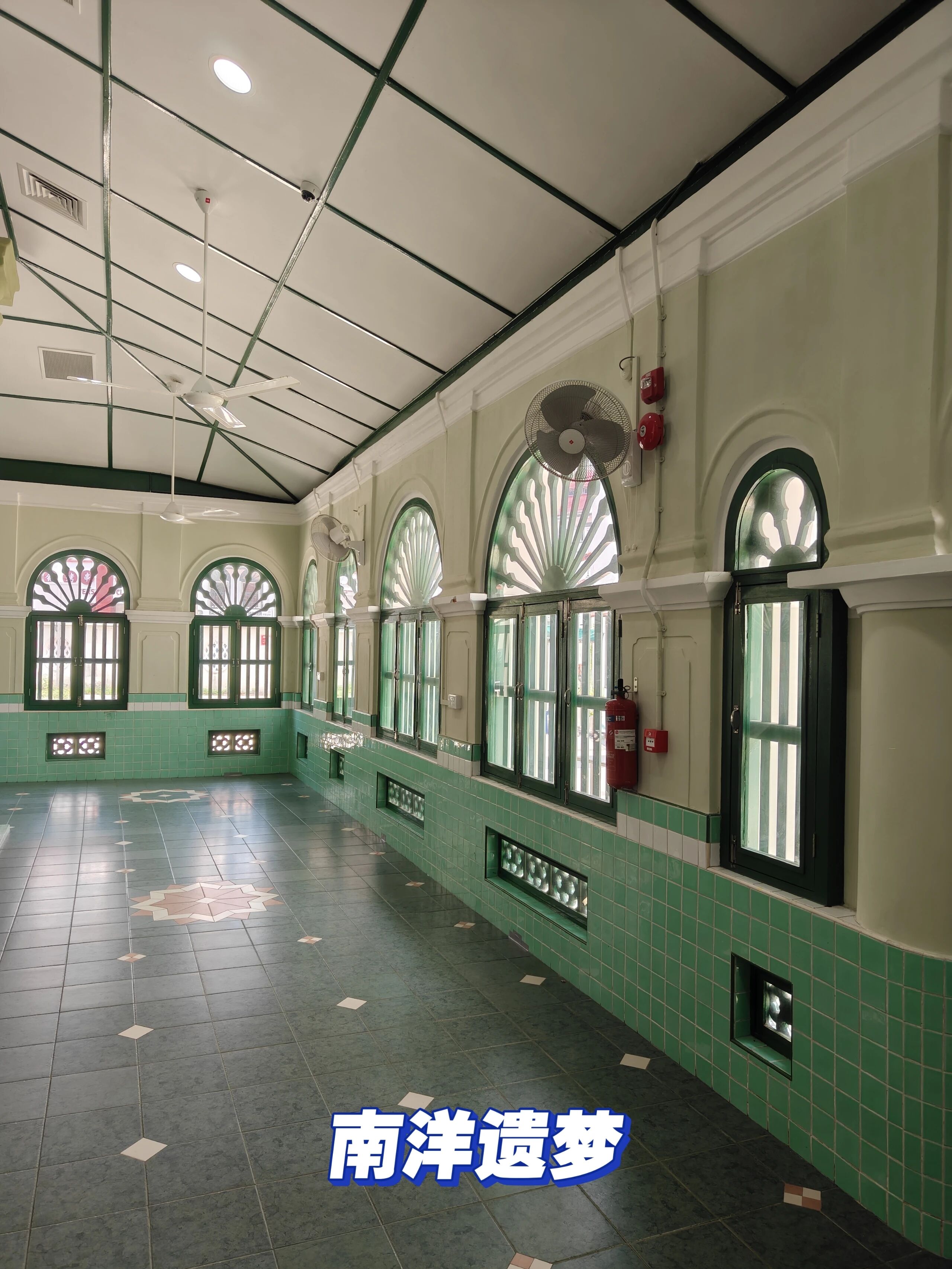
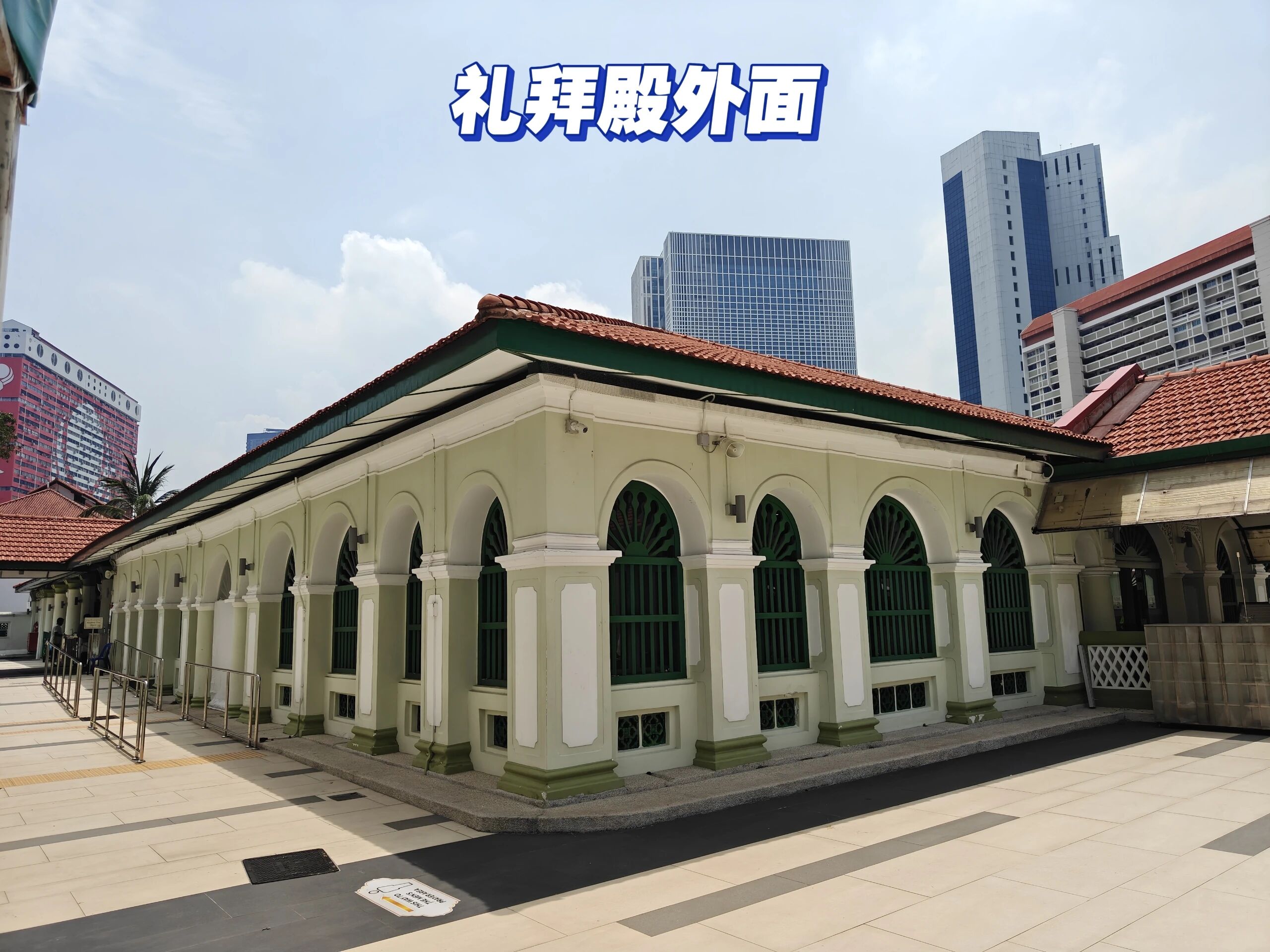
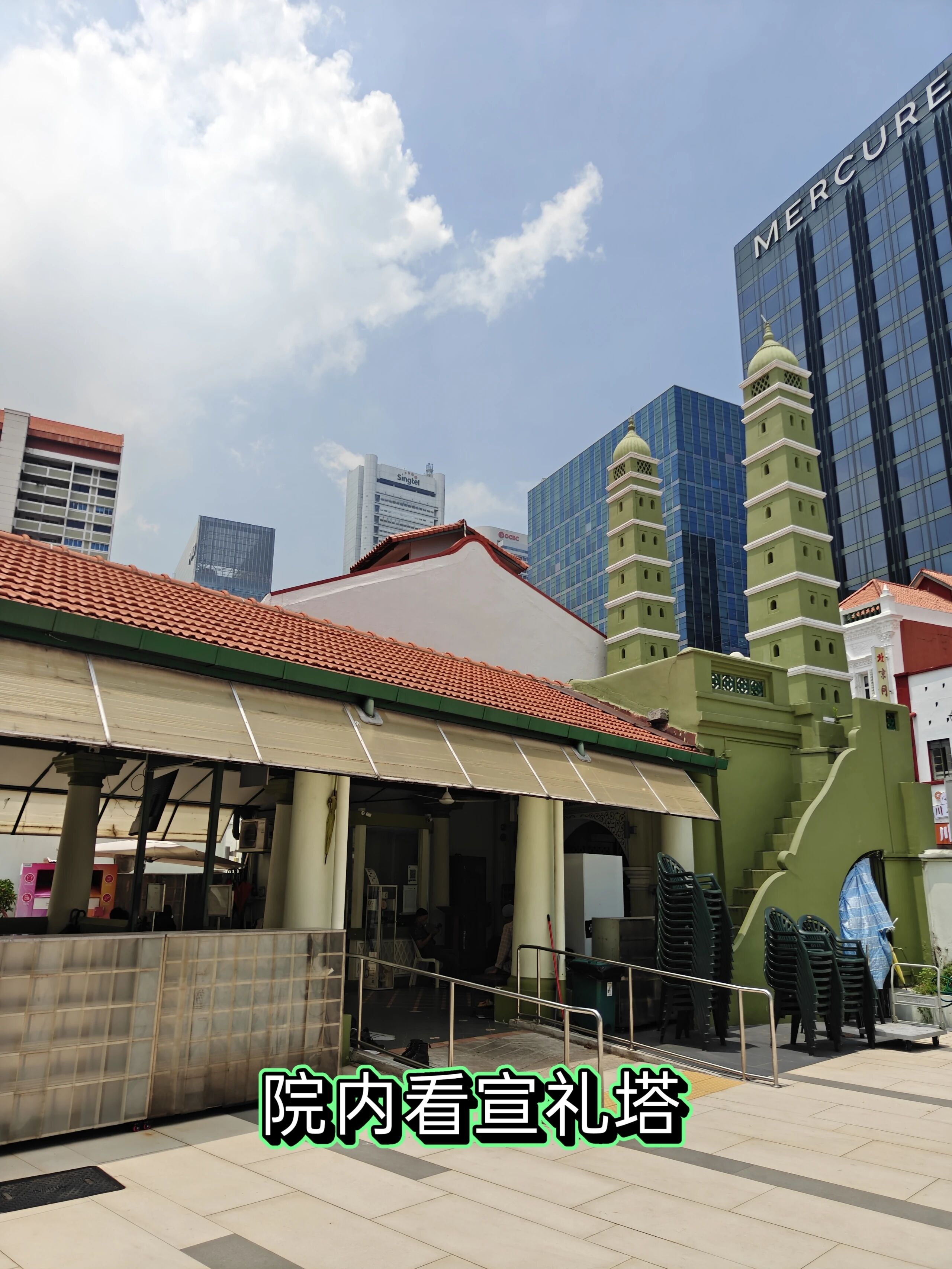
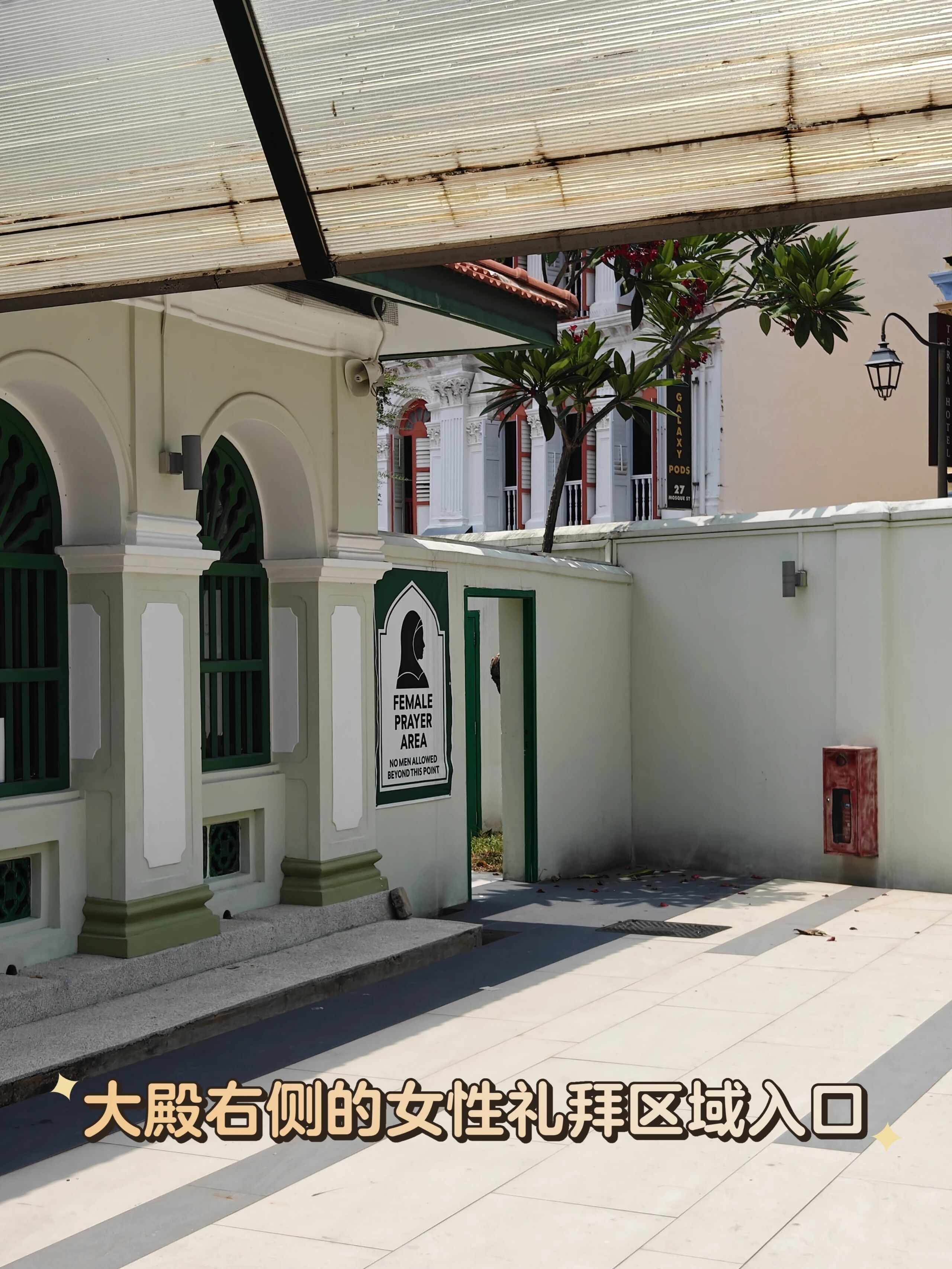
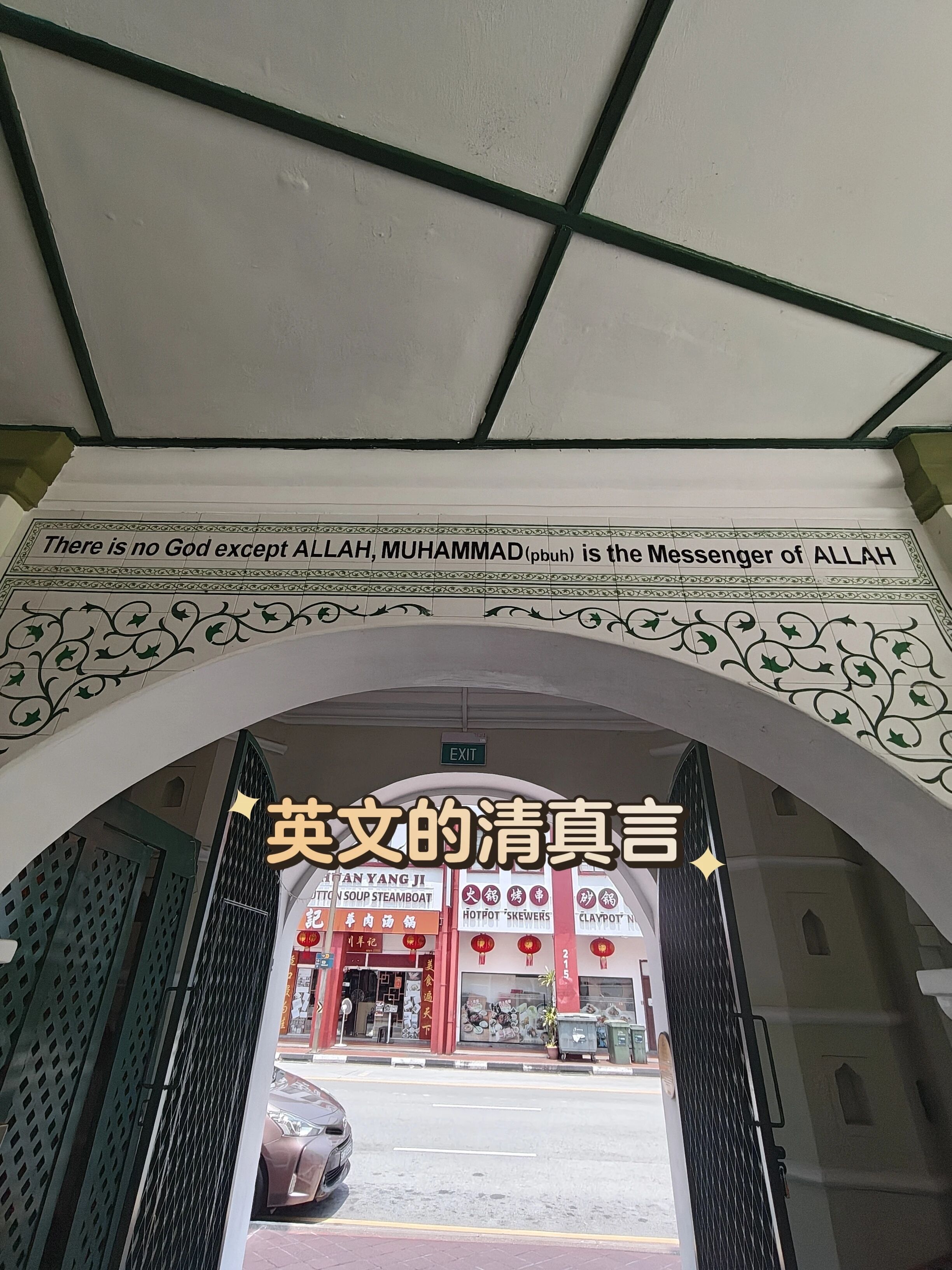
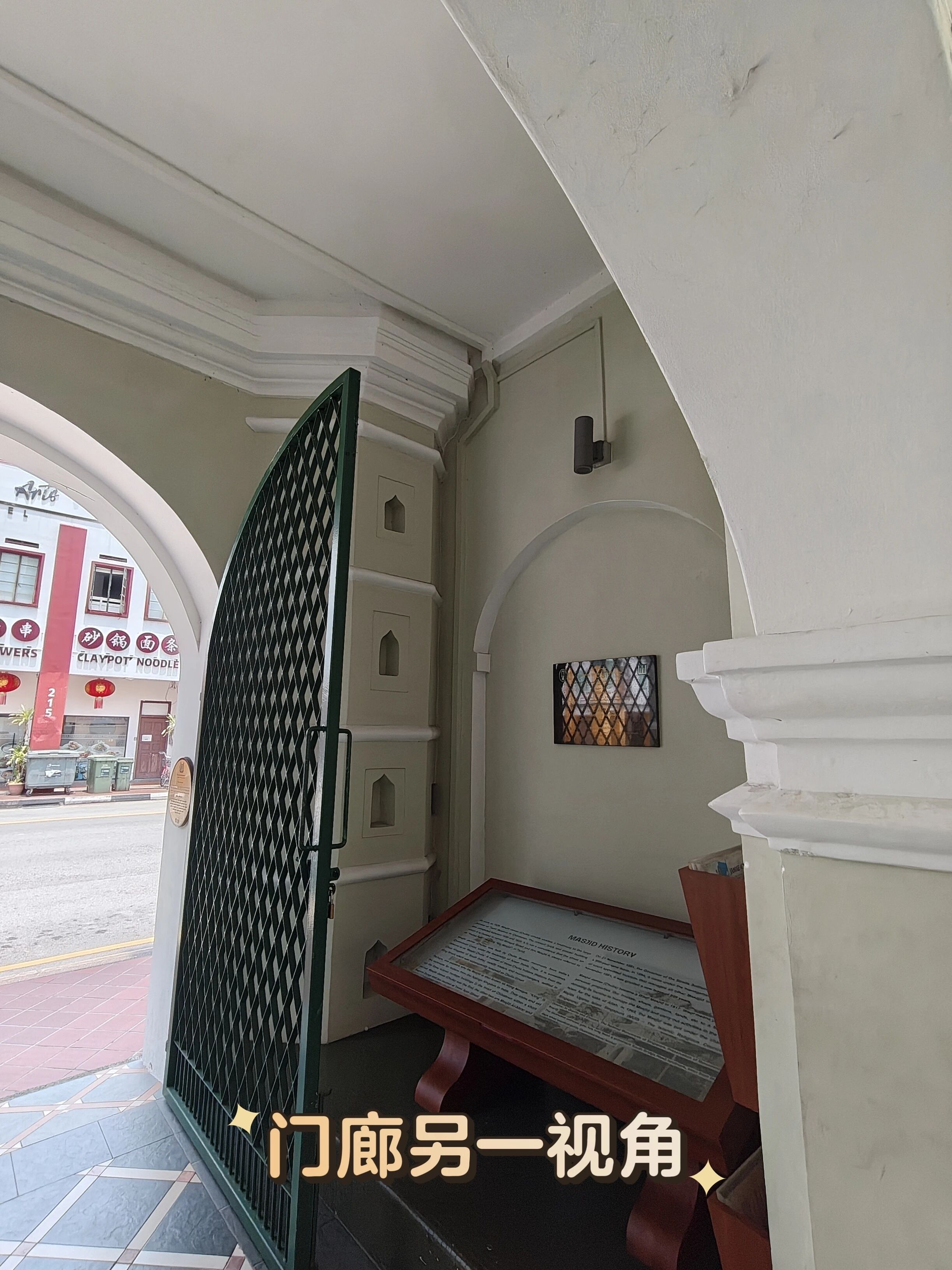
You can basically only see them in southern India, but since there are South Indian Muslim immigrants in Singapore, we can see one in a popular tourist spot here. This Jamae Mosque is actually on the same street as Singapore's famous Buddha Tooth Relic Mosque and Museum.
When you visit the Buddha Tooth Relic Mosque and Museum, you can also see a Hindu mosque and a South Indian-style mosque nearby.
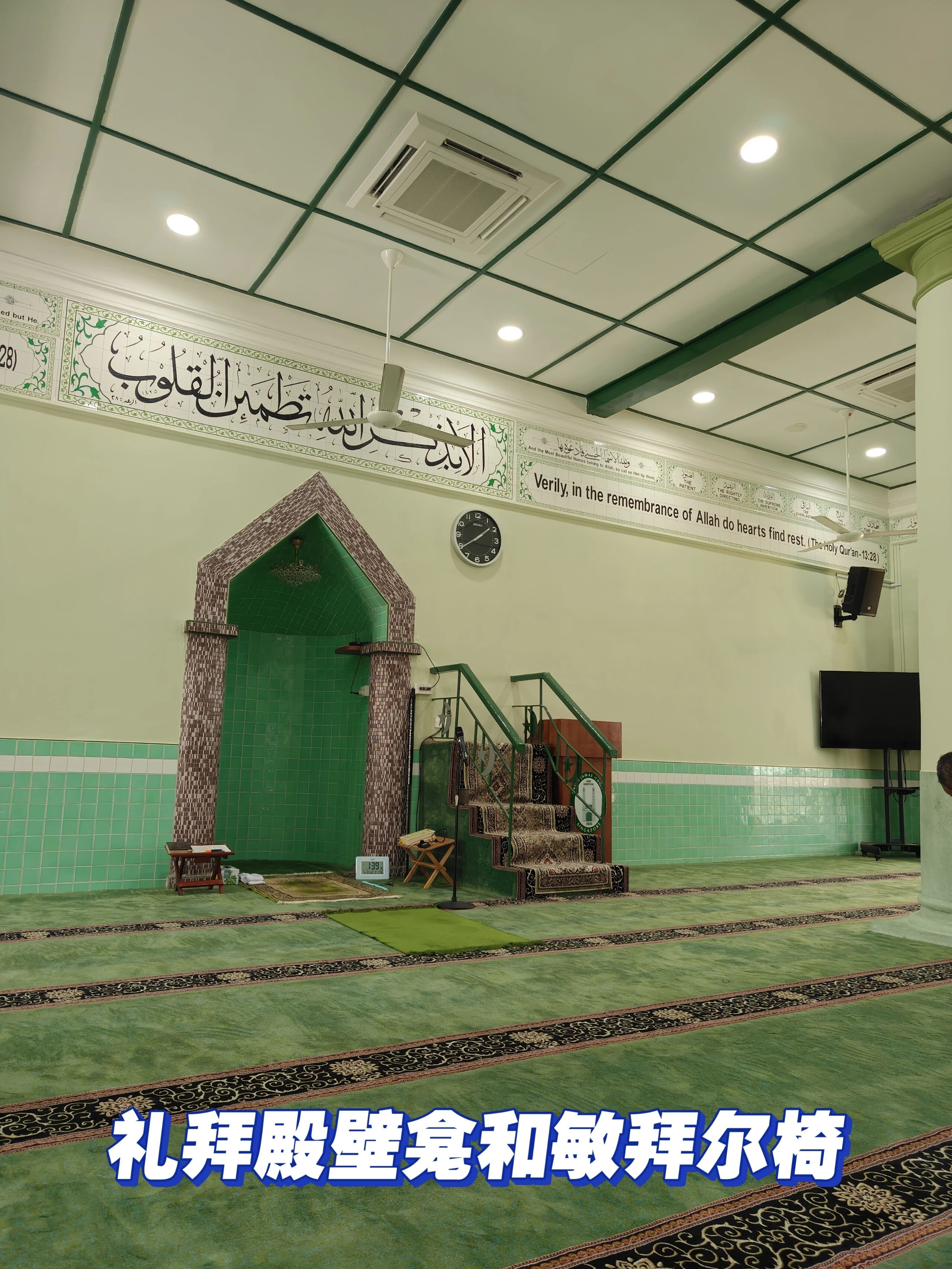
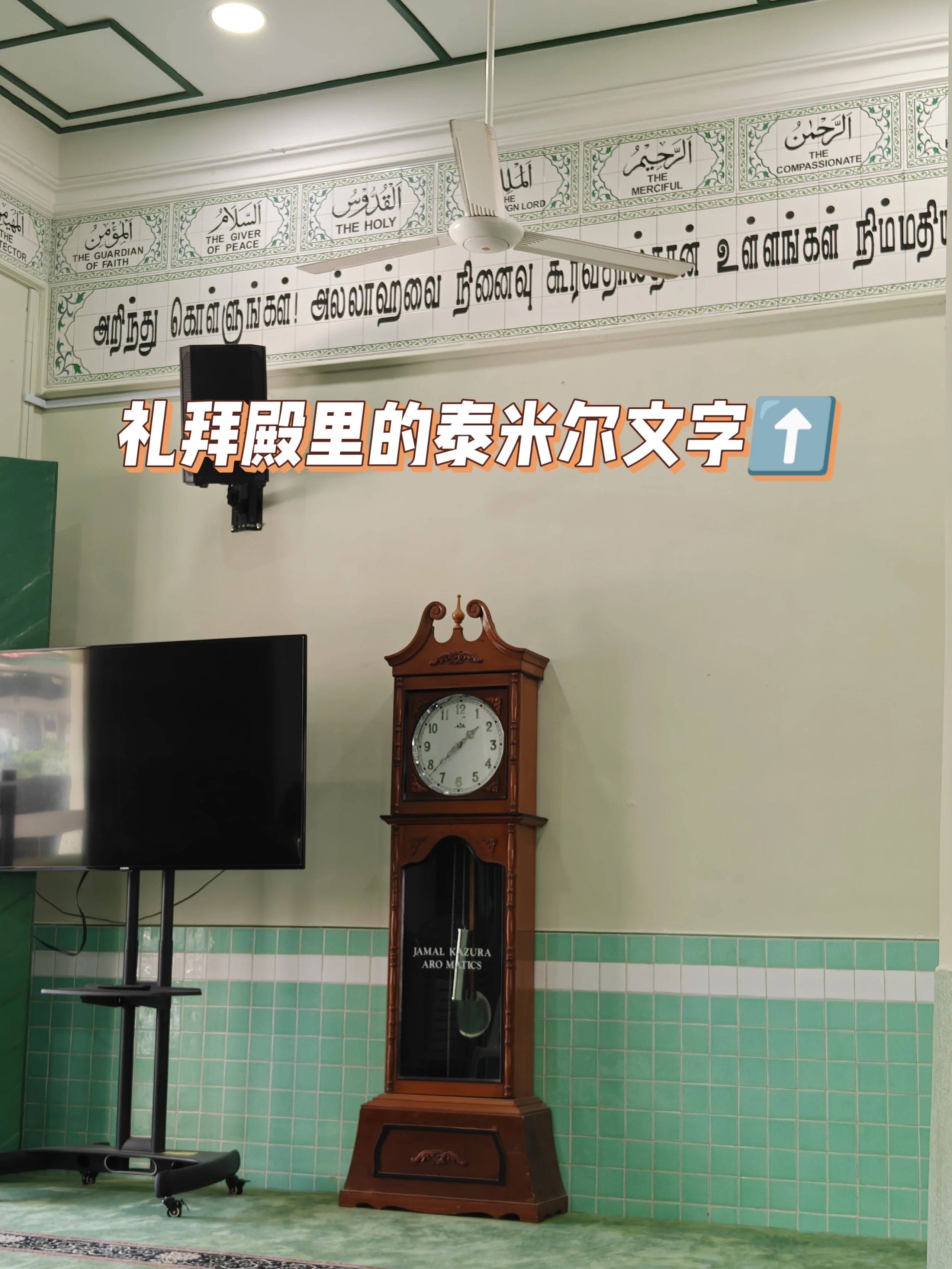
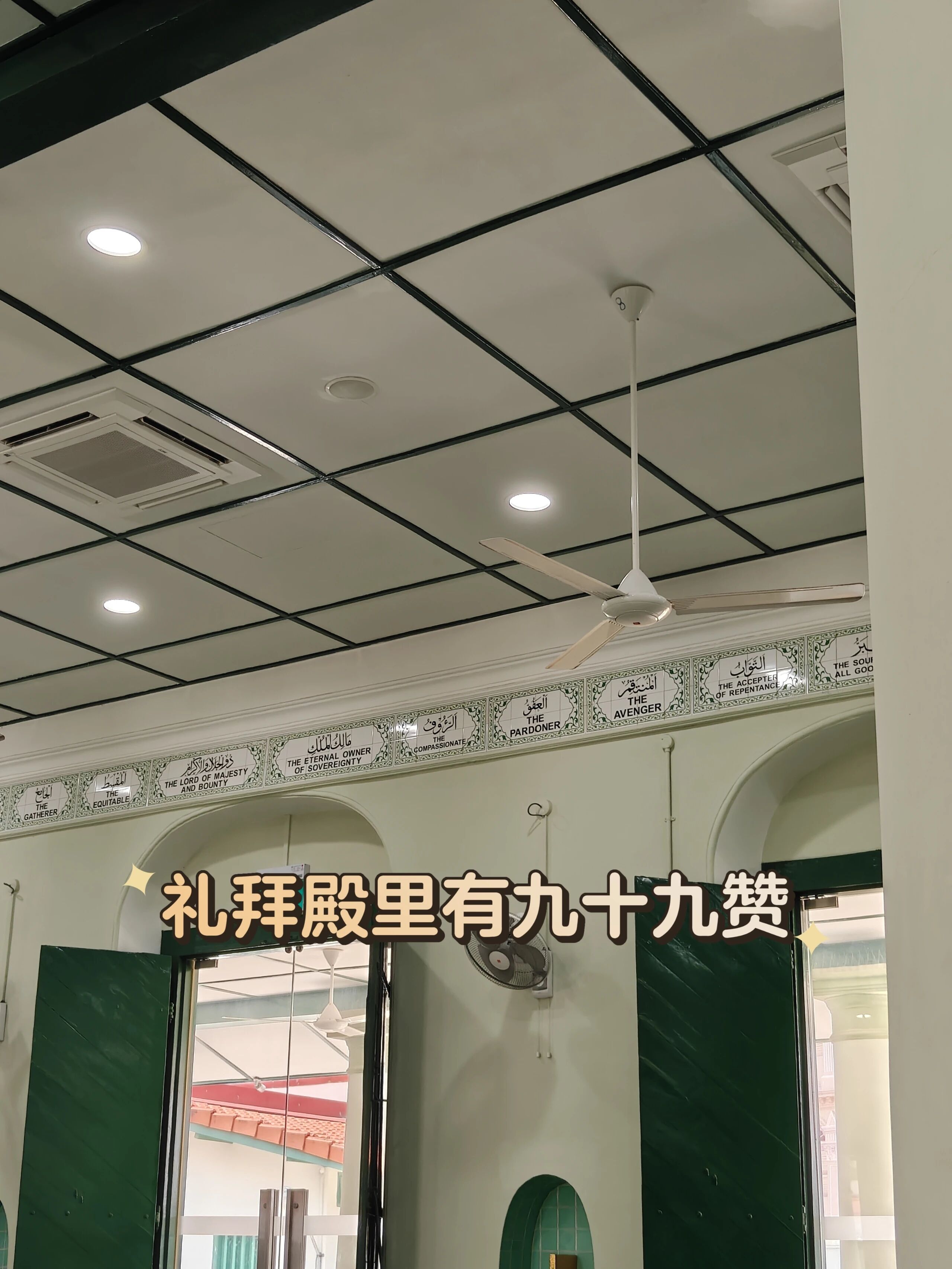
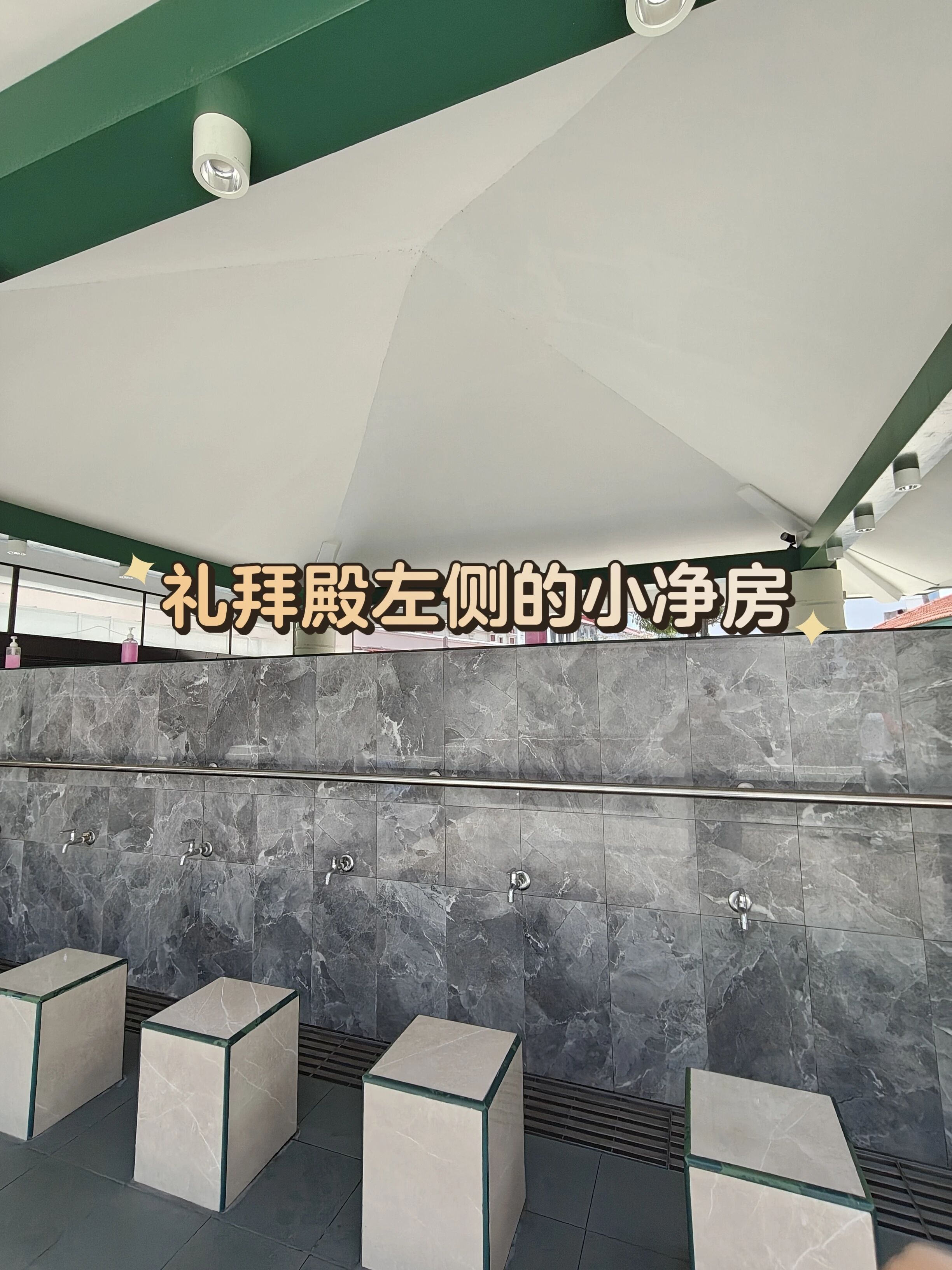
Back to the main topic, the mosque's porch is right under the square minaret of the Jamae Mosque. Walk straight through the porch to find the visitor entrance. Once inside, you can see the interior of the prayer hall. The area without carpets is for visitors. Here, you can see display boards with basic Islamic knowledge, as well as the mosque's fan-shaped doors and windows and thick pillars, which have a distinct Nanyang style.
I performed wudu in the wudu room, which is a large pavilion, and then entered the prayer hall. I saw the front of the hall. On the left is Tamil, a language from southern India. Most Tamil people are Hindu, but some are Muslim.
In the middle is Arabic, and on the right is English. The side texts are translations of the Arabic scripture in the middle, which is from the Quran, Chapter 13, Verse 28. There are also the 99 Names of Allah around the prayer hall.
Leaving the mosque, I saw the Shahada in English at the porch. Across the street are many Chinese shops and a place called Mohamed Ali Lane. I am not sure of the story behind that name.
That is all for this mosque. Next time, I will take you to see the gongbei nearby. Stay tuned.
Summary: This Singapore Muslim travel guide visits Jamae Mosque and its South Indian style. It preserves the author's Chinatown-area observations, mosque design notes, and Tamil Muslim heritage context.
My phone died just as I was about to finish this last time. When I turned it back on, all my data was gone, otherwise I would have posted this part a long time ago. I went to Singapore again a while ago and visited the same places as before. Let me tell you about this South Indian-style mosque built by South Indian Muslims.
Mosque minarets come in many styles. You have seen plenty of other styles, but this South Indian style is quite rare.
You can basically only see them in southern India, but since there are South Indian Muslim immigrants in Singapore, we can see one in a popular tourist spot here. This Jamae Mosque is actually on the same street as Singapore's famous Buddha Tooth Relic Mosque and Museum.
When you visit the Buddha Tooth Relic Mosque and Museum, you can also see a Hindu mosque and a South Indian-style mosque nearby.
Back to the main topic, the mosque's porch is right under the square minaret of the Jamae Mosque. Walk straight through the porch to find the visitor entrance. Once inside, you can see the interior of the prayer hall. The area without carpets is for visitors. Here, you can see display boards with basic Islamic knowledge, as well as the mosque's fan-shaped doors and windows and thick pillars, which have a distinct Nanyang style.
I performed wudu in the wudu room, which is a large pavilion, and then entered the prayer hall. I saw the front of the hall. On the left is Tamil, a language from southern India. Most Tamil people are Hindu, but some are Muslim.
In the middle is Arabic, and on the right is English. The side texts are translations of the Arabic scripture in the middle, which is from the Quran, Chapter 13, Verse 28. There are also the 99 Names of Allah around the prayer hall.
Leaving the mosque, I saw the Shahada in English at the porch. Across the street are many Chinese shops and a place called Mohamed Ali Lane. I am not sure of the story behind that name.
That is all for this mosque. Next time, I will take you to see the gongbei nearby. Stay tuned.
Halal Travel Guide: Penang — Tamil Muslim Mosques, Food and History
Articles • ali2007fr posted the article • 0 comments • 155 views • 2026-05-17 21:54
Reposted from the web
Summary: Penang — Tamil Muslim Mosques, Food and History is presented here as a firsthand travel account in clear English, beginning with this scene: Penang, also known as Penang Island, is an island in the northwest of Malaysia. In 1786, the Sultanate of Kedah ceded Penang Island to the British East India Company. The account keeps its focus on Penang Travel, Tamil Muslims, Muslim Heritage while preserving the names, places, food, and historical details from the Chinese source.
Penang, also known as Penang Island, is an island in the northwest of Malaysia. In 1786, the Sultanate of Kedah ceded Penang Island to the British East India Company. George Town was then built on the island and became the first British base in Southeast Asia.
After George Town was built, the British East India Company kept encouraging people to move there. After the 19th century, the Chinese, Malays, Indians, Peranakan (local-born Chinese), Eurasians, and Siamese living in Penang all formed their own communities. Europeans held a dominant position in Penang and ran shipping companies. Peranakan people and Eurasians worked as lawyers, engineers, architects, and clerks. Most new Chinese immigrants started out as laborers and farmers and were called new guests (Sinkheh) by the local Peranakan people. Some of these Chinese later went into business, while others became craftsmen and cooks. The Malay people mainly grew rice and worked in the fishing industry outside the city.
Over 90% of the Indian population in Penang are Tamils from southeastern India and northern Sri Lanka. They are also called Chulias in Penang, a term that comes from the Coromandel Coast in southeastern India. As early as 1790, just four years after George Town was built, the British East India Company noted that Chulias were already running shops and farming in Penang. Unlike the Chinese, most of the first Tamil people did not settle permanently in Penang. Many returned to their hometowns after working for a certain period.
By the late 19th century, the price of tin dropped, which led to fewer Chinese immigrants. The resulting labor shortage pushed up wages. When India officially legalized migration to Penang in 1872 and steamship tickets for Indian immigrants became subsidized in 1887, these changes greatly encouraged Tamil people to move to Penang. Most recruited Tamil people came from the lower social classes. Europeans thought they were more disciplined than the Chinese and more willing to work for wages than the Malays. Because of this, Tamil laborers were increasingly used for public projects, municipal services, and road construction.
Tamil people crossing the Bay of Bengal from southeastern India to Penang.
Most Tamil people in Penang practice Hinduism, though some follow Islam. Tamil Muslims in Malaysia are called Mamak, and they are famous for their food culture found in Mamak stalls (Gerai Mamak) and Mamak restaurants (Restoran Mamak).
The word Mamak comes from the Tamil word for uncle (maa-ma). In Malaysia and Singapore, Tamil children often use this term for older Tamil men, especially in Tamil Muslim restaurants. Because of this, Malay people started calling the entire Tamil Muslim community Mamak, though the k at the end is silent in the Malay language.
The Little Mamak is a comic book by a Tamil Muslim cartoonist named ME that describes the lives of Tamil Muslims in Penang. You can buy it in bookstores in Penang and Kuala Lumpur, and it is currently the most interesting book about Penang Tamil Muslim culture.
A Tamil Muslim working as a laborer at the pier in The Little Mamak.
A century-old mamak restaurant: Hameediyah Restaurant.
In Penang, the Tamil Muslim food culture of mamak stalls and mamak restaurants is very famous. The oldest one is Hameediyah Restaurant, which opened in 1907.
The founder of Hameediyah Restaurant was named Mohamed. He came from a Tamil Muslim village in the southernmost Indian state of Tamil Nadu. The village had two old mosques, an Islamic school, and a Tamil school.
Mohamed arrived in Penang in 1890 and rented the land where the restaurant stands today shortly after. At first, he just used this place to prepare meals, then carried them on a shoulder pole to sell along the street, which is the famous shoulder-pole rice (Nasi Kandar).
A few years later, Mohamed decided to stop walking the streets and started selling his food from a fixed spot where he prepared it. In 1907, Mohamed officially opened Hameediyah Restaurant and hired two helpers. Mohamed learned many South Indian Tamil dishes from his mother when he was young, and he was best at making biryani fried rice (Biryani) and stuffed flatbread (Murtabak). After opening, the customers who came to eat included port migrant workers, rickshaw pullers, local traders, and government employees, and some diners affectionately called Mohamed and his staff Mamak. During this same period, the restaurants opened by Tamil Muslims from South India in Penang gradually became known as mamak stalls.
After Mohamed passed away in 1927, his son Kander took over the restaurant, followed by his grandson, and the business thrived. In 1941, Penang suffered devastating air raids by the Japanese military, but the Hameediyah restaurant stayed open and miraculously survived the bombing. After Japan was defeated in 1945, Kander's grandson and fourth-generation successor, Abu Bakar, took over the restaurant before passing it on to his relative, Abdul Sukkoor. Today, Abdul Sukkoor's eldest son, Seeni Pakir, and his youngest son, Syed Ibrahim, serve as the restaurant's head chefs and manage daily operations.
Nasi kandar (flat-pole rice) is a dish invented by South Indian Tamil Muslims in Penang. It consists of rice served with various curries made from beef, lamb, chicken, fish, and shrimp, along with side dishes. When Tamil Muslims first arrived in Penang in the 19th century, most carried their food on shoulder poles to sell along the streets. This is why the food they sold became known as nasi kandar. By the 20th century, Tamil Muslims began opening restaurants and stalls, but the name nasi kandar has been used ever since. During this trip at Hameediyah Restaurant, I had biryani kosong (plain biryani rice) with a lamb shank, chicken, and cabbage.
The original nasi kandar featured in The Little Mamak.
The original nasi kandar featured in The Little Mamak.
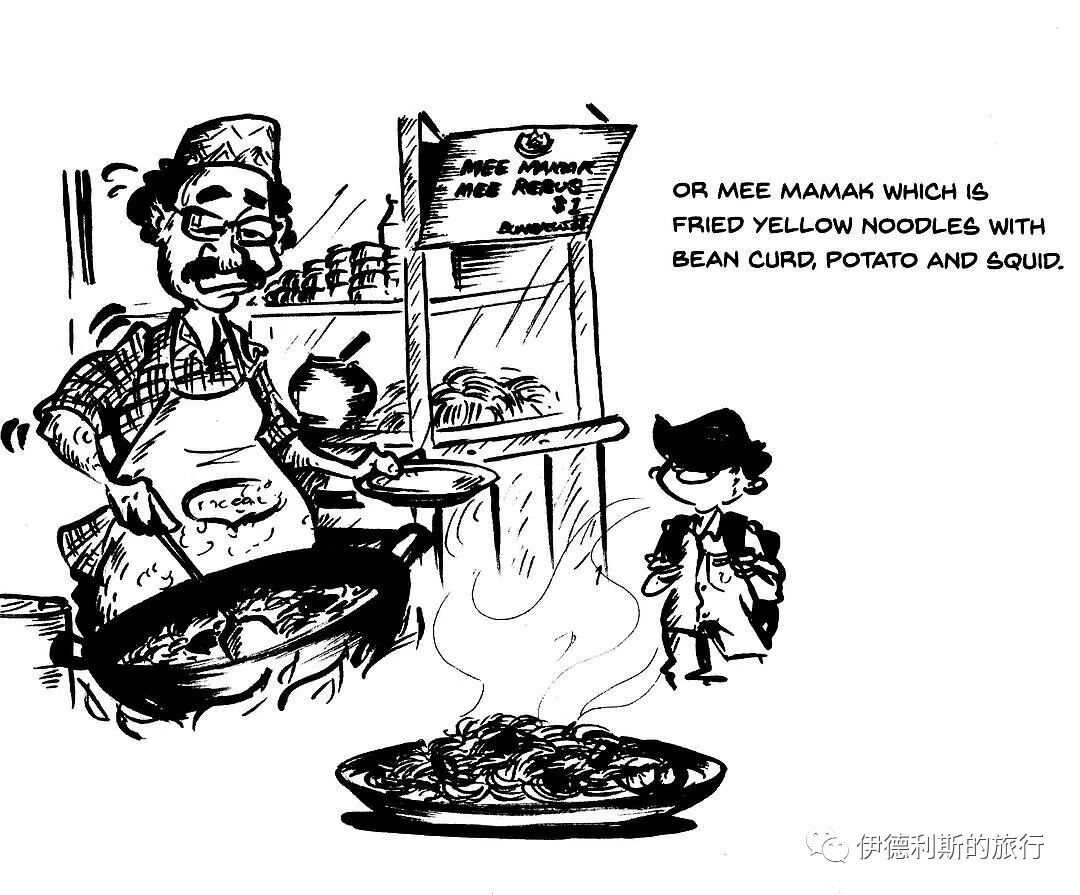
Murtabak is a thick pancake filled with eggs, onions, minced meat, and shrimp. In Malaysia, Singapore, and Thailand, the way to make Murtabak is basically the same as making Indian flatbread (roti canai). The Malaysian version has less meat and more egg than the one in Singapore. One theory says Murtabak comes from the Arabic word "Mutabbaq," which means "folded." It may have been brought to India by Yemeni Indian Muslims, and then brought to the Malay Archipelago by South Indian Tamil Muslims. Another theory says murtabak comes from Kerala in South India, where "muta" means egg and "bar" is short for "barota" bread.
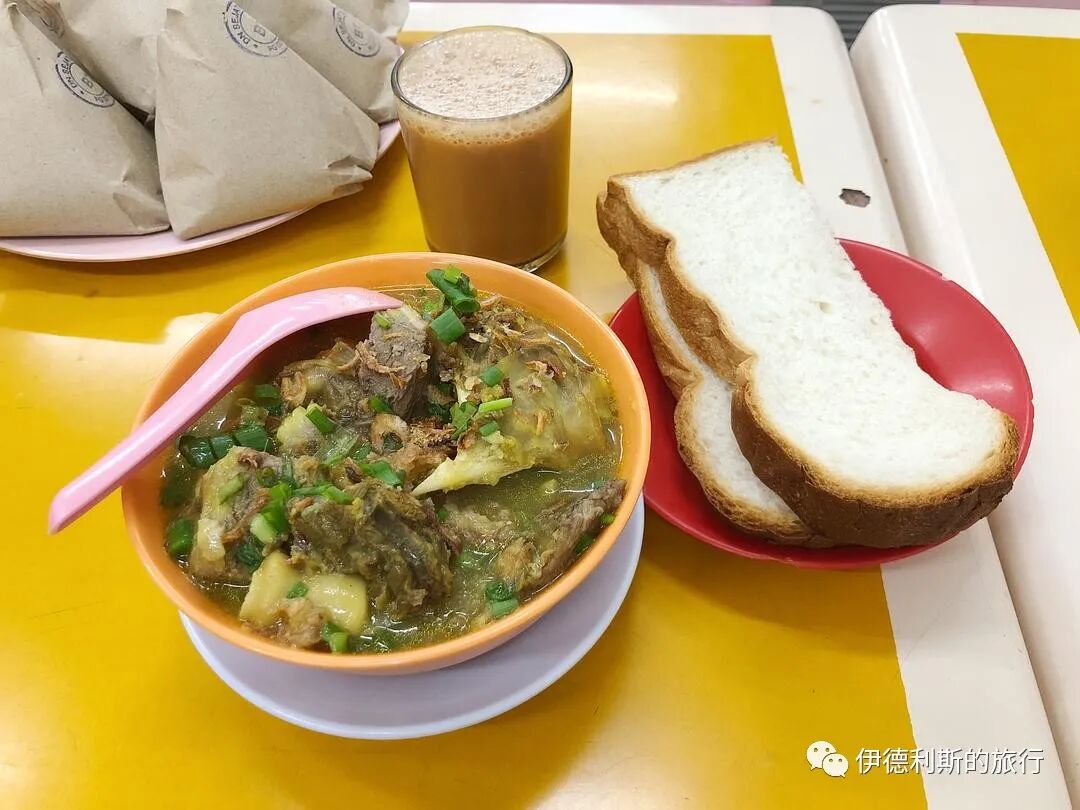
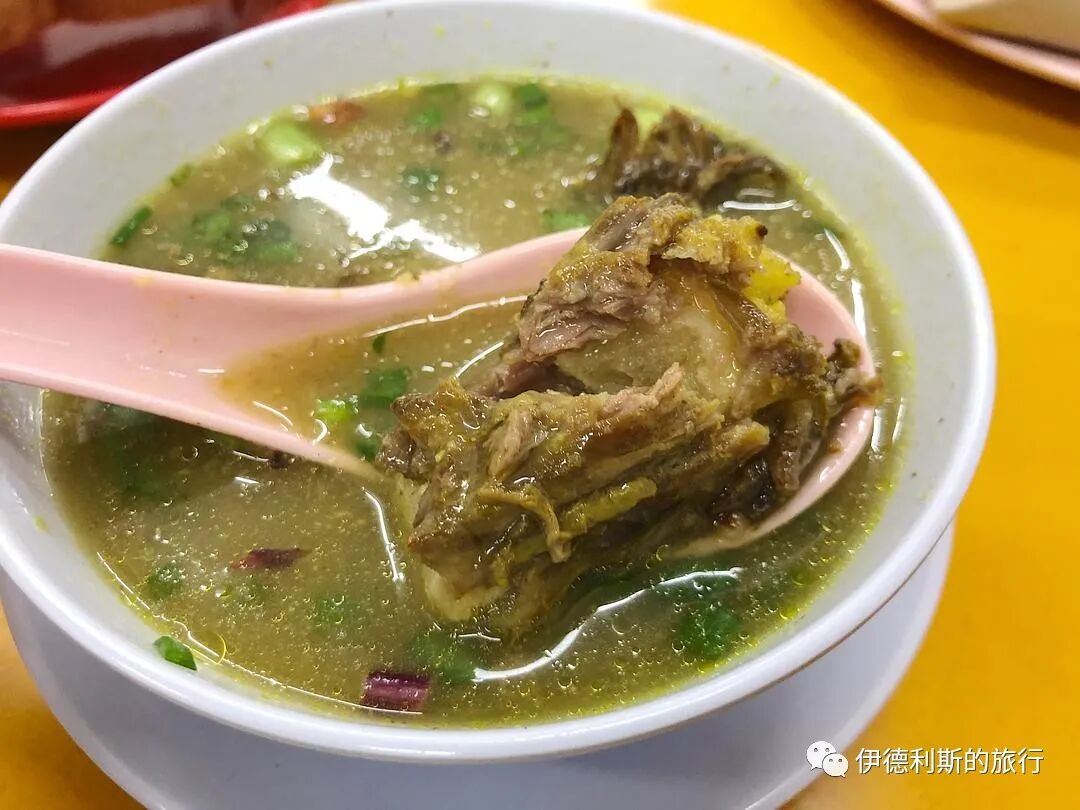
Mamak mutton soup
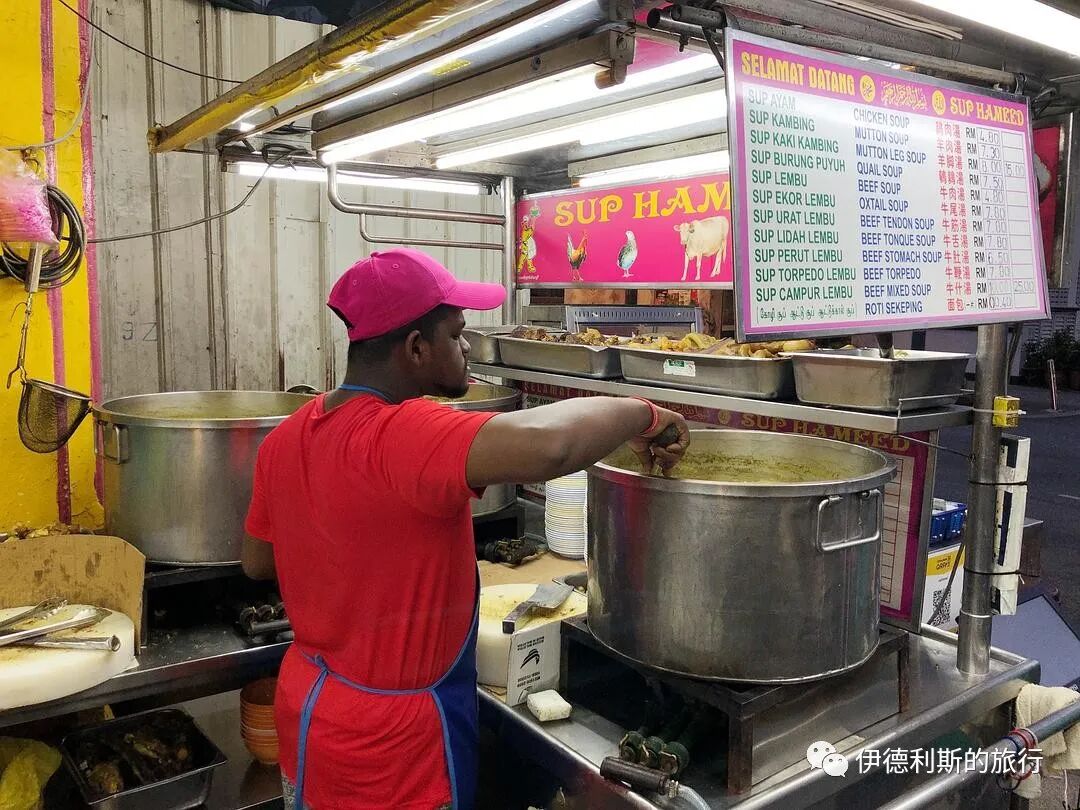
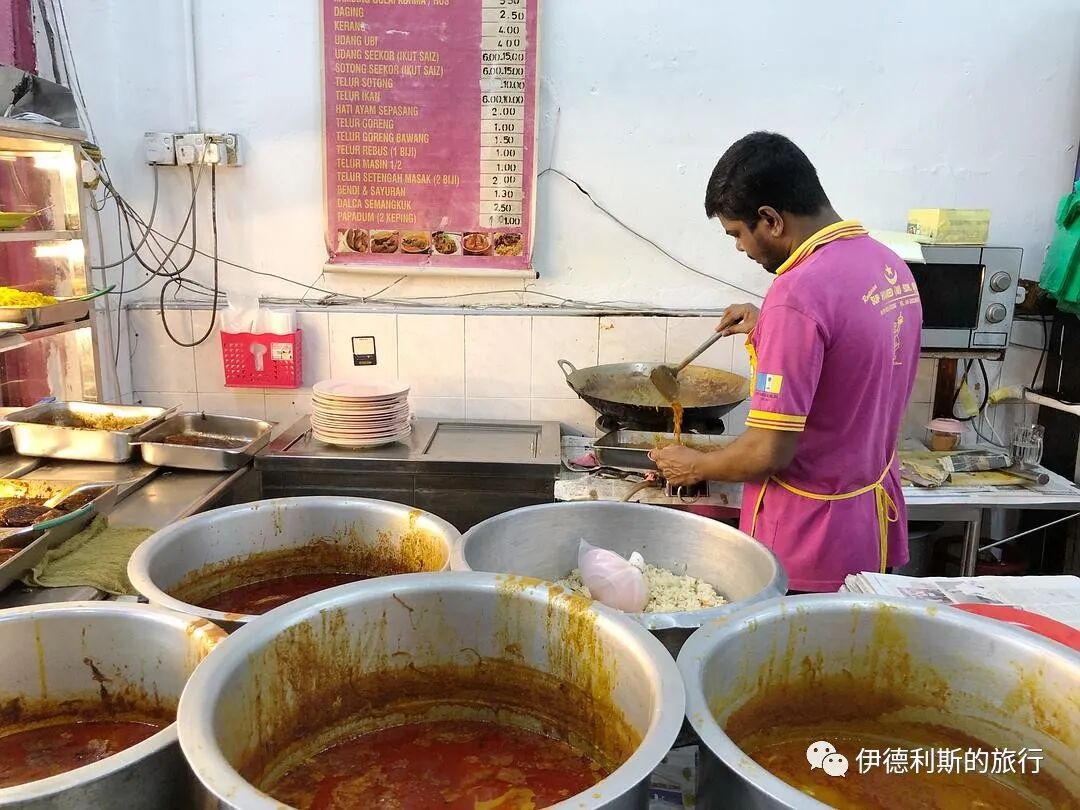
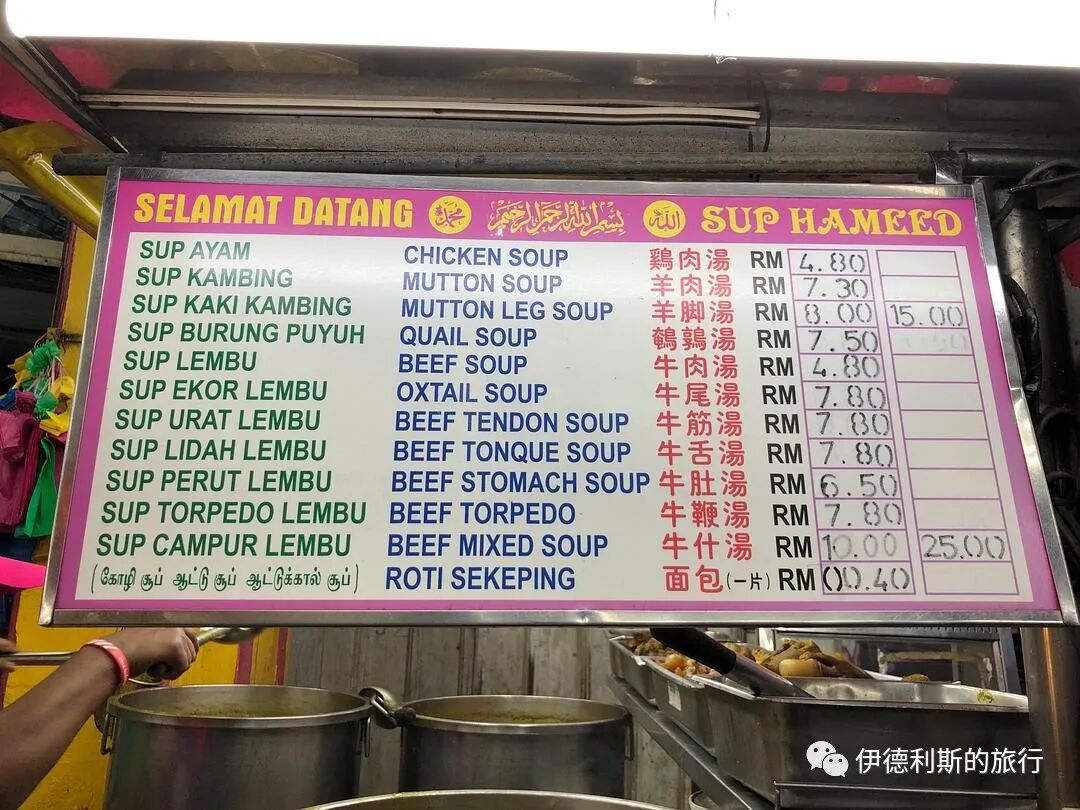
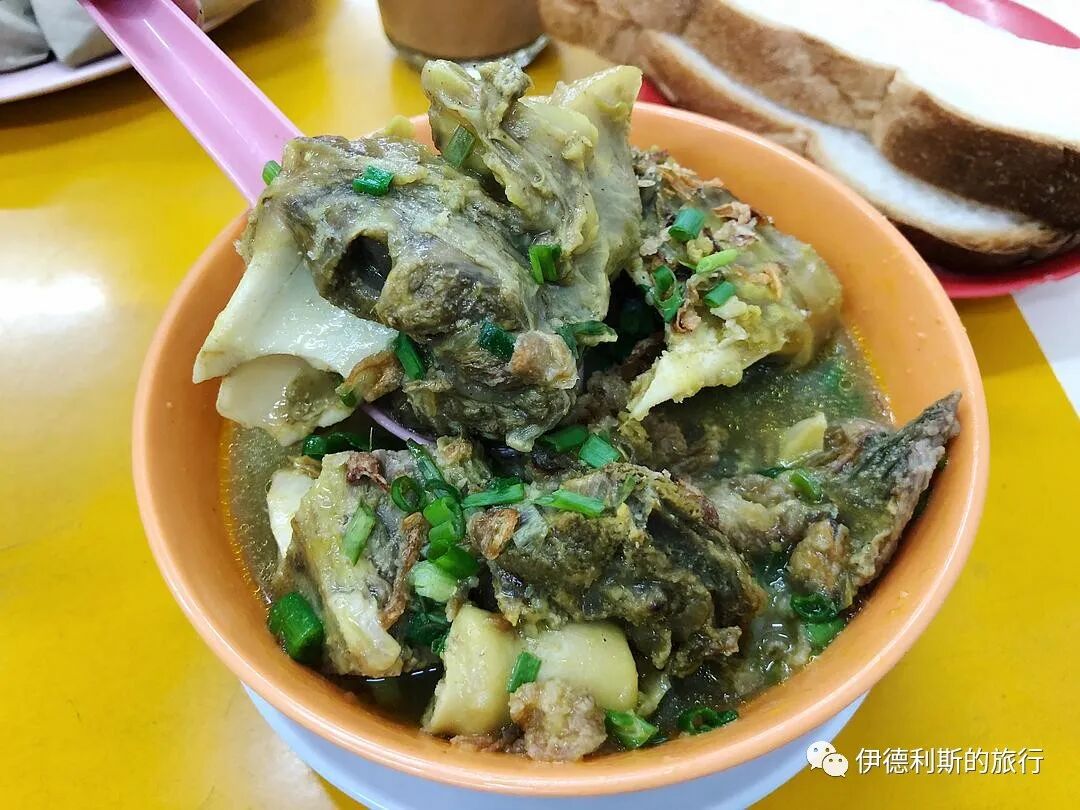
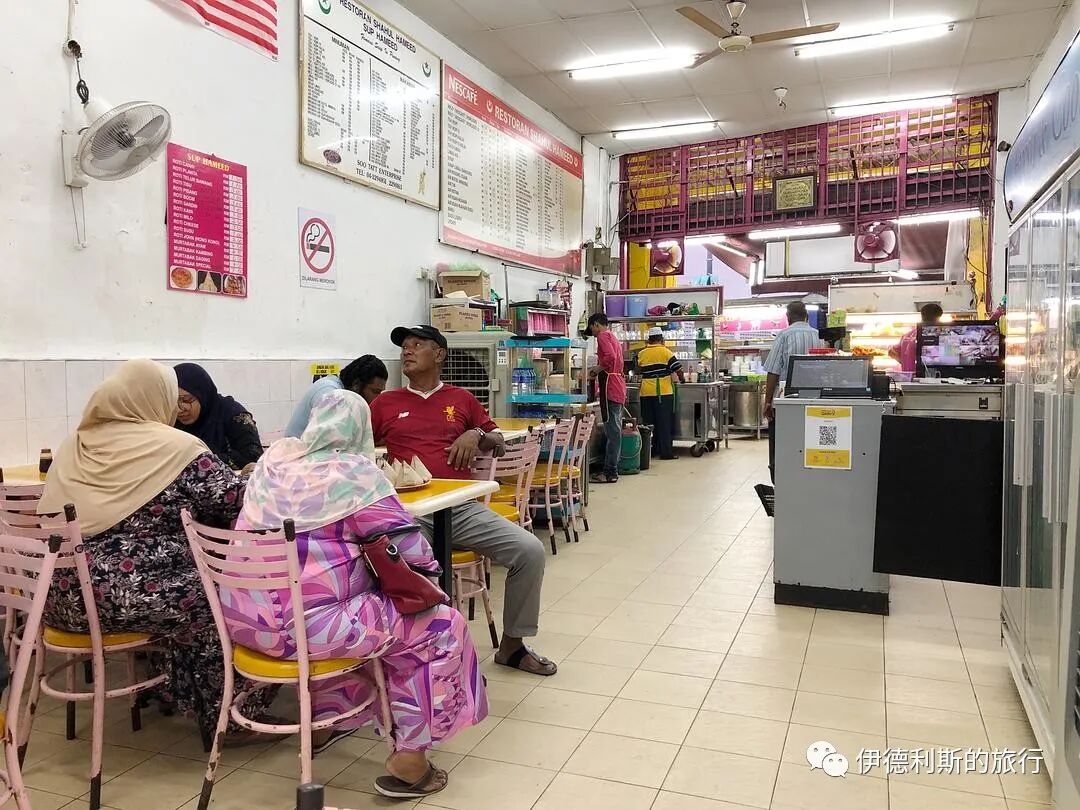
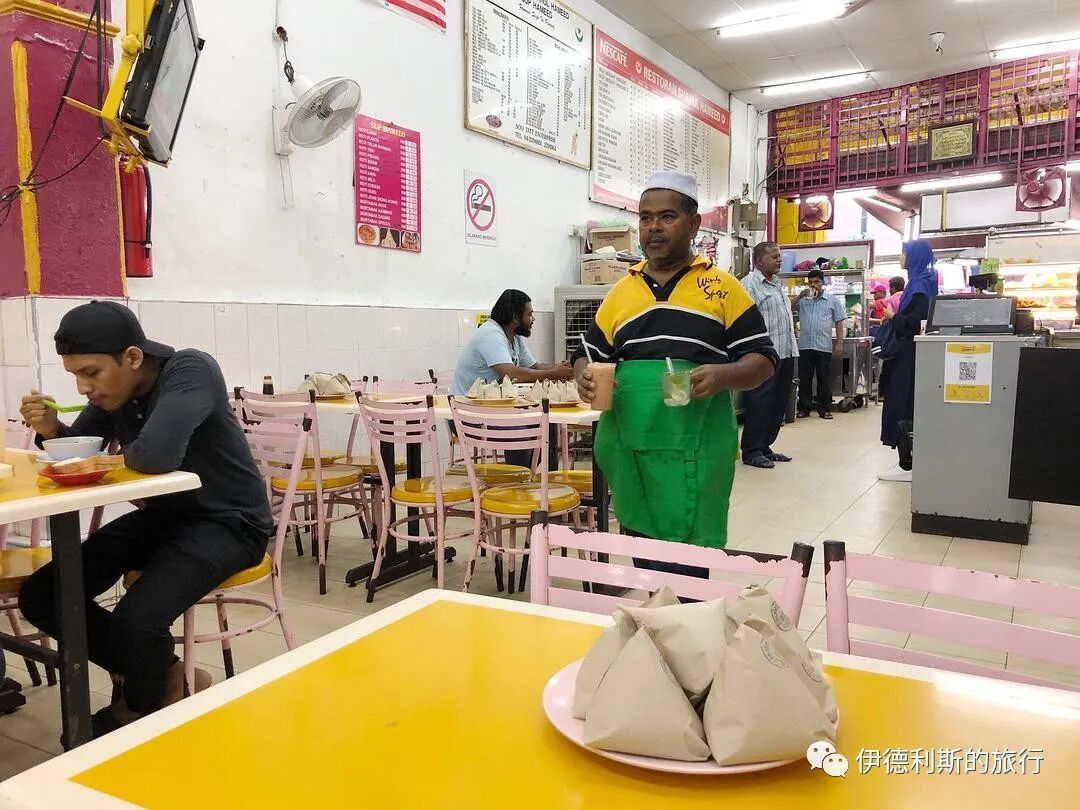
I drank the Southeast Asian Indian version of oxtail soup (sup ekor lembu) and lamb trotter soup (sup kaki kambing) at the Mamak restaurant Sup Hameed in George Town, Penang.
Mamak mutton soup (sup kambing Mamak) is a signature broth from the Tamil Muslim community in South India living in Malaysia. The soup is a thick, yellowish, and oily broth packed with many different spices. It is usually eaten with white bread (roti sekeping).
Roti canai flatbread at a Mamak stall
Beyond mamak restaurants, Tamil Muslims in Penang mostly run street-side mamak stalls for snacks. I ate roti canai flatbread and roti bakar toast at one of these stalls called Roti Canai Transfer Road.
Roti canai is a signature dish of Tamil Muslims in Southeast Asia, likely originating from the South Indian parotta flatbread. Roti comes from the Sanskrit word for bread, while canai might come from the South Indian city of Chennai or the Malay word for spreading out dough (canai).
Roti canai is usually served with lentil curry (dal curry). I had mine with chicken, but you can also choose from other curries like fish, mutton, or chickpeas.
Roti canai from The Little Mamak.
This is toasted bread (roti bakar).
Indian fried noodles (mee goreng) at a mamak stall.
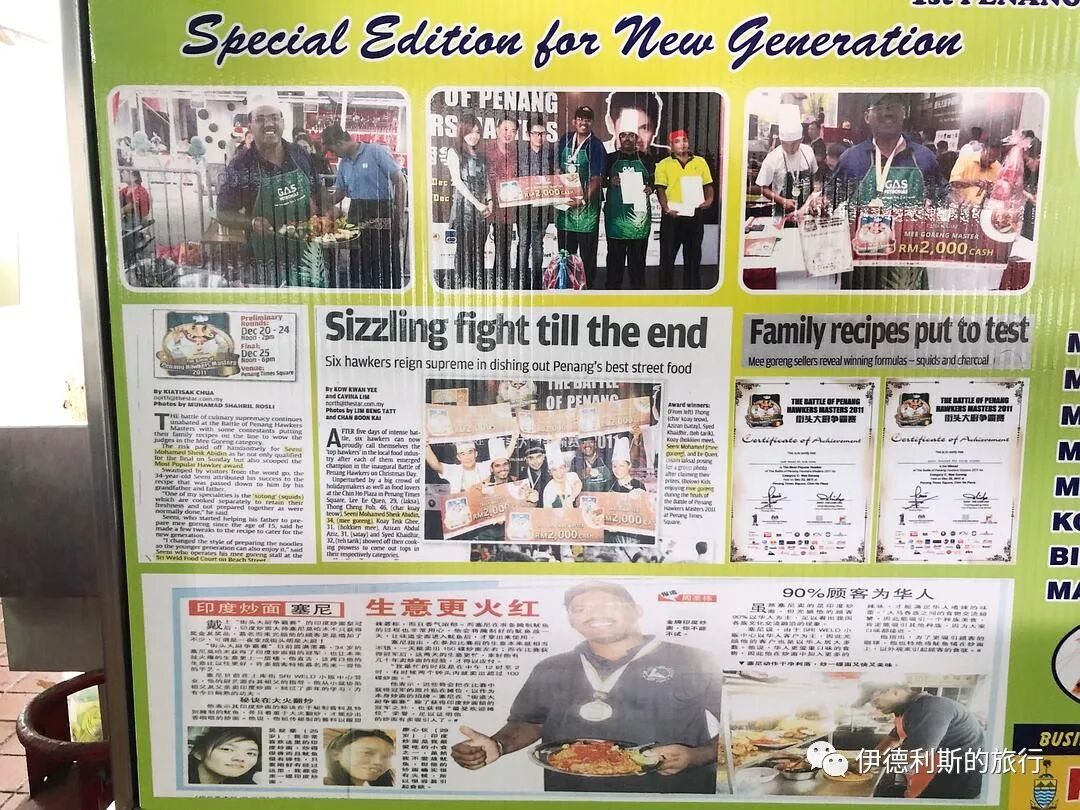
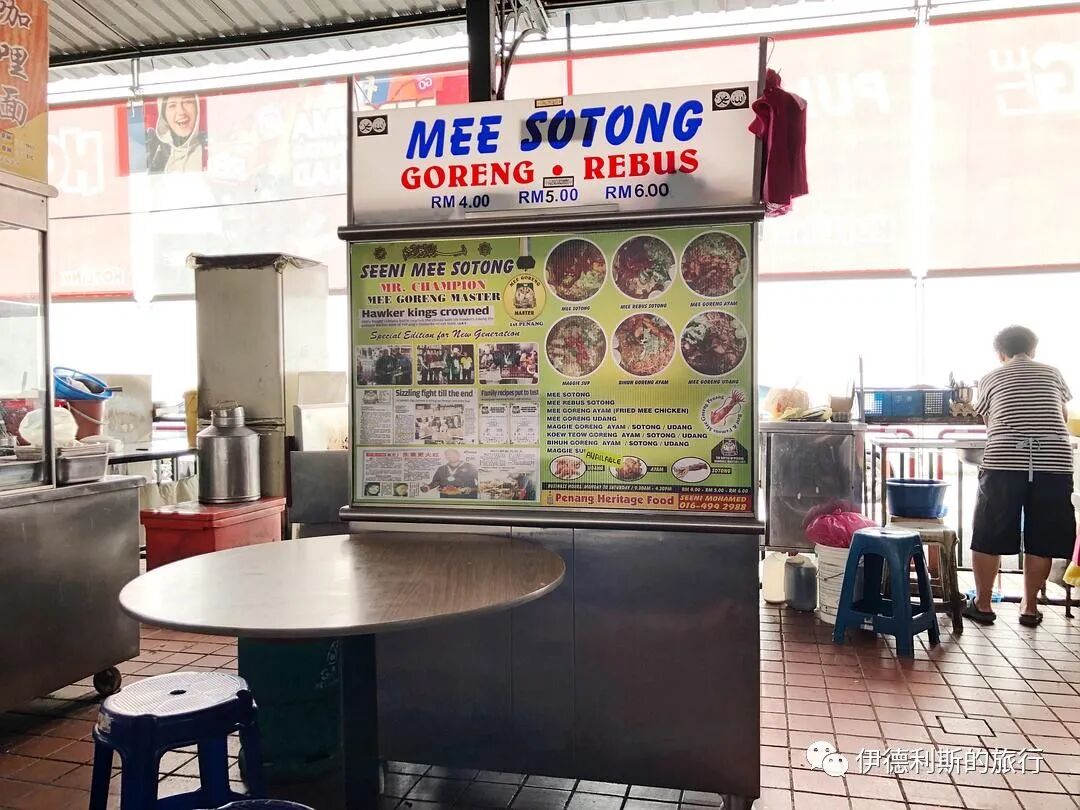
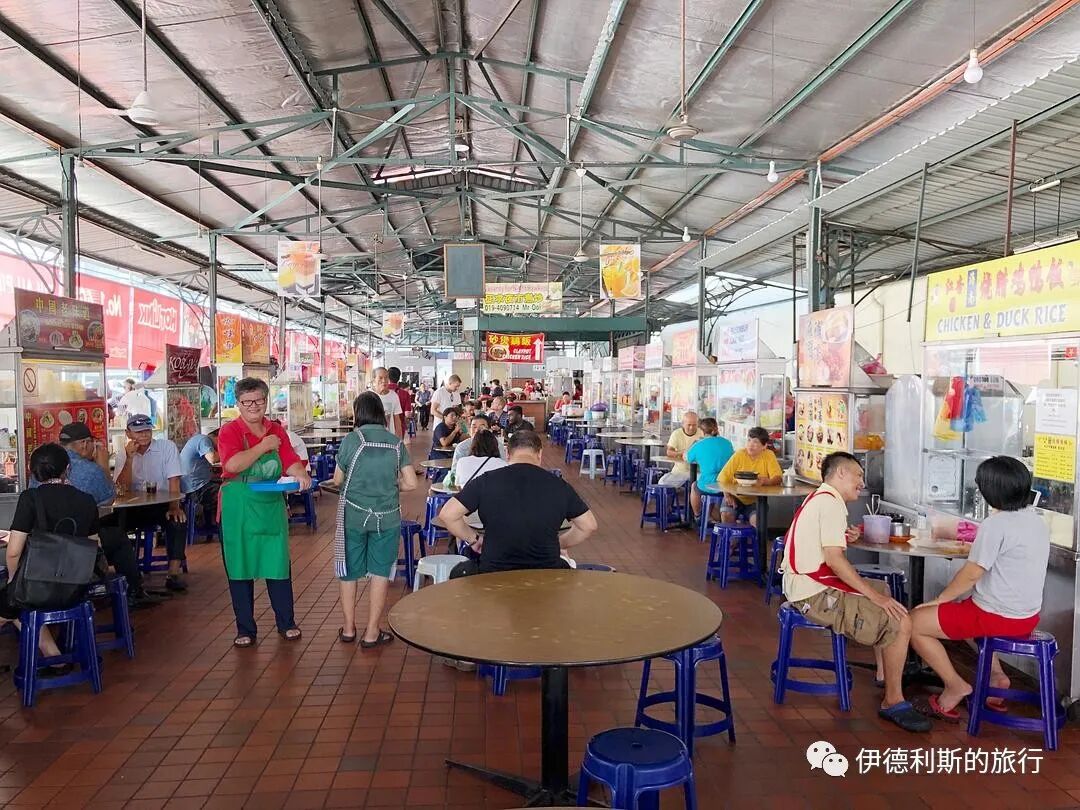
I ate Indian fried noodles (mee goreng) with squid (sotong) at a mamak stall in the Sri Weld Food Court.
Sri Weld Food Court is a food center mostly for Chinese food, and Seeni Mohamed Sheik Abidin's mamak stall is the only South Seas Indian stall there. Saini has helped his grandfather sell Indian stir-fried noodles (mee mamak) since he was a child. His noodles are famous for their sweet, sour, and spicy sauce, and he marinates the squid for a full day to make sure the flavor soaks in.
Stir-fried noodles (mee mamak) from The Little Mamak.
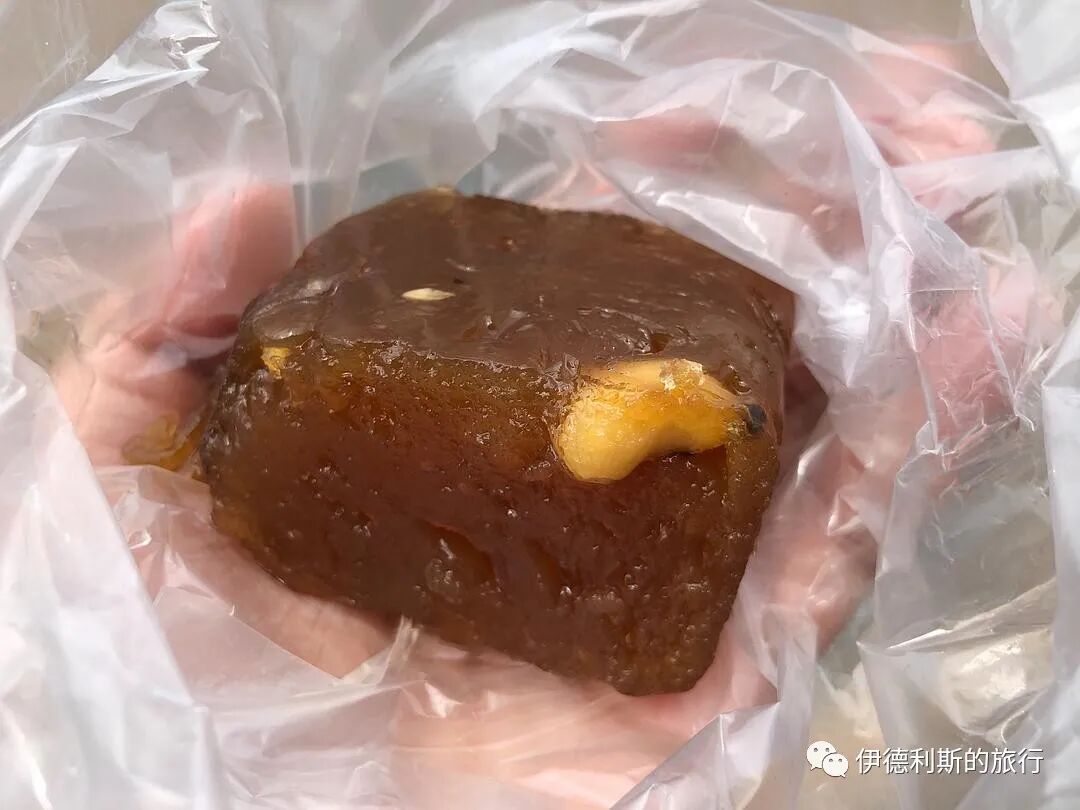
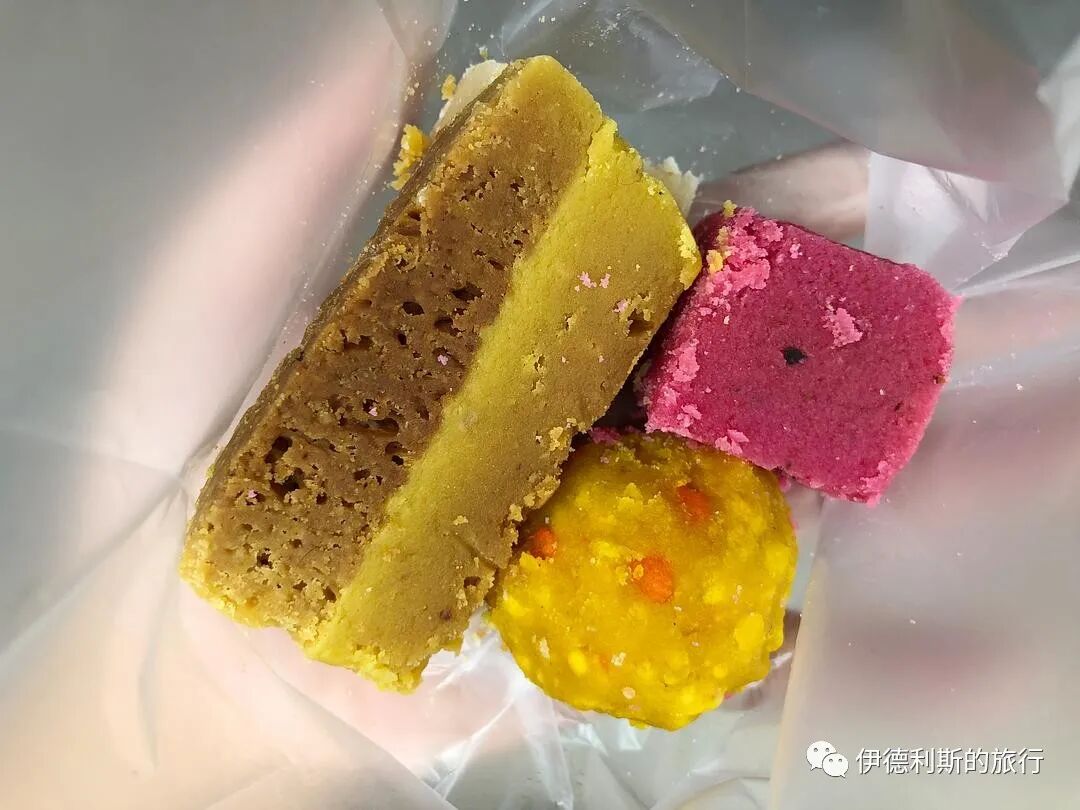
Penang Tamil desserts.
Desserts made by South Indian Tamil Muslims on the streets of Little India in George Town, Penang. One type is halva (halva) pastry, and the other yellow rectangular one is Mysore pak (mysore pak). This South Indian dessert is made with ghee, sugar syrup, and cardamom, and people usually eat it at weddings and festivals.
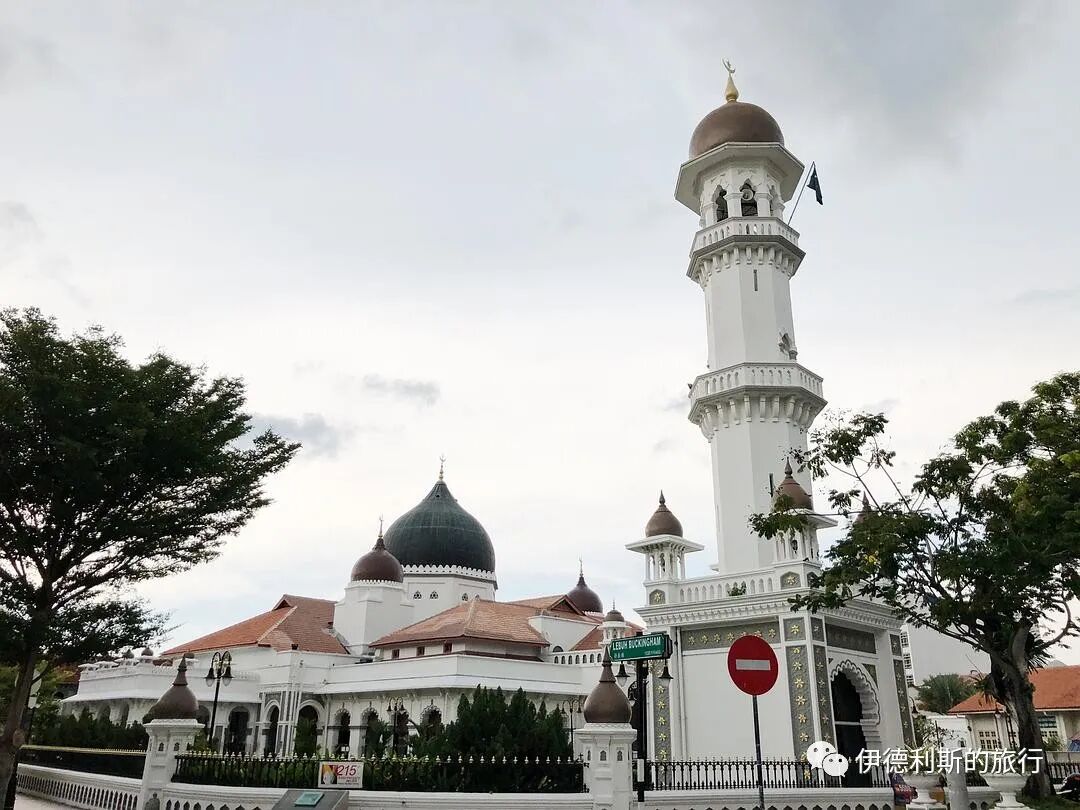
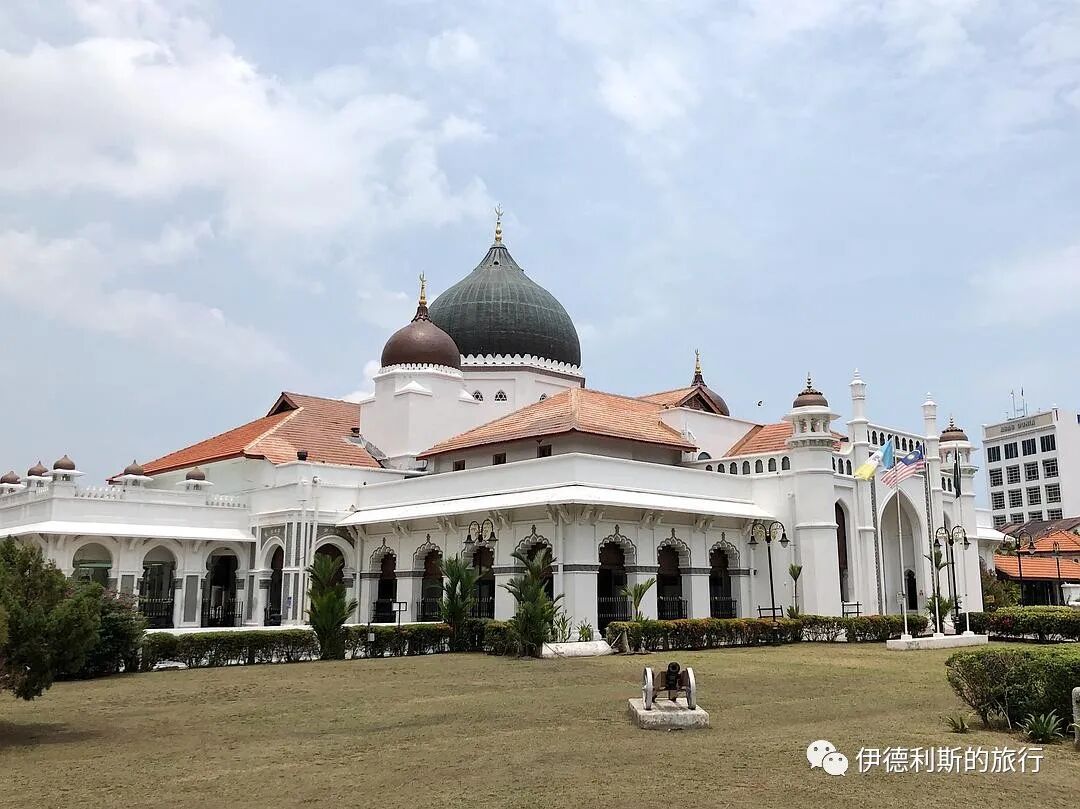
Kapitan Keling Mosque
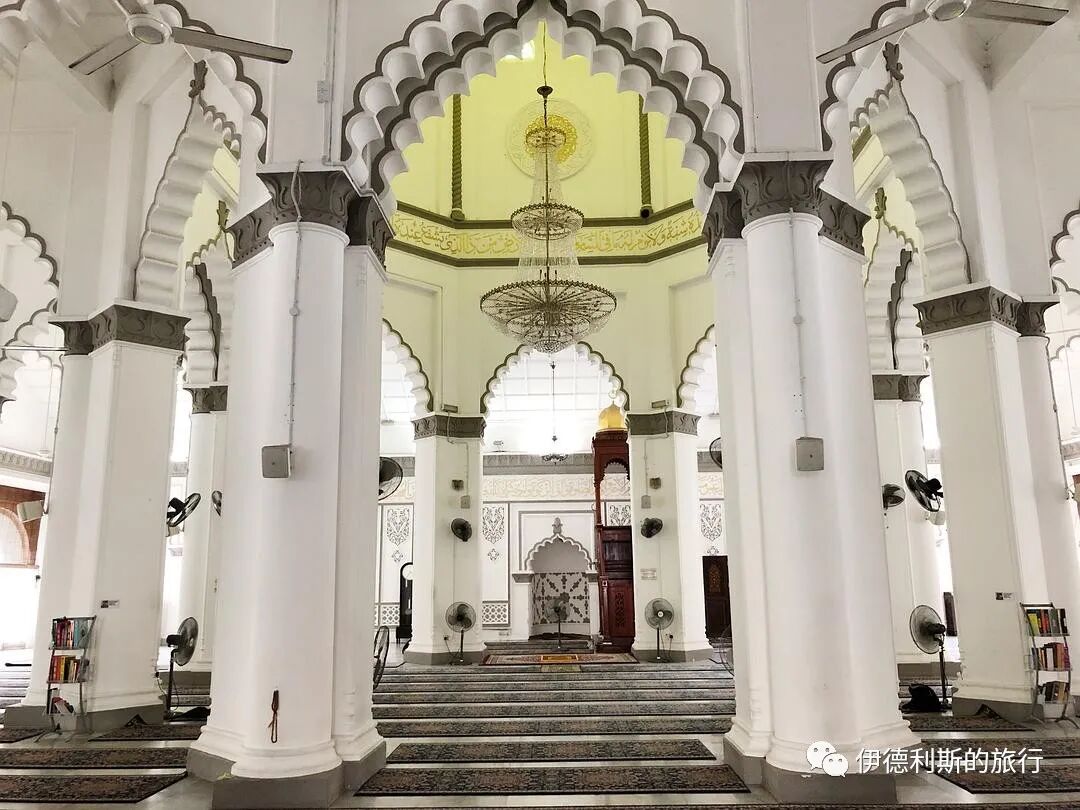
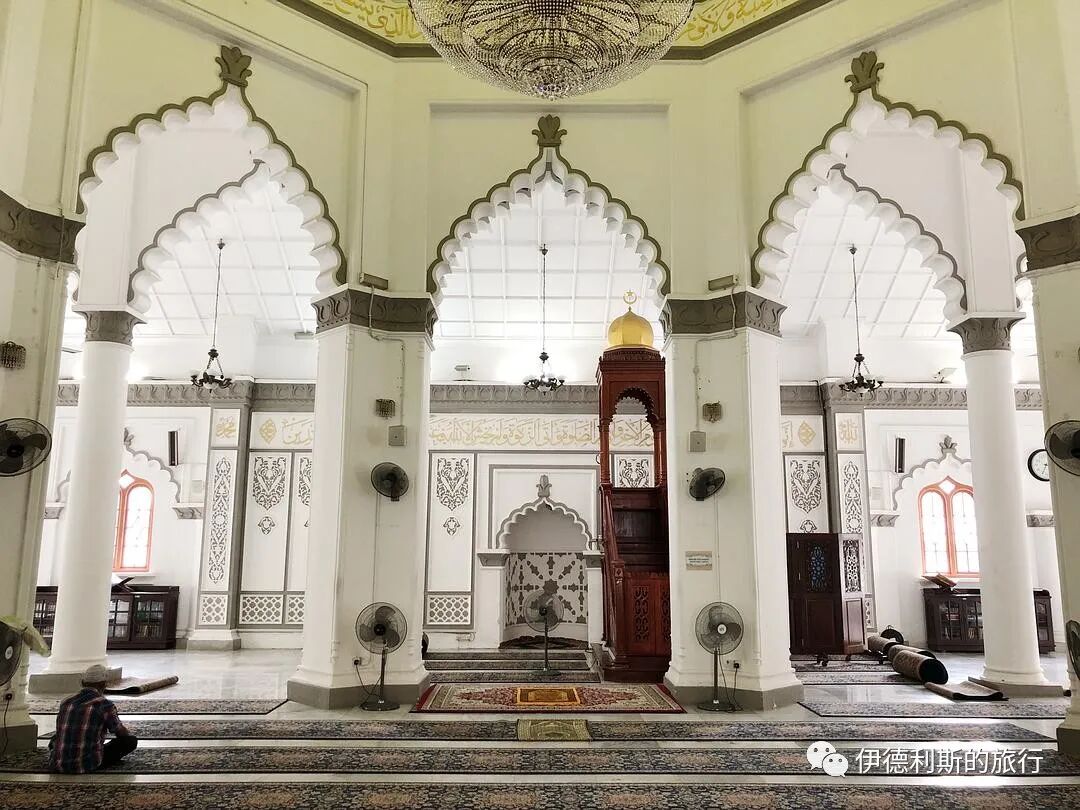
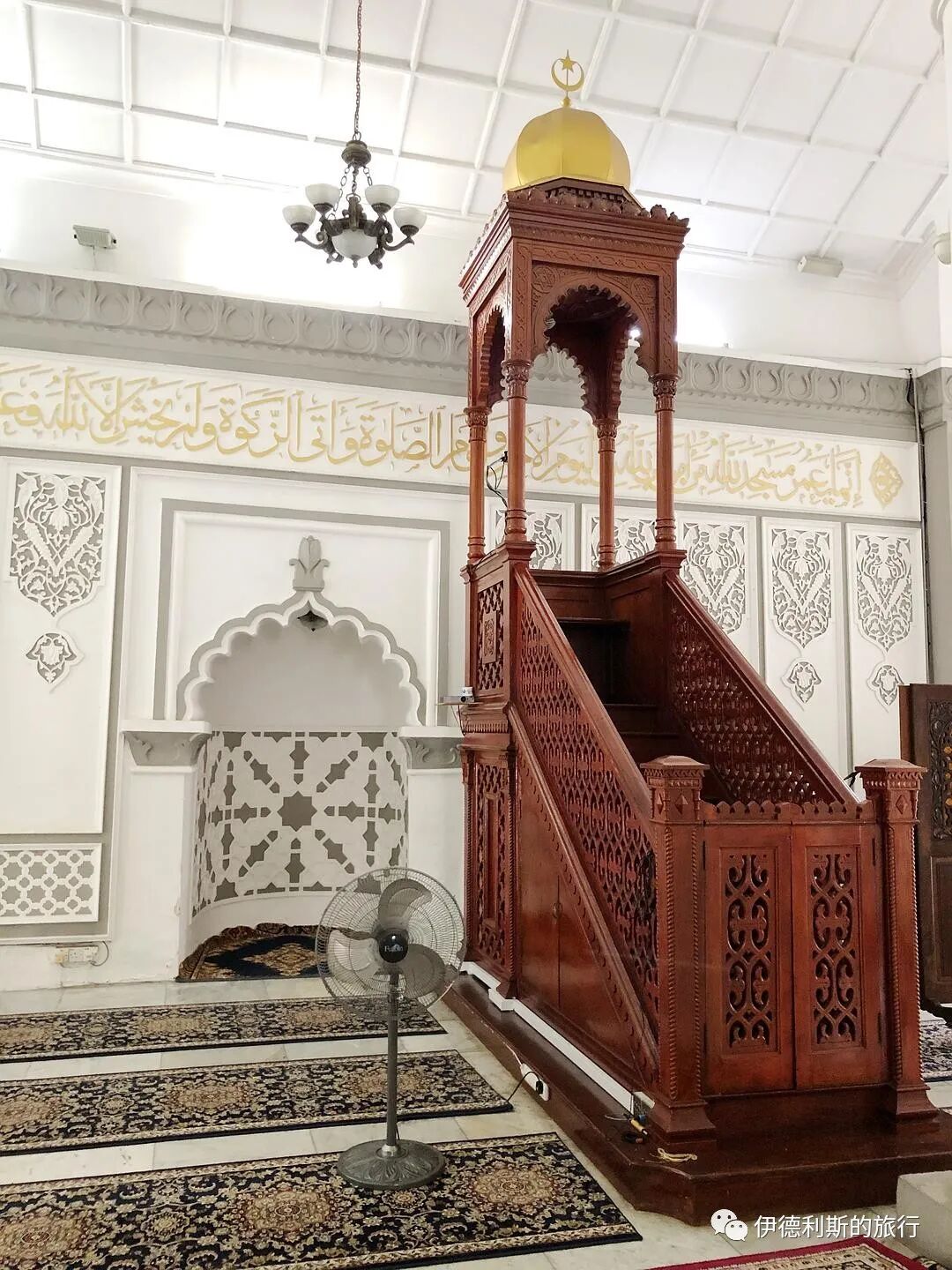
Kapitan Keling Mosque (Masjid Kapitan Keling) is a mosque built in 1801 by Indian Muslims in Penang. It sits in the heart of the Chulias Indian community in George Town, Penang.
Kapitan Keling was an official title given by European colonists to leaders who managed Indian communities in Southeast Asia. Keling was a historical term used in the Malay Archipelago for Indian people. It started as a neutral word but became derogatory after the 20th century. The first Kapitan Keling of Penang was named Cauder Mohideen. He was born around 1759 and came from the state of Tamil Nadu in the far south of India.
In 1795, he joined the first Kapitan Cina (Kapitan Cina) Koh Lay Huan and other important figures in Penang to form the first Penang Assessment Committee to set taxes and tax rates.
Shortly after Penang was founded in 1786, Indian Muslim soldiers serving the British East India Company set up a temporary place for namaz. As the number of Indian Muslims in Penang grew, the community asked the Kapitan Keling to lead the construction of a formal mosque.
In 1801, the Penang government approved the Kapitan Keling's request and granted an 18-acre plot of land to build a mosque, a Muslim cemetery, and shops to collect rent. The Kapitan Keling and other Indian Muslims in Penang brought in workers and stone from India to build the first Penang Indian mosque, naming it after the Kapitan Keling.
The original Kapitan Keling Mosque was a single-story rectangular building with a minaret at each of its four corners. At that time, the mosque was surrounded by shops, and you could only enter through a narrow passageway. Large-scale urban construction around the mosque did not happen until 1905, when covered walkways (qilou) replaced the original simple houses and new roads were opened.
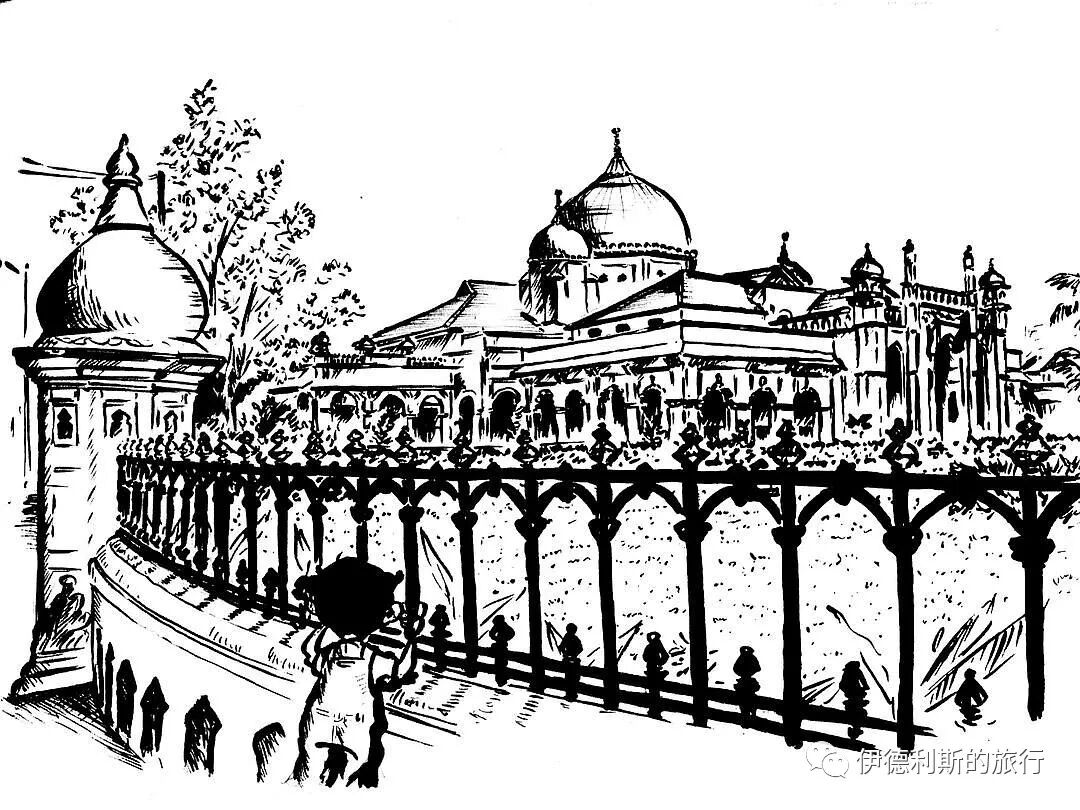
In 1910, architect N. A. Neubronner led an expansion of the mosque, adding Mughal-style domes and a large minaret. After the expansion was finished in 1916, the mosque became an example of Indo-Saracenic Revival architecture. The mosque was finally expanded into its current form in the 1930s. The main hall was made twice as high, and the ventilation system was improved.
Kapitan Keling Mosque in The Little Mamak.
Nagore shrine (gongbei).
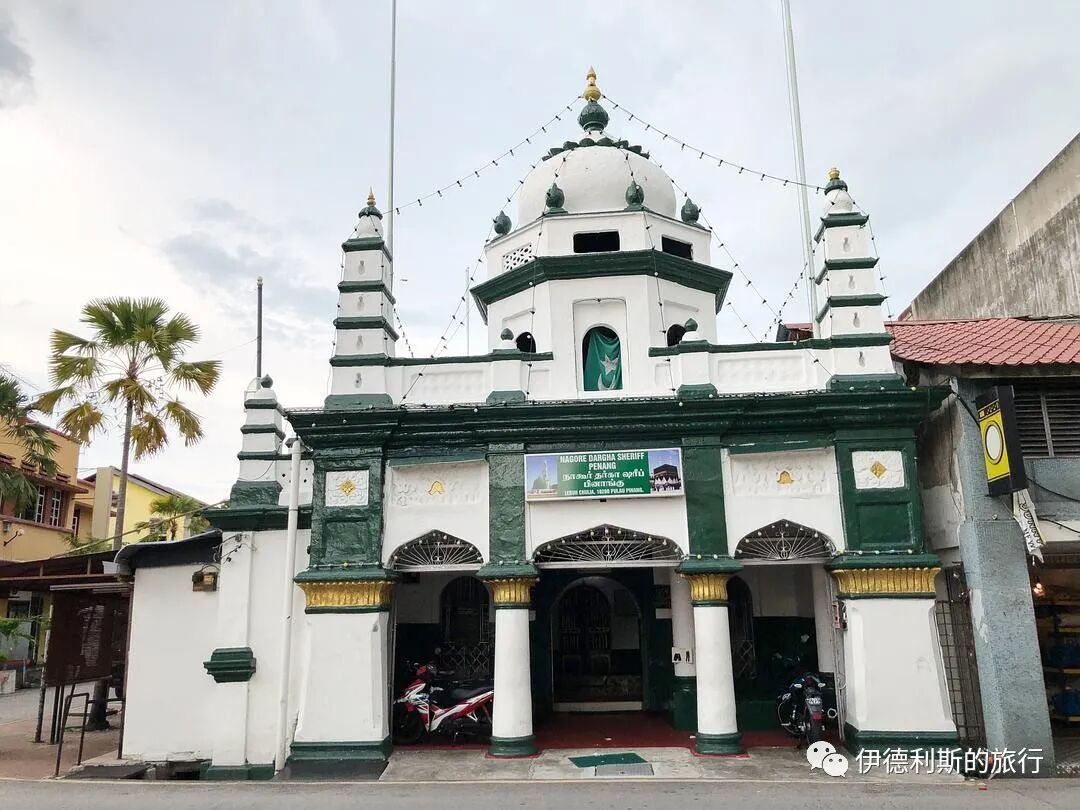
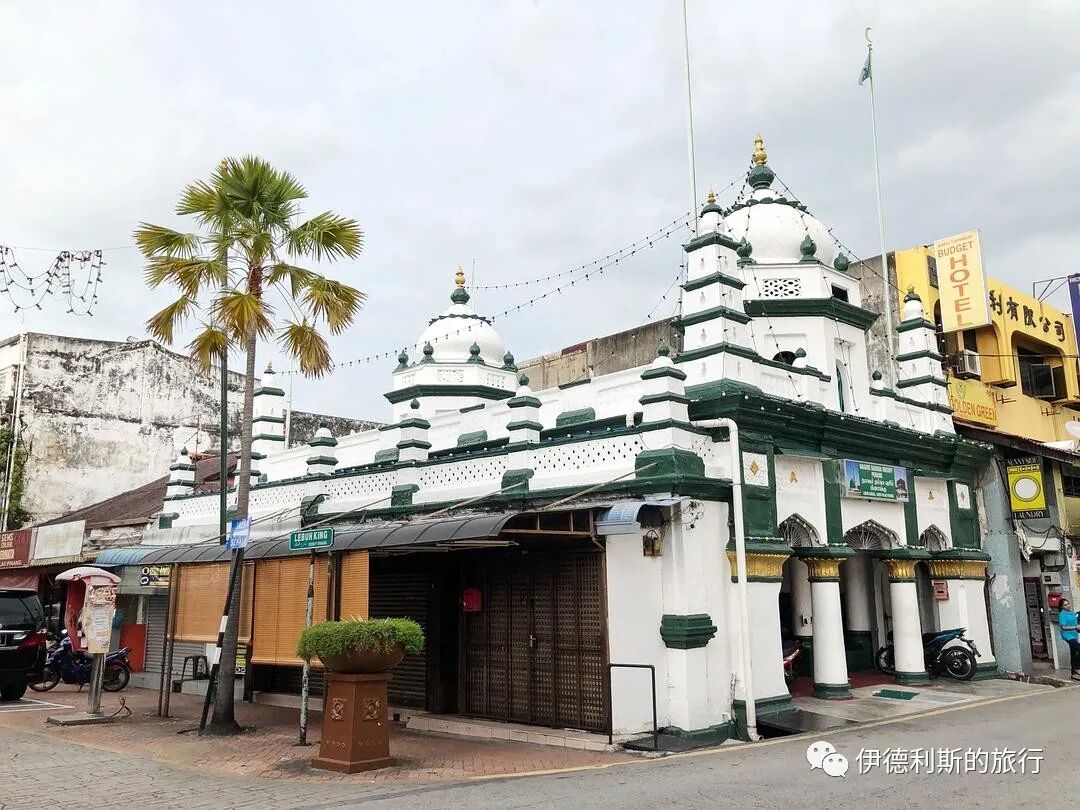
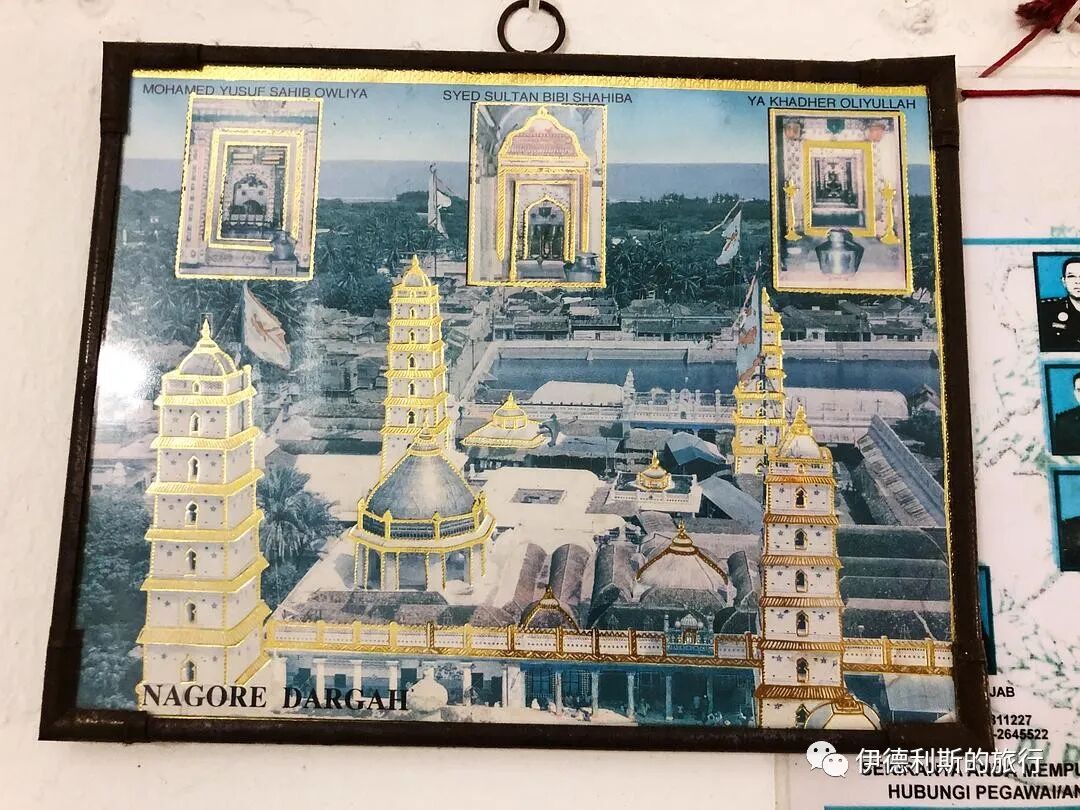
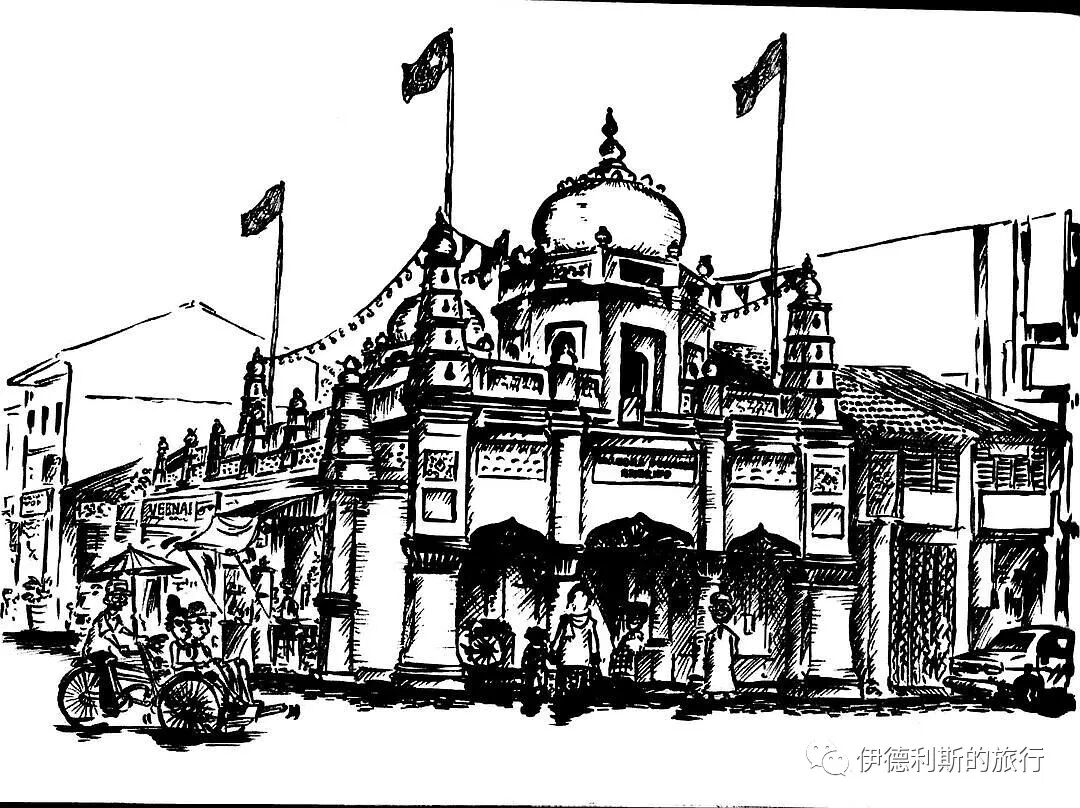
Nagore Dargha Sheriff, or Nagore shrine (gongbei), was built in the early 19th century at the same time as Kapitan Keling Mosque. It is the most important Sufi shrine (gongbei) for Tamil Muslims in Penang.
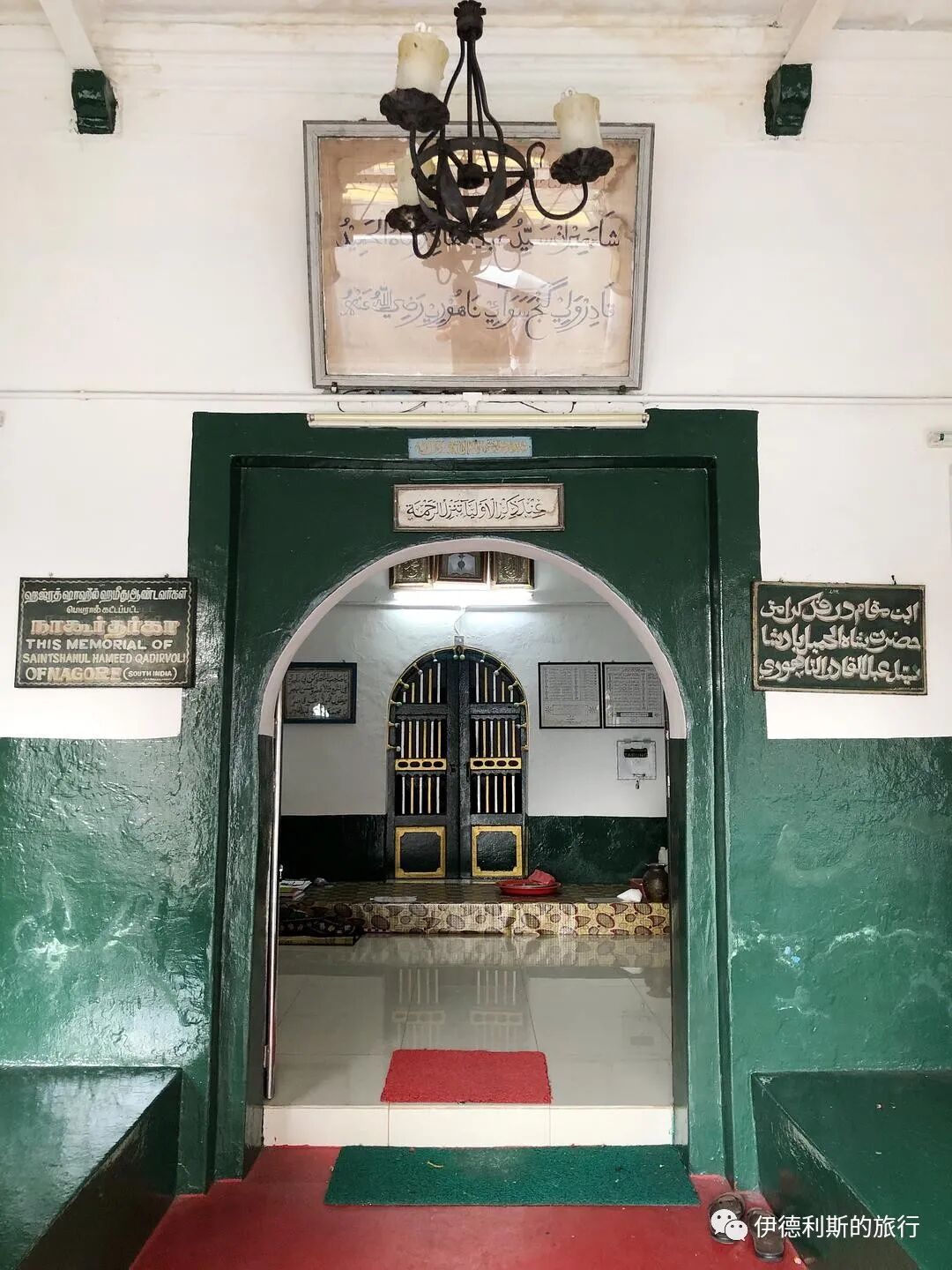
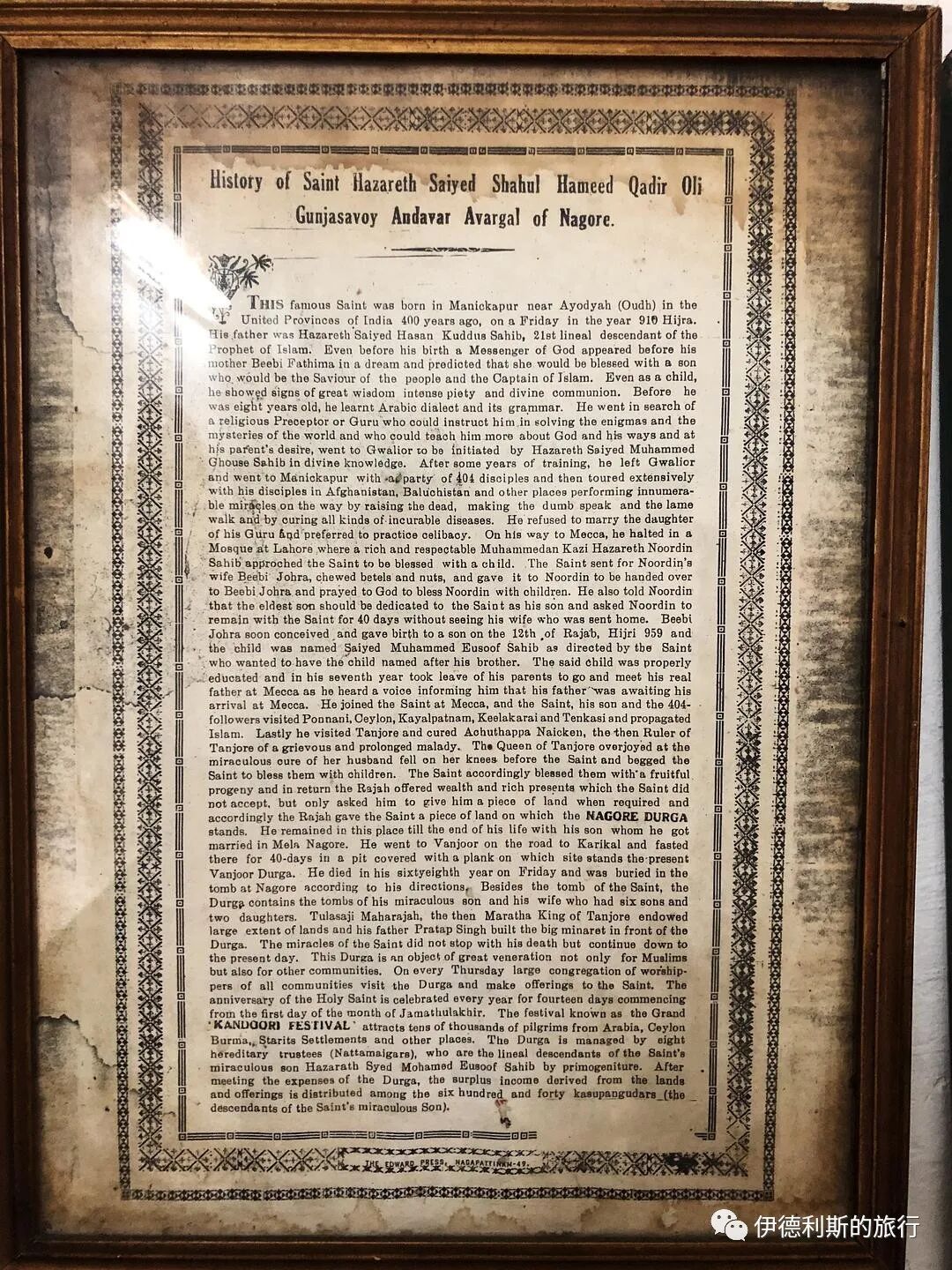
The Nagore shrine (gongbei) was built to honor Syed Shahul Hamid, a famous 16th-century Sufi saint from South India. Research shows Shahul Hamid was born in Uttar Pradesh, India, in 1504. He arrived in the town of Nagore in the southeastern state of Tamil Nadu around 1533 and passed away there in 1570. Legend says he performed many miracles in Nagore and cured King Achyuta Deva Raya of the 16th-century Vijayanagara Empire from suffering caused by sorcery. To thank Shahul Hamid, the king gifted him 81 hectares of land, and Shahul Hamid was buried there after he died. To honor Shahul Hamid, people built a Sufi shrine (gongbei) over his tomb.
In the 18th century, King Pratap Singh of the local Thanjavur Maratha Kingdom prayed at the shrine for a son. After his wish came true, the king built five towers for the shrine, and it gradually became an important Sufi center for Tamil Muslims.
After Tamil Muslims migrated to Penang and Singapore in the 19th century, they built a shrine (gongbei) in each city to honor their ancestors. Both buildings were modeled after the Nagore Dargah shrine in South India.
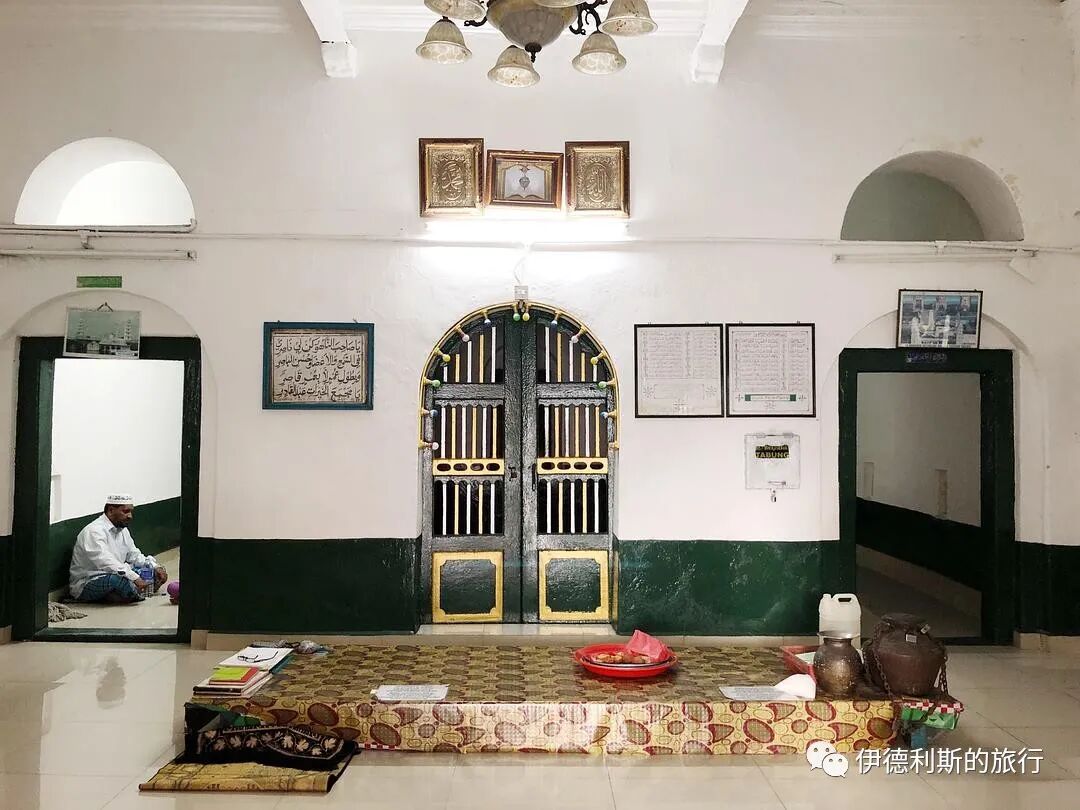
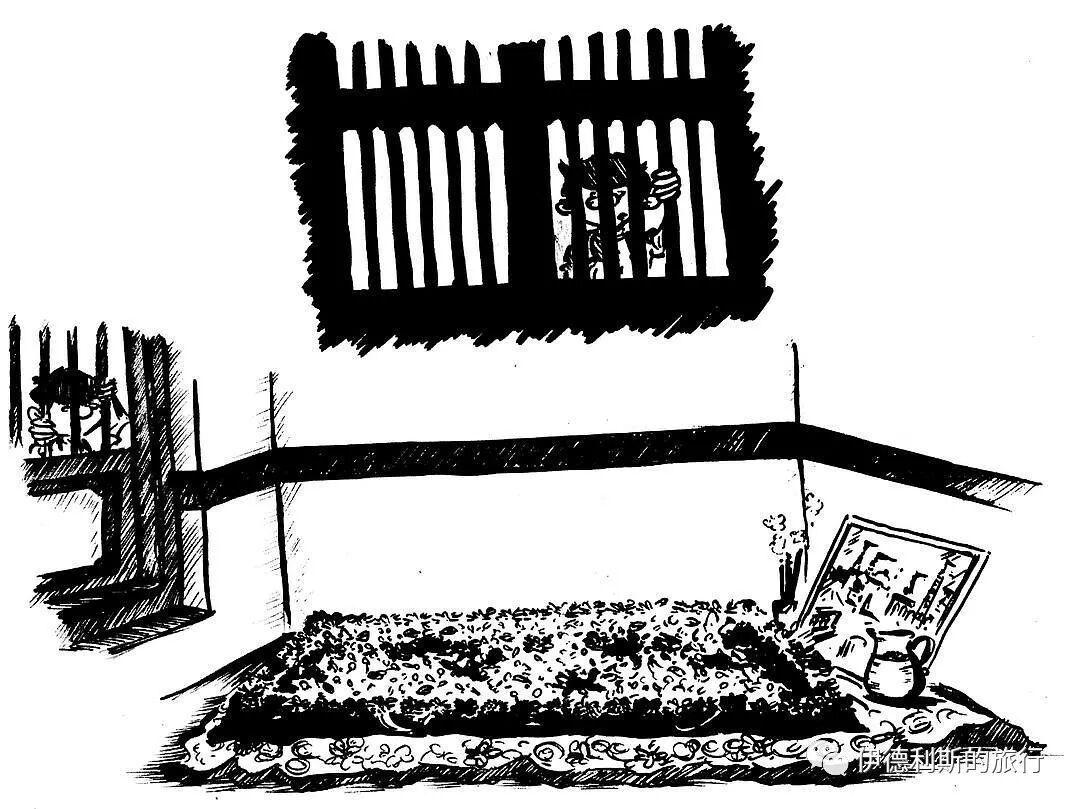
The man on the left in the picture below is reciting scripture for several children.
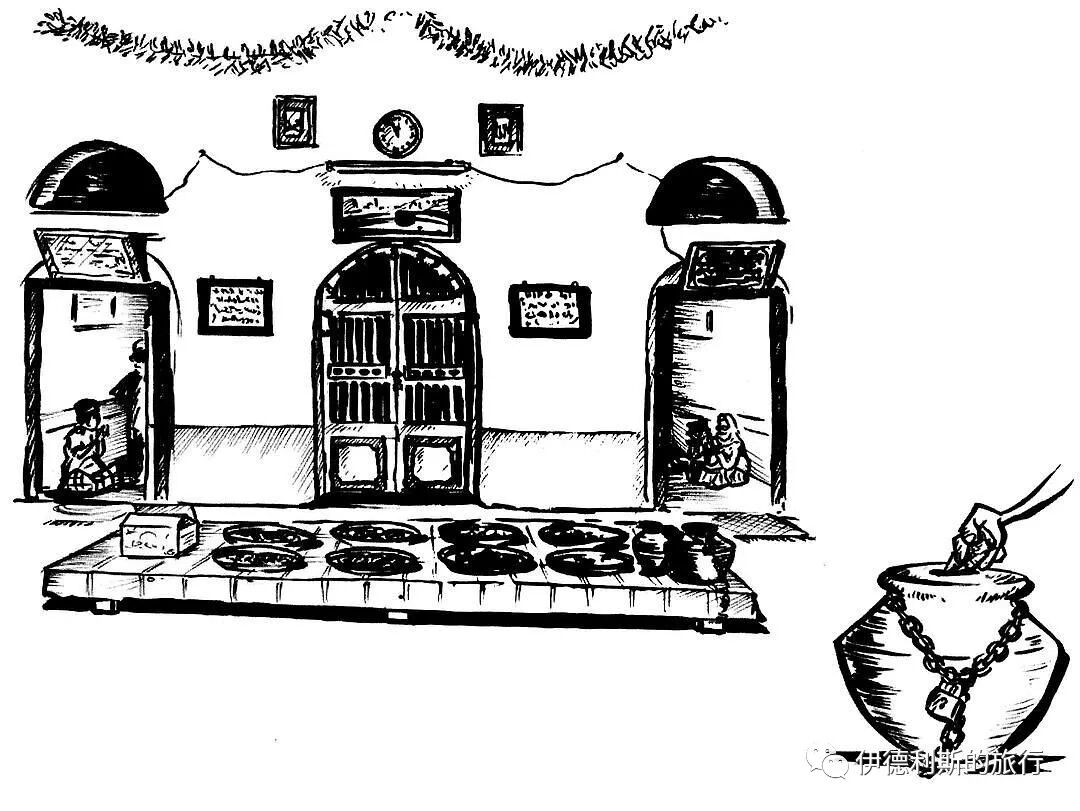
The picture below shows a donation box (nieti guan).
A biography of the ancestor.
A photo of a shrine (gongbei) in South India.
Nagore Dargha Sheriff in The Little Mamak
23 Love Lane Heritage Hotel
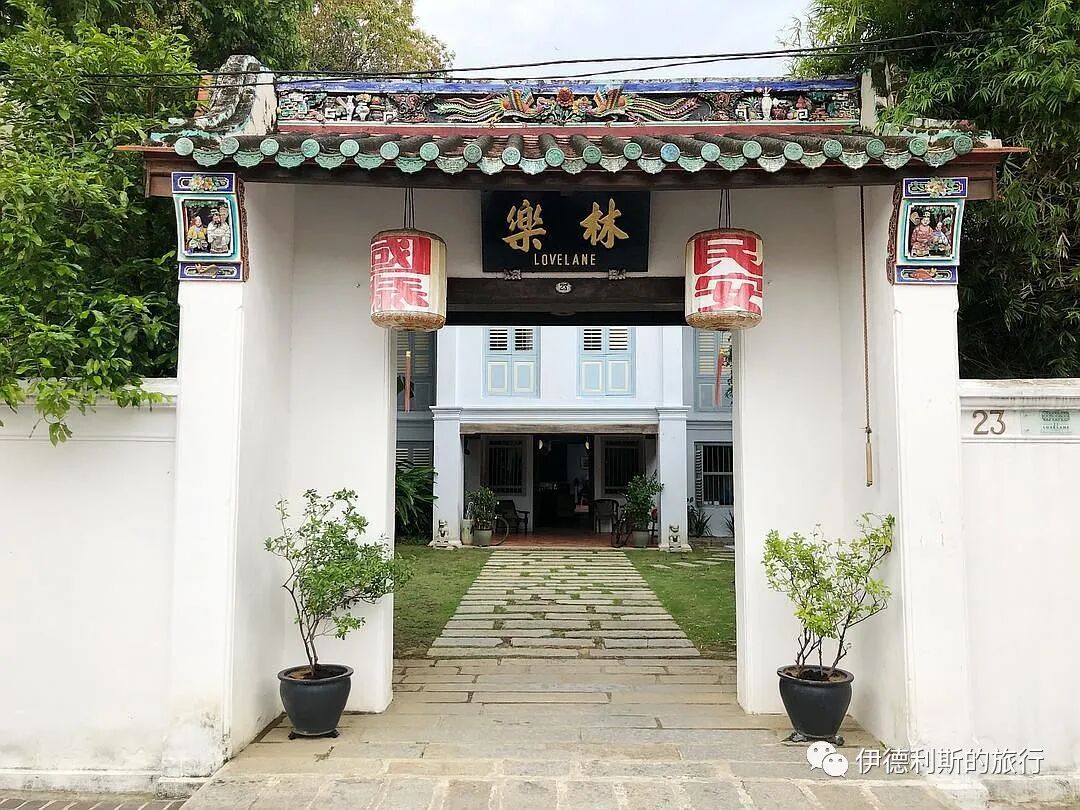
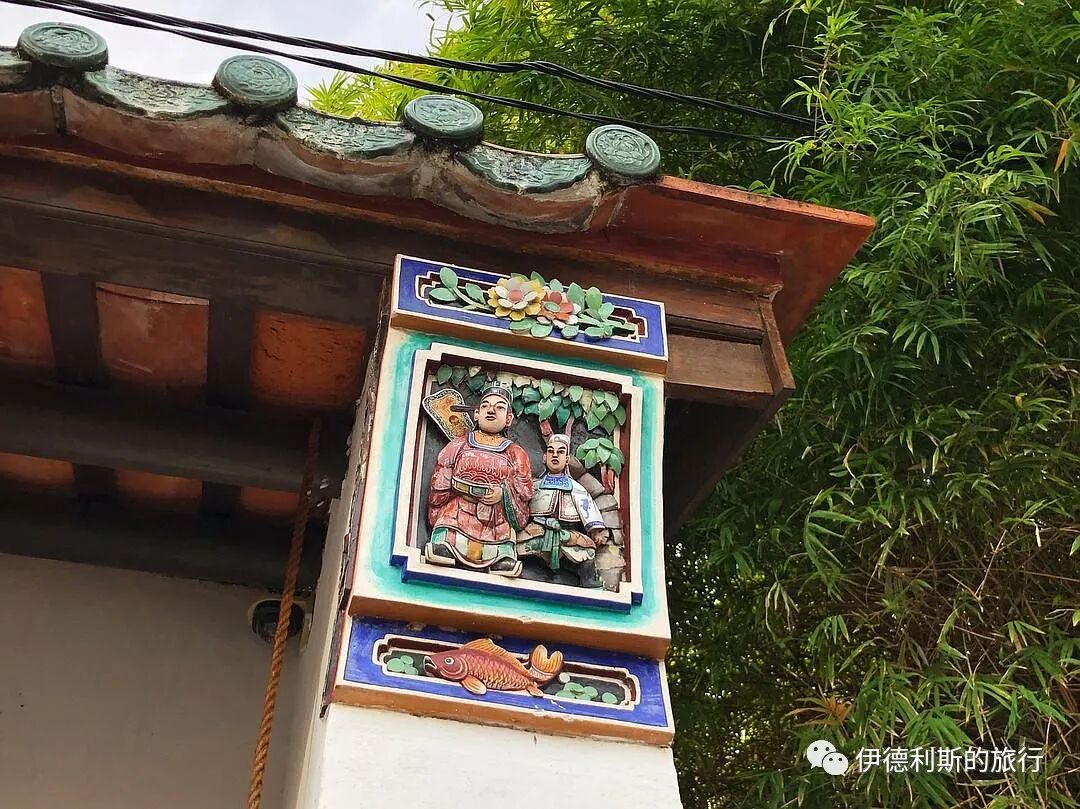
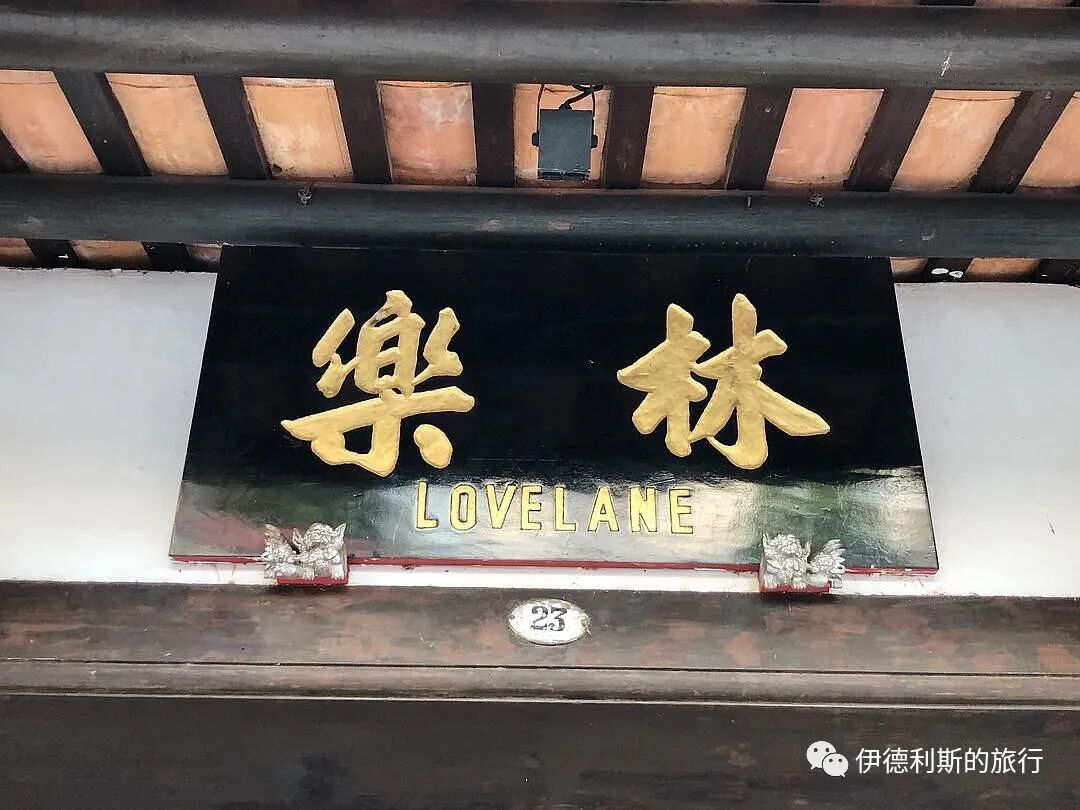
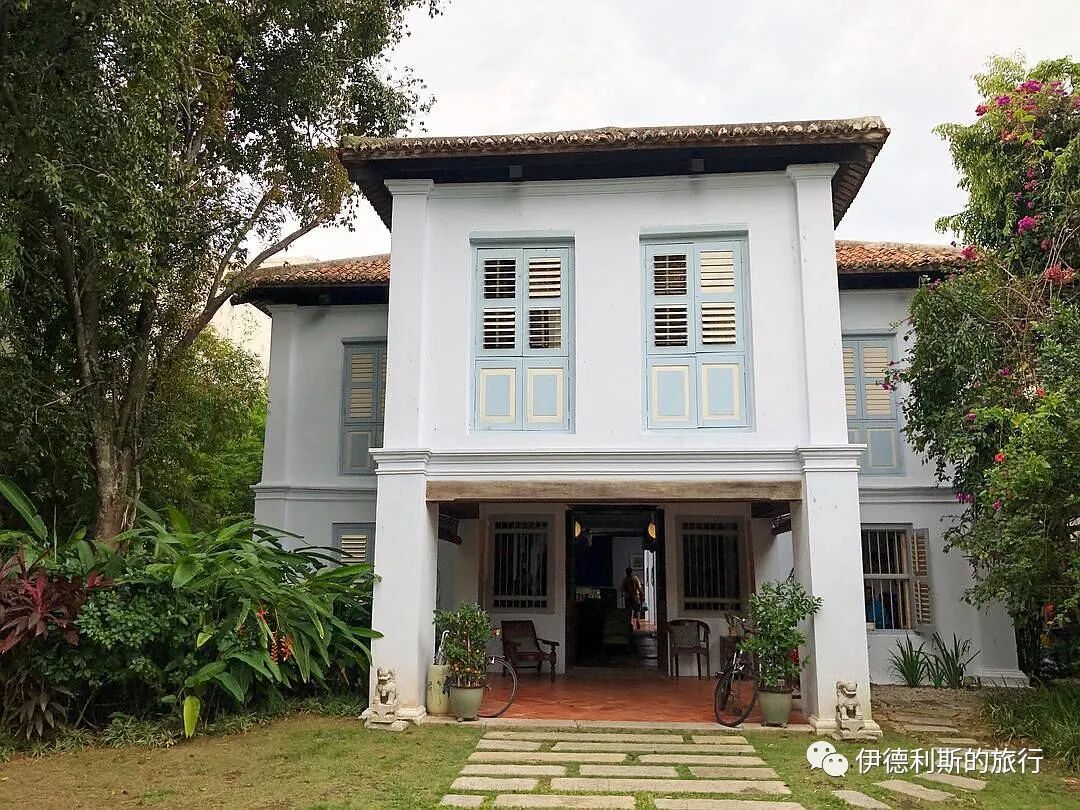
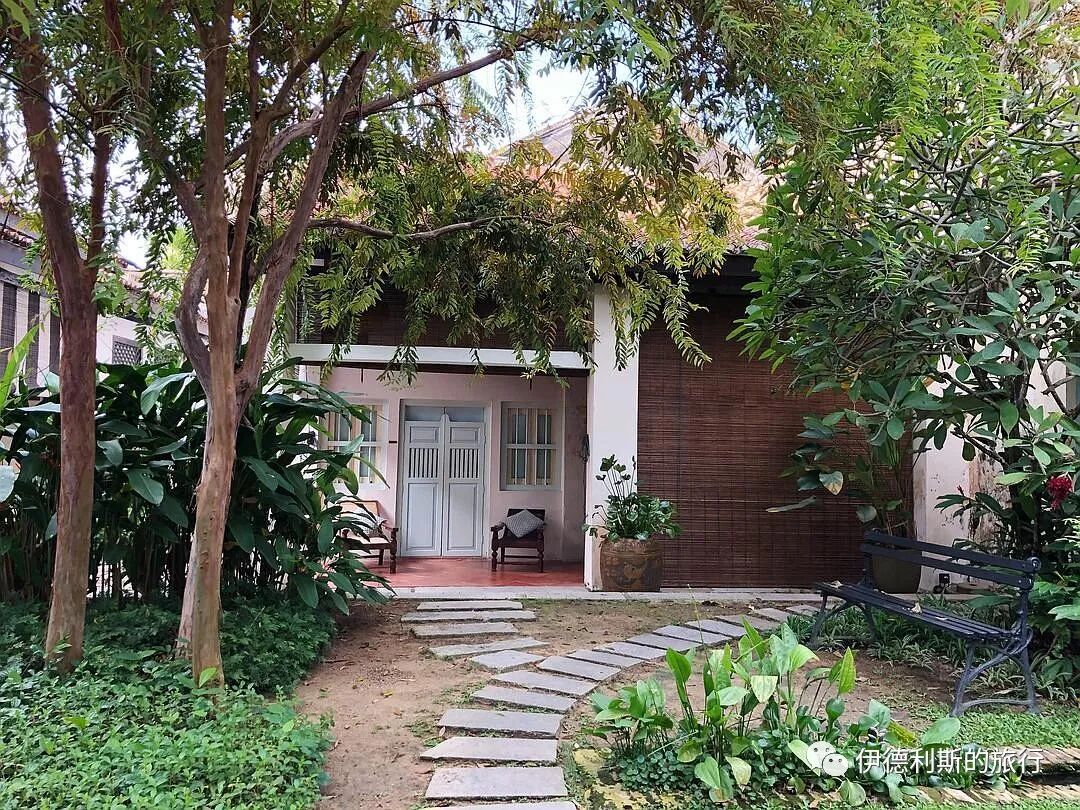
Penang has many heritage hotels converted from old mansions. The one we stayed at, 23 Love Lane, is a very interesting example. The 23 Love Lane mansion was built in the 1790s. British people, Indian Muslims, and Chinese people have all been its owners. Because of this, the building has a diverse style that mixes Eastern and Western influences, acting as a miniature version of Penang's cultural melting pot over the last century.
In the 1860s, this place was an Anglo-Indian bungalow. The Straits Eclectic style building was built between the late 19th and early 20th centuries, followed by the Jack Roof Annex villa in the 1920s. Around the 1930s, an Indian Shop House was added to the courtyard. After the 1990s, the mansion became the budget-friendly Oasis Hotel, and in 2011, it turned into the current heritage hotel, The Edison.
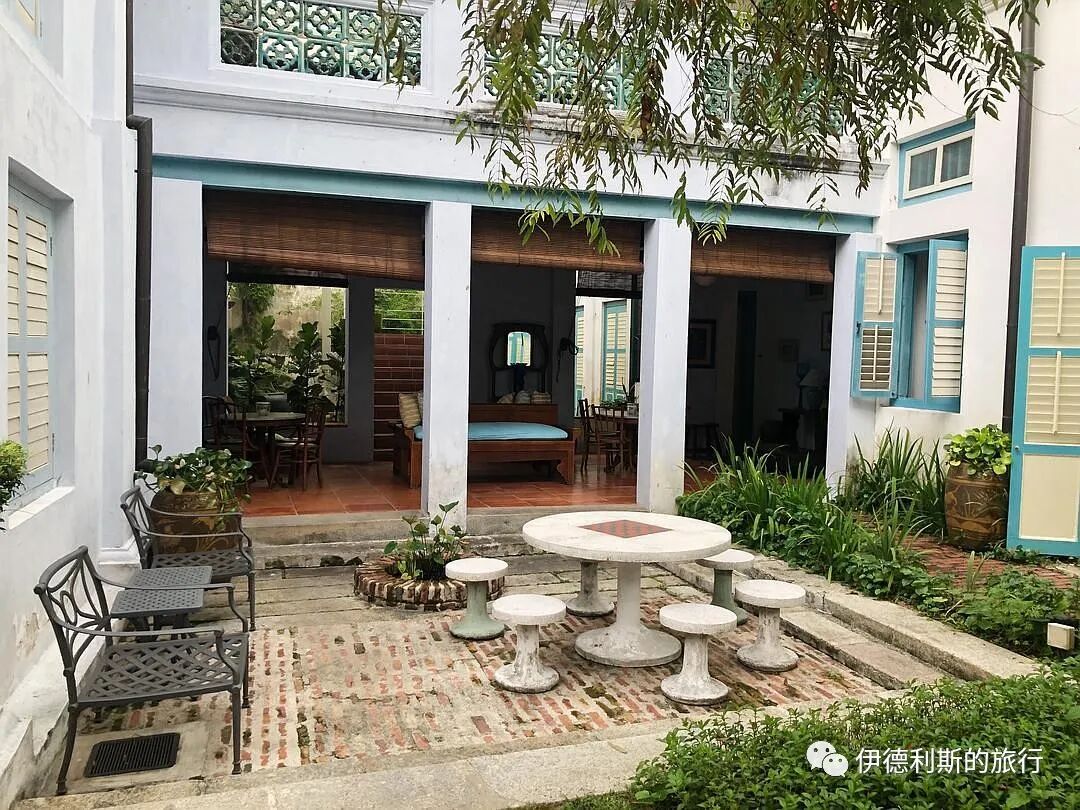
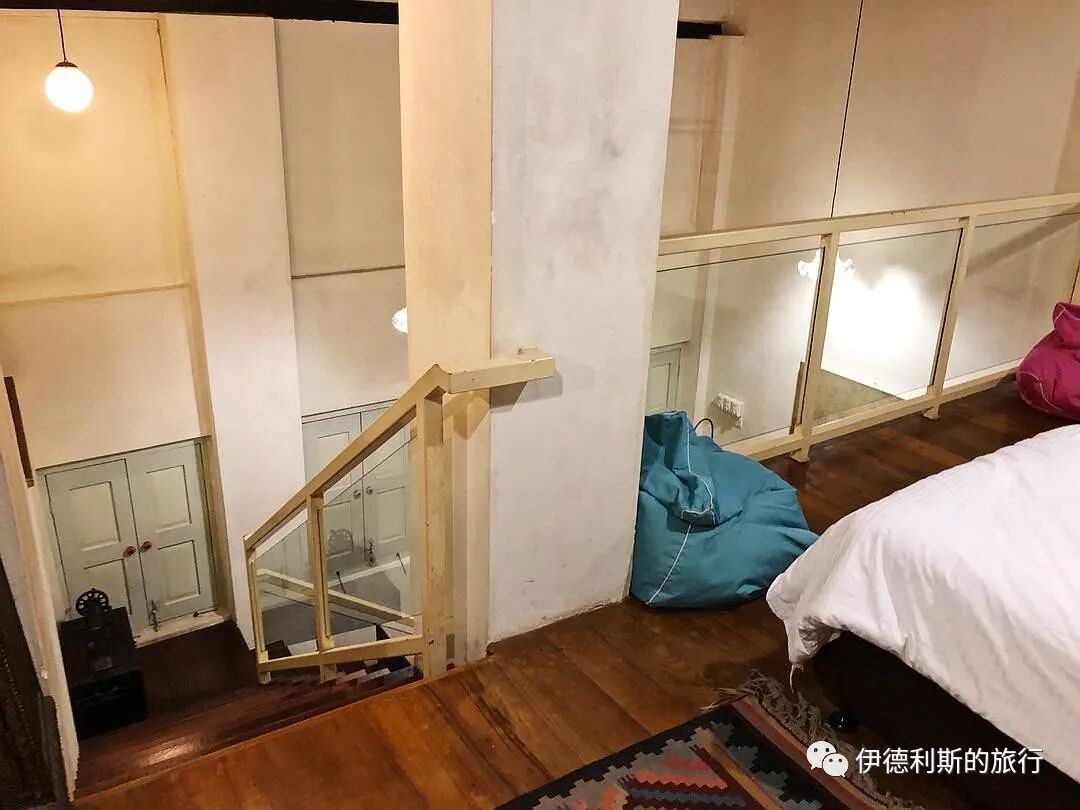
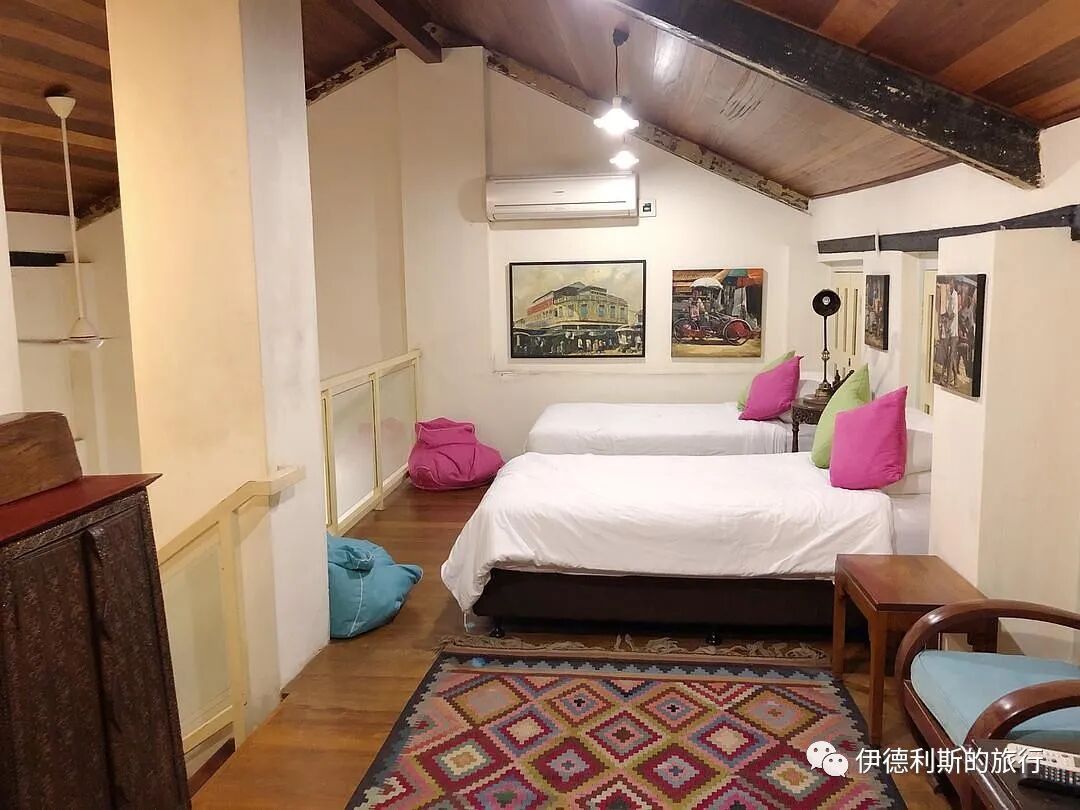
We stayed in a pre-war Indian Shop House this time. This place used to be the shop and home of a Tamil Muslim merchant family. Now, it is a two-story duplex vintage suite with bathrooms on both levels, making it a great spot for trips with family and friends. view all
Summary: Penang — Tamil Muslim Mosques, Food and History is presented here as a firsthand travel account in clear English, beginning with this scene: Penang, also known as Penang Island, is an island in the northwest of Malaysia. In 1786, the Sultanate of Kedah ceded Penang Island to the British East India Company. The account keeps its focus on Penang Travel, Tamil Muslims, Muslim Heritage while preserving the names, places, food, and historical details from the Chinese source.
Penang, also known as Penang Island, is an island in the northwest of Malaysia. In 1786, the Sultanate of Kedah ceded Penang Island to the British East India Company. George Town was then built on the island and became the first British base in Southeast Asia.
After George Town was built, the British East India Company kept encouraging people to move there. After the 19th century, the Chinese, Malays, Indians, Peranakan (local-born Chinese), Eurasians, and Siamese living in Penang all formed their own communities. Europeans held a dominant position in Penang and ran shipping companies. Peranakan people and Eurasians worked as lawyers, engineers, architects, and clerks. Most new Chinese immigrants started out as laborers and farmers and were called new guests (Sinkheh) by the local Peranakan people. Some of these Chinese later went into business, while others became craftsmen and cooks. The Malay people mainly grew rice and worked in the fishing industry outside the city.
Over 90% of the Indian population in Penang are Tamils from southeastern India and northern Sri Lanka. They are also called Chulias in Penang, a term that comes from the Coromandel Coast in southeastern India. As early as 1790, just four years after George Town was built, the British East India Company noted that Chulias were already running shops and farming in Penang. Unlike the Chinese, most of the first Tamil people did not settle permanently in Penang. Many returned to their hometowns after working for a certain period.
By the late 19th century, the price of tin dropped, which led to fewer Chinese immigrants. The resulting labor shortage pushed up wages. When India officially legalized migration to Penang in 1872 and steamship tickets for Indian immigrants became subsidized in 1887, these changes greatly encouraged Tamil people to move to Penang. Most recruited Tamil people came from the lower social classes. Europeans thought they were more disciplined than the Chinese and more willing to work for wages than the Malays. Because of this, Tamil laborers were increasingly used for public projects, municipal services, and road construction.
Tamil people crossing the Bay of Bengal from southeastern India to Penang.
Most Tamil people in Penang practice Hinduism, though some follow Islam. Tamil Muslims in Malaysia are called Mamak, and they are famous for their food culture found in Mamak stalls (Gerai Mamak) and Mamak restaurants (Restoran Mamak).
The word Mamak comes from the Tamil word for uncle (maa-ma). In Malaysia and Singapore, Tamil children often use this term for older Tamil men, especially in Tamil Muslim restaurants. Because of this, Malay people started calling the entire Tamil Muslim community Mamak, though the k at the end is silent in the Malay language.
The Little Mamak is a comic book by a Tamil Muslim cartoonist named ME that describes the lives of Tamil Muslims in Penang. You can buy it in bookstores in Penang and Kuala Lumpur, and it is currently the most interesting book about Penang Tamil Muslim culture.
A Tamil Muslim working as a laborer at the pier in The Little Mamak.
A century-old mamak restaurant: Hameediyah Restaurant.
In Penang, the Tamil Muslim food culture of mamak stalls and mamak restaurants is very famous. The oldest one is Hameediyah Restaurant, which opened in 1907.
The founder of Hameediyah Restaurant was named Mohamed. He came from a Tamil Muslim village in the southernmost Indian state of Tamil Nadu. The village had two old mosques, an Islamic school, and a Tamil school.
Mohamed arrived in Penang in 1890 and rented the land where the restaurant stands today shortly after. At first, he just used this place to prepare meals, then carried them on a shoulder pole to sell along the street, which is the famous shoulder-pole rice (Nasi Kandar).
A few years later, Mohamed decided to stop walking the streets and started selling his food from a fixed spot where he prepared it. In 1907, Mohamed officially opened Hameediyah Restaurant and hired two helpers. Mohamed learned many South Indian Tamil dishes from his mother when he was young, and he was best at making biryani fried rice (Biryani) and stuffed flatbread (Murtabak). After opening, the customers who came to eat included port migrant workers, rickshaw pullers, local traders, and government employees, and some diners affectionately called Mohamed and his staff Mamak. During this same period, the restaurants opened by Tamil Muslims from South India in Penang gradually became known as mamak stalls.
After Mohamed passed away in 1927, his son Kander took over the restaurant, followed by his grandson, and the business thrived. In 1941, Penang suffered devastating air raids by the Japanese military, but the Hameediyah restaurant stayed open and miraculously survived the bombing. After Japan was defeated in 1945, Kander's grandson and fourth-generation successor, Abu Bakar, took over the restaurant before passing it on to his relative, Abdul Sukkoor. Today, Abdul Sukkoor's eldest son, Seeni Pakir, and his youngest son, Syed Ibrahim, serve as the restaurant's head chefs and manage daily operations.
Nasi kandar (flat-pole rice) is a dish invented by South Indian Tamil Muslims in Penang. It consists of rice served with various curries made from beef, lamb, chicken, fish, and shrimp, along with side dishes. When Tamil Muslims first arrived in Penang in the 19th century, most carried their food on shoulder poles to sell along the streets. This is why the food they sold became known as nasi kandar. By the 20th century, Tamil Muslims began opening restaurants and stalls, but the name nasi kandar has been used ever since. During this trip at Hameediyah Restaurant, I had biryani kosong (plain biryani rice) with a lamb shank, chicken, and cabbage.
The original nasi kandar featured in The Little Mamak.
The original nasi kandar featured in The Little Mamak.
Murtabak is a thick pancake filled with eggs, onions, minced meat, and shrimp. In Malaysia, Singapore, and Thailand, the way to make Murtabak is basically the same as making Indian flatbread (roti canai). The Malaysian version has less meat and more egg than the one in Singapore. One theory says Murtabak comes from the Arabic word "Mutabbaq," which means "folded." It may have been brought to India by Yemeni Indian Muslims, and then brought to the Malay Archipelago by South Indian Tamil Muslims. Another theory says murtabak comes from Kerala in South India, where "muta" means egg and "bar" is short for "barota" bread.
Mamak mutton soup
I drank the Southeast Asian Indian version of oxtail soup (sup ekor lembu) and lamb trotter soup (sup kaki kambing) at the Mamak restaurant Sup Hameed in George Town, Penang.
Mamak mutton soup (sup kambing Mamak) is a signature broth from the Tamil Muslim community in South India living in Malaysia. The soup is a thick, yellowish, and oily broth packed with many different spices. It is usually eaten with white bread (roti sekeping).
Roti canai flatbread at a Mamak stall
Beyond mamak restaurants, Tamil Muslims in Penang mostly run street-side mamak stalls for snacks. I ate roti canai flatbread and roti bakar toast at one of these stalls called Roti Canai Transfer Road.
Roti canai is a signature dish of Tamil Muslims in Southeast Asia, likely originating from the South Indian parotta flatbread. Roti comes from the Sanskrit word for bread, while canai might come from the South Indian city of Chennai or the Malay word for spreading out dough (canai).
Roti canai is usually served with lentil curry (dal curry). I had mine with chicken, but you can also choose from other curries like fish, mutton, or chickpeas.
Roti canai from The Little Mamak.
This is toasted bread (roti bakar).
Indian fried noodles (mee goreng) at a mamak stall.
I ate Indian fried noodles (mee goreng) with squid (sotong) at a mamak stall in the Sri Weld Food Court.
Sri Weld Food Court is a food center mostly for Chinese food, and Seeni Mohamed Sheik Abidin's mamak stall is the only South Seas Indian stall there. Saini has helped his grandfather sell Indian stir-fried noodles (mee mamak) since he was a child. His noodles are famous for their sweet, sour, and spicy sauce, and he marinates the squid for a full day to make sure the flavor soaks in.
Stir-fried noodles (mee mamak) from The Little Mamak.
Penang Tamil desserts.
Desserts made by South Indian Tamil Muslims on the streets of Little India in George Town, Penang. One type is halva (halva) pastry, and the other yellow rectangular one is Mysore pak (mysore pak). This South Indian dessert is made with ghee, sugar syrup, and cardamom, and people usually eat it at weddings and festivals.
Kapitan Keling Mosque
Kapitan Keling Mosque (Masjid Kapitan Keling) is a mosque built in 1801 by Indian Muslims in Penang. It sits in the heart of the Chulias Indian community in George Town, Penang.
Kapitan Keling was an official title given by European colonists to leaders who managed Indian communities in Southeast Asia. Keling was a historical term used in the Malay Archipelago for Indian people. It started as a neutral word but became derogatory after the 20th century. The first Kapitan Keling of Penang was named Cauder Mohideen. He was born around 1759 and came from the state of Tamil Nadu in the far south of India.
In 1795, he joined the first Kapitan Cina (Kapitan Cina) Koh Lay Huan and other important figures in Penang to form the first Penang Assessment Committee to set taxes and tax rates.
Shortly after Penang was founded in 1786, Indian Muslim soldiers serving the British East India Company set up a temporary place for namaz. As the number of Indian Muslims in Penang grew, the community asked the Kapitan Keling to lead the construction of a formal mosque.
In 1801, the Penang government approved the Kapitan Keling's request and granted an 18-acre plot of land to build a mosque, a Muslim cemetery, and shops to collect rent. The Kapitan Keling and other Indian Muslims in Penang brought in workers and stone from India to build the first Penang Indian mosque, naming it after the Kapitan Keling.
The original Kapitan Keling Mosque was a single-story rectangular building with a minaret at each of its four corners. At that time, the mosque was surrounded by shops, and you could only enter through a narrow passageway. Large-scale urban construction around the mosque did not happen until 1905, when covered walkways (qilou) replaced the original simple houses and new roads were opened.
In 1910, architect N. A. Neubronner led an expansion of the mosque, adding Mughal-style domes and a large minaret. After the expansion was finished in 1916, the mosque became an example of Indo-Saracenic Revival architecture. The mosque was finally expanded into its current form in the 1930s. The main hall was made twice as high, and the ventilation system was improved.
Kapitan Keling Mosque in The Little Mamak.
Nagore shrine (gongbei).
Nagore Dargha Sheriff, or Nagore shrine (gongbei), was built in the early 19th century at the same time as Kapitan Keling Mosque. It is the most important Sufi shrine (gongbei) for Tamil Muslims in Penang.
The Nagore shrine (gongbei) was built to honor Syed Shahul Hamid, a famous 16th-century Sufi saint from South India. Research shows Shahul Hamid was born in Uttar Pradesh, India, in 1504. He arrived in the town of Nagore in the southeastern state of Tamil Nadu around 1533 and passed away there in 1570. Legend says he performed many miracles in Nagore and cured King Achyuta Deva Raya of the 16th-century Vijayanagara Empire from suffering caused by sorcery. To thank Shahul Hamid, the king gifted him 81 hectares of land, and Shahul Hamid was buried there after he died. To honor Shahul Hamid, people built a Sufi shrine (gongbei) over his tomb.
In the 18th century, King Pratap Singh of the local Thanjavur Maratha Kingdom prayed at the shrine for a son. After his wish came true, the king built five towers for the shrine, and it gradually became an important Sufi center for Tamil Muslims.
After Tamil Muslims migrated to Penang and Singapore in the 19th century, they built a shrine (gongbei) in each city to honor their ancestors. Both buildings were modeled after the Nagore Dargah shrine in South India.
The man on the left in the picture below is reciting scripture for several children.
The picture below shows a donation box (nieti guan).
A biography of the ancestor.
A photo of a shrine (gongbei) in South India.
Nagore Dargha Sheriff in The Little Mamak
23 Love Lane Heritage Hotel
Penang has many heritage hotels converted from old mansions. The one we stayed at, 23 Love Lane, is a very interesting example. The 23 Love Lane mansion was built in the 1790s. British people, Indian Muslims, and Chinese people have all been its owners. Because of this, the building has a diverse style that mixes Eastern and Western influences, acting as a miniature version of Penang's cultural melting pot over the last century.
In the 1860s, this place was an Anglo-Indian bungalow. The Straits Eclectic style building was built between the late 19th and early 20th centuries, followed by the Jack Roof Annex villa in the 1920s. Around the 1930s, an Indian Shop House was added to the courtyard. After the 1990s, the mansion became the budget-friendly Oasis Hotel, and in 2011, it turned into the current heritage hotel, The Edison.
We stayed in a pre-war Indian Shop House this time. This place used to be the shop and home of a Tamil Muslim merchant family. Now, it is a two-story duplex vintage suite with bathrooms on both levels, making it a great spot for trips with family and friends. view all
Reposted from the web
Summary: Penang — Tamil Muslim Mosques, Food and History is presented here as a firsthand travel account in clear English, beginning with this scene: Penang, also known as Penang Island, is an island in the northwest of Malaysia. In 1786, the Sultanate of Kedah ceded Penang Island to the British East India Company. The account keeps its focus on Penang Travel, Tamil Muslims, Muslim Heritage while preserving the names, places, food, and historical details from the Chinese source.
Penang, also known as Penang Island, is an island in the northwest of Malaysia. In 1786, the Sultanate of Kedah ceded Penang Island to the British East India Company. George Town was then built on the island and became the first British base in Southeast Asia.
After George Town was built, the British East India Company kept encouraging people to move there. After the 19th century, the Chinese, Malays, Indians, Peranakan (local-born Chinese), Eurasians, and Siamese living in Penang all formed their own communities. Europeans held a dominant position in Penang and ran shipping companies. Peranakan people and Eurasians worked as lawyers, engineers, architects, and clerks. Most new Chinese immigrants started out as laborers and farmers and were called new guests (Sinkheh) by the local Peranakan people. Some of these Chinese later went into business, while others became craftsmen and cooks. The Malay people mainly grew rice and worked in the fishing industry outside the city.
Over 90% of the Indian population in Penang are Tamils from southeastern India and northern Sri Lanka. They are also called Chulias in Penang, a term that comes from the Coromandel Coast in southeastern India. As early as 1790, just four years after George Town was built, the British East India Company noted that Chulias were already running shops and farming in Penang. Unlike the Chinese, most of the first Tamil people did not settle permanently in Penang. Many returned to their hometowns after working for a certain period.
By the late 19th century, the price of tin dropped, which led to fewer Chinese immigrants. The resulting labor shortage pushed up wages. When India officially legalized migration to Penang in 1872 and steamship tickets for Indian immigrants became subsidized in 1887, these changes greatly encouraged Tamil people to move to Penang. Most recruited Tamil people came from the lower social classes. Europeans thought they were more disciplined than the Chinese and more willing to work for wages than the Malays. Because of this, Tamil laborers were increasingly used for public projects, municipal services, and road construction.
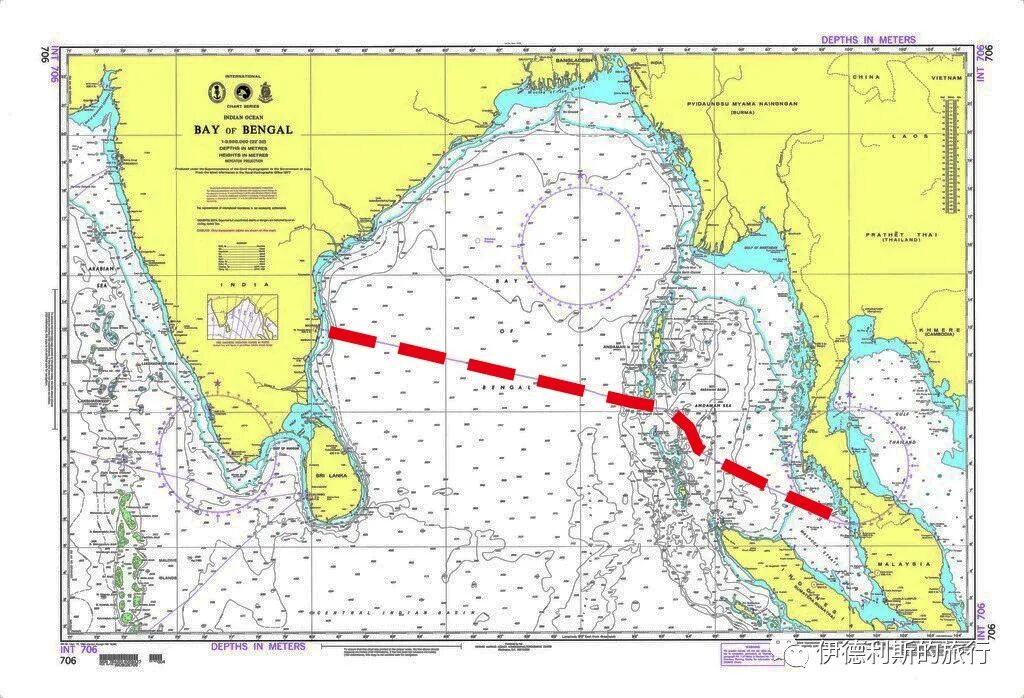
Tamil people crossing the Bay of Bengal from southeastern India to Penang.
Most Tamil people in Penang practice Hinduism, though some follow Islam. Tamil Muslims in Malaysia are called Mamak, and they are famous for their food culture found in Mamak stalls (Gerai Mamak) and Mamak restaurants (Restoran Mamak).
The word Mamak comes from the Tamil word for uncle (maa-ma). In Malaysia and Singapore, Tamil children often use this term for older Tamil men, especially in Tamil Muslim restaurants. Because of this, Malay people started calling the entire Tamil Muslim community Mamak, though the k at the end is silent in the Malay language.
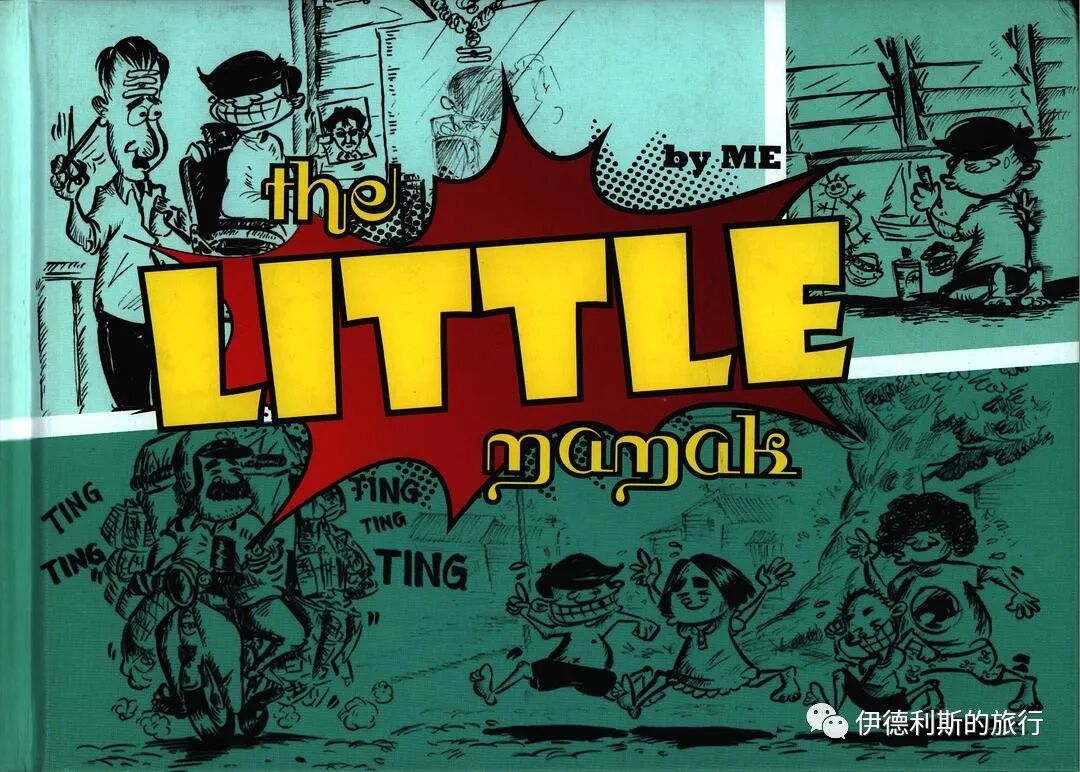
The Little Mamak is a comic book by a Tamil Muslim cartoonist named ME that describes the lives of Tamil Muslims in Penang. You can buy it in bookstores in Penang and Kuala Lumpur, and it is currently the most interesting book about Penang Tamil Muslim culture.
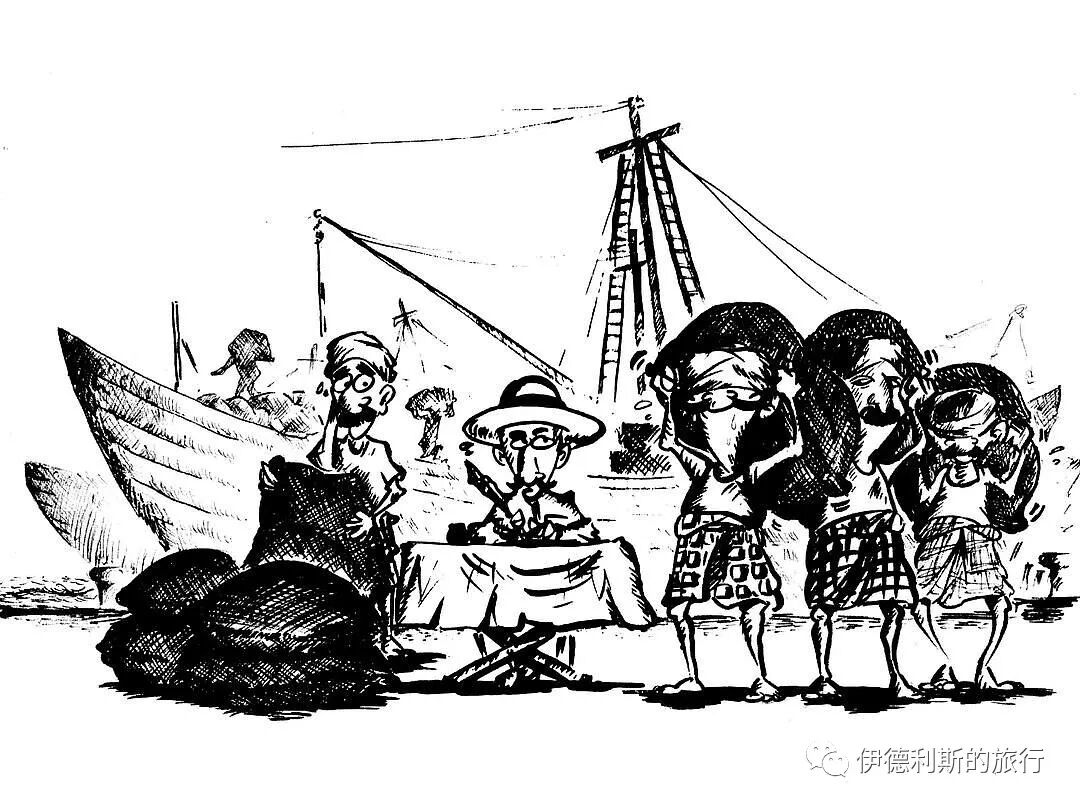
A Tamil Muslim working as a laborer at the pier in The Little Mamak.
A century-old mamak restaurant: Hameediyah Restaurant.
In Penang, the Tamil Muslim food culture of mamak stalls and mamak restaurants is very famous. The oldest one is Hameediyah Restaurant, which opened in 1907.
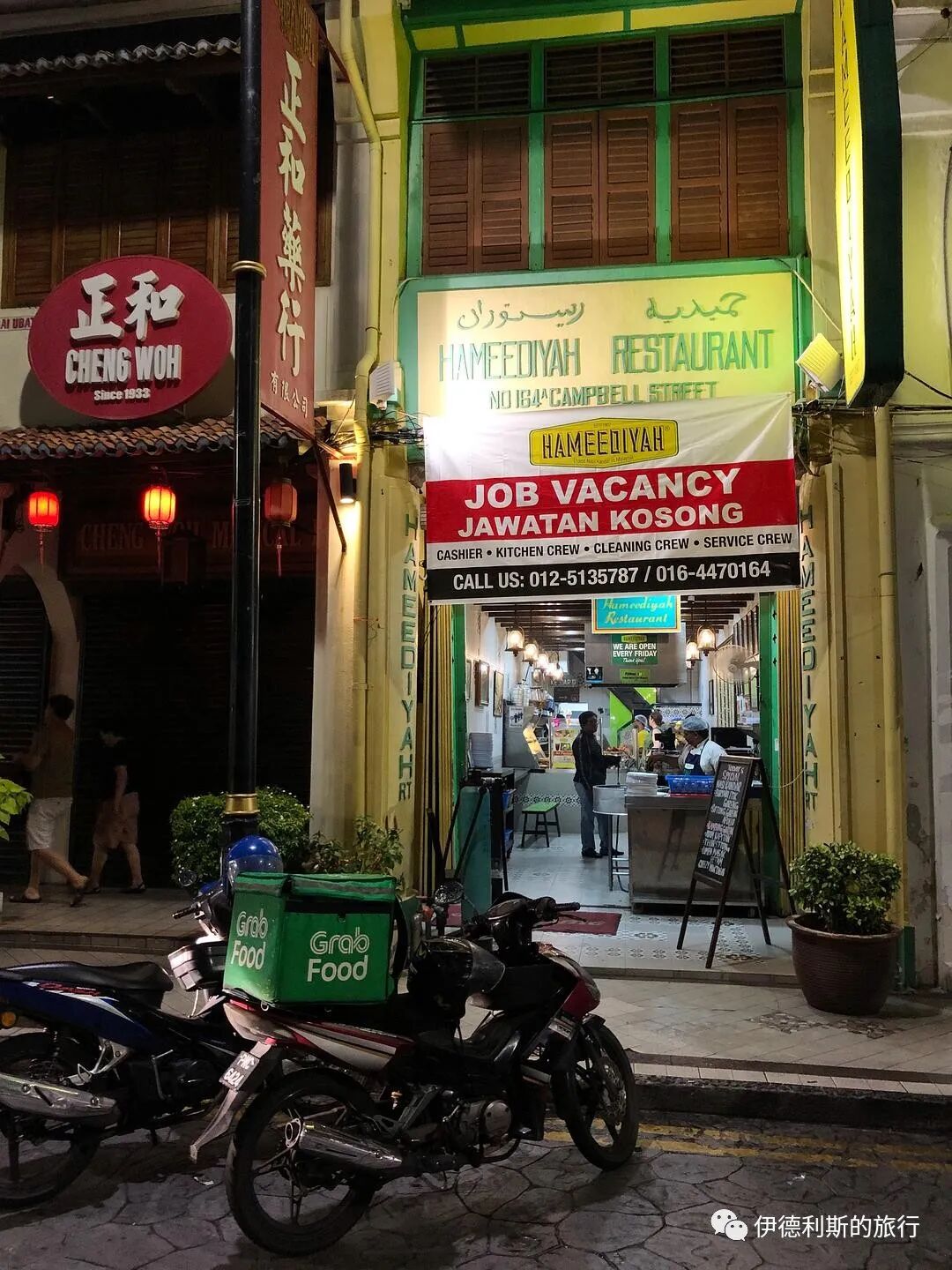
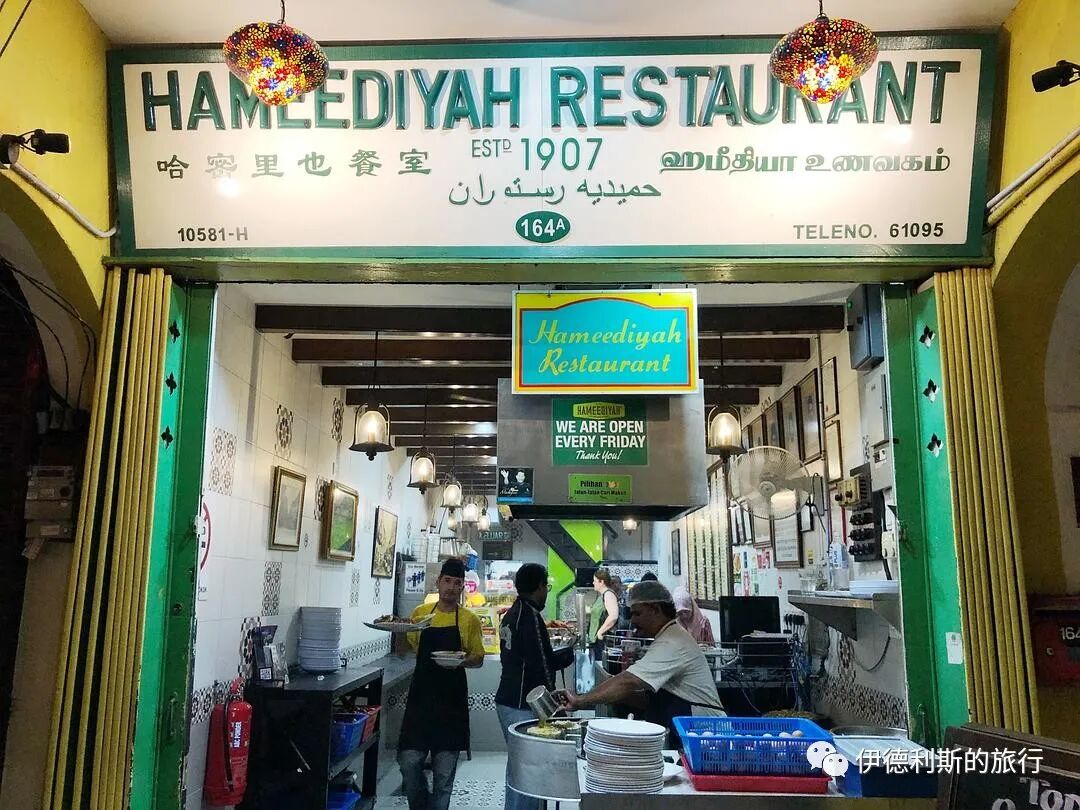
The founder of Hameediyah Restaurant was named Mohamed. He came from a Tamil Muslim village in the southernmost Indian state of Tamil Nadu. The village had two old mosques, an Islamic school, and a Tamil school.
Mohamed arrived in Penang in 1890 and rented the land where the restaurant stands today shortly after. At first, he just used this place to prepare meals, then carried them on a shoulder pole to sell along the street, which is the famous shoulder-pole rice (Nasi Kandar).
A few years later, Mohamed decided to stop walking the streets and started selling his food from a fixed spot where he prepared it. In 1907, Mohamed officially opened Hameediyah Restaurant and hired two helpers. Mohamed learned many South Indian Tamil dishes from his mother when he was young, and he was best at making biryani fried rice (Biryani) and stuffed flatbread (Murtabak). After opening, the customers who came to eat included port migrant workers, rickshaw pullers, local traders, and government employees, and some diners affectionately called Mohamed and his staff Mamak. During this same period, the restaurants opened by Tamil Muslims from South India in Penang gradually became known as mamak stalls.
After Mohamed passed away in 1927, his son Kander took over the restaurant, followed by his grandson, and the business thrived. In 1941, Penang suffered devastating air raids by the Japanese military, but the Hameediyah restaurant stayed open and miraculously survived the bombing. After Japan was defeated in 1945, Kander's grandson and fourth-generation successor, Abu Bakar, took over the restaurant before passing it on to his relative, Abdul Sukkoor. Today, Abdul Sukkoor's eldest son, Seeni Pakir, and his youngest son, Syed Ibrahim, serve as the restaurant's head chefs and manage daily operations.
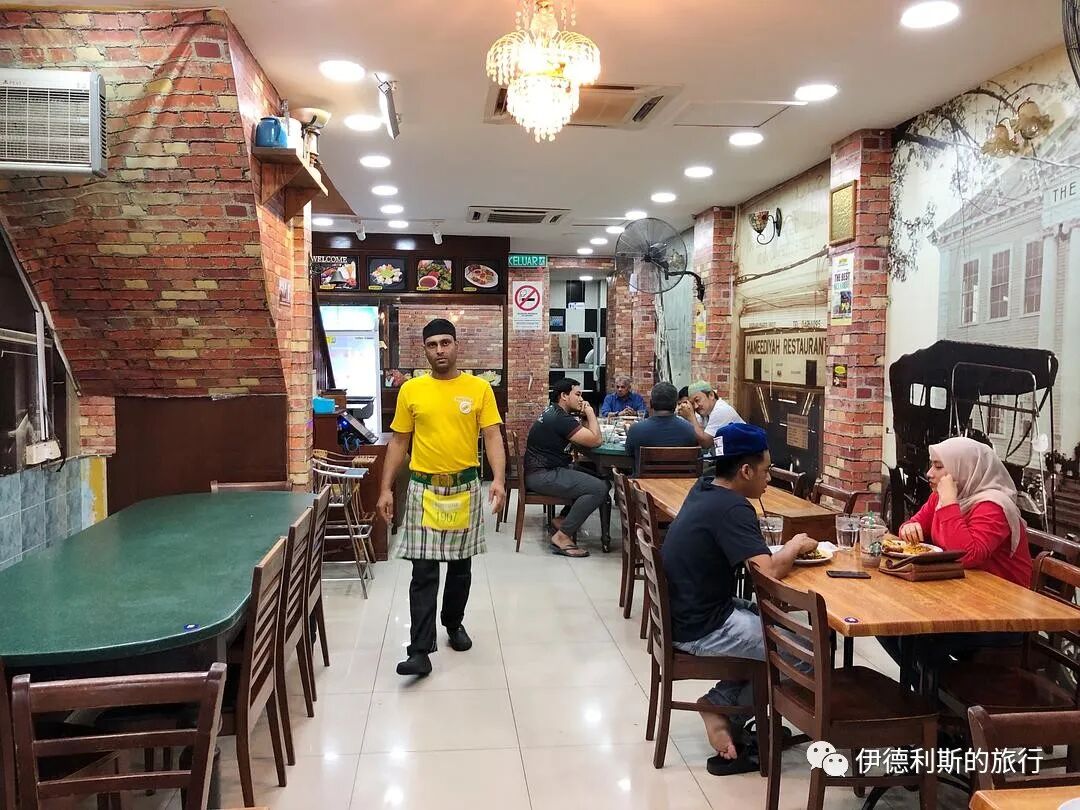
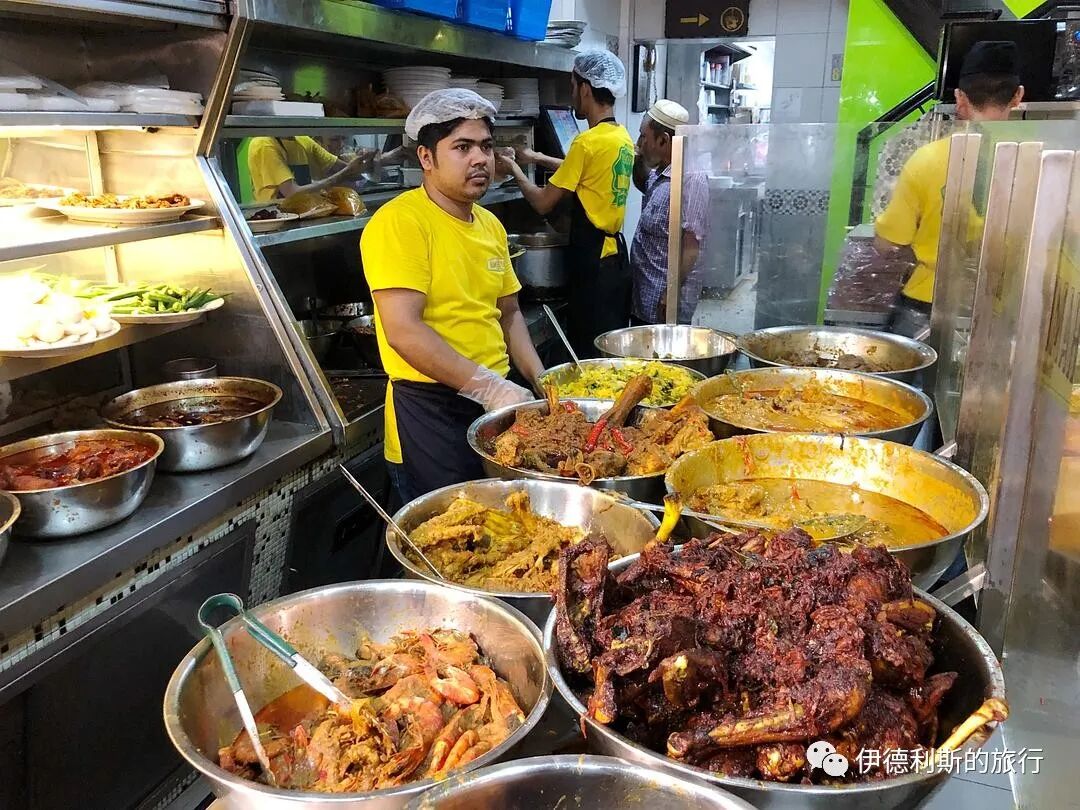
Nasi kandar (flat-pole rice) is a dish invented by South Indian Tamil Muslims in Penang. It consists of rice served with various curries made from beef, lamb, chicken, fish, and shrimp, along with side dishes. When Tamil Muslims first arrived in Penang in the 19th century, most carried their food on shoulder poles to sell along the streets. This is why the food they sold became known as nasi kandar. By the 20th century, Tamil Muslims began opening restaurants and stalls, but the name nasi kandar has been used ever since. During this trip at Hameediyah Restaurant, I had biryani kosong (plain biryani rice) with a lamb shank, chicken, and cabbage.
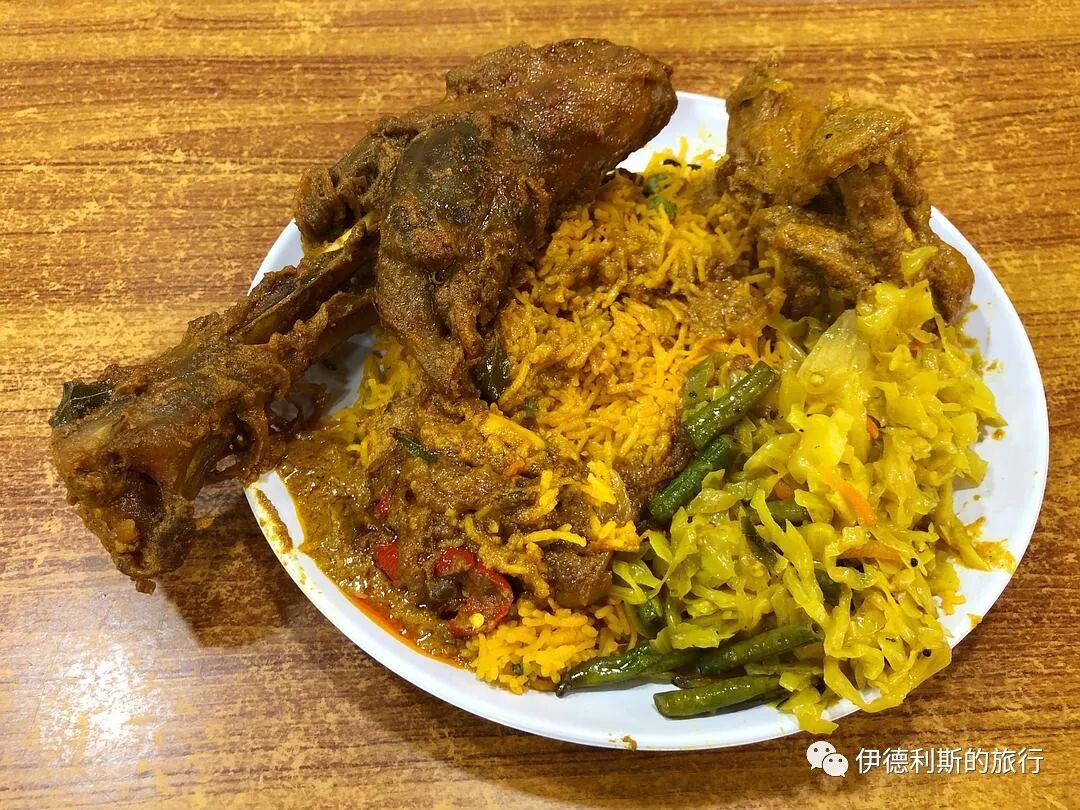
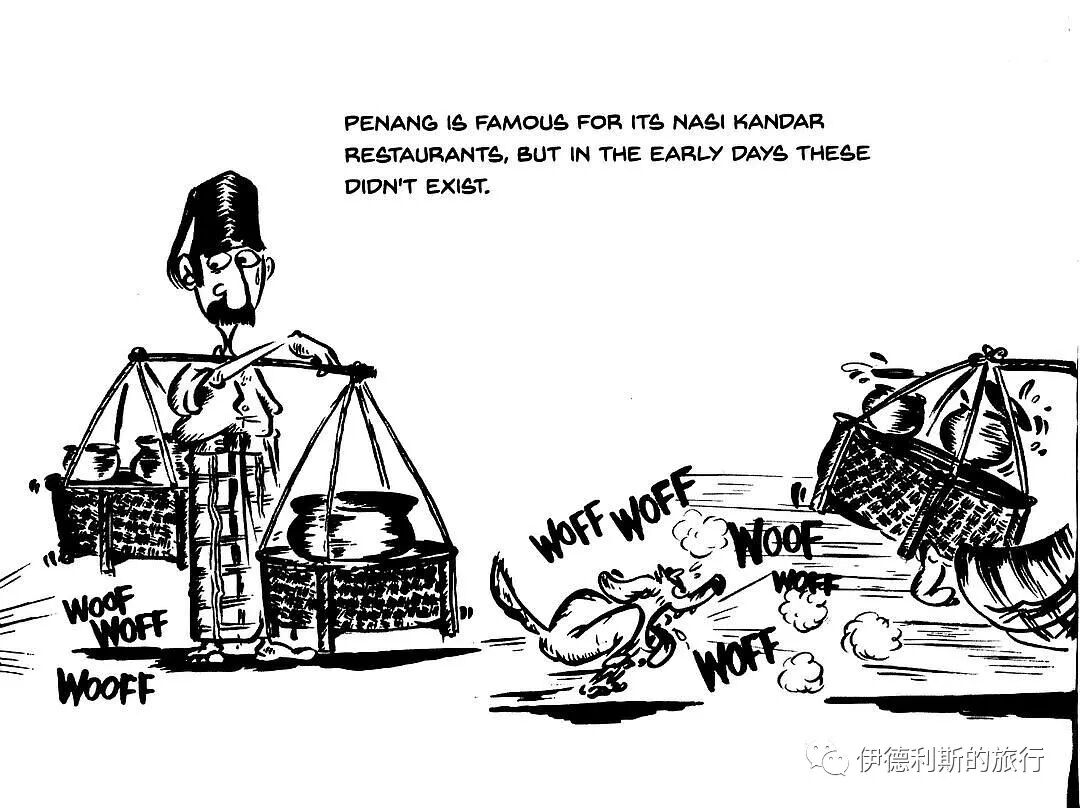
The original nasi kandar featured in The Little Mamak.
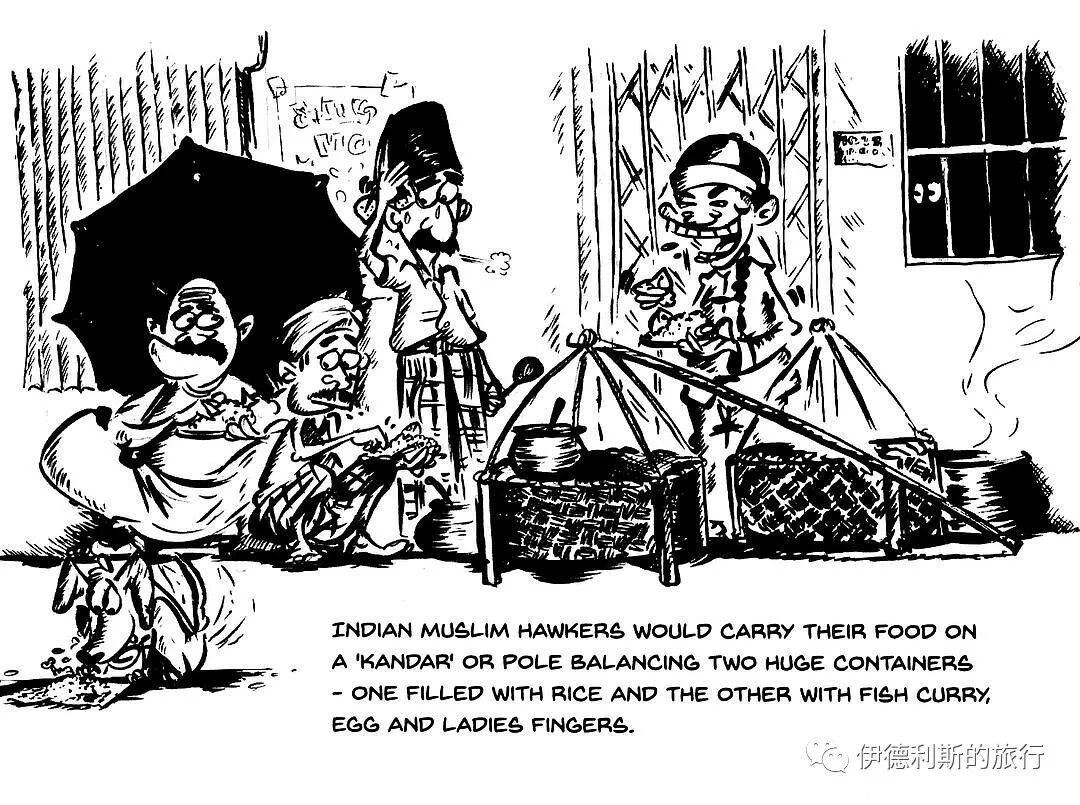
The original nasi kandar featured in The Little Mamak.
Murtabak is a thick pancake filled with eggs, onions, minced meat, and shrimp. In Malaysia, Singapore, and Thailand, the way to make Murtabak is basically the same as making Indian flatbread (roti canai). The Malaysian version has less meat and more egg than the one in Singapore. One theory says Murtabak comes from the Arabic word "Mutabbaq," which means "folded." It may have been brought to India by Yemeni Indian Muslims, and then brought to the Malay Archipelago by South Indian Tamil Muslims. Another theory says murtabak comes from Kerala in South India, where "muta" means egg and "bar" is short for "barota" bread.
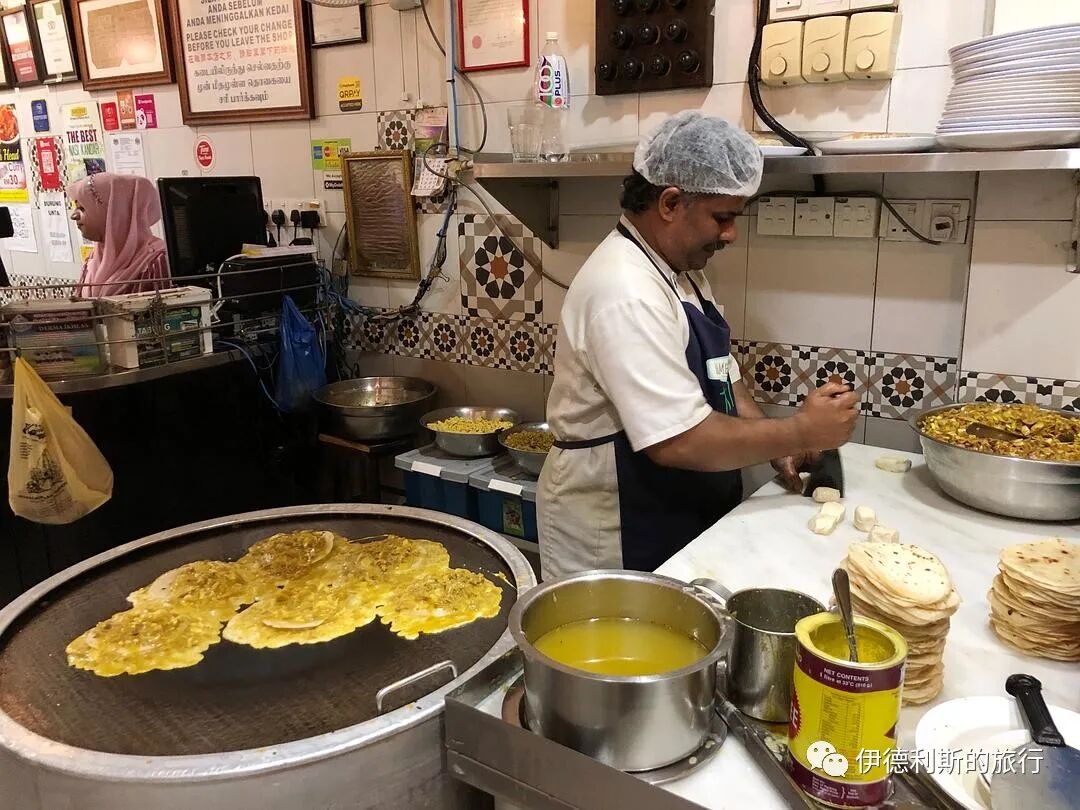
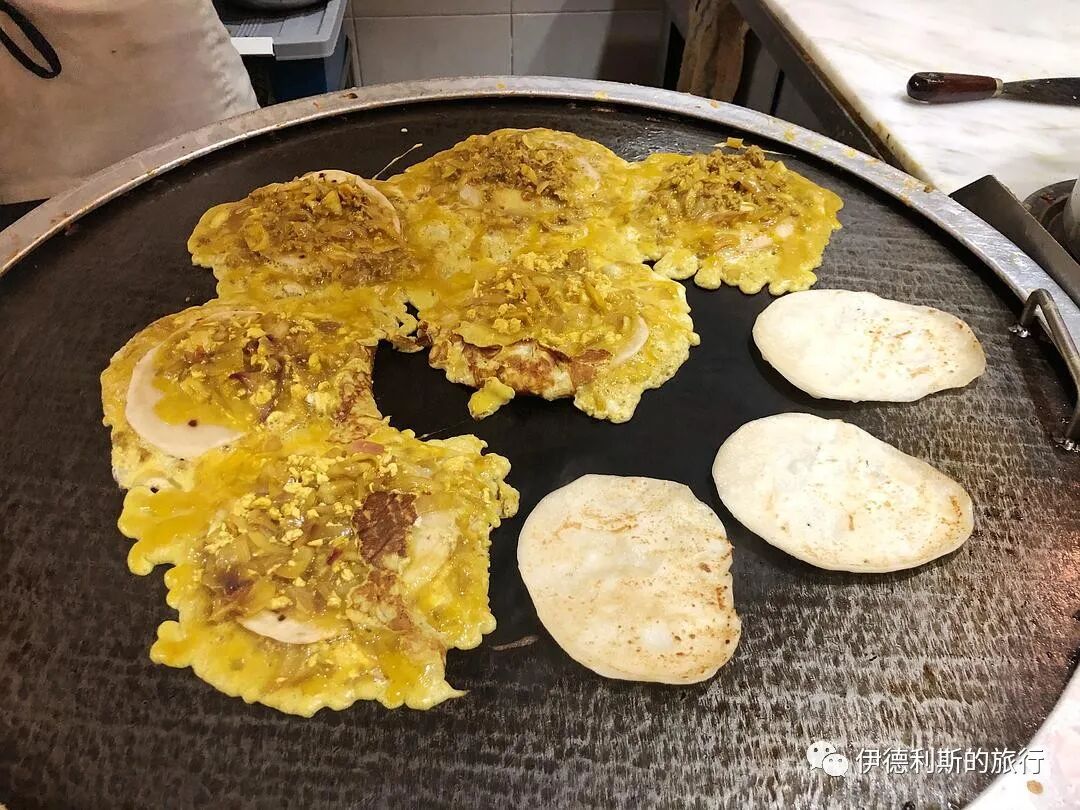
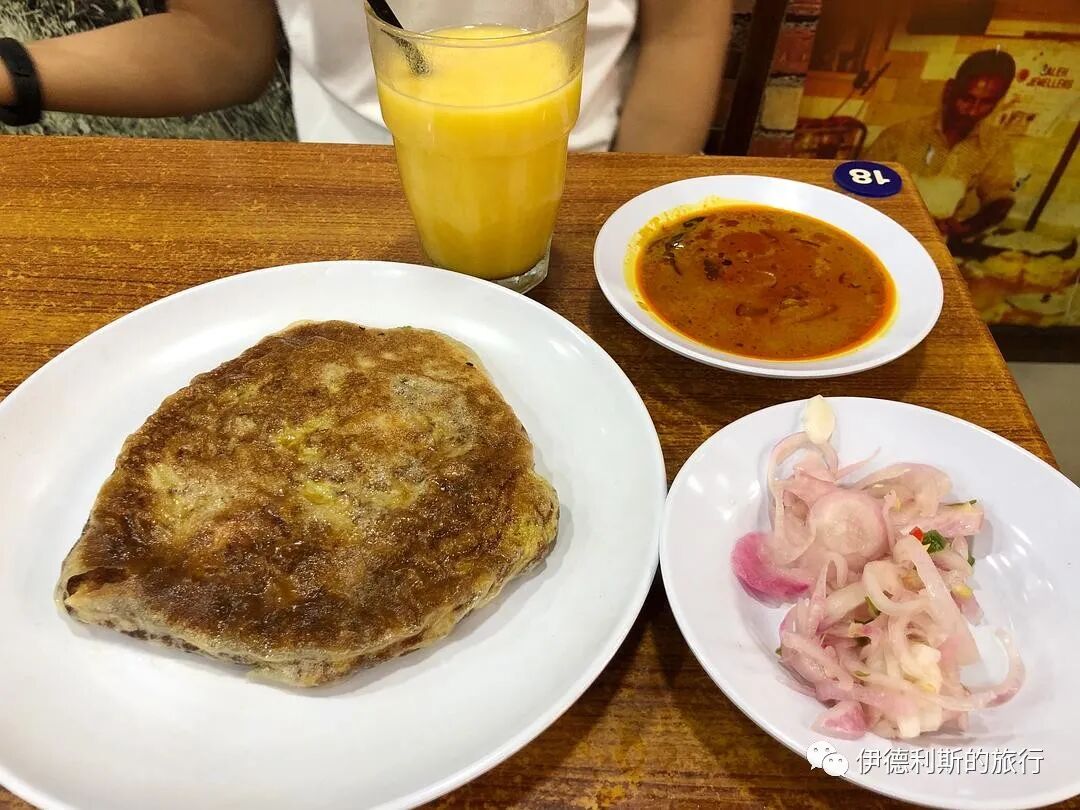
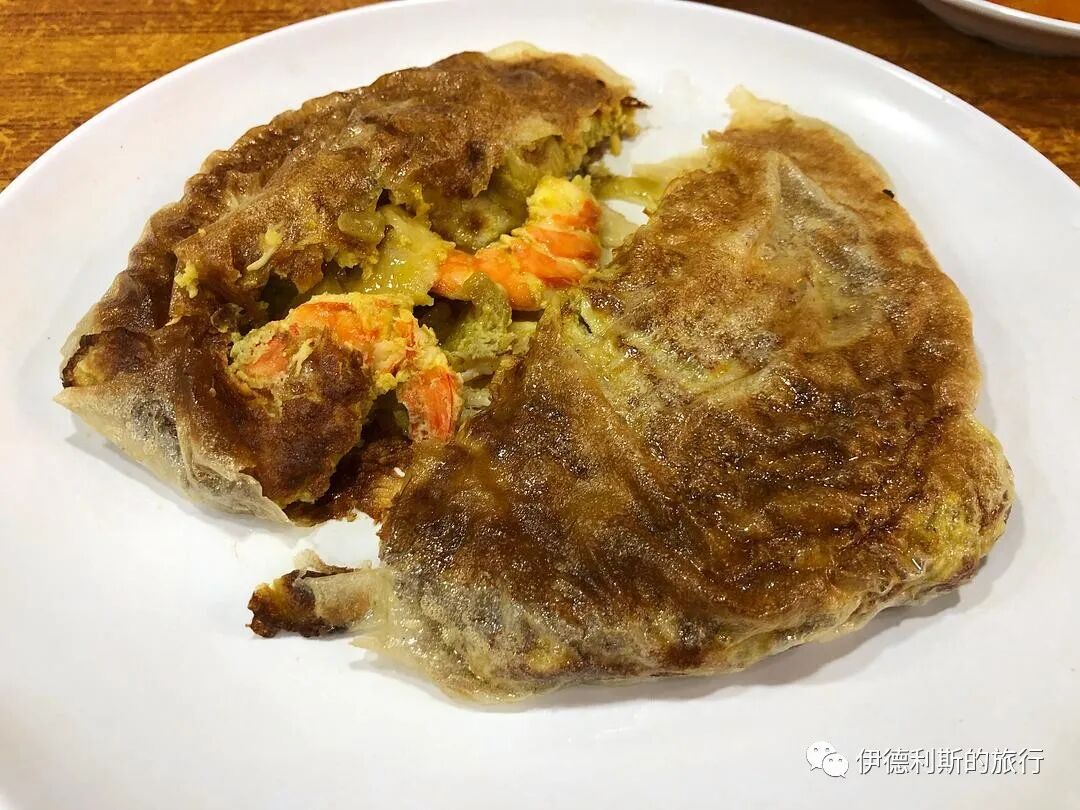
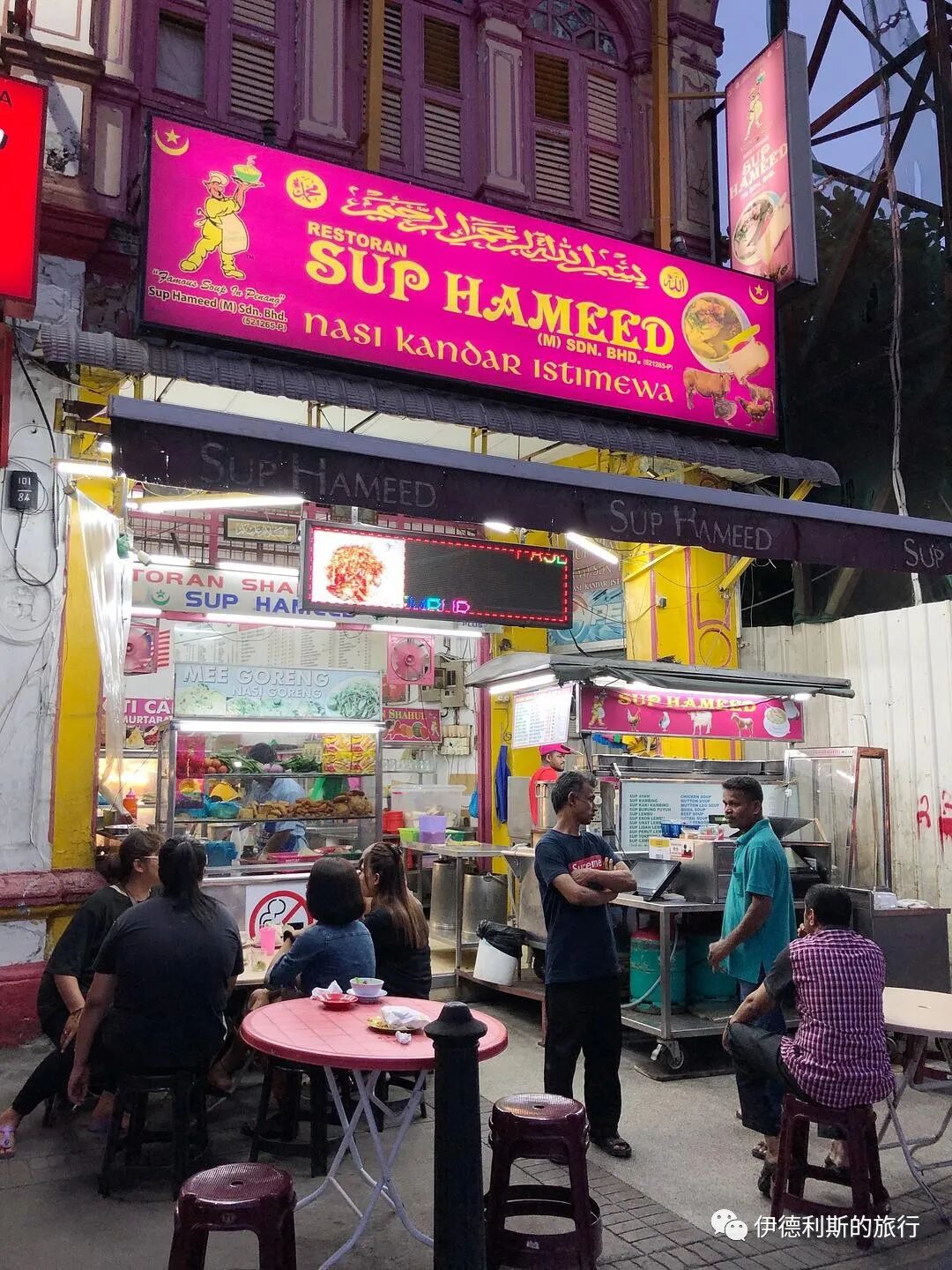
Mamak mutton soup
I drank the Southeast Asian Indian version of oxtail soup (sup ekor lembu) and lamb trotter soup (sup kaki kambing) at the Mamak restaurant Sup Hameed in George Town, Penang.
Mamak mutton soup (sup kambing Mamak) is a signature broth from the Tamil Muslim community in South India living in Malaysia. The soup is a thick, yellowish, and oily broth packed with many different spices. It is usually eaten with white bread (roti sekeping).
Roti canai flatbread at a Mamak stall
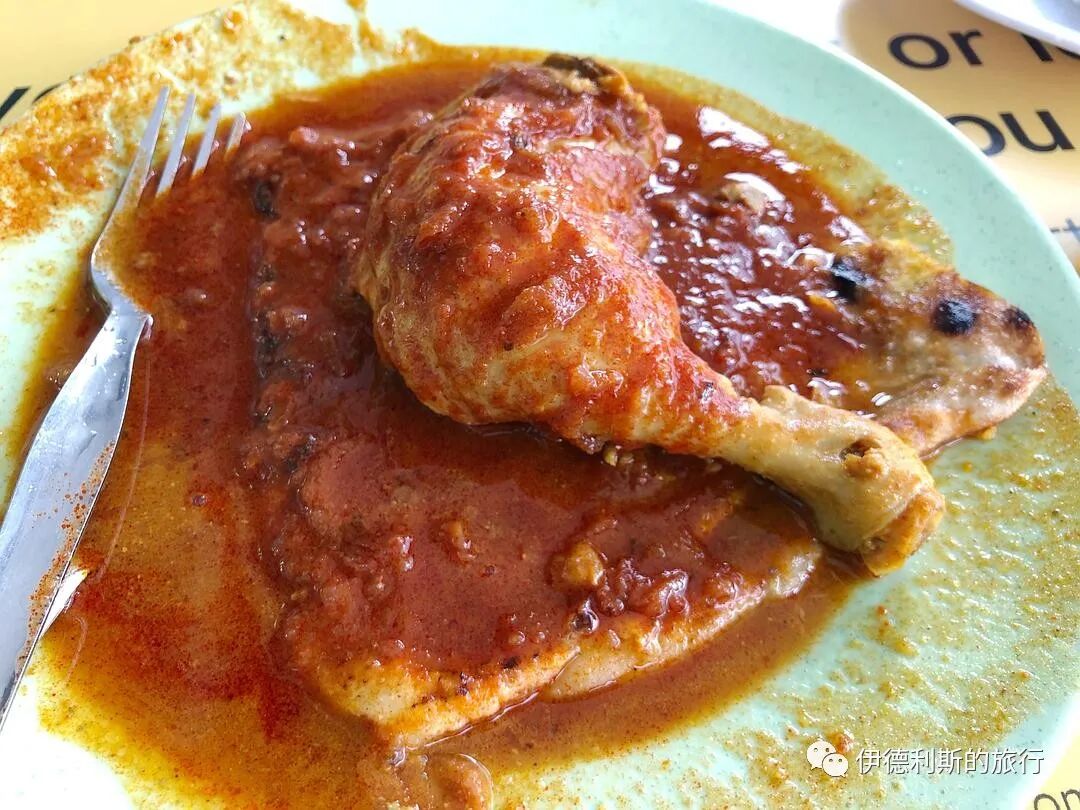
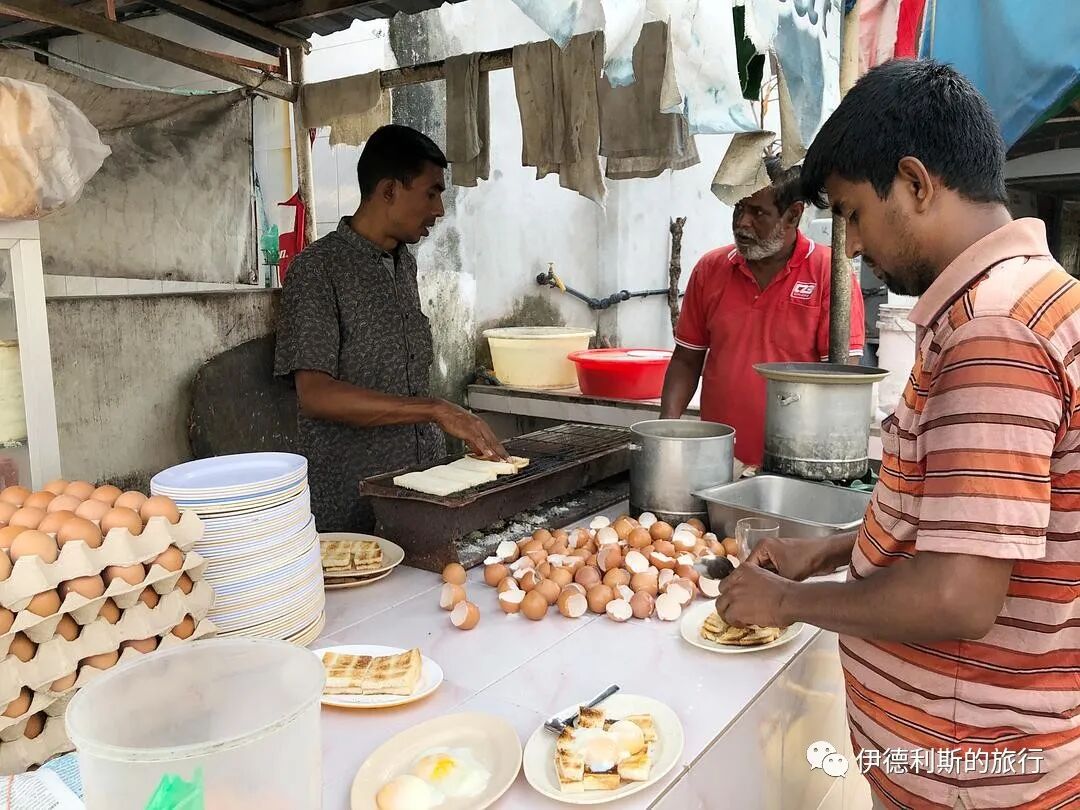
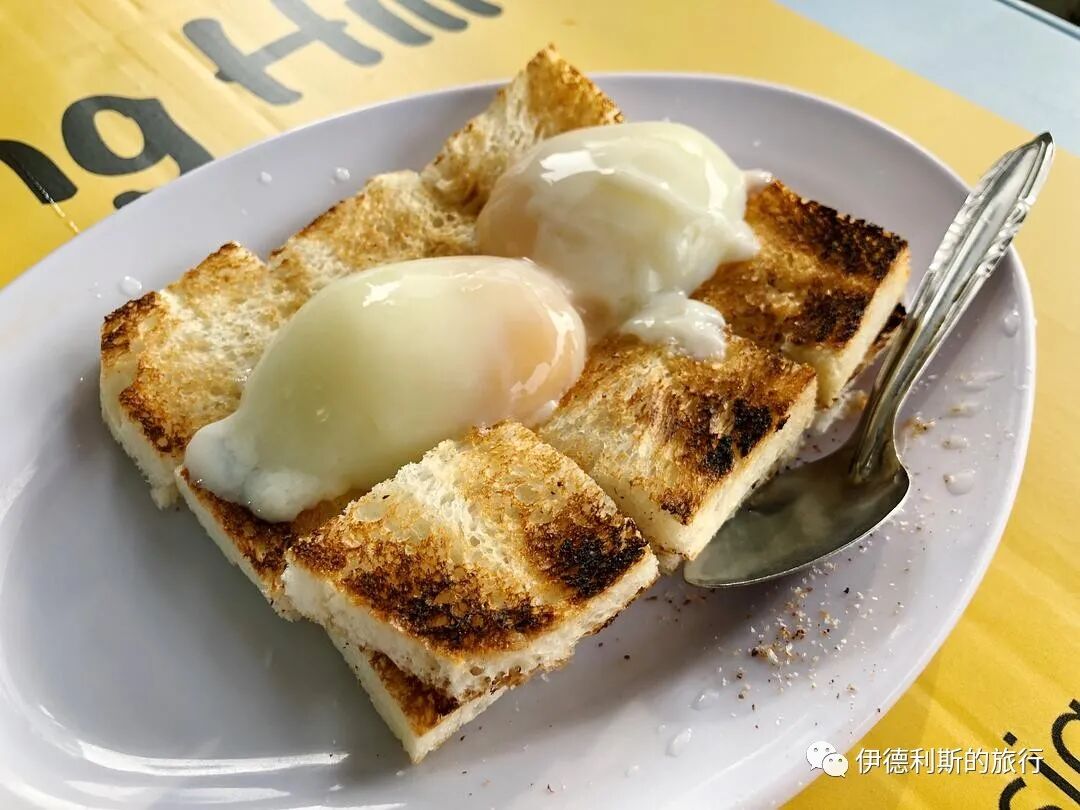
Beyond mamak restaurants, Tamil Muslims in Penang mostly run street-side mamak stalls for snacks. I ate roti canai flatbread and roti bakar toast at one of these stalls called Roti Canai Transfer Road.
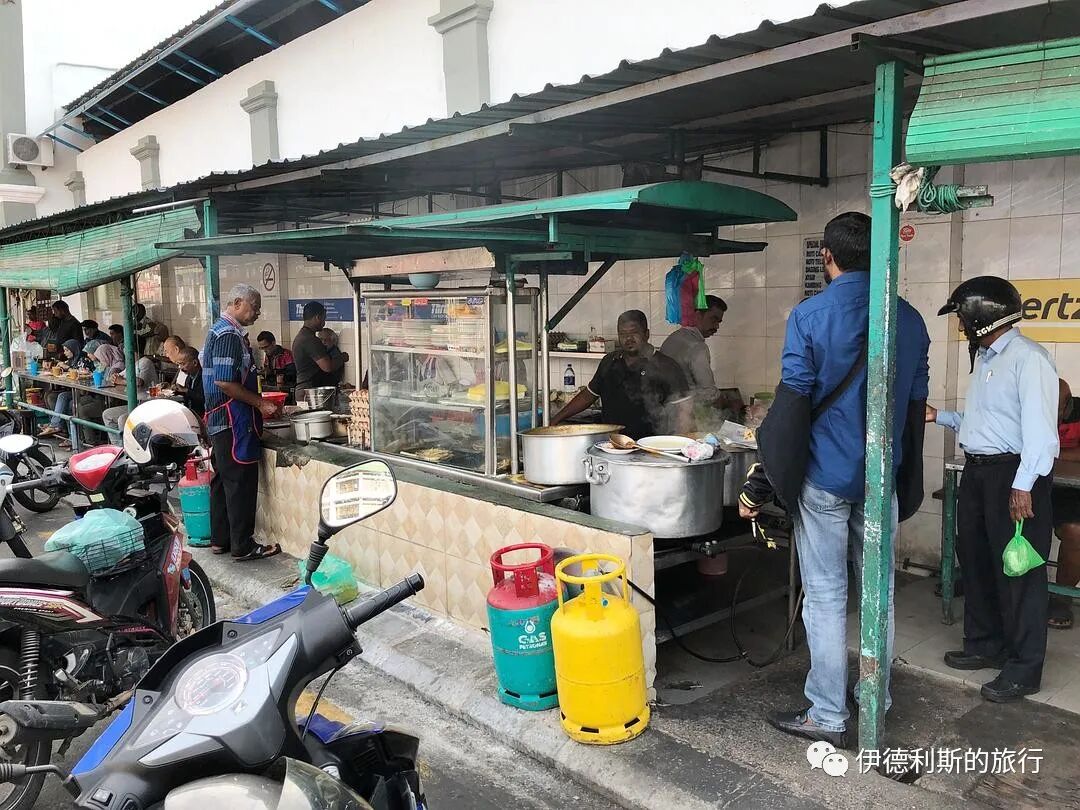
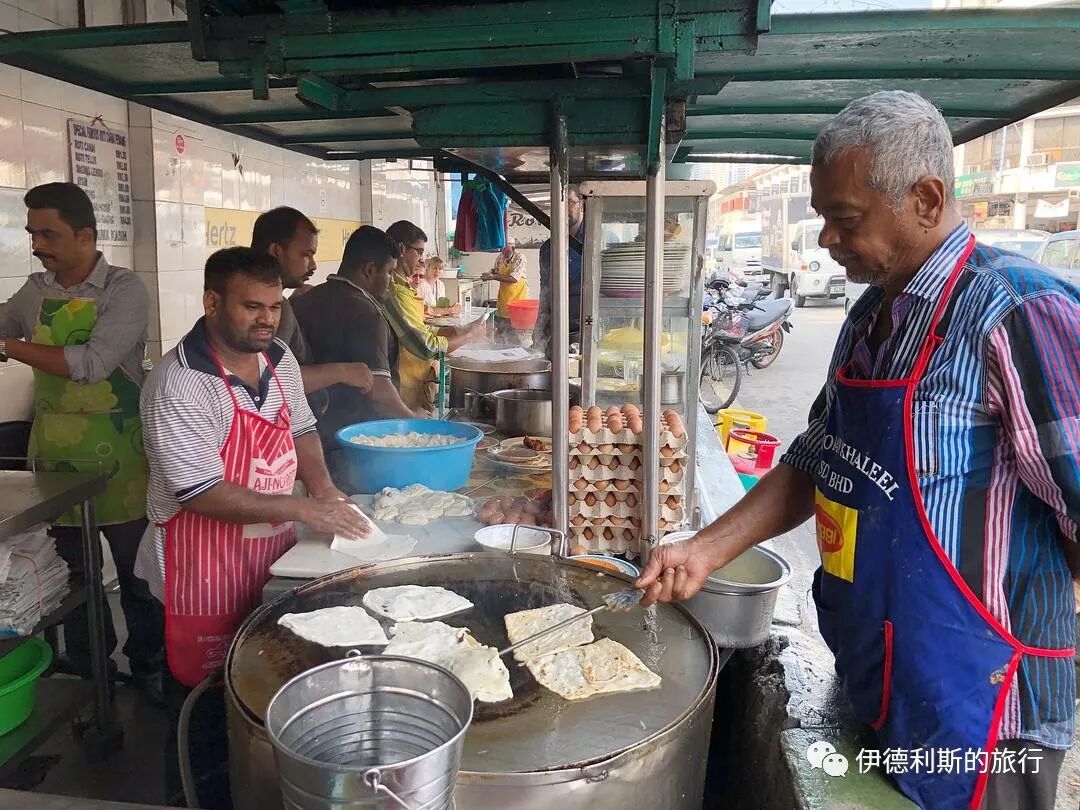
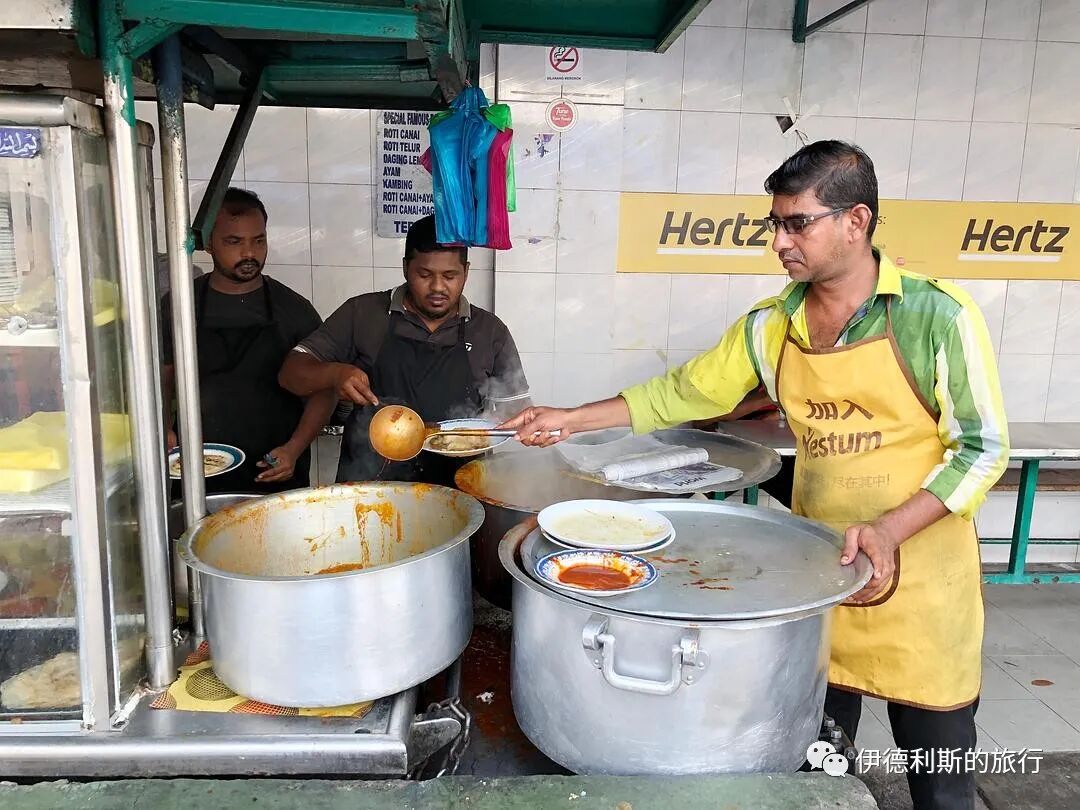
Roti canai is a signature dish of Tamil Muslims in Southeast Asia, likely originating from the South Indian parotta flatbread. Roti comes from the Sanskrit word for bread, while canai might come from the South Indian city of Chennai or the Malay word for spreading out dough (canai).
Roti canai is usually served with lentil curry (dal curry). I had mine with chicken, but you can also choose from other curries like fish, mutton, or chickpeas.
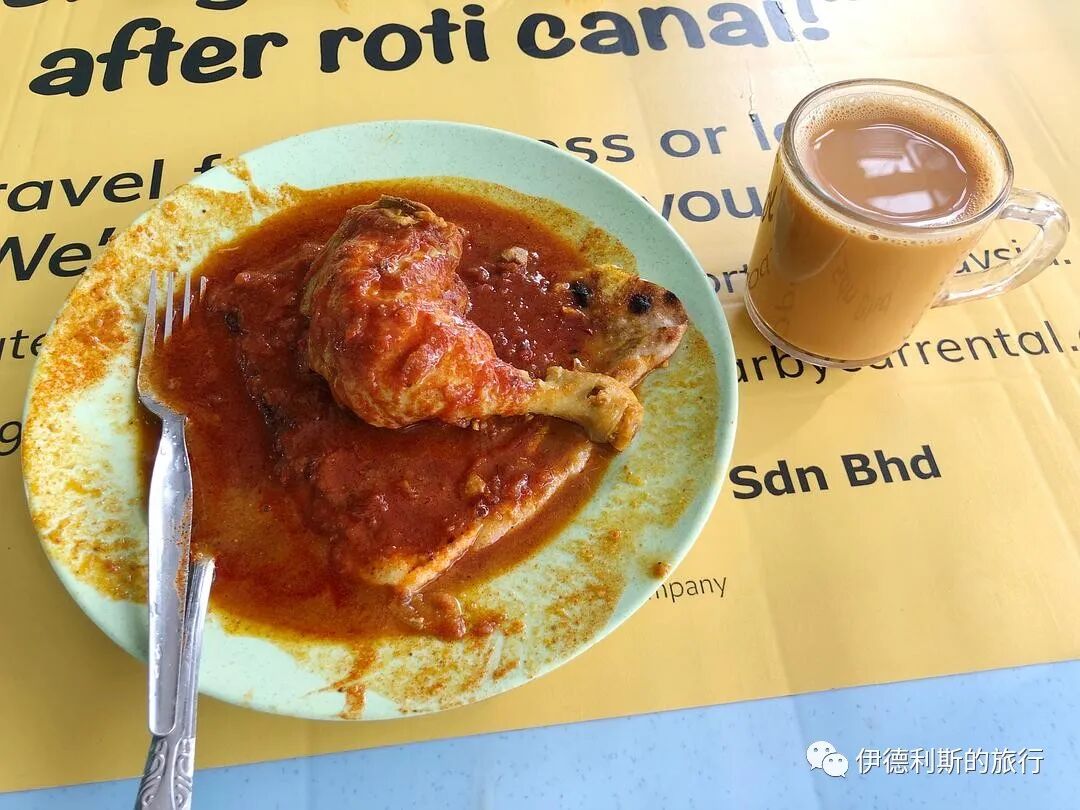
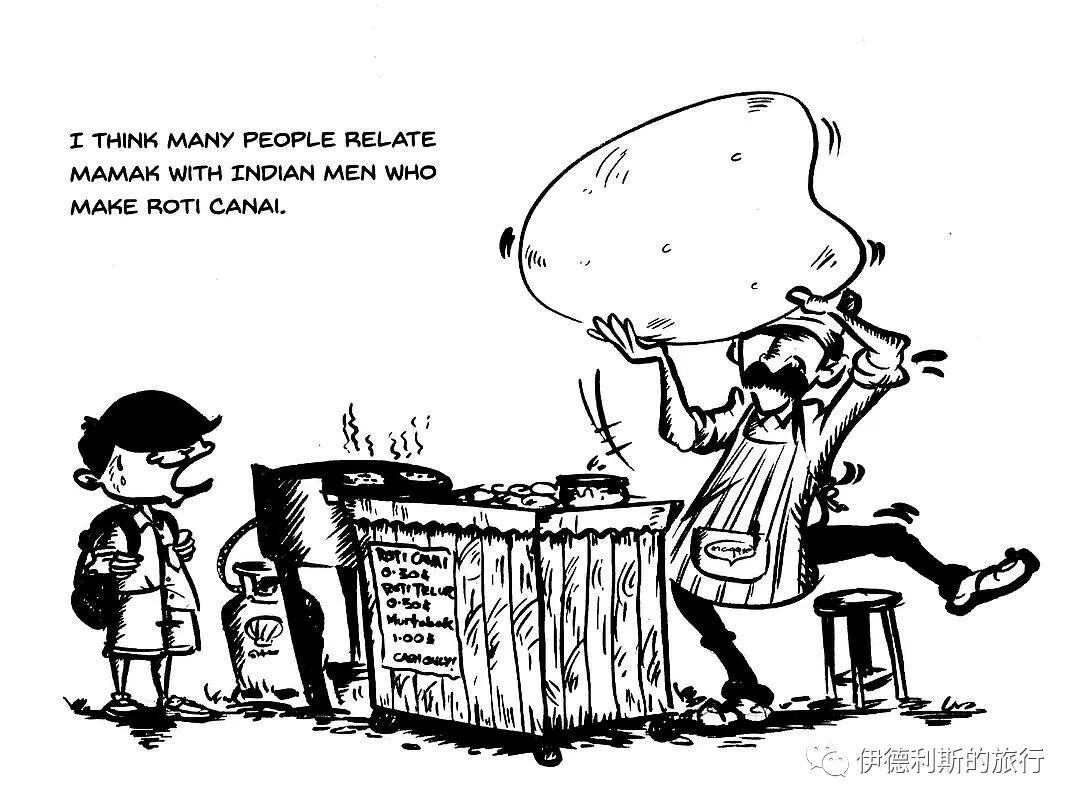
Roti canai from The Little Mamak.
This is toasted bread (roti bakar).
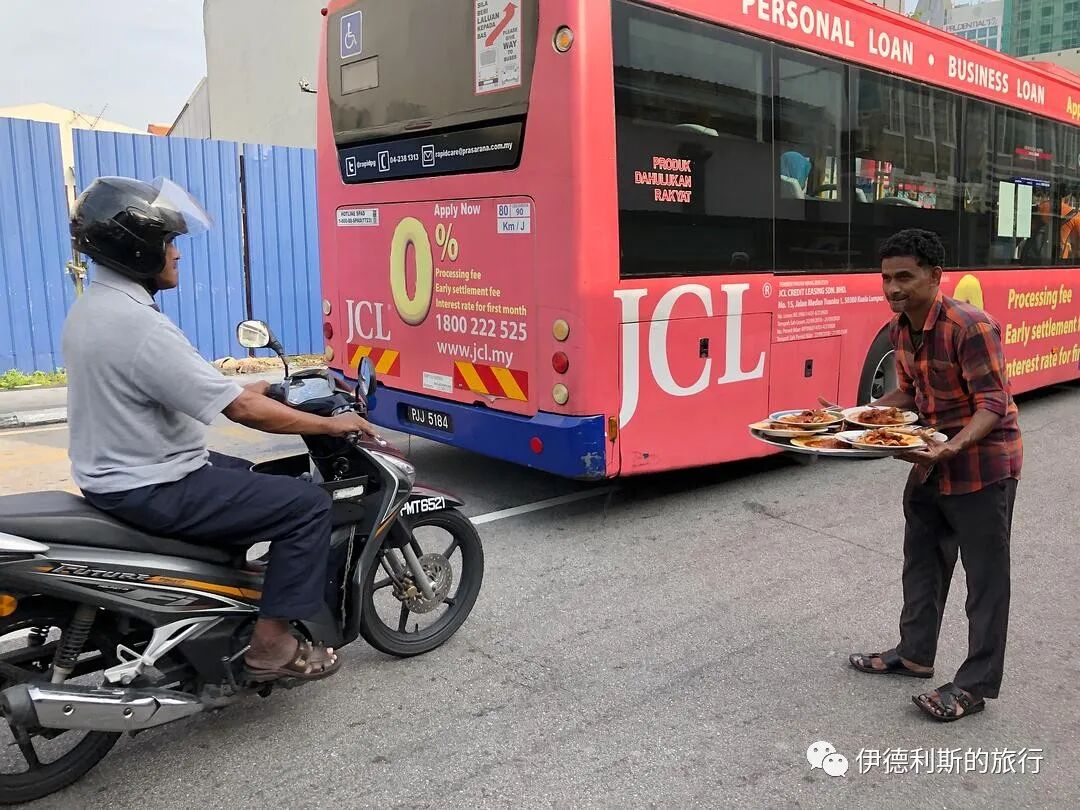
Indian fried noodles (mee goreng) at a mamak stall.
I ate Indian fried noodles (mee goreng) with squid (sotong) at a mamak stall in the Sri Weld Food Court.
Sri Weld Food Court is a food center mostly for Chinese food, and Seeni Mohamed Sheik Abidin's mamak stall is the only South Seas Indian stall there. Saini has helped his grandfather sell Indian stir-fried noodles (mee mamak) since he was a child. His noodles are famous for their sweet, sour, and spicy sauce, and he marinates the squid for a full day to make sure the flavor soaks in.
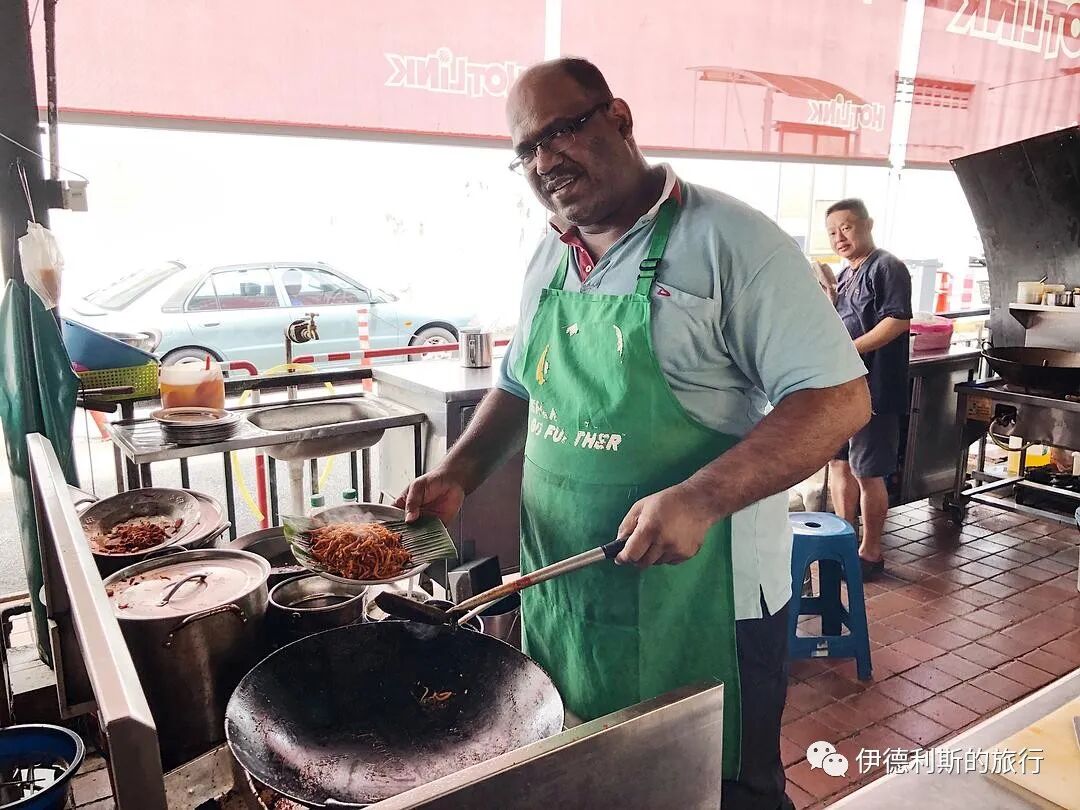
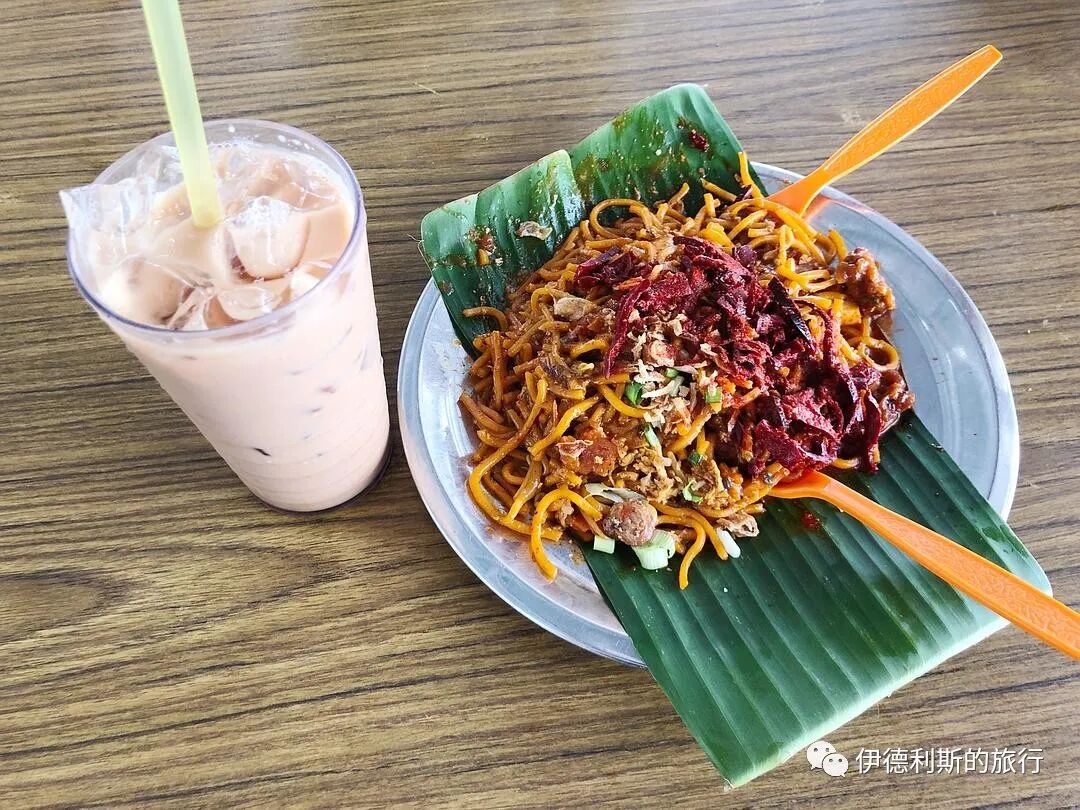
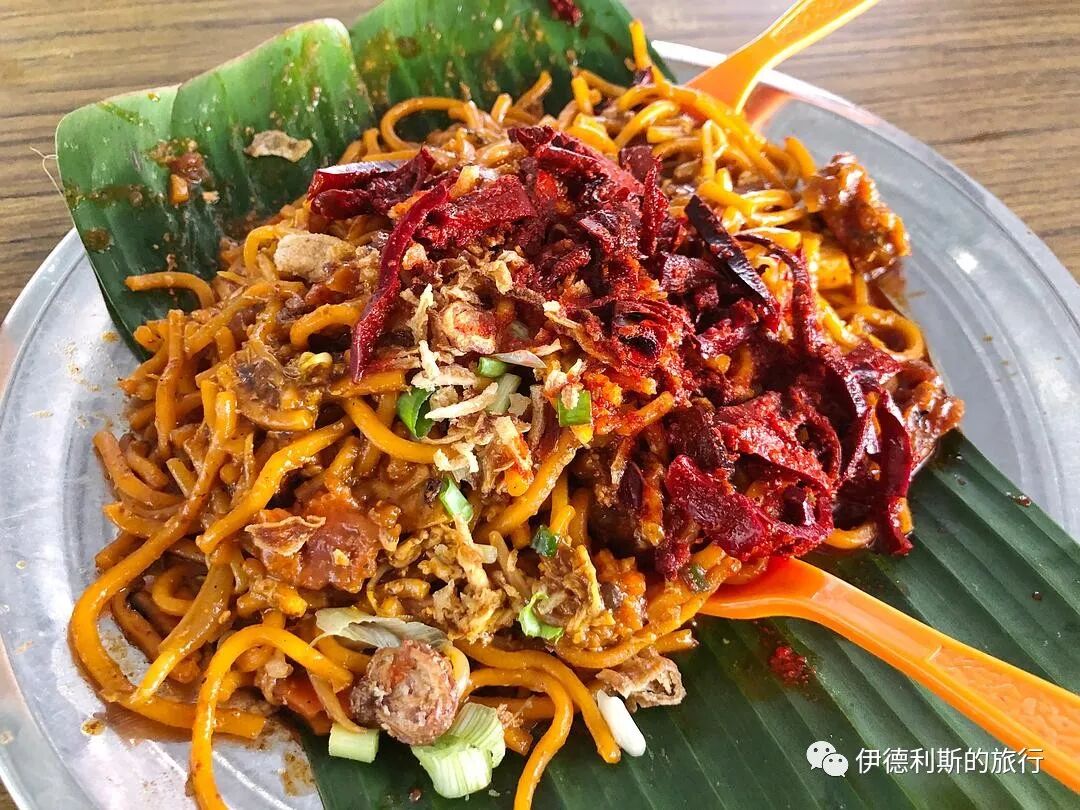
Stir-fried noodles (mee mamak) from The Little Mamak.
Penang Tamil desserts.
Desserts made by South Indian Tamil Muslims on the streets of Little India in George Town, Penang. One type is halva (halva) pastry, and the other yellow rectangular one is Mysore pak (mysore pak). This South Indian dessert is made with ghee, sugar syrup, and cardamom, and people usually eat it at weddings and festivals.
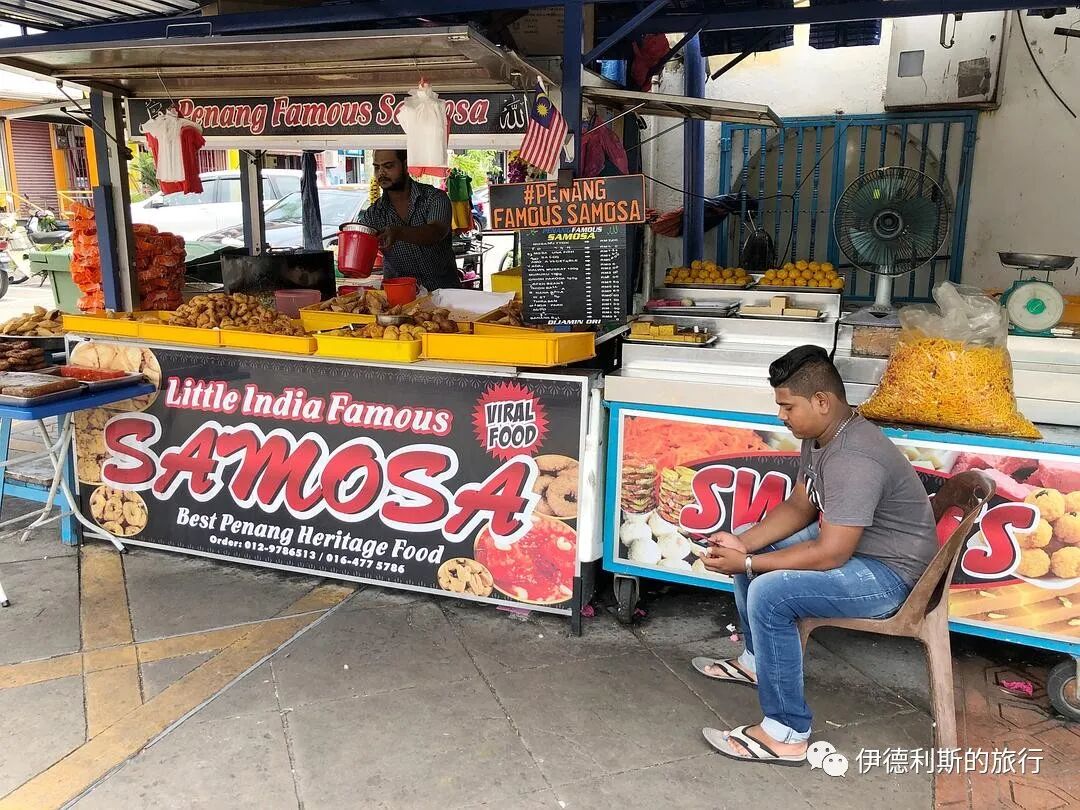
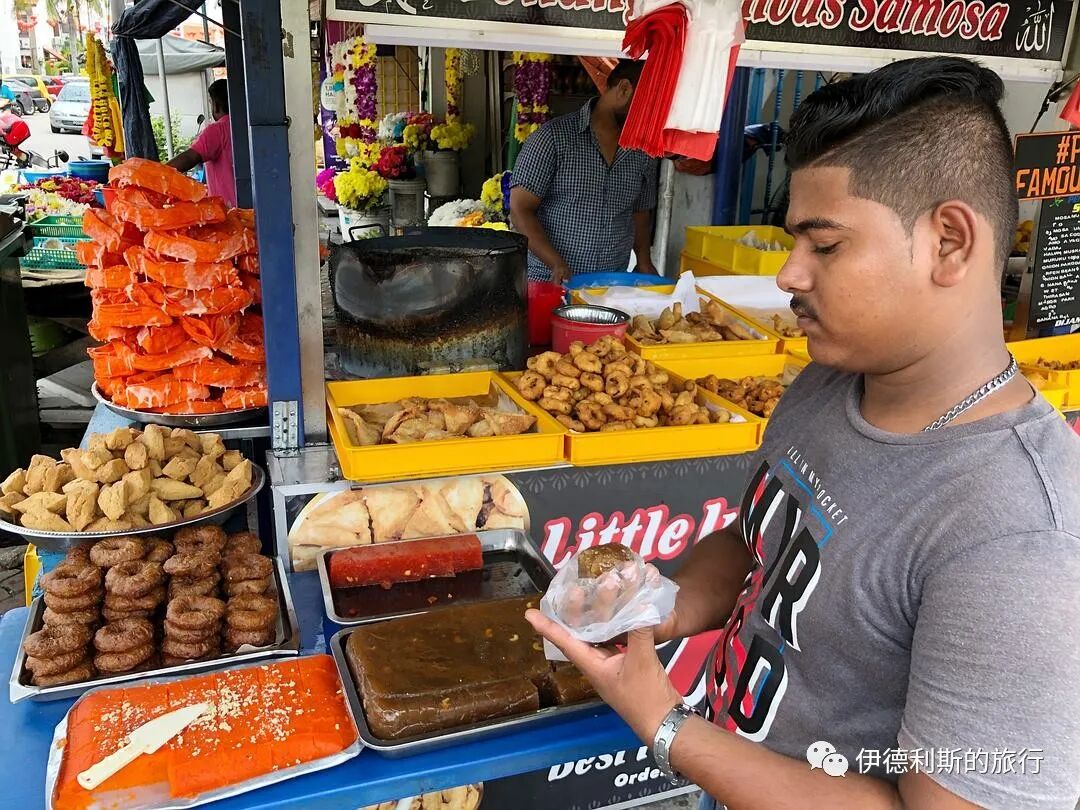
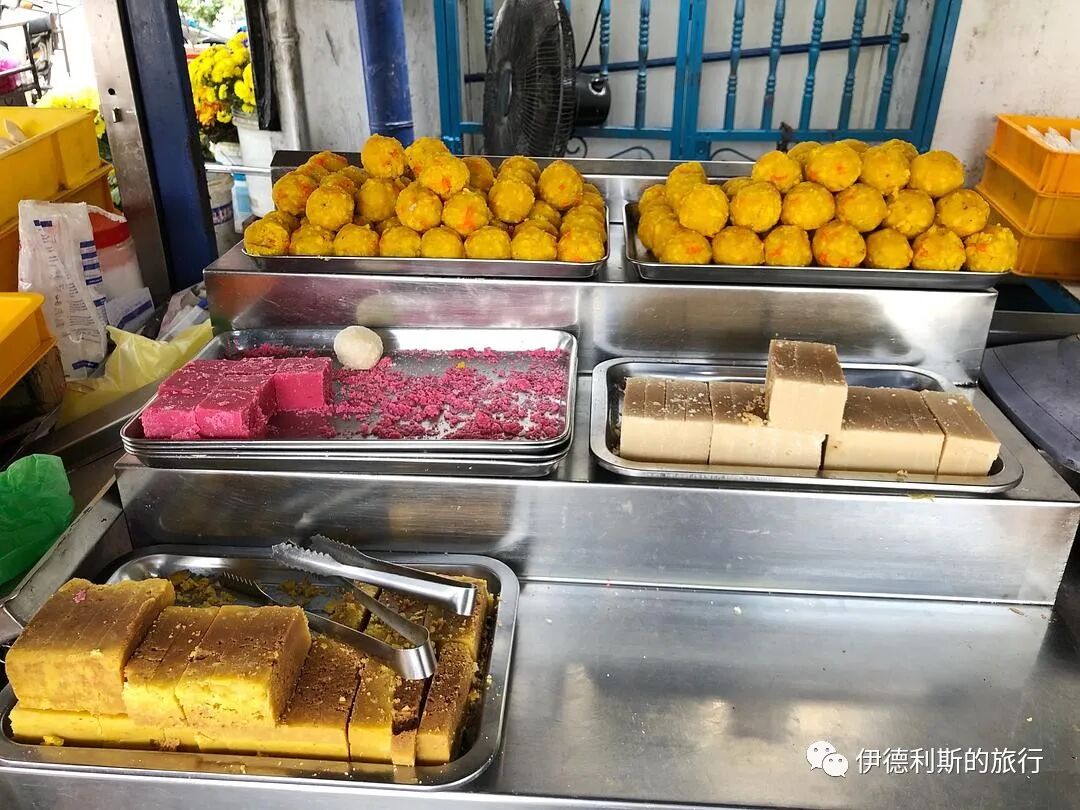
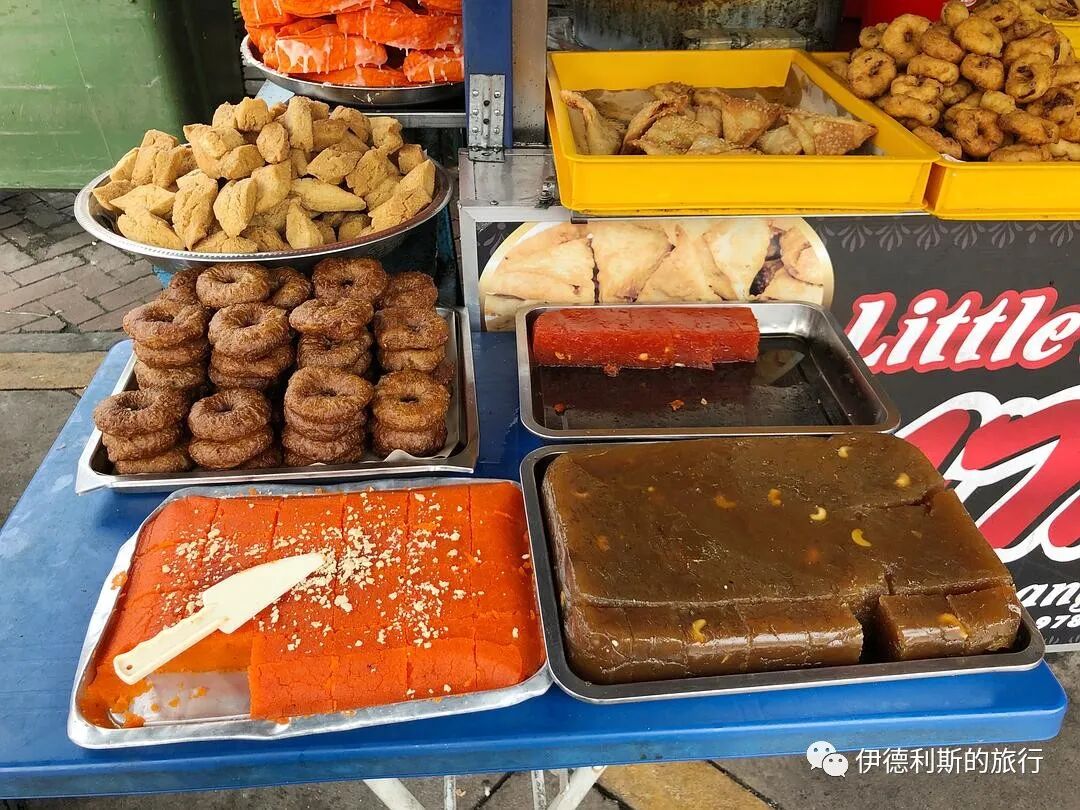
Kapitan Keling Mosque
Kapitan Keling Mosque (Masjid Kapitan Keling) is a mosque built in 1801 by Indian Muslims in Penang. It sits in the heart of the Chulias Indian community in George Town, Penang.
Kapitan Keling was an official title given by European colonists to leaders who managed Indian communities in Southeast Asia. Keling was a historical term used in the Malay Archipelago for Indian people. It started as a neutral word but became derogatory after the 20th century. The first Kapitan Keling of Penang was named Cauder Mohideen. He was born around 1759 and came from the state of Tamil Nadu in the far south of India.
In 1795, he joined the first Kapitan Cina (Kapitan Cina) Koh Lay Huan and other important figures in Penang to form the first Penang Assessment Committee to set taxes and tax rates.
Shortly after Penang was founded in 1786, Indian Muslim soldiers serving the British East India Company set up a temporary place for namaz. As the number of Indian Muslims in Penang grew, the community asked the Kapitan Keling to lead the construction of a formal mosque.
In 1801, the Penang government approved the Kapitan Keling's request and granted an 18-acre plot of land to build a mosque, a Muslim cemetery, and shops to collect rent. The Kapitan Keling and other Indian Muslims in Penang brought in workers and stone from India to build the first Penang Indian mosque, naming it after the Kapitan Keling.
The original Kapitan Keling Mosque was a single-story rectangular building with a minaret at each of its four corners. At that time, the mosque was surrounded by shops, and you could only enter through a narrow passageway. Large-scale urban construction around the mosque did not happen until 1905, when covered walkways (qilou) replaced the original simple houses and new roads were opened.
In 1910, architect N. A. Neubronner led an expansion of the mosque, adding Mughal-style domes and a large minaret. After the expansion was finished in 1916, the mosque became an example of Indo-Saracenic Revival architecture. The mosque was finally expanded into its current form in the 1930s. The main hall was made twice as high, and the ventilation system was improved.
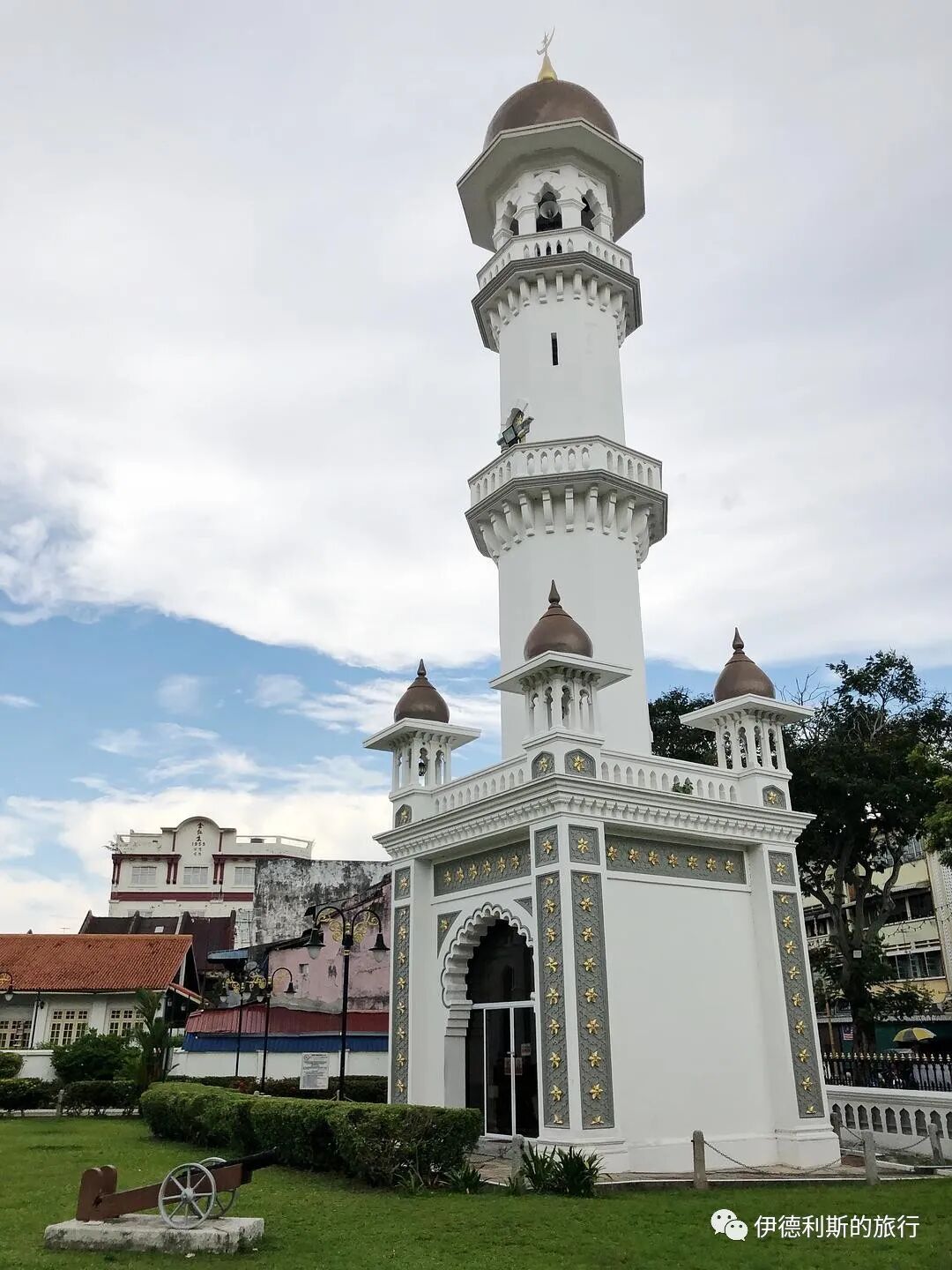
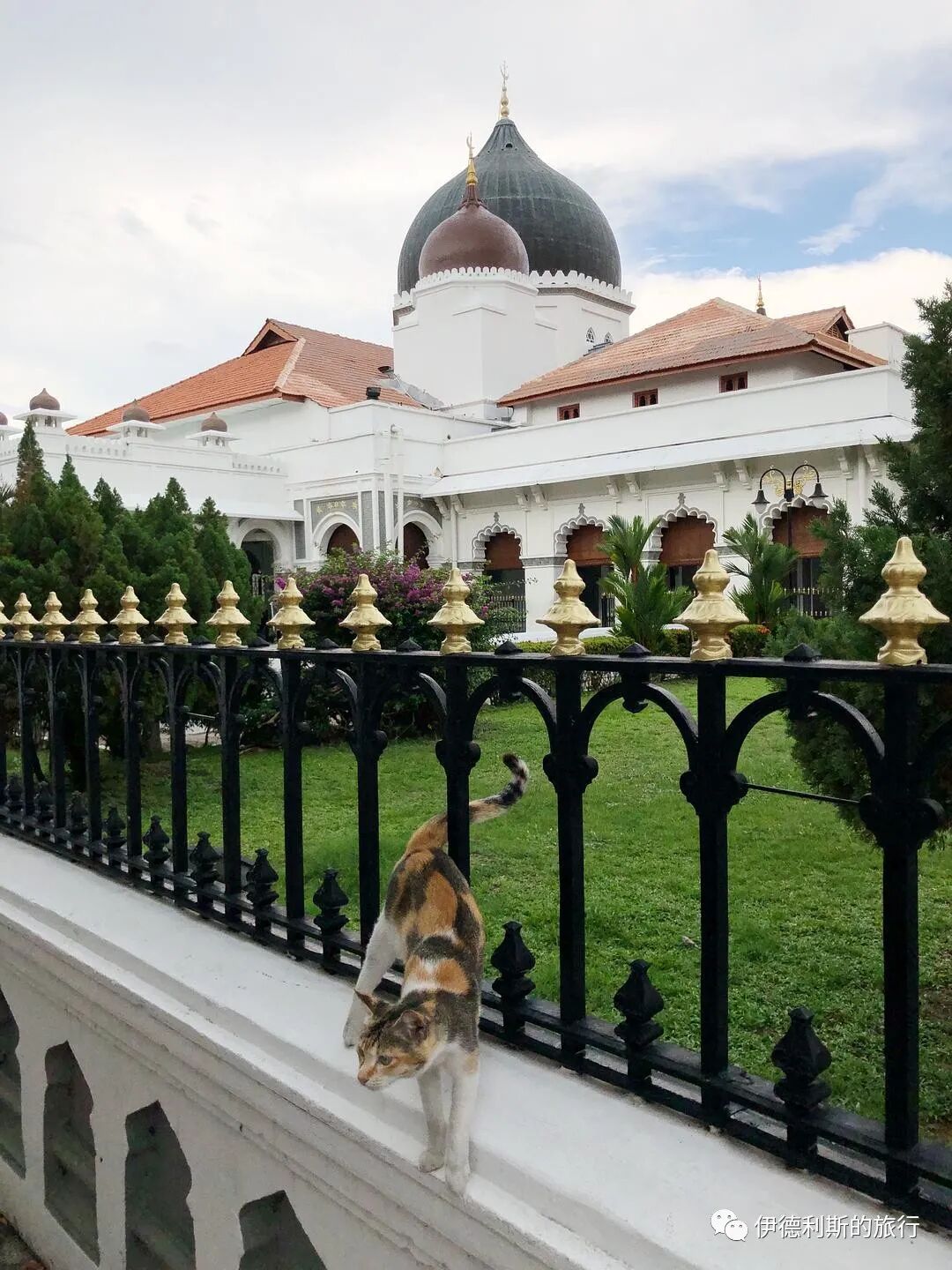
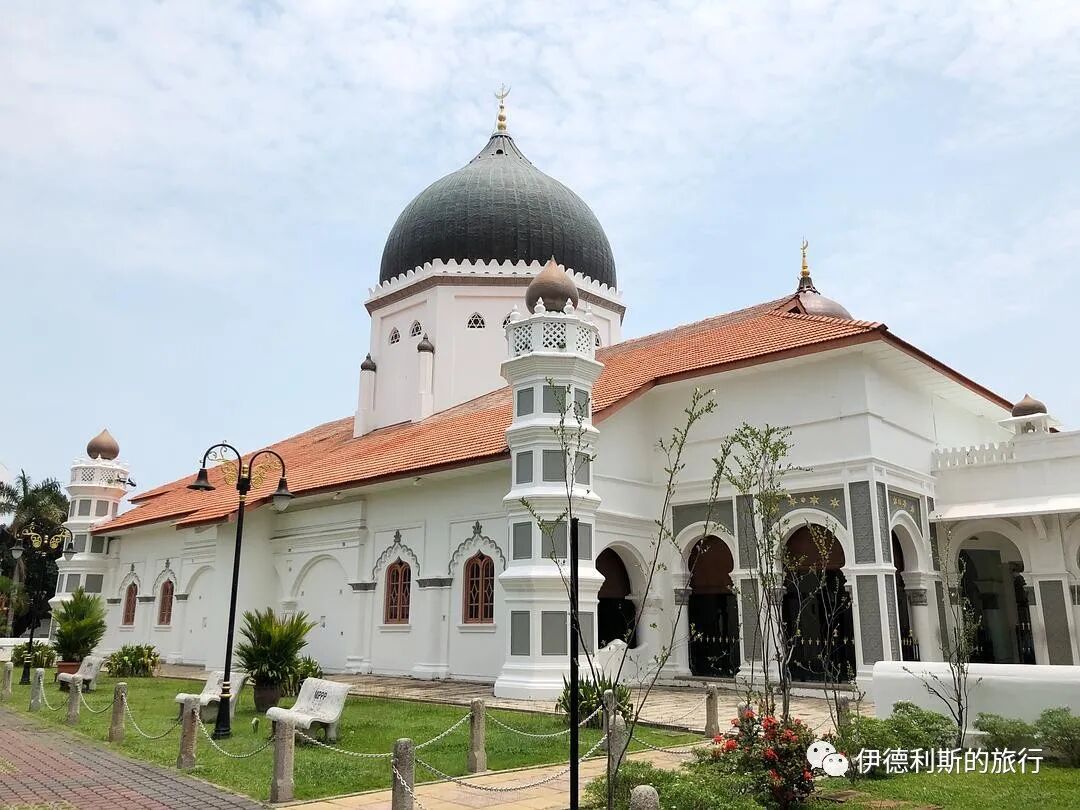
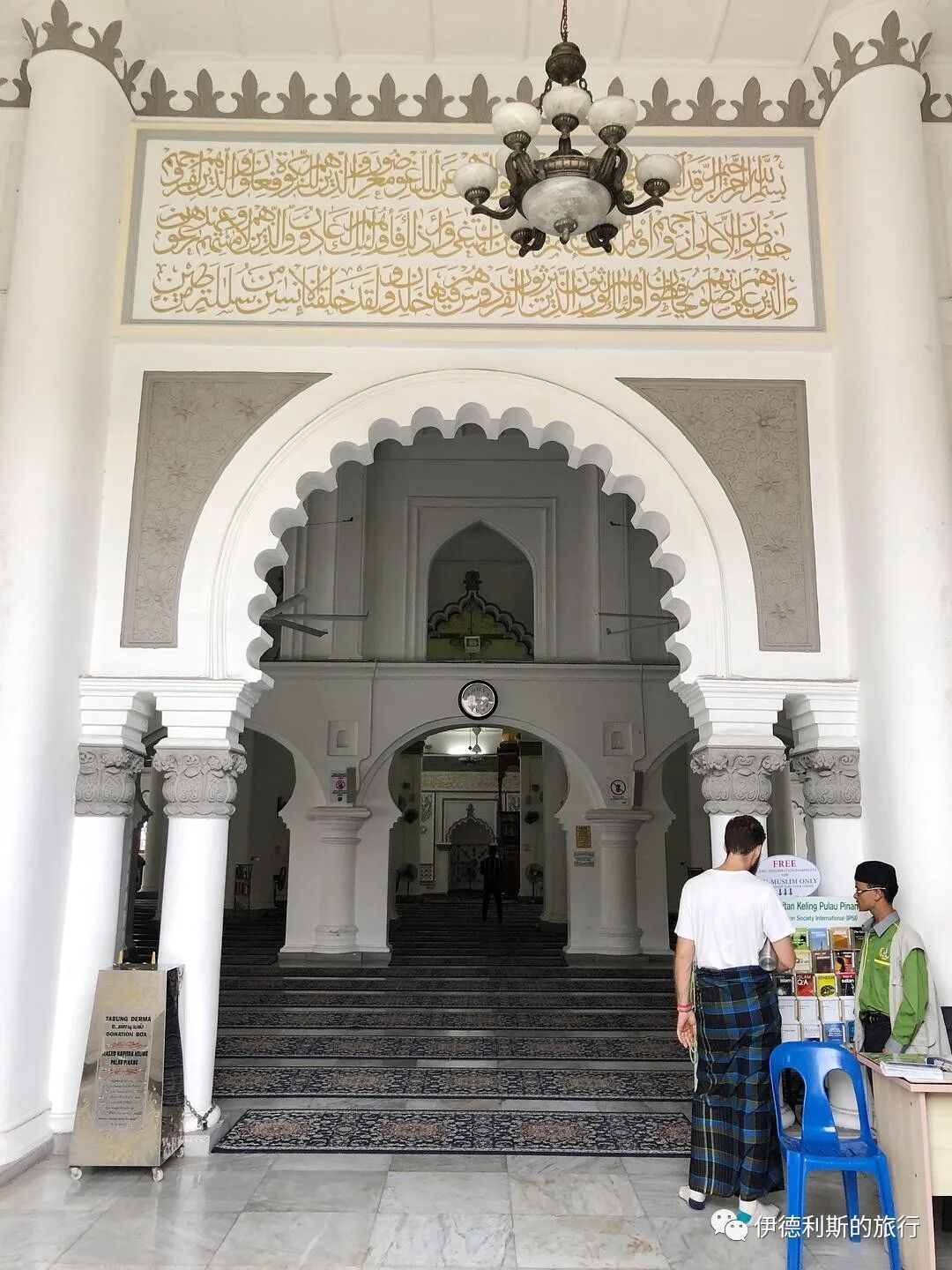
Kapitan Keling Mosque in The Little Mamak.
Nagore shrine (gongbei).
Nagore Dargha Sheriff, or Nagore shrine (gongbei), was built in the early 19th century at the same time as Kapitan Keling Mosque. It is the most important Sufi shrine (gongbei) for Tamil Muslims in Penang.
The Nagore shrine (gongbei) was built to honor Syed Shahul Hamid, a famous 16th-century Sufi saint from South India. Research shows Shahul Hamid was born in Uttar Pradesh, India, in 1504. He arrived in the town of Nagore in the southeastern state of Tamil Nadu around 1533 and passed away there in 1570. Legend says he performed many miracles in Nagore and cured King Achyuta Deva Raya of the 16th-century Vijayanagara Empire from suffering caused by sorcery. To thank Shahul Hamid, the king gifted him 81 hectares of land, and Shahul Hamid was buried there after he died. To honor Shahul Hamid, people built a Sufi shrine (gongbei) over his tomb.
In the 18th century, King Pratap Singh of the local Thanjavur Maratha Kingdom prayed at the shrine for a son. After his wish came true, the king built five towers for the shrine, and it gradually became an important Sufi center for Tamil Muslims.
After Tamil Muslims migrated to Penang and Singapore in the 19th century, they built a shrine (gongbei) in each city to honor their ancestors. Both buildings were modeled after the Nagore Dargah shrine in South India.
The man on the left in the picture below is reciting scripture for several children.
The picture below shows a donation box (nieti guan).
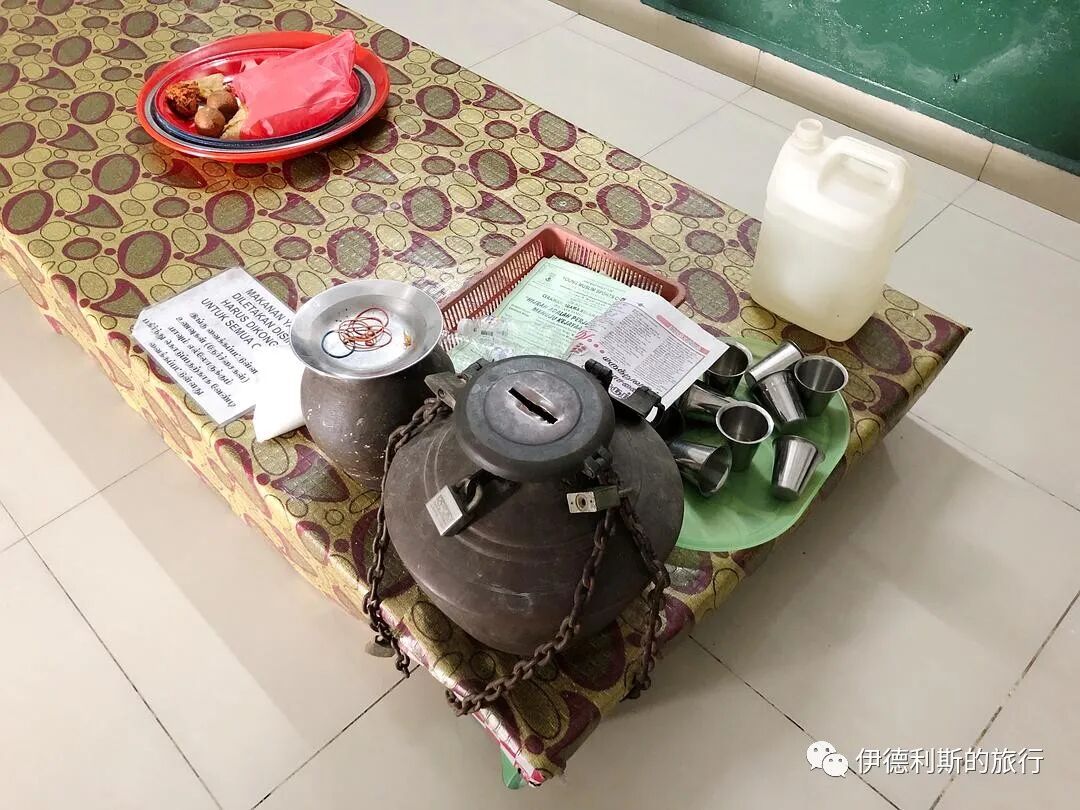
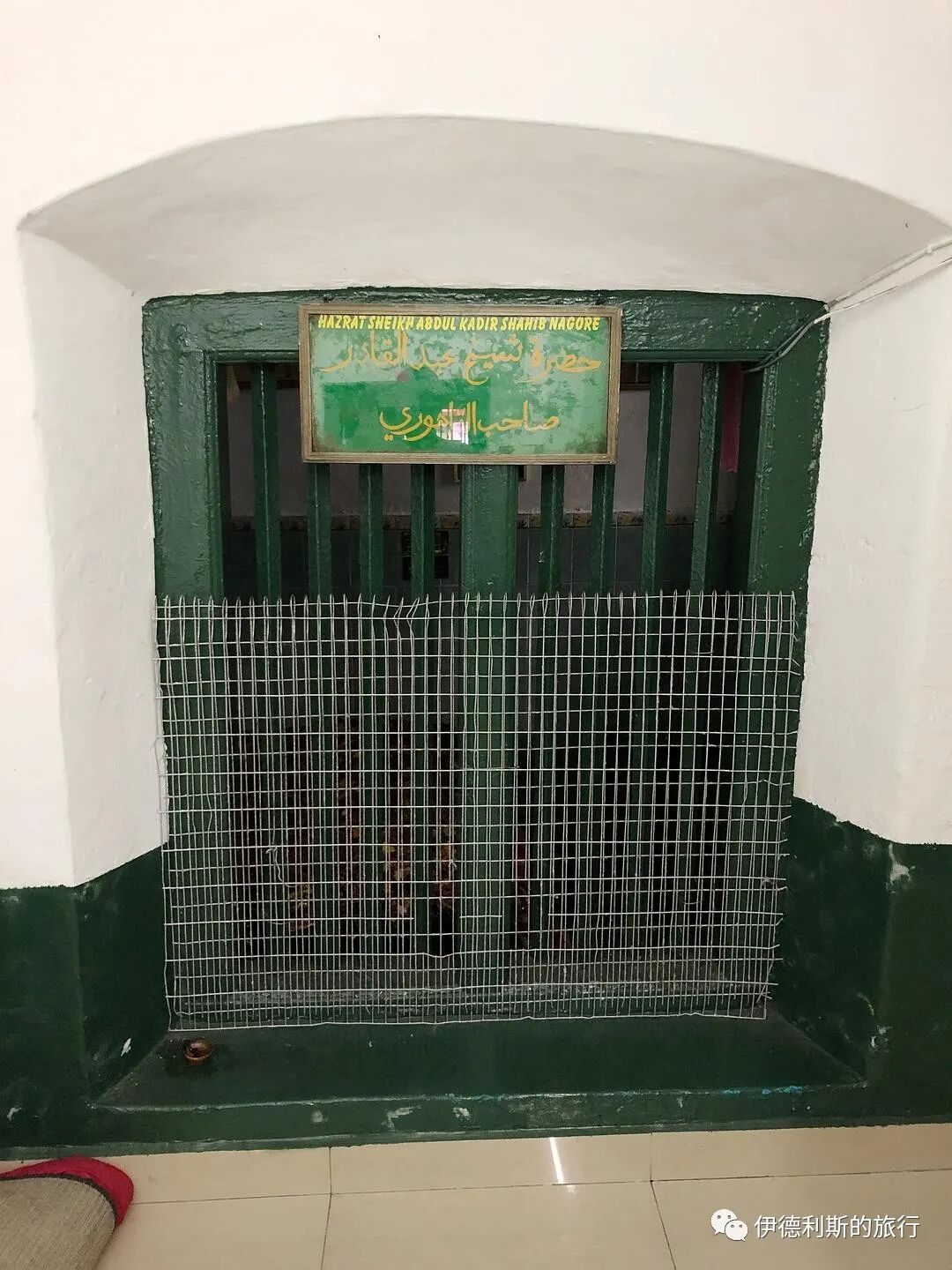
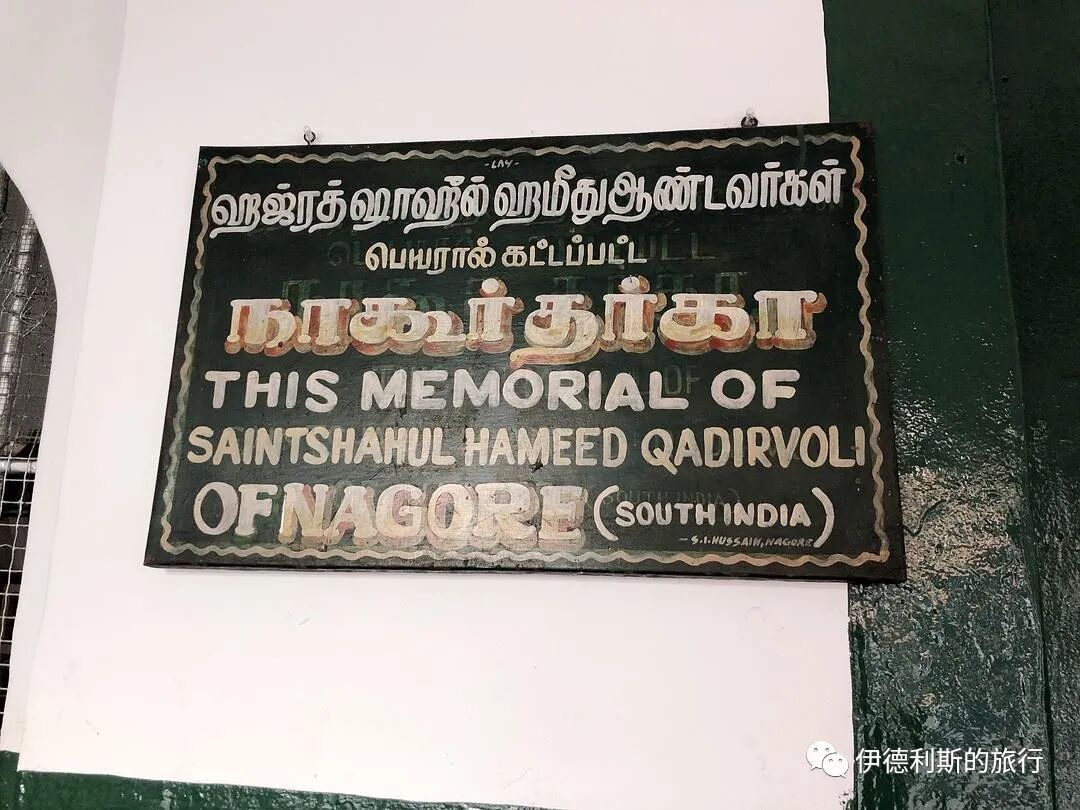
A biography of the ancestor.
A photo of a shrine (gongbei) in South India.
Nagore Dargha Sheriff in The Little Mamak
23 Love Lane Heritage Hotel
Penang has many heritage hotels converted from old mansions. The one we stayed at, 23 Love Lane, is a very interesting example. The 23 Love Lane mansion was built in the 1790s. British people, Indian Muslims, and Chinese people have all been its owners. Because of this, the building has a diverse style that mixes Eastern and Western influences, acting as a miniature version of Penang's cultural melting pot over the last century.
In the 1860s, this place was an Anglo-Indian bungalow. The Straits Eclectic style building was built between the late 19th and early 20th centuries, followed by the Jack Roof Annex villa in the 1920s. Around the 1930s, an Indian Shop House was added to the courtyard. After the 1990s, the mansion became the budget-friendly Oasis Hotel, and in 2011, it turned into the current heritage hotel, The Edison.
We stayed in a pre-war Indian Shop House this time. This place used to be the shop and home of a Tamil Muslim merchant family. Now, it is a two-story duplex vintage suite with bathrooms on both levels, making it a great spot for trips with family and friends.
Summary: Penang — Tamil Muslim Mosques, Food and History is presented here as a firsthand travel account in clear English, beginning with this scene: Penang, also known as Penang Island, is an island in the northwest of Malaysia. In 1786, the Sultanate of Kedah ceded Penang Island to the British East India Company. The account keeps its focus on Penang Travel, Tamil Muslims, Muslim Heritage while preserving the names, places, food, and historical details from the Chinese source.
Penang, also known as Penang Island, is an island in the northwest of Malaysia. In 1786, the Sultanate of Kedah ceded Penang Island to the British East India Company. George Town was then built on the island and became the first British base in Southeast Asia.
After George Town was built, the British East India Company kept encouraging people to move there. After the 19th century, the Chinese, Malays, Indians, Peranakan (local-born Chinese), Eurasians, and Siamese living in Penang all formed their own communities. Europeans held a dominant position in Penang and ran shipping companies. Peranakan people and Eurasians worked as lawyers, engineers, architects, and clerks. Most new Chinese immigrants started out as laborers and farmers and were called new guests (Sinkheh) by the local Peranakan people. Some of these Chinese later went into business, while others became craftsmen and cooks. The Malay people mainly grew rice and worked in the fishing industry outside the city.
Over 90% of the Indian population in Penang are Tamils from southeastern India and northern Sri Lanka. They are also called Chulias in Penang, a term that comes from the Coromandel Coast in southeastern India. As early as 1790, just four years after George Town was built, the British East India Company noted that Chulias were already running shops and farming in Penang. Unlike the Chinese, most of the first Tamil people did not settle permanently in Penang. Many returned to their hometowns after working for a certain period.
By the late 19th century, the price of tin dropped, which led to fewer Chinese immigrants. The resulting labor shortage pushed up wages. When India officially legalized migration to Penang in 1872 and steamship tickets for Indian immigrants became subsidized in 1887, these changes greatly encouraged Tamil people to move to Penang. Most recruited Tamil people came from the lower social classes. Europeans thought they were more disciplined than the Chinese and more willing to work for wages than the Malays. Because of this, Tamil laborers were increasingly used for public projects, municipal services, and road construction.
Tamil people crossing the Bay of Bengal from southeastern India to Penang.
Most Tamil people in Penang practice Hinduism, though some follow Islam. Tamil Muslims in Malaysia are called Mamak, and they are famous for their food culture found in Mamak stalls (Gerai Mamak) and Mamak restaurants (Restoran Mamak).
The word Mamak comes from the Tamil word for uncle (maa-ma). In Malaysia and Singapore, Tamil children often use this term for older Tamil men, especially in Tamil Muslim restaurants. Because of this, Malay people started calling the entire Tamil Muslim community Mamak, though the k at the end is silent in the Malay language.
The Little Mamak is a comic book by a Tamil Muslim cartoonist named ME that describes the lives of Tamil Muslims in Penang. You can buy it in bookstores in Penang and Kuala Lumpur, and it is currently the most interesting book about Penang Tamil Muslim culture.
A Tamil Muslim working as a laborer at the pier in The Little Mamak.
A century-old mamak restaurant: Hameediyah Restaurant.
In Penang, the Tamil Muslim food culture of mamak stalls and mamak restaurants is very famous. The oldest one is Hameediyah Restaurant, which opened in 1907.
The founder of Hameediyah Restaurant was named Mohamed. He came from a Tamil Muslim village in the southernmost Indian state of Tamil Nadu. The village had two old mosques, an Islamic school, and a Tamil school.
Mohamed arrived in Penang in 1890 and rented the land where the restaurant stands today shortly after. At first, he just used this place to prepare meals, then carried them on a shoulder pole to sell along the street, which is the famous shoulder-pole rice (Nasi Kandar).
A few years later, Mohamed decided to stop walking the streets and started selling his food from a fixed spot where he prepared it. In 1907, Mohamed officially opened Hameediyah Restaurant and hired two helpers. Mohamed learned many South Indian Tamil dishes from his mother when he was young, and he was best at making biryani fried rice (Biryani) and stuffed flatbread (Murtabak). After opening, the customers who came to eat included port migrant workers, rickshaw pullers, local traders, and government employees, and some diners affectionately called Mohamed and his staff Mamak. During this same period, the restaurants opened by Tamil Muslims from South India in Penang gradually became known as mamak stalls.
After Mohamed passed away in 1927, his son Kander took over the restaurant, followed by his grandson, and the business thrived. In 1941, Penang suffered devastating air raids by the Japanese military, but the Hameediyah restaurant stayed open and miraculously survived the bombing. After Japan was defeated in 1945, Kander's grandson and fourth-generation successor, Abu Bakar, took over the restaurant before passing it on to his relative, Abdul Sukkoor. Today, Abdul Sukkoor's eldest son, Seeni Pakir, and his youngest son, Syed Ibrahim, serve as the restaurant's head chefs and manage daily operations.
Nasi kandar (flat-pole rice) is a dish invented by South Indian Tamil Muslims in Penang. It consists of rice served with various curries made from beef, lamb, chicken, fish, and shrimp, along with side dishes. When Tamil Muslims first arrived in Penang in the 19th century, most carried their food on shoulder poles to sell along the streets. This is why the food they sold became known as nasi kandar. By the 20th century, Tamil Muslims began opening restaurants and stalls, but the name nasi kandar has been used ever since. During this trip at Hameediyah Restaurant, I had biryani kosong (plain biryani rice) with a lamb shank, chicken, and cabbage.
The original nasi kandar featured in The Little Mamak.
The original nasi kandar featured in The Little Mamak.
Murtabak is a thick pancake filled with eggs, onions, minced meat, and shrimp. In Malaysia, Singapore, and Thailand, the way to make Murtabak is basically the same as making Indian flatbread (roti canai). The Malaysian version has less meat and more egg than the one in Singapore. One theory says Murtabak comes from the Arabic word "Mutabbaq," which means "folded." It may have been brought to India by Yemeni Indian Muslims, and then brought to the Malay Archipelago by South Indian Tamil Muslims. Another theory says murtabak comes from Kerala in South India, where "muta" means egg and "bar" is short for "barota" bread.
Mamak mutton soup
I drank the Southeast Asian Indian version of oxtail soup (sup ekor lembu) and lamb trotter soup (sup kaki kambing) at the Mamak restaurant Sup Hameed in George Town, Penang.
Mamak mutton soup (sup kambing Mamak) is a signature broth from the Tamil Muslim community in South India living in Malaysia. The soup is a thick, yellowish, and oily broth packed with many different spices. It is usually eaten with white bread (roti sekeping).
Roti canai flatbread at a Mamak stall
Beyond mamak restaurants, Tamil Muslims in Penang mostly run street-side mamak stalls for snacks. I ate roti canai flatbread and roti bakar toast at one of these stalls called Roti Canai Transfer Road.
Roti canai is a signature dish of Tamil Muslims in Southeast Asia, likely originating from the South Indian parotta flatbread. Roti comes from the Sanskrit word for bread, while canai might come from the South Indian city of Chennai or the Malay word for spreading out dough (canai).
Roti canai is usually served with lentil curry (dal curry). I had mine with chicken, but you can also choose from other curries like fish, mutton, or chickpeas.
Roti canai from The Little Mamak.
This is toasted bread (roti bakar).
Indian fried noodles (mee goreng) at a mamak stall.
I ate Indian fried noodles (mee goreng) with squid (sotong) at a mamak stall in the Sri Weld Food Court.
Sri Weld Food Court is a food center mostly for Chinese food, and Seeni Mohamed Sheik Abidin's mamak stall is the only South Seas Indian stall there. Saini has helped his grandfather sell Indian stir-fried noodles (mee mamak) since he was a child. His noodles are famous for their sweet, sour, and spicy sauce, and he marinates the squid for a full day to make sure the flavor soaks in.
Stir-fried noodles (mee mamak) from The Little Mamak.
Penang Tamil desserts.
Desserts made by South Indian Tamil Muslims on the streets of Little India in George Town, Penang. One type is halva (halva) pastry, and the other yellow rectangular one is Mysore pak (mysore pak). This South Indian dessert is made with ghee, sugar syrup, and cardamom, and people usually eat it at weddings and festivals.
Kapitan Keling Mosque
Kapitan Keling Mosque (Masjid Kapitan Keling) is a mosque built in 1801 by Indian Muslims in Penang. It sits in the heart of the Chulias Indian community in George Town, Penang.
Kapitan Keling was an official title given by European colonists to leaders who managed Indian communities in Southeast Asia. Keling was a historical term used in the Malay Archipelago for Indian people. It started as a neutral word but became derogatory after the 20th century. The first Kapitan Keling of Penang was named Cauder Mohideen. He was born around 1759 and came from the state of Tamil Nadu in the far south of India.
In 1795, he joined the first Kapitan Cina (Kapitan Cina) Koh Lay Huan and other important figures in Penang to form the first Penang Assessment Committee to set taxes and tax rates.
Shortly after Penang was founded in 1786, Indian Muslim soldiers serving the British East India Company set up a temporary place for namaz. As the number of Indian Muslims in Penang grew, the community asked the Kapitan Keling to lead the construction of a formal mosque.
In 1801, the Penang government approved the Kapitan Keling's request and granted an 18-acre plot of land to build a mosque, a Muslim cemetery, and shops to collect rent. The Kapitan Keling and other Indian Muslims in Penang brought in workers and stone from India to build the first Penang Indian mosque, naming it after the Kapitan Keling.
The original Kapitan Keling Mosque was a single-story rectangular building with a minaret at each of its four corners. At that time, the mosque was surrounded by shops, and you could only enter through a narrow passageway. Large-scale urban construction around the mosque did not happen until 1905, when covered walkways (qilou) replaced the original simple houses and new roads were opened.
In 1910, architect N. A. Neubronner led an expansion of the mosque, adding Mughal-style domes and a large minaret. After the expansion was finished in 1916, the mosque became an example of Indo-Saracenic Revival architecture. The mosque was finally expanded into its current form in the 1930s. The main hall was made twice as high, and the ventilation system was improved.
Kapitan Keling Mosque in The Little Mamak.
Nagore shrine (gongbei).
Nagore Dargha Sheriff, or Nagore shrine (gongbei), was built in the early 19th century at the same time as Kapitan Keling Mosque. It is the most important Sufi shrine (gongbei) for Tamil Muslims in Penang.
The Nagore shrine (gongbei) was built to honor Syed Shahul Hamid, a famous 16th-century Sufi saint from South India. Research shows Shahul Hamid was born in Uttar Pradesh, India, in 1504. He arrived in the town of Nagore in the southeastern state of Tamil Nadu around 1533 and passed away there in 1570. Legend says he performed many miracles in Nagore and cured King Achyuta Deva Raya of the 16th-century Vijayanagara Empire from suffering caused by sorcery. To thank Shahul Hamid, the king gifted him 81 hectares of land, and Shahul Hamid was buried there after he died. To honor Shahul Hamid, people built a Sufi shrine (gongbei) over his tomb.
In the 18th century, King Pratap Singh of the local Thanjavur Maratha Kingdom prayed at the shrine for a son. After his wish came true, the king built five towers for the shrine, and it gradually became an important Sufi center for Tamil Muslims.
After Tamil Muslims migrated to Penang and Singapore in the 19th century, they built a shrine (gongbei) in each city to honor their ancestors. Both buildings were modeled after the Nagore Dargah shrine in South India.
The man on the left in the picture below is reciting scripture for several children.
The picture below shows a donation box (nieti guan).
A biography of the ancestor.
A photo of a shrine (gongbei) in South India.
Nagore Dargha Sheriff in The Little Mamak
23 Love Lane Heritage Hotel
Penang has many heritage hotels converted from old mansions. The one we stayed at, 23 Love Lane, is a very interesting example. The 23 Love Lane mansion was built in the 1790s. British people, Indian Muslims, and Chinese people have all been its owners. Because of this, the building has a diverse style that mixes Eastern and Western influences, acting as a miniature version of Penang's cultural melting pot over the last century.
In the 1860s, this place was an Anglo-Indian bungalow. The Straits Eclectic style building was built between the late 19th and early 20th centuries, followed by the Jack Roof Annex villa in the 1920s. Around the 1930s, an Indian Shop House was added to the courtyard. After the 1990s, the mansion became the budget-friendly Oasis Hotel, and in 2011, it turned into the current heritage hotel, The Edison.
We stayed in a pre-war Indian Shop House this time. This place used to be the shop and home of a Tamil Muslim merchant family. Now, it is a two-story duplex vintage suite with bathrooms on both levels, making it a great spot for trips with family and friends.
Muslim Travel Guide Singapore Chinatown: Jamae Mosque, Tamil Muslim Heritage and South Indian Style
Articles • Hasan09 posted the article • 0 comments • 311 views • 2026-05-24 01:47
Reposted from the web
Summary: This Singapore Muslim travel guide visits Jamae Mosque and its South Indian style. It preserves the author's Chinatown-area observations, mosque design notes, and Tamil Muslim heritage context.
My phone died just as I was about to finish this last time. When I turned it back on, all my data was gone, otherwise I would have posted this part a long time ago. I went to Singapore again a while ago and visited the same places as before. Let me tell you about this South Indian-style mosque built by South Indian Muslims.
Mosque minarets come in many styles. You have seen plenty of other styles, but this South Indian style is quite rare.
You can basically only see them in southern India, but since there are South Indian Muslim immigrants in Singapore, we can see one in a popular tourist spot here. This Jamae Mosque is actually on the same street as Singapore's famous Buddha Tooth Relic Mosque and Museum.
When you visit the Buddha Tooth Relic Mosque and Museum, you can also see a Hindu mosque and a South Indian-style mosque nearby.
Back to the main topic, the mosque's porch is right under the square minaret of the Jamae Mosque. Walk straight through the porch to find the visitor entrance. Once inside, you can see the interior of the prayer hall. The area without carpets is for visitors. Here, you can see display boards with basic Islamic knowledge, as well as the mosque's fan-shaped doors and windows and thick pillars, which have a distinct Nanyang style.
I performed wudu in the wudu room, which is a large pavilion, and then entered the prayer hall. I saw the front of the hall. On the left is Tamil, a language from southern India. Most Tamil people are Hindu, but some are Muslim.
In the middle is Arabic, and on the right is English. The side texts are translations of the Arabic scripture in the middle, which is from the Quran, Chapter 13, Verse 28. There are also the 99 Names of Allah around the prayer hall.
Leaving the mosque, I saw the Shahada in English at the porch. Across the street are many Chinese shops and a place called Mohamed Ali Lane. I am not sure of the story behind that name.
That is all for this mosque. Next time, I will take you to see the gongbei nearby. Stay tuned. view all
Summary: This Singapore Muslim travel guide visits Jamae Mosque and its South Indian style. It preserves the author's Chinatown-area observations, mosque design notes, and Tamil Muslim heritage context.
My phone died just as I was about to finish this last time. When I turned it back on, all my data was gone, otherwise I would have posted this part a long time ago. I went to Singapore again a while ago and visited the same places as before. Let me tell you about this South Indian-style mosque built by South Indian Muslims.
Mosque minarets come in many styles. You have seen plenty of other styles, but this South Indian style is quite rare.
You can basically only see them in southern India, but since there are South Indian Muslim immigrants in Singapore, we can see one in a popular tourist spot here. This Jamae Mosque is actually on the same street as Singapore's famous Buddha Tooth Relic Mosque and Museum.
When you visit the Buddha Tooth Relic Mosque and Museum, you can also see a Hindu mosque and a South Indian-style mosque nearby.
Back to the main topic, the mosque's porch is right under the square minaret of the Jamae Mosque. Walk straight through the porch to find the visitor entrance. Once inside, you can see the interior of the prayer hall. The area without carpets is for visitors. Here, you can see display boards with basic Islamic knowledge, as well as the mosque's fan-shaped doors and windows and thick pillars, which have a distinct Nanyang style.
I performed wudu in the wudu room, which is a large pavilion, and then entered the prayer hall. I saw the front of the hall. On the left is Tamil, a language from southern India. Most Tamil people are Hindu, but some are Muslim.
In the middle is Arabic, and on the right is English. The side texts are translations of the Arabic scripture in the middle, which is from the Quran, Chapter 13, Verse 28. There are also the 99 Names of Allah around the prayer hall.
Leaving the mosque, I saw the Shahada in English at the porch. Across the street are many Chinese shops and a place called Mohamed Ali Lane. I am not sure of the story behind that name.
That is all for this mosque. Next time, I will take you to see the gongbei nearby. Stay tuned. view all
Reposted from the web
Summary: This Singapore Muslim travel guide visits Jamae Mosque and its South Indian style. It preserves the author's Chinatown-area observations, mosque design notes, and Tamil Muslim heritage context.
My phone died just as I was about to finish this last time. When I turned it back on, all my data was gone, otherwise I would have posted this part a long time ago. I went to Singapore again a while ago and visited the same places as before. Let me tell you about this South Indian-style mosque built by South Indian Muslims.
Mosque minarets come in many styles. You have seen plenty of other styles, but this South Indian style is quite rare.
You can basically only see them in southern India, but since there are South Indian Muslim immigrants in Singapore, we can see one in a popular tourist spot here. This Jamae Mosque is actually on the same street as Singapore's famous Buddha Tooth Relic Mosque and Museum.
When you visit the Buddha Tooth Relic Mosque and Museum, you can also see a Hindu mosque and a South Indian-style mosque nearby.
Back to the main topic, the mosque's porch is right under the square minaret of the Jamae Mosque. Walk straight through the porch to find the visitor entrance. Once inside, you can see the interior of the prayer hall. The area without carpets is for visitors. Here, you can see display boards with basic Islamic knowledge, as well as the mosque's fan-shaped doors and windows and thick pillars, which have a distinct Nanyang style.
I performed wudu in the wudu room, which is a large pavilion, and then entered the prayer hall. I saw the front of the hall. On the left is Tamil, a language from southern India. Most Tamil people are Hindu, but some are Muslim.
In the middle is Arabic, and on the right is English. The side texts are translations of the Arabic scripture in the middle, which is from the Quran, Chapter 13, Verse 28. There are also the 99 Names of Allah around the prayer hall.
Leaving the mosque, I saw the Shahada in English at the porch. Across the street are many Chinese shops and a place called Mohamed Ali Lane. I am not sure of the story behind that name.
That is all for this mosque. Next time, I will take you to see the gongbei nearby. Stay tuned.
Summary: This Singapore Muslim travel guide visits Jamae Mosque and its South Indian style. It preserves the author's Chinatown-area observations, mosque design notes, and Tamil Muslim heritage context.
My phone died just as I was about to finish this last time. When I turned it back on, all my data was gone, otherwise I would have posted this part a long time ago. I went to Singapore again a while ago and visited the same places as before. Let me tell you about this South Indian-style mosque built by South Indian Muslims.
Mosque minarets come in many styles. You have seen plenty of other styles, but this South Indian style is quite rare.
You can basically only see them in southern India, but since there are South Indian Muslim immigrants in Singapore, we can see one in a popular tourist spot here. This Jamae Mosque is actually on the same street as Singapore's famous Buddha Tooth Relic Mosque and Museum.
When you visit the Buddha Tooth Relic Mosque and Museum, you can also see a Hindu mosque and a South Indian-style mosque nearby.
Back to the main topic, the mosque's porch is right under the square minaret of the Jamae Mosque. Walk straight through the porch to find the visitor entrance. Once inside, you can see the interior of the prayer hall. The area without carpets is for visitors. Here, you can see display boards with basic Islamic knowledge, as well as the mosque's fan-shaped doors and windows and thick pillars, which have a distinct Nanyang style.
I performed wudu in the wudu room, which is a large pavilion, and then entered the prayer hall. I saw the front of the hall. On the left is Tamil, a language from southern India. Most Tamil people are Hindu, but some are Muslim.
In the middle is Arabic, and on the right is English. The side texts are translations of the Arabic scripture in the middle, which is from the Quran, Chapter 13, Verse 28. There are also the 99 Names of Allah around the prayer hall.
Leaving the mosque, I saw the Shahada in English at the porch. Across the street are many Chinese shops and a place called Mohamed Ali Lane. I am not sure of the story behind that name.
That is all for this mosque. Next time, I will take you to see the gongbei nearby. Stay tuned.
Halal Travel Guide: Penang — Tamil Muslim Mosques, Food and History
Articles • ali2007fr posted the article • 0 comments • 155 views • 2026-05-17 21:54
Reposted from the web
Summary: Penang — Tamil Muslim Mosques, Food and History is presented here as a firsthand travel account in clear English, beginning with this scene: Penang, also known as Penang Island, is an island in the northwest of Malaysia. In 1786, the Sultanate of Kedah ceded Penang Island to the British East India Company. The account keeps its focus on Penang Travel, Tamil Muslims, Muslim Heritage while preserving the names, places, food, and historical details from the Chinese source.
Penang, also known as Penang Island, is an island in the northwest of Malaysia. In 1786, the Sultanate of Kedah ceded Penang Island to the British East India Company. George Town was then built on the island and became the first British base in Southeast Asia.
After George Town was built, the British East India Company kept encouraging people to move there. After the 19th century, the Chinese, Malays, Indians, Peranakan (local-born Chinese), Eurasians, and Siamese living in Penang all formed their own communities. Europeans held a dominant position in Penang and ran shipping companies. Peranakan people and Eurasians worked as lawyers, engineers, architects, and clerks. Most new Chinese immigrants started out as laborers and farmers and were called new guests (Sinkheh) by the local Peranakan people. Some of these Chinese later went into business, while others became craftsmen and cooks. The Malay people mainly grew rice and worked in the fishing industry outside the city.
Over 90% of the Indian population in Penang are Tamils from southeastern India and northern Sri Lanka. They are also called Chulias in Penang, a term that comes from the Coromandel Coast in southeastern India. As early as 1790, just four years after George Town was built, the British East India Company noted that Chulias were already running shops and farming in Penang. Unlike the Chinese, most of the first Tamil people did not settle permanently in Penang. Many returned to their hometowns after working for a certain period.
By the late 19th century, the price of tin dropped, which led to fewer Chinese immigrants. The resulting labor shortage pushed up wages. When India officially legalized migration to Penang in 1872 and steamship tickets for Indian immigrants became subsidized in 1887, these changes greatly encouraged Tamil people to move to Penang. Most recruited Tamil people came from the lower social classes. Europeans thought they were more disciplined than the Chinese and more willing to work for wages than the Malays. Because of this, Tamil laborers were increasingly used for public projects, municipal services, and road construction.
Tamil people crossing the Bay of Bengal from southeastern India to Penang.
Most Tamil people in Penang practice Hinduism, though some follow Islam. Tamil Muslims in Malaysia are called Mamak, and they are famous for their food culture found in Mamak stalls (Gerai Mamak) and Mamak restaurants (Restoran Mamak).
The word Mamak comes from the Tamil word for uncle (maa-ma). In Malaysia and Singapore, Tamil children often use this term for older Tamil men, especially in Tamil Muslim restaurants. Because of this, Malay people started calling the entire Tamil Muslim community Mamak, though the k at the end is silent in the Malay language.
The Little Mamak is a comic book by a Tamil Muslim cartoonist named ME that describes the lives of Tamil Muslims in Penang. You can buy it in bookstores in Penang and Kuala Lumpur, and it is currently the most interesting book about Penang Tamil Muslim culture.
A Tamil Muslim working as a laborer at the pier in The Little Mamak.
A century-old mamak restaurant: Hameediyah Restaurant.
In Penang, the Tamil Muslim food culture of mamak stalls and mamak restaurants is very famous. The oldest one is Hameediyah Restaurant, which opened in 1907.
The founder of Hameediyah Restaurant was named Mohamed. He came from a Tamil Muslim village in the southernmost Indian state of Tamil Nadu. The village had two old mosques, an Islamic school, and a Tamil school.
Mohamed arrived in Penang in 1890 and rented the land where the restaurant stands today shortly after. At first, he just used this place to prepare meals, then carried them on a shoulder pole to sell along the street, which is the famous shoulder-pole rice (Nasi Kandar).
A few years later, Mohamed decided to stop walking the streets and started selling his food from a fixed spot where he prepared it. In 1907, Mohamed officially opened Hameediyah Restaurant and hired two helpers. Mohamed learned many South Indian Tamil dishes from his mother when he was young, and he was best at making biryani fried rice (Biryani) and stuffed flatbread (Murtabak). After opening, the customers who came to eat included port migrant workers, rickshaw pullers, local traders, and government employees, and some diners affectionately called Mohamed and his staff Mamak. During this same period, the restaurants opened by Tamil Muslims from South India in Penang gradually became known as mamak stalls.
After Mohamed passed away in 1927, his son Kander took over the restaurant, followed by his grandson, and the business thrived. In 1941, Penang suffered devastating air raids by the Japanese military, but the Hameediyah restaurant stayed open and miraculously survived the bombing. After Japan was defeated in 1945, Kander's grandson and fourth-generation successor, Abu Bakar, took over the restaurant before passing it on to his relative, Abdul Sukkoor. Today, Abdul Sukkoor's eldest son, Seeni Pakir, and his youngest son, Syed Ibrahim, serve as the restaurant's head chefs and manage daily operations.
Nasi kandar (flat-pole rice) is a dish invented by South Indian Tamil Muslims in Penang. It consists of rice served with various curries made from beef, lamb, chicken, fish, and shrimp, along with side dishes. When Tamil Muslims first arrived in Penang in the 19th century, most carried their food on shoulder poles to sell along the streets. This is why the food they sold became known as nasi kandar. By the 20th century, Tamil Muslims began opening restaurants and stalls, but the name nasi kandar has been used ever since. During this trip at Hameediyah Restaurant, I had biryani kosong (plain biryani rice) with a lamb shank, chicken, and cabbage.
The original nasi kandar featured in The Little Mamak.
The original nasi kandar featured in The Little Mamak.
Murtabak is a thick pancake filled with eggs, onions, minced meat, and shrimp. In Malaysia, Singapore, and Thailand, the way to make Murtabak is basically the same as making Indian flatbread (roti canai). The Malaysian version has less meat and more egg than the one in Singapore. One theory says Murtabak comes from the Arabic word "Mutabbaq," which means "folded." It may have been brought to India by Yemeni Indian Muslims, and then brought to the Malay Archipelago by South Indian Tamil Muslims. Another theory says murtabak comes from Kerala in South India, where "muta" means egg and "bar" is short for "barota" bread.
Mamak mutton soup
I drank the Southeast Asian Indian version of oxtail soup (sup ekor lembu) and lamb trotter soup (sup kaki kambing) at the Mamak restaurant Sup Hameed in George Town, Penang.
Mamak mutton soup (sup kambing Mamak) is a signature broth from the Tamil Muslim community in South India living in Malaysia. The soup is a thick, yellowish, and oily broth packed with many different spices. It is usually eaten with white bread (roti sekeping).
Roti canai flatbread at a Mamak stall
Beyond mamak restaurants, Tamil Muslims in Penang mostly run street-side mamak stalls for snacks. I ate roti canai flatbread and roti bakar toast at one of these stalls called Roti Canai Transfer Road.
Roti canai is a signature dish of Tamil Muslims in Southeast Asia, likely originating from the South Indian parotta flatbread. Roti comes from the Sanskrit word for bread, while canai might come from the South Indian city of Chennai or the Malay word for spreading out dough (canai).
Roti canai is usually served with lentil curry (dal curry). I had mine with chicken, but you can also choose from other curries like fish, mutton, or chickpeas.
Roti canai from The Little Mamak.
This is toasted bread (roti bakar).
Indian fried noodles (mee goreng) at a mamak stall.
I ate Indian fried noodles (mee goreng) with squid (sotong) at a mamak stall in the Sri Weld Food Court.
Sri Weld Food Court is a food center mostly for Chinese food, and Seeni Mohamed Sheik Abidin's mamak stall is the only South Seas Indian stall there. Saini has helped his grandfather sell Indian stir-fried noodles (mee mamak) since he was a child. His noodles are famous for their sweet, sour, and spicy sauce, and he marinates the squid for a full day to make sure the flavor soaks in.
Stir-fried noodles (mee mamak) from The Little Mamak.
Penang Tamil desserts.
Desserts made by South Indian Tamil Muslims on the streets of Little India in George Town, Penang. One type is halva (halva) pastry, and the other yellow rectangular one is Mysore pak (mysore pak). This South Indian dessert is made with ghee, sugar syrup, and cardamom, and people usually eat it at weddings and festivals.
Kapitan Keling Mosque
Kapitan Keling Mosque (Masjid Kapitan Keling) is a mosque built in 1801 by Indian Muslims in Penang. It sits in the heart of the Chulias Indian community in George Town, Penang.
Kapitan Keling was an official title given by European colonists to leaders who managed Indian communities in Southeast Asia. Keling was a historical term used in the Malay Archipelago for Indian people. It started as a neutral word but became derogatory after the 20th century. The first Kapitan Keling of Penang was named Cauder Mohideen. He was born around 1759 and came from the state of Tamil Nadu in the far south of India.
In 1795, he joined the first Kapitan Cina (Kapitan Cina) Koh Lay Huan and other important figures in Penang to form the first Penang Assessment Committee to set taxes and tax rates.
Shortly after Penang was founded in 1786, Indian Muslim soldiers serving the British East India Company set up a temporary place for namaz. As the number of Indian Muslims in Penang grew, the community asked the Kapitan Keling to lead the construction of a formal mosque.
In 1801, the Penang government approved the Kapitan Keling's request and granted an 18-acre plot of land to build a mosque, a Muslim cemetery, and shops to collect rent. The Kapitan Keling and other Indian Muslims in Penang brought in workers and stone from India to build the first Penang Indian mosque, naming it after the Kapitan Keling.
The original Kapitan Keling Mosque was a single-story rectangular building with a minaret at each of its four corners. At that time, the mosque was surrounded by shops, and you could only enter through a narrow passageway. Large-scale urban construction around the mosque did not happen until 1905, when covered walkways (qilou) replaced the original simple houses and new roads were opened.
In 1910, architect N. A. Neubronner led an expansion of the mosque, adding Mughal-style domes and a large minaret. After the expansion was finished in 1916, the mosque became an example of Indo-Saracenic Revival architecture. The mosque was finally expanded into its current form in the 1930s. The main hall was made twice as high, and the ventilation system was improved.
Kapitan Keling Mosque in The Little Mamak.
Nagore shrine (gongbei).
Nagore Dargha Sheriff, or Nagore shrine (gongbei), was built in the early 19th century at the same time as Kapitan Keling Mosque. It is the most important Sufi shrine (gongbei) for Tamil Muslims in Penang.
The Nagore shrine (gongbei) was built to honor Syed Shahul Hamid, a famous 16th-century Sufi saint from South India. Research shows Shahul Hamid was born in Uttar Pradesh, India, in 1504. He arrived in the town of Nagore in the southeastern state of Tamil Nadu around 1533 and passed away there in 1570. Legend says he performed many miracles in Nagore and cured King Achyuta Deva Raya of the 16th-century Vijayanagara Empire from suffering caused by sorcery. To thank Shahul Hamid, the king gifted him 81 hectares of land, and Shahul Hamid was buried there after he died. To honor Shahul Hamid, people built a Sufi shrine (gongbei) over his tomb.
In the 18th century, King Pratap Singh of the local Thanjavur Maratha Kingdom prayed at the shrine for a son. After his wish came true, the king built five towers for the shrine, and it gradually became an important Sufi center for Tamil Muslims.
After Tamil Muslims migrated to Penang and Singapore in the 19th century, they built a shrine (gongbei) in each city to honor their ancestors. Both buildings were modeled after the Nagore Dargah shrine in South India.
The man on the left in the picture below is reciting scripture for several children.
The picture below shows a donation box (nieti guan).
A biography of the ancestor.
A photo of a shrine (gongbei) in South India.
Nagore Dargha Sheriff in The Little Mamak
23 Love Lane Heritage Hotel
Penang has many heritage hotels converted from old mansions. The one we stayed at, 23 Love Lane, is a very interesting example. The 23 Love Lane mansion was built in the 1790s. British people, Indian Muslims, and Chinese people have all been its owners. Because of this, the building has a diverse style that mixes Eastern and Western influences, acting as a miniature version of Penang's cultural melting pot over the last century.
In the 1860s, this place was an Anglo-Indian bungalow. The Straits Eclectic style building was built between the late 19th and early 20th centuries, followed by the Jack Roof Annex villa in the 1920s. Around the 1930s, an Indian Shop House was added to the courtyard. After the 1990s, the mansion became the budget-friendly Oasis Hotel, and in 2011, it turned into the current heritage hotel, The Edison.
We stayed in a pre-war Indian Shop House this time. This place used to be the shop and home of a Tamil Muslim merchant family. Now, it is a two-story duplex vintage suite with bathrooms on both levels, making it a great spot for trips with family and friends. view all
Summary: Penang — Tamil Muslim Mosques, Food and History is presented here as a firsthand travel account in clear English, beginning with this scene: Penang, also known as Penang Island, is an island in the northwest of Malaysia. In 1786, the Sultanate of Kedah ceded Penang Island to the British East India Company. The account keeps its focus on Penang Travel, Tamil Muslims, Muslim Heritage while preserving the names, places, food, and historical details from the Chinese source.
Penang, also known as Penang Island, is an island in the northwest of Malaysia. In 1786, the Sultanate of Kedah ceded Penang Island to the British East India Company. George Town was then built on the island and became the first British base in Southeast Asia.
After George Town was built, the British East India Company kept encouraging people to move there. After the 19th century, the Chinese, Malays, Indians, Peranakan (local-born Chinese), Eurasians, and Siamese living in Penang all formed their own communities. Europeans held a dominant position in Penang and ran shipping companies. Peranakan people and Eurasians worked as lawyers, engineers, architects, and clerks. Most new Chinese immigrants started out as laborers and farmers and were called new guests (Sinkheh) by the local Peranakan people. Some of these Chinese later went into business, while others became craftsmen and cooks. The Malay people mainly grew rice and worked in the fishing industry outside the city.
Over 90% of the Indian population in Penang are Tamils from southeastern India and northern Sri Lanka. They are also called Chulias in Penang, a term that comes from the Coromandel Coast in southeastern India. As early as 1790, just four years after George Town was built, the British East India Company noted that Chulias were already running shops and farming in Penang. Unlike the Chinese, most of the first Tamil people did not settle permanently in Penang. Many returned to their hometowns after working for a certain period.
By the late 19th century, the price of tin dropped, which led to fewer Chinese immigrants. The resulting labor shortage pushed up wages. When India officially legalized migration to Penang in 1872 and steamship tickets for Indian immigrants became subsidized in 1887, these changes greatly encouraged Tamil people to move to Penang. Most recruited Tamil people came from the lower social classes. Europeans thought they were more disciplined than the Chinese and more willing to work for wages than the Malays. Because of this, Tamil laborers were increasingly used for public projects, municipal services, and road construction.
Tamil people crossing the Bay of Bengal from southeastern India to Penang.
Most Tamil people in Penang practice Hinduism, though some follow Islam. Tamil Muslims in Malaysia are called Mamak, and they are famous for their food culture found in Mamak stalls (Gerai Mamak) and Mamak restaurants (Restoran Mamak).
The word Mamak comes from the Tamil word for uncle (maa-ma). In Malaysia and Singapore, Tamil children often use this term for older Tamil men, especially in Tamil Muslim restaurants. Because of this, Malay people started calling the entire Tamil Muslim community Mamak, though the k at the end is silent in the Malay language.
The Little Mamak is a comic book by a Tamil Muslim cartoonist named ME that describes the lives of Tamil Muslims in Penang. You can buy it in bookstores in Penang and Kuala Lumpur, and it is currently the most interesting book about Penang Tamil Muslim culture.
A Tamil Muslim working as a laborer at the pier in The Little Mamak.
A century-old mamak restaurant: Hameediyah Restaurant.
In Penang, the Tamil Muslim food culture of mamak stalls and mamak restaurants is very famous. The oldest one is Hameediyah Restaurant, which opened in 1907.
The founder of Hameediyah Restaurant was named Mohamed. He came from a Tamil Muslim village in the southernmost Indian state of Tamil Nadu. The village had two old mosques, an Islamic school, and a Tamil school.
Mohamed arrived in Penang in 1890 and rented the land where the restaurant stands today shortly after. At first, he just used this place to prepare meals, then carried them on a shoulder pole to sell along the street, which is the famous shoulder-pole rice (Nasi Kandar).
A few years later, Mohamed decided to stop walking the streets and started selling his food from a fixed spot where he prepared it. In 1907, Mohamed officially opened Hameediyah Restaurant and hired two helpers. Mohamed learned many South Indian Tamil dishes from his mother when he was young, and he was best at making biryani fried rice (Biryani) and stuffed flatbread (Murtabak). After opening, the customers who came to eat included port migrant workers, rickshaw pullers, local traders, and government employees, and some diners affectionately called Mohamed and his staff Mamak. During this same period, the restaurants opened by Tamil Muslims from South India in Penang gradually became known as mamak stalls.
After Mohamed passed away in 1927, his son Kander took over the restaurant, followed by his grandson, and the business thrived. In 1941, Penang suffered devastating air raids by the Japanese military, but the Hameediyah restaurant stayed open and miraculously survived the bombing. After Japan was defeated in 1945, Kander's grandson and fourth-generation successor, Abu Bakar, took over the restaurant before passing it on to his relative, Abdul Sukkoor. Today, Abdul Sukkoor's eldest son, Seeni Pakir, and his youngest son, Syed Ibrahim, serve as the restaurant's head chefs and manage daily operations.
Nasi kandar (flat-pole rice) is a dish invented by South Indian Tamil Muslims in Penang. It consists of rice served with various curries made from beef, lamb, chicken, fish, and shrimp, along with side dishes. When Tamil Muslims first arrived in Penang in the 19th century, most carried their food on shoulder poles to sell along the streets. This is why the food they sold became known as nasi kandar. By the 20th century, Tamil Muslims began opening restaurants and stalls, but the name nasi kandar has been used ever since. During this trip at Hameediyah Restaurant, I had biryani kosong (plain biryani rice) with a lamb shank, chicken, and cabbage.
The original nasi kandar featured in The Little Mamak.
The original nasi kandar featured in The Little Mamak.
Murtabak is a thick pancake filled with eggs, onions, minced meat, and shrimp. In Malaysia, Singapore, and Thailand, the way to make Murtabak is basically the same as making Indian flatbread (roti canai). The Malaysian version has less meat and more egg than the one in Singapore. One theory says Murtabak comes from the Arabic word "Mutabbaq," which means "folded." It may have been brought to India by Yemeni Indian Muslims, and then brought to the Malay Archipelago by South Indian Tamil Muslims. Another theory says murtabak comes from Kerala in South India, where "muta" means egg and "bar" is short for "barota" bread.
Mamak mutton soup
I drank the Southeast Asian Indian version of oxtail soup (sup ekor lembu) and lamb trotter soup (sup kaki kambing) at the Mamak restaurant Sup Hameed in George Town, Penang.
Mamak mutton soup (sup kambing Mamak) is a signature broth from the Tamil Muslim community in South India living in Malaysia. The soup is a thick, yellowish, and oily broth packed with many different spices. It is usually eaten with white bread (roti sekeping).
Roti canai flatbread at a Mamak stall
Beyond mamak restaurants, Tamil Muslims in Penang mostly run street-side mamak stalls for snacks. I ate roti canai flatbread and roti bakar toast at one of these stalls called Roti Canai Transfer Road.
Roti canai is a signature dish of Tamil Muslims in Southeast Asia, likely originating from the South Indian parotta flatbread. Roti comes from the Sanskrit word for bread, while canai might come from the South Indian city of Chennai or the Malay word for spreading out dough (canai).
Roti canai is usually served with lentil curry (dal curry). I had mine with chicken, but you can also choose from other curries like fish, mutton, or chickpeas.
Roti canai from The Little Mamak.
This is toasted bread (roti bakar).
Indian fried noodles (mee goreng) at a mamak stall.
I ate Indian fried noodles (mee goreng) with squid (sotong) at a mamak stall in the Sri Weld Food Court.
Sri Weld Food Court is a food center mostly for Chinese food, and Seeni Mohamed Sheik Abidin's mamak stall is the only South Seas Indian stall there. Saini has helped his grandfather sell Indian stir-fried noodles (mee mamak) since he was a child. His noodles are famous for their sweet, sour, and spicy sauce, and he marinates the squid for a full day to make sure the flavor soaks in.
Stir-fried noodles (mee mamak) from The Little Mamak.
Penang Tamil desserts.
Desserts made by South Indian Tamil Muslims on the streets of Little India in George Town, Penang. One type is halva (halva) pastry, and the other yellow rectangular one is Mysore pak (mysore pak). This South Indian dessert is made with ghee, sugar syrup, and cardamom, and people usually eat it at weddings and festivals.
Kapitan Keling Mosque
Kapitan Keling Mosque (Masjid Kapitan Keling) is a mosque built in 1801 by Indian Muslims in Penang. It sits in the heart of the Chulias Indian community in George Town, Penang.
Kapitan Keling was an official title given by European colonists to leaders who managed Indian communities in Southeast Asia. Keling was a historical term used in the Malay Archipelago for Indian people. It started as a neutral word but became derogatory after the 20th century. The first Kapitan Keling of Penang was named Cauder Mohideen. He was born around 1759 and came from the state of Tamil Nadu in the far south of India.
In 1795, he joined the first Kapitan Cina (Kapitan Cina) Koh Lay Huan and other important figures in Penang to form the first Penang Assessment Committee to set taxes and tax rates.
Shortly after Penang was founded in 1786, Indian Muslim soldiers serving the British East India Company set up a temporary place for namaz. As the number of Indian Muslims in Penang grew, the community asked the Kapitan Keling to lead the construction of a formal mosque.
In 1801, the Penang government approved the Kapitan Keling's request and granted an 18-acre plot of land to build a mosque, a Muslim cemetery, and shops to collect rent. The Kapitan Keling and other Indian Muslims in Penang brought in workers and stone from India to build the first Penang Indian mosque, naming it after the Kapitan Keling.
The original Kapitan Keling Mosque was a single-story rectangular building with a minaret at each of its four corners. At that time, the mosque was surrounded by shops, and you could only enter through a narrow passageway. Large-scale urban construction around the mosque did not happen until 1905, when covered walkways (qilou) replaced the original simple houses and new roads were opened.
In 1910, architect N. A. Neubronner led an expansion of the mosque, adding Mughal-style domes and a large minaret. After the expansion was finished in 1916, the mosque became an example of Indo-Saracenic Revival architecture. The mosque was finally expanded into its current form in the 1930s. The main hall was made twice as high, and the ventilation system was improved.
Kapitan Keling Mosque in The Little Mamak.
Nagore shrine (gongbei).
Nagore Dargha Sheriff, or Nagore shrine (gongbei), was built in the early 19th century at the same time as Kapitan Keling Mosque. It is the most important Sufi shrine (gongbei) for Tamil Muslims in Penang.
The Nagore shrine (gongbei) was built to honor Syed Shahul Hamid, a famous 16th-century Sufi saint from South India. Research shows Shahul Hamid was born in Uttar Pradesh, India, in 1504. He arrived in the town of Nagore in the southeastern state of Tamil Nadu around 1533 and passed away there in 1570. Legend says he performed many miracles in Nagore and cured King Achyuta Deva Raya of the 16th-century Vijayanagara Empire from suffering caused by sorcery. To thank Shahul Hamid, the king gifted him 81 hectares of land, and Shahul Hamid was buried there after he died. To honor Shahul Hamid, people built a Sufi shrine (gongbei) over his tomb.
In the 18th century, King Pratap Singh of the local Thanjavur Maratha Kingdom prayed at the shrine for a son. After his wish came true, the king built five towers for the shrine, and it gradually became an important Sufi center for Tamil Muslims.
After Tamil Muslims migrated to Penang and Singapore in the 19th century, they built a shrine (gongbei) in each city to honor their ancestors. Both buildings were modeled after the Nagore Dargah shrine in South India.
The man on the left in the picture below is reciting scripture for several children.
The picture below shows a donation box (nieti guan).
A biography of the ancestor.
A photo of a shrine (gongbei) in South India.
Nagore Dargha Sheriff in The Little Mamak
23 Love Lane Heritage Hotel
Penang has many heritage hotels converted from old mansions. The one we stayed at, 23 Love Lane, is a very interesting example. The 23 Love Lane mansion was built in the 1790s. British people, Indian Muslims, and Chinese people have all been its owners. Because of this, the building has a diverse style that mixes Eastern and Western influences, acting as a miniature version of Penang's cultural melting pot over the last century.
In the 1860s, this place was an Anglo-Indian bungalow. The Straits Eclectic style building was built between the late 19th and early 20th centuries, followed by the Jack Roof Annex villa in the 1920s. Around the 1930s, an Indian Shop House was added to the courtyard. After the 1990s, the mansion became the budget-friendly Oasis Hotel, and in 2011, it turned into the current heritage hotel, The Edison.
We stayed in a pre-war Indian Shop House this time. This place used to be the shop and home of a Tamil Muslim merchant family. Now, it is a two-story duplex vintage suite with bathrooms on both levels, making it a great spot for trips with family and friends. view all
Reposted from the web
Summary: Penang — Tamil Muslim Mosques, Food and History is presented here as a firsthand travel account in clear English, beginning with this scene: Penang, also known as Penang Island, is an island in the northwest of Malaysia. In 1786, the Sultanate of Kedah ceded Penang Island to the British East India Company. The account keeps its focus on Penang Travel, Tamil Muslims, Muslim Heritage while preserving the names, places, food, and historical details from the Chinese source.
Penang, also known as Penang Island, is an island in the northwest of Malaysia. In 1786, the Sultanate of Kedah ceded Penang Island to the British East India Company. George Town was then built on the island and became the first British base in Southeast Asia.
After George Town was built, the British East India Company kept encouraging people to move there. After the 19th century, the Chinese, Malays, Indians, Peranakan (local-born Chinese), Eurasians, and Siamese living in Penang all formed their own communities. Europeans held a dominant position in Penang and ran shipping companies. Peranakan people and Eurasians worked as lawyers, engineers, architects, and clerks. Most new Chinese immigrants started out as laborers and farmers and were called new guests (Sinkheh) by the local Peranakan people. Some of these Chinese later went into business, while others became craftsmen and cooks. The Malay people mainly grew rice and worked in the fishing industry outside the city.
Over 90% of the Indian population in Penang are Tamils from southeastern India and northern Sri Lanka. They are also called Chulias in Penang, a term that comes from the Coromandel Coast in southeastern India. As early as 1790, just four years after George Town was built, the British East India Company noted that Chulias were already running shops and farming in Penang. Unlike the Chinese, most of the first Tamil people did not settle permanently in Penang. Many returned to their hometowns after working for a certain period.
By the late 19th century, the price of tin dropped, which led to fewer Chinese immigrants. The resulting labor shortage pushed up wages. When India officially legalized migration to Penang in 1872 and steamship tickets for Indian immigrants became subsidized in 1887, these changes greatly encouraged Tamil people to move to Penang. Most recruited Tamil people came from the lower social classes. Europeans thought they were more disciplined than the Chinese and more willing to work for wages than the Malays. Because of this, Tamil laborers were increasingly used for public projects, municipal services, and road construction.
Tamil people crossing the Bay of Bengal from southeastern India to Penang.
Most Tamil people in Penang practice Hinduism, though some follow Islam. Tamil Muslims in Malaysia are called Mamak, and they are famous for their food culture found in Mamak stalls (Gerai Mamak) and Mamak restaurants (Restoran Mamak).
The word Mamak comes from the Tamil word for uncle (maa-ma). In Malaysia and Singapore, Tamil children often use this term for older Tamil men, especially in Tamil Muslim restaurants. Because of this, Malay people started calling the entire Tamil Muslim community Mamak, though the k at the end is silent in the Malay language.
The Little Mamak is a comic book by a Tamil Muslim cartoonist named ME that describes the lives of Tamil Muslims in Penang. You can buy it in bookstores in Penang and Kuala Lumpur, and it is currently the most interesting book about Penang Tamil Muslim culture.
A Tamil Muslim working as a laborer at the pier in The Little Mamak.
A century-old mamak restaurant: Hameediyah Restaurant.
In Penang, the Tamil Muslim food culture of mamak stalls and mamak restaurants is very famous. The oldest one is Hameediyah Restaurant, which opened in 1907.
The founder of Hameediyah Restaurant was named Mohamed. He came from a Tamil Muslim village in the southernmost Indian state of Tamil Nadu. The village had two old mosques, an Islamic school, and a Tamil school.
Mohamed arrived in Penang in 1890 and rented the land where the restaurant stands today shortly after. At first, he just used this place to prepare meals, then carried them on a shoulder pole to sell along the street, which is the famous shoulder-pole rice (Nasi Kandar).
A few years later, Mohamed decided to stop walking the streets and started selling his food from a fixed spot where he prepared it. In 1907, Mohamed officially opened Hameediyah Restaurant and hired two helpers. Mohamed learned many South Indian Tamil dishes from his mother when he was young, and he was best at making biryani fried rice (Biryani) and stuffed flatbread (Murtabak). After opening, the customers who came to eat included port migrant workers, rickshaw pullers, local traders, and government employees, and some diners affectionately called Mohamed and his staff Mamak. During this same period, the restaurants opened by Tamil Muslims from South India in Penang gradually became known as mamak stalls.
After Mohamed passed away in 1927, his son Kander took over the restaurant, followed by his grandson, and the business thrived. In 1941, Penang suffered devastating air raids by the Japanese military, but the Hameediyah restaurant stayed open and miraculously survived the bombing. After Japan was defeated in 1945, Kander's grandson and fourth-generation successor, Abu Bakar, took over the restaurant before passing it on to his relative, Abdul Sukkoor. Today, Abdul Sukkoor's eldest son, Seeni Pakir, and his youngest son, Syed Ibrahim, serve as the restaurant's head chefs and manage daily operations.
Nasi kandar (flat-pole rice) is a dish invented by South Indian Tamil Muslims in Penang. It consists of rice served with various curries made from beef, lamb, chicken, fish, and shrimp, along with side dishes. When Tamil Muslims first arrived in Penang in the 19th century, most carried their food on shoulder poles to sell along the streets. This is why the food they sold became known as nasi kandar. By the 20th century, Tamil Muslims began opening restaurants and stalls, but the name nasi kandar has been used ever since. During this trip at Hameediyah Restaurant, I had biryani kosong (plain biryani rice) with a lamb shank, chicken, and cabbage.
The original nasi kandar featured in The Little Mamak.
The original nasi kandar featured in The Little Mamak.
Murtabak is a thick pancake filled with eggs, onions, minced meat, and shrimp. In Malaysia, Singapore, and Thailand, the way to make Murtabak is basically the same as making Indian flatbread (roti canai). The Malaysian version has less meat and more egg than the one in Singapore. One theory says Murtabak comes from the Arabic word "Mutabbaq," which means "folded." It may have been brought to India by Yemeni Indian Muslims, and then brought to the Malay Archipelago by South Indian Tamil Muslims. Another theory says murtabak comes from Kerala in South India, where "muta" means egg and "bar" is short for "barota" bread.
Mamak mutton soup
I drank the Southeast Asian Indian version of oxtail soup (sup ekor lembu) and lamb trotter soup (sup kaki kambing) at the Mamak restaurant Sup Hameed in George Town, Penang.
Mamak mutton soup (sup kambing Mamak) is a signature broth from the Tamil Muslim community in South India living in Malaysia. The soup is a thick, yellowish, and oily broth packed with many different spices. It is usually eaten with white bread (roti sekeping).
Roti canai flatbread at a Mamak stall
Beyond mamak restaurants, Tamil Muslims in Penang mostly run street-side mamak stalls for snacks. I ate roti canai flatbread and roti bakar toast at one of these stalls called Roti Canai Transfer Road.
Roti canai is a signature dish of Tamil Muslims in Southeast Asia, likely originating from the South Indian parotta flatbread. Roti comes from the Sanskrit word for bread, while canai might come from the South Indian city of Chennai or the Malay word for spreading out dough (canai).
Roti canai is usually served with lentil curry (dal curry). I had mine with chicken, but you can also choose from other curries like fish, mutton, or chickpeas.
Roti canai from The Little Mamak.
This is toasted bread (roti bakar).
Indian fried noodles (mee goreng) at a mamak stall.
I ate Indian fried noodles (mee goreng) with squid (sotong) at a mamak stall in the Sri Weld Food Court.
Sri Weld Food Court is a food center mostly for Chinese food, and Seeni Mohamed Sheik Abidin's mamak stall is the only South Seas Indian stall there. Saini has helped his grandfather sell Indian stir-fried noodles (mee mamak) since he was a child. His noodles are famous for their sweet, sour, and spicy sauce, and he marinates the squid for a full day to make sure the flavor soaks in.
Stir-fried noodles (mee mamak) from The Little Mamak.
Penang Tamil desserts.
Desserts made by South Indian Tamil Muslims on the streets of Little India in George Town, Penang. One type is halva (halva) pastry, and the other yellow rectangular one is Mysore pak (mysore pak). This South Indian dessert is made with ghee, sugar syrup, and cardamom, and people usually eat it at weddings and festivals.
Kapitan Keling Mosque
Kapitan Keling Mosque (Masjid Kapitan Keling) is a mosque built in 1801 by Indian Muslims in Penang. It sits in the heart of the Chulias Indian community in George Town, Penang.
Kapitan Keling was an official title given by European colonists to leaders who managed Indian communities in Southeast Asia. Keling was a historical term used in the Malay Archipelago for Indian people. It started as a neutral word but became derogatory after the 20th century. The first Kapitan Keling of Penang was named Cauder Mohideen. He was born around 1759 and came from the state of Tamil Nadu in the far south of India.
In 1795, he joined the first Kapitan Cina (Kapitan Cina) Koh Lay Huan and other important figures in Penang to form the first Penang Assessment Committee to set taxes and tax rates.
Shortly after Penang was founded in 1786, Indian Muslim soldiers serving the British East India Company set up a temporary place for namaz. As the number of Indian Muslims in Penang grew, the community asked the Kapitan Keling to lead the construction of a formal mosque.
In 1801, the Penang government approved the Kapitan Keling's request and granted an 18-acre plot of land to build a mosque, a Muslim cemetery, and shops to collect rent. The Kapitan Keling and other Indian Muslims in Penang brought in workers and stone from India to build the first Penang Indian mosque, naming it after the Kapitan Keling.
The original Kapitan Keling Mosque was a single-story rectangular building with a minaret at each of its four corners. At that time, the mosque was surrounded by shops, and you could only enter through a narrow passageway. Large-scale urban construction around the mosque did not happen until 1905, when covered walkways (qilou) replaced the original simple houses and new roads were opened.
In 1910, architect N. A. Neubronner led an expansion of the mosque, adding Mughal-style domes and a large minaret. After the expansion was finished in 1916, the mosque became an example of Indo-Saracenic Revival architecture. The mosque was finally expanded into its current form in the 1930s. The main hall was made twice as high, and the ventilation system was improved.
Kapitan Keling Mosque in The Little Mamak.
Nagore shrine (gongbei).
Nagore Dargha Sheriff, or Nagore shrine (gongbei), was built in the early 19th century at the same time as Kapitan Keling Mosque. It is the most important Sufi shrine (gongbei) for Tamil Muslims in Penang.
The Nagore shrine (gongbei) was built to honor Syed Shahul Hamid, a famous 16th-century Sufi saint from South India. Research shows Shahul Hamid was born in Uttar Pradesh, India, in 1504. He arrived in the town of Nagore in the southeastern state of Tamil Nadu around 1533 and passed away there in 1570. Legend says he performed many miracles in Nagore and cured King Achyuta Deva Raya of the 16th-century Vijayanagara Empire from suffering caused by sorcery. To thank Shahul Hamid, the king gifted him 81 hectares of land, and Shahul Hamid was buried there after he died. To honor Shahul Hamid, people built a Sufi shrine (gongbei) over his tomb.
In the 18th century, King Pratap Singh of the local Thanjavur Maratha Kingdom prayed at the shrine for a son. After his wish came true, the king built five towers for the shrine, and it gradually became an important Sufi center for Tamil Muslims.
After Tamil Muslims migrated to Penang and Singapore in the 19th century, they built a shrine (gongbei) in each city to honor their ancestors. Both buildings were modeled after the Nagore Dargah shrine in South India.
The man on the left in the picture below is reciting scripture for several children.
The picture below shows a donation box (nieti guan).
A biography of the ancestor.
A photo of a shrine (gongbei) in South India.
Nagore Dargha Sheriff in The Little Mamak
23 Love Lane Heritage Hotel
Penang has many heritage hotels converted from old mansions. The one we stayed at, 23 Love Lane, is a very interesting example. The 23 Love Lane mansion was built in the 1790s. British people, Indian Muslims, and Chinese people have all been its owners. Because of this, the building has a diverse style that mixes Eastern and Western influences, acting as a miniature version of Penang's cultural melting pot over the last century.
In the 1860s, this place was an Anglo-Indian bungalow. The Straits Eclectic style building was built between the late 19th and early 20th centuries, followed by the Jack Roof Annex villa in the 1920s. Around the 1930s, an Indian Shop House was added to the courtyard. After the 1990s, the mansion became the budget-friendly Oasis Hotel, and in 2011, it turned into the current heritage hotel, The Edison.
We stayed in a pre-war Indian Shop House this time. This place used to be the shop and home of a Tamil Muslim merchant family. Now, it is a two-story duplex vintage suite with bathrooms on both levels, making it a great spot for trips with family and friends.
Summary: Penang — Tamil Muslim Mosques, Food and History is presented here as a firsthand travel account in clear English, beginning with this scene: Penang, also known as Penang Island, is an island in the northwest of Malaysia. In 1786, the Sultanate of Kedah ceded Penang Island to the British East India Company. The account keeps its focus on Penang Travel, Tamil Muslims, Muslim Heritage while preserving the names, places, food, and historical details from the Chinese source.
Penang, also known as Penang Island, is an island in the northwest of Malaysia. In 1786, the Sultanate of Kedah ceded Penang Island to the British East India Company. George Town was then built on the island and became the first British base in Southeast Asia.
After George Town was built, the British East India Company kept encouraging people to move there. After the 19th century, the Chinese, Malays, Indians, Peranakan (local-born Chinese), Eurasians, and Siamese living in Penang all formed their own communities. Europeans held a dominant position in Penang and ran shipping companies. Peranakan people and Eurasians worked as lawyers, engineers, architects, and clerks. Most new Chinese immigrants started out as laborers and farmers and were called new guests (Sinkheh) by the local Peranakan people. Some of these Chinese later went into business, while others became craftsmen and cooks. The Malay people mainly grew rice and worked in the fishing industry outside the city.
Over 90% of the Indian population in Penang are Tamils from southeastern India and northern Sri Lanka. They are also called Chulias in Penang, a term that comes from the Coromandel Coast in southeastern India. As early as 1790, just four years after George Town was built, the British East India Company noted that Chulias were already running shops and farming in Penang. Unlike the Chinese, most of the first Tamil people did not settle permanently in Penang. Many returned to their hometowns after working for a certain period.
By the late 19th century, the price of tin dropped, which led to fewer Chinese immigrants. The resulting labor shortage pushed up wages. When India officially legalized migration to Penang in 1872 and steamship tickets for Indian immigrants became subsidized in 1887, these changes greatly encouraged Tamil people to move to Penang. Most recruited Tamil people came from the lower social classes. Europeans thought they were more disciplined than the Chinese and more willing to work for wages than the Malays. Because of this, Tamil laborers were increasingly used for public projects, municipal services, and road construction.
Tamil people crossing the Bay of Bengal from southeastern India to Penang.
Most Tamil people in Penang practice Hinduism, though some follow Islam. Tamil Muslims in Malaysia are called Mamak, and they are famous for their food culture found in Mamak stalls (Gerai Mamak) and Mamak restaurants (Restoran Mamak).
The word Mamak comes from the Tamil word for uncle (maa-ma). In Malaysia and Singapore, Tamil children often use this term for older Tamil men, especially in Tamil Muslim restaurants. Because of this, Malay people started calling the entire Tamil Muslim community Mamak, though the k at the end is silent in the Malay language.
The Little Mamak is a comic book by a Tamil Muslim cartoonist named ME that describes the lives of Tamil Muslims in Penang. You can buy it in bookstores in Penang and Kuala Lumpur, and it is currently the most interesting book about Penang Tamil Muslim culture.
A Tamil Muslim working as a laborer at the pier in The Little Mamak.
A century-old mamak restaurant: Hameediyah Restaurant.
In Penang, the Tamil Muslim food culture of mamak stalls and mamak restaurants is very famous. The oldest one is Hameediyah Restaurant, which opened in 1907.
The founder of Hameediyah Restaurant was named Mohamed. He came from a Tamil Muslim village in the southernmost Indian state of Tamil Nadu. The village had two old mosques, an Islamic school, and a Tamil school.
Mohamed arrived in Penang in 1890 and rented the land where the restaurant stands today shortly after. At first, he just used this place to prepare meals, then carried them on a shoulder pole to sell along the street, which is the famous shoulder-pole rice (Nasi Kandar).
A few years later, Mohamed decided to stop walking the streets and started selling his food from a fixed spot where he prepared it. In 1907, Mohamed officially opened Hameediyah Restaurant and hired two helpers. Mohamed learned many South Indian Tamil dishes from his mother when he was young, and he was best at making biryani fried rice (Biryani) and stuffed flatbread (Murtabak). After opening, the customers who came to eat included port migrant workers, rickshaw pullers, local traders, and government employees, and some diners affectionately called Mohamed and his staff Mamak. During this same period, the restaurants opened by Tamil Muslims from South India in Penang gradually became known as mamak stalls.
After Mohamed passed away in 1927, his son Kander took over the restaurant, followed by his grandson, and the business thrived. In 1941, Penang suffered devastating air raids by the Japanese military, but the Hameediyah restaurant stayed open and miraculously survived the bombing. After Japan was defeated in 1945, Kander's grandson and fourth-generation successor, Abu Bakar, took over the restaurant before passing it on to his relative, Abdul Sukkoor. Today, Abdul Sukkoor's eldest son, Seeni Pakir, and his youngest son, Syed Ibrahim, serve as the restaurant's head chefs and manage daily operations.
Nasi kandar (flat-pole rice) is a dish invented by South Indian Tamil Muslims in Penang. It consists of rice served with various curries made from beef, lamb, chicken, fish, and shrimp, along with side dishes. When Tamil Muslims first arrived in Penang in the 19th century, most carried their food on shoulder poles to sell along the streets. This is why the food they sold became known as nasi kandar. By the 20th century, Tamil Muslims began opening restaurants and stalls, but the name nasi kandar has been used ever since. During this trip at Hameediyah Restaurant, I had biryani kosong (plain biryani rice) with a lamb shank, chicken, and cabbage.
The original nasi kandar featured in The Little Mamak.
The original nasi kandar featured in The Little Mamak.
Murtabak is a thick pancake filled with eggs, onions, minced meat, and shrimp. In Malaysia, Singapore, and Thailand, the way to make Murtabak is basically the same as making Indian flatbread (roti canai). The Malaysian version has less meat and more egg than the one in Singapore. One theory says Murtabak comes from the Arabic word "Mutabbaq," which means "folded." It may have been brought to India by Yemeni Indian Muslims, and then brought to the Malay Archipelago by South Indian Tamil Muslims. Another theory says murtabak comes from Kerala in South India, where "muta" means egg and "bar" is short for "barota" bread.
Mamak mutton soup
I drank the Southeast Asian Indian version of oxtail soup (sup ekor lembu) and lamb trotter soup (sup kaki kambing) at the Mamak restaurant Sup Hameed in George Town, Penang.
Mamak mutton soup (sup kambing Mamak) is a signature broth from the Tamil Muslim community in South India living in Malaysia. The soup is a thick, yellowish, and oily broth packed with many different spices. It is usually eaten with white bread (roti sekeping).
Roti canai flatbread at a Mamak stall
Beyond mamak restaurants, Tamil Muslims in Penang mostly run street-side mamak stalls for snacks. I ate roti canai flatbread and roti bakar toast at one of these stalls called Roti Canai Transfer Road.
Roti canai is a signature dish of Tamil Muslims in Southeast Asia, likely originating from the South Indian parotta flatbread. Roti comes from the Sanskrit word for bread, while canai might come from the South Indian city of Chennai or the Malay word for spreading out dough (canai).
Roti canai is usually served with lentil curry (dal curry). I had mine with chicken, but you can also choose from other curries like fish, mutton, or chickpeas.
Roti canai from The Little Mamak.
This is toasted bread (roti bakar).
Indian fried noodles (mee goreng) at a mamak stall.
I ate Indian fried noodles (mee goreng) with squid (sotong) at a mamak stall in the Sri Weld Food Court.
Sri Weld Food Court is a food center mostly for Chinese food, and Seeni Mohamed Sheik Abidin's mamak stall is the only South Seas Indian stall there. Saini has helped his grandfather sell Indian stir-fried noodles (mee mamak) since he was a child. His noodles are famous for their sweet, sour, and spicy sauce, and he marinates the squid for a full day to make sure the flavor soaks in.
Stir-fried noodles (mee mamak) from The Little Mamak.
Penang Tamil desserts.
Desserts made by South Indian Tamil Muslims on the streets of Little India in George Town, Penang. One type is halva (halva) pastry, and the other yellow rectangular one is Mysore pak (mysore pak). This South Indian dessert is made with ghee, sugar syrup, and cardamom, and people usually eat it at weddings and festivals.
Kapitan Keling Mosque
Kapitan Keling Mosque (Masjid Kapitan Keling) is a mosque built in 1801 by Indian Muslims in Penang. It sits in the heart of the Chulias Indian community in George Town, Penang.
Kapitan Keling was an official title given by European colonists to leaders who managed Indian communities in Southeast Asia. Keling was a historical term used in the Malay Archipelago for Indian people. It started as a neutral word but became derogatory after the 20th century. The first Kapitan Keling of Penang was named Cauder Mohideen. He was born around 1759 and came from the state of Tamil Nadu in the far south of India.
In 1795, he joined the first Kapitan Cina (Kapitan Cina) Koh Lay Huan and other important figures in Penang to form the first Penang Assessment Committee to set taxes and tax rates.
Shortly after Penang was founded in 1786, Indian Muslim soldiers serving the British East India Company set up a temporary place for namaz. As the number of Indian Muslims in Penang grew, the community asked the Kapitan Keling to lead the construction of a formal mosque.
In 1801, the Penang government approved the Kapitan Keling's request and granted an 18-acre plot of land to build a mosque, a Muslim cemetery, and shops to collect rent. The Kapitan Keling and other Indian Muslims in Penang brought in workers and stone from India to build the first Penang Indian mosque, naming it after the Kapitan Keling.
The original Kapitan Keling Mosque was a single-story rectangular building with a minaret at each of its four corners. At that time, the mosque was surrounded by shops, and you could only enter through a narrow passageway. Large-scale urban construction around the mosque did not happen until 1905, when covered walkways (qilou) replaced the original simple houses and new roads were opened.
In 1910, architect N. A. Neubronner led an expansion of the mosque, adding Mughal-style domes and a large minaret. After the expansion was finished in 1916, the mosque became an example of Indo-Saracenic Revival architecture. The mosque was finally expanded into its current form in the 1930s. The main hall was made twice as high, and the ventilation system was improved.
Kapitan Keling Mosque in The Little Mamak.
Nagore shrine (gongbei).
Nagore Dargha Sheriff, or Nagore shrine (gongbei), was built in the early 19th century at the same time as Kapitan Keling Mosque. It is the most important Sufi shrine (gongbei) for Tamil Muslims in Penang.
The Nagore shrine (gongbei) was built to honor Syed Shahul Hamid, a famous 16th-century Sufi saint from South India. Research shows Shahul Hamid was born in Uttar Pradesh, India, in 1504. He arrived in the town of Nagore in the southeastern state of Tamil Nadu around 1533 and passed away there in 1570. Legend says he performed many miracles in Nagore and cured King Achyuta Deva Raya of the 16th-century Vijayanagara Empire from suffering caused by sorcery. To thank Shahul Hamid, the king gifted him 81 hectares of land, and Shahul Hamid was buried there after he died. To honor Shahul Hamid, people built a Sufi shrine (gongbei) over his tomb.
In the 18th century, King Pratap Singh of the local Thanjavur Maratha Kingdom prayed at the shrine for a son. After his wish came true, the king built five towers for the shrine, and it gradually became an important Sufi center for Tamil Muslims.
After Tamil Muslims migrated to Penang and Singapore in the 19th century, they built a shrine (gongbei) in each city to honor their ancestors. Both buildings were modeled after the Nagore Dargah shrine in South India.
The man on the left in the picture below is reciting scripture for several children.
The picture below shows a donation box (nieti guan).
A biography of the ancestor.
A photo of a shrine (gongbei) in South India.
Nagore Dargha Sheriff in The Little Mamak
23 Love Lane Heritage Hotel
Penang has many heritage hotels converted from old mansions. The one we stayed at, 23 Love Lane, is a very interesting example. The 23 Love Lane mansion was built in the 1790s. British people, Indian Muslims, and Chinese people have all been its owners. Because of this, the building has a diverse style that mixes Eastern and Western influences, acting as a miniature version of Penang's cultural melting pot over the last century.
In the 1860s, this place was an Anglo-Indian bungalow. The Straits Eclectic style building was built between the late 19th and early 20th centuries, followed by the Jack Roof Annex villa in the 1920s. Around the 1930s, an Indian Shop House was added to the courtyard. After the 1990s, the mansion became the budget-friendly Oasis Hotel, and in 2011, it turned into the current heritage hotel, The Edison.
We stayed in a pre-war Indian Shop House this time. This place used to be the shop and home of a Tamil Muslim merchant family. Now, it is a two-story duplex vintage suite with bathrooms on both levels, making it a great spot for trips with family and friends.