

Tea Horse Road
Halal Travel Guide: Yangbi, Dali — Hui Street and Mosques
Articles • ali2007fr posted the article • 0 comments • 170 views • 2026-05-18 21:14
Reposted from the web
Summary: Yangbi, Dali — Hui Street and Mosques is presented here as a firsthand travel account in clear English, beginning with this scene: On January 29, I rode an electric scooter from Xiaguan in Dali to Yangbi County in the west to visit an old mosque and taste local food. The account keeps its focus on Yangbi Dali, Tea Horse Road, Hui Muslims while preserving the names, places, food, and historical details from the Chinese source.
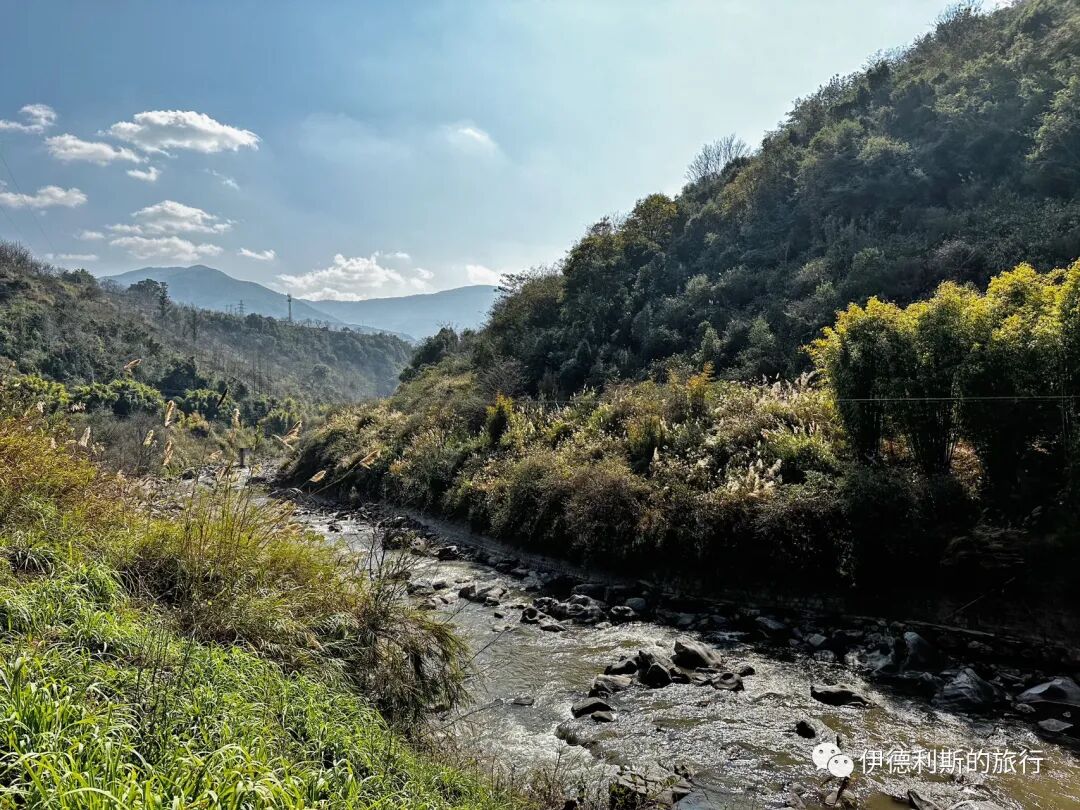
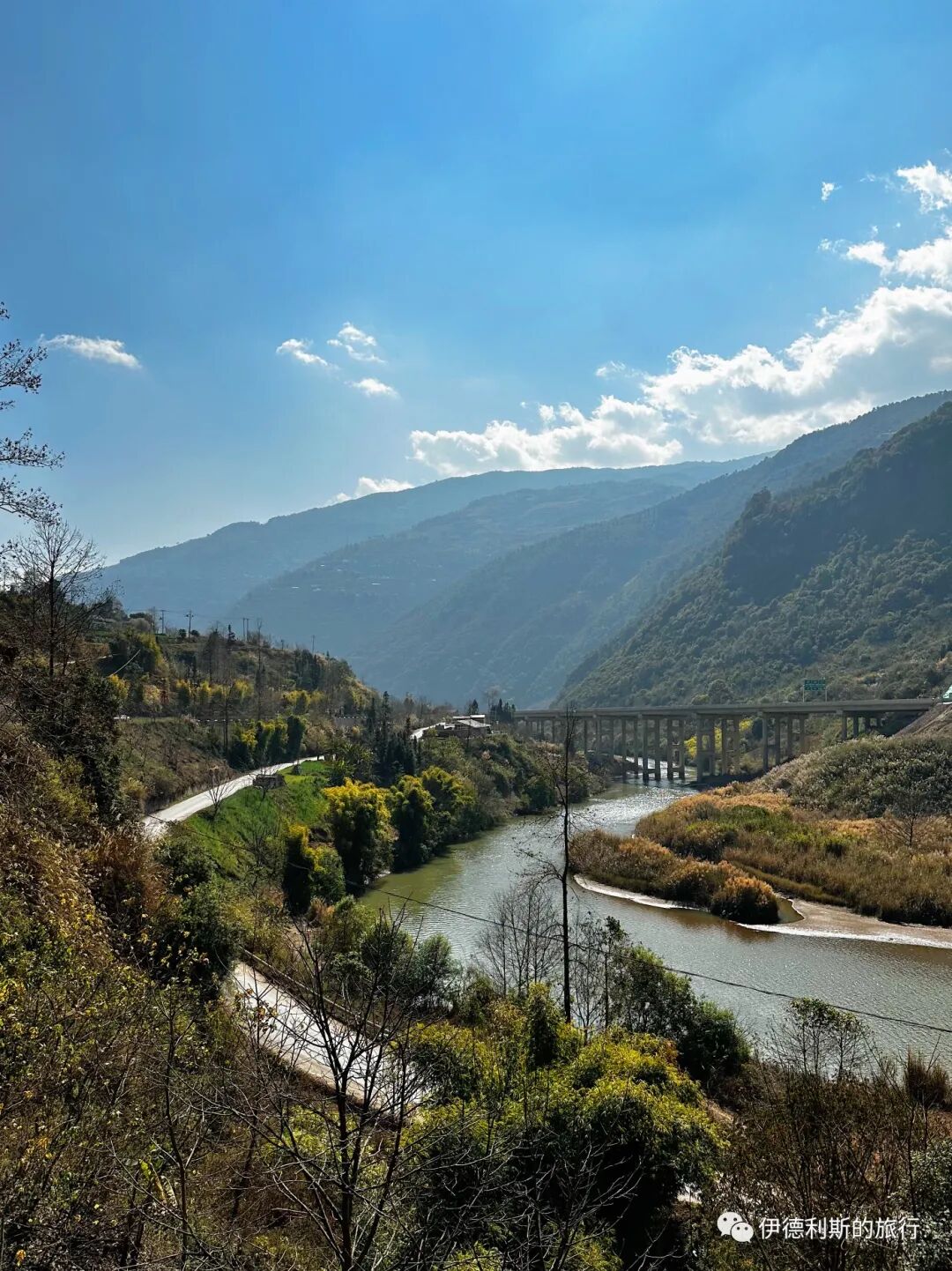
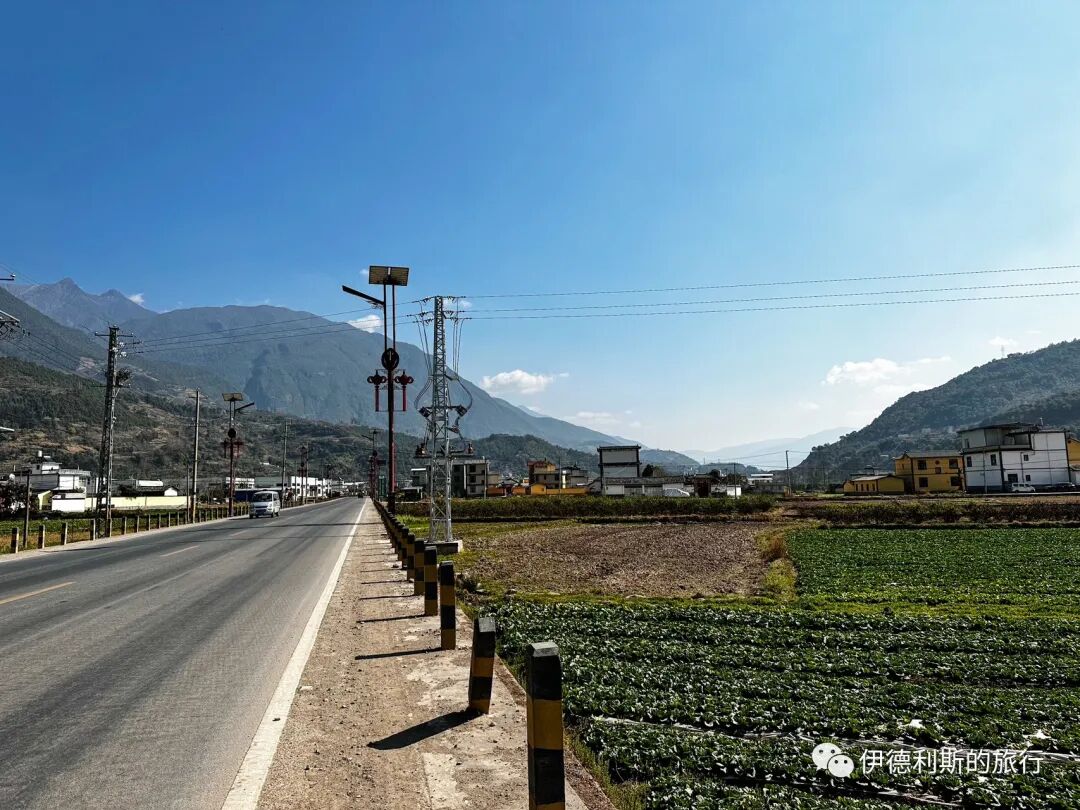
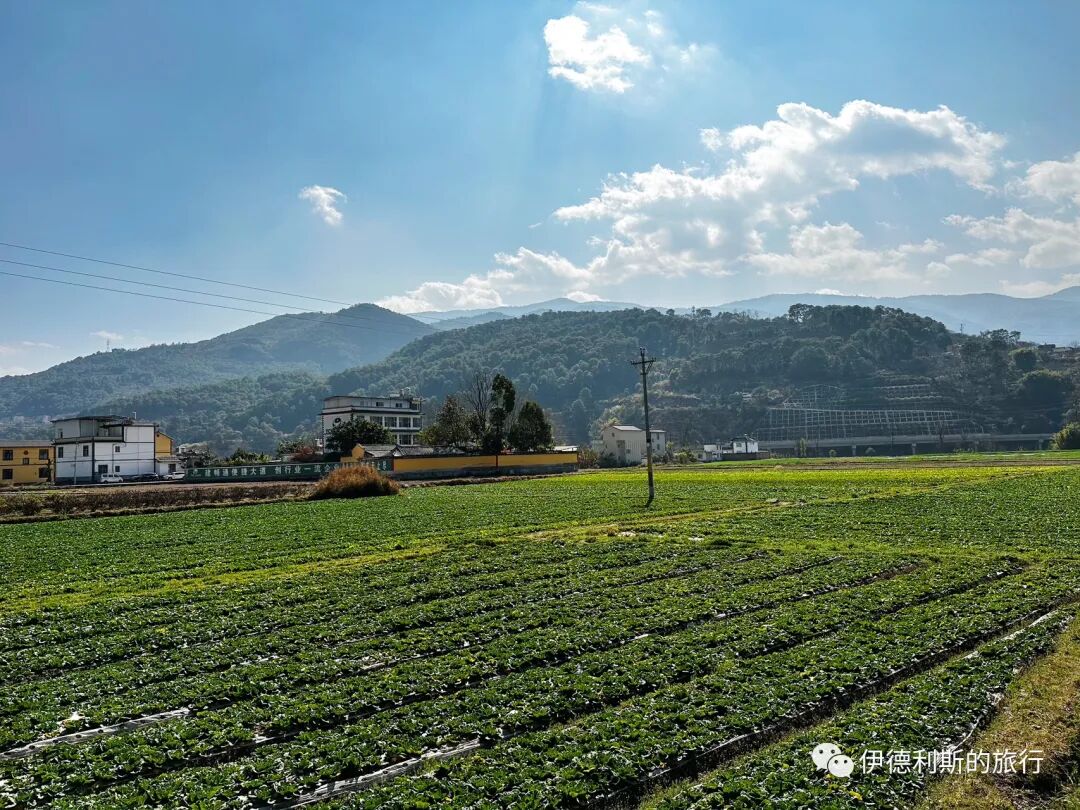
On January 29, I rode an electric scooter from Xiaguan in Dali to Yangbi County in the west to visit an old mosque and taste local food. The trade route from Dali to Thailand and Myanmar is part of the Southern Silk Road, known at different times as the Shu-Shendu Road and the Tea Horse Road. The old post road from Xiaguan in Dali west through Yangbi to Baoshan is also called the Bonan Ancient Road because it passes through the Bonan Mountains.
Halal food
On the way from Xiaguan to Yangbi, there is a hot spring village called Shaba. The road is lined with fish restaurants, and their Shaba fish is very famous in Dali.
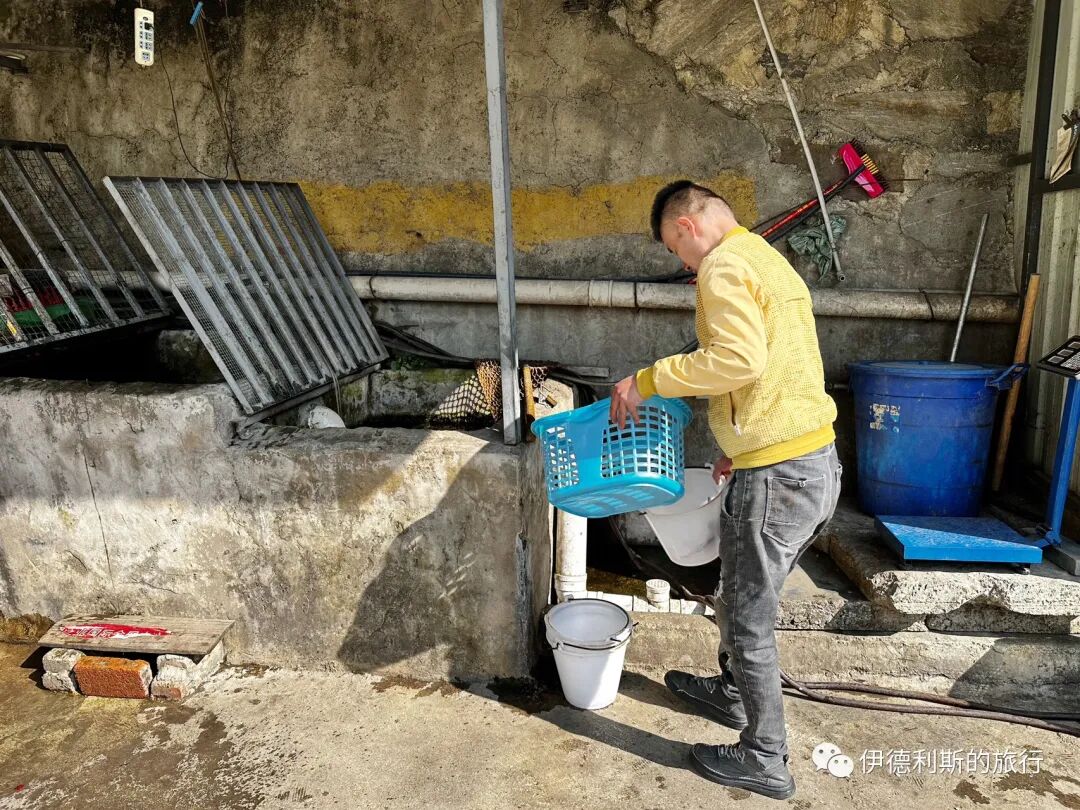
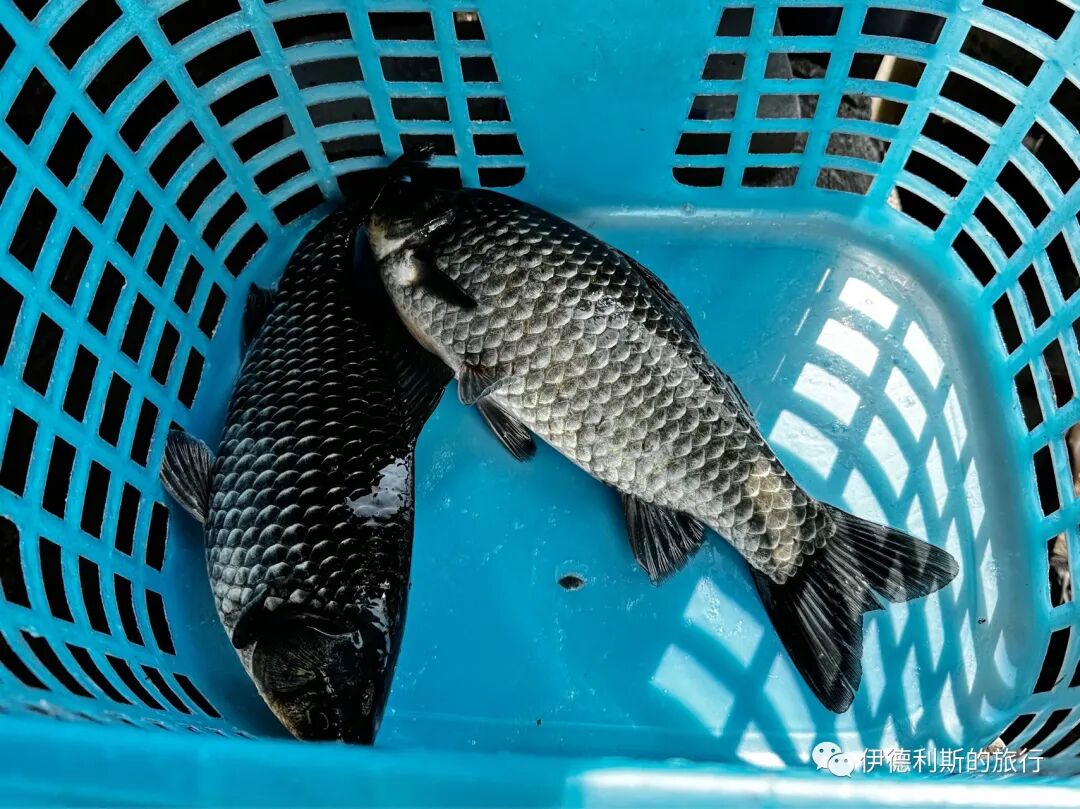
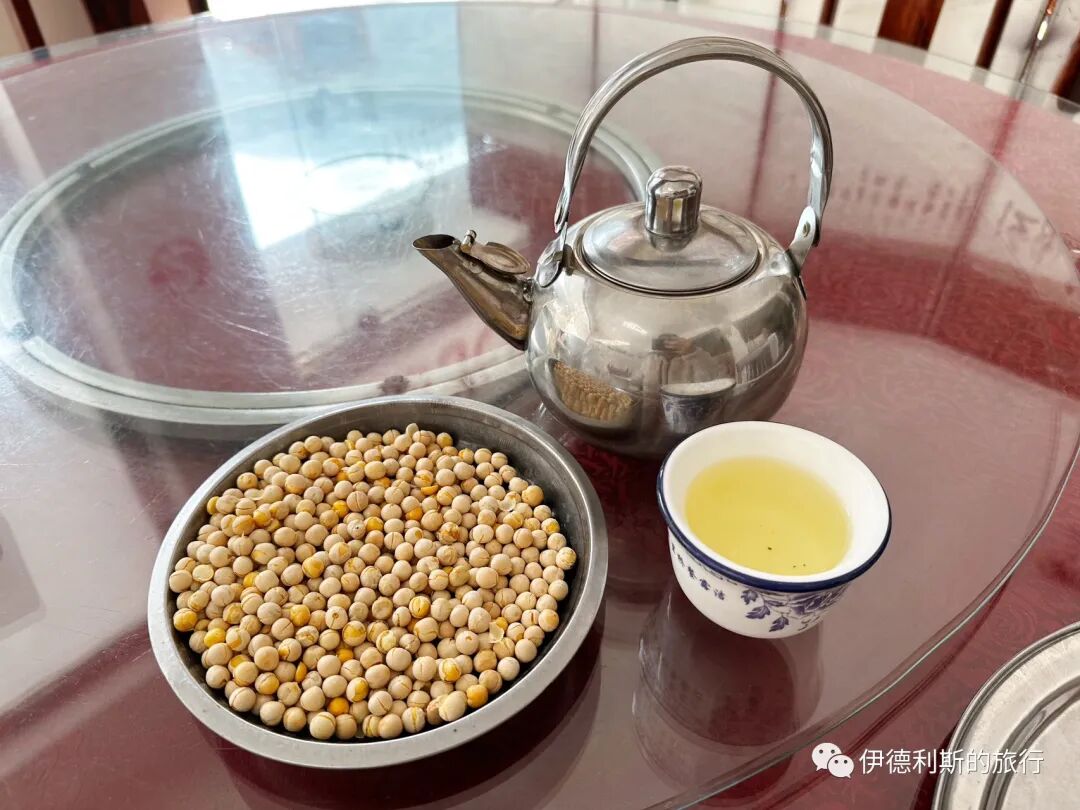
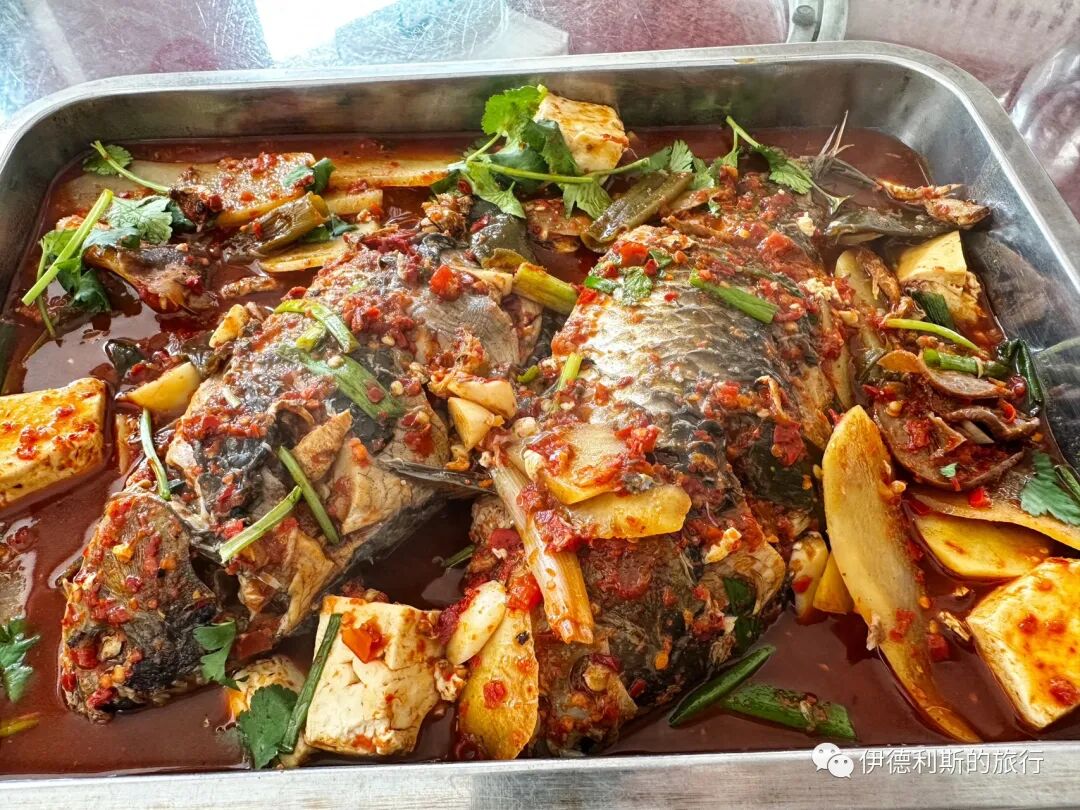
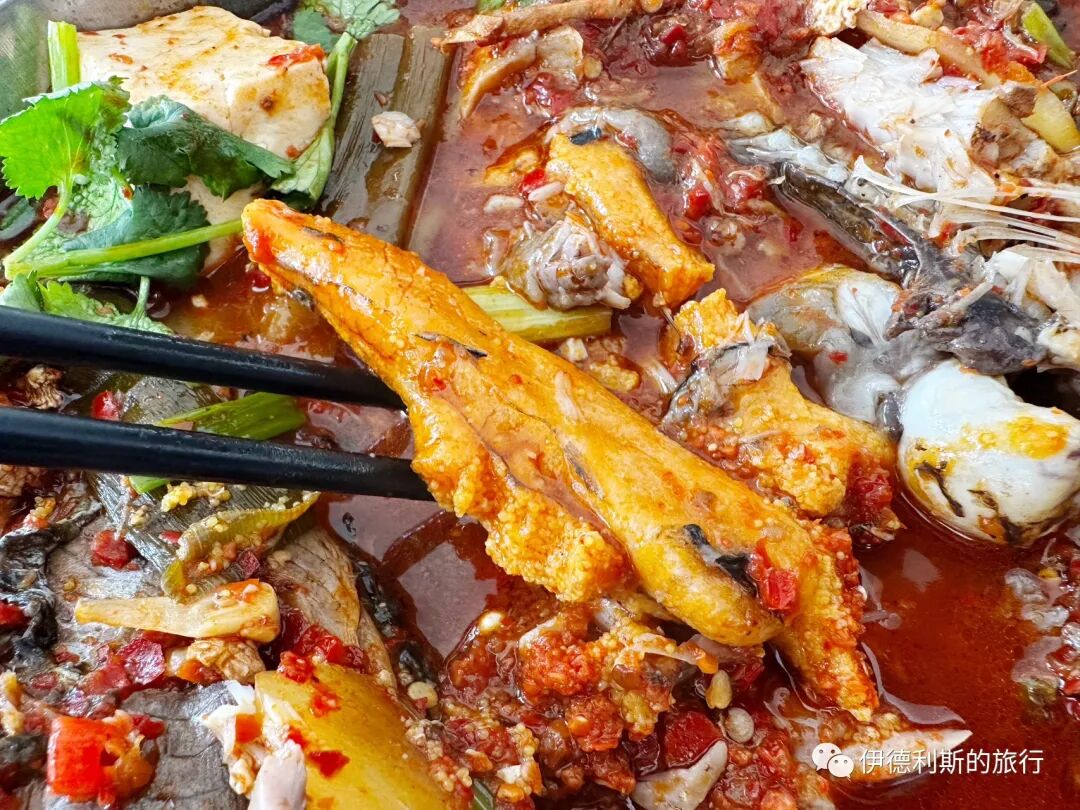
The restaurant I chose is run by Hui Muslims from Eryuan, Dali. The service is great, and they served dried fruit and tea as soon as I sat down. Shaba fish is actually sour and spicy crucian carp. It is affordable, and two fish are just right for one person.
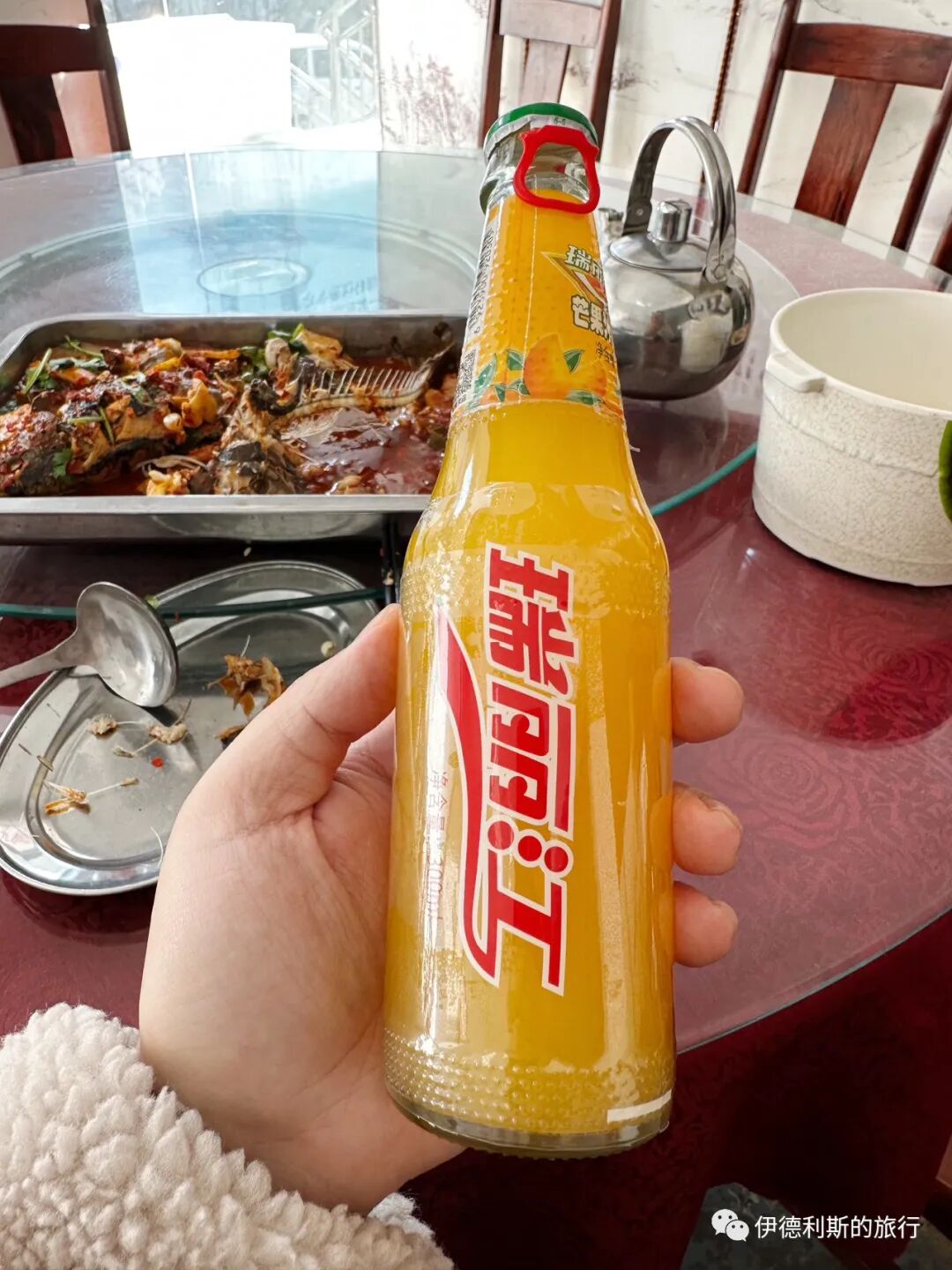
The crucian carp is caught and prepared fresh. They use dried papaya and plum vinegar for the sour flavor, and add chili for a very rich taste. It comes with tofu and mushrooms, which is very satisfying. If you find it too spicy, you can drink a bottle of local Ruili River mango juice from Yunnan. I was also pleasantly surprised that the two fish the waiter picked for me were full of roe, which tasted very rich and delicious.
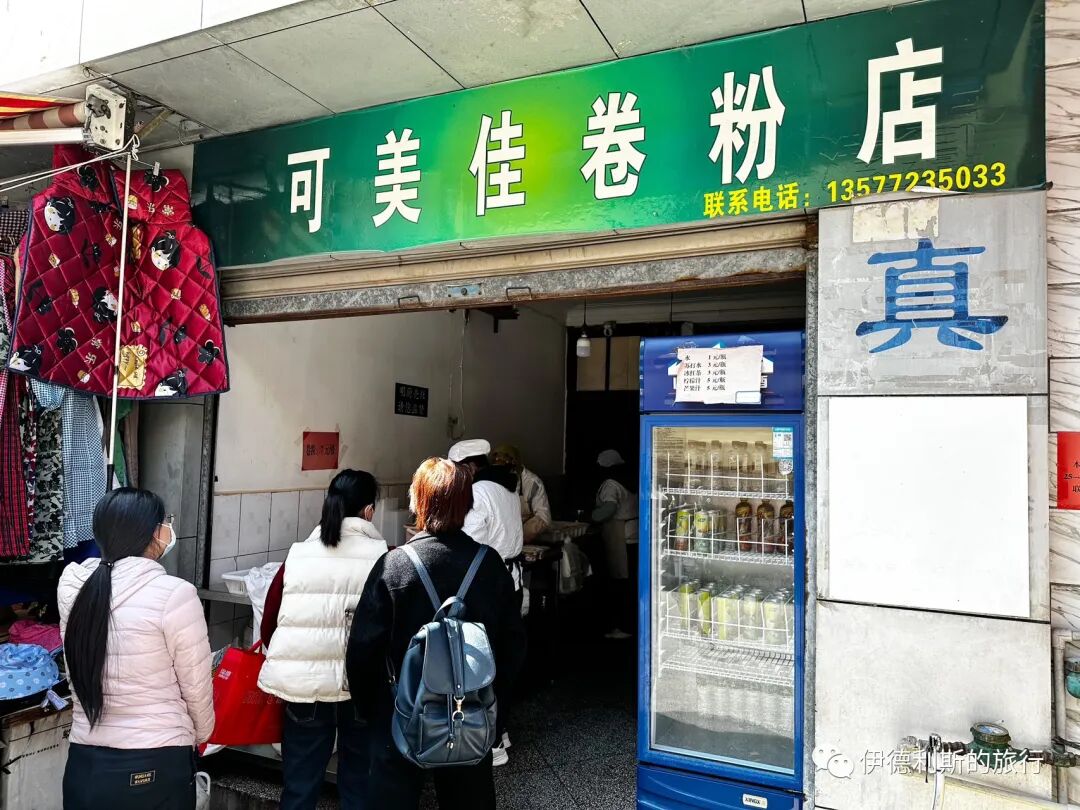
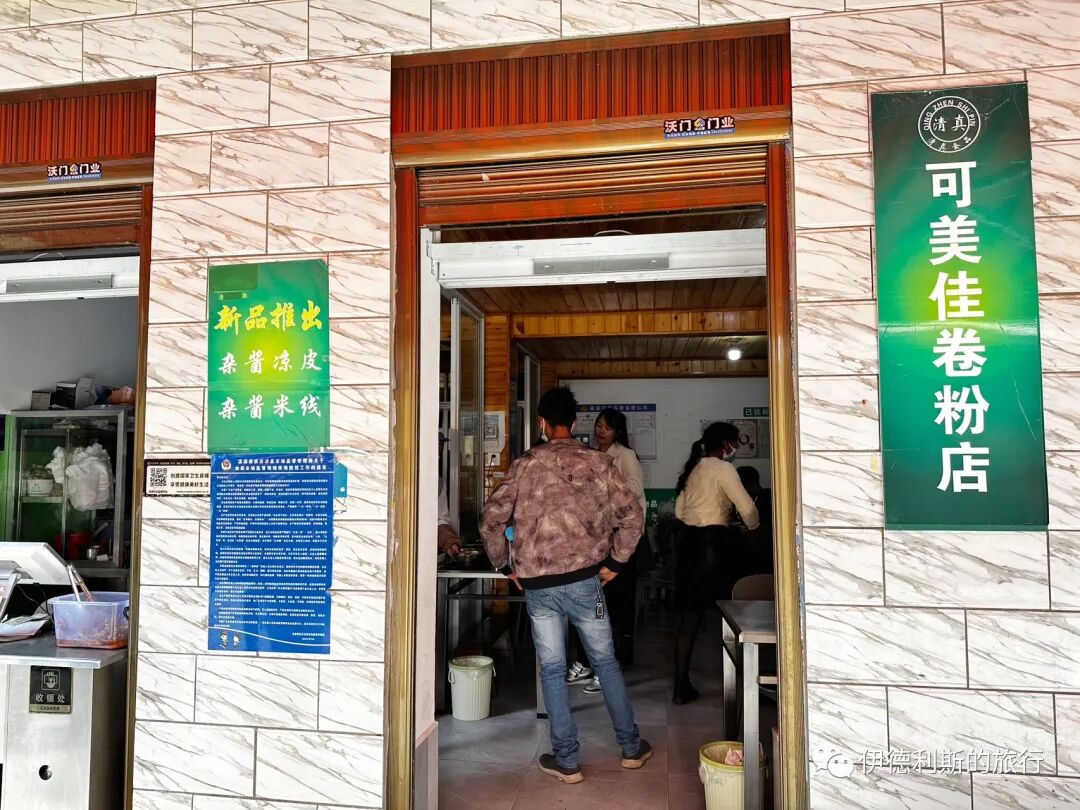
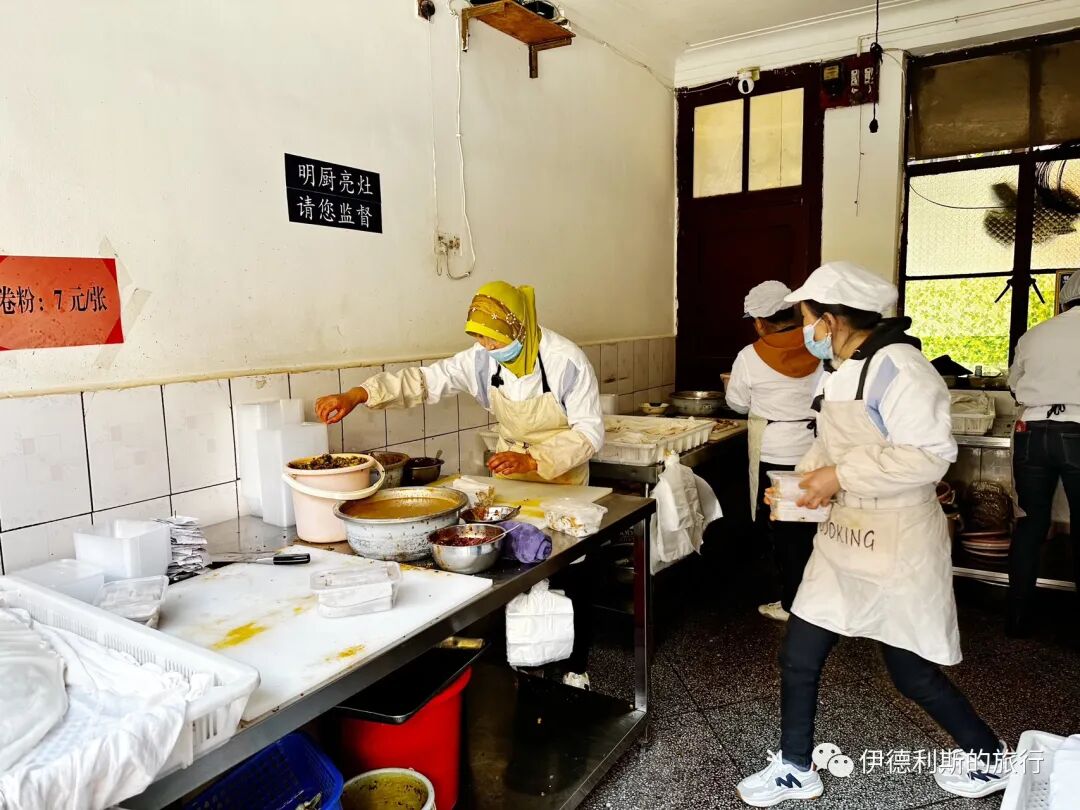
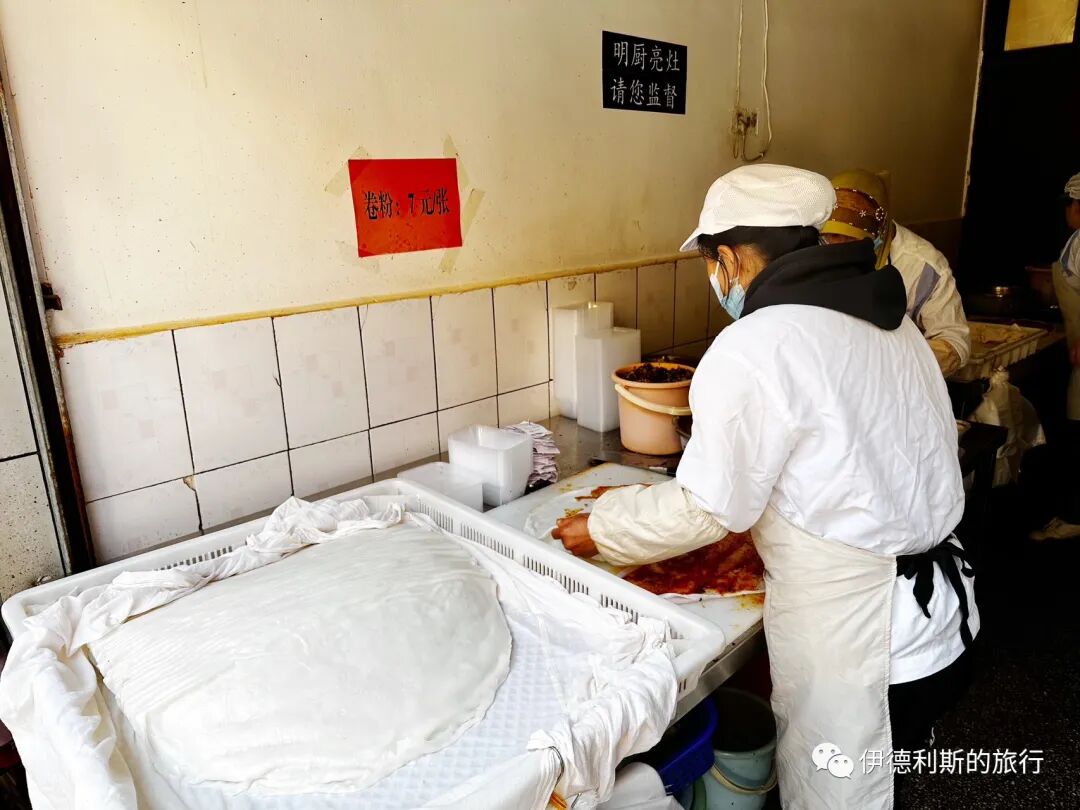
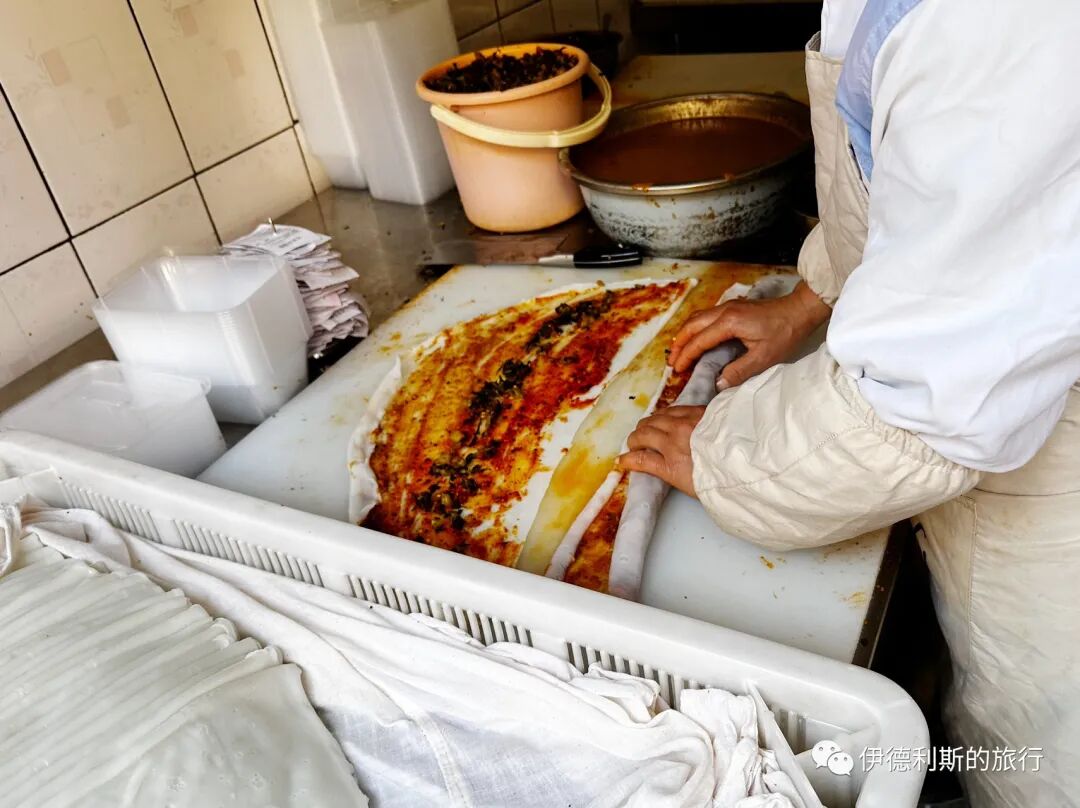
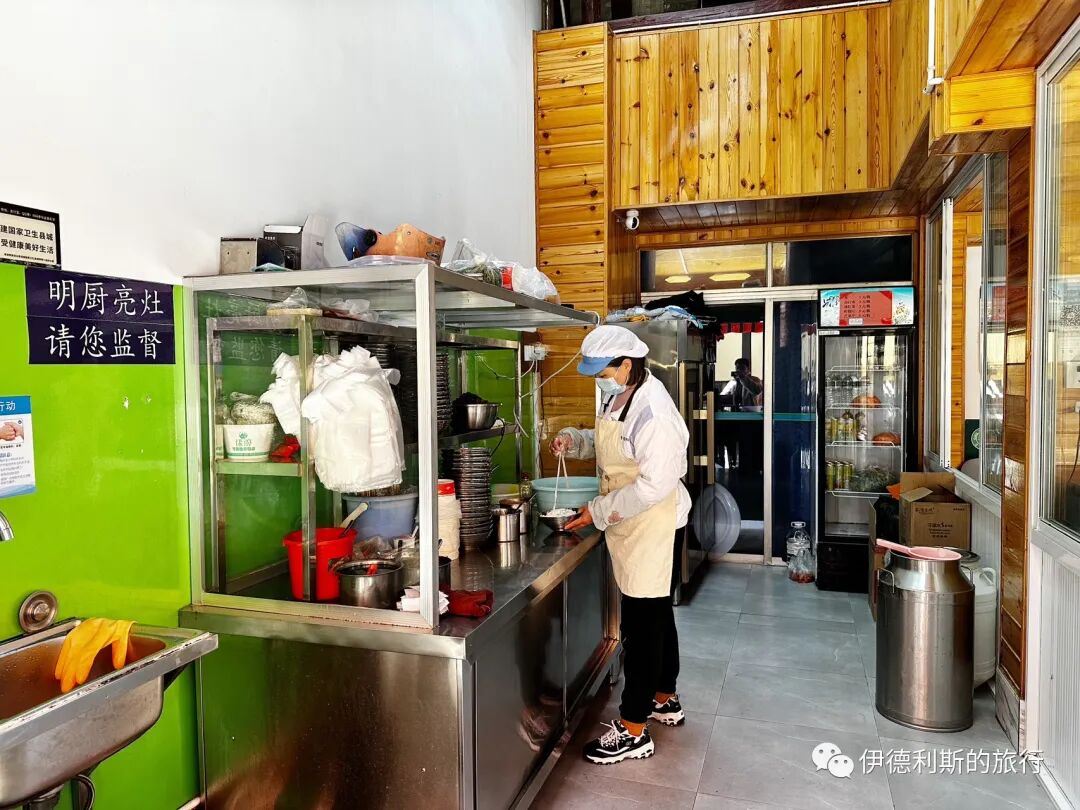
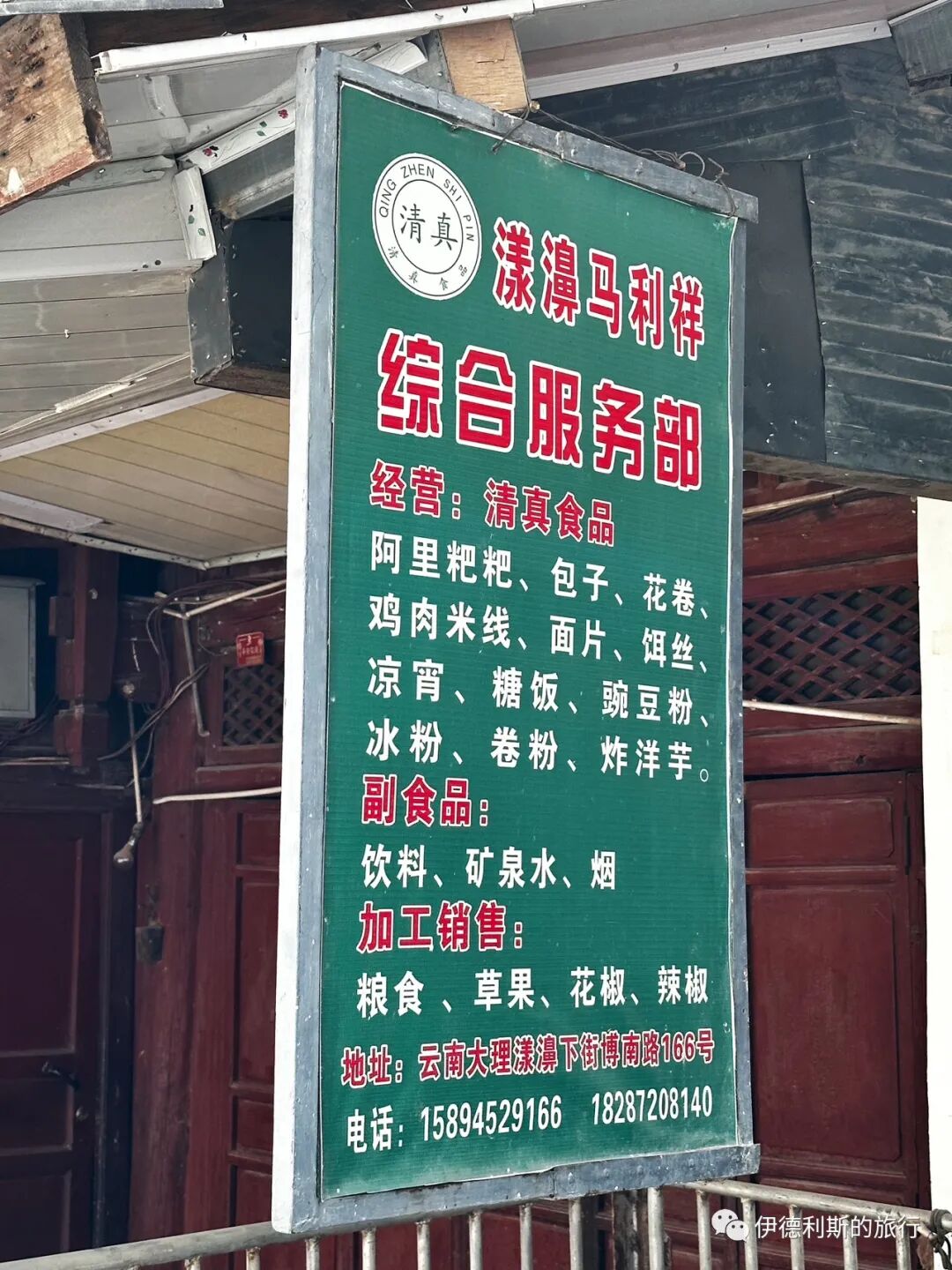
I feel the most popular rice noodle roll (juanfen) shop in Yangbi town is Kemeijia on Jinxing Road. You can buy a whole sheet of rice noodle roll to take away, or eat a bowl of warm meat sauce rice noodle roll in the shop. The open kitchen is clean and hygienic, and the taste is great.
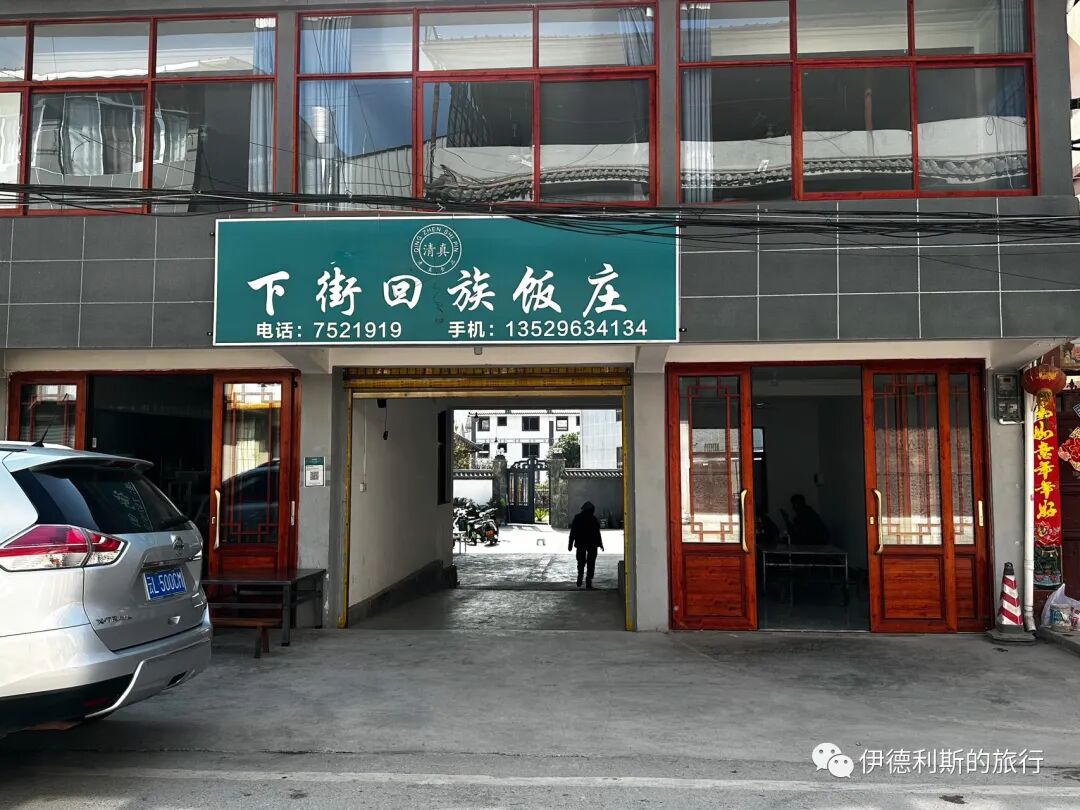
Yangbi Xiajie
In 1279 (the 16th year of Zhiyuan), Nasr al-Din, the eldest son of the Yunnan regional commander Sayyid Ajjal Shams al-Din, moved the military headquarters to Dali and sent tens of thousands of Hui Muslim troops to fight repeatedly against Myanmar. After the war, the Yuan Dynasty left many soldiers to guard various key routes. According to the History of Yuan, in 1303 (the 7th year of Dade), an imperial decree ordered 14,000 Hui Muslim soldiers who had conquered Myanmar to return to their respective garrisons. The location of Yangbi Xiajie was set up as a military post, and elite Tamachi troops were stationed there, which is how Yangbi Xiajie began to form.
In 1382 (the 15th year of Hongwu in the Ming Dynasty), Ma Dinghui, a descendant of the Tamachi troops left in Dali by the Yuan Dynasty, followed the Ming army to fight in Yunnan. He earned many merits and was appointed as the local inspector of the Yangbi Inspection Office, settling in Yangbi Xiajie with his subordinates. Ma Dinghui's descendants were known as the Tusi official family, and together with the officers and soldiers who guarded and farmed in Yangbi at that time, they became the earliest Hui Muslims in Yangbi. In the early Ming Dynasty, the main Hui Muslim surnames in Yangbi were Ma, Sha, Bai, and Yang. In the mid-Ming period, the Long, Wu, Wang, Du, and Mi surnames were added, and by the mid-Qing Dynasty, there were more than 800 households.
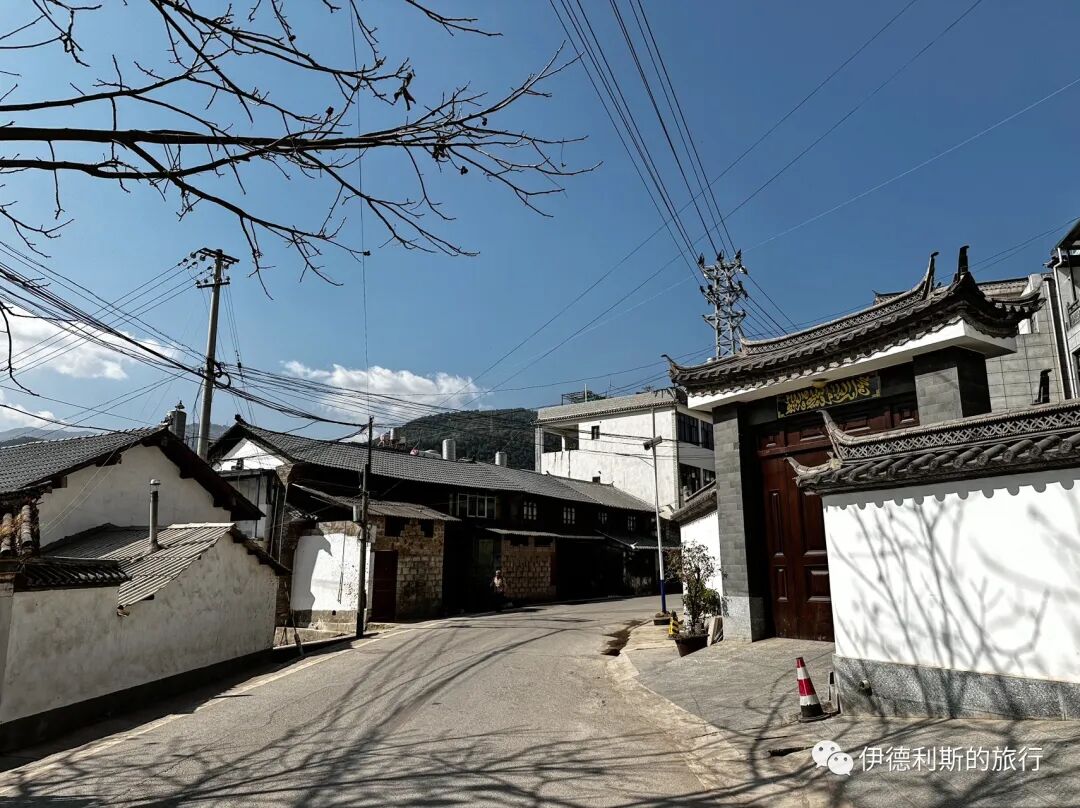
During the Ming and Qing dynasties, Yangbi Xiajie was a narrow ancient road nearly one kilometer long. Along the street were various horse inns, hotels, and shops selling halal snacks and local specialties, with a constant stream of horse caravans and mountain people selling mountain goods. At that time, almost every Hui Muslim household in Yangbi raised horses and carried out long-distance transport under the leadership of a caravan leader (maguotou).
During the Tongzhi disaster, most of the Hui Muslims in Yangbi were killed, and only a very small number escaped. In 1877 (the 3rd year of Guangxu), the Qing government encouraged the displaced Hui Muslims to return and resume their businesses. Eight households of survivors moved back to live in Xiajie. After that, more Hui Muslims came to Xiajie to do business and settle down, and by the Republic of China period, the number had increased to 70 or 80 households. In 1931, Edgar Snow traveled with a horse caravan to Yangbi Xiajie. In his article 'Caravan Leaves Dali for Yongping, China,' published in the American newspaper The Sun on August 15, 1931, he described Yangbi Xiajie as a 'Muslim-inhabited town'.
In the late Republic of China period, the Hui Muslim horse caravans in Yangbi Xiajie developed again. With less than 100 households, they raised more than 400 horses. Most of the young men had experience traveling to Myanmar and India for trade, and some even started families abroad.
In 1938, the Burma Road opened to traffic, and villagers began to build houses on both sides of the road, gradually forming the current layout of Xiajie Village. As the Burma Road became the main transport route, the Bonan Ancient Road gradually faded into history, and the shops along the road closed one after another.
Old mosque
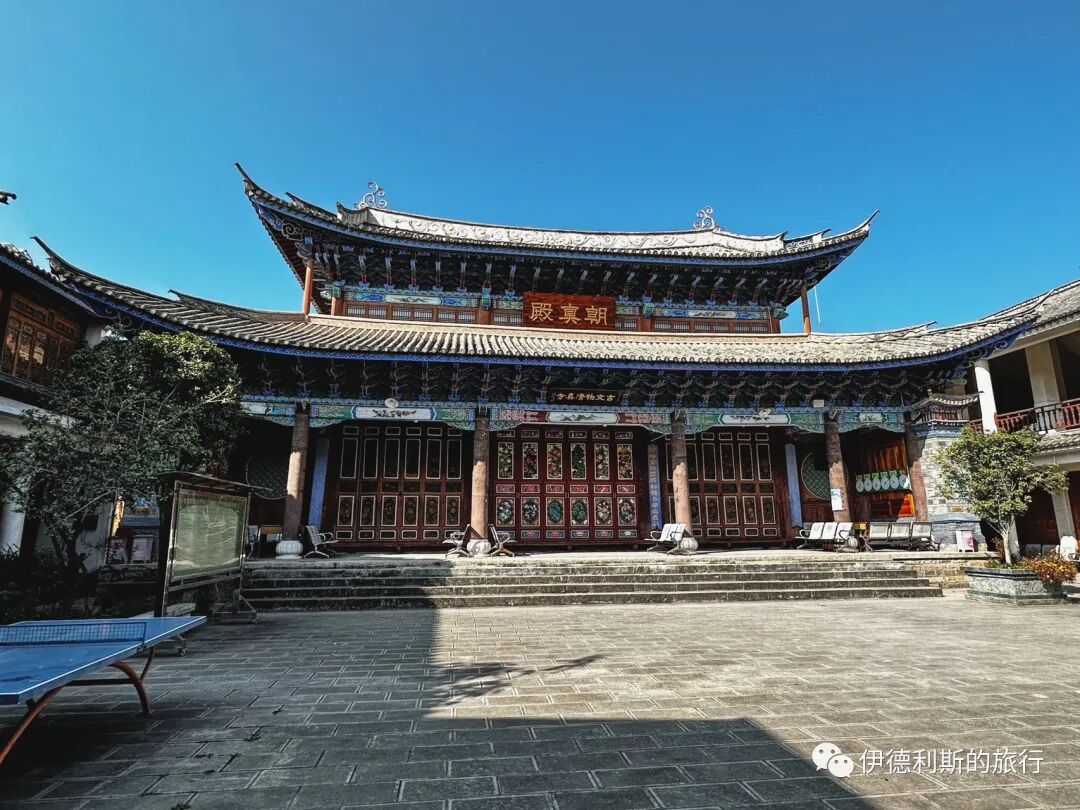
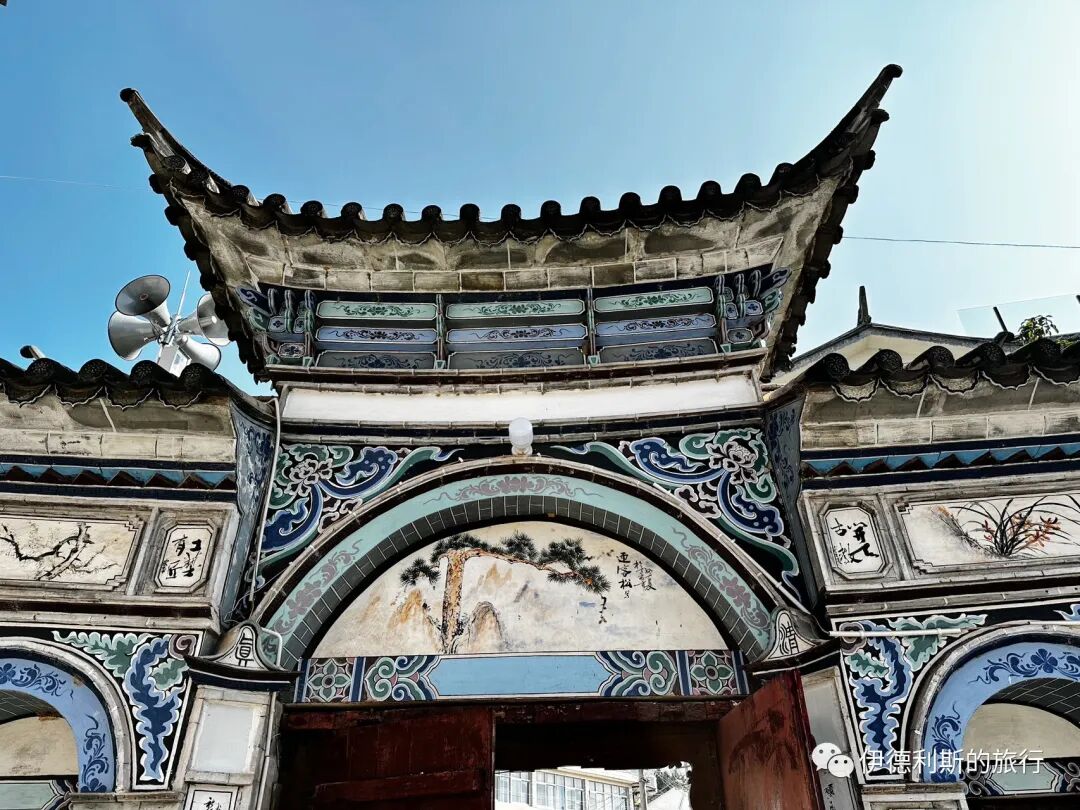
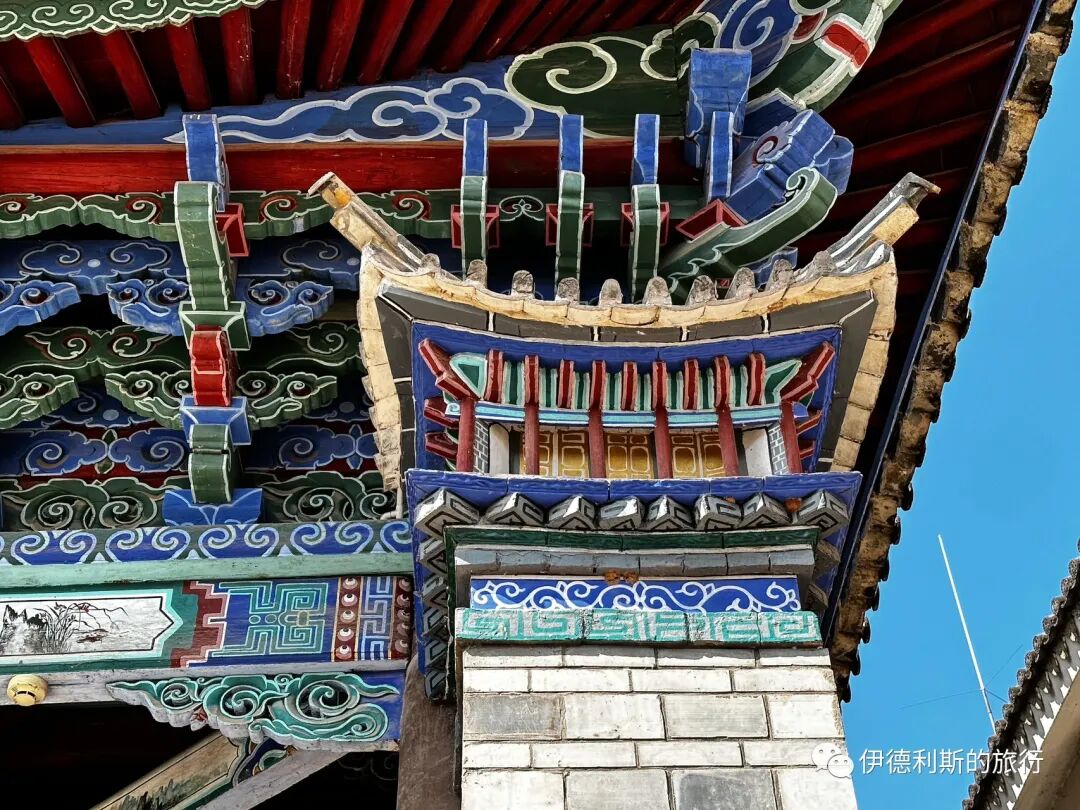
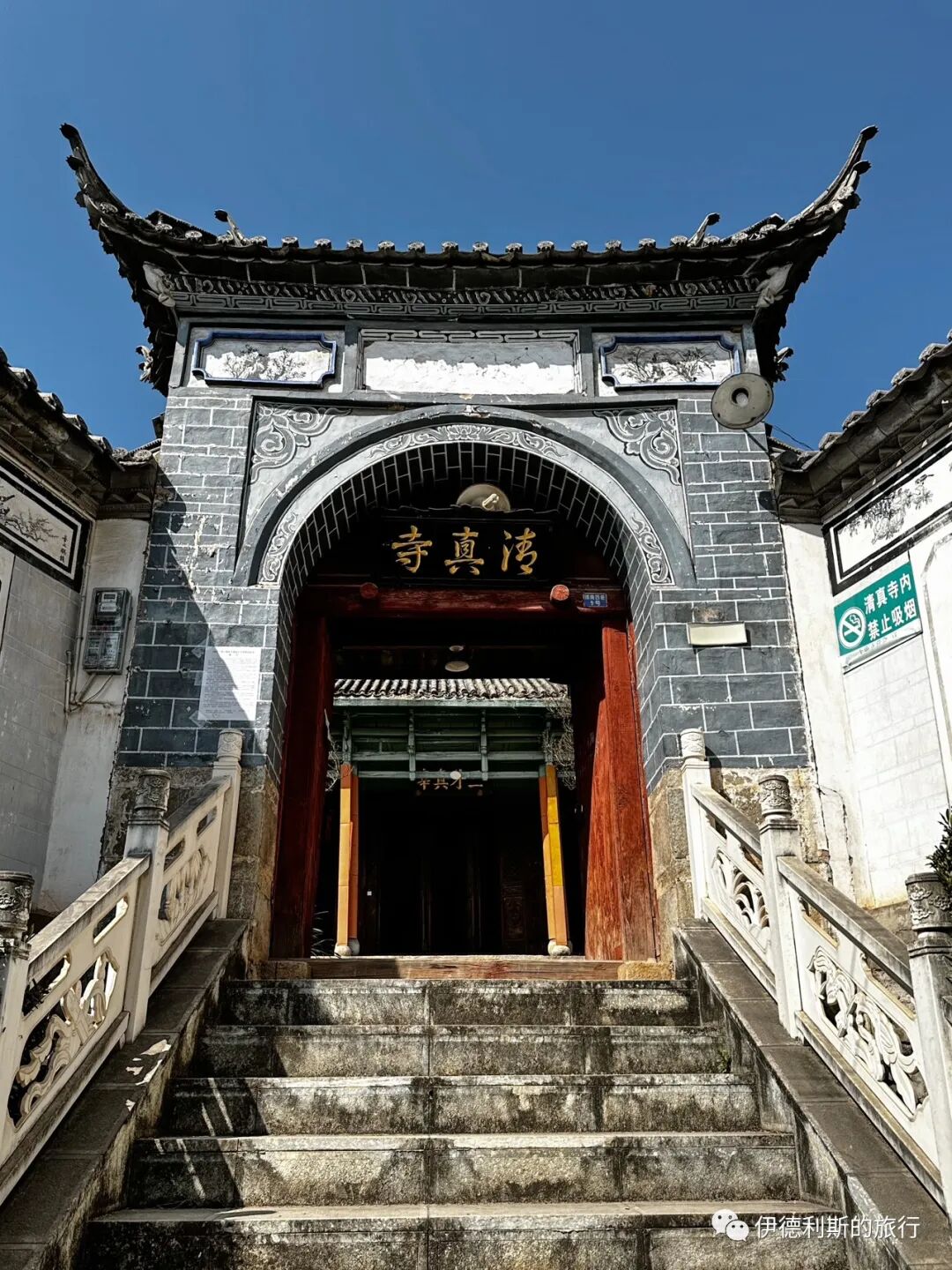
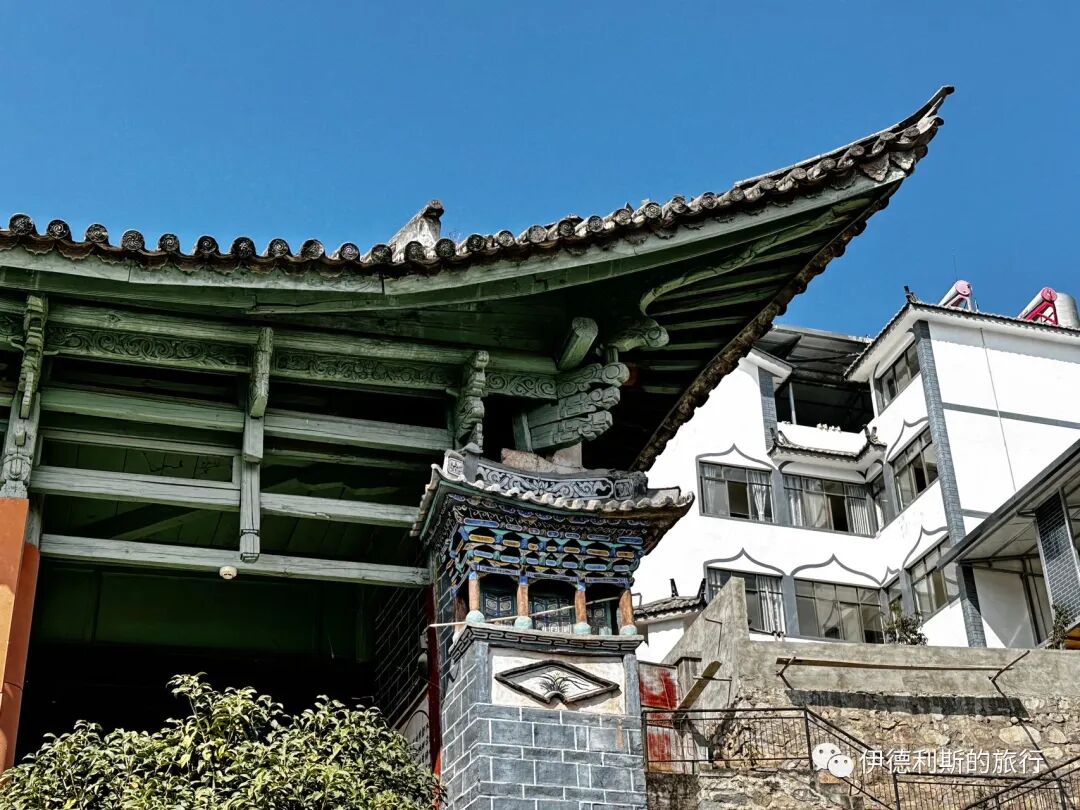
The Yangbi old mosque is located next to the old Burma Road in Xiajie Village. When the main beam of the hall was replaced in 1958, an inscription from the 15th year of Hongwu of the Ming Dynasty was found on the beam. According to the oral history passed down through generations in Xiajie, after the Hui Muslim officers and soldiers left in the early Ming Dynasty camped in Yangbi, they went to the river to bathe and purify themselves. Each person carried a stone on their shoulder to gradually build the foundation of the main hall. At first, they just built simple flat-roofed houses. Later, they hired craftsmen and spent many years building the current main hall with its three-bay and five-grid structure. Today, the stone foundation of the main hall is uneven, and it does not perfectly align with the thickness of the walls, which matches the legends about the mosque's construction.
The old mosque was once magnificent. From east to west, it featured a gate in the style of a memorial archway, a screen wall, a three-story prayer tower (jiaobailou), a second gate, a stone archway, a stone bridge, north and south side rooms, and the main hall, making for a spectacular sight. During the Tongzhi disaster, the mosque was burned and destroyed. It was later turned into a Confucian mosque. The gate and prayer tower were taken down to build Zhulin Mosque, and other buildings were ruined, leaving only the main hall standing.
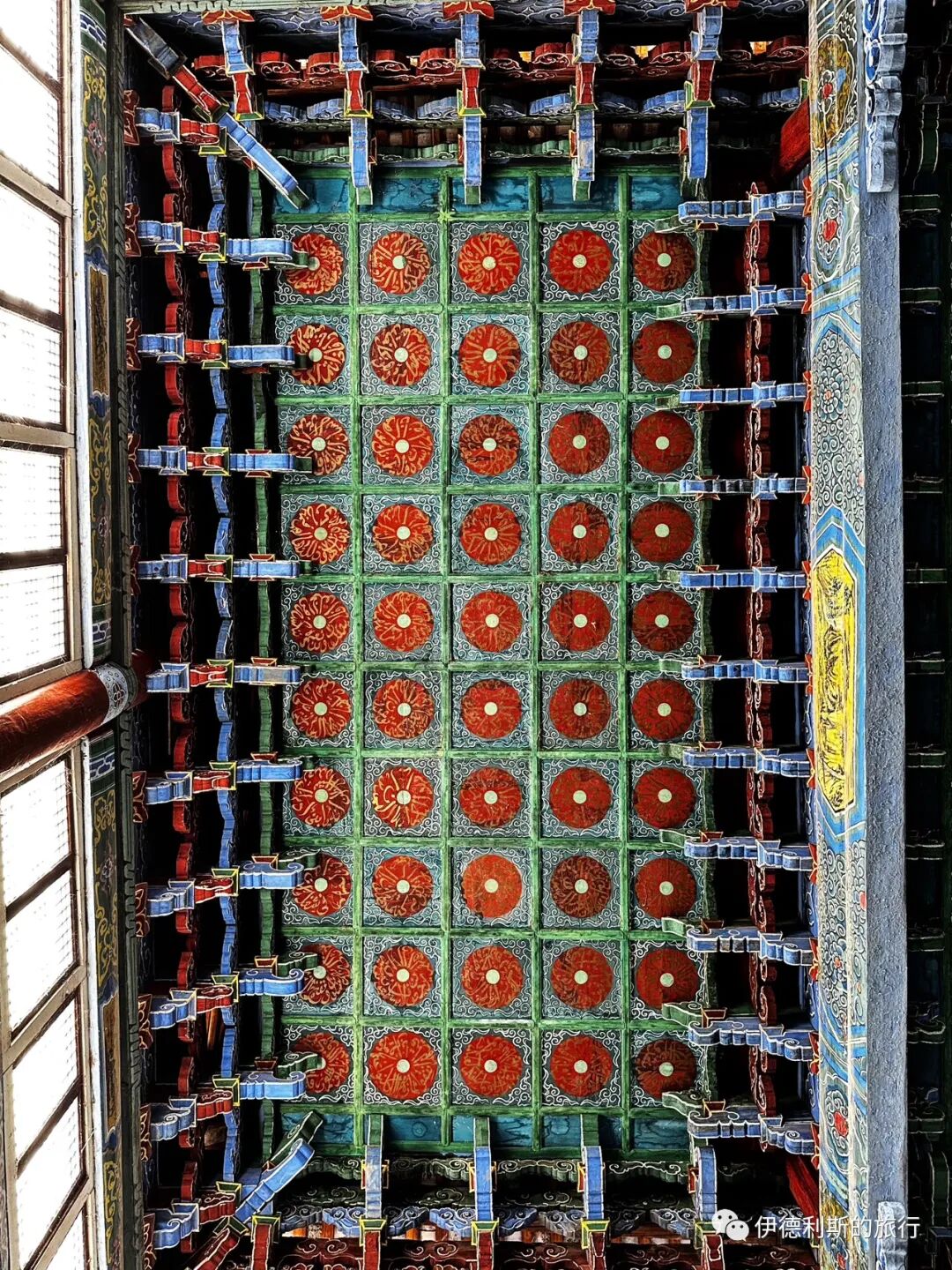
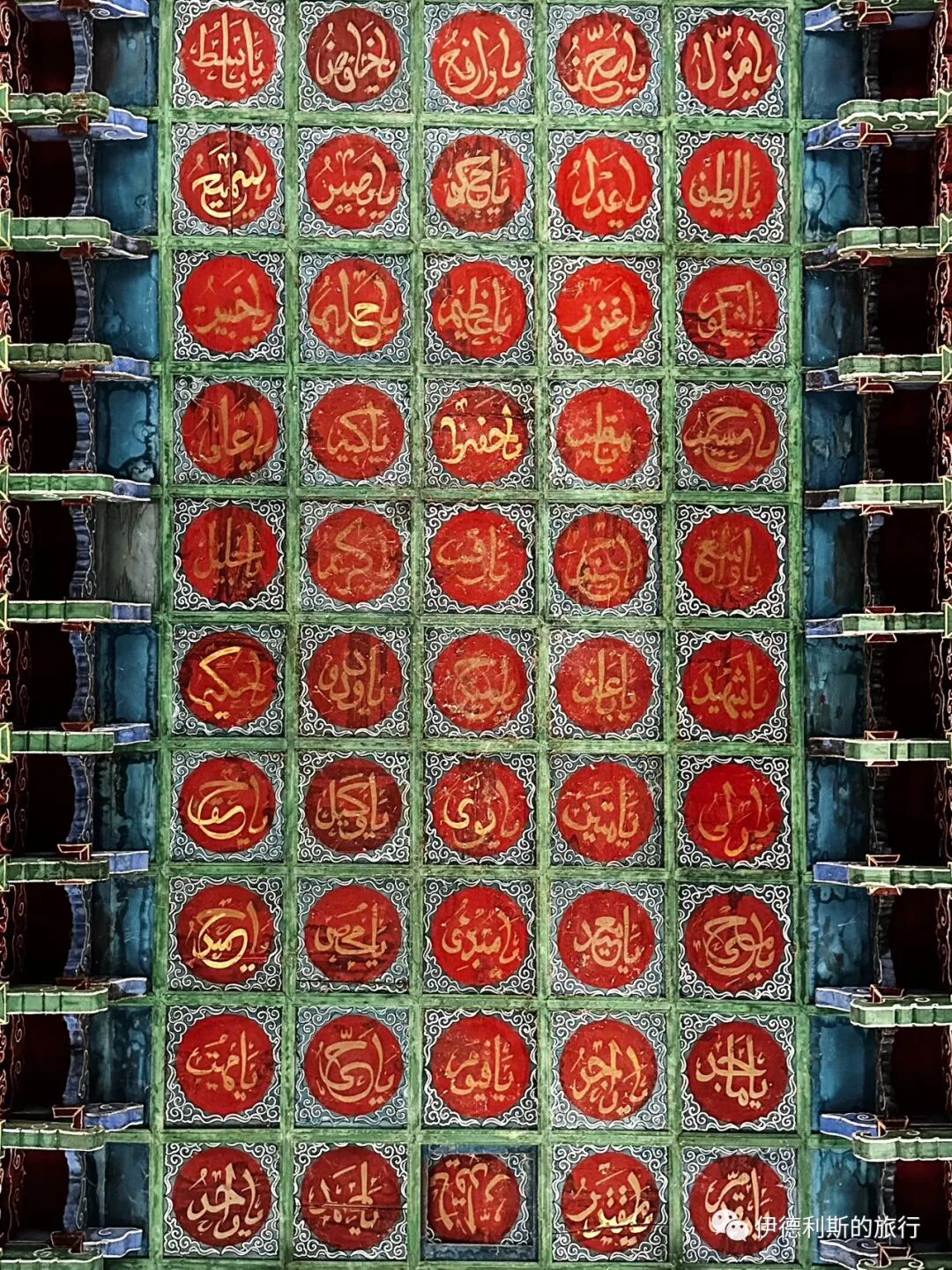
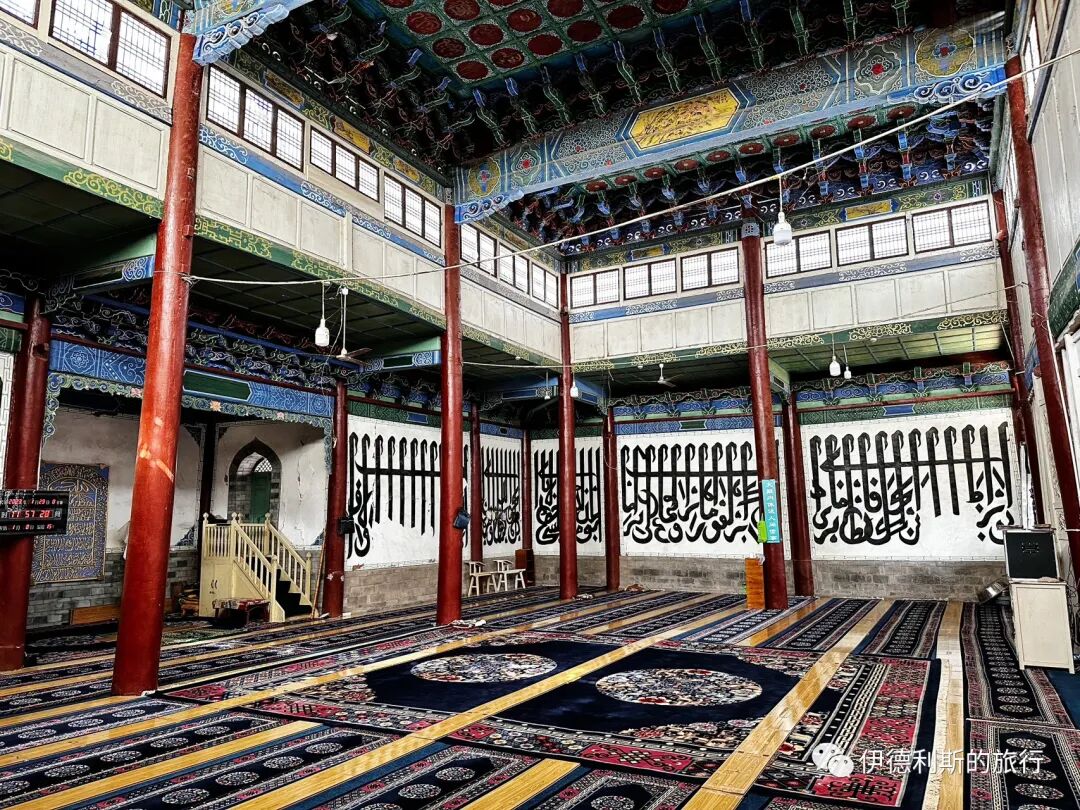
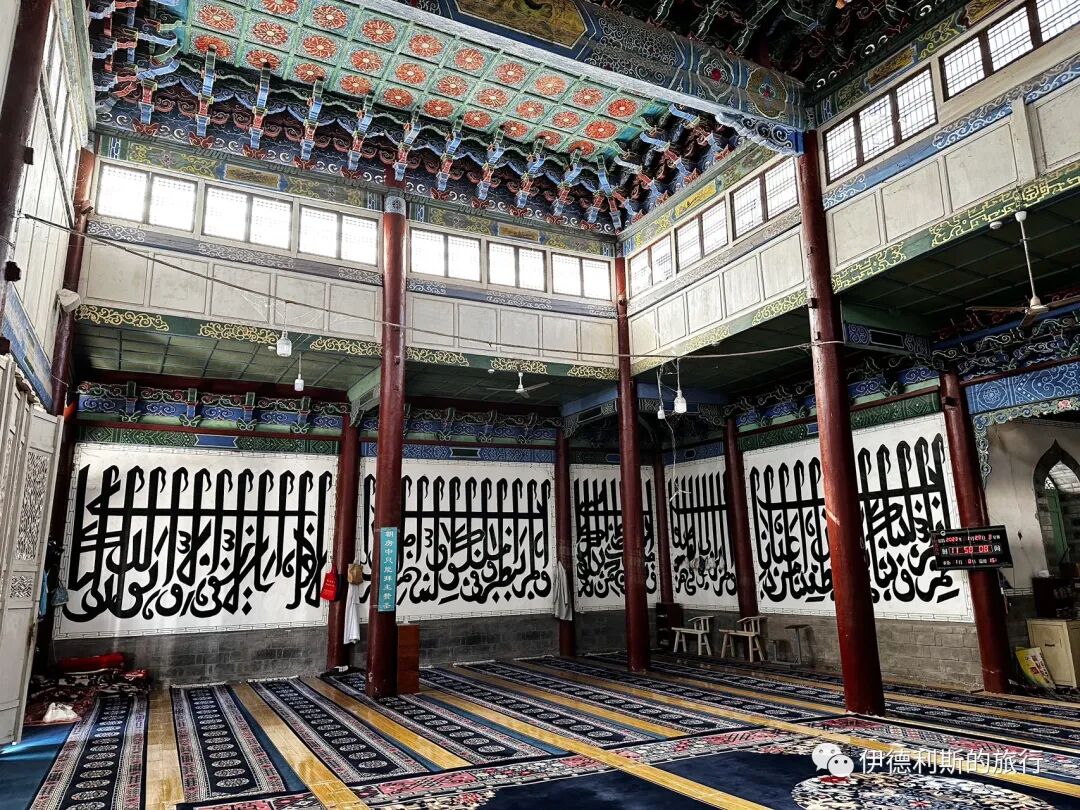
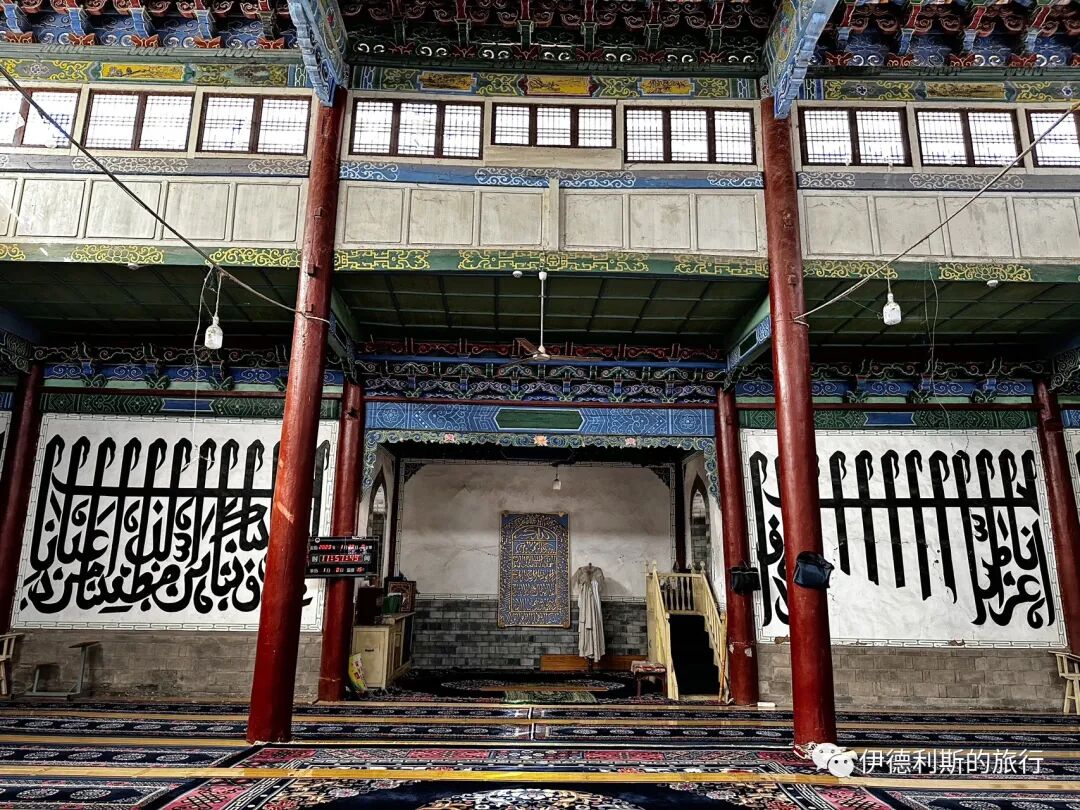
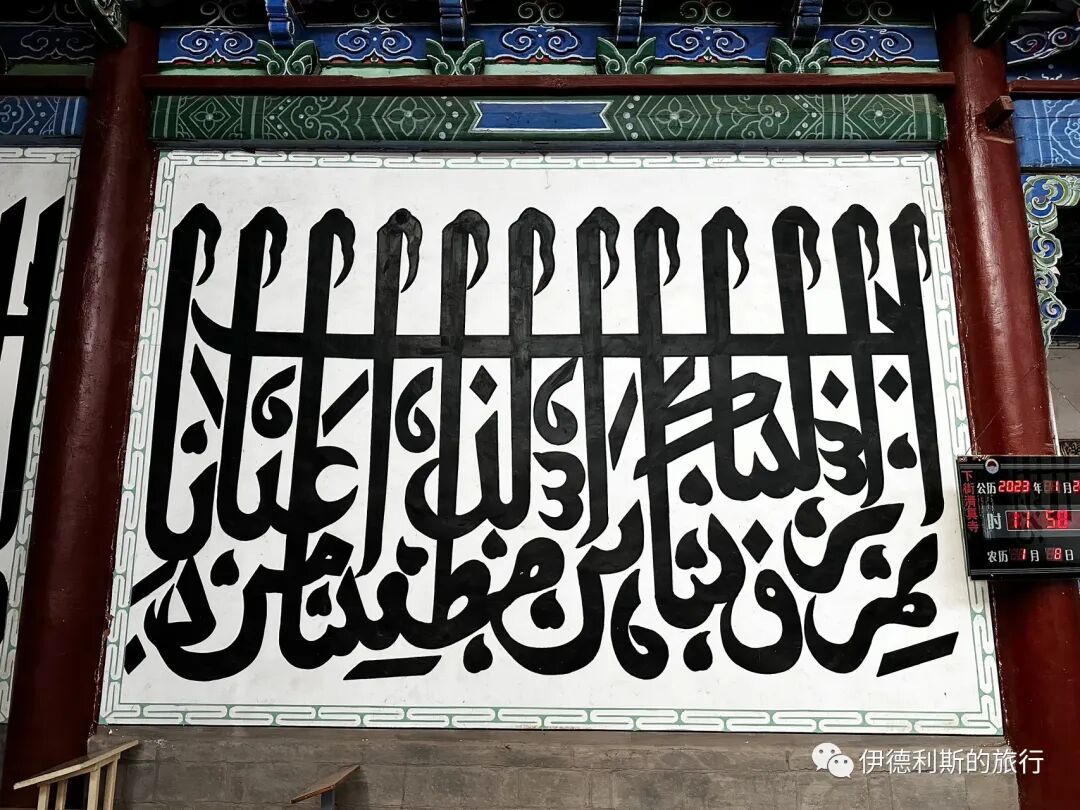
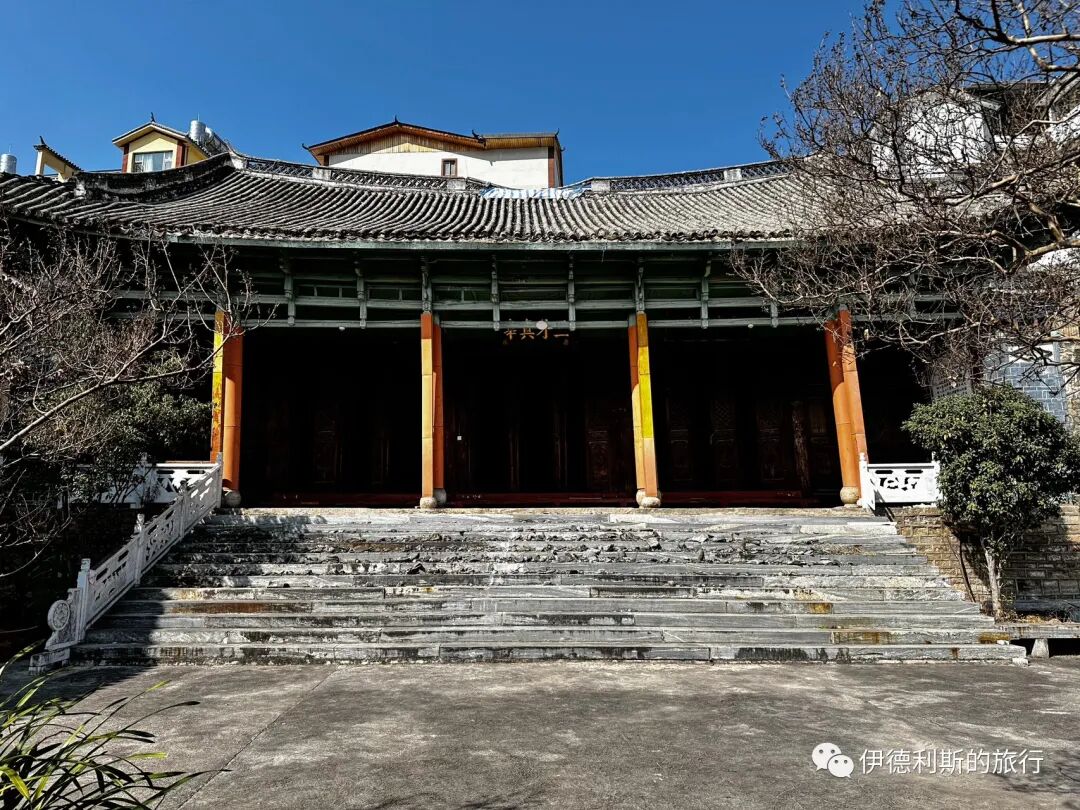
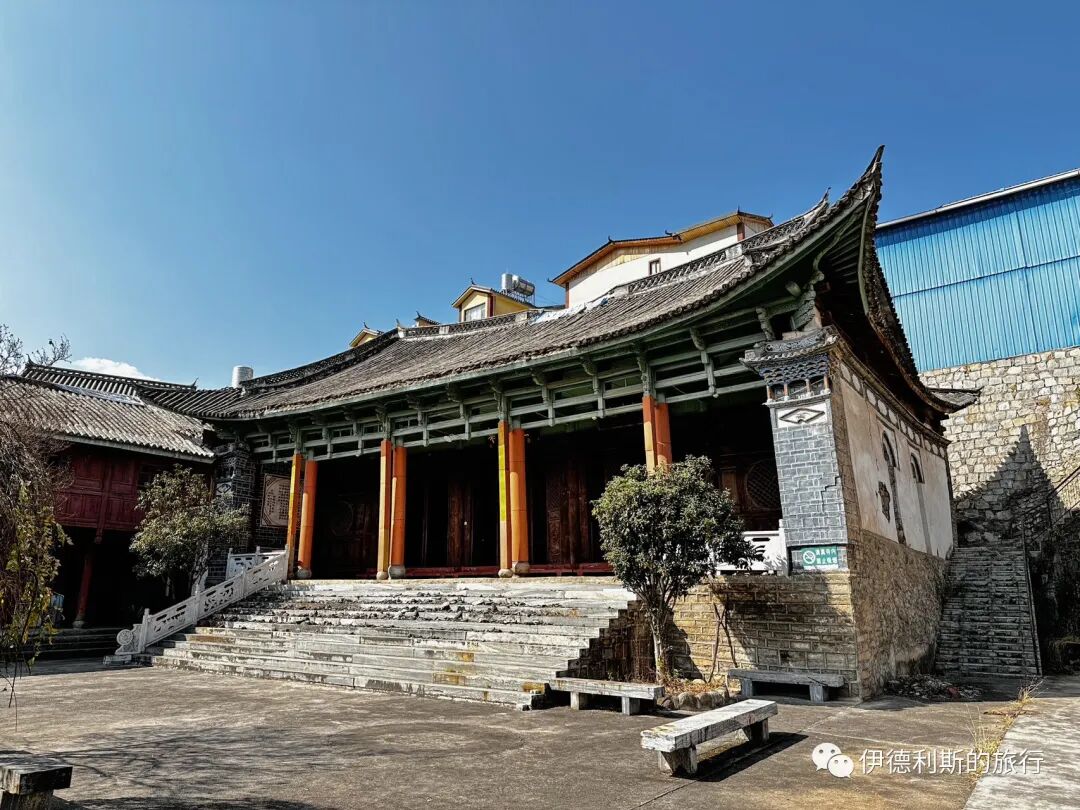
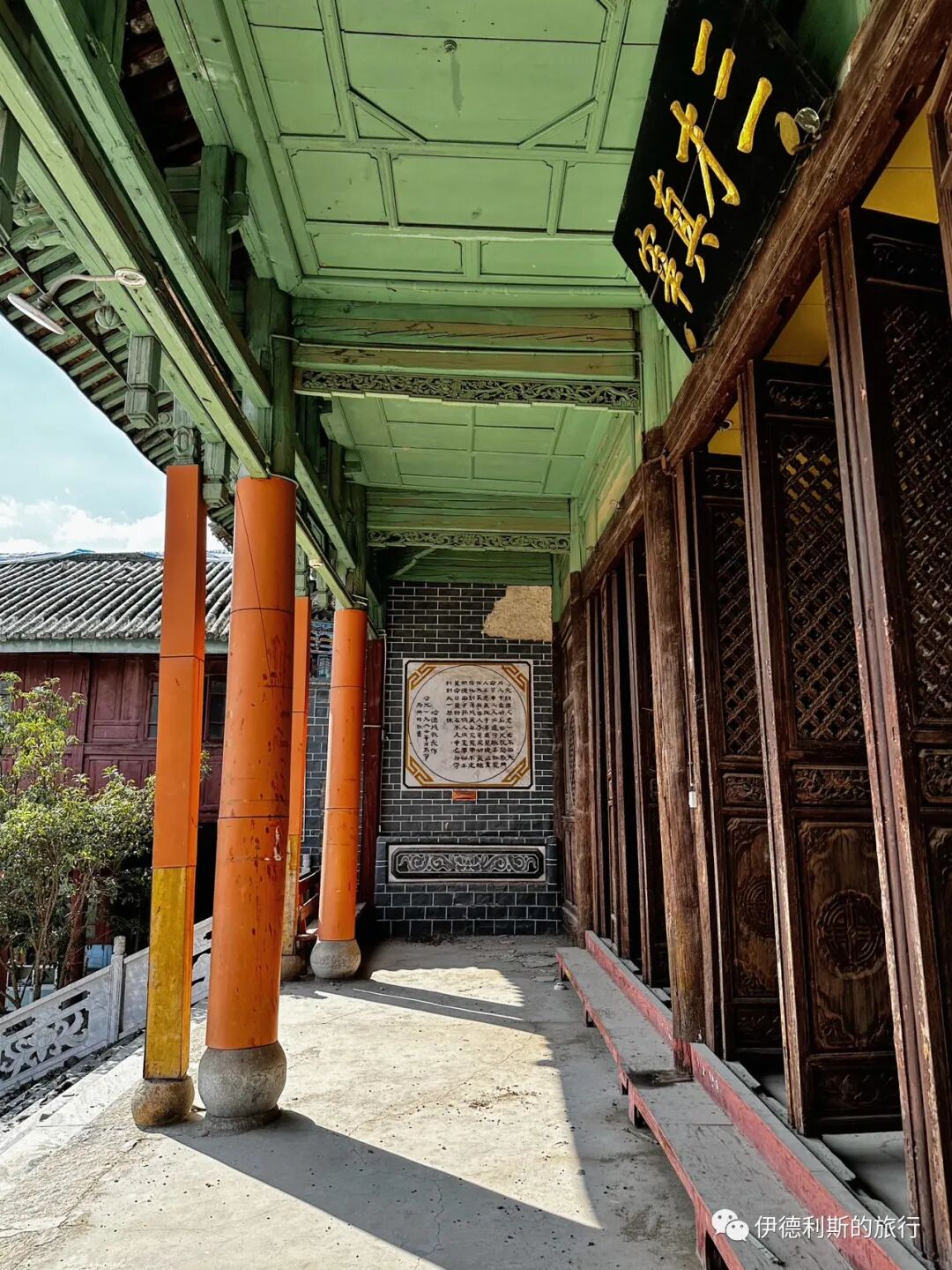
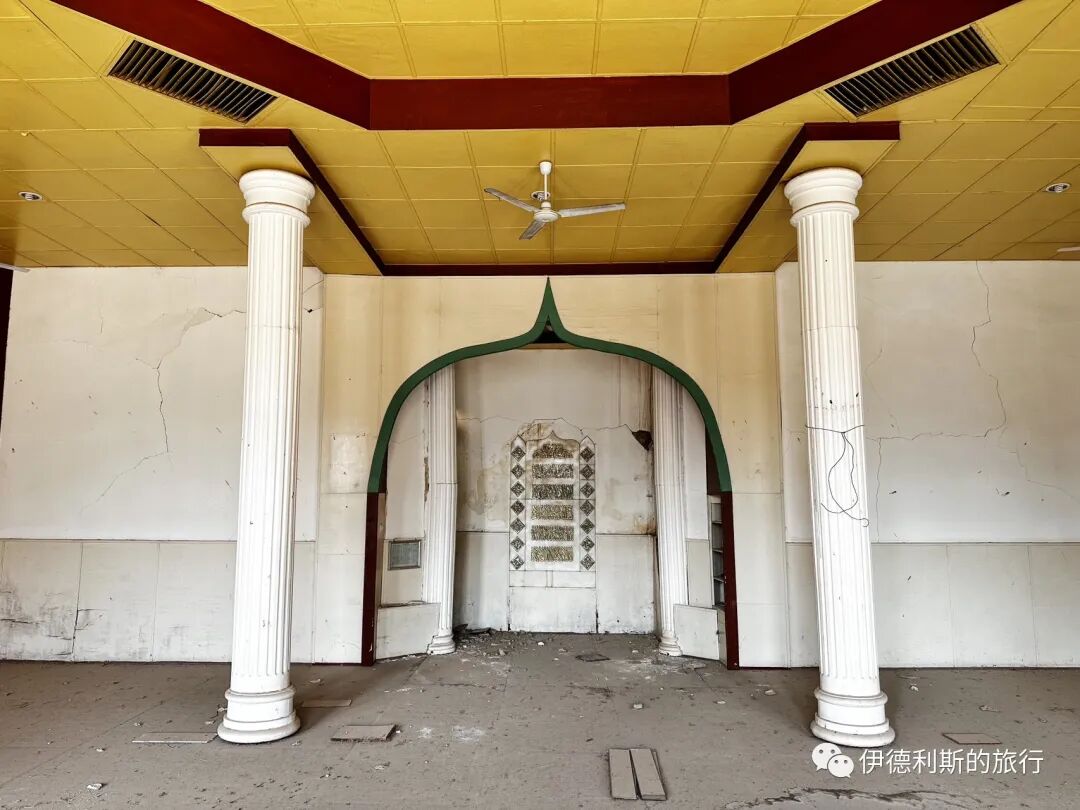
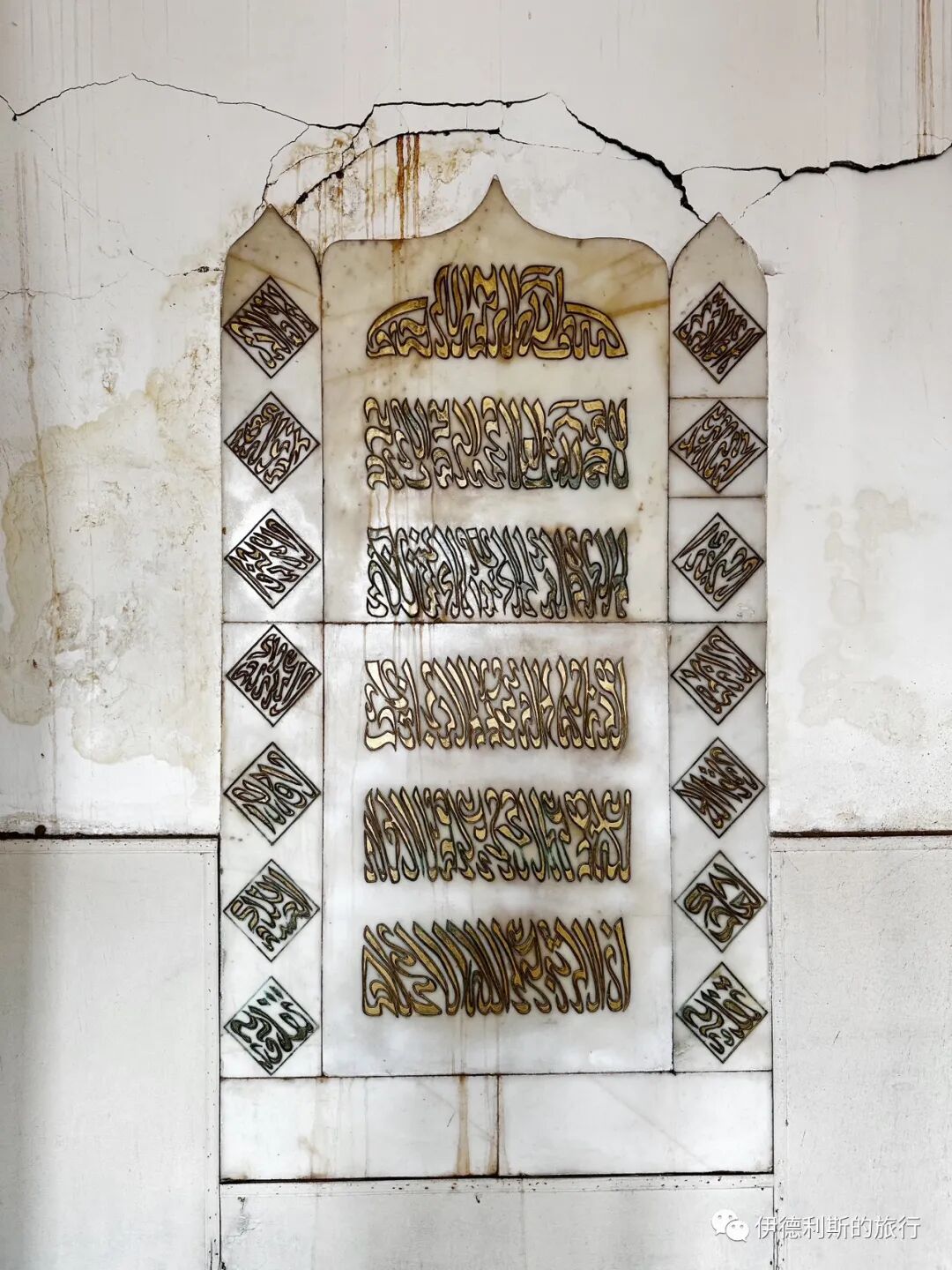
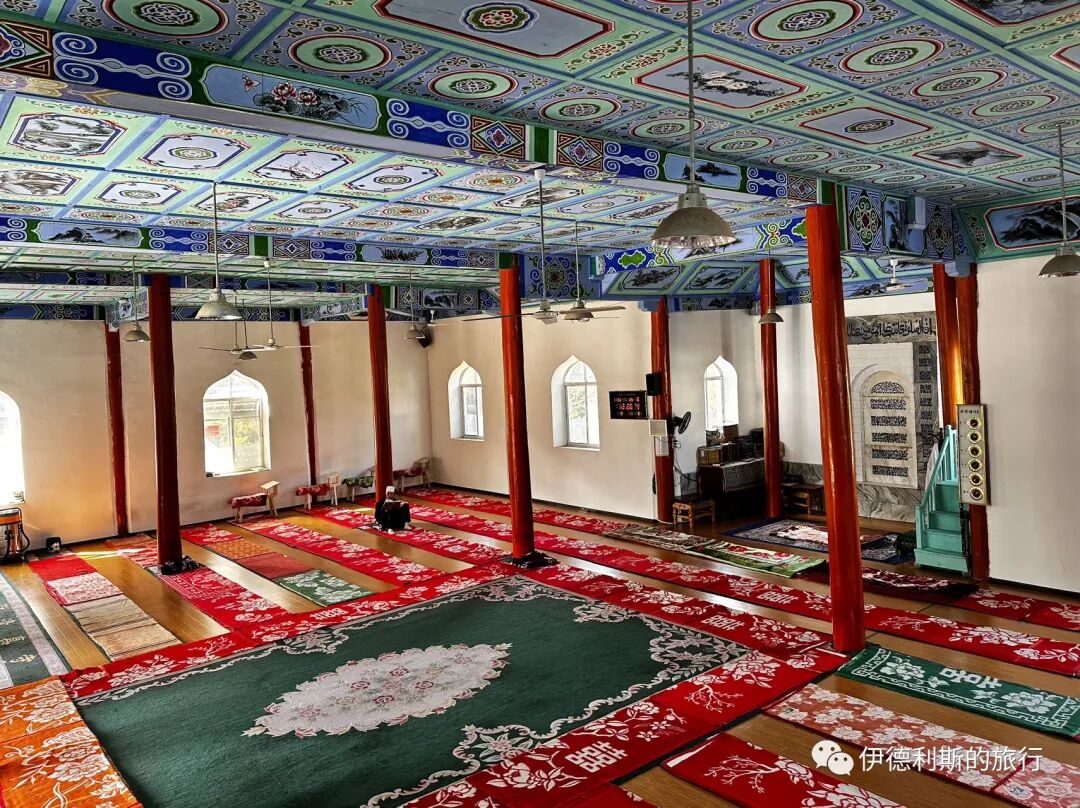
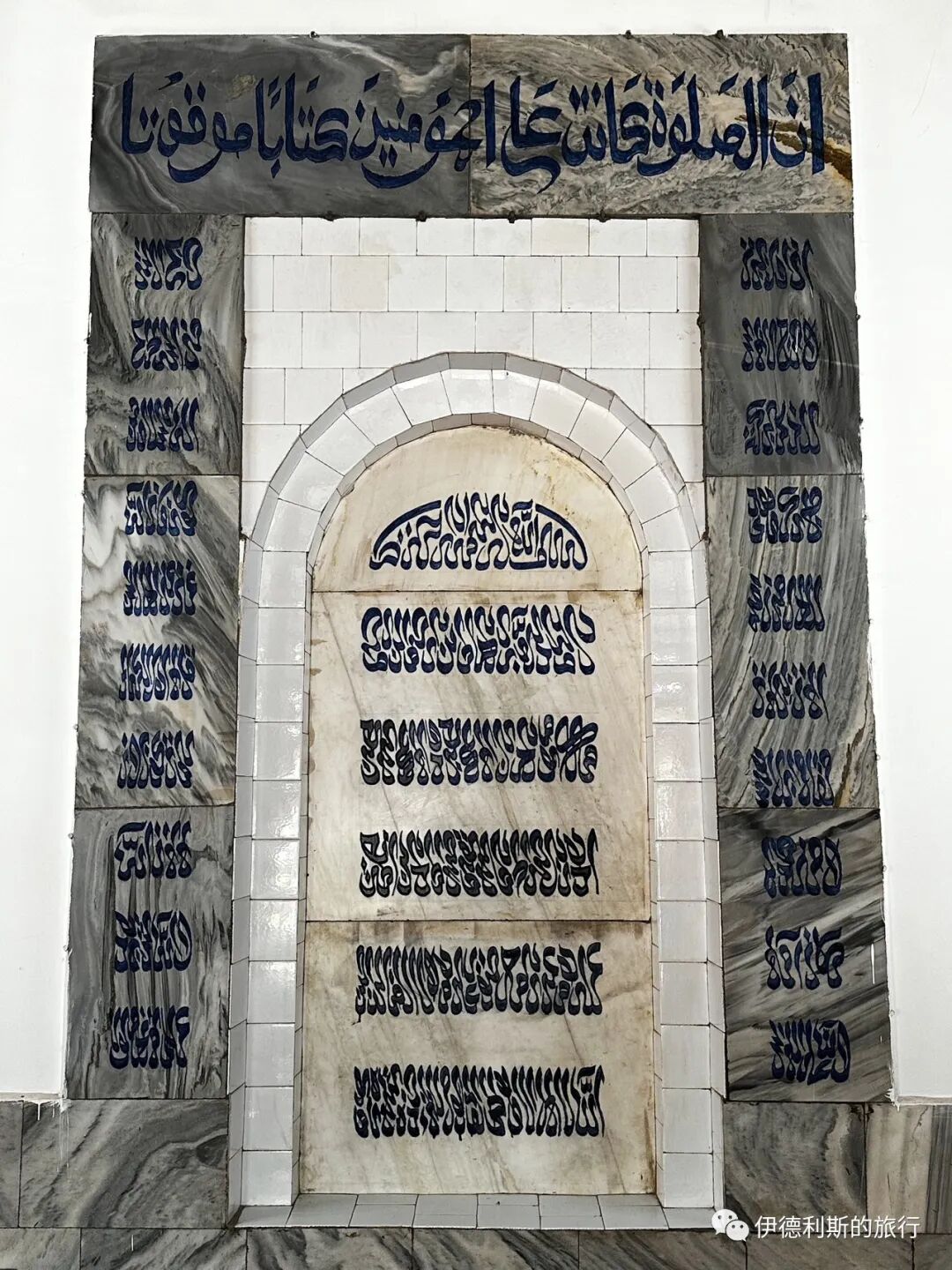
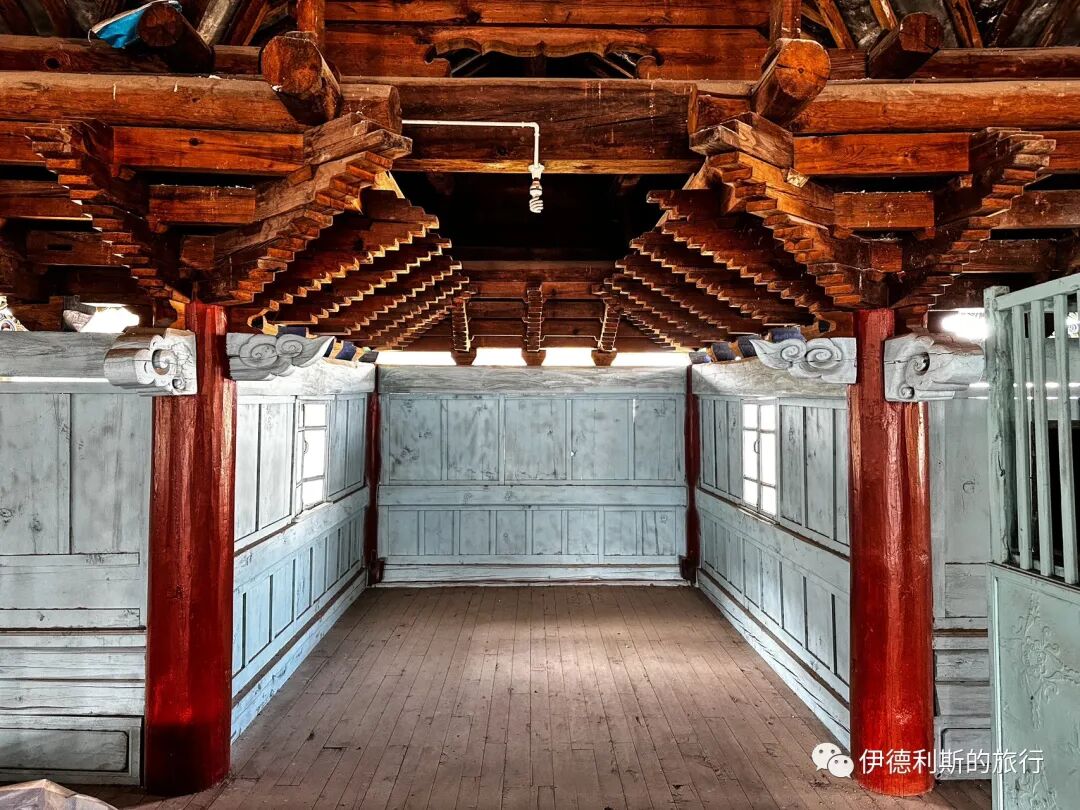
The main hall is 15 meters high. Inside, there are eight 12-meter-tall pillars made of lotus wood and camphor wood, which have lasted a long time because they were soaked in lime water. The walls of the main hall were originally decorated with calligraphy of scriptures written in black ink. When it became a Confucian temple, they were covered with lime and painted red, but now they have been restored and repainted. The ceiling is made of 144 panels, all featuring scripture calligraphy written with a gold pen. Windows were opened on all four sides below the beams, allowing air to circulate and sunlight to fill the hall.
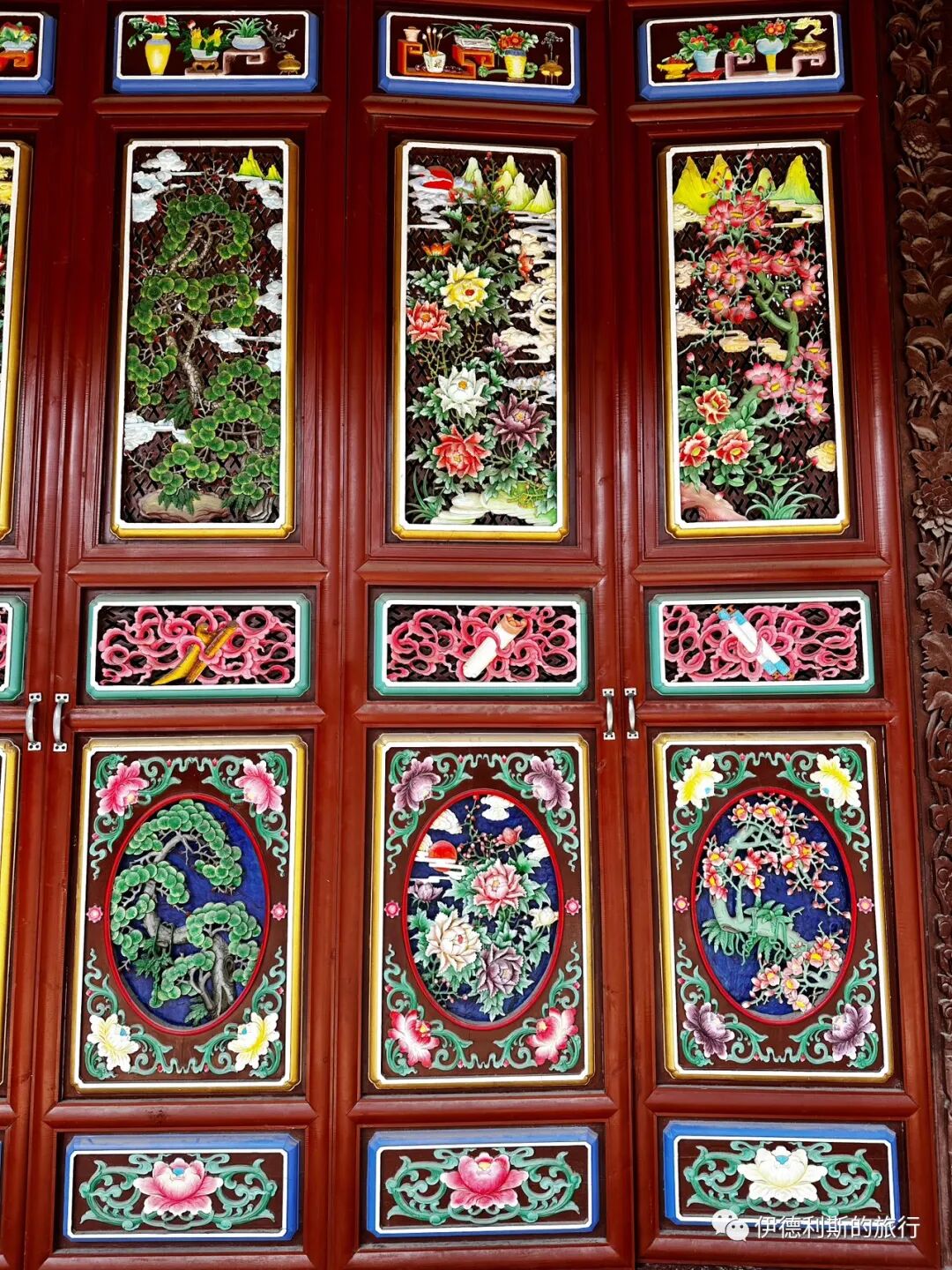
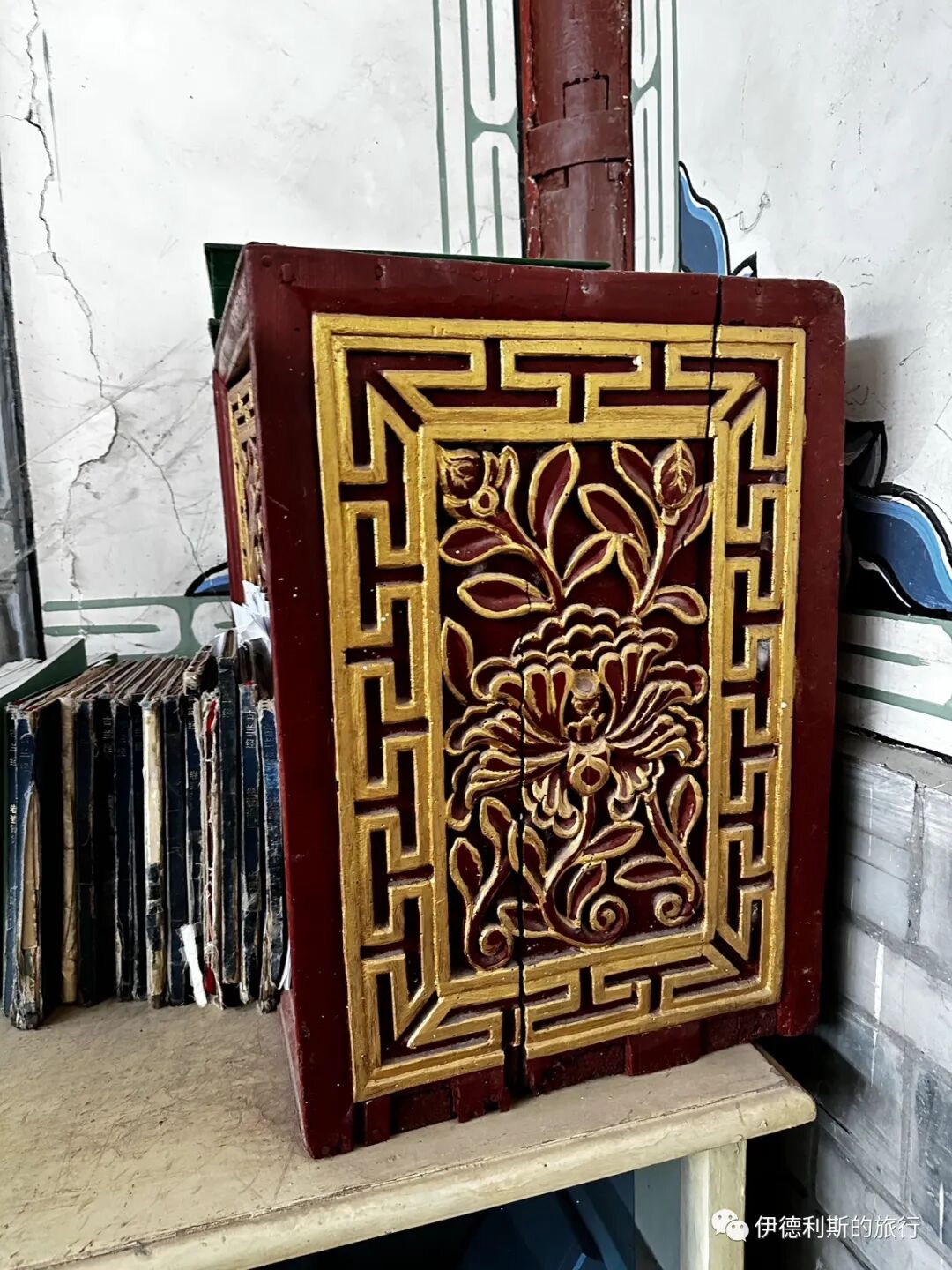
In 1917, the old mosque was turned into a primary school. In 1937, a bridge construction team moved into the mosque to rush repairs on the Yunnan-Burma Road. During the chaos of war, the main hall's sandalwood lattice doors with double-sided carvings of flowers, the marble railings by the pond, and the stone archway were all stolen and sold in Weishan County. The ceiling of the main hall was used as firewood, and a large amount of the wooden structure was burned.
In 1950, the mosque was verbally returned. That May, under the guidance of the Hui Muslim Association and the Mosque Property Committee, over ten young men and women from the village set up a weaving factory in the main hall. In August of the same year, they held a grand Christmas celebration inside the mosque. But just two months later, in October 1950, the County Grain Bureau borrowed the mosque to use as a warehouse. Later, it was reported as state-owned property, and the land in front of the main hall was occupied by a veterinary station and a foreign trade company. In 1977, the Grain Bureau tore down the roof ridge of the main hall and sawed off the four corners of the eaves. It was not until 1994, after years of effort, that Yangbi County finally handed the mosque over to the mosque management committee, and it was reopened after repairs.
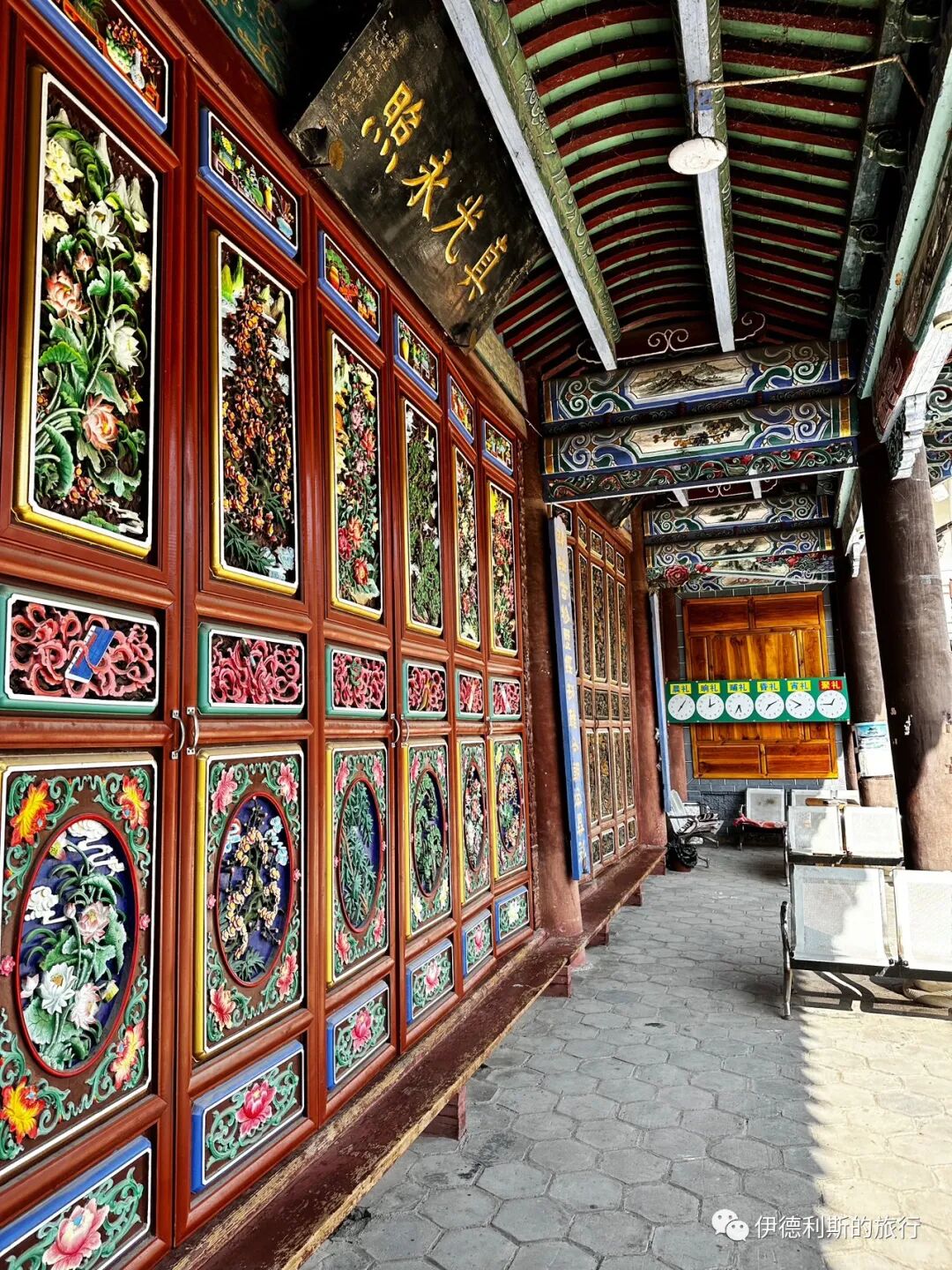
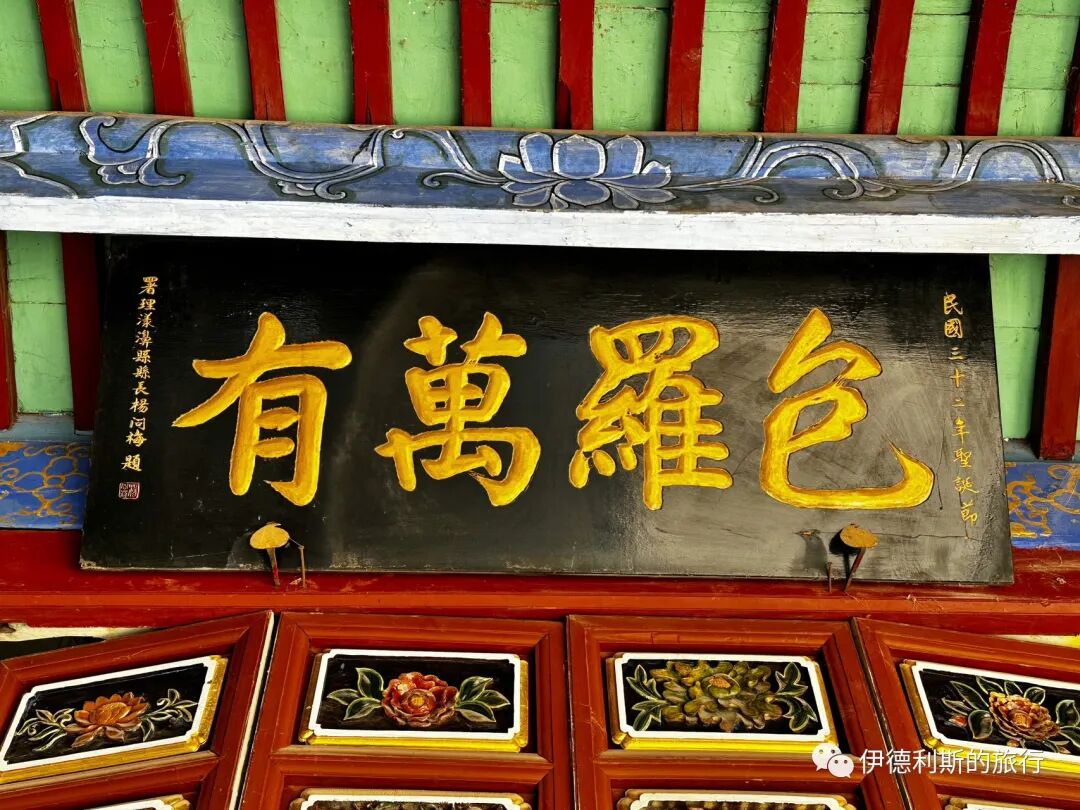
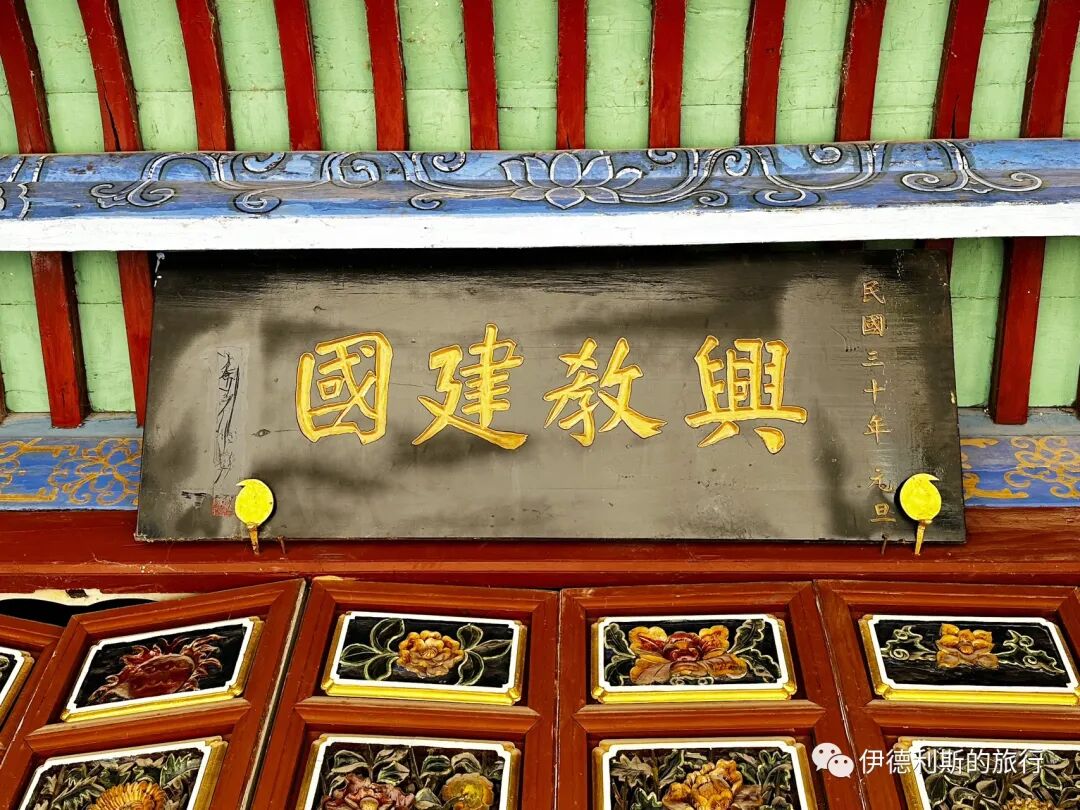
There is a plaque reading 'Bao Luo Wan You' (All-Encompassing) inscribed by acting Yangbi County Magistrate Yang Wenmei during Christmas in 1943, and a plaque reading 'Xing Jiao Jian Guo' (Revive Religion and Build the Nation) inscribed by Bai Chongxi in 1941.
Shangxiang Mosque
Yangbi Shangxiang Mosque is located in the center of Xiajie Village and was first built in 1921. After the Tongzhi disaster, the old Yangbi mosque was turned into a Confucian mosque, and religious life in Xiajie Village died out. It was not until the early years of the Guangxu reign that Ma Yuzhang, who had fled to Shaanxi to study, returned to Xiajie and began teaching scriptures in a private home. Later, Ma Long was elected as the imam. He traveled to Menghua Prefecture (Weishan) to negotiate and successfully redeemed 30 mu of mosque property land.
In 1915, the Yangbi Halal Association was established. The president, Du Fachun, was from Dali. After the Tongzhi disaster, he fled with his family to Xiajie in Yangbi, started a small business, and eventually expanded his shops to places like Baoshan and Yangon, Myanmar. His residence in Xiajie, Yangbi, also served as a place for local believers to pray and recite scriptures. To build a new mosque, the elders of Xiajie Village sent Du Fachun and his group out in 1919 to raise funds. Du Fachun and his group followed a horse caravan all the way to Yangon, Myanmar. More than 30 overseas Chinese from Yangbi who were working there generously donated over 1,000 small silver coins (British pounds). In 1921, through everyone's joint efforts, they obtained the sloping land at Sangyuan. After digging and filling to level the ground, they finally built Shangxiang Mosque.
After the old mosque reopened in 1994, Shangxiang Mosque gradually fell into disuse. The prayer schedule (wushibiao) in the main hall was updated until 2001.
Yangbi Shangjie
Yangbi Shangjie is on the west side of Xiajie, separated by the Xueshan River. During the Hongzhi reign of the Ming Dynasty (1488-1505), the Yunlong Bridge was built in Shangjie, and the ancient Bonan Road was diverted through Shangjie, leading to its rapid development. Today, Shangjie preserves its complete ancient road and street-side shops. In 2022, it was named a provincial-level historical and cultural district.
Shangjie Mosque
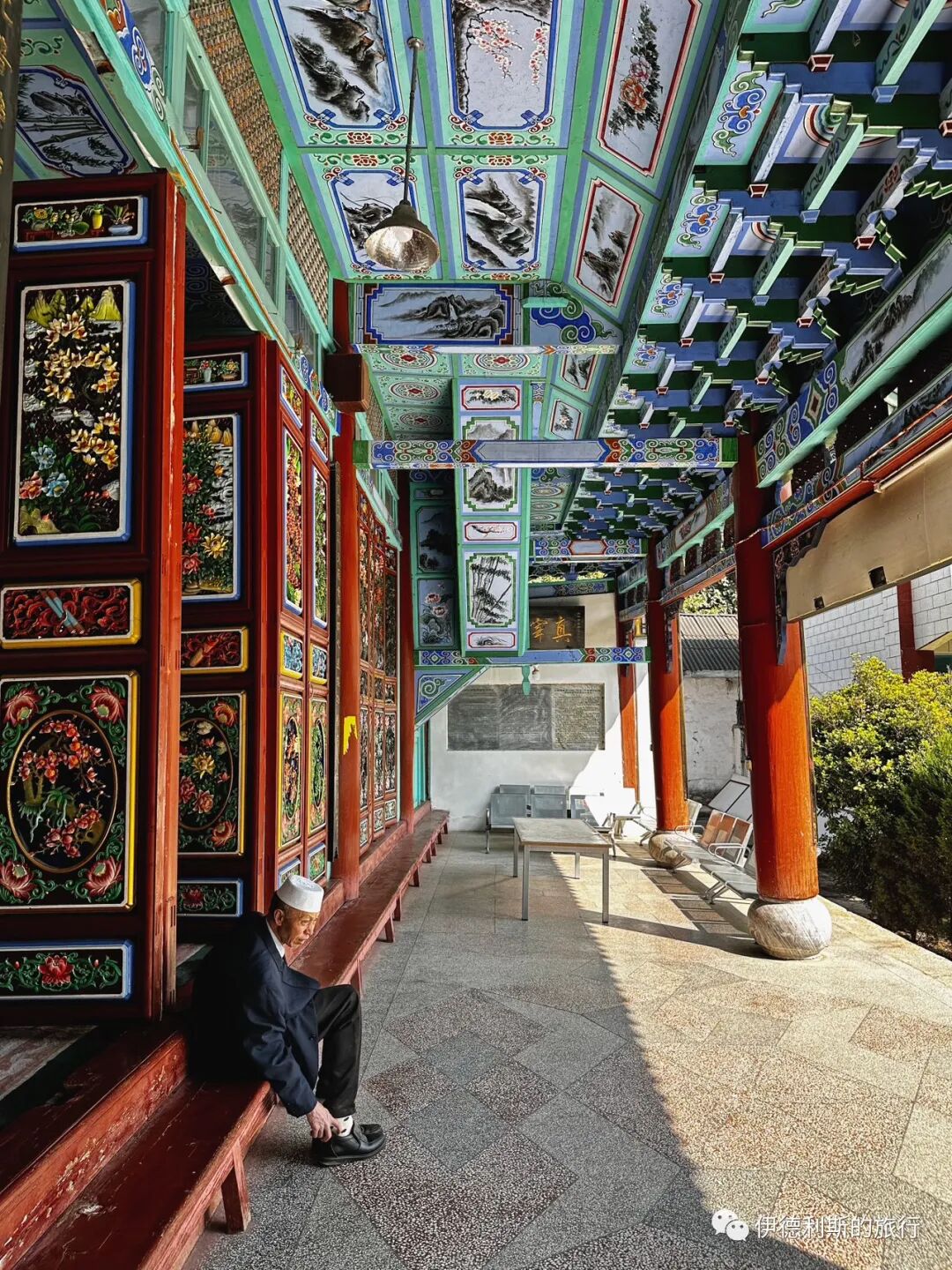
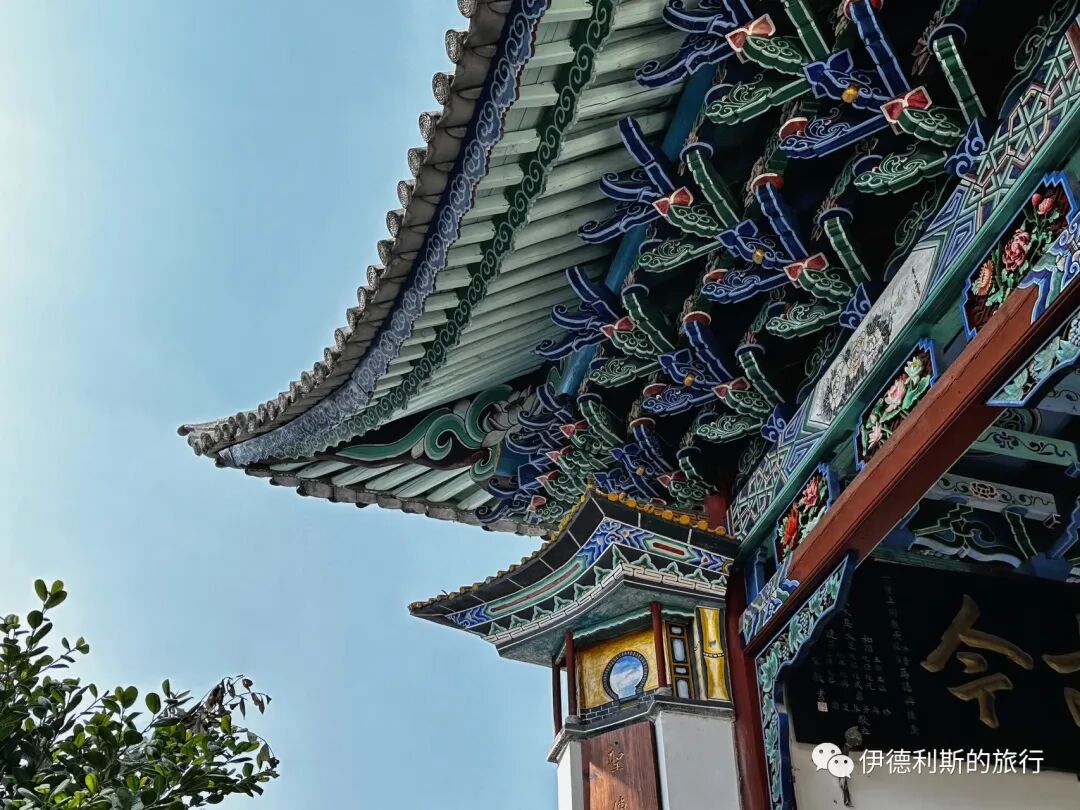
The Shangjie Xinyingpan Mosque in Yangbi was first built in 1859 (the ninth year of the Xianfeng reign). It was confiscated after the disasters of the Tongzhi reign. During the Guangxu reign, the local community leaders elected Imam Ma Ende, along with managers Li Xiucheng and Zhang Chenlin, to travel to Menghua Prefecture (Weishan) to redeem the mosque. To raise funds for the mosque, Ma Ende followed a horse caravan all the way to Myanmar. With the help of overseas compatriots like Haji Zhao Lianhong, he collected enough donations to rebuild the Shangjie Mosque. In 1989, a neighbor's careless use of electricity caused a fire. The entire Shangjie Mosque burned down, except for 16 carved lattice doors that were rescued in time. Between 1991 and 1992, the Shangjie Mosque community hired craftsmen from Weishan and bought timber from the Dali forest region to rebuild the main hall, maintaining the traditional Dali architectural style.
Spring travels in 2023:
On January 23, I set off from Macau and visited the Macau mosque, Moro Garden (Moro Yuan), where I ate delicious Indonesian Javanese food (see "Moro Garden and Indonesian Food in Macau"). On January 25, I arrived in Guangzhou, visited some friends (dosti), and ate various halal foods (see "Hui Muslim Fried Dough (youxiang) and Yemeni Food in Guangzhou").
At noon, I performed the afternoon prayer (asr) at Huaisheng Mosque, then went to visit the ancient tombs of the sages (see "Huaisheng Mosque and the Ancient Tombs of the Sages in Guangzhou").
In the afternoon, I performed the late afternoon prayer (asr) at Haopan Mosque and the sunset prayer (maghrib) at Xiaodongying Mosque (see "Visiting Haopan Mosque and Xiaodongying Mosque in Guangzhou").
On the morning of January 26, I took a train from Guangzhou to Zhaoqing, visited two mosques, and ate halal Cantonese food (see "Halal Roast Goose and Starfruit at the Mosque in Zhaoqing, Guangdong").
On the morning of January 27, I flew from Guangzhou to Xichang, Sichuan. I performed the Friday prayer (jumuah) at the Xichang City Mosque, visited the West Mosque and East Mosque, and ate Xichang rice noodles (see "Performing Jumuah and Eating Rice Noodles in Xichang, Sichuan").
On January 28, I took a high-speed train south to Miyi County in Panzhihua, Sichuan. I visited the beautiful Hui Muslim village of Tianba, performed the afternoon prayer (asr) at the ancient Tianba Mosque, and ate delicious food at a local farmhouse restaurant (see "A Beautiful Hui Village Deep in the Mountains—Tianba, Miyi, Sichuan").
From January 28 to 31, I traveled in Dali. During this time, I carefully explored the Hui mosque neighborhoods around Wenming Street and West Street in Xiaguan to learn about the history of the Xiaguan mosques (see "Centennial Mosques and Halal Food in Xiaguan, Dali"). view all
Summary: Yangbi, Dali — Hui Street and Mosques is presented here as a firsthand travel account in clear English, beginning with this scene: On January 29, I rode an electric scooter from Xiaguan in Dali to Yangbi County in the west to visit an old mosque and taste local food. The account keeps its focus on Yangbi Dali, Tea Horse Road, Hui Muslims while preserving the names, places, food, and historical details from the Chinese source.
On January 29, I rode an electric scooter from Xiaguan in Dali to Yangbi County in the west to visit an old mosque and taste local food. The trade route from Dali to Thailand and Myanmar is part of the Southern Silk Road, known at different times as the Shu-Shendu Road and the Tea Horse Road. The old post road from Xiaguan in Dali west through Yangbi to Baoshan is also called the Bonan Ancient Road because it passes through the Bonan Mountains.
Halal food
On the way from Xiaguan to Yangbi, there is a hot spring village called Shaba. The road is lined with fish restaurants, and their Shaba fish is very famous in Dali.
The restaurant I chose is run by Hui Muslims from Eryuan, Dali. The service is great, and they served dried fruit and tea as soon as I sat down. Shaba fish is actually sour and spicy crucian carp. It is affordable, and two fish are just right for one person.
The crucian carp is caught and prepared fresh. They use dried papaya and plum vinegar for the sour flavor, and add chili for a very rich taste. It comes with tofu and mushrooms, which is very satisfying. If you find it too spicy, you can drink a bottle of local Ruili River mango juice from Yunnan. I was also pleasantly surprised that the two fish the waiter picked for me were full of roe, which tasted very rich and delicious.
I feel the most popular rice noodle roll (juanfen) shop in Yangbi town is Kemeijia on Jinxing Road. You can buy a whole sheet of rice noodle roll to take away, or eat a bowl of warm meat sauce rice noodle roll in the shop. The open kitchen is clean and hygienic, and the taste is great.
Yangbi Xiajie
In 1279 (the 16th year of Zhiyuan), Nasr al-Din, the eldest son of the Yunnan regional commander Sayyid Ajjal Shams al-Din, moved the military headquarters to Dali and sent tens of thousands of Hui Muslim troops to fight repeatedly against Myanmar. After the war, the Yuan Dynasty left many soldiers to guard various key routes. According to the History of Yuan, in 1303 (the 7th year of Dade), an imperial decree ordered 14,000 Hui Muslim soldiers who had conquered Myanmar to return to their respective garrisons. The location of Yangbi Xiajie was set up as a military post, and elite Tamachi troops were stationed there, which is how Yangbi Xiajie began to form.
In 1382 (the 15th year of Hongwu in the Ming Dynasty), Ma Dinghui, a descendant of the Tamachi troops left in Dali by the Yuan Dynasty, followed the Ming army to fight in Yunnan. He earned many merits and was appointed as the local inspector of the Yangbi Inspection Office, settling in Yangbi Xiajie with his subordinates. Ma Dinghui's descendants were known as the Tusi official family, and together with the officers and soldiers who guarded and farmed in Yangbi at that time, they became the earliest Hui Muslims in Yangbi. In the early Ming Dynasty, the main Hui Muslim surnames in Yangbi were Ma, Sha, Bai, and Yang. In the mid-Ming period, the Long, Wu, Wang, Du, and Mi surnames were added, and by the mid-Qing Dynasty, there were more than 800 households.
During the Ming and Qing dynasties, Yangbi Xiajie was a narrow ancient road nearly one kilometer long. Along the street were various horse inns, hotels, and shops selling halal snacks and local specialties, with a constant stream of horse caravans and mountain people selling mountain goods. At that time, almost every Hui Muslim household in Yangbi raised horses and carried out long-distance transport under the leadership of a caravan leader (maguotou).
During the Tongzhi disaster, most of the Hui Muslims in Yangbi were killed, and only a very small number escaped. In 1877 (the 3rd year of Guangxu), the Qing government encouraged the displaced Hui Muslims to return and resume their businesses. Eight households of survivors moved back to live in Xiajie. After that, more Hui Muslims came to Xiajie to do business and settle down, and by the Republic of China period, the number had increased to 70 or 80 households. In 1931, Edgar Snow traveled with a horse caravan to Yangbi Xiajie. In his article 'Caravan Leaves Dali for Yongping, China,' published in the American newspaper The Sun on August 15, 1931, he described Yangbi Xiajie as a 'Muslim-inhabited town'.
In the late Republic of China period, the Hui Muslim horse caravans in Yangbi Xiajie developed again. With less than 100 households, they raised more than 400 horses. Most of the young men had experience traveling to Myanmar and India for trade, and some even started families abroad.
In 1938, the Burma Road opened to traffic, and villagers began to build houses on both sides of the road, gradually forming the current layout of Xiajie Village. As the Burma Road became the main transport route, the Bonan Ancient Road gradually faded into history, and the shops along the road closed one after another.
Old mosque
The Yangbi old mosque is located next to the old Burma Road in Xiajie Village. When the main beam of the hall was replaced in 1958, an inscription from the 15th year of Hongwu of the Ming Dynasty was found on the beam. According to the oral history passed down through generations in Xiajie, after the Hui Muslim officers and soldiers left in the early Ming Dynasty camped in Yangbi, they went to the river to bathe and purify themselves. Each person carried a stone on their shoulder to gradually build the foundation of the main hall. At first, they just built simple flat-roofed houses. Later, they hired craftsmen and spent many years building the current main hall with its three-bay and five-grid structure. Today, the stone foundation of the main hall is uneven, and it does not perfectly align with the thickness of the walls, which matches the legends about the mosque's construction.
The old mosque was once magnificent. From east to west, it featured a gate in the style of a memorial archway, a screen wall, a three-story prayer tower (jiaobailou), a second gate, a stone archway, a stone bridge, north and south side rooms, and the main hall, making for a spectacular sight. During the Tongzhi disaster, the mosque was burned and destroyed. It was later turned into a Confucian mosque. The gate and prayer tower were taken down to build Zhulin Mosque, and other buildings were ruined, leaving only the main hall standing.
The main hall is 15 meters high. Inside, there are eight 12-meter-tall pillars made of lotus wood and camphor wood, which have lasted a long time because they were soaked in lime water. The walls of the main hall were originally decorated with calligraphy of scriptures written in black ink. When it became a Confucian temple, they were covered with lime and painted red, but now they have been restored and repainted. The ceiling is made of 144 panels, all featuring scripture calligraphy written with a gold pen. Windows were opened on all four sides below the beams, allowing air to circulate and sunlight to fill the hall.
In 1917, the old mosque was turned into a primary school. In 1937, a bridge construction team moved into the mosque to rush repairs on the Yunnan-Burma Road. During the chaos of war, the main hall's sandalwood lattice doors with double-sided carvings of flowers, the marble railings by the pond, and the stone archway were all stolen and sold in Weishan County. The ceiling of the main hall was used as firewood, and a large amount of the wooden structure was burned.
In 1950, the mosque was verbally returned. That May, under the guidance of the Hui Muslim Association and the Mosque Property Committee, over ten young men and women from the village set up a weaving factory in the main hall. In August of the same year, they held a grand Christmas celebration inside the mosque. But just two months later, in October 1950, the County Grain Bureau borrowed the mosque to use as a warehouse. Later, it was reported as state-owned property, and the land in front of the main hall was occupied by a veterinary station and a foreign trade company. In 1977, the Grain Bureau tore down the roof ridge of the main hall and sawed off the four corners of the eaves. It was not until 1994, after years of effort, that Yangbi County finally handed the mosque over to the mosque management committee, and it was reopened after repairs.
There is a plaque reading 'Bao Luo Wan You' (All-Encompassing) inscribed by acting Yangbi County Magistrate Yang Wenmei during Christmas in 1943, and a plaque reading 'Xing Jiao Jian Guo' (Revive Religion and Build the Nation) inscribed by Bai Chongxi in 1941.
Shangxiang Mosque
Yangbi Shangxiang Mosque is located in the center of Xiajie Village and was first built in 1921. After the Tongzhi disaster, the old Yangbi mosque was turned into a Confucian mosque, and religious life in Xiajie Village died out. It was not until the early years of the Guangxu reign that Ma Yuzhang, who had fled to Shaanxi to study, returned to Xiajie and began teaching scriptures in a private home. Later, Ma Long was elected as the imam. He traveled to Menghua Prefecture (Weishan) to negotiate and successfully redeemed 30 mu of mosque property land.
In 1915, the Yangbi Halal Association was established. The president, Du Fachun, was from Dali. After the Tongzhi disaster, he fled with his family to Xiajie in Yangbi, started a small business, and eventually expanded his shops to places like Baoshan and Yangon, Myanmar. His residence in Xiajie, Yangbi, also served as a place for local believers to pray and recite scriptures. To build a new mosque, the elders of Xiajie Village sent Du Fachun and his group out in 1919 to raise funds. Du Fachun and his group followed a horse caravan all the way to Yangon, Myanmar. More than 30 overseas Chinese from Yangbi who were working there generously donated over 1,000 small silver coins (British pounds). In 1921, through everyone's joint efforts, they obtained the sloping land at Sangyuan. After digging and filling to level the ground, they finally built Shangxiang Mosque.
After the old mosque reopened in 1994, Shangxiang Mosque gradually fell into disuse. The prayer schedule (wushibiao) in the main hall was updated until 2001.
Yangbi Shangjie
Yangbi Shangjie is on the west side of Xiajie, separated by the Xueshan River. During the Hongzhi reign of the Ming Dynasty (1488-1505), the Yunlong Bridge was built in Shangjie, and the ancient Bonan Road was diverted through Shangjie, leading to its rapid development. Today, Shangjie preserves its complete ancient road and street-side shops. In 2022, it was named a provincial-level historical and cultural district.
Shangjie Mosque
The Shangjie Xinyingpan Mosque in Yangbi was first built in 1859 (the ninth year of the Xianfeng reign). It was confiscated after the disasters of the Tongzhi reign. During the Guangxu reign, the local community leaders elected Imam Ma Ende, along with managers Li Xiucheng and Zhang Chenlin, to travel to Menghua Prefecture (Weishan) to redeem the mosque. To raise funds for the mosque, Ma Ende followed a horse caravan all the way to Myanmar. With the help of overseas compatriots like Haji Zhao Lianhong, he collected enough donations to rebuild the Shangjie Mosque. In 1989, a neighbor's careless use of electricity caused a fire. The entire Shangjie Mosque burned down, except for 16 carved lattice doors that were rescued in time. Between 1991 and 1992, the Shangjie Mosque community hired craftsmen from Weishan and bought timber from the Dali forest region to rebuild the main hall, maintaining the traditional Dali architectural style.
Spring travels in 2023:
On January 23, I set off from Macau and visited the Macau mosque, Moro Garden (Moro Yuan), where I ate delicious Indonesian Javanese food (see "Moro Garden and Indonesian Food in Macau"). On January 25, I arrived in Guangzhou, visited some friends (dosti), and ate various halal foods (see "Hui Muslim Fried Dough (youxiang) and Yemeni Food in Guangzhou").
At noon, I performed the afternoon prayer (asr) at Huaisheng Mosque, then went to visit the ancient tombs of the sages (see "Huaisheng Mosque and the Ancient Tombs of the Sages in Guangzhou").
In the afternoon, I performed the late afternoon prayer (asr) at Haopan Mosque and the sunset prayer (maghrib) at Xiaodongying Mosque (see "Visiting Haopan Mosque and Xiaodongying Mosque in Guangzhou").
On the morning of January 26, I took a train from Guangzhou to Zhaoqing, visited two mosques, and ate halal Cantonese food (see "Halal Roast Goose and Starfruit at the Mosque in Zhaoqing, Guangdong").
On the morning of January 27, I flew from Guangzhou to Xichang, Sichuan. I performed the Friday prayer (jumuah) at the Xichang City Mosque, visited the West Mosque and East Mosque, and ate Xichang rice noodles (see "Performing Jumuah and Eating Rice Noodles in Xichang, Sichuan").
On January 28, I took a high-speed train south to Miyi County in Panzhihua, Sichuan. I visited the beautiful Hui Muslim village of Tianba, performed the afternoon prayer (asr) at the ancient Tianba Mosque, and ate delicious food at a local farmhouse restaurant (see "A Beautiful Hui Village Deep in the Mountains—Tianba, Miyi, Sichuan").
From January 28 to 31, I traveled in Dali. During this time, I carefully explored the Hui mosque neighborhoods around Wenming Street and West Street in Xiaguan to learn about the history of the Xiaguan mosques (see "Centennial Mosques and Halal Food in Xiaguan, Dali"). view all
Reposted from the web
Summary: Yangbi, Dali — Hui Street and Mosques is presented here as a firsthand travel account in clear English, beginning with this scene: On January 29, I rode an electric scooter from Xiaguan in Dali to Yangbi County in the west to visit an old mosque and taste local food. The account keeps its focus on Yangbi Dali, Tea Horse Road, Hui Muslims while preserving the names, places, food, and historical details from the Chinese source.
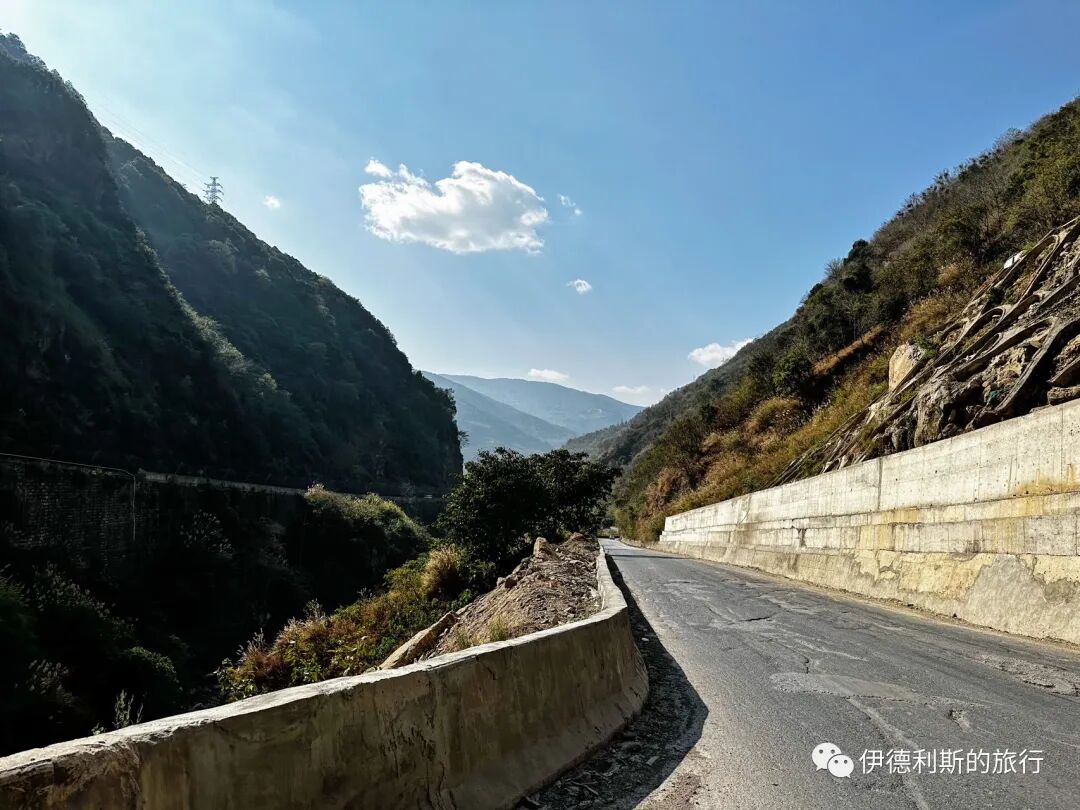
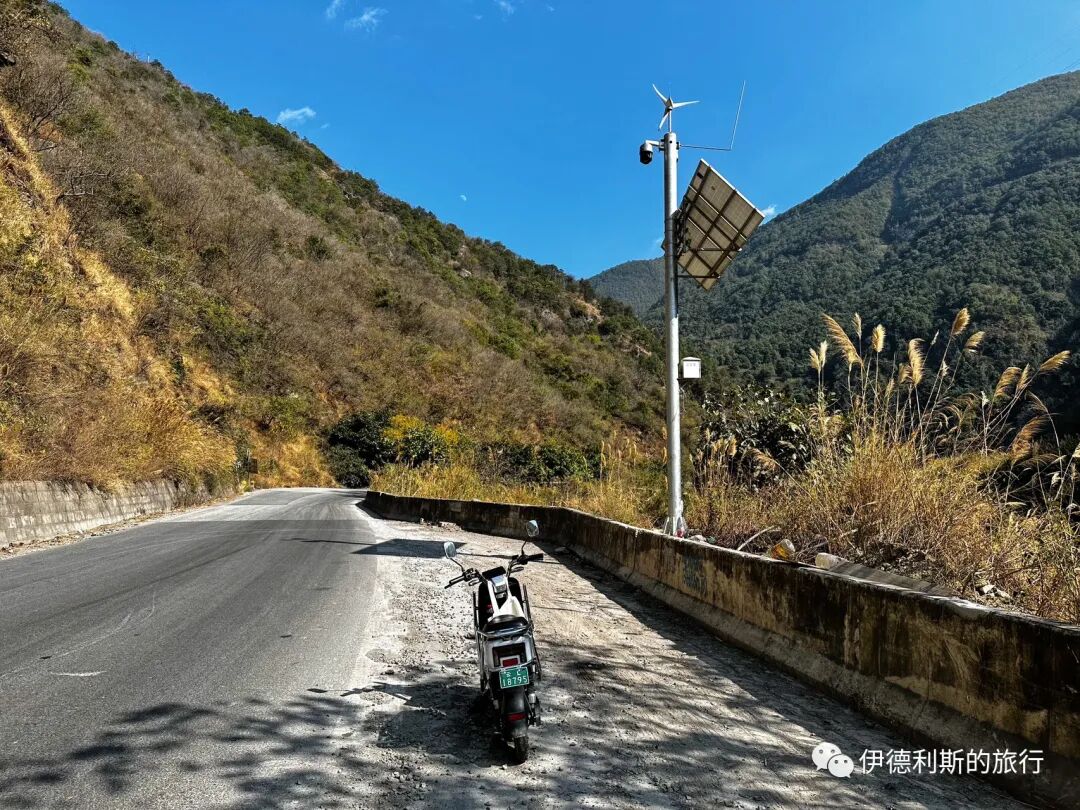
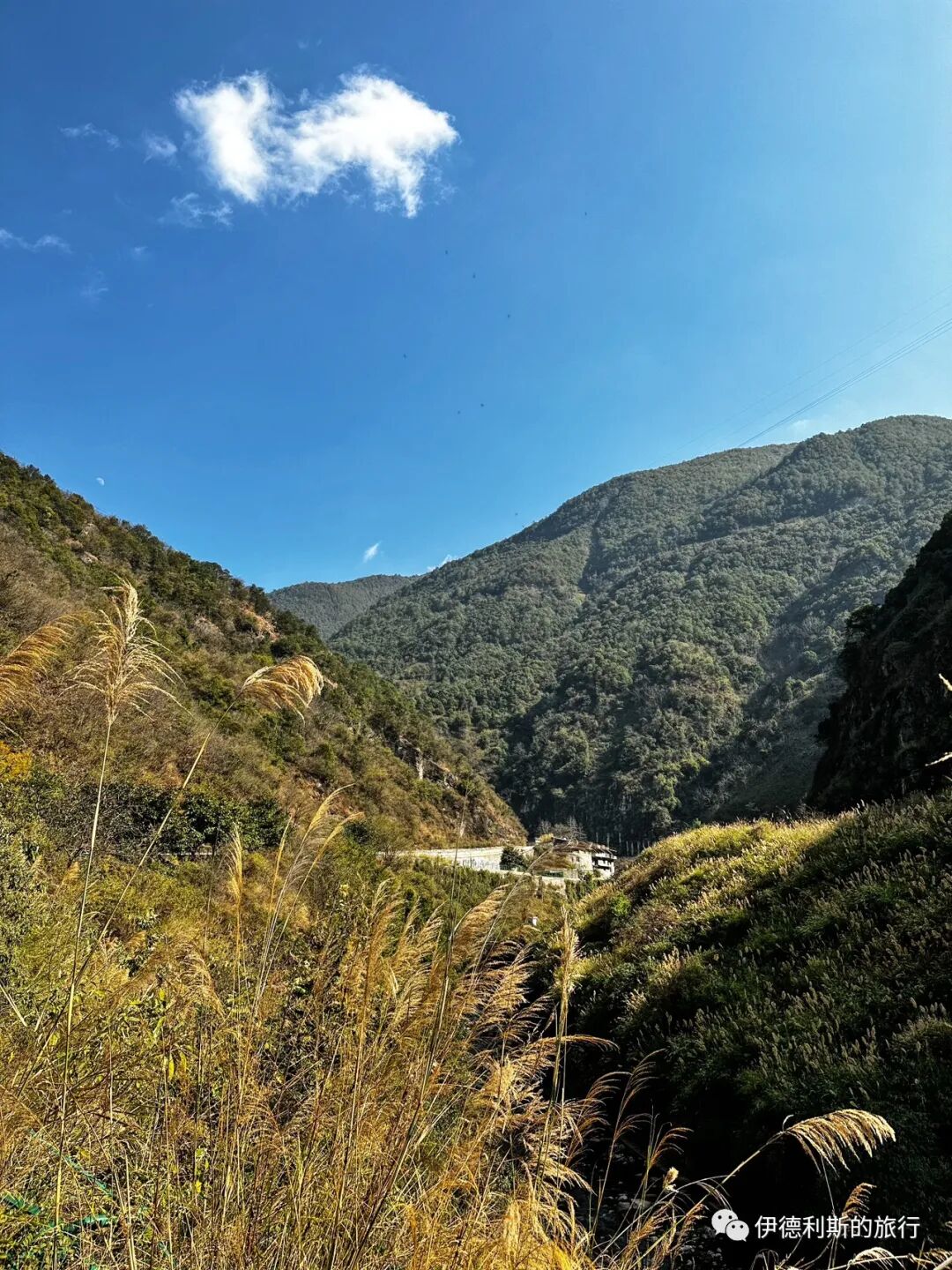
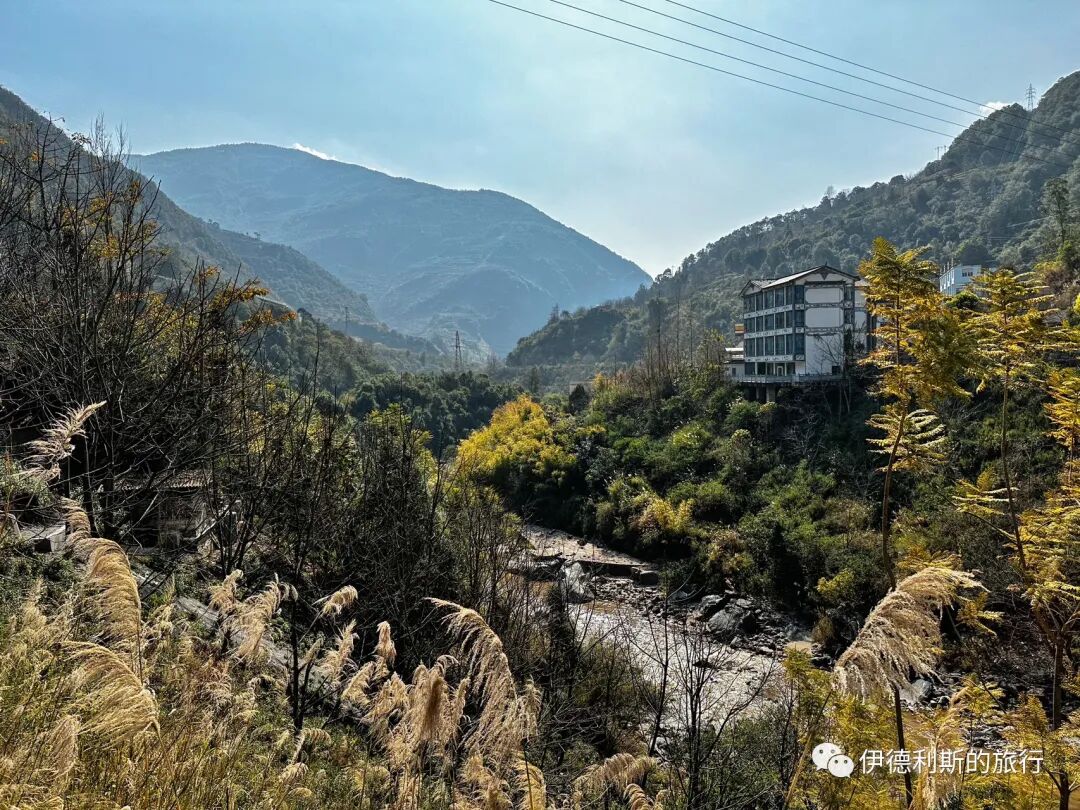
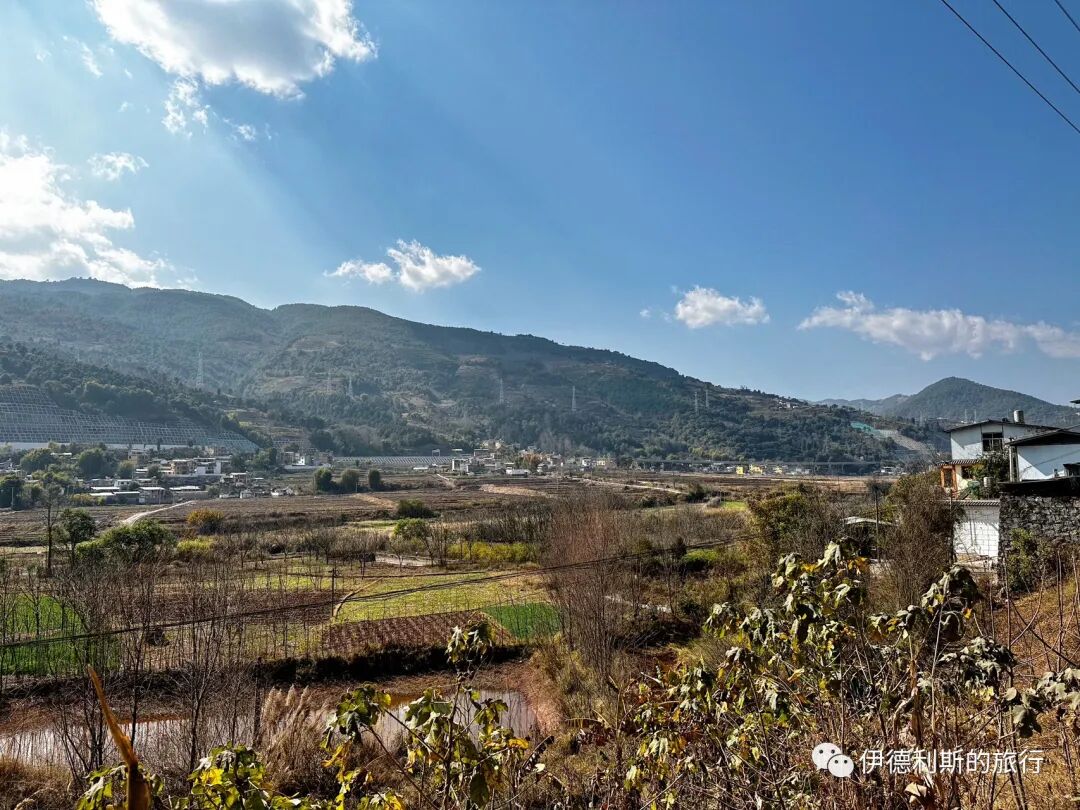
On January 29, I rode an electric scooter from Xiaguan in Dali to Yangbi County in the west to visit an old mosque and taste local food. The trade route from Dali to Thailand and Myanmar is part of the Southern Silk Road, known at different times as the Shu-Shendu Road and the Tea Horse Road. The old post road from Xiaguan in Dali west through Yangbi to Baoshan is also called the Bonan Ancient Road because it passes through the Bonan Mountains.
Halal food
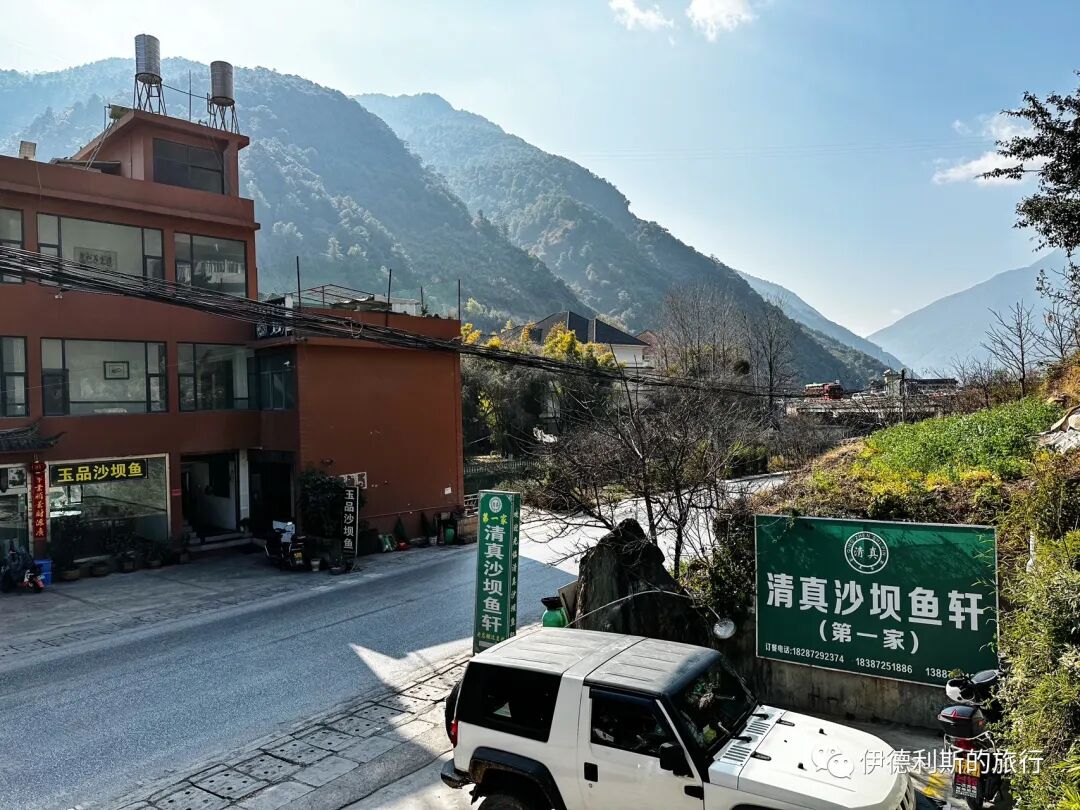
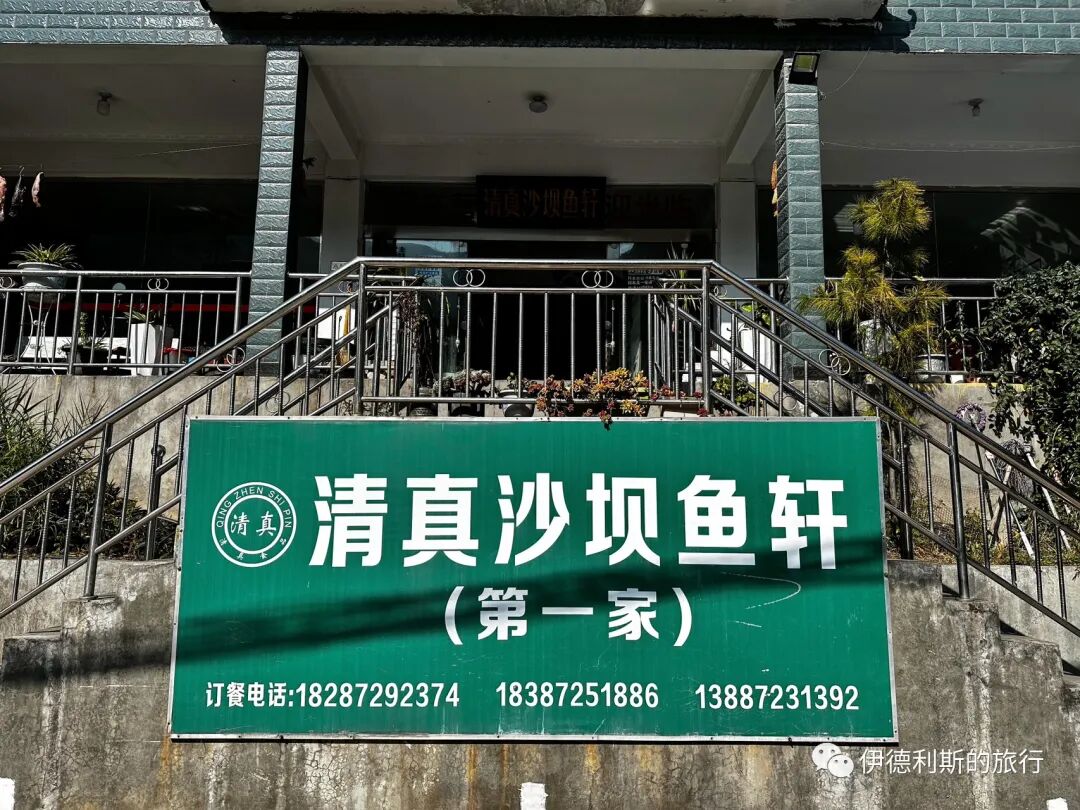
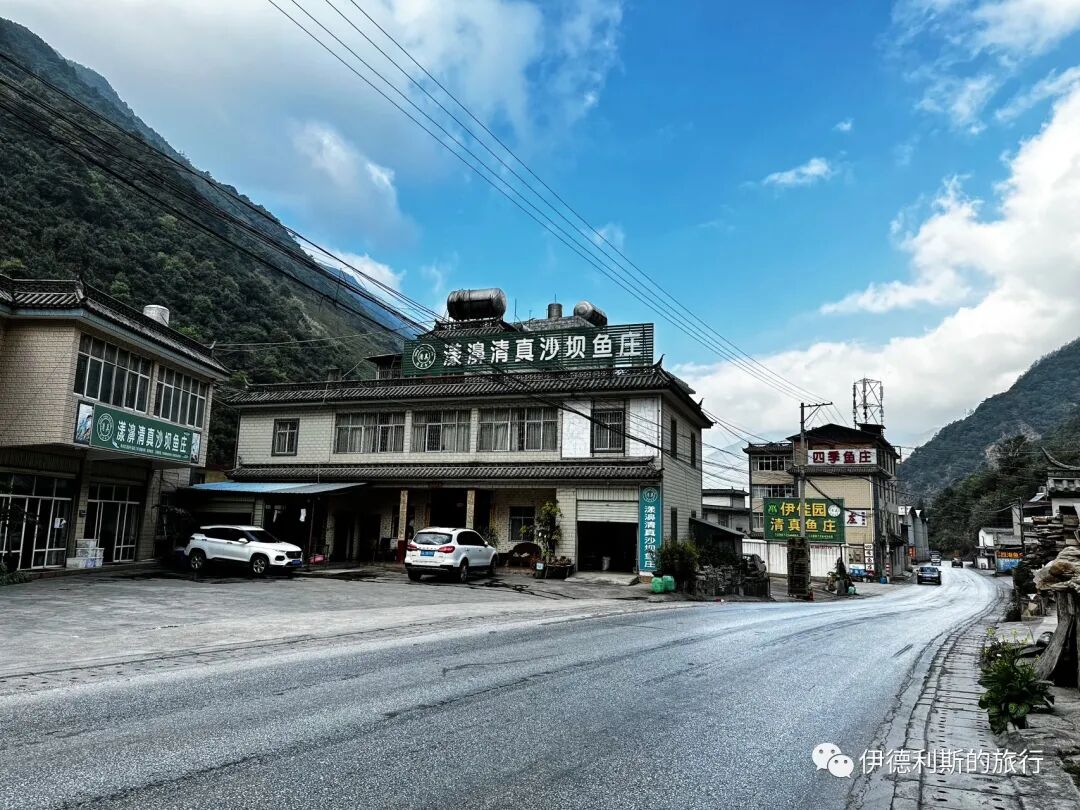
On the way from Xiaguan to Yangbi, there is a hot spring village called Shaba. The road is lined with fish restaurants, and their Shaba fish is very famous in Dali.
The restaurant I chose is run by Hui Muslims from Eryuan, Dali. The service is great, and they served dried fruit and tea as soon as I sat down. Shaba fish is actually sour and spicy crucian carp. It is affordable, and two fish are just right for one person.
The crucian carp is caught and prepared fresh. They use dried papaya and plum vinegar for the sour flavor, and add chili for a very rich taste. It comes with tofu and mushrooms, which is very satisfying. If you find it too spicy, you can drink a bottle of local Ruili River mango juice from Yunnan. I was also pleasantly surprised that the two fish the waiter picked for me were full of roe, which tasted very rich and delicious.
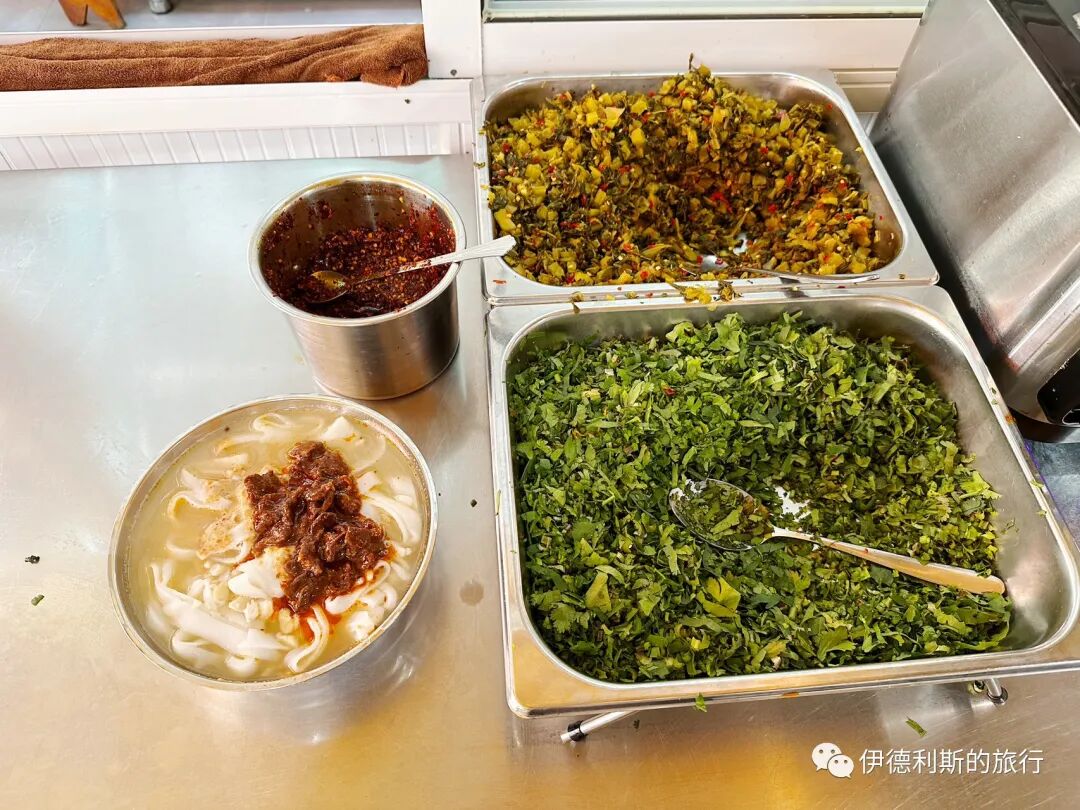
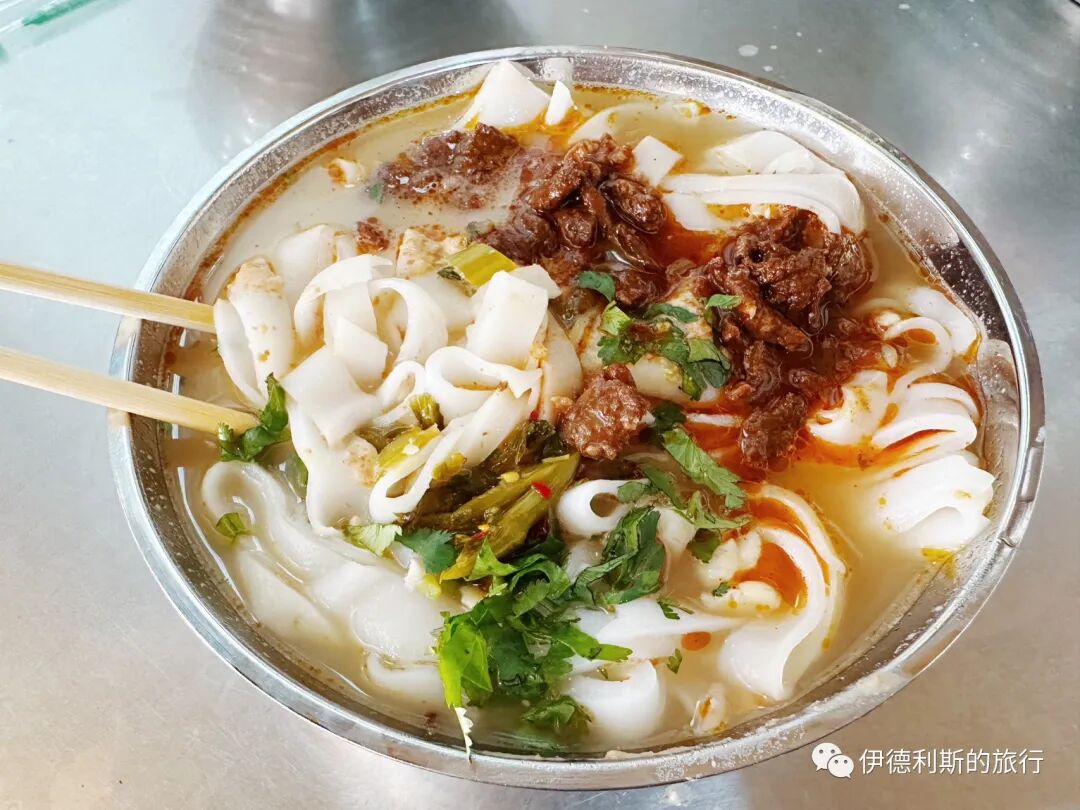
I feel the most popular rice noodle roll (juanfen) shop in Yangbi town is Kemeijia on Jinxing Road. You can buy a whole sheet of rice noodle roll to take away, or eat a bowl of warm meat sauce rice noodle roll in the shop. The open kitchen is clean and hygienic, and the taste is great.
Yangbi Xiajie
In 1279 (the 16th year of Zhiyuan), Nasr al-Din, the eldest son of the Yunnan regional commander Sayyid Ajjal Shams al-Din, moved the military headquarters to Dali and sent tens of thousands of Hui Muslim troops to fight repeatedly against Myanmar. After the war, the Yuan Dynasty left many soldiers to guard various key routes. According to the History of Yuan, in 1303 (the 7th year of Dade), an imperial decree ordered 14,000 Hui Muslim soldiers who had conquered Myanmar to return to their respective garrisons. The location of Yangbi Xiajie was set up as a military post, and elite Tamachi troops were stationed there, which is how Yangbi Xiajie began to form.
In 1382 (the 15th year of Hongwu in the Ming Dynasty), Ma Dinghui, a descendant of the Tamachi troops left in Dali by the Yuan Dynasty, followed the Ming army to fight in Yunnan. He earned many merits and was appointed as the local inspector of the Yangbi Inspection Office, settling in Yangbi Xiajie with his subordinates. Ma Dinghui's descendants were known as the Tusi official family, and together with the officers and soldiers who guarded and farmed in Yangbi at that time, they became the earliest Hui Muslims in Yangbi. In the early Ming Dynasty, the main Hui Muslim surnames in Yangbi were Ma, Sha, Bai, and Yang. In the mid-Ming period, the Long, Wu, Wang, Du, and Mi surnames were added, and by the mid-Qing Dynasty, there were more than 800 households.
During the Ming and Qing dynasties, Yangbi Xiajie was a narrow ancient road nearly one kilometer long. Along the street were various horse inns, hotels, and shops selling halal snacks and local specialties, with a constant stream of horse caravans and mountain people selling mountain goods. At that time, almost every Hui Muslim household in Yangbi raised horses and carried out long-distance transport under the leadership of a caravan leader (maguotou).
During the Tongzhi disaster, most of the Hui Muslims in Yangbi were killed, and only a very small number escaped. In 1877 (the 3rd year of Guangxu), the Qing government encouraged the displaced Hui Muslims to return and resume their businesses. Eight households of survivors moved back to live in Xiajie. After that, more Hui Muslims came to Xiajie to do business and settle down, and by the Republic of China period, the number had increased to 70 or 80 households. In 1931, Edgar Snow traveled with a horse caravan to Yangbi Xiajie. In his article 'Caravan Leaves Dali for Yongping, China,' published in the American newspaper The Sun on August 15, 1931, he described Yangbi Xiajie as a 'Muslim-inhabited town'.
In the late Republic of China period, the Hui Muslim horse caravans in Yangbi Xiajie developed again. With less than 100 households, they raised more than 400 horses. Most of the young men had experience traveling to Myanmar and India for trade, and some even started families abroad.
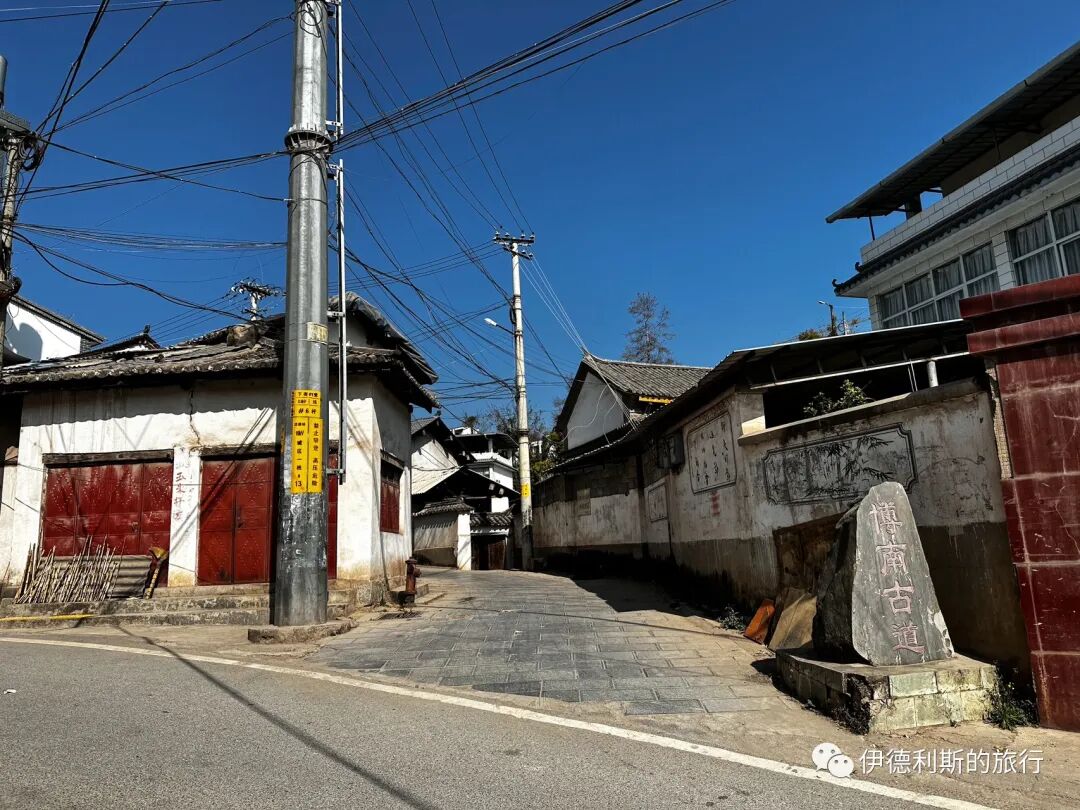
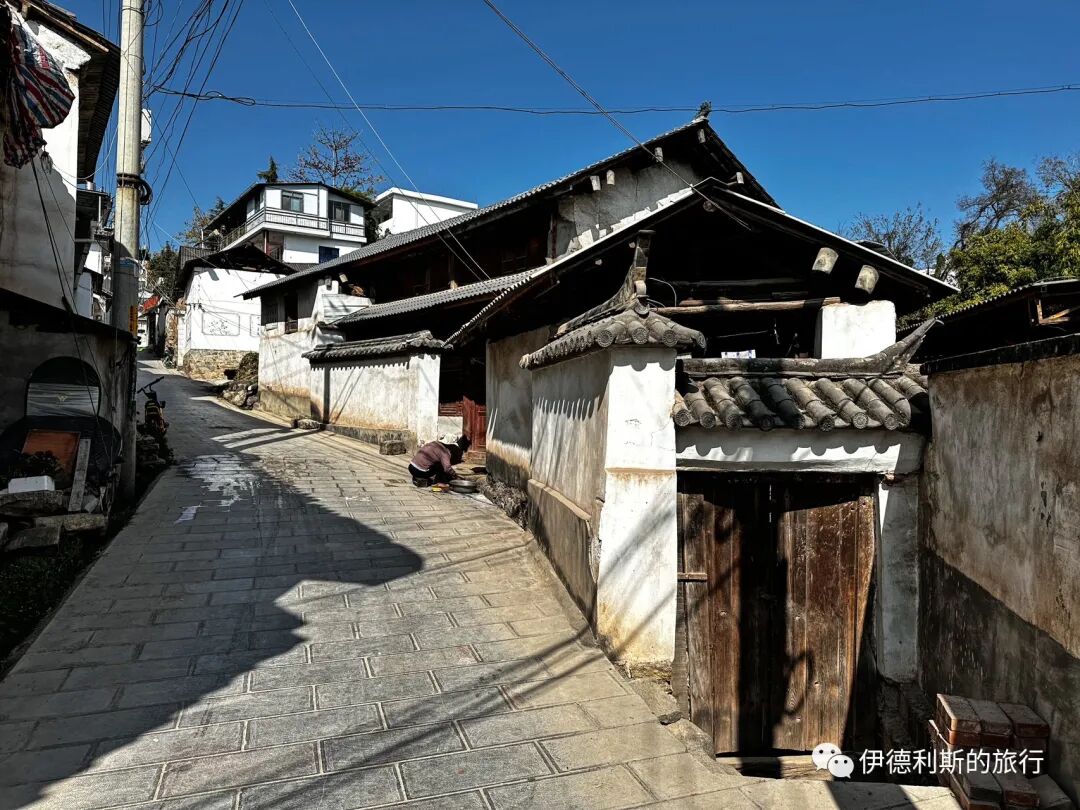
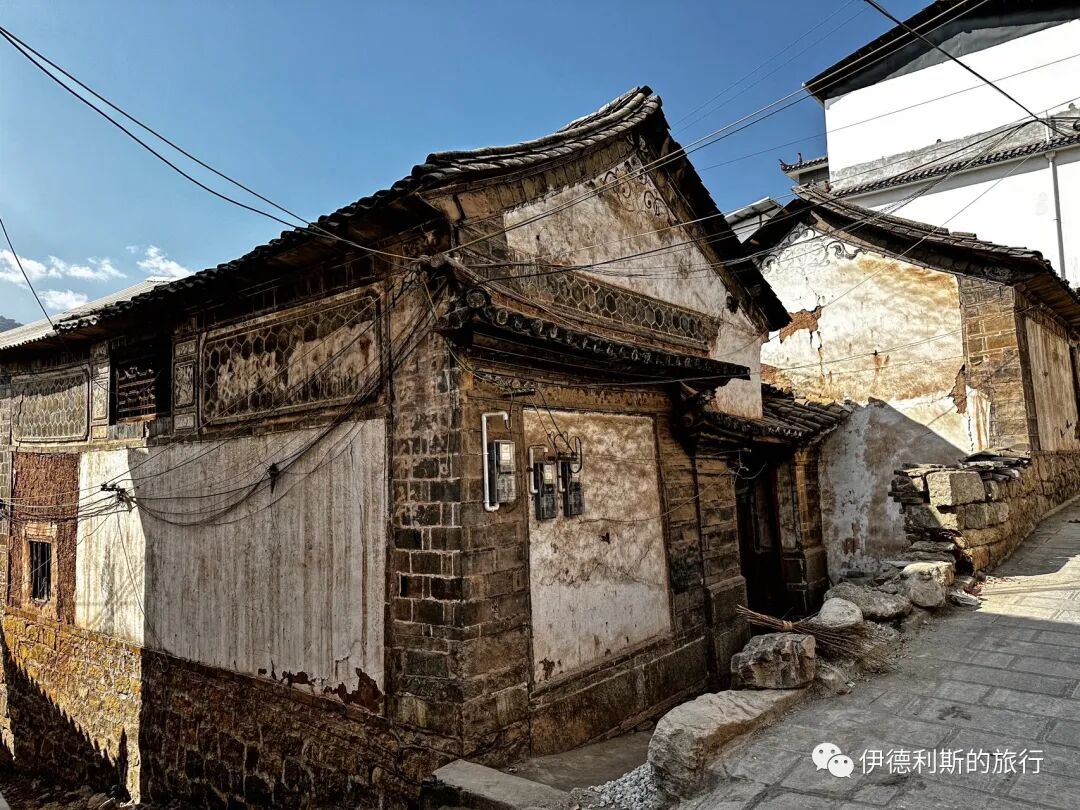
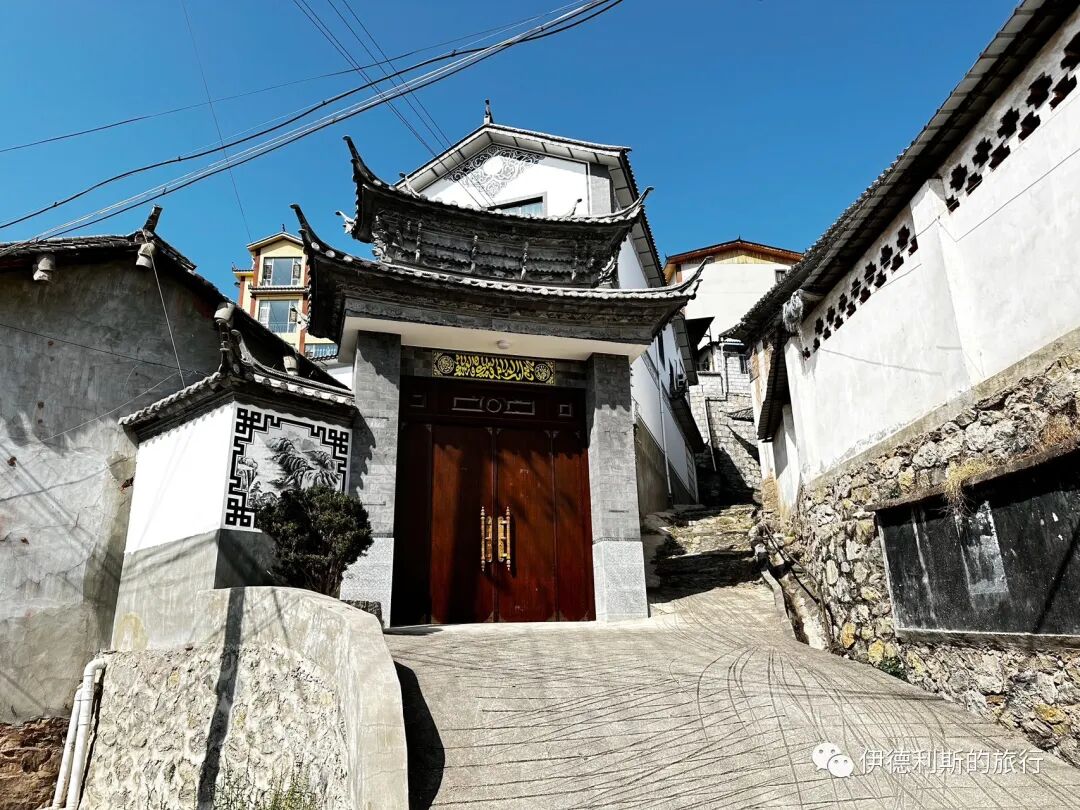
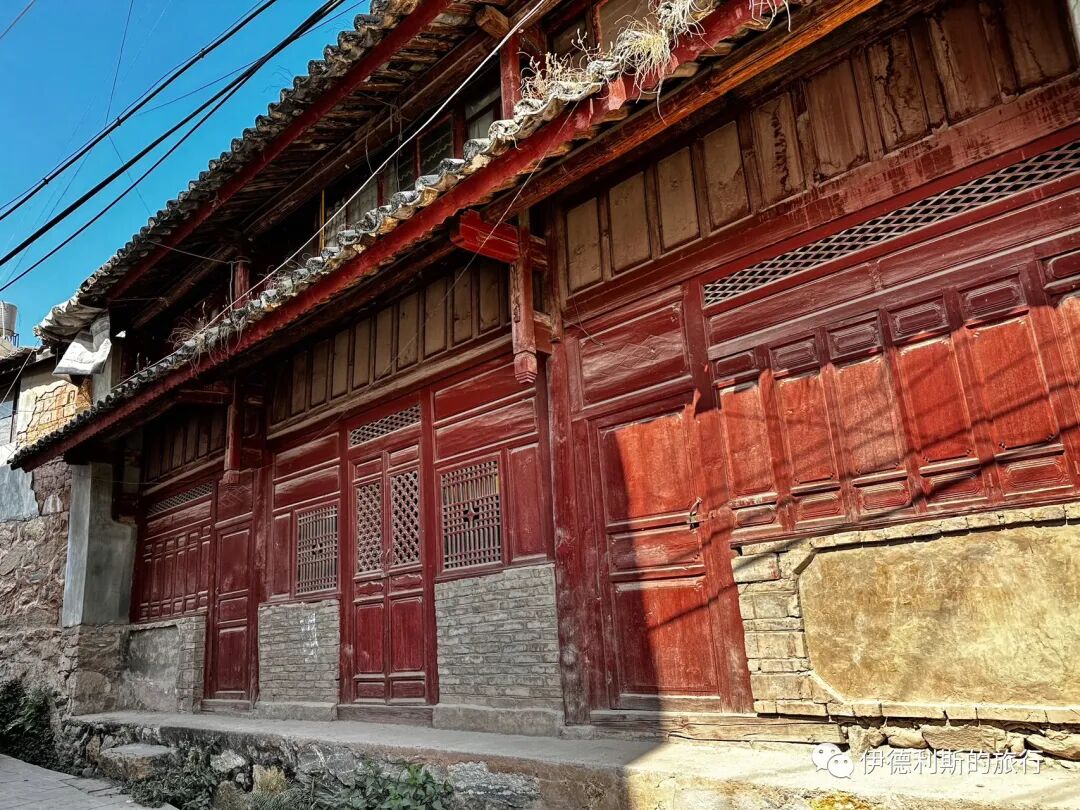
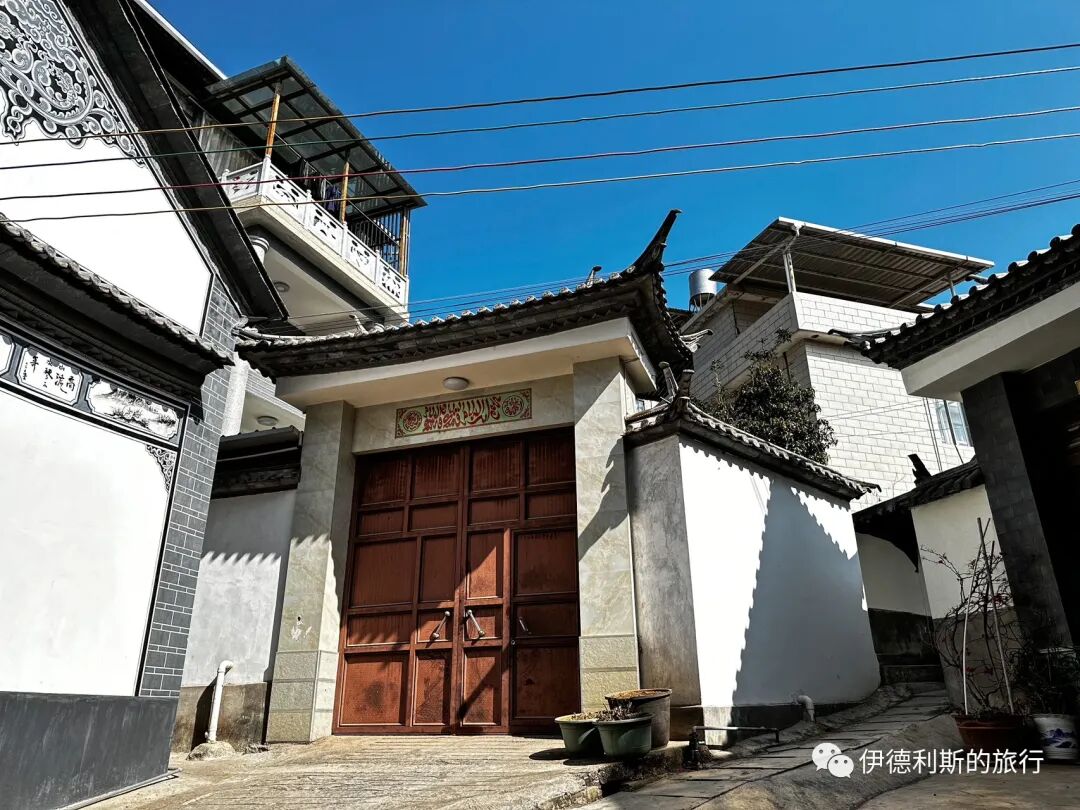
In 1938, the Burma Road opened to traffic, and villagers began to build houses on both sides of the road, gradually forming the current layout of Xiajie Village. As the Burma Road became the main transport route, the Bonan Ancient Road gradually faded into history, and the shops along the road closed one after another.
Old mosque
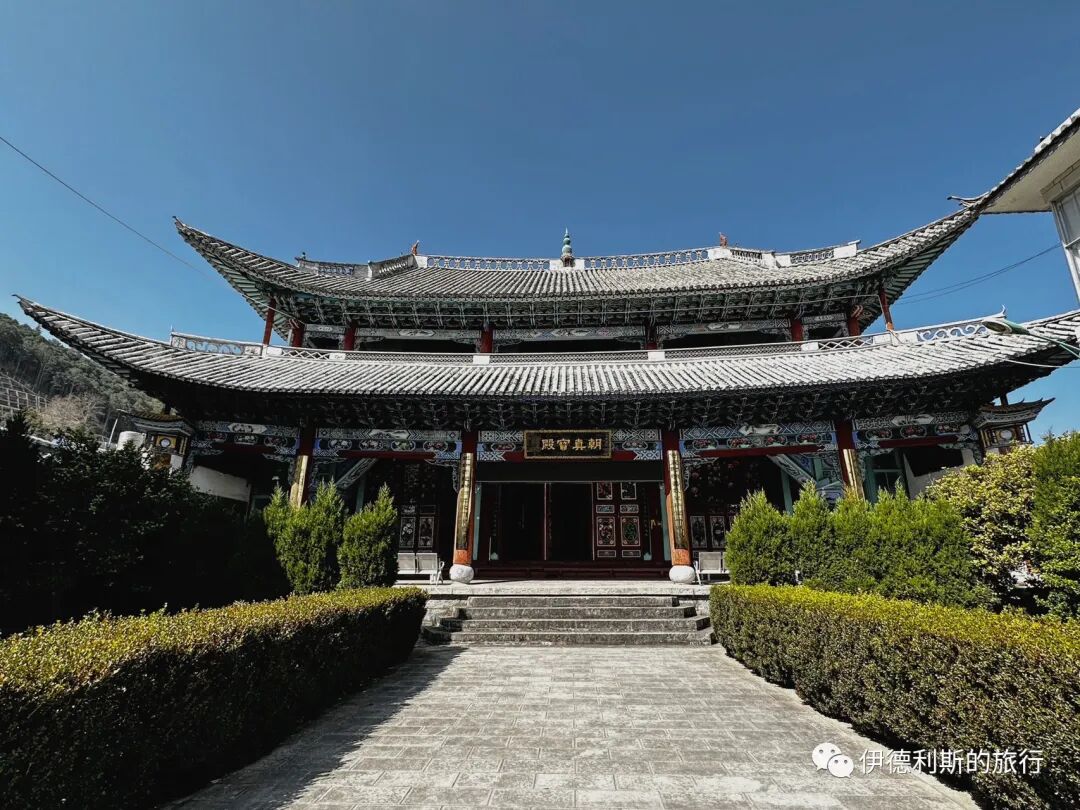
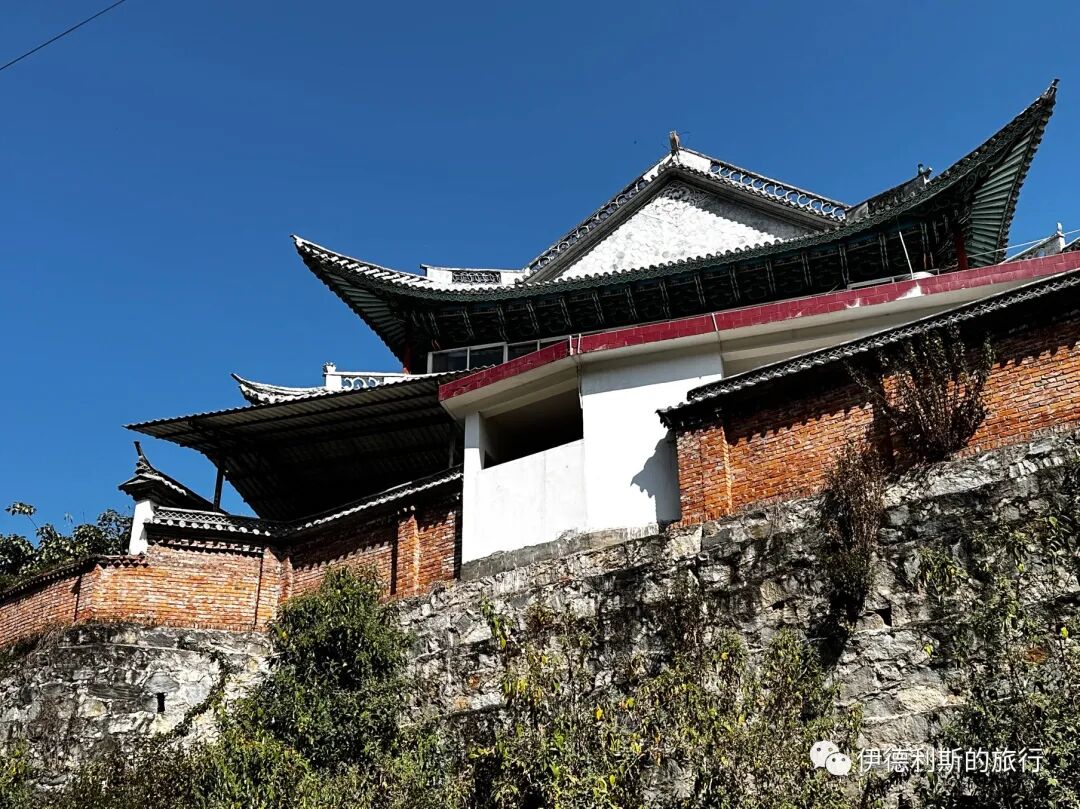
The Yangbi old mosque is located next to the old Burma Road in Xiajie Village. When the main beam of the hall was replaced in 1958, an inscription from the 15th year of Hongwu of the Ming Dynasty was found on the beam. According to the oral history passed down through generations in Xiajie, after the Hui Muslim officers and soldiers left in the early Ming Dynasty camped in Yangbi, they went to the river to bathe and purify themselves. Each person carried a stone on their shoulder to gradually build the foundation of the main hall. At first, they just built simple flat-roofed houses. Later, they hired craftsmen and spent many years building the current main hall with its three-bay and five-grid structure. Today, the stone foundation of the main hall is uneven, and it does not perfectly align with the thickness of the walls, which matches the legends about the mosque's construction.
The old mosque was once magnificent. From east to west, it featured a gate in the style of a memorial archway, a screen wall, a three-story prayer tower (jiaobailou), a second gate, a stone archway, a stone bridge, north and south side rooms, and the main hall, making for a spectacular sight. During the Tongzhi disaster, the mosque was burned and destroyed. It was later turned into a Confucian mosque. The gate and prayer tower were taken down to build Zhulin Mosque, and other buildings were ruined, leaving only the main hall standing.
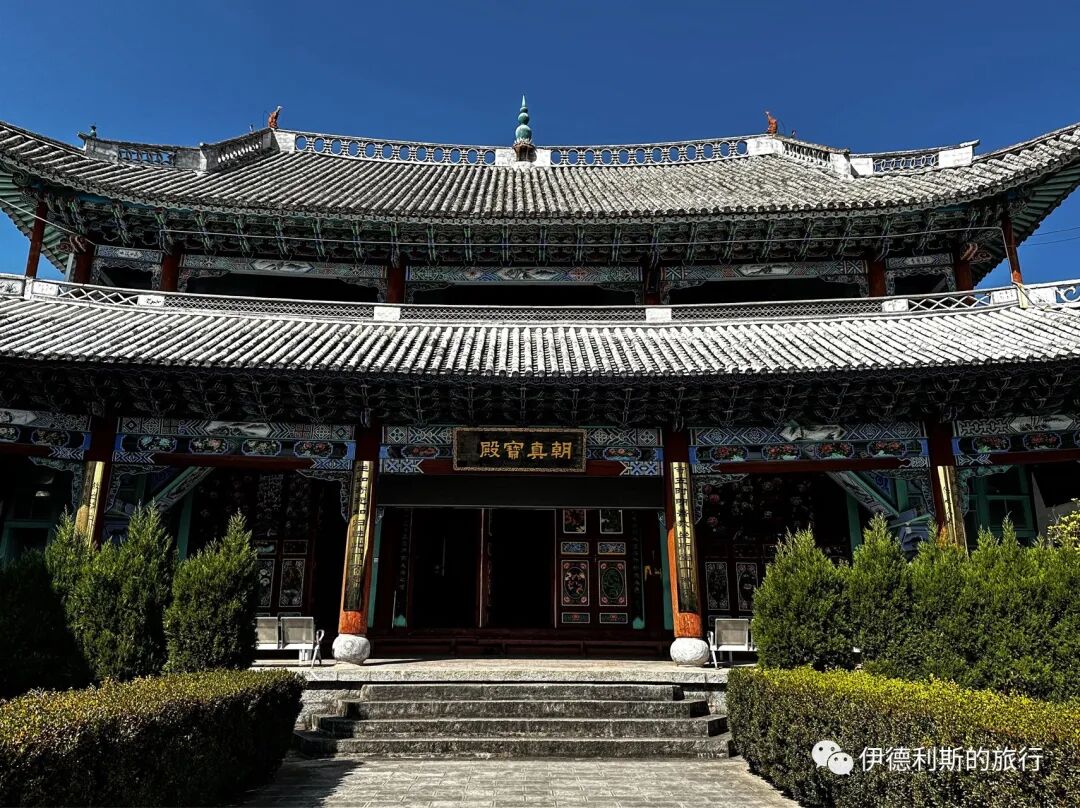
The main hall is 15 meters high. Inside, there are eight 12-meter-tall pillars made of lotus wood and camphor wood, which have lasted a long time because they were soaked in lime water. The walls of the main hall were originally decorated with calligraphy of scriptures written in black ink. When it became a Confucian temple, they were covered with lime and painted red, but now they have been restored and repainted. The ceiling is made of 144 panels, all featuring scripture calligraphy written with a gold pen. Windows were opened on all four sides below the beams, allowing air to circulate and sunlight to fill the hall.
In 1917, the old mosque was turned into a primary school. In 1937, a bridge construction team moved into the mosque to rush repairs on the Yunnan-Burma Road. During the chaos of war, the main hall's sandalwood lattice doors with double-sided carvings of flowers, the marble railings by the pond, and the stone archway were all stolen and sold in Weishan County. The ceiling of the main hall was used as firewood, and a large amount of the wooden structure was burned.
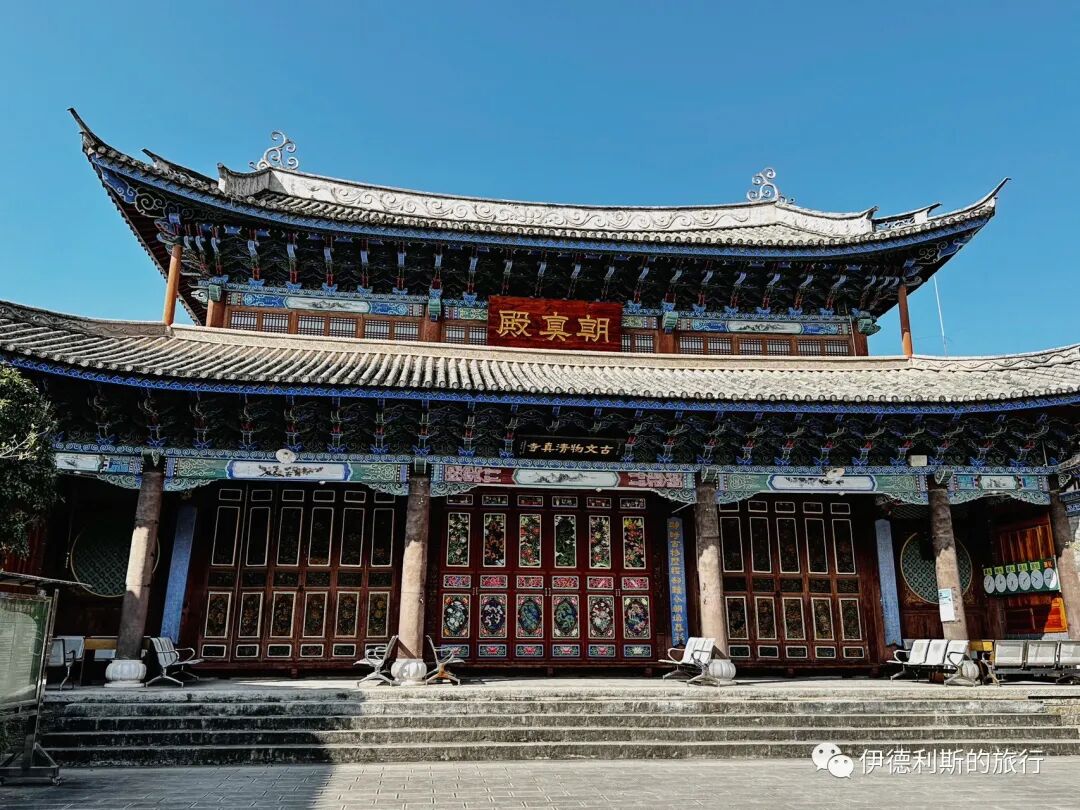
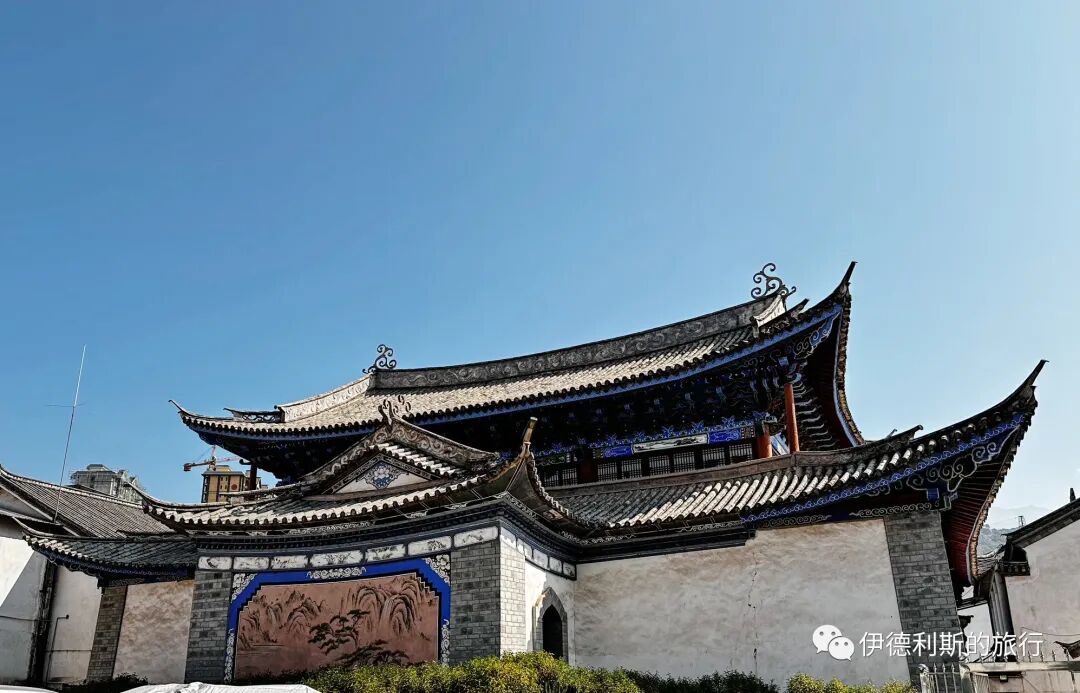
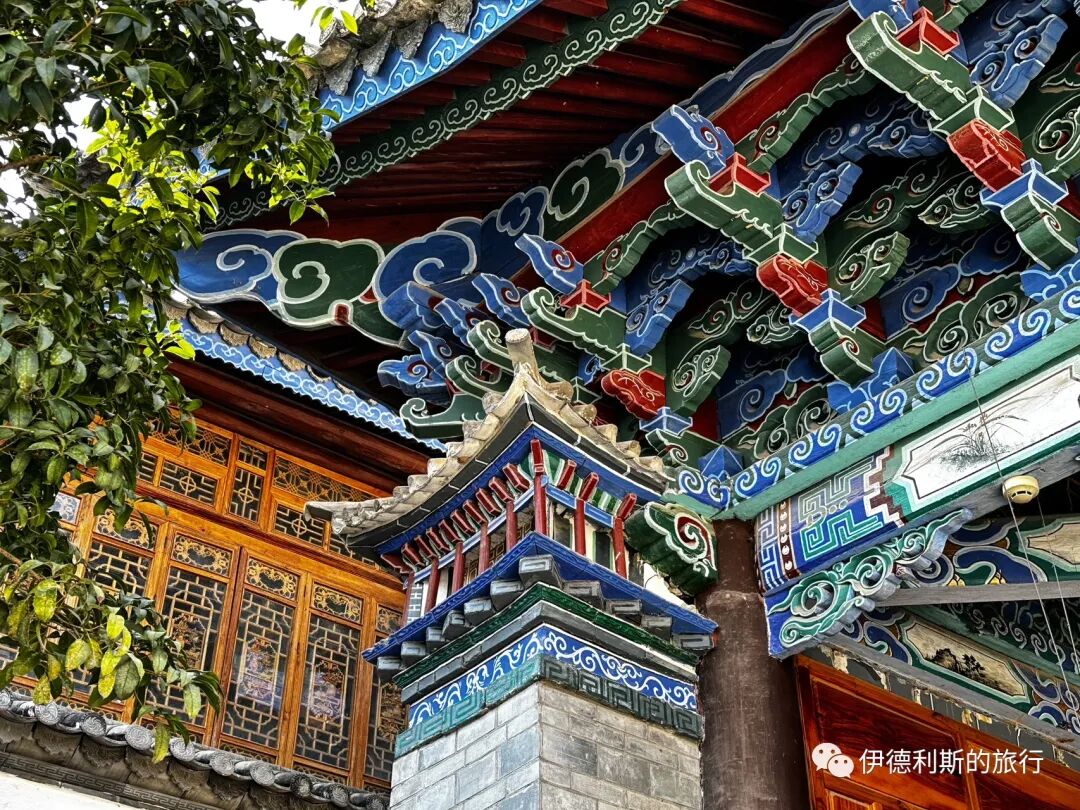
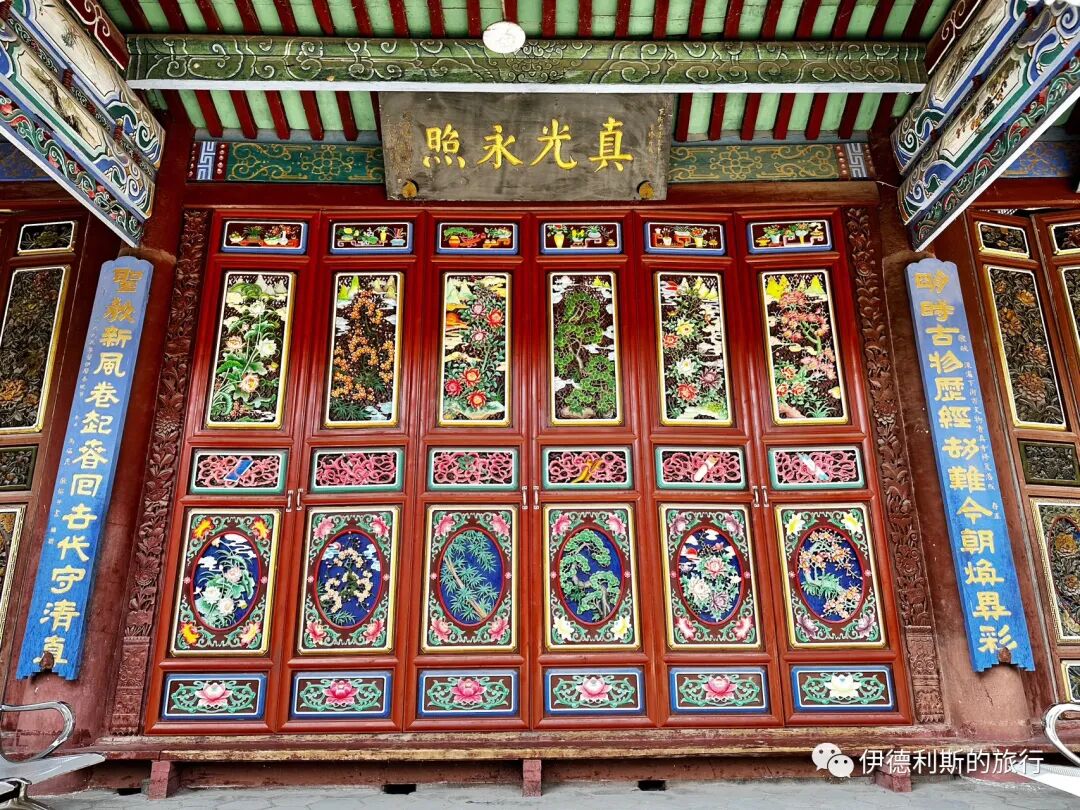
In 1950, the mosque was verbally returned. That May, under the guidance of the Hui Muslim Association and the Mosque Property Committee, over ten young men and women from the village set up a weaving factory in the main hall. In August of the same year, they held a grand Christmas celebration inside the mosque. But just two months later, in October 1950, the County Grain Bureau borrowed the mosque to use as a warehouse. Later, it was reported as state-owned property, and the land in front of the main hall was occupied by a veterinary station and a foreign trade company. In 1977, the Grain Bureau tore down the roof ridge of the main hall and sawed off the four corners of the eaves. It was not until 1994, after years of effort, that Yangbi County finally handed the mosque over to the mosque management committee, and it was reopened after repairs.
There is a plaque reading 'Bao Luo Wan You' (All-Encompassing) inscribed by acting Yangbi County Magistrate Yang Wenmei during Christmas in 1943, and a plaque reading 'Xing Jiao Jian Guo' (Revive Religion and Build the Nation) inscribed by Bai Chongxi in 1941.
Shangxiang Mosque
Yangbi Shangxiang Mosque is located in the center of Xiajie Village and was first built in 1921. After the Tongzhi disaster, the old Yangbi mosque was turned into a Confucian mosque, and religious life in Xiajie Village died out. It was not until the early years of the Guangxu reign that Ma Yuzhang, who had fled to Shaanxi to study, returned to Xiajie and began teaching scriptures in a private home. Later, Ma Long was elected as the imam. He traveled to Menghua Prefecture (Weishan) to negotiate and successfully redeemed 30 mu of mosque property land.
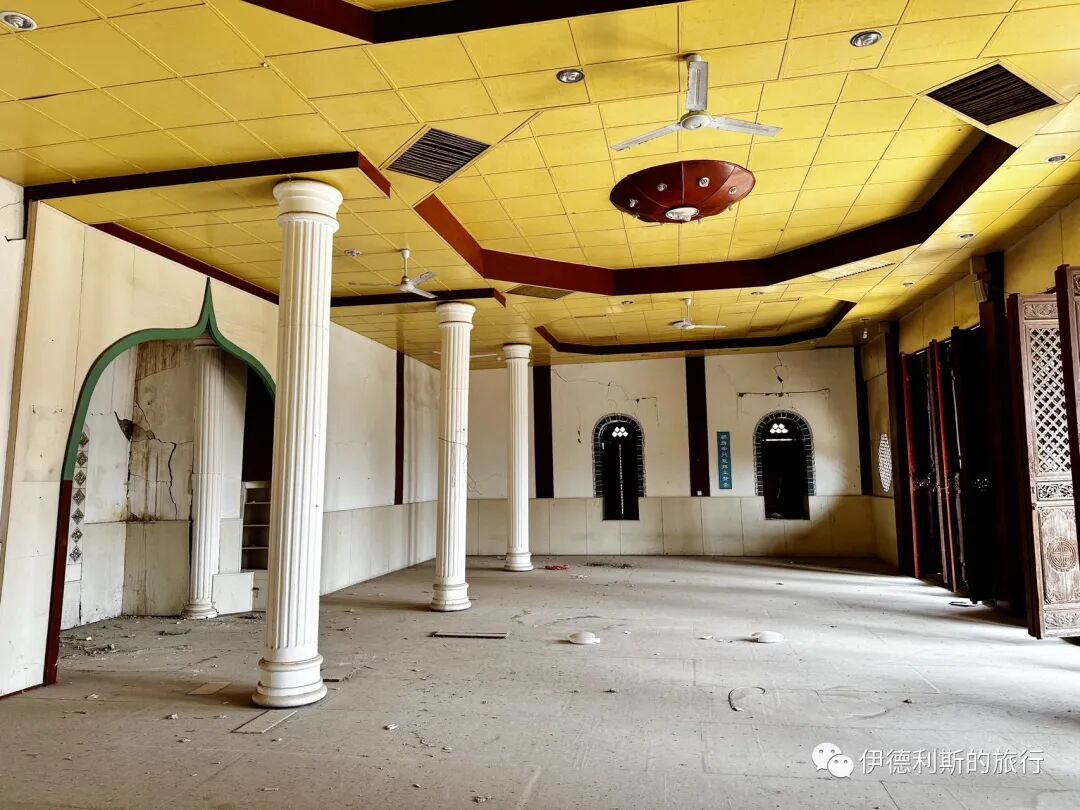
In 1915, the Yangbi Halal Association was established. The president, Du Fachun, was from Dali. After the Tongzhi disaster, he fled with his family to Xiajie in Yangbi, started a small business, and eventually expanded his shops to places like Baoshan and Yangon, Myanmar. His residence in Xiajie, Yangbi, also served as a place for local believers to pray and recite scriptures. To build a new mosque, the elders of Xiajie Village sent Du Fachun and his group out in 1919 to raise funds. Du Fachun and his group followed a horse caravan all the way to Yangon, Myanmar. More than 30 overseas Chinese from Yangbi who were working there generously donated over 1,000 small silver coins (British pounds). In 1921, through everyone's joint efforts, they obtained the sloping land at Sangyuan. After digging and filling to level the ground, they finally built Shangxiang Mosque.
After the old mosque reopened in 1994, Shangxiang Mosque gradually fell into disuse. The prayer schedule (wushibiao) in the main hall was updated until 2001.
Yangbi Shangjie
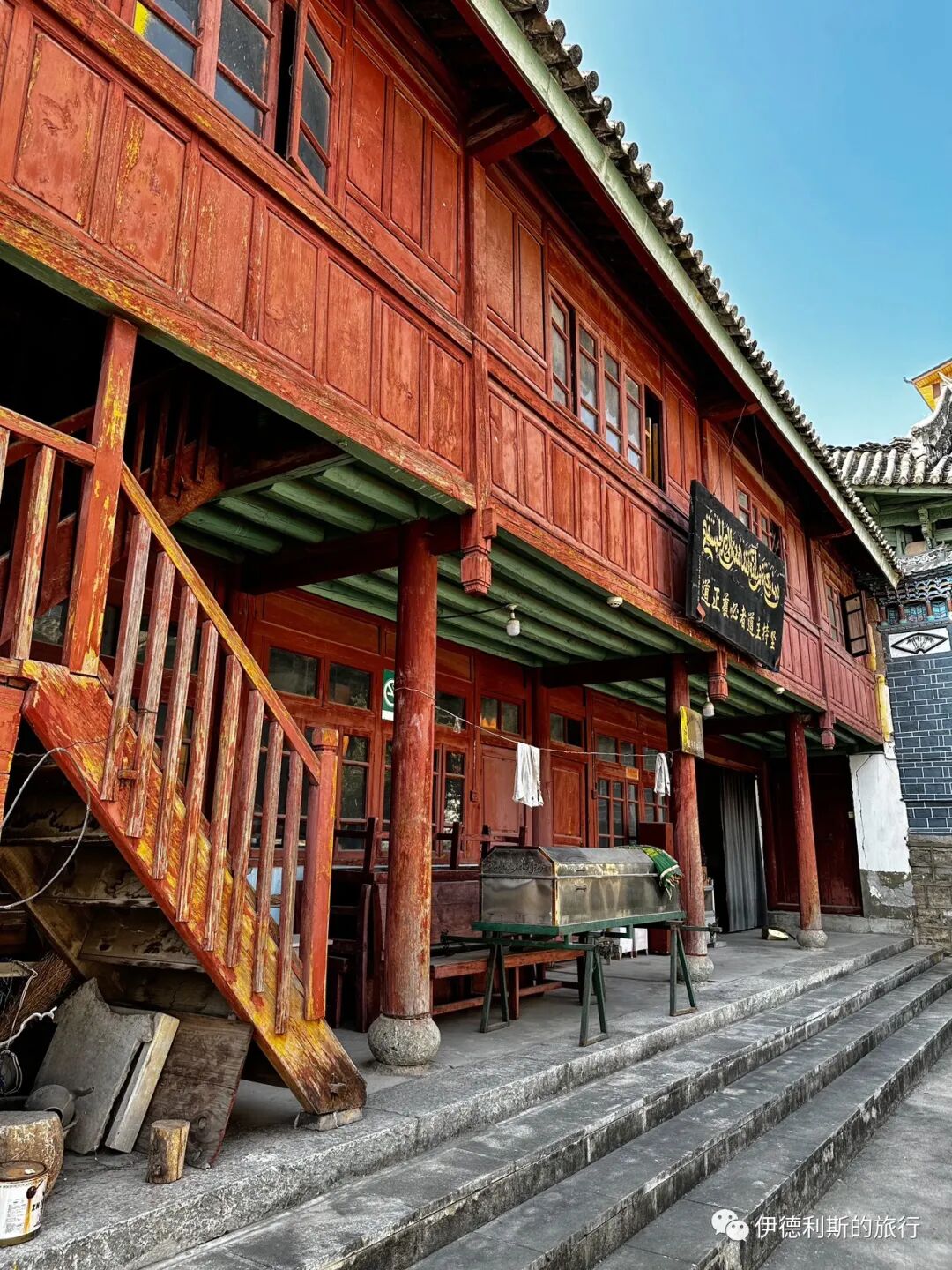
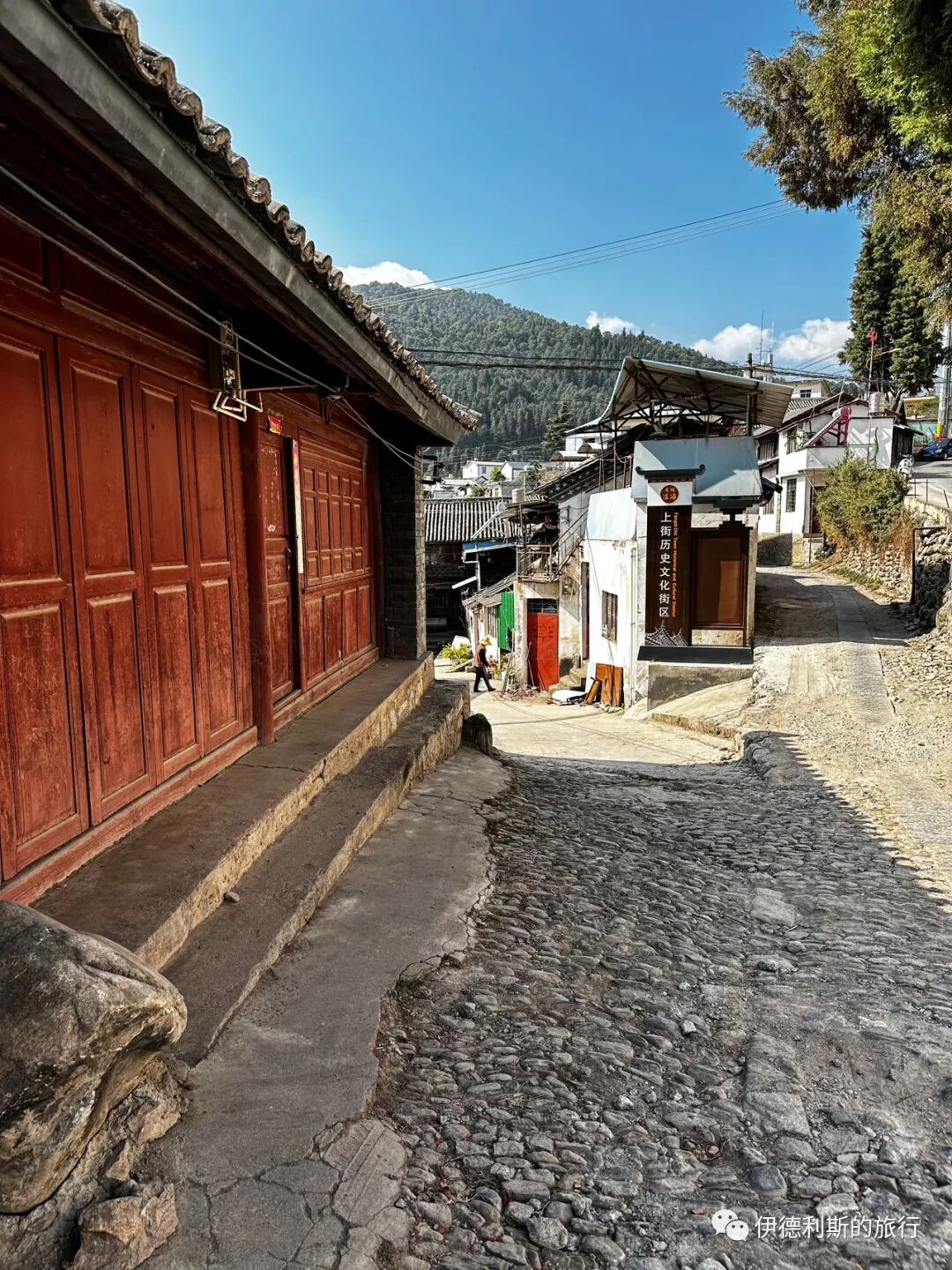
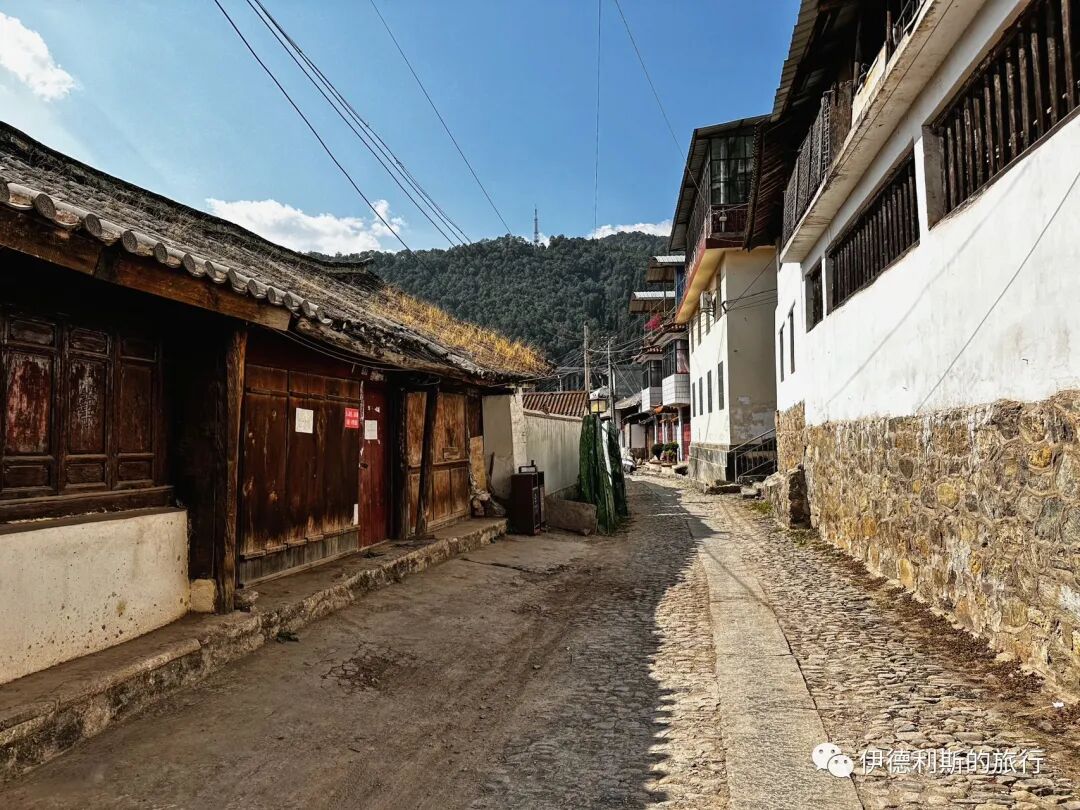
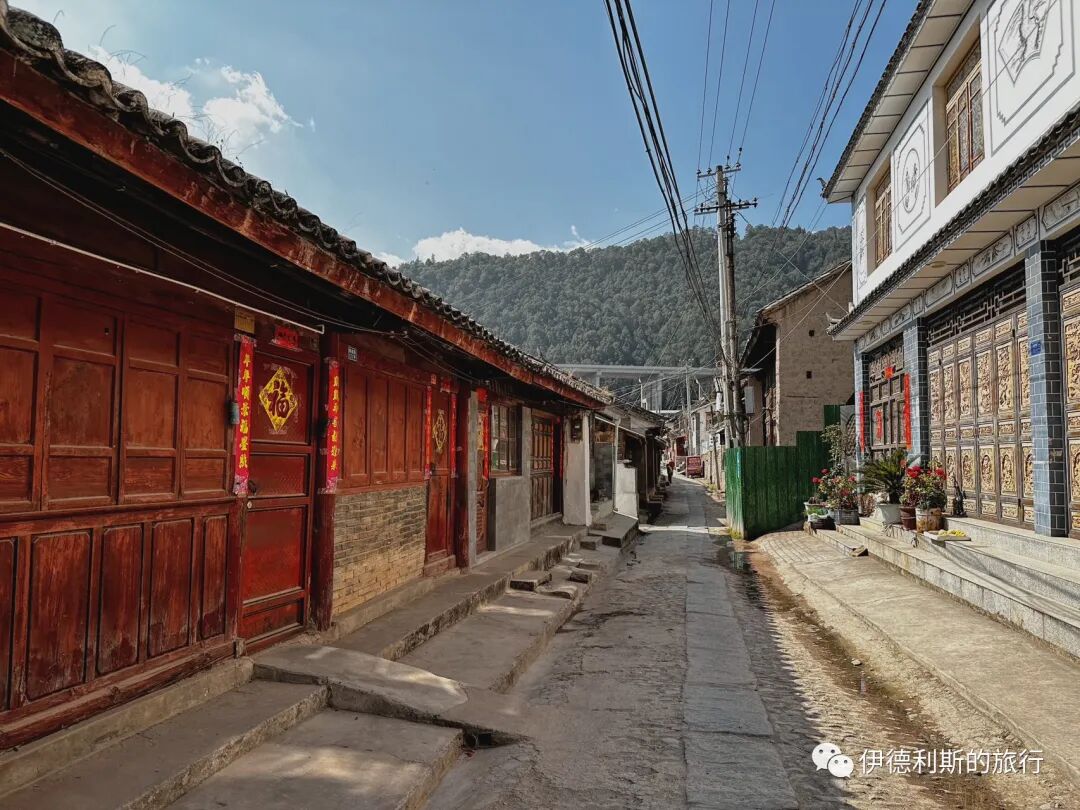
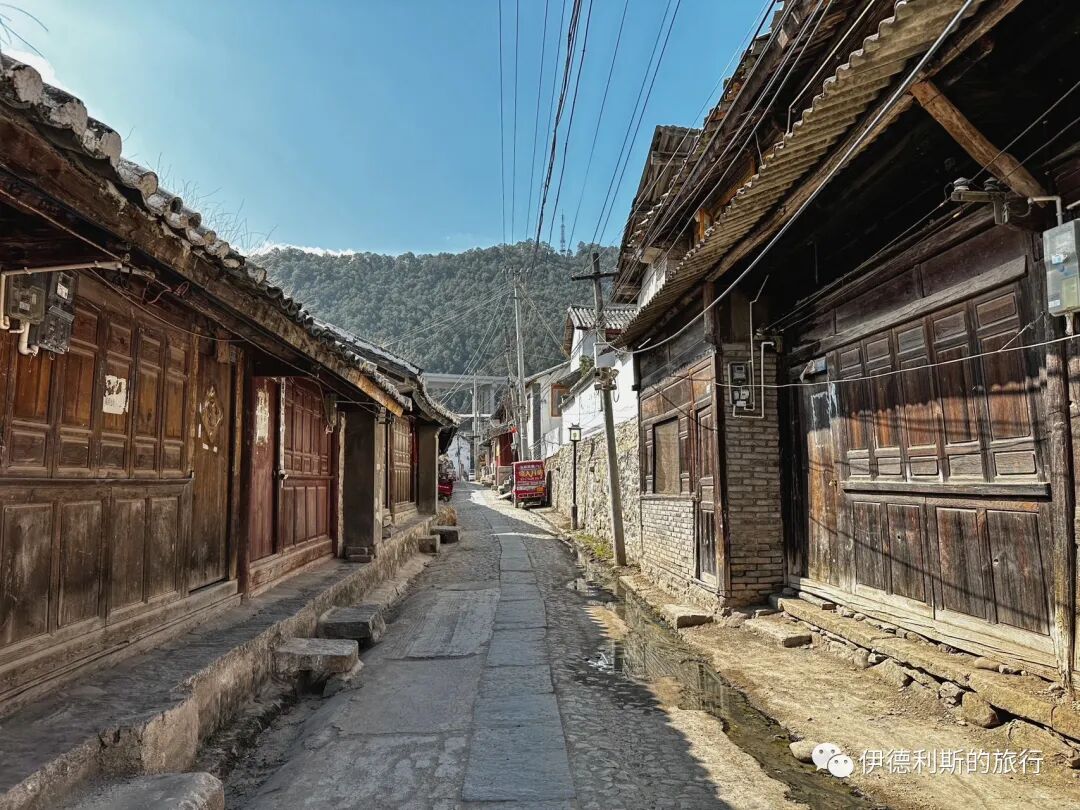
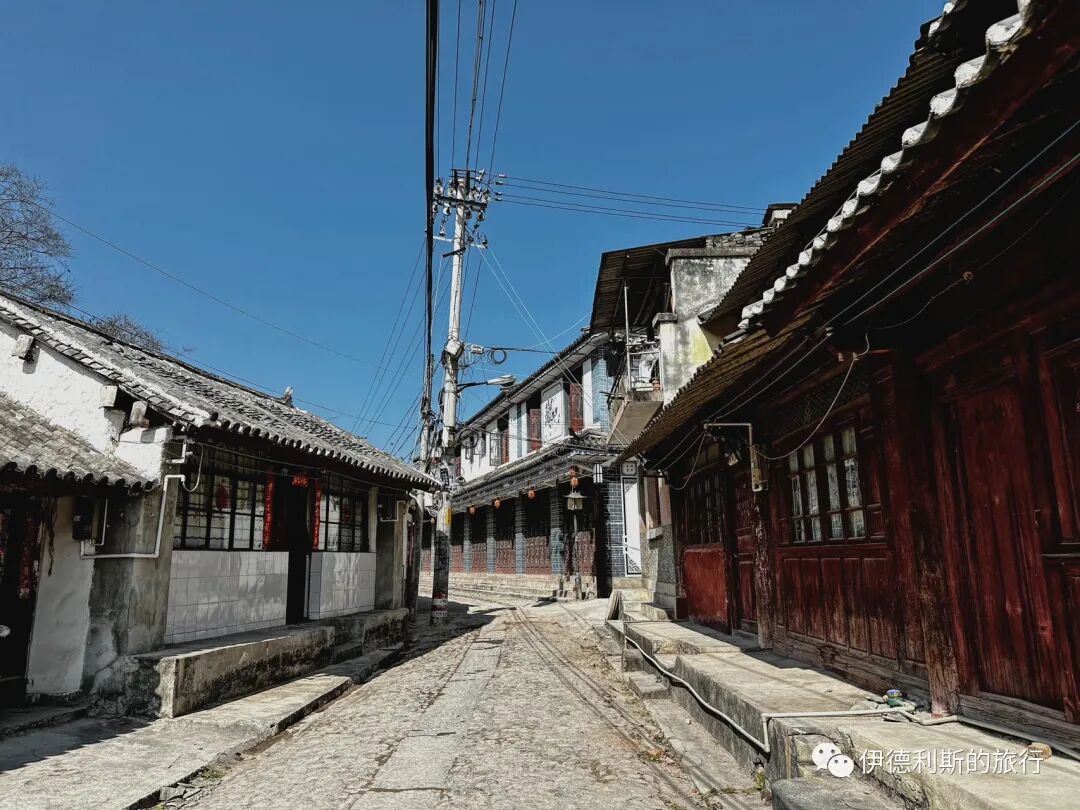
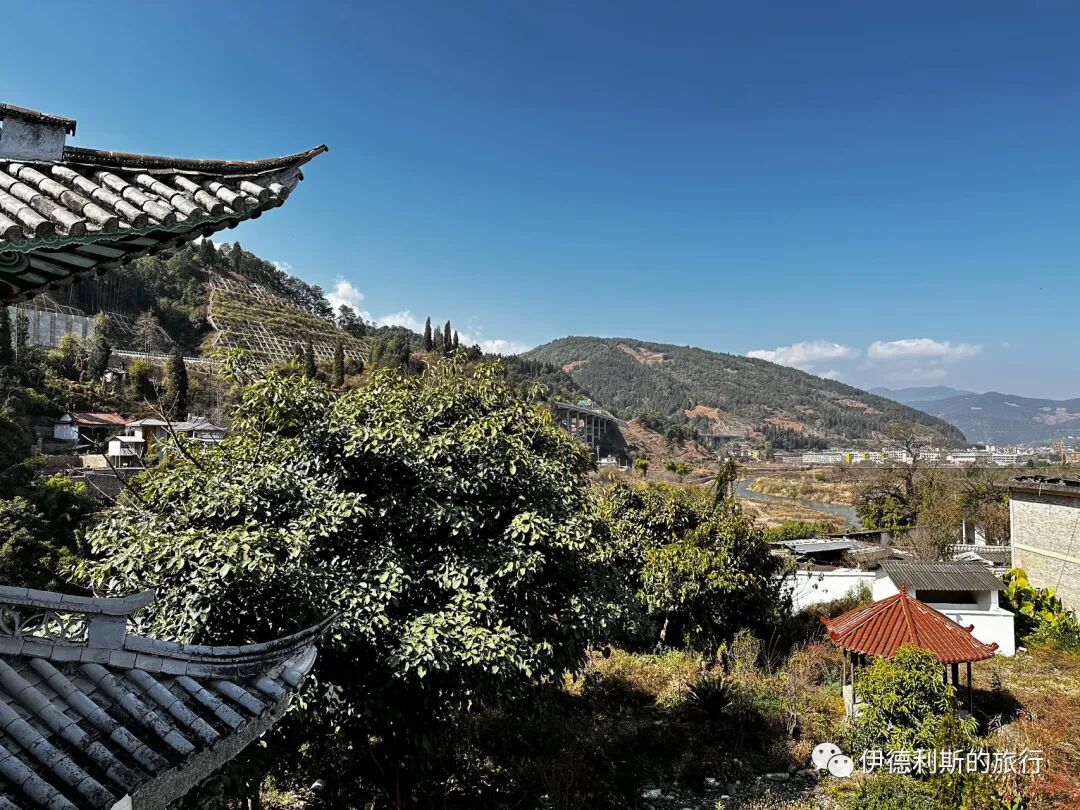
Yangbi Shangjie is on the west side of Xiajie, separated by the Xueshan River. During the Hongzhi reign of the Ming Dynasty (1488-1505), the Yunlong Bridge was built in Shangjie, and the ancient Bonan Road was diverted through Shangjie, leading to its rapid development. Today, Shangjie preserves its complete ancient road and street-side shops. In 2022, it was named a provincial-level historical and cultural district.
Shangjie Mosque
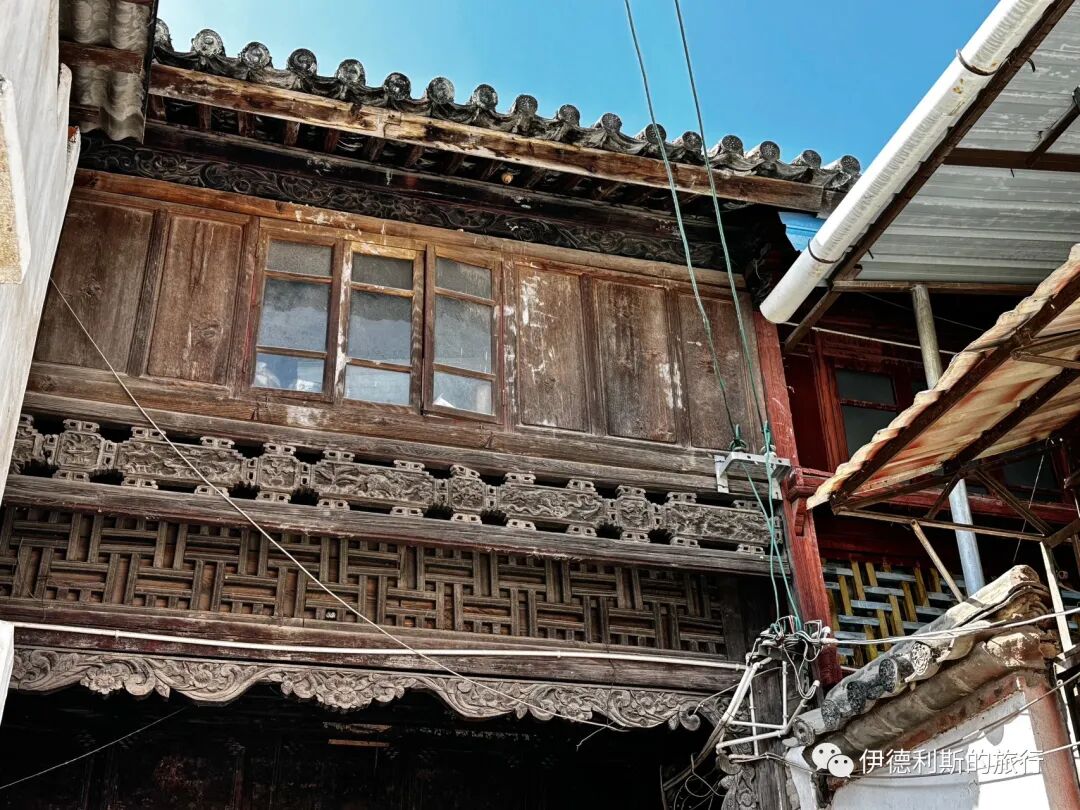
The Shangjie Xinyingpan Mosque in Yangbi was first built in 1859 (the ninth year of the Xianfeng reign). It was confiscated after the disasters of the Tongzhi reign. During the Guangxu reign, the local community leaders elected Imam Ma Ende, along with managers Li Xiucheng and Zhang Chenlin, to travel to Menghua Prefecture (Weishan) to redeem the mosque. To raise funds for the mosque, Ma Ende followed a horse caravan all the way to Myanmar. With the help of overseas compatriots like Haji Zhao Lianhong, he collected enough donations to rebuild the Shangjie Mosque. In 1989, a neighbor's careless use of electricity caused a fire. The entire Shangjie Mosque burned down, except for 16 carved lattice doors that were rescued in time. Between 1991 and 1992, the Shangjie Mosque community hired craftsmen from Weishan and bought timber from the Dali forest region to rebuild the main hall, maintaining the traditional Dali architectural style.
Spring travels in 2023:
On January 23, I set off from Macau and visited the Macau mosque, Moro Garden (Moro Yuan), where I ate delicious Indonesian Javanese food (see "Moro Garden and Indonesian Food in Macau"). On January 25, I arrived in Guangzhou, visited some friends (dosti), and ate various halal foods (see "Hui Muslim Fried Dough (youxiang) and Yemeni Food in Guangzhou").
At noon, I performed the afternoon prayer (asr) at Huaisheng Mosque, then went to visit the ancient tombs of the sages (see "Huaisheng Mosque and the Ancient Tombs of the Sages in Guangzhou").
In the afternoon, I performed the late afternoon prayer (asr) at Haopan Mosque and the sunset prayer (maghrib) at Xiaodongying Mosque (see "Visiting Haopan Mosque and Xiaodongying Mosque in Guangzhou").
On the morning of January 26, I took a train from Guangzhou to Zhaoqing, visited two mosques, and ate halal Cantonese food (see "Halal Roast Goose and Starfruit at the Mosque in Zhaoqing, Guangdong").
On the morning of January 27, I flew from Guangzhou to Xichang, Sichuan. I performed the Friday prayer (jumuah) at the Xichang City Mosque, visited the West Mosque and East Mosque, and ate Xichang rice noodles (see "Performing Jumuah and Eating Rice Noodles in Xichang, Sichuan").
On January 28, I took a high-speed train south to Miyi County in Panzhihua, Sichuan. I visited the beautiful Hui Muslim village of Tianba, performed the afternoon prayer (asr) at the ancient Tianba Mosque, and ate delicious food at a local farmhouse restaurant (see "A Beautiful Hui Village Deep in the Mountains—Tianba, Miyi, Sichuan").
From January 28 to 31, I traveled in Dali. During this time, I carefully explored the Hui mosque neighborhoods around Wenming Street and West Street in Xiaguan to learn about the history of the Xiaguan mosques (see "Centennial Mosques and Halal Food in Xiaguan, Dali").
Summary: Yangbi, Dali — Hui Street and Mosques is presented here as a firsthand travel account in clear English, beginning with this scene: On January 29, I rode an electric scooter from Xiaguan in Dali to Yangbi County in the west to visit an old mosque and taste local food. The account keeps its focus on Yangbi Dali, Tea Horse Road, Hui Muslims while preserving the names, places, food, and historical details from the Chinese source.
On January 29, I rode an electric scooter from Xiaguan in Dali to Yangbi County in the west to visit an old mosque and taste local food. The trade route from Dali to Thailand and Myanmar is part of the Southern Silk Road, known at different times as the Shu-Shendu Road and the Tea Horse Road. The old post road from Xiaguan in Dali west through Yangbi to Baoshan is also called the Bonan Ancient Road because it passes through the Bonan Mountains.
Halal food
On the way from Xiaguan to Yangbi, there is a hot spring village called Shaba. The road is lined with fish restaurants, and their Shaba fish is very famous in Dali.
The restaurant I chose is run by Hui Muslims from Eryuan, Dali. The service is great, and they served dried fruit and tea as soon as I sat down. Shaba fish is actually sour and spicy crucian carp. It is affordable, and two fish are just right for one person.
The crucian carp is caught and prepared fresh. They use dried papaya and plum vinegar for the sour flavor, and add chili for a very rich taste. It comes with tofu and mushrooms, which is very satisfying. If you find it too spicy, you can drink a bottle of local Ruili River mango juice from Yunnan. I was also pleasantly surprised that the two fish the waiter picked for me were full of roe, which tasted very rich and delicious.
I feel the most popular rice noodle roll (juanfen) shop in Yangbi town is Kemeijia on Jinxing Road. You can buy a whole sheet of rice noodle roll to take away, or eat a bowl of warm meat sauce rice noodle roll in the shop. The open kitchen is clean and hygienic, and the taste is great.
Yangbi Xiajie
In 1279 (the 16th year of Zhiyuan), Nasr al-Din, the eldest son of the Yunnan regional commander Sayyid Ajjal Shams al-Din, moved the military headquarters to Dali and sent tens of thousands of Hui Muslim troops to fight repeatedly against Myanmar. After the war, the Yuan Dynasty left many soldiers to guard various key routes. According to the History of Yuan, in 1303 (the 7th year of Dade), an imperial decree ordered 14,000 Hui Muslim soldiers who had conquered Myanmar to return to their respective garrisons. The location of Yangbi Xiajie was set up as a military post, and elite Tamachi troops were stationed there, which is how Yangbi Xiajie began to form.
In 1382 (the 15th year of Hongwu in the Ming Dynasty), Ma Dinghui, a descendant of the Tamachi troops left in Dali by the Yuan Dynasty, followed the Ming army to fight in Yunnan. He earned many merits and was appointed as the local inspector of the Yangbi Inspection Office, settling in Yangbi Xiajie with his subordinates. Ma Dinghui's descendants were known as the Tusi official family, and together with the officers and soldiers who guarded and farmed in Yangbi at that time, they became the earliest Hui Muslims in Yangbi. In the early Ming Dynasty, the main Hui Muslim surnames in Yangbi were Ma, Sha, Bai, and Yang. In the mid-Ming period, the Long, Wu, Wang, Du, and Mi surnames were added, and by the mid-Qing Dynasty, there were more than 800 households.
During the Ming and Qing dynasties, Yangbi Xiajie was a narrow ancient road nearly one kilometer long. Along the street were various horse inns, hotels, and shops selling halal snacks and local specialties, with a constant stream of horse caravans and mountain people selling mountain goods. At that time, almost every Hui Muslim household in Yangbi raised horses and carried out long-distance transport under the leadership of a caravan leader (maguotou).
During the Tongzhi disaster, most of the Hui Muslims in Yangbi were killed, and only a very small number escaped. In 1877 (the 3rd year of Guangxu), the Qing government encouraged the displaced Hui Muslims to return and resume their businesses. Eight households of survivors moved back to live in Xiajie. After that, more Hui Muslims came to Xiajie to do business and settle down, and by the Republic of China period, the number had increased to 70 or 80 households. In 1931, Edgar Snow traveled with a horse caravan to Yangbi Xiajie. In his article 'Caravan Leaves Dali for Yongping, China,' published in the American newspaper The Sun on August 15, 1931, he described Yangbi Xiajie as a 'Muslim-inhabited town'.
In the late Republic of China period, the Hui Muslim horse caravans in Yangbi Xiajie developed again. With less than 100 households, they raised more than 400 horses. Most of the young men had experience traveling to Myanmar and India for trade, and some even started families abroad.
In 1938, the Burma Road opened to traffic, and villagers began to build houses on both sides of the road, gradually forming the current layout of Xiajie Village. As the Burma Road became the main transport route, the Bonan Ancient Road gradually faded into history, and the shops along the road closed one after another.
Old mosque
The Yangbi old mosque is located next to the old Burma Road in Xiajie Village. When the main beam of the hall was replaced in 1958, an inscription from the 15th year of Hongwu of the Ming Dynasty was found on the beam. According to the oral history passed down through generations in Xiajie, after the Hui Muslim officers and soldiers left in the early Ming Dynasty camped in Yangbi, they went to the river to bathe and purify themselves. Each person carried a stone on their shoulder to gradually build the foundation of the main hall. At first, they just built simple flat-roofed houses. Later, they hired craftsmen and spent many years building the current main hall with its three-bay and five-grid structure. Today, the stone foundation of the main hall is uneven, and it does not perfectly align with the thickness of the walls, which matches the legends about the mosque's construction.
The old mosque was once magnificent. From east to west, it featured a gate in the style of a memorial archway, a screen wall, a three-story prayer tower (jiaobailou), a second gate, a stone archway, a stone bridge, north and south side rooms, and the main hall, making for a spectacular sight. During the Tongzhi disaster, the mosque was burned and destroyed. It was later turned into a Confucian mosque. The gate and prayer tower were taken down to build Zhulin Mosque, and other buildings were ruined, leaving only the main hall standing.
The main hall is 15 meters high. Inside, there are eight 12-meter-tall pillars made of lotus wood and camphor wood, which have lasted a long time because they were soaked in lime water. The walls of the main hall were originally decorated with calligraphy of scriptures written in black ink. When it became a Confucian temple, they were covered with lime and painted red, but now they have been restored and repainted. The ceiling is made of 144 panels, all featuring scripture calligraphy written with a gold pen. Windows were opened on all four sides below the beams, allowing air to circulate and sunlight to fill the hall.
In 1917, the old mosque was turned into a primary school. In 1937, a bridge construction team moved into the mosque to rush repairs on the Yunnan-Burma Road. During the chaos of war, the main hall's sandalwood lattice doors with double-sided carvings of flowers, the marble railings by the pond, and the stone archway were all stolen and sold in Weishan County. The ceiling of the main hall was used as firewood, and a large amount of the wooden structure was burned.
In 1950, the mosque was verbally returned. That May, under the guidance of the Hui Muslim Association and the Mosque Property Committee, over ten young men and women from the village set up a weaving factory in the main hall. In August of the same year, they held a grand Christmas celebration inside the mosque. But just two months later, in October 1950, the County Grain Bureau borrowed the mosque to use as a warehouse. Later, it was reported as state-owned property, and the land in front of the main hall was occupied by a veterinary station and a foreign trade company. In 1977, the Grain Bureau tore down the roof ridge of the main hall and sawed off the four corners of the eaves. It was not until 1994, after years of effort, that Yangbi County finally handed the mosque over to the mosque management committee, and it was reopened after repairs.
There is a plaque reading 'Bao Luo Wan You' (All-Encompassing) inscribed by acting Yangbi County Magistrate Yang Wenmei during Christmas in 1943, and a plaque reading 'Xing Jiao Jian Guo' (Revive Religion and Build the Nation) inscribed by Bai Chongxi in 1941.
Shangxiang Mosque
Yangbi Shangxiang Mosque is located in the center of Xiajie Village and was first built in 1921. After the Tongzhi disaster, the old Yangbi mosque was turned into a Confucian mosque, and religious life in Xiajie Village died out. It was not until the early years of the Guangxu reign that Ma Yuzhang, who had fled to Shaanxi to study, returned to Xiajie and began teaching scriptures in a private home. Later, Ma Long was elected as the imam. He traveled to Menghua Prefecture (Weishan) to negotiate and successfully redeemed 30 mu of mosque property land.
In 1915, the Yangbi Halal Association was established. The president, Du Fachun, was from Dali. After the Tongzhi disaster, he fled with his family to Xiajie in Yangbi, started a small business, and eventually expanded his shops to places like Baoshan and Yangon, Myanmar. His residence in Xiajie, Yangbi, also served as a place for local believers to pray and recite scriptures. To build a new mosque, the elders of Xiajie Village sent Du Fachun and his group out in 1919 to raise funds. Du Fachun and his group followed a horse caravan all the way to Yangon, Myanmar. More than 30 overseas Chinese from Yangbi who were working there generously donated over 1,000 small silver coins (British pounds). In 1921, through everyone's joint efforts, they obtained the sloping land at Sangyuan. After digging and filling to level the ground, they finally built Shangxiang Mosque.
After the old mosque reopened in 1994, Shangxiang Mosque gradually fell into disuse. The prayer schedule (wushibiao) in the main hall was updated until 2001.
Yangbi Shangjie
Yangbi Shangjie is on the west side of Xiajie, separated by the Xueshan River. During the Hongzhi reign of the Ming Dynasty (1488-1505), the Yunlong Bridge was built in Shangjie, and the ancient Bonan Road was diverted through Shangjie, leading to its rapid development. Today, Shangjie preserves its complete ancient road and street-side shops. In 2022, it was named a provincial-level historical and cultural district.
Shangjie Mosque
The Shangjie Xinyingpan Mosque in Yangbi was first built in 1859 (the ninth year of the Xianfeng reign). It was confiscated after the disasters of the Tongzhi reign. During the Guangxu reign, the local community leaders elected Imam Ma Ende, along with managers Li Xiucheng and Zhang Chenlin, to travel to Menghua Prefecture (Weishan) to redeem the mosque. To raise funds for the mosque, Ma Ende followed a horse caravan all the way to Myanmar. With the help of overseas compatriots like Haji Zhao Lianhong, he collected enough donations to rebuild the Shangjie Mosque. In 1989, a neighbor's careless use of electricity caused a fire. The entire Shangjie Mosque burned down, except for 16 carved lattice doors that were rescued in time. Between 1991 and 1992, the Shangjie Mosque community hired craftsmen from Weishan and bought timber from the Dali forest region to rebuild the main hall, maintaining the traditional Dali architectural style.
Spring travels in 2023:
On January 23, I set off from Macau and visited the Macau mosque, Moro Garden (Moro Yuan), where I ate delicious Indonesian Javanese food (see "Moro Garden and Indonesian Food in Macau"). On January 25, I arrived in Guangzhou, visited some friends (dosti), and ate various halal foods (see "Hui Muslim Fried Dough (youxiang) and Yemeni Food in Guangzhou").
At noon, I performed the afternoon prayer (asr) at Huaisheng Mosque, then went to visit the ancient tombs of the sages (see "Huaisheng Mosque and the Ancient Tombs of the Sages in Guangzhou").
In the afternoon, I performed the late afternoon prayer (asr) at Haopan Mosque and the sunset prayer (maghrib) at Xiaodongying Mosque (see "Visiting Haopan Mosque and Xiaodongying Mosque in Guangzhou").
On the morning of January 26, I took a train from Guangzhou to Zhaoqing, visited two mosques, and ate halal Cantonese food (see "Halal Roast Goose and Starfruit at the Mosque in Zhaoqing, Guangdong").
On the morning of January 27, I flew from Guangzhou to Xichang, Sichuan. I performed the Friday prayer (jumuah) at the Xichang City Mosque, visited the West Mosque and East Mosque, and ate Xichang rice noodles (see "Performing Jumuah and Eating Rice Noodles in Xichang, Sichuan").
On January 28, I took a high-speed train south to Miyi County in Panzhihua, Sichuan. I visited the beautiful Hui Muslim village of Tianba, performed the afternoon prayer (asr) at the ancient Tianba Mosque, and ate delicious food at a local farmhouse restaurant (see "A Beautiful Hui Village Deep in the Mountains—Tianba, Miyi, Sichuan").
From January 28 to 31, I traveled in Dali. During this time, I carefully explored the Hui mosque neighborhoods around Wenming Street and West Street in Xiaguan to learn about the history of the Xiaguan mosques (see "Centennial Mosques and Halal Food in Xiaguan, Dali").
Halal Travel Guide: Yangbi, Dali — Hui Street and Mosques
Articles • ali2007fr posted the article • 0 comments • 170 views • 2026-05-18 21:14
Reposted from the web
Summary: Yangbi, Dali — Hui Street and Mosques is presented here as a firsthand travel account in clear English, beginning with this scene: On January 29, I rode an electric scooter from Xiaguan in Dali to Yangbi County in the west to visit an old mosque and taste local food. The account keeps its focus on Yangbi Dali, Tea Horse Road, Hui Muslims while preserving the names, places, food, and historical details from the Chinese source.
On January 29, I rode an electric scooter from Xiaguan in Dali to Yangbi County in the west to visit an old mosque and taste local food. The trade route from Dali to Thailand and Myanmar is part of the Southern Silk Road, known at different times as the Shu-Shendu Road and the Tea Horse Road. The old post road from Xiaguan in Dali west through Yangbi to Baoshan is also called the Bonan Ancient Road because it passes through the Bonan Mountains.
Halal food
On the way from Xiaguan to Yangbi, there is a hot spring village called Shaba. The road is lined with fish restaurants, and their Shaba fish is very famous in Dali.
The restaurant I chose is run by Hui Muslims from Eryuan, Dali. The service is great, and they served dried fruit and tea as soon as I sat down. Shaba fish is actually sour and spicy crucian carp. It is affordable, and two fish are just right for one person.
The crucian carp is caught and prepared fresh. They use dried papaya and plum vinegar for the sour flavor, and add chili for a very rich taste. It comes with tofu and mushrooms, which is very satisfying. If you find it too spicy, you can drink a bottle of local Ruili River mango juice from Yunnan. I was also pleasantly surprised that the two fish the waiter picked for me were full of roe, which tasted very rich and delicious.
I feel the most popular rice noodle roll (juanfen) shop in Yangbi town is Kemeijia on Jinxing Road. You can buy a whole sheet of rice noodle roll to take away, or eat a bowl of warm meat sauce rice noodle roll in the shop. The open kitchen is clean and hygienic, and the taste is great.
Yangbi Xiajie
In 1279 (the 16th year of Zhiyuan), Nasr al-Din, the eldest son of the Yunnan regional commander Sayyid Ajjal Shams al-Din, moved the military headquarters to Dali and sent tens of thousands of Hui Muslim troops to fight repeatedly against Myanmar. After the war, the Yuan Dynasty left many soldiers to guard various key routes. According to the History of Yuan, in 1303 (the 7th year of Dade), an imperial decree ordered 14,000 Hui Muslim soldiers who had conquered Myanmar to return to their respective garrisons. The location of Yangbi Xiajie was set up as a military post, and elite Tamachi troops were stationed there, which is how Yangbi Xiajie began to form.
In 1382 (the 15th year of Hongwu in the Ming Dynasty), Ma Dinghui, a descendant of the Tamachi troops left in Dali by the Yuan Dynasty, followed the Ming army to fight in Yunnan. He earned many merits and was appointed as the local inspector of the Yangbi Inspection Office, settling in Yangbi Xiajie with his subordinates. Ma Dinghui's descendants were known as the Tusi official family, and together with the officers and soldiers who guarded and farmed in Yangbi at that time, they became the earliest Hui Muslims in Yangbi. In the early Ming Dynasty, the main Hui Muslim surnames in Yangbi were Ma, Sha, Bai, and Yang. In the mid-Ming period, the Long, Wu, Wang, Du, and Mi surnames were added, and by the mid-Qing Dynasty, there were more than 800 households.
During the Ming and Qing dynasties, Yangbi Xiajie was a narrow ancient road nearly one kilometer long. Along the street were various horse inns, hotels, and shops selling halal snacks and local specialties, with a constant stream of horse caravans and mountain people selling mountain goods. At that time, almost every Hui Muslim household in Yangbi raised horses and carried out long-distance transport under the leadership of a caravan leader (maguotou).
During the Tongzhi disaster, most of the Hui Muslims in Yangbi were killed, and only a very small number escaped. In 1877 (the 3rd year of Guangxu), the Qing government encouraged the displaced Hui Muslims to return and resume their businesses. Eight households of survivors moved back to live in Xiajie. After that, more Hui Muslims came to Xiajie to do business and settle down, and by the Republic of China period, the number had increased to 70 or 80 households. In 1931, Edgar Snow traveled with a horse caravan to Yangbi Xiajie. In his article 'Caravan Leaves Dali for Yongping, China,' published in the American newspaper The Sun on August 15, 1931, he described Yangbi Xiajie as a 'Muslim-inhabited town'.
In the late Republic of China period, the Hui Muslim horse caravans in Yangbi Xiajie developed again. With less than 100 households, they raised more than 400 horses. Most of the young men had experience traveling to Myanmar and India for trade, and some even started families abroad.
In 1938, the Burma Road opened to traffic, and villagers began to build houses on both sides of the road, gradually forming the current layout of Xiajie Village. As the Burma Road became the main transport route, the Bonan Ancient Road gradually faded into history, and the shops along the road closed one after another.
Old mosque
The Yangbi old mosque is located next to the old Burma Road in Xiajie Village. When the main beam of the hall was replaced in 1958, an inscription from the 15th year of Hongwu of the Ming Dynasty was found on the beam. According to the oral history passed down through generations in Xiajie, after the Hui Muslim officers and soldiers left in the early Ming Dynasty camped in Yangbi, they went to the river to bathe and purify themselves. Each person carried a stone on their shoulder to gradually build the foundation of the main hall. At first, they just built simple flat-roofed houses. Later, they hired craftsmen and spent many years building the current main hall with its three-bay and five-grid structure. Today, the stone foundation of the main hall is uneven, and it does not perfectly align with the thickness of the walls, which matches the legends about the mosque's construction.
The old mosque was once magnificent. From east to west, it featured a gate in the style of a memorial archway, a screen wall, a three-story prayer tower (jiaobailou), a second gate, a stone archway, a stone bridge, north and south side rooms, and the main hall, making for a spectacular sight. During the Tongzhi disaster, the mosque was burned and destroyed. It was later turned into a Confucian mosque. The gate and prayer tower were taken down to build Zhulin Mosque, and other buildings were ruined, leaving only the main hall standing.
The main hall is 15 meters high. Inside, there are eight 12-meter-tall pillars made of lotus wood and camphor wood, which have lasted a long time because they were soaked in lime water. The walls of the main hall were originally decorated with calligraphy of scriptures written in black ink. When it became a Confucian temple, they were covered with lime and painted red, but now they have been restored and repainted. The ceiling is made of 144 panels, all featuring scripture calligraphy written with a gold pen. Windows were opened on all four sides below the beams, allowing air to circulate and sunlight to fill the hall.
In 1917, the old mosque was turned into a primary school. In 1937, a bridge construction team moved into the mosque to rush repairs on the Yunnan-Burma Road. During the chaos of war, the main hall's sandalwood lattice doors with double-sided carvings of flowers, the marble railings by the pond, and the stone archway were all stolen and sold in Weishan County. The ceiling of the main hall was used as firewood, and a large amount of the wooden structure was burned.
In 1950, the mosque was verbally returned. That May, under the guidance of the Hui Muslim Association and the Mosque Property Committee, over ten young men and women from the village set up a weaving factory in the main hall. In August of the same year, they held a grand Christmas celebration inside the mosque. But just two months later, in October 1950, the County Grain Bureau borrowed the mosque to use as a warehouse. Later, it was reported as state-owned property, and the land in front of the main hall was occupied by a veterinary station and a foreign trade company. In 1977, the Grain Bureau tore down the roof ridge of the main hall and sawed off the four corners of the eaves. It was not until 1994, after years of effort, that Yangbi County finally handed the mosque over to the mosque management committee, and it was reopened after repairs.
There is a plaque reading 'Bao Luo Wan You' (All-Encompassing) inscribed by acting Yangbi County Magistrate Yang Wenmei during Christmas in 1943, and a plaque reading 'Xing Jiao Jian Guo' (Revive Religion and Build the Nation) inscribed by Bai Chongxi in 1941.
Shangxiang Mosque
Yangbi Shangxiang Mosque is located in the center of Xiajie Village and was first built in 1921. After the Tongzhi disaster, the old Yangbi mosque was turned into a Confucian mosque, and religious life in Xiajie Village died out. It was not until the early years of the Guangxu reign that Ma Yuzhang, who had fled to Shaanxi to study, returned to Xiajie and began teaching scriptures in a private home. Later, Ma Long was elected as the imam. He traveled to Menghua Prefecture (Weishan) to negotiate and successfully redeemed 30 mu of mosque property land.
In 1915, the Yangbi Halal Association was established. The president, Du Fachun, was from Dali. After the Tongzhi disaster, he fled with his family to Xiajie in Yangbi, started a small business, and eventually expanded his shops to places like Baoshan and Yangon, Myanmar. His residence in Xiajie, Yangbi, also served as a place for local believers to pray and recite scriptures. To build a new mosque, the elders of Xiajie Village sent Du Fachun and his group out in 1919 to raise funds. Du Fachun and his group followed a horse caravan all the way to Yangon, Myanmar. More than 30 overseas Chinese from Yangbi who were working there generously donated over 1,000 small silver coins (British pounds). In 1921, through everyone's joint efforts, they obtained the sloping land at Sangyuan. After digging and filling to level the ground, they finally built Shangxiang Mosque.
After the old mosque reopened in 1994, Shangxiang Mosque gradually fell into disuse. The prayer schedule (wushibiao) in the main hall was updated until 2001.
Yangbi Shangjie
Yangbi Shangjie is on the west side of Xiajie, separated by the Xueshan River. During the Hongzhi reign of the Ming Dynasty (1488-1505), the Yunlong Bridge was built in Shangjie, and the ancient Bonan Road was diverted through Shangjie, leading to its rapid development. Today, Shangjie preserves its complete ancient road and street-side shops. In 2022, it was named a provincial-level historical and cultural district.
Shangjie Mosque
The Shangjie Xinyingpan Mosque in Yangbi was first built in 1859 (the ninth year of the Xianfeng reign). It was confiscated after the disasters of the Tongzhi reign. During the Guangxu reign, the local community leaders elected Imam Ma Ende, along with managers Li Xiucheng and Zhang Chenlin, to travel to Menghua Prefecture (Weishan) to redeem the mosque. To raise funds for the mosque, Ma Ende followed a horse caravan all the way to Myanmar. With the help of overseas compatriots like Haji Zhao Lianhong, he collected enough donations to rebuild the Shangjie Mosque. In 1989, a neighbor's careless use of electricity caused a fire. The entire Shangjie Mosque burned down, except for 16 carved lattice doors that were rescued in time. Between 1991 and 1992, the Shangjie Mosque community hired craftsmen from Weishan and bought timber from the Dali forest region to rebuild the main hall, maintaining the traditional Dali architectural style.
Spring travels in 2023:
On January 23, I set off from Macau and visited the Macau mosque, Moro Garden (Moro Yuan), where I ate delicious Indonesian Javanese food (see "Moro Garden and Indonesian Food in Macau"). On January 25, I arrived in Guangzhou, visited some friends (dosti), and ate various halal foods (see "Hui Muslim Fried Dough (youxiang) and Yemeni Food in Guangzhou").
At noon, I performed the afternoon prayer (asr) at Huaisheng Mosque, then went to visit the ancient tombs of the sages (see "Huaisheng Mosque and the Ancient Tombs of the Sages in Guangzhou").
In the afternoon, I performed the late afternoon prayer (asr) at Haopan Mosque and the sunset prayer (maghrib) at Xiaodongying Mosque (see "Visiting Haopan Mosque and Xiaodongying Mosque in Guangzhou").
On the morning of January 26, I took a train from Guangzhou to Zhaoqing, visited two mosques, and ate halal Cantonese food (see "Halal Roast Goose and Starfruit at the Mosque in Zhaoqing, Guangdong").
On the morning of January 27, I flew from Guangzhou to Xichang, Sichuan. I performed the Friday prayer (jumuah) at the Xichang City Mosque, visited the West Mosque and East Mosque, and ate Xichang rice noodles (see "Performing Jumuah and Eating Rice Noodles in Xichang, Sichuan").
On January 28, I took a high-speed train south to Miyi County in Panzhihua, Sichuan. I visited the beautiful Hui Muslim village of Tianba, performed the afternoon prayer (asr) at the ancient Tianba Mosque, and ate delicious food at a local farmhouse restaurant (see "A Beautiful Hui Village Deep in the Mountains—Tianba, Miyi, Sichuan").
From January 28 to 31, I traveled in Dali. During this time, I carefully explored the Hui mosque neighborhoods around Wenming Street and West Street in Xiaguan to learn about the history of the Xiaguan mosques (see "Centennial Mosques and Halal Food in Xiaguan, Dali"). view all
Summary: Yangbi, Dali — Hui Street and Mosques is presented here as a firsthand travel account in clear English, beginning with this scene: On January 29, I rode an electric scooter from Xiaguan in Dali to Yangbi County in the west to visit an old mosque and taste local food. The account keeps its focus on Yangbi Dali, Tea Horse Road, Hui Muslims while preserving the names, places, food, and historical details from the Chinese source.
On January 29, I rode an electric scooter from Xiaguan in Dali to Yangbi County in the west to visit an old mosque and taste local food. The trade route from Dali to Thailand and Myanmar is part of the Southern Silk Road, known at different times as the Shu-Shendu Road and the Tea Horse Road. The old post road from Xiaguan in Dali west through Yangbi to Baoshan is also called the Bonan Ancient Road because it passes through the Bonan Mountains.
Halal food
On the way from Xiaguan to Yangbi, there is a hot spring village called Shaba. The road is lined with fish restaurants, and their Shaba fish is very famous in Dali.
The restaurant I chose is run by Hui Muslims from Eryuan, Dali. The service is great, and they served dried fruit and tea as soon as I sat down. Shaba fish is actually sour and spicy crucian carp. It is affordable, and two fish are just right for one person.
The crucian carp is caught and prepared fresh. They use dried papaya and plum vinegar for the sour flavor, and add chili for a very rich taste. It comes with tofu and mushrooms, which is very satisfying. If you find it too spicy, you can drink a bottle of local Ruili River mango juice from Yunnan. I was also pleasantly surprised that the two fish the waiter picked for me were full of roe, which tasted very rich and delicious.
I feel the most popular rice noodle roll (juanfen) shop in Yangbi town is Kemeijia on Jinxing Road. You can buy a whole sheet of rice noodle roll to take away, or eat a bowl of warm meat sauce rice noodle roll in the shop. The open kitchen is clean and hygienic, and the taste is great.
Yangbi Xiajie
In 1279 (the 16th year of Zhiyuan), Nasr al-Din, the eldest son of the Yunnan regional commander Sayyid Ajjal Shams al-Din, moved the military headquarters to Dali and sent tens of thousands of Hui Muslim troops to fight repeatedly against Myanmar. After the war, the Yuan Dynasty left many soldiers to guard various key routes. According to the History of Yuan, in 1303 (the 7th year of Dade), an imperial decree ordered 14,000 Hui Muslim soldiers who had conquered Myanmar to return to their respective garrisons. The location of Yangbi Xiajie was set up as a military post, and elite Tamachi troops were stationed there, which is how Yangbi Xiajie began to form.
In 1382 (the 15th year of Hongwu in the Ming Dynasty), Ma Dinghui, a descendant of the Tamachi troops left in Dali by the Yuan Dynasty, followed the Ming army to fight in Yunnan. He earned many merits and was appointed as the local inspector of the Yangbi Inspection Office, settling in Yangbi Xiajie with his subordinates. Ma Dinghui's descendants were known as the Tusi official family, and together with the officers and soldiers who guarded and farmed in Yangbi at that time, they became the earliest Hui Muslims in Yangbi. In the early Ming Dynasty, the main Hui Muslim surnames in Yangbi were Ma, Sha, Bai, and Yang. In the mid-Ming period, the Long, Wu, Wang, Du, and Mi surnames were added, and by the mid-Qing Dynasty, there were more than 800 households.
During the Ming and Qing dynasties, Yangbi Xiajie was a narrow ancient road nearly one kilometer long. Along the street were various horse inns, hotels, and shops selling halal snacks and local specialties, with a constant stream of horse caravans and mountain people selling mountain goods. At that time, almost every Hui Muslim household in Yangbi raised horses and carried out long-distance transport under the leadership of a caravan leader (maguotou).
During the Tongzhi disaster, most of the Hui Muslims in Yangbi were killed, and only a very small number escaped. In 1877 (the 3rd year of Guangxu), the Qing government encouraged the displaced Hui Muslims to return and resume their businesses. Eight households of survivors moved back to live in Xiajie. After that, more Hui Muslims came to Xiajie to do business and settle down, and by the Republic of China period, the number had increased to 70 or 80 households. In 1931, Edgar Snow traveled with a horse caravan to Yangbi Xiajie. In his article 'Caravan Leaves Dali for Yongping, China,' published in the American newspaper The Sun on August 15, 1931, he described Yangbi Xiajie as a 'Muslim-inhabited town'.
In the late Republic of China period, the Hui Muslim horse caravans in Yangbi Xiajie developed again. With less than 100 households, they raised more than 400 horses. Most of the young men had experience traveling to Myanmar and India for trade, and some even started families abroad.
In 1938, the Burma Road opened to traffic, and villagers began to build houses on both sides of the road, gradually forming the current layout of Xiajie Village. As the Burma Road became the main transport route, the Bonan Ancient Road gradually faded into history, and the shops along the road closed one after another.
Old mosque
The Yangbi old mosque is located next to the old Burma Road in Xiajie Village. When the main beam of the hall was replaced in 1958, an inscription from the 15th year of Hongwu of the Ming Dynasty was found on the beam. According to the oral history passed down through generations in Xiajie, after the Hui Muslim officers and soldiers left in the early Ming Dynasty camped in Yangbi, they went to the river to bathe and purify themselves. Each person carried a stone on their shoulder to gradually build the foundation of the main hall. At first, they just built simple flat-roofed houses. Later, they hired craftsmen and spent many years building the current main hall with its three-bay and five-grid structure. Today, the stone foundation of the main hall is uneven, and it does not perfectly align with the thickness of the walls, which matches the legends about the mosque's construction.
The old mosque was once magnificent. From east to west, it featured a gate in the style of a memorial archway, a screen wall, a three-story prayer tower (jiaobailou), a second gate, a stone archway, a stone bridge, north and south side rooms, and the main hall, making for a spectacular sight. During the Tongzhi disaster, the mosque was burned and destroyed. It was later turned into a Confucian mosque. The gate and prayer tower were taken down to build Zhulin Mosque, and other buildings were ruined, leaving only the main hall standing.
The main hall is 15 meters high. Inside, there are eight 12-meter-tall pillars made of lotus wood and camphor wood, which have lasted a long time because they were soaked in lime water. The walls of the main hall were originally decorated with calligraphy of scriptures written in black ink. When it became a Confucian temple, they were covered with lime and painted red, but now they have been restored and repainted. The ceiling is made of 144 panels, all featuring scripture calligraphy written with a gold pen. Windows were opened on all four sides below the beams, allowing air to circulate and sunlight to fill the hall.
In 1917, the old mosque was turned into a primary school. In 1937, a bridge construction team moved into the mosque to rush repairs on the Yunnan-Burma Road. During the chaos of war, the main hall's sandalwood lattice doors with double-sided carvings of flowers, the marble railings by the pond, and the stone archway were all stolen and sold in Weishan County. The ceiling of the main hall was used as firewood, and a large amount of the wooden structure was burned.
In 1950, the mosque was verbally returned. That May, under the guidance of the Hui Muslim Association and the Mosque Property Committee, over ten young men and women from the village set up a weaving factory in the main hall. In August of the same year, they held a grand Christmas celebration inside the mosque. But just two months later, in October 1950, the County Grain Bureau borrowed the mosque to use as a warehouse. Later, it was reported as state-owned property, and the land in front of the main hall was occupied by a veterinary station and a foreign trade company. In 1977, the Grain Bureau tore down the roof ridge of the main hall and sawed off the four corners of the eaves. It was not until 1994, after years of effort, that Yangbi County finally handed the mosque over to the mosque management committee, and it was reopened after repairs.
There is a plaque reading 'Bao Luo Wan You' (All-Encompassing) inscribed by acting Yangbi County Magistrate Yang Wenmei during Christmas in 1943, and a plaque reading 'Xing Jiao Jian Guo' (Revive Religion and Build the Nation) inscribed by Bai Chongxi in 1941.
Shangxiang Mosque
Yangbi Shangxiang Mosque is located in the center of Xiajie Village and was first built in 1921. After the Tongzhi disaster, the old Yangbi mosque was turned into a Confucian mosque, and religious life in Xiajie Village died out. It was not until the early years of the Guangxu reign that Ma Yuzhang, who had fled to Shaanxi to study, returned to Xiajie and began teaching scriptures in a private home. Later, Ma Long was elected as the imam. He traveled to Menghua Prefecture (Weishan) to negotiate and successfully redeemed 30 mu of mosque property land.
In 1915, the Yangbi Halal Association was established. The president, Du Fachun, was from Dali. After the Tongzhi disaster, he fled with his family to Xiajie in Yangbi, started a small business, and eventually expanded his shops to places like Baoshan and Yangon, Myanmar. His residence in Xiajie, Yangbi, also served as a place for local believers to pray and recite scriptures. To build a new mosque, the elders of Xiajie Village sent Du Fachun and his group out in 1919 to raise funds. Du Fachun and his group followed a horse caravan all the way to Yangon, Myanmar. More than 30 overseas Chinese from Yangbi who were working there generously donated over 1,000 small silver coins (British pounds). In 1921, through everyone's joint efforts, they obtained the sloping land at Sangyuan. After digging and filling to level the ground, they finally built Shangxiang Mosque.
After the old mosque reopened in 1994, Shangxiang Mosque gradually fell into disuse. The prayer schedule (wushibiao) in the main hall was updated until 2001.
Yangbi Shangjie
Yangbi Shangjie is on the west side of Xiajie, separated by the Xueshan River. During the Hongzhi reign of the Ming Dynasty (1488-1505), the Yunlong Bridge was built in Shangjie, and the ancient Bonan Road was diverted through Shangjie, leading to its rapid development. Today, Shangjie preserves its complete ancient road and street-side shops. In 2022, it was named a provincial-level historical and cultural district.
Shangjie Mosque
The Shangjie Xinyingpan Mosque in Yangbi was first built in 1859 (the ninth year of the Xianfeng reign). It was confiscated after the disasters of the Tongzhi reign. During the Guangxu reign, the local community leaders elected Imam Ma Ende, along with managers Li Xiucheng and Zhang Chenlin, to travel to Menghua Prefecture (Weishan) to redeem the mosque. To raise funds for the mosque, Ma Ende followed a horse caravan all the way to Myanmar. With the help of overseas compatriots like Haji Zhao Lianhong, he collected enough donations to rebuild the Shangjie Mosque. In 1989, a neighbor's careless use of electricity caused a fire. The entire Shangjie Mosque burned down, except for 16 carved lattice doors that were rescued in time. Between 1991 and 1992, the Shangjie Mosque community hired craftsmen from Weishan and bought timber from the Dali forest region to rebuild the main hall, maintaining the traditional Dali architectural style.
Spring travels in 2023:
On January 23, I set off from Macau and visited the Macau mosque, Moro Garden (Moro Yuan), where I ate delicious Indonesian Javanese food (see "Moro Garden and Indonesian Food in Macau"). On January 25, I arrived in Guangzhou, visited some friends (dosti), and ate various halal foods (see "Hui Muslim Fried Dough (youxiang) and Yemeni Food in Guangzhou").
At noon, I performed the afternoon prayer (asr) at Huaisheng Mosque, then went to visit the ancient tombs of the sages (see "Huaisheng Mosque and the Ancient Tombs of the Sages in Guangzhou").
In the afternoon, I performed the late afternoon prayer (asr) at Haopan Mosque and the sunset prayer (maghrib) at Xiaodongying Mosque (see "Visiting Haopan Mosque and Xiaodongying Mosque in Guangzhou").
On the morning of January 26, I took a train from Guangzhou to Zhaoqing, visited two mosques, and ate halal Cantonese food (see "Halal Roast Goose and Starfruit at the Mosque in Zhaoqing, Guangdong").
On the morning of January 27, I flew from Guangzhou to Xichang, Sichuan. I performed the Friday prayer (jumuah) at the Xichang City Mosque, visited the West Mosque and East Mosque, and ate Xichang rice noodles (see "Performing Jumuah and Eating Rice Noodles in Xichang, Sichuan").
On January 28, I took a high-speed train south to Miyi County in Panzhihua, Sichuan. I visited the beautiful Hui Muslim village of Tianba, performed the afternoon prayer (asr) at the ancient Tianba Mosque, and ate delicious food at a local farmhouse restaurant (see "A Beautiful Hui Village Deep in the Mountains—Tianba, Miyi, Sichuan").
From January 28 to 31, I traveled in Dali. During this time, I carefully explored the Hui mosque neighborhoods around Wenming Street and West Street in Xiaguan to learn about the history of the Xiaguan mosques (see "Centennial Mosques and Halal Food in Xiaguan, Dali"). view all
Reposted from the web
Summary: Yangbi, Dali — Hui Street and Mosques is presented here as a firsthand travel account in clear English, beginning with this scene: On January 29, I rode an electric scooter from Xiaguan in Dali to Yangbi County in the west to visit an old mosque and taste local food. The account keeps its focus on Yangbi Dali, Tea Horse Road, Hui Muslims while preserving the names, places, food, and historical details from the Chinese source.
On January 29, I rode an electric scooter from Xiaguan in Dali to Yangbi County in the west to visit an old mosque and taste local food. The trade route from Dali to Thailand and Myanmar is part of the Southern Silk Road, known at different times as the Shu-Shendu Road and the Tea Horse Road. The old post road from Xiaguan in Dali west through Yangbi to Baoshan is also called the Bonan Ancient Road because it passes through the Bonan Mountains.
Halal food
On the way from Xiaguan to Yangbi, there is a hot spring village called Shaba. The road is lined with fish restaurants, and their Shaba fish is very famous in Dali.
The restaurant I chose is run by Hui Muslims from Eryuan, Dali. The service is great, and they served dried fruit and tea as soon as I sat down. Shaba fish is actually sour and spicy crucian carp. It is affordable, and two fish are just right for one person.
The crucian carp is caught and prepared fresh. They use dried papaya and plum vinegar for the sour flavor, and add chili for a very rich taste. It comes with tofu and mushrooms, which is very satisfying. If you find it too spicy, you can drink a bottle of local Ruili River mango juice from Yunnan. I was also pleasantly surprised that the two fish the waiter picked for me were full of roe, which tasted very rich and delicious.
I feel the most popular rice noodle roll (juanfen) shop in Yangbi town is Kemeijia on Jinxing Road. You can buy a whole sheet of rice noodle roll to take away, or eat a bowl of warm meat sauce rice noodle roll in the shop. The open kitchen is clean and hygienic, and the taste is great.
Yangbi Xiajie
In 1279 (the 16th year of Zhiyuan), Nasr al-Din, the eldest son of the Yunnan regional commander Sayyid Ajjal Shams al-Din, moved the military headquarters to Dali and sent tens of thousands of Hui Muslim troops to fight repeatedly against Myanmar. After the war, the Yuan Dynasty left many soldiers to guard various key routes. According to the History of Yuan, in 1303 (the 7th year of Dade), an imperial decree ordered 14,000 Hui Muslim soldiers who had conquered Myanmar to return to their respective garrisons. The location of Yangbi Xiajie was set up as a military post, and elite Tamachi troops were stationed there, which is how Yangbi Xiajie began to form.
In 1382 (the 15th year of Hongwu in the Ming Dynasty), Ma Dinghui, a descendant of the Tamachi troops left in Dali by the Yuan Dynasty, followed the Ming army to fight in Yunnan. He earned many merits and was appointed as the local inspector of the Yangbi Inspection Office, settling in Yangbi Xiajie with his subordinates. Ma Dinghui's descendants were known as the Tusi official family, and together with the officers and soldiers who guarded and farmed in Yangbi at that time, they became the earliest Hui Muslims in Yangbi. In the early Ming Dynasty, the main Hui Muslim surnames in Yangbi were Ma, Sha, Bai, and Yang. In the mid-Ming period, the Long, Wu, Wang, Du, and Mi surnames were added, and by the mid-Qing Dynasty, there were more than 800 households.
During the Ming and Qing dynasties, Yangbi Xiajie was a narrow ancient road nearly one kilometer long. Along the street were various horse inns, hotels, and shops selling halal snacks and local specialties, with a constant stream of horse caravans and mountain people selling mountain goods. At that time, almost every Hui Muslim household in Yangbi raised horses and carried out long-distance transport under the leadership of a caravan leader (maguotou).
During the Tongzhi disaster, most of the Hui Muslims in Yangbi were killed, and only a very small number escaped. In 1877 (the 3rd year of Guangxu), the Qing government encouraged the displaced Hui Muslims to return and resume their businesses. Eight households of survivors moved back to live in Xiajie. After that, more Hui Muslims came to Xiajie to do business and settle down, and by the Republic of China period, the number had increased to 70 or 80 households. In 1931, Edgar Snow traveled with a horse caravan to Yangbi Xiajie. In his article 'Caravan Leaves Dali for Yongping, China,' published in the American newspaper The Sun on August 15, 1931, he described Yangbi Xiajie as a 'Muslim-inhabited town'.
In the late Republic of China period, the Hui Muslim horse caravans in Yangbi Xiajie developed again. With less than 100 households, they raised more than 400 horses. Most of the young men had experience traveling to Myanmar and India for trade, and some even started families abroad.
In 1938, the Burma Road opened to traffic, and villagers began to build houses on both sides of the road, gradually forming the current layout of Xiajie Village. As the Burma Road became the main transport route, the Bonan Ancient Road gradually faded into history, and the shops along the road closed one after another.
Old mosque
The Yangbi old mosque is located next to the old Burma Road in Xiajie Village. When the main beam of the hall was replaced in 1958, an inscription from the 15th year of Hongwu of the Ming Dynasty was found on the beam. According to the oral history passed down through generations in Xiajie, after the Hui Muslim officers and soldiers left in the early Ming Dynasty camped in Yangbi, they went to the river to bathe and purify themselves. Each person carried a stone on their shoulder to gradually build the foundation of the main hall. At first, they just built simple flat-roofed houses. Later, they hired craftsmen and spent many years building the current main hall with its three-bay and five-grid structure. Today, the stone foundation of the main hall is uneven, and it does not perfectly align with the thickness of the walls, which matches the legends about the mosque's construction.
The old mosque was once magnificent. From east to west, it featured a gate in the style of a memorial archway, a screen wall, a three-story prayer tower (jiaobailou), a second gate, a stone archway, a stone bridge, north and south side rooms, and the main hall, making for a spectacular sight. During the Tongzhi disaster, the mosque was burned and destroyed. It was later turned into a Confucian mosque. The gate and prayer tower were taken down to build Zhulin Mosque, and other buildings were ruined, leaving only the main hall standing.
The main hall is 15 meters high. Inside, there are eight 12-meter-tall pillars made of lotus wood and camphor wood, which have lasted a long time because they were soaked in lime water. The walls of the main hall were originally decorated with calligraphy of scriptures written in black ink. When it became a Confucian temple, they were covered with lime and painted red, but now they have been restored and repainted. The ceiling is made of 144 panels, all featuring scripture calligraphy written with a gold pen. Windows were opened on all four sides below the beams, allowing air to circulate and sunlight to fill the hall.
In 1917, the old mosque was turned into a primary school. In 1937, a bridge construction team moved into the mosque to rush repairs on the Yunnan-Burma Road. During the chaos of war, the main hall's sandalwood lattice doors with double-sided carvings of flowers, the marble railings by the pond, and the stone archway were all stolen and sold in Weishan County. The ceiling of the main hall was used as firewood, and a large amount of the wooden structure was burned.
In 1950, the mosque was verbally returned. That May, under the guidance of the Hui Muslim Association and the Mosque Property Committee, over ten young men and women from the village set up a weaving factory in the main hall. In August of the same year, they held a grand Christmas celebration inside the mosque. But just two months later, in October 1950, the County Grain Bureau borrowed the mosque to use as a warehouse. Later, it was reported as state-owned property, and the land in front of the main hall was occupied by a veterinary station and a foreign trade company. In 1977, the Grain Bureau tore down the roof ridge of the main hall and sawed off the four corners of the eaves. It was not until 1994, after years of effort, that Yangbi County finally handed the mosque over to the mosque management committee, and it was reopened after repairs.
There is a plaque reading 'Bao Luo Wan You' (All-Encompassing) inscribed by acting Yangbi County Magistrate Yang Wenmei during Christmas in 1943, and a plaque reading 'Xing Jiao Jian Guo' (Revive Religion and Build the Nation) inscribed by Bai Chongxi in 1941.
Shangxiang Mosque
Yangbi Shangxiang Mosque is located in the center of Xiajie Village and was first built in 1921. After the Tongzhi disaster, the old Yangbi mosque was turned into a Confucian mosque, and religious life in Xiajie Village died out. It was not until the early years of the Guangxu reign that Ma Yuzhang, who had fled to Shaanxi to study, returned to Xiajie and began teaching scriptures in a private home. Later, Ma Long was elected as the imam. He traveled to Menghua Prefecture (Weishan) to negotiate and successfully redeemed 30 mu of mosque property land.
In 1915, the Yangbi Halal Association was established. The president, Du Fachun, was from Dali. After the Tongzhi disaster, he fled with his family to Xiajie in Yangbi, started a small business, and eventually expanded his shops to places like Baoshan and Yangon, Myanmar. His residence in Xiajie, Yangbi, also served as a place for local believers to pray and recite scriptures. To build a new mosque, the elders of Xiajie Village sent Du Fachun and his group out in 1919 to raise funds. Du Fachun and his group followed a horse caravan all the way to Yangon, Myanmar. More than 30 overseas Chinese from Yangbi who were working there generously donated over 1,000 small silver coins (British pounds). In 1921, through everyone's joint efforts, they obtained the sloping land at Sangyuan. After digging and filling to level the ground, they finally built Shangxiang Mosque.
After the old mosque reopened in 1994, Shangxiang Mosque gradually fell into disuse. The prayer schedule (wushibiao) in the main hall was updated until 2001.
Yangbi Shangjie
Yangbi Shangjie is on the west side of Xiajie, separated by the Xueshan River. During the Hongzhi reign of the Ming Dynasty (1488-1505), the Yunlong Bridge was built in Shangjie, and the ancient Bonan Road was diverted through Shangjie, leading to its rapid development. Today, Shangjie preserves its complete ancient road and street-side shops. In 2022, it was named a provincial-level historical and cultural district.
Shangjie Mosque
The Shangjie Xinyingpan Mosque in Yangbi was first built in 1859 (the ninth year of the Xianfeng reign). It was confiscated after the disasters of the Tongzhi reign. During the Guangxu reign, the local community leaders elected Imam Ma Ende, along with managers Li Xiucheng and Zhang Chenlin, to travel to Menghua Prefecture (Weishan) to redeem the mosque. To raise funds for the mosque, Ma Ende followed a horse caravan all the way to Myanmar. With the help of overseas compatriots like Haji Zhao Lianhong, he collected enough donations to rebuild the Shangjie Mosque. In 1989, a neighbor's careless use of electricity caused a fire. The entire Shangjie Mosque burned down, except for 16 carved lattice doors that were rescued in time. Between 1991 and 1992, the Shangjie Mosque community hired craftsmen from Weishan and bought timber from the Dali forest region to rebuild the main hall, maintaining the traditional Dali architectural style.
Spring travels in 2023:
On January 23, I set off from Macau and visited the Macau mosque, Moro Garden (Moro Yuan), where I ate delicious Indonesian Javanese food (see "Moro Garden and Indonesian Food in Macau"). On January 25, I arrived in Guangzhou, visited some friends (dosti), and ate various halal foods (see "Hui Muslim Fried Dough (youxiang) and Yemeni Food in Guangzhou").
At noon, I performed the afternoon prayer (asr) at Huaisheng Mosque, then went to visit the ancient tombs of the sages (see "Huaisheng Mosque and the Ancient Tombs of the Sages in Guangzhou").
In the afternoon, I performed the late afternoon prayer (asr) at Haopan Mosque and the sunset prayer (maghrib) at Xiaodongying Mosque (see "Visiting Haopan Mosque and Xiaodongying Mosque in Guangzhou").
On the morning of January 26, I took a train from Guangzhou to Zhaoqing, visited two mosques, and ate halal Cantonese food (see "Halal Roast Goose and Starfruit at the Mosque in Zhaoqing, Guangdong").
On the morning of January 27, I flew from Guangzhou to Xichang, Sichuan. I performed the Friday prayer (jumuah) at the Xichang City Mosque, visited the West Mosque and East Mosque, and ate Xichang rice noodles (see "Performing Jumuah and Eating Rice Noodles in Xichang, Sichuan").
On January 28, I took a high-speed train south to Miyi County in Panzhihua, Sichuan. I visited the beautiful Hui Muslim village of Tianba, performed the afternoon prayer (asr) at the ancient Tianba Mosque, and ate delicious food at a local farmhouse restaurant (see "A Beautiful Hui Village Deep in the Mountains—Tianba, Miyi, Sichuan").
From January 28 to 31, I traveled in Dali. During this time, I carefully explored the Hui mosque neighborhoods around Wenming Street and West Street in Xiaguan to learn about the history of the Xiaguan mosques (see "Centennial Mosques and Halal Food in Xiaguan, Dali").
Summary: Yangbi, Dali — Hui Street and Mosques is presented here as a firsthand travel account in clear English, beginning with this scene: On January 29, I rode an electric scooter from Xiaguan in Dali to Yangbi County in the west to visit an old mosque and taste local food. The account keeps its focus on Yangbi Dali, Tea Horse Road, Hui Muslims while preserving the names, places, food, and historical details from the Chinese source.
On January 29, I rode an electric scooter from Xiaguan in Dali to Yangbi County in the west to visit an old mosque and taste local food. The trade route from Dali to Thailand and Myanmar is part of the Southern Silk Road, known at different times as the Shu-Shendu Road and the Tea Horse Road. The old post road from Xiaguan in Dali west through Yangbi to Baoshan is also called the Bonan Ancient Road because it passes through the Bonan Mountains.
Halal food
On the way from Xiaguan to Yangbi, there is a hot spring village called Shaba. The road is lined with fish restaurants, and their Shaba fish is very famous in Dali.
The restaurant I chose is run by Hui Muslims from Eryuan, Dali. The service is great, and they served dried fruit and tea as soon as I sat down. Shaba fish is actually sour and spicy crucian carp. It is affordable, and two fish are just right for one person.
The crucian carp is caught and prepared fresh. They use dried papaya and plum vinegar for the sour flavor, and add chili for a very rich taste. It comes with tofu and mushrooms, which is very satisfying. If you find it too spicy, you can drink a bottle of local Ruili River mango juice from Yunnan. I was also pleasantly surprised that the two fish the waiter picked for me were full of roe, which tasted very rich and delicious.
I feel the most popular rice noodle roll (juanfen) shop in Yangbi town is Kemeijia on Jinxing Road. You can buy a whole sheet of rice noodle roll to take away, or eat a bowl of warm meat sauce rice noodle roll in the shop. The open kitchen is clean and hygienic, and the taste is great.
Yangbi Xiajie
In 1279 (the 16th year of Zhiyuan), Nasr al-Din, the eldest son of the Yunnan regional commander Sayyid Ajjal Shams al-Din, moved the military headquarters to Dali and sent tens of thousands of Hui Muslim troops to fight repeatedly against Myanmar. After the war, the Yuan Dynasty left many soldiers to guard various key routes. According to the History of Yuan, in 1303 (the 7th year of Dade), an imperial decree ordered 14,000 Hui Muslim soldiers who had conquered Myanmar to return to their respective garrisons. The location of Yangbi Xiajie was set up as a military post, and elite Tamachi troops were stationed there, which is how Yangbi Xiajie began to form.
In 1382 (the 15th year of Hongwu in the Ming Dynasty), Ma Dinghui, a descendant of the Tamachi troops left in Dali by the Yuan Dynasty, followed the Ming army to fight in Yunnan. He earned many merits and was appointed as the local inspector of the Yangbi Inspection Office, settling in Yangbi Xiajie with his subordinates. Ma Dinghui's descendants were known as the Tusi official family, and together with the officers and soldiers who guarded and farmed in Yangbi at that time, they became the earliest Hui Muslims in Yangbi. In the early Ming Dynasty, the main Hui Muslim surnames in Yangbi were Ma, Sha, Bai, and Yang. In the mid-Ming period, the Long, Wu, Wang, Du, and Mi surnames were added, and by the mid-Qing Dynasty, there were more than 800 households.
During the Ming and Qing dynasties, Yangbi Xiajie was a narrow ancient road nearly one kilometer long. Along the street were various horse inns, hotels, and shops selling halal snacks and local specialties, with a constant stream of horse caravans and mountain people selling mountain goods. At that time, almost every Hui Muslim household in Yangbi raised horses and carried out long-distance transport under the leadership of a caravan leader (maguotou).
During the Tongzhi disaster, most of the Hui Muslims in Yangbi were killed, and only a very small number escaped. In 1877 (the 3rd year of Guangxu), the Qing government encouraged the displaced Hui Muslims to return and resume their businesses. Eight households of survivors moved back to live in Xiajie. After that, more Hui Muslims came to Xiajie to do business and settle down, and by the Republic of China period, the number had increased to 70 or 80 households. In 1931, Edgar Snow traveled with a horse caravan to Yangbi Xiajie. In his article 'Caravan Leaves Dali for Yongping, China,' published in the American newspaper The Sun on August 15, 1931, he described Yangbi Xiajie as a 'Muslim-inhabited town'.
In the late Republic of China period, the Hui Muslim horse caravans in Yangbi Xiajie developed again. With less than 100 households, they raised more than 400 horses. Most of the young men had experience traveling to Myanmar and India for trade, and some even started families abroad.
In 1938, the Burma Road opened to traffic, and villagers began to build houses on both sides of the road, gradually forming the current layout of Xiajie Village. As the Burma Road became the main transport route, the Bonan Ancient Road gradually faded into history, and the shops along the road closed one after another.
Old mosque
The Yangbi old mosque is located next to the old Burma Road in Xiajie Village. When the main beam of the hall was replaced in 1958, an inscription from the 15th year of Hongwu of the Ming Dynasty was found on the beam. According to the oral history passed down through generations in Xiajie, after the Hui Muslim officers and soldiers left in the early Ming Dynasty camped in Yangbi, they went to the river to bathe and purify themselves. Each person carried a stone on their shoulder to gradually build the foundation of the main hall. At first, they just built simple flat-roofed houses. Later, they hired craftsmen and spent many years building the current main hall with its three-bay and five-grid structure. Today, the stone foundation of the main hall is uneven, and it does not perfectly align with the thickness of the walls, which matches the legends about the mosque's construction.
The old mosque was once magnificent. From east to west, it featured a gate in the style of a memorial archway, a screen wall, a three-story prayer tower (jiaobailou), a second gate, a stone archway, a stone bridge, north and south side rooms, and the main hall, making for a spectacular sight. During the Tongzhi disaster, the mosque was burned and destroyed. It was later turned into a Confucian mosque. The gate and prayer tower were taken down to build Zhulin Mosque, and other buildings were ruined, leaving only the main hall standing.
The main hall is 15 meters high. Inside, there are eight 12-meter-tall pillars made of lotus wood and camphor wood, which have lasted a long time because they were soaked in lime water. The walls of the main hall were originally decorated with calligraphy of scriptures written in black ink. When it became a Confucian temple, they were covered with lime and painted red, but now they have been restored and repainted. The ceiling is made of 144 panels, all featuring scripture calligraphy written with a gold pen. Windows were opened on all four sides below the beams, allowing air to circulate and sunlight to fill the hall.
In 1917, the old mosque was turned into a primary school. In 1937, a bridge construction team moved into the mosque to rush repairs on the Yunnan-Burma Road. During the chaos of war, the main hall's sandalwood lattice doors with double-sided carvings of flowers, the marble railings by the pond, and the stone archway were all stolen and sold in Weishan County. The ceiling of the main hall was used as firewood, and a large amount of the wooden structure was burned.
In 1950, the mosque was verbally returned. That May, under the guidance of the Hui Muslim Association and the Mosque Property Committee, over ten young men and women from the village set up a weaving factory in the main hall. In August of the same year, they held a grand Christmas celebration inside the mosque. But just two months later, in October 1950, the County Grain Bureau borrowed the mosque to use as a warehouse. Later, it was reported as state-owned property, and the land in front of the main hall was occupied by a veterinary station and a foreign trade company. In 1977, the Grain Bureau tore down the roof ridge of the main hall and sawed off the four corners of the eaves. It was not until 1994, after years of effort, that Yangbi County finally handed the mosque over to the mosque management committee, and it was reopened after repairs.
There is a plaque reading 'Bao Luo Wan You' (All-Encompassing) inscribed by acting Yangbi County Magistrate Yang Wenmei during Christmas in 1943, and a plaque reading 'Xing Jiao Jian Guo' (Revive Religion and Build the Nation) inscribed by Bai Chongxi in 1941.
Shangxiang Mosque
Yangbi Shangxiang Mosque is located in the center of Xiajie Village and was first built in 1921. After the Tongzhi disaster, the old Yangbi mosque was turned into a Confucian mosque, and religious life in Xiajie Village died out. It was not until the early years of the Guangxu reign that Ma Yuzhang, who had fled to Shaanxi to study, returned to Xiajie and began teaching scriptures in a private home. Later, Ma Long was elected as the imam. He traveled to Menghua Prefecture (Weishan) to negotiate and successfully redeemed 30 mu of mosque property land.
In 1915, the Yangbi Halal Association was established. The president, Du Fachun, was from Dali. After the Tongzhi disaster, he fled with his family to Xiajie in Yangbi, started a small business, and eventually expanded his shops to places like Baoshan and Yangon, Myanmar. His residence in Xiajie, Yangbi, also served as a place for local believers to pray and recite scriptures. To build a new mosque, the elders of Xiajie Village sent Du Fachun and his group out in 1919 to raise funds. Du Fachun and his group followed a horse caravan all the way to Yangon, Myanmar. More than 30 overseas Chinese from Yangbi who were working there generously donated over 1,000 small silver coins (British pounds). In 1921, through everyone's joint efforts, they obtained the sloping land at Sangyuan. After digging and filling to level the ground, they finally built Shangxiang Mosque.
After the old mosque reopened in 1994, Shangxiang Mosque gradually fell into disuse. The prayer schedule (wushibiao) in the main hall was updated until 2001.
Yangbi Shangjie
Yangbi Shangjie is on the west side of Xiajie, separated by the Xueshan River. During the Hongzhi reign of the Ming Dynasty (1488-1505), the Yunlong Bridge was built in Shangjie, and the ancient Bonan Road was diverted through Shangjie, leading to its rapid development. Today, Shangjie preserves its complete ancient road and street-side shops. In 2022, it was named a provincial-level historical and cultural district.
Shangjie Mosque
The Shangjie Xinyingpan Mosque in Yangbi was first built in 1859 (the ninth year of the Xianfeng reign). It was confiscated after the disasters of the Tongzhi reign. During the Guangxu reign, the local community leaders elected Imam Ma Ende, along with managers Li Xiucheng and Zhang Chenlin, to travel to Menghua Prefecture (Weishan) to redeem the mosque. To raise funds for the mosque, Ma Ende followed a horse caravan all the way to Myanmar. With the help of overseas compatriots like Haji Zhao Lianhong, he collected enough donations to rebuild the Shangjie Mosque. In 1989, a neighbor's careless use of electricity caused a fire. The entire Shangjie Mosque burned down, except for 16 carved lattice doors that were rescued in time. Between 1991 and 1992, the Shangjie Mosque community hired craftsmen from Weishan and bought timber from the Dali forest region to rebuild the main hall, maintaining the traditional Dali architectural style.
Spring travels in 2023:
On January 23, I set off from Macau and visited the Macau mosque, Moro Garden (Moro Yuan), where I ate delicious Indonesian Javanese food (see "Moro Garden and Indonesian Food in Macau"). On January 25, I arrived in Guangzhou, visited some friends (dosti), and ate various halal foods (see "Hui Muslim Fried Dough (youxiang) and Yemeni Food in Guangzhou").
At noon, I performed the afternoon prayer (asr) at Huaisheng Mosque, then went to visit the ancient tombs of the sages (see "Huaisheng Mosque and the Ancient Tombs of the Sages in Guangzhou").
In the afternoon, I performed the late afternoon prayer (asr) at Haopan Mosque and the sunset prayer (maghrib) at Xiaodongying Mosque (see "Visiting Haopan Mosque and Xiaodongying Mosque in Guangzhou").
On the morning of January 26, I took a train from Guangzhou to Zhaoqing, visited two mosques, and ate halal Cantonese food (see "Halal Roast Goose and Starfruit at the Mosque in Zhaoqing, Guangdong").
On the morning of January 27, I flew from Guangzhou to Xichang, Sichuan. I performed the Friday prayer (jumuah) at the Xichang City Mosque, visited the West Mosque and East Mosque, and ate Xichang rice noodles (see "Performing Jumuah and Eating Rice Noodles in Xichang, Sichuan").
On January 28, I took a high-speed train south to Miyi County in Panzhihua, Sichuan. I visited the beautiful Hui Muslim village of Tianba, performed the afternoon prayer (asr) at the ancient Tianba Mosque, and ate delicious food at a local farmhouse restaurant (see "A Beautiful Hui Village Deep in the Mountains—Tianba, Miyi, Sichuan").
From January 28 to 31, I traveled in Dali. During this time, I carefully explored the Hui mosque neighborhoods around Wenming Street and West Street in Xiaguan to learn about the history of the Xiaguan mosques (see "Centennial Mosques and Halal Food in Xiaguan, Dali").