

Tehran Street Food
Halal Food Guide: Tehran Street Food — Iranian Snacks, Markets and Everyday Eats
Articles • ali2007fr posted the article • 0 comments • 146 views • 2026-05-18 02:39
Reposted from the web
Summary: Halal Food Guide: Tehran Street Food — Iranian Snacks, Markets and Everyday Eats is presented here as a firsthand travel account in clear English, beginning with this scene: I went to Tehran during the 2019 Mid-Autumn Festival to eat and explore. I am sharing some of the things I ate here. The account keeps its focus on Tehran Street Food, Iran Travel, Halal Food while preserving the names, places, food, and historical details from the Chinese source.
I went to Tehran during the 2019 Mid-Autumn Festival to eat and explore. I am sharing some of the things I ate here.
1. Persian tomato and egg stir-fry with Barbari flatbread (Barbari nan).
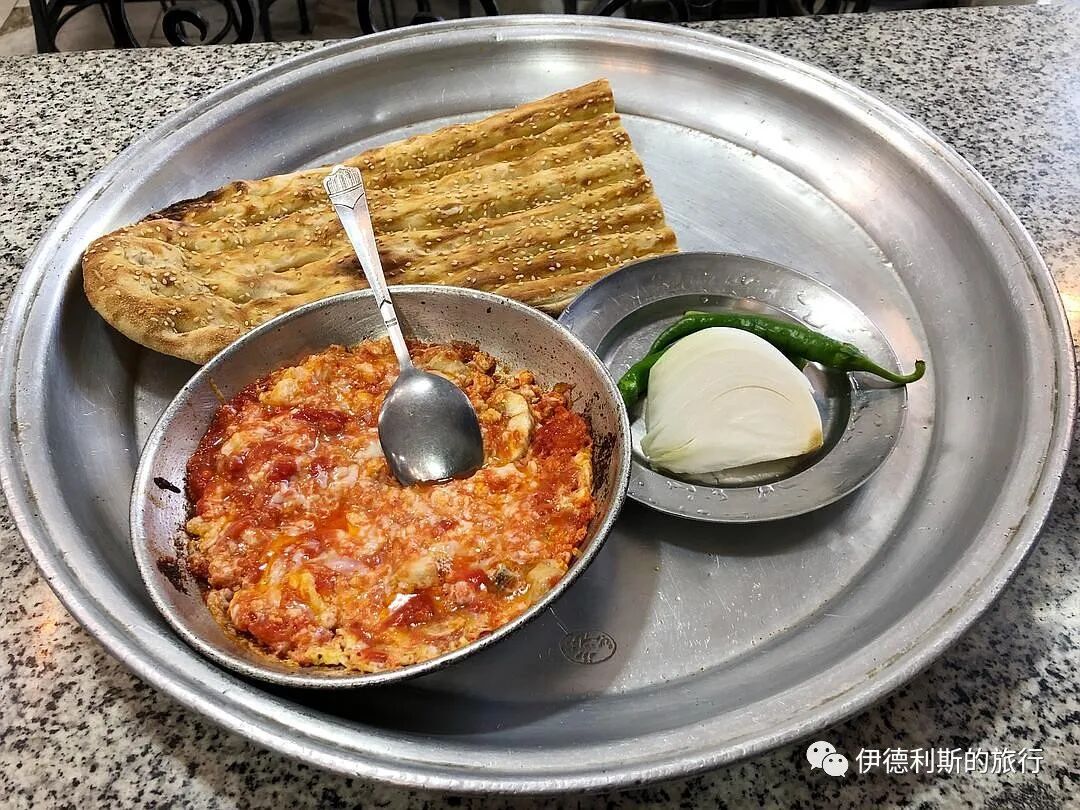
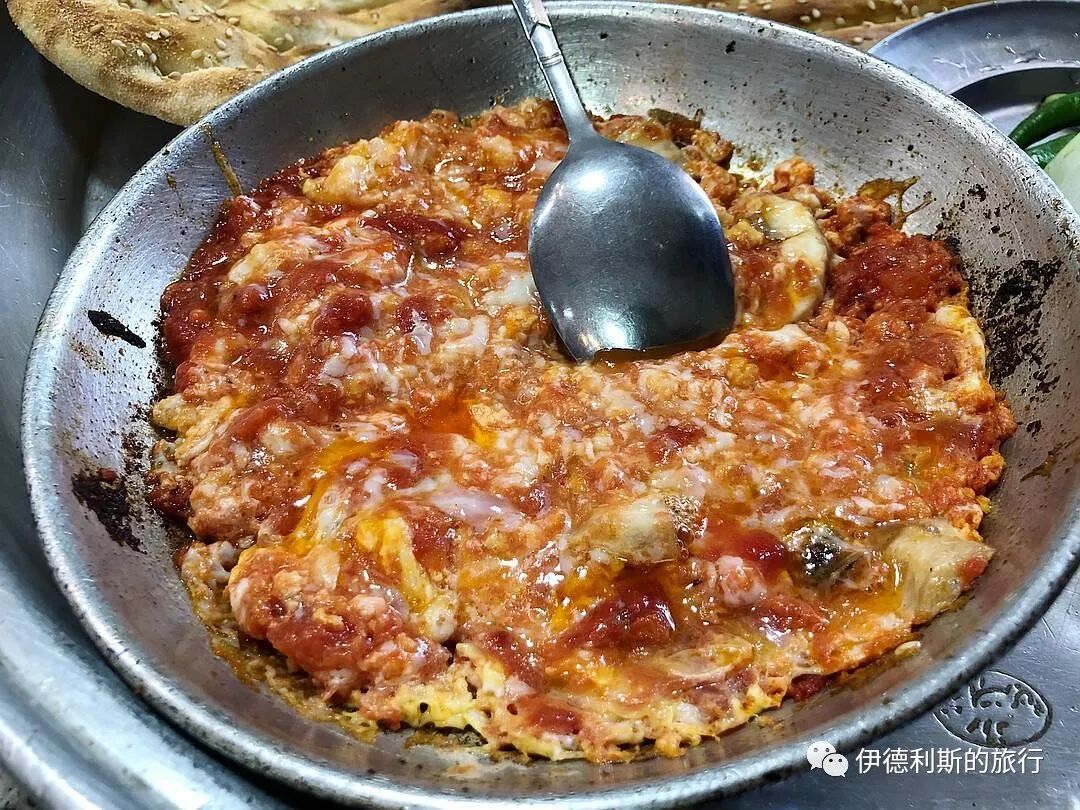
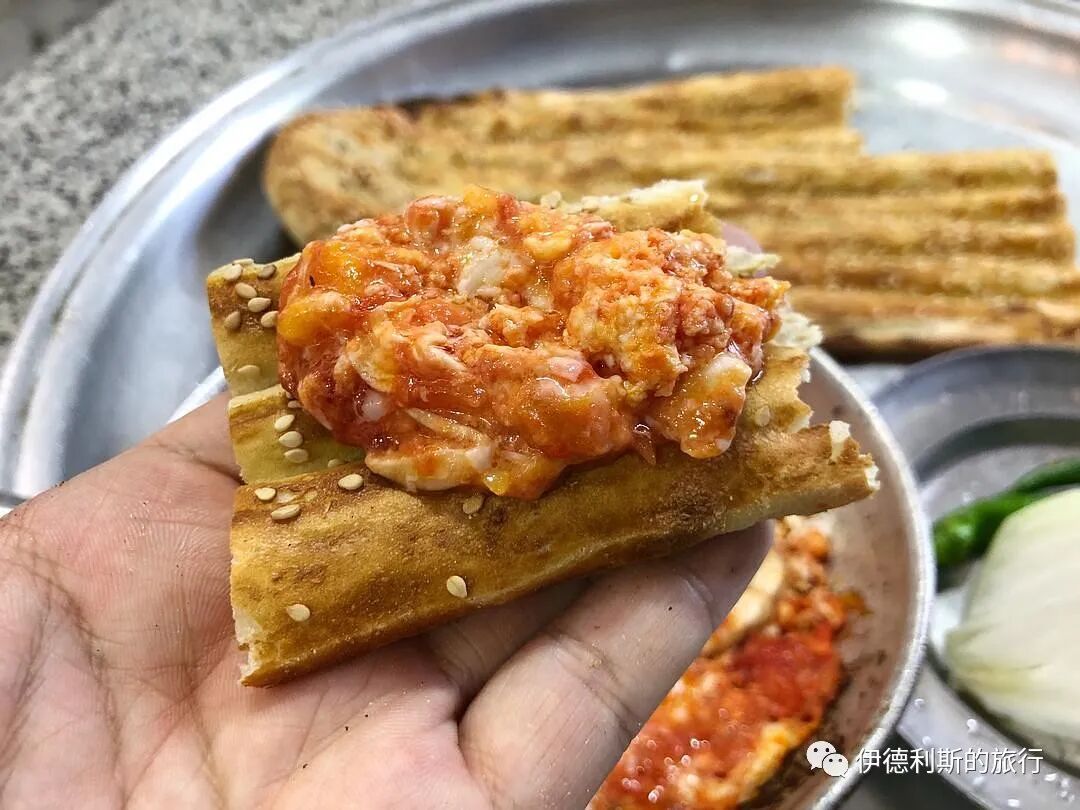
For breakfast on my first day in Tehran, I had Persian tomato and egg stir-fry (Persian Omelette), which is a signature Iranian breakfast. The cooking order for Persian tomato and egg stir-fry is the opposite of the Chinese version; you cook the tomatoes first, then add the eggs. Unlike our rice dishes, this Persian tomato and egg stir-fry must be eaten with flatbread. The shop I visited served it with Barbari flatbread.
Barbari literally translates to barbarian. It was originally what Persians called the Hazara people living in the Khorasan region. Hazara people from Khorasan first brought Barbari flatbread to Tehran, and it became popular during the Qajar dynasty (1796-1925). After that, the Hazara people were no longer called Barbari, but the name of the Barbari flatbread stayed.
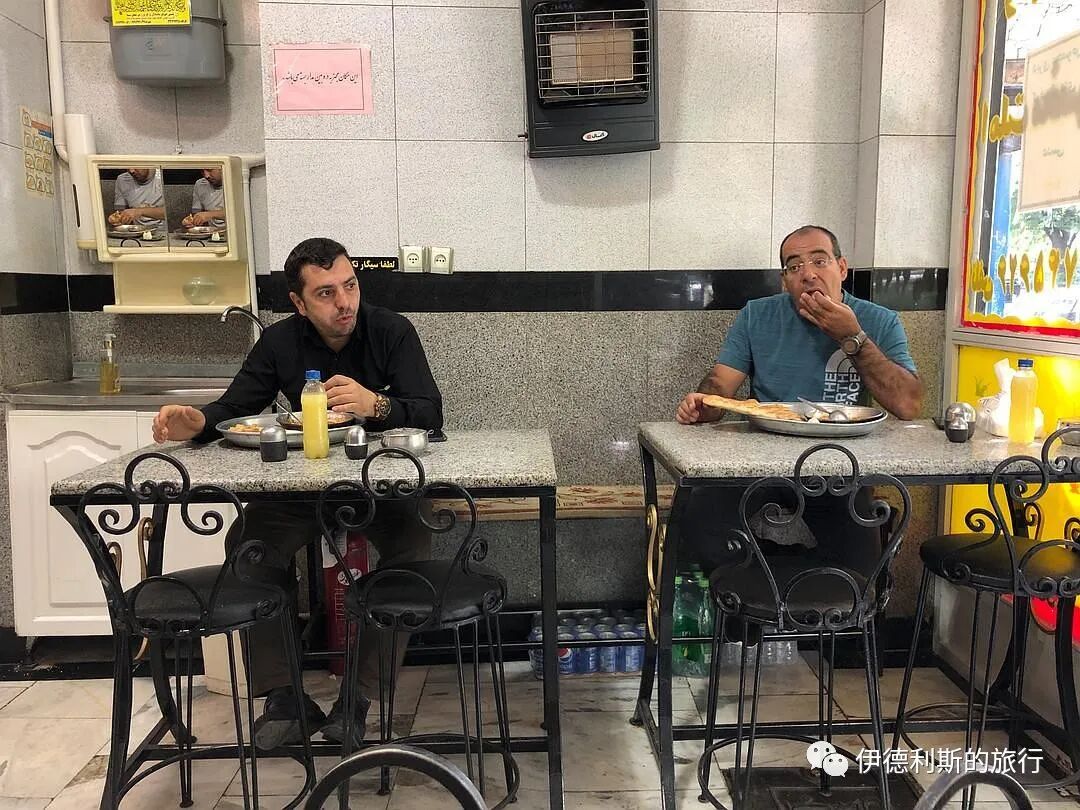
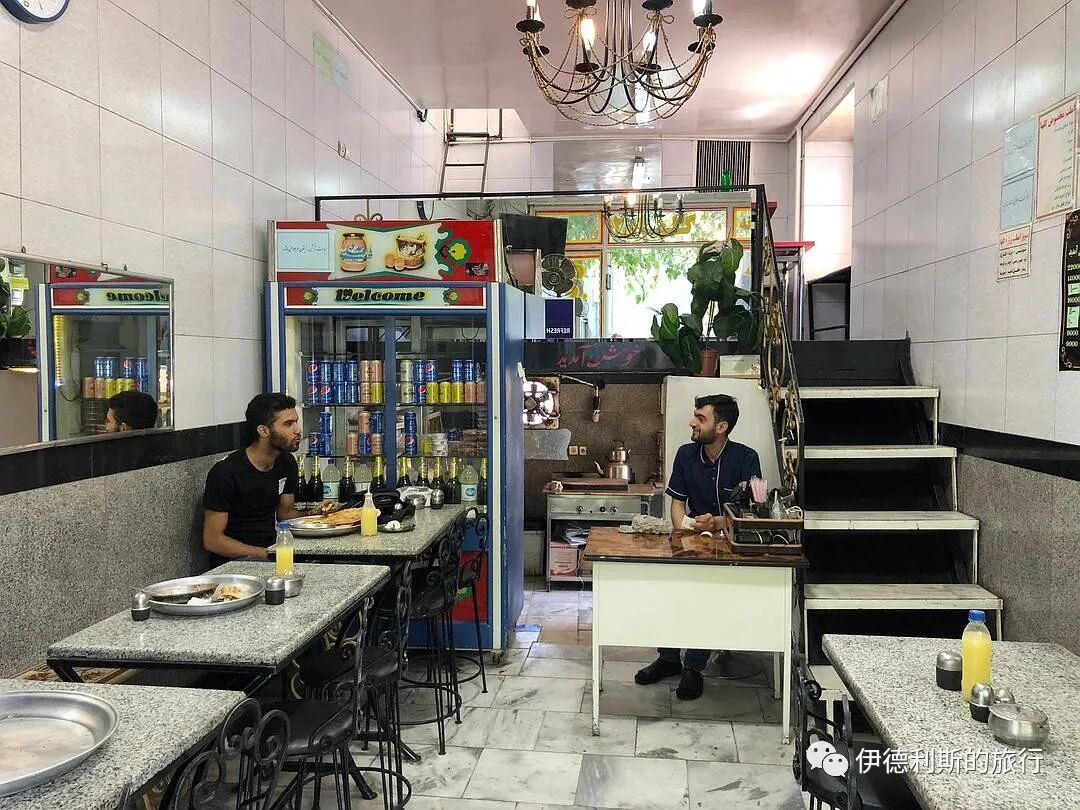
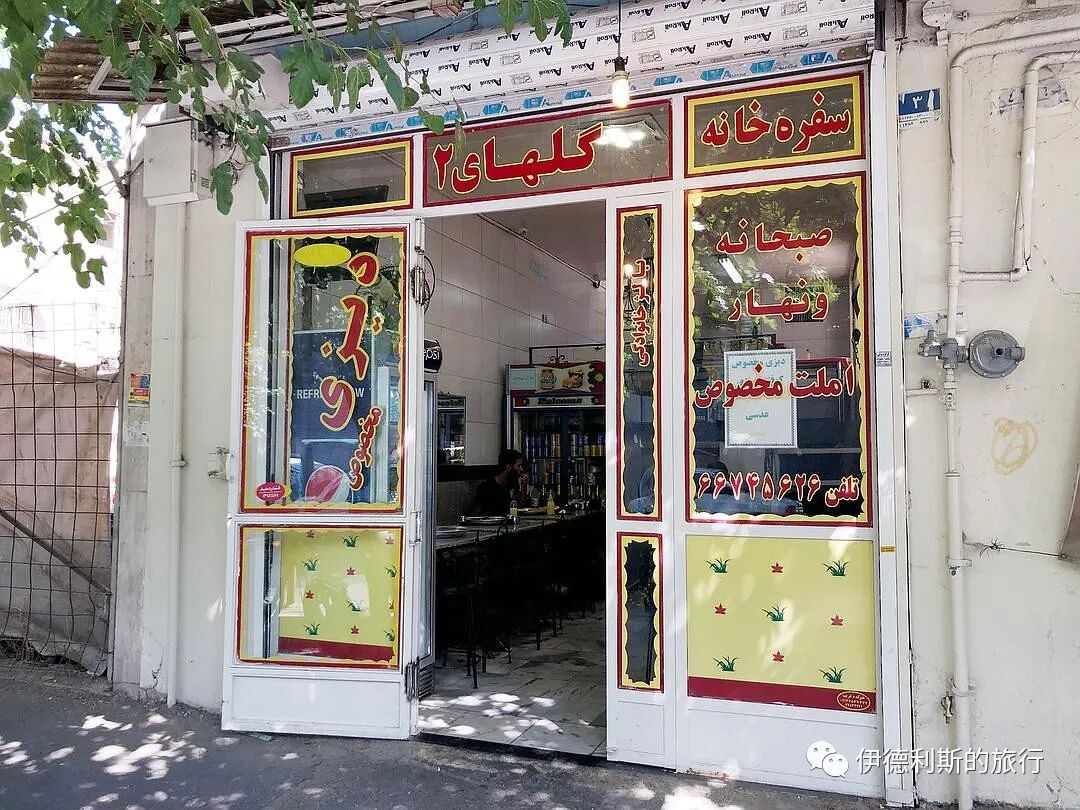
The shop I went to is called Golha 2 Hookah Bar. You can find it on Google Maps by searching for سفره خانه گلها 2. Because they only sell this one combination, you do not need to speak the language to order.
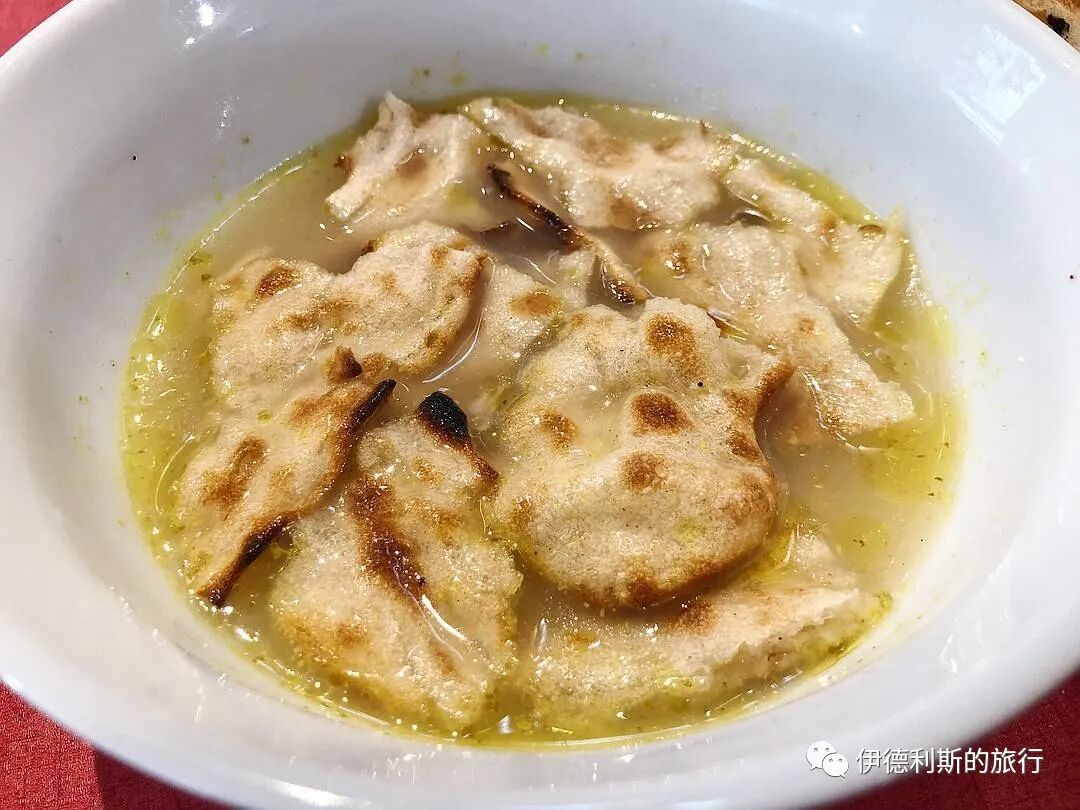
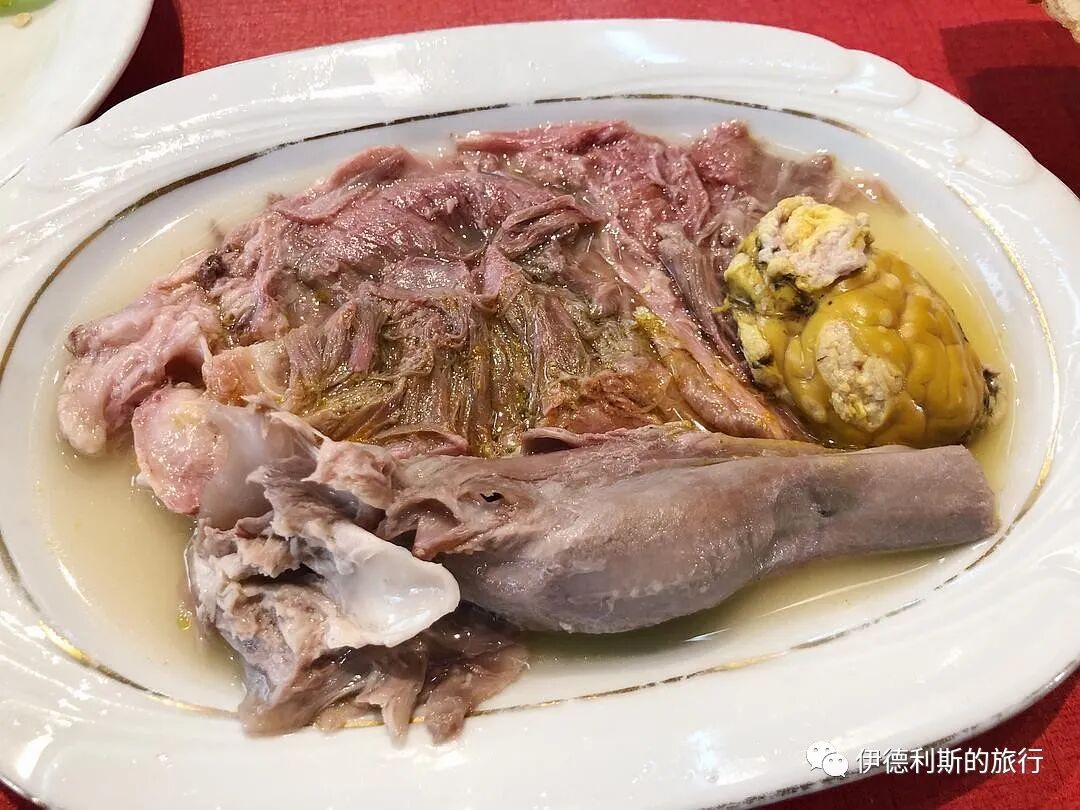
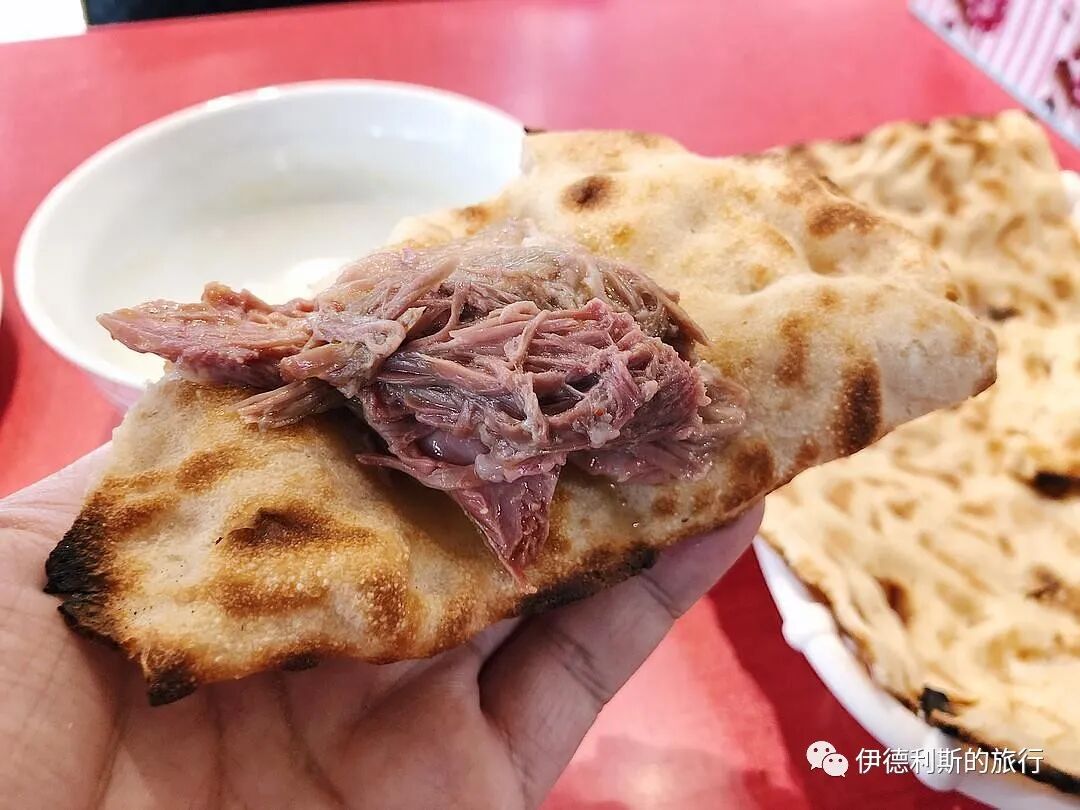
2. Cinnamon-spiced sheep head and trotter soup (Khalle Pache) with Sangak flatbread (Sangak nan).
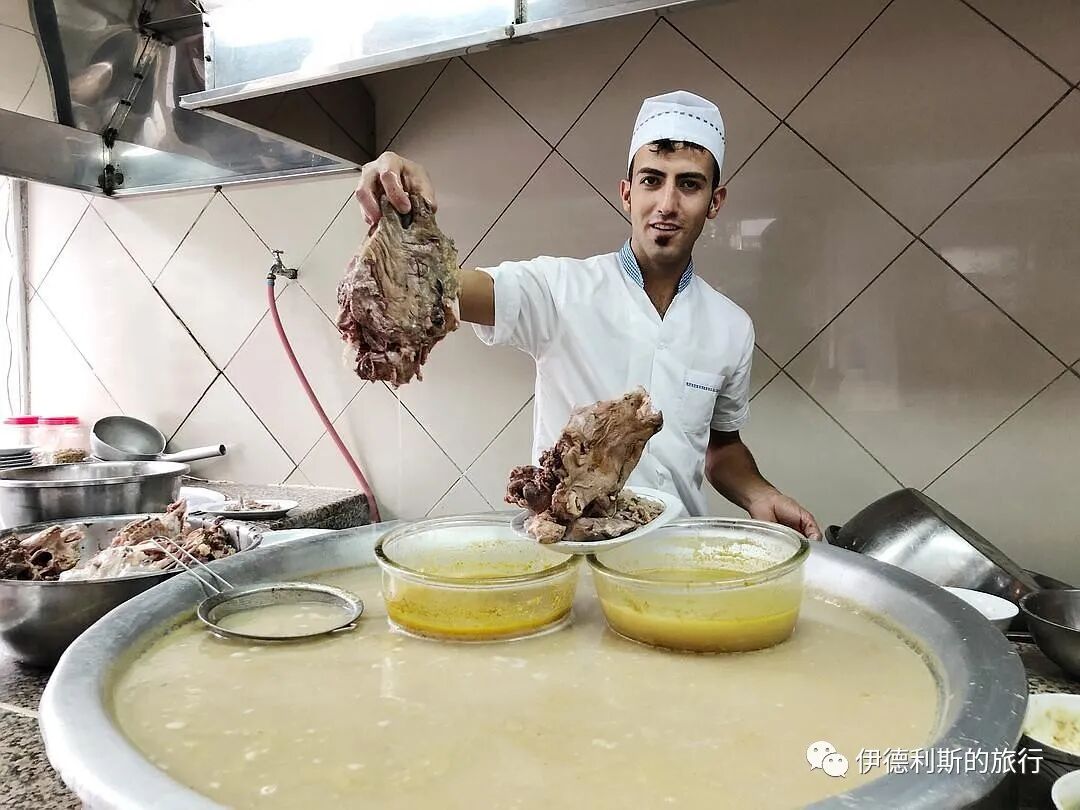
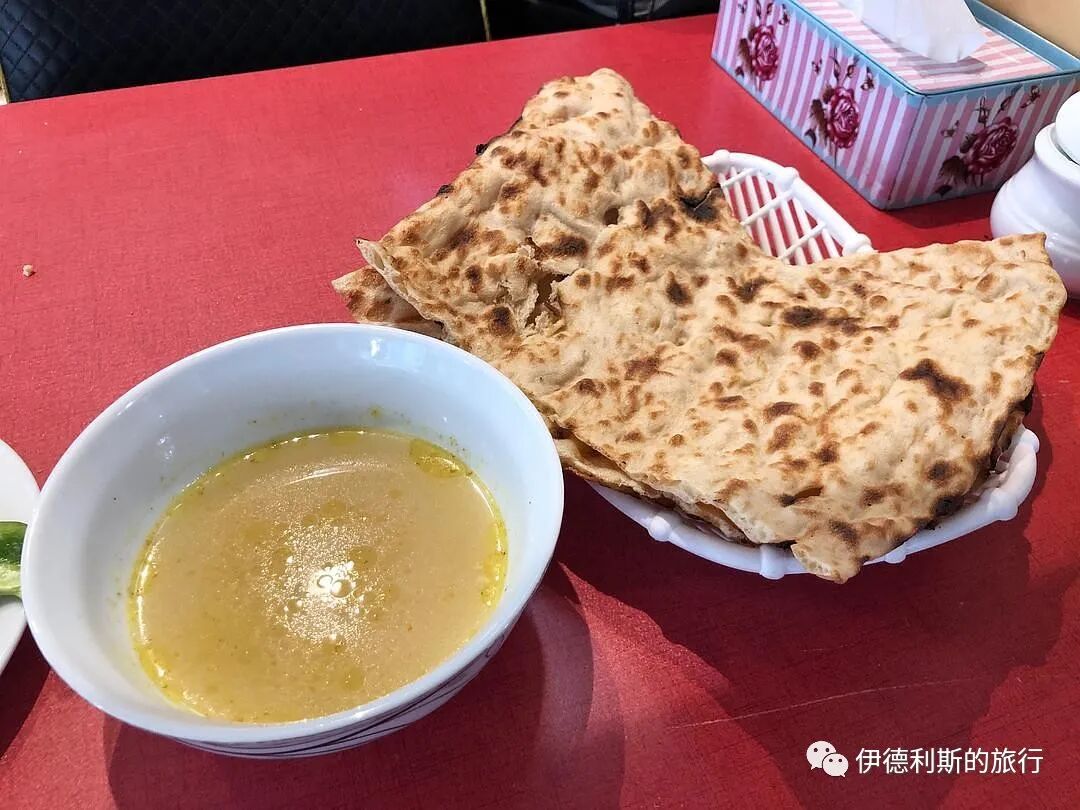
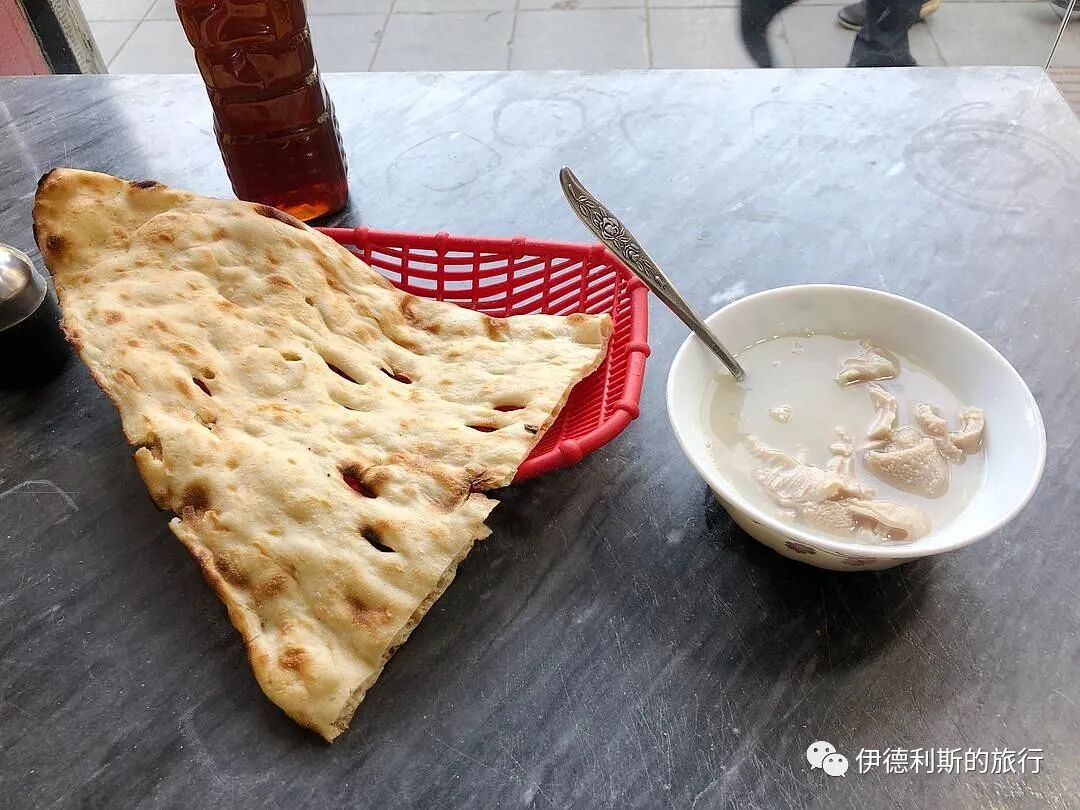
For breakfast on my second day in Tehran, I had cinnamon-spiced sheep head and trotter soup (Khalle Pache) served with Sangak flatbread. Sangak means small pebbles, and the earliest records of it come from the 11th-century Persian army. Persian soldiers back then supposedly carried pebbles with them. When they set up camp, they gathered the pebbles together to bake flatbread (naan), which is why Sangak flatbread has little pits all over it.
Sheep head soup is eaten more often in the autumn and winter. It usually comes with two pieces of flatbread; you soak the first one in the soup and eat the second one with the lamb. Besides sheep head and sheep trotters, the shop also sells sheep brain, but it is not part of the standard order, so you do not have to order it if you do not like it.
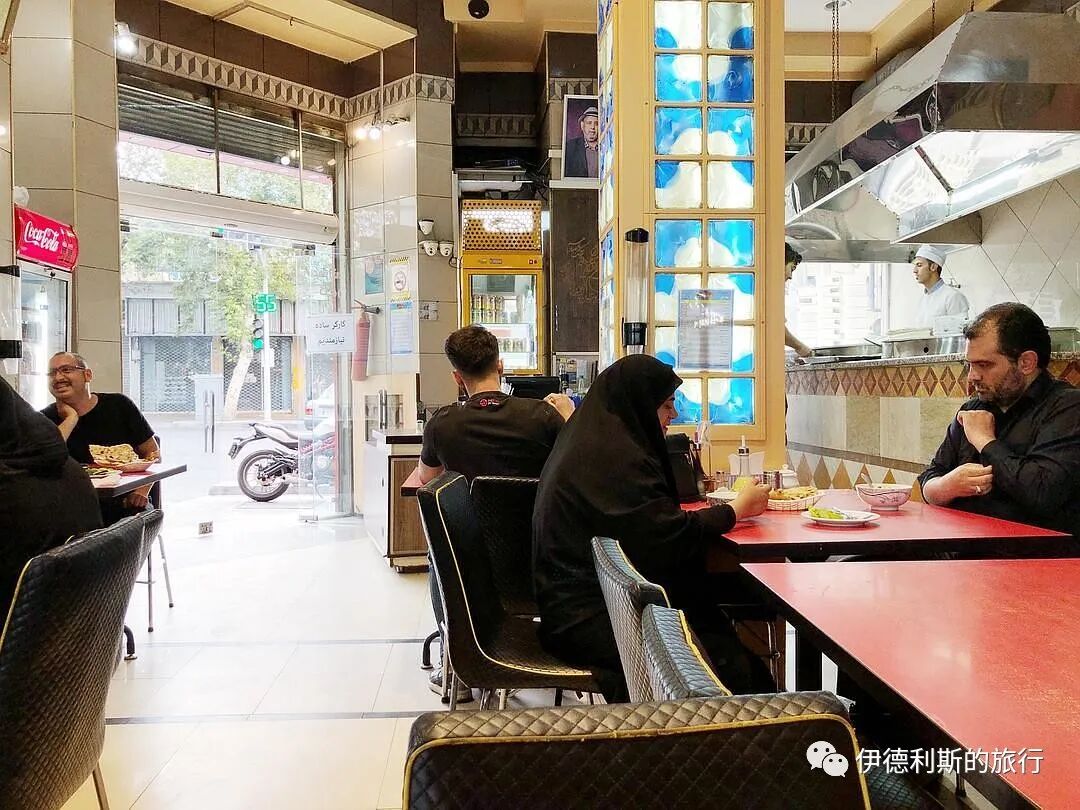
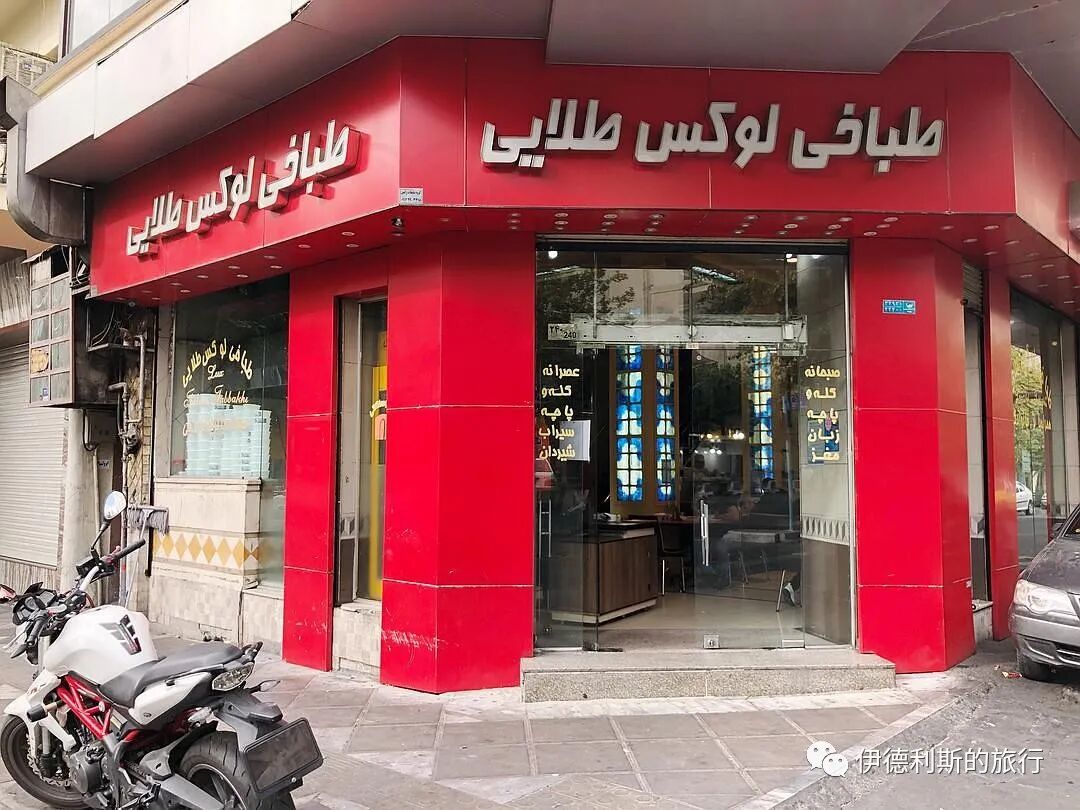
The shop I visited is called Lux Talaee Tabakhi, and it is a well-known spot in the old city of Tehran that specializes in sheep head and sheep trotter soup.
3. Falafel sandwich
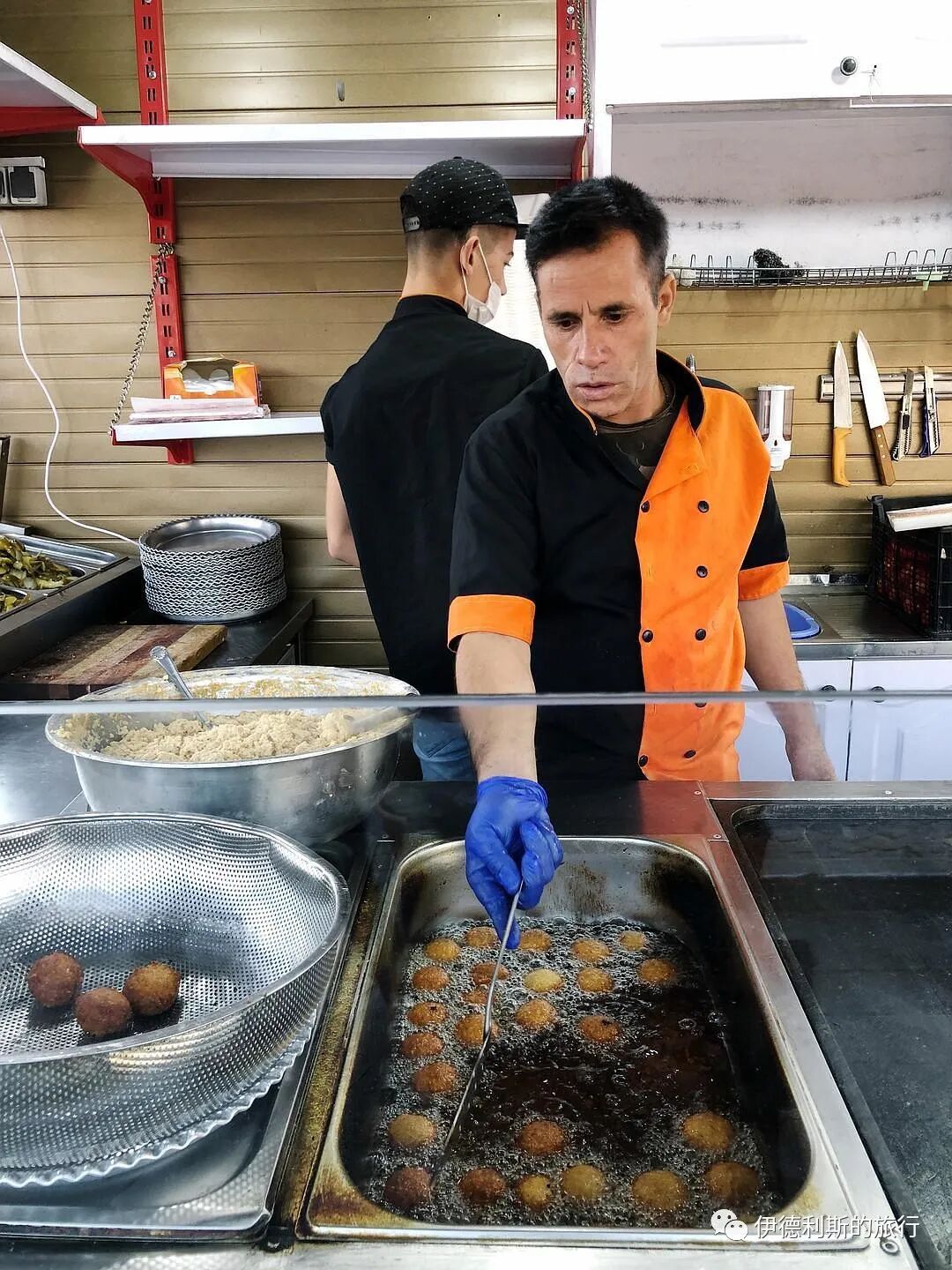
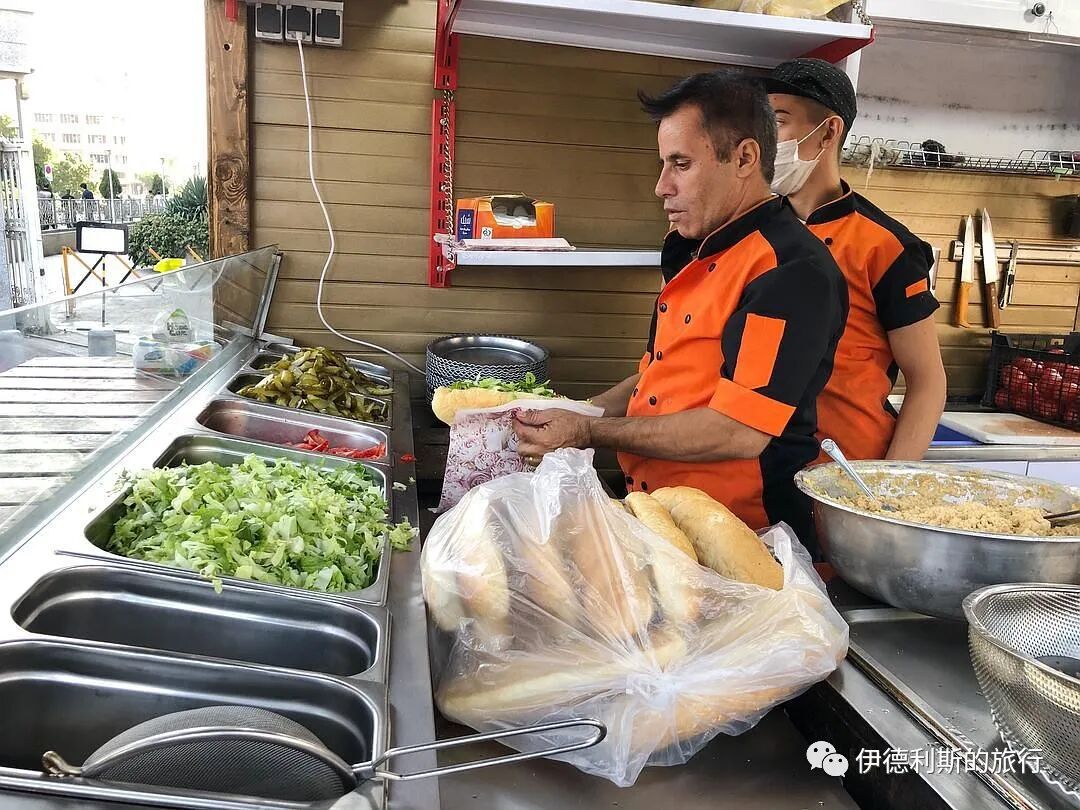
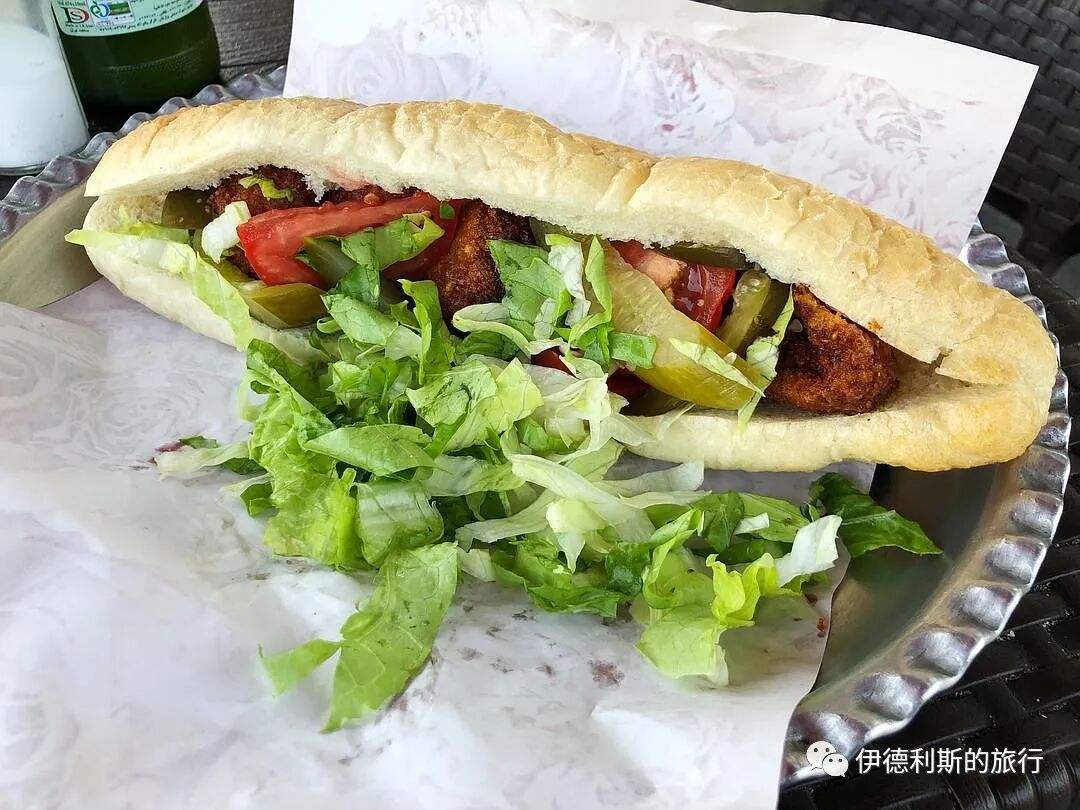
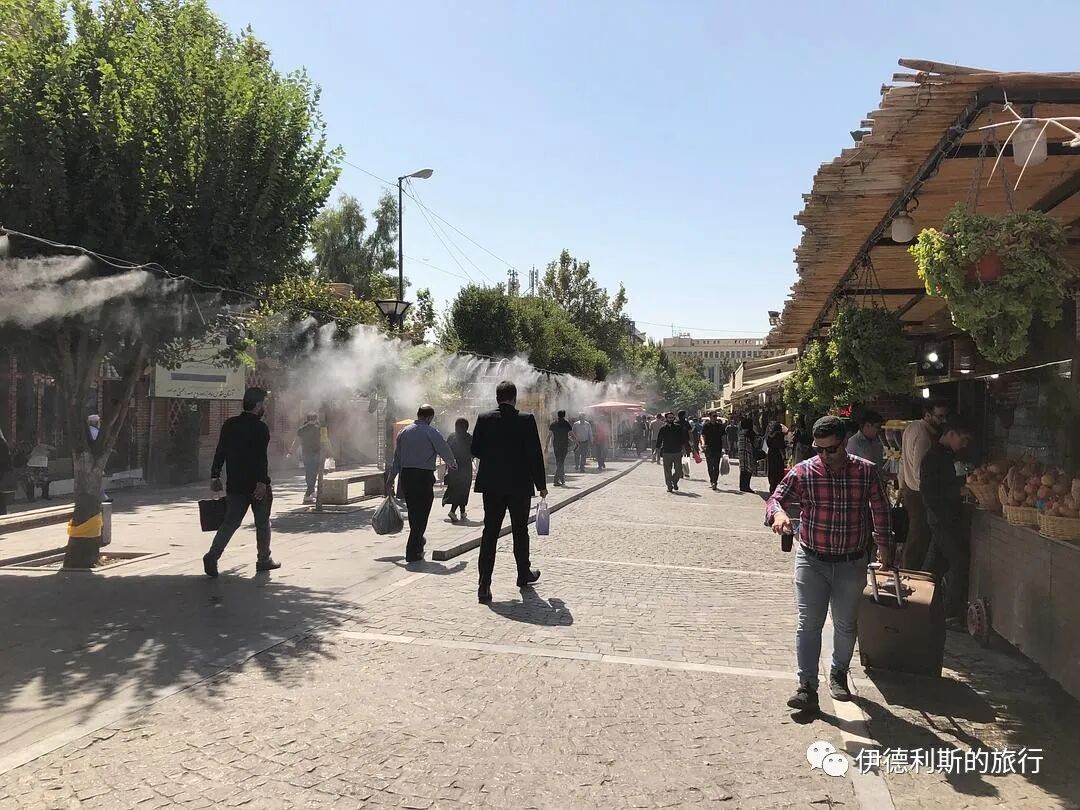
My accommodation in the old city of Tehran was south of Imam Khomeini Square, where there is a food street. I ate many snacks there. On the morning of my third day in Tehran, I ate a Falafel sandwich on the food street. It ranks alongside Iranian pizza as one of the two major street foods in Tehran.
Falafel is a common Middle Eastern fried chickpea ball, served inside a baguette with vegetable salad and Persian pickles (torshi). Torshi means sour in the Persian language. The most popular Falafel sandwich shops let you add your own salad and pickles, and they often have long lines. The one I ate had a simpler setup.
4. Samosa
Snacks called samosa are found from Northeast Africa to Western China, and they are made differently everywhere. Common versions include Indian curry puffs and baked buns (kaobaos) from Xinjiang, Central Asia. The word samosa actually comes from the Persian word sanbosag. As early as the 9th century, the Persian poet Ishaq al-Mawsili wrote poems praising the samosa. After the 10th century, the samosa began appearing in Arabic cookbooks and spread across Africa and Asia along with Muslims. The samosa remained popular in Iran until the 16th century, but later it was only kept in certain regions.
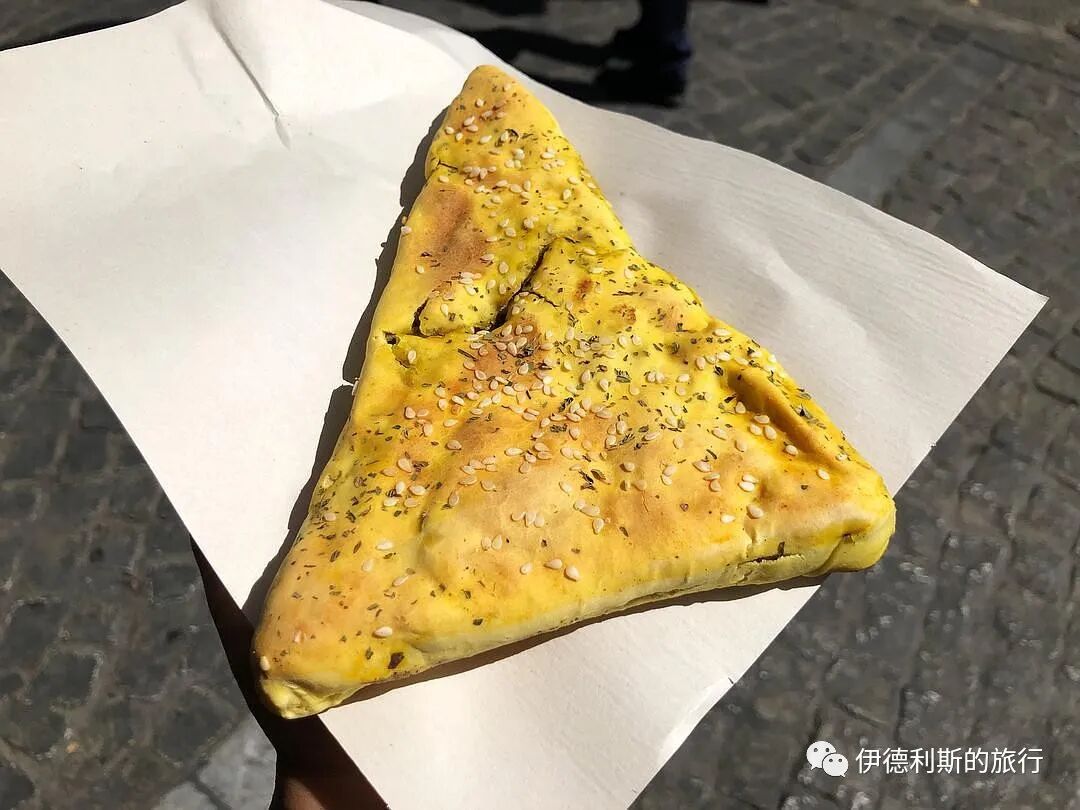
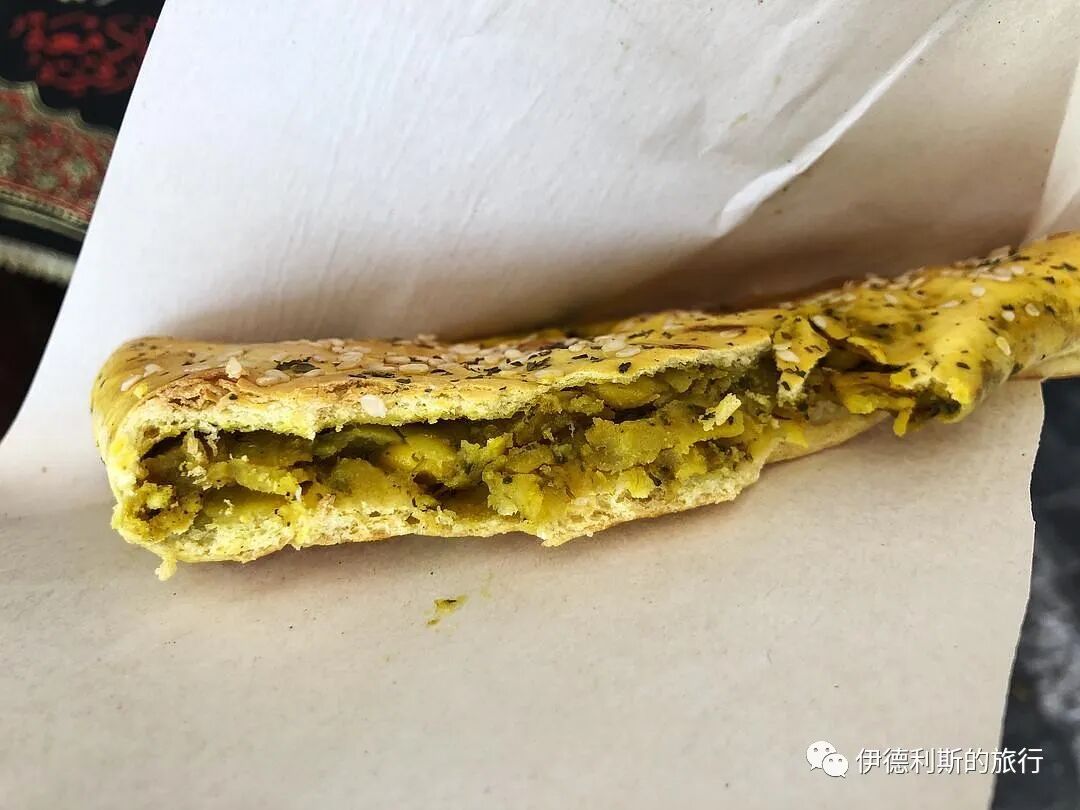
Samosas on the streets of Tehran are mostly fried triangles with potato filling, similar to the Indian version. I bought this kind at a small shop across from the Friday prayer (Jumu'ah) bazaar, and I also bought some delicious bread there.
I also ate another type of baked samosa on the food street south of Imam Khomeini Square, which also had a potato filling. The name of this restaurant is Sandwich Khorasan, so I guess this style might come from the Khorasan region in northeastern Iran.
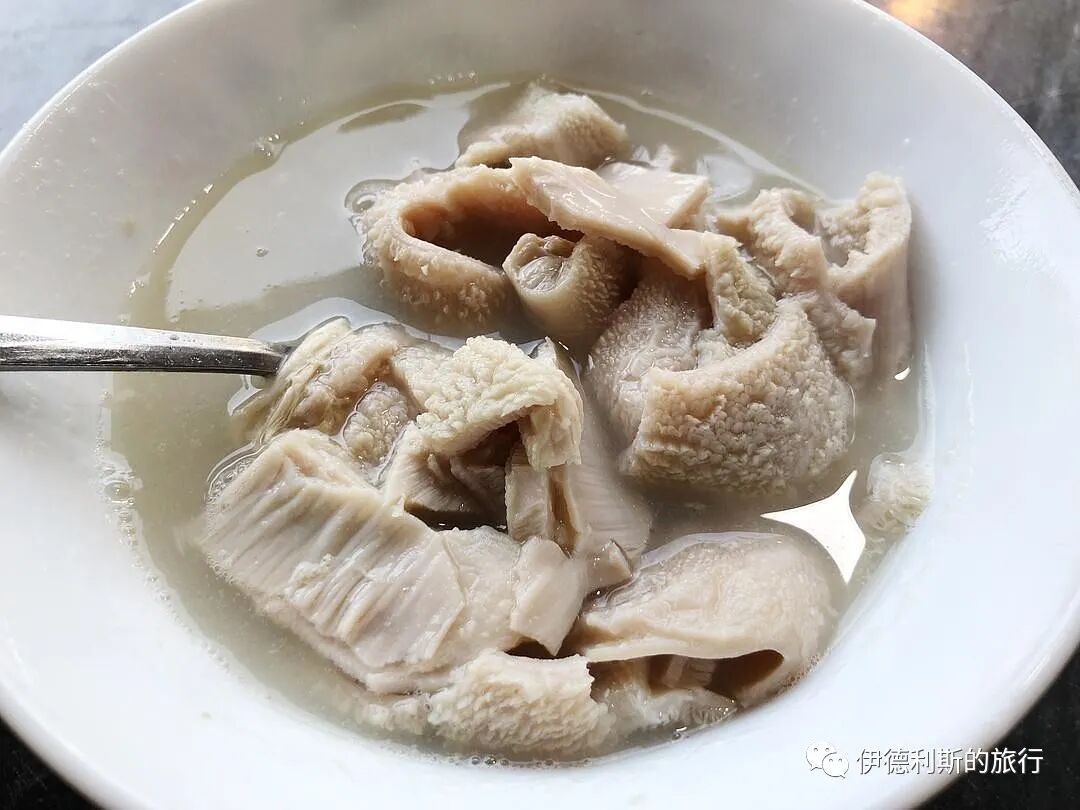
5. Tripe soup (sirabi)
I had tripe soup (sirabi) with flatbread (sangak) at a small street shop next to the carpet bazaar in Tehran. The soup was very fresh and tasty, and the tripe was very chewy.
6. Caspian white fish of the Gilaki people
I ate at Khoshbin, a fried fish restaurant run by Gilaki people from northern Iran, while in Tehran. The Gilaki people mainly live in Gilan Province on the southern coast of the Caspian Sea, and the Gilaki language they use belongs to the Western Iranian branch. Molecular anthropology shows that the Y-chromosome of the Gilaki people is very close to that of South Caucasian people, but their mtDNA (mitochondrial DNA) is very close to that of Iranians. We can guess that the ancestors of the Gilaki people likely came from the South Caucasus region, then migrated to the southern shore of the Caspian Sea and mixed with the Iranians.
The business hours for Khoshbin on Google Maps are wrong. They are actually only open for lunch between 12:00 PM and 4:00 PM, and it is very popular, so you have to wait in line. Luckily, they have an English menu, so I was able to order my food without any trouble.
Fried fish is an important part of Gilaki cuisine. I tried the Caspian white fish (Caspian kutum), which is a type of carp. For side dishes, I ordered white fish roe (Kuli), fava beans, and walnuts, and I also had cucumber yogurt (Maast-o Khiar). They also have some special Gilaki side dishes I want to try next time, like a mashed dip made of eggplant, pumpkin, garlic, tomatoes, and eggs called Mirza Ghasemi, and green olives marinated in pomegranate molasses, walnuts, and herbs called Zeytoun Parvardeh.
7. Street drinks
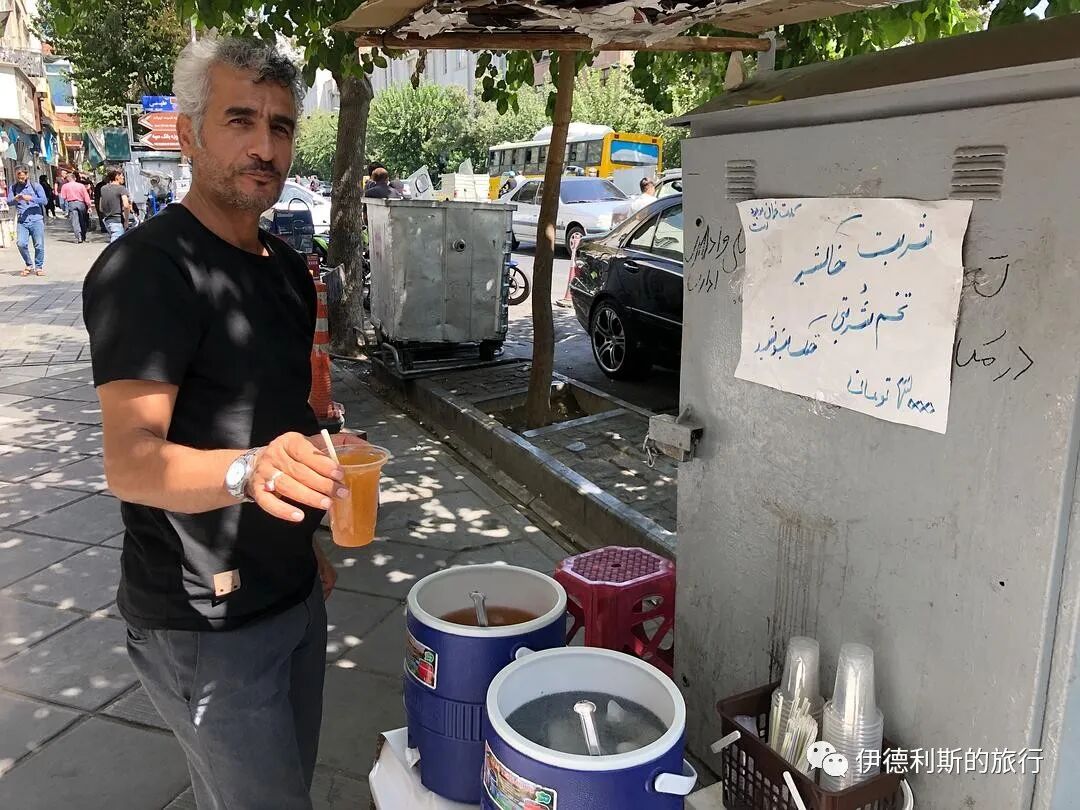
There are many drink shops on the streets of Tehran. First, there are all kinds of fresh juices; I drank pomegranate juice, honeydew melon juice, and carrot juice. The honeydew melon and carrot juices were super delicious, but the pomegranate juice was so sour it made me question everything. I still like the pomegranate juice from Xinjiang the best.
Another drink you don't see often in other countries is called Khakshir, which is very common in Iran during the summer to beat the heat and quench your thirst. Khakshir is the seed of a plant called flixweed (bonianghao) in Chinese. Flixweed is also known as garlic mustard, mimihao, or maihao. It grows all over China except in the south. It can be used to make oil or as medicine. Both traditional Iranian medicine and traditional Chinese medicine use it to help with urination and reduce swelling.
8. Shemroon Kabab restaurant
I ate at a kebab shop called Shemroon Kabab in Tajrish Square in northern Tehran. I ordered lamb chops with flatbread (nan) and spinach yogurt (Spinach Burani) as an appetizer. Their portions are huge and satisfying, and the meat is very tender and delicious.
9. Chicken kebab
I had chicken kebab at the Tajrish Bazaar in northern Tehran. Here, they simmer the kebabs in a thick tomato sauce after grilling them, which makes them very fragrant.
10. Flatbread (nan)
In the early morning in Tehran, any freshly baked flatbread is incredibly delicious. Also, as a word origin, nan (نان) in Persian can refer to any kind of flatbread, not just those baked in a traditional clay oven.
11. Cornelian cherry (zhuyu) and mulberry
I ate cornelian cherry and mulberry at the Tajrish Bazaar in northern Tehran. The classic way to eat them is to sprinkle them with salt. If you squeeze a mulberry with your hand, the juice comes right out. It is as juicy as pomegranate juice from Xinjiang, but it is still too sour.
12. Faloodeh
I ate Faloodeh on the food street south of Imam Khomeini Square in Tehran. It is a cold rice noodle dessert with sugar syrup, rose water, and lemon juice.
13. Cucumber yogurt (Maast-o Khiar)
I bought cucumber yogurt (Maast-o Khiar) at the Friday Bazaar in Tehran, and it came with raisins and walnuts.
14. Saffron ice cream
I ate saffron ice cream near Tajrish Square in northern Tehran. It was topped with crushed pistachios and chunks of cream, which is very typical of Iran.
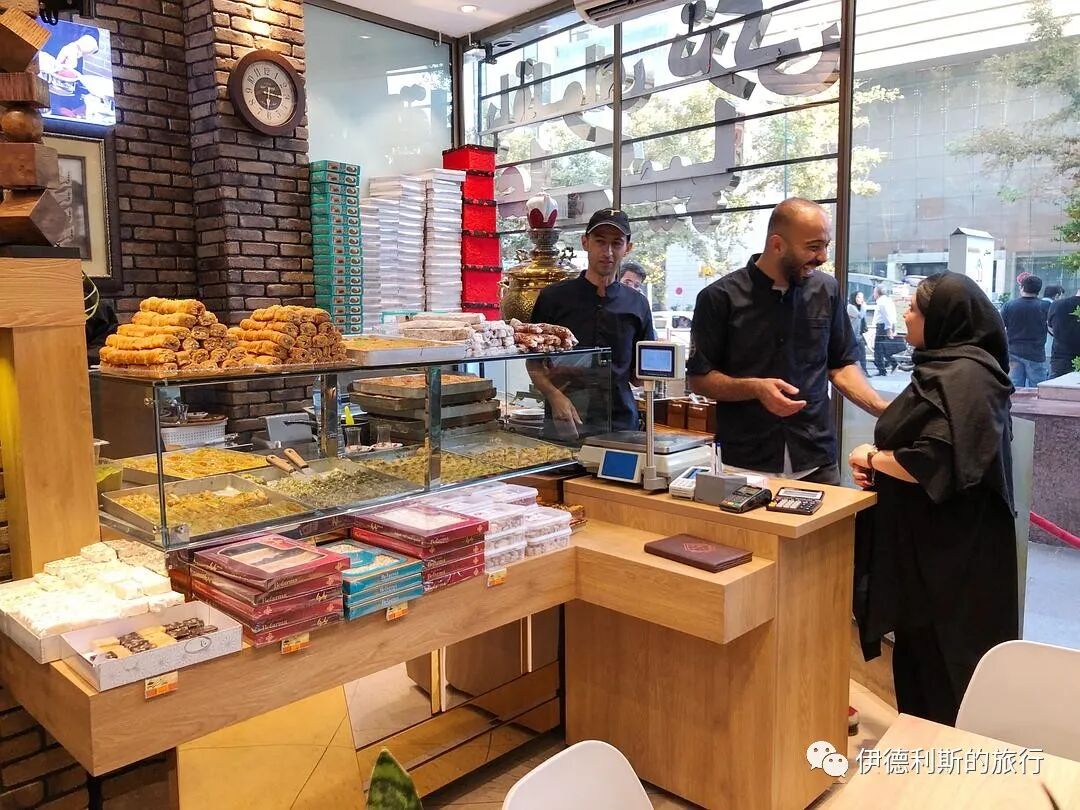
15. Baklava dessert with tea
I had tea and dessert at a shop called Takseen baghlava near the Mirdamad metro station in northern Tehran. Baklava originated in the Ottoman imperial court and later became popular across the Middle East and the Caucasus. The Persian version of baklava is special because it uses rose syrup and crushed pistachios. The dessert I ate was shaped like sugar threads.
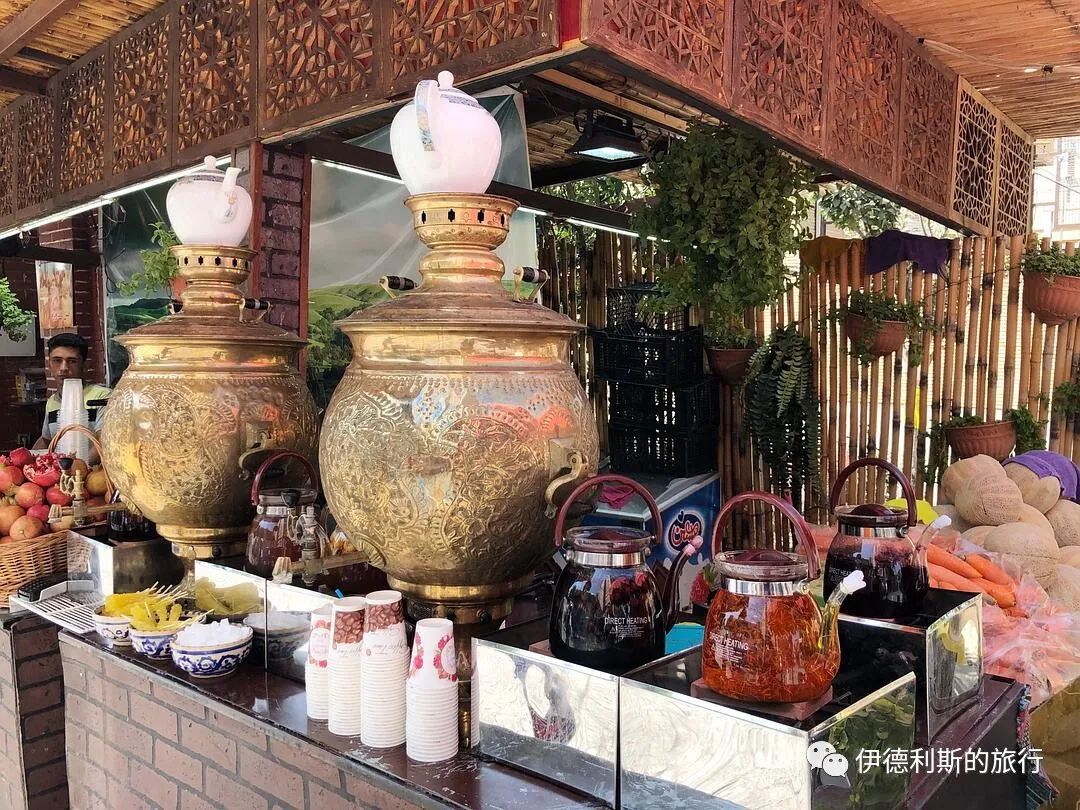
The two-layer Iranian tea stove is called a samovar, which arrived from Russia in the 19th century. The small teapot on top is for brewing tea, the large pot in the middle is for boiling water, and the bottom is the heat source. Traditionally it used coal or charcoal, but now it uses electricity, gas, or natural gas.
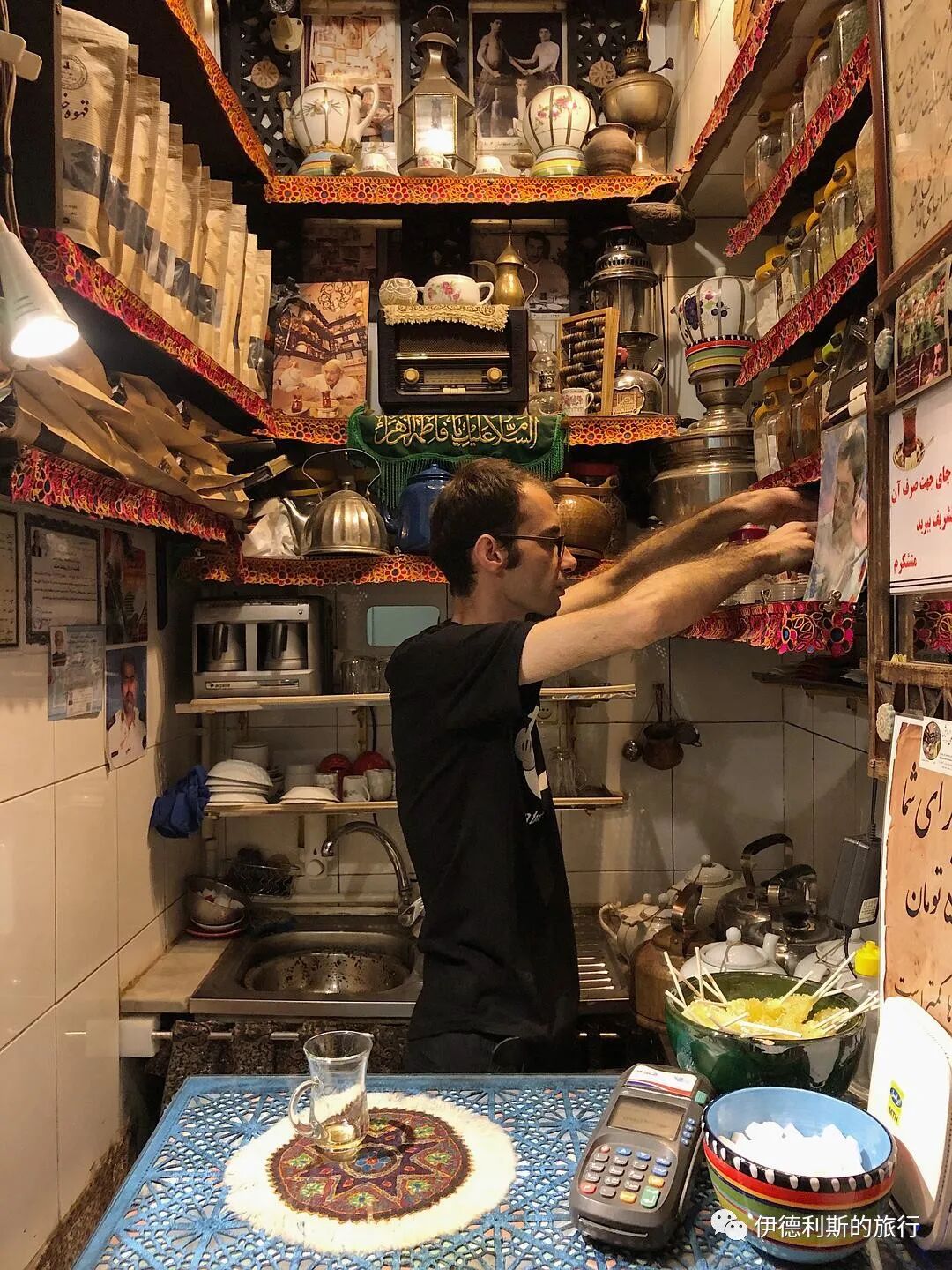
16. Drinking tea
Haj Ali Darvish is a century-old, famous tea house in the Grand Bazaar of Tehran. The tea house opened in 1918 and was taken over by Haj Ali Mabhutyan in 1962. The current owner is his son, Haj Kazem Mabhutyan.
Mr. Kazem works hard to share his shop on Instagram, which has helped more foreign tourists find his small place. I am one of them, and the old gentleman even took my photo and posted it on Instagram. Friends who use Instagram might have a chance to see me there. The account is haj_ali_darvish_tea_house.
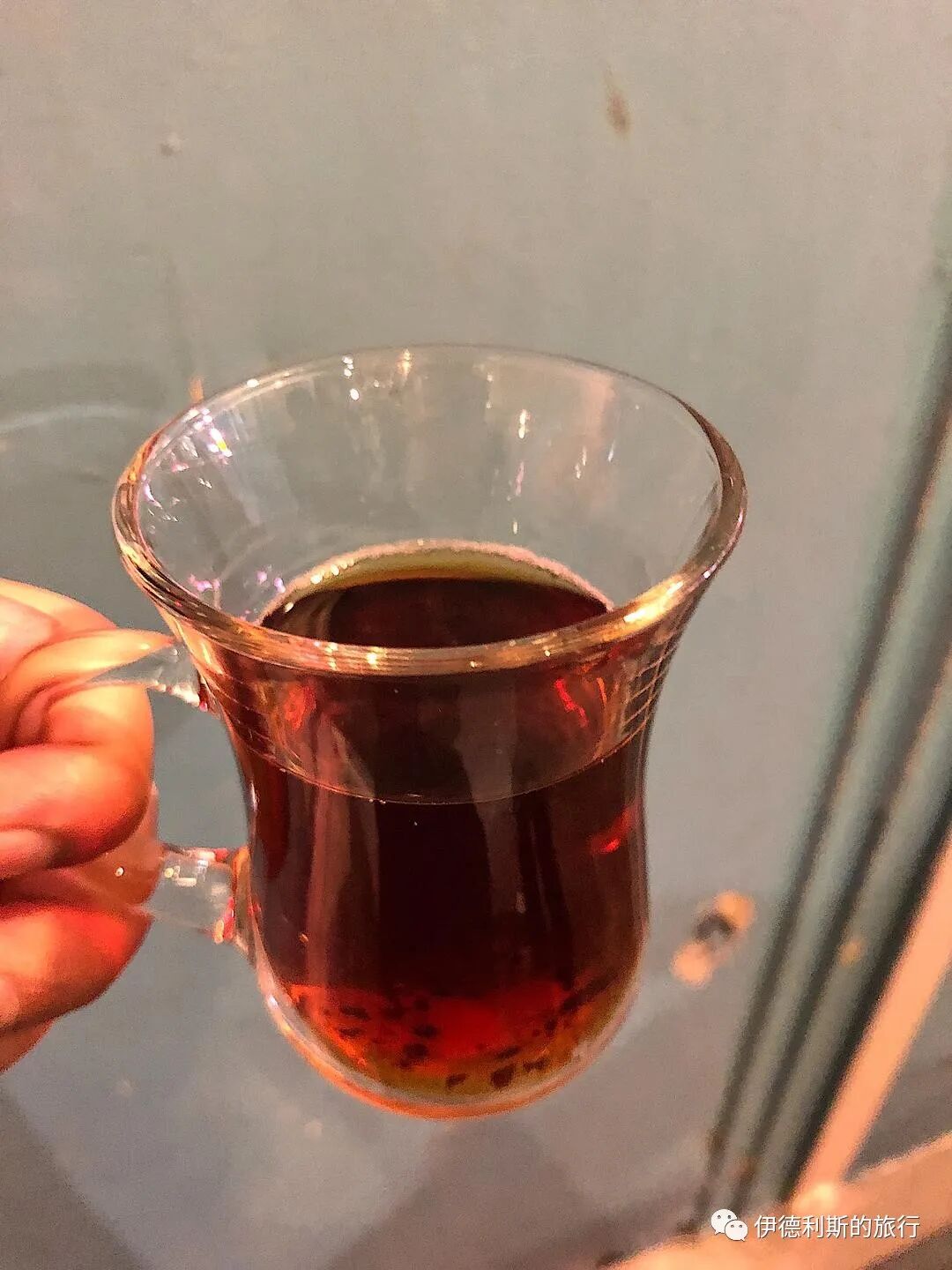
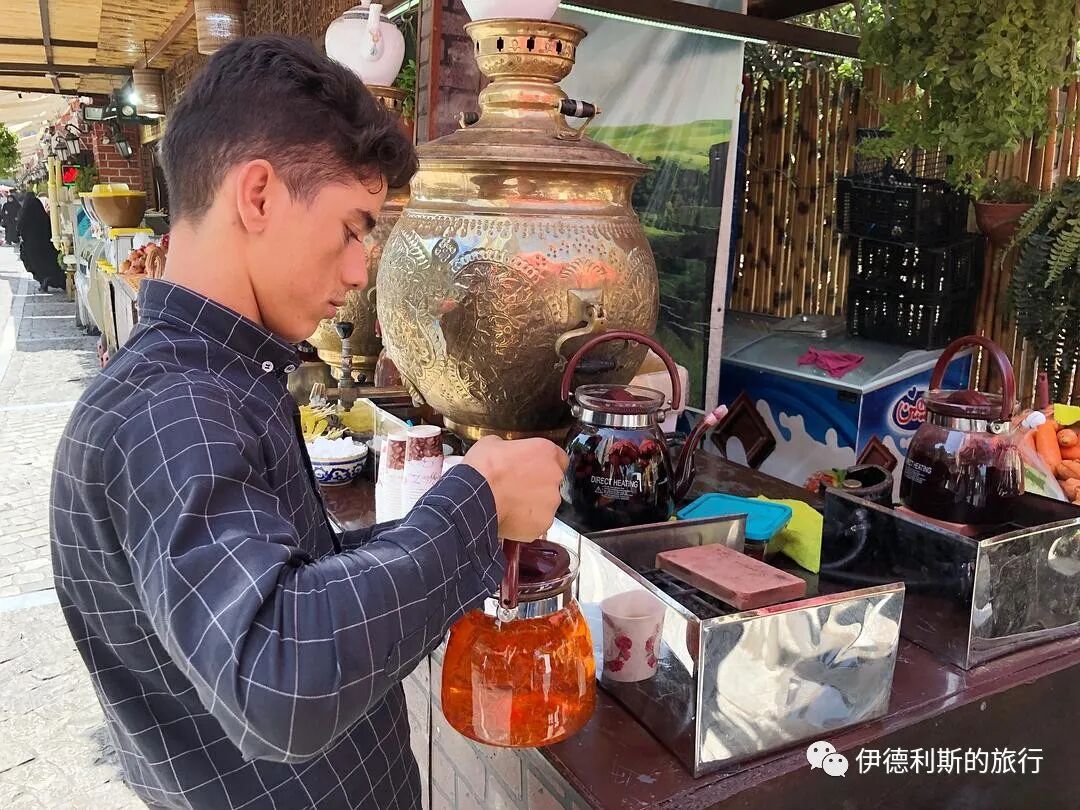
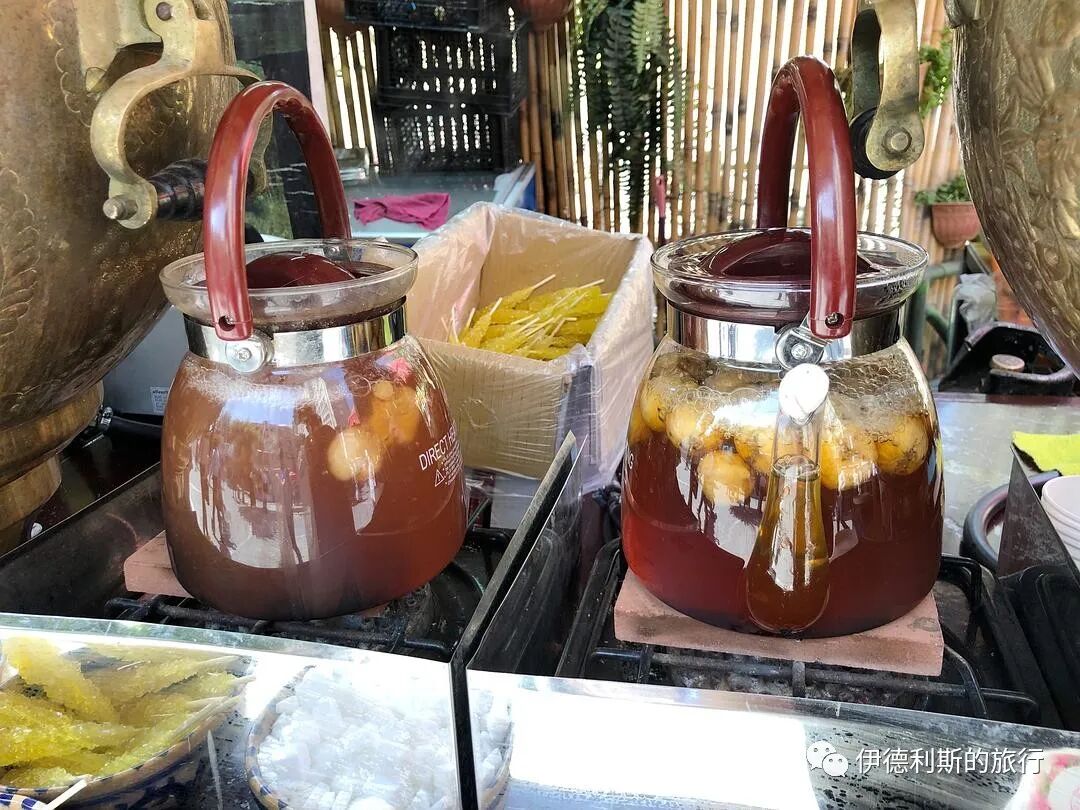
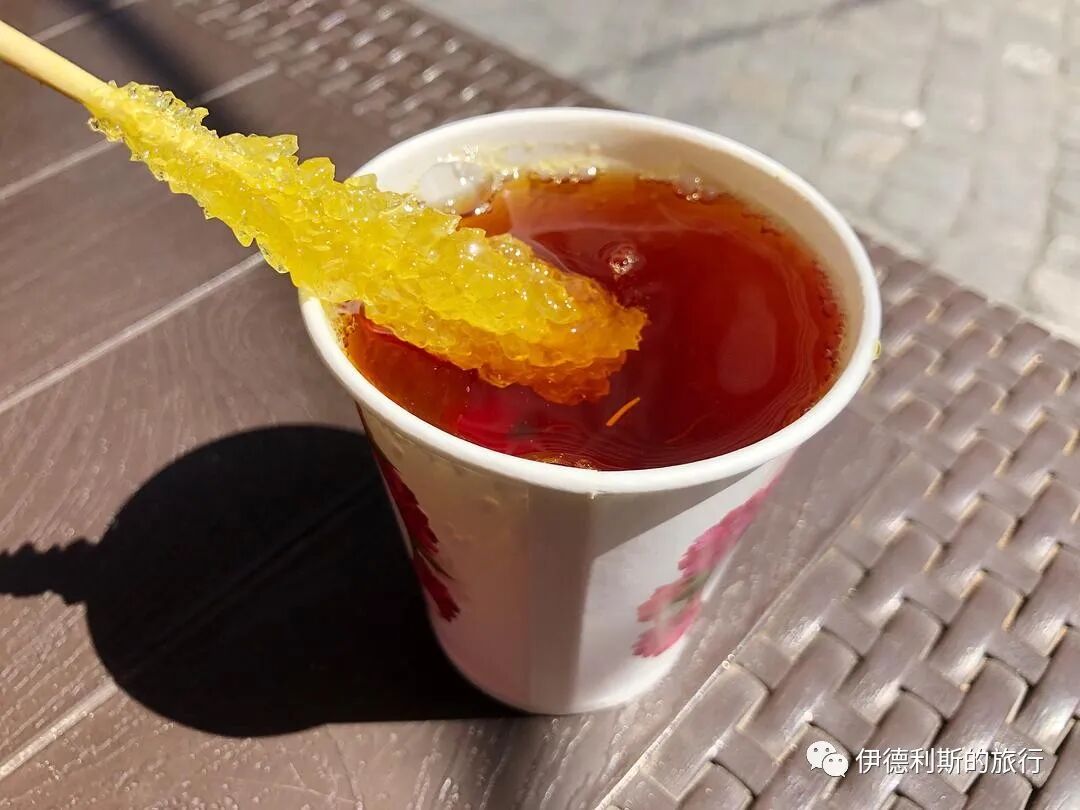
I also drank some street-side fig tea on the food street south of Imam Khomeini Square. Iranians mainly have two ways of adding sugar to their tea. One way is to hold a sugar cube in your mouth and lick it while you drink the tea. The other way is to use a lollipop-style sugar stick called nabat chubi to stir it. This rock candy originated in Isfahan over a thousand years ago. Later, people invented a way to grow crystals by dipping small twigs into a sugar solution, and this method spread across Eurasia.
17. Moslem Restaurant
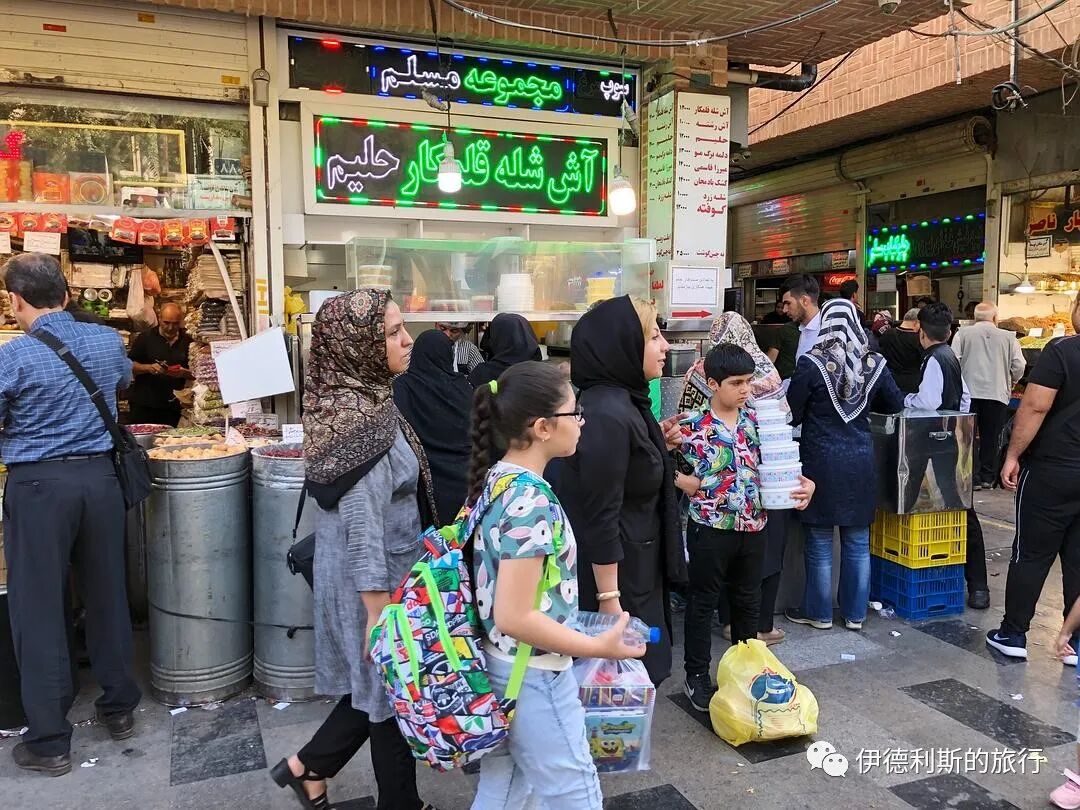
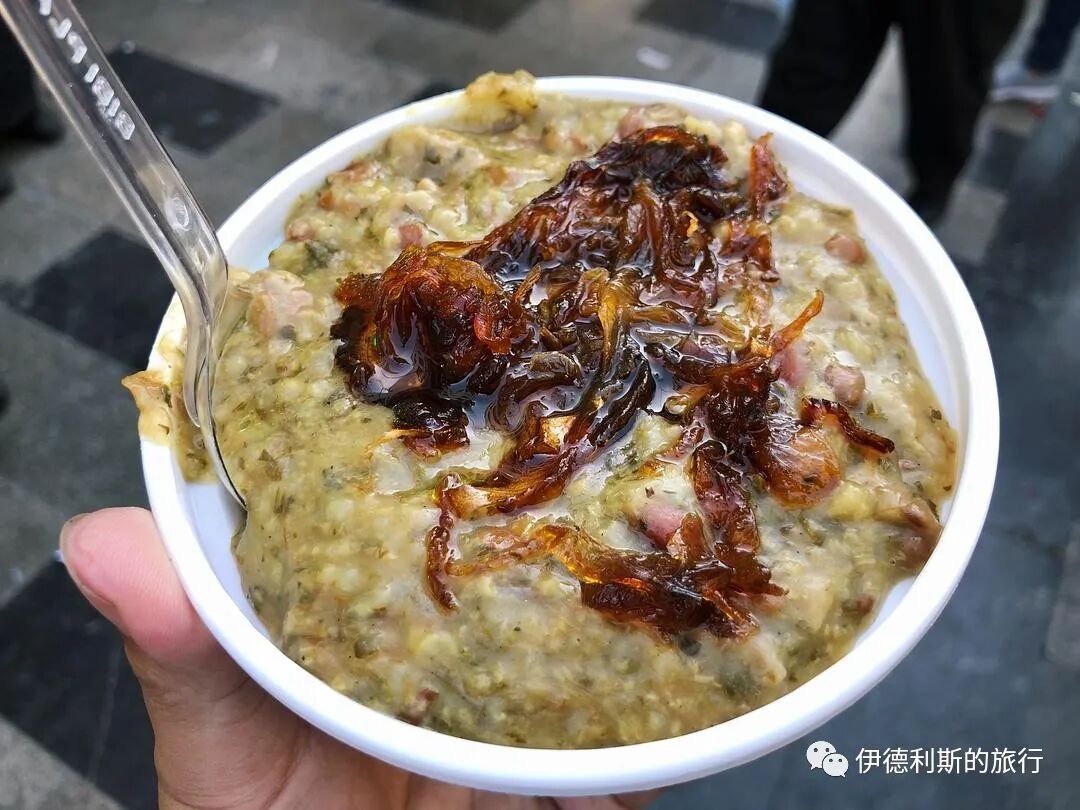
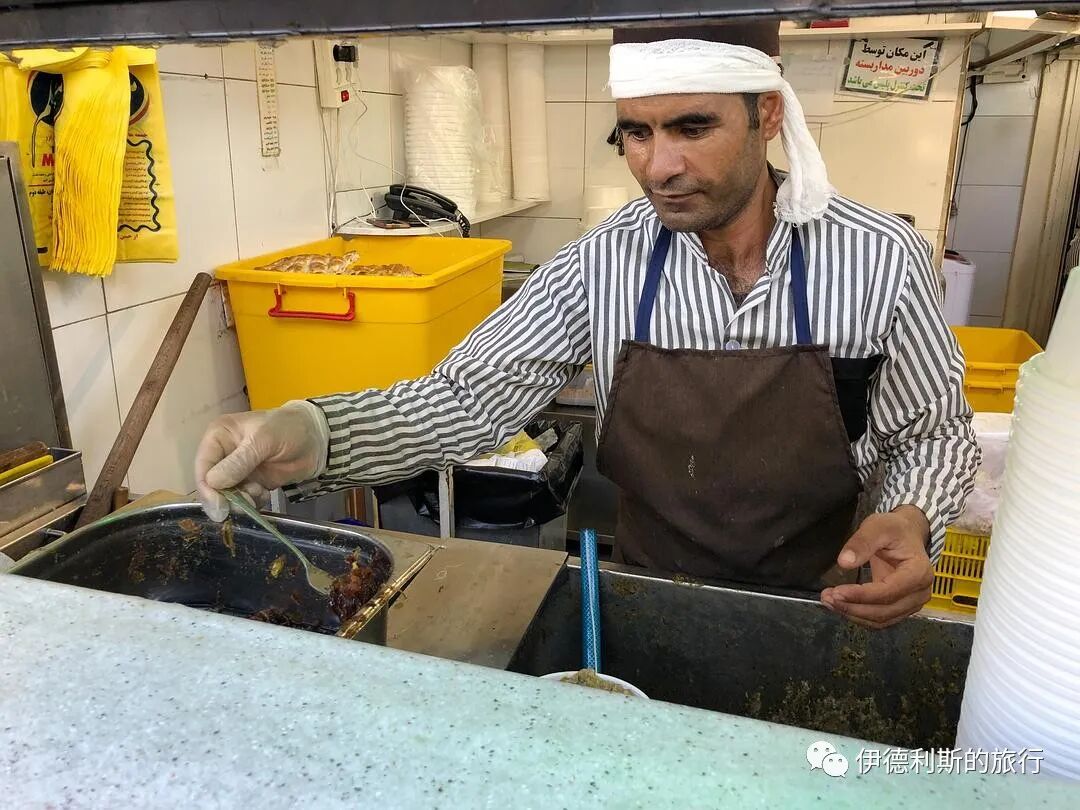
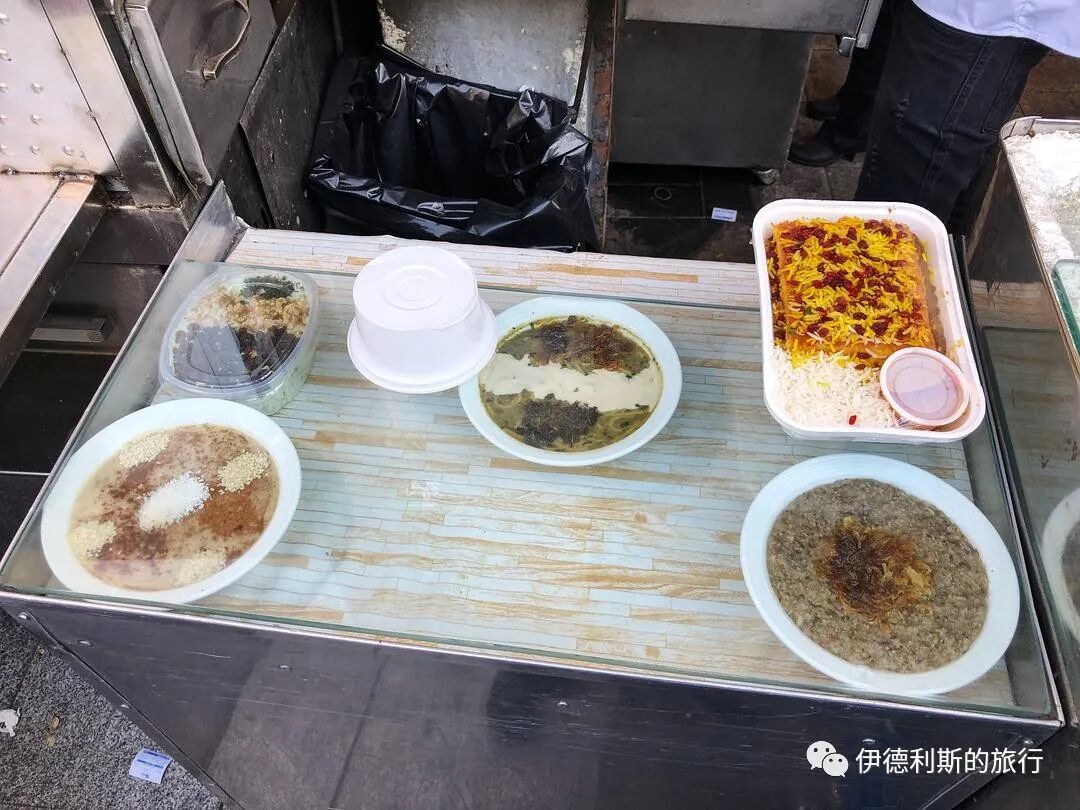
Moslem Restaurant is a very famous spot in the Tehran Grand Bazaar. They specialize in Iranian rice cake (Tahchin) made with rice, yogurt, saffron, and eggs (shown in the top right of photo 4). I bought a bowl of sour cream and spinach meat stew porridge (Aush) at the takeout window on the first floor, and it tasted great. view all
Summary: Halal Food Guide: Tehran Street Food — Iranian Snacks, Markets and Everyday Eats is presented here as a firsthand travel account in clear English, beginning with this scene: I went to Tehran during the 2019 Mid-Autumn Festival to eat and explore. I am sharing some of the things I ate here. The account keeps its focus on Tehran Street Food, Iran Travel, Halal Food while preserving the names, places, food, and historical details from the Chinese source.
I went to Tehran during the 2019 Mid-Autumn Festival to eat and explore. I am sharing some of the things I ate here.
1. Persian tomato and egg stir-fry with Barbari flatbread (Barbari nan).
For breakfast on my first day in Tehran, I had Persian tomato and egg stir-fry (Persian Omelette), which is a signature Iranian breakfast. The cooking order for Persian tomato and egg stir-fry is the opposite of the Chinese version; you cook the tomatoes first, then add the eggs. Unlike our rice dishes, this Persian tomato and egg stir-fry must be eaten with flatbread. The shop I visited served it with Barbari flatbread.
Barbari literally translates to barbarian. It was originally what Persians called the Hazara people living in the Khorasan region. Hazara people from Khorasan first brought Barbari flatbread to Tehran, and it became popular during the Qajar dynasty (1796-1925). After that, the Hazara people were no longer called Barbari, but the name of the Barbari flatbread stayed.
The shop I went to is called Golha 2 Hookah Bar. You can find it on Google Maps by searching for سفره خانه گلها 2. Because they only sell this one combination, you do not need to speak the language to order.
2. Cinnamon-spiced sheep head and trotter soup (Khalle Pache) with Sangak flatbread (Sangak nan).
For breakfast on my second day in Tehran, I had cinnamon-spiced sheep head and trotter soup (Khalle Pache) served with Sangak flatbread. Sangak means small pebbles, and the earliest records of it come from the 11th-century Persian army. Persian soldiers back then supposedly carried pebbles with them. When they set up camp, they gathered the pebbles together to bake flatbread (naan), which is why Sangak flatbread has little pits all over it.
Sheep head soup is eaten more often in the autumn and winter. It usually comes with two pieces of flatbread; you soak the first one in the soup and eat the second one with the lamb. Besides sheep head and sheep trotters, the shop also sells sheep brain, but it is not part of the standard order, so you do not have to order it if you do not like it.
The shop I visited is called Lux Talaee Tabakhi, and it is a well-known spot in the old city of Tehran that specializes in sheep head and sheep trotter soup.
3. Falafel sandwich
My accommodation in the old city of Tehran was south of Imam Khomeini Square, where there is a food street. I ate many snacks there. On the morning of my third day in Tehran, I ate a Falafel sandwich on the food street. It ranks alongside Iranian pizza as one of the two major street foods in Tehran.
Falafel is a common Middle Eastern fried chickpea ball, served inside a baguette with vegetable salad and Persian pickles (torshi). Torshi means sour in the Persian language. The most popular Falafel sandwich shops let you add your own salad and pickles, and they often have long lines. The one I ate had a simpler setup.
4. Samosa
Snacks called samosa are found from Northeast Africa to Western China, and they are made differently everywhere. Common versions include Indian curry puffs and baked buns (kaobaos) from Xinjiang, Central Asia. The word samosa actually comes from the Persian word sanbosag. As early as the 9th century, the Persian poet Ishaq al-Mawsili wrote poems praising the samosa. After the 10th century, the samosa began appearing in Arabic cookbooks and spread across Africa and Asia along with Muslims. The samosa remained popular in Iran until the 16th century, but later it was only kept in certain regions.
Samosas on the streets of Tehran are mostly fried triangles with potato filling, similar to the Indian version. I bought this kind at a small shop across from the Friday prayer (Jumu'ah) bazaar, and I also bought some delicious bread there.
I also ate another type of baked samosa on the food street south of Imam Khomeini Square, which also had a potato filling. The name of this restaurant is Sandwich Khorasan, so I guess this style might come from the Khorasan region in northeastern Iran.
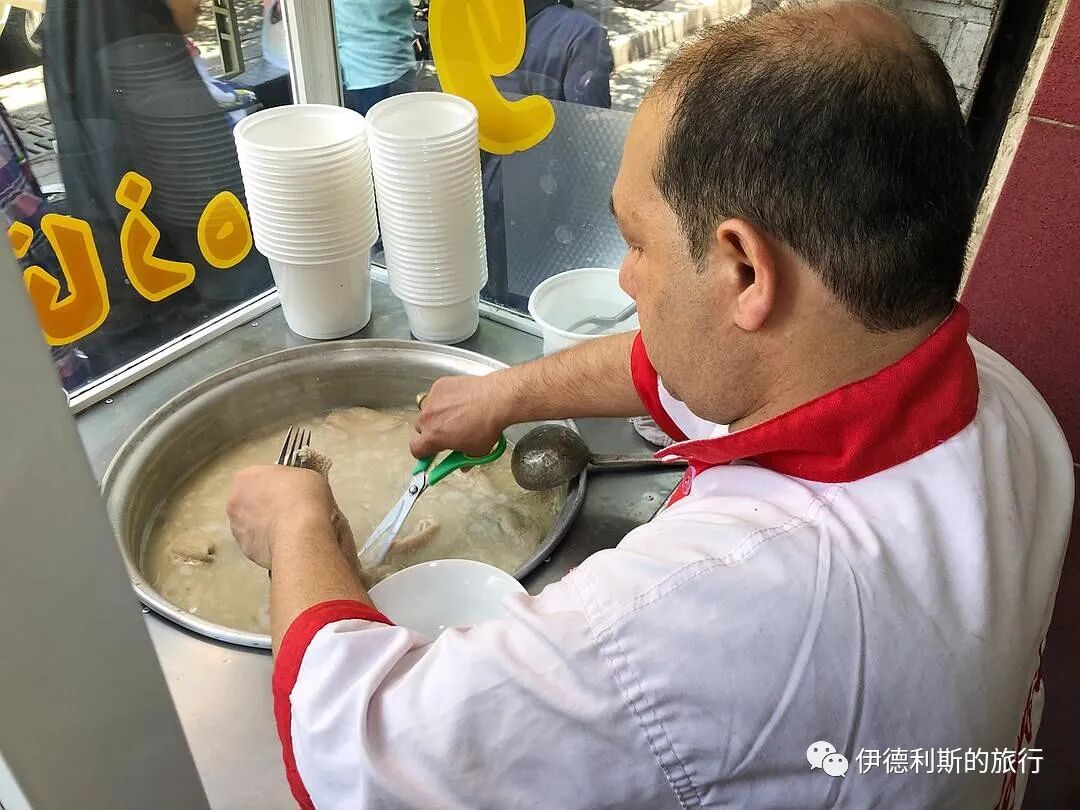
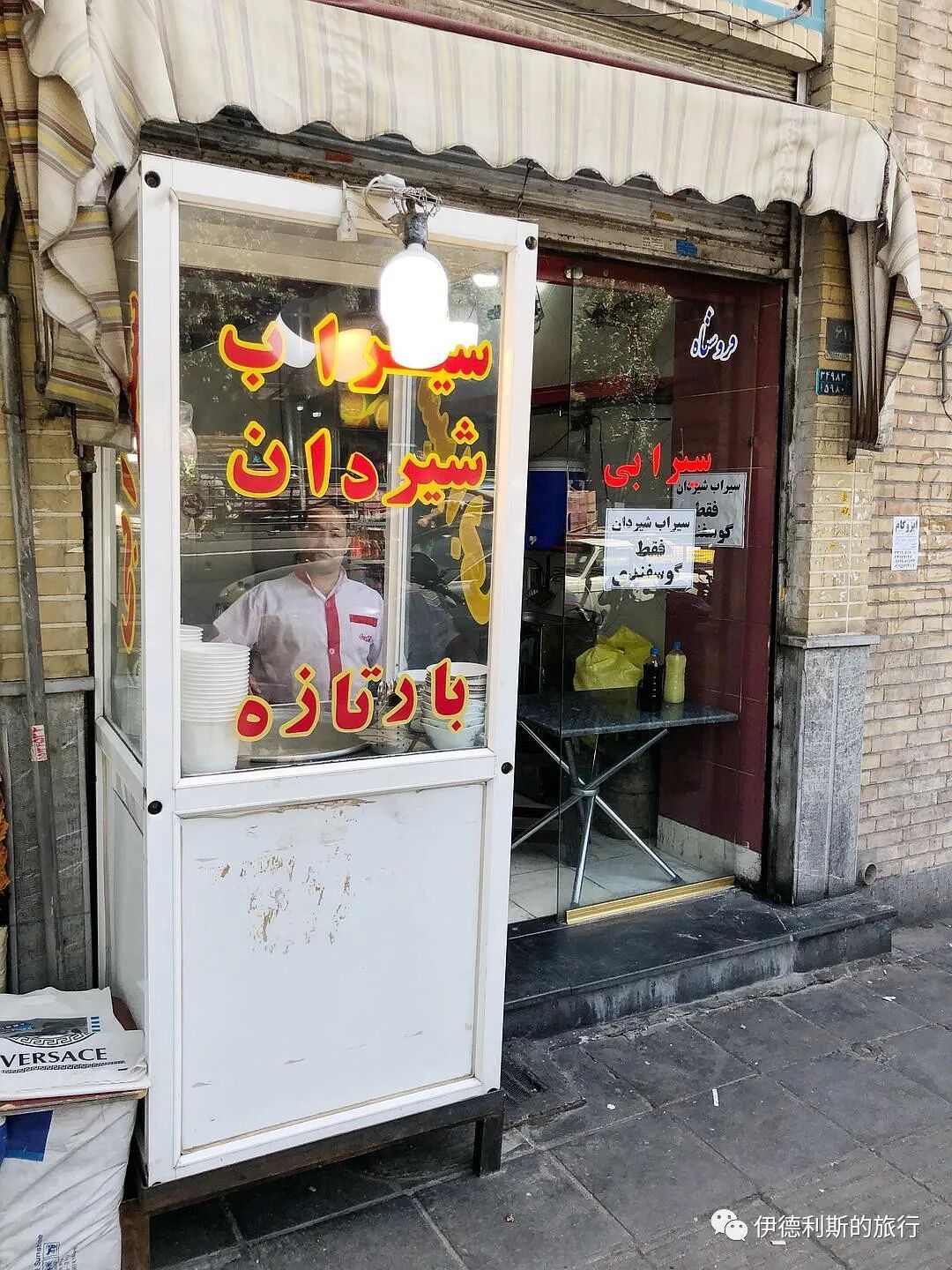
5. Tripe soup (sirabi)
I had tripe soup (sirabi) with flatbread (sangak) at a small street shop next to the carpet bazaar in Tehran. The soup was very fresh and tasty, and the tripe was very chewy.
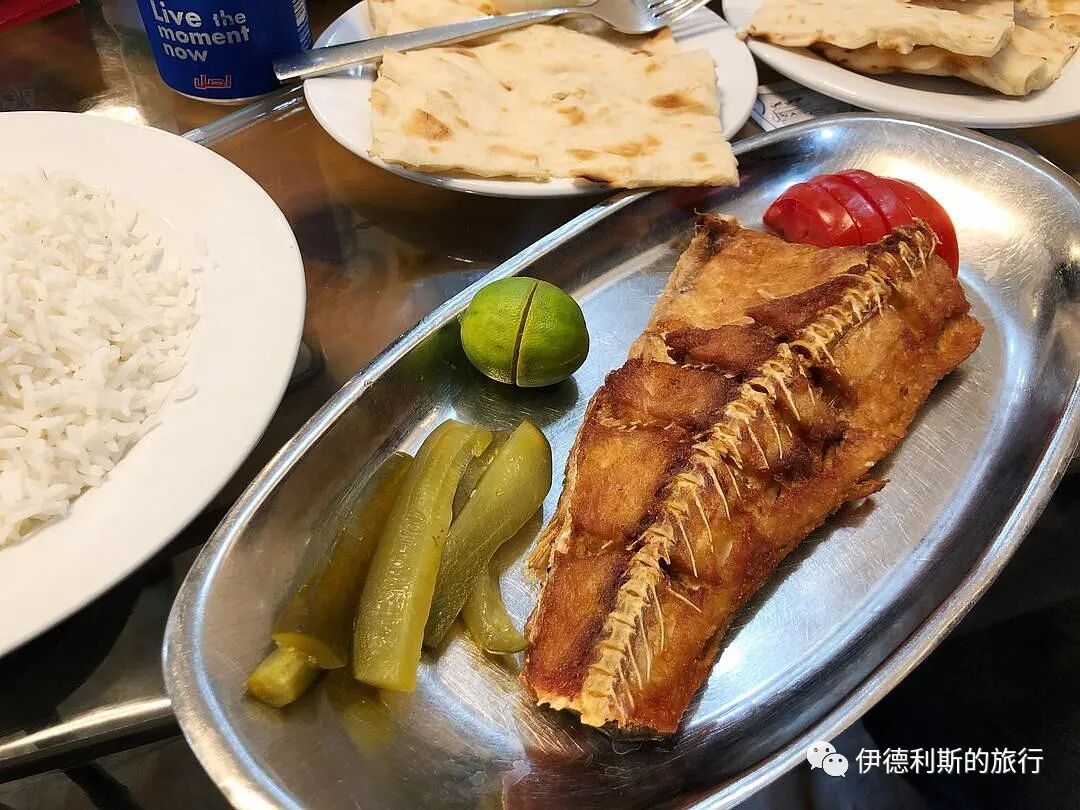
6. Caspian white fish of the Gilaki people
I ate at Khoshbin, a fried fish restaurant run by Gilaki people from northern Iran, while in Tehran. The Gilaki people mainly live in Gilan Province on the southern coast of the Caspian Sea, and the Gilaki language they use belongs to the Western Iranian branch. Molecular anthropology shows that the Y-chromosome of the Gilaki people is very close to that of South Caucasian people, but their mtDNA (mitochondrial DNA) is very close to that of Iranians. We can guess that the ancestors of the Gilaki people likely came from the South Caucasus region, then migrated to the southern shore of the Caspian Sea and mixed with the Iranians.
The business hours for Khoshbin on Google Maps are wrong. They are actually only open for lunch between 12:00 PM and 4:00 PM, and it is very popular, so you have to wait in line. Luckily, they have an English menu, so I was able to order my food without any trouble.
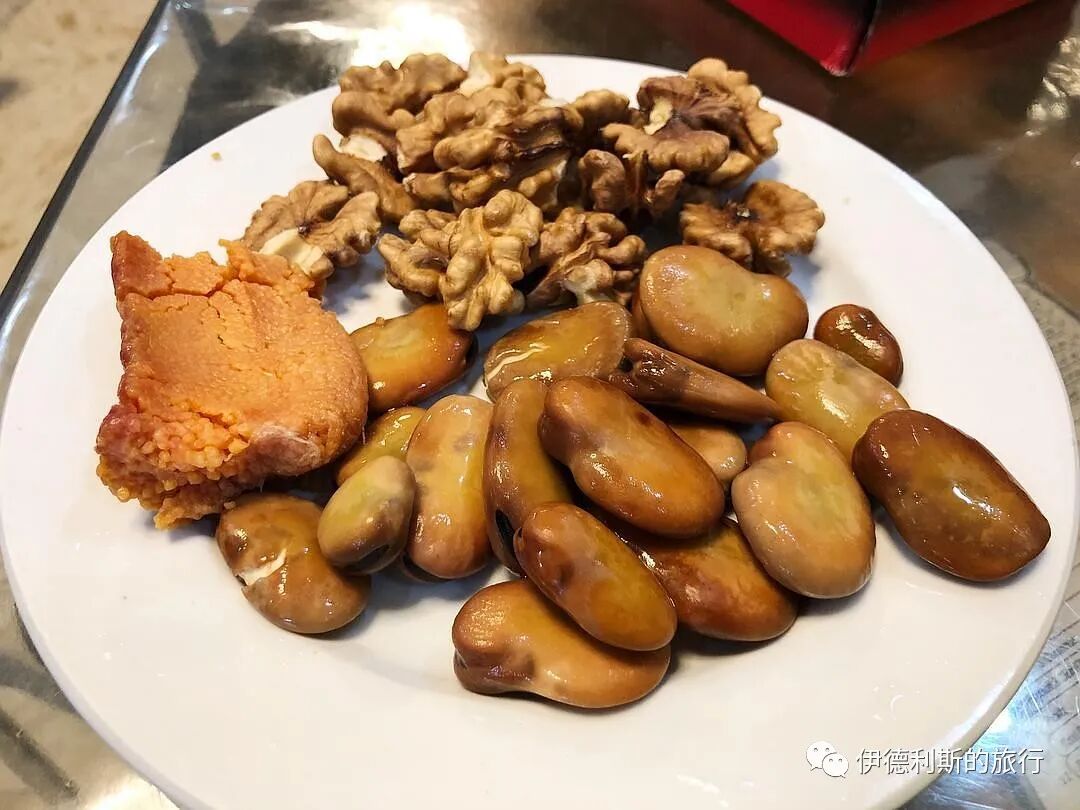
Fried fish is an important part of Gilaki cuisine. I tried the Caspian white fish (Caspian kutum), which is a type of carp. For side dishes, I ordered white fish roe (Kuli), fava beans, and walnuts, and I also had cucumber yogurt (Maast-o Khiar). They also have some special Gilaki side dishes I want to try next time, like a mashed dip made of eggplant, pumpkin, garlic, tomatoes, and eggs called Mirza Ghasemi, and green olives marinated in pomegranate molasses, walnuts, and herbs called Zeytoun Parvardeh.
7. Street drinks
There are many drink shops on the streets of Tehran. First, there are all kinds of fresh juices; I drank pomegranate juice, honeydew melon juice, and carrot juice. The honeydew melon and carrot juices were super delicious, but the pomegranate juice was so sour it made me question everything. I still like the pomegranate juice from Xinjiang the best.
Another drink you don't see often in other countries is called Khakshir, which is very common in Iran during the summer to beat the heat and quench your thirst. Khakshir is the seed of a plant called flixweed (bonianghao) in Chinese. Flixweed is also known as garlic mustard, mimihao, or maihao. It grows all over China except in the south. It can be used to make oil or as medicine. Both traditional Iranian medicine and traditional Chinese medicine use it to help with urination and reduce swelling.
8. Shemroon Kabab restaurant
I ate at a kebab shop called Shemroon Kabab in Tajrish Square in northern Tehran. I ordered lamb chops with flatbread (nan) and spinach yogurt (Spinach Burani) as an appetizer. Their portions are huge and satisfying, and the meat is very tender and delicious.
9. Chicken kebab
I had chicken kebab at the Tajrish Bazaar in northern Tehran. Here, they simmer the kebabs in a thick tomato sauce after grilling them, which makes them very fragrant.
10. Flatbread (nan)
In the early morning in Tehran, any freshly baked flatbread is incredibly delicious. Also, as a word origin, nan (نان) in Persian can refer to any kind of flatbread, not just those baked in a traditional clay oven.
11. Cornelian cherry (zhuyu) and mulberry
I ate cornelian cherry and mulberry at the Tajrish Bazaar in northern Tehran. The classic way to eat them is to sprinkle them with salt. If you squeeze a mulberry with your hand, the juice comes right out. It is as juicy as pomegranate juice from Xinjiang, but it is still too sour.
12. Faloodeh
I ate Faloodeh on the food street south of Imam Khomeini Square in Tehran. It is a cold rice noodle dessert with sugar syrup, rose water, and lemon juice.
13. Cucumber yogurt (Maast-o Khiar)
I bought cucumber yogurt (Maast-o Khiar) at the Friday Bazaar in Tehran, and it came with raisins and walnuts.
14. Saffron ice cream
I ate saffron ice cream near Tajrish Square in northern Tehran. It was topped with crushed pistachios and chunks of cream, which is very typical of Iran.
15. Baklava dessert with tea
I had tea and dessert at a shop called Takseen baghlava near the Mirdamad metro station in northern Tehran. Baklava originated in the Ottoman imperial court and later became popular across the Middle East and the Caucasus. The Persian version of baklava is special because it uses rose syrup and crushed pistachios. The dessert I ate was shaped like sugar threads.
The two-layer Iranian tea stove is called a samovar, which arrived from Russia in the 19th century. The small teapot on top is for brewing tea, the large pot in the middle is for boiling water, and the bottom is the heat source. Traditionally it used coal or charcoal, but now it uses electricity, gas, or natural gas.
16. Drinking tea
Haj Ali Darvish is a century-old, famous tea house in the Grand Bazaar of Tehran. The tea house opened in 1918 and was taken over by Haj Ali Mabhutyan in 1962. The current owner is his son, Haj Kazem Mabhutyan.
Mr. Kazem works hard to share his shop on Instagram, which has helped more foreign tourists find his small place. I am one of them, and the old gentleman even took my photo and posted it on Instagram. Friends who use Instagram might have a chance to see me there. The account is haj_ali_darvish_tea_house.
I also drank some street-side fig tea on the food street south of Imam Khomeini Square. Iranians mainly have two ways of adding sugar to their tea. One way is to hold a sugar cube in your mouth and lick it while you drink the tea. The other way is to use a lollipop-style sugar stick called nabat chubi to stir it. This rock candy originated in Isfahan over a thousand years ago. Later, people invented a way to grow crystals by dipping small twigs into a sugar solution, and this method spread across Eurasia.
17. Moslem Restaurant
Moslem Restaurant is a very famous spot in the Tehran Grand Bazaar. They specialize in Iranian rice cake (Tahchin) made with rice, yogurt, saffron, and eggs (shown in the top right of photo 4). I bought a bowl of sour cream and spinach meat stew porridge (Aush) at the takeout window on the first floor, and it tasted great. view all
Reposted from the web
Summary: Halal Food Guide: Tehran Street Food — Iranian Snacks, Markets and Everyday Eats is presented here as a firsthand travel account in clear English, beginning with this scene: I went to Tehran during the 2019 Mid-Autumn Festival to eat and explore. I am sharing some of the things I ate here. The account keeps its focus on Tehran Street Food, Iran Travel, Halal Food while preserving the names, places, food, and historical details from the Chinese source.
I went to Tehran during the 2019 Mid-Autumn Festival to eat and explore. I am sharing some of the things I ate here.
1. Persian tomato and egg stir-fry with Barbari flatbread (Barbari nan).
For breakfast on my first day in Tehran, I had Persian tomato and egg stir-fry (Persian Omelette), which is a signature Iranian breakfast. The cooking order for Persian tomato and egg stir-fry is the opposite of the Chinese version; you cook the tomatoes first, then add the eggs. Unlike our rice dishes, this Persian tomato and egg stir-fry must be eaten with flatbread. The shop I visited served it with Barbari flatbread.
Barbari literally translates to barbarian. It was originally what Persians called the Hazara people living in the Khorasan region. Hazara people from Khorasan first brought Barbari flatbread to Tehran, and it became popular during the Qajar dynasty (1796-1925). After that, the Hazara people were no longer called Barbari, but the name of the Barbari flatbread stayed.
The shop I went to is called Golha 2 Hookah Bar. You can find it on Google Maps by searching for سفره خانه گلها 2. Because they only sell this one combination, you do not need to speak the language to order.
2. Cinnamon-spiced sheep head and trotter soup (Khalle Pache) with Sangak flatbread (Sangak nan).
For breakfast on my second day in Tehran, I had cinnamon-spiced sheep head and trotter soup (Khalle Pache) served with Sangak flatbread. Sangak means small pebbles, and the earliest records of it come from the 11th-century Persian army. Persian soldiers back then supposedly carried pebbles with them. When they set up camp, they gathered the pebbles together to bake flatbread (naan), which is why Sangak flatbread has little pits all over it.
Sheep head soup is eaten more often in the autumn and winter. It usually comes with two pieces of flatbread; you soak the first one in the soup and eat the second one with the lamb. Besides sheep head and sheep trotters, the shop also sells sheep brain, but it is not part of the standard order, so you do not have to order it if you do not like it.
The shop I visited is called Lux Talaee Tabakhi, and it is a well-known spot in the old city of Tehran that specializes in sheep head and sheep trotter soup.
3. Falafel sandwich
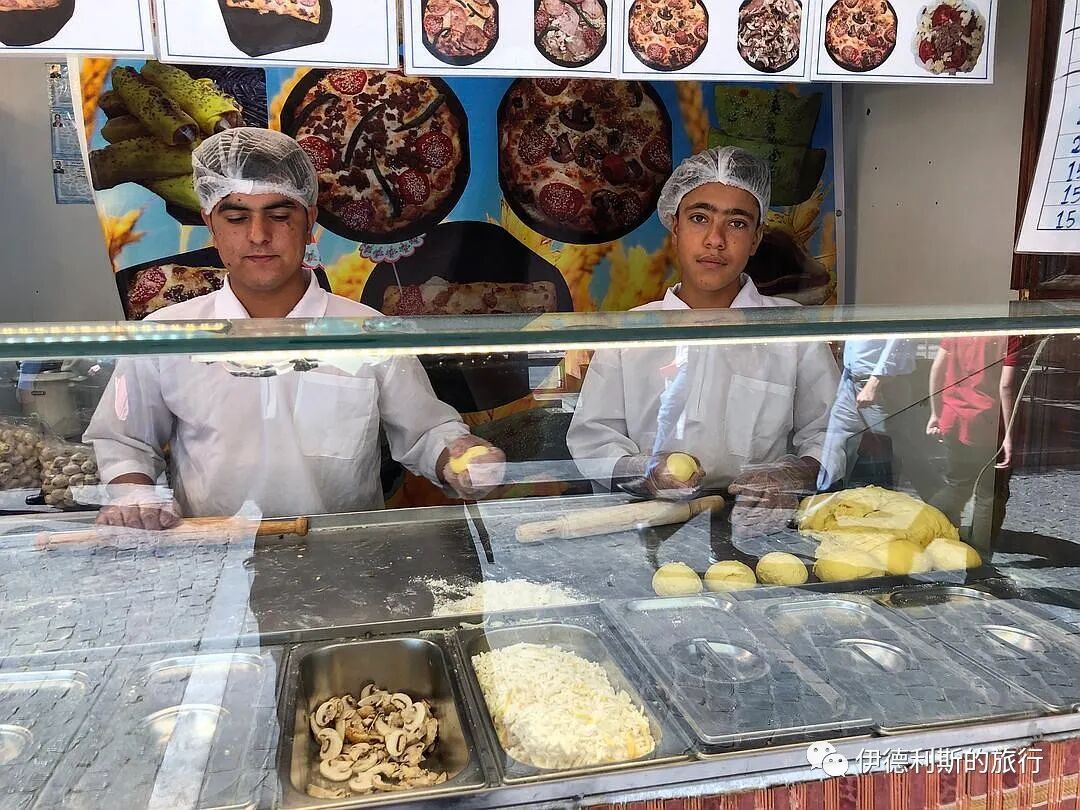
My accommodation in the old city of Tehran was south of Imam Khomeini Square, where there is a food street. I ate many snacks there. On the morning of my third day in Tehran, I ate a Falafel sandwich on the food street. It ranks alongside Iranian pizza as one of the two major street foods in Tehran.
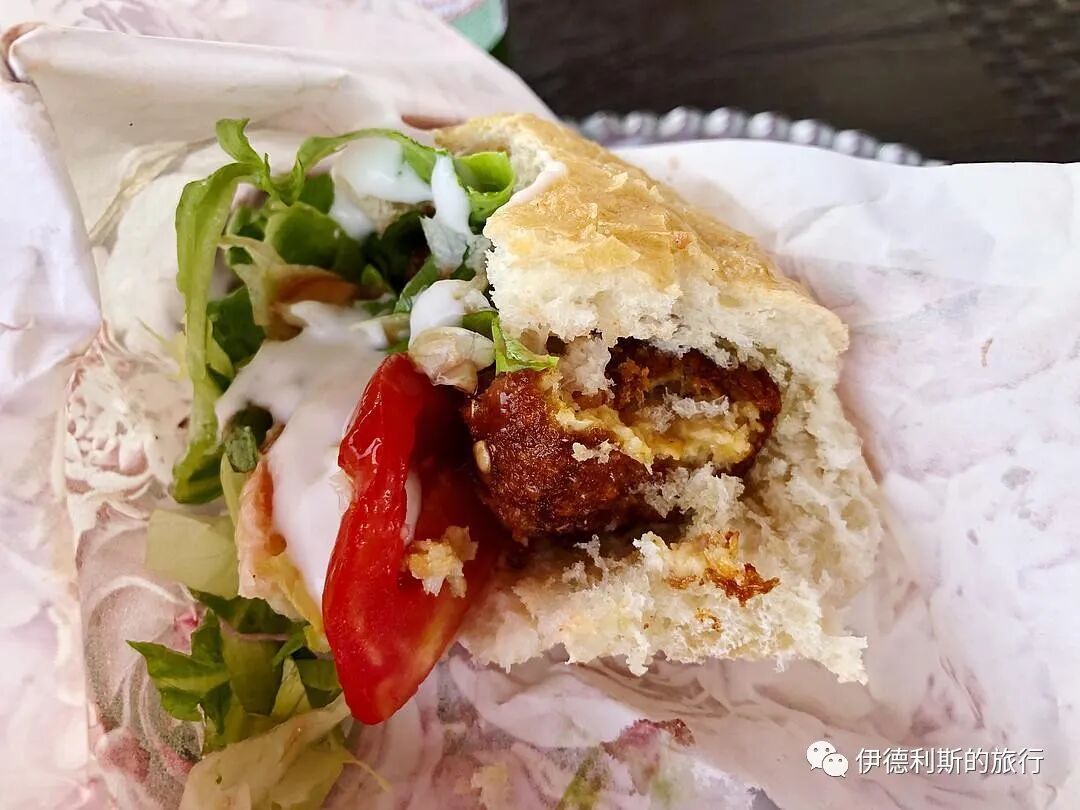
Falafel is a common Middle Eastern fried chickpea ball, served inside a baguette with vegetable salad and Persian pickles (torshi). Torshi means sour in the Persian language. The most popular Falafel sandwich shops let you add your own salad and pickles, and they often have long lines. The one I ate had a simpler setup.
4. Samosa
Snacks called samosa are found from Northeast Africa to Western China, and they are made differently everywhere. Common versions include Indian curry puffs and baked buns (kaobaos) from Xinjiang, Central Asia. The word samosa actually comes from the Persian word sanbosag. As early as the 9th century, the Persian poet Ishaq al-Mawsili wrote poems praising the samosa. After the 10th century, the samosa began appearing in Arabic cookbooks and spread across Africa and Asia along with Muslims. The samosa remained popular in Iran until the 16th century, but later it was only kept in certain regions.
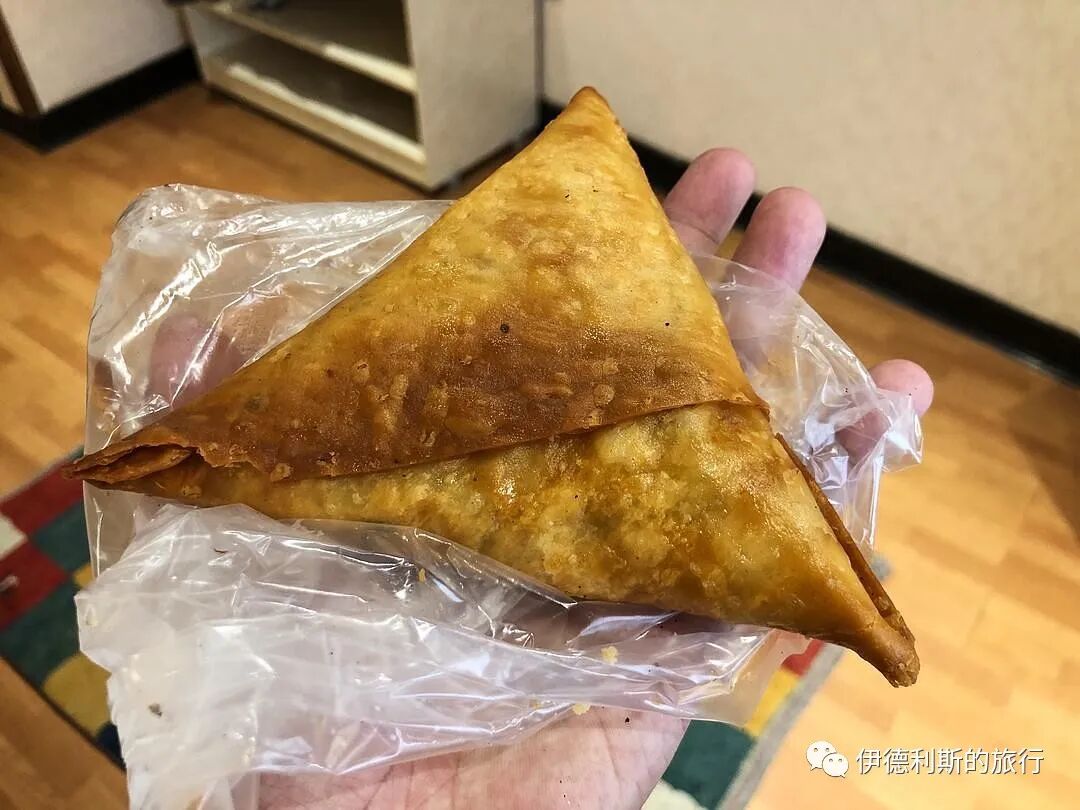
Samosas on the streets of Tehran are mostly fried triangles with potato filling, similar to the Indian version. I bought this kind at a small shop across from the Friday prayer (Jumu'ah) bazaar, and I also bought some delicious bread there.
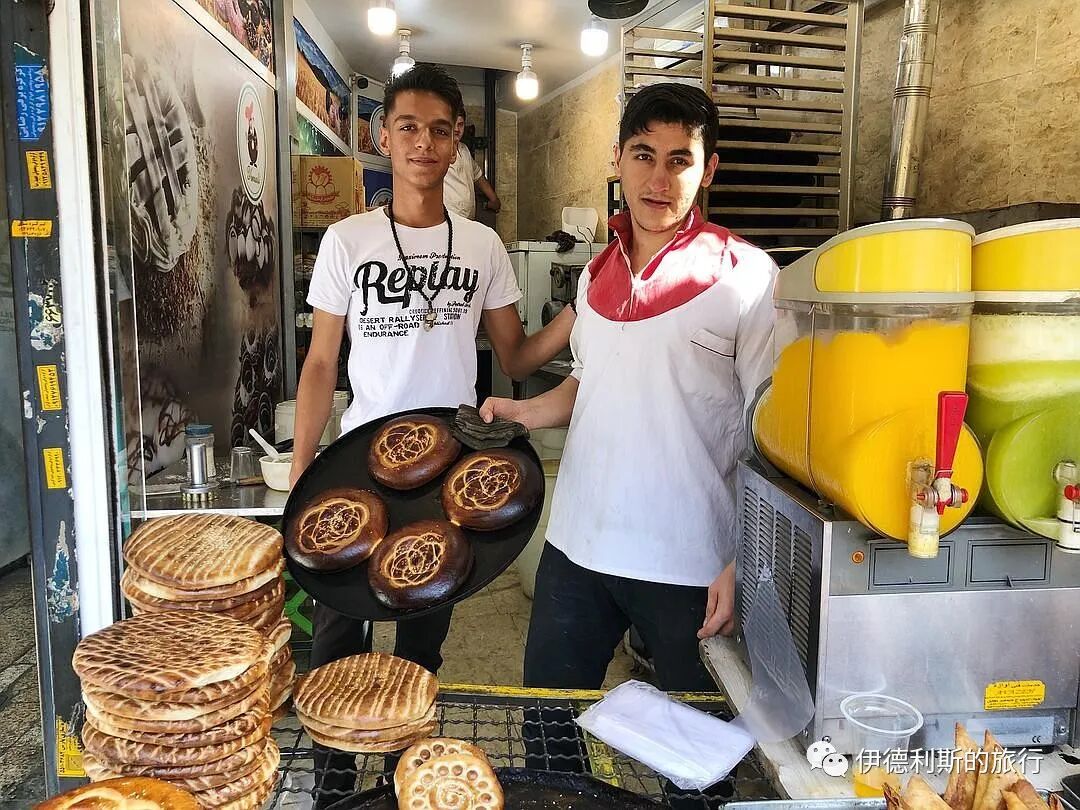
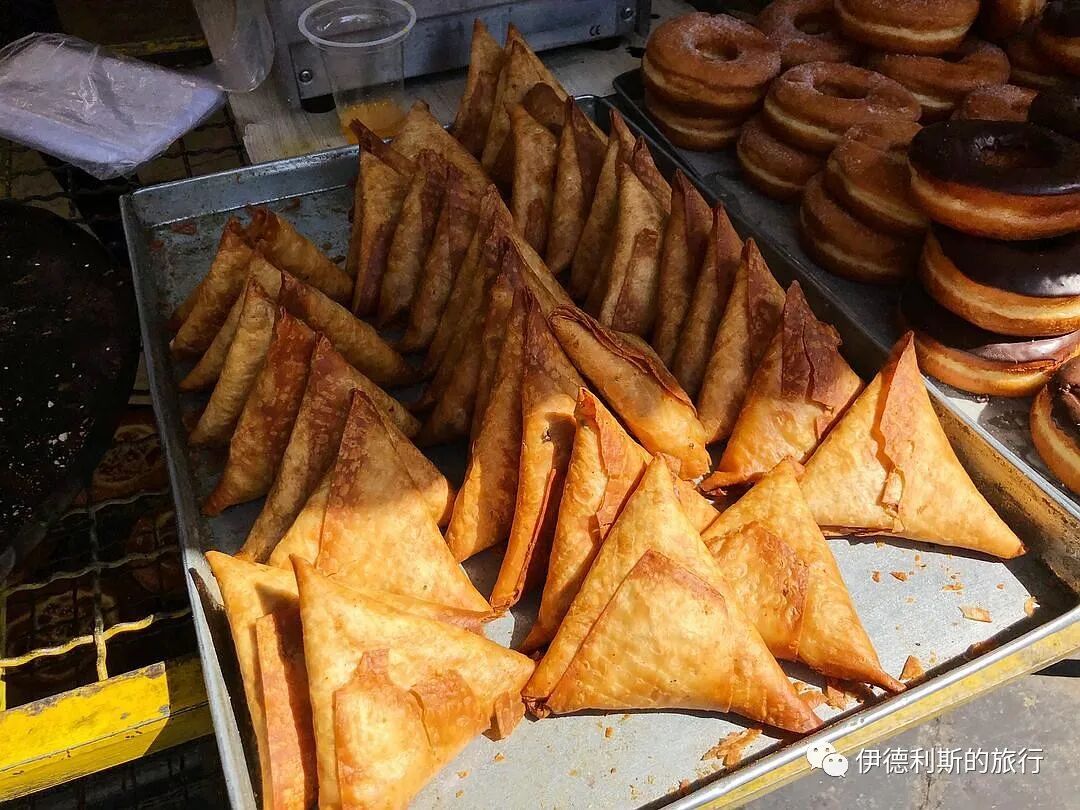
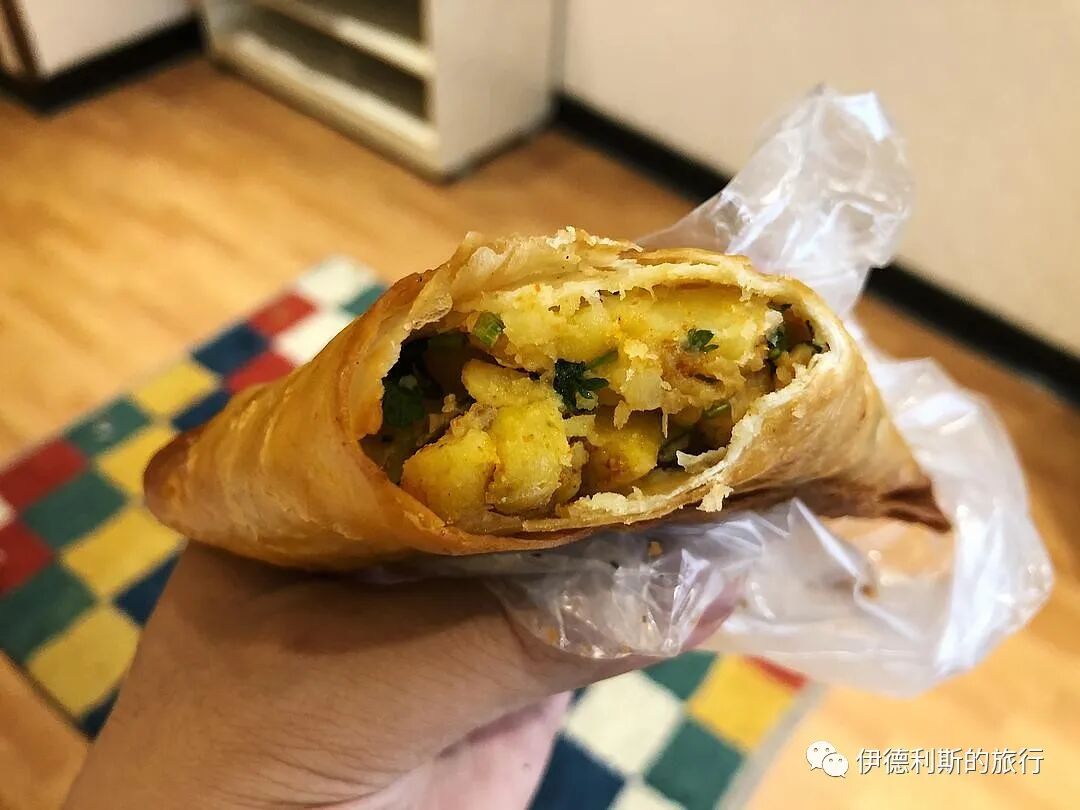
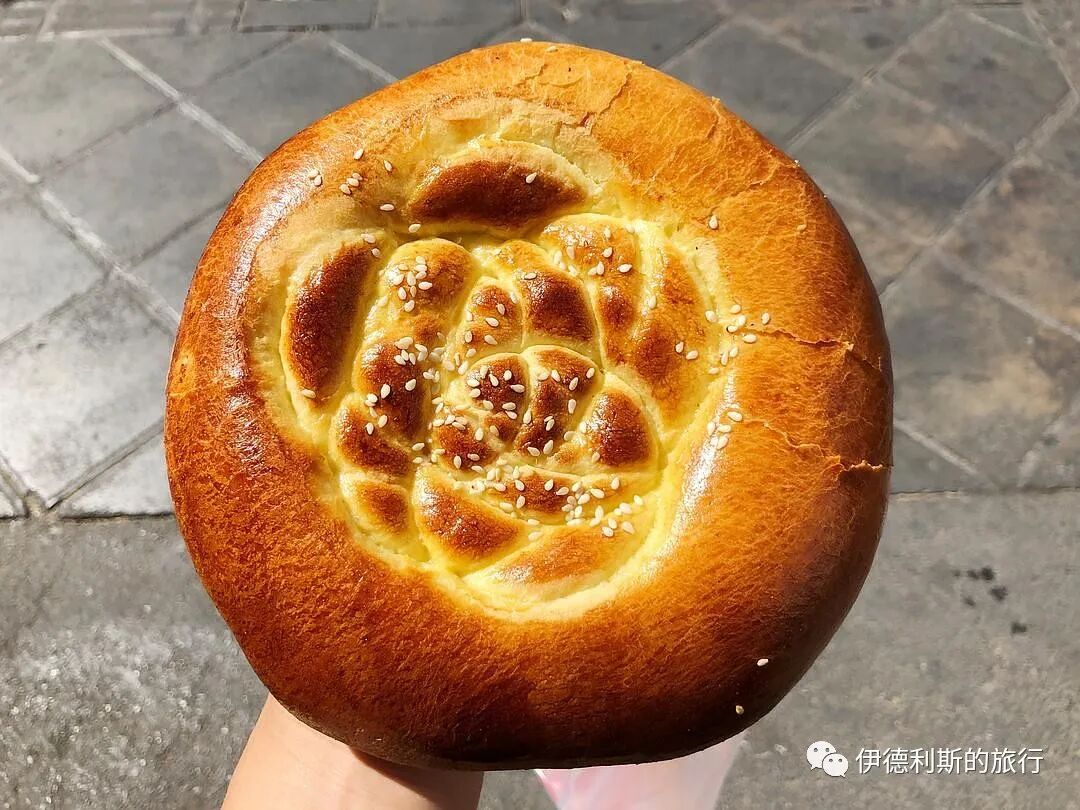
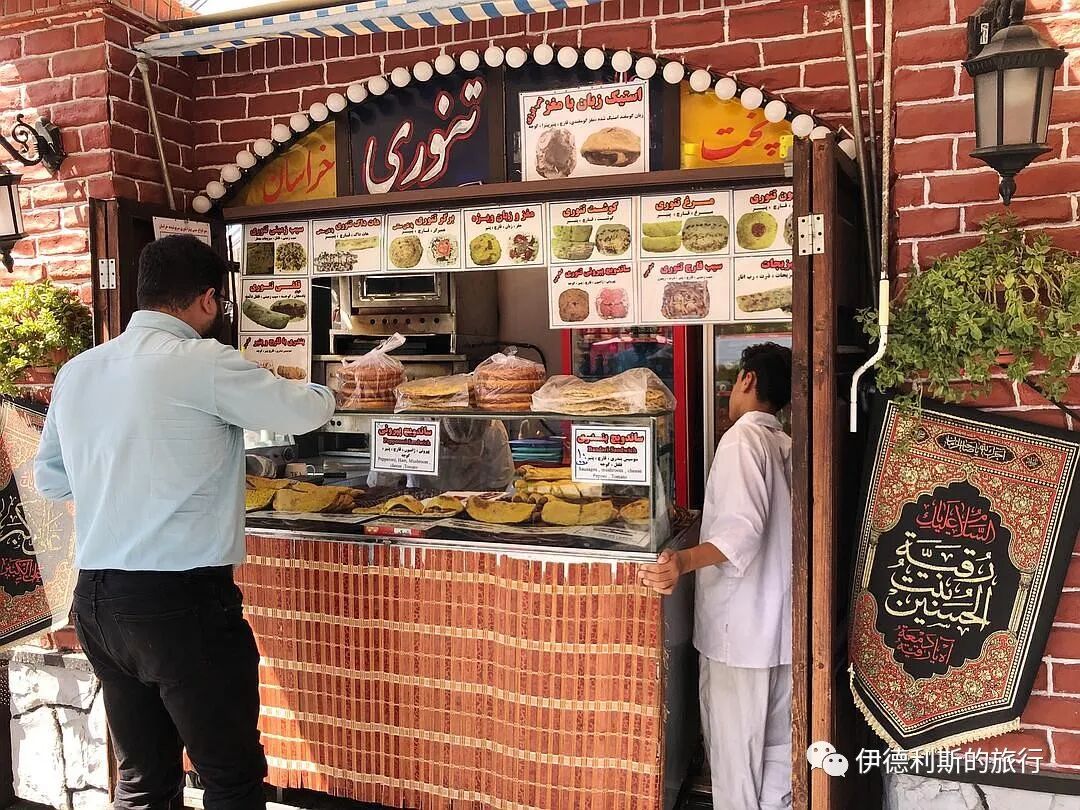
I also ate another type of baked samosa on the food street south of Imam Khomeini Square, which also had a potato filling. The name of this restaurant is Sandwich Khorasan, so I guess this style might come from the Khorasan region in northeastern Iran.
5. Tripe soup (sirabi)
I had tripe soup (sirabi) with flatbread (sangak) at a small street shop next to the carpet bazaar in Tehran. The soup was very fresh and tasty, and the tripe was very chewy.
6. Caspian white fish of the Gilaki people
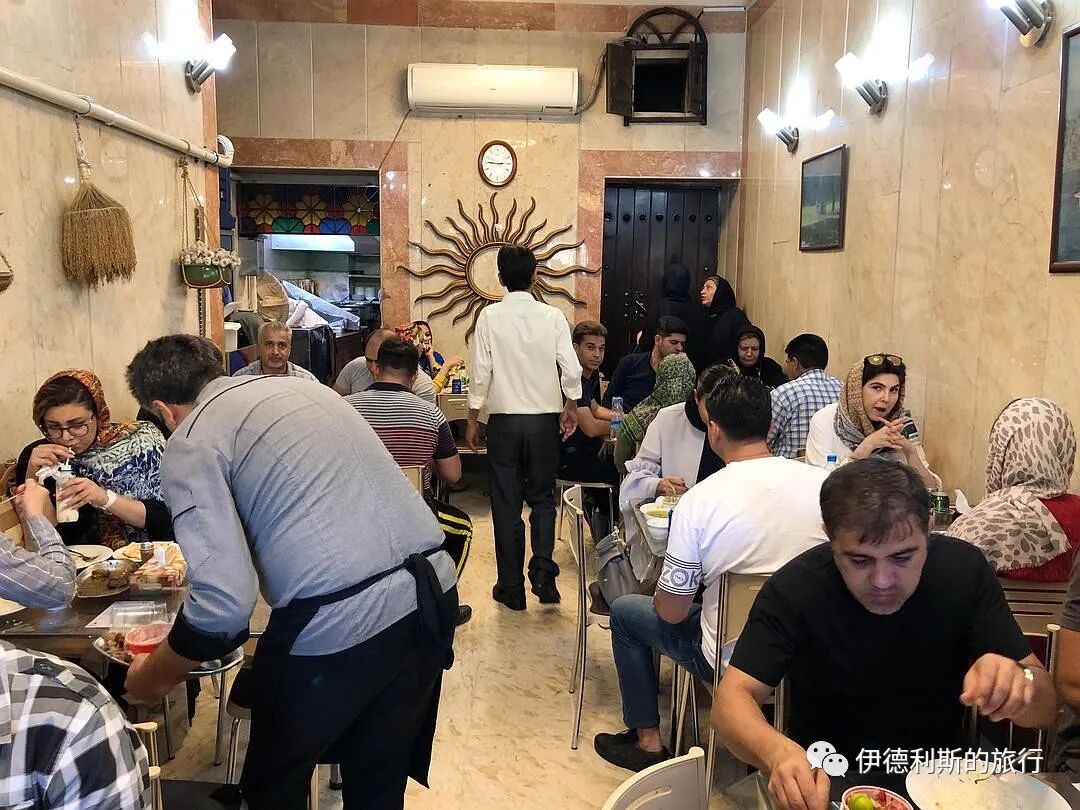
I ate at Khoshbin, a fried fish restaurant run by Gilaki people from northern Iran, while in Tehran. The Gilaki people mainly live in Gilan Province on the southern coast of the Caspian Sea, and the Gilaki language they use belongs to the Western Iranian branch. Molecular anthropology shows that the Y-chromosome of the Gilaki people is very close to that of South Caucasian people, but their mtDNA (mitochondrial DNA) is very close to that of Iranians. We can guess that the ancestors of the Gilaki people likely came from the South Caucasus region, then migrated to the southern shore of the Caspian Sea and mixed with the Iranians.
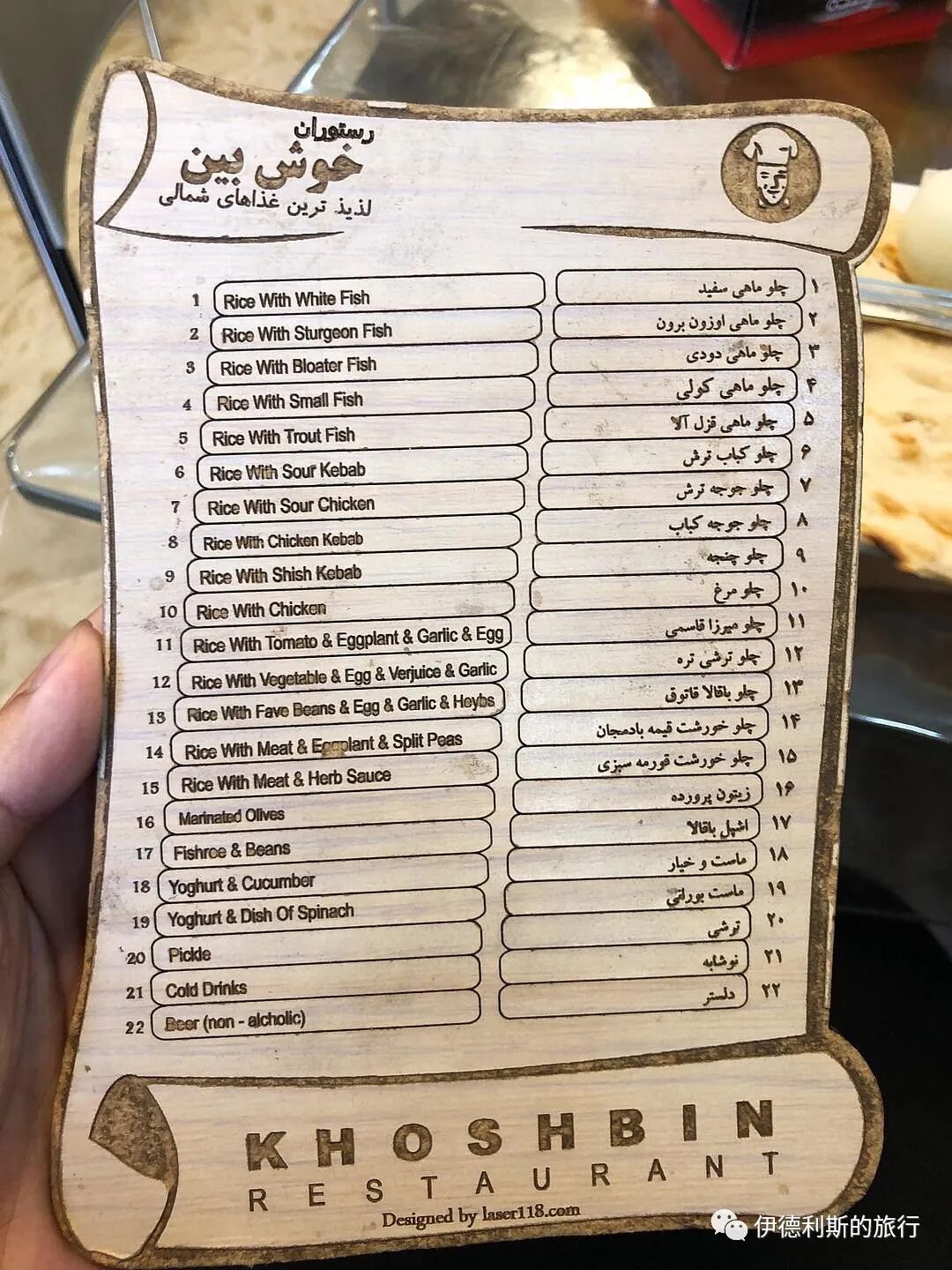
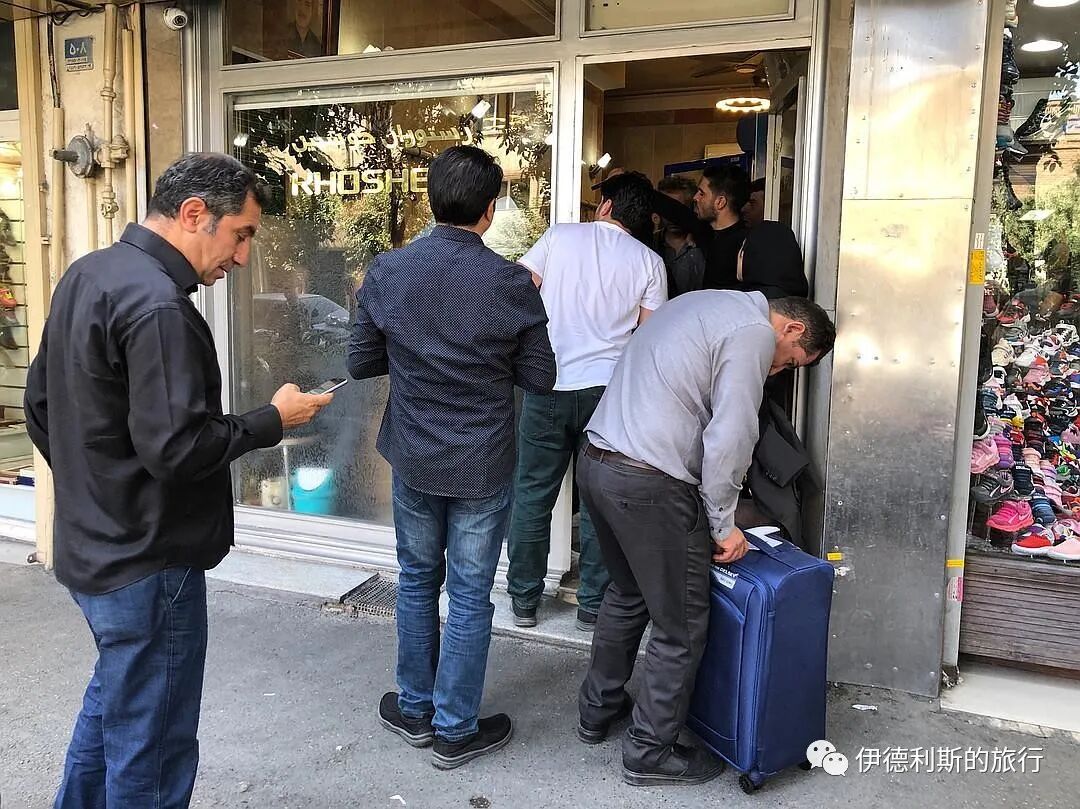
The business hours for Khoshbin on Google Maps are wrong. They are actually only open for lunch between 12:00 PM and 4:00 PM, and it is very popular, so you have to wait in line. Luckily, they have an English menu, so I was able to order my food without any trouble.
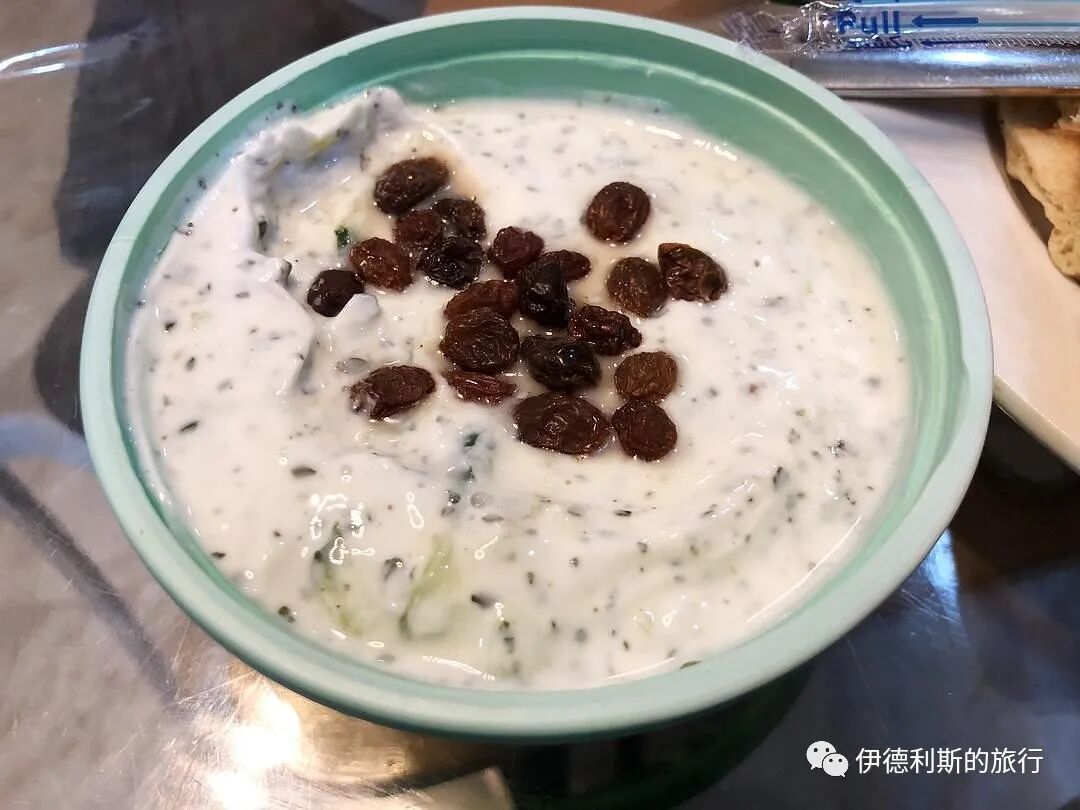
Fried fish is an important part of Gilaki cuisine. I tried the Caspian white fish (Caspian kutum), which is a type of carp. For side dishes, I ordered white fish roe (Kuli), fava beans, and walnuts, and I also had cucumber yogurt (Maast-o Khiar). They also have some special Gilaki side dishes I want to try next time, like a mashed dip made of eggplant, pumpkin, garlic, tomatoes, and eggs called Mirza Ghasemi, and green olives marinated in pomegranate molasses, walnuts, and herbs called Zeytoun Parvardeh.
7. Street drinks
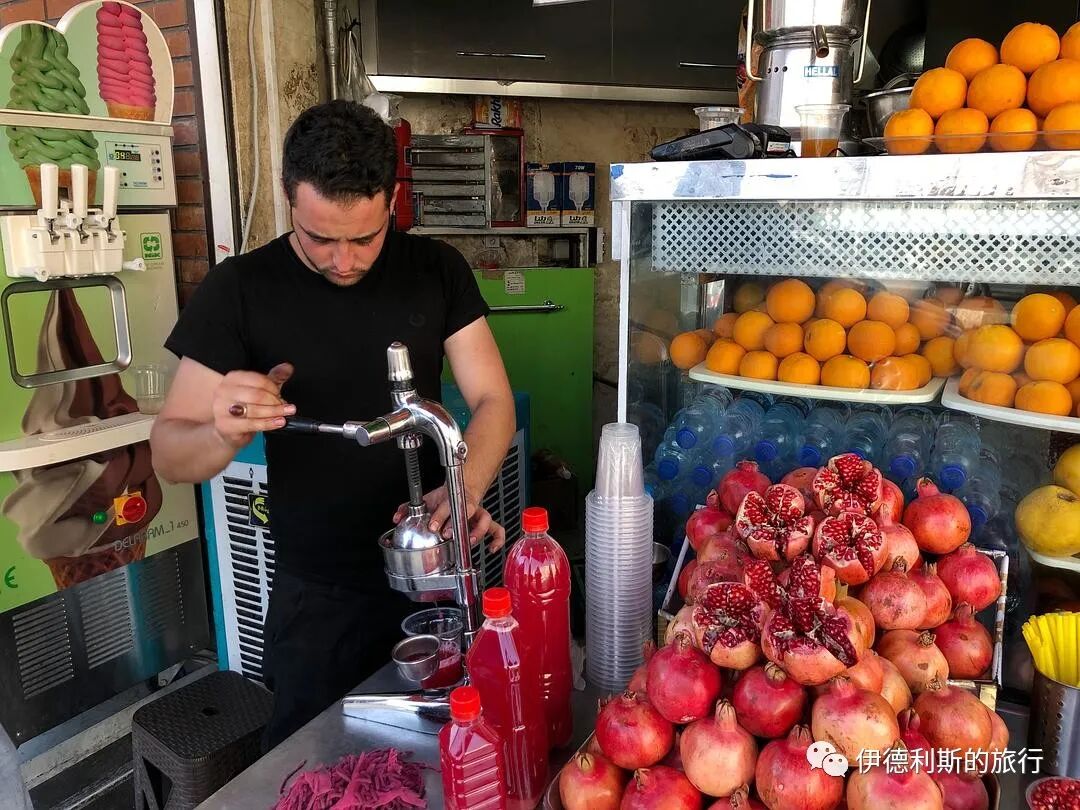
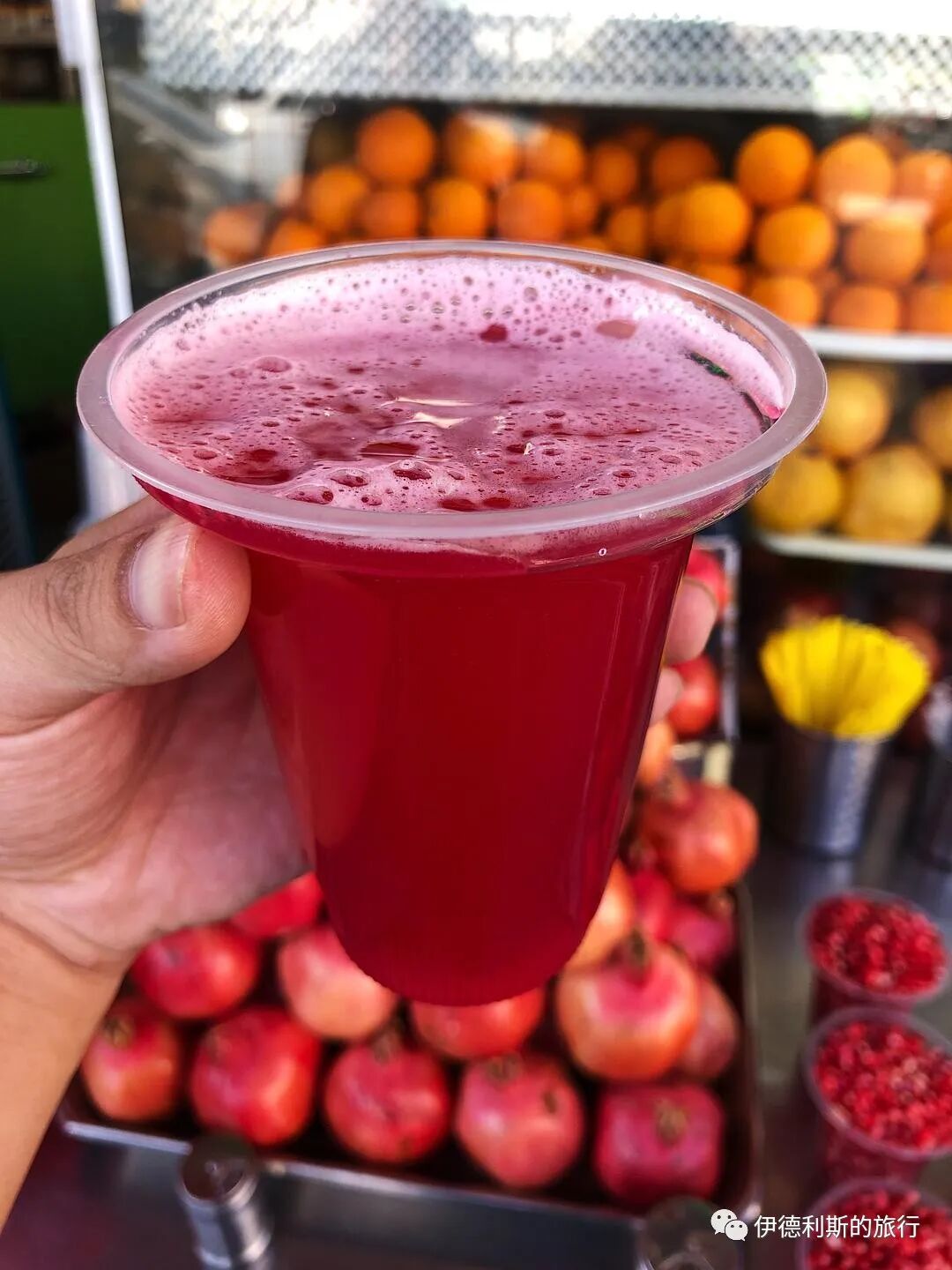
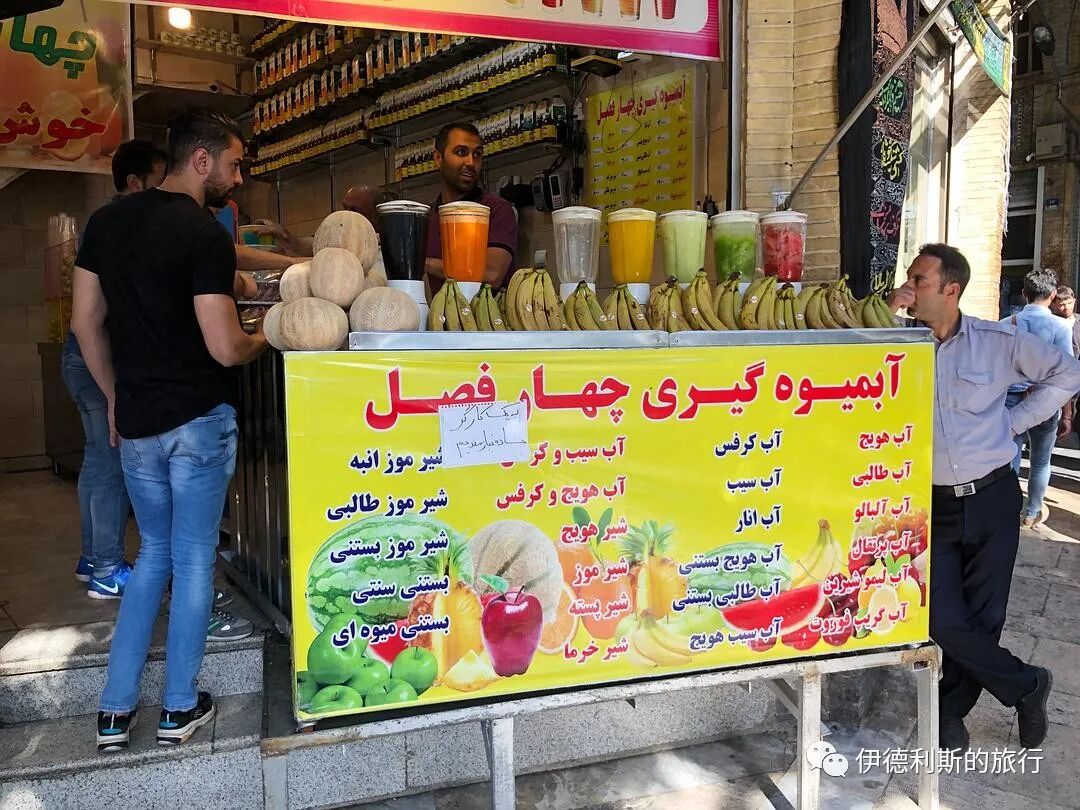
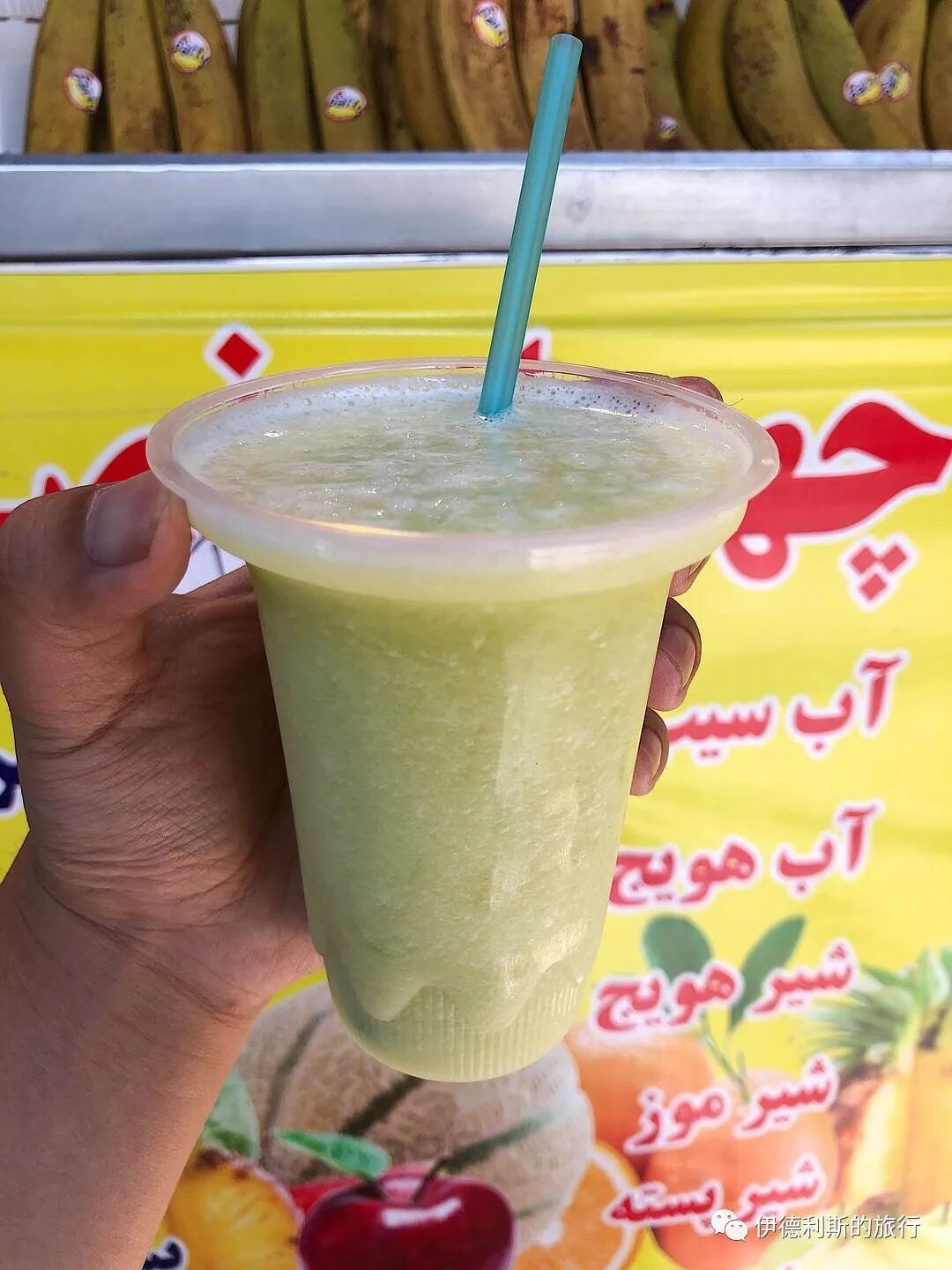
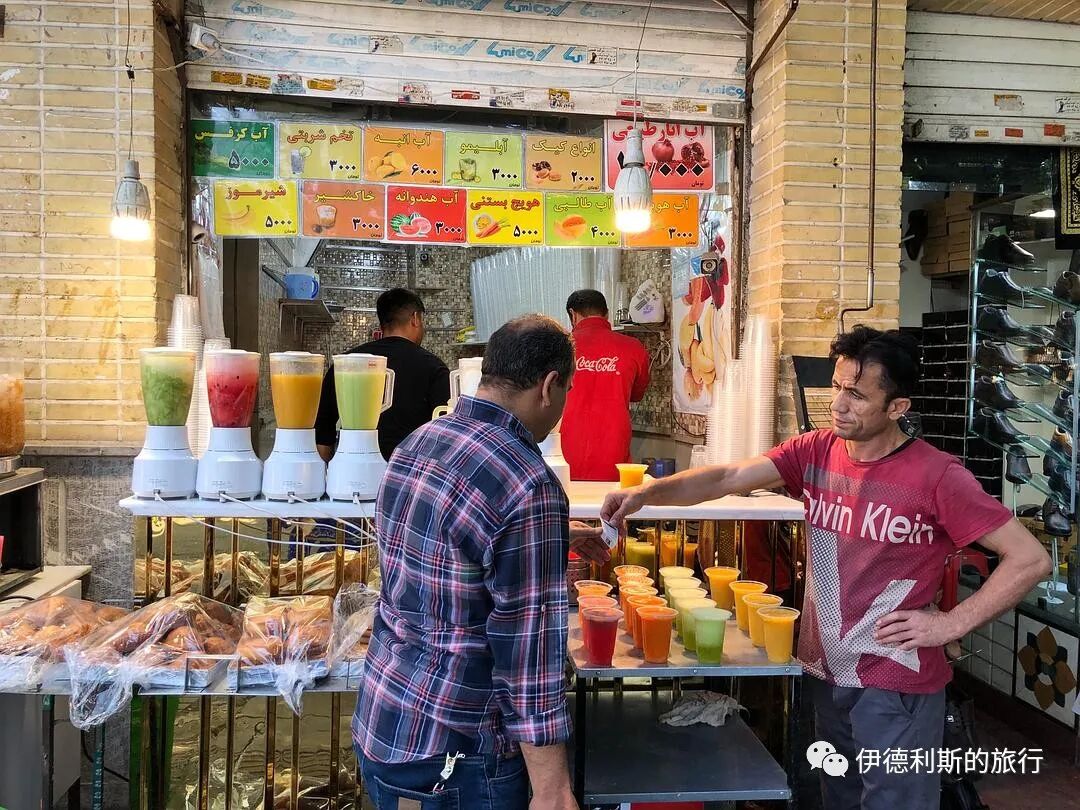
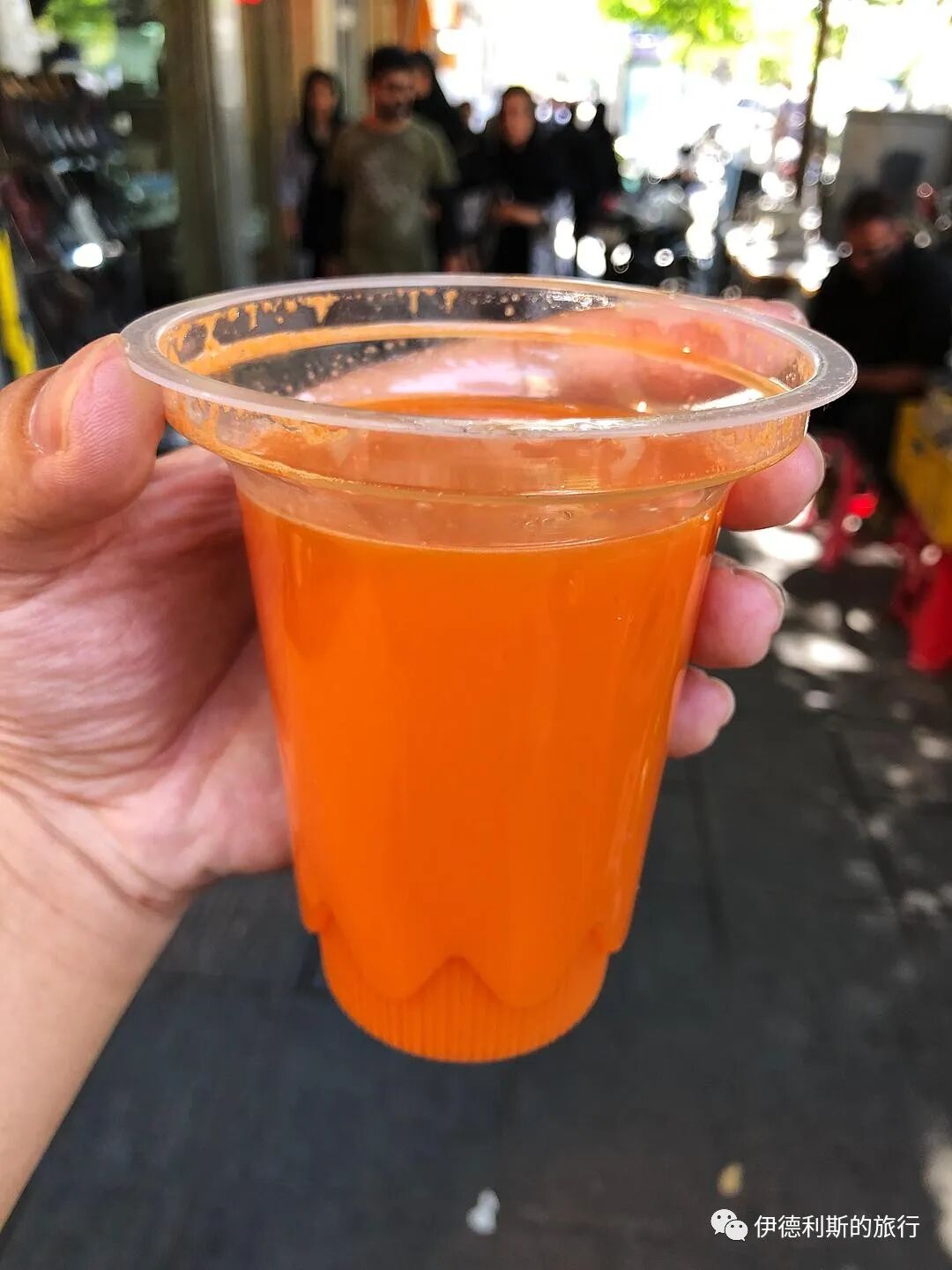
There are many drink shops on the streets of Tehran. First, there are all kinds of fresh juices; I drank pomegranate juice, honeydew melon juice, and carrot juice. The honeydew melon and carrot juices were super delicious, but the pomegranate juice was so sour it made me question everything. I still like the pomegranate juice from Xinjiang the best.
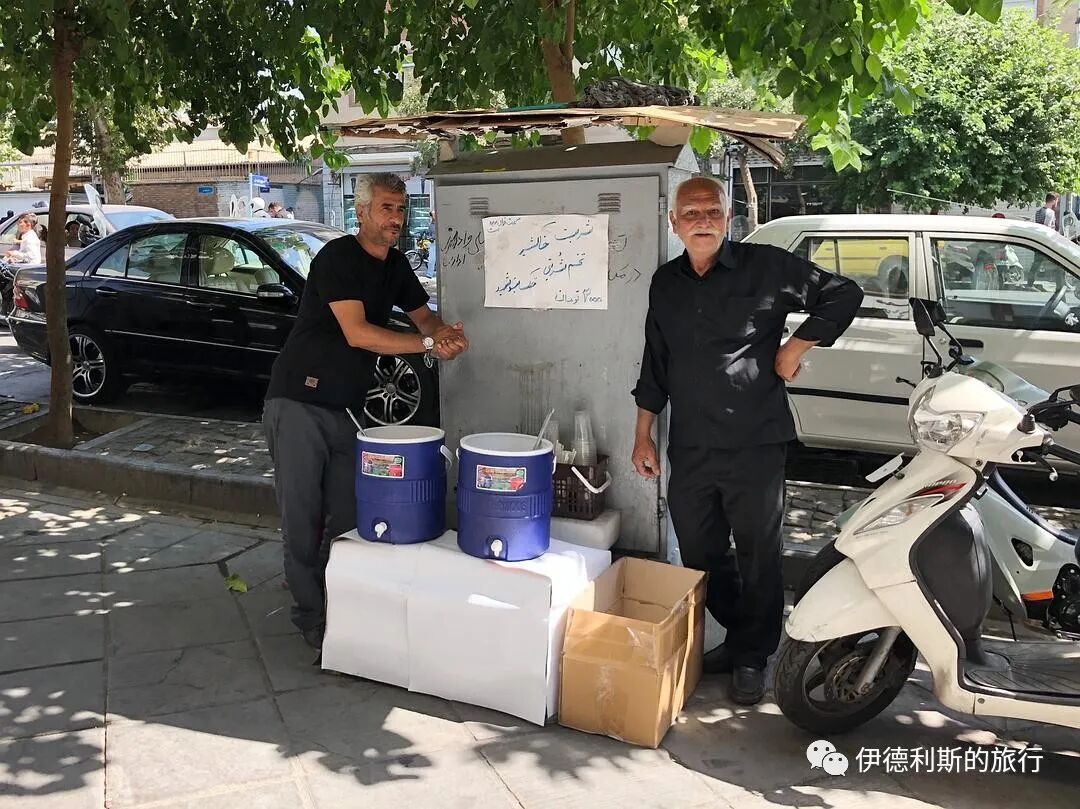
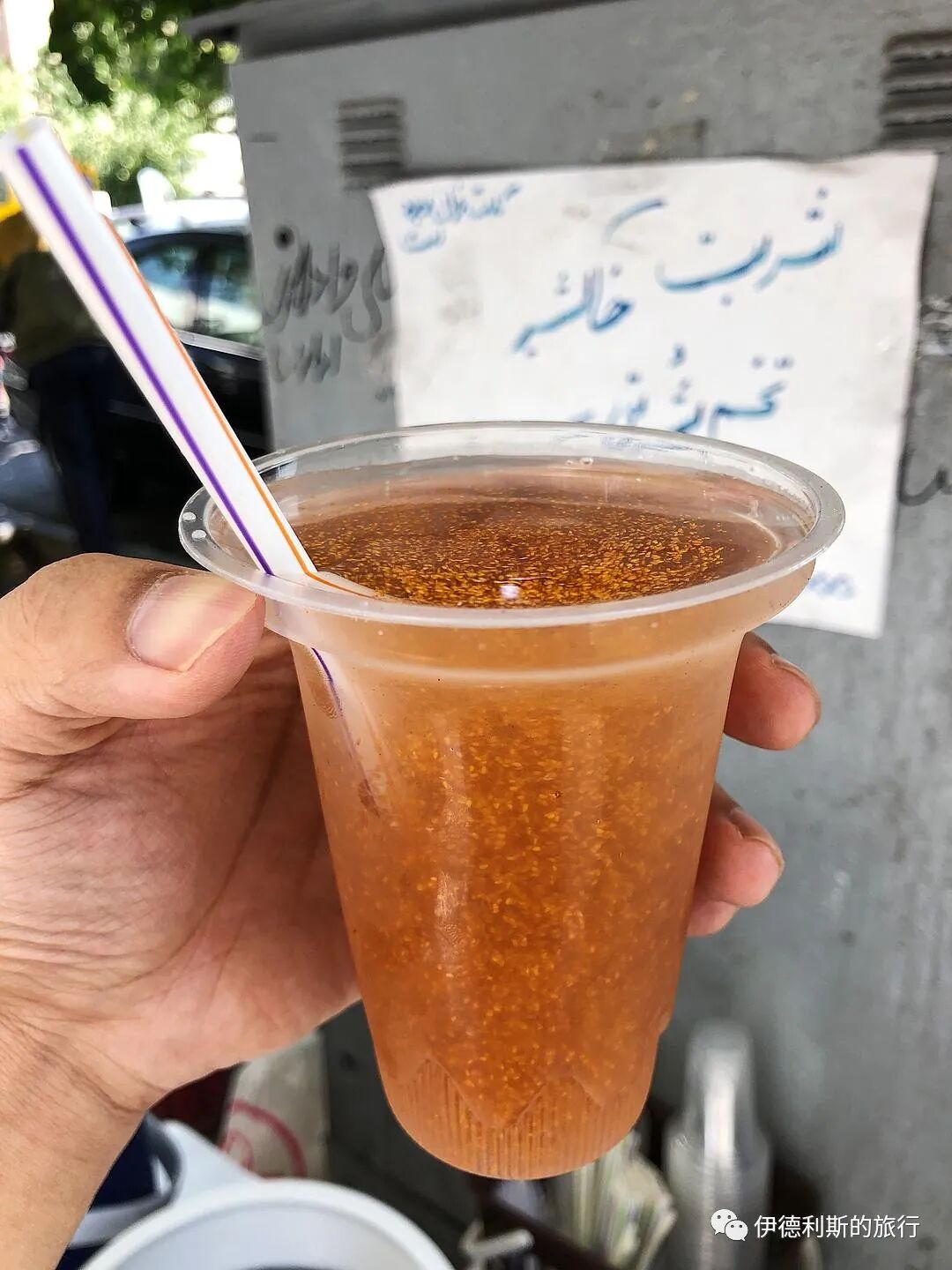
Another drink you don't see often in other countries is called Khakshir, which is very common in Iran during the summer to beat the heat and quench your thirst. Khakshir is the seed of a plant called flixweed (bonianghao) in Chinese. Flixweed is also known as garlic mustard, mimihao, or maihao. It grows all over China except in the south. It can be used to make oil or as medicine. Both traditional Iranian medicine and traditional Chinese medicine use it to help with urination and reduce swelling.
8. Shemroon Kabab restaurant
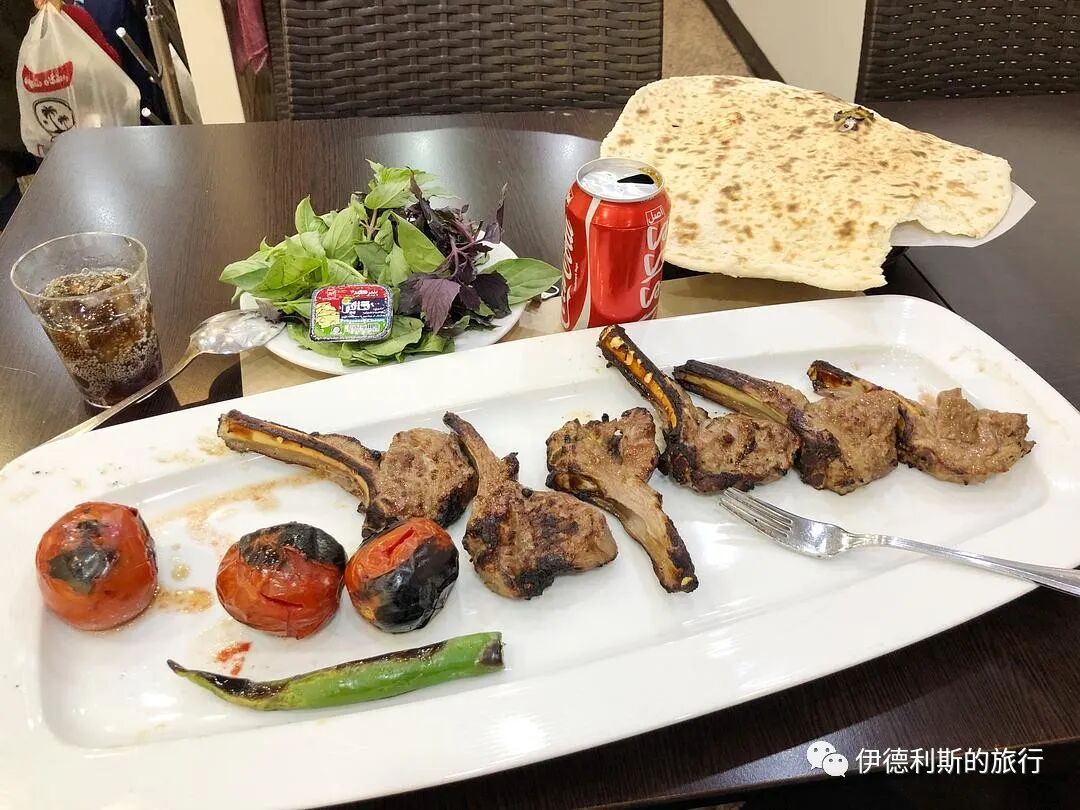
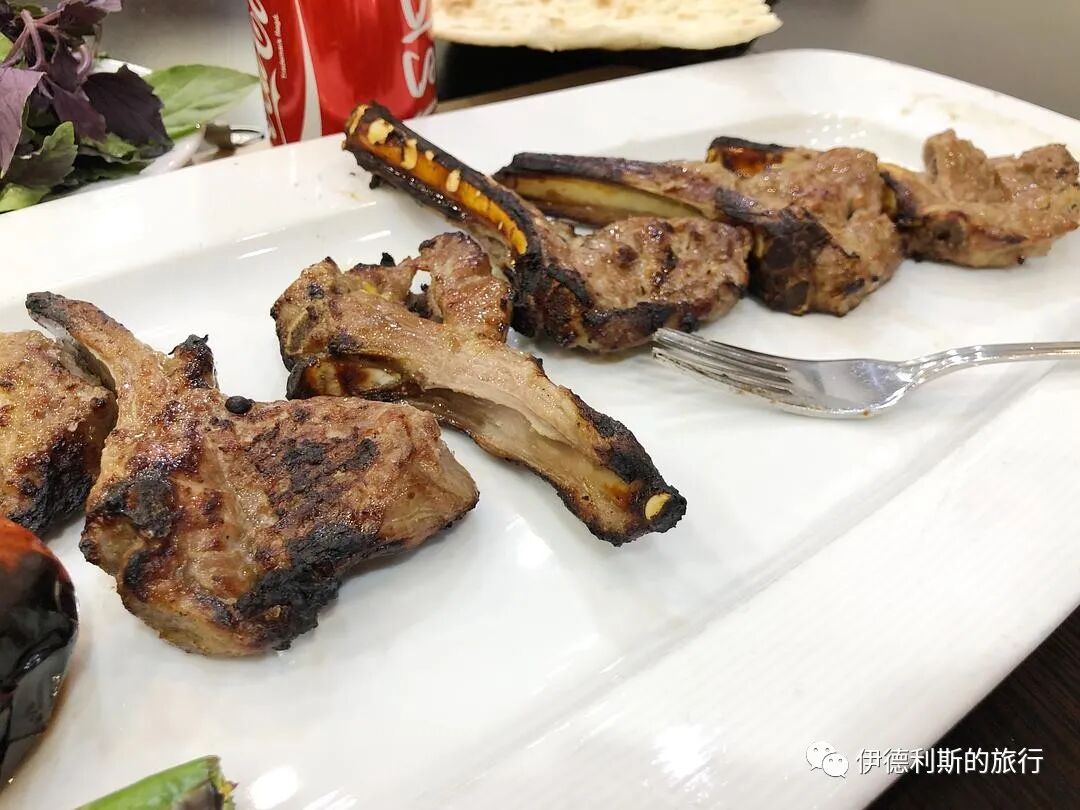
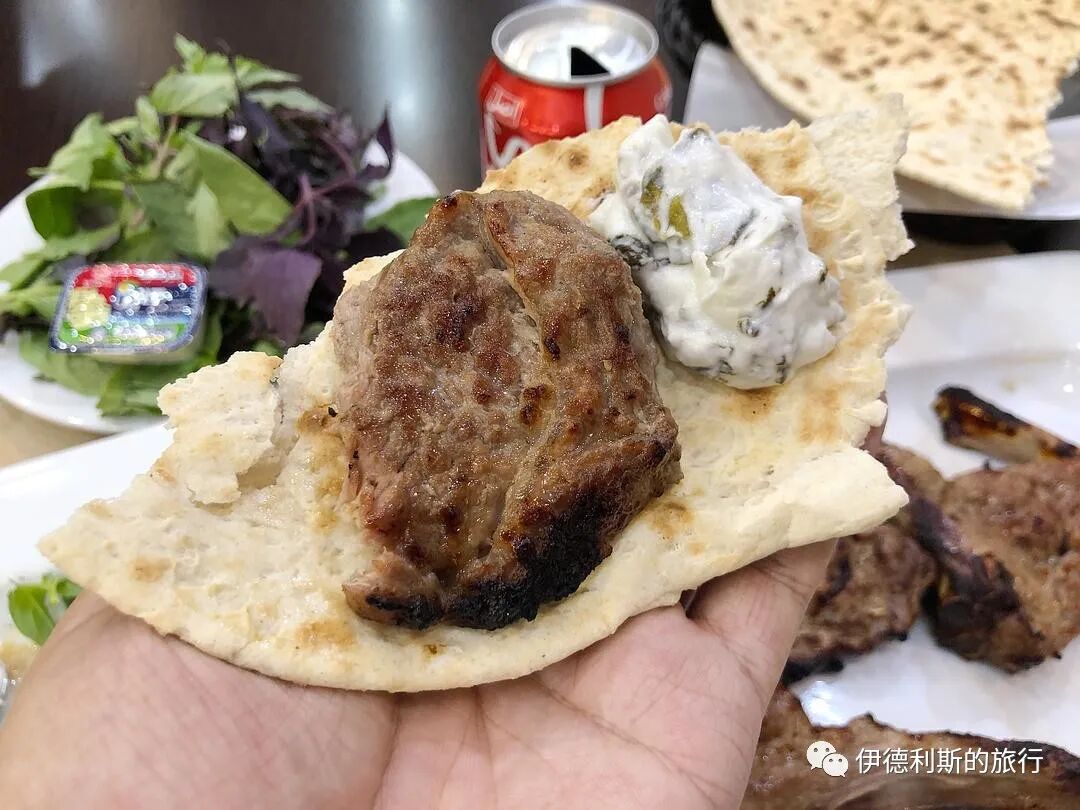
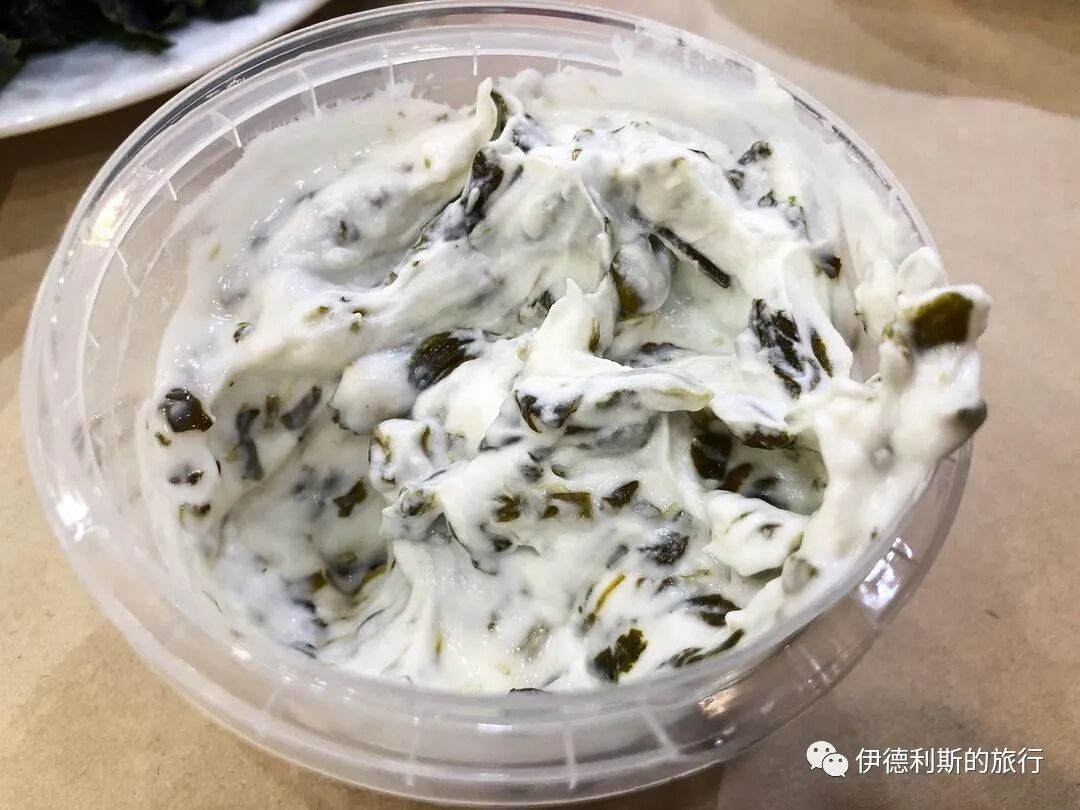
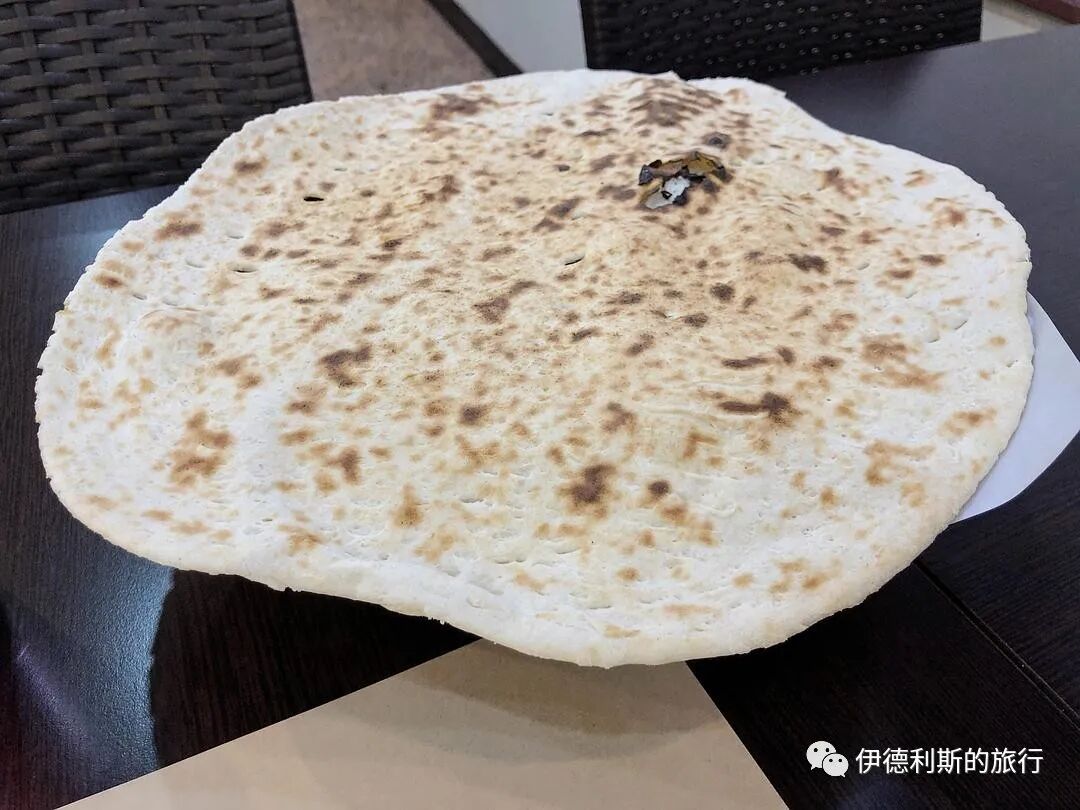
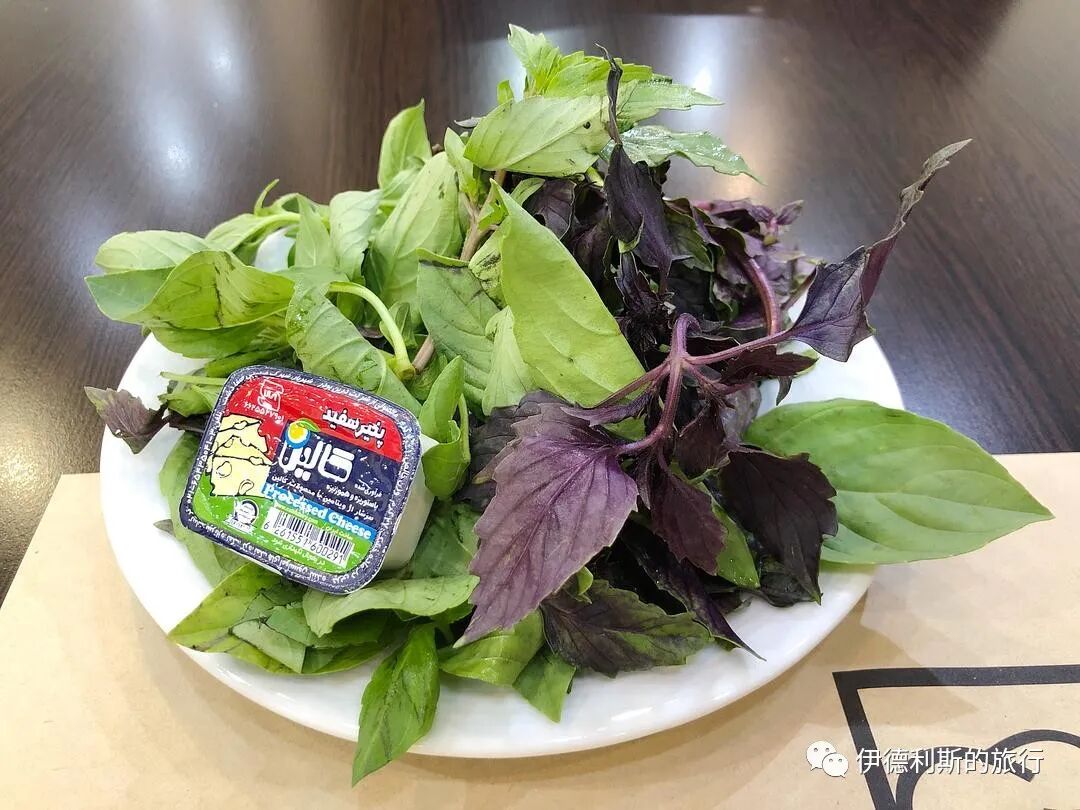
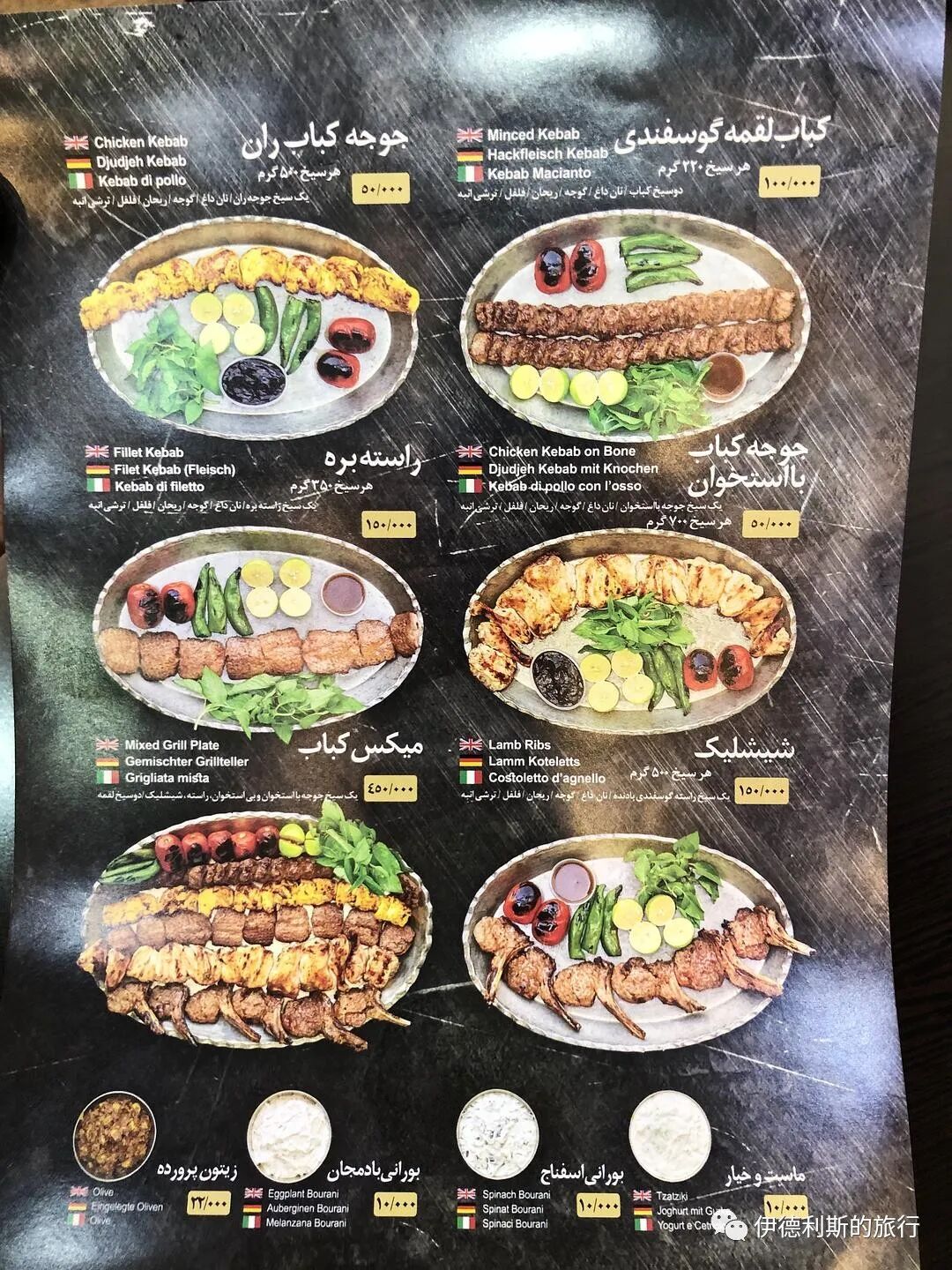
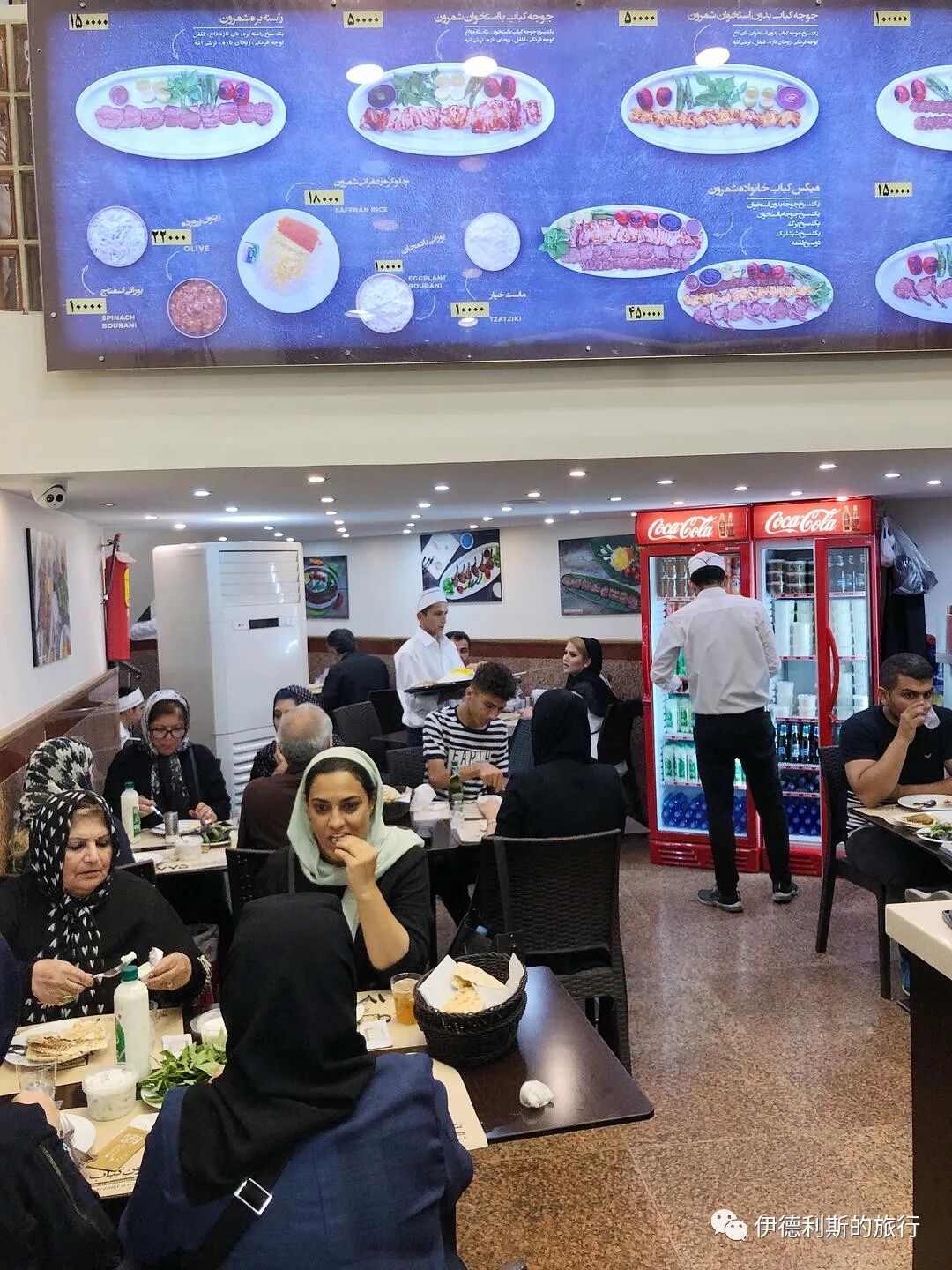
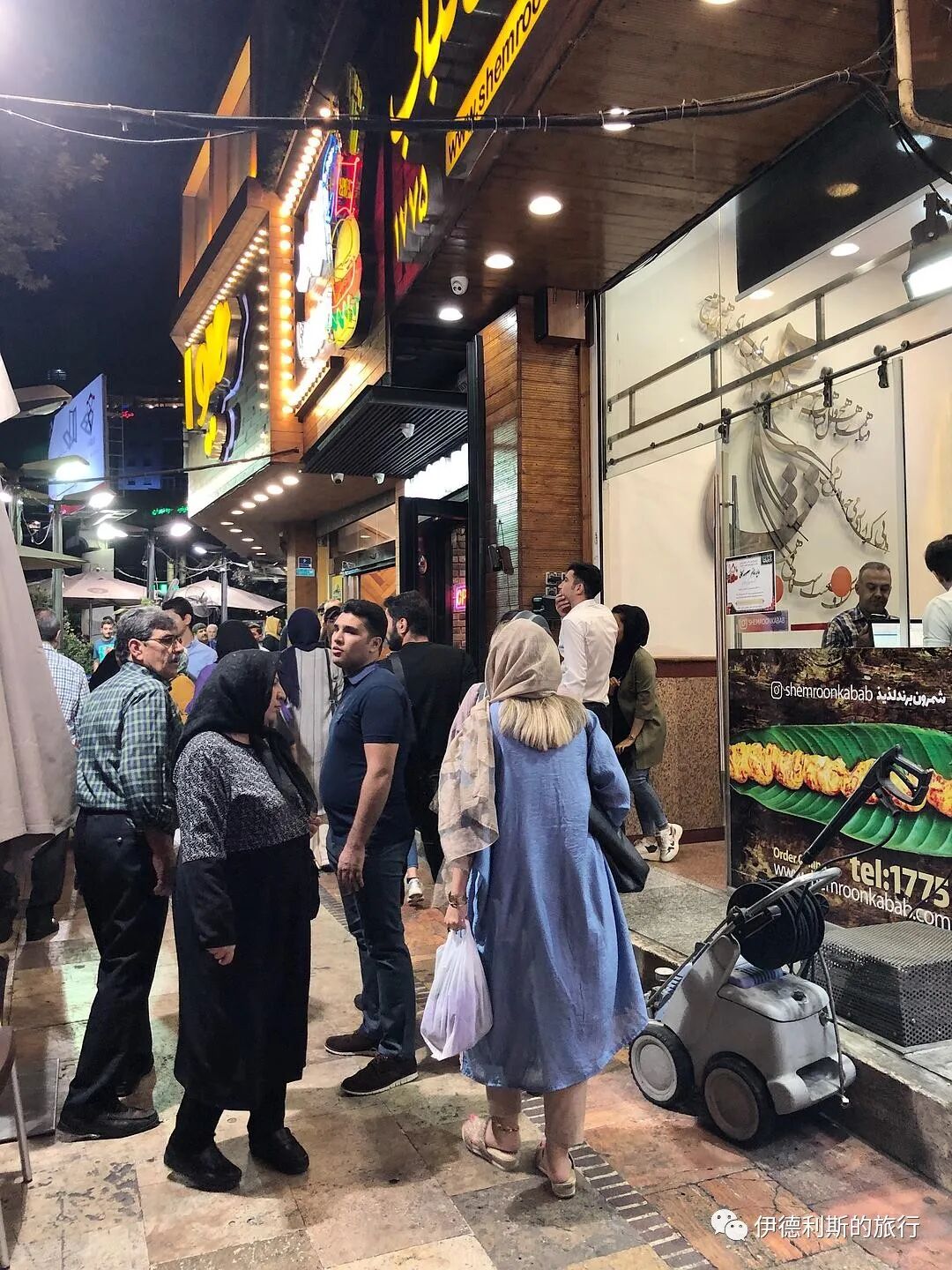
I ate at a kebab shop called Shemroon Kabab in Tajrish Square in northern Tehran. I ordered lamb chops with flatbread (nan) and spinach yogurt (Spinach Burani) as an appetizer. Their portions are huge and satisfying, and the meat is very tender and delicious.
9. Chicken kebab
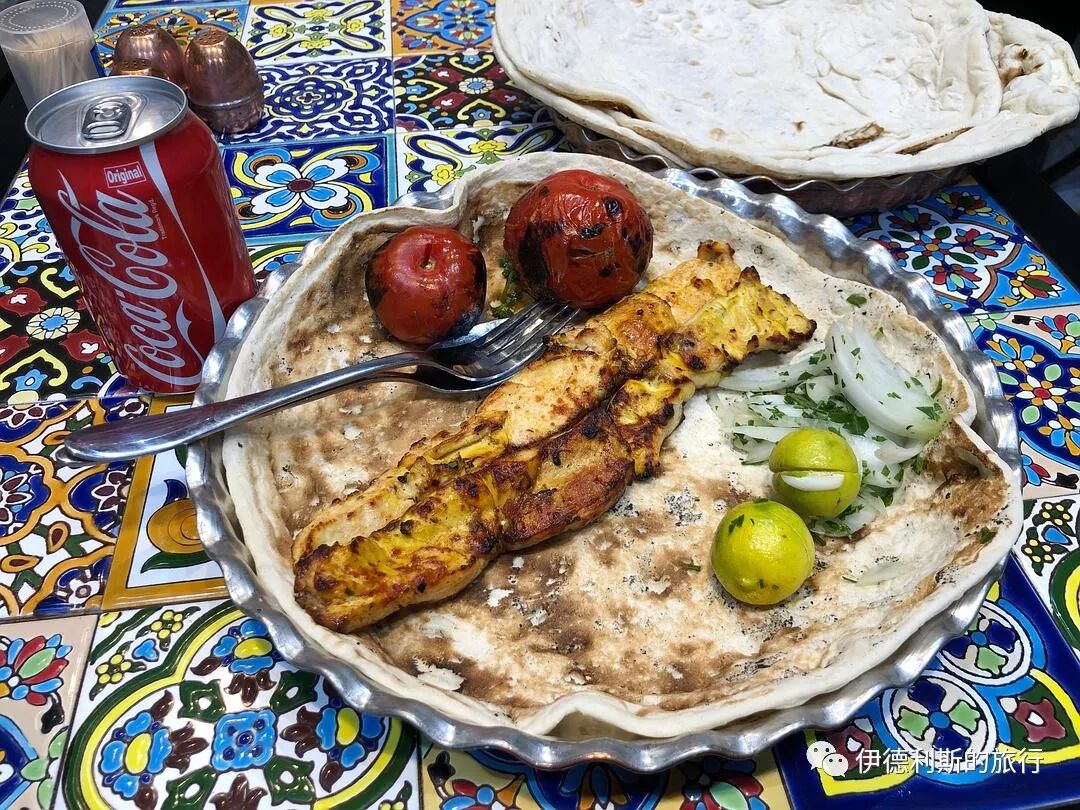
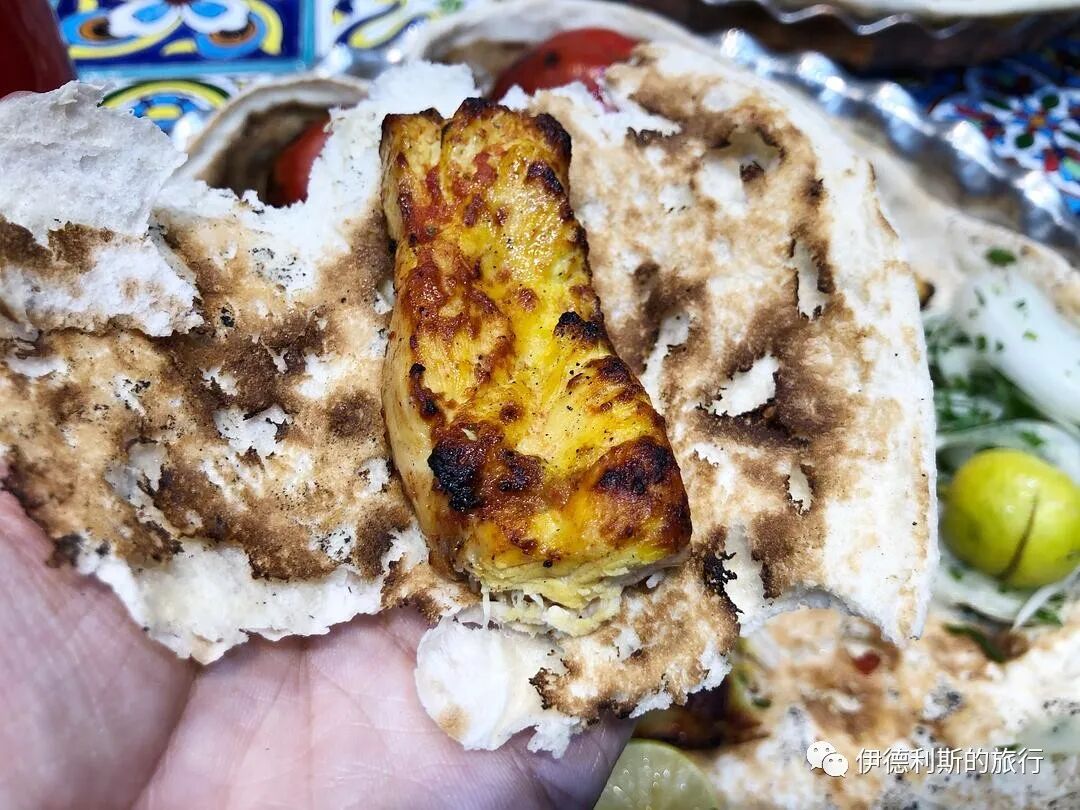
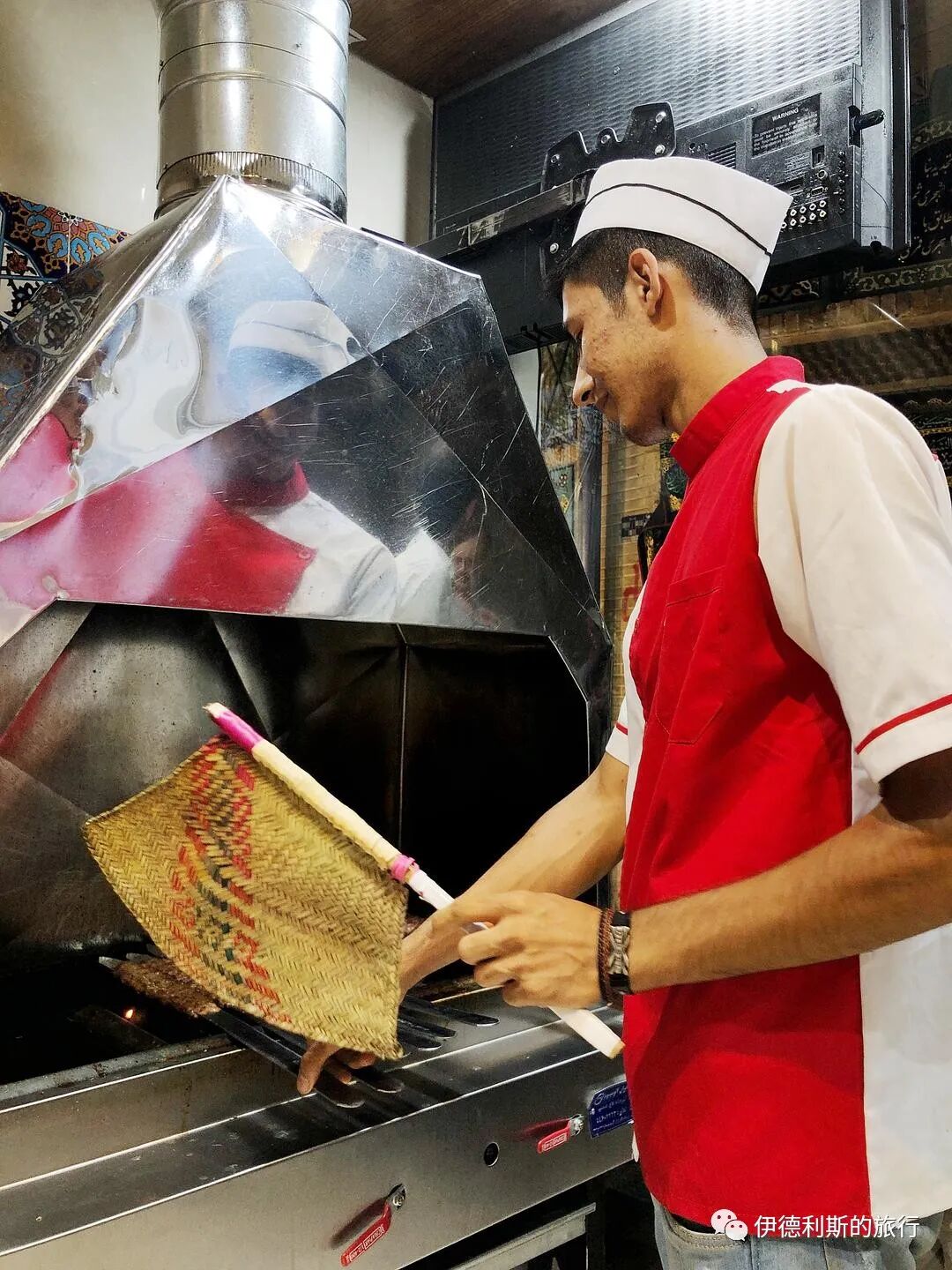
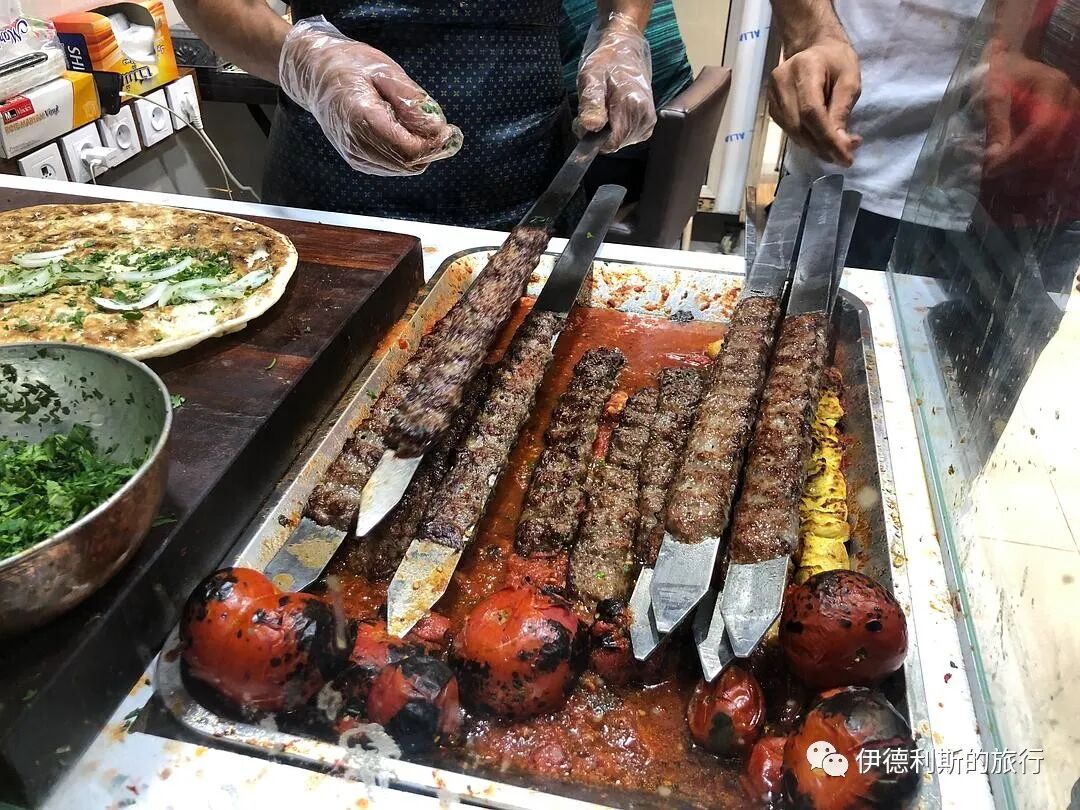
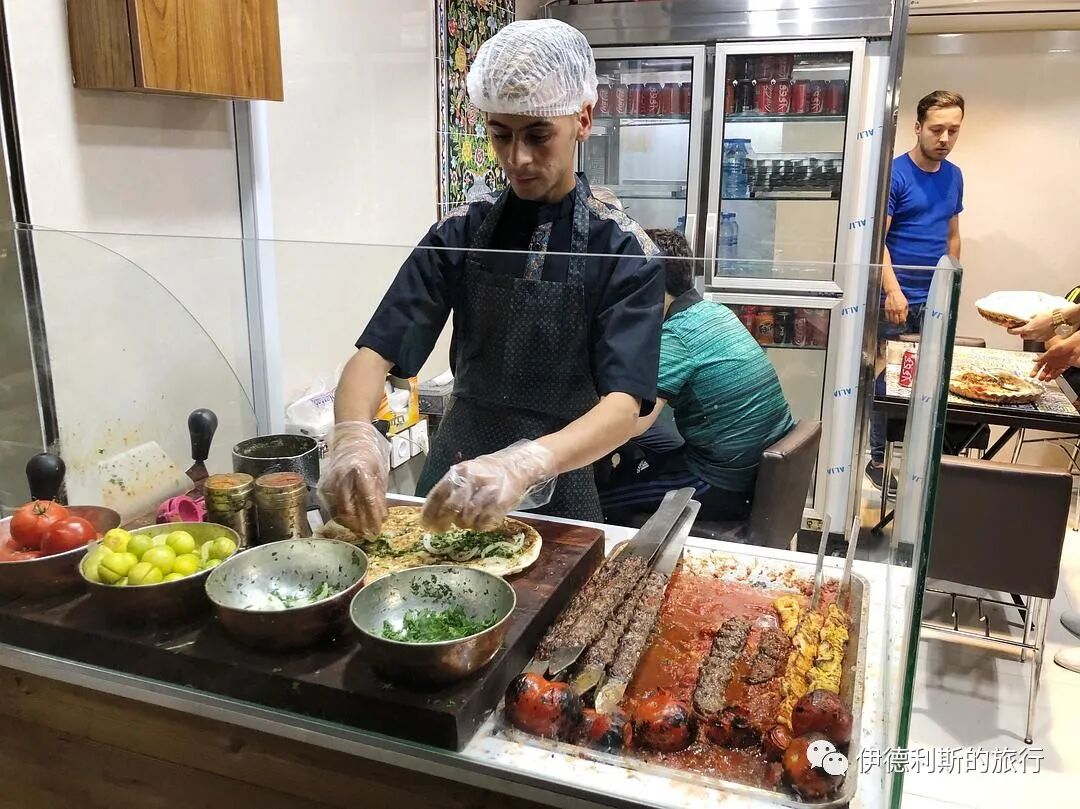
I had chicken kebab at the Tajrish Bazaar in northern Tehran. Here, they simmer the kebabs in a thick tomato sauce after grilling them, which makes them very fragrant.
10. Flatbread (nan)
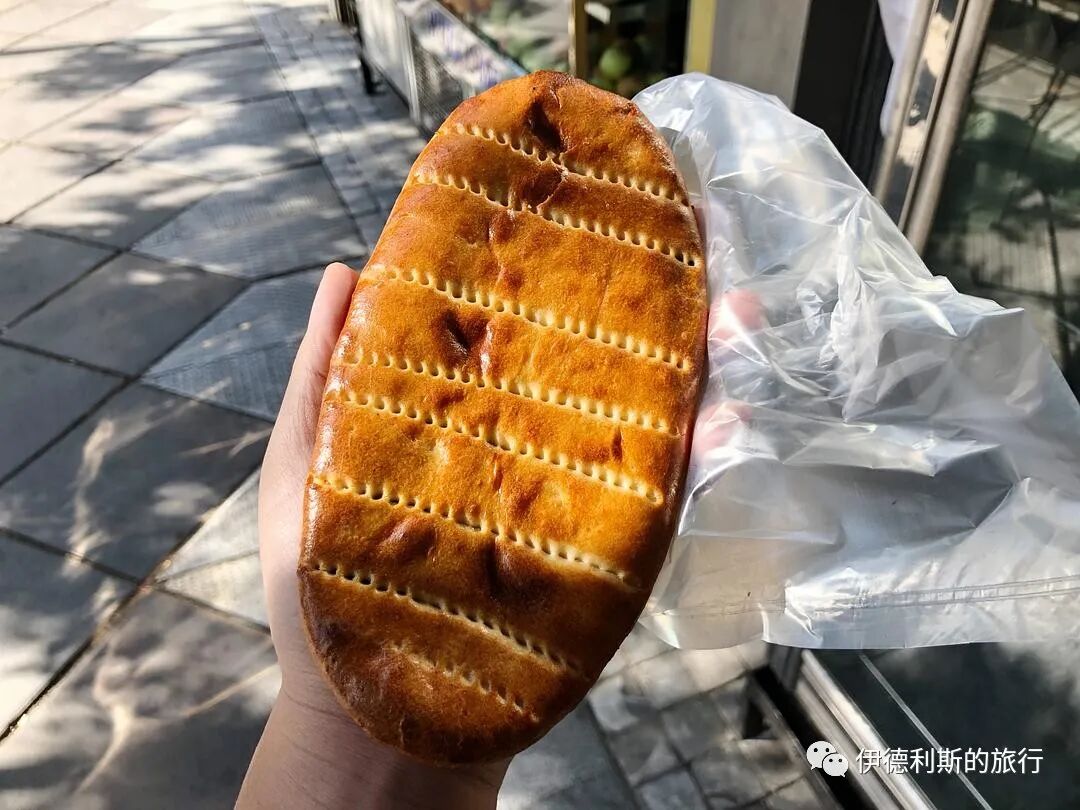
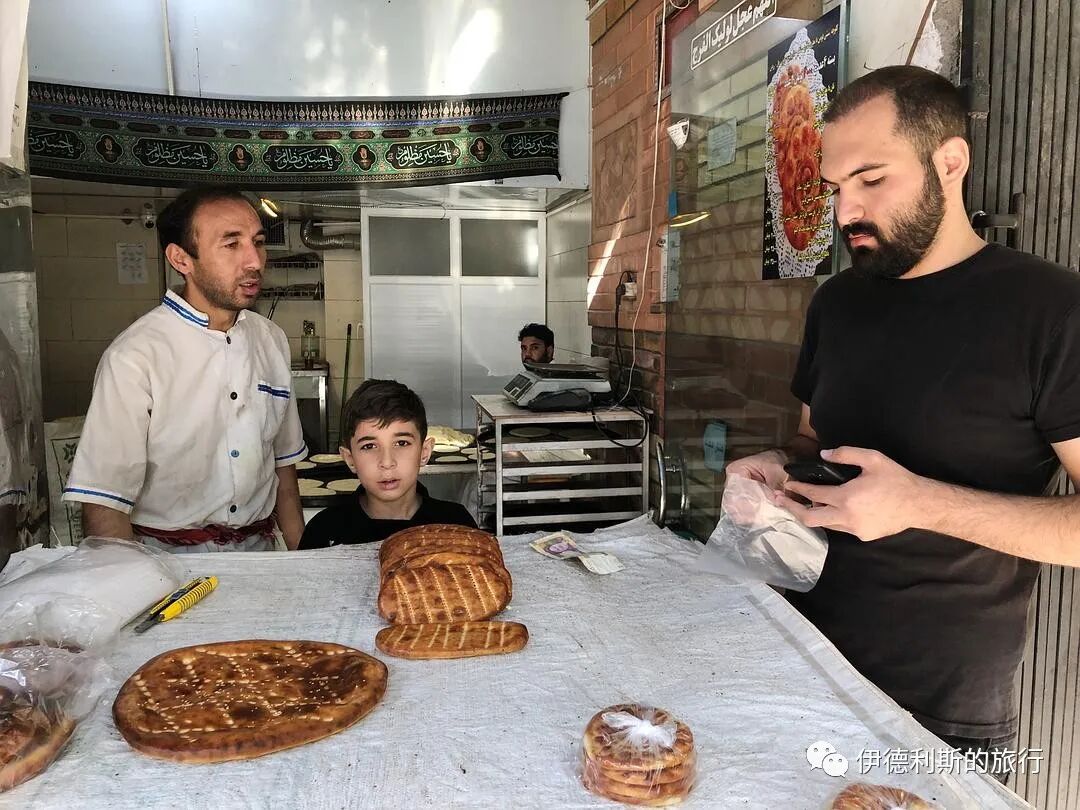
In the early morning in Tehran, any freshly baked flatbread is incredibly delicious. Also, as a word origin, nan (نان) in Persian can refer to any kind of flatbread, not just those baked in a traditional clay oven.
11. Cornelian cherry (zhuyu) and mulberry
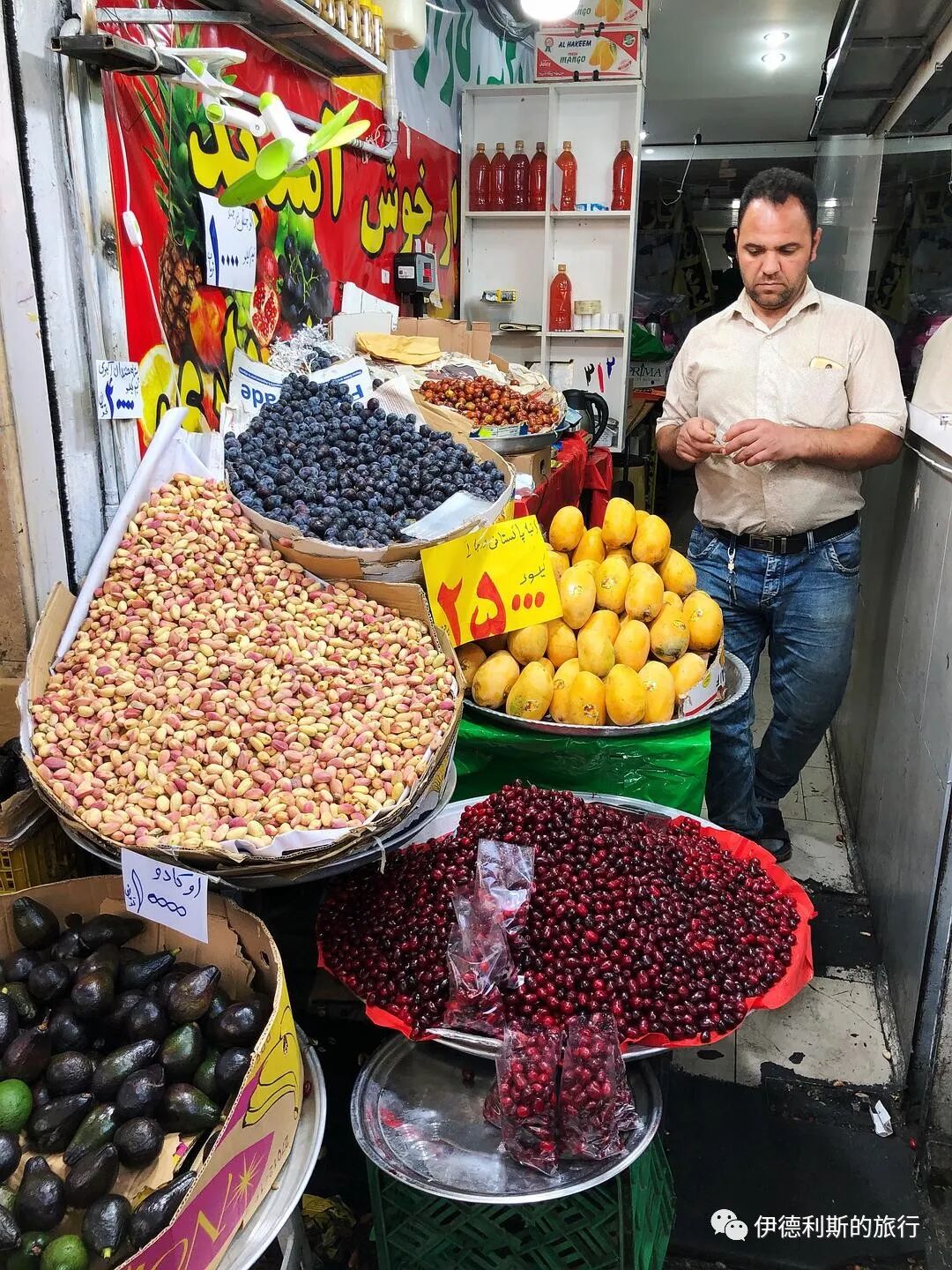
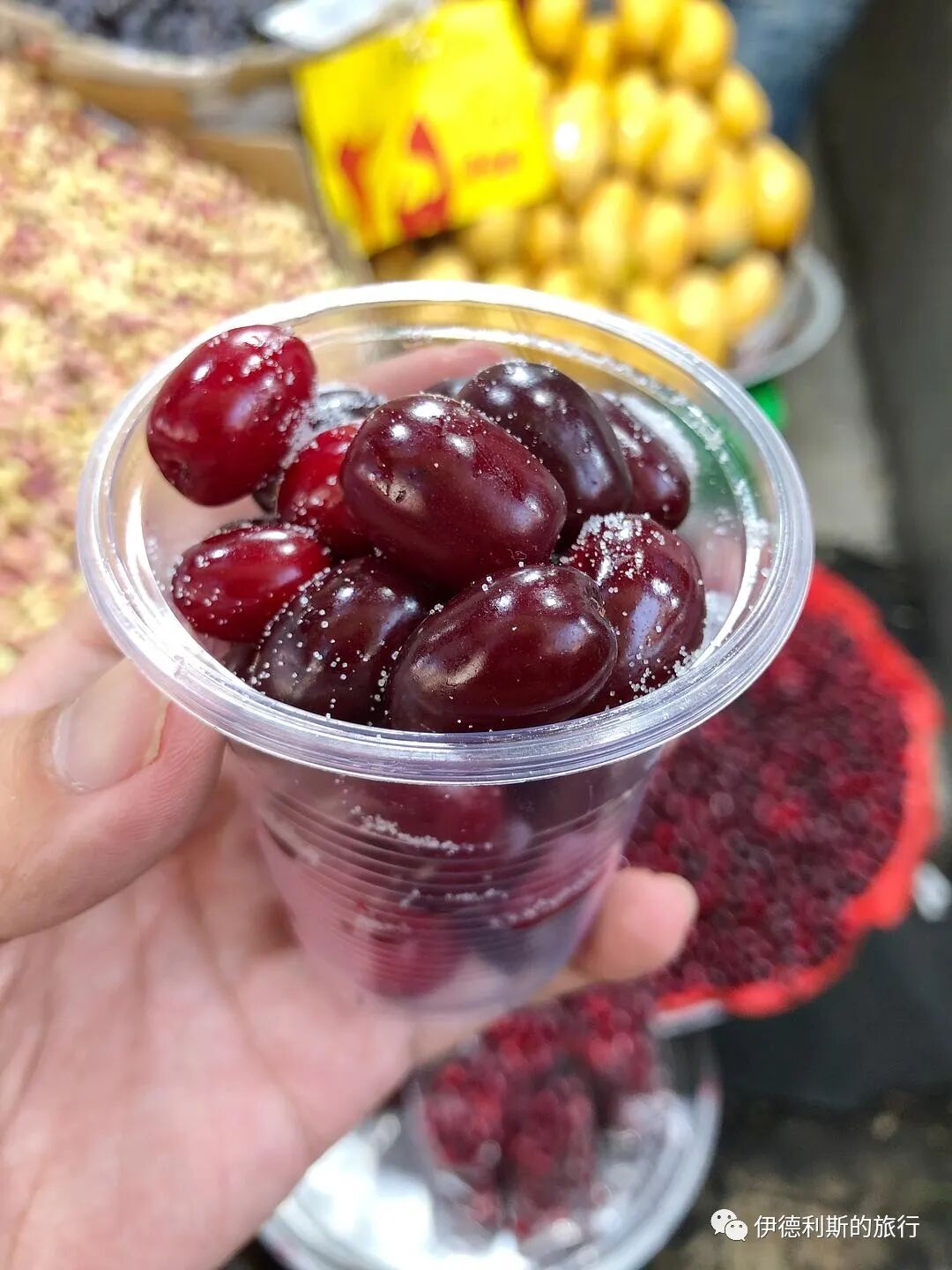
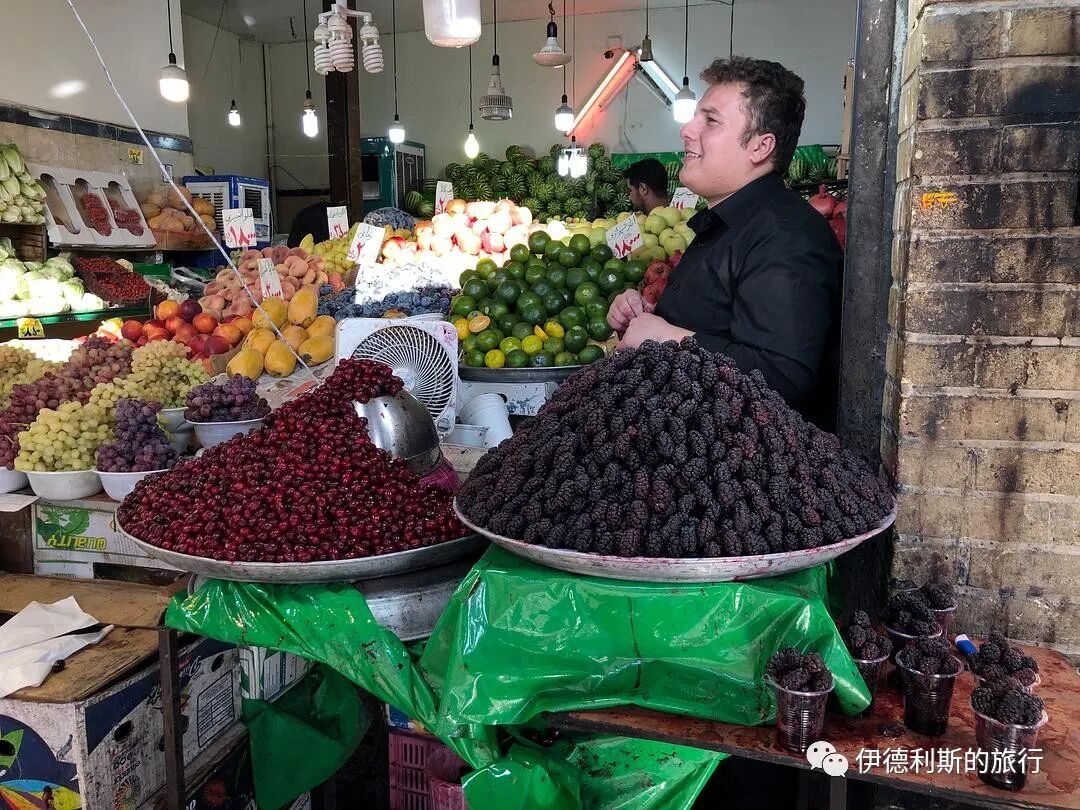
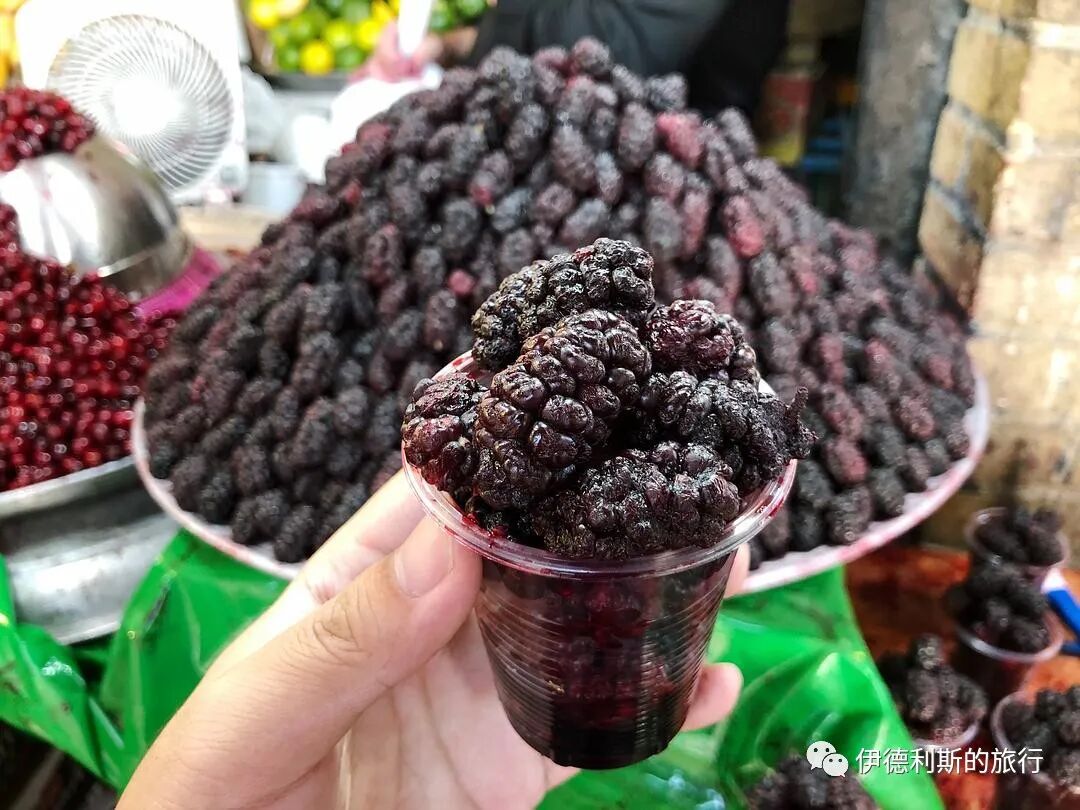
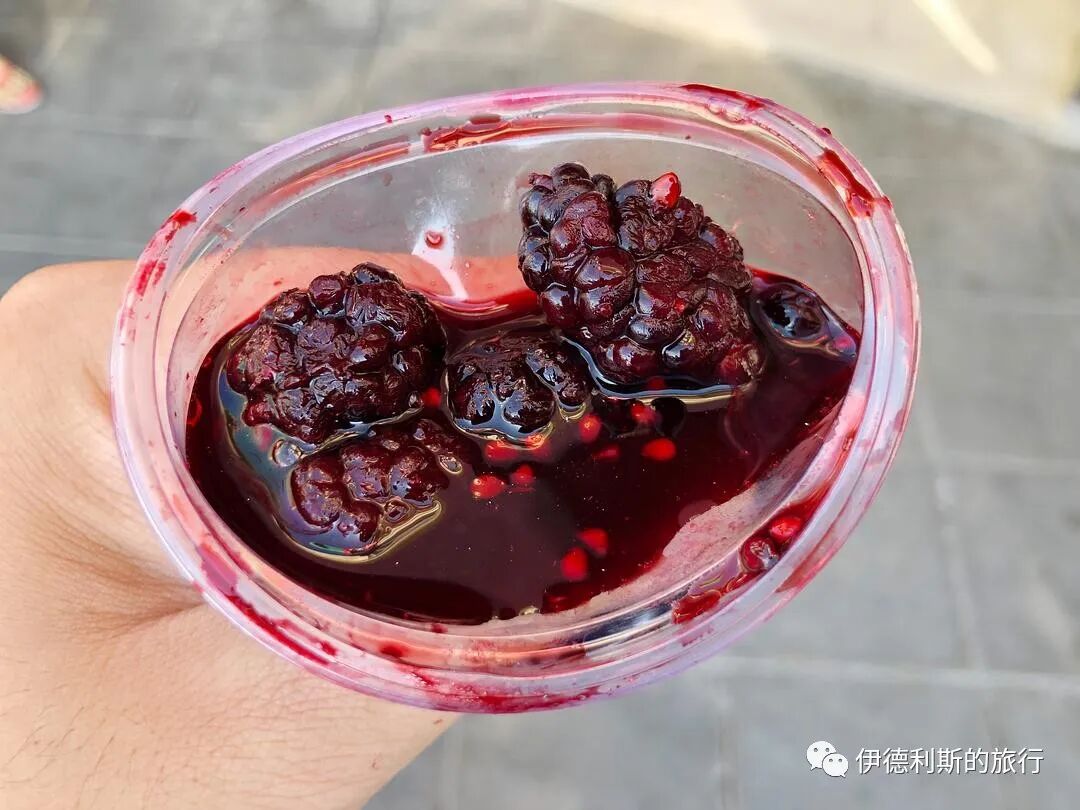
I ate cornelian cherry and mulberry at the Tajrish Bazaar in northern Tehran. The classic way to eat them is to sprinkle them with salt. If you squeeze a mulberry with your hand, the juice comes right out. It is as juicy as pomegranate juice from Xinjiang, but it is still too sour.
12. Faloodeh
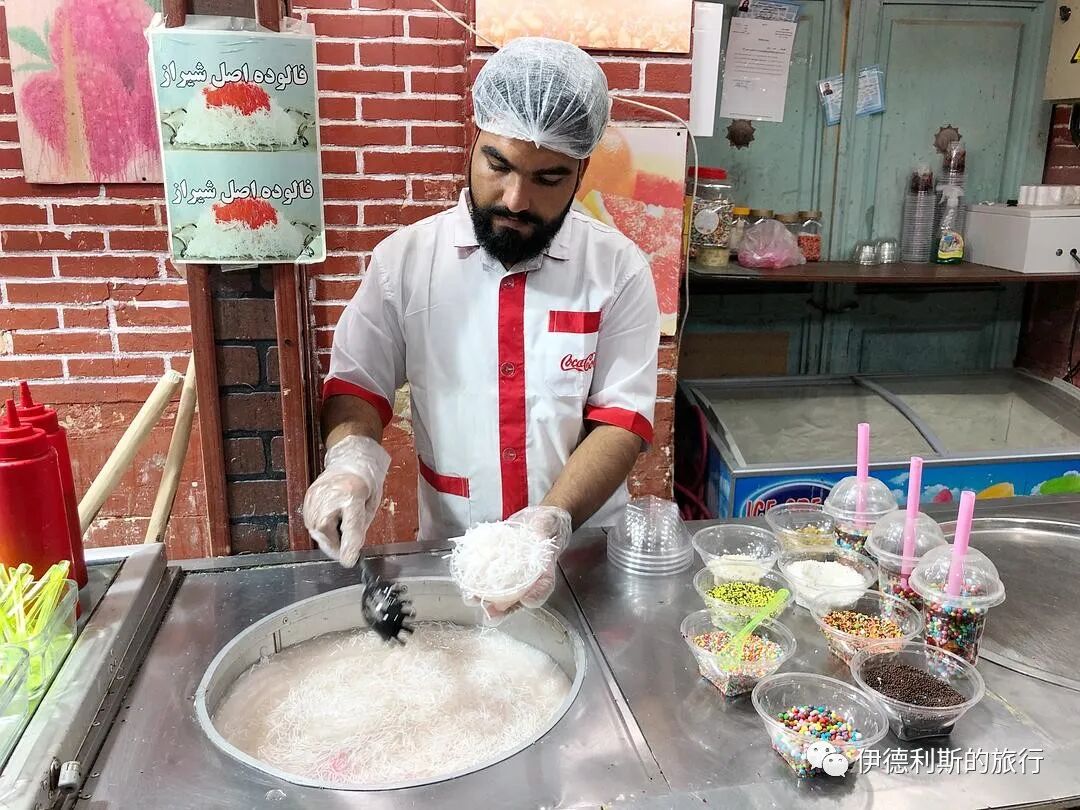
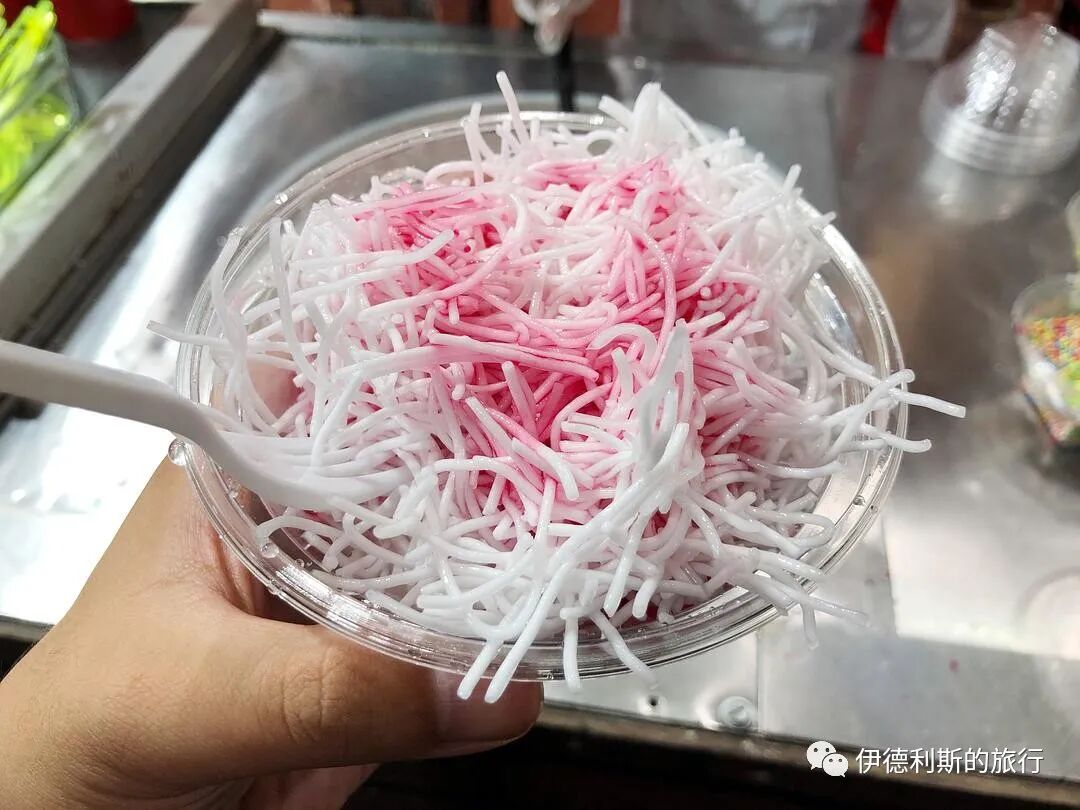
I ate Faloodeh on the food street south of Imam Khomeini Square in Tehran. It is a cold rice noodle dessert with sugar syrup, rose water, and lemon juice.
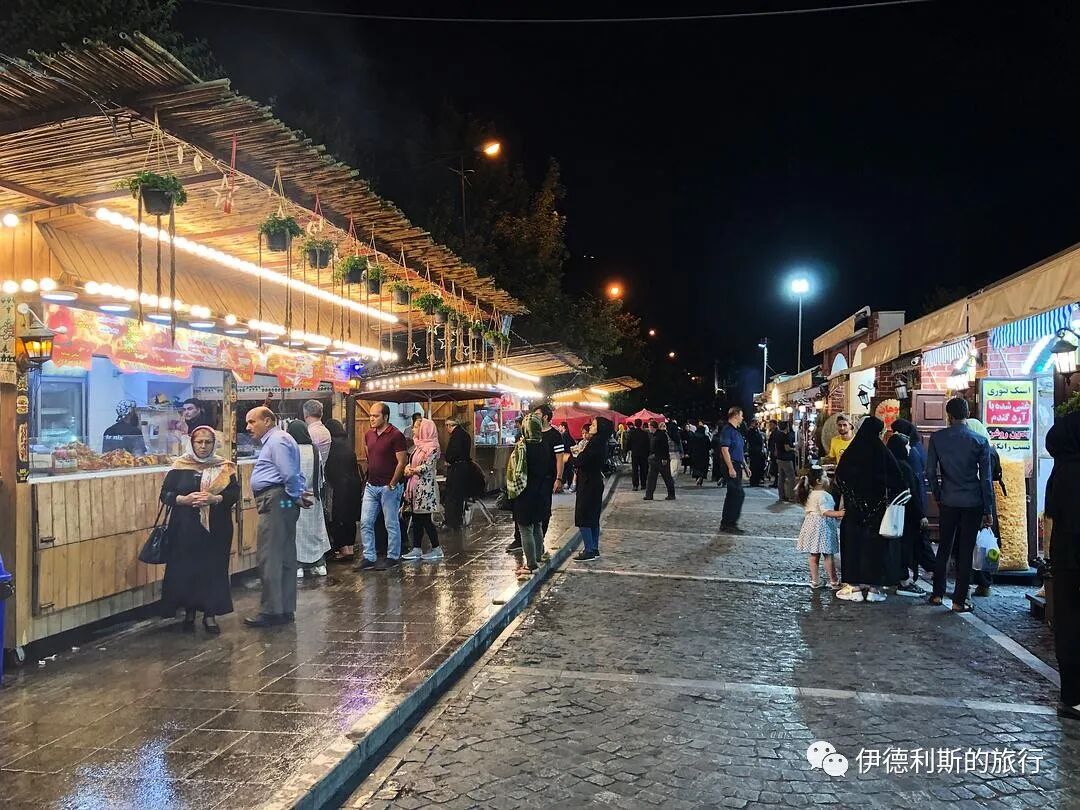
13. Cucumber yogurt (Maast-o Khiar)
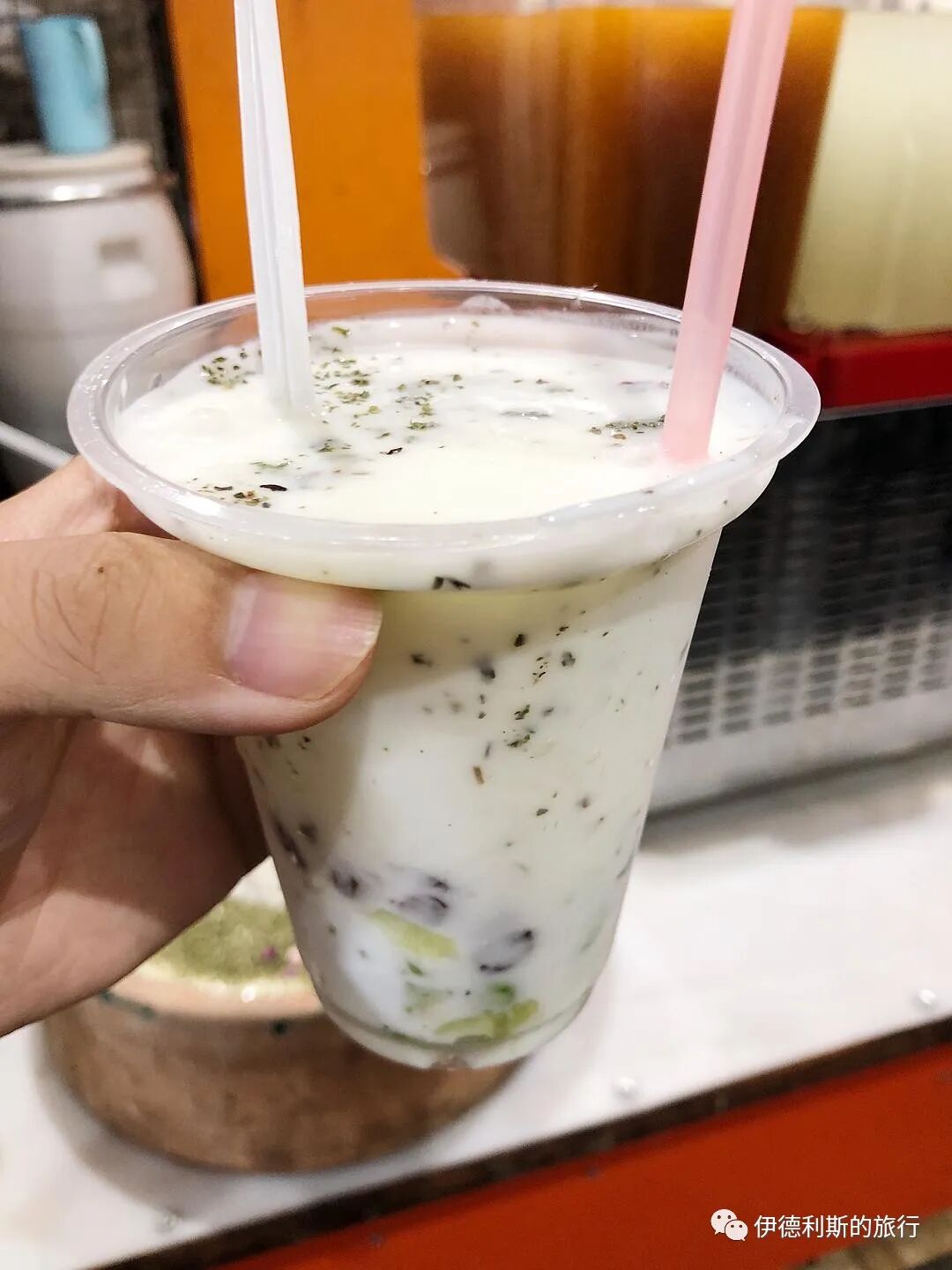
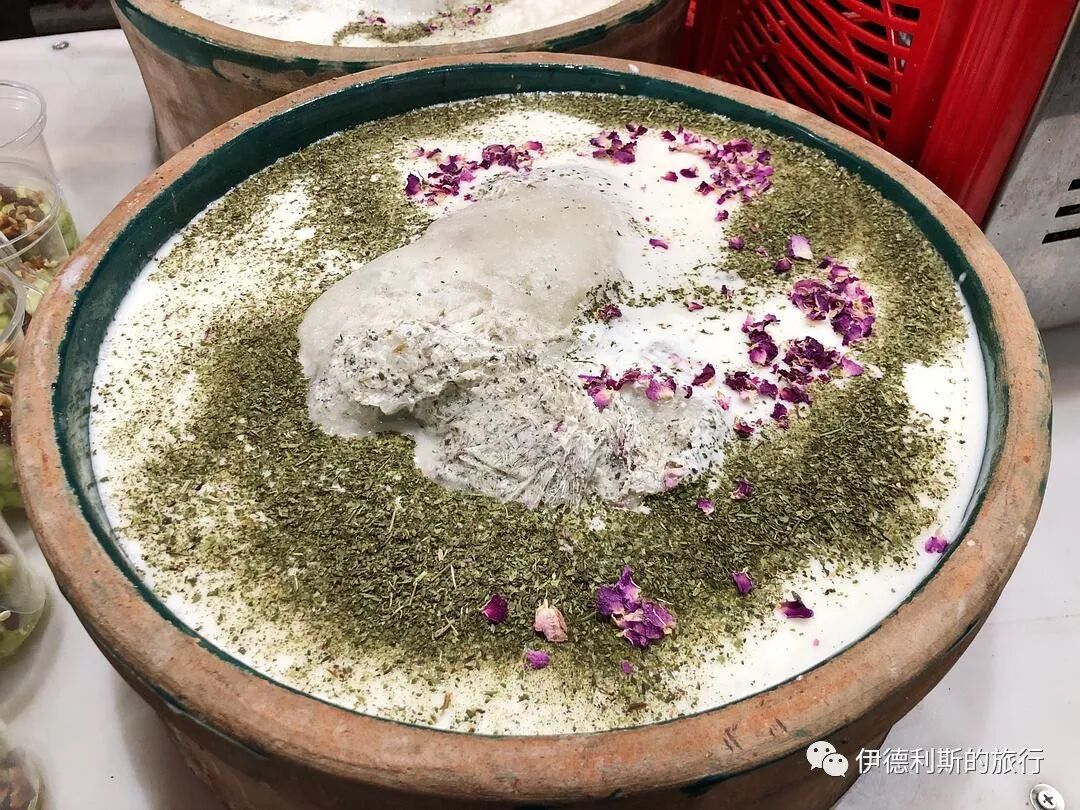
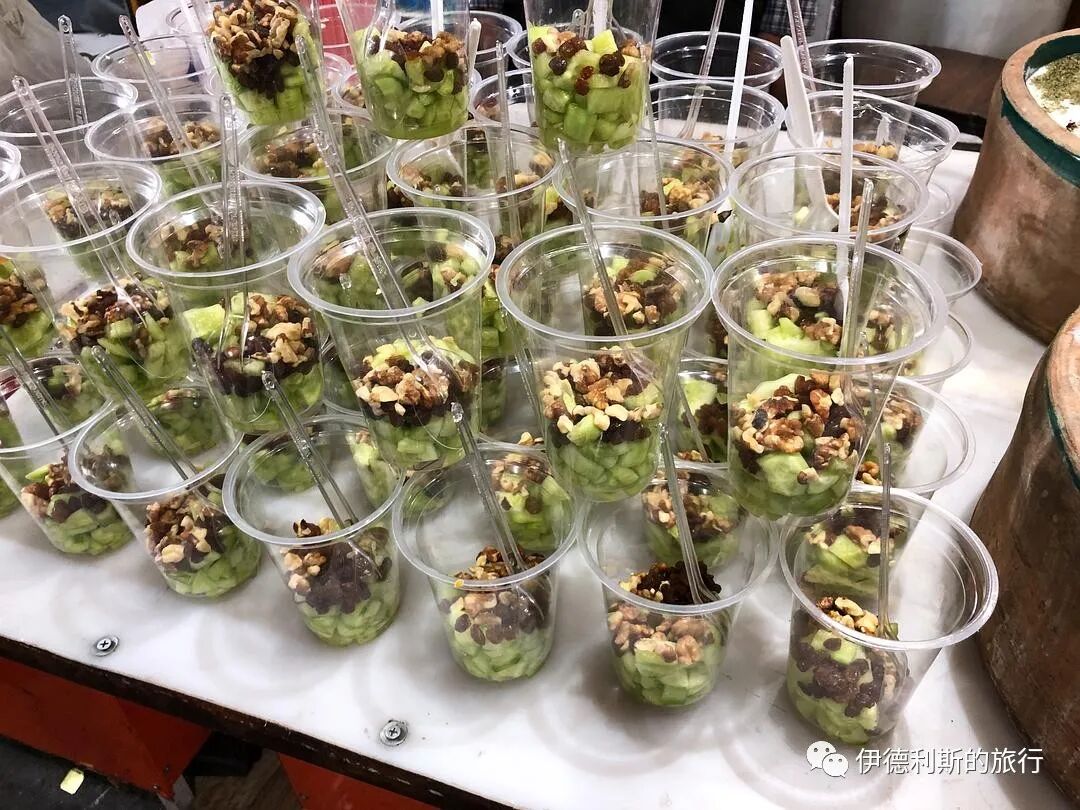
I bought cucumber yogurt (Maast-o Khiar) at the Friday Bazaar in Tehran, and it came with raisins and walnuts.
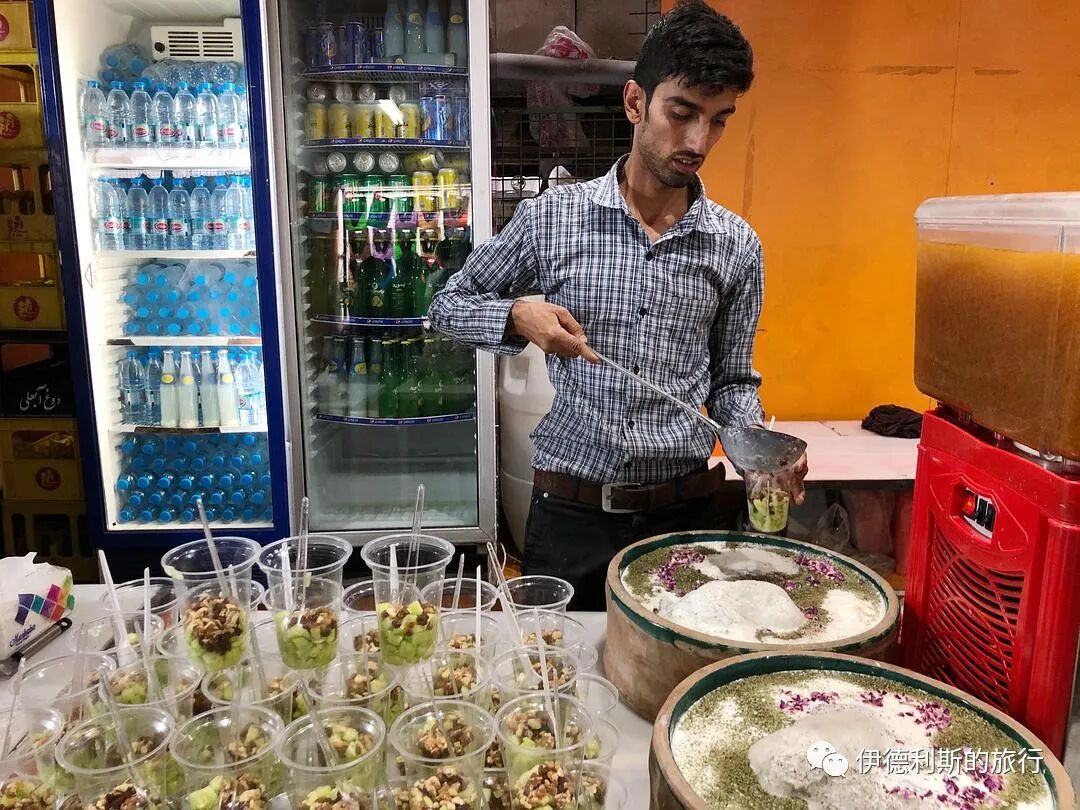
14. Saffron ice cream
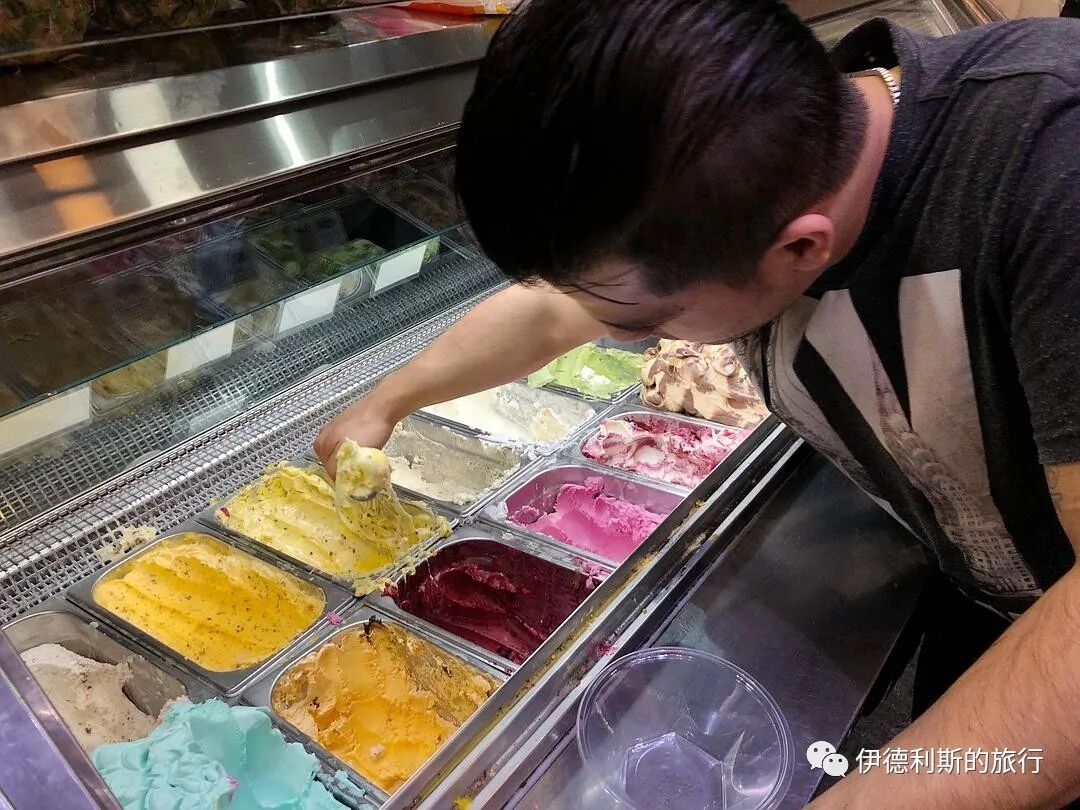
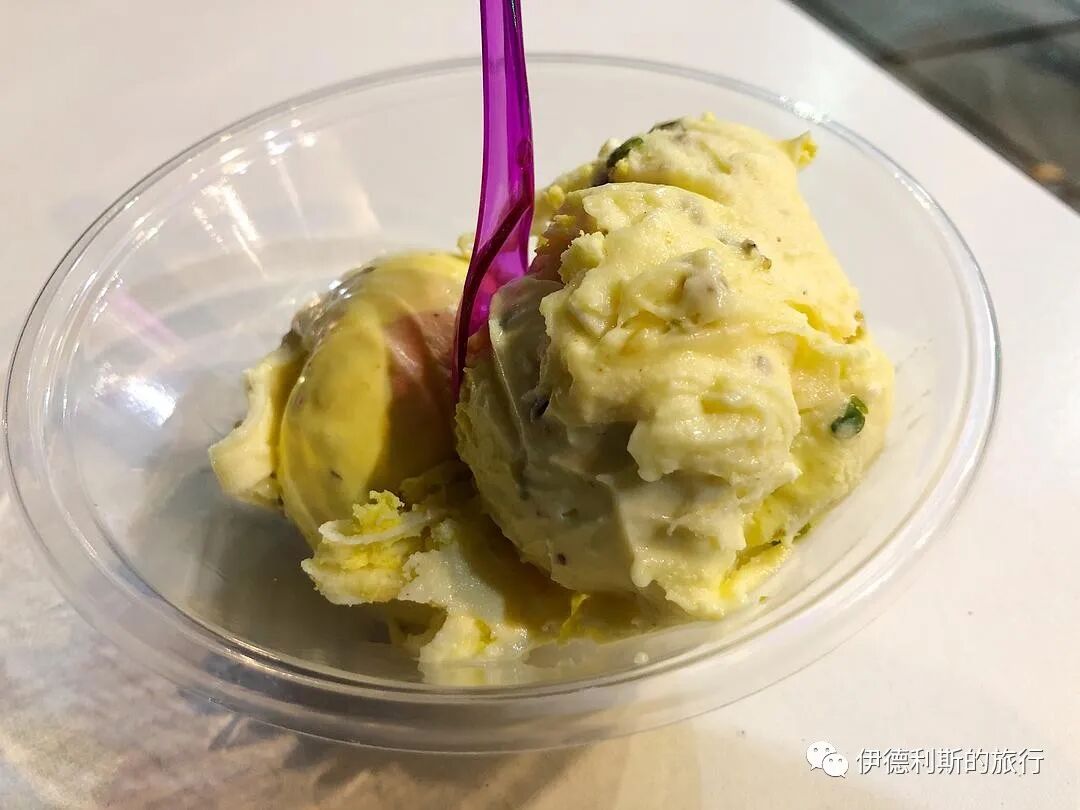
I ate saffron ice cream near Tajrish Square in northern Tehran. It was topped with crushed pistachios and chunks of cream, which is very typical of Iran.
15. Baklava dessert with tea
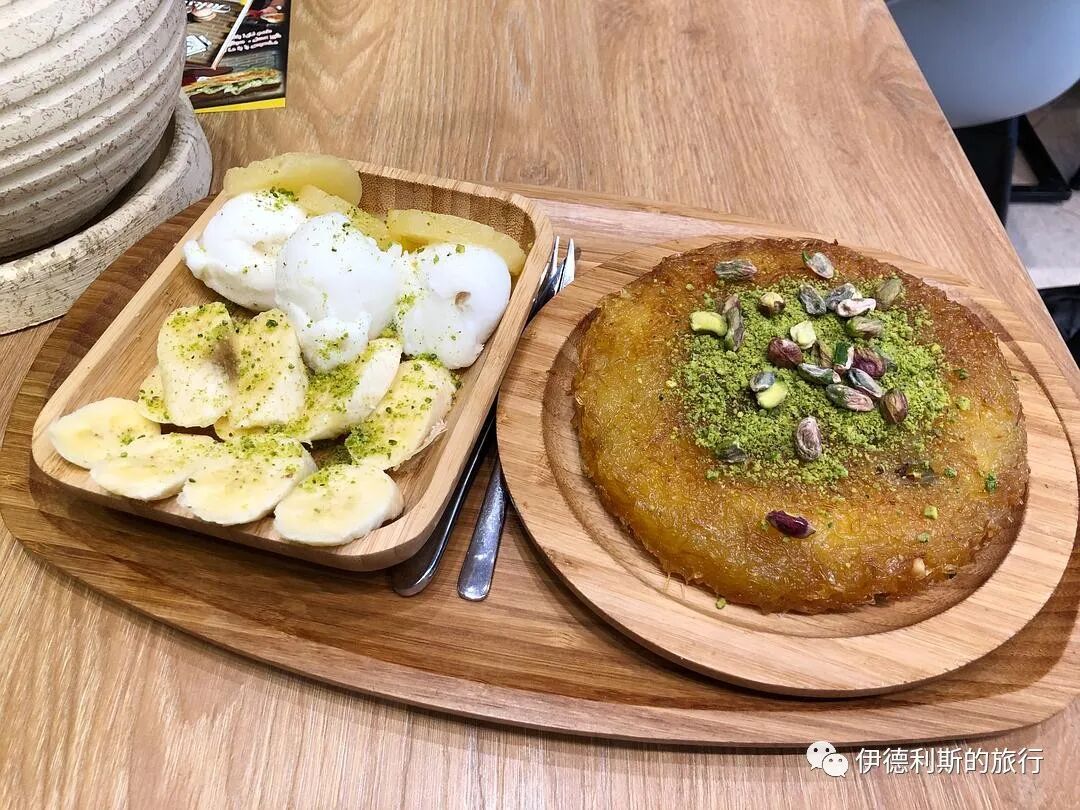
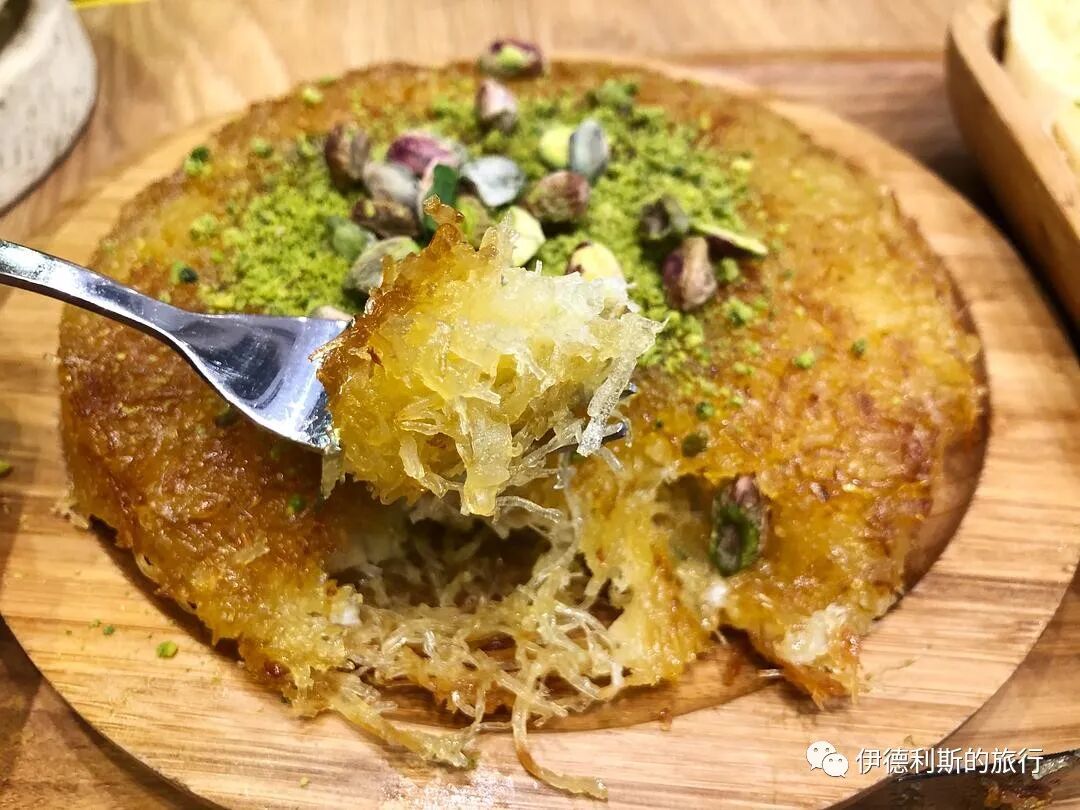
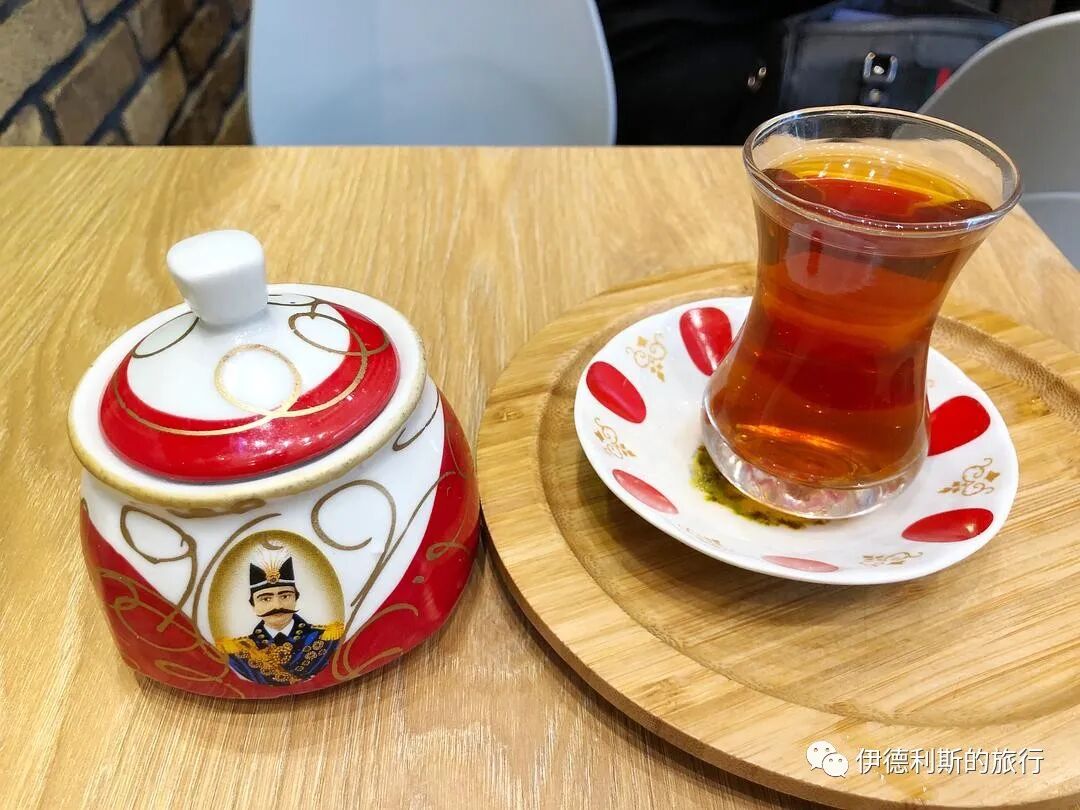
I had tea and dessert at a shop called Takseen baghlava near the Mirdamad metro station in northern Tehran. Baklava originated in the Ottoman imperial court and later became popular across the Middle East and the Caucasus. The Persian version of baklava is special because it uses rose syrup and crushed pistachios. The dessert I ate was shaped like sugar threads.
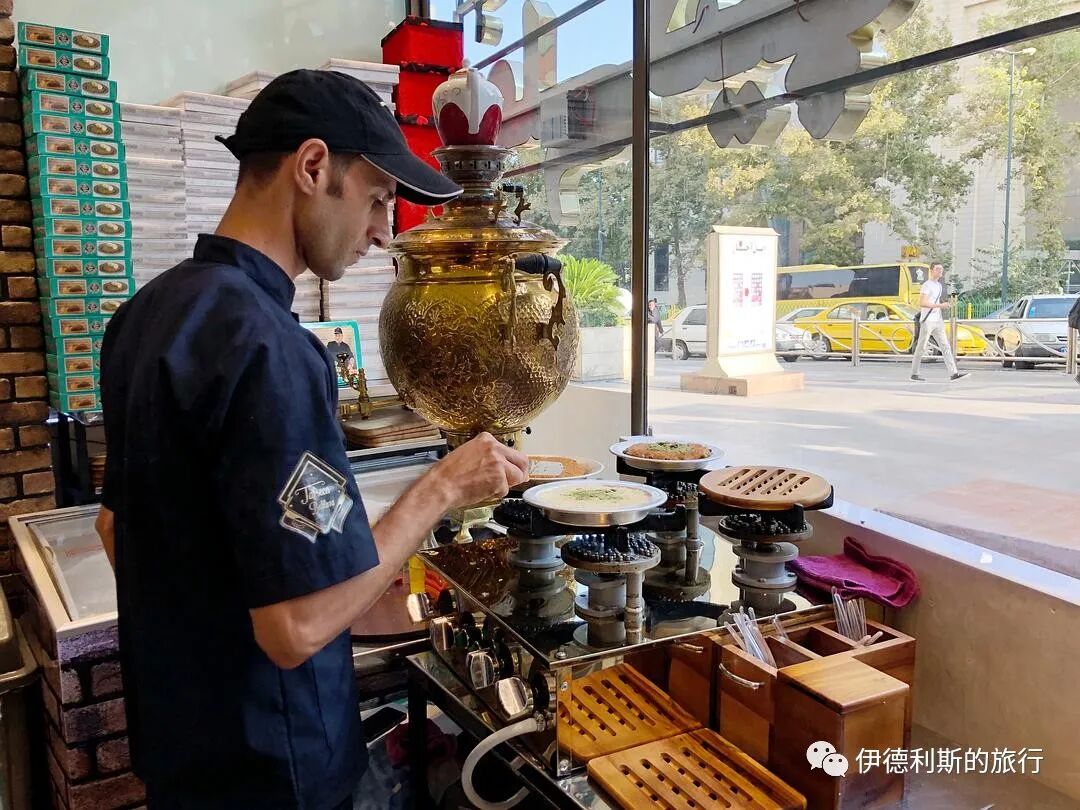
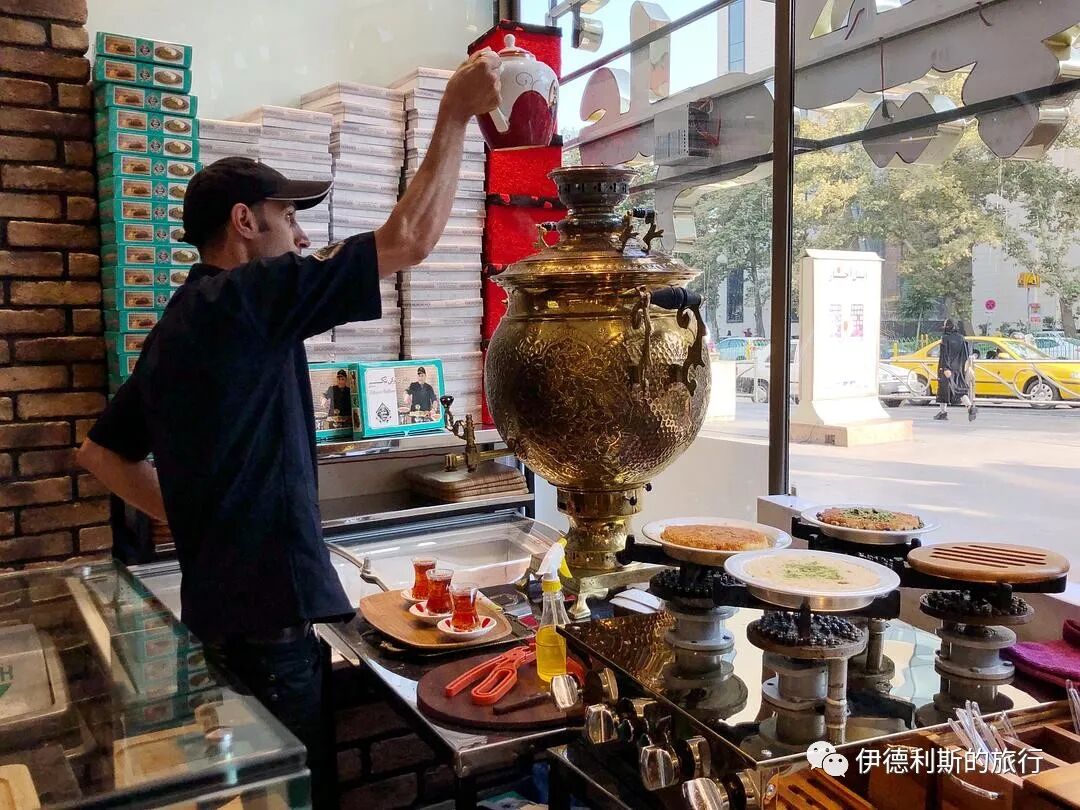
The two-layer Iranian tea stove is called a samovar, which arrived from Russia in the 19th century. The small teapot on top is for brewing tea, the large pot in the middle is for boiling water, and the bottom is the heat source. Traditionally it used coal or charcoal, but now it uses electricity, gas, or natural gas.
16. Drinking tea
Haj Ali Darvish is a century-old, famous tea house in the Grand Bazaar of Tehran. The tea house opened in 1918 and was taken over by Haj Ali Mabhutyan in 1962. The current owner is his son, Haj Kazem Mabhutyan.
Mr. Kazem works hard to share his shop on Instagram, which has helped more foreign tourists find his small place. I am one of them, and the old gentleman even took my photo and posted it on Instagram. Friends who use Instagram might have a chance to see me there. The account is haj_ali_darvish_tea_house.
I also drank some street-side fig tea on the food street south of Imam Khomeini Square. Iranians mainly have two ways of adding sugar to their tea. One way is to hold a sugar cube in your mouth and lick it while you drink the tea. The other way is to use a lollipop-style sugar stick called nabat chubi to stir it. This rock candy originated in Isfahan over a thousand years ago. Later, people invented a way to grow crystals by dipping small twigs into a sugar solution, and this method spread across Eurasia.
17. Moslem Restaurant
Moslem Restaurant is a very famous spot in the Tehran Grand Bazaar. They specialize in Iranian rice cake (Tahchin) made with rice, yogurt, saffron, and eggs (shown in the top right of photo 4). I bought a bowl of sour cream and spinach meat stew porridge (Aush) at the takeout window on the first floor, and it tasted great.

Summary: Halal Food Guide: Tehran Street Food — Iranian Snacks, Markets and Everyday Eats is presented here as a firsthand travel account in clear English, beginning with this scene: I went to Tehran during the 2019 Mid-Autumn Festival to eat and explore. I am sharing some of the things I ate here. The account keeps its focus on Tehran Street Food, Iran Travel, Halal Food while preserving the names, places, food, and historical details from the Chinese source.
I went to Tehran during the 2019 Mid-Autumn Festival to eat and explore. I am sharing some of the things I ate here.
1. Persian tomato and egg stir-fry with Barbari flatbread (Barbari nan).
For breakfast on my first day in Tehran, I had Persian tomato and egg stir-fry (Persian Omelette), which is a signature Iranian breakfast. The cooking order for Persian tomato and egg stir-fry is the opposite of the Chinese version; you cook the tomatoes first, then add the eggs. Unlike our rice dishes, this Persian tomato and egg stir-fry must be eaten with flatbread. The shop I visited served it with Barbari flatbread.
Barbari literally translates to barbarian. It was originally what Persians called the Hazara people living in the Khorasan region. Hazara people from Khorasan first brought Barbari flatbread to Tehran, and it became popular during the Qajar dynasty (1796-1925). After that, the Hazara people were no longer called Barbari, but the name of the Barbari flatbread stayed.
The shop I went to is called Golha 2 Hookah Bar. You can find it on Google Maps by searching for سفره خانه گلها 2. Because they only sell this one combination, you do not need to speak the language to order.
2. Cinnamon-spiced sheep head and trotter soup (Khalle Pache) with Sangak flatbread (Sangak nan).
For breakfast on my second day in Tehran, I had cinnamon-spiced sheep head and trotter soup (Khalle Pache) served with Sangak flatbread. Sangak means small pebbles, and the earliest records of it come from the 11th-century Persian army. Persian soldiers back then supposedly carried pebbles with them. When they set up camp, they gathered the pebbles together to bake flatbread (naan), which is why Sangak flatbread has little pits all over it.
Sheep head soup is eaten more often in the autumn and winter. It usually comes with two pieces of flatbread; you soak the first one in the soup and eat the second one with the lamb. Besides sheep head and sheep trotters, the shop also sells sheep brain, but it is not part of the standard order, so you do not have to order it if you do not like it.
The shop I visited is called Lux Talaee Tabakhi, and it is a well-known spot in the old city of Tehran that specializes in sheep head and sheep trotter soup.
3. Falafel sandwich
My accommodation in the old city of Tehran was south of Imam Khomeini Square, where there is a food street. I ate many snacks there. On the morning of my third day in Tehran, I ate a Falafel sandwich on the food street. It ranks alongside Iranian pizza as one of the two major street foods in Tehran.
Falafel is a common Middle Eastern fried chickpea ball, served inside a baguette with vegetable salad and Persian pickles (torshi). Torshi means sour in the Persian language. The most popular Falafel sandwich shops let you add your own salad and pickles, and they often have long lines. The one I ate had a simpler setup.
4. Samosa
Snacks called samosa are found from Northeast Africa to Western China, and they are made differently everywhere. Common versions include Indian curry puffs and baked buns (kaobaos) from Xinjiang, Central Asia. The word samosa actually comes from the Persian word sanbosag. As early as the 9th century, the Persian poet Ishaq al-Mawsili wrote poems praising the samosa. After the 10th century, the samosa began appearing in Arabic cookbooks and spread across Africa and Asia along with Muslims. The samosa remained popular in Iran until the 16th century, but later it was only kept in certain regions.
Samosas on the streets of Tehran are mostly fried triangles with potato filling, similar to the Indian version. I bought this kind at a small shop across from the Friday prayer (Jumu'ah) bazaar, and I also bought some delicious bread there.
I also ate another type of baked samosa on the food street south of Imam Khomeini Square, which also had a potato filling. The name of this restaurant is Sandwich Khorasan, so I guess this style might come from the Khorasan region in northeastern Iran.
5. Tripe soup (sirabi)
I had tripe soup (sirabi) with flatbread (sangak) at a small street shop next to the carpet bazaar in Tehran. The soup was very fresh and tasty, and the tripe was very chewy.
6. Caspian white fish of the Gilaki people
I ate at Khoshbin, a fried fish restaurant run by Gilaki people from northern Iran, while in Tehran. The Gilaki people mainly live in Gilan Province on the southern coast of the Caspian Sea, and the Gilaki language they use belongs to the Western Iranian branch. Molecular anthropology shows that the Y-chromosome of the Gilaki people is very close to that of South Caucasian people, but their mtDNA (mitochondrial DNA) is very close to that of Iranians. We can guess that the ancestors of the Gilaki people likely came from the South Caucasus region, then migrated to the southern shore of the Caspian Sea and mixed with the Iranians.
The business hours for Khoshbin on Google Maps are wrong. They are actually only open for lunch between 12:00 PM and 4:00 PM, and it is very popular, so you have to wait in line. Luckily, they have an English menu, so I was able to order my food without any trouble.
Fried fish is an important part of Gilaki cuisine. I tried the Caspian white fish (Caspian kutum), which is a type of carp. For side dishes, I ordered white fish roe (Kuli), fava beans, and walnuts, and I also had cucumber yogurt (Maast-o Khiar). They also have some special Gilaki side dishes I want to try next time, like a mashed dip made of eggplant, pumpkin, garlic, tomatoes, and eggs called Mirza Ghasemi, and green olives marinated in pomegranate molasses, walnuts, and herbs called Zeytoun Parvardeh.
7. Street drinks
There are many drink shops on the streets of Tehran. First, there are all kinds of fresh juices; I drank pomegranate juice, honeydew melon juice, and carrot juice. The honeydew melon and carrot juices were super delicious, but the pomegranate juice was so sour it made me question everything. I still like the pomegranate juice from Xinjiang the best.
Another drink you don't see often in other countries is called Khakshir, which is very common in Iran during the summer to beat the heat and quench your thirst. Khakshir is the seed of a plant called flixweed (bonianghao) in Chinese. Flixweed is also known as garlic mustard, mimihao, or maihao. It grows all over China except in the south. It can be used to make oil or as medicine. Both traditional Iranian medicine and traditional Chinese medicine use it to help with urination and reduce swelling.
8. Shemroon Kabab restaurant
I ate at a kebab shop called Shemroon Kabab in Tajrish Square in northern Tehran. I ordered lamb chops with flatbread (nan) and spinach yogurt (Spinach Burani) as an appetizer. Their portions are huge and satisfying, and the meat is very tender and delicious.
9. Chicken kebab
I had chicken kebab at the Tajrish Bazaar in northern Tehran. Here, they simmer the kebabs in a thick tomato sauce after grilling them, which makes them very fragrant.
10. Flatbread (nan)
In the early morning in Tehran, any freshly baked flatbread is incredibly delicious. Also, as a word origin, nan (نان) in Persian can refer to any kind of flatbread, not just those baked in a traditional clay oven.
11. Cornelian cherry (zhuyu) and mulberry
I ate cornelian cherry and mulberry at the Tajrish Bazaar in northern Tehran. The classic way to eat them is to sprinkle them with salt. If you squeeze a mulberry with your hand, the juice comes right out. It is as juicy as pomegranate juice from Xinjiang, but it is still too sour.
12. Faloodeh
I ate Faloodeh on the food street south of Imam Khomeini Square in Tehran. It is a cold rice noodle dessert with sugar syrup, rose water, and lemon juice.
13. Cucumber yogurt (Maast-o Khiar)
I bought cucumber yogurt (Maast-o Khiar) at the Friday Bazaar in Tehran, and it came with raisins and walnuts.
14. Saffron ice cream
I ate saffron ice cream near Tajrish Square in northern Tehran. It was topped with crushed pistachios and chunks of cream, which is very typical of Iran.
15. Baklava dessert with tea
I had tea and dessert at a shop called Takseen baghlava near the Mirdamad metro station in northern Tehran. Baklava originated in the Ottoman imperial court and later became popular across the Middle East and the Caucasus. The Persian version of baklava is special because it uses rose syrup and crushed pistachios. The dessert I ate was shaped like sugar threads.
The two-layer Iranian tea stove is called a samovar, which arrived from Russia in the 19th century. The small teapot on top is for brewing tea, the large pot in the middle is for boiling water, and the bottom is the heat source. Traditionally it used coal or charcoal, but now it uses electricity, gas, or natural gas.
16. Drinking tea
Haj Ali Darvish is a century-old, famous tea house in the Grand Bazaar of Tehran. The tea house opened in 1918 and was taken over by Haj Ali Mabhutyan in 1962. The current owner is his son, Haj Kazem Mabhutyan.
Mr. Kazem works hard to share his shop on Instagram, which has helped more foreign tourists find his small place. I am one of them, and the old gentleman even took my photo and posted it on Instagram. Friends who use Instagram might have a chance to see me there. The account is haj_ali_darvish_tea_house.
I also drank some street-side fig tea on the food street south of Imam Khomeini Square. Iranians mainly have two ways of adding sugar to their tea. One way is to hold a sugar cube in your mouth and lick it while you drink the tea. The other way is to use a lollipop-style sugar stick called nabat chubi to stir it. This rock candy originated in Isfahan over a thousand years ago. Later, people invented a way to grow crystals by dipping small twigs into a sugar solution, and this method spread across Eurasia.
17. Moslem Restaurant
Moslem Restaurant is a very famous spot in the Tehran Grand Bazaar. They specialize in Iranian rice cake (Tahchin) made with rice, yogurt, saffron, and eggs (shown in the top right of photo 4). I bought a bowl of sour cream and spinach meat stew porridge (Aush) at the takeout window on the first floor, and it tasted great.
Halal Food Guide: Tehran Street Food — Iranian Snacks, Markets and Everyday Eats
Articles • ali2007fr posted the article • 0 comments • 146 views • 2026-05-18 02:39
Reposted from the web
Summary: Halal Food Guide: Tehran Street Food — Iranian Snacks, Markets and Everyday Eats is presented here as a firsthand travel account in clear English, beginning with this scene: I went to Tehran during the 2019 Mid-Autumn Festival to eat and explore. I am sharing some of the things I ate here. The account keeps its focus on Tehran Street Food, Iran Travel, Halal Food while preserving the names, places, food, and historical details from the Chinese source.
I went to Tehran during the 2019 Mid-Autumn Festival to eat and explore. I am sharing some of the things I ate here.
1. Persian tomato and egg stir-fry with Barbari flatbread (Barbari nan).
For breakfast on my first day in Tehran, I had Persian tomato and egg stir-fry (Persian Omelette), which is a signature Iranian breakfast. The cooking order for Persian tomato and egg stir-fry is the opposite of the Chinese version; you cook the tomatoes first, then add the eggs. Unlike our rice dishes, this Persian tomato and egg stir-fry must be eaten with flatbread. The shop I visited served it with Barbari flatbread.
Barbari literally translates to barbarian. It was originally what Persians called the Hazara people living in the Khorasan region. Hazara people from Khorasan first brought Barbari flatbread to Tehran, and it became popular during the Qajar dynasty (1796-1925). After that, the Hazara people were no longer called Barbari, but the name of the Barbari flatbread stayed.
The shop I went to is called Golha 2 Hookah Bar. You can find it on Google Maps by searching for سفره خانه گلها 2. Because they only sell this one combination, you do not need to speak the language to order.
2. Cinnamon-spiced sheep head and trotter soup (Khalle Pache) with Sangak flatbread (Sangak nan).
For breakfast on my second day in Tehran, I had cinnamon-spiced sheep head and trotter soup (Khalle Pache) served with Sangak flatbread. Sangak means small pebbles, and the earliest records of it come from the 11th-century Persian army. Persian soldiers back then supposedly carried pebbles with them. When they set up camp, they gathered the pebbles together to bake flatbread (naan), which is why Sangak flatbread has little pits all over it.
Sheep head soup is eaten more often in the autumn and winter. It usually comes with two pieces of flatbread; you soak the first one in the soup and eat the second one with the lamb. Besides sheep head and sheep trotters, the shop also sells sheep brain, but it is not part of the standard order, so you do not have to order it if you do not like it.
The shop I visited is called Lux Talaee Tabakhi, and it is a well-known spot in the old city of Tehran that specializes in sheep head and sheep trotter soup.
3. Falafel sandwich
My accommodation in the old city of Tehran was south of Imam Khomeini Square, where there is a food street. I ate many snacks there. On the morning of my third day in Tehran, I ate a Falafel sandwich on the food street. It ranks alongside Iranian pizza as one of the two major street foods in Tehran.
Falafel is a common Middle Eastern fried chickpea ball, served inside a baguette with vegetable salad and Persian pickles (torshi). Torshi means sour in the Persian language. The most popular Falafel sandwich shops let you add your own salad and pickles, and they often have long lines. The one I ate had a simpler setup.
4. Samosa
Snacks called samosa are found from Northeast Africa to Western China, and they are made differently everywhere. Common versions include Indian curry puffs and baked buns (kaobaos) from Xinjiang, Central Asia. The word samosa actually comes from the Persian word sanbosag. As early as the 9th century, the Persian poet Ishaq al-Mawsili wrote poems praising the samosa. After the 10th century, the samosa began appearing in Arabic cookbooks and spread across Africa and Asia along with Muslims. The samosa remained popular in Iran until the 16th century, but later it was only kept in certain regions.
Samosas on the streets of Tehran are mostly fried triangles with potato filling, similar to the Indian version. I bought this kind at a small shop across from the Friday prayer (Jumu'ah) bazaar, and I also bought some delicious bread there.
I also ate another type of baked samosa on the food street south of Imam Khomeini Square, which also had a potato filling. The name of this restaurant is Sandwich Khorasan, so I guess this style might come from the Khorasan region in northeastern Iran.
5. Tripe soup (sirabi)
I had tripe soup (sirabi) with flatbread (sangak) at a small street shop next to the carpet bazaar in Tehran. The soup was very fresh and tasty, and the tripe was very chewy.
6. Caspian white fish of the Gilaki people
I ate at Khoshbin, a fried fish restaurant run by Gilaki people from northern Iran, while in Tehran. The Gilaki people mainly live in Gilan Province on the southern coast of the Caspian Sea, and the Gilaki language they use belongs to the Western Iranian branch. Molecular anthropology shows that the Y-chromosome of the Gilaki people is very close to that of South Caucasian people, but their mtDNA (mitochondrial DNA) is very close to that of Iranians. We can guess that the ancestors of the Gilaki people likely came from the South Caucasus region, then migrated to the southern shore of the Caspian Sea and mixed with the Iranians.
The business hours for Khoshbin on Google Maps are wrong. They are actually only open for lunch between 12:00 PM and 4:00 PM, and it is very popular, so you have to wait in line. Luckily, they have an English menu, so I was able to order my food without any trouble.
Fried fish is an important part of Gilaki cuisine. I tried the Caspian white fish (Caspian kutum), which is a type of carp. For side dishes, I ordered white fish roe (Kuli), fava beans, and walnuts, and I also had cucumber yogurt (Maast-o Khiar). They also have some special Gilaki side dishes I want to try next time, like a mashed dip made of eggplant, pumpkin, garlic, tomatoes, and eggs called Mirza Ghasemi, and green olives marinated in pomegranate molasses, walnuts, and herbs called Zeytoun Parvardeh.
7. Street drinks
There are many drink shops on the streets of Tehran. First, there are all kinds of fresh juices; I drank pomegranate juice, honeydew melon juice, and carrot juice. The honeydew melon and carrot juices were super delicious, but the pomegranate juice was so sour it made me question everything. I still like the pomegranate juice from Xinjiang the best.
Another drink you don't see often in other countries is called Khakshir, which is very common in Iran during the summer to beat the heat and quench your thirst. Khakshir is the seed of a plant called flixweed (bonianghao) in Chinese. Flixweed is also known as garlic mustard, mimihao, or maihao. It grows all over China except in the south. It can be used to make oil or as medicine. Both traditional Iranian medicine and traditional Chinese medicine use it to help with urination and reduce swelling.
8. Shemroon Kabab restaurant
I ate at a kebab shop called Shemroon Kabab in Tajrish Square in northern Tehran. I ordered lamb chops with flatbread (nan) and spinach yogurt (Spinach Burani) as an appetizer. Their portions are huge and satisfying, and the meat is very tender and delicious.
9. Chicken kebab
I had chicken kebab at the Tajrish Bazaar in northern Tehran. Here, they simmer the kebabs in a thick tomato sauce after grilling them, which makes them very fragrant.
10. Flatbread (nan)
In the early morning in Tehran, any freshly baked flatbread is incredibly delicious. Also, as a word origin, nan (نان) in Persian can refer to any kind of flatbread, not just those baked in a traditional clay oven.
11. Cornelian cherry (zhuyu) and mulberry
I ate cornelian cherry and mulberry at the Tajrish Bazaar in northern Tehran. The classic way to eat them is to sprinkle them with salt. If you squeeze a mulberry with your hand, the juice comes right out. It is as juicy as pomegranate juice from Xinjiang, but it is still too sour.
12. Faloodeh
I ate Faloodeh on the food street south of Imam Khomeini Square in Tehran. It is a cold rice noodle dessert with sugar syrup, rose water, and lemon juice.
13. Cucumber yogurt (Maast-o Khiar)
I bought cucumber yogurt (Maast-o Khiar) at the Friday Bazaar in Tehran, and it came with raisins and walnuts.
14. Saffron ice cream
I ate saffron ice cream near Tajrish Square in northern Tehran. It was topped with crushed pistachios and chunks of cream, which is very typical of Iran.
15. Baklava dessert with tea
I had tea and dessert at a shop called Takseen baghlava near the Mirdamad metro station in northern Tehran. Baklava originated in the Ottoman imperial court and later became popular across the Middle East and the Caucasus. The Persian version of baklava is special because it uses rose syrup and crushed pistachios. The dessert I ate was shaped like sugar threads.
The two-layer Iranian tea stove is called a samovar, which arrived from Russia in the 19th century. The small teapot on top is for brewing tea, the large pot in the middle is for boiling water, and the bottom is the heat source. Traditionally it used coal or charcoal, but now it uses electricity, gas, or natural gas.
16. Drinking tea
Haj Ali Darvish is a century-old, famous tea house in the Grand Bazaar of Tehran. The tea house opened in 1918 and was taken over by Haj Ali Mabhutyan in 1962. The current owner is his son, Haj Kazem Mabhutyan.
Mr. Kazem works hard to share his shop on Instagram, which has helped more foreign tourists find his small place. I am one of them, and the old gentleman even took my photo and posted it on Instagram. Friends who use Instagram might have a chance to see me there. The account is haj_ali_darvish_tea_house.
I also drank some street-side fig tea on the food street south of Imam Khomeini Square. Iranians mainly have two ways of adding sugar to their tea. One way is to hold a sugar cube in your mouth and lick it while you drink the tea. The other way is to use a lollipop-style sugar stick called nabat chubi to stir it. This rock candy originated in Isfahan over a thousand years ago. Later, people invented a way to grow crystals by dipping small twigs into a sugar solution, and this method spread across Eurasia.
17. Moslem Restaurant
Moslem Restaurant is a very famous spot in the Tehran Grand Bazaar. They specialize in Iranian rice cake (Tahchin) made with rice, yogurt, saffron, and eggs (shown in the top right of photo 4). I bought a bowl of sour cream and spinach meat stew porridge (Aush) at the takeout window on the first floor, and it tasted great. view all
Summary: Halal Food Guide: Tehran Street Food — Iranian Snacks, Markets and Everyday Eats is presented here as a firsthand travel account in clear English, beginning with this scene: I went to Tehran during the 2019 Mid-Autumn Festival to eat and explore. I am sharing some of the things I ate here. The account keeps its focus on Tehran Street Food, Iran Travel, Halal Food while preserving the names, places, food, and historical details from the Chinese source.
I went to Tehran during the 2019 Mid-Autumn Festival to eat and explore. I am sharing some of the things I ate here.
1. Persian tomato and egg stir-fry with Barbari flatbread (Barbari nan).
For breakfast on my first day in Tehran, I had Persian tomato and egg stir-fry (Persian Omelette), which is a signature Iranian breakfast. The cooking order for Persian tomato and egg stir-fry is the opposite of the Chinese version; you cook the tomatoes first, then add the eggs. Unlike our rice dishes, this Persian tomato and egg stir-fry must be eaten with flatbread. The shop I visited served it with Barbari flatbread.
Barbari literally translates to barbarian. It was originally what Persians called the Hazara people living in the Khorasan region. Hazara people from Khorasan first brought Barbari flatbread to Tehran, and it became popular during the Qajar dynasty (1796-1925). After that, the Hazara people were no longer called Barbari, but the name of the Barbari flatbread stayed.
The shop I went to is called Golha 2 Hookah Bar. You can find it on Google Maps by searching for سفره خانه گلها 2. Because they only sell this one combination, you do not need to speak the language to order.
2. Cinnamon-spiced sheep head and trotter soup (Khalle Pache) with Sangak flatbread (Sangak nan).
For breakfast on my second day in Tehran, I had cinnamon-spiced sheep head and trotter soup (Khalle Pache) served with Sangak flatbread. Sangak means small pebbles, and the earliest records of it come from the 11th-century Persian army. Persian soldiers back then supposedly carried pebbles with them. When they set up camp, they gathered the pebbles together to bake flatbread (naan), which is why Sangak flatbread has little pits all over it.
Sheep head soup is eaten more often in the autumn and winter. It usually comes with two pieces of flatbread; you soak the first one in the soup and eat the second one with the lamb. Besides sheep head and sheep trotters, the shop also sells sheep brain, but it is not part of the standard order, so you do not have to order it if you do not like it.
The shop I visited is called Lux Talaee Tabakhi, and it is a well-known spot in the old city of Tehran that specializes in sheep head and sheep trotter soup.
3. Falafel sandwich
My accommodation in the old city of Tehran was south of Imam Khomeini Square, where there is a food street. I ate many snacks there. On the morning of my third day in Tehran, I ate a Falafel sandwich on the food street. It ranks alongside Iranian pizza as one of the two major street foods in Tehran.
Falafel is a common Middle Eastern fried chickpea ball, served inside a baguette with vegetable salad and Persian pickles (torshi). Torshi means sour in the Persian language. The most popular Falafel sandwich shops let you add your own salad and pickles, and they often have long lines. The one I ate had a simpler setup.
4. Samosa
Snacks called samosa are found from Northeast Africa to Western China, and they are made differently everywhere. Common versions include Indian curry puffs and baked buns (kaobaos) from Xinjiang, Central Asia. The word samosa actually comes from the Persian word sanbosag. As early as the 9th century, the Persian poet Ishaq al-Mawsili wrote poems praising the samosa. After the 10th century, the samosa began appearing in Arabic cookbooks and spread across Africa and Asia along with Muslims. The samosa remained popular in Iran until the 16th century, but later it was only kept in certain regions.
Samosas on the streets of Tehran are mostly fried triangles with potato filling, similar to the Indian version. I bought this kind at a small shop across from the Friday prayer (Jumu'ah) bazaar, and I also bought some delicious bread there.
I also ate another type of baked samosa on the food street south of Imam Khomeini Square, which also had a potato filling. The name of this restaurant is Sandwich Khorasan, so I guess this style might come from the Khorasan region in northeastern Iran.
5. Tripe soup (sirabi)
I had tripe soup (sirabi) with flatbread (sangak) at a small street shop next to the carpet bazaar in Tehran. The soup was very fresh and tasty, and the tripe was very chewy.
6. Caspian white fish of the Gilaki people
I ate at Khoshbin, a fried fish restaurant run by Gilaki people from northern Iran, while in Tehran. The Gilaki people mainly live in Gilan Province on the southern coast of the Caspian Sea, and the Gilaki language they use belongs to the Western Iranian branch. Molecular anthropology shows that the Y-chromosome of the Gilaki people is very close to that of South Caucasian people, but their mtDNA (mitochondrial DNA) is very close to that of Iranians. We can guess that the ancestors of the Gilaki people likely came from the South Caucasus region, then migrated to the southern shore of the Caspian Sea and mixed with the Iranians.
The business hours for Khoshbin on Google Maps are wrong. They are actually only open for lunch between 12:00 PM and 4:00 PM, and it is very popular, so you have to wait in line. Luckily, they have an English menu, so I was able to order my food without any trouble.
Fried fish is an important part of Gilaki cuisine. I tried the Caspian white fish (Caspian kutum), which is a type of carp. For side dishes, I ordered white fish roe (Kuli), fava beans, and walnuts, and I also had cucumber yogurt (Maast-o Khiar). They also have some special Gilaki side dishes I want to try next time, like a mashed dip made of eggplant, pumpkin, garlic, tomatoes, and eggs called Mirza Ghasemi, and green olives marinated in pomegranate molasses, walnuts, and herbs called Zeytoun Parvardeh.
7. Street drinks
There are many drink shops on the streets of Tehran. First, there are all kinds of fresh juices; I drank pomegranate juice, honeydew melon juice, and carrot juice. The honeydew melon and carrot juices were super delicious, but the pomegranate juice was so sour it made me question everything. I still like the pomegranate juice from Xinjiang the best.
Another drink you don't see often in other countries is called Khakshir, which is very common in Iran during the summer to beat the heat and quench your thirst. Khakshir is the seed of a plant called flixweed (bonianghao) in Chinese. Flixweed is also known as garlic mustard, mimihao, or maihao. It grows all over China except in the south. It can be used to make oil or as medicine. Both traditional Iranian medicine and traditional Chinese medicine use it to help with urination and reduce swelling.
8. Shemroon Kabab restaurant
I ate at a kebab shop called Shemroon Kabab in Tajrish Square in northern Tehran. I ordered lamb chops with flatbread (nan) and spinach yogurt (Spinach Burani) as an appetizer. Their portions are huge and satisfying, and the meat is very tender and delicious.
9. Chicken kebab
I had chicken kebab at the Tajrish Bazaar in northern Tehran. Here, they simmer the kebabs in a thick tomato sauce after grilling them, which makes them very fragrant.
10. Flatbread (nan)
In the early morning in Tehran, any freshly baked flatbread is incredibly delicious. Also, as a word origin, nan (نان) in Persian can refer to any kind of flatbread, not just those baked in a traditional clay oven.
11. Cornelian cherry (zhuyu) and mulberry
I ate cornelian cherry and mulberry at the Tajrish Bazaar in northern Tehran. The classic way to eat them is to sprinkle them with salt. If you squeeze a mulberry with your hand, the juice comes right out. It is as juicy as pomegranate juice from Xinjiang, but it is still too sour.
12. Faloodeh
I ate Faloodeh on the food street south of Imam Khomeini Square in Tehran. It is a cold rice noodle dessert with sugar syrup, rose water, and lemon juice.
13. Cucumber yogurt (Maast-o Khiar)
I bought cucumber yogurt (Maast-o Khiar) at the Friday Bazaar in Tehran, and it came with raisins and walnuts.
14. Saffron ice cream
I ate saffron ice cream near Tajrish Square in northern Tehran. It was topped with crushed pistachios and chunks of cream, which is very typical of Iran.
15. Baklava dessert with tea
I had tea and dessert at a shop called Takseen baghlava near the Mirdamad metro station in northern Tehran. Baklava originated in the Ottoman imperial court and later became popular across the Middle East and the Caucasus. The Persian version of baklava is special because it uses rose syrup and crushed pistachios. The dessert I ate was shaped like sugar threads.
The two-layer Iranian tea stove is called a samovar, which arrived from Russia in the 19th century. The small teapot on top is for brewing tea, the large pot in the middle is for boiling water, and the bottom is the heat source. Traditionally it used coal or charcoal, but now it uses electricity, gas, or natural gas.
16. Drinking tea
Haj Ali Darvish is a century-old, famous tea house in the Grand Bazaar of Tehran. The tea house opened in 1918 and was taken over by Haj Ali Mabhutyan in 1962. The current owner is his son, Haj Kazem Mabhutyan.
Mr. Kazem works hard to share his shop on Instagram, which has helped more foreign tourists find his small place. I am one of them, and the old gentleman even took my photo and posted it on Instagram. Friends who use Instagram might have a chance to see me there. The account is haj_ali_darvish_tea_house.
I also drank some street-side fig tea on the food street south of Imam Khomeini Square. Iranians mainly have two ways of adding sugar to their tea. One way is to hold a sugar cube in your mouth and lick it while you drink the tea. The other way is to use a lollipop-style sugar stick called nabat chubi to stir it. This rock candy originated in Isfahan over a thousand years ago. Later, people invented a way to grow crystals by dipping small twigs into a sugar solution, and this method spread across Eurasia.
17. Moslem Restaurant
Moslem Restaurant is a very famous spot in the Tehran Grand Bazaar. They specialize in Iranian rice cake (Tahchin) made with rice, yogurt, saffron, and eggs (shown in the top right of photo 4). I bought a bowl of sour cream and spinach meat stew porridge (Aush) at the takeout window on the first floor, and it tasted great. view all
Reposted from the web
Summary: Halal Food Guide: Tehran Street Food — Iranian Snacks, Markets and Everyday Eats is presented here as a firsthand travel account in clear English, beginning with this scene: I went to Tehran during the 2019 Mid-Autumn Festival to eat and explore. I am sharing some of the things I ate here. The account keeps its focus on Tehran Street Food, Iran Travel, Halal Food while preserving the names, places, food, and historical details from the Chinese source.
I went to Tehran during the 2019 Mid-Autumn Festival to eat and explore. I am sharing some of the things I ate here.
1. Persian tomato and egg stir-fry with Barbari flatbread (Barbari nan).
For breakfast on my first day in Tehran, I had Persian tomato and egg stir-fry (Persian Omelette), which is a signature Iranian breakfast. The cooking order for Persian tomato and egg stir-fry is the opposite of the Chinese version; you cook the tomatoes first, then add the eggs. Unlike our rice dishes, this Persian tomato and egg stir-fry must be eaten with flatbread. The shop I visited served it with Barbari flatbread.
Barbari literally translates to barbarian. It was originally what Persians called the Hazara people living in the Khorasan region. Hazara people from Khorasan first brought Barbari flatbread to Tehran, and it became popular during the Qajar dynasty (1796-1925). After that, the Hazara people were no longer called Barbari, but the name of the Barbari flatbread stayed.
The shop I went to is called Golha 2 Hookah Bar. You can find it on Google Maps by searching for سفره خانه گلها 2. Because they only sell this one combination, you do not need to speak the language to order.
2. Cinnamon-spiced sheep head and trotter soup (Khalle Pache) with Sangak flatbread (Sangak nan).
For breakfast on my second day in Tehran, I had cinnamon-spiced sheep head and trotter soup (Khalle Pache) served with Sangak flatbread. Sangak means small pebbles, and the earliest records of it come from the 11th-century Persian army. Persian soldiers back then supposedly carried pebbles with them. When they set up camp, they gathered the pebbles together to bake flatbread (naan), which is why Sangak flatbread has little pits all over it.
Sheep head soup is eaten more often in the autumn and winter. It usually comes with two pieces of flatbread; you soak the first one in the soup and eat the second one with the lamb. Besides sheep head and sheep trotters, the shop also sells sheep brain, but it is not part of the standard order, so you do not have to order it if you do not like it.
The shop I visited is called Lux Talaee Tabakhi, and it is a well-known spot in the old city of Tehran that specializes in sheep head and sheep trotter soup.
3. Falafel sandwich
My accommodation in the old city of Tehran was south of Imam Khomeini Square, where there is a food street. I ate many snacks there. On the morning of my third day in Tehran, I ate a Falafel sandwich on the food street. It ranks alongside Iranian pizza as one of the two major street foods in Tehran.
Falafel is a common Middle Eastern fried chickpea ball, served inside a baguette with vegetable salad and Persian pickles (torshi). Torshi means sour in the Persian language. The most popular Falafel sandwich shops let you add your own salad and pickles, and they often have long lines. The one I ate had a simpler setup.
4. Samosa
Snacks called samosa are found from Northeast Africa to Western China, and they are made differently everywhere. Common versions include Indian curry puffs and baked buns (kaobaos) from Xinjiang, Central Asia. The word samosa actually comes from the Persian word sanbosag. As early as the 9th century, the Persian poet Ishaq al-Mawsili wrote poems praising the samosa. After the 10th century, the samosa began appearing in Arabic cookbooks and spread across Africa and Asia along with Muslims. The samosa remained popular in Iran until the 16th century, but later it was only kept in certain regions.
Samosas on the streets of Tehran are mostly fried triangles with potato filling, similar to the Indian version. I bought this kind at a small shop across from the Friday prayer (Jumu'ah) bazaar, and I also bought some delicious bread there.
I also ate another type of baked samosa on the food street south of Imam Khomeini Square, which also had a potato filling. The name of this restaurant is Sandwich Khorasan, so I guess this style might come from the Khorasan region in northeastern Iran.
5. Tripe soup (sirabi)
I had tripe soup (sirabi) with flatbread (sangak) at a small street shop next to the carpet bazaar in Tehran. The soup was very fresh and tasty, and the tripe was very chewy.
6. Caspian white fish of the Gilaki people
I ate at Khoshbin, a fried fish restaurant run by Gilaki people from northern Iran, while in Tehran. The Gilaki people mainly live in Gilan Province on the southern coast of the Caspian Sea, and the Gilaki language they use belongs to the Western Iranian branch. Molecular anthropology shows that the Y-chromosome of the Gilaki people is very close to that of South Caucasian people, but their mtDNA (mitochondrial DNA) is very close to that of Iranians. We can guess that the ancestors of the Gilaki people likely came from the South Caucasus region, then migrated to the southern shore of the Caspian Sea and mixed with the Iranians.
The business hours for Khoshbin on Google Maps are wrong. They are actually only open for lunch between 12:00 PM and 4:00 PM, and it is very popular, so you have to wait in line. Luckily, they have an English menu, so I was able to order my food without any trouble.
Fried fish is an important part of Gilaki cuisine. I tried the Caspian white fish (Caspian kutum), which is a type of carp. For side dishes, I ordered white fish roe (Kuli), fava beans, and walnuts, and I also had cucumber yogurt (Maast-o Khiar). They also have some special Gilaki side dishes I want to try next time, like a mashed dip made of eggplant, pumpkin, garlic, tomatoes, and eggs called Mirza Ghasemi, and green olives marinated in pomegranate molasses, walnuts, and herbs called Zeytoun Parvardeh.
7. Street drinks
There are many drink shops on the streets of Tehran. First, there are all kinds of fresh juices; I drank pomegranate juice, honeydew melon juice, and carrot juice. The honeydew melon and carrot juices were super delicious, but the pomegranate juice was so sour it made me question everything. I still like the pomegranate juice from Xinjiang the best.
Another drink you don't see often in other countries is called Khakshir, which is very common in Iran during the summer to beat the heat and quench your thirst. Khakshir is the seed of a plant called flixweed (bonianghao) in Chinese. Flixweed is also known as garlic mustard, mimihao, or maihao. It grows all over China except in the south. It can be used to make oil or as medicine. Both traditional Iranian medicine and traditional Chinese medicine use it to help with urination and reduce swelling.
8. Shemroon Kabab restaurant
I ate at a kebab shop called Shemroon Kabab in Tajrish Square in northern Tehran. I ordered lamb chops with flatbread (nan) and spinach yogurt (Spinach Burani) as an appetizer. Their portions are huge and satisfying, and the meat is very tender and delicious.
9. Chicken kebab
I had chicken kebab at the Tajrish Bazaar in northern Tehran. Here, they simmer the kebabs in a thick tomato sauce after grilling them, which makes them very fragrant.
10. Flatbread (nan)
In the early morning in Tehran, any freshly baked flatbread is incredibly delicious. Also, as a word origin, nan (نان) in Persian can refer to any kind of flatbread, not just those baked in a traditional clay oven.
11. Cornelian cherry (zhuyu) and mulberry
I ate cornelian cherry and mulberry at the Tajrish Bazaar in northern Tehran. The classic way to eat them is to sprinkle them with salt. If you squeeze a mulberry with your hand, the juice comes right out. It is as juicy as pomegranate juice from Xinjiang, but it is still too sour.
12. Faloodeh
I ate Faloodeh on the food street south of Imam Khomeini Square in Tehran. It is a cold rice noodle dessert with sugar syrup, rose water, and lemon juice.
13. Cucumber yogurt (Maast-o Khiar)
I bought cucumber yogurt (Maast-o Khiar) at the Friday Bazaar in Tehran, and it came with raisins and walnuts.
14. Saffron ice cream
I ate saffron ice cream near Tajrish Square in northern Tehran. It was topped with crushed pistachios and chunks of cream, which is very typical of Iran.
15. Baklava dessert with tea
I had tea and dessert at a shop called Takseen baghlava near the Mirdamad metro station in northern Tehran. Baklava originated in the Ottoman imperial court and later became popular across the Middle East and the Caucasus. The Persian version of baklava is special because it uses rose syrup and crushed pistachios. The dessert I ate was shaped like sugar threads.
The two-layer Iranian tea stove is called a samovar, which arrived from Russia in the 19th century. The small teapot on top is for brewing tea, the large pot in the middle is for boiling water, and the bottom is the heat source. Traditionally it used coal or charcoal, but now it uses electricity, gas, or natural gas.
16. Drinking tea
Haj Ali Darvish is a century-old, famous tea house in the Grand Bazaar of Tehran. The tea house opened in 1918 and was taken over by Haj Ali Mabhutyan in 1962. The current owner is his son, Haj Kazem Mabhutyan.
Mr. Kazem works hard to share his shop on Instagram, which has helped more foreign tourists find his small place. I am one of them, and the old gentleman even took my photo and posted it on Instagram. Friends who use Instagram might have a chance to see me there. The account is haj_ali_darvish_tea_house.
I also drank some street-side fig tea on the food street south of Imam Khomeini Square. Iranians mainly have two ways of adding sugar to their tea. One way is to hold a sugar cube in your mouth and lick it while you drink the tea. The other way is to use a lollipop-style sugar stick called nabat chubi to stir it. This rock candy originated in Isfahan over a thousand years ago. Later, people invented a way to grow crystals by dipping small twigs into a sugar solution, and this method spread across Eurasia.
17. Moslem Restaurant
Moslem Restaurant is a very famous spot in the Tehran Grand Bazaar. They specialize in Iranian rice cake (Tahchin) made with rice, yogurt, saffron, and eggs (shown in the top right of photo 4). I bought a bowl of sour cream and spinach meat stew porridge (Aush) at the takeout window on the first floor, and it tasted great.
Summary: Halal Food Guide: Tehran Street Food — Iranian Snacks, Markets and Everyday Eats is presented here as a firsthand travel account in clear English, beginning with this scene: I went to Tehran during the 2019 Mid-Autumn Festival to eat and explore. I am sharing some of the things I ate here. The account keeps its focus on Tehran Street Food, Iran Travel, Halal Food while preserving the names, places, food, and historical details from the Chinese source.
I went to Tehran during the 2019 Mid-Autumn Festival to eat and explore. I am sharing some of the things I ate here.
1. Persian tomato and egg stir-fry with Barbari flatbread (Barbari nan).
For breakfast on my first day in Tehran, I had Persian tomato and egg stir-fry (Persian Omelette), which is a signature Iranian breakfast. The cooking order for Persian tomato and egg stir-fry is the opposite of the Chinese version; you cook the tomatoes first, then add the eggs. Unlike our rice dishes, this Persian tomato and egg stir-fry must be eaten with flatbread. The shop I visited served it with Barbari flatbread.
Barbari literally translates to barbarian. It was originally what Persians called the Hazara people living in the Khorasan region. Hazara people from Khorasan first brought Barbari flatbread to Tehran, and it became popular during the Qajar dynasty (1796-1925). After that, the Hazara people were no longer called Barbari, but the name of the Barbari flatbread stayed.
The shop I went to is called Golha 2 Hookah Bar. You can find it on Google Maps by searching for سفره خانه گلها 2. Because they only sell this one combination, you do not need to speak the language to order.
2. Cinnamon-spiced sheep head and trotter soup (Khalle Pache) with Sangak flatbread (Sangak nan).
For breakfast on my second day in Tehran, I had cinnamon-spiced sheep head and trotter soup (Khalle Pache) served with Sangak flatbread. Sangak means small pebbles, and the earliest records of it come from the 11th-century Persian army. Persian soldiers back then supposedly carried pebbles with them. When they set up camp, they gathered the pebbles together to bake flatbread (naan), which is why Sangak flatbread has little pits all over it.
Sheep head soup is eaten more often in the autumn and winter. It usually comes with two pieces of flatbread; you soak the first one in the soup and eat the second one with the lamb. Besides sheep head and sheep trotters, the shop also sells sheep brain, but it is not part of the standard order, so you do not have to order it if you do not like it.
The shop I visited is called Lux Talaee Tabakhi, and it is a well-known spot in the old city of Tehran that specializes in sheep head and sheep trotter soup.
3. Falafel sandwich
My accommodation in the old city of Tehran was south of Imam Khomeini Square, where there is a food street. I ate many snacks there. On the morning of my third day in Tehran, I ate a Falafel sandwich on the food street. It ranks alongside Iranian pizza as one of the two major street foods in Tehran.
Falafel is a common Middle Eastern fried chickpea ball, served inside a baguette with vegetable salad and Persian pickles (torshi). Torshi means sour in the Persian language. The most popular Falafel sandwich shops let you add your own salad and pickles, and they often have long lines. The one I ate had a simpler setup.
4. Samosa
Snacks called samosa are found from Northeast Africa to Western China, and they are made differently everywhere. Common versions include Indian curry puffs and baked buns (kaobaos) from Xinjiang, Central Asia. The word samosa actually comes from the Persian word sanbosag. As early as the 9th century, the Persian poet Ishaq al-Mawsili wrote poems praising the samosa. After the 10th century, the samosa began appearing in Arabic cookbooks and spread across Africa and Asia along with Muslims. The samosa remained popular in Iran until the 16th century, but later it was only kept in certain regions.
Samosas on the streets of Tehran are mostly fried triangles with potato filling, similar to the Indian version. I bought this kind at a small shop across from the Friday prayer (Jumu'ah) bazaar, and I also bought some delicious bread there.
I also ate another type of baked samosa on the food street south of Imam Khomeini Square, which also had a potato filling. The name of this restaurant is Sandwich Khorasan, so I guess this style might come from the Khorasan region in northeastern Iran.
5. Tripe soup (sirabi)
I had tripe soup (sirabi) with flatbread (sangak) at a small street shop next to the carpet bazaar in Tehran. The soup was very fresh and tasty, and the tripe was very chewy.
6. Caspian white fish of the Gilaki people
I ate at Khoshbin, a fried fish restaurant run by Gilaki people from northern Iran, while in Tehran. The Gilaki people mainly live in Gilan Province on the southern coast of the Caspian Sea, and the Gilaki language they use belongs to the Western Iranian branch. Molecular anthropology shows that the Y-chromosome of the Gilaki people is very close to that of South Caucasian people, but their mtDNA (mitochondrial DNA) is very close to that of Iranians. We can guess that the ancestors of the Gilaki people likely came from the South Caucasus region, then migrated to the southern shore of the Caspian Sea and mixed with the Iranians.
The business hours for Khoshbin on Google Maps are wrong. They are actually only open for lunch between 12:00 PM and 4:00 PM, and it is very popular, so you have to wait in line. Luckily, they have an English menu, so I was able to order my food without any trouble.
Fried fish is an important part of Gilaki cuisine. I tried the Caspian white fish (Caspian kutum), which is a type of carp. For side dishes, I ordered white fish roe (Kuli), fava beans, and walnuts, and I also had cucumber yogurt (Maast-o Khiar). They also have some special Gilaki side dishes I want to try next time, like a mashed dip made of eggplant, pumpkin, garlic, tomatoes, and eggs called Mirza Ghasemi, and green olives marinated in pomegranate molasses, walnuts, and herbs called Zeytoun Parvardeh.
7. Street drinks
There are many drink shops on the streets of Tehran. First, there are all kinds of fresh juices; I drank pomegranate juice, honeydew melon juice, and carrot juice. The honeydew melon and carrot juices were super delicious, but the pomegranate juice was so sour it made me question everything. I still like the pomegranate juice from Xinjiang the best.
Another drink you don't see often in other countries is called Khakshir, which is very common in Iran during the summer to beat the heat and quench your thirst. Khakshir is the seed of a plant called flixweed (bonianghao) in Chinese. Flixweed is also known as garlic mustard, mimihao, or maihao. It grows all over China except in the south. It can be used to make oil or as medicine. Both traditional Iranian medicine and traditional Chinese medicine use it to help with urination and reduce swelling.
8. Shemroon Kabab restaurant
I ate at a kebab shop called Shemroon Kabab in Tajrish Square in northern Tehran. I ordered lamb chops with flatbread (nan) and spinach yogurt (Spinach Burani) as an appetizer. Their portions are huge and satisfying, and the meat is very tender and delicious.
9. Chicken kebab
I had chicken kebab at the Tajrish Bazaar in northern Tehran. Here, they simmer the kebabs in a thick tomato sauce after grilling them, which makes them very fragrant.
10. Flatbread (nan)
In the early morning in Tehran, any freshly baked flatbread is incredibly delicious. Also, as a word origin, nan (نان) in Persian can refer to any kind of flatbread, not just those baked in a traditional clay oven.
11. Cornelian cherry (zhuyu) and mulberry
I ate cornelian cherry and mulberry at the Tajrish Bazaar in northern Tehran. The classic way to eat them is to sprinkle them with salt. If you squeeze a mulberry with your hand, the juice comes right out. It is as juicy as pomegranate juice from Xinjiang, but it is still too sour.
12. Faloodeh
I ate Faloodeh on the food street south of Imam Khomeini Square in Tehran. It is a cold rice noodle dessert with sugar syrup, rose water, and lemon juice.
13. Cucumber yogurt (Maast-o Khiar)
I bought cucumber yogurt (Maast-o Khiar) at the Friday Bazaar in Tehran, and it came with raisins and walnuts.
14. Saffron ice cream
I ate saffron ice cream near Tajrish Square in northern Tehran. It was topped with crushed pistachios and chunks of cream, which is very typical of Iran.
15. Baklava dessert with tea
I had tea and dessert at a shop called Takseen baghlava near the Mirdamad metro station in northern Tehran. Baklava originated in the Ottoman imperial court and later became popular across the Middle East and the Caucasus. The Persian version of baklava is special because it uses rose syrup and crushed pistachios. The dessert I ate was shaped like sugar threads.
The two-layer Iranian tea stove is called a samovar, which arrived from Russia in the 19th century. The small teapot on top is for brewing tea, the large pot in the middle is for boiling water, and the bottom is the heat source. Traditionally it used coal or charcoal, but now it uses electricity, gas, or natural gas.
16. Drinking tea
Haj Ali Darvish is a century-old, famous tea house in the Grand Bazaar of Tehran. The tea house opened in 1918 and was taken over by Haj Ali Mabhutyan in 1962. The current owner is his son, Haj Kazem Mabhutyan.
Mr. Kazem works hard to share his shop on Instagram, which has helped more foreign tourists find his small place. I am one of them, and the old gentleman even took my photo and posted it on Instagram. Friends who use Instagram might have a chance to see me there. The account is haj_ali_darvish_tea_house.
I also drank some street-side fig tea on the food street south of Imam Khomeini Square. Iranians mainly have two ways of adding sugar to their tea. One way is to hold a sugar cube in your mouth and lick it while you drink the tea. The other way is to use a lollipop-style sugar stick called nabat chubi to stir it. This rock candy originated in Isfahan over a thousand years ago. Later, people invented a way to grow crystals by dipping small twigs into a sugar solution, and this method spread across Eurasia.
17. Moslem Restaurant
Moslem Restaurant is a very famous spot in the Tehran Grand Bazaar. They specialize in Iranian rice cake (Tahchin) made with rice, yogurt, saffron, and eggs (shown in the top right of photo 4). I bought a bowl of sour cream and spinach meat stew porridge (Aush) at the takeout window on the first floor, and it tasted great.