

Tehran Travel
Muslim Travel Guide Iran Tehran: Vali-e-Asr Mosque, Hidden Modern Mosque Architecture and City Visit
Articles • yusuf908 posted the article • 0 comments • 169 views • 2026-05-23 22:48
Summary: This Iran Muslim travel guide follows a visit to Tehran's Vali-e-Asr Mosque, a modern mosque first noticed through an architecture article, with its hidden entrance, quiet indoor spaces, curved walls, simple prayer area, and a design that feels very different from classic mosque architecture.
Years ago, I read an article on the WeChat account Youth Architecture titled Can Religious Architecture Break Through Traditional Forms? | Modern Mosque Architecture (the article can still be searched online). It mentioned several mosques that were different from traditional buildings.
There were some in Singapore, some in Iran, and one in China. I went to Singapore a while ago, but did not have enough time to visit the mosque mentioned in that article. After landing in Iran, I remembered the article and searched for it, finding that the modern mosque in Iran was in the capital, Tehran.
I was in Tehran at the time. So, I found some time and specifically took a taxi there.
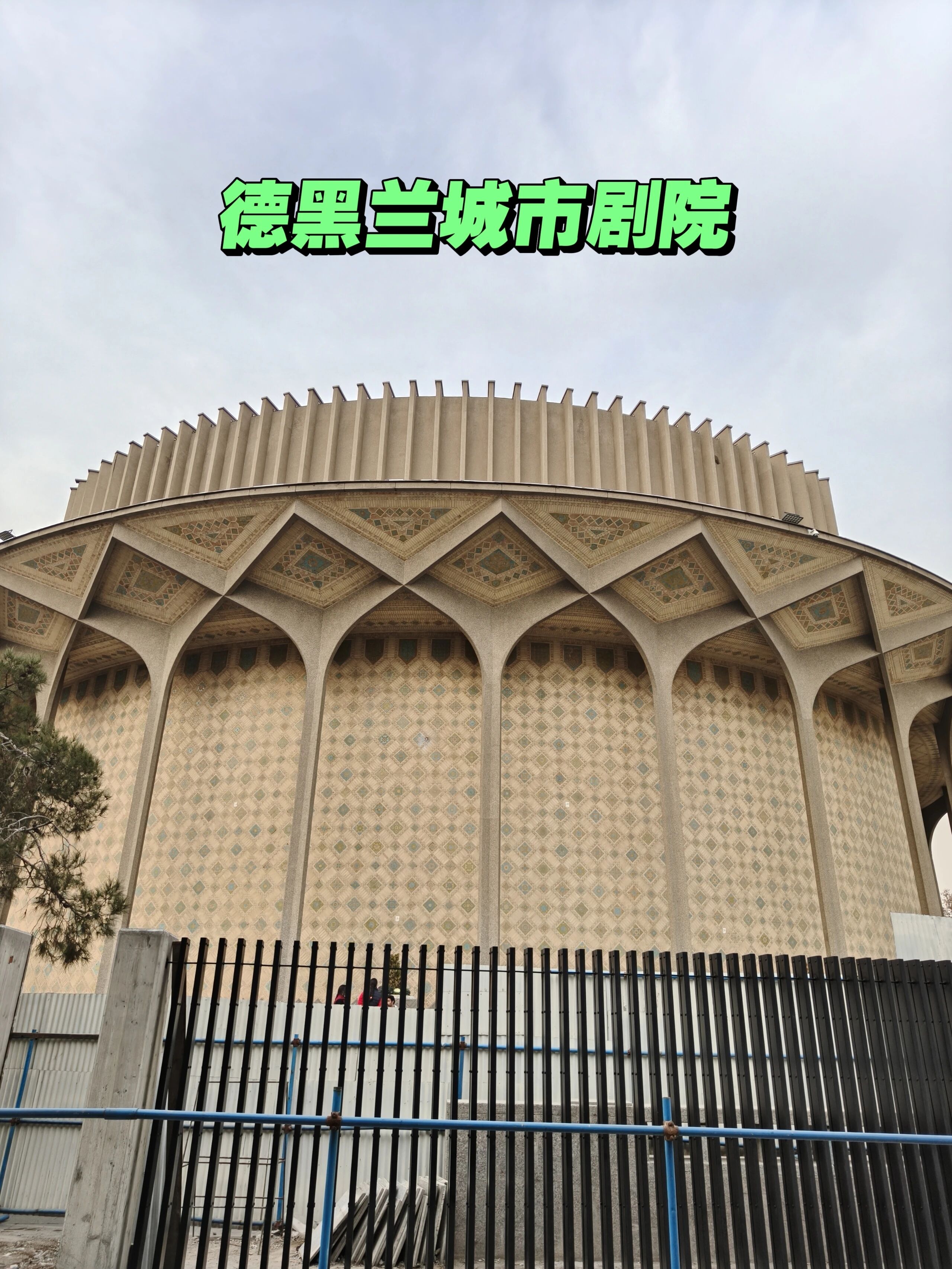
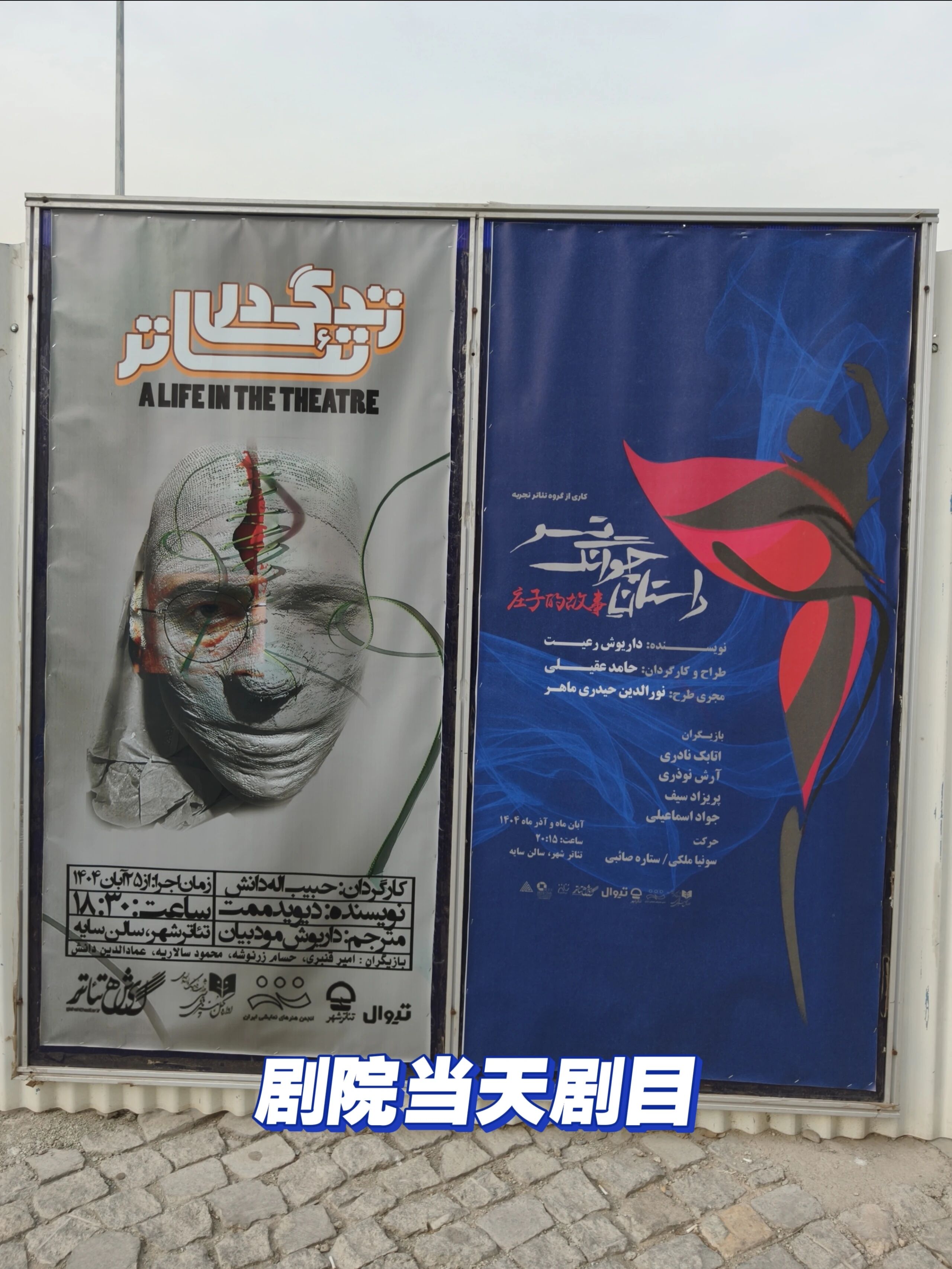
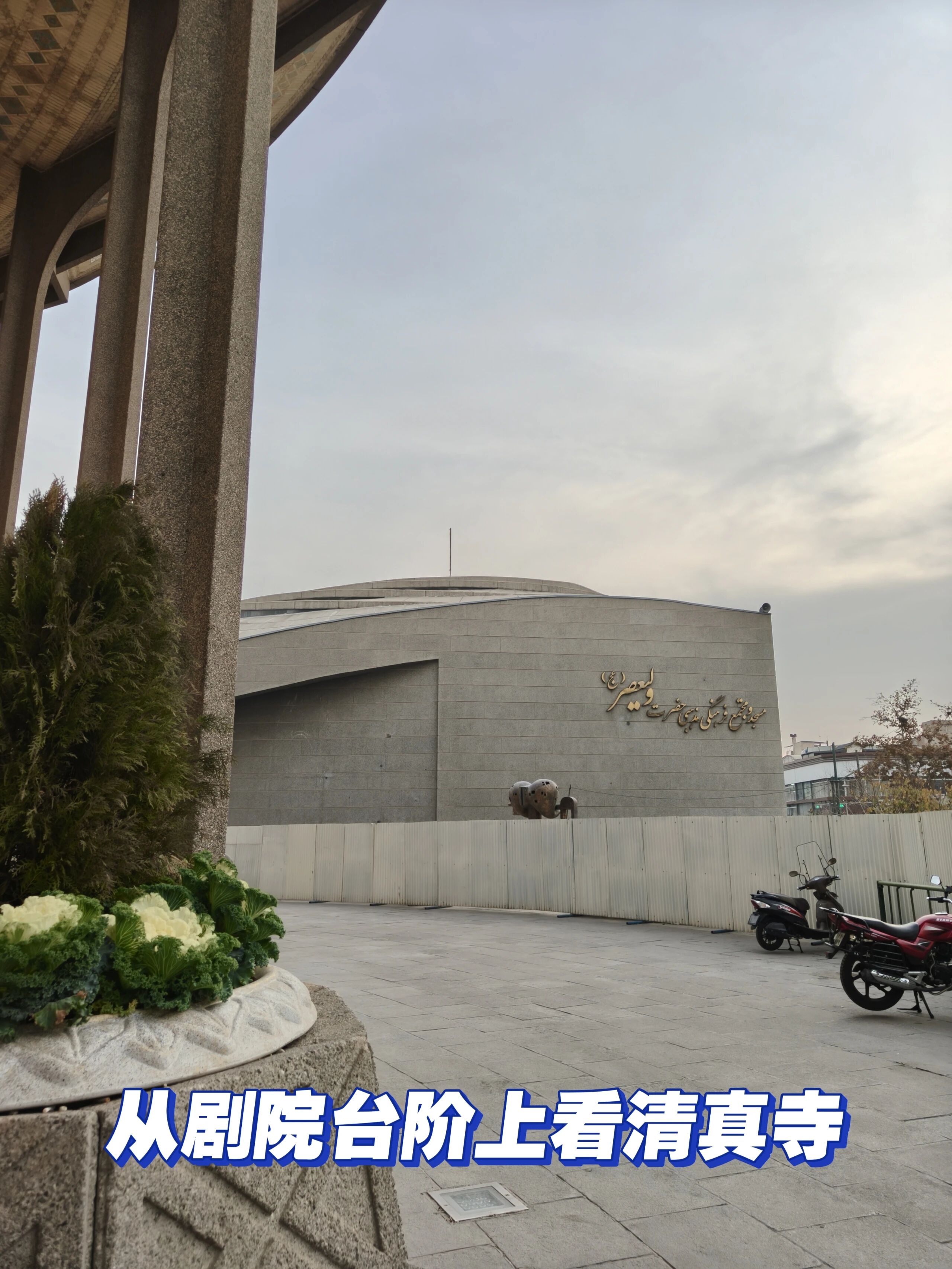
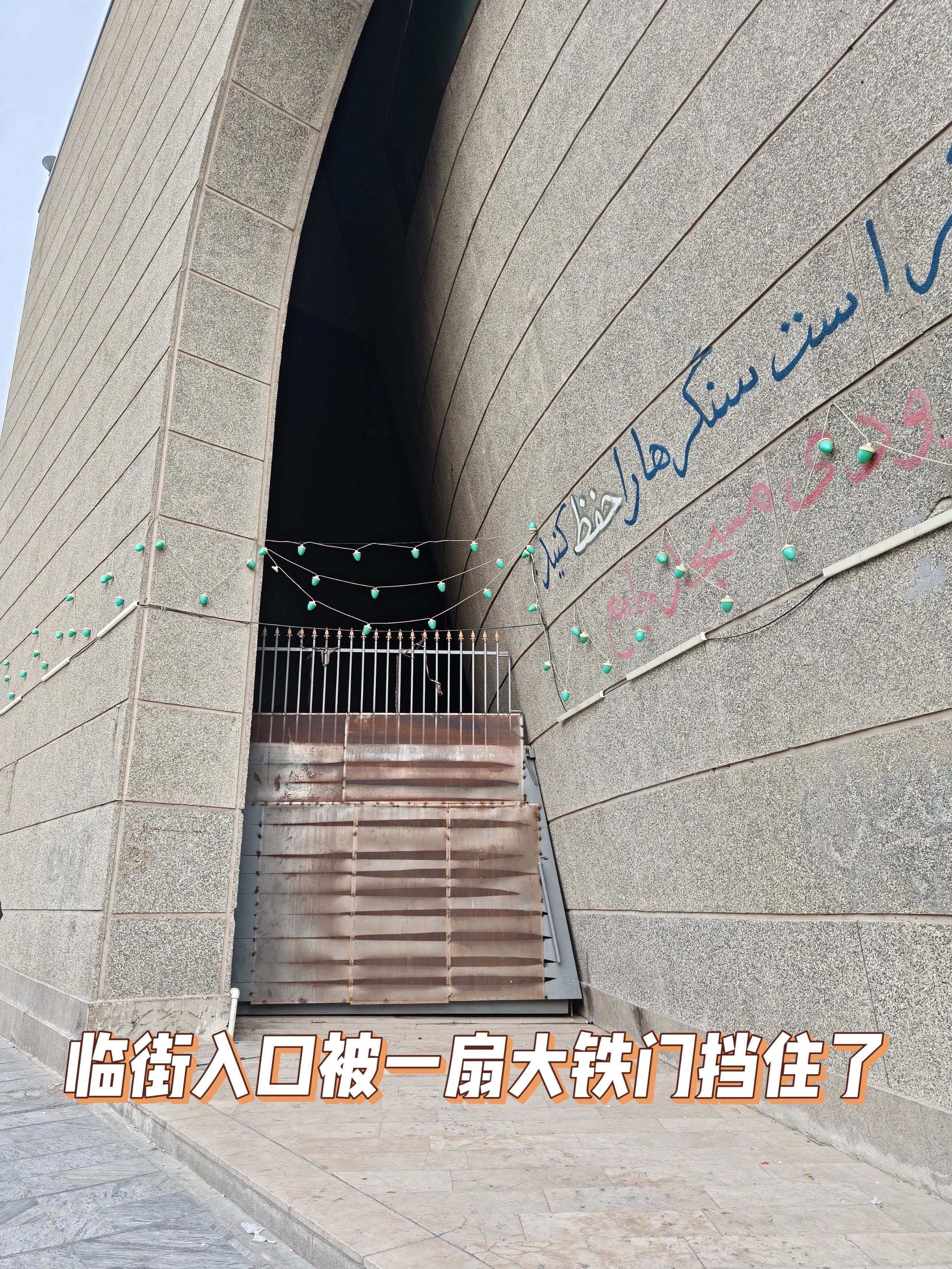
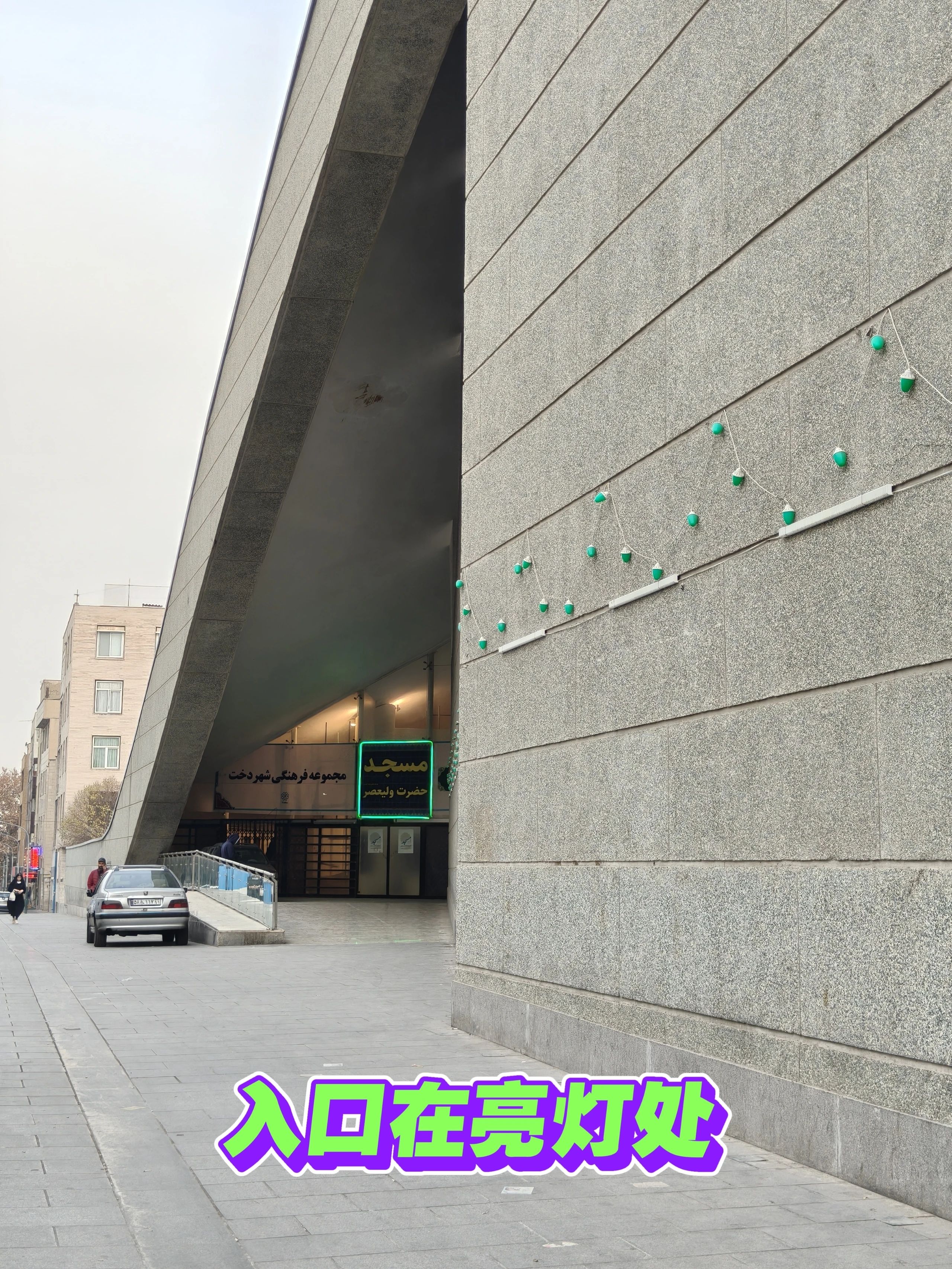
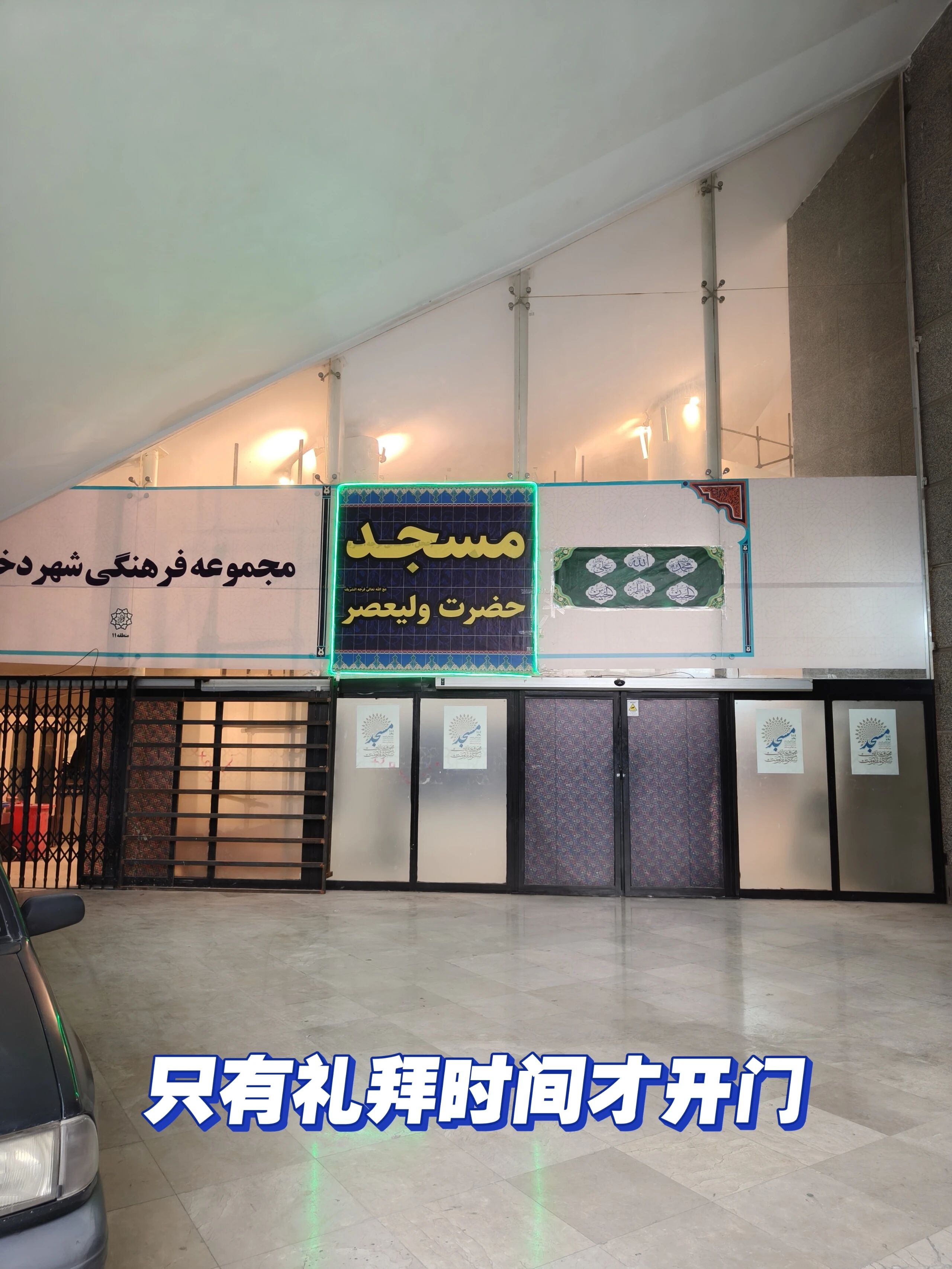
This mosque is next to the Tehran City Theater. It was not open when I first arrived, as Iranian mosques only open during prayer times (except for mausoleums).
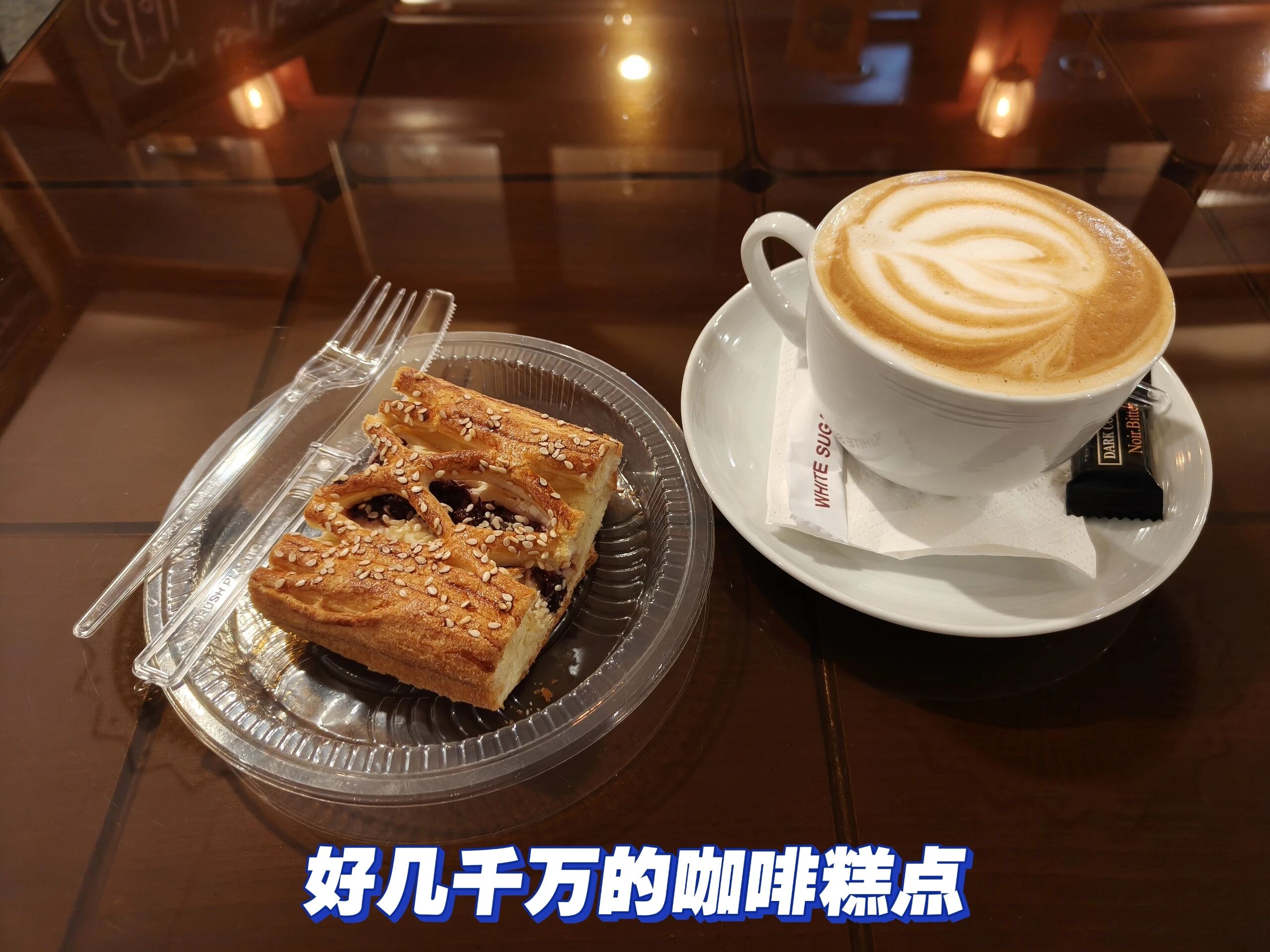
I used this time to go to a cafe in the basement of the Tehran City Theater, where I ordered a coffee and a pastry. It cost me several 10 million rial notes, which I roughly estimated to be about 40 to 50 yuan.
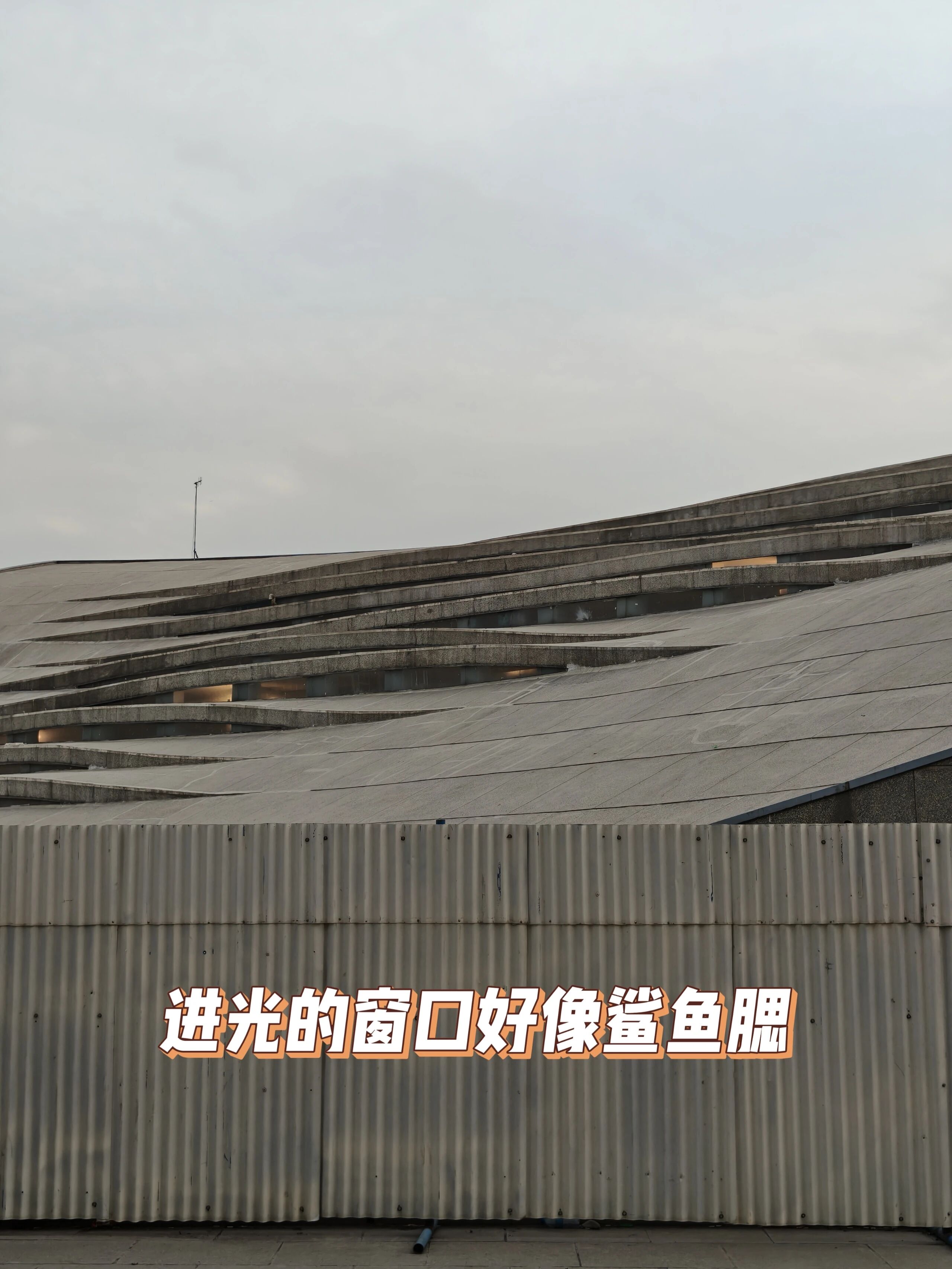
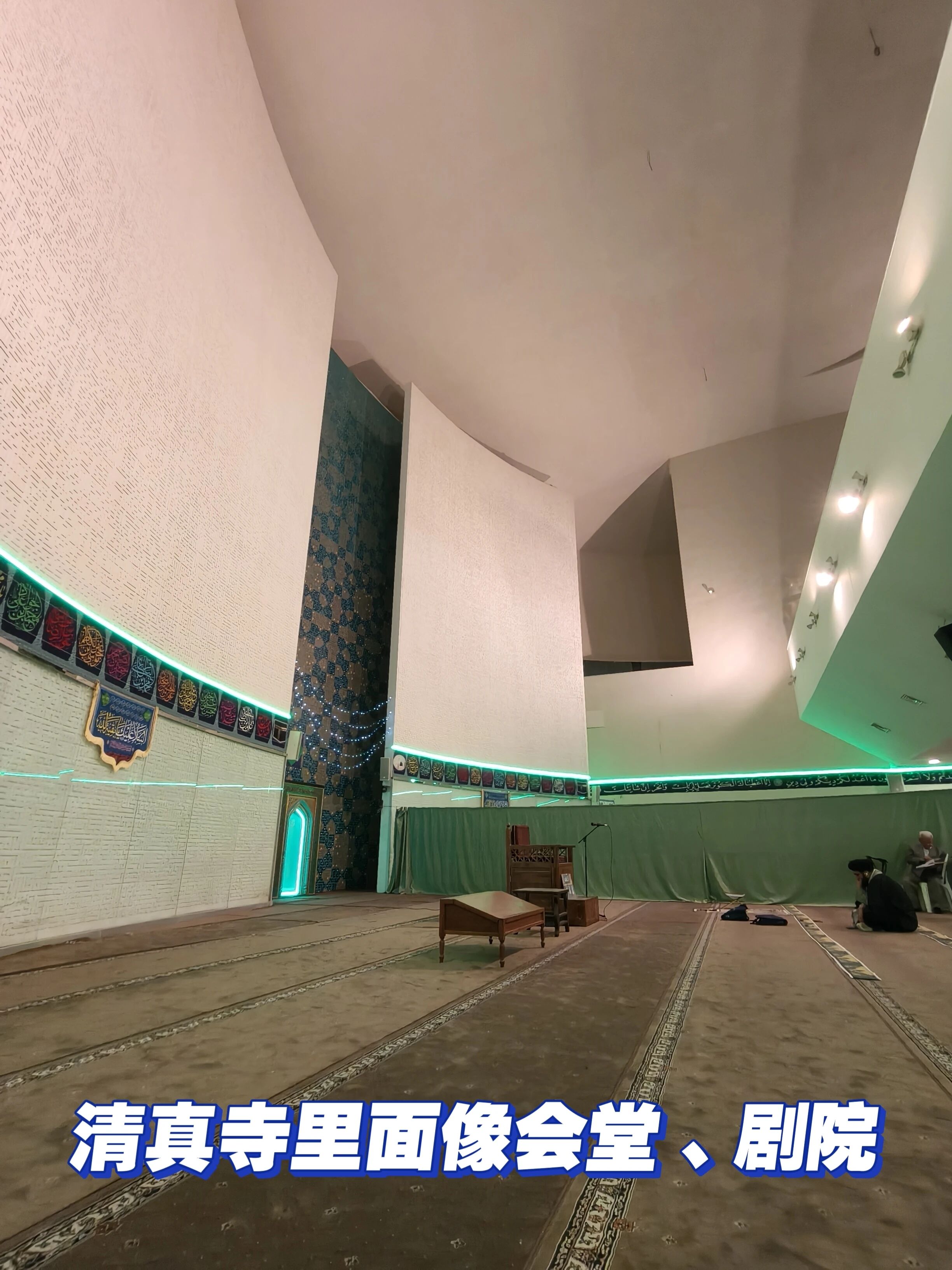
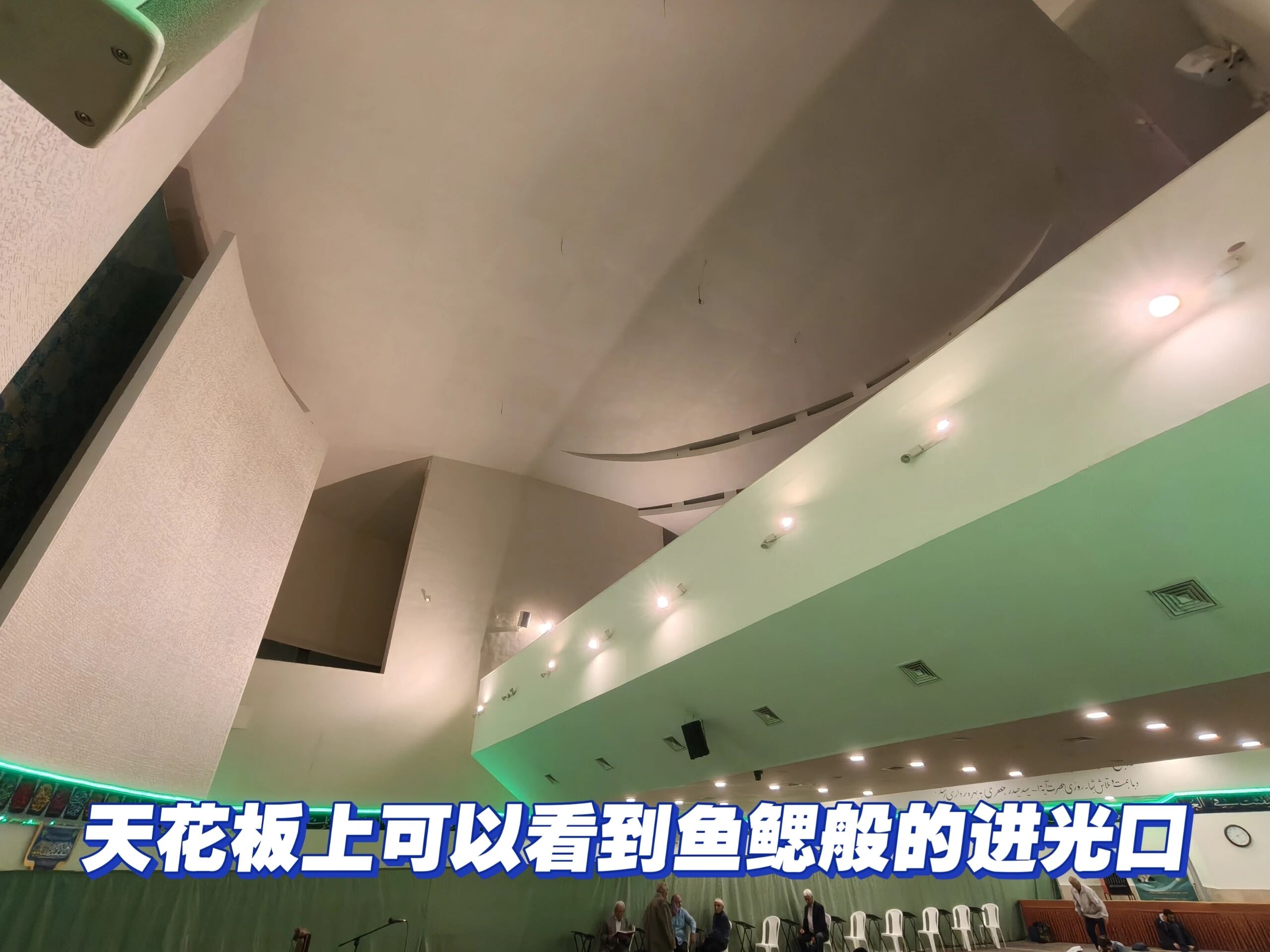
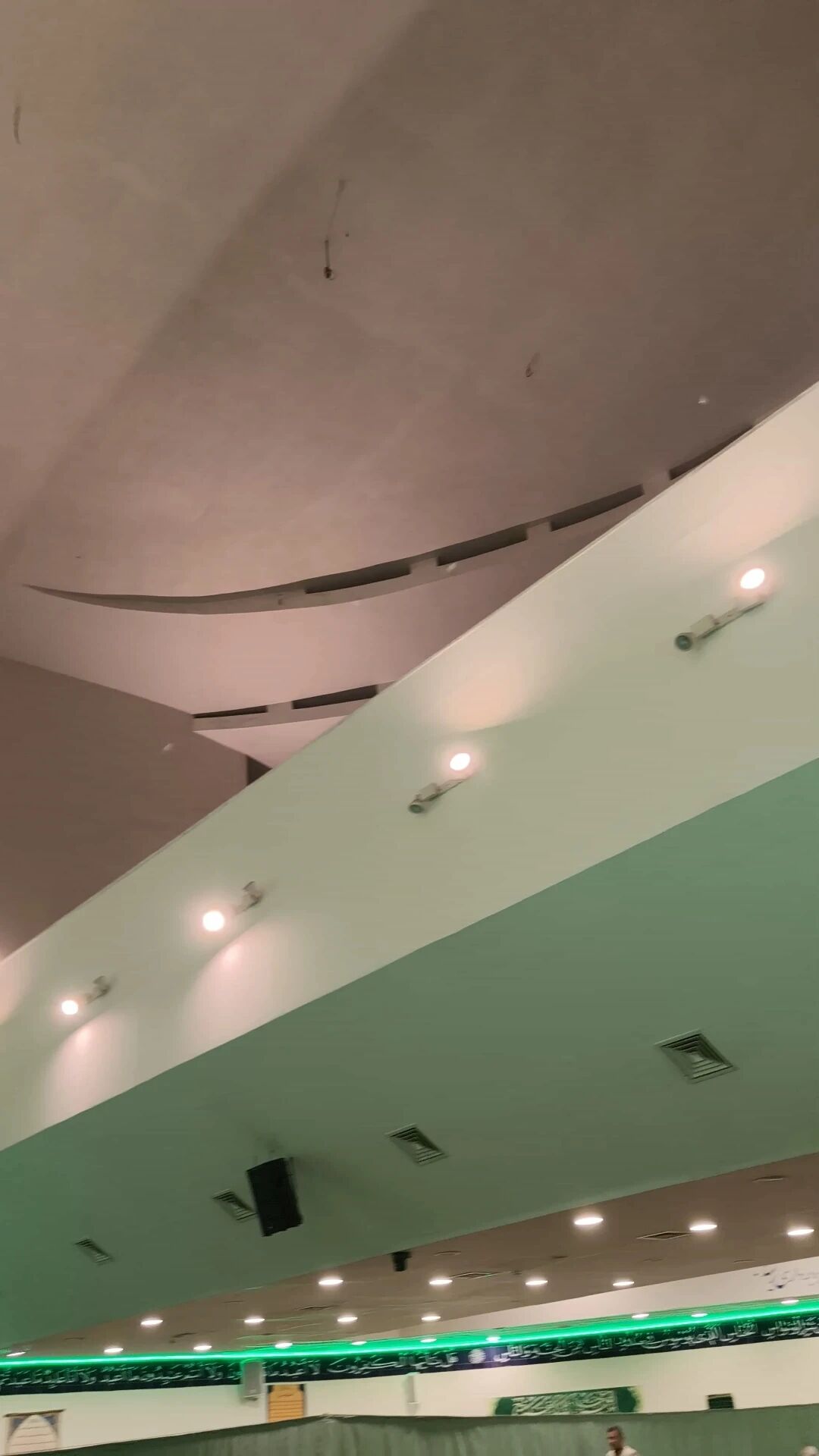
When I finally entered this modern-looking mosque, I found it was truly worth the trip. This building is different from any mosque I have visited before. It does not seek symmetry in its layout, the ceiling is not rectangular, and you can even see light inlets that look like shark gills.
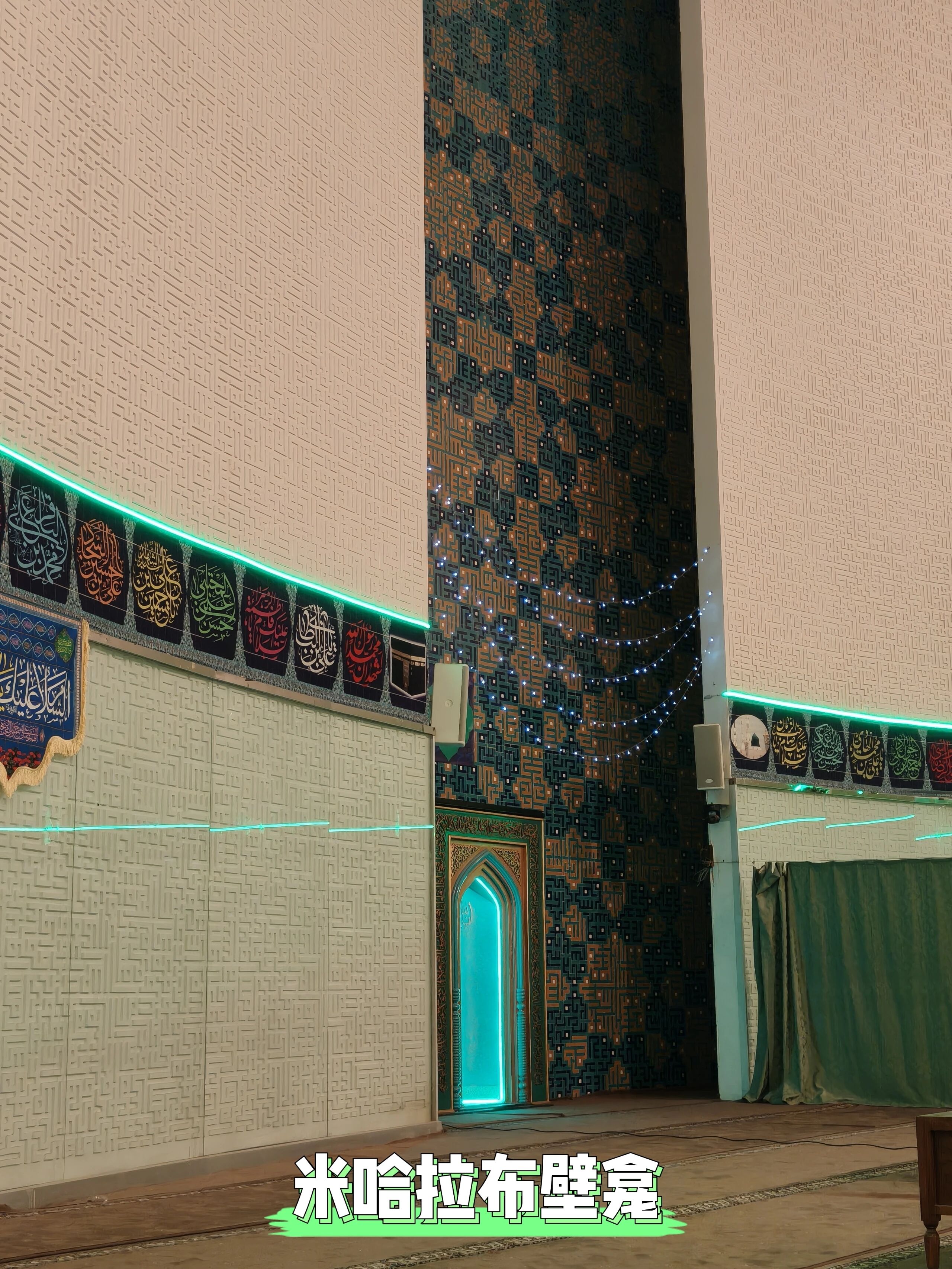
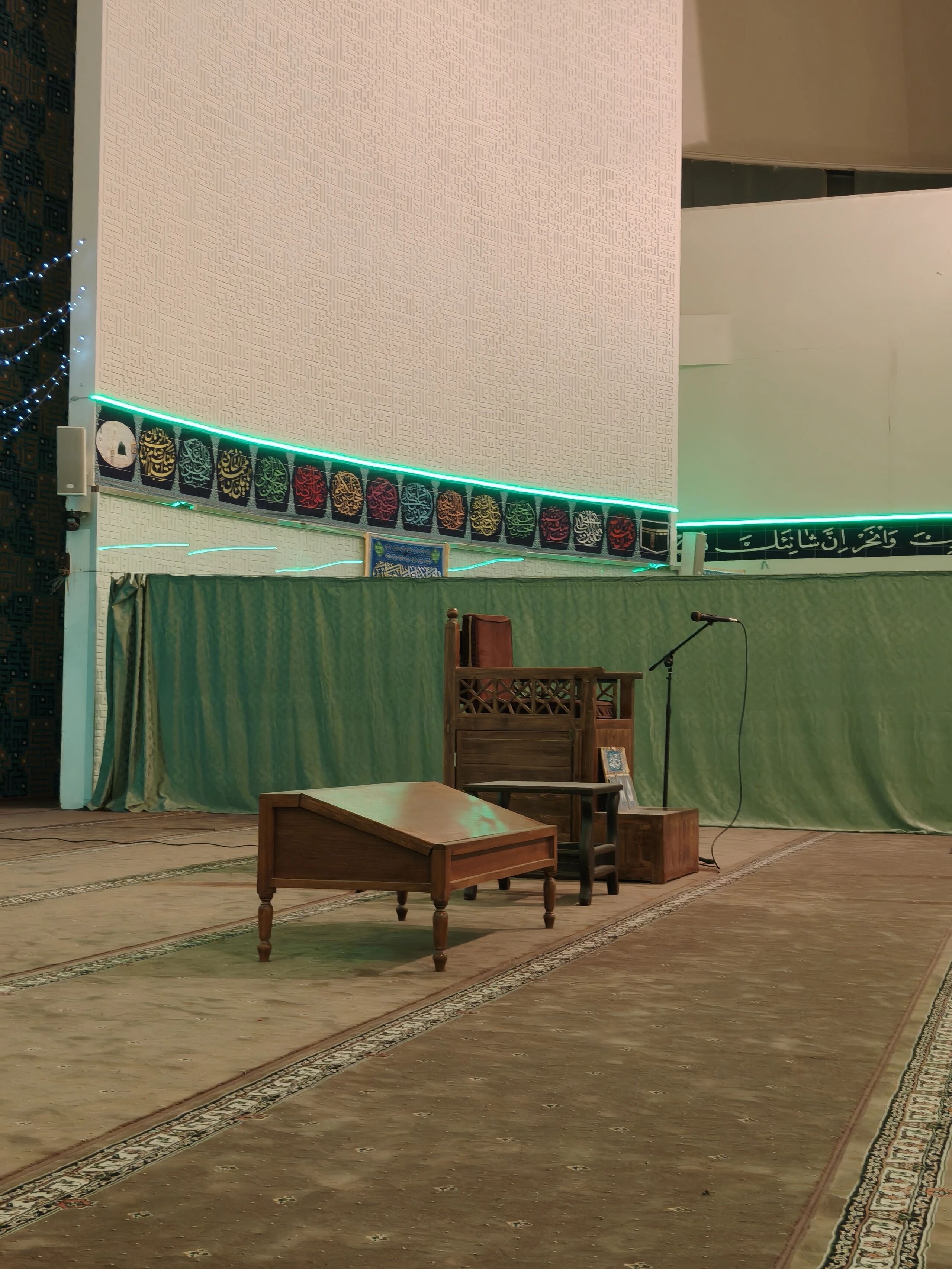
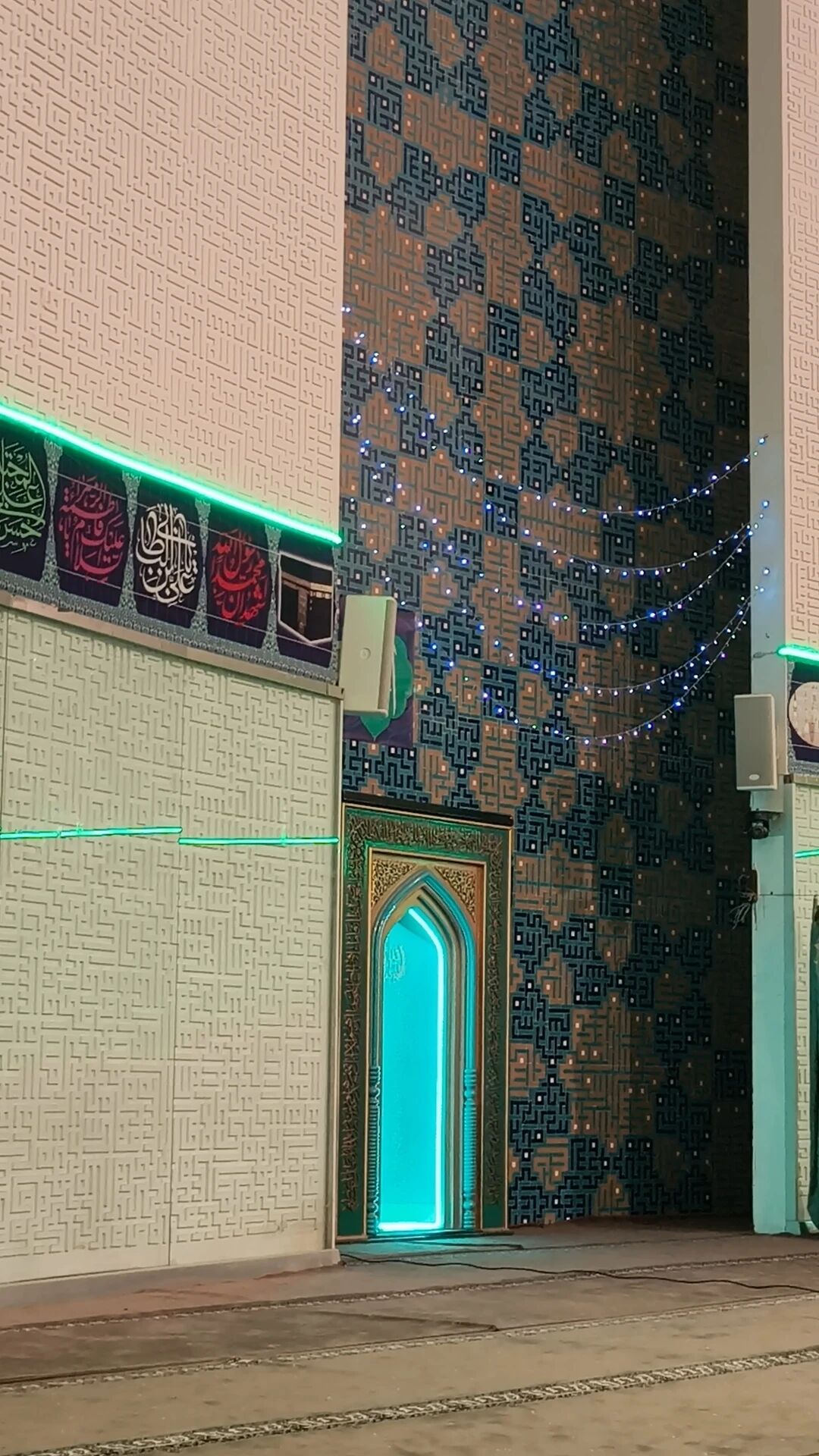
I looked around. It was mostly the same as the pictures in that article, but there were some extra decorations inside. The floor is now covered with carpets, and decorative calligraphy verses hang on the walls. A curtain in the middle separates the men's and women's prayer areas.
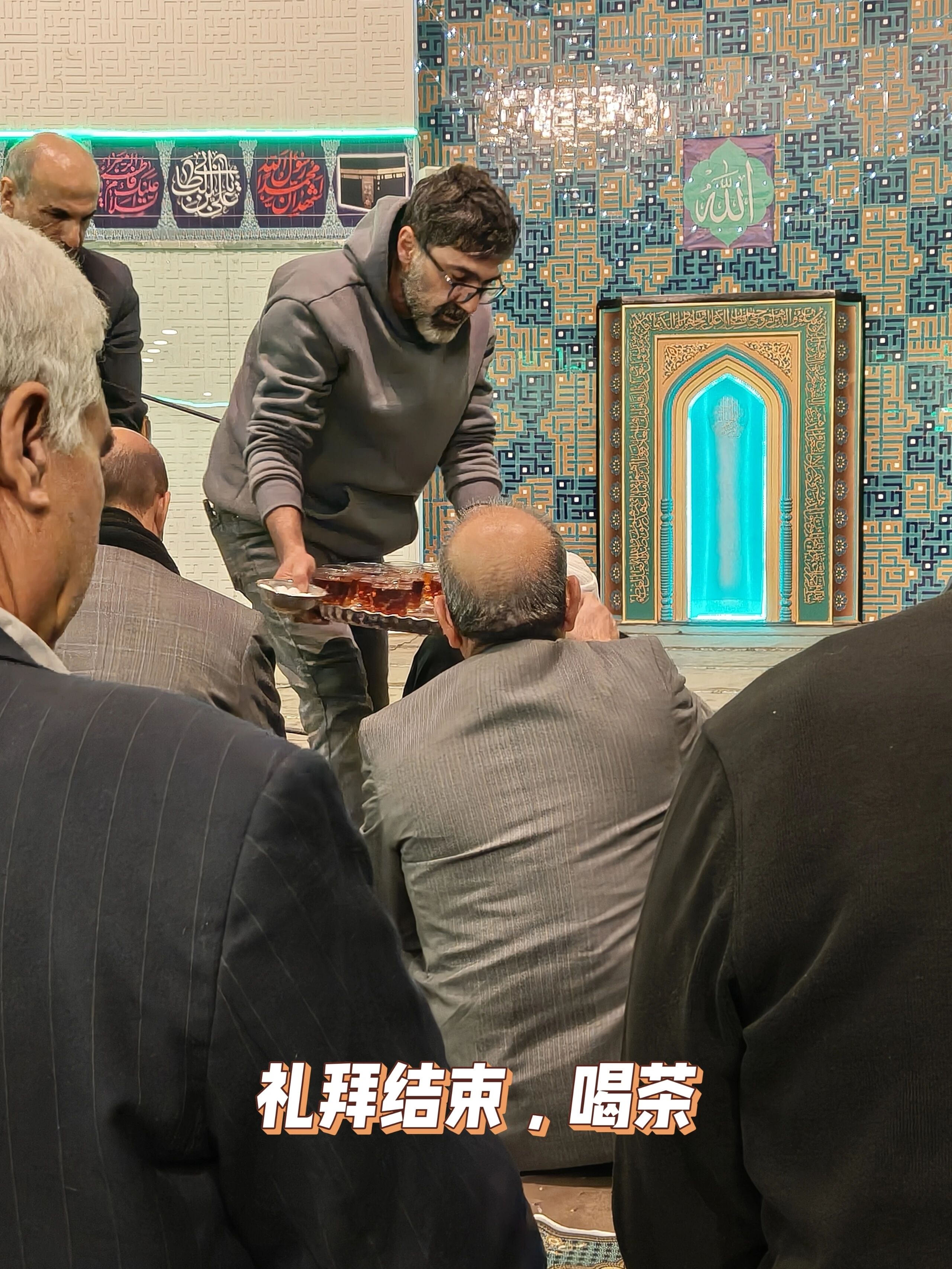
After finishing namaz, a man wearing glasses started handing out copies of the Qur'an, and he gave me one too. Then a man began to recite, and an older gentleman next to me pointed out exactly which chapter and verse he was reading. After the recitation, they served black tea. It was not bitter, and you could add sugar cubes to it.
I was about to leave after finishing my tea when a friendly mosque attendant stopped me to chat. He asked where I was from and if I was in Iran for work or something else. One man even called his friend to say that a Chinese person had come to the mosque. It felt like he had just met a celebrity.
A guy asked if I was Shia. When I said no, he tried to act calm, but I could tell he was a little disappointed. A young man joined our conversation. His English was good, and he said he used to go to school in the United States.
He asked where I was going next and offered to show me the way or help out. I am a bit shy and do not like to bother others, so I politely declined.
After heading out, I planned to go to the Freedom Tower and waited for a taxi by the side of the road, but I ran into a traffic jam again.
I also saw a car parked nearby with four Chinese characters, "Jing Hua Shui Yue" (flowers in the mirror and the moon in the water), and a sticker that said JDM, which originally meant Japanese Domestic Market cars but now refers to Japanese car modification culture. With the owner's permission, I took a photo of his beloved car. view all
Summary: This Iran Muslim travel guide follows a visit to Tehran's Vali-e-Asr Mosque, a modern mosque first noticed through an architecture article, with its hidden entrance, quiet indoor spaces, curved walls, simple prayer area, and a design that feels very different from classic mosque architecture.
Years ago, I read an article on the WeChat account Youth Architecture titled Can Religious Architecture Break Through Traditional Forms? | Modern Mosque Architecture (the article can still be searched online). It mentioned several mosques that were different from traditional buildings.
There were some in Singapore, some in Iran, and one in China. I went to Singapore a while ago, but did not have enough time to visit the mosque mentioned in that article. After landing in Iran, I remembered the article and searched for it, finding that the modern mosque in Iran was in the capital, Tehran.
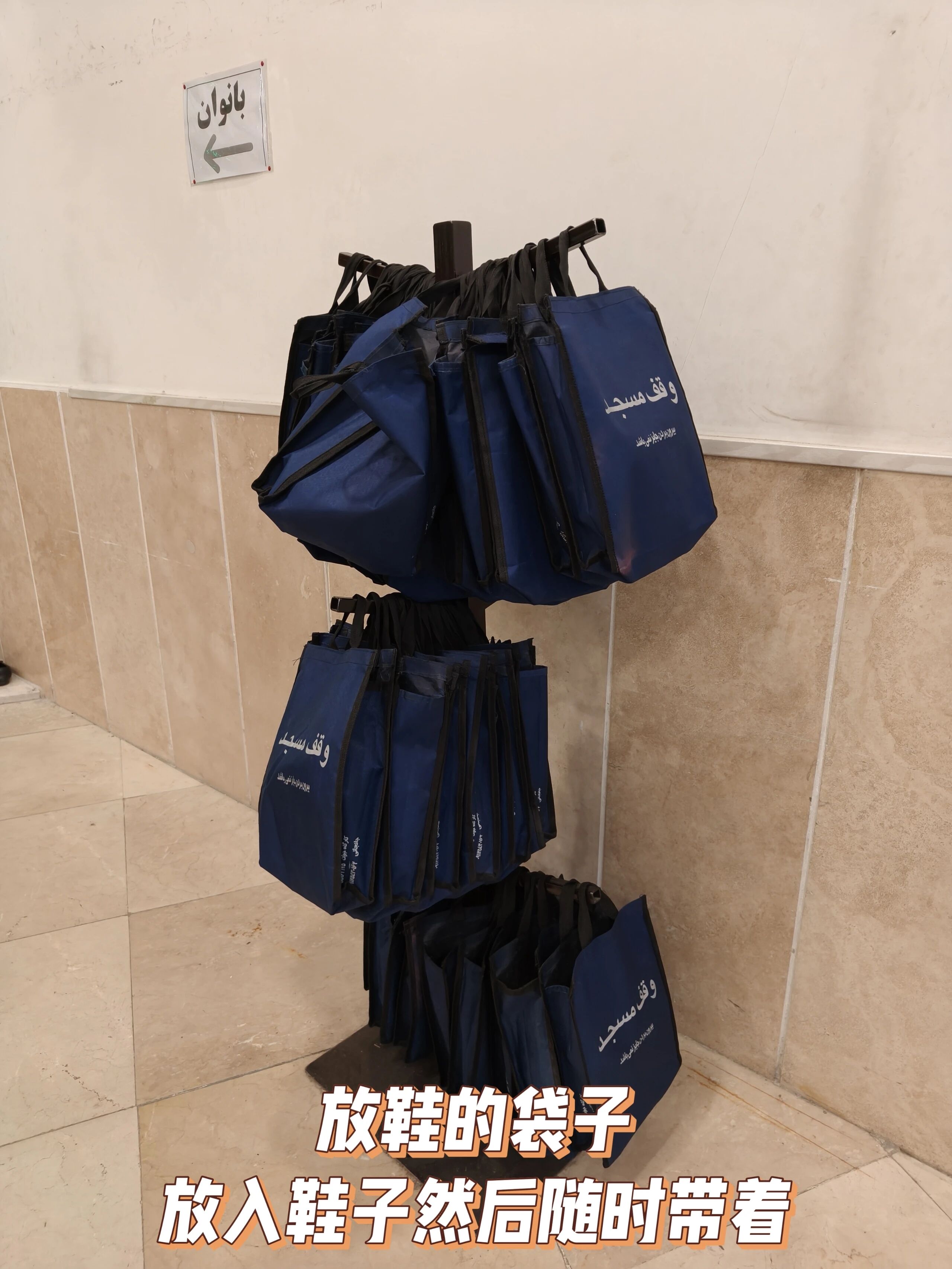

I was in Tehran at the time. So, I found some time and specifically took a taxi there.
This mosque is next to the Tehran City Theater. It was not open when I first arrived, as Iranian mosques only open during prayer times (except for mausoleums).
I used this time to go to a cafe in the basement of the Tehran City Theater, where I ordered a coffee and a pastry. It cost me several 10 million rial notes, which I roughly estimated to be about 40 to 50 yuan.
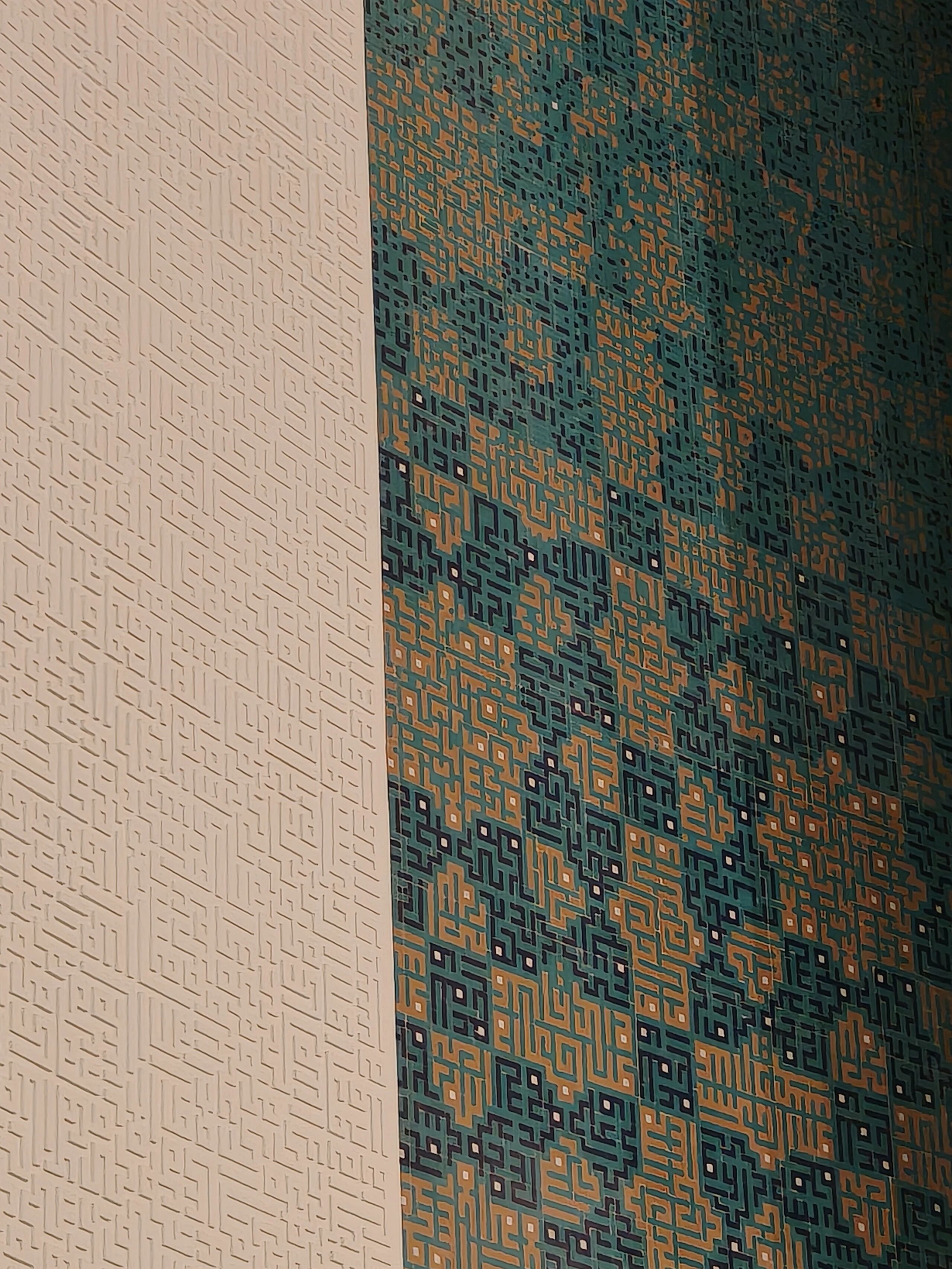
When I finally entered this modern-looking mosque, I found it was truly worth the trip. This building is different from any mosque I have visited before. It does not seek symmetry in its layout, the ceiling is not rectangular, and you can even see light inlets that look like shark gills.
I looked around. It was mostly the same as the pictures in that article, but there were some extra decorations inside. The floor is now covered with carpets, and decorative calligraphy verses hang on the walls. A curtain in the middle separates the men's and women's prayer areas.
After finishing namaz, a man wearing glasses started handing out copies of the Qur'an, and he gave me one too. Then a man began to recite, and an older gentleman next to me pointed out exactly which chapter and verse he was reading. After the recitation, they served black tea. It was not bitter, and you could add sugar cubes to it.
I was about to leave after finishing my tea when a friendly mosque attendant stopped me to chat. He asked where I was from and if I was in Iran for work or something else. One man even called his friend to say that a Chinese person had come to the mosque. It felt like he had just met a celebrity.
A guy asked if I was Shia. When I said no, he tried to act calm, but I could tell he was a little disappointed. A young man joined our conversation. His English was good, and he said he used to go to school in the United States.
He asked where I was going next and offered to show me the way or help out. I am a bit shy and do not like to bother others, so I politely declined.
After heading out, I planned to go to the Freedom Tower and waited for a taxi by the side of the road, but I ran into a traffic jam again.
I also saw a car parked nearby with four Chinese characters, "Jing Hua Shui Yue" (flowers in the mirror and the moon in the water), and a sticker that said JDM, which originally meant Japanese Domestic Market cars but now refers to Japanese car modification culture. With the owner's permission, I took a photo of his beloved car.
Tehran Reza Abbasi Museum: Persian Miniatures, Ceramics and Islamic Art
Articles • ali2007fr posted the article • 0 comments • 186 views • 2026-05-18 02:39
Summary: Tehran Reza Abbasi Museum: Persian Miniatures, Ceramics and Islamic Art is presented here as a firsthand travel account in clear English, beginning with this scene: In the second half of 1978, strikes and protests almost paralyzed all of Iran, and the Reza Abbasi Museum was forced to close in November. The account keeps its focus on Tehran Travel, Islamic Art, Persian Miniatures while preserving the names, places, food, and historical details from the Chinese source.
In the second half of 1978, strikes and protests almost paralyzed all of Iran, and the Reza Abbasi Museum was forced to close in November. In 1979, the Pahlavi dynasty fell, the Islamic Republic of Iran was established, and the Reza Abbasi Museum reopened. After closing and reopening several more times, the museum is now managed by the Iranian Cultural Heritage Organization and houses various precious Iranian artifacts from prehistoric times to the Islamic period.
Table of Contents
1. Miniatures from the Shahnameh (Book of Kings)
1. Shahnameh miniatures from the Ilkhanate period
2. Shahnameh miniatures from the Timurid period
3. Shahnameh miniatures from the Safavid dynasty period
2. Miniatures from the Compendium of Chronicles (Jami' al-tawarikh) from the Timurid Empire period
3. Other miniatures
4. Pottery from the 9th to 10th centuries unearthed in the ancient city of Nishapur in Khorasan
5. Ceramics from the 12th to 14th centuries from the ancient Iranian city of Kashan
6. Iranian tiles from the 12th to 13th century Seljuk Empire and
the Ilkhanate period.
7. A gold-inlaid silver plate made in 1009 AD.
1. Miniatures from the Shahnameh (Book of Kings)
Persian miniature painting emerged during the Mongol invasion in the 13th century. During the Ilkhanate rule in the 13th and 14th centuries, the royal court moved often for seasonal changes, wars, and hunting. Portable books became the best surface for painting, and the art of miniatures continued to grow. The Mongols brought many Eastern artistic influences to Persian miniatures. For example, some mythical beasts were drawn to look like qilin, phoenixes, pixiu, and Chinese dragons.
Several centers for Persian miniature painting appeared between the 13th and 15th centuries. As the capital of the Ilkhanate, Tabriz was the earliest center for miniatures, and Baghdad, which was under Persian rule at the time, was also very important. In the mid-to-late 14th century, Shiraz in southern Iran became a center for literature and art, and Shiraz miniatures became world-famous. By the early 15th century, after the Timurid era, Bukhara and Herat became centers for miniatures under the patronage of the Timurid royal family. During this period, each miniature painting center had its own unique style. These styles did not gradually merge until the Safavid dynasty ruled in the 16th century.
1. Miniature paintings from the Book of Kings (Shahnameh) during the Ilkhanate period.
During the Ilkhanate period, miniature paintings based on classic Persian poetry began to appear. The most famous is the Persian epic poem Book of Kings (Shahnameh), written by the Persian poet Ferdowsi between 977 and 1010. It describes the myths and historical legends of the Persian Empire from its founding until it was conquered by the Arabs in the 7th century.
The earliest surviving Ilkhanate manuscripts of the Book of Kings are three small manuscripts. This small size was likely more convenient to carry while moving between nomadic camps.
The two images below are illustrations from the manuscript known as the First Small Book of Kings, which is believed to be in the late 13th-century Baghdad style.
This depicts the Iranian prince Salm killing his younger brother Iraj out of jealousy. Years later, Iraj's grandson, the legendary king Manuchehr, killed Salm to avenge his grandfather.
The two images below are illustrations from the manuscript known as the Second Small Book of Kings, which is believed to be in the late 13th-century Baghdad style.
This depicts the Kabul princess Rudaba talking to her female slave so she could meet her husband, the Iranian king Zal. Rudaba is the mother of the legendary hero Rostam, the protagonist of the Book of Kings.
This depicts Ardashir, the founder of the Persian Sasanian dynasty, receiving a warning from his enemy Haftvād.
There are four other manuscripts produced in the early 14th century by the Injuid family, who ruled the Shiraz and Isfahan regions of southern Iran and were semi-independent from the Ilkhanate.
The image below is one of these, done in the Shiraz style. It shows the Iranian hero Bahram being mortally wounded by Tazhav while fighting the Turanians (the Persian name for Central Asian people), a scene from shortly before his death.
Among the Shahnameh manuscripts from the Ilkhanate period, the most famous one is known as the Great Mongol Shahnameh, the Great Ilkhanid Shahnameh, or the Demotte Shahnameh. It is considered the greatest work of early Persian miniature painting.
In the early 14th century, the Persian Jewish vizier of the Ilkhanate, Rashid al-Din, set up a book production department in the suburbs of the Ilkhanate capital, Tabriz, specifically to create books containing miniature paintings. After Rashid al-Din died in 1318, his son Ghiyath al-Din Muhammad continued his father's work by producing miniature manuscripts in the 1330s.
Based on research by later historians, it is believed that Ghiyath al-Din Muhammad produced the Great Mongol Shahnameh manuscript in Tabriz in 1335, under the patronage of the ninth Ilkhanid ruler, Abu Sa'id Bahadur Khan (reigned 1316–1335).
The Great Mongol Shahnameh was kept in Tabriz until the 16th century, after which it entered the library of the Golestan Palace in Tehran. In the late 19th century, taking photographs of the manuscript was still restricted.
In the early 20th century, the Belgian art dealer Georges Demotte, who was active in Paris, acquired the Great Mongol Shahnameh. Because he could not get a suitable price from potential buyers like the Metropolitan Museum of Art, Demotte eventually tore the manuscript apart to sell it in pieces. To hide the damage caused by tearing the book apart, Demotte hired calligraphers to add new text to the manuscript, which greatly annoyed buyers who could read Persian.
The image below is an illustration from the Tabriz-style Great Mongol Shahnameh, depicting the hanging of Mani.
2. Shahnameh miniature paintings from the Timurid dynasty
During the Timurid dynasty, Bukhara became a center for producing the Book of Kings (Shahnameh).
The image below shows a late 14th-century illustration of the Book of Kings in the Herat style, depicting the Iranian hero Bahram shooting his prey.
The image below shows an early 15th-century miniature painting of the Book of Kings in the Bukhara style, depicting Garsiwaz killing his brother, the Turanian king Afrasiab.
3. Miniature paintings of the Book of Kings from the Safavid dynasty period
During the Safavid dynasty's rule over Iran in the 16th and 17th centuries, the production of Book of Kings miniature paintings saw a revival. Ismail I (reigned 1502-1524), the founder of the Safavid dynasty, used the production of Book of Kings manuscripts to emphasize the authority of Persian kings and to strengthen Persian patriotism. Later generations consider the miniature painting created during the Safavid period to be the last great era of the art form.
A 16th-century miniature painting of the Book of Kings in the Tabriz style, depicting the hero Esfandiyar slaying a dragon. Esfandiyar was an Iranian prince, and his father once sent him to suppress a rebellion and rescue a kidnapped princess. On his journey, he fought seven different battles, one of which was killing a dragon.
A 16th-century miniature painting of the Book of Kings in the Tabriz style, depicting the legendary hero Rostam fighting his enemies.
A late 16th-century miniature painting of the Book of Kings in the Khorasan style, depicting the Turanian king Afrasiab being led out of a cave by Houm.
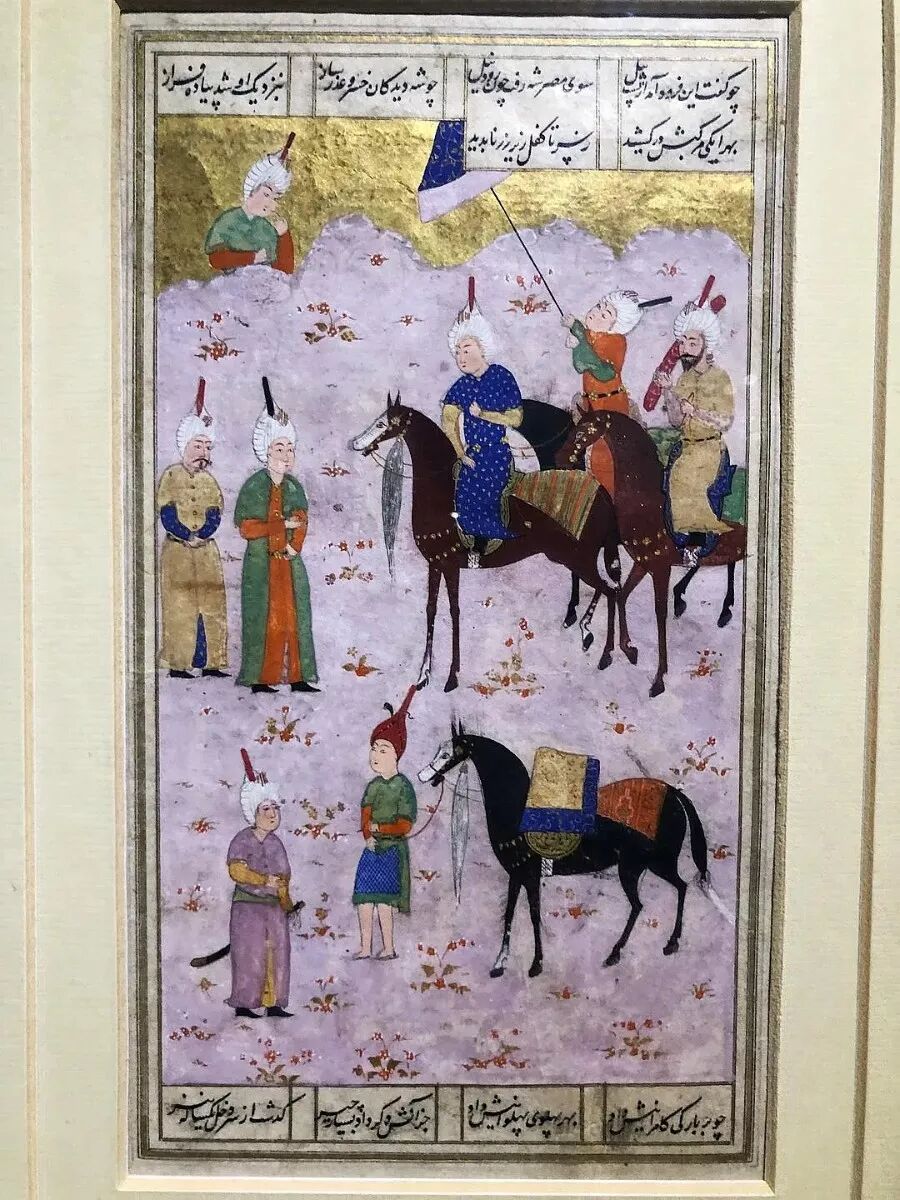
A 16th-century Shiraz-style miniature painting from the Shahnameh, showing the Iranian hero Bahram on his way to Egypt.
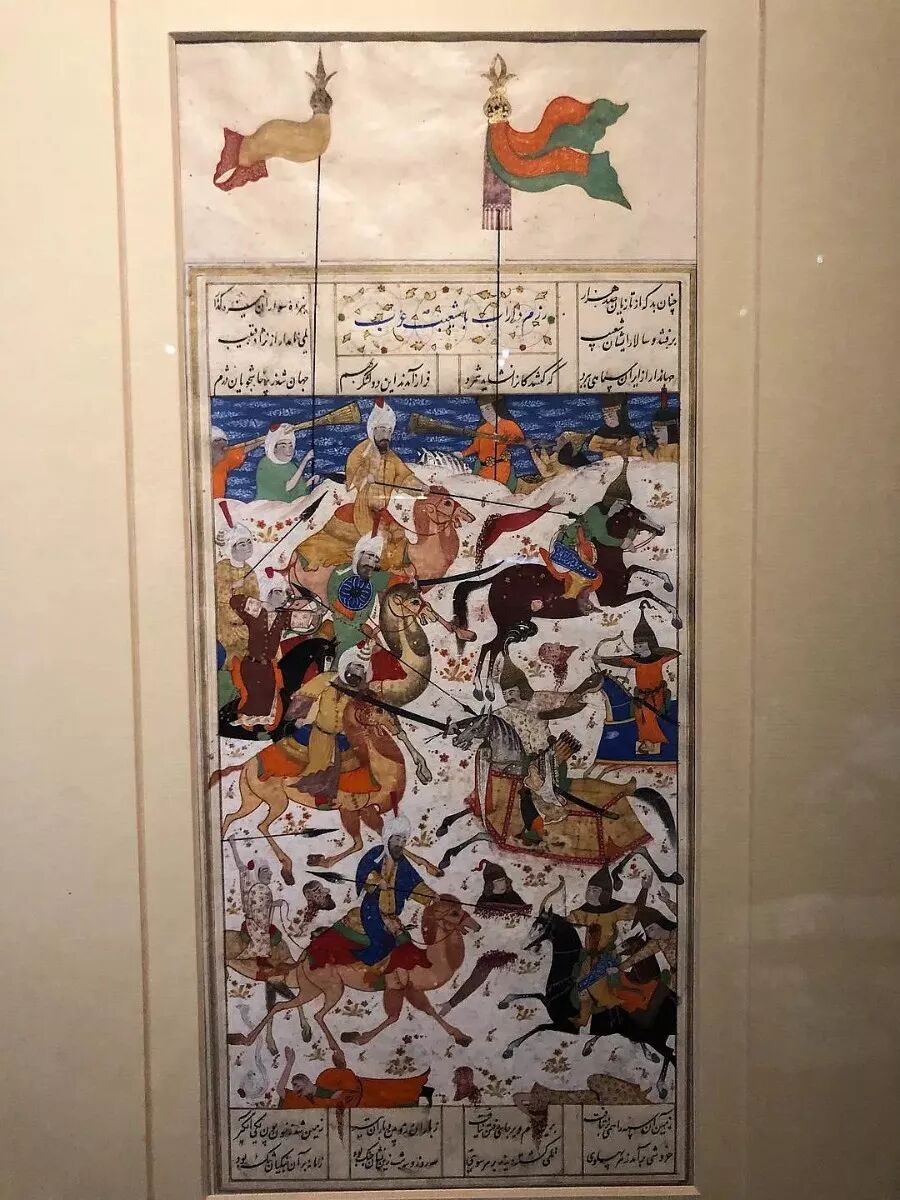
A 16th-century Tabriz-style miniature painting from the Shahnameh, showing the war between Darab, Shoaib, and the Arabs.
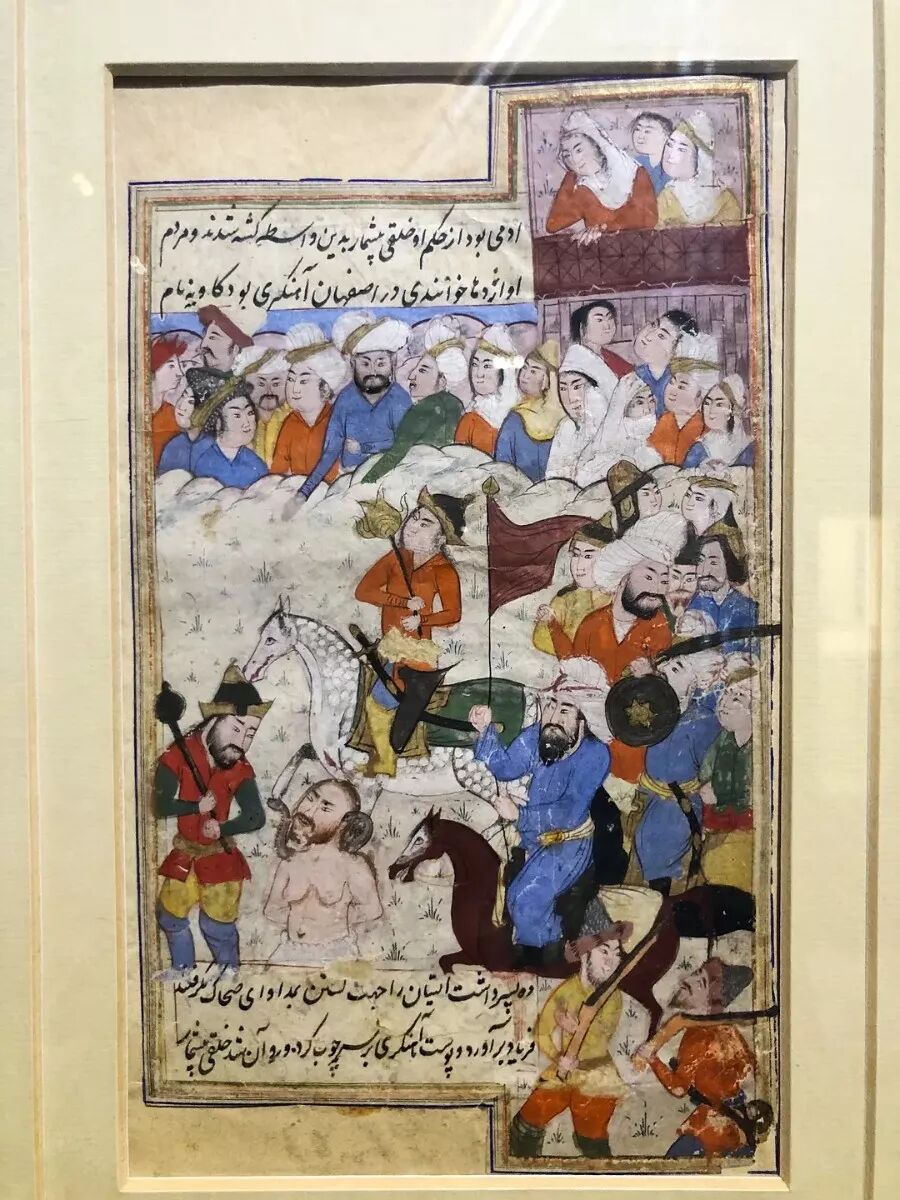
A late 16th-century Shiraz-style miniature painting from the Shahnameh.
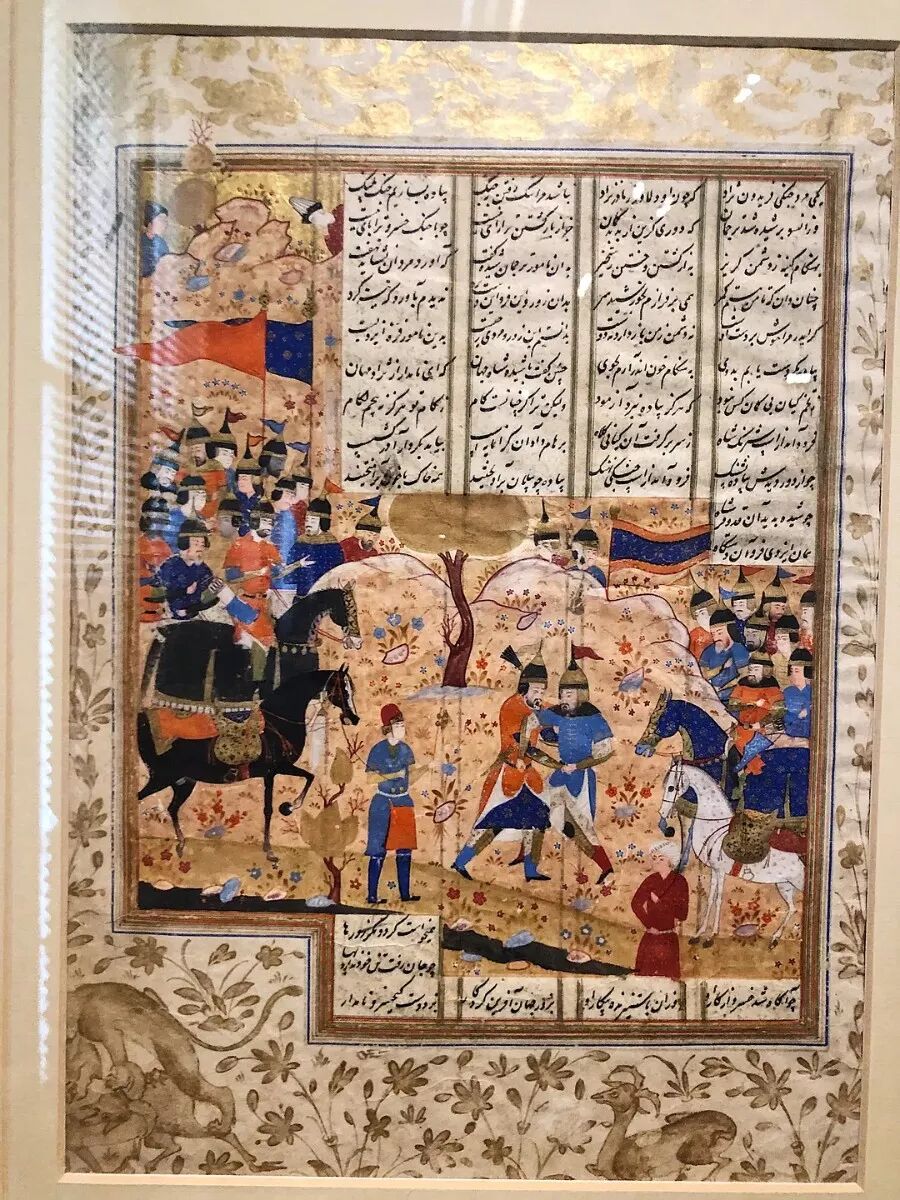
A 17th-century Shiraz-style miniature painting from the Shahnameh, showing the war between the legendary King Kay Khosrow of the Iranian Kayanian dynasty and King Shideh of Turan.
3 Produced by Tahmasp I of the Safavid dynasty.
Tahmasbi Shahnameh miniature painting.
The Tahmasbi Shahnameh, also called the Houghton Shahnameh, was commissioned by Tahmasp I (reigned 1524-1576) of the Safavid dynasty. The greatest painters of the Safavid era worked on it, and it originally included 258 miniature paintings. Because the Safavid capital was in Tabriz at the time, the Tahmasbi Shahnameh has a Tabriz style.
In 1959, the famous collector Arthur Houghton bought this Shahnameh from the wealthy French Jew Edmond de Rothschild. Only 118 miniature paintings remained at that time.
Since 1962, Arthur Houghton broke up the Tahmasbi Shahnameh and donated 88 of the paintings to the Metropolitan Museum of Art in New York to avoid taxes (Houghton had served as the president of the Metropolitan Museum of Art for many years). After that, Houghton auctioned off the miniature paintings several times. After Houghton died in 1990, the Houghton Foundation decided to sell the collection for 13 million dollars, but no one bought it because the price was too high. British seller Oliver Hoare suggested that Iran trade the remaining Shahnameh miniatures for the painting Lady No. 3 by Dutch artist Willem de Kooning, because the painting was banned from public display in Iran for being anti-Islamic. In the end, the Tahmasbi Shahnameh returned to Iran.
The image below shows the Sassanid king Bahram Chobin (reigned 590-591) fighting Sava Shah.
A Shahnameh miniature produced by Ismail II of the Safavid dynasty.
Ismail II (reigned 1576-1577) was the third ruler of the Safavid dynasty. At that time, the Safavid capital was Qazvin, Iran (1548–1598), so the miniatures from this period have a Qazvin style.
The image below shows the author of the Shahnameh, Ferdowsi, walking toward several court poets of the Ghaznavids. An enlarged version of this miniature is posted in the hall right at the entrance of the Reza Abbasi Museum. It is also the cover of the book Entering the Orchard in Spring.
Reproduction:
The image below shows the legendary Iranian prince Siavash undergoing a trial by fire, while his father, the Iranian king Kay Kavus, and his stepmother, Queen Sudabeh, watch from a balcony.
The image below shows Siavash hunting with the Turanian king Afrasiyab. The second part of the Shahnameh says that Siavash willingly became a hostage in Turan so that Iran and Turan could have peace. However, the king broke the peace treaty and committed a series of atrocities, which made Siavash decide to start a new life in Turan. King Afrasiyab of Turan gave Siavash a warm welcome, and Siavash fell in love with the king's daughter and married her.
The image below shows the story of the mythical bird Simurgh taking care of the great hero Zal. Simurgh is a kind mythical bird in Iranian legends, similar to a phoenix. It appears often in various Iranian myths, most famously in the Shahnameh.
In the Shahnameh, the Iranian hero Saam's son, Zal, was born with albinism. Saam thought his son was a demon's child, so he abandoned him on Mount Alborz. The kind Simurgh living on the mountain peak heard the baby crying and raised him. Zal learned much wisdom and knowledge from the loving Simurgh.
In the picture, the mythical bird Simurgh is holding the baby Zal, and below them is Zal's father, Saam.
The image below shows the scene of the Iranian hero Esfandiyar slaying a dragon. Esfandiyar was an Iranian prince, and his father once sent him to suppress a rebellion and rescue a kidnapped princess. On his journey, he fought seven different battles, one of which was killing a dragon.
The image below shows the scene of the Iranian hero Esfandiyar killing the Turanian hero Biderafsh. When the King of Turan learned that the Iranians had converted to Zoroastrianism, he wrote a letter to the King of Iran demanding they abandon their faith and sent Biderafsh as a messenger to Iran. The King of Iran refused the demand, which started a war between Turan and Iran. During the war, Biderafsh was killed by the Iranian hero Esfandiyār.
The image below shows the legendary Iranian King Kay Khosrow talking with the Iranian heroes Zal, Rostam, and others.
The image below shows the legendary Iranian King Kay Khosrow crossing a river with his mother Farangis and the hero Giv.
The image below shows the King of Yemen, Sarv, sitting on his throne with his three daughters on his left and the three sons of the mythical Iranian King Fereydun on his right.
The image below shows the Iranians surrounded by the Turanian army on Mount Hamawan as they watch reinforcements arrive.
The image below depicts the tragic story between the Iranian hero Rostam and his son Sohrab. Once, Rostam followed the tracks of his lost horse to the Kingdom of Samangan, where he met Princess Tahmina. The princess admired Rostam greatly, so she came to his room at night and said that if he gave her a child, she would return his horse. Rostam agreed and did so. Before leaving, Rostam gave the princess two tokens. If she gave birth to a girl, she should braid the tokens into the child's hair along with some jewelry. If it was a boy, they tied the token to the child's arm. Later, the princess gave birth to a boy and named him Sohrab.
Many years later, Iran and Turan went to war. As a legendary hero of Iran, Rostam forced the Turan army to retreat, and no one dared to face him. Eventually, Sohrab and Rostam fought each other. Although he knew his father was named Rostam, he did not know that the man in front of him was his father. After a long battle, Rostam finally broke Sohrab's back and stabbed him. Before he died, Sohrab said his father would avenge him, and that was when the father and son finally recognized each other. Sohrab took out the token his mother had given him. Rostam was heartbroken, but he could not save his son.
Other miniature paintings in the Qazvin style.
The image below is a 16th-century Qazvin-style miniature painting from Saadi's The Orchard (Bustan).
The Orchard (Bustan) is a collection of lyric poems completed by the famous Persian poet Saadi in 1257. It is considered one of Saadi's two greatest works, alongside The Rose Garden (Golestan).
2. Miniatures from the Compendium of Chronicles (Jami' al-tawarikh) from the Timurid Empire period
The Compendium of Chronicles (Jami' al-tawarikh) is a world history book from the Ilkhanate period. It was commissioned by the seventh Ilkhan, Ghazan (reigned 1295-1304), and edited by his vizier and scholar Rashid-al-Din Hamadani. Because of its scope, the book is known as the first world history. It covers various histories, cultures, and major events from China to Europe.
By the early 14th century, the Mongols of the Ilkhanate had settled down and adopted Persian cultural customs. Ghazan's original idea was to write a book that preserved the traditions of the Ilkhanate Mongols by explaining their history on the steppes. To compile the history, Rashid-al-Din set up a special area at the Rab'-e Rashidi university in the Ilkhanate capital of Tabriz. This area included many buildings such as a mosque, a hospital, a library, and classrooms.
After Ghazan died in 1304, his successor, Öljaitü (reigned 1304-1316), asked Rashid-al-Din to expand the scope of the compilation to cover the entire known world history. The Compendium of Chronicles was finally completed between 1306 and 1311. Afterward, Rashid-al-Din organized hundreds of miniature painters and calligraphers to produce one Persian copy and one Arabic copy of the Compendium of Chronicles every year to distribute to schools throughout the Ilkhanate. Rashid-al-Din produced 20 copies of the Compendium of Chronicles during his lifetime, which are known as the first-generation manuscripts. Only a very small number have survived, and they are extremely precious examples of early Persian miniature painting.
In the early 15th century, the Timurid Empire replaced the Ilkhanate as the ruler of Iran and took a great interest in the Compendium of Chronicles. At that time, Shah Rukh (reigned 1405-1447), the ruler of the eastern part of the Timurid Empire, owned an incomplete manuscript of the Compendium of Chronicles. He commissioned the court historian Hafiz-i Abru to continue the work in Herat, Afghanistan, which was Shah Rukh's capital. The continuation brought the content up to the Timurid era, and the miniature paintings in it have a typical Timurid style.
3. Other miniatures
A 16th-century miniature painting from Saadi's The Rose Garden (Gulistan).
Saadi Shirazi was a famous 13th-century Persian poet. He is widely considered one of the greatest poets in classical Persian literature and has had a huge influence on later generations. The Rose Garden (Gulistan, literally meaning 'rose garden') is a masterpiece of classical Persian literature. Saadi wrote it in 1258, and it is a collection of poems and stories.
The image below shows a 16th-century miniature painting of The Rose Garden in the Herat style from the Safavid dynasty.
A 15th to 16th-century miniature painting in the Bukhara style.
A 15th-century miniature painting from the Timurid dynasty in the Bukhara style, depicting 'Imam Ali slaying a dragon' in the Khavaran-Nameh.
A 15th-century miniature painting of Saadi's The Orchard (Bustan) in the Bukhara style.
A 16th-century miniature painting in the Bukhara style.
A miniature painting in the Khorasan style.
A 15th-century miniature painting of The Garden of Truth (The Hadiqa Tul Haqiqat) in the Khorasan style. The original work is by the famous 11th to 12th-century Persian Sufi poet Sanai, and The Garden of Truth is his masterpiece.
A miniature painting in the Shiraz style.
16th-century Shiraz-style miniature painting.
Herat-style miniature painting.
1592 Herat-style miniature painting showing two people in a garden.
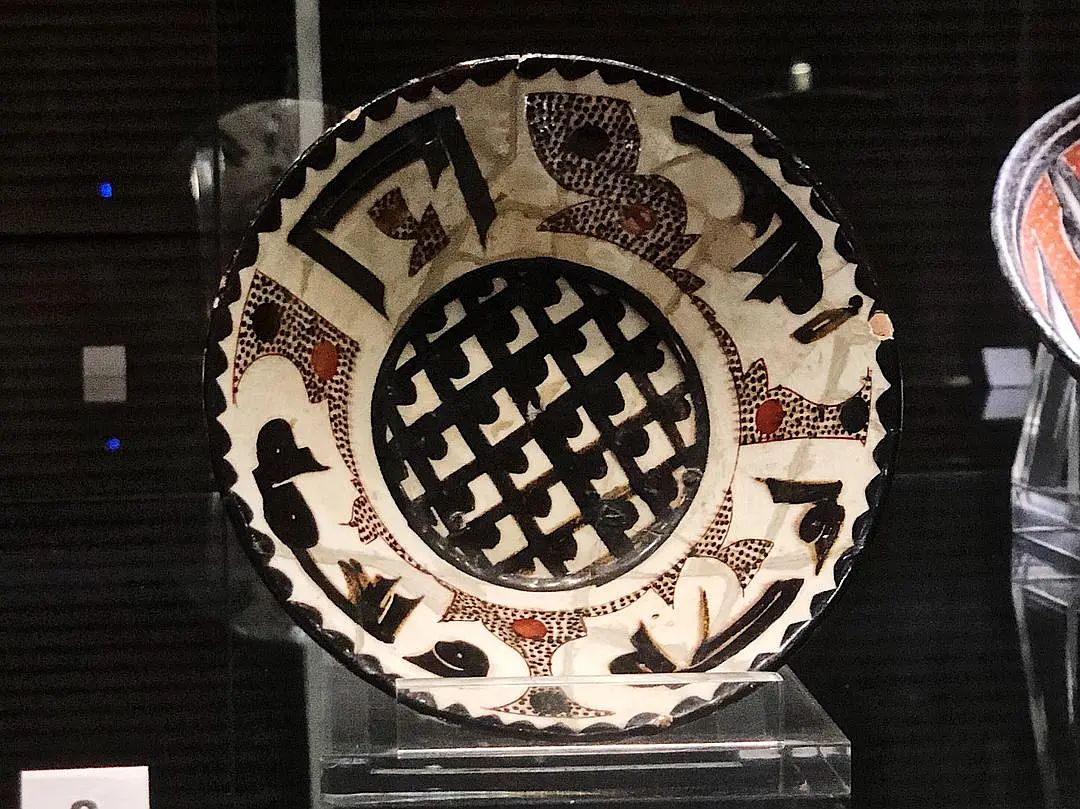
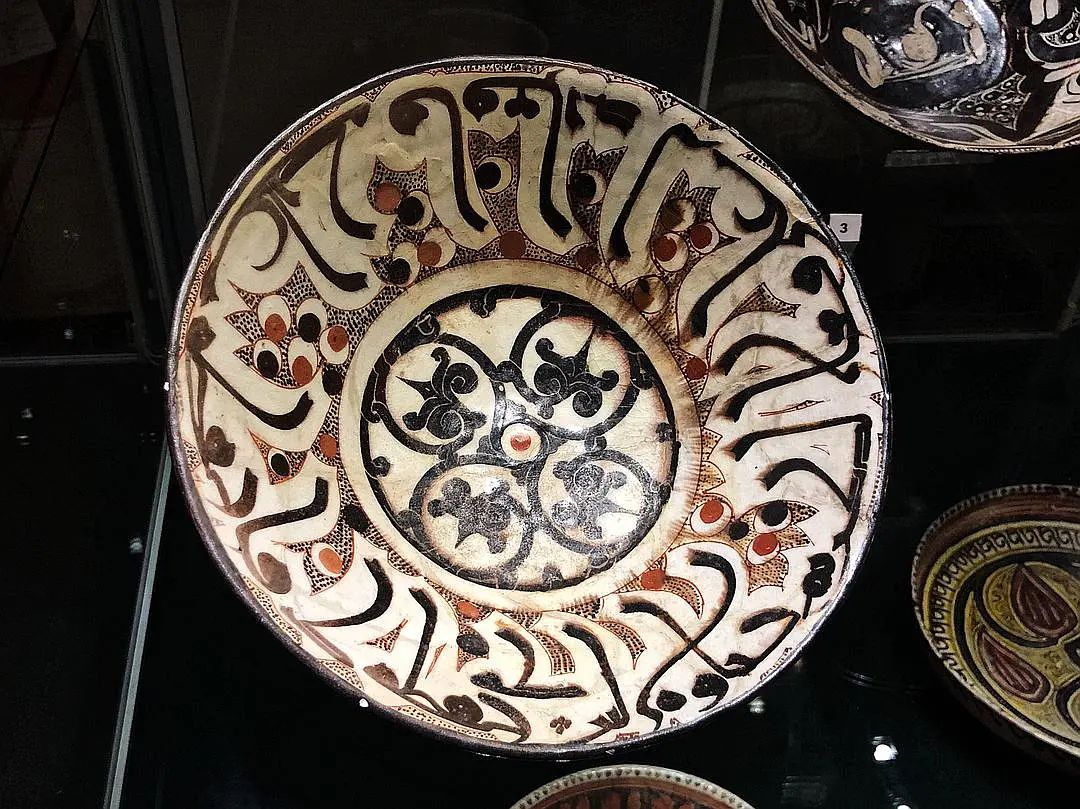
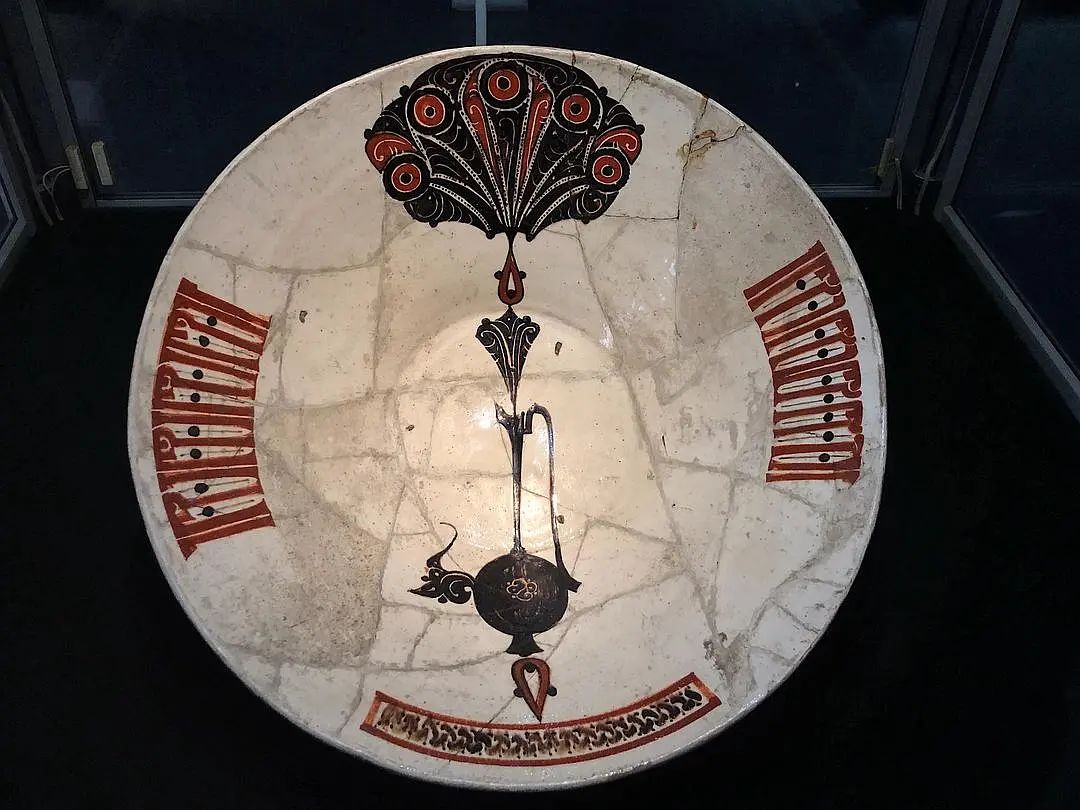
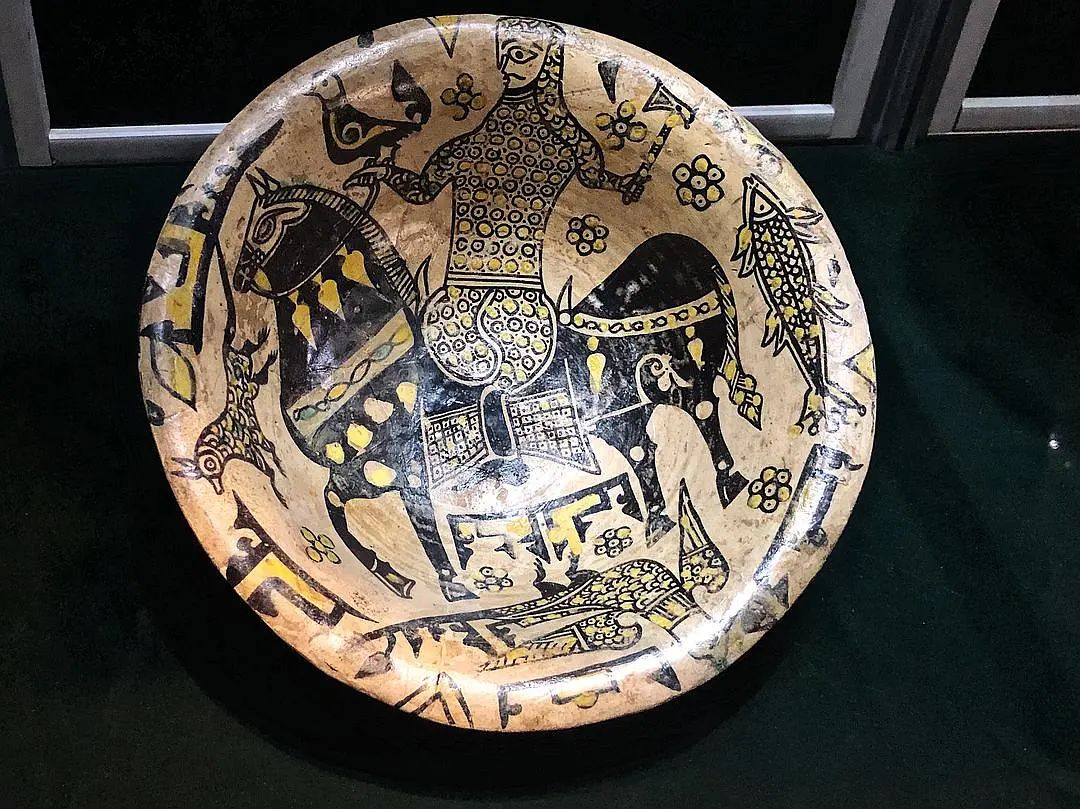
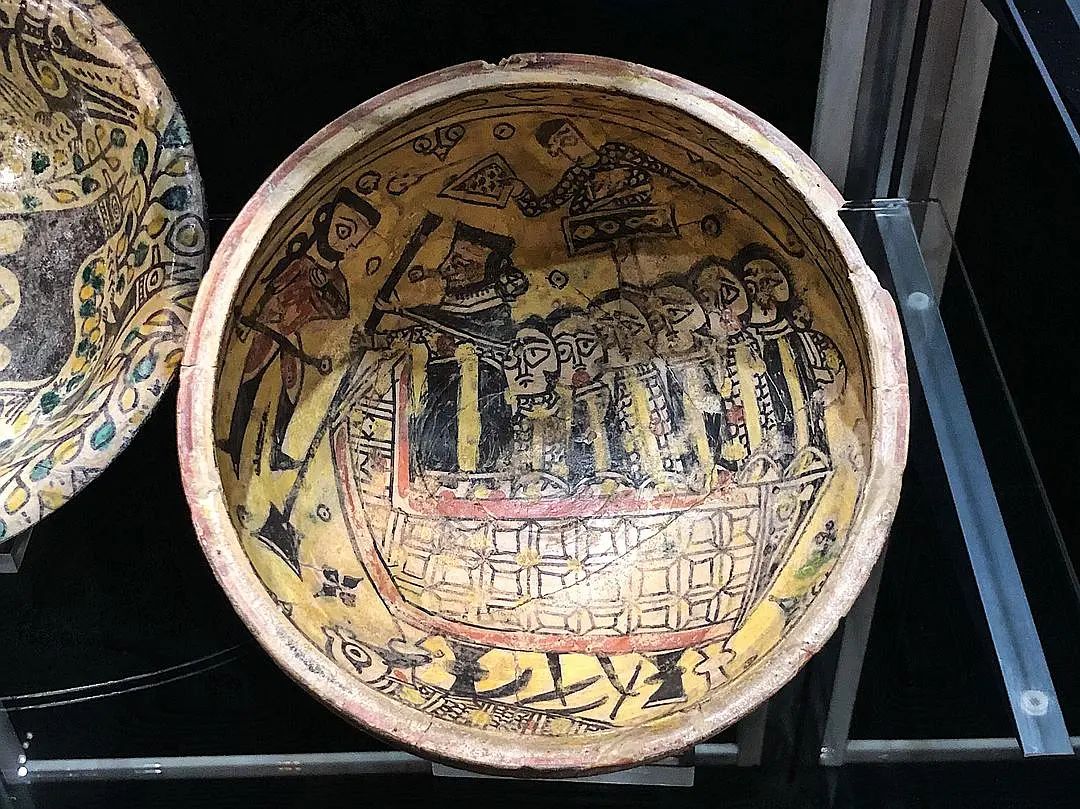
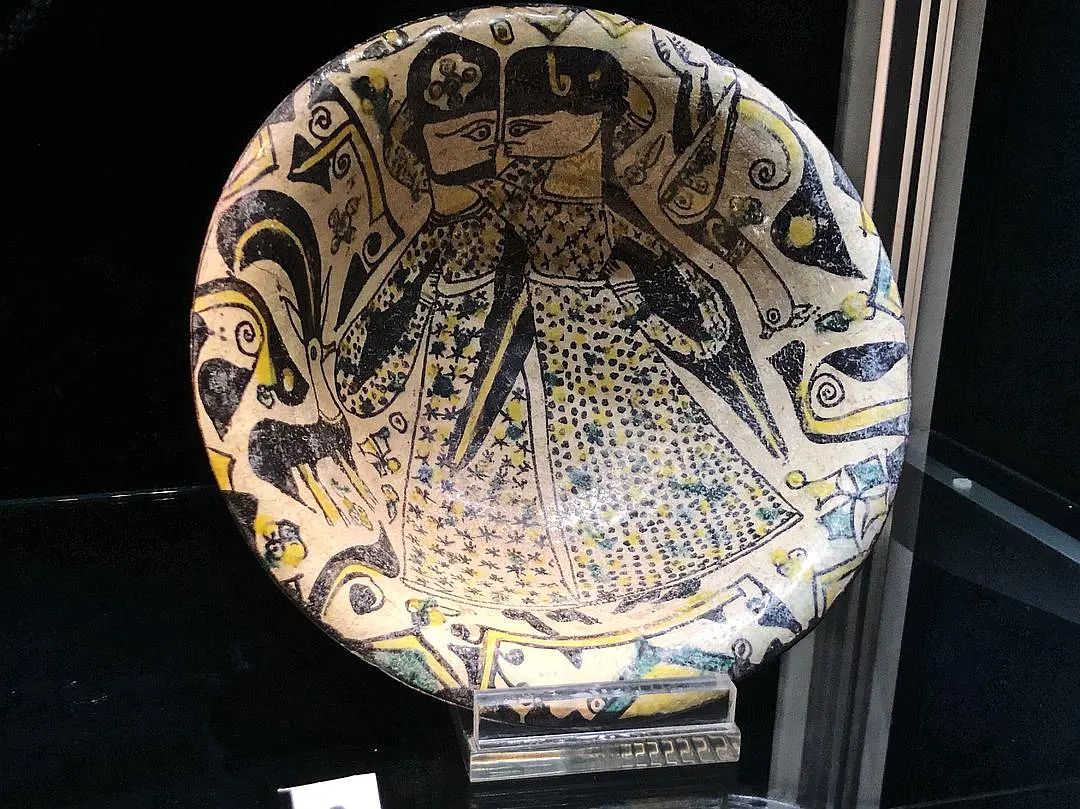
4. Pottery from the 9th to 10th centuries unearthed in the ancient Khorasan city of Nishapur.
Nishapur is located on the ancient Silk Road in northeastern Iran and was once one of the four major cities in the Greater Khorasan region. In the 9th century, Nishapur became the capital of the Persian Tahirid dynasty. Under the rule of the Persian Samanid dynasty in the 10th century, Nishapur grew into an important cultural and commercial center of the Islamic world. Various cultures and religions gathered here, and trade routes from Transoxiana in Central Asia, China, Iraq, and Egypt met in this city. The glazed pottery produced in Nishapur at that time became an important trade commodity in the West, once rivaling Baghdad and Cairo.
In 1221, the Mongols massacred the population of Nishapur and completely destroyed the city, burying the former metropolis underground. It was not until the mid-20th century that the site was rediscovered through archaeological excavations. Today, most of the unearthed Nishapur ceramics are kept at the Metropolitan Museum of Art, as well as in museums in Tehran and Mashhad.
5. Ceramics from the 12th to 14th centuries from the ancient Iranian city of Kashan
Kashan is south of Tehran. During the Seljuk Empire and Ilkhanate rule from the 12th to 14th centuries, it was a major center for making high-quality pottery and tiles in Iran. In modern Persian, the word for tile (kashi) comes from Kashan.
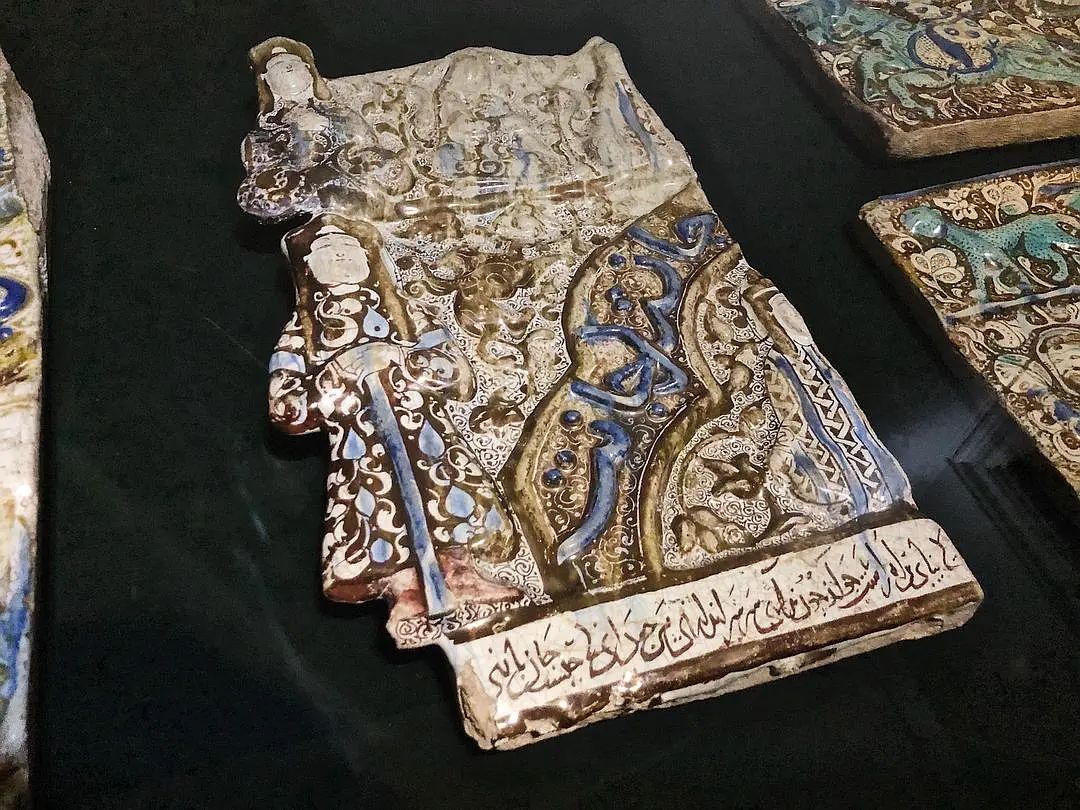
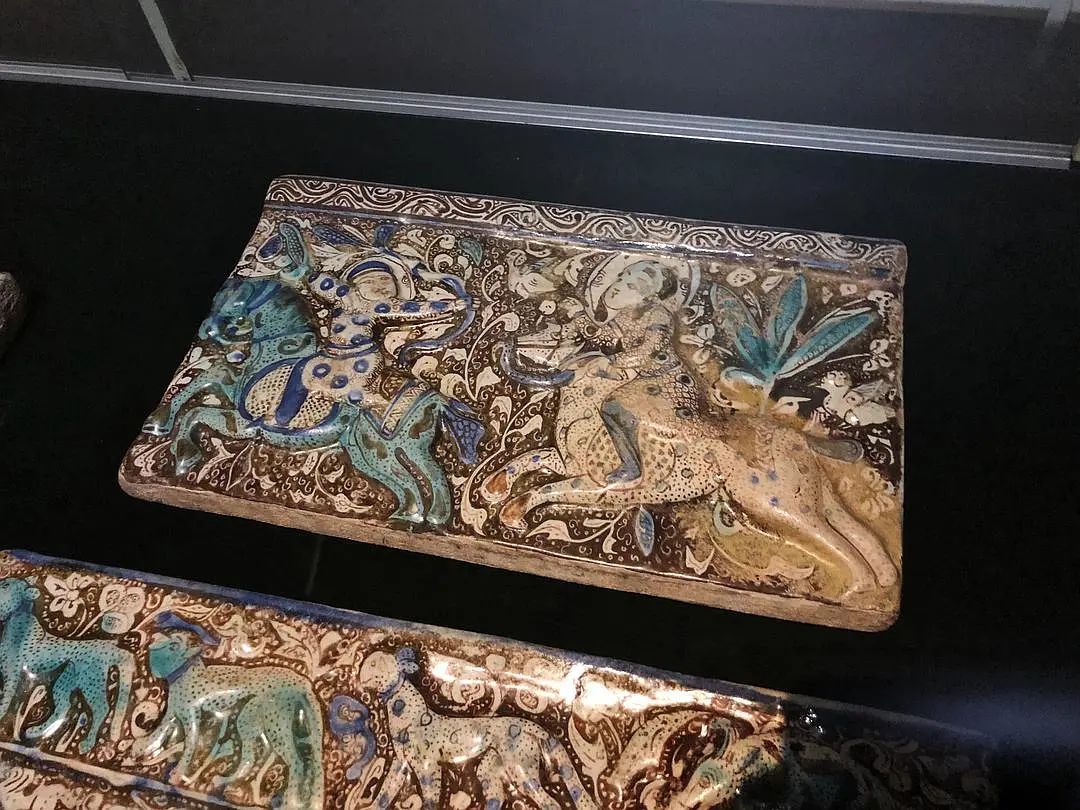
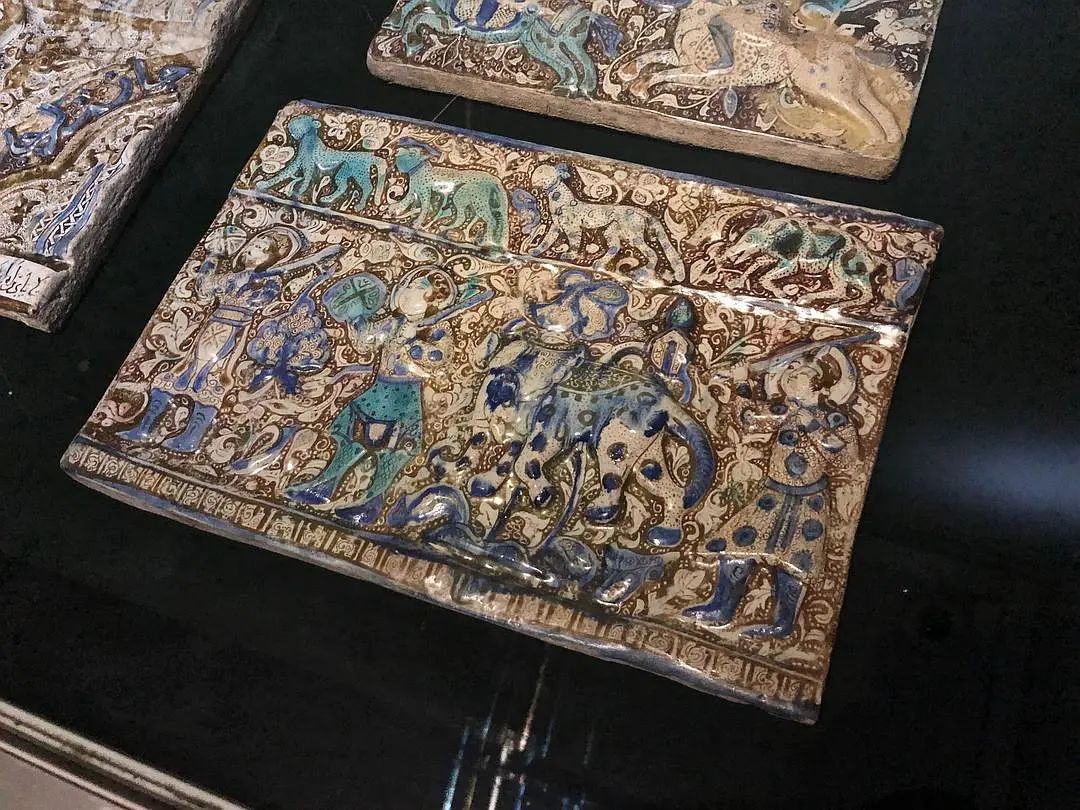
6. Iranian tiles from the Seljuk Empire and Ilkhanate period, 12th to 13th centuries.
The tiles have a very unique style.
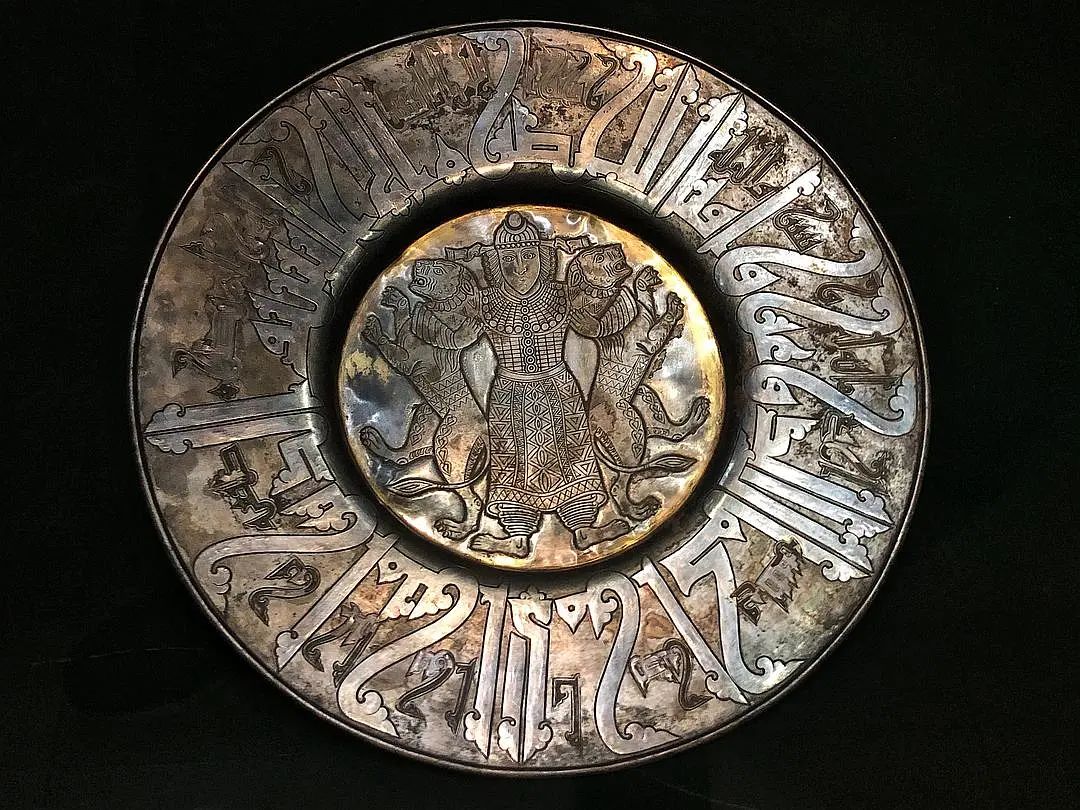
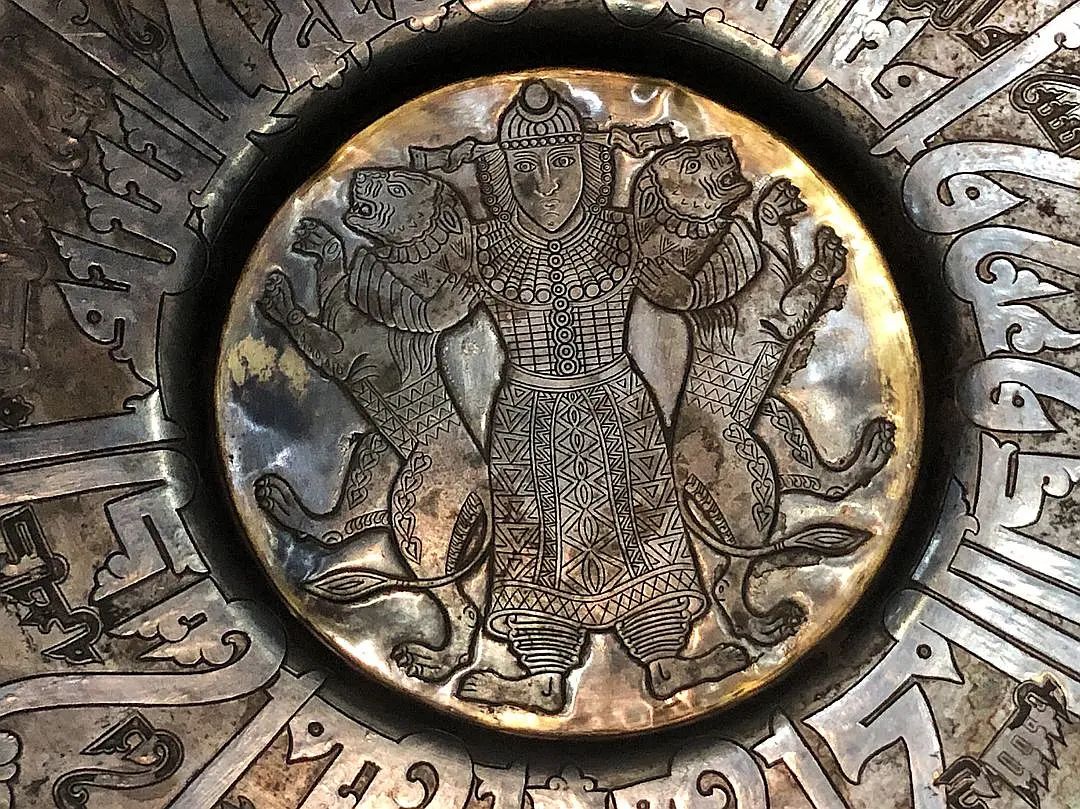
7. A gold-inlaid silver plate made in 1009 AD.
They feature beautiful Kufic calligraphy. At that time, the Buyid dynasty ruled western Iran, and the Ghaznavid dynasty ruled the east. view all
Summary: Tehran Reza Abbasi Museum: Persian Miniatures, Ceramics and Islamic Art is presented here as a firsthand travel account in clear English, beginning with this scene: In the second half of 1978, strikes and protests almost paralyzed all of Iran, and the Reza Abbasi Museum was forced to close in November. The account keeps its focus on Tehran Travel, Islamic Art, Persian Miniatures while preserving the names, places, food, and historical details from the Chinese source.
In the second half of 1978, strikes and protests almost paralyzed all of Iran, and the Reza Abbasi Museum was forced to close in November. In 1979, the Pahlavi dynasty fell, the Islamic Republic of Iran was established, and the Reza Abbasi Museum reopened. After closing and reopening several more times, the museum is now managed by the Iranian Cultural Heritage Organization and houses various precious Iranian artifacts from prehistoric times to the Islamic period.
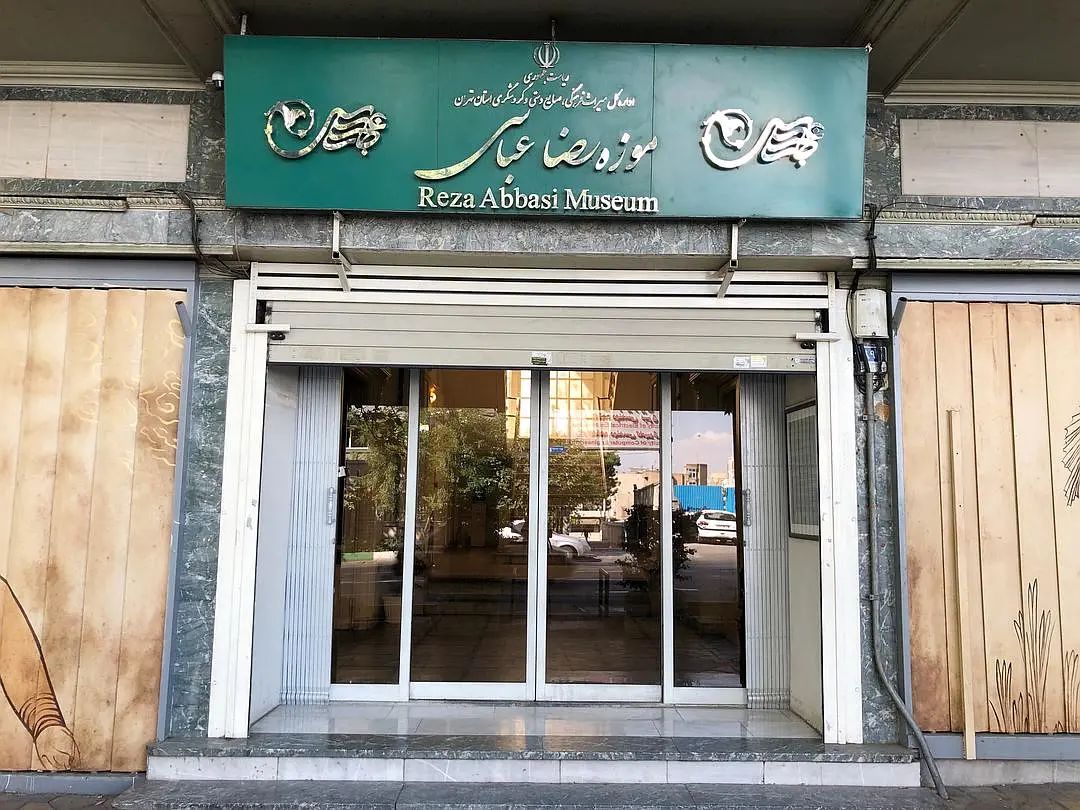
Table of Contents
1. Miniatures from the Shahnameh (Book of Kings)
1. Shahnameh miniatures from the Ilkhanate period
2. Shahnameh miniatures from the Timurid period
3. Shahnameh miniatures from the Safavid dynasty period
2. Miniatures from the Compendium of Chronicles (Jami' al-tawarikh) from the Timurid Empire period
3. Other miniatures
4. Pottery from the 9th to 10th centuries unearthed in the ancient city of Nishapur in Khorasan
5. Ceramics from the 12th to 14th centuries from the ancient Iranian city of Kashan
6. Iranian tiles from the 12th to 13th century Seljuk Empire and
the Ilkhanate period.
7. A gold-inlaid silver plate made in 1009 AD.
1. Miniatures from the Shahnameh (Book of Kings)
Persian miniature painting emerged during the Mongol invasion in the 13th century. During the Ilkhanate rule in the 13th and 14th centuries, the royal court moved often for seasonal changes, wars, and hunting. Portable books became the best surface for painting, and the art of miniatures continued to grow. The Mongols brought many Eastern artistic influences to Persian miniatures. For example, some mythical beasts were drawn to look like qilin, phoenixes, pixiu, and Chinese dragons.
Several centers for Persian miniature painting appeared between the 13th and 15th centuries. As the capital of the Ilkhanate, Tabriz was the earliest center for miniatures, and Baghdad, which was under Persian rule at the time, was also very important. In the mid-to-late 14th century, Shiraz in southern Iran became a center for literature and art, and Shiraz miniatures became world-famous. By the early 15th century, after the Timurid era, Bukhara and Herat became centers for miniatures under the patronage of the Timurid royal family. During this period, each miniature painting center had its own unique style. These styles did not gradually merge until the Safavid dynasty ruled in the 16th century.
1. Miniature paintings from the Book of Kings (Shahnameh) during the Ilkhanate period.
During the Ilkhanate period, miniature paintings based on classic Persian poetry began to appear. The most famous is the Persian epic poem Book of Kings (Shahnameh), written by the Persian poet Ferdowsi between 977 and 1010. It describes the myths and historical legends of the Persian Empire from its founding until it was conquered by the Arabs in the 7th century.
The earliest surviving Ilkhanate manuscripts of the Book of Kings are three small manuscripts. This small size was likely more convenient to carry while moving between nomadic camps.
The two images below are illustrations from the manuscript known as the First Small Book of Kings, which is believed to be in the late 13th-century Baghdad style.
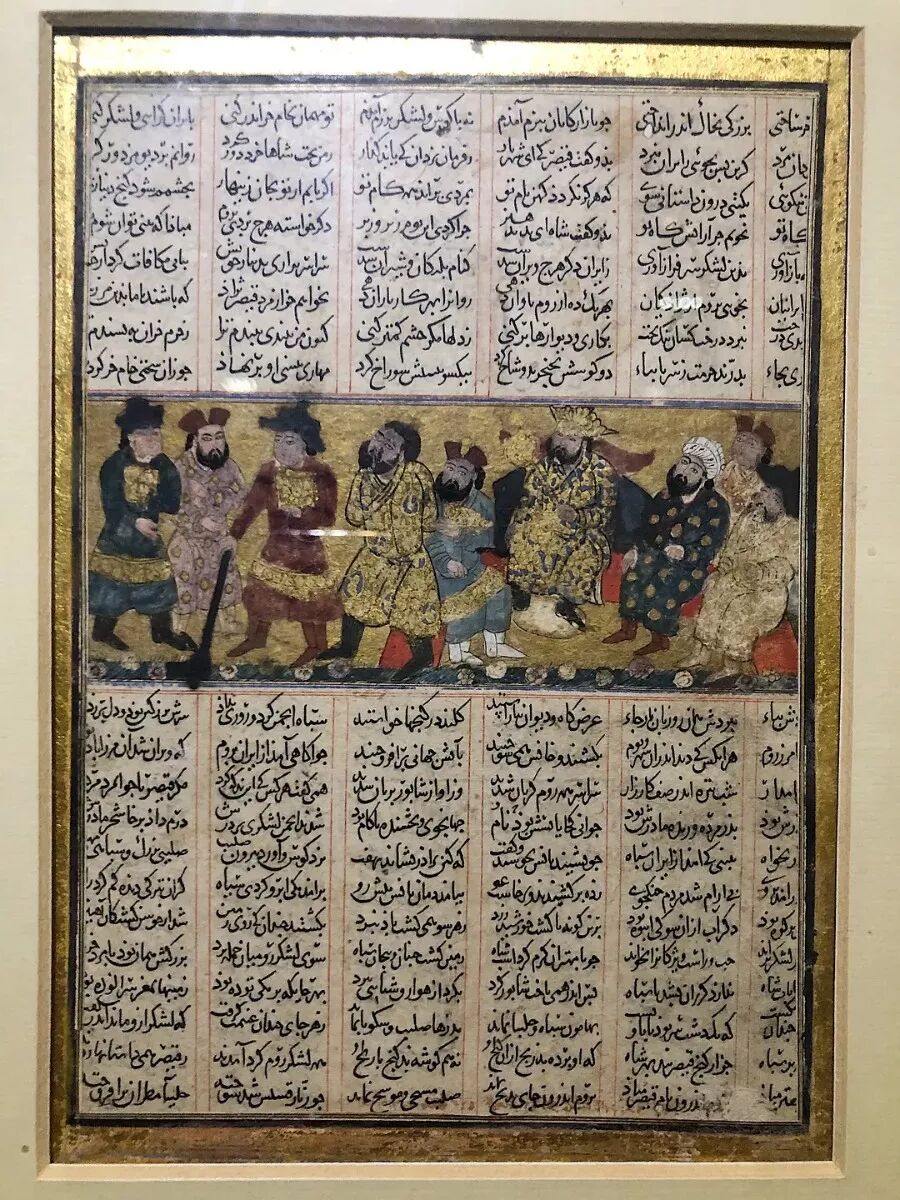
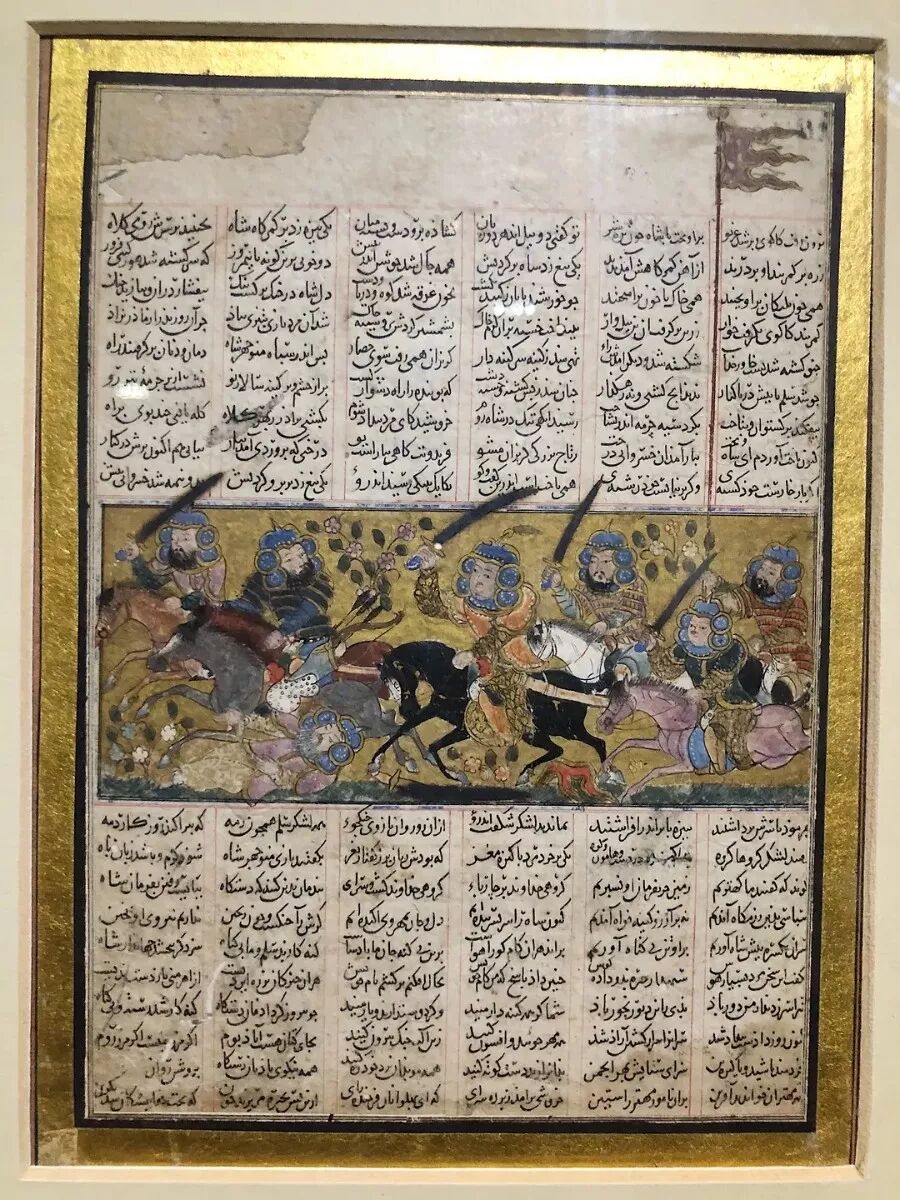
This depicts the Iranian prince Salm killing his younger brother Iraj out of jealousy. Years later, Iraj's grandson, the legendary king Manuchehr, killed Salm to avenge his grandfather.
The two images below are illustrations from the manuscript known as the Second Small Book of Kings, which is believed to be in the late 13th-century Baghdad style.
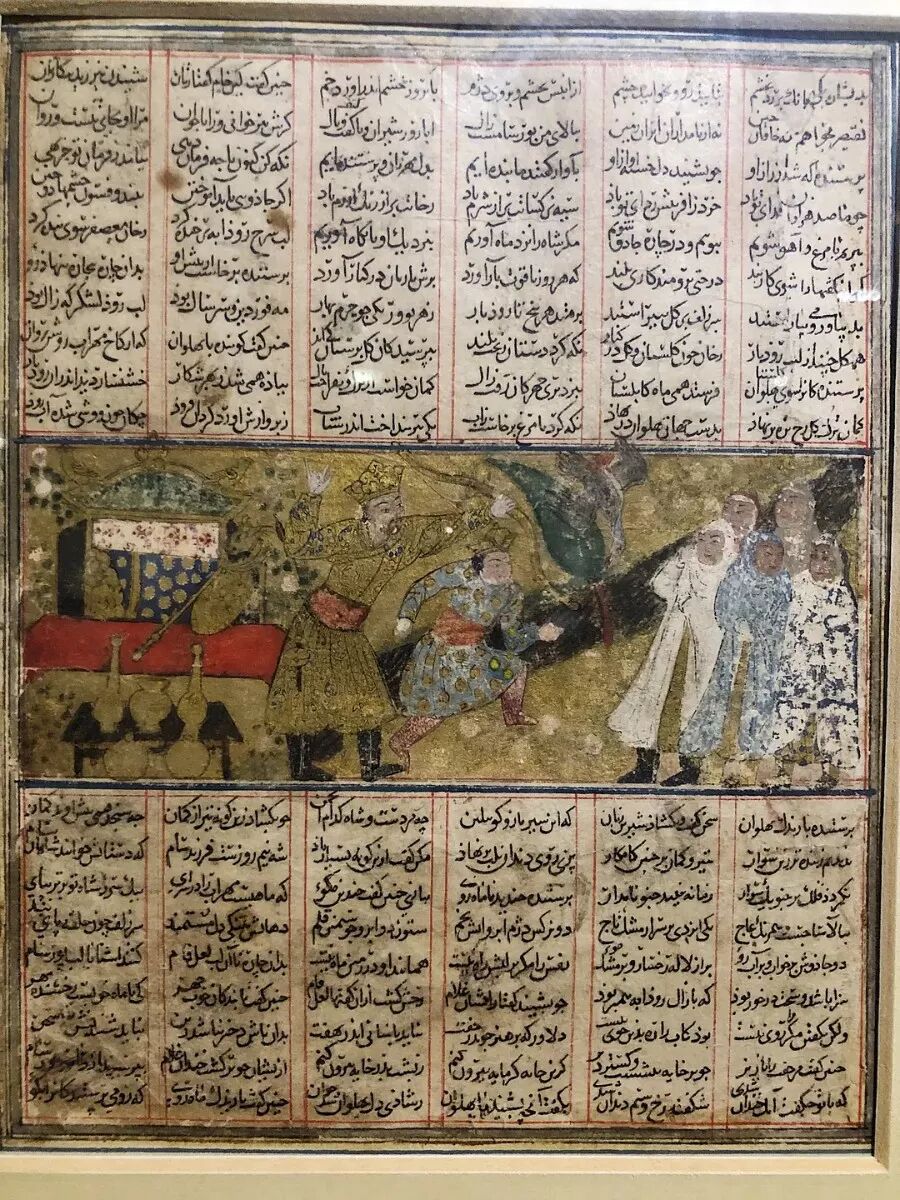
This depicts the Kabul princess Rudaba talking to her female slave so she could meet her husband, the Iranian king Zal. Rudaba is the mother of the legendary hero Rostam, the protagonist of the Book of Kings.
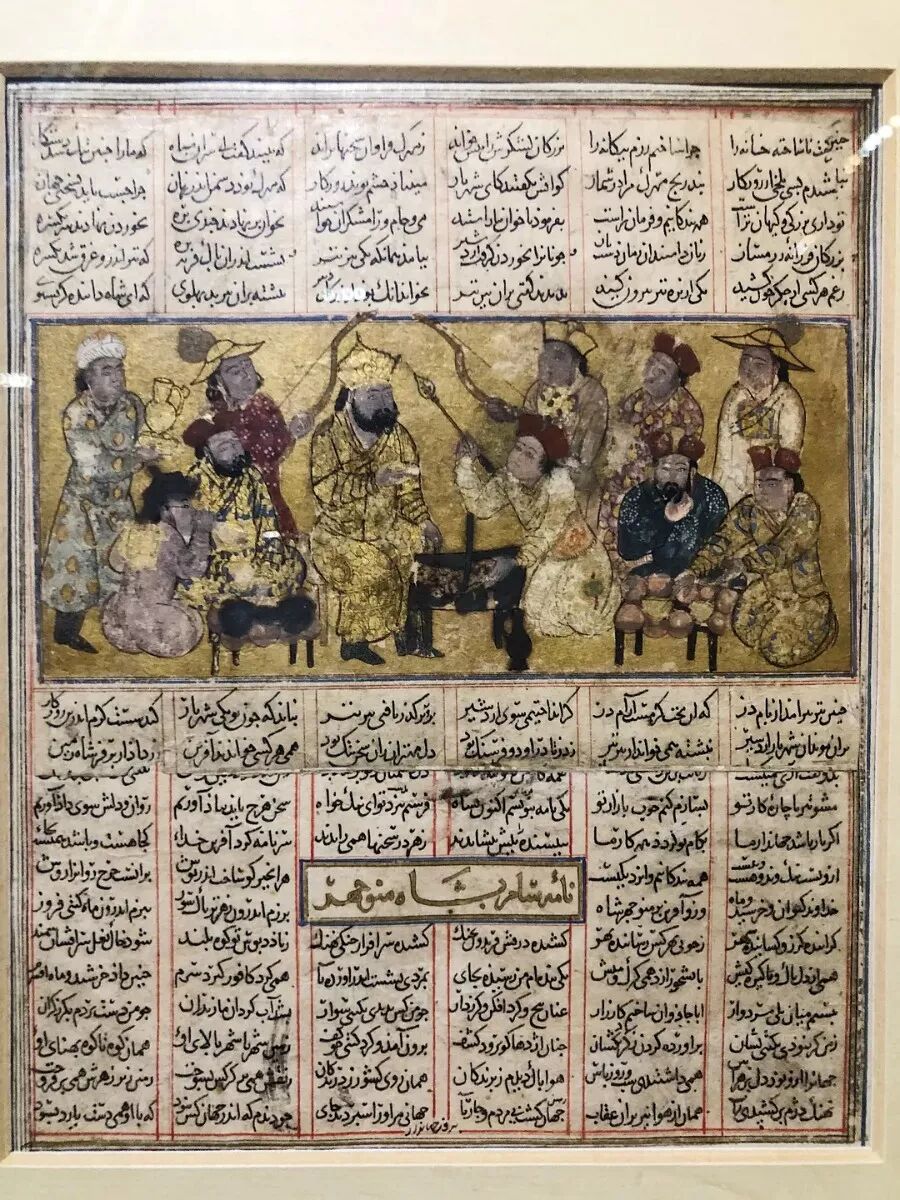
This depicts Ardashir, the founder of the Persian Sasanian dynasty, receiving a warning from his enemy Haftvād.
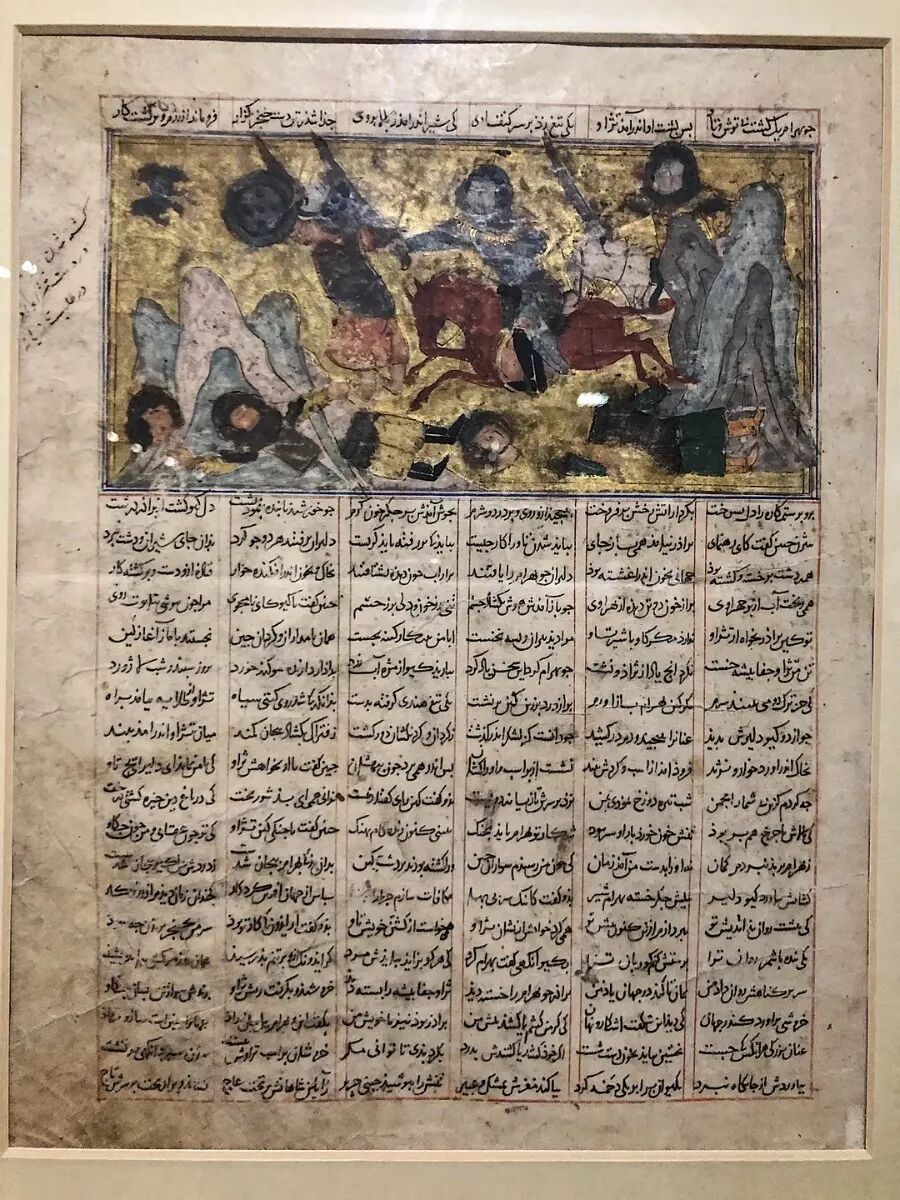
There are four other manuscripts produced in the early 14th century by the Injuid family, who ruled the Shiraz and Isfahan regions of southern Iran and were semi-independent from the Ilkhanate.
The image below is one of these, done in the Shiraz style. It shows the Iranian hero Bahram being mortally wounded by Tazhav while fighting the Turanians (the Persian name for Central Asian people), a scene from shortly before his death.
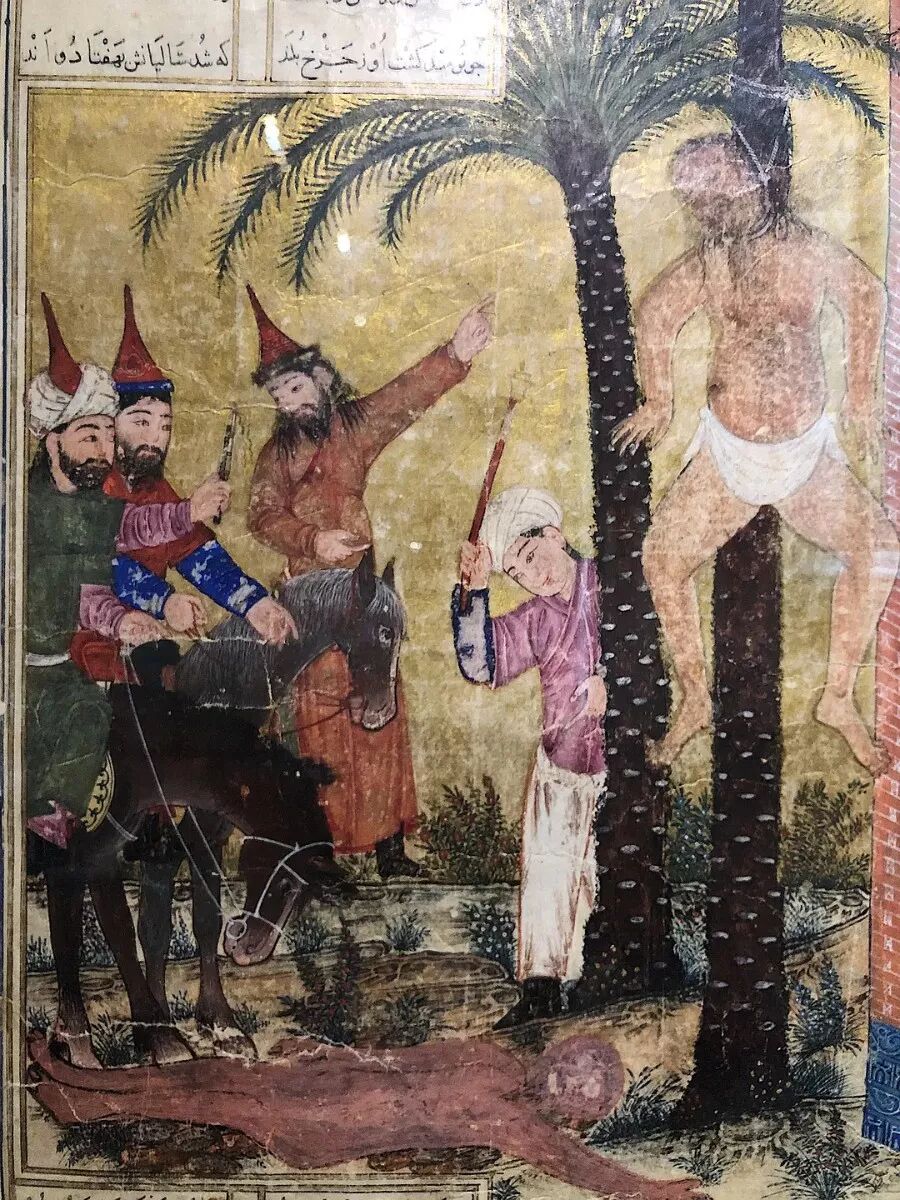
Among the Shahnameh manuscripts from the Ilkhanate period, the most famous one is known as the Great Mongol Shahnameh, the Great Ilkhanid Shahnameh, or the Demotte Shahnameh. It is considered the greatest work of early Persian miniature painting.
In the early 14th century, the Persian Jewish vizier of the Ilkhanate, Rashid al-Din, set up a book production department in the suburbs of the Ilkhanate capital, Tabriz, specifically to create books containing miniature paintings. After Rashid al-Din died in 1318, his son Ghiyath al-Din Muhammad continued his father's work by producing miniature manuscripts in the 1330s.
Based on research by later historians, it is believed that Ghiyath al-Din Muhammad produced the Great Mongol Shahnameh manuscript in Tabriz in 1335, under the patronage of the ninth Ilkhanid ruler, Abu Sa'id Bahadur Khan (reigned 1316–1335).
The Great Mongol Shahnameh was kept in Tabriz until the 16th century, after which it entered the library of the Golestan Palace in Tehran. In the late 19th century, taking photographs of the manuscript was still restricted.
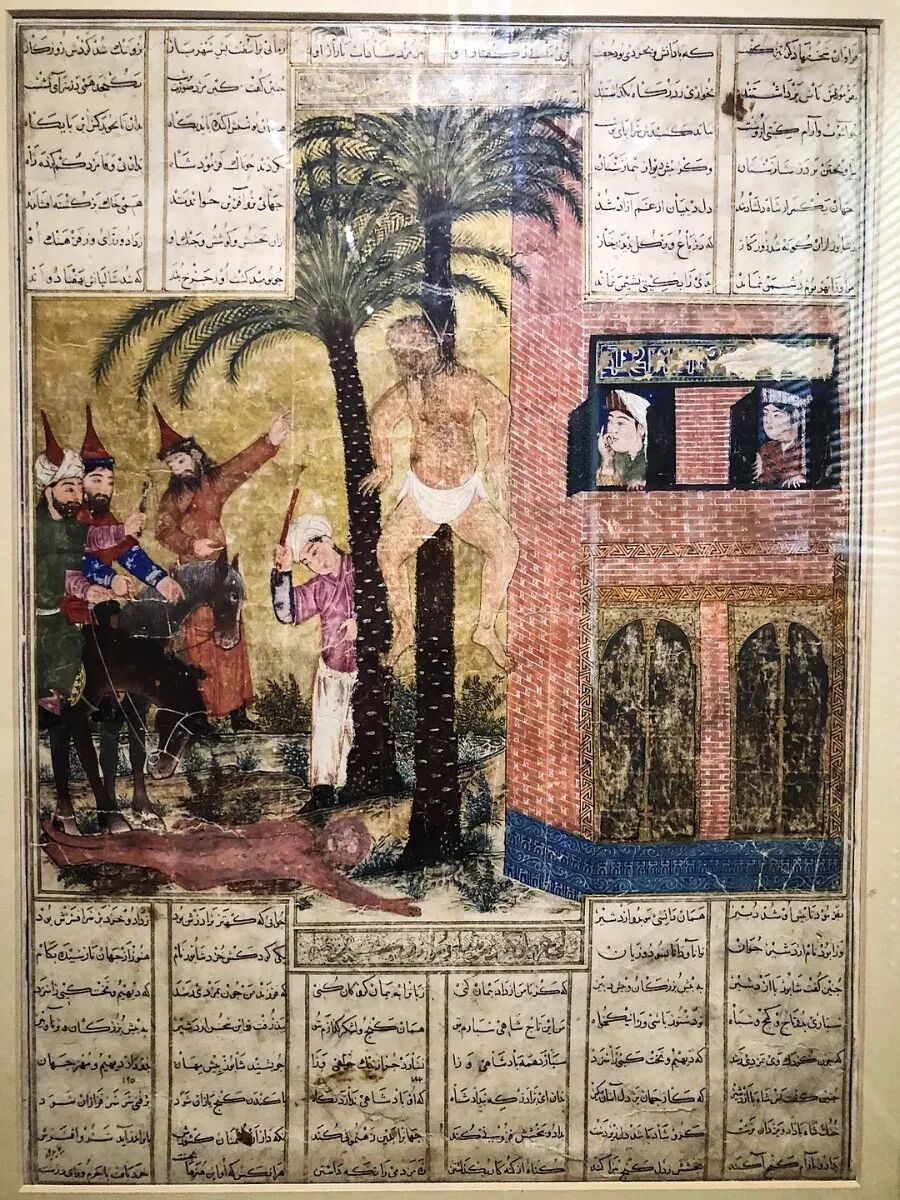
In the early 20th century, the Belgian art dealer Georges Demotte, who was active in Paris, acquired the Great Mongol Shahnameh. Because he could not get a suitable price from potential buyers like the Metropolitan Museum of Art, Demotte eventually tore the manuscript apart to sell it in pieces. To hide the damage caused by tearing the book apart, Demotte hired calligraphers to add new text to the manuscript, which greatly annoyed buyers who could read Persian.
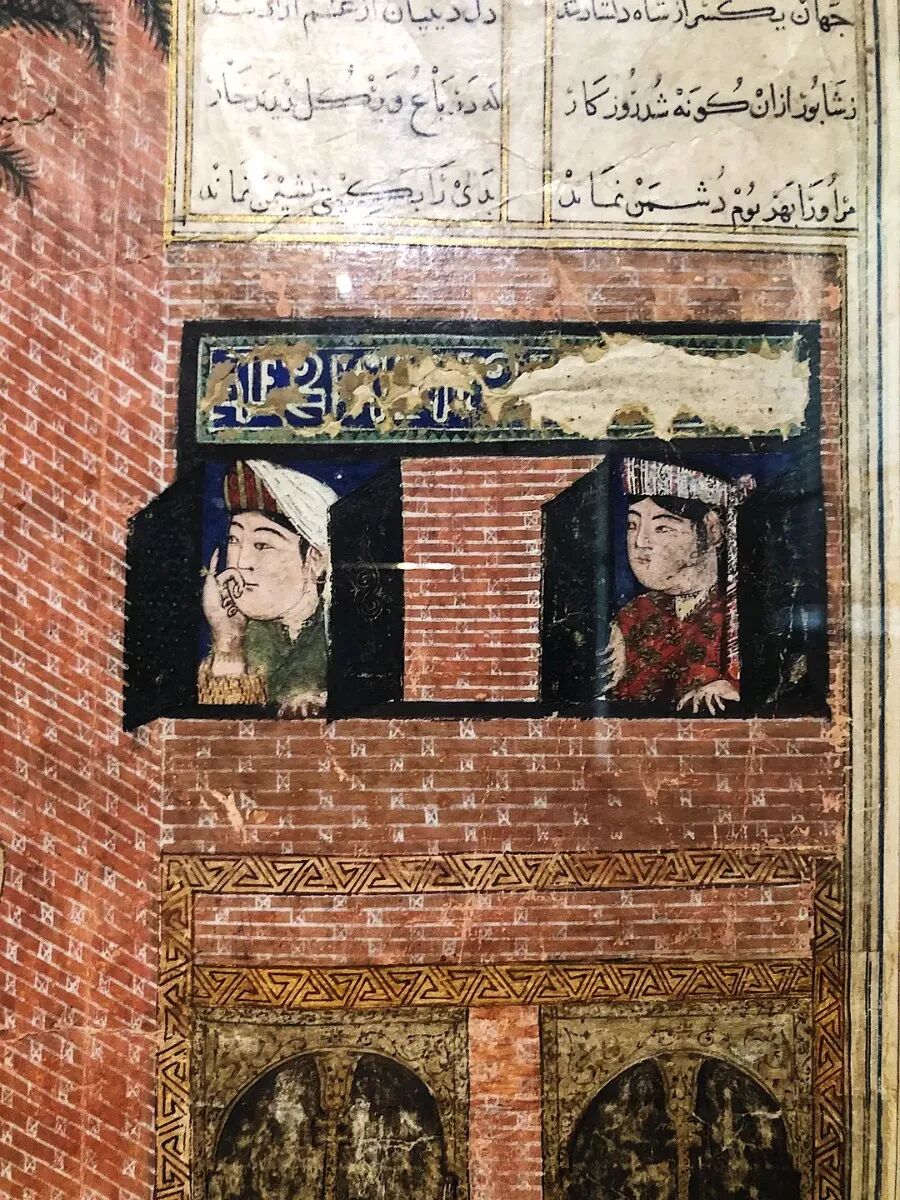
The image below is an illustration from the Tabriz-style Great Mongol Shahnameh, depicting the hanging of Mani.
2. Shahnameh miniature paintings from the Timurid dynasty
During the Timurid dynasty, Bukhara became a center for producing the Book of Kings (Shahnameh).
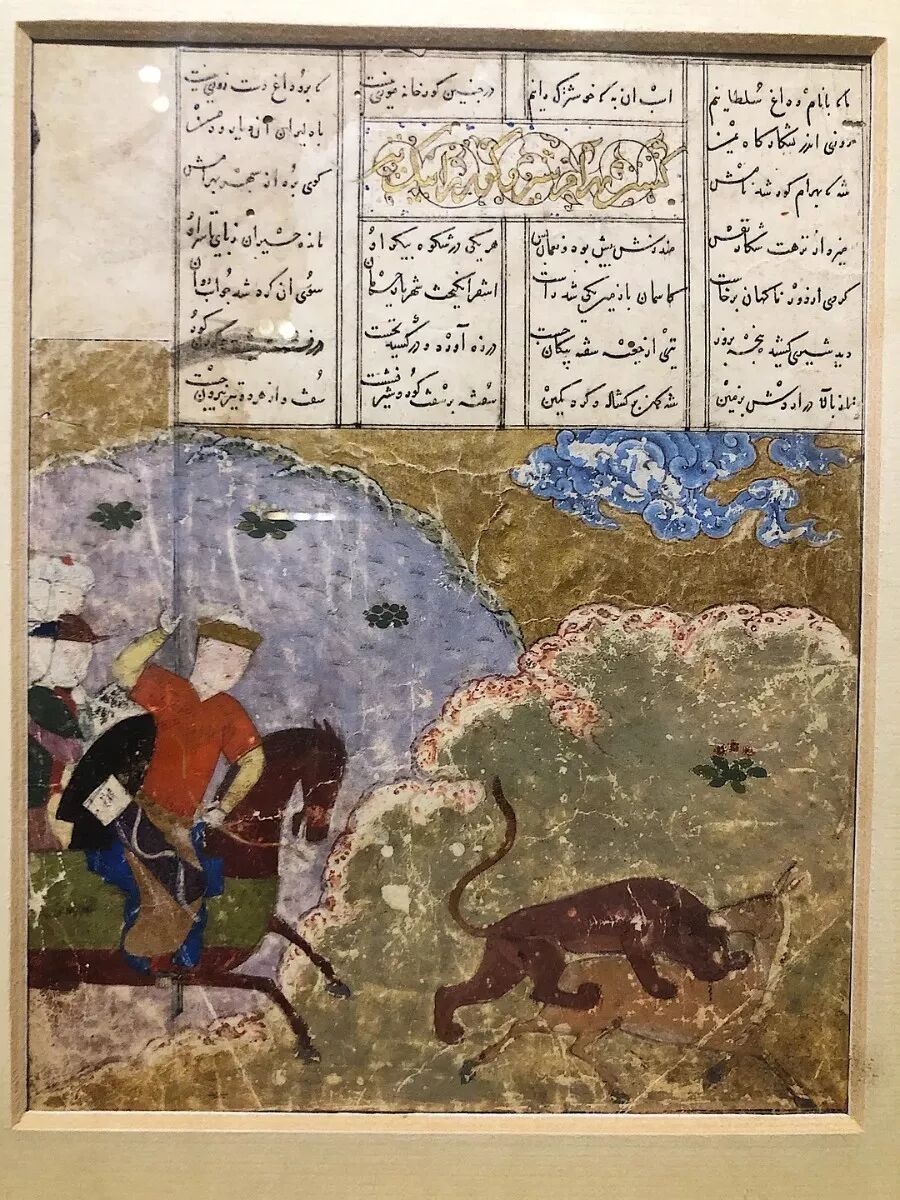
The image below shows a late 14th-century illustration of the Book of Kings in the Herat style, depicting the Iranian hero Bahram shooting his prey.
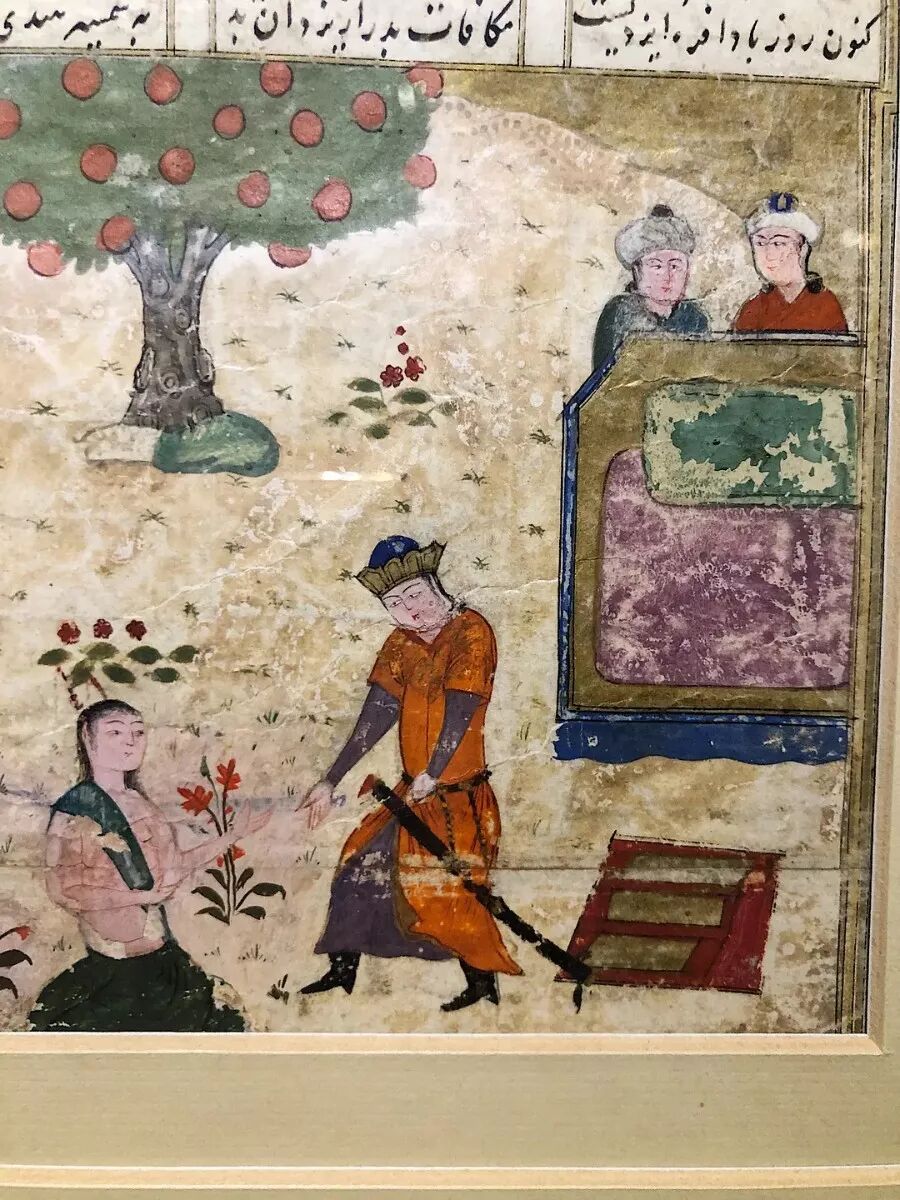
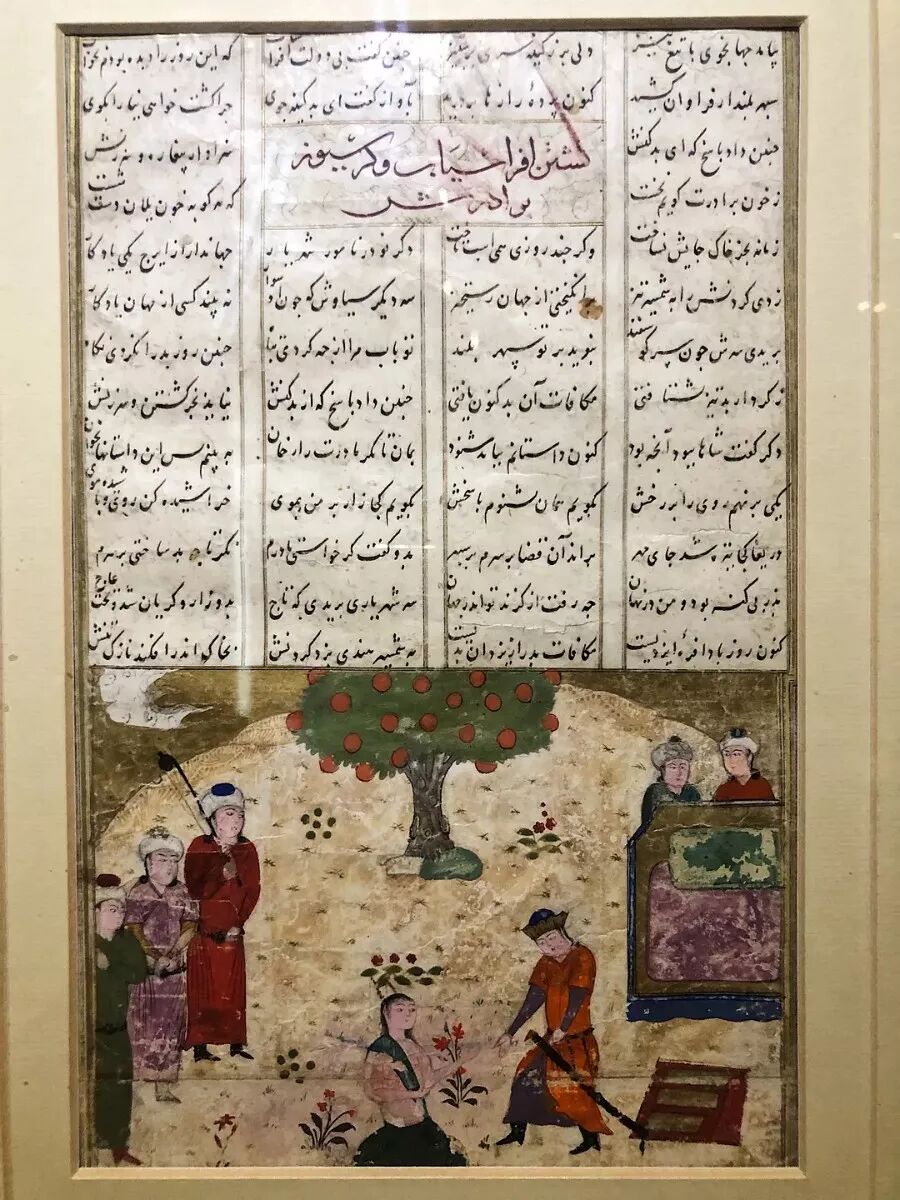
The image below shows an early 15th-century miniature painting of the Book of Kings in the Bukhara style, depicting Garsiwaz killing his brother, the Turanian king Afrasiab.
3. Miniature paintings of the Book of Kings from the Safavid dynasty period
During the Safavid dynasty's rule over Iran in the 16th and 17th centuries, the production of Book of Kings miniature paintings saw a revival. Ismail I (reigned 1502-1524), the founder of the Safavid dynasty, used the production of Book of Kings manuscripts to emphasize the authority of Persian kings and to strengthen Persian patriotism. Later generations consider the miniature painting created during the Safavid period to be the last great era of the art form.
A 16th-century miniature painting of the Book of Kings in the Tabriz style, depicting the hero Esfandiyar slaying a dragon. Esfandiyar was an Iranian prince, and his father once sent him to suppress a rebellion and rescue a kidnapped princess. On his journey, he fought seven different battles, one of which was killing a dragon.
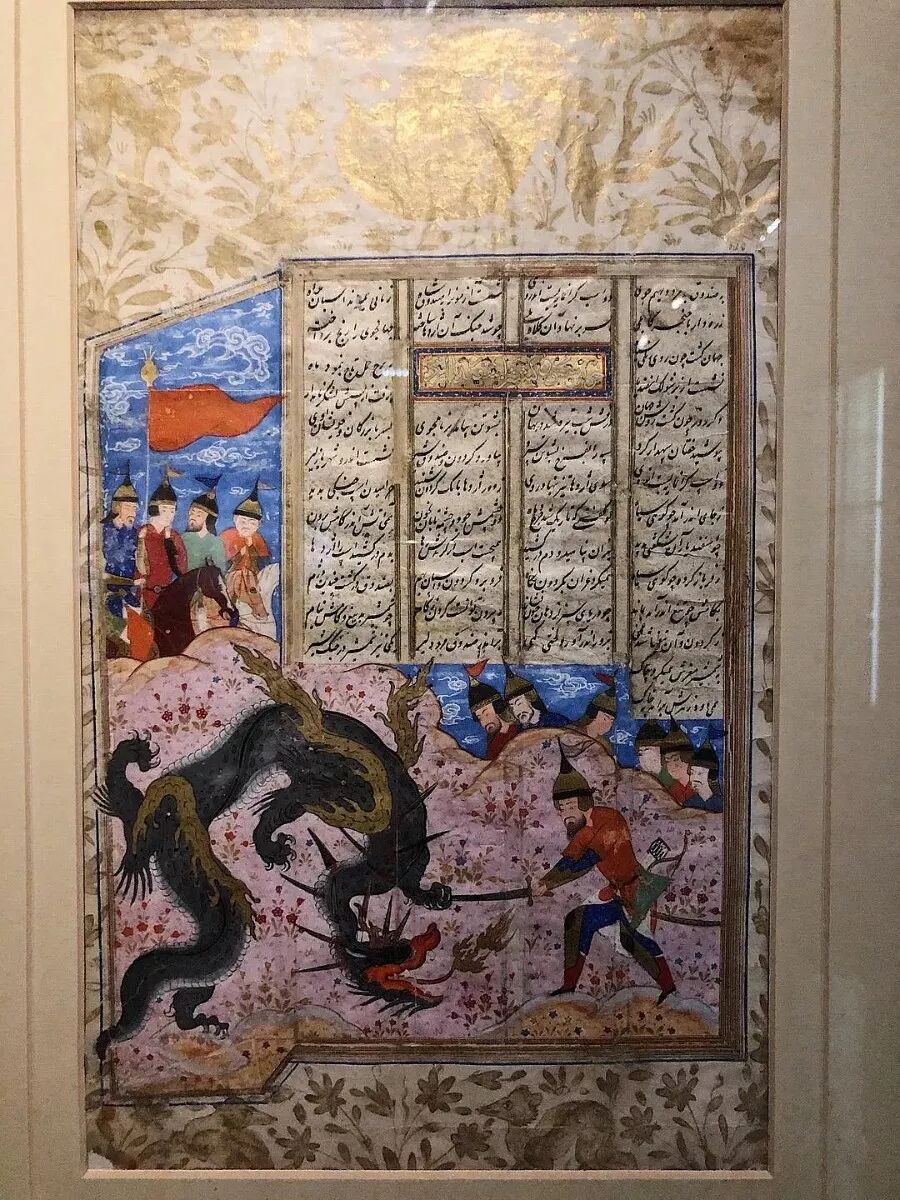
A 16th-century miniature painting of the Book of Kings in the Tabriz style, depicting the legendary hero Rostam fighting his enemies.
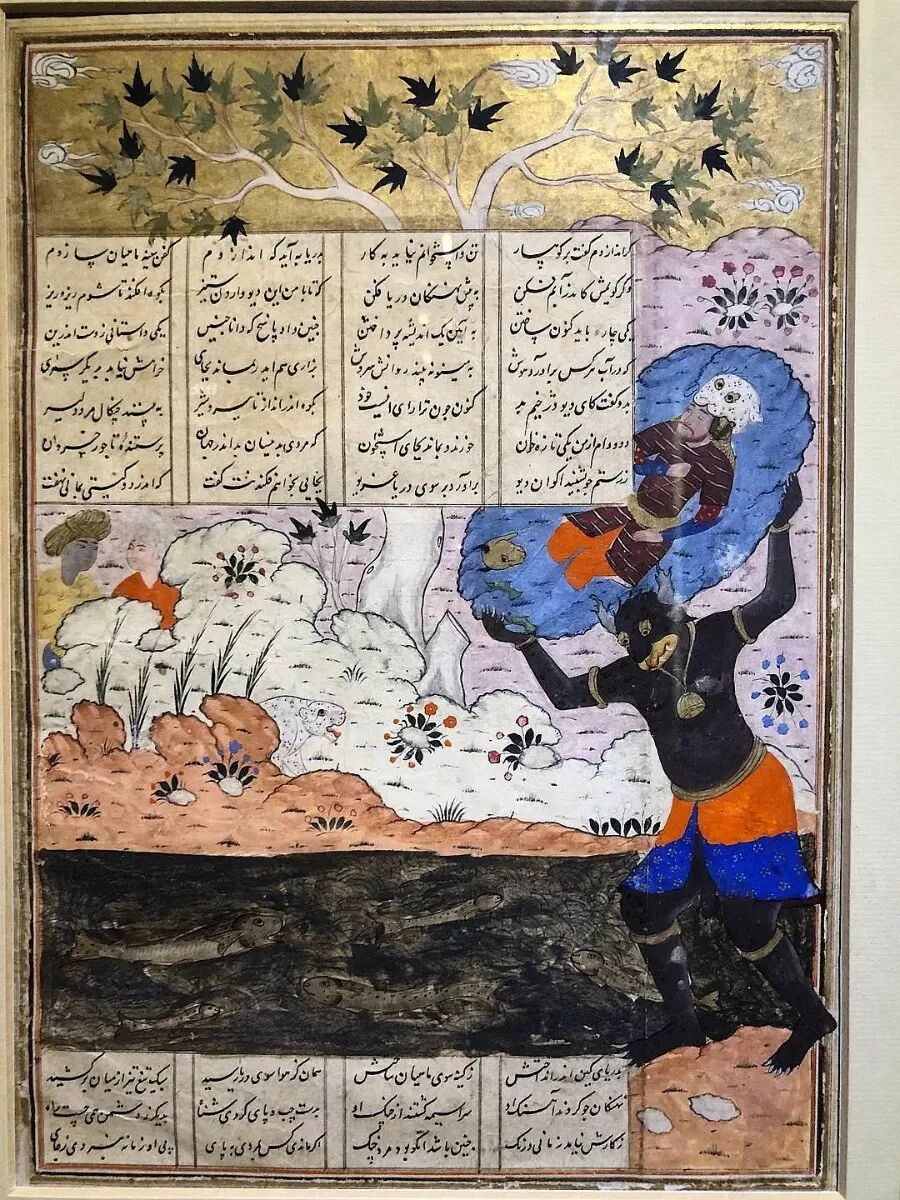
A late 16th-century miniature painting of the Book of Kings in the Khorasan style, depicting the Turanian king Afrasiab being led out of a cave by Houm.
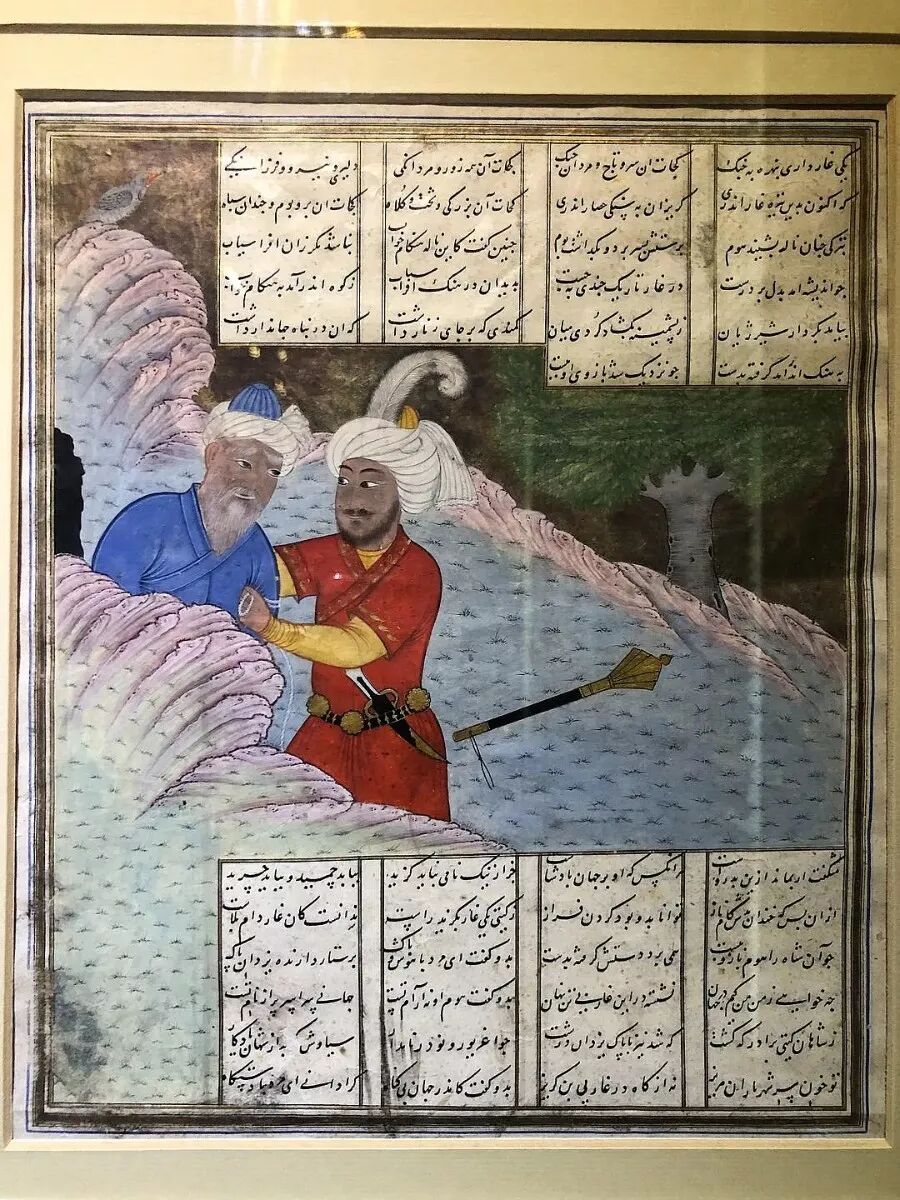
A 16th-century Shiraz-style miniature painting from the Shahnameh, showing the Iranian hero Bahram on his way to Egypt.
A 16th-century Tabriz-style miniature painting from the Shahnameh, showing the war between Darab, Shoaib, and the Arabs.
A late 16th-century Shiraz-style miniature painting from the Shahnameh.
A 17th-century Shiraz-style miniature painting from the Shahnameh, showing the war between the legendary King Kay Khosrow of the Iranian Kayanian dynasty and King Shideh of Turan.
3 Produced by Tahmasp I of the Safavid dynasty.
Tahmasbi Shahnameh miniature painting.
The Tahmasbi Shahnameh, also called the Houghton Shahnameh, was commissioned by Tahmasp I (reigned 1524-1576) of the Safavid dynasty. The greatest painters of the Safavid era worked on it, and it originally included 258 miniature paintings. Because the Safavid capital was in Tabriz at the time, the Tahmasbi Shahnameh has a Tabriz style.
In 1959, the famous collector Arthur Houghton bought this Shahnameh from the wealthy French Jew Edmond de Rothschild. Only 118 miniature paintings remained at that time.
Since 1962, Arthur Houghton broke up the Tahmasbi Shahnameh and donated 88 of the paintings to the Metropolitan Museum of Art in New York to avoid taxes (Houghton had served as the president of the Metropolitan Museum of Art for many years). After that, Houghton auctioned off the miniature paintings several times. After Houghton died in 1990, the Houghton Foundation decided to sell the collection for 13 million dollars, but no one bought it because the price was too high. British seller Oliver Hoare suggested that Iran trade the remaining Shahnameh miniatures for the painting Lady No. 3 by Dutch artist Willem de Kooning, because the painting was banned from public display in Iran for being anti-Islamic. In the end, the Tahmasbi Shahnameh returned to Iran.
The image below shows the Sassanid king Bahram Chobin (reigned 590-591) fighting Sava Shah.
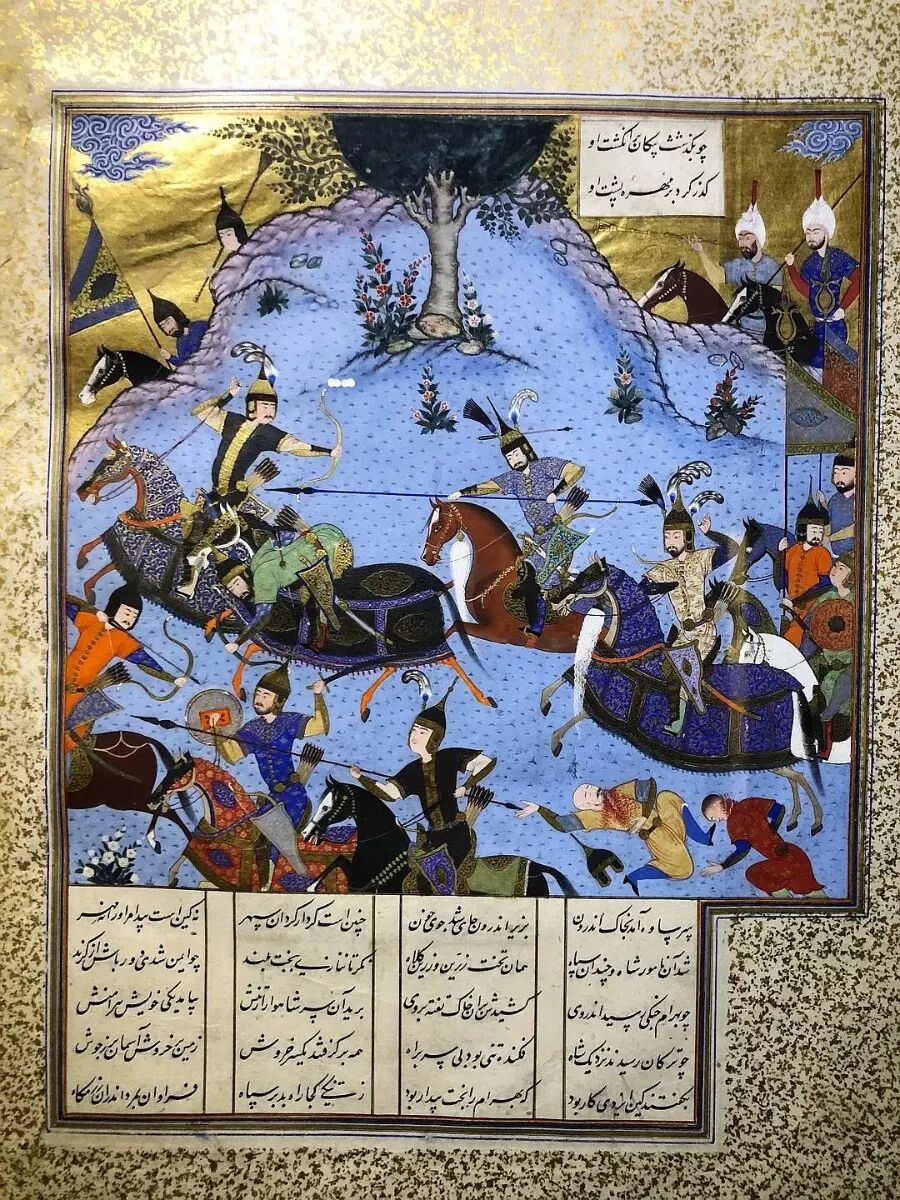
A Shahnameh miniature produced by Ismail II of the Safavid dynasty.
Ismail II (reigned 1576-1577) was the third ruler of the Safavid dynasty. At that time, the Safavid capital was Qazvin, Iran (1548–1598), so the miniatures from this period have a Qazvin style.
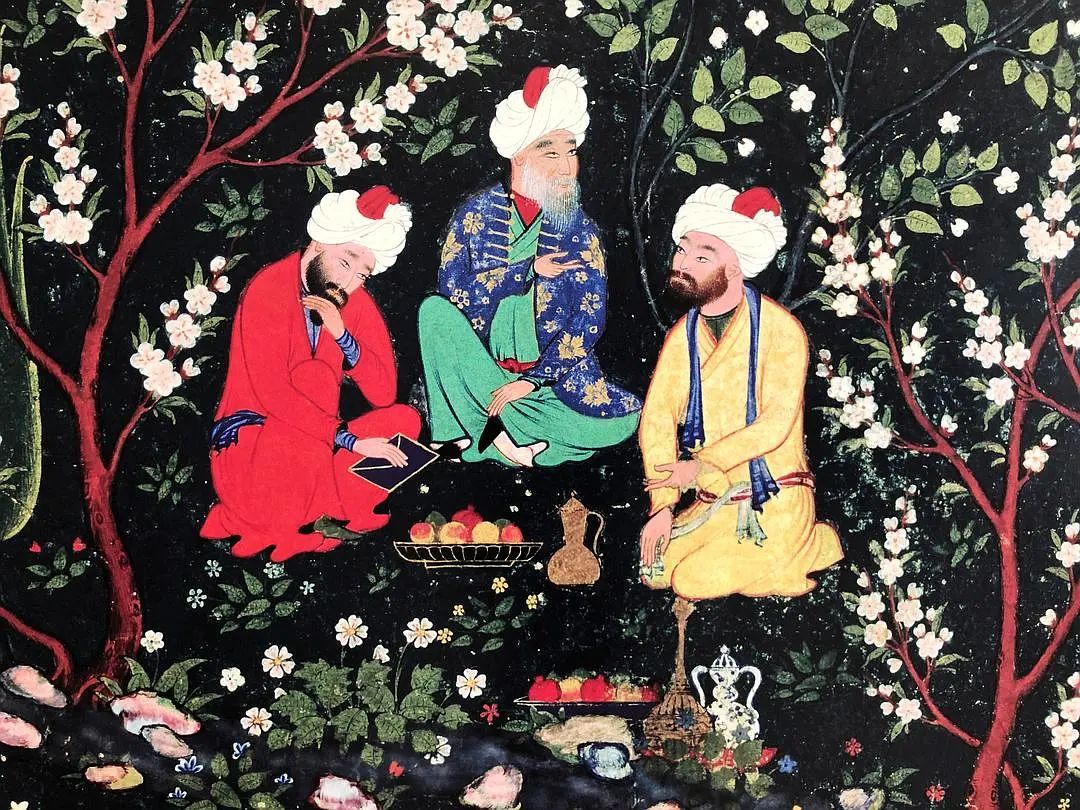
The image below shows the author of the Shahnameh, Ferdowsi, walking toward several court poets of the Ghaznavids. An enlarged version of this miniature is posted in the hall right at the entrance of the Reza Abbasi Museum. It is also the cover of the book Entering the Orchard in Spring.
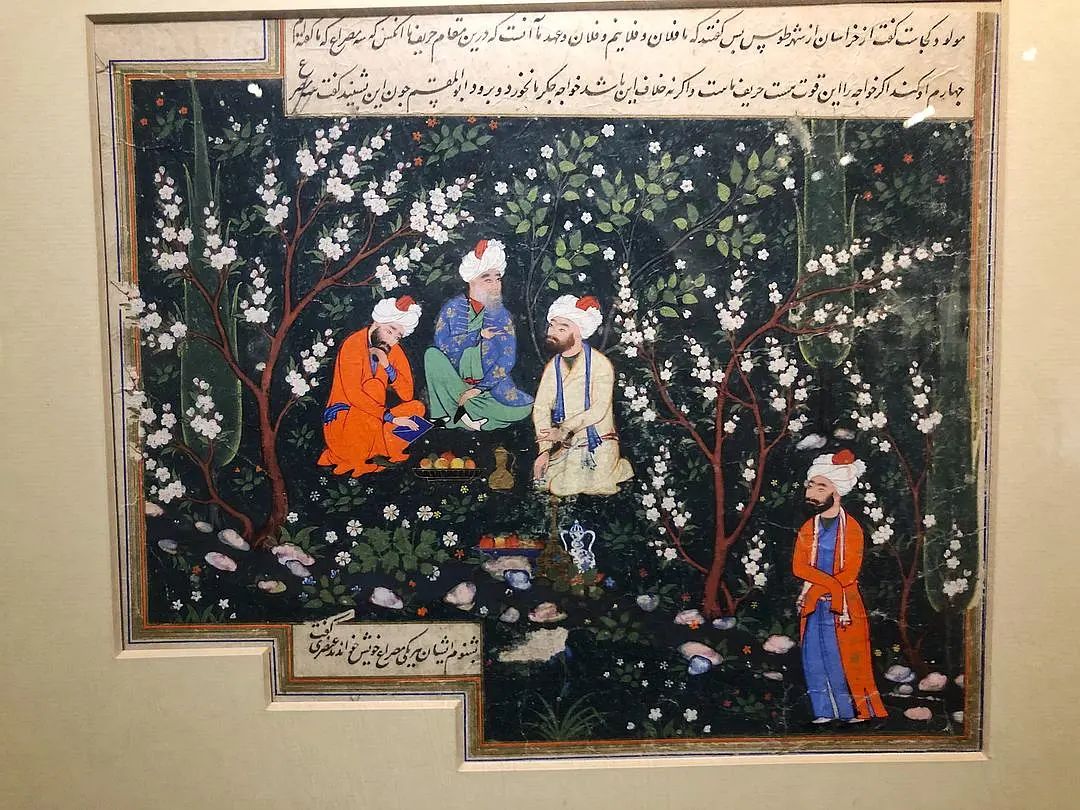
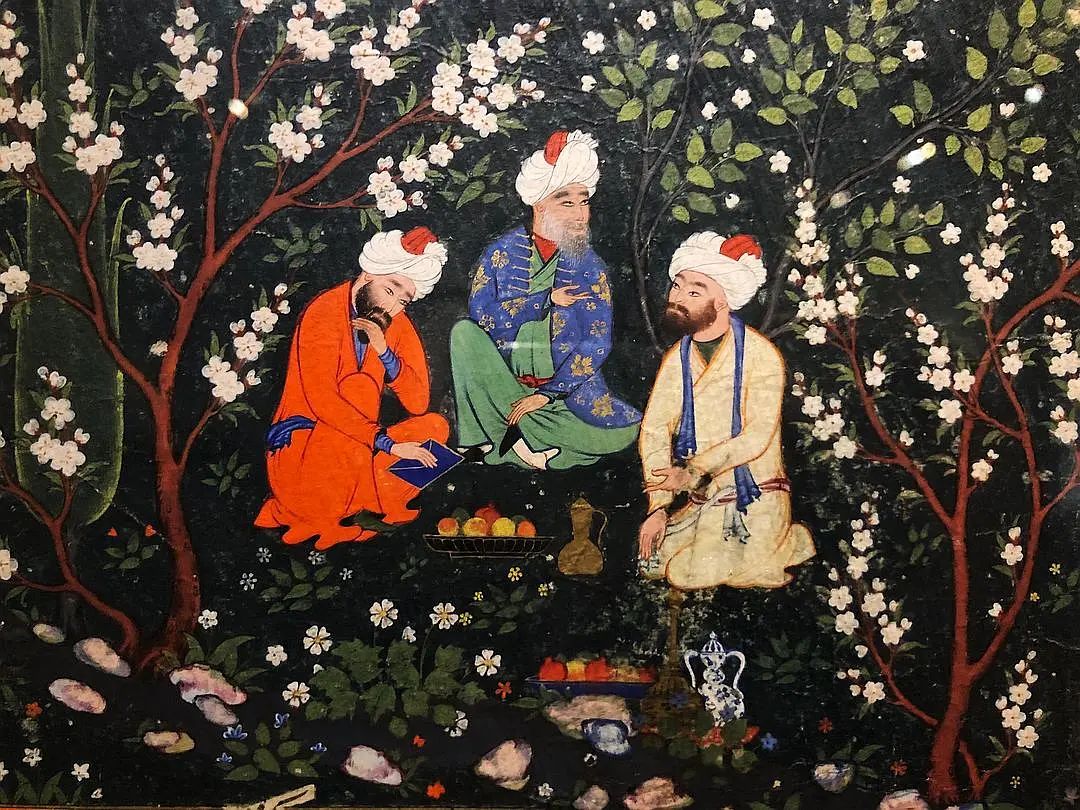
Reproduction:
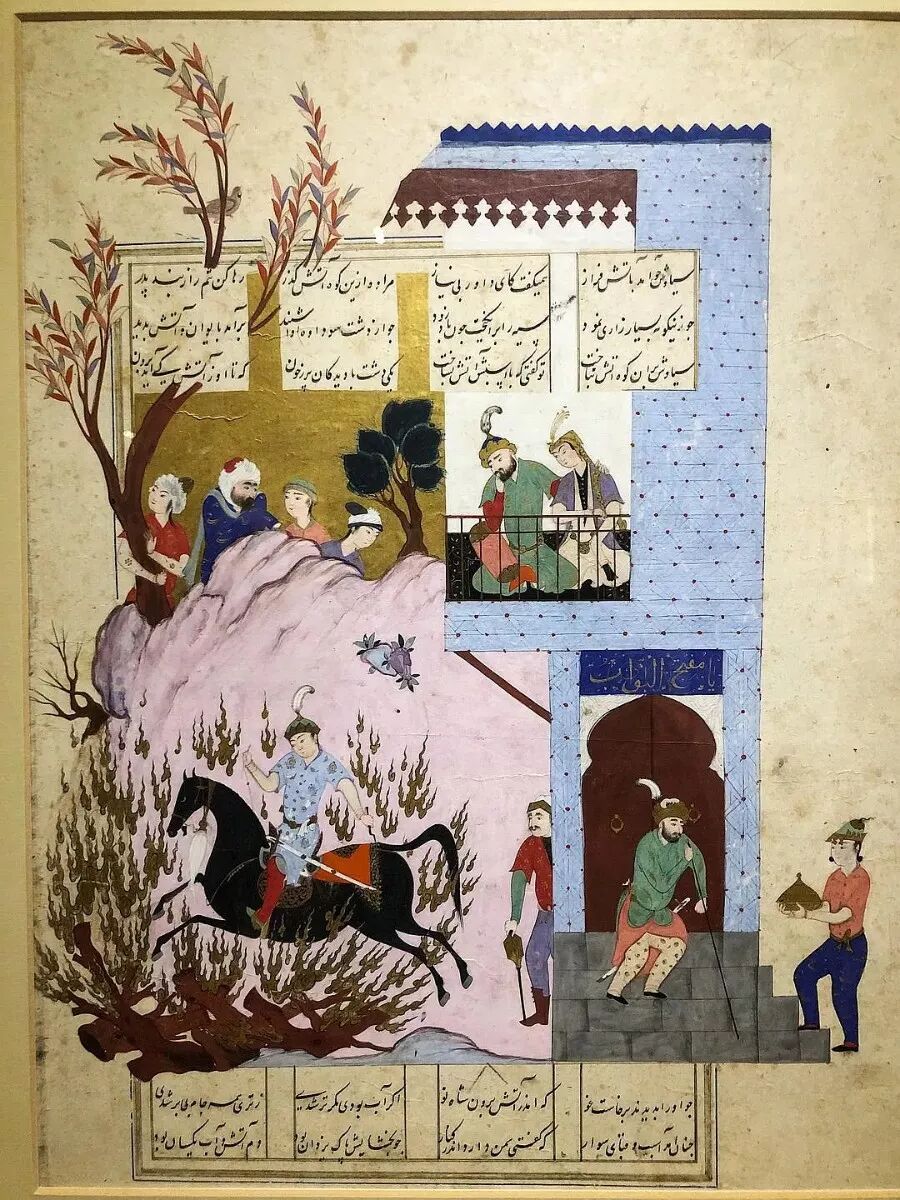
The image below shows the legendary Iranian prince Siavash undergoing a trial by fire, while his father, the Iranian king Kay Kavus, and his stepmother, Queen Sudabeh, watch from a balcony.
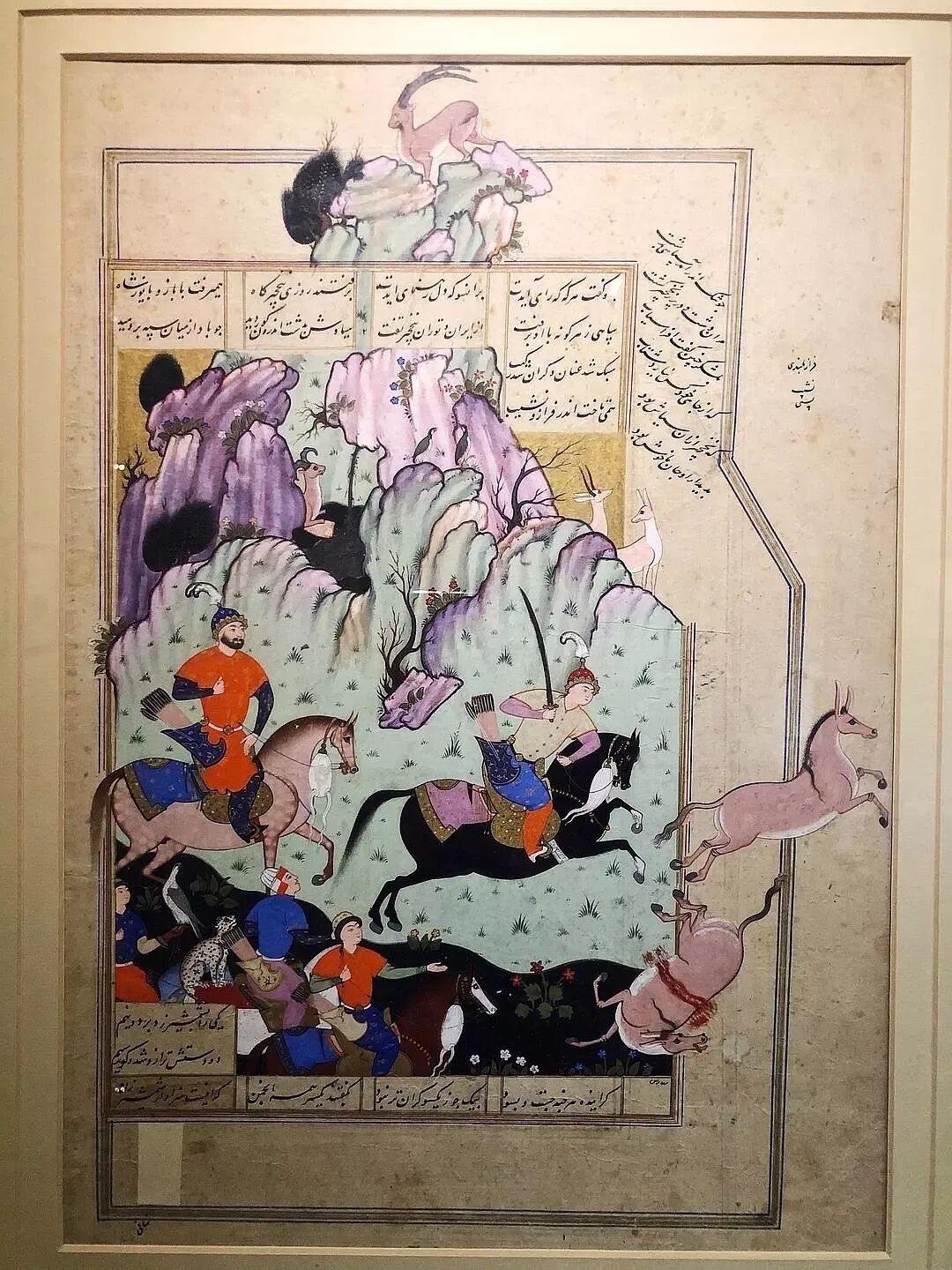
The image below shows Siavash hunting with the Turanian king Afrasiyab. The second part of the Shahnameh says that Siavash willingly became a hostage in Turan so that Iran and Turan could have peace. However, the king broke the peace treaty and committed a series of atrocities, which made Siavash decide to start a new life in Turan. King Afrasiyab of Turan gave Siavash a warm welcome, and Siavash fell in love with the king's daughter and married her.
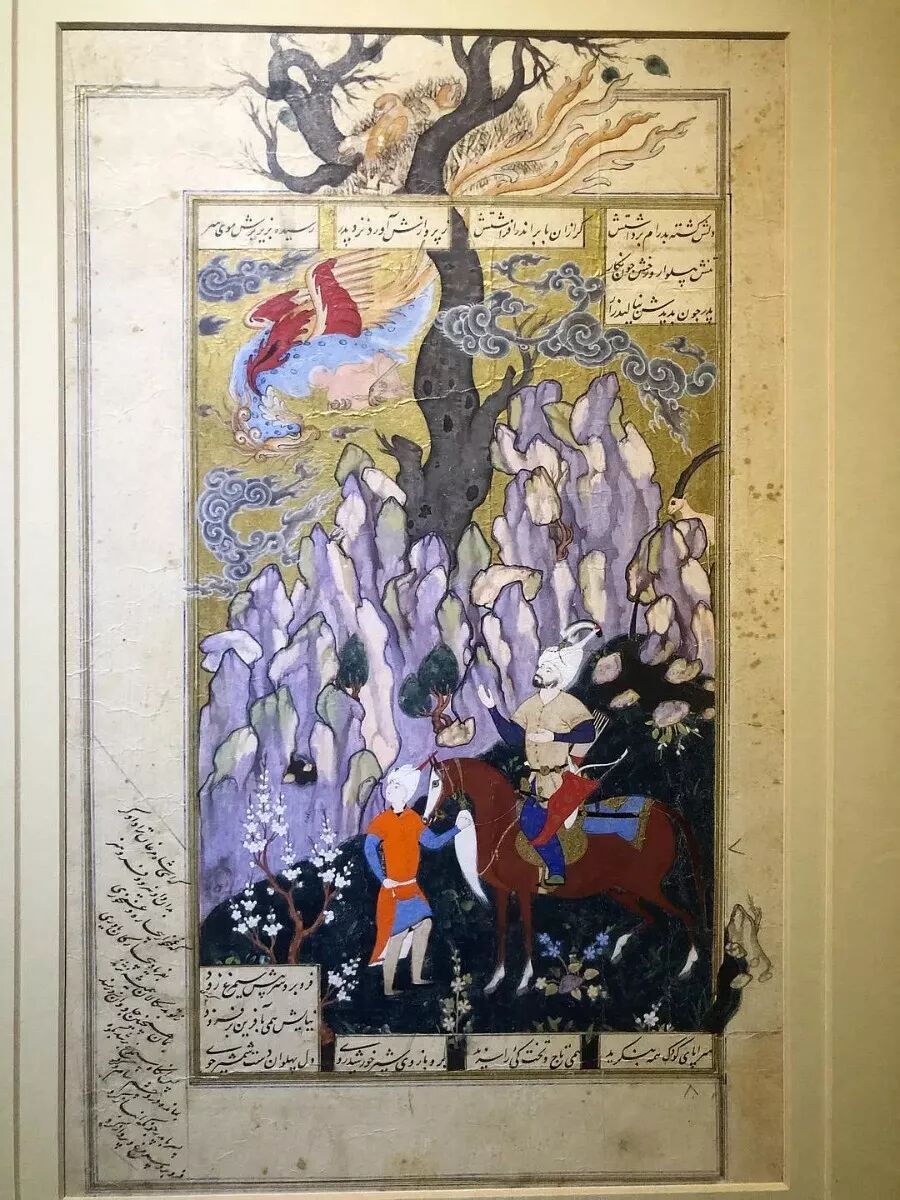
The image below shows the story of the mythical bird Simurgh taking care of the great hero Zal. Simurgh is a kind mythical bird in Iranian legends, similar to a phoenix. It appears often in various Iranian myths, most famously in the Shahnameh.
In the Shahnameh, the Iranian hero Saam's son, Zal, was born with albinism. Saam thought his son was a demon's child, so he abandoned him on Mount Alborz. The kind Simurgh living on the mountain peak heard the baby crying and raised him. Zal learned much wisdom and knowledge from the loving Simurgh.
In the picture, the mythical bird Simurgh is holding the baby Zal, and below them is Zal's father, Saam.
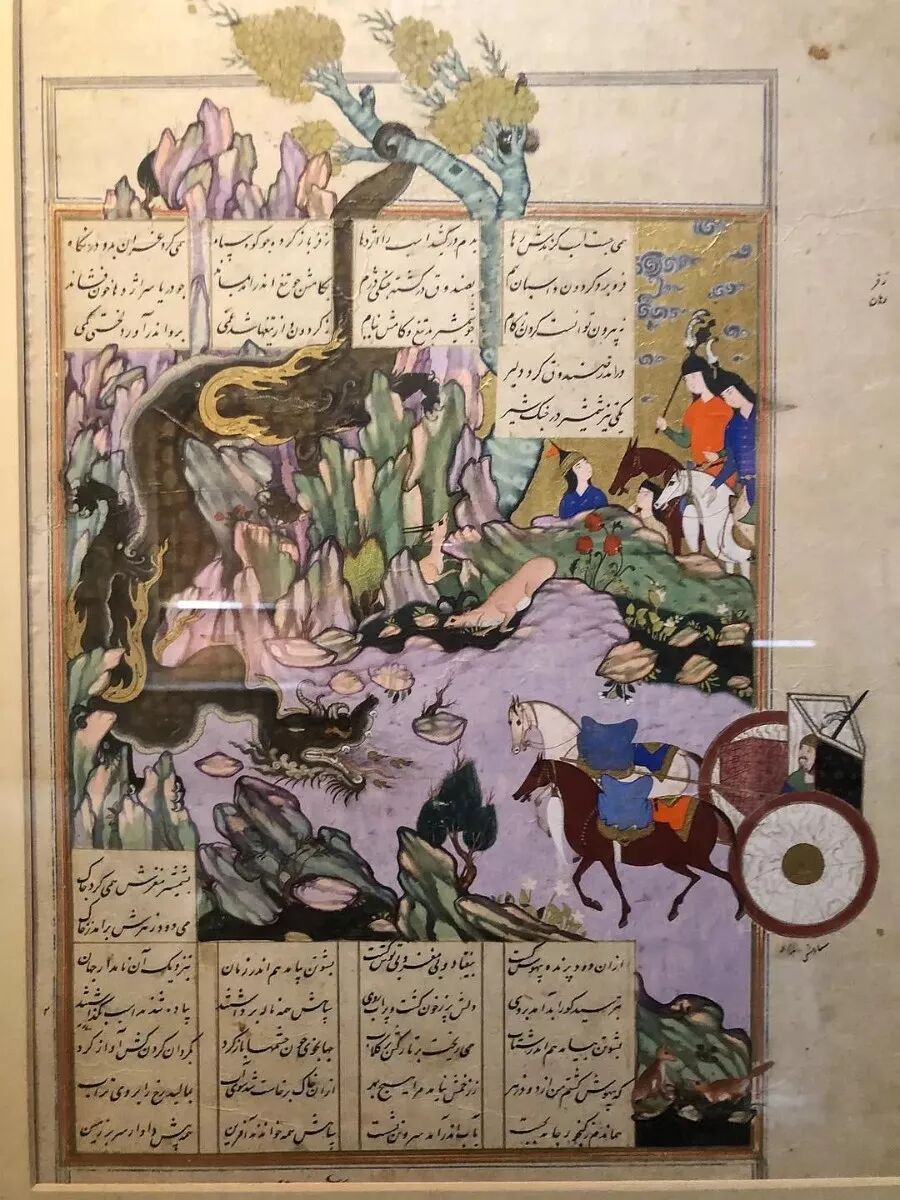
The image below shows the scene of the Iranian hero Esfandiyar slaying a dragon. Esfandiyar was an Iranian prince, and his father once sent him to suppress a rebellion and rescue a kidnapped princess. On his journey, he fought seven different battles, one of which was killing a dragon.
The image below shows the scene of the Iranian hero Esfandiyar killing the Turanian hero Biderafsh. When the King of Turan learned that the Iranians had converted to Zoroastrianism, he wrote a letter to the King of Iran demanding they abandon their faith and sent Biderafsh as a messenger to Iran. The King of Iran refused the demand, which started a war between Turan and Iran. During the war, Biderafsh was killed by the Iranian hero Esfandiyār.
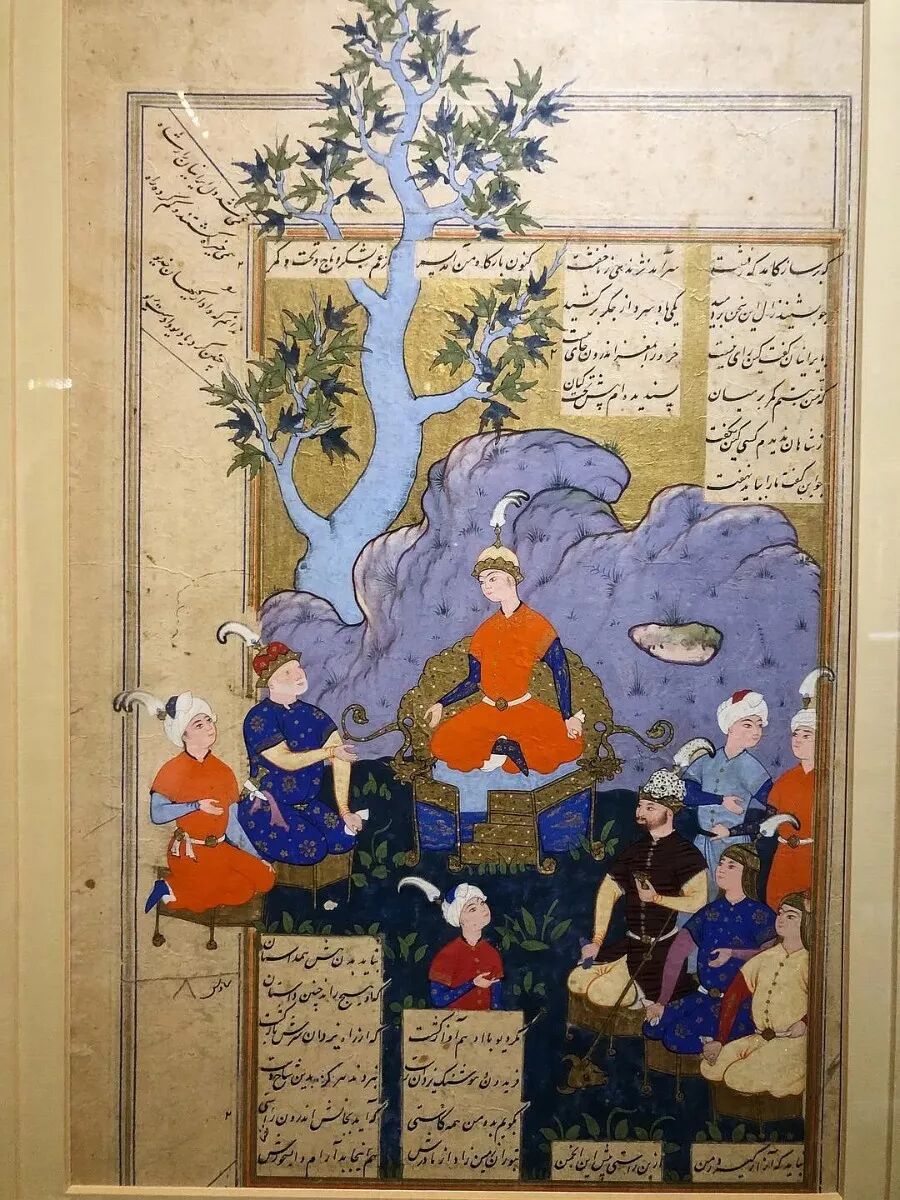
The image below shows the legendary Iranian King Kay Khosrow talking with the Iranian heroes Zal, Rostam, and others.
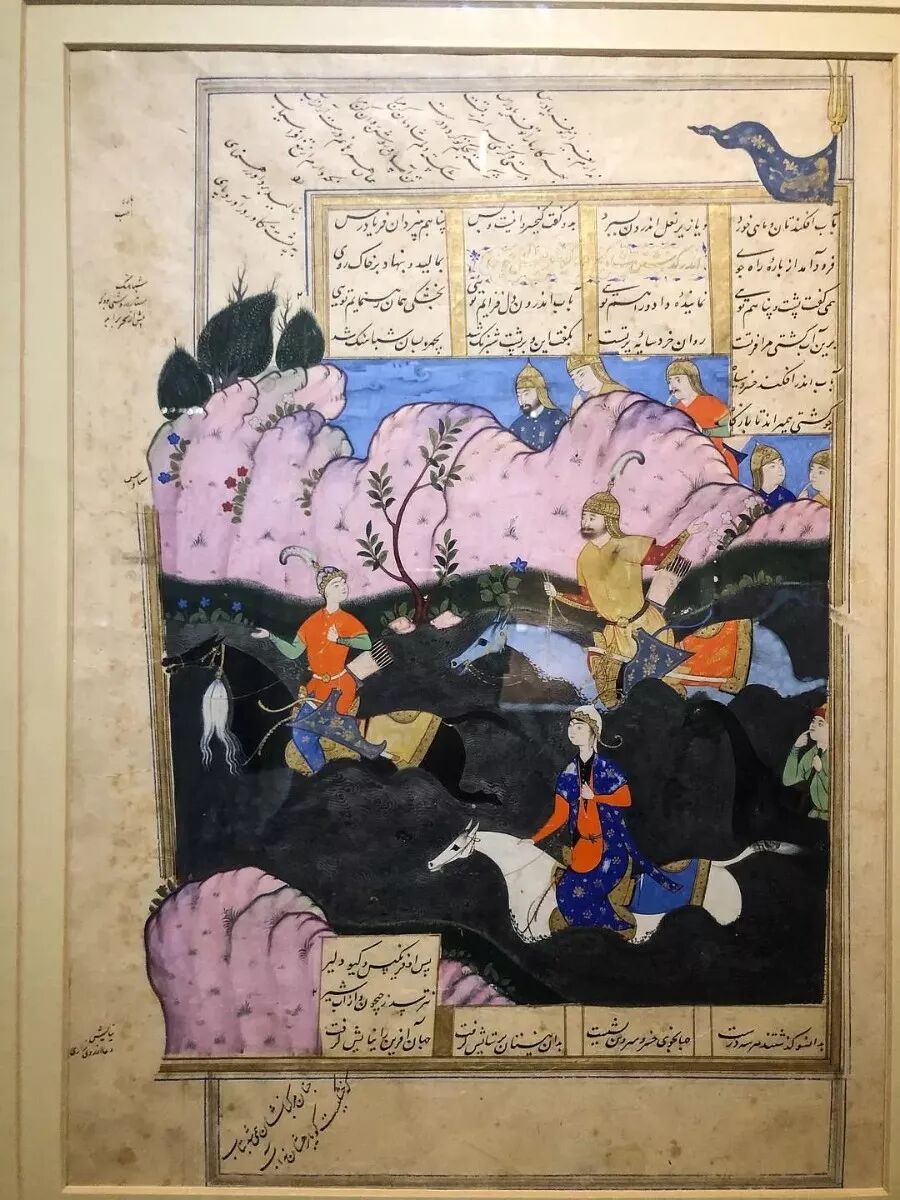
The image below shows the legendary Iranian King Kay Khosrow crossing a river with his mother Farangis and the hero Giv.
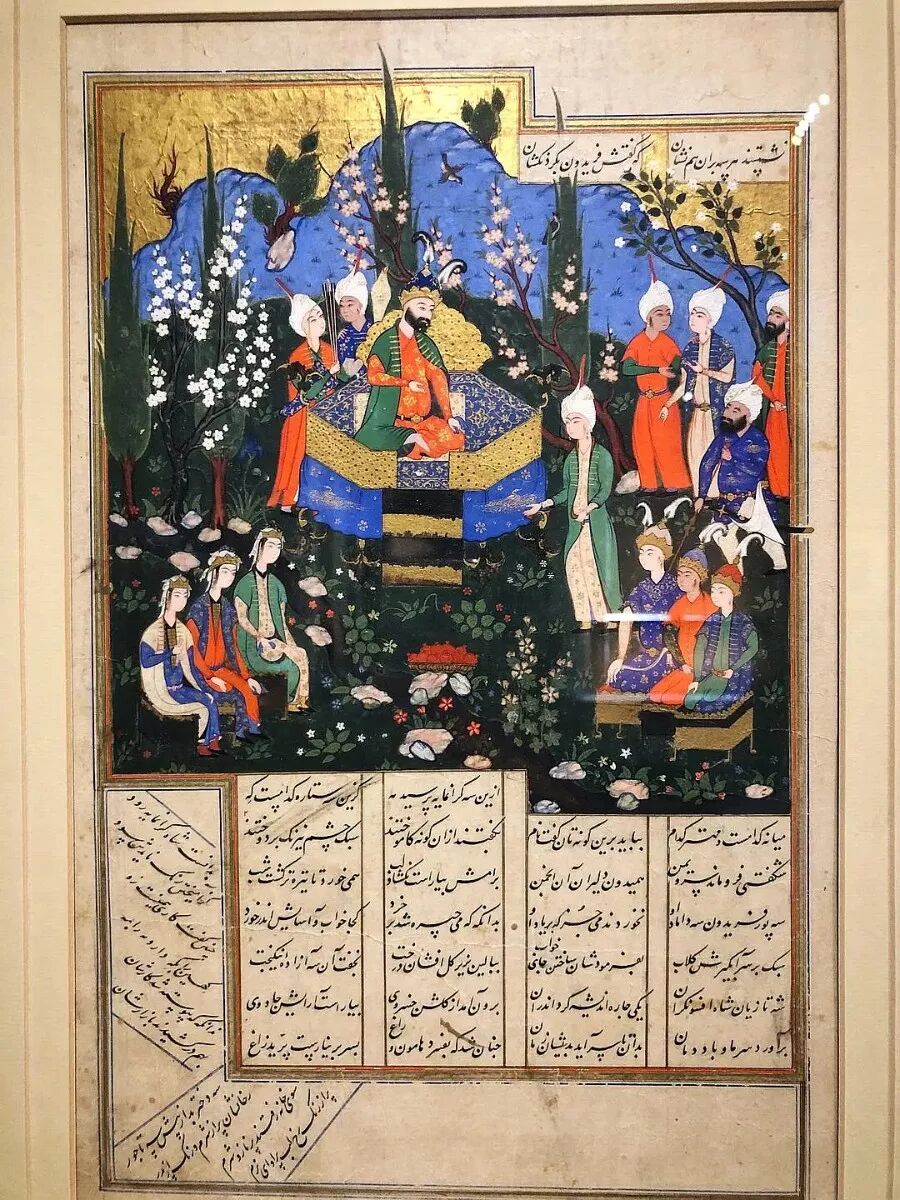
The image below shows the King of Yemen, Sarv, sitting on his throne with his three daughters on his left and the three sons of the mythical Iranian King Fereydun on his right.
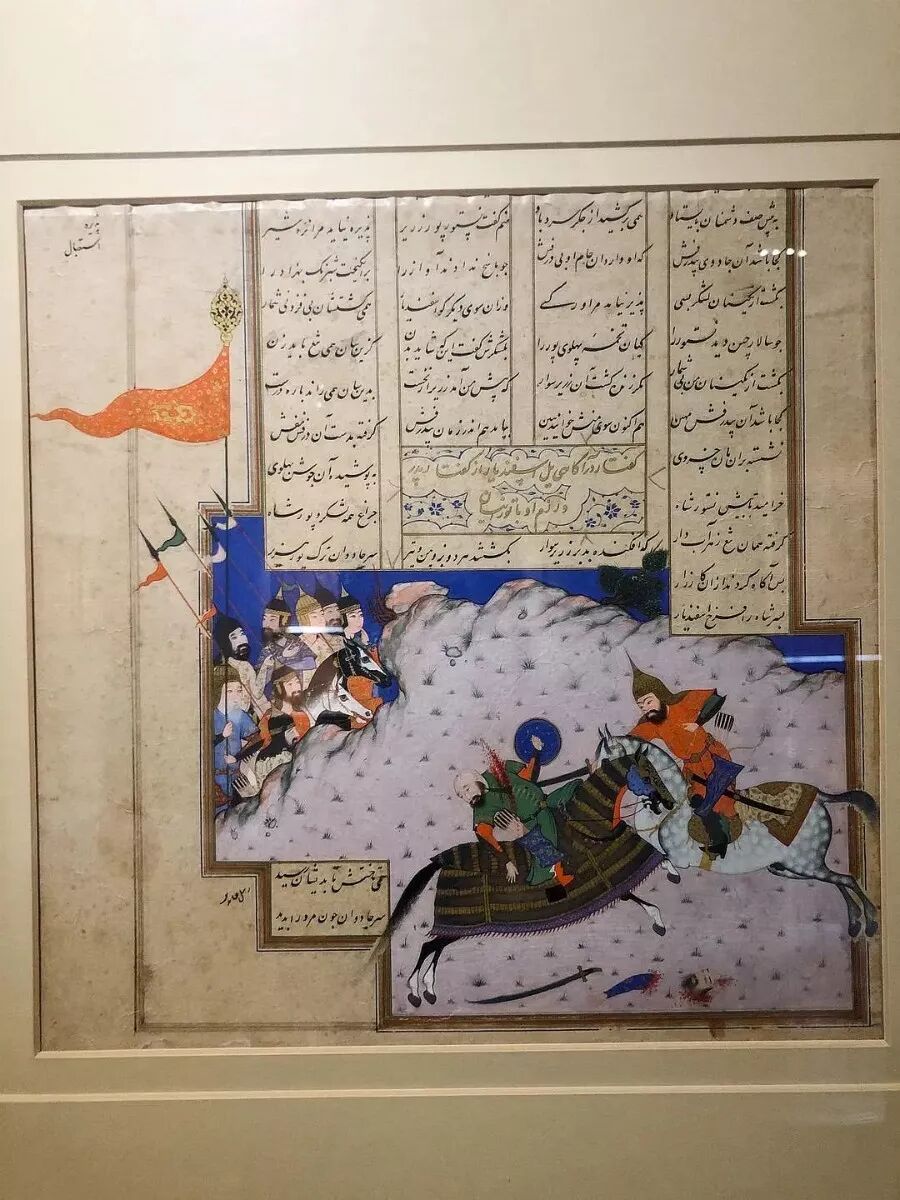
The image below shows the Iranians surrounded by the Turanian army on Mount Hamawan as they watch reinforcements arrive.
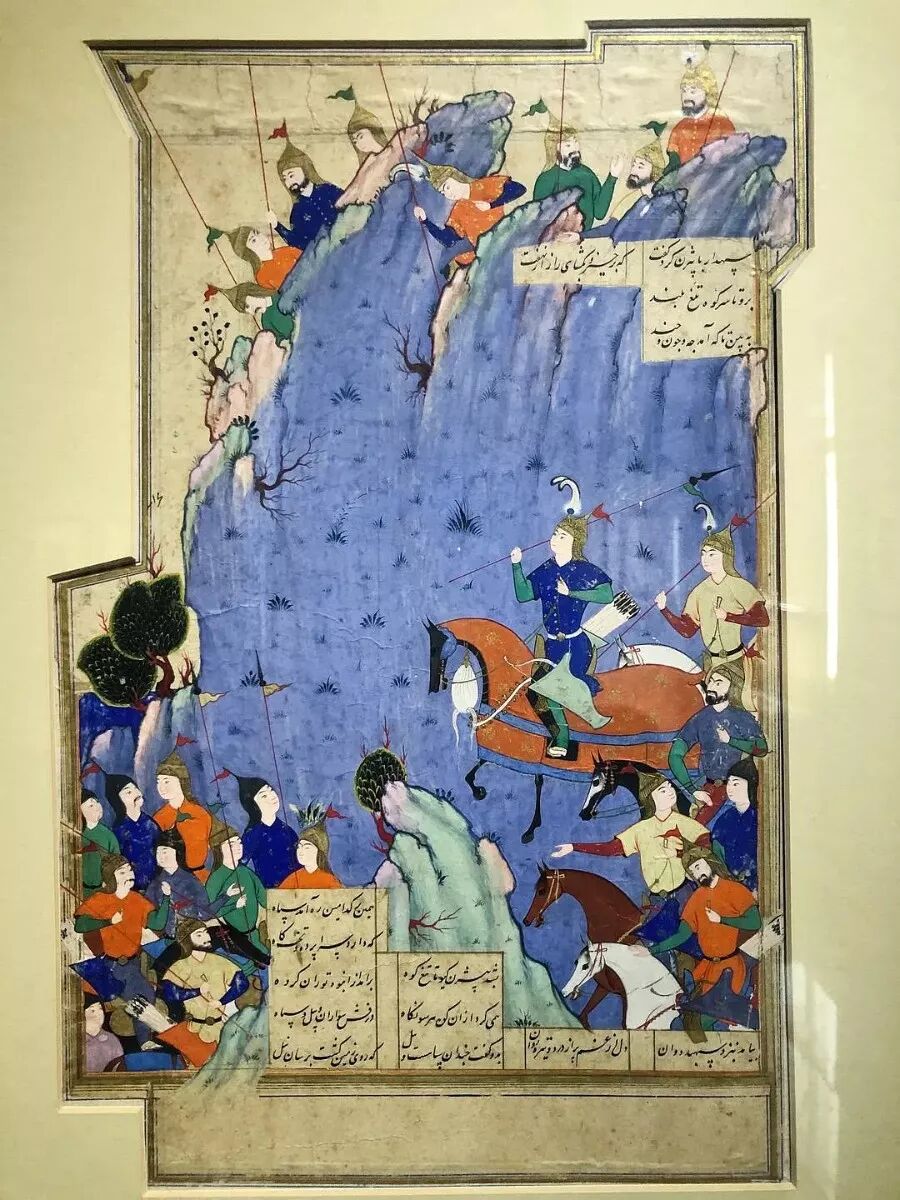
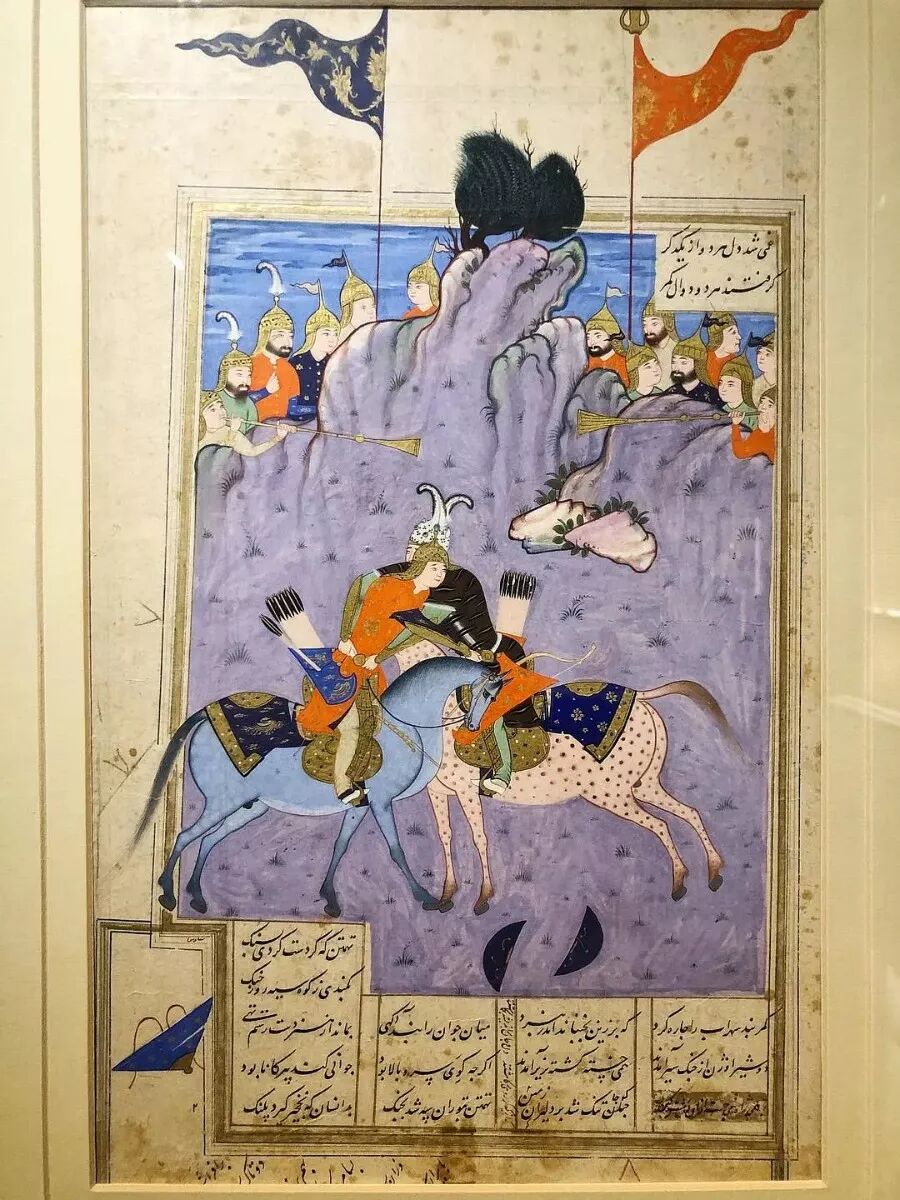
The image below depicts the tragic story between the Iranian hero Rostam and his son Sohrab. Once, Rostam followed the tracks of his lost horse to the Kingdom of Samangan, where he met Princess Tahmina. The princess admired Rostam greatly, so she came to his room at night and said that if he gave her a child, she would return his horse. Rostam agreed and did so. Before leaving, Rostam gave the princess two tokens. If she gave birth to a girl, she should braid the tokens into the child's hair along with some jewelry. If it was a boy, they tied the token to the child's arm. Later, the princess gave birth to a boy and named him Sohrab.
Many years later, Iran and Turan went to war. As a legendary hero of Iran, Rostam forced the Turan army to retreat, and no one dared to face him. Eventually, Sohrab and Rostam fought each other. Although he knew his father was named Rostam, he did not know that the man in front of him was his father. After a long battle, Rostam finally broke Sohrab's back and stabbed him. Before he died, Sohrab said his father would avenge him, and that was when the father and son finally recognized each other. Sohrab took out the token his mother had given him. Rostam was heartbroken, but he could not save his son.
Other miniature paintings in the Qazvin style.
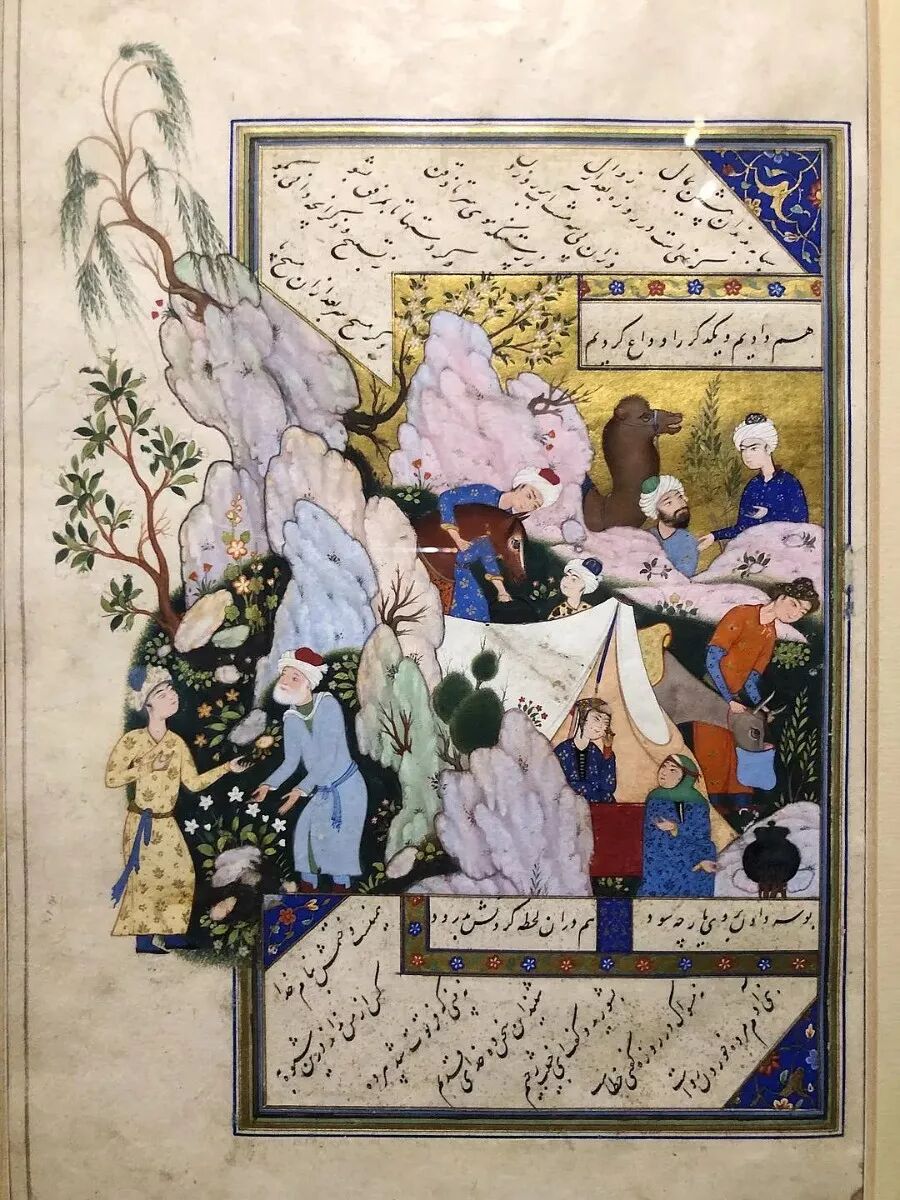
The image below is a 16th-century Qazvin-style miniature painting from Saadi's The Orchard (Bustan).
The Orchard (Bustan) is a collection of lyric poems completed by the famous Persian poet Saadi in 1257. It is considered one of Saadi's two greatest works, alongside The Rose Garden (Golestan).
2. Miniatures from the Compendium of Chronicles (Jami' al-tawarikh) from the Timurid Empire period
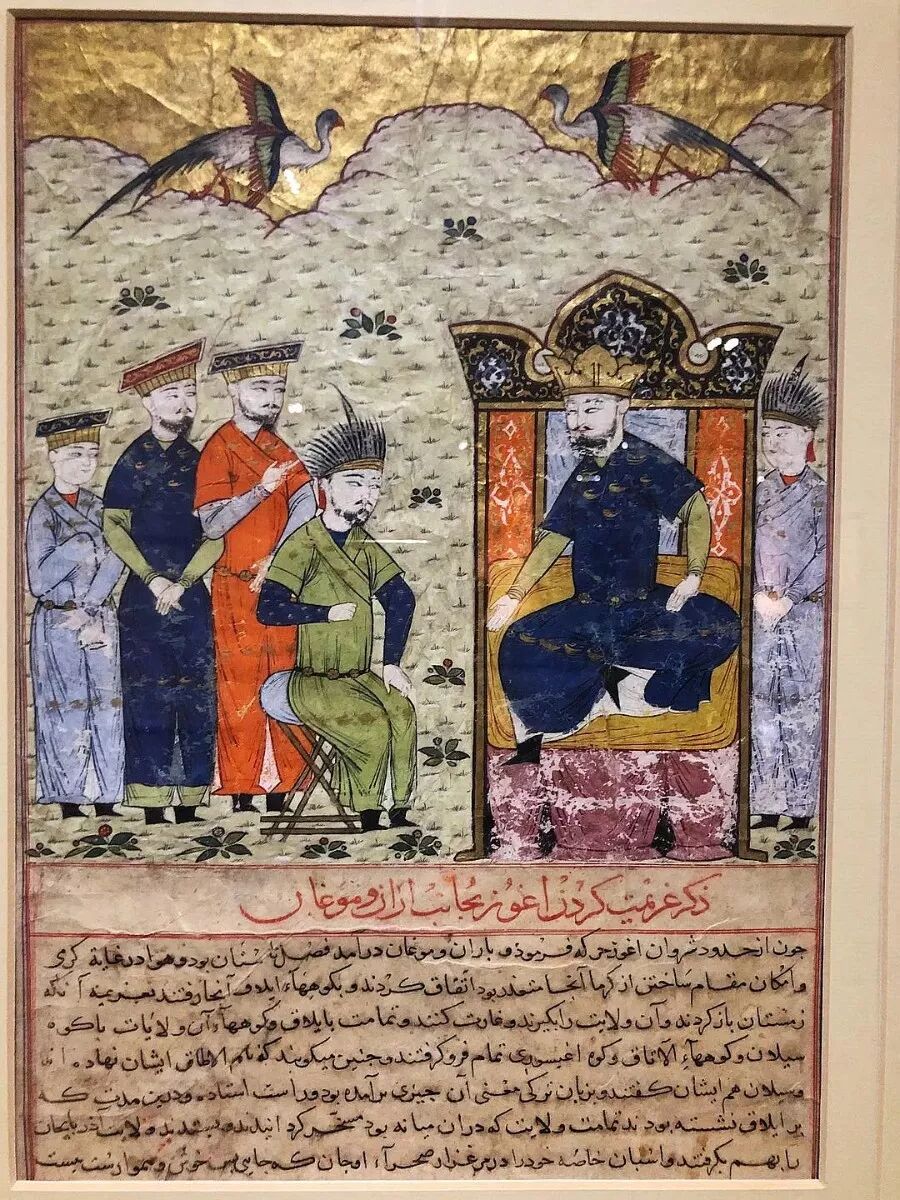
The Compendium of Chronicles (Jami' al-tawarikh) is a world history book from the Ilkhanate period. It was commissioned by the seventh Ilkhan, Ghazan (reigned 1295-1304), and edited by his vizier and scholar Rashid-al-Din Hamadani. Because of its scope, the book is known as the first world history. It covers various histories, cultures, and major events from China to Europe.
By the early 14th century, the Mongols of the Ilkhanate had settled down and adopted Persian cultural customs. Ghazan's original idea was to write a book that preserved the traditions of the Ilkhanate Mongols by explaining their history on the steppes. To compile the history, Rashid-al-Din set up a special area at the Rab'-e Rashidi university in the Ilkhanate capital of Tabriz. This area included many buildings such as a mosque, a hospital, a library, and classrooms.
After Ghazan died in 1304, his successor, Öljaitü (reigned 1304-1316), asked Rashid-al-Din to expand the scope of the compilation to cover the entire known world history. The Compendium of Chronicles was finally completed between 1306 and 1311. Afterward, Rashid-al-Din organized hundreds of miniature painters and calligraphers to produce one Persian copy and one Arabic copy of the Compendium of Chronicles every year to distribute to schools throughout the Ilkhanate. Rashid-al-Din produced 20 copies of the Compendium of Chronicles during his lifetime, which are known as the first-generation manuscripts. Only a very small number have survived, and they are extremely precious examples of early Persian miniature painting.
In the early 15th century, the Timurid Empire replaced the Ilkhanate as the ruler of Iran and took a great interest in the Compendium of Chronicles. At that time, Shah Rukh (reigned 1405-1447), the ruler of the eastern part of the Timurid Empire, owned an incomplete manuscript of the Compendium of Chronicles. He commissioned the court historian Hafiz-i Abru to continue the work in Herat, Afghanistan, which was Shah Rukh's capital. The continuation brought the content up to the Timurid era, and the miniature paintings in it have a typical Timurid style.
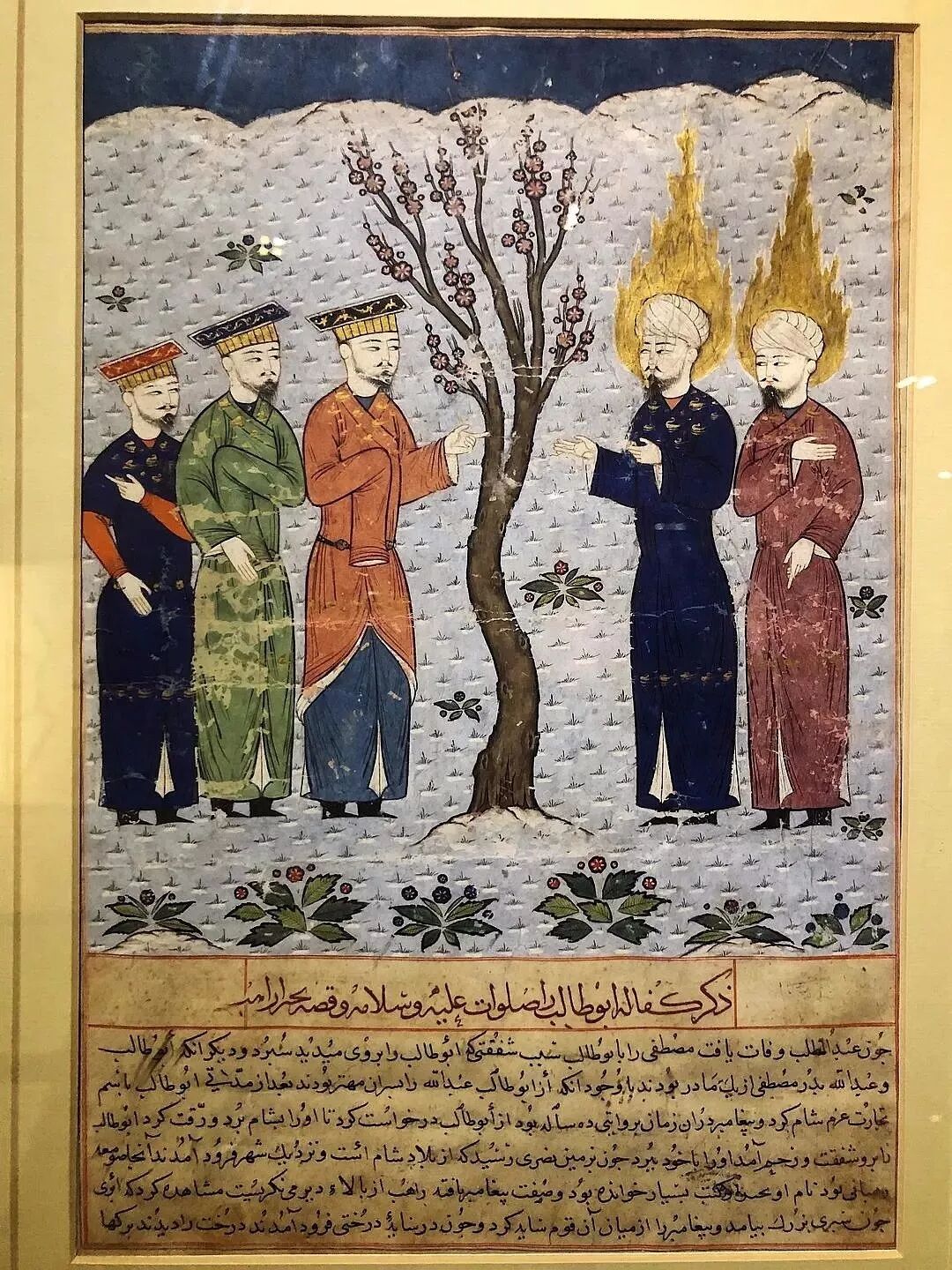
3. Other miniatures
A 16th-century miniature painting from Saadi's The Rose Garden (Gulistan).
Saadi Shirazi was a famous 13th-century Persian poet. He is widely considered one of the greatest poets in classical Persian literature and has had a huge influence on later generations. The Rose Garden (Gulistan, literally meaning 'rose garden') is a masterpiece of classical Persian literature. Saadi wrote it in 1258, and it is a collection of poems and stories.
The image below shows a 16th-century miniature painting of The Rose Garden in the Herat style from the Safavid dynasty.
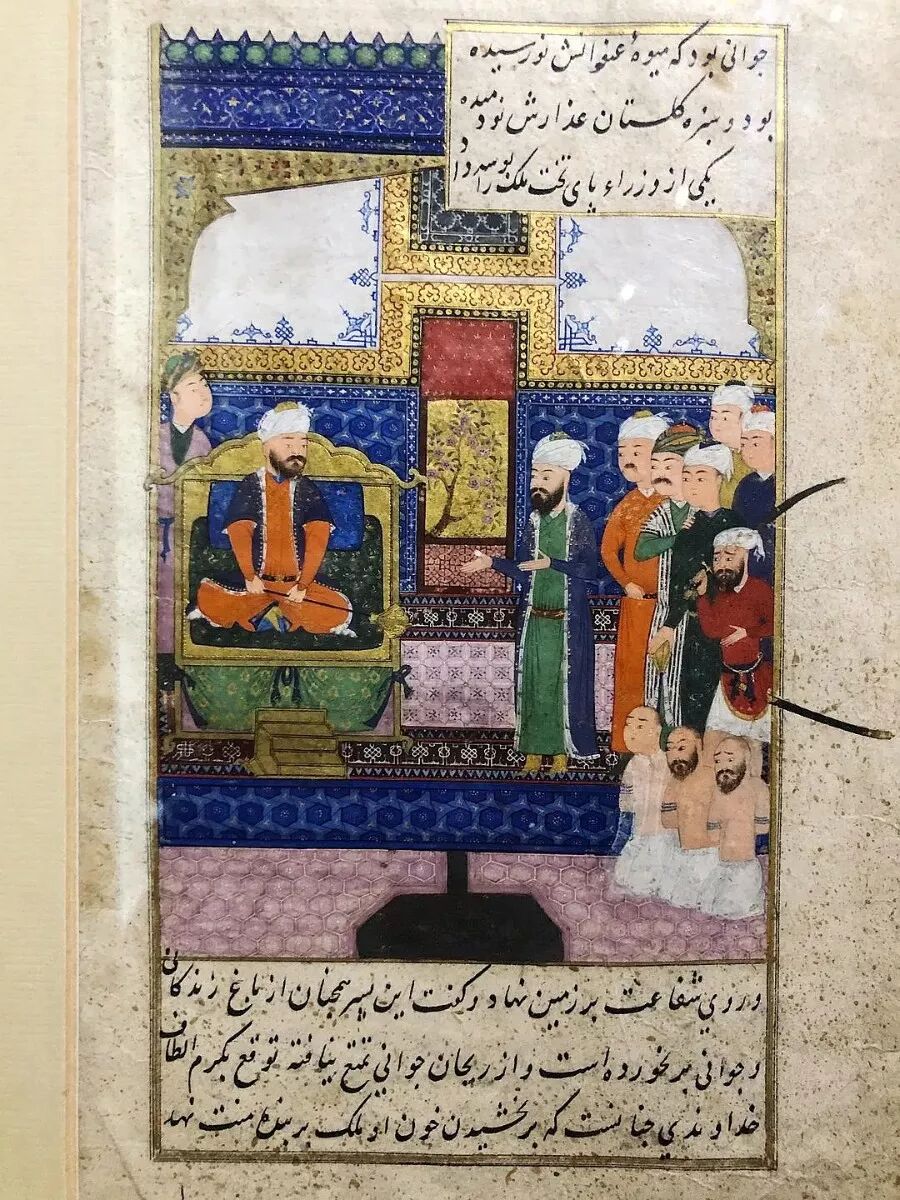
A 15th to 16th-century miniature painting in the Bukhara style.
A 15th-century miniature painting from the Timurid dynasty in the Bukhara style, depicting 'Imam Ali slaying a dragon' in the Khavaran-Nameh.
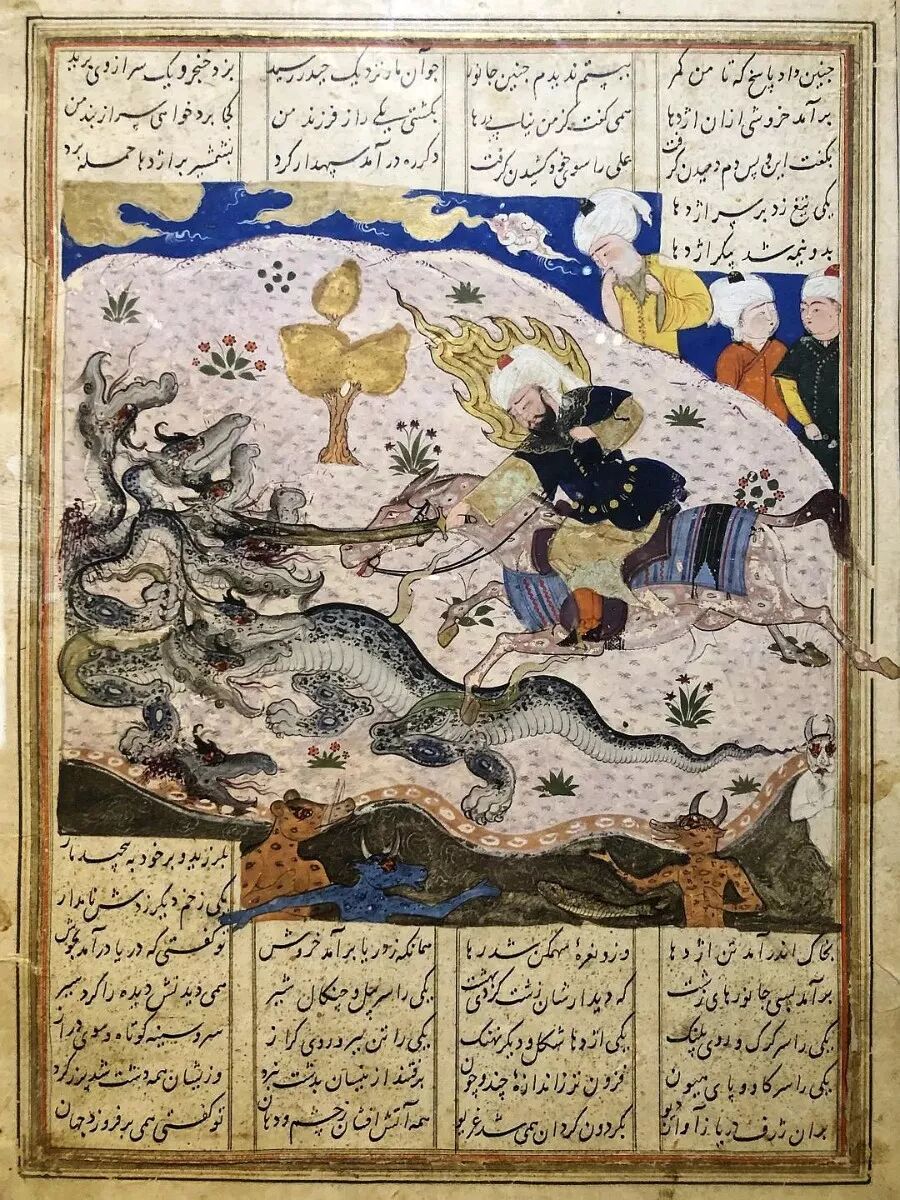
A 15th-century miniature painting of Saadi's The Orchard (Bustan) in the Bukhara style.
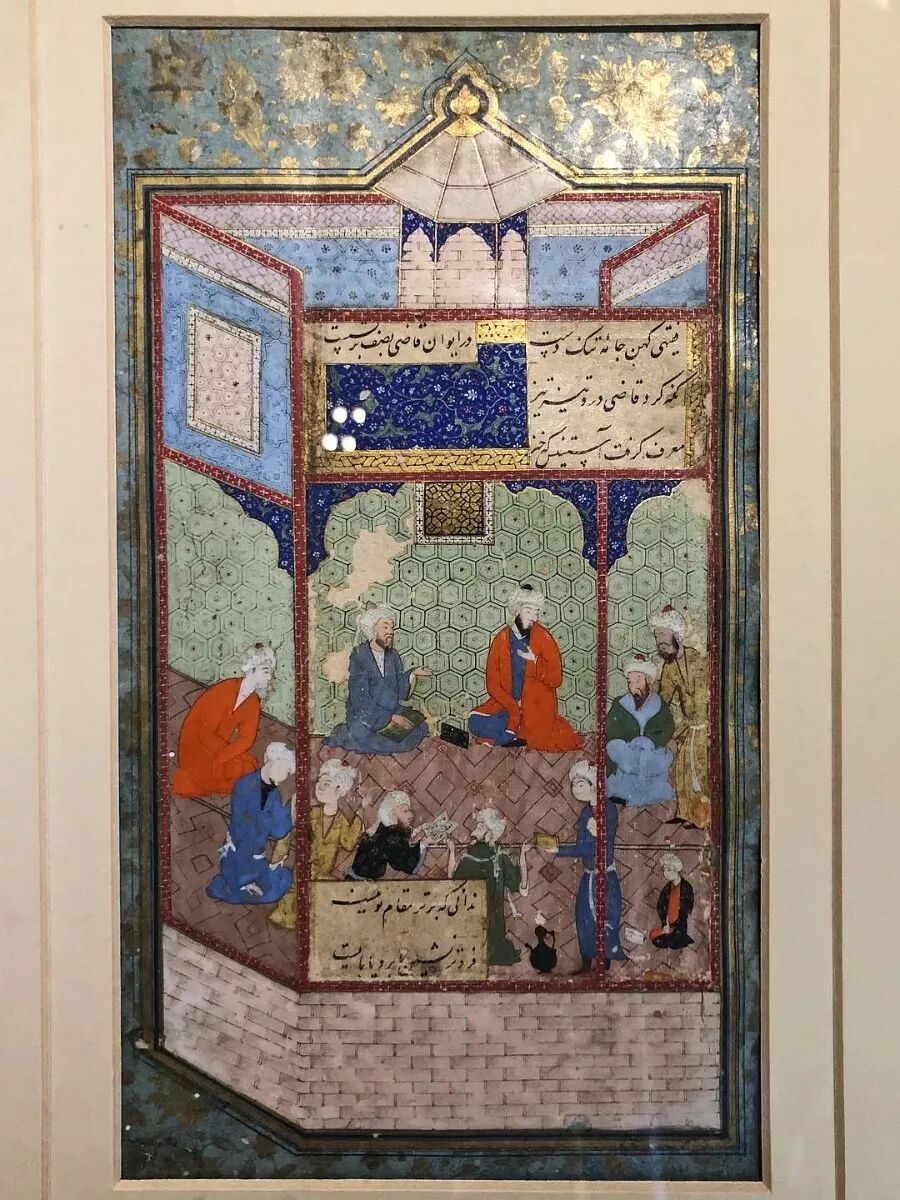
A 16th-century miniature painting in the Bukhara style.
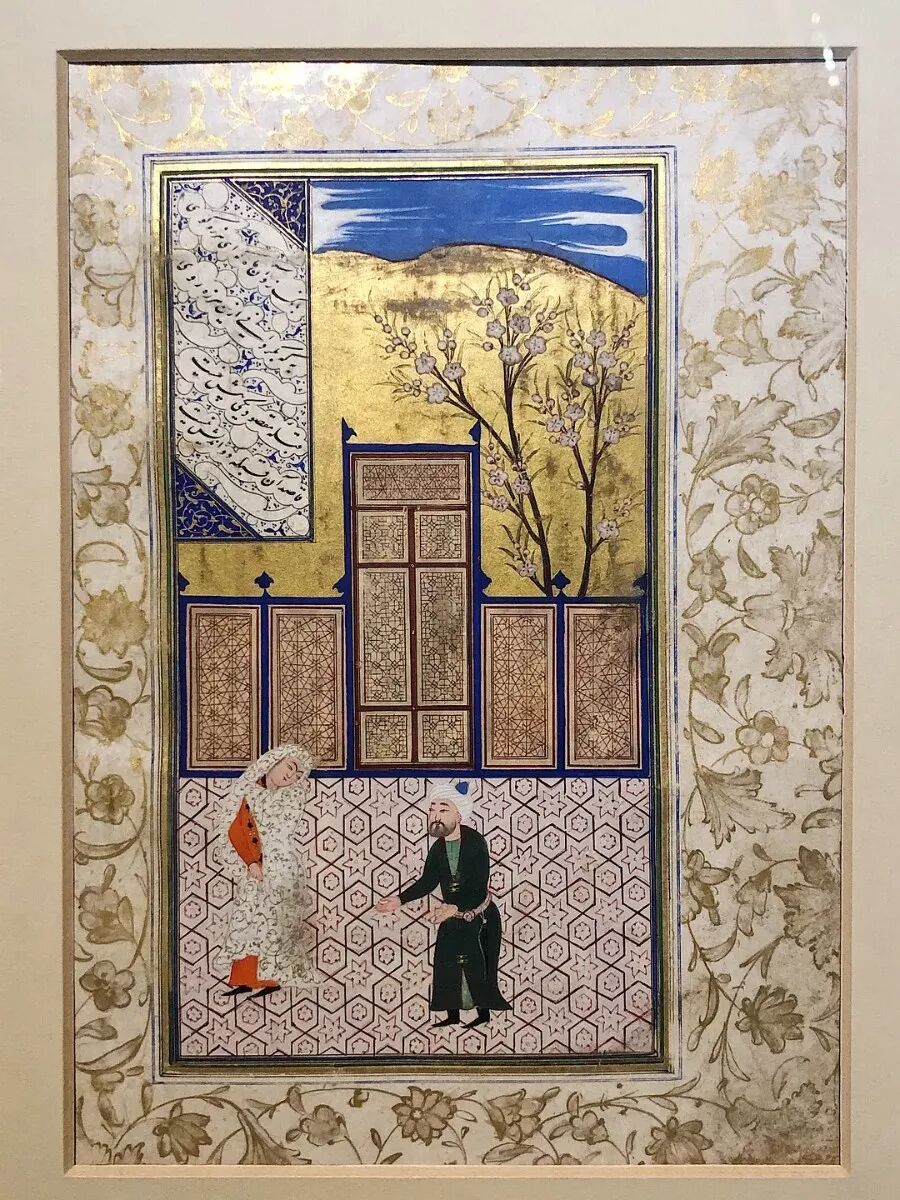
A miniature painting in the Khorasan style.
A 15th-century miniature painting of The Garden of Truth (The Hadiqa Tul Haqiqat) in the Khorasan style. The original work is by the famous 11th to 12th-century Persian Sufi poet Sanai, and The Garden of Truth is his masterpiece.
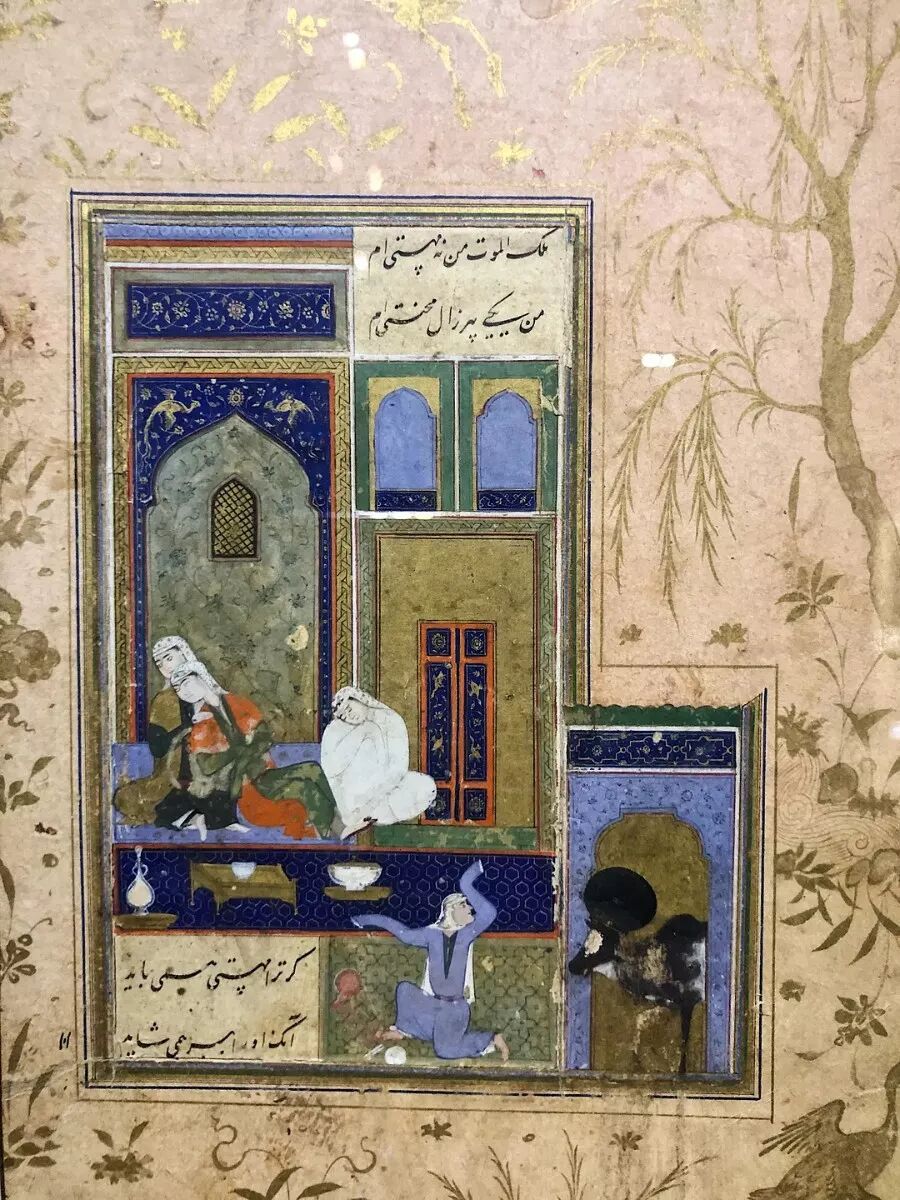
A miniature painting in the Shiraz style.
16th-century Shiraz-style miniature painting.
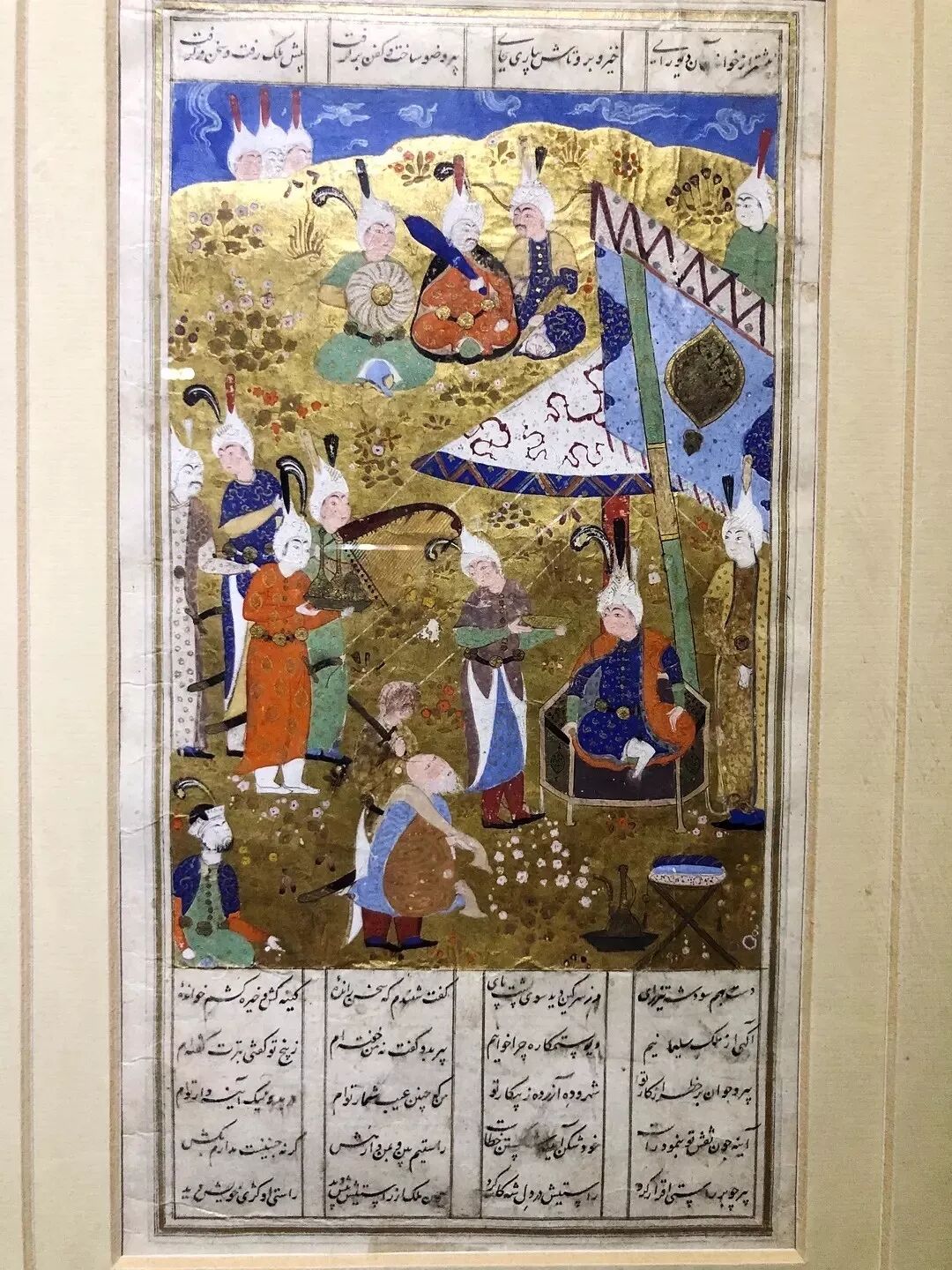
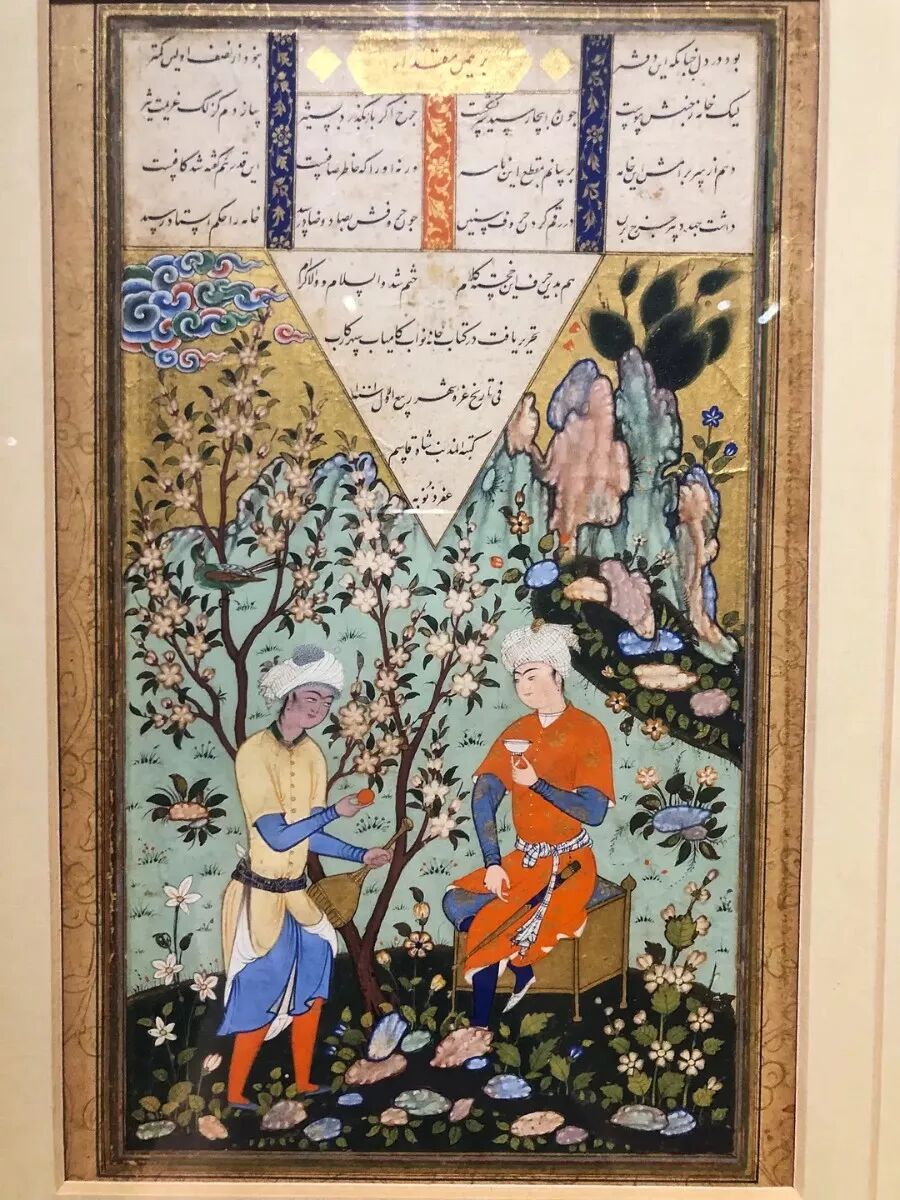
Herat-style miniature painting.
1592 Herat-style miniature painting showing two people in a garden.
4. Pottery from the 9th to 10th centuries unearthed in the ancient Khorasan city of Nishapur.
Nishapur is located on the ancient Silk Road in northeastern Iran and was once one of the four major cities in the Greater Khorasan region. In the 9th century, Nishapur became the capital of the Persian Tahirid dynasty. Under the rule of the Persian Samanid dynasty in the 10th century, Nishapur grew into an important cultural and commercial center of the Islamic world. Various cultures and religions gathered here, and trade routes from Transoxiana in Central Asia, China, Iraq, and Egypt met in this city. The glazed pottery produced in Nishapur at that time became an important trade commodity in the West, once rivaling Baghdad and Cairo.
In 1221, the Mongols massacred the population of Nishapur and completely destroyed the city, burying the former metropolis underground. It was not until the mid-20th century that the site was rediscovered through archaeological excavations. Today, most of the unearthed Nishapur ceramics are kept at the Metropolitan Museum of Art, as well as in museums in Tehran and Mashhad.
5. Ceramics from the 12th to 14th centuries from the ancient Iranian city of Kashan
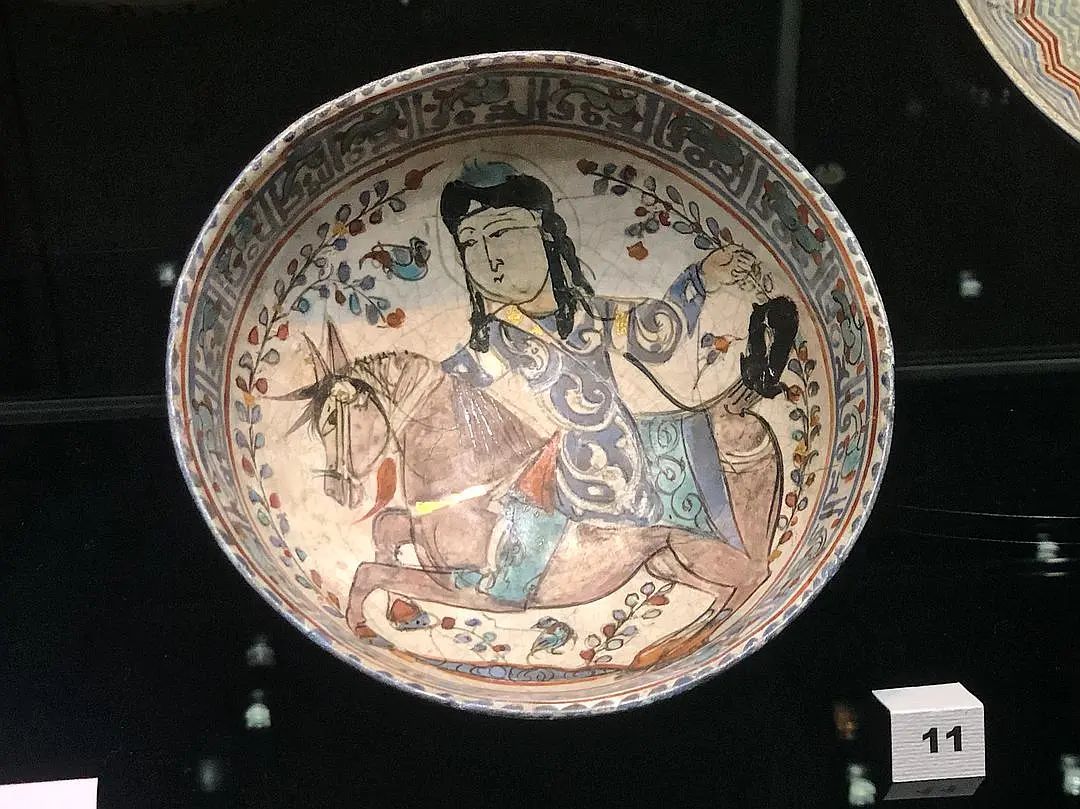
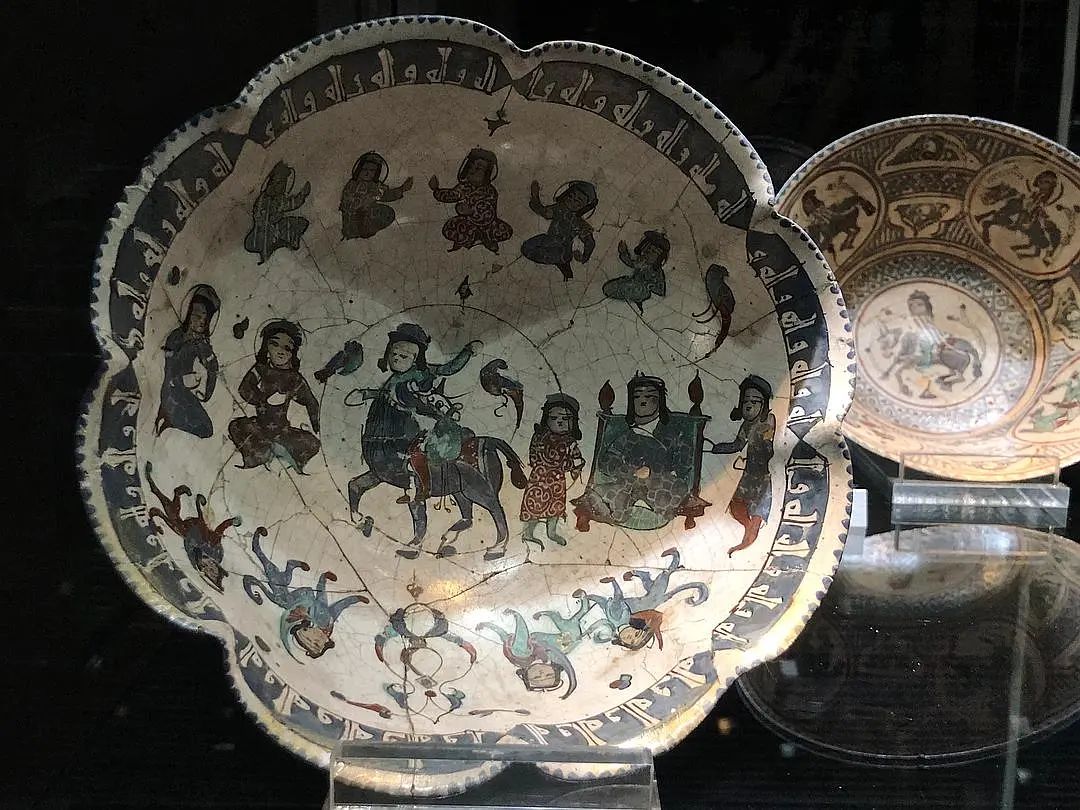
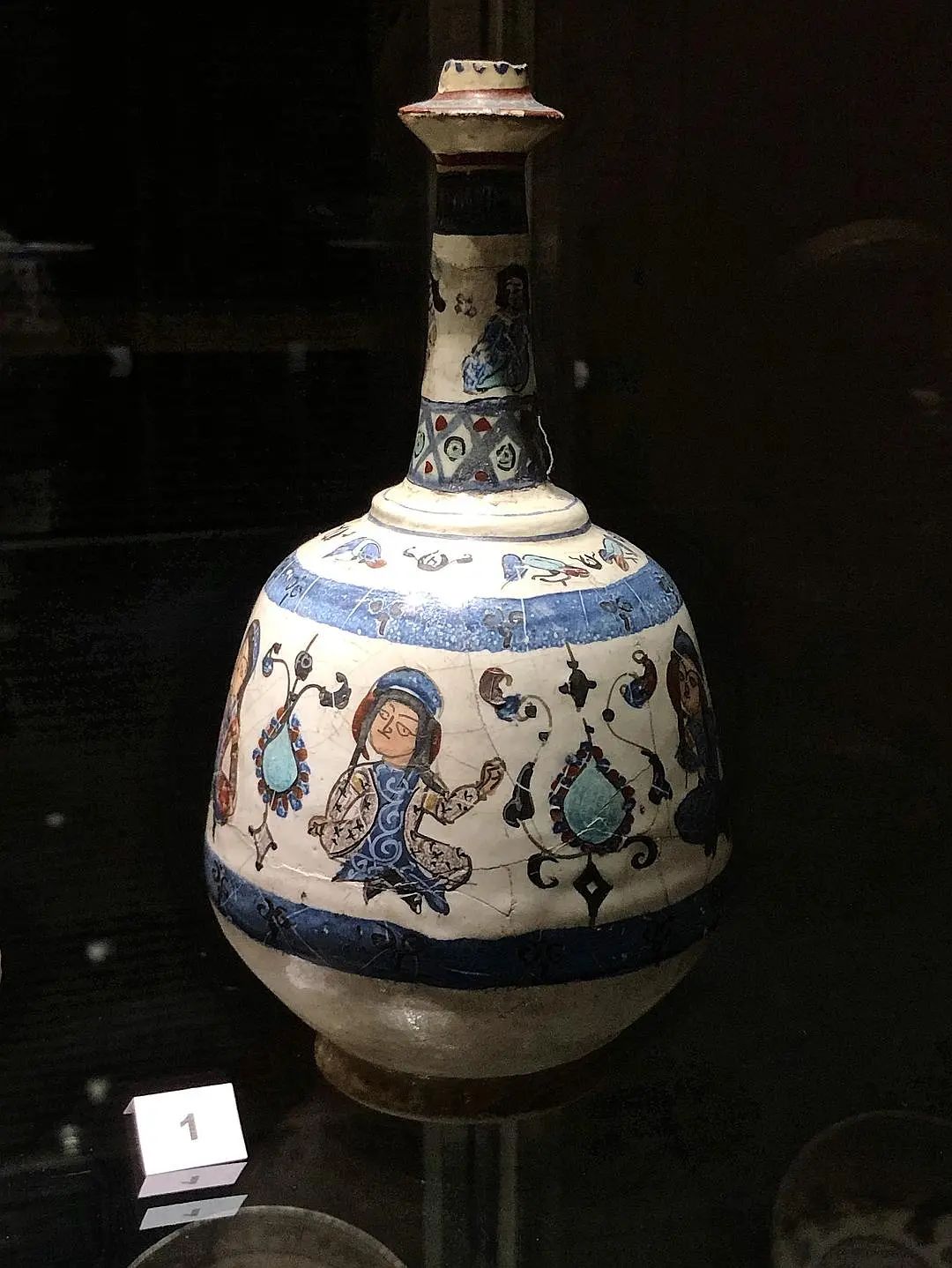
Kashan is south of Tehran. During the Seljuk Empire and Ilkhanate rule from the 12th to 14th centuries, it was a major center for making high-quality pottery and tiles in Iran. In modern Persian, the word for tile (kashi) comes from Kashan.
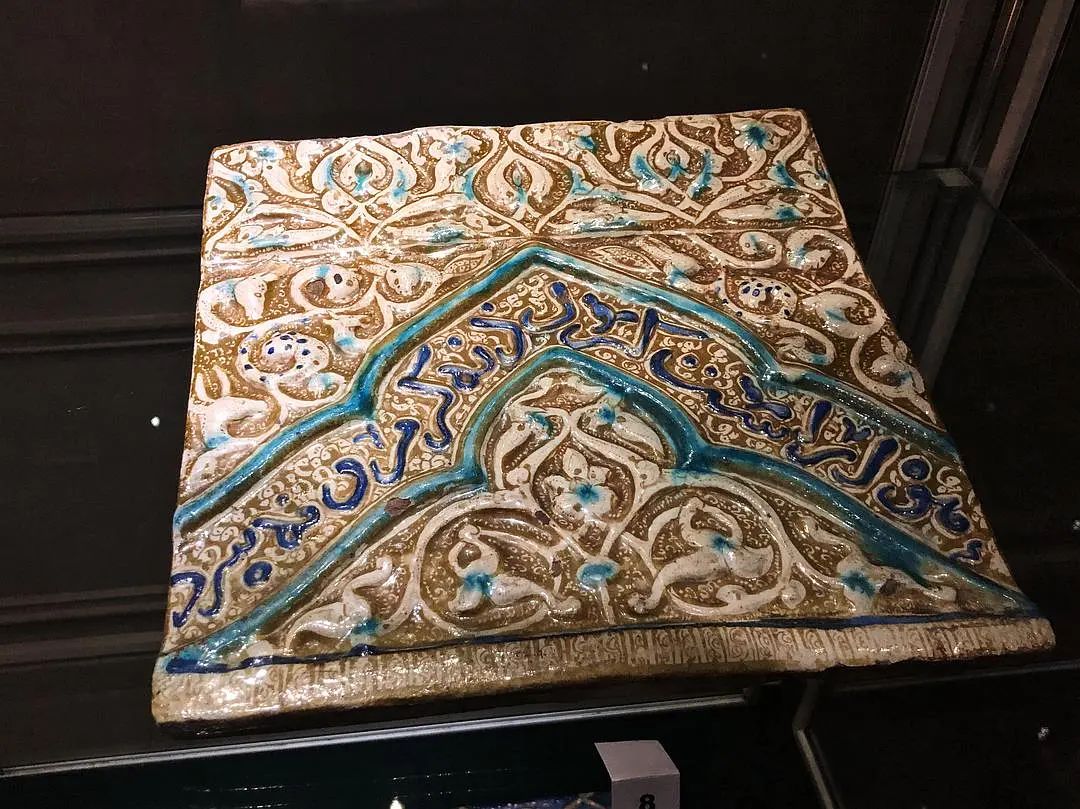
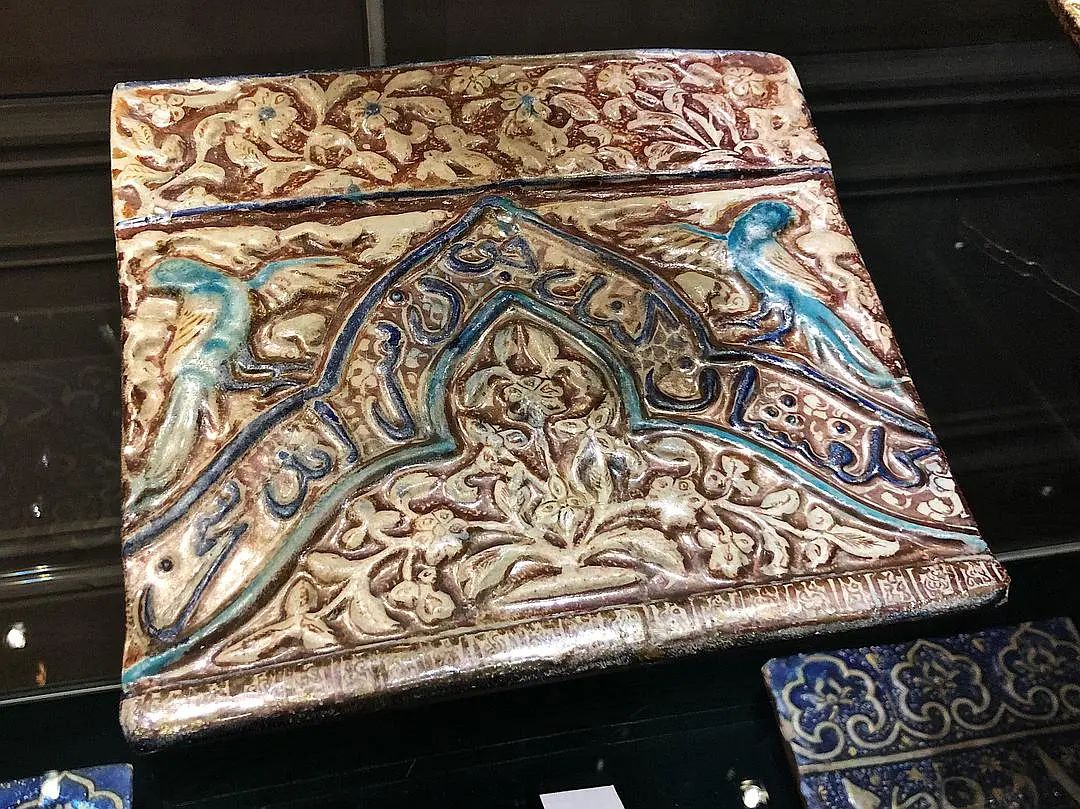
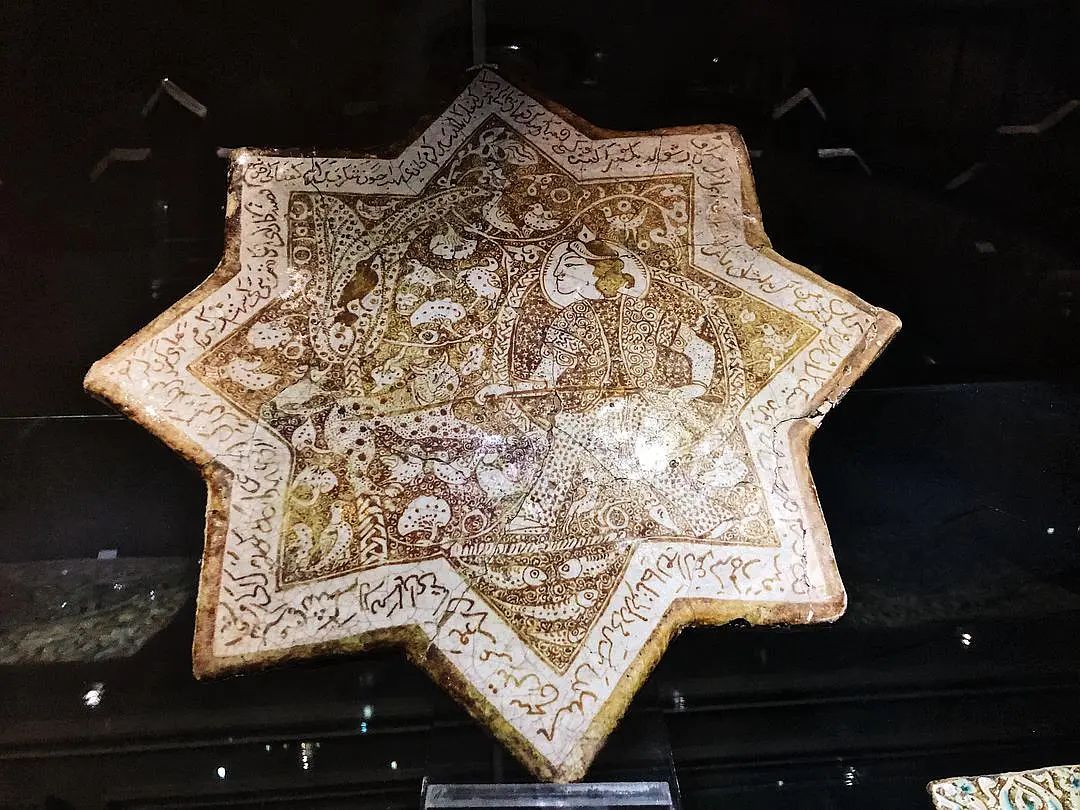
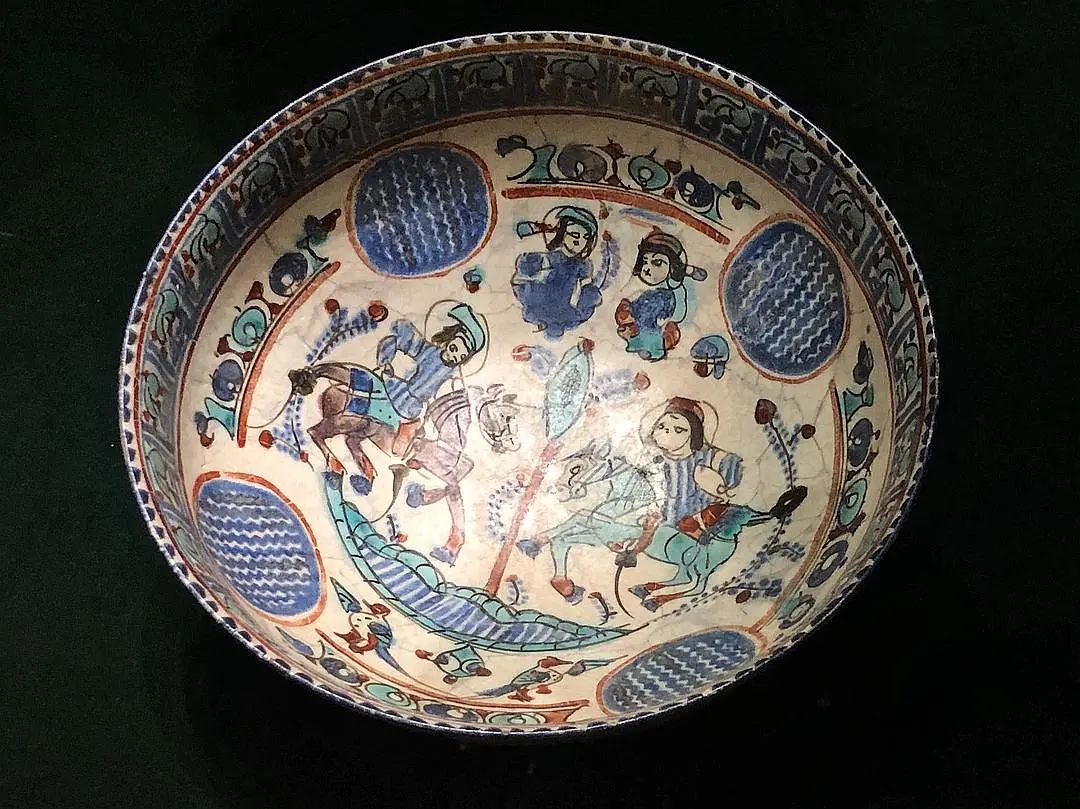
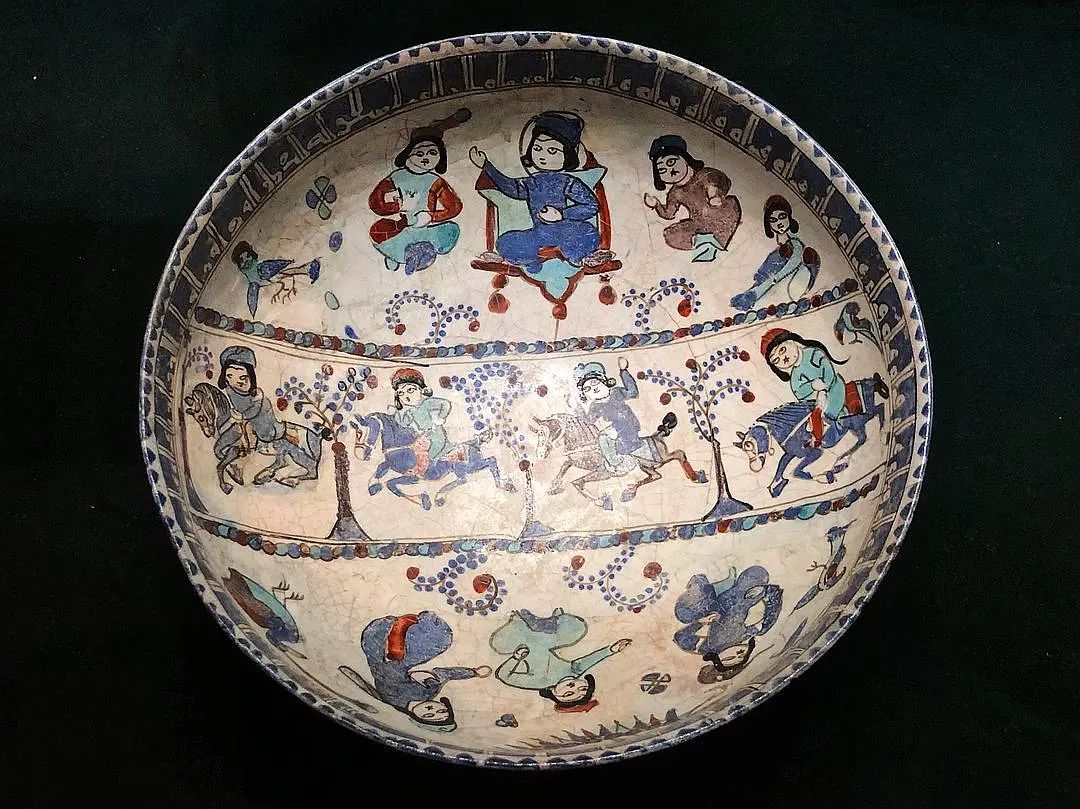
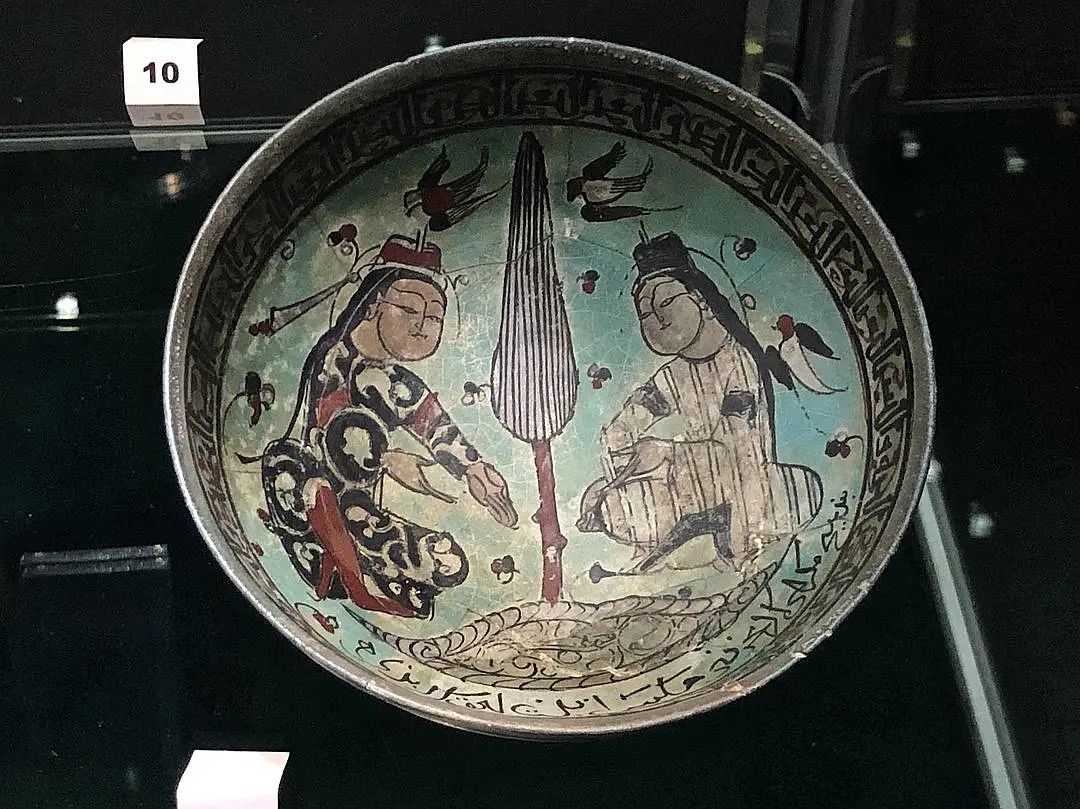
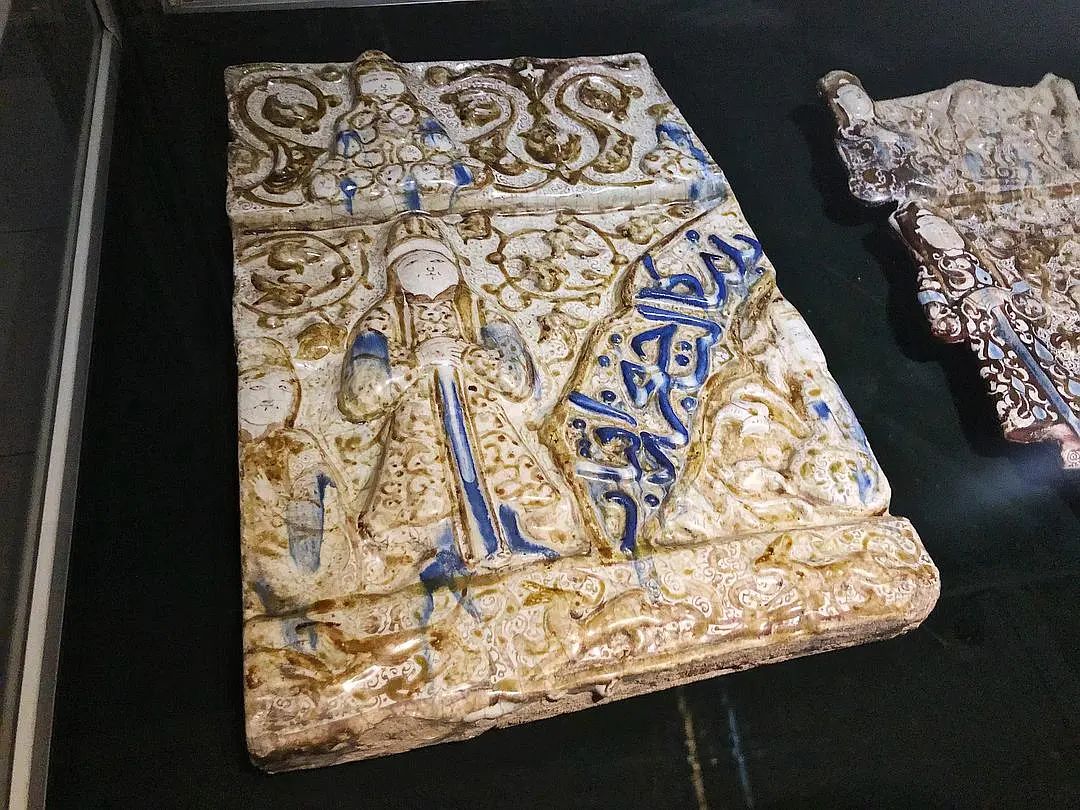
6. Iranian tiles from the Seljuk Empire and Ilkhanate period, 12th to 13th centuries.
The tiles have a very unique style.
7. A gold-inlaid silver plate made in 1009 AD.
They feature beautiful Kufic calligraphy. At that time, the Buyid dynasty ruled western Iran, and the Ghaznavid dynasty ruled the east.

Halal Travel Guide: Tehran — Golestan Palace, Qajar History and Islamic Art
Articles • ali2007fr posted the article • 0 comments • 208 views • 2026-05-17 12:23
Summary: Tehran — Golestan Palace, Qajar History and Islamic Art is presented here as a firsthand travel account in clear English, beginning with this scene: Golestan Palace (Kākh-e Golestān) means Garden Palace. The word Gol in the name is the same as the name Guli that we are familiar with. The account keeps its focus on Tehran Travel, Golestan Palace, Qajar History while preserving the names, places, food, and historical details from the Chinese source.
Golestan Palace (Kākh-e Golestān) means Garden Palace. The word Gol in the name is the same as the name Guli that we are familiar with. Located in Tehran, the capital of Iran, it was the royal palace of the Qajar dynasty and was added to the UNESCO World Heritage list in 2013.
Golestan Palace was first called the Tehran Citadel (Arg). It was built during the reign of Tahmasp I (reigned 1524-1576) of the Persian Safavid dynasty and was rebuilt during the reign of Karim Khan (reigned 1750-1779) of the Zand dynasty. After Agha Mohammad Khan (reigned 1789-1797) of the Qajar dynasty made Tehran his capital, he officially converted the Tehran Citadel into the Golestan Royal Palace. Haji Ab ol Hasan Mimar Navai rebuilt the palace again in 1865.
Between 1925 and 1945, Reza Shah (reigned 1925-1941) of the Pahlavi dynasty ordered the demolition of most of the Golestan Palace buildings for modern urban development. Modern-style commercial buildings were built there one after another between the 1950s and 1960s.
Karim Khani Nook
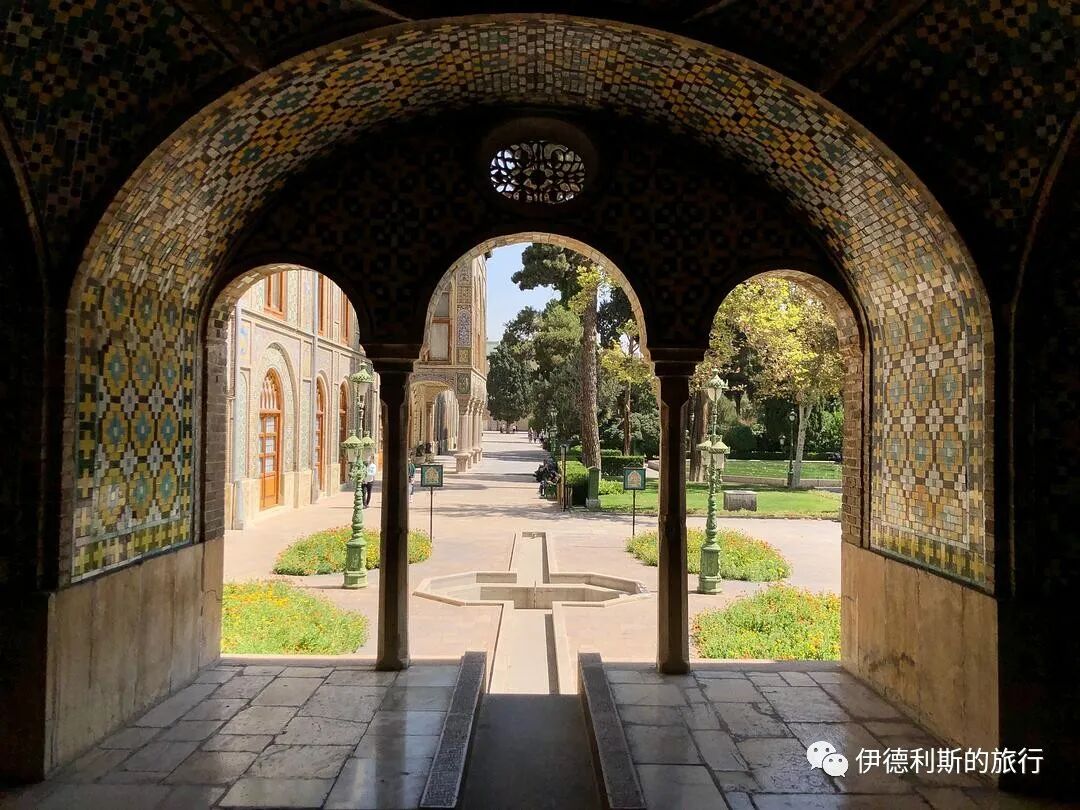
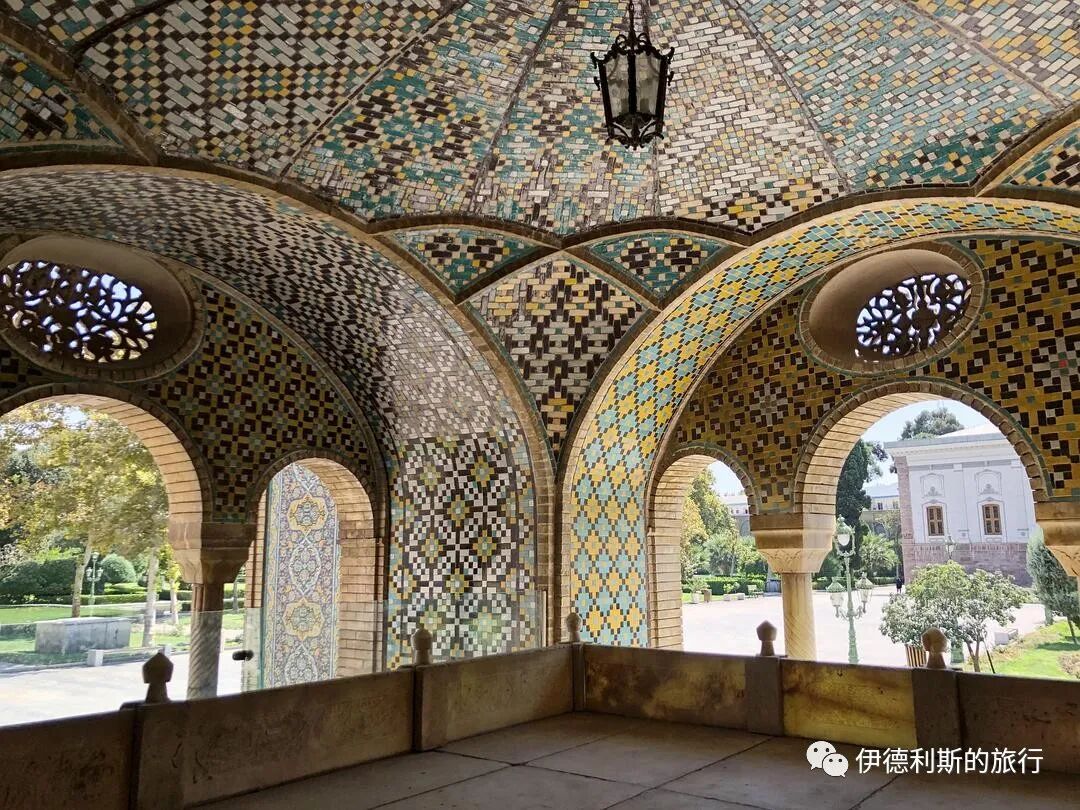
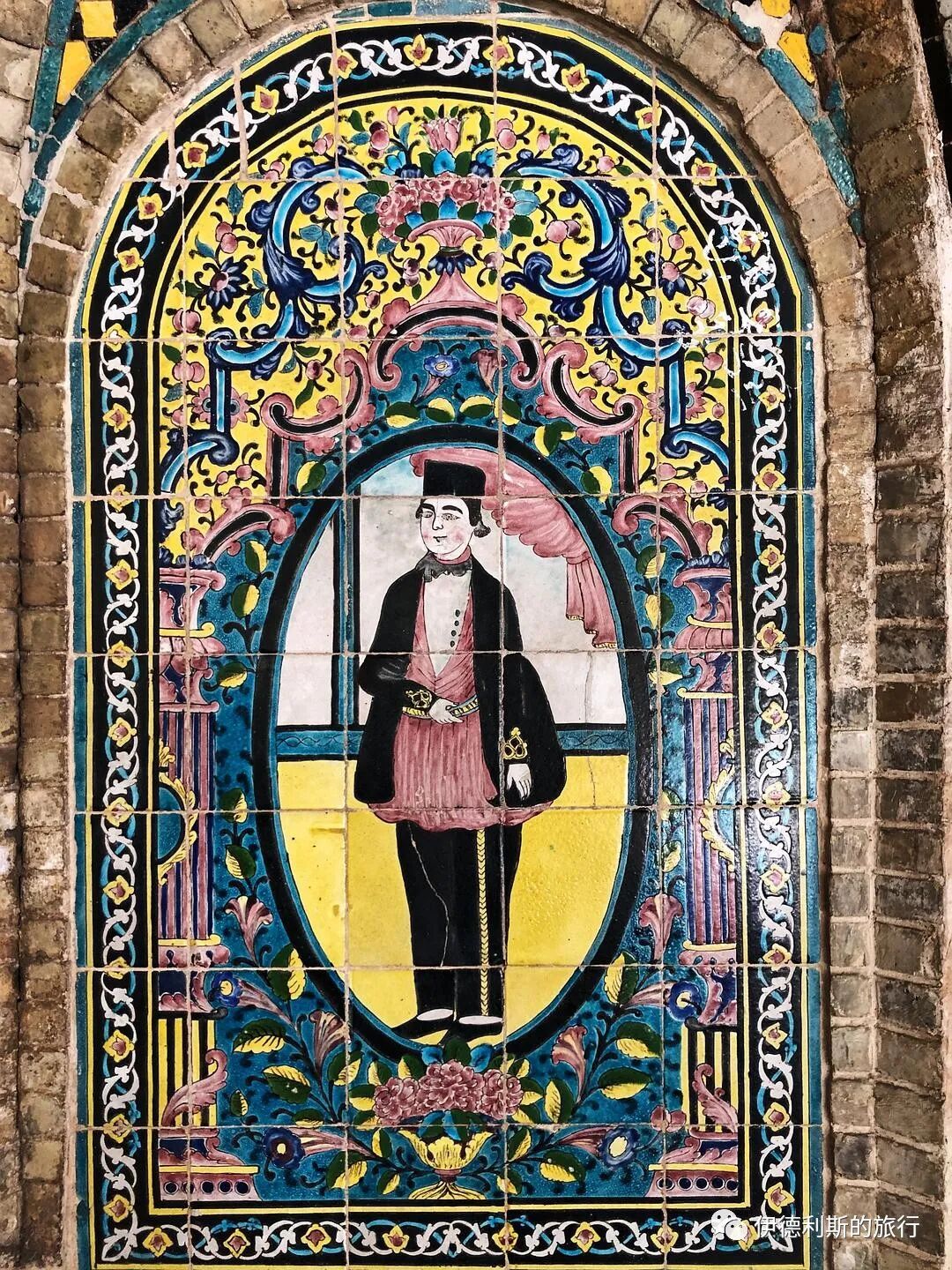
Karim Khani Nook was built in 1759 by Karim Khan of the Zand dynasty. It is a terrace featuring a marble throne. There used to be a pool with a fountain in the middle of the terrace. Water flowed into the pond from underground water channels (Qanat) and then flowed to other parts of the palace. Nasser ed Din Shah (reigned 1848-1896) of the Qajar dynasty loved this place. People say he often sat here quietly smoking a water pipe. Today, the marble tombstone of Nasser ed Din Shah stands here, and his portrait is also on the walls of the building.
Negar Khane Gallery
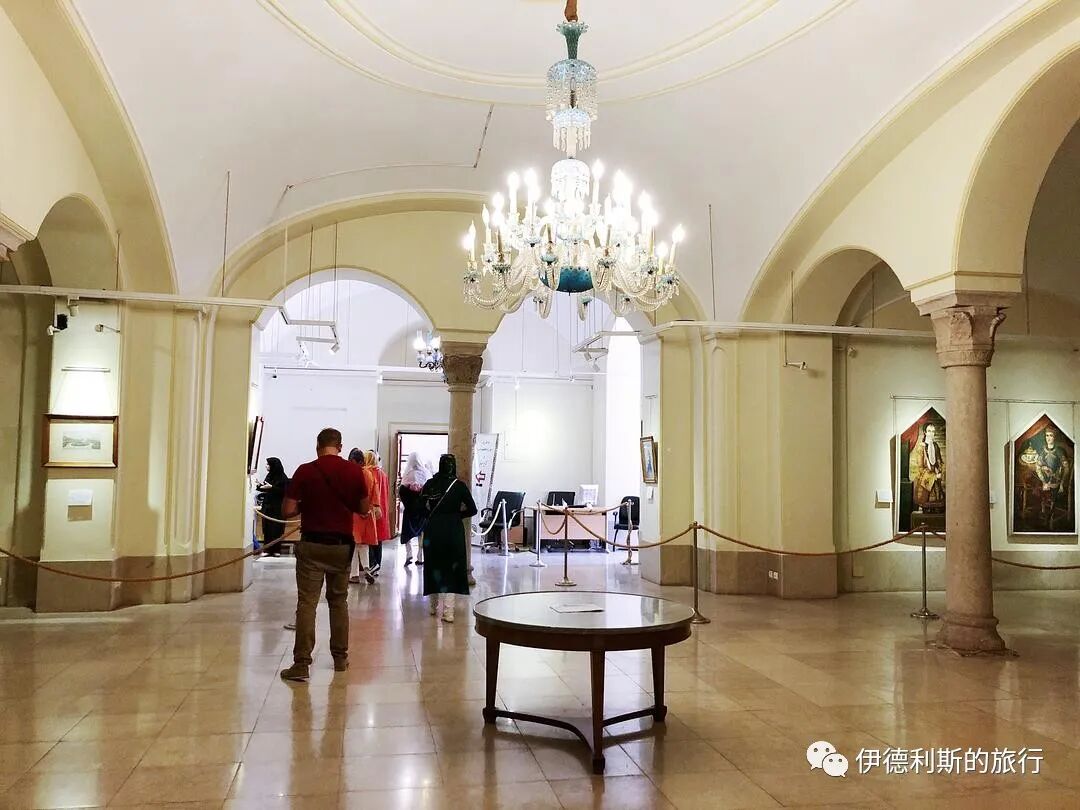
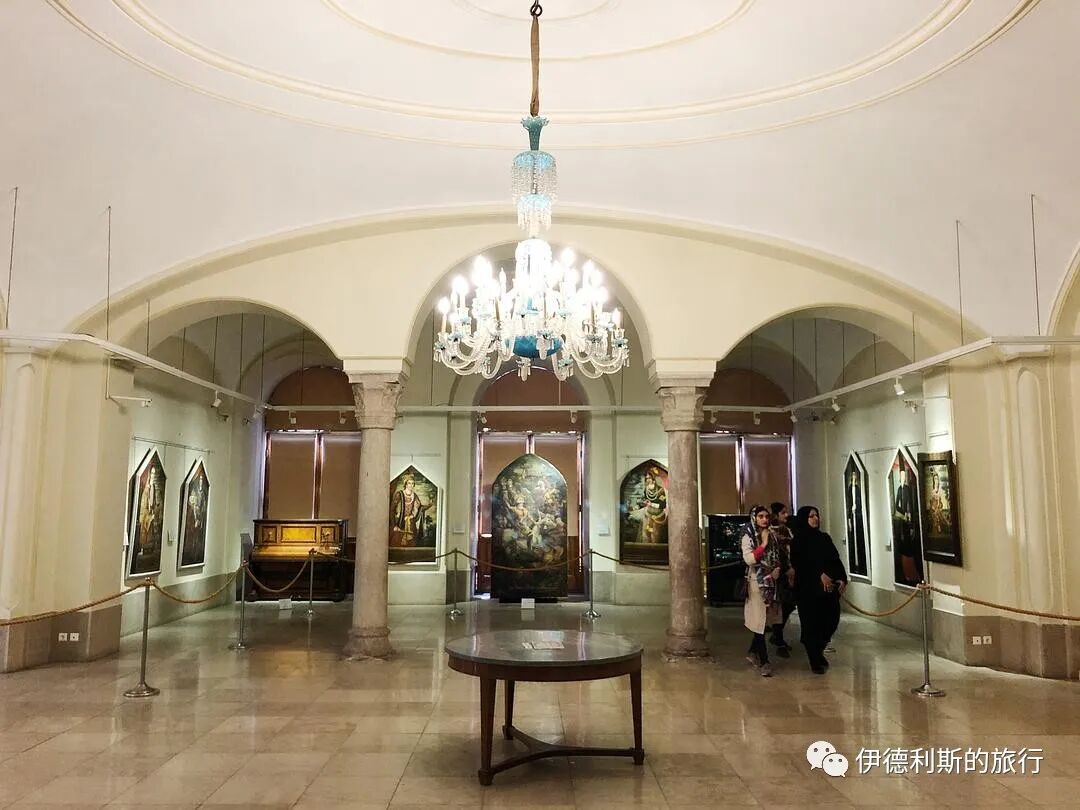
In 1872, during his second visit to Europe, Nasser ed Din Shah was deeply impressed by the artifacts displayed in European museums. After returning to Tehran, he set out to create a museum hall in the Kakh-e Asli area of the palace to display paintings, jewelry, and other royal artifacts.
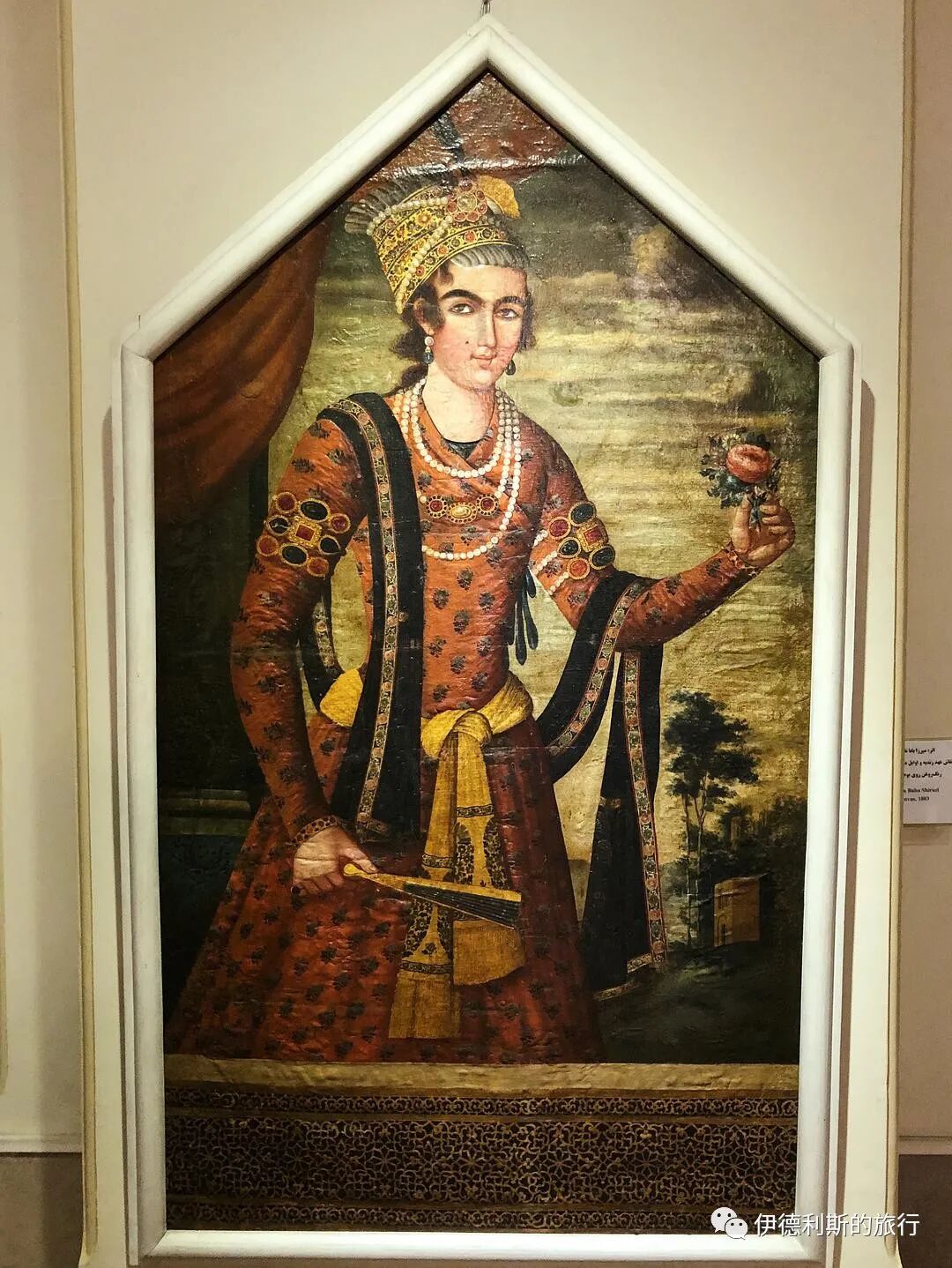
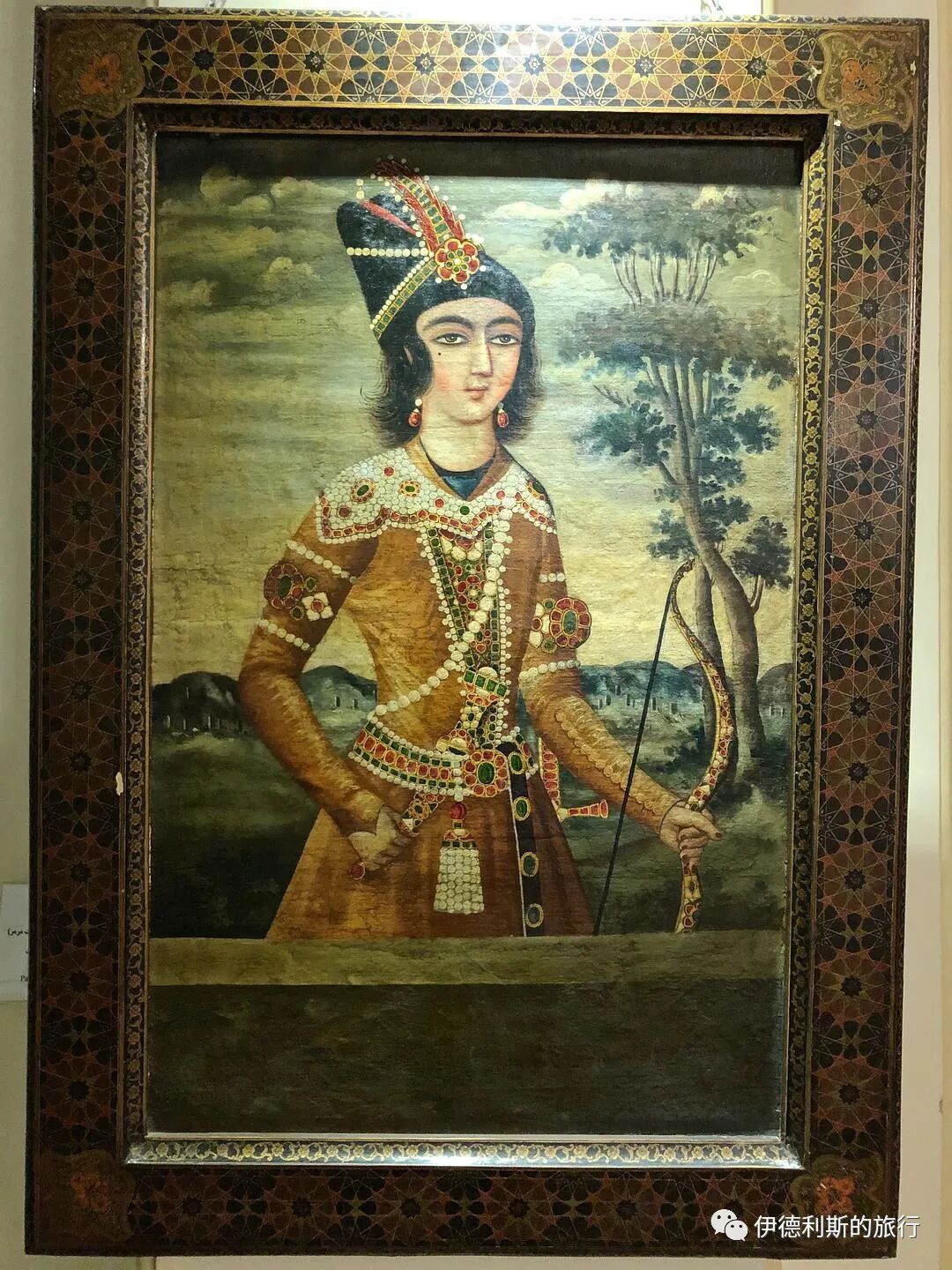
Today, most of the Qajar dynasty collection has been scattered among various museums in Tehran, but many paintings are still kept in Golestan Palace. The southern gallery now houses paintings by early Qajar dynasty masters, including Mirza Baba, Mehr Ali Afshar, Ali Akbar Khan, and Ab ol Hassan Sani. The northern gallery was the home of the royal guard during the Pahlavi period. It underwent a major renovation in 1995 and now displays paintings by late Qajar dynasty masters, including Mahmoud Khan Saba, Mohammad Gafari Kashani, Mehri, and Mosa Momayez.
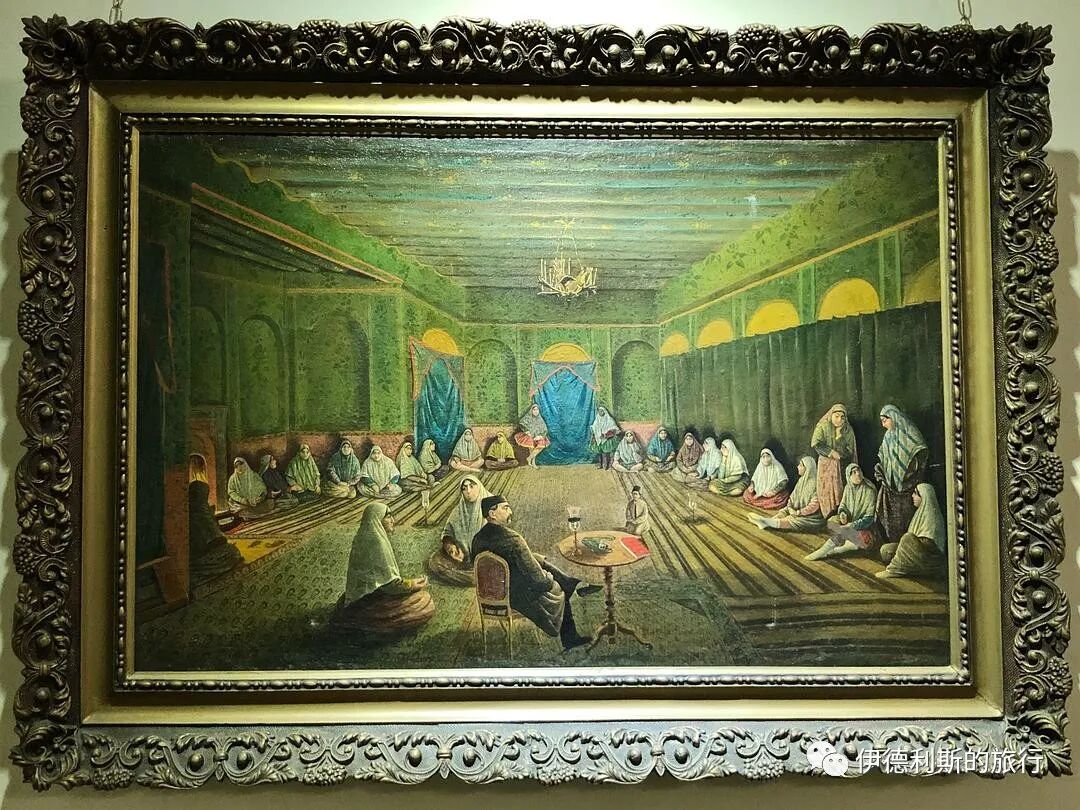
The harem of Nasser ed Din Shah.
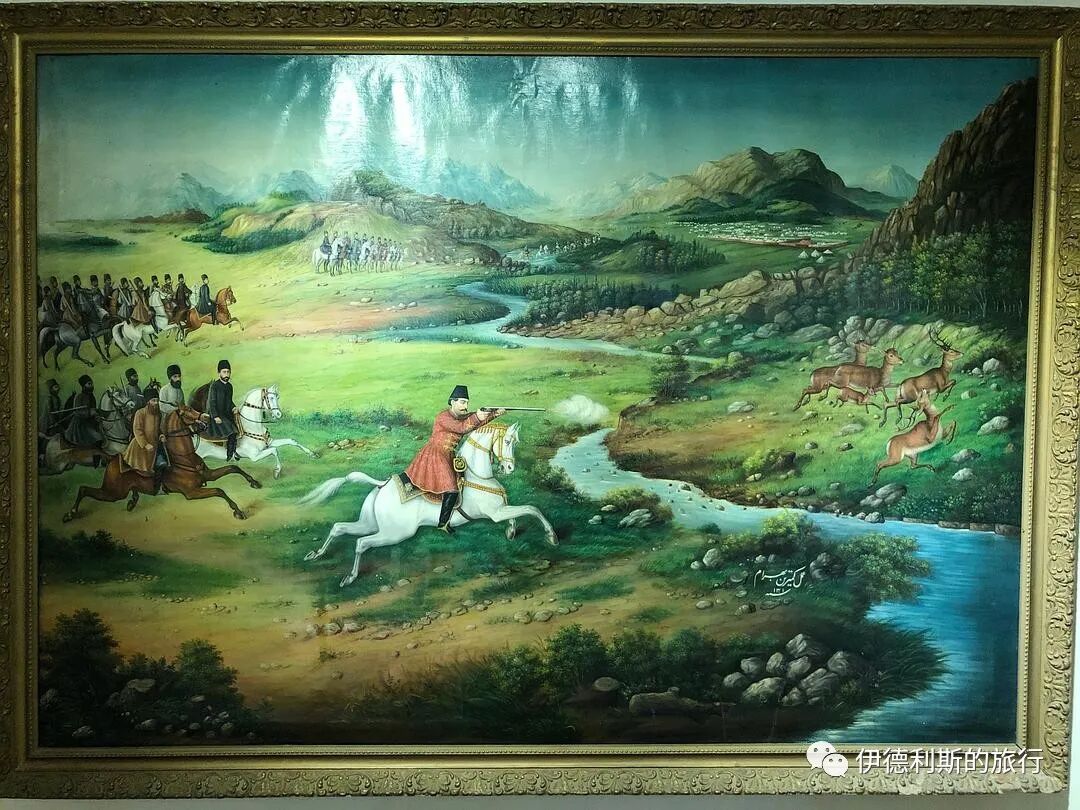
Nasser ed Din Shah hunting, painted in 1884.
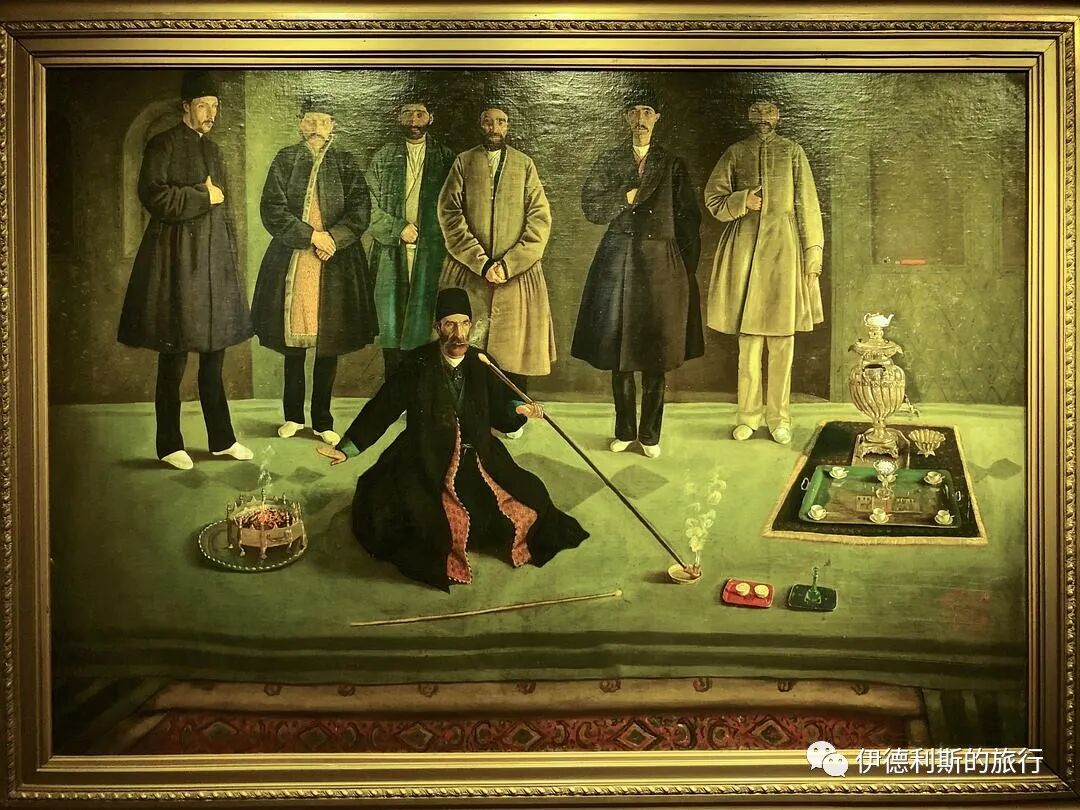
Servants in the court of Nasser ed Din Shah, painted in 1881.
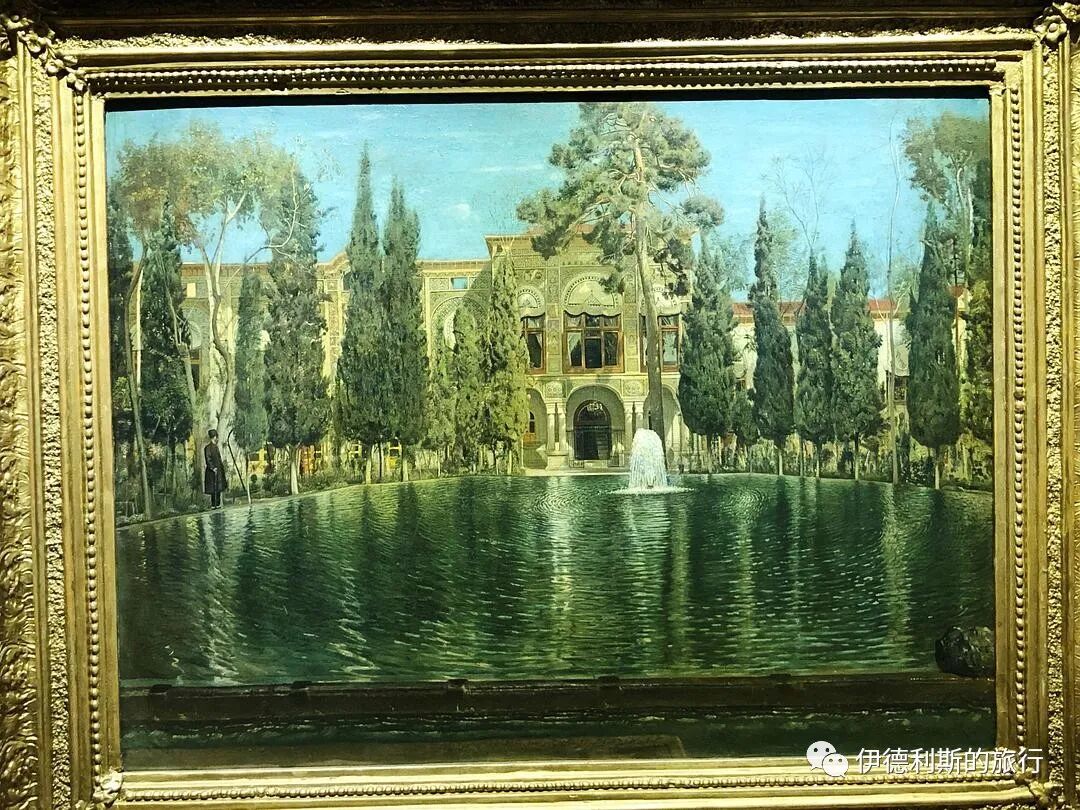
Golestan Palace, painted in 1885.
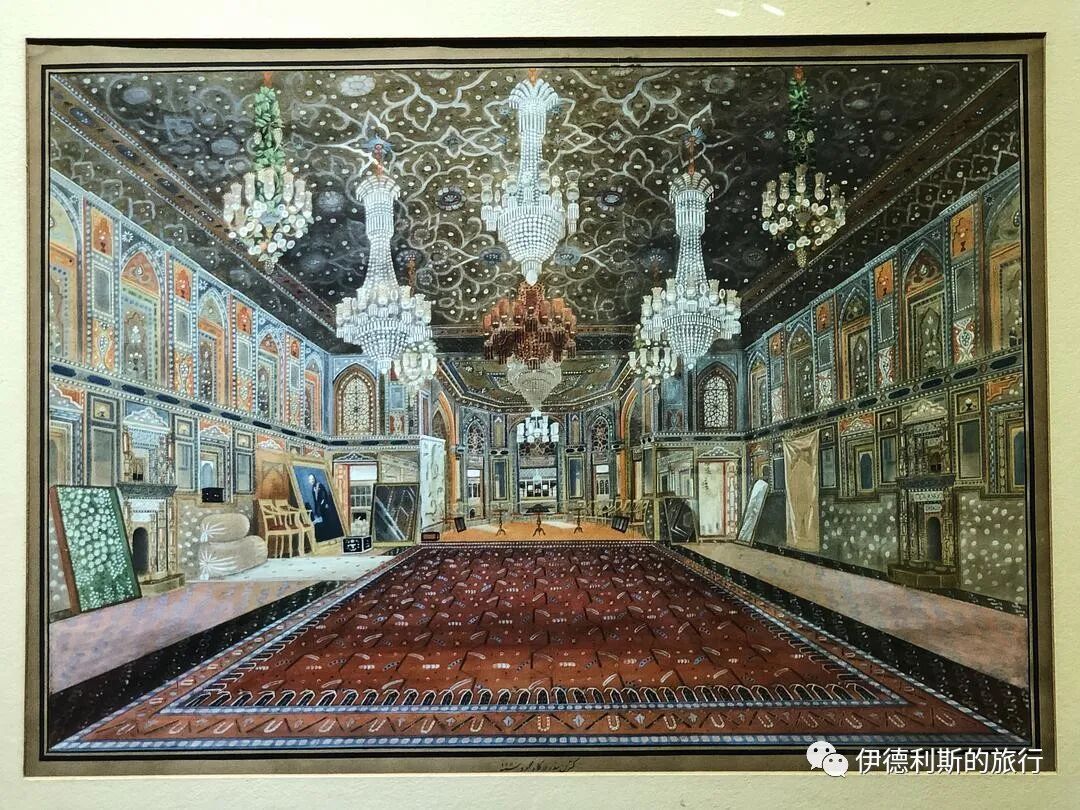
Interior of Golestan Palace, painted in 1864.
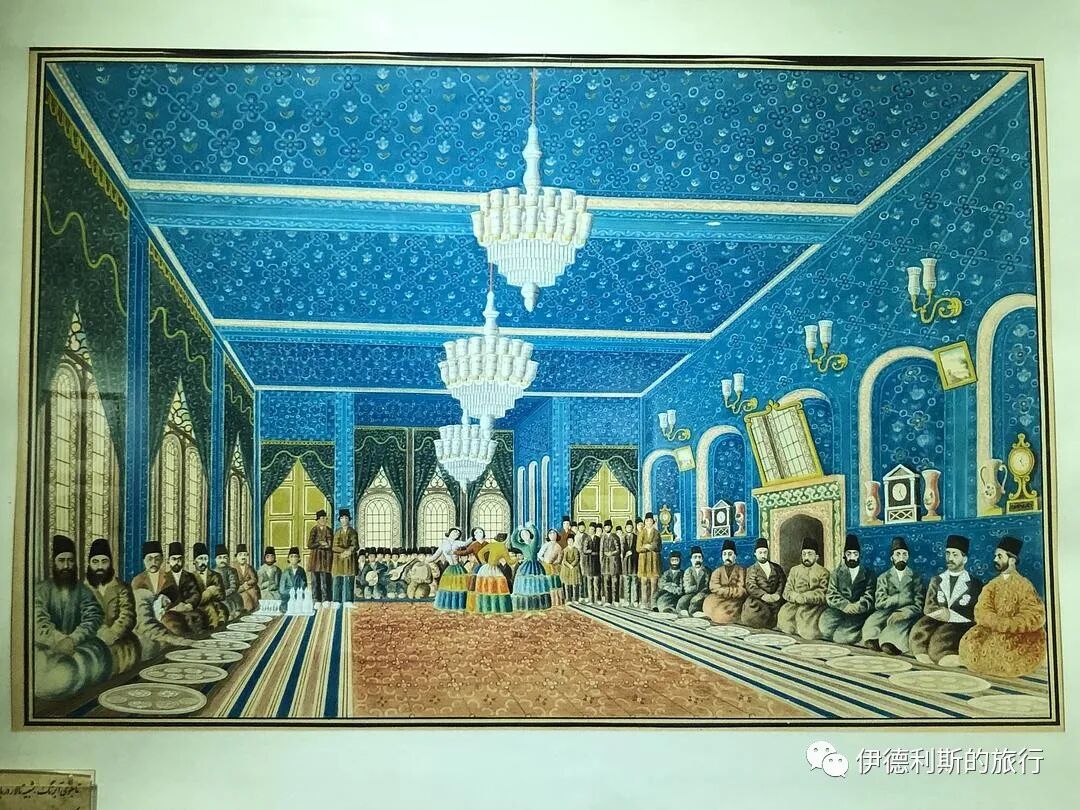
Celebration of the 30th anniversary of Nasser ed Din Shah's reign, painted in 1878.
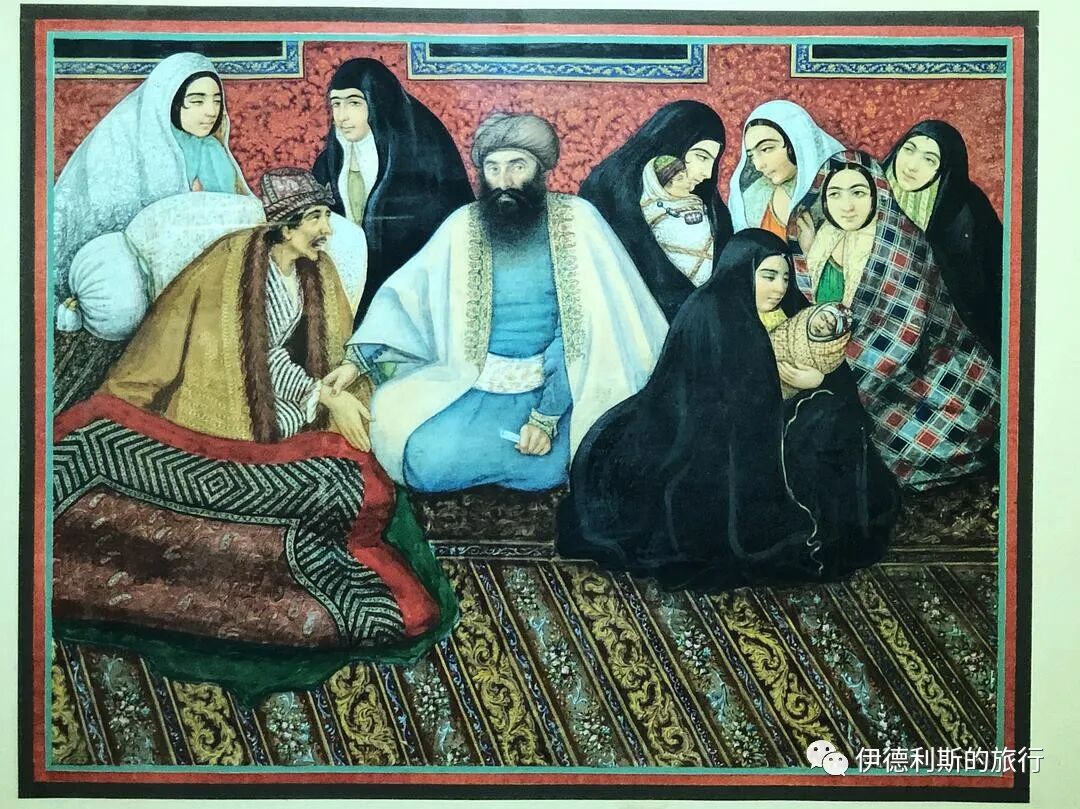
Physician Mirza Abolfazl Tabib Kashani taking a patient's pulse, painted in 1859.
Qajar dynasty prince Abdol-Samad Mirza.
Mohammad Ghasem Khan and Mohammad Hossein, painted in 1891. The former was the Qajar dynasty ambassador to Russia.
Painted in 1895.
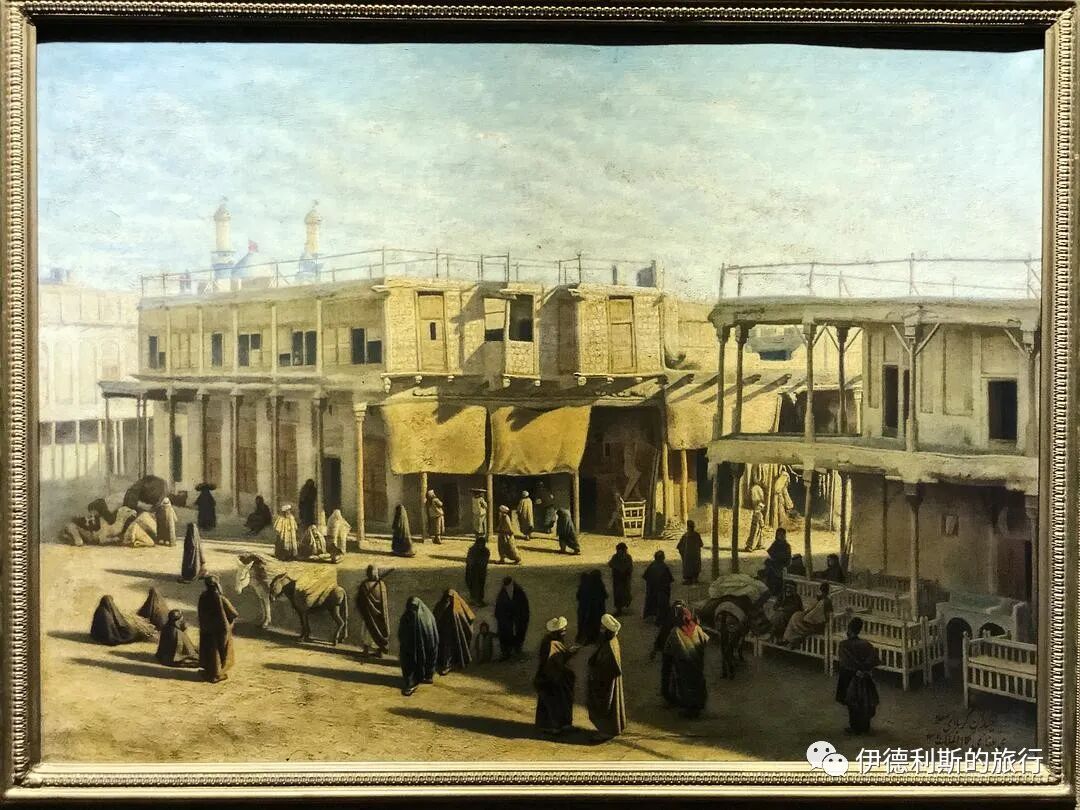
The Shia holy city of Karbala, painted in 1902.
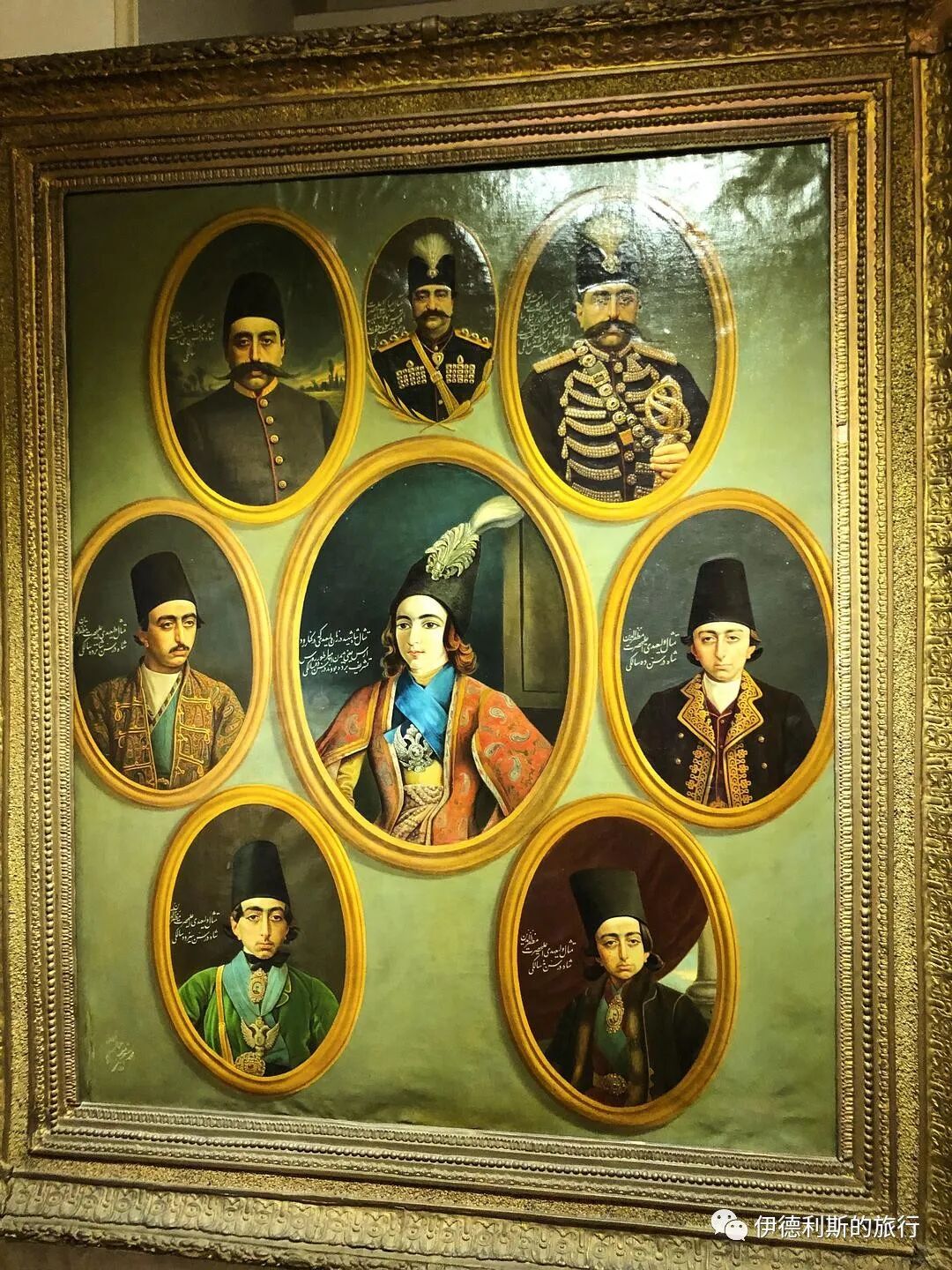
Portraits of the Qajar dynasty royal family.
Makhsus Museum
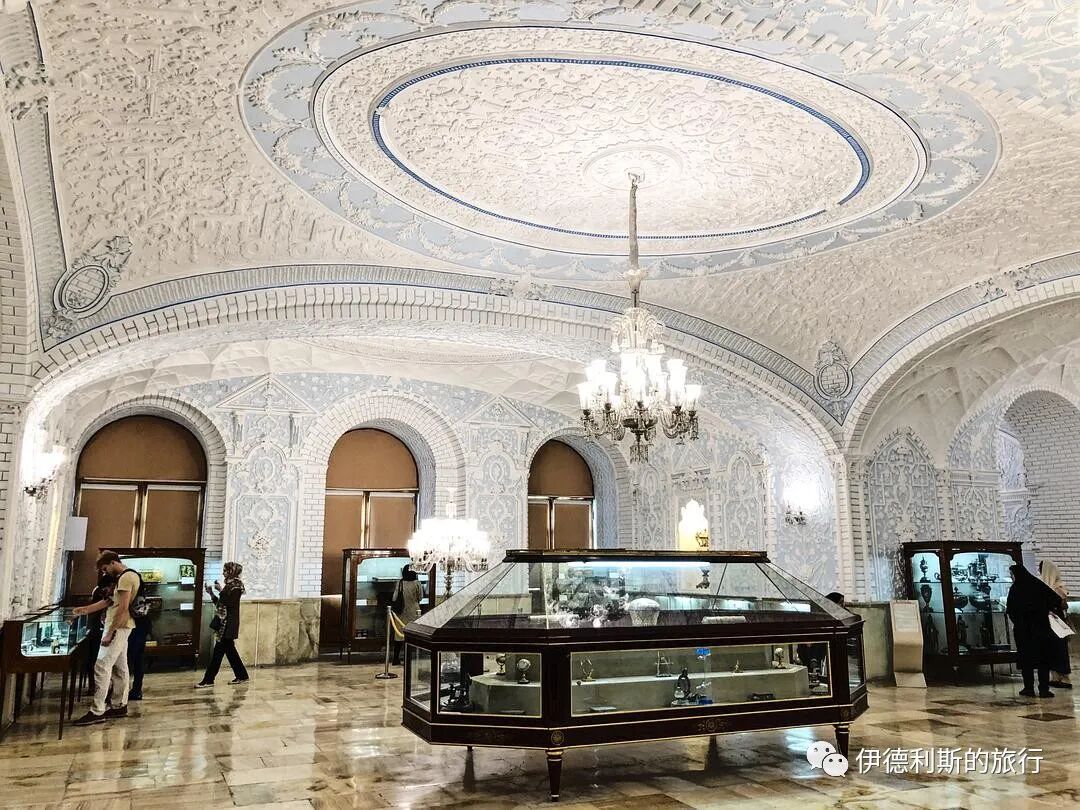
The Makhsus Museum (Mouze-ye Makhsous) preserves copperware, silverware, and weapons gifted to the Qajar dynasty by European kings.
Main Building
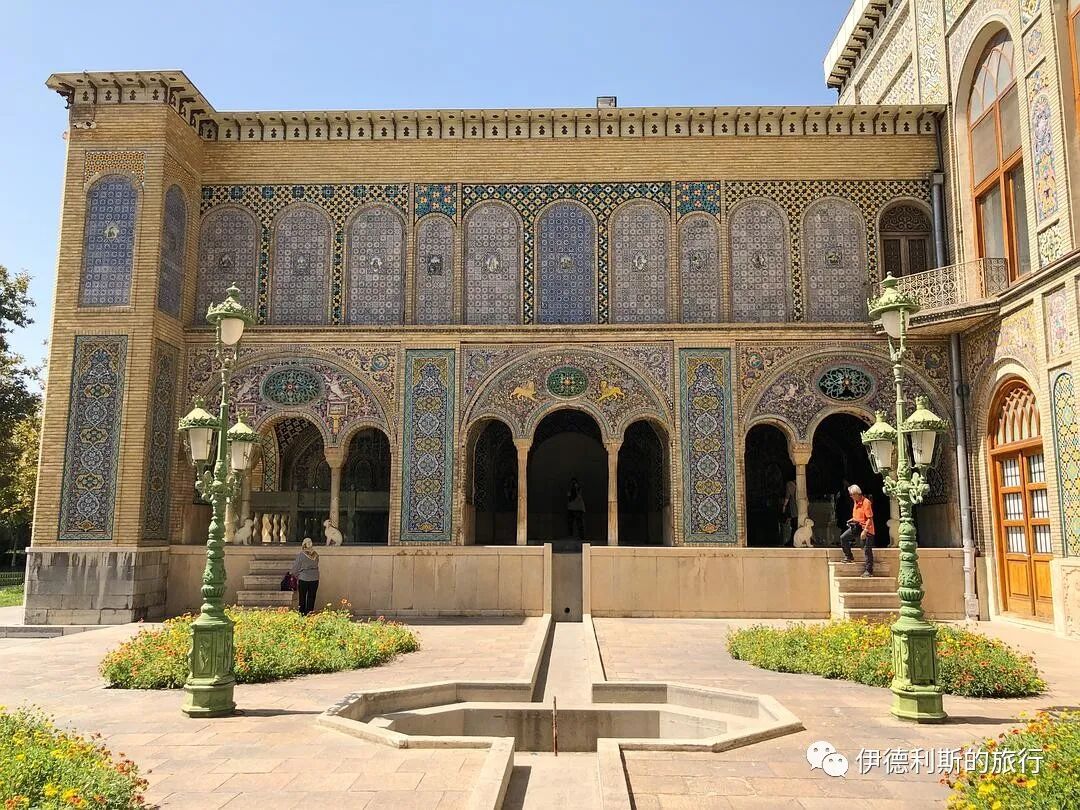
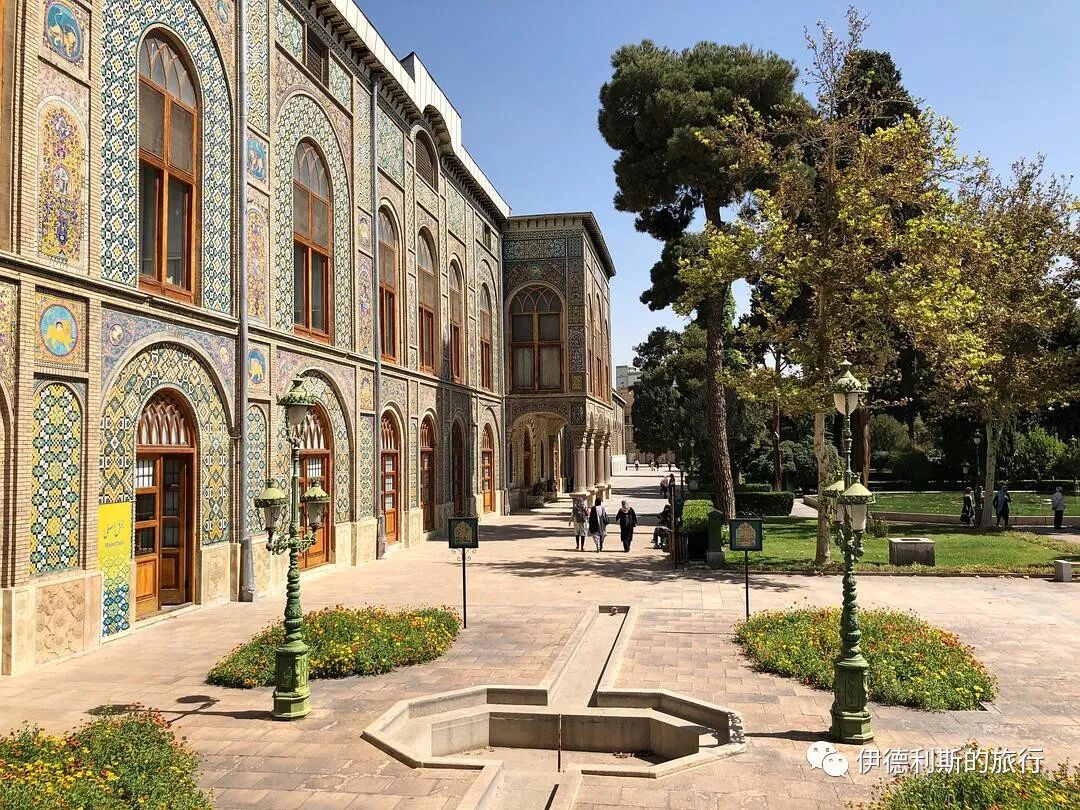
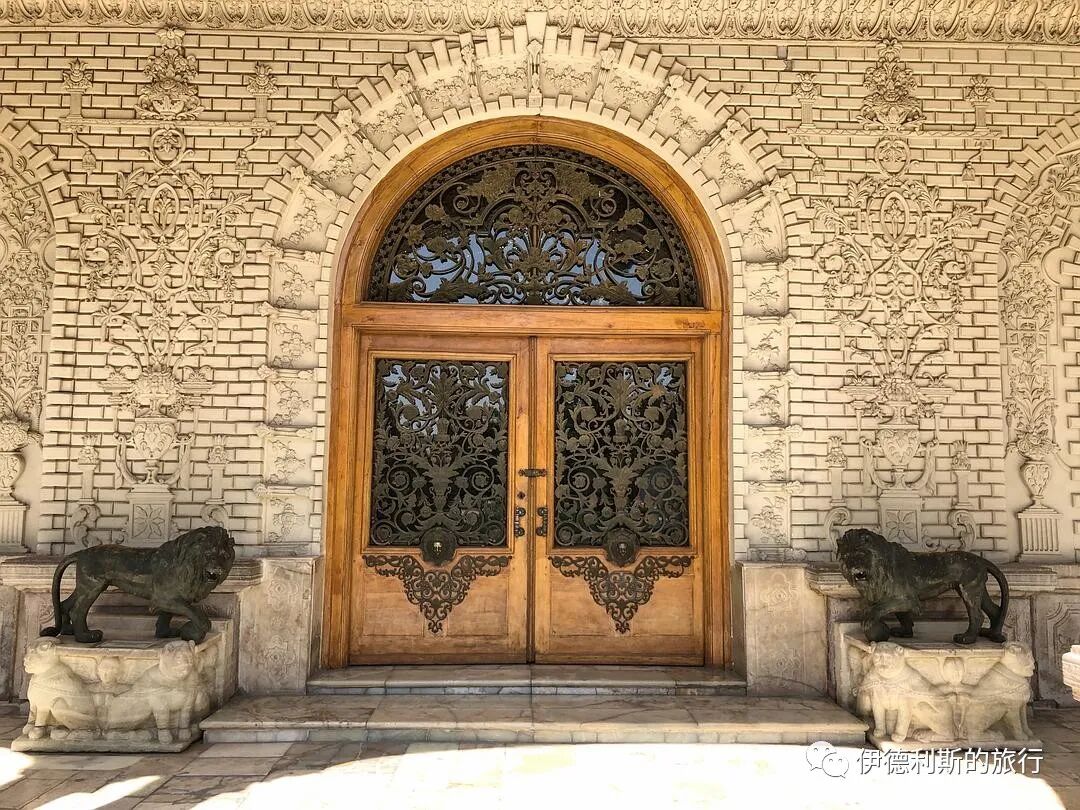
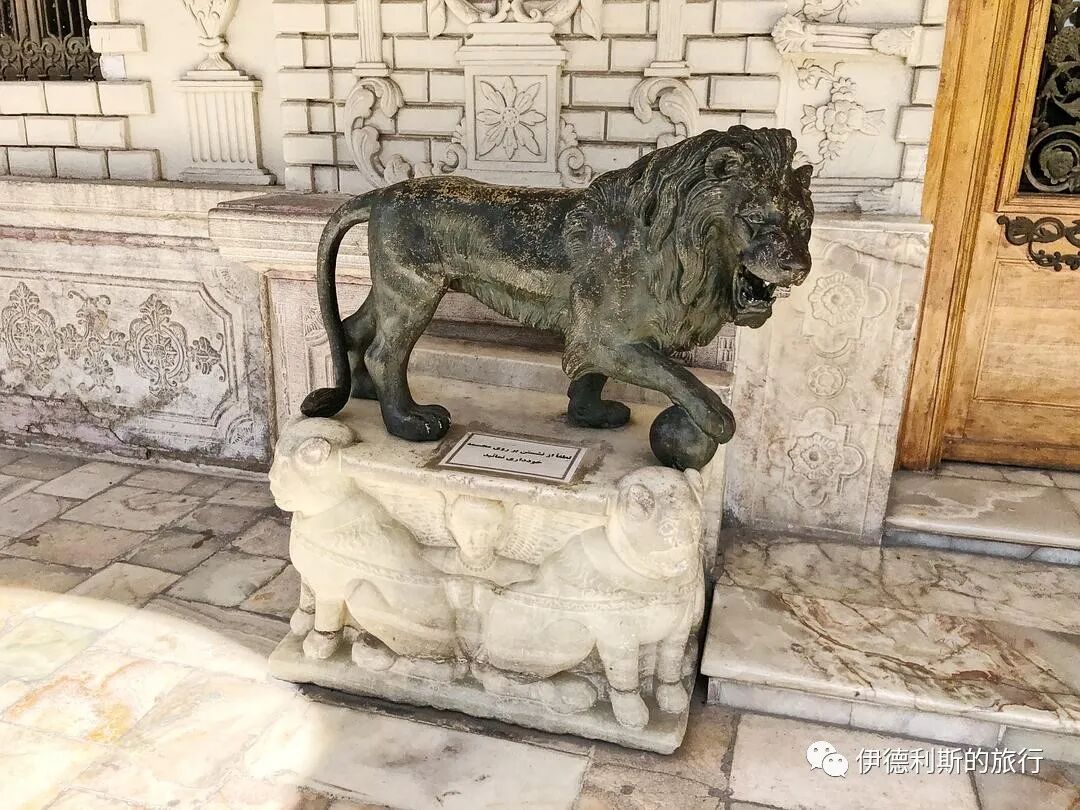
East of the museum is the main building (Kakh-e Asli) of Golestan Palace. In front of the main building is a 118-meter-long pool containing 15 fountains. Historical photos show that the pool was once surrounded by bronze statues of boys holding torches and animals, but they were all removed during the Pahlavi dynasty.
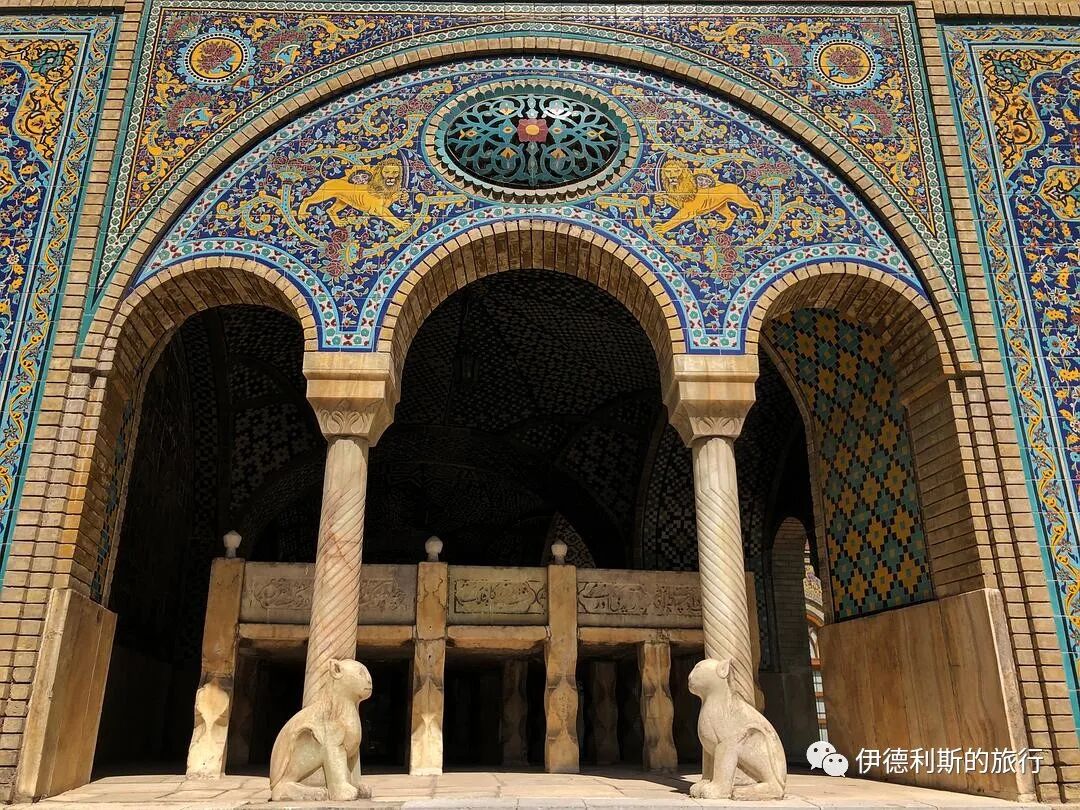
On both sides of the entrance is a pair of brass roaring lions symbolizing power.
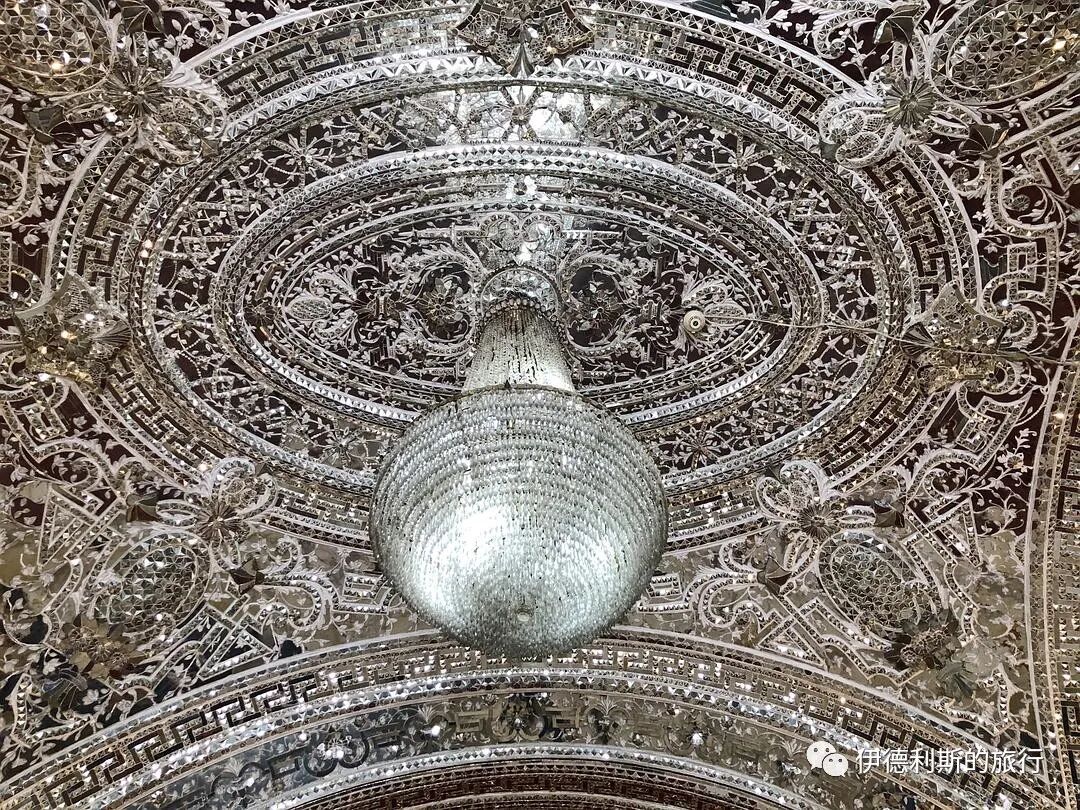
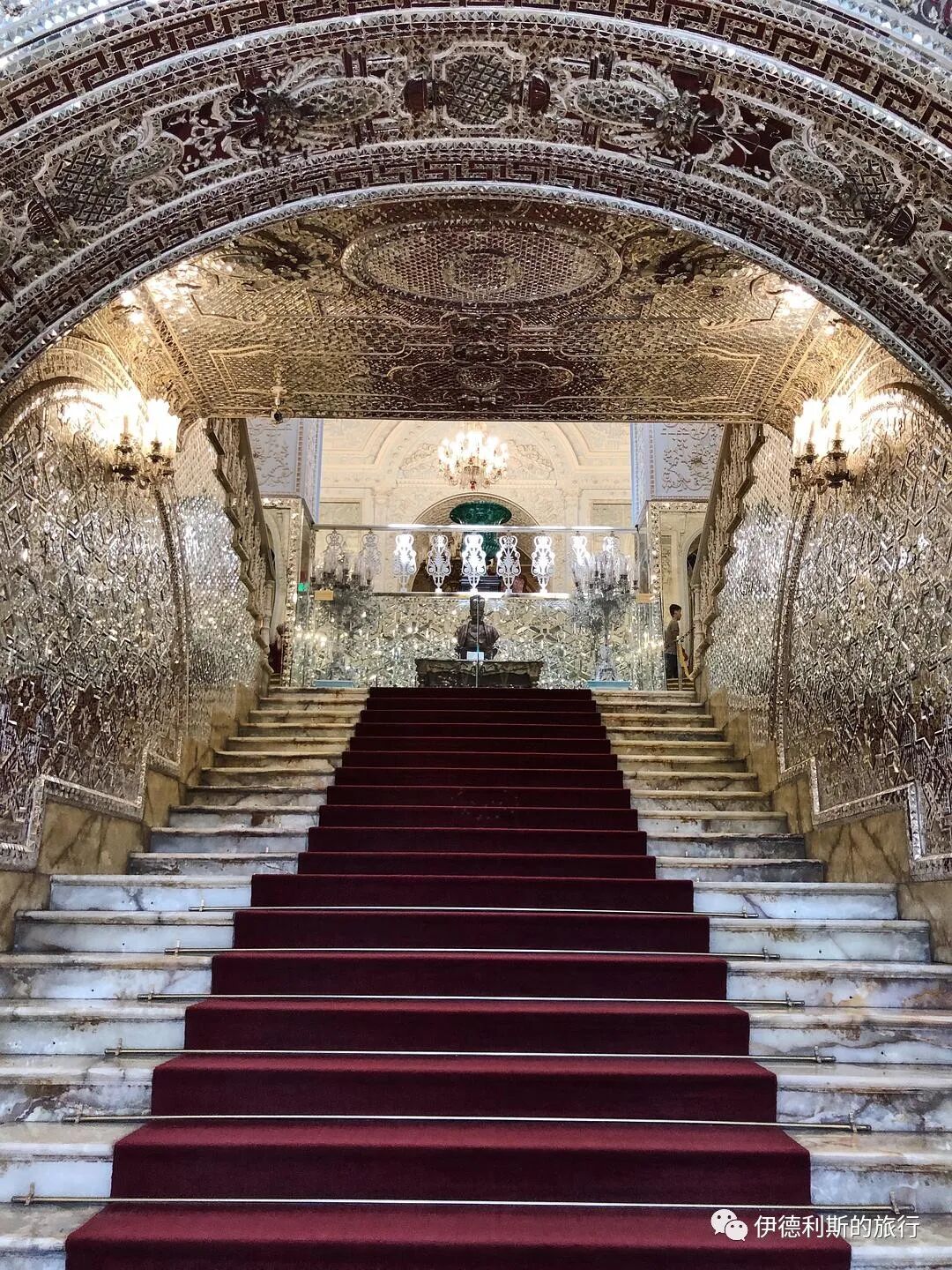
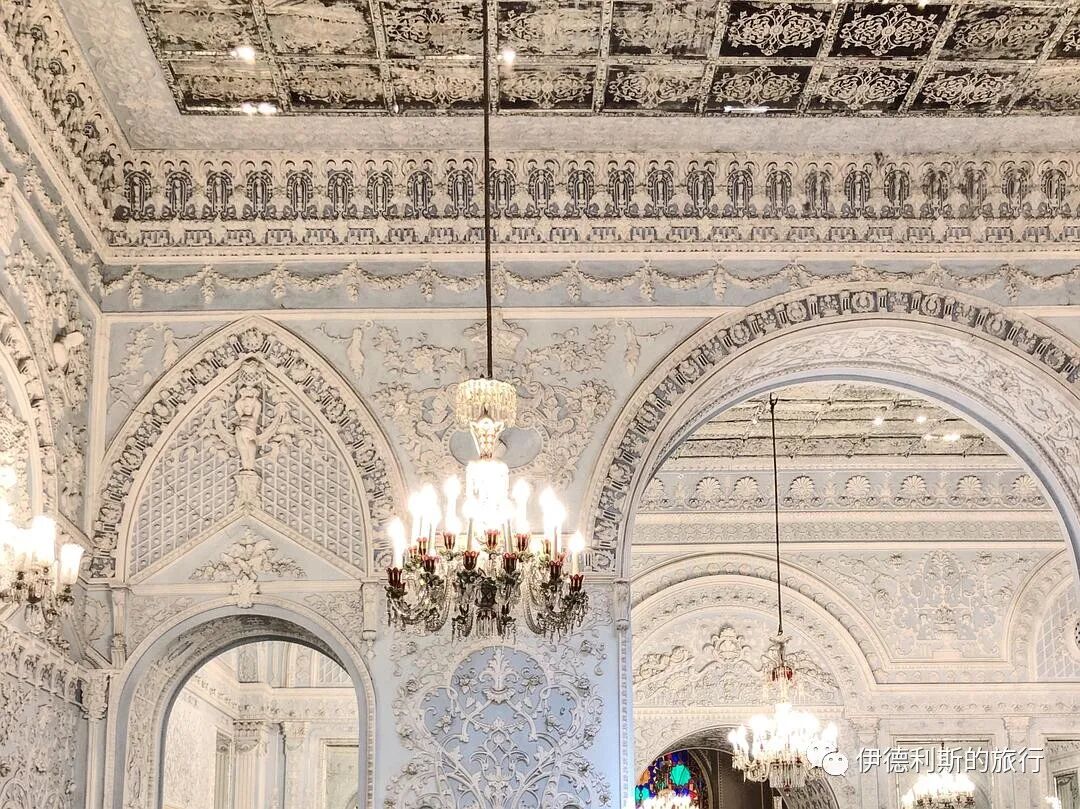
After entering the main entrance, there is a staircase (Sar sara) with 22 steps, decorated with mirrors in geometric patterns.
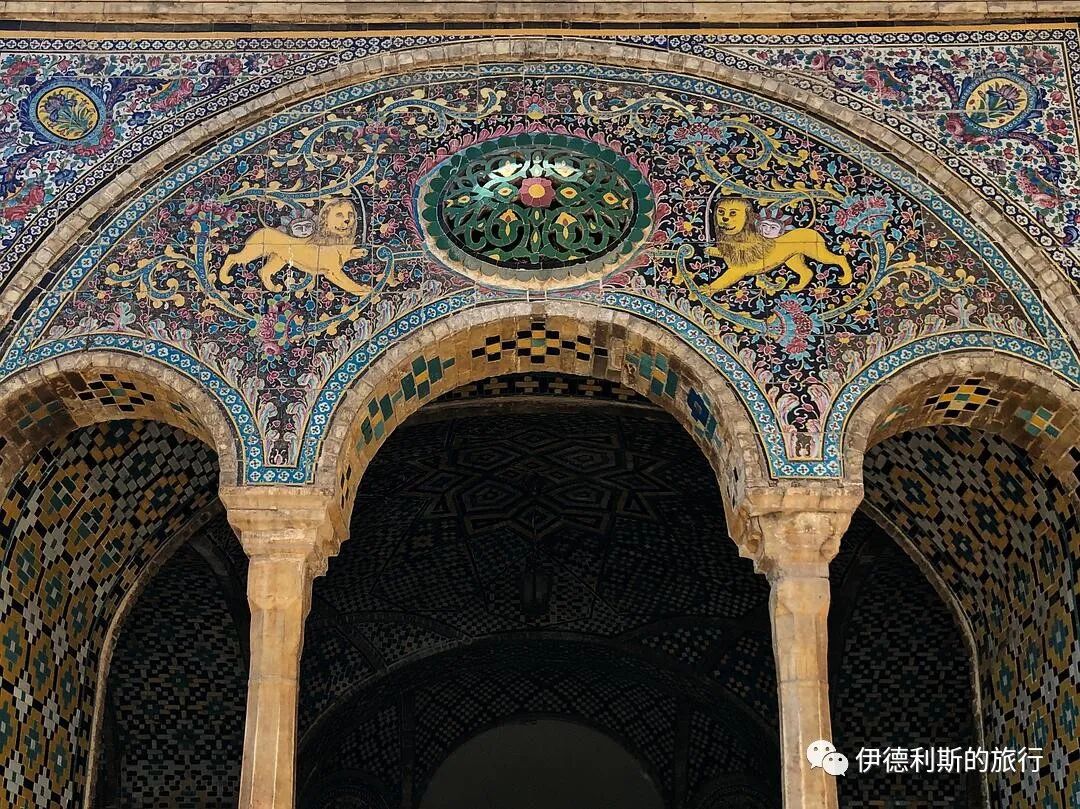
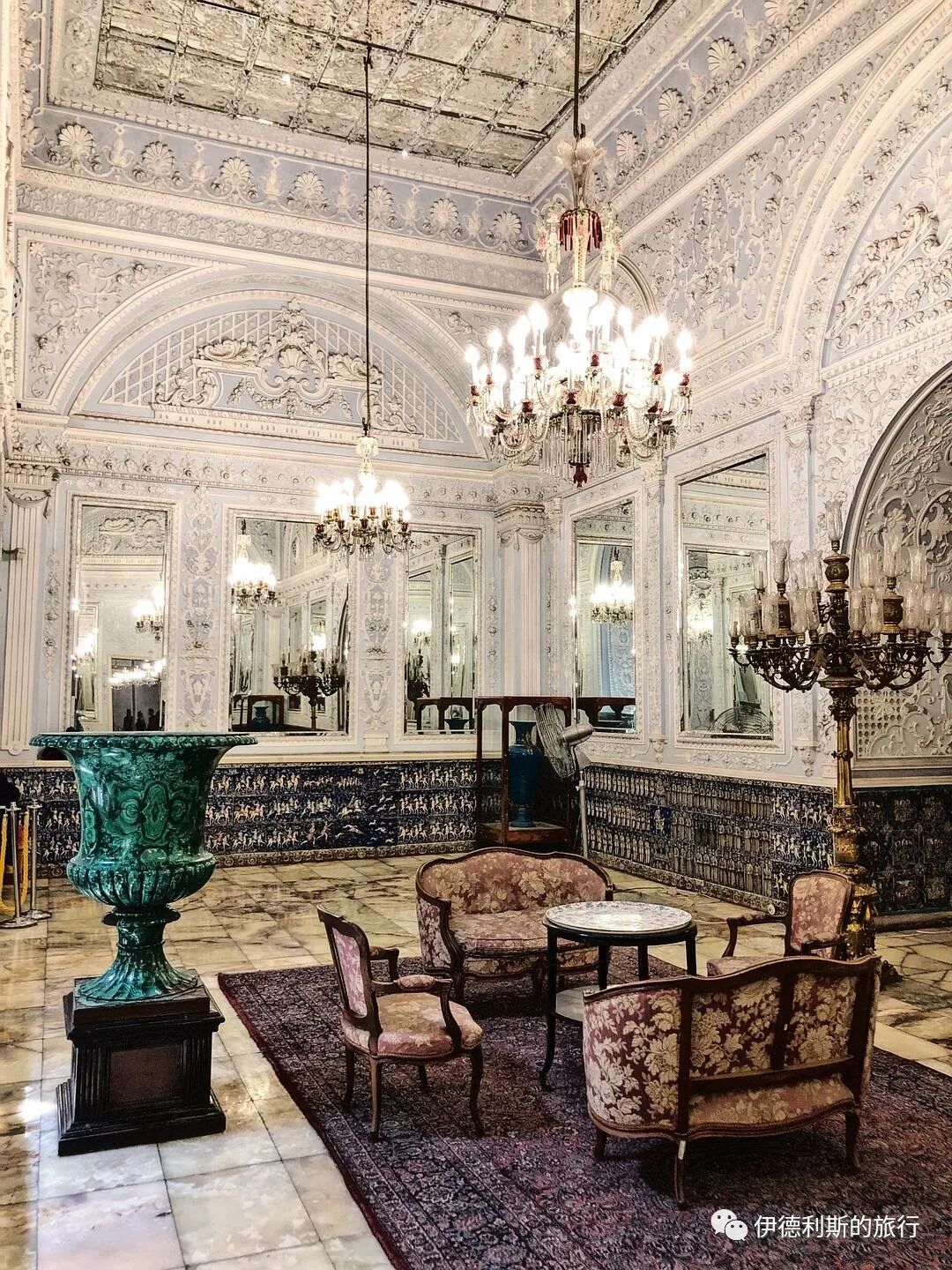
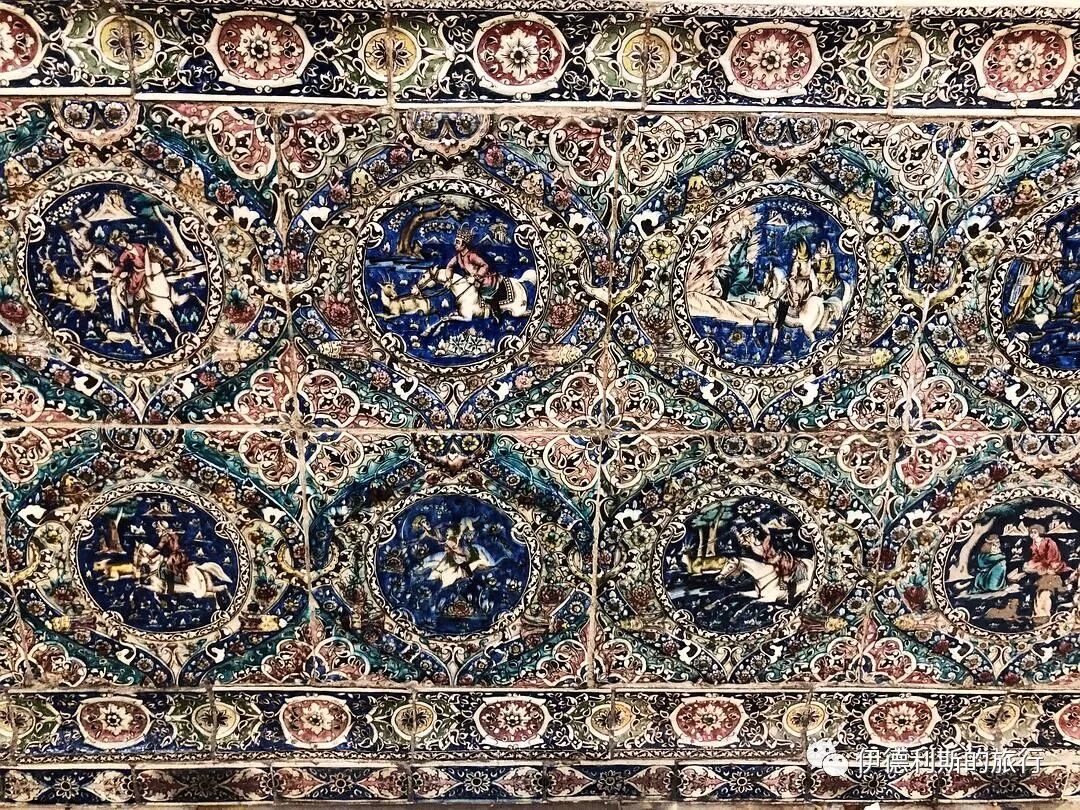
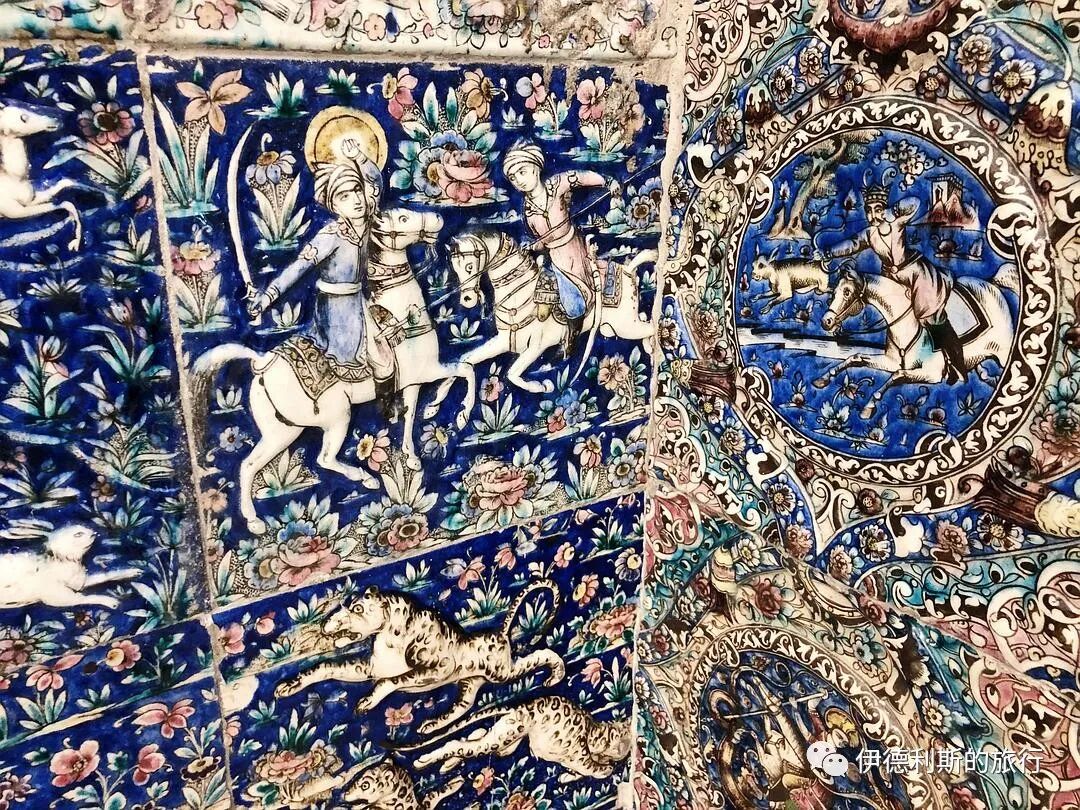
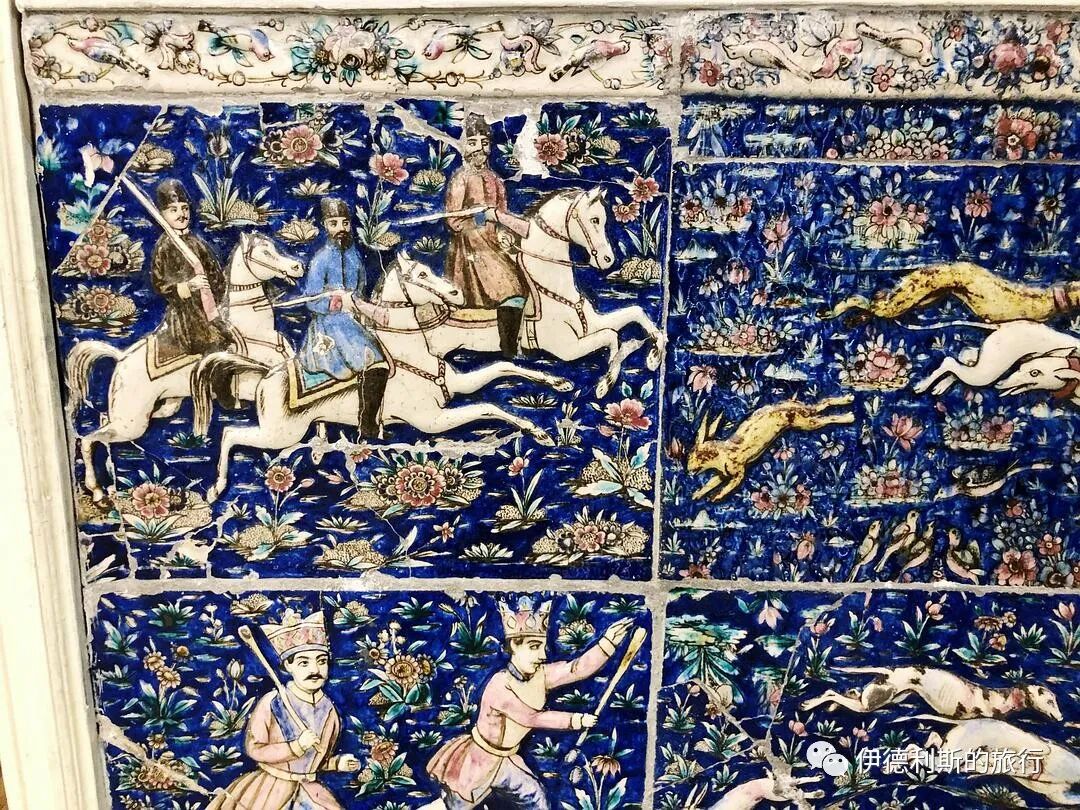
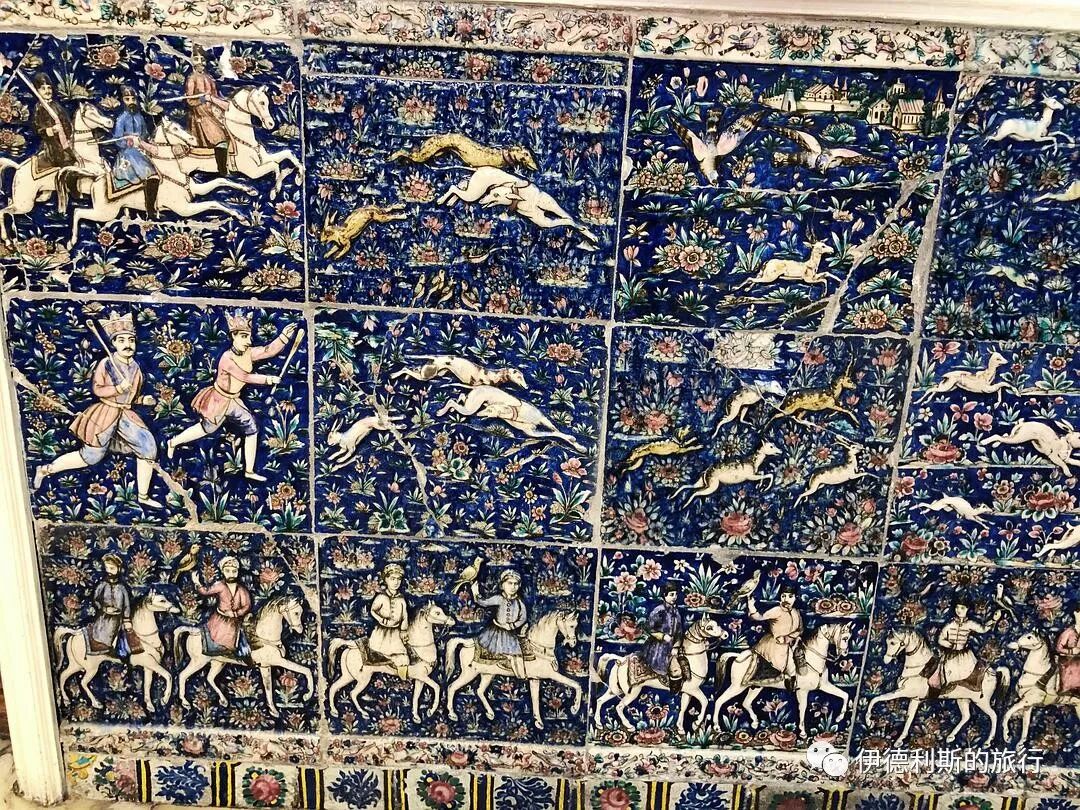
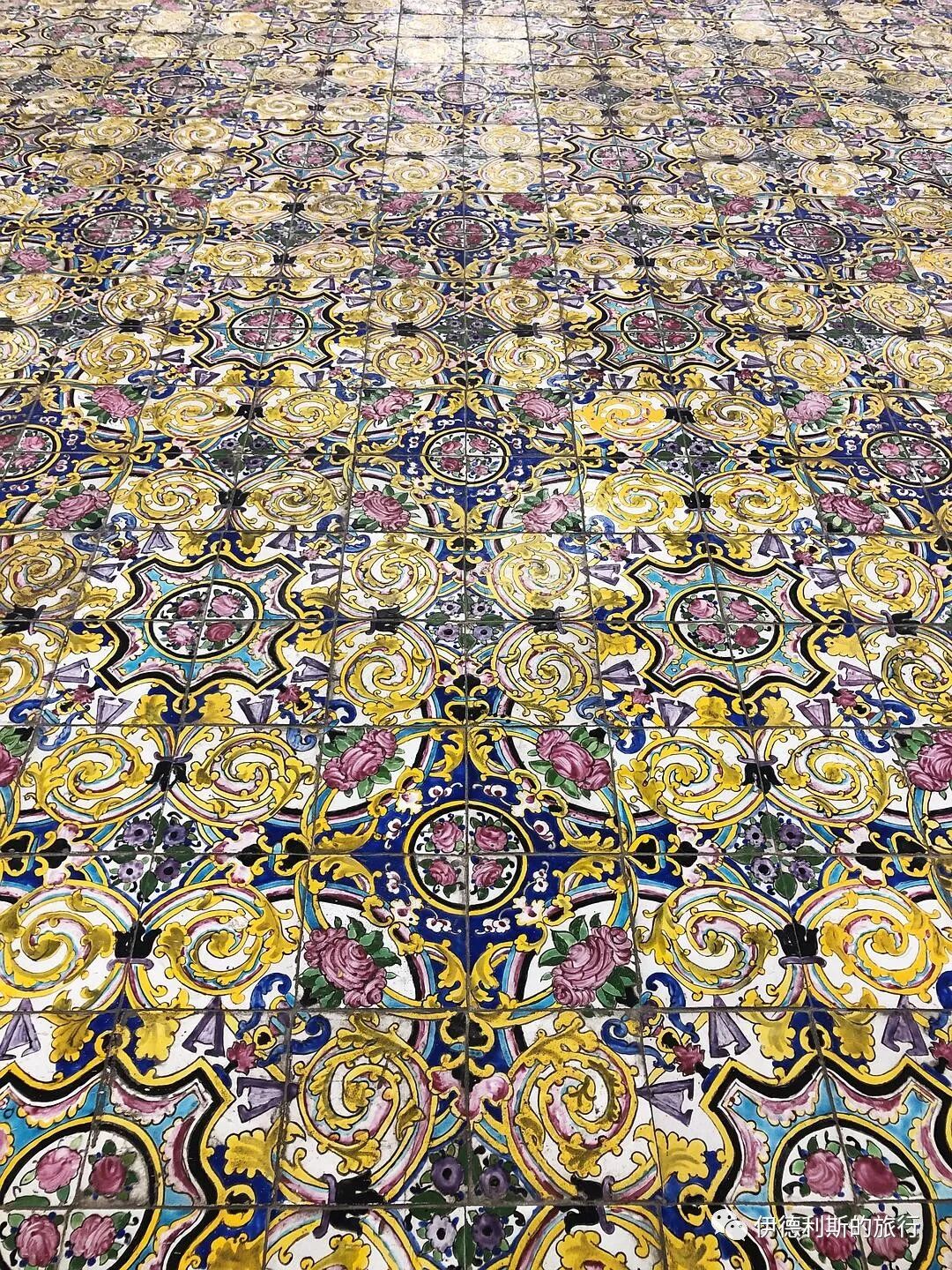
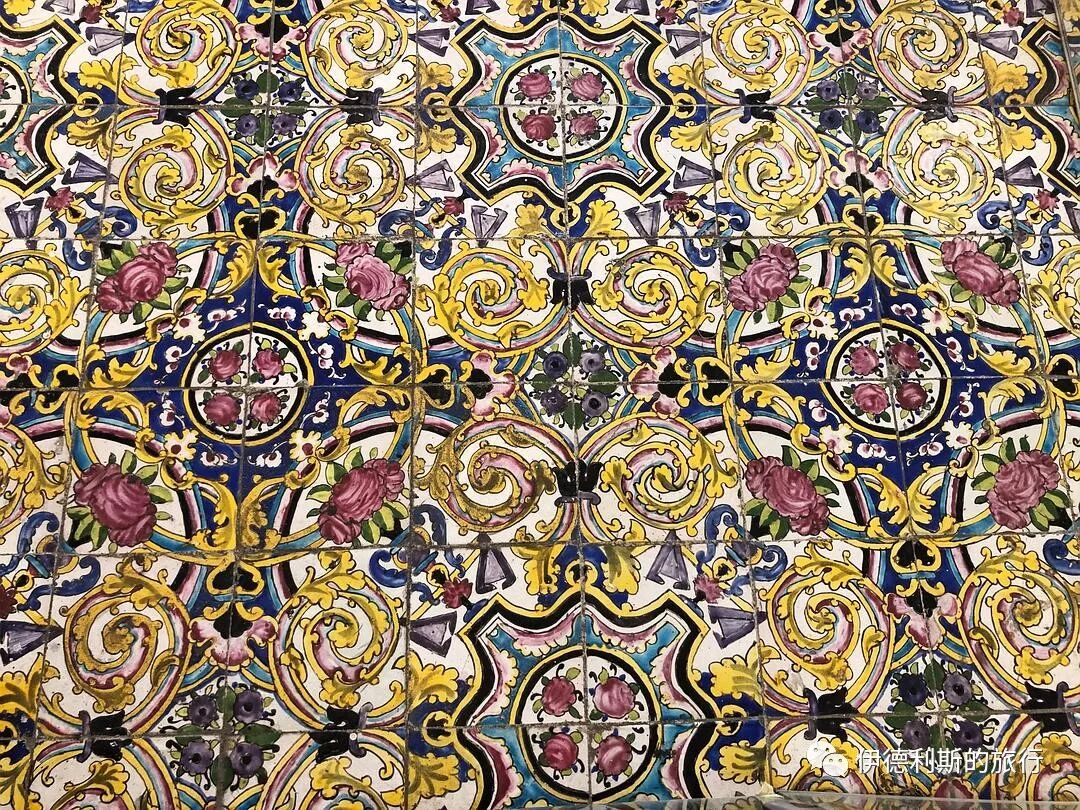
The column bases on the second floor of the main building are covered with colorful tiles, including portraits of past Iranian kings, hunting scenes, coronation ceremonies, some legends and religious stories, and animal figures imitating Persepolis. These tiles once belonged to the Khabgah sleeping quarters and the Haram Khaneh buildings. After these two buildings were demolished, the tiles were moved to the second floor of the main building.
Reception Hall
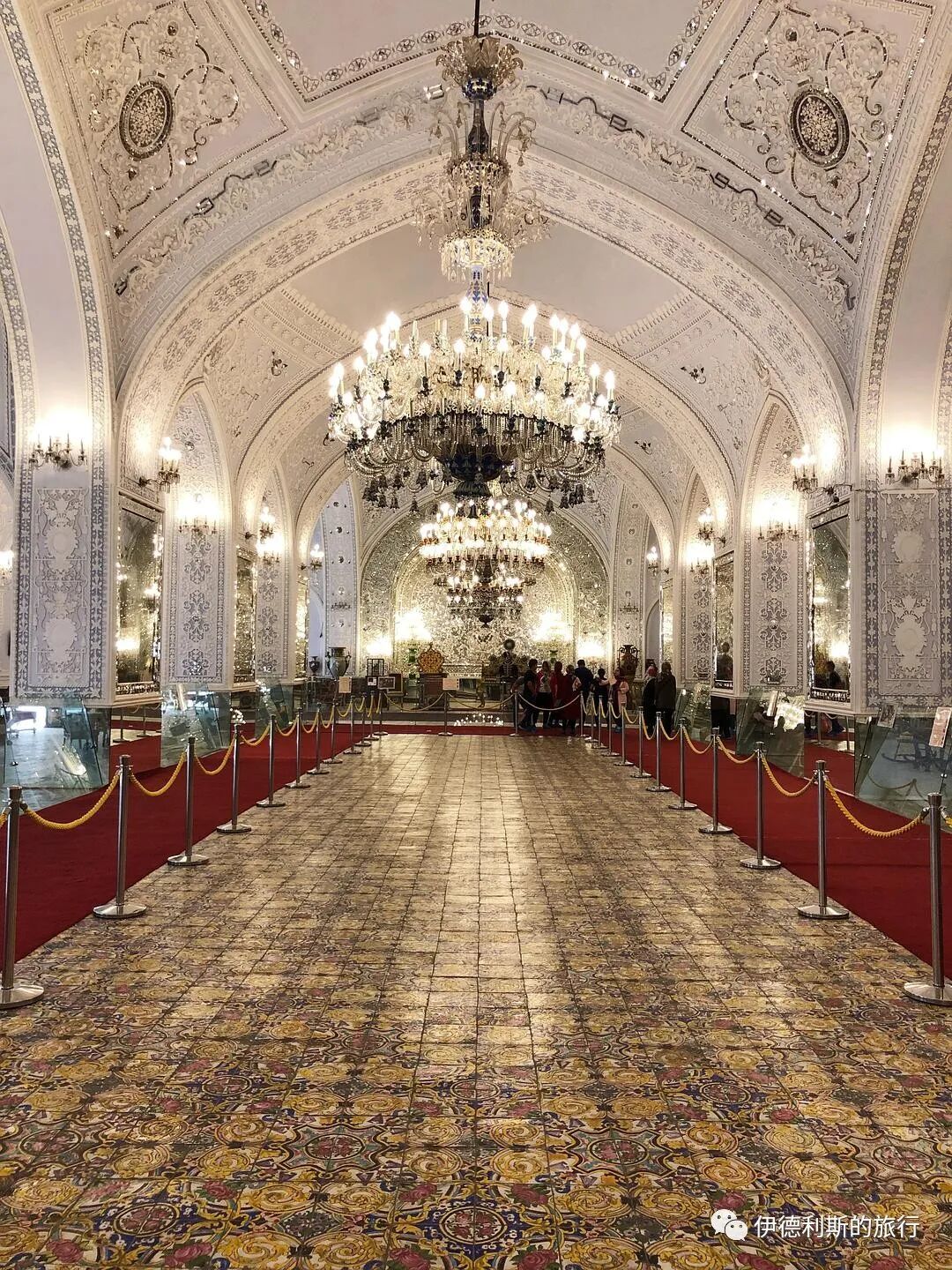
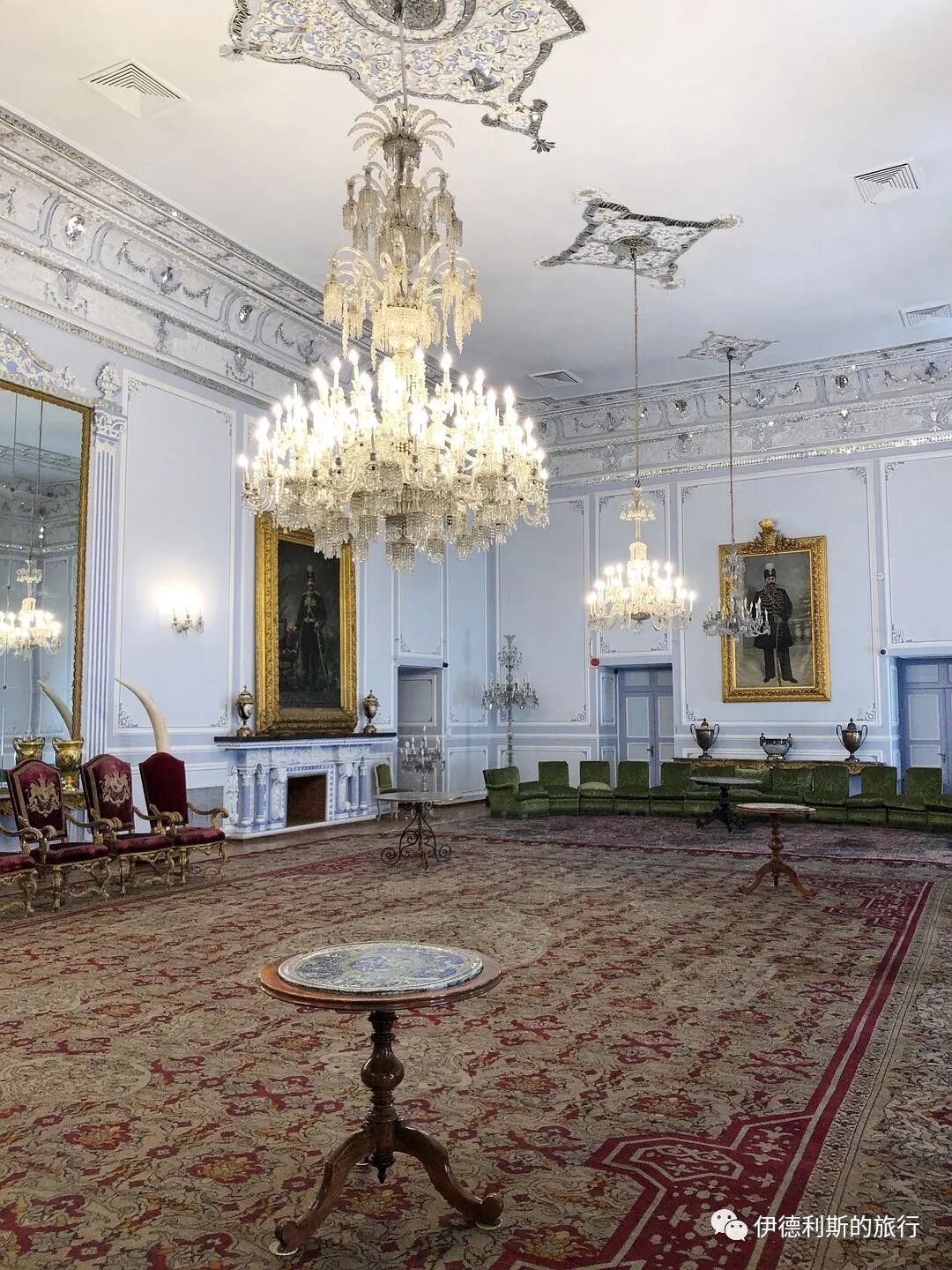
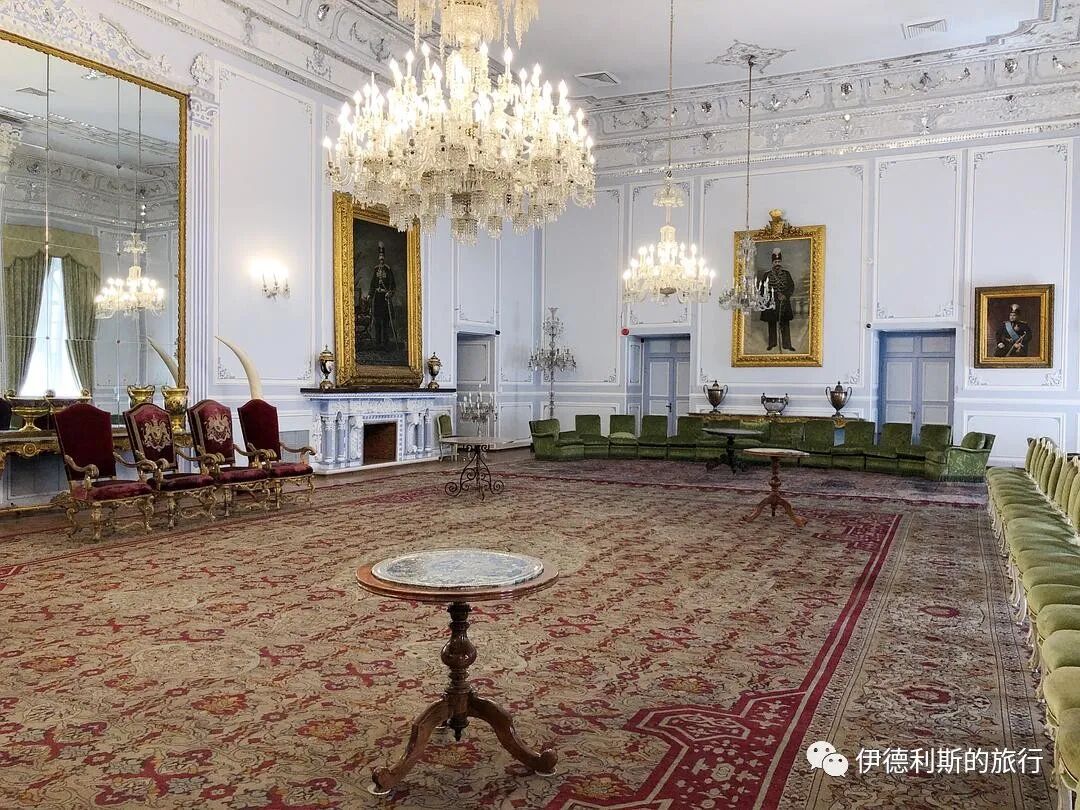
The Reception Hall (Talar-e Salam), also called the Coronation Hall (Talar-e Taj Gozaari) or the Museum Hall, is where five Qajar dynasty kings and the second Pahlavi king were crowned. Talar-e Salam is the grandest hall in the main building. It is 43 meters long and 20 meters wide, with 20 arches along the sides and beautiful mosaics on the floor. Qajar king Naser al-Din Shah, who reigned from 1848 to 1896, used this space to receive various envoys and guests from European courts. At that time, the hall displayed various Iranian and European paintings and royal jewels. These royal jewels are now kept at the Royal Jewelry Museum in the Central Bank of Iran.
The Talar-e Adj hall is the room where gifts sent to Naser al-Din Shah from various countries were kept. During the Pahlavi dynasty, this space became a reception hall for hosting court banquets, and the interior decorations were renovated.
Mirror Hall
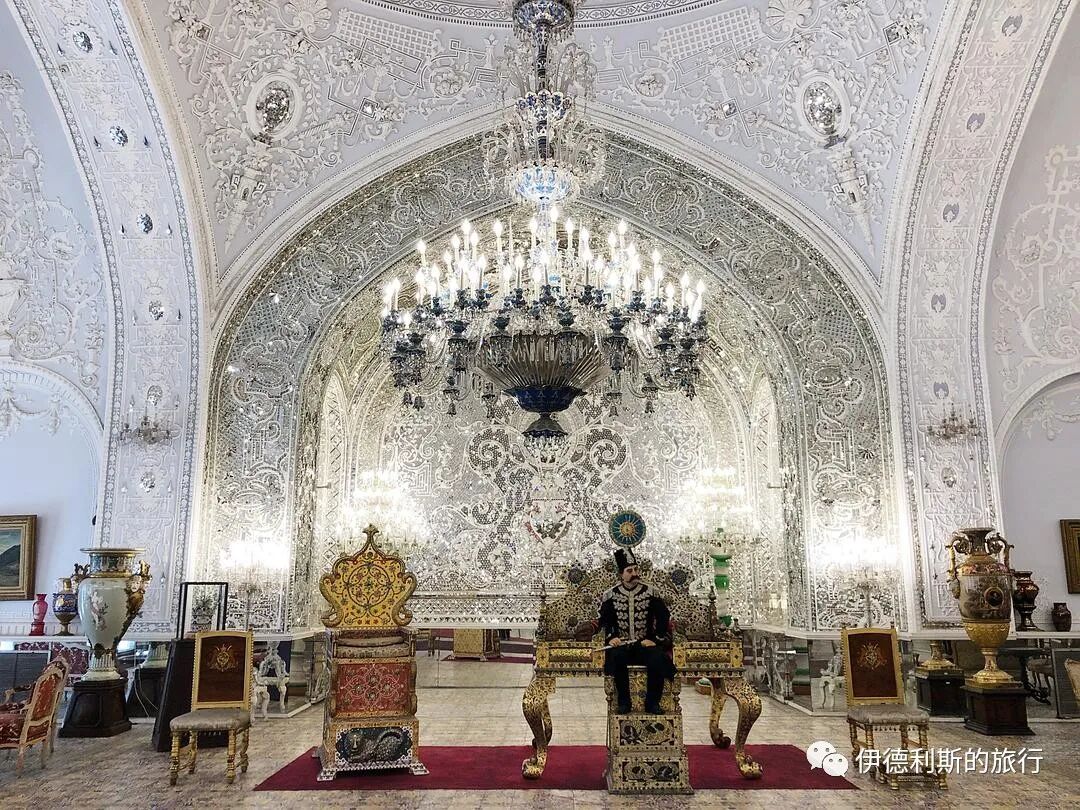
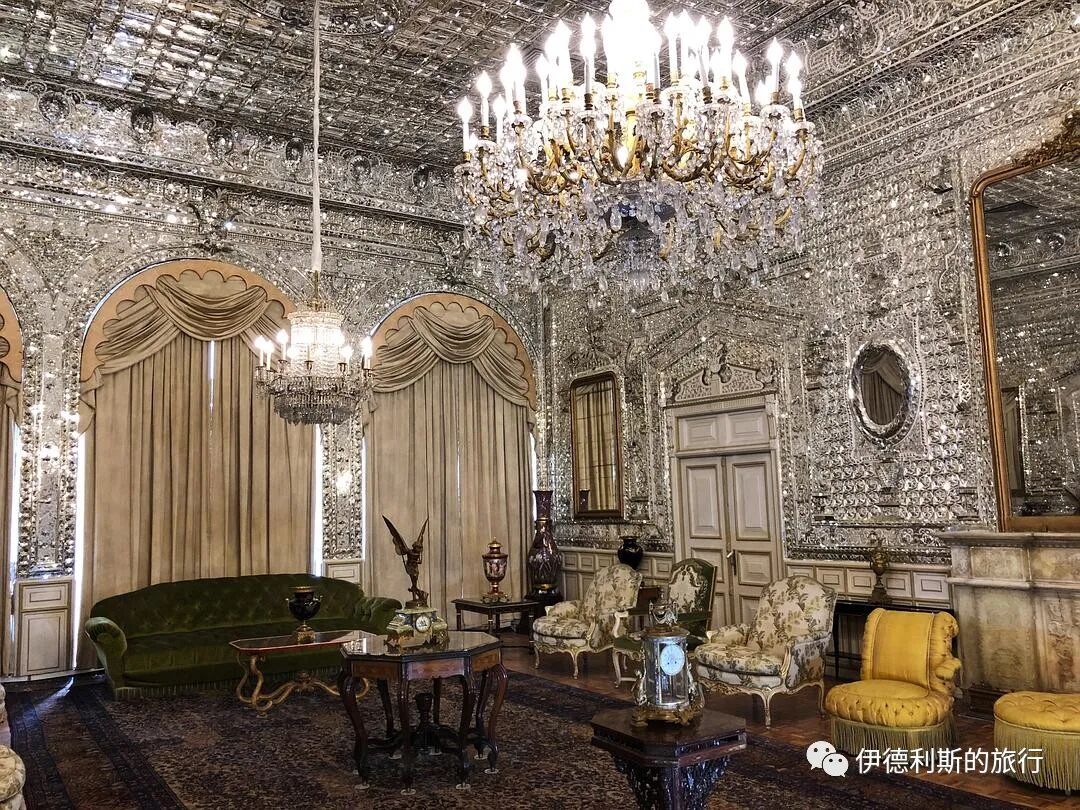
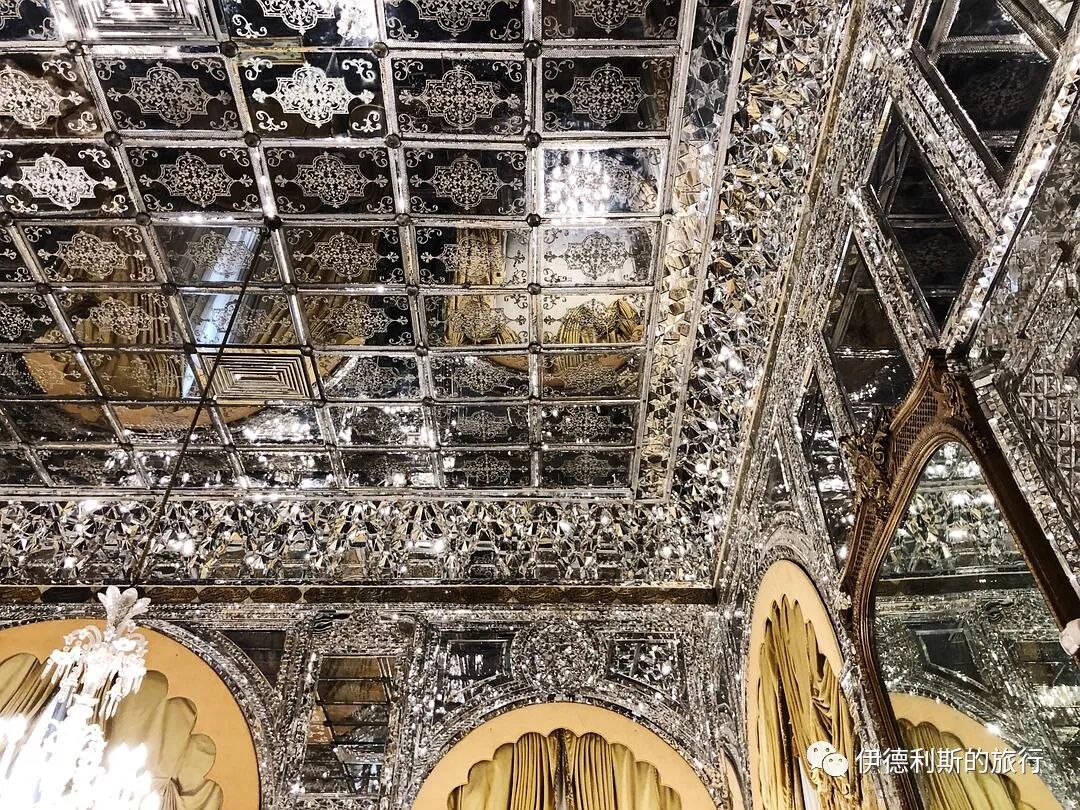
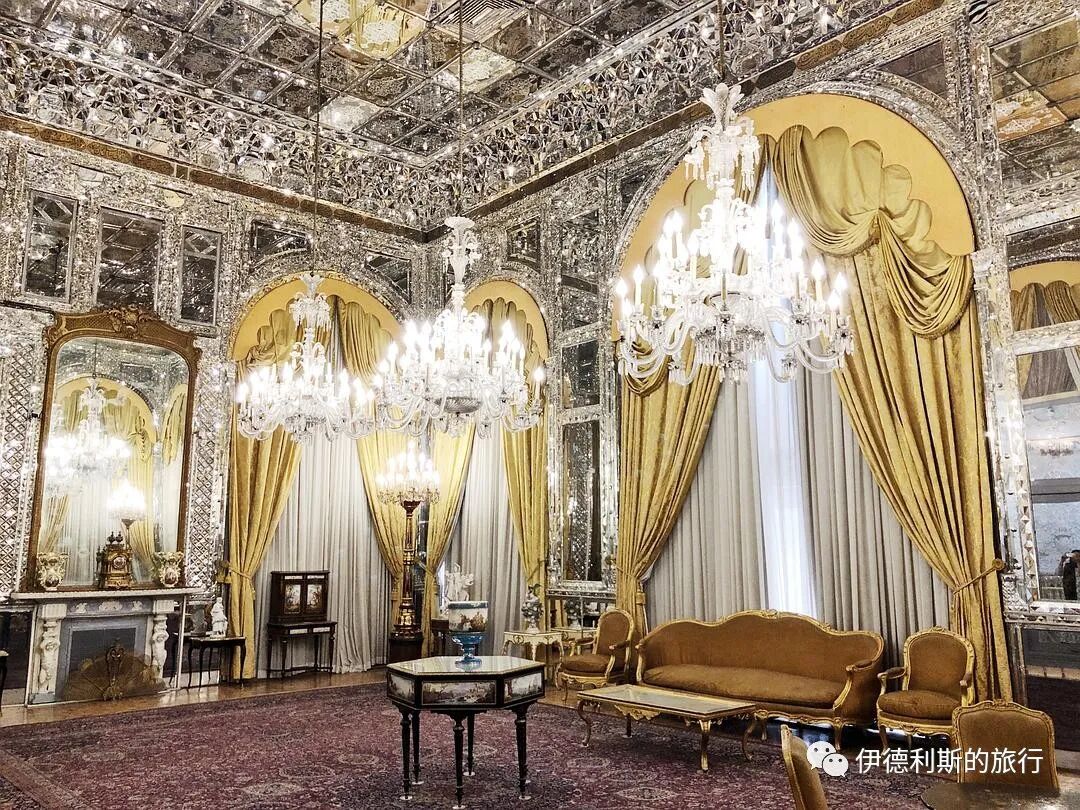
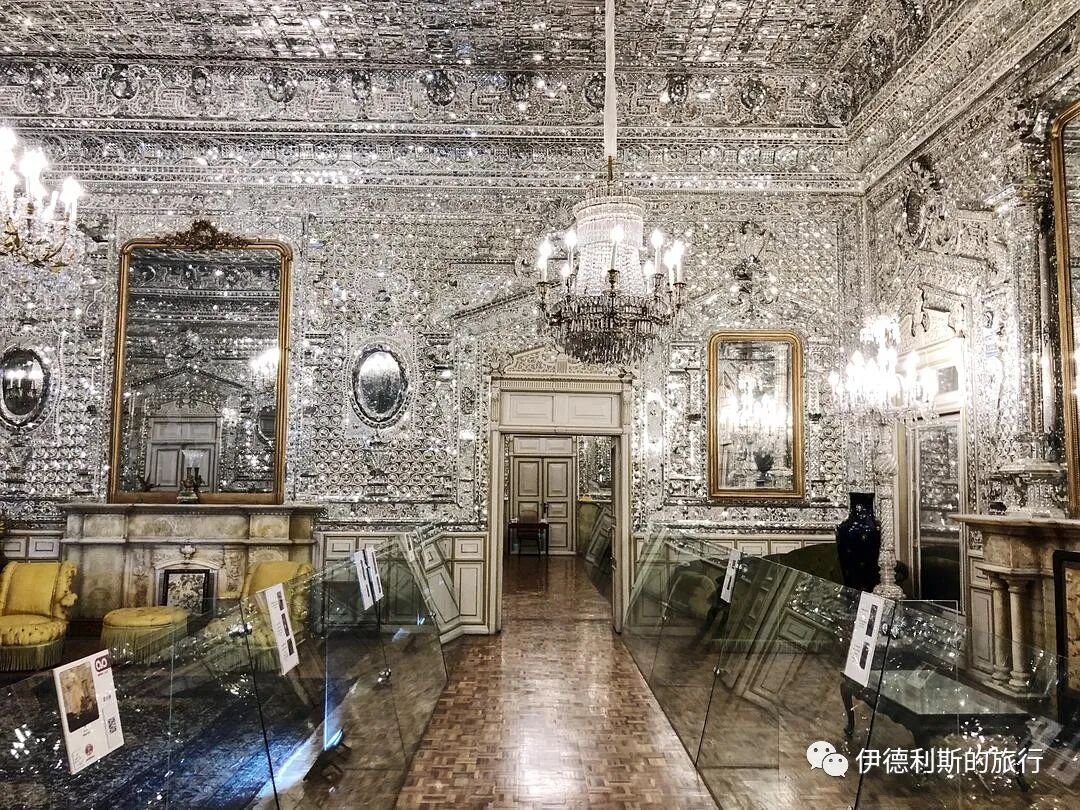
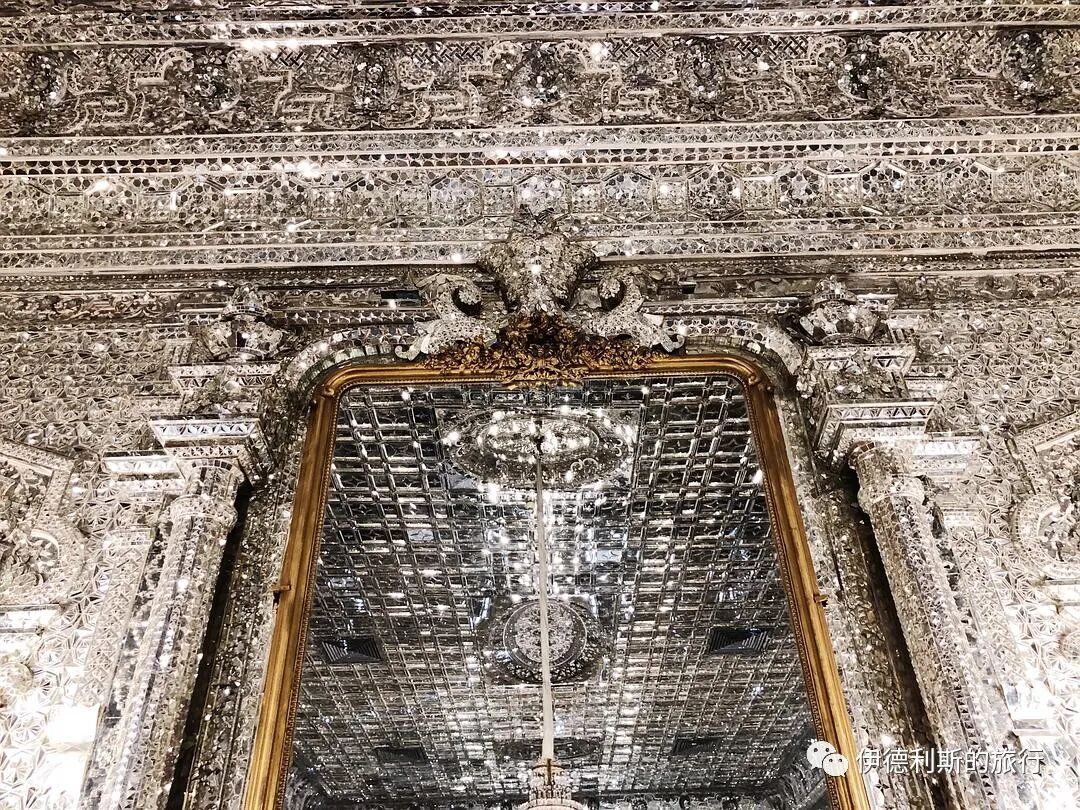
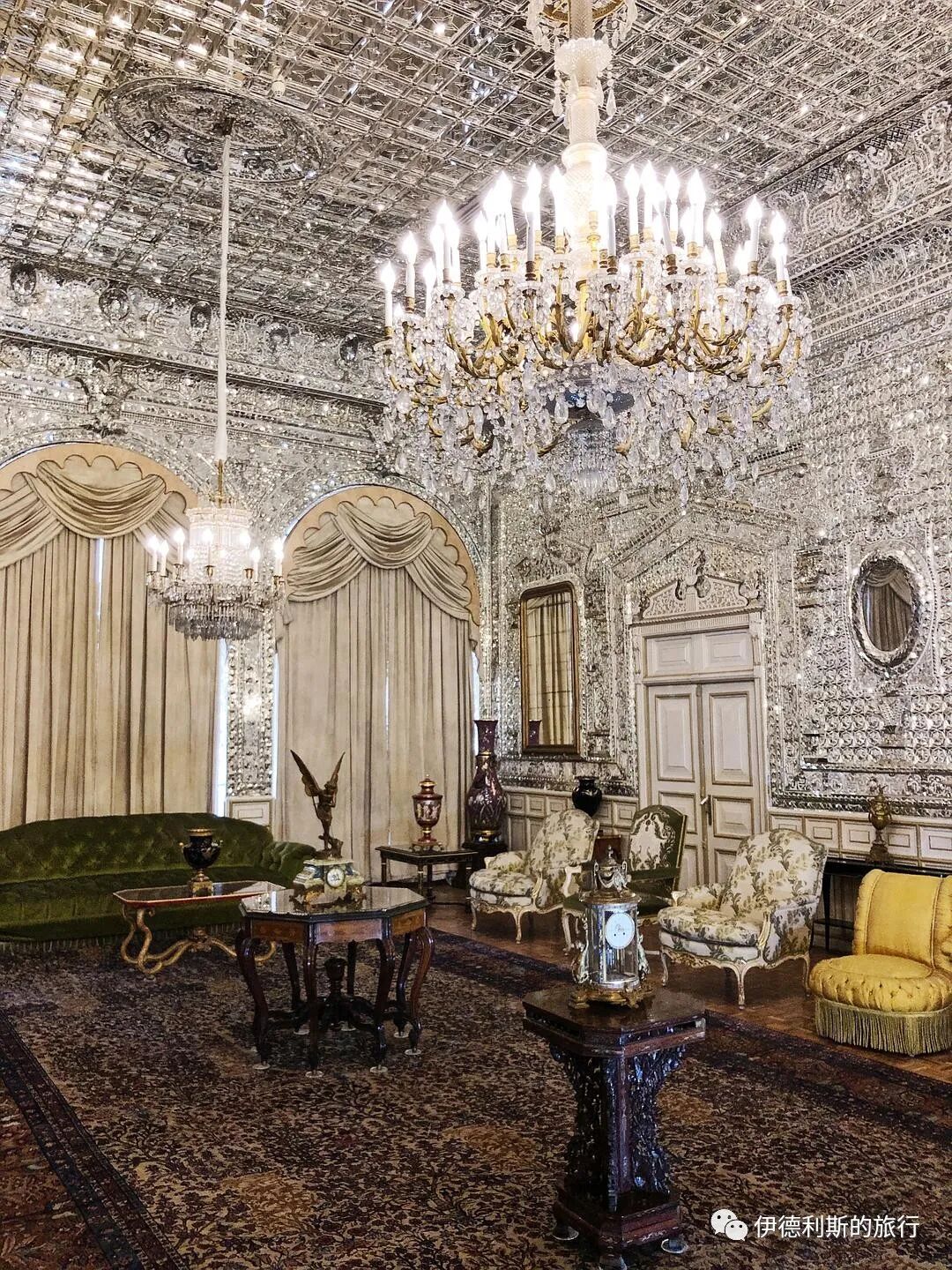
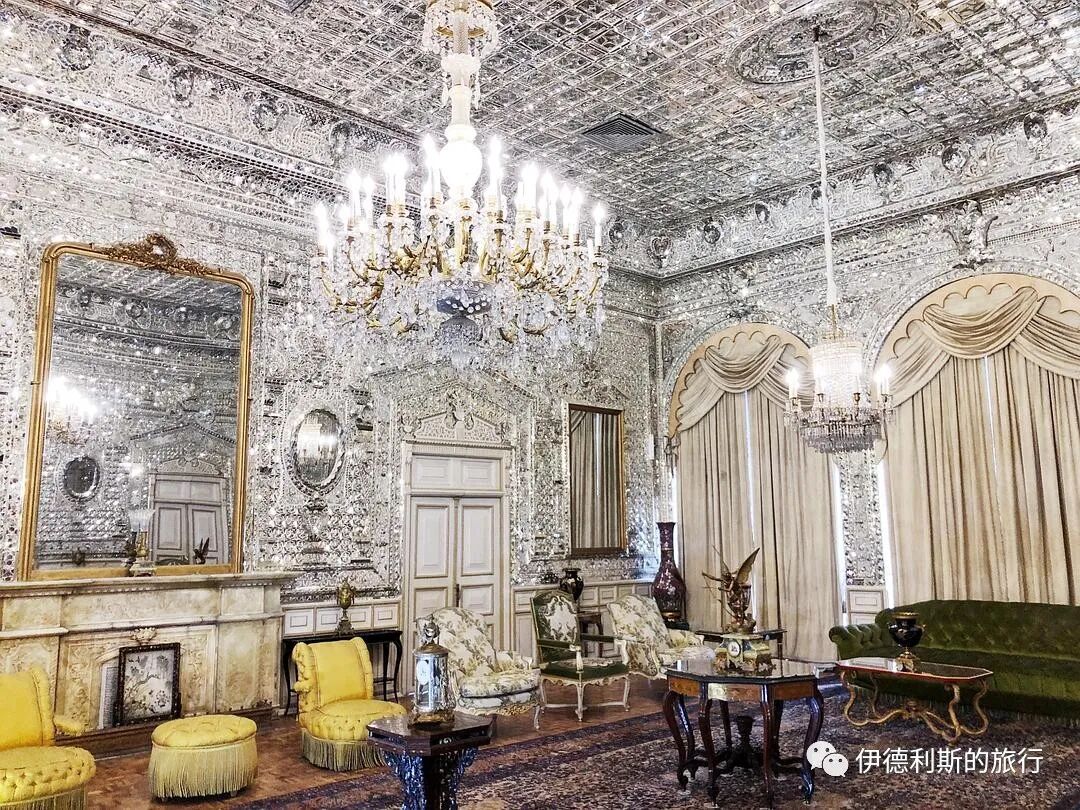
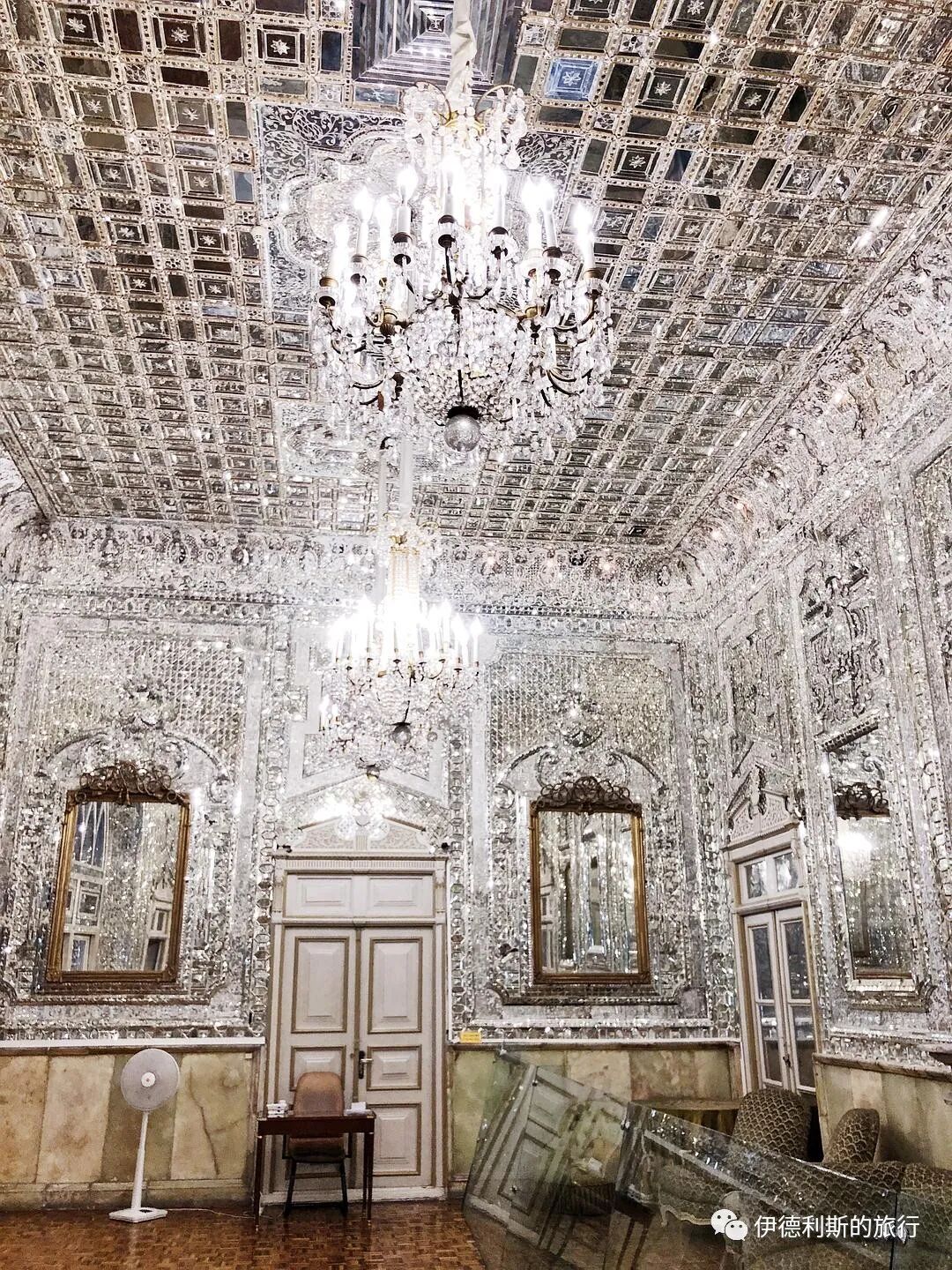
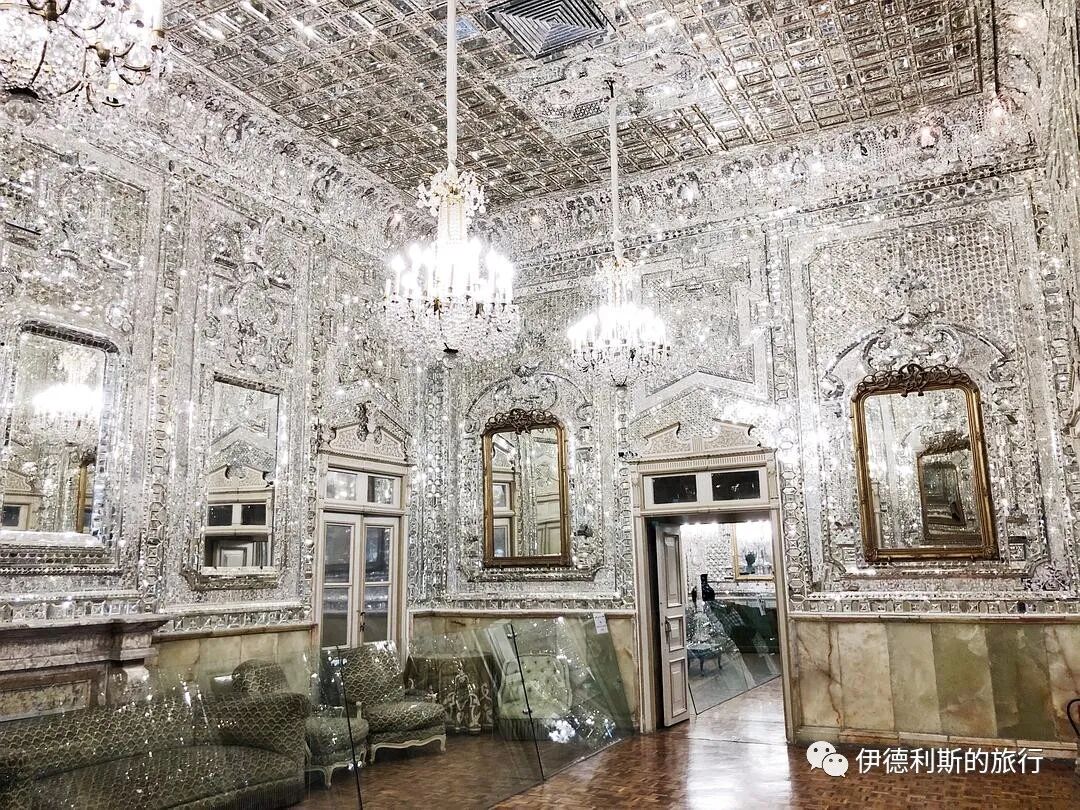
The Mirror Hall (Talar-e Ayineh) is the smallest but most dazzling room in the main building. The gorgeous interior decorations look especially bright reflected in the many mirrors. This room once held the Persian Peacock Throne (Takht-e Tavoos) and the Kiani Crown (Taj-e Kiani) until they were moved to the Royal Jewelry Museum at the Central Bank of Iran in 1980.
Talar-e Zoruf
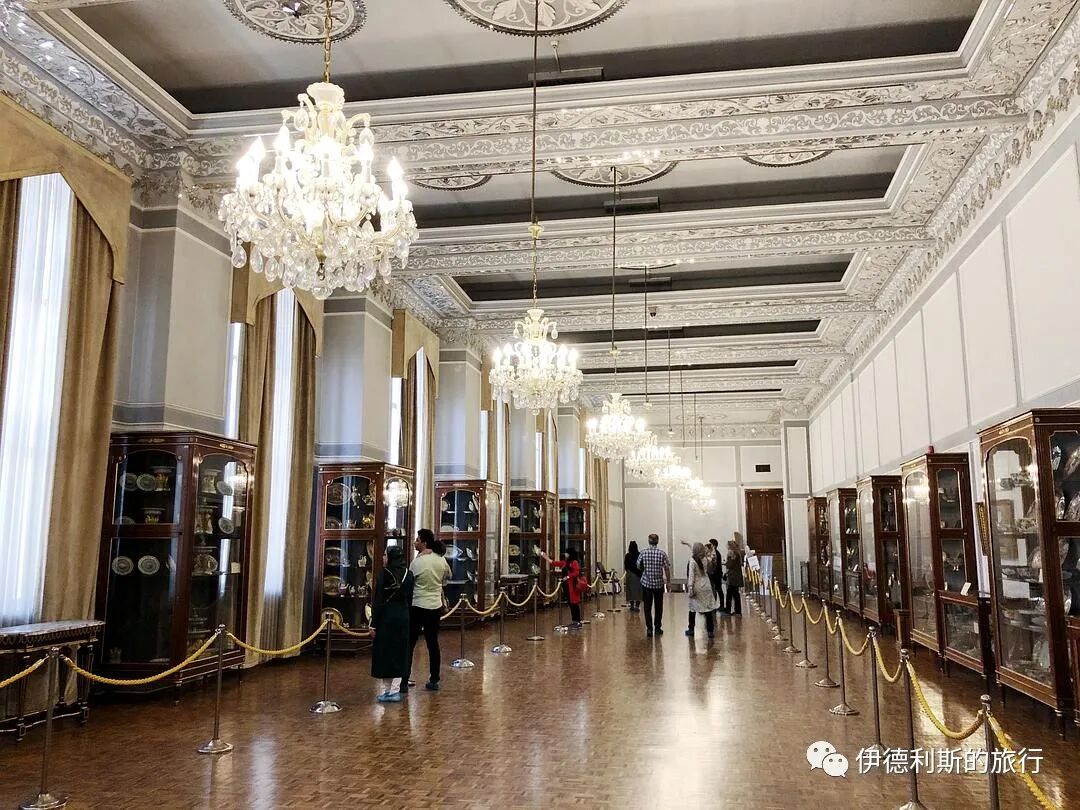
Talar-e Zoruf is a room dedicated to displaying porcelain gifted to the Qajar dynasty by European monarchs like Napoleon, Queen Victoria of England, and Tsars Nicholas I and Alexander III. It was renovated during the Pahlavi dynasty. view all
Summary: Tehran — Golestan Palace, Qajar History and Islamic Art is presented here as a firsthand travel account in clear English, beginning with this scene: Golestan Palace (Kākh-e Golestān) means Garden Palace. The word Gol in the name is the same as the name Guli that we are familiar with. The account keeps its focus on Tehran Travel, Golestan Palace, Qajar History while preserving the names, places, food, and historical details from the Chinese source.
Golestan Palace (Kākh-e Golestān) means Garden Palace. The word Gol in the name is the same as the name Guli that we are familiar with. Located in Tehran, the capital of Iran, it was the royal palace of the Qajar dynasty and was added to the UNESCO World Heritage list in 2013.
Golestan Palace was first called the Tehran Citadel (Arg). It was built during the reign of Tahmasp I (reigned 1524-1576) of the Persian Safavid dynasty and was rebuilt during the reign of Karim Khan (reigned 1750-1779) of the Zand dynasty. After Agha Mohammad Khan (reigned 1789-1797) of the Qajar dynasty made Tehran his capital, he officially converted the Tehran Citadel into the Golestan Royal Palace. Haji Ab ol Hasan Mimar Navai rebuilt the palace again in 1865.
Between 1925 and 1945, Reza Shah (reigned 1925-1941) of the Pahlavi dynasty ordered the demolition of most of the Golestan Palace buildings for modern urban development. Modern-style commercial buildings were built there one after another between the 1950s and 1960s.
Karim Khani Nook
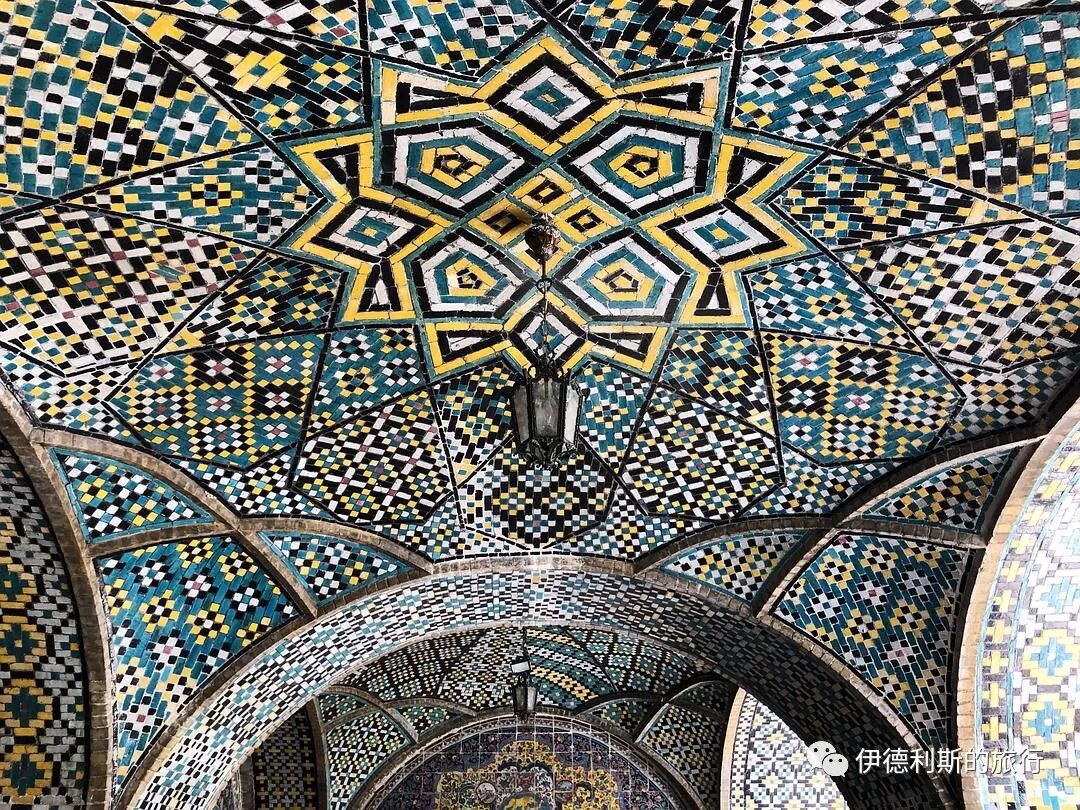
Karim Khani Nook was built in 1759 by Karim Khan of the Zand dynasty. It is a terrace featuring a marble throne. There used to be a pool with a fountain in the middle of the terrace. Water flowed into the pond from underground water channels (Qanat) and then flowed to other parts of the palace. Nasser ed Din Shah (reigned 1848-1896) of the Qajar dynasty loved this place. People say he often sat here quietly smoking a water pipe. Today, the marble tombstone of Nasser ed Din Shah stands here, and his portrait is also on the walls of the building.
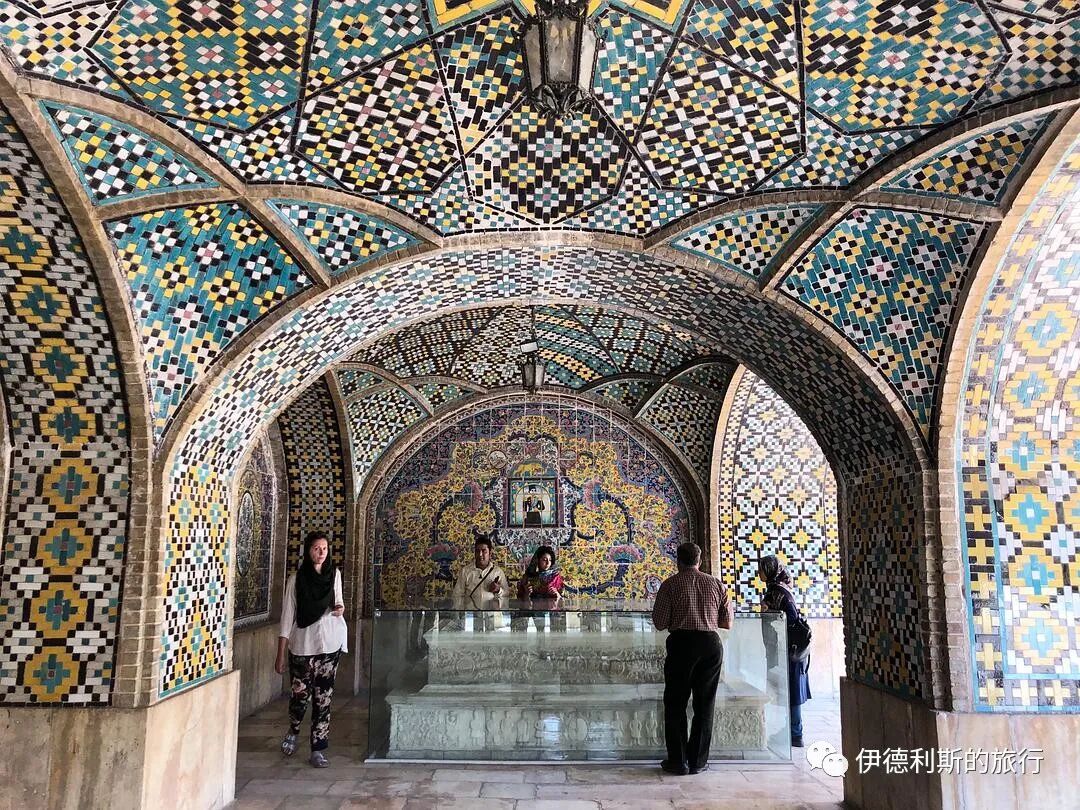
Negar Khane Gallery
In 1872, during his second visit to Europe, Nasser ed Din Shah was deeply impressed by the artifacts displayed in European museums. After returning to Tehran, he set out to create a museum hall in the Kakh-e Asli area of the palace to display paintings, jewelry, and other royal artifacts.
Today, most of the Qajar dynasty collection has been scattered among various museums in Tehran, but many paintings are still kept in Golestan Palace. The southern gallery now houses paintings by early Qajar dynasty masters, including Mirza Baba, Mehr Ali Afshar, Ali Akbar Khan, and Ab ol Hassan Sani. The northern gallery was the home of the royal guard during the Pahlavi period. It underwent a major renovation in 1995 and now displays paintings by late Qajar dynasty masters, including Mahmoud Khan Saba, Mohammad Gafari Kashani, Mehri, and Mosa Momayez.
The harem of Nasser ed Din Shah.
Nasser ed Din Shah hunting, painted in 1884.
Servants in the court of Nasser ed Din Shah, painted in 1881.
Golestan Palace, painted in 1885.
Interior of Golestan Palace, painted in 1864.
Celebration of the 30th anniversary of Nasser ed Din Shah's reign, painted in 1878.
Physician Mirza Abolfazl Tabib Kashani taking a patient's pulse, painted in 1859.
Qajar dynasty prince Abdol-Samad Mirza.
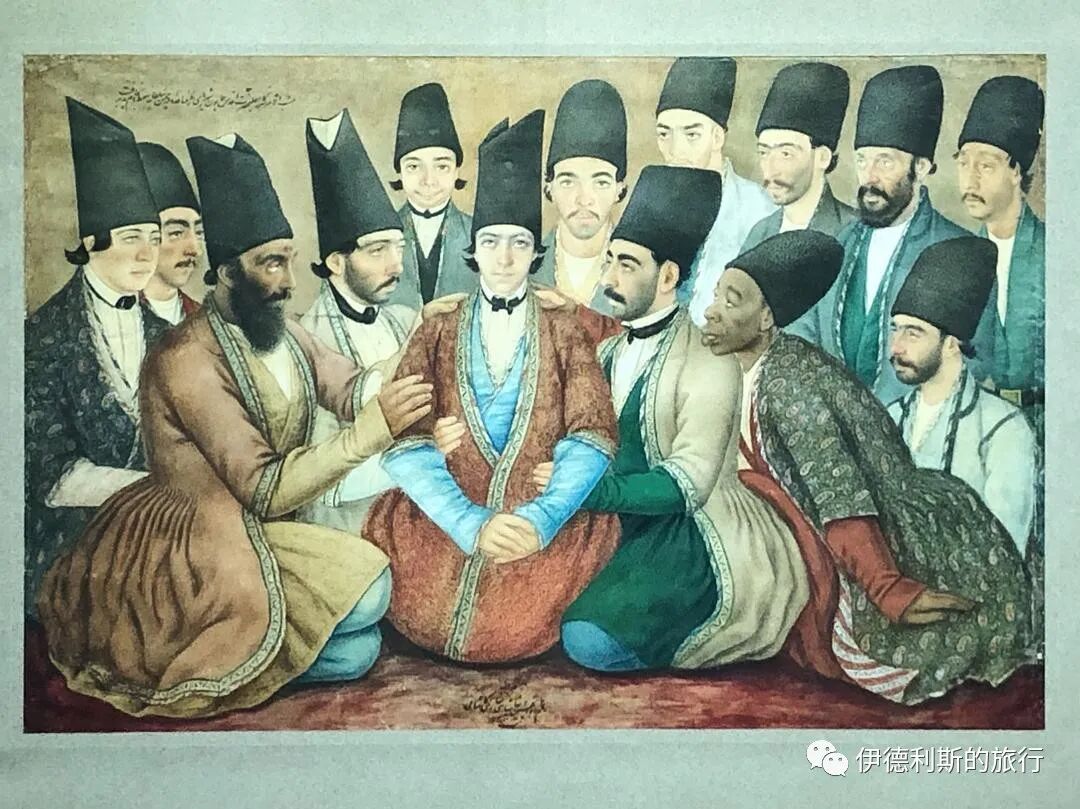
Mohammad Ghasem Khan and Mohammad Hossein, painted in 1891. The former was the Qajar dynasty ambassador to Russia.
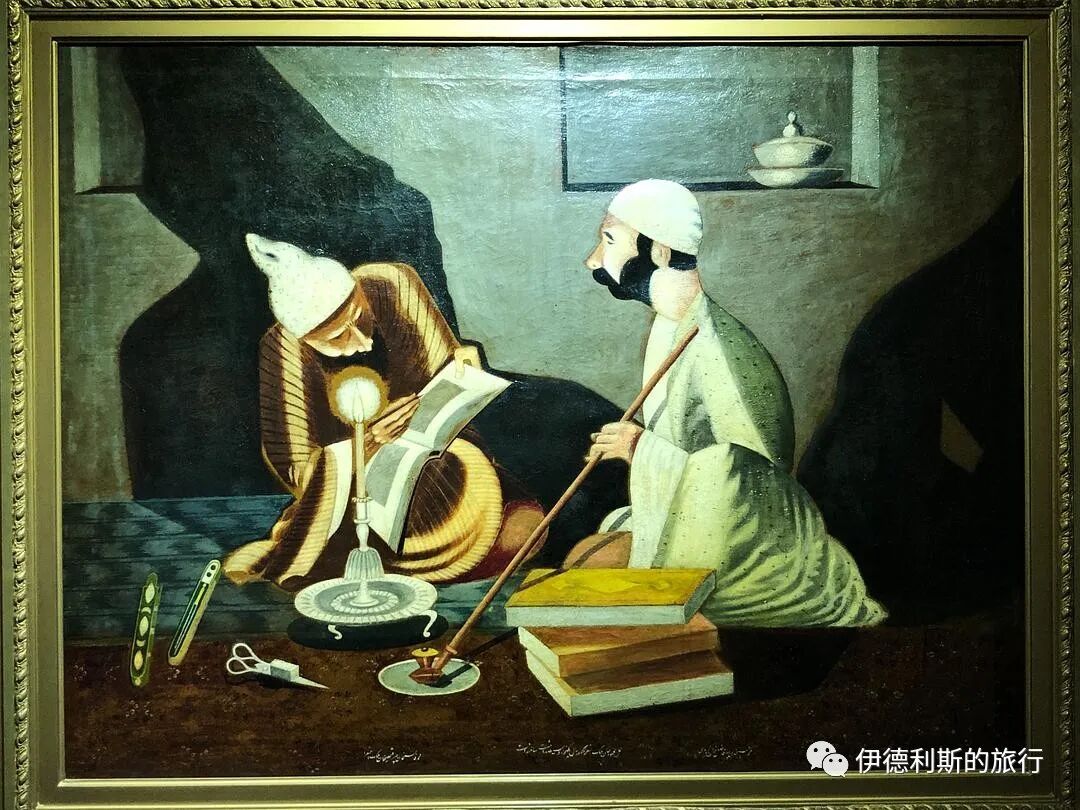
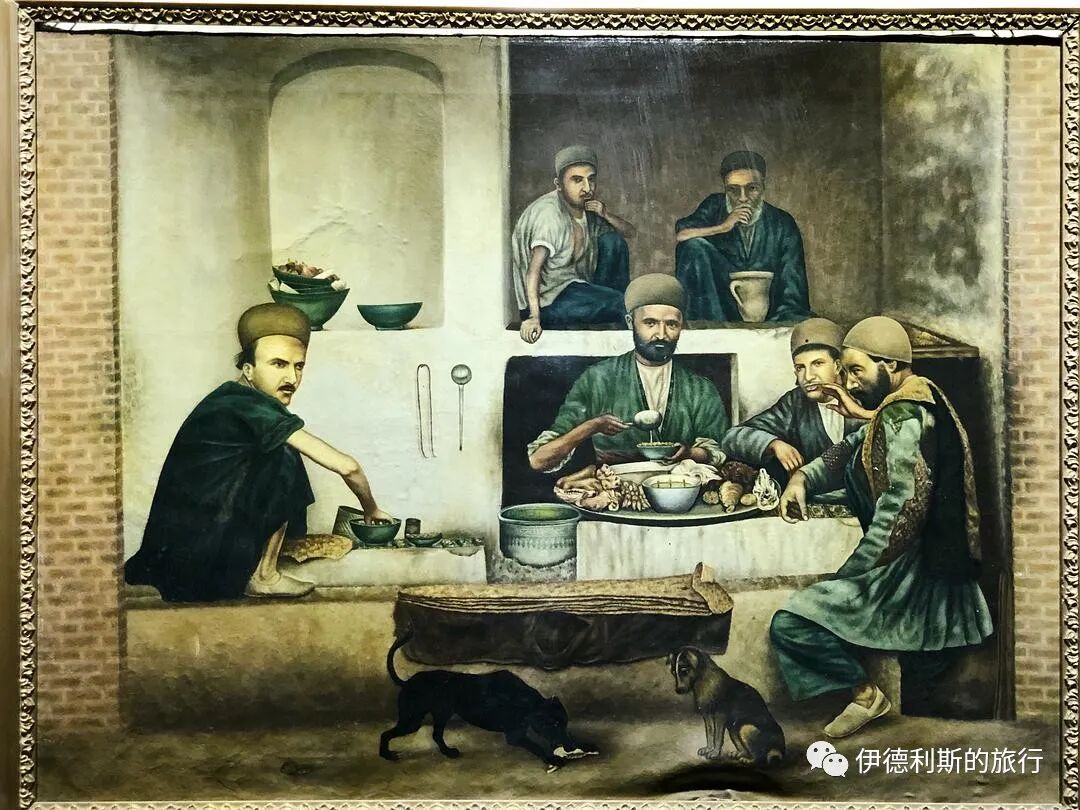
Painted in 1895.
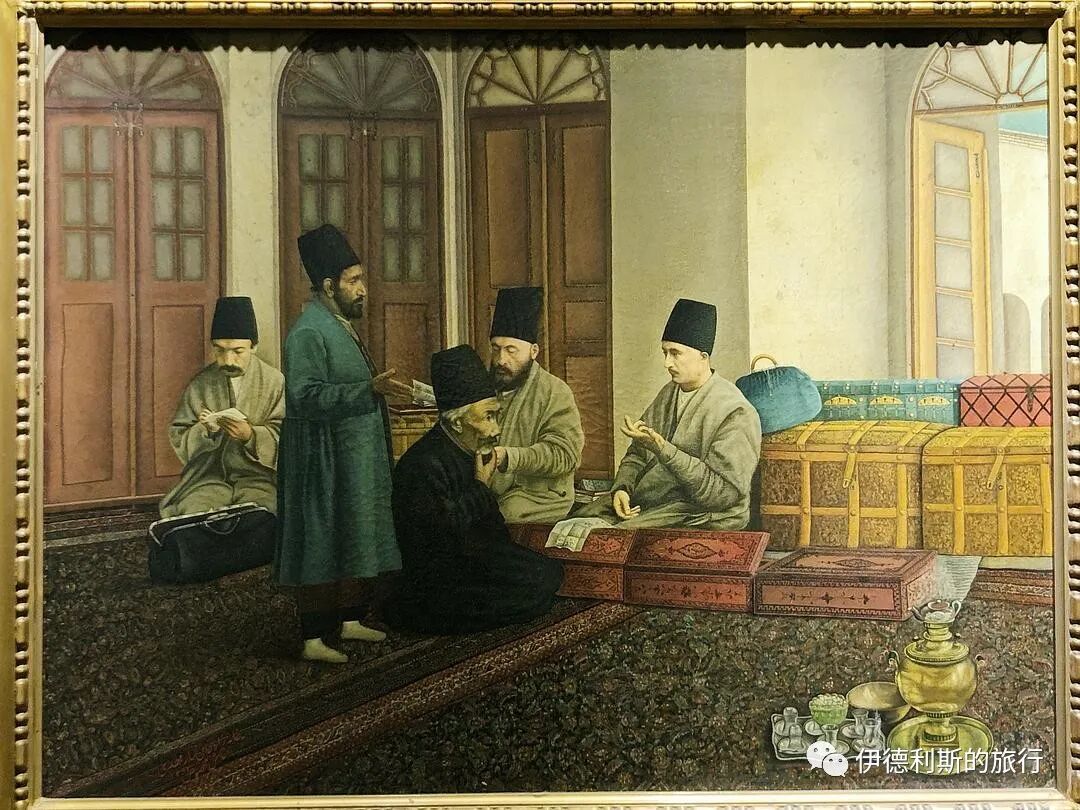
The Shia holy city of Karbala, painted in 1902.
Portraits of the Qajar dynasty royal family.
Makhsus Museum
The Makhsus Museum (Mouze-ye Makhsous) preserves copperware, silverware, and weapons gifted to the Qajar dynasty by European kings.
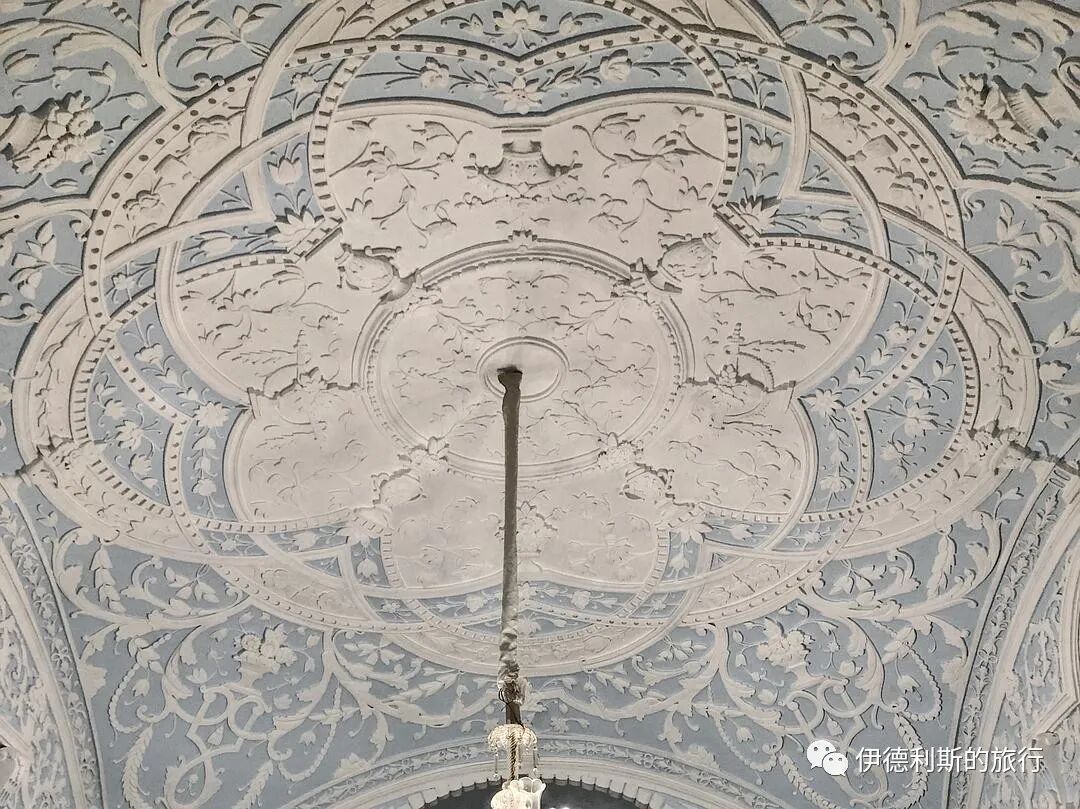
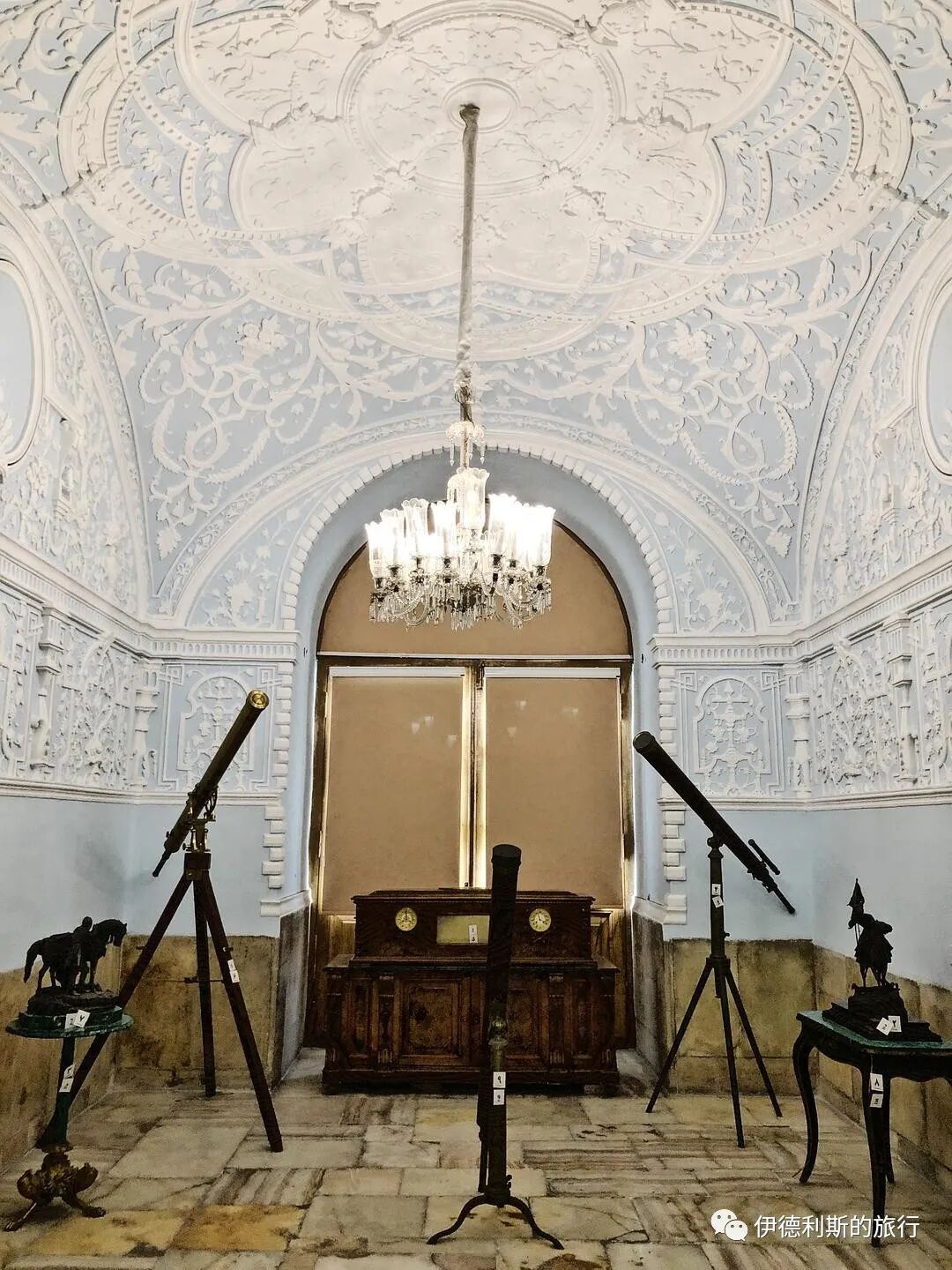
Main Building
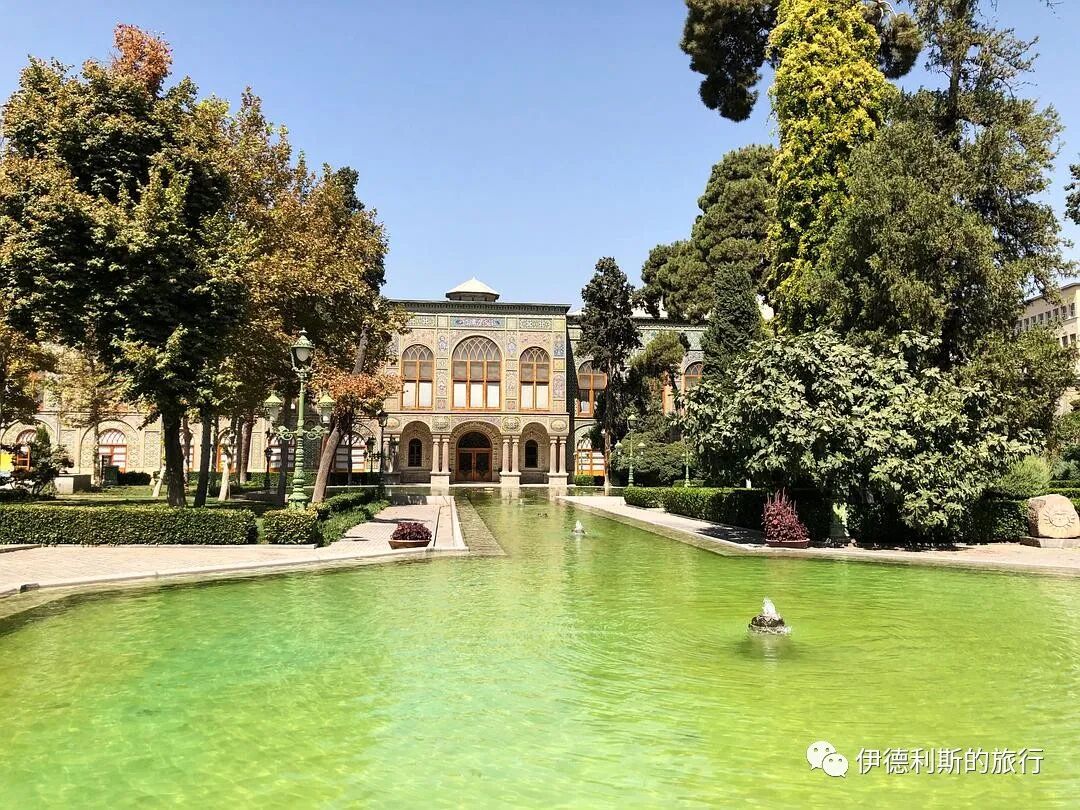
East of the museum is the main building (Kakh-e Asli) of Golestan Palace. In front of the main building is a 118-meter-long pool containing 15 fountains. Historical photos show that the pool was once surrounded by bronze statues of boys holding torches and animals, but they were all removed during the Pahlavi dynasty.
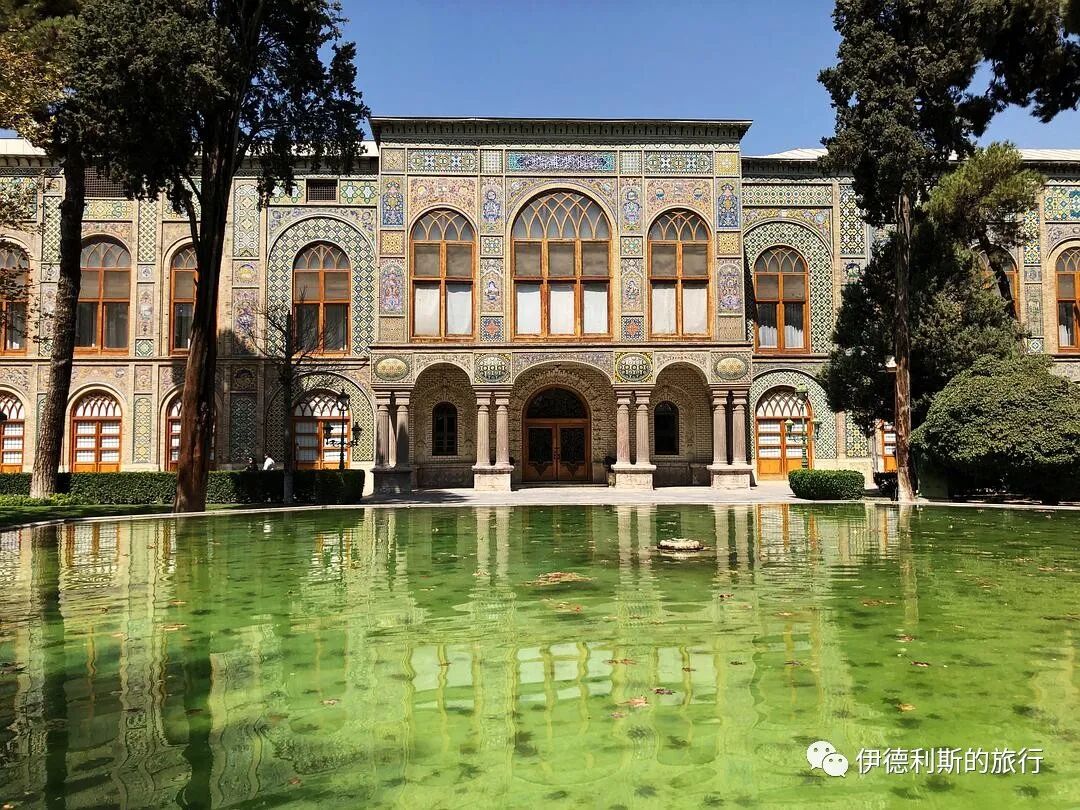
On both sides of the entrance is a pair of brass roaring lions symbolizing power.
After entering the main entrance, there is a staircase (Sar sara) with 22 steps, decorated with mirrors in geometric patterns.
The column bases on the second floor of the main building are covered with colorful tiles, including portraits of past Iranian kings, hunting scenes, coronation ceremonies, some legends and religious stories, and animal figures imitating Persepolis. These tiles once belonged to the Khabgah sleeping quarters and the Haram Khaneh buildings. After these two buildings were demolished, the tiles were moved to the second floor of the main building.
Reception Hall
The Reception Hall (Talar-e Salam), also called the Coronation Hall (Talar-e Taj Gozaari) or the Museum Hall, is where five Qajar dynasty kings and the second Pahlavi king were crowned. Talar-e Salam is the grandest hall in the main building. It is 43 meters long and 20 meters wide, with 20 arches along the sides and beautiful mosaics on the floor. Qajar king Naser al-Din Shah, who reigned from 1848 to 1896, used this space to receive various envoys and guests from European courts. At that time, the hall displayed various Iranian and European paintings and royal jewels. These royal jewels are now kept at the Royal Jewelry Museum in the Central Bank of Iran.
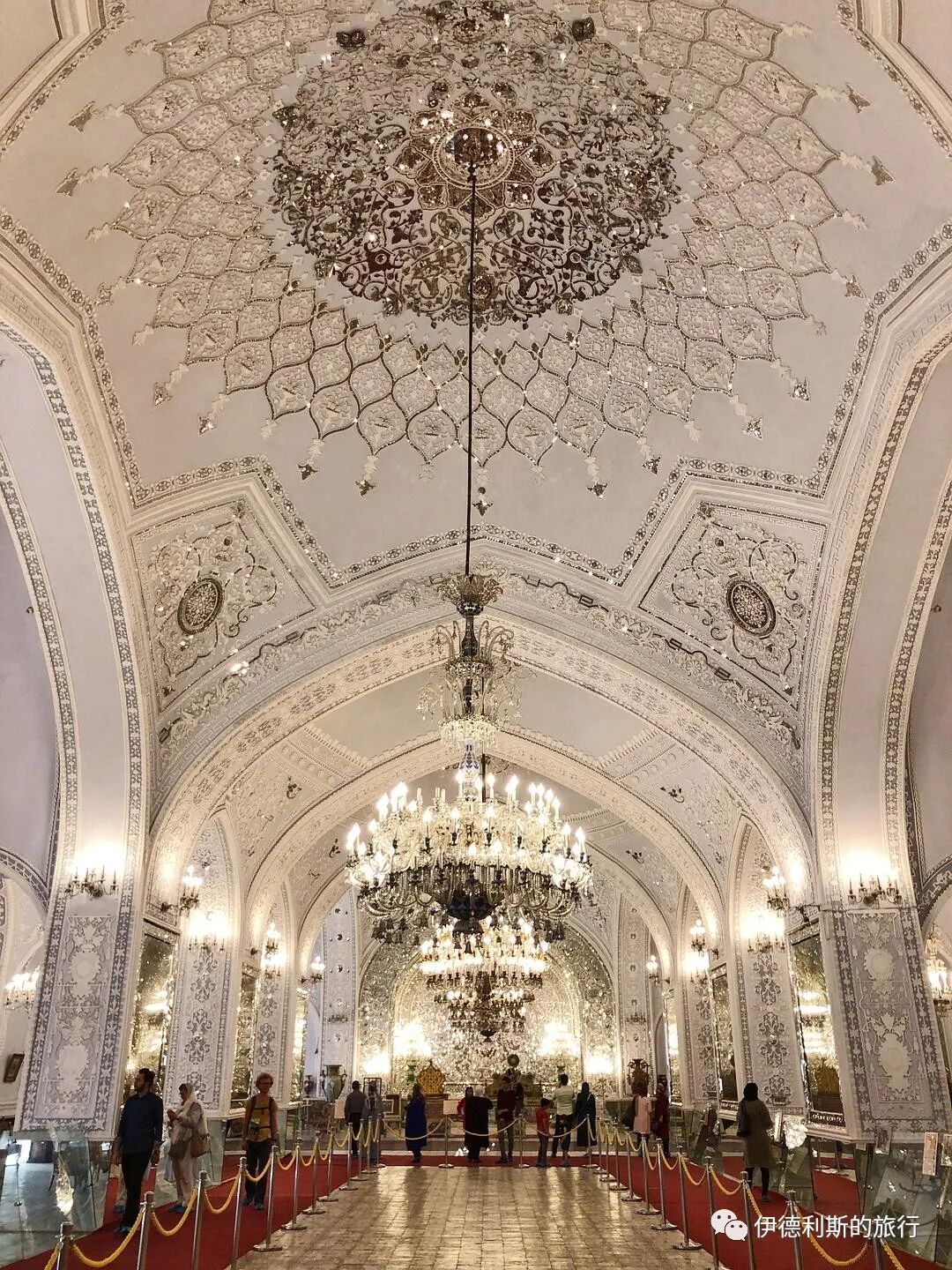
The Talar-e Adj hall is the room where gifts sent to Naser al-Din Shah from various countries were kept. During the Pahlavi dynasty, this space became a reception hall for hosting court banquets, and the interior decorations were renovated.
Mirror Hall
The Mirror Hall (Talar-e Ayineh) is the smallest but most dazzling room in the main building. The gorgeous interior decorations look especially bright reflected in the many mirrors. This room once held the Persian Peacock Throne (Takht-e Tavoos) and the Kiani Crown (Taj-e Kiani) until they were moved to the Royal Jewelry Museum at the Central Bank of Iran in 1980.
Talar-e Zoruf
Talar-e Zoruf is a room dedicated to displaying porcelain gifted to the Qajar dynasty by European monarchs like Napoleon, Queen Victoria of England, and Tsars Nicholas I and Alexander III. It was renovated during the Pahlavi dynasty.
Ashura in Tehran: a Muslim Travel Note on Faith, Rituals and City Life
Articles • ali2007fr posted the article • 0 comments • 190 views • 2026-05-17 07:35
Summary: This travel note introduces Ashura in Tehran: a Muslim Travel Note on Faith, Rituals and City Life. I went to Tehran during the Mid-Autumn Festival holiday in 2019, just in time for the various activities of Ashura, and truly felt the warmth of the Iranian people. It is useful for readers interested in Tehran Travel, Ashura, Muslim Culture.
I went to Tehran during the Mid-Autumn Festival holiday in 2019, just in time for the various activities of Ashura, and truly felt the warmth of the Iranian people.
Ashura originally means 'the tenth,' and the Day of Ashura refers to the tenth day of the first month of the Islamic calendar (Muharram). On the Day of Ashura in 680 AD, Imam Hussein, the grandson of the Prophet Muhammad, refused to pledge allegiance to the Umayyad Caliphate. While leading his family and followers from Mecca to Kufa, they were attacked by the Umayyad army, and Imam Hussein and all 72 of his companions were killed. Since then, Shia Muslims around the world have held activities every year during the month of Muharram to mourn Imam Hussein and his 72 companions, gradually forming the important Shia festival of Ashura.
During Ashura, Shia Muslims perform Azadari (mourning) rituals, including memorial services (majalis al-ta'ziya), mourning processions (al-mawakib al-husayniyya), theatrical performances (shabih), and flagellation (tatbir). Some Shia Muslims believe that participating in Ashura can cleanse their sins, and there is a saying that 'a tear shed for Hussein washes away a hundred sins.'
Grand Bazaar
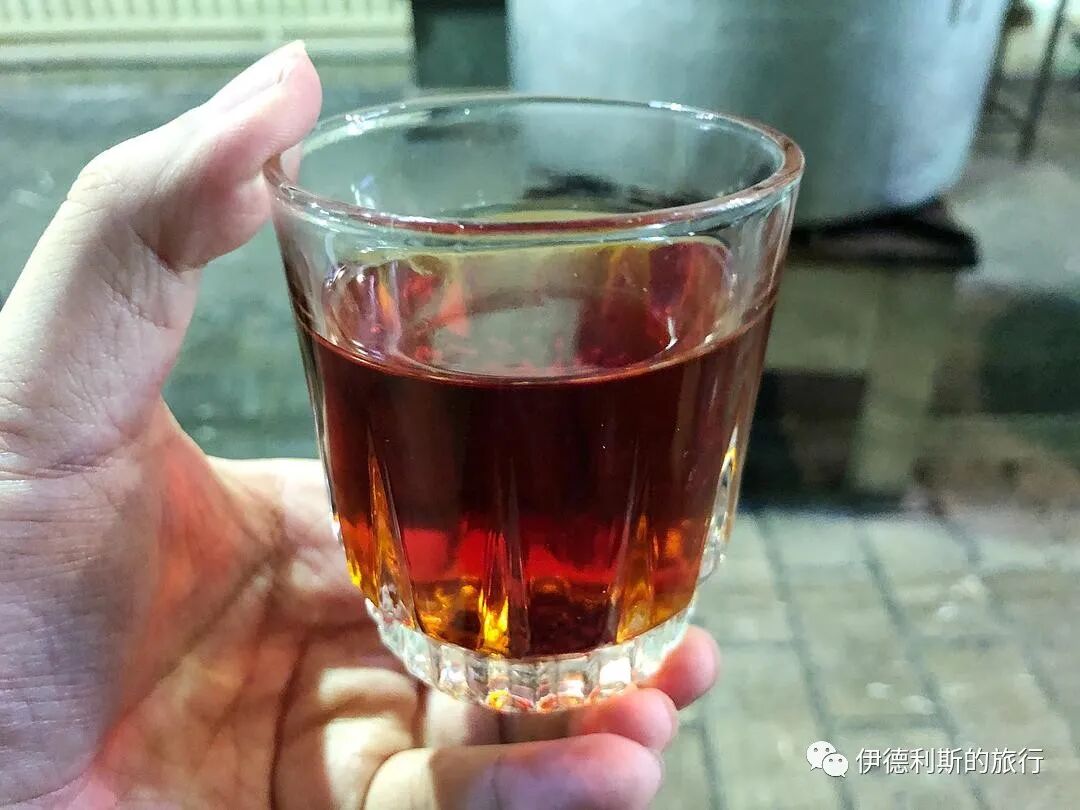
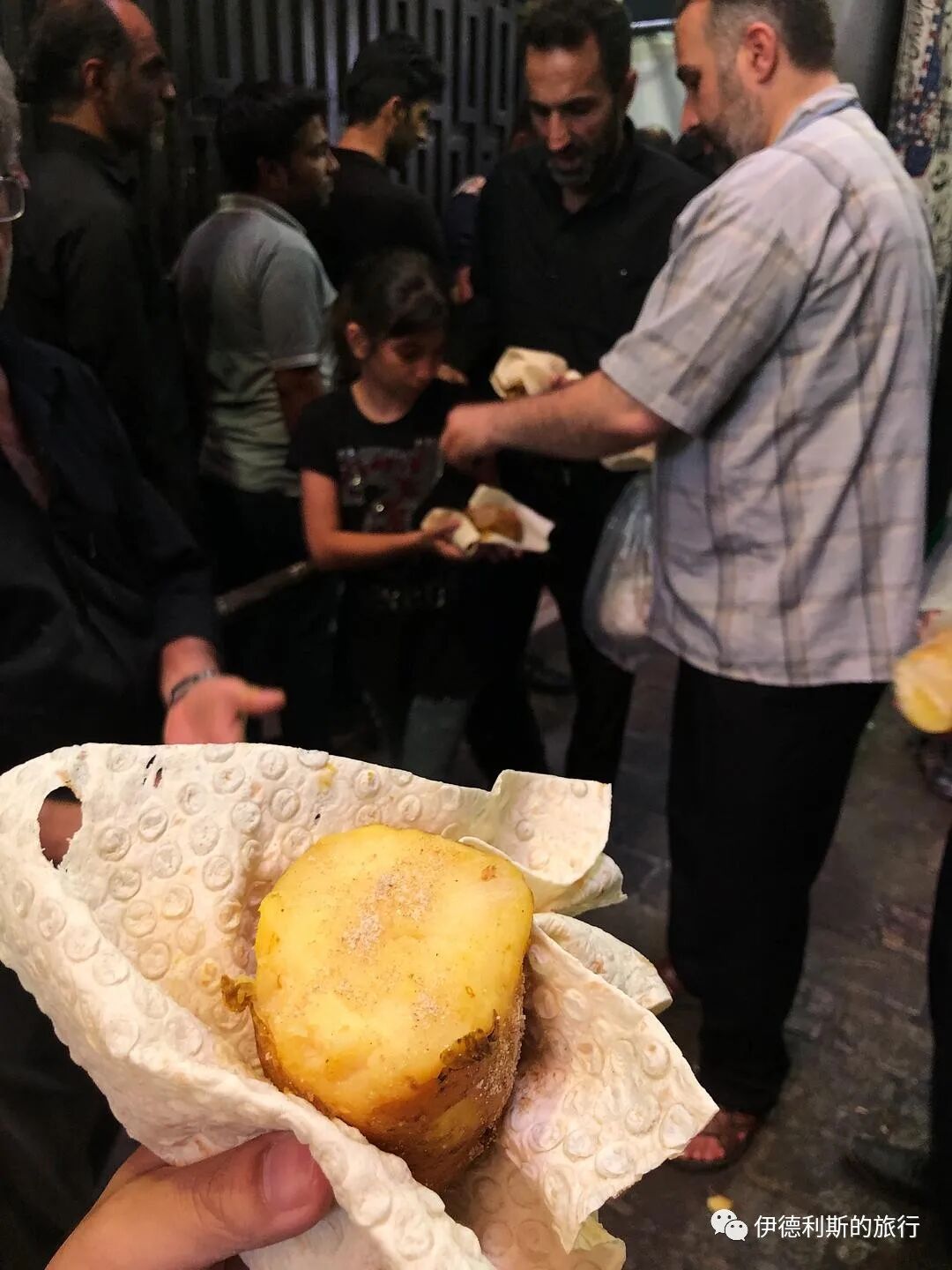
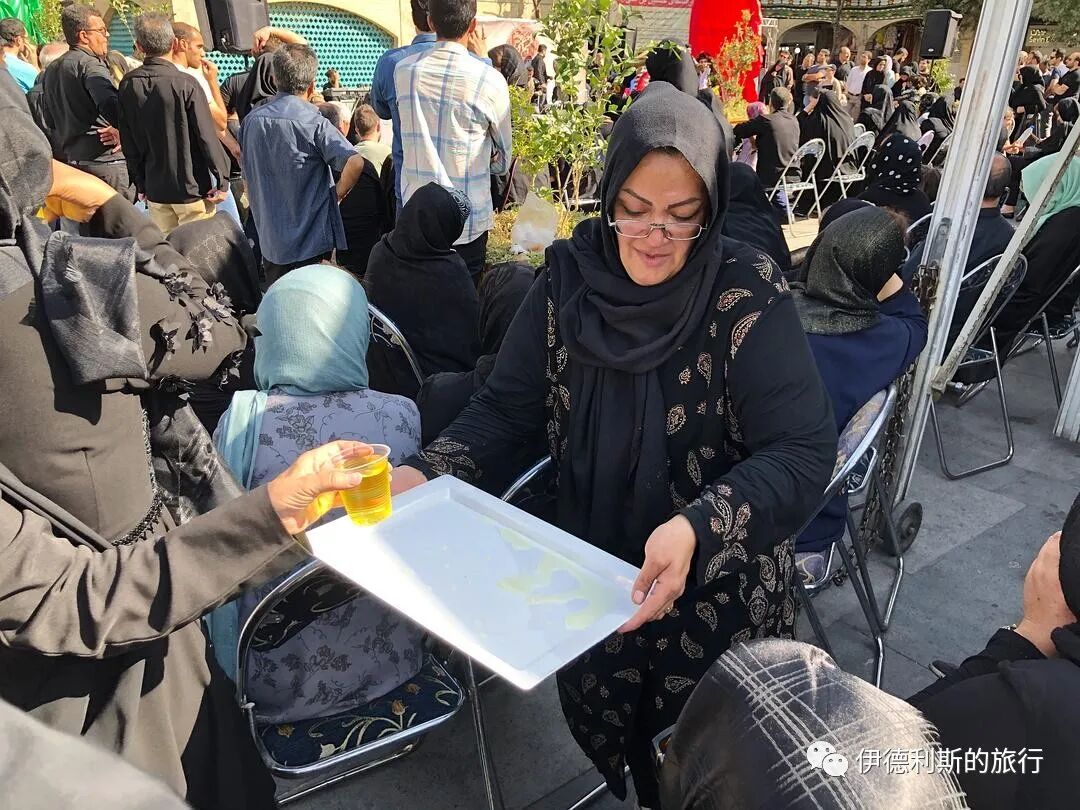
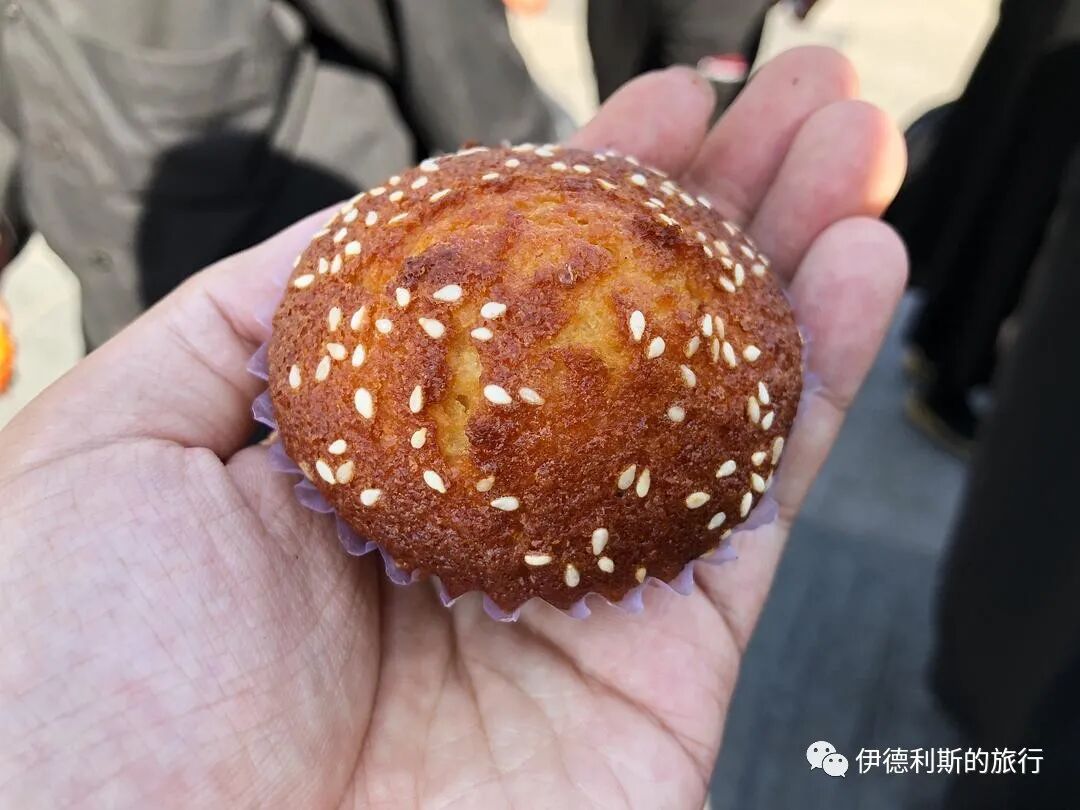
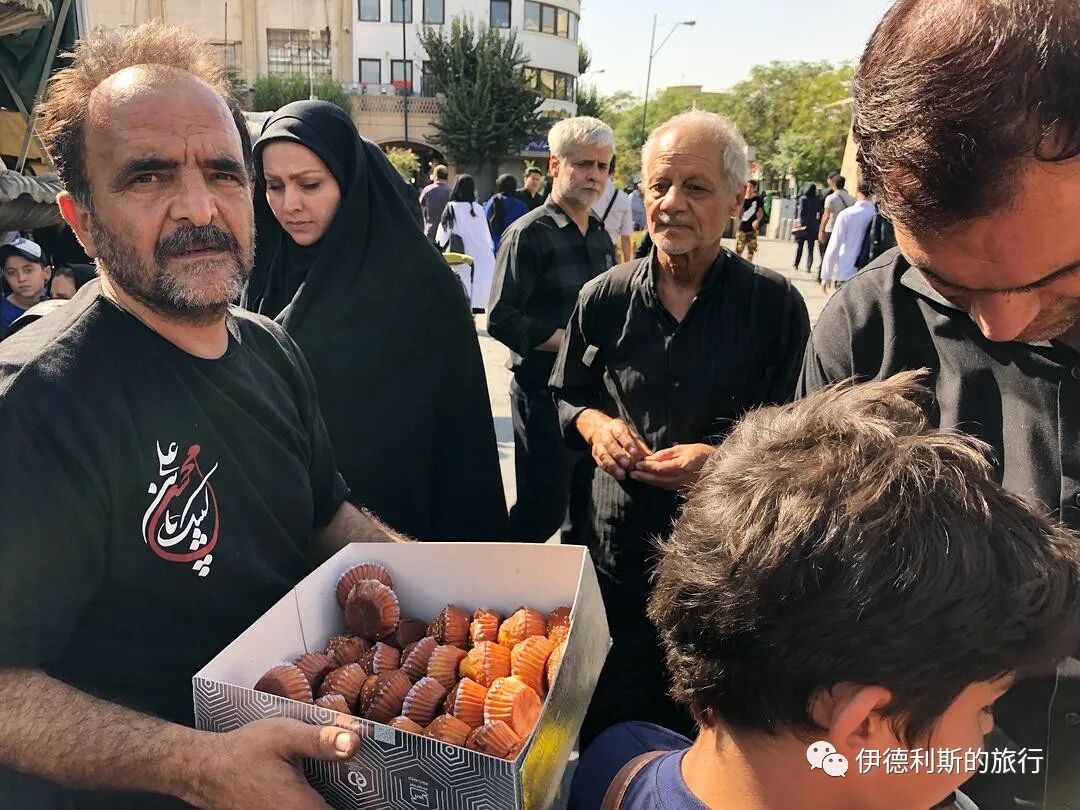
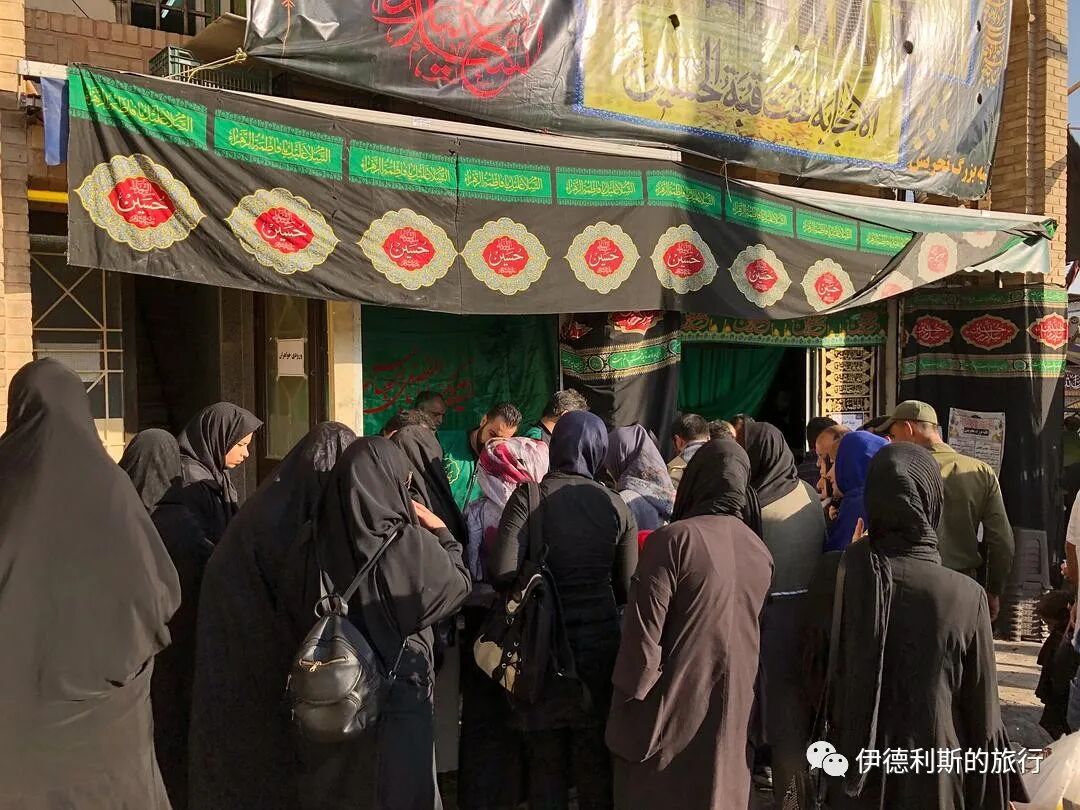
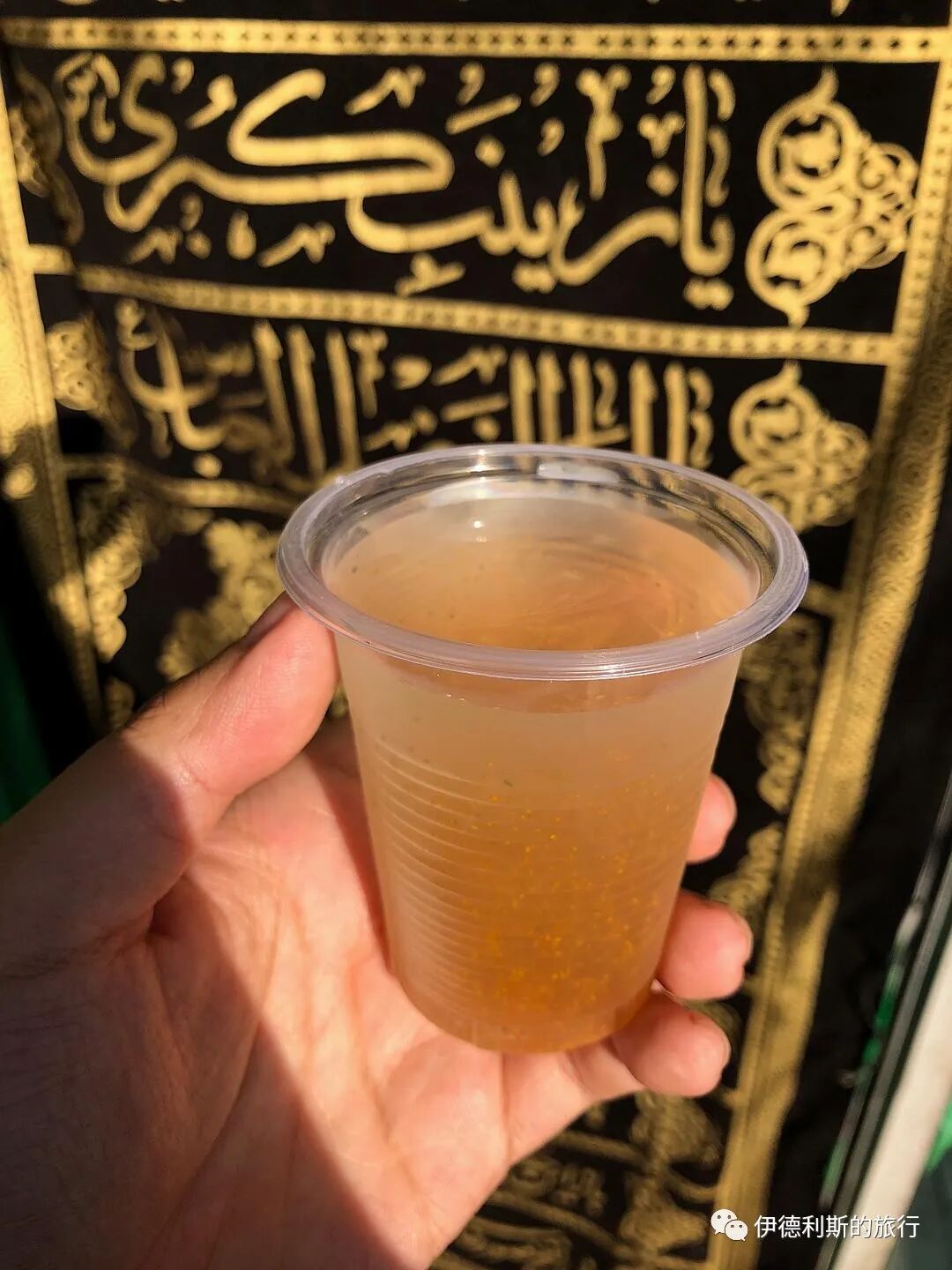
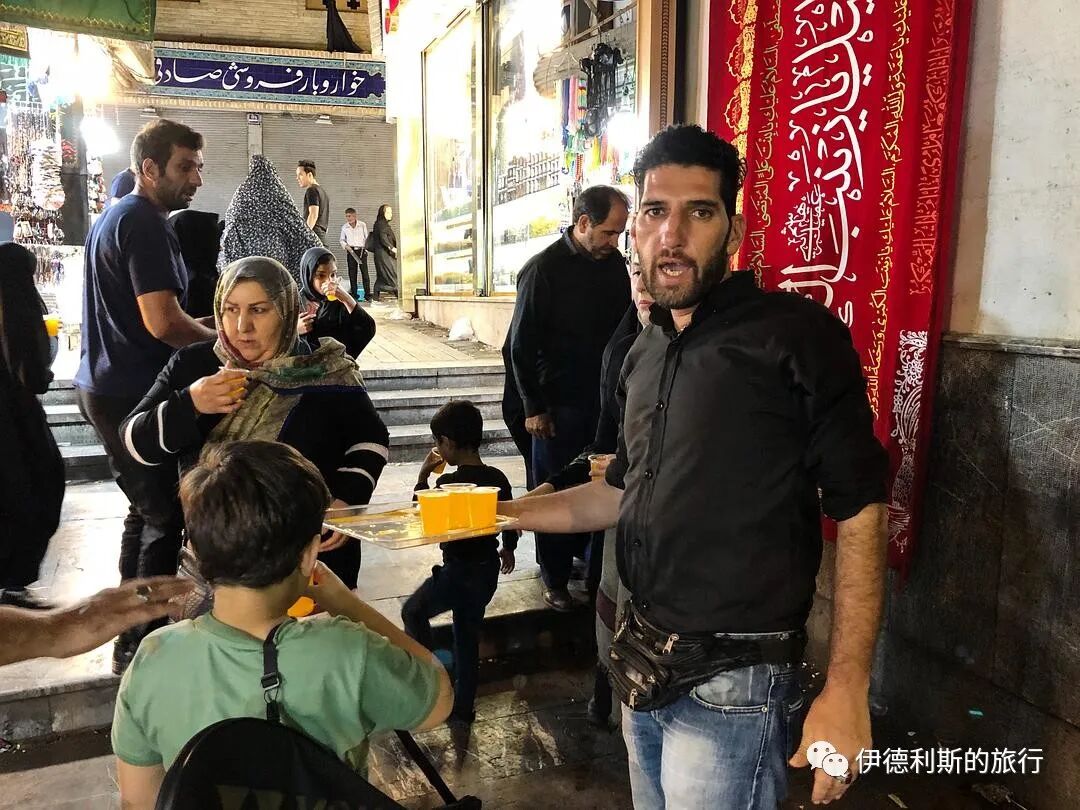
On ordinary days, the Tehran Grand Bazaar is a massive wholesale market selling small commodities from Yiwu, but it takes on a different look during Ashura. As soon as you reach the entrance, people are handing out free honey water, tea, and various snacks; sugar cubes are held in the mouth while sipping tea.
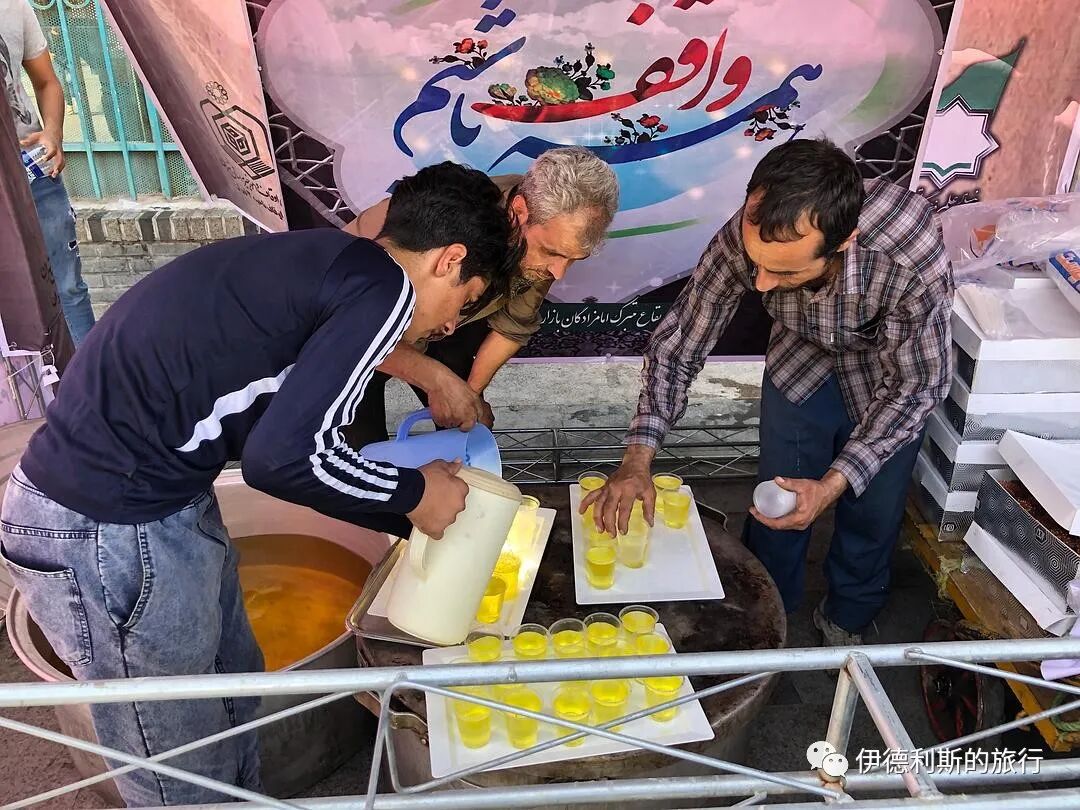
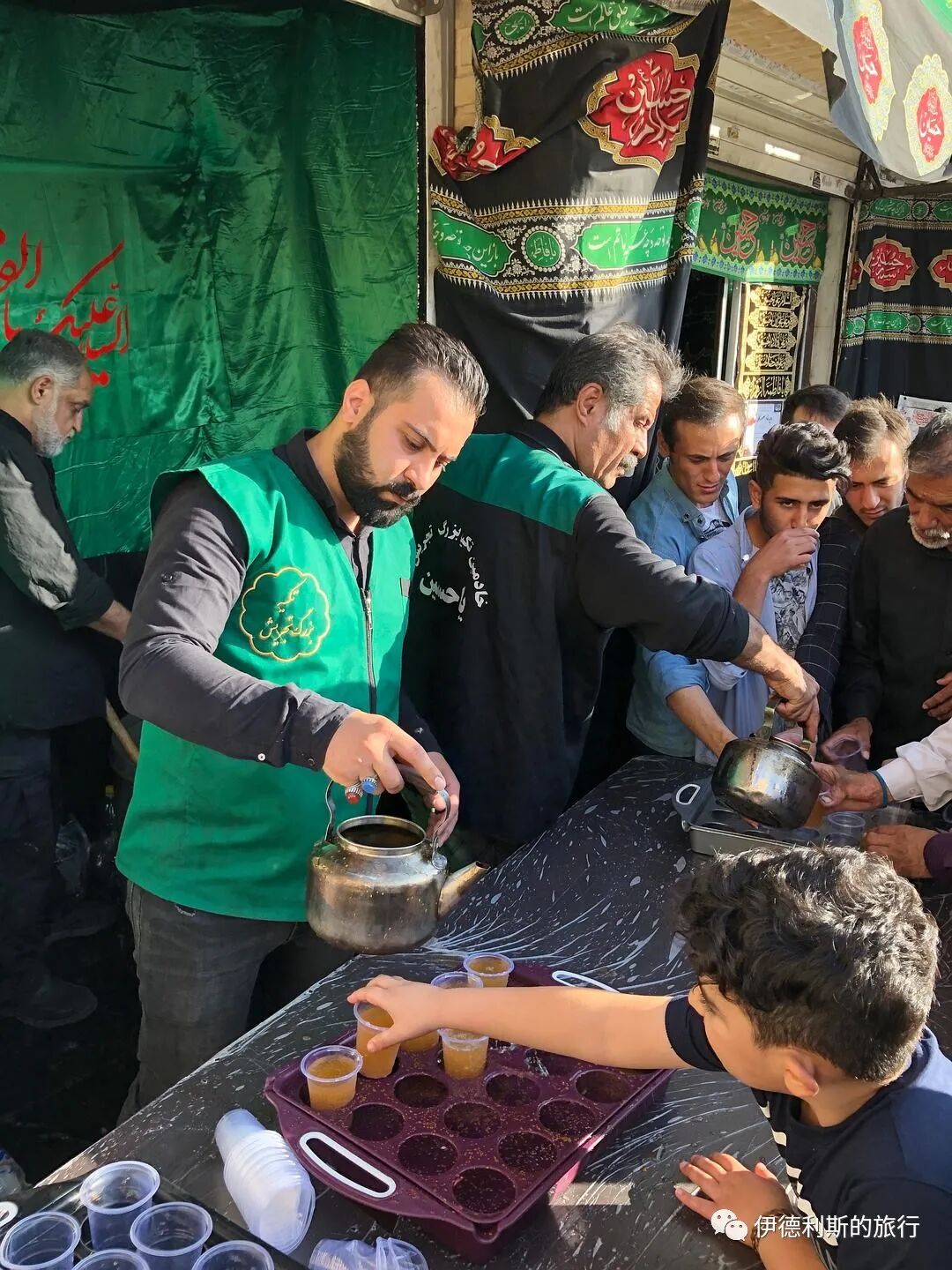
During Ashura, stalls are set up all over Tehran to provide free tea, drinks, and food, and an area near the north gate of the Grand Bazaar is specifically set aside for preparing drinks. A staff member, an older man, kindly invited me into the drink preparation area, offered me tea, and let me take photos.
This area is for distributing food for free.
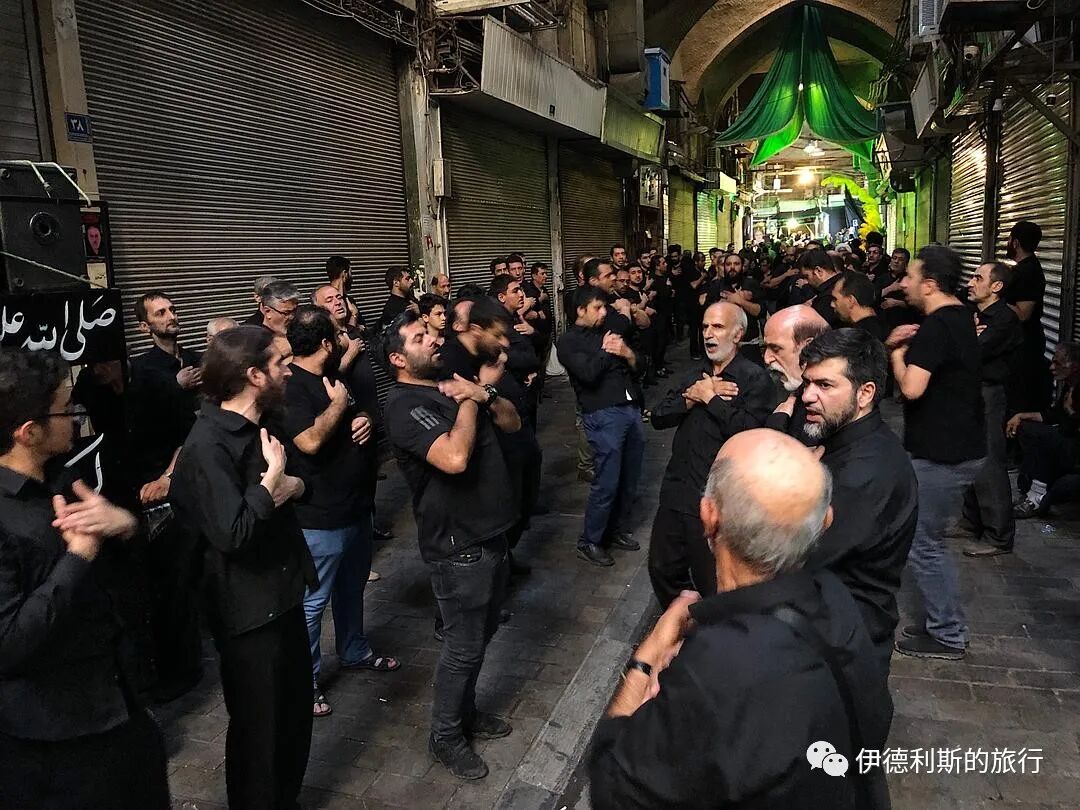
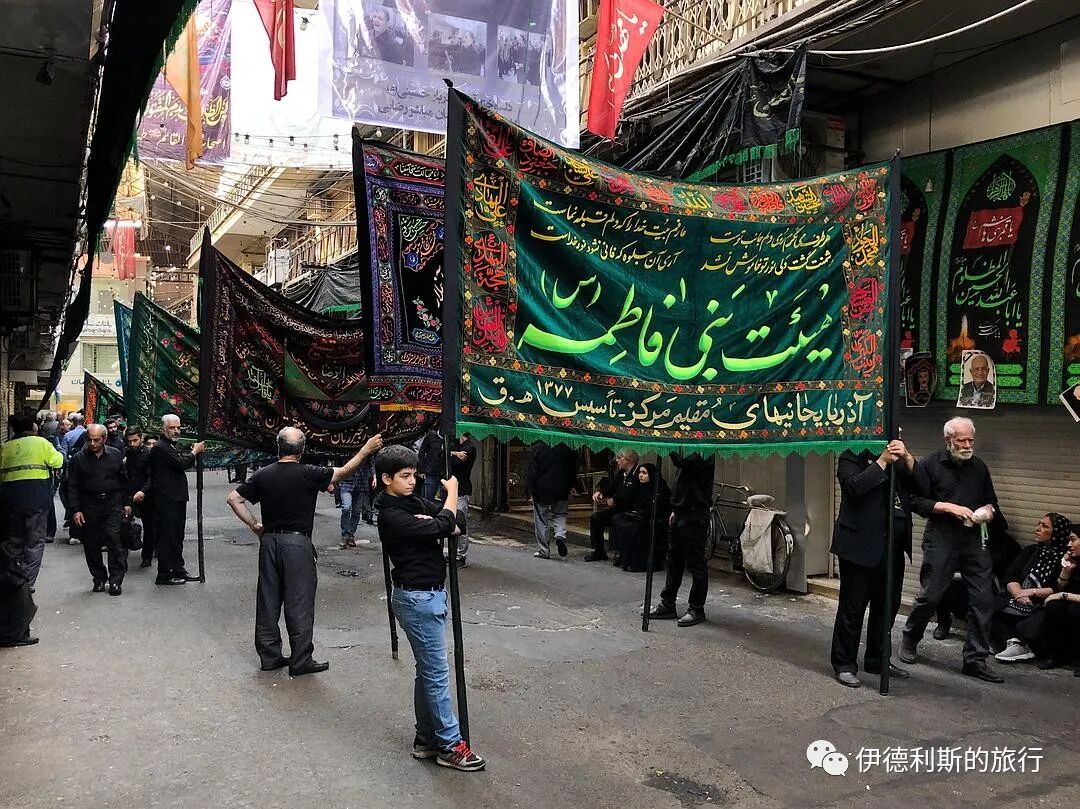
Walking further into the Grand Bazaar, you can see processions performing the Ashura mourning march (al-mawakib al-husayniyya), where everyone mourns together for Imam Hussein and his 72 companions who were killed by the Umayyad army on the Day of Ashura, singing rhythmically together.
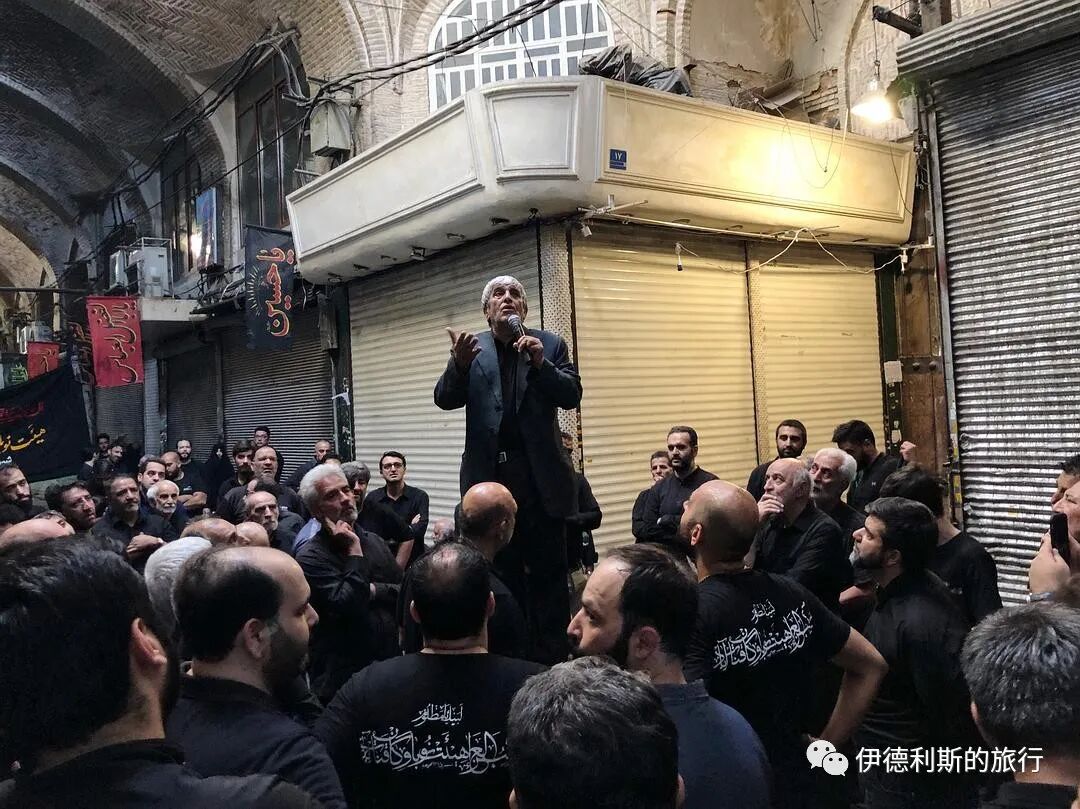
During the procession, the group stops intermittently, and one person delivers a eulogy for Imam Hussein, while everyone cries and wails along, with many people weeping bitterly.
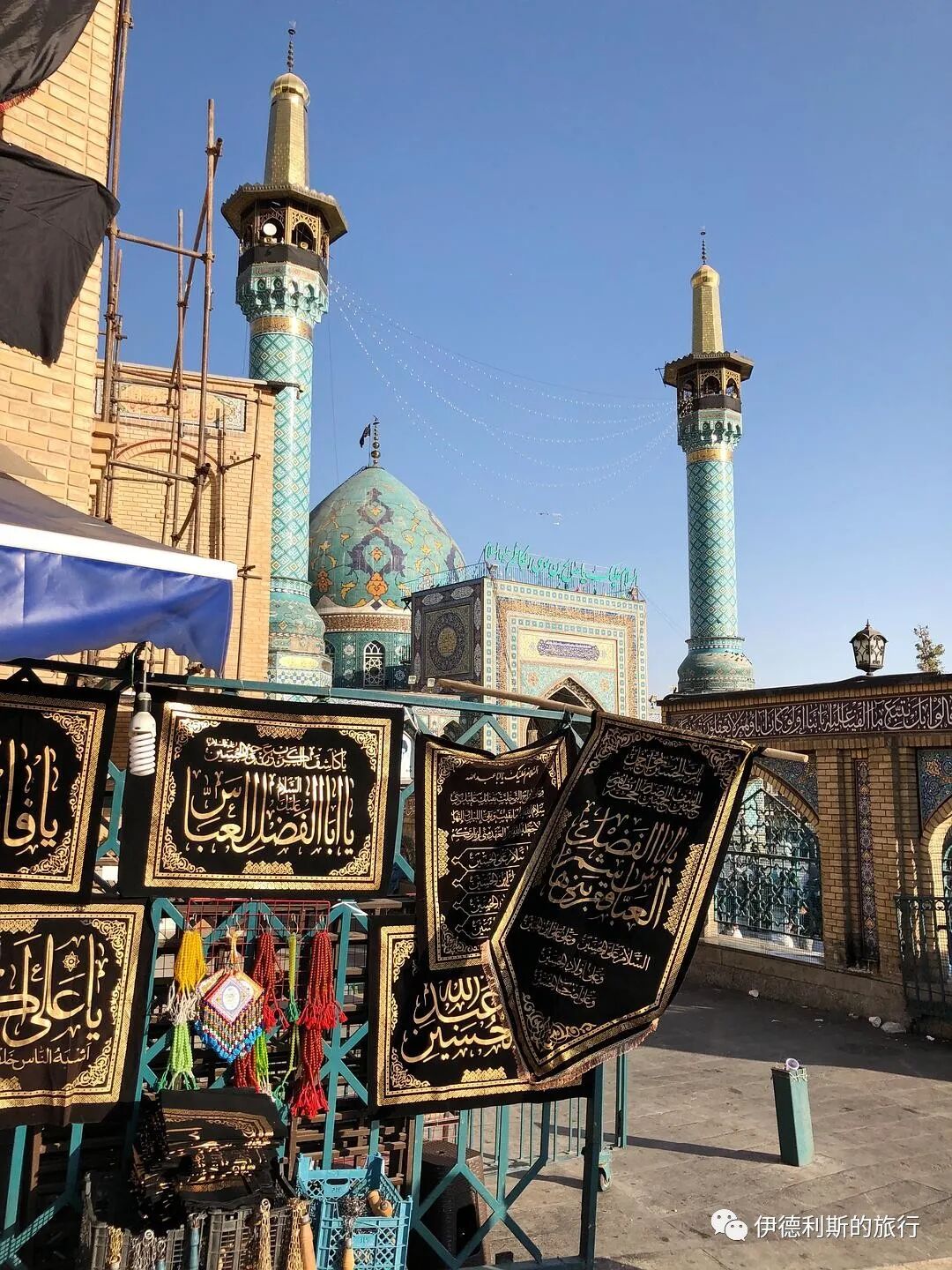
In addition to the singing, various flags are also very eye-catching.
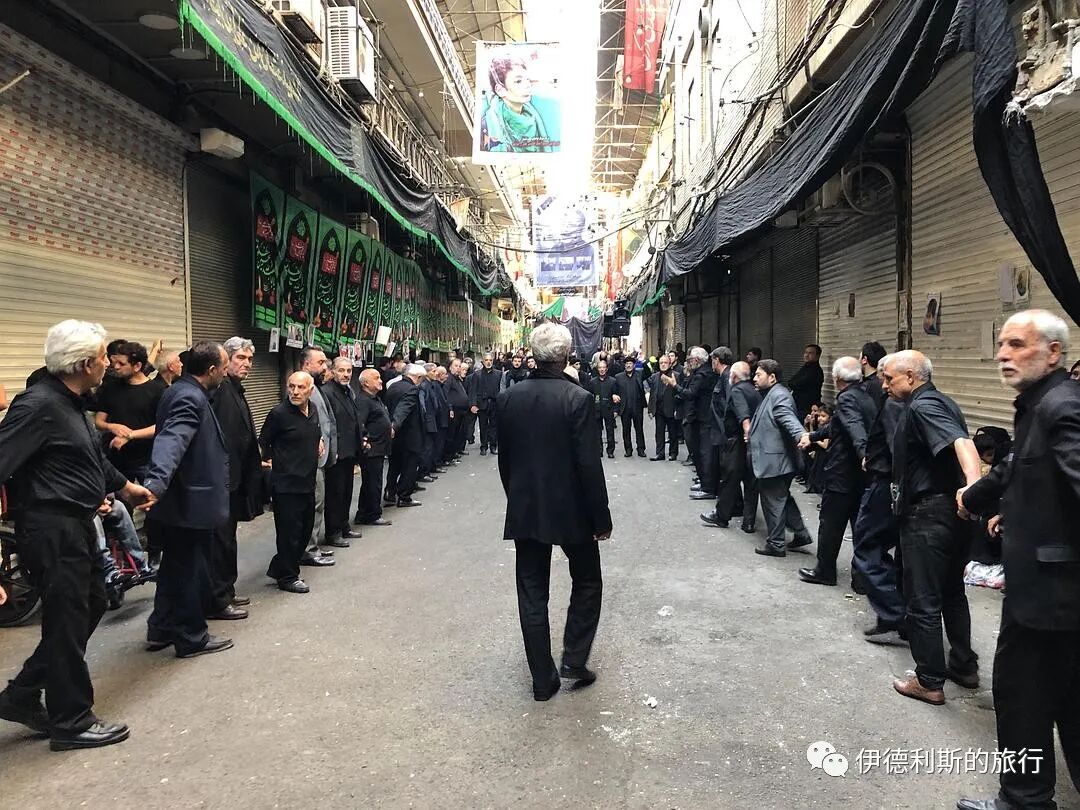
This is a procession composed of hundreds or thousands of people holding hands, which is very spectacular.
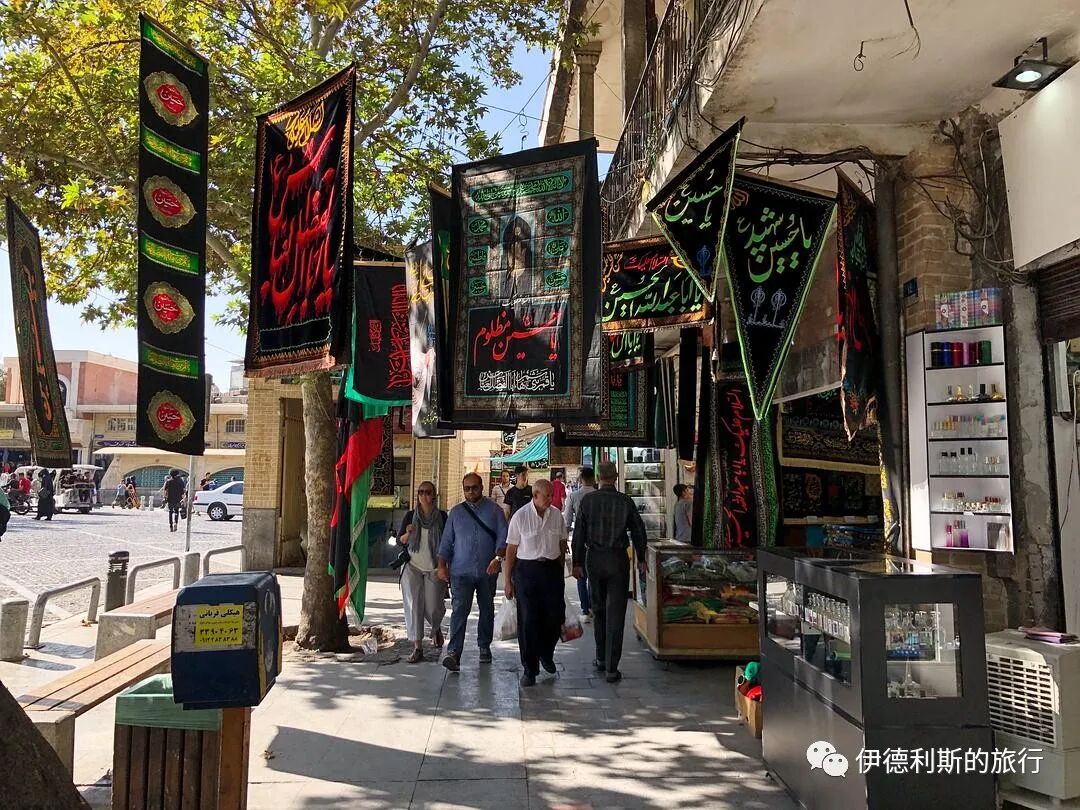
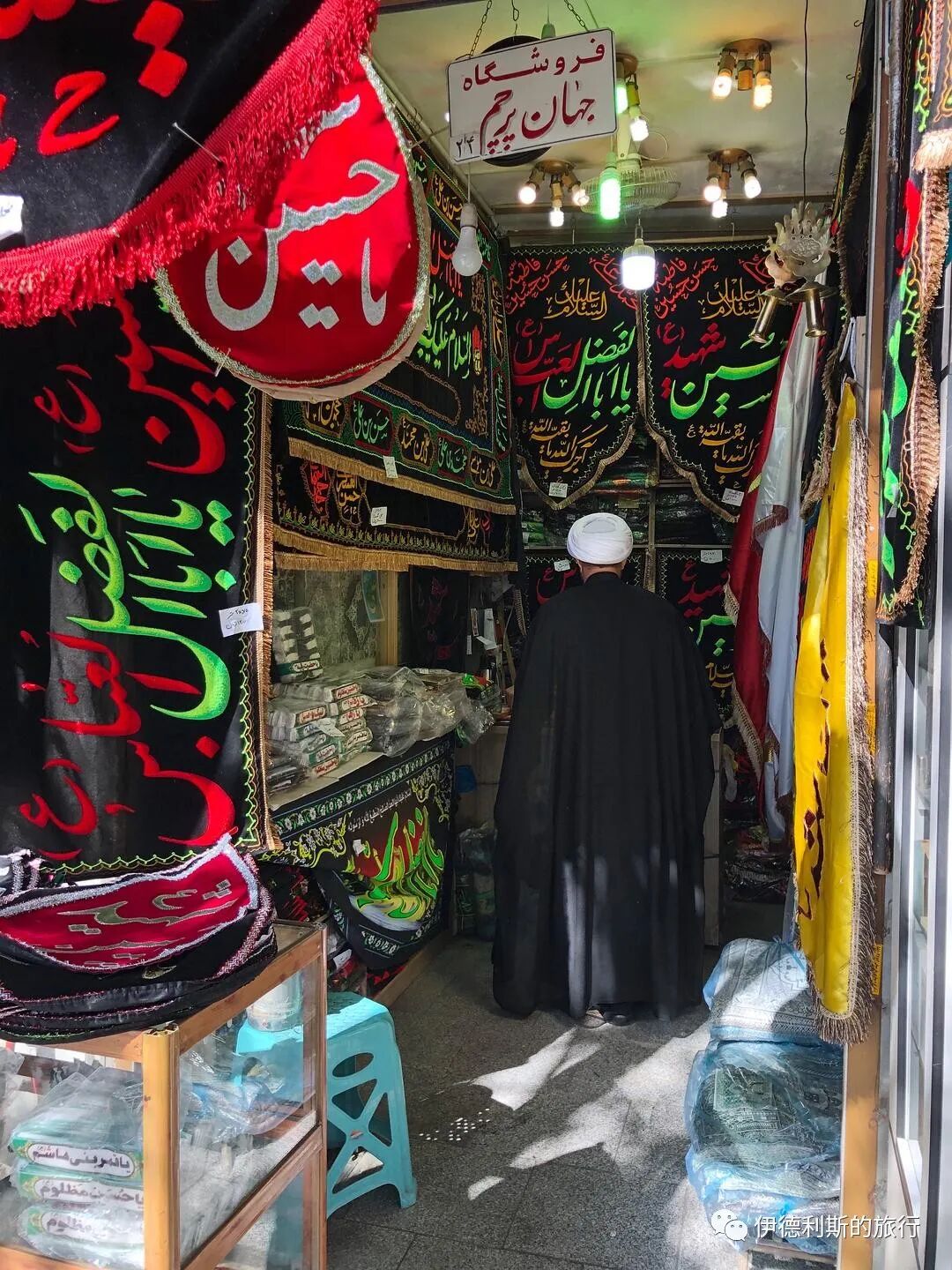
Outside the Grand Bazaar, there are also shops specifically selling Ashura flags.
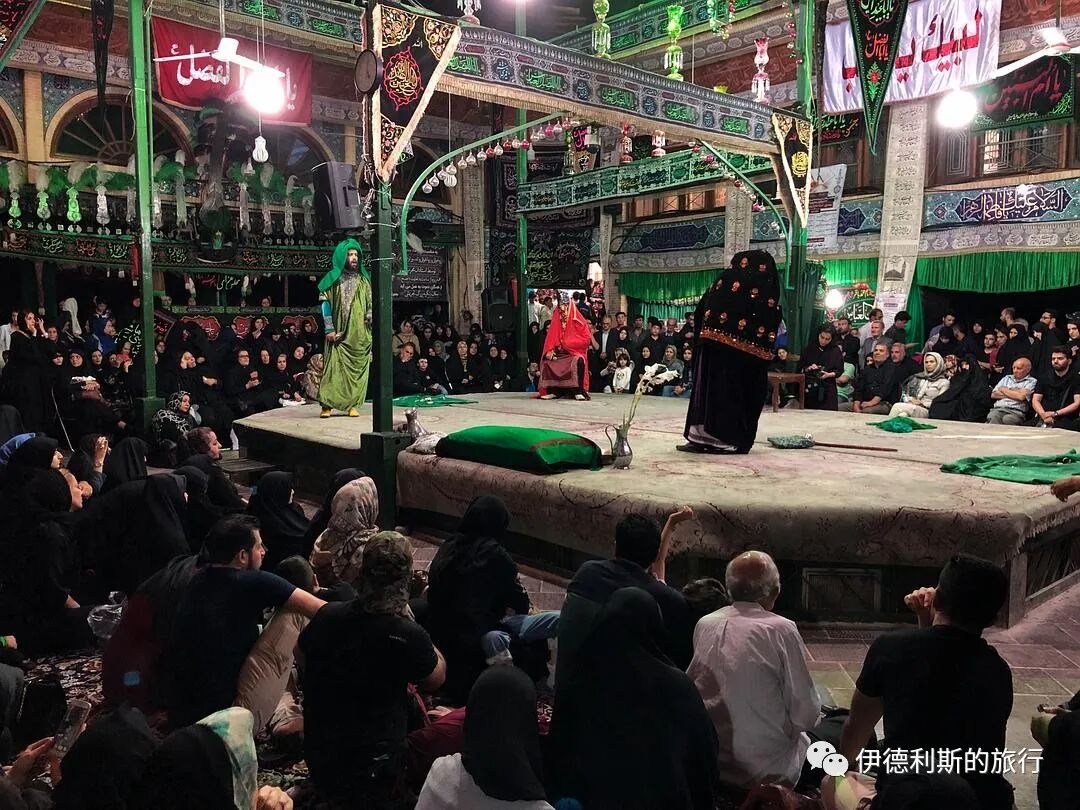
The area outside the north gate of the Grand Bazaar has been turned into a venue for performing Ta'zieh opera. Ta'zieh opera performance is an important part of Ashura activities. During the month of Muharram, numerous venues for performing Ta'zieh opera are set up in various squares in Tehran, and there are many spectators.
Ta'zieh opera formed in Iran in the late 17th century and is a type of traditional Persian theater; this form of expression can be traced back to the pre-Islamic era. During Ashura, Shia Muslims use Ta'zieh opera to recreate the scene of the Battle of Karbala on the Day of Ashura in 680 AD, when Imam Hussein and his 72 companions were all killed by the Umayyad army.
In the opera, the villains are the rulers of the Umayyad dynasty, and they wear red. The heroes are Imam Hussein and his family and companions; the male characters among them wear green, and change to white when they are about to die. All female characters are played by male actors dressed in all black. If a person walks in circles around the stage, it means they are on a long journey, usually between Mecca and Karbala.
While watching the performance, you can eat honey cake and drink honey water freely.
Ashura memorial service (majalis al-ta'ziya) at Parvaz Park
I attended an Ashura memorial service (majalis al-ta'ziya) at Parvaz Park in Tehran and experienced a wonderful Iranian Shia musical performance.
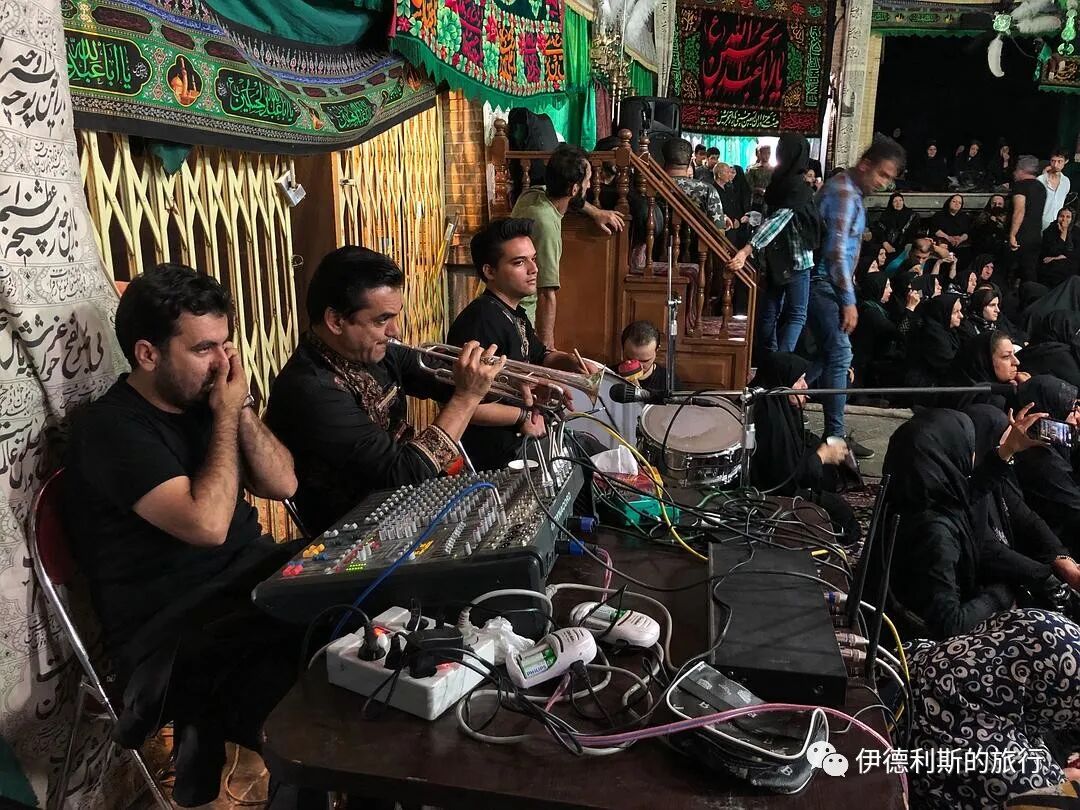
In the afternoon, tea stalls were already set up in the square, and Iranian black tea was available for free. Then, accompanied by the Ney (flute), the lead singer began to sing soothing songs. Amidst the singing, a bonfire was lit in the square, and baskets nearby were filled with various fragrant fruits. After a few soothing songs, a percussion ensemble consisting of drums and cymbals walked onto the stage while playing. The rhythm of the songs began to become more and more passionate, the atmosphere grew more intense, and it reached a climax accompanied by the sound of horns.
During the singing, a group of actors in costumes walked slowly toward the stage, led by two boys holding incense.
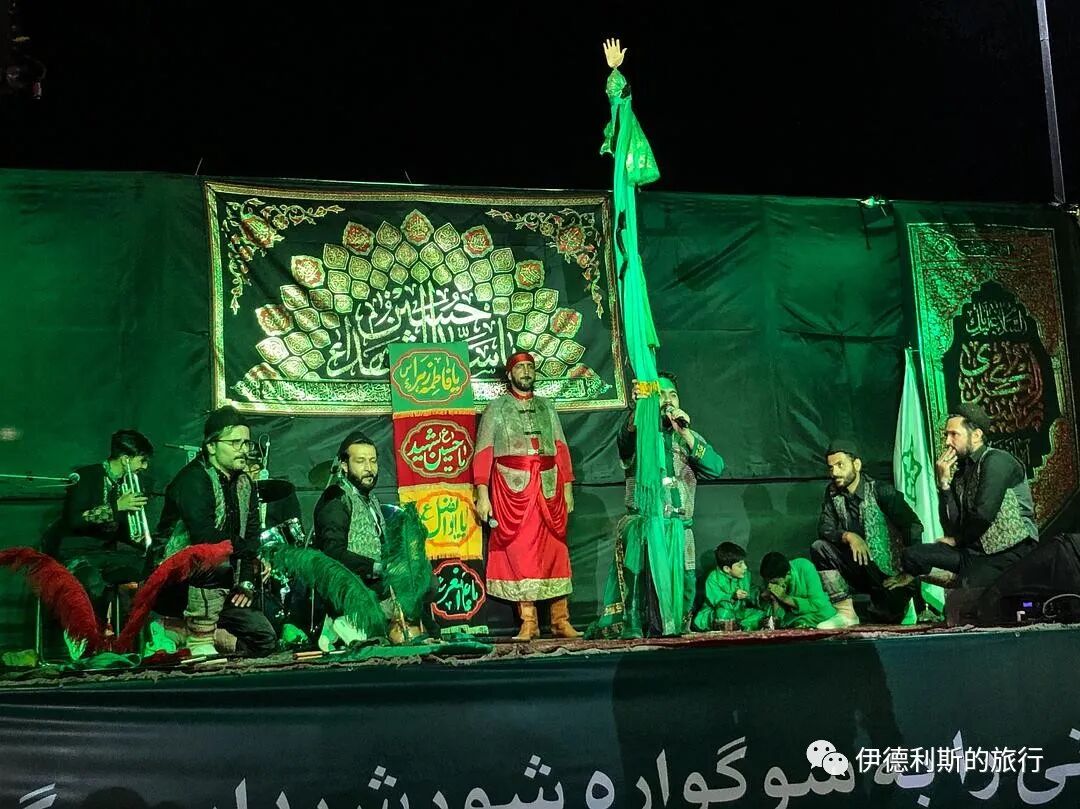
When they reached the stage, they began to perform the Ta'zieh play.
Tajrish Bazaar
At the end of Tajrish Bazaar in the north of Tehran, there is a Tekyeh. In the Shia tradition, a Tekyeh generally refers to a place specifically for commemorating Imam Hussein, especially for performing Ta'zieh opera during the month of Muharram. Tajrish Tekyeh can be traced back to the Qajar dynasty 220 years ago. It is a very old Tekyeh in Tehran, and the current layout is also very traditional, although the wooden pillars have been replaced by metal ones.
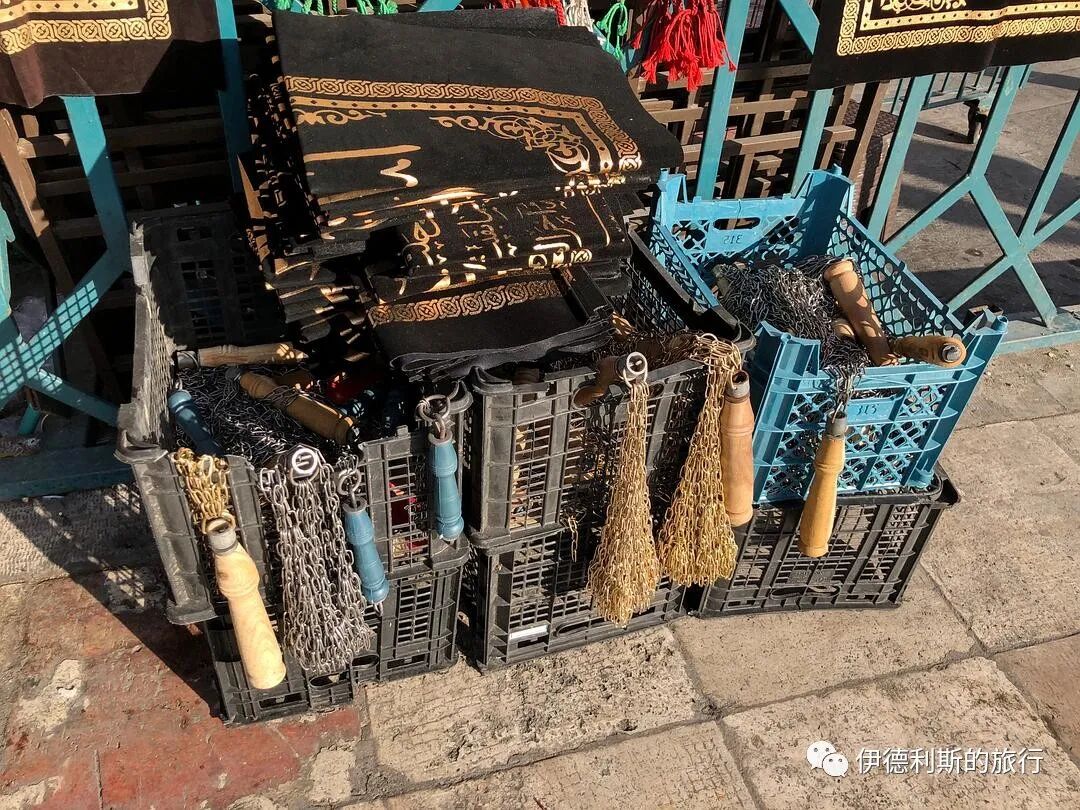
Outside the venue, there are some shops selling Shia supplies. The picture below shows the whips used during the flagellation (tatbir) ritual on Ashura, which recreates the scene of the Umayyad army whipping Imam Hussein's family. This ritual used to involve intense self-harm, but later, the Supreme Leader of Iran's Shia, Khamenei, publicly stated that during Ashura: 'Any act that harms the body is Haram (forbidden).' Therefore, you no longer see cases of self-harm during the festival in Tehran.
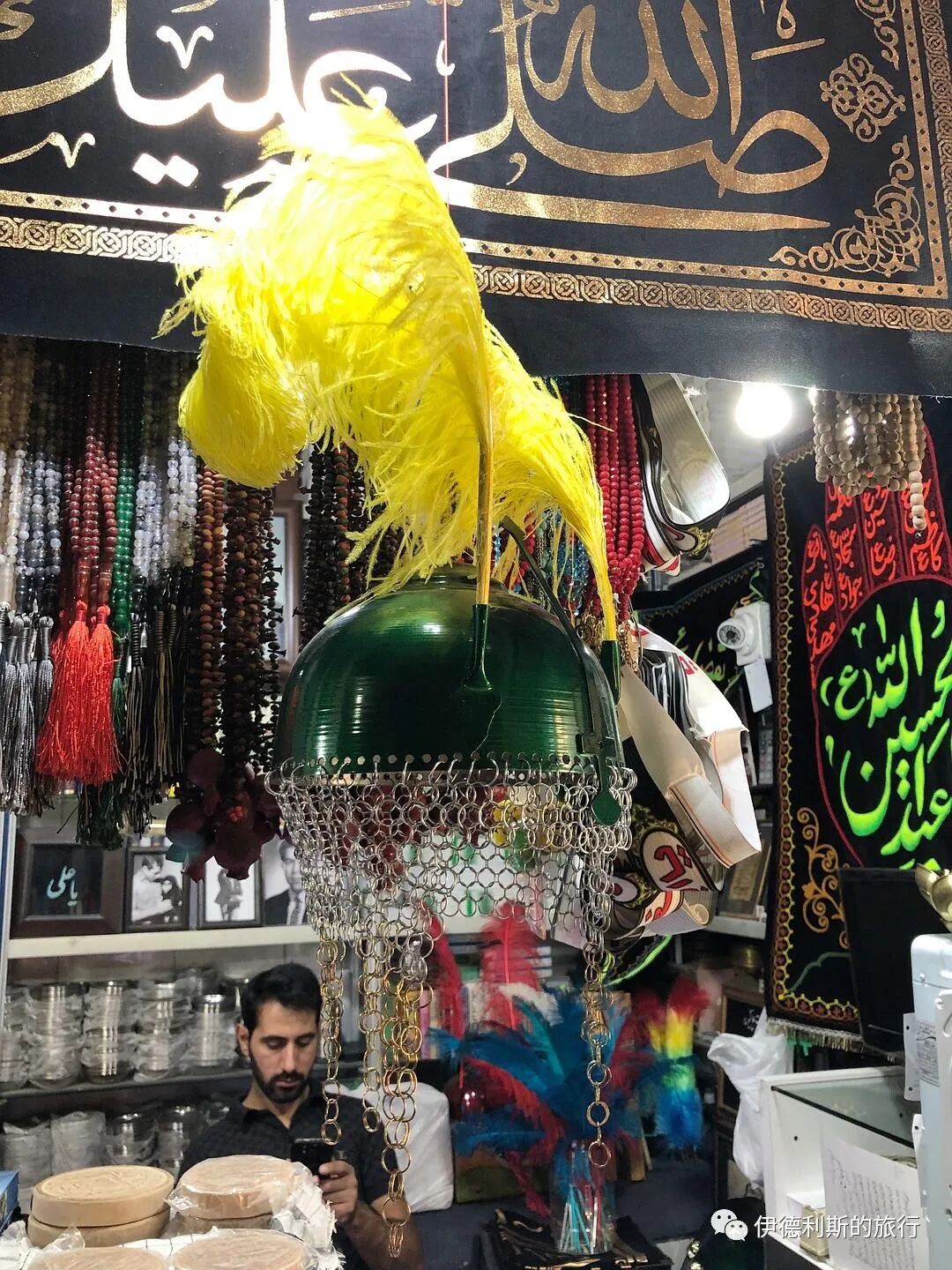
The red hat represents the villainous Umayyad dynasty, and the green hat represents the heroic Imam Hussein.
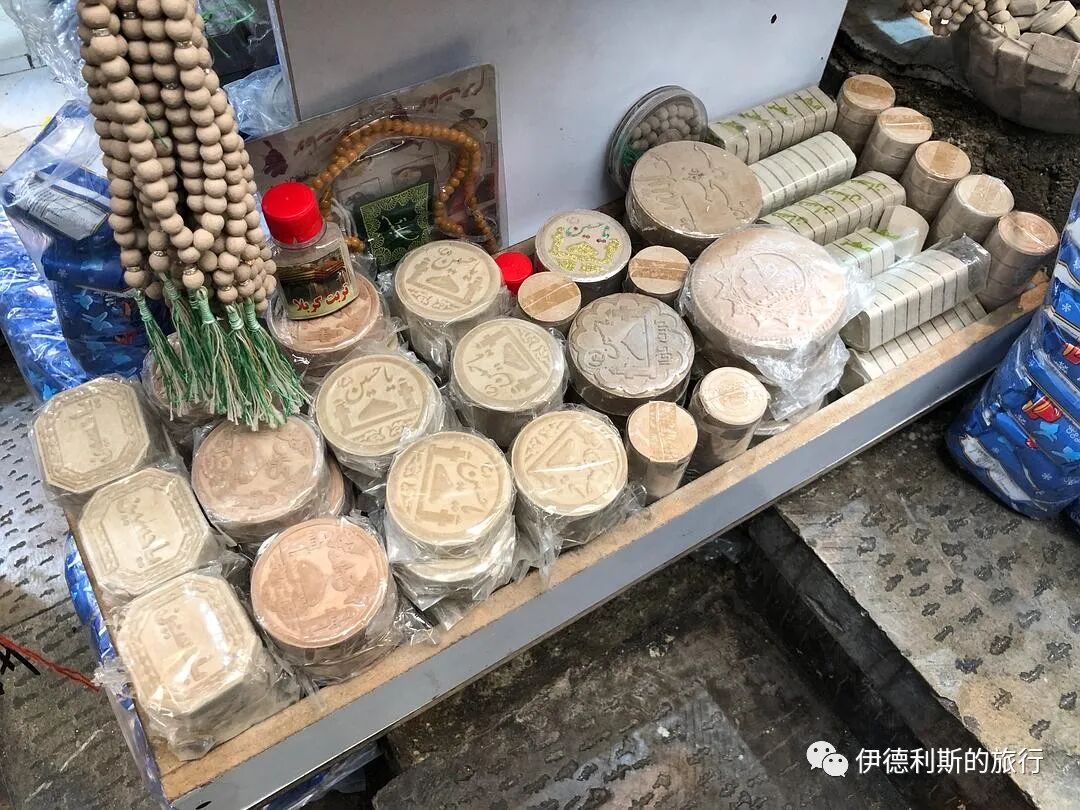
The lump of clay is called a Turbah, which symbolizes the earth; Shia Muslims must place their foreheads on it during prayer.
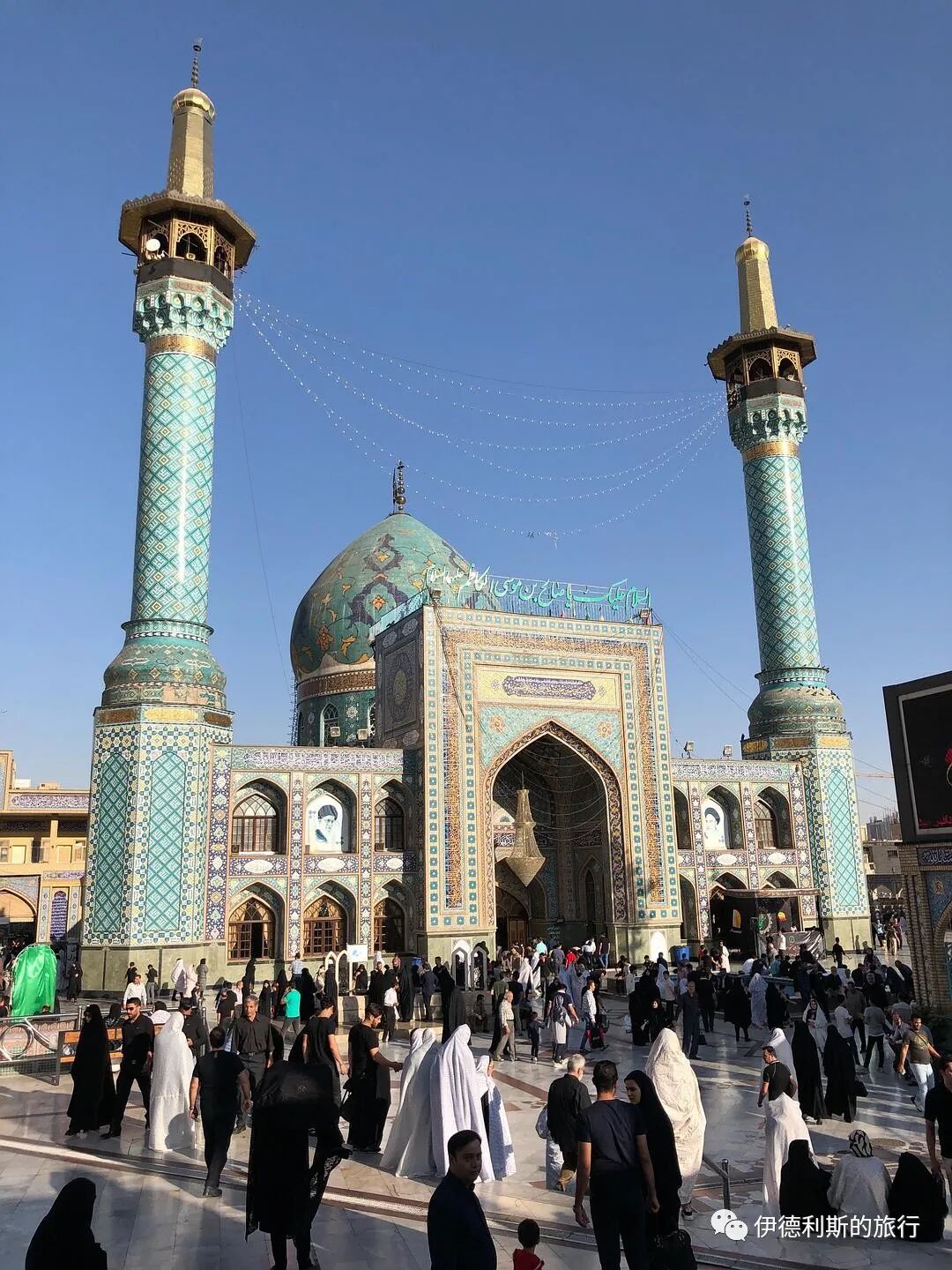
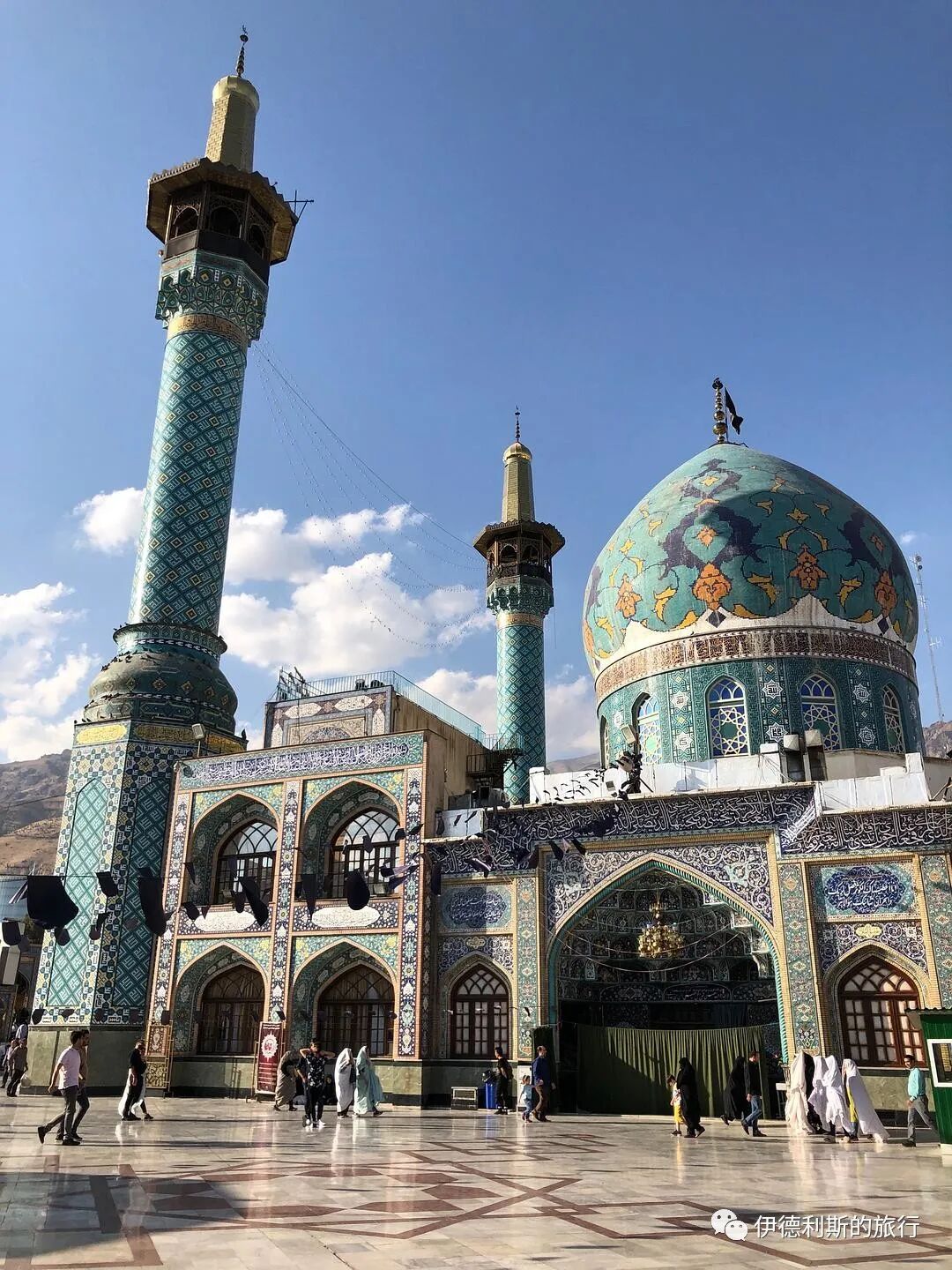
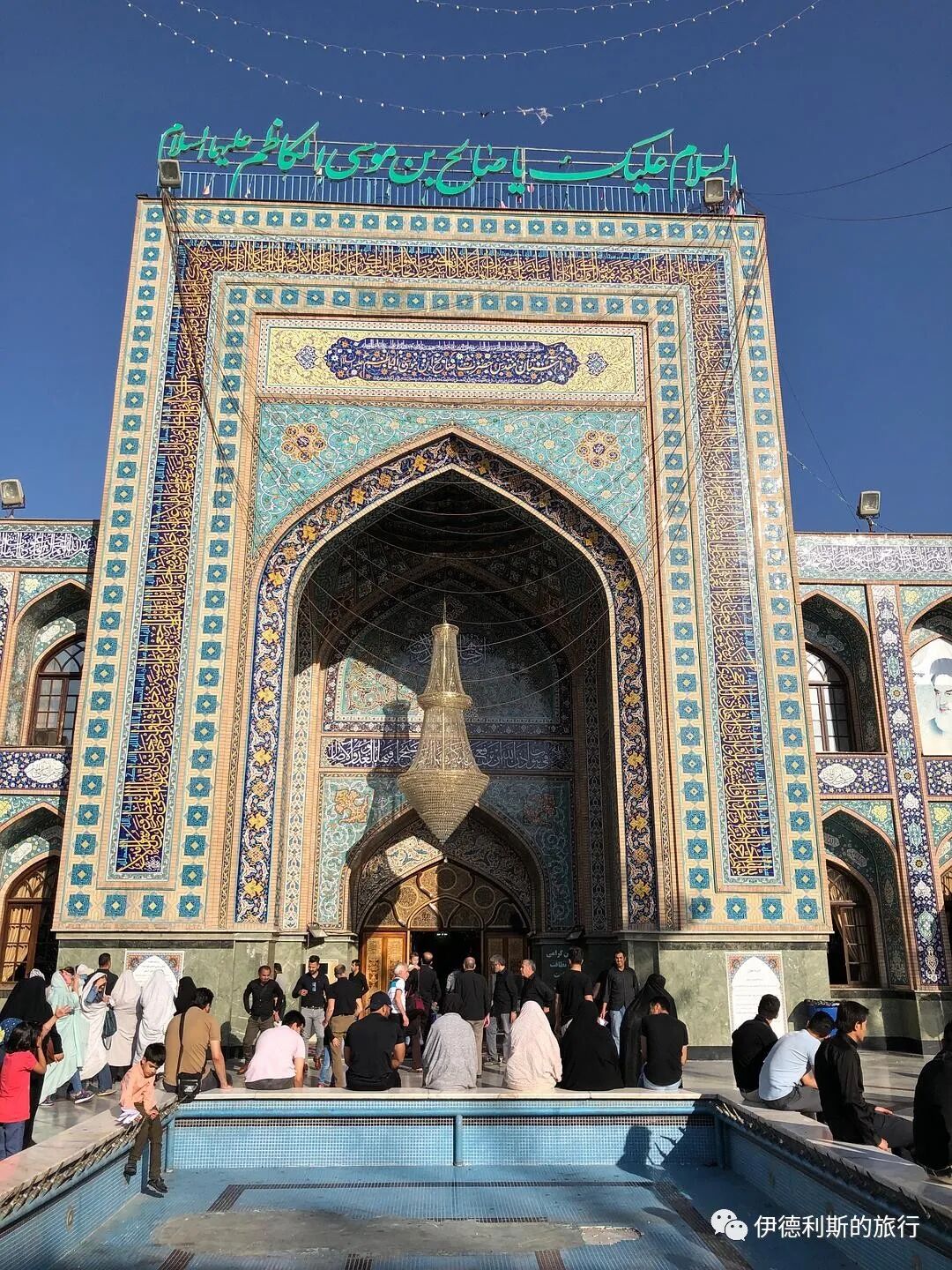
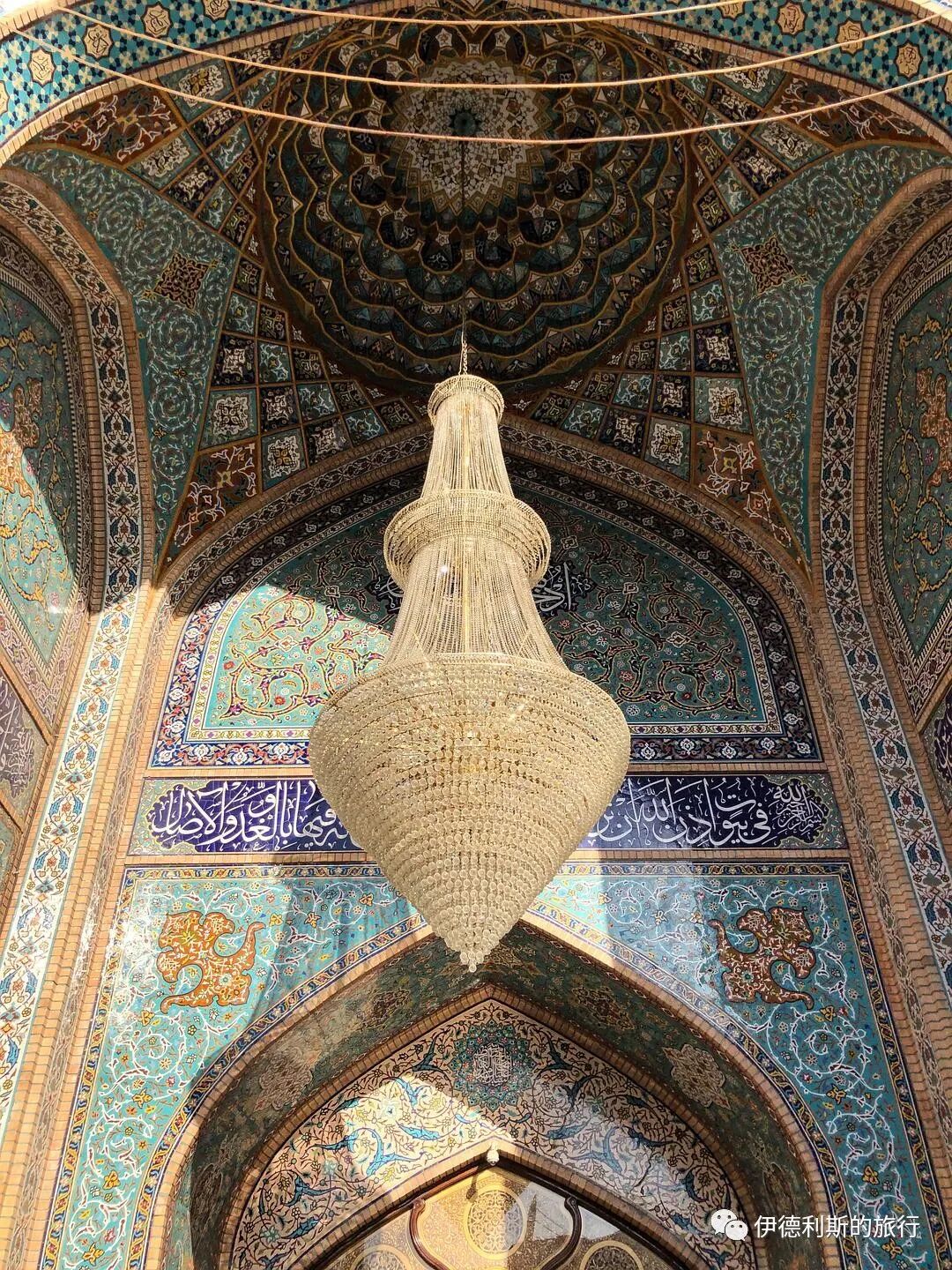
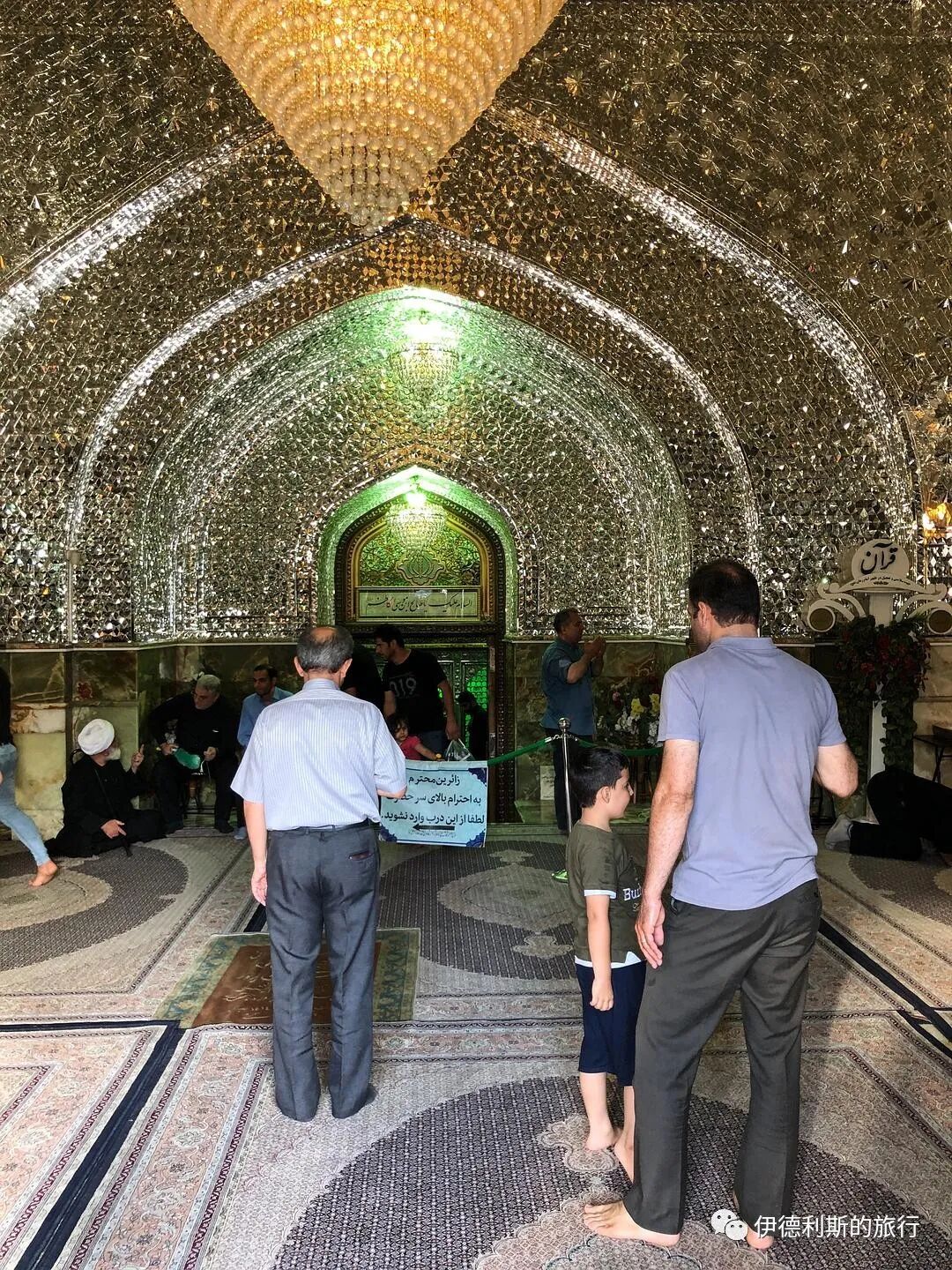
Turning out of Tajrish Bazaar, you reach the most important Shia shrine and mosque in northern Tehran, Imamzadeh Saleh, which houses the tomb of Saleh, the son of Musa al-Kadhim, the seventh Imam of the Twelver Shia. Today, the large wooden box inside the mausoleum dates back to the late Safavid dynasty to the Afsharid dynasty in the 18th century.
During the month of Muharram, Ta'zieh opera is also performed in the courtyard of Imamzadeh Saleh.
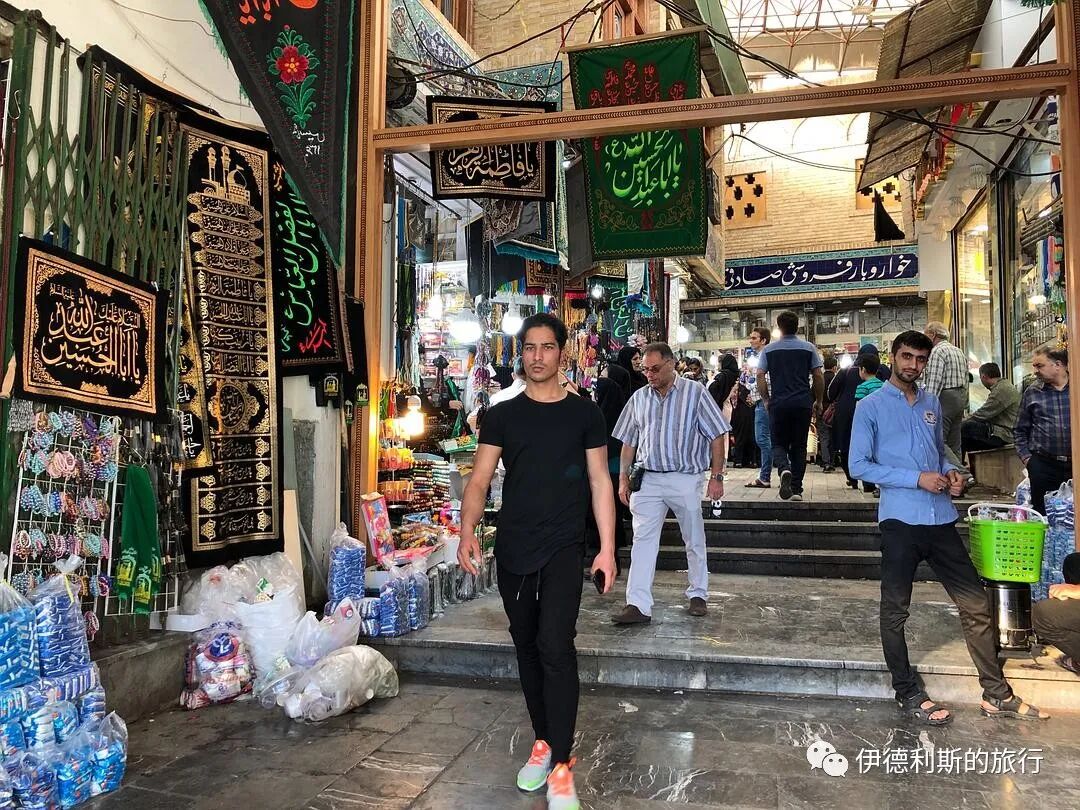
At the place where drinks are distributed for free at the entrance of Imamzadeh Saleh shrine and mosque, Khakshir (seeds of the Flixweed plant) is a very common drink in Iran during the summer to relieve heat and quench thirst.
Then, next to it, you can also see places selling various Shia supplies. view all
Summary: This travel note introduces Ashura in Tehran: a Muslim Travel Note on Faith, Rituals and City Life. I went to Tehran during the Mid-Autumn Festival holiday in 2019, just in time for the various activities of Ashura, and truly felt the warmth of the Iranian people. It is useful for readers interested in Tehran Travel, Ashura, Muslim Culture.
I went to Tehran during the Mid-Autumn Festival holiday in 2019, just in time for the various activities of Ashura, and truly felt the warmth of the Iranian people.
Ashura originally means 'the tenth,' and the Day of Ashura refers to the tenth day of the first month of the Islamic calendar (Muharram). On the Day of Ashura in 680 AD, Imam Hussein, the grandson of the Prophet Muhammad, refused to pledge allegiance to the Umayyad Caliphate. While leading his family and followers from Mecca to Kufa, they were attacked by the Umayyad army, and Imam Hussein and all 72 of his companions were killed. Since then, Shia Muslims around the world have held activities every year during the month of Muharram to mourn Imam Hussein and his 72 companions, gradually forming the important Shia festival of Ashura.
During Ashura, Shia Muslims perform Azadari (mourning) rituals, including memorial services (majalis al-ta'ziya), mourning processions (al-mawakib al-husayniyya), theatrical performances (shabih), and flagellation (tatbir). Some Shia Muslims believe that participating in Ashura can cleanse their sins, and there is a saying that 'a tear shed for Hussein washes away a hundred sins.'
Grand Bazaar
On ordinary days, the Tehran Grand Bazaar is a massive wholesale market selling small commodities from Yiwu, but it takes on a different look during Ashura. As soon as you reach the entrance, people are handing out free honey water, tea, and various snacks; sugar cubes are held in the mouth while sipping tea.
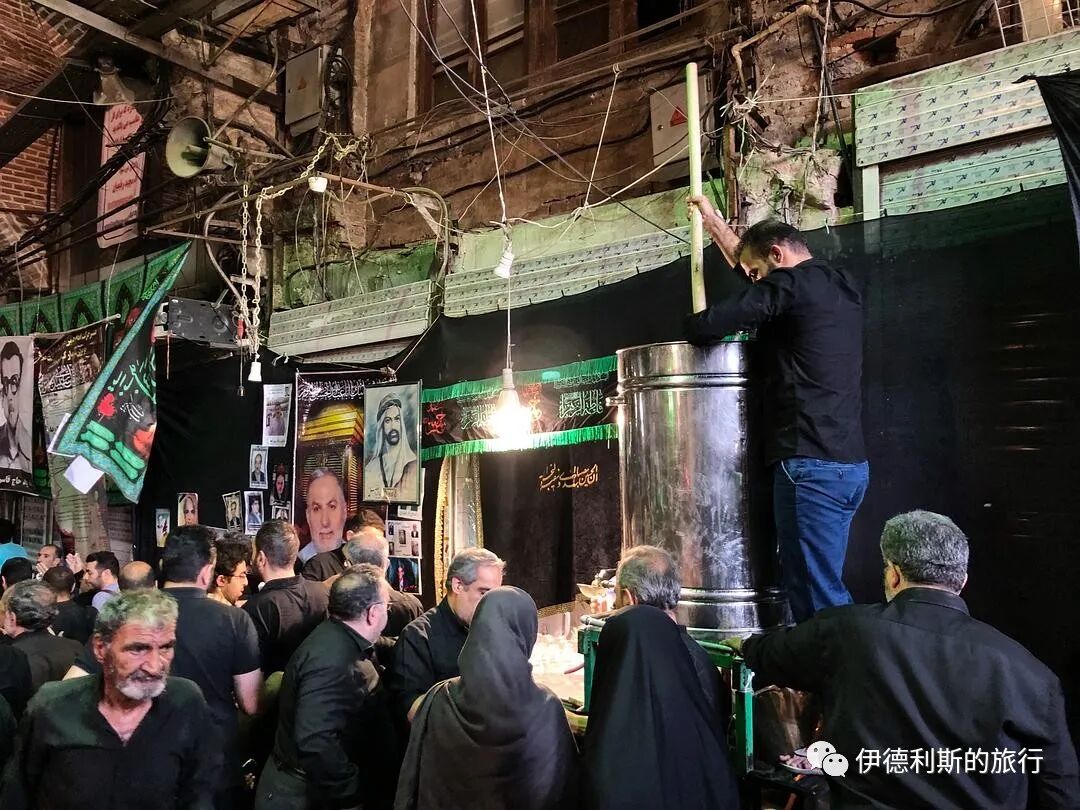
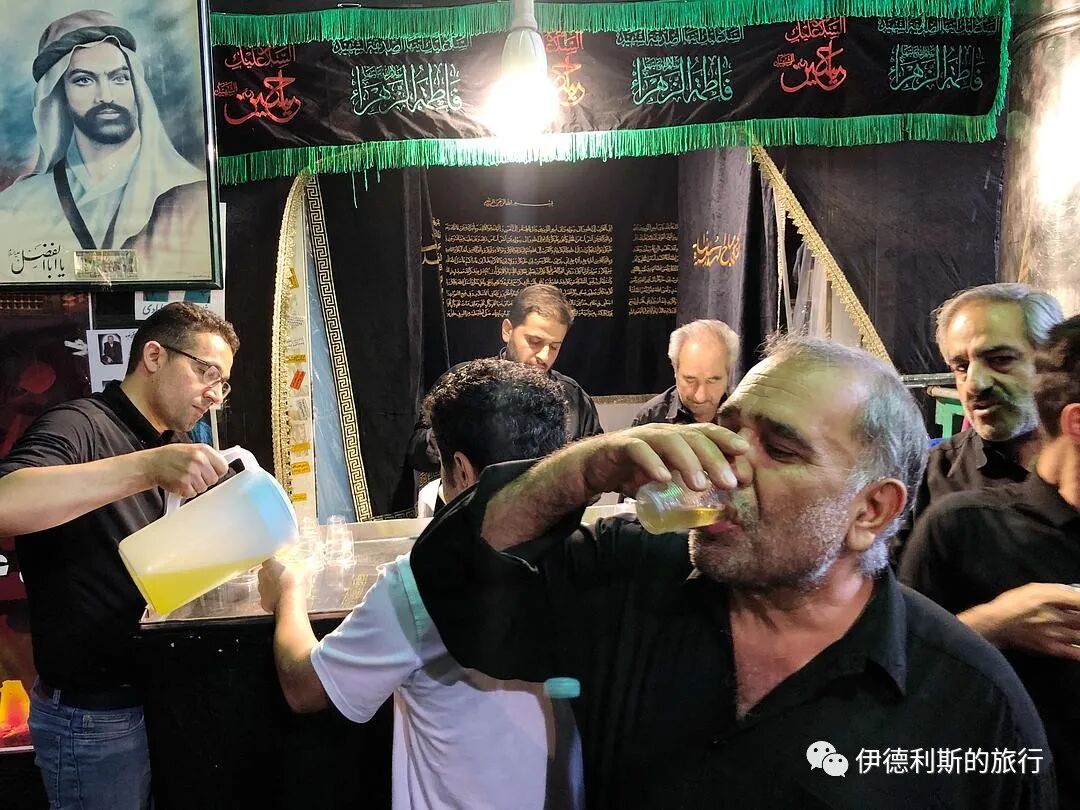
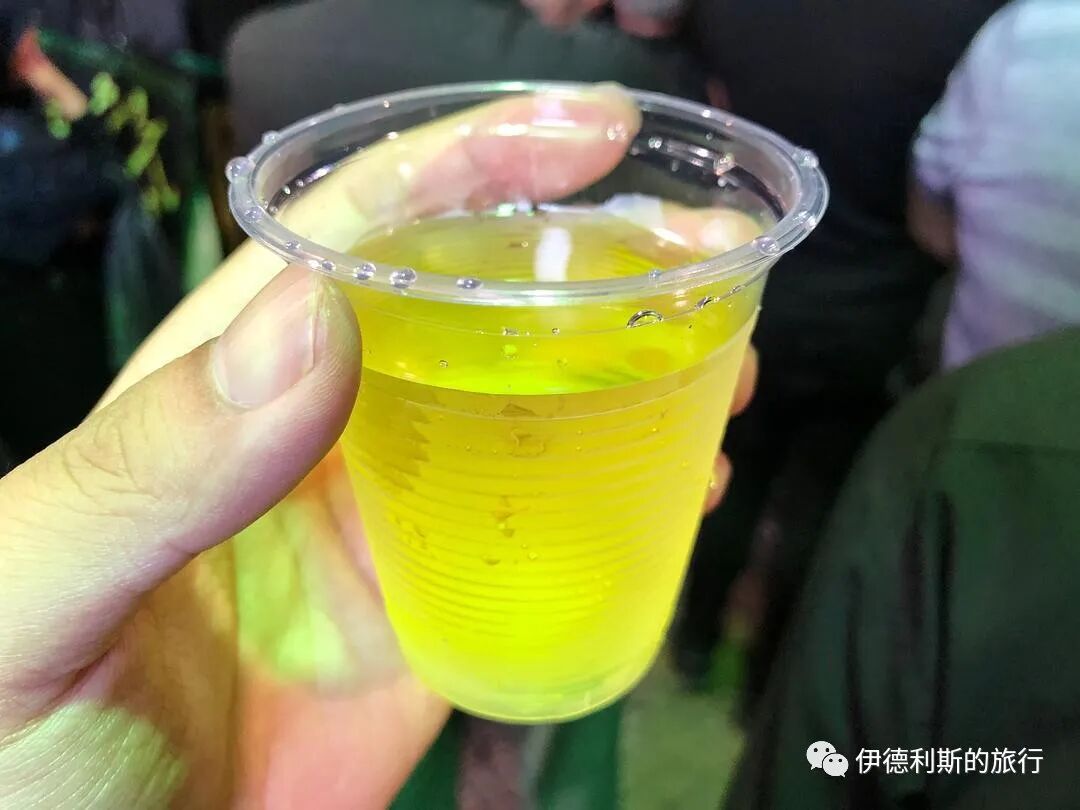
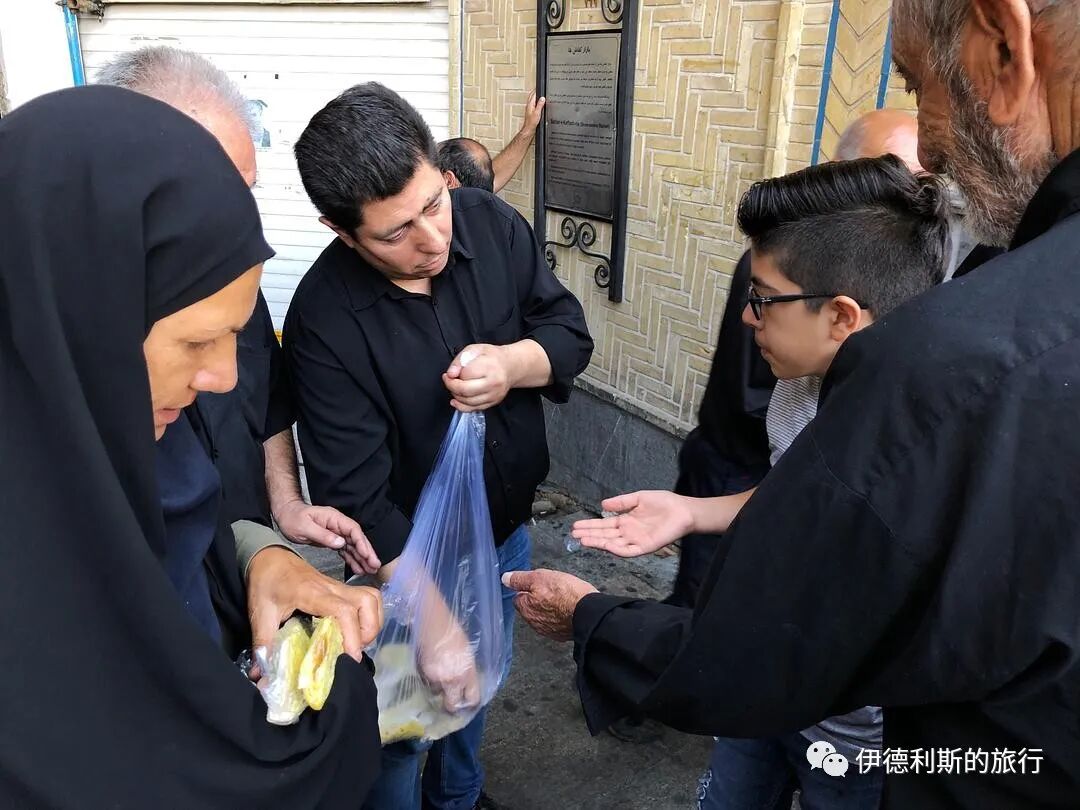
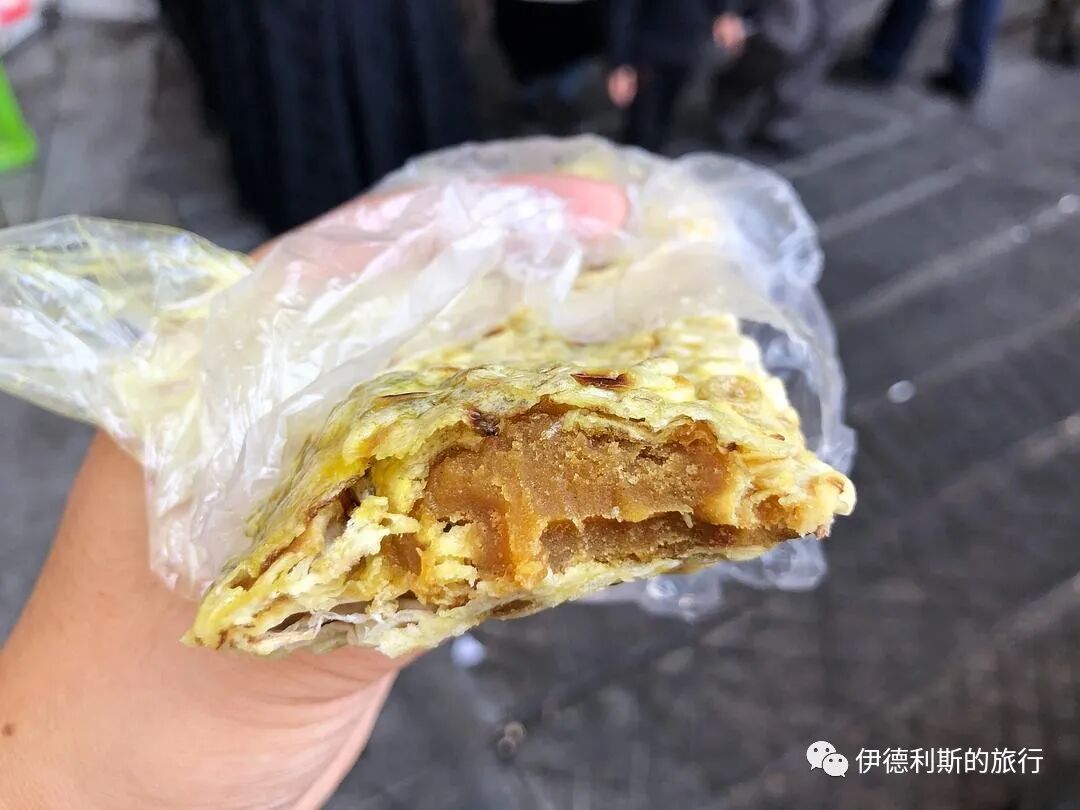
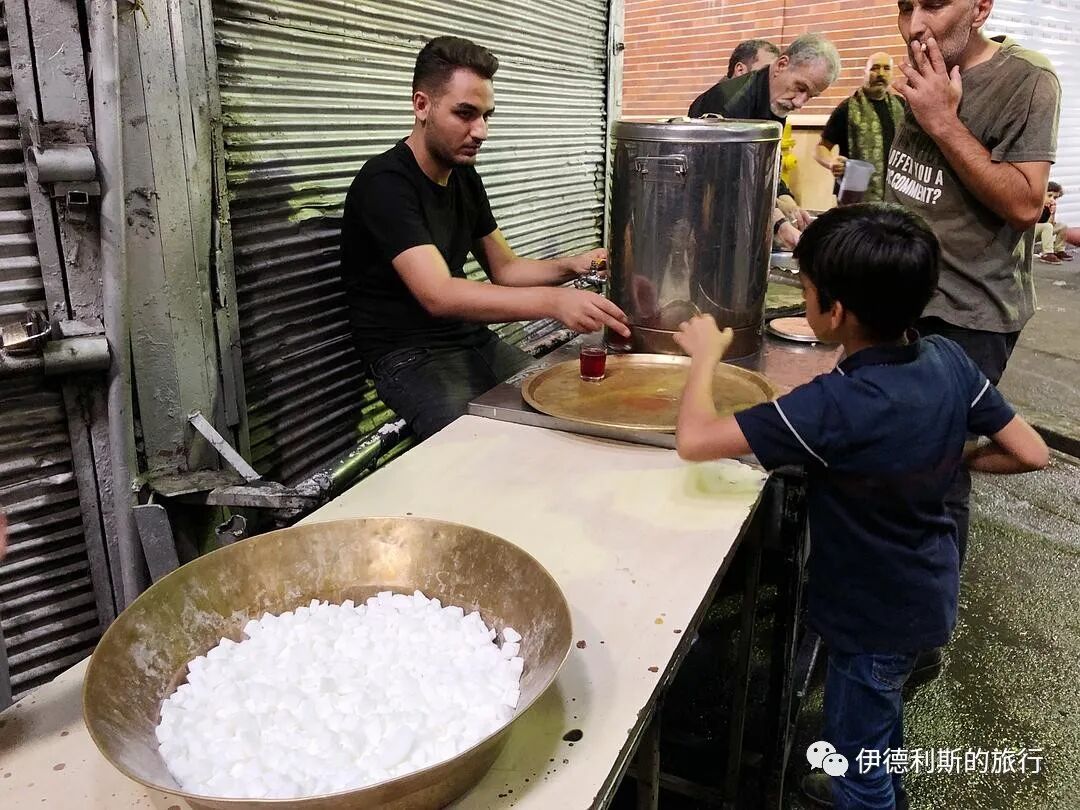
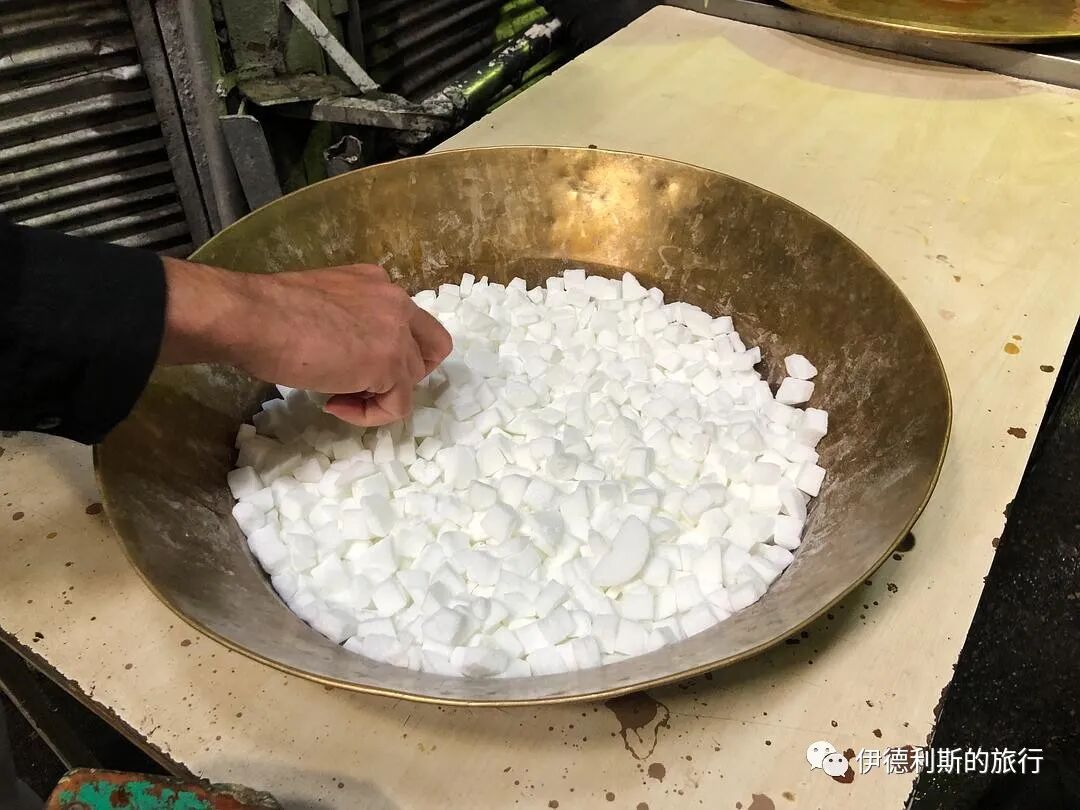
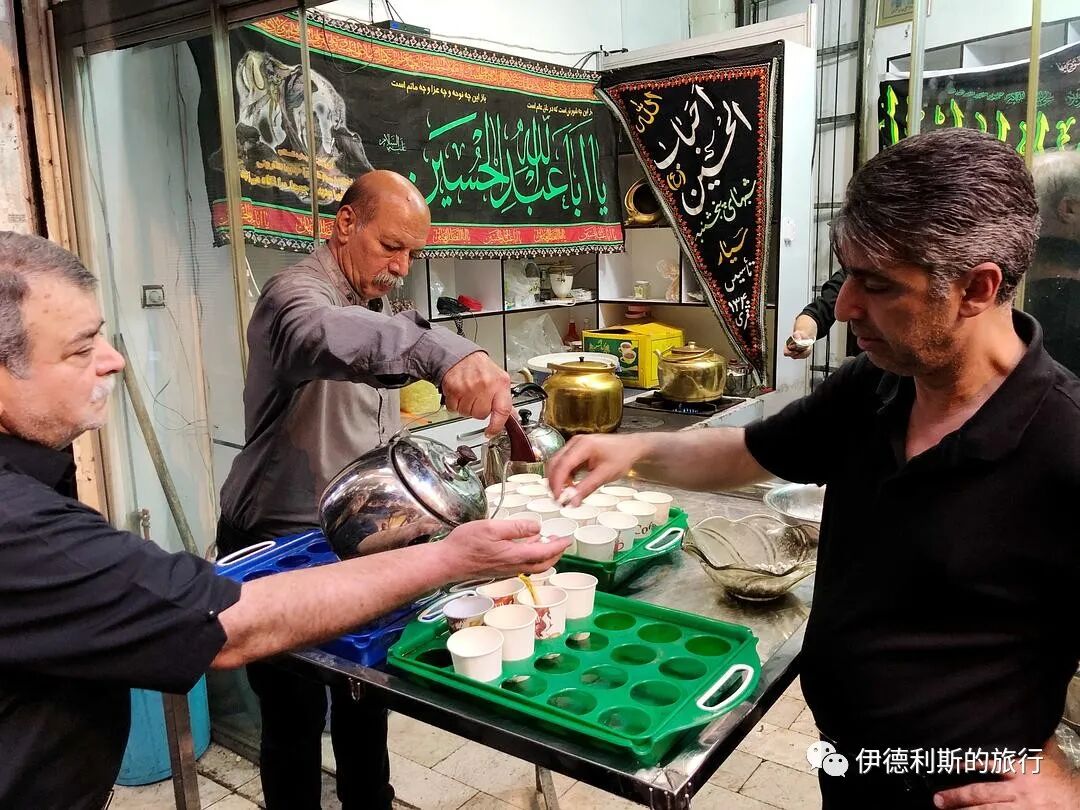
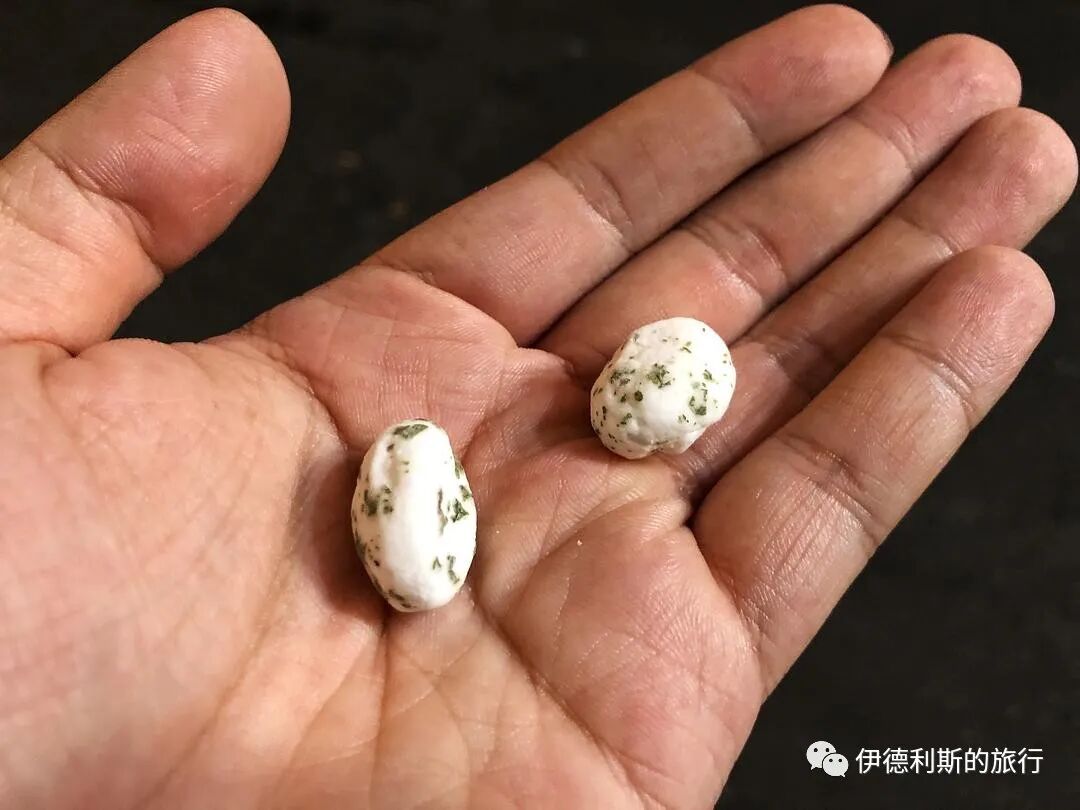
During Ashura, stalls are set up all over Tehran to provide free tea, drinks, and food, and an area near the north gate of the Grand Bazaar is specifically set aside for preparing drinks. A staff member, an older man, kindly invited me into the drink preparation area, offered me tea, and let me take photos.
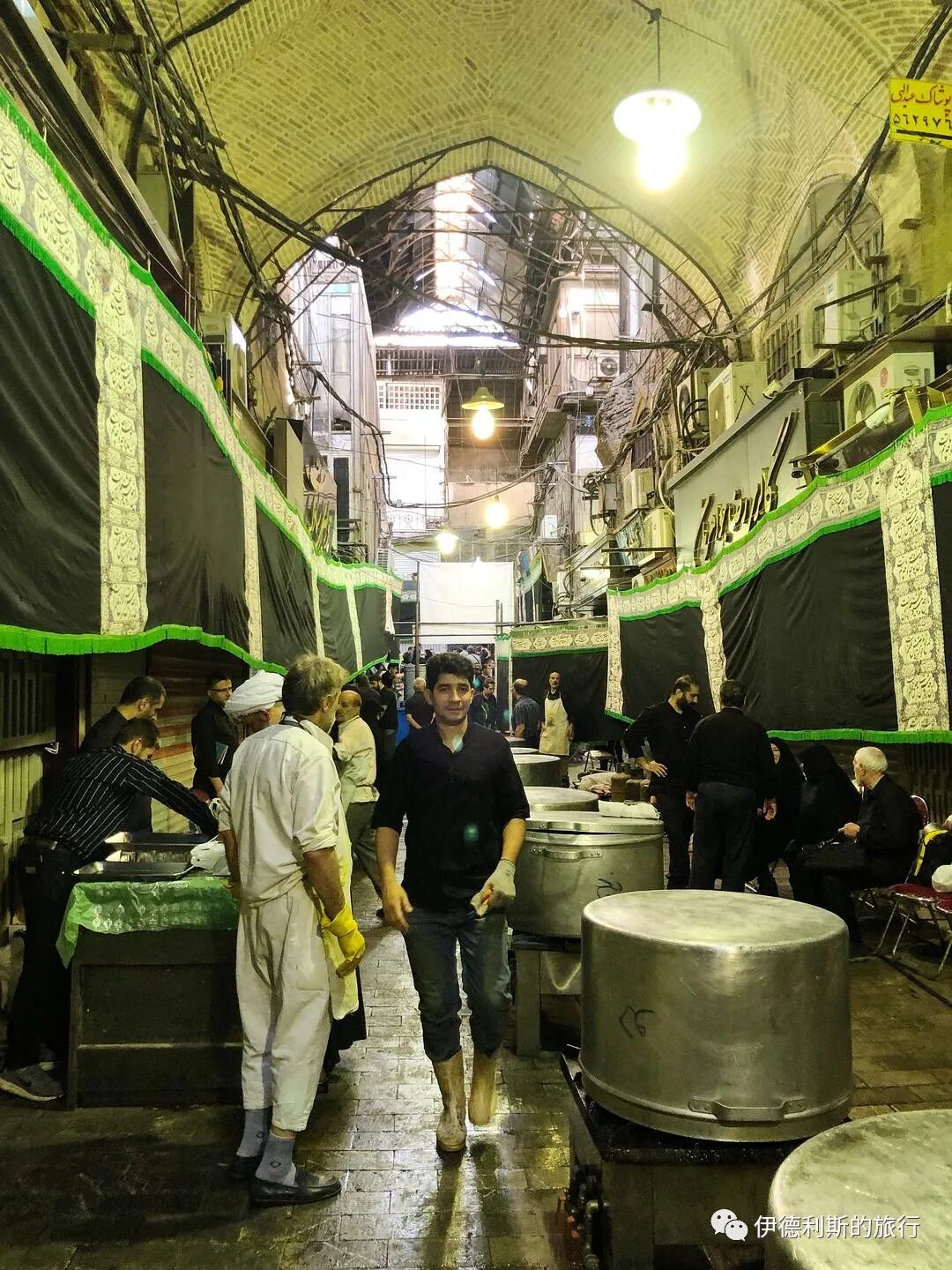
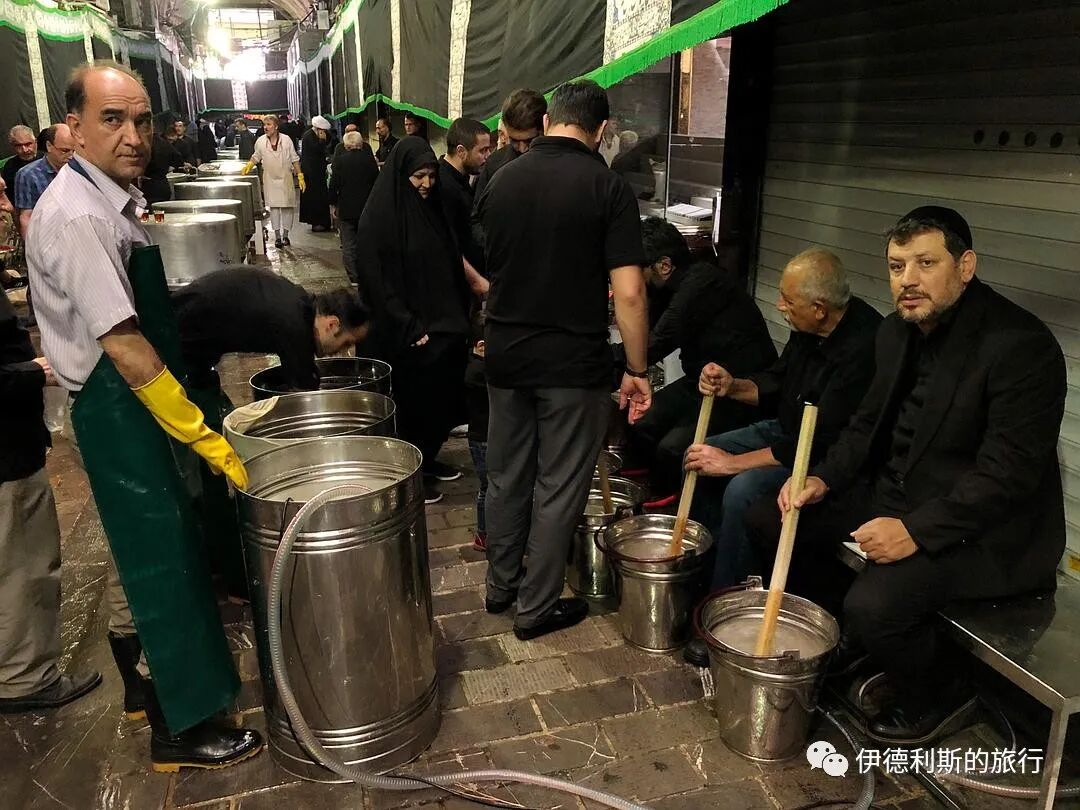
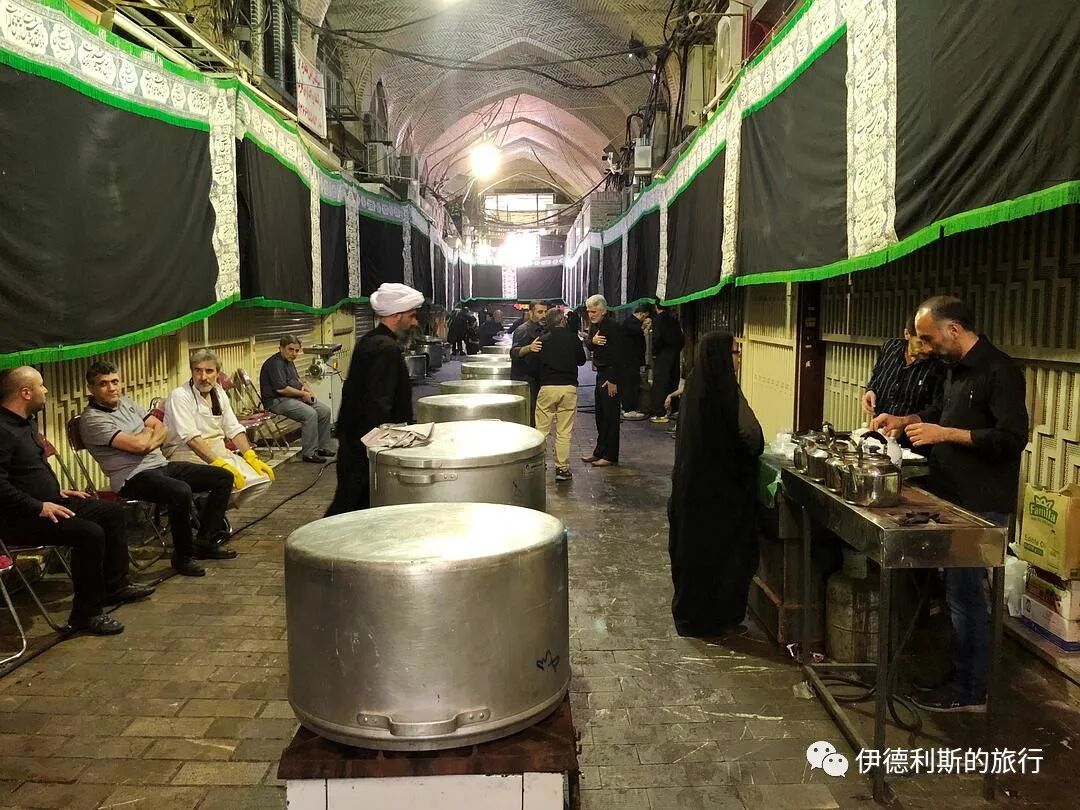
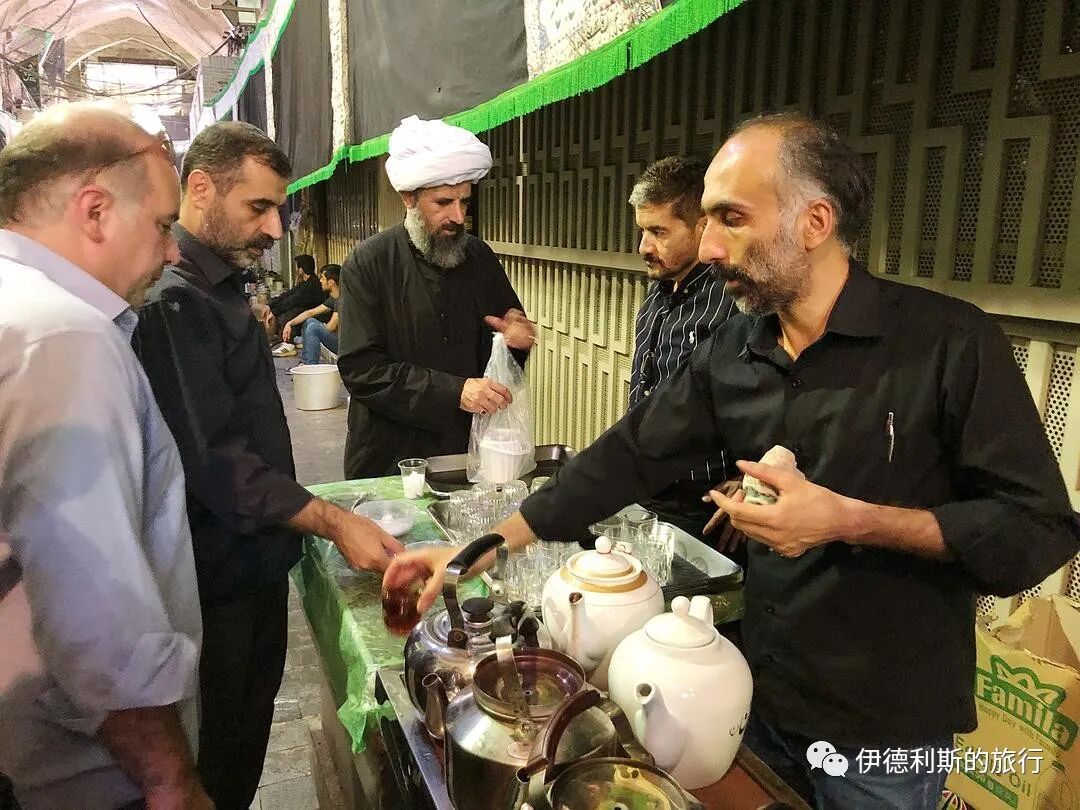
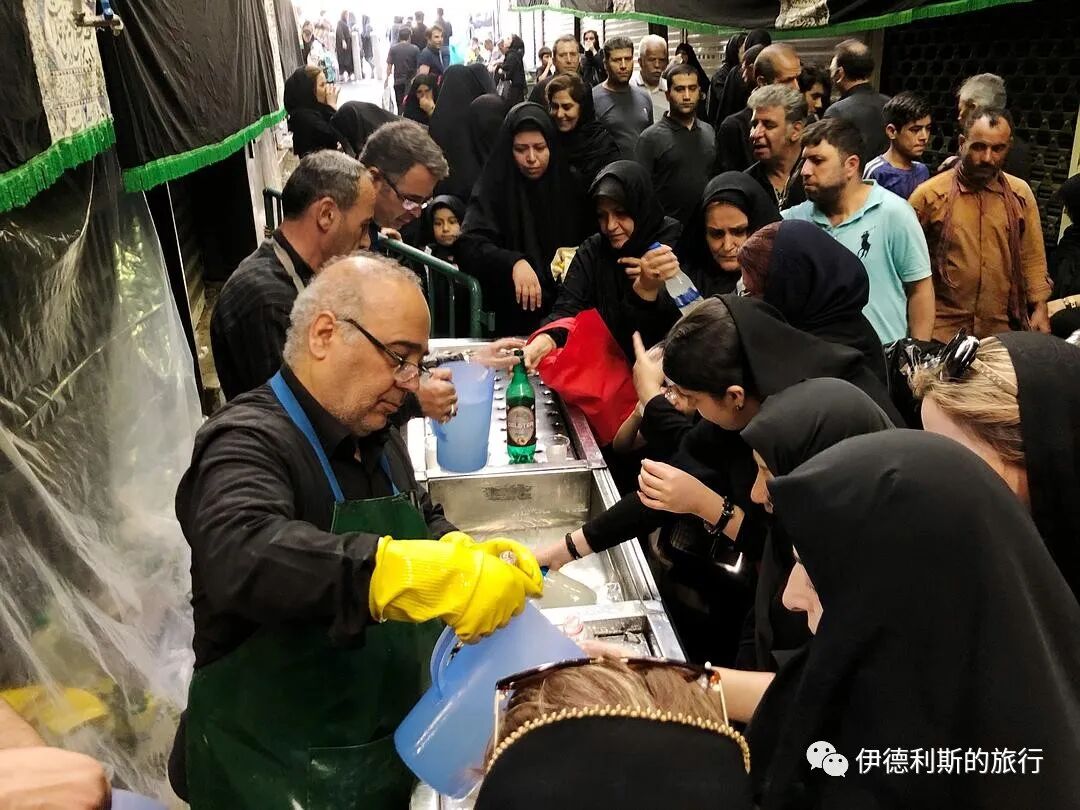
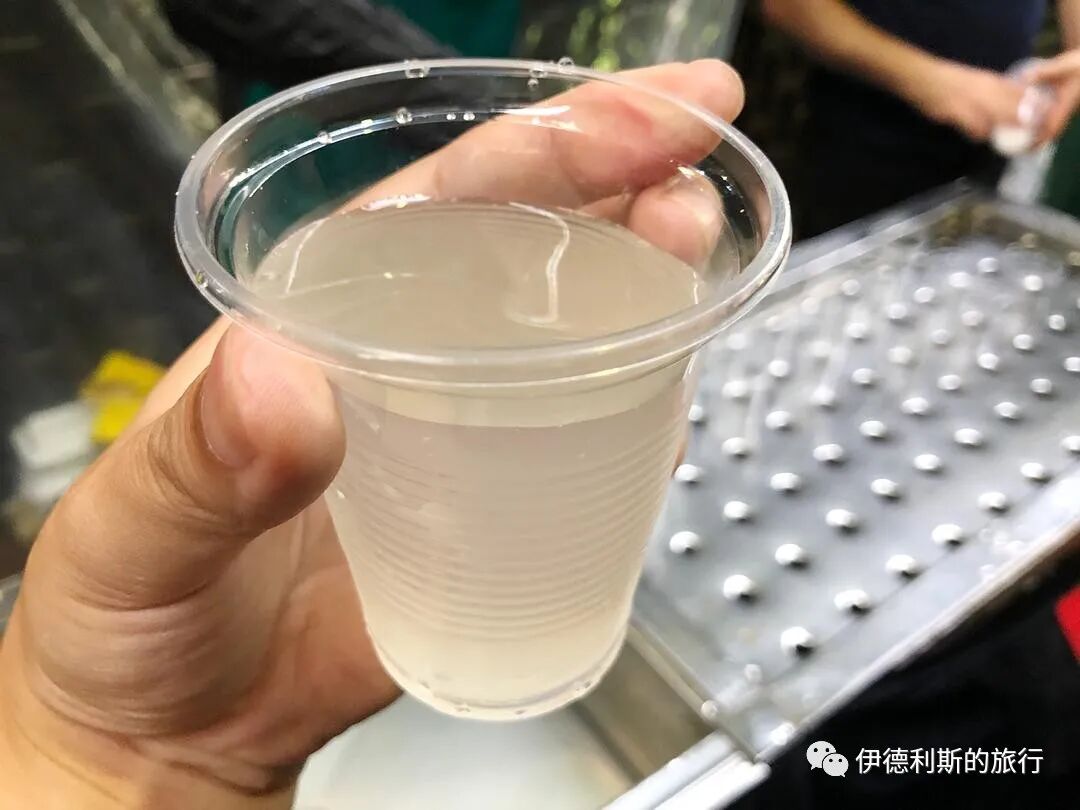
This area is for distributing food for free.
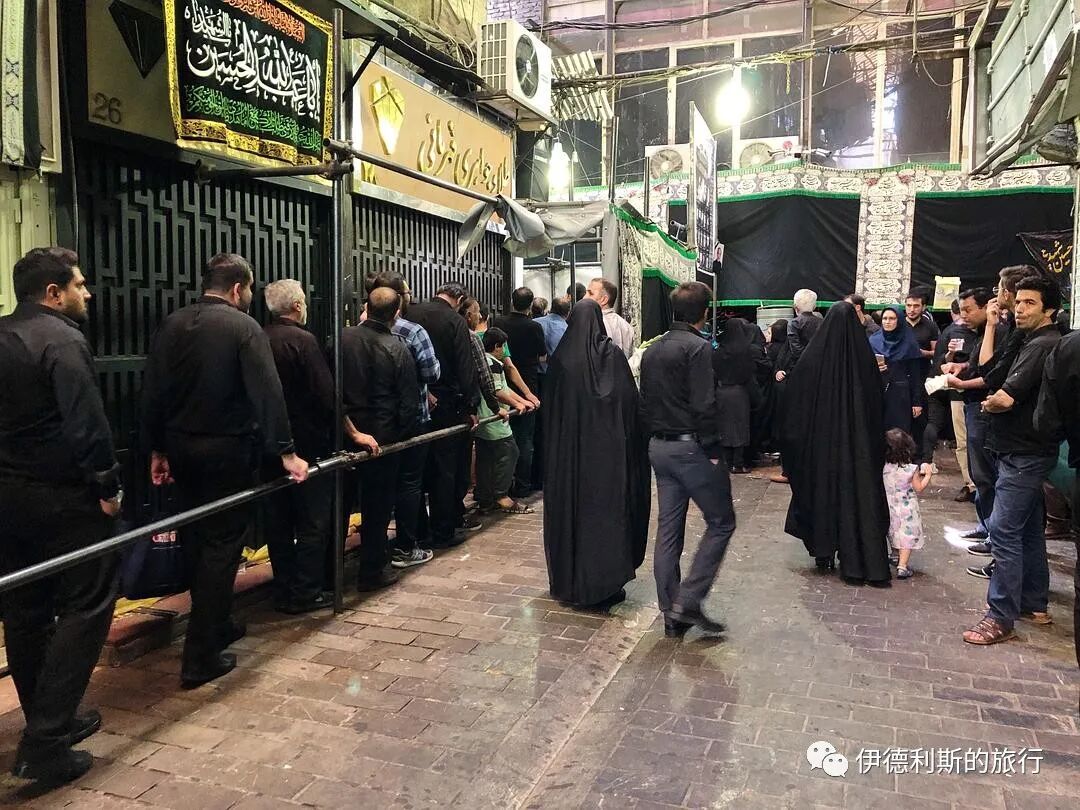
Walking further into the Grand Bazaar, you can see processions performing the Ashura mourning march (al-mawakib al-husayniyya), where everyone mourns together for Imam Hussein and his 72 companions who were killed by the Umayyad army on the Day of Ashura, singing rhythmically together.
During the procession, the group stops intermittently, and one person delivers a eulogy for Imam Hussein, while everyone cries and wails along, with many people weeping bitterly.
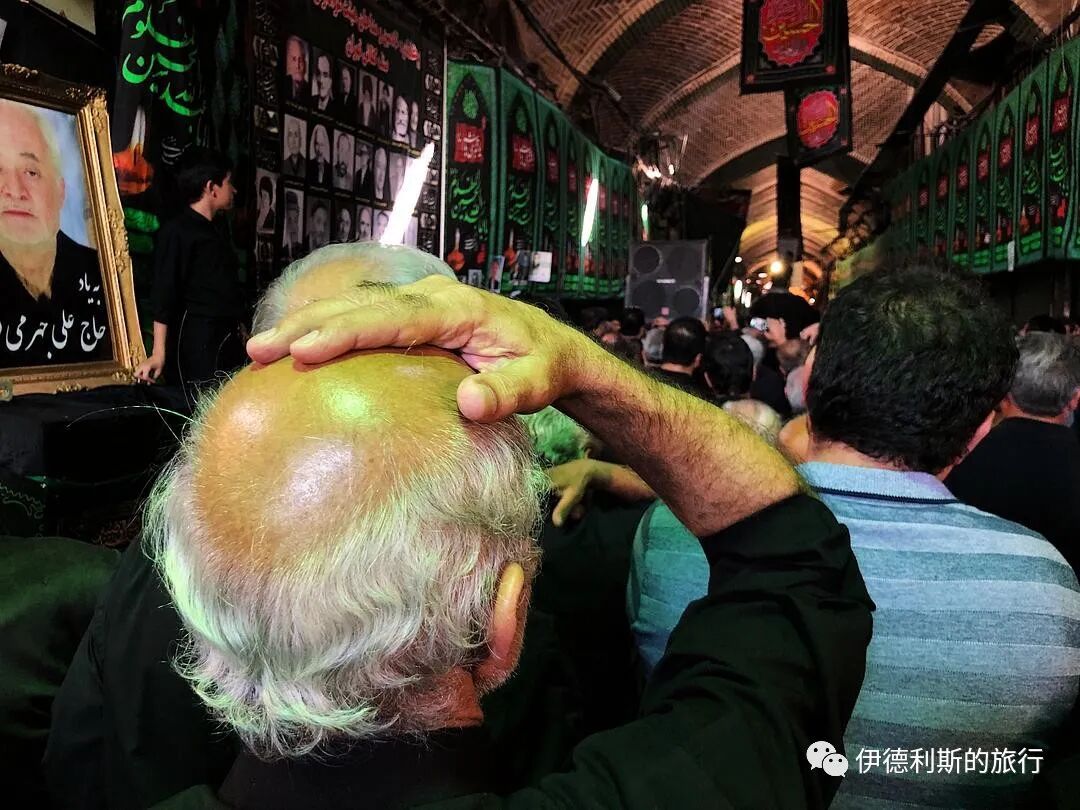
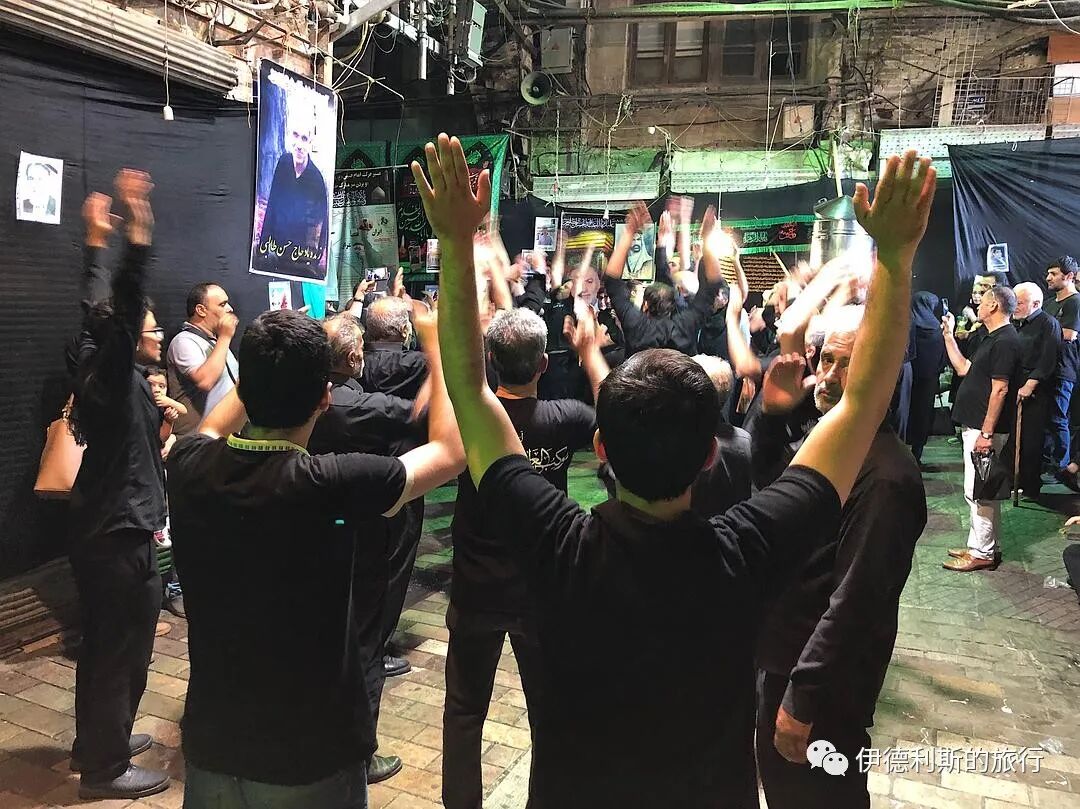
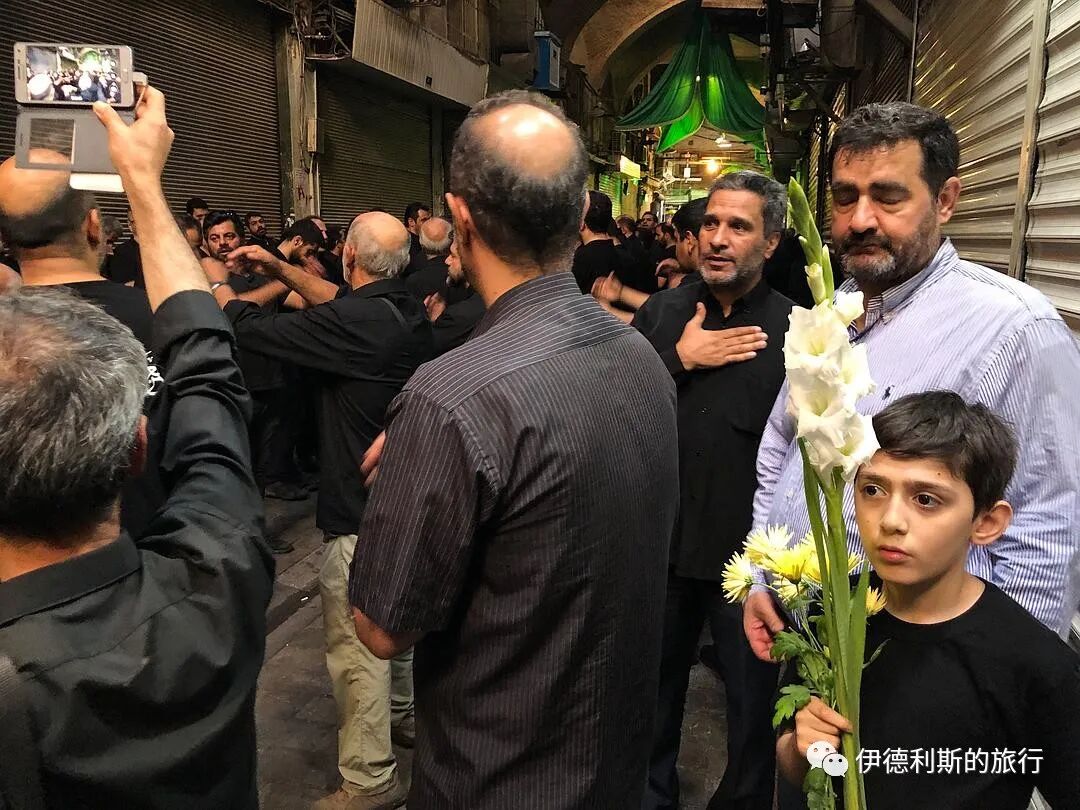
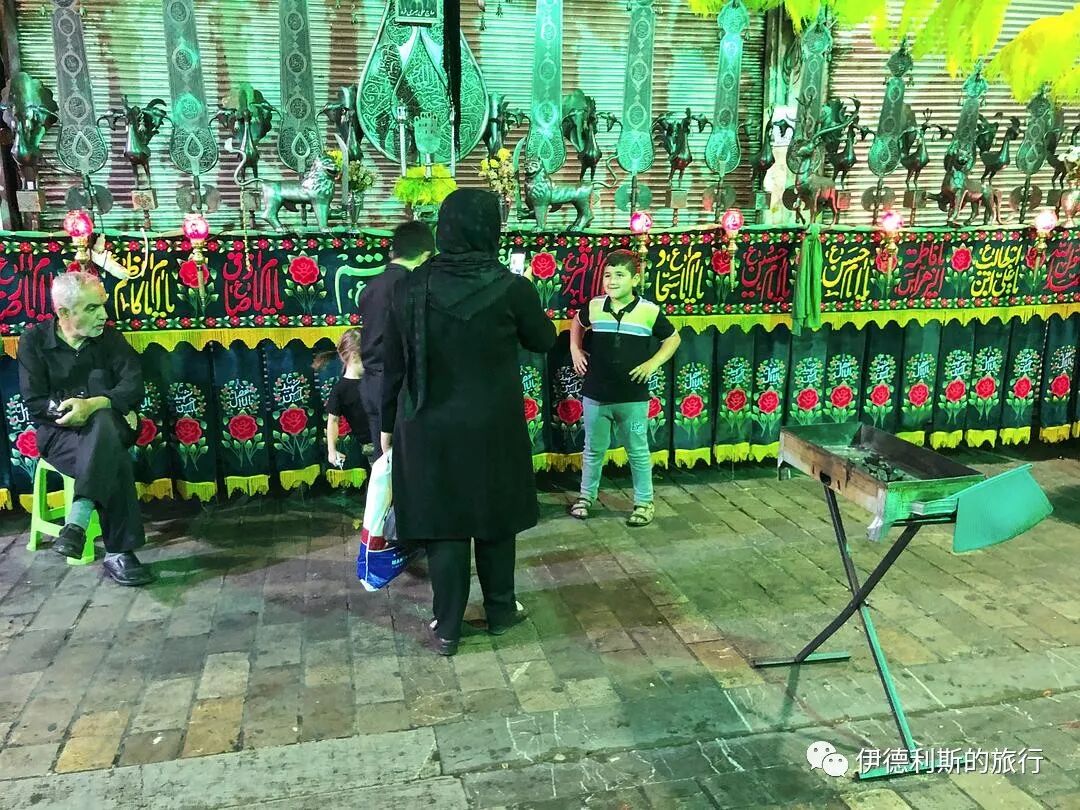
In addition to the singing, various flags are also very eye-catching.
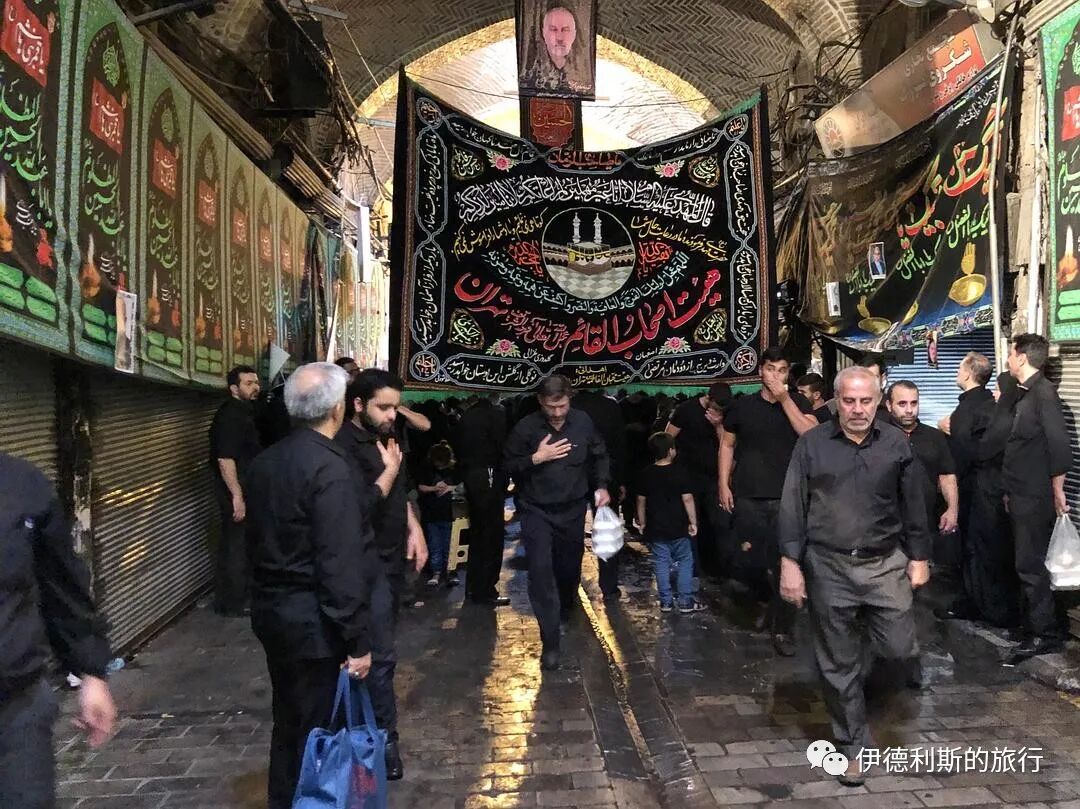
This is a procession composed of hundreds or thousands of people holding hands, which is very spectacular.
Outside the Grand Bazaar, there are also shops specifically selling Ashura flags.
The area outside the north gate of the Grand Bazaar has been turned into a venue for performing Ta'zieh opera. Ta'zieh opera performance is an important part of Ashura activities. During the month of Muharram, numerous venues for performing Ta'zieh opera are set up in various squares in Tehran, and there are many spectators.
Ta'zieh opera formed in Iran in the late 17th century and is a type of traditional Persian theater; this form of expression can be traced back to the pre-Islamic era. During Ashura, Shia Muslims use Ta'zieh opera to recreate the scene of the Battle of Karbala on the Day of Ashura in 680 AD, when Imam Hussein and his 72 companions were all killed by the Umayyad army.
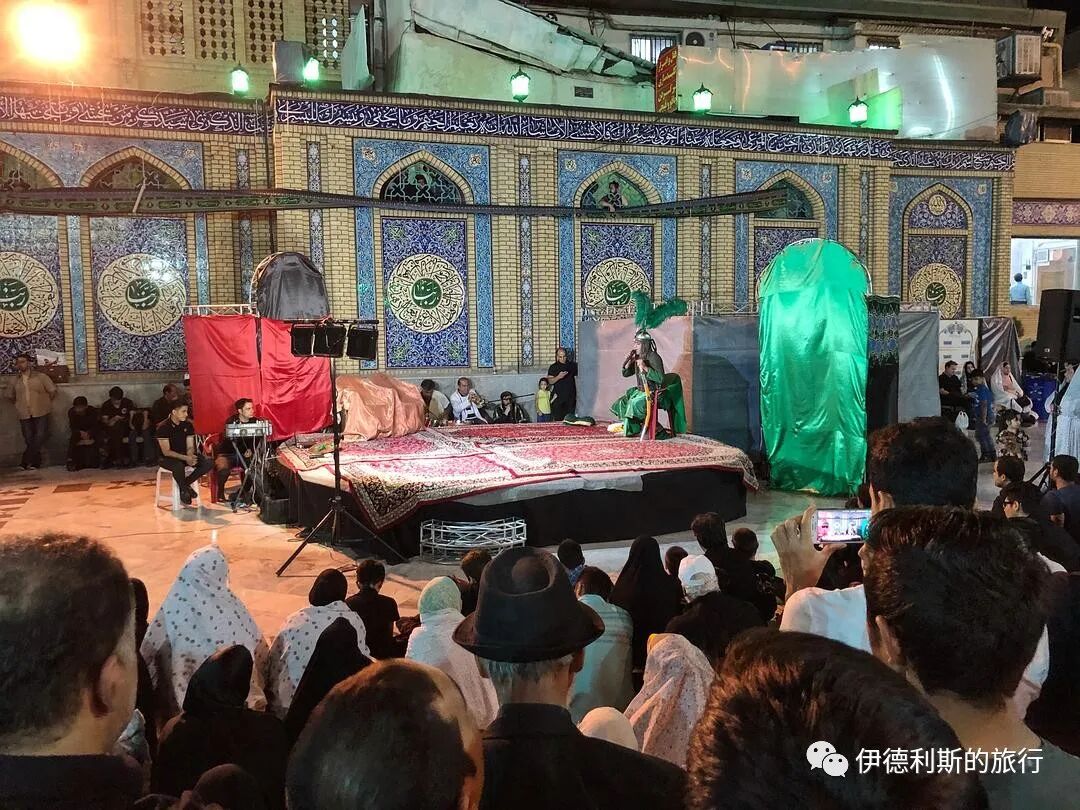
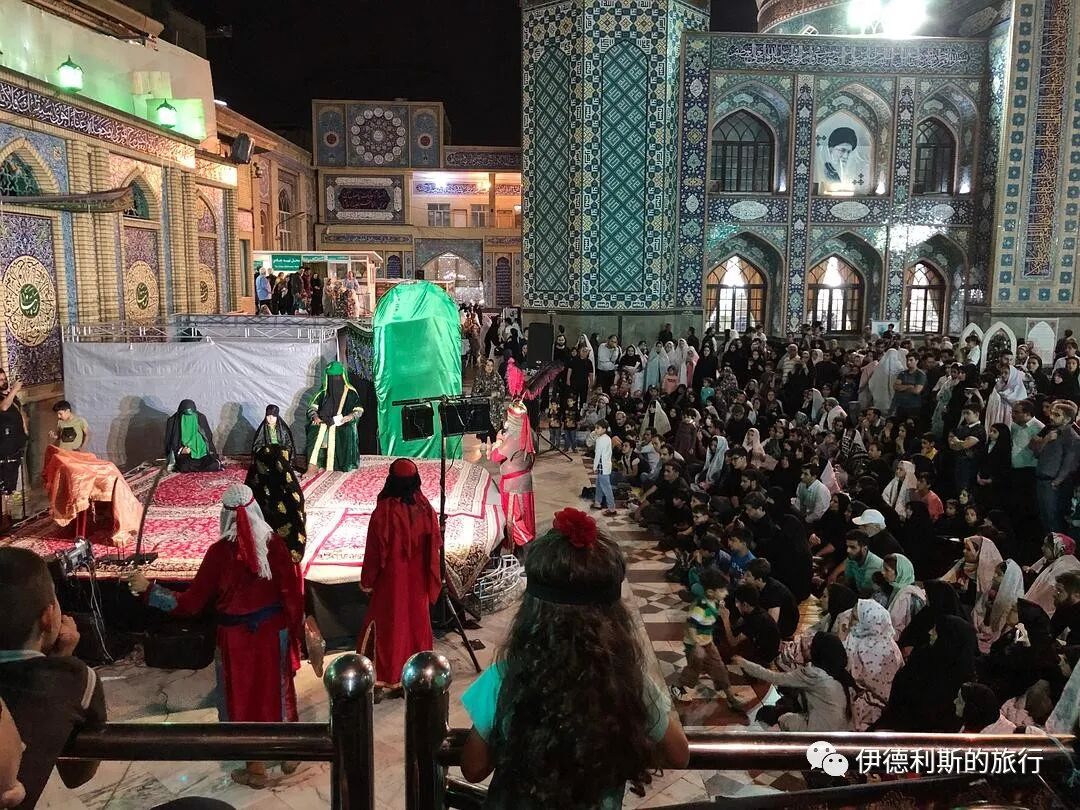
In the opera, the villains are the rulers of the Umayyad dynasty, and they wear red. The heroes are Imam Hussein and his family and companions; the male characters among them wear green, and change to white when they are about to die. All female characters are played by male actors dressed in all black. If a person walks in circles around the stage, it means they are on a long journey, usually between Mecca and Karbala.
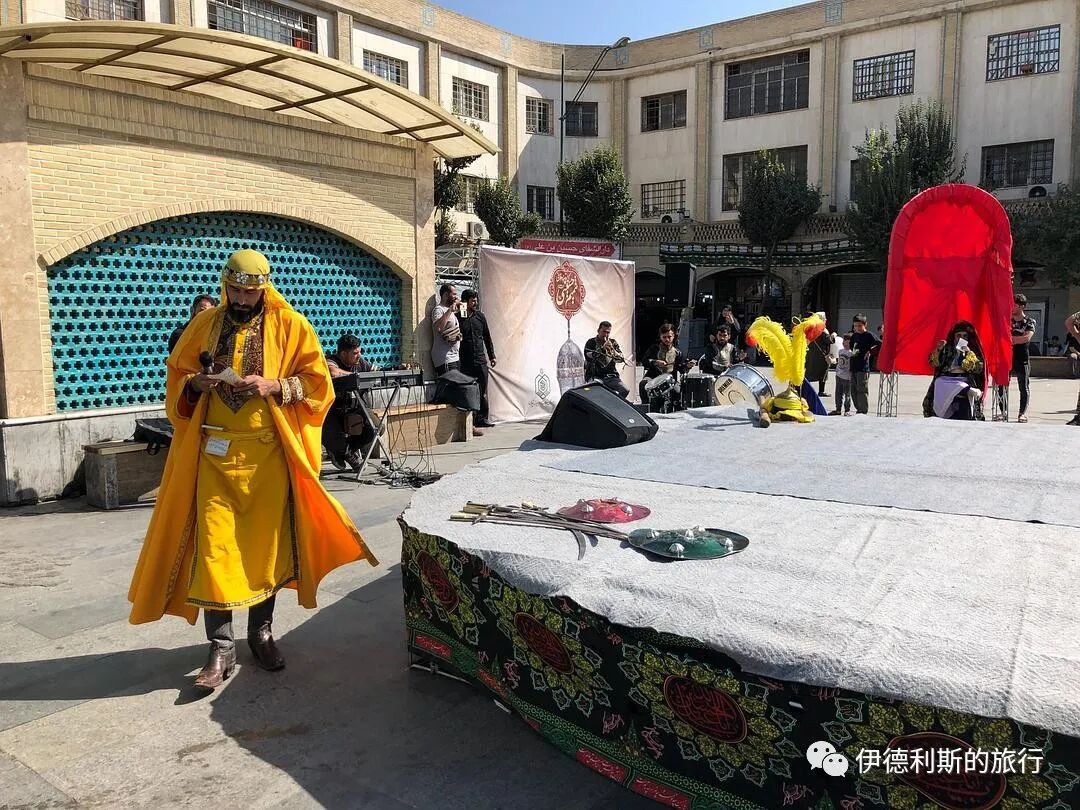
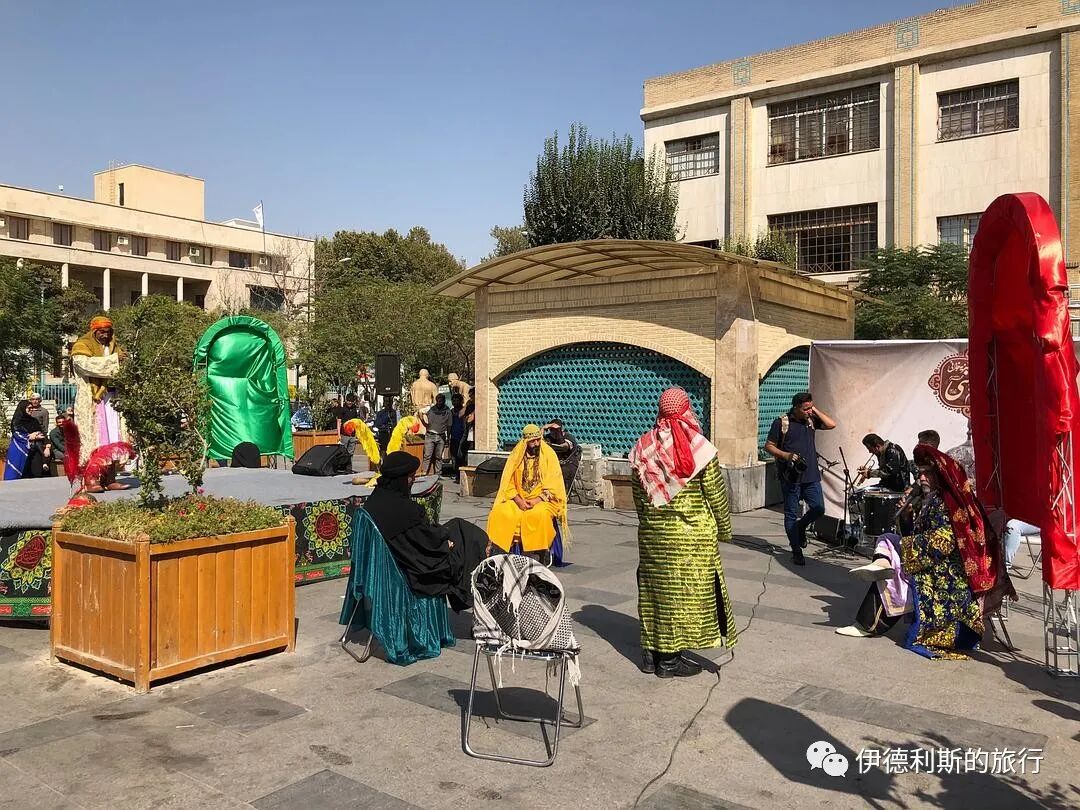
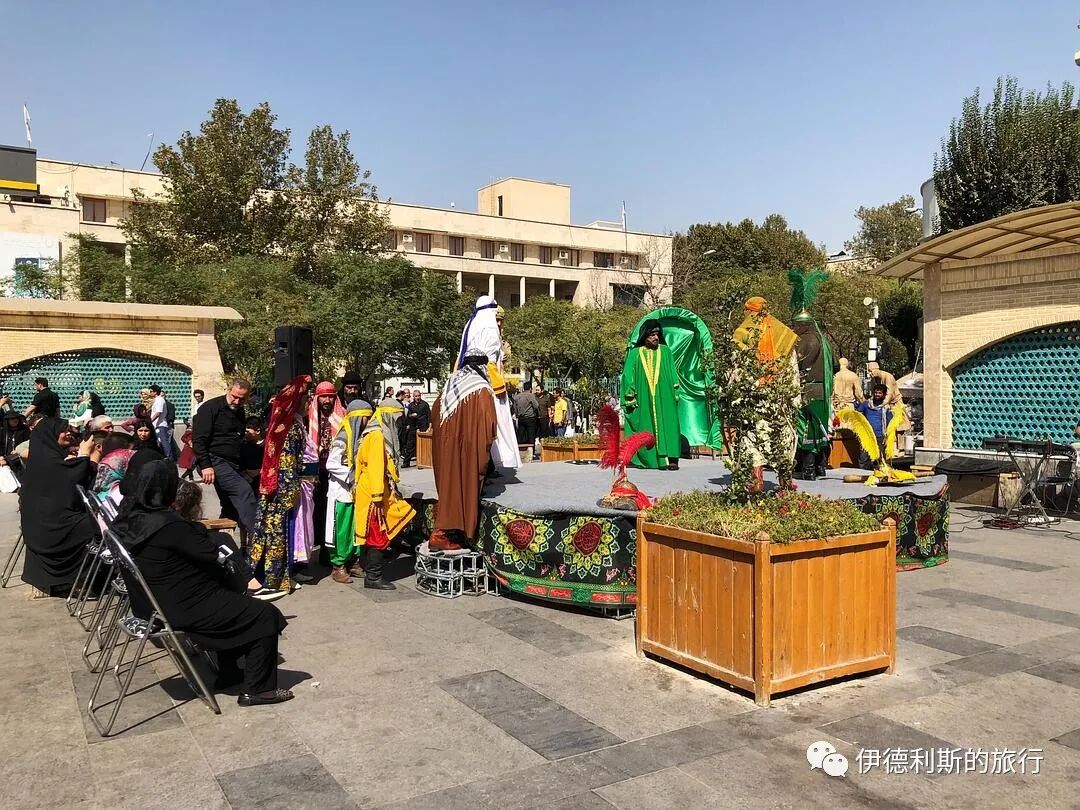
While watching the performance, you can eat honey cake and drink honey water freely.
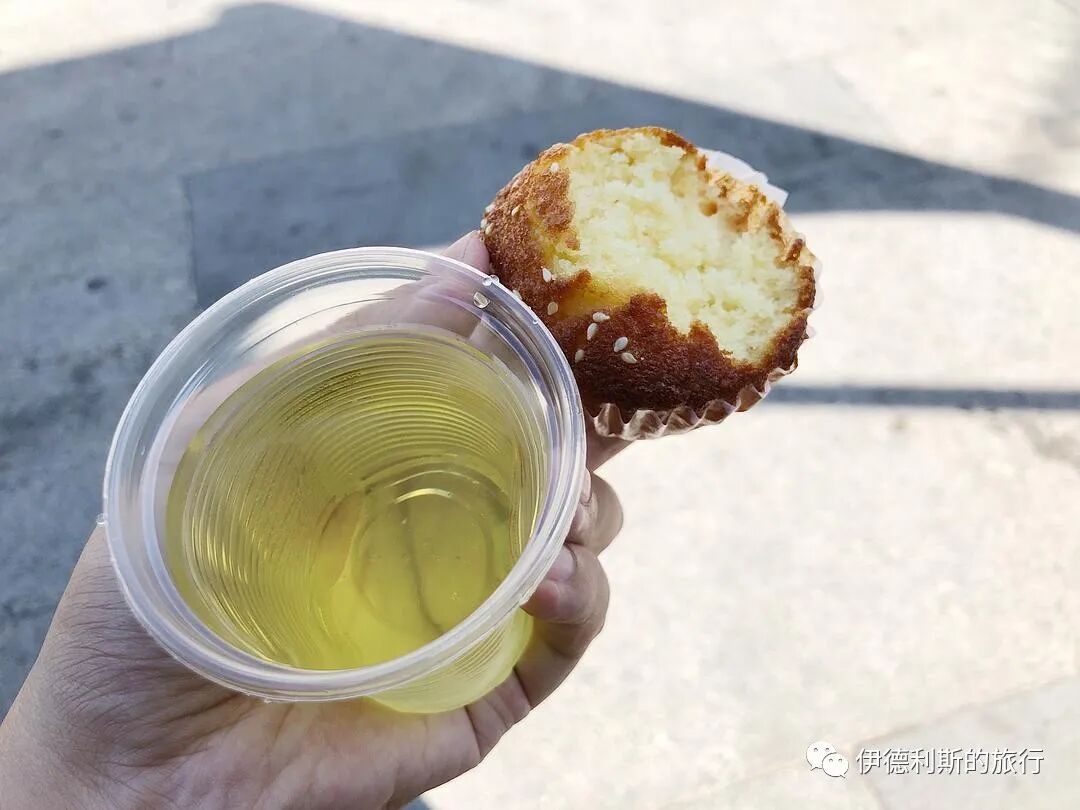
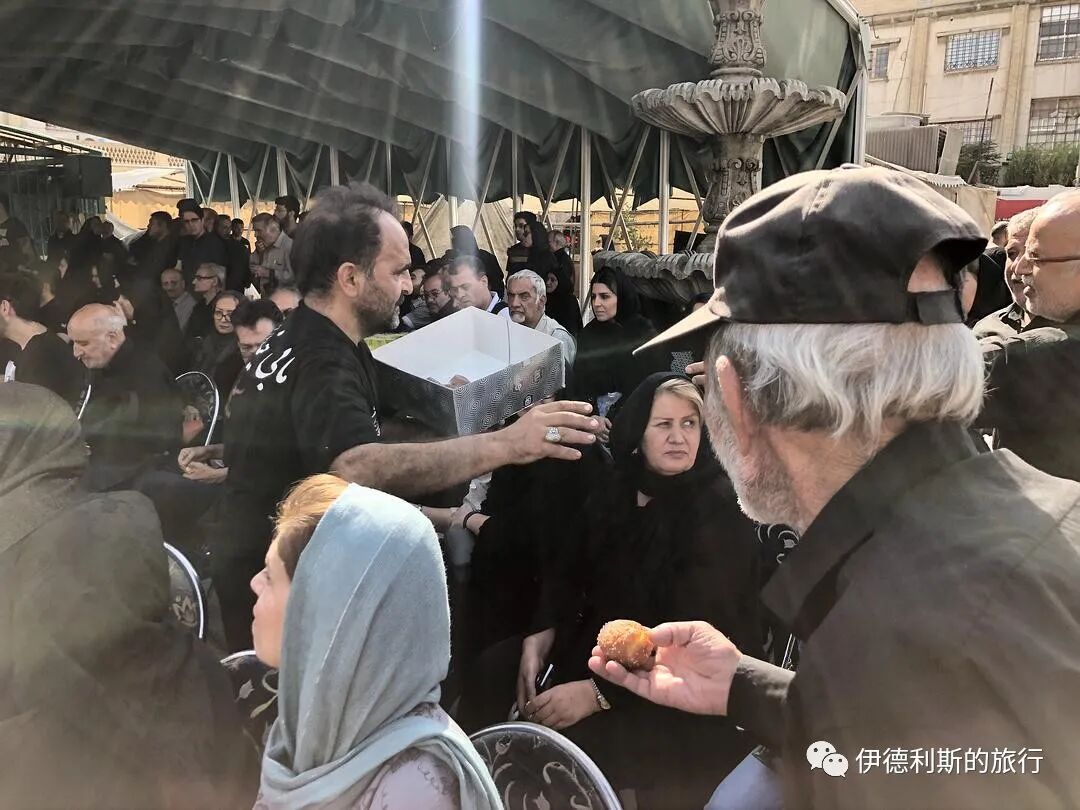
Ashura memorial service (majalis al-ta'ziya) at Parvaz Park
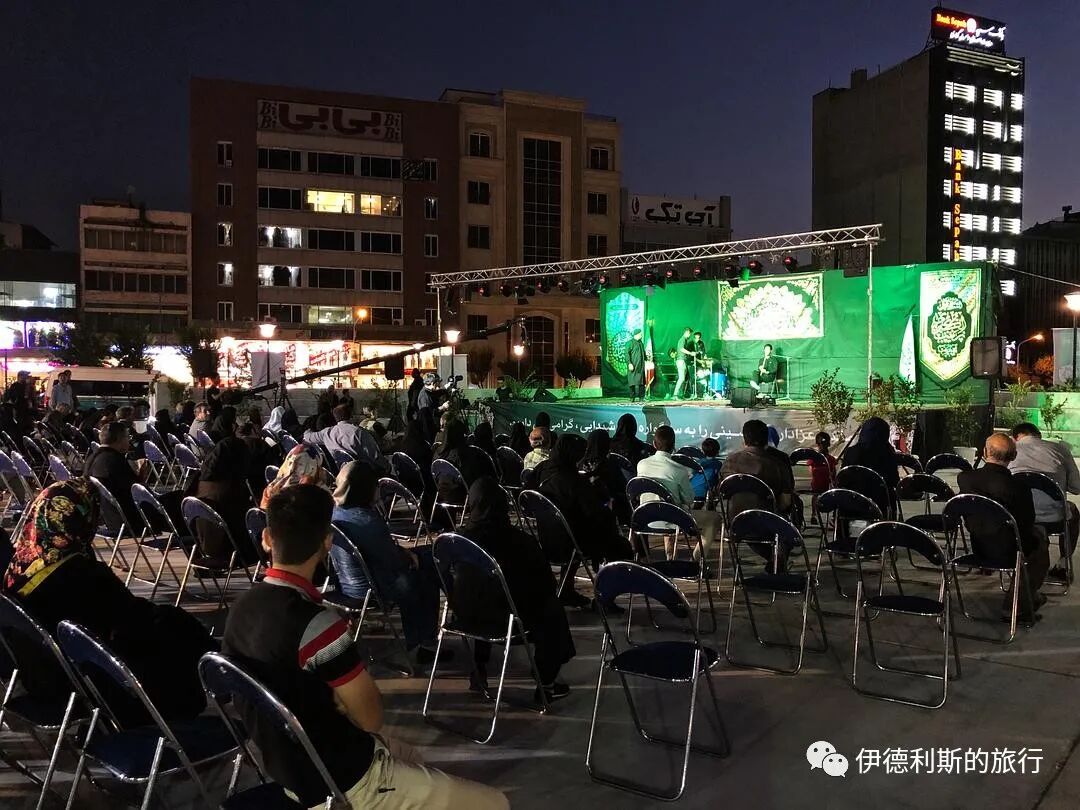
I attended an Ashura memorial service (majalis al-ta'ziya) at Parvaz Park in Tehran and experienced a wonderful Iranian Shia musical performance.
In the afternoon, tea stalls were already set up in the square, and Iranian black tea was available for free. Then, accompanied by the Ney (flute), the lead singer began to sing soothing songs. Amidst the singing, a bonfire was lit in the square, and baskets nearby were filled with various fragrant fruits. After a few soothing songs, a percussion ensemble consisting of drums and cymbals walked onto the stage while playing. The rhythm of the songs began to become more and more passionate, the atmosphere grew more intense, and it reached a climax accompanied by the sound of horns.
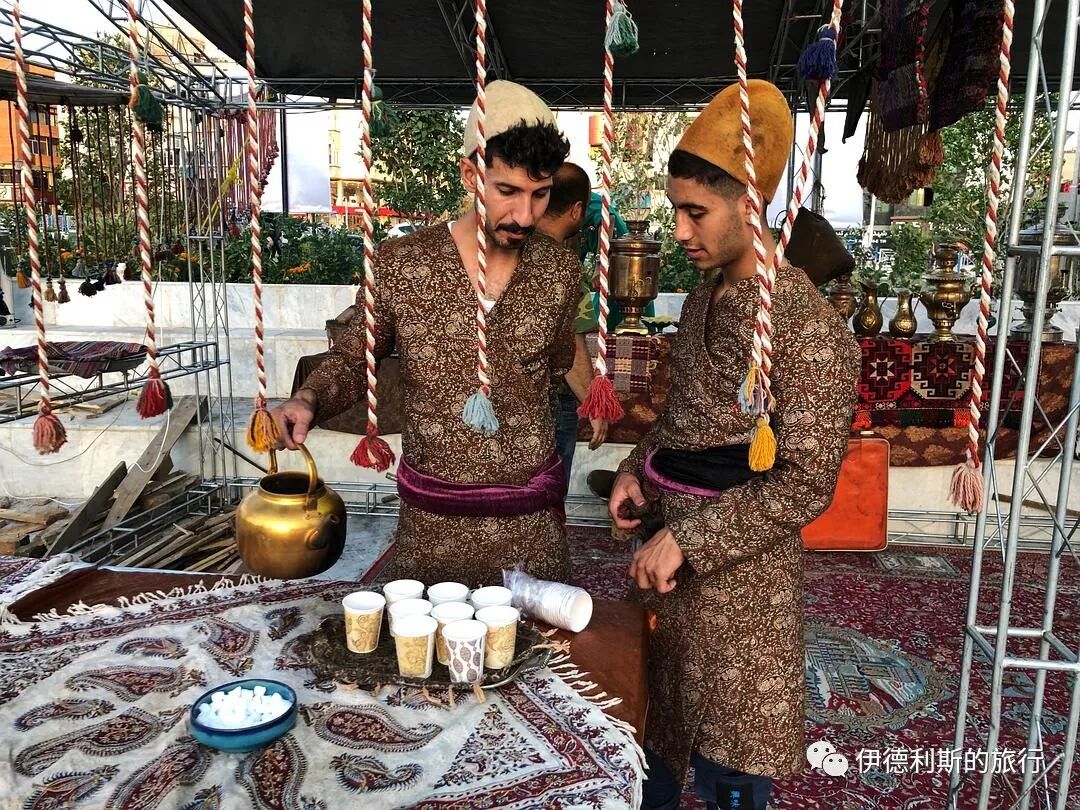
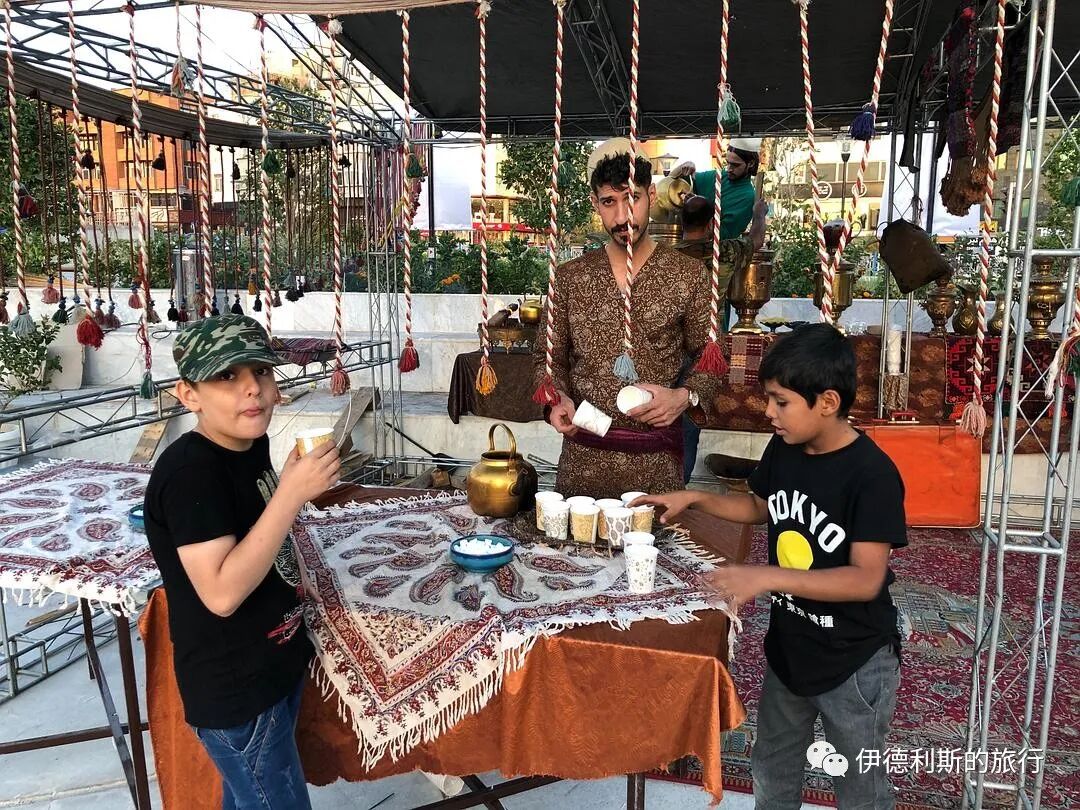
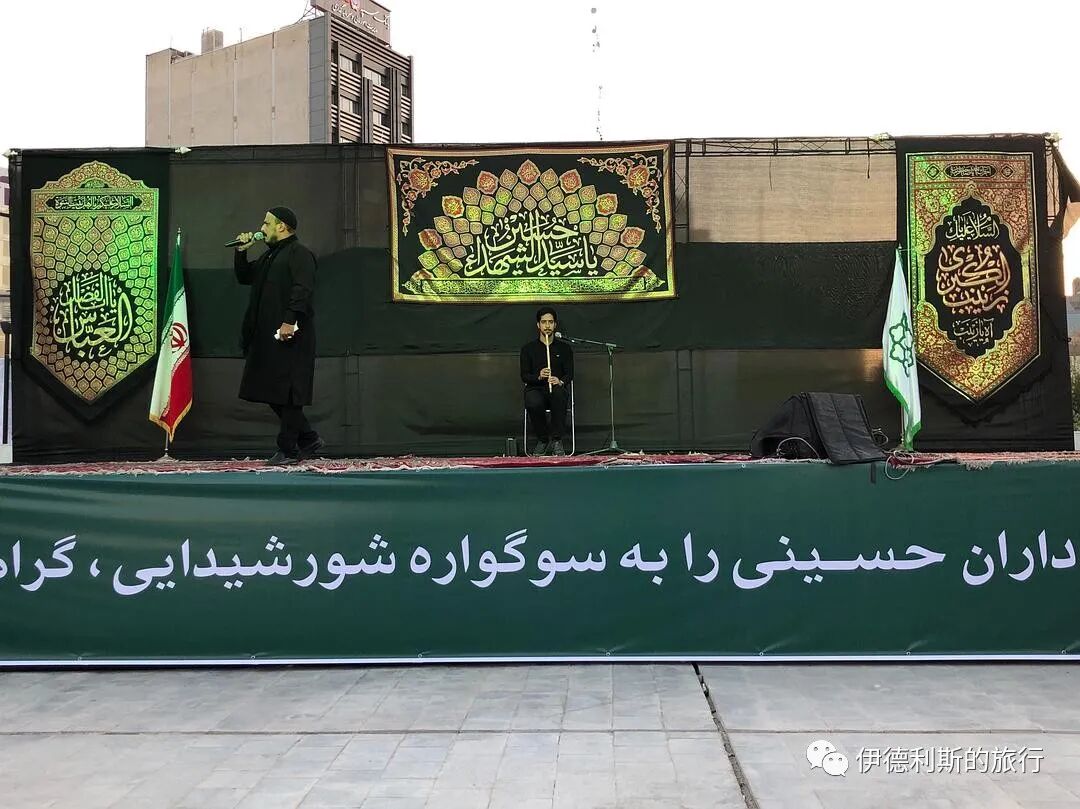
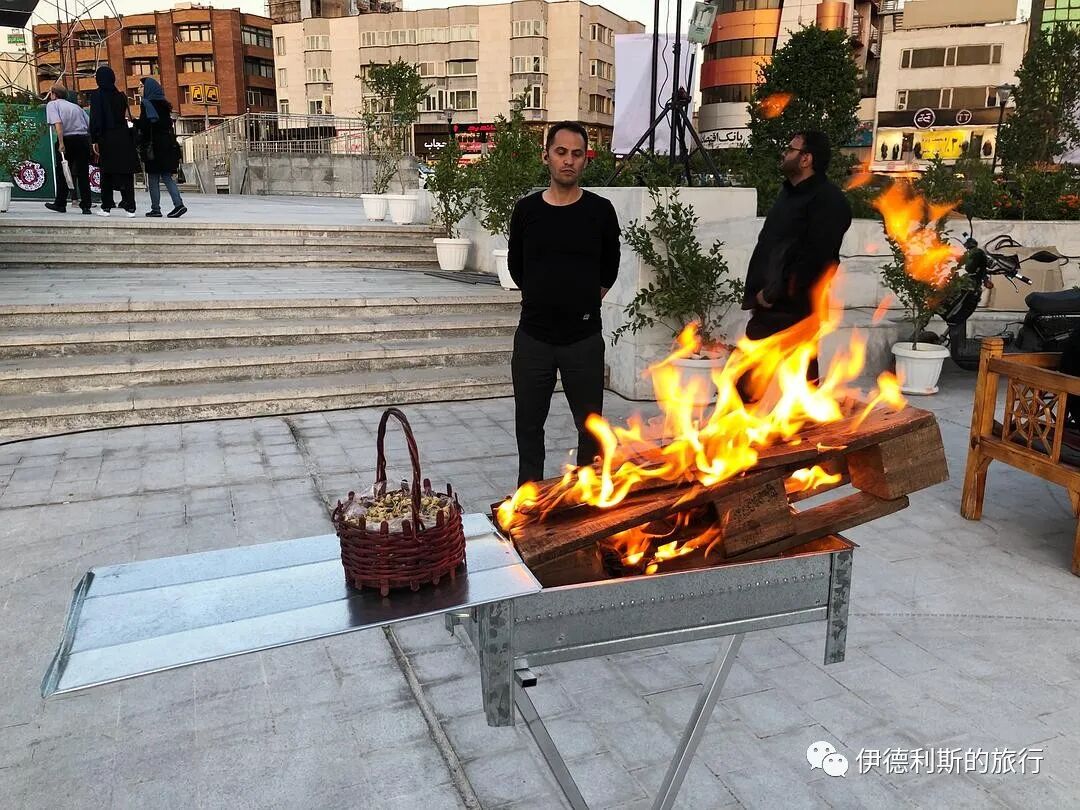
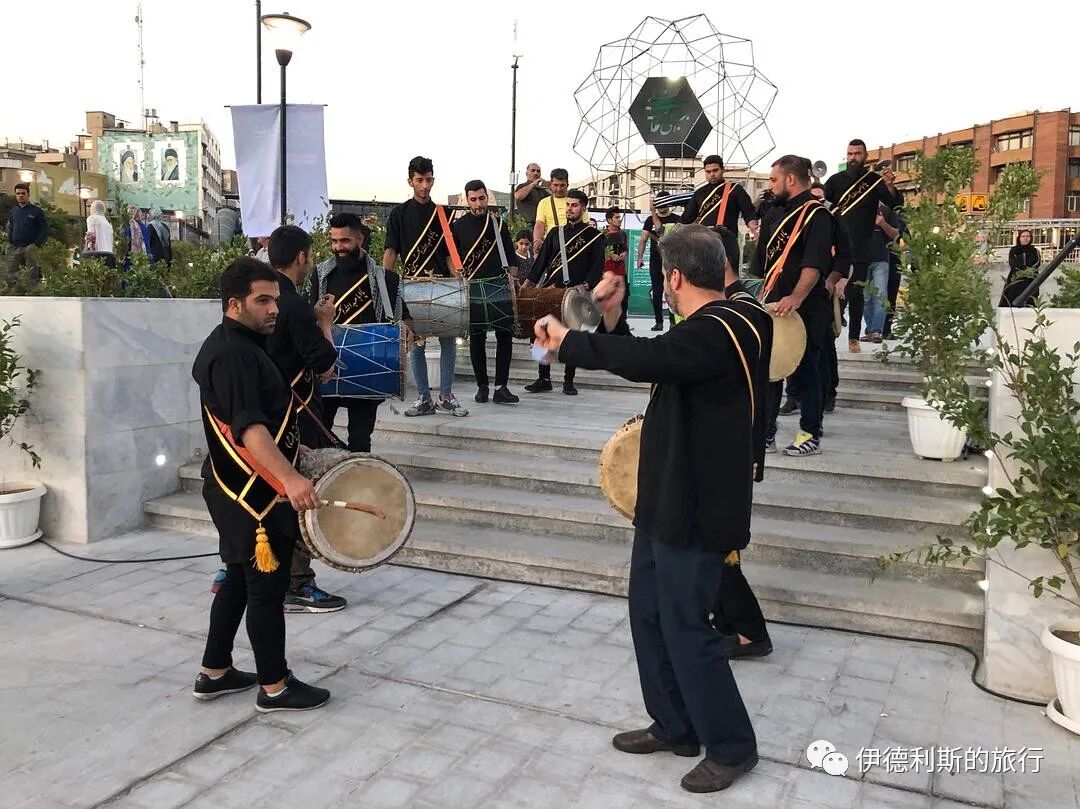
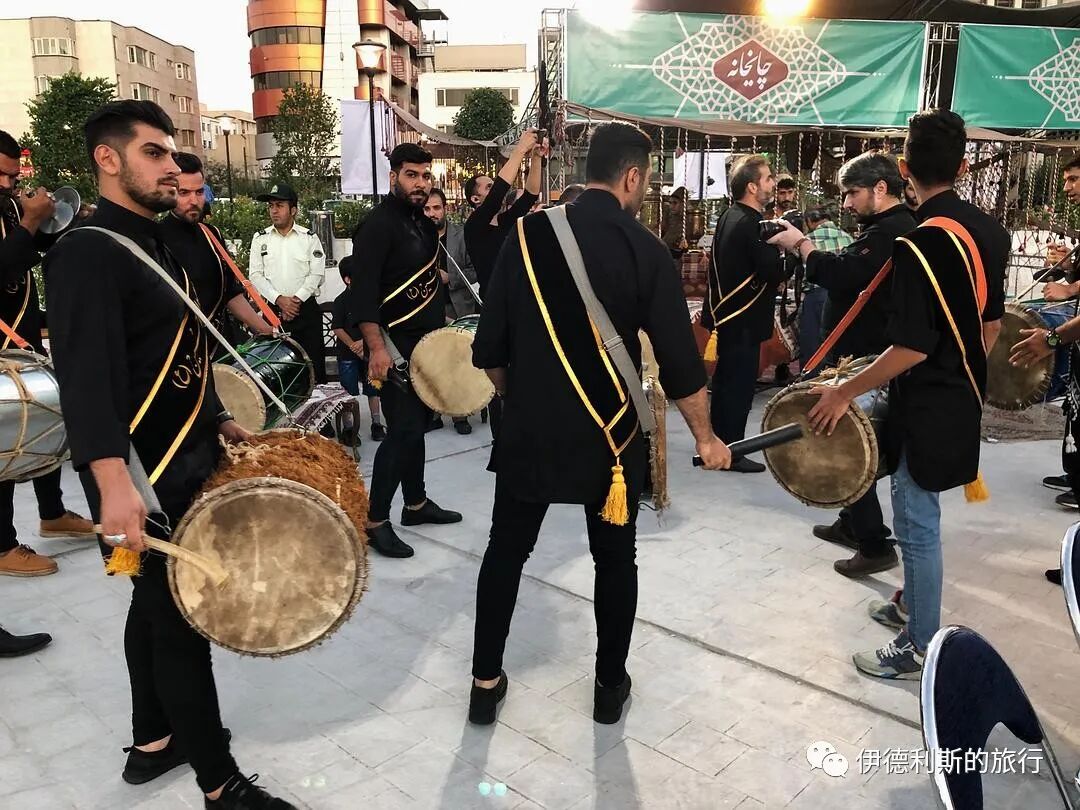
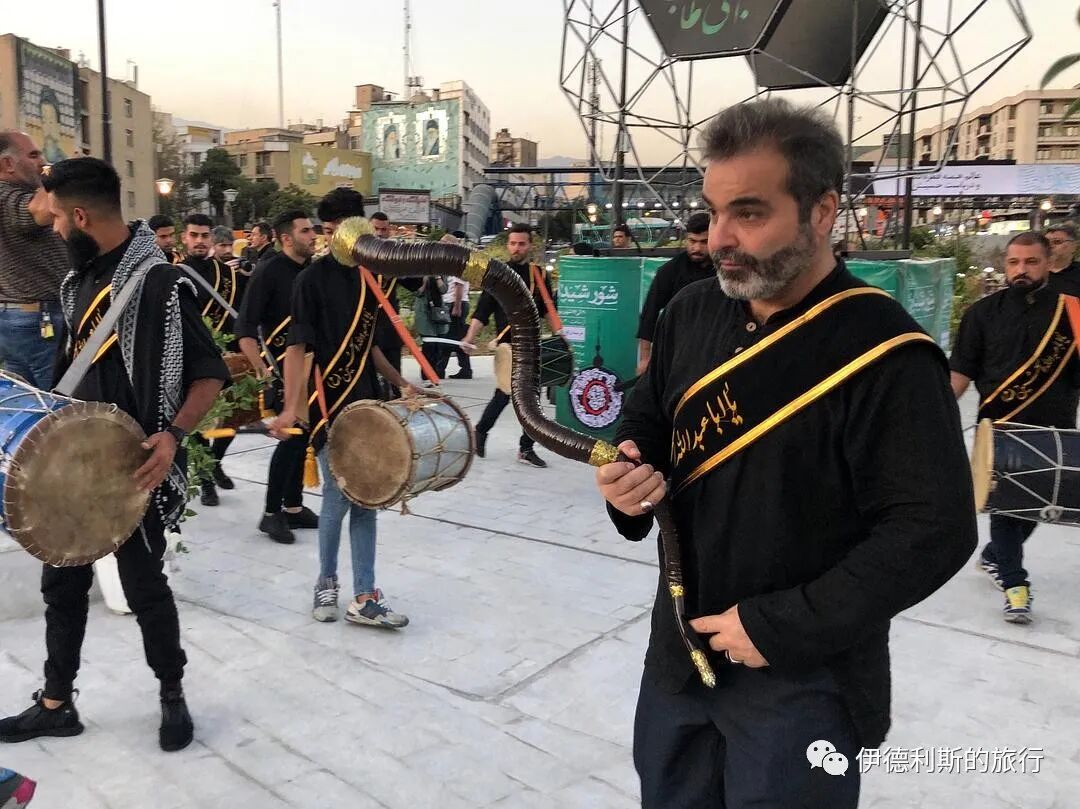
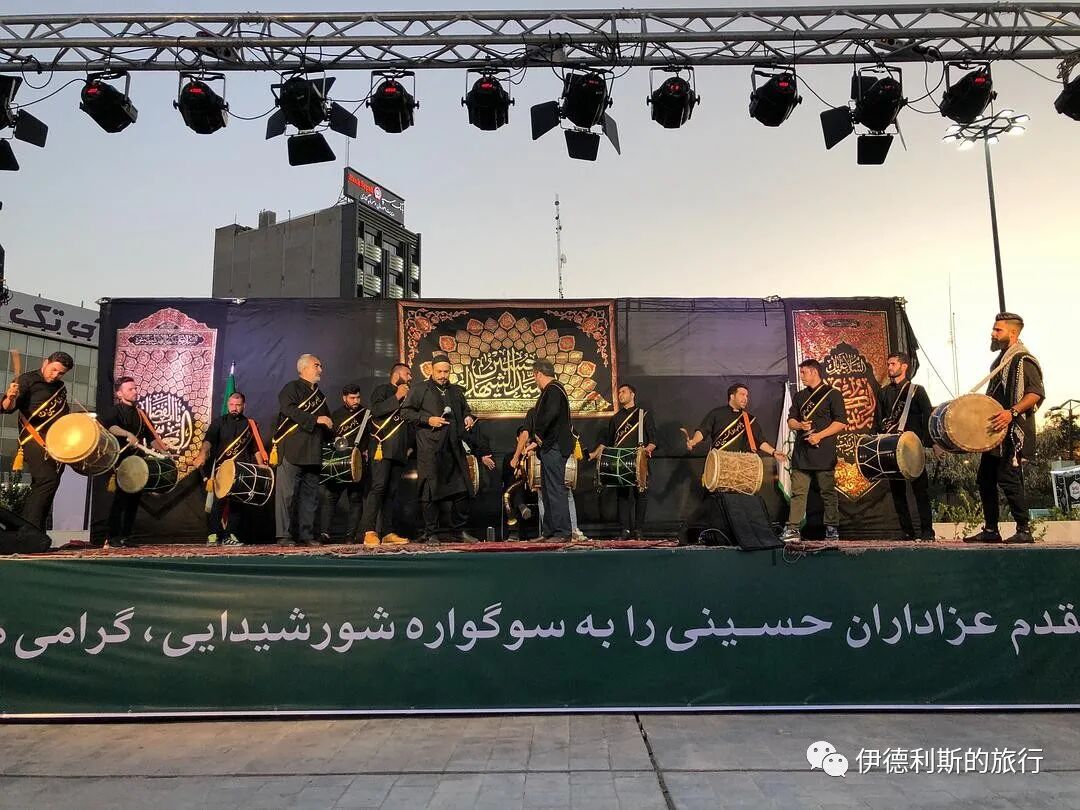
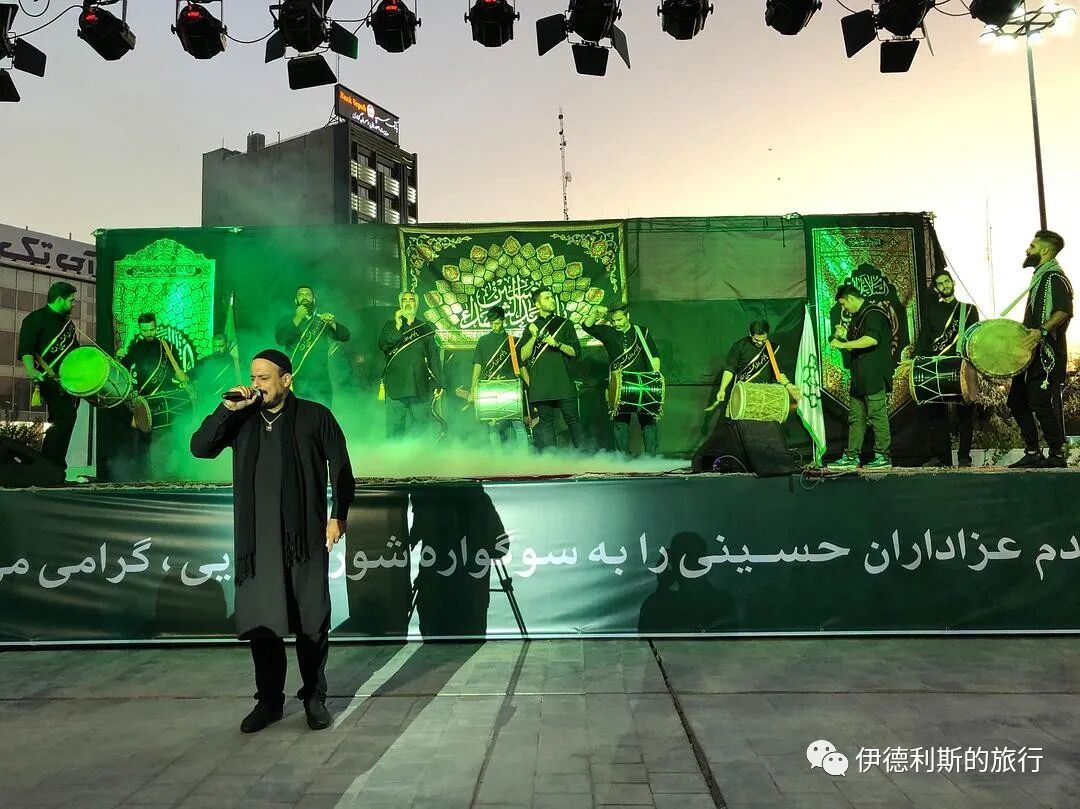
During the singing, a group of actors in costumes walked slowly toward the stage, led by two boys holding incense.
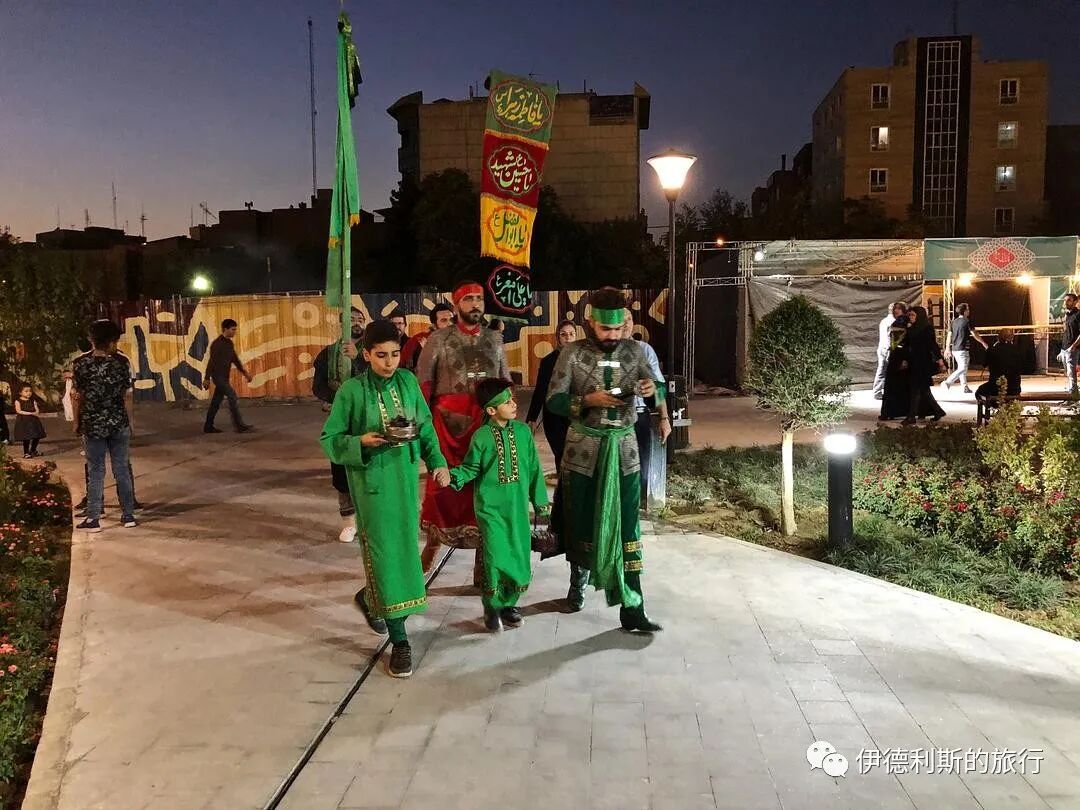
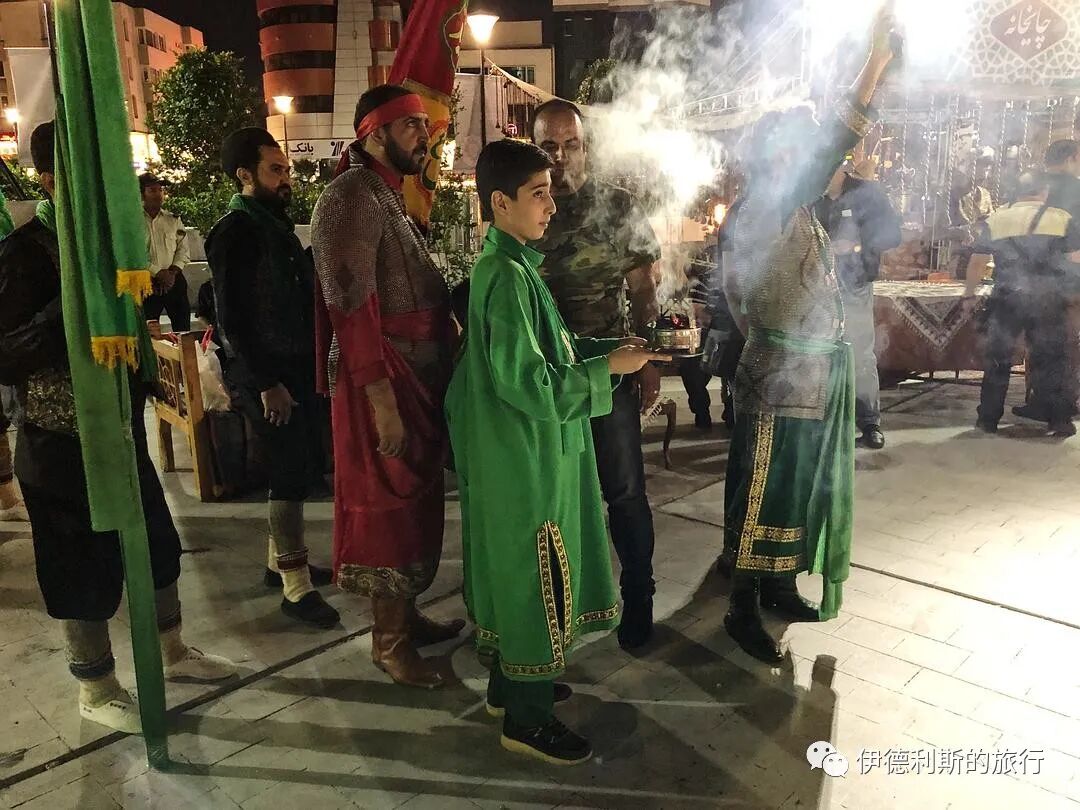
When they reached the stage, they began to perform the Ta'zieh play.
Tajrish Bazaar
At the end of Tajrish Bazaar in the north of Tehran, there is a Tekyeh. In the Shia tradition, a Tekyeh generally refers to a place specifically for commemorating Imam Hussein, especially for performing Ta'zieh opera during the month of Muharram. Tajrish Tekyeh can be traced back to the Qajar dynasty 220 years ago. It is a very old Tekyeh in Tehran, and the current layout is also very traditional, although the wooden pillars have been replaced by metal ones.
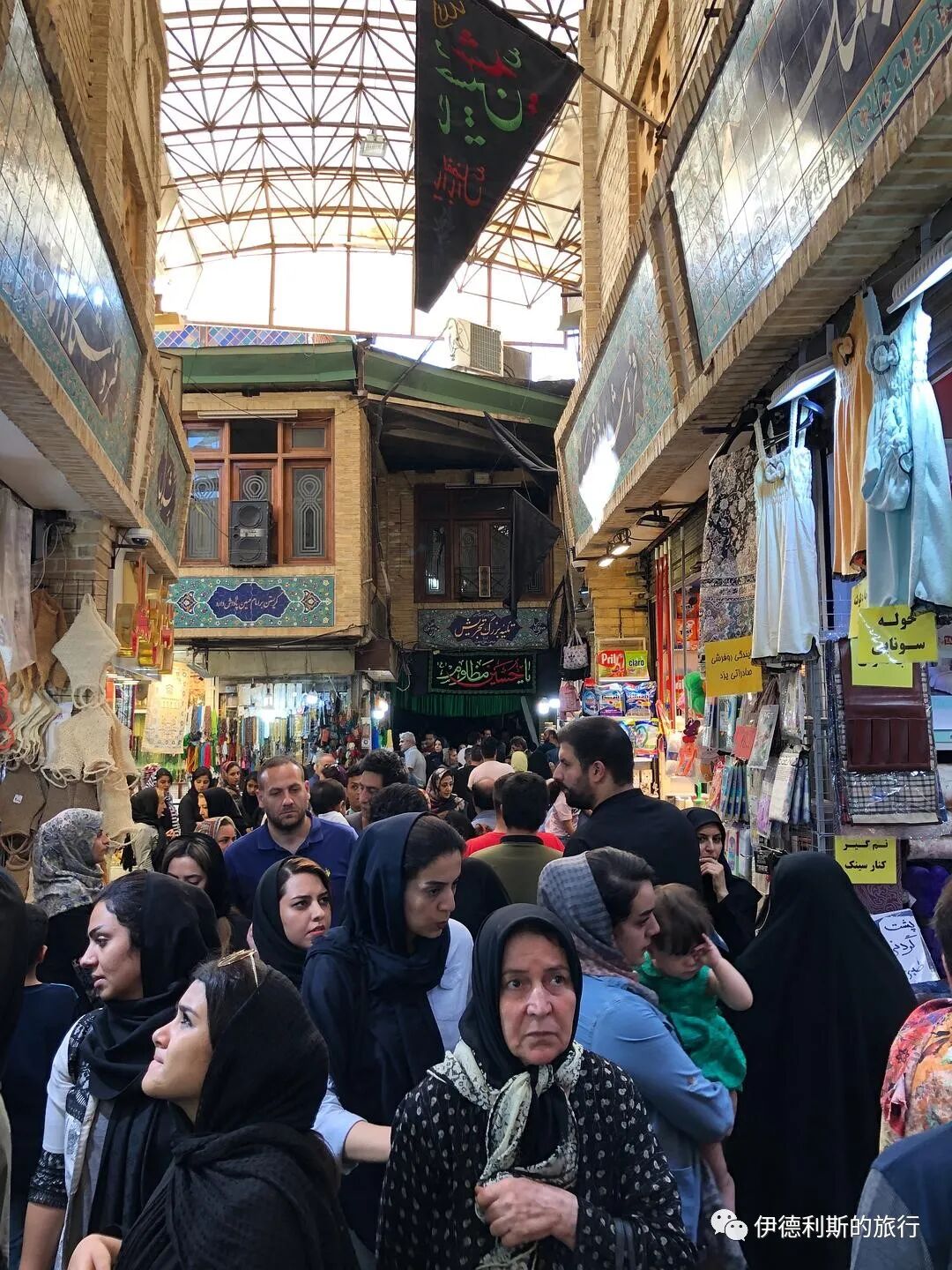
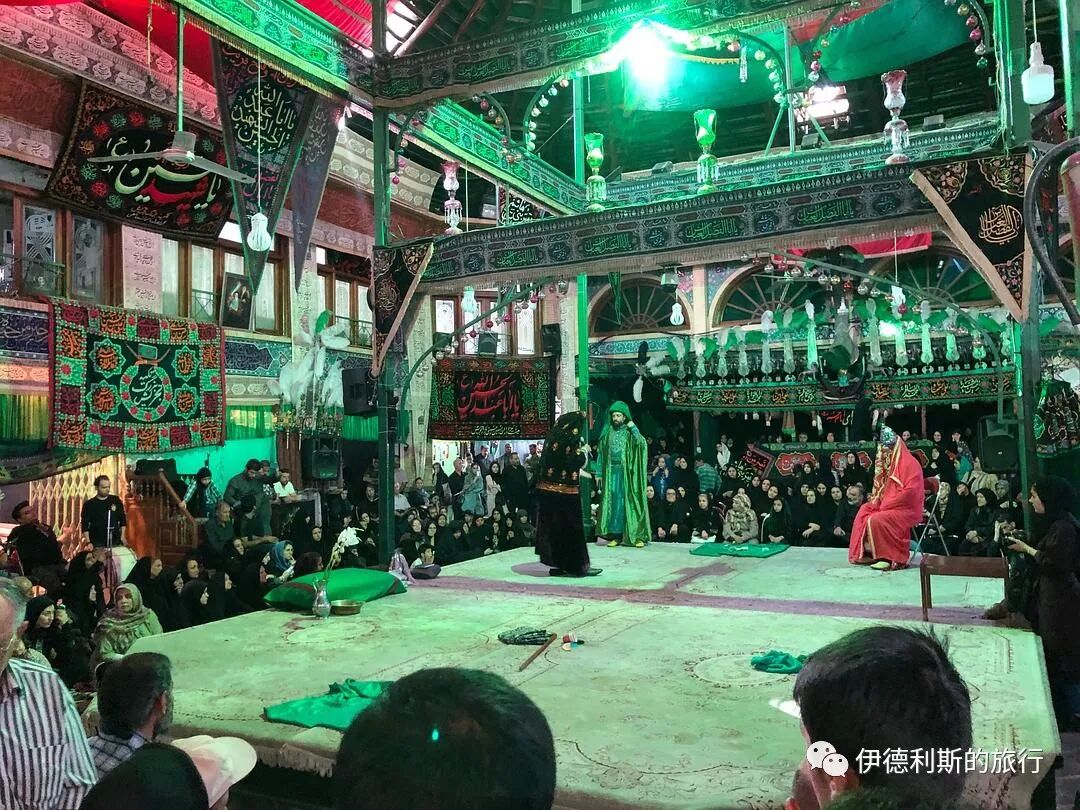
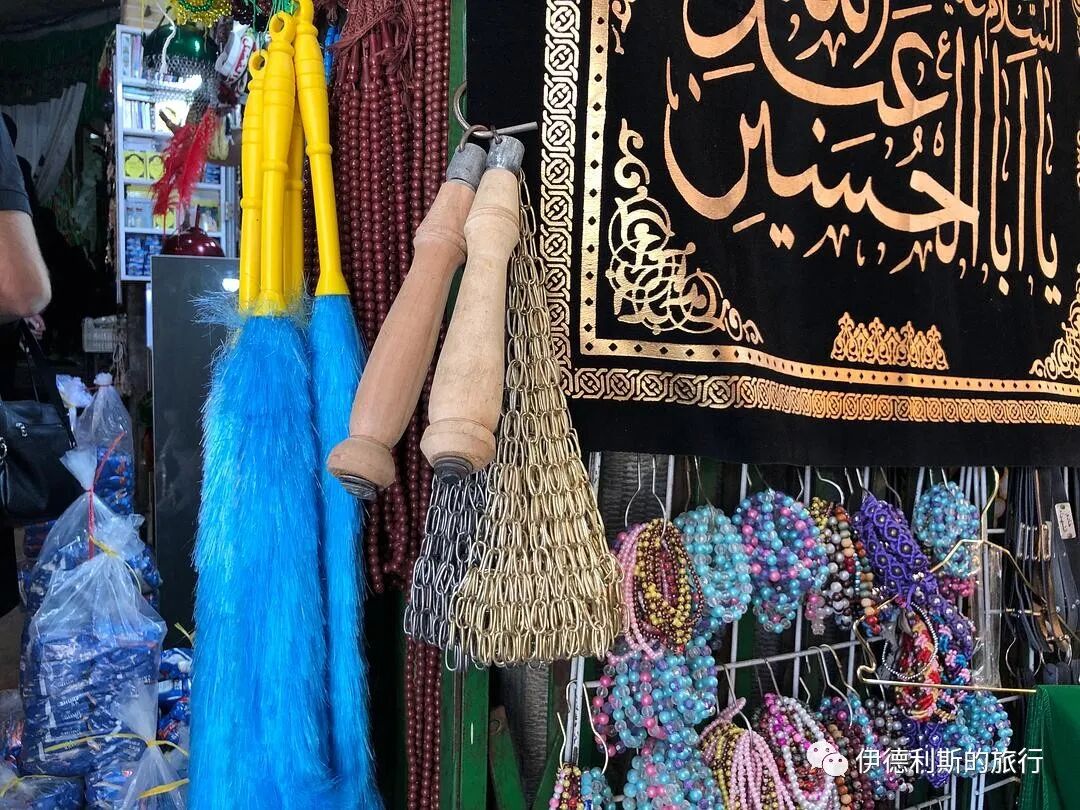
Outside the venue, there are some shops selling Shia supplies. The picture below shows the whips used during the flagellation (tatbir) ritual on Ashura, which recreates the scene of the Umayyad army whipping Imam Hussein's family. This ritual used to involve intense self-harm, but later, the Supreme Leader of Iran's Shia, Khamenei, publicly stated that during Ashura: 'Any act that harms the body is Haram (forbidden).' Therefore, you no longer see cases of self-harm during the festival in Tehran.
The red hat represents the villainous Umayyad dynasty, and the green hat represents the heroic Imam Hussein.
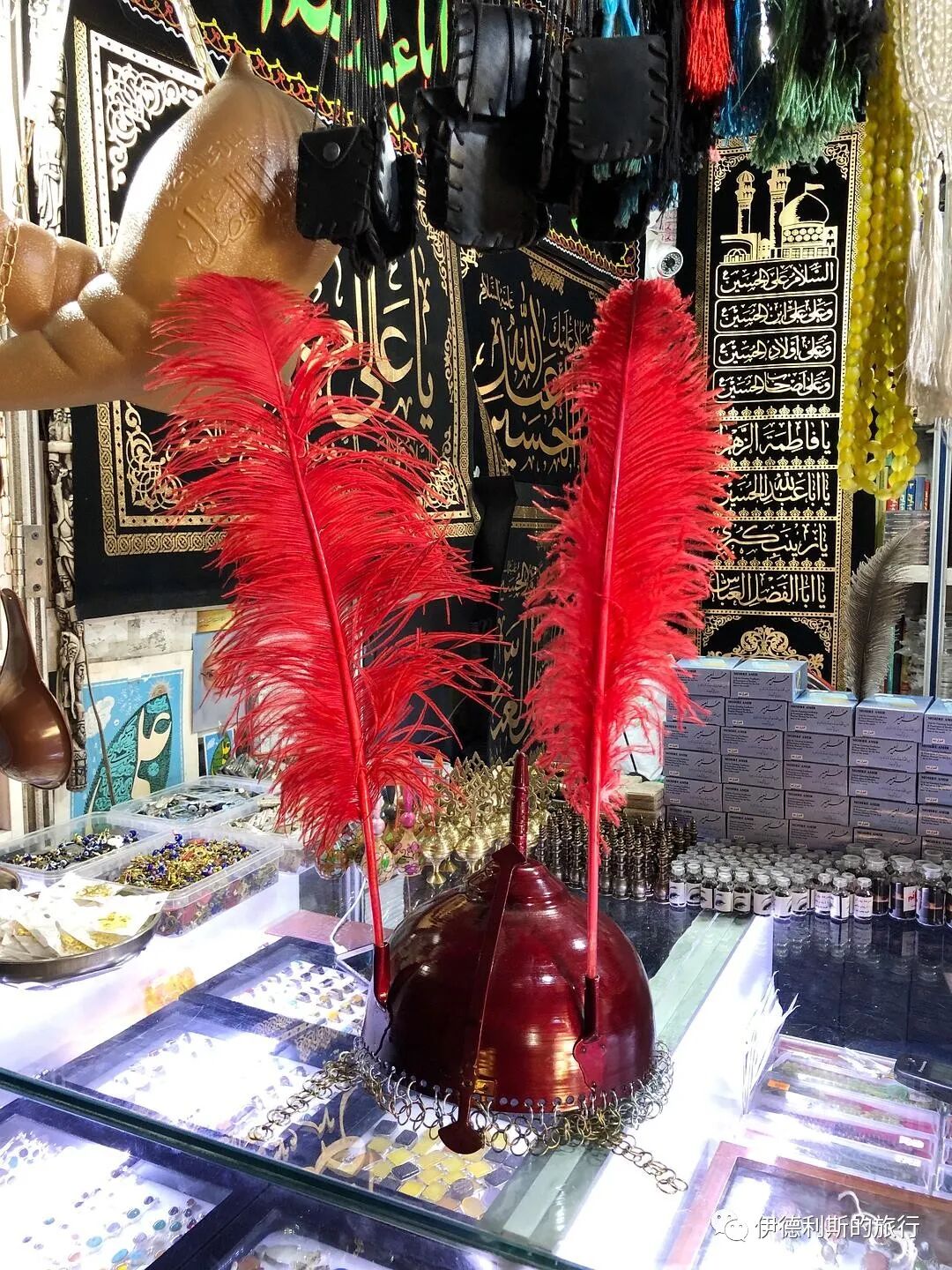
The lump of clay is called a Turbah, which symbolizes the earth; Shia Muslims must place their foreheads on it during prayer.
Turning out of Tajrish Bazaar, you reach the most important Shia shrine and mosque in northern Tehran, Imamzadeh Saleh, which houses the tomb of Saleh, the son of Musa al-Kadhim, the seventh Imam of the Twelver Shia. Today, the large wooden box inside the mausoleum dates back to the late Safavid dynasty to the Afsharid dynasty in the 18th century.
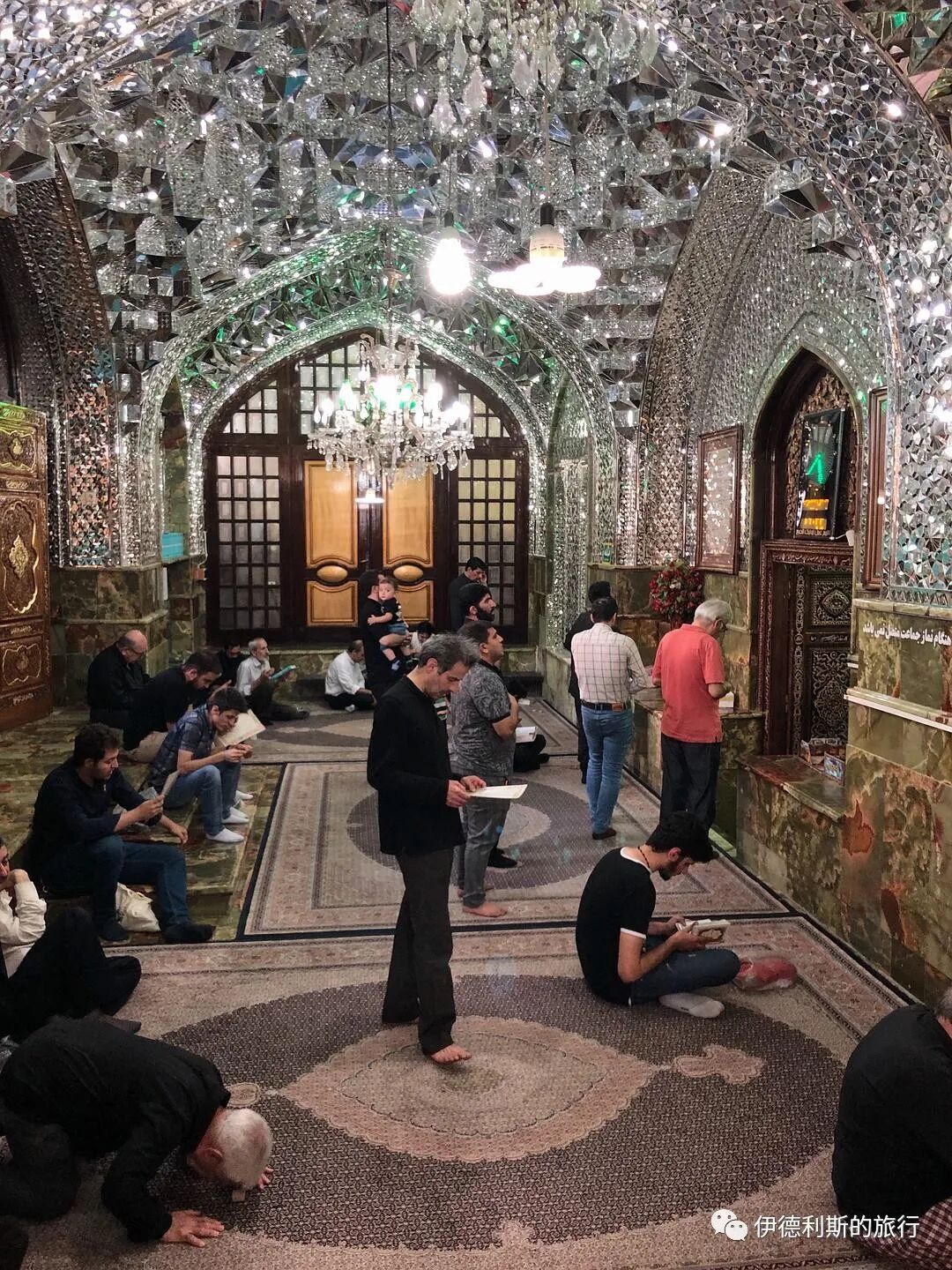
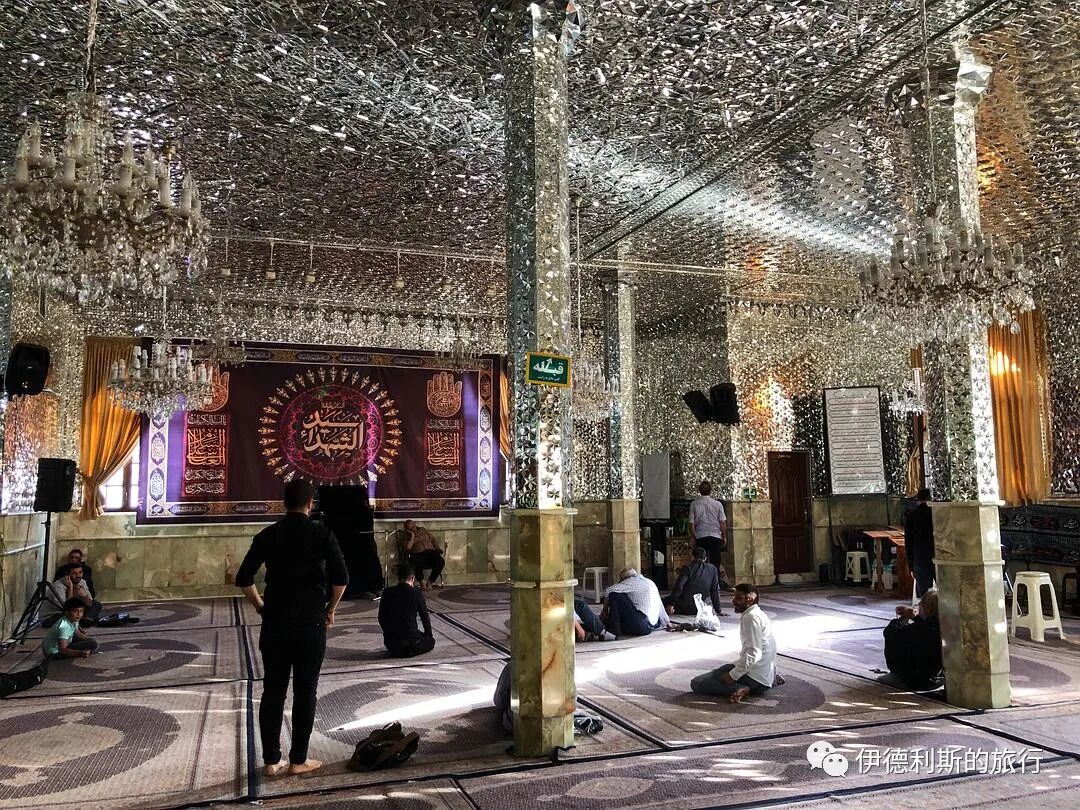
During the month of Muharram, Ta'zieh opera is also performed in the courtyard of Imamzadeh Saleh.
At the place where drinks are distributed for free at the entrance of Imamzadeh Saleh shrine and mosque, Khakshir (seeds of the Flixweed plant) is a very common drink in Iran during the summer to relieve heat and quench thirst.
Then, next to it, you can also see places selling various Shia supplies.
Muslim Travel Guide Iran Tehran: Vali-e-Asr Mosque, Hidden Modern Mosque Architecture and City Visit
Articles • yusuf908 posted the article • 0 comments • 169 views • 2026-05-23 22:48
Summary: This Iran Muslim travel guide follows a visit to Tehran's Vali-e-Asr Mosque, a modern mosque first noticed through an architecture article, with its hidden entrance, quiet indoor spaces, curved walls, simple prayer area, and a design that feels very different from classic mosque architecture.
Years ago, I read an article on the WeChat account Youth Architecture titled Can Religious Architecture Break Through Traditional Forms? | Modern Mosque Architecture (the article can still be searched online). It mentioned several mosques that were different from traditional buildings.
There were some in Singapore, some in Iran, and one in China. I went to Singapore a while ago, but did not have enough time to visit the mosque mentioned in that article. After landing in Iran, I remembered the article and searched for it, finding that the modern mosque in Iran was in the capital, Tehran.
I was in Tehran at the time. So, I found some time and specifically took a taxi there.
This mosque is next to the Tehran City Theater. It was not open when I first arrived, as Iranian mosques only open during prayer times (except for mausoleums).
I used this time to go to a cafe in the basement of the Tehran City Theater, where I ordered a coffee and a pastry. It cost me several 10 million rial notes, which I roughly estimated to be about 40 to 50 yuan.
When I finally entered this modern-looking mosque, I found it was truly worth the trip. This building is different from any mosque I have visited before. It does not seek symmetry in its layout, the ceiling is not rectangular, and you can even see light inlets that look like shark gills.
I looked around. It was mostly the same as the pictures in that article, but there were some extra decorations inside. The floor is now covered with carpets, and decorative calligraphy verses hang on the walls. A curtain in the middle separates the men's and women's prayer areas.
After finishing namaz, a man wearing glasses started handing out copies of the Qur'an, and he gave me one too. Then a man began to recite, and an older gentleman next to me pointed out exactly which chapter and verse he was reading. After the recitation, they served black tea. It was not bitter, and you could add sugar cubes to it.
I was about to leave after finishing my tea when a friendly mosque attendant stopped me to chat. He asked where I was from and if I was in Iran for work or something else. One man even called his friend to say that a Chinese person had come to the mosque. It felt like he had just met a celebrity.
A guy asked if I was Shia. When I said no, he tried to act calm, but I could tell he was a little disappointed. A young man joined our conversation. His English was good, and he said he used to go to school in the United States.
He asked where I was going next and offered to show me the way or help out. I am a bit shy and do not like to bother others, so I politely declined.
After heading out, I planned to go to the Freedom Tower and waited for a taxi by the side of the road, but I ran into a traffic jam again.
I also saw a car parked nearby with four Chinese characters, "Jing Hua Shui Yue" (flowers in the mirror and the moon in the water), and a sticker that said JDM, which originally meant Japanese Domestic Market cars but now refers to Japanese car modification culture. With the owner's permission, I took a photo of his beloved car. view all
Summary: This Iran Muslim travel guide follows a visit to Tehran's Vali-e-Asr Mosque, a modern mosque first noticed through an architecture article, with its hidden entrance, quiet indoor spaces, curved walls, simple prayer area, and a design that feels very different from classic mosque architecture.
Years ago, I read an article on the WeChat account Youth Architecture titled Can Religious Architecture Break Through Traditional Forms? | Modern Mosque Architecture (the article can still be searched online). It mentioned several mosques that were different from traditional buildings.
There were some in Singapore, some in Iran, and one in China. I went to Singapore a while ago, but did not have enough time to visit the mosque mentioned in that article. After landing in Iran, I remembered the article and searched for it, finding that the modern mosque in Iran was in the capital, Tehran.
I was in Tehran at the time. So, I found some time and specifically took a taxi there.
This mosque is next to the Tehran City Theater. It was not open when I first arrived, as Iranian mosques only open during prayer times (except for mausoleums).
I used this time to go to a cafe in the basement of the Tehran City Theater, where I ordered a coffee and a pastry. It cost me several 10 million rial notes, which I roughly estimated to be about 40 to 50 yuan.
When I finally entered this modern-looking mosque, I found it was truly worth the trip. This building is different from any mosque I have visited before. It does not seek symmetry in its layout, the ceiling is not rectangular, and you can even see light inlets that look like shark gills.
I looked around. It was mostly the same as the pictures in that article, but there were some extra decorations inside. The floor is now covered with carpets, and decorative calligraphy verses hang on the walls. A curtain in the middle separates the men's and women's prayer areas.
After finishing namaz, a man wearing glasses started handing out copies of the Qur'an, and he gave me one too. Then a man began to recite, and an older gentleman next to me pointed out exactly which chapter and verse he was reading. After the recitation, they served black tea. It was not bitter, and you could add sugar cubes to it.
I was about to leave after finishing my tea when a friendly mosque attendant stopped me to chat. He asked where I was from and if I was in Iran for work or something else. One man even called his friend to say that a Chinese person had come to the mosque. It felt like he had just met a celebrity.
A guy asked if I was Shia. When I said no, he tried to act calm, but I could tell he was a little disappointed. A young man joined our conversation. His English was good, and he said he used to go to school in the United States.
He asked where I was going next and offered to show me the way or help out. I am a bit shy and do not like to bother others, so I politely declined.
After heading out, I planned to go to the Freedom Tower and waited for a taxi by the side of the road, but I ran into a traffic jam again.
I also saw a car parked nearby with four Chinese characters, "Jing Hua Shui Yue" (flowers in the mirror and the moon in the water), and a sticker that said JDM, which originally meant Japanese Domestic Market cars but now refers to Japanese car modification culture. With the owner's permission, I took a photo of his beloved car.
Tehran Reza Abbasi Museum: Persian Miniatures, Ceramics and Islamic Art
Articles • ali2007fr posted the article • 0 comments • 186 views • 2026-05-18 02:39
Summary: Tehran Reza Abbasi Museum: Persian Miniatures, Ceramics and Islamic Art is presented here as a firsthand travel account in clear English, beginning with this scene: In the second half of 1978, strikes and protests almost paralyzed all of Iran, and the Reza Abbasi Museum was forced to close in November. The account keeps its focus on Tehran Travel, Islamic Art, Persian Miniatures while preserving the names, places, food, and historical details from the Chinese source.
In the second half of 1978, strikes and protests almost paralyzed all of Iran, and the Reza Abbasi Museum was forced to close in November. In 1979, the Pahlavi dynasty fell, the Islamic Republic of Iran was established, and the Reza Abbasi Museum reopened. After closing and reopening several more times, the museum is now managed by the Iranian Cultural Heritage Organization and houses various precious Iranian artifacts from prehistoric times to the Islamic period.
Table of Contents
1. Miniatures from the Shahnameh (Book of Kings)
1. Shahnameh miniatures from the Ilkhanate period
2. Shahnameh miniatures from the Timurid period
3. Shahnameh miniatures from the Safavid dynasty period
2. Miniatures from the Compendium of Chronicles (Jami' al-tawarikh) from the Timurid Empire period
3. Other miniatures
4. Pottery from the 9th to 10th centuries unearthed in the ancient city of Nishapur in Khorasan
5. Ceramics from the 12th to 14th centuries from the ancient Iranian city of Kashan
6. Iranian tiles from the 12th to 13th century Seljuk Empire and
the Ilkhanate period.
7. A gold-inlaid silver plate made in 1009 AD.
1. Miniatures from the Shahnameh (Book of Kings)
Persian miniature painting emerged during the Mongol invasion in the 13th century. During the Ilkhanate rule in the 13th and 14th centuries, the royal court moved often for seasonal changes, wars, and hunting. Portable books became the best surface for painting, and the art of miniatures continued to grow. The Mongols brought many Eastern artistic influences to Persian miniatures. For example, some mythical beasts were drawn to look like qilin, phoenixes, pixiu, and Chinese dragons.
Several centers for Persian miniature painting appeared between the 13th and 15th centuries. As the capital of the Ilkhanate, Tabriz was the earliest center for miniatures, and Baghdad, which was under Persian rule at the time, was also very important. In the mid-to-late 14th century, Shiraz in southern Iran became a center for literature and art, and Shiraz miniatures became world-famous. By the early 15th century, after the Timurid era, Bukhara and Herat became centers for miniatures under the patronage of the Timurid royal family. During this period, each miniature painting center had its own unique style. These styles did not gradually merge until the Safavid dynasty ruled in the 16th century.
1. Miniature paintings from the Book of Kings (Shahnameh) during the Ilkhanate period.
During the Ilkhanate period, miniature paintings based on classic Persian poetry began to appear. The most famous is the Persian epic poem Book of Kings (Shahnameh), written by the Persian poet Ferdowsi between 977 and 1010. It describes the myths and historical legends of the Persian Empire from its founding until it was conquered by the Arabs in the 7th century.
The earliest surviving Ilkhanate manuscripts of the Book of Kings are three small manuscripts. This small size was likely more convenient to carry while moving between nomadic camps.
The two images below are illustrations from the manuscript known as the First Small Book of Kings, which is believed to be in the late 13th-century Baghdad style.
This depicts the Iranian prince Salm killing his younger brother Iraj out of jealousy. Years later, Iraj's grandson, the legendary king Manuchehr, killed Salm to avenge his grandfather.
The two images below are illustrations from the manuscript known as the Second Small Book of Kings, which is believed to be in the late 13th-century Baghdad style.
This depicts the Kabul princess Rudaba talking to her female slave so she could meet her husband, the Iranian king Zal. Rudaba is the mother of the legendary hero Rostam, the protagonist of the Book of Kings.
This depicts Ardashir, the founder of the Persian Sasanian dynasty, receiving a warning from his enemy Haftvād.
There are four other manuscripts produced in the early 14th century by the Injuid family, who ruled the Shiraz and Isfahan regions of southern Iran and were semi-independent from the Ilkhanate.
The image below is one of these, done in the Shiraz style. It shows the Iranian hero Bahram being mortally wounded by Tazhav while fighting the Turanians (the Persian name for Central Asian people), a scene from shortly before his death.
Among the Shahnameh manuscripts from the Ilkhanate period, the most famous one is known as the Great Mongol Shahnameh, the Great Ilkhanid Shahnameh, or the Demotte Shahnameh. It is considered the greatest work of early Persian miniature painting.
In the early 14th century, the Persian Jewish vizier of the Ilkhanate, Rashid al-Din, set up a book production department in the suburbs of the Ilkhanate capital, Tabriz, specifically to create books containing miniature paintings. After Rashid al-Din died in 1318, his son Ghiyath al-Din Muhammad continued his father's work by producing miniature manuscripts in the 1330s.
Based on research by later historians, it is believed that Ghiyath al-Din Muhammad produced the Great Mongol Shahnameh manuscript in Tabriz in 1335, under the patronage of the ninth Ilkhanid ruler, Abu Sa'id Bahadur Khan (reigned 1316–1335).
The Great Mongol Shahnameh was kept in Tabriz until the 16th century, after which it entered the library of the Golestan Palace in Tehran. In the late 19th century, taking photographs of the manuscript was still restricted.
In the early 20th century, the Belgian art dealer Georges Demotte, who was active in Paris, acquired the Great Mongol Shahnameh. Because he could not get a suitable price from potential buyers like the Metropolitan Museum of Art, Demotte eventually tore the manuscript apart to sell it in pieces. To hide the damage caused by tearing the book apart, Demotte hired calligraphers to add new text to the manuscript, which greatly annoyed buyers who could read Persian.
The image below is an illustration from the Tabriz-style Great Mongol Shahnameh, depicting the hanging of Mani.
2. Shahnameh miniature paintings from the Timurid dynasty
During the Timurid dynasty, Bukhara became a center for producing the Book of Kings (Shahnameh).
The image below shows a late 14th-century illustration of the Book of Kings in the Herat style, depicting the Iranian hero Bahram shooting his prey.
The image below shows an early 15th-century miniature painting of the Book of Kings in the Bukhara style, depicting Garsiwaz killing his brother, the Turanian king Afrasiab.
3. Miniature paintings of the Book of Kings from the Safavid dynasty period
During the Safavid dynasty's rule over Iran in the 16th and 17th centuries, the production of Book of Kings miniature paintings saw a revival. Ismail I (reigned 1502-1524), the founder of the Safavid dynasty, used the production of Book of Kings manuscripts to emphasize the authority of Persian kings and to strengthen Persian patriotism. Later generations consider the miniature painting created during the Safavid period to be the last great era of the art form.
A 16th-century miniature painting of the Book of Kings in the Tabriz style, depicting the hero Esfandiyar slaying a dragon. Esfandiyar was an Iranian prince, and his father once sent him to suppress a rebellion and rescue a kidnapped princess. On his journey, he fought seven different battles, one of which was killing a dragon.
A 16th-century miniature painting of the Book of Kings in the Tabriz style, depicting the legendary hero Rostam fighting his enemies.
A late 16th-century miniature painting of the Book of Kings in the Khorasan style, depicting the Turanian king Afrasiab being led out of a cave by Houm.
A 16th-century Shiraz-style miniature painting from the Shahnameh, showing the Iranian hero Bahram on his way to Egypt.
A 16th-century Tabriz-style miniature painting from the Shahnameh, showing the war between Darab, Shoaib, and the Arabs.
A late 16th-century Shiraz-style miniature painting from the Shahnameh.
A 17th-century Shiraz-style miniature painting from the Shahnameh, showing the war between the legendary King Kay Khosrow of the Iranian Kayanian dynasty and King Shideh of Turan.
3 Produced by Tahmasp I of the Safavid dynasty.
Tahmasbi Shahnameh miniature painting.
The Tahmasbi Shahnameh, also called the Houghton Shahnameh, was commissioned by Tahmasp I (reigned 1524-1576) of the Safavid dynasty. The greatest painters of the Safavid era worked on it, and it originally included 258 miniature paintings. Because the Safavid capital was in Tabriz at the time, the Tahmasbi Shahnameh has a Tabriz style.
In 1959, the famous collector Arthur Houghton bought this Shahnameh from the wealthy French Jew Edmond de Rothschild. Only 118 miniature paintings remained at that time.
Since 1962, Arthur Houghton broke up the Tahmasbi Shahnameh and donated 88 of the paintings to the Metropolitan Museum of Art in New York to avoid taxes (Houghton had served as the president of the Metropolitan Museum of Art for many years). After that, Houghton auctioned off the miniature paintings several times. After Houghton died in 1990, the Houghton Foundation decided to sell the collection for 13 million dollars, but no one bought it because the price was too high. British seller Oliver Hoare suggested that Iran trade the remaining Shahnameh miniatures for the painting Lady No. 3 by Dutch artist Willem de Kooning, because the painting was banned from public display in Iran for being anti-Islamic. In the end, the Tahmasbi Shahnameh returned to Iran.
The image below shows the Sassanid king Bahram Chobin (reigned 590-591) fighting Sava Shah.
A Shahnameh miniature produced by Ismail II of the Safavid dynasty.
Ismail II (reigned 1576-1577) was the third ruler of the Safavid dynasty. At that time, the Safavid capital was Qazvin, Iran (1548–1598), so the miniatures from this period have a Qazvin style.
The image below shows the author of the Shahnameh, Ferdowsi, walking toward several court poets of the Ghaznavids. An enlarged version of this miniature is posted in the hall right at the entrance of the Reza Abbasi Museum. It is also the cover of the book Entering the Orchard in Spring.
Reproduction:
The image below shows the legendary Iranian prince Siavash undergoing a trial by fire, while his father, the Iranian king Kay Kavus, and his stepmother, Queen Sudabeh, watch from a balcony.
The image below shows Siavash hunting with the Turanian king Afrasiyab. The second part of the Shahnameh says that Siavash willingly became a hostage in Turan so that Iran and Turan could have peace. However, the king broke the peace treaty and committed a series of atrocities, which made Siavash decide to start a new life in Turan. King Afrasiyab of Turan gave Siavash a warm welcome, and Siavash fell in love with the king's daughter and married her.
The image below shows the story of the mythical bird Simurgh taking care of the great hero Zal. Simurgh is a kind mythical bird in Iranian legends, similar to a phoenix. It appears often in various Iranian myths, most famously in the Shahnameh.
In the Shahnameh, the Iranian hero Saam's son, Zal, was born with albinism. Saam thought his son was a demon's child, so he abandoned him on Mount Alborz. The kind Simurgh living on the mountain peak heard the baby crying and raised him. Zal learned much wisdom and knowledge from the loving Simurgh.
In the picture, the mythical bird Simurgh is holding the baby Zal, and below them is Zal's father, Saam.
The image below shows the scene of the Iranian hero Esfandiyar slaying a dragon. Esfandiyar was an Iranian prince, and his father once sent him to suppress a rebellion and rescue a kidnapped princess. On his journey, he fought seven different battles, one of which was killing a dragon.
The image below shows the scene of the Iranian hero Esfandiyar killing the Turanian hero Biderafsh. When the King of Turan learned that the Iranians had converted to Zoroastrianism, he wrote a letter to the King of Iran demanding they abandon their faith and sent Biderafsh as a messenger to Iran. The King of Iran refused the demand, which started a war between Turan and Iran. During the war, Biderafsh was killed by the Iranian hero Esfandiyār.
The image below shows the legendary Iranian King Kay Khosrow talking with the Iranian heroes Zal, Rostam, and others.
The image below shows the legendary Iranian King Kay Khosrow crossing a river with his mother Farangis and the hero Giv.
The image below shows the King of Yemen, Sarv, sitting on his throne with his three daughters on his left and the three sons of the mythical Iranian King Fereydun on his right.
The image below shows the Iranians surrounded by the Turanian army on Mount Hamawan as they watch reinforcements arrive.
The image below depicts the tragic story between the Iranian hero Rostam and his son Sohrab. Once, Rostam followed the tracks of his lost horse to the Kingdom of Samangan, where he met Princess Tahmina. The princess admired Rostam greatly, so she came to his room at night and said that if he gave her a child, she would return his horse. Rostam agreed and did so. Before leaving, Rostam gave the princess two tokens. If she gave birth to a girl, she should braid the tokens into the child's hair along with some jewelry. If it was a boy, they tied the token to the child's arm. Later, the princess gave birth to a boy and named him Sohrab.
Many years later, Iran and Turan went to war. As a legendary hero of Iran, Rostam forced the Turan army to retreat, and no one dared to face him. Eventually, Sohrab and Rostam fought each other. Although he knew his father was named Rostam, he did not know that the man in front of him was his father. After a long battle, Rostam finally broke Sohrab's back and stabbed him. Before he died, Sohrab said his father would avenge him, and that was when the father and son finally recognized each other. Sohrab took out the token his mother had given him. Rostam was heartbroken, but he could not save his son.
Other miniature paintings in the Qazvin style.
The image below is a 16th-century Qazvin-style miniature painting from Saadi's The Orchard (Bustan).
The Orchard (Bustan) is a collection of lyric poems completed by the famous Persian poet Saadi in 1257. It is considered one of Saadi's two greatest works, alongside The Rose Garden (Golestan).
2. Miniatures from the Compendium of Chronicles (Jami' al-tawarikh) from the Timurid Empire period
The Compendium of Chronicles (Jami' al-tawarikh) is a world history book from the Ilkhanate period. It was commissioned by the seventh Ilkhan, Ghazan (reigned 1295-1304), and edited by his vizier and scholar Rashid-al-Din Hamadani. Because of its scope, the book is known as the first world history. It covers various histories, cultures, and major events from China to Europe.
By the early 14th century, the Mongols of the Ilkhanate had settled down and adopted Persian cultural customs. Ghazan's original idea was to write a book that preserved the traditions of the Ilkhanate Mongols by explaining their history on the steppes. To compile the history, Rashid-al-Din set up a special area at the Rab'-e Rashidi university in the Ilkhanate capital of Tabriz. This area included many buildings such as a mosque, a hospital, a library, and classrooms.
After Ghazan died in 1304, his successor, Öljaitü (reigned 1304-1316), asked Rashid-al-Din to expand the scope of the compilation to cover the entire known world history. The Compendium of Chronicles was finally completed between 1306 and 1311. Afterward, Rashid-al-Din organized hundreds of miniature painters and calligraphers to produce one Persian copy and one Arabic copy of the Compendium of Chronicles every year to distribute to schools throughout the Ilkhanate. Rashid-al-Din produced 20 copies of the Compendium of Chronicles during his lifetime, which are known as the first-generation manuscripts. Only a very small number have survived, and they are extremely precious examples of early Persian miniature painting.
In the early 15th century, the Timurid Empire replaced the Ilkhanate as the ruler of Iran and took a great interest in the Compendium of Chronicles. At that time, Shah Rukh (reigned 1405-1447), the ruler of the eastern part of the Timurid Empire, owned an incomplete manuscript of the Compendium of Chronicles. He commissioned the court historian Hafiz-i Abru to continue the work in Herat, Afghanistan, which was Shah Rukh's capital. The continuation brought the content up to the Timurid era, and the miniature paintings in it have a typical Timurid style.
3. Other miniatures
A 16th-century miniature painting from Saadi's The Rose Garden (Gulistan).
Saadi Shirazi was a famous 13th-century Persian poet. He is widely considered one of the greatest poets in classical Persian literature and has had a huge influence on later generations. The Rose Garden (Gulistan, literally meaning 'rose garden') is a masterpiece of classical Persian literature. Saadi wrote it in 1258, and it is a collection of poems and stories.
The image below shows a 16th-century miniature painting of The Rose Garden in the Herat style from the Safavid dynasty.
A 15th to 16th-century miniature painting in the Bukhara style.
A 15th-century miniature painting from the Timurid dynasty in the Bukhara style, depicting 'Imam Ali slaying a dragon' in the Khavaran-Nameh.
A 15th-century miniature painting of Saadi's The Orchard (Bustan) in the Bukhara style.
A 16th-century miniature painting in the Bukhara style.
A miniature painting in the Khorasan style.
A 15th-century miniature painting of The Garden of Truth (The Hadiqa Tul Haqiqat) in the Khorasan style. The original work is by the famous 11th to 12th-century Persian Sufi poet Sanai, and The Garden of Truth is his masterpiece.
A miniature painting in the Shiraz style.
16th-century Shiraz-style miniature painting.
Herat-style miniature painting.
1592 Herat-style miniature painting showing two people in a garden.
4. Pottery from the 9th to 10th centuries unearthed in the ancient Khorasan city of Nishapur.
Nishapur is located on the ancient Silk Road in northeastern Iran and was once one of the four major cities in the Greater Khorasan region. In the 9th century, Nishapur became the capital of the Persian Tahirid dynasty. Under the rule of the Persian Samanid dynasty in the 10th century, Nishapur grew into an important cultural and commercial center of the Islamic world. Various cultures and religions gathered here, and trade routes from Transoxiana in Central Asia, China, Iraq, and Egypt met in this city. The glazed pottery produced in Nishapur at that time became an important trade commodity in the West, once rivaling Baghdad and Cairo.
In 1221, the Mongols massacred the population of Nishapur and completely destroyed the city, burying the former metropolis underground. It was not until the mid-20th century that the site was rediscovered through archaeological excavations. Today, most of the unearthed Nishapur ceramics are kept at the Metropolitan Museum of Art, as well as in museums in Tehran and Mashhad.
5. Ceramics from the 12th to 14th centuries from the ancient Iranian city of Kashan
Kashan is south of Tehran. During the Seljuk Empire and Ilkhanate rule from the 12th to 14th centuries, it was a major center for making high-quality pottery and tiles in Iran. In modern Persian, the word for tile (kashi) comes from Kashan.
6. Iranian tiles from the Seljuk Empire and Ilkhanate period, 12th to 13th centuries.
The tiles have a very unique style.
7. A gold-inlaid silver plate made in 1009 AD.
They feature beautiful Kufic calligraphy. At that time, the Buyid dynasty ruled western Iran, and the Ghaznavid dynasty ruled the east. view all
Summary: Tehran Reza Abbasi Museum: Persian Miniatures, Ceramics and Islamic Art is presented here as a firsthand travel account in clear English, beginning with this scene: In the second half of 1978, strikes and protests almost paralyzed all of Iran, and the Reza Abbasi Museum was forced to close in November. The account keeps its focus on Tehran Travel, Islamic Art, Persian Miniatures while preserving the names, places, food, and historical details from the Chinese source.
In the second half of 1978, strikes and protests almost paralyzed all of Iran, and the Reza Abbasi Museum was forced to close in November. In 1979, the Pahlavi dynasty fell, the Islamic Republic of Iran was established, and the Reza Abbasi Museum reopened. After closing and reopening several more times, the museum is now managed by the Iranian Cultural Heritage Organization and houses various precious Iranian artifacts from prehistoric times to the Islamic period.
Table of Contents
1. Miniatures from the Shahnameh (Book of Kings)
1. Shahnameh miniatures from the Ilkhanate period
2. Shahnameh miniatures from the Timurid period
3. Shahnameh miniatures from the Safavid dynasty period
2. Miniatures from the Compendium of Chronicles (Jami' al-tawarikh) from the Timurid Empire period
3. Other miniatures
4. Pottery from the 9th to 10th centuries unearthed in the ancient city of Nishapur in Khorasan
5. Ceramics from the 12th to 14th centuries from the ancient Iranian city of Kashan
6. Iranian tiles from the 12th to 13th century Seljuk Empire and
the Ilkhanate period.
7. A gold-inlaid silver plate made in 1009 AD.
1. Miniatures from the Shahnameh (Book of Kings)
Persian miniature painting emerged during the Mongol invasion in the 13th century. During the Ilkhanate rule in the 13th and 14th centuries, the royal court moved often for seasonal changes, wars, and hunting. Portable books became the best surface for painting, and the art of miniatures continued to grow. The Mongols brought many Eastern artistic influences to Persian miniatures. For example, some mythical beasts were drawn to look like qilin, phoenixes, pixiu, and Chinese dragons.
Several centers for Persian miniature painting appeared between the 13th and 15th centuries. As the capital of the Ilkhanate, Tabriz was the earliest center for miniatures, and Baghdad, which was under Persian rule at the time, was also very important. In the mid-to-late 14th century, Shiraz in southern Iran became a center for literature and art, and Shiraz miniatures became world-famous. By the early 15th century, after the Timurid era, Bukhara and Herat became centers for miniatures under the patronage of the Timurid royal family. During this period, each miniature painting center had its own unique style. These styles did not gradually merge until the Safavid dynasty ruled in the 16th century.
1. Miniature paintings from the Book of Kings (Shahnameh) during the Ilkhanate period.
During the Ilkhanate period, miniature paintings based on classic Persian poetry began to appear. The most famous is the Persian epic poem Book of Kings (Shahnameh), written by the Persian poet Ferdowsi between 977 and 1010. It describes the myths and historical legends of the Persian Empire from its founding until it was conquered by the Arabs in the 7th century.
The earliest surviving Ilkhanate manuscripts of the Book of Kings are three small manuscripts. This small size was likely more convenient to carry while moving between nomadic camps.
The two images below are illustrations from the manuscript known as the First Small Book of Kings, which is believed to be in the late 13th-century Baghdad style.
This depicts the Iranian prince Salm killing his younger brother Iraj out of jealousy. Years later, Iraj's grandson, the legendary king Manuchehr, killed Salm to avenge his grandfather.
The two images below are illustrations from the manuscript known as the Second Small Book of Kings, which is believed to be in the late 13th-century Baghdad style.
This depicts the Kabul princess Rudaba talking to her female slave so she could meet her husband, the Iranian king Zal. Rudaba is the mother of the legendary hero Rostam, the protagonist of the Book of Kings.
This depicts Ardashir, the founder of the Persian Sasanian dynasty, receiving a warning from his enemy Haftvād.
There are four other manuscripts produced in the early 14th century by the Injuid family, who ruled the Shiraz and Isfahan regions of southern Iran and were semi-independent from the Ilkhanate.
The image below is one of these, done in the Shiraz style. It shows the Iranian hero Bahram being mortally wounded by Tazhav while fighting the Turanians (the Persian name for Central Asian people), a scene from shortly before his death.
Among the Shahnameh manuscripts from the Ilkhanate period, the most famous one is known as the Great Mongol Shahnameh, the Great Ilkhanid Shahnameh, or the Demotte Shahnameh. It is considered the greatest work of early Persian miniature painting.
In the early 14th century, the Persian Jewish vizier of the Ilkhanate, Rashid al-Din, set up a book production department in the suburbs of the Ilkhanate capital, Tabriz, specifically to create books containing miniature paintings. After Rashid al-Din died in 1318, his son Ghiyath al-Din Muhammad continued his father's work by producing miniature manuscripts in the 1330s.
Based on research by later historians, it is believed that Ghiyath al-Din Muhammad produced the Great Mongol Shahnameh manuscript in Tabriz in 1335, under the patronage of the ninth Ilkhanid ruler, Abu Sa'id Bahadur Khan (reigned 1316–1335).
The Great Mongol Shahnameh was kept in Tabriz until the 16th century, after which it entered the library of the Golestan Palace in Tehran. In the late 19th century, taking photographs of the manuscript was still restricted.
In the early 20th century, the Belgian art dealer Georges Demotte, who was active in Paris, acquired the Great Mongol Shahnameh. Because he could not get a suitable price from potential buyers like the Metropolitan Museum of Art, Demotte eventually tore the manuscript apart to sell it in pieces. To hide the damage caused by tearing the book apart, Demotte hired calligraphers to add new text to the manuscript, which greatly annoyed buyers who could read Persian.
The image below is an illustration from the Tabriz-style Great Mongol Shahnameh, depicting the hanging of Mani.
2. Shahnameh miniature paintings from the Timurid dynasty
During the Timurid dynasty, Bukhara became a center for producing the Book of Kings (Shahnameh).
The image below shows a late 14th-century illustration of the Book of Kings in the Herat style, depicting the Iranian hero Bahram shooting his prey.
The image below shows an early 15th-century miniature painting of the Book of Kings in the Bukhara style, depicting Garsiwaz killing his brother, the Turanian king Afrasiab.
3. Miniature paintings of the Book of Kings from the Safavid dynasty period
During the Safavid dynasty's rule over Iran in the 16th and 17th centuries, the production of Book of Kings miniature paintings saw a revival. Ismail I (reigned 1502-1524), the founder of the Safavid dynasty, used the production of Book of Kings manuscripts to emphasize the authority of Persian kings and to strengthen Persian patriotism. Later generations consider the miniature painting created during the Safavid period to be the last great era of the art form.
A 16th-century miniature painting of the Book of Kings in the Tabriz style, depicting the hero Esfandiyar slaying a dragon. Esfandiyar was an Iranian prince, and his father once sent him to suppress a rebellion and rescue a kidnapped princess. On his journey, he fought seven different battles, one of which was killing a dragon.
A 16th-century miniature painting of the Book of Kings in the Tabriz style, depicting the legendary hero Rostam fighting his enemies.
A late 16th-century miniature painting of the Book of Kings in the Khorasan style, depicting the Turanian king Afrasiab being led out of a cave by Houm.
A 16th-century Shiraz-style miniature painting from the Shahnameh, showing the Iranian hero Bahram on his way to Egypt.
A 16th-century Tabriz-style miniature painting from the Shahnameh, showing the war between Darab, Shoaib, and the Arabs.
A late 16th-century Shiraz-style miniature painting from the Shahnameh.
A 17th-century Shiraz-style miniature painting from the Shahnameh, showing the war between the legendary King Kay Khosrow of the Iranian Kayanian dynasty and King Shideh of Turan.
3 Produced by Tahmasp I of the Safavid dynasty.
Tahmasbi Shahnameh miniature painting.
The Tahmasbi Shahnameh, also called the Houghton Shahnameh, was commissioned by Tahmasp I (reigned 1524-1576) of the Safavid dynasty. The greatest painters of the Safavid era worked on it, and it originally included 258 miniature paintings. Because the Safavid capital was in Tabriz at the time, the Tahmasbi Shahnameh has a Tabriz style.
In 1959, the famous collector Arthur Houghton bought this Shahnameh from the wealthy French Jew Edmond de Rothschild. Only 118 miniature paintings remained at that time.
Since 1962, Arthur Houghton broke up the Tahmasbi Shahnameh and donated 88 of the paintings to the Metropolitan Museum of Art in New York to avoid taxes (Houghton had served as the president of the Metropolitan Museum of Art for many years). After that, Houghton auctioned off the miniature paintings several times. After Houghton died in 1990, the Houghton Foundation decided to sell the collection for 13 million dollars, but no one bought it because the price was too high. British seller Oliver Hoare suggested that Iran trade the remaining Shahnameh miniatures for the painting Lady No. 3 by Dutch artist Willem de Kooning, because the painting was banned from public display in Iran for being anti-Islamic. In the end, the Tahmasbi Shahnameh returned to Iran.
The image below shows the Sassanid king Bahram Chobin (reigned 590-591) fighting Sava Shah.
A Shahnameh miniature produced by Ismail II of the Safavid dynasty.
Ismail II (reigned 1576-1577) was the third ruler of the Safavid dynasty. At that time, the Safavid capital was Qazvin, Iran (1548–1598), so the miniatures from this period have a Qazvin style.
The image below shows the author of the Shahnameh, Ferdowsi, walking toward several court poets of the Ghaznavids. An enlarged version of this miniature is posted in the hall right at the entrance of the Reza Abbasi Museum. It is also the cover of the book Entering the Orchard in Spring.
Reproduction:
The image below shows the legendary Iranian prince Siavash undergoing a trial by fire, while his father, the Iranian king Kay Kavus, and his stepmother, Queen Sudabeh, watch from a balcony.
The image below shows Siavash hunting with the Turanian king Afrasiyab. The second part of the Shahnameh says that Siavash willingly became a hostage in Turan so that Iran and Turan could have peace. However, the king broke the peace treaty and committed a series of atrocities, which made Siavash decide to start a new life in Turan. King Afrasiyab of Turan gave Siavash a warm welcome, and Siavash fell in love with the king's daughter and married her.
The image below shows the story of the mythical bird Simurgh taking care of the great hero Zal. Simurgh is a kind mythical bird in Iranian legends, similar to a phoenix. It appears often in various Iranian myths, most famously in the Shahnameh.
In the Shahnameh, the Iranian hero Saam's son, Zal, was born with albinism. Saam thought his son was a demon's child, so he abandoned him on Mount Alborz. The kind Simurgh living on the mountain peak heard the baby crying and raised him. Zal learned much wisdom and knowledge from the loving Simurgh.
In the picture, the mythical bird Simurgh is holding the baby Zal, and below them is Zal's father, Saam.
The image below shows the scene of the Iranian hero Esfandiyar slaying a dragon. Esfandiyar was an Iranian prince, and his father once sent him to suppress a rebellion and rescue a kidnapped princess. On his journey, he fought seven different battles, one of which was killing a dragon.
The image below shows the scene of the Iranian hero Esfandiyar killing the Turanian hero Biderafsh. When the King of Turan learned that the Iranians had converted to Zoroastrianism, he wrote a letter to the King of Iran demanding they abandon their faith and sent Biderafsh as a messenger to Iran. The King of Iran refused the demand, which started a war between Turan and Iran. During the war, Biderafsh was killed by the Iranian hero Esfandiyār.
The image below shows the legendary Iranian King Kay Khosrow talking with the Iranian heroes Zal, Rostam, and others.
The image below shows the legendary Iranian King Kay Khosrow crossing a river with his mother Farangis and the hero Giv.
The image below shows the King of Yemen, Sarv, sitting on his throne with his three daughters on his left and the three sons of the mythical Iranian King Fereydun on his right.
The image below shows the Iranians surrounded by the Turanian army on Mount Hamawan as they watch reinforcements arrive.
The image below depicts the tragic story between the Iranian hero Rostam and his son Sohrab. Once, Rostam followed the tracks of his lost horse to the Kingdom of Samangan, where he met Princess Tahmina. The princess admired Rostam greatly, so she came to his room at night and said that if he gave her a child, she would return his horse. Rostam agreed and did so. Before leaving, Rostam gave the princess two tokens. If she gave birth to a girl, she should braid the tokens into the child's hair along with some jewelry. If it was a boy, they tied the token to the child's arm. Later, the princess gave birth to a boy and named him Sohrab.
Many years later, Iran and Turan went to war. As a legendary hero of Iran, Rostam forced the Turan army to retreat, and no one dared to face him. Eventually, Sohrab and Rostam fought each other. Although he knew his father was named Rostam, he did not know that the man in front of him was his father. After a long battle, Rostam finally broke Sohrab's back and stabbed him. Before he died, Sohrab said his father would avenge him, and that was when the father and son finally recognized each other. Sohrab took out the token his mother had given him. Rostam was heartbroken, but he could not save his son.
Other miniature paintings in the Qazvin style.
The image below is a 16th-century Qazvin-style miniature painting from Saadi's The Orchard (Bustan).
The Orchard (Bustan) is a collection of lyric poems completed by the famous Persian poet Saadi in 1257. It is considered one of Saadi's two greatest works, alongside The Rose Garden (Golestan).
2. Miniatures from the Compendium of Chronicles (Jami' al-tawarikh) from the Timurid Empire period
The Compendium of Chronicles (Jami' al-tawarikh) is a world history book from the Ilkhanate period. It was commissioned by the seventh Ilkhan, Ghazan (reigned 1295-1304), and edited by his vizier and scholar Rashid-al-Din Hamadani. Because of its scope, the book is known as the first world history. It covers various histories, cultures, and major events from China to Europe.
By the early 14th century, the Mongols of the Ilkhanate had settled down and adopted Persian cultural customs. Ghazan's original idea was to write a book that preserved the traditions of the Ilkhanate Mongols by explaining their history on the steppes. To compile the history, Rashid-al-Din set up a special area at the Rab'-e Rashidi university in the Ilkhanate capital of Tabriz. This area included many buildings such as a mosque, a hospital, a library, and classrooms.
After Ghazan died in 1304, his successor, Öljaitü (reigned 1304-1316), asked Rashid-al-Din to expand the scope of the compilation to cover the entire known world history. The Compendium of Chronicles was finally completed between 1306 and 1311. Afterward, Rashid-al-Din organized hundreds of miniature painters and calligraphers to produce one Persian copy and one Arabic copy of the Compendium of Chronicles every year to distribute to schools throughout the Ilkhanate. Rashid-al-Din produced 20 copies of the Compendium of Chronicles during his lifetime, which are known as the first-generation manuscripts. Only a very small number have survived, and they are extremely precious examples of early Persian miniature painting.
In the early 15th century, the Timurid Empire replaced the Ilkhanate as the ruler of Iran and took a great interest in the Compendium of Chronicles. At that time, Shah Rukh (reigned 1405-1447), the ruler of the eastern part of the Timurid Empire, owned an incomplete manuscript of the Compendium of Chronicles. He commissioned the court historian Hafiz-i Abru to continue the work in Herat, Afghanistan, which was Shah Rukh's capital. The continuation brought the content up to the Timurid era, and the miniature paintings in it have a typical Timurid style.
3. Other miniatures
A 16th-century miniature painting from Saadi's The Rose Garden (Gulistan).
Saadi Shirazi was a famous 13th-century Persian poet. He is widely considered one of the greatest poets in classical Persian literature and has had a huge influence on later generations. The Rose Garden (Gulistan, literally meaning 'rose garden') is a masterpiece of classical Persian literature. Saadi wrote it in 1258, and it is a collection of poems and stories.
The image below shows a 16th-century miniature painting of The Rose Garden in the Herat style from the Safavid dynasty.
A 15th to 16th-century miniature painting in the Bukhara style.
A 15th-century miniature painting from the Timurid dynasty in the Bukhara style, depicting 'Imam Ali slaying a dragon' in the Khavaran-Nameh.
A 15th-century miniature painting of Saadi's The Orchard (Bustan) in the Bukhara style.
A 16th-century miniature painting in the Bukhara style.
A miniature painting in the Khorasan style.
A 15th-century miniature painting of The Garden of Truth (The Hadiqa Tul Haqiqat) in the Khorasan style. The original work is by the famous 11th to 12th-century Persian Sufi poet Sanai, and The Garden of Truth is his masterpiece.
A miniature painting in the Shiraz style.
16th-century Shiraz-style miniature painting.
Herat-style miniature painting.
1592 Herat-style miniature painting showing two people in a garden.
4. Pottery from the 9th to 10th centuries unearthed in the ancient Khorasan city of Nishapur.
Nishapur is located on the ancient Silk Road in northeastern Iran and was once one of the four major cities in the Greater Khorasan region. In the 9th century, Nishapur became the capital of the Persian Tahirid dynasty. Under the rule of the Persian Samanid dynasty in the 10th century, Nishapur grew into an important cultural and commercial center of the Islamic world. Various cultures and religions gathered here, and trade routes from Transoxiana in Central Asia, China, Iraq, and Egypt met in this city. The glazed pottery produced in Nishapur at that time became an important trade commodity in the West, once rivaling Baghdad and Cairo.
In 1221, the Mongols massacred the population of Nishapur and completely destroyed the city, burying the former metropolis underground. It was not until the mid-20th century that the site was rediscovered through archaeological excavations. Today, most of the unearthed Nishapur ceramics are kept at the Metropolitan Museum of Art, as well as in museums in Tehran and Mashhad.
5. Ceramics from the 12th to 14th centuries from the ancient Iranian city of Kashan
Kashan is south of Tehran. During the Seljuk Empire and Ilkhanate rule from the 12th to 14th centuries, it was a major center for making high-quality pottery and tiles in Iran. In modern Persian, the word for tile (kashi) comes from Kashan.
6. Iranian tiles from the Seljuk Empire and Ilkhanate period, 12th to 13th centuries.
The tiles have a very unique style.
7. A gold-inlaid silver plate made in 1009 AD.
They feature beautiful Kufic calligraphy. At that time, the Buyid dynasty ruled western Iran, and the Ghaznavid dynasty ruled the east.
Halal Travel Guide: Tehran — Golestan Palace, Qajar History and Islamic Art
Articles • ali2007fr posted the article • 0 comments • 208 views • 2026-05-17 12:23
Summary: Tehran — Golestan Palace, Qajar History and Islamic Art is presented here as a firsthand travel account in clear English, beginning with this scene: Golestan Palace (Kākh-e Golestān) means Garden Palace. The word Gol in the name is the same as the name Guli that we are familiar with. The account keeps its focus on Tehran Travel, Golestan Palace, Qajar History while preserving the names, places, food, and historical details from the Chinese source.
Golestan Palace (Kākh-e Golestān) means Garden Palace. The word Gol in the name is the same as the name Guli that we are familiar with. Located in Tehran, the capital of Iran, it was the royal palace of the Qajar dynasty and was added to the UNESCO World Heritage list in 2013.
Golestan Palace was first called the Tehran Citadel (Arg). It was built during the reign of Tahmasp I (reigned 1524-1576) of the Persian Safavid dynasty and was rebuilt during the reign of Karim Khan (reigned 1750-1779) of the Zand dynasty. After Agha Mohammad Khan (reigned 1789-1797) of the Qajar dynasty made Tehran his capital, he officially converted the Tehran Citadel into the Golestan Royal Palace. Haji Ab ol Hasan Mimar Navai rebuilt the palace again in 1865.
Between 1925 and 1945, Reza Shah (reigned 1925-1941) of the Pahlavi dynasty ordered the demolition of most of the Golestan Palace buildings for modern urban development. Modern-style commercial buildings were built there one after another between the 1950s and 1960s.
Karim Khani Nook
Karim Khani Nook was built in 1759 by Karim Khan of the Zand dynasty. It is a terrace featuring a marble throne. There used to be a pool with a fountain in the middle of the terrace. Water flowed into the pond from underground water channels (Qanat) and then flowed to other parts of the palace. Nasser ed Din Shah (reigned 1848-1896) of the Qajar dynasty loved this place. People say he often sat here quietly smoking a water pipe. Today, the marble tombstone of Nasser ed Din Shah stands here, and his portrait is also on the walls of the building.
Negar Khane Gallery
In 1872, during his second visit to Europe, Nasser ed Din Shah was deeply impressed by the artifacts displayed in European museums. After returning to Tehran, he set out to create a museum hall in the Kakh-e Asli area of the palace to display paintings, jewelry, and other royal artifacts.
Today, most of the Qajar dynasty collection has been scattered among various museums in Tehran, but many paintings are still kept in Golestan Palace. The southern gallery now houses paintings by early Qajar dynasty masters, including Mirza Baba, Mehr Ali Afshar, Ali Akbar Khan, and Ab ol Hassan Sani. The northern gallery was the home of the royal guard during the Pahlavi period. It underwent a major renovation in 1995 and now displays paintings by late Qajar dynasty masters, including Mahmoud Khan Saba, Mohammad Gafari Kashani, Mehri, and Mosa Momayez.
The harem of Nasser ed Din Shah.
Nasser ed Din Shah hunting, painted in 1884.
Servants in the court of Nasser ed Din Shah, painted in 1881.
Golestan Palace, painted in 1885.
Interior of Golestan Palace, painted in 1864.
Celebration of the 30th anniversary of Nasser ed Din Shah's reign, painted in 1878.
Physician Mirza Abolfazl Tabib Kashani taking a patient's pulse, painted in 1859.
Qajar dynasty prince Abdol-Samad Mirza.
Mohammad Ghasem Khan and Mohammad Hossein, painted in 1891. The former was the Qajar dynasty ambassador to Russia.
Painted in 1895.
The Shia holy city of Karbala, painted in 1902.
Portraits of the Qajar dynasty royal family.
Makhsus Museum
The Makhsus Museum (Mouze-ye Makhsous) preserves copperware, silverware, and weapons gifted to the Qajar dynasty by European kings.
Main Building
East of the museum is the main building (Kakh-e Asli) of Golestan Palace. In front of the main building is a 118-meter-long pool containing 15 fountains. Historical photos show that the pool was once surrounded by bronze statues of boys holding torches and animals, but they were all removed during the Pahlavi dynasty.
On both sides of the entrance is a pair of brass roaring lions symbolizing power.
After entering the main entrance, there is a staircase (Sar sara) with 22 steps, decorated with mirrors in geometric patterns.
The column bases on the second floor of the main building are covered with colorful tiles, including portraits of past Iranian kings, hunting scenes, coronation ceremonies, some legends and religious stories, and animal figures imitating Persepolis. These tiles once belonged to the Khabgah sleeping quarters and the Haram Khaneh buildings. After these two buildings were demolished, the tiles were moved to the second floor of the main building.
Reception Hall
The Reception Hall (Talar-e Salam), also called the Coronation Hall (Talar-e Taj Gozaari) or the Museum Hall, is where five Qajar dynasty kings and the second Pahlavi king were crowned. Talar-e Salam is the grandest hall in the main building. It is 43 meters long and 20 meters wide, with 20 arches along the sides and beautiful mosaics on the floor. Qajar king Naser al-Din Shah, who reigned from 1848 to 1896, used this space to receive various envoys and guests from European courts. At that time, the hall displayed various Iranian and European paintings and royal jewels. These royal jewels are now kept at the Royal Jewelry Museum in the Central Bank of Iran.
The Talar-e Adj hall is the room where gifts sent to Naser al-Din Shah from various countries were kept. During the Pahlavi dynasty, this space became a reception hall for hosting court banquets, and the interior decorations were renovated.
Mirror Hall
The Mirror Hall (Talar-e Ayineh) is the smallest but most dazzling room in the main building. The gorgeous interior decorations look especially bright reflected in the many mirrors. This room once held the Persian Peacock Throne (Takht-e Tavoos) and the Kiani Crown (Taj-e Kiani) until they were moved to the Royal Jewelry Museum at the Central Bank of Iran in 1980.
Talar-e Zoruf
Talar-e Zoruf is a room dedicated to displaying porcelain gifted to the Qajar dynasty by European monarchs like Napoleon, Queen Victoria of England, and Tsars Nicholas I and Alexander III. It was renovated during the Pahlavi dynasty. view all
Summary: Tehran — Golestan Palace, Qajar History and Islamic Art is presented here as a firsthand travel account in clear English, beginning with this scene: Golestan Palace (Kākh-e Golestān) means Garden Palace. The word Gol in the name is the same as the name Guli that we are familiar with. The account keeps its focus on Tehran Travel, Golestan Palace, Qajar History while preserving the names, places, food, and historical details from the Chinese source.
Golestan Palace (Kākh-e Golestān) means Garden Palace. The word Gol in the name is the same as the name Guli that we are familiar with. Located in Tehran, the capital of Iran, it was the royal palace of the Qajar dynasty and was added to the UNESCO World Heritage list in 2013.
Golestan Palace was first called the Tehran Citadel (Arg). It was built during the reign of Tahmasp I (reigned 1524-1576) of the Persian Safavid dynasty and was rebuilt during the reign of Karim Khan (reigned 1750-1779) of the Zand dynasty. After Agha Mohammad Khan (reigned 1789-1797) of the Qajar dynasty made Tehran his capital, he officially converted the Tehran Citadel into the Golestan Royal Palace. Haji Ab ol Hasan Mimar Navai rebuilt the palace again in 1865.
Between 1925 and 1945, Reza Shah (reigned 1925-1941) of the Pahlavi dynasty ordered the demolition of most of the Golestan Palace buildings for modern urban development. Modern-style commercial buildings were built there one after another between the 1950s and 1960s.
Karim Khani Nook
Karim Khani Nook was built in 1759 by Karim Khan of the Zand dynasty. It is a terrace featuring a marble throne. There used to be a pool with a fountain in the middle of the terrace. Water flowed into the pond from underground water channels (Qanat) and then flowed to other parts of the palace. Nasser ed Din Shah (reigned 1848-1896) of the Qajar dynasty loved this place. People say he often sat here quietly smoking a water pipe. Today, the marble tombstone of Nasser ed Din Shah stands here, and his portrait is also on the walls of the building.
Negar Khane Gallery
In 1872, during his second visit to Europe, Nasser ed Din Shah was deeply impressed by the artifacts displayed in European museums. After returning to Tehran, he set out to create a museum hall in the Kakh-e Asli area of the palace to display paintings, jewelry, and other royal artifacts.
Today, most of the Qajar dynasty collection has been scattered among various museums in Tehran, but many paintings are still kept in Golestan Palace. The southern gallery now houses paintings by early Qajar dynasty masters, including Mirza Baba, Mehr Ali Afshar, Ali Akbar Khan, and Ab ol Hassan Sani. The northern gallery was the home of the royal guard during the Pahlavi period. It underwent a major renovation in 1995 and now displays paintings by late Qajar dynasty masters, including Mahmoud Khan Saba, Mohammad Gafari Kashani, Mehri, and Mosa Momayez.
The harem of Nasser ed Din Shah.
Nasser ed Din Shah hunting, painted in 1884.
Servants in the court of Nasser ed Din Shah, painted in 1881.
Golestan Palace, painted in 1885.
Interior of Golestan Palace, painted in 1864.
Celebration of the 30th anniversary of Nasser ed Din Shah's reign, painted in 1878.
Physician Mirza Abolfazl Tabib Kashani taking a patient's pulse, painted in 1859.
Qajar dynasty prince Abdol-Samad Mirza.
Mohammad Ghasem Khan and Mohammad Hossein, painted in 1891. The former was the Qajar dynasty ambassador to Russia.
Painted in 1895.
The Shia holy city of Karbala, painted in 1902.
Portraits of the Qajar dynasty royal family.
Makhsus Museum
The Makhsus Museum (Mouze-ye Makhsous) preserves copperware, silverware, and weapons gifted to the Qajar dynasty by European kings.
Main Building
East of the museum is the main building (Kakh-e Asli) of Golestan Palace. In front of the main building is a 118-meter-long pool containing 15 fountains. Historical photos show that the pool was once surrounded by bronze statues of boys holding torches and animals, but they were all removed during the Pahlavi dynasty.
On both sides of the entrance is a pair of brass roaring lions symbolizing power.
After entering the main entrance, there is a staircase (Sar sara) with 22 steps, decorated with mirrors in geometric patterns.
The column bases on the second floor of the main building are covered with colorful tiles, including portraits of past Iranian kings, hunting scenes, coronation ceremonies, some legends and religious stories, and animal figures imitating Persepolis. These tiles once belonged to the Khabgah sleeping quarters and the Haram Khaneh buildings. After these two buildings were demolished, the tiles were moved to the second floor of the main building.
Reception Hall
The Reception Hall (Talar-e Salam), also called the Coronation Hall (Talar-e Taj Gozaari) or the Museum Hall, is where five Qajar dynasty kings and the second Pahlavi king were crowned. Talar-e Salam is the grandest hall in the main building. It is 43 meters long and 20 meters wide, with 20 arches along the sides and beautiful mosaics on the floor. Qajar king Naser al-Din Shah, who reigned from 1848 to 1896, used this space to receive various envoys and guests from European courts. At that time, the hall displayed various Iranian and European paintings and royal jewels. These royal jewels are now kept at the Royal Jewelry Museum in the Central Bank of Iran.
The Talar-e Adj hall is the room where gifts sent to Naser al-Din Shah from various countries were kept. During the Pahlavi dynasty, this space became a reception hall for hosting court banquets, and the interior decorations were renovated.
Mirror Hall
The Mirror Hall (Talar-e Ayineh) is the smallest but most dazzling room in the main building. The gorgeous interior decorations look especially bright reflected in the many mirrors. This room once held the Persian Peacock Throne (Takht-e Tavoos) and the Kiani Crown (Taj-e Kiani) until they were moved to the Royal Jewelry Museum at the Central Bank of Iran in 1980.
Talar-e Zoruf
Talar-e Zoruf is a room dedicated to displaying porcelain gifted to the Qajar dynasty by European monarchs like Napoleon, Queen Victoria of England, and Tsars Nicholas I and Alexander III. It was renovated during the Pahlavi dynasty.
Ashura in Tehran: a Muslim Travel Note on Faith, Rituals and City Life
Articles • ali2007fr posted the article • 0 comments • 190 views • 2026-05-17 07:35
Summary: This travel note introduces Ashura in Tehran: a Muslim Travel Note on Faith, Rituals and City Life. I went to Tehran during the Mid-Autumn Festival holiday in 2019, just in time for the various activities of Ashura, and truly felt the warmth of the Iranian people. It is useful for readers interested in Tehran Travel, Ashura, Muslim Culture.
I went to Tehran during the Mid-Autumn Festival holiday in 2019, just in time for the various activities of Ashura, and truly felt the warmth of the Iranian people.
Ashura originally means 'the tenth,' and the Day of Ashura refers to the tenth day of the first month of the Islamic calendar (Muharram). On the Day of Ashura in 680 AD, Imam Hussein, the grandson of the Prophet Muhammad, refused to pledge allegiance to the Umayyad Caliphate. While leading his family and followers from Mecca to Kufa, they were attacked by the Umayyad army, and Imam Hussein and all 72 of his companions were killed. Since then, Shia Muslims around the world have held activities every year during the month of Muharram to mourn Imam Hussein and his 72 companions, gradually forming the important Shia festival of Ashura.
During Ashura, Shia Muslims perform Azadari (mourning) rituals, including memorial services (majalis al-ta'ziya), mourning processions (al-mawakib al-husayniyya), theatrical performances (shabih), and flagellation (tatbir). Some Shia Muslims believe that participating in Ashura can cleanse their sins, and there is a saying that 'a tear shed for Hussein washes away a hundred sins.'
Grand Bazaar
On ordinary days, the Tehran Grand Bazaar is a massive wholesale market selling small commodities from Yiwu, but it takes on a different look during Ashura. As soon as you reach the entrance, people are handing out free honey water, tea, and various snacks; sugar cubes are held in the mouth while sipping tea.
During Ashura, stalls are set up all over Tehran to provide free tea, drinks, and food, and an area near the north gate of the Grand Bazaar is specifically set aside for preparing drinks. A staff member, an older man, kindly invited me into the drink preparation area, offered me tea, and let me take photos.
This area is for distributing food for free.
Walking further into the Grand Bazaar, you can see processions performing the Ashura mourning march (al-mawakib al-husayniyya), where everyone mourns together for Imam Hussein and his 72 companions who were killed by the Umayyad army on the Day of Ashura, singing rhythmically together.
During the procession, the group stops intermittently, and one person delivers a eulogy for Imam Hussein, while everyone cries and wails along, with many people weeping bitterly.
In addition to the singing, various flags are also very eye-catching.
This is a procession composed of hundreds or thousands of people holding hands, which is very spectacular.
Outside the Grand Bazaar, there are also shops specifically selling Ashura flags.
The area outside the north gate of the Grand Bazaar has been turned into a venue for performing Ta'zieh opera. Ta'zieh opera performance is an important part of Ashura activities. During the month of Muharram, numerous venues for performing Ta'zieh opera are set up in various squares in Tehran, and there are many spectators.
Ta'zieh opera formed in Iran in the late 17th century and is a type of traditional Persian theater; this form of expression can be traced back to the pre-Islamic era. During Ashura, Shia Muslims use Ta'zieh opera to recreate the scene of the Battle of Karbala on the Day of Ashura in 680 AD, when Imam Hussein and his 72 companions were all killed by the Umayyad army.
In the opera, the villains are the rulers of the Umayyad dynasty, and they wear red. The heroes are Imam Hussein and his family and companions; the male characters among them wear green, and change to white when they are about to die. All female characters are played by male actors dressed in all black. If a person walks in circles around the stage, it means they are on a long journey, usually between Mecca and Karbala.
While watching the performance, you can eat honey cake and drink honey water freely.
Ashura memorial service (majalis al-ta'ziya) at Parvaz Park
I attended an Ashura memorial service (majalis al-ta'ziya) at Parvaz Park in Tehran and experienced a wonderful Iranian Shia musical performance.
In the afternoon, tea stalls were already set up in the square, and Iranian black tea was available for free. Then, accompanied by the Ney (flute), the lead singer began to sing soothing songs. Amidst the singing, a bonfire was lit in the square, and baskets nearby were filled with various fragrant fruits. After a few soothing songs, a percussion ensemble consisting of drums and cymbals walked onto the stage while playing. The rhythm of the songs began to become more and more passionate, the atmosphere grew more intense, and it reached a climax accompanied by the sound of horns.
During the singing, a group of actors in costumes walked slowly toward the stage, led by two boys holding incense.
When they reached the stage, they began to perform the Ta'zieh play.
Tajrish Bazaar
At the end of Tajrish Bazaar in the north of Tehran, there is a Tekyeh. In the Shia tradition, a Tekyeh generally refers to a place specifically for commemorating Imam Hussein, especially for performing Ta'zieh opera during the month of Muharram. Tajrish Tekyeh can be traced back to the Qajar dynasty 220 years ago. It is a very old Tekyeh in Tehran, and the current layout is also very traditional, although the wooden pillars have been replaced by metal ones.
Outside the venue, there are some shops selling Shia supplies. The picture below shows the whips used during the flagellation (tatbir) ritual on Ashura, which recreates the scene of the Umayyad army whipping Imam Hussein's family. This ritual used to involve intense self-harm, but later, the Supreme Leader of Iran's Shia, Khamenei, publicly stated that during Ashura: 'Any act that harms the body is Haram (forbidden).' Therefore, you no longer see cases of self-harm during the festival in Tehran.
The red hat represents the villainous Umayyad dynasty, and the green hat represents the heroic Imam Hussein.
The lump of clay is called a Turbah, which symbolizes the earth; Shia Muslims must place their foreheads on it during prayer.
Turning out of Tajrish Bazaar, you reach the most important Shia shrine and mosque in northern Tehran, Imamzadeh Saleh, which houses the tomb of Saleh, the son of Musa al-Kadhim, the seventh Imam of the Twelver Shia. Today, the large wooden box inside the mausoleum dates back to the late Safavid dynasty to the Afsharid dynasty in the 18th century.
During the month of Muharram, Ta'zieh opera is also performed in the courtyard of Imamzadeh Saleh.
At the place where drinks are distributed for free at the entrance of Imamzadeh Saleh shrine and mosque, Khakshir (seeds of the Flixweed plant) is a very common drink in Iran during the summer to relieve heat and quench thirst.
Then, next to it, you can also see places selling various Shia supplies. view all
Summary: This travel note introduces Ashura in Tehran: a Muslim Travel Note on Faith, Rituals and City Life. I went to Tehran during the Mid-Autumn Festival holiday in 2019, just in time for the various activities of Ashura, and truly felt the warmth of the Iranian people. It is useful for readers interested in Tehran Travel, Ashura, Muslim Culture.
I went to Tehran during the Mid-Autumn Festival holiday in 2019, just in time for the various activities of Ashura, and truly felt the warmth of the Iranian people.
Ashura originally means 'the tenth,' and the Day of Ashura refers to the tenth day of the first month of the Islamic calendar (Muharram). On the Day of Ashura in 680 AD, Imam Hussein, the grandson of the Prophet Muhammad, refused to pledge allegiance to the Umayyad Caliphate. While leading his family and followers from Mecca to Kufa, they were attacked by the Umayyad army, and Imam Hussein and all 72 of his companions were killed. Since then, Shia Muslims around the world have held activities every year during the month of Muharram to mourn Imam Hussein and his 72 companions, gradually forming the important Shia festival of Ashura.
During Ashura, Shia Muslims perform Azadari (mourning) rituals, including memorial services (majalis al-ta'ziya), mourning processions (al-mawakib al-husayniyya), theatrical performances (shabih), and flagellation (tatbir). Some Shia Muslims believe that participating in Ashura can cleanse their sins, and there is a saying that 'a tear shed for Hussein washes away a hundred sins.'
Grand Bazaar
On ordinary days, the Tehran Grand Bazaar is a massive wholesale market selling small commodities from Yiwu, but it takes on a different look during Ashura. As soon as you reach the entrance, people are handing out free honey water, tea, and various snacks; sugar cubes are held in the mouth while sipping tea.
During Ashura, stalls are set up all over Tehran to provide free tea, drinks, and food, and an area near the north gate of the Grand Bazaar is specifically set aside for preparing drinks. A staff member, an older man, kindly invited me into the drink preparation area, offered me tea, and let me take photos.
This area is for distributing food for free.
Walking further into the Grand Bazaar, you can see processions performing the Ashura mourning march (al-mawakib al-husayniyya), where everyone mourns together for Imam Hussein and his 72 companions who were killed by the Umayyad army on the Day of Ashura, singing rhythmically together.
During the procession, the group stops intermittently, and one person delivers a eulogy for Imam Hussein, while everyone cries and wails along, with many people weeping bitterly.
In addition to the singing, various flags are also very eye-catching.
This is a procession composed of hundreds or thousands of people holding hands, which is very spectacular.
Outside the Grand Bazaar, there are also shops specifically selling Ashura flags.
The area outside the north gate of the Grand Bazaar has been turned into a venue for performing Ta'zieh opera. Ta'zieh opera performance is an important part of Ashura activities. During the month of Muharram, numerous venues for performing Ta'zieh opera are set up in various squares in Tehran, and there are many spectators.
Ta'zieh opera formed in Iran in the late 17th century and is a type of traditional Persian theater; this form of expression can be traced back to the pre-Islamic era. During Ashura, Shia Muslims use Ta'zieh opera to recreate the scene of the Battle of Karbala on the Day of Ashura in 680 AD, when Imam Hussein and his 72 companions were all killed by the Umayyad army.
In the opera, the villains are the rulers of the Umayyad dynasty, and they wear red. The heroes are Imam Hussein and his family and companions; the male characters among them wear green, and change to white when they are about to die. All female characters are played by male actors dressed in all black. If a person walks in circles around the stage, it means they are on a long journey, usually between Mecca and Karbala.
While watching the performance, you can eat honey cake and drink honey water freely.
Ashura memorial service (majalis al-ta'ziya) at Parvaz Park
I attended an Ashura memorial service (majalis al-ta'ziya) at Parvaz Park in Tehran and experienced a wonderful Iranian Shia musical performance.
In the afternoon, tea stalls were already set up in the square, and Iranian black tea was available for free. Then, accompanied by the Ney (flute), the lead singer began to sing soothing songs. Amidst the singing, a bonfire was lit in the square, and baskets nearby were filled with various fragrant fruits. After a few soothing songs, a percussion ensemble consisting of drums and cymbals walked onto the stage while playing. The rhythm of the songs began to become more and more passionate, the atmosphere grew more intense, and it reached a climax accompanied by the sound of horns.
During the singing, a group of actors in costumes walked slowly toward the stage, led by two boys holding incense.
When they reached the stage, they began to perform the Ta'zieh play.
Tajrish Bazaar
At the end of Tajrish Bazaar in the north of Tehran, there is a Tekyeh. In the Shia tradition, a Tekyeh generally refers to a place specifically for commemorating Imam Hussein, especially for performing Ta'zieh opera during the month of Muharram. Tajrish Tekyeh can be traced back to the Qajar dynasty 220 years ago. It is a very old Tekyeh in Tehran, and the current layout is also very traditional, although the wooden pillars have been replaced by metal ones.
Outside the venue, there are some shops selling Shia supplies. The picture below shows the whips used during the flagellation (tatbir) ritual on Ashura, which recreates the scene of the Umayyad army whipping Imam Hussein's family. This ritual used to involve intense self-harm, but later, the Supreme Leader of Iran's Shia, Khamenei, publicly stated that during Ashura: 'Any act that harms the body is Haram (forbidden).' Therefore, you no longer see cases of self-harm during the festival in Tehran.
The red hat represents the villainous Umayyad dynasty, and the green hat represents the heroic Imam Hussein.
The lump of clay is called a Turbah, which symbolizes the earth; Shia Muslims must place their foreheads on it during prayer.
Turning out of Tajrish Bazaar, you reach the most important Shia shrine and mosque in northern Tehran, Imamzadeh Saleh, which houses the tomb of Saleh, the son of Musa al-Kadhim, the seventh Imam of the Twelver Shia. Today, the large wooden box inside the mausoleum dates back to the late Safavid dynasty to the Afsharid dynasty in the 18th century.
During the month of Muharram, Ta'zieh opera is also performed in the courtyard of Imamzadeh Saleh.
At the place where drinks are distributed for free at the entrance of Imamzadeh Saleh shrine and mosque, Khakshir (seeds of the Flixweed plant) is a very common drink in Iran during the summer to relieve heat and quench thirst.
Then, next to it, you can also see places selling various Shia supplies.