

Tianjin Tianmu
Halal Travel Guide: Tianjin Tianmu Village — Hui Muslim Food and Mosque History
Articles • ali2007fr posted the article • 0 comments • 244 views • 2026-05-18 09:21
Reposted from the web
Summary: Tianjin Tianmu Village — Hui Muslim Food and Mosque History is presented here as a firsthand travel account in clear English, beginning with this scene: At noon on December 25, 2016, I went to Tianmu in Tianjin to explore and eat. I took the 9:55 high-speed train from Beijing South Railway Station to Tianjin West Railway Station, rode the subway for two stops to Qinjian. The account keeps its focus on Tianjin Tianmu, Hui Muslims, Halal Food while preserving the names, places, food, and historical details from the Chinese source.
At noon on December 25, 2016, I went to Tianmu in Tianjin to explore and eat. I took the 9:55 high-speed train from Beijing South Railway Station to Tianjin West Railway Station, rode the subway for two stops to Qinjian Road, and then transferred to a bus for one stop to reach Tianmu Village.
Tianmu Village was originally called Mujiazhuang, commonly known as Muzhuangzi. During the Hongwu reign of the Ming Dynasty, a boatman named Mu Zhonghe from Qiantang County, Hangzhou Prefecture, Zhejiang Province, followed Prince Yan Zhu Di along the Grand Canal to transport grain. After unloading, he traveled south with the current and settled by the North Grand Canal. He continued working in canal transport, which led to the formation of Mujiazhuang.
In 1404 (the second year of the Yongle reign), the Mu family built the first mosque, which later became the Tianmu North Mosque. After the Mujiazhuang mosque was built, Hui Muslims from places like Zhejiang, Jiangsu, Shandong, and Hebei kept arriving along the canal to settle down, and Mujiazhuang gradually grew.
During the Ming Dynasty and the early Qing Dynasty, most people in Mujiazhuang made a living from canal transport and were called boat keepers. In the middle and late Qing Dynasty, the upper reaches of the North Grand Canal gradually dried up, limiting canal transport, so some boat owners started driving carts or doing business. These cart drivers used a large cart gate as their symbol and were called cart keepers.
During the Xianfeng and Tongzhi reigns of the Qing Dynasty, a new village formed south of Mujiazhuang, named after the Tianqi Temple in the village. In 1951, Mujiazhuang and Tianqi Temple merged to become Tianmu Village.
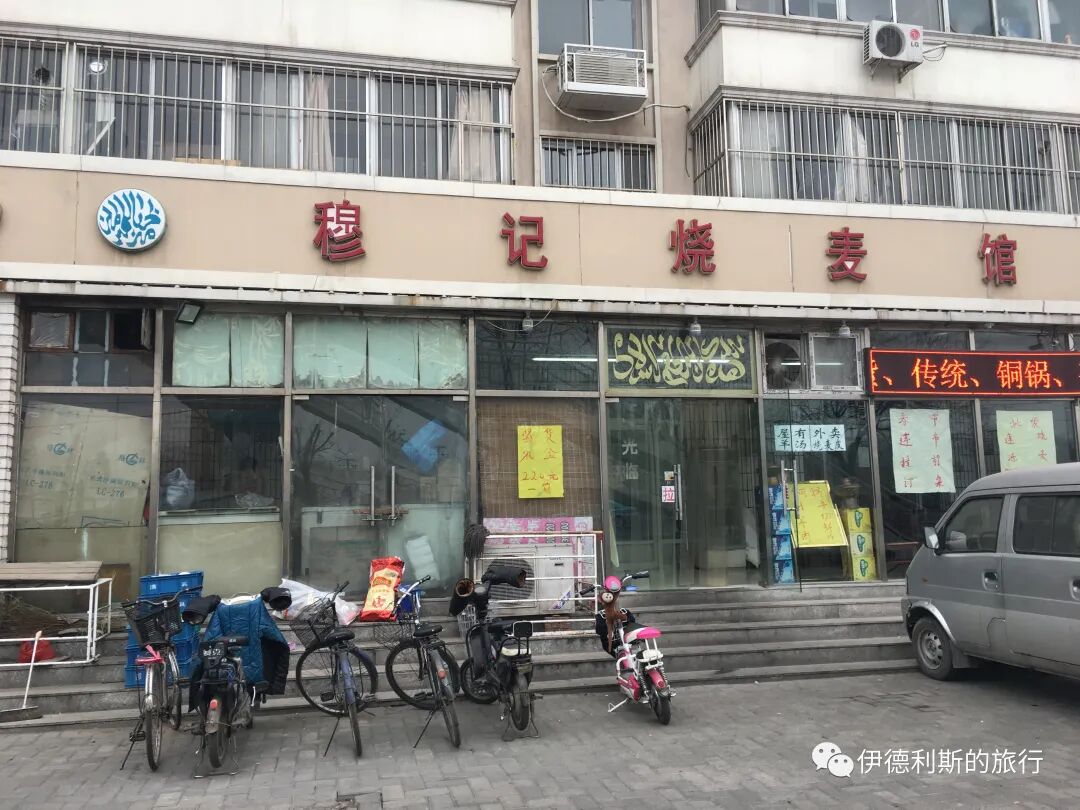
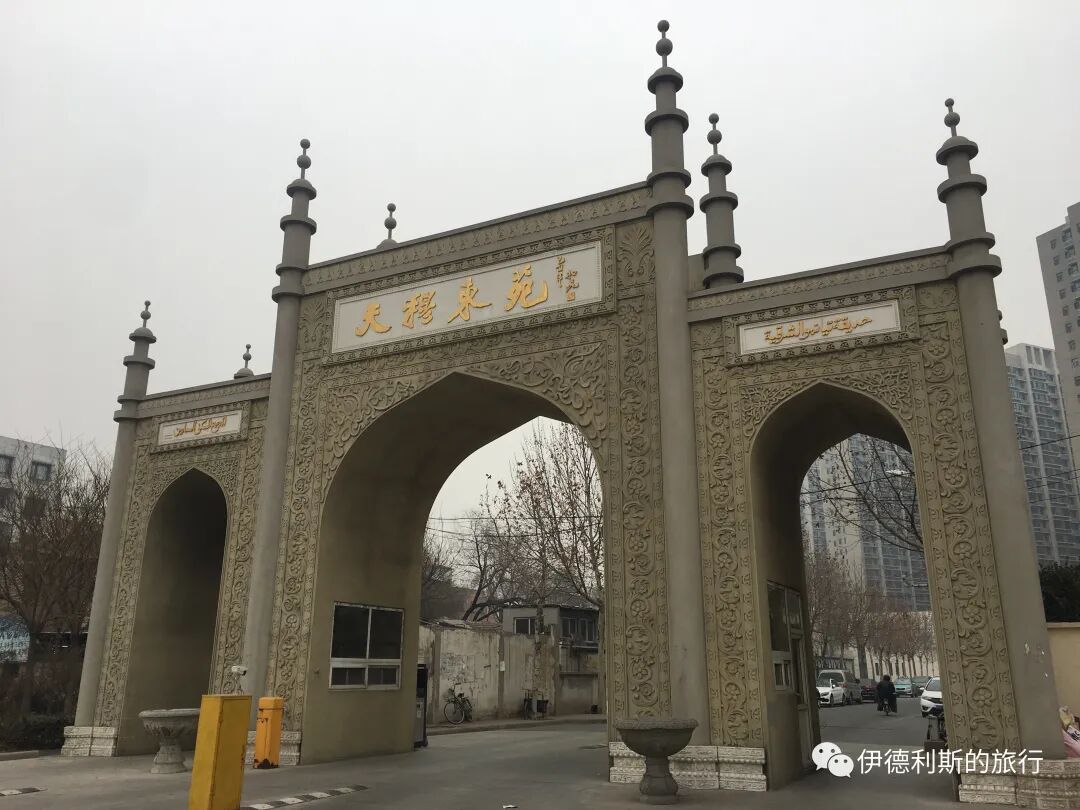
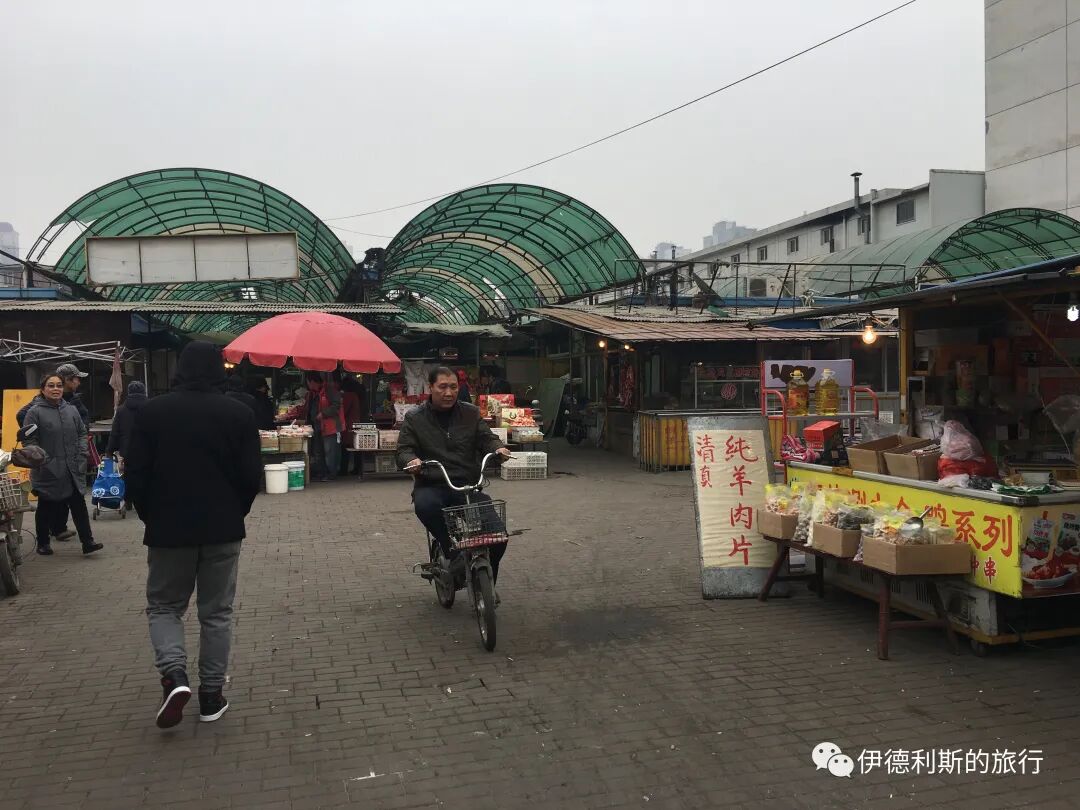
In 2009, Tianmu Village began demolition. In 2010, 2,400 households moved into the Tianmu Dongyuan residential area, and construction of Tianmu Xiyuan began in 2012. By 2016, Tianmu Village had become ruins, and halal snacks were concentrated on Tianmu Shunyi Road.
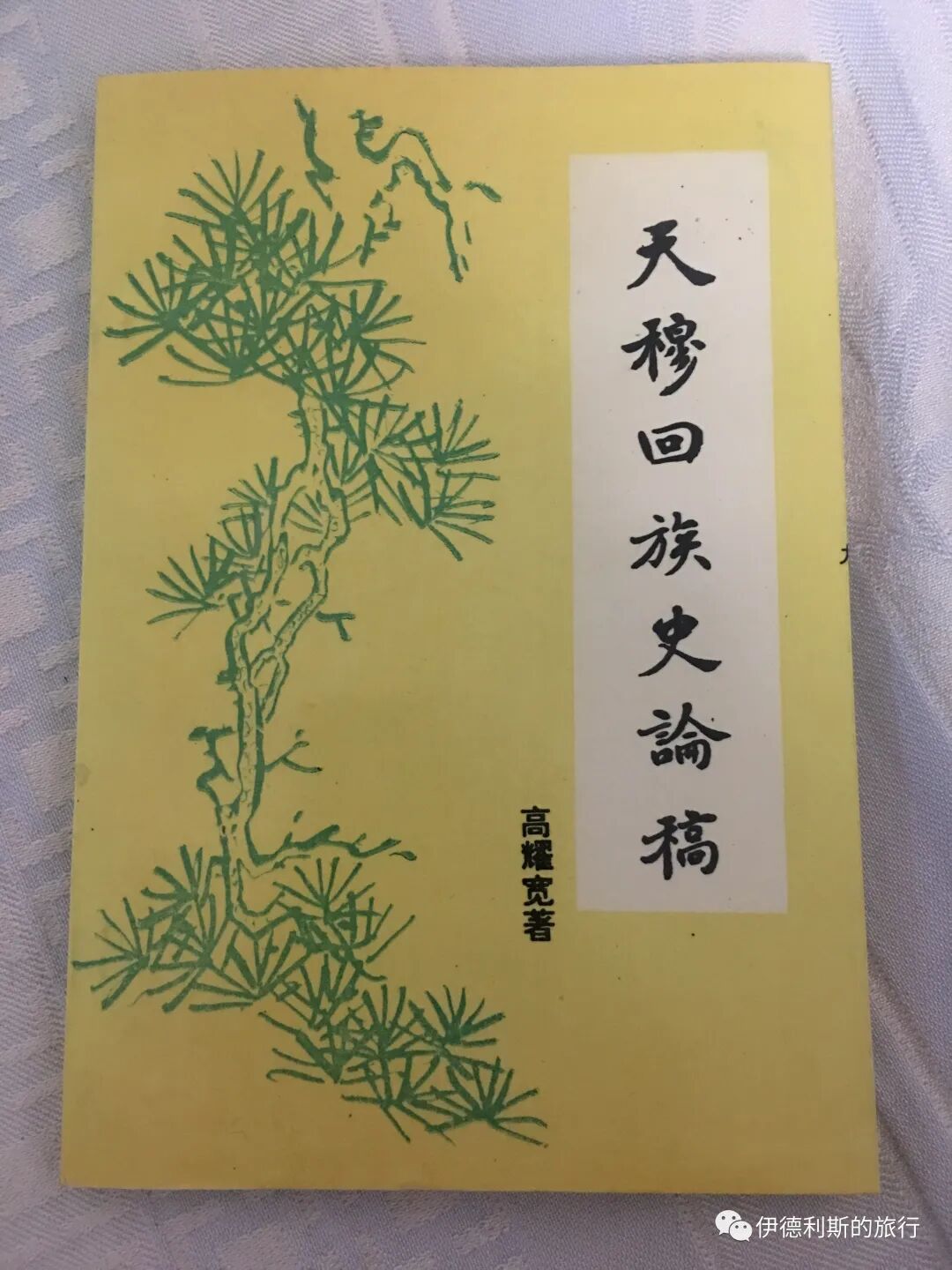
The information about the history of Tianmu Village in this article comes partly from the Draft History of the Hui Muslims in Tianmu.
In the late Qing Dynasty, the cattle and sheep industry in Mujiazhuang developed, forming a trade called jizhuang, or consignment farming. Wealthy families in Mujiazhuang bought large numbers of cattle and sheep from the Mongolian grasslands in Zhangjiakou and Duolun County, Inner Mongolia. They bought them thin and fattened them up, hiring people to drive them all the way back to Tianjin, a process known in the trade as driving the herd. Consignment farming was divided into cattle and sheep; those who consigned cattle were called cattle pen keepers, and those who consigned sheep were called sheep pen keepers. In the late Qing and early Republic period, there were over twenty households in Mujiazhuang doing consignment farming. The four largest sheep pen keepers were Desheng, Yicheng, Yuanshun, and Yishuncheng, trading 100,000 sheep annually. After the Republic of China was established, frequent wars and blocked trade routes made it very easy for hundreds or thousands of cattle and sheep to be robbed by soldiers and bandits. By the Japanese occupation era, the consignment farming in Mujiazhuang had completely collapsed.
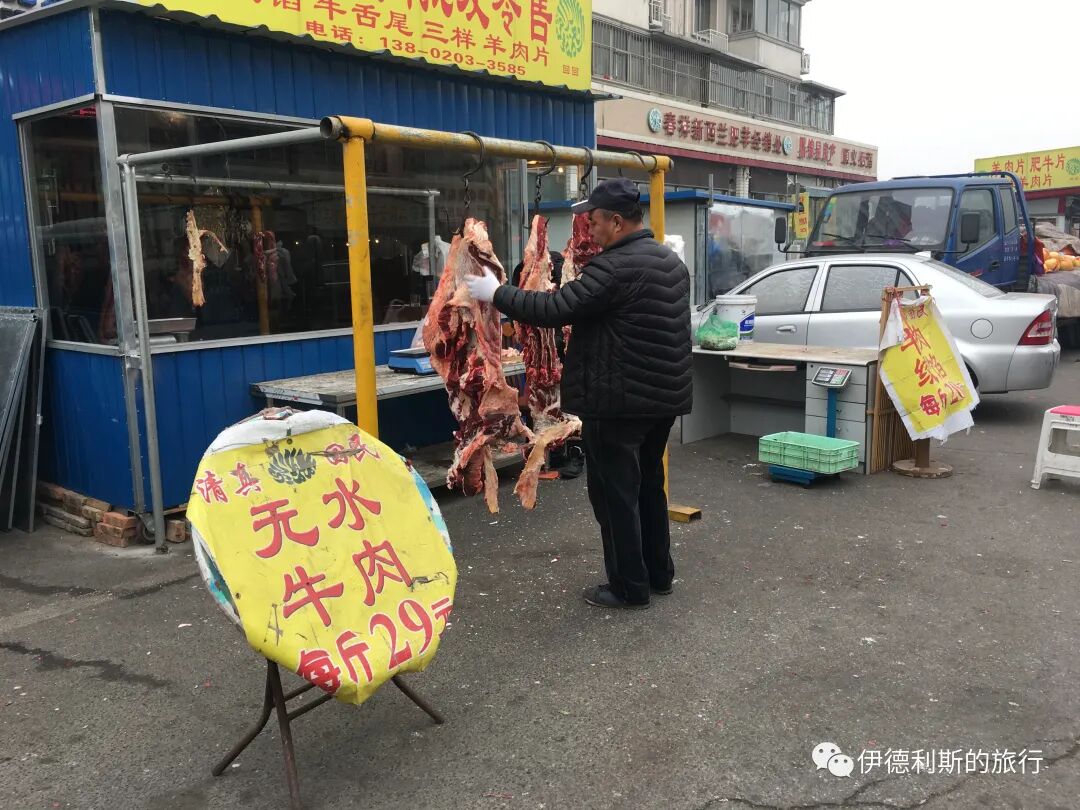
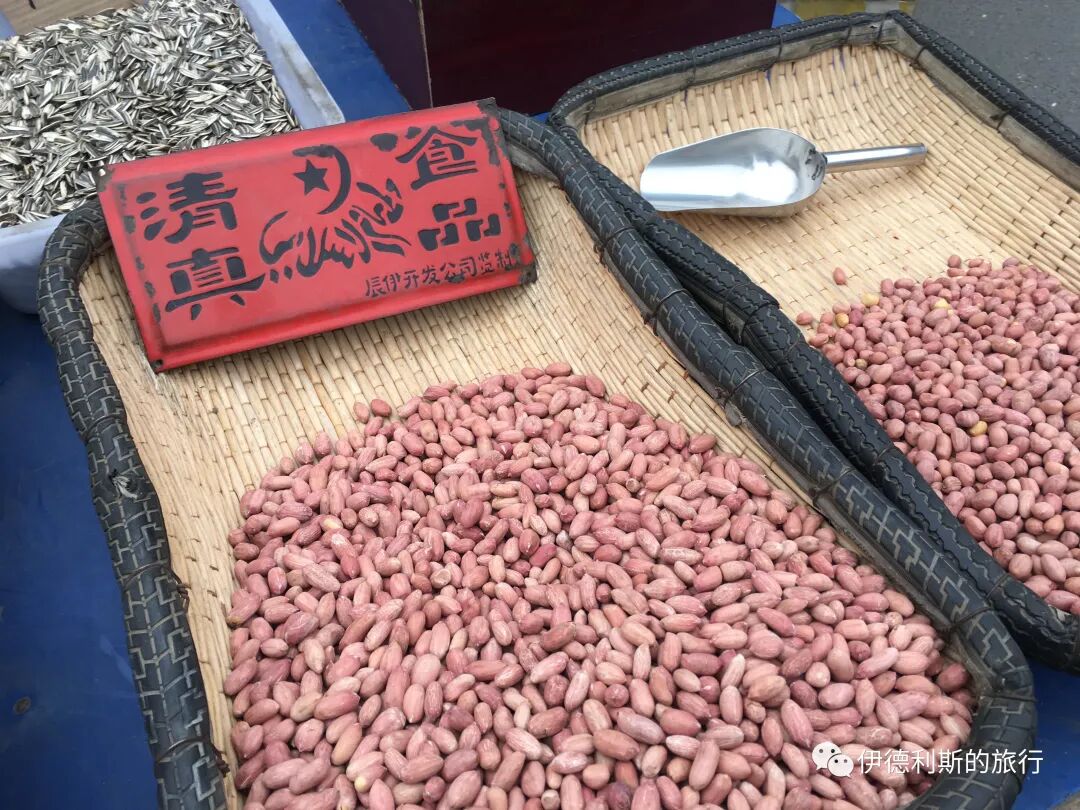
The cattle and sheep driven back by consignment farmers were wholesaled to small vendors, known as small-scale selling. The earliest small-scale selling involved a wooden box with two heavy ends placed on a wheelbarrow. The middle of the box had a hinged lid, with mutton inside and a meat cleaver on one side. The wooden box was brushed with tung oil, making it shiny, and the sides were painted with black characters reading, Halal Ancient Faith, Western Region Hui Muslims.
After the Republic of China, more and more Hui Muslims from Mujiazhuang opened beef and mutton shops across Tianjin, reaching 110 shops around the time of the July 7th Incident.
Now that I have introduced the general situation of Tianmu Village, let's start exploring and eating.
After getting off the bus, I saw an old man selling steamed pear paste (shuligao) next to the Tianmu Village bus stop. There were many flavors, and the fruit jam was also made by the old man himself. I chose red bean paste, brown sugar, and fruit jam flavors; the dark part at the bottom was made from purple sweet potato powder.
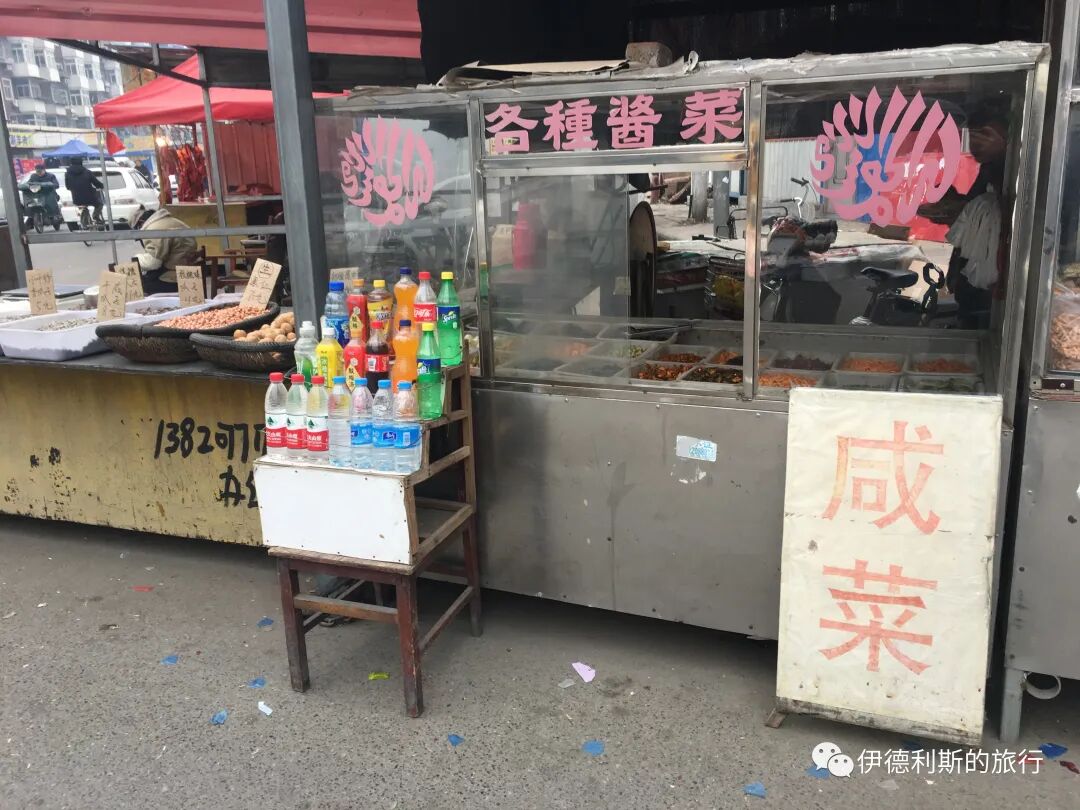
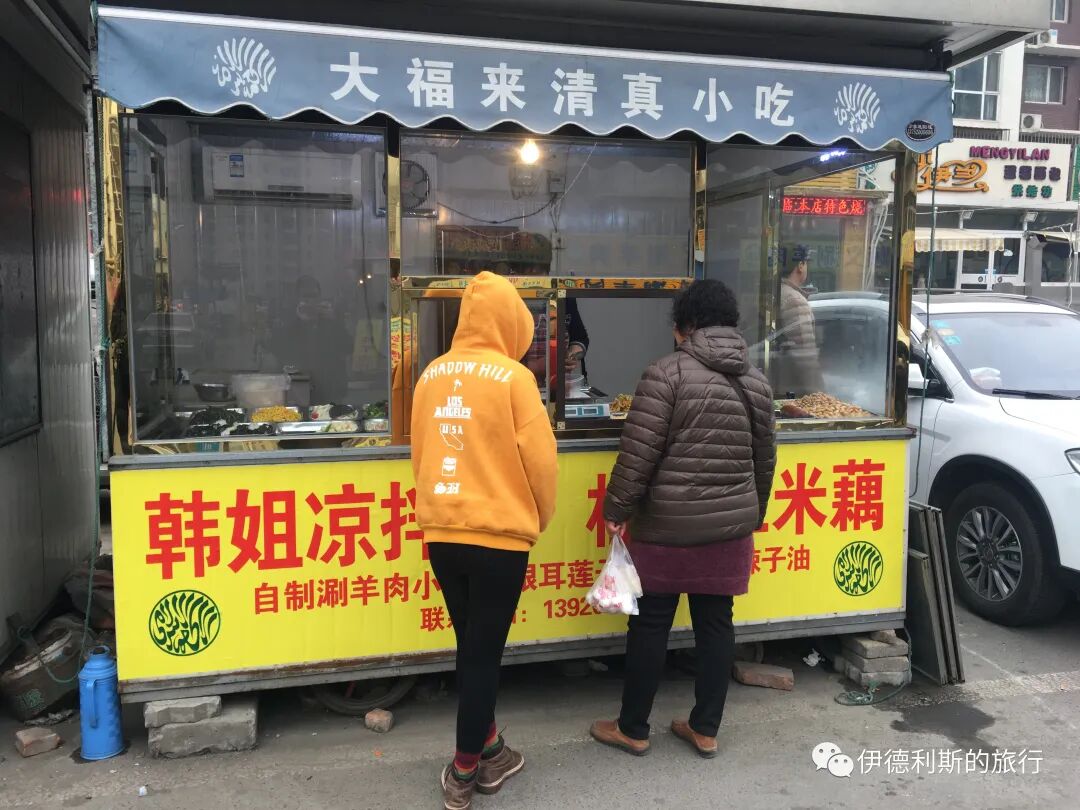
I went into Shunyi Road. Shunyi Road is the current commercial center of Tianmu, with snack shops lined up one after another. As I walked, I found a shop selling candied hawthorn skewers (tangdui). In Tianjin, some candied hawthorn skewers are stuffed with red bean paste and peanuts, which taste great.
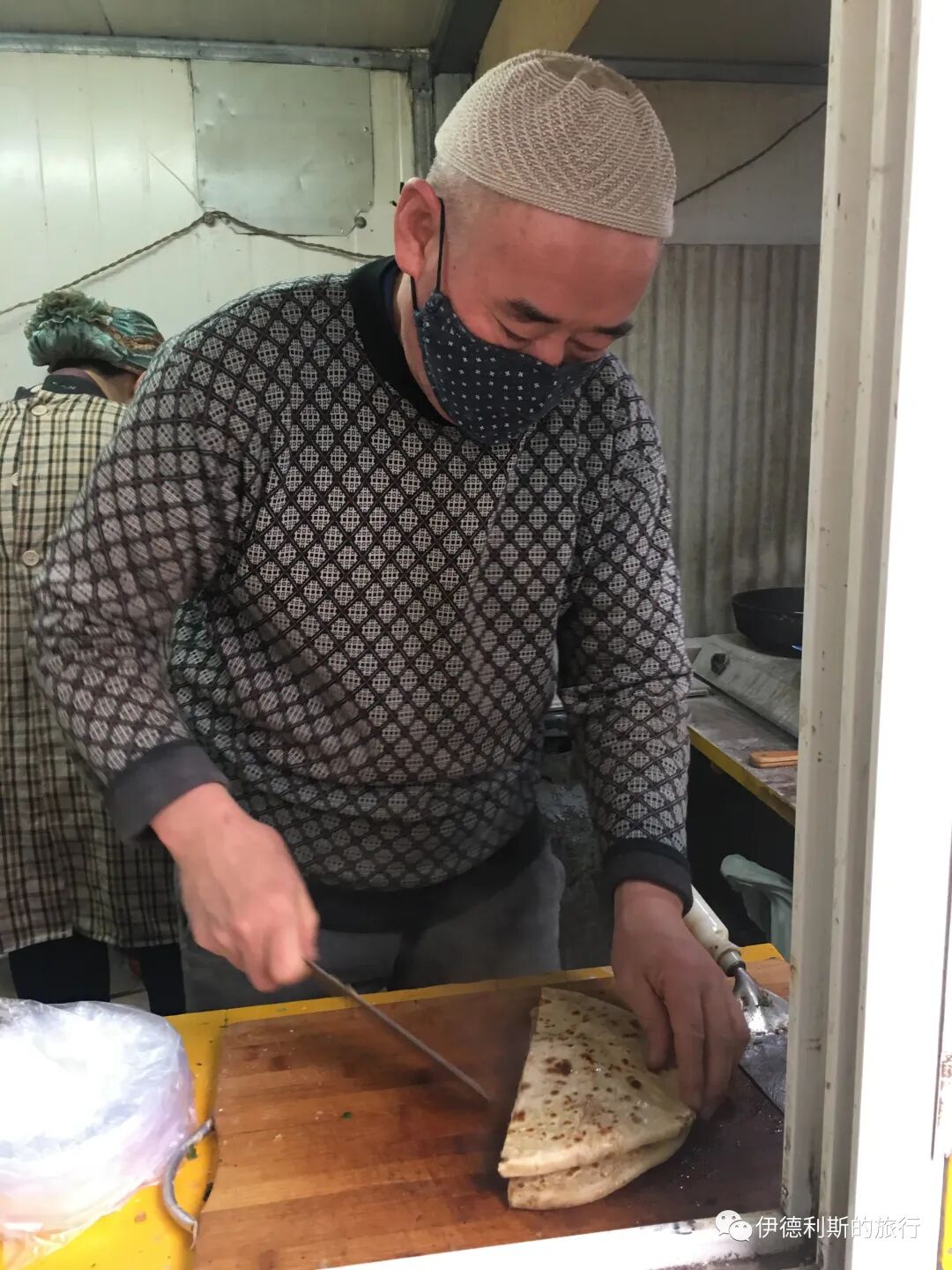
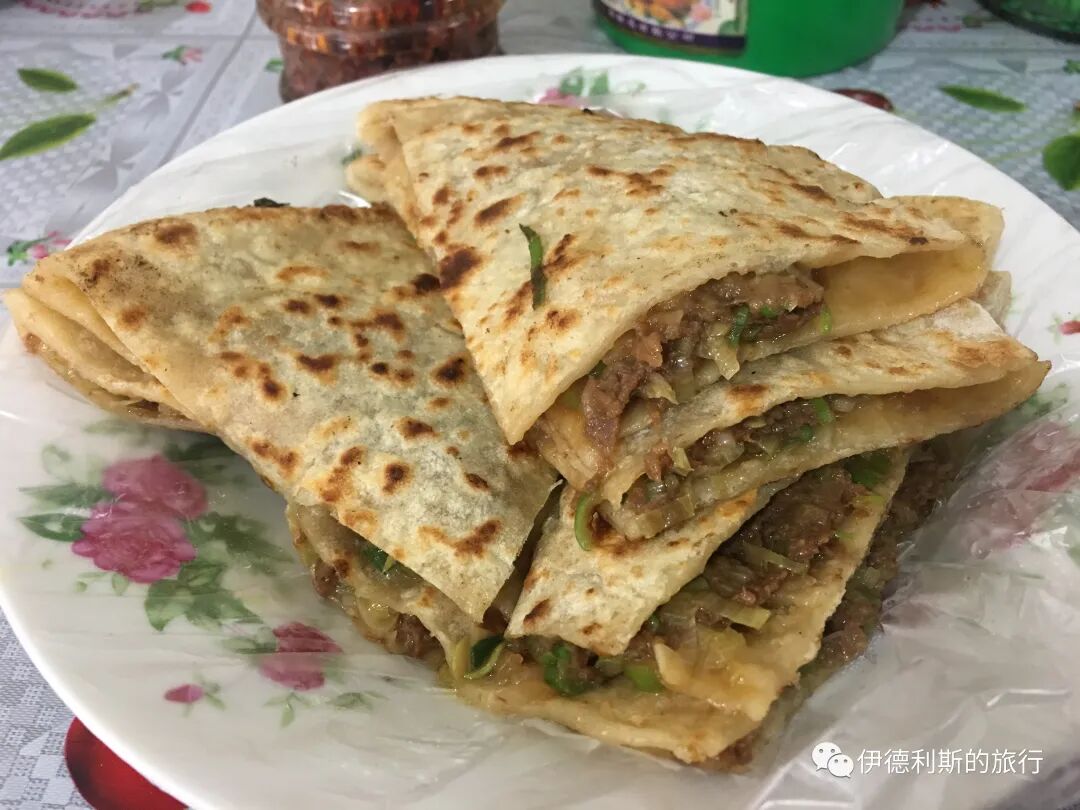
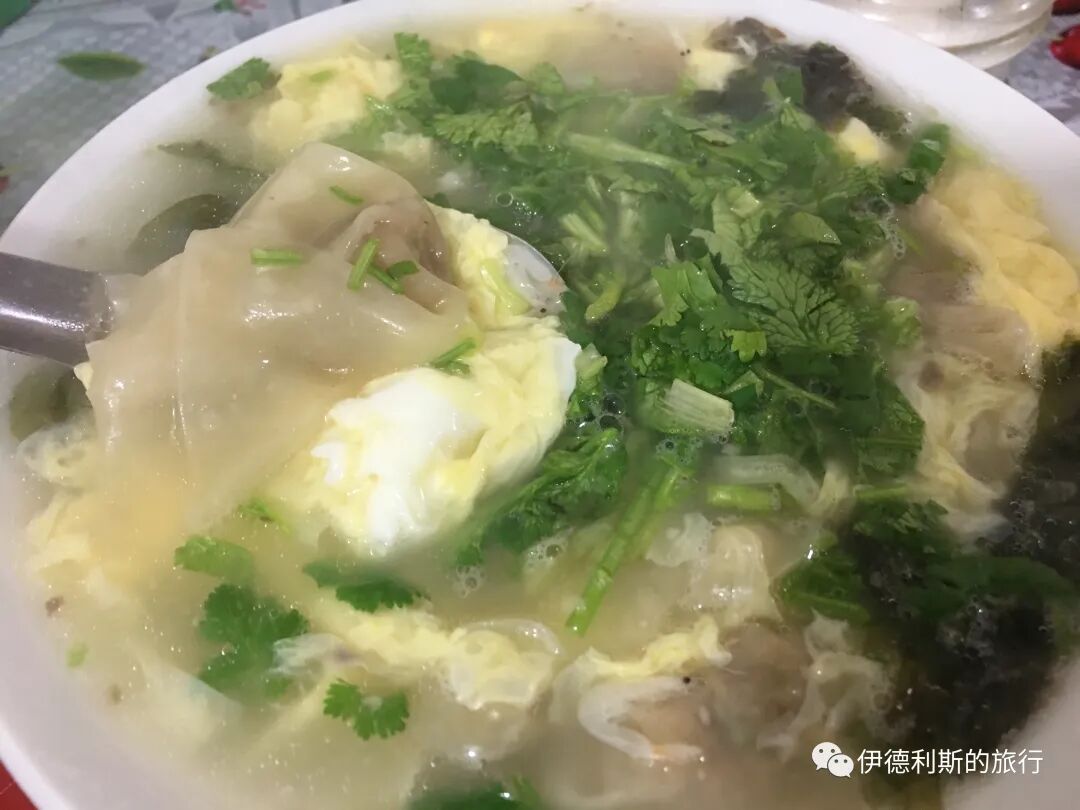
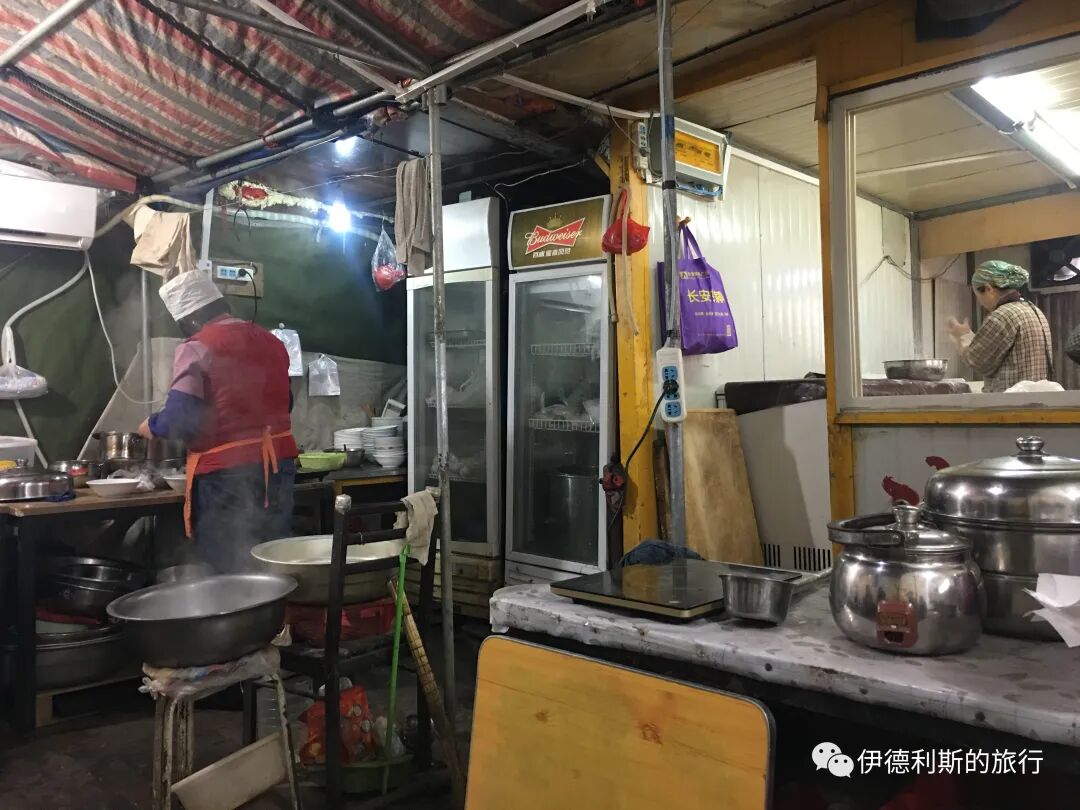
I continued exploring and ate the meat pie and wonton soup (lingjiaotang) from Haji Beef Pie. Tianjin's wonton soup (lingjiaotang), like the one in Jining, involves pouring a beaten egg into the soup, which I really like.
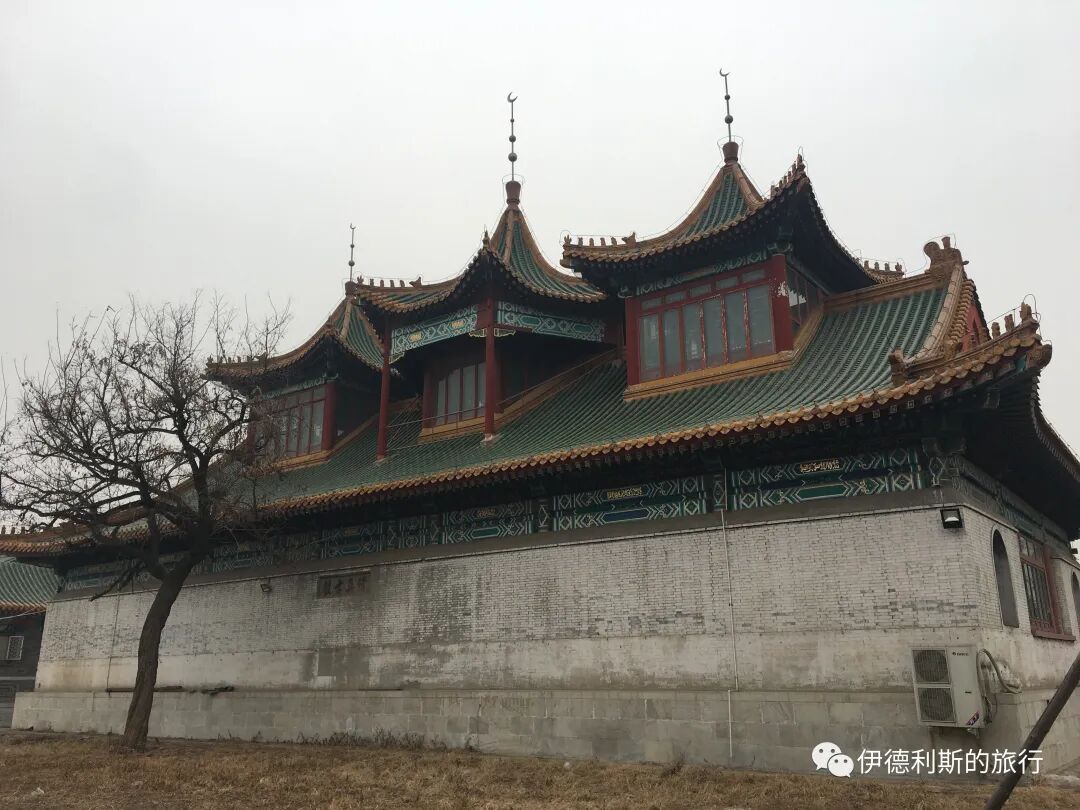
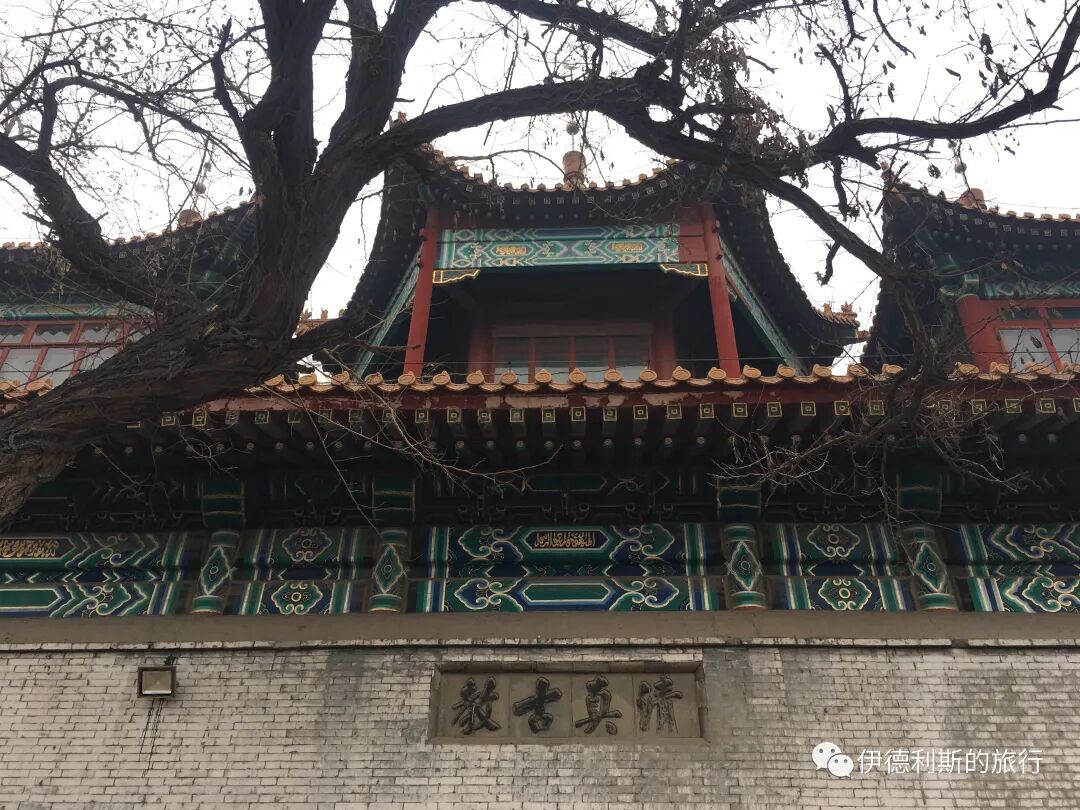
Men wearing prayer caps (libaimao) kept riding their bikes in groups toward the ruins of Tianmu Village. I checked the time and realized it was almost time for the afternoon prayer (peshini), so I followed the older men toward the North Mosque of Tianmu in Tianjin. The North Mosque of Tianmu was built in 1404, the second year of the Yongle reign. It was burned down by retreating Kuomintang troops on November 25, 1948. It was rebuilt in the 1950s and again in 1992, and today it is the most striking building among the ruins of Tianmu Village.
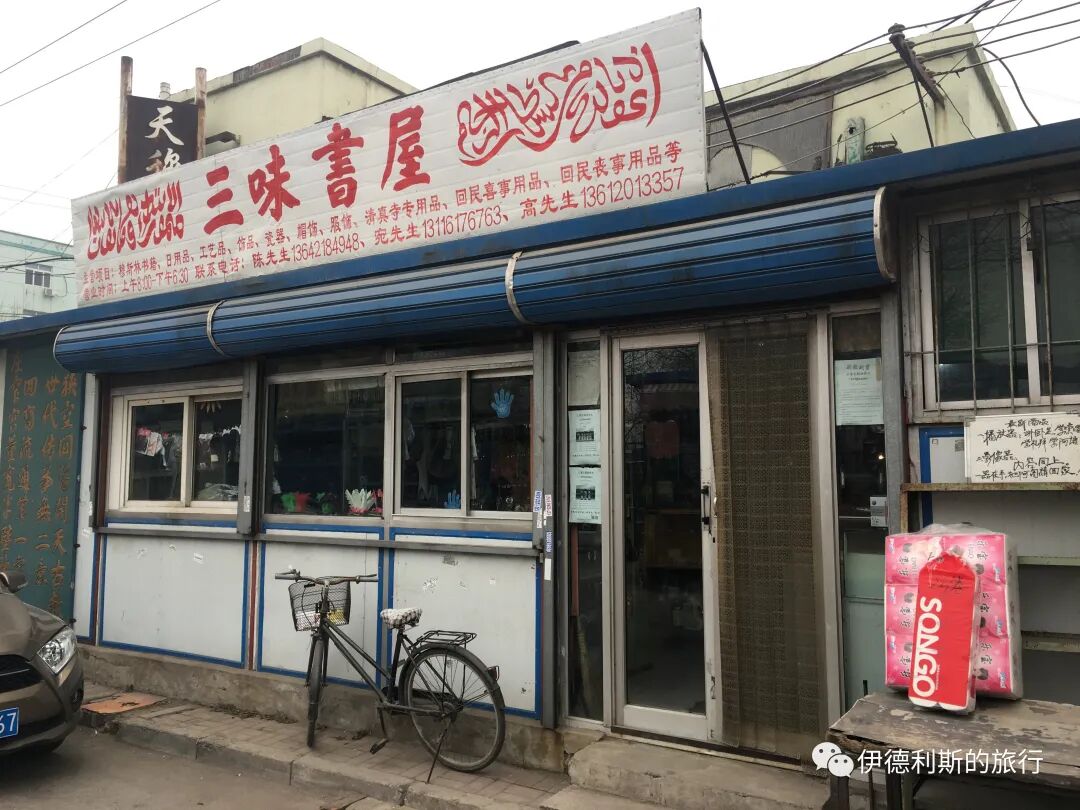
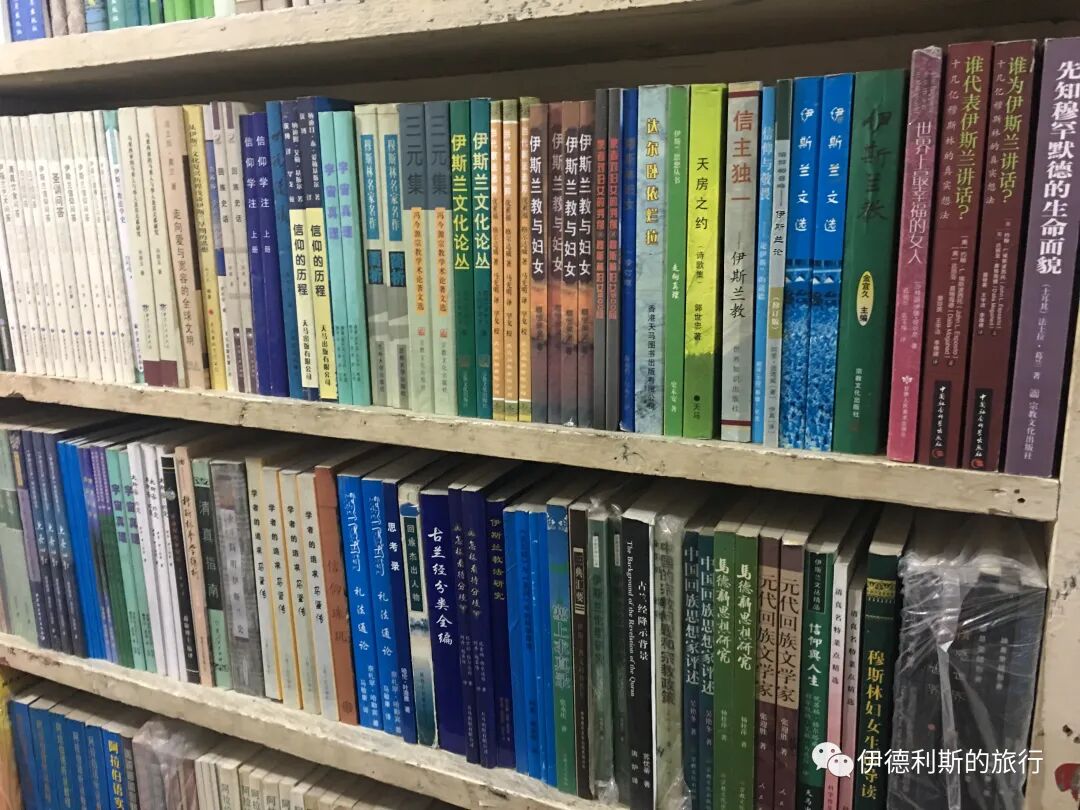
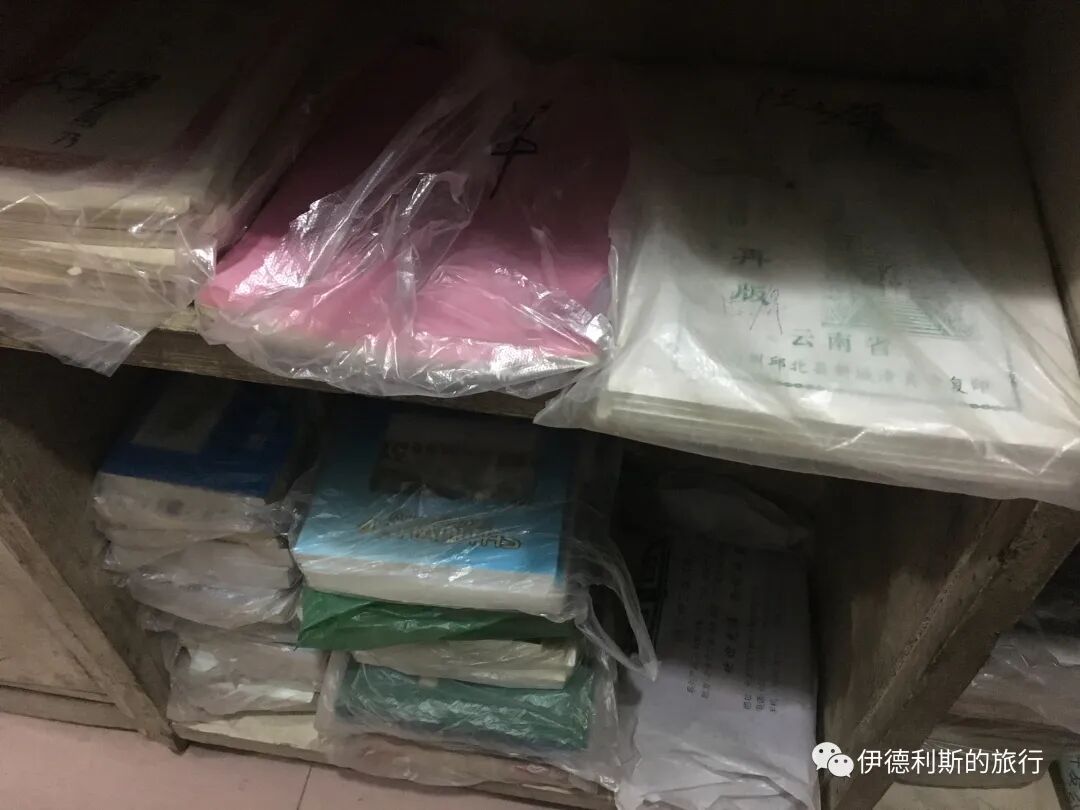
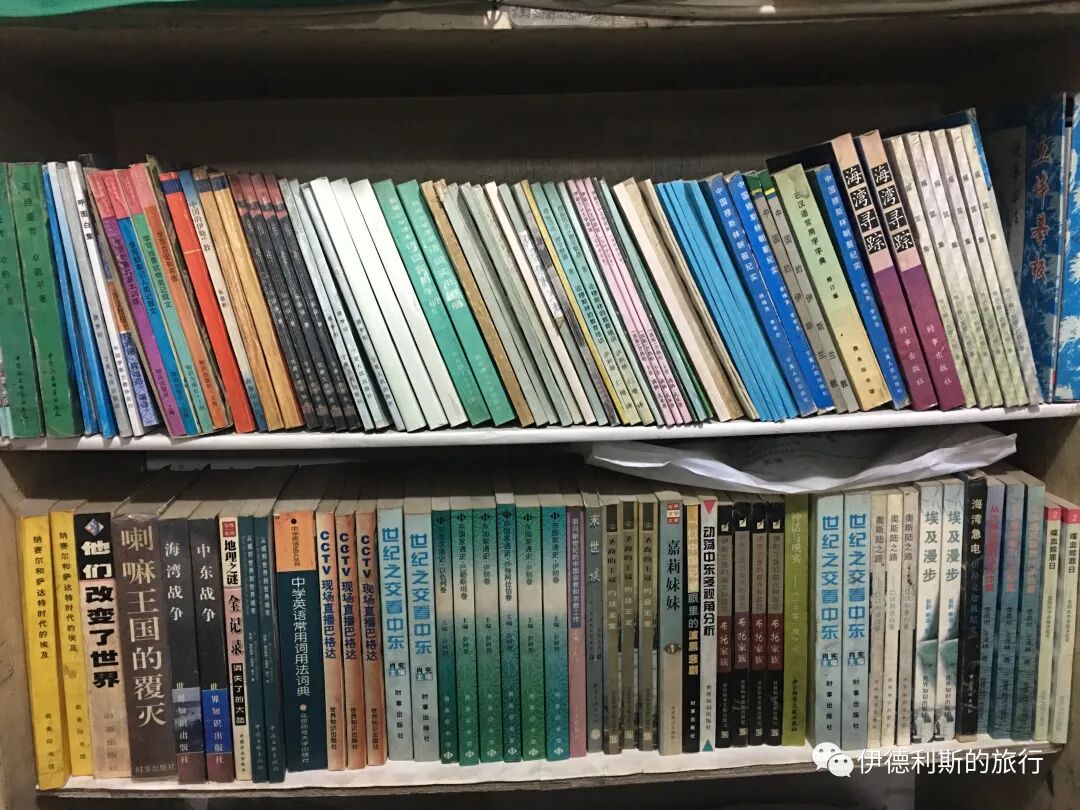
After leaving the mosque, I continued walking along Shunyi Road. My biggest find this time was at the Sanwei Bookstore on Shunyi Road, where I bought many hand-copied and lithographed small scriptures (xiaojing), which use Arabic script to write Chinese. This included the famous Weigaye Dictionary, a vocabulary list for the Weigaye religious law text. It is very interesting to see the xiaojing, Chinese characters, and Arabic side by side. I also found the Three-Character Classic of Islam (Huijiao Sanziwen) and a 1951 biography of Muhammad published by the Beijing Muslim Newspaper and Book Agency. I am very satisfied. view all
Summary: Tianjin Tianmu Village — Hui Muslim Food and Mosque History is presented here as a firsthand travel account in clear English, beginning with this scene: At noon on December 25, 2016, I went to Tianmu in Tianjin to explore and eat. I took the 9:55 high-speed train from Beijing South Railway Station to Tianjin West Railway Station, rode the subway for two stops to Qinjian. The account keeps its focus on Tianjin Tianmu, Hui Muslims, Halal Food while preserving the names, places, food, and historical details from the Chinese source.
At noon on December 25, 2016, I went to Tianmu in Tianjin to explore and eat. I took the 9:55 high-speed train from Beijing South Railway Station to Tianjin West Railway Station, rode the subway for two stops to Qinjian Road, and then transferred to a bus for one stop to reach Tianmu Village.
Tianmu Village was originally called Mujiazhuang, commonly known as Muzhuangzi. During the Hongwu reign of the Ming Dynasty, a boatman named Mu Zhonghe from Qiantang County, Hangzhou Prefecture, Zhejiang Province, followed Prince Yan Zhu Di along the Grand Canal to transport grain. After unloading, he traveled south with the current and settled by the North Grand Canal. He continued working in canal transport, which led to the formation of Mujiazhuang.
In 1404 (the second year of the Yongle reign), the Mu family built the first mosque, which later became the Tianmu North Mosque. After the Mujiazhuang mosque was built, Hui Muslims from places like Zhejiang, Jiangsu, Shandong, and Hebei kept arriving along the canal to settle down, and Mujiazhuang gradually grew.
During the Ming Dynasty and the early Qing Dynasty, most people in Mujiazhuang made a living from canal transport and were called boat keepers. In the middle and late Qing Dynasty, the upper reaches of the North Grand Canal gradually dried up, limiting canal transport, so some boat owners started driving carts or doing business. These cart drivers used a large cart gate as their symbol and were called cart keepers.
During the Xianfeng and Tongzhi reigns of the Qing Dynasty, a new village formed south of Mujiazhuang, named after the Tianqi Temple in the village. In 1951, Mujiazhuang and Tianqi Temple merged to become Tianmu Village.
In 2009, Tianmu Village began demolition. In 2010, 2,400 households moved into the Tianmu Dongyuan residential area, and construction of Tianmu Xiyuan began in 2012. By 2016, Tianmu Village had become ruins, and halal snacks were concentrated on Tianmu Shunyi Road.
The information about the history of Tianmu Village in this article comes partly from the Draft History of the Hui Muslims in Tianmu.
In the late Qing Dynasty, the cattle and sheep industry in Mujiazhuang developed, forming a trade called jizhuang, or consignment farming. Wealthy families in Mujiazhuang bought large numbers of cattle and sheep from the Mongolian grasslands in Zhangjiakou and Duolun County, Inner Mongolia. They bought them thin and fattened them up, hiring people to drive them all the way back to Tianjin, a process known in the trade as driving the herd. Consignment farming was divided into cattle and sheep; those who consigned cattle were called cattle pen keepers, and those who consigned sheep were called sheep pen keepers. In the late Qing and early Republic period, there were over twenty households in Mujiazhuang doing consignment farming. The four largest sheep pen keepers were Desheng, Yicheng, Yuanshun, and Yishuncheng, trading 100,000 sheep annually. After the Republic of China was established, frequent wars and blocked trade routes made it very easy for hundreds or thousands of cattle and sheep to be robbed by soldiers and bandits. By the Japanese occupation era, the consignment farming in Mujiazhuang had completely collapsed.
The cattle and sheep driven back by consignment farmers were wholesaled to small vendors, known as small-scale selling. The earliest small-scale selling involved a wooden box with two heavy ends placed on a wheelbarrow. The middle of the box had a hinged lid, with mutton inside and a meat cleaver on one side. The wooden box was brushed with tung oil, making it shiny, and the sides were painted with black characters reading, Halal Ancient Faith, Western Region Hui Muslims.
After the Republic of China, more and more Hui Muslims from Mujiazhuang opened beef and mutton shops across Tianjin, reaching 110 shops around the time of the July 7th Incident.
Now that I have introduced the general situation of Tianmu Village, let's start exploring and eating.
After getting off the bus, I saw an old man selling steamed pear paste (shuligao) next to the Tianmu Village bus stop. There were many flavors, and the fruit jam was also made by the old man himself. I chose red bean paste, brown sugar, and fruit jam flavors; the dark part at the bottom was made from purple sweet potato powder.
I went into Shunyi Road. Shunyi Road is the current commercial center of Tianmu, with snack shops lined up one after another. As I walked, I found a shop selling candied hawthorn skewers (tangdui). In Tianjin, some candied hawthorn skewers are stuffed with red bean paste and peanuts, which taste great.
I continued exploring and ate the meat pie and wonton soup (lingjiaotang) from Haji Beef Pie. Tianjin's wonton soup (lingjiaotang), like the one in Jining, involves pouring a beaten egg into the soup, which I really like.
Men wearing prayer caps (libaimao) kept riding their bikes in groups toward the ruins of Tianmu Village. I checked the time and realized it was almost time for the afternoon prayer (peshini), so I followed the older men toward the North Mosque of Tianmu in Tianjin. The North Mosque of Tianmu was built in 1404, the second year of the Yongle reign. It was burned down by retreating Kuomintang troops on November 25, 1948. It was rebuilt in the 1950s and again in 1992, and today it is the most striking building among the ruins of Tianmu Village.
After leaving the mosque, I continued walking along Shunyi Road. My biggest find this time was at the Sanwei Bookstore on Shunyi Road, where I bought many hand-copied and lithographed small scriptures (xiaojing), which use Arabic script to write Chinese. This included the famous Weigaye Dictionary, a vocabulary list for the Weigaye religious law text. It is very interesting to see the xiaojing, Chinese characters, and Arabic side by side. I also found the Three-Character Classic of Islam (Huijiao Sanziwen) and a 1951 biography of Muhammad published by the Beijing Muslim Newspaper and Book Agency. I am very satisfied. view all
Reposted from the web
Summary: Tianjin Tianmu Village — Hui Muslim Food and Mosque History is presented here as a firsthand travel account in clear English, beginning with this scene: At noon on December 25, 2016, I went to Tianmu in Tianjin to explore and eat. I took the 9:55 high-speed train from Beijing South Railway Station to Tianjin West Railway Station, rode the subway for two stops to Qinjian. The account keeps its focus on Tianjin Tianmu, Hui Muslims, Halal Food while preserving the names, places, food, and historical details from the Chinese source.
At noon on December 25, 2016, I went to Tianmu in Tianjin to explore and eat. I took the 9:55 high-speed train from Beijing South Railway Station to Tianjin West Railway Station, rode the subway for two stops to Qinjian Road, and then transferred to a bus for one stop to reach Tianmu Village.
Tianmu Village was originally called Mujiazhuang, commonly known as Muzhuangzi. During the Hongwu reign of the Ming Dynasty, a boatman named Mu Zhonghe from Qiantang County, Hangzhou Prefecture, Zhejiang Province, followed Prince Yan Zhu Di along the Grand Canal to transport grain. After unloading, he traveled south with the current and settled by the North Grand Canal. He continued working in canal transport, which led to the formation of Mujiazhuang.
In 1404 (the second year of the Yongle reign), the Mu family built the first mosque, which later became the Tianmu North Mosque. After the Mujiazhuang mosque was built, Hui Muslims from places like Zhejiang, Jiangsu, Shandong, and Hebei kept arriving along the canal to settle down, and Mujiazhuang gradually grew.
During the Ming Dynasty and the early Qing Dynasty, most people in Mujiazhuang made a living from canal transport and were called boat keepers. In the middle and late Qing Dynasty, the upper reaches of the North Grand Canal gradually dried up, limiting canal transport, so some boat owners started driving carts or doing business. These cart drivers used a large cart gate as their symbol and were called cart keepers.
During the Xianfeng and Tongzhi reigns of the Qing Dynasty, a new village formed south of Mujiazhuang, named after the Tianqi Temple in the village. In 1951, Mujiazhuang and Tianqi Temple merged to become Tianmu Village.
In 2009, Tianmu Village began demolition. In 2010, 2,400 households moved into the Tianmu Dongyuan residential area, and construction of Tianmu Xiyuan began in 2012. By 2016, Tianmu Village had become ruins, and halal snacks were concentrated on Tianmu Shunyi Road.
The information about the history of Tianmu Village in this article comes partly from the Draft History of the Hui Muslims in Tianmu.
In the late Qing Dynasty, the cattle and sheep industry in Mujiazhuang developed, forming a trade called jizhuang, or consignment farming. Wealthy families in Mujiazhuang bought large numbers of cattle and sheep from the Mongolian grasslands in Zhangjiakou and Duolun County, Inner Mongolia. They bought them thin and fattened them up, hiring people to drive them all the way back to Tianjin, a process known in the trade as driving the herd. Consignment farming was divided into cattle and sheep; those who consigned cattle were called cattle pen keepers, and those who consigned sheep were called sheep pen keepers. In the late Qing and early Republic period, there were over twenty households in Mujiazhuang doing consignment farming. The four largest sheep pen keepers were Desheng, Yicheng, Yuanshun, and Yishuncheng, trading 100,000 sheep annually. After the Republic of China was established, frequent wars and blocked trade routes made it very easy for hundreds or thousands of cattle and sheep to be robbed by soldiers and bandits. By the Japanese occupation era, the consignment farming in Mujiazhuang had completely collapsed.
The cattle and sheep driven back by consignment farmers were wholesaled to small vendors, known as small-scale selling. The earliest small-scale selling involved a wooden box with two heavy ends placed on a wheelbarrow. The middle of the box had a hinged lid, with mutton inside and a meat cleaver on one side. The wooden box was brushed with tung oil, making it shiny, and the sides were painted with black characters reading, Halal Ancient Faith, Western Region Hui Muslims.
After the Republic of China, more and more Hui Muslims from Mujiazhuang opened beef and mutton shops across Tianjin, reaching 110 shops around the time of the July 7th Incident.
Now that I have introduced the general situation of Tianmu Village, let's start exploring and eating.
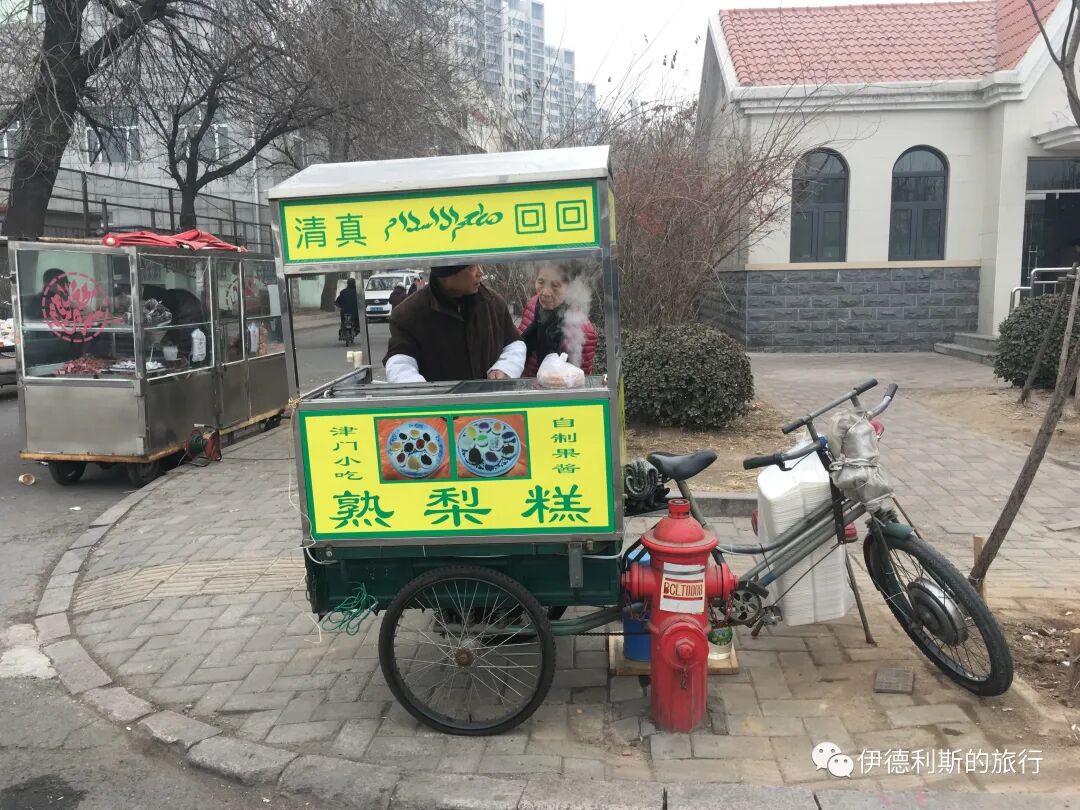
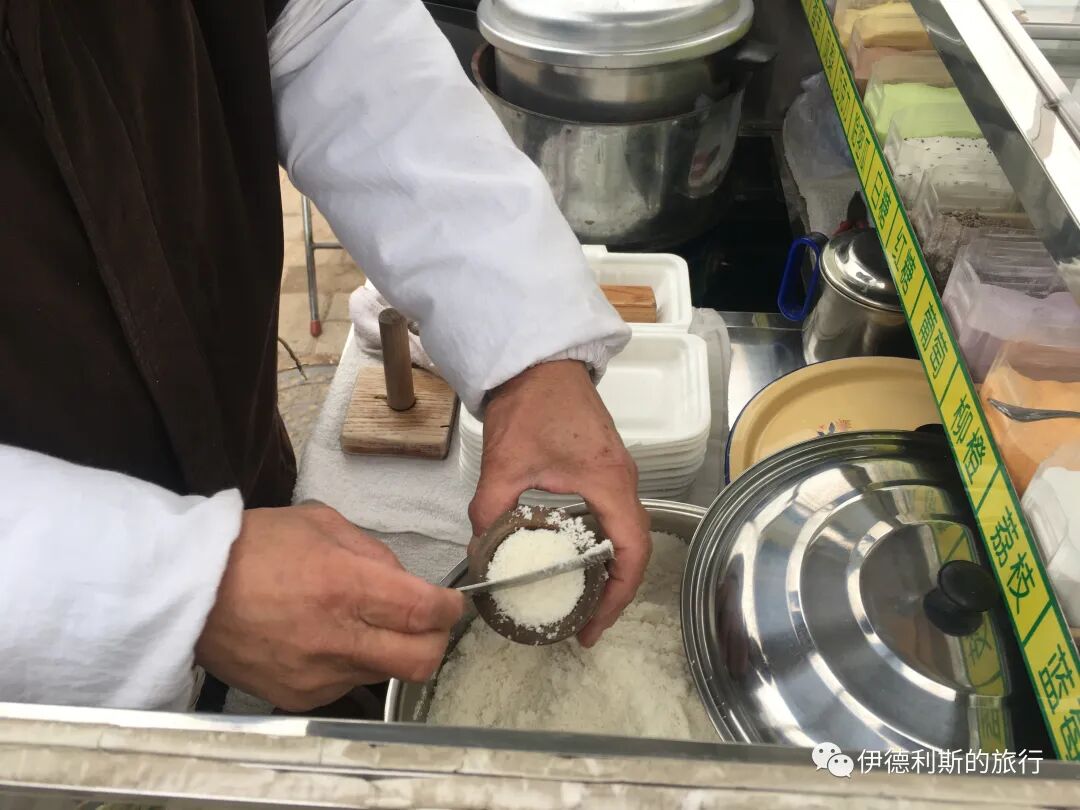
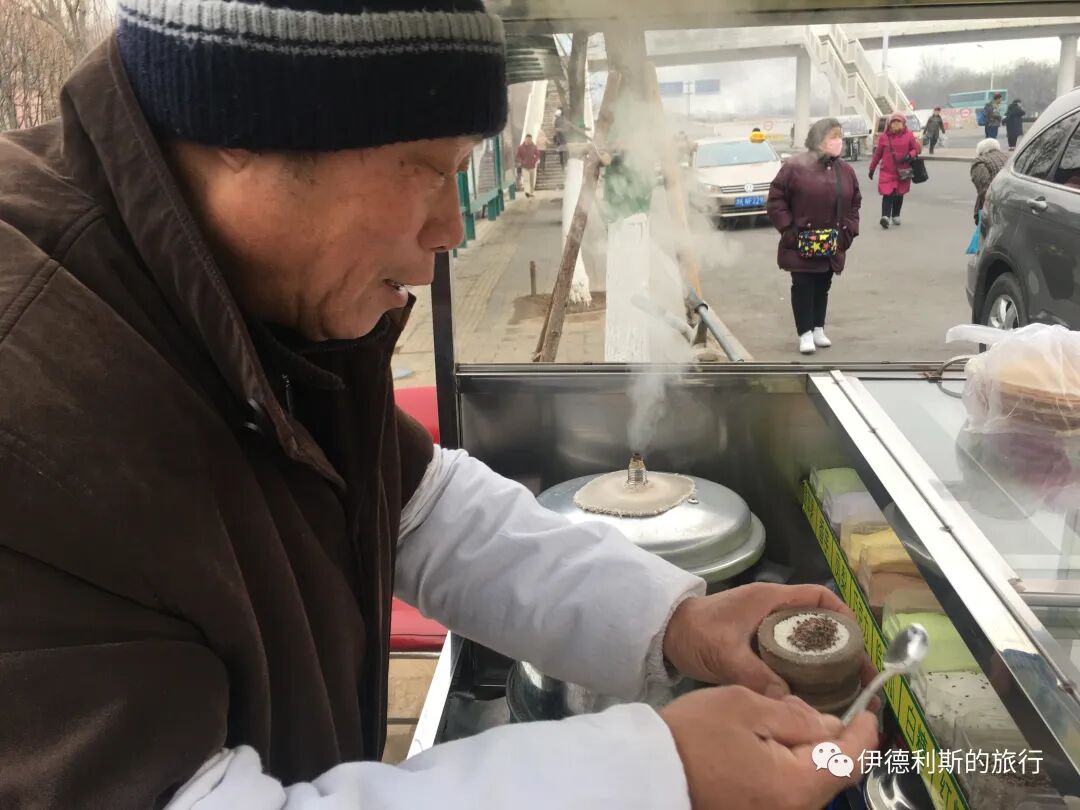
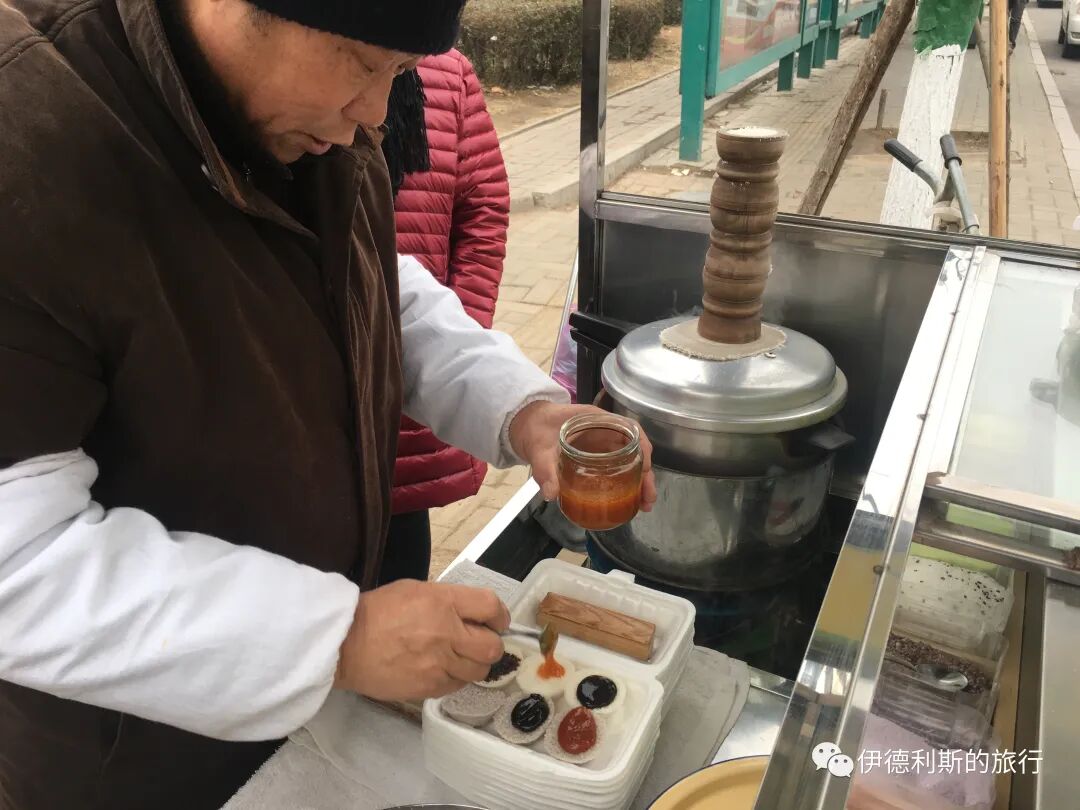
After getting off the bus, I saw an old man selling steamed pear paste (shuligao) next to the Tianmu Village bus stop. There were many flavors, and the fruit jam was also made by the old man himself. I chose red bean paste, brown sugar, and fruit jam flavors; the dark part at the bottom was made from purple sweet potato powder.
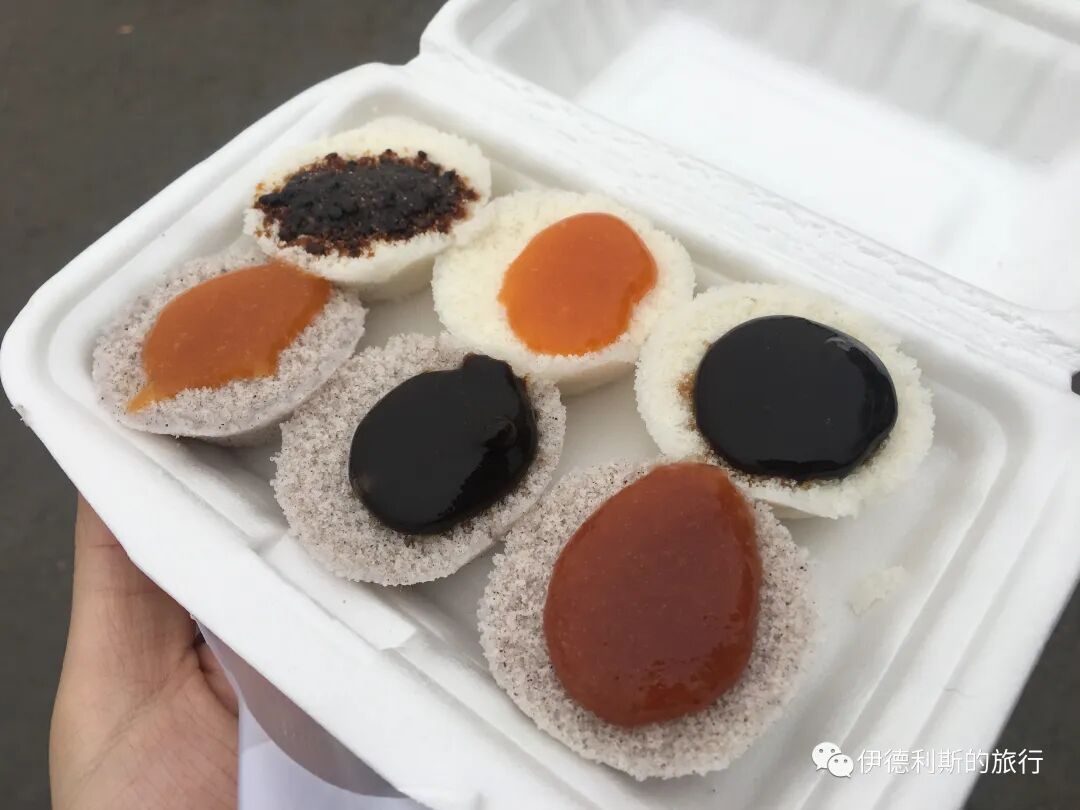
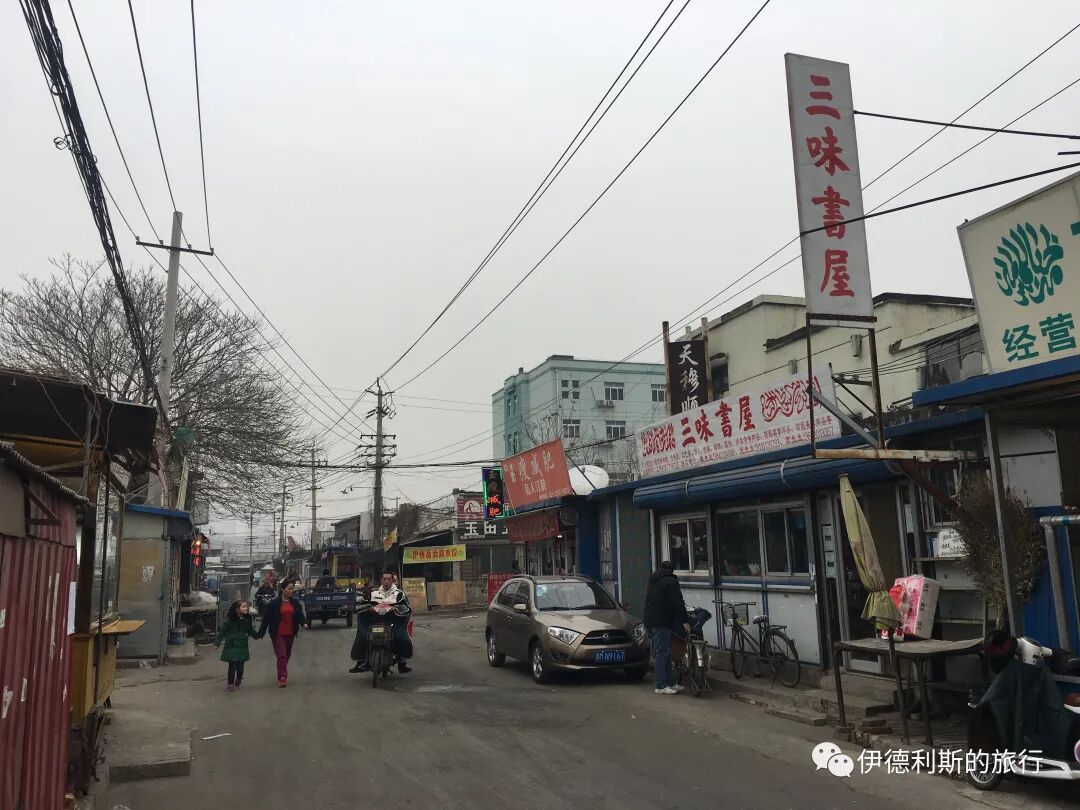
I went into Shunyi Road. Shunyi Road is the current commercial center of Tianmu, with snack shops lined up one after another. As I walked, I found a shop selling candied hawthorn skewers (tangdui). In Tianjin, some candied hawthorn skewers are stuffed with red bean paste and peanuts, which taste great.
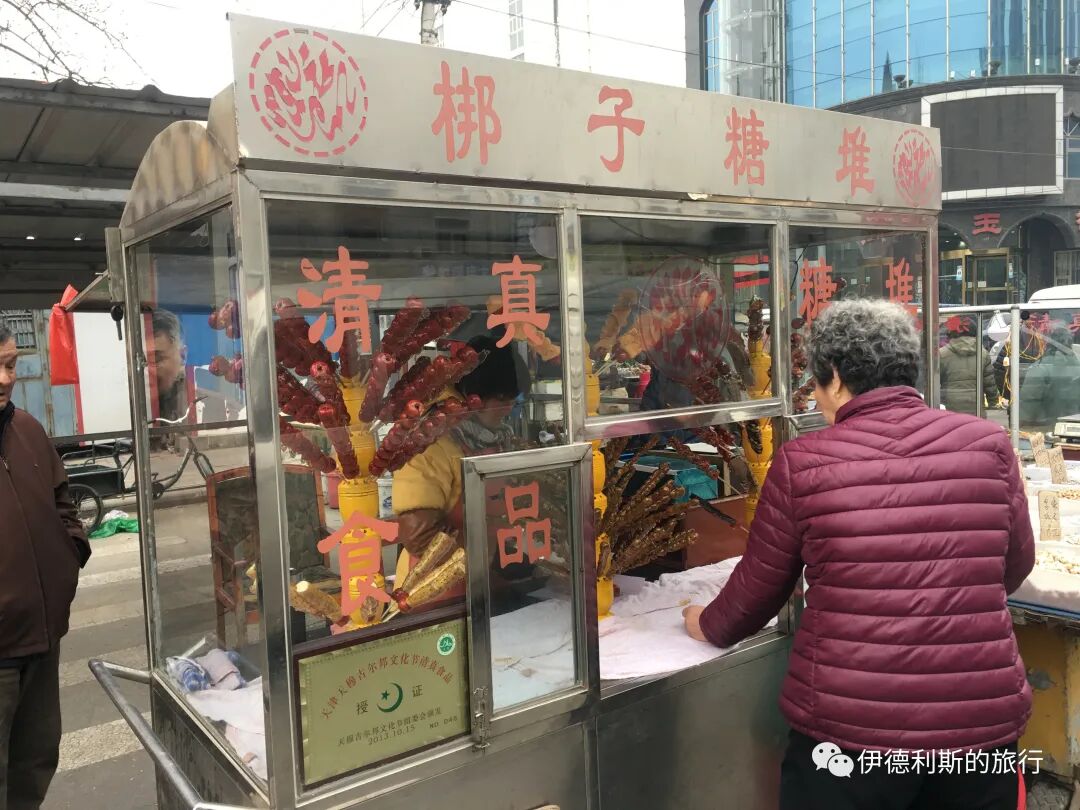
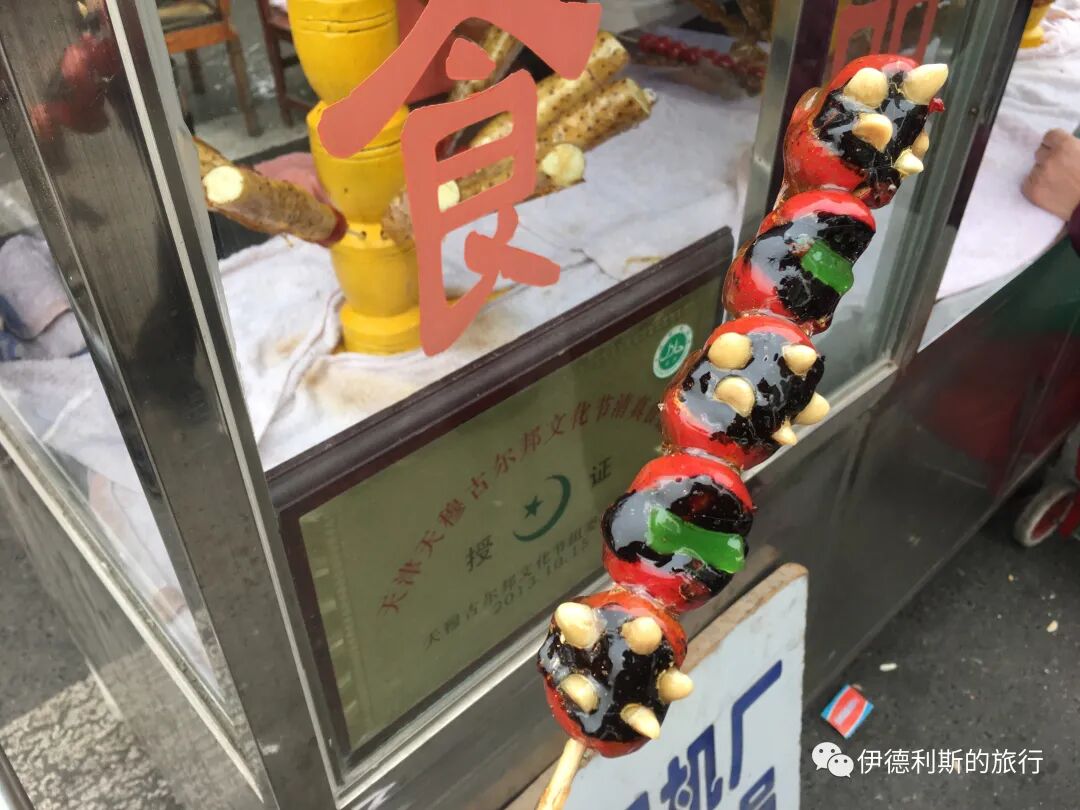
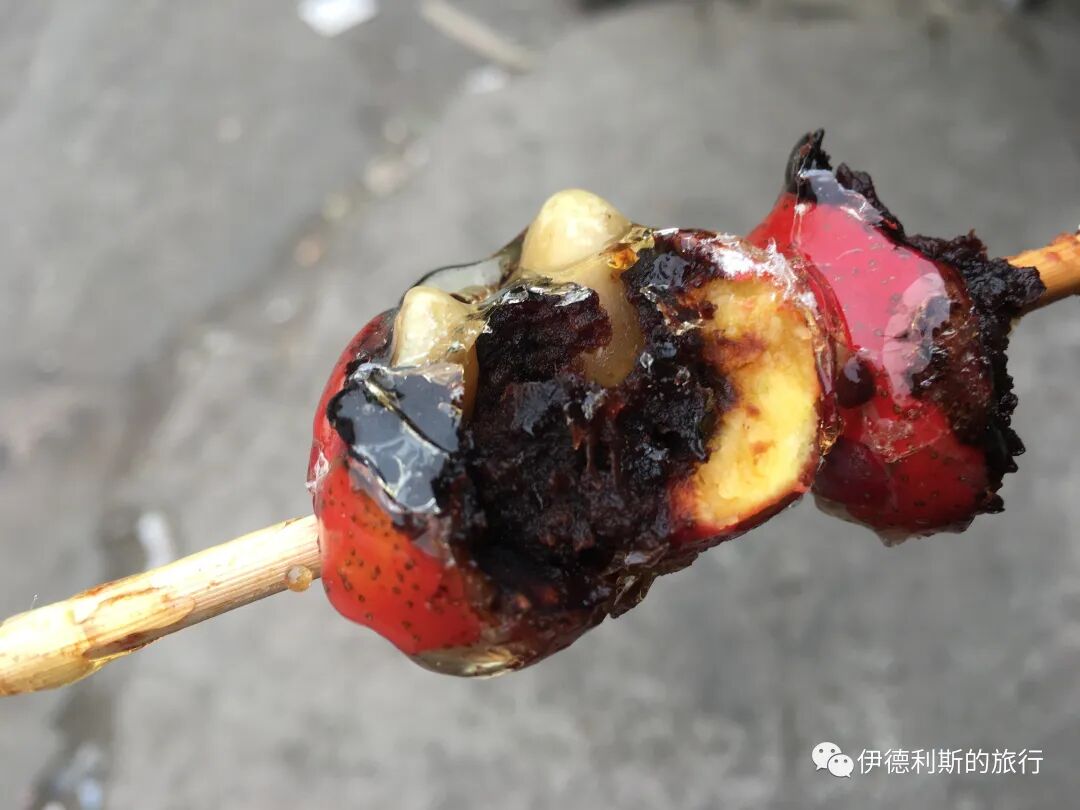
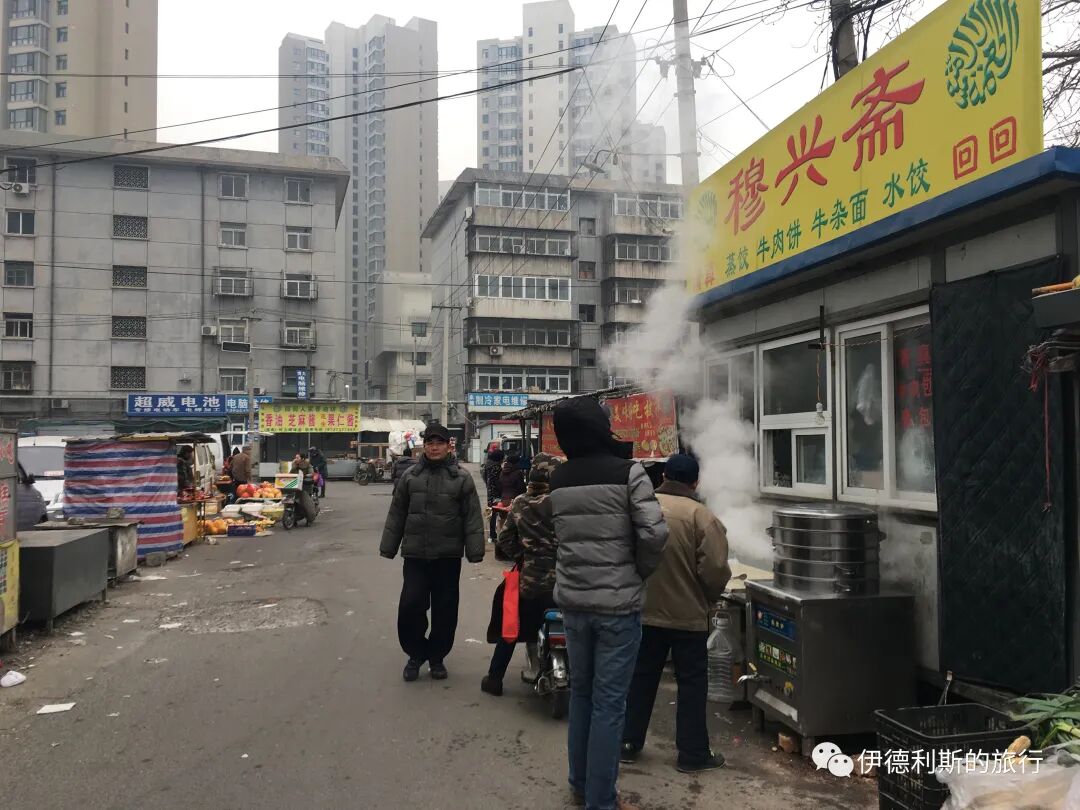
I continued exploring and ate the meat pie and wonton soup (lingjiaotang) from Haji Beef Pie. Tianjin's wonton soup (lingjiaotang), like the one in Jining, involves pouring a beaten egg into the soup, which I really like.
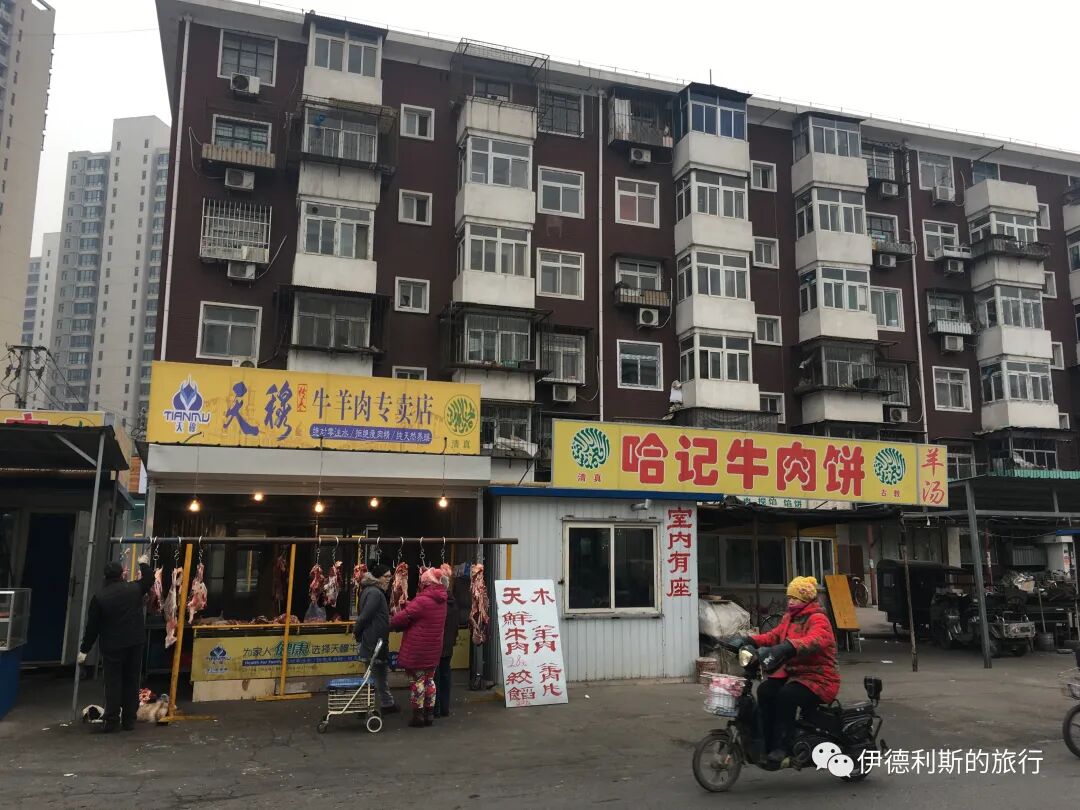
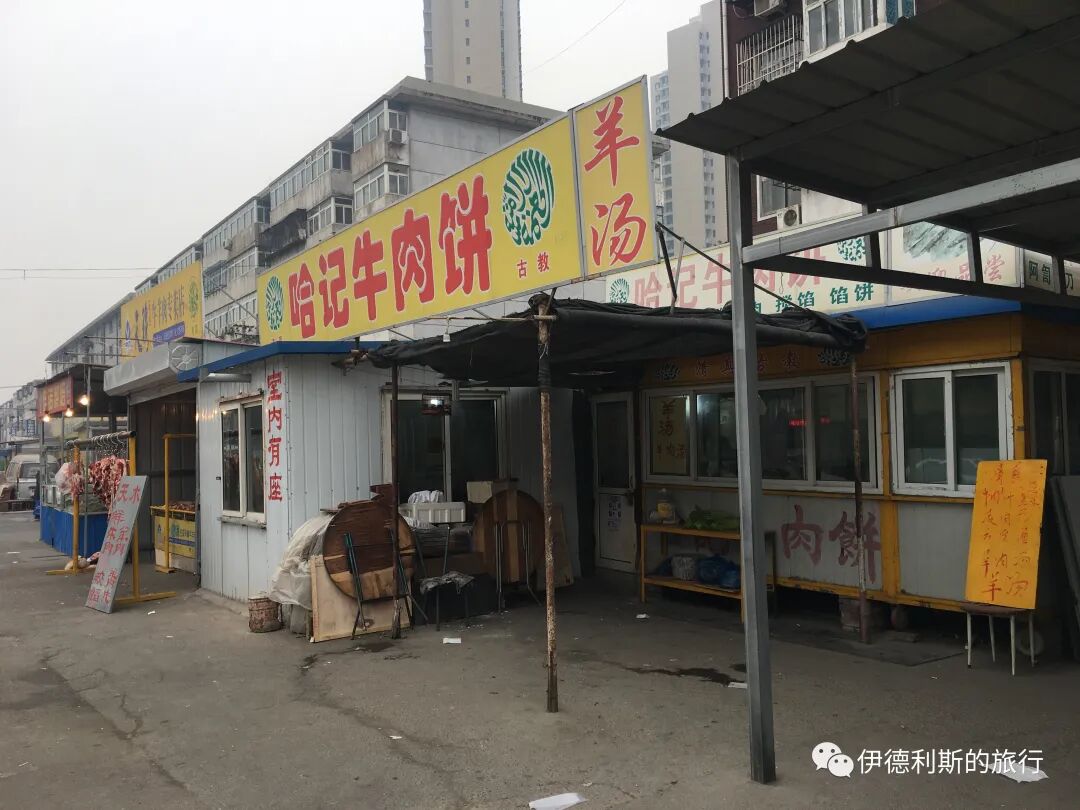
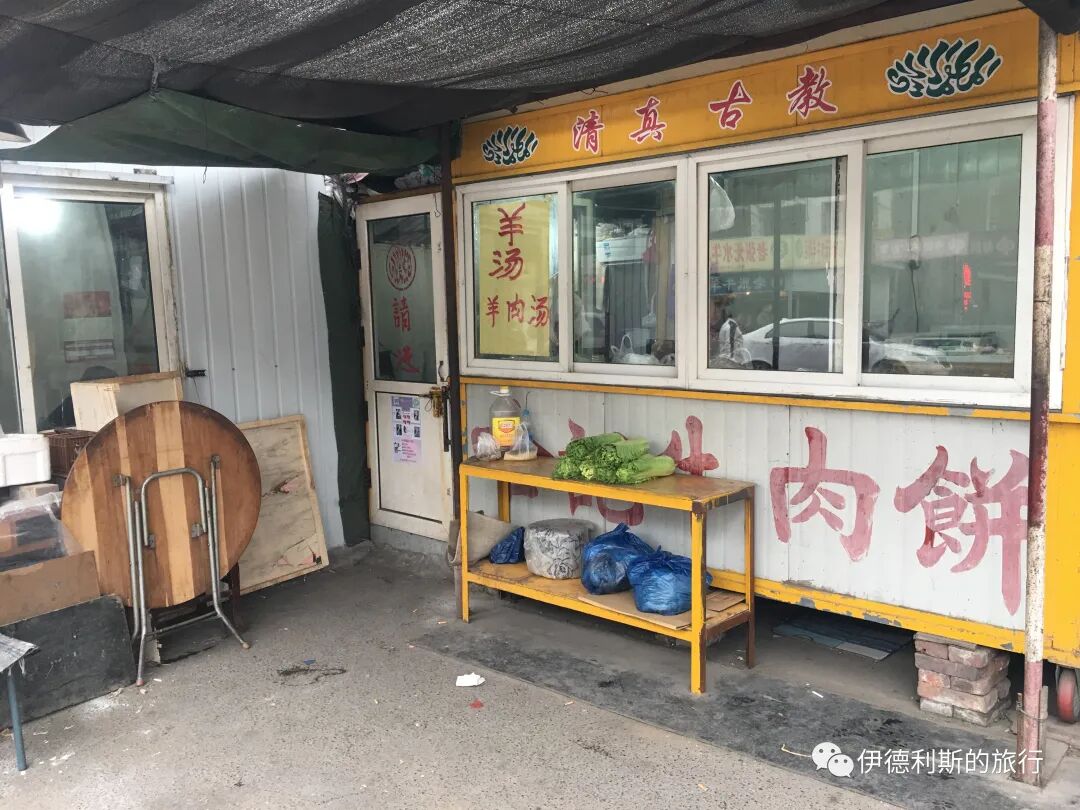
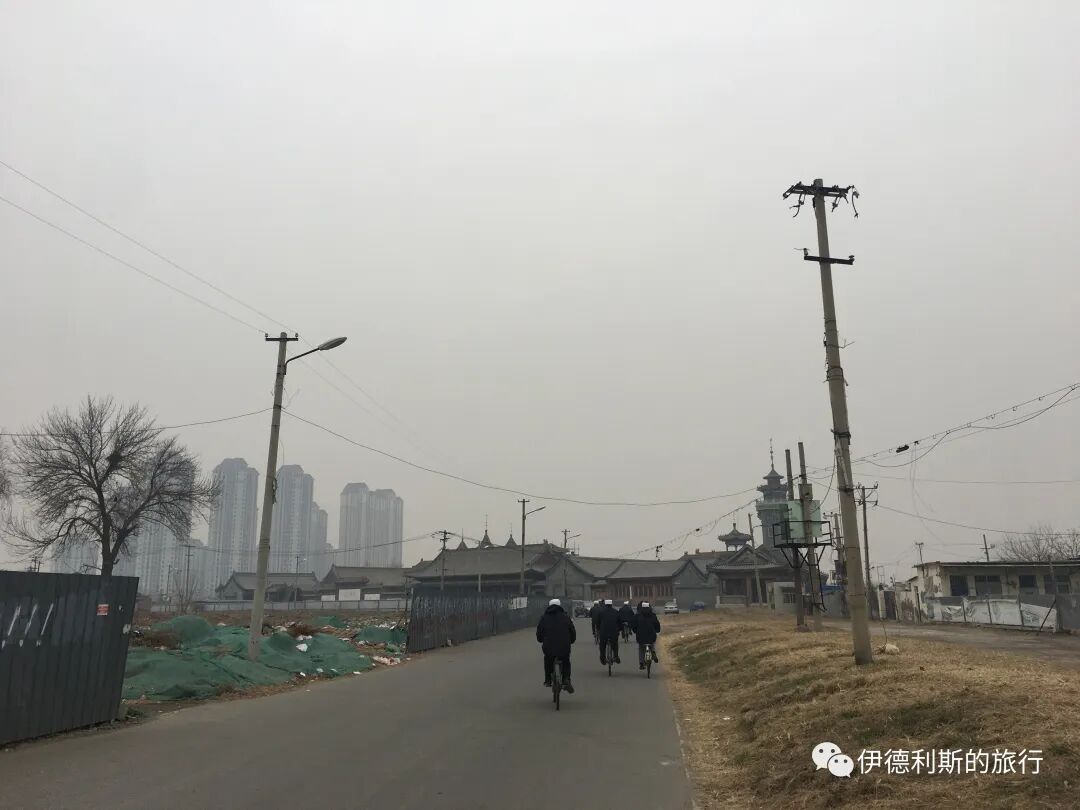
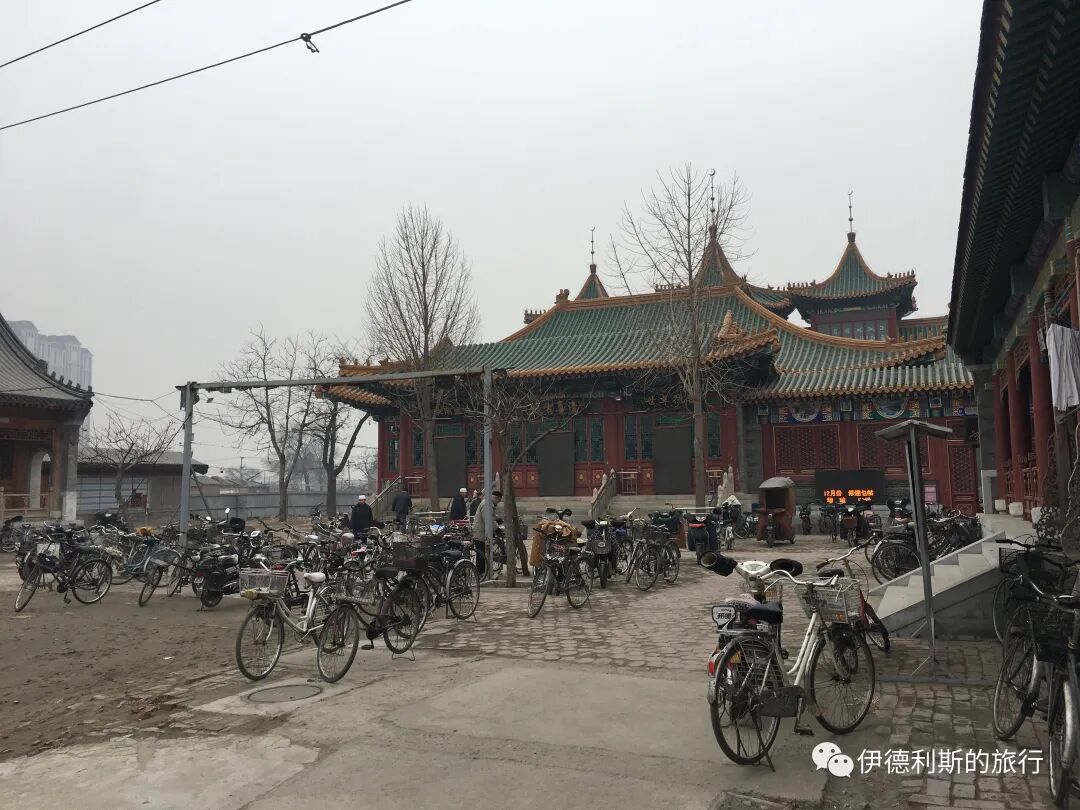
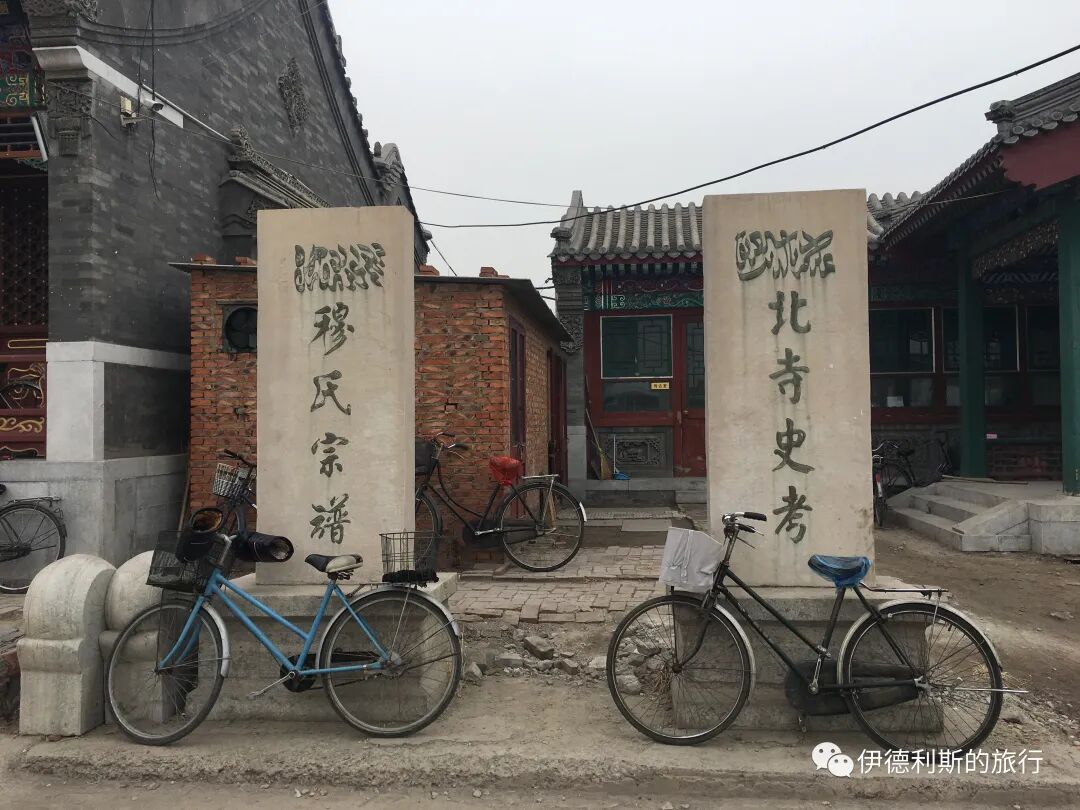
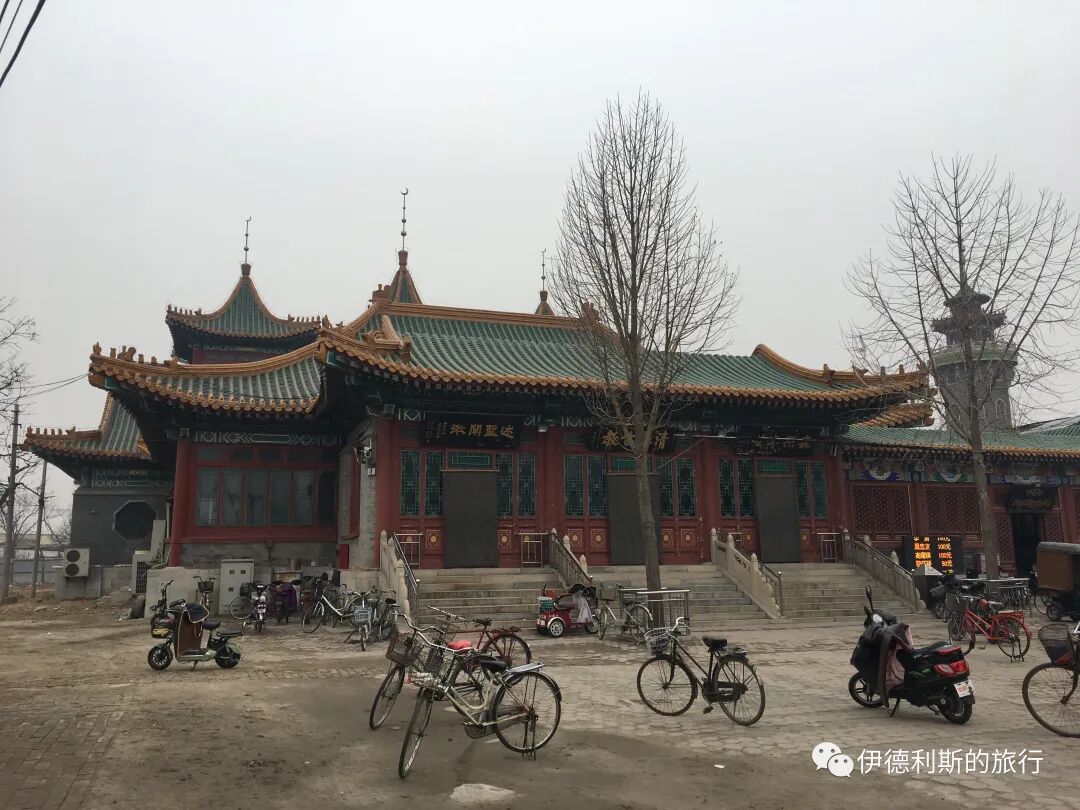
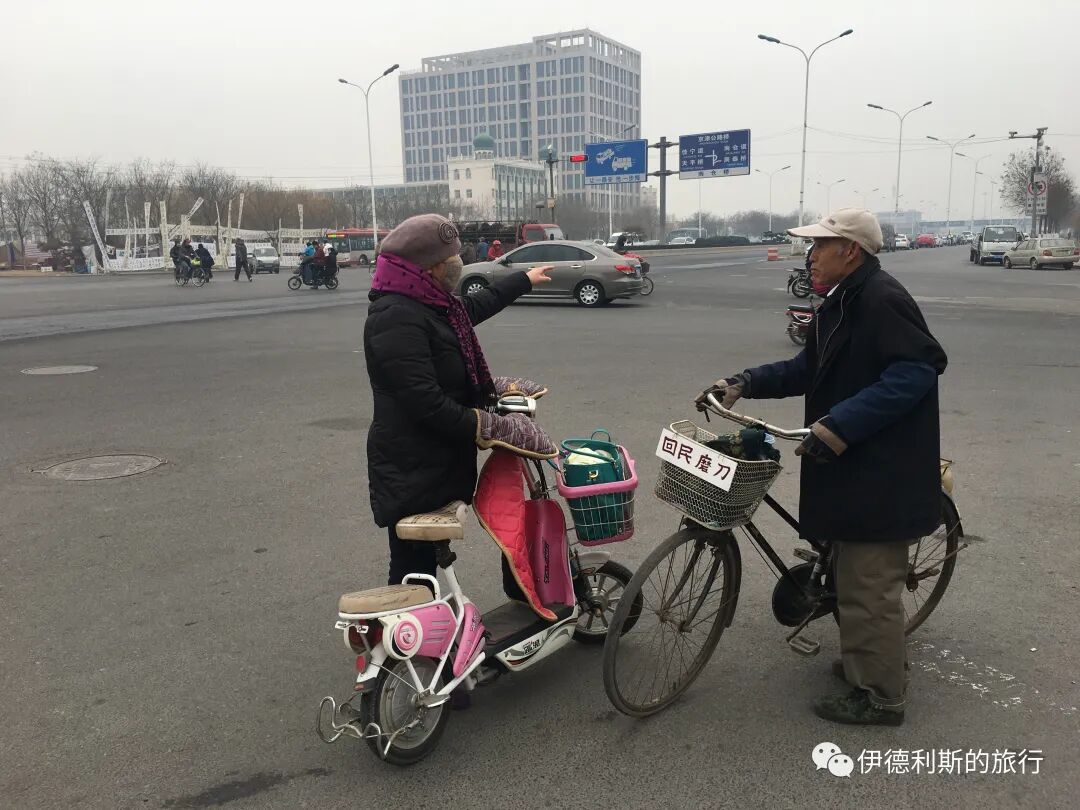
Men wearing prayer caps (libaimao) kept riding their bikes in groups toward the ruins of Tianmu Village. I checked the time and realized it was almost time for the afternoon prayer (peshini), so I followed the older men toward the North Mosque of Tianmu in Tianjin. The North Mosque of Tianmu was built in 1404, the second year of the Yongle reign. It was burned down by retreating Kuomintang troops on November 25, 1948. It was rebuilt in the 1950s and again in 1992, and today it is the most striking building among the ruins of Tianmu Village.
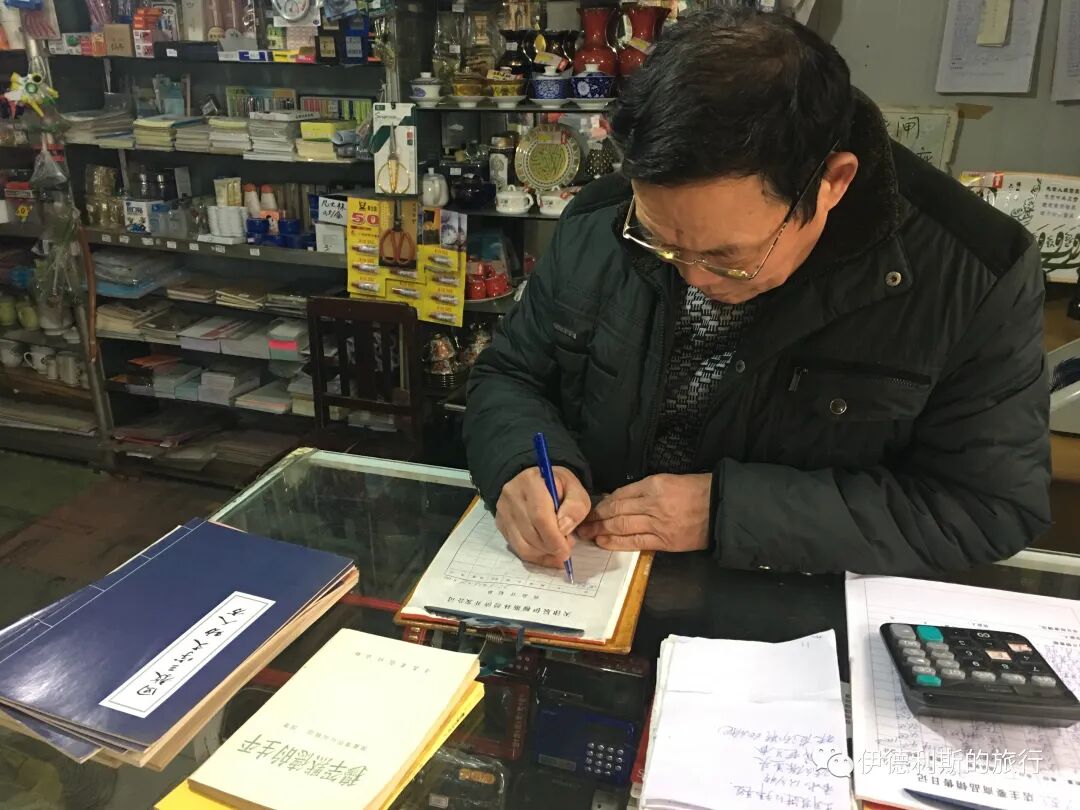
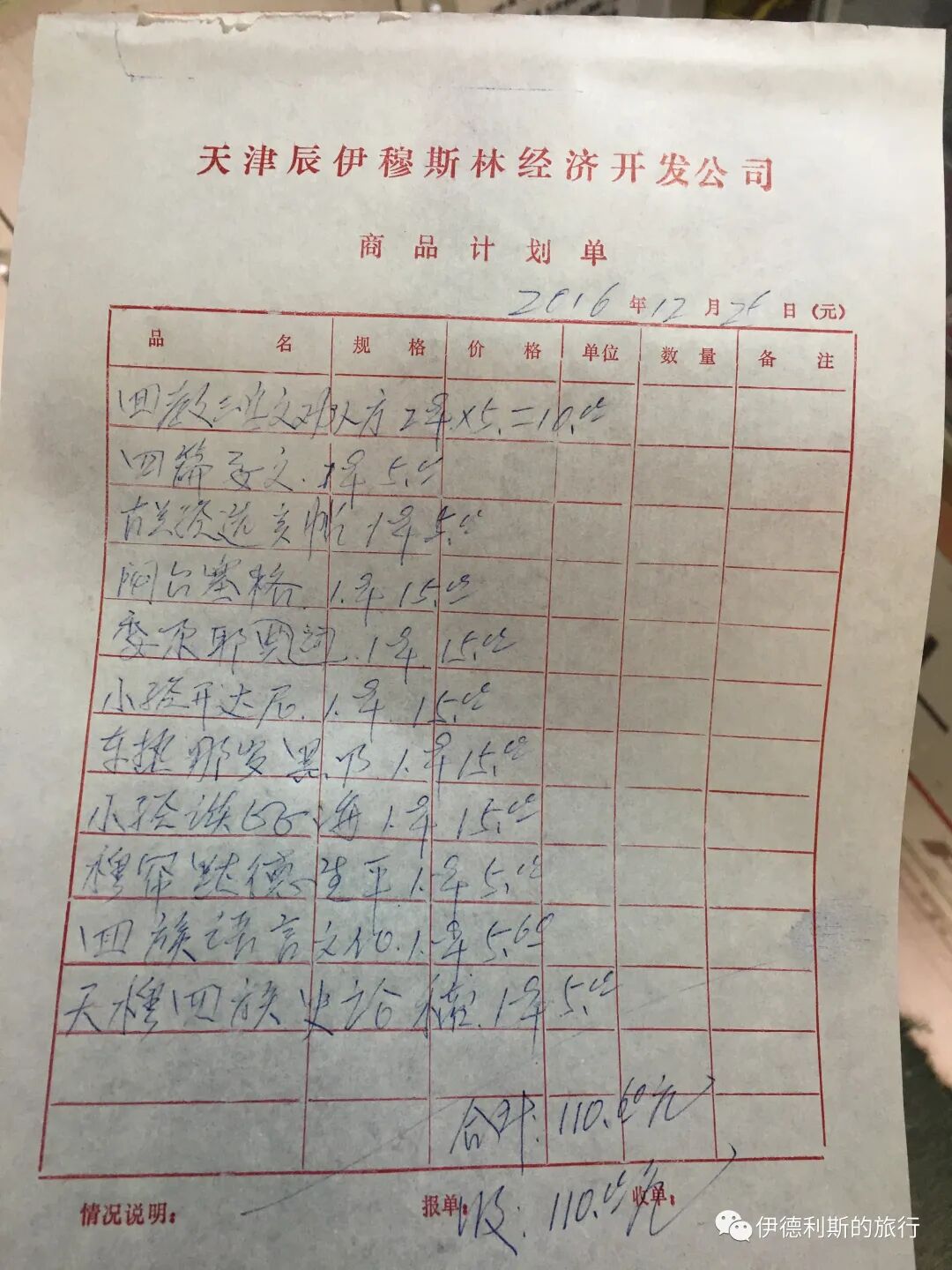
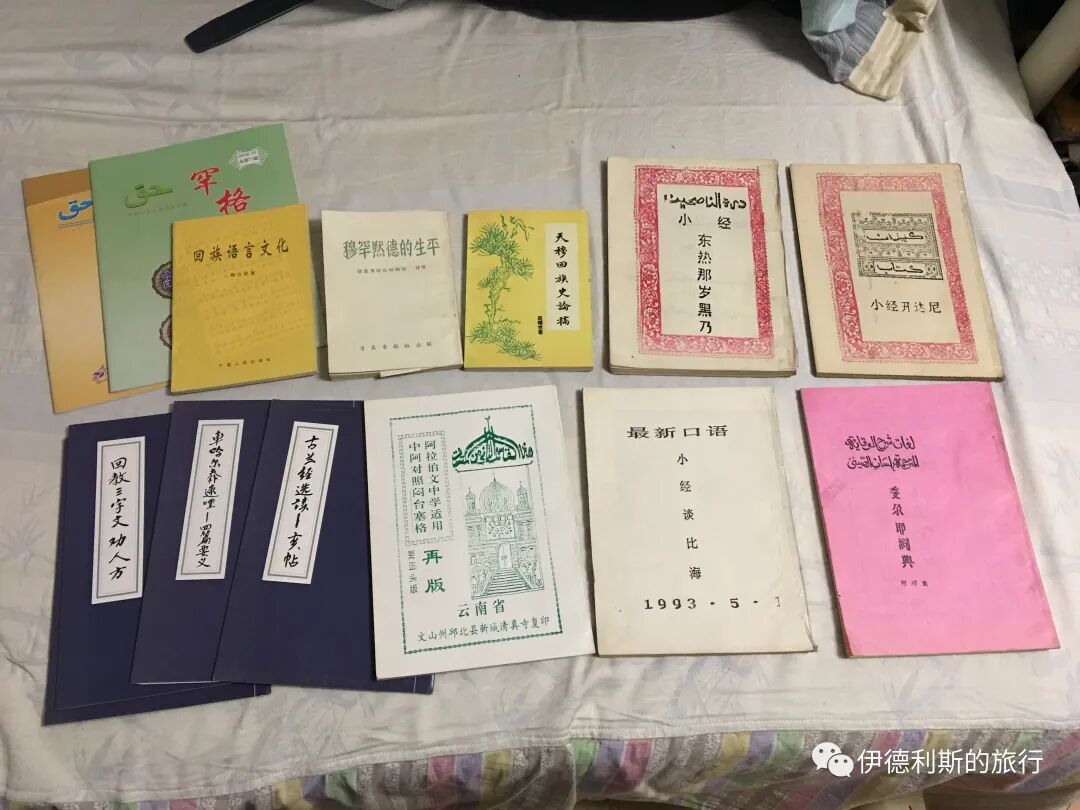
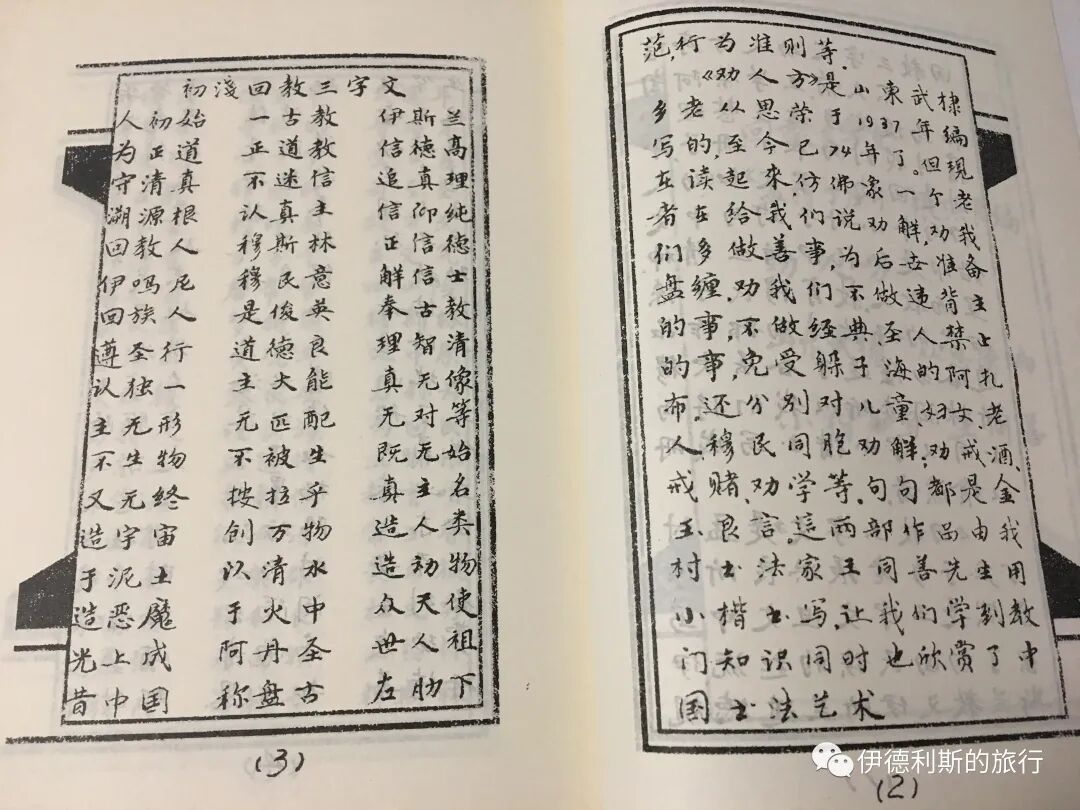
After leaving the mosque, I continued walking along Shunyi Road. My biggest find this time was at the Sanwei Bookstore on Shunyi Road, where I bought many hand-copied and lithographed small scriptures (xiaojing), which use Arabic script to write Chinese. This included the famous Weigaye Dictionary, a vocabulary list for the Weigaye religious law text. It is very interesting to see the xiaojing, Chinese characters, and Arabic side by side. I also found the Three-Character Classic of Islam (Huijiao Sanziwen) and a 1951 biography of Muhammad published by the Beijing Muslim Newspaper and Book Agency. I am very satisfied.
Summary: Tianjin Tianmu Village — Hui Muslim Food and Mosque History is presented here as a firsthand travel account in clear English, beginning with this scene: At noon on December 25, 2016, I went to Tianmu in Tianjin to explore and eat. I took the 9:55 high-speed train from Beijing South Railway Station to Tianjin West Railway Station, rode the subway for two stops to Qinjian. The account keeps its focus on Tianjin Tianmu, Hui Muslims, Halal Food while preserving the names, places, food, and historical details from the Chinese source.
At noon on December 25, 2016, I went to Tianmu in Tianjin to explore and eat. I took the 9:55 high-speed train from Beijing South Railway Station to Tianjin West Railway Station, rode the subway for two stops to Qinjian Road, and then transferred to a bus for one stop to reach Tianmu Village.
Tianmu Village was originally called Mujiazhuang, commonly known as Muzhuangzi. During the Hongwu reign of the Ming Dynasty, a boatman named Mu Zhonghe from Qiantang County, Hangzhou Prefecture, Zhejiang Province, followed Prince Yan Zhu Di along the Grand Canal to transport grain. After unloading, he traveled south with the current and settled by the North Grand Canal. He continued working in canal transport, which led to the formation of Mujiazhuang.
In 1404 (the second year of the Yongle reign), the Mu family built the first mosque, which later became the Tianmu North Mosque. After the Mujiazhuang mosque was built, Hui Muslims from places like Zhejiang, Jiangsu, Shandong, and Hebei kept arriving along the canal to settle down, and Mujiazhuang gradually grew.
During the Ming Dynasty and the early Qing Dynasty, most people in Mujiazhuang made a living from canal transport and were called boat keepers. In the middle and late Qing Dynasty, the upper reaches of the North Grand Canal gradually dried up, limiting canal transport, so some boat owners started driving carts or doing business. These cart drivers used a large cart gate as their symbol and were called cart keepers.
During the Xianfeng and Tongzhi reigns of the Qing Dynasty, a new village formed south of Mujiazhuang, named after the Tianqi Temple in the village. In 1951, Mujiazhuang and Tianqi Temple merged to become Tianmu Village.
In 2009, Tianmu Village began demolition. In 2010, 2,400 households moved into the Tianmu Dongyuan residential area, and construction of Tianmu Xiyuan began in 2012. By 2016, Tianmu Village had become ruins, and halal snacks were concentrated on Tianmu Shunyi Road.
The information about the history of Tianmu Village in this article comes partly from the Draft History of the Hui Muslims in Tianmu.
In the late Qing Dynasty, the cattle and sheep industry in Mujiazhuang developed, forming a trade called jizhuang, or consignment farming. Wealthy families in Mujiazhuang bought large numbers of cattle and sheep from the Mongolian grasslands in Zhangjiakou and Duolun County, Inner Mongolia. They bought them thin and fattened them up, hiring people to drive them all the way back to Tianjin, a process known in the trade as driving the herd. Consignment farming was divided into cattle and sheep; those who consigned cattle were called cattle pen keepers, and those who consigned sheep were called sheep pen keepers. In the late Qing and early Republic period, there were over twenty households in Mujiazhuang doing consignment farming. The four largest sheep pen keepers were Desheng, Yicheng, Yuanshun, and Yishuncheng, trading 100,000 sheep annually. After the Republic of China was established, frequent wars and blocked trade routes made it very easy for hundreds or thousands of cattle and sheep to be robbed by soldiers and bandits. By the Japanese occupation era, the consignment farming in Mujiazhuang had completely collapsed.
The cattle and sheep driven back by consignment farmers were wholesaled to small vendors, known as small-scale selling. The earliest small-scale selling involved a wooden box with two heavy ends placed on a wheelbarrow. The middle of the box had a hinged lid, with mutton inside and a meat cleaver on one side. The wooden box was brushed with tung oil, making it shiny, and the sides were painted with black characters reading, Halal Ancient Faith, Western Region Hui Muslims.
After the Republic of China, more and more Hui Muslims from Mujiazhuang opened beef and mutton shops across Tianjin, reaching 110 shops around the time of the July 7th Incident.
Now that I have introduced the general situation of Tianmu Village, let's start exploring and eating.
After getting off the bus, I saw an old man selling steamed pear paste (shuligao) next to the Tianmu Village bus stop. There were many flavors, and the fruit jam was also made by the old man himself. I chose red bean paste, brown sugar, and fruit jam flavors; the dark part at the bottom was made from purple sweet potato powder.
I went into Shunyi Road. Shunyi Road is the current commercial center of Tianmu, with snack shops lined up one after another. As I walked, I found a shop selling candied hawthorn skewers (tangdui). In Tianjin, some candied hawthorn skewers are stuffed with red bean paste and peanuts, which taste great.
I continued exploring and ate the meat pie and wonton soup (lingjiaotang) from Haji Beef Pie. Tianjin's wonton soup (lingjiaotang), like the one in Jining, involves pouring a beaten egg into the soup, which I really like.
Men wearing prayer caps (libaimao) kept riding their bikes in groups toward the ruins of Tianmu Village. I checked the time and realized it was almost time for the afternoon prayer (peshini), so I followed the older men toward the North Mosque of Tianmu in Tianjin. The North Mosque of Tianmu was built in 1404, the second year of the Yongle reign. It was burned down by retreating Kuomintang troops on November 25, 1948. It was rebuilt in the 1950s and again in 1992, and today it is the most striking building among the ruins of Tianmu Village.
After leaving the mosque, I continued walking along Shunyi Road. My biggest find this time was at the Sanwei Bookstore on Shunyi Road, where I bought many hand-copied and lithographed small scriptures (xiaojing), which use Arabic script to write Chinese. This included the famous Weigaye Dictionary, a vocabulary list for the Weigaye religious law text. It is very interesting to see the xiaojing, Chinese characters, and Arabic side by side. I also found the Three-Character Classic of Islam (Huijiao Sanziwen) and a 1951 biography of Muhammad published by the Beijing Muslim Newspaper and Book Agency. I am very satisfied.
Halal Travel Guide: Tianjin Tianmu Village — Hui Muslim Food and Mosque History
Articles • ali2007fr posted the article • 0 comments • 244 views • 2026-05-18 09:21
Reposted from the web
Summary: Tianjin Tianmu Village — Hui Muslim Food and Mosque History is presented here as a firsthand travel account in clear English, beginning with this scene: At noon on December 25, 2016, I went to Tianmu in Tianjin to explore and eat. I took the 9:55 high-speed train from Beijing South Railway Station to Tianjin West Railway Station, rode the subway for two stops to Qinjian. The account keeps its focus on Tianjin Tianmu, Hui Muslims, Halal Food while preserving the names, places, food, and historical details from the Chinese source.
At noon on December 25, 2016, I went to Tianmu in Tianjin to explore and eat. I took the 9:55 high-speed train from Beijing South Railway Station to Tianjin West Railway Station, rode the subway for two stops to Qinjian Road, and then transferred to a bus for one stop to reach Tianmu Village.
Tianmu Village was originally called Mujiazhuang, commonly known as Muzhuangzi. During the Hongwu reign of the Ming Dynasty, a boatman named Mu Zhonghe from Qiantang County, Hangzhou Prefecture, Zhejiang Province, followed Prince Yan Zhu Di along the Grand Canal to transport grain. After unloading, he traveled south with the current and settled by the North Grand Canal. He continued working in canal transport, which led to the formation of Mujiazhuang.
In 1404 (the second year of the Yongle reign), the Mu family built the first mosque, which later became the Tianmu North Mosque. After the Mujiazhuang mosque was built, Hui Muslims from places like Zhejiang, Jiangsu, Shandong, and Hebei kept arriving along the canal to settle down, and Mujiazhuang gradually grew.
During the Ming Dynasty and the early Qing Dynasty, most people in Mujiazhuang made a living from canal transport and were called boat keepers. In the middle and late Qing Dynasty, the upper reaches of the North Grand Canal gradually dried up, limiting canal transport, so some boat owners started driving carts or doing business. These cart drivers used a large cart gate as their symbol and were called cart keepers.
During the Xianfeng and Tongzhi reigns of the Qing Dynasty, a new village formed south of Mujiazhuang, named after the Tianqi Temple in the village. In 1951, Mujiazhuang and Tianqi Temple merged to become Tianmu Village.
In 2009, Tianmu Village began demolition. In 2010, 2,400 households moved into the Tianmu Dongyuan residential area, and construction of Tianmu Xiyuan began in 2012. By 2016, Tianmu Village had become ruins, and halal snacks were concentrated on Tianmu Shunyi Road.
The information about the history of Tianmu Village in this article comes partly from the Draft History of the Hui Muslims in Tianmu.
In the late Qing Dynasty, the cattle and sheep industry in Mujiazhuang developed, forming a trade called jizhuang, or consignment farming. Wealthy families in Mujiazhuang bought large numbers of cattle and sheep from the Mongolian grasslands in Zhangjiakou and Duolun County, Inner Mongolia. They bought them thin and fattened them up, hiring people to drive them all the way back to Tianjin, a process known in the trade as driving the herd. Consignment farming was divided into cattle and sheep; those who consigned cattle were called cattle pen keepers, and those who consigned sheep were called sheep pen keepers. In the late Qing and early Republic period, there were over twenty households in Mujiazhuang doing consignment farming. The four largest sheep pen keepers were Desheng, Yicheng, Yuanshun, and Yishuncheng, trading 100,000 sheep annually. After the Republic of China was established, frequent wars and blocked trade routes made it very easy for hundreds or thousands of cattle and sheep to be robbed by soldiers and bandits. By the Japanese occupation era, the consignment farming in Mujiazhuang had completely collapsed.
The cattle and sheep driven back by consignment farmers were wholesaled to small vendors, known as small-scale selling. The earliest small-scale selling involved a wooden box with two heavy ends placed on a wheelbarrow. The middle of the box had a hinged lid, with mutton inside and a meat cleaver on one side. The wooden box was brushed with tung oil, making it shiny, and the sides were painted with black characters reading, Halal Ancient Faith, Western Region Hui Muslims.
After the Republic of China, more and more Hui Muslims from Mujiazhuang opened beef and mutton shops across Tianjin, reaching 110 shops around the time of the July 7th Incident.
Now that I have introduced the general situation of Tianmu Village, let's start exploring and eating.
After getting off the bus, I saw an old man selling steamed pear paste (shuligao) next to the Tianmu Village bus stop. There were many flavors, and the fruit jam was also made by the old man himself. I chose red bean paste, brown sugar, and fruit jam flavors; the dark part at the bottom was made from purple sweet potato powder.
I went into Shunyi Road. Shunyi Road is the current commercial center of Tianmu, with snack shops lined up one after another. As I walked, I found a shop selling candied hawthorn skewers (tangdui). In Tianjin, some candied hawthorn skewers are stuffed with red bean paste and peanuts, which taste great.
I continued exploring and ate the meat pie and wonton soup (lingjiaotang) from Haji Beef Pie. Tianjin's wonton soup (lingjiaotang), like the one in Jining, involves pouring a beaten egg into the soup, which I really like.
Men wearing prayer caps (libaimao) kept riding their bikes in groups toward the ruins of Tianmu Village. I checked the time and realized it was almost time for the afternoon prayer (peshini), so I followed the older men toward the North Mosque of Tianmu in Tianjin. The North Mosque of Tianmu was built in 1404, the second year of the Yongle reign. It was burned down by retreating Kuomintang troops on November 25, 1948. It was rebuilt in the 1950s and again in 1992, and today it is the most striking building among the ruins of Tianmu Village.
After leaving the mosque, I continued walking along Shunyi Road. My biggest find this time was at the Sanwei Bookstore on Shunyi Road, where I bought many hand-copied and lithographed small scriptures (xiaojing), which use Arabic script to write Chinese. This included the famous Weigaye Dictionary, a vocabulary list for the Weigaye religious law text. It is very interesting to see the xiaojing, Chinese characters, and Arabic side by side. I also found the Three-Character Classic of Islam (Huijiao Sanziwen) and a 1951 biography of Muhammad published by the Beijing Muslim Newspaper and Book Agency. I am very satisfied. view all
Summary: Tianjin Tianmu Village — Hui Muslim Food and Mosque History is presented here as a firsthand travel account in clear English, beginning with this scene: At noon on December 25, 2016, I went to Tianmu in Tianjin to explore and eat. I took the 9:55 high-speed train from Beijing South Railway Station to Tianjin West Railway Station, rode the subway for two stops to Qinjian. The account keeps its focus on Tianjin Tianmu, Hui Muslims, Halal Food while preserving the names, places, food, and historical details from the Chinese source.
At noon on December 25, 2016, I went to Tianmu in Tianjin to explore and eat. I took the 9:55 high-speed train from Beijing South Railway Station to Tianjin West Railway Station, rode the subway for two stops to Qinjian Road, and then transferred to a bus for one stop to reach Tianmu Village.
Tianmu Village was originally called Mujiazhuang, commonly known as Muzhuangzi. During the Hongwu reign of the Ming Dynasty, a boatman named Mu Zhonghe from Qiantang County, Hangzhou Prefecture, Zhejiang Province, followed Prince Yan Zhu Di along the Grand Canal to transport grain. After unloading, he traveled south with the current and settled by the North Grand Canal. He continued working in canal transport, which led to the formation of Mujiazhuang.
In 1404 (the second year of the Yongle reign), the Mu family built the first mosque, which later became the Tianmu North Mosque. After the Mujiazhuang mosque was built, Hui Muslims from places like Zhejiang, Jiangsu, Shandong, and Hebei kept arriving along the canal to settle down, and Mujiazhuang gradually grew.
During the Ming Dynasty and the early Qing Dynasty, most people in Mujiazhuang made a living from canal transport and were called boat keepers. In the middle and late Qing Dynasty, the upper reaches of the North Grand Canal gradually dried up, limiting canal transport, so some boat owners started driving carts or doing business. These cart drivers used a large cart gate as their symbol and were called cart keepers.
During the Xianfeng and Tongzhi reigns of the Qing Dynasty, a new village formed south of Mujiazhuang, named after the Tianqi Temple in the village. In 1951, Mujiazhuang and Tianqi Temple merged to become Tianmu Village.
In 2009, Tianmu Village began demolition. In 2010, 2,400 households moved into the Tianmu Dongyuan residential area, and construction of Tianmu Xiyuan began in 2012. By 2016, Tianmu Village had become ruins, and halal snacks were concentrated on Tianmu Shunyi Road.
The information about the history of Tianmu Village in this article comes partly from the Draft History of the Hui Muslims in Tianmu.
In the late Qing Dynasty, the cattle and sheep industry in Mujiazhuang developed, forming a trade called jizhuang, or consignment farming. Wealthy families in Mujiazhuang bought large numbers of cattle and sheep from the Mongolian grasslands in Zhangjiakou and Duolun County, Inner Mongolia. They bought them thin and fattened them up, hiring people to drive them all the way back to Tianjin, a process known in the trade as driving the herd. Consignment farming was divided into cattle and sheep; those who consigned cattle were called cattle pen keepers, and those who consigned sheep were called sheep pen keepers. In the late Qing and early Republic period, there were over twenty households in Mujiazhuang doing consignment farming. The four largest sheep pen keepers were Desheng, Yicheng, Yuanshun, and Yishuncheng, trading 100,000 sheep annually. After the Republic of China was established, frequent wars and blocked trade routes made it very easy for hundreds or thousands of cattle and sheep to be robbed by soldiers and bandits. By the Japanese occupation era, the consignment farming in Mujiazhuang had completely collapsed.
The cattle and sheep driven back by consignment farmers were wholesaled to small vendors, known as small-scale selling. The earliest small-scale selling involved a wooden box with two heavy ends placed on a wheelbarrow. The middle of the box had a hinged lid, with mutton inside and a meat cleaver on one side. The wooden box was brushed with tung oil, making it shiny, and the sides were painted with black characters reading, Halal Ancient Faith, Western Region Hui Muslims.
After the Republic of China, more and more Hui Muslims from Mujiazhuang opened beef and mutton shops across Tianjin, reaching 110 shops around the time of the July 7th Incident.
Now that I have introduced the general situation of Tianmu Village, let's start exploring and eating.
After getting off the bus, I saw an old man selling steamed pear paste (shuligao) next to the Tianmu Village bus stop. There were many flavors, and the fruit jam was also made by the old man himself. I chose red bean paste, brown sugar, and fruit jam flavors; the dark part at the bottom was made from purple sweet potato powder.
I went into Shunyi Road. Shunyi Road is the current commercial center of Tianmu, with snack shops lined up one after another. As I walked, I found a shop selling candied hawthorn skewers (tangdui). In Tianjin, some candied hawthorn skewers are stuffed with red bean paste and peanuts, which taste great.
I continued exploring and ate the meat pie and wonton soup (lingjiaotang) from Haji Beef Pie. Tianjin's wonton soup (lingjiaotang), like the one in Jining, involves pouring a beaten egg into the soup, which I really like.
Men wearing prayer caps (libaimao) kept riding their bikes in groups toward the ruins of Tianmu Village. I checked the time and realized it was almost time for the afternoon prayer (peshini), so I followed the older men toward the North Mosque of Tianmu in Tianjin. The North Mosque of Tianmu was built in 1404, the second year of the Yongle reign. It was burned down by retreating Kuomintang troops on November 25, 1948. It was rebuilt in the 1950s and again in 1992, and today it is the most striking building among the ruins of Tianmu Village.
After leaving the mosque, I continued walking along Shunyi Road. My biggest find this time was at the Sanwei Bookstore on Shunyi Road, where I bought many hand-copied and lithographed small scriptures (xiaojing), which use Arabic script to write Chinese. This included the famous Weigaye Dictionary, a vocabulary list for the Weigaye religious law text. It is very interesting to see the xiaojing, Chinese characters, and Arabic side by side. I also found the Three-Character Classic of Islam (Huijiao Sanziwen) and a 1951 biography of Muhammad published by the Beijing Muslim Newspaper and Book Agency. I am very satisfied. view all
Reposted from the web
Summary: Tianjin Tianmu Village — Hui Muslim Food and Mosque History is presented here as a firsthand travel account in clear English, beginning with this scene: At noon on December 25, 2016, I went to Tianmu in Tianjin to explore and eat. I took the 9:55 high-speed train from Beijing South Railway Station to Tianjin West Railway Station, rode the subway for two stops to Qinjian. The account keeps its focus on Tianjin Tianmu, Hui Muslims, Halal Food while preserving the names, places, food, and historical details from the Chinese source.
At noon on December 25, 2016, I went to Tianmu in Tianjin to explore and eat. I took the 9:55 high-speed train from Beijing South Railway Station to Tianjin West Railway Station, rode the subway for two stops to Qinjian Road, and then transferred to a bus for one stop to reach Tianmu Village.
Tianmu Village was originally called Mujiazhuang, commonly known as Muzhuangzi. During the Hongwu reign of the Ming Dynasty, a boatman named Mu Zhonghe from Qiantang County, Hangzhou Prefecture, Zhejiang Province, followed Prince Yan Zhu Di along the Grand Canal to transport grain. After unloading, he traveled south with the current and settled by the North Grand Canal. He continued working in canal transport, which led to the formation of Mujiazhuang.
In 1404 (the second year of the Yongle reign), the Mu family built the first mosque, which later became the Tianmu North Mosque. After the Mujiazhuang mosque was built, Hui Muslims from places like Zhejiang, Jiangsu, Shandong, and Hebei kept arriving along the canal to settle down, and Mujiazhuang gradually grew.
During the Ming Dynasty and the early Qing Dynasty, most people in Mujiazhuang made a living from canal transport and were called boat keepers. In the middle and late Qing Dynasty, the upper reaches of the North Grand Canal gradually dried up, limiting canal transport, so some boat owners started driving carts or doing business. These cart drivers used a large cart gate as their symbol and were called cart keepers.
During the Xianfeng and Tongzhi reigns of the Qing Dynasty, a new village formed south of Mujiazhuang, named after the Tianqi Temple in the village. In 1951, Mujiazhuang and Tianqi Temple merged to become Tianmu Village.
In 2009, Tianmu Village began demolition. In 2010, 2,400 households moved into the Tianmu Dongyuan residential area, and construction of Tianmu Xiyuan began in 2012. By 2016, Tianmu Village had become ruins, and halal snacks were concentrated on Tianmu Shunyi Road.
The information about the history of Tianmu Village in this article comes partly from the Draft History of the Hui Muslims in Tianmu.
In the late Qing Dynasty, the cattle and sheep industry in Mujiazhuang developed, forming a trade called jizhuang, or consignment farming. Wealthy families in Mujiazhuang bought large numbers of cattle and sheep from the Mongolian grasslands in Zhangjiakou and Duolun County, Inner Mongolia. They bought them thin and fattened them up, hiring people to drive them all the way back to Tianjin, a process known in the trade as driving the herd. Consignment farming was divided into cattle and sheep; those who consigned cattle were called cattle pen keepers, and those who consigned sheep were called sheep pen keepers. In the late Qing and early Republic period, there were over twenty households in Mujiazhuang doing consignment farming. The four largest sheep pen keepers were Desheng, Yicheng, Yuanshun, and Yishuncheng, trading 100,000 sheep annually. After the Republic of China was established, frequent wars and blocked trade routes made it very easy for hundreds or thousands of cattle and sheep to be robbed by soldiers and bandits. By the Japanese occupation era, the consignment farming in Mujiazhuang had completely collapsed.
The cattle and sheep driven back by consignment farmers were wholesaled to small vendors, known as small-scale selling. The earliest small-scale selling involved a wooden box with two heavy ends placed on a wheelbarrow. The middle of the box had a hinged lid, with mutton inside and a meat cleaver on one side. The wooden box was brushed with tung oil, making it shiny, and the sides were painted with black characters reading, Halal Ancient Faith, Western Region Hui Muslims.
After the Republic of China, more and more Hui Muslims from Mujiazhuang opened beef and mutton shops across Tianjin, reaching 110 shops around the time of the July 7th Incident.
Now that I have introduced the general situation of Tianmu Village, let's start exploring and eating.
After getting off the bus, I saw an old man selling steamed pear paste (shuligao) next to the Tianmu Village bus stop. There were many flavors, and the fruit jam was also made by the old man himself. I chose red bean paste, brown sugar, and fruit jam flavors; the dark part at the bottom was made from purple sweet potato powder.
I went into Shunyi Road. Shunyi Road is the current commercial center of Tianmu, with snack shops lined up one after another. As I walked, I found a shop selling candied hawthorn skewers (tangdui). In Tianjin, some candied hawthorn skewers are stuffed with red bean paste and peanuts, which taste great.
I continued exploring and ate the meat pie and wonton soup (lingjiaotang) from Haji Beef Pie. Tianjin's wonton soup (lingjiaotang), like the one in Jining, involves pouring a beaten egg into the soup, which I really like.
Men wearing prayer caps (libaimao) kept riding their bikes in groups toward the ruins of Tianmu Village. I checked the time and realized it was almost time for the afternoon prayer (peshini), so I followed the older men toward the North Mosque of Tianmu in Tianjin. The North Mosque of Tianmu was built in 1404, the second year of the Yongle reign. It was burned down by retreating Kuomintang troops on November 25, 1948. It was rebuilt in the 1950s and again in 1992, and today it is the most striking building among the ruins of Tianmu Village.
After leaving the mosque, I continued walking along Shunyi Road. My biggest find this time was at the Sanwei Bookstore on Shunyi Road, where I bought many hand-copied and lithographed small scriptures (xiaojing), which use Arabic script to write Chinese. This included the famous Weigaye Dictionary, a vocabulary list for the Weigaye religious law text. It is very interesting to see the xiaojing, Chinese characters, and Arabic side by side. I also found the Three-Character Classic of Islam (Huijiao Sanziwen) and a 1951 biography of Muhammad published by the Beijing Muslim Newspaper and Book Agency. I am very satisfied.
Summary: Tianjin Tianmu Village — Hui Muslim Food and Mosque History is presented here as a firsthand travel account in clear English, beginning with this scene: At noon on December 25, 2016, I went to Tianmu in Tianjin to explore and eat. I took the 9:55 high-speed train from Beijing South Railway Station to Tianjin West Railway Station, rode the subway for two stops to Qinjian. The account keeps its focus on Tianjin Tianmu, Hui Muslims, Halal Food while preserving the names, places, food, and historical details from the Chinese source.
At noon on December 25, 2016, I went to Tianmu in Tianjin to explore and eat. I took the 9:55 high-speed train from Beijing South Railway Station to Tianjin West Railway Station, rode the subway for two stops to Qinjian Road, and then transferred to a bus for one stop to reach Tianmu Village.
Tianmu Village was originally called Mujiazhuang, commonly known as Muzhuangzi. During the Hongwu reign of the Ming Dynasty, a boatman named Mu Zhonghe from Qiantang County, Hangzhou Prefecture, Zhejiang Province, followed Prince Yan Zhu Di along the Grand Canal to transport grain. After unloading, he traveled south with the current and settled by the North Grand Canal. He continued working in canal transport, which led to the formation of Mujiazhuang.
In 1404 (the second year of the Yongle reign), the Mu family built the first mosque, which later became the Tianmu North Mosque. After the Mujiazhuang mosque was built, Hui Muslims from places like Zhejiang, Jiangsu, Shandong, and Hebei kept arriving along the canal to settle down, and Mujiazhuang gradually grew.
During the Ming Dynasty and the early Qing Dynasty, most people in Mujiazhuang made a living from canal transport and were called boat keepers. In the middle and late Qing Dynasty, the upper reaches of the North Grand Canal gradually dried up, limiting canal transport, so some boat owners started driving carts or doing business. These cart drivers used a large cart gate as their symbol and were called cart keepers.
During the Xianfeng and Tongzhi reigns of the Qing Dynasty, a new village formed south of Mujiazhuang, named after the Tianqi Temple in the village. In 1951, Mujiazhuang and Tianqi Temple merged to become Tianmu Village.
In 2009, Tianmu Village began demolition. In 2010, 2,400 households moved into the Tianmu Dongyuan residential area, and construction of Tianmu Xiyuan began in 2012. By 2016, Tianmu Village had become ruins, and halal snacks were concentrated on Tianmu Shunyi Road.
The information about the history of Tianmu Village in this article comes partly from the Draft History of the Hui Muslims in Tianmu.
In the late Qing Dynasty, the cattle and sheep industry in Mujiazhuang developed, forming a trade called jizhuang, or consignment farming. Wealthy families in Mujiazhuang bought large numbers of cattle and sheep from the Mongolian grasslands in Zhangjiakou and Duolun County, Inner Mongolia. They bought them thin and fattened them up, hiring people to drive them all the way back to Tianjin, a process known in the trade as driving the herd. Consignment farming was divided into cattle and sheep; those who consigned cattle were called cattle pen keepers, and those who consigned sheep were called sheep pen keepers. In the late Qing and early Republic period, there were over twenty households in Mujiazhuang doing consignment farming. The four largest sheep pen keepers were Desheng, Yicheng, Yuanshun, and Yishuncheng, trading 100,000 sheep annually. After the Republic of China was established, frequent wars and blocked trade routes made it very easy for hundreds or thousands of cattle and sheep to be robbed by soldiers and bandits. By the Japanese occupation era, the consignment farming in Mujiazhuang had completely collapsed.
The cattle and sheep driven back by consignment farmers were wholesaled to small vendors, known as small-scale selling. The earliest small-scale selling involved a wooden box with two heavy ends placed on a wheelbarrow. The middle of the box had a hinged lid, with mutton inside and a meat cleaver on one side. The wooden box was brushed with tung oil, making it shiny, and the sides were painted with black characters reading, Halal Ancient Faith, Western Region Hui Muslims.
After the Republic of China, more and more Hui Muslims from Mujiazhuang opened beef and mutton shops across Tianjin, reaching 110 shops around the time of the July 7th Incident.
Now that I have introduced the general situation of Tianmu Village, let's start exploring and eating.
After getting off the bus, I saw an old man selling steamed pear paste (shuligao) next to the Tianmu Village bus stop. There were many flavors, and the fruit jam was also made by the old man himself. I chose red bean paste, brown sugar, and fruit jam flavors; the dark part at the bottom was made from purple sweet potato powder.
I went into Shunyi Road. Shunyi Road is the current commercial center of Tianmu, with snack shops lined up one after another. As I walked, I found a shop selling candied hawthorn skewers (tangdui). In Tianjin, some candied hawthorn skewers are stuffed with red bean paste and peanuts, which taste great.
I continued exploring and ate the meat pie and wonton soup (lingjiaotang) from Haji Beef Pie. Tianjin's wonton soup (lingjiaotang), like the one in Jining, involves pouring a beaten egg into the soup, which I really like.
Men wearing prayer caps (libaimao) kept riding their bikes in groups toward the ruins of Tianmu Village. I checked the time and realized it was almost time for the afternoon prayer (peshini), so I followed the older men toward the North Mosque of Tianmu in Tianjin. The North Mosque of Tianmu was built in 1404, the second year of the Yongle reign. It was burned down by retreating Kuomintang troops on November 25, 1948. It was rebuilt in the 1950s and again in 1992, and today it is the most striking building among the ruins of Tianmu Village.
After leaving the mosque, I continued walking along Shunyi Road. My biggest find this time was at the Sanwei Bookstore on Shunyi Road, where I bought many hand-copied and lithographed small scriptures (xiaojing), which use Arabic script to write Chinese. This included the famous Weigaye Dictionary, a vocabulary list for the Weigaye religious law text. It is very interesting to see the xiaojing, Chinese characters, and Arabic side by side. I also found the Three-Character Classic of Islam (Huijiao Sanziwen) and a 1951 biography of Muhammad published by the Beijing Muslim Newspaper and Book Agency. I am very satisfied.