

Toronto Muslim Travel
Muslim Travel Guide Toronto: Chinese Hui Muslim Eid al-Adha, Halal Noodles and Scarborough Mosque
Articles • yusuf908 posted the article • 0 comments • 292 views • 2026-05-22 23:36
Reposted from the web
Summary: This Muslim travel guide to Toronto follows Eid al-Adha with the Chinese Muslim Association of Canada in Scarborough, halal Hui Muslim food, Fang Zhongshan-style spicy soup, halal noodles, Canadian diversity, Muslim communities, and reflections on immigrant life.
Celebrating Eid Al-Adha in the Hui Muslim Neighborhood of Toronto, Canada is presented here as a firsthand travel account in clear English, beginning with this scene: I traveled around Canada while attending the MDRT global life insurance conference this year. The account keeps its focus on Sanya Travel, Eid al-Adha, Muslim Travel while preserving the names, places, food, and historical details from the Chinese source.
I traveled around Canada while attending the MDRT global life insurance conference this year. I visited Toronto, Ottawa, Montreal, Calgary, and Vancouver, covering the most important cities from the east to the west coast. Since Eid al-Adha was approaching, I learned that the Chinese Muslim Association of Canada is in Toronto, so I made a special trip there to attend the holiday prayers.
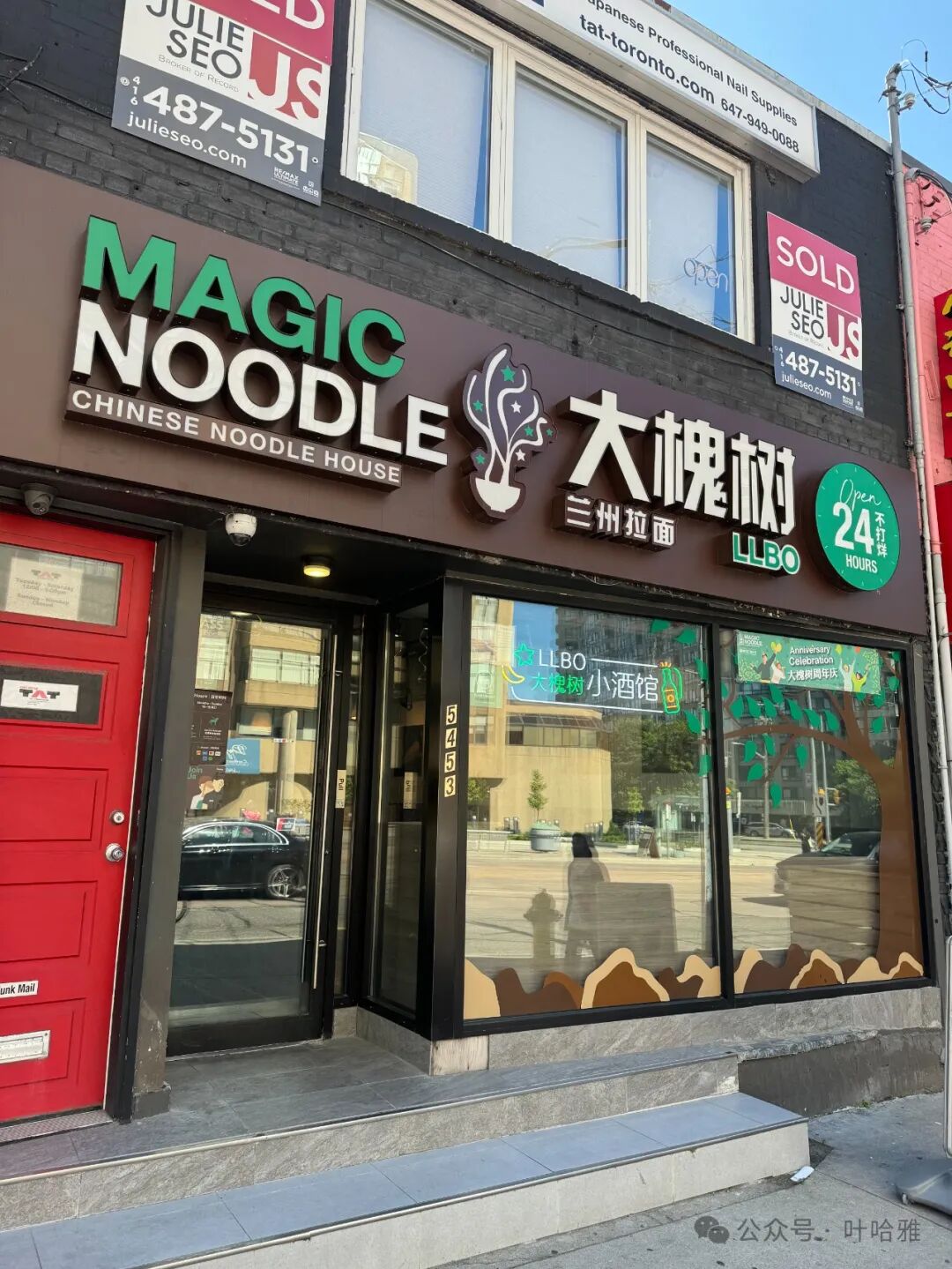
Toronto is Canada's largest city. It has a large population, sits near New York State in the U.S., and has a strong economy and convenient transportation. Many Chinese immigrants live here. The photos above and below show Lanzhou hand-pulled noodle shops (Lanzhou lamian) I spotted on the street, but neither of these two shops is halal.
Don't worry, I will introduce a halal noodle shop later.
India is not currently issuing visas to Chinese citizens, so if you want to see Indian people, come to Canada. India is the top source of immigrants to Canada, and you can find Indian people everywhere here. They are clean and hygienic. The ones wearing turbans are Sikhs. There are over 700,000 Sikhs in Canada. They are often mistaken for Muslims, but Sikhs and Muslims are actually rivals. Sikh teachings seem designed to oppose Islam. For example, Sikhs do not eat any religious food, including halal food. If they don't know the source of the meat, they cannot eat it. They only eat meat slaughtered by their own people, which leads some to mistakenly think Sikhs are vegetarians. They are also not allowed to marry Muslims. Because Sikhs are a minority in India and face oppression, a large number of them have immigrated to North America as refugees.
The Chinese Muslim Association of Canada is located on the third floor of the Oriental Centre in Scarborough. It used to be on the second floor. In June 2024, the association president, Bao Lin Zhu, paid in full to purchase a property on the third floor for the association's use. The original second-floor location remains open as the Hui Muslim Food Culture Center.
The Fang Zhongshan spicy soup (hulatang) on the second floor is run by the president, who is from Henan province and a fellow townsman of Fang Zhongshan. The shop is authorized by Fang Zhongshan, but the taste of the spicy soup is completely different from the one in the Central Plains. It leans more toward the Xiaoyao Town style and is not as spicy.
The person on the far right is President Bao Lin. The chef on the left is also from Henan and immigrated to Canada to follow his children's studies.
Besides spicy soup and pan-fried buns (shuijianbao), the shop also prepares traditional Chinese Hui Muslim foods like fried dough (youxiang) for Eid al-Adha.
The room next to the spicy soup shop was the association's original prayer room. Now that they have the third-floor property, this space is used for reception, office work, and daily tasks.
This is a plaque inscribed by Mr. Mi Guangjiang for the Chinese Muslim Association of Canada. He has also visited this place himself.
I did not know President Bao Lin before I came to Toronto. I planned to visit the day before Eid al-Adha to check the time for the holiday prayers. I happened to run into the president, and he very warmly invited me to take a tour.
To promote the Chinese Muslim Association, President Baolin installed a light box on the property window and kept it lit all night. This is how the building looks from the outside at night; it is very eye-catching.
The building management thought this was inappropriate and cut off the power without permission. The building is owned by Chinese people, but the overseas Chinese here do not seem friendly toward Muslims. President Baolin is now taking legal action to protect his rights.
The third-floor property was just bought. When I arrived, it was being used for the first time, so many decorations had not been changed yet. The facilities look very simple, but everything necessary is there, except for an imam.
I was surprised that the Eid prayer was the next day, but they still had not found an imam to lead the prayer. President Baolin was anxious and made several calls, including asking a Pakistani student from a brother mosque for help, but he could not find anyone suitable. He said if there was no other choice, he would ask me to do it.
I felt very caught off guard. In the Canadian Hui Muslim community, there are about a hundred people who visit regularly. Many people from China have a weak sense of faith and are not in this circle. Others did not have the chance to learn back home, so they have a strong desire to learn here. Everyone is eager for a full-time imam to guide them in their studies and daily worship, but unfortunately, they have not found the right person yet.
President Baolin really hopes that a capable and willing scholar will come here to teach, and he will provide all the help he can.
Then, President Baolin drove me around to visit a few unique mosques in the area.
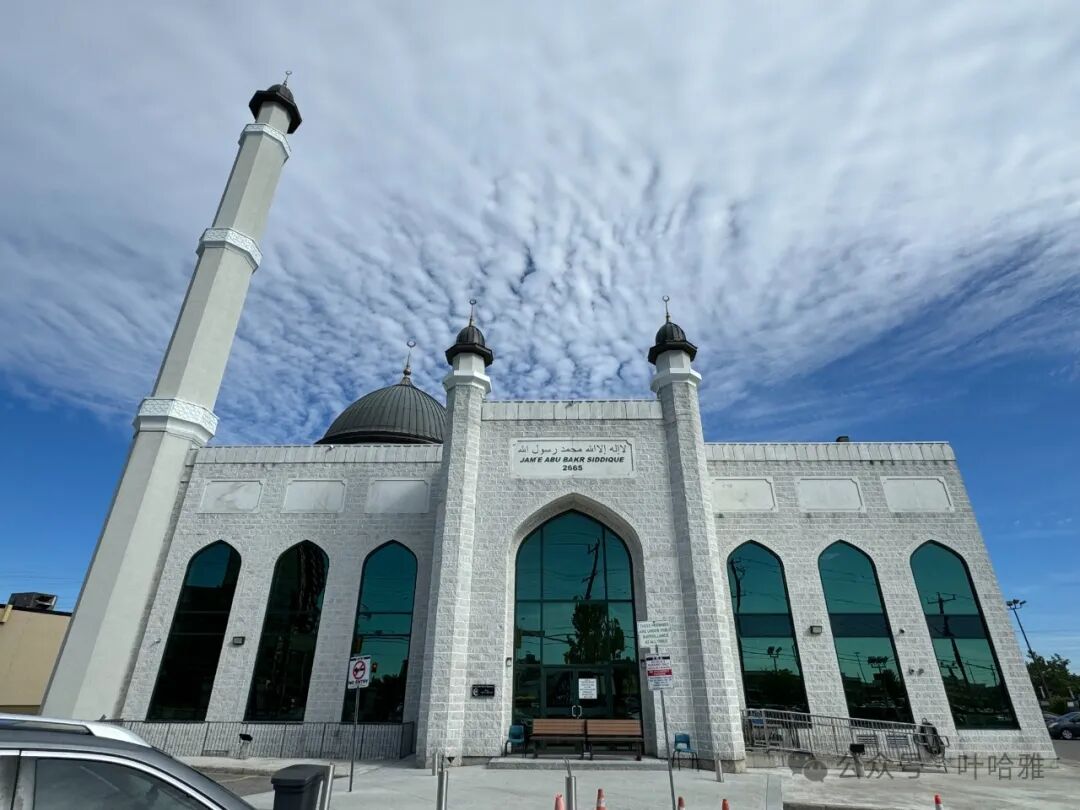
JAME ABU BAKR SIDDIQUE
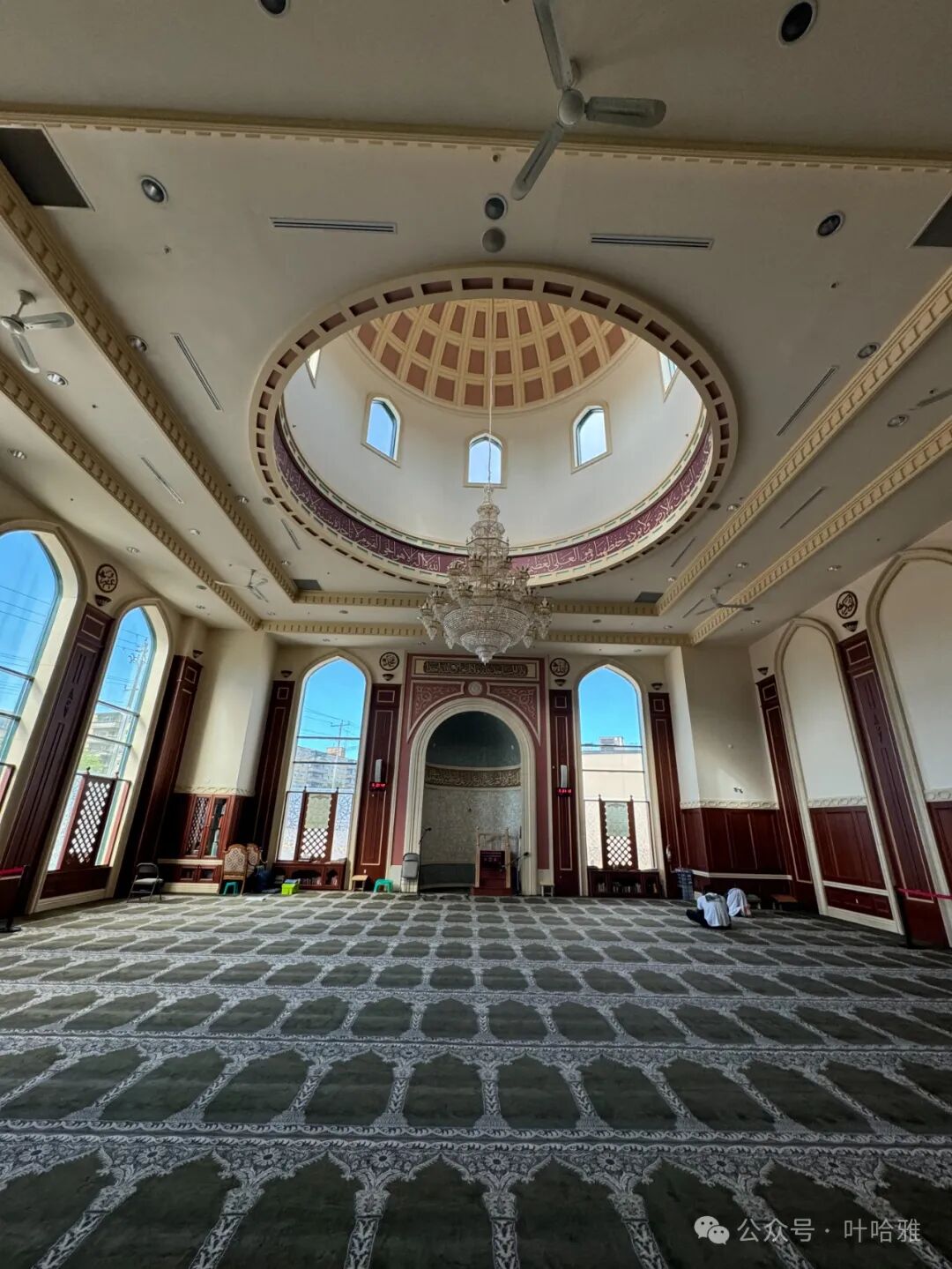
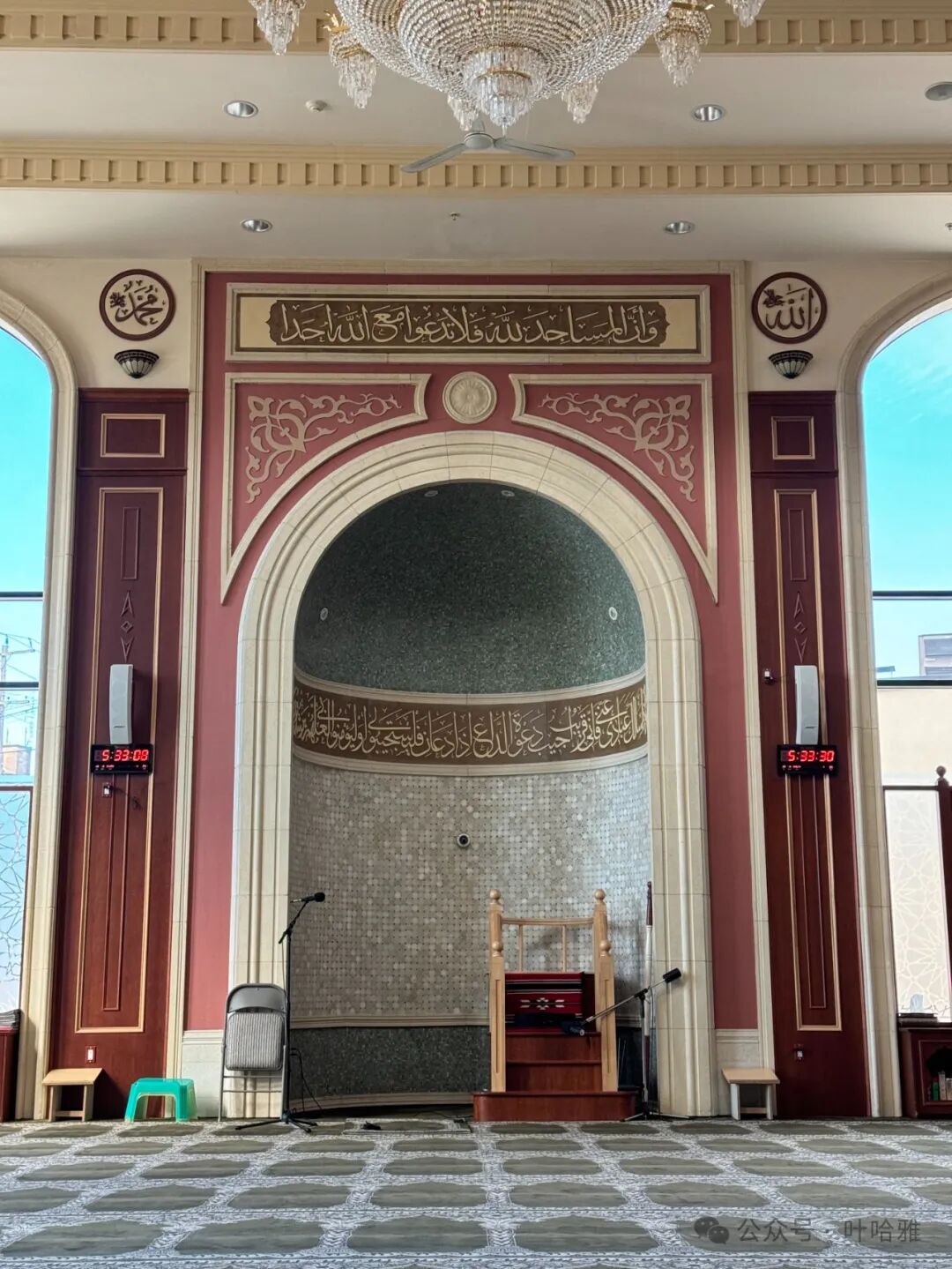
In North America, the largest and most numerous mosques are definitely built by our Pakistani brothers. This is one of them. It shows that the Pakistani community is doing well overseas, not just in North America but also in Europe. They are doing better than the Chinese community, which I will explain in more detail later.
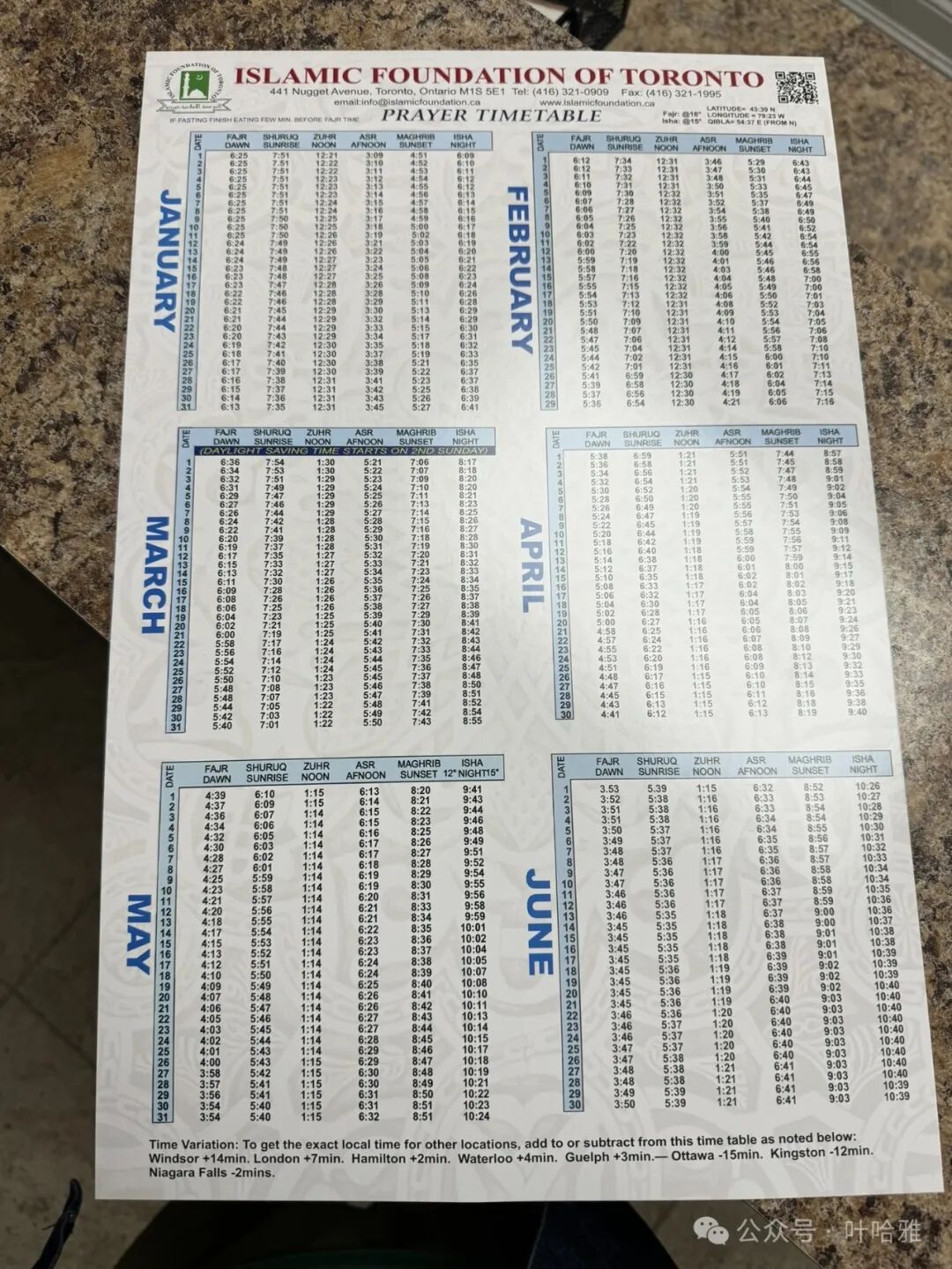
Toronto Prayer Schedule
Islamic Foundation of Toronto
The Islamic Foundation of Toronto is a mosque still managed by our Pakistani brothers. President Baolin came here to ask the mosque management to help find a Pakistani student to lead the Eid al-Adha (Qurban Festival) prayer. The Pakistani prayer time is June 17, while the Hui Muslim community's is on the 16th, but we could not find anyone available.
Islamic Institute of Toronto
The Islamic Institute of Toronto was founded in 1996 and moved to its new location in 2006. It covers 8 acres and is very large.
The school is usually not open to the public, but I knocked on the door and went in for a visit.
Masjid Qurtabah
This is the home of the Muslim Association of Canada. President Baolin brought me here because before the Hui Muslim community bought their own property, they did not have a permanent place for religious activities, so they used to borrow this space for Chinese Muslim events.
This place will also soon be renovated into a large Islamic activity center.
This is a mosque for Somali people.
Seeing that the Somali community has its own mosque—which was converted from a church, as many mosques in Canada were—the president hopes that one day he can also establish a Chinese Muslim community center.
Oriental Palace (Dongfang Gong)
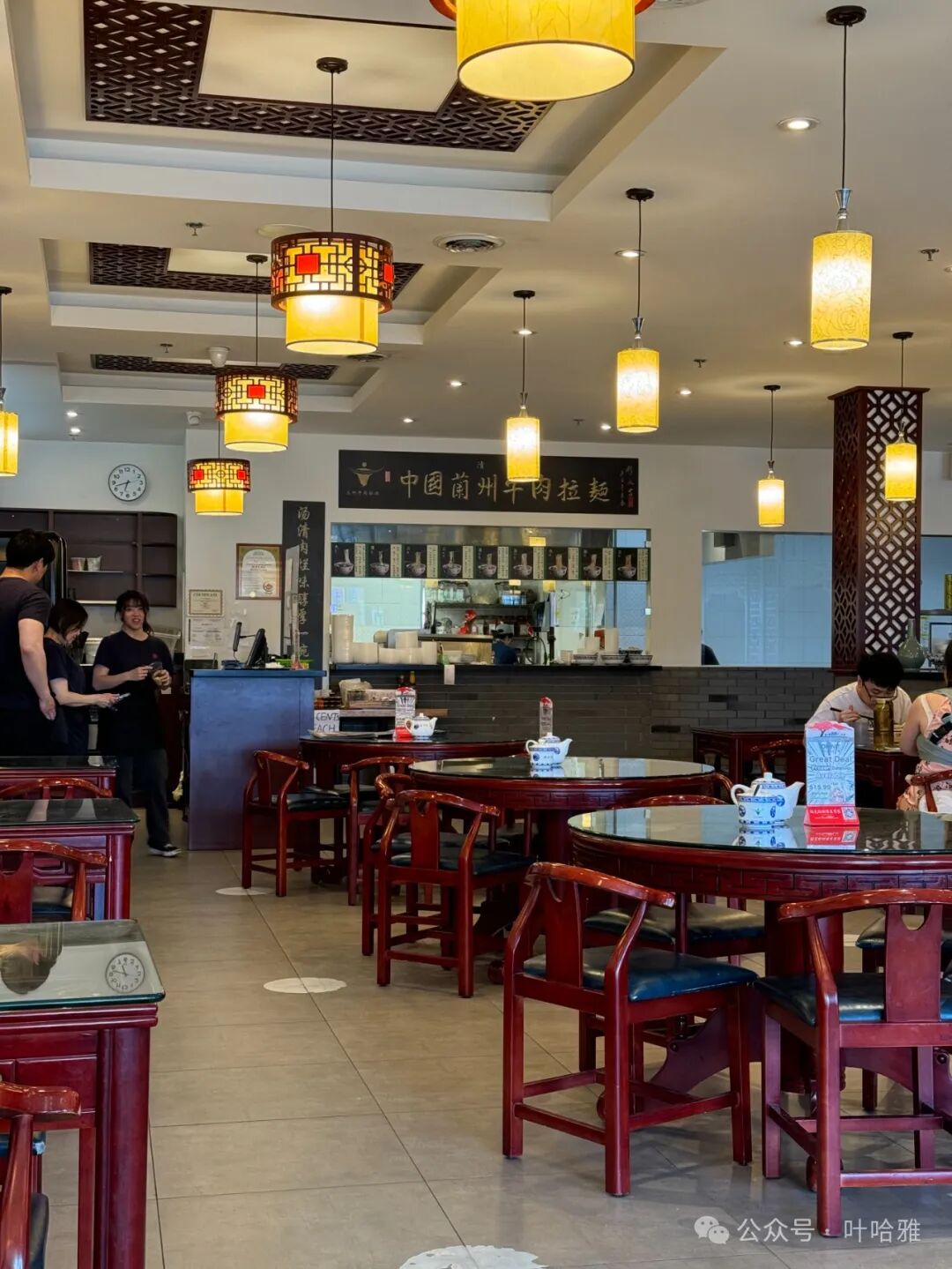
This is truly the Lanzhou chain brand Oriental Palace (Dongfang Gong). It has arrived in Canada and has many branches in Toronto.
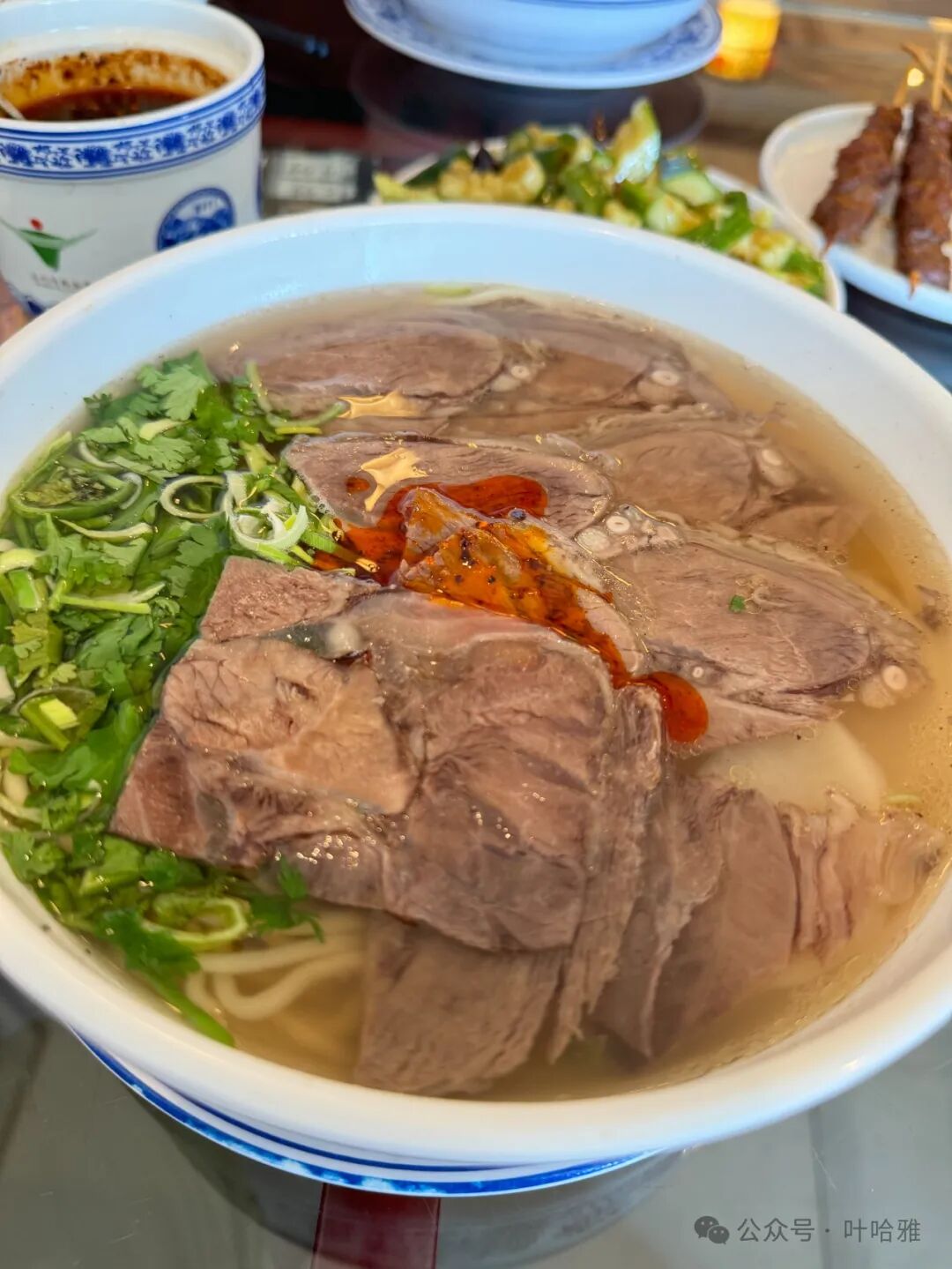
This bowl of beef noodles costs 14.99 Canadian dollars, which is about 80 yuan. That does not include the tip. With a 12-15% tip, the bowl costs nearly 100 yuan. Prices in Canada are high. Even if you work locally and earn Canadian dollars, eating out is not cheap.
I saw at least three Dongfanggong restaurants in Toronto.
To be fair, the noodles tasted quite good. They were chewy and had plenty of meat. This was the most satisfying meal I have had in my ten days in Canada. Thanks to Brother Baolin.
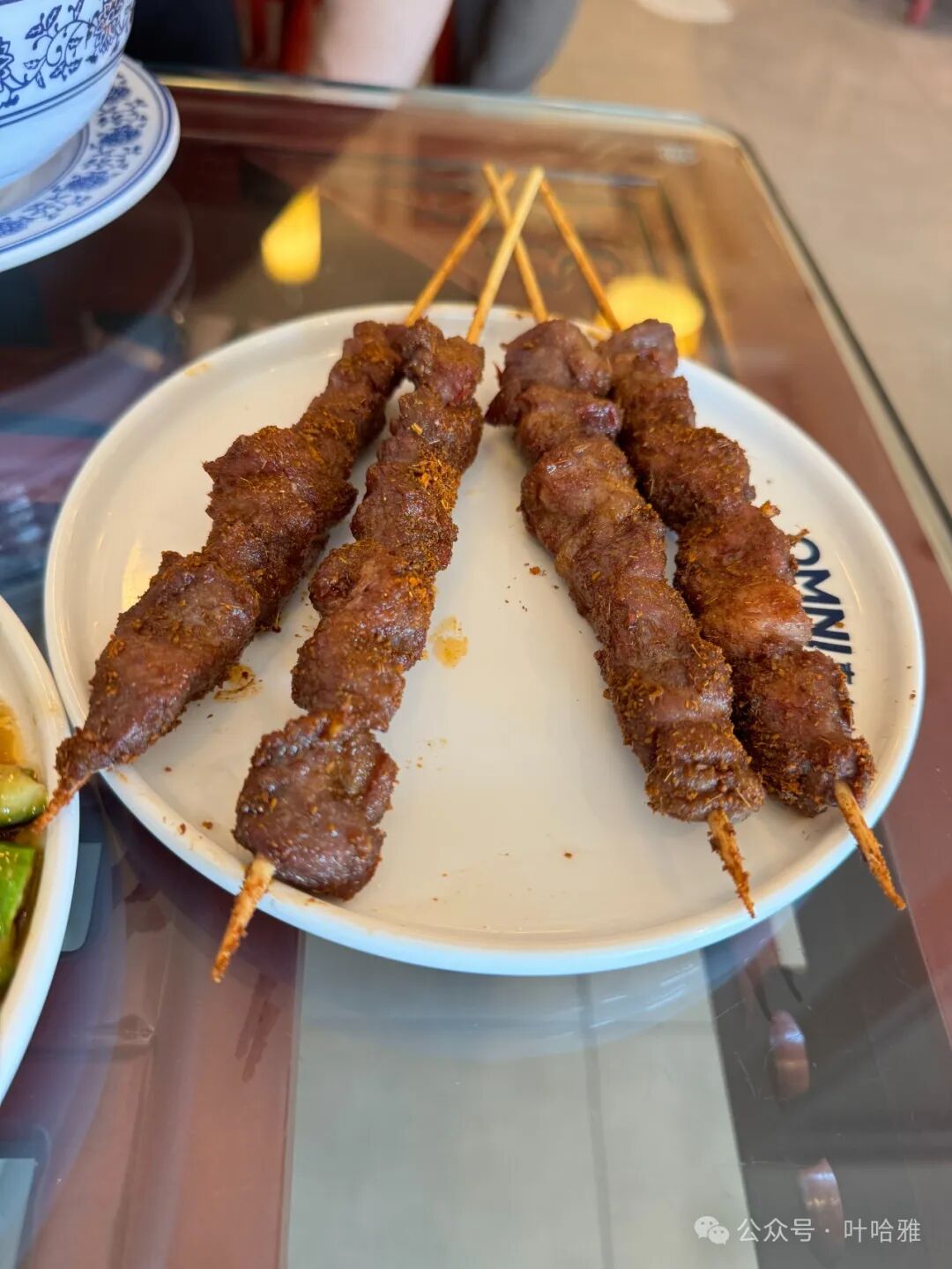
But the lamb skewers (yangrouchuan) are still better back home.
This smashed cucumber salad (pai huanggua) is more expensive than the lamb skewers. It is common in Western countries for meat to be cheaper than vegetables.
After finishing the beef noodles, Brother Baolin drove me back to the hotel to rest. I had flown all night from Calgary to Toronto and dealt with a two-hour time difference. I fell asleep as soon as I lay down in bed, needing to recharge for Eid al-Adha the next day.
Early the next morning, Brother Baolin was setting up the venue, and I arrived early too. Unfortunately, we still could not find an imam to lead the prayer. However, a Hui Muslim brother from Xinjiang who had studied the scriptures stepped up. Even though he had a cold, he insisted on leading everyone in the Eid prayer. I will not post his photo.
After the prayer, I shared some thoughts on what I have learned from my travels over the years. I said the North American Chinese Muslim Association needs doers like Brother Baolin. Many people are well-read in scriptures but lack real-world experience. Their words and actions are disconnected from society, and they create division locally. Such 'smart' people do not help the faith. Throughout history, we have never lacked scholars who only talk. We need well-rounded, excellent people to strengthen our ability to take root and thrive in a foreign land.
After the sharing session, we went to the second floor to eat. Everyone brought food they prepared themselves, sharing their favorite hometown dishes. Those who did not have a specialty just contributed money.
For Hui Muslims, a holiday is not complete without fried dough (youxiang). This youxiang looks like the Henan style. There are many Henan friends (dost) in the community, so much so that before I came here, people told me there was a Henan Hui neighborhood in Canada. In reality, it is not just Henan people here. There are people from Beijing, Inner Mongolia, the Northwest, and Uyghurs.
The lamb soup (yangrou tang) and chive pockets (jiucai hezi) both have a Henan flair. They smelled delicious and were very good.
Some non-Chinese brothers also attended the event. They met Chinese Muslims through marriage.
As is the custom, Eid al-Adha (Qurban) ended in the morning. In the afternoon, Vice President Davei ZHU drove me to Toronto's most famous attraction, Niagara Falls, which often appears on the National Geographic channel.
Rainbow Bridge
Rainbow Bridge connects Canada and the United States and was built by both countries. Driving across this bridge takes you to New York State in the U.S. Canadian citizens do not need a visa to enter the U.S., and the process is very simple, so many Canadians choose to work in the U.S.
Niagara Falls spans both the U.S. and Canada, but the main view is on the Canadian side. You cannot see the full picture if you stand on the American side.
It took us over two hours to drive there, and we even hit traffic on the way. I chatted a lot with Vice President ZHU. His whole family has lived in Canada for over twenty years. As overseas Chinese, their longing for their hometown grows deeper with age.
When the weather is good, you can see a double rainbow at the waterfall.
There is no admission fee for natural scenery like the waterfall, but you have to pay if you want to take a boat for a close-up tour or ride the zipline.
A group of Muslims were having a picnic on the grass. The proportion of Muslims in Canada is very high, and you can see young women wearing beautiful headscarves everywhere on the street. However, Vice President ZHU warned me not to walk barefoot on the grass. He said that the number of drug addicts in Canada has increased over the years, and some of them carelessly throw used needles into the grass.
There are many halal restaurants around the waterfall, and there is a whole street full of halal food. We stumbled upon this Indian buffet restaurant by chance.
The buffet is 21 Canadian dollars per person. The selection is quite complete, and this price is actually not expensive. Even in Beijing, a similar Indian-Pakistani buffet would cost 98 yuan.
Indian-Pakistani cuisine is like Lanzhou hand-pulled noodles (Lanzhou lamian) in the eyes of Westerners; it is convenient, delicious, affordable, and accepted by people from all countries.
Near the big Ferris wheel is this halal food street. You do not have to worry about finding halal food in Canada at all; it is everywhere. However, halal food in North America mainly falls into three categories: Arab, Turkish, and Indo-Pakistani, and most of it is fast food or snacks.
This place serves Moroccan-style food.
After saying goodbye to President Zhu, I left Toronto the next day. On the way to the airport, I saw this mosque converted from a church. Many places of worship in the city are usually locked, and this one was not open.
It is very common to see young women wearing headscarves in public. The streets of Canada are very diverse with people of all races. I even saw many women wearing headscarves working as customs and airport staff.
On the way back, the president told me a story about someone he knew. When he first arrived in Canada, he lived with an international student from Beijing, and they later became good friends. This roommate was introverted, quiet, and grew up in a military compound, but he had a tense relationship with his family. After coming to Canada, he almost never contacted his family. He had a very small social circle and showed signs of depression. Later, they moved to different cities for work. They kept in touch occasionally but never met again. A few years ago, the president received a call from the Canadian police. The police said his friend was found dead in his car in a parking lot. They ruled out foul play, and it was likely an overdose. The only emergency contact number the friend had left was the president's, with no other family contact information.
Because the president was not a relative, the police could not provide more information. Later, the police buried him in a public cemetery as an unclaimed body. The president only knew his name was Zhang Qiang, he was from Beijing, and he was about 50 years old when he died. He was single, had no wife or children, and there was not even a single photo of him. He died alone in a foreign land, and his family still does not know where he is.
The president hoped I could find out about this person in Beijing, but there is too little useful information. I also feel that since his family does not know he has passed away, it might be better if they never find out. That way, his family can still hold onto the hope that he is alive somewhere in the world. view all
Summary: This Muslim travel guide to Toronto follows Eid al-Adha with the Chinese Muslim Association of Canada in Scarborough, halal Hui Muslim food, Fang Zhongshan-style spicy soup, halal noodles, Canadian diversity, Muslim communities, and reflections on immigrant life.
Celebrating Eid Al-Adha in the Hui Muslim Neighborhood of Toronto, Canada is presented here as a firsthand travel account in clear English, beginning with this scene: I traveled around Canada while attending the MDRT global life insurance conference this year. The account keeps its focus on Sanya Travel, Eid al-Adha, Muslim Travel while preserving the names, places, food, and historical details from the Chinese source.
I traveled around Canada while attending the MDRT global life insurance conference this year. I visited Toronto, Ottawa, Montreal, Calgary, and Vancouver, covering the most important cities from the east to the west coast. Since Eid al-Adha was approaching, I learned that the Chinese Muslim Association of Canada is in Toronto, so I made a special trip there to attend the holiday prayers.
Toronto is Canada's largest city. It has a large population, sits near New York State in the U.S., and has a strong economy and convenient transportation. Many Chinese immigrants live here. The photos above and below show Lanzhou hand-pulled noodle shops (Lanzhou lamian) I spotted on the street, but neither of these two shops is halal.
Don't worry, I will introduce a halal noodle shop later.
India is not currently issuing visas to Chinese citizens, so if you want to see Indian people, come to Canada. India is the top source of immigrants to Canada, and you can find Indian people everywhere here. They are clean and hygienic. The ones wearing turbans are Sikhs. There are over 700,000 Sikhs in Canada. They are often mistaken for Muslims, but Sikhs and Muslims are actually rivals. Sikh teachings seem designed to oppose Islam. For example, Sikhs do not eat any religious food, including halal food. If they don't know the source of the meat, they cannot eat it. They only eat meat slaughtered by their own people, which leads some to mistakenly think Sikhs are vegetarians. They are also not allowed to marry Muslims. Because Sikhs are a minority in India and face oppression, a large number of them have immigrated to North America as refugees.
The Chinese Muslim Association of Canada is located on the third floor of the Oriental Centre in Scarborough. It used to be on the second floor. In June 2024, the association president, Bao Lin Zhu, paid in full to purchase a property on the third floor for the association's use. The original second-floor location remains open as the Hui Muslim Food Culture Center.
The Fang Zhongshan spicy soup (hulatang) on the second floor is run by the president, who is from Henan province and a fellow townsman of Fang Zhongshan. The shop is authorized by Fang Zhongshan, but the taste of the spicy soup is completely different from the one in the Central Plains. It leans more toward the Xiaoyao Town style and is not as spicy.
The person on the far right is President Bao Lin. The chef on the left is also from Henan and immigrated to Canada to follow his children's studies.
Besides spicy soup and pan-fried buns (shuijianbao), the shop also prepares traditional Chinese Hui Muslim foods like fried dough (youxiang) for Eid al-Adha.
The room next to the spicy soup shop was the association's original prayer room. Now that they have the third-floor property, this space is used for reception, office work, and daily tasks.
This is a plaque inscribed by Mr. Mi Guangjiang for the Chinese Muslim Association of Canada. He has also visited this place himself.
I did not know President Bao Lin before I came to Toronto. I planned to visit the day before Eid al-Adha to check the time for the holiday prayers. I happened to run into the president, and he very warmly invited me to take a tour.
To promote the Chinese Muslim Association, President Baolin installed a light box on the property window and kept it lit all night. This is how the building looks from the outside at night; it is very eye-catching.
The building management thought this was inappropriate and cut off the power without permission. The building is owned by Chinese people, but the overseas Chinese here do not seem friendly toward Muslims. President Baolin is now taking legal action to protect his rights.
The third-floor property was just bought. When I arrived, it was being used for the first time, so many decorations had not been changed yet. The facilities look very simple, but everything necessary is there, except for an imam.
I was surprised that the Eid prayer was the next day, but they still had not found an imam to lead the prayer. President Baolin was anxious and made several calls, including asking a Pakistani student from a brother mosque for help, but he could not find anyone suitable. He said if there was no other choice, he would ask me to do it.
I felt very caught off guard. In the Canadian Hui Muslim community, there are about a hundred people who visit regularly. Many people from China have a weak sense of faith and are not in this circle. Others did not have the chance to learn back home, so they have a strong desire to learn here. Everyone is eager for a full-time imam to guide them in their studies and daily worship, but unfortunately, they have not found the right person yet.
President Baolin really hopes that a capable and willing scholar will come here to teach, and he will provide all the help he can.
Then, President Baolin drove me around to visit a few unique mosques in the area.
JAME ABU BAKR SIDDIQUE
In North America, the largest and most numerous mosques are definitely built by our Pakistani brothers. This is one of them. It shows that the Pakistani community is doing well overseas, not just in North America but also in Europe. They are doing better than the Chinese community, which I will explain in more detail later.
Toronto Prayer Schedule
Islamic Foundation of Toronto
The Islamic Foundation of Toronto is a mosque still managed by our Pakistani brothers. President Baolin came here to ask the mosque management to help find a Pakistani student to lead the Eid al-Adha (Qurban Festival) prayer. The Pakistani prayer time is June 17, while the Hui Muslim community's is on the 16th, but we could not find anyone available.
Islamic Institute of Toronto
The Islamic Institute of Toronto was founded in 1996 and moved to its new location in 2006. It covers 8 acres and is very large.
The school is usually not open to the public, but I knocked on the door and went in for a visit.
Masjid Qurtabah
This is the home of the Muslim Association of Canada. President Baolin brought me here because before the Hui Muslim community bought their own property, they did not have a permanent place for religious activities, so they used to borrow this space for Chinese Muslim events.
This place will also soon be renovated into a large Islamic activity center.
This is a mosque for Somali people.
Seeing that the Somali community has its own mosque—which was converted from a church, as many mosques in Canada were—the president hopes that one day he can also establish a Chinese Muslim community center.
Oriental Palace (Dongfang Gong)
This is truly the Lanzhou chain brand Oriental Palace (Dongfang Gong). It has arrived in Canada and has many branches in Toronto.
This bowl of beef noodles costs 14.99 Canadian dollars, which is about 80 yuan. That does not include the tip. With a 12-15% tip, the bowl costs nearly 100 yuan. Prices in Canada are high. Even if you work locally and earn Canadian dollars, eating out is not cheap.
I saw at least three Dongfanggong restaurants in Toronto.
To be fair, the noodles tasted quite good. They were chewy and had plenty of meat. This was the most satisfying meal I have had in my ten days in Canada. Thanks to Brother Baolin.
But the lamb skewers (yangrouchuan) are still better back home.
This smashed cucumber salad (pai huanggua) is more expensive than the lamb skewers. It is common in Western countries for meat to be cheaper than vegetables.
After finishing the beef noodles, Brother Baolin drove me back to the hotel to rest. I had flown all night from Calgary to Toronto and dealt with a two-hour time difference. I fell asleep as soon as I lay down in bed, needing to recharge for Eid al-Adha the next day.
Early the next morning, Brother Baolin was setting up the venue, and I arrived early too. Unfortunately, we still could not find an imam to lead the prayer. However, a Hui Muslim brother from Xinjiang who had studied the scriptures stepped up. Even though he had a cold, he insisted on leading everyone in the Eid prayer. I will not post his photo.
After the prayer, I shared some thoughts on what I have learned from my travels over the years. I said the North American Chinese Muslim Association needs doers like Brother Baolin. Many people are well-read in scriptures but lack real-world experience. Their words and actions are disconnected from society, and they create division locally. Such 'smart' people do not help the faith. Throughout history, we have never lacked scholars who only talk. We need well-rounded, excellent people to strengthen our ability to take root and thrive in a foreign land.
After the sharing session, we went to the second floor to eat. Everyone brought food they prepared themselves, sharing their favorite hometown dishes. Those who did not have a specialty just contributed money.
For Hui Muslims, a holiday is not complete without fried dough (youxiang). This youxiang looks like the Henan style. There are many Henan friends (dost) in the community, so much so that before I came here, people told me there was a Henan Hui neighborhood in Canada. In reality, it is not just Henan people here. There are people from Beijing, Inner Mongolia, the Northwest, and Uyghurs.
The lamb soup (yangrou tang) and chive pockets (jiucai hezi) both have a Henan flair. They smelled delicious and were very good.
Some non-Chinese brothers also attended the event. They met Chinese Muslims through marriage.
As is the custom, Eid al-Adha (Qurban) ended in the morning. In the afternoon, Vice President Davei ZHU drove me to Toronto's most famous attraction, Niagara Falls, which often appears on the National Geographic channel.
Rainbow Bridge
Rainbow Bridge connects Canada and the United States and was built by both countries. Driving across this bridge takes you to New York State in the U.S. Canadian citizens do not need a visa to enter the U.S., and the process is very simple, so many Canadians choose to work in the U.S.
Niagara Falls spans both the U.S. and Canada, but the main view is on the Canadian side. You cannot see the full picture if you stand on the American side.
It took us over two hours to drive there, and we even hit traffic on the way. I chatted a lot with Vice President ZHU. His whole family has lived in Canada for over twenty years. As overseas Chinese, their longing for their hometown grows deeper with age.
When the weather is good, you can see a double rainbow at the waterfall.
There is no admission fee for natural scenery like the waterfall, but you have to pay if you want to take a boat for a close-up tour or ride the zipline.
A group of Muslims were having a picnic on the grass. The proportion of Muslims in Canada is very high, and you can see young women wearing beautiful headscarves everywhere on the street. However, Vice President ZHU warned me not to walk barefoot on the grass. He said that the number of drug addicts in Canada has increased over the years, and some of them carelessly throw used needles into the grass.
There are many halal restaurants around the waterfall, and there is a whole street full of halal food. We stumbled upon this Indian buffet restaurant by chance.
The buffet is 21 Canadian dollars per person. The selection is quite complete, and this price is actually not expensive. Even in Beijing, a similar Indian-Pakistani buffet would cost 98 yuan.
Indian-Pakistani cuisine is like Lanzhou hand-pulled noodles (Lanzhou lamian) in the eyes of Westerners; it is convenient, delicious, affordable, and accepted by people from all countries.
Near the big Ferris wheel is this halal food street. You do not have to worry about finding halal food in Canada at all; it is everywhere. However, halal food in North America mainly falls into three categories: Arab, Turkish, and Indo-Pakistani, and most of it is fast food or snacks.
This place serves Moroccan-style food.
After saying goodbye to President Zhu, I left Toronto the next day. On the way to the airport, I saw this mosque converted from a church. Many places of worship in the city are usually locked, and this one was not open.
It is very common to see young women wearing headscarves in public. The streets of Canada are very diverse with people of all races. I even saw many women wearing headscarves working as customs and airport staff.
On the way back, the president told me a story about someone he knew. When he first arrived in Canada, he lived with an international student from Beijing, and they later became good friends. This roommate was introverted, quiet, and grew up in a military compound, but he had a tense relationship with his family. After coming to Canada, he almost never contacted his family. He had a very small social circle and showed signs of depression. Later, they moved to different cities for work. They kept in touch occasionally but never met again. A few years ago, the president received a call from the Canadian police. The police said his friend was found dead in his car in a parking lot. They ruled out foul play, and it was likely an overdose. The only emergency contact number the friend had left was the president's, with no other family contact information.
Because the president was not a relative, the police could not provide more information. Later, the police buried him in a public cemetery as an unclaimed body. The president only knew his name was Zhang Qiang, he was from Beijing, and he was about 50 years old when he died. He was single, had no wife or children, and there was not even a single photo of him. He died alone in a foreign land, and his family still does not know where he is.
The president hoped I could find out about this person in Beijing, but there is too little useful information. I also feel that since his family does not know he has passed away, it might be better if they never find out. That way, his family can still hold onto the hope that he is alive somewhere in the world. view all
Reposted from the web
Summary: This Muslim travel guide to Toronto follows Eid al-Adha with the Chinese Muslim Association of Canada in Scarborough, halal Hui Muslim food, Fang Zhongshan-style spicy soup, halal noodles, Canadian diversity, Muslim communities, and reflections on immigrant life.
Celebrating Eid Al-Adha in the Hui Muslim Neighborhood of Toronto, Canada is presented here as a firsthand travel account in clear English, beginning with this scene: I traveled around Canada while attending the MDRT global life insurance conference this year. The account keeps its focus on Sanya Travel, Eid al-Adha, Muslim Travel while preserving the names, places, food, and historical details from the Chinese source.
I traveled around Canada while attending the MDRT global life insurance conference this year. I visited Toronto, Ottawa, Montreal, Calgary, and Vancouver, covering the most important cities from the east to the west coast. Since Eid al-Adha was approaching, I learned that the Chinese Muslim Association of Canada is in Toronto, so I made a special trip there to attend the holiday prayers.
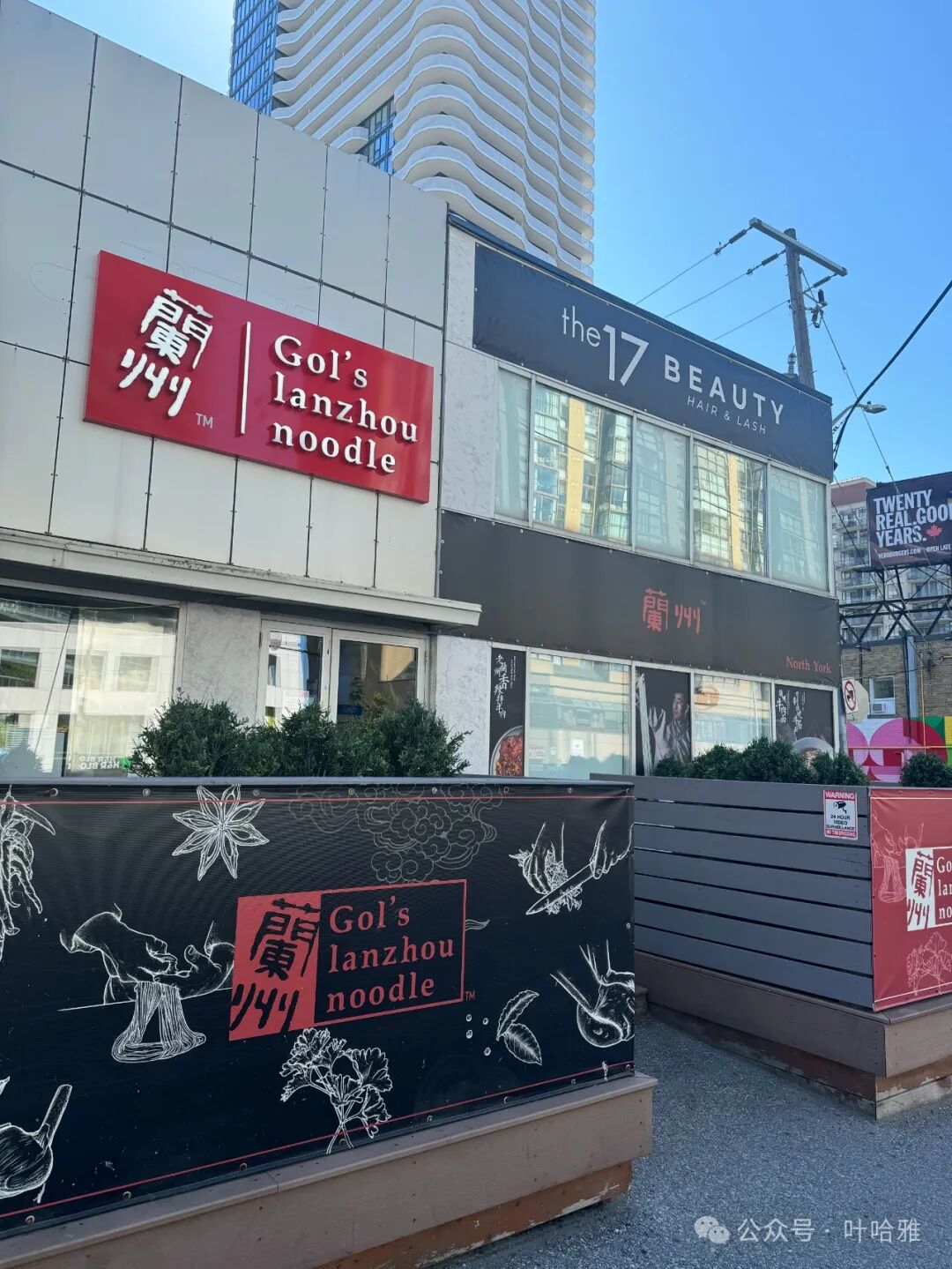
Toronto is Canada's largest city. It has a large population, sits near New York State in the U.S., and has a strong economy and convenient transportation. Many Chinese immigrants live here. The photos above and below show Lanzhou hand-pulled noodle shops (Lanzhou lamian) I spotted on the street, but neither of these two shops is halal.
Don't worry, I will introduce a halal noodle shop later.
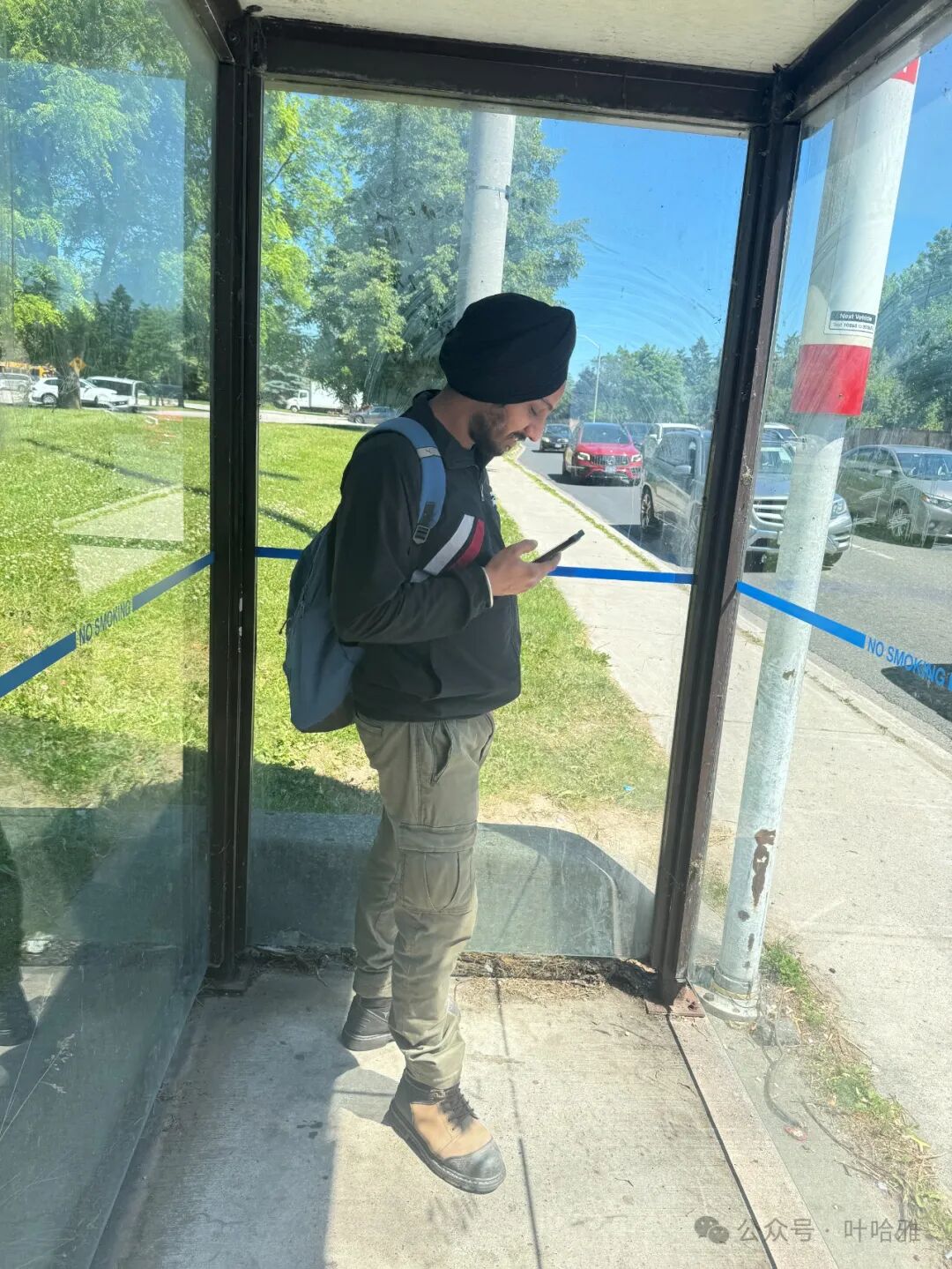
India is not currently issuing visas to Chinese citizens, so if you want to see Indian people, come to Canada. India is the top source of immigrants to Canada, and you can find Indian people everywhere here. They are clean and hygienic. The ones wearing turbans are Sikhs. There are over 700,000 Sikhs in Canada. They are often mistaken for Muslims, but Sikhs and Muslims are actually rivals. Sikh teachings seem designed to oppose Islam. For example, Sikhs do not eat any religious food, including halal food. If they don't know the source of the meat, they cannot eat it. They only eat meat slaughtered by their own people, which leads some to mistakenly think Sikhs are vegetarians. They are also not allowed to marry Muslims. Because Sikhs are a minority in India and face oppression, a large number of them have immigrated to North America as refugees.
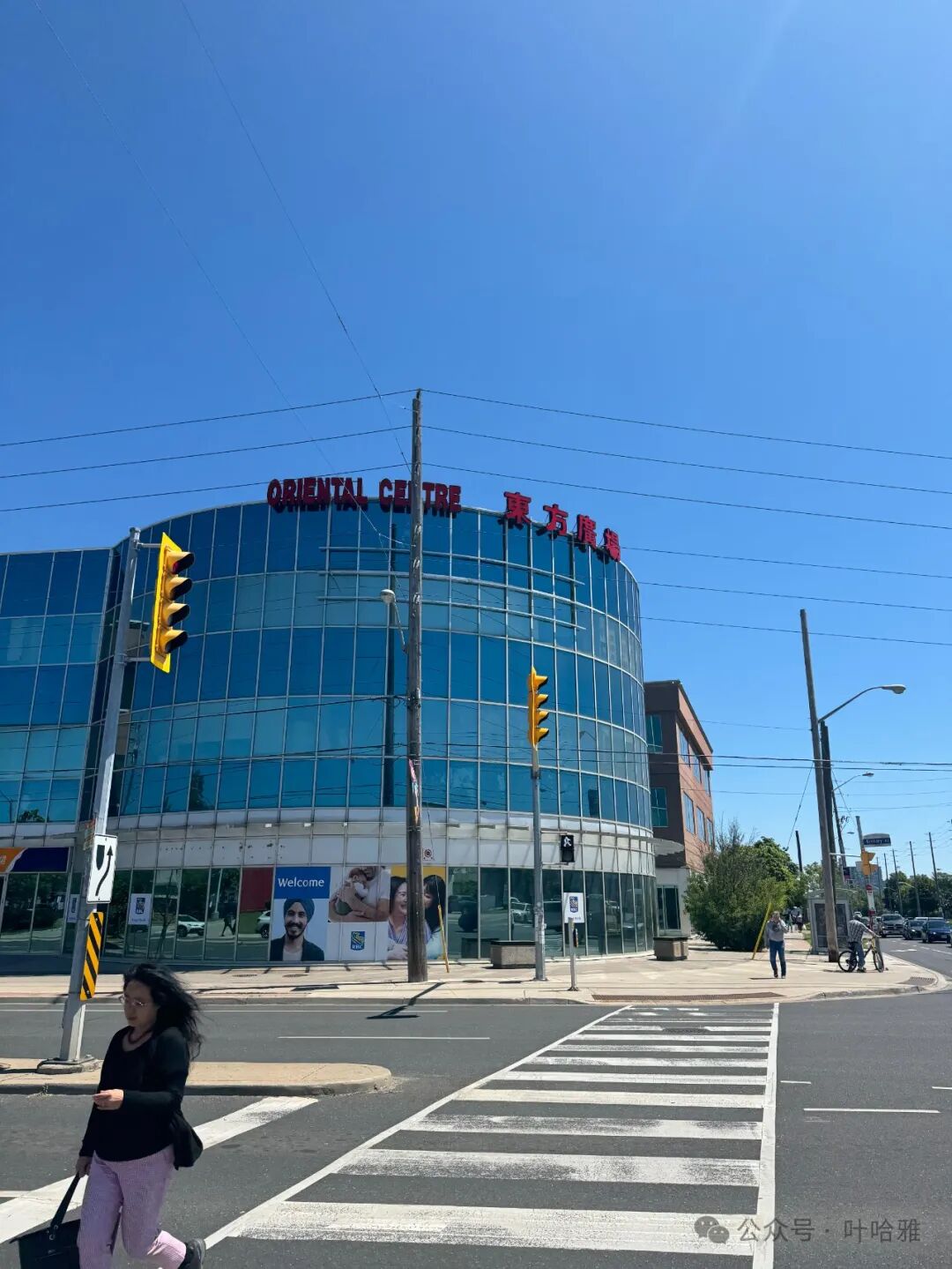
The Chinese Muslim Association of Canada is located on the third floor of the Oriental Centre in Scarborough. It used to be on the second floor. In June 2024, the association president, Bao Lin Zhu, paid in full to purchase a property on the third floor for the association's use. The original second-floor location remains open as the Hui Muslim Food Culture Center.
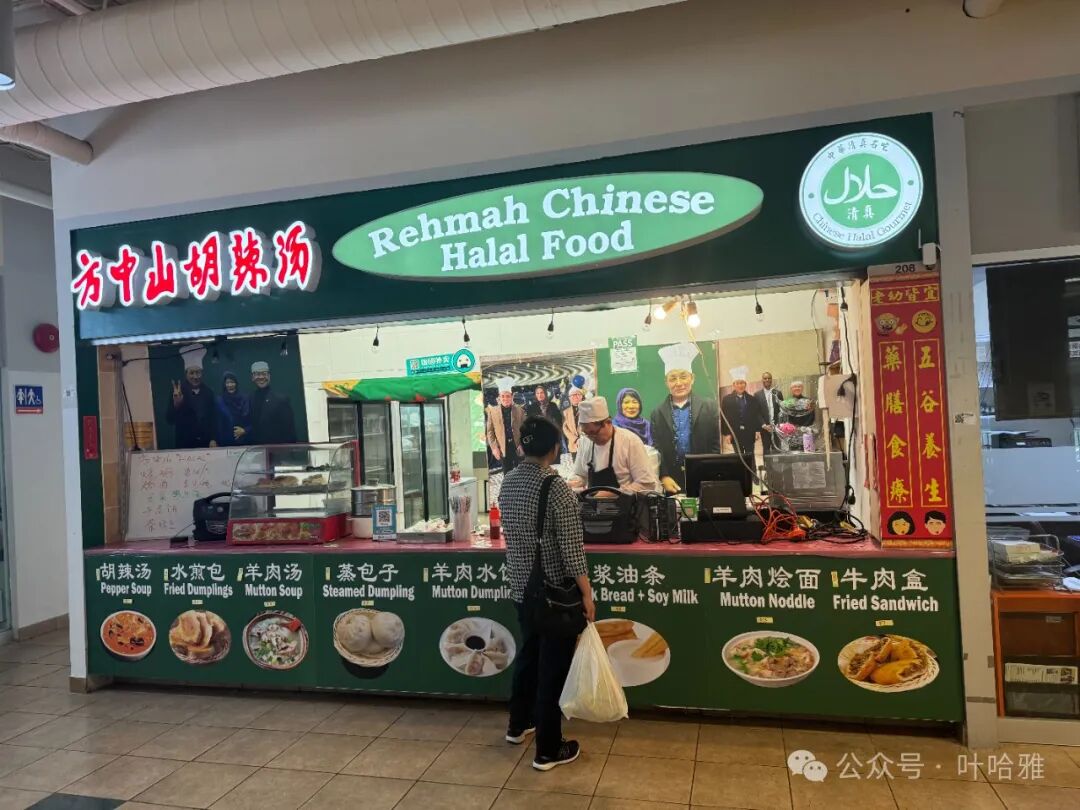
The Fang Zhongshan spicy soup (hulatang) on the second floor is run by the president, who is from Henan province and a fellow townsman of Fang Zhongshan. The shop is authorized by Fang Zhongshan, but the taste of the spicy soup is completely different from the one in the Central Plains. It leans more toward the Xiaoyao Town style and is not as spicy.
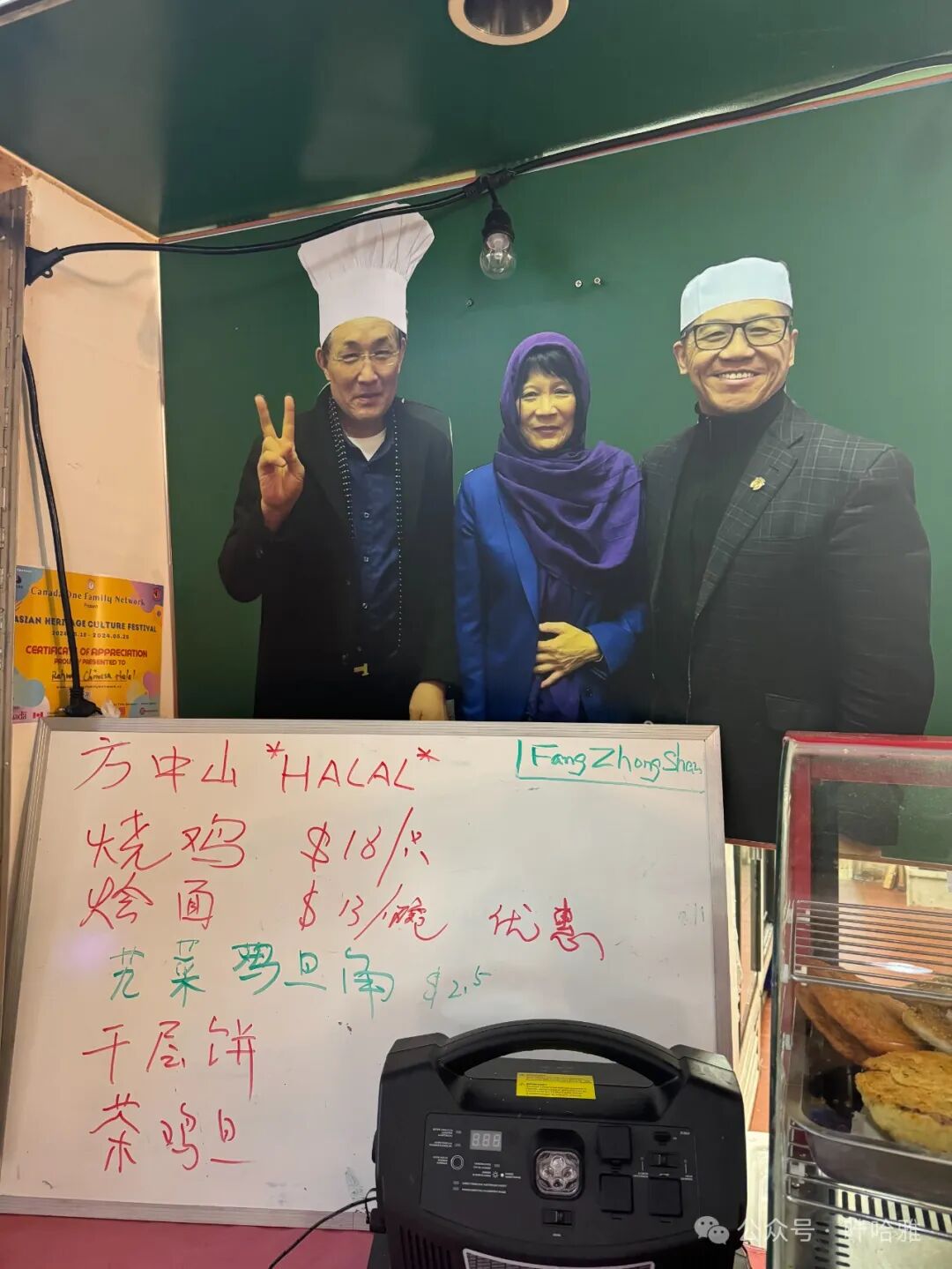
The person on the far right is President Bao Lin. The chef on the left is also from Henan and immigrated to Canada to follow his children's studies.
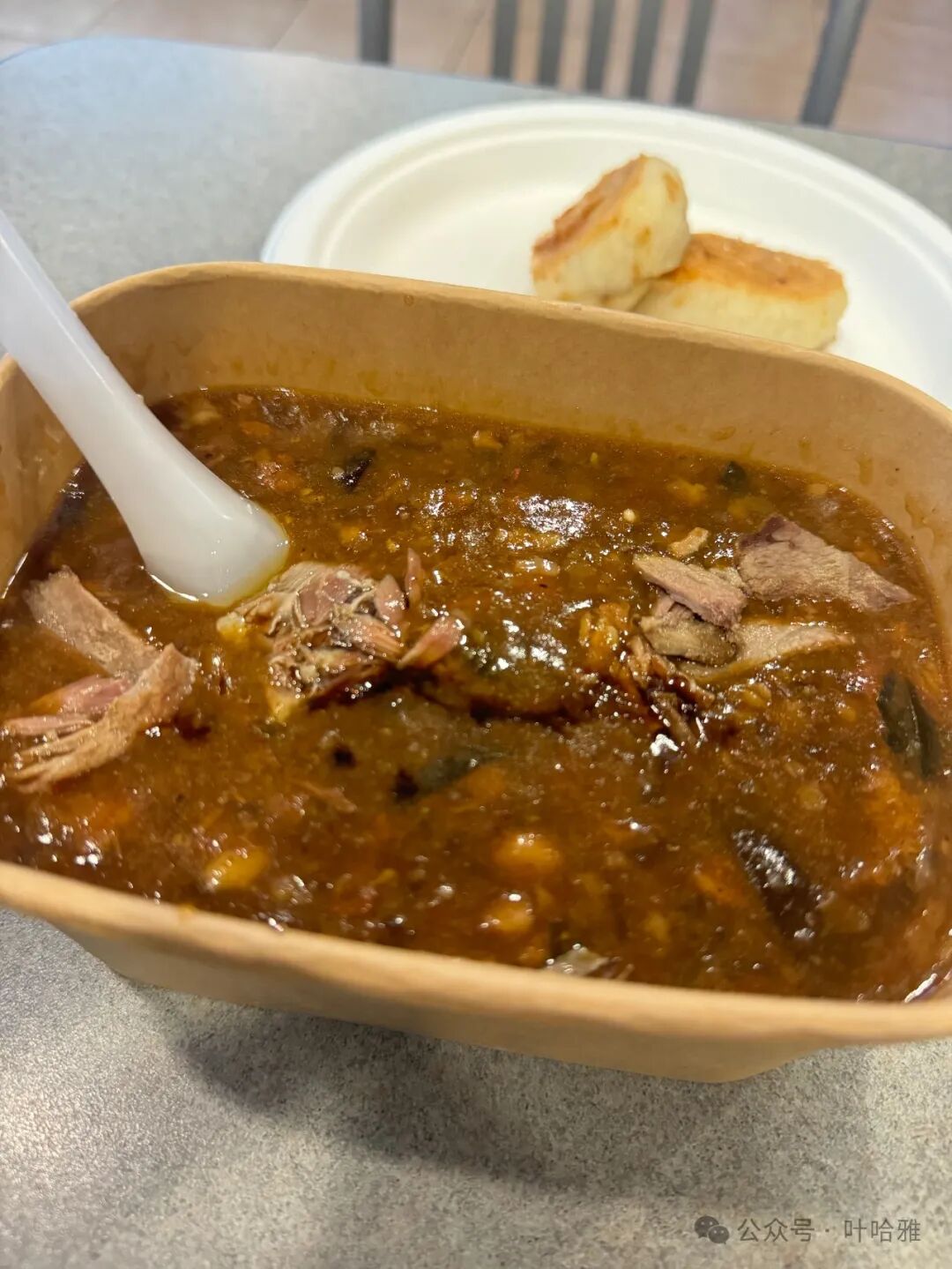
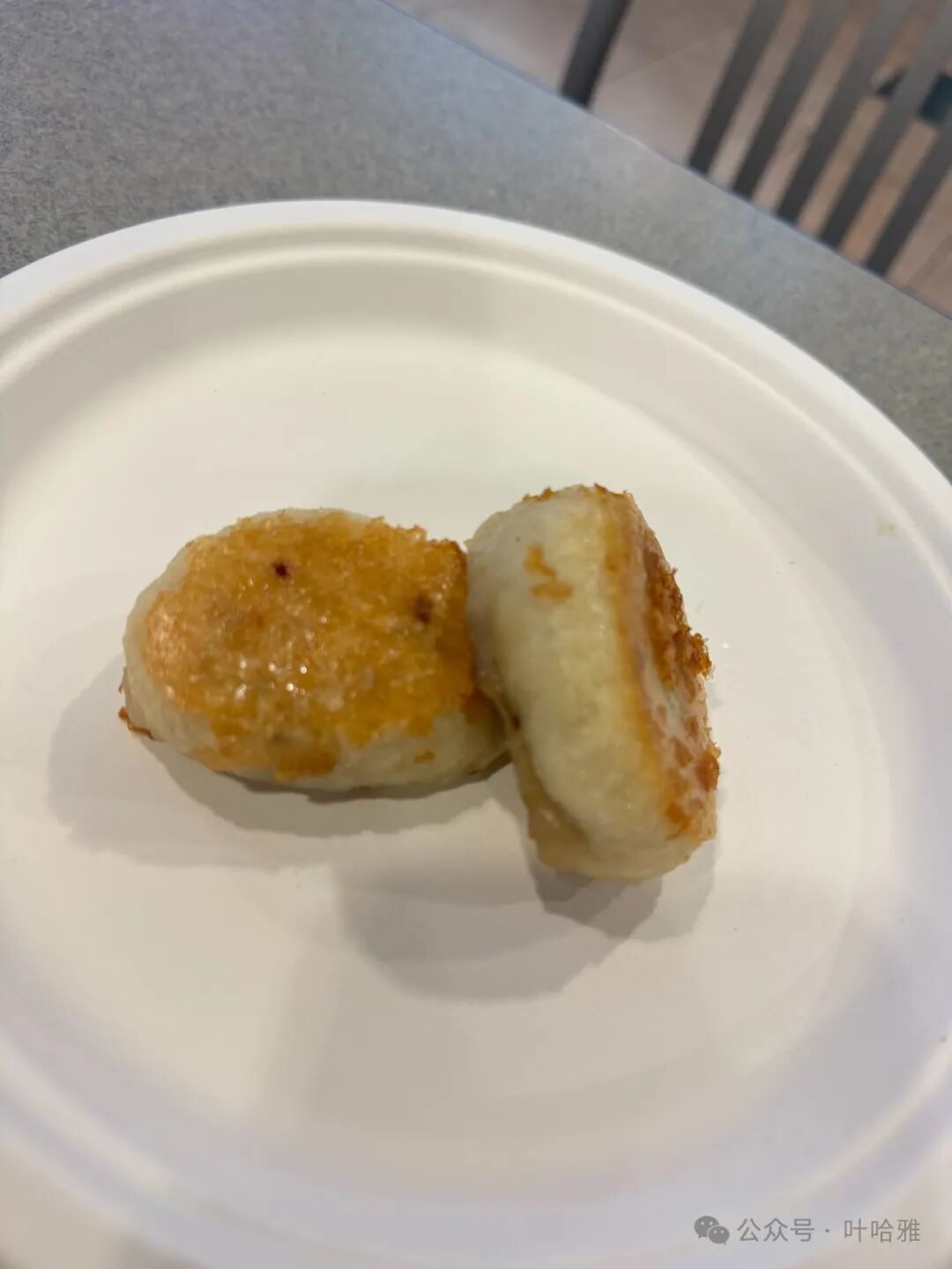
Besides spicy soup and pan-fried buns (shuijianbao), the shop also prepares traditional Chinese Hui Muslim foods like fried dough (youxiang) for Eid al-Adha.
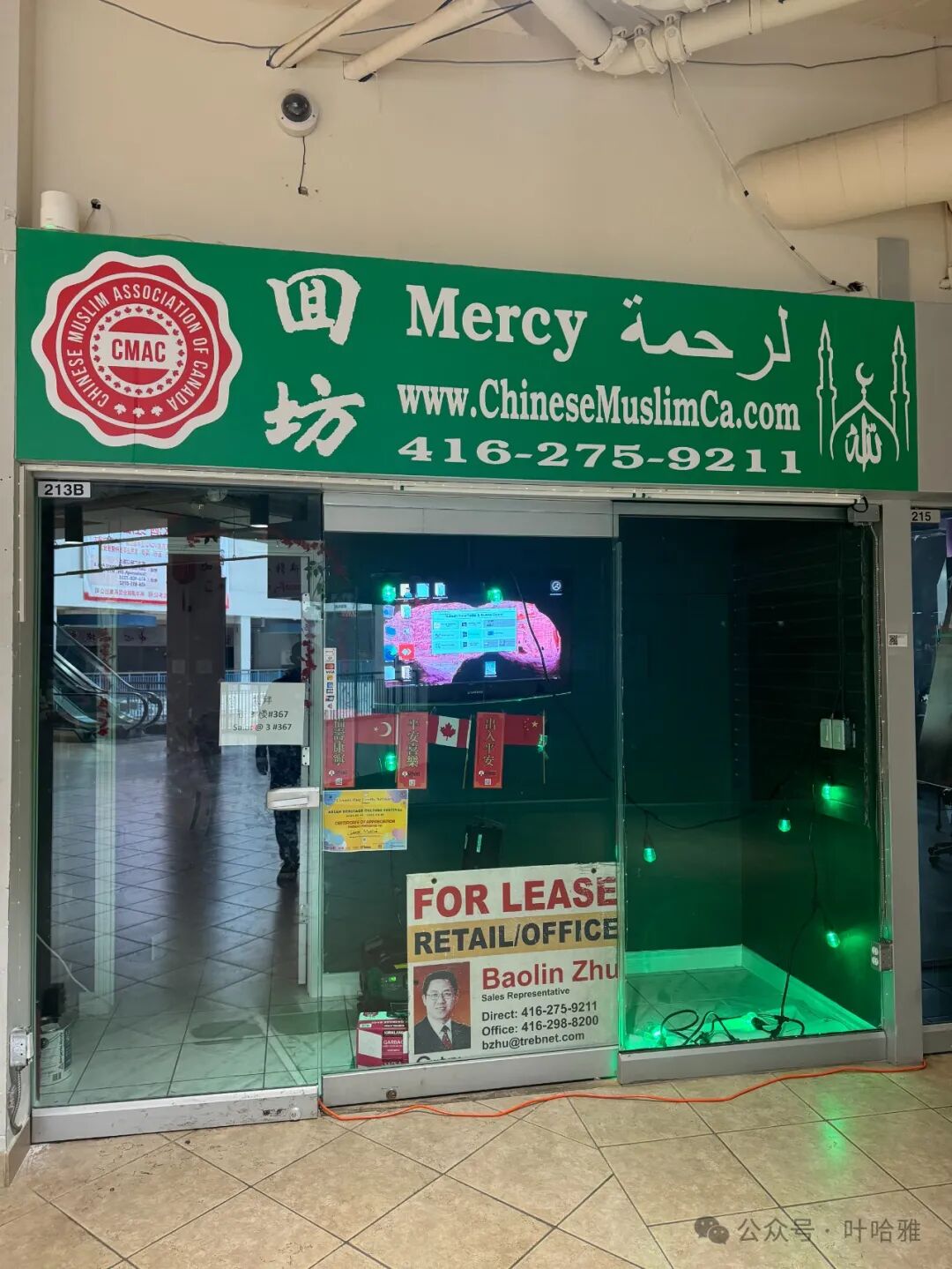
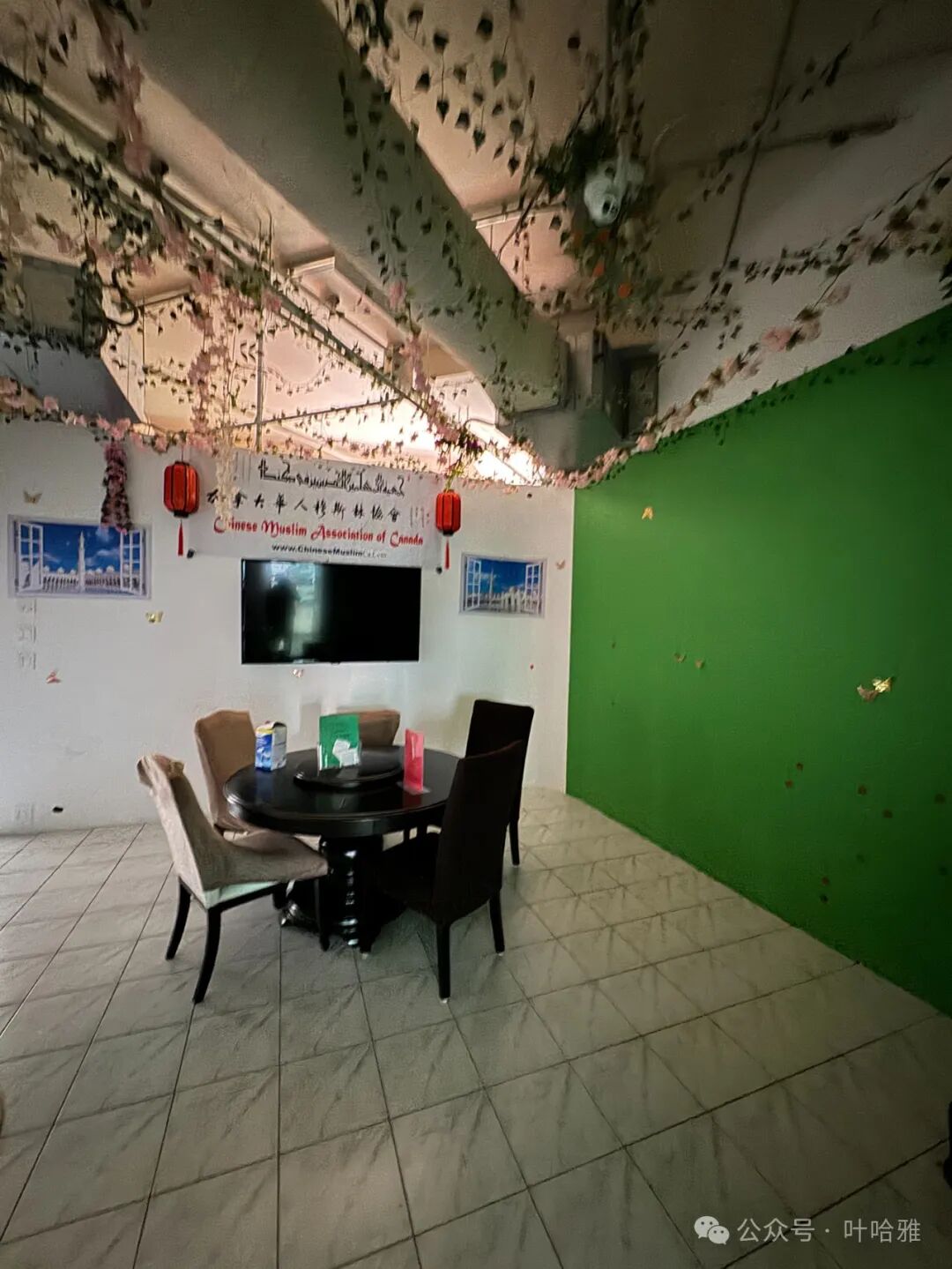
The room next to the spicy soup shop was the association's original prayer room. Now that they have the third-floor property, this space is used for reception, office work, and daily tasks.
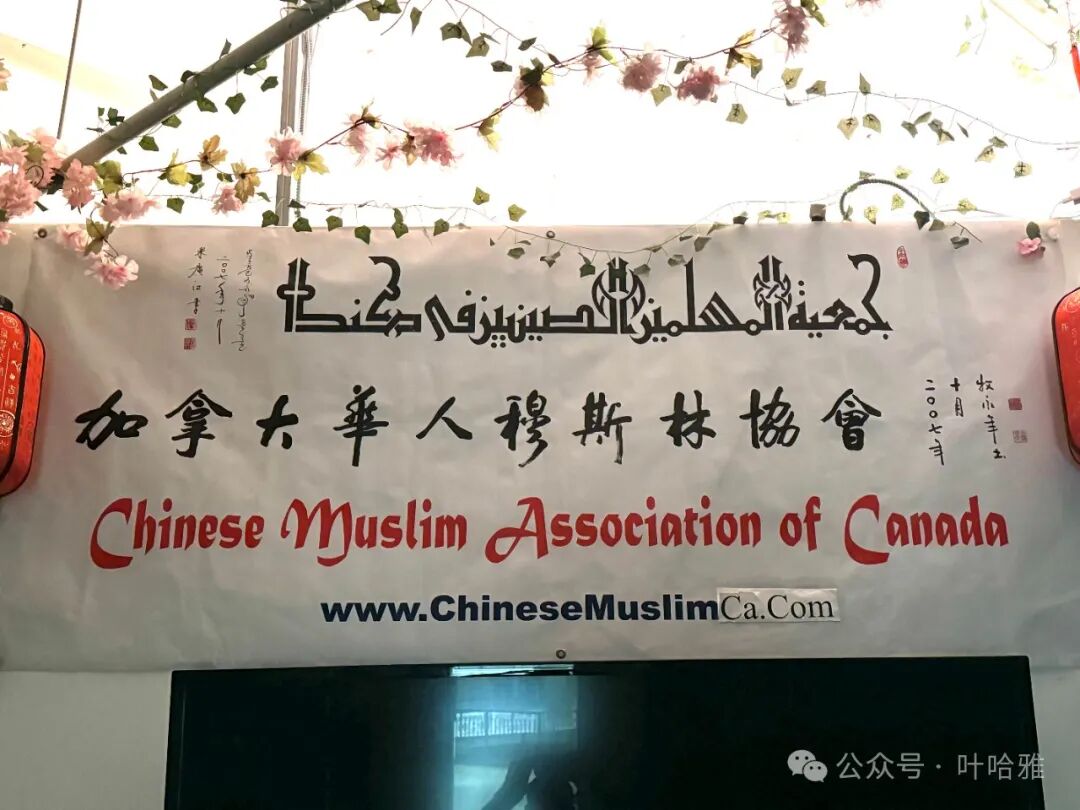
This is a plaque inscribed by Mr. Mi Guangjiang for the Chinese Muslim Association of Canada. He has also visited this place himself.
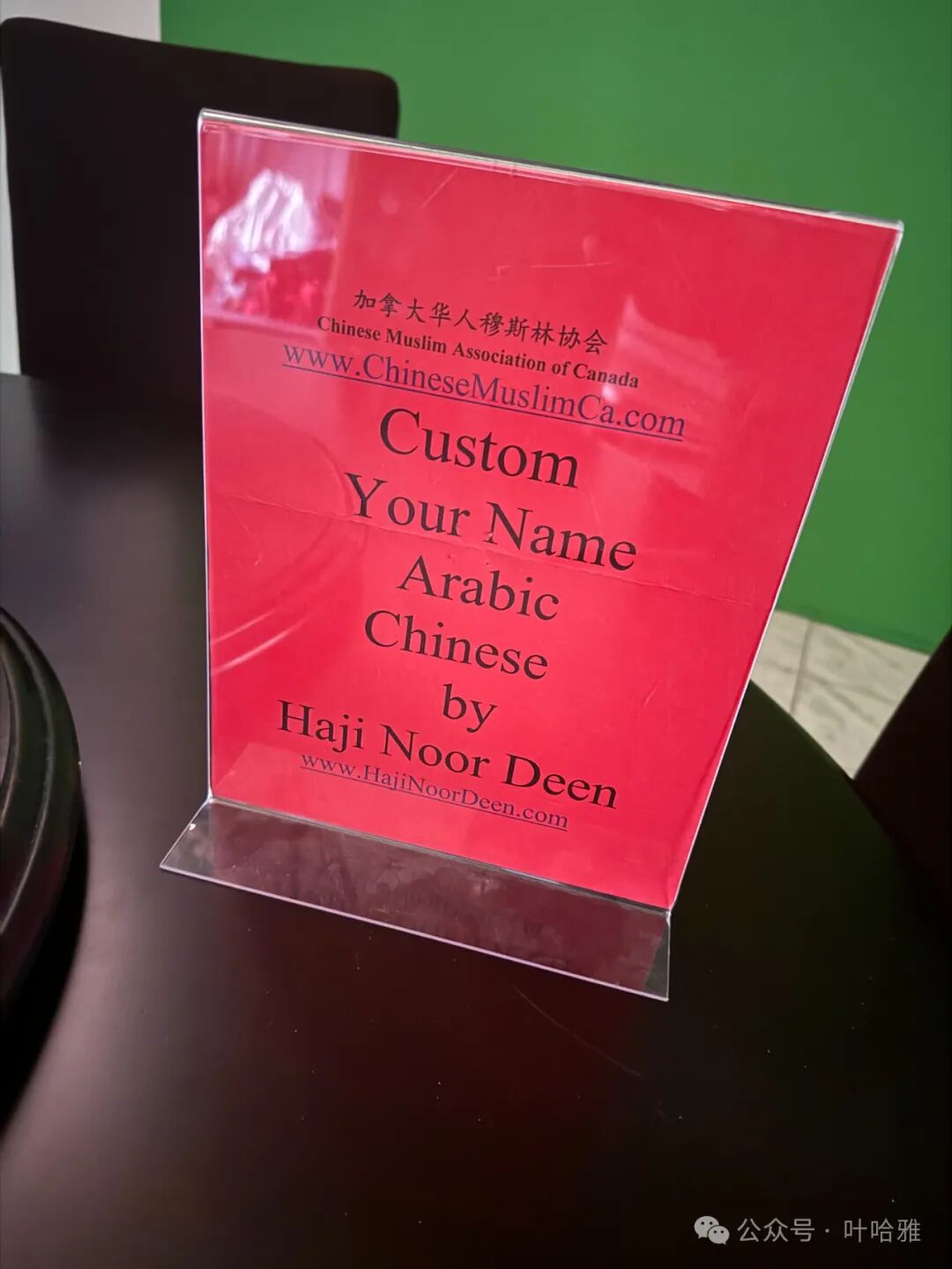
I did not know President Bao Lin before I came to Toronto. I planned to visit the day before Eid al-Adha to check the time for the holiday prayers. I happened to run into the president, and he very warmly invited me to take a tour.
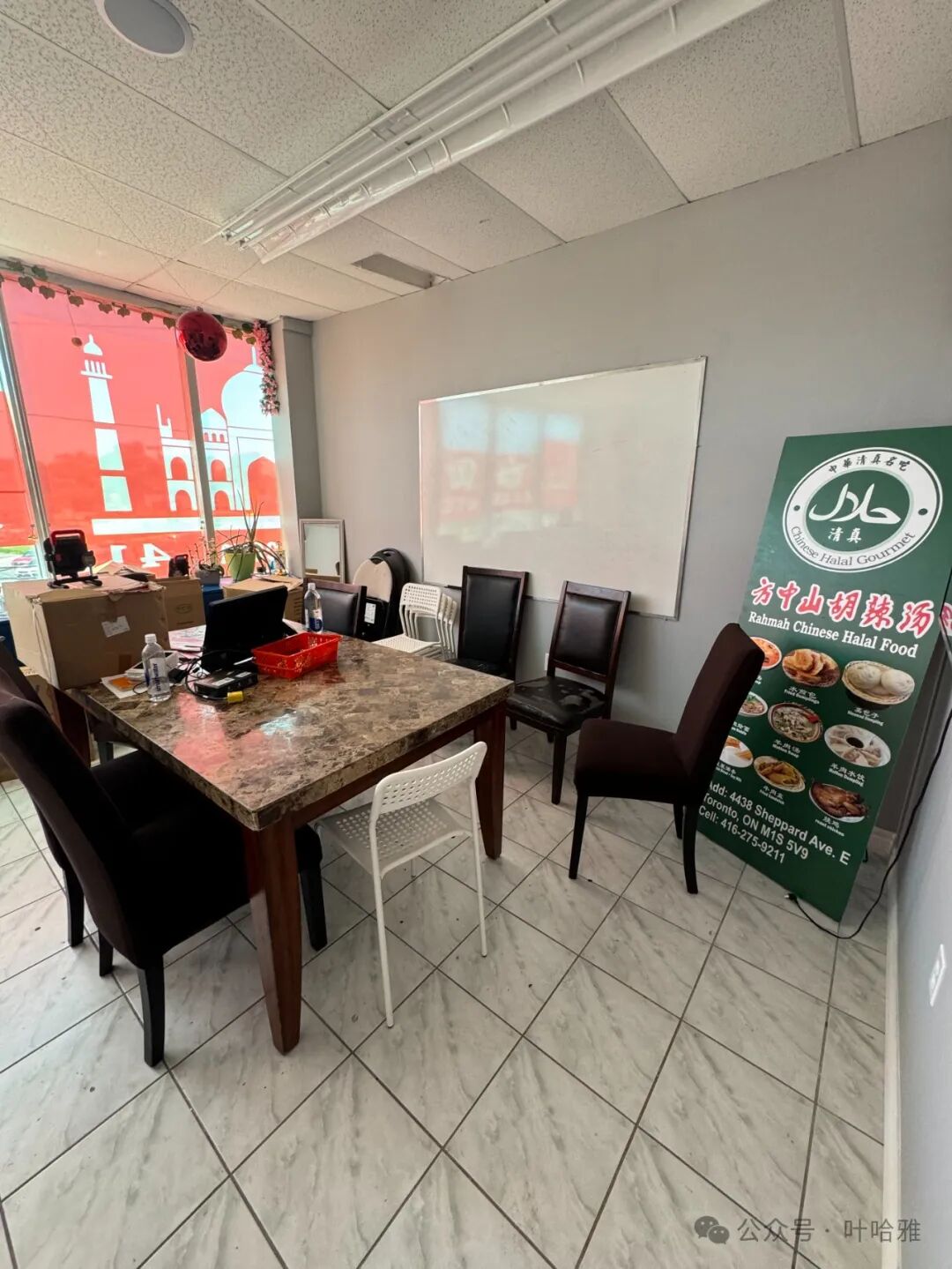
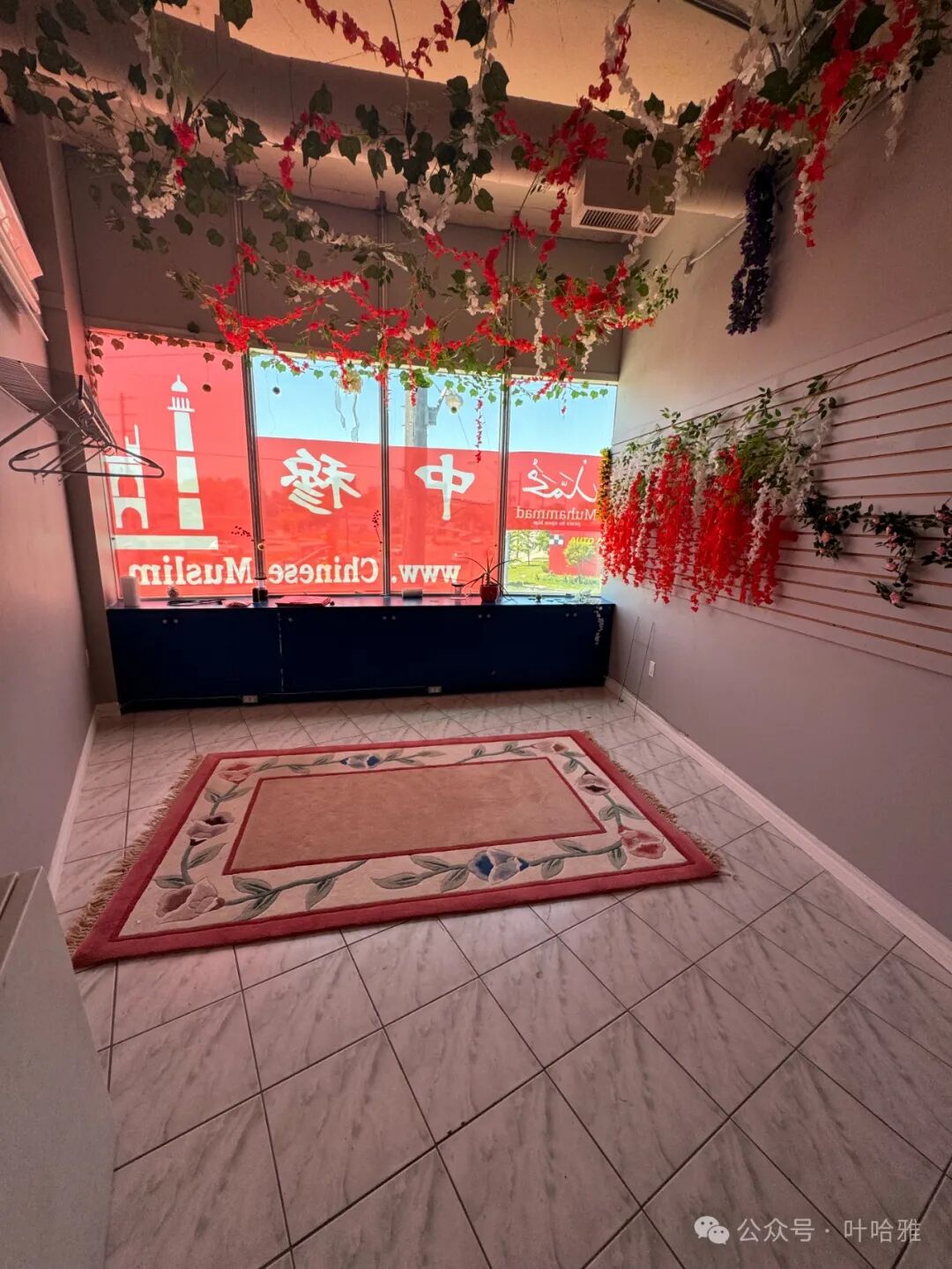
To promote the Chinese Muslim Association, President Baolin installed a light box on the property window and kept it lit all night. This is how the building looks from the outside at night; it is very eye-catching.
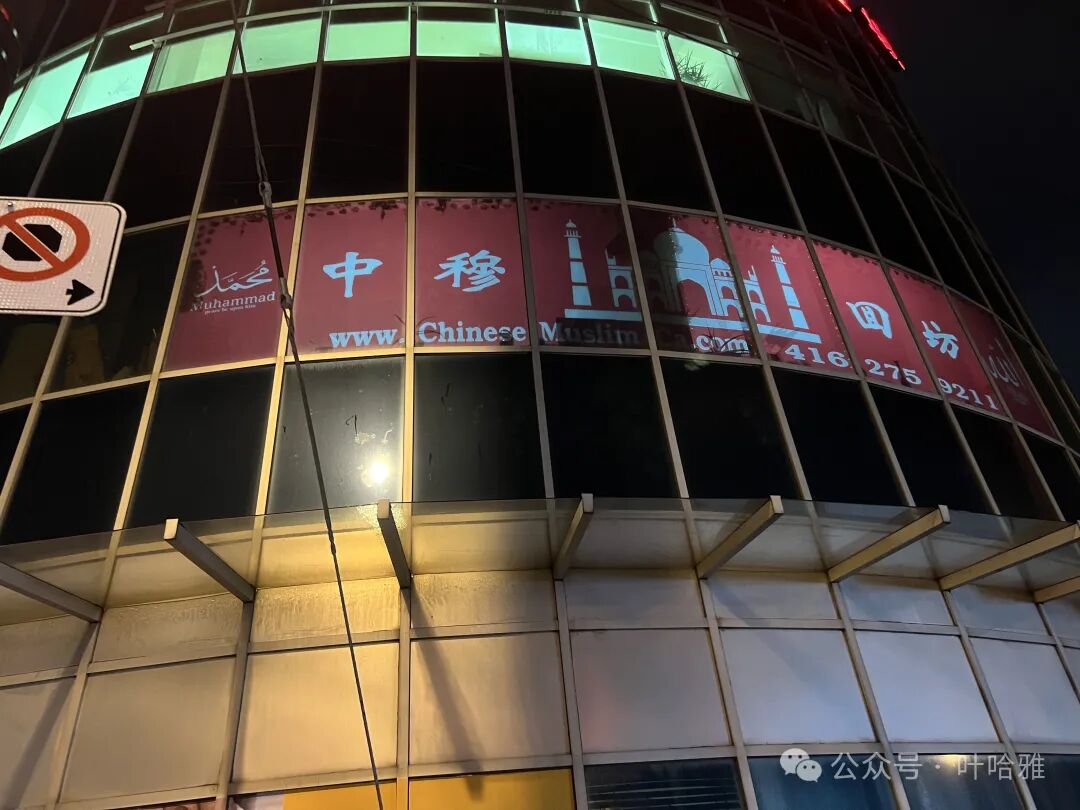
The building management thought this was inappropriate and cut off the power without permission. The building is owned by Chinese people, but the overseas Chinese here do not seem friendly toward Muslims. President Baolin is now taking legal action to protect his rights.
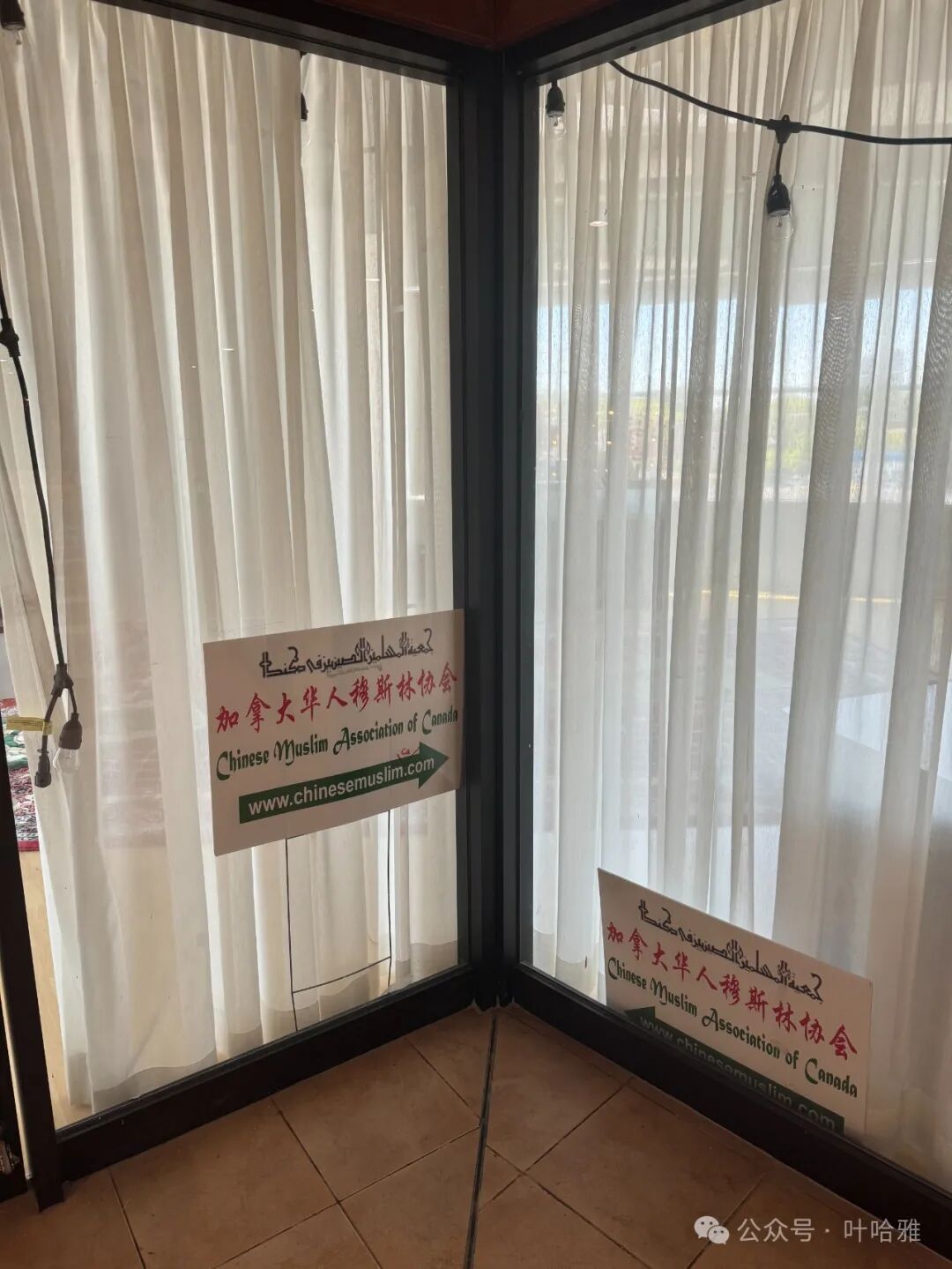
The third-floor property was just bought. When I arrived, it was being used for the first time, so many decorations had not been changed yet. The facilities look very simple, but everything necessary is there, except for an imam.
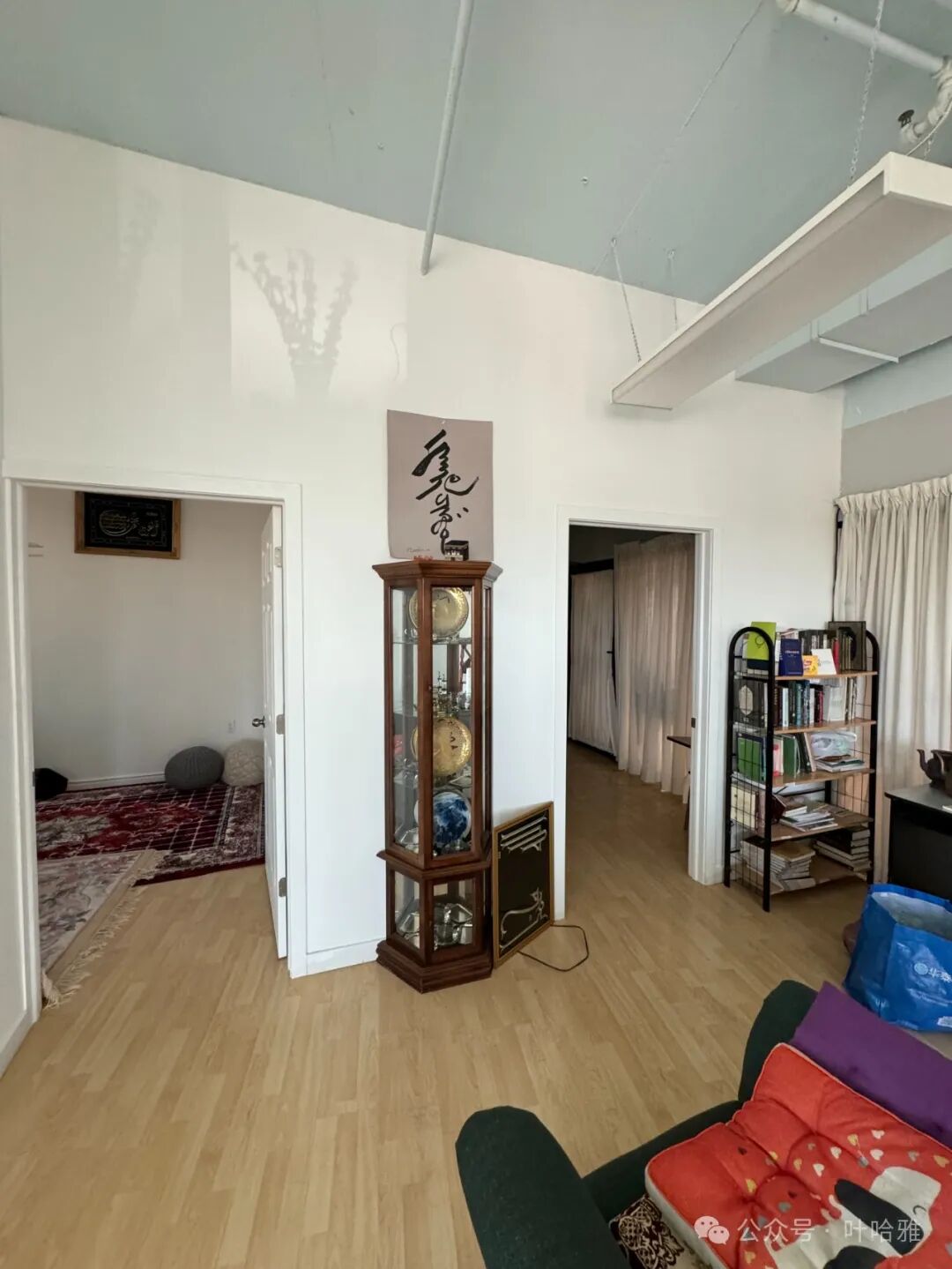
I was surprised that the Eid prayer was the next day, but they still had not found an imam to lead the prayer. President Baolin was anxious and made several calls, including asking a Pakistani student from a brother mosque for help, but he could not find anyone suitable. He said if there was no other choice, he would ask me to do it.
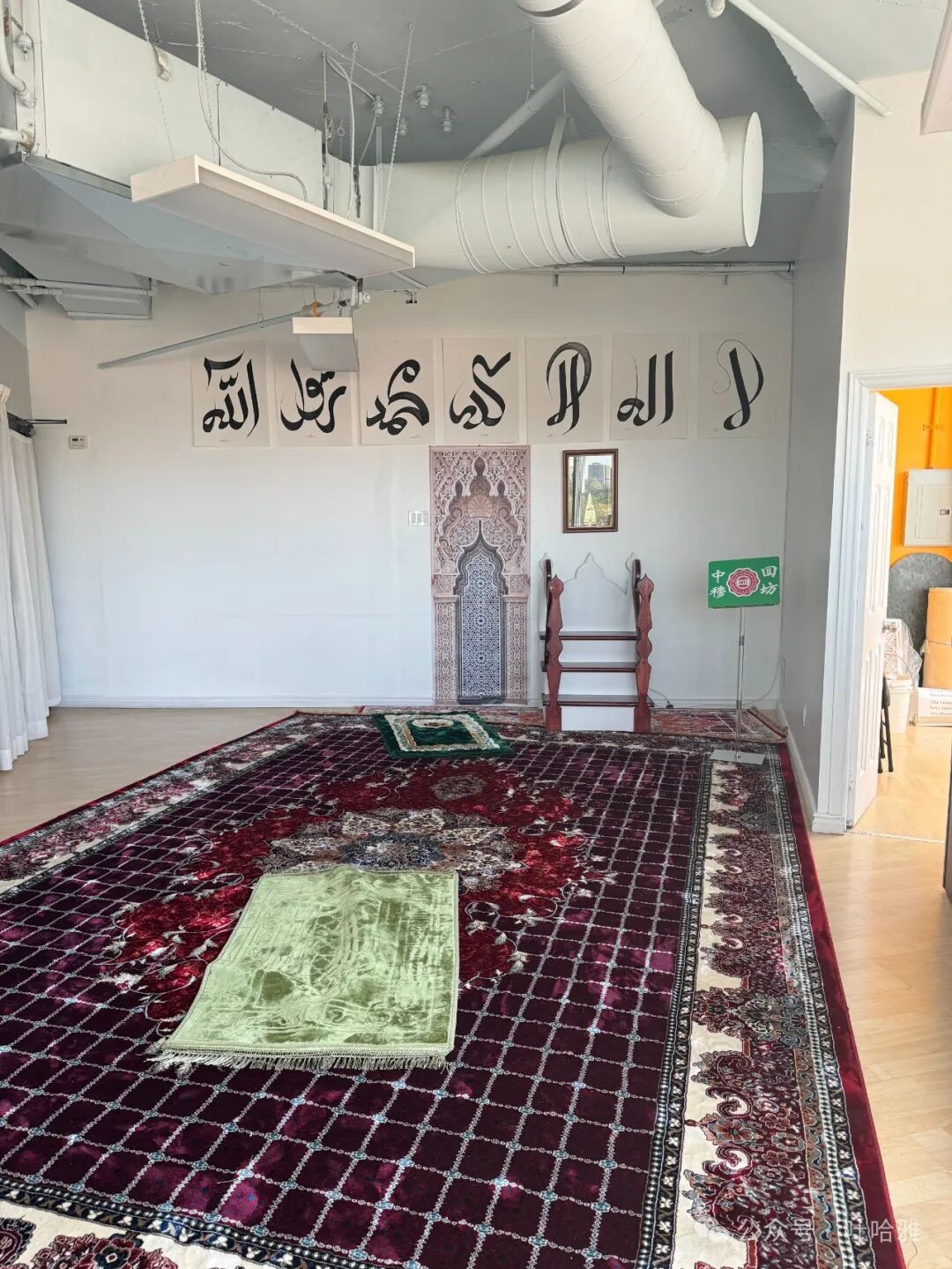
I felt very caught off guard. In the Canadian Hui Muslim community, there are about a hundred people who visit regularly. Many people from China have a weak sense of faith and are not in this circle. Others did not have the chance to learn back home, so they have a strong desire to learn here. Everyone is eager for a full-time imam to guide them in their studies and daily worship, but unfortunately, they have not found the right person yet.
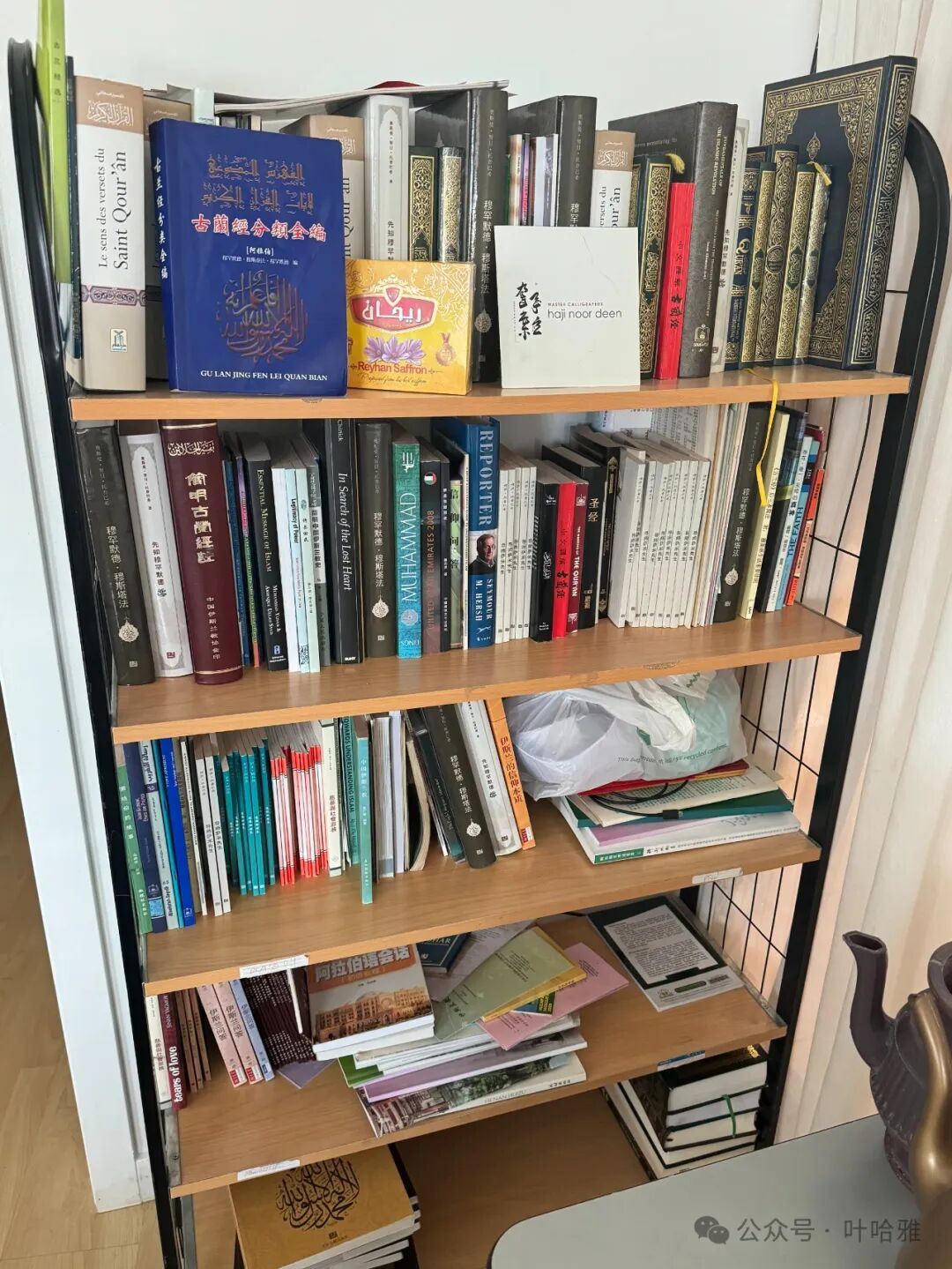
President Baolin really hopes that a capable and willing scholar will come here to teach, and he will provide all the help he can.
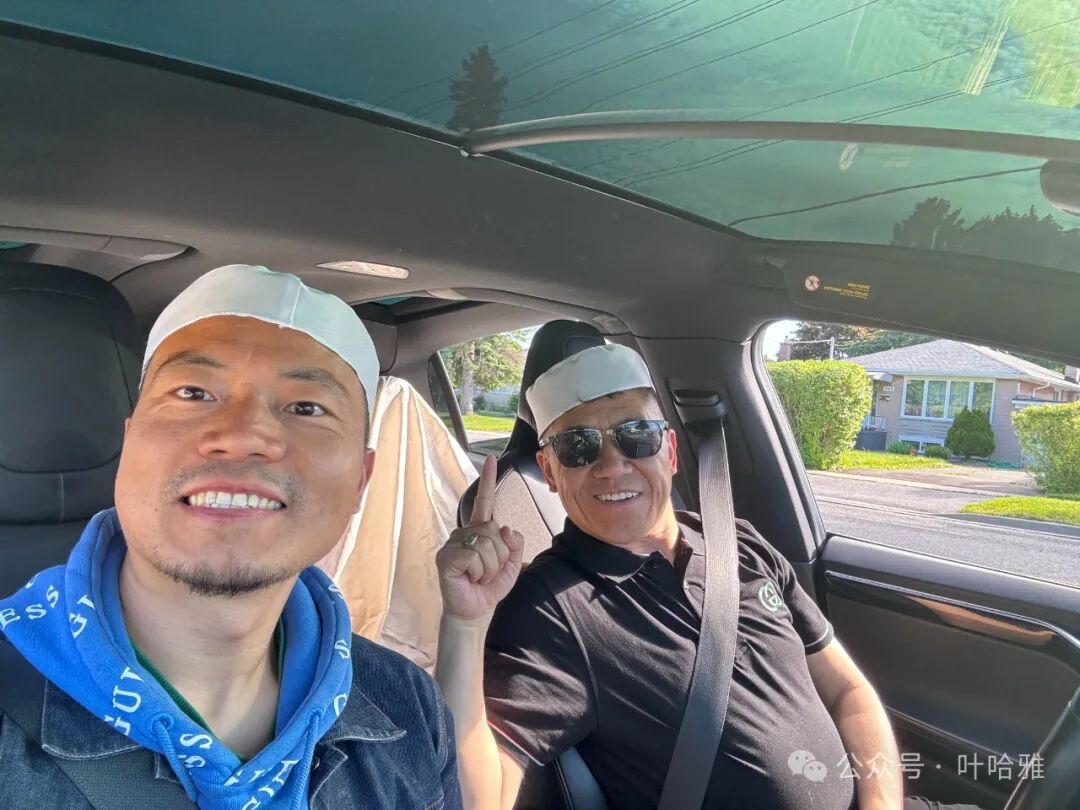
Then, President Baolin drove me around to visit a few unique mosques in the area.
JAME ABU BAKR SIDDIQUE
In North America, the largest and most numerous mosques are definitely built by our Pakistani brothers. This is one of them. It shows that the Pakistani community is doing well overseas, not just in North America but also in Europe. They are doing better than the Chinese community, which I will explain in more detail later.
Toronto Prayer Schedule
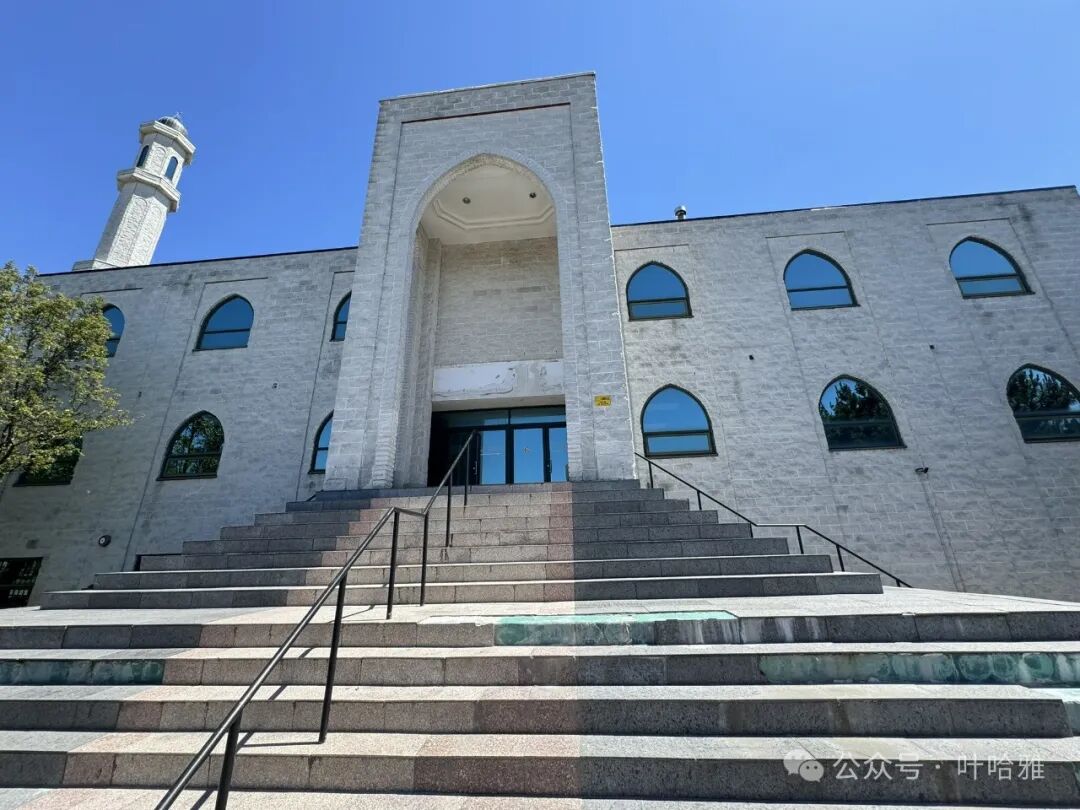
Islamic Foundation of Toronto
The Islamic Foundation of Toronto is a mosque still managed by our Pakistani brothers. President Baolin came here to ask the mosque management to help find a Pakistani student to lead the Eid al-Adha (Qurban Festival) prayer. The Pakistani prayer time is June 17, while the Hui Muslim community's is on the 16th, but we could not find anyone available.
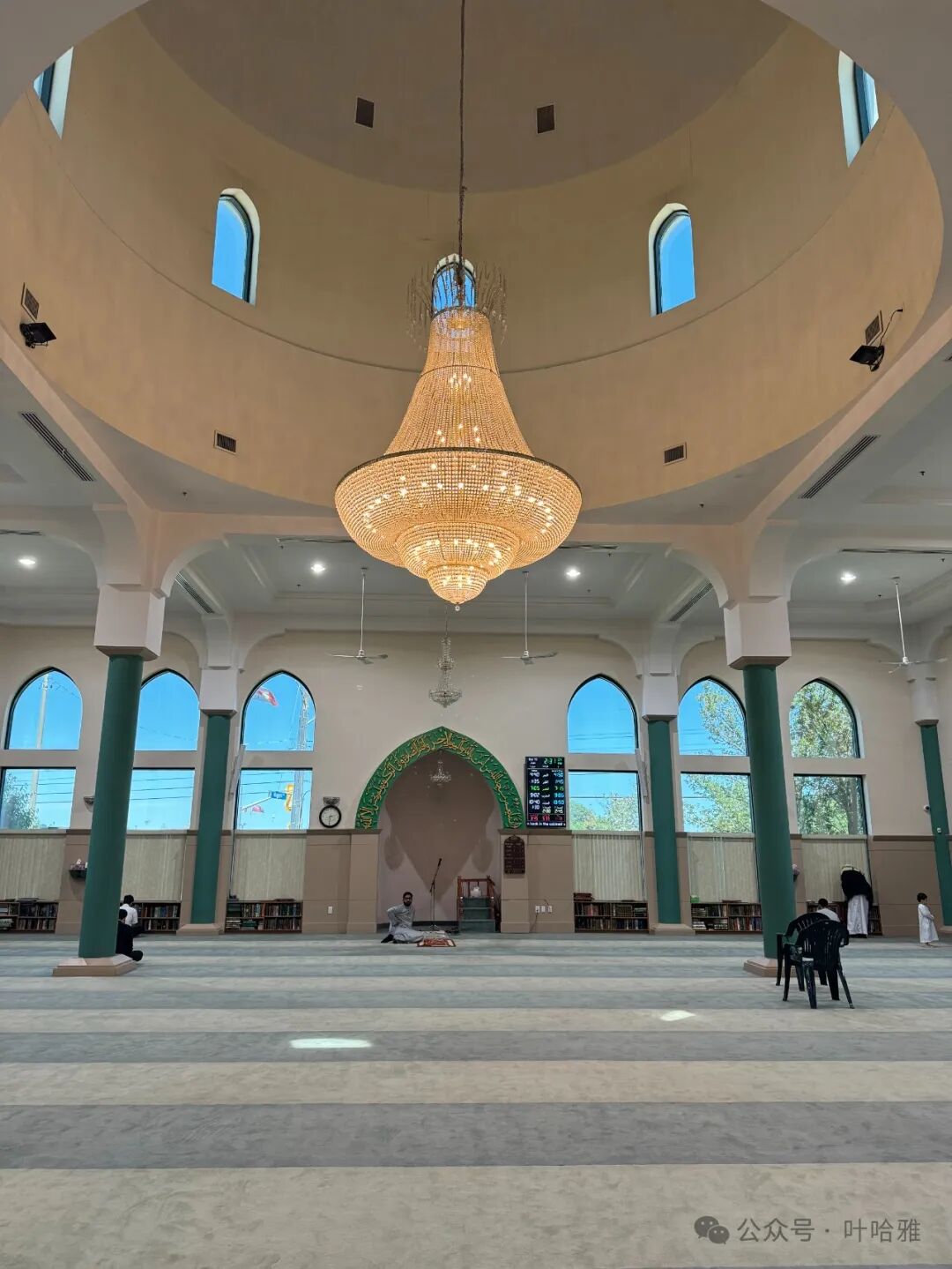
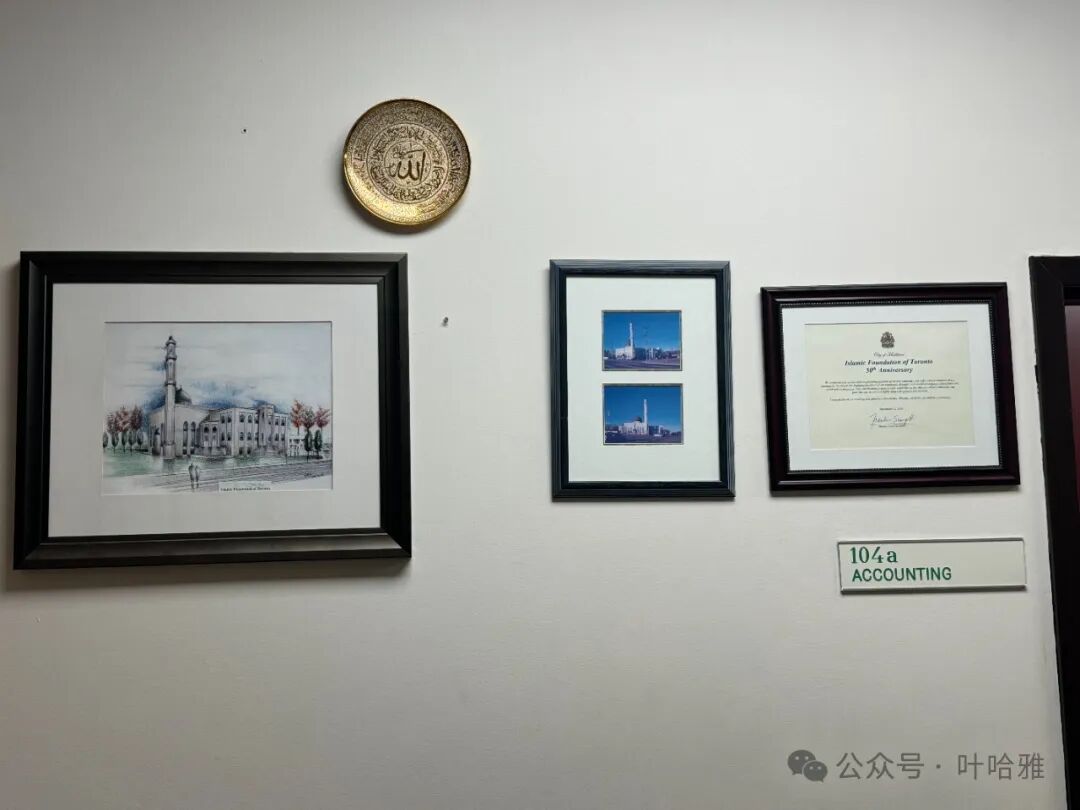
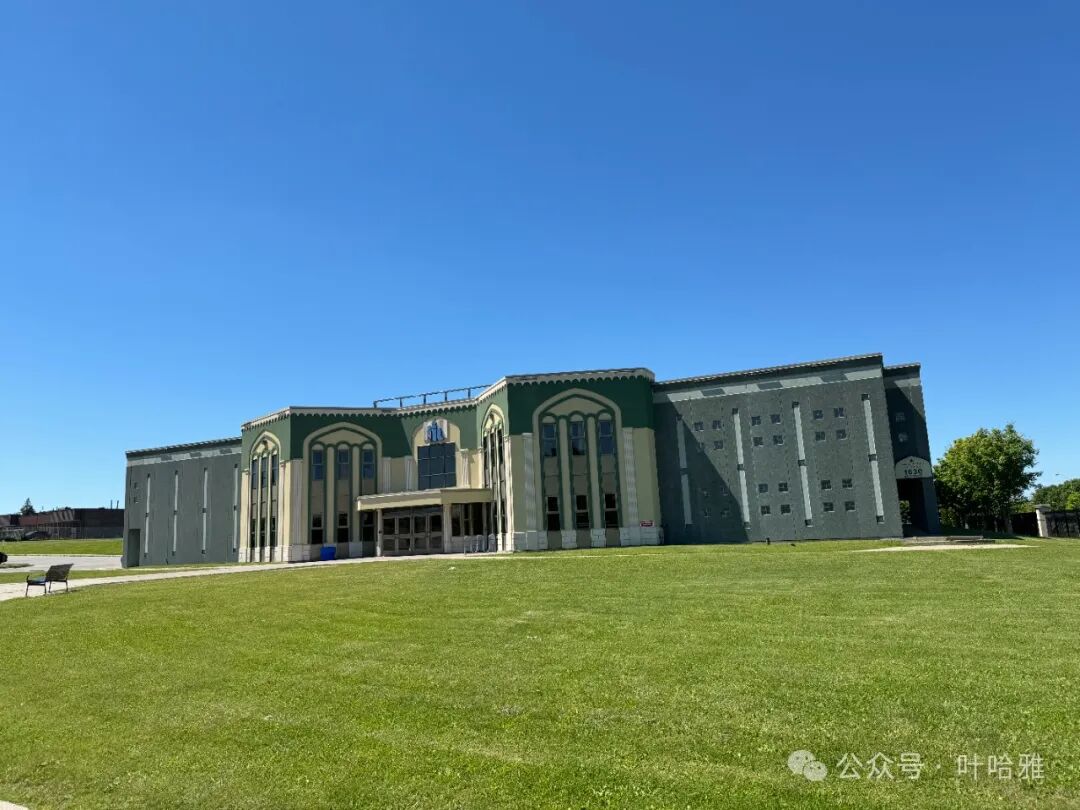
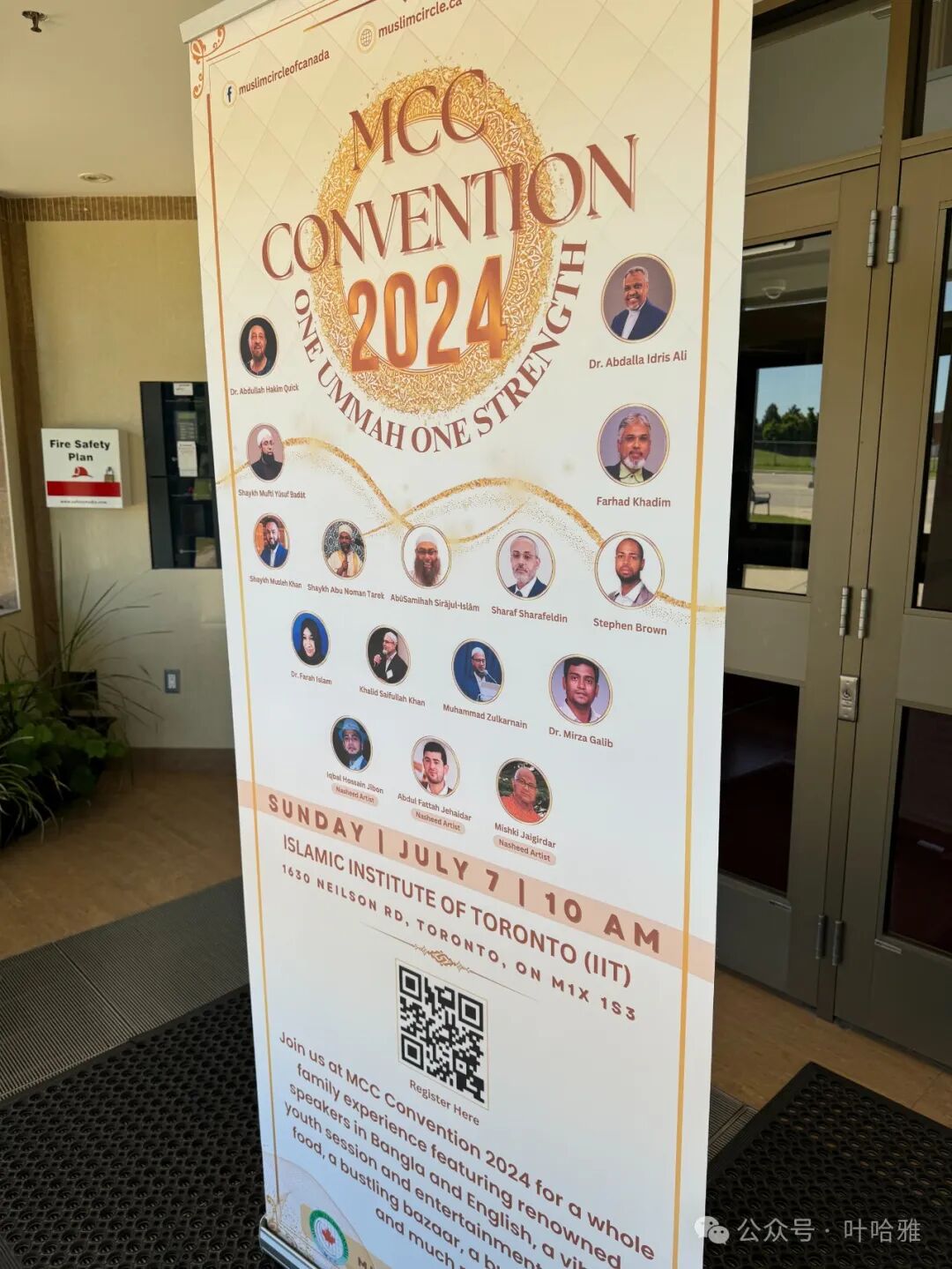
Islamic Institute of Toronto
The Islamic Institute of Toronto was founded in 1996 and moved to its new location in 2006. It covers 8 acres and is very large.
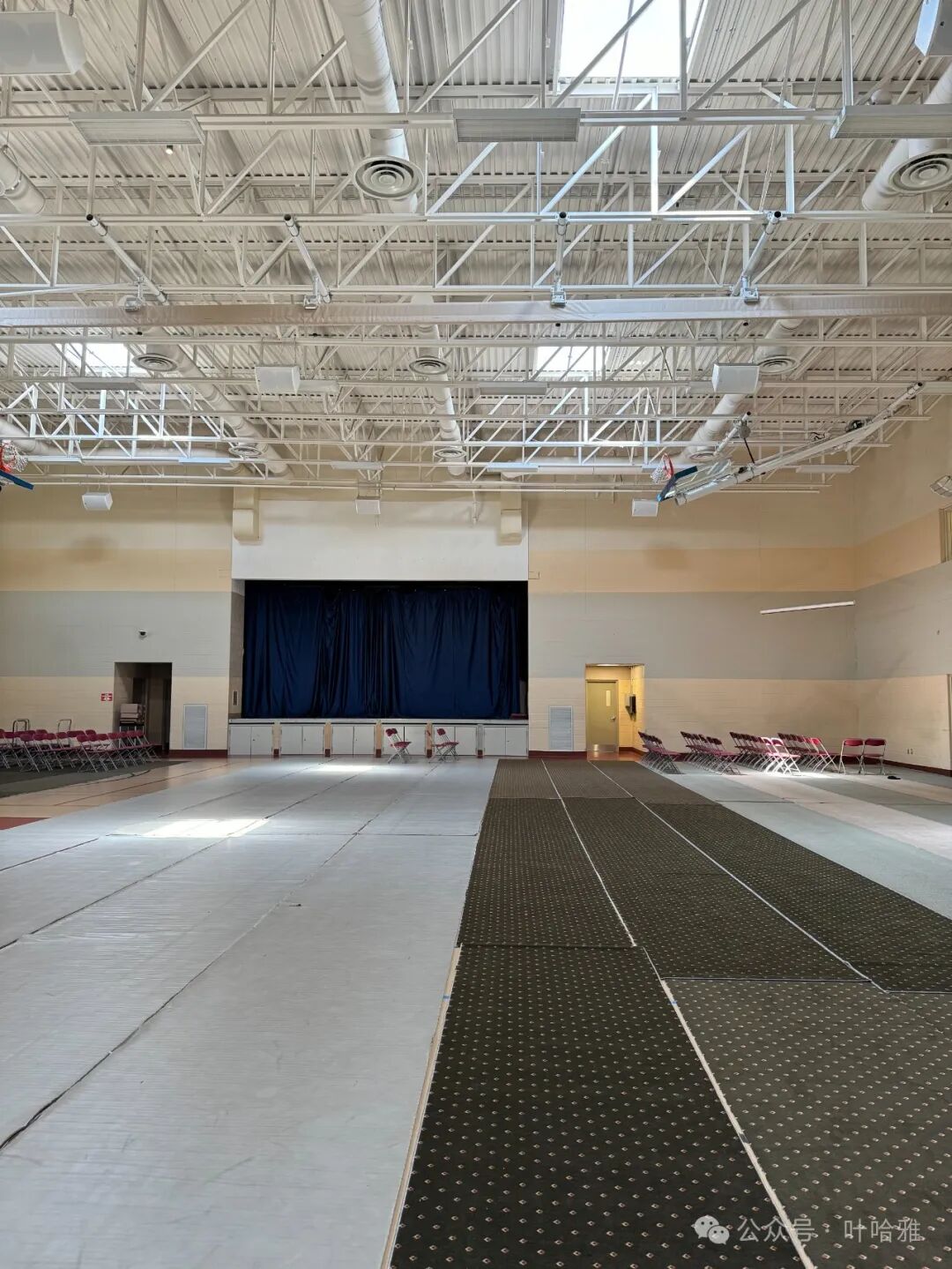
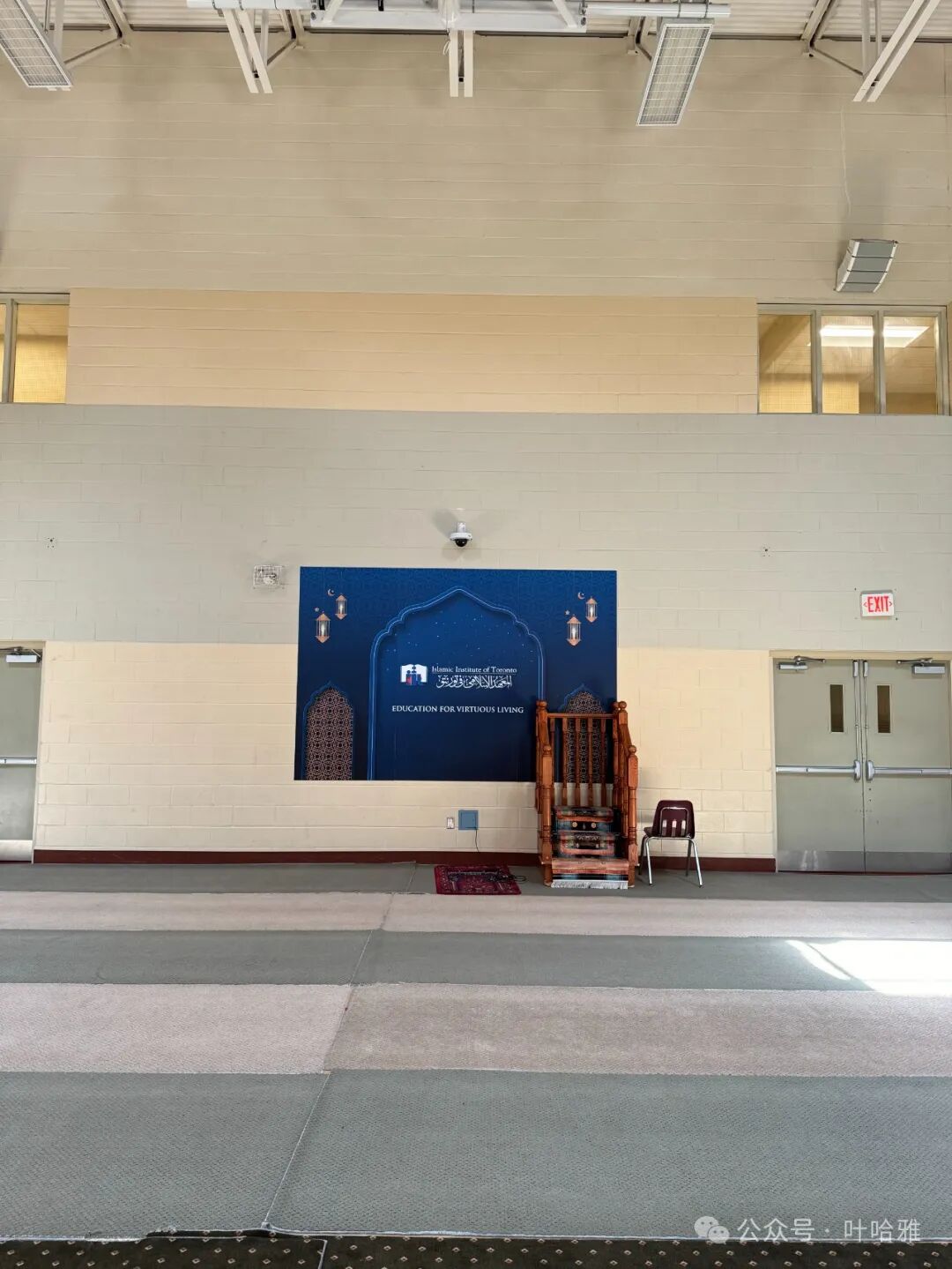
The school is usually not open to the public, but I knocked on the door and went in for a visit.
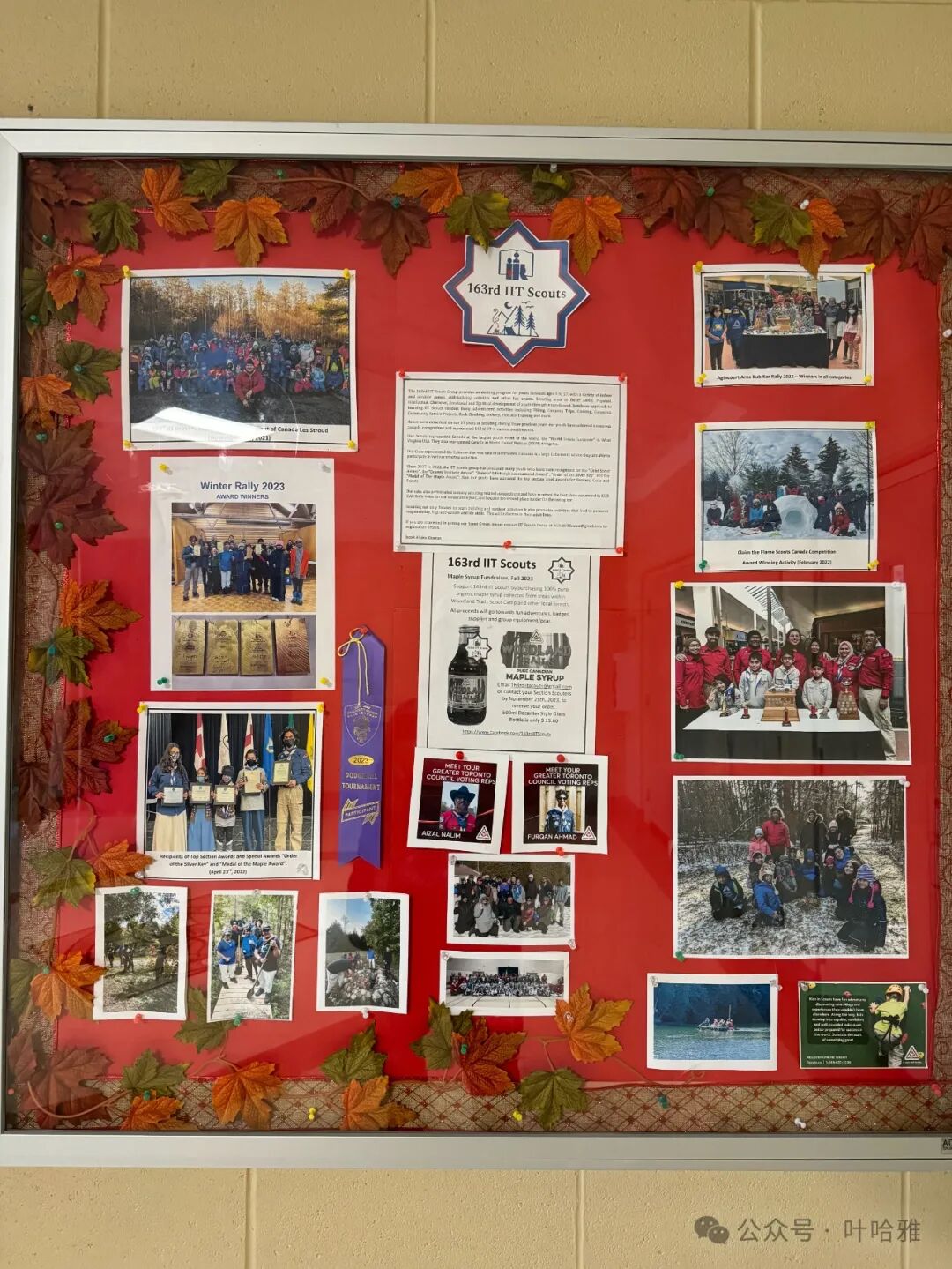
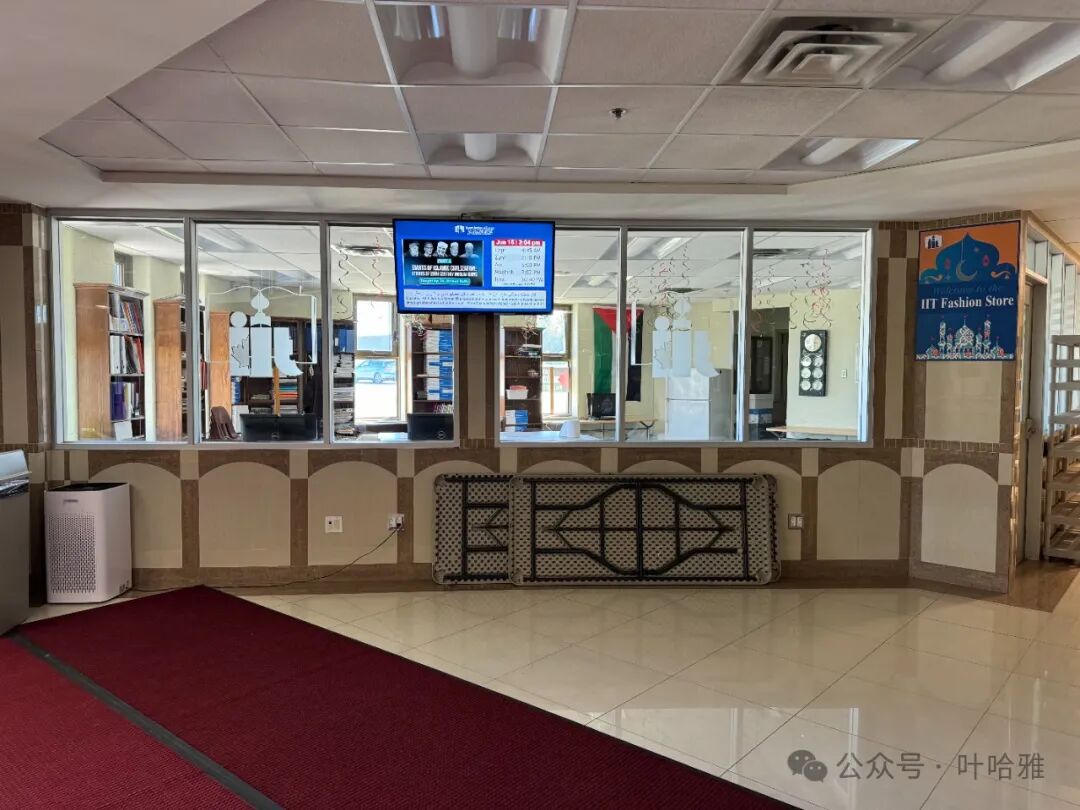
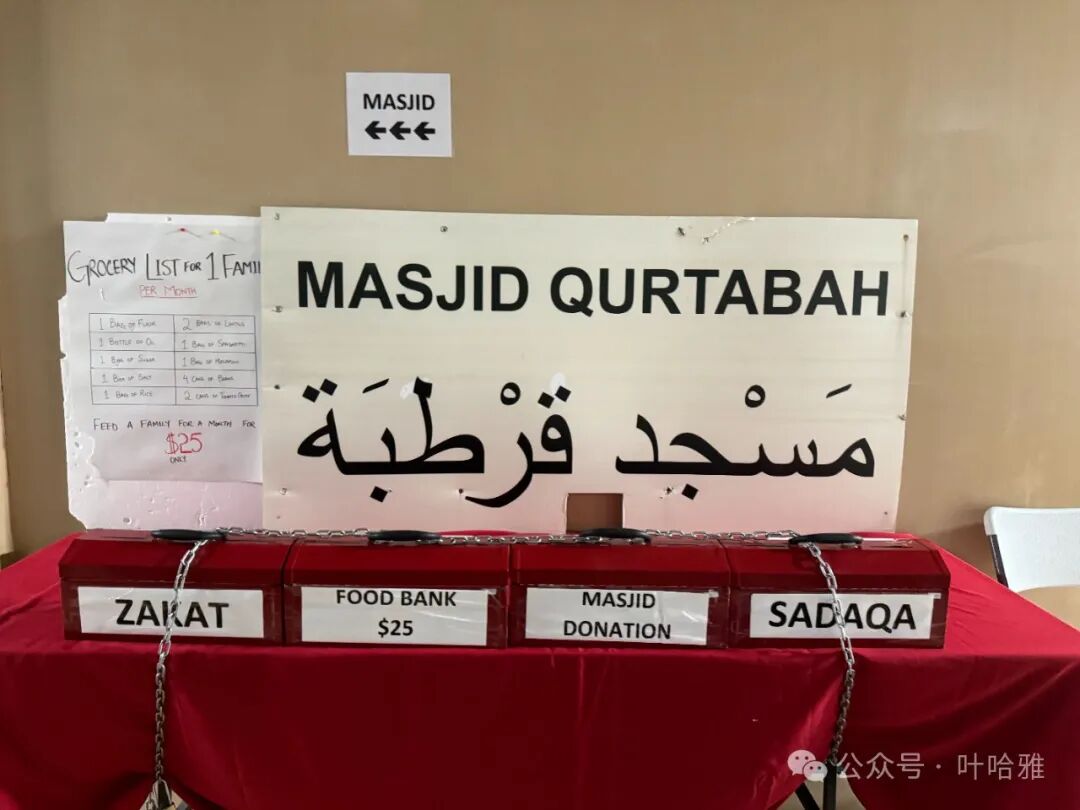
Masjid Qurtabah
This is the home of the Muslim Association of Canada. President Baolin brought me here because before the Hui Muslim community bought their own property, they did not have a permanent place for religious activities, so they used to borrow this space for Chinese Muslim events.
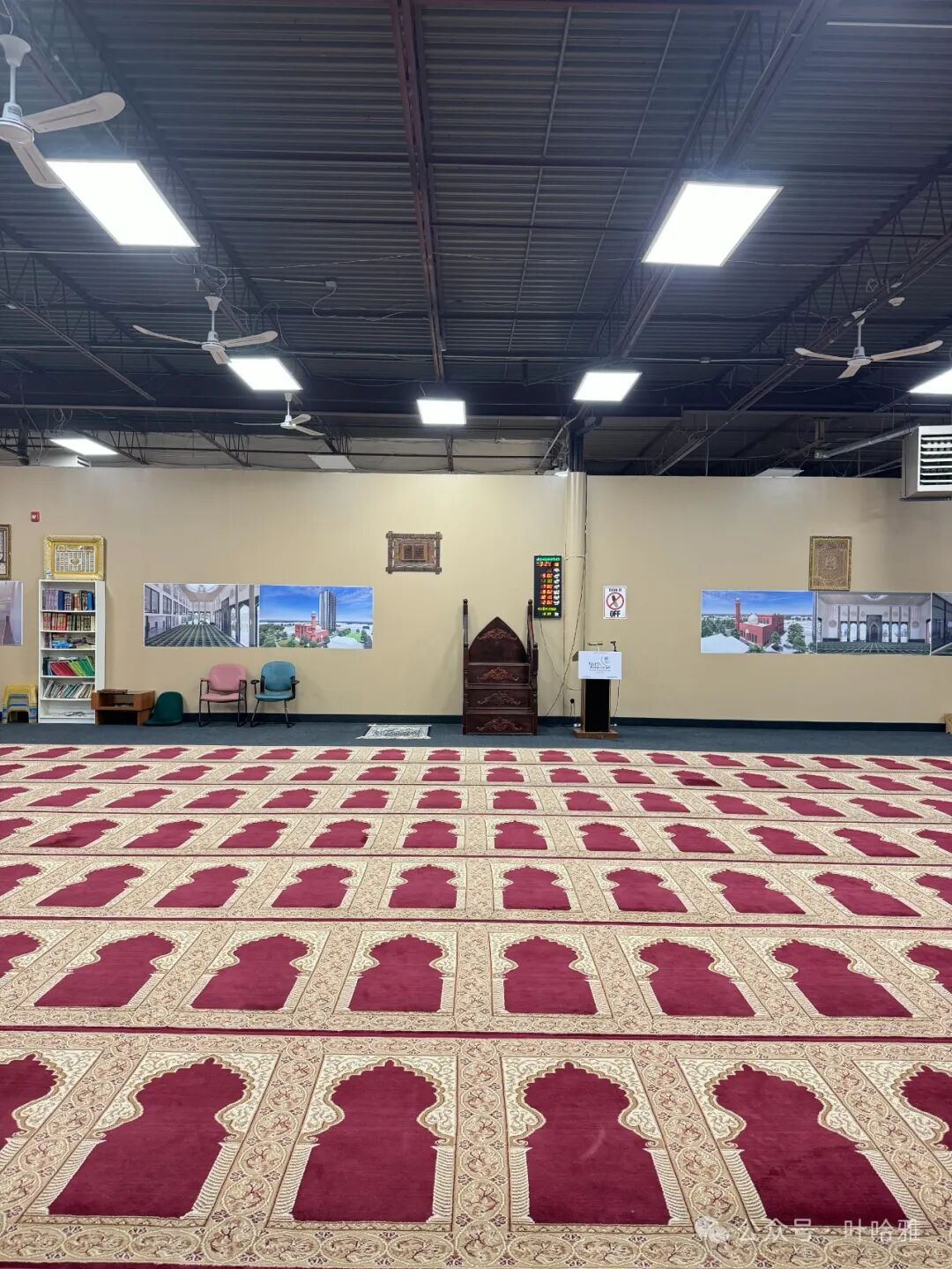
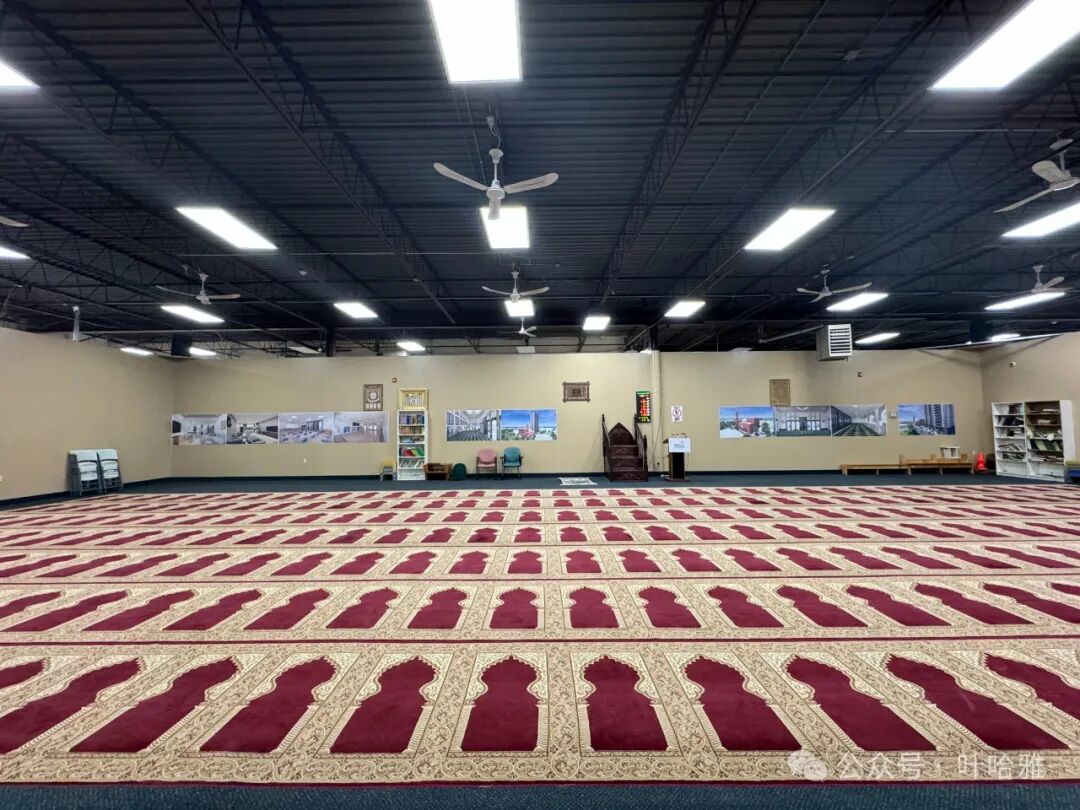
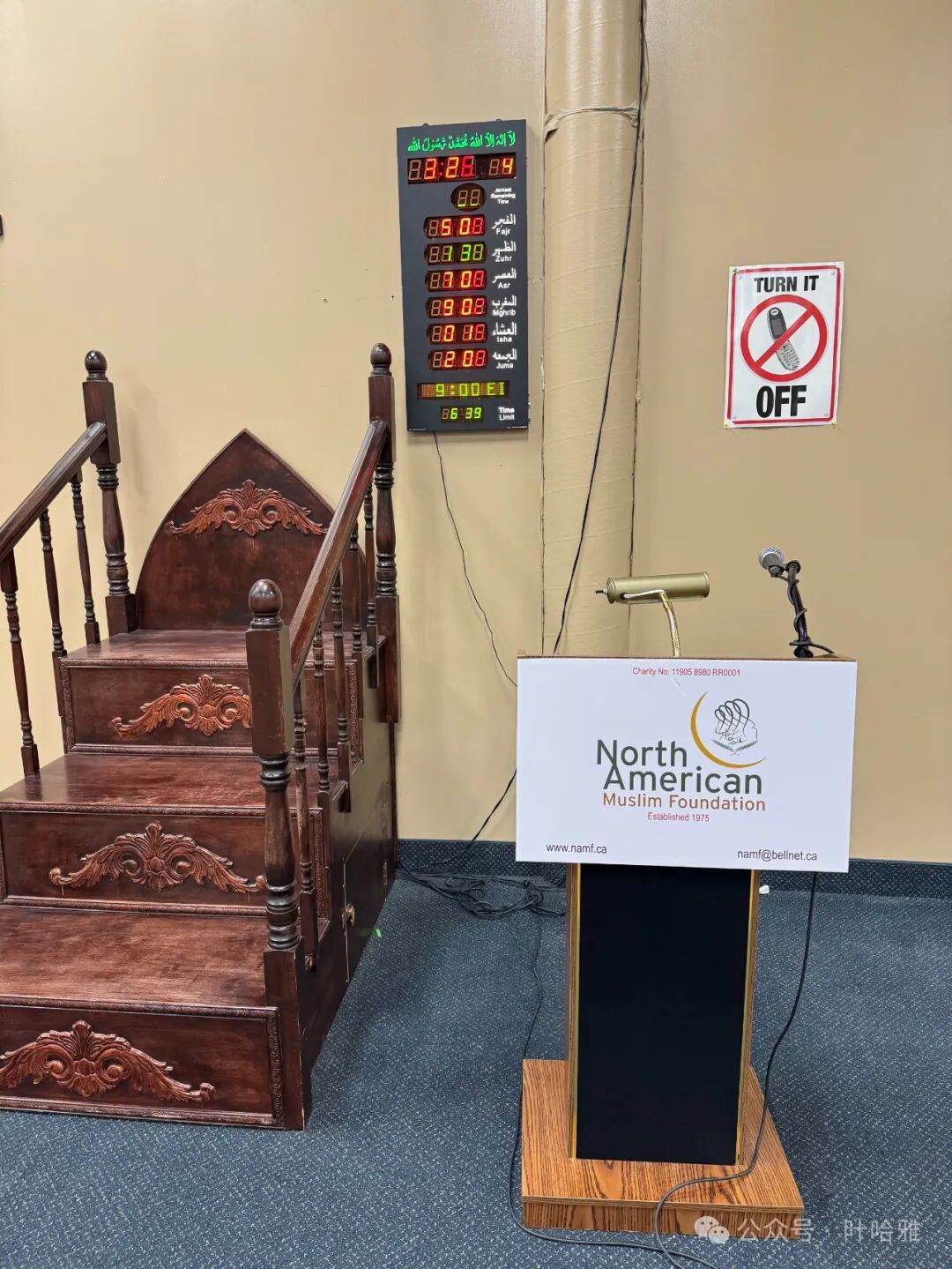
This place will also soon be renovated into a large Islamic activity center.
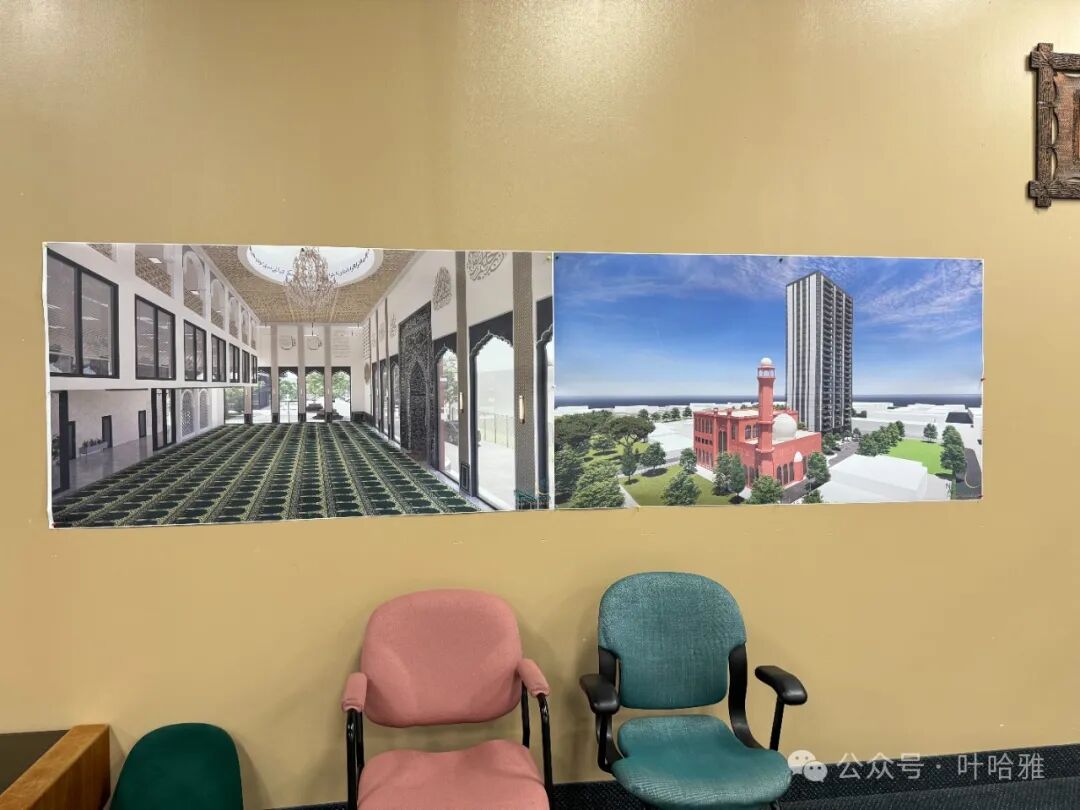
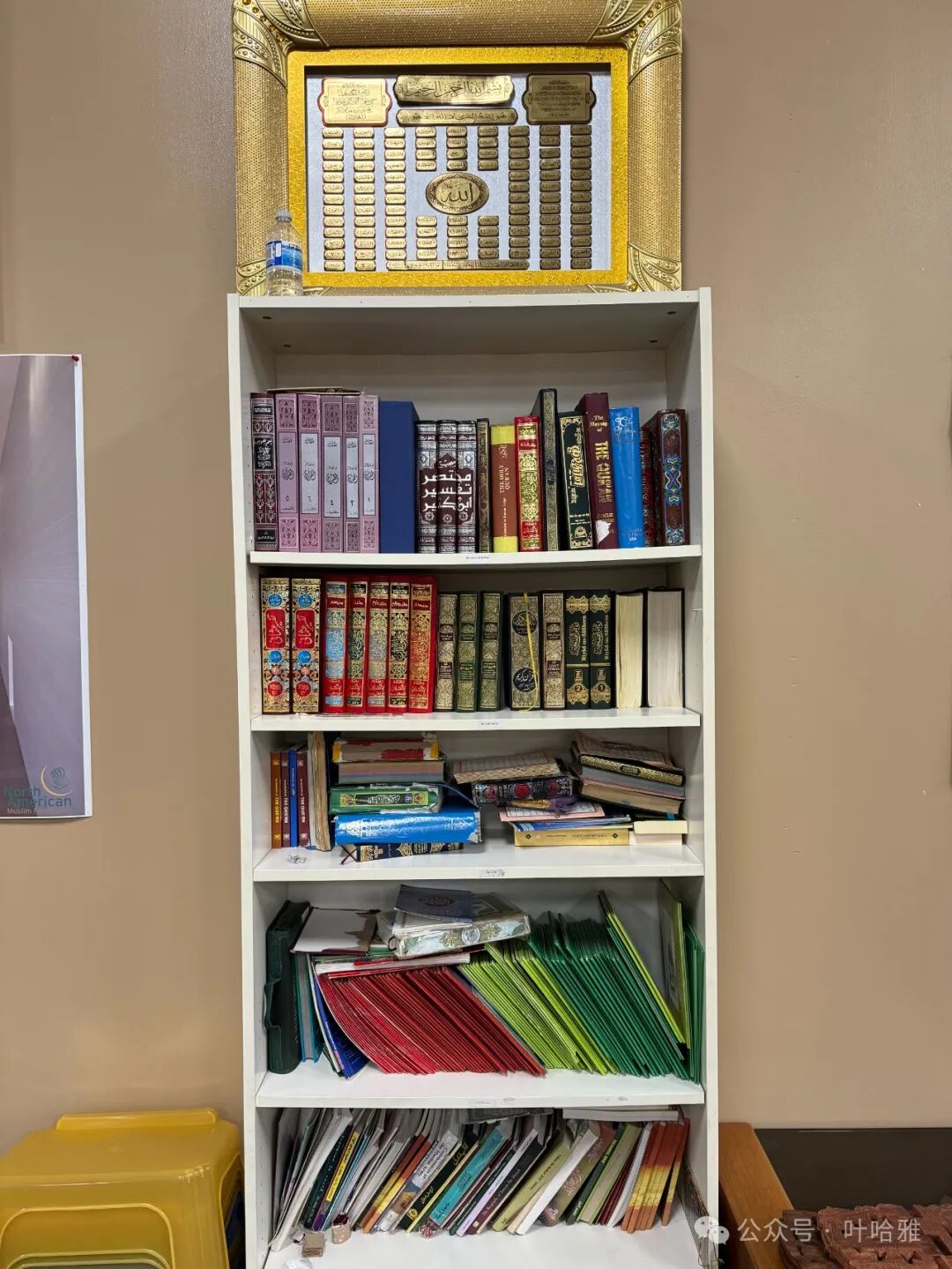
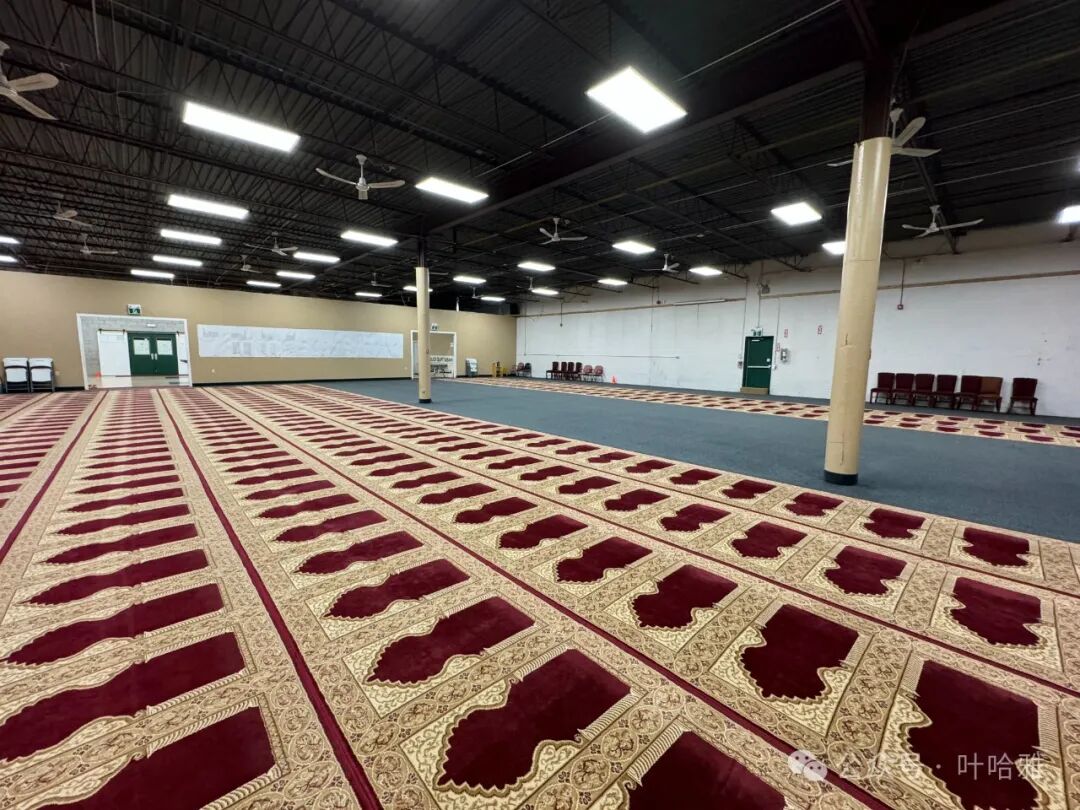
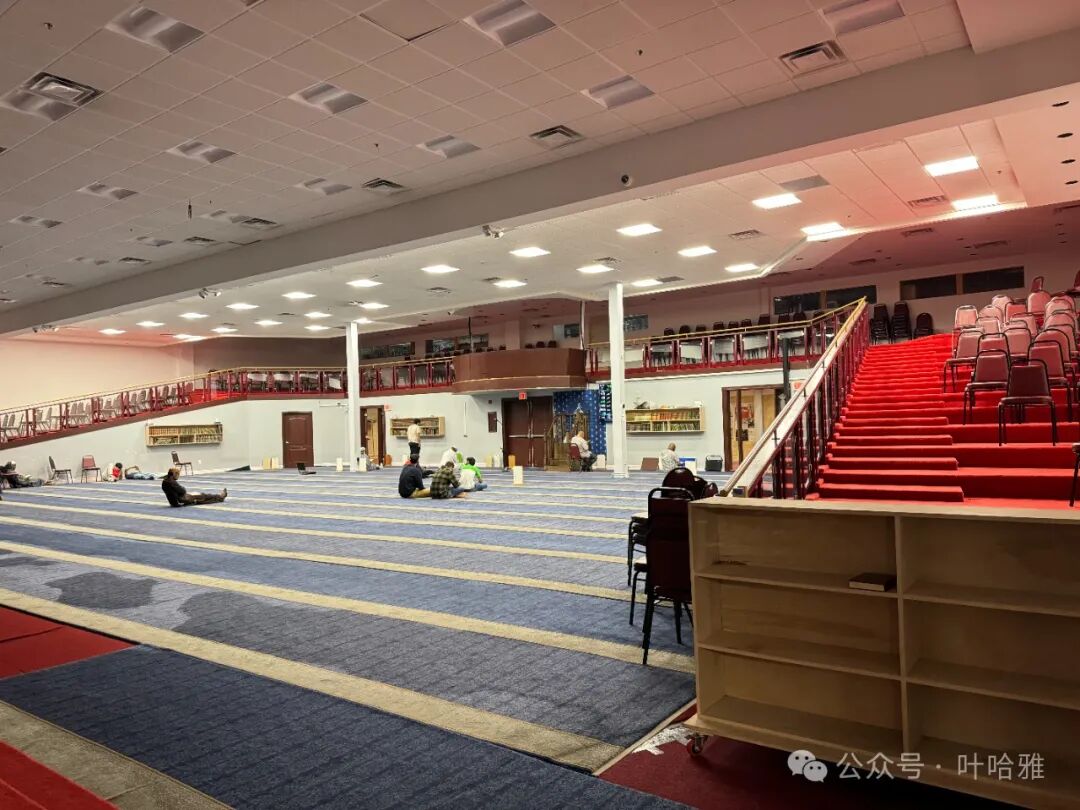
This is a mosque for Somali people.
Seeing that the Somali community has its own mosque—which was converted from a church, as many mosques in Canada were—the president hopes that one day he can also establish a Chinese Muslim community center.
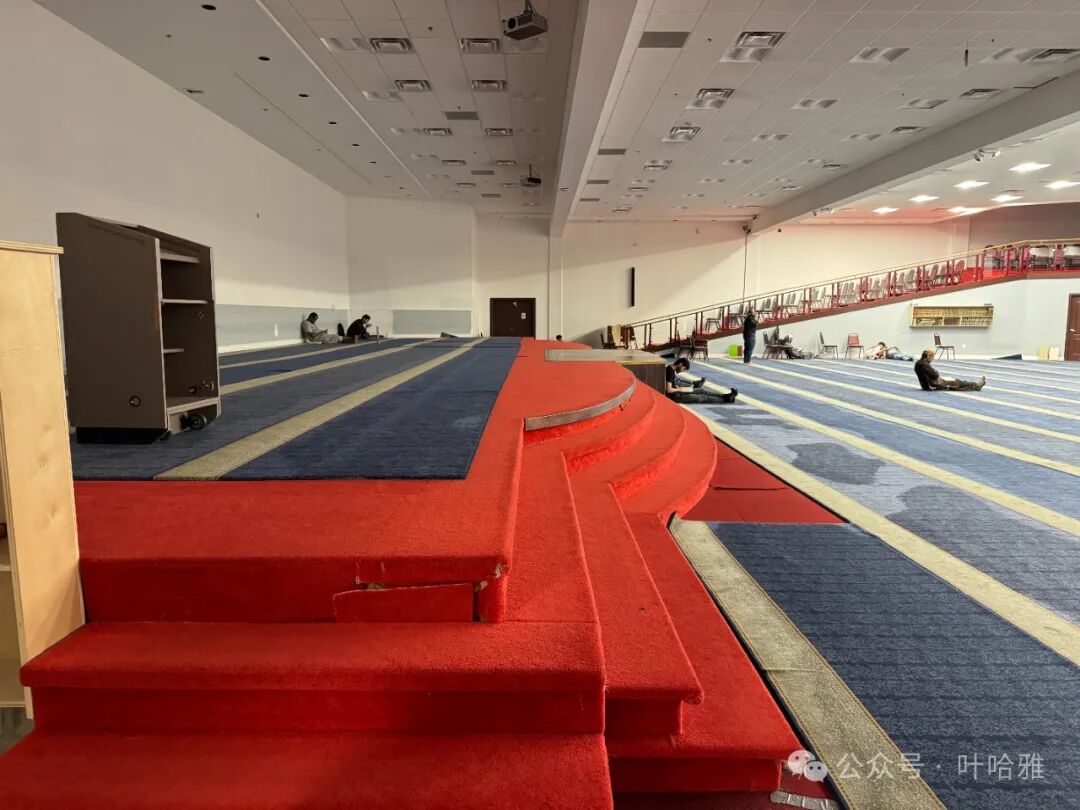
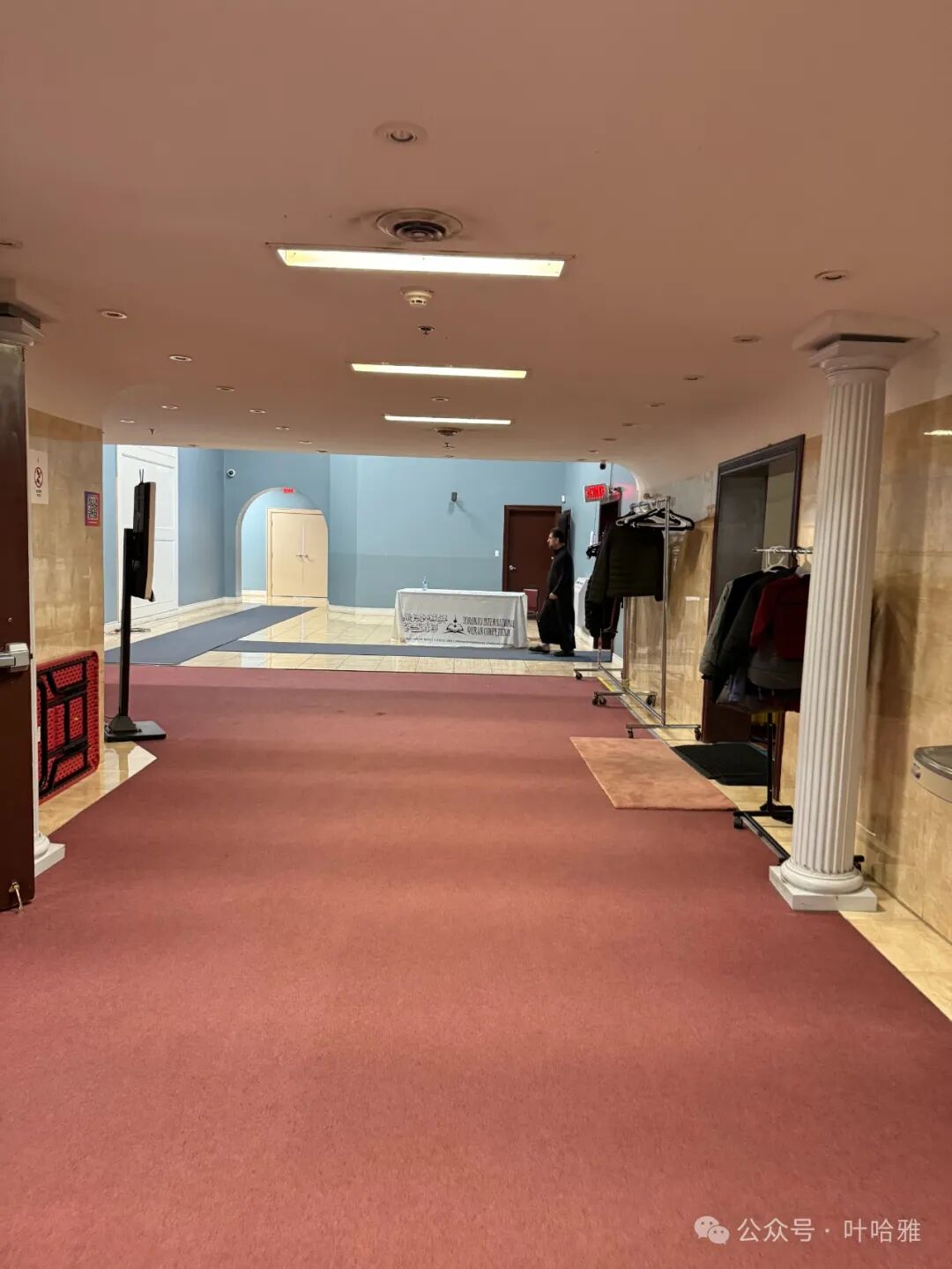
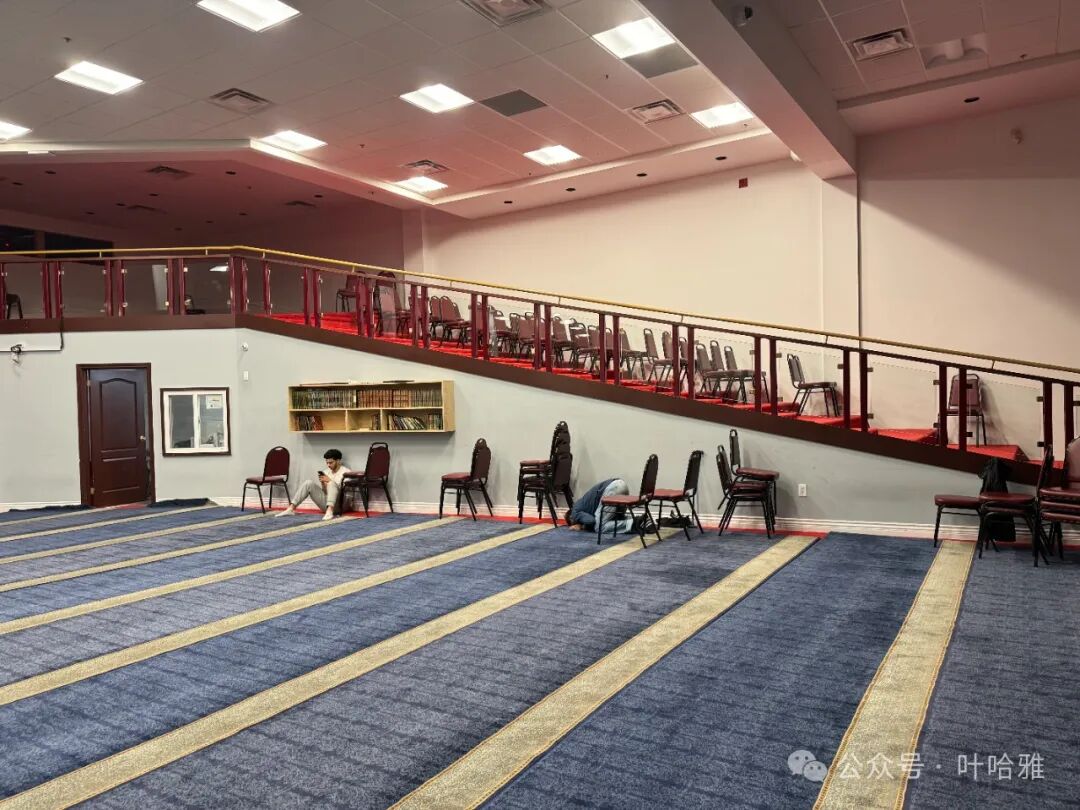
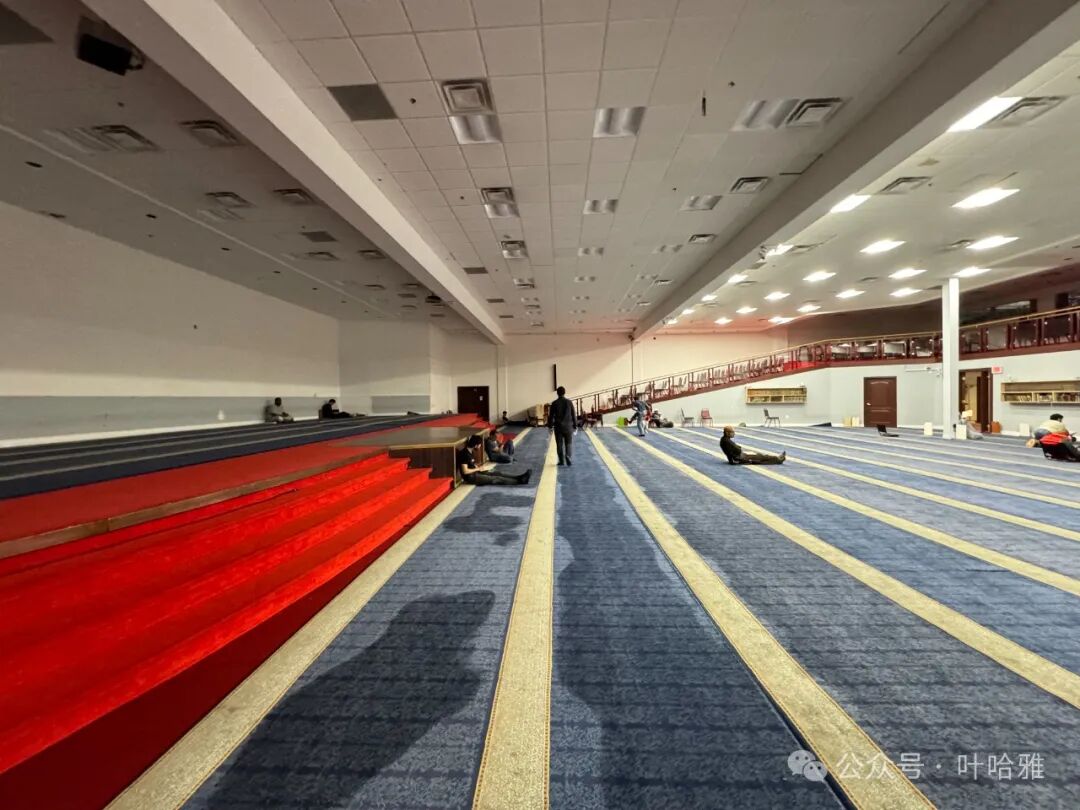
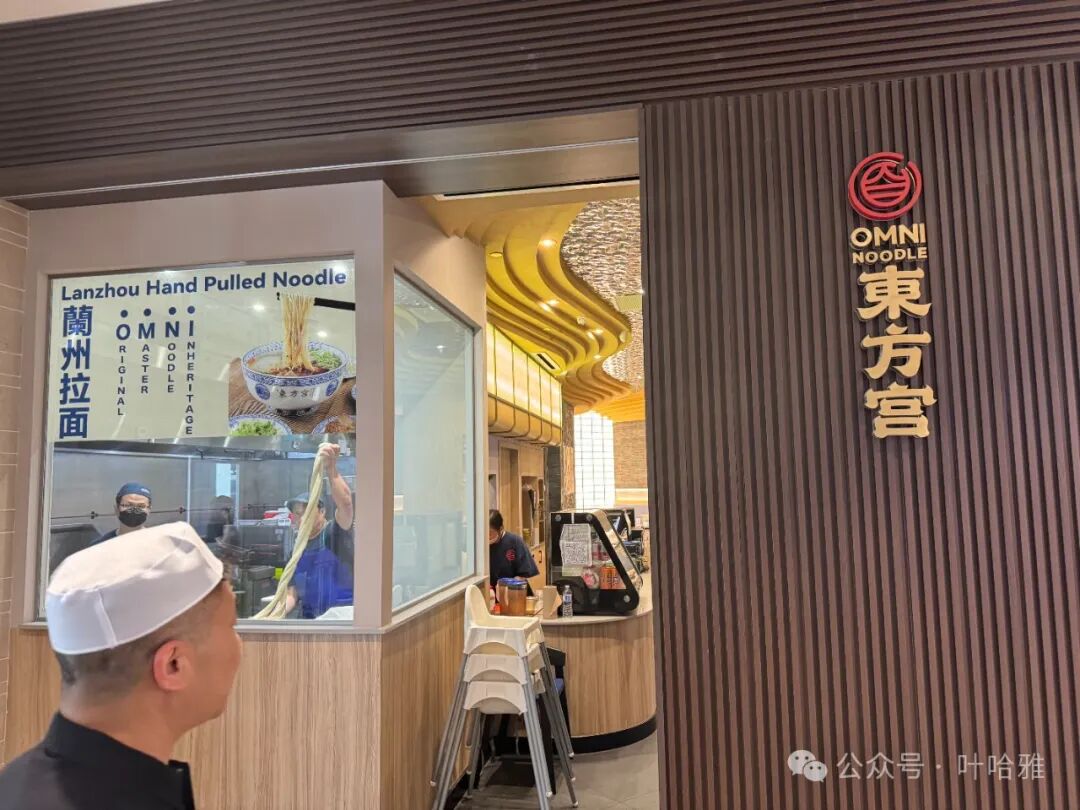
Oriental Palace (Dongfang Gong)
This is truly the Lanzhou chain brand Oriental Palace (Dongfang Gong). It has arrived in Canada and has many branches in Toronto.
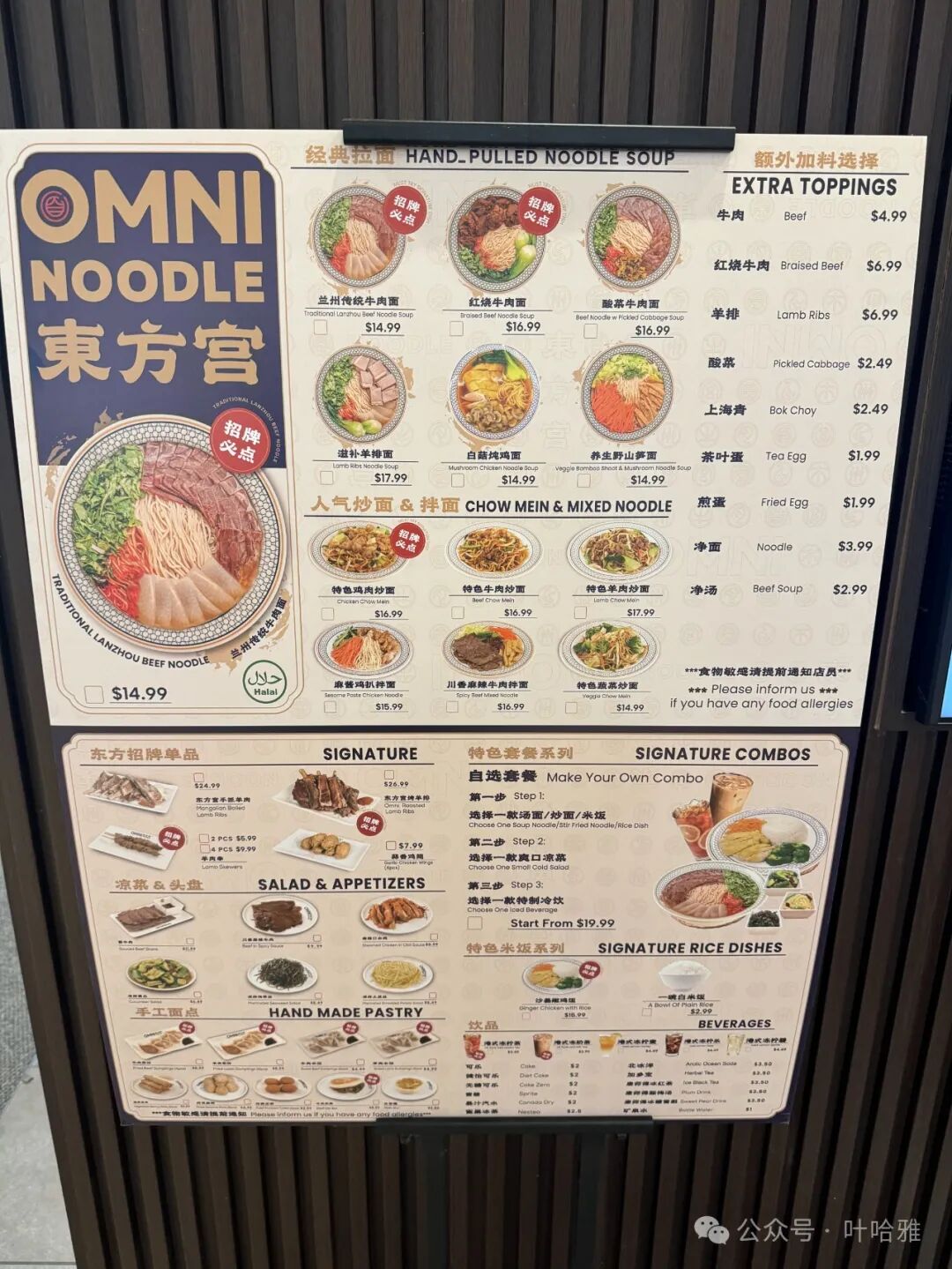
This bowl of beef noodles costs 14.99 Canadian dollars, which is about 80 yuan. That does not include the tip. With a 12-15% tip, the bowl costs nearly 100 yuan. Prices in Canada are high. Even if you work locally and earn Canadian dollars, eating out is not cheap.
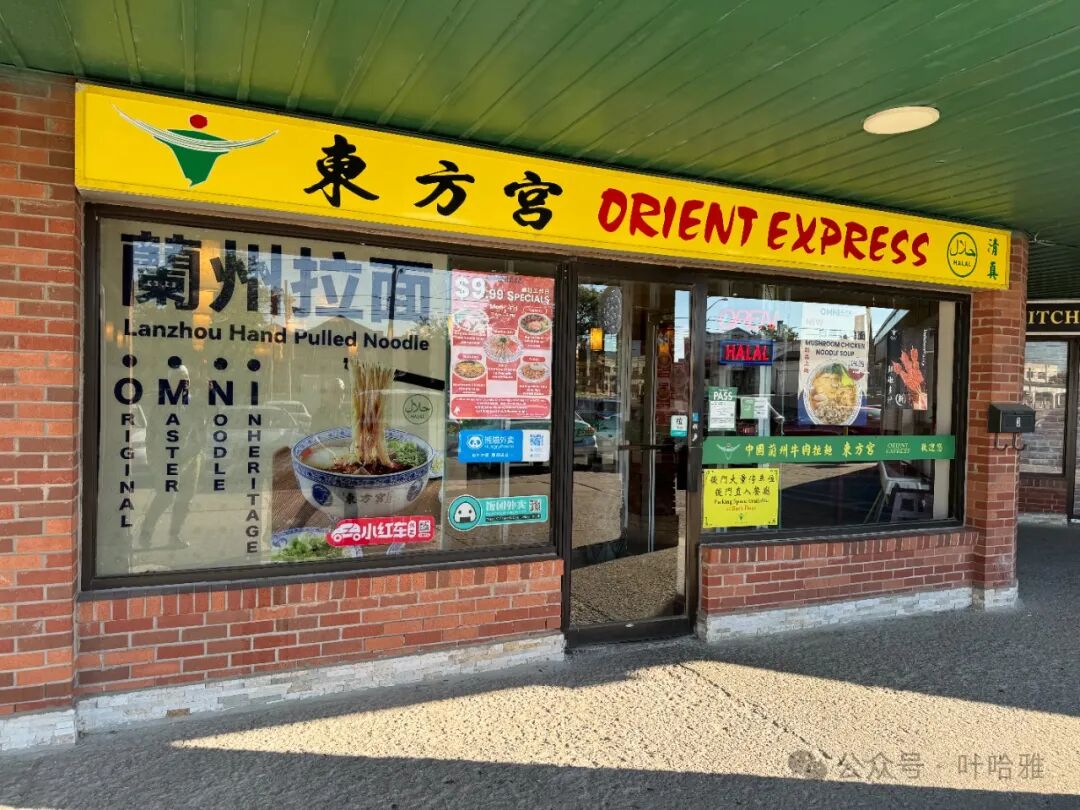
I saw at least three Dongfanggong restaurants in Toronto.
To be fair, the noodles tasted quite good. They were chewy and had plenty of meat. This was the most satisfying meal I have had in my ten days in Canada. Thanks to Brother Baolin.
But the lamb skewers (yangrouchuan) are still better back home.
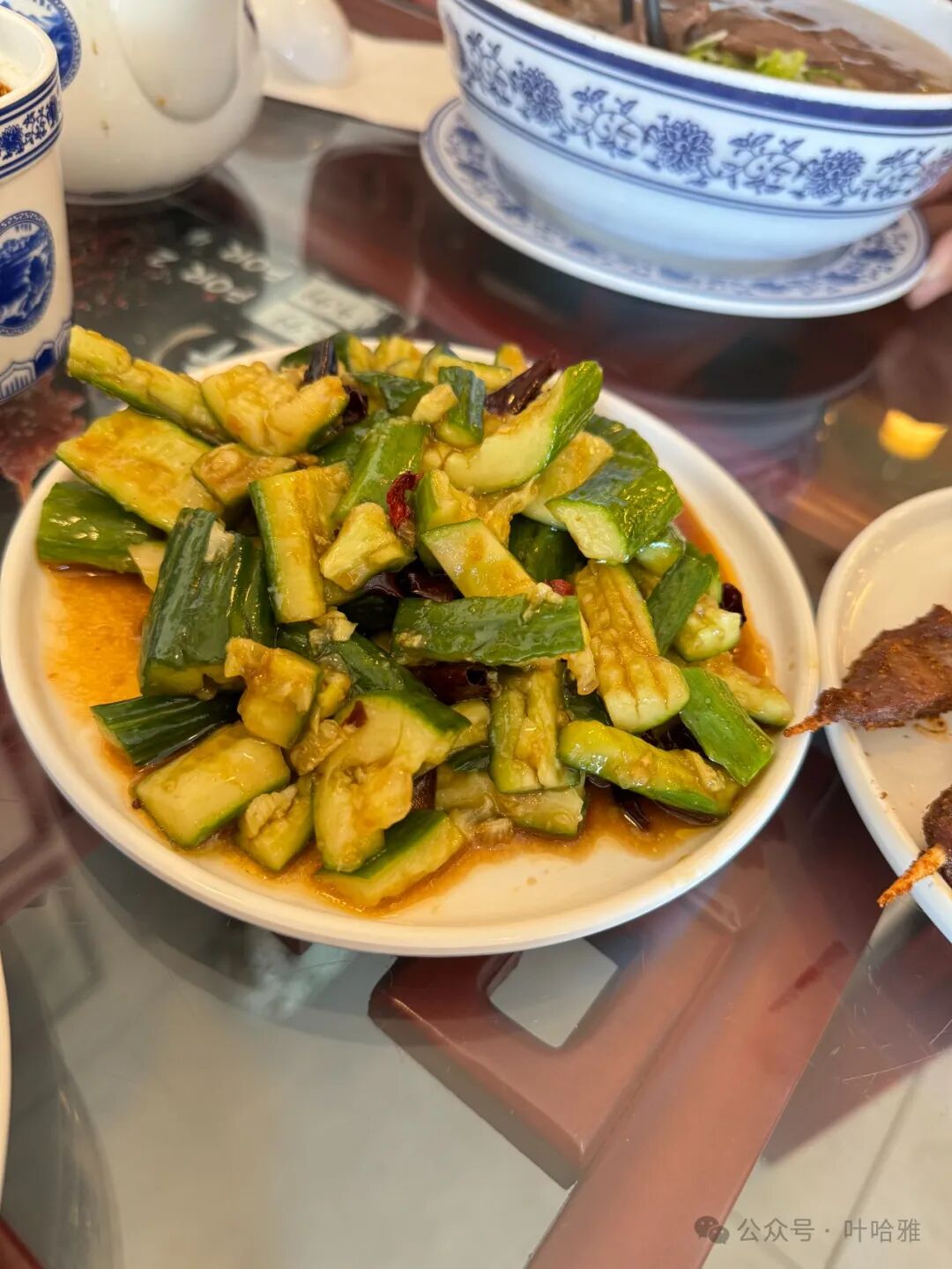
This smashed cucumber salad (pai huanggua) is more expensive than the lamb skewers. It is common in Western countries for meat to be cheaper than vegetables.
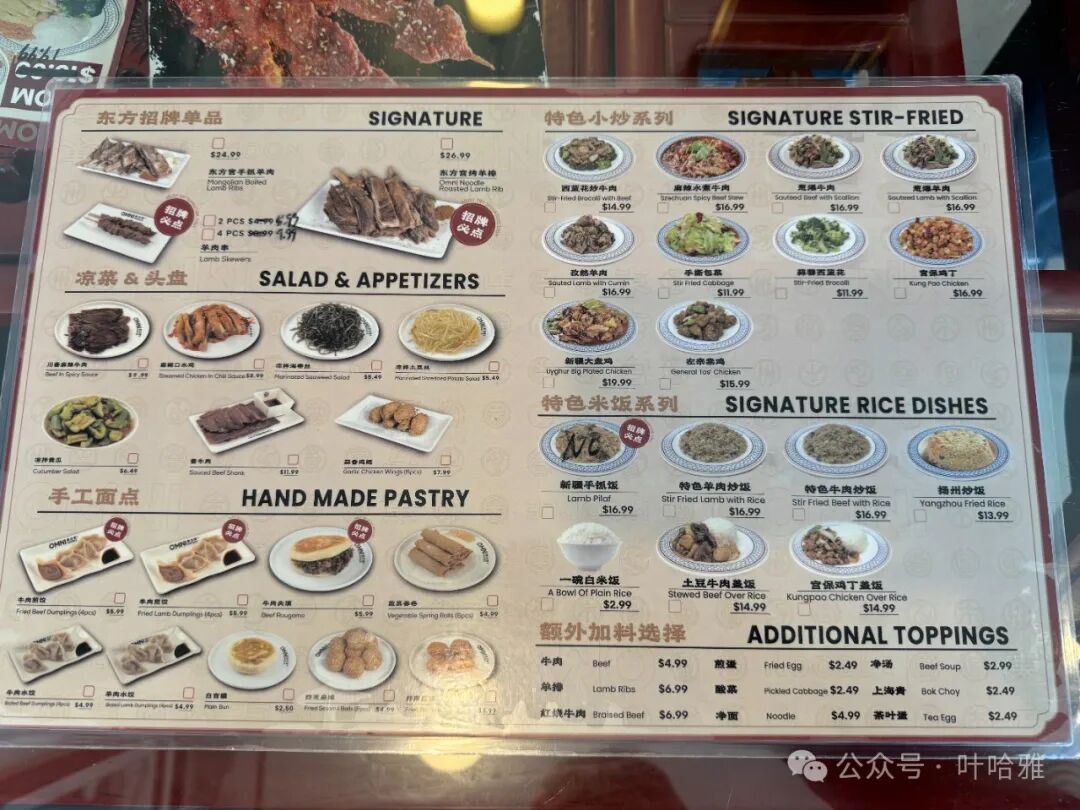
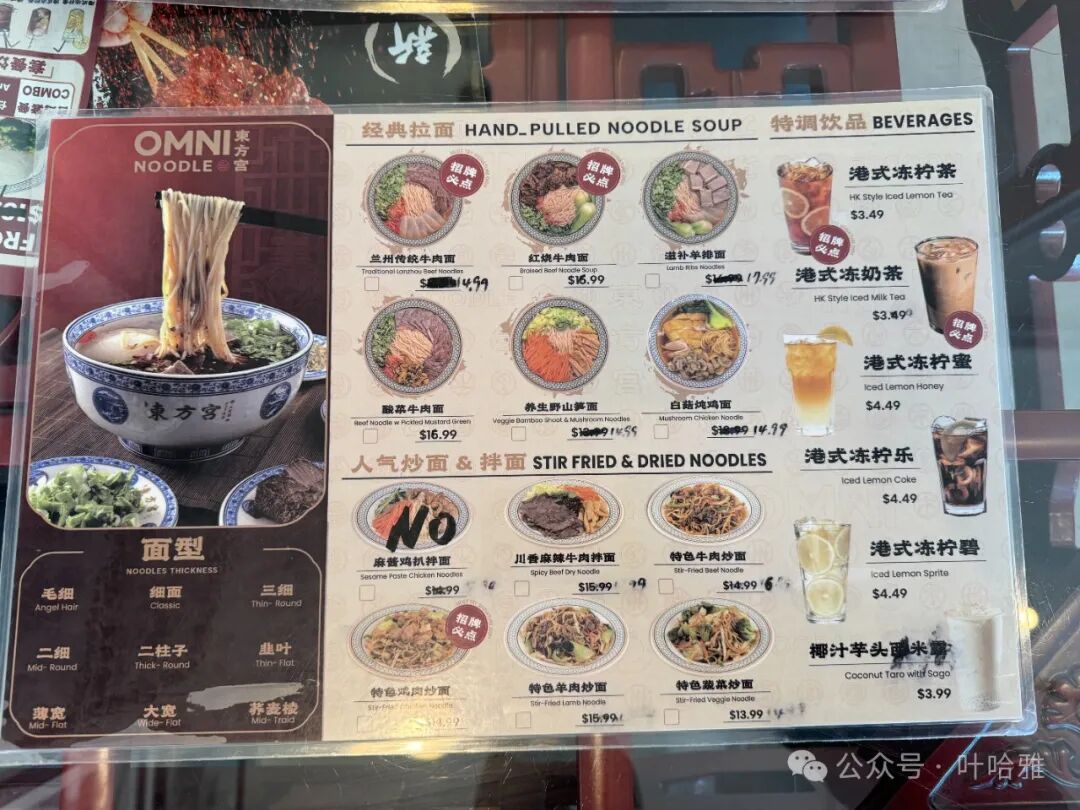
After finishing the beef noodles, Brother Baolin drove me back to the hotel to rest. I had flown all night from Calgary to Toronto and dealt with a two-hour time difference. I fell asleep as soon as I lay down in bed, needing to recharge for Eid al-Adha the next day.
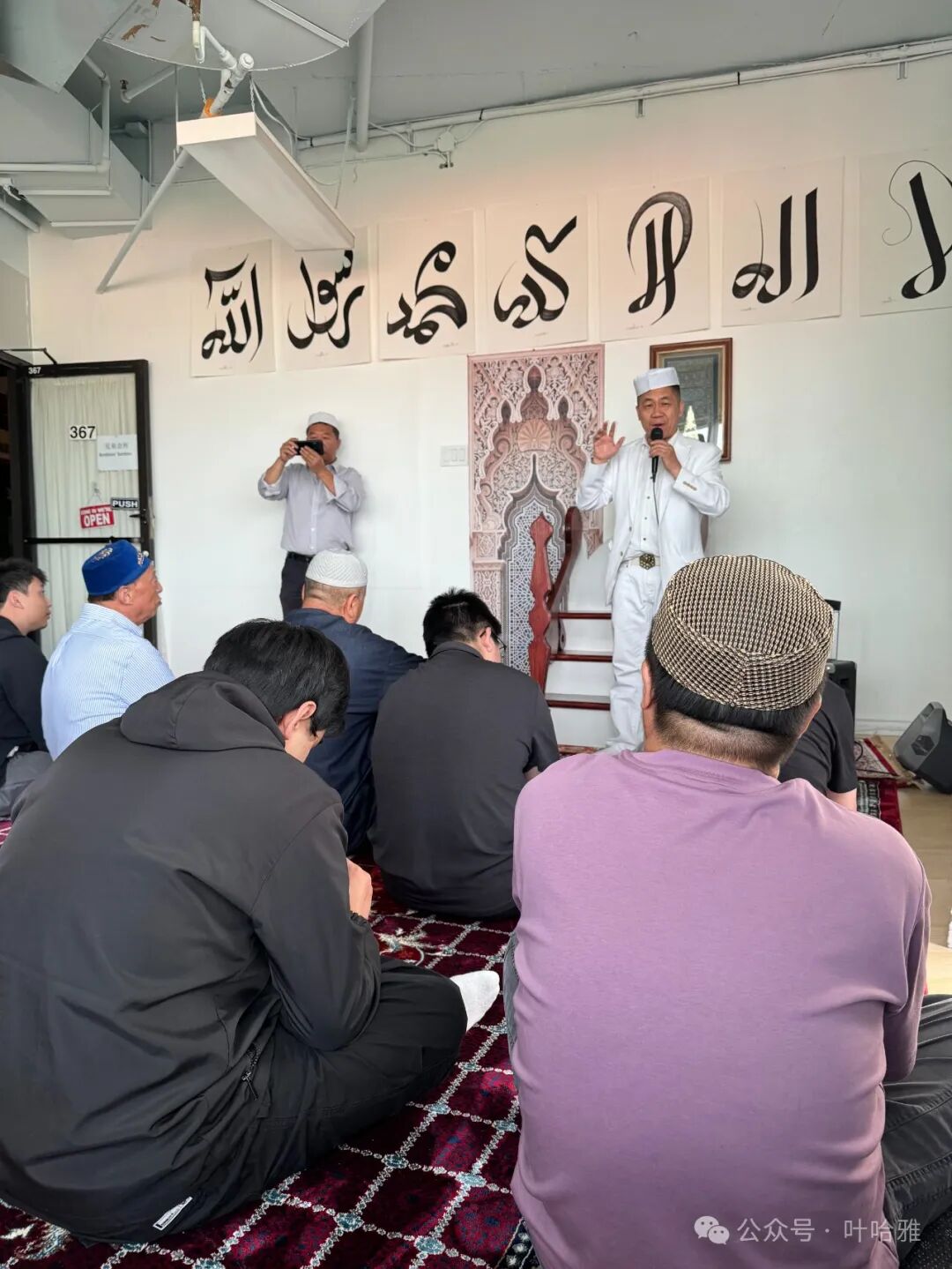
Early the next morning, Brother Baolin was setting up the venue, and I arrived early too. Unfortunately, we still could not find an imam to lead the prayer. However, a Hui Muslim brother from Xinjiang who had studied the scriptures stepped up. Even though he had a cold, he insisted on leading everyone in the Eid prayer. I will not post his photo.
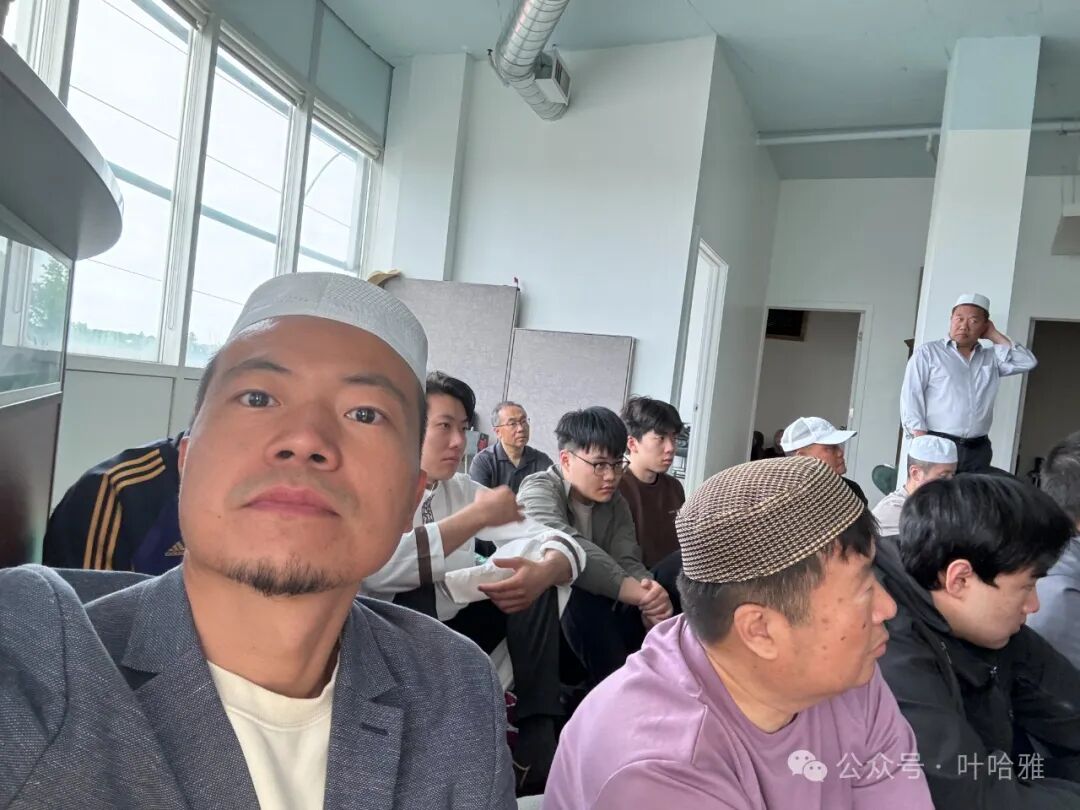
After the prayer, I shared some thoughts on what I have learned from my travels over the years. I said the North American Chinese Muslim Association needs doers like Brother Baolin. Many people are well-read in scriptures but lack real-world experience. Their words and actions are disconnected from society, and they create division locally. Such 'smart' people do not help the faith. Throughout history, we have never lacked scholars who only talk. We need well-rounded, excellent people to strengthen our ability to take root and thrive in a foreign land.
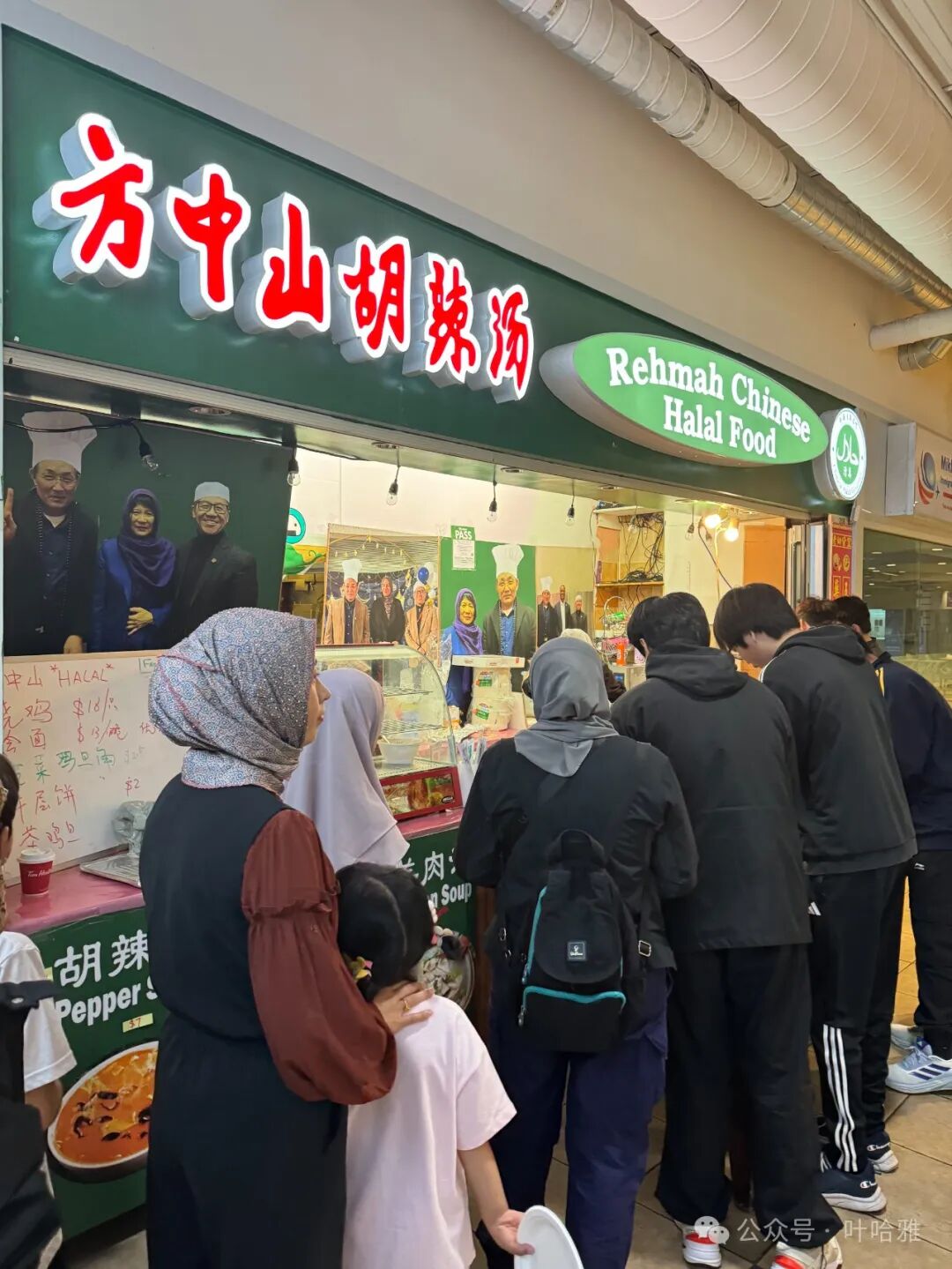
After the sharing session, we went to the second floor to eat. Everyone brought food they prepared themselves, sharing their favorite hometown dishes. Those who did not have a specialty just contributed money.
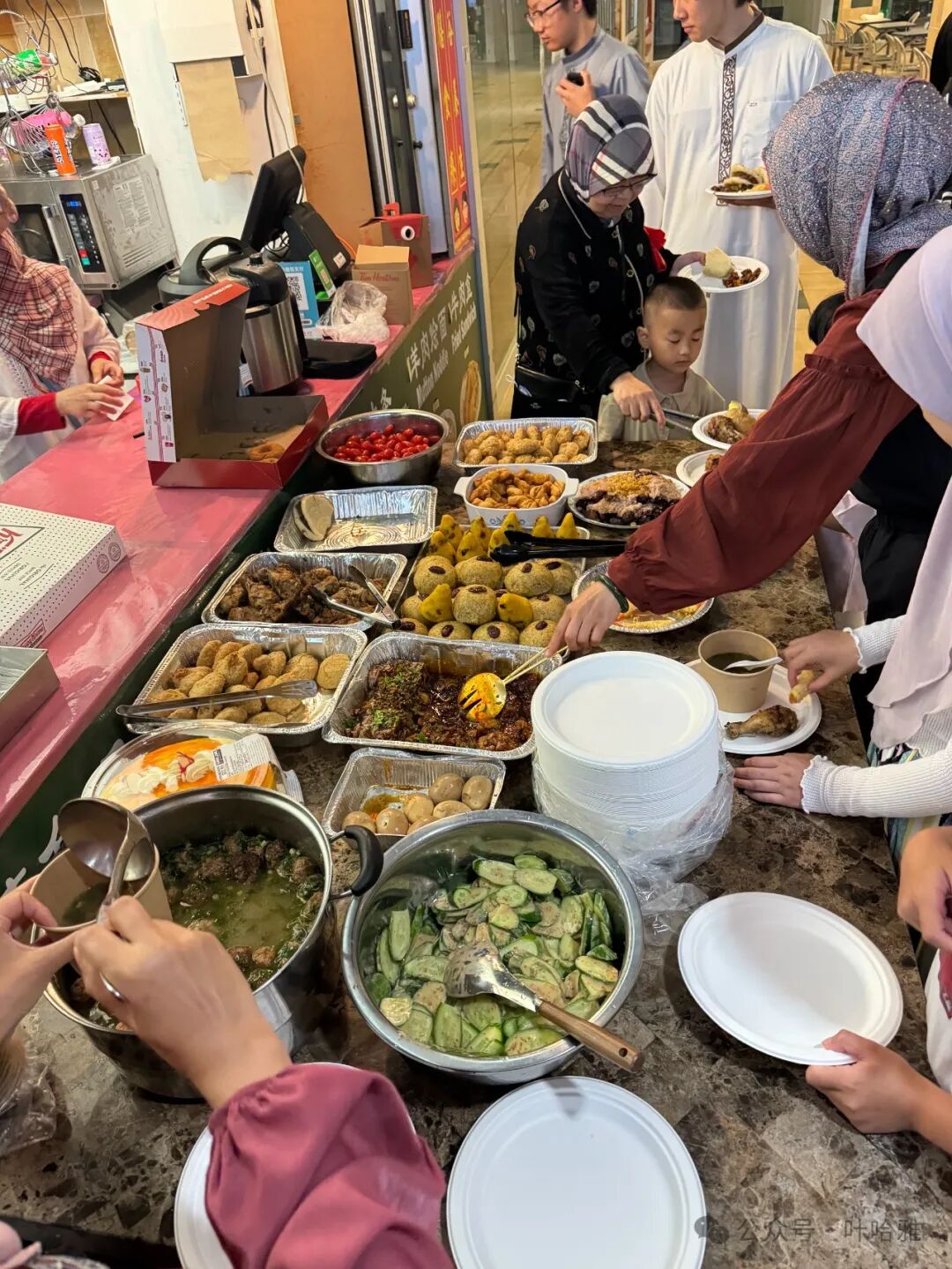
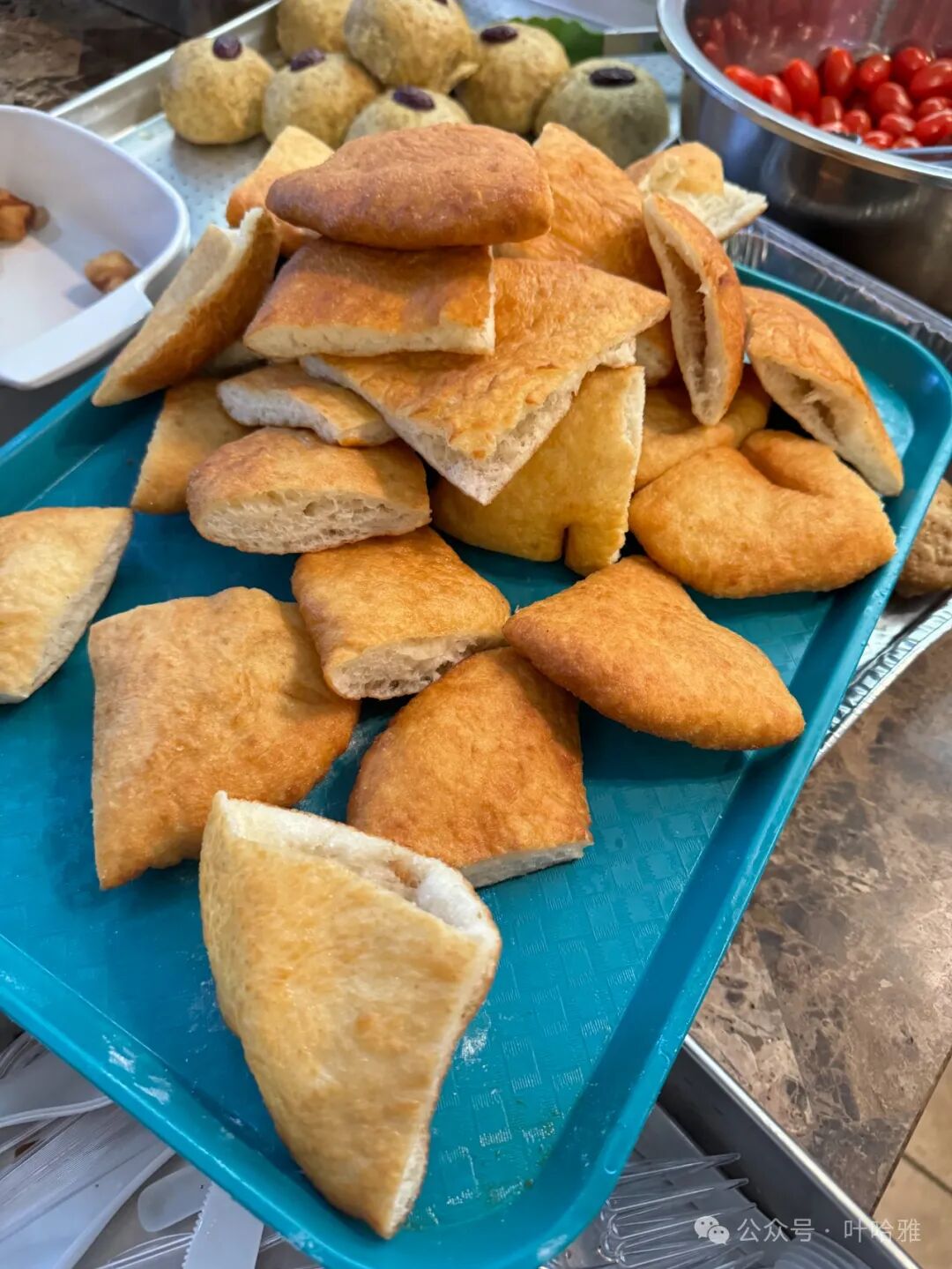
For Hui Muslims, a holiday is not complete without fried dough (youxiang). This youxiang looks like the Henan style. There are many Henan friends (dost) in the community, so much so that before I came here, people told me there was a Henan Hui neighborhood in Canada. In reality, it is not just Henan people here. There are people from Beijing, Inner Mongolia, the Northwest, and Uyghurs.
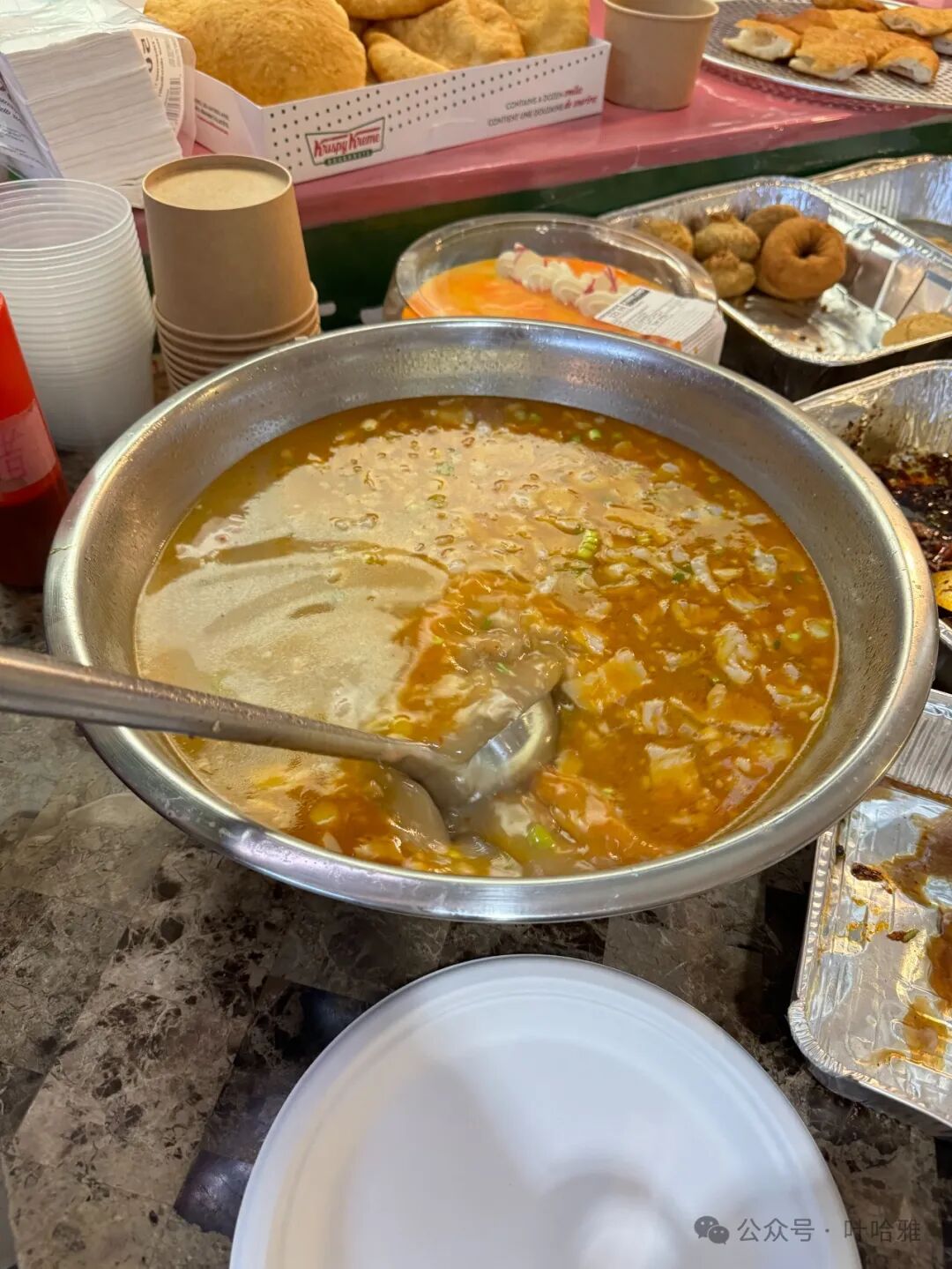
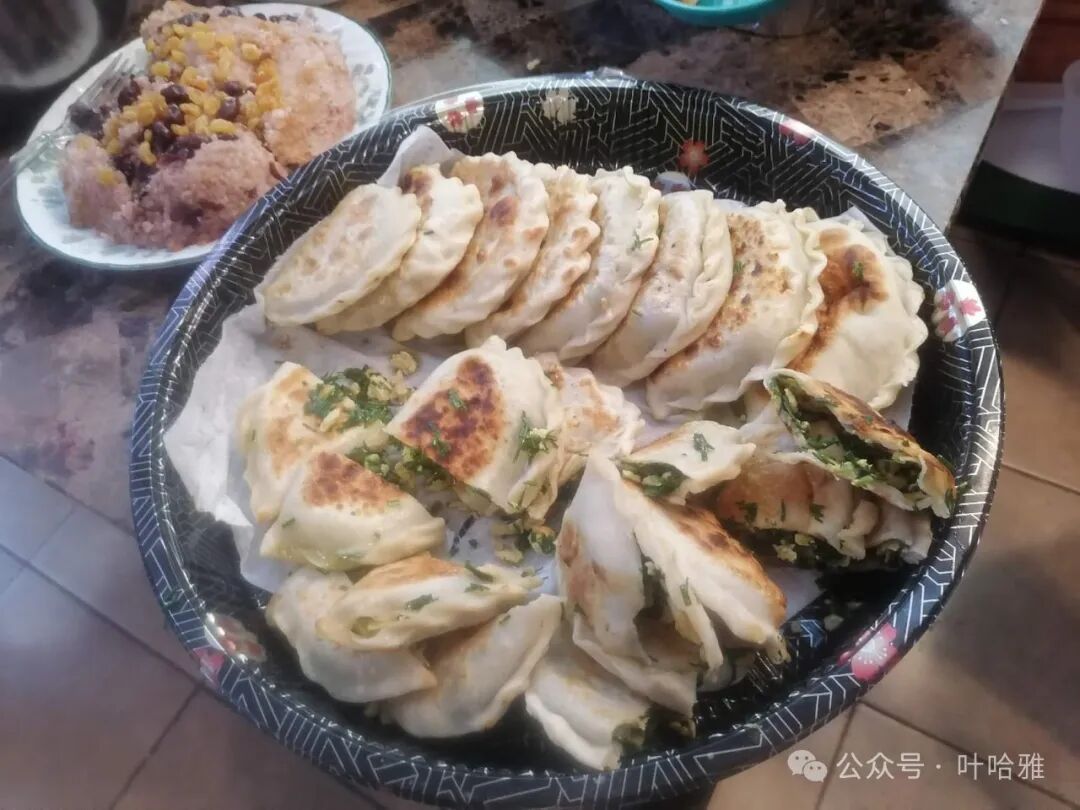
The lamb soup (yangrou tang) and chive pockets (jiucai hezi) both have a Henan flair. They smelled delicious and were very good.
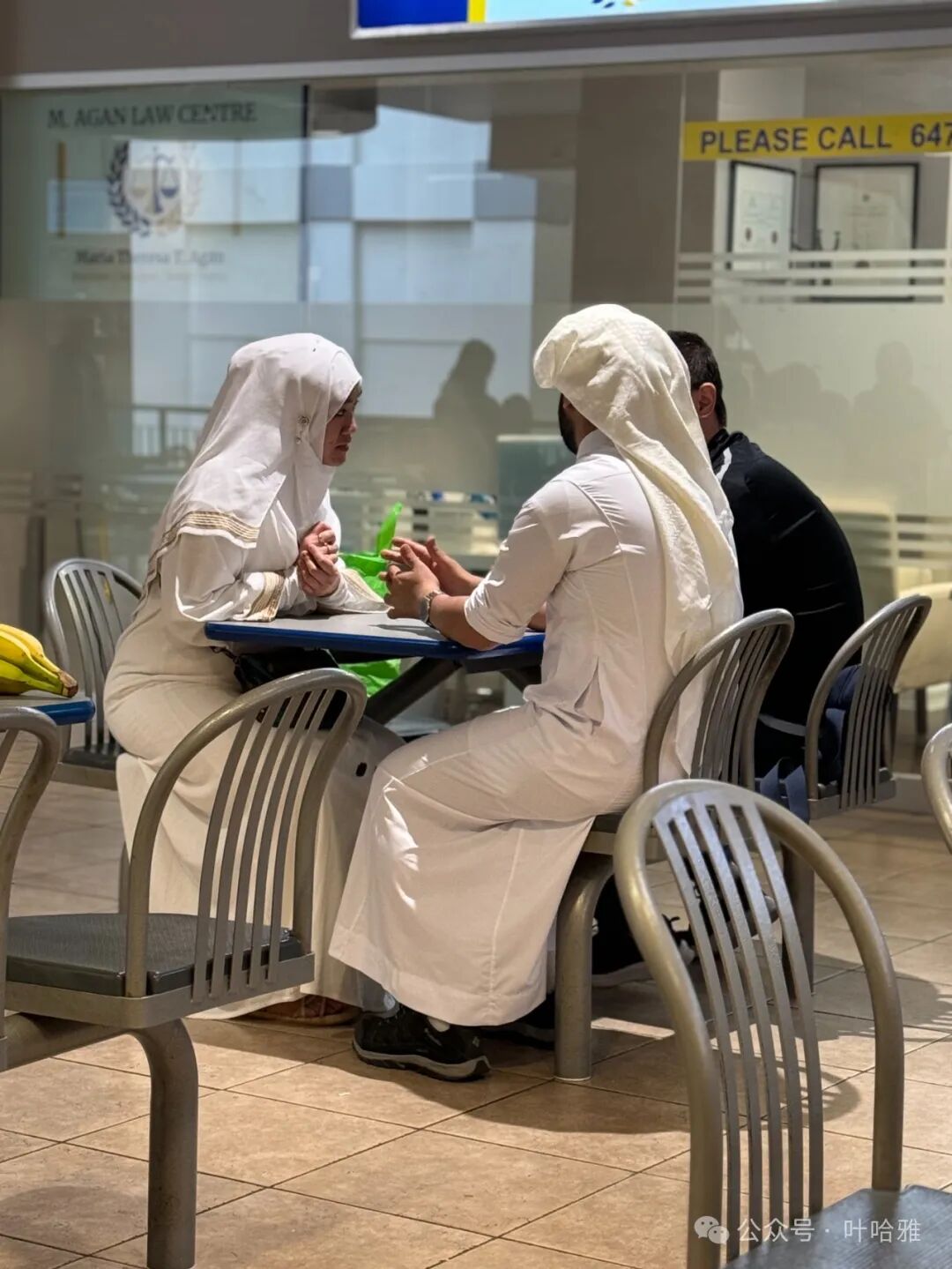
Some non-Chinese brothers also attended the event. They met Chinese Muslims through marriage.
As is the custom, Eid al-Adha (Qurban) ended in the morning. In the afternoon, Vice President Davei ZHU drove me to Toronto's most famous attraction, Niagara Falls, which often appears on the National Geographic channel.
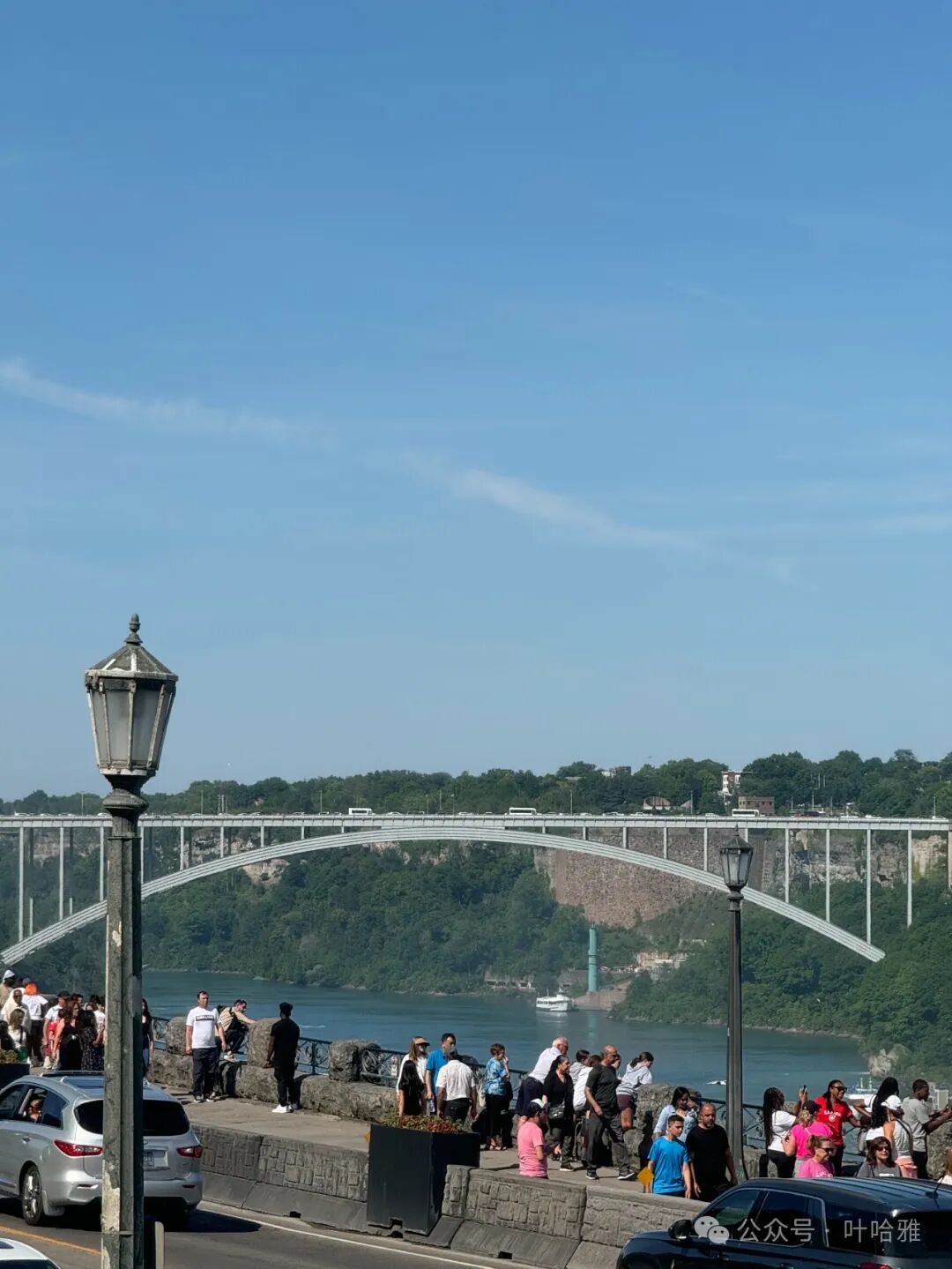
Rainbow Bridge
Rainbow Bridge connects Canada and the United States and was built by both countries. Driving across this bridge takes you to New York State in the U.S. Canadian citizens do not need a visa to enter the U.S., and the process is very simple, so many Canadians choose to work in the U.S.
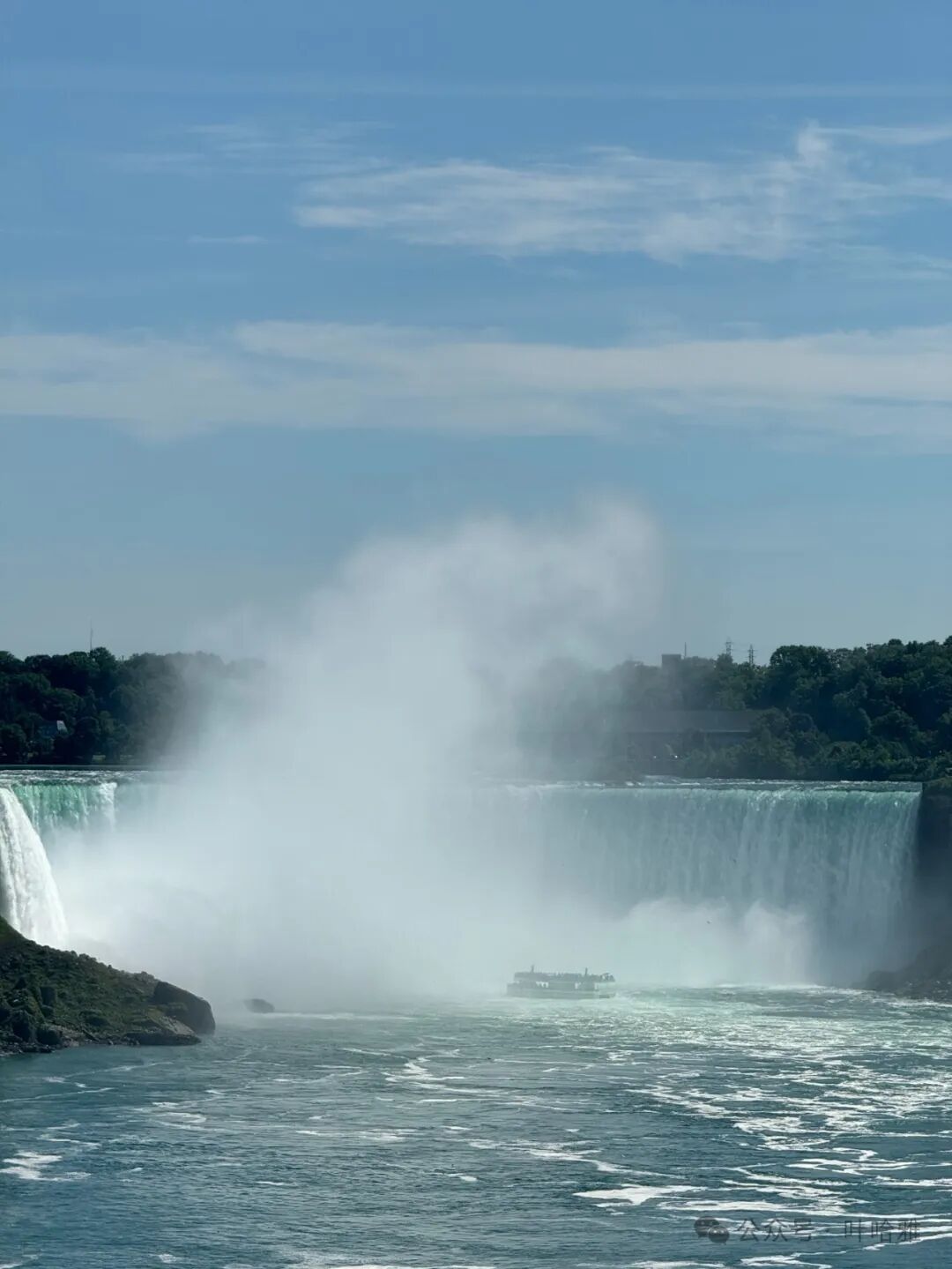
Niagara Falls spans both the U.S. and Canada, but the main view is on the Canadian side. You cannot see the full picture if you stand on the American side.
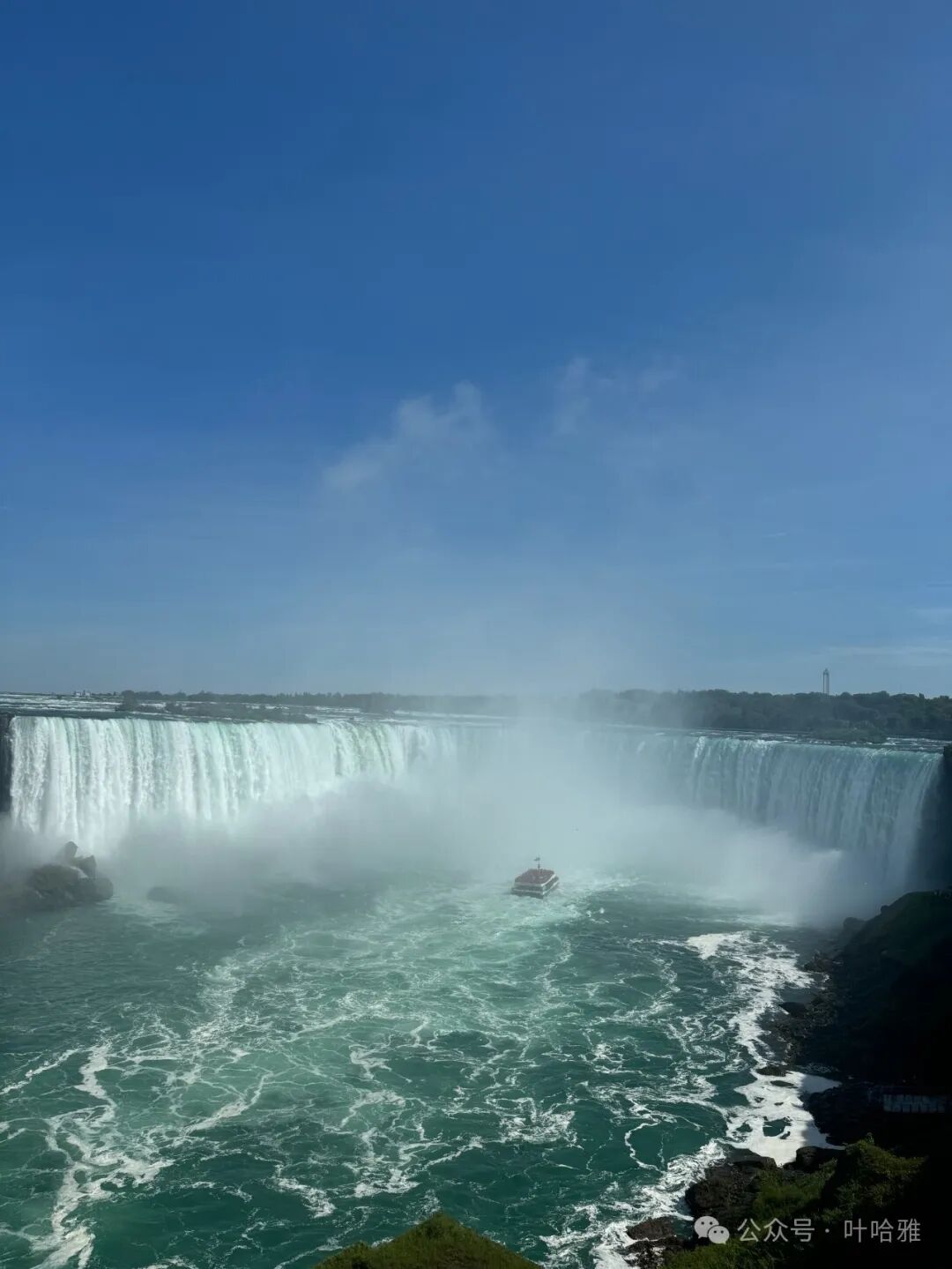
It took us over two hours to drive there, and we even hit traffic on the way. I chatted a lot with Vice President ZHU. His whole family has lived in Canada for over twenty years. As overseas Chinese, their longing for their hometown grows deeper with age.
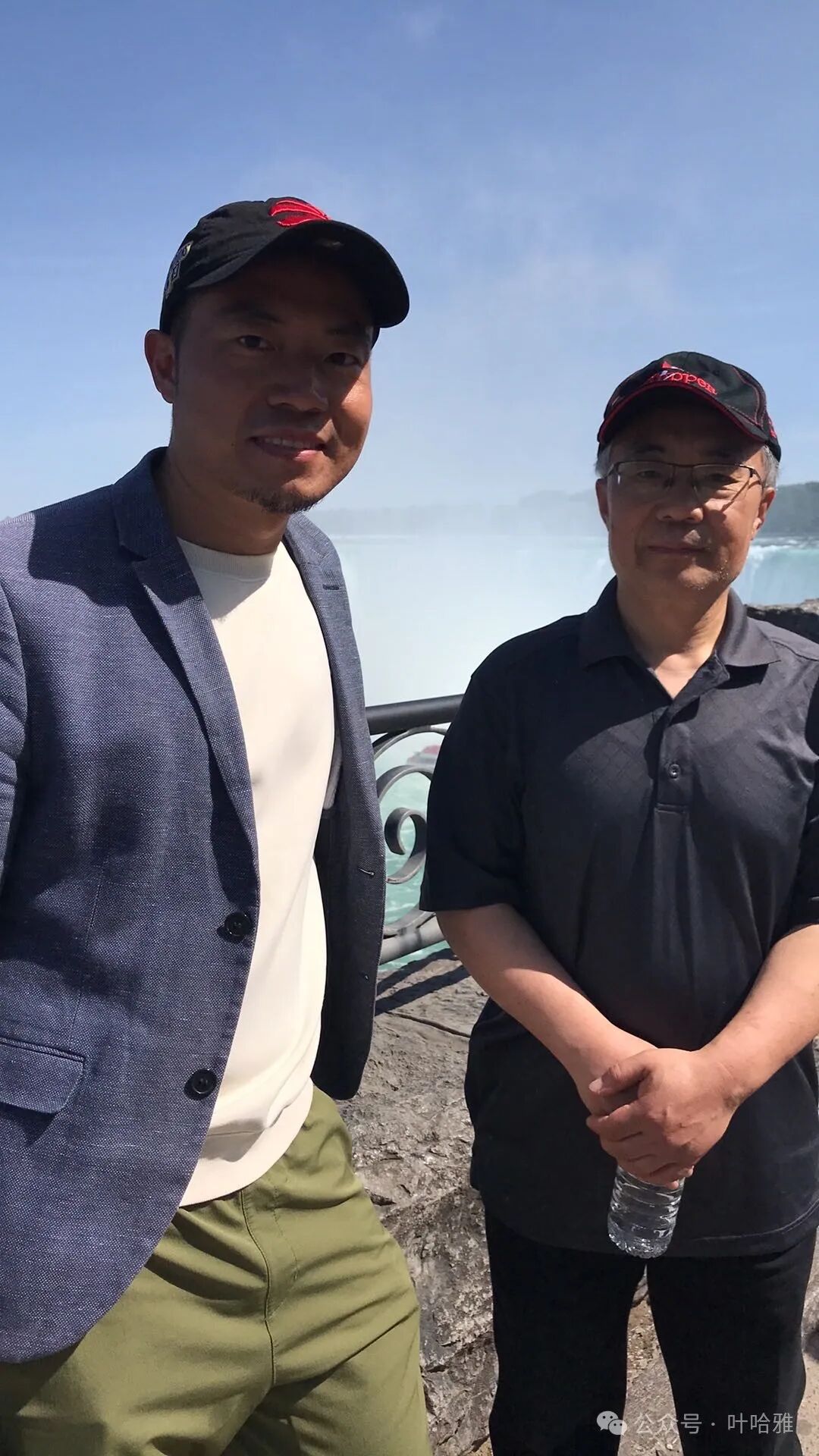

When the weather is good, you can see a double rainbow at the waterfall.
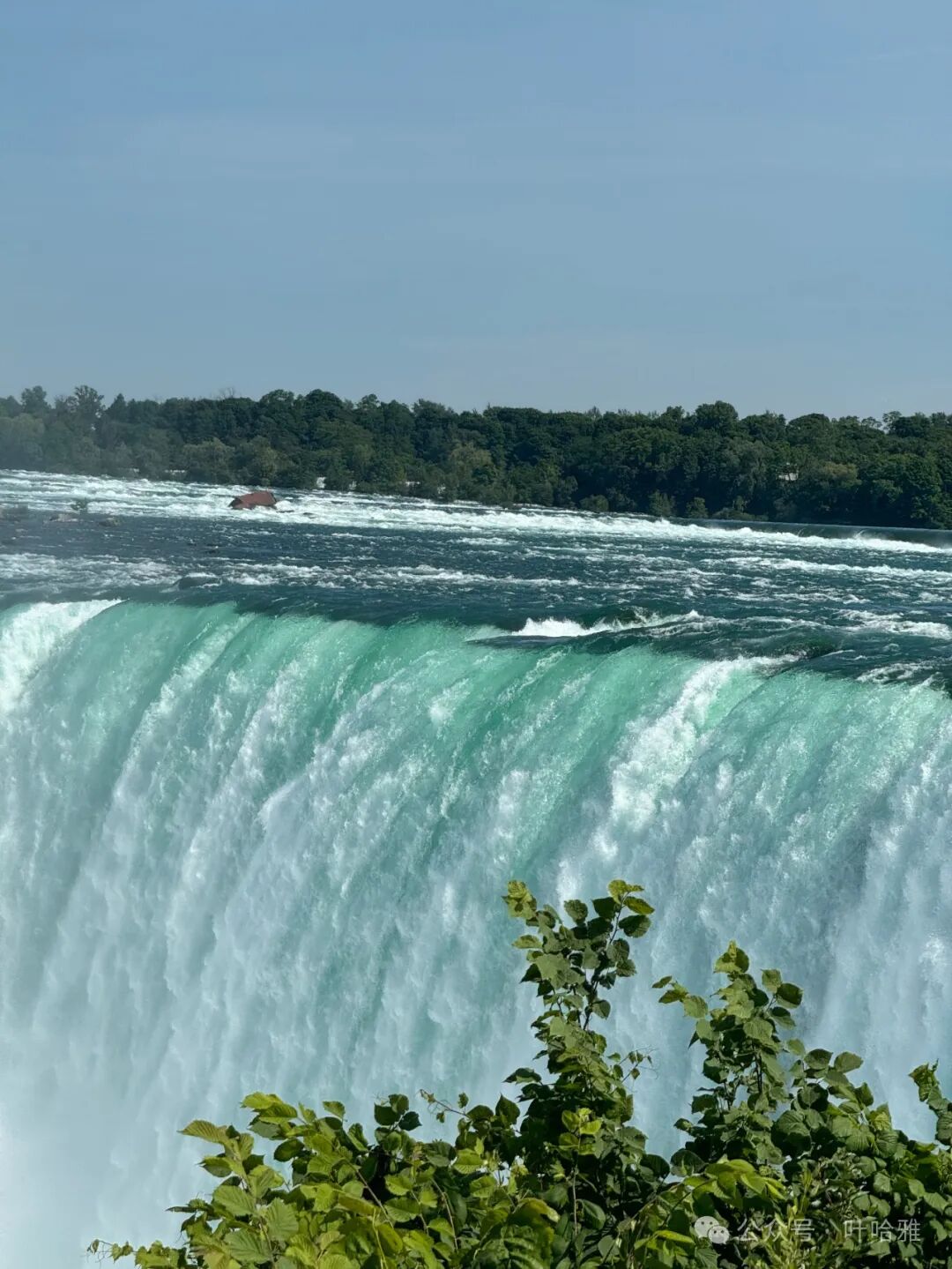
There is no admission fee for natural scenery like the waterfall, but you have to pay if you want to take a boat for a close-up tour or ride the zipline.

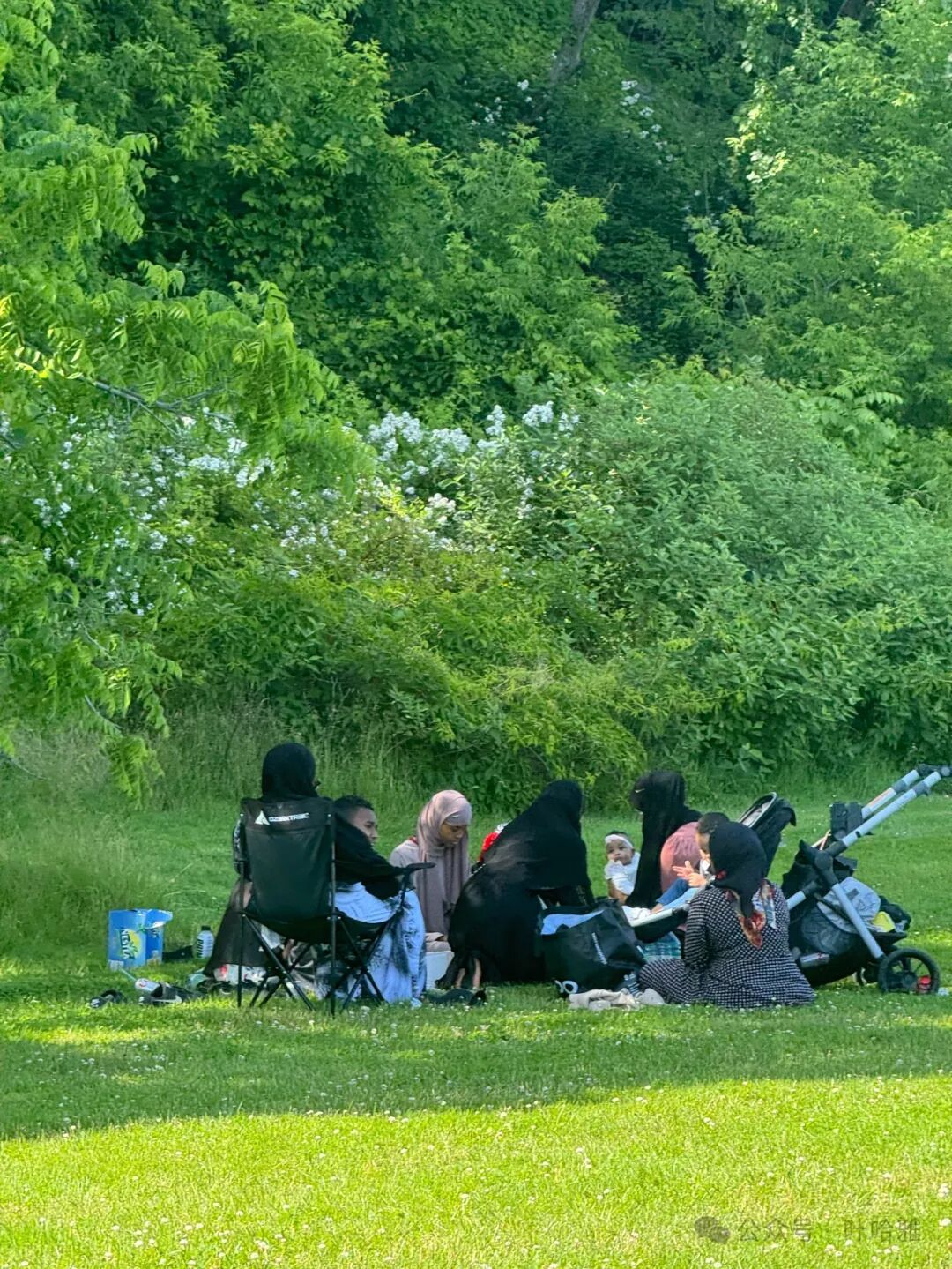
A group of Muslims were having a picnic on the grass. The proportion of Muslims in Canada is very high, and you can see young women wearing beautiful headscarves everywhere on the street. However, Vice President ZHU warned me not to walk barefoot on the grass. He said that the number of drug addicts in Canada has increased over the years, and some of them carelessly throw used needles into the grass.
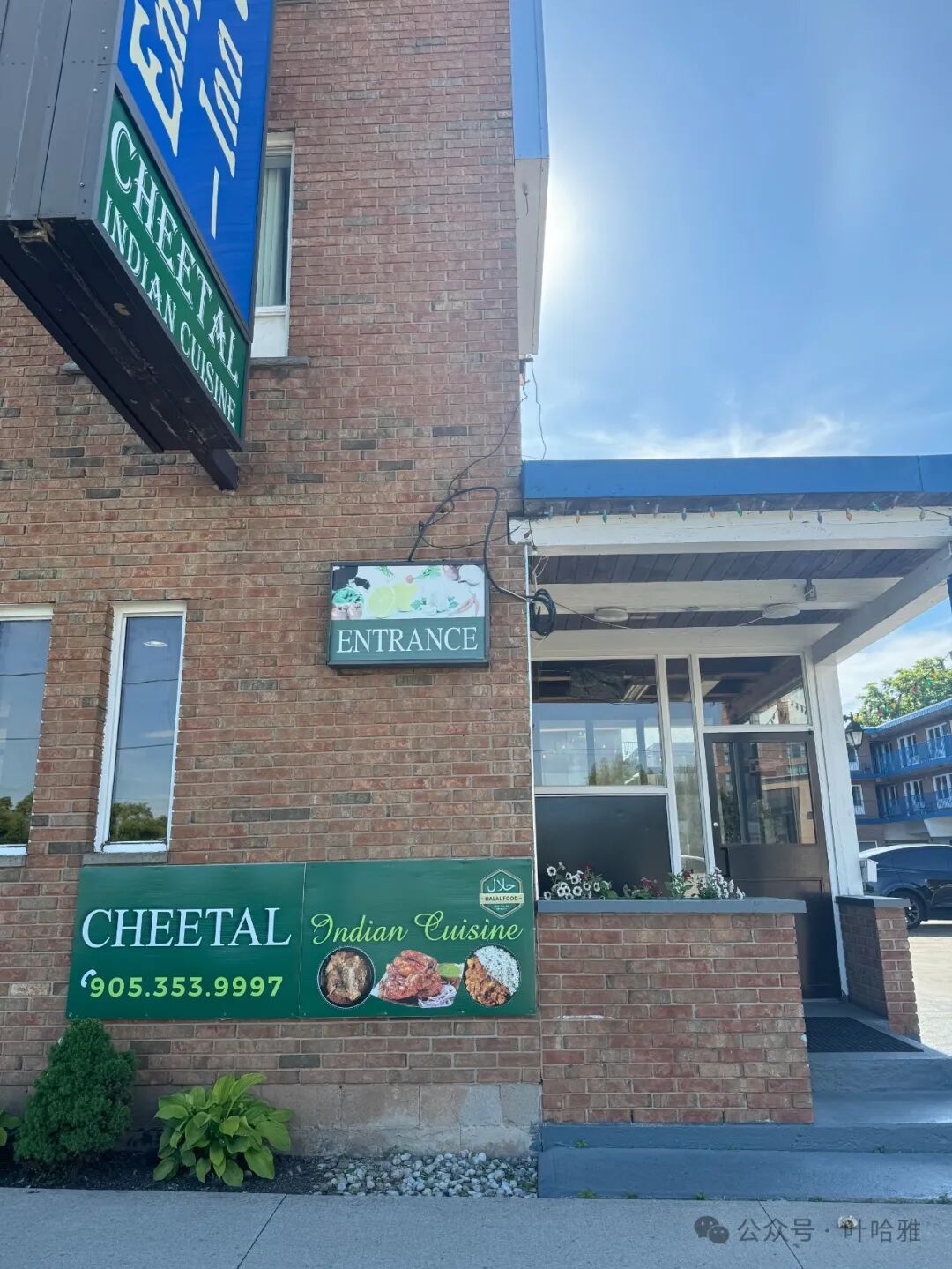
There are many halal restaurants around the waterfall, and there is a whole street full of halal food. We stumbled upon this Indian buffet restaurant by chance.
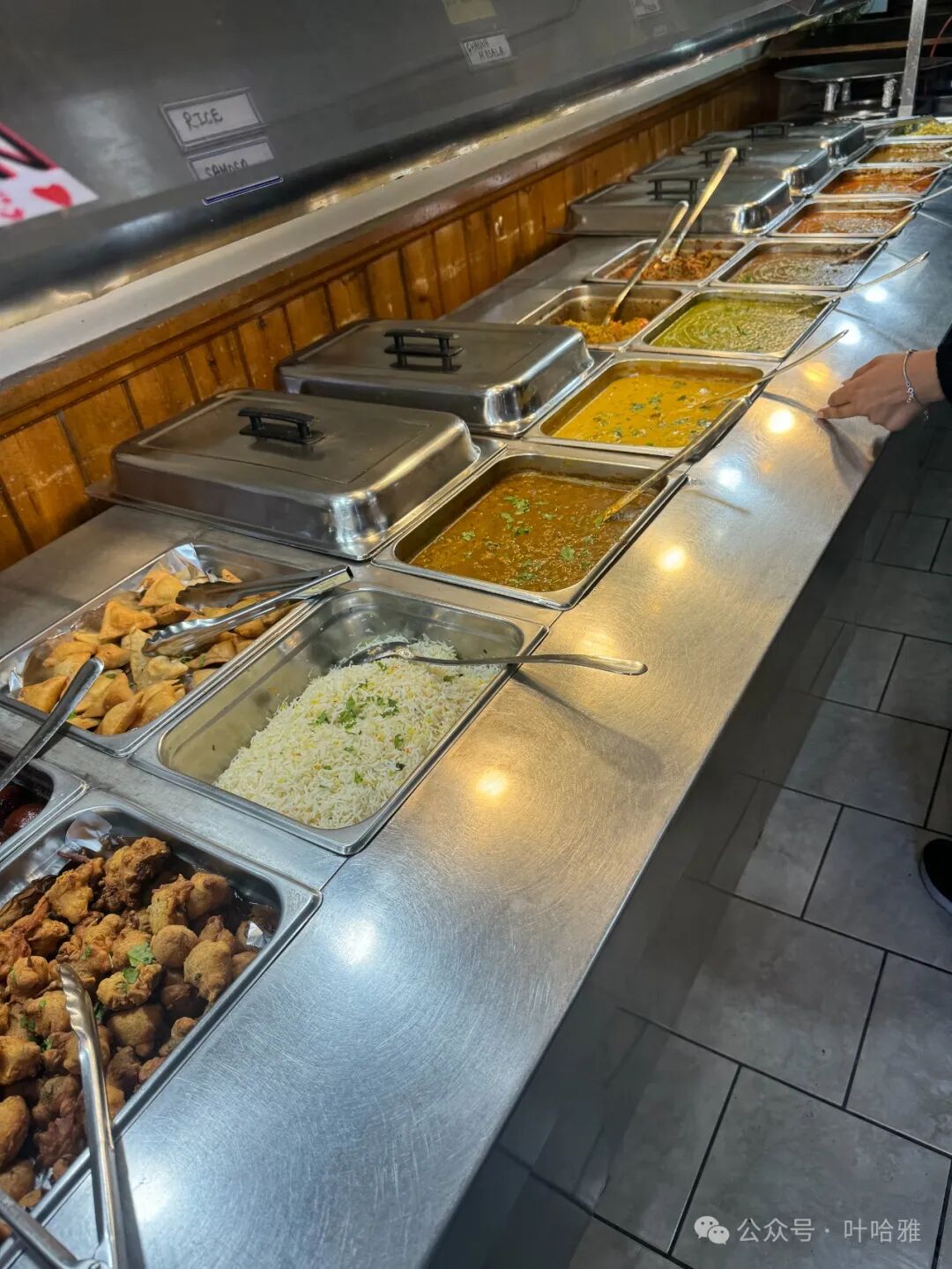
The buffet is 21 Canadian dollars per person. The selection is quite complete, and this price is actually not expensive. Even in Beijing, a similar Indian-Pakistani buffet would cost 98 yuan.
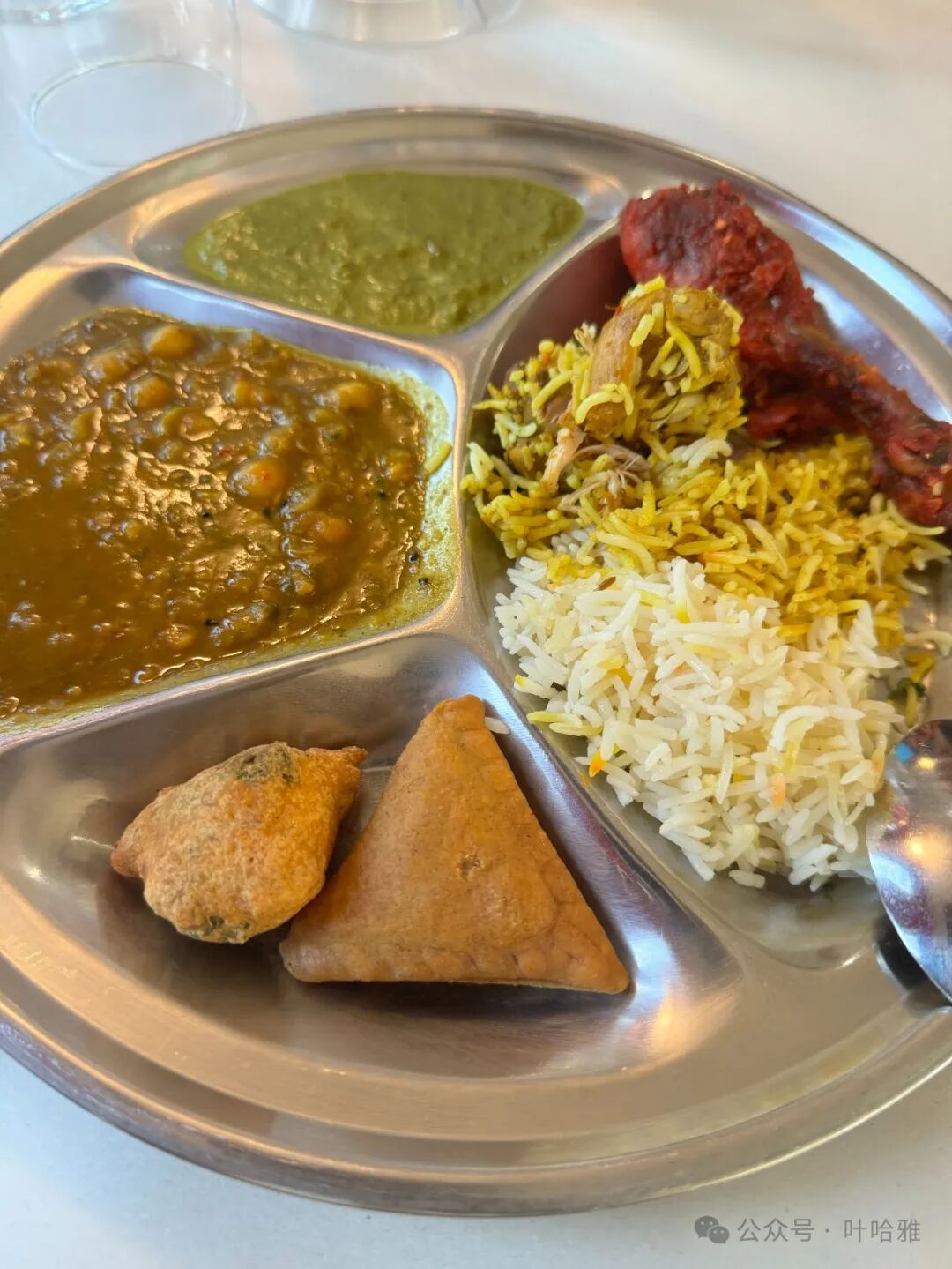
Indian-Pakistani cuisine is like Lanzhou hand-pulled noodles (Lanzhou lamian) in the eyes of Westerners; it is convenient, delicious, affordable, and accepted by people from all countries.
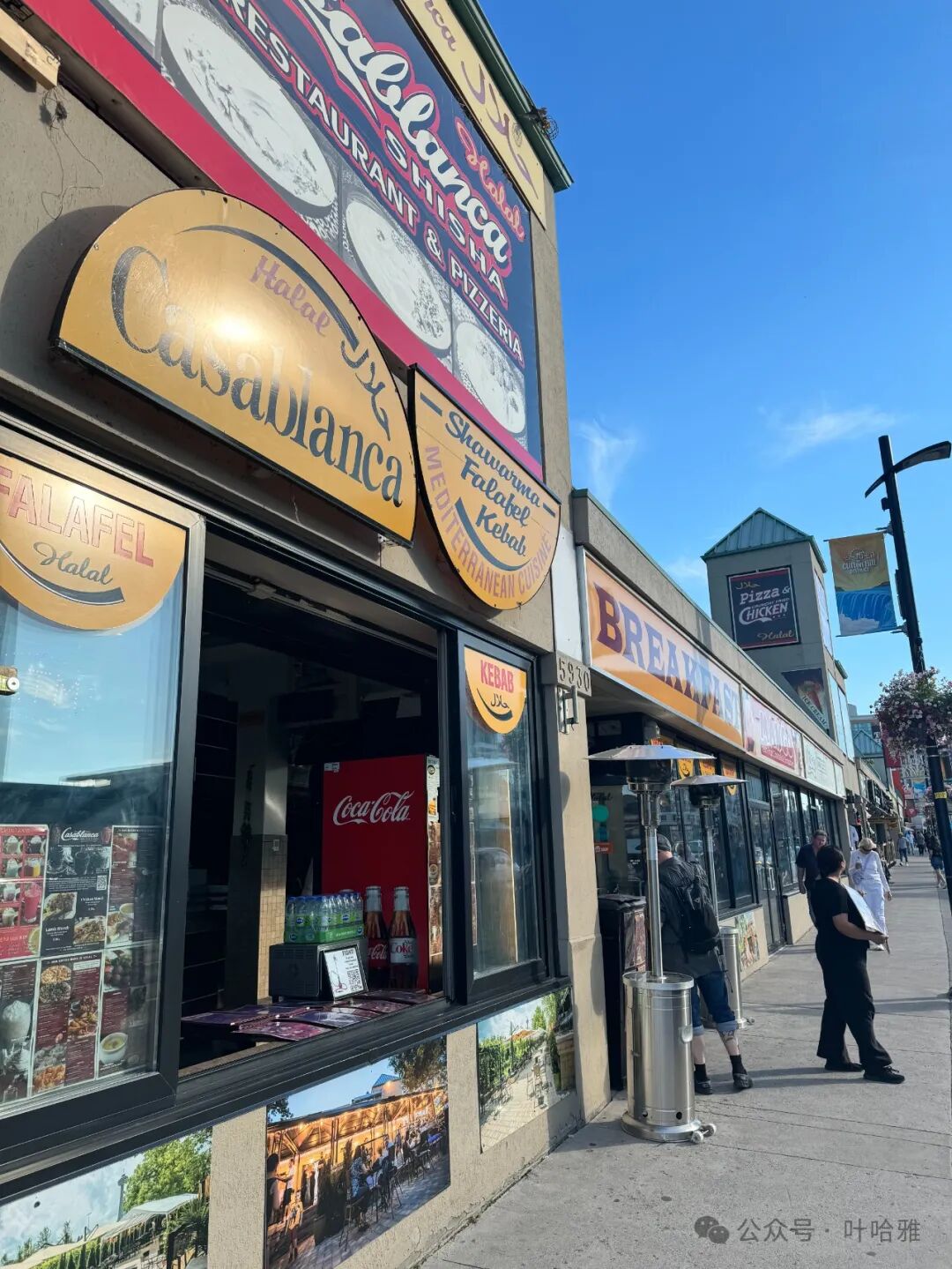
Near the big Ferris wheel is this halal food street. You do not have to worry about finding halal food in Canada at all; it is everywhere. However, halal food in North America mainly falls into three categories: Arab, Turkish, and Indo-Pakistani, and most of it is fast food or snacks.
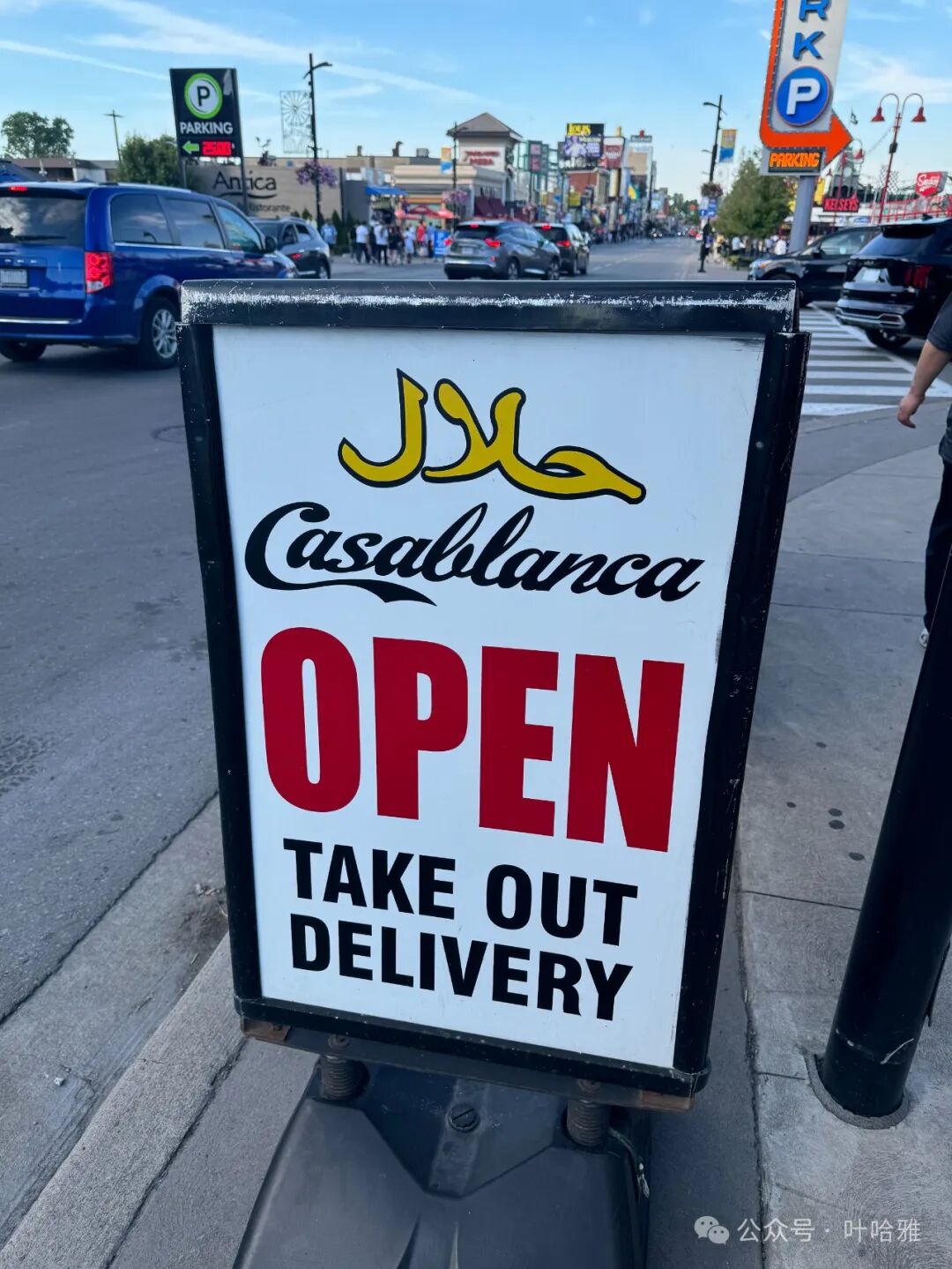
This place serves Moroccan-style food.
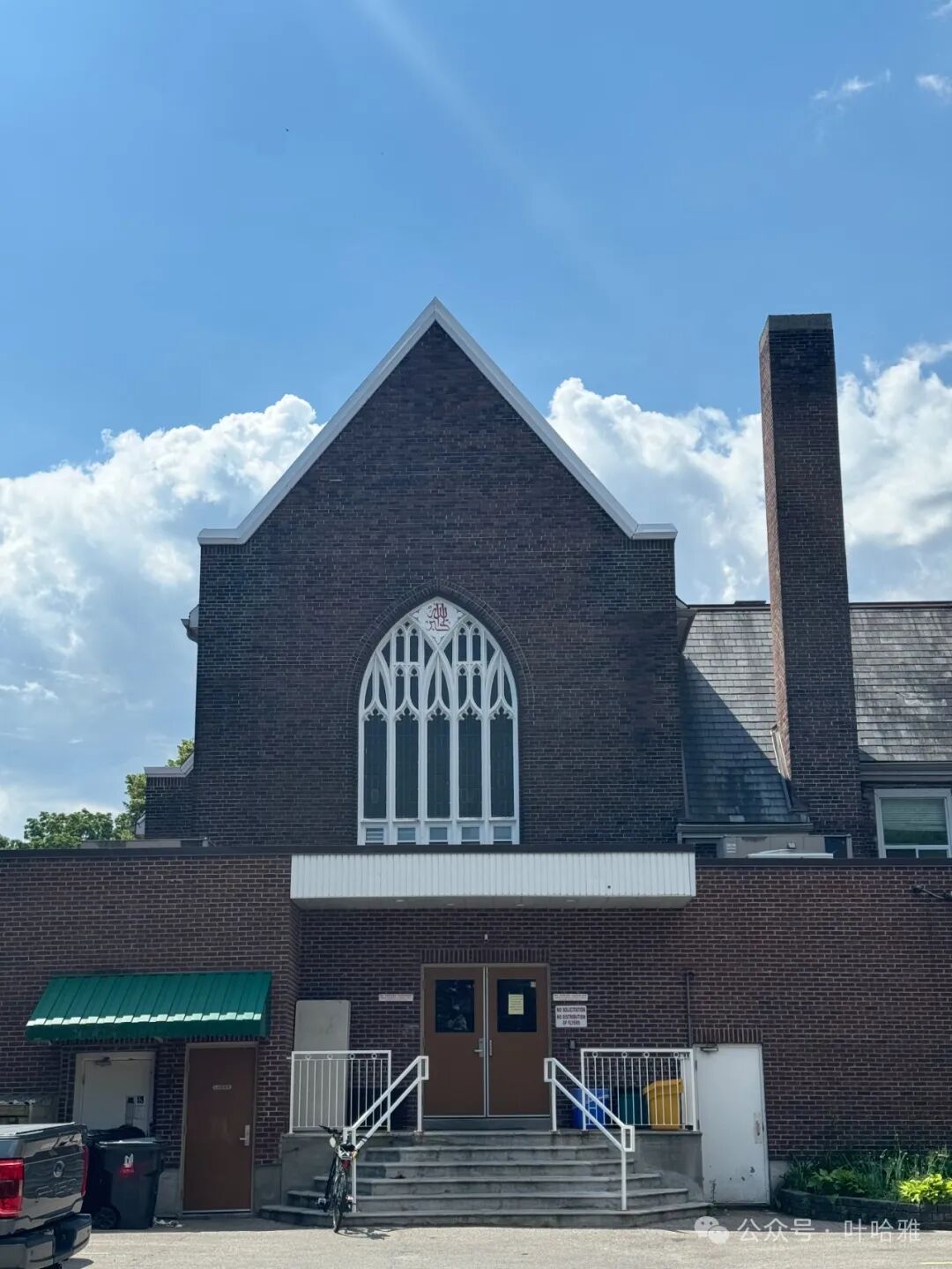
After saying goodbye to President Zhu, I left Toronto the next day. On the way to the airport, I saw this mosque converted from a church. Many places of worship in the city are usually locked, and this one was not open.
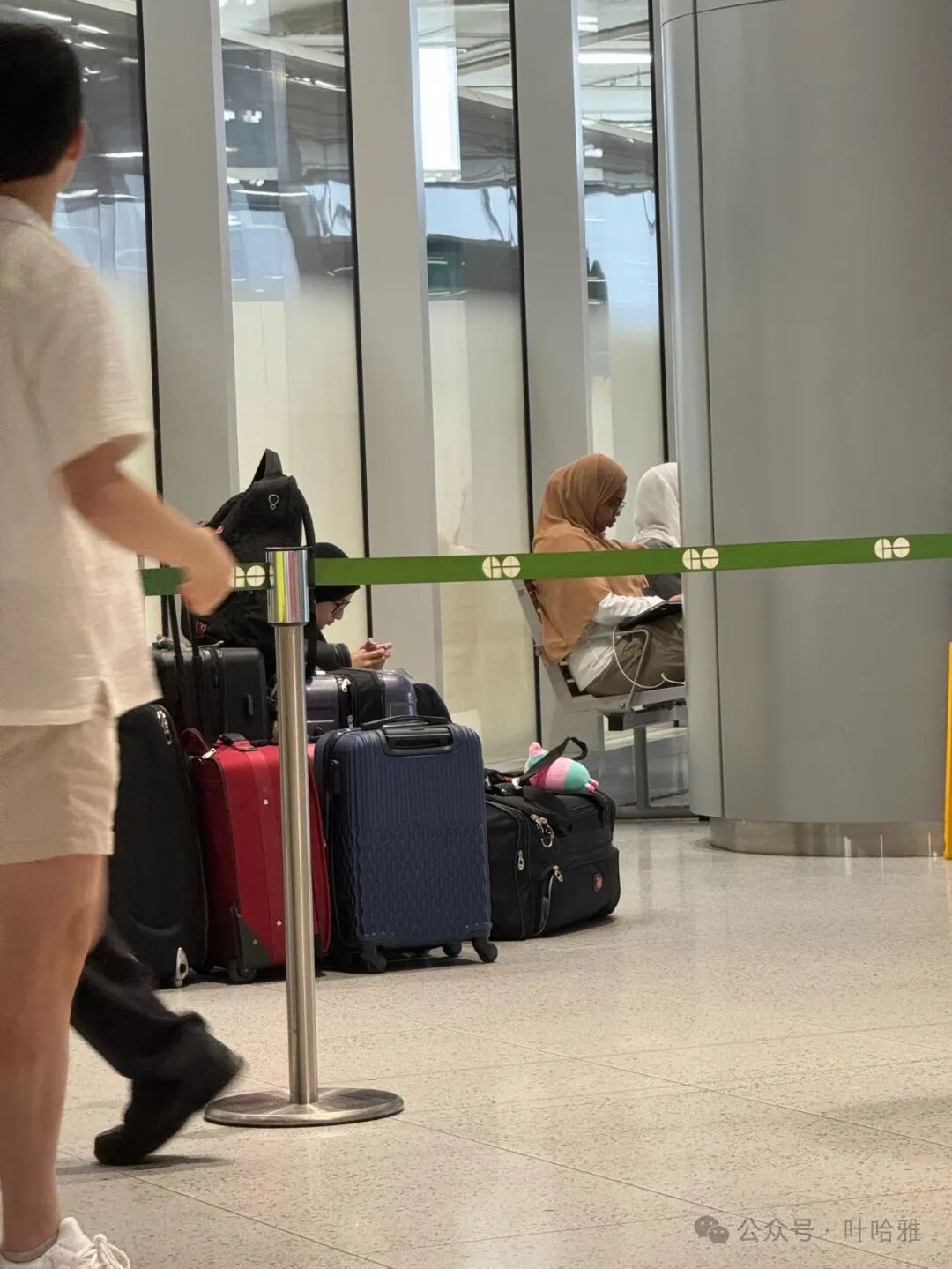
It is very common to see young women wearing headscarves in public. The streets of Canada are very diverse with people of all races. I even saw many women wearing headscarves working as customs and airport staff.
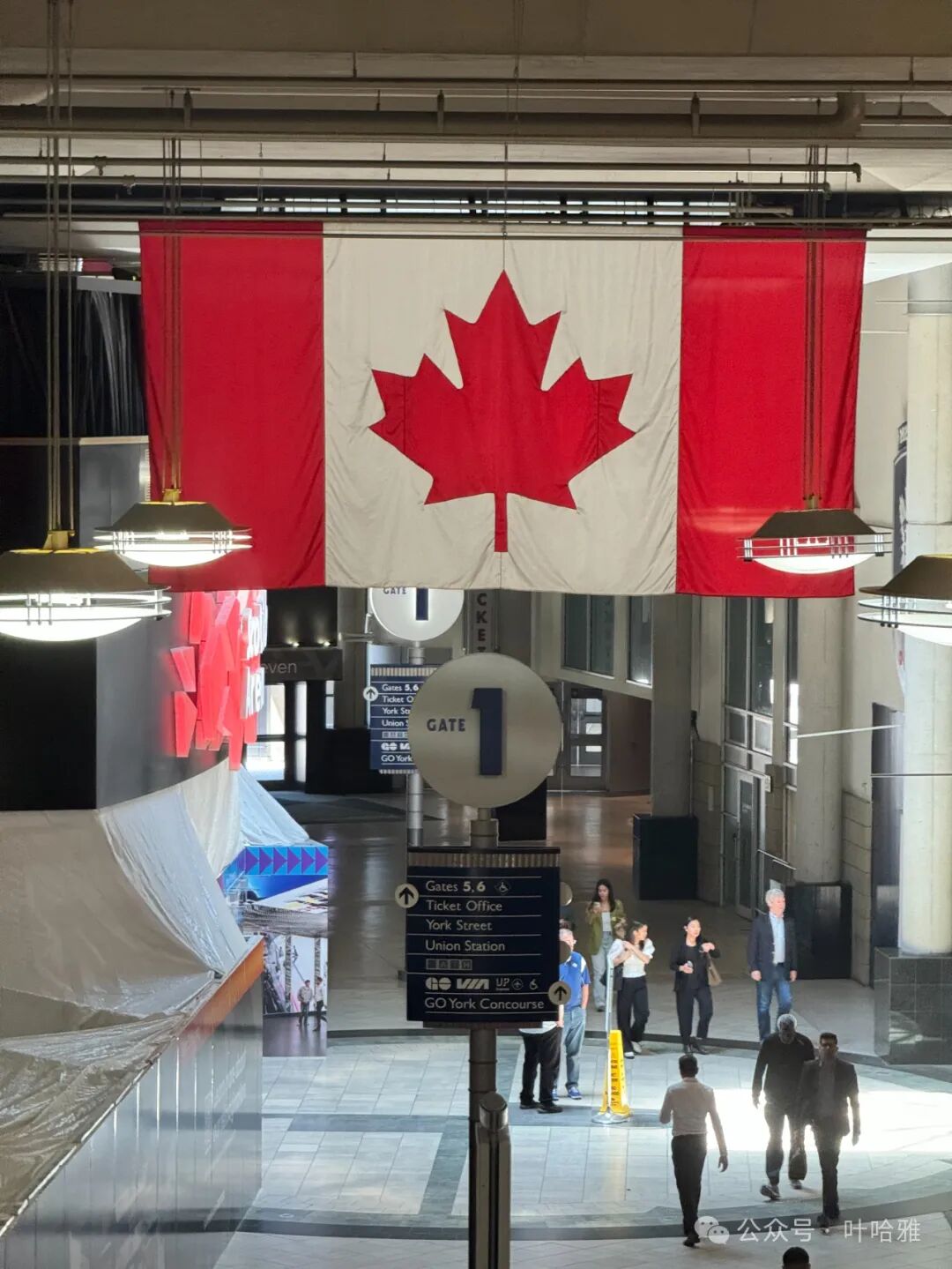
On the way back, the president told me a story about someone he knew. When he first arrived in Canada, he lived with an international student from Beijing, and they later became good friends. This roommate was introverted, quiet, and grew up in a military compound, but he had a tense relationship with his family. After coming to Canada, he almost never contacted his family. He had a very small social circle and showed signs of depression. Later, they moved to different cities for work. They kept in touch occasionally but never met again. A few years ago, the president received a call from the Canadian police. The police said his friend was found dead in his car in a parking lot. They ruled out foul play, and it was likely an overdose. The only emergency contact number the friend had left was the president's, with no other family contact information.
Because the president was not a relative, the police could not provide more information. Later, the police buried him in a public cemetery as an unclaimed body. The president only knew his name was Zhang Qiang, he was from Beijing, and he was about 50 years old when he died. He was single, had no wife or children, and there was not even a single photo of him. He died alone in a foreign land, and his family still does not know where he is.
The president hoped I could find out about this person in Beijing, but there is too little useful information. I also feel that since his family does not know he has passed away, it might be better if they never find out. That way, his family can still hold onto the hope that he is alive somewhere in the world.
Summary: This Muslim travel guide to Toronto follows Eid al-Adha with the Chinese Muslim Association of Canada in Scarborough, halal Hui Muslim food, Fang Zhongshan-style spicy soup, halal noodles, Canadian diversity, Muslim communities, and reflections on immigrant life.
Celebrating Eid Al-Adha in the Hui Muslim Neighborhood of Toronto, Canada is presented here as a firsthand travel account in clear English, beginning with this scene: I traveled around Canada while attending the MDRT global life insurance conference this year. The account keeps its focus on Sanya Travel, Eid al-Adha, Muslim Travel while preserving the names, places, food, and historical details from the Chinese source.
I traveled around Canada while attending the MDRT global life insurance conference this year. I visited Toronto, Ottawa, Montreal, Calgary, and Vancouver, covering the most important cities from the east to the west coast. Since Eid al-Adha was approaching, I learned that the Chinese Muslim Association of Canada is in Toronto, so I made a special trip there to attend the holiday prayers.
Toronto is Canada's largest city. It has a large population, sits near New York State in the U.S., and has a strong economy and convenient transportation. Many Chinese immigrants live here. The photos above and below show Lanzhou hand-pulled noodle shops (Lanzhou lamian) I spotted on the street, but neither of these two shops is halal.
Don't worry, I will introduce a halal noodle shop later.
India is not currently issuing visas to Chinese citizens, so if you want to see Indian people, come to Canada. India is the top source of immigrants to Canada, and you can find Indian people everywhere here. They are clean and hygienic. The ones wearing turbans are Sikhs. There are over 700,000 Sikhs in Canada. They are often mistaken for Muslims, but Sikhs and Muslims are actually rivals. Sikh teachings seem designed to oppose Islam. For example, Sikhs do not eat any religious food, including halal food. If they don't know the source of the meat, they cannot eat it. They only eat meat slaughtered by their own people, which leads some to mistakenly think Sikhs are vegetarians. They are also not allowed to marry Muslims. Because Sikhs are a minority in India and face oppression, a large number of them have immigrated to North America as refugees.
The Chinese Muslim Association of Canada is located on the third floor of the Oriental Centre in Scarborough. It used to be on the second floor. In June 2024, the association president, Bao Lin Zhu, paid in full to purchase a property on the third floor for the association's use. The original second-floor location remains open as the Hui Muslim Food Culture Center.
The Fang Zhongshan spicy soup (hulatang) on the second floor is run by the president, who is from Henan province and a fellow townsman of Fang Zhongshan. The shop is authorized by Fang Zhongshan, but the taste of the spicy soup is completely different from the one in the Central Plains. It leans more toward the Xiaoyao Town style and is not as spicy.
The person on the far right is President Bao Lin. The chef on the left is also from Henan and immigrated to Canada to follow his children's studies.
Besides spicy soup and pan-fried buns (shuijianbao), the shop also prepares traditional Chinese Hui Muslim foods like fried dough (youxiang) for Eid al-Adha.
The room next to the spicy soup shop was the association's original prayer room. Now that they have the third-floor property, this space is used for reception, office work, and daily tasks.
This is a plaque inscribed by Mr. Mi Guangjiang for the Chinese Muslim Association of Canada. He has also visited this place himself.
I did not know President Bao Lin before I came to Toronto. I planned to visit the day before Eid al-Adha to check the time for the holiday prayers. I happened to run into the president, and he very warmly invited me to take a tour.
To promote the Chinese Muslim Association, President Baolin installed a light box on the property window and kept it lit all night. This is how the building looks from the outside at night; it is very eye-catching.
The building management thought this was inappropriate and cut off the power without permission. The building is owned by Chinese people, but the overseas Chinese here do not seem friendly toward Muslims. President Baolin is now taking legal action to protect his rights.
The third-floor property was just bought. When I arrived, it was being used for the first time, so many decorations had not been changed yet. The facilities look very simple, but everything necessary is there, except for an imam.
I was surprised that the Eid prayer was the next day, but they still had not found an imam to lead the prayer. President Baolin was anxious and made several calls, including asking a Pakistani student from a brother mosque for help, but he could not find anyone suitable. He said if there was no other choice, he would ask me to do it.
I felt very caught off guard. In the Canadian Hui Muslim community, there are about a hundred people who visit regularly. Many people from China have a weak sense of faith and are not in this circle. Others did not have the chance to learn back home, so they have a strong desire to learn here. Everyone is eager for a full-time imam to guide them in their studies and daily worship, but unfortunately, they have not found the right person yet.
President Baolin really hopes that a capable and willing scholar will come here to teach, and he will provide all the help he can.
Then, President Baolin drove me around to visit a few unique mosques in the area.
JAME ABU BAKR SIDDIQUE
In North America, the largest and most numerous mosques are definitely built by our Pakistani brothers. This is one of them. It shows that the Pakistani community is doing well overseas, not just in North America but also in Europe. They are doing better than the Chinese community, which I will explain in more detail later.
Toronto Prayer Schedule
Islamic Foundation of Toronto
The Islamic Foundation of Toronto is a mosque still managed by our Pakistani brothers. President Baolin came here to ask the mosque management to help find a Pakistani student to lead the Eid al-Adha (Qurban Festival) prayer. The Pakistani prayer time is June 17, while the Hui Muslim community's is on the 16th, but we could not find anyone available.
Islamic Institute of Toronto
The Islamic Institute of Toronto was founded in 1996 and moved to its new location in 2006. It covers 8 acres and is very large.
The school is usually not open to the public, but I knocked on the door and went in for a visit.
Masjid Qurtabah
This is the home of the Muslim Association of Canada. President Baolin brought me here because before the Hui Muslim community bought their own property, they did not have a permanent place for religious activities, so they used to borrow this space for Chinese Muslim events.
This place will also soon be renovated into a large Islamic activity center.
This is a mosque for Somali people.
Seeing that the Somali community has its own mosque—which was converted from a church, as many mosques in Canada were—the president hopes that one day he can also establish a Chinese Muslim community center.
Oriental Palace (Dongfang Gong)
This is truly the Lanzhou chain brand Oriental Palace (Dongfang Gong). It has arrived in Canada and has many branches in Toronto.
This bowl of beef noodles costs 14.99 Canadian dollars, which is about 80 yuan. That does not include the tip. With a 12-15% tip, the bowl costs nearly 100 yuan. Prices in Canada are high. Even if you work locally and earn Canadian dollars, eating out is not cheap.
I saw at least three Dongfanggong restaurants in Toronto.
To be fair, the noodles tasted quite good. They were chewy and had plenty of meat. This was the most satisfying meal I have had in my ten days in Canada. Thanks to Brother Baolin.
But the lamb skewers (yangrouchuan) are still better back home.
This smashed cucumber salad (pai huanggua) is more expensive than the lamb skewers. It is common in Western countries for meat to be cheaper than vegetables.
After finishing the beef noodles, Brother Baolin drove me back to the hotel to rest. I had flown all night from Calgary to Toronto and dealt with a two-hour time difference. I fell asleep as soon as I lay down in bed, needing to recharge for Eid al-Adha the next day.
Early the next morning, Brother Baolin was setting up the venue, and I arrived early too. Unfortunately, we still could not find an imam to lead the prayer. However, a Hui Muslim brother from Xinjiang who had studied the scriptures stepped up. Even though he had a cold, he insisted on leading everyone in the Eid prayer. I will not post his photo.
After the prayer, I shared some thoughts on what I have learned from my travels over the years. I said the North American Chinese Muslim Association needs doers like Brother Baolin. Many people are well-read in scriptures but lack real-world experience. Their words and actions are disconnected from society, and they create division locally. Such 'smart' people do not help the faith. Throughout history, we have never lacked scholars who only talk. We need well-rounded, excellent people to strengthen our ability to take root and thrive in a foreign land.
After the sharing session, we went to the second floor to eat. Everyone brought food they prepared themselves, sharing their favorite hometown dishes. Those who did not have a specialty just contributed money.
For Hui Muslims, a holiday is not complete without fried dough (youxiang). This youxiang looks like the Henan style. There are many Henan friends (dost) in the community, so much so that before I came here, people told me there was a Henan Hui neighborhood in Canada. In reality, it is not just Henan people here. There are people from Beijing, Inner Mongolia, the Northwest, and Uyghurs.
The lamb soup (yangrou tang) and chive pockets (jiucai hezi) both have a Henan flair. They smelled delicious and were very good.
Some non-Chinese brothers also attended the event. They met Chinese Muslims through marriage.
As is the custom, Eid al-Adha (Qurban) ended in the morning. In the afternoon, Vice President Davei ZHU drove me to Toronto's most famous attraction, Niagara Falls, which often appears on the National Geographic channel.
Rainbow Bridge
Rainbow Bridge connects Canada and the United States and was built by both countries. Driving across this bridge takes you to New York State in the U.S. Canadian citizens do not need a visa to enter the U.S., and the process is very simple, so many Canadians choose to work in the U.S.
Niagara Falls spans both the U.S. and Canada, but the main view is on the Canadian side. You cannot see the full picture if you stand on the American side.
It took us over two hours to drive there, and we even hit traffic on the way. I chatted a lot with Vice President ZHU. His whole family has lived in Canada for over twenty years. As overseas Chinese, their longing for their hometown grows deeper with age.
When the weather is good, you can see a double rainbow at the waterfall.
There is no admission fee for natural scenery like the waterfall, but you have to pay if you want to take a boat for a close-up tour or ride the zipline.
A group of Muslims were having a picnic on the grass. The proportion of Muslims in Canada is very high, and you can see young women wearing beautiful headscarves everywhere on the street. However, Vice President ZHU warned me not to walk barefoot on the grass. He said that the number of drug addicts in Canada has increased over the years, and some of them carelessly throw used needles into the grass.
There are many halal restaurants around the waterfall, and there is a whole street full of halal food. We stumbled upon this Indian buffet restaurant by chance.
The buffet is 21 Canadian dollars per person. The selection is quite complete, and this price is actually not expensive. Even in Beijing, a similar Indian-Pakistani buffet would cost 98 yuan.
Indian-Pakistani cuisine is like Lanzhou hand-pulled noodles (Lanzhou lamian) in the eyes of Westerners; it is convenient, delicious, affordable, and accepted by people from all countries.
Near the big Ferris wheel is this halal food street. You do not have to worry about finding halal food in Canada at all; it is everywhere. However, halal food in North America mainly falls into three categories: Arab, Turkish, and Indo-Pakistani, and most of it is fast food or snacks.
This place serves Moroccan-style food.
After saying goodbye to President Zhu, I left Toronto the next day. On the way to the airport, I saw this mosque converted from a church. Many places of worship in the city are usually locked, and this one was not open.
It is very common to see young women wearing headscarves in public. The streets of Canada are very diverse with people of all races. I even saw many women wearing headscarves working as customs and airport staff.
On the way back, the president told me a story about someone he knew. When he first arrived in Canada, he lived with an international student from Beijing, and they later became good friends. This roommate was introverted, quiet, and grew up in a military compound, but he had a tense relationship with his family. After coming to Canada, he almost never contacted his family. He had a very small social circle and showed signs of depression. Later, they moved to different cities for work. They kept in touch occasionally but never met again. A few years ago, the president received a call from the Canadian police. The police said his friend was found dead in his car in a parking lot. They ruled out foul play, and it was likely an overdose. The only emergency contact number the friend had left was the president's, with no other family contact information.
Because the president was not a relative, the police could not provide more information. Later, the police buried him in a public cemetery as an unclaimed body. The president only knew his name was Zhang Qiang, he was from Beijing, and he was about 50 years old when he died. He was single, had no wife or children, and there was not even a single photo of him. He died alone in a foreign land, and his family still does not know where he is.
The president hoped I could find out about this person in Beijing, but there is too little useful information. I also feel that since his family does not know he has passed away, it might be better if they never find out. That way, his family can still hold onto the hope that he is alive somewhere in the world.
Muslim Travel Guide Toronto: Chinese Hui Muslim Eid al-Adha, Halal Noodles and Scarborough Mosque
Articles • yusuf908 posted the article • 0 comments • 292 views • 2026-05-22 23:36
Reposted from the web
Summary: This Muslim travel guide to Toronto follows Eid al-Adha with the Chinese Muslim Association of Canada in Scarborough, halal Hui Muslim food, Fang Zhongshan-style spicy soup, halal noodles, Canadian diversity, Muslim communities, and reflections on immigrant life.
Celebrating Eid Al-Adha in the Hui Muslim Neighborhood of Toronto, Canada is presented here as a firsthand travel account in clear English, beginning with this scene: I traveled around Canada while attending the MDRT global life insurance conference this year. The account keeps its focus on Sanya Travel, Eid al-Adha, Muslim Travel while preserving the names, places, food, and historical details from the Chinese source.
I traveled around Canada while attending the MDRT global life insurance conference this year. I visited Toronto, Ottawa, Montreal, Calgary, and Vancouver, covering the most important cities from the east to the west coast. Since Eid al-Adha was approaching, I learned that the Chinese Muslim Association of Canada is in Toronto, so I made a special trip there to attend the holiday prayers.
Toronto is Canada's largest city. It has a large population, sits near New York State in the U.S., and has a strong economy and convenient transportation. Many Chinese immigrants live here. The photos above and below show Lanzhou hand-pulled noodle shops (Lanzhou lamian) I spotted on the street, but neither of these two shops is halal.
Don't worry, I will introduce a halal noodle shop later.
India is not currently issuing visas to Chinese citizens, so if you want to see Indian people, come to Canada. India is the top source of immigrants to Canada, and you can find Indian people everywhere here. They are clean and hygienic. The ones wearing turbans are Sikhs. There are over 700,000 Sikhs in Canada. They are often mistaken for Muslims, but Sikhs and Muslims are actually rivals. Sikh teachings seem designed to oppose Islam. For example, Sikhs do not eat any religious food, including halal food. If they don't know the source of the meat, they cannot eat it. They only eat meat slaughtered by their own people, which leads some to mistakenly think Sikhs are vegetarians. They are also not allowed to marry Muslims. Because Sikhs are a minority in India and face oppression, a large number of them have immigrated to North America as refugees.
The Chinese Muslim Association of Canada is located on the third floor of the Oriental Centre in Scarborough. It used to be on the second floor. In June 2024, the association president, Bao Lin Zhu, paid in full to purchase a property on the third floor for the association's use. The original second-floor location remains open as the Hui Muslim Food Culture Center.
The Fang Zhongshan spicy soup (hulatang) on the second floor is run by the president, who is from Henan province and a fellow townsman of Fang Zhongshan. The shop is authorized by Fang Zhongshan, but the taste of the spicy soup is completely different from the one in the Central Plains. It leans more toward the Xiaoyao Town style and is not as spicy.
The person on the far right is President Bao Lin. The chef on the left is also from Henan and immigrated to Canada to follow his children's studies.
Besides spicy soup and pan-fried buns (shuijianbao), the shop also prepares traditional Chinese Hui Muslim foods like fried dough (youxiang) for Eid al-Adha.
The room next to the spicy soup shop was the association's original prayer room. Now that they have the third-floor property, this space is used for reception, office work, and daily tasks.
This is a plaque inscribed by Mr. Mi Guangjiang for the Chinese Muslim Association of Canada. He has also visited this place himself.
I did not know President Bao Lin before I came to Toronto. I planned to visit the day before Eid al-Adha to check the time for the holiday prayers. I happened to run into the president, and he very warmly invited me to take a tour.
To promote the Chinese Muslim Association, President Baolin installed a light box on the property window and kept it lit all night. This is how the building looks from the outside at night; it is very eye-catching.
The building management thought this was inappropriate and cut off the power without permission. The building is owned by Chinese people, but the overseas Chinese here do not seem friendly toward Muslims. President Baolin is now taking legal action to protect his rights.
The third-floor property was just bought. When I arrived, it was being used for the first time, so many decorations had not been changed yet. The facilities look very simple, but everything necessary is there, except for an imam.
I was surprised that the Eid prayer was the next day, but they still had not found an imam to lead the prayer. President Baolin was anxious and made several calls, including asking a Pakistani student from a brother mosque for help, but he could not find anyone suitable. He said if there was no other choice, he would ask me to do it.
I felt very caught off guard. In the Canadian Hui Muslim community, there are about a hundred people who visit regularly. Many people from China have a weak sense of faith and are not in this circle. Others did not have the chance to learn back home, so they have a strong desire to learn here. Everyone is eager for a full-time imam to guide them in their studies and daily worship, but unfortunately, they have not found the right person yet.
President Baolin really hopes that a capable and willing scholar will come here to teach, and he will provide all the help he can.
Then, President Baolin drove me around to visit a few unique mosques in the area.
JAME ABU BAKR SIDDIQUE
In North America, the largest and most numerous mosques are definitely built by our Pakistani brothers. This is one of them. It shows that the Pakistani community is doing well overseas, not just in North America but also in Europe. They are doing better than the Chinese community, which I will explain in more detail later.
Toronto Prayer Schedule
Islamic Foundation of Toronto
The Islamic Foundation of Toronto is a mosque still managed by our Pakistani brothers. President Baolin came here to ask the mosque management to help find a Pakistani student to lead the Eid al-Adha (Qurban Festival) prayer. The Pakistani prayer time is June 17, while the Hui Muslim community's is on the 16th, but we could not find anyone available.
Islamic Institute of Toronto
The Islamic Institute of Toronto was founded in 1996 and moved to its new location in 2006. It covers 8 acres and is very large.
The school is usually not open to the public, but I knocked on the door and went in for a visit.
Masjid Qurtabah
This is the home of the Muslim Association of Canada. President Baolin brought me here because before the Hui Muslim community bought their own property, they did not have a permanent place for religious activities, so they used to borrow this space for Chinese Muslim events.
This place will also soon be renovated into a large Islamic activity center.
This is a mosque for Somali people.
Seeing that the Somali community has its own mosque—which was converted from a church, as many mosques in Canada were—the president hopes that one day he can also establish a Chinese Muslim community center.
Oriental Palace (Dongfang Gong)
This is truly the Lanzhou chain brand Oriental Palace (Dongfang Gong). It has arrived in Canada and has many branches in Toronto.
This bowl of beef noodles costs 14.99 Canadian dollars, which is about 80 yuan. That does not include the tip. With a 12-15% tip, the bowl costs nearly 100 yuan. Prices in Canada are high. Even if you work locally and earn Canadian dollars, eating out is not cheap.
I saw at least three Dongfanggong restaurants in Toronto.
To be fair, the noodles tasted quite good. They were chewy and had plenty of meat. This was the most satisfying meal I have had in my ten days in Canada. Thanks to Brother Baolin.
But the lamb skewers (yangrouchuan) are still better back home.
This smashed cucumber salad (pai huanggua) is more expensive than the lamb skewers. It is common in Western countries for meat to be cheaper than vegetables.
After finishing the beef noodles, Brother Baolin drove me back to the hotel to rest. I had flown all night from Calgary to Toronto and dealt with a two-hour time difference. I fell asleep as soon as I lay down in bed, needing to recharge for Eid al-Adha the next day.
Early the next morning, Brother Baolin was setting up the venue, and I arrived early too. Unfortunately, we still could not find an imam to lead the prayer. However, a Hui Muslim brother from Xinjiang who had studied the scriptures stepped up. Even though he had a cold, he insisted on leading everyone in the Eid prayer. I will not post his photo.
After the prayer, I shared some thoughts on what I have learned from my travels over the years. I said the North American Chinese Muslim Association needs doers like Brother Baolin. Many people are well-read in scriptures but lack real-world experience. Their words and actions are disconnected from society, and they create division locally. Such 'smart' people do not help the faith. Throughout history, we have never lacked scholars who only talk. We need well-rounded, excellent people to strengthen our ability to take root and thrive in a foreign land.
After the sharing session, we went to the second floor to eat. Everyone brought food they prepared themselves, sharing their favorite hometown dishes. Those who did not have a specialty just contributed money.
For Hui Muslims, a holiday is not complete without fried dough (youxiang). This youxiang looks like the Henan style. There are many Henan friends (dost) in the community, so much so that before I came here, people told me there was a Henan Hui neighborhood in Canada. In reality, it is not just Henan people here. There are people from Beijing, Inner Mongolia, the Northwest, and Uyghurs.
The lamb soup (yangrou tang) and chive pockets (jiucai hezi) both have a Henan flair. They smelled delicious and were very good.
Some non-Chinese brothers also attended the event. They met Chinese Muslims through marriage.
As is the custom, Eid al-Adha (Qurban) ended in the morning. In the afternoon, Vice President Davei ZHU drove me to Toronto's most famous attraction, Niagara Falls, which often appears on the National Geographic channel.
Rainbow Bridge
Rainbow Bridge connects Canada and the United States and was built by both countries. Driving across this bridge takes you to New York State in the U.S. Canadian citizens do not need a visa to enter the U.S., and the process is very simple, so many Canadians choose to work in the U.S.
Niagara Falls spans both the U.S. and Canada, but the main view is on the Canadian side. You cannot see the full picture if you stand on the American side.
It took us over two hours to drive there, and we even hit traffic on the way. I chatted a lot with Vice President ZHU. His whole family has lived in Canada for over twenty years. As overseas Chinese, their longing for their hometown grows deeper with age.
When the weather is good, you can see a double rainbow at the waterfall.
There is no admission fee for natural scenery like the waterfall, but you have to pay if you want to take a boat for a close-up tour or ride the zipline.
A group of Muslims were having a picnic on the grass. The proportion of Muslims in Canada is very high, and you can see young women wearing beautiful headscarves everywhere on the street. However, Vice President ZHU warned me not to walk barefoot on the grass. He said that the number of drug addicts in Canada has increased over the years, and some of them carelessly throw used needles into the grass.
There are many halal restaurants around the waterfall, and there is a whole street full of halal food. We stumbled upon this Indian buffet restaurant by chance.
The buffet is 21 Canadian dollars per person. The selection is quite complete, and this price is actually not expensive. Even in Beijing, a similar Indian-Pakistani buffet would cost 98 yuan.
Indian-Pakistani cuisine is like Lanzhou hand-pulled noodles (Lanzhou lamian) in the eyes of Westerners; it is convenient, delicious, affordable, and accepted by people from all countries.
Near the big Ferris wheel is this halal food street. You do not have to worry about finding halal food in Canada at all; it is everywhere. However, halal food in North America mainly falls into three categories: Arab, Turkish, and Indo-Pakistani, and most of it is fast food or snacks.
This place serves Moroccan-style food.
After saying goodbye to President Zhu, I left Toronto the next day. On the way to the airport, I saw this mosque converted from a church. Many places of worship in the city are usually locked, and this one was not open.
It is very common to see young women wearing headscarves in public. The streets of Canada are very diverse with people of all races. I even saw many women wearing headscarves working as customs and airport staff.
On the way back, the president told me a story about someone he knew. When he first arrived in Canada, he lived with an international student from Beijing, and they later became good friends. This roommate was introverted, quiet, and grew up in a military compound, but he had a tense relationship with his family. After coming to Canada, he almost never contacted his family. He had a very small social circle and showed signs of depression. Later, they moved to different cities for work. They kept in touch occasionally but never met again. A few years ago, the president received a call from the Canadian police. The police said his friend was found dead in his car in a parking lot. They ruled out foul play, and it was likely an overdose. The only emergency contact number the friend had left was the president's, with no other family contact information.
Because the president was not a relative, the police could not provide more information. Later, the police buried him in a public cemetery as an unclaimed body. The president only knew his name was Zhang Qiang, he was from Beijing, and he was about 50 years old when he died. He was single, had no wife or children, and there was not even a single photo of him. He died alone in a foreign land, and his family still does not know where he is.
The president hoped I could find out about this person in Beijing, but there is too little useful information. I also feel that since his family does not know he has passed away, it might be better if they never find out. That way, his family can still hold onto the hope that he is alive somewhere in the world. view all
Summary: This Muslim travel guide to Toronto follows Eid al-Adha with the Chinese Muslim Association of Canada in Scarborough, halal Hui Muslim food, Fang Zhongshan-style spicy soup, halal noodles, Canadian diversity, Muslim communities, and reflections on immigrant life.
Celebrating Eid Al-Adha in the Hui Muslim Neighborhood of Toronto, Canada is presented here as a firsthand travel account in clear English, beginning with this scene: I traveled around Canada while attending the MDRT global life insurance conference this year. The account keeps its focus on Sanya Travel, Eid al-Adha, Muslim Travel while preserving the names, places, food, and historical details from the Chinese source.
I traveled around Canada while attending the MDRT global life insurance conference this year. I visited Toronto, Ottawa, Montreal, Calgary, and Vancouver, covering the most important cities from the east to the west coast. Since Eid al-Adha was approaching, I learned that the Chinese Muslim Association of Canada is in Toronto, so I made a special trip there to attend the holiday prayers.
Toronto is Canada's largest city. It has a large population, sits near New York State in the U.S., and has a strong economy and convenient transportation. Many Chinese immigrants live here. The photos above and below show Lanzhou hand-pulled noodle shops (Lanzhou lamian) I spotted on the street, but neither of these two shops is halal.
Don't worry, I will introduce a halal noodle shop later.
India is not currently issuing visas to Chinese citizens, so if you want to see Indian people, come to Canada. India is the top source of immigrants to Canada, and you can find Indian people everywhere here. They are clean and hygienic. The ones wearing turbans are Sikhs. There are over 700,000 Sikhs in Canada. They are often mistaken for Muslims, but Sikhs and Muslims are actually rivals. Sikh teachings seem designed to oppose Islam. For example, Sikhs do not eat any religious food, including halal food. If they don't know the source of the meat, they cannot eat it. They only eat meat slaughtered by their own people, which leads some to mistakenly think Sikhs are vegetarians. They are also not allowed to marry Muslims. Because Sikhs are a minority in India and face oppression, a large number of them have immigrated to North America as refugees.
The Chinese Muslim Association of Canada is located on the third floor of the Oriental Centre in Scarborough. It used to be on the second floor. In June 2024, the association president, Bao Lin Zhu, paid in full to purchase a property on the third floor for the association's use. The original second-floor location remains open as the Hui Muslim Food Culture Center.
The Fang Zhongshan spicy soup (hulatang) on the second floor is run by the president, who is from Henan province and a fellow townsman of Fang Zhongshan. The shop is authorized by Fang Zhongshan, but the taste of the spicy soup is completely different from the one in the Central Plains. It leans more toward the Xiaoyao Town style and is not as spicy.
The person on the far right is President Bao Lin. The chef on the left is also from Henan and immigrated to Canada to follow his children's studies.
Besides spicy soup and pan-fried buns (shuijianbao), the shop also prepares traditional Chinese Hui Muslim foods like fried dough (youxiang) for Eid al-Adha.
The room next to the spicy soup shop was the association's original prayer room. Now that they have the third-floor property, this space is used for reception, office work, and daily tasks.
This is a plaque inscribed by Mr. Mi Guangjiang for the Chinese Muslim Association of Canada. He has also visited this place himself.
I did not know President Bao Lin before I came to Toronto. I planned to visit the day before Eid al-Adha to check the time for the holiday prayers. I happened to run into the president, and he very warmly invited me to take a tour.
To promote the Chinese Muslim Association, President Baolin installed a light box on the property window and kept it lit all night. This is how the building looks from the outside at night; it is very eye-catching.
The building management thought this was inappropriate and cut off the power without permission. The building is owned by Chinese people, but the overseas Chinese here do not seem friendly toward Muslims. President Baolin is now taking legal action to protect his rights.
The third-floor property was just bought. When I arrived, it was being used for the first time, so many decorations had not been changed yet. The facilities look very simple, but everything necessary is there, except for an imam.
I was surprised that the Eid prayer was the next day, but they still had not found an imam to lead the prayer. President Baolin was anxious and made several calls, including asking a Pakistani student from a brother mosque for help, but he could not find anyone suitable. He said if there was no other choice, he would ask me to do it.
I felt very caught off guard. In the Canadian Hui Muslim community, there are about a hundred people who visit regularly. Many people from China have a weak sense of faith and are not in this circle. Others did not have the chance to learn back home, so they have a strong desire to learn here. Everyone is eager for a full-time imam to guide them in their studies and daily worship, but unfortunately, they have not found the right person yet.
President Baolin really hopes that a capable and willing scholar will come here to teach, and he will provide all the help he can.
Then, President Baolin drove me around to visit a few unique mosques in the area.
JAME ABU BAKR SIDDIQUE
In North America, the largest and most numerous mosques are definitely built by our Pakistani brothers. This is one of them. It shows that the Pakistani community is doing well overseas, not just in North America but also in Europe. They are doing better than the Chinese community, which I will explain in more detail later.
Toronto Prayer Schedule
Islamic Foundation of Toronto
The Islamic Foundation of Toronto is a mosque still managed by our Pakistani brothers. President Baolin came here to ask the mosque management to help find a Pakistani student to lead the Eid al-Adha (Qurban Festival) prayer. The Pakistani prayer time is June 17, while the Hui Muslim community's is on the 16th, but we could not find anyone available.
Islamic Institute of Toronto
The Islamic Institute of Toronto was founded in 1996 and moved to its new location in 2006. It covers 8 acres and is very large.
The school is usually not open to the public, but I knocked on the door and went in for a visit.
Masjid Qurtabah
This is the home of the Muslim Association of Canada. President Baolin brought me here because before the Hui Muslim community bought their own property, they did not have a permanent place for religious activities, so they used to borrow this space for Chinese Muslim events.
This place will also soon be renovated into a large Islamic activity center.
This is a mosque for Somali people.
Seeing that the Somali community has its own mosque—which was converted from a church, as many mosques in Canada were—the president hopes that one day he can also establish a Chinese Muslim community center.
Oriental Palace (Dongfang Gong)
This is truly the Lanzhou chain brand Oriental Palace (Dongfang Gong). It has arrived in Canada and has many branches in Toronto.
This bowl of beef noodles costs 14.99 Canadian dollars, which is about 80 yuan. That does not include the tip. With a 12-15% tip, the bowl costs nearly 100 yuan. Prices in Canada are high. Even if you work locally and earn Canadian dollars, eating out is not cheap.
I saw at least three Dongfanggong restaurants in Toronto.
To be fair, the noodles tasted quite good. They were chewy and had plenty of meat. This was the most satisfying meal I have had in my ten days in Canada. Thanks to Brother Baolin.
But the lamb skewers (yangrouchuan) are still better back home.
This smashed cucumber salad (pai huanggua) is more expensive than the lamb skewers. It is common in Western countries for meat to be cheaper than vegetables.
After finishing the beef noodles, Brother Baolin drove me back to the hotel to rest. I had flown all night from Calgary to Toronto and dealt with a two-hour time difference. I fell asleep as soon as I lay down in bed, needing to recharge for Eid al-Adha the next day.
Early the next morning, Brother Baolin was setting up the venue, and I arrived early too. Unfortunately, we still could not find an imam to lead the prayer. However, a Hui Muslim brother from Xinjiang who had studied the scriptures stepped up. Even though he had a cold, he insisted on leading everyone in the Eid prayer. I will not post his photo.
After the prayer, I shared some thoughts on what I have learned from my travels over the years. I said the North American Chinese Muslim Association needs doers like Brother Baolin. Many people are well-read in scriptures but lack real-world experience. Their words and actions are disconnected from society, and they create division locally. Such 'smart' people do not help the faith. Throughout history, we have never lacked scholars who only talk. We need well-rounded, excellent people to strengthen our ability to take root and thrive in a foreign land.
After the sharing session, we went to the second floor to eat. Everyone brought food they prepared themselves, sharing their favorite hometown dishes. Those who did not have a specialty just contributed money.
For Hui Muslims, a holiday is not complete without fried dough (youxiang). This youxiang looks like the Henan style. There are many Henan friends (dost) in the community, so much so that before I came here, people told me there was a Henan Hui neighborhood in Canada. In reality, it is not just Henan people here. There are people from Beijing, Inner Mongolia, the Northwest, and Uyghurs.
The lamb soup (yangrou tang) and chive pockets (jiucai hezi) both have a Henan flair. They smelled delicious and were very good.
Some non-Chinese brothers also attended the event. They met Chinese Muslims through marriage.
As is the custom, Eid al-Adha (Qurban) ended in the morning. In the afternoon, Vice President Davei ZHU drove me to Toronto's most famous attraction, Niagara Falls, which often appears on the National Geographic channel.
Rainbow Bridge
Rainbow Bridge connects Canada and the United States and was built by both countries. Driving across this bridge takes you to New York State in the U.S. Canadian citizens do not need a visa to enter the U.S., and the process is very simple, so many Canadians choose to work in the U.S.
Niagara Falls spans both the U.S. and Canada, but the main view is on the Canadian side. You cannot see the full picture if you stand on the American side.
It took us over two hours to drive there, and we even hit traffic on the way. I chatted a lot with Vice President ZHU. His whole family has lived in Canada for over twenty years. As overseas Chinese, their longing for their hometown grows deeper with age.
When the weather is good, you can see a double rainbow at the waterfall.
There is no admission fee for natural scenery like the waterfall, but you have to pay if you want to take a boat for a close-up tour or ride the zipline.
A group of Muslims were having a picnic on the grass. The proportion of Muslims in Canada is very high, and you can see young women wearing beautiful headscarves everywhere on the street. However, Vice President ZHU warned me not to walk barefoot on the grass. He said that the number of drug addicts in Canada has increased over the years, and some of them carelessly throw used needles into the grass.
There are many halal restaurants around the waterfall, and there is a whole street full of halal food. We stumbled upon this Indian buffet restaurant by chance.
The buffet is 21 Canadian dollars per person. The selection is quite complete, and this price is actually not expensive. Even in Beijing, a similar Indian-Pakistani buffet would cost 98 yuan.
Indian-Pakistani cuisine is like Lanzhou hand-pulled noodles (Lanzhou lamian) in the eyes of Westerners; it is convenient, delicious, affordable, and accepted by people from all countries.
Near the big Ferris wheel is this halal food street. You do not have to worry about finding halal food in Canada at all; it is everywhere. However, halal food in North America mainly falls into three categories: Arab, Turkish, and Indo-Pakistani, and most of it is fast food or snacks.
This place serves Moroccan-style food.
After saying goodbye to President Zhu, I left Toronto the next day. On the way to the airport, I saw this mosque converted from a church. Many places of worship in the city are usually locked, and this one was not open.
It is very common to see young women wearing headscarves in public. The streets of Canada are very diverse with people of all races. I even saw many women wearing headscarves working as customs and airport staff.
On the way back, the president told me a story about someone he knew. When he first arrived in Canada, he lived with an international student from Beijing, and they later became good friends. This roommate was introverted, quiet, and grew up in a military compound, but he had a tense relationship with his family. After coming to Canada, he almost never contacted his family. He had a very small social circle and showed signs of depression. Later, they moved to different cities for work. They kept in touch occasionally but never met again. A few years ago, the president received a call from the Canadian police. The police said his friend was found dead in his car in a parking lot. They ruled out foul play, and it was likely an overdose. The only emergency contact number the friend had left was the president's, with no other family contact information.
Because the president was not a relative, the police could not provide more information. Later, the police buried him in a public cemetery as an unclaimed body. The president only knew his name was Zhang Qiang, he was from Beijing, and he was about 50 years old when he died. He was single, had no wife or children, and there was not even a single photo of him. He died alone in a foreign land, and his family still does not know where he is.
The president hoped I could find out about this person in Beijing, but there is too little useful information. I also feel that since his family does not know he has passed away, it might be better if they never find out. That way, his family can still hold onto the hope that he is alive somewhere in the world. view all
Reposted from the web
Summary: This Muslim travel guide to Toronto follows Eid al-Adha with the Chinese Muslim Association of Canada in Scarborough, halal Hui Muslim food, Fang Zhongshan-style spicy soup, halal noodles, Canadian diversity, Muslim communities, and reflections on immigrant life.
Celebrating Eid Al-Adha in the Hui Muslim Neighborhood of Toronto, Canada is presented here as a firsthand travel account in clear English, beginning with this scene: I traveled around Canada while attending the MDRT global life insurance conference this year. The account keeps its focus on Sanya Travel, Eid al-Adha, Muslim Travel while preserving the names, places, food, and historical details from the Chinese source.
I traveled around Canada while attending the MDRT global life insurance conference this year. I visited Toronto, Ottawa, Montreal, Calgary, and Vancouver, covering the most important cities from the east to the west coast. Since Eid al-Adha was approaching, I learned that the Chinese Muslim Association of Canada is in Toronto, so I made a special trip there to attend the holiday prayers.
Toronto is Canada's largest city. It has a large population, sits near New York State in the U.S., and has a strong economy and convenient transportation. Many Chinese immigrants live here. The photos above and below show Lanzhou hand-pulled noodle shops (Lanzhou lamian) I spotted on the street, but neither of these two shops is halal.
Don't worry, I will introduce a halal noodle shop later.
India is not currently issuing visas to Chinese citizens, so if you want to see Indian people, come to Canada. India is the top source of immigrants to Canada, and you can find Indian people everywhere here. They are clean and hygienic. The ones wearing turbans are Sikhs. There are over 700,000 Sikhs in Canada. They are often mistaken for Muslims, but Sikhs and Muslims are actually rivals. Sikh teachings seem designed to oppose Islam. For example, Sikhs do not eat any religious food, including halal food. If they don't know the source of the meat, they cannot eat it. They only eat meat slaughtered by their own people, which leads some to mistakenly think Sikhs are vegetarians. They are also not allowed to marry Muslims. Because Sikhs are a minority in India and face oppression, a large number of them have immigrated to North America as refugees.
The Chinese Muslim Association of Canada is located on the third floor of the Oriental Centre in Scarborough. It used to be on the second floor. In June 2024, the association president, Bao Lin Zhu, paid in full to purchase a property on the third floor for the association's use. The original second-floor location remains open as the Hui Muslim Food Culture Center.
The Fang Zhongshan spicy soup (hulatang) on the second floor is run by the president, who is from Henan province and a fellow townsman of Fang Zhongshan. The shop is authorized by Fang Zhongshan, but the taste of the spicy soup is completely different from the one in the Central Plains. It leans more toward the Xiaoyao Town style and is not as spicy.
The person on the far right is President Bao Lin. The chef on the left is also from Henan and immigrated to Canada to follow his children's studies.
Besides spicy soup and pan-fried buns (shuijianbao), the shop also prepares traditional Chinese Hui Muslim foods like fried dough (youxiang) for Eid al-Adha.
The room next to the spicy soup shop was the association's original prayer room. Now that they have the third-floor property, this space is used for reception, office work, and daily tasks.
This is a plaque inscribed by Mr. Mi Guangjiang for the Chinese Muslim Association of Canada. He has also visited this place himself.
I did not know President Bao Lin before I came to Toronto. I planned to visit the day before Eid al-Adha to check the time for the holiday prayers. I happened to run into the president, and he very warmly invited me to take a tour.
To promote the Chinese Muslim Association, President Baolin installed a light box on the property window and kept it lit all night. This is how the building looks from the outside at night; it is very eye-catching.
The building management thought this was inappropriate and cut off the power without permission. The building is owned by Chinese people, but the overseas Chinese here do not seem friendly toward Muslims. President Baolin is now taking legal action to protect his rights.
The third-floor property was just bought. When I arrived, it was being used for the first time, so many decorations had not been changed yet. The facilities look very simple, but everything necessary is there, except for an imam.
I was surprised that the Eid prayer was the next day, but they still had not found an imam to lead the prayer. President Baolin was anxious and made several calls, including asking a Pakistani student from a brother mosque for help, but he could not find anyone suitable. He said if there was no other choice, he would ask me to do it.
I felt very caught off guard. In the Canadian Hui Muslim community, there are about a hundred people who visit regularly. Many people from China have a weak sense of faith and are not in this circle. Others did not have the chance to learn back home, so they have a strong desire to learn here. Everyone is eager for a full-time imam to guide them in their studies and daily worship, but unfortunately, they have not found the right person yet.
President Baolin really hopes that a capable and willing scholar will come here to teach, and he will provide all the help he can.
Then, President Baolin drove me around to visit a few unique mosques in the area.
JAME ABU BAKR SIDDIQUE
In North America, the largest and most numerous mosques are definitely built by our Pakistani brothers. This is one of them. It shows that the Pakistani community is doing well overseas, not just in North America but also in Europe. They are doing better than the Chinese community, which I will explain in more detail later.
Toronto Prayer Schedule
Islamic Foundation of Toronto
The Islamic Foundation of Toronto is a mosque still managed by our Pakistani brothers. President Baolin came here to ask the mosque management to help find a Pakistani student to lead the Eid al-Adha (Qurban Festival) prayer. The Pakistani prayer time is June 17, while the Hui Muslim community's is on the 16th, but we could not find anyone available.
Islamic Institute of Toronto
The Islamic Institute of Toronto was founded in 1996 and moved to its new location in 2006. It covers 8 acres and is very large.
The school is usually not open to the public, but I knocked on the door and went in for a visit.
Masjid Qurtabah
This is the home of the Muslim Association of Canada. President Baolin brought me here because before the Hui Muslim community bought their own property, they did not have a permanent place for religious activities, so they used to borrow this space for Chinese Muslim events.
This place will also soon be renovated into a large Islamic activity center.
This is a mosque for Somali people.
Seeing that the Somali community has its own mosque—which was converted from a church, as many mosques in Canada were—the president hopes that one day he can also establish a Chinese Muslim community center.
Oriental Palace (Dongfang Gong)
This is truly the Lanzhou chain brand Oriental Palace (Dongfang Gong). It has arrived in Canada and has many branches in Toronto.
This bowl of beef noodles costs 14.99 Canadian dollars, which is about 80 yuan. That does not include the tip. With a 12-15% tip, the bowl costs nearly 100 yuan. Prices in Canada are high. Even if you work locally and earn Canadian dollars, eating out is not cheap.
I saw at least three Dongfanggong restaurants in Toronto.
To be fair, the noodles tasted quite good. They were chewy and had plenty of meat. This was the most satisfying meal I have had in my ten days in Canada. Thanks to Brother Baolin.
But the lamb skewers (yangrouchuan) are still better back home.
This smashed cucumber salad (pai huanggua) is more expensive than the lamb skewers. It is common in Western countries for meat to be cheaper than vegetables.
After finishing the beef noodles, Brother Baolin drove me back to the hotel to rest. I had flown all night from Calgary to Toronto and dealt with a two-hour time difference. I fell asleep as soon as I lay down in bed, needing to recharge for Eid al-Adha the next day.
Early the next morning, Brother Baolin was setting up the venue, and I arrived early too. Unfortunately, we still could not find an imam to lead the prayer. However, a Hui Muslim brother from Xinjiang who had studied the scriptures stepped up. Even though he had a cold, he insisted on leading everyone in the Eid prayer. I will not post his photo.
After the prayer, I shared some thoughts on what I have learned from my travels over the years. I said the North American Chinese Muslim Association needs doers like Brother Baolin. Many people are well-read in scriptures but lack real-world experience. Their words and actions are disconnected from society, and they create division locally. Such 'smart' people do not help the faith. Throughout history, we have never lacked scholars who only talk. We need well-rounded, excellent people to strengthen our ability to take root and thrive in a foreign land.
After the sharing session, we went to the second floor to eat. Everyone brought food they prepared themselves, sharing their favorite hometown dishes. Those who did not have a specialty just contributed money.
For Hui Muslims, a holiday is not complete without fried dough (youxiang). This youxiang looks like the Henan style. There are many Henan friends (dost) in the community, so much so that before I came here, people told me there was a Henan Hui neighborhood in Canada. In reality, it is not just Henan people here. There are people from Beijing, Inner Mongolia, the Northwest, and Uyghurs.
The lamb soup (yangrou tang) and chive pockets (jiucai hezi) both have a Henan flair. They smelled delicious and were very good.
Some non-Chinese brothers also attended the event. They met Chinese Muslims through marriage.
As is the custom, Eid al-Adha (Qurban) ended in the morning. In the afternoon, Vice President Davei ZHU drove me to Toronto's most famous attraction, Niagara Falls, which often appears on the National Geographic channel.
Rainbow Bridge
Rainbow Bridge connects Canada and the United States and was built by both countries. Driving across this bridge takes you to New York State in the U.S. Canadian citizens do not need a visa to enter the U.S., and the process is very simple, so many Canadians choose to work in the U.S.
Niagara Falls spans both the U.S. and Canada, but the main view is on the Canadian side. You cannot see the full picture if you stand on the American side.
It took us over two hours to drive there, and we even hit traffic on the way. I chatted a lot with Vice President ZHU. His whole family has lived in Canada for over twenty years. As overseas Chinese, their longing for their hometown grows deeper with age.
When the weather is good, you can see a double rainbow at the waterfall.
There is no admission fee for natural scenery like the waterfall, but you have to pay if you want to take a boat for a close-up tour or ride the zipline.
A group of Muslims were having a picnic on the grass. The proportion of Muslims in Canada is very high, and you can see young women wearing beautiful headscarves everywhere on the street. However, Vice President ZHU warned me not to walk barefoot on the grass. He said that the number of drug addicts in Canada has increased over the years, and some of them carelessly throw used needles into the grass.
There are many halal restaurants around the waterfall, and there is a whole street full of halal food. We stumbled upon this Indian buffet restaurant by chance.
The buffet is 21 Canadian dollars per person. The selection is quite complete, and this price is actually not expensive. Even in Beijing, a similar Indian-Pakistani buffet would cost 98 yuan.
Indian-Pakistani cuisine is like Lanzhou hand-pulled noodles (Lanzhou lamian) in the eyes of Westerners; it is convenient, delicious, affordable, and accepted by people from all countries.
Near the big Ferris wheel is this halal food street. You do not have to worry about finding halal food in Canada at all; it is everywhere. However, halal food in North America mainly falls into three categories: Arab, Turkish, and Indo-Pakistani, and most of it is fast food or snacks.
This place serves Moroccan-style food.
After saying goodbye to President Zhu, I left Toronto the next day. On the way to the airport, I saw this mosque converted from a church. Many places of worship in the city are usually locked, and this one was not open.
It is very common to see young women wearing headscarves in public. The streets of Canada are very diverse with people of all races. I even saw many women wearing headscarves working as customs and airport staff.
On the way back, the president told me a story about someone he knew. When he first arrived in Canada, he lived with an international student from Beijing, and they later became good friends. This roommate was introverted, quiet, and grew up in a military compound, but he had a tense relationship with his family. After coming to Canada, he almost never contacted his family. He had a very small social circle and showed signs of depression. Later, they moved to different cities for work. They kept in touch occasionally but never met again. A few years ago, the president received a call from the Canadian police. The police said his friend was found dead in his car in a parking lot. They ruled out foul play, and it was likely an overdose. The only emergency contact number the friend had left was the president's, with no other family contact information.
Because the president was not a relative, the police could not provide more information. Later, the police buried him in a public cemetery as an unclaimed body. The president only knew his name was Zhang Qiang, he was from Beijing, and he was about 50 years old when he died. He was single, had no wife or children, and there was not even a single photo of him. He died alone in a foreign land, and his family still does not know where he is.
The president hoped I could find out about this person in Beijing, but there is too little useful information. I also feel that since his family does not know he has passed away, it might be better if they never find out. That way, his family can still hold onto the hope that he is alive somewhere in the world.
Summary: This Muslim travel guide to Toronto follows Eid al-Adha with the Chinese Muslim Association of Canada in Scarborough, halal Hui Muslim food, Fang Zhongshan-style spicy soup, halal noodles, Canadian diversity, Muslim communities, and reflections on immigrant life.
Celebrating Eid Al-Adha in the Hui Muslim Neighborhood of Toronto, Canada is presented here as a firsthand travel account in clear English, beginning with this scene: I traveled around Canada while attending the MDRT global life insurance conference this year. The account keeps its focus on Sanya Travel, Eid al-Adha, Muslim Travel while preserving the names, places, food, and historical details from the Chinese source.
I traveled around Canada while attending the MDRT global life insurance conference this year. I visited Toronto, Ottawa, Montreal, Calgary, and Vancouver, covering the most important cities from the east to the west coast. Since Eid al-Adha was approaching, I learned that the Chinese Muslim Association of Canada is in Toronto, so I made a special trip there to attend the holiday prayers.
Toronto is Canada's largest city. It has a large population, sits near New York State in the U.S., and has a strong economy and convenient transportation. Many Chinese immigrants live here. The photos above and below show Lanzhou hand-pulled noodle shops (Lanzhou lamian) I spotted on the street, but neither of these two shops is halal.
Don't worry, I will introduce a halal noodle shop later.
India is not currently issuing visas to Chinese citizens, so if you want to see Indian people, come to Canada. India is the top source of immigrants to Canada, and you can find Indian people everywhere here. They are clean and hygienic. The ones wearing turbans are Sikhs. There are over 700,000 Sikhs in Canada. They are often mistaken for Muslims, but Sikhs and Muslims are actually rivals. Sikh teachings seem designed to oppose Islam. For example, Sikhs do not eat any religious food, including halal food. If they don't know the source of the meat, they cannot eat it. They only eat meat slaughtered by their own people, which leads some to mistakenly think Sikhs are vegetarians. They are also not allowed to marry Muslims. Because Sikhs are a minority in India and face oppression, a large number of them have immigrated to North America as refugees.
The Chinese Muslim Association of Canada is located on the third floor of the Oriental Centre in Scarborough. It used to be on the second floor. In June 2024, the association president, Bao Lin Zhu, paid in full to purchase a property on the third floor for the association's use. The original second-floor location remains open as the Hui Muslim Food Culture Center.
The Fang Zhongshan spicy soup (hulatang) on the second floor is run by the president, who is from Henan province and a fellow townsman of Fang Zhongshan. The shop is authorized by Fang Zhongshan, but the taste of the spicy soup is completely different from the one in the Central Plains. It leans more toward the Xiaoyao Town style and is not as spicy.
The person on the far right is President Bao Lin. The chef on the left is also from Henan and immigrated to Canada to follow his children's studies.
Besides spicy soup and pan-fried buns (shuijianbao), the shop also prepares traditional Chinese Hui Muslim foods like fried dough (youxiang) for Eid al-Adha.
The room next to the spicy soup shop was the association's original prayer room. Now that they have the third-floor property, this space is used for reception, office work, and daily tasks.
This is a plaque inscribed by Mr. Mi Guangjiang for the Chinese Muslim Association of Canada. He has also visited this place himself.
I did not know President Bao Lin before I came to Toronto. I planned to visit the day before Eid al-Adha to check the time for the holiday prayers. I happened to run into the president, and he very warmly invited me to take a tour.
To promote the Chinese Muslim Association, President Baolin installed a light box on the property window and kept it lit all night. This is how the building looks from the outside at night; it is very eye-catching.
The building management thought this was inappropriate and cut off the power without permission. The building is owned by Chinese people, but the overseas Chinese here do not seem friendly toward Muslims. President Baolin is now taking legal action to protect his rights.
The third-floor property was just bought. When I arrived, it was being used for the first time, so many decorations had not been changed yet. The facilities look very simple, but everything necessary is there, except for an imam.
I was surprised that the Eid prayer was the next day, but they still had not found an imam to lead the prayer. President Baolin was anxious and made several calls, including asking a Pakistani student from a brother mosque for help, but he could not find anyone suitable. He said if there was no other choice, he would ask me to do it.
I felt very caught off guard. In the Canadian Hui Muslim community, there are about a hundred people who visit regularly. Many people from China have a weak sense of faith and are not in this circle. Others did not have the chance to learn back home, so they have a strong desire to learn here. Everyone is eager for a full-time imam to guide them in their studies and daily worship, but unfortunately, they have not found the right person yet.
President Baolin really hopes that a capable and willing scholar will come here to teach, and he will provide all the help he can.
Then, President Baolin drove me around to visit a few unique mosques in the area.
JAME ABU BAKR SIDDIQUE
In North America, the largest and most numerous mosques are definitely built by our Pakistani brothers. This is one of them. It shows that the Pakistani community is doing well overseas, not just in North America but also in Europe. They are doing better than the Chinese community, which I will explain in more detail later.
Toronto Prayer Schedule
Islamic Foundation of Toronto
The Islamic Foundation of Toronto is a mosque still managed by our Pakistani brothers. President Baolin came here to ask the mosque management to help find a Pakistani student to lead the Eid al-Adha (Qurban Festival) prayer. The Pakistani prayer time is June 17, while the Hui Muslim community's is on the 16th, but we could not find anyone available.
Islamic Institute of Toronto
The Islamic Institute of Toronto was founded in 1996 and moved to its new location in 2006. It covers 8 acres and is very large.
The school is usually not open to the public, but I knocked on the door and went in for a visit.
Masjid Qurtabah
This is the home of the Muslim Association of Canada. President Baolin brought me here because before the Hui Muslim community bought their own property, they did not have a permanent place for religious activities, so they used to borrow this space for Chinese Muslim events.
This place will also soon be renovated into a large Islamic activity center.
This is a mosque for Somali people.
Seeing that the Somali community has its own mosque—which was converted from a church, as many mosques in Canada were—the president hopes that one day he can also establish a Chinese Muslim community center.
Oriental Palace (Dongfang Gong)
This is truly the Lanzhou chain brand Oriental Palace (Dongfang Gong). It has arrived in Canada and has many branches in Toronto.
This bowl of beef noodles costs 14.99 Canadian dollars, which is about 80 yuan. That does not include the tip. With a 12-15% tip, the bowl costs nearly 100 yuan. Prices in Canada are high. Even if you work locally and earn Canadian dollars, eating out is not cheap.
I saw at least three Dongfanggong restaurants in Toronto.
To be fair, the noodles tasted quite good. They were chewy and had plenty of meat. This was the most satisfying meal I have had in my ten days in Canada. Thanks to Brother Baolin.
But the lamb skewers (yangrouchuan) are still better back home.
This smashed cucumber salad (pai huanggua) is more expensive than the lamb skewers. It is common in Western countries for meat to be cheaper than vegetables.
After finishing the beef noodles, Brother Baolin drove me back to the hotel to rest. I had flown all night from Calgary to Toronto and dealt with a two-hour time difference. I fell asleep as soon as I lay down in bed, needing to recharge for Eid al-Adha the next day.
Early the next morning, Brother Baolin was setting up the venue, and I arrived early too. Unfortunately, we still could not find an imam to lead the prayer. However, a Hui Muslim brother from Xinjiang who had studied the scriptures stepped up. Even though he had a cold, he insisted on leading everyone in the Eid prayer. I will not post his photo.
After the prayer, I shared some thoughts on what I have learned from my travels over the years. I said the North American Chinese Muslim Association needs doers like Brother Baolin. Many people are well-read in scriptures but lack real-world experience. Their words and actions are disconnected from society, and they create division locally. Such 'smart' people do not help the faith. Throughout history, we have never lacked scholars who only talk. We need well-rounded, excellent people to strengthen our ability to take root and thrive in a foreign land.
After the sharing session, we went to the second floor to eat. Everyone brought food they prepared themselves, sharing their favorite hometown dishes. Those who did not have a specialty just contributed money.
For Hui Muslims, a holiday is not complete without fried dough (youxiang). This youxiang looks like the Henan style. There are many Henan friends (dost) in the community, so much so that before I came here, people told me there was a Henan Hui neighborhood in Canada. In reality, it is not just Henan people here. There are people from Beijing, Inner Mongolia, the Northwest, and Uyghurs.
The lamb soup (yangrou tang) and chive pockets (jiucai hezi) both have a Henan flair. They smelled delicious and were very good.
Some non-Chinese brothers also attended the event. They met Chinese Muslims through marriage.
As is the custom, Eid al-Adha (Qurban) ended in the morning. In the afternoon, Vice President Davei ZHU drove me to Toronto's most famous attraction, Niagara Falls, which often appears on the National Geographic channel.
Rainbow Bridge
Rainbow Bridge connects Canada and the United States and was built by both countries. Driving across this bridge takes you to New York State in the U.S. Canadian citizens do not need a visa to enter the U.S., and the process is very simple, so many Canadians choose to work in the U.S.
Niagara Falls spans both the U.S. and Canada, but the main view is on the Canadian side. You cannot see the full picture if you stand on the American side.
It took us over two hours to drive there, and we even hit traffic on the way. I chatted a lot with Vice President ZHU. His whole family has lived in Canada for over twenty years. As overseas Chinese, their longing for their hometown grows deeper with age.
When the weather is good, you can see a double rainbow at the waterfall.
There is no admission fee for natural scenery like the waterfall, but you have to pay if you want to take a boat for a close-up tour or ride the zipline.
A group of Muslims were having a picnic on the grass. The proportion of Muslims in Canada is very high, and you can see young women wearing beautiful headscarves everywhere on the street. However, Vice President ZHU warned me not to walk barefoot on the grass. He said that the number of drug addicts in Canada has increased over the years, and some of them carelessly throw used needles into the grass.
There are many halal restaurants around the waterfall, and there is a whole street full of halal food. We stumbled upon this Indian buffet restaurant by chance.
The buffet is 21 Canadian dollars per person. The selection is quite complete, and this price is actually not expensive. Even in Beijing, a similar Indian-Pakistani buffet would cost 98 yuan.
Indian-Pakistani cuisine is like Lanzhou hand-pulled noodles (Lanzhou lamian) in the eyes of Westerners; it is convenient, delicious, affordable, and accepted by people from all countries.
Near the big Ferris wheel is this halal food street. You do not have to worry about finding halal food in Canada at all; it is everywhere. However, halal food in North America mainly falls into three categories: Arab, Turkish, and Indo-Pakistani, and most of it is fast food or snacks.
This place serves Moroccan-style food.
After saying goodbye to President Zhu, I left Toronto the next day. On the way to the airport, I saw this mosque converted from a church. Many places of worship in the city are usually locked, and this one was not open.
It is very common to see young women wearing headscarves in public. The streets of Canada are very diverse with people of all races. I even saw many women wearing headscarves working as customs and airport staff.
On the way back, the president told me a story about someone he knew. When he first arrived in Canada, he lived with an international student from Beijing, and they later became good friends. This roommate was introverted, quiet, and grew up in a military compound, but he had a tense relationship with his family. After coming to Canada, he almost never contacted his family. He had a very small social circle and showed signs of depression. Later, they moved to different cities for work. They kept in touch occasionally but never met again. A few years ago, the president received a call from the Canadian police. The police said his friend was found dead in his car in a parking lot. They ruled out foul play, and it was likely an overdose. The only emergency contact number the friend had left was the president's, with no other family contact information.
Because the president was not a relative, the police could not provide more information. Later, the police buried him in a public cemetery as an unclaimed body. The president only knew his name was Zhang Qiang, he was from Beijing, and he was about 50 years old when he died. He was single, had no wife or children, and there was not even a single photo of him. He died alone in a foreign land, and his family still does not know where he is.
The president hoped I could find out about this person in Beijing, but there is too little useful information. I also feel that since his family does not know he has passed away, it might be better if they never find out. That way, his family can still hold onto the hope that he is alive somewhere in the world.