

Travel Project
Muslim Dynasty Travel Project: Historic Islamic Cities Across Eurasia
Articles • ali2007fr posted the article • 0 comments • 142 views • 2026-05-18 06:13
Reposted from the web
Summary: Muslim Dynasty Travel Project: Historic Islamic Cities Across Eurasia is presented here as a firsthand travel account in clear English, beginning with this scene: Between 2017 and 2019, I used my vacations to visit 10 countries and regions: Russia, Crimea (Russian-occupied), Uzbekistan, Iran, Azerbaijan, Turkey, India, Malaysia, Indonesia, and Xinjiang, China. The account keeps its focus on Muslim Dynasties, Islamic History, Travel Project while preserving the names, places, food, and historical details from the Chinese source.
Between 2017 and 2019, I used my vacations to visit 10 countries and regions: Russia, Crimea (Russian-occupied), Uzbekistan, Iran, Azerbaijan, Turkey, India, Malaysia, Indonesia, and Xinjiang, China. I visited 35 ancient Muslim cities, covering 24 Muslim dynasties from the 11th to the 20th century. Afterward, I used my spare time to look up information and gradually put together some articles. I had already made plans for my 2020 visits, but they were suddenly interrupted. From being unable to leave the country to being unable to leave Beijing, my journey had to pause.
So far, I have finished sharing all 35 ancient cities. I am making a directory here to make it easier to look them up later. Also, my other project, Exploring and Eating in Muslim Communities, is still going on. During the year I could not leave Beijing, I started focusing on local historical sites of Hui Muslims and Islam in Beijing and visited some of them.
Eastern Europe: Volga Bulgaria (Bulgar Khanate), Golden Horde, Crimean Khanate, and Kazan Khanate.
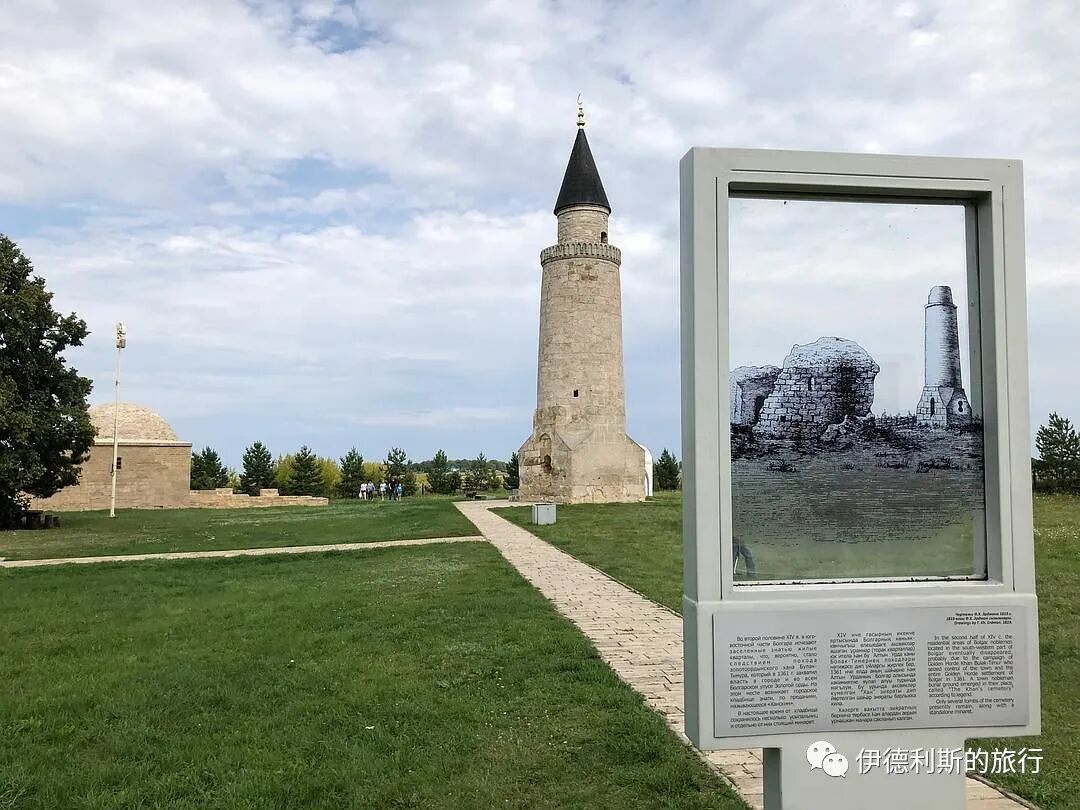
The first article, 'Bulgar: A Thousand-Year-Old Capital on the Volga,' introduces the ancient city of Bulgar in Tatarstan, Russia. It was the capital of Volga Bulgaria in the 10th and 11th centuries and adopted Islam in 922. The Mongol army destroyed Bulgar in the 13th century, but it was soon rebuilt into an important economic, commercial, cultural, and religious center for the Golden Horde. Influenced by the Bulgar people, the Mongol rulers of the Golden Horde also began to follow Islam, building a series of mosques, minarets, and Muslim tombs in the city. Along with secular palaces and bathhouses, most of the ruins remaining in Bulgar today date back to this period. After the Golden Horde declined, the ancient city of Bulgar remained a Muslim religious center until the mid-16th century. The ancient city fell into complete decline after Ivan the Terrible of Russia conquered the Khanate of Kazan in 1552.
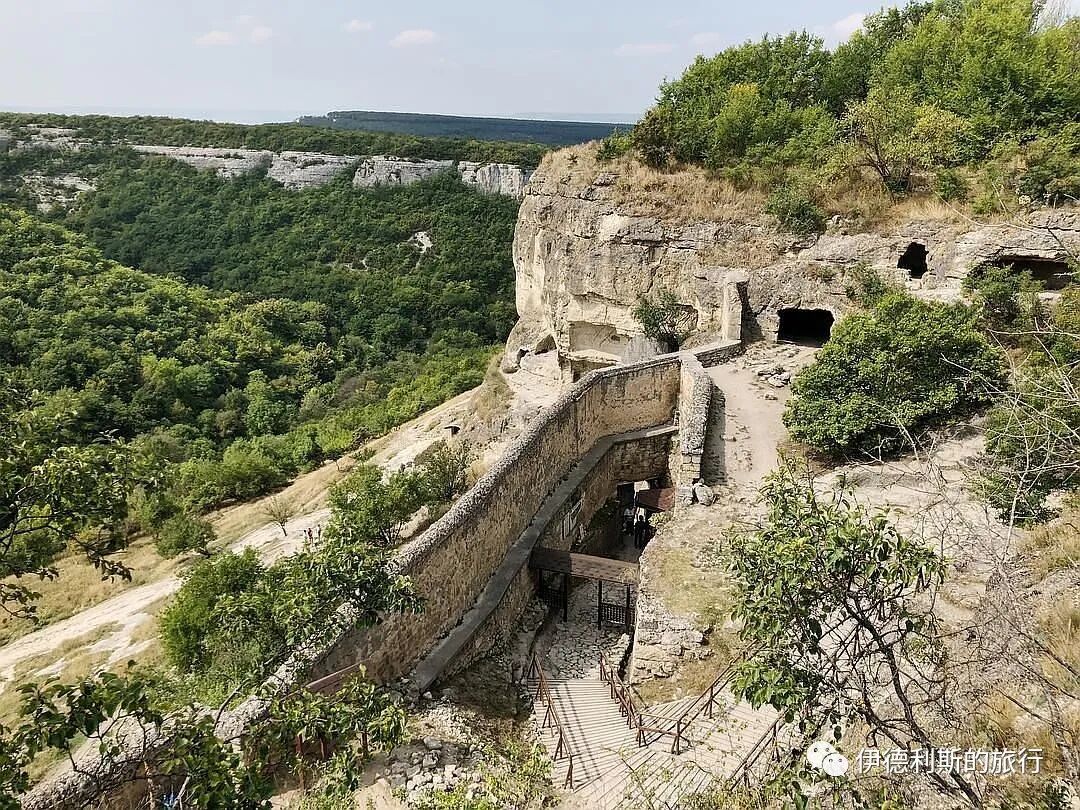
The second article, 'Chufut-Kale: The Founding Capital of the Crimean Khanate,' introduces the thousand-year-old Crimean city of Chufut-Kale. Chufut-Kale was first built by the Byzantines in the 5th to 6th centuries and was later inhabited by the Christian Alans. In 1299, the Golden Horde captured the Jewish fortress, and Tatar Muslims and Karaite Jews began living inside. In 1441, Hacı Giray, a descendant of Genghis Khan, minted coins with his name at the fortress, officially established the Crimean Khanate, and built many structures there. After the fortress well dried up in the mid-17th century, all the Tatars left, leaving only the Karaite Jews behind. From then on, Crimean Tatars began calling it the Jewish fortress. After the 19th century, the Karaite Jews also left, and the fortress eventually fell into ruins.
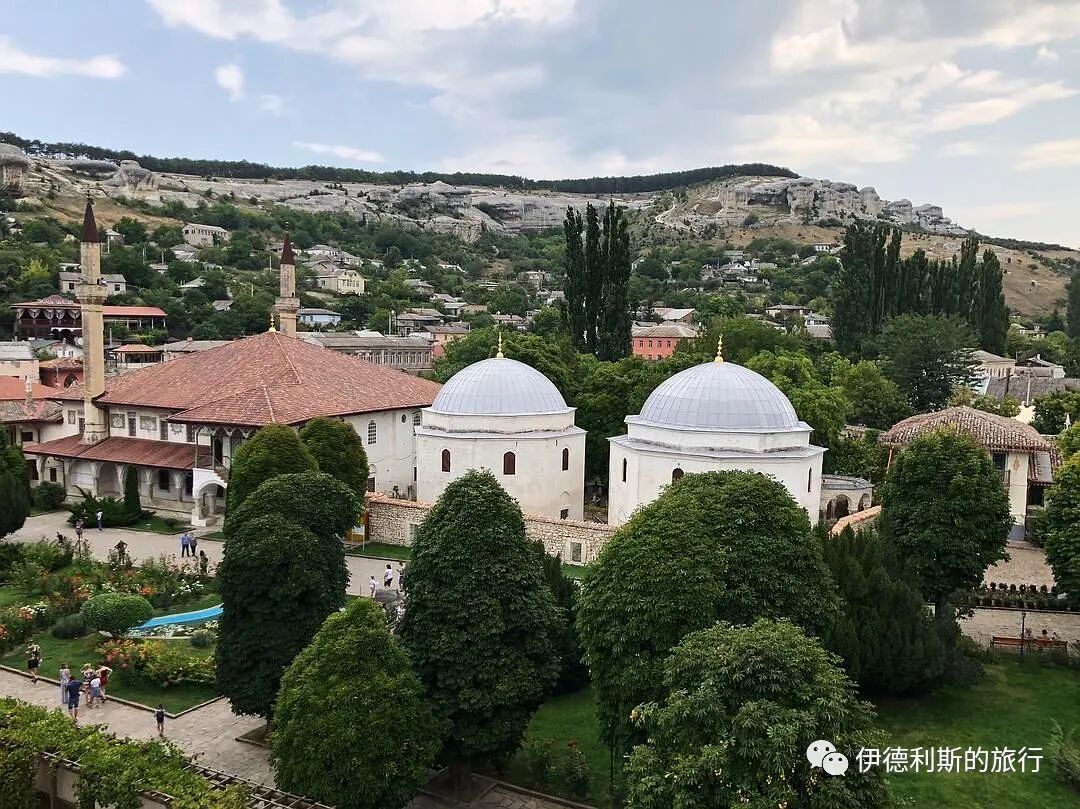
The third article, 'The Former Capital of the Crimean Khanate: Bakhchysarai,' explains that around 1500, Crimean Khan Meñli Giray built a new capital called Salachik in the valley west of the Jewish fortress. Salachik once had a complex of buildings including a palace, a court, baths, and a mosque, but now only a madrasa and the tomb of the founding Khan, Hacı Giray, remain. In 1532, Meñli Giray's son, Sahib Giray, built a new capital, Bakhchysarai, in the valley two kilometers downstream from Salachik. For the next 250 years, Bakhchysarai served as the capital of the Crimean Khanate, where successive Khans built palaces and various mosque structures. To the west of Bakhchisaray lies Eski Yurt, a large trading town that was already thriving during the Golden Horde era. It preserves several 14th to 16th-century tombs, including that of the Crimean Khan Mehmed II Giray.
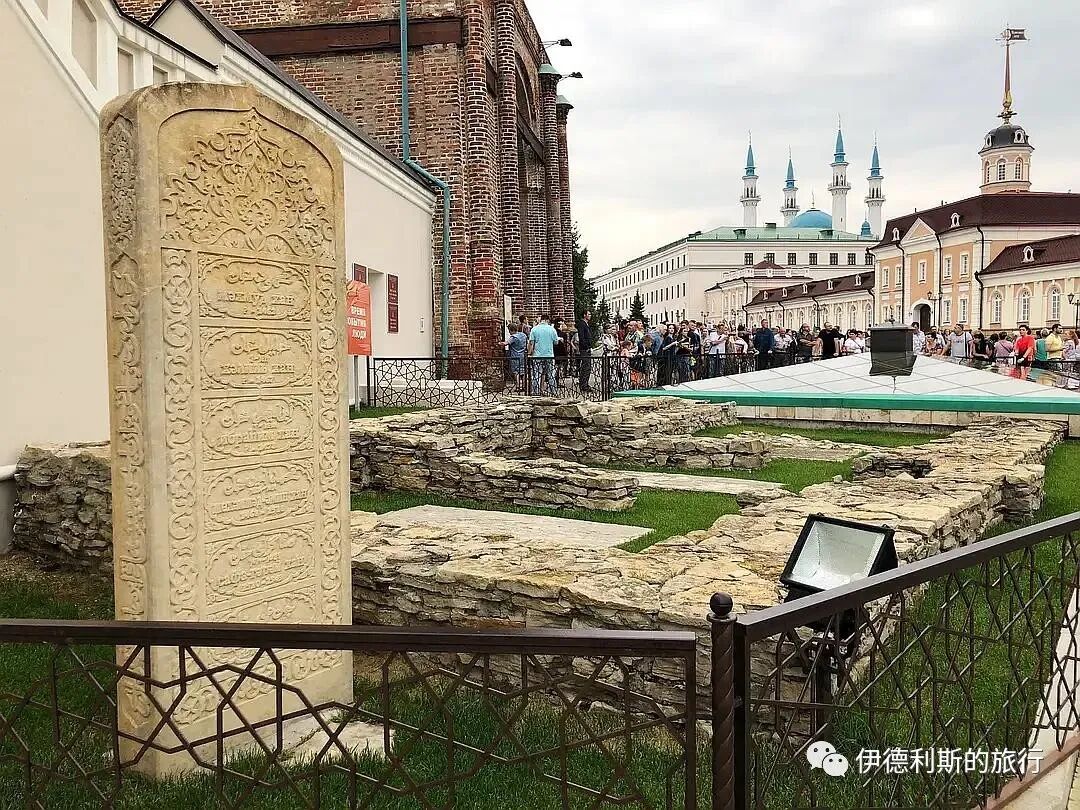
The fourth chapter, 'Kazan Kremlin and the National Museum of the Republic of Tatarstan,' explains that Kazan started as a fortress for the Volga Bulgaria. After it joined the Golden Horde in the 13th century, it quickly became a central city in the middle reaches of the Volga River. After the Golden Horde collapsed in the 15th century, the Khanate of Kazan (1438–1552) was established. As the capital, Kazan's population grew rapidly. Many homes and public buildings were built, including the Khan's palace, courtyards, mosques, and tombs. In 1552, Ivan the Terrible of Russia attacked Kazan and destroyed the Khanate. He later ordered the Kazan Kremlin to be built on the site of the old fortress. The mosques, the Khan's palace, and the tombs were first used as armories and ammunition depots, but they were all eventually torn down in the 18th century. In 1977, hydraulic engineers accidentally dug up the tombs of the Kazan Khans while laying rainwater pipes at the Kazan Kremlin. It took until May 2017, after persistent efforts, to rebury the two Khans that were unearthed.
Uzbekistan: Timurid Empire, Khanate of Bukhara
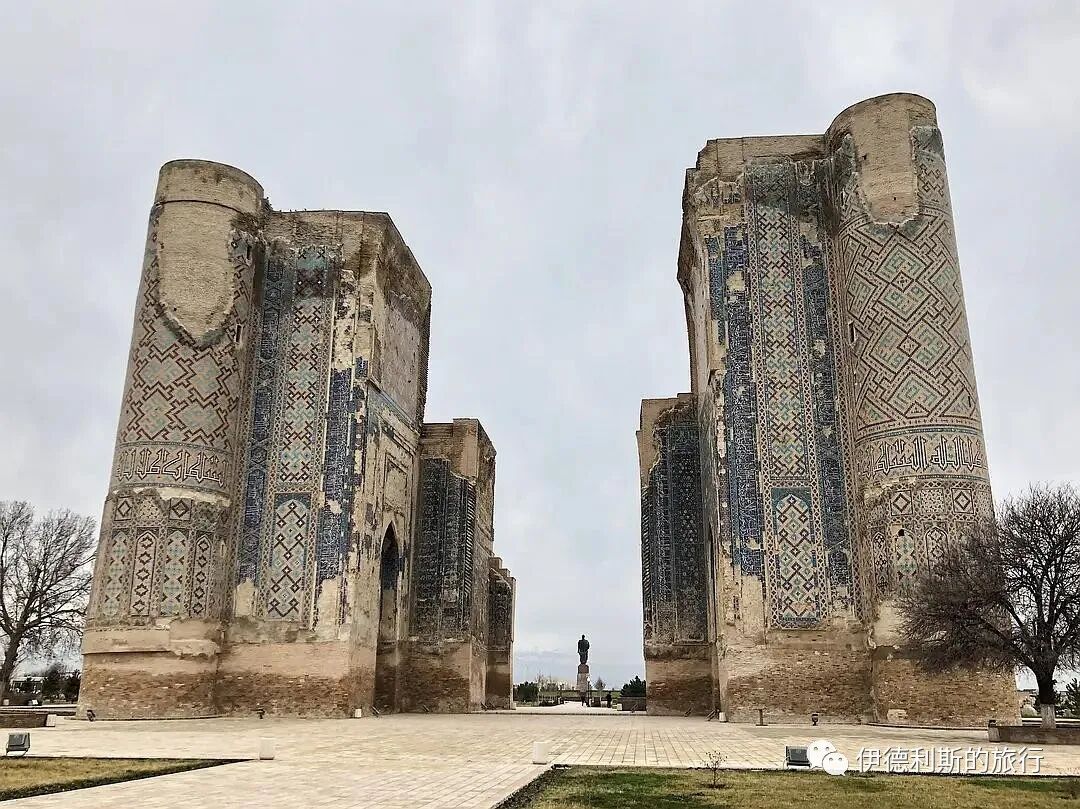
The first article, 'Timur's Hometown: Shahrisabz,' introduces the ancient Sogdian city of Kesh, south of Samarkand. After the Mongol conquest of Central Asia in 1225, it became part of the Chagatai Khanate and was ruled by the Barlas tribe. In 1346, the last khan of the Chagatai Khanate was killed, and the khanate fell into chaos. Emir Timur, a noble from the Barlas tribe in Kesh, gradually united the Transoxiana region and established the vast Timurid Empire. After founding the Timurid Empire, Timur renamed his hometown Kesh to Shahrisabz. He built a massive palace and family mausoleum there, and many of these ruins still stand today. After Timur passed away, his grandson Ulugh Beg continued to develop Shahrisabz, building a grand mosque and new tombs in the city.
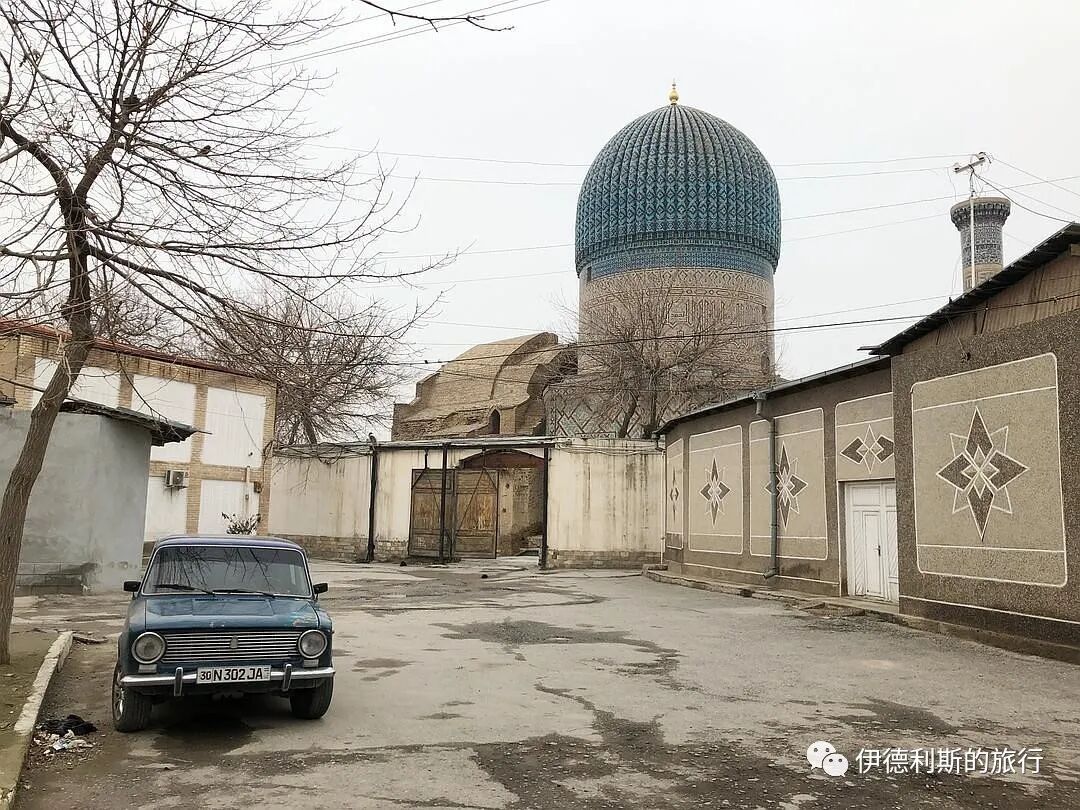
The second article, 'Timur's Capital: Samarkand,' explains that in 1370, Emperor Timur established the Timurid Empire on the ruins of the Chagatai Khanate and made Samarkand his capital. Over the next 35 years, Timur brought in great craftsmen, artists, and architects from across his empire to rebuild Samarkand, making it the undisputed center of Central Asia. During Timur's reign, Samarkand's population exceeded 150,000. Important landmarks like the Shah-i-Zinda necropolis and the Bibi-Khanym mosque remain preserved today. Between 1409 and 1449, for 40 years, Samarkand continued to grow as a city of science and culture under the rule of Timur's grandson, Ulugh Beg. Besides the Gur-e-Amir Mausoleum built for Emperor Timur, the Ulugh Beg Madrasah and the Ulugh Beg Observatory are both important pieces of evidence.
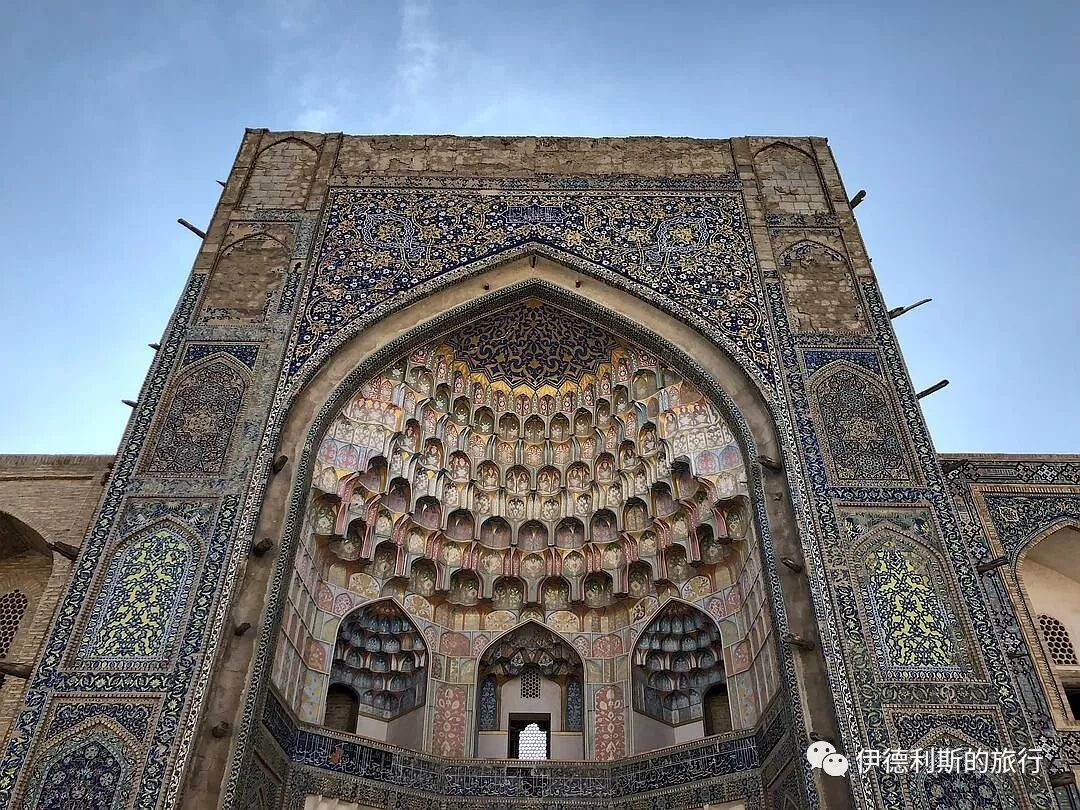
The third article, 'Bukhara: Capital of the Bukhara Khanate,' explains that in the early 16th century, Muhammad Shaybani led the Uzbek people from the northern Central Asian steppes to overthrow the Timurid dynasty in Transoxiana. He established the Shaybanid dynasty, and in 1533, the dynasty moved its capital to Bukhara. The Shaybanid dynasty line ended in 1598, and power passed to the Janid Dynasty, which continued to rule from Bukhara until 1785. Later generations refer to the Shaybanid and Janid dynasties collectively as the Bukhara Khanate. Bukhara served as the capital of the Bukhara Khanate for 252 years, from 1533 to 1785, and many buildings from that time still stand today. The most abundant architecture comes from the reign of Abdullah Khan II, who ruled Bukhara from 1557 to 1598, which was also the peak of the Bukhara Khanate's power.
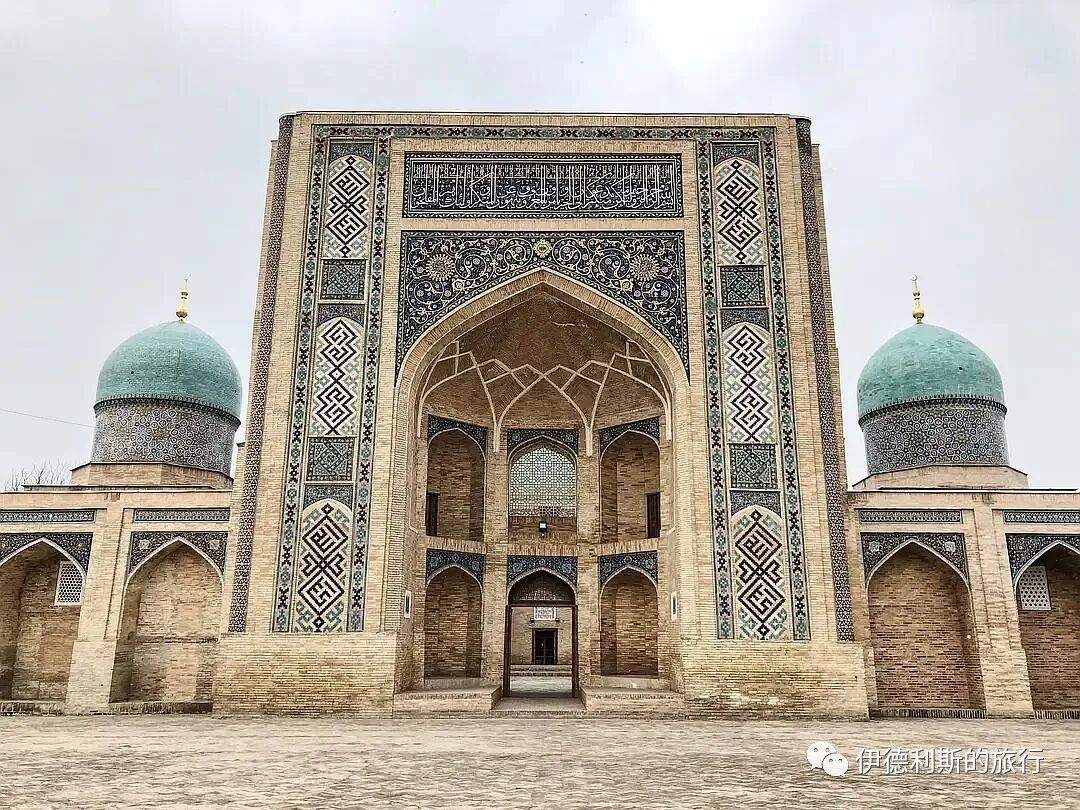
The fourth article, 'Tashkent: An Ancient City in Central Asia,' describes how Tashkent's population and size gradually recovered during the 14th to 16th centuries under the Timurid and Shaybanid dynasties, becoming a commercial and cultural hub along the Silk Road. Most of the historical buildings still found in Tashkent today were built during this period. During the chaos of the late Timurid dynasty, Tashkent briefly served as the capital of the Moghulistan Khanate, and the tomb of Yunus Khan still stands there today. Tashkent was incorporated into the Kazakh Khanate between the 17th and 18th centuries and became its capital in the 18th century. Today, Tashkent still preserves the tomb of a Kazakh hero.
Iran: Seljuk Empire, Qajar Dynasty
The first article, 'Rey: The Seljuk Ancient Capital Outside Tehran,' introduces the ancient city of Rey in the southern suburbs of Tehran. In the 9th century, the Shah Abdol-Azim Shrine was built in Rey, making it an important religious site in Iran. In 1043, Tughril Beg, the founder of the Seljuk Empire, made Rey the capital of the empire and carried out large-scale reconstruction of the ancient city. Under the rule of the Seljuk Empire, Rey reached its peak, featuring a massive market and a very prosperous trade scene. Import and export trade, mainly in silk, connected the entire Eurasian continent. Rayy was the center for making painted pottery in Iran at the time, and Rayy-style painted pottery was an important Iranian handicraft during this period. After the Mongol army invaded Iran in 1220, Rayy became a ghost town and was finally abandoned in the 16th century.
The second article, 'Palaces of the Qajar Dynasty in Iran: Golestan Palace (Kākh-e Golestān),' introduces how Golestan Palace was first called the Tehran Citadel (Arg) and was originally built during the Persian Safavid Dynasty. After Agha Mohammad Khan (reigned 1789-1797) of the Qajar Dynasty made Tehran the capital, he officially rebuilt the Tehran Citadel into Golestan Palace. Between 1925 and 1945, Reza Shah (reigned 1925-1941) of the Pahlavi Dynasty ordered the demolition of most of the buildings in Golestan Palace for modern urban construction, and only a portion remains today.
Azerbaijan: Shirvanshah Dynasty
The article 'Historical Buildings in the Old City of Baku, Azerbaijan' introduces the Shirvanshah Dynasty, established in Azerbaijan by the descendants of an Arab general, which moved its capital to Baku in 1191. Baku remained the capital of the Shirvanshah Dynasty for over 300 years after that. Baku held a key position in ancient Eurasian trade. It served as a major hub in the trade network, where many merchants from India and Central Asia stopped to transfer goods. Today, the old city preserves the palace complex from the Shirvanshah dynasty, relatively intact ancient city walls, over a dozen ancient mosques built between the 11th and 18th centuries, four large caravanserais that witnessed ancient trade, and several traditional bathhouses. It is well worth a visit.
Turkey: Sultanate of Rum, Ottoman Empire
The first article, 'Konya: The Last Capital of the Seljuk Empire,' introduces the Seljuk Turks. They came from the Central Asian steppes, were deeply influenced by Persian culture, established the Sultanate of Rum in Asia Minor in 1077, and made Konya their capital in 1097. After the Mongols invaded Central Asia and Persia in the early 13th century, many Turks and Persians fled to Konya. Many were educated intellectuals or skilled craftsmen, including the famous poet Rumi. In 1243, the Seljuk Sultanate of Rum was defeated by the Mongol Empire and became a vassal state. However, Konya remained the capital of the sultanate until 1328. People lived in peace, and many existing Seljuk buildings were constructed during this period. After the Seljuk Empire fell, Konya became the final center of Seljuk 'Turko-Persian' culture. Seljuk culture is most famous for its tiles and stone carvings featuring human and animal figures, which are not found in later Turkish culture.
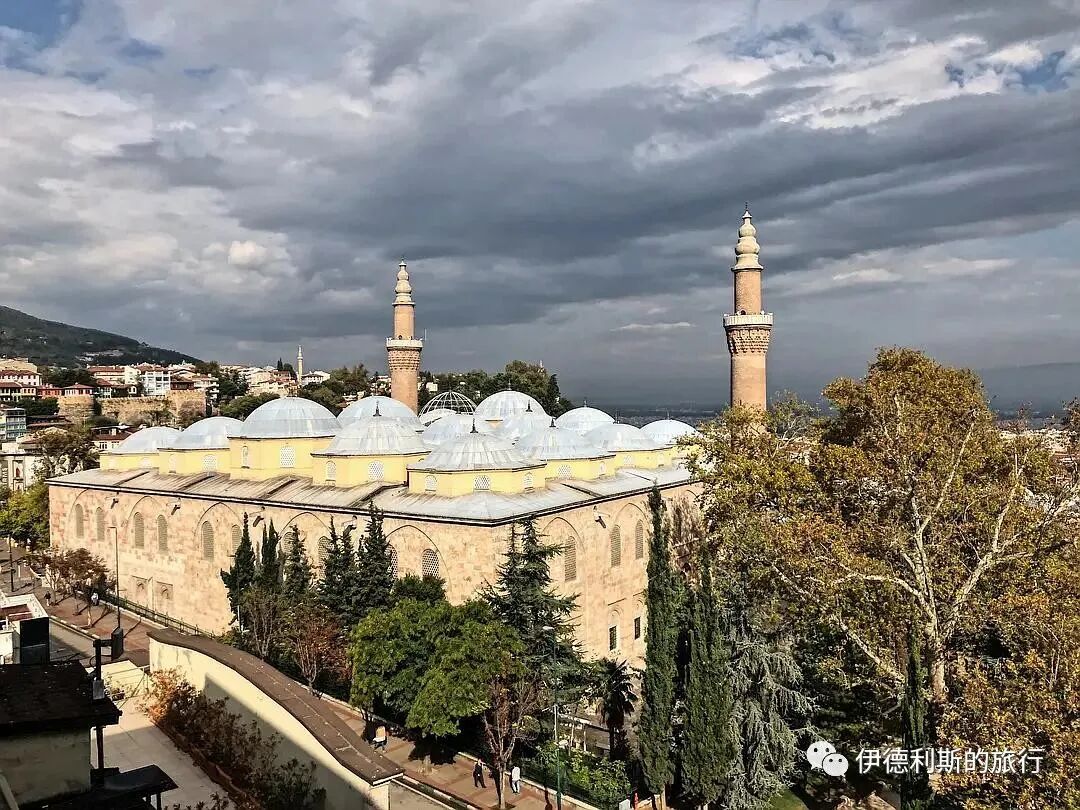
The second article, 'The Birth of the Ottoman Empire—Bursa,' explains how the Ottomans broke away from the Sultanate of Rum in the late 13th century and officially made Bursa their capital in 1326. From then on, the Ottomans used Bursa as a base to grow into the massive Ottoman Empire over the next hundred years. Bursa stands as the best witness to the birth of the Ottoman Empire. In 2014, UNESCO named the old city of Bursa a World Heritage site. Five of these heritage areas are located within Bursa. The builders of these five building complexes (külliye) were the second, third, fourth, fifth, and sixth rulers of the Ottoman dynasty. They cover the entire history of the Ottomans from the founding of the state to the conquest of Istanbul.
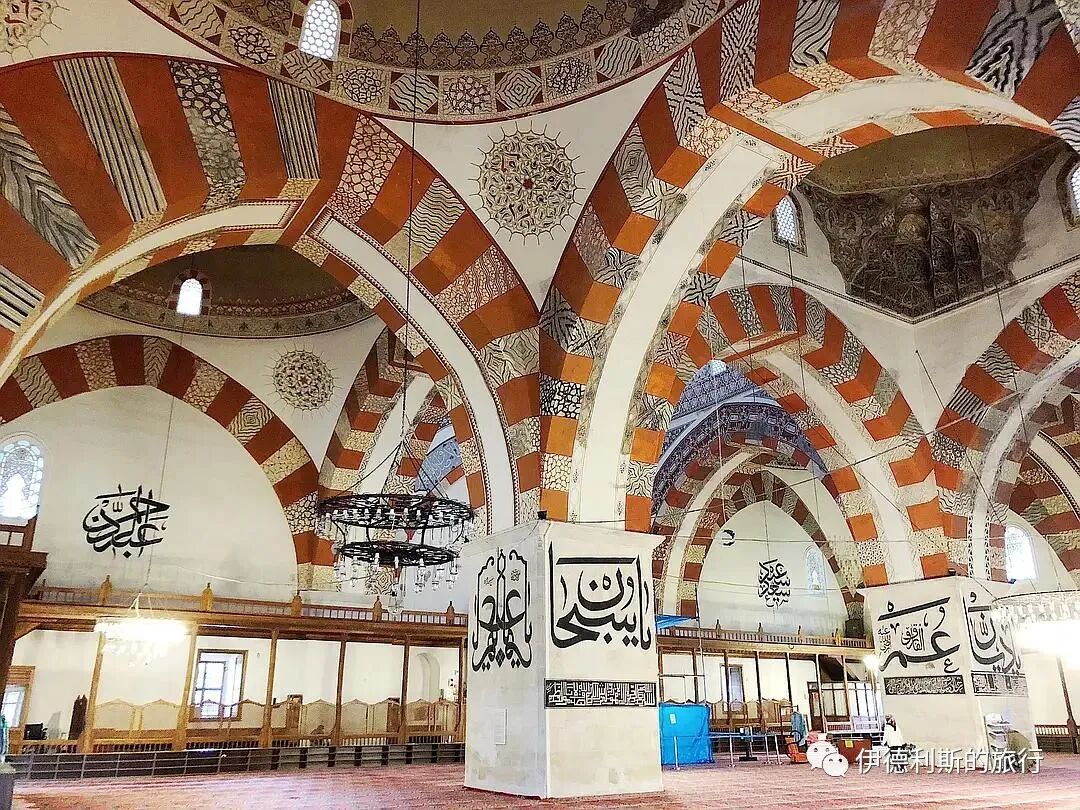
The third article, 'The Ottoman Capital in Europe—Edirne,' describes how the Ottomans captured Adrianople, an important Byzantine city in the Balkans, in 1369. They renamed it Edirne, and it became the Ottoman center in Europe. In 1413, Edirne officially became the capital of the Ottoman Empire, remaining so until the fall of Constantinople in 1453. After Prince Suleiman made Edirne his capital in 1403, he immediately began building the Old Mosque complex (Eski Cami) east of the old city. During the reign of Sultan Murad II, the second Muradiye complex and the third Three-Balcony Mosque complex (Üç Şerefeli Cami) were built in Edirne, along with a royal palace in the north.
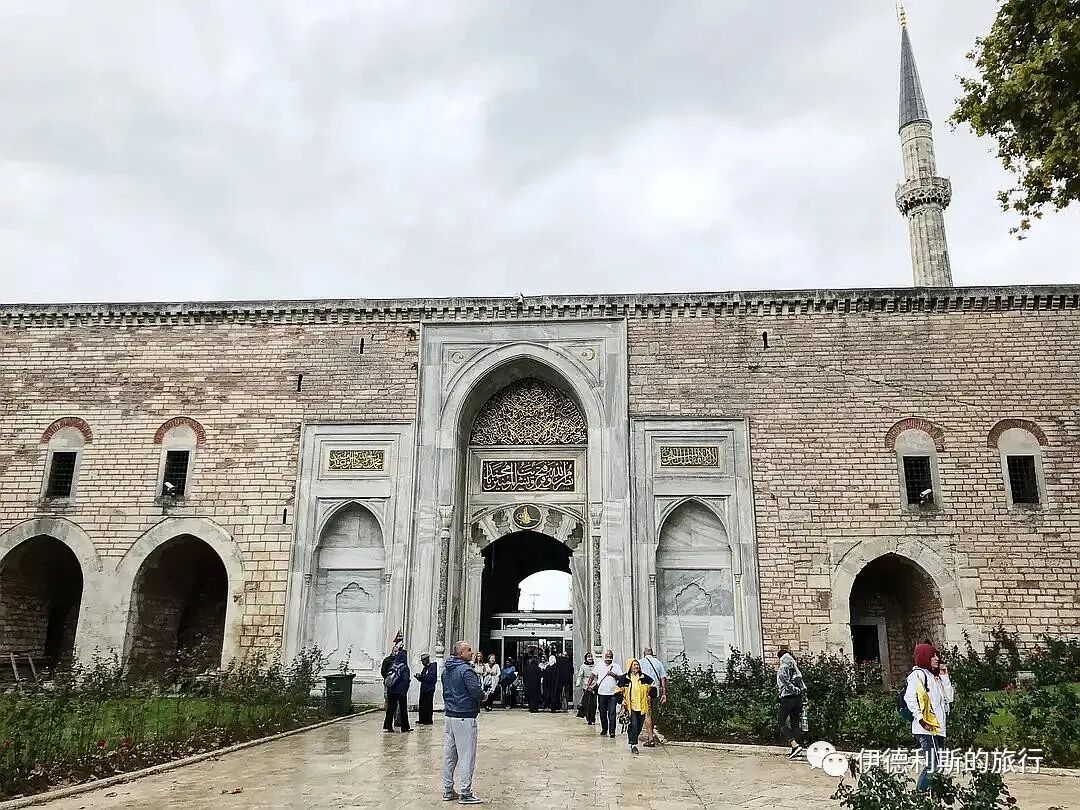
The fourth article, 'The Palace of the Ottoman Empire—Topkapi Palace (Topkapi Saray),' introduces the palace. It sits on the site of the former Byzantine acropolis in the eastern part of Istanbul's old city, overlooking the Golden Horn. Sultan Mehmed the Conqueror ordered its construction in 1459. Topkapi Palace was first called the New Palace (Yeni Saray) to tell it apart from the Old Palace (Eski Saray), which was built between 1454 and 1459. Topkapi Palace went through several major expansions and renovations in the 16th century. Its importance faded after the 17th century, and by the 19th century, it only served as a treasury, library, and mint.
India: Delhi Sultanate, Sur Empire, Mughal Empire, Qutb Shahi dynasty, and Asaf Jahi dynasty.
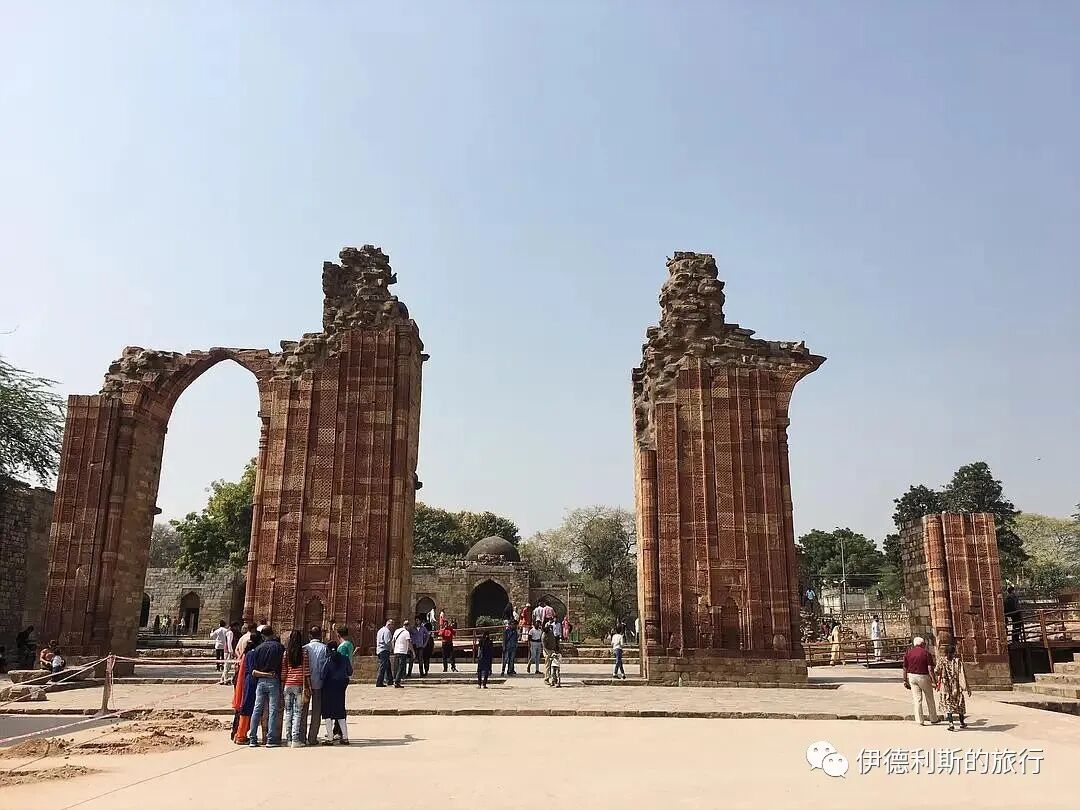
The first article, "The First City of Delhi: A Minaret Reaching the Clouds," introduces the ancient city of Lal Kot. In 1193, the Ghurid dynasty from Iran and Afghanistan conquered Lal Kot, the first city of Delhi. The Ghurid dynasty soon split apart, and Qutb, the general left in charge of Delhi, established the Delhi Sultanate. Qutb tore down Hindu and Jain temples in the city to build a massive mosque. Later, the Qutb Mosque underwent two major expansions by succeeding sultans, Iltutmish in 1225 and Alauddin Khalji in 1310, making Lal Kot the political, religious, and cultural center of the Delhi Sultanate.
The second article, "The Second City of Delhi: A Turkic Fortress Against the Mongol Army," introduces the ancient city of Siri. In 1299, Duwa, the Khan of the Mongol Chagatai Khanate, sent his son Qutlugh Khwaja to lead an expedition against the Delhi Sultanate. Both sides suffered heavy losses in a decisive battle on the outskirts of Delhi, but the Chagatai army eventually retreated because their commander was seriously wounded. To defend against the next invasion by the Chagatai army, Sultan Alauddin Khalji decided to build the second city of Delhi, Siri, to the northeast of Delhi's first city, Lal Kot. In 1303, the Chagatai Khanate launched another major expedition and besieged the unfinished city of Siri. After two months of siege, the Chagatai army could not break through the city and chose to retreat. After the siege ended, Alauddin Khalji built a palace in Siri, making it the new capital of the Delhi Sultanate, replacing Lal Kot.
The third article, 'The Third City of Delhi: The Indestructible Beautiful Ruins,' introduces the ancient city of Tughlaqabad. After Alauddin died in 1316, the Delhi Sultanate fell into civil war. In 1320, General Ghazi-ud-Din Tughlaq became the Sultan. The following year, Ghazi built a massive city to the east of Lal Kot and Siri, which became the third city of Delhi, Tughlaqabad. Ghazi dreamed of building this fortress to be indestructible, strong enough to withstand the fiercest attacks from the Mongol army, but fate did not go as he wished. After the Delhi Sultanate fell, the nomadic Gurjar people took over the city. It became a wilderness, leaving behind only massive walls and ruins.
The fourth article, 'The Fourth City of Delhi: The Mysterious Sultan's Palace,' introduces the ancient city of Jahanpanah. In 1325, Muhammad bin Tughluq, the son of Ghazi ud-Din Tughluq, took the throne. To stop the Mongol army from invading, Muhammad connected Delhi's first city, Lal Kot, and its second city, Siri, with walls to build the fourth city of Delhi, Jahanpanah. The famous traveler Ibn Battuta lived in Delhi. He wrote in his travelogues that Lal Kot was the city center, Siri was the military camp, and Jahanpanah in the middle was the palace area.
The fifth article, 'The Fifth City of Delhi: Spirits and the Ashoka Pillar,' introduces the ancient city of Ferozabad. In 1351, Firoz Shah Tughluq, the cousin of Muhammad who built Delhi's fourth city, took the throne. He built a new capital in the north of Delhi. Today, the Feroz Shah Kotla fort, the heart of Ferozabad, is filled with palace ruins. The most famous is the Delhi-Topra Ashoka Pillar, which Firoz Shah found and brought back to Delhi during an expedition. Every Thursday afternoon, many people come to Feroz Shah Kotla. They place milk and grains against the walls and write their wishes on paper, asking the spirits (Jinn) in the castle to make their wishes come true.
The sixth chapter, The Sixth City of Delhi—The Birth of the Mughal Dynasty, introduces the ancient city of Din Panah. Din Panah was the first Mughal city in Delhi, built in 1533 by Humayun, the second ruler of the Mughal Empire. In 1540, Sher Shah defeated Humayun to establish the Sur Dynasty, and Din Panah became the capital of the Sur Dynasty. Humayun recaptured Din Panah in 1555, but he fell and died there the following year. The inner city walls of Din Panah, now known as the Old Fort (Purana Qila), are still well-preserved today. Inside the Old Fort are significant historical buildings, including the Sur Dynasty's royal mosque and the library where Humayun fell to his death. These are vital historical sites for the early Mughal and Sur dynasties.
The seventh chapter, The Seventh City of Delhi—The Mughal Capital, introduces the ancient city of Shahjahanabad. In 1628, the fifth emperor of the Mughal Empire, Shah Jahan, took the throne. Under his rule, Mughal architectural aesthetics reached a new height, and this period is recognized as the golden age of Mughal architecture. Besides building the Taj Mahal, Shah Jahan built the seventh city of Delhi between 1639 and 1648, naming it Shahjahanabad after himself. Shah Jahan made Shahjahanabad the capital of the Mughal Empire, aiming to show the grandeur and power of the empire. Shahjahanabad is now known as Old Delhi and still keeps many historical sites and traditional neighborhoods. The most important site inside the city, the Red Fort, was added to the UNESCO World Heritage list in 2007.
The eighth article, 'An Ancient Muslim City on the Deccan Plateau: Golconda Fort,' introduces Golconda Fort on the Deccan Plateau in southern India. Because it had the only diamond mine in the world at the time, it was once the center of the global diamond trade. In 1518, Quli Qutb Mulk established the Qutb Shahi dynasty here, also known as the Golconda Sultanate. In 1687, the Mughal Emperor Aurangzeb captured Golconda Fort after an eight-month siege, and the site gradually fell into ruins. Today, many ruins of palaces, mosques, and gardens still remain here. Near Golconda Fort, you can find the tombs of the sultans from the Qutb Shahi dynasty. These tombs feature the classic style of Muslim architecture on the Deccan Plateau and are well worth seeing.
The ninth article, 'Hyderabad: An Ancient Muslim Capital in South India,' explains that in 1591, the Qutb Shahi dynasty moved its capital to the banks of the Musi River, east of the old city, to solve water shortages at Golconda Fort, establishing the city of Hyderabad. At that time, Sultan Muhammad Quli Qutb Shah invited several famous Persian architects to plan the city of Hyderabad and build landmarks like the Charminar gate and the Mecca Mosque. Hyderabad is also an important center for Shia Muslims in southern India, and it still preserves a hall built in 1594 to commemorate Imam Hussain.
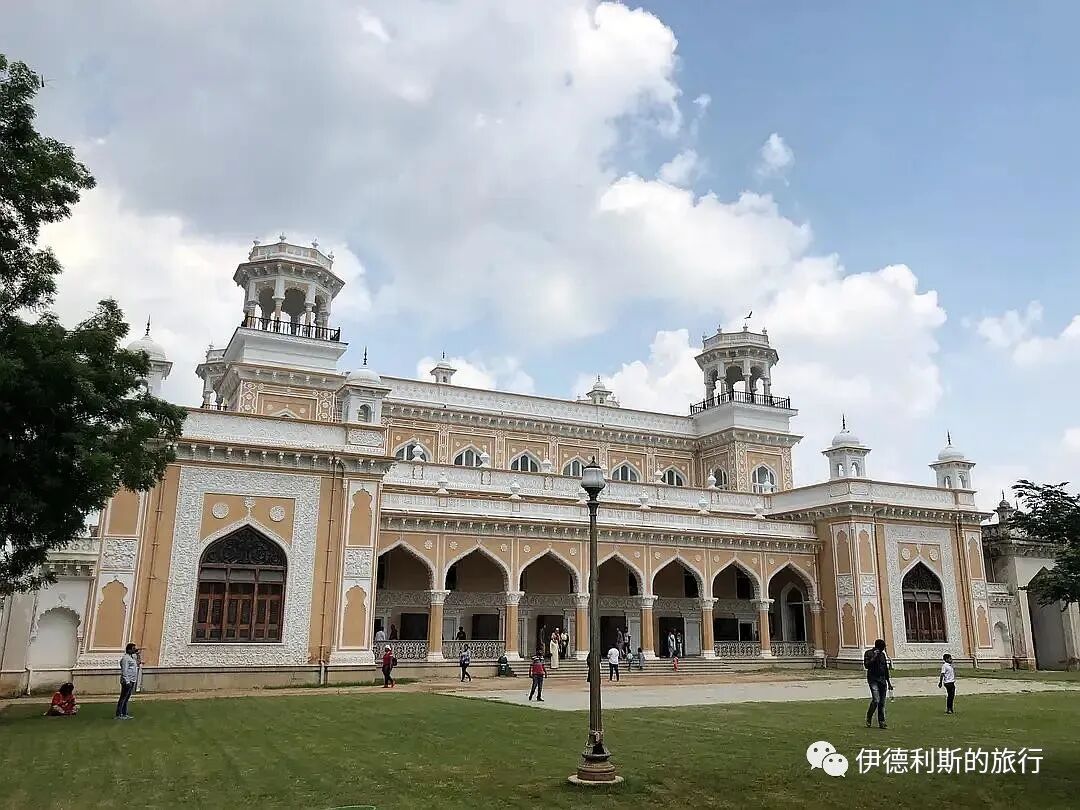
The tenth article, 'The Asaf Jahi Dynasty: A Muslim State on the Deccan Plateau in South India,' explains that in 1687, the Mughal Emperor Aurangzeb captured Hyderabad after an eight-month siege and incorporated it into the Mughal Empire. In 1724, a high-ranking Mughal official named Mir Qamar-ud-Din Siddiqi set up his own government in Hyderabad. Because he used the highest honorific title of the Mughal Empire, Asaf Jahi, his line became known as the Asaf Jahi dynasty. Hyderabad currently preserves the Chowmahalla Palace built by the Asaf Jahi dynasty, as well as the Paigah Tombs, which are famous for their exquisite plaster and marble carvings.
China: Moghulistan (East Chagatai Khanate), Yarkand Khanate
The first article, 'From Ili to Turpan—Two Royal Tombs of the East Chagatai Khanate,' introduces the early history of the East Chagatai Khanate through the tombs of its founding Khan, Tughluq Timur, and its third Khan, Khizr Khoja, located in Ili and Turpan. After the 14th century, conflicts deepened between the settled Chagatai Mongols in Transoxiana and those on the eastern steppes, eventually causing the Chagatai Khanate to split into eastern and western parts. In 1348, Tughluq Timur established the East Chagatai Khanate with Almalik as its capital. After taking the throne, Khan Tughluq Timur ordered all Chagatai Mongols in the East Chagatai Khanate to convert to Islam. He later unified the entire khanate through two western campaigns, but shortly after his death, the khanate fell into chaos again, and almost all of his descendants were killed. In 1389, Tughluq Timur's youngest son, Khizr Khoja, who had been in hiding for many years, took the throne. To escape the eastern campaign of Tamerlane the Great, Khizr Khoja moved the royal court east to Turpan, where he eventually died.
The second article, 'The Last Capital of the Chagatai—Yarkand,' introduces how Sultan Said Khan, a descendant of the East Chagatai royal family, established the Yarkand Khanate in 1514 with Yarkand as its capital, ruling southern Xinjiang until 1680. During the Yarkand Khanate's rule over southern Xinjiang, the Chagatai Mongols shifted from a nomadic lifestyle to a settled one and blended into the Uyghur people. The Uyghur people also gradually developed into a modern ethnic group during this period. Culturally, the Yarkand Khanate era saw the creation of famous historical works like the Tarikh-i-Rashidi and the Chronicles, and the Twelve Muqam musical tradition was also finalized during this time. In the later years of the Yarkand Khanate, the Black Mountain faction of the Sufi Naqshbandi order took control of Yarkand city. After the Dzungar Khanate and the White Mountain faction occupied southern Xinjiang in 1680, the Black Mountain faction withdrew for a time, but they returned to rule Yarkand city for half a century between 1697 and 1755.
Malaysia: Malacca Sultanate
The book The First Sultanate in Southeast Asia: Malacca explains that Paramesvara, a prince of the Srivijaya kingdom, was named King of Malacca by the Yongle Emperor in 1406. Since most merchants trading with Malacca were Muslims, the rulers of Malacca increasingly saw the importance of Islam in trade. During the reign of the third ruler, Raja Tengah (1424-1444), all royal ministers converted to Islam, the king became a sultan, and the Malacca Sultanate became the first sultanate in Southeast Asia. In 1511, the Portuguese captured Malacca and destroyed all of the city's original palaces, cemeteries, and mosques. After the Dutch took over Malacca, they adopted a relatively tolerant religious policy and began building mosques with unique Malaccan features in the early 18th century.
Indonesia: Demak Sultanate, Banten Sultanate, Mataram Sultanate, Yogyakarta Sultanate, and Surakarta Sunanate.
The first article, 'The Earliest Sultanate on Java—Demak,' explains that Arab and Indian Muslim merchants began settling on the north coast of Java in the 15th century. The port of Demak became a powerful trading hub by importing spices from the Spice Islands and exporting rice to the Malacca Sultanate. Established between 1475 and 1568, the Demak Sultanate was the first sultanate on Java and played a major role in spreading Islam across the island. Today, the Great Mosque of Demak remains the most important early traditional mosque in Java, and the tomb of Sunan Kalijaga in the southeastern suburbs of Demak is also a significant Islamic holy site in Java.
The second article, 'The Jerusalem of Java—Kudus,' introduces how Sunan Kudus, one of the nine Islamic saints of Java (Wali Sanga), preached on the island during the 16th century. He blended Islamic culture with traditional Javanese culture and built the unique Al-Aqsa Mosque of Kudus. After he passed away, he was buried in the backyard of the Al-Aqsa Mosque, and his tomb became a famous Islamic holy site in Java.
The third article, 'Ocean City at the Western Tip of Java: Banten,' introduces how the Banten Sultanate rose to become a powerful maritime trading nation in the 16th century, controlling the pepper trade in Southeast Asia. The Banten Sultanate reached its peak in the 17th century and had intense conflicts with the Dutch East India Company. After the 18th century, the Banten Sultanate gradually came under the control of the Dutch East India Company and was finally incorporated into the Dutch East Indies in the 19th century. Today, the ancient city of Banten still preserves many ruins, and the Great Mosque of Banten, built in the 16th century, remains a famous religious site. two palaces of the Banten Sultanate, a Dutch fortress, and several tombs of the Banten Sultans are still preserved.
The fourth article, 'The Lost Ancient Capital of Java: Kotagede,' introduces the town of Kotagede in the southeastern suburbs of the ancient Javanese city of Yogyakarta. Its name means 'great city,' and it served as the first capital of the Mataram Sultanate between the 1570s and 1613. The Mataram Sultanate was the most powerful Islamic kingdom on Java in the 17th century. It later split into the two sultanates of Yogyakarta and Surakarta in 1755, which continue to exist today. Kota Gede still keeps the mosque and royal tombs of the Mataram Sultanate. The tomb guards work for both the royal families of Yogyakarta and Solo, making this a famous pilgrimage site for people from both cities.
The fifth article, 'Indonesia's Last Sultanate Territory—Yogyakarta,' explains how the Mataram Sultanate fell into power struggles in the late 17th century and finally split into the Yogyakarta Sultanate and the Surakarta Sunanate in 1755. After Indonesia gained independence, the Yogyakarta Sultanate became the Yogyakarta Special Region. The Sultan serves as the governor, making it the only region in Indonesia currently ruled by a Sultan. Today, Yogyakarta preserves the palace, water palace garden, and Great Mosque built by the Sultan in the 18th century. You can also eat royal palace food and enjoy court music there.
The sixth article, 'Central Java's Ancient City—Solo,' introduces how a Chinese-Javanese coalition destroyed the Mataram Sultanate capital of Kartasura in 1742. The last Sultan, Pakubuwono II, officially moved the capital to Solo (Surakarta) in 1745. In 1755, the Mataram Sultanate officially split into the Surakarta Sunanate and the Yogyakarta Sultanate, and Solo became the capital of the Surakarta Sunanate. Today, the Sunan still lives in most of the Solo palace, with only a part open as a museum. There is also the Solo Mosque built in 1768, where many Islamic ceremonies are held. In 1757, the former Mataram Sultanate rebel Raden Mas Said established the Mangkunegaran princely state near Solo. That same year, he built the Mangkunegara Palace in Solo, which is now open to the public as a tourist attraction. view all
Summary: Muslim Dynasty Travel Project: Historic Islamic Cities Across Eurasia is presented here as a firsthand travel account in clear English, beginning with this scene: Between 2017 and 2019, I used my vacations to visit 10 countries and regions: Russia, Crimea (Russian-occupied), Uzbekistan, Iran, Azerbaijan, Turkey, India, Malaysia, Indonesia, and Xinjiang, China. The account keeps its focus on Muslim Dynasties, Islamic History, Travel Project while preserving the names, places, food, and historical details from the Chinese source.
Between 2017 and 2019, I used my vacations to visit 10 countries and regions: Russia, Crimea (Russian-occupied), Uzbekistan, Iran, Azerbaijan, Turkey, India, Malaysia, Indonesia, and Xinjiang, China. I visited 35 ancient Muslim cities, covering 24 Muslim dynasties from the 11th to the 20th century. Afterward, I used my spare time to look up information and gradually put together some articles. I had already made plans for my 2020 visits, but they were suddenly interrupted. From being unable to leave the country to being unable to leave Beijing, my journey had to pause.
So far, I have finished sharing all 35 ancient cities. I am making a directory here to make it easier to look them up later. Also, my other project, Exploring and Eating in Muslim Communities, is still going on. During the year I could not leave Beijing, I started focusing on local historical sites of Hui Muslims and Islam in Beijing and visited some of them.
Eastern Europe: Volga Bulgaria (Bulgar Khanate), Golden Horde, Crimean Khanate, and Kazan Khanate.
The first article, 'Bulgar: A Thousand-Year-Old Capital on the Volga,' introduces the ancient city of Bulgar in Tatarstan, Russia. It was the capital of Volga Bulgaria in the 10th and 11th centuries and adopted Islam in 922. The Mongol army destroyed Bulgar in the 13th century, but it was soon rebuilt into an important economic, commercial, cultural, and religious center for the Golden Horde. Influenced by the Bulgar people, the Mongol rulers of the Golden Horde also began to follow Islam, building a series of mosques, minarets, and Muslim tombs in the city. Along with secular palaces and bathhouses, most of the ruins remaining in Bulgar today date back to this period. After the Golden Horde declined, the ancient city of Bulgar remained a Muslim religious center until the mid-16th century. The ancient city fell into complete decline after Ivan the Terrible of Russia conquered the Khanate of Kazan in 1552.
The second article, 'Chufut-Kale: The Founding Capital of the Crimean Khanate,' introduces the thousand-year-old Crimean city of Chufut-Kale. Chufut-Kale was first built by the Byzantines in the 5th to 6th centuries and was later inhabited by the Christian Alans. In 1299, the Golden Horde captured the Jewish fortress, and Tatar Muslims and Karaite Jews began living inside. In 1441, Hacı Giray, a descendant of Genghis Khan, minted coins with his name at the fortress, officially established the Crimean Khanate, and built many structures there. After the fortress well dried up in the mid-17th century, all the Tatars left, leaving only the Karaite Jews behind. From then on, Crimean Tatars began calling it the Jewish fortress. After the 19th century, the Karaite Jews also left, and the fortress eventually fell into ruins.
The third article, 'The Former Capital of the Crimean Khanate: Bakhchysarai,' explains that around 1500, Crimean Khan Meñli Giray built a new capital called Salachik in the valley west of the Jewish fortress. Salachik once had a complex of buildings including a palace, a court, baths, and a mosque, but now only a madrasa and the tomb of the founding Khan, Hacı Giray, remain. In 1532, Meñli Giray's son, Sahib Giray, built a new capital, Bakhchysarai, in the valley two kilometers downstream from Salachik. For the next 250 years, Bakhchysarai served as the capital of the Crimean Khanate, where successive Khans built palaces and various mosque structures. To the west of Bakhchisaray lies Eski Yurt, a large trading town that was already thriving during the Golden Horde era. It preserves several 14th to 16th-century tombs, including that of the Crimean Khan Mehmed II Giray.
The fourth chapter, 'Kazan Kremlin and the National Museum of the Republic of Tatarstan,' explains that Kazan started as a fortress for the Volga Bulgaria. After it joined the Golden Horde in the 13th century, it quickly became a central city in the middle reaches of the Volga River. After the Golden Horde collapsed in the 15th century, the Khanate of Kazan (1438–1552) was established. As the capital, Kazan's population grew rapidly. Many homes and public buildings were built, including the Khan's palace, courtyards, mosques, and tombs. In 1552, Ivan the Terrible of Russia attacked Kazan and destroyed the Khanate. He later ordered the Kazan Kremlin to be built on the site of the old fortress. The mosques, the Khan's palace, and the tombs were first used as armories and ammunition depots, but they were all eventually torn down in the 18th century. In 1977, hydraulic engineers accidentally dug up the tombs of the Kazan Khans while laying rainwater pipes at the Kazan Kremlin. It took until May 2017, after persistent efforts, to rebury the two Khans that were unearthed.
Uzbekistan: Timurid Empire, Khanate of Bukhara
The first article, 'Timur's Hometown: Shahrisabz,' introduces the ancient Sogdian city of Kesh, south of Samarkand. After the Mongol conquest of Central Asia in 1225, it became part of the Chagatai Khanate and was ruled by the Barlas tribe. In 1346, the last khan of the Chagatai Khanate was killed, and the khanate fell into chaos. Emir Timur, a noble from the Barlas tribe in Kesh, gradually united the Transoxiana region and established the vast Timurid Empire. After founding the Timurid Empire, Timur renamed his hometown Kesh to Shahrisabz. He built a massive palace and family mausoleum there, and many of these ruins still stand today. After Timur passed away, his grandson Ulugh Beg continued to develop Shahrisabz, building a grand mosque and new tombs in the city.
The second article, 'Timur's Capital: Samarkand,' explains that in 1370, Emperor Timur established the Timurid Empire on the ruins of the Chagatai Khanate and made Samarkand his capital. Over the next 35 years, Timur brought in great craftsmen, artists, and architects from across his empire to rebuild Samarkand, making it the undisputed center of Central Asia. During Timur's reign, Samarkand's population exceeded 150,000. Important landmarks like the Shah-i-Zinda necropolis and the Bibi-Khanym mosque remain preserved today. Between 1409 and 1449, for 40 years, Samarkand continued to grow as a city of science and culture under the rule of Timur's grandson, Ulugh Beg. Besides the Gur-e-Amir Mausoleum built for Emperor Timur, the Ulugh Beg Madrasah and the Ulugh Beg Observatory are both important pieces of evidence.
The third article, 'Bukhara: Capital of the Bukhara Khanate,' explains that in the early 16th century, Muhammad Shaybani led the Uzbek people from the northern Central Asian steppes to overthrow the Timurid dynasty in Transoxiana. He established the Shaybanid dynasty, and in 1533, the dynasty moved its capital to Bukhara. The Shaybanid dynasty line ended in 1598, and power passed to the Janid Dynasty, which continued to rule from Bukhara until 1785. Later generations refer to the Shaybanid and Janid dynasties collectively as the Bukhara Khanate. Bukhara served as the capital of the Bukhara Khanate for 252 years, from 1533 to 1785, and many buildings from that time still stand today. The most abundant architecture comes from the reign of Abdullah Khan II, who ruled Bukhara from 1557 to 1598, which was also the peak of the Bukhara Khanate's power.
The fourth article, 'Tashkent: An Ancient City in Central Asia,' describes how Tashkent's population and size gradually recovered during the 14th to 16th centuries under the Timurid and Shaybanid dynasties, becoming a commercial and cultural hub along the Silk Road. Most of the historical buildings still found in Tashkent today were built during this period. During the chaos of the late Timurid dynasty, Tashkent briefly served as the capital of the Moghulistan Khanate, and the tomb of Yunus Khan still stands there today. Tashkent was incorporated into the Kazakh Khanate between the 17th and 18th centuries and became its capital in the 18th century. Today, Tashkent still preserves the tomb of a Kazakh hero.
Iran: Seljuk Empire, Qajar Dynasty
The first article, 'Rey: The Seljuk Ancient Capital Outside Tehran,' introduces the ancient city of Rey in the southern suburbs of Tehran. In the 9th century, the Shah Abdol-Azim Shrine was built in Rey, making it an important religious site in Iran. In 1043, Tughril Beg, the founder of the Seljuk Empire, made Rey the capital of the empire and carried out large-scale reconstruction of the ancient city. Under the rule of the Seljuk Empire, Rey reached its peak, featuring a massive market and a very prosperous trade scene. Import and export trade, mainly in silk, connected the entire Eurasian continent. Rayy was the center for making painted pottery in Iran at the time, and Rayy-style painted pottery was an important Iranian handicraft during this period. After the Mongol army invaded Iran in 1220, Rayy became a ghost town and was finally abandoned in the 16th century.
The second article, 'Palaces of the Qajar Dynasty in Iran: Golestan Palace (Kākh-e Golestān),' introduces how Golestan Palace was first called the Tehran Citadel (Arg) and was originally built during the Persian Safavid Dynasty. After Agha Mohammad Khan (reigned 1789-1797) of the Qajar Dynasty made Tehran the capital, he officially rebuilt the Tehran Citadel into Golestan Palace. Between 1925 and 1945, Reza Shah (reigned 1925-1941) of the Pahlavi Dynasty ordered the demolition of most of the buildings in Golestan Palace for modern urban construction, and only a portion remains today.
Azerbaijan: Shirvanshah Dynasty
The article 'Historical Buildings in the Old City of Baku, Azerbaijan' introduces the Shirvanshah Dynasty, established in Azerbaijan by the descendants of an Arab general, which moved its capital to Baku in 1191. Baku remained the capital of the Shirvanshah Dynasty for over 300 years after that. Baku held a key position in ancient Eurasian trade. It served as a major hub in the trade network, where many merchants from India and Central Asia stopped to transfer goods. Today, the old city preserves the palace complex from the Shirvanshah dynasty, relatively intact ancient city walls, over a dozen ancient mosques built between the 11th and 18th centuries, four large caravanserais that witnessed ancient trade, and several traditional bathhouses. It is well worth a visit.
Turkey: Sultanate of Rum, Ottoman Empire
The first article, 'Konya: The Last Capital of the Seljuk Empire,' introduces the Seljuk Turks. They came from the Central Asian steppes, were deeply influenced by Persian culture, established the Sultanate of Rum in Asia Minor in 1077, and made Konya their capital in 1097. After the Mongols invaded Central Asia and Persia in the early 13th century, many Turks and Persians fled to Konya. Many were educated intellectuals or skilled craftsmen, including the famous poet Rumi. In 1243, the Seljuk Sultanate of Rum was defeated by the Mongol Empire and became a vassal state. However, Konya remained the capital of the sultanate until 1328. People lived in peace, and many existing Seljuk buildings were constructed during this period. After the Seljuk Empire fell, Konya became the final center of Seljuk 'Turko-Persian' culture. Seljuk culture is most famous for its tiles and stone carvings featuring human and animal figures, which are not found in later Turkish culture.
The second article, 'The Birth of the Ottoman Empire—Bursa,' explains how the Ottomans broke away from the Sultanate of Rum in the late 13th century and officially made Bursa their capital in 1326. From then on, the Ottomans used Bursa as a base to grow into the massive Ottoman Empire over the next hundred years. Bursa stands as the best witness to the birth of the Ottoman Empire. In 2014, UNESCO named the old city of Bursa a World Heritage site. Five of these heritage areas are located within Bursa. The builders of these five building complexes (külliye) were the second, third, fourth, fifth, and sixth rulers of the Ottoman dynasty. They cover the entire history of the Ottomans from the founding of the state to the conquest of Istanbul.
The third article, 'The Ottoman Capital in Europe—Edirne,' describes how the Ottomans captured Adrianople, an important Byzantine city in the Balkans, in 1369. They renamed it Edirne, and it became the Ottoman center in Europe. In 1413, Edirne officially became the capital of the Ottoman Empire, remaining so until the fall of Constantinople in 1453. After Prince Suleiman made Edirne his capital in 1403, he immediately began building the Old Mosque complex (Eski Cami) east of the old city. During the reign of Sultan Murad II, the second Muradiye complex and the third Three-Balcony Mosque complex (Üç Şerefeli Cami) were built in Edirne, along with a royal palace in the north.
The fourth article, 'The Palace of the Ottoman Empire—Topkapi Palace (Topkapi Saray),' introduces the palace. It sits on the site of the former Byzantine acropolis in the eastern part of Istanbul's old city, overlooking the Golden Horn. Sultan Mehmed the Conqueror ordered its construction in 1459. Topkapi Palace was first called the New Palace (Yeni Saray) to tell it apart from the Old Palace (Eski Saray), which was built between 1454 and 1459. Topkapi Palace went through several major expansions and renovations in the 16th century. Its importance faded after the 17th century, and by the 19th century, it only served as a treasury, library, and mint.
India: Delhi Sultanate, Sur Empire, Mughal Empire, Qutb Shahi dynasty, and Asaf Jahi dynasty.
The first article, "The First City of Delhi: A Minaret Reaching the Clouds," introduces the ancient city of Lal Kot. In 1193, the Ghurid dynasty from Iran and Afghanistan conquered Lal Kot, the first city of Delhi. The Ghurid dynasty soon split apart, and Qutb, the general left in charge of Delhi, established the Delhi Sultanate. Qutb tore down Hindu and Jain temples in the city to build a massive mosque. Later, the Qutb Mosque underwent two major expansions by succeeding sultans, Iltutmish in 1225 and Alauddin Khalji in 1310, making Lal Kot the political, religious, and cultural center of the Delhi Sultanate.
The second article, "The Second City of Delhi: A Turkic Fortress Against the Mongol Army," introduces the ancient city of Siri. In 1299, Duwa, the Khan of the Mongol Chagatai Khanate, sent his son Qutlugh Khwaja to lead an expedition against the Delhi Sultanate. Both sides suffered heavy losses in a decisive battle on the outskirts of Delhi, but the Chagatai army eventually retreated because their commander was seriously wounded. To defend against the next invasion by the Chagatai army, Sultan Alauddin Khalji decided to build the second city of Delhi, Siri, to the northeast of Delhi's first city, Lal Kot. In 1303, the Chagatai Khanate launched another major expedition and besieged the unfinished city of Siri. After two months of siege, the Chagatai army could not break through the city and chose to retreat. After the siege ended, Alauddin Khalji built a palace in Siri, making it the new capital of the Delhi Sultanate, replacing Lal Kot.
The third article, 'The Third City of Delhi: The Indestructible Beautiful Ruins,' introduces the ancient city of Tughlaqabad. After Alauddin died in 1316, the Delhi Sultanate fell into civil war. In 1320, General Ghazi-ud-Din Tughlaq became the Sultan. The following year, Ghazi built a massive city to the east of Lal Kot and Siri, which became the third city of Delhi, Tughlaqabad. Ghazi dreamed of building this fortress to be indestructible, strong enough to withstand the fiercest attacks from the Mongol army, but fate did not go as he wished. After the Delhi Sultanate fell, the nomadic Gurjar people took over the city. It became a wilderness, leaving behind only massive walls and ruins.
The fourth article, 'The Fourth City of Delhi: The Mysterious Sultan's Palace,' introduces the ancient city of Jahanpanah. In 1325, Muhammad bin Tughluq, the son of Ghazi ud-Din Tughluq, took the throne. To stop the Mongol army from invading, Muhammad connected Delhi's first city, Lal Kot, and its second city, Siri, with walls to build the fourth city of Delhi, Jahanpanah. The famous traveler Ibn Battuta lived in Delhi. He wrote in his travelogues that Lal Kot was the city center, Siri was the military camp, and Jahanpanah in the middle was the palace area.
The fifth article, 'The Fifth City of Delhi: Spirits and the Ashoka Pillar,' introduces the ancient city of Ferozabad. In 1351, Firoz Shah Tughluq, the cousin of Muhammad who built Delhi's fourth city, took the throne. He built a new capital in the north of Delhi. Today, the Feroz Shah Kotla fort, the heart of Ferozabad, is filled with palace ruins. The most famous is the Delhi-Topra Ashoka Pillar, which Firoz Shah found and brought back to Delhi during an expedition. Every Thursday afternoon, many people come to Feroz Shah Kotla. They place milk and grains against the walls and write their wishes on paper, asking the spirits (Jinn) in the castle to make their wishes come true.
The sixth chapter, The Sixth City of Delhi—The Birth of the Mughal Dynasty, introduces the ancient city of Din Panah. Din Panah was the first Mughal city in Delhi, built in 1533 by Humayun, the second ruler of the Mughal Empire. In 1540, Sher Shah defeated Humayun to establish the Sur Dynasty, and Din Panah became the capital of the Sur Dynasty. Humayun recaptured Din Panah in 1555, but he fell and died there the following year. The inner city walls of Din Panah, now known as the Old Fort (Purana Qila), are still well-preserved today. Inside the Old Fort are significant historical buildings, including the Sur Dynasty's royal mosque and the library where Humayun fell to his death. These are vital historical sites for the early Mughal and Sur dynasties.
The seventh chapter, The Seventh City of Delhi—The Mughal Capital, introduces the ancient city of Shahjahanabad. In 1628, the fifth emperor of the Mughal Empire, Shah Jahan, took the throne. Under his rule, Mughal architectural aesthetics reached a new height, and this period is recognized as the golden age of Mughal architecture. Besides building the Taj Mahal, Shah Jahan built the seventh city of Delhi between 1639 and 1648, naming it Shahjahanabad after himself. Shah Jahan made Shahjahanabad the capital of the Mughal Empire, aiming to show the grandeur and power of the empire. Shahjahanabad is now known as Old Delhi and still keeps many historical sites and traditional neighborhoods. The most important site inside the city, the Red Fort, was added to the UNESCO World Heritage list in 2007.
The eighth article, 'An Ancient Muslim City on the Deccan Plateau: Golconda Fort,' introduces Golconda Fort on the Deccan Plateau in southern India. Because it had the only diamond mine in the world at the time, it was once the center of the global diamond trade. In 1518, Quli Qutb Mulk established the Qutb Shahi dynasty here, also known as the Golconda Sultanate. In 1687, the Mughal Emperor Aurangzeb captured Golconda Fort after an eight-month siege, and the site gradually fell into ruins. Today, many ruins of palaces, mosques, and gardens still remain here. Near Golconda Fort, you can find the tombs of the sultans from the Qutb Shahi dynasty. These tombs feature the classic style of Muslim architecture on the Deccan Plateau and are well worth seeing.
The ninth article, 'Hyderabad: An Ancient Muslim Capital in South India,' explains that in 1591, the Qutb Shahi dynasty moved its capital to the banks of the Musi River, east of the old city, to solve water shortages at Golconda Fort, establishing the city of Hyderabad. At that time, Sultan Muhammad Quli Qutb Shah invited several famous Persian architects to plan the city of Hyderabad and build landmarks like the Charminar gate and the Mecca Mosque. Hyderabad is also an important center for Shia Muslims in southern India, and it still preserves a hall built in 1594 to commemorate Imam Hussain.
The tenth article, 'The Asaf Jahi Dynasty: A Muslim State on the Deccan Plateau in South India,' explains that in 1687, the Mughal Emperor Aurangzeb captured Hyderabad after an eight-month siege and incorporated it into the Mughal Empire. In 1724, a high-ranking Mughal official named Mir Qamar-ud-Din Siddiqi set up his own government in Hyderabad. Because he used the highest honorific title of the Mughal Empire, Asaf Jahi, his line became known as the Asaf Jahi dynasty. Hyderabad currently preserves the Chowmahalla Palace built by the Asaf Jahi dynasty, as well as the Paigah Tombs, which are famous for their exquisite plaster and marble carvings.
China: Moghulistan (East Chagatai Khanate), Yarkand Khanate
The first article, 'From Ili to Turpan—Two Royal Tombs of the East Chagatai Khanate,' introduces the early history of the East Chagatai Khanate through the tombs of its founding Khan, Tughluq Timur, and its third Khan, Khizr Khoja, located in Ili and Turpan. After the 14th century, conflicts deepened between the settled Chagatai Mongols in Transoxiana and those on the eastern steppes, eventually causing the Chagatai Khanate to split into eastern and western parts. In 1348, Tughluq Timur established the East Chagatai Khanate with Almalik as its capital. After taking the throne, Khan Tughluq Timur ordered all Chagatai Mongols in the East Chagatai Khanate to convert to Islam. He later unified the entire khanate through two western campaigns, but shortly after his death, the khanate fell into chaos again, and almost all of his descendants were killed. In 1389, Tughluq Timur's youngest son, Khizr Khoja, who had been in hiding for many years, took the throne. To escape the eastern campaign of Tamerlane the Great, Khizr Khoja moved the royal court east to Turpan, where he eventually died.
The second article, 'The Last Capital of the Chagatai—Yarkand,' introduces how Sultan Said Khan, a descendant of the East Chagatai royal family, established the Yarkand Khanate in 1514 with Yarkand as its capital, ruling southern Xinjiang until 1680. During the Yarkand Khanate's rule over southern Xinjiang, the Chagatai Mongols shifted from a nomadic lifestyle to a settled one and blended into the Uyghur people. The Uyghur people also gradually developed into a modern ethnic group during this period. Culturally, the Yarkand Khanate era saw the creation of famous historical works like the Tarikh-i-Rashidi and the Chronicles, and the Twelve Muqam musical tradition was also finalized during this time. In the later years of the Yarkand Khanate, the Black Mountain faction of the Sufi Naqshbandi order took control of Yarkand city. After the Dzungar Khanate and the White Mountain faction occupied southern Xinjiang in 1680, the Black Mountain faction withdrew for a time, but they returned to rule Yarkand city for half a century between 1697 and 1755.
Malaysia: Malacca Sultanate
The book The First Sultanate in Southeast Asia: Malacca explains that Paramesvara, a prince of the Srivijaya kingdom, was named King of Malacca by the Yongle Emperor in 1406. Since most merchants trading with Malacca were Muslims, the rulers of Malacca increasingly saw the importance of Islam in trade. During the reign of the third ruler, Raja Tengah (1424-1444), all royal ministers converted to Islam, the king became a sultan, and the Malacca Sultanate became the first sultanate in Southeast Asia. In 1511, the Portuguese captured Malacca and destroyed all of the city's original palaces, cemeteries, and mosques. After the Dutch took over Malacca, they adopted a relatively tolerant religious policy and began building mosques with unique Malaccan features in the early 18th century.
Indonesia: Demak Sultanate, Banten Sultanate, Mataram Sultanate, Yogyakarta Sultanate, and Surakarta Sunanate.
The first article, 'The Earliest Sultanate on Java—Demak,' explains that Arab and Indian Muslim merchants began settling on the north coast of Java in the 15th century. The port of Demak became a powerful trading hub by importing spices from the Spice Islands and exporting rice to the Malacca Sultanate. Established between 1475 and 1568, the Demak Sultanate was the first sultanate on Java and played a major role in spreading Islam across the island. Today, the Great Mosque of Demak remains the most important early traditional mosque in Java, and the tomb of Sunan Kalijaga in the southeastern suburbs of Demak is also a significant Islamic holy site in Java.
The second article, 'The Jerusalem of Java—Kudus,' introduces how Sunan Kudus, one of the nine Islamic saints of Java (Wali Sanga), preached on the island during the 16th century. He blended Islamic culture with traditional Javanese culture and built the unique Al-Aqsa Mosque of Kudus. After he passed away, he was buried in the backyard of the Al-Aqsa Mosque, and his tomb became a famous Islamic holy site in Java.
The third article, 'Ocean City at the Western Tip of Java: Banten,' introduces how the Banten Sultanate rose to become a powerful maritime trading nation in the 16th century, controlling the pepper trade in Southeast Asia. The Banten Sultanate reached its peak in the 17th century and had intense conflicts with the Dutch East India Company. After the 18th century, the Banten Sultanate gradually came under the control of the Dutch East India Company and was finally incorporated into the Dutch East Indies in the 19th century. Today, the ancient city of Banten still preserves many ruins, and the Great Mosque of Banten, built in the 16th century, remains a famous religious site. two palaces of the Banten Sultanate, a Dutch fortress, and several tombs of the Banten Sultans are still preserved.
The fourth article, 'The Lost Ancient Capital of Java: Kotagede,' introduces the town of Kotagede in the southeastern suburbs of the ancient Javanese city of Yogyakarta. Its name means 'great city,' and it served as the first capital of the Mataram Sultanate between the 1570s and 1613. The Mataram Sultanate was the most powerful Islamic kingdom on Java in the 17th century. It later split into the two sultanates of Yogyakarta and Surakarta in 1755, which continue to exist today. Kota Gede still keeps the mosque and royal tombs of the Mataram Sultanate. The tomb guards work for both the royal families of Yogyakarta and Solo, making this a famous pilgrimage site for people from both cities.
The fifth article, 'Indonesia's Last Sultanate Territory—Yogyakarta,' explains how the Mataram Sultanate fell into power struggles in the late 17th century and finally split into the Yogyakarta Sultanate and the Surakarta Sunanate in 1755. After Indonesia gained independence, the Yogyakarta Sultanate became the Yogyakarta Special Region. The Sultan serves as the governor, making it the only region in Indonesia currently ruled by a Sultan. Today, Yogyakarta preserves the palace, water palace garden, and Great Mosque built by the Sultan in the 18th century. You can also eat royal palace food and enjoy court music there.
The sixth article, 'Central Java's Ancient City—Solo,' introduces how a Chinese-Javanese coalition destroyed the Mataram Sultanate capital of Kartasura in 1742. The last Sultan, Pakubuwono II, officially moved the capital to Solo (Surakarta) in 1745. In 1755, the Mataram Sultanate officially split into the Surakarta Sunanate and the Yogyakarta Sultanate, and Solo became the capital of the Surakarta Sunanate. Today, the Sunan still lives in most of the Solo palace, with only a part open as a museum. There is also the Solo Mosque built in 1768, where many Islamic ceremonies are held. In 1757, the former Mataram Sultanate rebel Raden Mas Said established the Mangkunegaran princely state near Solo. That same year, he built the Mangkunegara Palace in Solo, which is now open to the public as a tourist attraction. view all
Reposted from the web
Summary: Muslim Dynasty Travel Project: Historic Islamic Cities Across Eurasia is presented here as a firsthand travel account in clear English, beginning with this scene: Between 2017 and 2019, I used my vacations to visit 10 countries and regions: Russia, Crimea (Russian-occupied), Uzbekistan, Iran, Azerbaijan, Turkey, India, Malaysia, Indonesia, and Xinjiang, China. The account keeps its focus on Muslim Dynasties, Islamic History, Travel Project while preserving the names, places, food, and historical details from the Chinese source.
Between 2017 and 2019, I used my vacations to visit 10 countries and regions: Russia, Crimea (Russian-occupied), Uzbekistan, Iran, Azerbaijan, Turkey, India, Malaysia, Indonesia, and Xinjiang, China. I visited 35 ancient Muslim cities, covering 24 Muslim dynasties from the 11th to the 20th century. Afterward, I used my spare time to look up information and gradually put together some articles. I had already made plans for my 2020 visits, but they were suddenly interrupted. From being unable to leave the country to being unable to leave Beijing, my journey had to pause.
So far, I have finished sharing all 35 ancient cities. I am making a directory here to make it easier to look them up later. Also, my other project, Exploring and Eating in Muslim Communities, is still going on. During the year I could not leave Beijing, I started focusing on local historical sites of Hui Muslims and Islam in Beijing and visited some of them.
Eastern Europe: Volga Bulgaria (Bulgar Khanate), Golden Horde, Crimean Khanate, and Kazan Khanate.
The first article, 'Bulgar: A Thousand-Year-Old Capital on the Volga,' introduces the ancient city of Bulgar in Tatarstan, Russia. It was the capital of Volga Bulgaria in the 10th and 11th centuries and adopted Islam in 922. The Mongol army destroyed Bulgar in the 13th century, but it was soon rebuilt into an important economic, commercial, cultural, and religious center for the Golden Horde. Influenced by the Bulgar people, the Mongol rulers of the Golden Horde also began to follow Islam, building a series of mosques, minarets, and Muslim tombs in the city. Along with secular palaces and bathhouses, most of the ruins remaining in Bulgar today date back to this period. After the Golden Horde declined, the ancient city of Bulgar remained a Muslim religious center until the mid-16th century. The ancient city fell into complete decline after Ivan the Terrible of Russia conquered the Khanate of Kazan in 1552.
The second article, 'Chufut-Kale: The Founding Capital of the Crimean Khanate,' introduces the thousand-year-old Crimean city of Chufut-Kale. Chufut-Kale was first built by the Byzantines in the 5th to 6th centuries and was later inhabited by the Christian Alans. In 1299, the Golden Horde captured the Jewish fortress, and Tatar Muslims and Karaite Jews began living inside. In 1441, Hacı Giray, a descendant of Genghis Khan, minted coins with his name at the fortress, officially established the Crimean Khanate, and built many structures there. After the fortress well dried up in the mid-17th century, all the Tatars left, leaving only the Karaite Jews behind. From then on, Crimean Tatars began calling it the Jewish fortress. After the 19th century, the Karaite Jews also left, and the fortress eventually fell into ruins.
The third article, 'The Former Capital of the Crimean Khanate: Bakhchysarai,' explains that around 1500, Crimean Khan Meñli Giray built a new capital called Salachik in the valley west of the Jewish fortress. Salachik once had a complex of buildings including a palace, a court, baths, and a mosque, but now only a madrasa and the tomb of the founding Khan, Hacı Giray, remain. In 1532, Meñli Giray's son, Sahib Giray, built a new capital, Bakhchysarai, in the valley two kilometers downstream from Salachik. For the next 250 years, Bakhchysarai served as the capital of the Crimean Khanate, where successive Khans built palaces and various mosque structures. To the west of Bakhchisaray lies Eski Yurt, a large trading town that was already thriving during the Golden Horde era. It preserves several 14th to 16th-century tombs, including that of the Crimean Khan Mehmed II Giray.
The fourth chapter, 'Kazan Kremlin and the National Museum of the Republic of Tatarstan,' explains that Kazan started as a fortress for the Volga Bulgaria. After it joined the Golden Horde in the 13th century, it quickly became a central city in the middle reaches of the Volga River. After the Golden Horde collapsed in the 15th century, the Khanate of Kazan (1438–1552) was established. As the capital, Kazan's population grew rapidly. Many homes and public buildings were built, including the Khan's palace, courtyards, mosques, and tombs. In 1552, Ivan the Terrible of Russia attacked Kazan and destroyed the Khanate. He later ordered the Kazan Kremlin to be built on the site of the old fortress. The mosques, the Khan's palace, and the tombs were first used as armories and ammunition depots, but they were all eventually torn down in the 18th century. In 1977, hydraulic engineers accidentally dug up the tombs of the Kazan Khans while laying rainwater pipes at the Kazan Kremlin. It took until May 2017, after persistent efforts, to rebury the two Khans that were unearthed.
Uzbekistan: Timurid Empire, Khanate of Bukhara
The first article, 'Timur's Hometown: Shahrisabz,' introduces the ancient Sogdian city of Kesh, south of Samarkand. After the Mongol conquest of Central Asia in 1225, it became part of the Chagatai Khanate and was ruled by the Barlas tribe. In 1346, the last khan of the Chagatai Khanate was killed, and the khanate fell into chaos. Emir Timur, a noble from the Barlas tribe in Kesh, gradually united the Transoxiana region and established the vast Timurid Empire. After founding the Timurid Empire, Timur renamed his hometown Kesh to Shahrisabz. He built a massive palace and family mausoleum there, and many of these ruins still stand today. After Timur passed away, his grandson Ulugh Beg continued to develop Shahrisabz, building a grand mosque and new tombs in the city.
The second article, 'Timur's Capital: Samarkand,' explains that in 1370, Emperor Timur established the Timurid Empire on the ruins of the Chagatai Khanate and made Samarkand his capital. Over the next 35 years, Timur brought in great craftsmen, artists, and architects from across his empire to rebuild Samarkand, making it the undisputed center of Central Asia. During Timur's reign, Samarkand's population exceeded 150,000. Important landmarks like the Shah-i-Zinda necropolis and the Bibi-Khanym mosque remain preserved today. Between 1409 and 1449, for 40 years, Samarkand continued to grow as a city of science and culture under the rule of Timur's grandson, Ulugh Beg. Besides the Gur-e-Amir Mausoleum built for Emperor Timur, the Ulugh Beg Madrasah and the Ulugh Beg Observatory are both important pieces of evidence.
The third article, 'Bukhara: Capital of the Bukhara Khanate,' explains that in the early 16th century, Muhammad Shaybani led the Uzbek people from the northern Central Asian steppes to overthrow the Timurid dynasty in Transoxiana. He established the Shaybanid dynasty, and in 1533, the dynasty moved its capital to Bukhara. The Shaybanid dynasty line ended in 1598, and power passed to the Janid Dynasty, which continued to rule from Bukhara until 1785. Later generations refer to the Shaybanid and Janid dynasties collectively as the Bukhara Khanate. Bukhara served as the capital of the Bukhara Khanate for 252 years, from 1533 to 1785, and many buildings from that time still stand today. The most abundant architecture comes from the reign of Abdullah Khan II, who ruled Bukhara from 1557 to 1598, which was also the peak of the Bukhara Khanate's power.
The fourth article, 'Tashkent: An Ancient City in Central Asia,' describes how Tashkent's population and size gradually recovered during the 14th to 16th centuries under the Timurid and Shaybanid dynasties, becoming a commercial and cultural hub along the Silk Road. Most of the historical buildings still found in Tashkent today were built during this period. During the chaos of the late Timurid dynasty, Tashkent briefly served as the capital of the Moghulistan Khanate, and the tomb of Yunus Khan still stands there today. Tashkent was incorporated into the Kazakh Khanate between the 17th and 18th centuries and became its capital in the 18th century. Today, Tashkent still preserves the tomb of a Kazakh hero.
Iran: Seljuk Empire, Qajar Dynasty
The first article, 'Rey: The Seljuk Ancient Capital Outside Tehran,' introduces the ancient city of Rey in the southern suburbs of Tehran. In the 9th century, the Shah Abdol-Azim Shrine was built in Rey, making it an important religious site in Iran. In 1043, Tughril Beg, the founder of the Seljuk Empire, made Rey the capital of the empire and carried out large-scale reconstruction of the ancient city. Under the rule of the Seljuk Empire, Rey reached its peak, featuring a massive market and a very prosperous trade scene. Import and export trade, mainly in silk, connected the entire Eurasian continent. Rayy was the center for making painted pottery in Iran at the time, and Rayy-style painted pottery was an important Iranian handicraft during this period. After the Mongol army invaded Iran in 1220, Rayy became a ghost town and was finally abandoned in the 16th century.
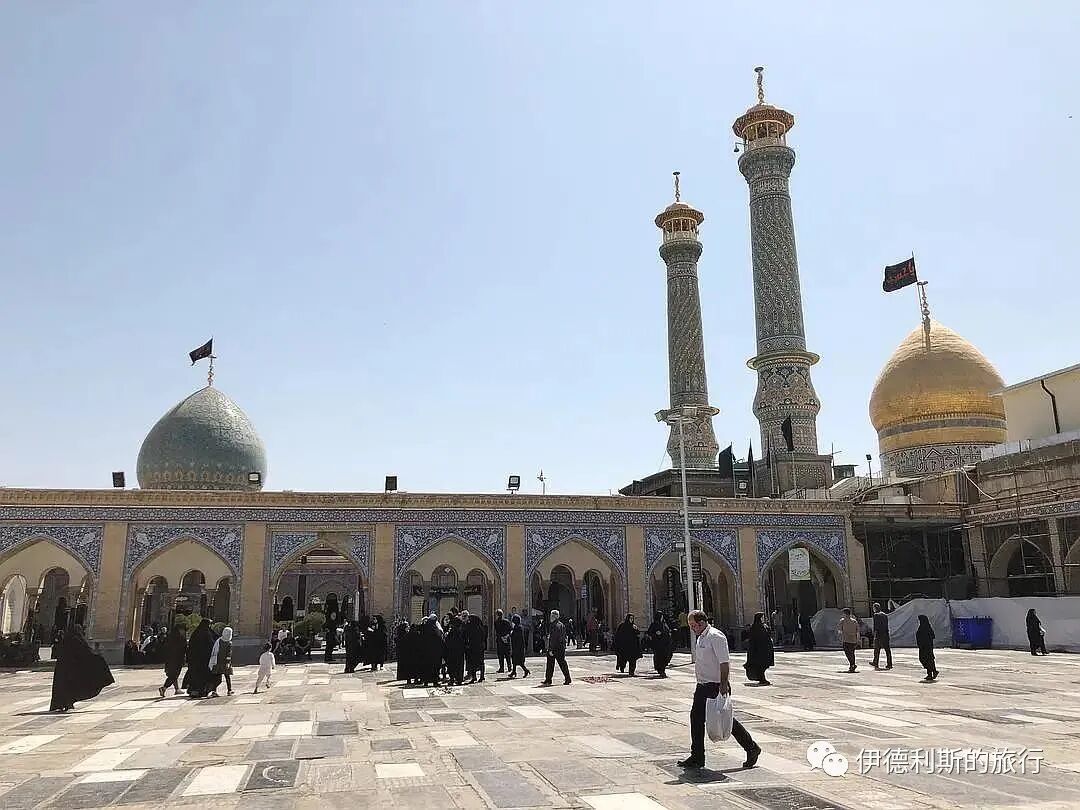
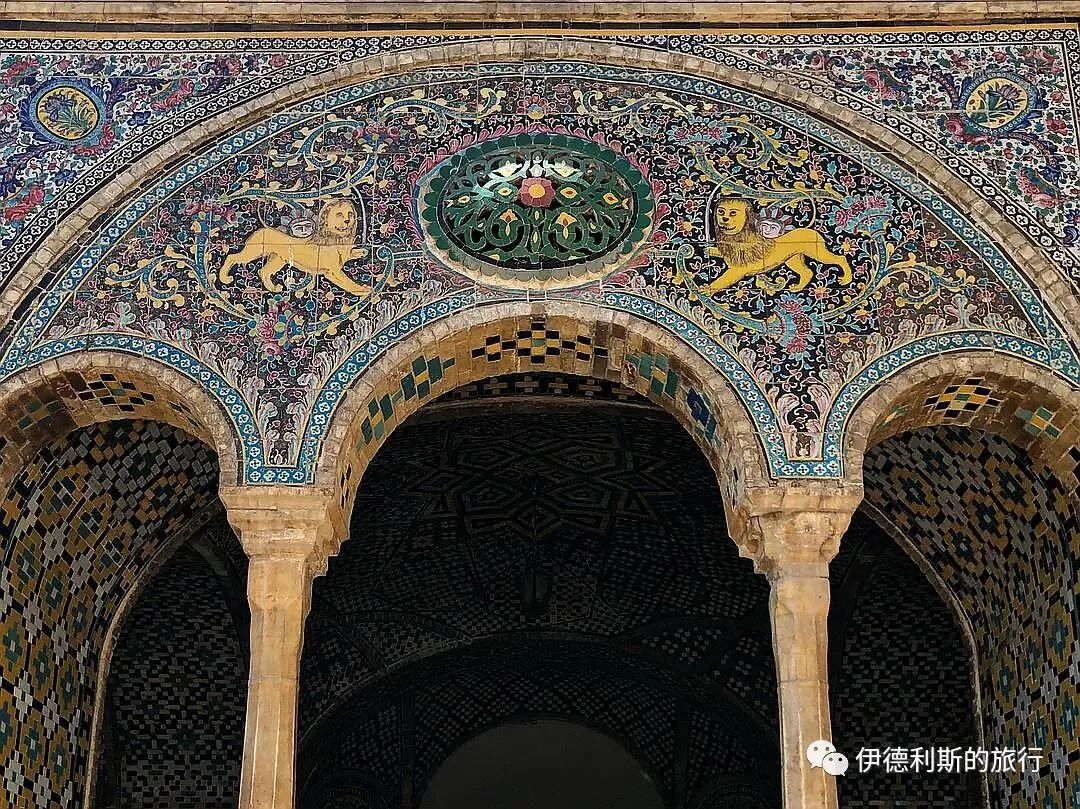
The second article, 'Palaces of the Qajar Dynasty in Iran: Golestan Palace (Kākh-e Golestān),' introduces how Golestan Palace was first called the Tehran Citadel (Arg) and was originally built during the Persian Safavid Dynasty. After Agha Mohammad Khan (reigned 1789-1797) of the Qajar Dynasty made Tehran the capital, he officially rebuilt the Tehran Citadel into Golestan Palace. Between 1925 and 1945, Reza Shah (reigned 1925-1941) of the Pahlavi Dynasty ordered the demolition of most of the buildings in Golestan Palace for modern urban construction, and only a portion remains today.
Azerbaijan: Shirvanshah Dynasty
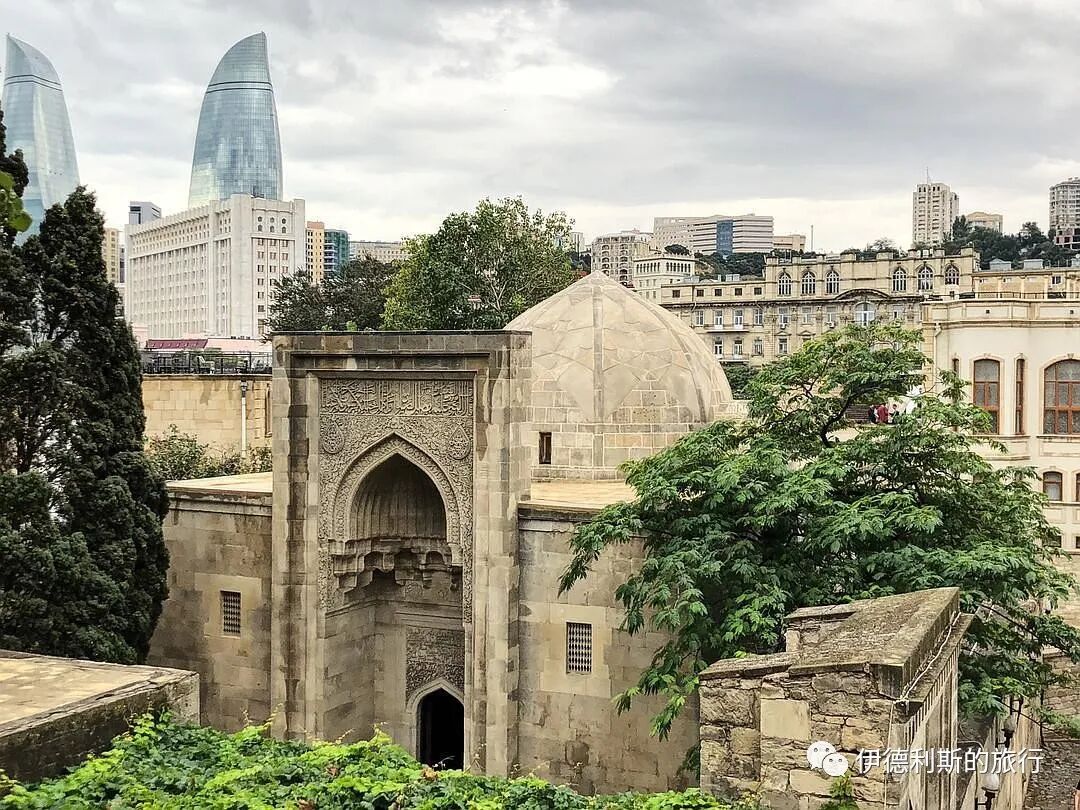
The article 'Historical Buildings in the Old City of Baku, Azerbaijan' introduces the Shirvanshah Dynasty, established in Azerbaijan by the descendants of an Arab general, which moved its capital to Baku in 1191. Baku remained the capital of the Shirvanshah Dynasty for over 300 years after that. Baku held a key position in ancient Eurasian trade. It served as a major hub in the trade network, where many merchants from India and Central Asia stopped to transfer goods. Today, the old city preserves the palace complex from the Shirvanshah dynasty, relatively intact ancient city walls, over a dozen ancient mosques built between the 11th and 18th centuries, four large caravanserais that witnessed ancient trade, and several traditional bathhouses. It is well worth a visit.
Turkey: Sultanate of Rum, Ottoman Empire
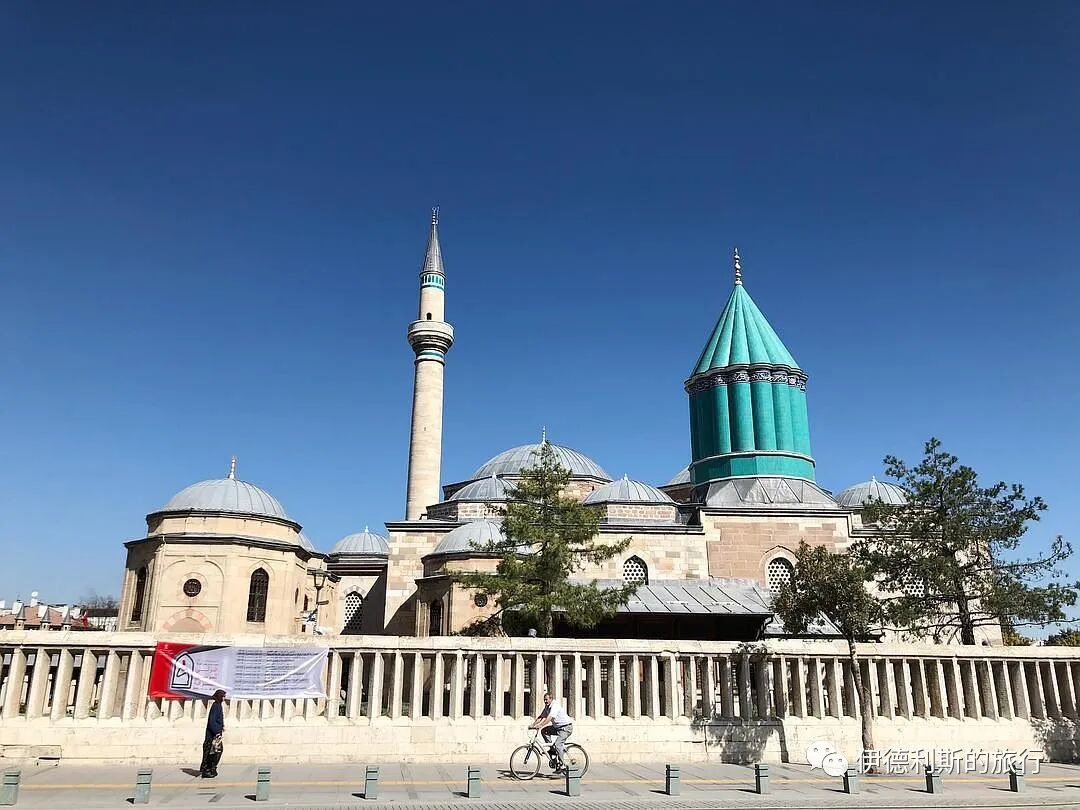
The first article, 'Konya: The Last Capital of the Seljuk Empire,' introduces the Seljuk Turks. They came from the Central Asian steppes, were deeply influenced by Persian culture, established the Sultanate of Rum in Asia Minor in 1077, and made Konya their capital in 1097. After the Mongols invaded Central Asia and Persia in the early 13th century, many Turks and Persians fled to Konya. Many were educated intellectuals or skilled craftsmen, including the famous poet Rumi. In 1243, the Seljuk Sultanate of Rum was defeated by the Mongol Empire and became a vassal state. However, Konya remained the capital of the sultanate until 1328. People lived in peace, and many existing Seljuk buildings were constructed during this period. After the Seljuk Empire fell, Konya became the final center of Seljuk 'Turko-Persian' culture. Seljuk culture is most famous for its tiles and stone carvings featuring human and animal figures, which are not found in later Turkish culture.
The second article, 'The Birth of the Ottoman Empire—Bursa,' explains how the Ottomans broke away from the Sultanate of Rum in the late 13th century and officially made Bursa their capital in 1326. From then on, the Ottomans used Bursa as a base to grow into the massive Ottoman Empire over the next hundred years. Bursa stands as the best witness to the birth of the Ottoman Empire. In 2014, UNESCO named the old city of Bursa a World Heritage site. Five of these heritage areas are located within Bursa. The builders of these five building complexes (külliye) were the second, third, fourth, fifth, and sixth rulers of the Ottoman dynasty. They cover the entire history of the Ottomans from the founding of the state to the conquest of Istanbul.
The third article, 'The Ottoman Capital in Europe—Edirne,' describes how the Ottomans captured Adrianople, an important Byzantine city in the Balkans, in 1369. They renamed it Edirne, and it became the Ottoman center in Europe. In 1413, Edirne officially became the capital of the Ottoman Empire, remaining so until the fall of Constantinople in 1453. After Prince Suleiman made Edirne his capital in 1403, he immediately began building the Old Mosque complex (Eski Cami) east of the old city. During the reign of Sultan Murad II, the second Muradiye complex and the third Three-Balcony Mosque complex (Üç Şerefeli Cami) were built in Edirne, along with a royal palace in the north.
The fourth article, 'The Palace of the Ottoman Empire—Topkapi Palace (Topkapi Saray),' introduces the palace. It sits on the site of the former Byzantine acropolis in the eastern part of Istanbul's old city, overlooking the Golden Horn. Sultan Mehmed the Conqueror ordered its construction in 1459. Topkapi Palace was first called the New Palace (Yeni Saray) to tell it apart from the Old Palace (Eski Saray), which was built between 1454 and 1459. Topkapi Palace went through several major expansions and renovations in the 16th century. Its importance faded after the 17th century, and by the 19th century, it only served as a treasury, library, and mint.
India: Delhi Sultanate, Sur Empire, Mughal Empire, Qutb Shahi dynasty, and Asaf Jahi dynasty.
The first article, "The First City of Delhi: A Minaret Reaching the Clouds," introduces the ancient city of Lal Kot. In 1193, the Ghurid dynasty from Iran and Afghanistan conquered Lal Kot, the first city of Delhi. The Ghurid dynasty soon split apart, and Qutb, the general left in charge of Delhi, established the Delhi Sultanate. Qutb tore down Hindu and Jain temples in the city to build a massive mosque. Later, the Qutb Mosque underwent two major expansions by succeeding sultans, Iltutmish in 1225 and Alauddin Khalji in 1310, making Lal Kot the political, religious, and cultural center of the Delhi Sultanate.
The second article, "The Second City of Delhi: A Turkic Fortress Against the Mongol Army," introduces the ancient city of Siri. In 1299, Duwa, the Khan of the Mongol Chagatai Khanate, sent his son Qutlugh Khwaja to lead an expedition against the Delhi Sultanate. Both sides suffered heavy losses in a decisive battle on the outskirts of Delhi, but the Chagatai army eventually retreated because their commander was seriously wounded. To defend against the next invasion by the Chagatai army, Sultan Alauddin Khalji decided to build the second city of Delhi, Siri, to the northeast of Delhi's first city, Lal Kot. In 1303, the Chagatai Khanate launched another major expedition and besieged the unfinished city of Siri. After two months of siege, the Chagatai army could not break through the city and chose to retreat. After the siege ended, Alauddin Khalji built a palace in Siri, making it the new capital of the Delhi Sultanate, replacing Lal Kot.
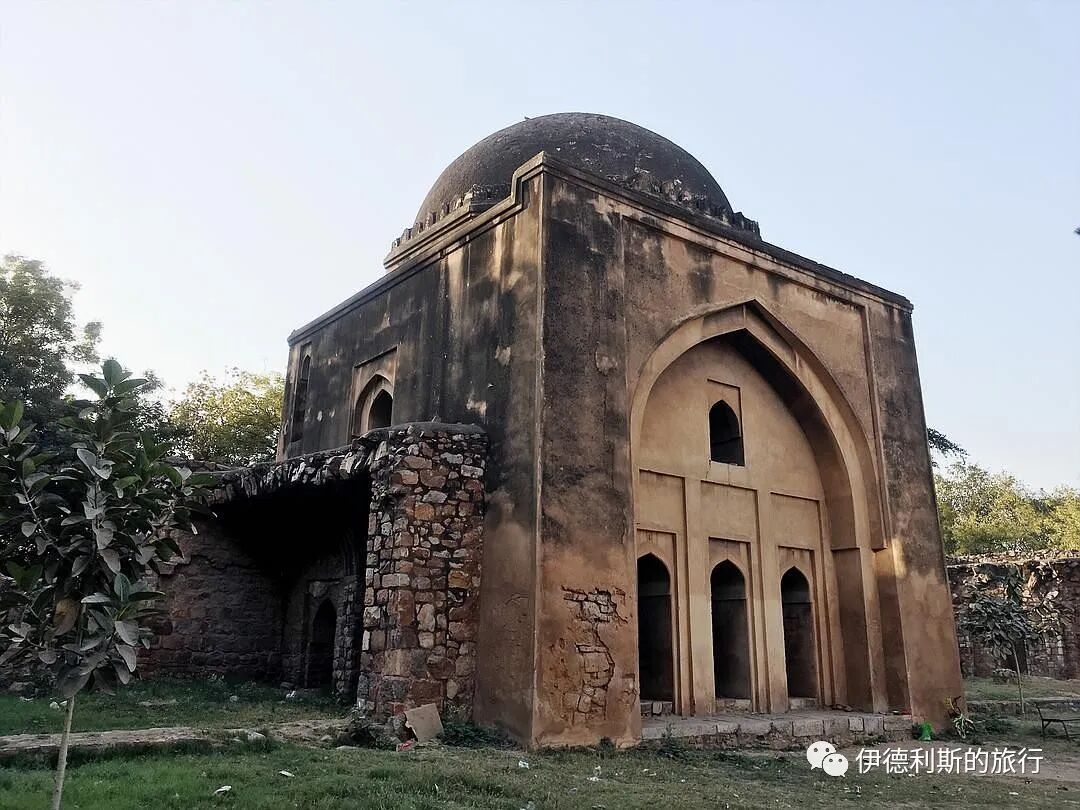
The third article, 'The Third City of Delhi: The Indestructible Beautiful Ruins,' introduces the ancient city of Tughlaqabad. After Alauddin died in 1316, the Delhi Sultanate fell into civil war. In 1320, General Ghazi-ud-Din Tughlaq became the Sultan. The following year, Ghazi built a massive city to the east of Lal Kot and Siri, which became the third city of Delhi, Tughlaqabad. Ghazi dreamed of building this fortress to be indestructible, strong enough to withstand the fiercest attacks from the Mongol army, but fate did not go as he wished. After the Delhi Sultanate fell, the nomadic Gurjar people took over the city. It became a wilderness, leaving behind only massive walls and ruins.
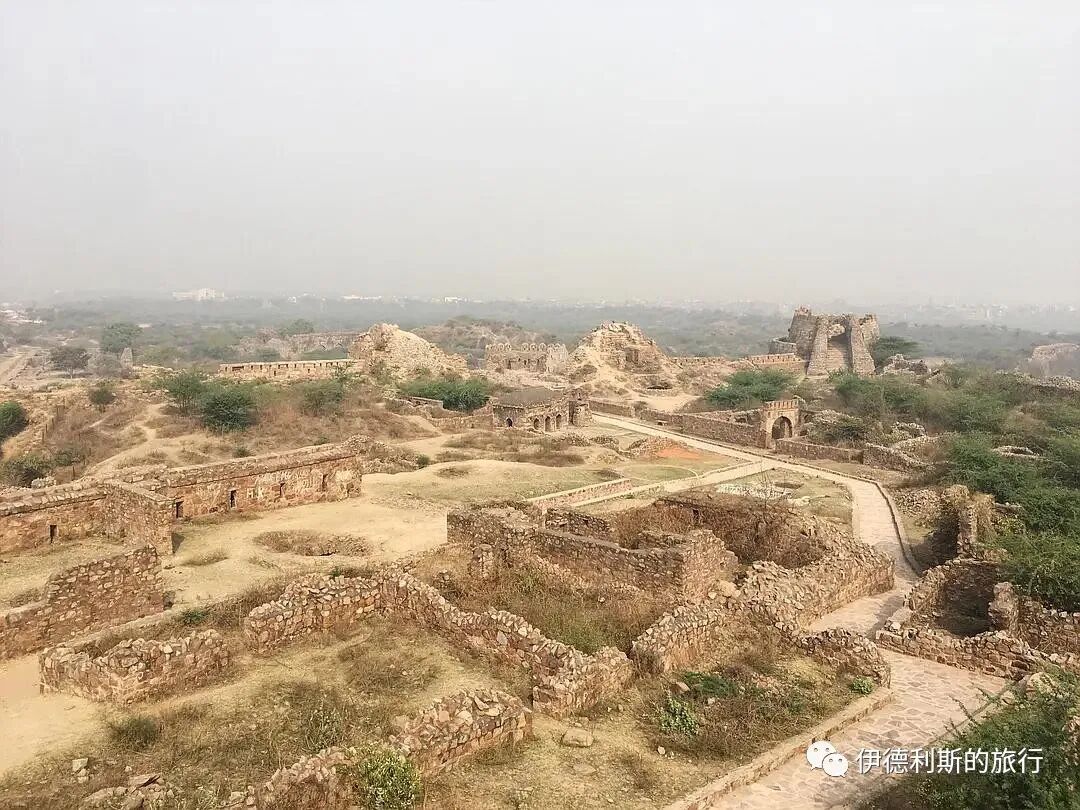
The fourth article, 'The Fourth City of Delhi: The Mysterious Sultan's Palace,' introduces the ancient city of Jahanpanah. In 1325, Muhammad bin Tughluq, the son of Ghazi ud-Din Tughluq, took the throne. To stop the Mongol army from invading, Muhammad connected Delhi's first city, Lal Kot, and its second city, Siri, with walls to build the fourth city of Delhi, Jahanpanah. The famous traveler Ibn Battuta lived in Delhi. He wrote in his travelogues that Lal Kot was the city center, Siri was the military camp, and Jahanpanah in the middle was the palace area.
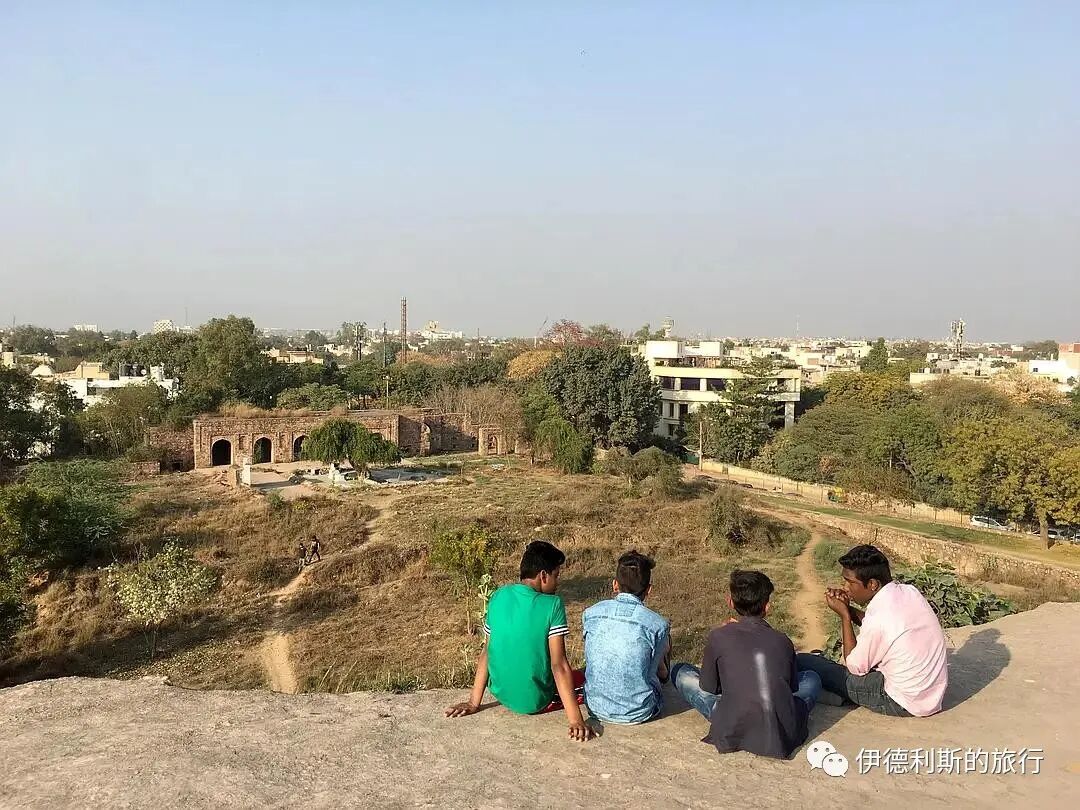
The fifth article, 'The Fifth City of Delhi: Spirits and the Ashoka Pillar,' introduces the ancient city of Ferozabad. In 1351, Firoz Shah Tughluq, the cousin of Muhammad who built Delhi's fourth city, took the throne. He built a new capital in the north of Delhi. Today, the Feroz Shah Kotla fort, the heart of Ferozabad, is filled with palace ruins. The most famous is the Delhi-Topra Ashoka Pillar, which Firoz Shah found and brought back to Delhi during an expedition. Every Thursday afternoon, many people come to Feroz Shah Kotla. They place milk and grains against the walls and write their wishes on paper, asking the spirits (Jinn) in the castle to make their wishes come true.
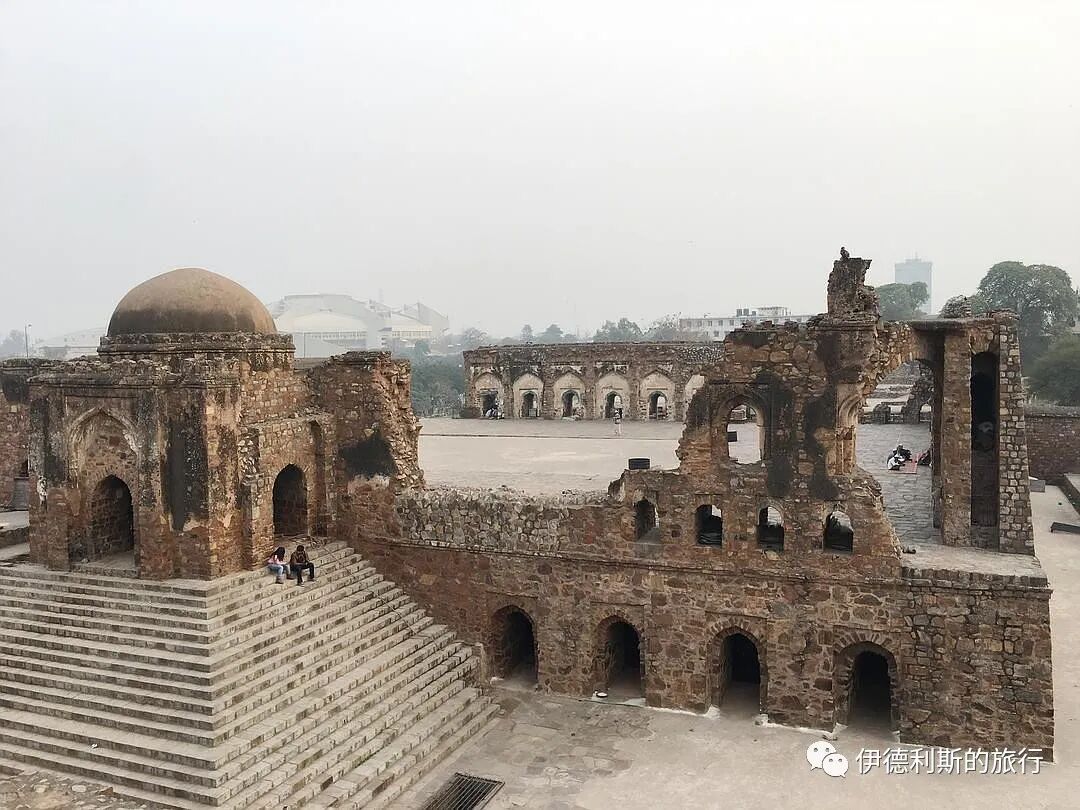
The sixth chapter, The Sixth City of Delhi—The Birth of the Mughal Dynasty, introduces the ancient city of Din Panah. Din Panah was the first Mughal city in Delhi, built in 1533 by Humayun, the second ruler of the Mughal Empire. In 1540, Sher Shah defeated Humayun to establish the Sur Dynasty, and Din Panah became the capital of the Sur Dynasty. Humayun recaptured Din Panah in 1555, but he fell and died there the following year. The inner city walls of Din Panah, now known as the Old Fort (Purana Qila), are still well-preserved today. Inside the Old Fort are significant historical buildings, including the Sur Dynasty's royal mosque and the library where Humayun fell to his death. These are vital historical sites for the early Mughal and Sur dynasties.
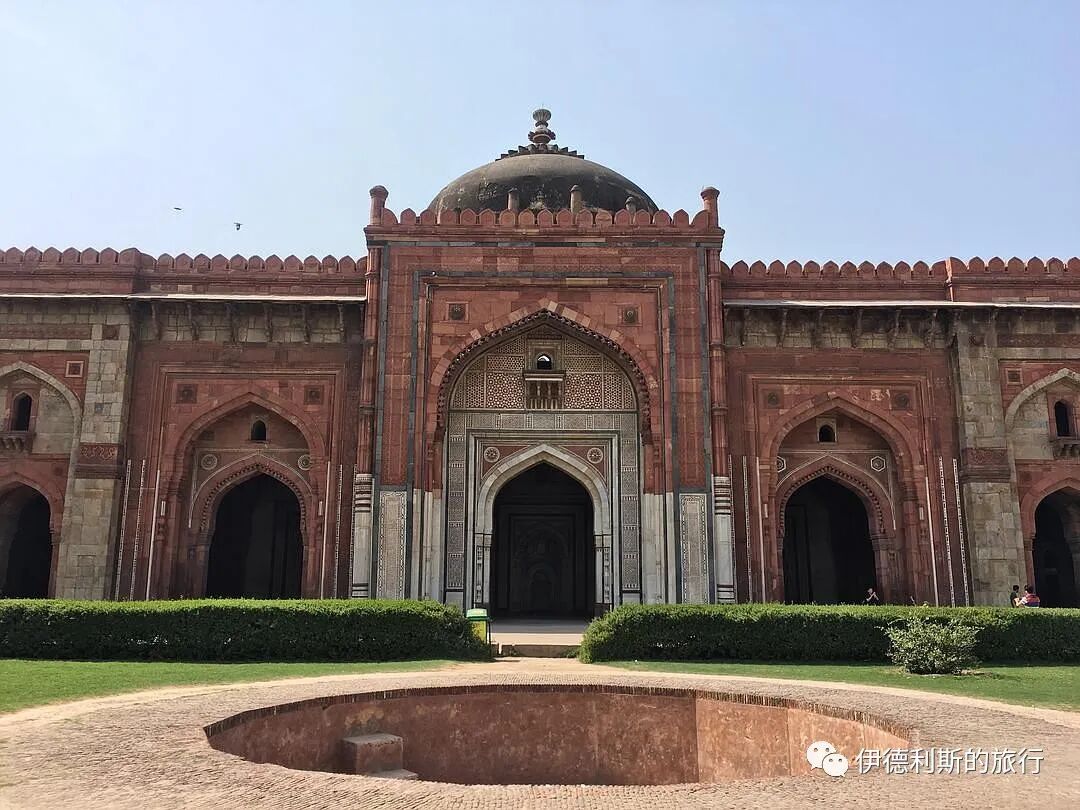
The seventh chapter, The Seventh City of Delhi—The Mughal Capital, introduces the ancient city of Shahjahanabad. In 1628, the fifth emperor of the Mughal Empire, Shah Jahan, took the throne. Under his rule, Mughal architectural aesthetics reached a new height, and this period is recognized as the golden age of Mughal architecture. Besides building the Taj Mahal, Shah Jahan built the seventh city of Delhi between 1639 and 1648, naming it Shahjahanabad after himself. Shah Jahan made Shahjahanabad the capital of the Mughal Empire, aiming to show the grandeur and power of the empire. Shahjahanabad is now known as Old Delhi and still keeps many historical sites and traditional neighborhoods. The most important site inside the city, the Red Fort, was added to the UNESCO World Heritage list in 2007.
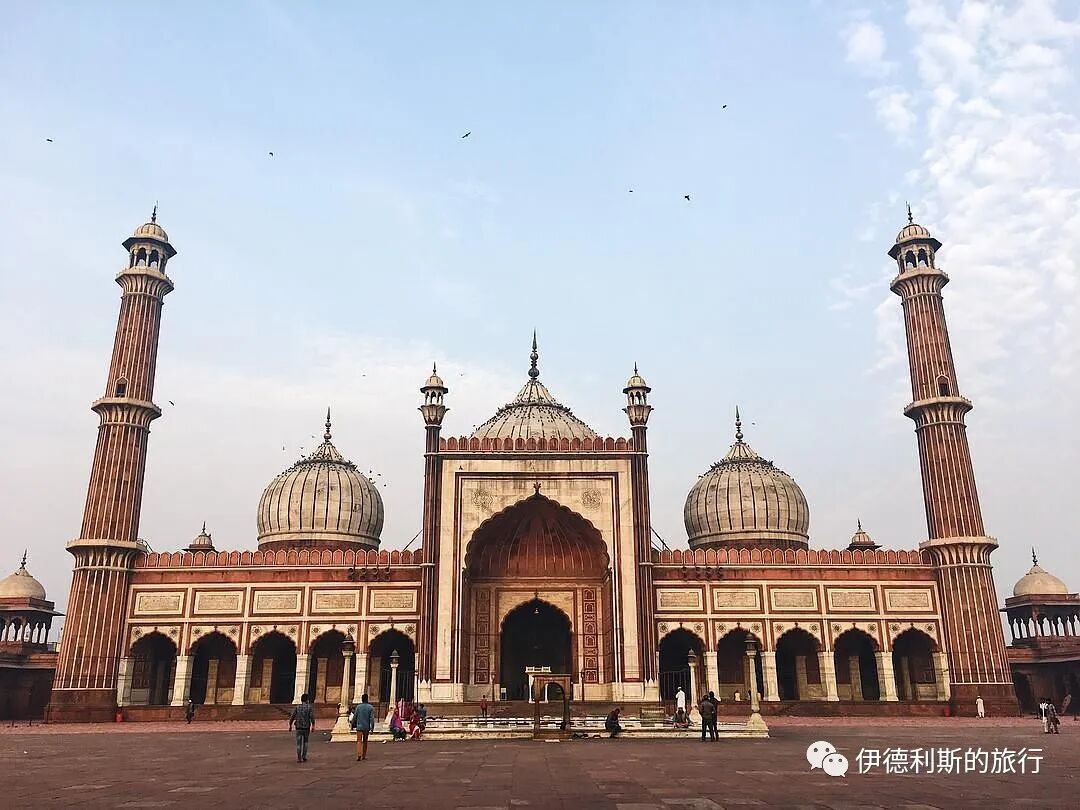
The eighth article, 'An Ancient Muslim City on the Deccan Plateau: Golconda Fort,' introduces Golconda Fort on the Deccan Plateau in southern India. Because it had the only diamond mine in the world at the time, it was once the center of the global diamond trade. In 1518, Quli Qutb Mulk established the Qutb Shahi dynasty here, also known as the Golconda Sultanate. In 1687, the Mughal Emperor Aurangzeb captured Golconda Fort after an eight-month siege, and the site gradually fell into ruins. Today, many ruins of palaces, mosques, and gardens still remain here. Near Golconda Fort, you can find the tombs of the sultans from the Qutb Shahi dynasty. These tombs feature the classic style of Muslim architecture on the Deccan Plateau and are well worth seeing.
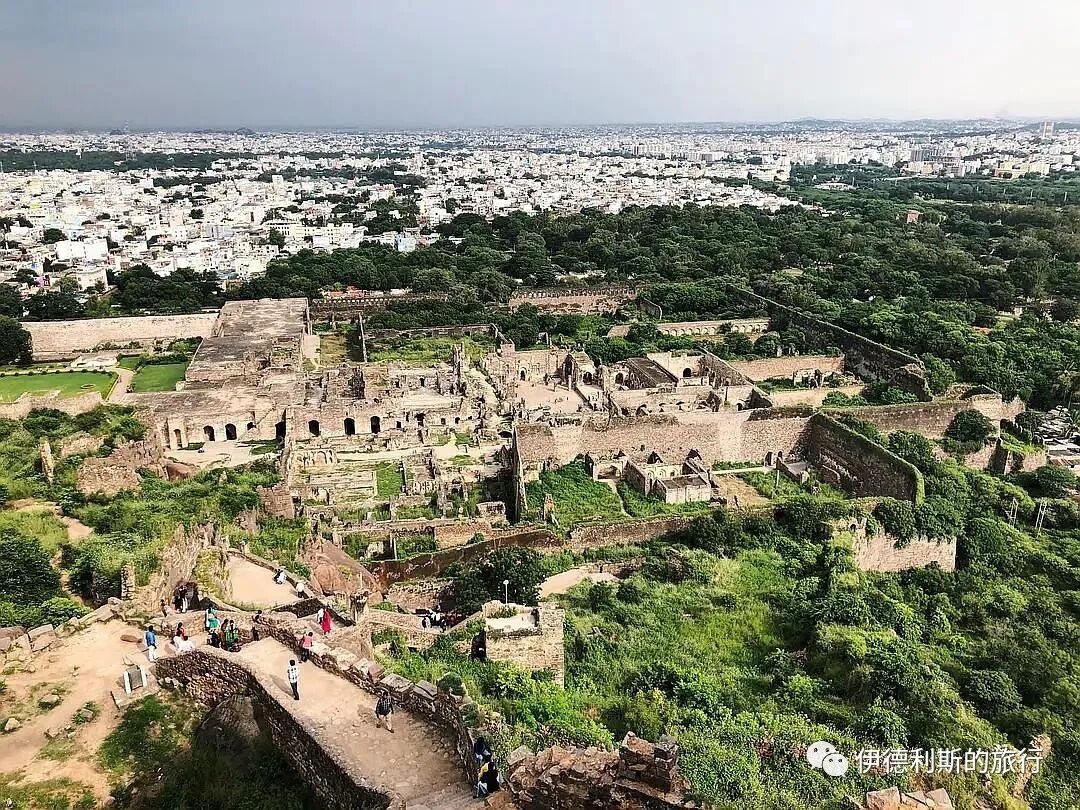
The ninth article, 'Hyderabad: An Ancient Muslim Capital in South India,' explains that in 1591, the Qutb Shahi dynasty moved its capital to the banks of the Musi River, east of the old city, to solve water shortages at Golconda Fort, establishing the city of Hyderabad. At that time, Sultan Muhammad Quli Qutb Shah invited several famous Persian architects to plan the city of Hyderabad and build landmarks like the Charminar gate and the Mecca Mosque. Hyderabad is also an important center for Shia Muslims in southern India, and it still preserves a hall built in 1594 to commemorate Imam Hussain.
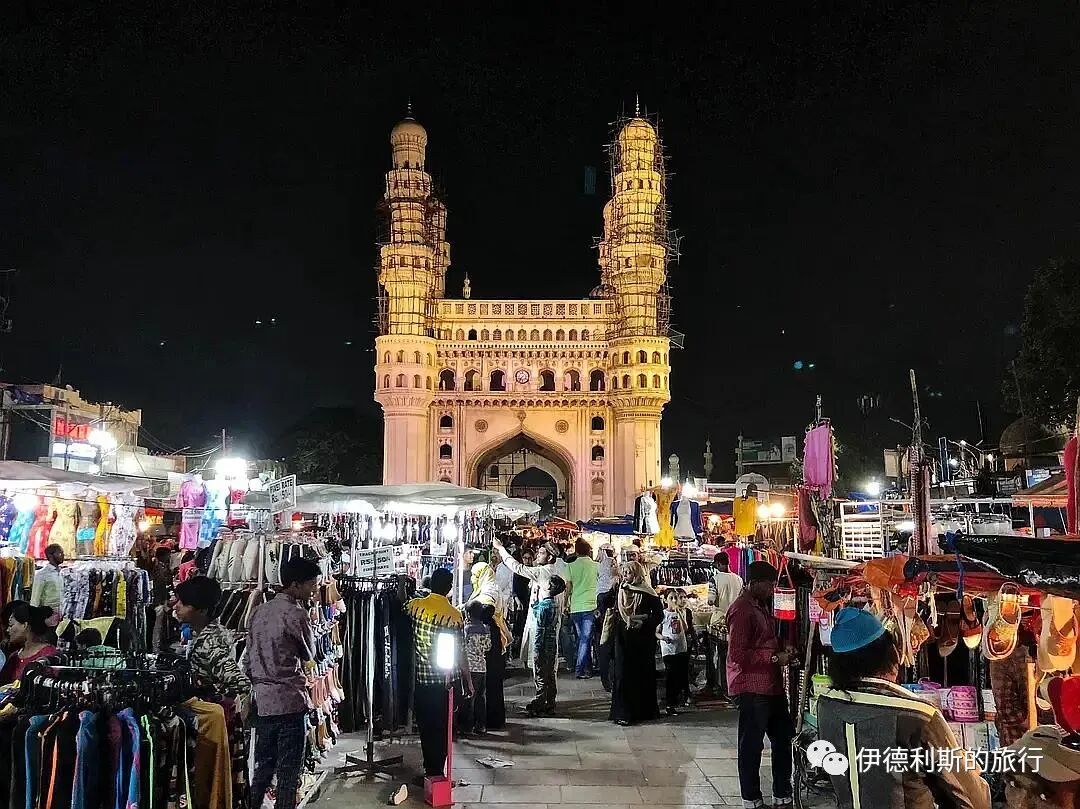
The tenth article, 'The Asaf Jahi Dynasty: A Muslim State on the Deccan Plateau in South India,' explains that in 1687, the Mughal Emperor Aurangzeb captured Hyderabad after an eight-month siege and incorporated it into the Mughal Empire. In 1724, a high-ranking Mughal official named Mir Qamar-ud-Din Siddiqi set up his own government in Hyderabad. Because he used the highest honorific title of the Mughal Empire, Asaf Jahi, his line became known as the Asaf Jahi dynasty. Hyderabad currently preserves the Chowmahalla Palace built by the Asaf Jahi dynasty, as well as the Paigah Tombs, which are famous for their exquisite plaster and marble carvings.
China: Moghulistan (East Chagatai Khanate), Yarkand Khanate
The first article, 'From Ili to Turpan—Two Royal Tombs of the East Chagatai Khanate,' introduces the early history of the East Chagatai Khanate through the tombs of its founding Khan, Tughluq Timur, and its third Khan, Khizr Khoja, located in Ili and Turpan. After the 14th century, conflicts deepened between the settled Chagatai Mongols in Transoxiana and those on the eastern steppes, eventually causing the Chagatai Khanate to split into eastern and western parts. In 1348, Tughluq Timur established the East Chagatai Khanate with Almalik as its capital. After taking the throne, Khan Tughluq Timur ordered all Chagatai Mongols in the East Chagatai Khanate to convert to Islam. He later unified the entire khanate through two western campaigns, but shortly after his death, the khanate fell into chaos again, and almost all of his descendants were killed. In 1389, Tughluq Timur's youngest son, Khizr Khoja, who had been in hiding for many years, took the throne. To escape the eastern campaign of Tamerlane the Great, Khizr Khoja moved the royal court east to Turpan, where he eventually died.
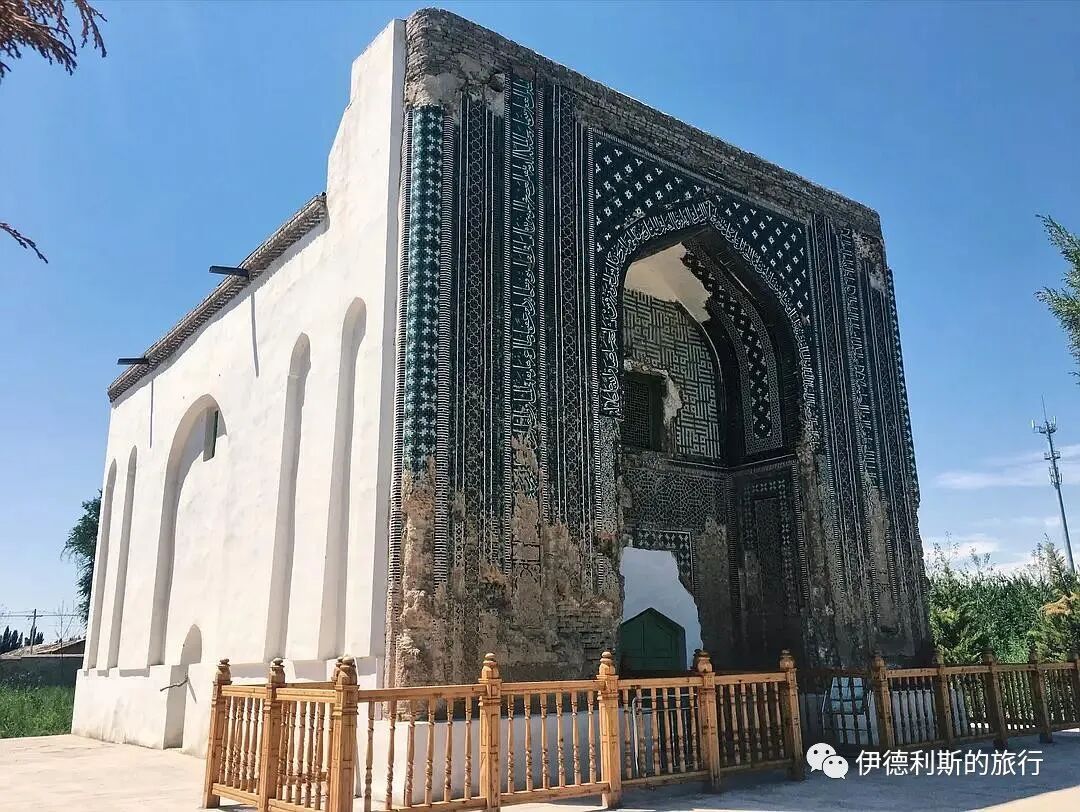
The second article, 'The Last Capital of the Chagatai—Yarkand,' introduces how Sultan Said Khan, a descendant of the East Chagatai royal family, established the Yarkand Khanate in 1514 with Yarkand as its capital, ruling southern Xinjiang until 1680. During the Yarkand Khanate's rule over southern Xinjiang, the Chagatai Mongols shifted from a nomadic lifestyle to a settled one and blended into the Uyghur people. The Uyghur people also gradually developed into a modern ethnic group during this period. Culturally, the Yarkand Khanate era saw the creation of famous historical works like the Tarikh-i-Rashidi and the Chronicles, and the Twelve Muqam musical tradition was also finalized during this time. In the later years of the Yarkand Khanate, the Black Mountain faction of the Sufi Naqshbandi order took control of Yarkand city. After the Dzungar Khanate and the White Mountain faction occupied southern Xinjiang in 1680, the Black Mountain faction withdrew for a time, but they returned to rule Yarkand city for half a century between 1697 and 1755.
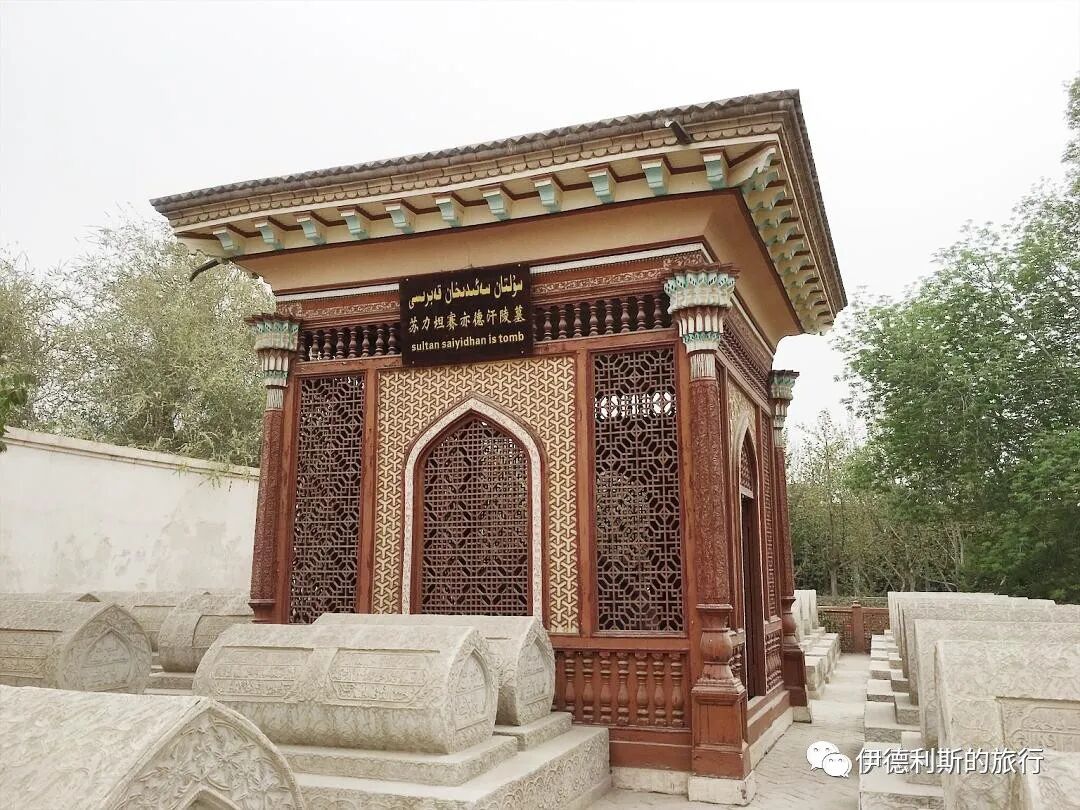
Malaysia: Malacca Sultanate
The book The First Sultanate in Southeast Asia: Malacca explains that Paramesvara, a prince of the Srivijaya kingdom, was named King of Malacca by the Yongle Emperor in 1406. Since most merchants trading with Malacca were Muslims, the rulers of Malacca increasingly saw the importance of Islam in trade. During the reign of the third ruler, Raja Tengah (1424-1444), all royal ministers converted to Islam, the king became a sultan, and the Malacca Sultanate became the first sultanate in Southeast Asia. In 1511, the Portuguese captured Malacca and destroyed all of the city's original palaces, cemeteries, and mosques. After the Dutch took over Malacca, they adopted a relatively tolerant religious policy and began building mosques with unique Malaccan features in the early 18th century.
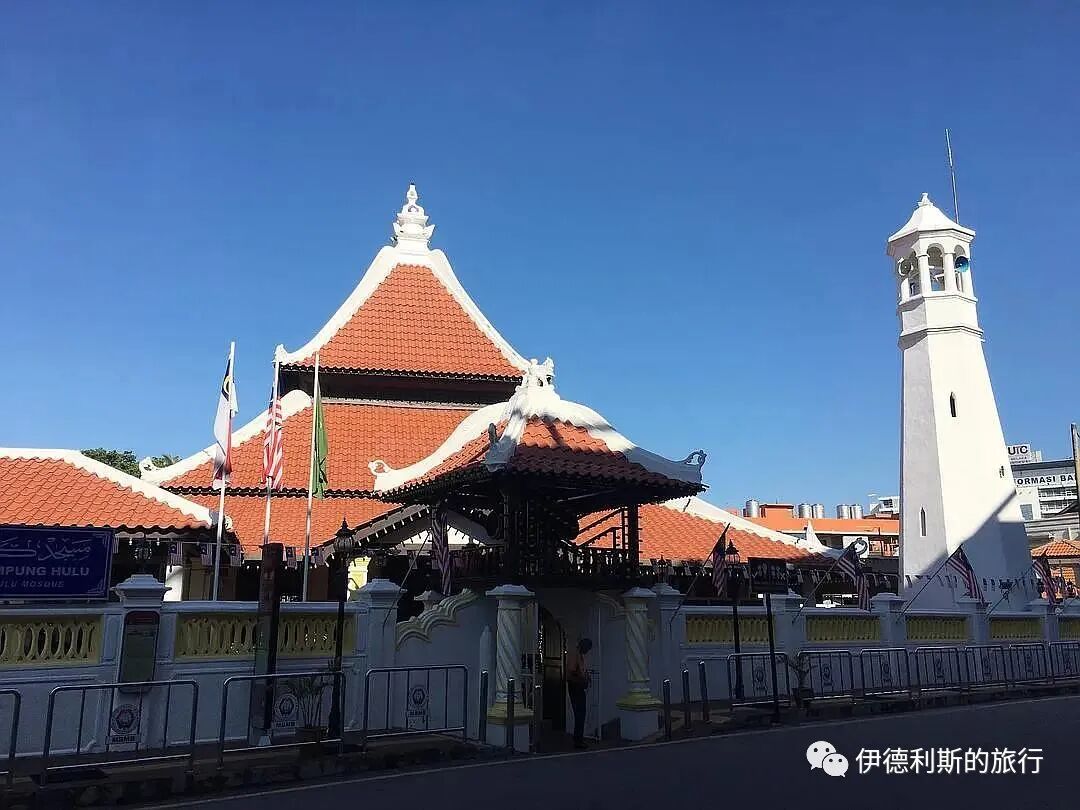
Indonesia: Demak Sultanate, Banten Sultanate, Mataram Sultanate, Yogyakarta Sultanate, and Surakarta Sunanate.
The first article, 'The Earliest Sultanate on Java—Demak,' explains that Arab and Indian Muslim merchants began settling on the north coast of Java in the 15th century. The port of Demak became a powerful trading hub by importing spices from the Spice Islands and exporting rice to the Malacca Sultanate. Established between 1475 and 1568, the Demak Sultanate was the first sultanate on Java and played a major role in spreading Islam across the island. Today, the Great Mosque of Demak remains the most important early traditional mosque in Java, and the tomb of Sunan Kalijaga in the southeastern suburbs of Demak is also a significant Islamic holy site in Java.
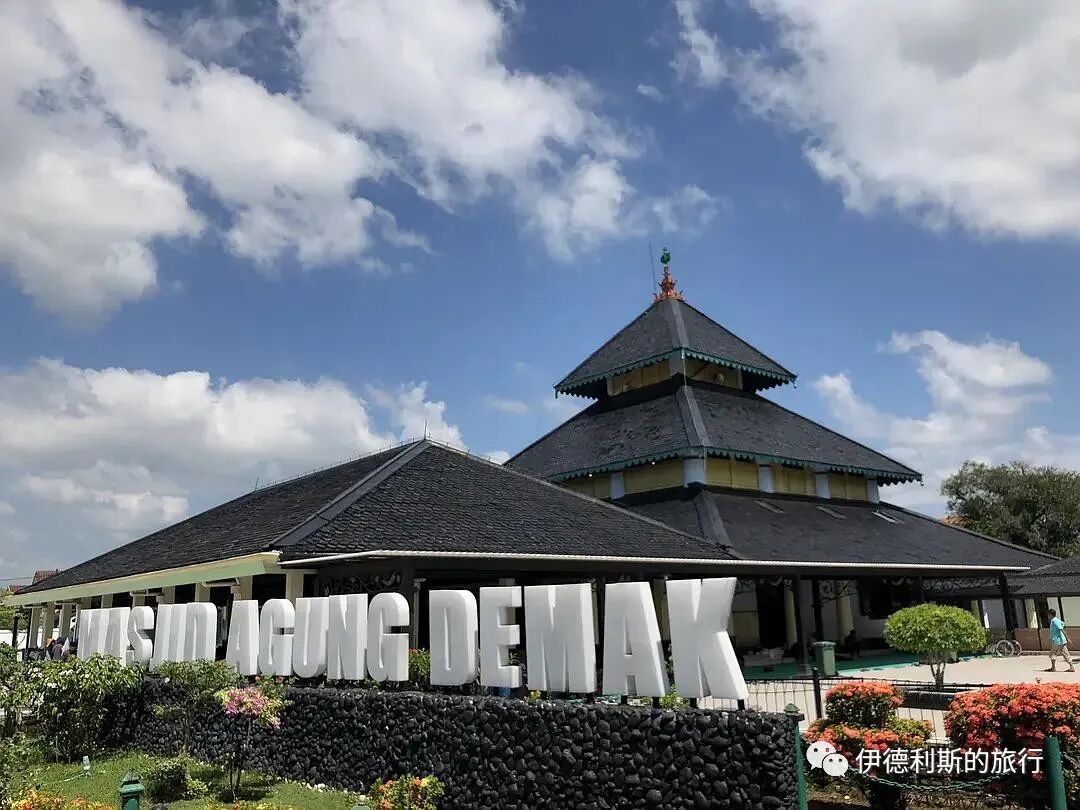
The second article, 'The Jerusalem of Java—Kudus,' introduces how Sunan Kudus, one of the nine Islamic saints of Java (Wali Sanga), preached on the island during the 16th century. He blended Islamic culture with traditional Javanese culture and built the unique Al-Aqsa Mosque of Kudus. After he passed away, he was buried in the backyard of the Al-Aqsa Mosque, and his tomb became a famous Islamic holy site in Java.
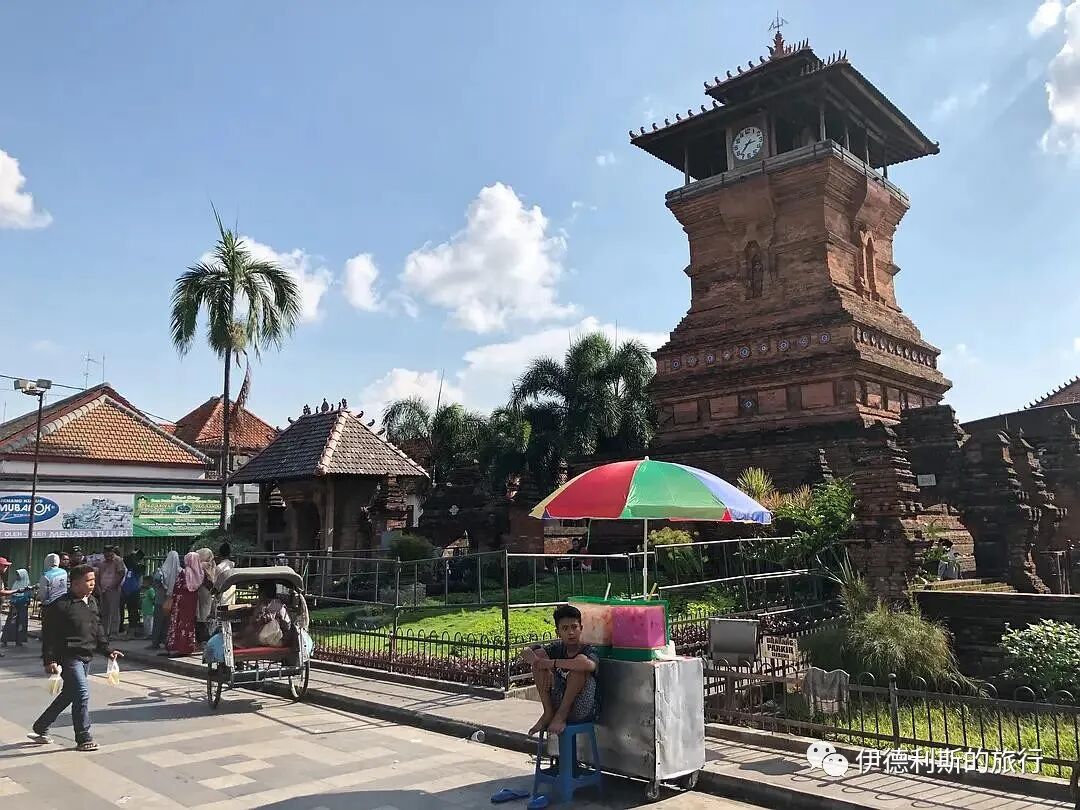
The third article, 'Ocean City at the Western Tip of Java: Banten,' introduces how the Banten Sultanate rose to become a powerful maritime trading nation in the 16th century, controlling the pepper trade in Southeast Asia. The Banten Sultanate reached its peak in the 17th century and had intense conflicts with the Dutch East India Company. After the 18th century, the Banten Sultanate gradually came under the control of the Dutch East India Company and was finally incorporated into the Dutch East Indies in the 19th century. Today, the ancient city of Banten still preserves many ruins, and the Great Mosque of Banten, built in the 16th century, remains a famous religious site. two palaces of the Banten Sultanate, a Dutch fortress, and several tombs of the Banten Sultans are still preserved.
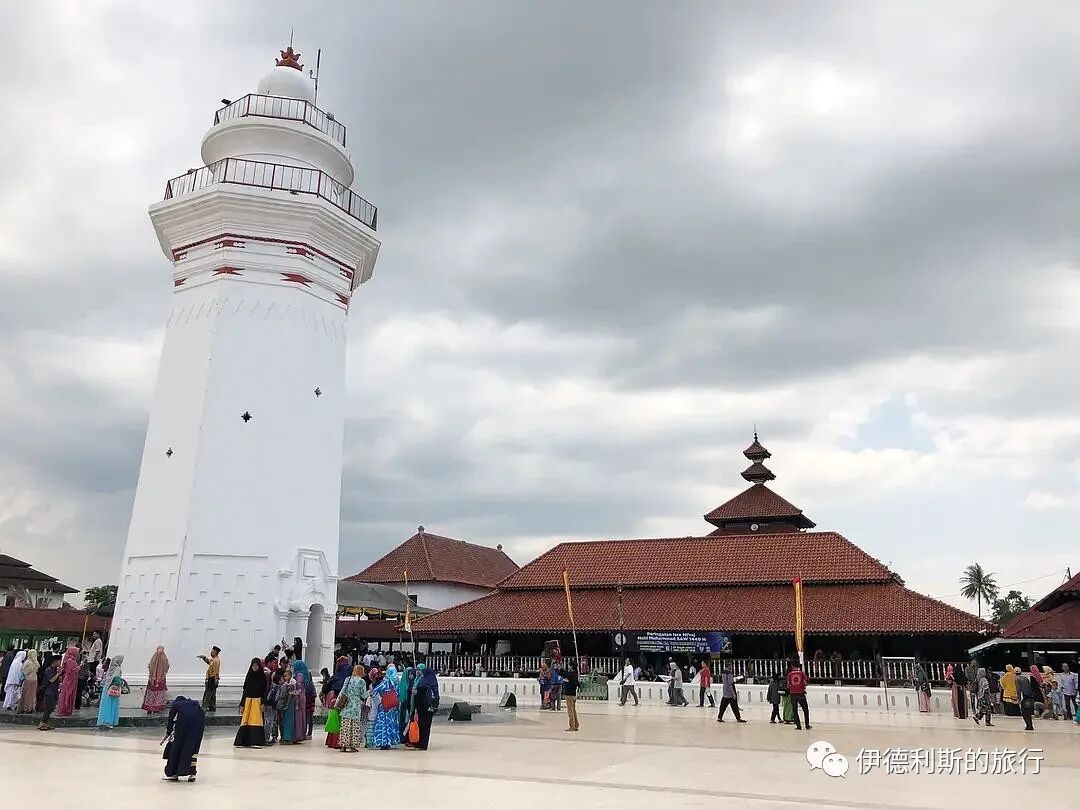
The fourth article, 'The Lost Ancient Capital of Java: Kotagede,' introduces the town of Kotagede in the southeastern suburbs of the ancient Javanese city of Yogyakarta. Its name means 'great city,' and it served as the first capital of the Mataram Sultanate between the 1570s and 1613. The Mataram Sultanate was the most powerful Islamic kingdom on Java in the 17th century. It later split into the two sultanates of Yogyakarta and Surakarta in 1755, which continue to exist today. Kota Gede still keeps the mosque and royal tombs of the Mataram Sultanate. The tomb guards work for both the royal families of Yogyakarta and Solo, making this a famous pilgrimage site for people from both cities.
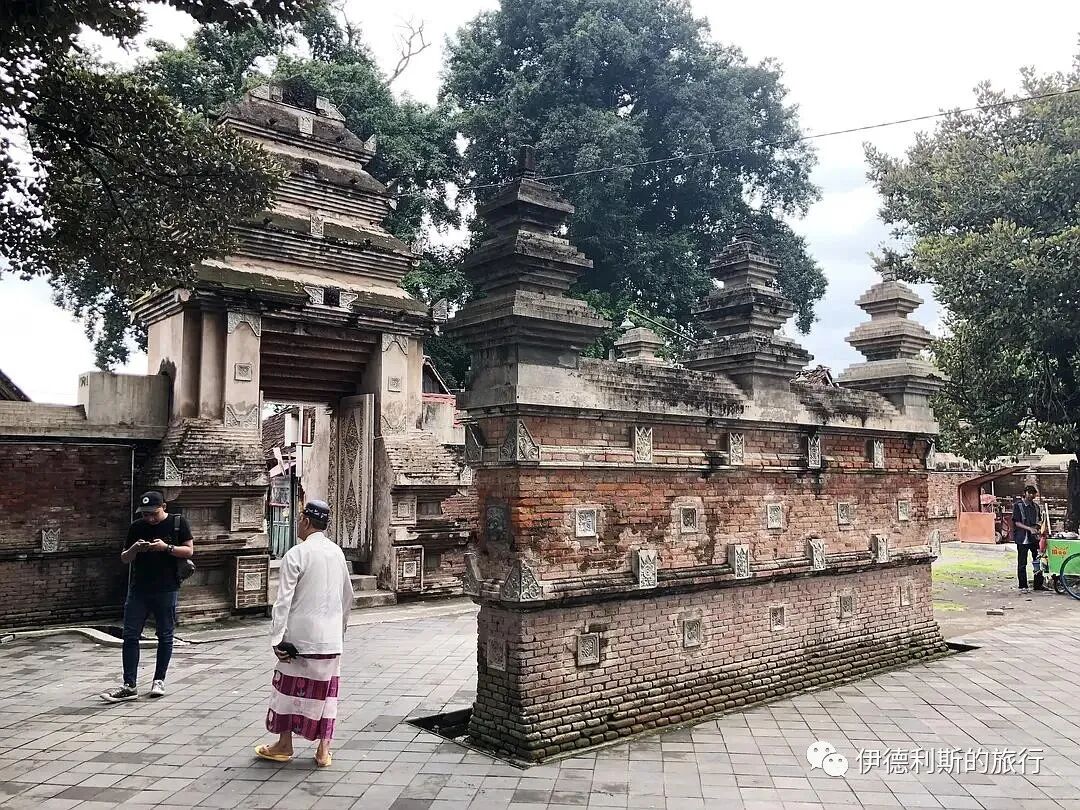
The fifth article, 'Indonesia's Last Sultanate Territory—Yogyakarta,' explains how the Mataram Sultanate fell into power struggles in the late 17th century and finally split into the Yogyakarta Sultanate and the Surakarta Sunanate in 1755. After Indonesia gained independence, the Yogyakarta Sultanate became the Yogyakarta Special Region. The Sultan serves as the governor, making it the only region in Indonesia currently ruled by a Sultan. Today, Yogyakarta preserves the palace, water palace garden, and Great Mosque built by the Sultan in the 18th century. You can also eat royal palace food and enjoy court music there.
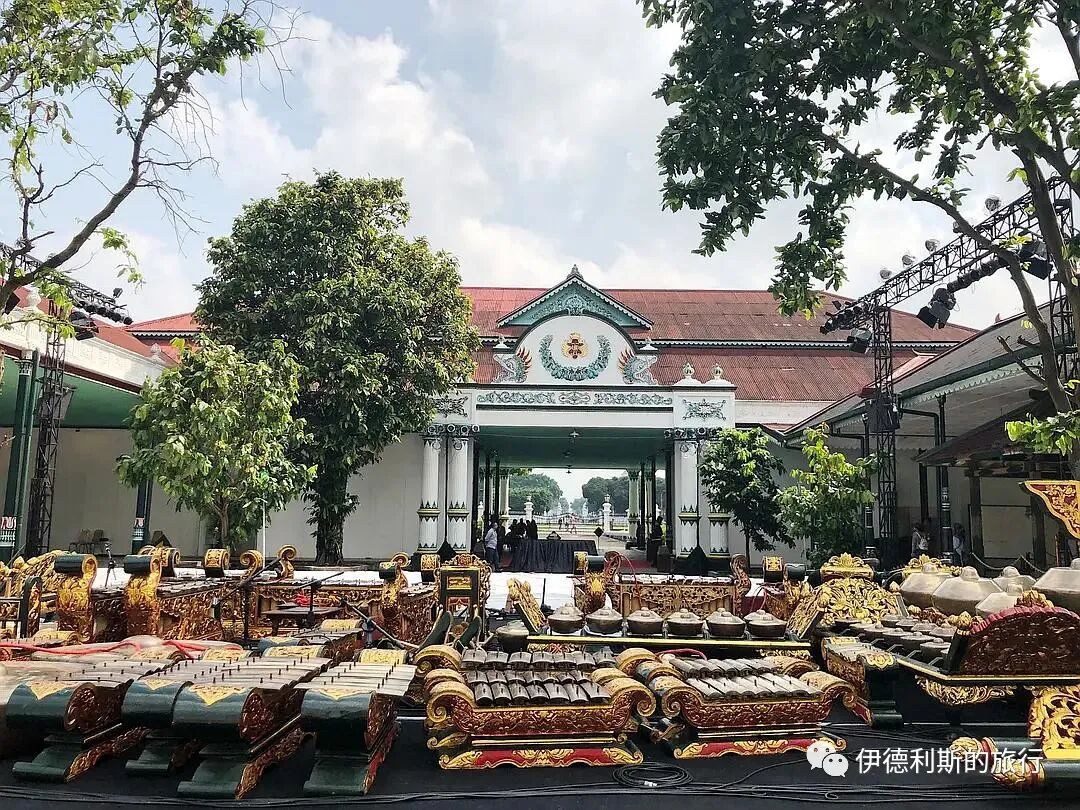
The sixth article, 'Central Java's Ancient City—Solo,' introduces how a Chinese-Javanese coalition destroyed the Mataram Sultanate capital of Kartasura in 1742. The last Sultan, Pakubuwono II, officially moved the capital to Solo (Surakarta) in 1745. In 1755, the Mataram Sultanate officially split into the Surakarta Sunanate and the Yogyakarta Sultanate, and Solo became the capital of the Surakarta Sunanate. Today, the Sunan still lives in most of the Solo palace, with only a part open as a museum. There is also the Solo Mosque built in 1768, where many Islamic ceremonies are held. In 1757, the former Mataram Sultanate rebel Raden Mas Said established the Mangkunegaran princely state near Solo. That same year, he built the Mangkunegara Palace in Solo, which is now open to the public as a tourist attraction.
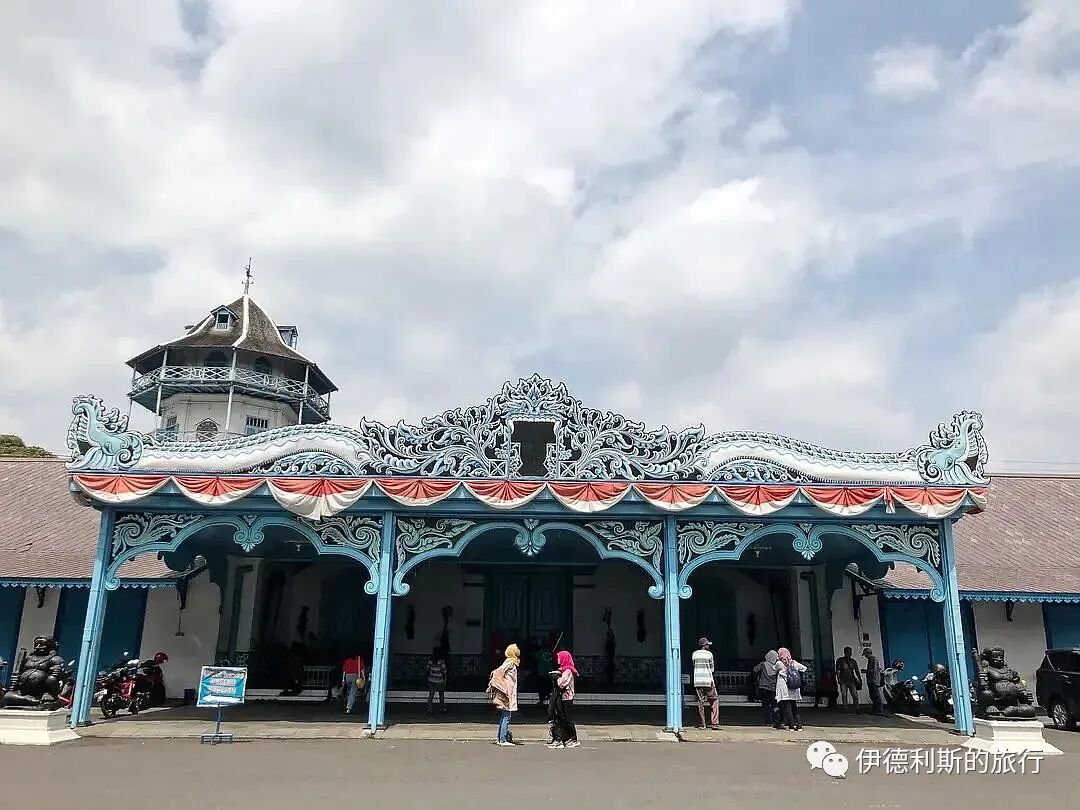
Summary: Muslim Dynasty Travel Project: Historic Islamic Cities Across Eurasia is presented here as a firsthand travel account in clear English, beginning with this scene: Between 2017 and 2019, I used my vacations to visit 10 countries and regions: Russia, Crimea (Russian-occupied), Uzbekistan, Iran, Azerbaijan, Turkey, India, Malaysia, Indonesia, and Xinjiang, China. The account keeps its focus on Muslim Dynasties, Islamic History, Travel Project while preserving the names, places, food, and historical details from the Chinese source.
Between 2017 and 2019, I used my vacations to visit 10 countries and regions: Russia, Crimea (Russian-occupied), Uzbekistan, Iran, Azerbaijan, Turkey, India, Malaysia, Indonesia, and Xinjiang, China. I visited 35 ancient Muslim cities, covering 24 Muslim dynasties from the 11th to the 20th century. Afterward, I used my spare time to look up information and gradually put together some articles. I had already made plans for my 2020 visits, but they were suddenly interrupted. From being unable to leave the country to being unable to leave Beijing, my journey had to pause.
So far, I have finished sharing all 35 ancient cities. I am making a directory here to make it easier to look them up later. Also, my other project, Exploring and Eating in Muslim Communities, is still going on. During the year I could not leave Beijing, I started focusing on local historical sites of Hui Muslims and Islam in Beijing and visited some of them.
Eastern Europe: Volga Bulgaria (Bulgar Khanate), Golden Horde, Crimean Khanate, and Kazan Khanate.
The first article, 'Bulgar: A Thousand-Year-Old Capital on the Volga,' introduces the ancient city of Bulgar in Tatarstan, Russia. It was the capital of Volga Bulgaria in the 10th and 11th centuries and adopted Islam in 922. The Mongol army destroyed Bulgar in the 13th century, but it was soon rebuilt into an important economic, commercial, cultural, and religious center for the Golden Horde. Influenced by the Bulgar people, the Mongol rulers of the Golden Horde also began to follow Islam, building a series of mosques, minarets, and Muslim tombs in the city. Along with secular palaces and bathhouses, most of the ruins remaining in Bulgar today date back to this period. After the Golden Horde declined, the ancient city of Bulgar remained a Muslim religious center until the mid-16th century. The ancient city fell into complete decline after Ivan the Terrible of Russia conquered the Khanate of Kazan in 1552.
The second article, 'Chufut-Kale: The Founding Capital of the Crimean Khanate,' introduces the thousand-year-old Crimean city of Chufut-Kale. Chufut-Kale was first built by the Byzantines in the 5th to 6th centuries and was later inhabited by the Christian Alans. In 1299, the Golden Horde captured the Jewish fortress, and Tatar Muslims and Karaite Jews began living inside. In 1441, Hacı Giray, a descendant of Genghis Khan, minted coins with his name at the fortress, officially established the Crimean Khanate, and built many structures there. After the fortress well dried up in the mid-17th century, all the Tatars left, leaving only the Karaite Jews behind. From then on, Crimean Tatars began calling it the Jewish fortress. After the 19th century, the Karaite Jews also left, and the fortress eventually fell into ruins.
The third article, 'The Former Capital of the Crimean Khanate: Bakhchysarai,' explains that around 1500, Crimean Khan Meñli Giray built a new capital called Salachik in the valley west of the Jewish fortress. Salachik once had a complex of buildings including a palace, a court, baths, and a mosque, but now only a madrasa and the tomb of the founding Khan, Hacı Giray, remain. In 1532, Meñli Giray's son, Sahib Giray, built a new capital, Bakhchysarai, in the valley two kilometers downstream from Salachik. For the next 250 years, Bakhchysarai served as the capital of the Crimean Khanate, where successive Khans built palaces and various mosque structures. To the west of Bakhchisaray lies Eski Yurt, a large trading town that was already thriving during the Golden Horde era. It preserves several 14th to 16th-century tombs, including that of the Crimean Khan Mehmed II Giray.
The fourth chapter, 'Kazan Kremlin and the National Museum of the Republic of Tatarstan,' explains that Kazan started as a fortress for the Volga Bulgaria. After it joined the Golden Horde in the 13th century, it quickly became a central city in the middle reaches of the Volga River. After the Golden Horde collapsed in the 15th century, the Khanate of Kazan (1438–1552) was established. As the capital, Kazan's population grew rapidly. Many homes and public buildings were built, including the Khan's palace, courtyards, mosques, and tombs. In 1552, Ivan the Terrible of Russia attacked Kazan and destroyed the Khanate. He later ordered the Kazan Kremlin to be built on the site of the old fortress. The mosques, the Khan's palace, and the tombs were first used as armories and ammunition depots, but they were all eventually torn down in the 18th century. In 1977, hydraulic engineers accidentally dug up the tombs of the Kazan Khans while laying rainwater pipes at the Kazan Kremlin. It took until May 2017, after persistent efforts, to rebury the two Khans that were unearthed.
Uzbekistan: Timurid Empire, Khanate of Bukhara
The first article, 'Timur's Hometown: Shahrisabz,' introduces the ancient Sogdian city of Kesh, south of Samarkand. After the Mongol conquest of Central Asia in 1225, it became part of the Chagatai Khanate and was ruled by the Barlas tribe. In 1346, the last khan of the Chagatai Khanate was killed, and the khanate fell into chaos. Emir Timur, a noble from the Barlas tribe in Kesh, gradually united the Transoxiana region and established the vast Timurid Empire. After founding the Timurid Empire, Timur renamed his hometown Kesh to Shahrisabz. He built a massive palace and family mausoleum there, and many of these ruins still stand today. After Timur passed away, his grandson Ulugh Beg continued to develop Shahrisabz, building a grand mosque and new tombs in the city.
The second article, 'Timur's Capital: Samarkand,' explains that in 1370, Emperor Timur established the Timurid Empire on the ruins of the Chagatai Khanate and made Samarkand his capital. Over the next 35 years, Timur brought in great craftsmen, artists, and architects from across his empire to rebuild Samarkand, making it the undisputed center of Central Asia. During Timur's reign, Samarkand's population exceeded 150,000. Important landmarks like the Shah-i-Zinda necropolis and the Bibi-Khanym mosque remain preserved today. Between 1409 and 1449, for 40 years, Samarkand continued to grow as a city of science and culture under the rule of Timur's grandson, Ulugh Beg. Besides the Gur-e-Amir Mausoleum built for Emperor Timur, the Ulugh Beg Madrasah and the Ulugh Beg Observatory are both important pieces of evidence.
The third article, 'Bukhara: Capital of the Bukhara Khanate,' explains that in the early 16th century, Muhammad Shaybani led the Uzbek people from the northern Central Asian steppes to overthrow the Timurid dynasty in Transoxiana. He established the Shaybanid dynasty, and in 1533, the dynasty moved its capital to Bukhara. The Shaybanid dynasty line ended in 1598, and power passed to the Janid Dynasty, which continued to rule from Bukhara until 1785. Later generations refer to the Shaybanid and Janid dynasties collectively as the Bukhara Khanate. Bukhara served as the capital of the Bukhara Khanate for 252 years, from 1533 to 1785, and many buildings from that time still stand today. The most abundant architecture comes from the reign of Abdullah Khan II, who ruled Bukhara from 1557 to 1598, which was also the peak of the Bukhara Khanate's power.
The fourth article, 'Tashkent: An Ancient City in Central Asia,' describes how Tashkent's population and size gradually recovered during the 14th to 16th centuries under the Timurid and Shaybanid dynasties, becoming a commercial and cultural hub along the Silk Road. Most of the historical buildings still found in Tashkent today were built during this period. During the chaos of the late Timurid dynasty, Tashkent briefly served as the capital of the Moghulistan Khanate, and the tomb of Yunus Khan still stands there today. Tashkent was incorporated into the Kazakh Khanate between the 17th and 18th centuries and became its capital in the 18th century. Today, Tashkent still preserves the tomb of a Kazakh hero.
Iran: Seljuk Empire, Qajar Dynasty
The first article, 'Rey: The Seljuk Ancient Capital Outside Tehran,' introduces the ancient city of Rey in the southern suburbs of Tehran. In the 9th century, the Shah Abdol-Azim Shrine was built in Rey, making it an important religious site in Iran. In 1043, Tughril Beg, the founder of the Seljuk Empire, made Rey the capital of the empire and carried out large-scale reconstruction of the ancient city. Under the rule of the Seljuk Empire, Rey reached its peak, featuring a massive market and a very prosperous trade scene. Import and export trade, mainly in silk, connected the entire Eurasian continent. Rayy was the center for making painted pottery in Iran at the time, and Rayy-style painted pottery was an important Iranian handicraft during this period. After the Mongol army invaded Iran in 1220, Rayy became a ghost town and was finally abandoned in the 16th century.
The second article, 'Palaces of the Qajar Dynasty in Iran: Golestan Palace (Kākh-e Golestān),' introduces how Golestan Palace was first called the Tehran Citadel (Arg) and was originally built during the Persian Safavid Dynasty. After Agha Mohammad Khan (reigned 1789-1797) of the Qajar Dynasty made Tehran the capital, he officially rebuilt the Tehran Citadel into Golestan Palace. Between 1925 and 1945, Reza Shah (reigned 1925-1941) of the Pahlavi Dynasty ordered the demolition of most of the buildings in Golestan Palace for modern urban construction, and only a portion remains today.
Azerbaijan: Shirvanshah Dynasty
The article 'Historical Buildings in the Old City of Baku, Azerbaijan' introduces the Shirvanshah Dynasty, established in Azerbaijan by the descendants of an Arab general, which moved its capital to Baku in 1191. Baku remained the capital of the Shirvanshah Dynasty for over 300 years after that. Baku held a key position in ancient Eurasian trade. It served as a major hub in the trade network, where many merchants from India and Central Asia stopped to transfer goods. Today, the old city preserves the palace complex from the Shirvanshah dynasty, relatively intact ancient city walls, over a dozen ancient mosques built between the 11th and 18th centuries, four large caravanserais that witnessed ancient trade, and several traditional bathhouses. It is well worth a visit.
Turkey: Sultanate of Rum, Ottoman Empire
The first article, 'Konya: The Last Capital of the Seljuk Empire,' introduces the Seljuk Turks. They came from the Central Asian steppes, were deeply influenced by Persian culture, established the Sultanate of Rum in Asia Minor in 1077, and made Konya their capital in 1097. After the Mongols invaded Central Asia and Persia in the early 13th century, many Turks and Persians fled to Konya. Many were educated intellectuals or skilled craftsmen, including the famous poet Rumi. In 1243, the Seljuk Sultanate of Rum was defeated by the Mongol Empire and became a vassal state. However, Konya remained the capital of the sultanate until 1328. People lived in peace, and many existing Seljuk buildings were constructed during this period. After the Seljuk Empire fell, Konya became the final center of Seljuk 'Turko-Persian' culture. Seljuk culture is most famous for its tiles and stone carvings featuring human and animal figures, which are not found in later Turkish culture.
The second article, 'The Birth of the Ottoman Empire—Bursa,' explains how the Ottomans broke away from the Sultanate of Rum in the late 13th century and officially made Bursa their capital in 1326. From then on, the Ottomans used Bursa as a base to grow into the massive Ottoman Empire over the next hundred years. Bursa stands as the best witness to the birth of the Ottoman Empire. In 2014, UNESCO named the old city of Bursa a World Heritage site. Five of these heritage areas are located within Bursa. The builders of these five building complexes (külliye) were the second, third, fourth, fifth, and sixth rulers of the Ottoman dynasty. They cover the entire history of the Ottomans from the founding of the state to the conquest of Istanbul.
The third article, 'The Ottoman Capital in Europe—Edirne,' describes how the Ottomans captured Adrianople, an important Byzantine city in the Balkans, in 1369. They renamed it Edirne, and it became the Ottoman center in Europe. In 1413, Edirne officially became the capital of the Ottoman Empire, remaining so until the fall of Constantinople in 1453. After Prince Suleiman made Edirne his capital in 1403, he immediately began building the Old Mosque complex (Eski Cami) east of the old city. During the reign of Sultan Murad II, the second Muradiye complex and the third Three-Balcony Mosque complex (Üç Şerefeli Cami) were built in Edirne, along with a royal palace in the north.
The fourth article, 'The Palace of the Ottoman Empire—Topkapi Palace (Topkapi Saray),' introduces the palace. It sits on the site of the former Byzantine acropolis in the eastern part of Istanbul's old city, overlooking the Golden Horn. Sultan Mehmed the Conqueror ordered its construction in 1459. Topkapi Palace was first called the New Palace (Yeni Saray) to tell it apart from the Old Palace (Eski Saray), which was built between 1454 and 1459. Topkapi Palace went through several major expansions and renovations in the 16th century. Its importance faded after the 17th century, and by the 19th century, it only served as a treasury, library, and mint.
India: Delhi Sultanate, Sur Empire, Mughal Empire, Qutb Shahi dynasty, and Asaf Jahi dynasty.
The first article, "The First City of Delhi: A Minaret Reaching the Clouds," introduces the ancient city of Lal Kot. In 1193, the Ghurid dynasty from Iran and Afghanistan conquered Lal Kot, the first city of Delhi. The Ghurid dynasty soon split apart, and Qutb, the general left in charge of Delhi, established the Delhi Sultanate. Qutb tore down Hindu and Jain temples in the city to build a massive mosque. Later, the Qutb Mosque underwent two major expansions by succeeding sultans, Iltutmish in 1225 and Alauddin Khalji in 1310, making Lal Kot the political, religious, and cultural center of the Delhi Sultanate.
The second article, "The Second City of Delhi: A Turkic Fortress Against the Mongol Army," introduces the ancient city of Siri. In 1299, Duwa, the Khan of the Mongol Chagatai Khanate, sent his son Qutlugh Khwaja to lead an expedition against the Delhi Sultanate. Both sides suffered heavy losses in a decisive battle on the outskirts of Delhi, but the Chagatai army eventually retreated because their commander was seriously wounded. To defend against the next invasion by the Chagatai army, Sultan Alauddin Khalji decided to build the second city of Delhi, Siri, to the northeast of Delhi's first city, Lal Kot. In 1303, the Chagatai Khanate launched another major expedition and besieged the unfinished city of Siri. After two months of siege, the Chagatai army could not break through the city and chose to retreat. After the siege ended, Alauddin Khalji built a palace in Siri, making it the new capital of the Delhi Sultanate, replacing Lal Kot.
The third article, 'The Third City of Delhi: The Indestructible Beautiful Ruins,' introduces the ancient city of Tughlaqabad. After Alauddin died in 1316, the Delhi Sultanate fell into civil war. In 1320, General Ghazi-ud-Din Tughlaq became the Sultan. The following year, Ghazi built a massive city to the east of Lal Kot and Siri, which became the third city of Delhi, Tughlaqabad. Ghazi dreamed of building this fortress to be indestructible, strong enough to withstand the fiercest attacks from the Mongol army, but fate did not go as he wished. After the Delhi Sultanate fell, the nomadic Gurjar people took over the city. It became a wilderness, leaving behind only massive walls and ruins.
The fourth article, 'The Fourth City of Delhi: The Mysterious Sultan's Palace,' introduces the ancient city of Jahanpanah. In 1325, Muhammad bin Tughluq, the son of Ghazi ud-Din Tughluq, took the throne. To stop the Mongol army from invading, Muhammad connected Delhi's first city, Lal Kot, and its second city, Siri, with walls to build the fourth city of Delhi, Jahanpanah. The famous traveler Ibn Battuta lived in Delhi. He wrote in his travelogues that Lal Kot was the city center, Siri was the military camp, and Jahanpanah in the middle was the palace area.
The fifth article, 'The Fifth City of Delhi: Spirits and the Ashoka Pillar,' introduces the ancient city of Ferozabad. In 1351, Firoz Shah Tughluq, the cousin of Muhammad who built Delhi's fourth city, took the throne. He built a new capital in the north of Delhi. Today, the Feroz Shah Kotla fort, the heart of Ferozabad, is filled with palace ruins. The most famous is the Delhi-Topra Ashoka Pillar, which Firoz Shah found and brought back to Delhi during an expedition. Every Thursday afternoon, many people come to Feroz Shah Kotla. They place milk and grains against the walls and write their wishes on paper, asking the spirits (Jinn) in the castle to make their wishes come true.
The sixth chapter, The Sixth City of Delhi—The Birth of the Mughal Dynasty, introduces the ancient city of Din Panah. Din Panah was the first Mughal city in Delhi, built in 1533 by Humayun, the second ruler of the Mughal Empire. In 1540, Sher Shah defeated Humayun to establish the Sur Dynasty, and Din Panah became the capital of the Sur Dynasty. Humayun recaptured Din Panah in 1555, but he fell and died there the following year. The inner city walls of Din Panah, now known as the Old Fort (Purana Qila), are still well-preserved today. Inside the Old Fort are significant historical buildings, including the Sur Dynasty's royal mosque and the library where Humayun fell to his death. These are vital historical sites for the early Mughal and Sur dynasties.
The seventh chapter, The Seventh City of Delhi—The Mughal Capital, introduces the ancient city of Shahjahanabad. In 1628, the fifth emperor of the Mughal Empire, Shah Jahan, took the throne. Under his rule, Mughal architectural aesthetics reached a new height, and this period is recognized as the golden age of Mughal architecture. Besides building the Taj Mahal, Shah Jahan built the seventh city of Delhi between 1639 and 1648, naming it Shahjahanabad after himself. Shah Jahan made Shahjahanabad the capital of the Mughal Empire, aiming to show the grandeur and power of the empire. Shahjahanabad is now known as Old Delhi and still keeps many historical sites and traditional neighborhoods. The most important site inside the city, the Red Fort, was added to the UNESCO World Heritage list in 2007.
The eighth article, 'An Ancient Muslim City on the Deccan Plateau: Golconda Fort,' introduces Golconda Fort on the Deccan Plateau in southern India. Because it had the only diamond mine in the world at the time, it was once the center of the global diamond trade. In 1518, Quli Qutb Mulk established the Qutb Shahi dynasty here, also known as the Golconda Sultanate. In 1687, the Mughal Emperor Aurangzeb captured Golconda Fort after an eight-month siege, and the site gradually fell into ruins. Today, many ruins of palaces, mosques, and gardens still remain here. Near Golconda Fort, you can find the tombs of the sultans from the Qutb Shahi dynasty. These tombs feature the classic style of Muslim architecture on the Deccan Plateau and are well worth seeing.
The ninth article, 'Hyderabad: An Ancient Muslim Capital in South India,' explains that in 1591, the Qutb Shahi dynasty moved its capital to the banks of the Musi River, east of the old city, to solve water shortages at Golconda Fort, establishing the city of Hyderabad. At that time, Sultan Muhammad Quli Qutb Shah invited several famous Persian architects to plan the city of Hyderabad and build landmarks like the Charminar gate and the Mecca Mosque. Hyderabad is also an important center for Shia Muslims in southern India, and it still preserves a hall built in 1594 to commemorate Imam Hussain.
The tenth article, 'The Asaf Jahi Dynasty: A Muslim State on the Deccan Plateau in South India,' explains that in 1687, the Mughal Emperor Aurangzeb captured Hyderabad after an eight-month siege and incorporated it into the Mughal Empire. In 1724, a high-ranking Mughal official named Mir Qamar-ud-Din Siddiqi set up his own government in Hyderabad. Because he used the highest honorific title of the Mughal Empire, Asaf Jahi, his line became known as the Asaf Jahi dynasty. Hyderabad currently preserves the Chowmahalla Palace built by the Asaf Jahi dynasty, as well as the Paigah Tombs, which are famous for their exquisite plaster and marble carvings.
China: Moghulistan (East Chagatai Khanate), Yarkand Khanate
The first article, 'From Ili to Turpan—Two Royal Tombs of the East Chagatai Khanate,' introduces the early history of the East Chagatai Khanate through the tombs of its founding Khan, Tughluq Timur, and its third Khan, Khizr Khoja, located in Ili and Turpan. After the 14th century, conflicts deepened between the settled Chagatai Mongols in Transoxiana and those on the eastern steppes, eventually causing the Chagatai Khanate to split into eastern and western parts. In 1348, Tughluq Timur established the East Chagatai Khanate with Almalik as its capital. After taking the throne, Khan Tughluq Timur ordered all Chagatai Mongols in the East Chagatai Khanate to convert to Islam. He later unified the entire khanate through two western campaigns, but shortly after his death, the khanate fell into chaos again, and almost all of his descendants were killed. In 1389, Tughluq Timur's youngest son, Khizr Khoja, who had been in hiding for many years, took the throne. To escape the eastern campaign of Tamerlane the Great, Khizr Khoja moved the royal court east to Turpan, where he eventually died.
The second article, 'The Last Capital of the Chagatai—Yarkand,' introduces how Sultan Said Khan, a descendant of the East Chagatai royal family, established the Yarkand Khanate in 1514 with Yarkand as its capital, ruling southern Xinjiang until 1680. During the Yarkand Khanate's rule over southern Xinjiang, the Chagatai Mongols shifted from a nomadic lifestyle to a settled one and blended into the Uyghur people. The Uyghur people also gradually developed into a modern ethnic group during this period. Culturally, the Yarkand Khanate era saw the creation of famous historical works like the Tarikh-i-Rashidi and the Chronicles, and the Twelve Muqam musical tradition was also finalized during this time. In the later years of the Yarkand Khanate, the Black Mountain faction of the Sufi Naqshbandi order took control of Yarkand city. After the Dzungar Khanate and the White Mountain faction occupied southern Xinjiang in 1680, the Black Mountain faction withdrew for a time, but they returned to rule Yarkand city for half a century between 1697 and 1755.
Malaysia: Malacca Sultanate
The book The First Sultanate in Southeast Asia: Malacca explains that Paramesvara, a prince of the Srivijaya kingdom, was named King of Malacca by the Yongle Emperor in 1406. Since most merchants trading with Malacca were Muslims, the rulers of Malacca increasingly saw the importance of Islam in trade. During the reign of the third ruler, Raja Tengah (1424-1444), all royal ministers converted to Islam, the king became a sultan, and the Malacca Sultanate became the first sultanate in Southeast Asia. In 1511, the Portuguese captured Malacca and destroyed all of the city's original palaces, cemeteries, and mosques. After the Dutch took over Malacca, they adopted a relatively tolerant religious policy and began building mosques with unique Malaccan features in the early 18th century.
Indonesia: Demak Sultanate, Banten Sultanate, Mataram Sultanate, Yogyakarta Sultanate, and Surakarta Sunanate.
The first article, 'The Earliest Sultanate on Java—Demak,' explains that Arab and Indian Muslim merchants began settling on the north coast of Java in the 15th century. The port of Demak became a powerful trading hub by importing spices from the Spice Islands and exporting rice to the Malacca Sultanate. Established between 1475 and 1568, the Demak Sultanate was the first sultanate on Java and played a major role in spreading Islam across the island. Today, the Great Mosque of Demak remains the most important early traditional mosque in Java, and the tomb of Sunan Kalijaga in the southeastern suburbs of Demak is also a significant Islamic holy site in Java.
The second article, 'The Jerusalem of Java—Kudus,' introduces how Sunan Kudus, one of the nine Islamic saints of Java (Wali Sanga), preached on the island during the 16th century. He blended Islamic culture with traditional Javanese culture and built the unique Al-Aqsa Mosque of Kudus. After he passed away, he was buried in the backyard of the Al-Aqsa Mosque, and his tomb became a famous Islamic holy site in Java.
The third article, 'Ocean City at the Western Tip of Java: Banten,' introduces how the Banten Sultanate rose to become a powerful maritime trading nation in the 16th century, controlling the pepper trade in Southeast Asia. The Banten Sultanate reached its peak in the 17th century and had intense conflicts with the Dutch East India Company. After the 18th century, the Banten Sultanate gradually came under the control of the Dutch East India Company and was finally incorporated into the Dutch East Indies in the 19th century. Today, the ancient city of Banten still preserves many ruins, and the Great Mosque of Banten, built in the 16th century, remains a famous religious site. two palaces of the Banten Sultanate, a Dutch fortress, and several tombs of the Banten Sultans are still preserved.
The fourth article, 'The Lost Ancient Capital of Java: Kotagede,' introduces the town of Kotagede in the southeastern suburbs of the ancient Javanese city of Yogyakarta. Its name means 'great city,' and it served as the first capital of the Mataram Sultanate between the 1570s and 1613. The Mataram Sultanate was the most powerful Islamic kingdom on Java in the 17th century. It later split into the two sultanates of Yogyakarta and Surakarta in 1755, which continue to exist today. Kota Gede still keeps the mosque and royal tombs of the Mataram Sultanate. The tomb guards work for both the royal families of Yogyakarta and Solo, making this a famous pilgrimage site for people from both cities.
The fifth article, 'Indonesia's Last Sultanate Territory—Yogyakarta,' explains how the Mataram Sultanate fell into power struggles in the late 17th century and finally split into the Yogyakarta Sultanate and the Surakarta Sunanate in 1755. After Indonesia gained independence, the Yogyakarta Sultanate became the Yogyakarta Special Region. The Sultan serves as the governor, making it the only region in Indonesia currently ruled by a Sultan. Today, Yogyakarta preserves the palace, water palace garden, and Great Mosque built by the Sultan in the 18th century. You can also eat royal palace food and enjoy court music there.
The sixth article, 'Central Java's Ancient City—Solo,' introduces how a Chinese-Javanese coalition destroyed the Mataram Sultanate capital of Kartasura in 1742. The last Sultan, Pakubuwono II, officially moved the capital to Solo (Surakarta) in 1745. In 1755, the Mataram Sultanate officially split into the Surakarta Sunanate and the Yogyakarta Sultanate, and Solo became the capital of the Surakarta Sunanate. Today, the Sunan still lives in most of the Solo palace, with only a part open as a museum. There is also the Solo Mosque built in 1768, where many Islamic ceremonies are held. In 1757, the former Mataram Sultanate rebel Raden Mas Said established the Mangkunegaran princely state near Solo. That same year, he built the Mangkunegara Palace in Solo, which is now open to the public as a tourist attraction.
Muslim Dynasty Travel Project: Historic Islamic Cities Across Eurasia
Articles • ali2007fr posted the article • 0 comments • 142 views • 2026-05-18 06:13
Reposted from the web
Summary: Muslim Dynasty Travel Project: Historic Islamic Cities Across Eurasia is presented here as a firsthand travel account in clear English, beginning with this scene: Between 2017 and 2019, I used my vacations to visit 10 countries and regions: Russia, Crimea (Russian-occupied), Uzbekistan, Iran, Azerbaijan, Turkey, India, Malaysia, Indonesia, and Xinjiang, China. The account keeps its focus on Muslim Dynasties, Islamic History, Travel Project while preserving the names, places, food, and historical details from the Chinese source.
Between 2017 and 2019, I used my vacations to visit 10 countries and regions: Russia, Crimea (Russian-occupied), Uzbekistan, Iran, Azerbaijan, Turkey, India, Malaysia, Indonesia, and Xinjiang, China. I visited 35 ancient Muslim cities, covering 24 Muslim dynasties from the 11th to the 20th century. Afterward, I used my spare time to look up information and gradually put together some articles. I had already made plans for my 2020 visits, but they were suddenly interrupted. From being unable to leave the country to being unable to leave Beijing, my journey had to pause.
So far, I have finished sharing all 35 ancient cities. I am making a directory here to make it easier to look them up later. Also, my other project, Exploring and Eating in Muslim Communities, is still going on. During the year I could not leave Beijing, I started focusing on local historical sites of Hui Muslims and Islam in Beijing and visited some of them.
Eastern Europe: Volga Bulgaria (Bulgar Khanate), Golden Horde, Crimean Khanate, and Kazan Khanate.
The first article, 'Bulgar: A Thousand-Year-Old Capital on the Volga,' introduces the ancient city of Bulgar in Tatarstan, Russia. It was the capital of Volga Bulgaria in the 10th and 11th centuries and adopted Islam in 922. The Mongol army destroyed Bulgar in the 13th century, but it was soon rebuilt into an important economic, commercial, cultural, and religious center for the Golden Horde. Influenced by the Bulgar people, the Mongol rulers of the Golden Horde also began to follow Islam, building a series of mosques, minarets, and Muslim tombs in the city. Along with secular palaces and bathhouses, most of the ruins remaining in Bulgar today date back to this period. After the Golden Horde declined, the ancient city of Bulgar remained a Muslim religious center until the mid-16th century. The ancient city fell into complete decline after Ivan the Terrible of Russia conquered the Khanate of Kazan in 1552.
The second article, 'Chufut-Kale: The Founding Capital of the Crimean Khanate,' introduces the thousand-year-old Crimean city of Chufut-Kale. Chufut-Kale was first built by the Byzantines in the 5th to 6th centuries and was later inhabited by the Christian Alans. In 1299, the Golden Horde captured the Jewish fortress, and Tatar Muslims and Karaite Jews began living inside. In 1441, Hacı Giray, a descendant of Genghis Khan, minted coins with his name at the fortress, officially established the Crimean Khanate, and built many structures there. After the fortress well dried up in the mid-17th century, all the Tatars left, leaving only the Karaite Jews behind. From then on, Crimean Tatars began calling it the Jewish fortress. After the 19th century, the Karaite Jews also left, and the fortress eventually fell into ruins.
The third article, 'The Former Capital of the Crimean Khanate: Bakhchysarai,' explains that around 1500, Crimean Khan Meñli Giray built a new capital called Salachik in the valley west of the Jewish fortress. Salachik once had a complex of buildings including a palace, a court, baths, and a mosque, but now only a madrasa and the tomb of the founding Khan, Hacı Giray, remain. In 1532, Meñli Giray's son, Sahib Giray, built a new capital, Bakhchysarai, in the valley two kilometers downstream from Salachik. For the next 250 years, Bakhchysarai served as the capital of the Crimean Khanate, where successive Khans built palaces and various mosque structures. To the west of Bakhchisaray lies Eski Yurt, a large trading town that was already thriving during the Golden Horde era. It preserves several 14th to 16th-century tombs, including that of the Crimean Khan Mehmed II Giray.
The fourth chapter, 'Kazan Kremlin and the National Museum of the Republic of Tatarstan,' explains that Kazan started as a fortress for the Volga Bulgaria. After it joined the Golden Horde in the 13th century, it quickly became a central city in the middle reaches of the Volga River. After the Golden Horde collapsed in the 15th century, the Khanate of Kazan (1438–1552) was established. As the capital, Kazan's population grew rapidly. Many homes and public buildings were built, including the Khan's palace, courtyards, mosques, and tombs. In 1552, Ivan the Terrible of Russia attacked Kazan and destroyed the Khanate. He later ordered the Kazan Kremlin to be built on the site of the old fortress. The mosques, the Khan's palace, and the tombs were first used as armories and ammunition depots, but they were all eventually torn down in the 18th century. In 1977, hydraulic engineers accidentally dug up the tombs of the Kazan Khans while laying rainwater pipes at the Kazan Kremlin. It took until May 2017, after persistent efforts, to rebury the two Khans that were unearthed.
Uzbekistan: Timurid Empire, Khanate of Bukhara
The first article, 'Timur's Hometown: Shahrisabz,' introduces the ancient Sogdian city of Kesh, south of Samarkand. After the Mongol conquest of Central Asia in 1225, it became part of the Chagatai Khanate and was ruled by the Barlas tribe. In 1346, the last khan of the Chagatai Khanate was killed, and the khanate fell into chaos. Emir Timur, a noble from the Barlas tribe in Kesh, gradually united the Transoxiana region and established the vast Timurid Empire. After founding the Timurid Empire, Timur renamed his hometown Kesh to Shahrisabz. He built a massive palace and family mausoleum there, and many of these ruins still stand today. After Timur passed away, his grandson Ulugh Beg continued to develop Shahrisabz, building a grand mosque and new tombs in the city.
The second article, 'Timur's Capital: Samarkand,' explains that in 1370, Emperor Timur established the Timurid Empire on the ruins of the Chagatai Khanate and made Samarkand his capital. Over the next 35 years, Timur brought in great craftsmen, artists, and architects from across his empire to rebuild Samarkand, making it the undisputed center of Central Asia. During Timur's reign, Samarkand's population exceeded 150,000. Important landmarks like the Shah-i-Zinda necropolis and the Bibi-Khanym mosque remain preserved today. Between 1409 and 1449, for 40 years, Samarkand continued to grow as a city of science and culture under the rule of Timur's grandson, Ulugh Beg. Besides the Gur-e-Amir Mausoleum built for Emperor Timur, the Ulugh Beg Madrasah and the Ulugh Beg Observatory are both important pieces of evidence.
The third article, 'Bukhara: Capital of the Bukhara Khanate,' explains that in the early 16th century, Muhammad Shaybani led the Uzbek people from the northern Central Asian steppes to overthrow the Timurid dynasty in Transoxiana. He established the Shaybanid dynasty, and in 1533, the dynasty moved its capital to Bukhara. The Shaybanid dynasty line ended in 1598, and power passed to the Janid Dynasty, which continued to rule from Bukhara until 1785. Later generations refer to the Shaybanid and Janid dynasties collectively as the Bukhara Khanate. Bukhara served as the capital of the Bukhara Khanate for 252 years, from 1533 to 1785, and many buildings from that time still stand today. The most abundant architecture comes from the reign of Abdullah Khan II, who ruled Bukhara from 1557 to 1598, which was also the peak of the Bukhara Khanate's power.
The fourth article, 'Tashkent: An Ancient City in Central Asia,' describes how Tashkent's population and size gradually recovered during the 14th to 16th centuries under the Timurid and Shaybanid dynasties, becoming a commercial and cultural hub along the Silk Road. Most of the historical buildings still found in Tashkent today were built during this period. During the chaos of the late Timurid dynasty, Tashkent briefly served as the capital of the Moghulistan Khanate, and the tomb of Yunus Khan still stands there today. Tashkent was incorporated into the Kazakh Khanate between the 17th and 18th centuries and became its capital in the 18th century. Today, Tashkent still preserves the tomb of a Kazakh hero.
Iran: Seljuk Empire, Qajar Dynasty
The first article, 'Rey: The Seljuk Ancient Capital Outside Tehran,' introduces the ancient city of Rey in the southern suburbs of Tehran. In the 9th century, the Shah Abdol-Azim Shrine was built in Rey, making it an important religious site in Iran. In 1043, Tughril Beg, the founder of the Seljuk Empire, made Rey the capital of the empire and carried out large-scale reconstruction of the ancient city. Under the rule of the Seljuk Empire, Rey reached its peak, featuring a massive market and a very prosperous trade scene. Import and export trade, mainly in silk, connected the entire Eurasian continent. Rayy was the center for making painted pottery in Iran at the time, and Rayy-style painted pottery was an important Iranian handicraft during this period. After the Mongol army invaded Iran in 1220, Rayy became a ghost town and was finally abandoned in the 16th century.
The second article, 'Palaces of the Qajar Dynasty in Iran: Golestan Palace (Kākh-e Golestān),' introduces how Golestan Palace was first called the Tehran Citadel (Arg) and was originally built during the Persian Safavid Dynasty. After Agha Mohammad Khan (reigned 1789-1797) of the Qajar Dynasty made Tehran the capital, he officially rebuilt the Tehran Citadel into Golestan Palace. Between 1925 and 1945, Reza Shah (reigned 1925-1941) of the Pahlavi Dynasty ordered the demolition of most of the buildings in Golestan Palace for modern urban construction, and only a portion remains today.
Azerbaijan: Shirvanshah Dynasty
The article 'Historical Buildings in the Old City of Baku, Azerbaijan' introduces the Shirvanshah Dynasty, established in Azerbaijan by the descendants of an Arab general, which moved its capital to Baku in 1191. Baku remained the capital of the Shirvanshah Dynasty for over 300 years after that. Baku held a key position in ancient Eurasian trade. It served as a major hub in the trade network, where many merchants from India and Central Asia stopped to transfer goods. Today, the old city preserves the palace complex from the Shirvanshah dynasty, relatively intact ancient city walls, over a dozen ancient mosques built between the 11th and 18th centuries, four large caravanserais that witnessed ancient trade, and several traditional bathhouses. It is well worth a visit.
Turkey: Sultanate of Rum, Ottoman Empire
The first article, 'Konya: The Last Capital of the Seljuk Empire,' introduces the Seljuk Turks. They came from the Central Asian steppes, were deeply influenced by Persian culture, established the Sultanate of Rum in Asia Minor in 1077, and made Konya their capital in 1097. After the Mongols invaded Central Asia and Persia in the early 13th century, many Turks and Persians fled to Konya. Many were educated intellectuals or skilled craftsmen, including the famous poet Rumi. In 1243, the Seljuk Sultanate of Rum was defeated by the Mongol Empire and became a vassal state. However, Konya remained the capital of the sultanate until 1328. People lived in peace, and many existing Seljuk buildings were constructed during this period. After the Seljuk Empire fell, Konya became the final center of Seljuk 'Turko-Persian' culture. Seljuk culture is most famous for its tiles and stone carvings featuring human and animal figures, which are not found in later Turkish culture.
The second article, 'The Birth of the Ottoman Empire—Bursa,' explains how the Ottomans broke away from the Sultanate of Rum in the late 13th century and officially made Bursa their capital in 1326. From then on, the Ottomans used Bursa as a base to grow into the massive Ottoman Empire over the next hundred years. Bursa stands as the best witness to the birth of the Ottoman Empire. In 2014, UNESCO named the old city of Bursa a World Heritage site. Five of these heritage areas are located within Bursa. The builders of these five building complexes (külliye) were the second, third, fourth, fifth, and sixth rulers of the Ottoman dynasty. They cover the entire history of the Ottomans from the founding of the state to the conquest of Istanbul.
The third article, 'The Ottoman Capital in Europe—Edirne,' describes how the Ottomans captured Adrianople, an important Byzantine city in the Balkans, in 1369. They renamed it Edirne, and it became the Ottoman center in Europe. In 1413, Edirne officially became the capital of the Ottoman Empire, remaining so until the fall of Constantinople in 1453. After Prince Suleiman made Edirne his capital in 1403, he immediately began building the Old Mosque complex (Eski Cami) east of the old city. During the reign of Sultan Murad II, the second Muradiye complex and the third Three-Balcony Mosque complex (Üç Şerefeli Cami) were built in Edirne, along with a royal palace in the north.
The fourth article, 'The Palace of the Ottoman Empire—Topkapi Palace (Topkapi Saray),' introduces the palace. It sits on the site of the former Byzantine acropolis in the eastern part of Istanbul's old city, overlooking the Golden Horn. Sultan Mehmed the Conqueror ordered its construction in 1459. Topkapi Palace was first called the New Palace (Yeni Saray) to tell it apart from the Old Palace (Eski Saray), which was built between 1454 and 1459. Topkapi Palace went through several major expansions and renovations in the 16th century. Its importance faded after the 17th century, and by the 19th century, it only served as a treasury, library, and mint.
India: Delhi Sultanate, Sur Empire, Mughal Empire, Qutb Shahi dynasty, and Asaf Jahi dynasty.
The first article, "The First City of Delhi: A Minaret Reaching the Clouds," introduces the ancient city of Lal Kot. In 1193, the Ghurid dynasty from Iran and Afghanistan conquered Lal Kot, the first city of Delhi. The Ghurid dynasty soon split apart, and Qutb, the general left in charge of Delhi, established the Delhi Sultanate. Qutb tore down Hindu and Jain temples in the city to build a massive mosque. Later, the Qutb Mosque underwent two major expansions by succeeding sultans, Iltutmish in 1225 and Alauddin Khalji in 1310, making Lal Kot the political, religious, and cultural center of the Delhi Sultanate.
The second article, "The Second City of Delhi: A Turkic Fortress Against the Mongol Army," introduces the ancient city of Siri. In 1299, Duwa, the Khan of the Mongol Chagatai Khanate, sent his son Qutlugh Khwaja to lead an expedition against the Delhi Sultanate. Both sides suffered heavy losses in a decisive battle on the outskirts of Delhi, but the Chagatai army eventually retreated because their commander was seriously wounded. To defend against the next invasion by the Chagatai army, Sultan Alauddin Khalji decided to build the second city of Delhi, Siri, to the northeast of Delhi's first city, Lal Kot. In 1303, the Chagatai Khanate launched another major expedition and besieged the unfinished city of Siri. After two months of siege, the Chagatai army could not break through the city and chose to retreat. After the siege ended, Alauddin Khalji built a palace in Siri, making it the new capital of the Delhi Sultanate, replacing Lal Kot.
The third article, 'The Third City of Delhi: The Indestructible Beautiful Ruins,' introduces the ancient city of Tughlaqabad. After Alauddin died in 1316, the Delhi Sultanate fell into civil war. In 1320, General Ghazi-ud-Din Tughlaq became the Sultan. The following year, Ghazi built a massive city to the east of Lal Kot and Siri, which became the third city of Delhi, Tughlaqabad. Ghazi dreamed of building this fortress to be indestructible, strong enough to withstand the fiercest attacks from the Mongol army, but fate did not go as he wished. After the Delhi Sultanate fell, the nomadic Gurjar people took over the city. It became a wilderness, leaving behind only massive walls and ruins.
The fourth article, 'The Fourth City of Delhi: The Mysterious Sultan's Palace,' introduces the ancient city of Jahanpanah. In 1325, Muhammad bin Tughluq, the son of Ghazi ud-Din Tughluq, took the throne. To stop the Mongol army from invading, Muhammad connected Delhi's first city, Lal Kot, and its second city, Siri, with walls to build the fourth city of Delhi, Jahanpanah. The famous traveler Ibn Battuta lived in Delhi. He wrote in his travelogues that Lal Kot was the city center, Siri was the military camp, and Jahanpanah in the middle was the palace area.
The fifth article, 'The Fifth City of Delhi: Spirits and the Ashoka Pillar,' introduces the ancient city of Ferozabad. In 1351, Firoz Shah Tughluq, the cousin of Muhammad who built Delhi's fourth city, took the throne. He built a new capital in the north of Delhi. Today, the Feroz Shah Kotla fort, the heart of Ferozabad, is filled with palace ruins. The most famous is the Delhi-Topra Ashoka Pillar, which Firoz Shah found and brought back to Delhi during an expedition. Every Thursday afternoon, many people come to Feroz Shah Kotla. They place milk and grains against the walls and write their wishes on paper, asking the spirits (Jinn) in the castle to make their wishes come true.
The sixth chapter, The Sixth City of Delhi—The Birth of the Mughal Dynasty, introduces the ancient city of Din Panah. Din Panah was the first Mughal city in Delhi, built in 1533 by Humayun, the second ruler of the Mughal Empire. In 1540, Sher Shah defeated Humayun to establish the Sur Dynasty, and Din Panah became the capital of the Sur Dynasty. Humayun recaptured Din Panah in 1555, but he fell and died there the following year. The inner city walls of Din Panah, now known as the Old Fort (Purana Qila), are still well-preserved today. Inside the Old Fort are significant historical buildings, including the Sur Dynasty's royal mosque and the library where Humayun fell to his death. These are vital historical sites for the early Mughal and Sur dynasties.
The seventh chapter, The Seventh City of Delhi—The Mughal Capital, introduces the ancient city of Shahjahanabad. In 1628, the fifth emperor of the Mughal Empire, Shah Jahan, took the throne. Under his rule, Mughal architectural aesthetics reached a new height, and this period is recognized as the golden age of Mughal architecture. Besides building the Taj Mahal, Shah Jahan built the seventh city of Delhi between 1639 and 1648, naming it Shahjahanabad after himself. Shah Jahan made Shahjahanabad the capital of the Mughal Empire, aiming to show the grandeur and power of the empire. Shahjahanabad is now known as Old Delhi and still keeps many historical sites and traditional neighborhoods. The most important site inside the city, the Red Fort, was added to the UNESCO World Heritage list in 2007.
The eighth article, 'An Ancient Muslim City on the Deccan Plateau: Golconda Fort,' introduces Golconda Fort on the Deccan Plateau in southern India. Because it had the only diamond mine in the world at the time, it was once the center of the global diamond trade. In 1518, Quli Qutb Mulk established the Qutb Shahi dynasty here, also known as the Golconda Sultanate. In 1687, the Mughal Emperor Aurangzeb captured Golconda Fort after an eight-month siege, and the site gradually fell into ruins. Today, many ruins of palaces, mosques, and gardens still remain here. Near Golconda Fort, you can find the tombs of the sultans from the Qutb Shahi dynasty. These tombs feature the classic style of Muslim architecture on the Deccan Plateau and are well worth seeing.
The ninth article, 'Hyderabad: An Ancient Muslim Capital in South India,' explains that in 1591, the Qutb Shahi dynasty moved its capital to the banks of the Musi River, east of the old city, to solve water shortages at Golconda Fort, establishing the city of Hyderabad. At that time, Sultan Muhammad Quli Qutb Shah invited several famous Persian architects to plan the city of Hyderabad and build landmarks like the Charminar gate and the Mecca Mosque. Hyderabad is also an important center for Shia Muslims in southern India, and it still preserves a hall built in 1594 to commemorate Imam Hussain.
The tenth article, 'The Asaf Jahi Dynasty: A Muslim State on the Deccan Plateau in South India,' explains that in 1687, the Mughal Emperor Aurangzeb captured Hyderabad after an eight-month siege and incorporated it into the Mughal Empire. In 1724, a high-ranking Mughal official named Mir Qamar-ud-Din Siddiqi set up his own government in Hyderabad. Because he used the highest honorific title of the Mughal Empire, Asaf Jahi, his line became known as the Asaf Jahi dynasty. Hyderabad currently preserves the Chowmahalla Palace built by the Asaf Jahi dynasty, as well as the Paigah Tombs, which are famous for their exquisite plaster and marble carvings.
China: Moghulistan (East Chagatai Khanate), Yarkand Khanate
The first article, 'From Ili to Turpan—Two Royal Tombs of the East Chagatai Khanate,' introduces the early history of the East Chagatai Khanate through the tombs of its founding Khan, Tughluq Timur, and its third Khan, Khizr Khoja, located in Ili and Turpan. After the 14th century, conflicts deepened between the settled Chagatai Mongols in Transoxiana and those on the eastern steppes, eventually causing the Chagatai Khanate to split into eastern and western parts. In 1348, Tughluq Timur established the East Chagatai Khanate with Almalik as its capital. After taking the throne, Khan Tughluq Timur ordered all Chagatai Mongols in the East Chagatai Khanate to convert to Islam. He later unified the entire khanate through two western campaigns, but shortly after his death, the khanate fell into chaos again, and almost all of his descendants were killed. In 1389, Tughluq Timur's youngest son, Khizr Khoja, who had been in hiding for many years, took the throne. To escape the eastern campaign of Tamerlane the Great, Khizr Khoja moved the royal court east to Turpan, where he eventually died.
The second article, 'The Last Capital of the Chagatai—Yarkand,' introduces how Sultan Said Khan, a descendant of the East Chagatai royal family, established the Yarkand Khanate in 1514 with Yarkand as its capital, ruling southern Xinjiang until 1680. During the Yarkand Khanate's rule over southern Xinjiang, the Chagatai Mongols shifted from a nomadic lifestyle to a settled one and blended into the Uyghur people. The Uyghur people also gradually developed into a modern ethnic group during this period. Culturally, the Yarkand Khanate era saw the creation of famous historical works like the Tarikh-i-Rashidi and the Chronicles, and the Twelve Muqam musical tradition was also finalized during this time. In the later years of the Yarkand Khanate, the Black Mountain faction of the Sufi Naqshbandi order took control of Yarkand city. After the Dzungar Khanate and the White Mountain faction occupied southern Xinjiang in 1680, the Black Mountain faction withdrew for a time, but they returned to rule Yarkand city for half a century between 1697 and 1755.
Malaysia: Malacca Sultanate
The book The First Sultanate in Southeast Asia: Malacca explains that Paramesvara, a prince of the Srivijaya kingdom, was named King of Malacca by the Yongle Emperor in 1406. Since most merchants trading with Malacca were Muslims, the rulers of Malacca increasingly saw the importance of Islam in trade. During the reign of the third ruler, Raja Tengah (1424-1444), all royal ministers converted to Islam, the king became a sultan, and the Malacca Sultanate became the first sultanate in Southeast Asia. In 1511, the Portuguese captured Malacca and destroyed all of the city's original palaces, cemeteries, and mosques. After the Dutch took over Malacca, they adopted a relatively tolerant religious policy and began building mosques with unique Malaccan features in the early 18th century.
Indonesia: Demak Sultanate, Banten Sultanate, Mataram Sultanate, Yogyakarta Sultanate, and Surakarta Sunanate.
The first article, 'The Earliest Sultanate on Java—Demak,' explains that Arab and Indian Muslim merchants began settling on the north coast of Java in the 15th century. The port of Demak became a powerful trading hub by importing spices from the Spice Islands and exporting rice to the Malacca Sultanate. Established between 1475 and 1568, the Demak Sultanate was the first sultanate on Java and played a major role in spreading Islam across the island. Today, the Great Mosque of Demak remains the most important early traditional mosque in Java, and the tomb of Sunan Kalijaga in the southeastern suburbs of Demak is also a significant Islamic holy site in Java.
The second article, 'The Jerusalem of Java—Kudus,' introduces how Sunan Kudus, one of the nine Islamic saints of Java (Wali Sanga), preached on the island during the 16th century. He blended Islamic culture with traditional Javanese culture and built the unique Al-Aqsa Mosque of Kudus. After he passed away, he was buried in the backyard of the Al-Aqsa Mosque, and his tomb became a famous Islamic holy site in Java.
The third article, 'Ocean City at the Western Tip of Java: Banten,' introduces how the Banten Sultanate rose to become a powerful maritime trading nation in the 16th century, controlling the pepper trade in Southeast Asia. The Banten Sultanate reached its peak in the 17th century and had intense conflicts with the Dutch East India Company. After the 18th century, the Banten Sultanate gradually came under the control of the Dutch East India Company and was finally incorporated into the Dutch East Indies in the 19th century. Today, the ancient city of Banten still preserves many ruins, and the Great Mosque of Banten, built in the 16th century, remains a famous religious site. two palaces of the Banten Sultanate, a Dutch fortress, and several tombs of the Banten Sultans are still preserved.
The fourth article, 'The Lost Ancient Capital of Java: Kotagede,' introduces the town of Kotagede in the southeastern suburbs of the ancient Javanese city of Yogyakarta. Its name means 'great city,' and it served as the first capital of the Mataram Sultanate between the 1570s and 1613. The Mataram Sultanate was the most powerful Islamic kingdom on Java in the 17th century. It later split into the two sultanates of Yogyakarta and Surakarta in 1755, which continue to exist today. Kota Gede still keeps the mosque and royal tombs of the Mataram Sultanate. The tomb guards work for both the royal families of Yogyakarta and Solo, making this a famous pilgrimage site for people from both cities.
The fifth article, 'Indonesia's Last Sultanate Territory—Yogyakarta,' explains how the Mataram Sultanate fell into power struggles in the late 17th century and finally split into the Yogyakarta Sultanate and the Surakarta Sunanate in 1755. After Indonesia gained independence, the Yogyakarta Sultanate became the Yogyakarta Special Region. The Sultan serves as the governor, making it the only region in Indonesia currently ruled by a Sultan. Today, Yogyakarta preserves the palace, water palace garden, and Great Mosque built by the Sultan in the 18th century. You can also eat royal palace food and enjoy court music there.
The sixth article, 'Central Java's Ancient City—Solo,' introduces how a Chinese-Javanese coalition destroyed the Mataram Sultanate capital of Kartasura in 1742. The last Sultan, Pakubuwono II, officially moved the capital to Solo (Surakarta) in 1745. In 1755, the Mataram Sultanate officially split into the Surakarta Sunanate and the Yogyakarta Sultanate, and Solo became the capital of the Surakarta Sunanate. Today, the Sunan still lives in most of the Solo palace, with only a part open as a museum. There is also the Solo Mosque built in 1768, where many Islamic ceremonies are held. In 1757, the former Mataram Sultanate rebel Raden Mas Said established the Mangkunegaran princely state near Solo. That same year, he built the Mangkunegara Palace in Solo, which is now open to the public as a tourist attraction. view all
Summary: Muslim Dynasty Travel Project: Historic Islamic Cities Across Eurasia is presented here as a firsthand travel account in clear English, beginning with this scene: Between 2017 and 2019, I used my vacations to visit 10 countries and regions: Russia, Crimea (Russian-occupied), Uzbekistan, Iran, Azerbaijan, Turkey, India, Malaysia, Indonesia, and Xinjiang, China. The account keeps its focus on Muslim Dynasties, Islamic History, Travel Project while preserving the names, places, food, and historical details from the Chinese source.
Between 2017 and 2019, I used my vacations to visit 10 countries and regions: Russia, Crimea (Russian-occupied), Uzbekistan, Iran, Azerbaijan, Turkey, India, Malaysia, Indonesia, and Xinjiang, China. I visited 35 ancient Muslim cities, covering 24 Muslim dynasties from the 11th to the 20th century. Afterward, I used my spare time to look up information and gradually put together some articles. I had already made plans for my 2020 visits, but they were suddenly interrupted. From being unable to leave the country to being unable to leave Beijing, my journey had to pause.
So far, I have finished sharing all 35 ancient cities. I am making a directory here to make it easier to look them up later. Also, my other project, Exploring and Eating in Muslim Communities, is still going on. During the year I could not leave Beijing, I started focusing on local historical sites of Hui Muslims and Islam in Beijing and visited some of them.
Eastern Europe: Volga Bulgaria (Bulgar Khanate), Golden Horde, Crimean Khanate, and Kazan Khanate.
The first article, 'Bulgar: A Thousand-Year-Old Capital on the Volga,' introduces the ancient city of Bulgar in Tatarstan, Russia. It was the capital of Volga Bulgaria in the 10th and 11th centuries and adopted Islam in 922. The Mongol army destroyed Bulgar in the 13th century, but it was soon rebuilt into an important economic, commercial, cultural, and religious center for the Golden Horde. Influenced by the Bulgar people, the Mongol rulers of the Golden Horde also began to follow Islam, building a series of mosques, minarets, and Muslim tombs in the city. Along with secular palaces and bathhouses, most of the ruins remaining in Bulgar today date back to this period. After the Golden Horde declined, the ancient city of Bulgar remained a Muslim religious center until the mid-16th century. The ancient city fell into complete decline after Ivan the Terrible of Russia conquered the Khanate of Kazan in 1552.
The second article, 'Chufut-Kale: The Founding Capital of the Crimean Khanate,' introduces the thousand-year-old Crimean city of Chufut-Kale. Chufut-Kale was first built by the Byzantines in the 5th to 6th centuries and was later inhabited by the Christian Alans. In 1299, the Golden Horde captured the Jewish fortress, and Tatar Muslims and Karaite Jews began living inside. In 1441, Hacı Giray, a descendant of Genghis Khan, minted coins with his name at the fortress, officially established the Crimean Khanate, and built many structures there. After the fortress well dried up in the mid-17th century, all the Tatars left, leaving only the Karaite Jews behind. From then on, Crimean Tatars began calling it the Jewish fortress. After the 19th century, the Karaite Jews also left, and the fortress eventually fell into ruins.
The third article, 'The Former Capital of the Crimean Khanate: Bakhchysarai,' explains that around 1500, Crimean Khan Meñli Giray built a new capital called Salachik in the valley west of the Jewish fortress. Salachik once had a complex of buildings including a palace, a court, baths, and a mosque, but now only a madrasa and the tomb of the founding Khan, Hacı Giray, remain. In 1532, Meñli Giray's son, Sahib Giray, built a new capital, Bakhchysarai, in the valley two kilometers downstream from Salachik. For the next 250 years, Bakhchysarai served as the capital of the Crimean Khanate, where successive Khans built palaces and various mosque structures. To the west of Bakhchisaray lies Eski Yurt, a large trading town that was already thriving during the Golden Horde era. It preserves several 14th to 16th-century tombs, including that of the Crimean Khan Mehmed II Giray.
The fourth chapter, 'Kazan Kremlin and the National Museum of the Republic of Tatarstan,' explains that Kazan started as a fortress for the Volga Bulgaria. After it joined the Golden Horde in the 13th century, it quickly became a central city in the middle reaches of the Volga River. After the Golden Horde collapsed in the 15th century, the Khanate of Kazan (1438–1552) was established. As the capital, Kazan's population grew rapidly. Many homes and public buildings were built, including the Khan's palace, courtyards, mosques, and tombs. In 1552, Ivan the Terrible of Russia attacked Kazan and destroyed the Khanate. He later ordered the Kazan Kremlin to be built on the site of the old fortress. The mosques, the Khan's palace, and the tombs were first used as armories and ammunition depots, but they were all eventually torn down in the 18th century. In 1977, hydraulic engineers accidentally dug up the tombs of the Kazan Khans while laying rainwater pipes at the Kazan Kremlin. It took until May 2017, after persistent efforts, to rebury the two Khans that were unearthed.
Uzbekistan: Timurid Empire, Khanate of Bukhara
The first article, 'Timur's Hometown: Shahrisabz,' introduces the ancient Sogdian city of Kesh, south of Samarkand. After the Mongol conquest of Central Asia in 1225, it became part of the Chagatai Khanate and was ruled by the Barlas tribe. In 1346, the last khan of the Chagatai Khanate was killed, and the khanate fell into chaos. Emir Timur, a noble from the Barlas tribe in Kesh, gradually united the Transoxiana region and established the vast Timurid Empire. After founding the Timurid Empire, Timur renamed his hometown Kesh to Shahrisabz. He built a massive palace and family mausoleum there, and many of these ruins still stand today. After Timur passed away, his grandson Ulugh Beg continued to develop Shahrisabz, building a grand mosque and new tombs in the city.
The second article, 'Timur's Capital: Samarkand,' explains that in 1370, Emperor Timur established the Timurid Empire on the ruins of the Chagatai Khanate and made Samarkand his capital. Over the next 35 years, Timur brought in great craftsmen, artists, and architects from across his empire to rebuild Samarkand, making it the undisputed center of Central Asia. During Timur's reign, Samarkand's population exceeded 150,000. Important landmarks like the Shah-i-Zinda necropolis and the Bibi-Khanym mosque remain preserved today. Between 1409 and 1449, for 40 years, Samarkand continued to grow as a city of science and culture under the rule of Timur's grandson, Ulugh Beg. Besides the Gur-e-Amir Mausoleum built for Emperor Timur, the Ulugh Beg Madrasah and the Ulugh Beg Observatory are both important pieces of evidence.
The third article, 'Bukhara: Capital of the Bukhara Khanate,' explains that in the early 16th century, Muhammad Shaybani led the Uzbek people from the northern Central Asian steppes to overthrow the Timurid dynasty in Transoxiana. He established the Shaybanid dynasty, and in 1533, the dynasty moved its capital to Bukhara. The Shaybanid dynasty line ended in 1598, and power passed to the Janid Dynasty, which continued to rule from Bukhara until 1785. Later generations refer to the Shaybanid and Janid dynasties collectively as the Bukhara Khanate. Bukhara served as the capital of the Bukhara Khanate for 252 years, from 1533 to 1785, and many buildings from that time still stand today. The most abundant architecture comes from the reign of Abdullah Khan II, who ruled Bukhara from 1557 to 1598, which was also the peak of the Bukhara Khanate's power.
The fourth article, 'Tashkent: An Ancient City in Central Asia,' describes how Tashkent's population and size gradually recovered during the 14th to 16th centuries under the Timurid and Shaybanid dynasties, becoming a commercial and cultural hub along the Silk Road. Most of the historical buildings still found in Tashkent today were built during this period. During the chaos of the late Timurid dynasty, Tashkent briefly served as the capital of the Moghulistan Khanate, and the tomb of Yunus Khan still stands there today. Tashkent was incorporated into the Kazakh Khanate between the 17th and 18th centuries and became its capital in the 18th century. Today, Tashkent still preserves the tomb of a Kazakh hero.
Iran: Seljuk Empire, Qajar Dynasty
The first article, 'Rey: The Seljuk Ancient Capital Outside Tehran,' introduces the ancient city of Rey in the southern suburbs of Tehran. In the 9th century, the Shah Abdol-Azim Shrine was built in Rey, making it an important religious site in Iran. In 1043, Tughril Beg, the founder of the Seljuk Empire, made Rey the capital of the empire and carried out large-scale reconstruction of the ancient city. Under the rule of the Seljuk Empire, Rey reached its peak, featuring a massive market and a very prosperous trade scene. Import and export trade, mainly in silk, connected the entire Eurasian continent. Rayy was the center for making painted pottery in Iran at the time, and Rayy-style painted pottery was an important Iranian handicraft during this period. After the Mongol army invaded Iran in 1220, Rayy became a ghost town and was finally abandoned in the 16th century.
The second article, 'Palaces of the Qajar Dynasty in Iran: Golestan Palace (Kākh-e Golestān),' introduces how Golestan Palace was first called the Tehran Citadel (Arg) and was originally built during the Persian Safavid Dynasty. After Agha Mohammad Khan (reigned 1789-1797) of the Qajar Dynasty made Tehran the capital, he officially rebuilt the Tehran Citadel into Golestan Palace. Between 1925 and 1945, Reza Shah (reigned 1925-1941) of the Pahlavi Dynasty ordered the demolition of most of the buildings in Golestan Palace for modern urban construction, and only a portion remains today.
Azerbaijan: Shirvanshah Dynasty
The article 'Historical Buildings in the Old City of Baku, Azerbaijan' introduces the Shirvanshah Dynasty, established in Azerbaijan by the descendants of an Arab general, which moved its capital to Baku in 1191. Baku remained the capital of the Shirvanshah Dynasty for over 300 years after that. Baku held a key position in ancient Eurasian trade. It served as a major hub in the trade network, where many merchants from India and Central Asia stopped to transfer goods. Today, the old city preserves the palace complex from the Shirvanshah dynasty, relatively intact ancient city walls, over a dozen ancient mosques built between the 11th and 18th centuries, four large caravanserais that witnessed ancient trade, and several traditional bathhouses. It is well worth a visit.
Turkey: Sultanate of Rum, Ottoman Empire
The first article, 'Konya: The Last Capital of the Seljuk Empire,' introduces the Seljuk Turks. They came from the Central Asian steppes, were deeply influenced by Persian culture, established the Sultanate of Rum in Asia Minor in 1077, and made Konya their capital in 1097. After the Mongols invaded Central Asia and Persia in the early 13th century, many Turks and Persians fled to Konya. Many were educated intellectuals or skilled craftsmen, including the famous poet Rumi. In 1243, the Seljuk Sultanate of Rum was defeated by the Mongol Empire and became a vassal state. However, Konya remained the capital of the sultanate until 1328. People lived in peace, and many existing Seljuk buildings were constructed during this period. After the Seljuk Empire fell, Konya became the final center of Seljuk 'Turko-Persian' culture. Seljuk culture is most famous for its tiles and stone carvings featuring human and animal figures, which are not found in later Turkish culture.
The second article, 'The Birth of the Ottoman Empire—Bursa,' explains how the Ottomans broke away from the Sultanate of Rum in the late 13th century and officially made Bursa their capital in 1326. From then on, the Ottomans used Bursa as a base to grow into the massive Ottoman Empire over the next hundred years. Bursa stands as the best witness to the birth of the Ottoman Empire. In 2014, UNESCO named the old city of Bursa a World Heritage site. Five of these heritage areas are located within Bursa. The builders of these five building complexes (külliye) were the second, third, fourth, fifth, and sixth rulers of the Ottoman dynasty. They cover the entire history of the Ottomans from the founding of the state to the conquest of Istanbul.
The third article, 'The Ottoman Capital in Europe—Edirne,' describes how the Ottomans captured Adrianople, an important Byzantine city in the Balkans, in 1369. They renamed it Edirne, and it became the Ottoman center in Europe. In 1413, Edirne officially became the capital of the Ottoman Empire, remaining so until the fall of Constantinople in 1453. After Prince Suleiman made Edirne his capital in 1403, he immediately began building the Old Mosque complex (Eski Cami) east of the old city. During the reign of Sultan Murad II, the second Muradiye complex and the third Three-Balcony Mosque complex (Üç Şerefeli Cami) were built in Edirne, along with a royal palace in the north.
The fourth article, 'The Palace of the Ottoman Empire—Topkapi Palace (Topkapi Saray),' introduces the palace. It sits on the site of the former Byzantine acropolis in the eastern part of Istanbul's old city, overlooking the Golden Horn. Sultan Mehmed the Conqueror ordered its construction in 1459. Topkapi Palace was first called the New Palace (Yeni Saray) to tell it apart from the Old Palace (Eski Saray), which was built between 1454 and 1459. Topkapi Palace went through several major expansions and renovations in the 16th century. Its importance faded after the 17th century, and by the 19th century, it only served as a treasury, library, and mint.
India: Delhi Sultanate, Sur Empire, Mughal Empire, Qutb Shahi dynasty, and Asaf Jahi dynasty.
The first article, "The First City of Delhi: A Minaret Reaching the Clouds," introduces the ancient city of Lal Kot. In 1193, the Ghurid dynasty from Iran and Afghanistan conquered Lal Kot, the first city of Delhi. The Ghurid dynasty soon split apart, and Qutb, the general left in charge of Delhi, established the Delhi Sultanate. Qutb tore down Hindu and Jain temples in the city to build a massive mosque. Later, the Qutb Mosque underwent two major expansions by succeeding sultans, Iltutmish in 1225 and Alauddin Khalji in 1310, making Lal Kot the political, religious, and cultural center of the Delhi Sultanate.
The second article, "The Second City of Delhi: A Turkic Fortress Against the Mongol Army," introduces the ancient city of Siri. In 1299, Duwa, the Khan of the Mongol Chagatai Khanate, sent his son Qutlugh Khwaja to lead an expedition against the Delhi Sultanate. Both sides suffered heavy losses in a decisive battle on the outskirts of Delhi, but the Chagatai army eventually retreated because their commander was seriously wounded. To defend against the next invasion by the Chagatai army, Sultan Alauddin Khalji decided to build the second city of Delhi, Siri, to the northeast of Delhi's first city, Lal Kot. In 1303, the Chagatai Khanate launched another major expedition and besieged the unfinished city of Siri. After two months of siege, the Chagatai army could not break through the city and chose to retreat. After the siege ended, Alauddin Khalji built a palace in Siri, making it the new capital of the Delhi Sultanate, replacing Lal Kot.
The third article, 'The Third City of Delhi: The Indestructible Beautiful Ruins,' introduces the ancient city of Tughlaqabad. After Alauddin died in 1316, the Delhi Sultanate fell into civil war. In 1320, General Ghazi-ud-Din Tughlaq became the Sultan. The following year, Ghazi built a massive city to the east of Lal Kot and Siri, which became the third city of Delhi, Tughlaqabad. Ghazi dreamed of building this fortress to be indestructible, strong enough to withstand the fiercest attacks from the Mongol army, but fate did not go as he wished. After the Delhi Sultanate fell, the nomadic Gurjar people took over the city. It became a wilderness, leaving behind only massive walls and ruins.
The fourth article, 'The Fourth City of Delhi: The Mysterious Sultan's Palace,' introduces the ancient city of Jahanpanah. In 1325, Muhammad bin Tughluq, the son of Ghazi ud-Din Tughluq, took the throne. To stop the Mongol army from invading, Muhammad connected Delhi's first city, Lal Kot, and its second city, Siri, with walls to build the fourth city of Delhi, Jahanpanah. The famous traveler Ibn Battuta lived in Delhi. He wrote in his travelogues that Lal Kot was the city center, Siri was the military camp, and Jahanpanah in the middle was the palace area.
The fifth article, 'The Fifth City of Delhi: Spirits and the Ashoka Pillar,' introduces the ancient city of Ferozabad. In 1351, Firoz Shah Tughluq, the cousin of Muhammad who built Delhi's fourth city, took the throne. He built a new capital in the north of Delhi. Today, the Feroz Shah Kotla fort, the heart of Ferozabad, is filled with palace ruins. The most famous is the Delhi-Topra Ashoka Pillar, which Firoz Shah found and brought back to Delhi during an expedition. Every Thursday afternoon, many people come to Feroz Shah Kotla. They place milk and grains against the walls and write their wishes on paper, asking the spirits (Jinn) in the castle to make their wishes come true.
The sixth chapter, The Sixth City of Delhi—The Birth of the Mughal Dynasty, introduces the ancient city of Din Panah. Din Panah was the first Mughal city in Delhi, built in 1533 by Humayun, the second ruler of the Mughal Empire. In 1540, Sher Shah defeated Humayun to establish the Sur Dynasty, and Din Panah became the capital of the Sur Dynasty. Humayun recaptured Din Panah in 1555, but he fell and died there the following year. The inner city walls of Din Panah, now known as the Old Fort (Purana Qila), are still well-preserved today. Inside the Old Fort are significant historical buildings, including the Sur Dynasty's royal mosque and the library where Humayun fell to his death. These are vital historical sites for the early Mughal and Sur dynasties.
The seventh chapter, The Seventh City of Delhi—The Mughal Capital, introduces the ancient city of Shahjahanabad. In 1628, the fifth emperor of the Mughal Empire, Shah Jahan, took the throne. Under his rule, Mughal architectural aesthetics reached a new height, and this period is recognized as the golden age of Mughal architecture. Besides building the Taj Mahal, Shah Jahan built the seventh city of Delhi between 1639 and 1648, naming it Shahjahanabad after himself. Shah Jahan made Shahjahanabad the capital of the Mughal Empire, aiming to show the grandeur and power of the empire. Shahjahanabad is now known as Old Delhi and still keeps many historical sites and traditional neighborhoods. The most important site inside the city, the Red Fort, was added to the UNESCO World Heritage list in 2007.
The eighth article, 'An Ancient Muslim City on the Deccan Plateau: Golconda Fort,' introduces Golconda Fort on the Deccan Plateau in southern India. Because it had the only diamond mine in the world at the time, it was once the center of the global diamond trade. In 1518, Quli Qutb Mulk established the Qutb Shahi dynasty here, also known as the Golconda Sultanate. In 1687, the Mughal Emperor Aurangzeb captured Golconda Fort after an eight-month siege, and the site gradually fell into ruins. Today, many ruins of palaces, mosques, and gardens still remain here. Near Golconda Fort, you can find the tombs of the sultans from the Qutb Shahi dynasty. These tombs feature the classic style of Muslim architecture on the Deccan Plateau and are well worth seeing.
The ninth article, 'Hyderabad: An Ancient Muslim Capital in South India,' explains that in 1591, the Qutb Shahi dynasty moved its capital to the banks of the Musi River, east of the old city, to solve water shortages at Golconda Fort, establishing the city of Hyderabad. At that time, Sultan Muhammad Quli Qutb Shah invited several famous Persian architects to plan the city of Hyderabad and build landmarks like the Charminar gate and the Mecca Mosque. Hyderabad is also an important center for Shia Muslims in southern India, and it still preserves a hall built in 1594 to commemorate Imam Hussain.
The tenth article, 'The Asaf Jahi Dynasty: A Muslim State on the Deccan Plateau in South India,' explains that in 1687, the Mughal Emperor Aurangzeb captured Hyderabad after an eight-month siege and incorporated it into the Mughal Empire. In 1724, a high-ranking Mughal official named Mir Qamar-ud-Din Siddiqi set up his own government in Hyderabad. Because he used the highest honorific title of the Mughal Empire, Asaf Jahi, his line became known as the Asaf Jahi dynasty. Hyderabad currently preserves the Chowmahalla Palace built by the Asaf Jahi dynasty, as well as the Paigah Tombs, which are famous for their exquisite plaster and marble carvings.
China: Moghulistan (East Chagatai Khanate), Yarkand Khanate
The first article, 'From Ili to Turpan—Two Royal Tombs of the East Chagatai Khanate,' introduces the early history of the East Chagatai Khanate through the tombs of its founding Khan, Tughluq Timur, and its third Khan, Khizr Khoja, located in Ili and Turpan. After the 14th century, conflicts deepened between the settled Chagatai Mongols in Transoxiana and those on the eastern steppes, eventually causing the Chagatai Khanate to split into eastern and western parts. In 1348, Tughluq Timur established the East Chagatai Khanate with Almalik as its capital. After taking the throne, Khan Tughluq Timur ordered all Chagatai Mongols in the East Chagatai Khanate to convert to Islam. He later unified the entire khanate through two western campaigns, but shortly after his death, the khanate fell into chaos again, and almost all of his descendants were killed. In 1389, Tughluq Timur's youngest son, Khizr Khoja, who had been in hiding for many years, took the throne. To escape the eastern campaign of Tamerlane the Great, Khizr Khoja moved the royal court east to Turpan, where he eventually died.
The second article, 'The Last Capital of the Chagatai—Yarkand,' introduces how Sultan Said Khan, a descendant of the East Chagatai royal family, established the Yarkand Khanate in 1514 with Yarkand as its capital, ruling southern Xinjiang until 1680. During the Yarkand Khanate's rule over southern Xinjiang, the Chagatai Mongols shifted from a nomadic lifestyle to a settled one and blended into the Uyghur people. The Uyghur people also gradually developed into a modern ethnic group during this period. Culturally, the Yarkand Khanate era saw the creation of famous historical works like the Tarikh-i-Rashidi and the Chronicles, and the Twelve Muqam musical tradition was also finalized during this time. In the later years of the Yarkand Khanate, the Black Mountain faction of the Sufi Naqshbandi order took control of Yarkand city. After the Dzungar Khanate and the White Mountain faction occupied southern Xinjiang in 1680, the Black Mountain faction withdrew for a time, but they returned to rule Yarkand city for half a century between 1697 and 1755.
Malaysia: Malacca Sultanate
The book The First Sultanate in Southeast Asia: Malacca explains that Paramesvara, a prince of the Srivijaya kingdom, was named King of Malacca by the Yongle Emperor in 1406. Since most merchants trading with Malacca were Muslims, the rulers of Malacca increasingly saw the importance of Islam in trade. During the reign of the third ruler, Raja Tengah (1424-1444), all royal ministers converted to Islam, the king became a sultan, and the Malacca Sultanate became the first sultanate in Southeast Asia. In 1511, the Portuguese captured Malacca and destroyed all of the city's original palaces, cemeteries, and mosques. After the Dutch took over Malacca, they adopted a relatively tolerant religious policy and began building mosques with unique Malaccan features in the early 18th century.
Indonesia: Demak Sultanate, Banten Sultanate, Mataram Sultanate, Yogyakarta Sultanate, and Surakarta Sunanate.
The first article, 'The Earliest Sultanate on Java—Demak,' explains that Arab and Indian Muslim merchants began settling on the north coast of Java in the 15th century. The port of Demak became a powerful trading hub by importing spices from the Spice Islands and exporting rice to the Malacca Sultanate. Established between 1475 and 1568, the Demak Sultanate was the first sultanate on Java and played a major role in spreading Islam across the island. Today, the Great Mosque of Demak remains the most important early traditional mosque in Java, and the tomb of Sunan Kalijaga in the southeastern suburbs of Demak is also a significant Islamic holy site in Java.
The second article, 'The Jerusalem of Java—Kudus,' introduces how Sunan Kudus, one of the nine Islamic saints of Java (Wali Sanga), preached on the island during the 16th century. He blended Islamic culture with traditional Javanese culture and built the unique Al-Aqsa Mosque of Kudus. After he passed away, he was buried in the backyard of the Al-Aqsa Mosque, and his tomb became a famous Islamic holy site in Java.
The third article, 'Ocean City at the Western Tip of Java: Banten,' introduces how the Banten Sultanate rose to become a powerful maritime trading nation in the 16th century, controlling the pepper trade in Southeast Asia. The Banten Sultanate reached its peak in the 17th century and had intense conflicts with the Dutch East India Company. After the 18th century, the Banten Sultanate gradually came under the control of the Dutch East India Company and was finally incorporated into the Dutch East Indies in the 19th century. Today, the ancient city of Banten still preserves many ruins, and the Great Mosque of Banten, built in the 16th century, remains a famous religious site. two palaces of the Banten Sultanate, a Dutch fortress, and several tombs of the Banten Sultans are still preserved.
The fourth article, 'The Lost Ancient Capital of Java: Kotagede,' introduces the town of Kotagede in the southeastern suburbs of the ancient Javanese city of Yogyakarta. Its name means 'great city,' and it served as the first capital of the Mataram Sultanate between the 1570s and 1613. The Mataram Sultanate was the most powerful Islamic kingdom on Java in the 17th century. It later split into the two sultanates of Yogyakarta and Surakarta in 1755, which continue to exist today. Kota Gede still keeps the mosque and royal tombs of the Mataram Sultanate. The tomb guards work for both the royal families of Yogyakarta and Solo, making this a famous pilgrimage site for people from both cities.
The fifth article, 'Indonesia's Last Sultanate Territory—Yogyakarta,' explains how the Mataram Sultanate fell into power struggles in the late 17th century and finally split into the Yogyakarta Sultanate and the Surakarta Sunanate in 1755. After Indonesia gained independence, the Yogyakarta Sultanate became the Yogyakarta Special Region. The Sultan serves as the governor, making it the only region in Indonesia currently ruled by a Sultan. Today, Yogyakarta preserves the palace, water palace garden, and Great Mosque built by the Sultan in the 18th century. You can also eat royal palace food and enjoy court music there.
The sixth article, 'Central Java's Ancient City—Solo,' introduces how a Chinese-Javanese coalition destroyed the Mataram Sultanate capital of Kartasura in 1742. The last Sultan, Pakubuwono II, officially moved the capital to Solo (Surakarta) in 1745. In 1755, the Mataram Sultanate officially split into the Surakarta Sunanate and the Yogyakarta Sultanate, and Solo became the capital of the Surakarta Sunanate. Today, the Sunan still lives in most of the Solo palace, with only a part open as a museum. There is also the Solo Mosque built in 1768, where many Islamic ceremonies are held. In 1757, the former Mataram Sultanate rebel Raden Mas Said established the Mangkunegaran princely state near Solo. That same year, he built the Mangkunegara Palace in Solo, which is now open to the public as a tourist attraction. view all
Reposted from the web
Summary: Muslim Dynasty Travel Project: Historic Islamic Cities Across Eurasia is presented here as a firsthand travel account in clear English, beginning with this scene: Between 2017 and 2019, I used my vacations to visit 10 countries and regions: Russia, Crimea (Russian-occupied), Uzbekistan, Iran, Azerbaijan, Turkey, India, Malaysia, Indonesia, and Xinjiang, China. The account keeps its focus on Muslim Dynasties, Islamic History, Travel Project while preserving the names, places, food, and historical details from the Chinese source.
Between 2017 and 2019, I used my vacations to visit 10 countries and regions: Russia, Crimea (Russian-occupied), Uzbekistan, Iran, Azerbaijan, Turkey, India, Malaysia, Indonesia, and Xinjiang, China. I visited 35 ancient Muslim cities, covering 24 Muslim dynasties from the 11th to the 20th century. Afterward, I used my spare time to look up information and gradually put together some articles. I had already made plans for my 2020 visits, but they were suddenly interrupted. From being unable to leave the country to being unable to leave Beijing, my journey had to pause.
So far, I have finished sharing all 35 ancient cities. I am making a directory here to make it easier to look them up later. Also, my other project, Exploring and Eating in Muslim Communities, is still going on. During the year I could not leave Beijing, I started focusing on local historical sites of Hui Muslims and Islam in Beijing and visited some of them.
Eastern Europe: Volga Bulgaria (Bulgar Khanate), Golden Horde, Crimean Khanate, and Kazan Khanate.
The first article, 'Bulgar: A Thousand-Year-Old Capital on the Volga,' introduces the ancient city of Bulgar in Tatarstan, Russia. It was the capital of Volga Bulgaria in the 10th and 11th centuries and adopted Islam in 922. The Mongol army destroyed Bulgar in the 13th century, but it was soon rebuilt into an important economic, commercial, cultural, and religious center for the Golden Horde. Influenced by the Bulgar people, the Mongol rulers of the Golden Horde also began to follow Islam, building a series of mosques, minarets, and Muslim tombs in the city. Along with secular palaces and bathhouses, most of the ruins remaining in Bulgar today date back to this period. After the Golden Horde declined, the ancient city of Bulgar remained a Muslim religious center until the mid-16th century. The ancient city fell into complete decline after Ivan the Terrible of Russia conquered the Khanate of Kazan in 1552.
The second article, 'Chufut-Kale: The Founding Capital of the Crimean Khanate,' introduces the thousand-year-old Crimean city of Chufut-Kale. Chufut-Kale was first built by the Byzantines in the 5th to 6th centuries and was later inhabited by the Christian Alans. In 1299, the Golden Horde captured the Jewish fortress, and Tatar Muslims and Karaite Jews began living inside. In 1441, Hacı Giray, a descendant of Genghis Khan, minted coins with his name at the fortress, officially established the Crimean Khanate, and built many structures there. After the fortress well dried up in the mid-17th century, all the Tatars left, leaving only the Karaite Jews behind. From then on, Crimean Tatars began calling it the Jewish fortress. After the 19th century, the Karaite Jews also left, and the fortress eventually fell into ruins.
The third article, 'The Former Capital of the Crimean Khanate: Bakhchysarai,' explains that around 1500, Crimean Khan Meñli Giray built a new capital called Salachik in the valley west of the Jewish fortress. Salachik once had a complex of buildings including a palace, a court, baths, and a mosque, but now only a madrasa and the tomb of the founding Khan, Hacı Giray, remain. In 1532, Meñli Giray's son, Sahib Giray, built a new capital, Bakhchysarai, in the valley two kilometers downstream from Salachik. For the next 250 years, Bakhchysarai served as the capital of the Crimean Khanate, where successive Khans built palaces and various mosque structures. To the west of Bakhchisaray lies Eski Yurt, a large trading town that was already thriving during the Golden Horde era. It preserves several 14th to 16th-century tombs, including that of the Crimean Khan Mehmed II Giray.
The fourth chapter, 'Kazan Kremlin and the National Museum of the Republic of Tatarstan,' explains that Kazan started as a fortress for the Volga Bulgaria. After it joined the Golden Horde in the 13th century, it quickly became a central city in the middle reaches of the Volga River. After the Golden Horde collapsed in the 15th century, the Khanate of Kazan (1438–1552) was established. As the capital, Kazan's population grew rapidly. Many homes and public buildings were built, including the Khan's palace, courtyards, mosques, and tombs. In 1552, Ivan the Terrible of Russia attacked Kazan and destroyed the Khanate. He later ordered the Kazan Kremlin to be built on the site of the old fortress. The mosques, the Khan's palace, and the tombs were first used as armories and ammunition depots, but they were all eventually torn down in the 18th century. In 1977, hydraulic engineers accidentally dug up the tombs of the Kazan Khans while laying rainwater pipes at the Kazan Kremlin. It took until May 2017, after persistent efforts, to rebury the two Khans that were unearthed.
Uzbekistan: Timurid Empire, Khanate of Bukhara
The first article, 'Timur's Hometown: Shahrisabz,' introduces the ancient Sogdian city of Kesh, south of Samarkand. After the Mongol conquest of Central Asia in 1225, it became part of the Chagatai Khanate and was ruled by the Barlas tribe. In 1346, the last khan of the Chagatai Khanate was killed, and the khanate fell into chaos. Emir Timur, a noble from the Barlas tribe in Kesh, gradually united the Transoxiana region and established the vast Timurid Empire. After founding the Timurid Empire, Timur renamed his hometown Kesh to Shahrisabz. He built a massive palace and family mausoleum there, and many of these ruins still stand today. After Timur passed away, his grandson Ulugh Beg continued to develop Shahrisabz, building a grand mosque and new tombs in the city.
The second article, 'Timur's Capital: Samarkand,' explains that in 1370, Emperor Timur established the Timurid Empire on the ruins of the Chagatai Khanate and made Samarkand his capital. Over the next 35 years, Timur brought in great craftsmen, artists, and architects from across his empire to rebuild Samarkand, making it the undisputed center of Central Asia. During Timur's reign, Samarkand's population exceeded 150,000. Important landmarks like the Shah-i-Zinda necropolis and the Bibi-Khanym mosque remain preserved today. Between 1409 and 1449, for 40 years, Samarkand continued to grow as a city of science and culture under the rule of Timur's grandson, Ulugh Beg. Besides the Gur-e-Amir Mausoleum built for Emperor Timur, the Ulugh Beg Madrasah and the Ulugh Beg Observatory are both important pieces of evidence.
The third article, 'Bukhara: Capital of the Bukhara Khanate,' explains that in the early 16th century, Muhammad Shaybani led the Uzbek people from the northern Central Asian steppes to overthrow the Timurid dynasty in Transoxiana. He established the Shaybanid dynasty, and in 1533, the dynasty moved its capital to Bukhara. The Shaybanid dynasty line ended in 1598, and power passed to the Janid Dynasty, which continued to rule from Bukhara until 1785. Later generations refer to the Shaybanid and Janid dynasties collectively as the Bukhara Khanate. Bukhara served as the capital of the Bukhara Khanate for 252 years, from 1533 to 1785, and many buildings from that time still stand today. The most abundant architecture comes from the reign of Abdullah Khan II, who ruled Bukhara from 1557 to 1598, which was also the peak of the Bukhara Khanate's power.
The fourth article, 'Tashkent: An Ancient City in Central Asia,' describes how Tashkent's population and size gradually recovered during the 14th to 16th centuries under the Timurid and Shaybanid dynasties, becoming a commercial and cultural hub along the Silk Road. Most of the historical buildings still found in Tashkent today were built during this period. During the chaos of the late Timurid dynasty, Tashkent briefly served as the capital of the Moghulistan Khanate, and the tomb of Yunus Khan still stands there today. Tashkent was incorporated into the Kazakh Khanate between the 17th and 18th centuries and became its capital in the 18th century. Today, Tashkent still preserves the tomb of a Kazakh hero.
Iran: Seljuk Empire, Qajar Dynasty
The first article, 'Rey: The Seljuk Ancient Capital Outside Tehran,' introduces the ancient city of Rey in the southern suburbs of Tehran. In the 9th century, the Shah Abdol-Azim Shrine was built in Rey, making it an important religious site in Iran. In 1043, Tughril Beg, the founder of the Seljuk Empire, made Rey the capital of the empire and carried out large-scale reconstruction of the ancient city. Under the rule of the Seljuk Empire, Rey reached its peak, featuring a massive market and a very prosperous trade scene. Import and export trade, mainly in silk, connected the entire Eurasian continent. Rayy was the center for making painted pottery in Iran at the time, and Rayy-style painted pottery was an important Iranian handicraft during this period. After the Mongol army invaded Iran in 1220, Rayy became a ghost town and was finally abandoned in the 16th century.
The second article, 'Palaces of the Qajar Dynasty in Iran: Golestan Palace (Kākh-e Golestān),' introduces how Golestan Palace was first called the Tehran Citadel (Arg) and was originally built during the Persian Safavid Dynasty. After Agha Mohammad Khan (reigned 1789-1797) of the Qajar Dynasty made Tehran the capital, he officially rebuilt the Tehran Citadel into Golestan Palace. Between 1925 and 1945, Reza Shah (reigned 1925-1941) of the Pahlavi Dynasty ordered the demolition of most of the buildings in Golestan Palace for modern urban construction, and only a portion remains today.
Azerbaijan: Shirvanshah Dynasty
The article 'Historical Buildings in the Old City of Baku, Azerbaijan' introduces the Shirvanshah Dynasty, established in Azerbaijan by the descendants of an Arab general, which moved its capital to Baku in 1191. Baku remained the capital of the Shirvanshah Dynasty for over 300 years after that. Baku held a key position in ancient Eurasian trade. It served as a major hub in the trade network, where many merchants from India and Central Asia stopped to transfer goods. Today, the old city preserves the palace complex from the Shirvanshah dynasty, relatively intact ancient city walls, over a dozen ancient mosques built between the 11th and 18th centuries, four large caravanserais that witnessed ancient trade, and several traditional bathhouses. It is well worth a visit.
Turkey: Sultanate of Rum, Ottoman Empire
The first article, 'Konya: The Last Capital of the Seljuk Empire,' introduces the Seljuk Turks. They came from the Central Asian steppes, were deeply influenced by Persian culture, established the Sultanate of Rum in Asia Minor in 1077, and made Konya their capital in 1097. After the Mongols invaded Central Asia and Persia in the early 13th century, many Turks and Persians fled to Konya. Many were educated intellectuals or skilled craftsmen, including the famous poet Rumi. In 1243, the Seljuk Sultanate of Rum was defeated by the Mongol Empire and became a vassal state. However, Konya remained the capital of the sultanate until 1328. People lived in peace, and many existing Seljuk buildings were constructed during this period. After the Seljuk Empire fell, Konya became the final center of Seljuk 'Turko-Persian' culture. Seljuk culture is most famous for its tiles and stone carvings featuring human and animal figures, which are not found in later Turkish culture.
The second article, 'The Birth of the Ottoman Empire—Bursa,' explains how the Ottomans broke away from the Sultanate of Rum in the late 13th century and officially made Bursa their capital in 1326. From then on, the Ottomans used Bursa as a base to grow into the massive Ottoman Empire over the next hundred years. Bursa stands as the best witness to the birth of the Ottoman Empire. In 2014, UNESCO named the old city of Bursa a World Heritage site. Five of these heritage areas are located within Bursa. The builders of these five building complexes (külliye) were the second, third, fourth, fifth, and sixth rulers of the Ottoman dynasty. They cover the entire history of the Ottomans from the founding of the state to the conquest of Istanbul.
The third article, 'The Ottoman Capital in Europe—Edirne,' describes how the Ottomans captured Adrianople, an important Byzantine city in the Balkans, in 1369. They renamed it Edirne, and it became the Ottoman center in Europe. In 1413, Edirne officially became the capital of the Ottoman Empire, remaining so until the fall of Constantinople in 1453. After Prince Suleiman made Edirne his capital in 1403, he immediately began building the Old Mosque complex (Eski Cami) east of the old city. During the reign of Sultan Murad II, the second Muradiye complex and the third Three-Balcony Mosque complex (Üç Şerefeli Cami) were built in Edirne, along with a royal palace in the north.
The fourth article, 'The Palace of the Ottoman Empire—Topkapi Palace (Topkapi Saray),' introduces the palace. It sits on the site of the former Byzantine acropolis in the eastern part of Istanbul's old city, overlooking the Golden Horn. Sultan Mehmed the Conqueror ordered its construction in 1459. Topkapi Palace was first called the New Palace (Yeni Saray) to tell it apart from the Old Palace (Eski Saray), which was built between 1454 and 1459. Topkapi Palace went through several major expansions and renovations in the 16th century. Its importance faded after the 17th century, and by the 19th century, it only served as a treasury, library, and mint.
India: Delhi Sultanate, Sur Empire, Mughal Empire, Qutb Shahi dynasty, and Asaf Jahi dynasty.
The first article, "The First City of Delhi: A Minaret Reaching the Clouds," introduces the ancient city of Lal Kot. In 1193, the Ghurid dynasty from Iran and Afghanistan conquered Lal Kot, the first city of Delhi. The Ghurid dynasty soon split apart, and Qutb, the general left in charge of Delhi, established the Delhi Sultanate. Qutb tore down Hindu and Jain temples in the city to build a massive mosque. Later, the Qutb Mosque underwent two major expansions by succeeding sultans, Iltutmish in 1225 and Alauddin Khalji in 1310, making Lal Kot the political, religious, and cultural center of the Delhi Sultanate.
The second article, "The Second City of Delhi: A Turkic Fortress Against the Mongol Army," introduces the ancient city of Siri. In 1299, Duwa, the Khan of the Mongol Chagatai Khanate, sent his son Qutlugh Khwaja to lead an expedition against the Delhi Sultanate. Both sides suffered heavy losses in a decisive battle on the outskirts of Delhi, but the Chagatai army eventually retreated because their commander was seriously wounded. To defend against the next invasion by the Chagatai army, Sultan Alauddin Khalji decided to build the second city of Delhi, Siri, to the northeast of Delhi's first city, Lal Kot. In 1303, the Chagatai Khanate launched another major expedition and besieged the unfinished city of Siri. After two months of siege, the Chagatai army could not break through the city and chose to retreat. After the siege ended, Alauddin Khalji built a palace in Siri, making it the new capital of the Delhi Sultanate, replacing Lal Kot.
The third article, 'The Third City of Delhi: The Indestructible Beautiful Ruins,' introduces the ancient city of Tughlaqabad. After Alauddin died in 1316, the Delhi Sultanate fell into civil war. In 1320, General Ghazi-ud-Din Tughlaq became the Sultan. The following year, Ghazi built a massive city to the east of Lal Kot and Siri, which became the third city of Delhi, Tughlaqabad. Ghazi dreamed of building this fortress to be indestructible, strong enough to withstand the fiercest attacks from the Mongol army, but fate did not go as he wished. After the Delhi Sultanate fell, the nomadic Gurjar people took over the city. It became a wilderness, leaving behind only massive walls and ruins.
The fourth article, 'The Fourth City of Delhi: The Mysterious Sultan's Palace,' introduces the ancient city of Jahanpanah. In 1325, Muhammad bin Tughluq, the son of Ghazi ud-Din Tughluq, took the throne. To stop the Mongol army from invading, Muhammad connected Delhi's first city, Lal Kot, and its second city, Siri, with walls to build the fourth city of Delhi, Jahanpanah. The famous traveler Ibn Battuta lived in Delhi. He wrote in his travelogues that Lal Kot was the city center, Siri was the military camp, and Jahanpanah in the middle was the palace area.
The fifth article, 'The Fifth City of Delhi: Spirits and the Ashoka Pillar,' introduces the ancient city of Ferozabad. In 1351, Firoz Shah Tughluq, the cousin of Muhammad who built Delhi's fourth city, took the throne. He built a new capital in the north of Delhi. Today, the Feroz Shah Kotla fort, the heart of Ferozabad, is filled with palace ruins. The most famous is the Delhi-Topra Ashoka Pillar, which Firoz Shah found and brought back to Delhi during an expedition. Every Thursday afternoon, many people come to Feroz Shah Kotla. They place milk and grains against the walls and write their wishes on paper, asking the spirits (Jinn) in the castle to make their wishes come true.
The sixth chapter, The Sixth City of Delhi—The Birth of the Mughal Dynasty, introduces the ancient city of Din Panah. Din Panah was the first Mughal city in Delhi, built in 1533 by Humayun, the second ruler of the Mughal Empire. In 1540, Sher Shah defeated Humayun to establish the Sur Dynasty, and Din Panah became the capital of the Sur Dynasty. Humayun recaptured Din Panah in 1555, but he fell and died there the following year. The inner city walls of Din Panah, now known as the Old Fort (Purana Qila), are still well-preserved today. Inside the Old Fort are significant historical buildings, including the Sur Dynasty's royal mosque and the library where Humayun fell to his death. These are vital historical sites for the early Mughal and Sur dynasties.
The seventh chapter, The Seventh City of Delhi—The Mughal Capital, introduces the ancient city of Shahjahanabad. In 1628, the fifth emperor of the Mughal Empire, Shah Jahan, took the throne. Under his rule, Mughal architectural aesthetics reached a new height, and this period is recognized as the golden age of Mughal architecture. Besides building the Taj Mahal, Shah Jahan built the seventh city of Delhi between 1639 and 1648, naming it Shahjahanabad after himself. Shah Jahan made Shahjahanabad the capital of the Mughal Empire, aiming to show the grandeur and power of the empire. Shahjahanabad is now known as Old Delhi and still keeps many historical sites and traditional neighborhoods. The most important site inside the city, the Red Fort, was added to the UNESCO World Heritage list in 2007.
The eighth article, 'An Ancient Muslim City on the Deccan Plateau: Golconda Fort,' introduces Golconda Fort on the Deccan Plateau in southern India. Because it had the only diamond mine in the world at the time, it was once the center of the global diamond trade. In 1518, Quli Qutb Mulk established the Qutb Shahi dynasty here, also known as the Golconda Sultanate. In 1687, the Mughal Emperor Aurangzeb captured Golconda Fort after an eight-month siege, and the site gradually fell into ruins. Today, many ruins of palaces, mosques, and gardens still remain here. Near Golconda Fort, you can find the tombs of the sultans from the Qutb Shahi dynasty. These tombs feature the classic style of Muslim architecture on the Deccan Plateau and are well worth seeing.
The ninth article, 'Hyderabad: An Ancient Muslim Capital in South India,' explains that in 1591, the Qutb Shahi dynasty moved its capital to the banks of the Musi River, east of the old city, to solve water shortages at Golconda Fort, establishing the city of Hyderabad. At that time, Sultan Muhammad Quli Qutb Shah invited several famous Persian architects to plan the city of Hyderabad and build landmarks like the Charminar gate and the Mecca Mosque. Hyderabad is also an important center for Shia Muslims in southern India, and it still preserves a hall built in 1594 to commemorate Imam Hussain.
The tenth article, 'The Asaf Jahi Dynasty: A Muslim State on the Deccan Plateau in South India,' explains that in 1687, the Mughal Emperor Aurangzeb captured Hyderabad after an eight-month siege and incorporated it into the Mughal Empire. In 1724, a high-ranking Mughal official named Mir Qamar-ud-Din Siddiqi set up his own government in Hyderabad. Because he used the highest honorific title of the Mughal Empire, Asaf Jahi, his line became known as the Asaf Jahi dynasty. Hyderabad currently preserves the Chowmahalla Palace built by the Asaf Jahi dynasty, as well as the Paigah Tombs, which are famous for their exquisite plaster and marble carvings.
China: Moghulistan (East Chagatai Khanate), Yarkand Khanate
The first article, 'From Ili to Turpan—Two Royal Tombs of the East Chagatai Khanate,' introduces the early history of the East Chagatai Khanate through the tombs of its founding Khan, Tughluq Timur, and its third Khan, Khizr Khoja, located in Ili and Turpan. After the 14th century, conflicts deepened between the settled Chagatai Mongols in Transoxiana and those on the eastern steppes, eventually causing the Chagatai Khanate to split into eastern and western parts. In 1348, Tughluq Timur established the East Chagatai Khanate with Almalik as its capital. After taking the throne, Khan Tughluq Timur ordered all Chagatai Mongols in the East Chagatai Khanate to convert to Islam. He later unified the entire khanate through two western campaigns, but shortly after his death, the khanate fell into chaos again, and almost all of his descendants were killed. In 1389, Tughluq Timur's youngest son, Khizr Khoja, who had been in hiding for many years, took the throne. To escape the eastern campaign of Tamerlane the Great, Khizr Khoja moved the royal court east to Turpan, where he eventually died.
The second article, 'The Last Capital of the Chagatai—Yarkand,' introduces how Sultan Said Khan, a descendant of the East Chagatai royal family, established the Yarkand Khanate in 1514 with Yarkand as its capital, ruling southern Xinjiang until 1680. During the Yarkand Khanate's rule over southern Xinjiang, the Chagatai Mongols shifted from a nomadic lifestyle to a settled one and blended into the Uyghur people. The Uyghur people also gradually developed into a modern ethnic group during this period. Culturally, the Yarkand Khanate era saw the creation of famous historical works like the Tarikh-i-Rashidi and the Chronicles, and the Twelve Muqam musical tradition was also finalized during this time. In the later years of the Yarkand Khanate, the Black Mountain faction of the Sufi Naqshbandi order took control of Yarkand city. After the Dzungar Khanate and the White Mountain faction occupied southern Xinjiang in 1680, the Black Mountain faction withdrew for a time, but they returned to rule Yarkand city for half a century between 1697 and 1755.
Malaysia: Malacca Sultanate
The book The First Sultanate in Southeast Asia: Malacca explains that Paramesvara, a prince of the Srivijaya kingdom, was named King of Malacca by the Yongle Emperor in 1406. Since most merchants trading with Malacca were Muslims, the rulers of Malacca increasingly saw the importance of Islam in trade. During the reign of the third ruler, Raja Tengah (1424-1444), all royal ministers converted to Islam, the king became a sultan, and the Malacca Sultanate became the first sultanate in Southeast Asia. In 1511, the Portuguese captured Malacca and destroyed all of the city's original palaces, cemeteries, and mosques. After the Dutch took over Malacca, they adopted a relatively tolerant religious policy and began building mosques with unique Malaccan features in the early 18th century.
Indonesia: Demak Sultanate, Banten Sultanate, Mataram Sultanate, Yogyakarta Sultanate, and Surakarta Sunanate.
The first article, 'The Earliest Sultanate on Java—Demak,' explains that Arab and Indian Muslim merchants began settling on the north coast of Java in the 15th century. The port of Demak became a powerful trading hub by importing spices from the Spice Islands and exporting rice to the Malacca Sultanate. Established between 1475 and 1568, the Demak Sultanate was the first sultanate on Java and played a major role in spreading Islam across the island. Today, the Great Mosque of Demak remains the most important early traditional mosque in Java, and the tomb of Sunan Kalijaga in the southeastern suburbs of Demak is also a significant Islamic holy site in Java.
The second article, 'The Jerusalem of Java—Kudus,' introduces how Sunan Kudus, one of the nine Islamic saints of Java (Wali Sanga), preached on the island during the 16th century. He blended Islamic culture with traditional Javanese culture and built the unique Al-Aqsa Mosque of Kudus. After he passed away, he was buried in the backyard of the Al-Aqsa Mosque, and his tomb became a famous Islamic holy site in Java.
The third article, 'Ocean City at the Western Tip of Java: Banten,' introduces how the Banten Sultanate rose to become a powerful maritime trading nation in the 16th century, controlling the pepper trade in Southeast Asia. The Banten Sultanate reached its peak in the 17th century and had intense conflicts with the Dutch East India Company. After the 18th century, the Banten Sultanate gradually came under the control of the Dutch East India Company and was finally incorporated into the Dutch East Indies in the 19th century. Today, the ancient city of Banten still preserves many ruins, and the Great Mosque of Banten, built in the 16th century, remains a famous religious site. two palaces of the Banten Sultanate, a Dutch fortress, and several tombs of the Banten Sultans are still preserved.
The fourth article, 'The Lost Ancient Capital of Java: Kotagede,' introduces the town of Kotagede in the southeastern suburbs of the ancient Javanese city of Yogyakarta. Its name means 'great city,' and it served as the first capital of the Mataram Sultanate between the 1570s and 1613. The Mataram Sultanate was the most powerful Islamic kingdom on Java in the 17th century. It later split into the two sultanates of Yogyakarta and Surakarta in 1755, which continue to exist today. Kota Gede still keeps the mosque and royal tombs of the Mataram Sultanate. The tomb guards work for both the royal families of Yogyakarta and Solo, making this a famous pilgrimage site for people from both cities.
The fifth article, 'Indonesia's Last Sultanate Territory—Yogyakarta,' explains how the Mataram Sultanate fell into power struggles in the late 17th century and finally split into the Yogyakarta Sultanate and the Surakarta Sunanate in 1755. After Indonesia gained independence, the Yogyakarta Sultanate became the Yogyakarta Special Region. The Sultan serves as the governor, making it the only region in Indonesia currently ruled by a Sultan. Today, Yogyakarta preserves the palace, water palace garden, and Great Mosque built by the Sultan in the 18th century. You can also eat royal palace food and enjoy court music there.
The sixth article, 'Central Java's Ancient City—Solo,' introduces how a Chinese-Javanese coalition destroyed the Mataram Sultanate capital of Kartasura in 1742. The last Sultan, Pakubuwono II, officially moved the capital to Solo (Surakarta) in 1745. In 1755, the Mataram Sultanate officially split into the Surakarta Sunanate and the Yogyakarta Sultanate, and Solo became the capital of the Surakarta Sunanate. Today, the Sunan still lives in most of the Solo palace, with only a part open as a museum. There is also the Solo Mosque built in 1768, where many Islamic ceremonies are held. In 1757, the former Mataram Sultanate rebel Raden Mas Said established the Mangkunegaran princely state near Solo. That same year, he built the Mangkunegara Palace in Solo, which is now open to the public as a tourist attraction.
Summary: Muslim Dynasty Travel Project: Historic Islamic Cities Across Eurasia is presented here as a firsthand travel account in clear English, beginning with this scene: Between 2017 and 2019, I used my vacations to visit 10 countries and regions: Russia, Crimea (Russian-occupied), Uzbekistan, Iran, Azerbaijan, Turkey, India, Malaysia, Indonesia, and Xinjiang, China. The account keeps its focus on Muslim Dynasties, Islamic History, Travel Project while preserving the names, places, food, and historical details from the Chinese source.
Between 2017 and 2019, I used my vacations to visit 10 countries and regions: Russia, Crimea (Russian-occupied), Uzbekistan, Iran, Azerbaijan, Turkey, India, Malaysia, Indonesia, and Xinjiang, China. I visited 35 ancient Muslim cities, covering 24 Muslim dynasties from the 11th to the 20th century. Afterward, I used my spare time to look up information and gradually put together some articles. I had already made plans for my 2020 visits, but they were suddenly interrupted. From being unable to leave the country to being unable to leave Beijing, my journey had to pause.
So far, I have finished sharing all 35 ancient cities. I am making a directory here to make it easier to look them up later. Also, my other project, Exploring and Eating in Muslim Communities, is still going on. During the year I could not leave Beijing, I started focusing on local historical sites of Hui Muslims and Islam in Beijing and visited some of them.
Eastern Europe: Volga Bulgaria (Bulgar Khanate), Golden Horde, Crimean Khanate, and Kazan Khanate.
The first article, 'Bulgar: A Thousand-Year-Old Capital on the Volga,' introduces the ancient city of Bulgar in Tatarstan, Russia. It was the capital of Volga Bulgaria in the 10th and 11th centuries and adopted Islam in 922. The Mongol army destroyed Bulgar in the 13th century, but it was soon rebuilt into an important economic, commercial, cultural, and religious center for the Golden Horde. Influenced by the Bulgar people, the Mongol rulers of the Golden Horde also began to follow Islam, building a series of mosques, minarets, and Muslim tombs in the city. Along with secular palaces and bathhouses, most of the ruins remaining in Bulgar today date back to this period. After the Golden Horde declined, the ancient city of Bulgar remained a Muslim religious center until the mid-16th century. The ancient city fell into complete decline after Ivan the Terrible of Russia conquered the Khanate of Kazan in 1552.
The second article, 'Chufut-Kale: The Founding Capital of the Crimean Khanate,' introduces the thousand-year-old Crimean city of Chufut-Kale. Chufut-Kale was first built by the Byzantines in the 5th to 6th centuries and was later inhabited by the Christian Alans. In 1299, the Golden Horde captured the Jewish fortress, and Tatar Muslims and Karaite Jews began living inside. In 1441, Hacı Giray, a descendant of Genghis Khan, minted coins with his name at the fortress, officially established the Crimean Khanate, and built many structures there. After the fortress well dried up in the mid-17th century, all the Tatars left, leaving only the Karaite Jews behind. From then on, Crimean Tatars began calling it the Jewish fortress. After the 19th century, the Karaite Jews also left, and the fortress eventually fell into ruins.
The third article, 'The Former Capital of the Crimean Khanate: Bakhchysarai,' explains that around 1500, Crimean Khan Meñli Giray built a new capital called Salachik in the valley west of the Jewish fortress. Salachik once had a complex of buildings including a palace, a court, baths, and a mosque, but now only a madrasa and the tomb of the founding Khan, Hacı Giray, remain. In 1532, Meñli Giray's son, Sahib Giray, built a new capital, Bakhchysarai, in the valley two kilometers downstream from Salachik. For the next 250 years, Bakhchysarai served as the capital of the Crimean Khanate, where successive Khans built palaces and various mosque structures. To the west of Bakhchisaray lies Eski Yurt, a large trading town that was already thriving during the Golden Horde era. It preserves several 14th to 16th-century tombs, including that of the Crimean Khan Mehmed II Giray.
The fourth chapter, 'Kazan Kremlin and the National Museum of the Republic of Tatarstan,' explains that Kazan started as a fortress for the Volga Bulgaria. After it joined the Golden Horde in the 13th century, it quickly became a central city in the middle reaches of the Volga River. After the Golden Horde collapsed in the 15th century, the Khanate of Kazan (1438–1552) was established. As the capital, Kazan's population grew rapidly. Many homes and public buildings were built, including the Khan's palace, courtyards, mosques, and tombs. In 1552, Ivan the Terrible of Russia attacked Kazan and destroyed the Khanate. He later ordered the Kazan Kremlin to be built on the site of the old fortress. The mosques, the Khan's palace, and the tombs were first used as armories and ammunition depots, but they were all eventually torn down in the 18th century. In 1977, hydraulic engineers accidentally dug up the tombs of the Kazan Khans while laying rainwater pipes at the Kazan Kremlin. It took until May 2017, after persistent efforts, to rebury the two Khans that were unearthed.
Uzbekistan: Timurid Empire, Khanate of Bukhara
The first article, 'Timur's Hometown: Shahrisabz,' introduces the ancient Sogdian city of Kesh, south of Samarkand. After the Mongol conquest of Central Asia in 1225, it became part of the Chagatai Khanate and was ruled by the Barlas tribe. In 1346, the last khan of the Chagatai Khanate was killed, and the khanate fell into chaos. Emir Timur, a noble from the Barlas tribe in Kesh, gradually united the Transoxiana region and established the vast Timurid Empire. After founding the Timurid Empire, Timur renamed his hometown Kesh to Shahrisabz. He built a massive palace and family mausoleum there, and many of these ruins still stand today. After Timur passed away, his grandson Ulugh Beg continued to develop Shahrisabz, building a grand mosque and new tombs in the city.
The second article, 'Timur's Capital: Samarkand,' explains that in 1370, Emperor Timur established the Timurid Empire on the ruins of the Chagatai Khanate and made Samarkand his capital. Over the next 35 years, Timur brought in great craftsmen, artists, and architects from across his empire to rebuild Samarkand, making it the undisputed center of Central Asia. During Timur's reign, Samarkand's population exceeded 150,000. Important landmarks like the Shah-i-Zinda necropolis and the Bibi-Khanym mosque remain preserved today. Between 1409 and 1449, for 40 years, Samarkand continued to grow as a city of science and culture under the rule of Timur's grandson, Ulugh Beg. Besides the Gur-e-Amir Mausoleum built for Emperor Timur, the Ulugh Beg Madrasah and the Ulugh Beg Observatory are both important pieces of evidence.
The third article, 'Bukhara: Capital of the Bukhara Khanate,' explains that in the early 16th century, Muhammad Shaybani led the Uzbek people from the northern Central Asian steppes to overthrow the Timurid dynasty in Transoxiana. He established the Shaybanid dynasty, and in 1533, the dynasty moved its capital to Bukhara. The Shaybanid dynasty line ended in 1598, and power passed to the Janid Dynasty, which continued to rule from Bukhara until 1785. Later generations refer to the Shaybanid and Janid dynasties collectively as the Bukhara Khanate. Bukhara served as the capital of the Bukhara Khanate for 252 years, from 1533 to 1785, and many buildings from that time still stand today. The most abundant architecture comes from the reign of Abdullah Khan II, who ruled Bukhara from 1557 to 1598, which was also the peak of the Bukhara Khanate's power.
The fourth article, 'Tashkent: An Ancient City in Central Asia,' describes how Tashkent's population and size gradually recovered during the 14th to 16th centuries under the Timurid and Shaybanid dynasties, becoming a commercial and cultural hub along the Silk Road. Most of the historical buildings still found in Tashkent today were built during this period. During the chaos of the late Timurid dynasty, Tashkent briefly served as the capital of the Moghulistan Khanate, and the tomb of Yunus Khan still stands there today. Tashkent was incorporated into the Kazakh Khanate between the 17th and 18th centuries and became its capital in the 18th century. Today, Tashkent still preserves the tomb of a Kazakh hero.
Iran: Seljuk Empire, Qajar Dynasty
The first article, 'Rey: The Seljuk Ancient Capital Outside Tehran,' introduces the ancient city of Rey in the southern suburbs of Tehran. In the 9th century, the Shah Abdol-Azim Shrine was built in Rey, making it an important religious site in Iran. In 1043, Tughril Beg, the founder of the Seljuk Empire, made Rey the capital of the empire and carried out large-scale reconstruction of the ancient city. Under the rule of the Seljuk Empire, Rey reached its peak, featuring a massive market and a very prosperous trade scene. Import and export trade, mainly in silk, connected the entire Eurasian continent. Rayy was the center for making painted pottery in Iran at the time, and Rayy-style painted pottery was an important Iranian handicraft during this period. After the Mongol army invaded Iran in 1220, Rayy became a ghost town and was finally abandoned in the 16th century.
The second article, 'Palaces of the Qajar Dynasty in Iran: Golestan Palace (Kākh-e Golestān),' introduces how Golestan Palace was first called the Tehran Citadel (Arg) and was originally built during the Persian Safavid Dynasty. After Agha Mohammad Khan (reigned 1789-1797) of the Qajar Dynasty made Tehran the capital, he officially rebuilt the Tehran Citadel into Golestan Palace. Between 1925 and 1945, Reza Shah (reigned 1925-1941) of the Pahlavi Dynasty ordered the demolition of most of the buildings in Golestan Palace for modern urban construction, and only a portion remains today.
Azerbaijan: Shirvanshah Dynasty
The article 'Historical Buildings in the Old City of Baku, Azerbaijan' introduces the Shirvanshah Dynasty, established in Azerbaijan by the descendants of an Arab general, which moved its capital to Baku in 1191. Baku remained the capital of the Shirvanshah Dynasty for over 300 years after that. Baku held a key position in ancient Eurasian trade. It served as a major hub in the trade network, where many merchants from India and Central Asia stopped to transfer goods. Today, the old city preserves the palace complex from the Shirvanshah dynasty, relatively intact ancient city walls, over a dozen ancient mosques built between the 11th and 18th centuries, four large caravanserais that witnessed ancient trade, and several traditional bathhouses. It is well worth a visit.
Turkey: Sultanate of Rum, Ottoman Empire
The first article, 'Konya: The Last Capital of the Seljuk Empire,' introduces the Seljuk Turks. They came from the Central Asian steppes, were deeply influenced by Persian culture, established the Sultanate of Rum in Asia Minor in 1077, and made Konya their capital in 1097. After the Mongols invaded Central Asia and Persia in the early 13th century, many Turks and Persians fled to Konya. Many were educated intellectuals or skilled craftsmen, including the famous poet Rumi. In 1243, the Seljuk Sultanate of Rum was defeated by the Mongol Empire and became a vassal state. However, Konya remained the capital of the sultanate until 1328. People lived in peace, and many existing Seljuk buildings were constructed during this period. After the Seljuk Empire fell, Konya became the final center of Seljuk 'Turko-Persian' culture. Seljuk culture is most famous for its tiles and stone carvings featuring human and animal figures, which are not found in later Turkish culture.
The second article, 'The Birth of the Ottoman Empire—Bursa,' explains how the Ottomans broke away from the Sultanate of Rum in the late 13th century and officially made Bursa their capital in 1326. From then on, the Ottomans used Bursa as a base to grow into the massive Ottoman Empire over the next hundred years. Bursa stands as the best witness to the birth of the Ottoman Empire. In 2014, UNESCO named the old city of Bursa a World Heritage site. Five of these heritage areas are located within Bursa. The builders of these five building complexes (külliye) were the second, third, fourth, fifth, and sixth rulers of the Ottoman dynasty. They cover the entire history of the Ottomans from the founding of the state to the conquest of Istanbul.
The third article, 'The Ottoman Capital in Europe—Edirne,' describes how the Ottomans captured Adrianople, an important Byzantine city in the Balkans, in 1369. They renamed it Edirne, and it became the Ottoman center in Europe. In 1413, Edirne officially became the capital of the Ottoman Empire, remaining so until the fall of Constantinople in 1453. After Prince Suleiman made Edirne his capital in 1403, he immediately began building the Old Mosque complex (Eski Cami) east of the old city. During the reign of Sultan Murad II, the second Muradiye complex and the third Three-Balcony Mosque complex (Üç Şerefeli Cami) were built in Edirne, along with a royal palace in the north.
The fourth article, 'The Palace of the Ottoman Empire—Topkapi Palace (Topkapi Saray),' introduces the palace. It sits on the site of the former Byzantine acropolis in the eastern part of Istanbul's old city, overlooking the Golden Horn. Sultan Mehmed the Conqueror ordered its construction in 1459. Topkapi Palace was first called the New Palace (Yeni Saray) to tell it apart from the Old Palace (Eski Saray), which was built between 1454 and 1459. Topkapi Palace went through several major expansions and renovations in the 16th century. Its importance faded after the 17th century, and by the 19th century, it only served as a treasury, library, and mint.
India: Delhi Sultanate, Sur Empire, Mughal Empire, Qutb Shahi dynasty, and Asaf Jahi dynasty.
The first article, "The First City of Delhi: A Minaret Reaching the Clouds," introduces the ancient city of Lal Kot. In 1193, the Ghurid dynasty from Iran and Afghanistan conquered Lal Kot, the first city of Delhi. The Ghurid dynasty soon split apart, and Qutb, the general left in charge of Delhi, established the Delhi Sultanate. Qutb tore down Hindu and Jain temples in the city to build a massive mosque. Later, the Qutb Mosque underwent two major expansions by succeeding sultans, Iltutmish in 1225 and Alauddin Khalji in 1310, making Lal Kot the political, religious, and cultural center of the Delhi Sultanate.
The second article, "The Second City of Delhi: A Turkic Fortress Against the Mongol Army," introduces the ancient city of Siri. In 1299, Duwa, the Khan of the Mongol Chagatai Khanate, sent his son Qutlugh Khwaja to lead an expedition against the Delhi Sultanate. Both sides suffered heavy losses in a decisive battle on the outskirts of Delhi, but the Chagatai army eventually retreated because their commander was seriously wounded. To defend against the next invasion by the Chagatai army, Sultan Alauddin Khalji decided to build the second city of Delhi, Siri, to the northeast of Delhi's first city, Lal Kot. In 1303, the Chagatai Khanate launched another major expedition and besieged the unfinished city of Siri. After two months of siege, the Chagatai army could not break through the city and chose to retreat. After the siege ended, Alauddin Khalji built a palace in Siri, making it the new capital of the Delhi Sultanate, replacing Lal Kot.
The third article, 'The Third City of Delhi: The Indestructible Beautiful Ruins,' introduces the ancient city of Tughlaqabad. After Alauddin died in 1316, the Delhi Sultanate fell into civil war. In 1320, General Ghazi-ud-Din Tughlaq became the Sultan. The following year, Ghazi built a massive city to the east of Lal Kot and Siri, which became the third city of Delhi, Tughlaqabad. Ghazi dreamed of building this fortress to be indestructible, strong enough to withstand the fiercest attacks from the Mongol army, but fate did not go as he wished. After the Delhi Sultanate fell, the nomadic Gurjar people took over the city. It became a wilderness, leaving behind only massive walls and ruins.
The fourth article, 'The Fourth City of Delhi: The Mysterious Sultan's Palace,' introduces the ancient city of Jahanpanah. In 1325, Muhammad bin Tughluq, the son of Ghazi ud-Din Tughluq, took the throne. To stop the Mongol army from invading, Muhammad connected Delhi's first city, Lal Kot, and its second city, Siri, with walls to build the fourth city of Delhi, Jahanpanah. The famous traveler Ibn Battuta lived in Delhi. He wrote in his travelogues that Lal Kot was the city center, Siri was the military camp, and Jahanpanah in the middle was the palace area.
The fifth article, 'The Fifth City of Delhi: Spirits and the Ashoka Pillar,' introduces the ancient city of Ferozabad. In 1351, Firoz Shah Tughluq, the cousin of Muhammad who built Delhi's fourth city, took the throne. He built a new capital in the north of Delhi. Today, the Feroz Shah Kotla fort, the heart of Ferozabad, is filled with palace ruins. The most famous is the Delhi-Topra Ashoka Pillar, which Firoz Shah found and brought back to Delhi during an expedition. Every Thursday afternoon, many people come to Feroz Shah Kotla. They place milk and grains against the walls and write their wishes on paper, asking the spirits (Jinn) in the castle to make their wishes come true.
The sixth chapter, The Sixth City of Delhi—The Birth of the Mughal Dynasty, introduces the ancient city of Din Panah. Din Panah was the first Mughal city in Delhi, built in 1533 by Humayun, the second ruler of the Mughal Empire. In 1540, Sher Shah defeated Humayun to establish the Sur Dynasty, and Din Panah became the capital of the Sur Dynasty. Humayun recaptured Din Panah in 1555, but he fell and died there the following year. The inner city walls of Din Panah, now known as the Old Fort (Purana Qila), are still well-preserved today. Inside the Old Fort are significant historical buildings, including the Sur Dynasty's royal mosque and the library where Humayun fell to his death. These are vital historical sites for the early Mughal and Sur dynasties.
The seventh chapter, The Seventh City of Delhi—The Mughal Capital, introduces the ancient city of Shahjahanabad. In 1628, the fifth emperor of the Mughal Empire, Shah Jahan, took the throne. Under his rule, Mughal architectural aesthetics reached a new height, and this period is recognized as the golden age of Mughal architecture. Besides building the Taj Mahal, Shah Jahan built the seventh city of Delhi between 1639 and 1648, naming it Shahjahanabad after himself. Shah Jahan made Shahjahanabad the capital of the Mughal Empire, aiming to show the grandeur and power of the empire. Shahjahanabad is now known as Old Delhi and still keeps many historical sites and traditional neighborhoods. The most important site inside the city, the Red Fort, was added to the UNESCO World Heritage list in 2007.
The eighth article, 'An Ancient Muslim City on the Deccan Plateau: Golconda Fort,' introduces Golconda Fort on the Deccan Plateau in southern India. Because it had the only diamond mine in the world at the time, it was once the center of the global diamond trade. In 1518, Quli Qutb Mulk established the Qutb Shahi dynasty here, also known as the Golconda Sultanate. In 1687, the Mughal Emperor Aurangzeb captured Golconda Fort after an eight-month siege, and the site gradually fell into ruins. Today, many ruins of palaces, mosques, and gardens still remain here. Near Golconda Fort, you can find the tombs of the sultans from the Qutb Shahi dynasty. These tombs feature the classic style of Muslim architecture on the Deccan Plateau and are well worth seeing.
The ninth article, 'Hyderabad: An Ancient Muslim Capital in South India,' explains that in 1591, the Qutb Shahi dynasty moved its capital to the banks of the Musi River, east of the old city, to solve water shortages at Golconda Fort, establishing the city of Hyderabad. At that time, Sultan Muhammad Quli Qutb Shah invited several famous Persian architects to plan the city of Hyderabad and build landmarks like the Charminar gate and the Mecca Mosque. Hyderabad is also an important center for Shia Muslims in southern India, and it still preserves a hall built in 1594 to commemorate Imam Hussain.
The tenth article, 'The Asaf Jahi Dynasty: A Muslim State on the Deccan Plateau in South India,' explains that in 1687, the Mughal Emperor Aurangzeb captured Hyderabad after an eight-month siege and incorporated it into the Mughal Empire. In 1724, a high-ranking Mughal official named Mir Qamar-ud-Din Siddiqi set up his own government in Hyderabad. Because he used the highest honorific title of the Mughal Empire, Asaf Jahi, his line became known as the Asaf Jahi dynasty. Hyderabad currently preserves the Chowmahalla Palace built by the Asaf Jahi dynasty, as well as the Paigah Tombs, which are famous for their exquisite plaster and marble carvings.
China: Moghulistan (East Chagatai Khanate), Yarkand Khanate
The first article, 'From Ili to Turpan—Two Royal Tombs of the East Chagatai Khanate,' introduces the early history of the East Chagatai Khanate through the tombs of its founding Khan, Tughluq Timur, and its third Khan, Khizr Khoja, located in Ili and Turpan. After the 14th century, conflicts deepened between the settled Chagatai Mongols in Transoxiana and those on the eastern steppes, eventually causing the Chagatai Khanate to split into eastern and western parts. In 1348, Tughluq Timur established the East Chagatai Khanate with Almalik as its capital. After taking the throne, Khan Tughluq Timur ordered all Chagatai Mongols in the East Chagatai Khanate to convert to Islam. He later unified the entire khanate through two western campaigns, but shortly after his death, the khanate fell into chaos again, and almost all of his descendants were killed. In 1389, Tughluq Timur's youngest son, Khizr Khoja, who had been in hiding for many years, took the throne. To escape the eastern campaign of Tamerlane the Great, Khizr Khoja moved the royal court east to Turpan, where he eventually died.
The second article, 'The Last Capital of the Chagatai—Yarkand,' introduces how Sultan Said Khan, a descendant of the East Chagatai royal family, established the Yarkand Khanate in 1514 with Yarkand as its capital, ruling southern Xinjiang until 1680. During the Yarkand Khanate's rule over southern Xinjiang, the Chagatai Mongols shifted from a nomadic lifestyle to a settled one and blended into the Uyghur people. The Uyghur people also gradually developed into a modern ethnic group during this period. Culturally, the Yarkand Khanate era saw the creation of famous historical works like the Tarikh-i-Rashidi and the Chronicles, and the Twelve Muqam musical tradition was also finalized during this time. In the later years of the Yarkand Khanate, the Black Mountain faction of the Sufi Naqshbandi order took control of Yarkand city. After the Dzungar Khanate and the White Mountain faction occupied southern Xinjiang in 1680, the Black Mountain faction withdrew for a time, but they returned to rule Yarkand city for half a century between 1697 and 1755.
Malaysia: Malacca Sultanate
The book The First Sultanate in Southeast Asia: Malacca explains that Paramesvara, a prince of the Srivijaya kingdom, was named King of Malacca by the Yongle Emperor in 1406. Since most merchants trading with Malacca were Muslims, the rulers of Malacca increasingly saw the importance of Islam in trade. During the reign of the third ruler, Raja Tengah (1424-1444), all royal ministers converted to Islam, the king became a sultan, and the Malacca Sultanate became the first sultanate in Southeast Asia. In 1511, the Portuguese captured Malacca and destroyed all of the city's original palaces, cemeteries, and mosques. After the Dutch took over Malacca, they adopted a relatively tolerant religious policy and began building mosques with unique Malaccan features in the early 18th century.
Indonesia: Demak Sultanate, Banten Sultanate, Mataram Sultanate, Yogyakarta Sultanate, and Surakarta Sunanate.
The first article, 'The Earliest Sultanate on Java—Demak,' explains that Arab and Indian Muslim merchants began settling on the north coast of Java in the 15th century. The port of Demak became a powerful trading hub by importing spices from the Spice Islands and exporting rice to the Malacca Sultanate. Established between 1475 and 1568, the Demak Sultanate was the first sultanate on Java and played a major role in spreading Islam across the island. Today, the Great Mosque of Demak remains the most important early traditional mosque in Java, and the tomb of Sunan Kalijaga in the southeastern suburbs of Demak is also a significant Islamic holy site in Java.
The second article, 'The Jerusalem of Java—Kudus,' introduces how Sunan Kudus, one of the nine Islamic saints of Java (Wali Sanga), preached on the island during the 16th century. He blended Islamic culture with traditional Javanese culture and built the unique Al-Aqsa Mosque of Kudus. After he passed away, he was buried in the backyard of the Al-Aqsa Mosque, and his tomb became a famous Islamic holy site in Java.
The third article, 'Ocean City at the Western Tip of Java: Banten,' introduces how the Banten Sultanate rose to become a powerful maritime trading nation in the 16th century, controlling the pepper trade in Southeast Asia. The Banten Sultanate reached its peak in the 17th century and had intense conflicts with the Dutch East India Company. After the 18th century, the Banten Sultanate gradually came under the control of the Dutch East India Company and was finally incorporated into the Dutch East Indies in the 19th century. Today, the ancient city of Banten still preserves many ruins, and the Great Mosque of Banten, built in the 16th century, remains a famous religious site. two palaces of the Banten Sultanate, a Dutch fortress, and several tombs of the Banten Sultans are still preserved.
The fourth article, 'The Lost Ancient Capital of Java: Kotagede,' introduces the town of Kotagede in the southeastern suburbs of the ancient Javanese city of Yogyakarta. Its name means 'great city,' and it served as the first capital of the Mataram Sultanate between the 1570s and 1613. The Mataram Sultanate was the most powerful Islamic kingdom on Java in the 17th century. It later split into the two sultanates of Yogyakarta and Surakarta in 1755, which continue to exist today. Kota Gede still keeps the mosque and royal tombs of the Mataram Sultanate. The tomb guards work for both the royal families of Yogyakarta and Solo, making this a famous pilgrimage site for people from both cities.
The fifth article, 'Indonesia's Last Sultanate Territory—Yogyakarta,' explains how the Mataram Sultanate fell into power struggles in the late 17th century and finally split into the Yogyakarta Sultanate and the Surakarta Sunanate in 1755. After Indonesia gained independence, the Yogyakarta Sultanate became the Yogyakarta Special Region. The Sultan serves as the governor, making it the only region in Indonesia currently ruled by a Sultan. Today, Yogyakarta preserves the palace, water palace garden, and Great Mosque built by the Sultan in the 18th century. You can also eat royal palace food and enjoy court music there.
The sixth article, 'Central Java's Ancient City—Solo,' introduces how a Chinese-Javanese coalition destroyed the Mataram Sultanate capital of Kartasura in 1742. The last Sultan, Pakubuwono II, officially moved the capital to Solo (Surakarta) in 1745. In 1755, the Mataram Sultanate officially split into the Surakarta Sunanate and the Yogyakarta Sultanate, and Solo became the capital of the Surakarta Sunanate. Today, the Sunan still lives in most of the Solo palace, with only a part open as a museum. There is also the Solo Mosque built in 1768, where many Islamic ceremonies are held. In 1757, the former Mataram Sultanate rebel Raden Mas Said established the Mangkunegaran princely state near Solo. That same year, he built the Mangkunegara Palace in Solo, which is now open to the public as a tourist attraction.