

UK Muslim Travel
Muslim Travel Guide UK: Oxford, Cambridge, London Halal Restaurants and Islamic History
Articles • yusuf908 posted the article • 0 comments • 150 views • 2026-05-23 01:19
Reposted from the web
Summary: This UK Muslim travel guide begins with an unexpected London stopover, halal food at Gatwick Airport, Crawley Islamic Centre, London halal restaurants, city walks, Muslim street life, Hyde Park, Paddington, and the route toward Oxford and Cambridge.
I originally planned to go to Canada, but 6 hours after taking off from Rome, the flight had an emergency and had to turn back. The plane flew over the Atlantic for 3 hours before heading back to land in London, which unexpectedly gave me a 7-day visa-free trip to London.
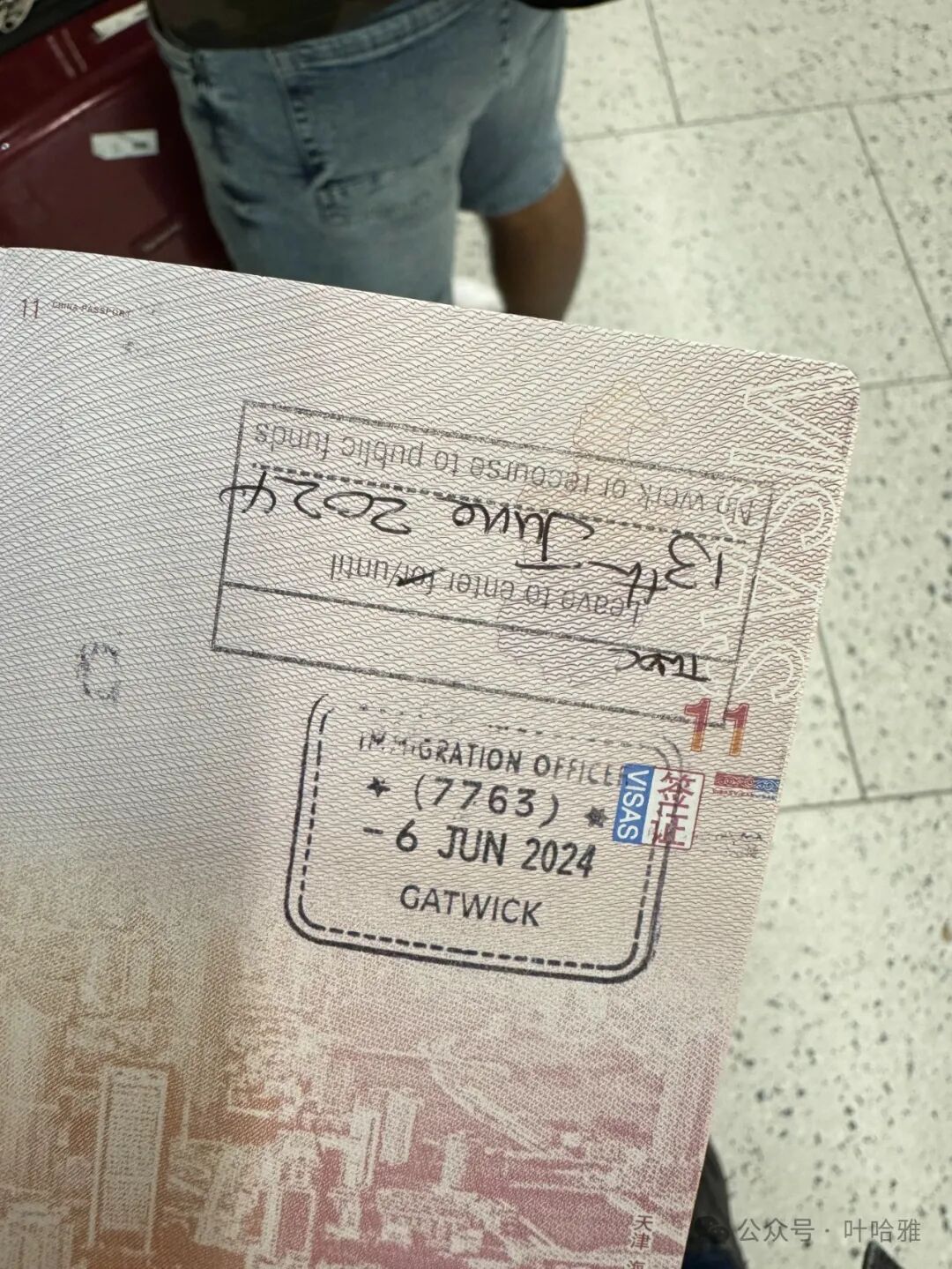
A friendly reminder: Chinese passport holders with Canadian or American visas can enter the UK visa-free when transiting, but you need to have an onward ticket. I tested this myself when flying from Canada back to China with a layover in London. I arrived and departed from two different airports. The check-in staff in Canada asked if I had a 24-hour departure ticket from the UK. My flight arrived in London on the first morning and left on the second evening, which was over 24 hours, but I was still allowed to board. When I entered London, they gave me a 3-day stamp, so to be safe, you can stay in London visa-free for at least one day.
I actually visited London twice. The first trip was a total accident, and the second was a layover on my way back to China. The flight transiting through Europe was almost entirely white passengers. When they heard about the emergency landing in London, not one person complained; they actually looked happy. The flight attendant even joked that we would have another chance to eat the great British dish fish and chips (zha yu shu tiao). This is a running joke, as fish and chips is a traditional British food, and it mocks the UK for being a culinary desert.
I just walked around and found two halal restaurants at London Gatwick Airport.
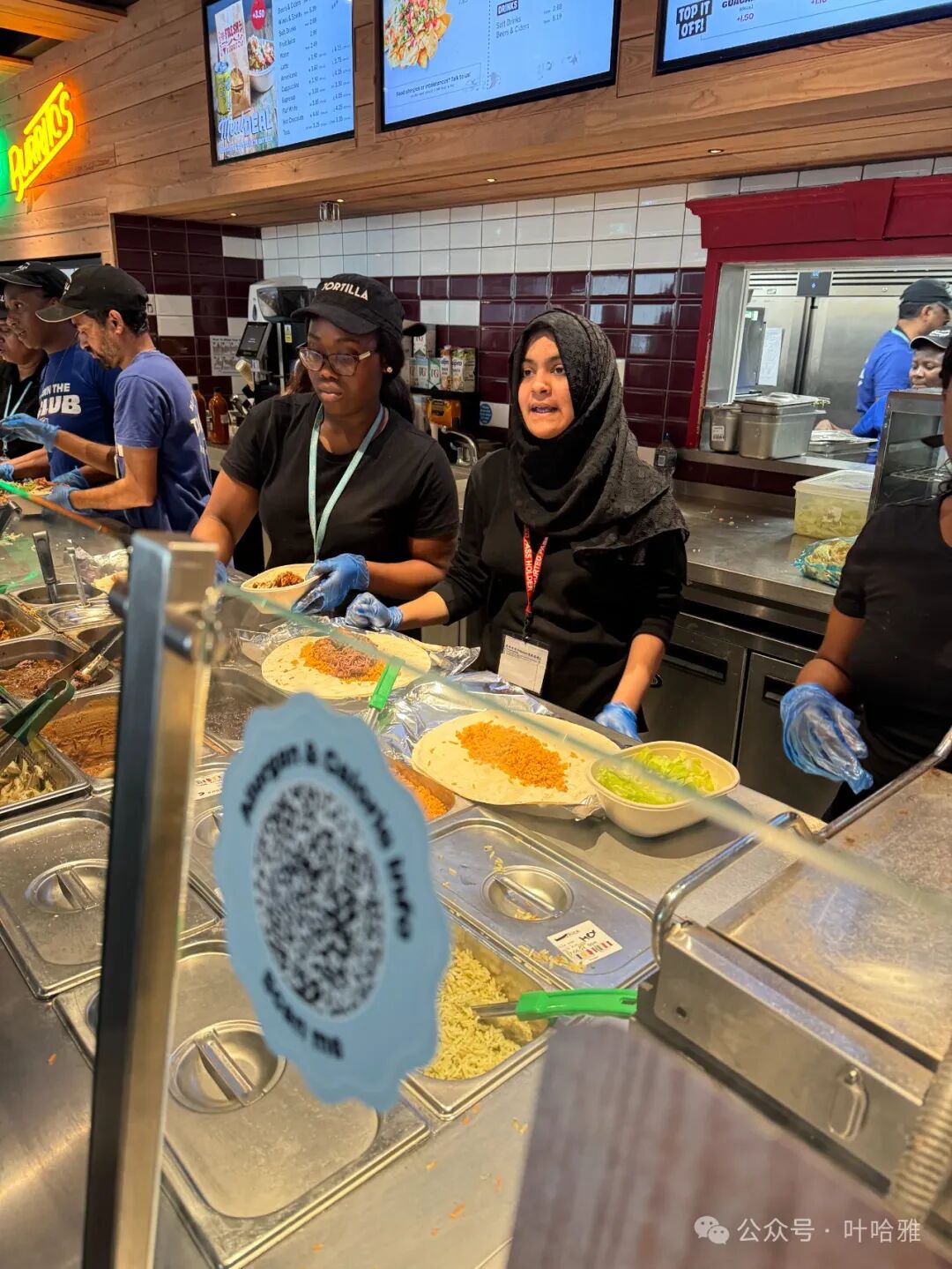
Diners lined up at this stall to buy fast food, and the airline gave every passenger a 15-pound voucher as compensation.
15 pounds is about enough for one fast-food meal.
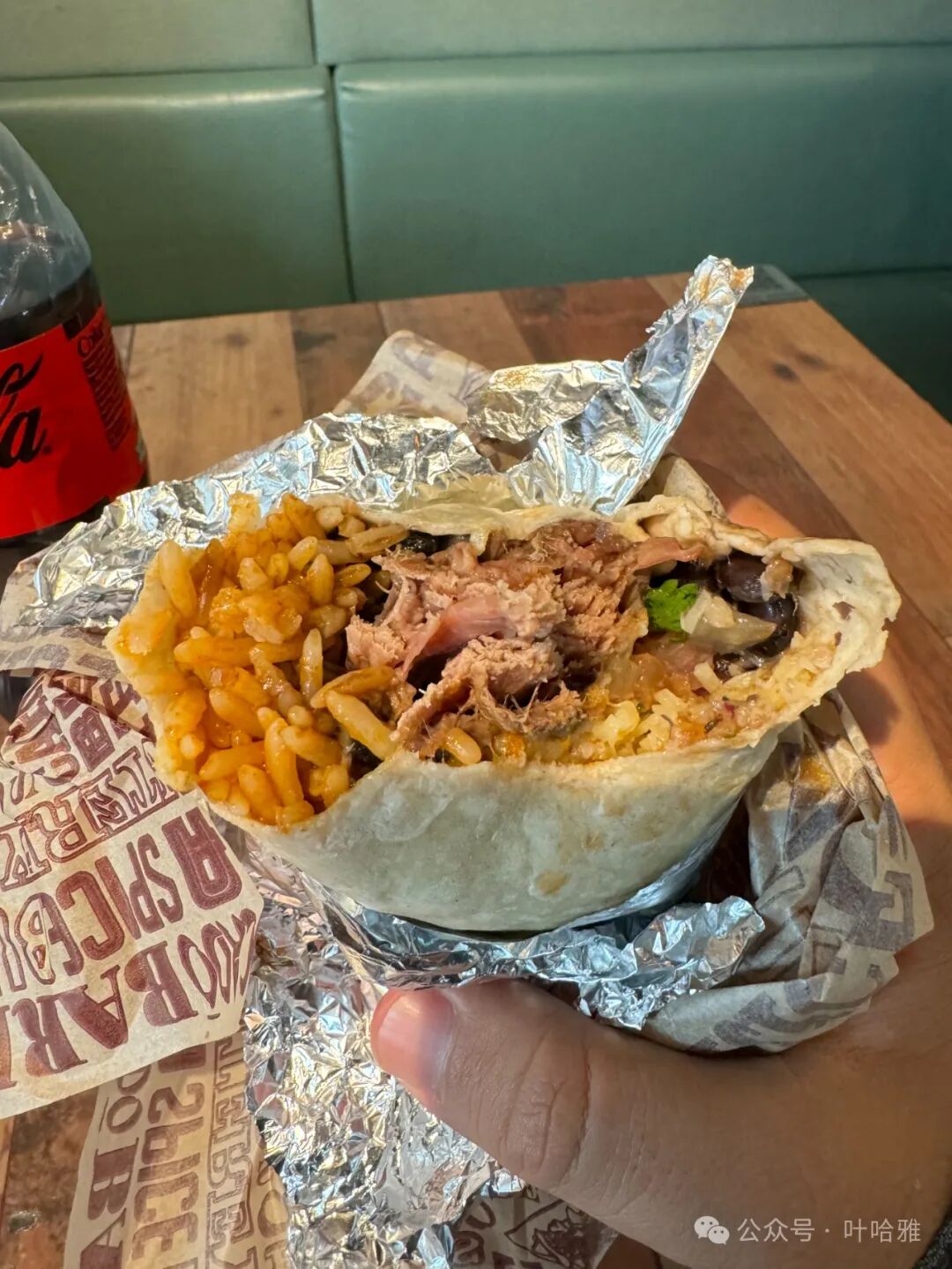
This is a London flatbread wrap with vegetables, and you can choose whatever ingredients you want inside.
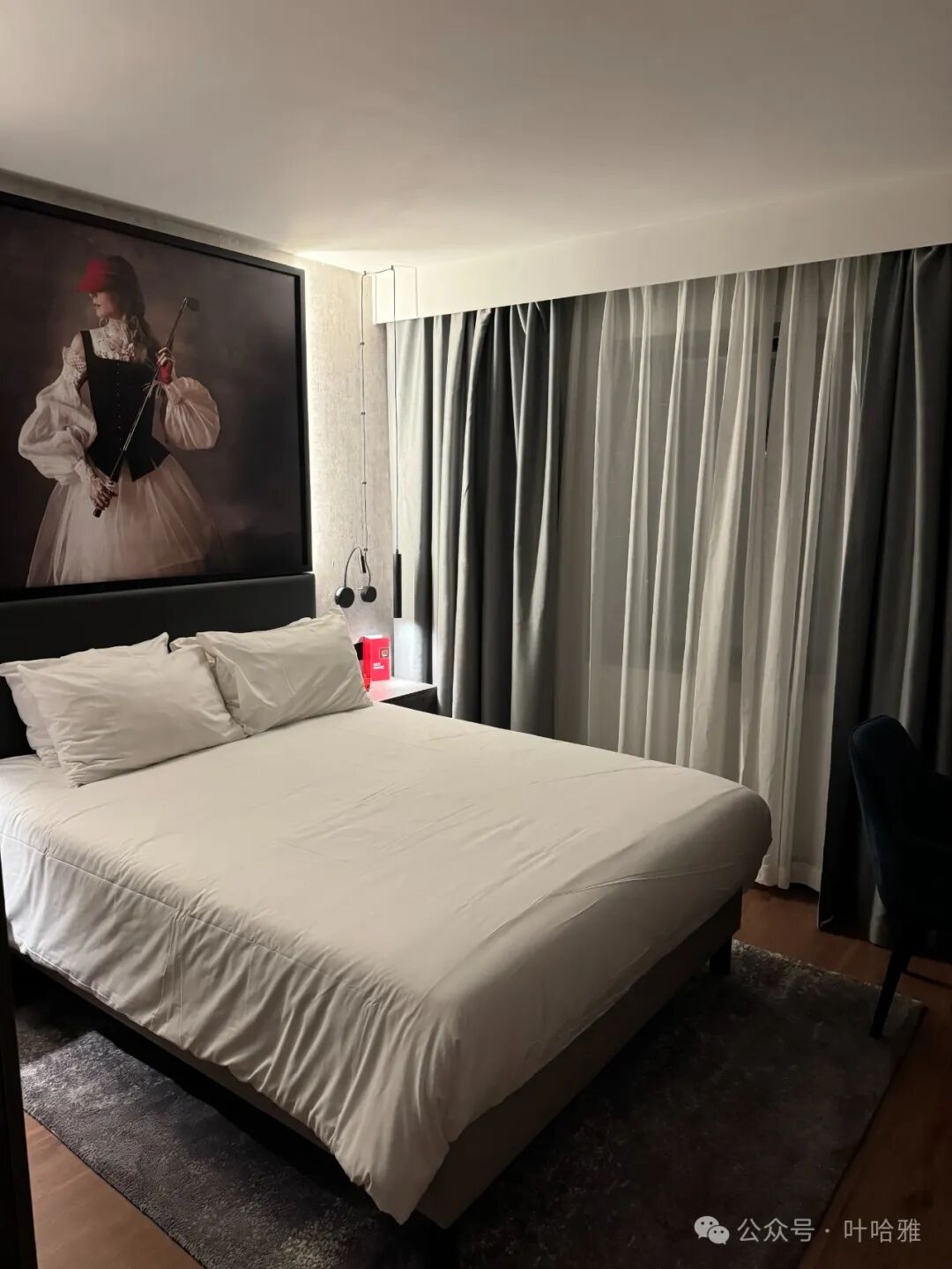
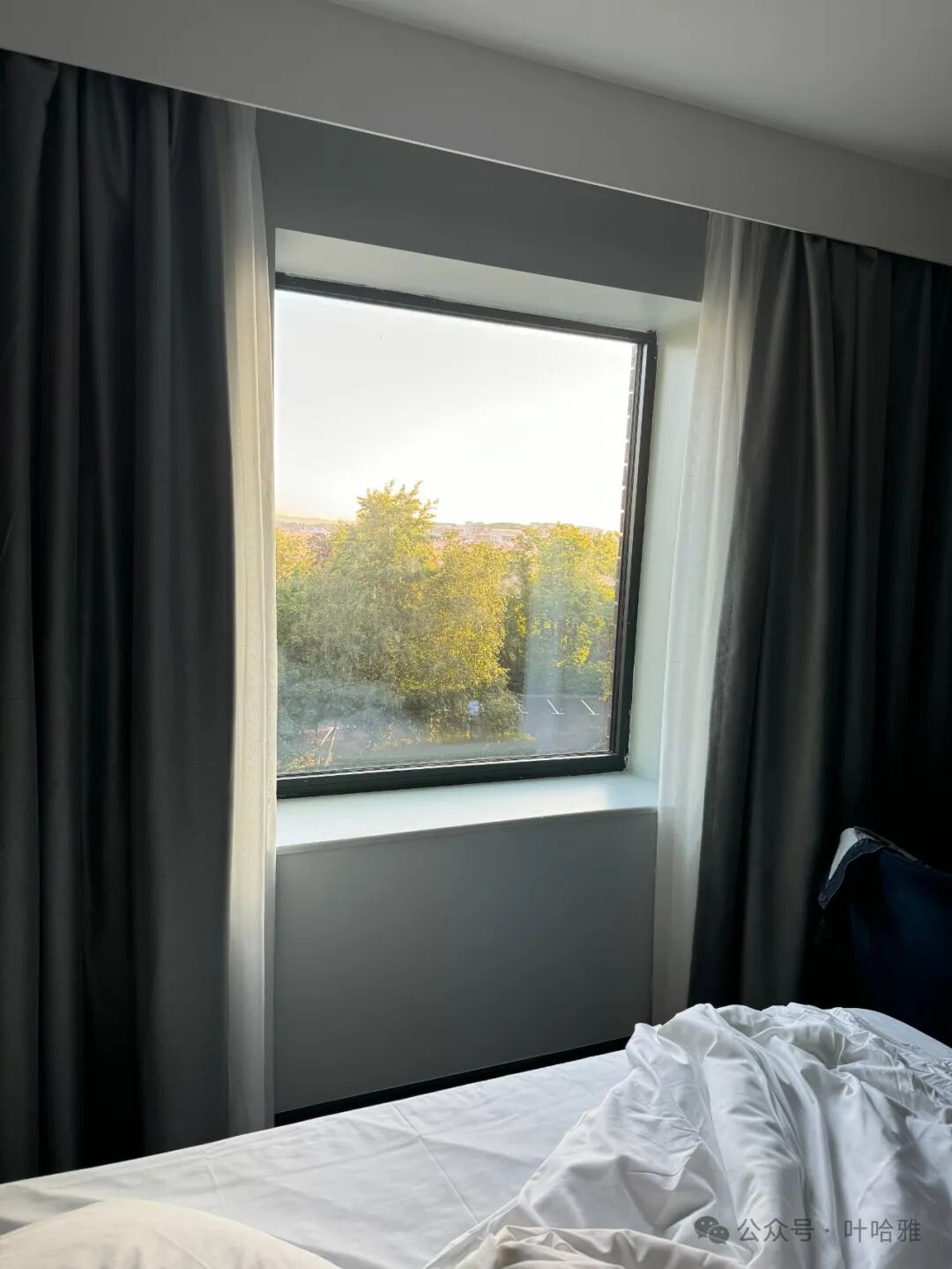
Prices in London are higher than in Canada. The exchange rate for the British pound to the Chinese yuan is 1:9, which is much higher than the 1:5.3 rate for the Canadian dollar. Standard hotel rooms cost over 1,000 yuan per night, so the accommodation provided by the airline felt like a win. After returning to China, I also claimed 1,200 yuan in insurance compensation, which basically gave me a free three-day trip to London.
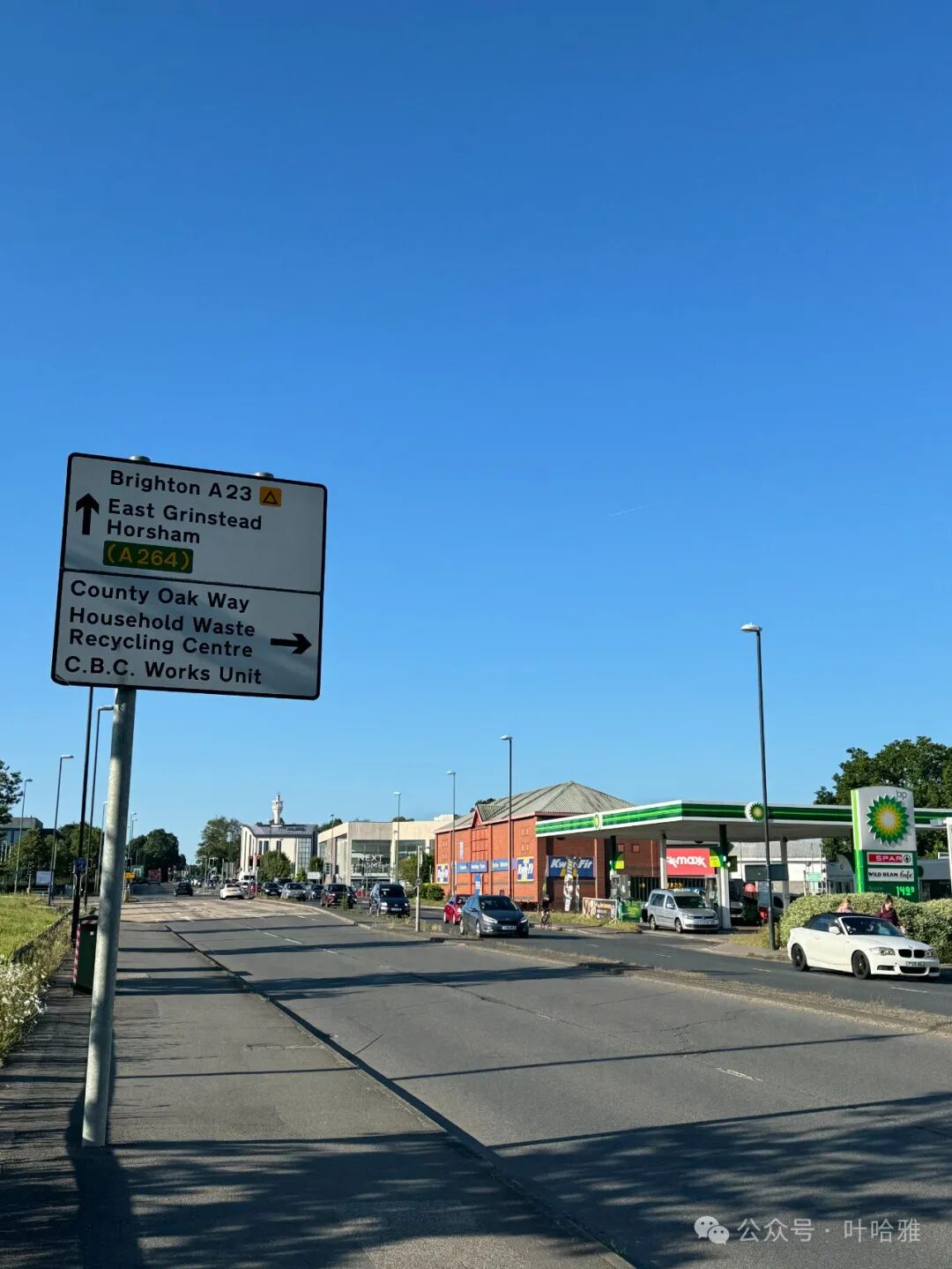
After leaving Gatwick Airport, you can walk 1.5 kilometers to the small town of Crawley. The greenery along the road is beautiful.
Seeing this star and crescent symbol felt quite familiar, but Premier Inn is actually just a budget hotel chain.
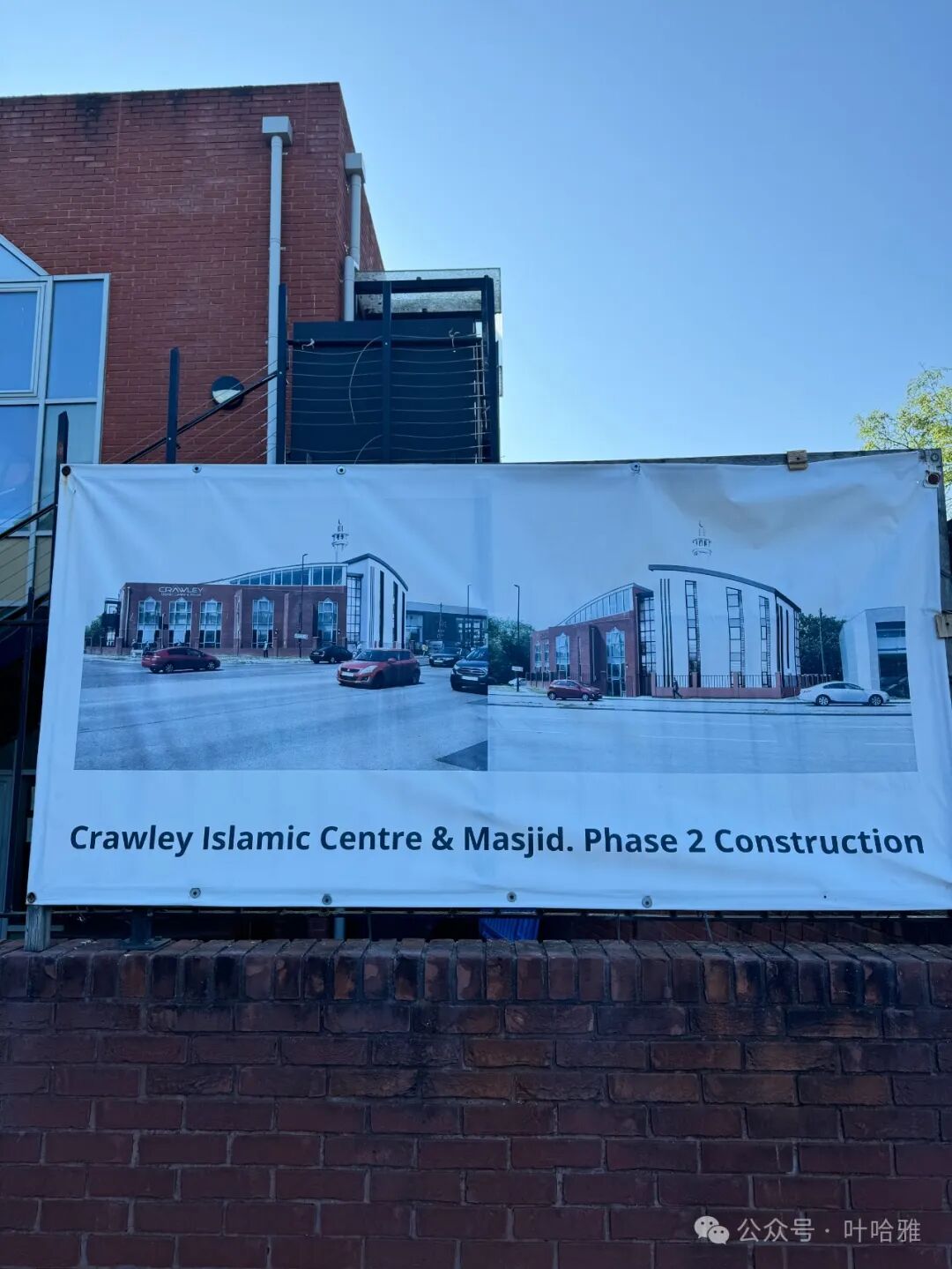
Crawley Islamic Centre & Masjid.
This is an Islamic school and mosque owned by people of Pakistani descent. The status of our 'iron brothers' from Pakistan in the UK is unique. First, most hold British passports. As a former British colony, Pakistan has a special, easier path for immigration to the UK. Currently, people of Pakistani descent make up 3.3% of London's population, and there were 1.6 million Pakistanis in the UK in 2021, with 20% of them living in London.
Pakistanis in the UK also have strong economic power. They work not only in catering but also as teachers, doctors, and engineers. The unemployment rate for Pakistanis in London is lower than the average for the white population. Additionally, one in seven Pakistanis works as a taxi driver.
I estimate that this small town of Crawley is a Pakistani enclave. The vast majority of women I saw on the street were wearing headscarves.
The history of Pakistani immigration to the UK dates back to the 17th century. At that time, the East India Company brought a large number of Indian and Pakistani laborers to the British Isles. These early immigrants were almost all men, and many married white women in the UK.
Muhammad Ali Jinnah, the founding father of Pakistan, studied in the UK before returning to Pakistan. After Pakistan gained independence from India, more and more Pakistanis immigrated to the UK.
Many elites of Pakistani descent are involved in British politics. London Mayor Sadiq Khan, Manchester Mayor Yasmin Dar, Birmingham Mayor Chaudhry Abdul Rashid, Newham Mayor Rokhsana Fiaz, and Kingston upon Thames Mayor Shiraz Mirza are all British citizens of Pakistani descent.
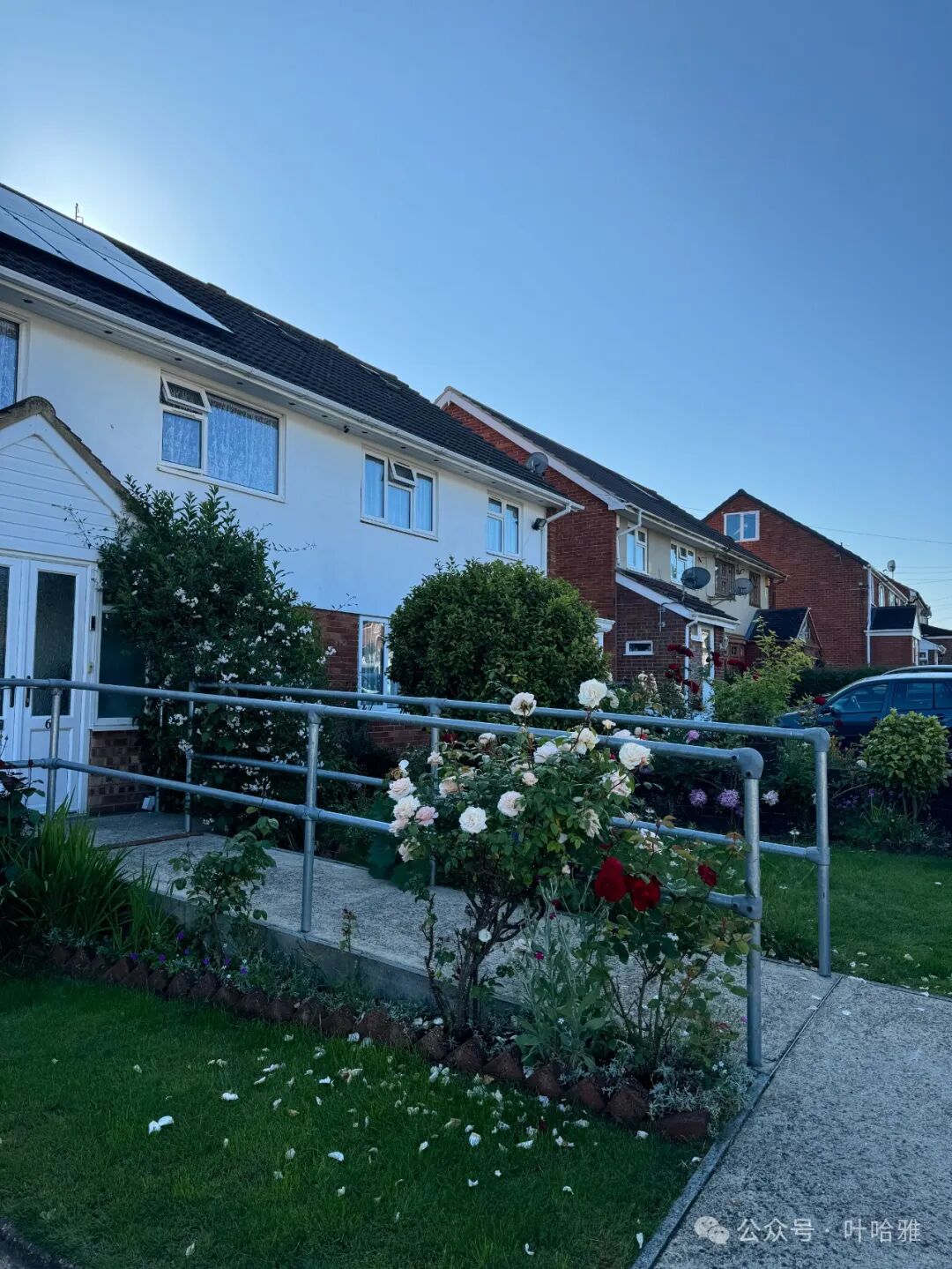
The streets of the small town are clean and beautiful, with flowers planted in front of every house. The temperature in London in June is cool and the sun is bright. People say London is foggy all year round, but unfortunately, it was sunny both times I passed through, so I missed the fog.
A family has a Palestinian flag hanging in their window.
There are many mosques around the small town of Crawley. This one is the Ahmadiyya mosque. I wrote about the Ahmadiyya in detail in my article 'Goodbye Vancouver: A Colorful Journey of the Soul,' noting that it is a sect not recognized by mainstream Islam.
The name above is the fifth Caliph of the Ahmadiyya, Mirza Masroor Ahmad. He currently lives in London, and the Ahmadiyya built the largest mosque in the UK.
If you see a mosque named Noor in Europe or America, be aware that it might be Ahmadiyya.
Another Sri Lankan mosque is less than 800 meters away from the Ahmadiyya mosque.
The gate was locked when I arrived, but I saw someone cleaning inside and asked him to open it for me. He was the one who told me this is a Sri Lankan mosque.
We can see from the scale of the Sri Lankan mosque that it is clearly not as grand as the Pakistani mosque.
Besides the Sri Lankan mosque, London also has Bangladeshi and Indian mosques, which look about the same from the outside.
The highlight of the Sri Lankan mosque is that it sits right next to a church, and everyone lives together in harmony.
I strolled back from the mosque and walked to the town's commercial center.
I saw a halal supermarket, just like the ones on Ox Street (Niujie).
You multiply all the price tags by 9 to get the price in RMB; life in London is not easy.
There are also some imported goods from Muslim countries. The customers in the supermarket are dressed in all sorts of ways, but most are in Muslim attire.
People eat shrimp, crab, and other seafood here. Although Pakistanis also follow the Hanafi school, the Hanafi school does not completely forbid eating shrimp and crab. For details, see how the Hanafi school views shrimp.
There are non-alcoholic drinks, including brands like Coca-Cola and Pepsi that are supposedly controlled by Jewish capital. I have even seen brands like Starbucks and McDonald's around Mecca. You could say the world economy is integrated, and none of us can escape this economic system.
Seeing the wildflowers by the road, I felt like I was in Xinjiang as I walked. Britain is in the northwest of Europe, where people are tall and the climate is on the cold side.
The British Museum
I had plenty of time for this trip, so I arrived at the British Museum early to visit. The museum is free, though you can choose to make a voluntary donation. You need to book your visit on the official website in advance. Tickets are easy to get, and I definitely chose the free option.
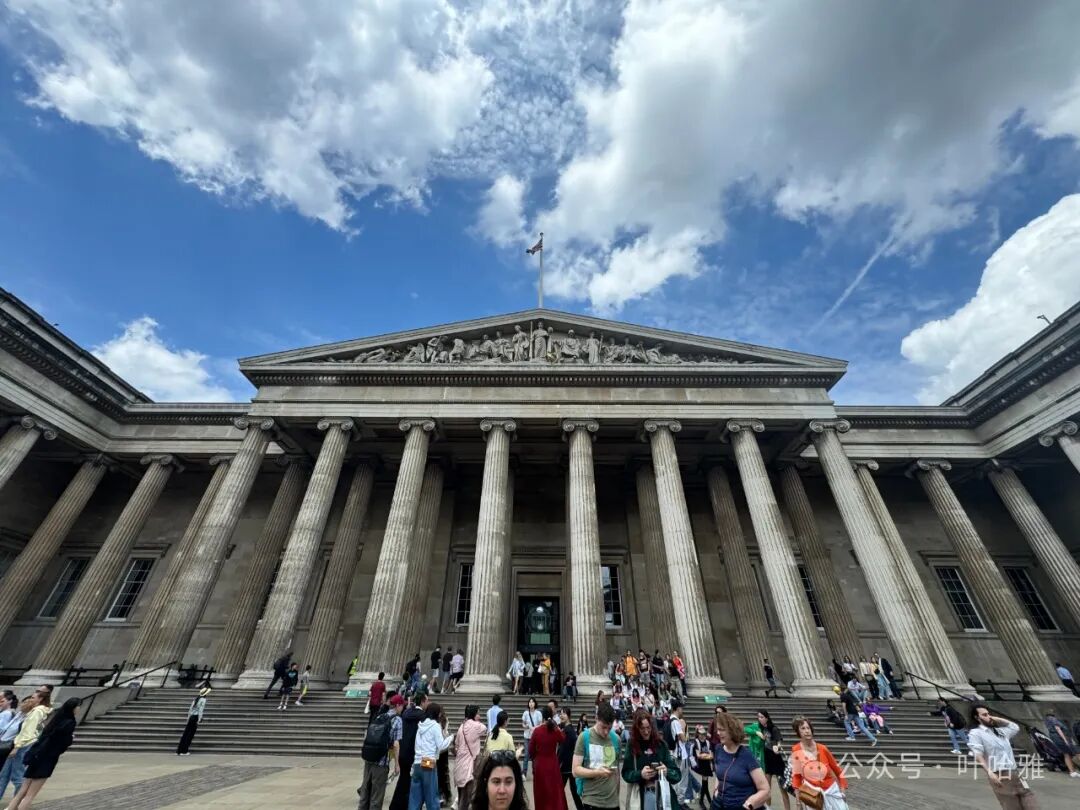
The exterior of the British Museum is modeled after the Parthenon of ancient Greece. Moving from left to right, it represents the river of time, showing humanity moving from ignorance toward science. In the center, the goddess of wisdom holds a golden scepter with a golden globe at her feet, representing the arrival of the god of science. Sitting next to the goddess is the god of mathematics.
There is a line to get in, and you have to go through a security check before entering. The inside is huge, and it takes about a full day to see everything properly.
The British Museum is open from 10:00 to 17:00, and stays open until 20:30 on Fridays. The Ancient Egypt gallery is definitely the most popular.
Some people online say that after seeing the ancient Egyptian artifacts at the British Museum, they thought Egypt had been emptied out. I have been to the Egyptian Museum myself, and there are so many artifacts there that there is nowhere to put them all, so it is impossible that it was emptied. See the Egypt travel guide for avoiding pitfalls for more details.
Rosetta Stone
Made in 196 BC, it is inscribed with a decree from the coronation of the ancient Egyptian King Ptolemy V. The stone has three types of writing: Ancient Greek, Ancient Egyptian hieroglyphs, and Demotic script. Archaeologists were able to decipher the content of Ancient Egyptian hieroglyphs by comparing the three scripts, because Ancient Greek can still be read today.
Nereid Monument
This is a monument for the ruler of Xanthos in southwestern Turkey, built between 390 and 380 BC. The Nereids were the daughters of the sea god. In 1840, the British Museum funded archaeological excavations in southwestern Turkey with the permission of the Ottoman Sultan and discovered this temple. At that time, the Ottoman Empire allowed British, French, and German archaeologists to conduct research. It was not until after 1869 that the export of artifacts was prohibited, which led to the later construction of the Istanbul Archaeology Museums.
The mysterious Moai statues of Easter Island
In 1868, the British soldier Richard Powell brought two Moai statues from Easter Island back to the UK and gave them to Queen Victoria as a gift. In recent years, Chile has repeatedly asked the British Museum to return the statues, but the British side has not responded.
Islamic World Exhibition
Islamic World Exhibition
This monogram (tughra) was a common symbol in the Ottoman Empire, and the name on the gold coin is a person's name.
This tells the history after the birth of the Prophet Muhammad.
This describes Jerusalem, the holy city shared by Judaism, Christianity, and Islam, as well as the story of the Prophet Muhammad's Night Journey and Ascension. The Dome of the Rock (Qubbat al-Sakhrah) is connected to this event.
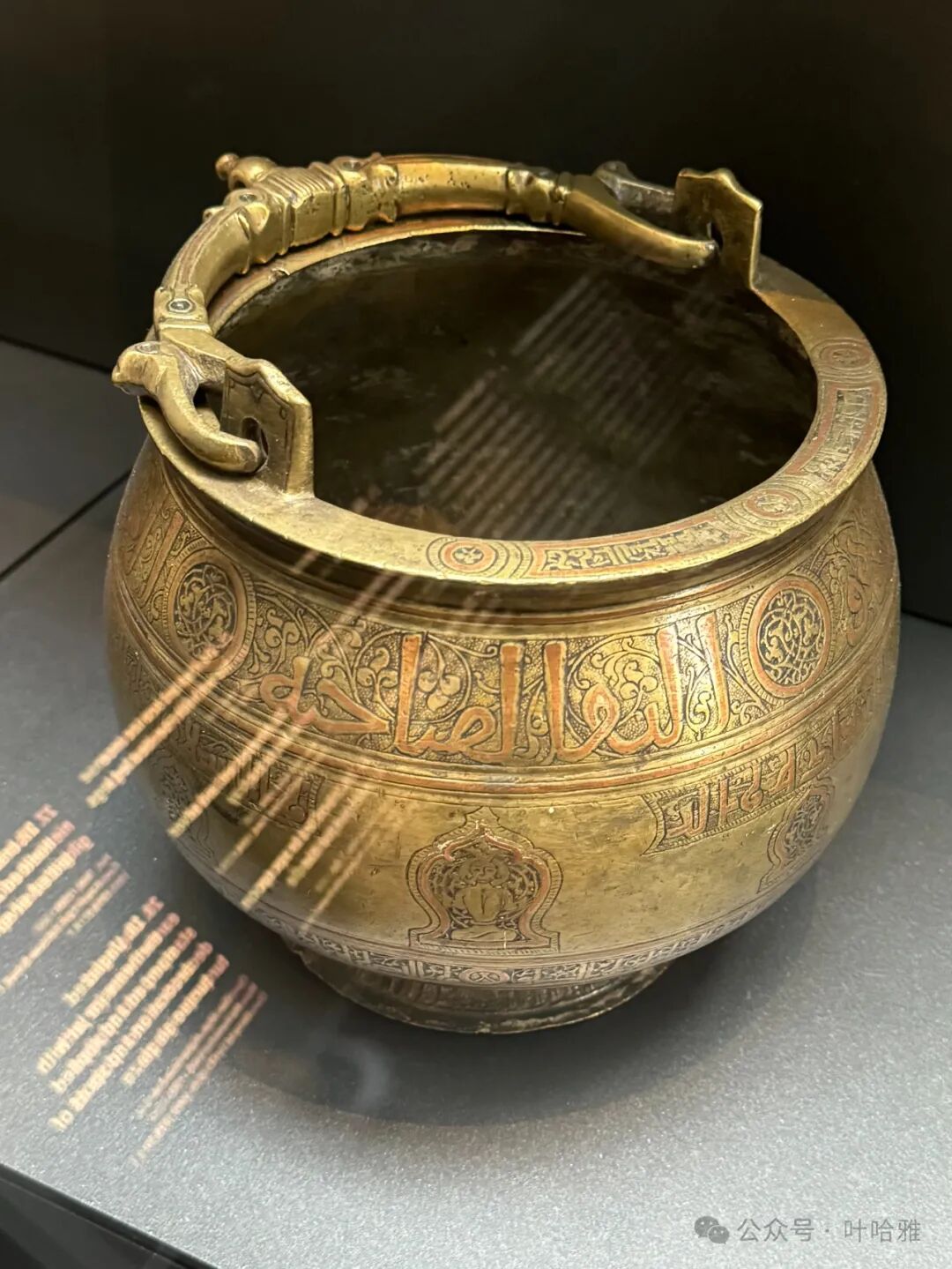
This is a lamp from a mosque, related to the Ottoman Sultan's order to renovate the Dome of the Rock. It is inscribed with a Hadith that compares believers in the mosque to fish in water and non-believers to birds in a cage.
A compass used to determine the direction of prayer (qibla).
This piece of black volcanic stone may have once been embedded in the wall of the Kaaba.
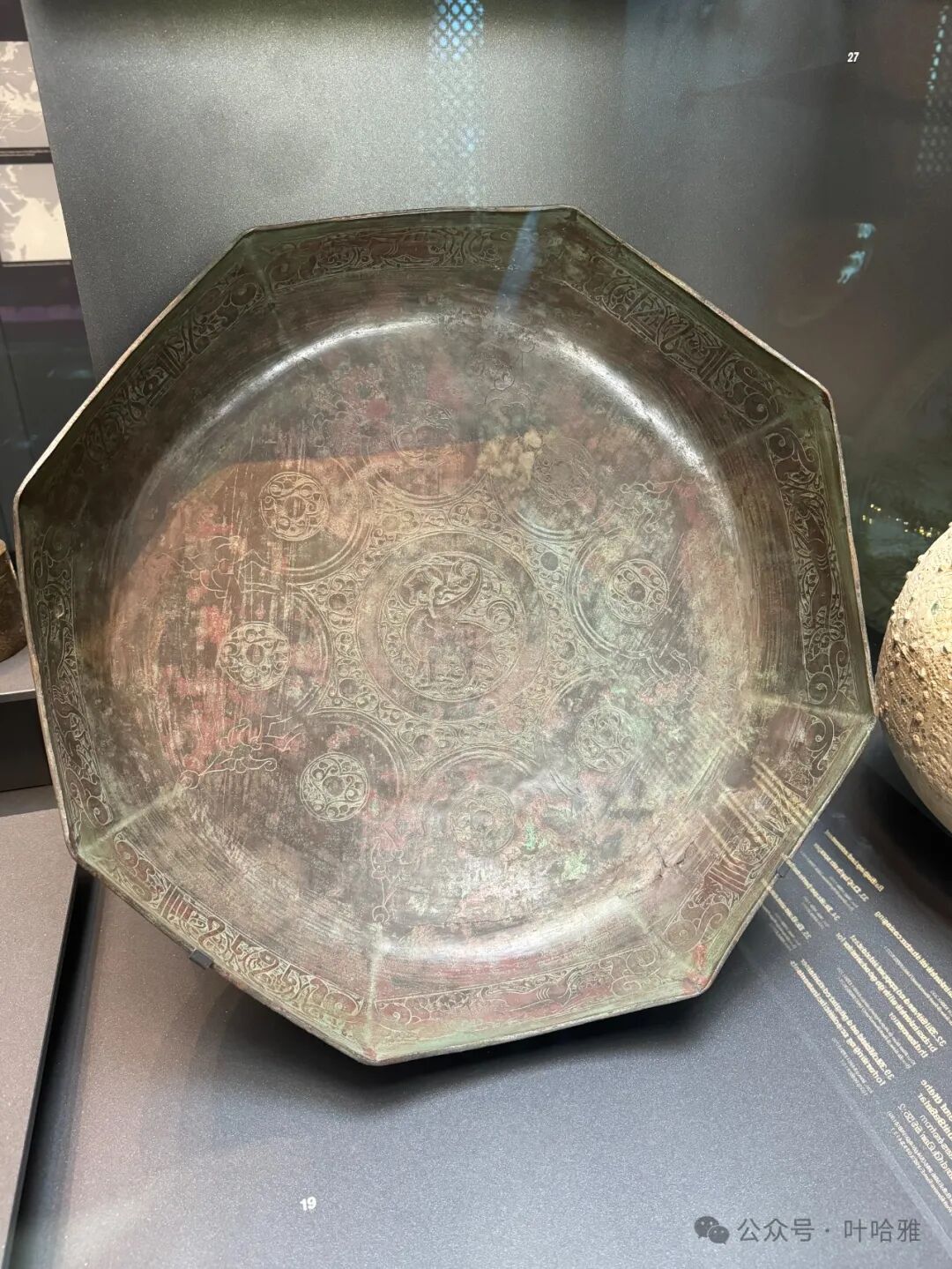
The picture above shows a bronze mirror. Inspired by China, medieval Iran also made mirrors out of copper alloy that could reflect light after being polished. The back of the mirror is engraved with patterns and served as an amulet.
Asia: The Legacy of Mongolia
The image above states that the Mongol invasion of West Asia was led by Hulagu, the grandson of Genghis Khan (1162-1227). Hulagu founded the Ilkhanate. He spared the lives of the West Asian rebel forces because their specialized skills could be put to good use in the new Mongol power centers.
The Mongol legacy continued through the Central Asian leader Timur. Timur claimed a connection between Genghis Khan and the Prophet Muhammad. During his conquests, Timur also kept craftsmen and brought them to his new centers of Samarkand and Herat. He blended Iranian Islamic and Central Asian steppe traditions into his architectural art.
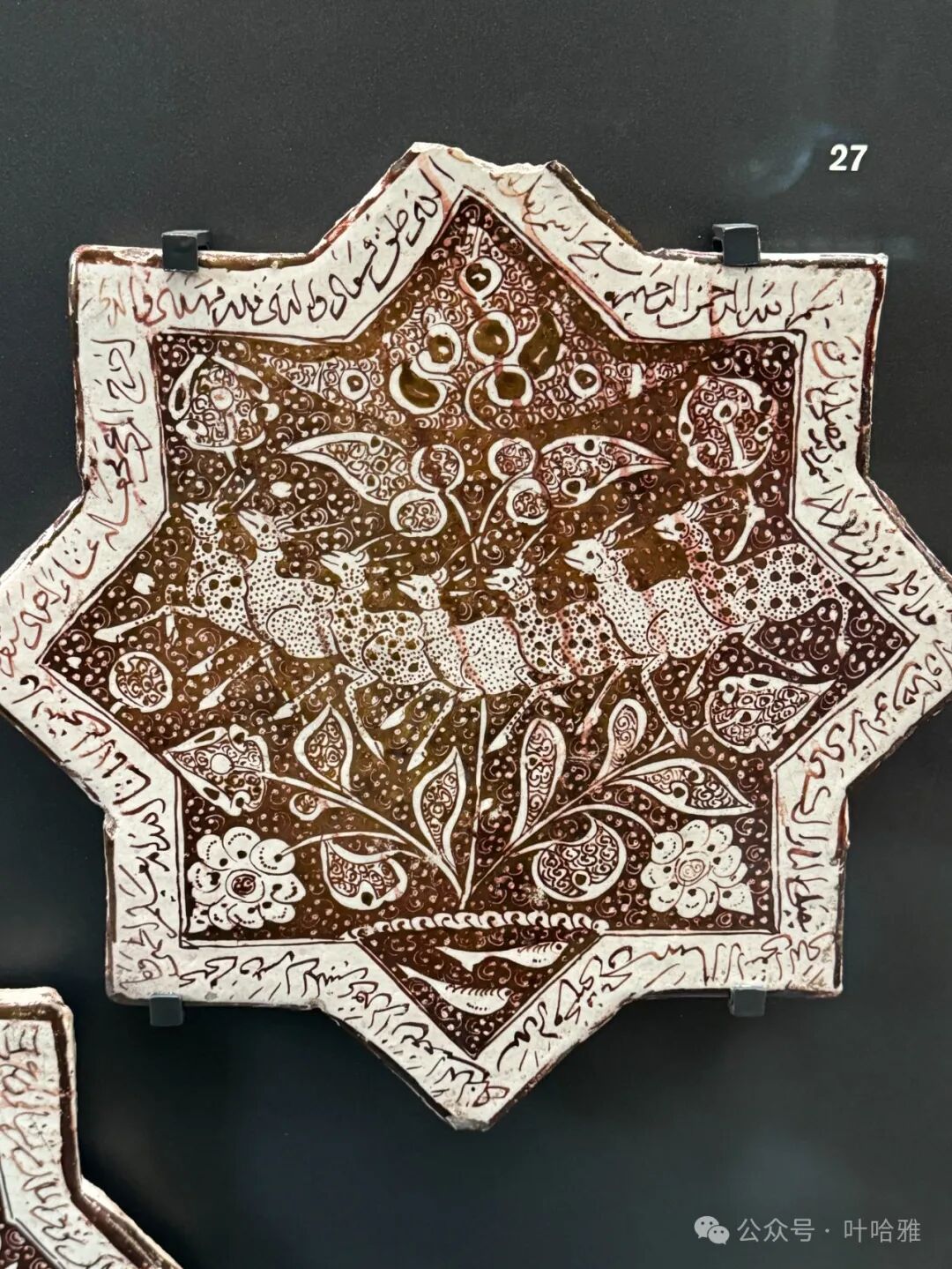
Regarding building materials from Iran and Central Asia, ornate glazed tiles were widely used in religious buildings and homes. These bricks may have come from a mosque and are inscribed in Arabic with 'In the name of Allah, the Most Gracious' and 'There is no god but Allah, He is the All-Powerful, the All-Knowing.'
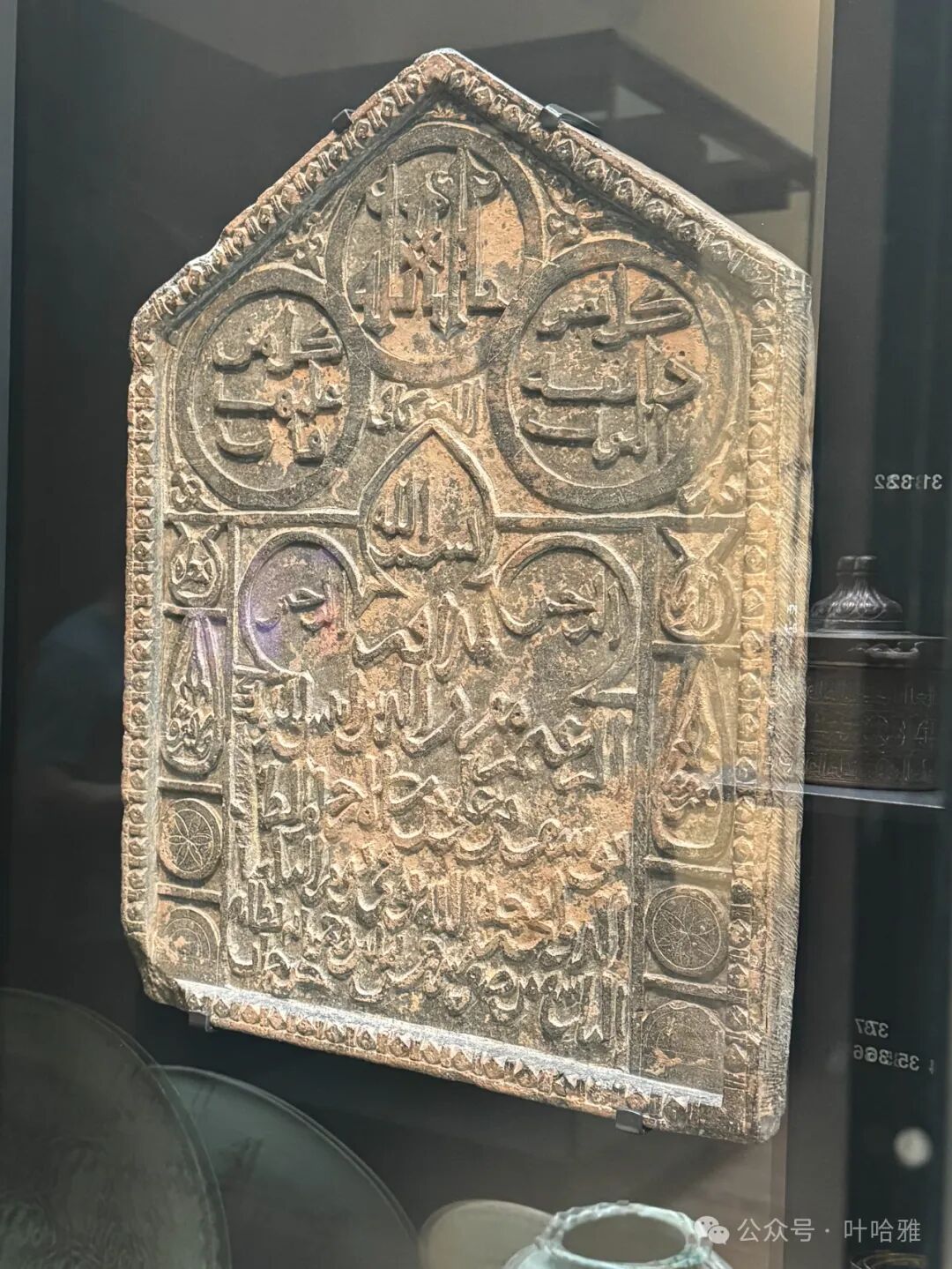
This is a tombstone for an Ottoman naval officer named Seyyid Ahmed Bey Kor Kasos. He served the Ottoman Empire for 60 years and passed away during the Greek War of Independence. The stone records his battles against the Greeks during the Greek War of Independence (1821-1832).
Ottoman Turkish women's slippers and children's slippers.
Iran and Central Asia.
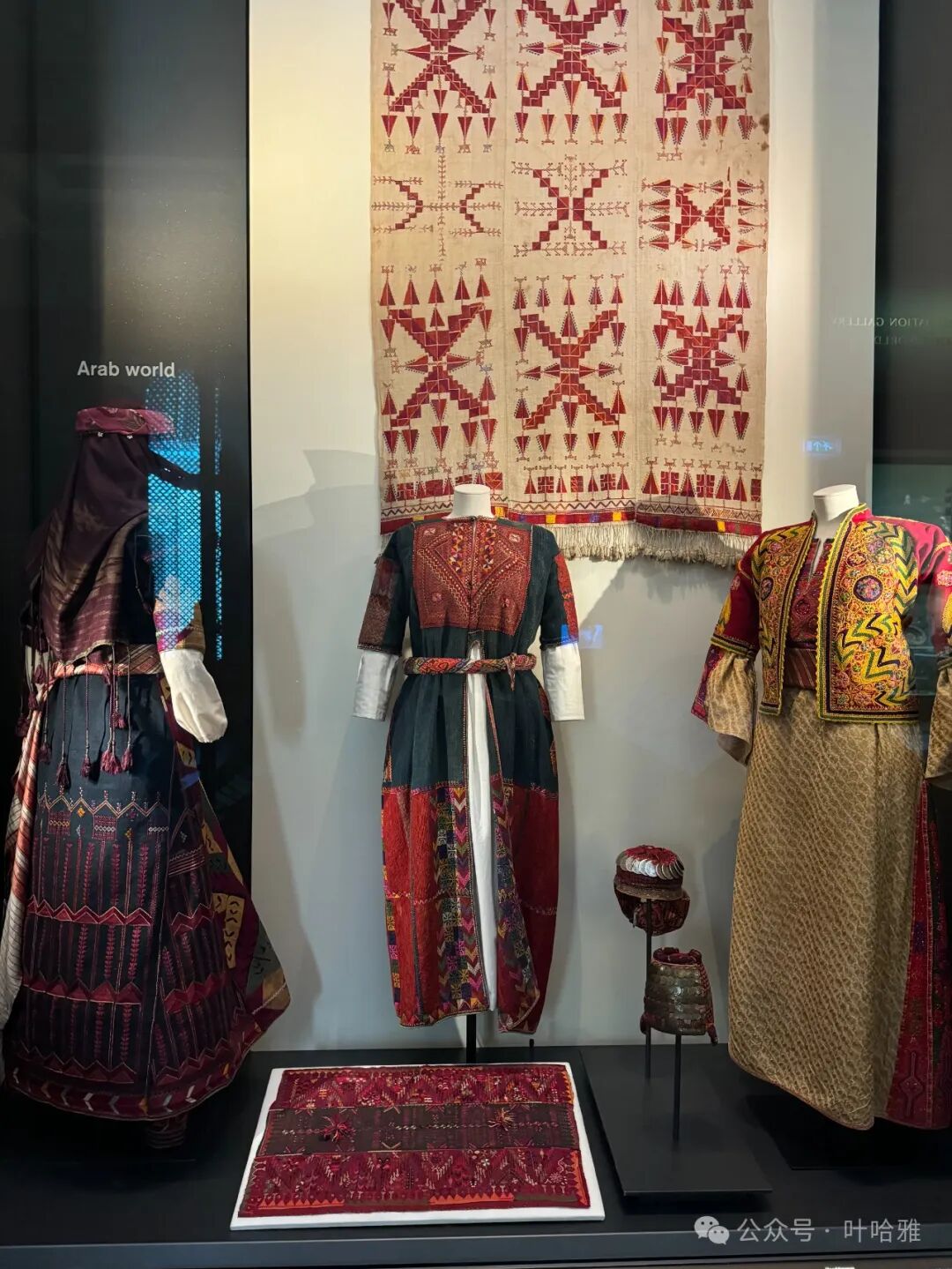
The Safavid dynasty took power in 1501 and established the first Shia state in Tabriz. In 1598, under the rule of Shah Abbas I, the capital moved to Isfahan. Safavid art became popular within the empire and spread to Europe and East Asia. Armenians involved in global trade helped help this cultural exchange.
Islam in Africa. Islam has been present in Africa since the early 600s. Today, about half of Africa's population follows Islam. North, West, and East Africa have long been centers of the wider Islamic world. The writing board in the image above was mainly used to teach Arabic and the Quran.
A hat worn by an official from southern or central Nigeria. They may have been Hausa clerks employed by British colonial institutions.
China Gallery.
The Chinese artifact gallery at the British Museum is quite large. It is divided into an artifact gallery and a jewelry gallery. The people who spend the most time here are Chinese. The British Museum holds about 23,000 Chinese artifacts, ranging from Shang and Zhou dynasty bronzes to Tang and Song dynasty ceramics, and gold and jade items from the Ming and Qing dynasties. More than 2,000 of these are on long-term display.
Chinese civilization is one of the oldest in the world. Today, China is about the same size as Europe and has one-quarter of the world's population. The China gallery displays 7,000 years of history, divided into different periods.
Decorative glazed tile walls on the roof ridges of temples in Shanxi Province.
You can find information about the British Museum's collection online, so I did not take photos of every single item. Many people are now calling for the museum to return artifacts to other countries, but whether they can be reclaimed depends on national diplomatic strength.
I am actually puzzled by why the British were able to recognize the value of these artifacts over 200 years ago, while other countries at the time saw them as junk and let them be taken away. If the British Museum had not collected them, I fear a significant portion of these artifacts would not exist today.
After leaving the British Museum, I saw this Uyghur restaurant nearby. The waiter is from Kashgar and has lived in London for over 20 years. He was very friendly, though he does not speak Chinese. I even left my luggage at his shop.
At this shop, I ate the most expensive hand-pulled noodles (latiaozi) of my life, costing 13.95 pounds, or about 130 yuan.
The taste was very authentic, more so than the two Xinjiang restaurants I visited in Canada.
Lamb skewers (yangrouchuan) are 3 pounds each, with a minimum order of two, which is cheaper than the cold dishes.
After the meal, the waiter quietly gave me a pudding. It was delicious, and the whole dining experience was very pleasant.
After eating, I walked back to my hotel. Everywhere I looked along the way, I saw Muslims. It is no exaggeration to say that the proportion of Muslims on the streets of London has already exceeded one-tenth.
A Muslim couple sunbathing in Hyde Park.
London is a city with beautiful street views. Its buildings have a deeper sense of history than those in Canada, making it perfect for a slow city walk.
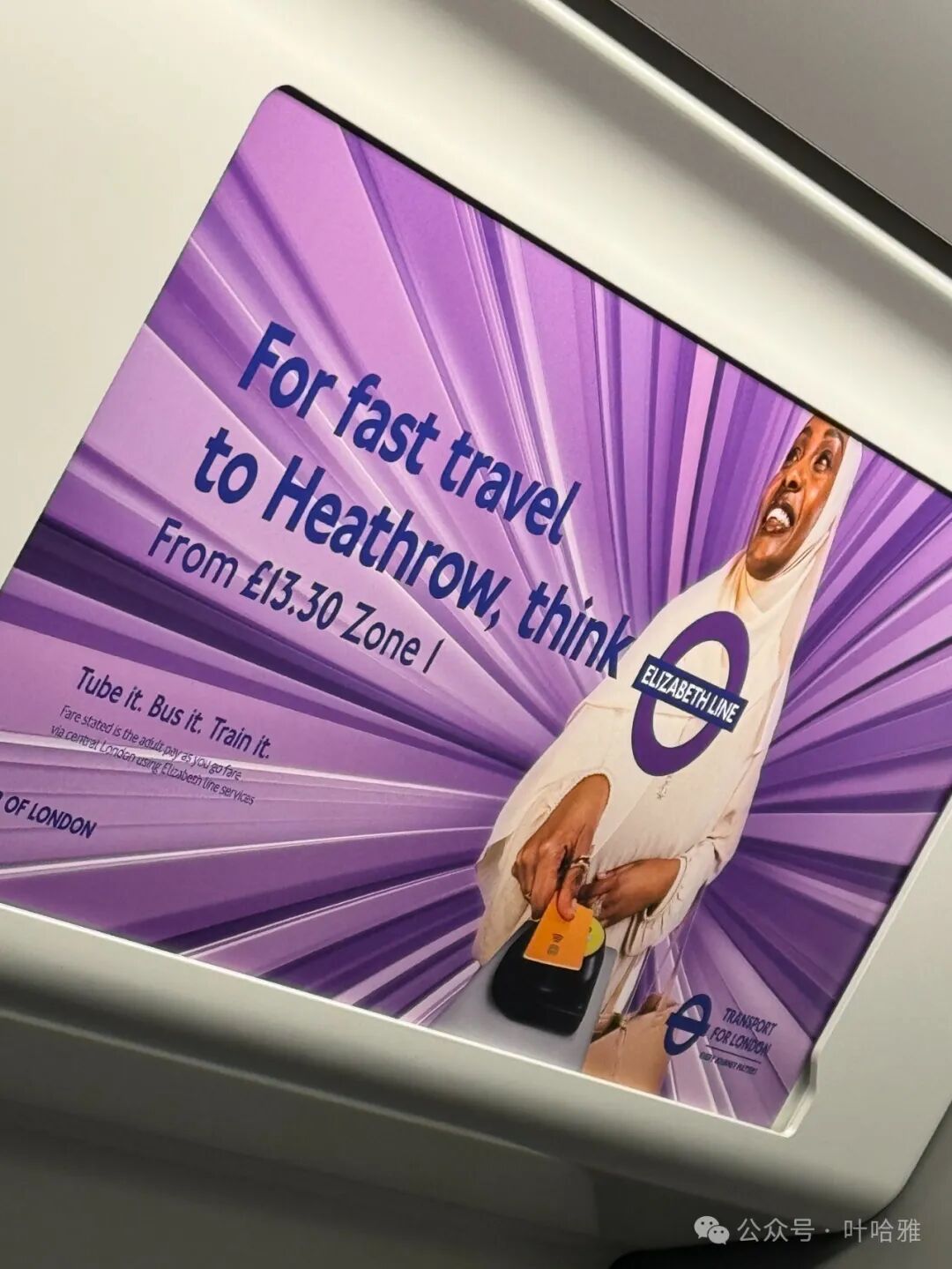
Paddington Street near Hyde Park is lined with halal shops. From Paddington Station, you can take the subway to the central station and transfer to a train for Cambridge or Oxford, reaching your destination in about an hour.
Cambridge
Cambridge street view view all
Summary: This UK Muslim travel guide begins with an unexpected London stopover, halal food at Gatwick Airport, Crawley Islamic Centre, London halal restaurants, city walks, Muslim street life, Hyde Park, Paddington, and the route toward Oxford and Cambridge.
I originally planned to go to Canada, but 6 hours after taking off from Rome, the flight had an emergency and had to turn back. The plane flew over the Atlantic for 3 hours before heading back to land in London, which unexpectedly gave me a 7-day visa-free trip to London.
A friendly reminder: Chinese passport holders with Canadian or American visas can enter the UK visa-free when transiting, but you need to have an onward ticket. I tested this myself when flying from Canada back to China with a layover in London. I arrived and departed from two different airports. The check-in staff in Canada asked if I had a 24-hour departure ticket from the UK. My flight arrived in London on the first morning and left on the second evening, which was over 24 hours, but I was still allowed to board. When I entered London, they gave me a 3-day stamp, so to be safe, you can stay in London visa-free for at least one day.
I actually visited London twice. The first trip was a total accident, and the second was a layover on my way back to China. The flight transiting through Europe was almost entirely white passengers. When they heard about the emergency landing in London, not one person complained; they actually looked happy. The flight attendant even joked that we would have another chance to eat the great British dish fish and chips (zha yu shu tiao). This is a running joke, as fish and chips is a traditional British food, and it mocks the UK for being a culinary desert.
I just walked around and found two halal restaurants at London Gatwick Airport.
Diners lined up at this stall to buy fast food, and the airline gave every passenger a 15-pound voucher as compensation.
15 pounds is about enough for one fast-food meal.
This is a London flatbread wrap with vegetables, and you can choose whatever ingredients you want inside.
Prices in London are higher than in Canada. The exchange rate for the British pound to the Chinese yuan is 1:9, which is much higher than the 1:5.3 rate for the Canadian dollar. Standard hotel rooms cost over 1,000 yuan per night, so the accommodation provided by the airline felt like a win. After returning to China, I also claimed 1,200 yuan in insurance compensation, which basically gave me a free three-day trip to London.
After leaving Gatwick Airport, you can walk 1.5 kilometers to the small town of Crawley. The greenery along the road is beautiful.
Seeing this star and crescent symbol felt quite familiar, but Premier Inn is actually just a budget hotel chain.
Crawley Islamic Centre & Masjid.
This is an Islamic school and mosque owned by people of Pakistani descent. The status of our 'iron brothers' from Pakistan in the UK is unique. First, most hold British passports. As a former British colony, Pakistan has a special, easier path for immigration to the UK. Currently, people of Pakistani descent make up 3.3% of London's population, and there were 1.6 million Pakistanis in the UK in 2021, with 20% of them living in London.
Pakistanis in the UK also have strong economic power. They work not only in catering but also as teachers, doctors, and engineers. The unemployment rate for Pakistanis in London is lower than the average for the white population. Additionally, one in seven Pakistanis works as a taxi driver.
I estimate that this small town of Crawley is a Pakistani enclave. The vast majority of women I saw on the street were wearing headscarves.
The history of Pakistani immigration to the UK dates back to the 17th century. At that time, the East India Company brought a large number of Indian and Pakistani laborers to the British Isles. These early immigrants were almost all men, and many married white women in the UK.
Muhammad Ali Jinnah, the founding father of Pakistan, studied in the UK before returning to Pakistan. After Pakistan gained independence from India, more and more Pakistanis immigrated to the UK.
Many elites of Pakistani descent are involved in British politics. London Mayor Sadiq Khan, Manchester Mayor Yasmin Dar, Birmingham Mayor Chaudhry Abdul Rashid, Newham Mayor Rokhsana Fiaz, and Kingston upon Thames Mayor Shiraz Mirza are all British citizens of Pakistani descent.
The streets of the small town are clean and beautiful, with flowers planted in front of every house. The temperature in London in June is cool and the sun is bright. People say London is foggy all year round, but unfortunately, it was sunny both times I passed through, so I missed the fog.
A family has a Palestinian flag hanging in their window.
There are many mosques around the small town of Crawley. This one is the Ahmadiyya mosque. I wrote about the Ahmadiyya in detail in my article 'Goodbye Vancouver: A Colorful Journey of the Soul,' noting that it is a sect not recognized by mainstream Islam.
The name above is the fifth Caliph of the Ahmadiyya, Mirza Masroor Ahmad. He currently lives in London, and the Ahmadiyya built the largest mosque in the UK.
If you see a mosque named Noor in Europe or America, be aware that it might be Ahmadiyya.
Another Sri Lankan mosque is less than 800 meters away from the Ahmadiyya mosque.
The gate was locked when I arrived, but I saw someone cleaning inside and asked him to open it for me. He was the one who told me this is a Sri Lankan mosque.
We can see from the scale of the Sri Lankan mosque that it is clearly not as grand as the Pakistani mosque.
Besides the Sri Lankan mosque, London also has Bangladeshi and Indian mosques, which look about the same from the outside.
The highlight of the Sri Lankan mosque is that it sits right next to a church, and everyone lives together in harmony.
I strolled back from the mosque and walked to the town's commercial center.
I saw a halal supermarket, just like the ones on Ox Street (Niujie).
You multiply all the price tags by 9 to get the price in RMB; life in London is not easy.
There are also some imported goods from Muslim countries. The customers in the supermarket are dressed in all sorts of ways, but most are in Muslim attire.
People eat shrimp, crab, and other seafood here. Although Pakistanis also follow the Hanafi school, the Hanafi school does not completely forbid eating shrimp and crab. For details, see how the Hanafi school views shrimp.
There are non-alcoholic drinks, including brands like Coca-Cola and Pepsi that are supposedly controlled by Jewish capital. I have even seen brands like Starbucks and McDonald's around Mecca. You could say the world economy is integrated, and none of us can escape this economic system.
Seeing the wildflowers by the road, I felt like I was in Xinjiang as I walked. Britain is in the northwest of Europe, where people are tall and the climate is on the cold side.
The British Museum
I had plenty of time for this trip, so I arrived at the British Museum early to visit. The museum is free, though you can choose to make a voluntary donation. You need to book your visit on the official website in advance. Tickets are easy to get, and I definitely chose the free option.
The exterior of the British Museum is modeled after the Parthenon of ancient Greece. Moving from left to right, it represents the river of time, showing humanity moving from ignorance toward science. In the center, the goddess of wisdom holds a golden scepter with a golden globe at her feet, representing the arrival of the god of science. Sitting next to the goddess is the god of mathematics.
There is a line to get in, and you have to go through a security check before entering. The inside is huge, and it takes about a full day to see everything properly.
The British Museum is open from 10:00 to 17:00, and stays open until 20:30 on Fridays. The Ancient Egypt gallery is definitely the most popular.
Some people online say that after seeing the ancient Egyptian artifacts at the British Museum, they thought Egypt had been emptied out. I have been to the Egyptian Museum myself, and there are so many artifacts there that there is nowhere to put them all, so it is impossible that it was emptied. See the Egypt travel guide for avoiding pitfalls for more details.
Rosetta Stone
Made in 196 BC, it is inscribed with a decree from the coronation of the ancient Egyptian King Ptolemy V. The stone has three types of writing: Ancient Greek, Ancient Egyptian hieroglyphs, and Demotic script. Archaeologists were able to decipher the content of Ancient Egyptian hieroglyphs by comparing the three scripts, because Ancient Greek can still be read today.
Nereid Monument
This is a monument for the ruler of Xanthos in southwestern Turkey, built between 390 and 380 BC. The Nereids were the daughters of the sea god. In 1840, the British Museum funded archaeological excavations in southwestern Turkey with the permission of the Ottoman Sultan and discovered this temple. At that time, the Ottoman Empire allowed British, French, and German archaeologists to conduct research. It was not until after 1869 that the export of artifacts was prohibited, which led to the later construction of the Istanbul Archaeology Museums.
The mysterious Moai statues of Easter Island
In 1868, the British soldier Richard Powell brought two Moai statues from Easter Island back to the UK and gave them to Queen Victoria as a gift. In recent years, Chile has repeatedly asked the British Museum to return the statues, but the British side has not responded.
Islamic World Exhibition
Islamic World Exhibition
This monogram (tughra) was a common symbol in the Ottoman Empire, and the name on the gold coin is a person's name.
This tells the history after the birth of the Prophet Muhammad.
This describes Jerusalem, the holy city shared by Judaism, Christianity, and Islam, as well as the story of the Prophet Muhammad's Night Journey and Ascension. The Dome of the Rock (Qubbat al-Sakhrah) is connected to this event.
This is a lamp from a mosque, related to the Ottoman Sultan's order to renovate the Dome of the Rock. It is inscribed with a Hadith that compares believers in the mosque to fish in water and non-believers to birds in a cage.
A compass used to determine the direction of prayer (qibla).
This piece of black volcanic stone may have once been embedded in the wall of the Kaaba.
The picture above shows a bronze mirror. Inspired by China, medieval Iran also made mirrors out of copper alloy that could reflect light after being polished. The back of the mirror is engraved with patterns and served as an amulet.
Asia: The Legacy of Mongolia
The image above states that the Mongol invasion of West Asia was led by Hulagu, the grandson of Genghis Khan (1162-1227). Hulagu founded the Ilkhanate. He spared the lives of the West Asian rebel forces because their specialized skills could be put to good use in the new Mongol power centers.
The Mongol legacy continued through the Central Asian leader Timur. Timur claimed a connection between Genghis Khan and the Prophet Muhammad. During his conquests, Timur also kept craftsmen and brought them to his new centers of Samarkand and Herat. He blended Iranian Islamic and Central Asian steppe traditions into his architectural art.
Regarding building materials from Iran and Central Asia, ornate glazed tiles were widely used in religious buildings and homes. These bricks may have come from a mosque and are inscribed in Arabic with 'In the name of Allah, the Most Gracious' and 'There is no god but Allah, He is the All-Powerful, the All-Knowing.'
This is a tombstone for an Ottoman naval officer named Seyyid Ahmed Bey Kor Kasos. He served the Ottoman Empire for 60 years and passed away during the Greek War of Independence. The stone records his battles against the Greeks during the Greek War of Independence (1821-1832).
Ottoman Turkish women's slippers and children's slippers.
Iran and Central Asia.
The Safavid dynasty took power in 1501 and established the first Shia state in Tabriz. In 1598, under the rule of Shah Abbas I, the capital moved to Isfahan. Safavid art became popular within the empire and spread to Europe and East Asia. Armenians involved in global trade helped help this cultural exchange.
Islam in Africa. Islam has been present in Africa since the early 600s. Today, about half of Africa's population follows Islam. North, West, and East Africa have long been centers of the wider Islamic world. The writing board in the image above was mainly used to teach Arabic and the Quran.
A hat worn by an official from southern or central Nigeria. They may have been Hausa clerks employed by British colonial institutions.
China Gallery.
The Chinese artifact gallery at the British Museum is quite large. It is divided into an artifact gallery and a jewelry gallery. The people who spend the most time here are Chinese. The British Museum holds about 23,000 Chinese artifacts, ranging from Shang and Zhou dynasty bronzes to Tang and Song dynasty ceramics, and gold and jade items from the Ming and Qing dynasties. More than 2,000 of these are on long-term display.
Chinese civilization is one of the oldest in the world. Today, China is about the same size as Europe and has one-quarter of the world's population. The China gallery displays 7,000 years of history, divided into different periods.
Decorative glazed tile walls on the roof ridges of temples in Shanxi Province.
You can find information about the British Museum's collection online, so I did not take photos of every single item. Many people are now calling for the museum to return artifacts to other countries, but whether they can be reclaimed depends on national diplomatic strength.
I am actually puzzled by why the British were able to recognize the value of these artifacts over 200 years ago, while other countries at the time saw them as junk and let them be taken away. If the British Museum had not collected them, I fear a significant portion of these artifacts would not exist today.
After leaving the British Museum, I saw this Uyghur restaurant nearby. The waiter is from Kashgar and has lived in London for over 20 years. He was very friendly, though he does not speak Chinese. I even left my luggage at his shop.
At this shop, I ate the most expensive hand-pulled noodles (latiaozi) of my life, costing 13.95 pounds, or about 130 yuan.
The taste was very authentic, more so than the two Xinjiang restaurants I visited in Canada.
Lamb skewers (yangrouchuan) are 3 pounds each, with a minimum order of two, which is cheaper than the cold dishes.
After the meal, the waiter quietly gave me a pudding. It was delicious, and the whole dining experience was very pleasant.
After eating, I walked back to my hotel. Everywhere I looked along the way, I saw Muslims. It is no exaggeration to say that the proportion of Muslims on the streets of London has already exceeded one-tenth.
A Muslim couple sunbathing in Hyde Park.
London is a city with beautiful street views. Its buildings have a deeper sense of history than those in Canada, making it perfect for a slow city walk.
Paddington Street near Hyde Park is lined with halal shops. From Paddington Station, you can take the subway to the central station and transfer to a train for Cambridge or Oxford, reaching your destination in about an hour.
Cambridge
Cambridge street view view all
Reposted from the web
Summary: This UK Muslim travel guide begins with an unexpected London stopover, halal food at Gatwick Airport, Crawley Islamic Centre, London halal restaurants, city walks, Muslim street life, Hyde Park, Paddington, and the route toward Oxford and Cambridge.
I originally planned to go to Canada, but 6 hours after taking off from Rome, the flight had an emergency and had to turn back. The plane flew over the Atlantic for 3 hours before heading back to land in London, which unexpectedly gave me a 7-day visa-free trip to London.
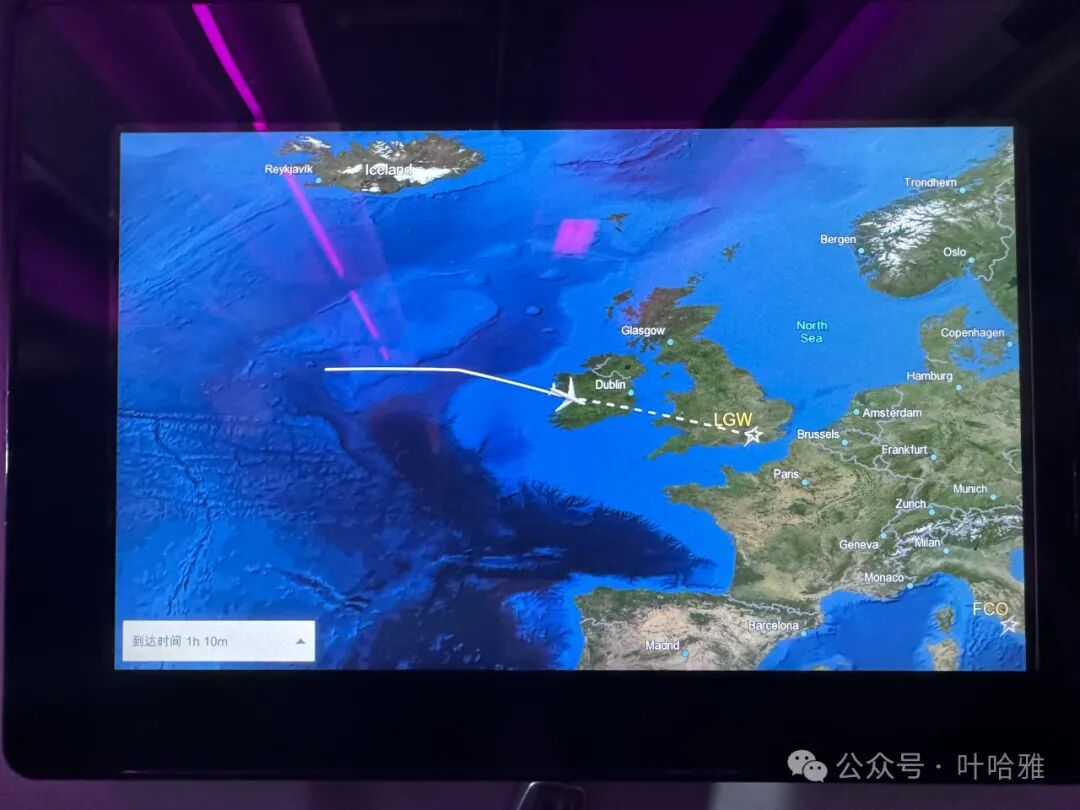
A friendly reminder: Chinese passport holders with Canadian or American visas can enter the UK visa-free when transiting, but you need to have an onward ticket. I tested this myself when flying from Canada back to China with a layover in London. I arrived and departed from two different airports. The check-in staff in Canada asked if I had a 24-hour departure ticket from the UK. My flight arrived in London on the first morning and left on the second evening, which was over 24 hours, but I was still allowed to board. When I entered London, they gave me a 3-day stamp, so to be safe, you can stay in London visa-free for at least one day.
I actually visited London twice. The first trip was a total accident, and the second was a layover on my way back to China. The flight transiting through Europe was almost entirely white passengers. When they heard about the emergency landing in London, not one person complained; they actually looked happy. The flight attendant even joked that we would have another chance to eat the great British dish fish and chips (zha yu shu tiao). This is a running joke, as fish and chips is a traditional British food, and it mocks the UK for being a culinary desert.
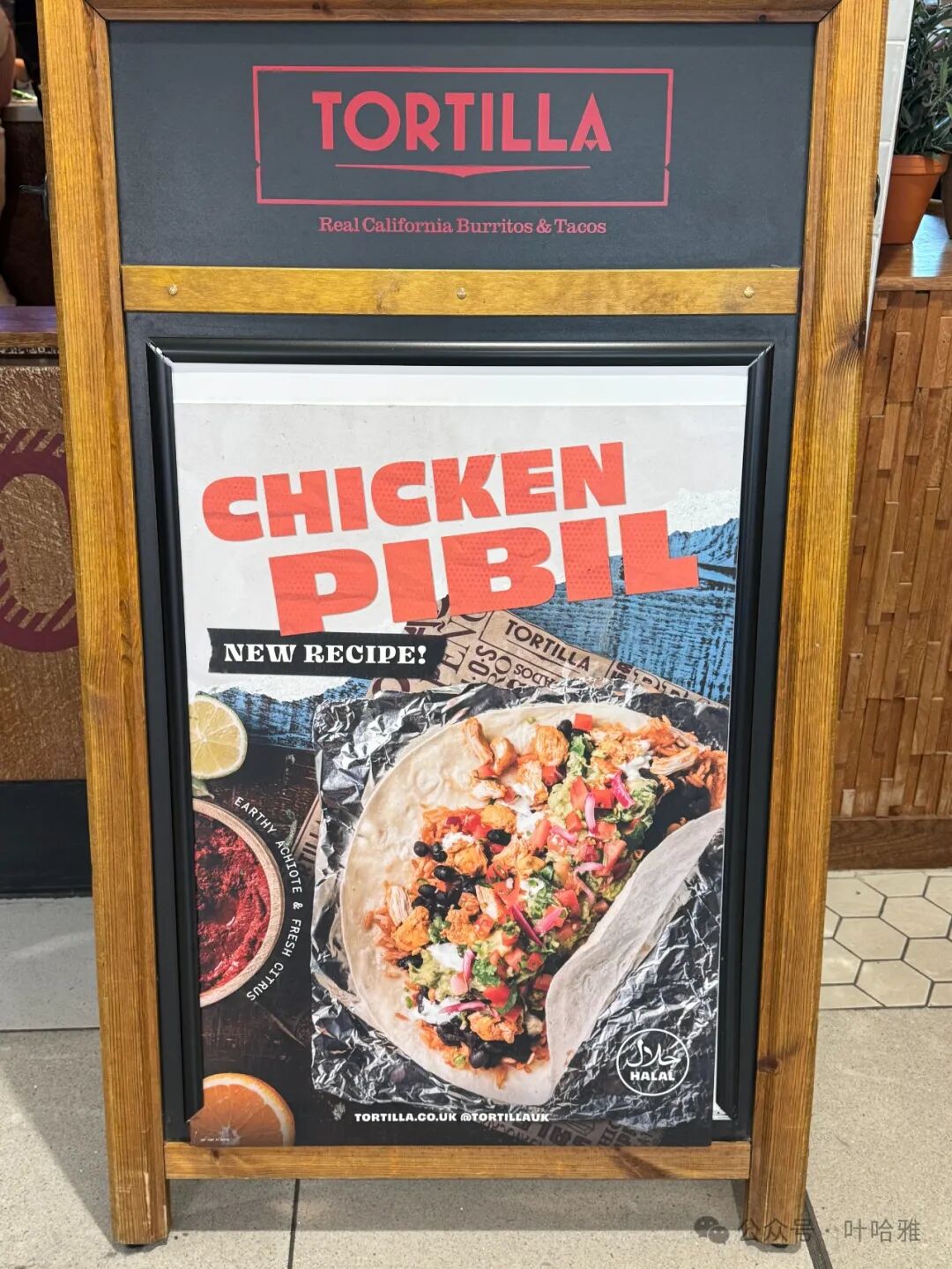
I just walked around and found two halal restaurants at London Gatwick Airport.
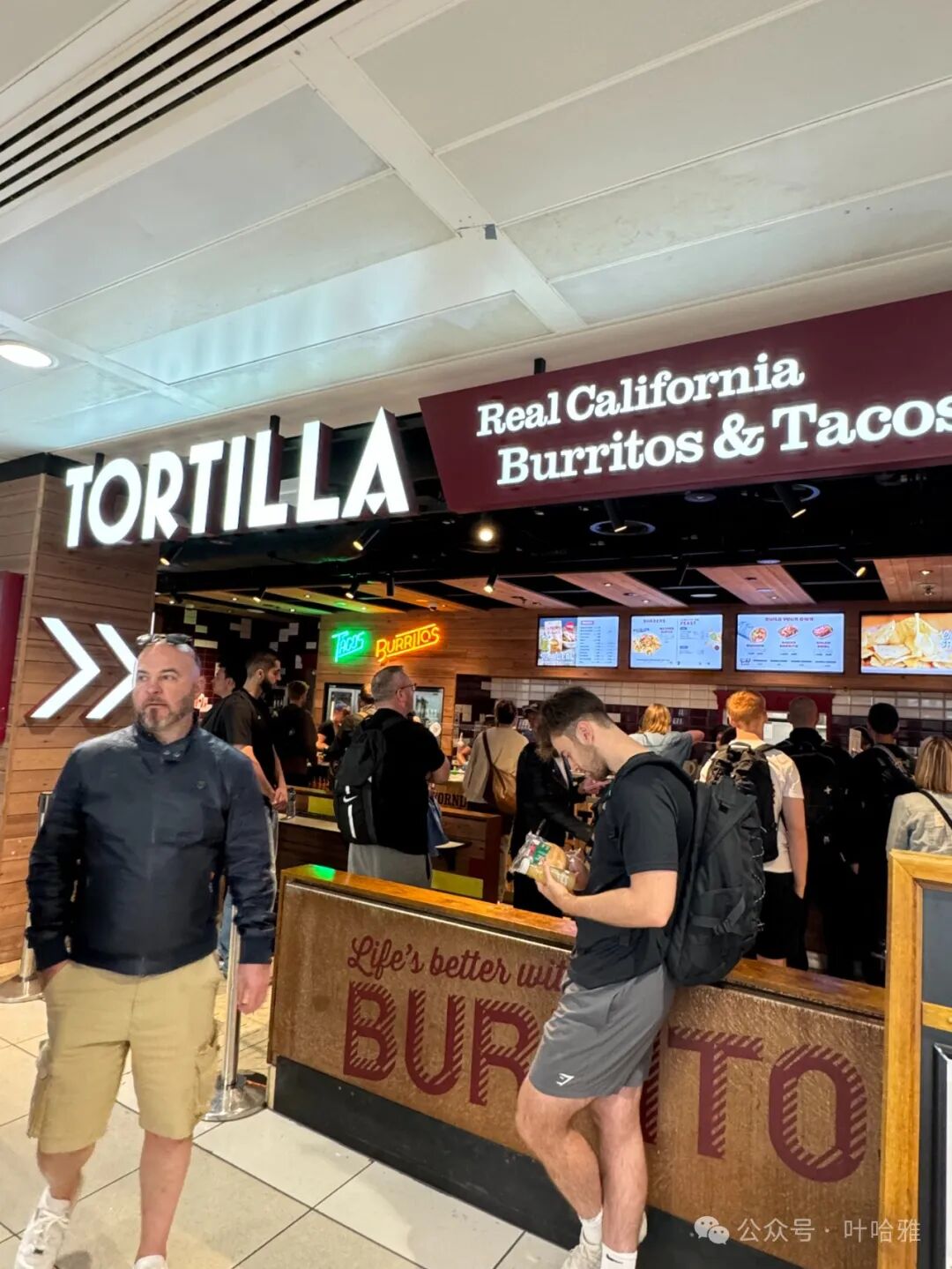
Diners lined up at this stall to buy fast food, and the airline gave every passenger a 15-pound voucher as compensation.
15 pounds is about enough for one fast-food meal.
This is a London flatbread wrap with vegetables, and you can choose whatever ingredients you want inside.
Prices in London are higher than in Canada. The exchange rate for the British pound to the Chinese yuan is 1:9, which is much higher than the 1:5.3 rate for the Canadian dollar. Standard hotel rooms cost over 1,000 yuan per night, so the accommodation provided by the airline felt like a win. After returning to China, I also claimed 1,200 yuan in insurance compensation, which basically gave me a free three-day trip to London.
After leaving Gatwick Airport, you can walk 1.5 kilometers to the small town of Crawley. The greenery along the road is beautiful.
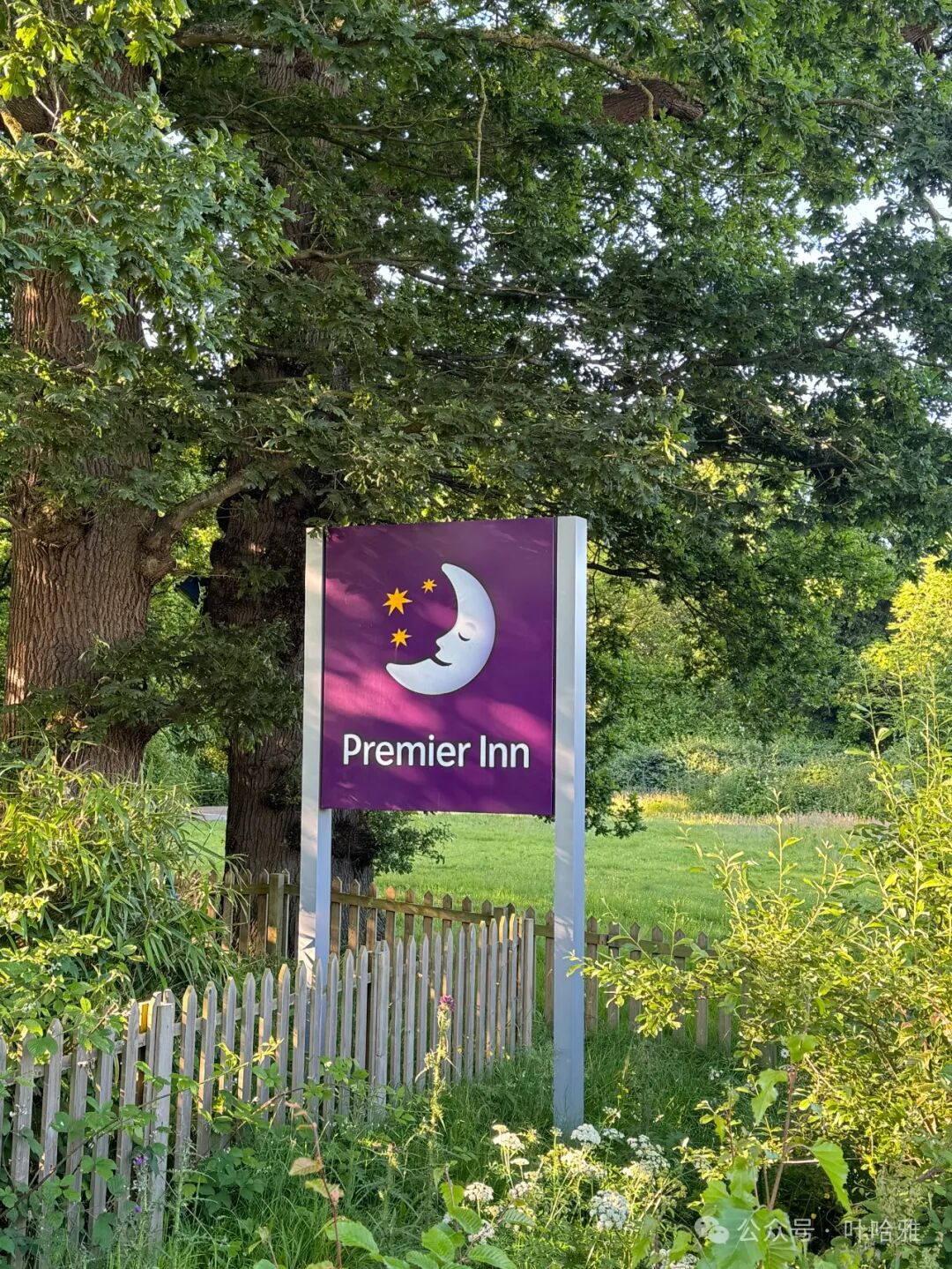
Seeing this star and crescent symbol felt quite familiar, but Premier Inn is actually just a budget hotel chain.
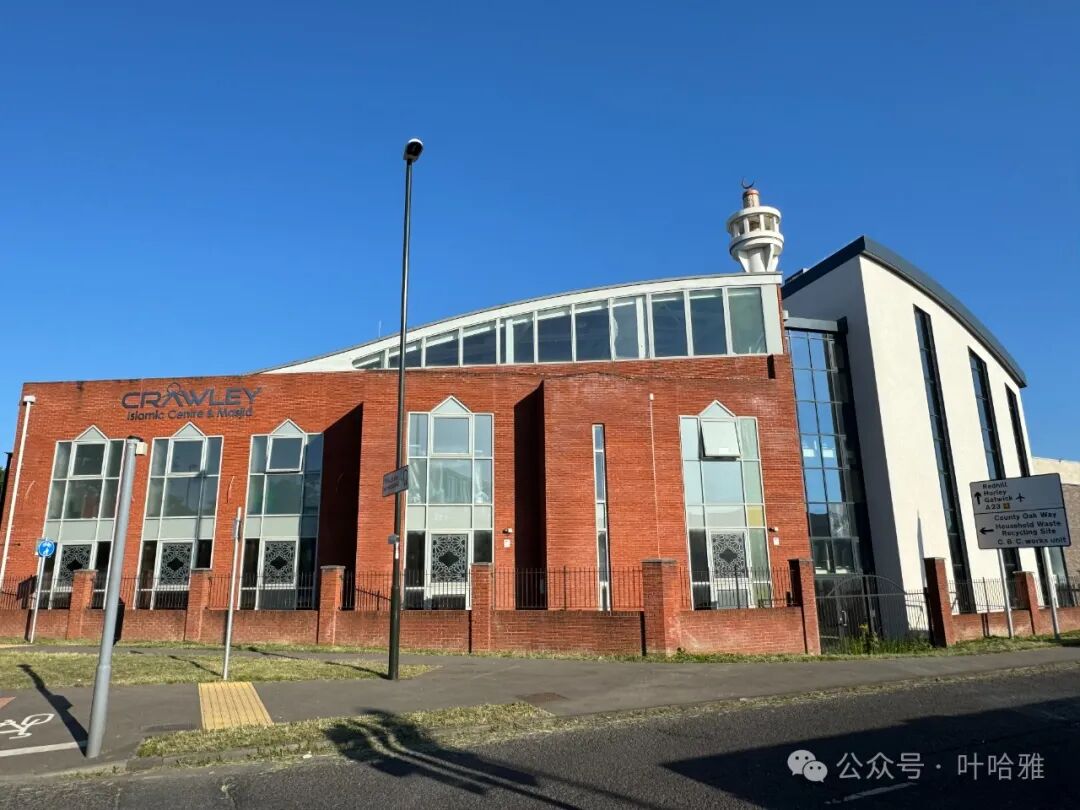
Crawley Islamic Centre & Masjid.
This is an Islamic school and mosque owned by people of Pakistani descent. The status of our 'iron brothers' from Pakistan in the UK is unique. First, most hold British passports. As a former British colony, Pakistan has a special, easier path for immigration to the UK. Currently, people of Pakistani descent make up 3.3% of London's population, and there were 1.6 million Pakistanis in the UK in 2021, with 20% of them living in London.
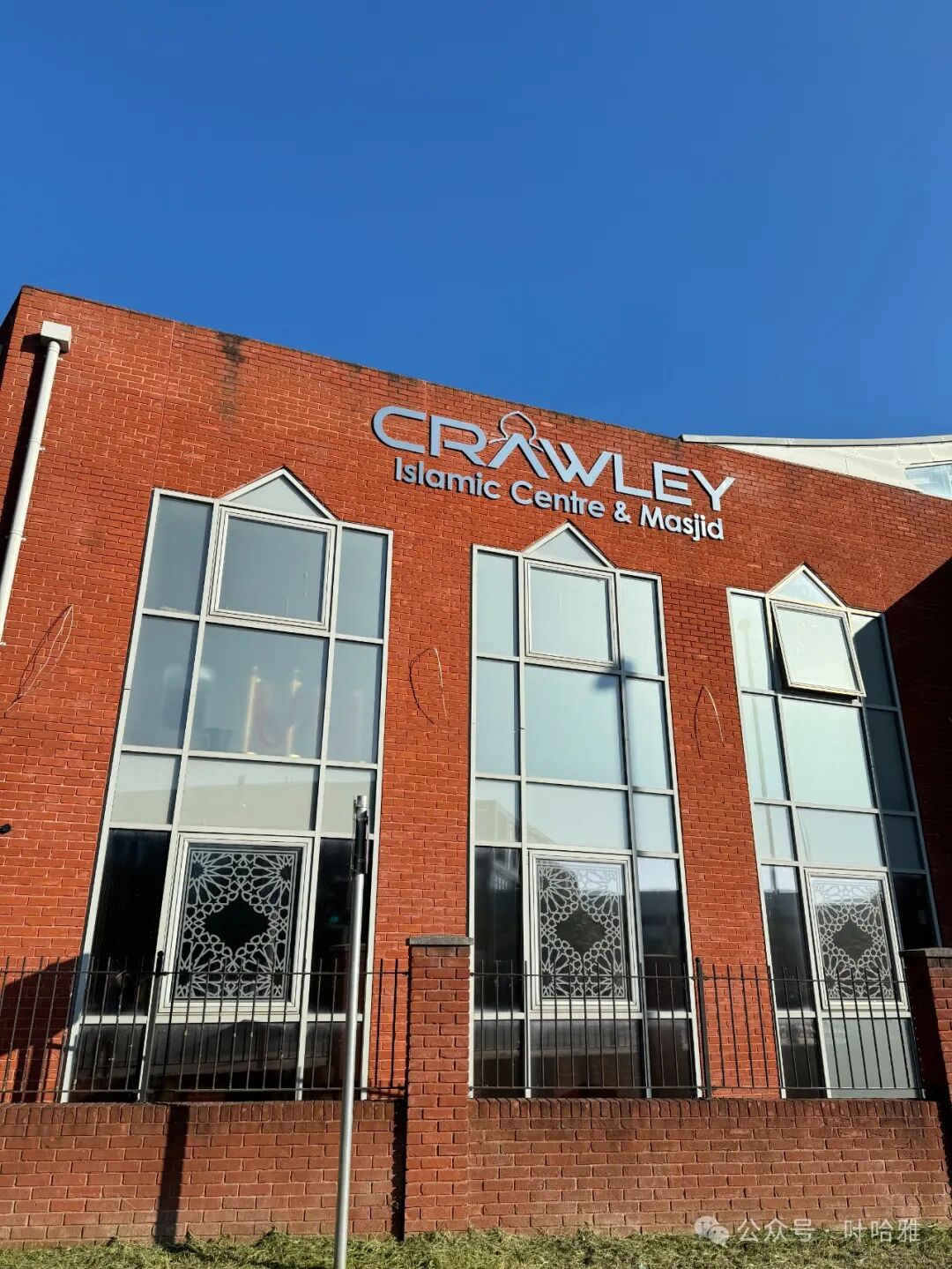
Pakistanis in the UK also have strong economic power. They work not only in catering but also as teachers, doctors, and engineers. The unemployment rate for Pakistanis in London is lower than the average for the white population. Additionally, one in seven Pakistanis works as a taxi driver.
I estimate that this small town of Crawley is a Pakistani enclave. The vast majority of women I saw on the street were wearing headscarves.
The history of Pakistani immigration to the UK dates back to the 17th century. At that time, the East India Company brought a large number of Indian and Pakistani laborers to the British Isles. These early immigrants were almost all men, and many married white women in the UK.
Muhammad Ali Jinnah, the founding father of Pakistan, studied in the UK before returning to Pakistan. After Pakistan gained independence from India, more and more Pakistanis immigrated to the UK.
Many elites of Pakistani descent are involved in British politics. London Mayor Sadiq Khan, Manchester Mayor Yasmin Dar, Birmingham Mayor Chaudhry Abdul Rashid, Newham Mayor Rokhsana Fiaz, and Kingston upon Thames Mayor Shiraz Mirza are all British citizens of Pakistani descent.
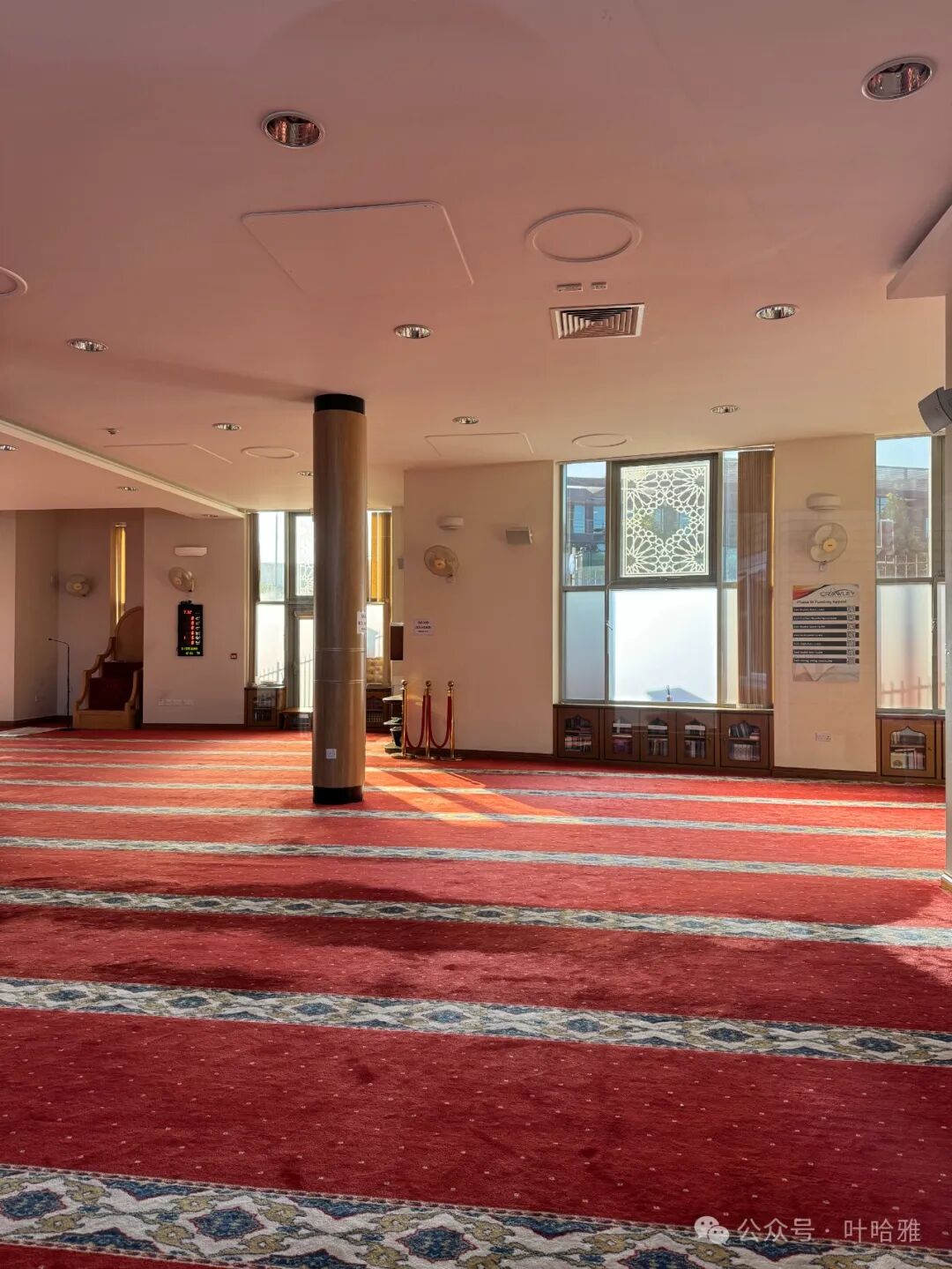
The streets of the small town are clean and beautiful, with flowers planted in front of every house. The temperature in London in June is cool and the sun is bright. People say London is foggy all year round, but unfortunately, it was sunny both times I passed through, so I missed the fog.
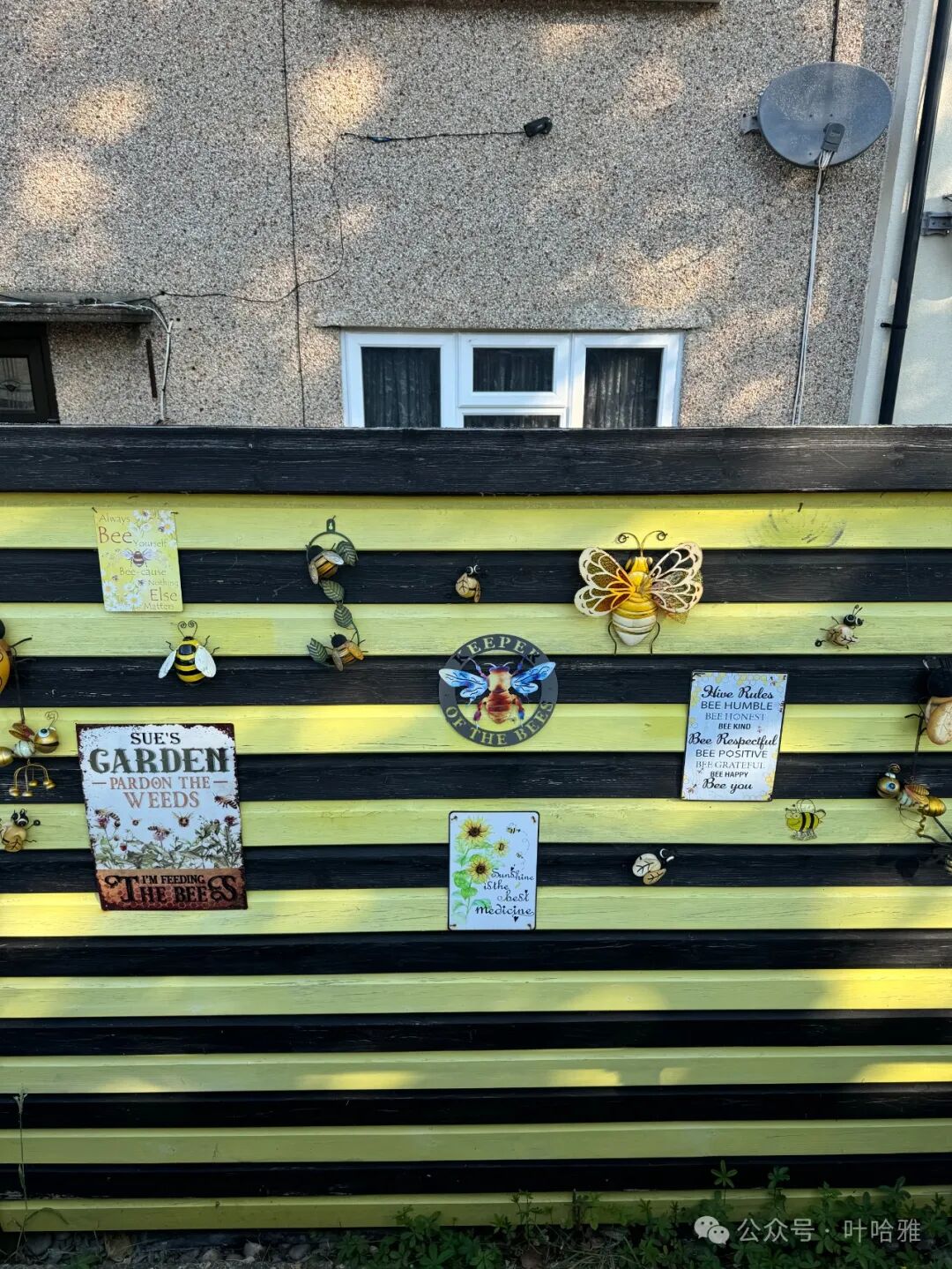
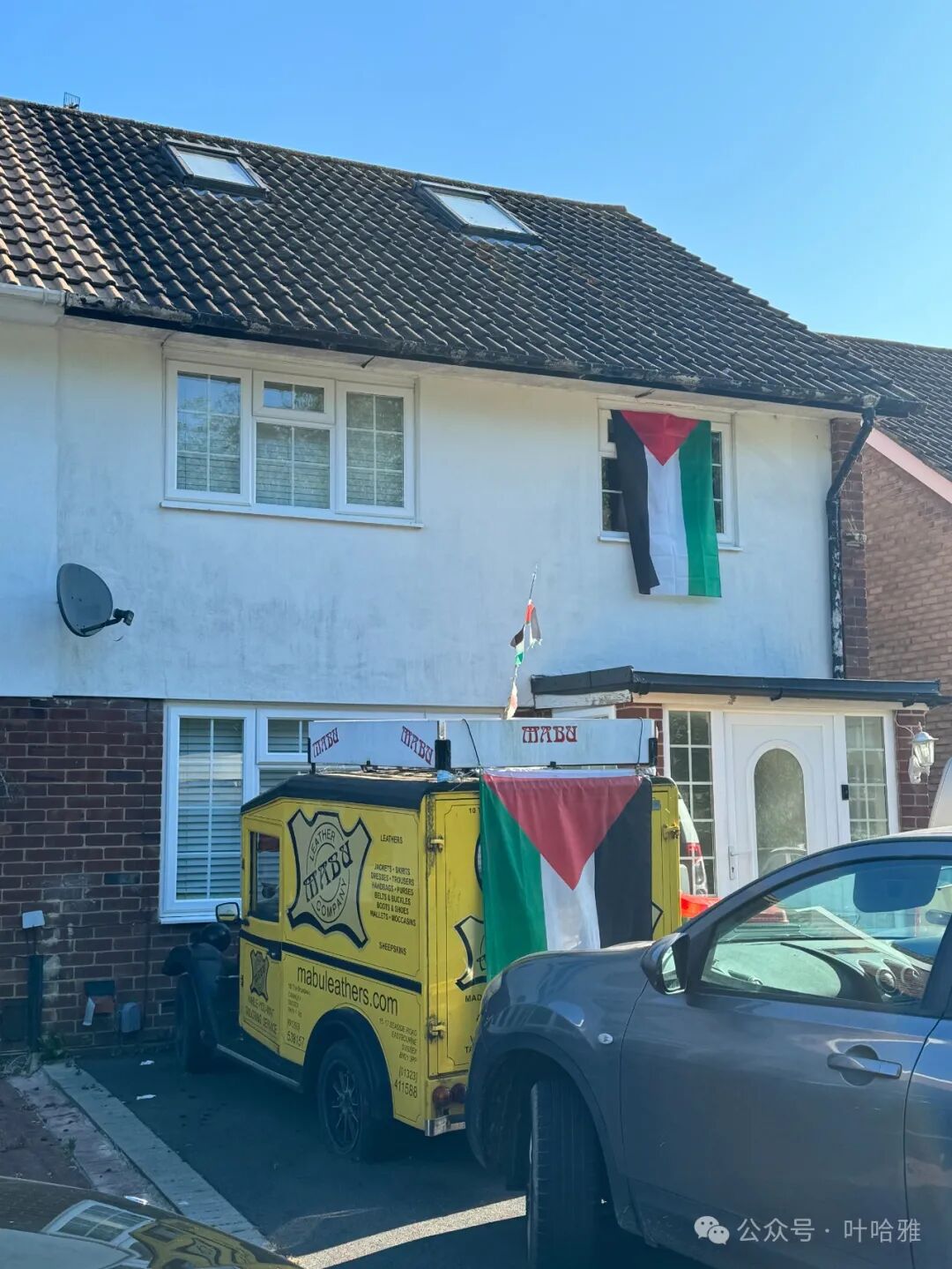
A family has a Palestinian flag hanging in their window.
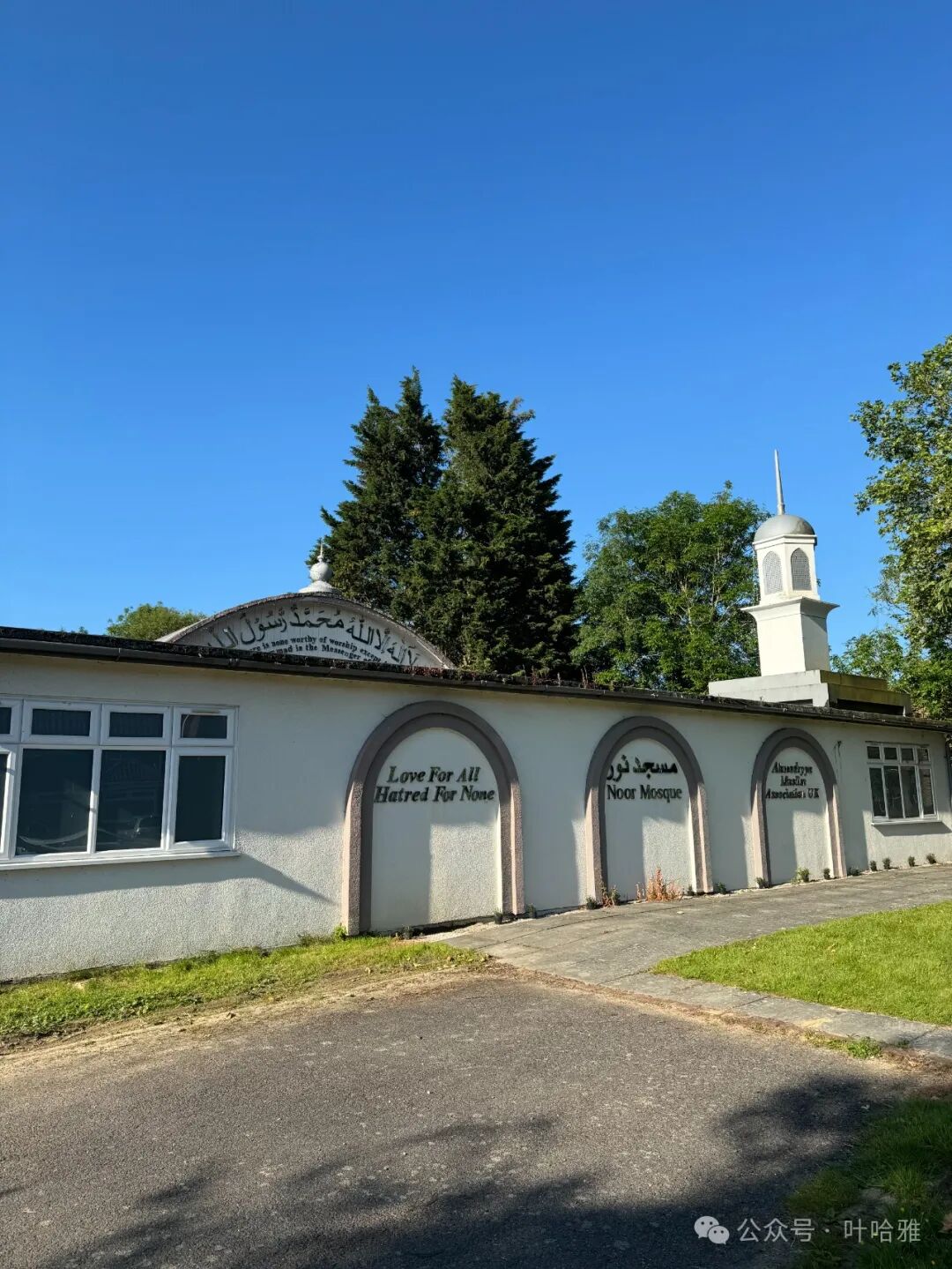
There are many mosques around the small town of Crawley. This one is the Ahmadiyya mosque. I wrote about the Ahmadiyya in detail in my article 'Goodbye Vancouver: A Colorful Journey of the Soul,' noting that it is a sect not recognized by mainstream Islam.
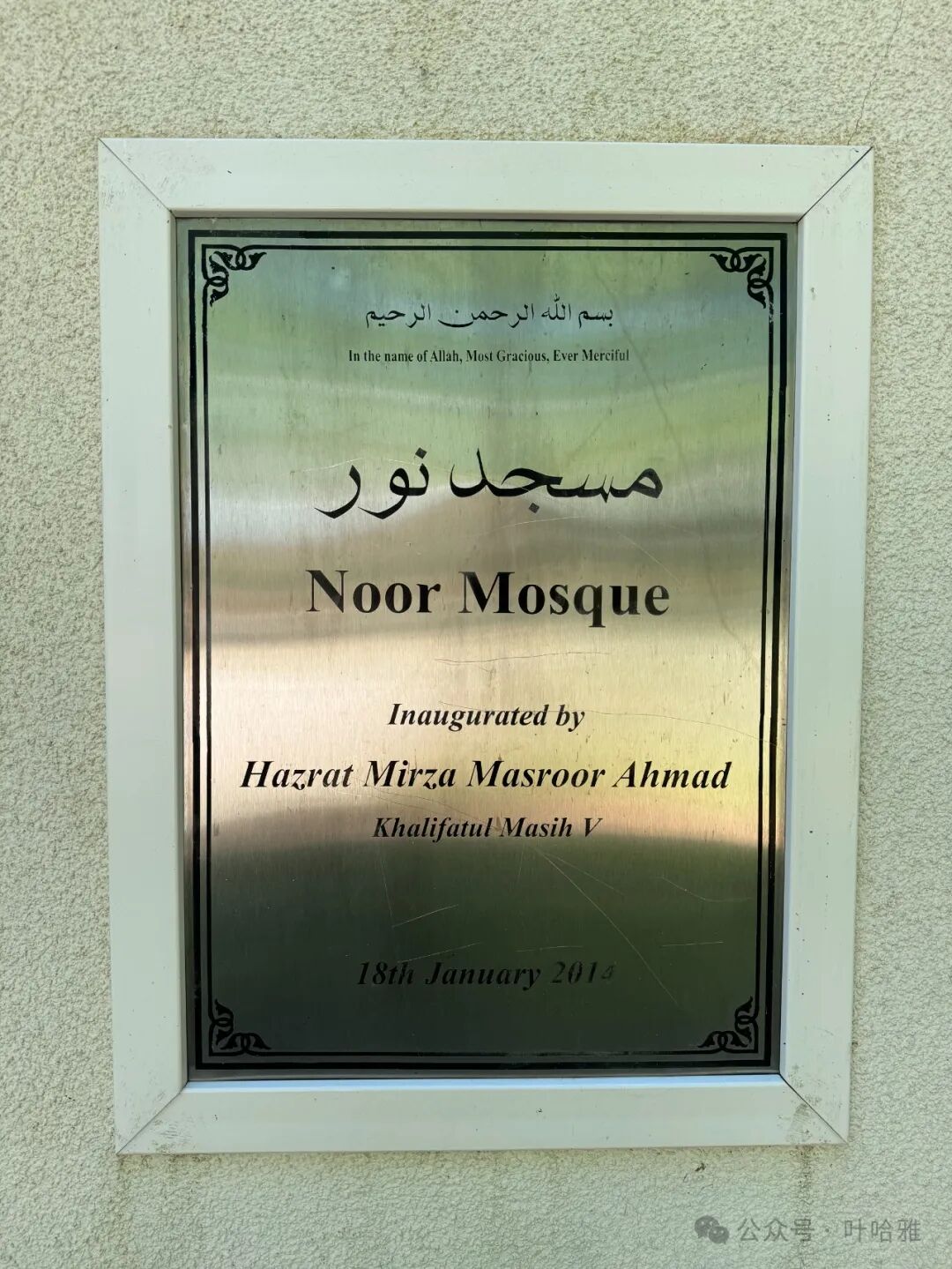
The name above is the fifth Caliph of the Ahmadiyya, Mirza Masroor Ahmad. He currently lives in London, and the Ahmadiyya built the largest mosque in the UK.
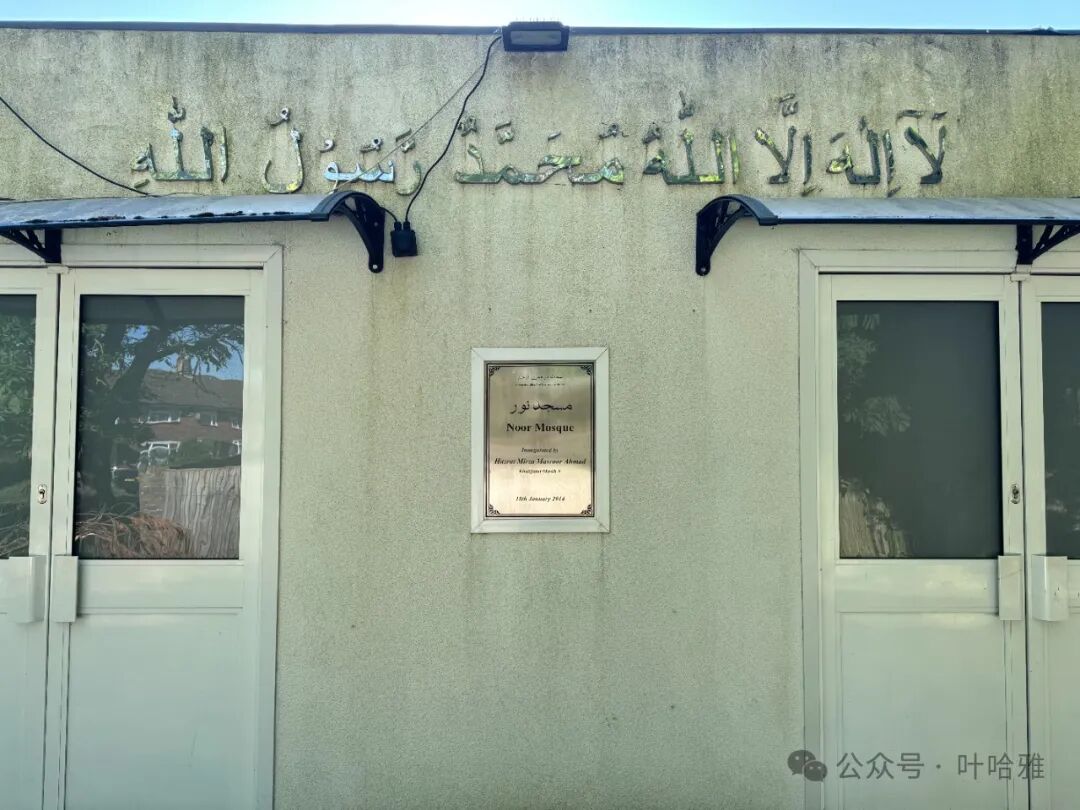
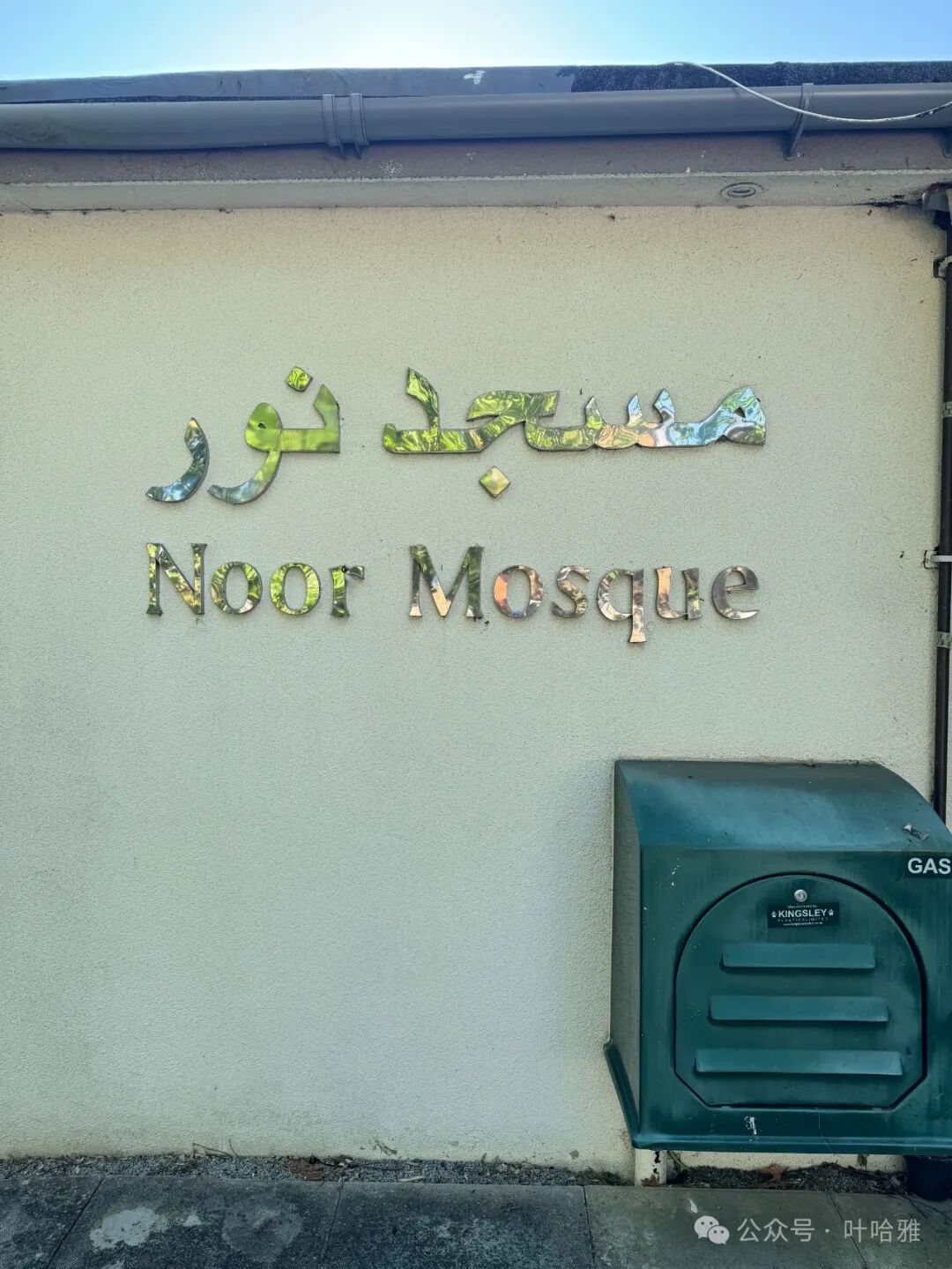
If you see a mosque named Noor in Europe or America, be aware that it might be Ahmadiyya.
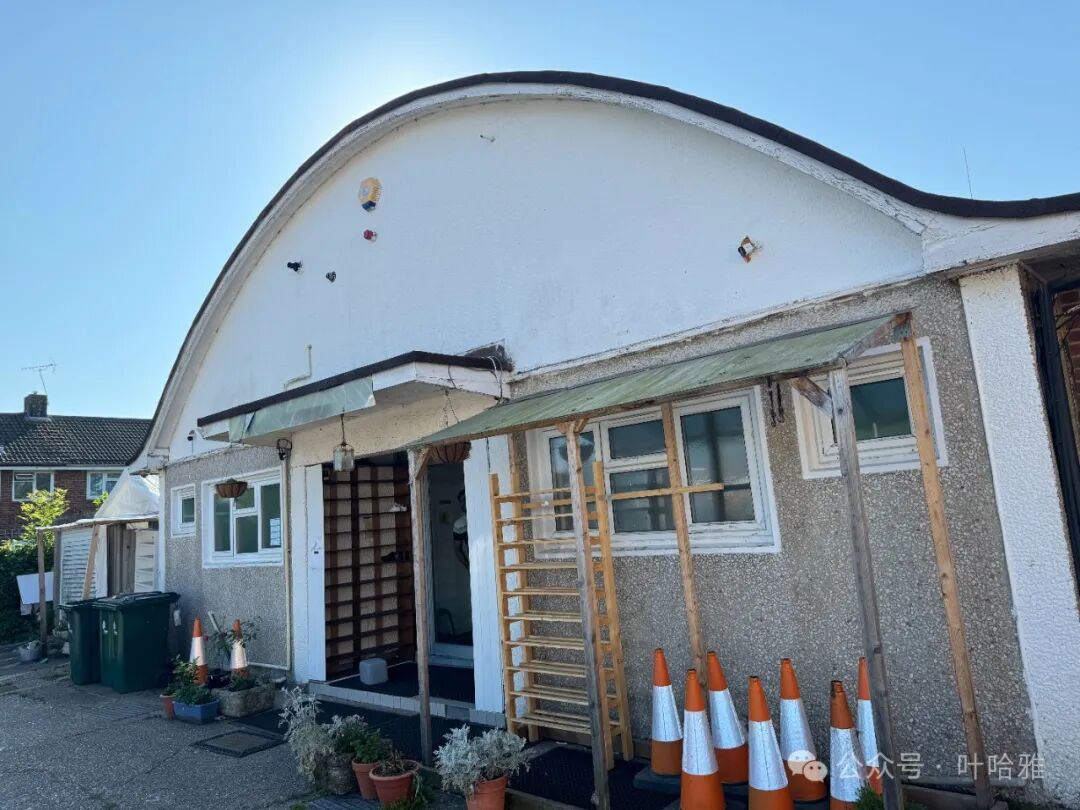
Another Sri Lankan mosque is less than 800 meters away from the Ahmadiyya mosque.
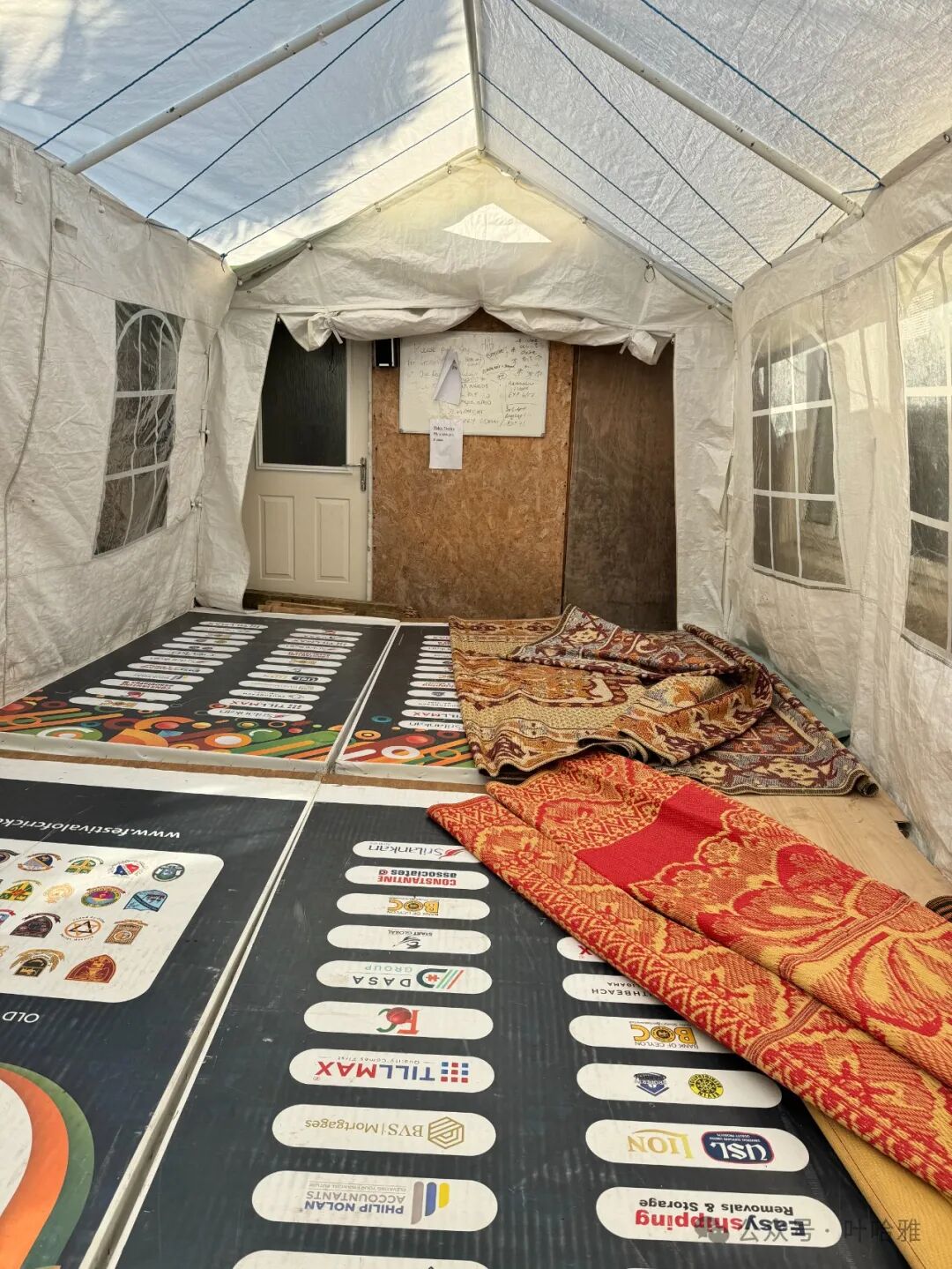
The gate was locked when I arrived, but I saw someone cleaning inside and asked him to open it for me. He was the one who told me this is a Sri Lankan mosque.
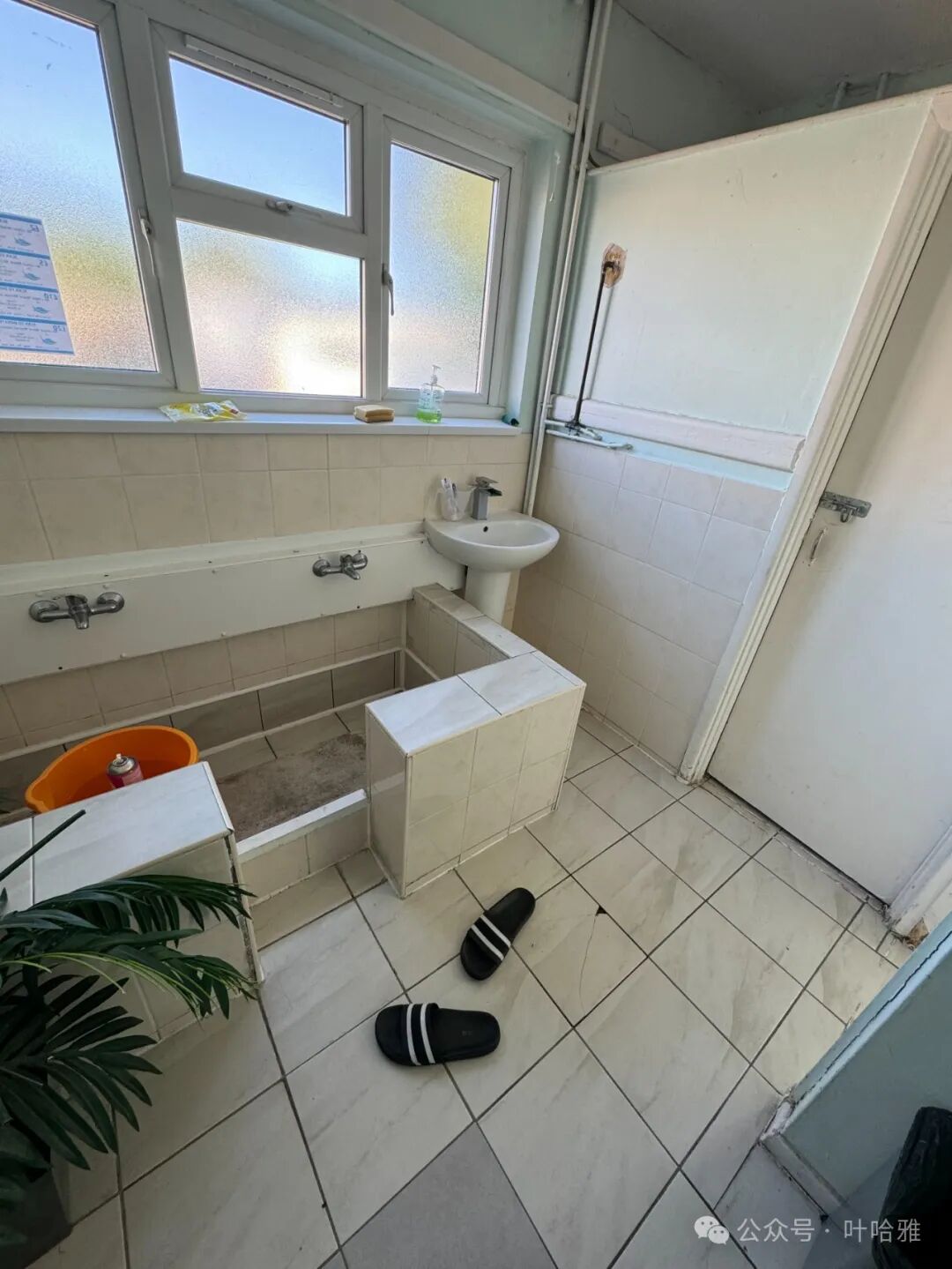
We can see from the scale of the Sri Lankan mosque that it is clearly not as grand as the Pakistani mosque.
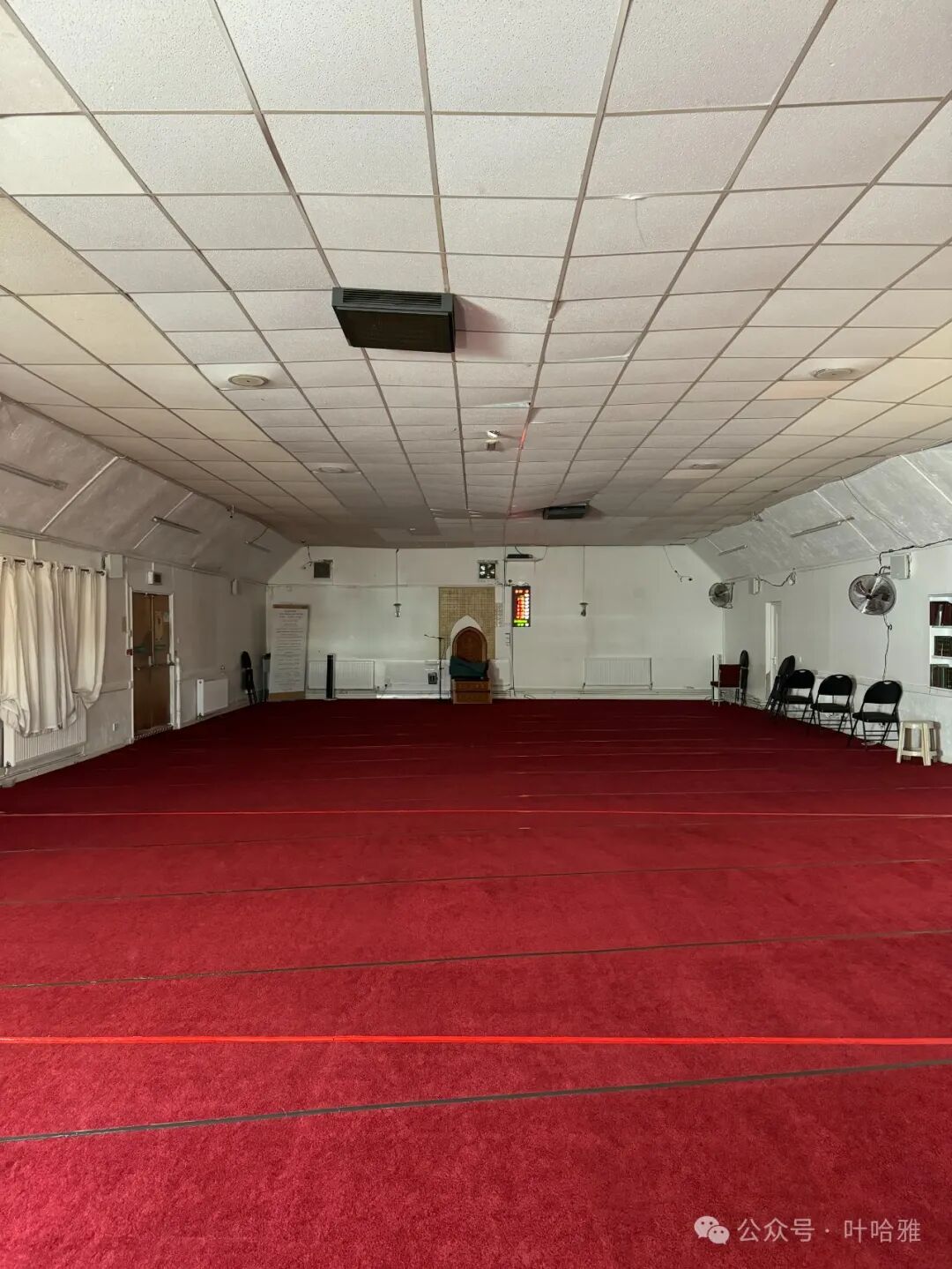
Besides the Sri Lankan mosque, London also has Bangladeshi and Indian mosques, which look about the same from the outside.
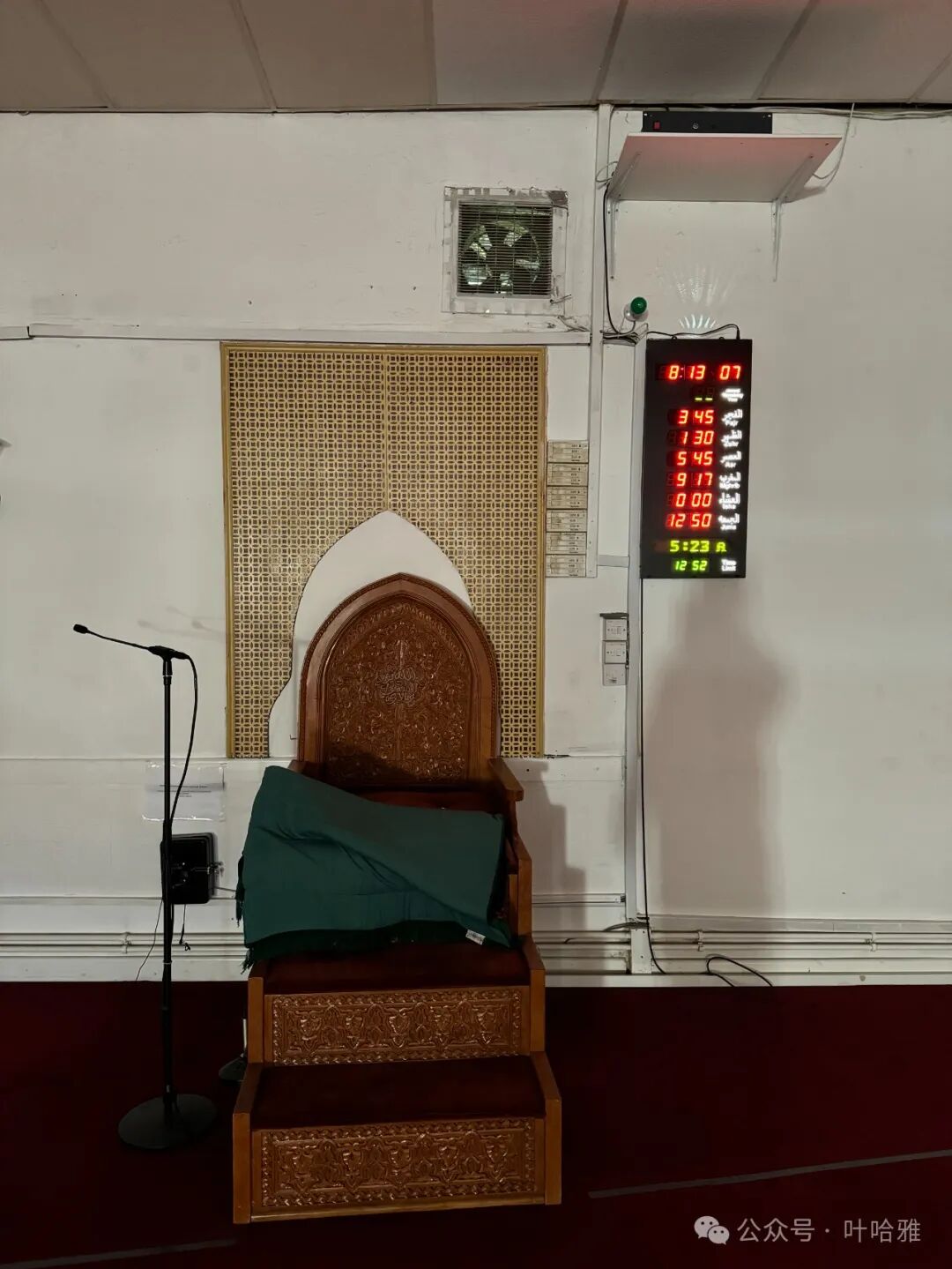
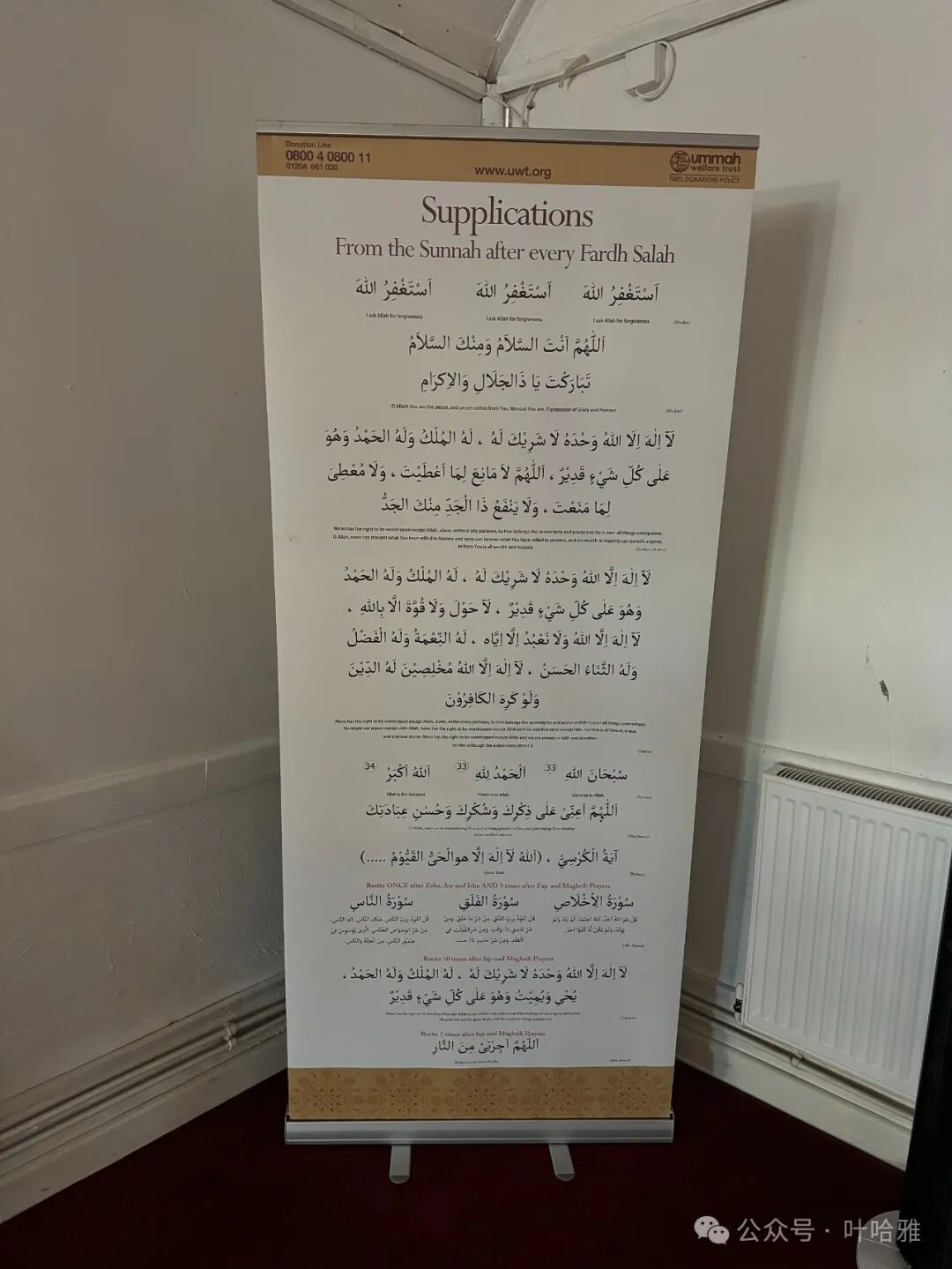
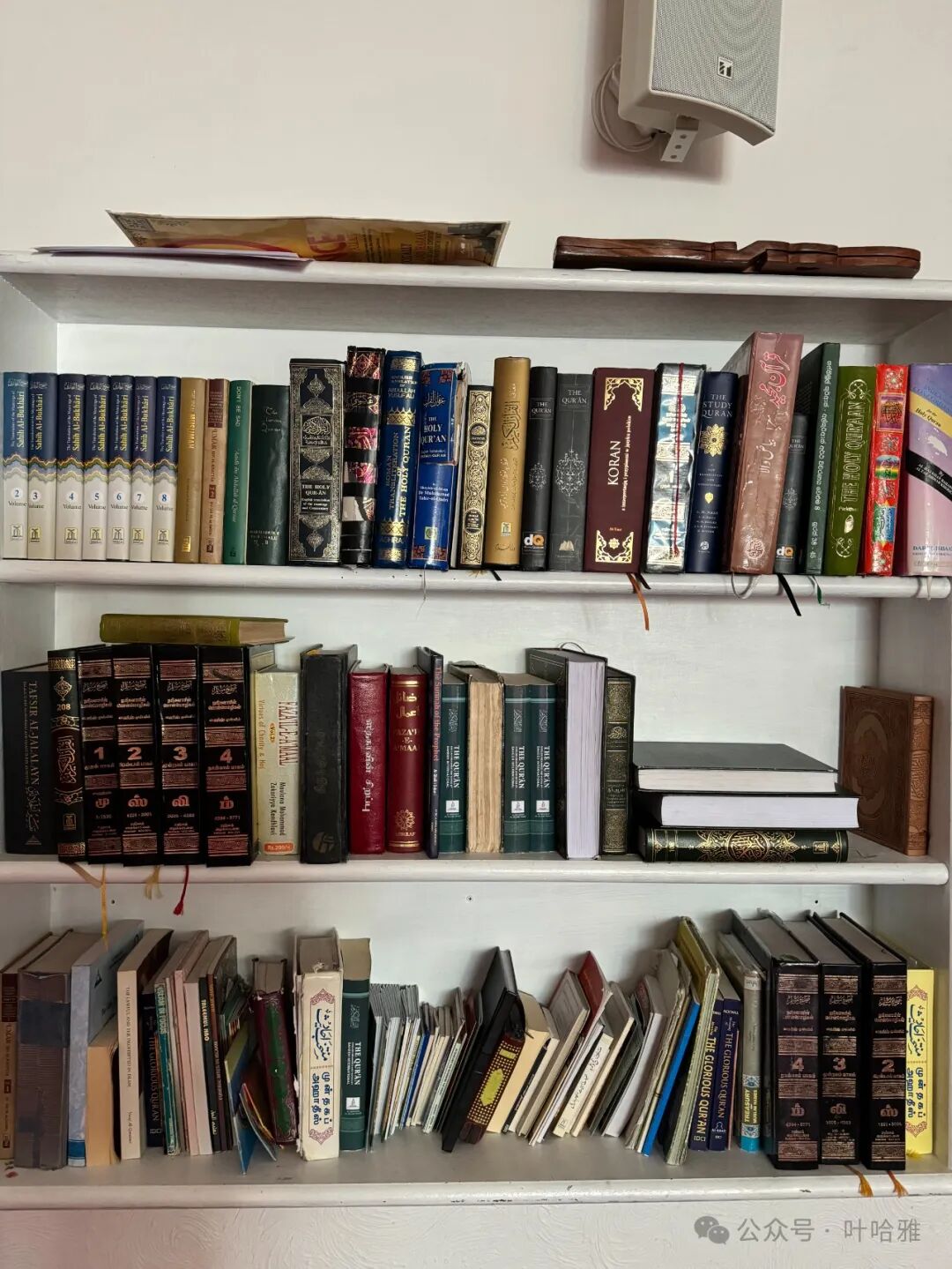
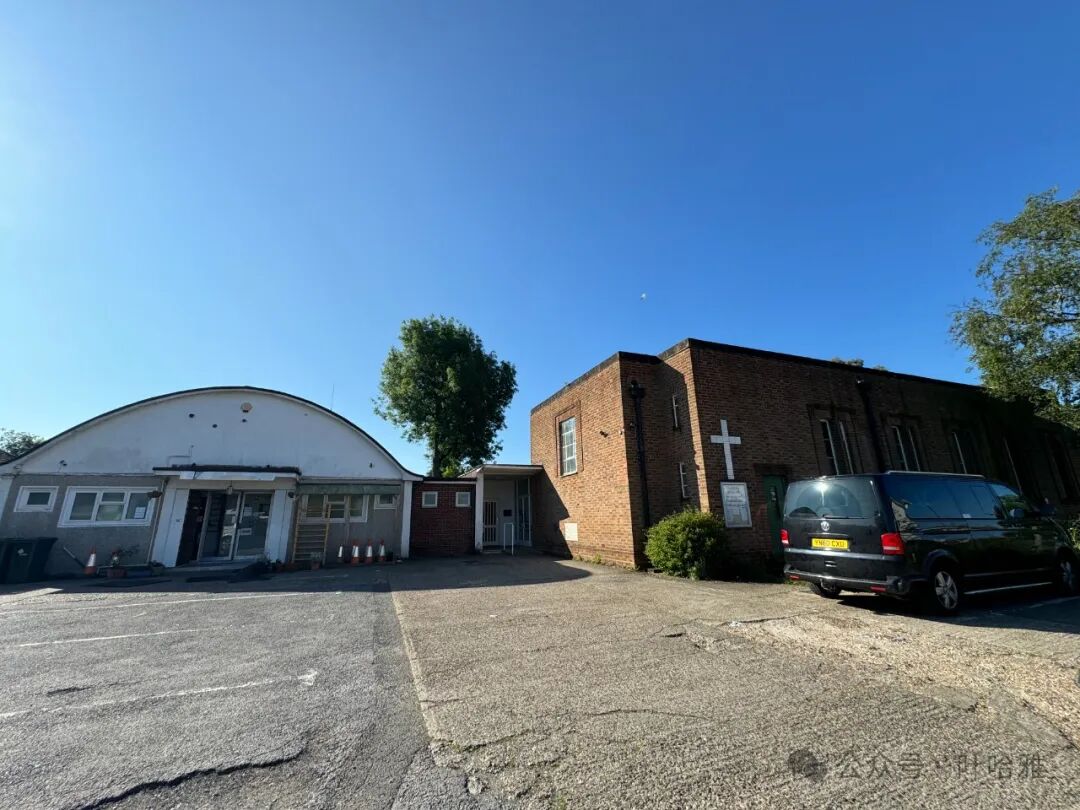
The highlight of the Sri Lankan mosque is that it sits right next to a church, and everyone lives together in harmony.
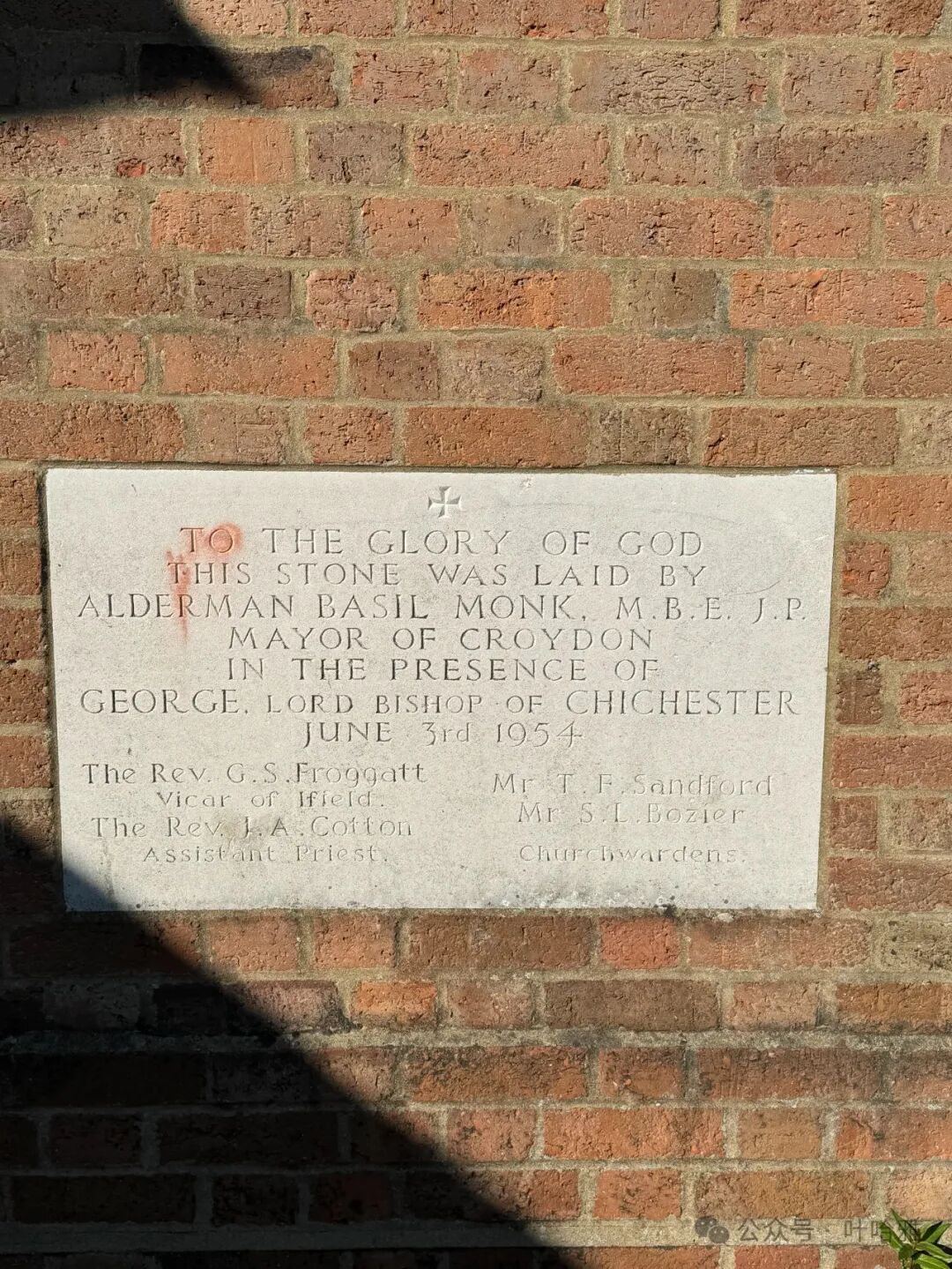
I strolled back from the mosque and walked to the town's commercial center.
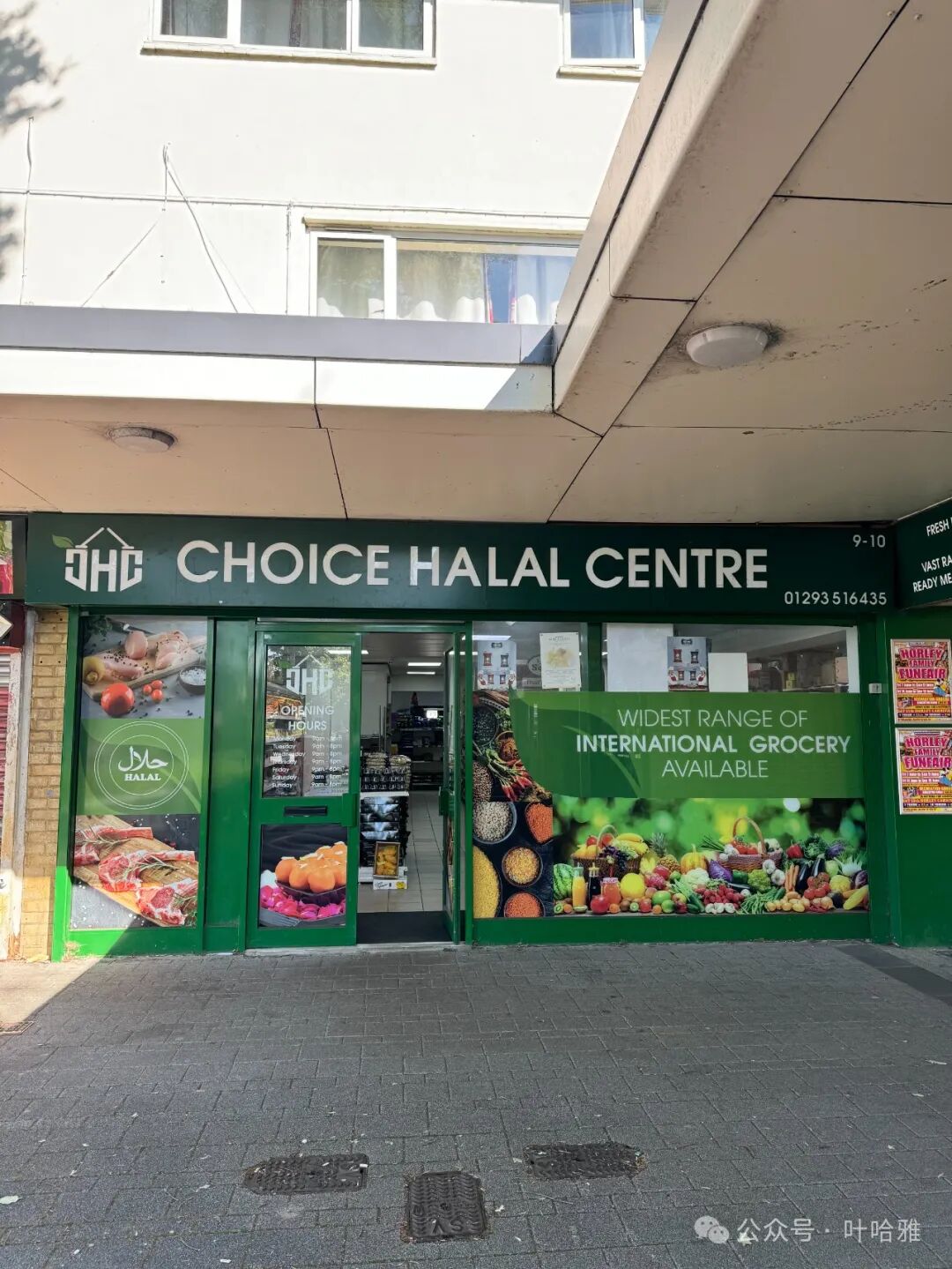
I saw a halal supermarket, just like the ones on Ox Street (Niujie).
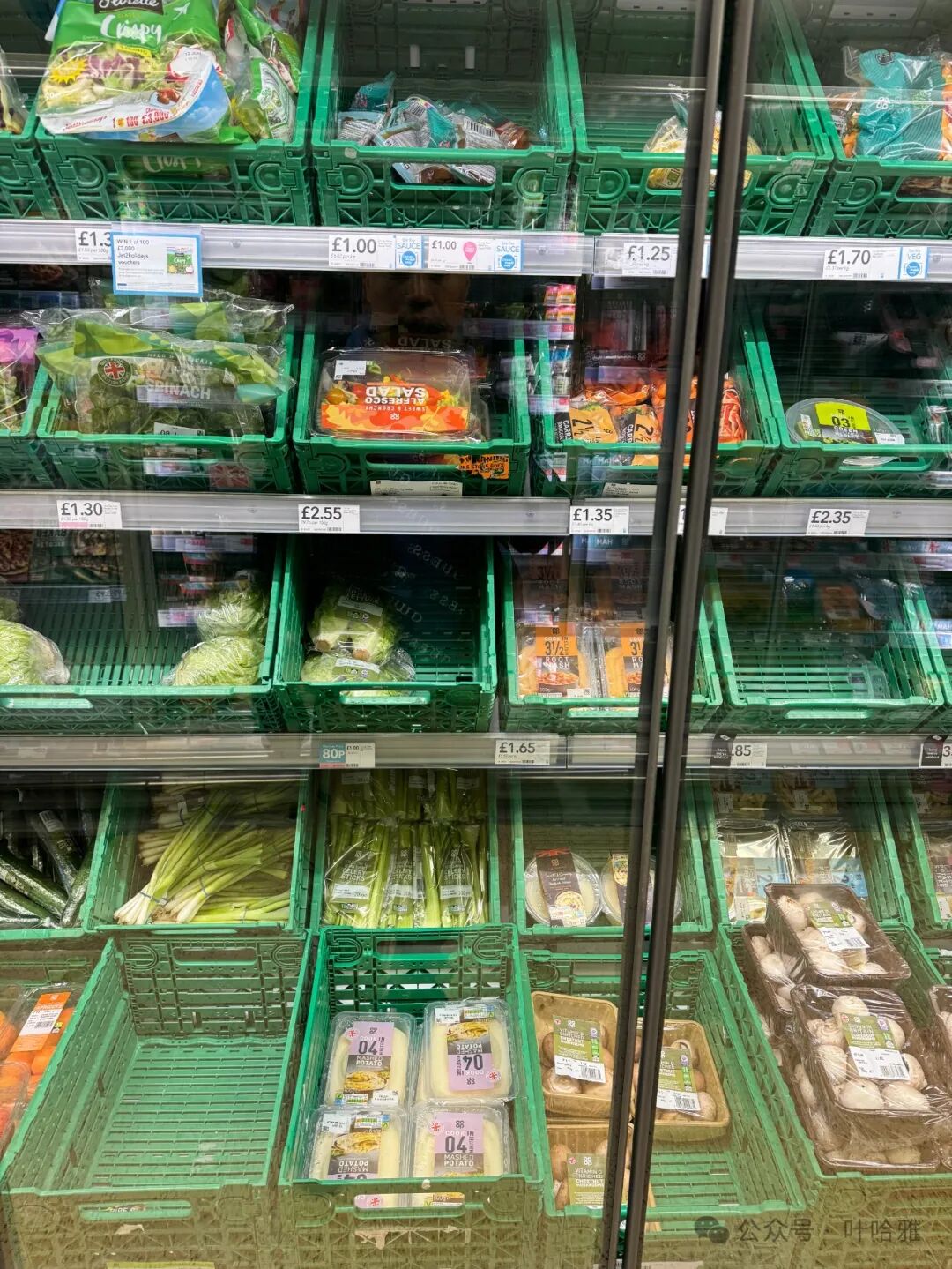
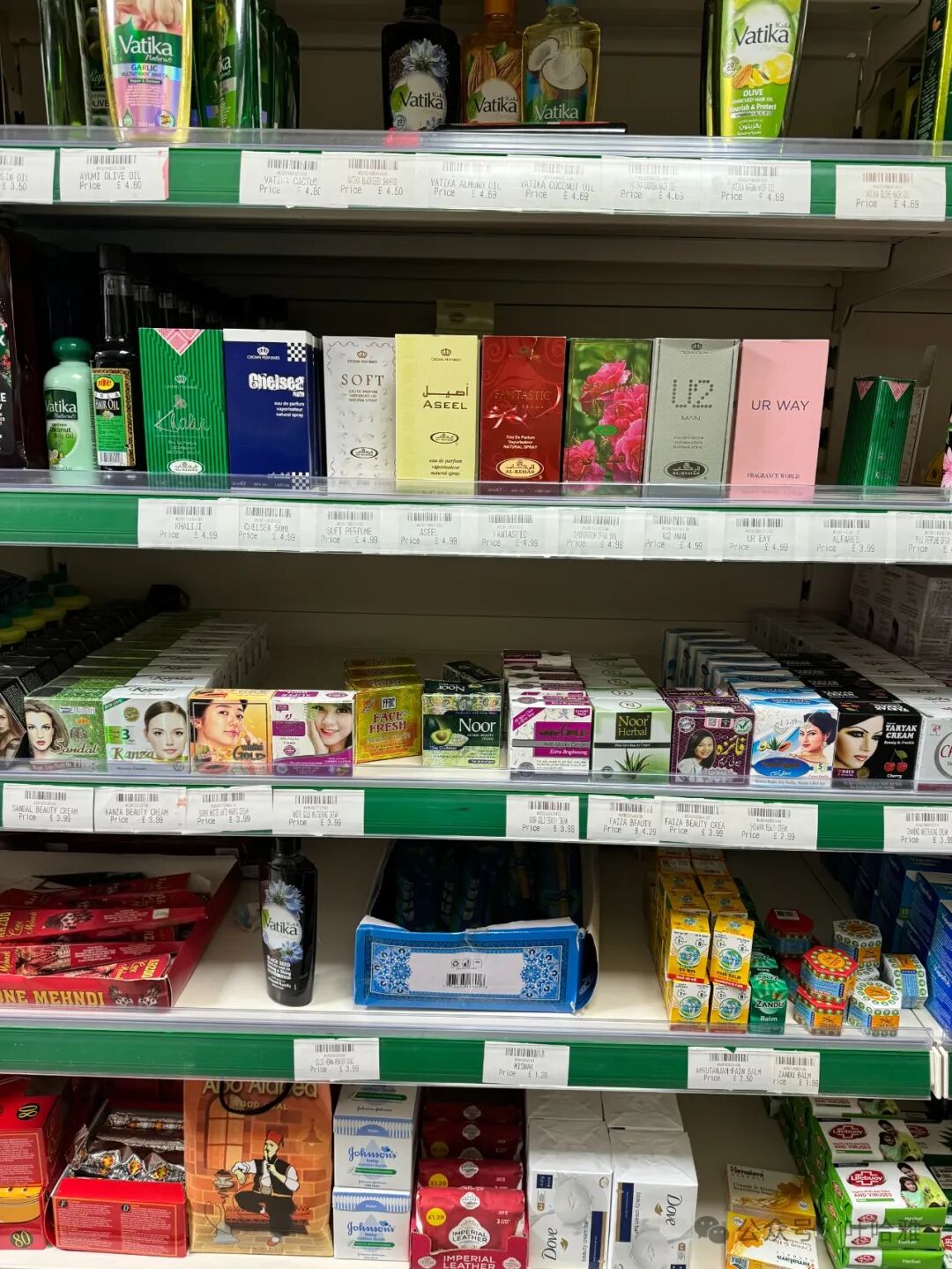
You multiply all the price tags by 9 to get the price in RMB; life in London is not easy.
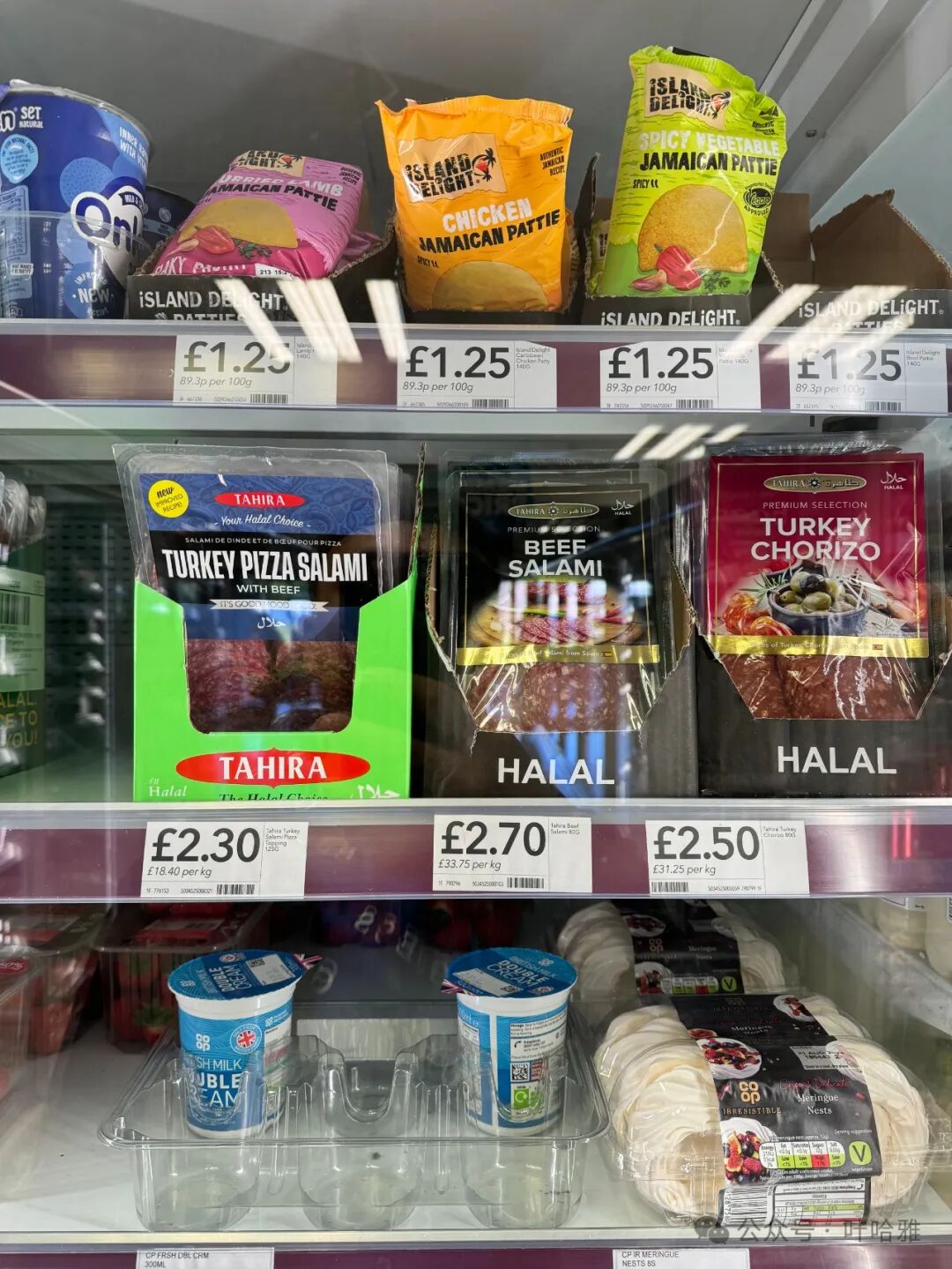
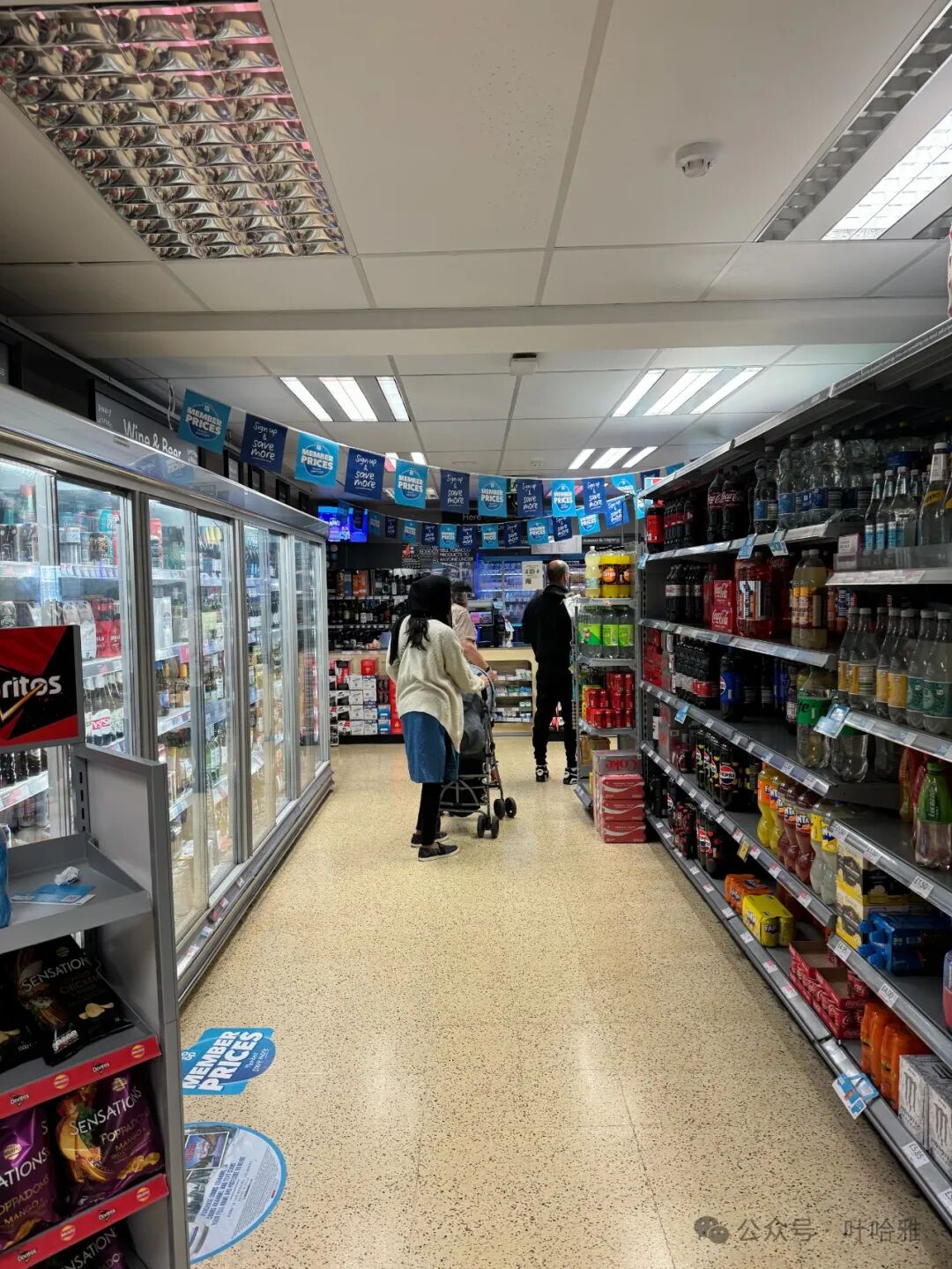
There are also some imported goods from Muslim countries. The customers in the supermarket are dressed in all sorts of ways, but most are in Muslim attire.
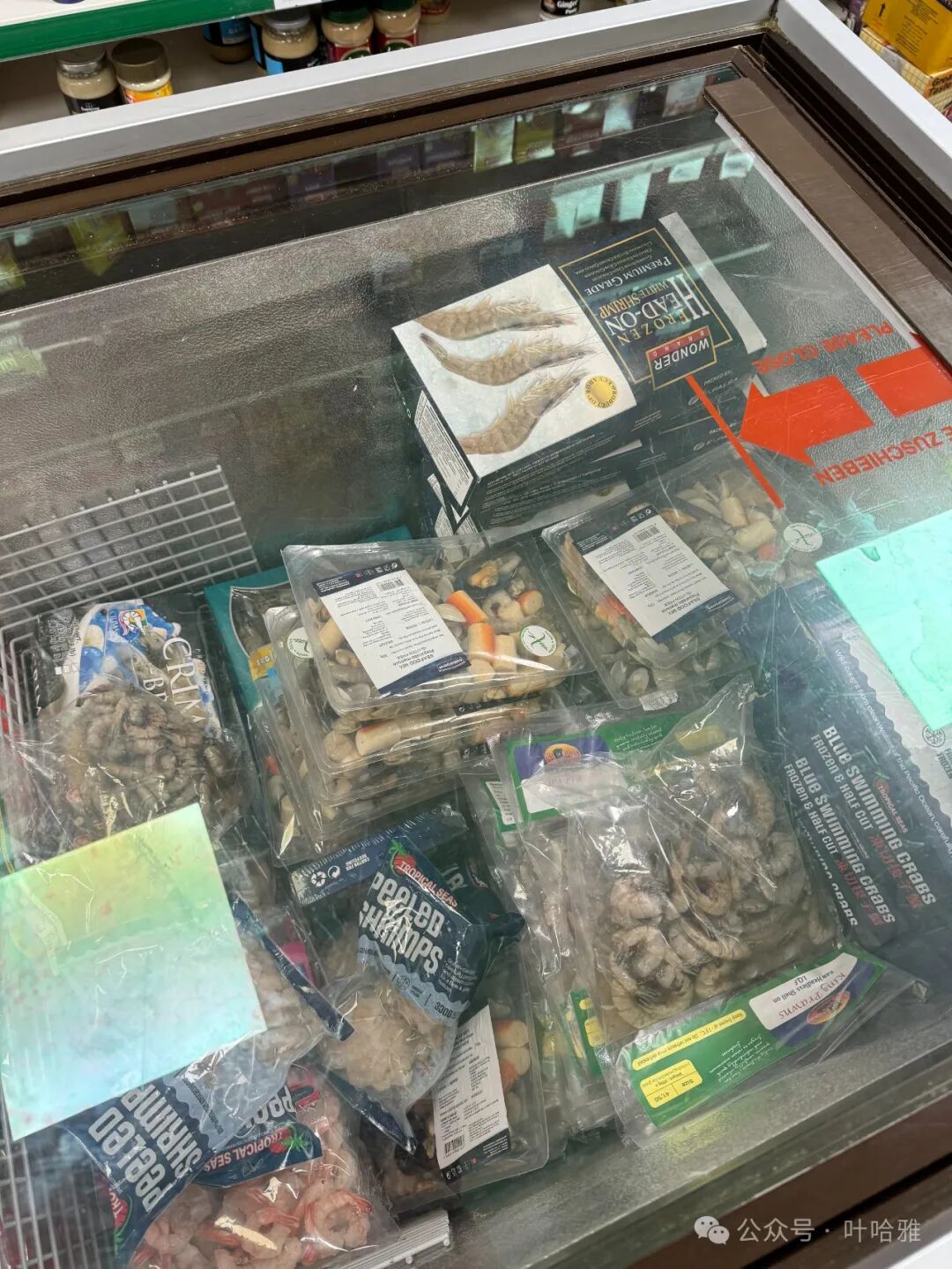
People eat shrimp, crab, and other seafood here. Although Pakistanis also follow the Hanafi school, the Hanafi school does not completely forbid eating shrimp and crab. For details, see how the Hanafi school views shrimp.
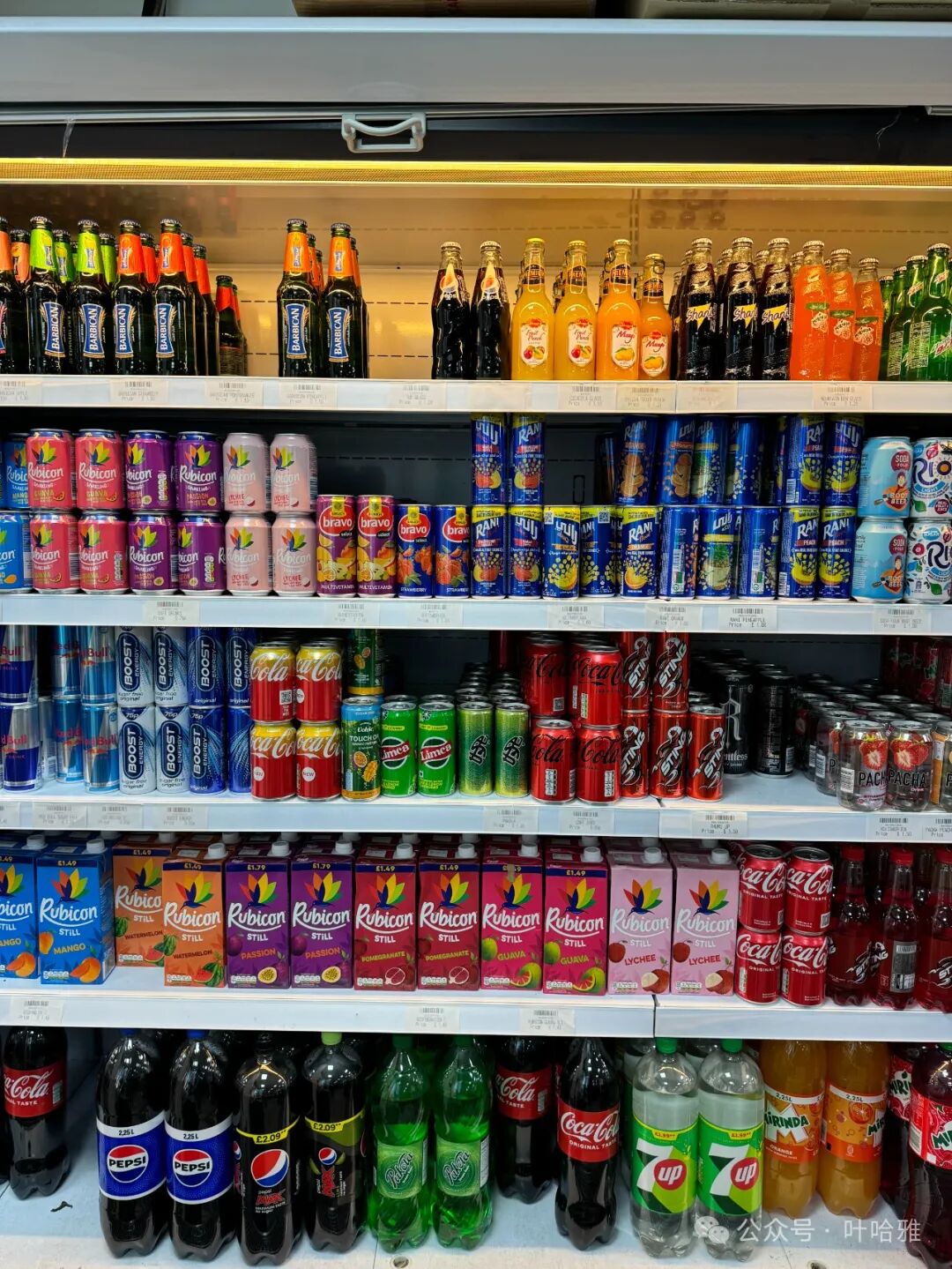
There are non-alcoholic drinks, including brands like Coca-Cola and Pepsi that are supposedly controlled by Jewish capital. I have even seen brands like Starbucks and McDonald's around Mecca. You could say the world economy is integrated, and none of us can escape this economic system.
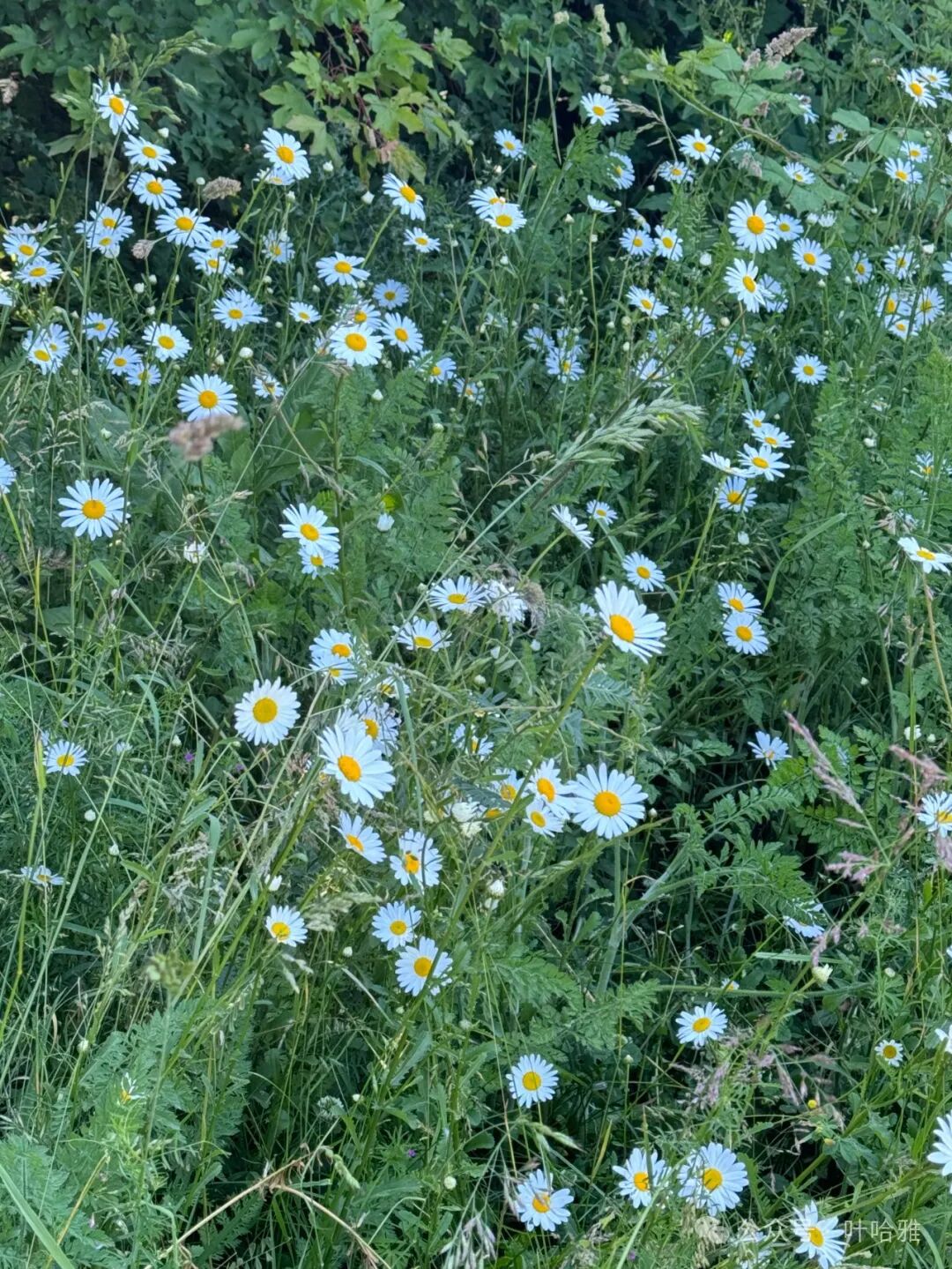
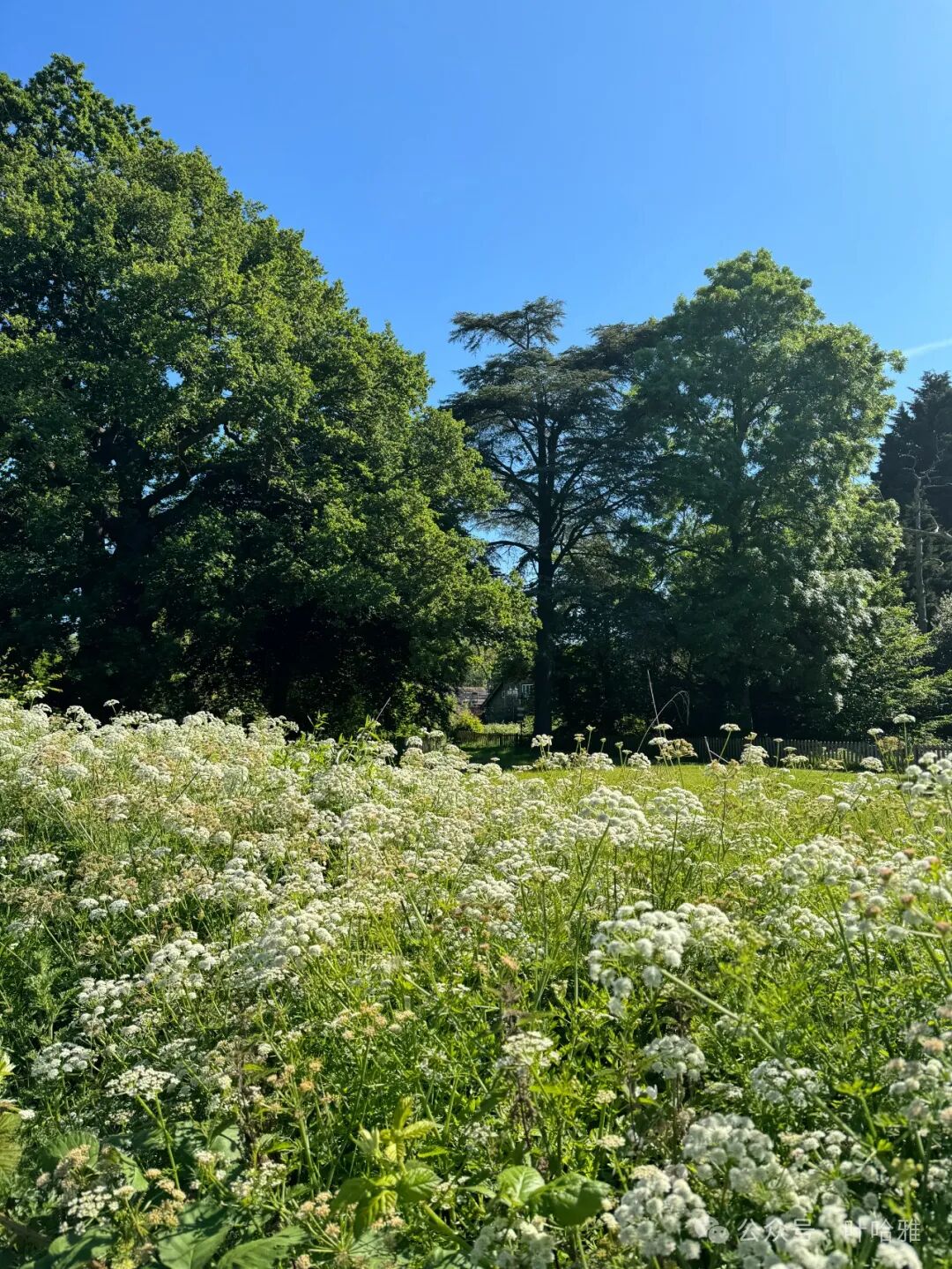
Seeing the wildflowers by the road, I felt like I was in Xinjiang as I walked. Britain is in the northwest of Europe, where people are tall and the climate is on the cold side.
The British Museum
I had plenty of time for this trip, so I arrived at the British Museum early to visit. The museum is free, though you can choose to make a voluntary donation. You need to book your visit on the official website in advance. Tickets are easy to get, and I definitely chose the free option.
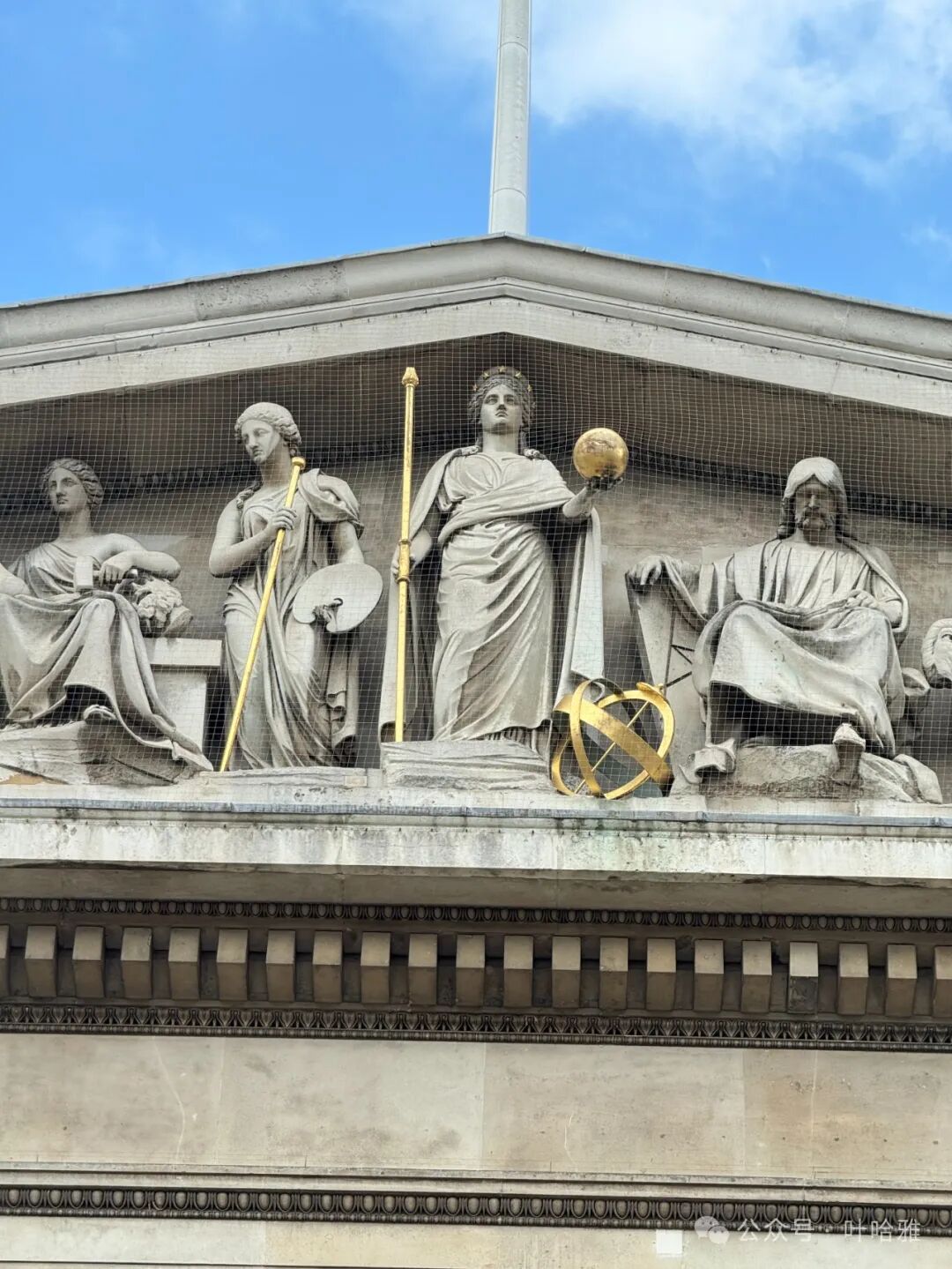
The exterior of the British Museum is modeled after the Parthenon of ancient Greece. Moving from left to right, it represents the river of time, showing humanity moving from ignorance toward science. In the center, the goddess of wisdom holds a golden scepter with a golden globe at her feet, representing the arrival of the god of science. Sitting next to the goddess is the god of mathematics.
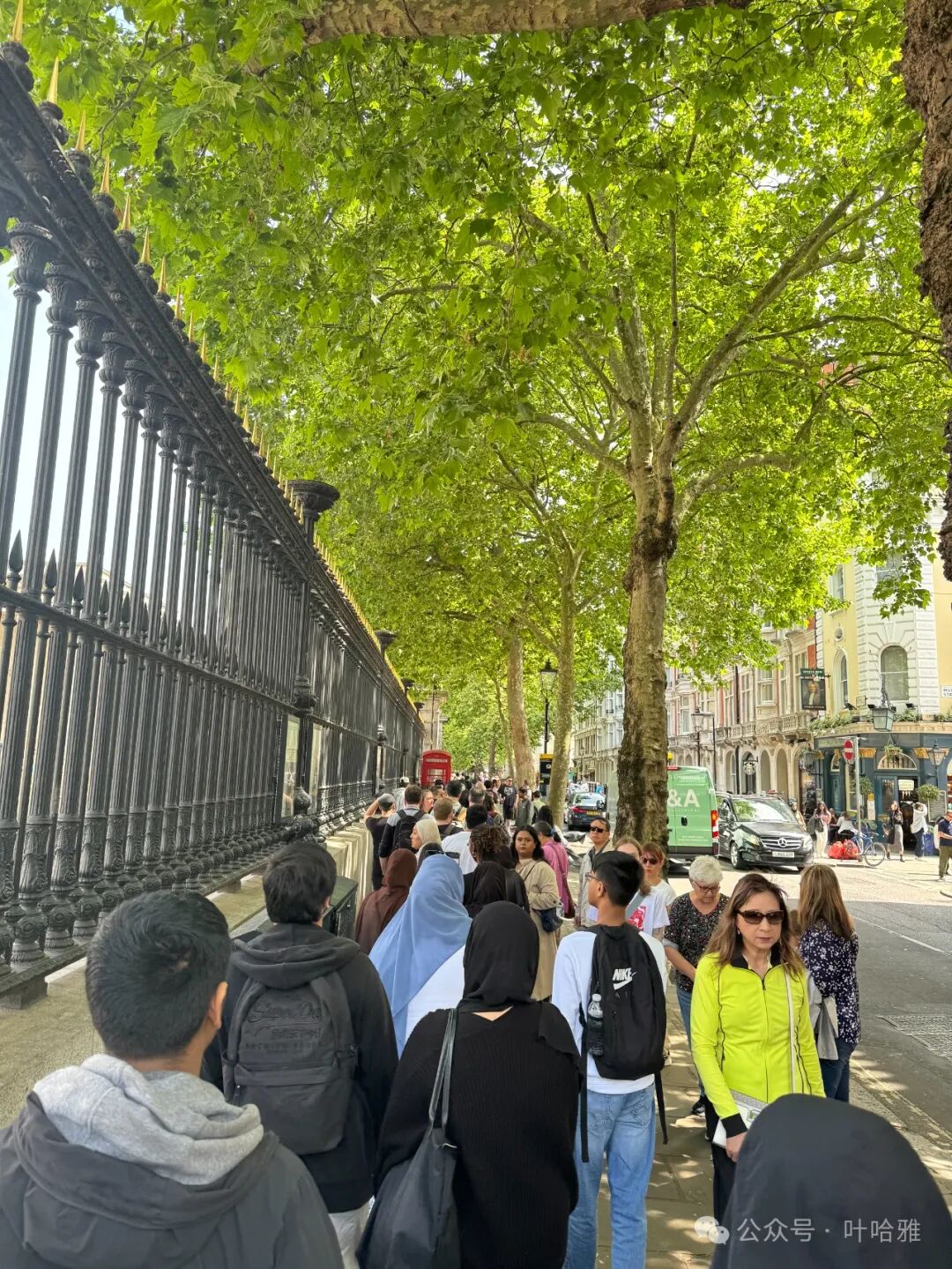
There is a line to get in, and you have to go through a security check before entering. The inside is huge, and it takes about a full day to see everything properly.
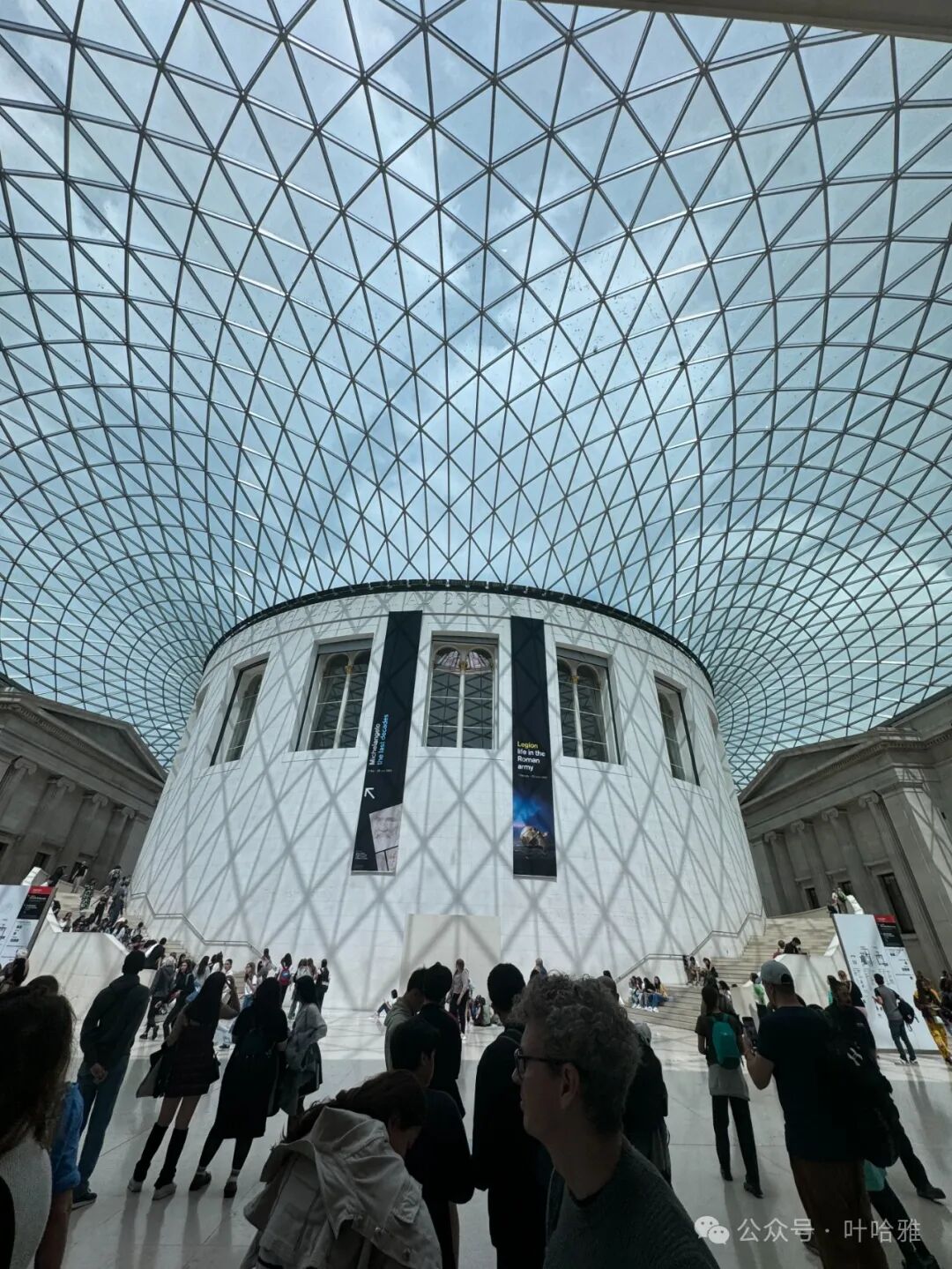
The British Museum is open from 10:00 to 17:00, and stays open until 20:30 on Fridays. The Ancient Egypt gallery is definitely the most popular.
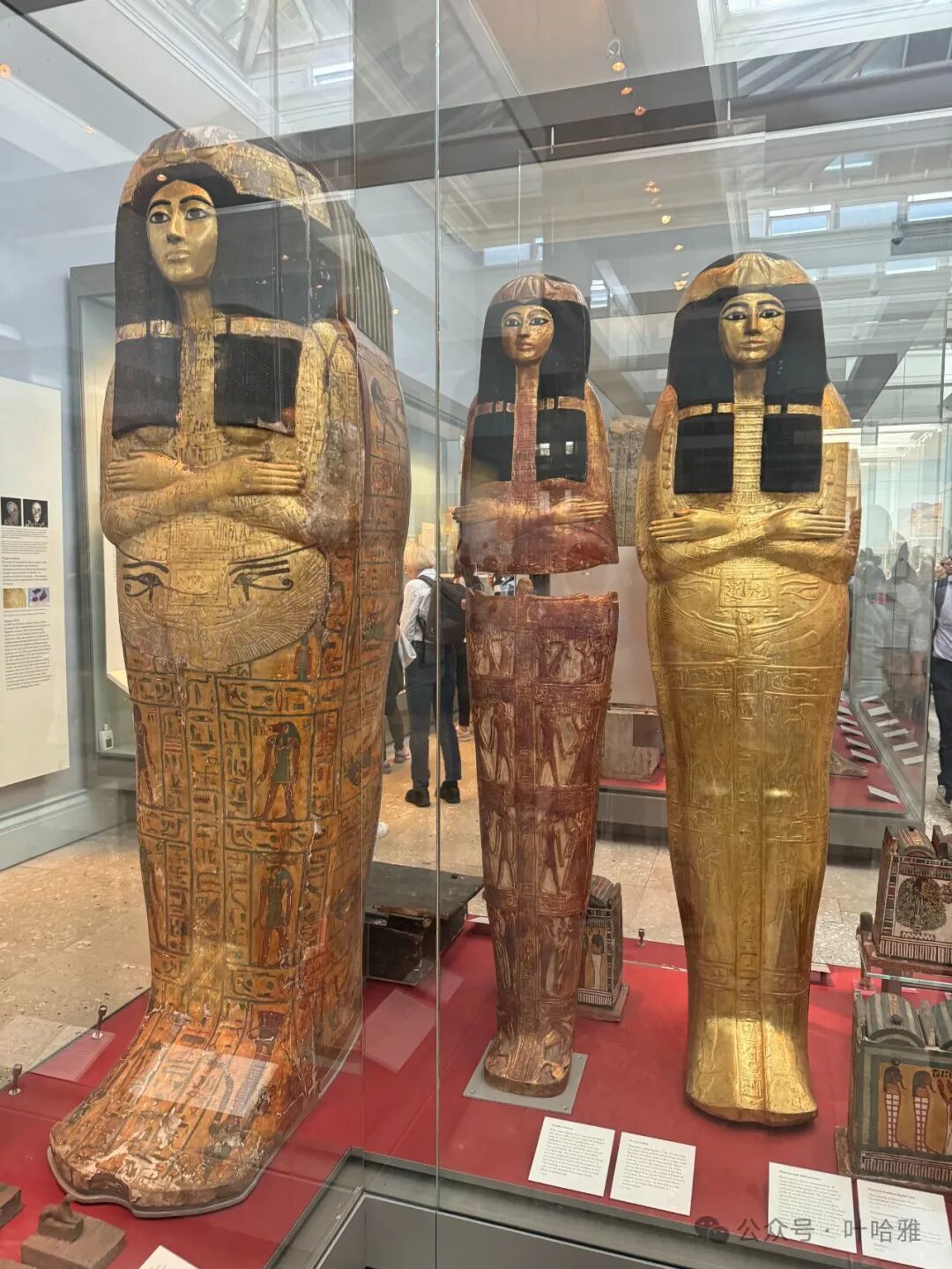
Some people online say that after seeing the ancient Egyptian artifacts at the British Museum, they thought Egypt had been emptied out. I have been to the Egyptian Museum myself, and there are so many artifacts there that there is nowhere to put them all, so it is impossible that it was emptied. See the Egypt travel guide for avoiding pitfalls for more details.
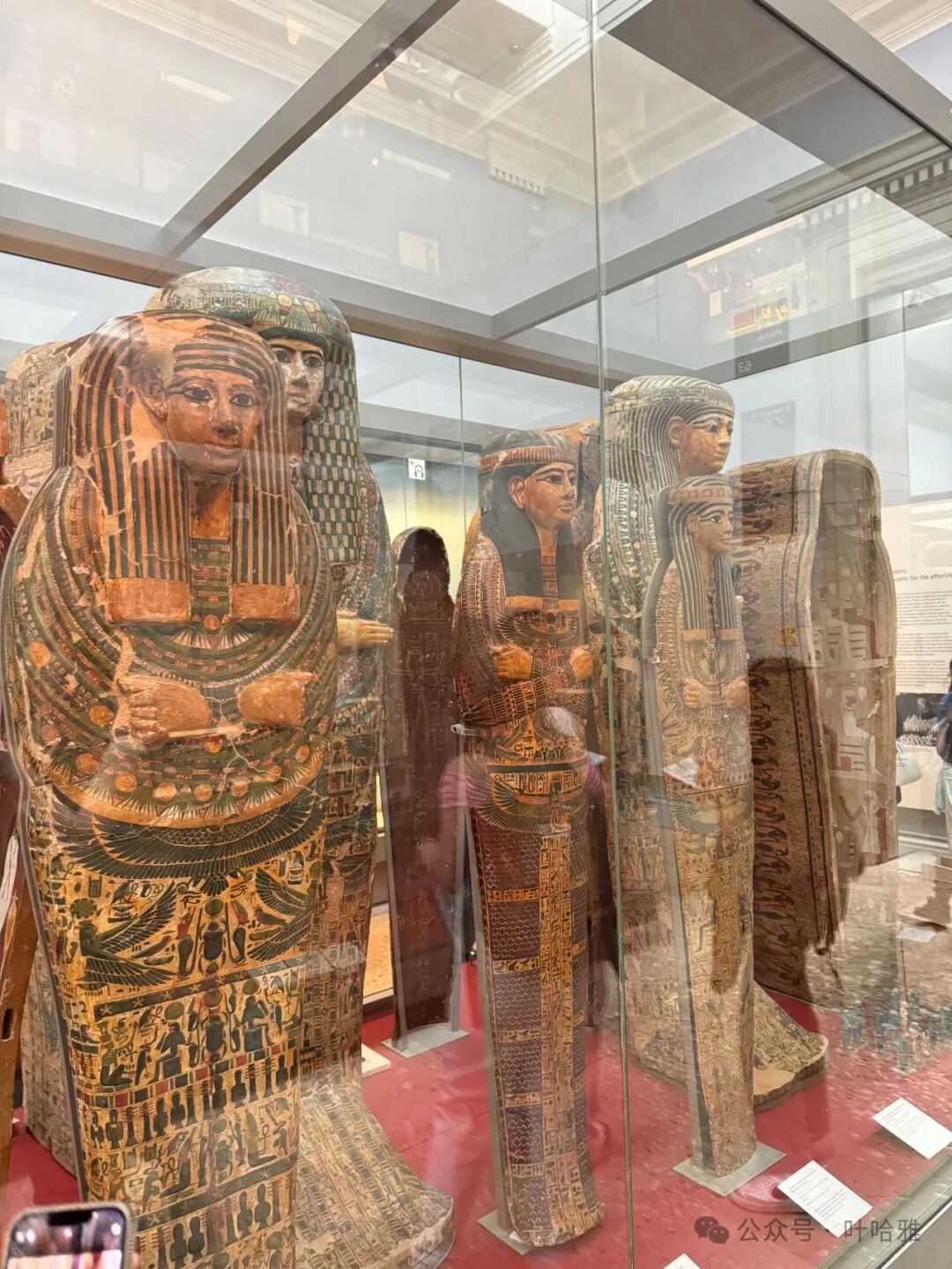
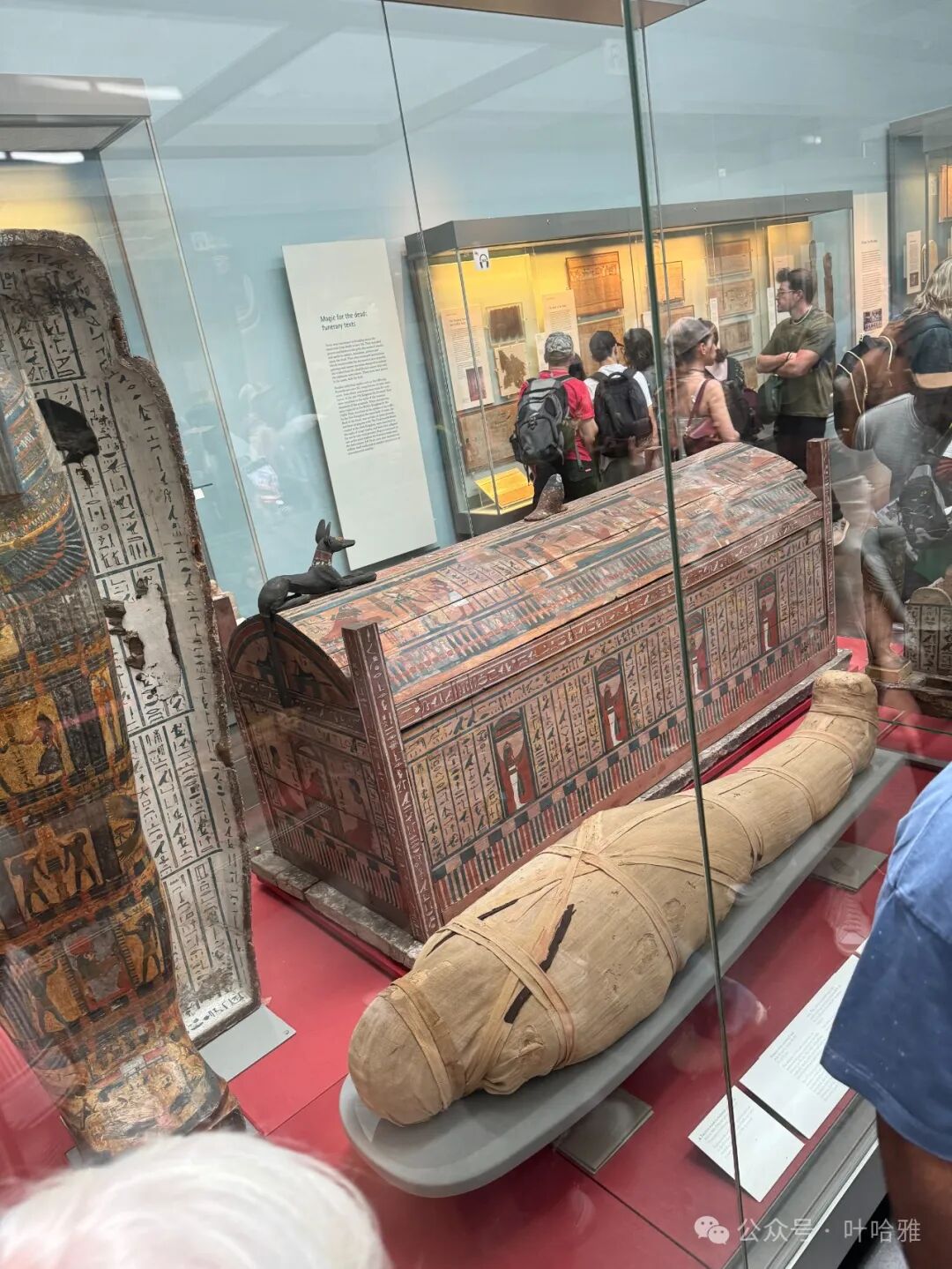
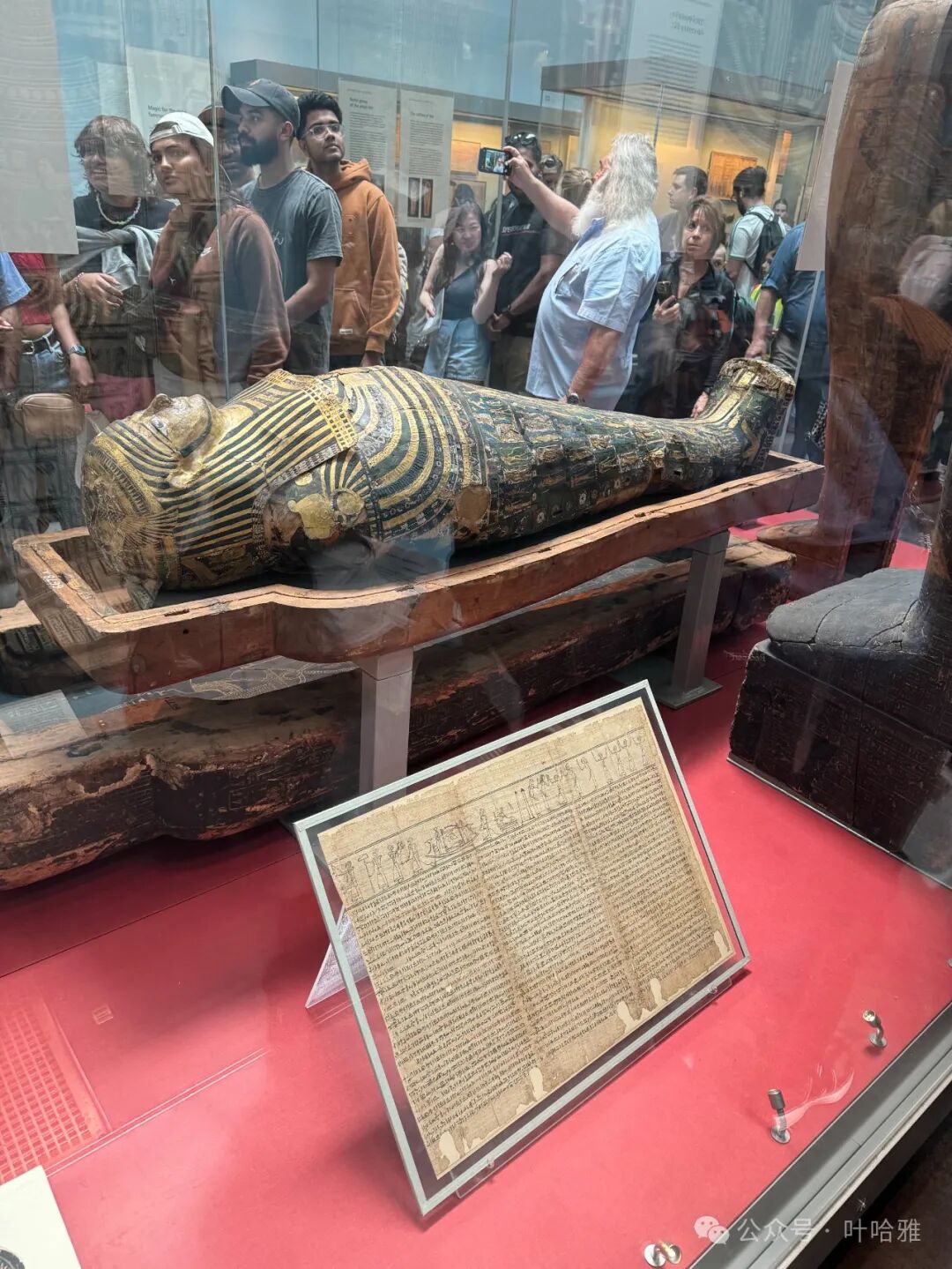
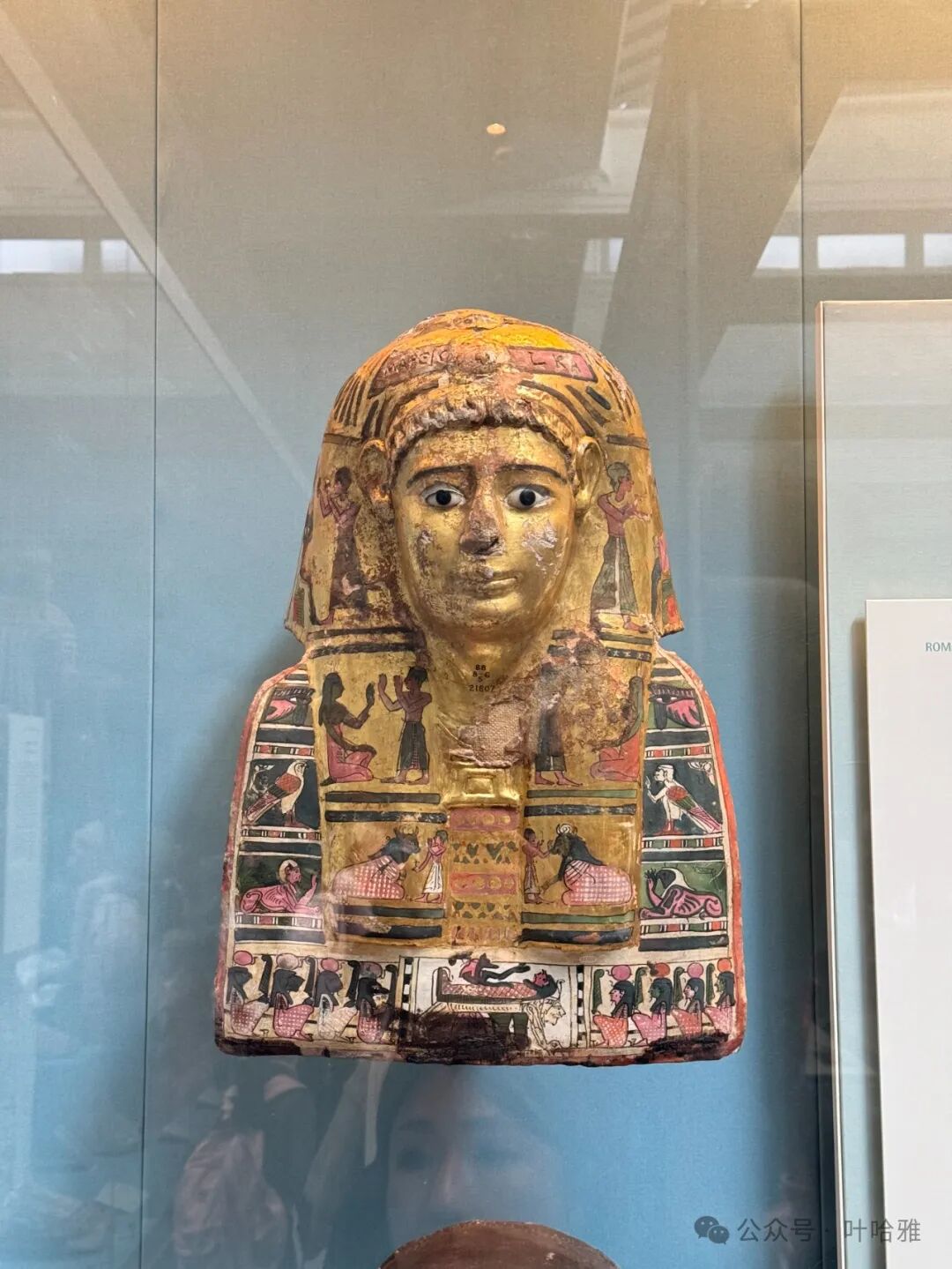
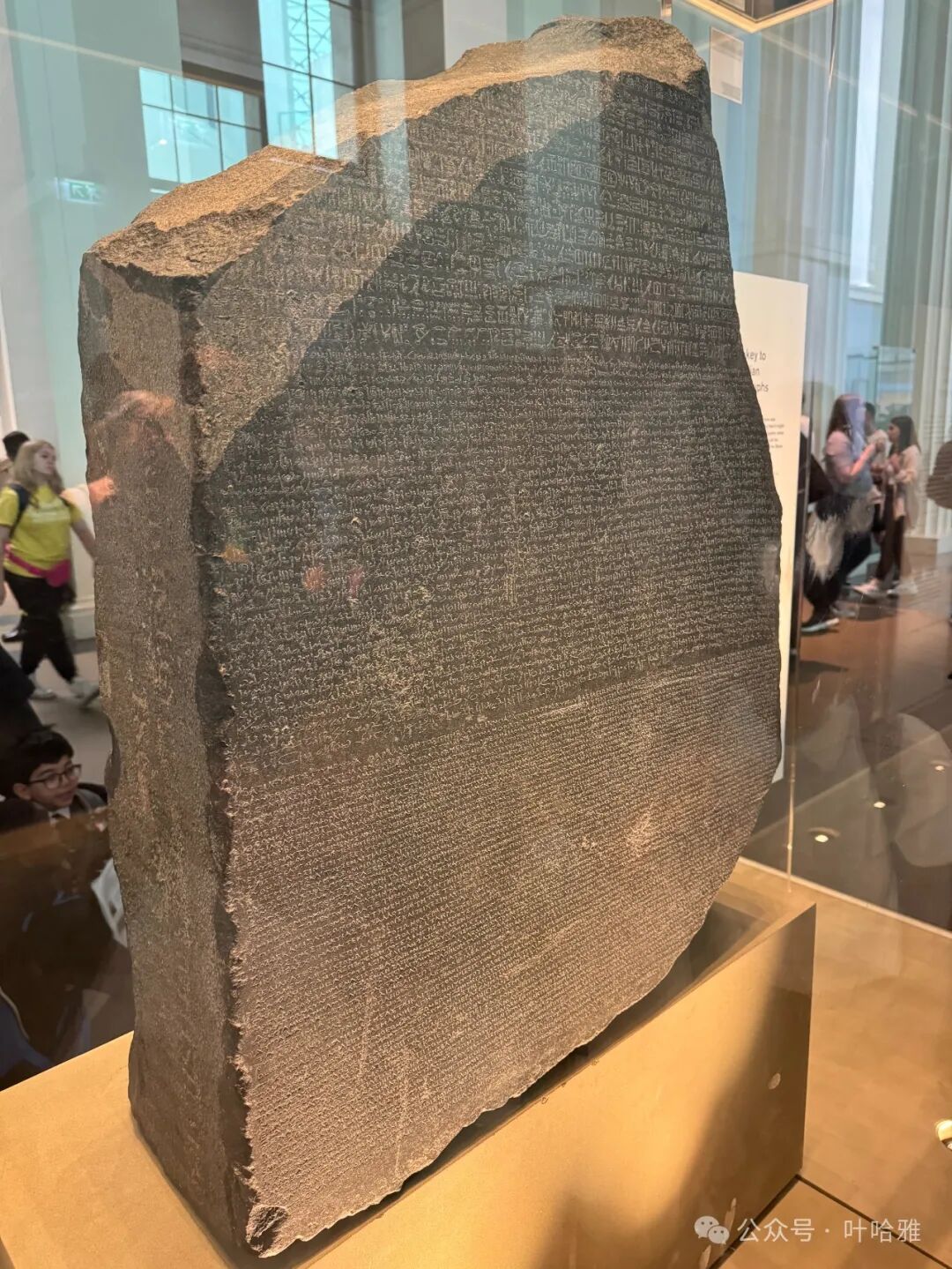
Rosetta Stone
Made in 196 BC, it is inscribed with a decree from the coronation of the ancient Egyptian King Ptolemy V. The stone has three types of writing: Ancient Greek, Ancient Egyptian hieroglyphs, and Demotic script. Archaeologists were able to decipher the content of Ancient Egyptian hieroglyphs by comparing the three scripts, because Ancient Greek can still be read today.
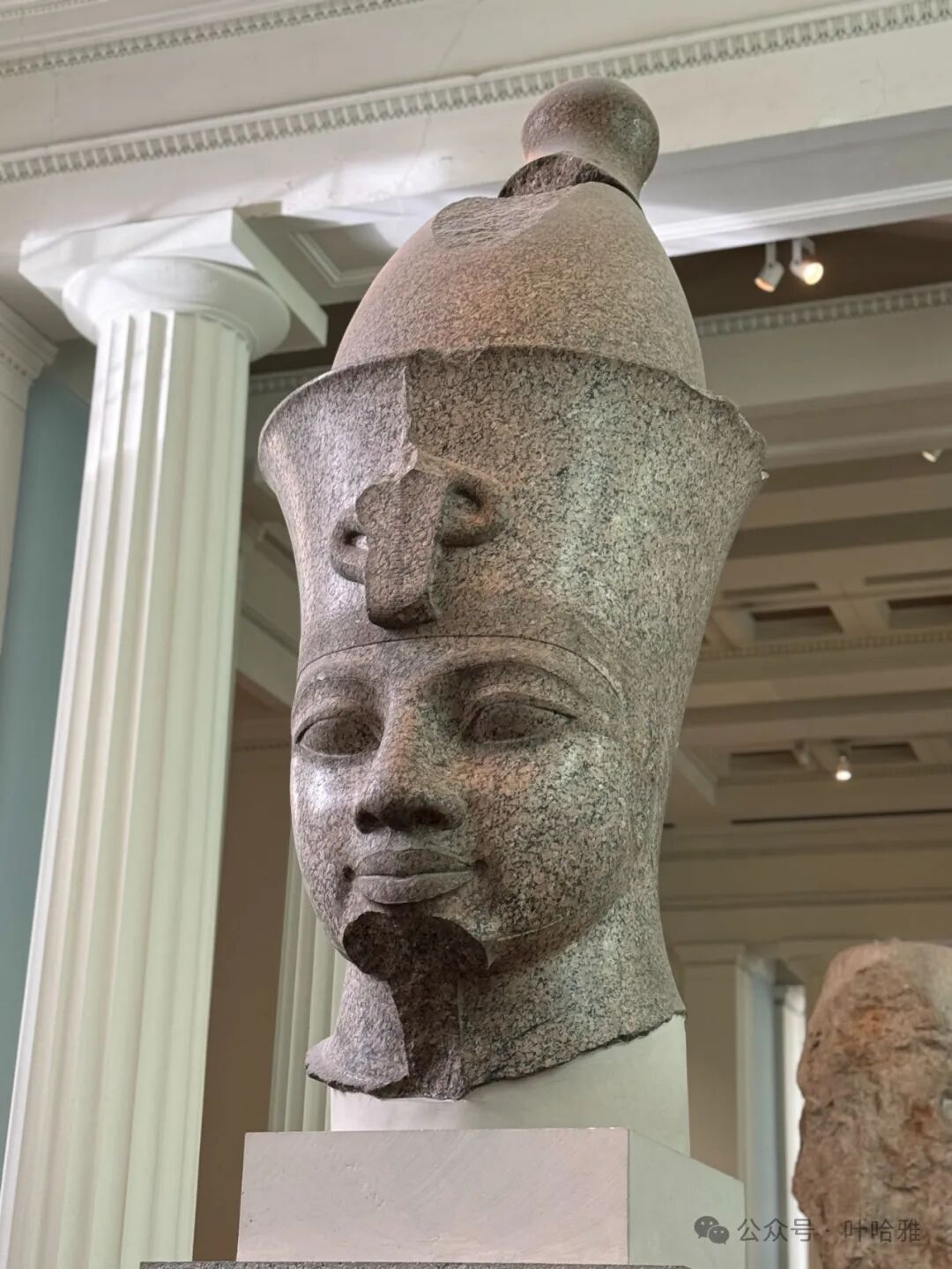
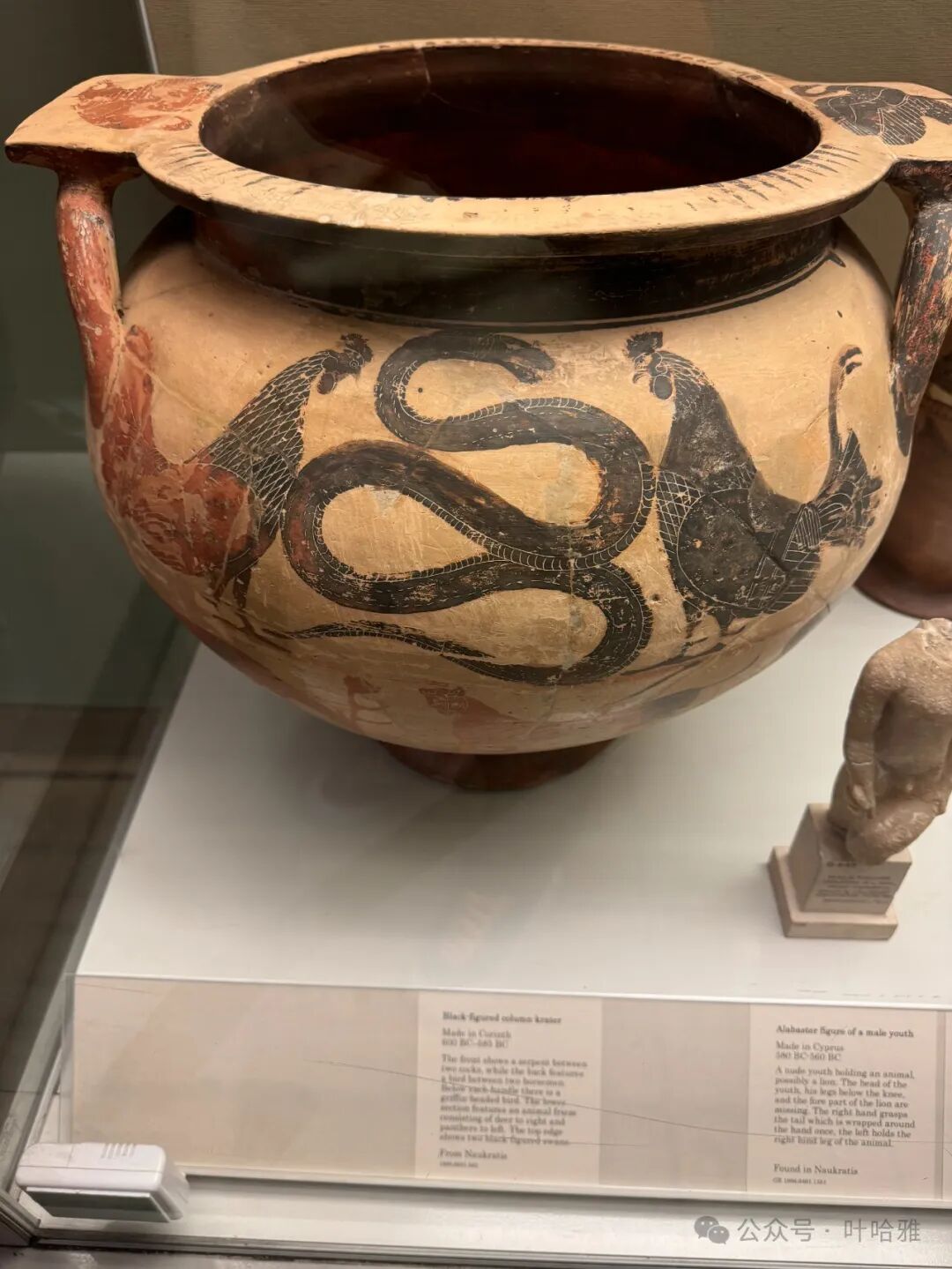
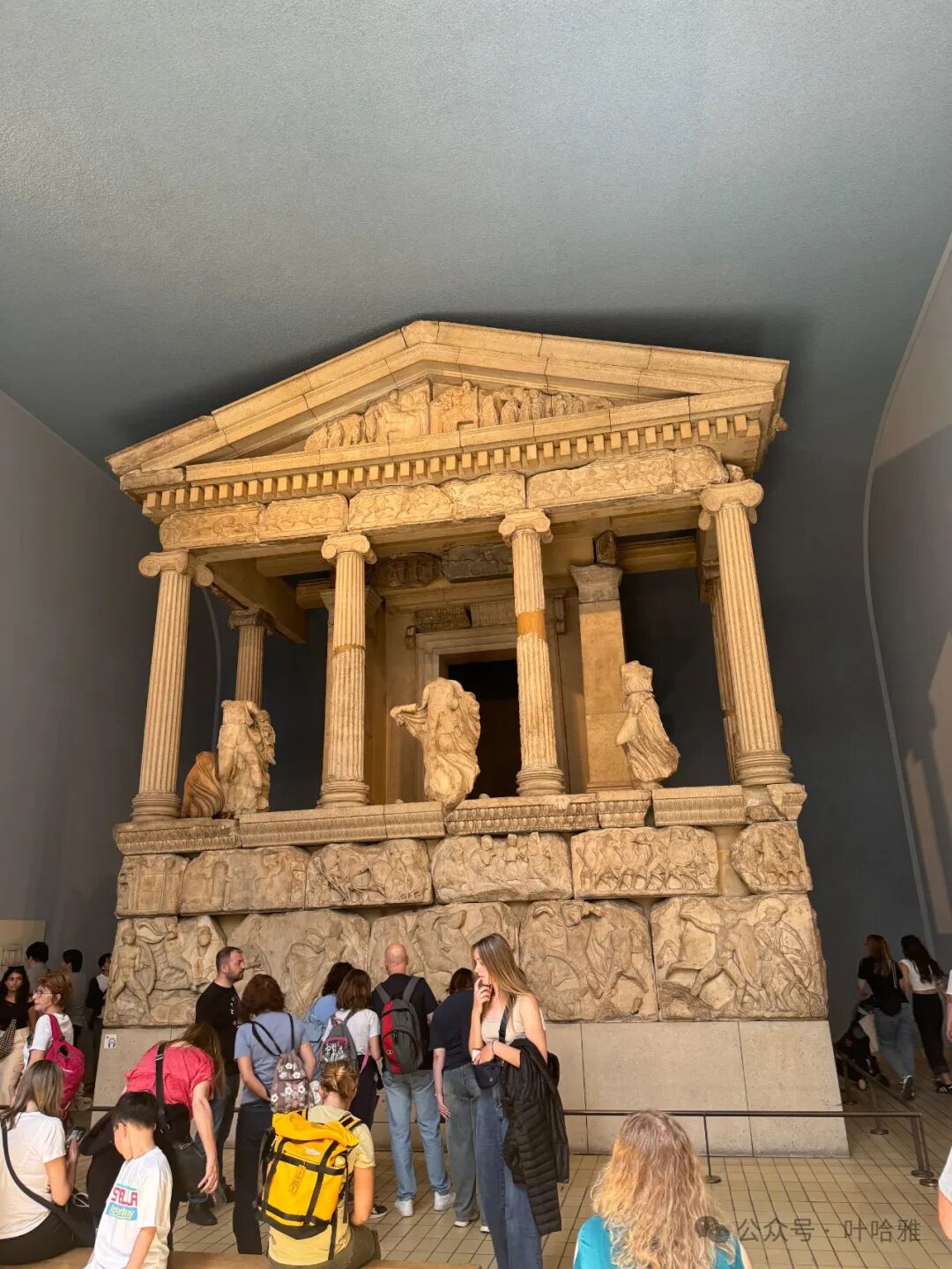
Nereid Monument
This is a monument for the ruler of Xanthos in southwestern Turkey, built between 390 and 380 BC. The Nereids were the daughters of the sea god. In 1840, the British Museum funded archaeological excavations in southwestern Turkey with the permission of the Ottoman Sultan and discovered this temple. At that time, the Ottoman Empire allowed British, French, and German archaeologists to conduct research. It was not until after 1869 that the export of artifacts was prohibited, which led to the later construction of the Istanbul Archaeology Museums.
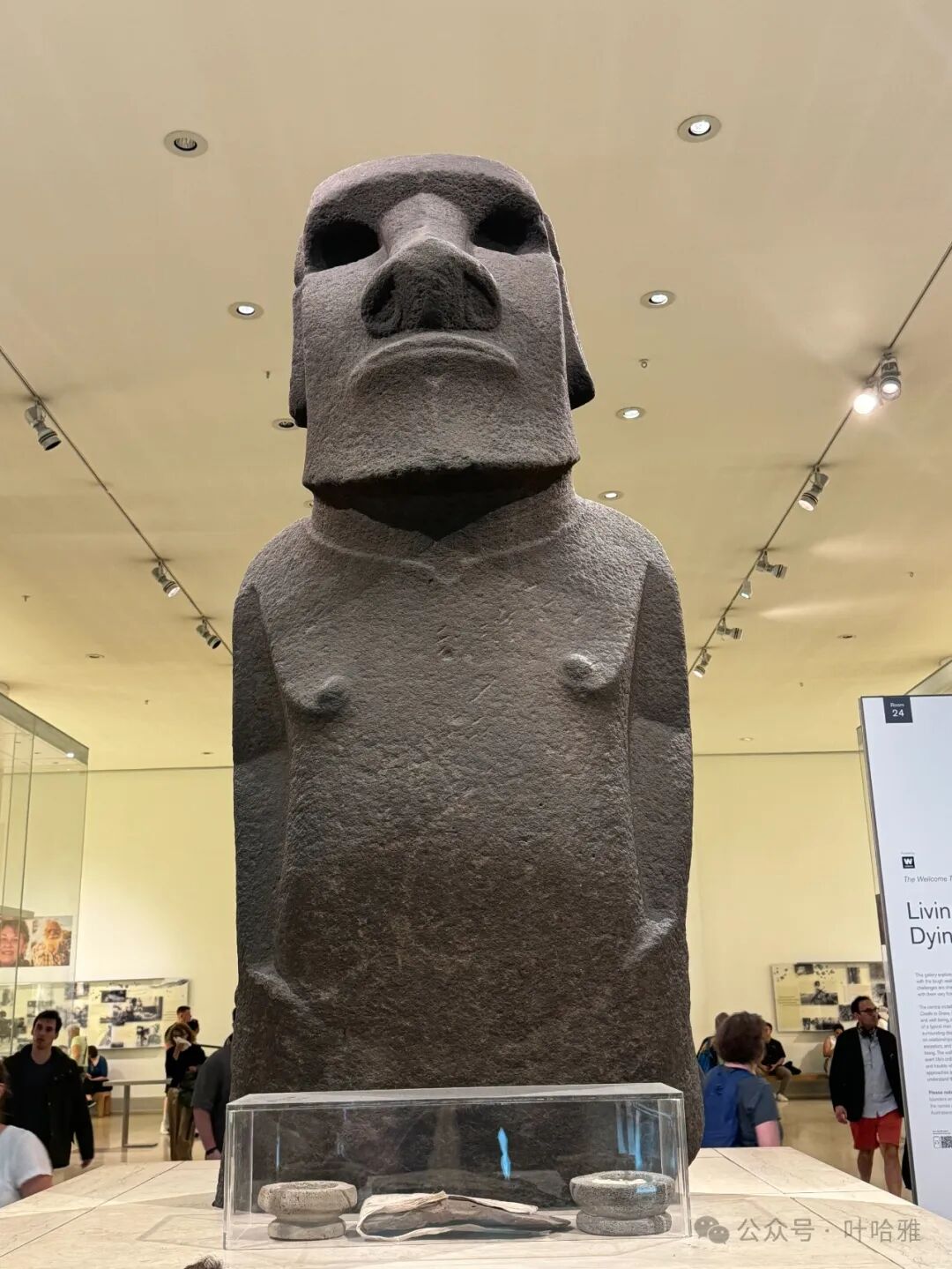
The mysterious Moai statues of Easter Island
In 1868, the British soldier Richard Powell brought two Moai statues from Easter Island back to the UK and gave them to Queen Victoria as a gift. In recent years, Chile has repeatedly asked the British Museum to return the statues, but the British side has not responded.
Islamic World Exhibition
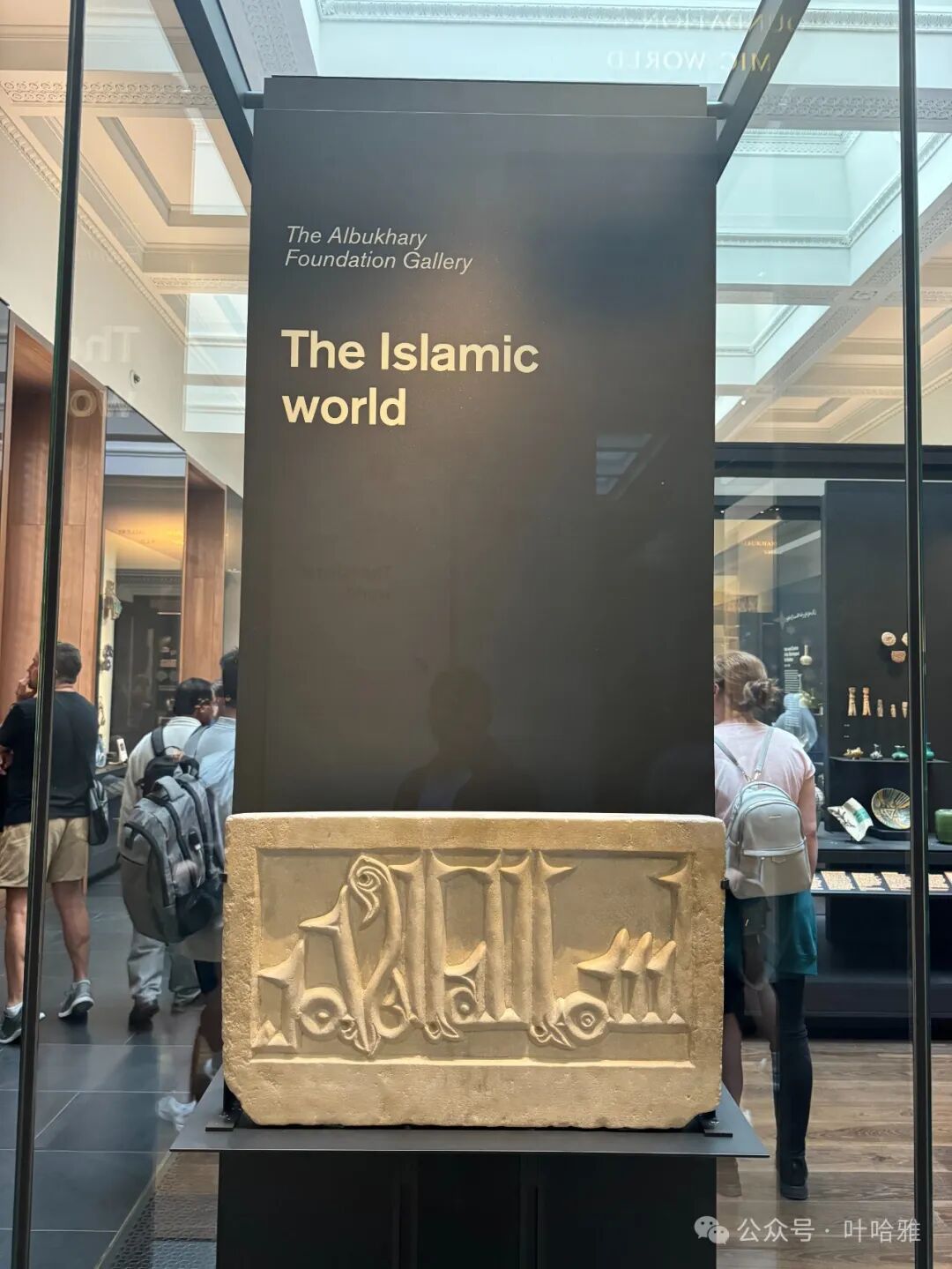
Islamic World Exhibition
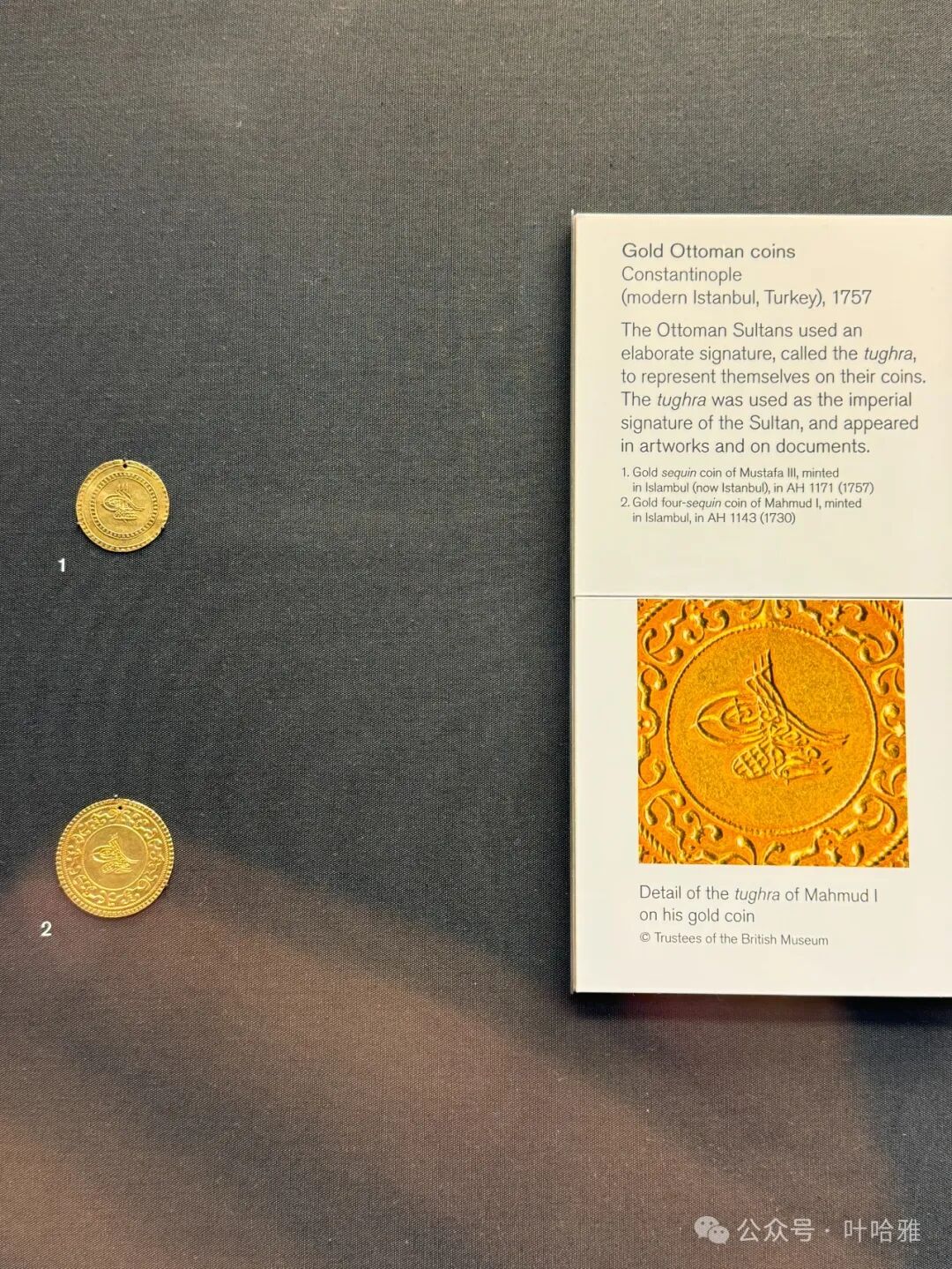
This monogram (tughra) was a common symbol in the Ottoman Empire, and the name on the gold coin is a person's name.
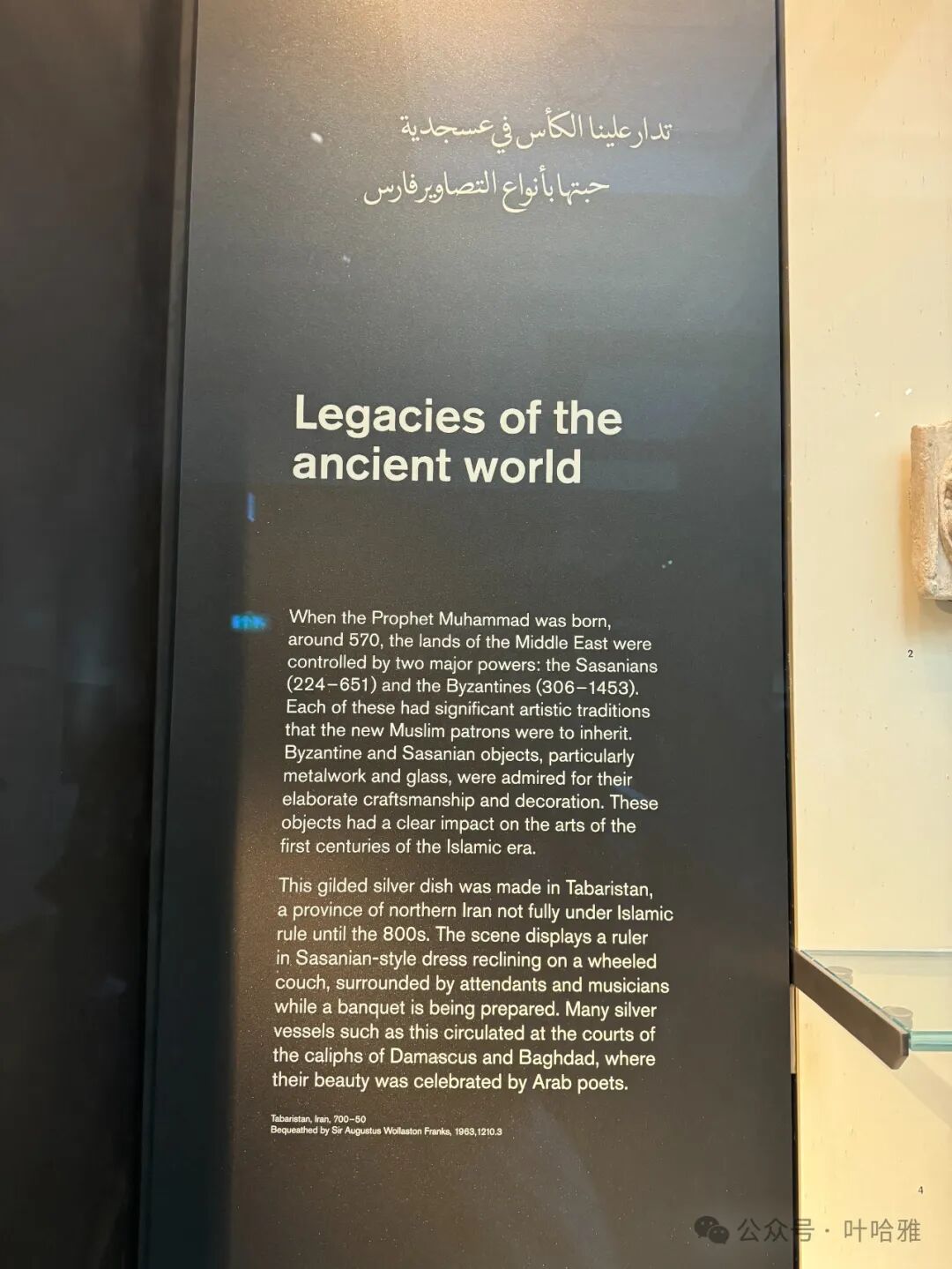
This tells the history after the birth of the Prophet Muhammad.
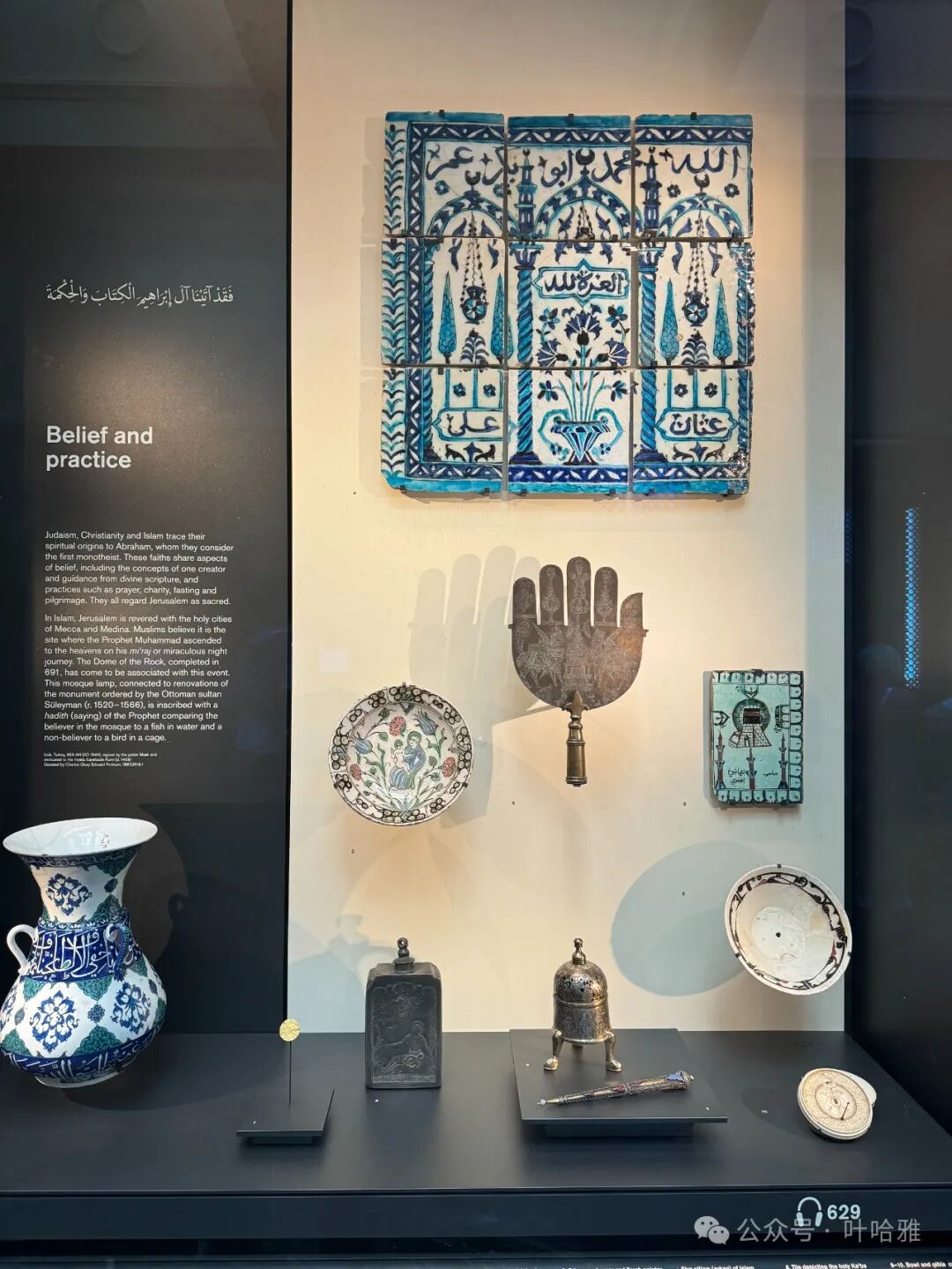
This describes Jerusalem, the holy city shared by Judaism, Christianity, and Islam, as well as the story of the Prophet Muhammad's Night Journey and Ascension. The Dome of the Rock (Qubbat al-Sakhrah) is connected to this event.
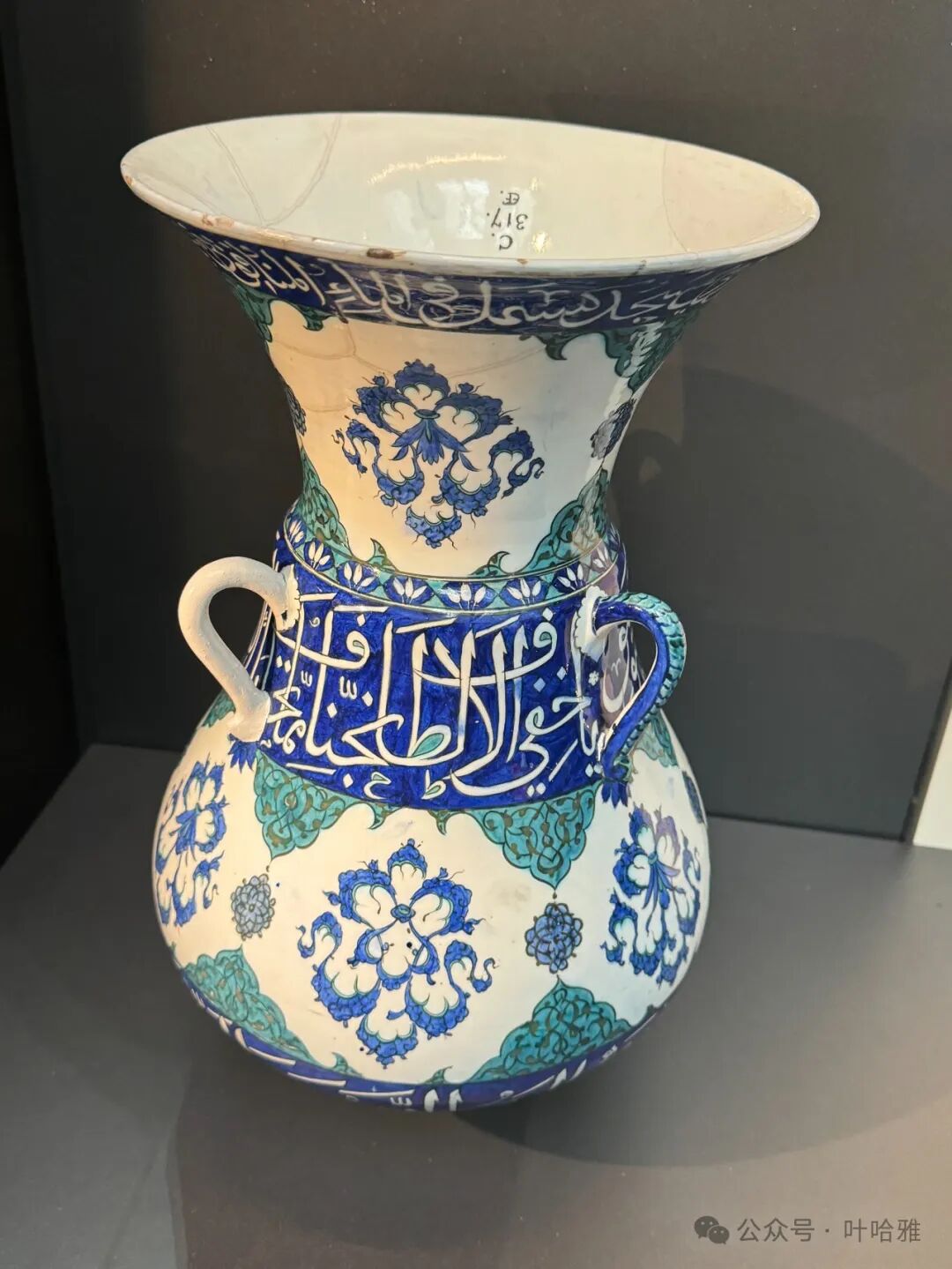
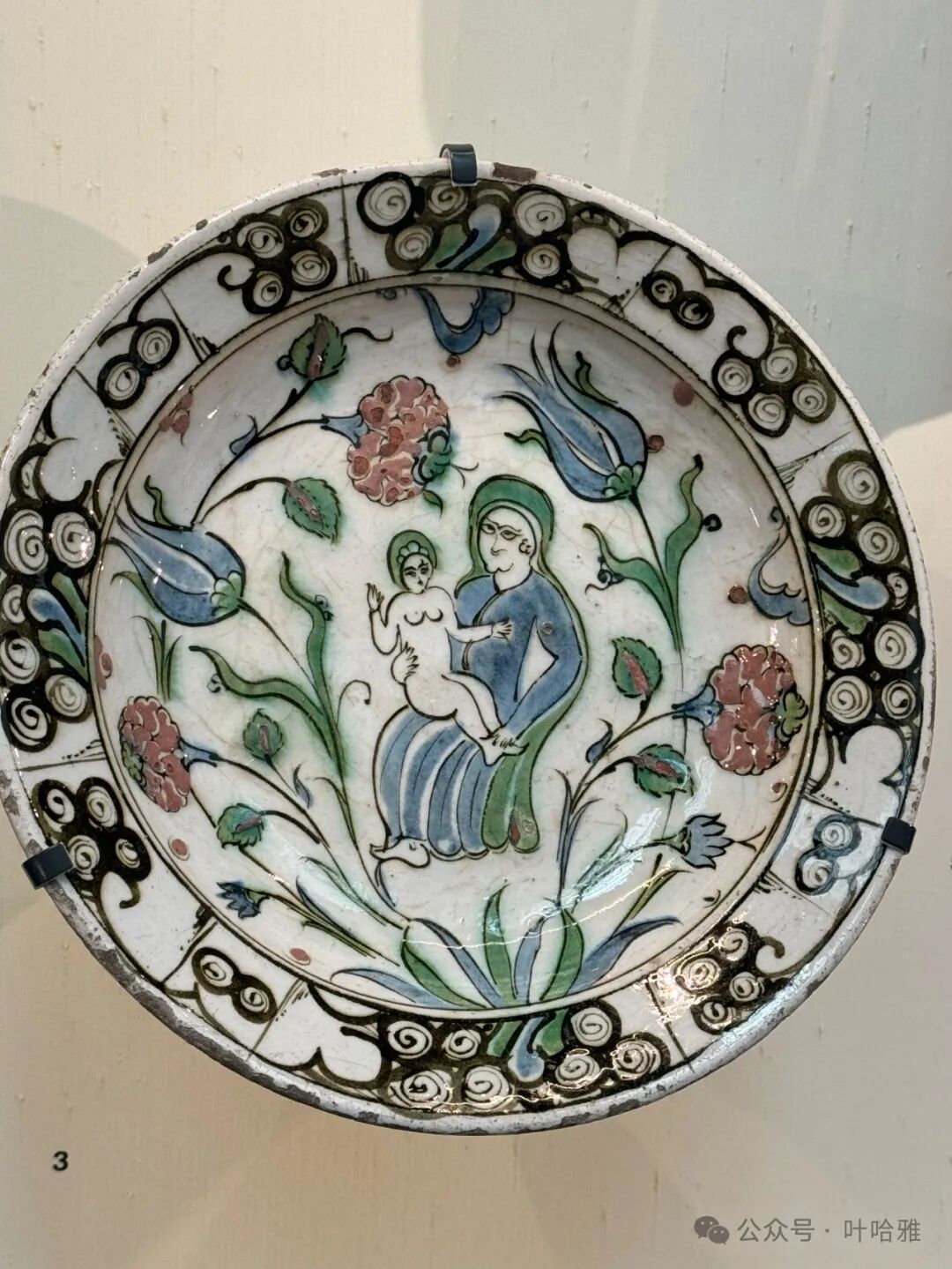
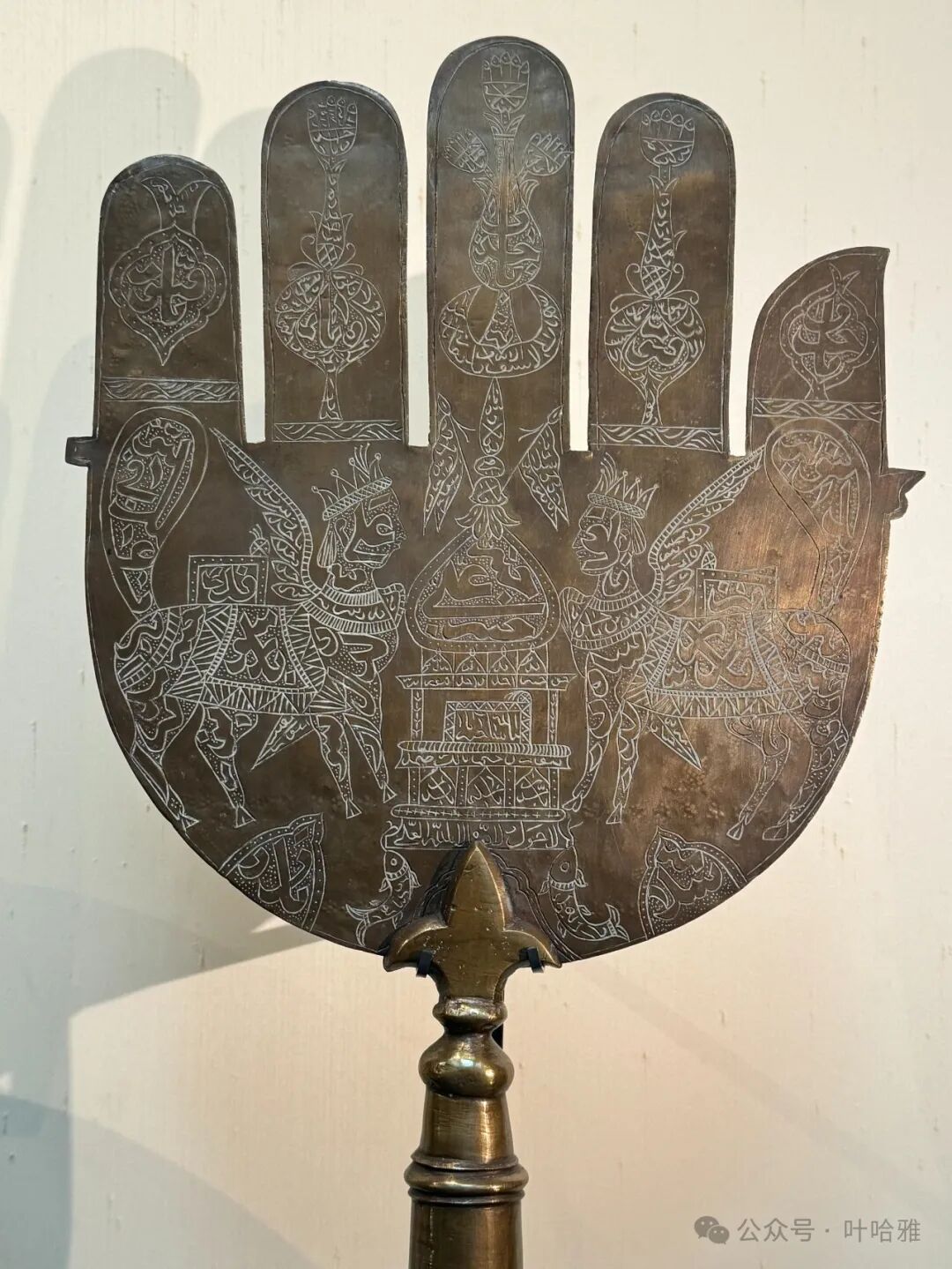
This is a lamp from a mosque, related to the Ottoman Sultan's order to renovate the Dome of the Rock. It is inscribed with a Hadith that compares believers in the mosque to fish in water and non-believers to birds in a cage.
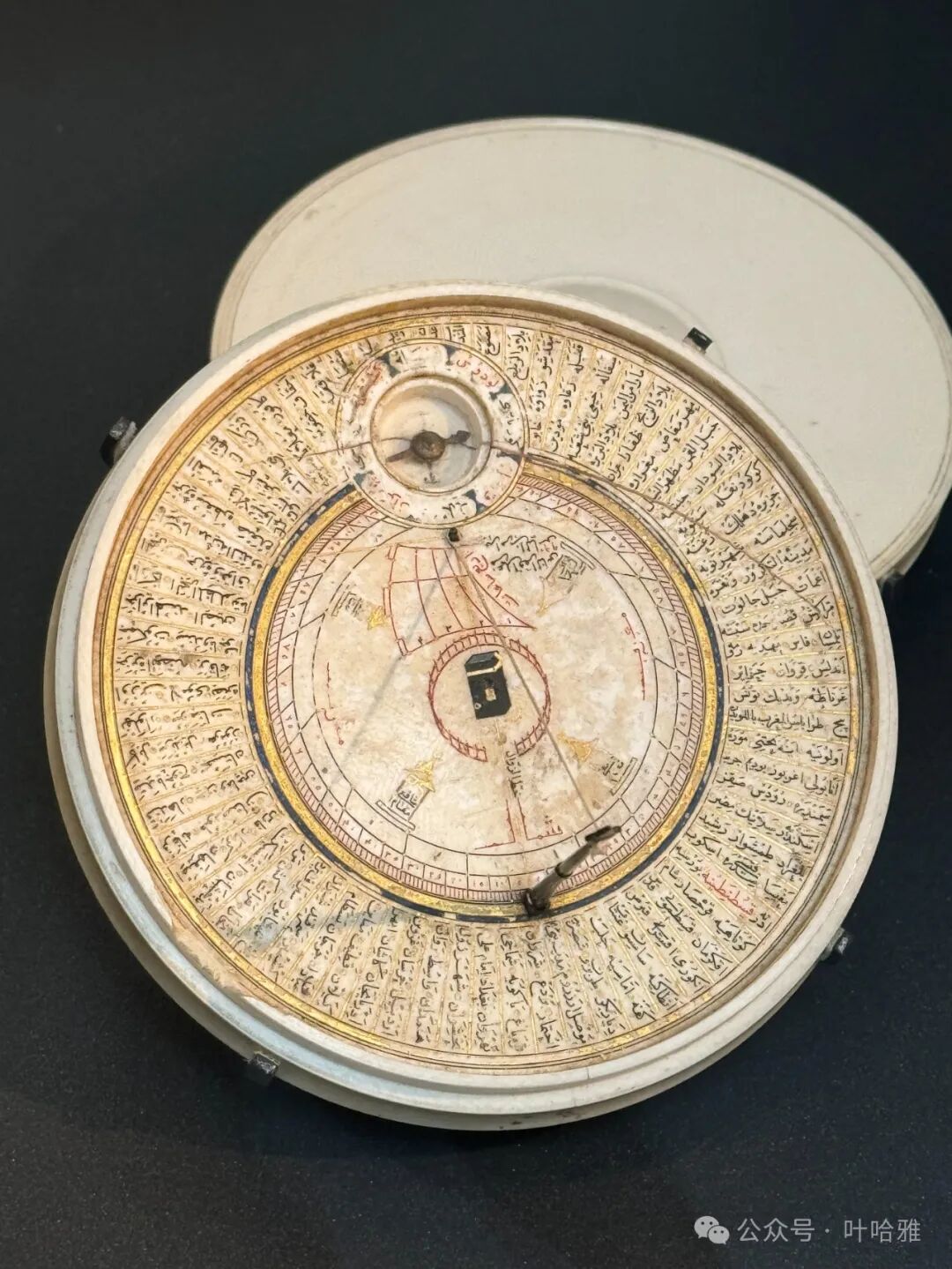
A compass used to determine the direction of prayer (qibla).
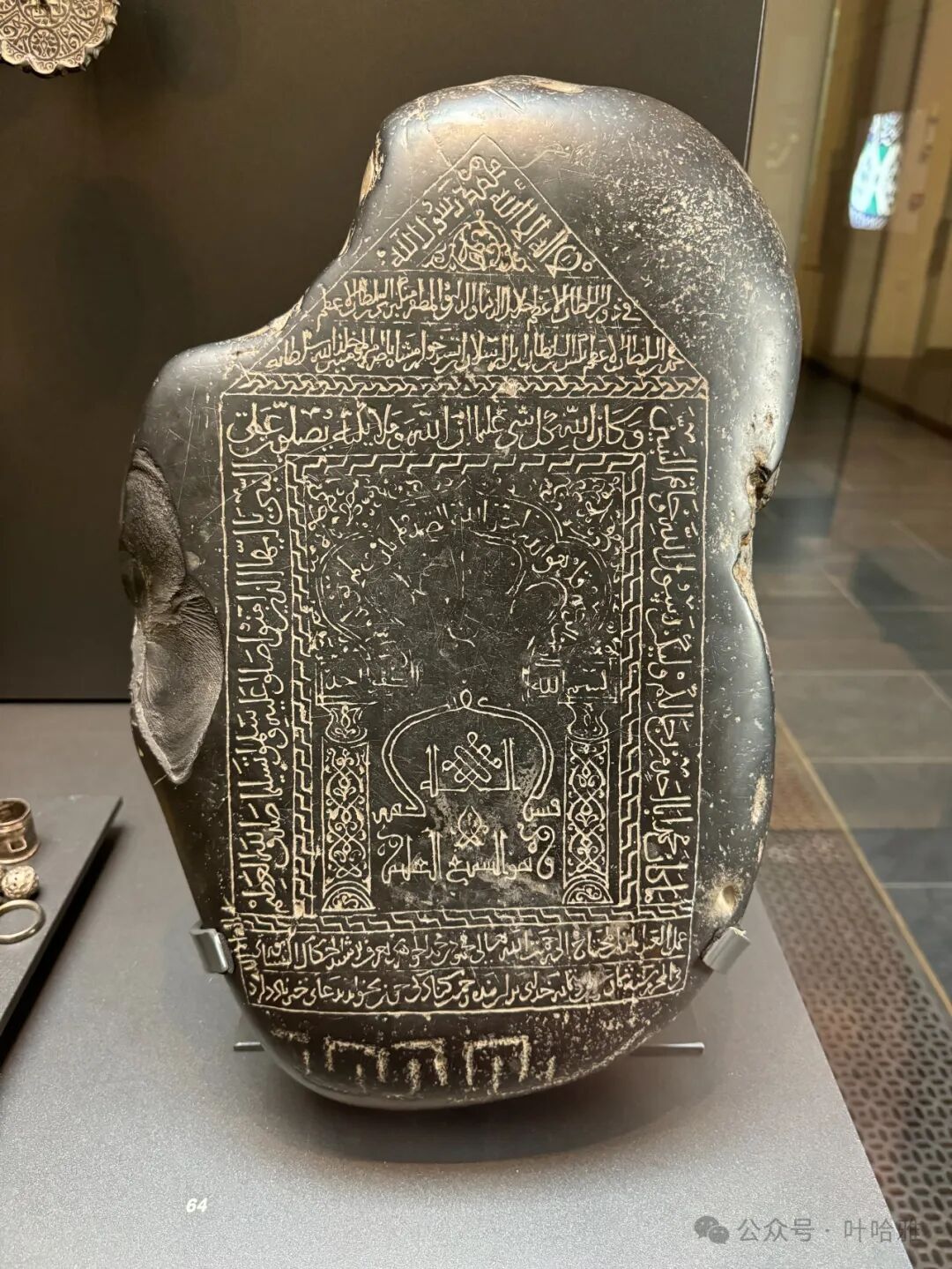
This piece of black volcanic stone may have once been embedded in the wall of the Kaaba.
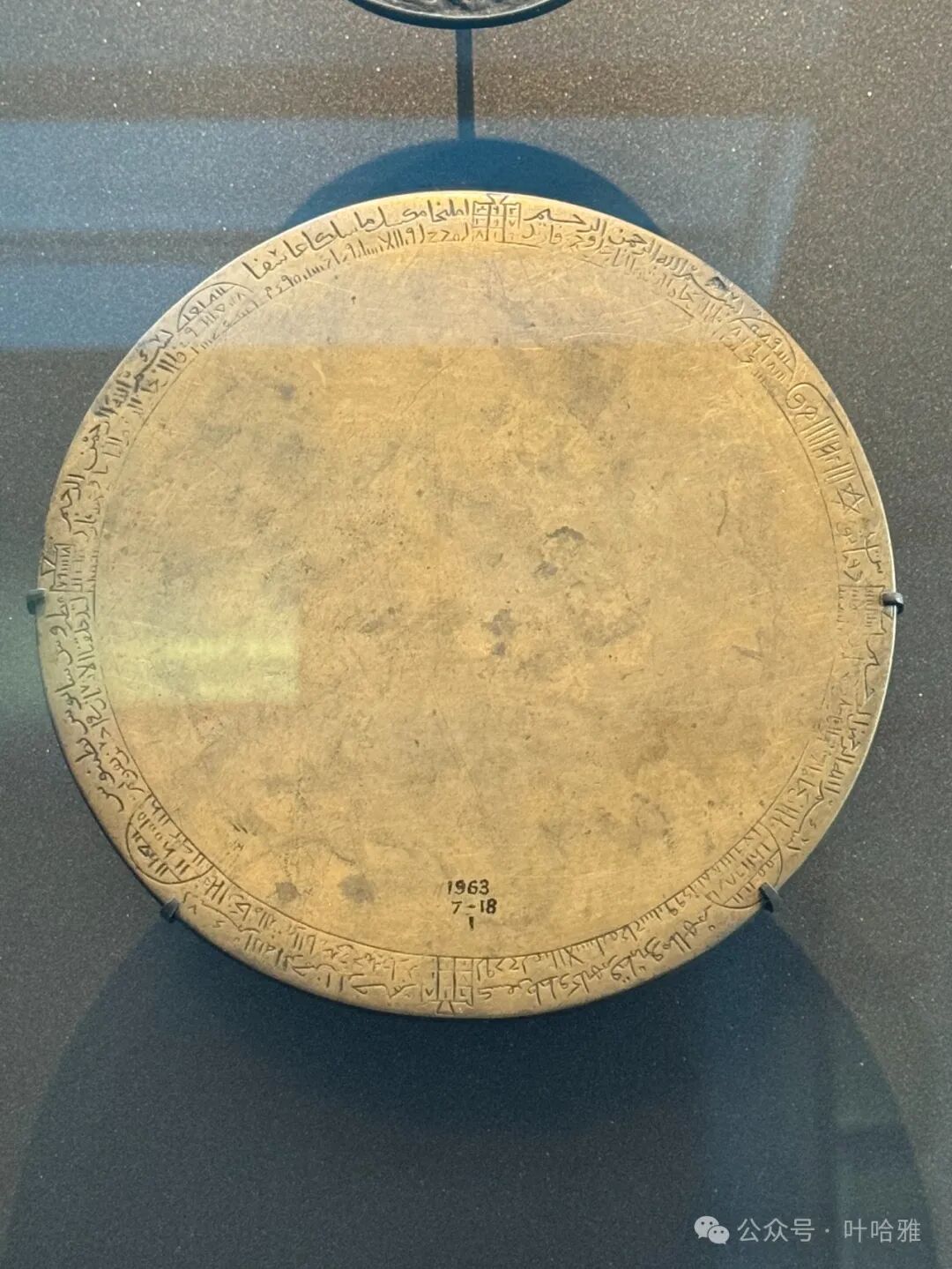
The picture above shows a bronze mirror. Inspired by China, medieval Iran also made mirrors out of copper alloy that could reflect light after being polished. The back of the mirror is engraved with patterns and served as an amulet.
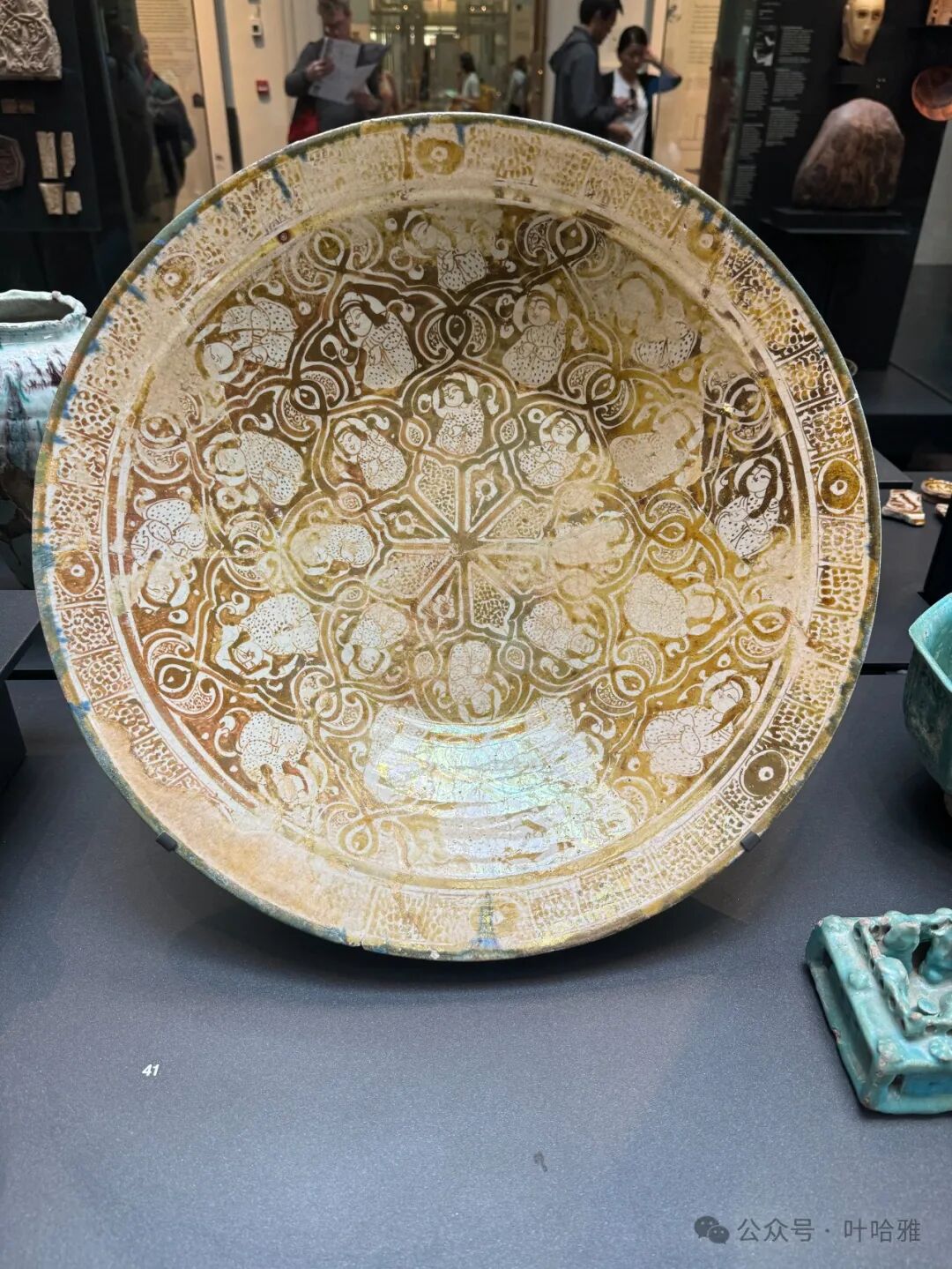
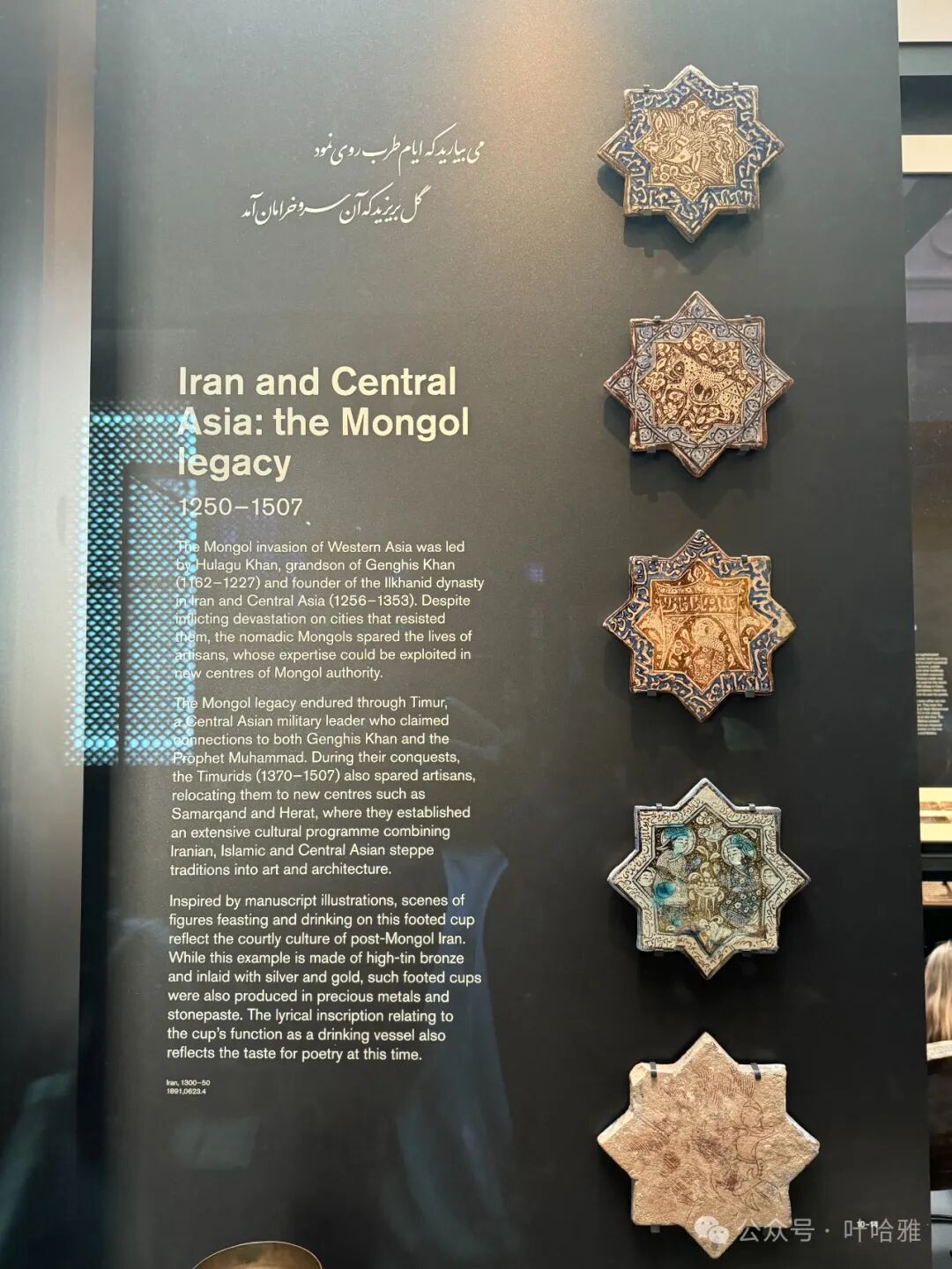
Asia: The Legacy of Mongolia
The image above states that the Mongol invasion of West Asia was led by Hulagu, the grandson of Genghis Khan (1162-1227). Hulagu founded the Ilkhanate. He spared the lives of the West Asian rebel forces because their specialized skills could be put to good use in the new Mongol power centers.
The Mongol legacy continued through the Central Asian leader Timur. Timur claimed a connection between Genghis Khan and the Prophet Muhammad. During his conquests, Timur also kept craftsmen and brought them to his new centers of Samarkand and Herat. He blended Iranian Islamic and Central Asian steppe traditions into his architectural art.
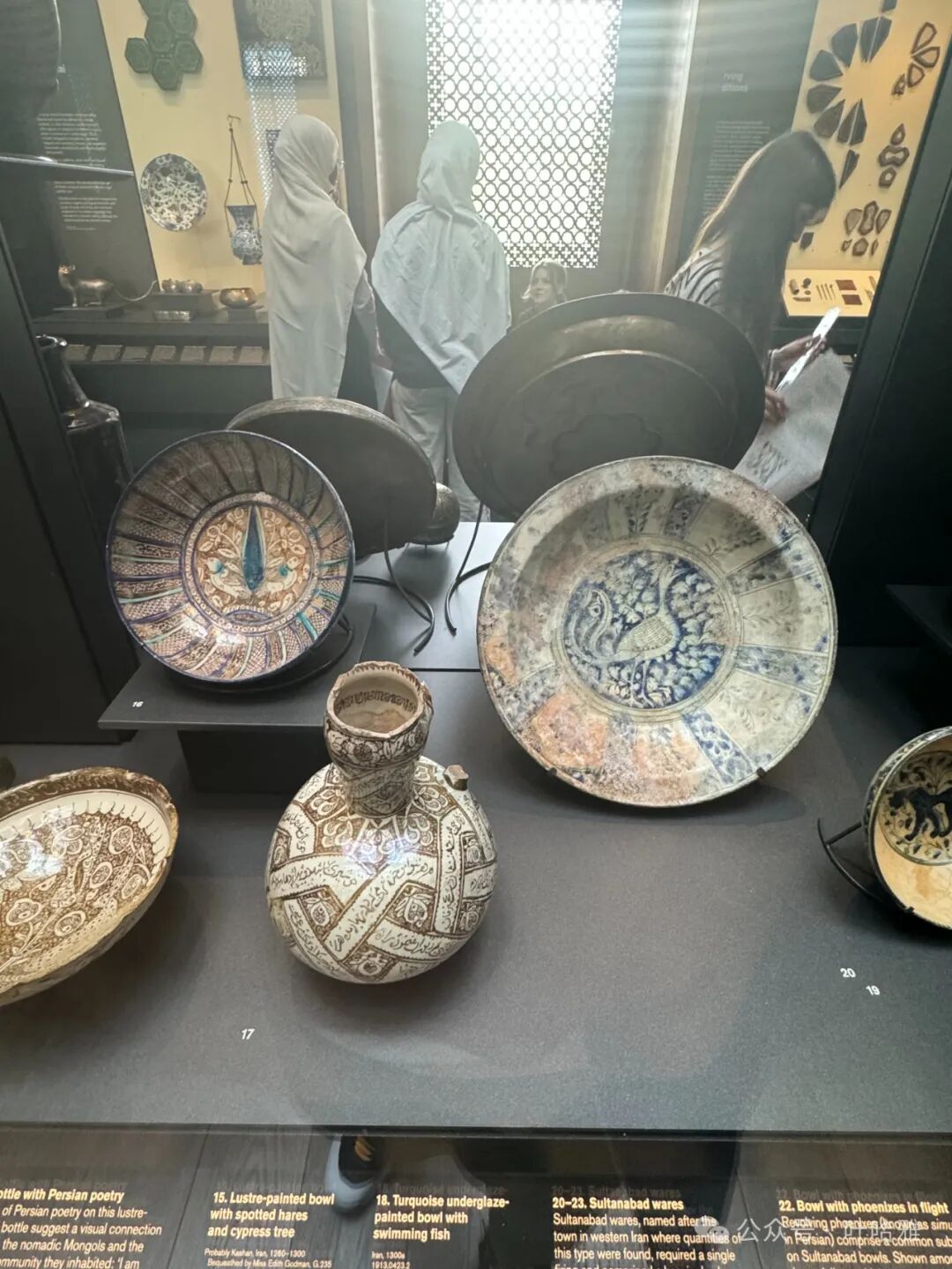
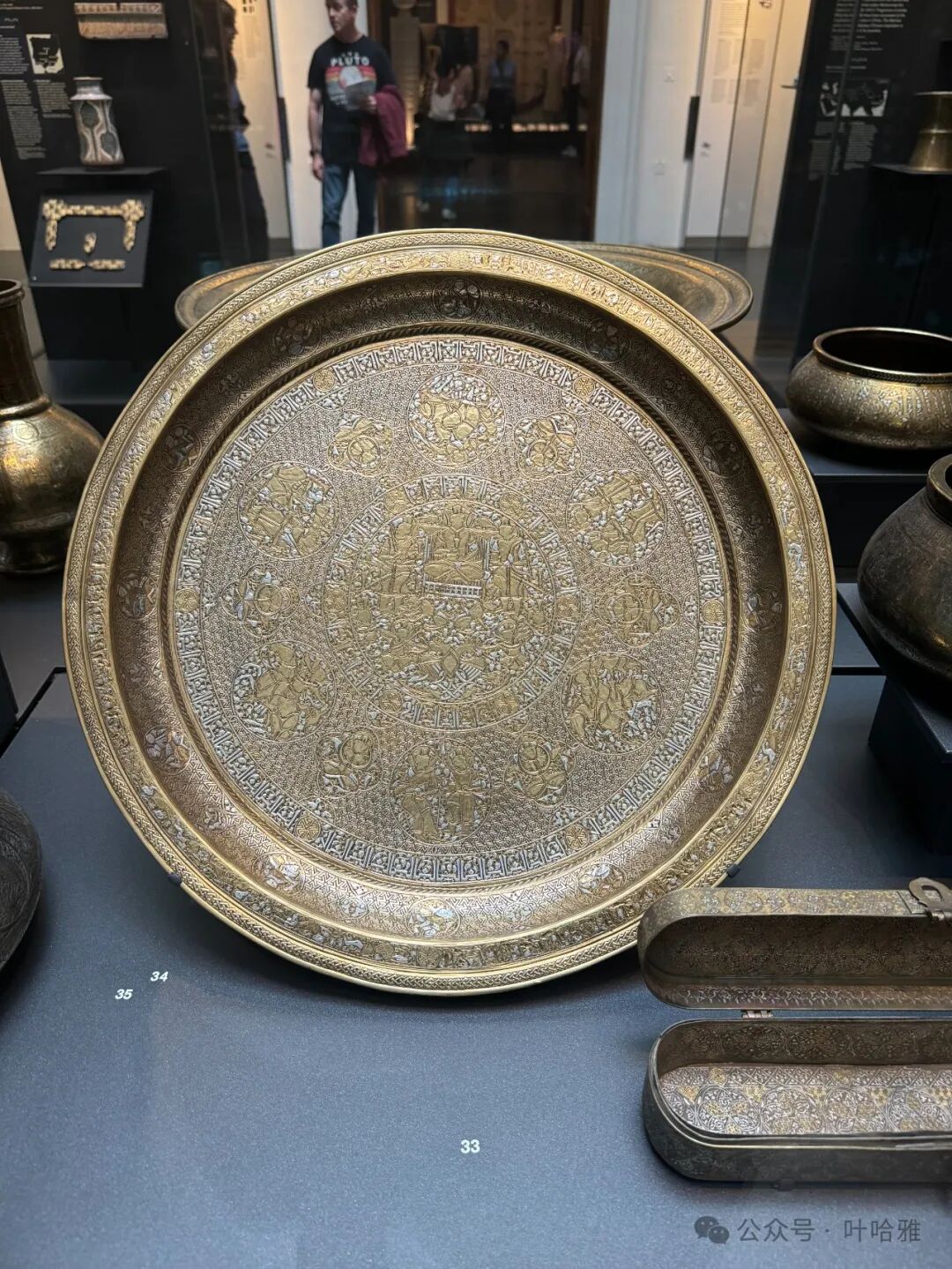
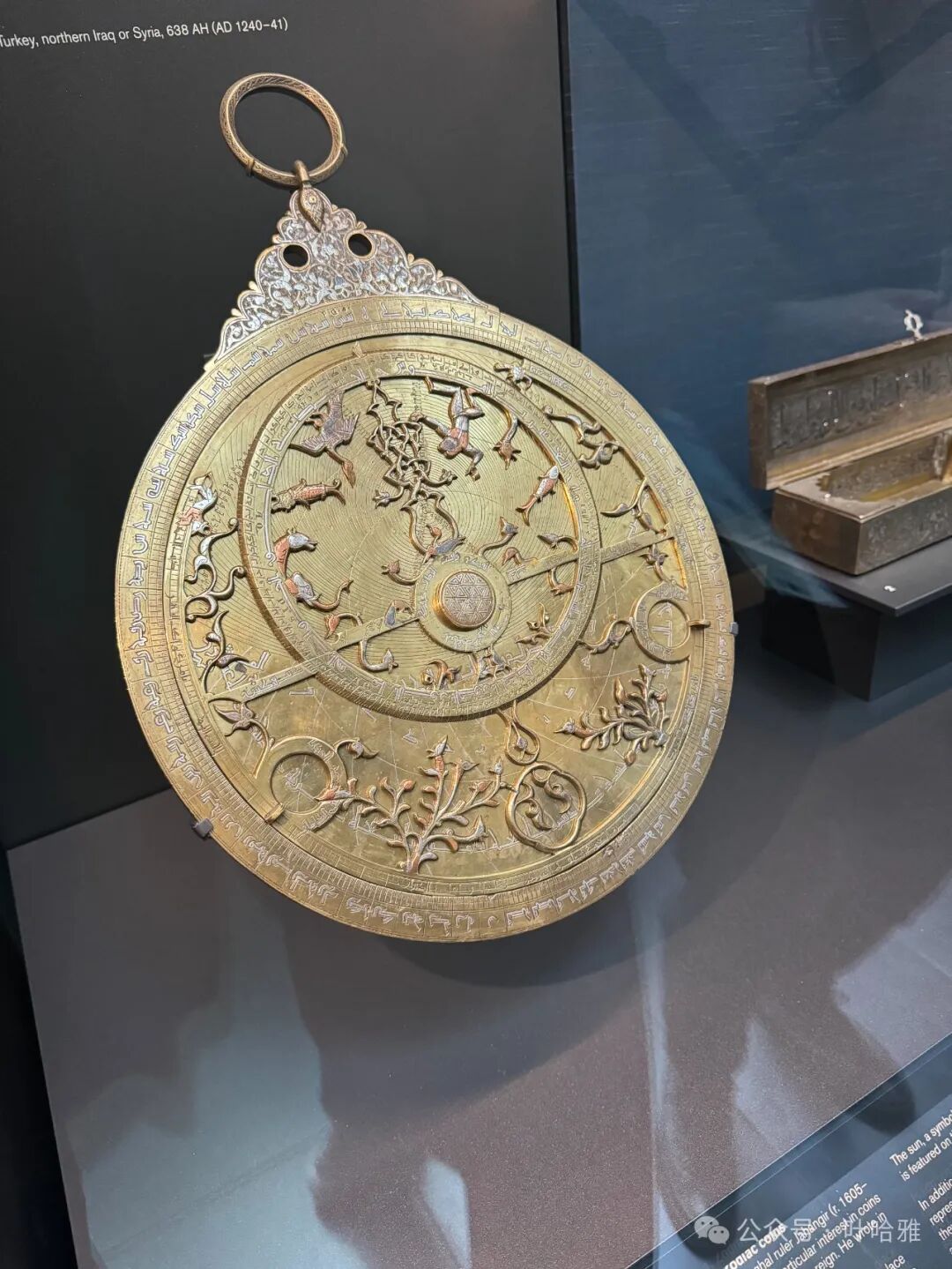
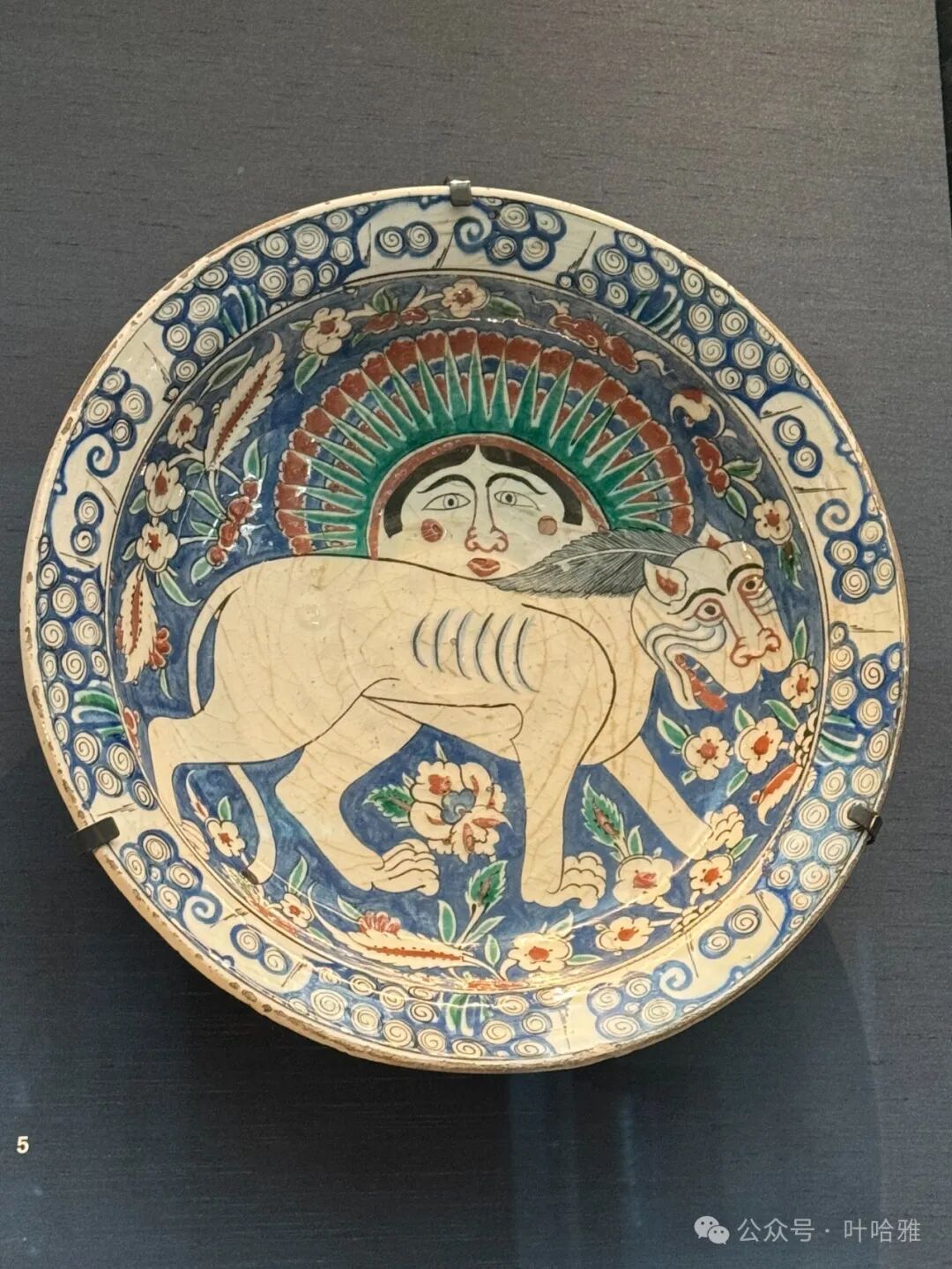
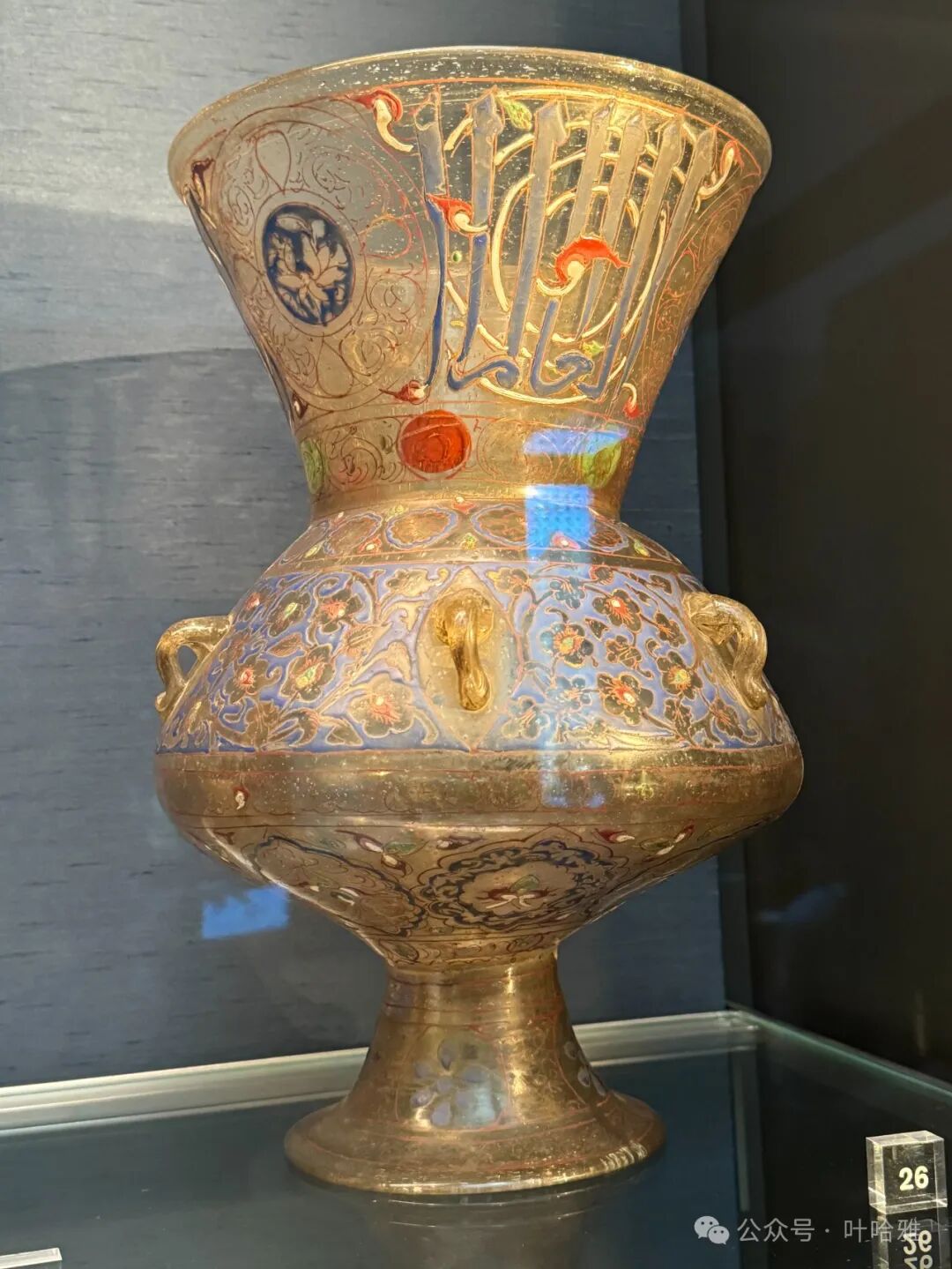
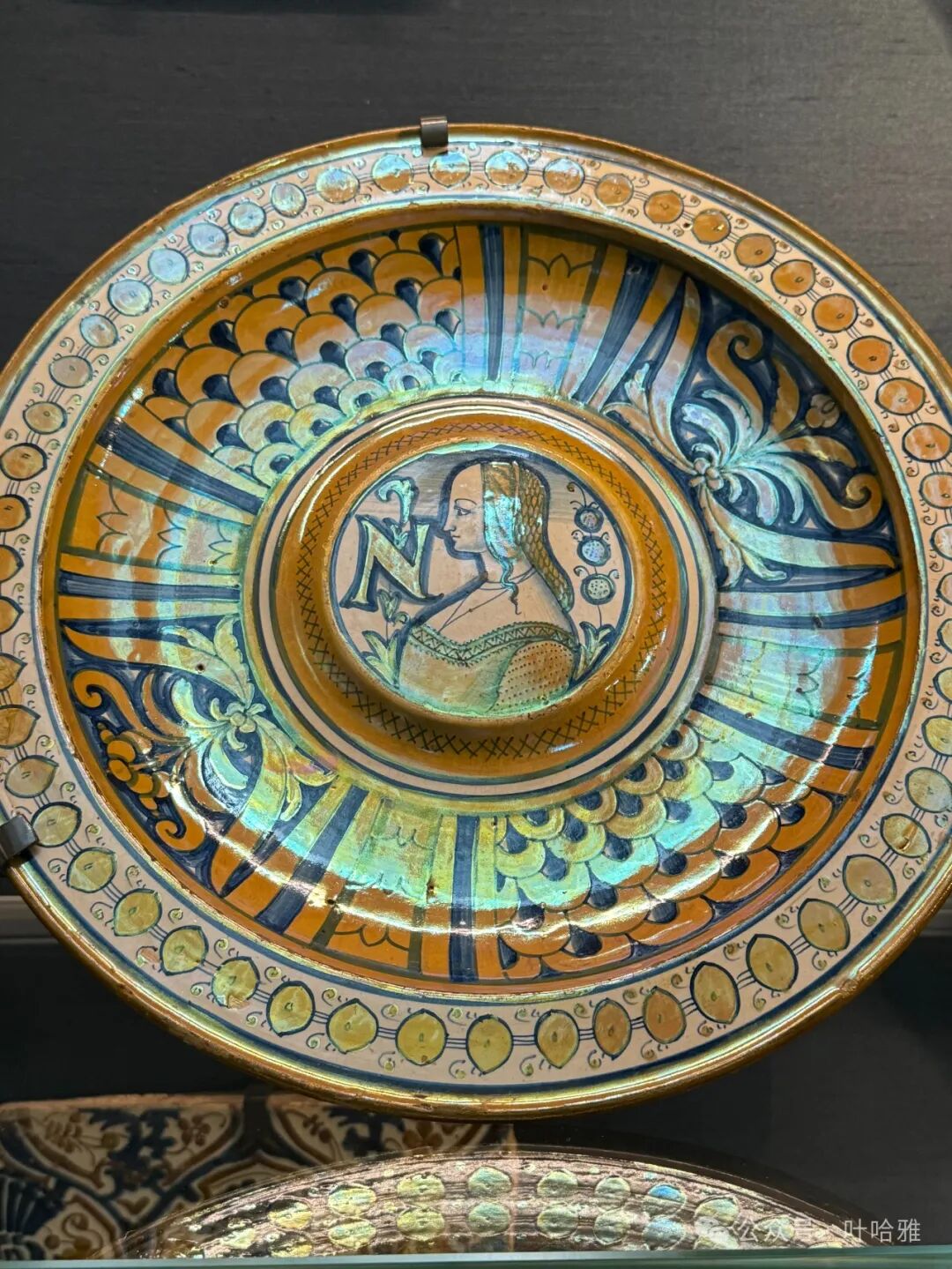
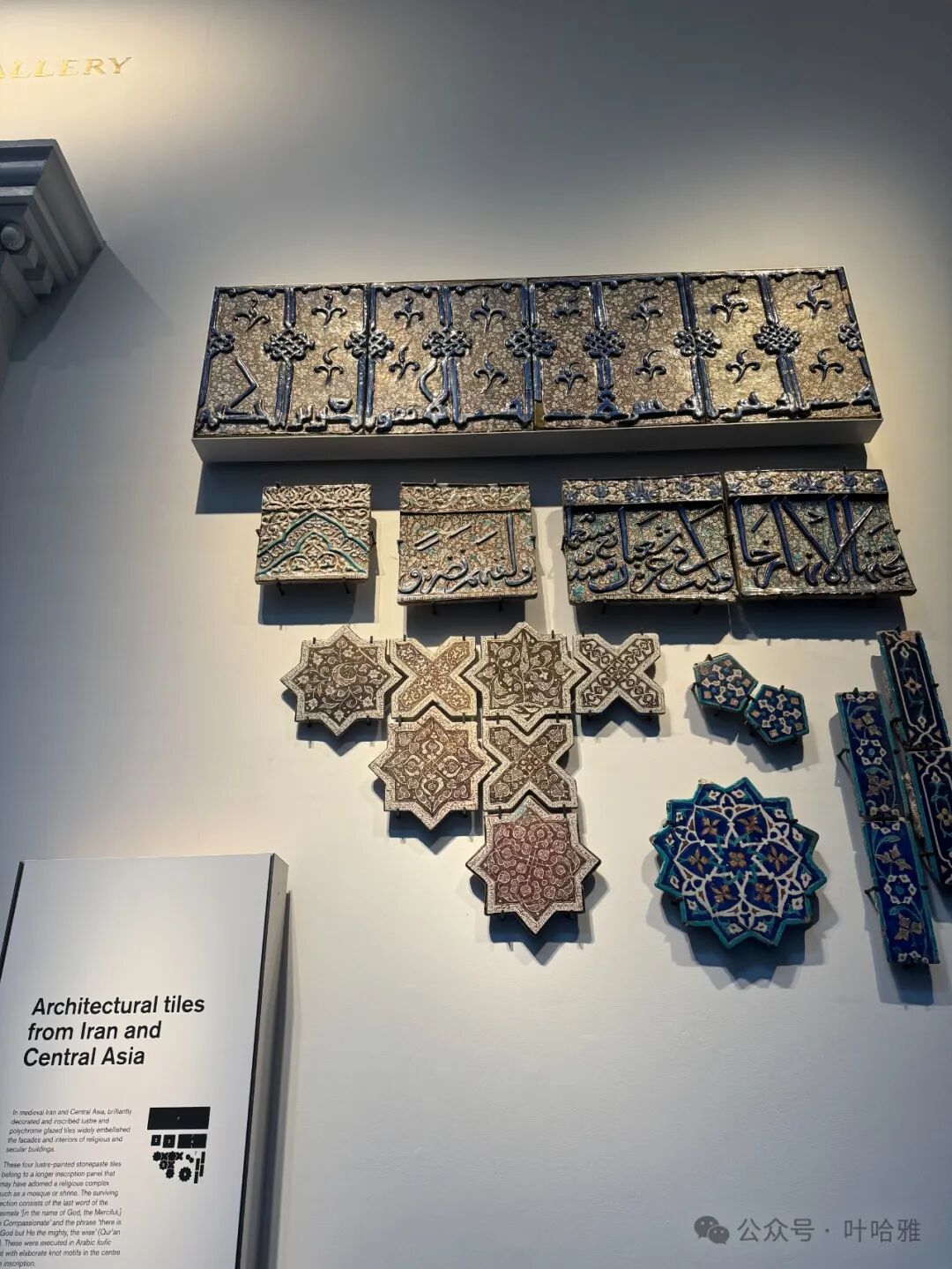
Regarding building materials from Iran and Central Asia, ornate glazed tiles were widely used in religious buildings and homes. These bricks may have come from a mosque and are inscribed in Arabic with 'In the name of Allah, the Most Gracious' and 'There is no god but Allah, He is the All-Powerful, the All-Knowing.'
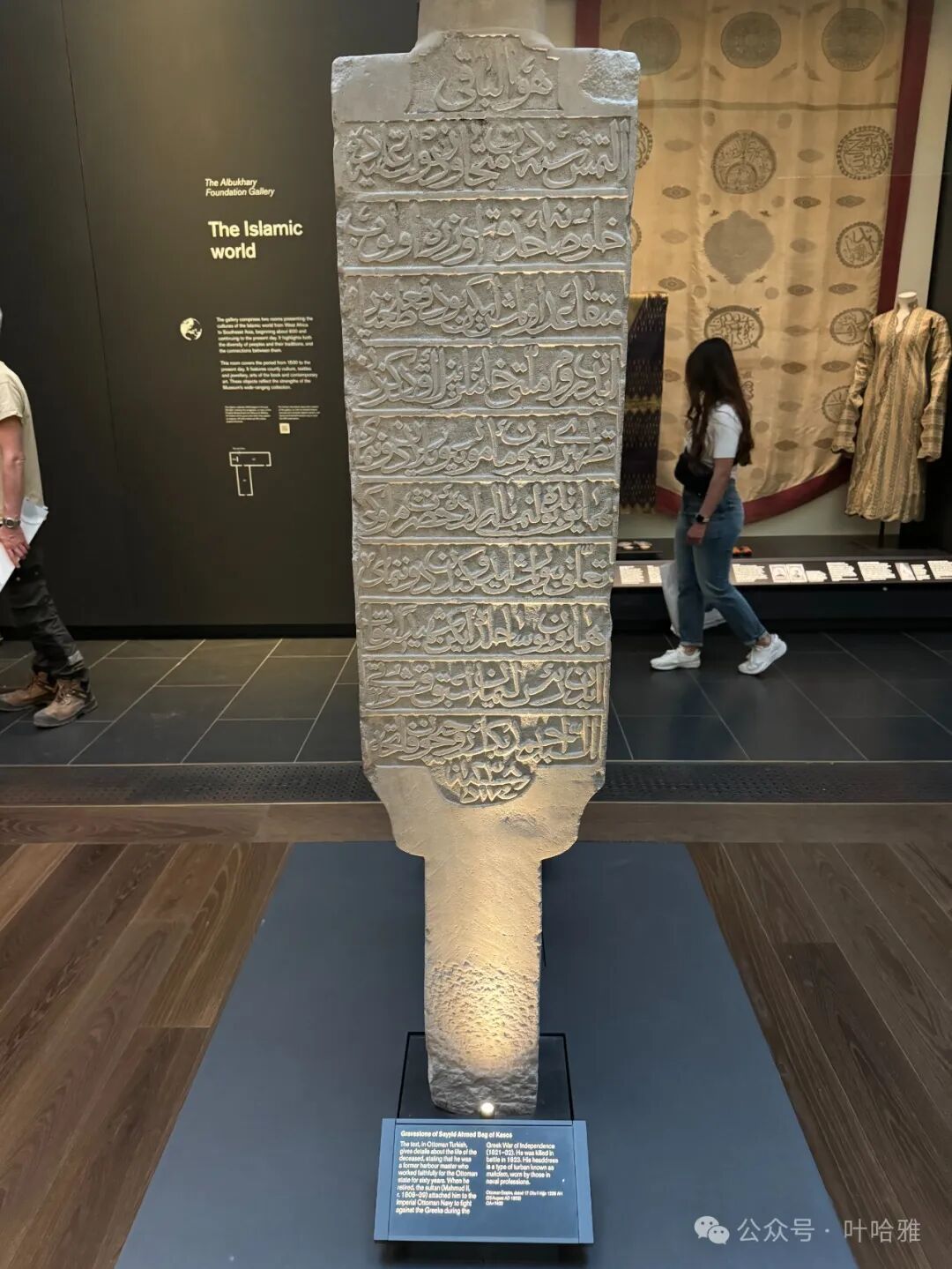
This is a tombstone for an Ottoman naval officer named Seyyid Ahmed Bey Kor Kasos. He served the Ottoman Empire for 60 years and passed away during the Greek War of Independence. The stone records his battles against the Greeks during the Greek War of Independence (1821-1832).
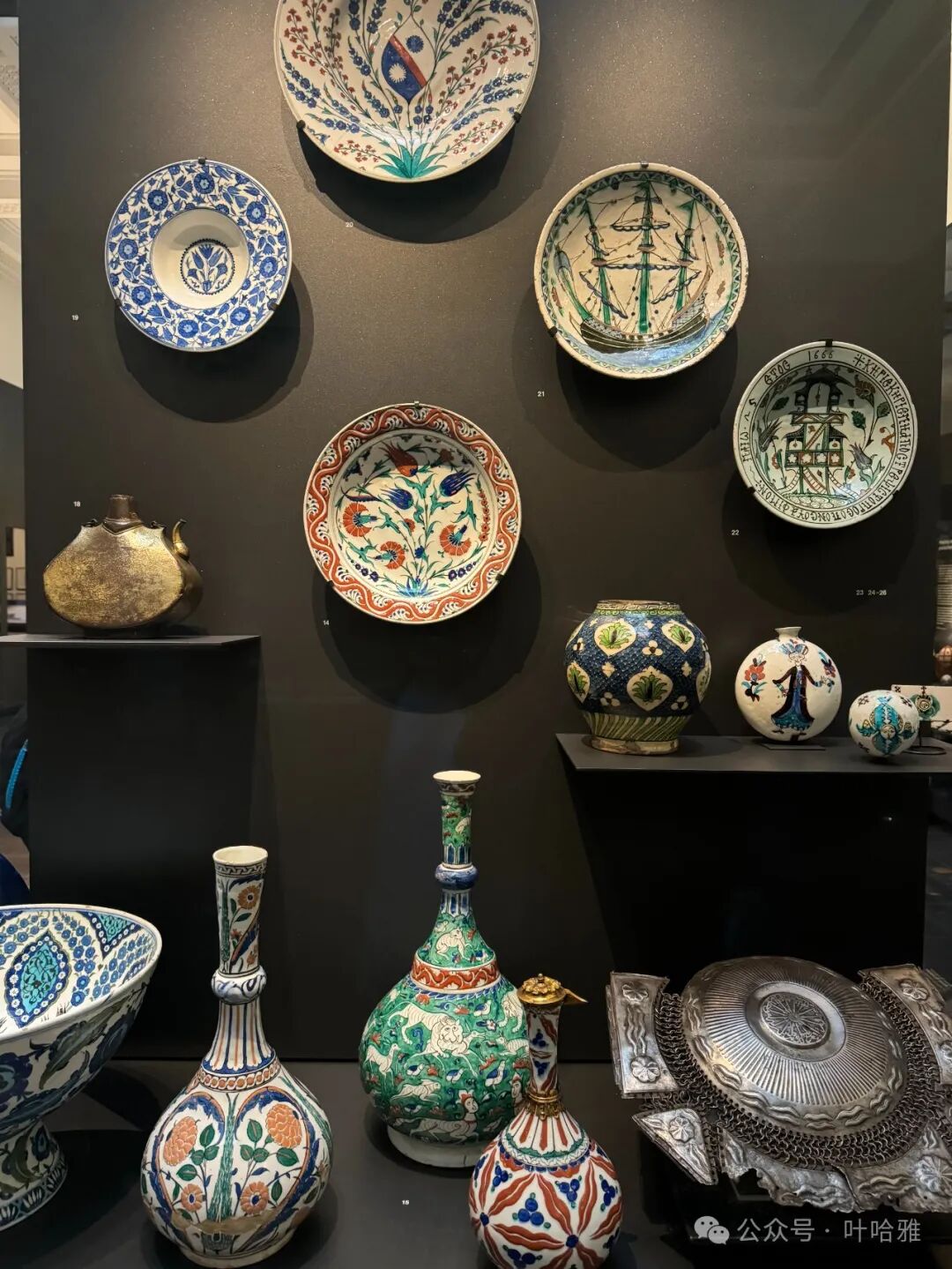
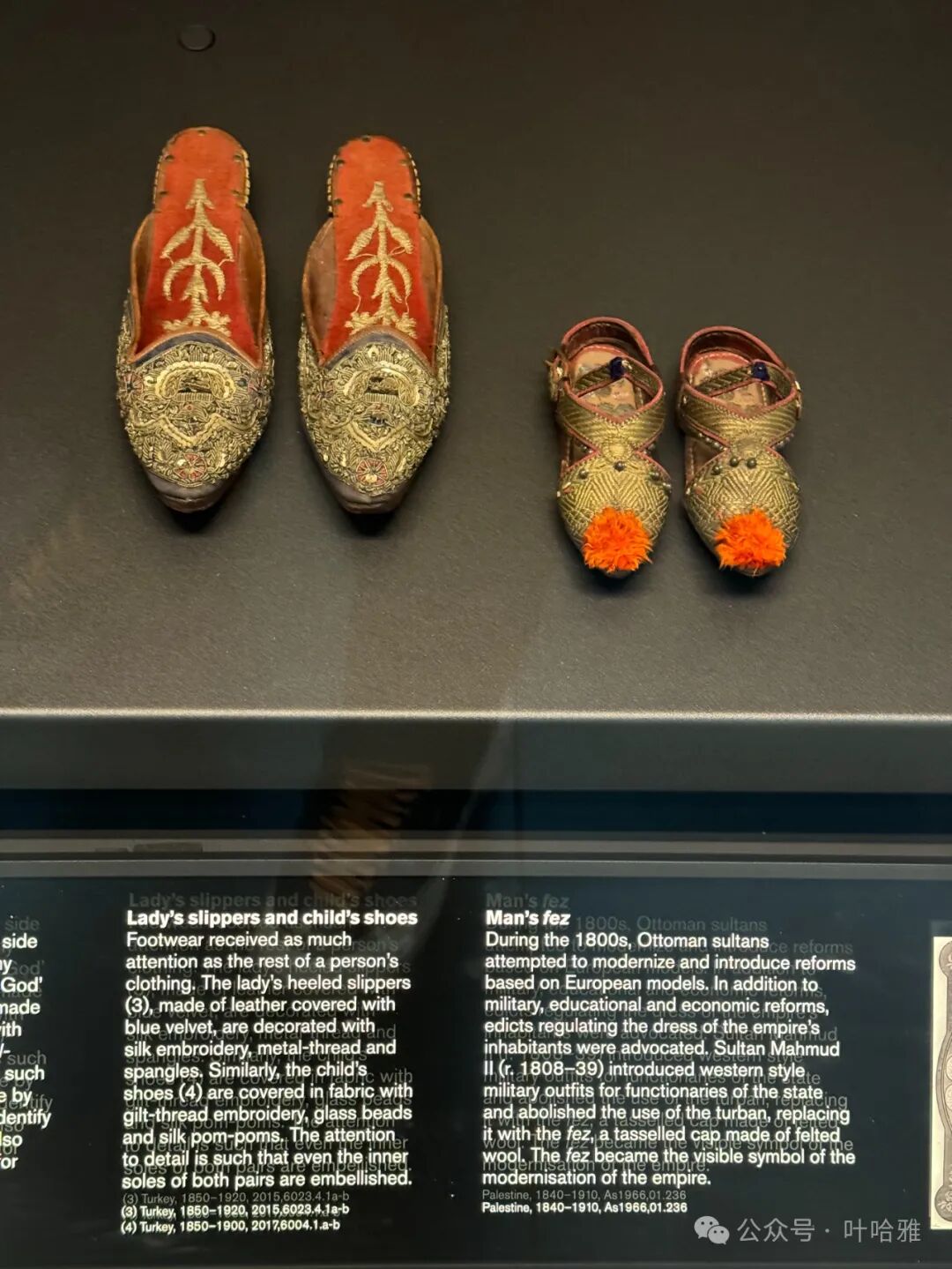
Ottoman Turkish women's slippers and children's slippers.
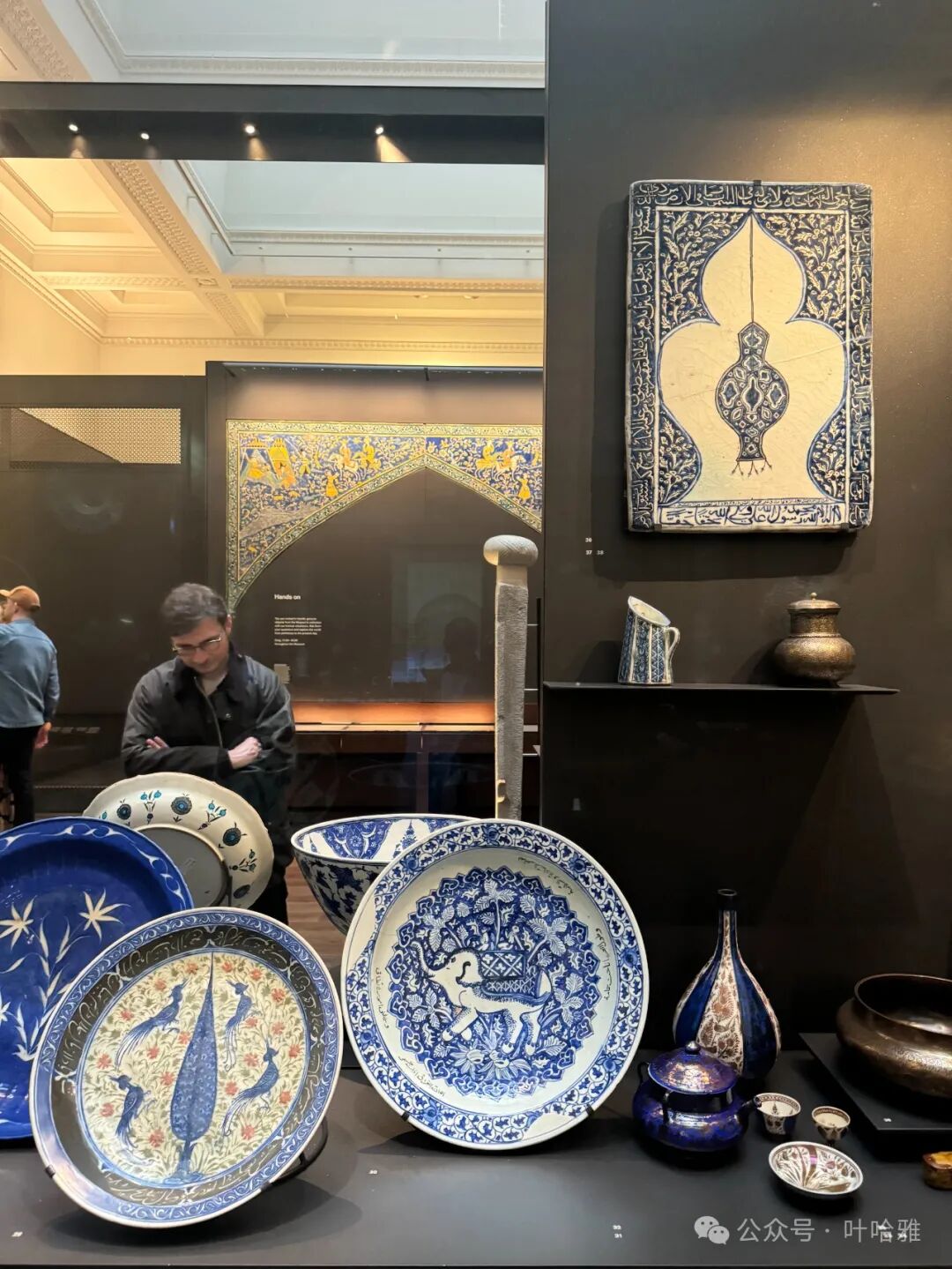
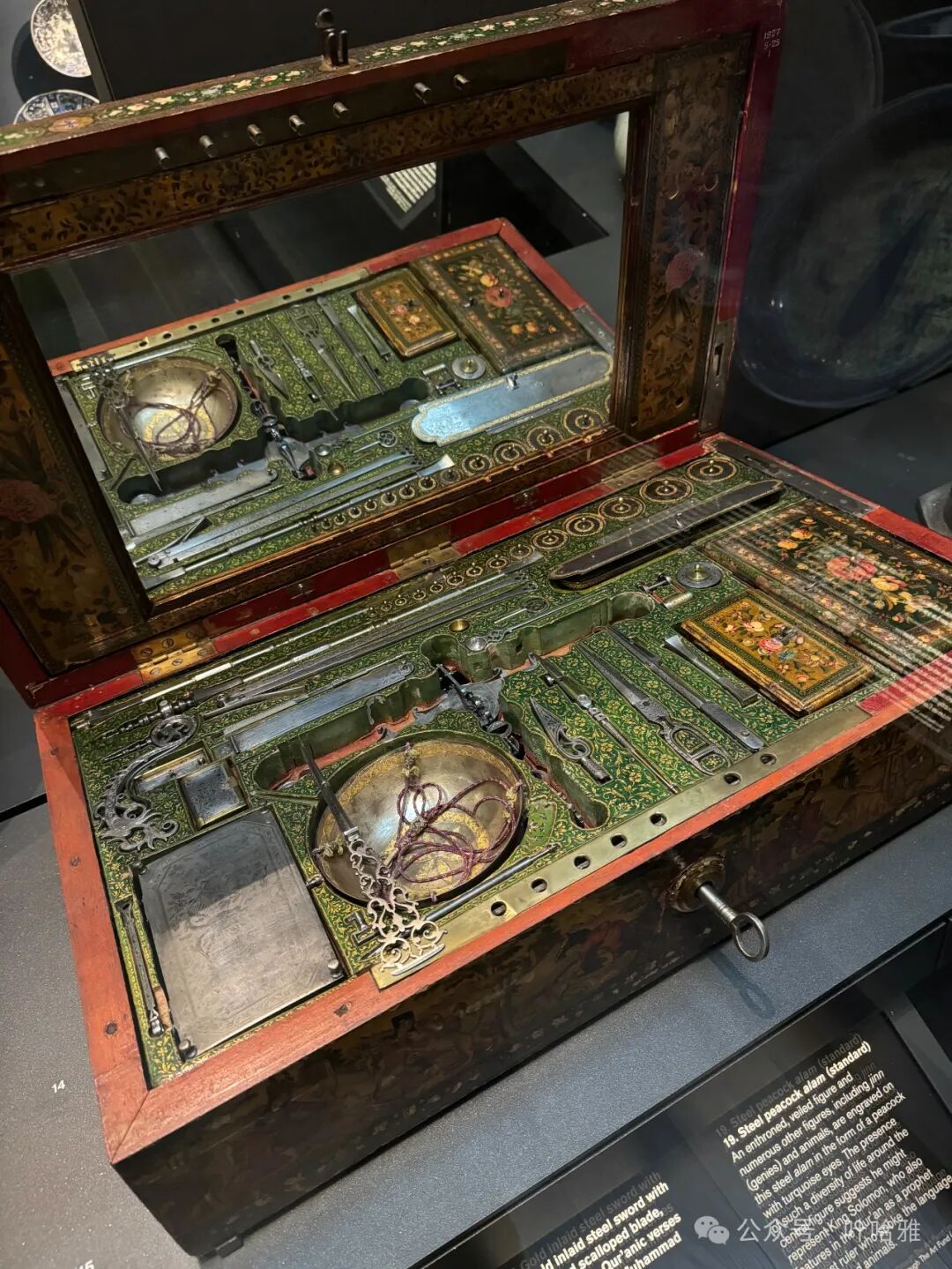
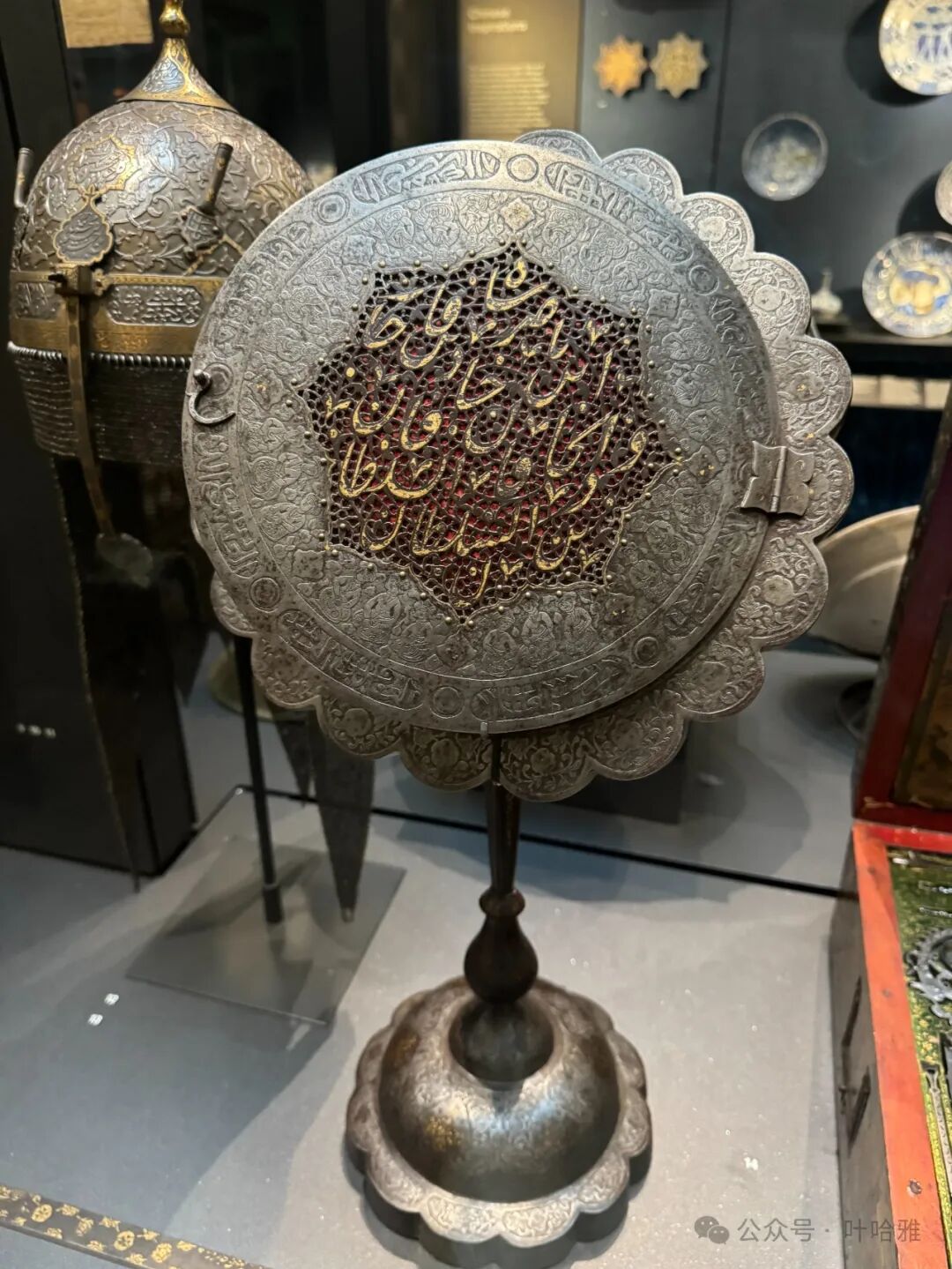
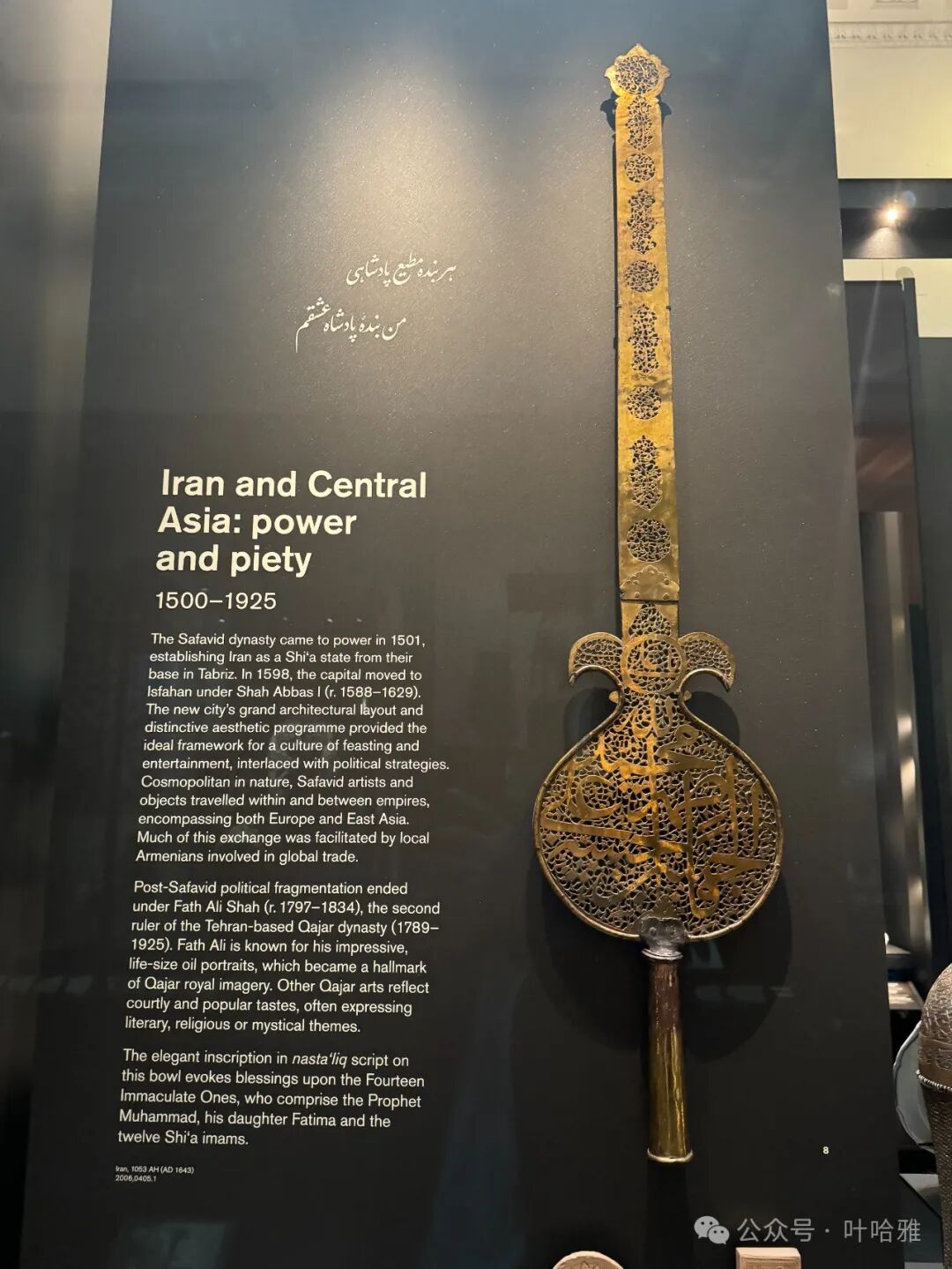
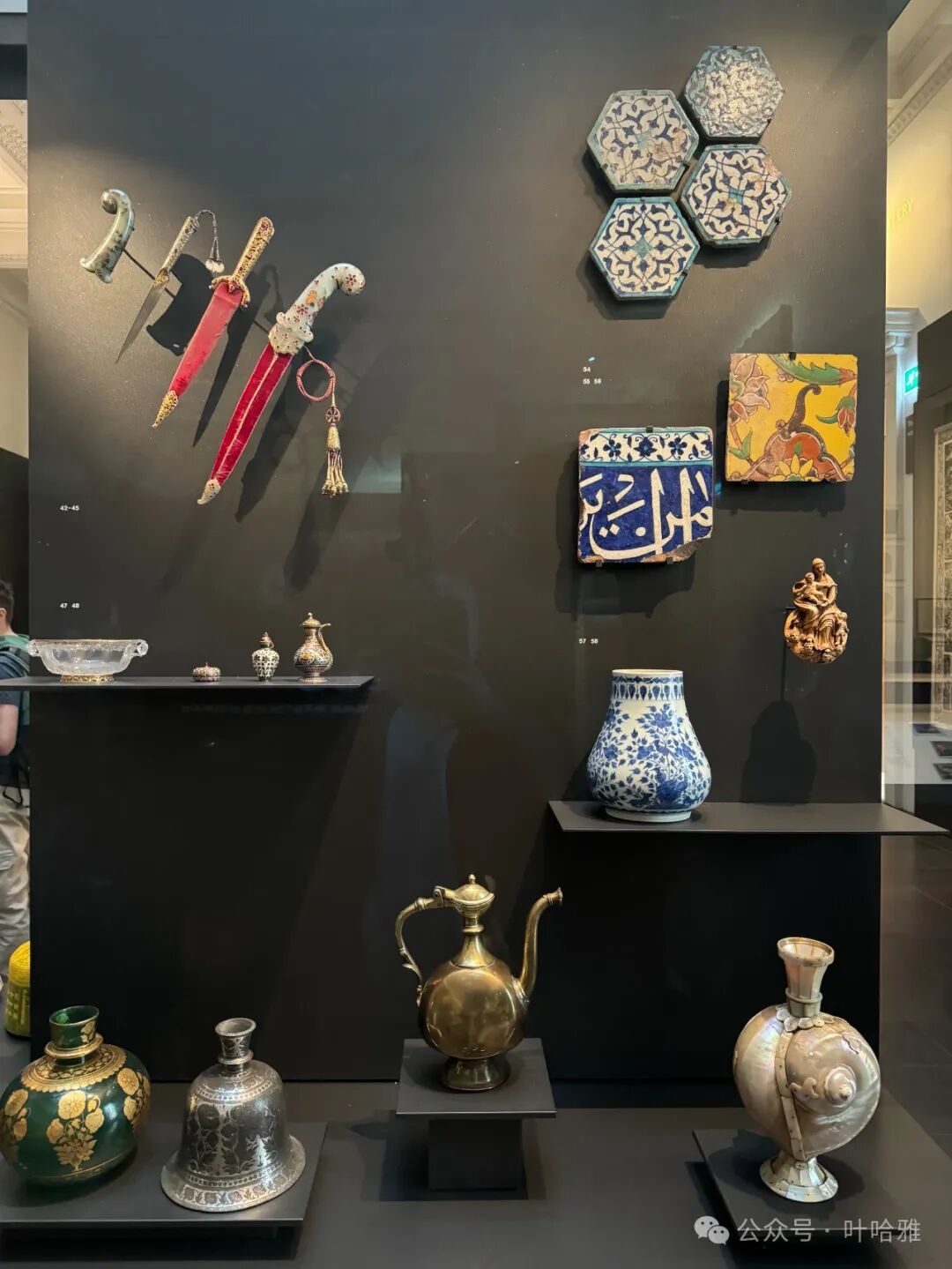
Iran and Central Asia.
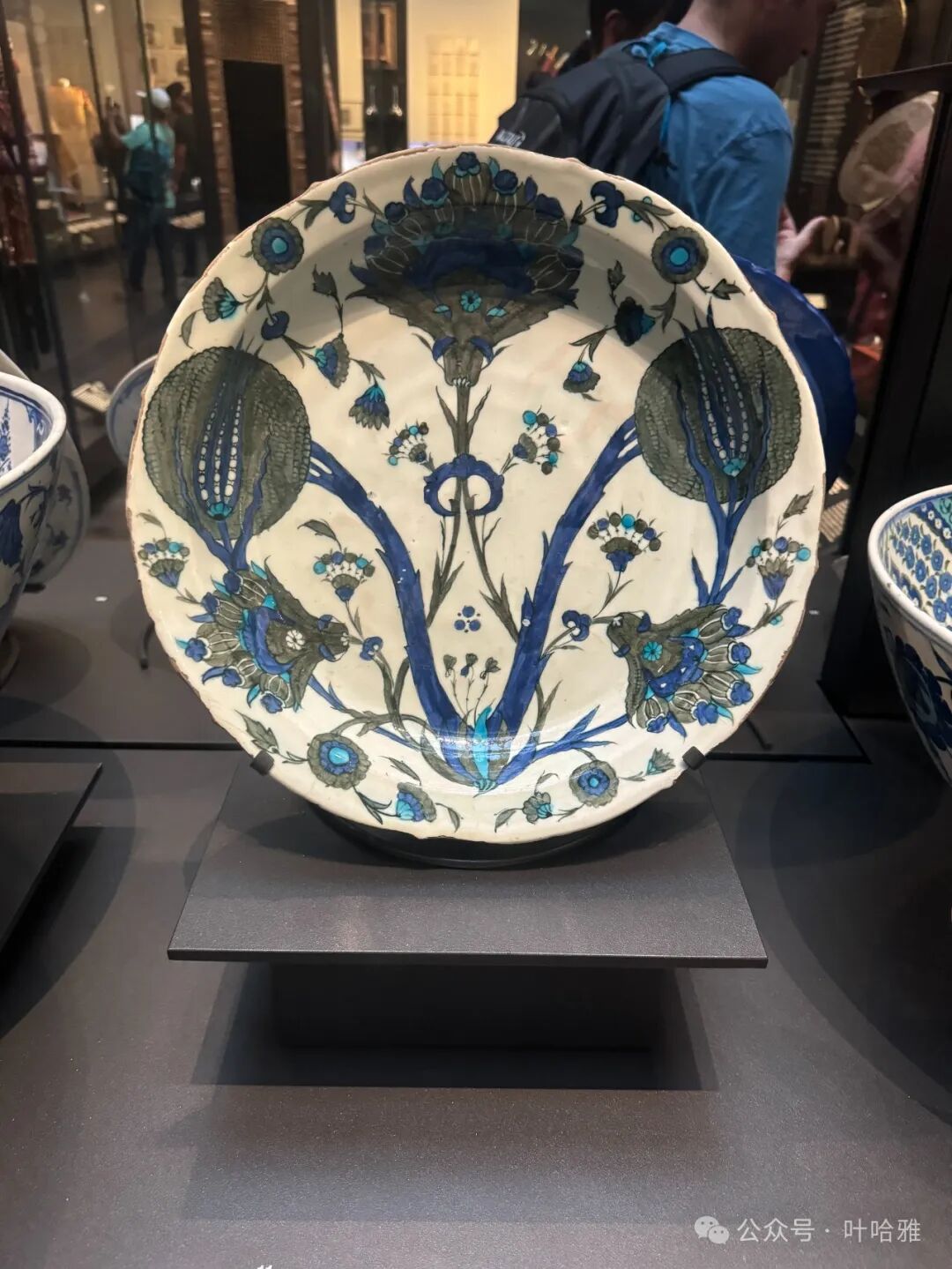
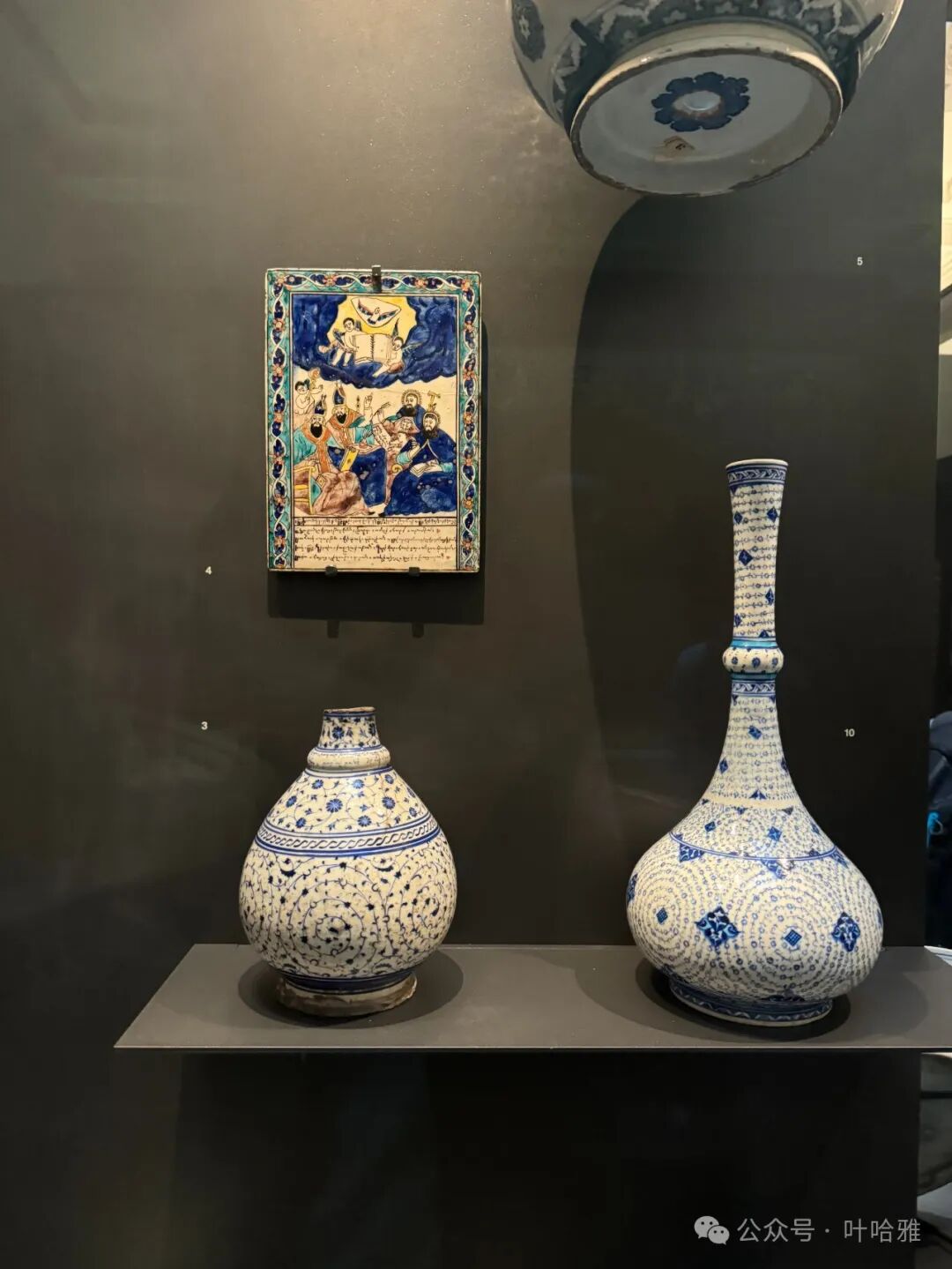
The Safavid dynasty took power in 1501 and established the first Shia state in Tabriz. In 1598, under the rule of Shah Abbas I, the capital moved to Isfahan. Safavid art became popular within the empire and spread to Europe and East Asia. Armenians involved in global trade helped help this cultural exchange.
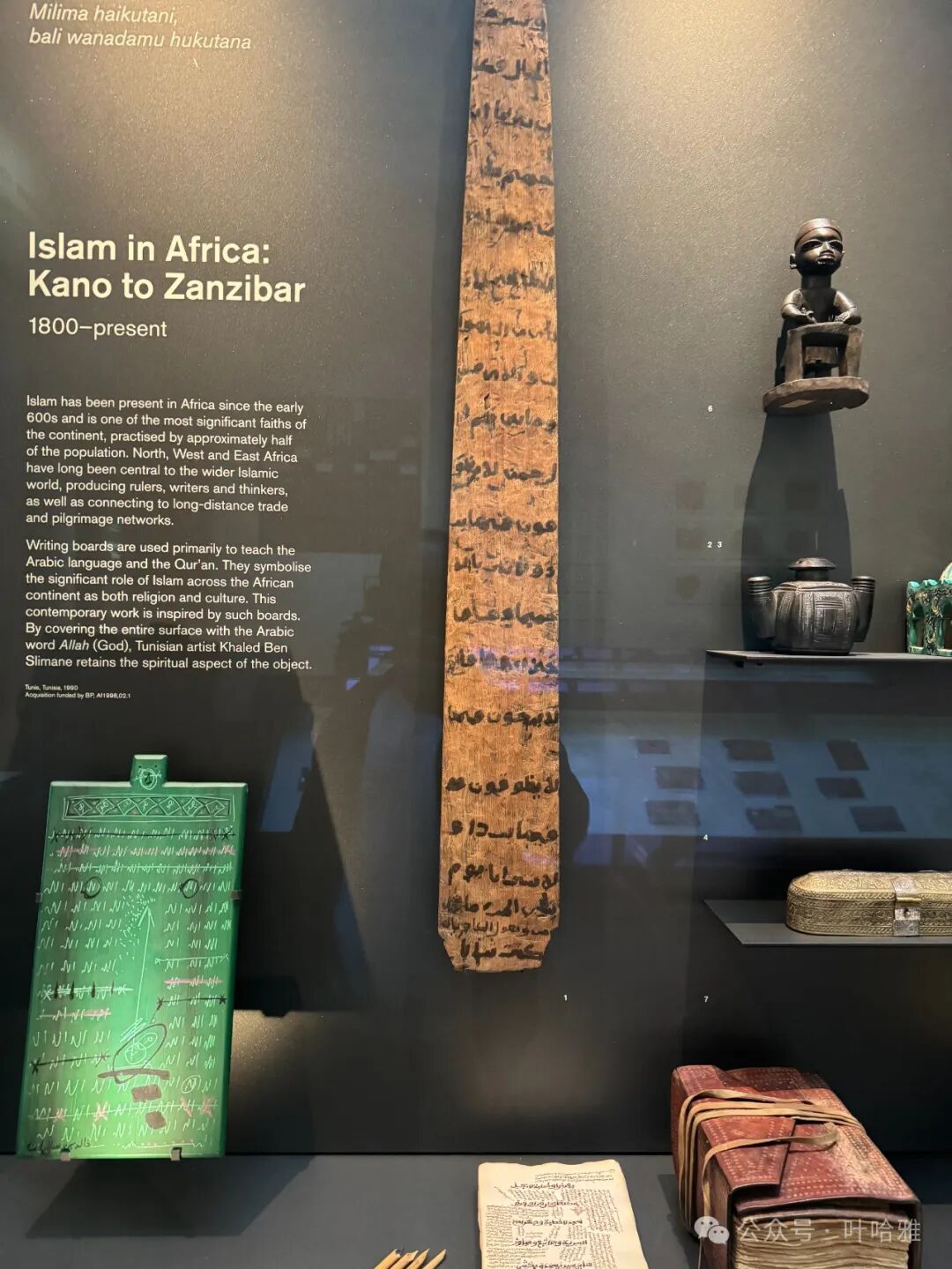
Islam in Africa. Islam has been present in Africa since the early 600s. Today, about half of Africa's population follows Islam. North, West, and East Africa have long been centers of the wider Islamic world. The writing board in the image above was mainly used to teach Arabic and the Quran.
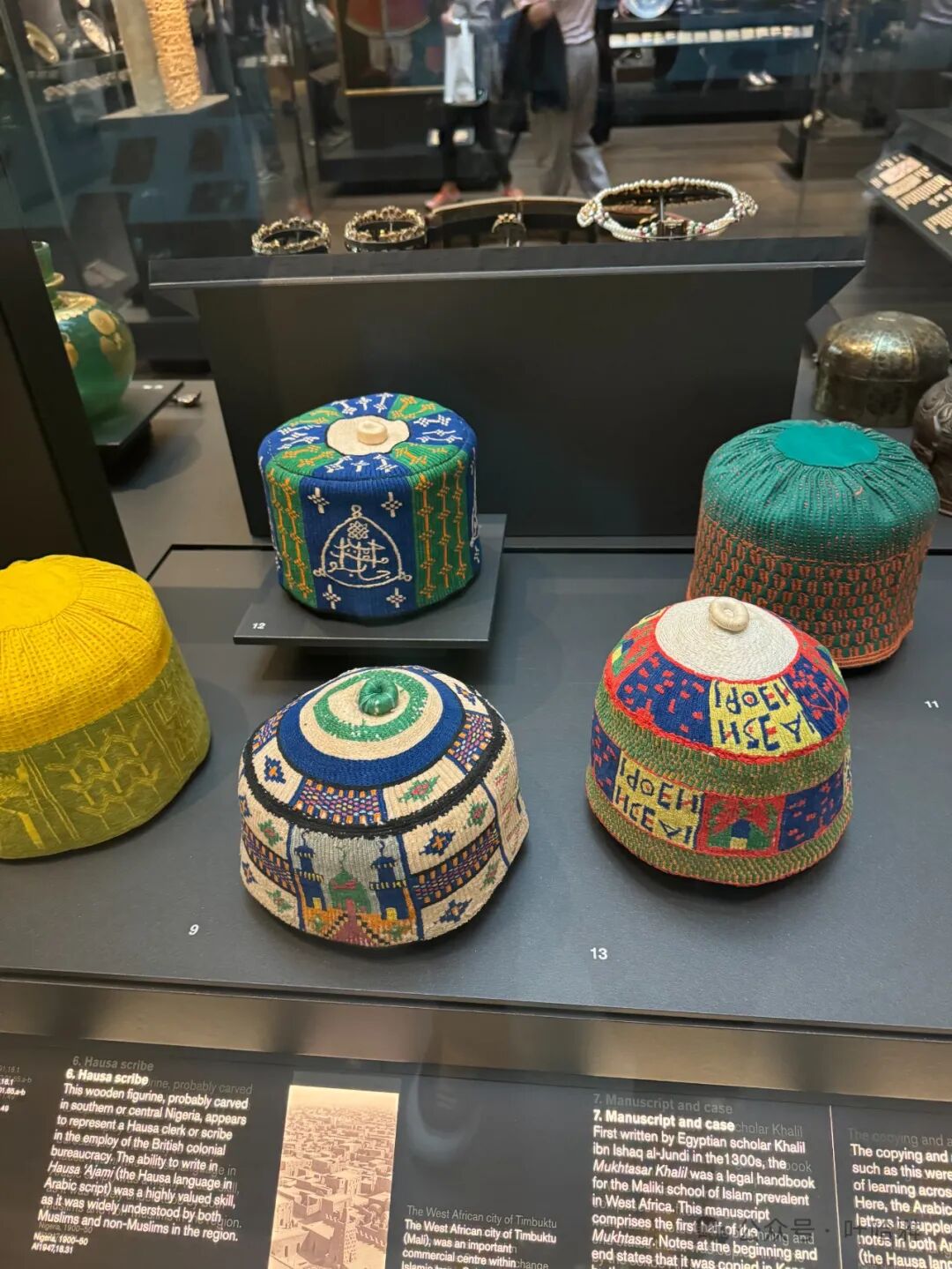
A hat worn by an official from southern or central Nigeria. They may have been Hausa clerks employed by British colonial institutions.
China Gallery.
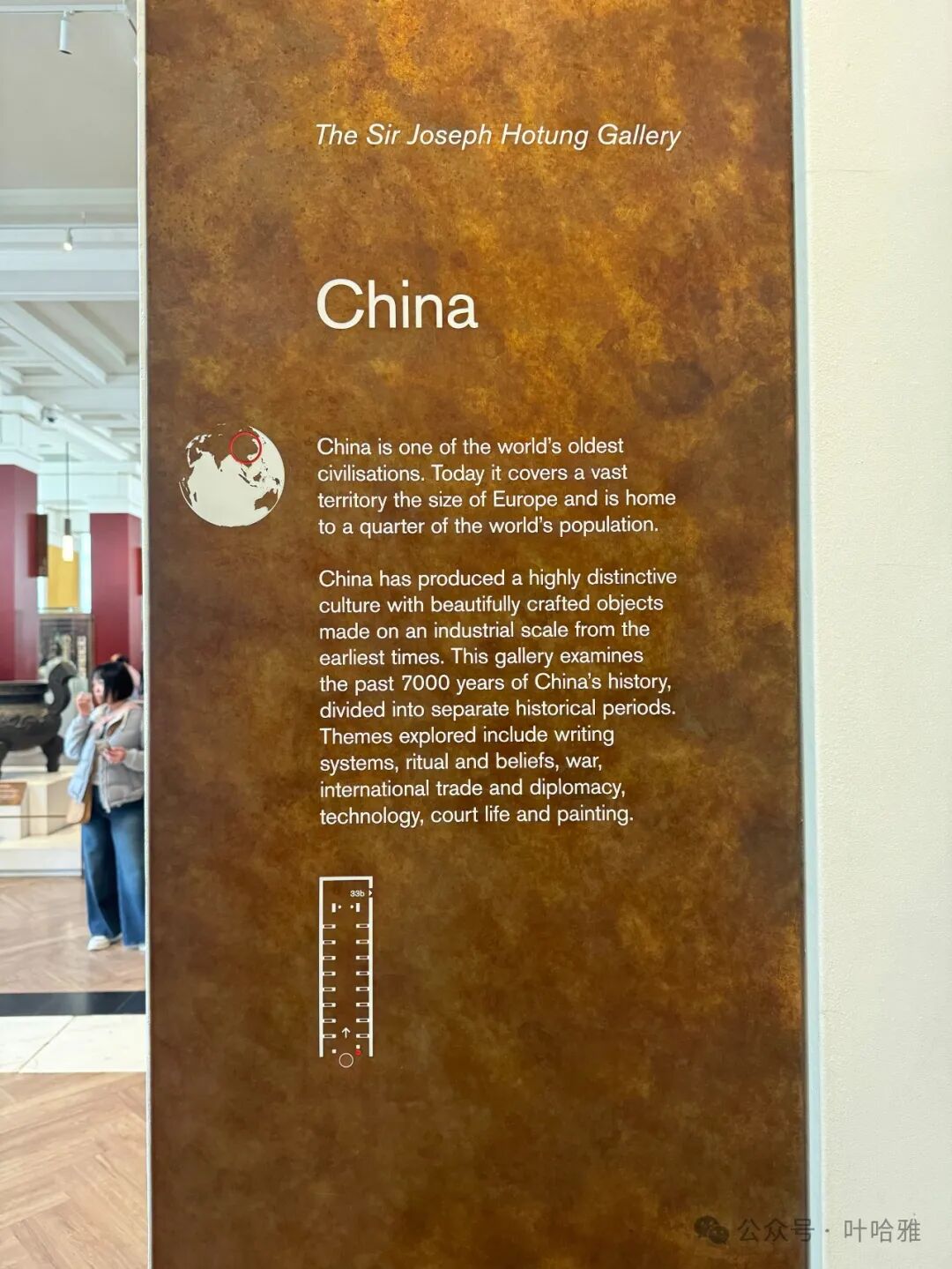
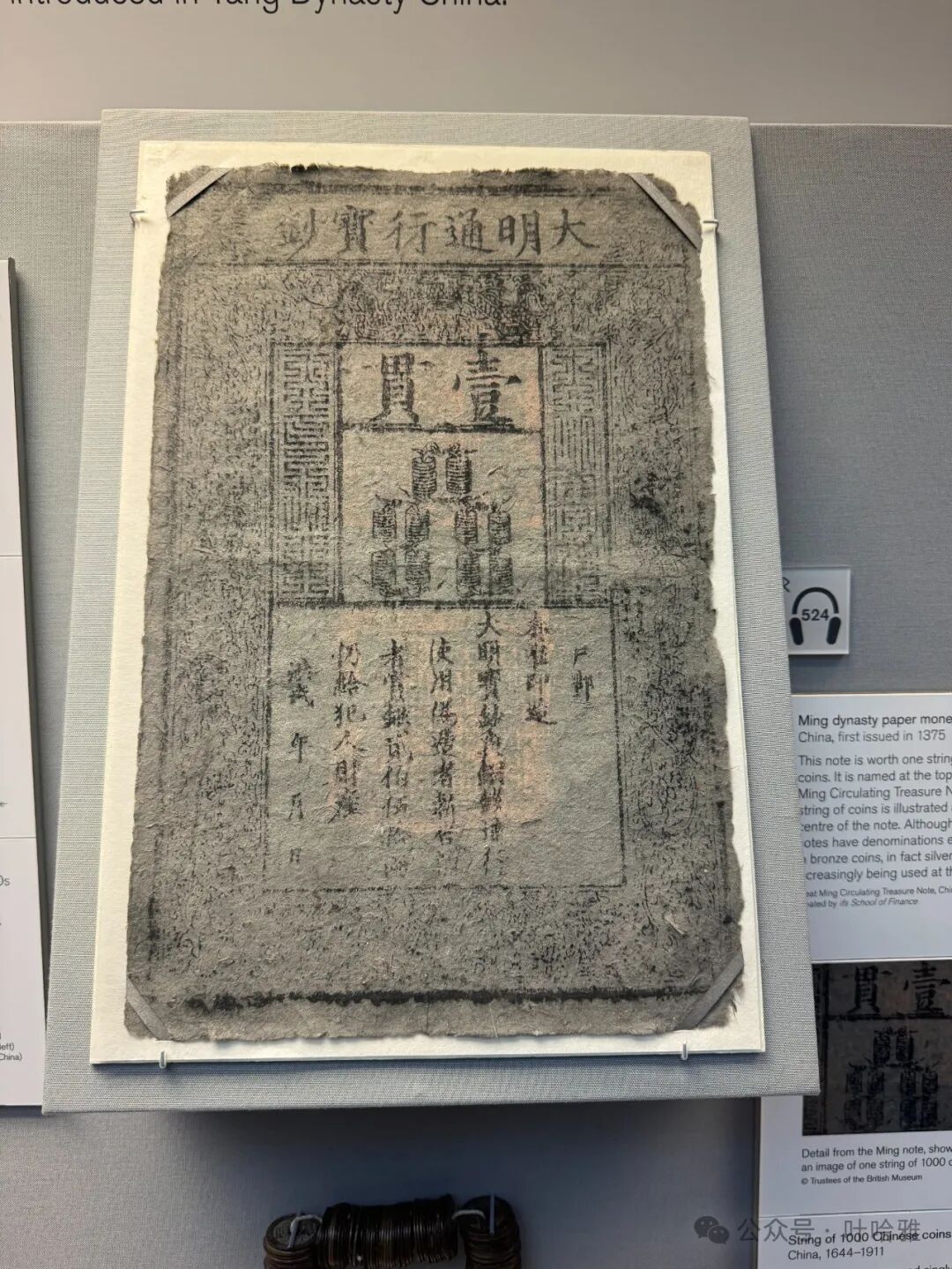
The Chinese artifact gallery at the British Museum is quite large. It is divided into an artifact gallery and a jewelry gallery. The people who spend the most time here are Chinese. The British Museum holds about 23,000 Chinese artifacts, ranging from Shang and Zhou dynasty bronzes to Tang and Song dynasty ceramics, and gold and jade items from the Ming and Qing dynasties. More than 2,000 of these are on long-term display.
Chinese civilization is one of the oldest in the world. Today, China is about the same size as Europe and has one-quarter of the world's population. The China gallery displays 7,000 years of history, divided into different periods.
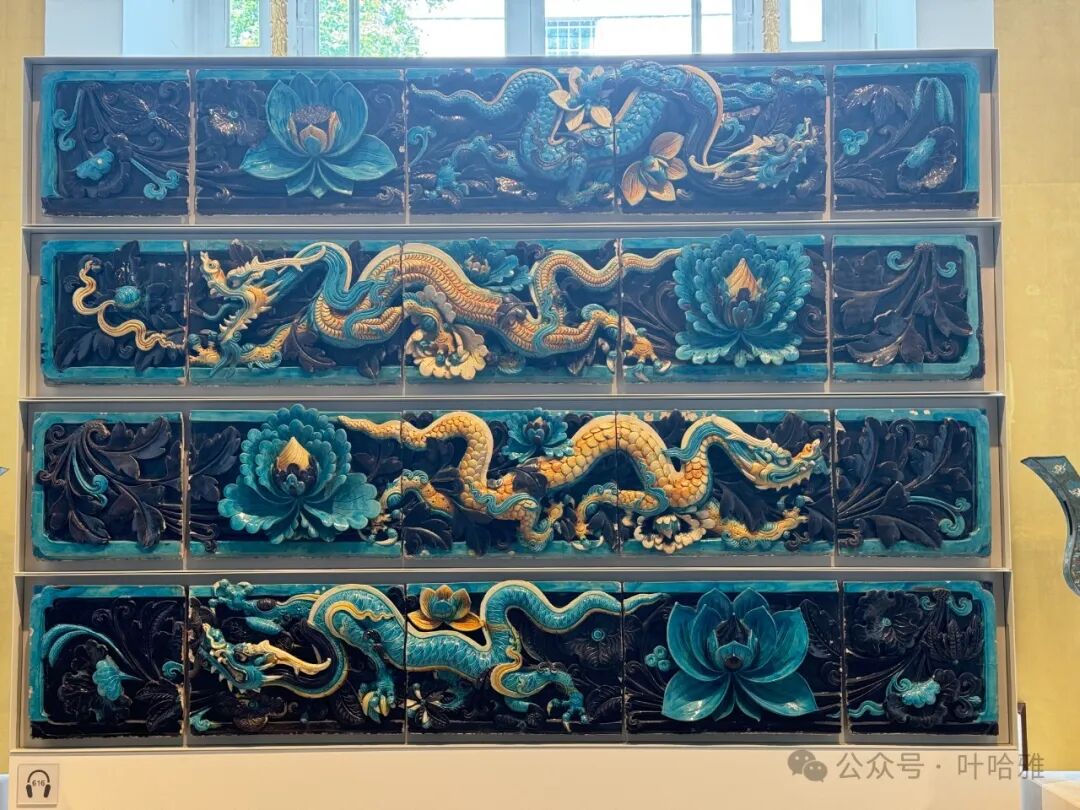
Decorative glazed tile walls on the roof ridges of temples in Shanxi Province.
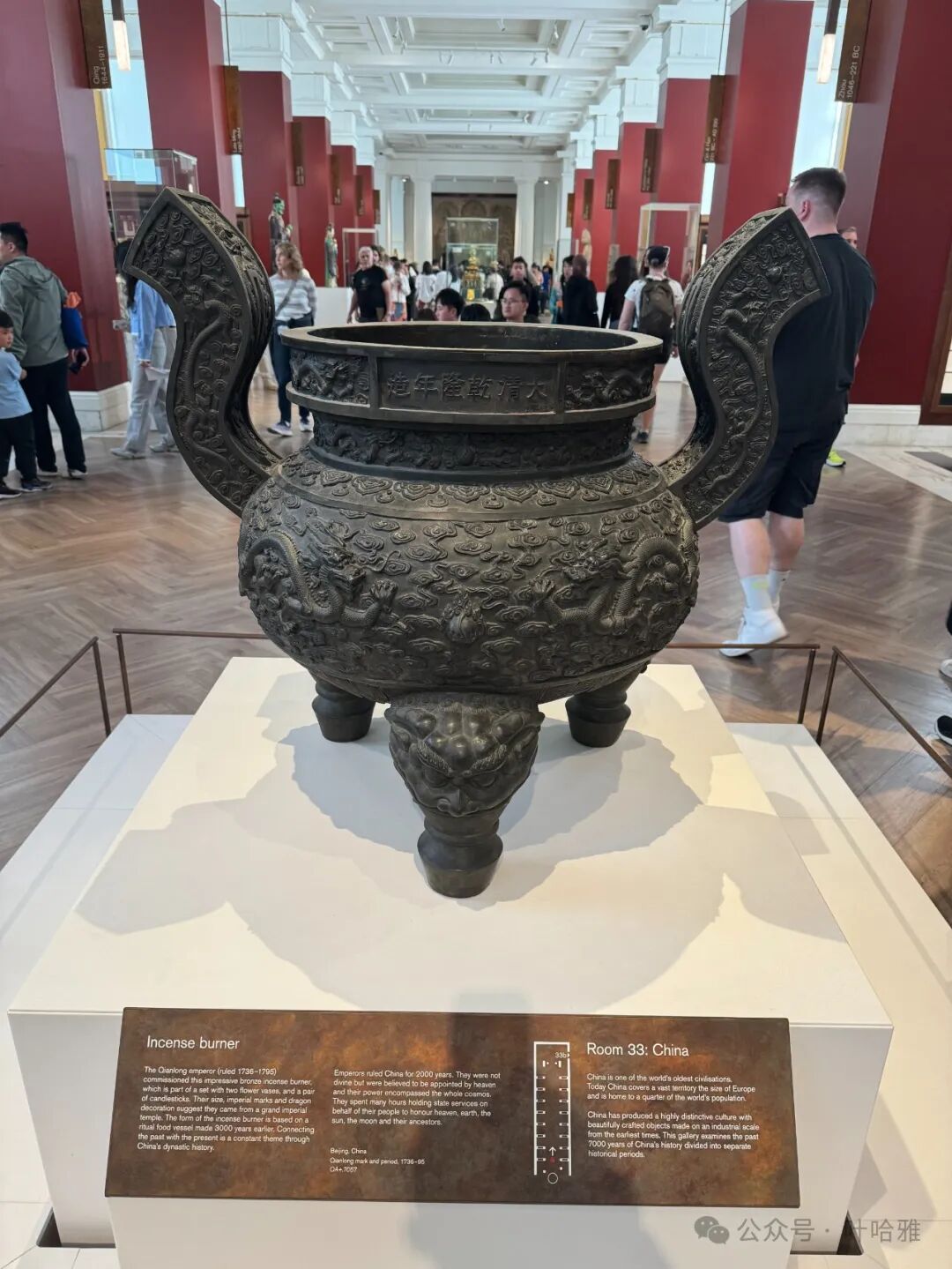
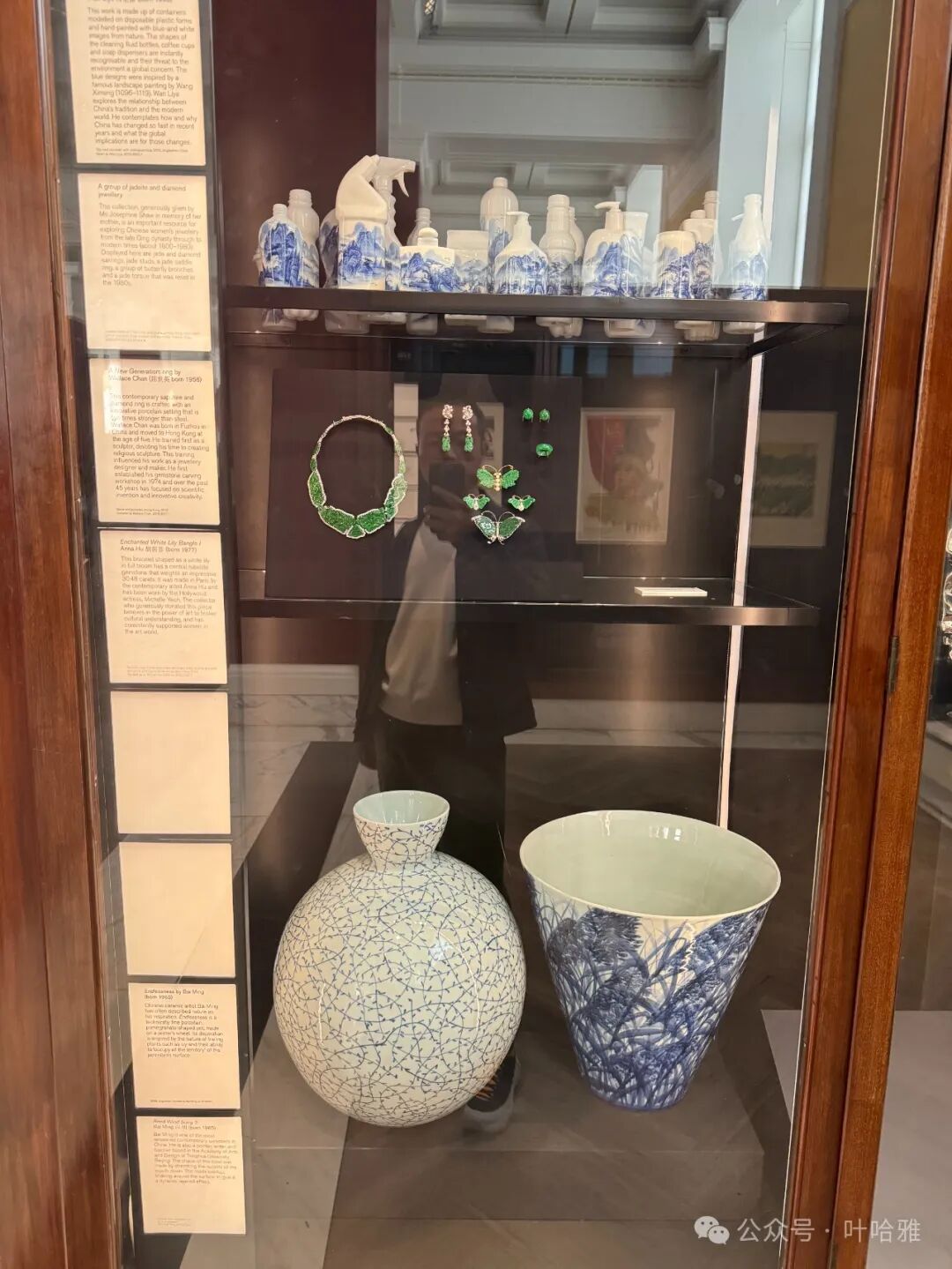
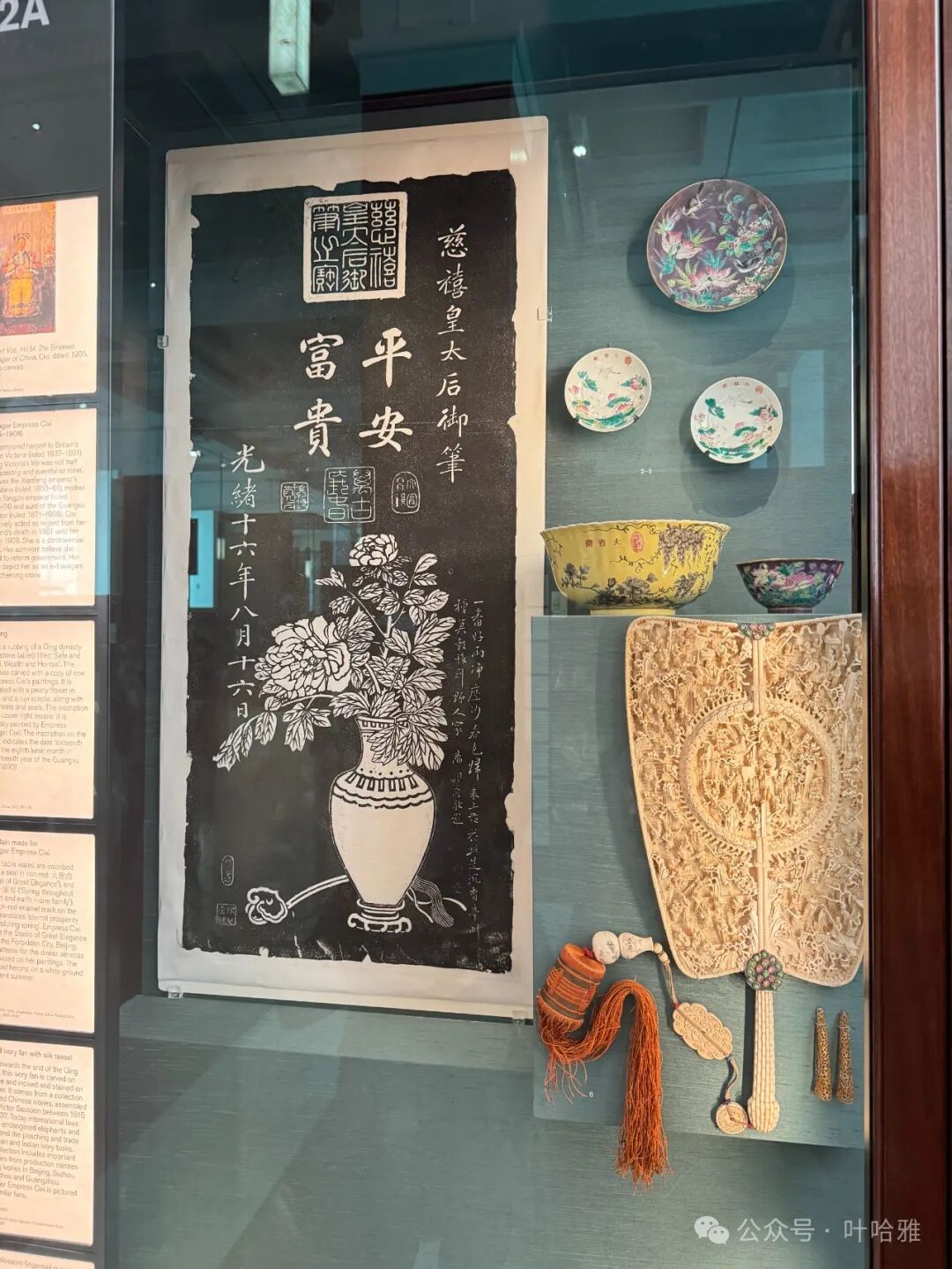
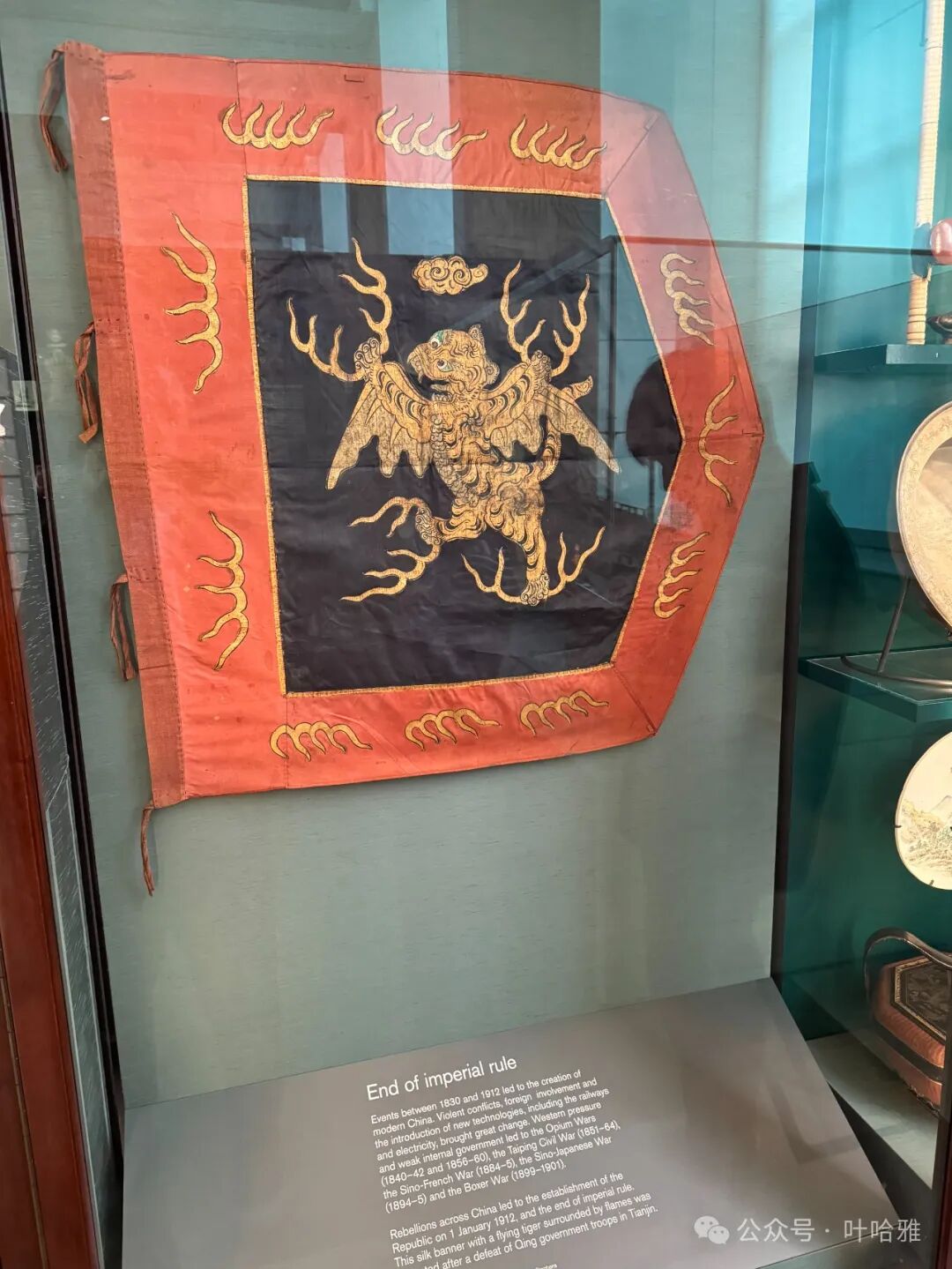
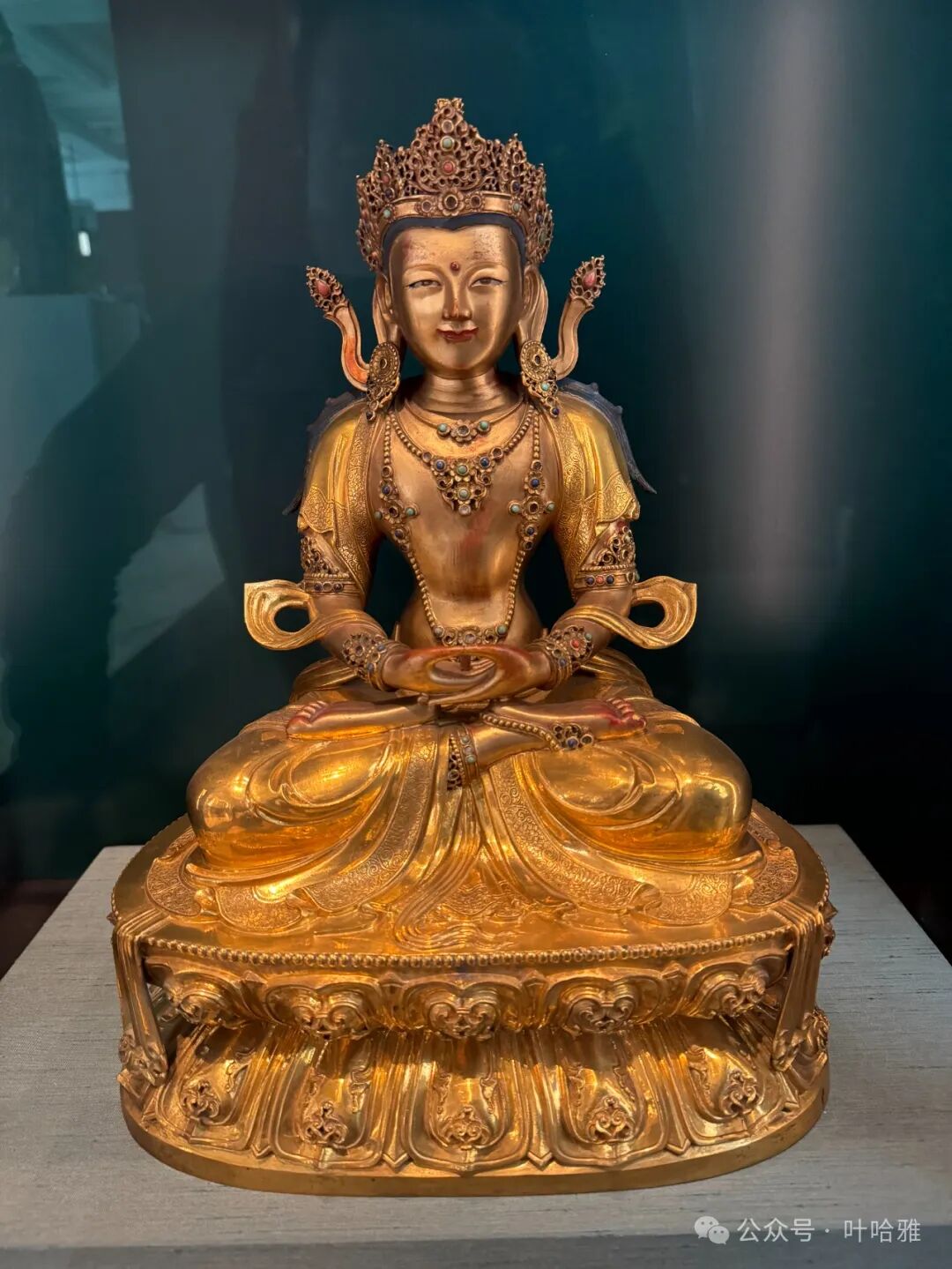
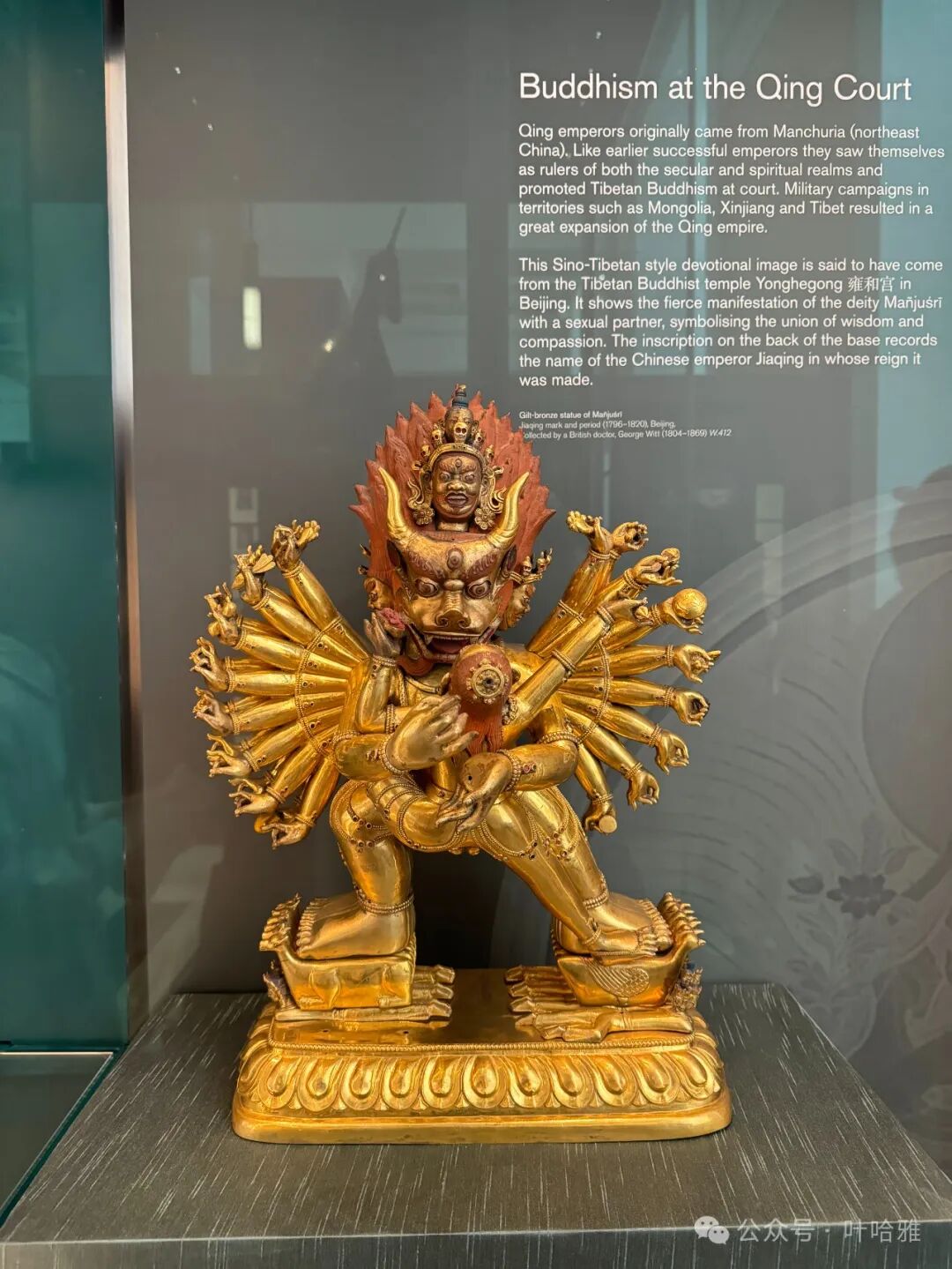
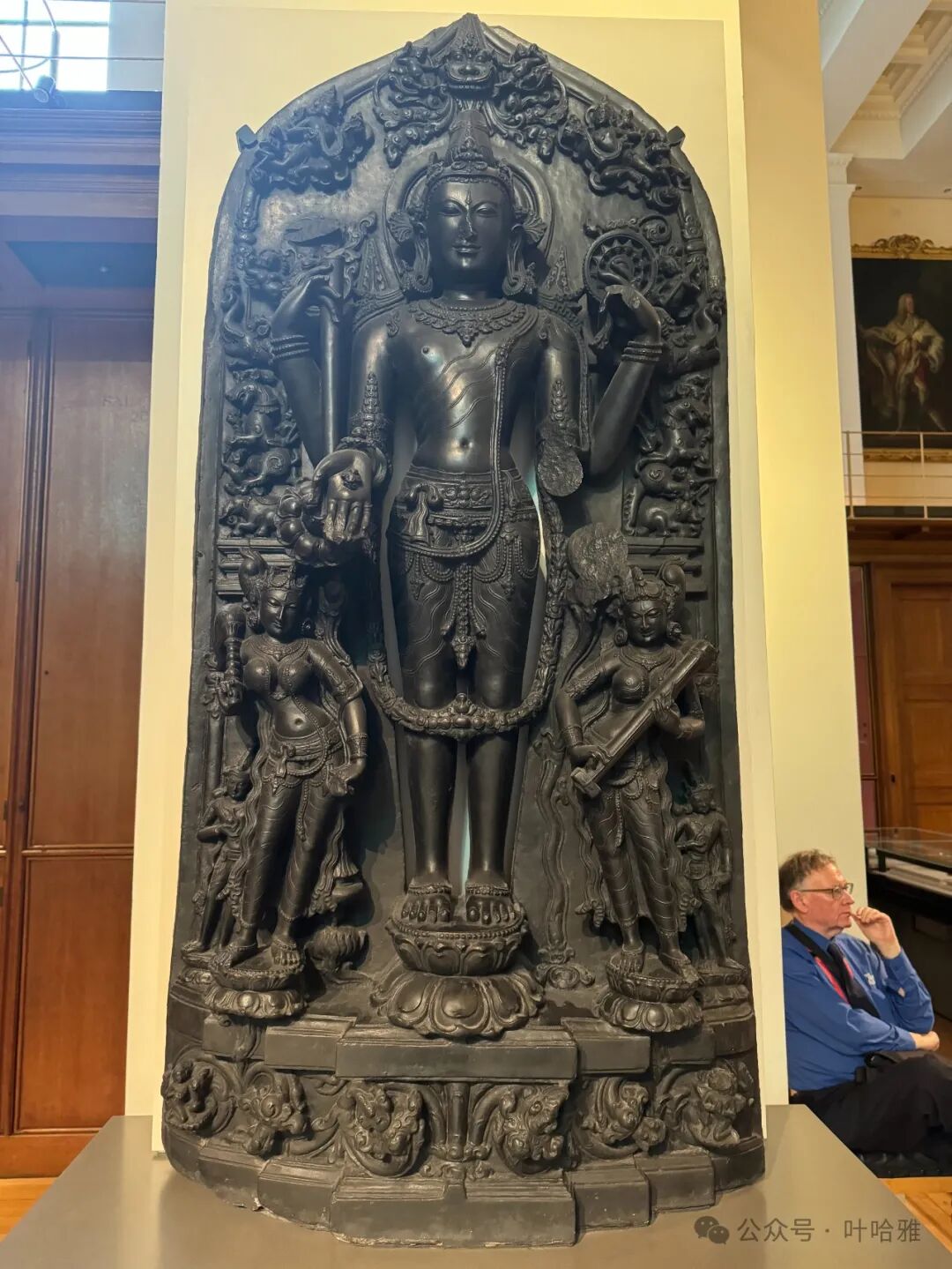
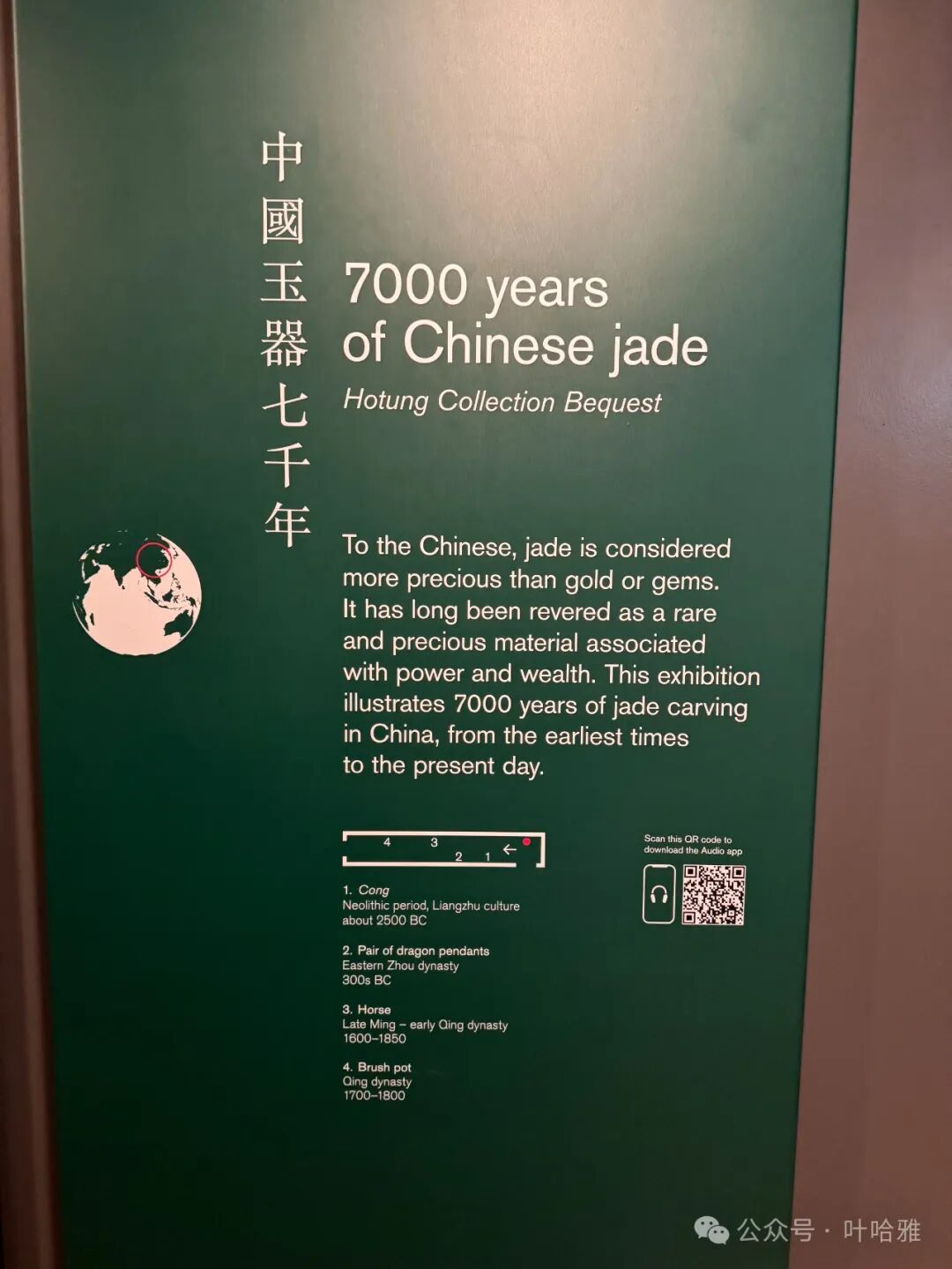
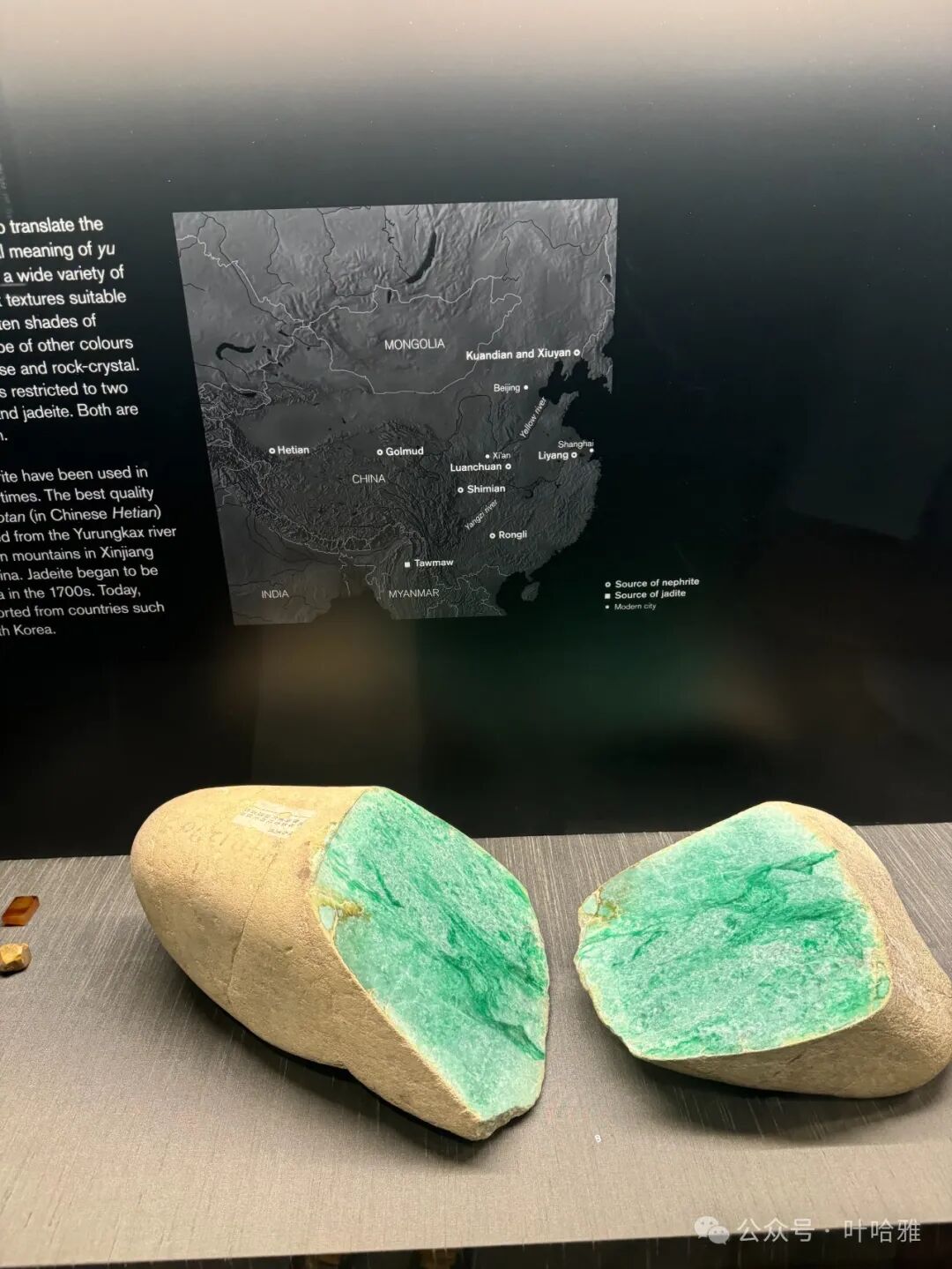
You can find information about the British Museum's collection online, so I did not take photos of every single item. Many people are now calling for the museum to return artifacts to other countries, but whether they can be reclaimed depends on national diplomatic strength.
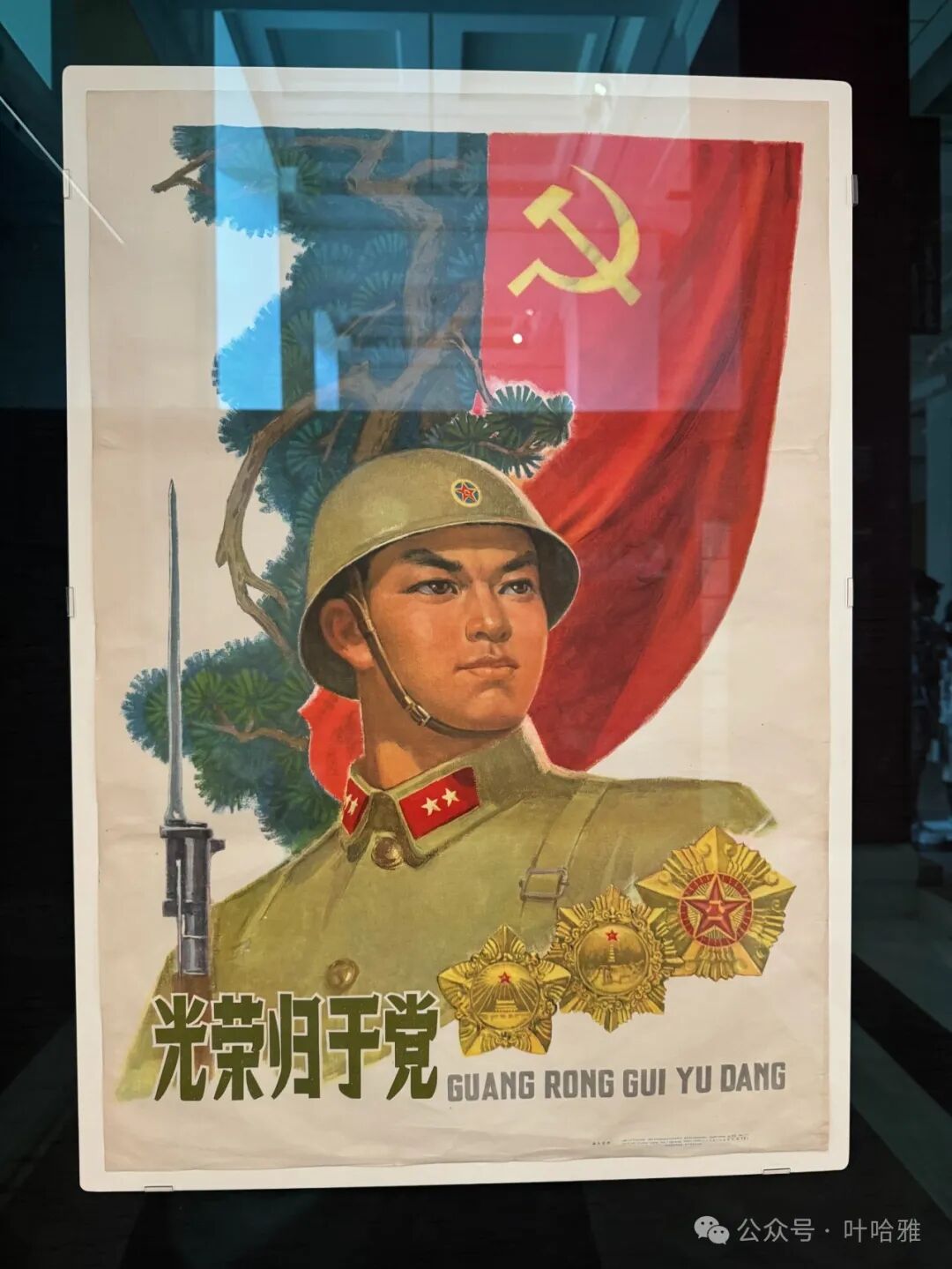
I am actually puzzled by why the British were able to recognize the value of these artifacts over 200 years ago, while other countries at the time saw them as junk and let them be taken away. If the British Museum had not collected them, I fear a significant portion of these artifacts would not exist today.
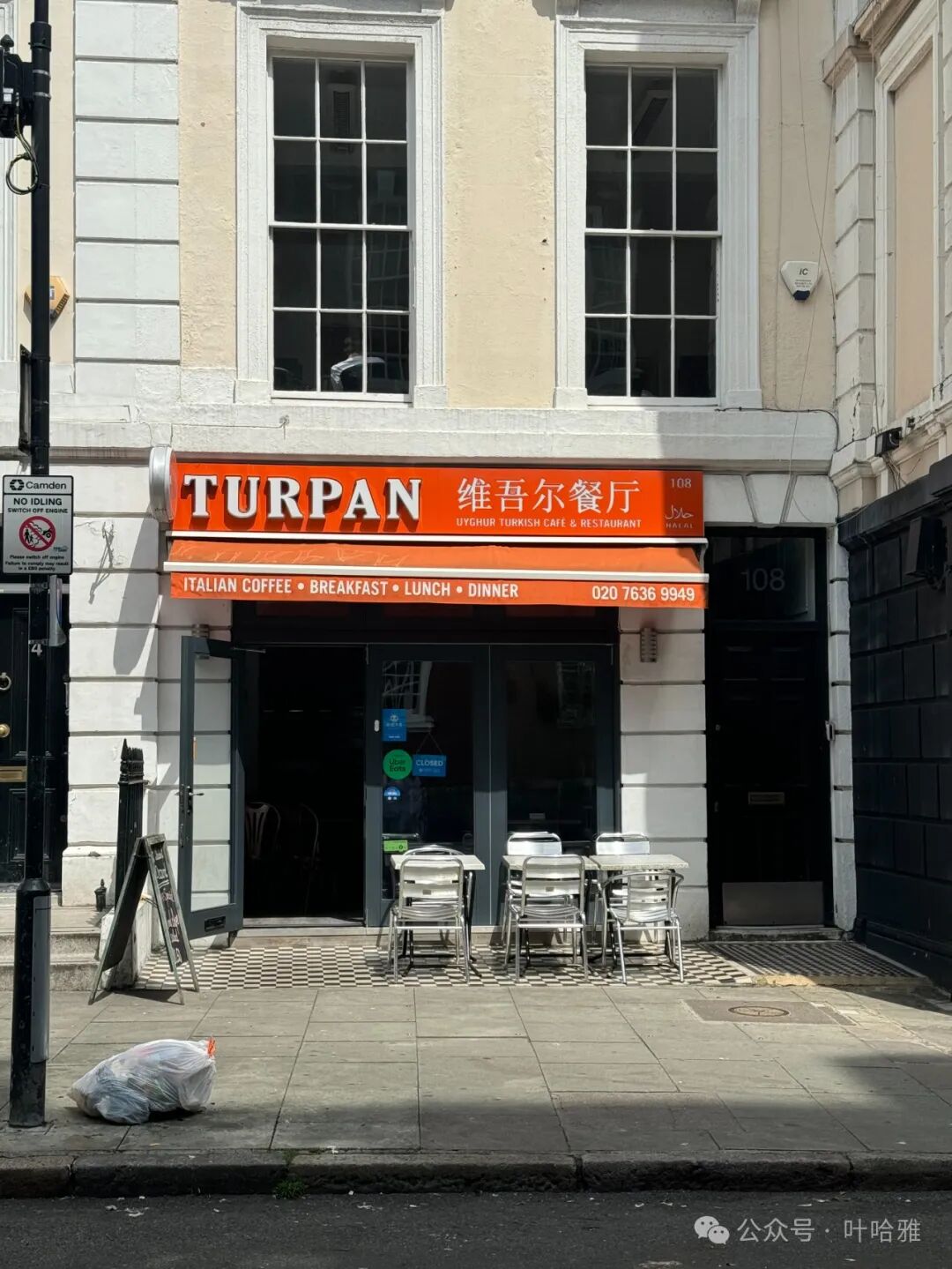
After leaving the British Museum, I saw this Uyghur restaurant nearby. The waiter is from Kashgar and has lived in London for over 20 years. He was very friendly, though he does not speak Chinese. I even left my luggage at his shop.
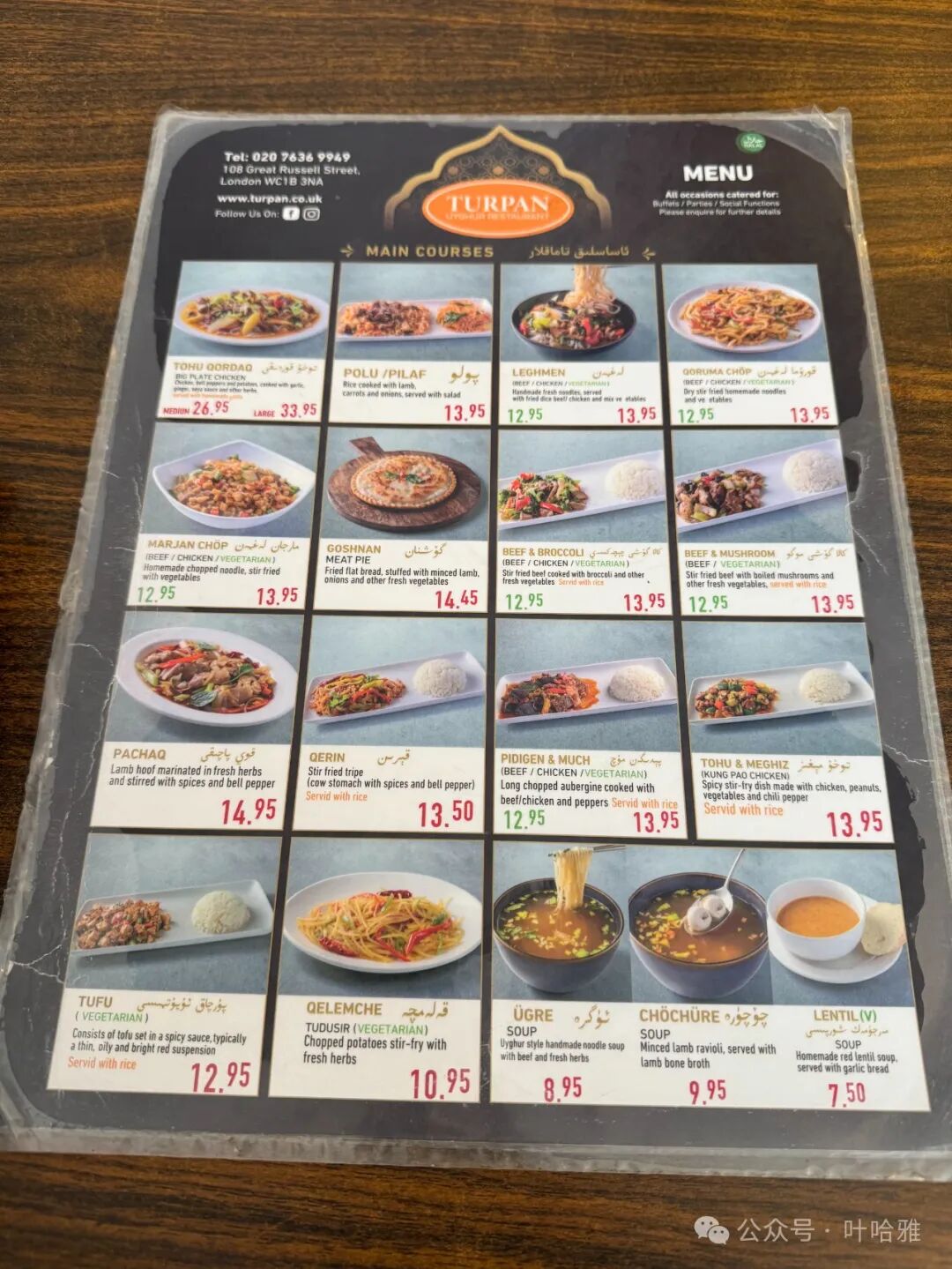
At this shop, I ate the most expensive hand-pulled noodles (latiaozi) of my life, costing 13.95 pounds, or about 130 yuan.
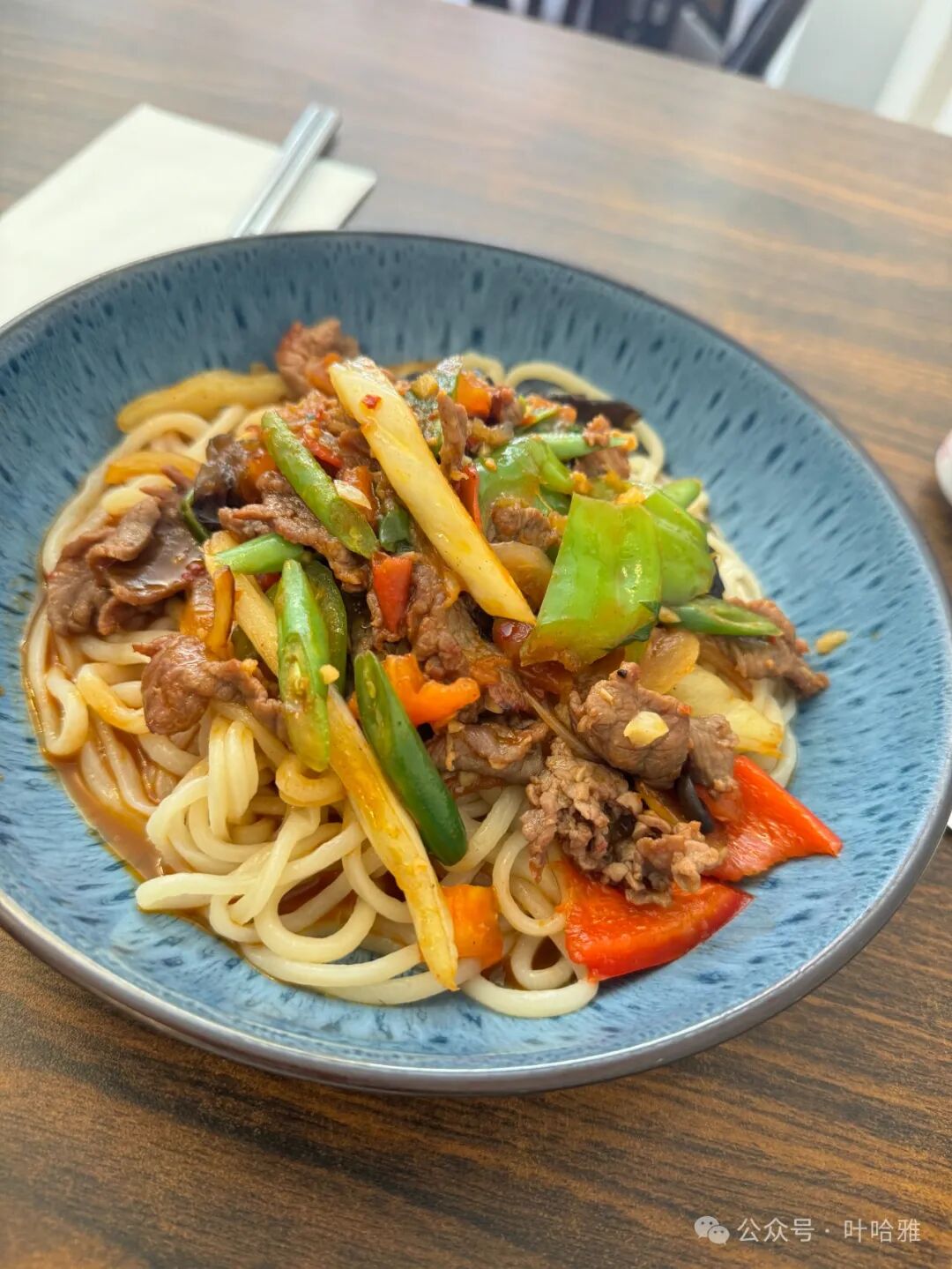
The taste was very authentic, more so than the two Xinjiang restaurants I visited in Canada.
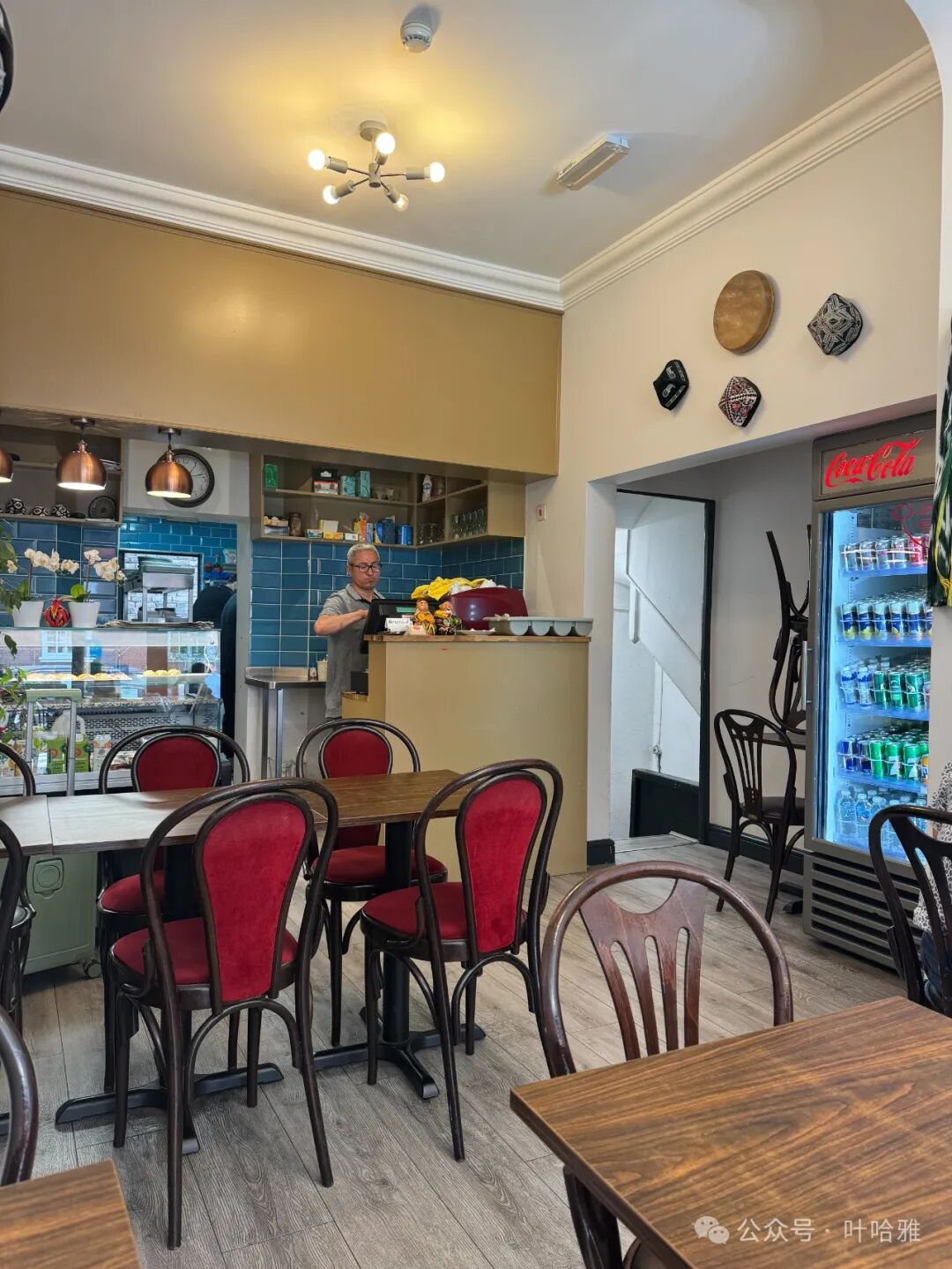
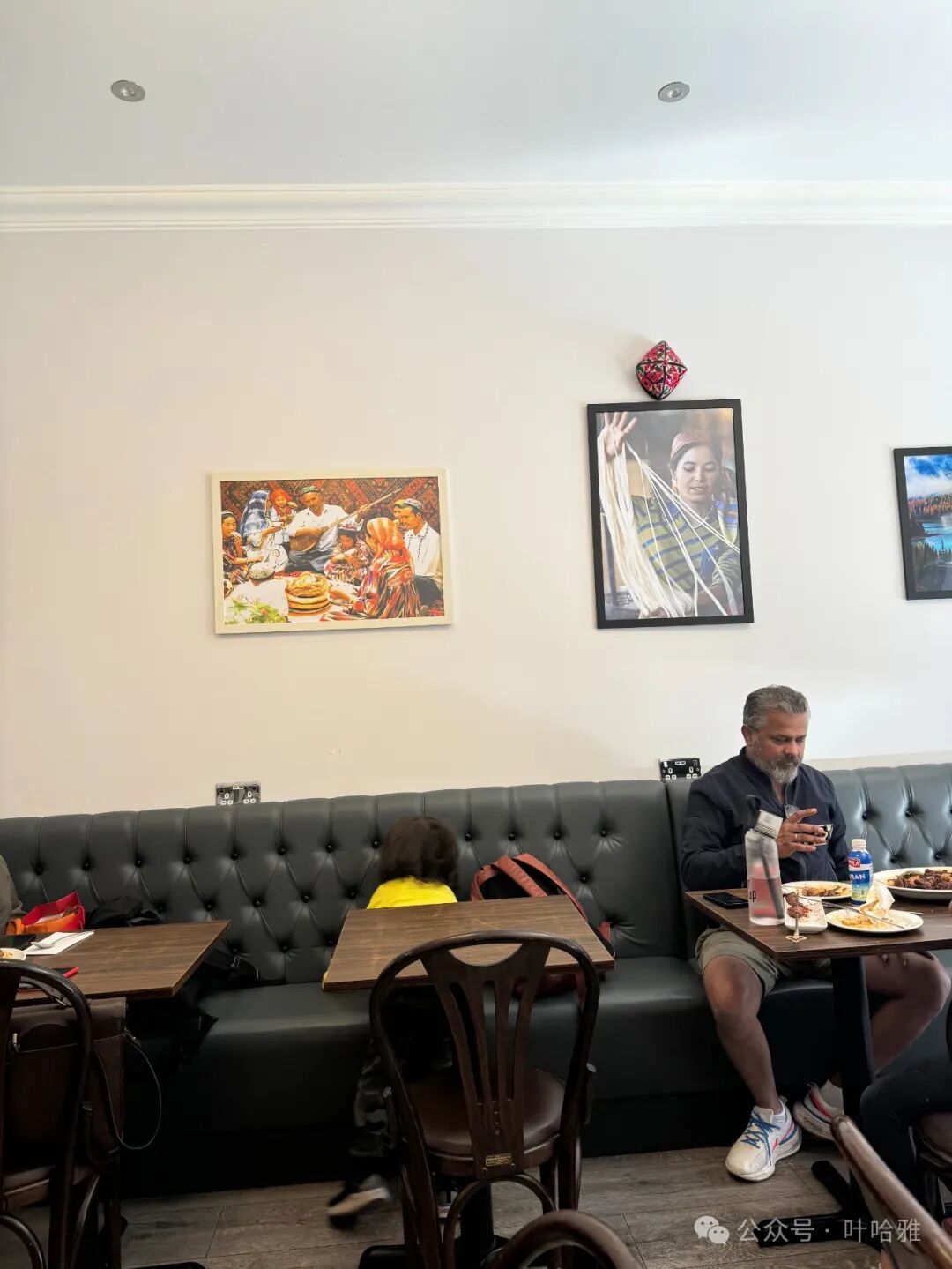
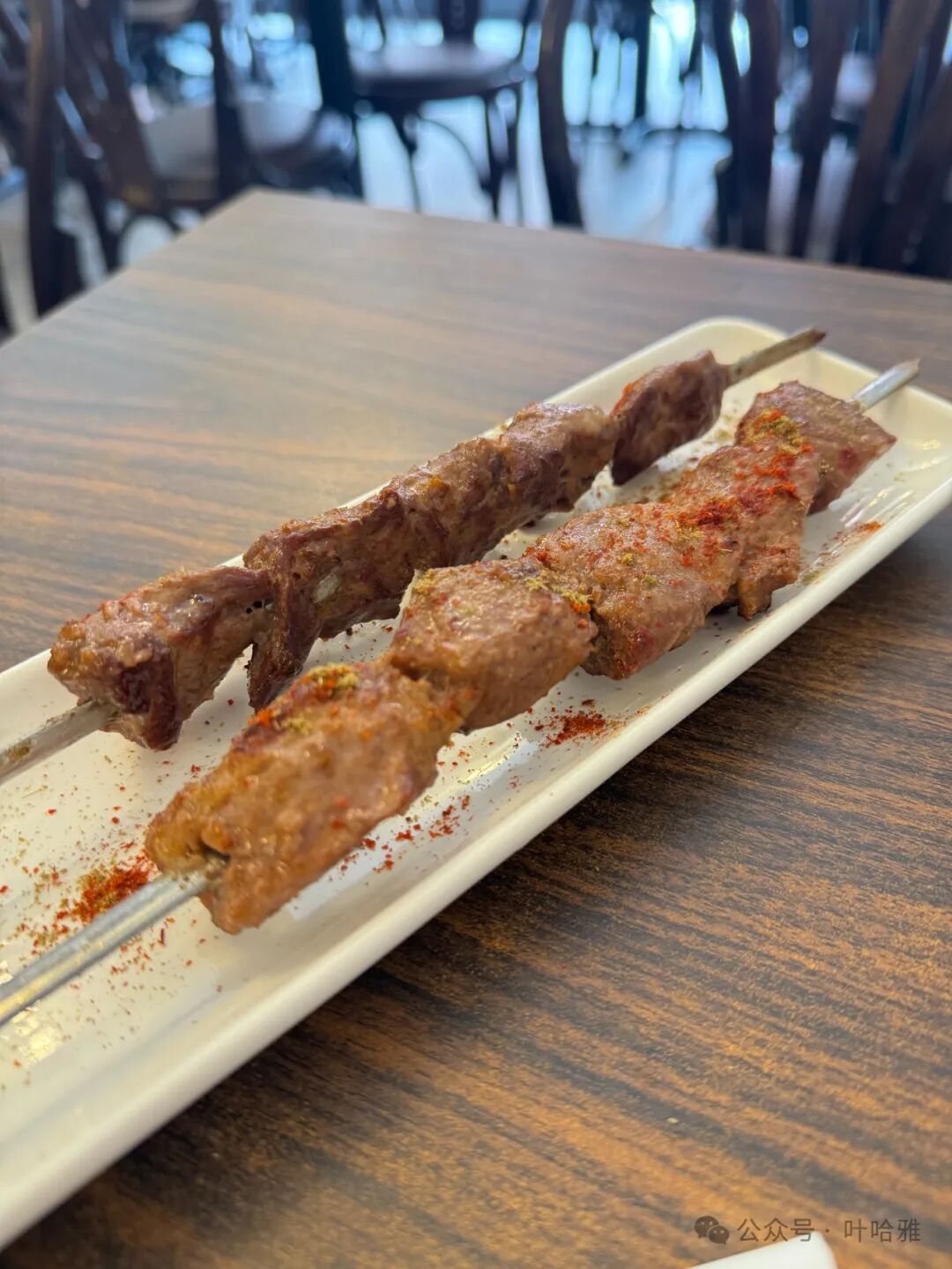
Lamb skewers (yangrouchuan) are 3 pounds each, with a minimum order of two, which is cheaper than the cold dishes.
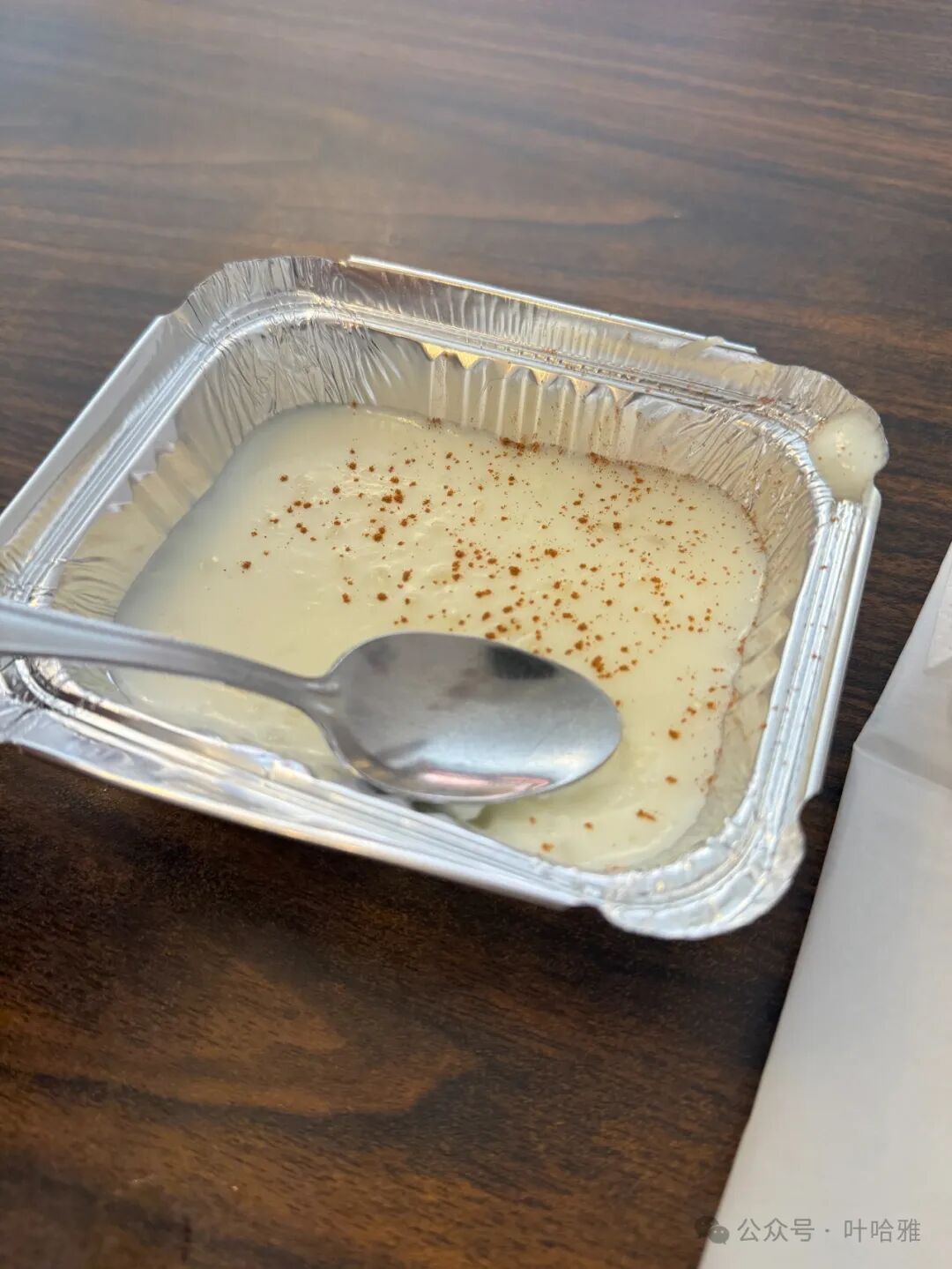
After the meal, the waiter quietly gave me a pudding. It was delicious, and the whole dining experience was very pleasant.
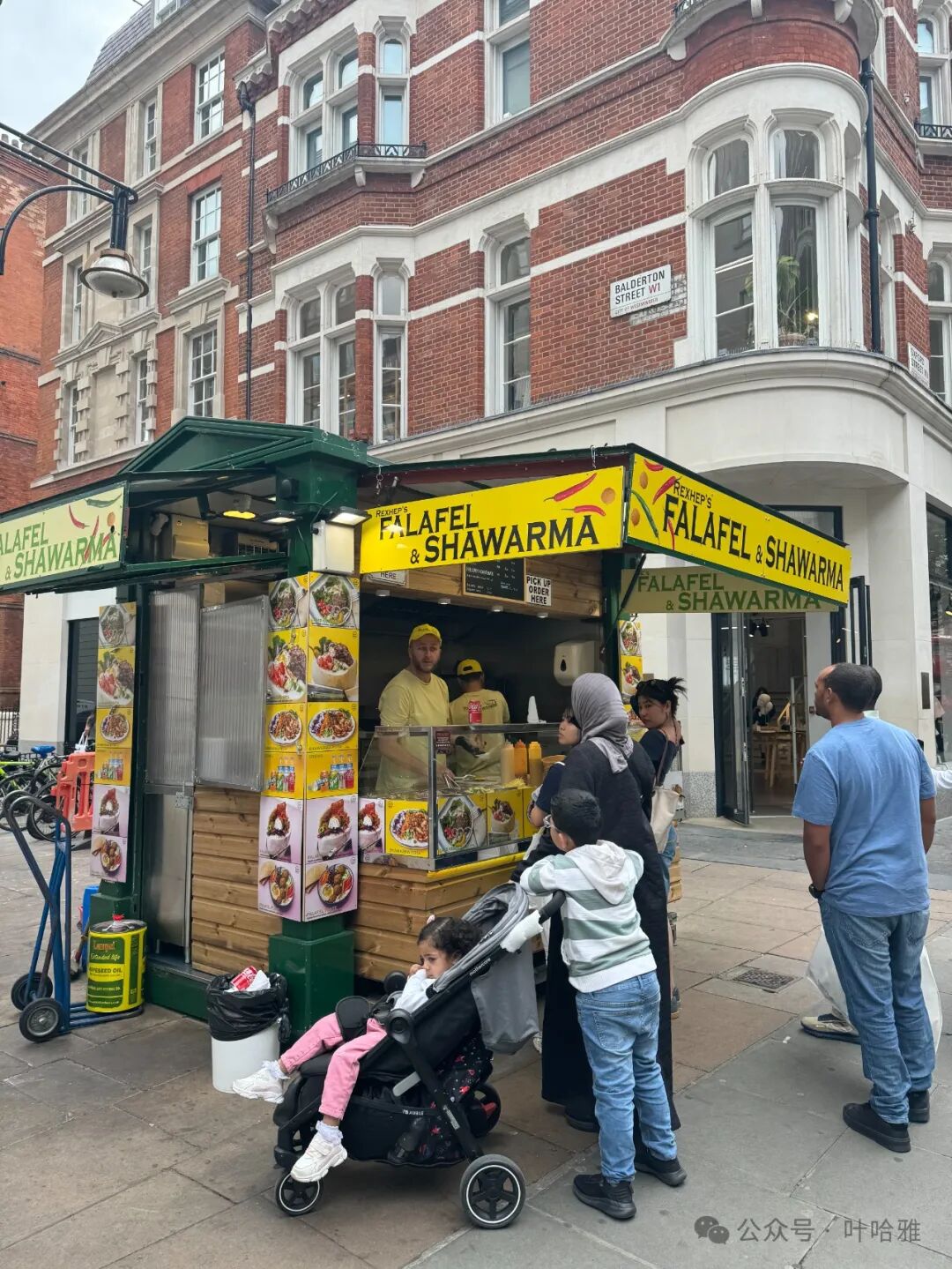
After eating, I walked back to my hotel. Everywhere I looked along the way, I saw Muslims. It is no exaggeration to say that the proportion of Muslims on the streets of London has already exceeded one-tenth.
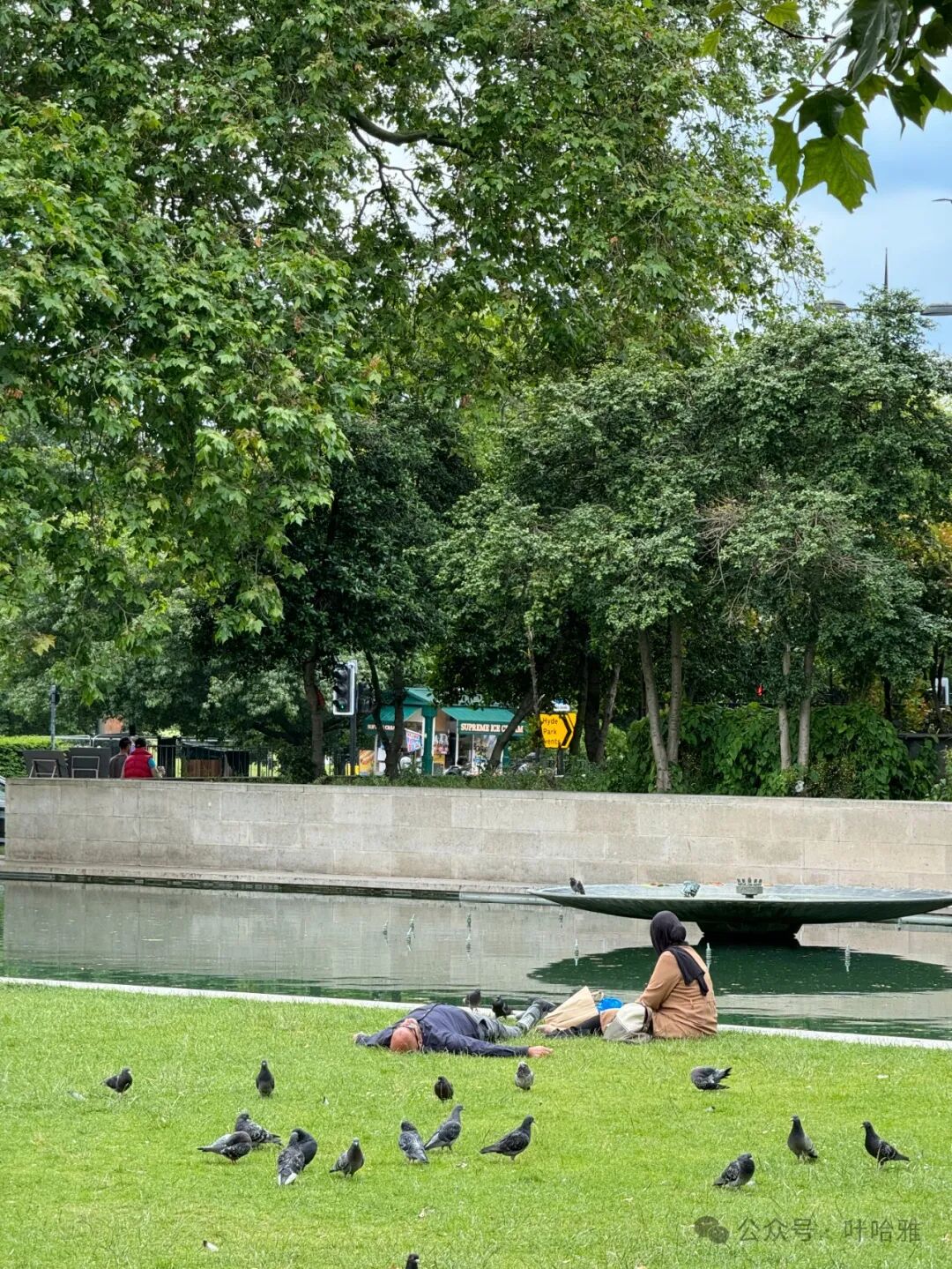
A Muslim couple sunbathing in Hyde Park.
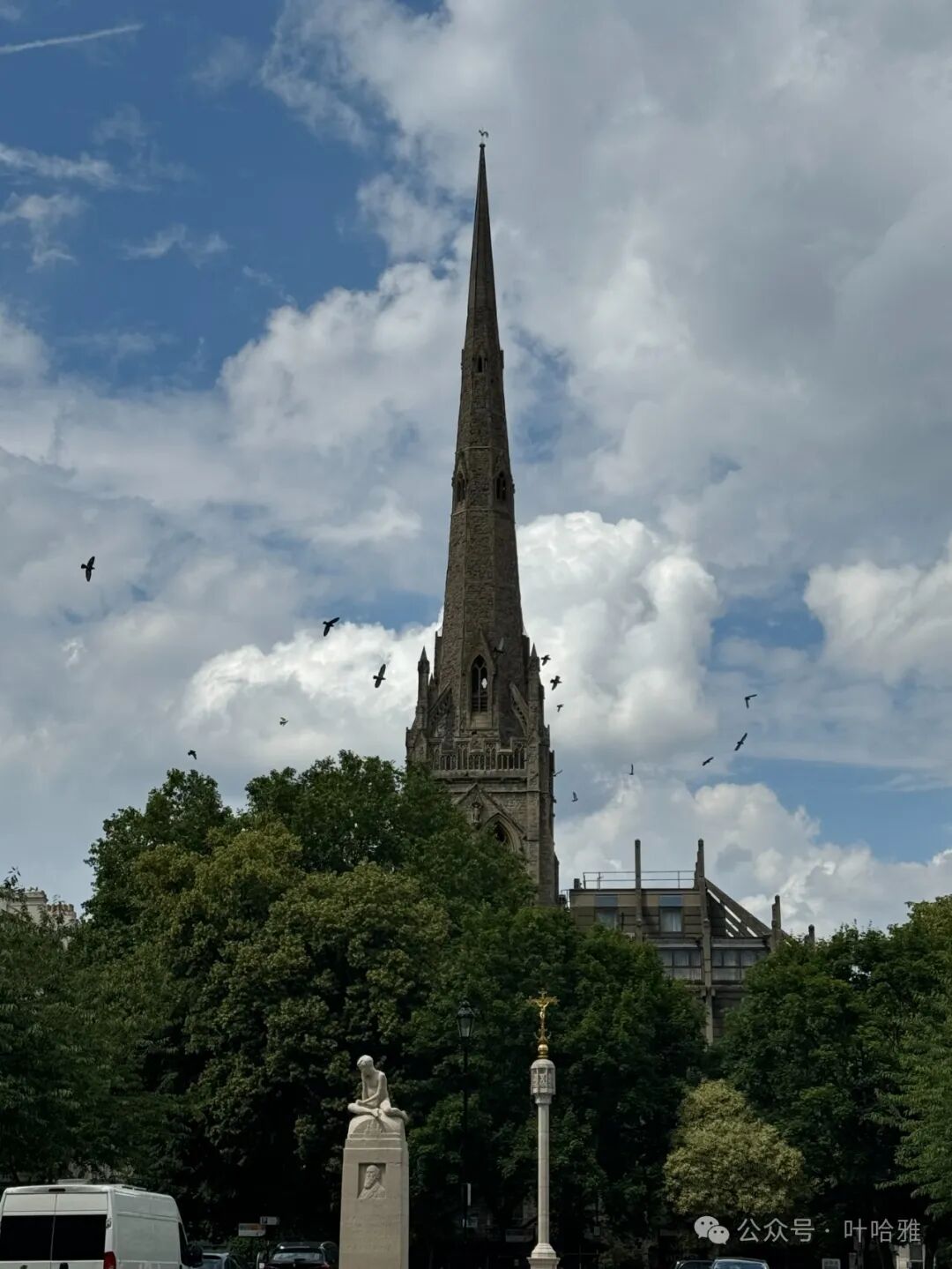
London is a city with beautiful street views. Its buildings have a deeper sense of history than those in Canada, making it perfect for a slow city walk.
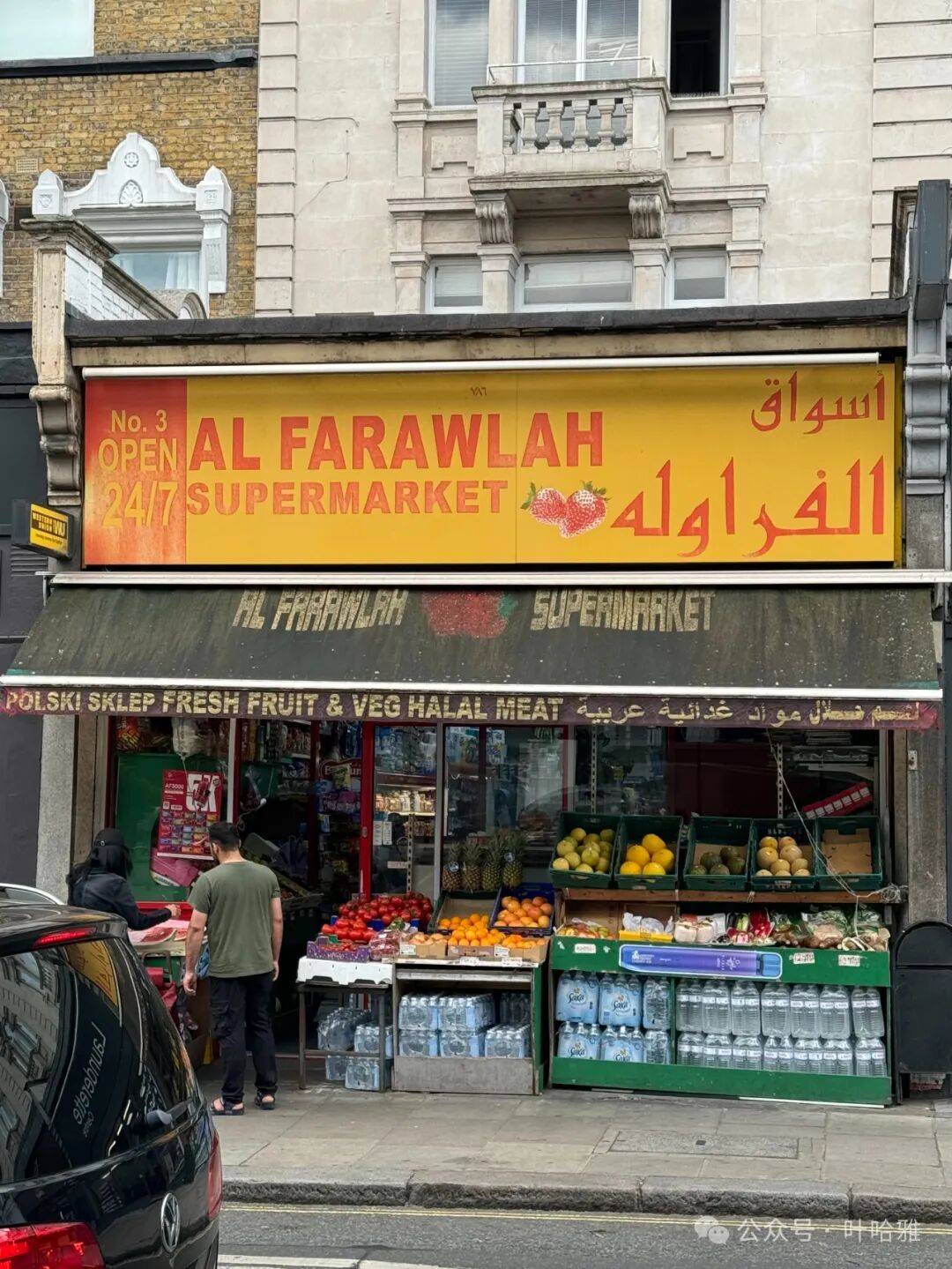
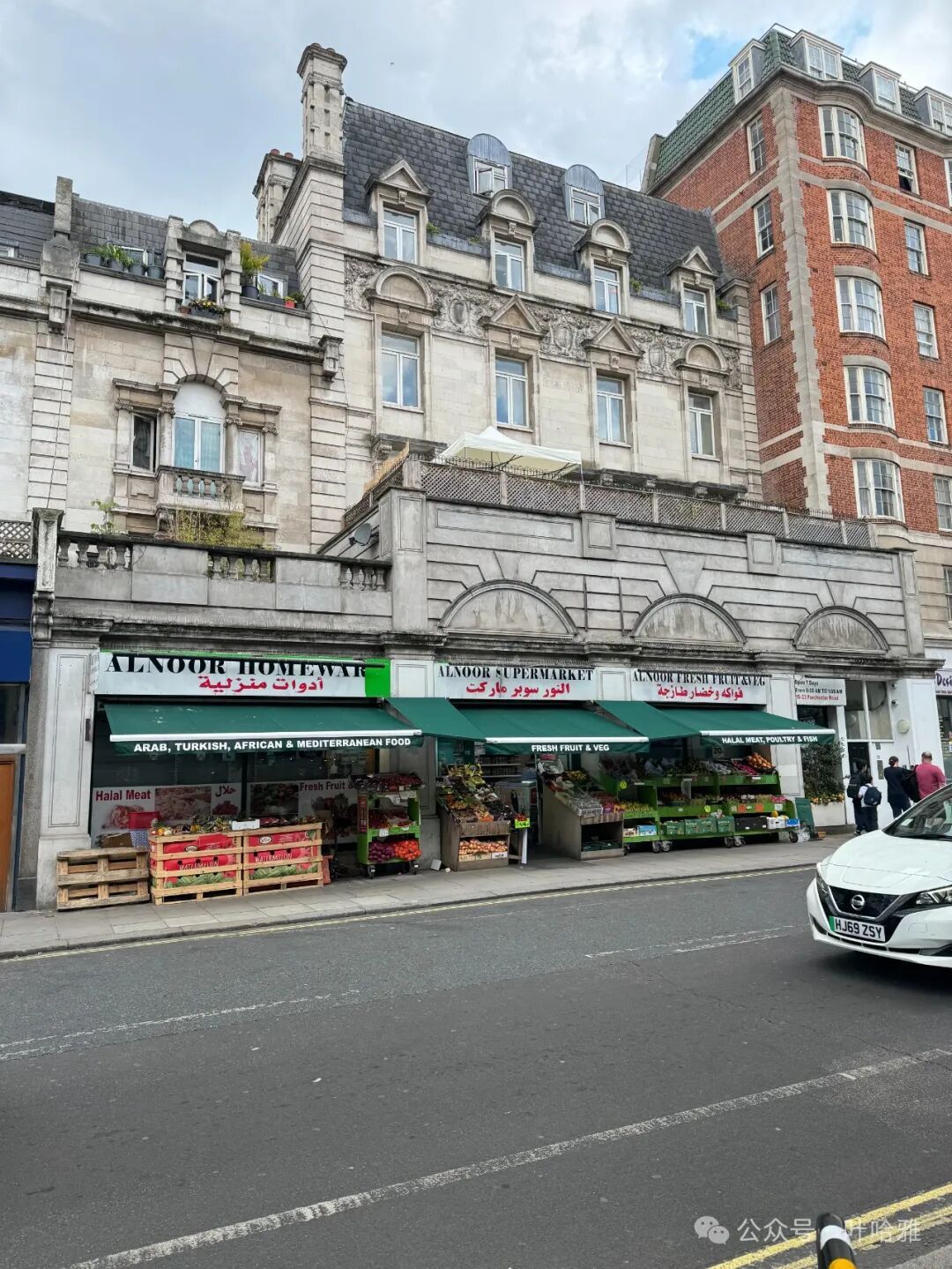
Paddington Street near Hyde Park is lined with halal shops. From Paddington Station, you can take the subway to the central station and transfer to a train for Cambridge or Oxford, reaching your destination in about an hour.
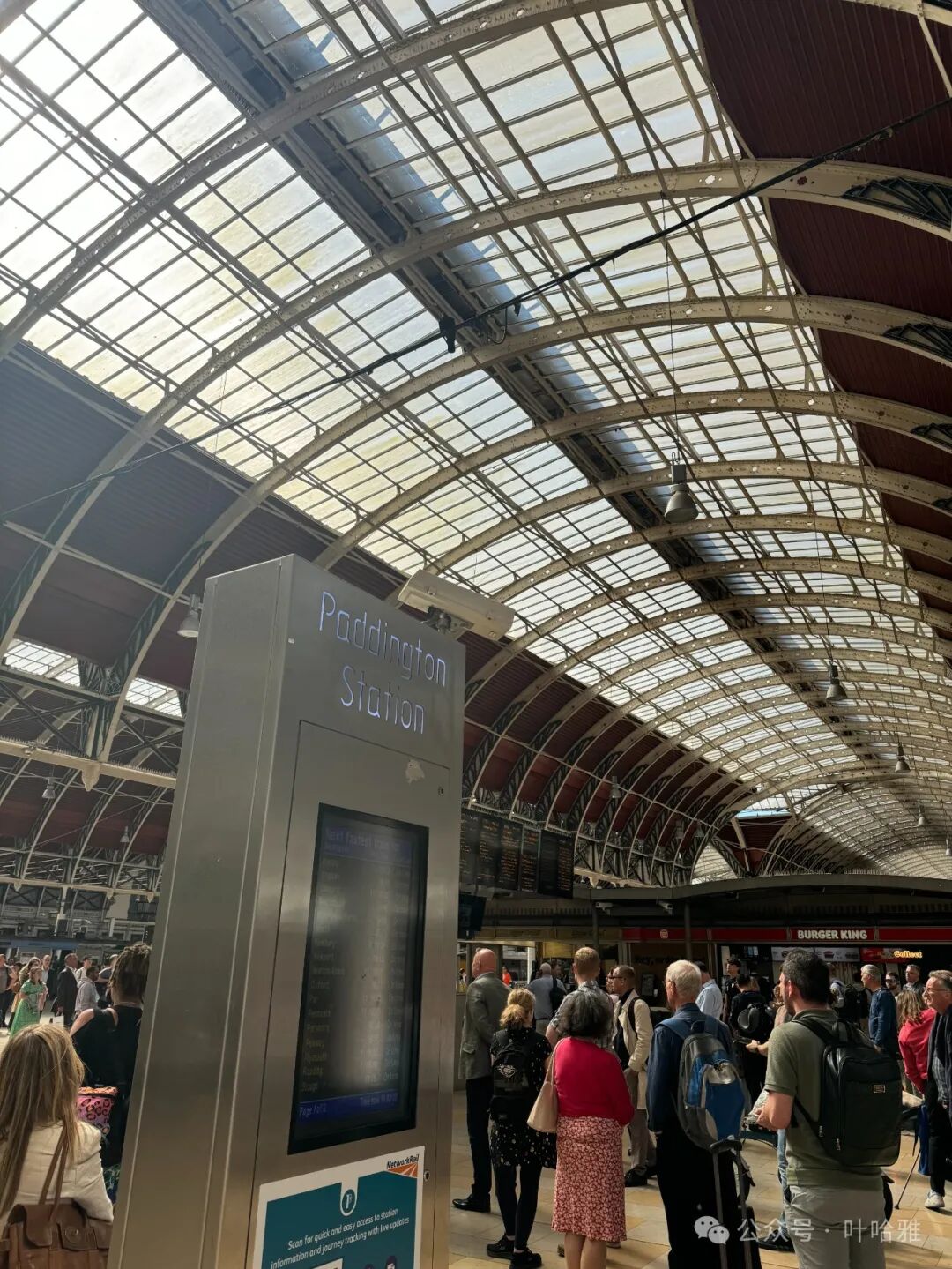
Cambridge
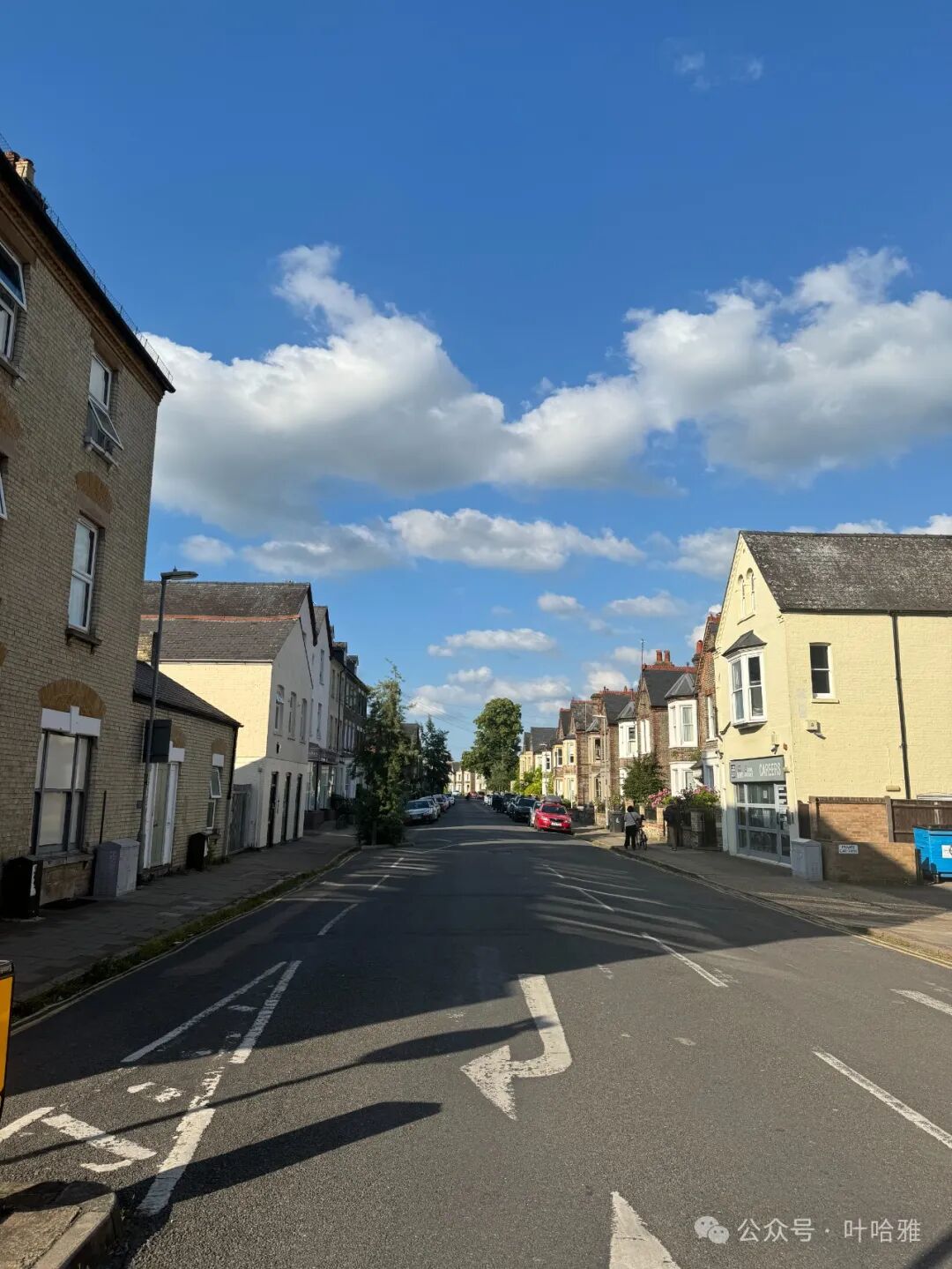
Cambridge street view
Summary: This UK Muslim travel guide begins with an unexpected London stopover, halal food at Gatwick Airport, Crawley Islamic Centre, London halal restaurants, city walks, Muslim street life, Hyde Park, Paddington, and the route toward Oxford and Cambridge.
I originally planned to go to Canada, but 6 hours after taking off from Rome, the flight had an emergency and had to turn back. The plane flew over the Atlantic for 3 hours before heading back to land in London, which unexpectedly gave me a 7-day visa-free trip to London.
A friendly reminder: Chinese passport holders with Canadian or American visas can enter the UK visa-free when transiting, but you need to have an onward ticket. I tested this myself when flying from Canada back to China with a layover in London. I arrived and departed from two different airports. The check-in staff in Canada asked if I had a 24-hour departure ticket from the UK. My flight arrived in London on the first morning and left on the second evening, which was over 24 hours, but I was still allowed to board. When I entered London, they gave me a 3-day stamp, so to be safe, you can stay in London visa-free for at least one day.
I actually visited London twice. The first trip was a total accident, and the second was a layover on my way back to China. The flight transiting through Europe was almost entirely white passengers. When they heard about the emergency landing in London, not one person complained; they actually looked happy. The flight attendant even joked that we would have another chance to eat the great British dish fish and chips (zha yu shu tiao). This is a running joke, as fish and chips is a traditional British food, and it mocks the UK for being a culinary desert.
I just walked around and found two halal restaurants at London Gatwick Airport.
Diners lined up at this stall to buy fast food, and the airline gave every passenger a 15-pound voucher as compensation.
15 pounds is about enough for one fast-food meal.
This is a London flatbread wrap with vegetables, and you can choose whatever ingredients you want inside.
Prices in London are higher than in Canada. The exchange rate for the British pound to the Chinese yuan is 1:9, which is much higher than the 1:5.3 rate for the Canadian dollar. Standard hotel rooms cost over 1,000 yuan per night, so the accommodation provided by the airline felt like a win. After returning to China, I also claimed 1,200 yuan in insurance compensation, which basically gave me a free three-day trip to London.
After leaving Gatwick Airport, you can walk 1.5 kilometers to the small town of Crawley. The greenery along the road is beautiful.
Seeing this star and crescent symbol felt quite familiar, but Premier Inn is actually just a budget hotel chain.
Crawley Islamic Centre & Masjid.
This is an Islamic school and mosque owned by people of Pakistani descent. The status of our 'iron brothers' from Pakistan in the UK is unique. First, most hold British passports. As a former British colony, Pakistan has a special, easier path for immigration to the UK. Currently, people of Pakistani descent make up 3.3% of London's population, and there were 1.6 million Pakistanis in the UK in 2021, with 20% of them living in London.
Pakistanis in the UK also have strong economic power. They work not only in catering but also as teachers, doctors, and engineers. The unemployment rate for Pakistanis in London is lower than the average for the white population. Additionally, one in seven Pakistanis works as a taxi driver.
I estimate that this small town of Crawley is a Pakistani enclave. The vast majority of women I saw on the street were wearing headscarves.
The history of Pakistani immigration to the UK dates back to the 17th century. At that time, the East India Company brought a large number of Indian and Pakistani laborers to the British Isles. These early immigrants were almost all men, and many married white women in the UK.
Muhammad Ali Jinnah, the founding father of Pakistan, studied in the UK before returning to Pakistan. After Pakistan gained independence from India, more and more Pakistanis immigrated to the UK.
Many elites of Pakistani descent are involved in British politics. London Mayor Sadiq Khan, Manchester Mayor Yasmin Dar, Birmingham Mayor Chaudhry Abdul Rashid, Newham Mayor Rokhsana Fiaz, and Kingston upon Thames Mayor Shiraz Mirza are all British citizens of Pakistani descent.
The streets of the small town are clean and beautiful, with flowers planted in front of every house. The temperature in London in June is cool and the sun is bright. People say London is foggy all year round, but unfortunately, it was sunny both times I passed through, so I missed the fog.
A family has a Palestinian flag hanging in their window.
There are many mosques around the small town of Crawley. This one is the Ahmadiyya mosque. I wrote about the Ahmadiyya in detail in my article 'Goodbye Vancouver: A Colorful Journey of the Soul,' noting that it is a sect not recognized by mainstream Islam.
The name above is the fifth Caliph of the Ahmadiyya, Mirza Masroor Ahmad. He currently lives in London, and the Ahmadiyya built the largest mosque in the UK.
If you see a mosque named Noor in Europe or America, be aware that it might be Ahmadiyya.
Another Sri Lankan mosque is less than 800 meters away from the Ahmadiyya mosque.
The gate was locked when I arrived, but I saw someone cleaning inside and asked him to open it for me. He was the one who told me this is a Sri Lankan mosque.
We can see from the scale of the Sri Lankan mosque that it is clearly not as grand as the Pakistani mosque.
Besides the Sri Lankan mosque, London also has Bangladeshi and Indian mosques, which look about the same from the outside.
The highlight of the Sri Lankan mosque is that it sits right next to a church, and everyone lives together in harmony.
I strolled back from the mosque and walked to the town's commercial center.
I saw a halal supermarket, just like the ones on Ox Street (Niujie).
You multiply all the price tags by 9 to get the price in RMB; life in London is not easy.
There are also some imported goods from Muslim countries. The customers in the supermarket are dressed in all sorts of ways, but most are in Muslim attire.
People eat shrimp, crab, and other seafood here. Although Pakistanis also follow the Hanafi school, the Hanafi school does not completely forbid eating shrimp and crab. For details, see how the Hanafi school views shrimp.
There are non-alcoholic drinks, including brands like Coca-Cola and Pepsi that are supposedly controlled by Jewish capital. I have even seen brands like Starbucks and McDonald's around Mecca. You could say the world economy is integrated, and none of us can escape this economic system.
Seeing the wildflowers by the road, I felt like I was in Xinjiang as I walked. Britain is in the northwest of Europe, where people are tall and the climate is on the cold side.
The British Museum
I had plenty of time for this trip, so I arrived at the British Museum early to visit. The museum is free, though you can choose to make a voluntary donation. You need to book your visit on the official website in advance. Tickets are easy to get, and I definitely chose the free option.
The exterior of the British Museum is modeled after the Parthenon of ancient Greece. Moving from left to right, it represents the river of time, showing humanity moving from ignorance toward science. In the center, the goddess of wisdom holds a golden scepter with a golden globe at her feet, representing the arrival of the god of science. Sitting next to the goddess is the god of mathematics.
There is a line to get in, and you have to go through a security check before entering. The inside is huge, and it takes about a full day to see everything properly.
The British Museum is open from 10:00 to 17:00, and stays open until 20:30 on Fridays. The Ancient Egypt gallery is definitely the most popular.
Some people online say that after seeing the ancient Egyptian artifacts at the British Museum, they thought Egypt had been emptied out. I have been to the Egyptian Museum myself, and there are so many artifacts there that there is nowhere to put them all, so it is impossible that it was emptied. See the Egypt travel guide for avoiding pitfalls for more details.
Rosetta Stone
Made in 196 BC, it is inscribed with a decree from the coronation of the ancient Egyptian King Ptolemy V. The stone has three types of writing: Ancient Greek, Ancient Egyptian hieroglyphs, and Demotic script. Archaeologists were able to decipher the content of Ancient Egyptian hieroglyphs by comparing the three scripts, because Ancient Greek can still be read today.
Nereid Monument
This is a monument for the ruler of Xanthos in southwestern Turkey, built between 390 and 380 BC. The Nereids were the daughters of the sea god. In 1840, the British Museum funded archaeological excavations in southwestern Turkey with the permission of the Ottoman Sultan and discovered this temple. At that time, the Ottoman Empire allowed British, French, and German archaeologists to conduct research. It was not until after 1869 that the export of artifacts was prohibited, which led to the later construction of the Istanbul Archaeology Museums.
The mysterious Moai statues of Easter Island
In 1868, the British soldier Richard Powell brought two Moai statues from Easter Island back to the UK and gave them to Queen Victoria as a gift. In recent years, Chile has repeatedly asked the British Museum to return the statues, but the British side has not responded.
Islamic World Exhibition
Islamic World Exhibition
This monogram (tughra) was a common symbol in the Ottoman Empire, and the name on the gold coin is a person's name.
This tells the history after the birth of the Prophet Muhammad.
This describes Jerusalem, the holy city shared by Judaism, Christianity, and Islam, as well as the story of the Prophet Muhammad's Night Journey and Ascension. The Dome of the Rock (Qubbat al-Sakhrah) is connected to this event.
This is a lamp from a mosque, related to the Ottoman Sultan's order to renovate the Dome of the Rock. It is inscribed with a Hadith that compares believers in the mosque to fish in water and non-believers to birds in a cage.
A compass used to determine the direction of prayer (qibla).
This piece of black volcanic stone may have once been embedded in the wall of the Kaaba.
The picture above shows a bronze mirror. Inspired by China, medieval Iran also made mirrors out of copper alloy that could reflect light after being polished. The back of the mirror is engraved with patterns and served as an amulet.
Asia: The Legacy of Mongolia
The image above states that the Mongol invasion of West Asia was led by Hulagu, the grandson of Genghis Khan (1162-1227). Hulagu founded the Ilkhanate. He spared the lives of the West Asian rebel forces because their specialized skills could be put to good use in the new Mongol power centers.
The Mongol legacy continued through the Central Asian leader Timur. Timur claimed a connection between Genghis Khan and the Prophet Muhammad. During his conquests, Timur also kept craftsmen and brought them to his new centers of Samarkand and Herat. He blended Iranian Islamic and Central Asian steppe traditions into his architectural art.
Regarding building materials from Iran and Central Asia, ornate glazed tiles were widely used in religious buildings and homes. These bricks may have come from a mosque and are inscribed in Arabic with 'In the name of Allah, the Most Gracious' and 'There is no god but Allah, He is the All-Powerful, the All-Knowing.'
This is a tombstone for an Ottoman naval officer named Seyyid Ahmed Bey Kor Kasos. He served the Ottoman Empire for 60 years and passed away during the Greek War of Independence. The stone records his battles against the Greeks during the Greek War of Independence (1821-1832).
Ottoman Turkish women's slippers and children's slippers.
Iran and Central Asia.
The Safavid dynasty took power in 1501 and established the first Shia state in Tabriz. In 1598, under the rule of Shah Abbas I, the capital moved to Isfahan. Safavid art became popular within the empire and spread to Europe and East Asia. Armenians involved in global trade helped help this cultural exchange.
Islam in Africa. Islam has been present in Africa since the early 600s. Today, about half of Africa's population follows Islam. North, West, and East Africa have long been centers of the wider Islamic world. The writing board in the image above was mainly used to teach Arabic and the Quran.
A hat worn by an official from southern or central Nigeria. They may have been Hausa clerks employed by British colonial institutions.
China Gallery.
The Chinese artifact gallery at the British Museum is quite large. It is divided into an artifact gallery and a jewelry gallery. The people who spend the most time here are Chinese. The British Museum holds about 23,000 Chinese artifacts, ranging from Shang and Zhou dynasty bronzes to Tang and Song dynasty ceramics, and gold and jade items from the Ming and Qing dynasties. More than 2,000 of these are on long-term display.
Chinese civilization is one of the oldest in the world. Today, China is about the same size as Europe and has one-quarter of the world's population. The China gallery displays 7,000 years of history, divided into different periods.
Decorative glazed tile walls on the roof ridges of temples in Shanxi Province.
You can find information about the British Museum's collection online, so I did not take photos of every single item. Many people are now calling for the museum to return artifacts to other countries, but whether they can be reclaimed depends on national diplomatic strength.
I am actually puzzled by why the British were able to recognize the value of these artifacts over 200 years ago, while other countries at the time saw them as junk and let them be taken away. If the British Museum had not collected them, I fear a significant portion of these artifacts would not exist today.
After leaving the British Museum, I saw this Uyghur restaurant nearby. The waiter is from Kashgar and has lived in London for over 20 years. He was very friendly, though he does not speak Chinese. I even left my luggage at his shop.
At this shop, I ate the most expensive hand-pulled noodles (latiaozi) of my life, costing 13.95 pounds, or about 130 yuan.
The taste was very authentic, more so than the two Xinjiang restaurants I visited in Canada.
Lamb skewers (yangrouchuan) are 3 pounds each, with a minimum order of two, which is cheaper than the cold dishes.
After the meal, the waiter quietly gave me a pudding. It was delicious, and the whole dining experience was very pleasant.
After eating, I walked back to my hotel. Everywhere I looked along the way, I saw Muslims. It is no exaggeration to say that the proportion of Muslims on the streets of London has already exceeded one-tenth.
A Muslim couple sunbathing in Hyde Park.
London is a city with beautiful street views. Its buildings have a deeper sense of history than those in Canada, making it perfect for a slow city walk.
Paddington Street near Hyde Park is lined with halal shops. From Paddington Station, you can take the subway to the central station and transfer to a train for Cambridge or Oxford, reaching your destination in about an hour.
Cambridge
Cambridge street view
Muslim Travel Guide UK: Oxford, Cambridge, London Halal Restaurants and Islamic History
Articles • yusuf908 posted the article • 0 comments • 150 views • 2026-05-23 01:19
Reposted from the web
Summary: This UK Muslim travel guide begins with an unexpected London stopover, halal food at Gatwick Airport, Crawley Islamic Centre, London halal restaurants, city walks, Muslim street life, Hyde Park, Paddington, and the route toward Oxford and Cambridge.
I originally planned to go to Canada, but 6 hours after taking off from Rome, the flight had an emergency and had to turn back. The plane flew over the Atlantic for 3 hours before heading back to land in London, which unexpectedly gave me a 7-day visa-free trip to London.
A friendly reminder: Chinese passport holders with Canadian or American visas can enter the UK visa-free when transiting, but you need to have an onward ticket. I tested this myself when flying from Canada back to China with a layover in London. I arrived and departed from two different airports. The check-in staff in Canada asked if I had a 24-hour departure ticket from the UK. My flight arrived in London on the first morning and left on the second evening, which was over 24 hours, but I was still allowed to board. When I entered London, they gave me a 3-day stamp, so to be safe, you can stay in London visa-free for at least one day.
I actually visited London twice. The first trip was a total accident, and the second was a layover on my way back to China. The flight transiting through Europe was almost entirely white passengers. When they heard about the emergency landing in London, not one person complained; they actually looked happy. The flight attendant even joked that we would have another chance to eat the great British dish fish and chips (zha yu shu tiao). This is a running joke, as fish and chips is a traditional British food, and it mocks the UK for being a culinary desert.
I just walked around and found two halal restaurants at London Gatwick Airport.
Diners lined up at this stall to buy fast food, and the airline gave every passenger a 15-pound voucher as compensation.
15 pounds is about enough for one fast-food meal.
This is a London flatbread wrap with vegetables, and you can choose whatever ingredients you want inside.
Prices in London are higher than in Canada. The exchange rate for the British pound to the Chinese yuan is 1:9, which is much higher than the 1:5.3 rate for the Canadian dollar. Standard hotel rooms cost over 1,000 yuan per night, so the accommodation provided by the airline felt like a win. After returning to China, I also claimed 1,200 yuan in insurance compensation, which basically gave me a free three-day trip to London.
After leaving Gatwick Airport, you can walk 1.5 kilometers to the small town of Crawley. The greenery along the road is beautiful.
Seeing this star and crescent symbol felt quite familiar, but Premier Inn is actually just a budget hotel chain.
Crawley Islamic Centre & Masjid.
This is an Islamic school and mosque owned by people of Pakistani descent. The status of our 'iron brothers' from Pakistan in the UK is unique. First, most hold British passports. As a former British colony, Pakistan has a special, easier path for immigration to the UK. Currently, people of Pakistani descent make up 3.3% of London's population, and there were 1.6 million Pakistanis in the UK in 2021, with 20% of them living in London.
Pakistanis in the UK also have strong economic power. They work not only in catering but also as teachers, doctors, and engineers. The unemployment rate for Pakistanis in London is lower than the average for the white population. Additionally, one in seven Pakistanis works as a taxi driver.
I estimate that this small town of Crawley is a Pakistani enclave. The vast majority of women I saw on the street were wearing headscarves.
The history of Pakistani immigration to the UK dates back to the 17th century. At that time, the East India Company brought a large number of Indian and Pakistani laborers to the British Isles. These early immigrants were almost all men, and many married white women in the UK.
Muhammad Ali Jinnah, the founding father of Pakistan, studied in the UK before returning to Pakistan. After Pakistan gained independence from India, more and more Pakistanis immigrated to the UK.
Many elites of Pakistani descent are involved in British politics. London Mayor Sadiq Khan, Manchester Mayor Yasmin Dar, Birmingham Mayor Chaudhry Abdul Rashid, Newham Mayor Rokhsana Fiaz, and Kingston upon Thames Mayor Shiraz Mirza are all British citizens of Pakistani descent.
The streets of the small town are clean and beautiful, with flowers planted in front of every house. The temperature in London in June is cool and the sun is bright. People say London is foggy all year round, but unfortunately, it was sunny both times I passed through, so I missed the fog.
A family has a Palestinian flag hanging in their window.
There are many mosques around the small town of Crawley. This one is the Ahmadiyya mosque. I wrote about the Ahmadiyya in detail in my article 'Goodbye Vancouver: A Colorful Journey of the Soul,' noting that it is a sect not recognized by mainstream Islam.
The name above is the fifth Caliph of the Ahmadiyya, Mirza Masroor Ahmad. He currently lives in London, and the Ahmadiyya built the largest mosque in the UK.
If you see a mosque named Noor in Europe or America, be aware that it might be Ahmadiyya.
Another Sri Lankan mosque is less than 800 meters away from the Ahmadiyya mosque.
The gate was locked when I arrived, but I saw someone cleaning inside and asked him to open it for me. He was the one who told me this is a Sri Lankan mosque.
We can see from the scale of the Sri Lankan mosque that it is clearly not as grand as the Pakistani mosque.
Besides the Sri Lankan mosque, London also has Bangladeshi and Indian mosques, which look about the same from the outside.
The highlight of the Sri Lankan mosque is that it sits right next to a church, and everyone lives together in harmony.
I strolled back from the mosque and walked to the town's commercial center.
I saw a halal supermarket, just like the ones on Ox Street (Niujie).
You multiply all the price tags by 9 to get the price in RMB; life in London is not easy.
There are also some imported goods from Muslim countries. The customers in the supermarket are dressed in all sorts of ways, but most are in Muslim attire.
People eat shrimp, crab, and other seafood here. Although Pakistanis also follow the Hanafi school, the Hanafi school does not completely forbid eating shrimp and crab. For details, see how the Hanafi school views shrimp.
There are non-alcoholic drinks, including brands like Coca-Cola and Pepsi that are supposedly controlled by Jewish capital. I have even seen brands like Starbucks and McDonald's around Mecca. You could say the world economy is integrated, and none of us can escape this economic system.
Seeing the wildflowers by the road, I felt like I was in Xinjiang as I walked. Britain is in the northwest of Europe, where people are tall and the climate is on the cold side.
The British Museum
I had plenty of time for this trip, so I arrived at the British Museum early to visit. The museum is free, though you can choose to make a voluntary donation. You need to book your visit on the official website in advance. Tickets are easy to get, and I definitely chose the free option.
The exterior of the British Museum is modeled after the Parthenon of ancient Greece. Moving from left to right, it represents the river of time, showing humanity moving from ignorance toward science. In the center, the goddess of wisdom holds a golden scepter with a golden globe at her feet, representing the arrival of the god of science. Sitting next to the goddess is the god of mathematics.
There is a line to get in, and you have to go through a security check before entering. The inside is huge, and it takes about a full day to see everything properly.
The British Museum is open from 10:00 to 17:00, and stays open until 20:30 on Fridays. The Ancient Egypt gallery is definitely the most popular.
Some people online say that after seeing the ancient Egyptian artifacts at the British Museum, they thought Egypt had been emptied out. I have been to the Egyptian Museum myself, and there are so many artifacts there that there is nowhere to put them all, so it is impossible that it was emptied. See the Egypt travel guide for avoiding pitfalls for more details.
Rosetta Stone
Made in 196 BC, it is inscribed with a decree from the coronation of the ancient Egyptian King Ptolemy V. The stone has three types of writing: Ancient Greek, Ancient Egyptian hieroglyphs, and Demotic script. Archaeologists were able to decipher the content of Ancient Egyptian hieroglyphs by comparing the three scripts, because Ancient Greek can still be read today.
Nereid Monument
This is a monument for the ruler of Xanthos in southwestern Turkey, built between 390 and 380 BC. The Nereids were the daughters of the sea god. In 1840, the British Museum funded archaeological excavations in southwestern Turkey with the permission of the Ottoman Sultan and discovered this temple. At that time, the Ottoman Empire allowed British, French, and German archaeologists to conduct research. It was not until after 1869 that the export of artifacts was prohibited, which led to the later construction of the Istanbul Archaeology Museums.
The mysterious Moai statues of Easter Island
In 1868, the British soldier Richard Powell brought two Moai statues from Easter Island back to the UK and gave them to Queen Victoria as a gift. In recent years, Chile has repeatedly asked the British Museum to return the statues, but the British side has not responded.
Islamic World Exhibition
Islamic World Exhibition
This monogram (tughra) was a common symbol in the Ottoman Empire, and the name on the gold coin is a person's name.
This tells the history after the birth of the Prophet Muhammad.
This describes Jerusalem, the holy city shared by Judaism, Christianity, and Islam, as well as the story of the Prophet Muhammad's Night Journey and Ascension. The Dome of the Rock (Qubbat al-Sakhrah) is connected to this event.
This is a lamp from a mosque, related to the Ottoman Sultan's order to renovate the Dome of the Rock. It is inscribed with a Hadith that compares believers in the mosque to fish in water and non-believers to birds in a cage.
A compass used to determine the direction of prayer (qibla).
This piece of black volcanic stone may have once been embedded in the wall of the Kaaba.
The picture above shows a bronze mirror. Inspired by China, medieval Iran also made mirrors out of copper alloy that could reflect light after being polished. The back of the mirror is engraved with patterns and served as an amulet.
Asia: The Legacy of Mongolia
The image above states that the Mongol invasion of West Asia was led by Hulagu, the grandson of Genghis Khan (1162-1227). Hulagu founded the Ilkhanate. He spared the lives of the West Asian rebel forces because their specialized skills could be put to good use in the new Mongol power centers.
The Mongol legacy continued through the Central Asian leader Timur. Timur claimed a connection between Genghis Khan and the Prophet Muhammad. During his conquests, Timur also kept craftsmen and brought them to his new centers of Samarkand and Herat. He blended Iranian Islamic and Central Asian steppe traditions into his architectural art.
Regarding building materials from Iran and Central Asia, ornate glazed tiles were widely used in religious buildings and homes. These bricks may have come from a mosque and are inscribed in Arabic with 'In the name of Allah, the Most Gracious' and 'There is no god but Allah, He is the All-Powerful, the All-Knowing.'
This is a tombstone for an Ottoman naval officer named Seyyid Ahmed Bey Kor Kasos. He served the Ottoman Empire for 60 years and passed away during the Greek War of Independence. The stone records his battles against the Greeks during the Greek War of Independence (1821-1832).
Ottoman Turkish women's slippers and children's slippers.
Iran and Central Asia.
The Safavid dynasty took power in 1501 and established the first Shia state in Tabriz. In 1598, under the rule of Shah Abbas I, the capital moved to Isfahan. Safavid art became popular within the empire and spread to Europe and East Asia. Armenians involved in global trade helped help this cultural exchange.
Islam in Africa. Islam has been present in Africa since the early 600s. Today, about half of Africa's population follows Islam. North, West, and East Africa have long been centers of the wider Islamic world. The writing board in the image above was mainly used to teach Arabic and the Quran.
A hat worn by an official from southern or central Nigeria. They may have been Hausa clerks employed by British colonial institutions.
China Gallery.
The Chinese artifact gallery at the British Museum is quite large. It is divided into an artifact gallery and a jewelry gallery. The people who spend the most time here are Chinese. The British Museum holds about 23,000 Chinese artifacts, ranging from Shang and Zhou dynasty bronzes to Tang and Song dynasty ceramics, and gold and jade items from the Ming and Qing dynasties. More than 2,000 of these are on long-term display.
Chinese civilization is one of the oldest in the world. Today, China is about the same size as Europe and has one-quarter of the world's population. The China gallery displays 7,000 years of history, divided into different periods.
Decorative glazed tile walls on the roof ridges of temples in Shanxi Province.
You can find information about the British Museum's collection online, so I did not take photos of every single item. Many people are now calling for the museum to return artifacts to other countries, but whether they can be reclaimed depends on national diplomatic strength.
I am actually puzzled by why the British were able to recognize the value of these artifacts over 200 years ago, while other countries at the time saw them as junk and let them be taken away. If the British Museum had not collected them, I fear a significant portion of these artifacts would not exist today.
After leaving the British Museum, I saw this Uyghur restaurant nearby. The waiter is from Kashgar and has lived in London for over 20 years. He was very friendly, though he does not speak Chinese. I even left my luggage at his shop.
At this shop, I ate the most expensive hand-pulled noodles (latiaozi) of my life, costing 13.95 pounds, or about 130 yuan.
The taste was very authentic, more so than the two Xinjiang restaurants I visited in Canada.
Lamb skewers (yangrouchuan) are 3 pounds each, with a minimum order of two, which is cheaper than the cold dishes.
After the meal, the waiter quietly gave me a pudding. It was delicious, and the whole dining experience was very pleasant.
After eating, I walked back to my hotel. Everywhere I looked along the way, I saw Muslims. It is no exaggeration to say that the proportion of Muslims on the streets of London has already exceeded one-tenth.
A Muslim couple sunbathing in Hyde Park.
London is a city with beautiful street views. Its buildings have a deeper sense of history than those in Canada, making it perfect for a slow city walk.
Paddington Street near Hyde Park is lined with halal shops. From Paddington Station, you can take the subway to the central station and transfer to a train for Cambridge or Oxford, reaching your destination in about an hour.
Cambridge
Cambridge street view view all
Summary: This UK Muslim travel guide begins with an unexpected London stopover, halal food at Gatwick Airport, Crawley Islamic Centre, London halal restaurants, city walks, Muslim street life, Hyde Park, Paddington, and the route toward Oxford and Cambridge.
I originally planned to go to Canada, but 6 hours after taking off from Rome, the flight had an emergency and had to turn back. The plane flew over the Atlantic for 3 hours before heading back to land in London, which unexpectedly gave me a 7-day visa-free trip to London.
A friendly reminder: Chinese passport holders with Canadian or American visas can enter the UK visa-free when transiting, but you need to have an onward ticket. I tested this myself when flying from Canada back to China with a layover in London. I arrived and departed from two different airports. The check-in staff in Canada asked if I had a 24-hour departure ticket from the UK. My flight arrived in London on the first morning and left on the second evening, which was over 24 hours, but I was still allowed to board. When I entered London, they gave me a 3-day stamp, so to be safe, you can stay in London visa-free for at least one day.
I actually visited London twice. The first trip was a total accident, and the second was a layover on my way back to China. The flight transiting through Europe was almost entirely white passengers. When they heard about the emergency landing in London, not one person complained; they actually looked happy. The flight attendant even joked that we would have another chance to eat the great British dish fish and chips (zha yu shu tiao). This is a running joke, as fish and chips is a traditional British food, and it mocks the UK for being a culinary desert.
I just walked around and found two halal restaurants at London Gatwick Airport.
Diners lined up at this stall to buy fast food, and the airline gave every passenger a 15-pound voucher as compensation.
15 pounds is about enough for one fast-food meal.
This is a London flatbread wrap with vegetables, and you can choose whatever ingredients you want inside.
Prices in London are higher than in Canada. The exchange rate for the British pound to the Chinese yuan is 1:9, which is much higher than the 1:5.3 rate for the Canadian dollar. Standard hotel rooms cost over 1,000 yuan per night, so the accommodation provided by the airline felt like a win. After returning to China, I also claimed 1,200 yuan in insurance compensation, which basically gave me a free three-day trip to London.
After leaving Gatwick Airport, you can walk 1.5 kilometers to the small town of Crawley. The greenery along the road is beautiful.
Seeing this star and crescent symbol felt quite familiar, but Premier Inn is actually just a budget hotel chain.
Crawley Islamic Centre & Masjid.
This is an Islamic school and mosque owned by people of Pakistani descent. The status of our 'iron brothers' from Pakistan in the UK is unique. First, most hold British passports. As a former British colony, Pakistan has a special, easier path for immigration to the UK. Currently, people of Pakistani descent make up 3.3% of London's population, and there were 1.6 million Pakistanis in the UK in 2021, with 20% of them living in London.
Pakistanis in the UK also have strong economic power. They work not only in catering but also as teachers, doctors, and engineers. The unemployment rate for Pakistanis in London is lower than the average for the white population. Additionally, one in seven Pakistanis works as a taxi driver.
I estimate that this small town of Crawley is a Pakistani enclave. The vast majority of women I saw on the street were wearing headscarves.
The history of Pakistani immigration to the UK dates back to the 17th century. At that time, the East India Company brought a large number of Indian and Pakistani laborers to the British Isles. These early immigrants were almost all men, and many married white women in the UK.
Muhammad Ali Jinnah, the founding father of Pakistan, studied in the UK before returning to Pakistan. After Pakistan gained independence from India, more and more Pakistanis immigrated to the UK.
Many elites of Pakistani descent are involved in British politics. London Mayor Sadiq Khan, Manchester Mayor Yasmin Dar, Birmingham Mayor Chaudhry Abdul Rashid, Newham Mayor Rokhsana Fiaz, and Kingston upon Thames Mayor Shiraz Mirza are all British citizens of Pakistani descent.
The streets of the small town are clean and beautiful, with flowers planted in front of every house. The temperature in London in June is cool and the sun is bright. People say London is foggy all year round, but unfortunately, it was sunny both times I passed through, so I missed the fog.
A family has a Palestinian flag hanging in their window.
There are many mosques around the small town of Crawley. This one is the Ahmadiyya mosque. I wrote about the Ahmadiyya in detail in my article 'Goodbye Vancouver: A Colorful Journey of the Soul,' noting that it is a sect not recognized by mainstream Islam.
The name above is the fifth Caliph of the Ahmadiyya, Mirza Masroor Ahmad. He currently lives in London, and the Ahmadiyya built the largest mosque in the UK.
If you see a mosque named Noor in Europe or America, be aware that it might be Ahmadiyya.
Another Sri Lankan mosque is less than 800 meters away from the Ahmadiyya mosque.
The gate was locked when I arrived, but I saw someone cleaning inside and asked him to open it for me. He was the one who told me this is a Sri Lankan mosque.
We can see from the scale of the Sri Lankan mosque that it is clearly not as grand as the Pakistani mosque.
Besides the Sri Lankan mosque, London also has Bangladeshi and Indian mosques, which look about the same from the outside.
The highlight of the Sri Lankan mosque is that it sits right next to a church, and everyone lives together in harmony.
I strolled back from the mosque and walked to the town's commercial center.
I saw a halal supermarket, just like the ones on Ox Street (Niujie).
You multiply all the price tags by 9 to get the price in RMB; life in London is not easy.
There are also some imported goods from Muslim countries. The customers in the supermarket are dressed in all sorts of ways, but most are in Muslim attire.
People eat shrimp, crab, and other seafood here. Although Pakistanis also follow the Hanafi school, the Hanafi school does not completely forbid eating shrimp and crab. For details, see how the Hanafi school views shrimp.
There are non-alcoholic drinks, including brands like Coca-Cola and Pepsi that are supposedly controlled by Jewish capital. I have even seen brands like Starbucks and McDonald's around Mecca. You could say the world economy is integrated, and none of us can escape this economic system.
Seeing the wildflowers by the road, I felt like I was in Xinjiang as I walked. Britain is in the northwest of Europe, where people are tall and the climate is on the cold side.
The British Museum
I had plenty of time for this trip, so I arrived at the British Museum early to visit. The museum is free, though you can choose to make a voluntary donation. You need to book your visit on the official website in advance. Tickets are easy to get, and I definitely chose the free option.
The exterior of the British Museum is modeled after the Parthenon of ancient Greece. Moving from left to right, it represents the river of time, showing humanity moving from ignorance toward science. In the center, the goddess of wisdom holds a golden scepter with a golden globe at her feet, representing the arrival of the god of science. Sitting next to the goddess is the god of mathematics.
There is a line to get in, and you have to go through a security check before entering. The inside is huge, and it takes about a full day to see everything properly.
The British Museum is open from 10:00 to 17:00, and stays open until 20:30 on Fridays. The Ancient Egypt gallery is definitely the most popular.
Some people online say that after seeing the ancient Egyptian artifacts at the British Museum, they thought Egypt had been emptied out. I have been to the Egyptian Museum myself, and there are so many artifacts there that there is nowhere to put them all, so it is impossible that it was emptied. See the Egypt travel guide for avoiding pitfalls for more details.
Rosetta Stone
Made in 196 BC, it is inscribed with a decree from the coronation of the ancient Egyptian King Ptolemy V. The stone has three types of writing: Ancient Greek, Ancient Egyptian hieroglyphs, and Demotic script. Archaeologists were able to decipher the content of Ancient Egyptian hieroglyphs by comparing the three scripts, because Ancient Greek can still be read today.
Nereid Monument
This is a monument for the ruler of Xanthos in southwestern Turkey, built between 390 and 380 BC. The Nereids were the daughters of the sea god. In 1840, the British Museum funded archaeological excavations in southwestern Turkey with the permission of the Ottoman Sultan and discovered this temple. At that time, the Ottoman Empire allowed British, French, and German archaeologists to conduct research. It was not until after 1869 that the export of artifacts was prohibited, which led to the later construction of the Istanbul Archaeology Museums.
The mysterious Moai statues of Easter Island
In 1868, the British soldier Richard Powell brought two Moai statues from Easter Island back to the UK and gave them to Queen Victoria as a gift. In recent years, Chile has repeatedly asked the British Museum to return the statues, but the British side has not responded.
Islamic World Exhibition
Islamic World Exhibition
This monogram (tughra) was a common symbol in the Ottoman Empire, and the name on the gold coin is a person's name.
This tells the history after the birth of the Prophet Muhammad.
This describes Jerusalem, the holy city shared by Judaism, Christianity, and Islam, as well as the story of the Prophet Muhammad's Night Journey and Ascension. The Dome of the Rock (Qubbat al-Sakhrah) is connected to this event.
This is a lamp from a mosque, related to the Ottoman Sultan's order to renovate the Dome of the Rock. It is inscribed with a Hadith that compares believers in the mosque to fish in water and non-believers to birds in a cage.
A compass used to determine the direction of prayer (qibla).
This piece of black volcanic stone may have once been embedded in the wall of the Kaaba.
The picture above shows a bronze mirror. Inspired by China, medieval Iran also made mirrors out of copper alloy that could reflect light after being polished. The back of the mirror is engraved with patterns and served as an amulet.
Asia: The Legacy of Mongolia
The image above states that the Mongol invasion of West Asia was led by Hulagu, the grandson of Genghis Khan (1162-1227). Hulagu founded the Ilkhanate. He spared the lives of the West Asian rebel forces because their specialized skills could be put to good use in the new Mongol power centers.
The Mongol legacy continued through the Central Asian leader Timur. Timur claimed a connection between Genghis Khan and the Prophet Muhammad. During his conquests, Timur also kept craftsmen and brought them to his new centers of Samarkand and Herat. He blended Iranian Islamic and Central Asian steppe traditions into his architectural art.
Regarding building materials from Iran and Central Asia, ornate glazed tiles were widely used in religious buildings and homes. These bricks may have come from a mosque and are inscribed in Arabic with 'In the name of Allah, the Most Gracious' and 'There is no god but Allah, He is the All-Powerful, the All-Knowing.'
This is a tombstone for an Ottoman naval officer named Seyyid Ahmed Bey Kor Kasos. He served the Ottoman Empire for 60 years and passed away during the Greek War of Independence. The stone records his battles against the Greeks during the Greek War of Independence (1821-1832).
Ottoman Turkish women's slippers and children's slippers.
Iran and Central Asia.
The Safavid dynasty took power in 1501 and established the first Shia state in Tabriz. In 1598, under the rule of Shah Abbas I, the capital moved to Isfahan. Safavid art became popular within the empire and spread to Europe and East Asia. Armenians involved in global trade helped help this cultural exchange.
Islam in Africa. Islam has been present in Africa since the early 600s. Today, about half of Africa's population follows Islam. North, West, and East Africa have long been centers of the wider Islamic world. The writing board in the image above was mainly used to teach Arabic and the Quran.
A hat worn by an official from southern or central Nigeria. They may have been Hausa clerks employed by British colonial institutions.
China Gallery.
The Chinese artifact gallery at the British Museum is quite large. It is divided into an artifact gallery and a jewelry gallery. The people who spend the most time here are Chinese. The British Museum holds about 23,000 Chinese artifacts, ranging from Shang and Zhou dynasty bronzes to Tang and Song dynasty ceramics, and gold and jade items from the Ming and Qing dynasties. More than 2,000 of these are on long-term display.
Chinese civilization is one of the oldest in the world. Today, China is about the same size as Europe and has one-quarter of the world's population. The China gallery displays 7,000 years of history, divided into different periods.
Decorative glazed tile walls on the roof ridges of temples in Shanxi Province.
You can find information about the British Museum's collection online, so I did not take photos of every single item. Many people are now calling for the museum to return artifacts to other countries, but whether they can be reclaimed depends on national diplomatic strength.
I am actually puzzled by why the British were able to recognize the value of these artifacts over 200 years ago, while other countries at the time saw them as junk and let them be taken away. If the British Museum had not collected them, I fear a significant portion of these artifacts would not exist today.
After leaving the British Museum, I saw this Uyghur restaurant nearby. The waiter is from Kashgar and has lived in London for over 20 years. He was very friendly, though he does not speak Chinese. I even left my luggage at his shop.
At this shop, I ate the most expensive hand-pulled noodles (latiaozi) of my life, costing 13.95 pounds, or about 130 yuan.
The taste was very authentic, more so than the two Xinjiang restaurants I visited in Canada.
Lamb skewers (yangrouchuan) are 3 pounds each, with a minimum order of two, which is cheaper than the cold dishes.
After the meal, the waiter quietly gave me a pudding. It was delicious, and the whole dining experience was very pleasant.
After eating, I walked back to my hotel. Everywhere I looked along the way, I saw Muslims. It is no exaggeration to say that the proportion of Muslims on the streets of London has already exceeded one-tenth.
A Muslim couple sunbathing in Hyde Park.
London is a city with beautiful street views. Its buildings have a deeper sense of history than those in Canada, making it perfect for a slow city walk.
Paddington Street near Hyde Park is lined with halal shops. From Paddington Station, you can take the subway to the central station and transfer to a train for Cambridge or Oxford, reaching your destination in about an hour.
Cambridge
Cambridge street view view all
Reposted from the web
Summary: This UK Muslim travel guide begins with an unexpected London stopover, halal food at Gatwick Airport, Crawley Islamic Centre, London halal restaurants, city walks, Muslim street life, Hyde Park, Paddington, and the route toward Oxford and Cambridge.
I originally planned to go to Canada, but 6 hours after taking off from Rome, the flight had an emergency and had to turn back. The plane flew over the Atlantic for 3 hours before heading back to land in London, which unexpectedly gave me a 7-day visa-free trip to London.
A friendly reminder: Chinese passport holders with Canadian or American visas can enter the UK visa-free when transiting, but you need to have an onward ticket. I tested this myself when flying from Canada back to China with a layover in London. I arrived and departed from two different airports. The check-in staff in Canada asked if I had a 24-hour departure ticket from the UK. My flight arrived in London on the first morning and left on the second evening, which was over 24 hours, but I was still allowed to board. When I entered London, they gave me a 3-day stamp, so to be safe, you can stay in London visa-free for at least one day.
I actually visited London twice. The first trip was a total accident, and the second was a layover on my way back to China. The flight transiting through Europe was almost entirely white passengers. When they heard about the emergency landing in London, not one person complained; they actually looked happy. The flight attendant even joked that we would have another chance to eat the great British dish fish and chips (zha yu shu tiao). This is a running joke, as fish and chips is a traditional British food, and it mocks the UK for being a culinary desert.
I just walked around and found two halal restaurants at London Gatwick Airport.
Diners lined up at this stall to buy fast food, and the airline gave every passenger a 15-pound voucher as compensation.
15 pounds is about enough for one fast-food meal.
This is a London flatbread wrap with vegetables, and you can choose whatever ingredients you want inside.
Prices in London are higher than in Canada. The exchange rate for the British pound to the Chinese yuan is 1:9, which is much higher than the 1:5.3 rate for the Canadian dollar. Standard hotel rooms cost over 1,000 yuan per night, so the accommodation provided by the airline felt like a win. After returning to China, I also claimed 1,200 yuan in insurance compensation, which basically gave me a free three-day trip to London.
After leaving Gatwick Airport, you can walk 1.5 kilometers to the small town of Crawley. The greenery along the road is beautiful.
Seeing this star and crescent symbol felt quite familiar, but Premier Inn is actually just a budget hotel chain.
Crawley Islamic Centre & Masjid.
This is an Islamic school and mosque owned by people of Pakistani descent. The status of our 'iron brothers' from Pakistan in the UK is unique. First, most hold British passports. As a former British colony, Pakistan has a special, easier path for immigration to the UK. Currently, people of Pakistani descent make up 3.3% of London's population, and there were 1.6 million Pakistanis in the UK in 2021, with 20% of them living in London.
Pakistanis in the UK also have strong economic power. They work not only in catering but also as teachers, doctors, and engineers. The unemployment rate for Pakistanis in London is lower than the average for the white population. Additionally, one in seven Pakistanis works as a taxi driver.
I estimate that this small town of Crawley is a Pakistani enclave. The vast majority of women I saw on the street were wearing headscarves.
The history of Pakistani immigration to the UK dates back to the 17th century. At that time, the East India Company brought a large number of Indian and Pakistani laborers to the British Isles. These early immigrants were almost all men, and many married white women in the UK.
Muhammad Ali Jinnah, the founding father of Pakistan, studied in the UK before returning to Pakistan. After Pakistan gained independence from India, more and more Pakistanis immigrated to the UK.
Many elites of Pakistani descent are involved in British politics. London Mayor Sadiq Khan, Manchester Mayor Yasmin Dar, Birmingham Mayor Chaudhry Abdul Rashid, Newham Mayor Rokhsana Fiaz, and Kingston upon Thames Mayor Shiraz Mirza are all British citizens of Pakistani descent.
The streets of the small town are clean and beautiful, with flowers planted in front of every house. The temperature in London in June is cool and the sun is bright. People say London is foggy all year round, but unfortunately, it was sunny both times I passed through, so I missed the fog.
A family has a Palestinian flag hanging in their window.
There are many mosques around the small town of Crawley. This one is the Ahmadiyya mosque. I wrote about the Ahmadiyya in detail in my article 'Goodbye Vancouver: A Colorful Journey of the Soul,' noting that it is a sect not recognized by mainstream Islam.
The name above is the fifth Caliph of the Ahmadiyya, Mirza Masroor Ahmad. He currently lives in London, and the Ahmadiyya built the largest mosque in the UK.
If you see a mosque named Noor in Europe or America, be aware that it might be Ahmadiyya.
Another Sri Lankan mosque is less than 800 meters away from the Ahmadiyya mosque.
The gate was locked when I arrived, but I saw someone cleaning inside and asked him to open it for me. He was the one who told me this is a Sri Lankan mosque.
We can see from the scale of the Sri Lankan mosque that it is clearly not as grand as the Pakistani mosque.
Besides the Sri Lankan mosque, London also has Bangladeshi and Indian mosques, which look about the same from the outside.
The highlight of the Sri Lankan mosque is that it sits right next to a church, and everyone lives together in harmony.
I strolled back from the mosque and walked to the town's commercial center.
I saw a halal supermarket, just like the ones on Ox Street (Niujie).
You multiply all the price tags by 9 to get the price in RMB; life in London is not easy.
There are also some imported goods from Muslim countries. The customers in the supermarket are dressed in all sorts of ways, but most are in Muslim attire.
People eat shrimp, crab, and other seafood here. Although Pakistanis also follow the Hanafi school, the Hanafi school does not completely forbid eating shrimp and crab. For details, see how the Hanafi school views shrimp.
There are non-alcoholic drinks, including brands like Coca-Cola and Pepsi that are supposedly controlled by Jewish capital. I have even seen brands like Starbucks and McDonald's around Mecca. You could say the world economy is integrated, and none of us can escape this economic system.
Seeing the wildflowers by the road, I felt like I was in Xinjiang as I walked. Britain is in the northwest of Europe, where people are tall and the climate is on the cold side.
The British Museum
I had plenty of time for this trip, so I arrived at the British Museum early to visit. The museum is free, though you can choose to make a voluntary donation. You need to book your visit on the official website in advance. Tickets are easy to get, and I definitely chose the free option.
The exterior of the British Museum is modeled after the Parthenon of ancient Greece. Moving from left to right, it represents the river of time, showing humanity moving from ignorance toward science. In the center, the goddess of wisdom holds a golden scepter with a golden globe at her feet, representing the arrival of the god of science. Sitting next to the goddess is the god of mathematics.
There is a line to get in, and you have to go through a security check before entering. The inside is huge, and it takes about a full day to see everything properly.
The British Museum is open from 10:00 to 17:00, and stays open until 20:30 on Fridays. The Ancient Egypt gallery is definitely the most popular.
Some people online say that after seeing the ancient Egyptian artifacts at the British Museum, they thought Egypt had been emptied out. I have been to the Egyptian Museum myself, and there are so many artifacts there that there is nowhere to put them all, so it is impossible that it was emptied. See the Egypt travel guide for avoiding pitfalls for more details.
Rosetta Stone
Made in 196 BC, it is inscribed with a decree from the coronation of the ancient Egyptian King Ptolemy V. The stone has three types of writing: Ancient Greek, Ancient Egyptian hieroglyphs, and Demotic script. Archaeologists were able to decipher the content of Ancient Egyptian hieroglyphs by comparing the three scripts, because Ancient Greek can still be read today.
Nereid Monument
This is a monument for the ruler of Xanthos in southwestern Turkey, built between 390 and 380 BC. The Nereids were the daughters of the sea god. In 1840, the British Museum funded archaeological excavations in southwestern Turkey with the permission of the Ottoman Sultan and discovered this temple. At that time, the Ottoman Empire allowed British, French, and German archaeologists to conduct research. It was not until after 1869 that the export of artifacts was prohibited, which led to the later construction of the Istanbul Archaeology Museums.
The mysterious Moai statues of Easter Island
In 1868, the British soldier Richard Powell brought two Moai statues from Easter Island back to the UK and gave them to Queen Victoria as a gift. In recent years, Chile has repeatedly asked the British Museum to return the statues, but the British side has not responded.
Islamic World Exhibition
Islamic World Exhibition
This monogram (tughra) was a common symbol in the Ottoman Empire, and the name on the gold coin is a person's name.
This tells the history after the birth of the Prophet Muhammad.
This describes Jerusalem, the holy city shared by Judaism, Christianity, and Islam, as well as the story of the Prophet Muhammad's Night Journey and Ascension. The Dome of the Rock (Qubbat al-Sakhrah) is connected to this event.
This is a lamp from a mosque, related to the Ottoman Sultan's order to renovate the Dome of the Rock. It is inscribed with a Hadith that compares believers in the mosque to fish in water and non-believers to birds in a cage.
A compass used to determine the direction of prayer (qibla).
This piece of black volcanic stone may have once been embedded in the wall of the Kaaba.
The picture above shows a bronze mirror. Inspired by China, medieval Iran also made mirrors out of copper alloy that could reflect light after being polished. The back of the mirror is engraved with patterns and served as an amulet.
Asia: The Legacy of Mongolia
The image above states that the Mongol invasion of West Asia was led by Hulagu, the grandson of Genghis Khan (1162-1227). Hulagu founded the Ilkhanate. He spared the lives of the West Asian rebel forces because their specialized skills could be put to good use in the new Mongol power centers.
The Mongol legacy continued through the Central Asian leader Timur. Timur claimed a connection between Genghis Khan and the Prophet Muhammad. During his conquests, Timur also kept craftsmen and brought them to his new centers of Samarkand and Herat. He blended Iranian Islamic and Central Asian steppe traditions into his architectural art.
Regarding building materials from Iran and Central Asia, ornate glazed tiles were widely used in religious buildings and homes. These bricks may have come from a mosque and are inscribed in Arabic with 'In the name of Allah, the Most Gracious' and 'There is no god but Allah, He is the All-Powerful, the All-Knowing.'
This is a tombstone for an Ottoman naval officer named Seyyid Ahmed Bey Kor Kasos. He served the Ottoman Empire for 60 years and passed away during the Greek War of Independence. The stone records his battles against the Greeks during the Greek War of Independence (1821-1832).
Ottoman Turkish women's slippers and children's slippers.
Iran and Central Asia.
The Safavid dynasty took power in 1501 and established the first Shia state in Tabriz. In 1598, under the rule of Shah Abbas I, the capital moved to Isfahan. Safavid art became popular within the empire and spread to Europe and East Asia. Armenians involved in global trade helped help this cultural exchange.
Islam in Africa. Islam has been present in Africa since the early 600s. Today, about half of Africa's population follows Islam. North, West, and East Africa have long been centers of the wider Islamic world. The writing board in the image above was mainly used to teach Arabic and the Quran.
A hat worn by an official from southern or central Nigeria. They may have been Hausa clerks employed by British colonial institutions.
China Gallery.
The Chinese artifact gallery at the British Museum is quite large. It is divided into an artifact gallery and a jewelry gallery. The people who spend the most time here are Chinese. The British Museum holds about 23,000 Chinese artifacts, ranging from Shang and Zhou dynasty bronzes to Tang and Song dynasty ceramics, and gold and jade items from the Ming and Qing dynasties. More than 2,000 of these are on long-term display.
Chinese civilization is one of the oldest in the world. Today, China is about the same size as Europe and has one-quarter of the world's population. The China gallery displays 7,000 years of history, divided into different periods.
Decorative glazed tile walls on the roof ridges of temples in Shanxi Province.
You can find information about the British Museum's collection online, so I did not take photos of every single item. Many people are now calling for the museum to return artifacts to other countries, but whether they can be reclaimed depends on national diplomatic strength.
I am actually puzzled by why the British were able to recognize the value of these artifacts over 200 years ago, while other countries at the time saw them as junk and let them be taken away. If the British Museum had not collected them, I fear a significant portion of these artifacts would not exist today.
After leaving the British Museum, I saw this Uyghur restaurant nearby. The waiter is from Kashgar and has lived in London for over 20 years. He was very friendly, though he does not speak Chinese. I even left my luggage at his shop.
At this shop, I ate the most expensive hand-pulled noodles (latiaozi) of my life, costing 13.95 pounds, or about 130 yuan.
The taste was very authentic, more so than the two Xinjiang restaurants I visited in Canada.
Lamb skewers (yangrouchuan) are 3 pounds each, with a minimum order of two, which is cheaper than the cold dishes.
After the meal, the waiter quietly gave me a pudding. It was delicious, and the whole dining experience was very pleasant.
After eating, I walked back to my hotel. Everywhere I looked along the way, I saw Muslims. It is no exaggeration to say that the proportion of Muslims on the streets of London has already exceeded one-tenth.
A Muslim couple sunbathing in Hyde Park.
London is a city with beautiful street views. Its buildings have a deeper sense of history than those in Canada, making it perfect for a slow city walk.
Paddington Street near Hyde Park is lined with halal shops. From Paddington Station, you can take the subway to the central station and transfer to a train for Cambridge or Oxford, reaching your destination in about an hour.
Cambridge
Cambridge street view
Summary: This UK Muslim travel guide begins with an unexpected London stopover, halal food at Gatwick Airport, Crawley Islamic Centre, London halal restaurants, city walks, Muslim street life, Hyde Park, Paddington, and the route toward Oxford and Cambridge.
I originally planned to go to Canada, but 6 hours after taking off from Rome, the flight had an emergency and had to turn back. The plane flew over the Atlantic for 3 hours before heading back to land in London, which unexpectedly gave me a 7-day visa-free trip to London.
A friendly reminder: Chinese passport holders with Canadian or American visas can enter the UK visa-free when transiting, but you need to have an onward ticket. I tested this myself when flying from Canada back to China with a layover in London. I arrived and departed from two different airports. The check-in staff in Canada asked if I had a 24-hour departure ticket from the UK. My flight arrived in London on the first morning and left on the second evening, which was over 24 hours, but I was still allowed to board. When I entered London, they gave me a 3-day stamp, so to be safe, you can stay in London visa-free for at least one day.
I actually visited London twice. The first trip was a total accident, and the second was a layover on my way back to China. The flight transiting through Europe was almost entirely white passengers. When they heard about the emergency landing in London, not one person complained; they actually looked happy. The flight attendant even joked that we would have another chance to eat the great British dish fish and chips (zha yu shu tiao). This is a running joke, as fish and chips is a traditional British food, and it mocks the UK for being a culinary desert.
I just walked around and found two halal restaurants at London Gatwick Airport.
Diners lined up at this stall to buy fast food, and the airline gave every passenger a 15-pound voucher as compensation.
15 pounds is about enough for one fast-food meal.
This is a London flatbread wrap with vegetables, and you can choose whatever ingredients you want inside.
Prices in London are higher than in Canada. The exchange rate for the British pound to the Chinese yuan is 1:9, which is much higher than the 1:5.3 rate for the Canadian dollar. Standard hotel rooms cost over 1,000 yuan per night, so the accommodation provided by the airline felt like a win. After returning to China, I also claimed 1,200 yuan in insurance compensation, which basically gave me a free three-day trip to London.
After leaving Gatwick Airport, you can walk 1.5 kilometers to the small town of Crawley. The greenery along the road is beautiful.
Seeing this star and crescent symbol felt quite familiar, but Premier Inn is actually just a budget hotel chain.
Crawley Islamic Centre & Masjid.
This is an Islamic school and mosque owned by people of Pakistani descent. The status of our 'iron brothers' from Pakistan in the UK is unique. First, most hold British passports. As a former British colony, Pakistan has a special, easier path for immigration to the UK. Currently, people of Pakistani descent make up 3.3% of London's population, and there were 1.6 million Pakistanis in the UK in 2021, with 20% of them living in London.
Pakistanis in the UK also have strong economic power. They work not only in catering but also as teachers, doctors, and engineers. The unemployment rate for Pakistanis in London is lower than the average for the white population. Additionally, one in seven Pakistanis works as a taxi driver.
I estimate that this small town of Crawley is a Pakistani enclave. The vast majority of women I saw on the street were wearing headscarves.
The history of Pakistani immigration to the UK dates back to the 17th century. At that time, the East India Company brought a large number of Indian and Pakistani laborers to the British Isles. These early immigrants were almost all men, and many married white women in the UK.
Muhammad Ali Jinnah, the founding father of Pakistan, studied in the UK before returning to Pakistan. After Pakistan gained independence from India, more and more Pakistanis immigrated to the UK.
Many elites of Pakistani descent are involved in British politics. London Mayor Sadiq Khan, Manchester Mayor Yasmin Dar, Birmingham Mayor Chaudhry Abdul Rashid, Newham Mayor Rokhsana Fiaz, and Kingston upon Thames Mayor Shiraz Mirza are all British citizens of Pakistani descent.
The streets of the small town are clean and beautiful, with flowers planted in front of every house. The temperature in London in June is cool and the sun is bright. People say London is foggy all year round, but unfortunately, it was sunny both times I passed through, so I missed the fog.
A family has a Palestinian flag hanging in their window.
There are many mosques around the small town of Crawley. This one is the Ahmadiyya mosque. I wrote about the Ahmadiyya in detail in my article 'Goodbye Vancouver: A Colorful Journey of the Soul,' noting that it is a sect not recognized by mainstream Islam.
The name above is the fifth Caliph of the Ahmadiyya, Mirza Masroor Ahmad. He currently lives in London, and the Ahmadiyya built the largest mosque in the UK.
If you see a mosque named Noor in Europe or America, be aware that it might be Ahmadiyya.
Another Sri Lankan mosque is less than 800 meters away from the Ahmadiyya mosque.
The gate was locked when I arrived, but I saw someone cleaning inside and asked him to open it for me. He was the one who told me this is a Sri Lankan mosque.
We can see from the scale of the Sri Lankan mosque that it is clearly not as grand as the Pakistani mosque.
Besides the Sri Lankan mosque, London also has Bangladeshi and Indian mosques, which look about the same from the outside.
The highlight of the Sri Lankan mosque is that it sits right next to a church, and everyone lives together in harmony.
I strolled back from the mosque and walked to the town's commercial center.
I saw a halal supermarket, just like the ones on Ox Street (Niujie).
You multiply all the price tags by 9 to get the price in RMB; life in London is not easy.
There are also some imported goods from Muslim countries. The customers in the supermarket are dressed in all sorts of ways, but most are in Muslim attire.
People eat shrimp, crab, and other seafood here. Although Pakistanis also follow the Hanafi school, the Hanafi school does not completely forbid eating shrimp and crab. For details, see how the Hanafi school views shrimp.
There are non-alcoholic drinks, including brands like Coca-Cola and Pepsi that are supposedly controlled by Jewish capital. I have even seen brands like Starbucks and McDonald's around Mecca. You could say the world economy is integrated, and none of us can escape this economic system.
Seeing the wildflowers by the road, I felt like I was in Xinjiang as I walked. Britain is in the northwest of Europe, where people are tall and the climate is on the cold side.
The British Museum
I had plenty of time for this trip, so I arrived at the British Museum early to visit. The museum is free, though you can choose to make a voluntary donation. You need to book your visit on the official website in advance. Tickets are easy to get, and I definitely chose the free option.
The exterior of the British Museum is modeled after the Parthenon of ancient Greece. Moving from left to right, it represents the river of time, showing humanity moving from ignorance toward science. In the center, the goddess of wisdom holds a golden scepter with a golden globe at her feet, representing the arrival of the god of science. Sitting next to the goddess is the god of mathematics.
There is a line to get in, and you have to go through a security check before entering. The inside is huge, and it takes about a full day to see everything properly.
The British Museum is open from 10:00 to 17:00, and stays open until 20:30 on Fridays. The Ancient Egypt gallery is definitely the most popular.
Some people online say that after seeing the ancient Egyptian artifacts at the British Museum, they thought Egypt had been emptied out. I have been to the Egyptian Museum myself, and there are so many artifacts there that there is nowhere to put them all, so it is impossible that it was emptied. See the Egypt travel guide for avoiding pitfalls for more details.
Rosetta Stone
Made in 196 BC, it is inscribed with a decree from the coronation of the ancient Egyptian King Ptolemy V. The stone has three types of writing: Ancient Greek, Ancient Egyptian hieroglyphs, and Demotic script. Archaeologists were able to decipher the content of Ancient Egyptian hieroglyphs by comparing the three scripts, because Ancient Greek can still be read today.
Nereid Monument
This is a monument for the ruler of Xanthos in southwestern Turkey, built between 390 and 380 BC. The Nereids were the daughters of the sea god. In 1840, the British Museum funded archaeological excavations in southwestern Turkey with the permission of the Ottoman Sultan and discovered this temple. At that time, the Ottoman Empire allowed British, French, and German archaeologists to conduct research. It was not until after 1869 that the export of artifacts was prohibited, which led to the later construction of the Istanbul Archaeology Museums.
The mysterious Moai statues of Easter Island
In 1868, the British soldier Richard Powell brought two Moai statues from Easter Island back to the UK and gave them to Queen Victoria as a gift. In recent years, Chile has repeatedly asked the British Museum to return the statues, but the British side has not responded.
Islamic World Exhibition
Islamic World Exhibition
This monogram (tughra) was a common symbol in the Ottoman Empire, and the name on the gold coin is a person's name.
This tells the history after the birth of the Prophet Muhammad.
This describes Jerusalem, the holy city shared by Judaism, Christianity, and Islam, as well as the story of the Prophet Muhammad's Night Journey and Ascension. The Dome of the Rock (Qubbat al-Sakhrah) is connected to this event.
This is a lamp from a mosque, related to the Ottoman Sultan's order to renovate the Dome of the Rock. It is inscribed with a Hadith that compares believers in the mosque to fish in water and non-believers to birds in a cage.
A compass used to determine the direction of prayer (qibla).
This piece of black volcanic stone may have once been embedded in the wall of the Kaaba.
The picture above shows a bronze mirror. Inspired by China, medieval Iran also made mirrors out of copper alloy that could reflect light after being polished. The back of the mirror is engraved with patterns and served as an amulet.
Asia: The Legacy of Mongolia
The image above states that the Mongol invasion of West Asia was led by Hulagu, the grandson of Genghis Khan (1162-1227). Hulagu founded the Ilkhanate. He spared the lives of the West Asian rebel forces because their specialized skills could be put to good use in the new Mongol power centers.
The Mongol legacy continued through the Central Asian leader Timur. Timur claimed a connection between Genghis Khan and the Prophet Muhammad. During his conquests, Timur also kept craftsmen and brought them to his new centers of Samarkand and Herat. He blended Iranian Islamic and Central Asian steppe traditions into his architectural art.
Regarding building materials from Iran and Central Asia, ornate glazed tiles were widely used in religious buildings and homes. These bricks may have come from a mosque and are inscribed in Arabic with 'In the name of Allah, the Most Gracious' and 'There is no god but Allah, He is the All-Powerful, the All-Knowing.'
This is a tombstone for an Ottoman naval officer named Seyyid Ahmed Bey Kor Kasos. He served the Ottoman Empire for 60 years and passed away during the Greek War of Independence. The stone records his battles against the Greeks during the Greek War of Independence (1821-1832).
Ottoman Turkish women's slippers and children's slippers.
Iran and Central Asia.
The Safavid dynasty took power in 1501 and established the first Shia state in Tabriz. In 1598, under the rule of Shah Abbas I, the capital moved to Isfahan. Safavid art became popular within the empire and spread to Europe and East Asia. Armenians involved in global trade helped help this cultural exchange.
Islam in Africa. Islam has been present in Africa since the early 600s. Today, about half of Africa's population follows Islam. North, West, and East Africa have long been centers of the wider Islamic world. The writing board in the image above was mainly used to teach Arabic and the Quran.
A hat worn by an official from southern or central Nigeria. They may have been Hausa clerks employed by British colonial institutions.
China Gallery.
The Chinese artifact gallery at the British Museum is quite large. It is divided into an artifact gallery and a jewelry gallery. The people who spend the most time here are Chinese. The British Museum holds about 23,000 Chinese artifacts, ranging from Shang and Zhou dynasty bronzes to Tang and Song dynasty ceramics, and gold and jade items from the Ming and Qing dynasties. More than 2,000 of these are on long-term display.
Chinese civilization is one of the oldest in the world. Today, China is about the same size as Europe and has one-quarter of the world's population. The China gallery displays 7,000 years of history, divided into different periods.
Decorative glazed tile walls on the roof ridges of temples in Shanxi Province.
You can find information about the British Museum's collection online, so I did not take photos of every single item. Many people are now calling for the museum to return artifacts to other countries, but whether they can be reclaimed depends on national diplomatic strength.
I am actually puzzled by why the British were able to recognize the value of these artifacts over 200 years ago, while other countries at the time saw them as junk and let them be taken away. If the British Museum had not collected them, I fear a significant portion of these artifacts would not exist today.
After leaving the British Museum, I saw this Uyghur restaurant nearby. The waiter is from Kashgar and has lived in London for over 20 years. He was very friendly, though he does not speak Chinese. I even left my luggage at his shop.
At this shop, I ate the most expensive hand-pulled noodles (latiaozi) of my life, costing 13.95 pounds, or about 130 yuan.
The taste was very authentic, more so than the two Xinjiang restaurants I visited in Canada.
Lamb skewers (yangrouchuan) are 3 pounds each, with a minimum order of two, which is cheaper than the cold dishes.
After the meal, the waiter quietly gave me a pudding. It was delicious, and the whole dining experience was very pleasant.
After eating, I walked back to my hotel. Everywhere I looked along the way, I saw Muslims. It is no exaggeration to say that the proportion of Muslims on the streets of London has already exceeded one-tenth.
A Muslim couple sunbathing in Hyde Park.
London is a city with beautiful street views. Its buildings have a deeper sense of history than those in Canada, making it perfect for a slow city walk.
Paddington Street near Hyde Park is lined with halal shops. From Paddington Station, you can take the subway to the central station and transfer to a train for Cambridge or Oxford, reaching your destination in about an hour.
Cambridge
Cambridge street view